Skip to content
Friday

15 November 2013

Grace is there on you Forever.

Dated photos
673
Source pages
1
Media
2
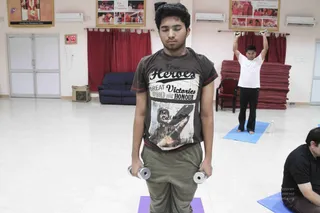
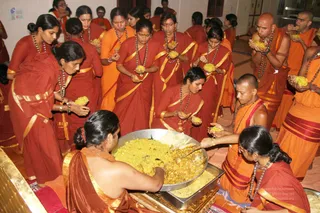
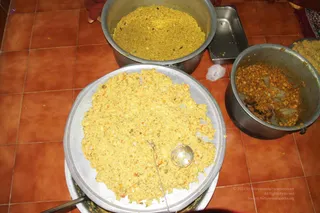
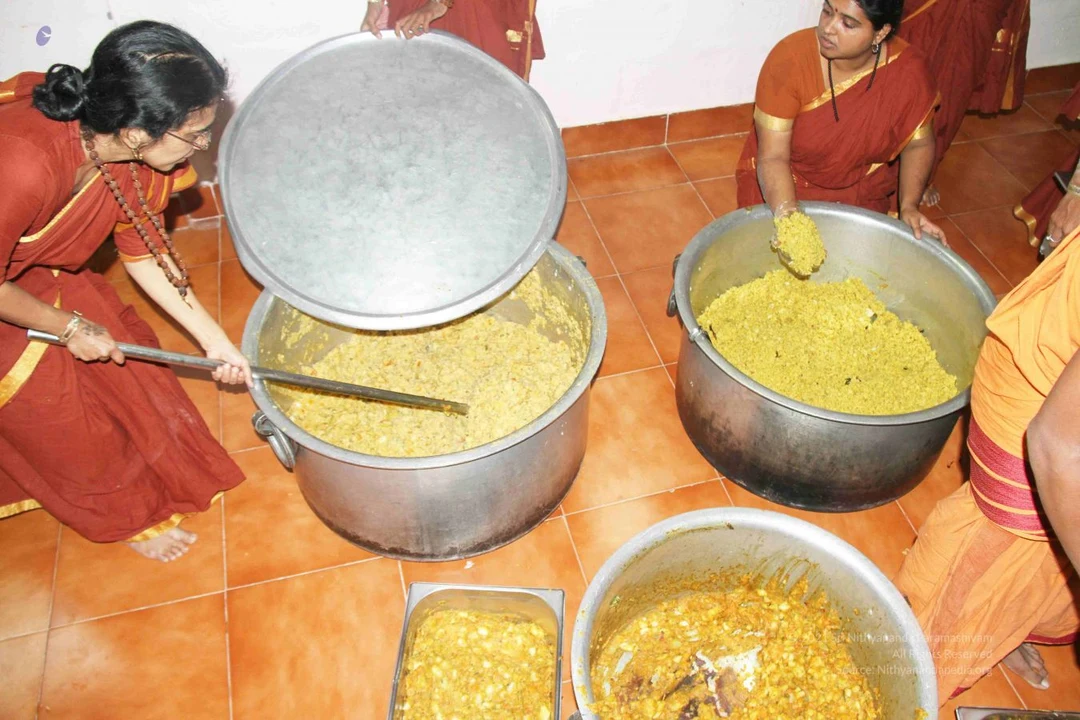
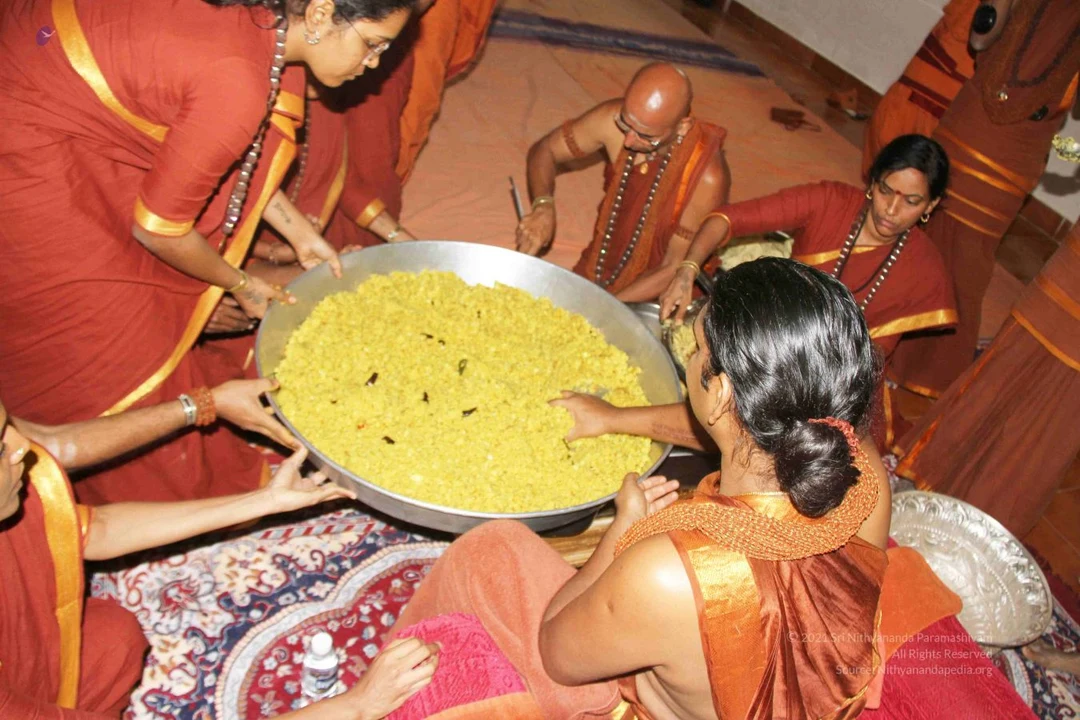
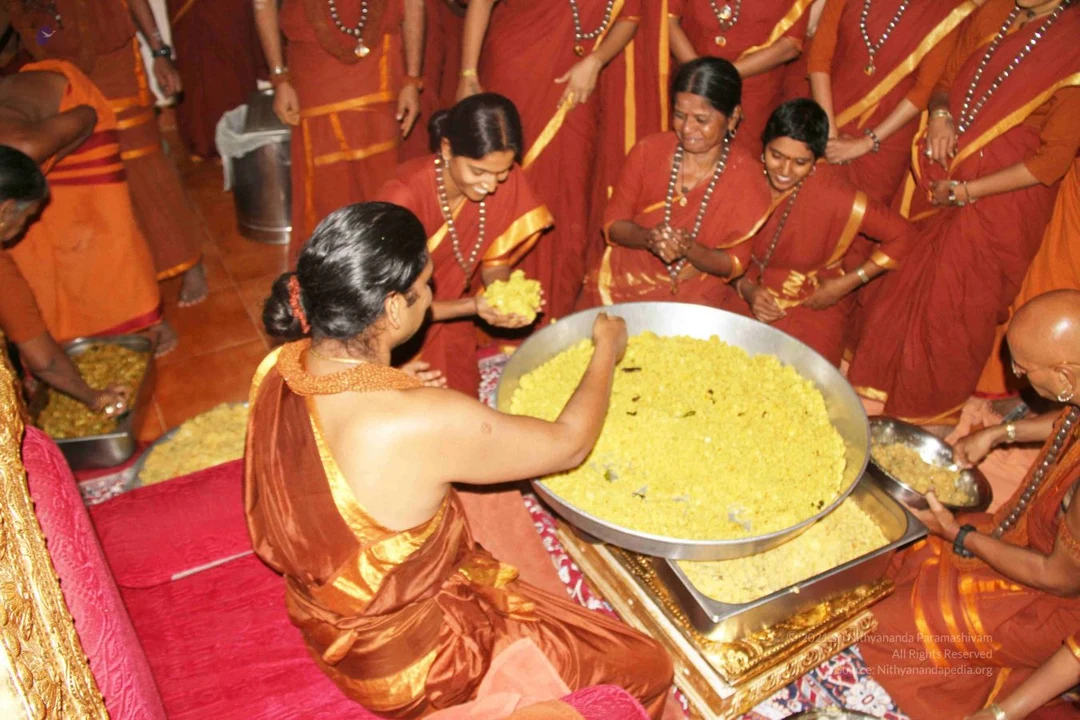
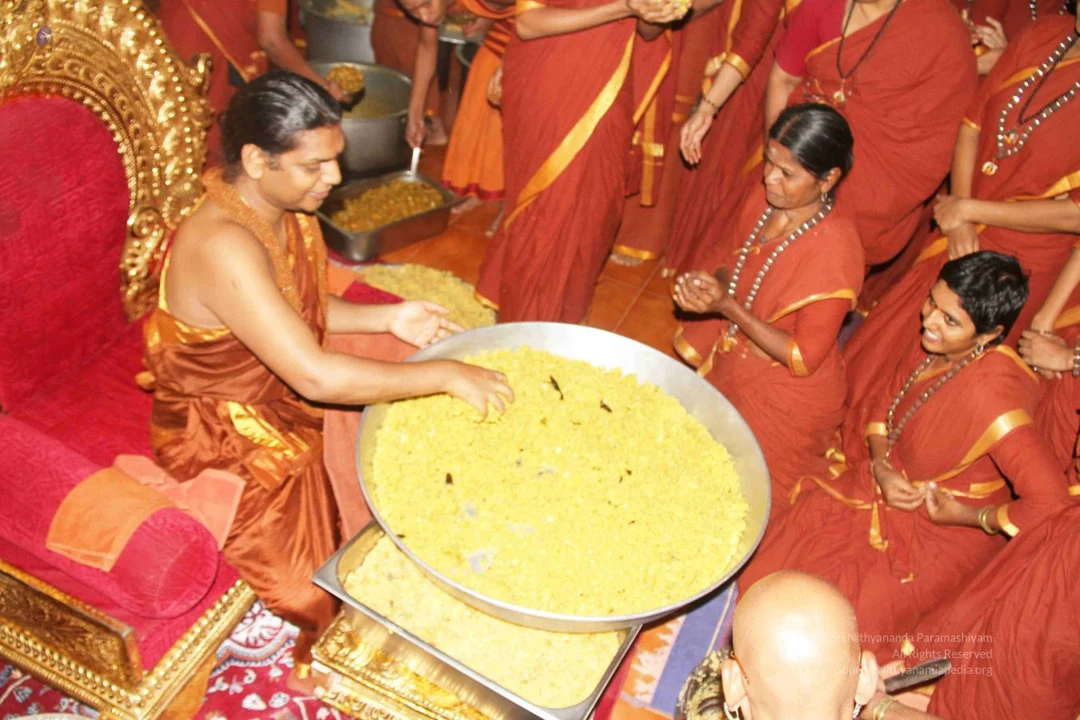
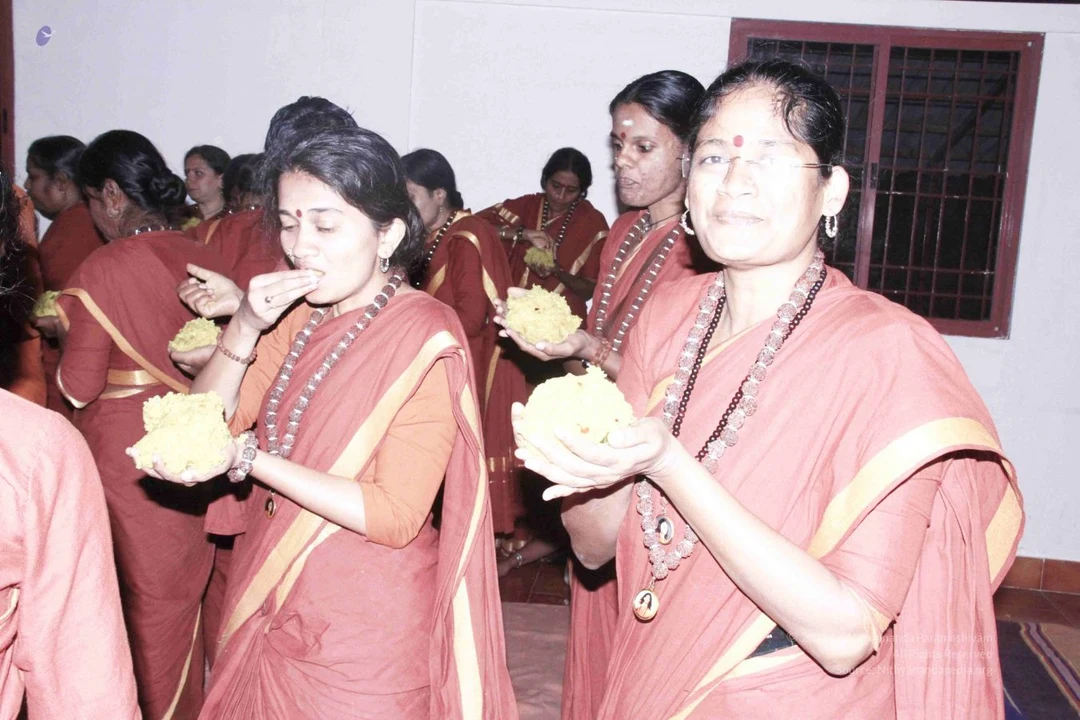
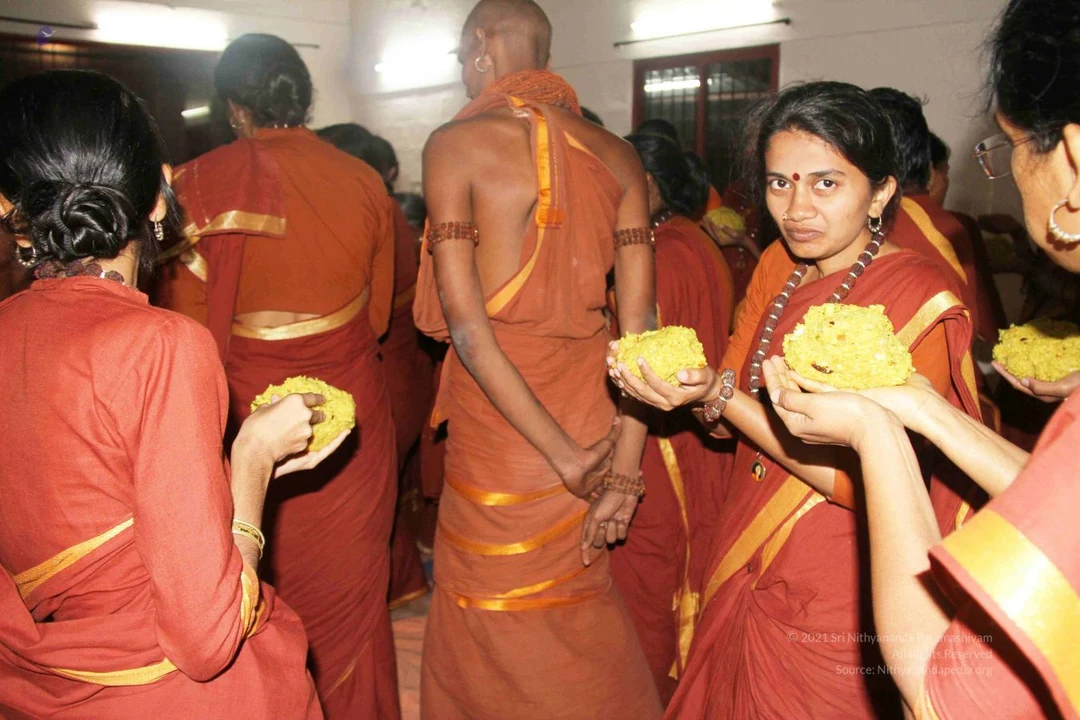
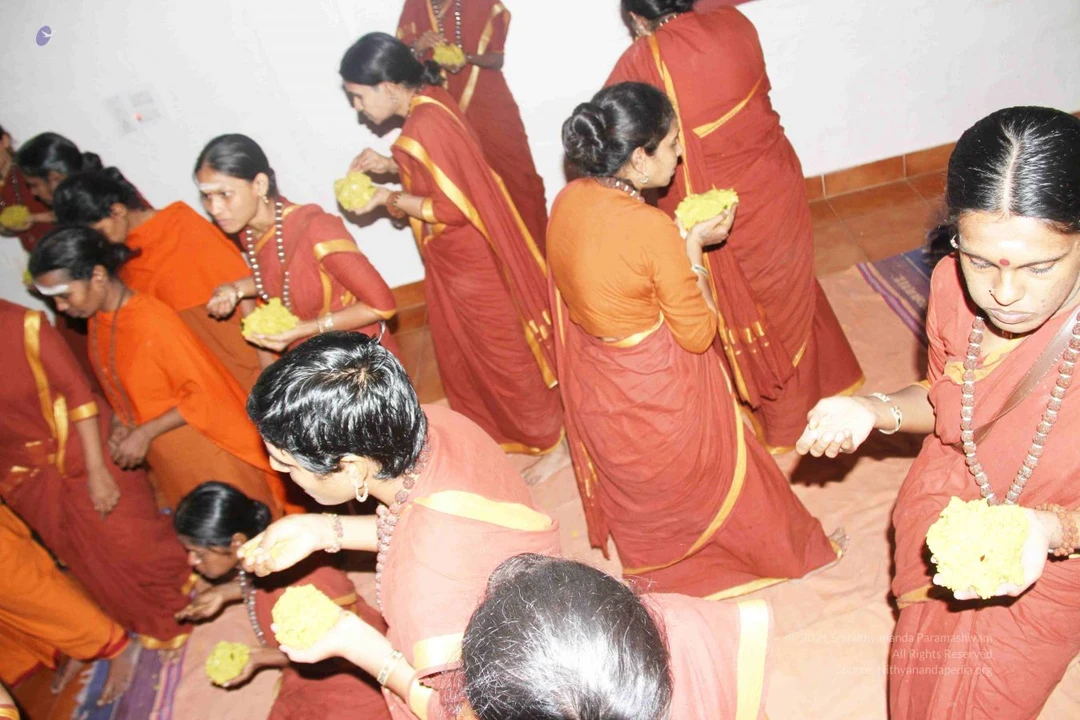
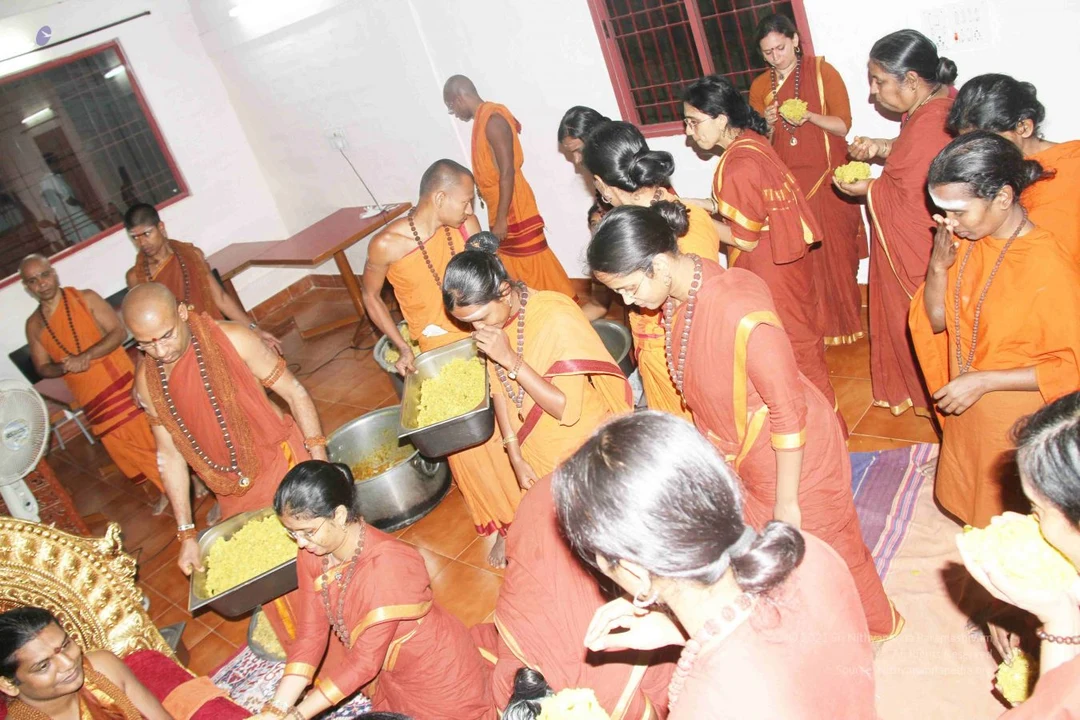
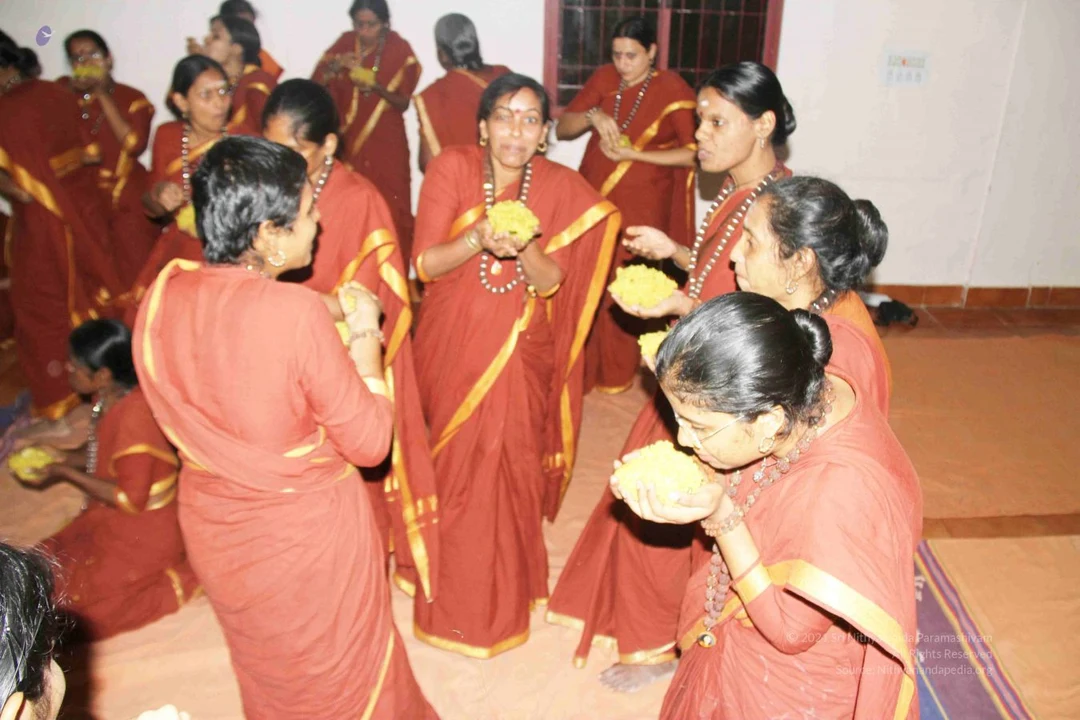
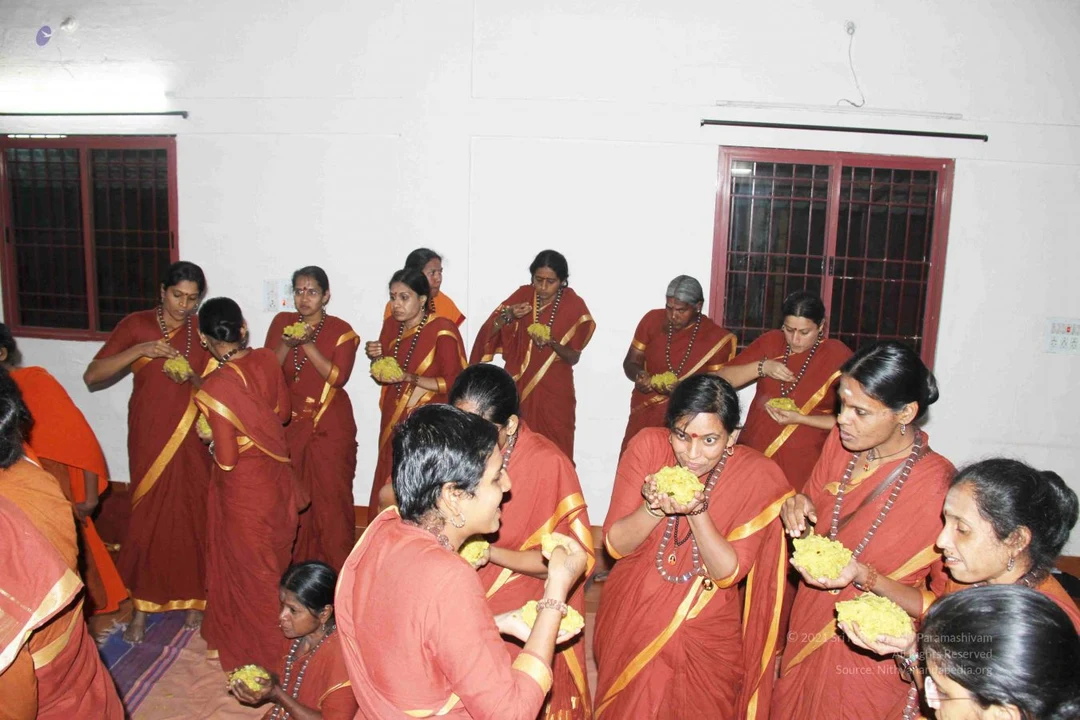
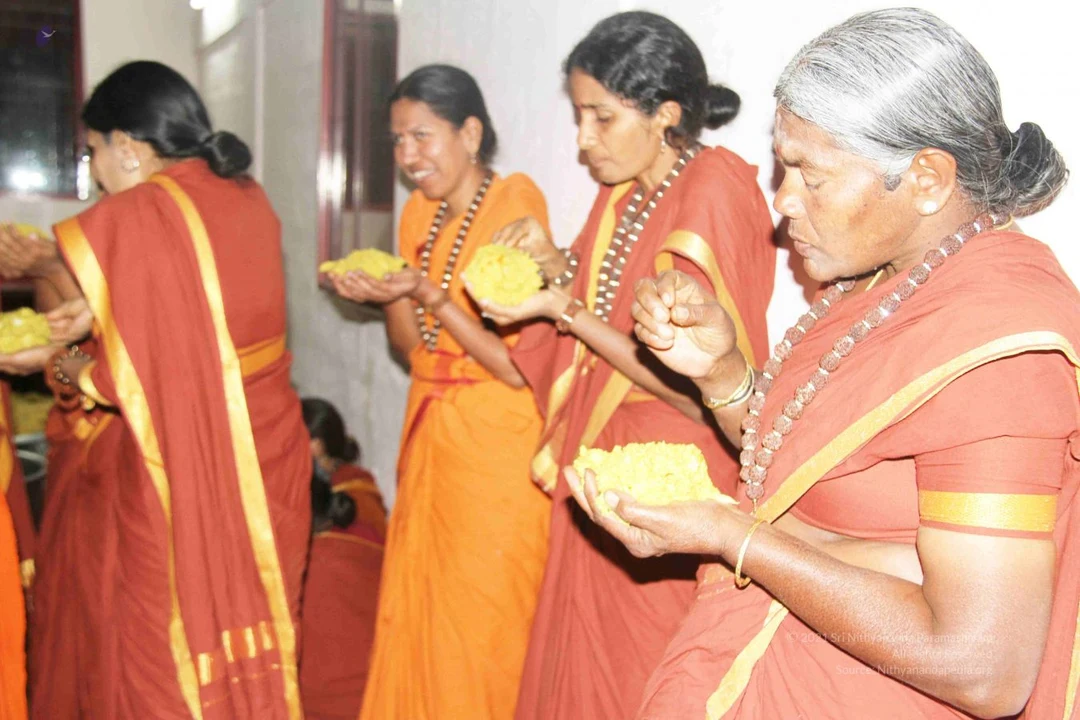
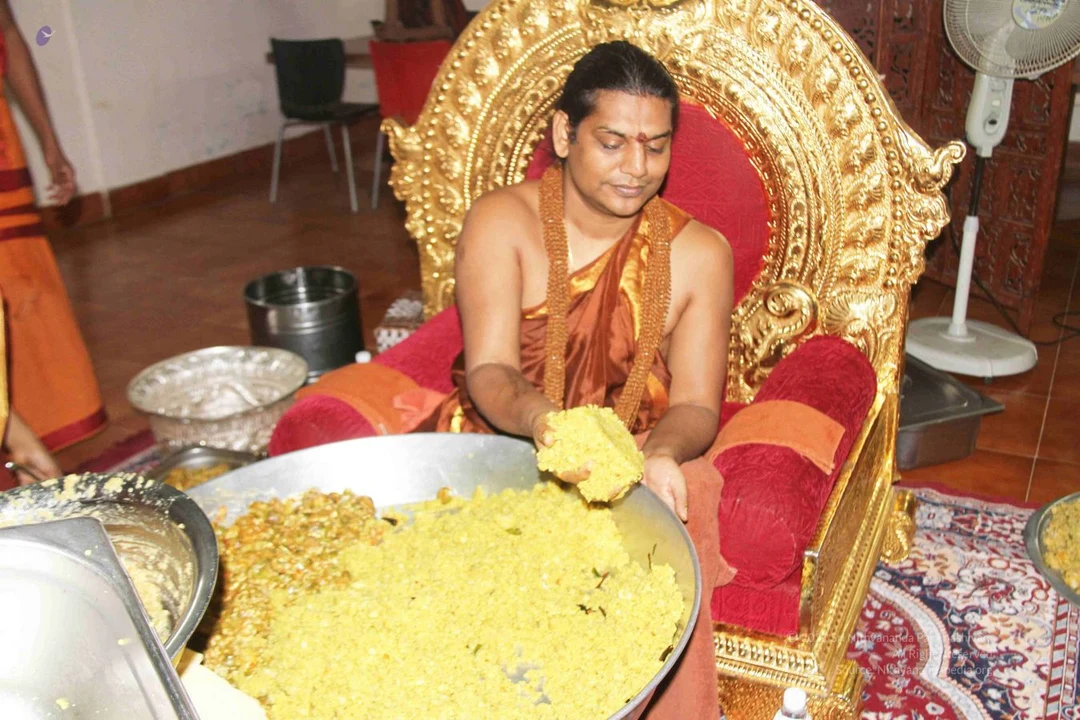
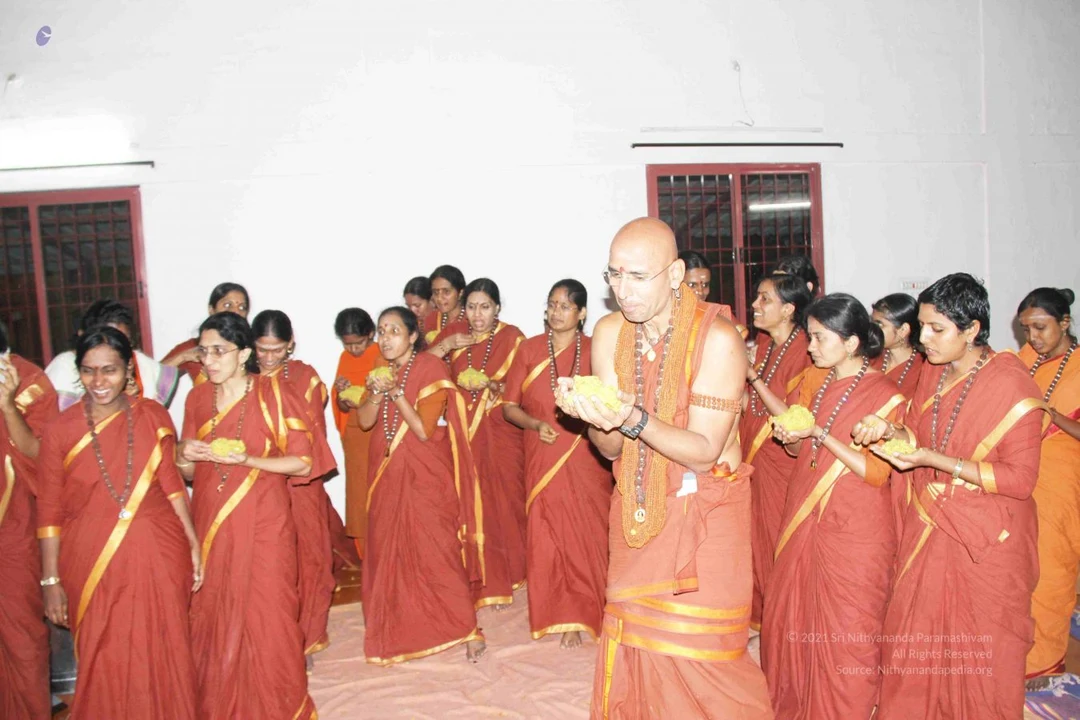
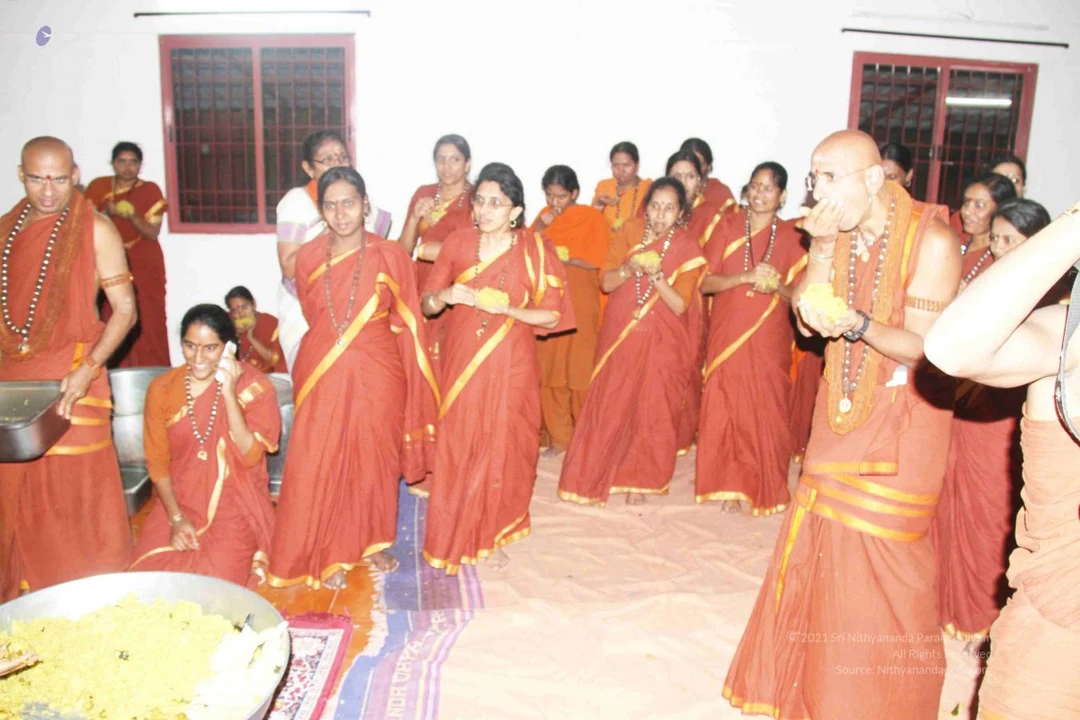
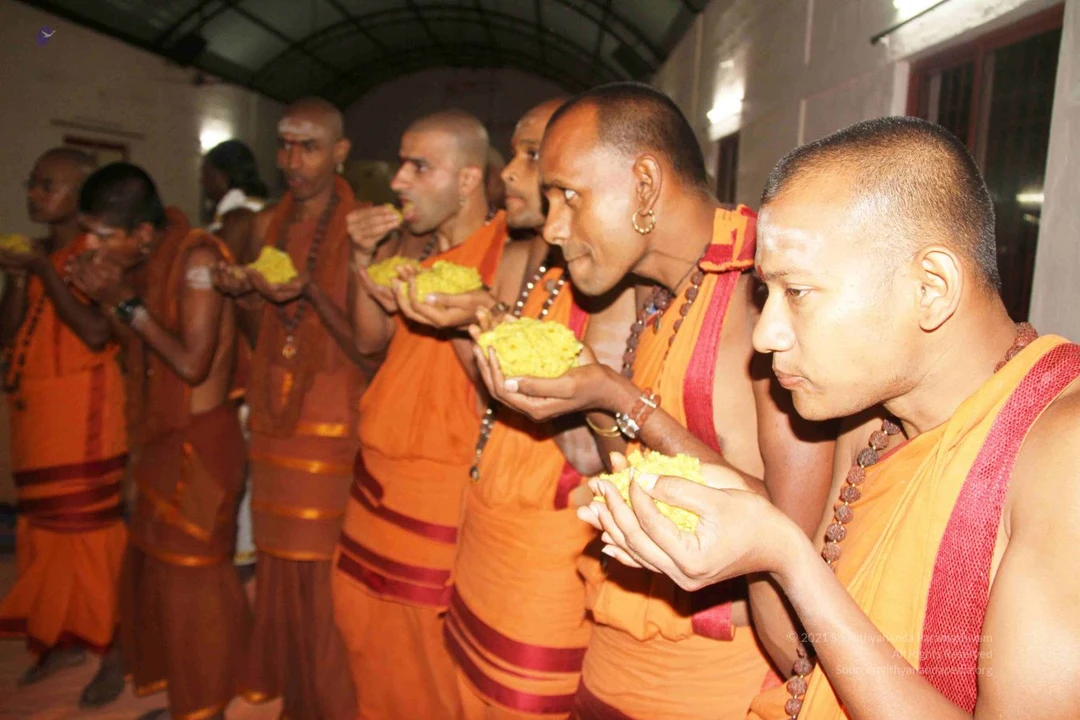
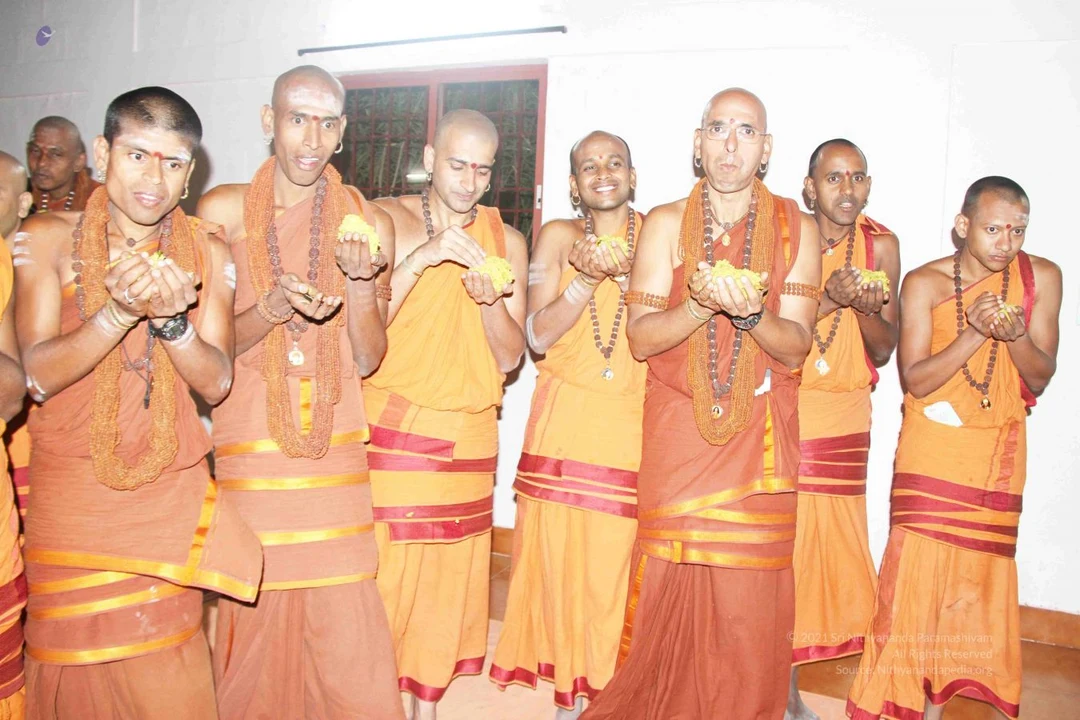
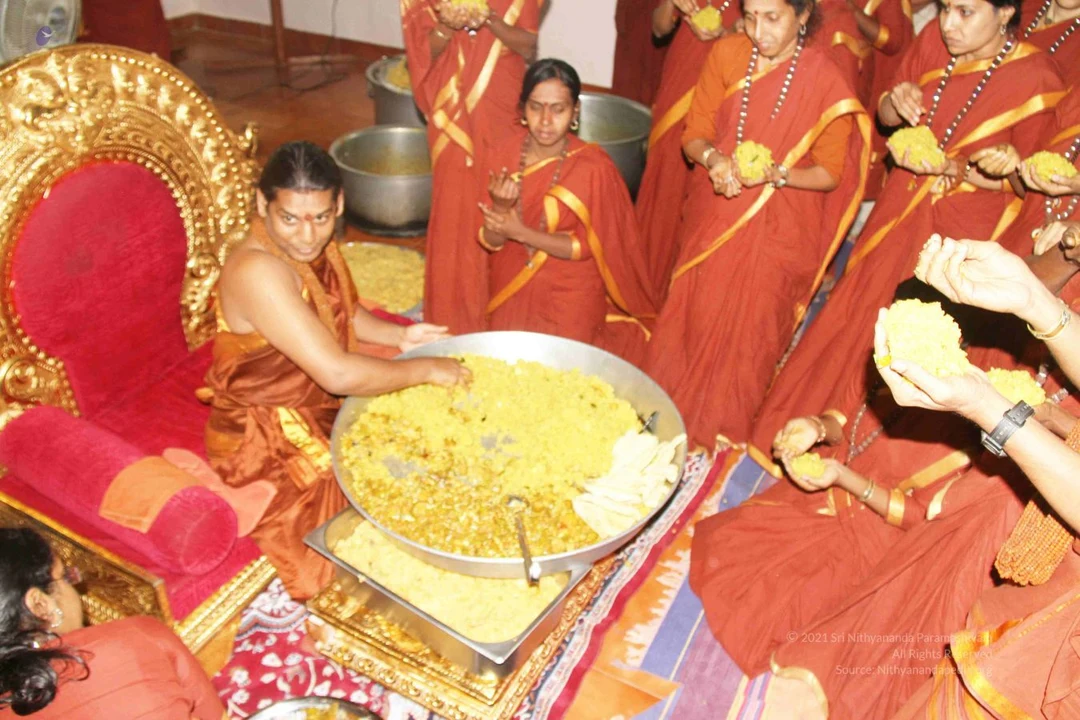
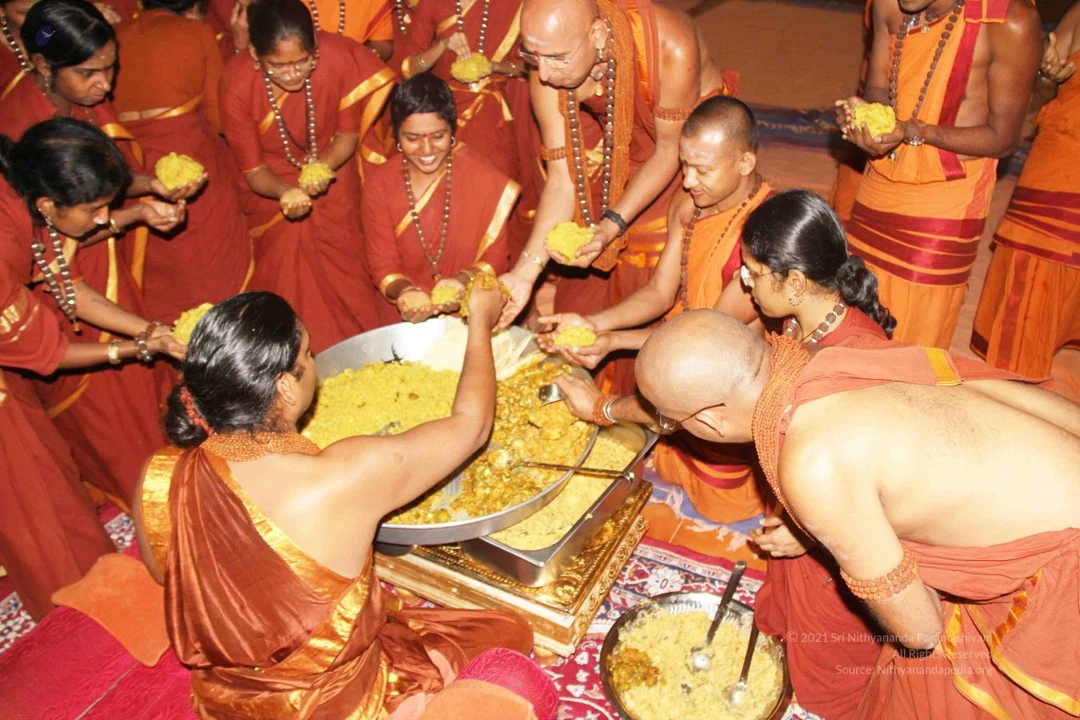
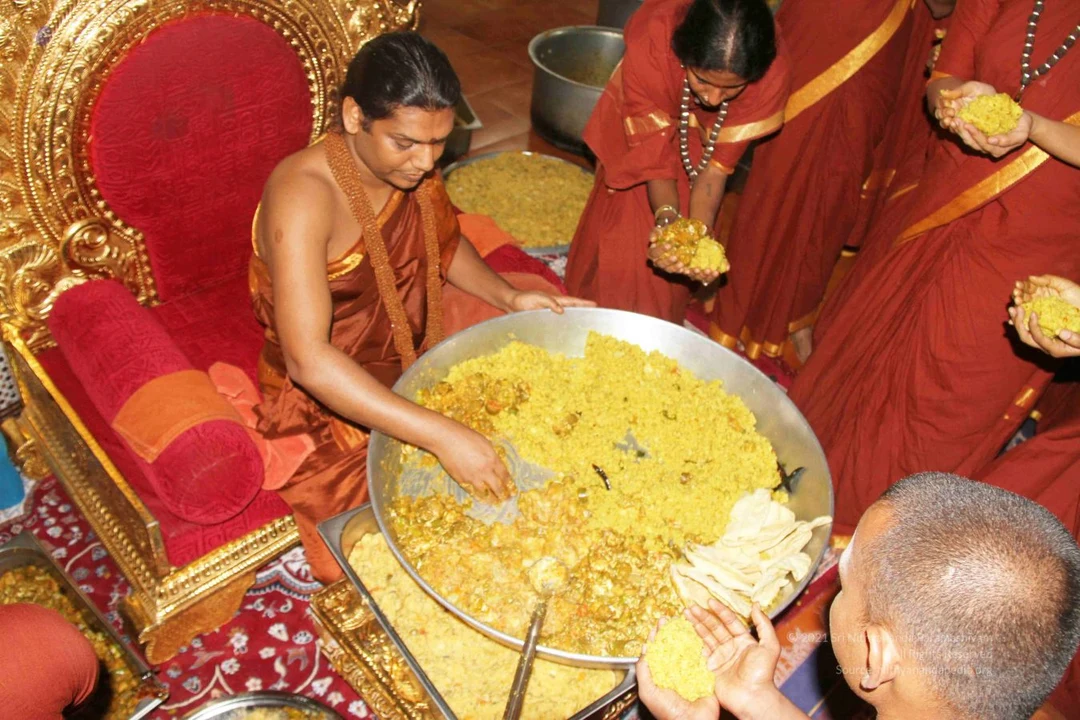
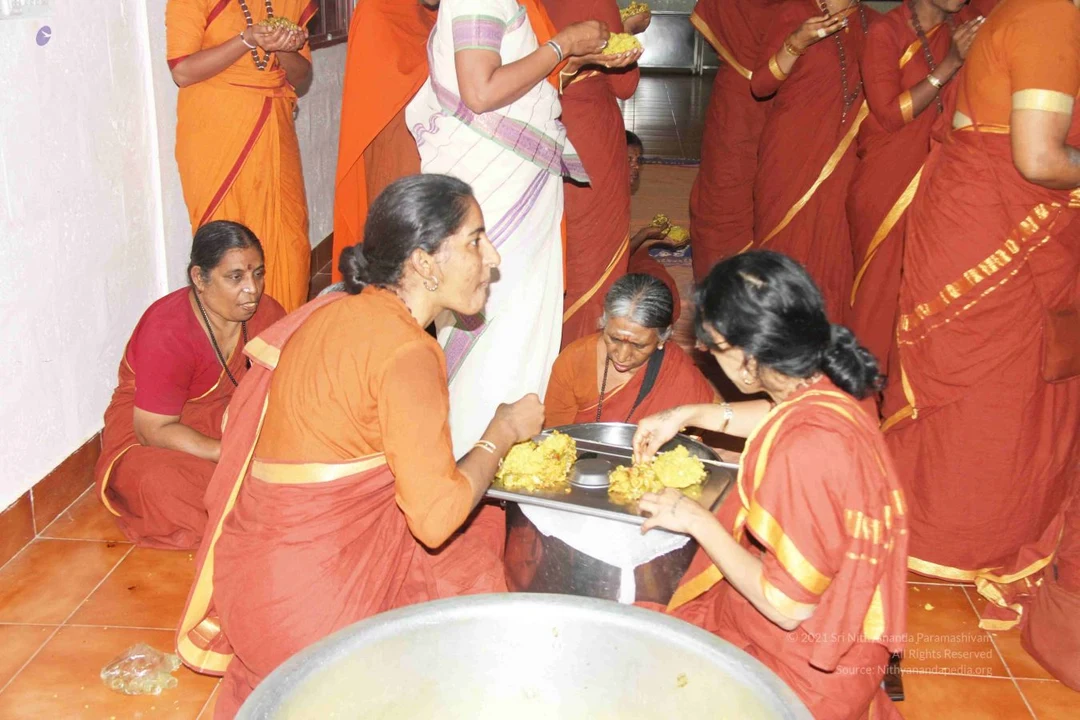
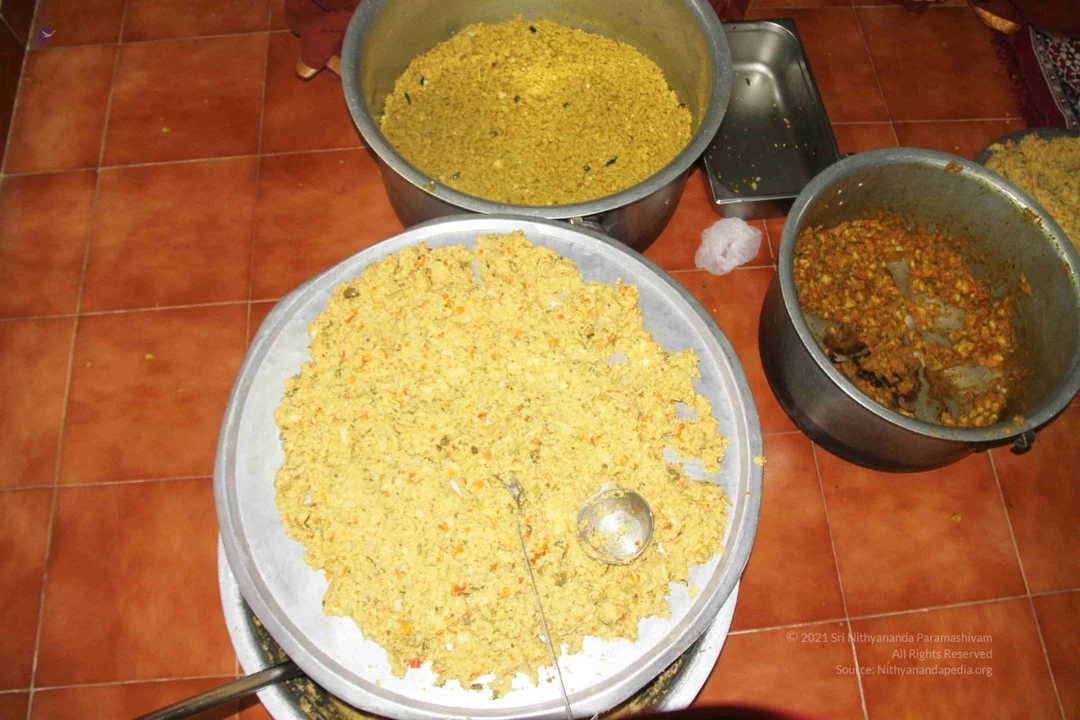
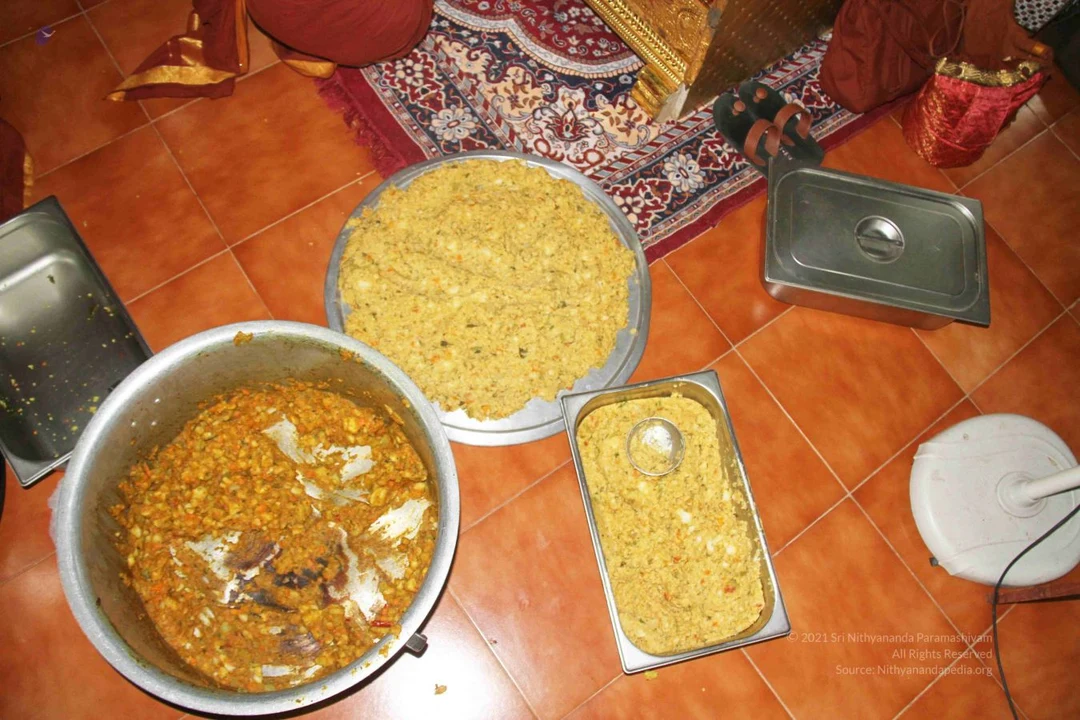
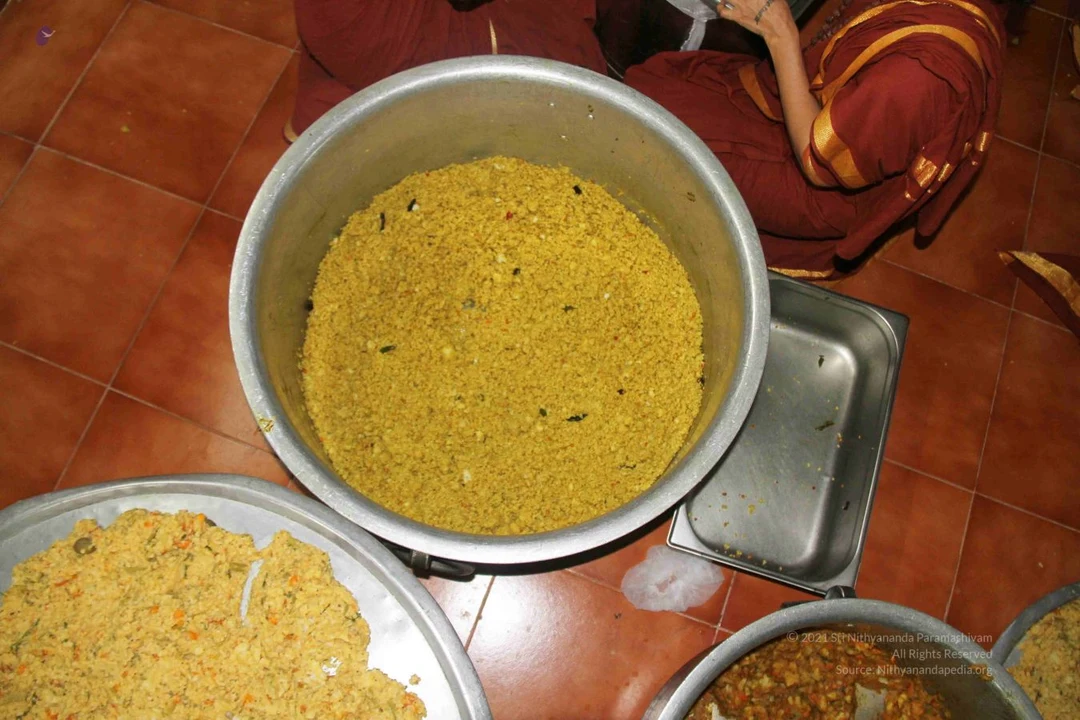
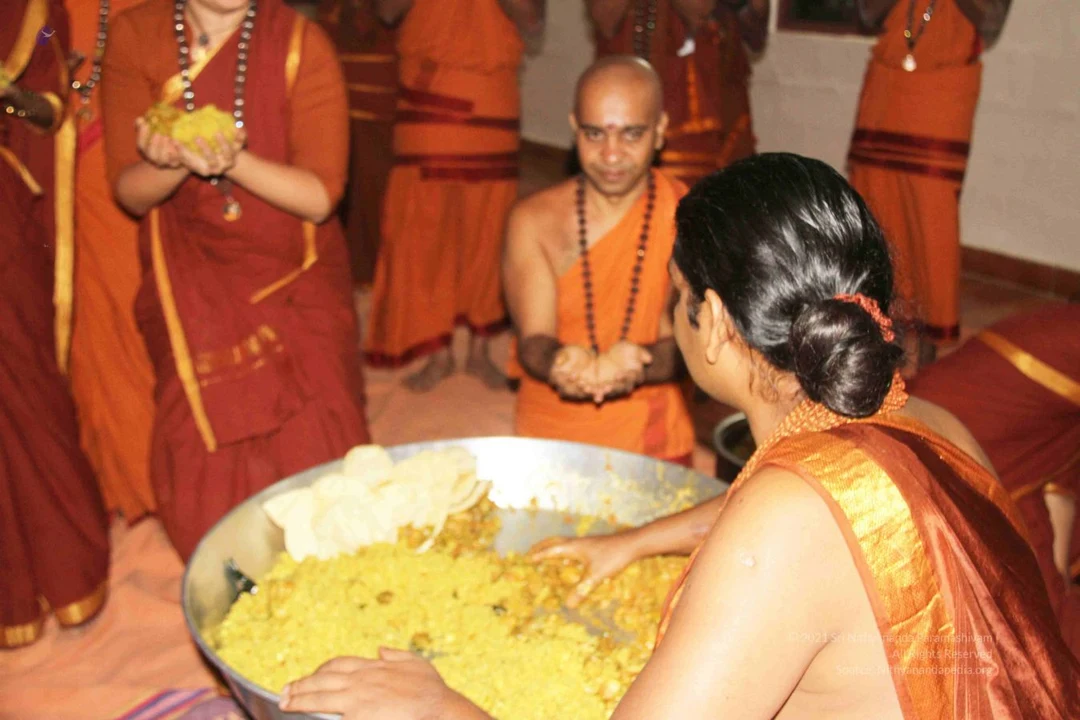
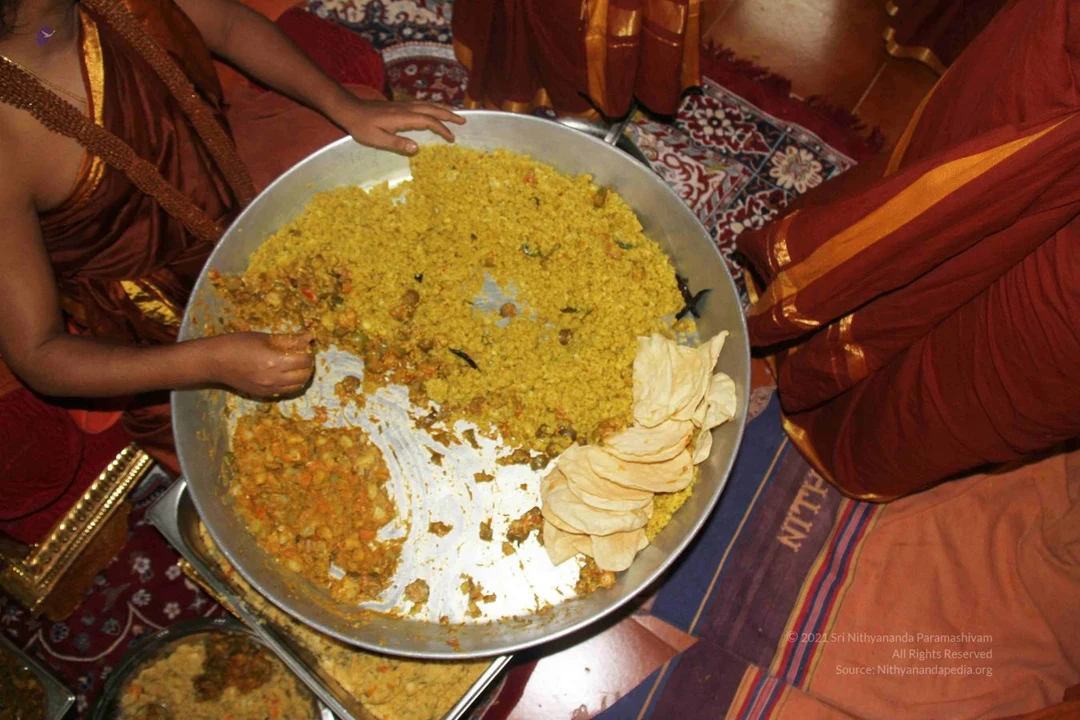
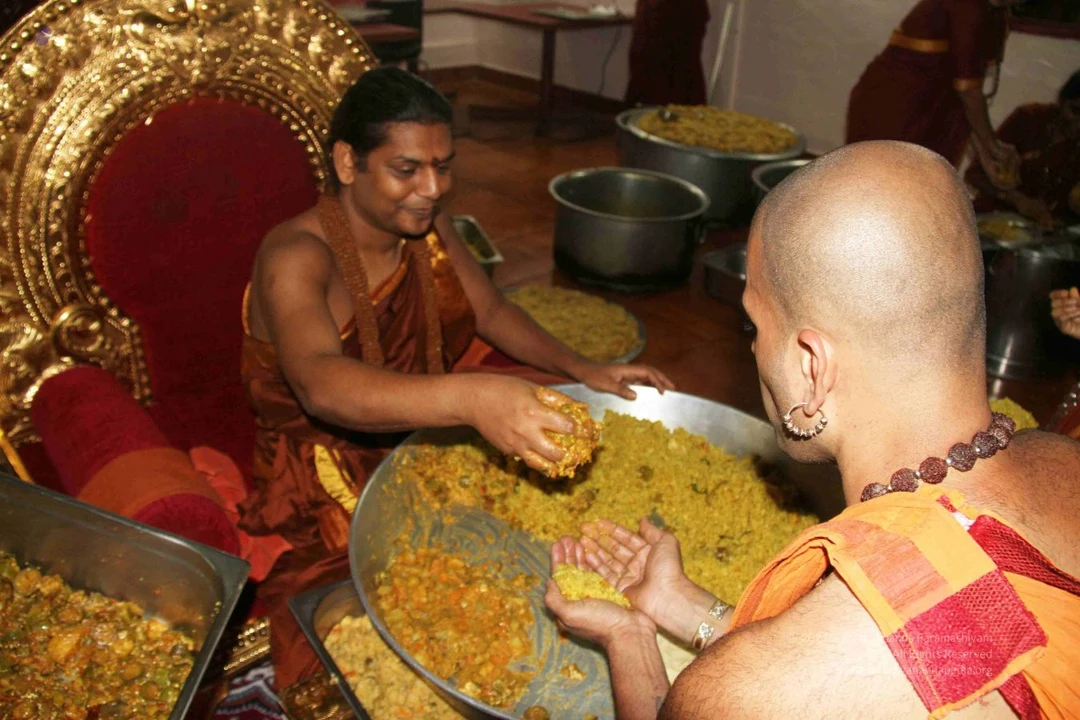
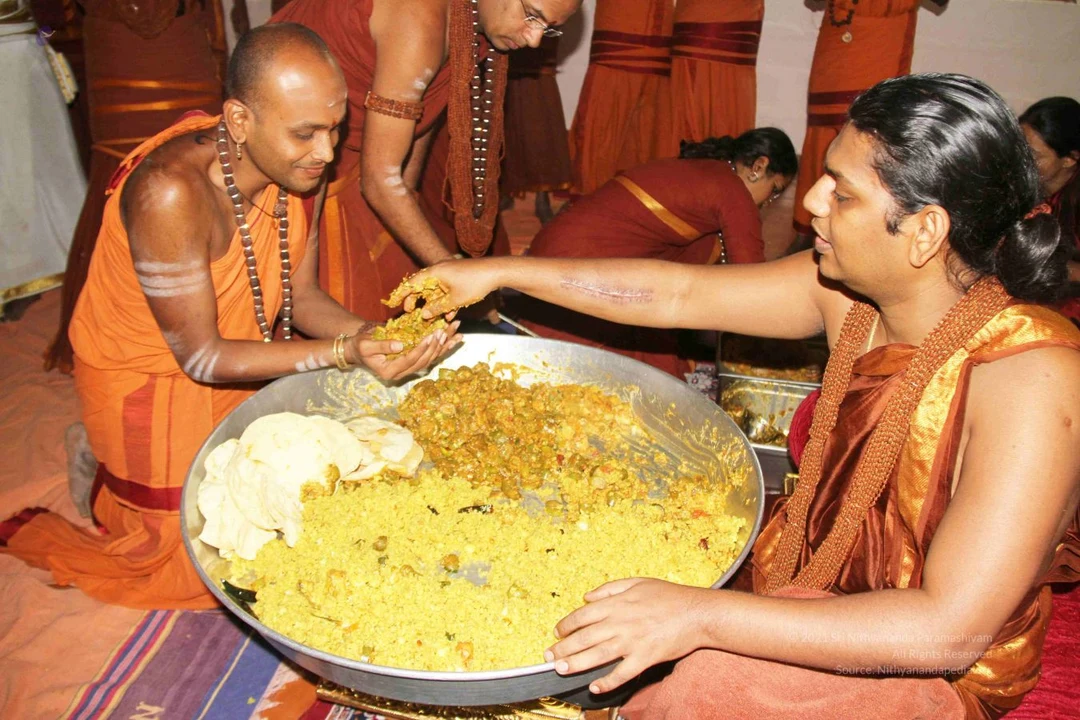
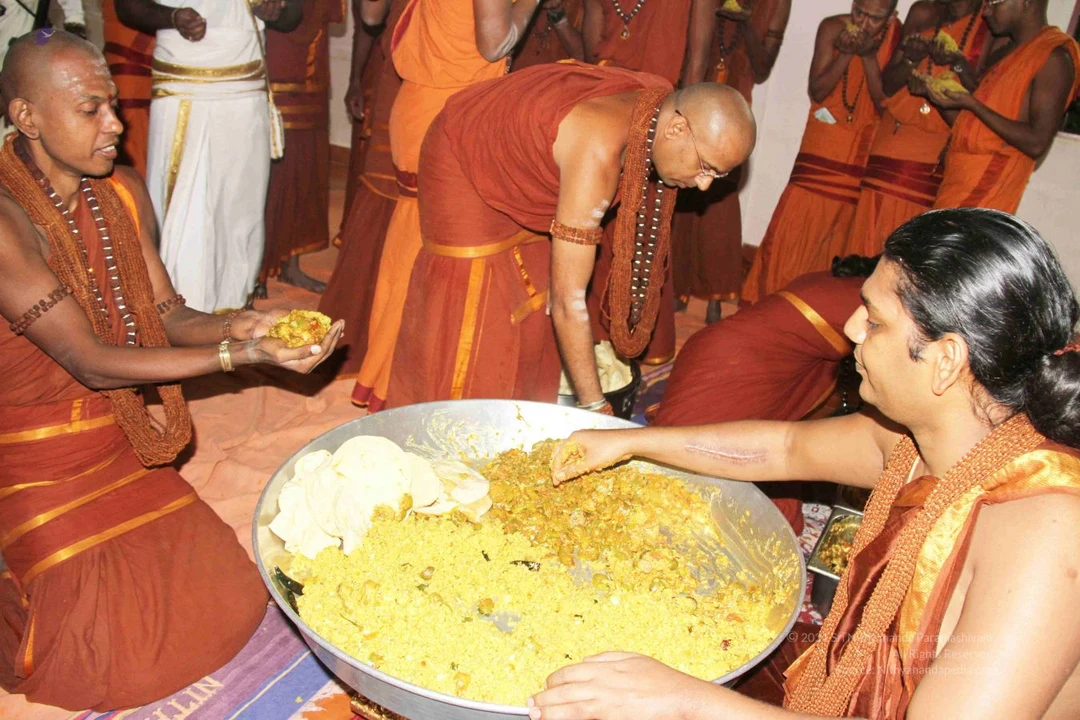
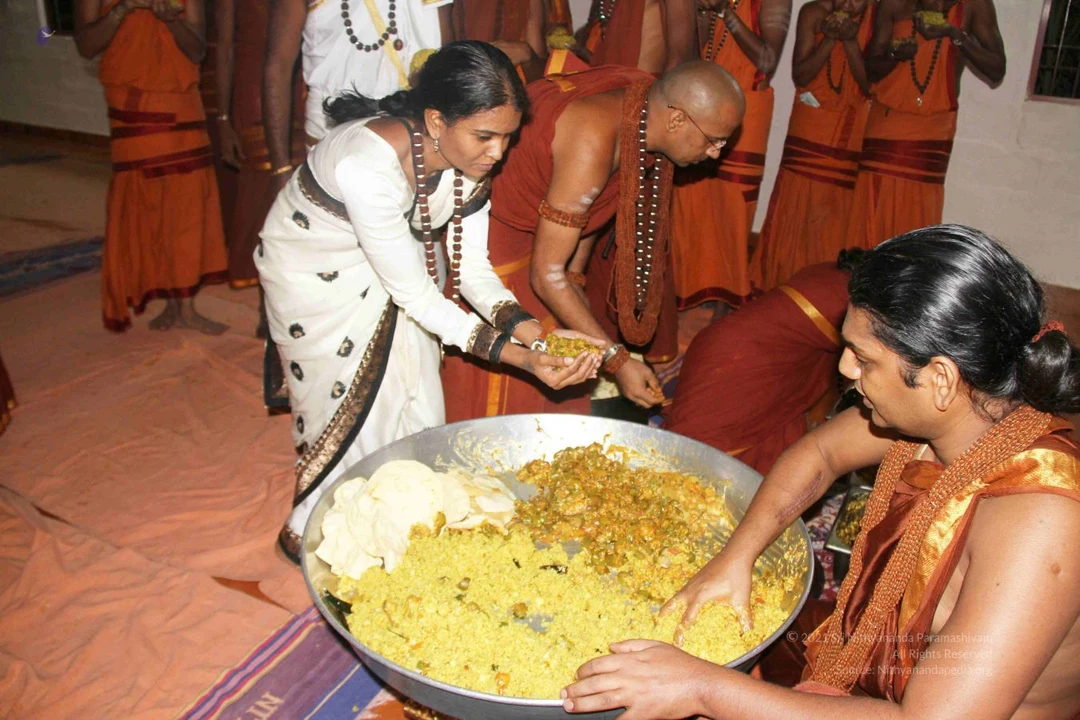
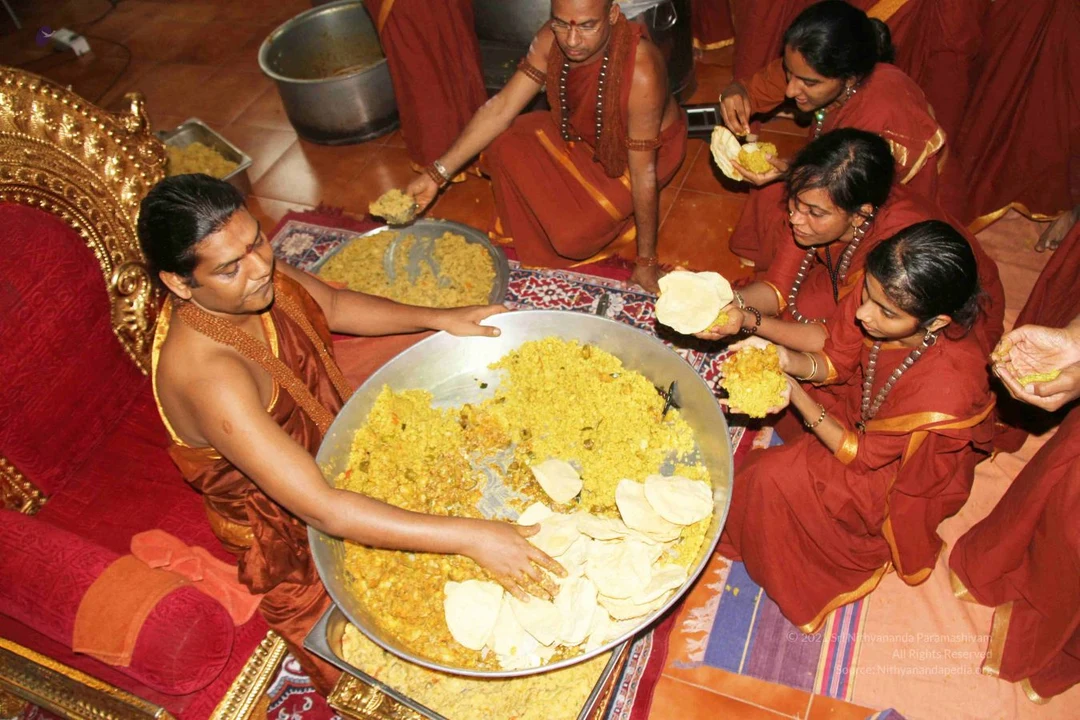
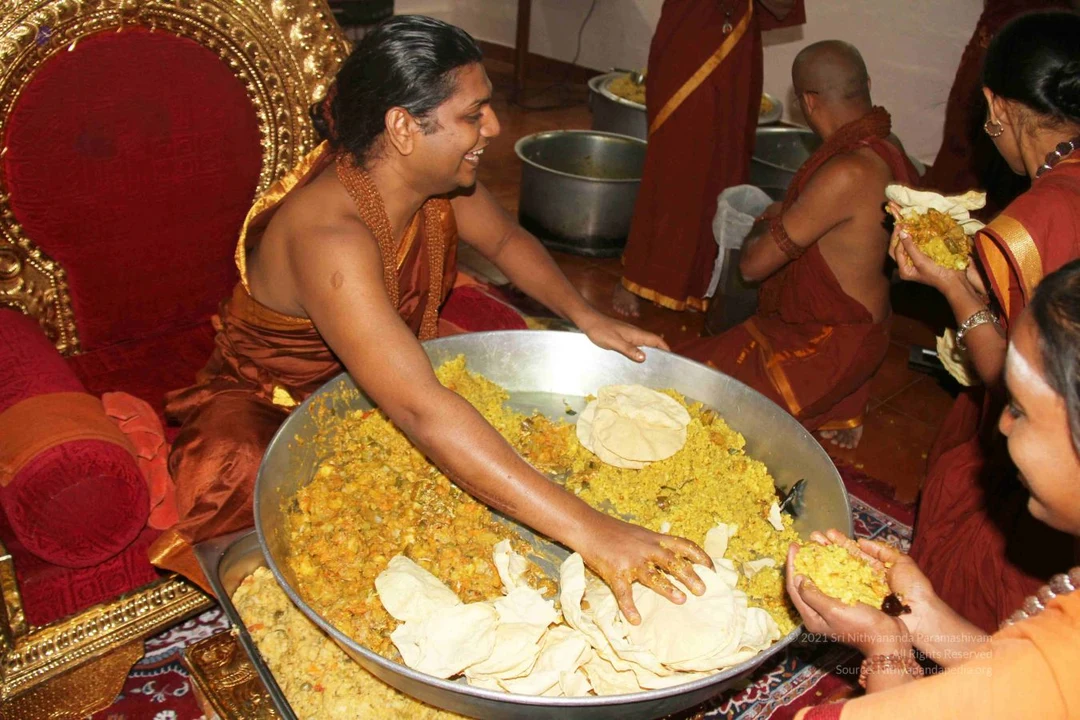
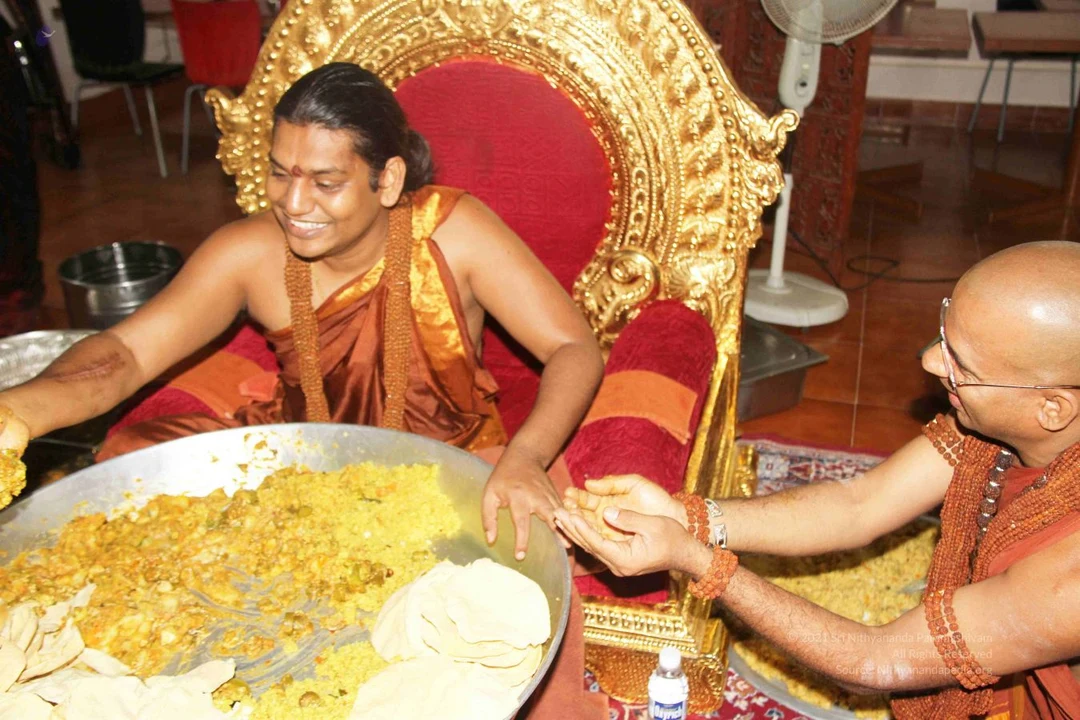
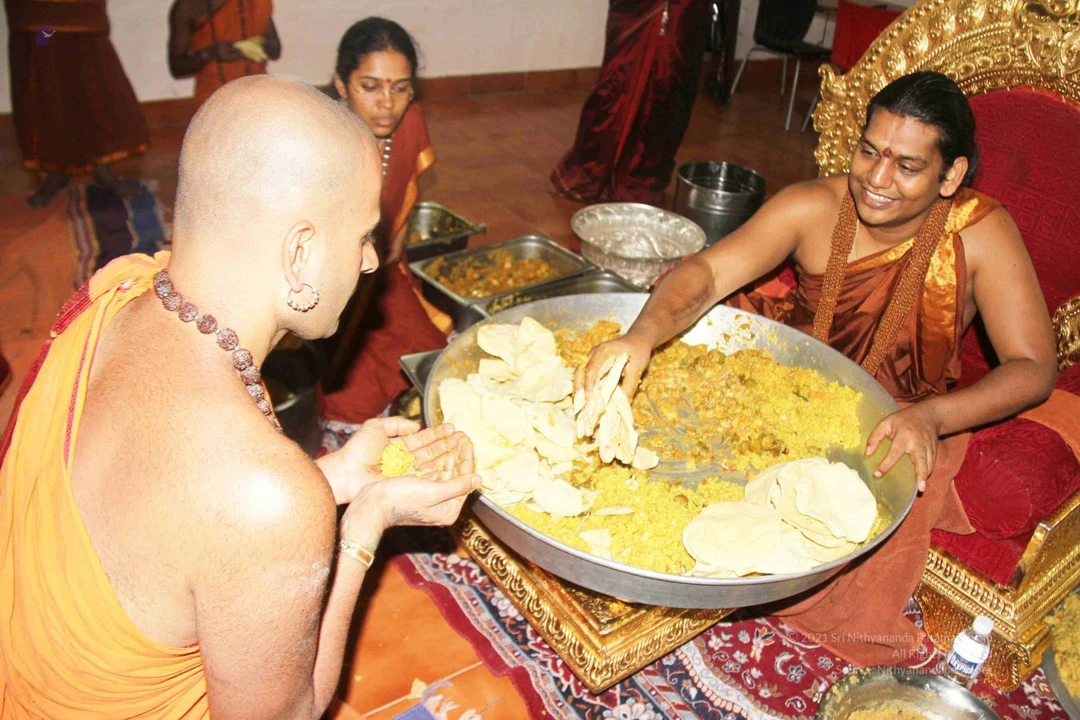
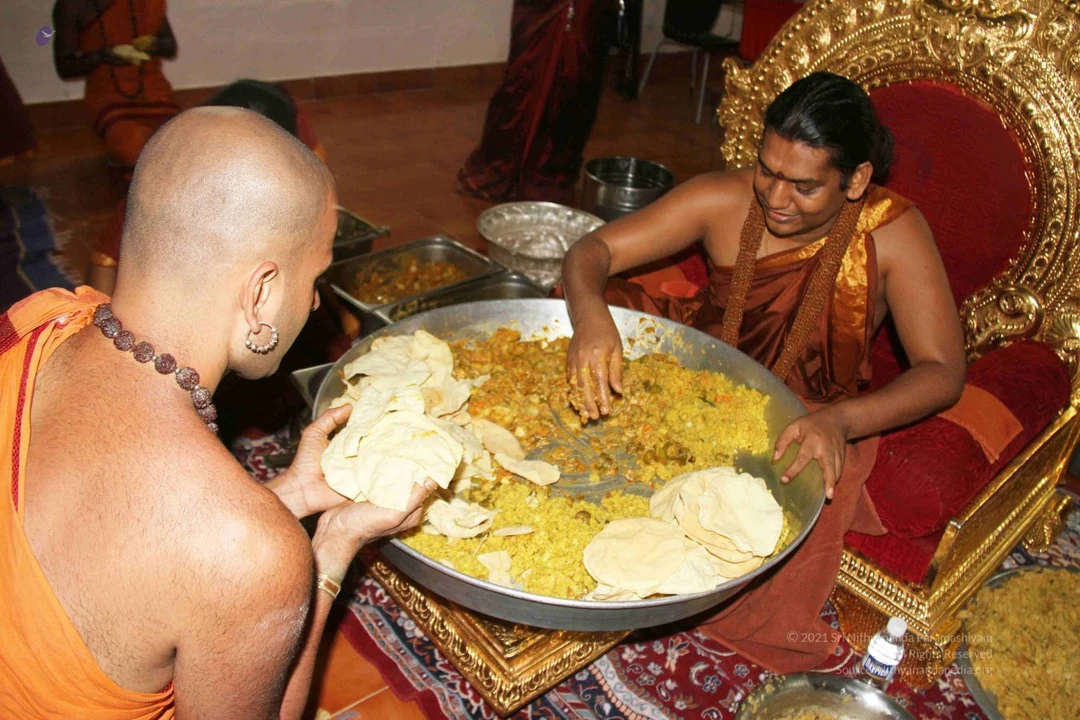
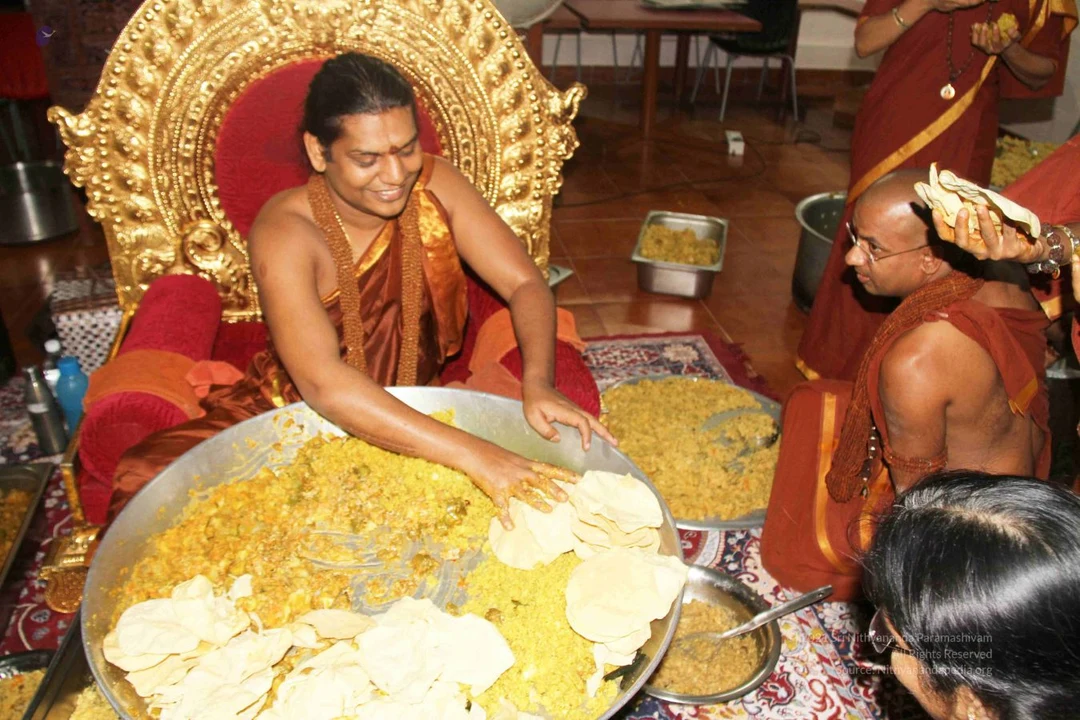
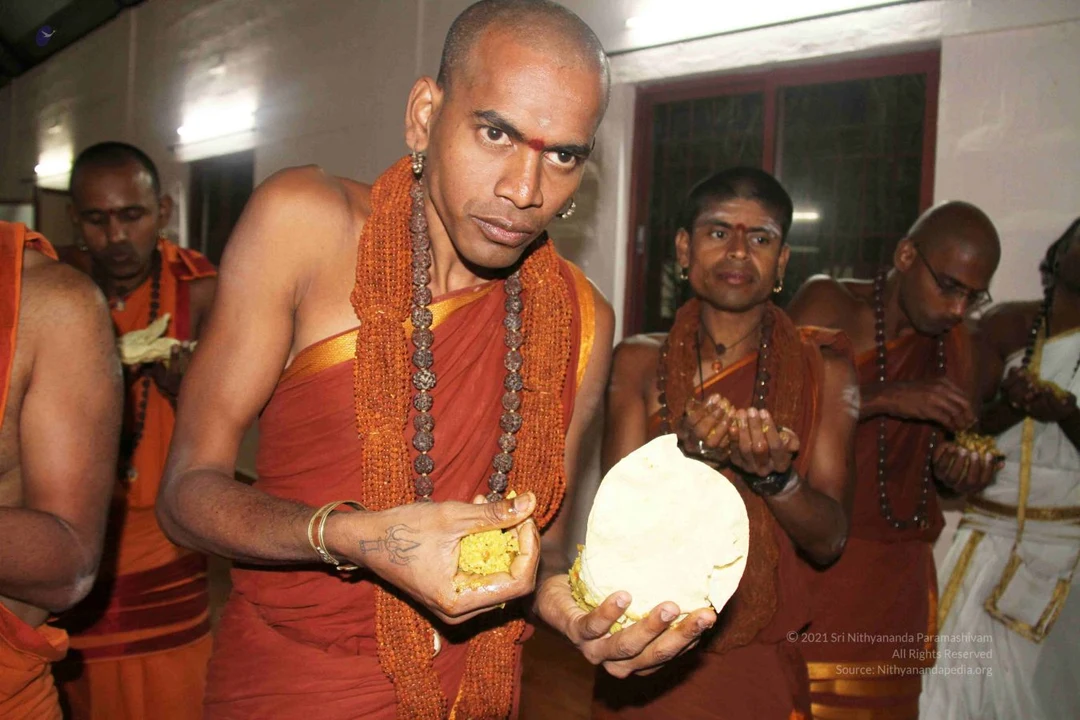
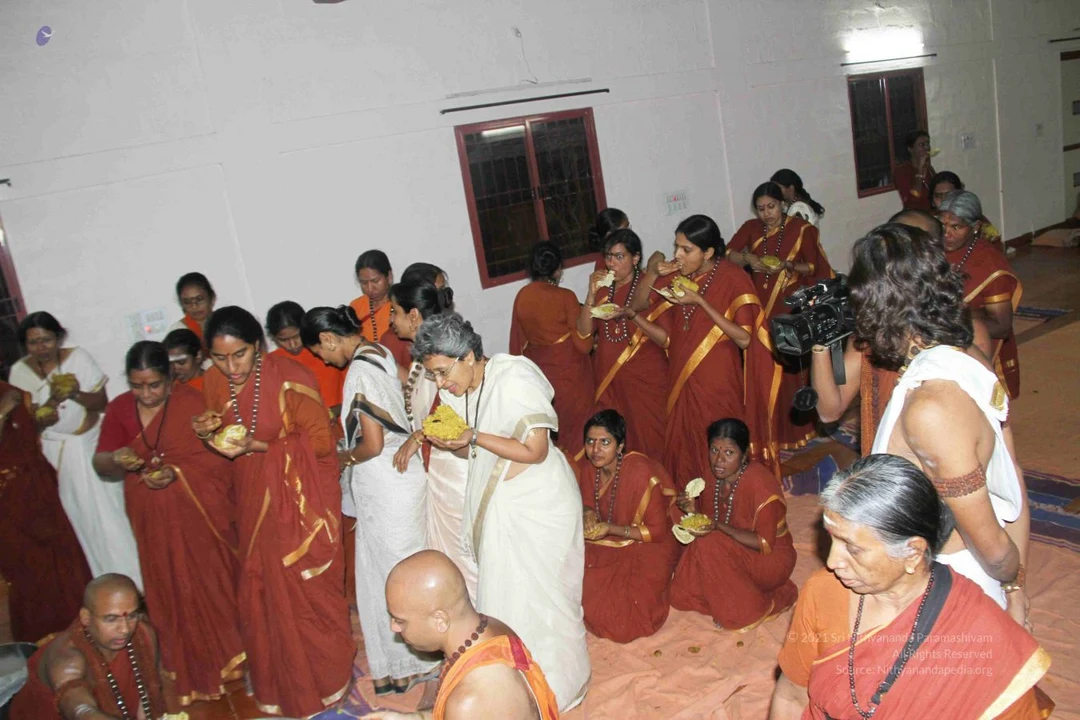
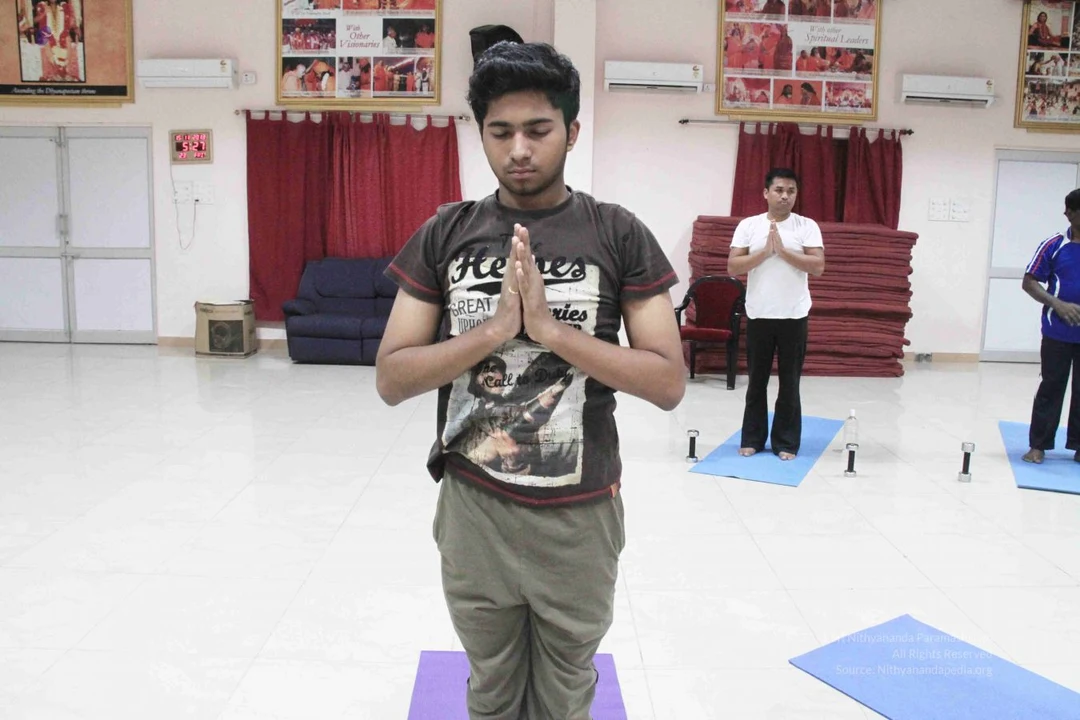
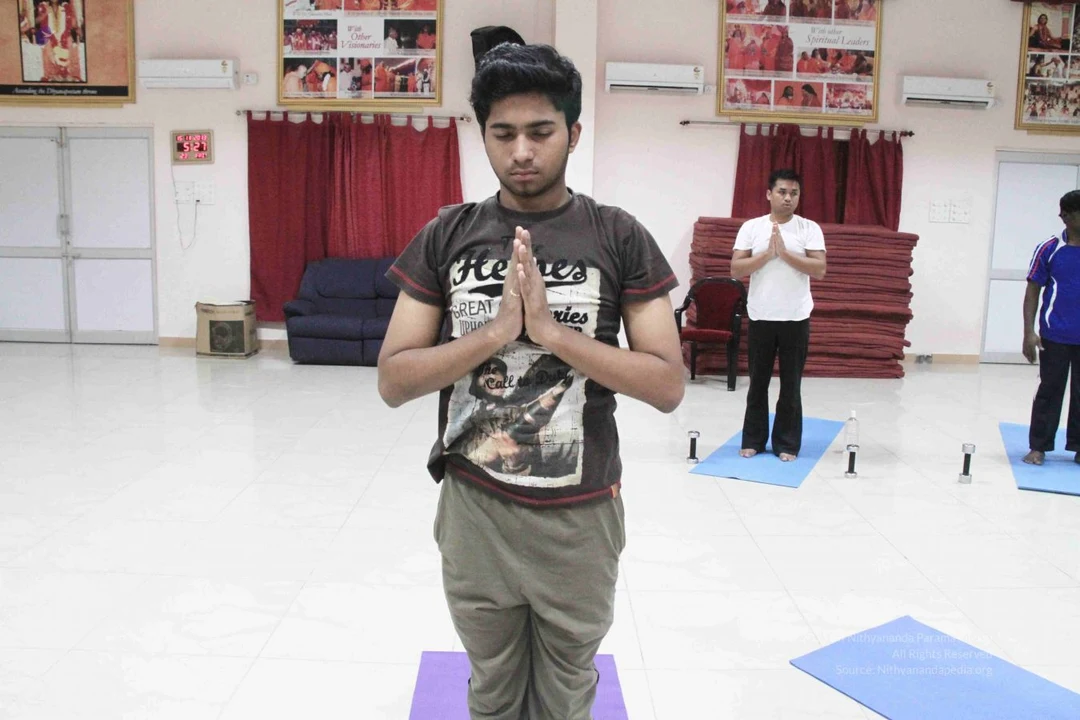
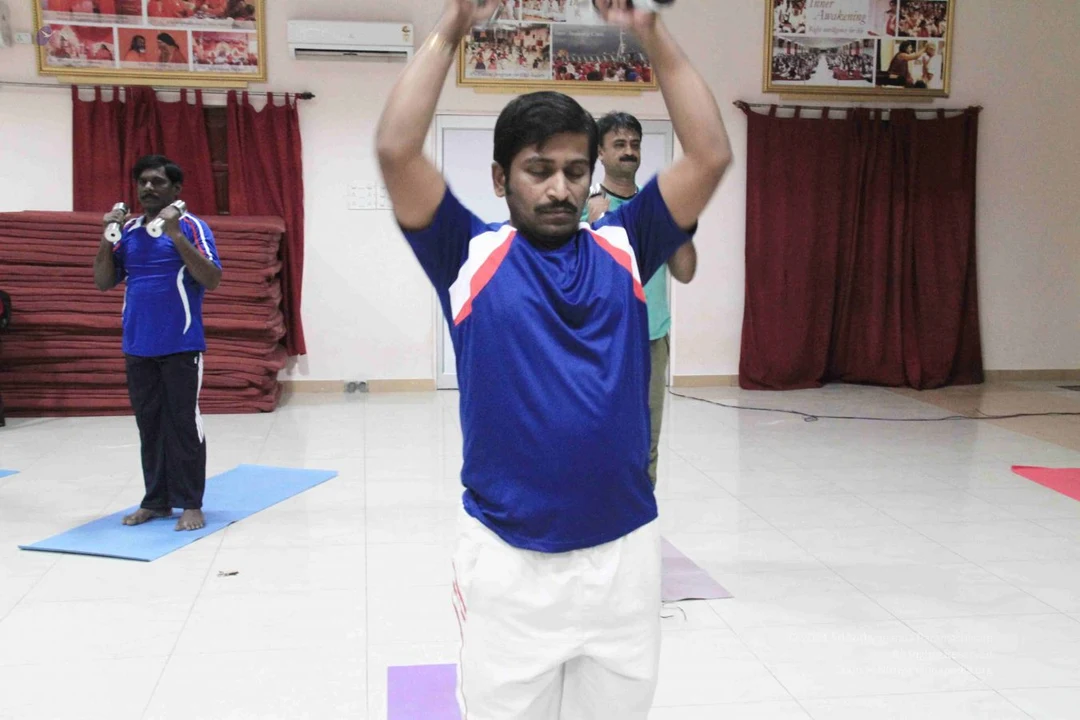
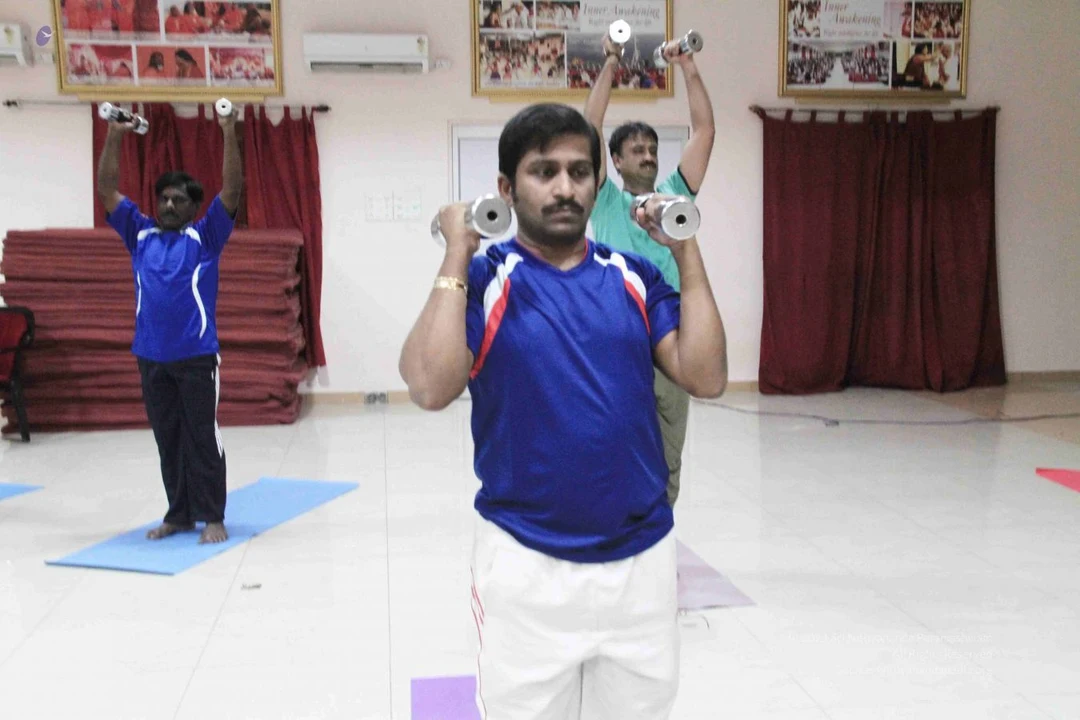
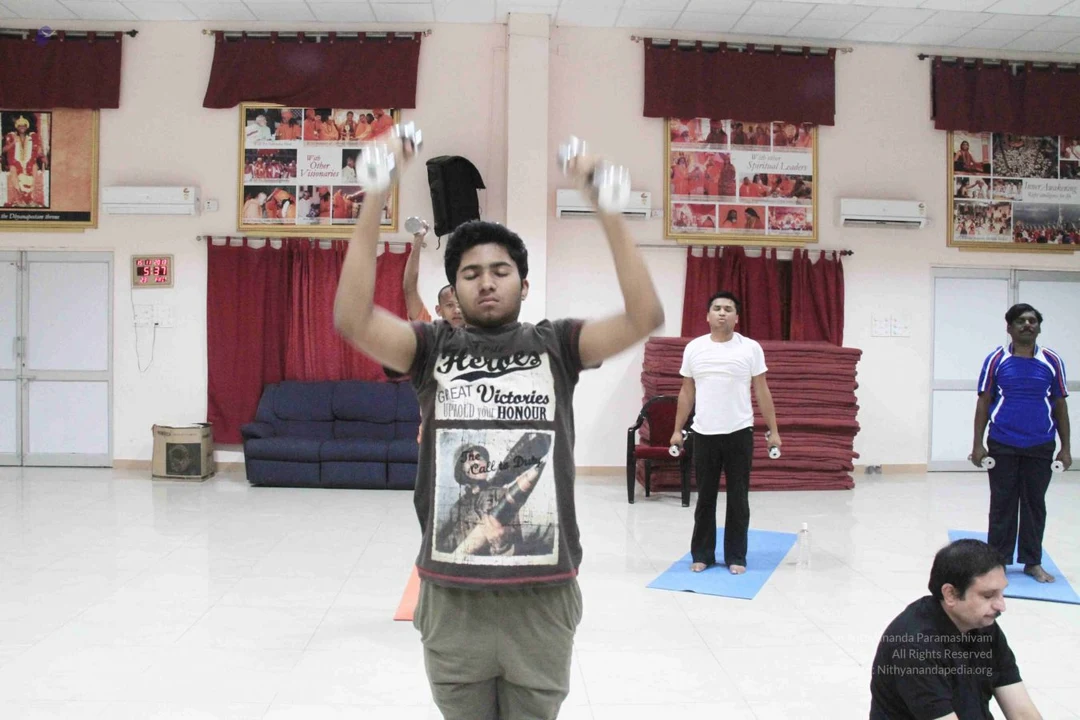
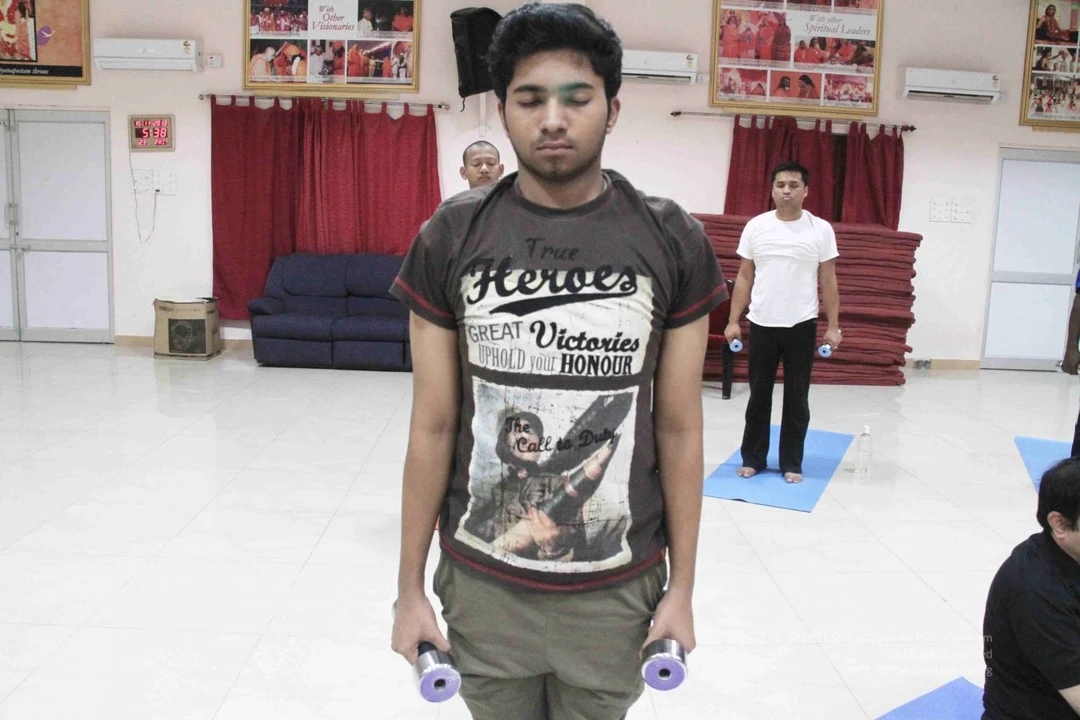
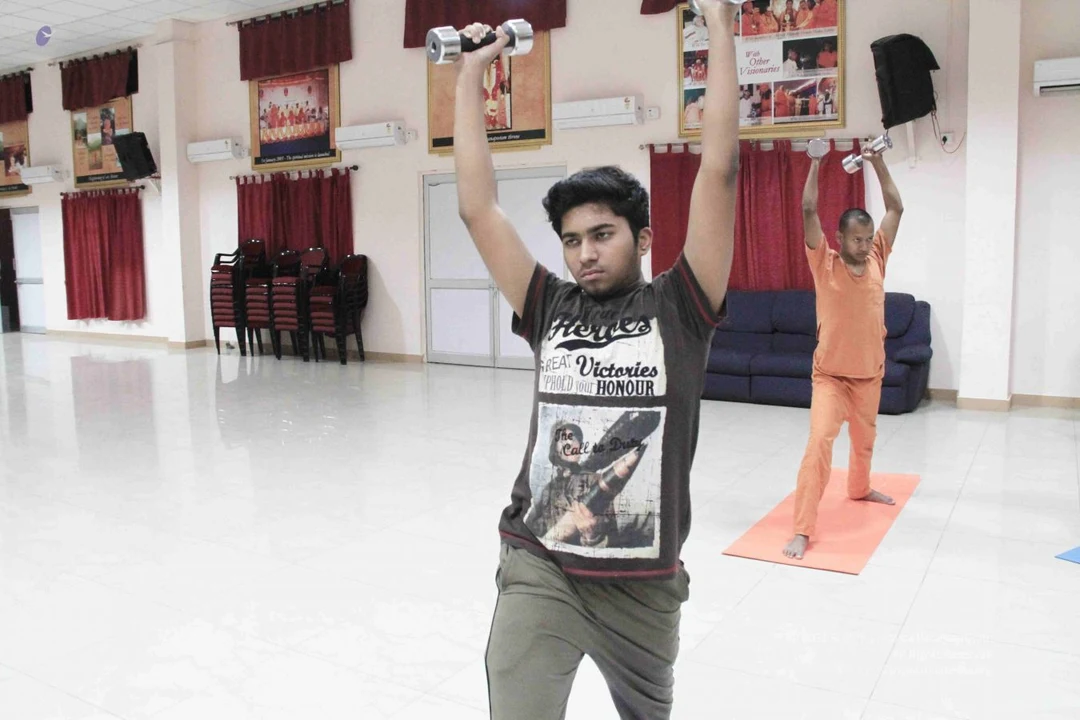
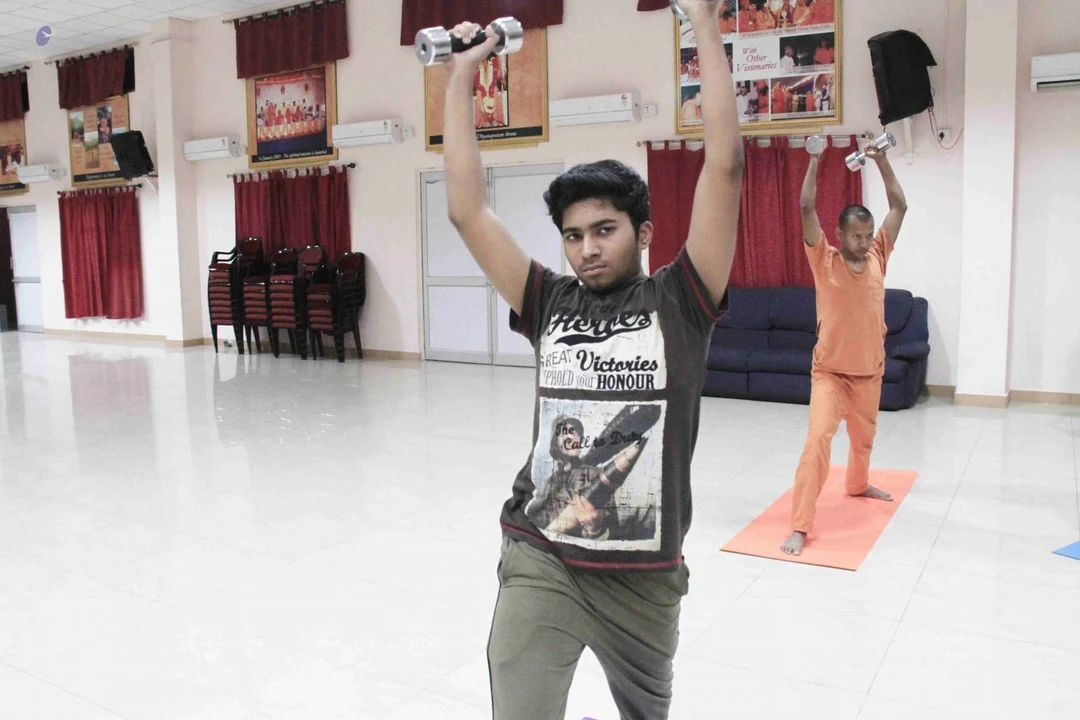
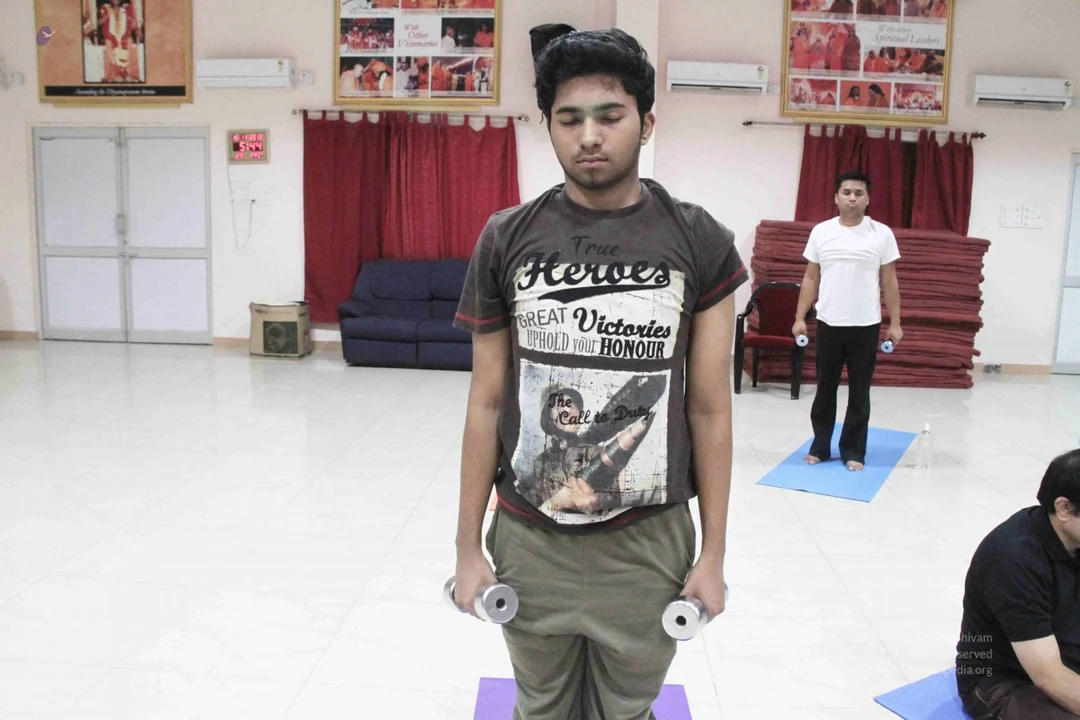
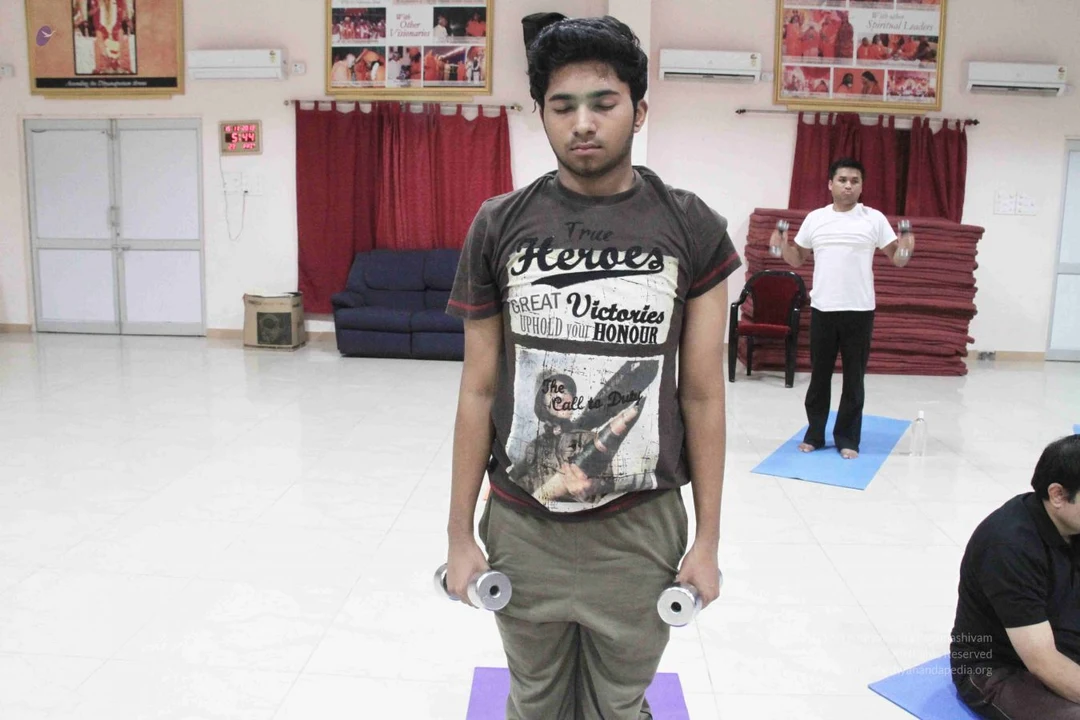
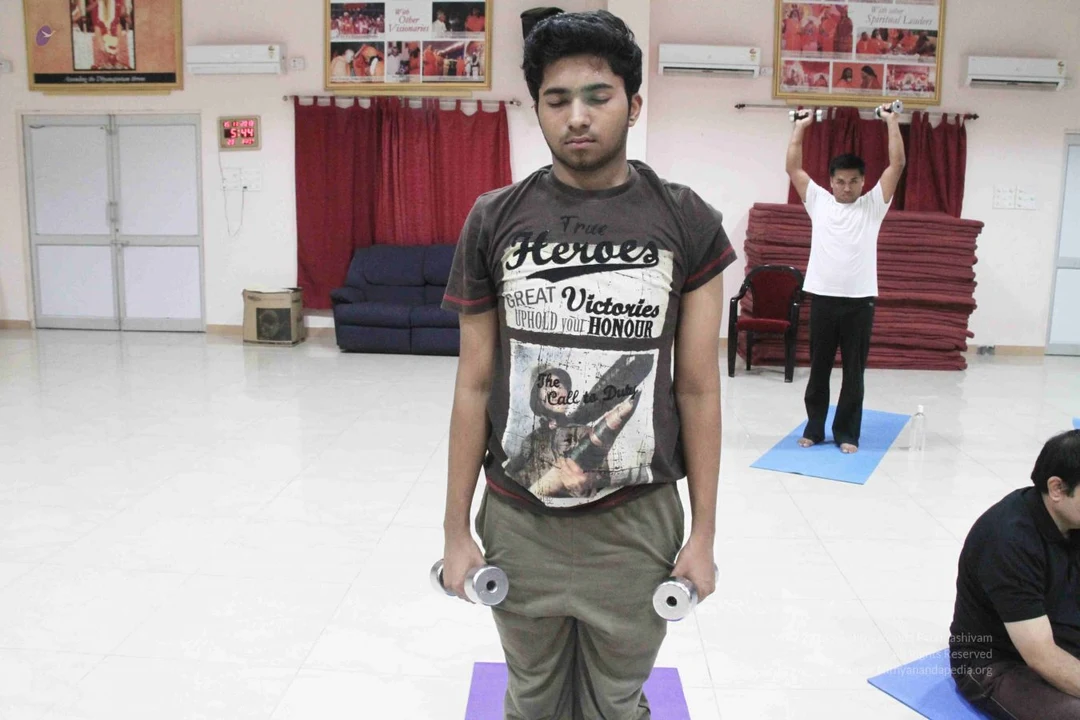
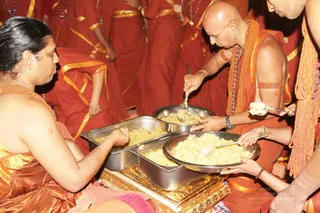
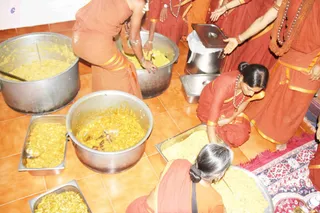
A photograph of a dimly lit yoga-and-exercise hall with white tiled floor and red curtains. In the foreground a young man in a grey-brown T-shirt printed with 'True Heroes' and 'Great Victories' stands on a purple mat holding silver dumbbells at his sides, eyes lowered. Behind him a man in a white shirt and dark trousers lifts dumbbells overhead on a blue mat, and at the lower right a seated man in black sits on a blue mat. Stacked red mats, a navy sofa and framed posters showing groups in red robes line the walls. No a person candidate is visibly present in the scene.A group of devotees in orange and red saris and dhotis, many wearing rudraksha malas, stand in a hall holding small portions of yellow rice in their palms while a bare-chested priest in a gold-bordered cloth serves from a large steel vessel of yellow rice set on a low gold-edged platform. Several sannyasis in saffron-orange robes with shaved heads stand at the right, also holding rice. The scene suggests a distribution of prasad, possibly annadan.Large steel pots and a wide aluminium tray of cooked food sit on a terracotta tiled floor. The tray holds a mound of yellow rice mixed with diced carrot and green vegetable pieces, with a ladle resting on it. Two more pots hold yellow rice and a darker, chunky vegetable mixture. Edges of a red mat and a person's bare feet appear at the top of the frame. No people are seated or serving in the main view. Preparation for an annadan style meal is suggested by the bulk cooking.

November 15 2013

Original wiki page
Contents

Title:

Grace is there on you Forever.

Description:

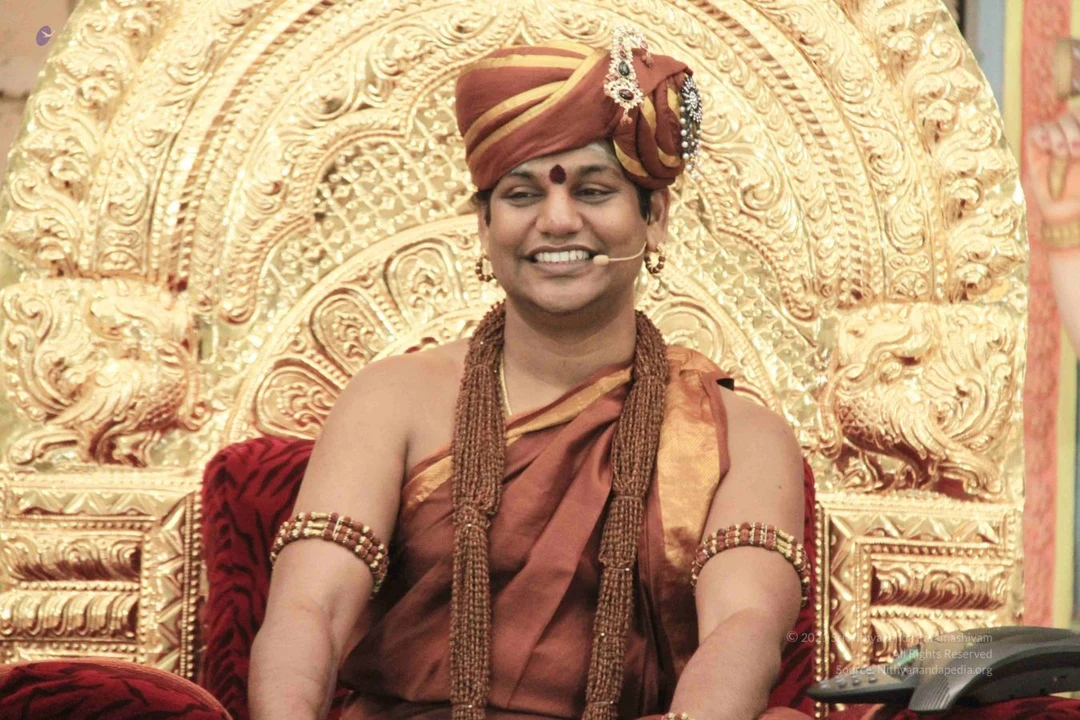
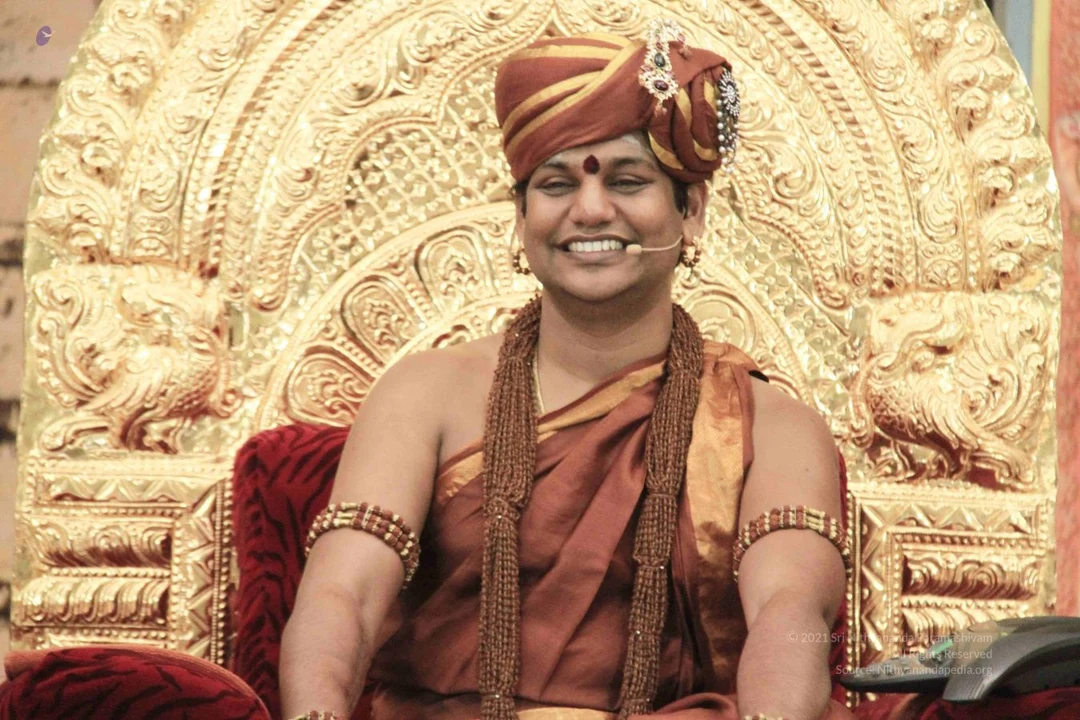
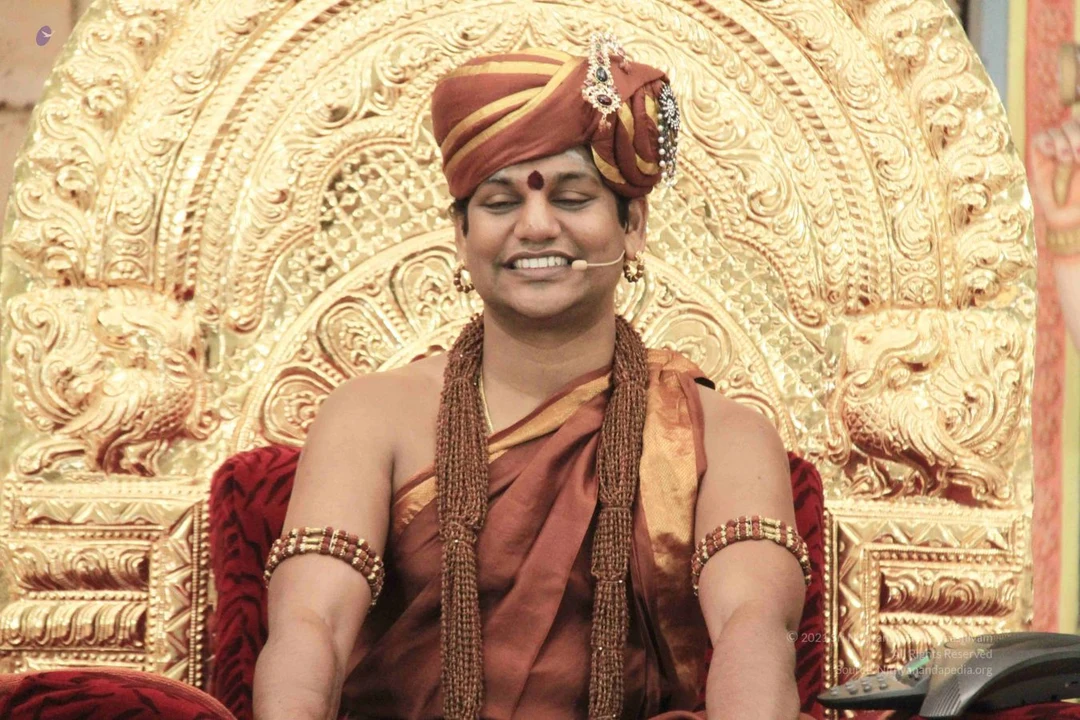
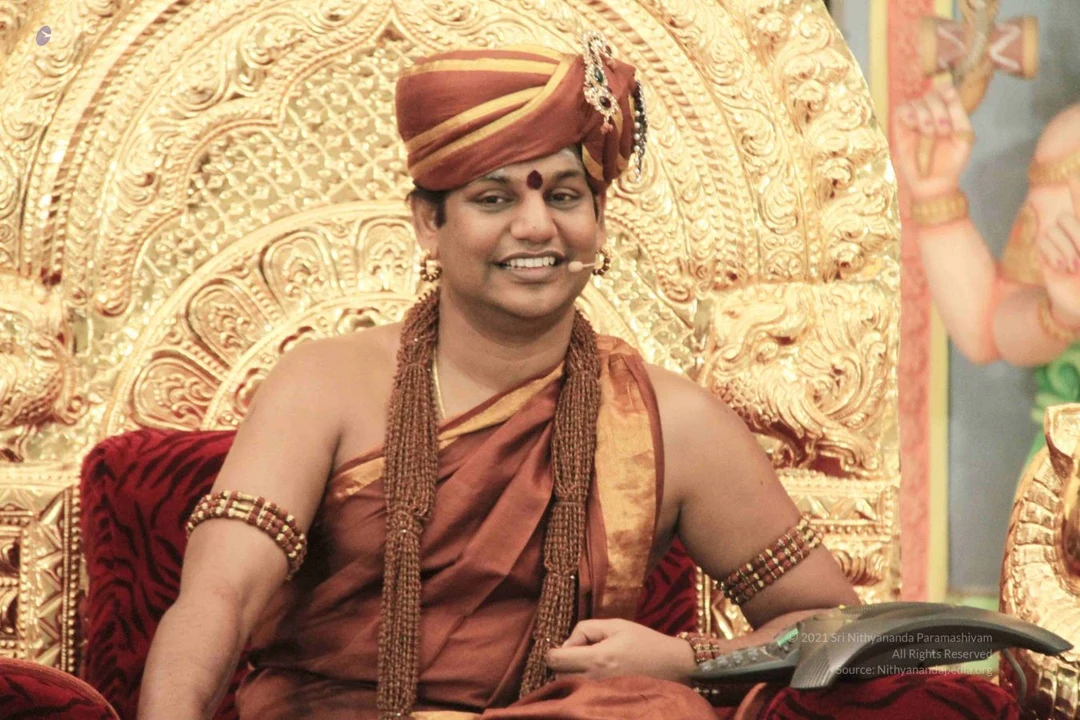
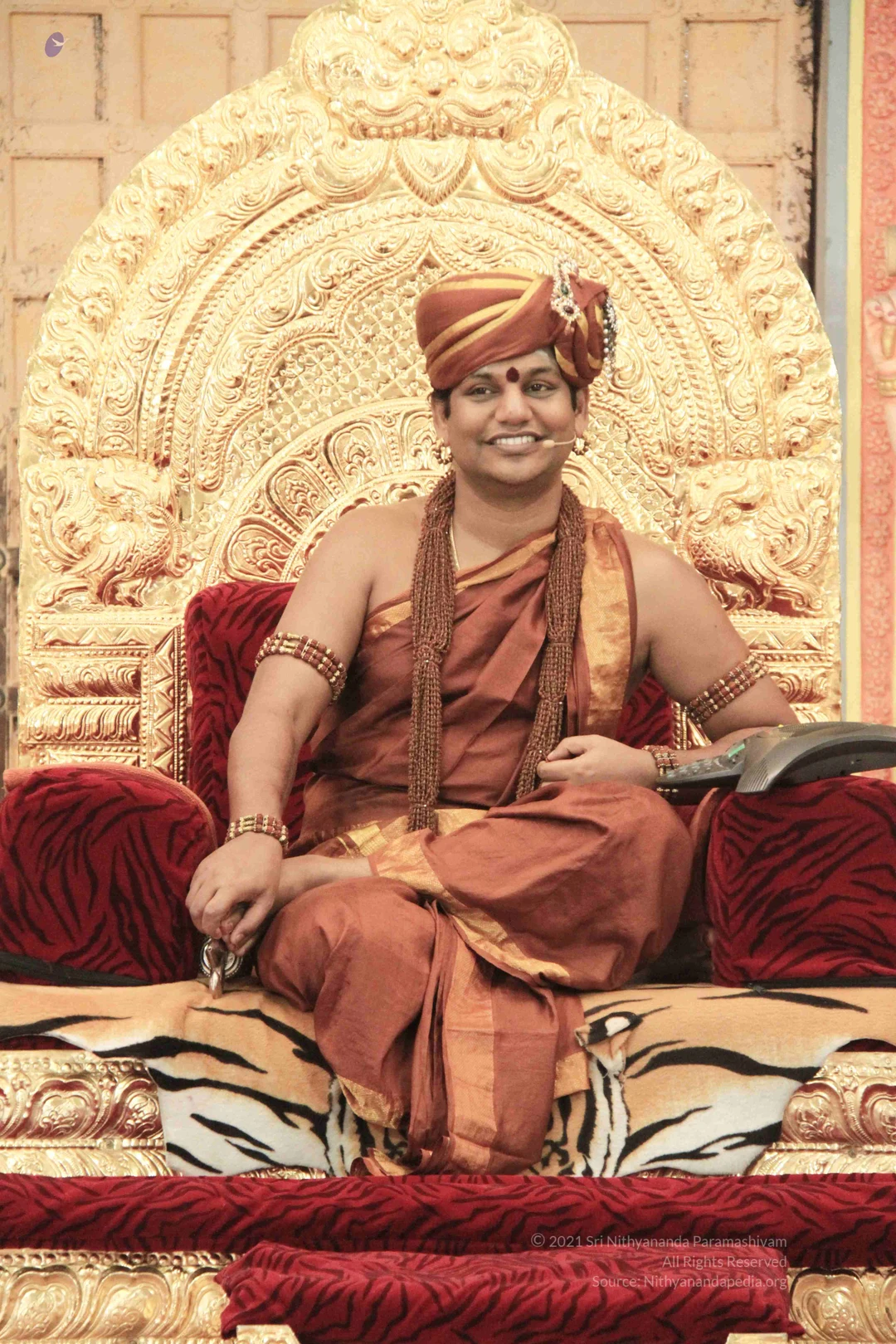
In today’s morning satsang Paramahamsa Nithyananda assured us that Grace is flowing in us forever, and that God is not a sadist and He does not enjoy our conflicts and complications. The cosmos wants us to be fulfilled. We need to stop worshiping impossibility and complete, complete, complete with all the layers of impossibility to experience the awakening of the kundalini shakti and remove all obstacles to the flow of grace.

Link to Video:

VideoAudio

Transcript:

Nithyanandeshwara Samaarambhaam Nithyanandeshwari Madhyamaam | Asmath Aachaarya Paryanthaam Vandhey Guru Paramparaam ||

00:41 Hindi - 00:52

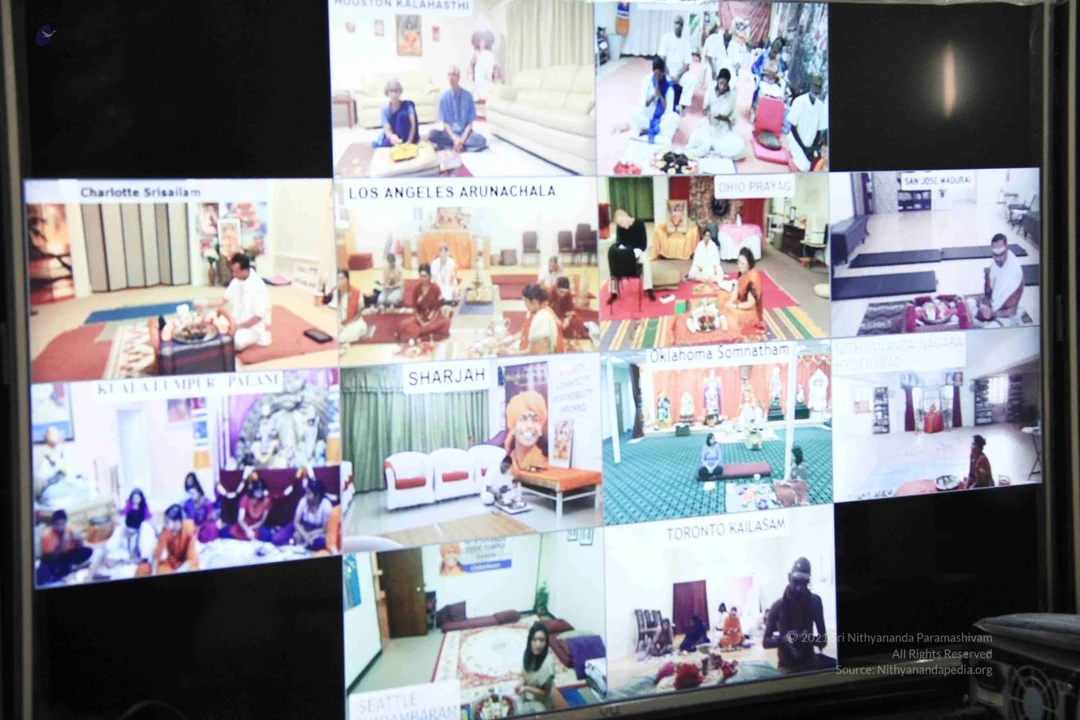
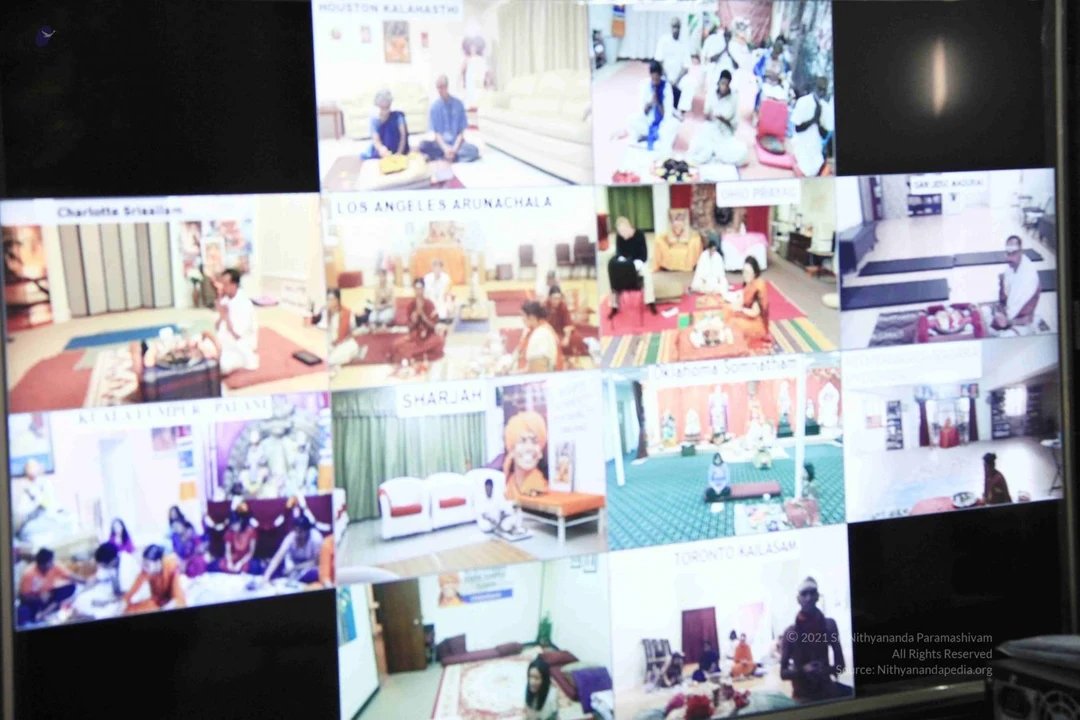
I welcome all the devotees, disciples, samajis, satsangis sitting with us all over the world through Nithyananda TV, Sadhna TV, Lotus News Channel, Janashree TV, Eshwar TV and two-way video-conferencing having Nayana Deeksha.

Cities sitting with us in two-way video-conferencing having Nayana Deeksha: Los Angeles-Arunachalam, Kuala Lumpur-Palani, Guadeloupe-Rameshwaram, Charlotte-Srisailam, Seattle-Chidambaram, Sharjah, San Jose-Madurai, Toronto-Kailasam, Oklahoma-Somanatham, Nithyananda Nagar-Hyderabad, Ohio-Prayag, Slovakia-Shivaloka, Tiruvottiyur-Chennai, Oman-Sivagangai, Jorpati-Nepal, San Antonio-Texas, San Diego-La Jolla, Surrey-British Columbia, Colorado Springs-USA, Bangalore North, North Vancouver, Simi Valley-California, Dubai-Vaidyanatham, Bangalore-Malleshwaram, Hong Kong-Sirkazhi, Devon-UK, Grasse-France, Monterrey-Mexico, Saudi Arabia, Dakota Dunes, Adi Nithyananda Dhyanapeetam-Avathipalayam, Indrani-New Jersey, Mill Valley-California, Enriching Temple-Bidadi, East London-UK, Bogota-Colombia, Bangalore-Malleshwaram and Hong Kong-Sirkazhi and Hyderabad Gupta Kashi. Singapore - Singaporum, Warrington - UK, Grasse France, Peeta Dishwares training centre Salem.

I welcome all of you with my love and blessings. Today Kalpataru satsang . Next three days we will have Kalpataru Satsangs.

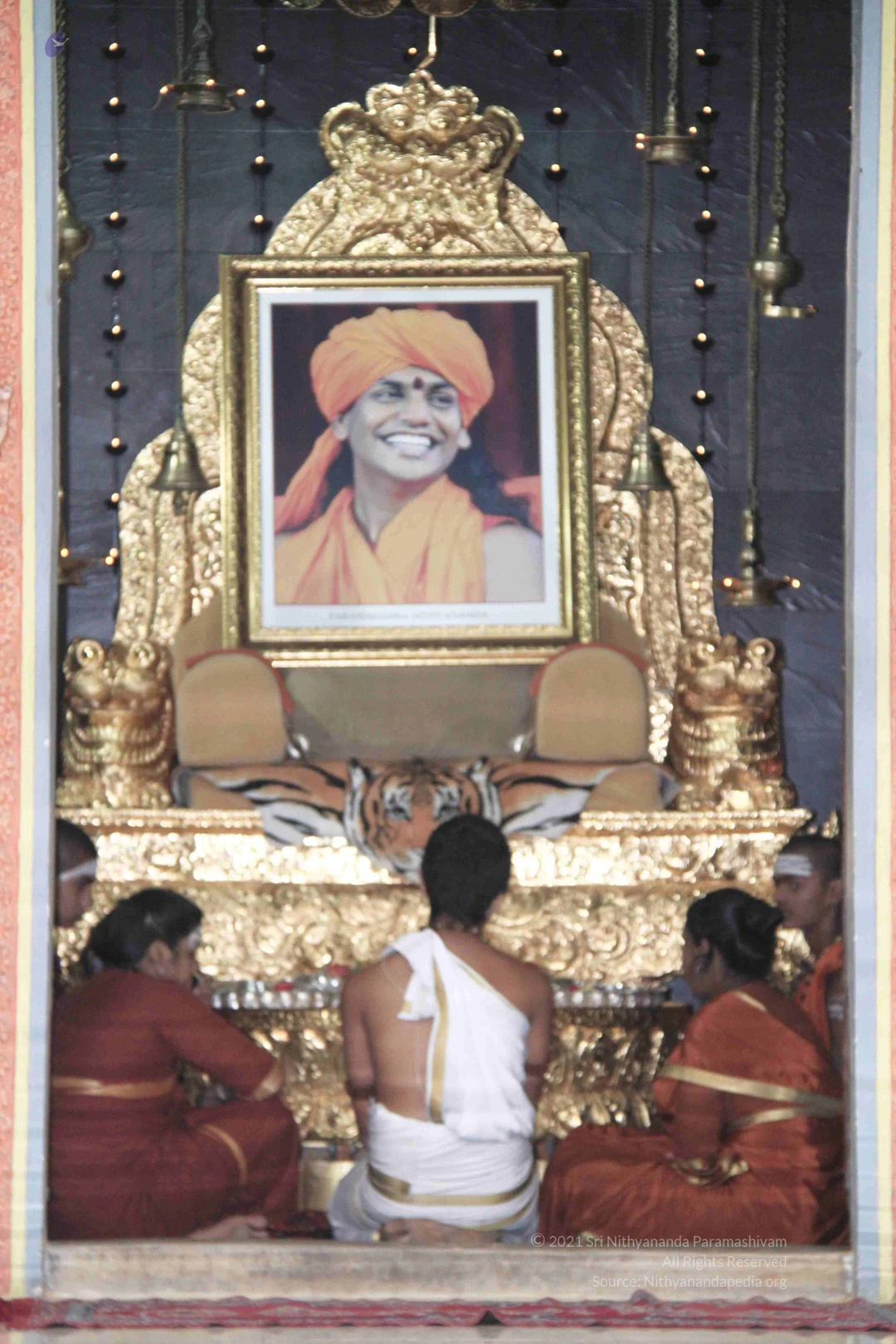
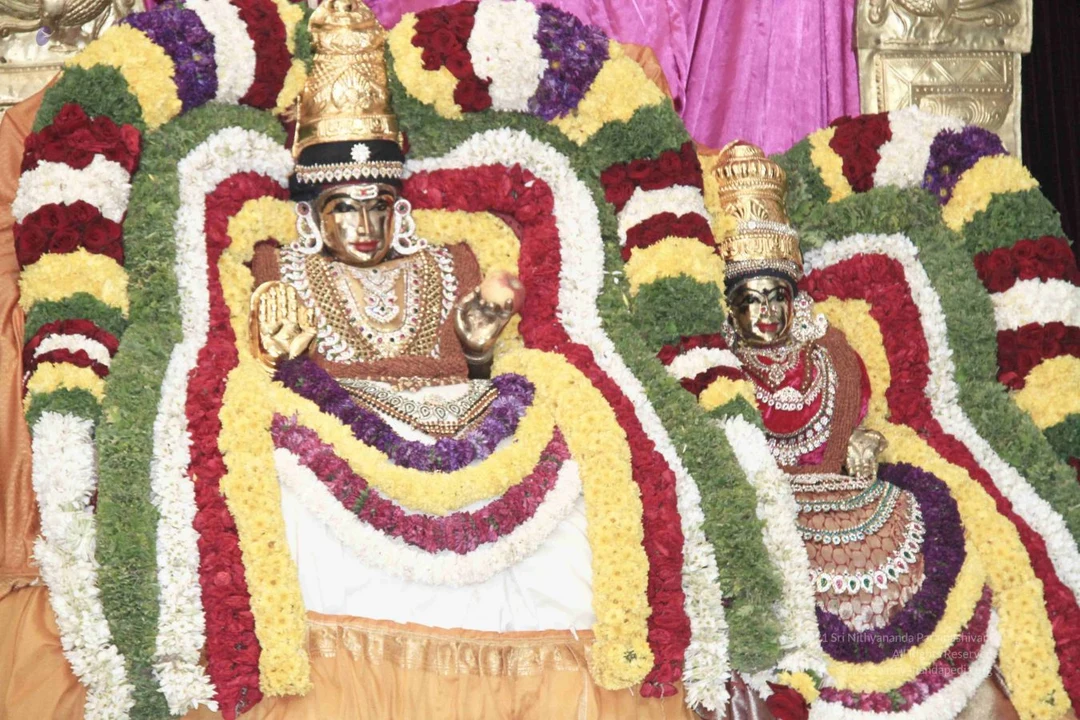
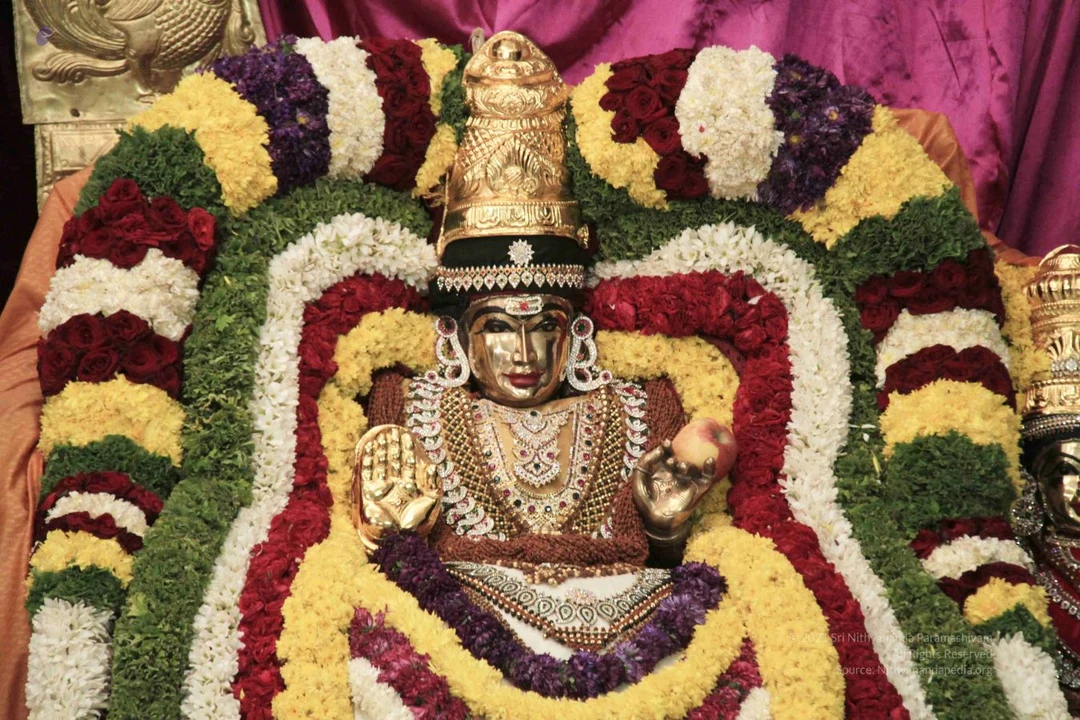
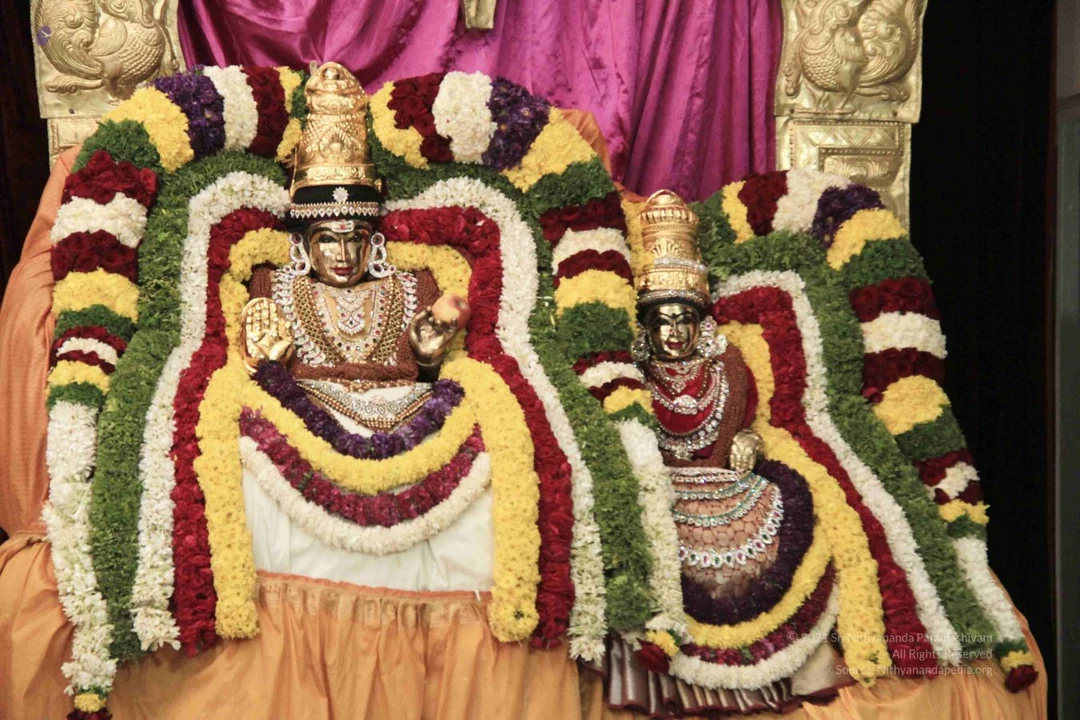
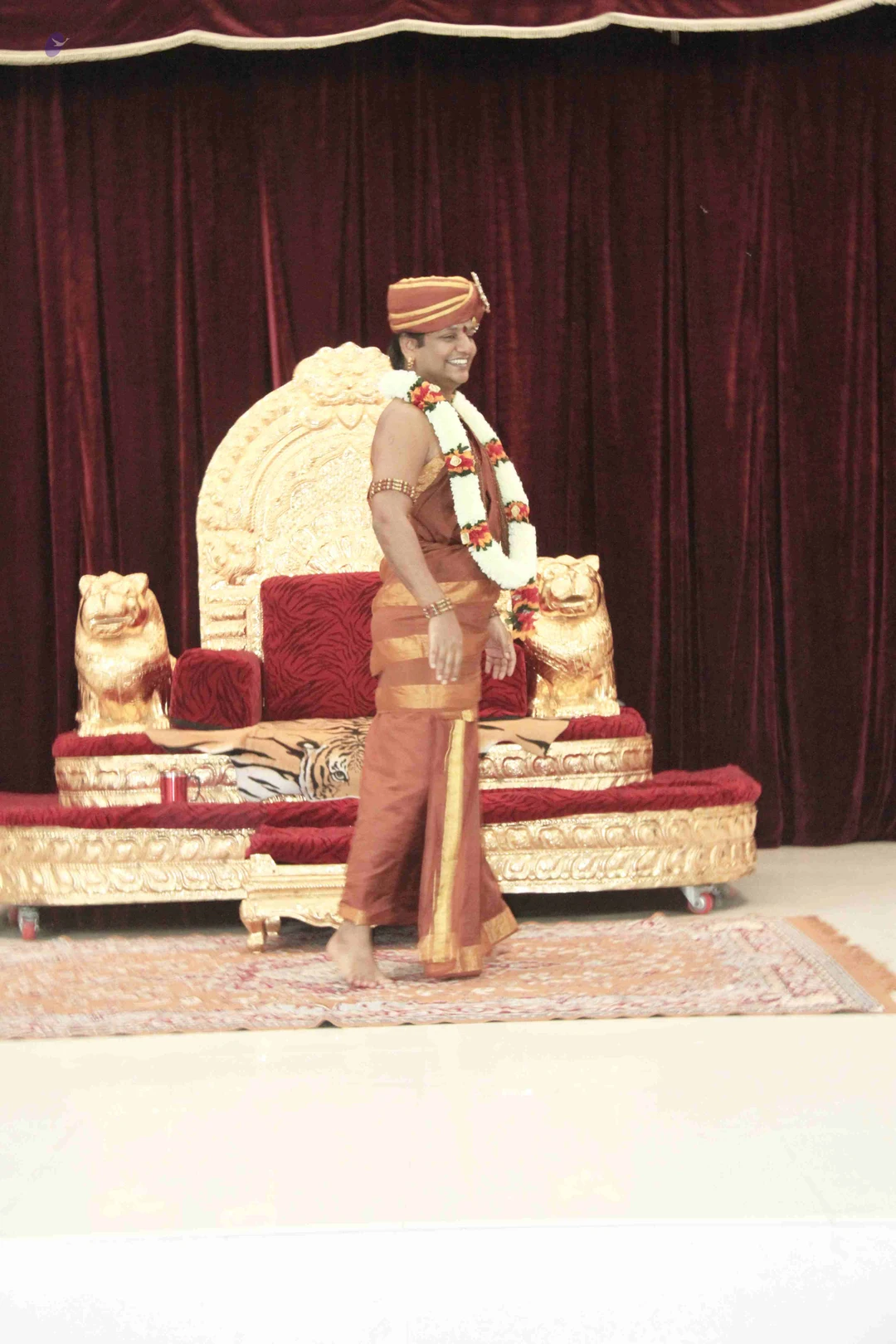
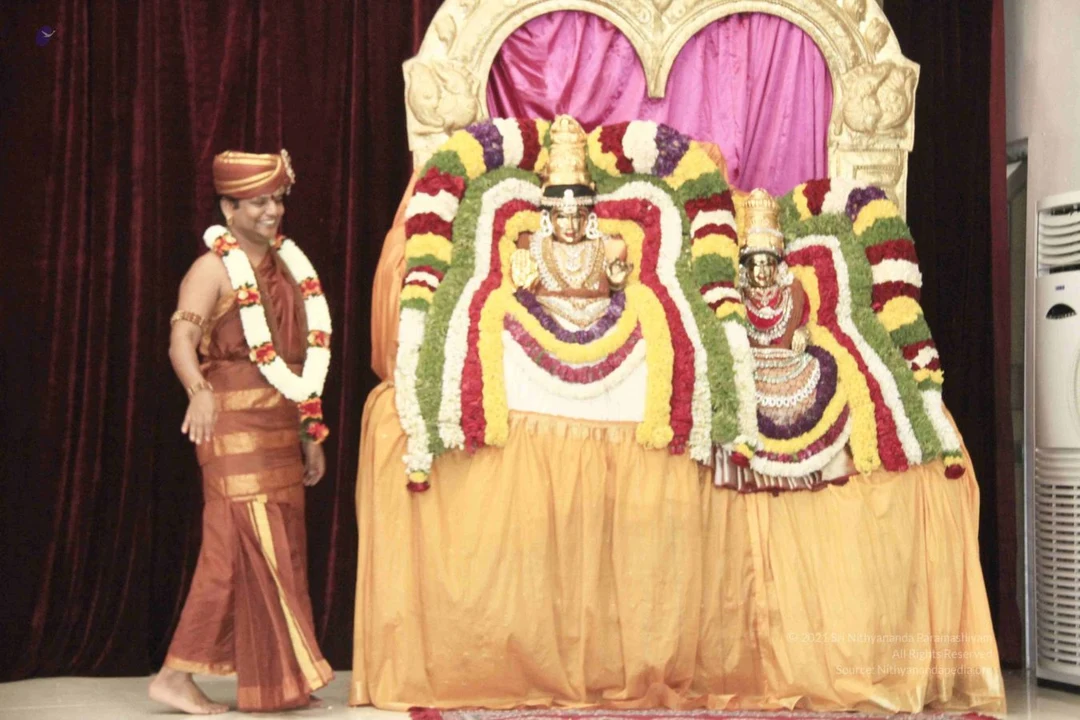
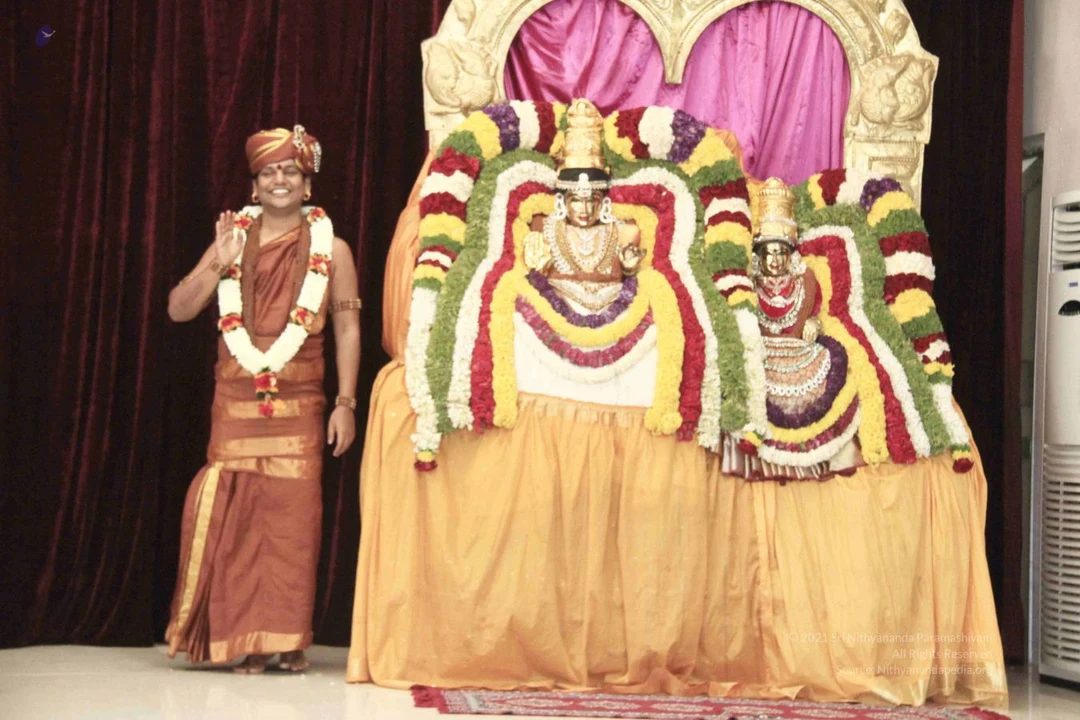
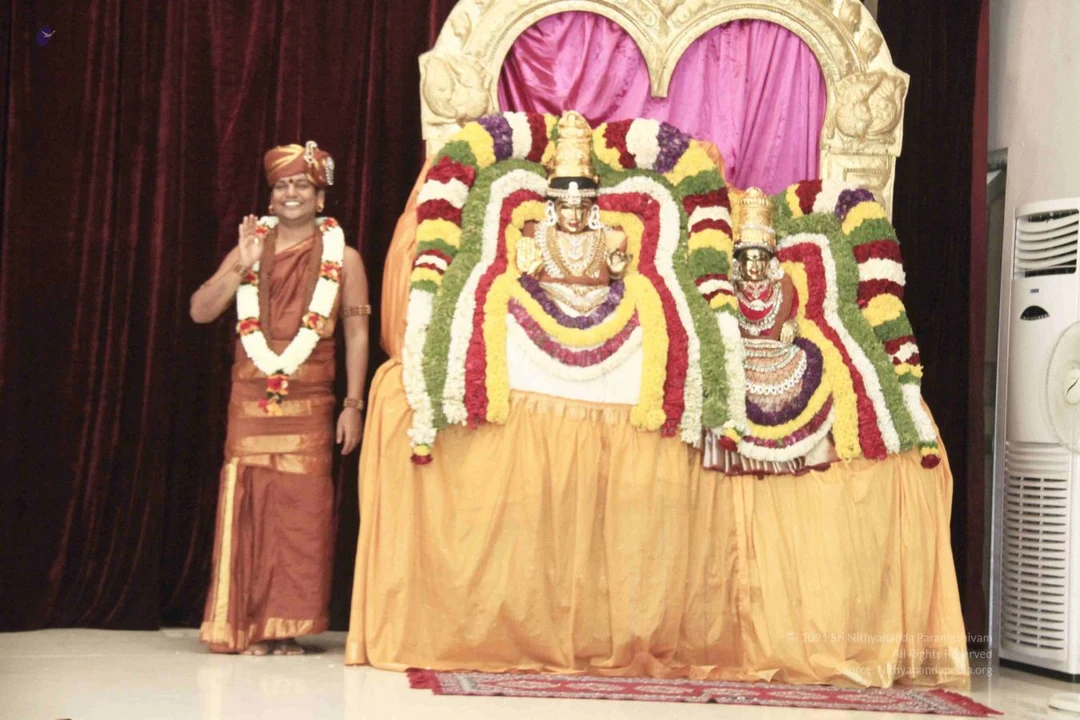
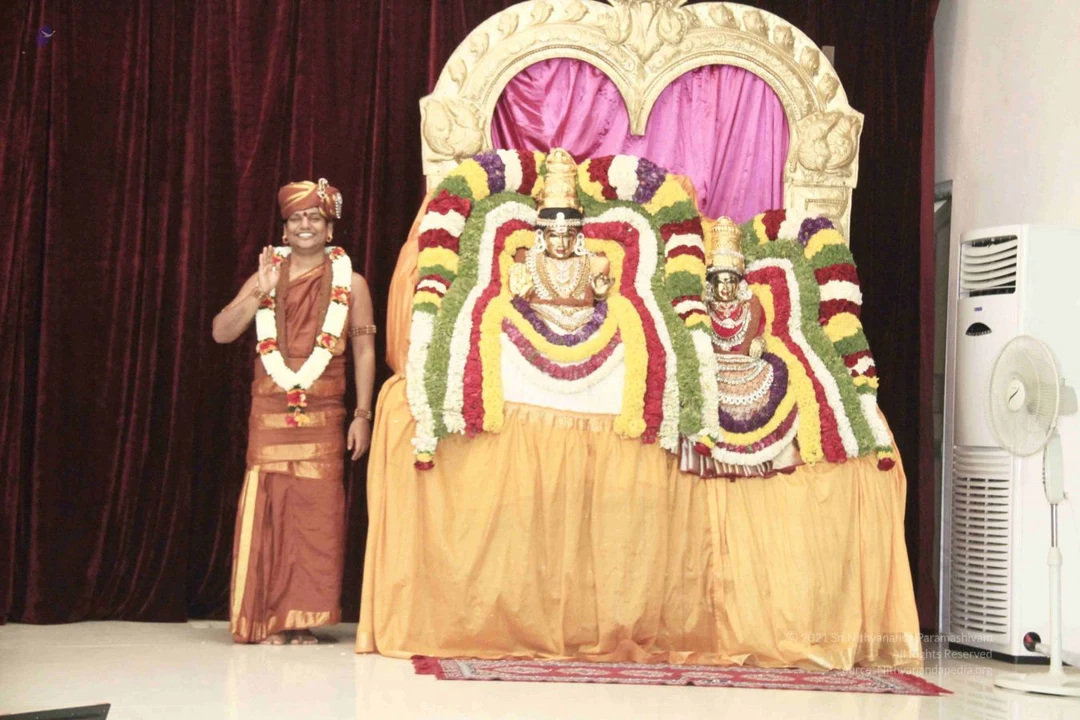
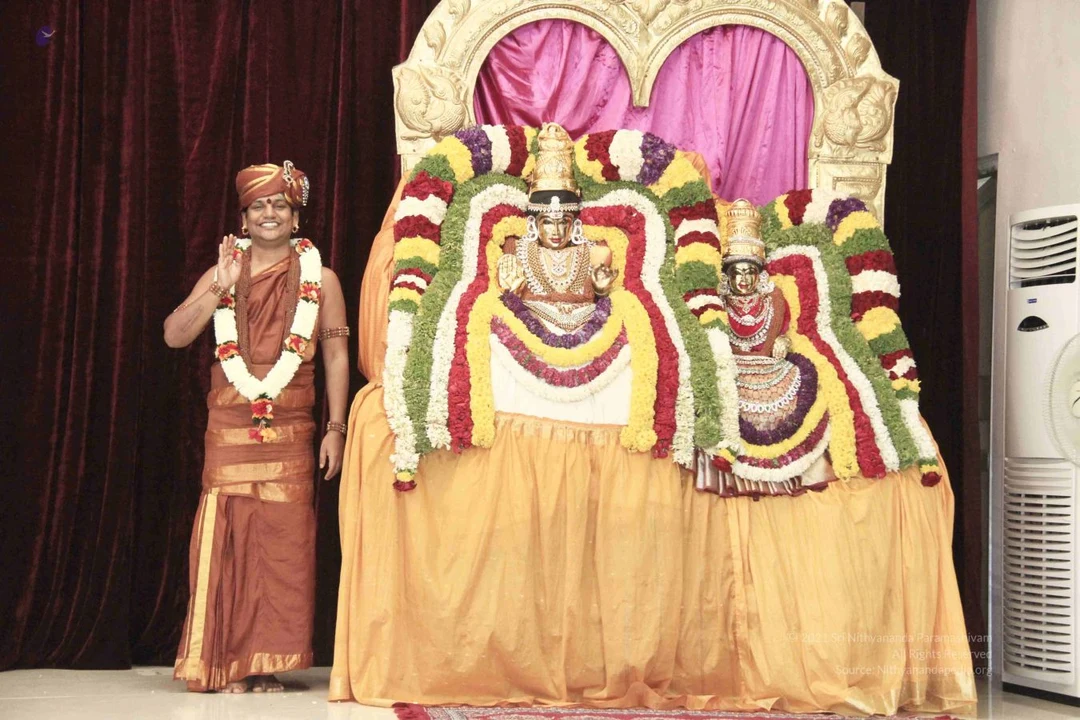
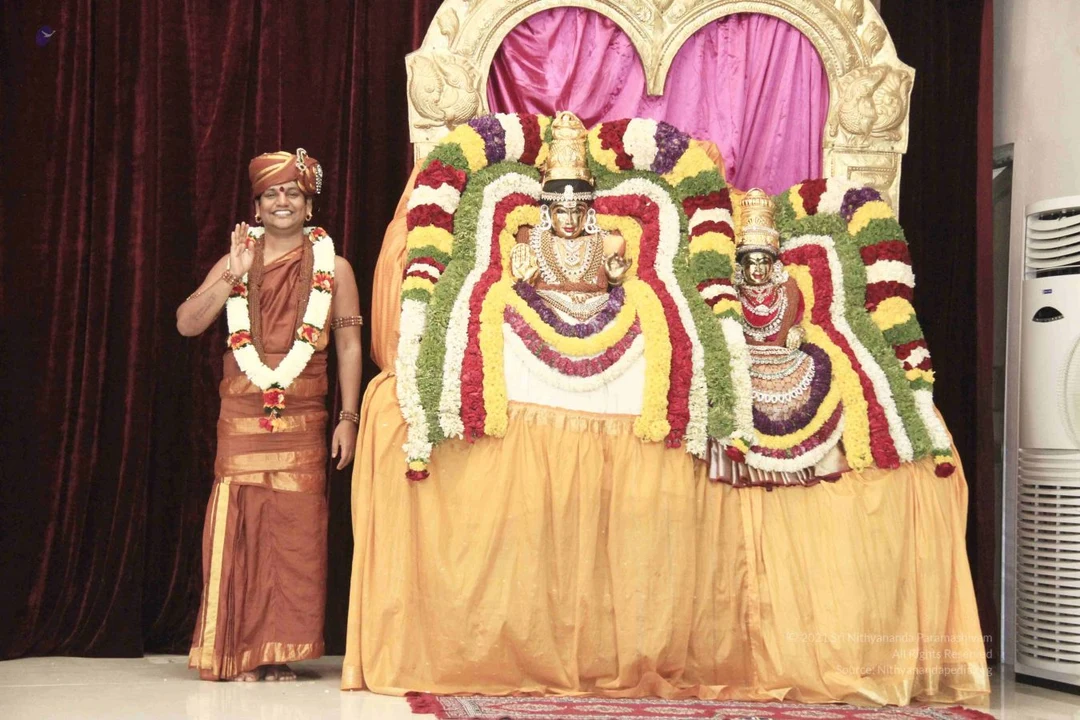
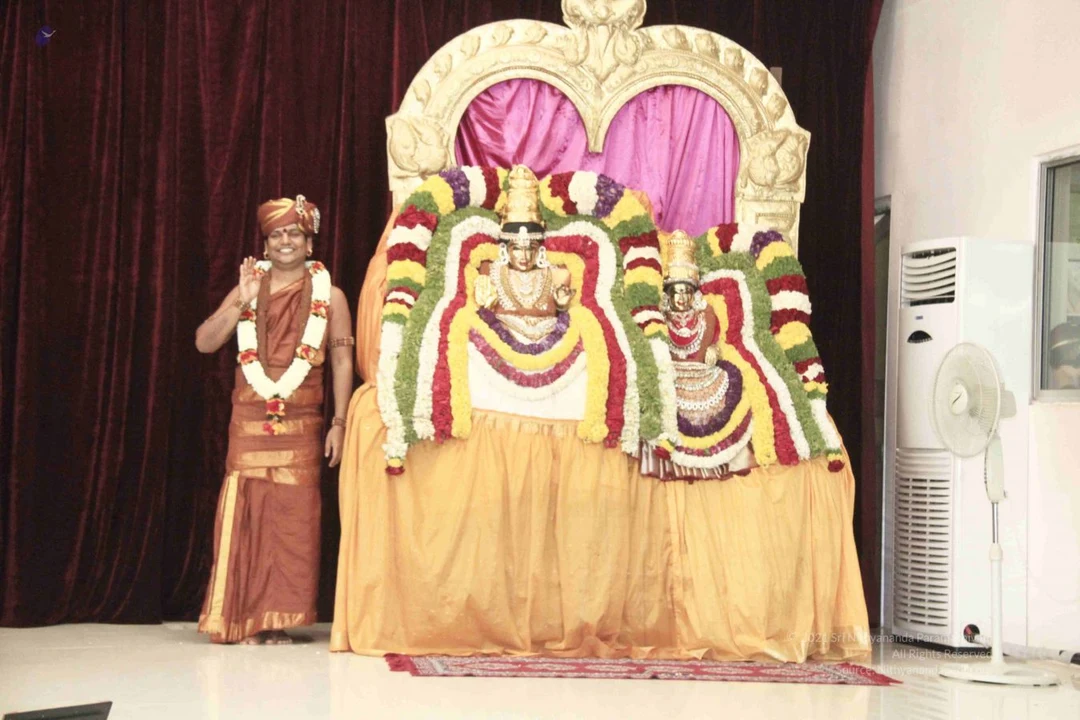
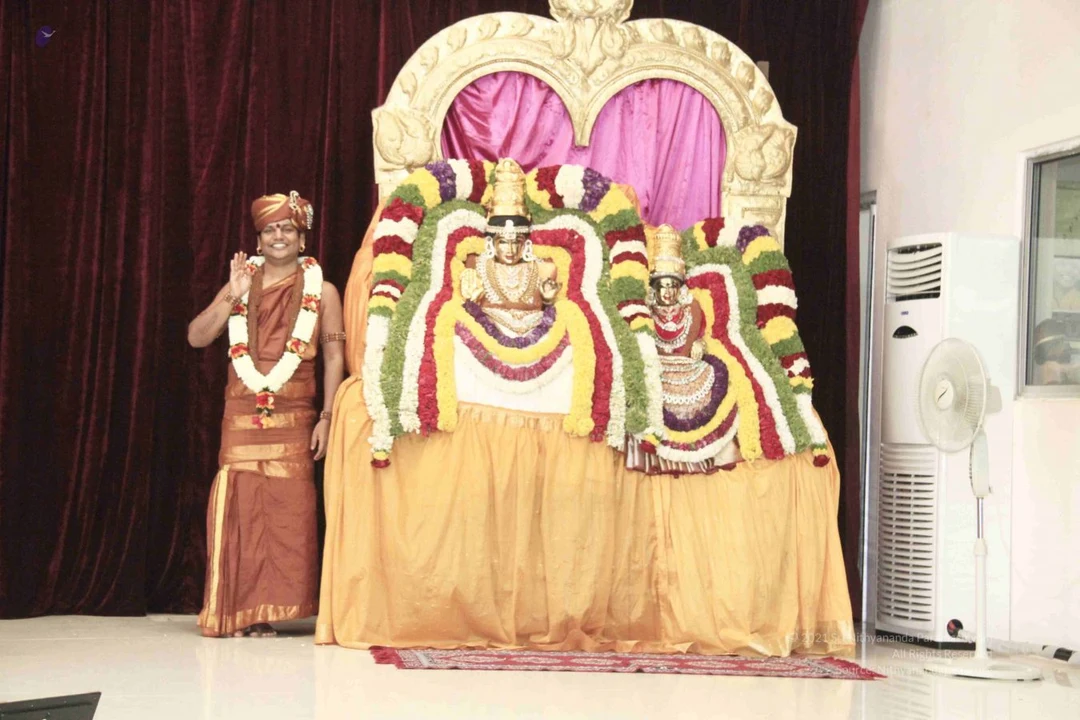
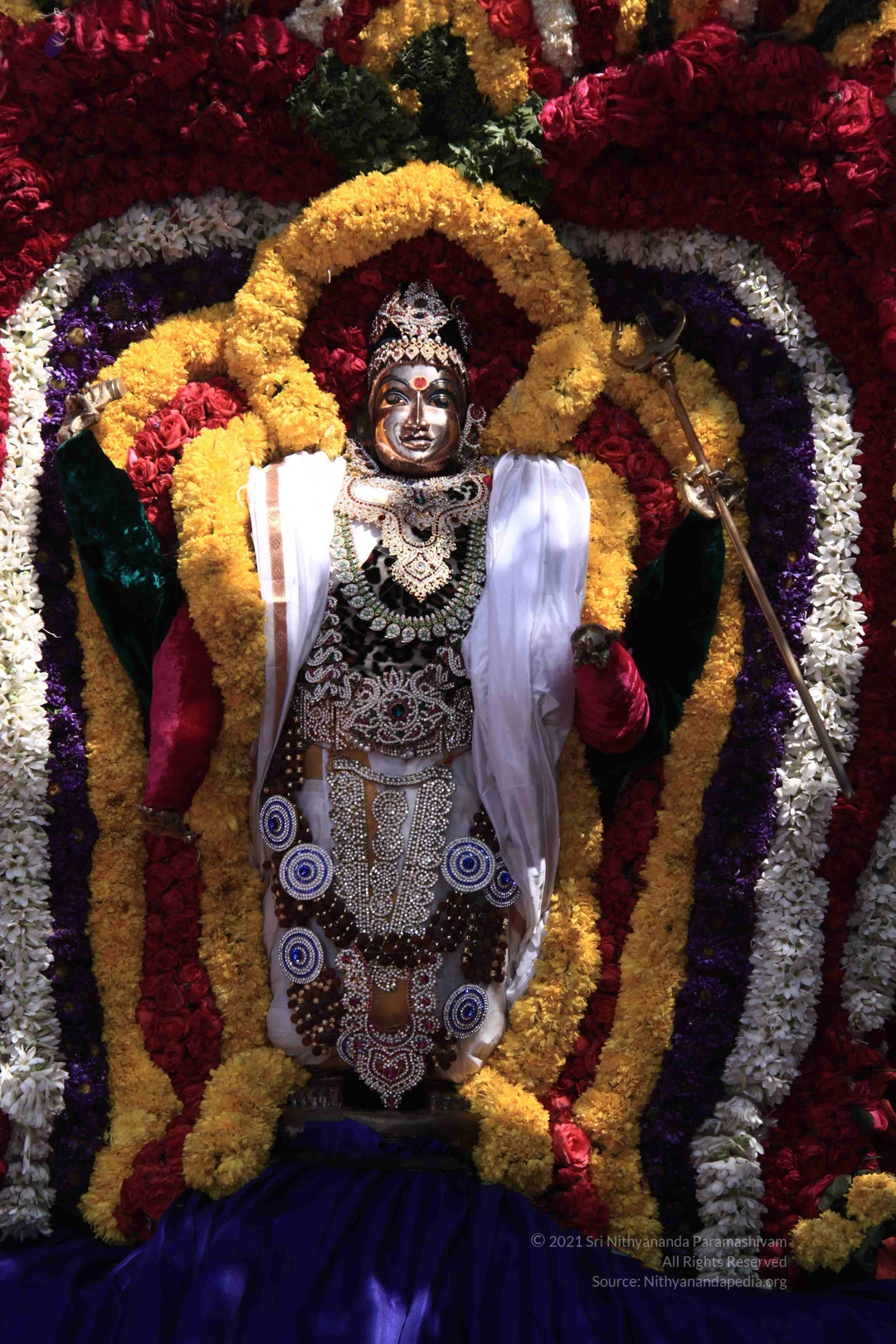
Today, as part of the 8th day of the Nithyanandeshwara Brahmotsava, Nithyanandeshwara and Nithyanandeshwari are gracing here.

Today, 21st batch Inner Awakening, 15th day. Completing with past lives. Today we are going to complete with past lives.

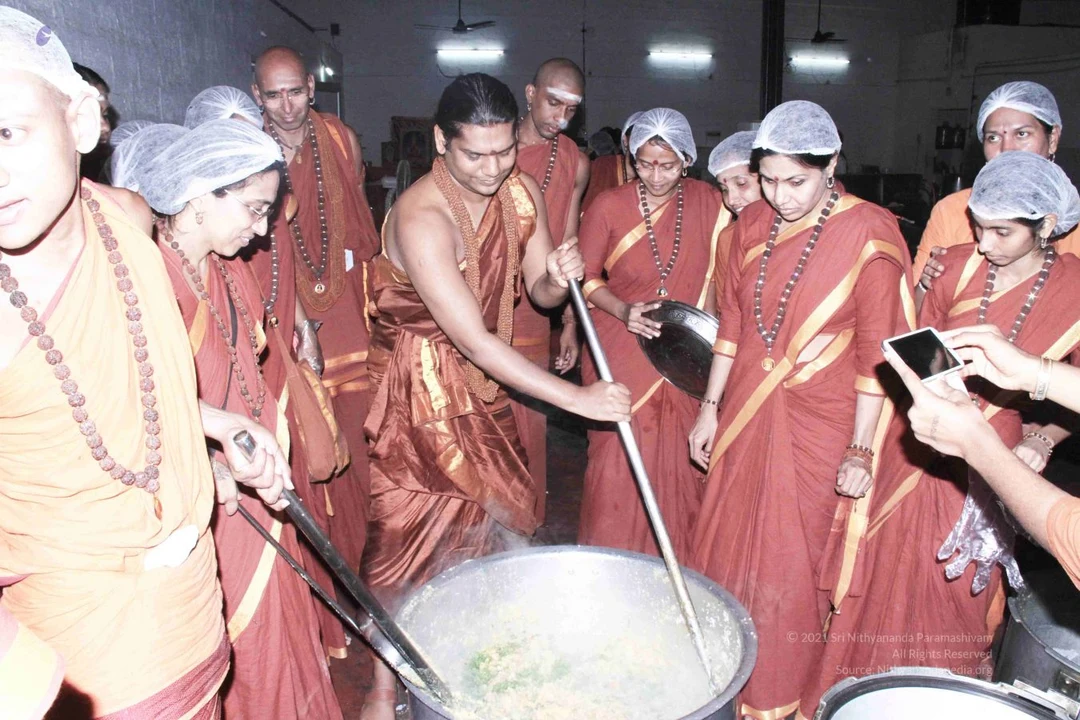
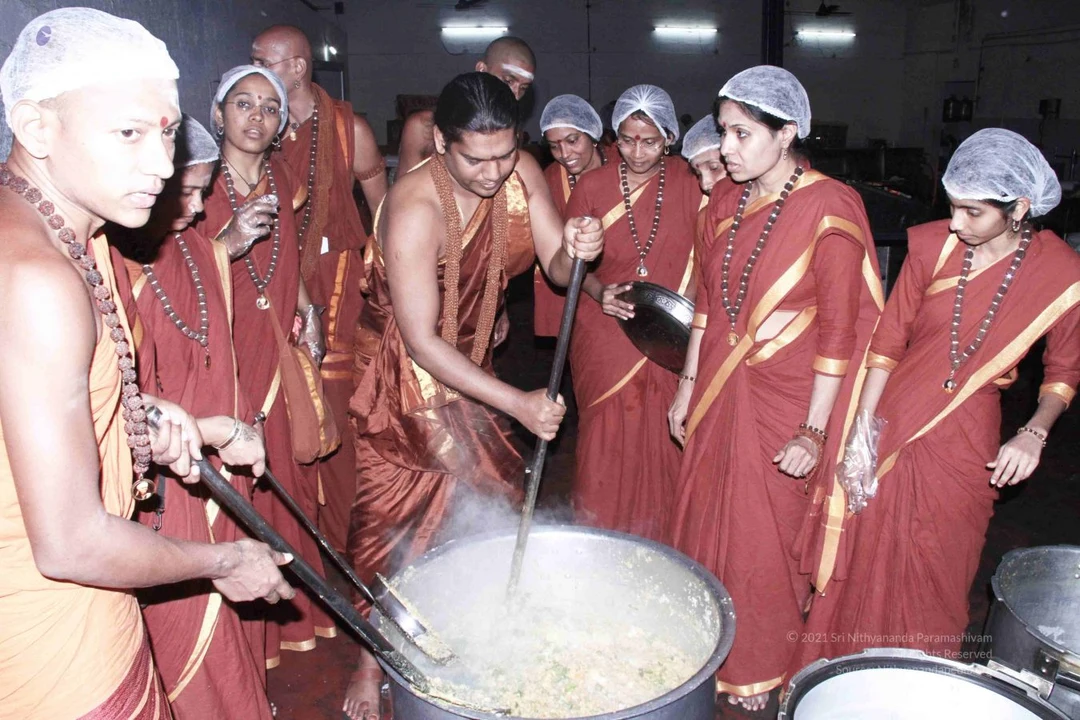
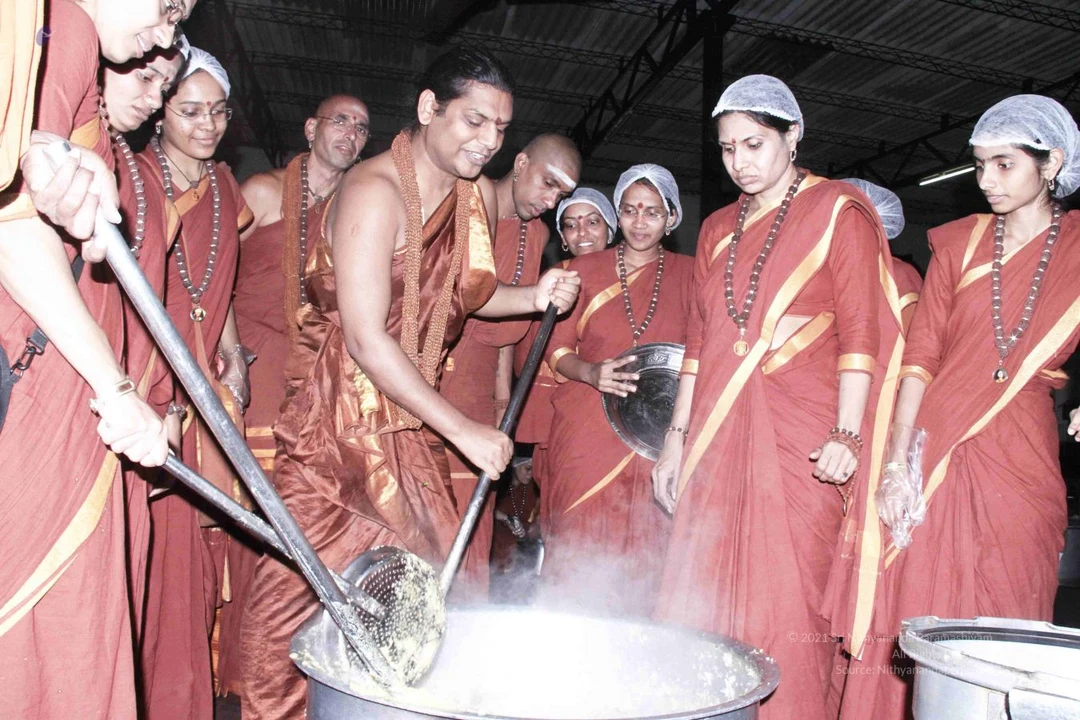
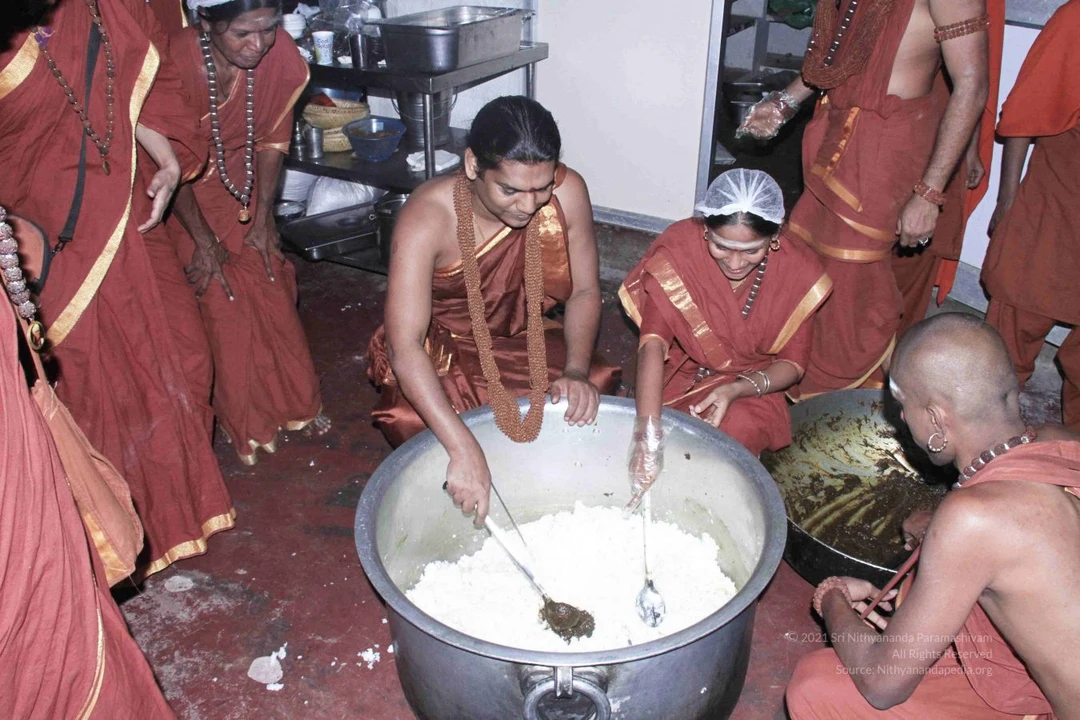
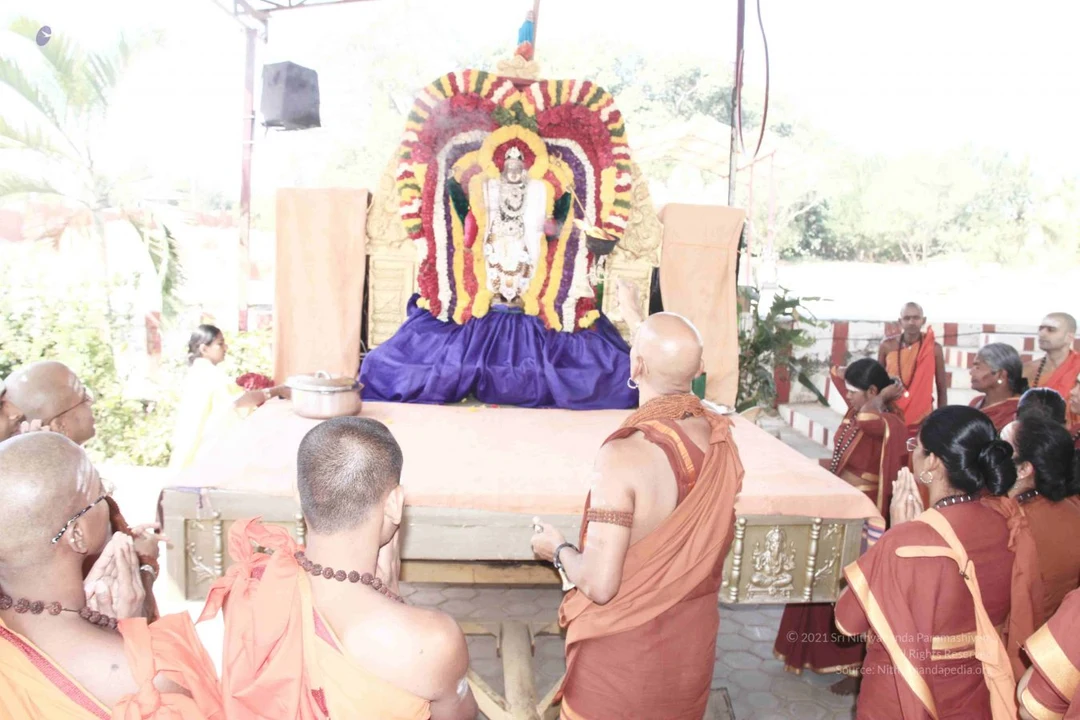
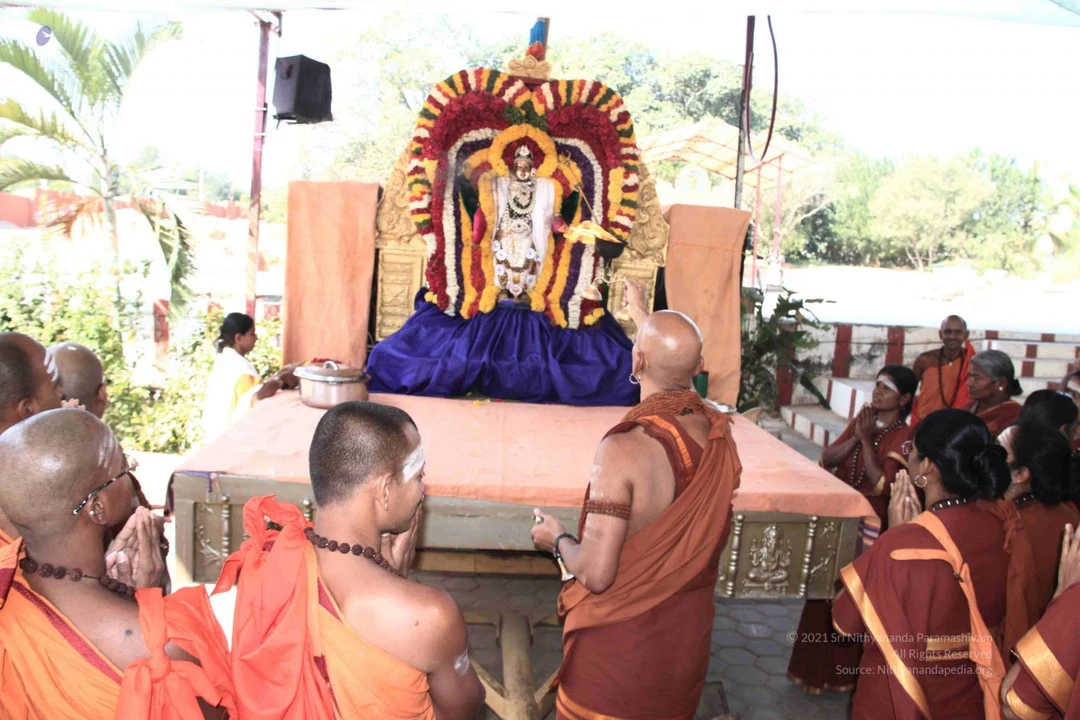
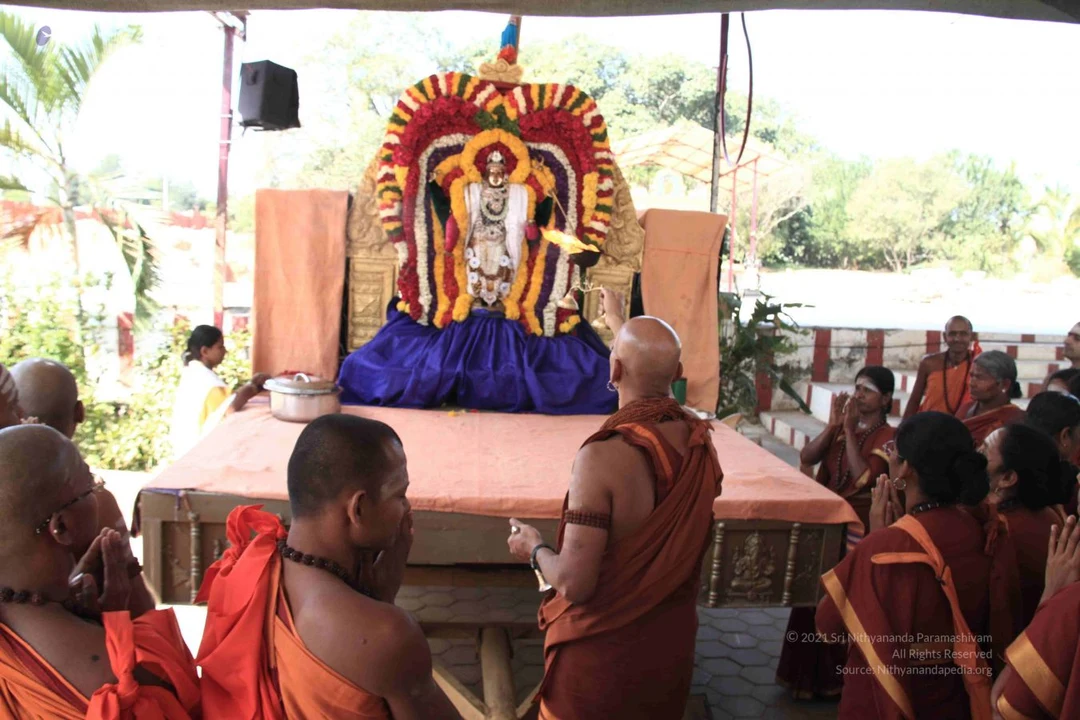
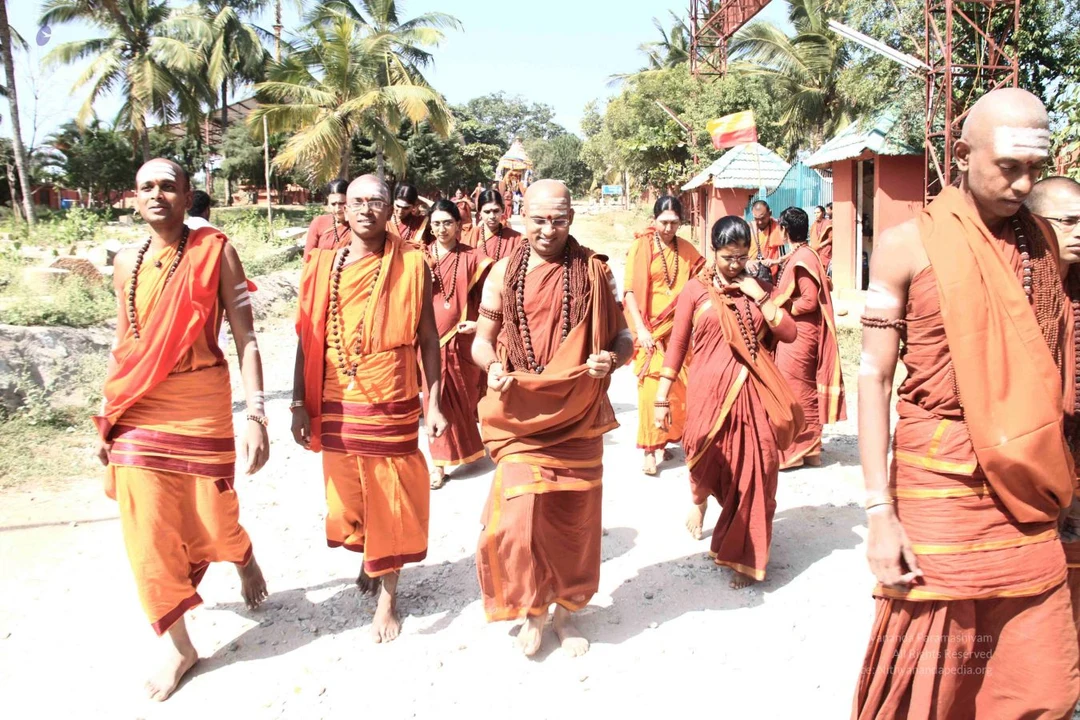
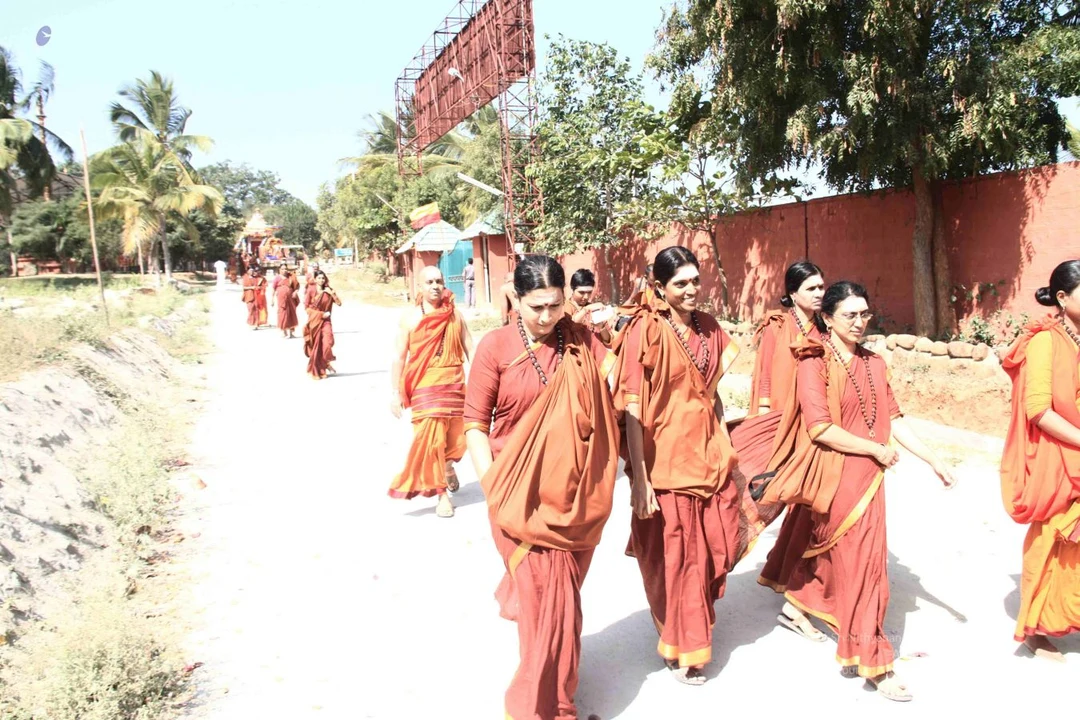
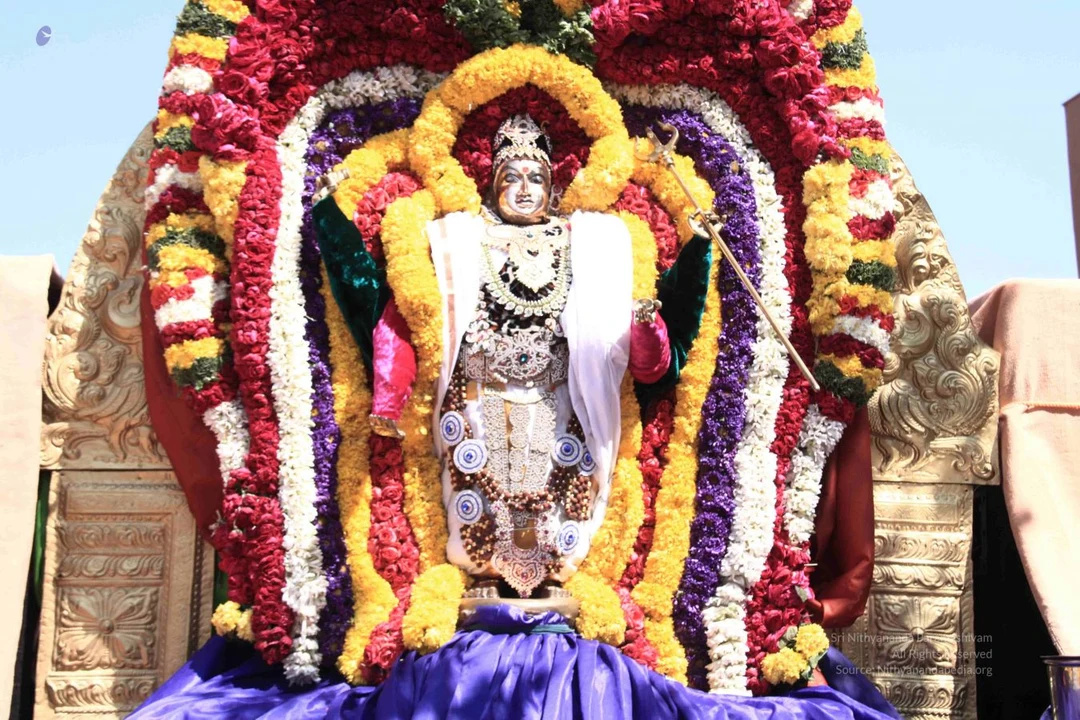
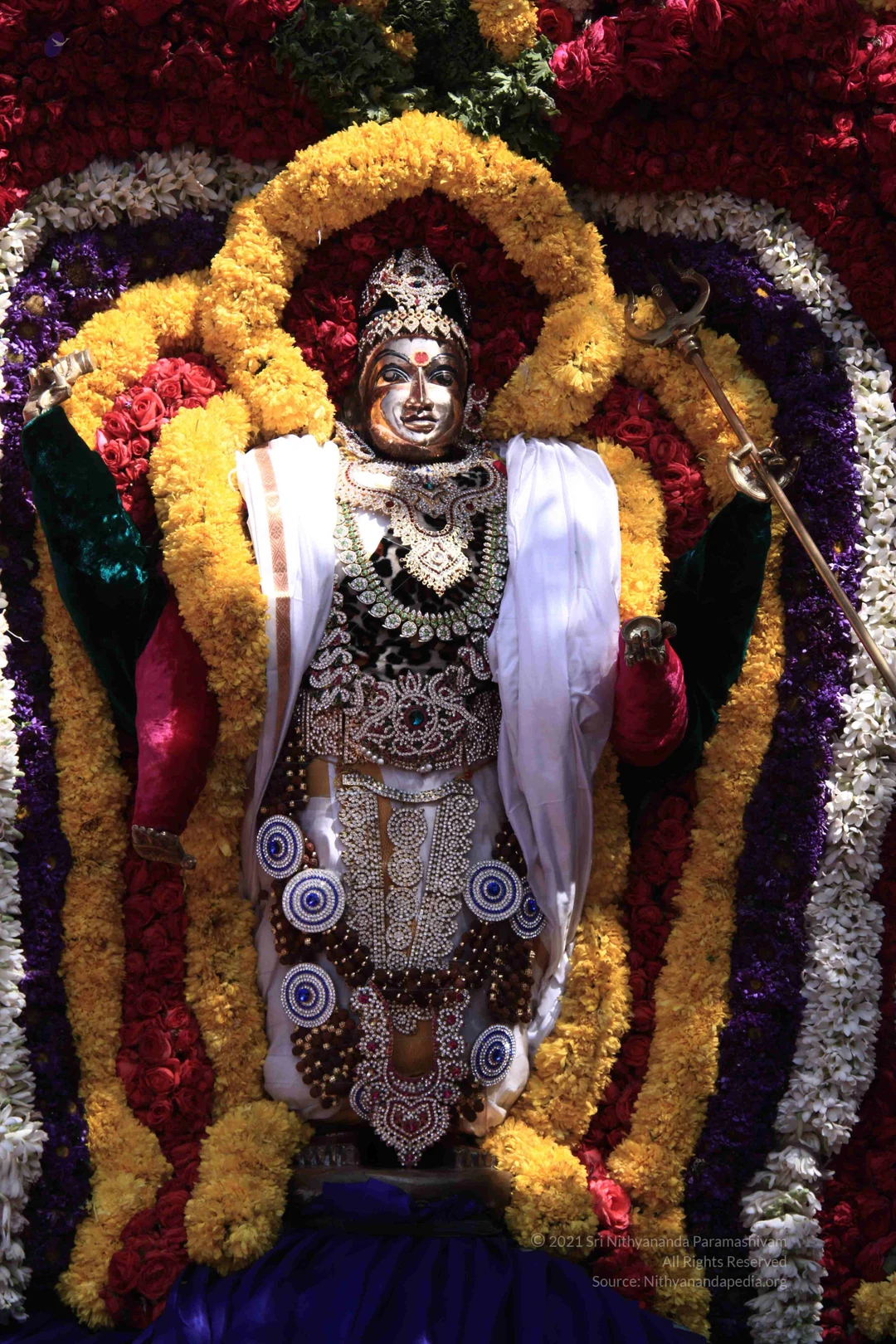
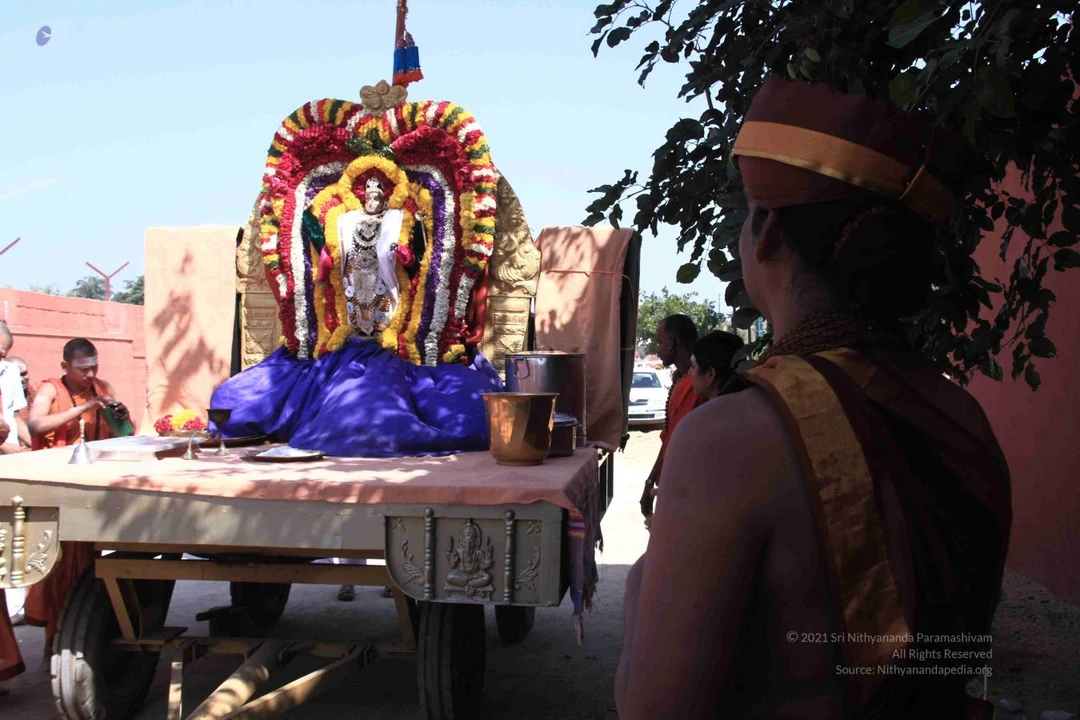
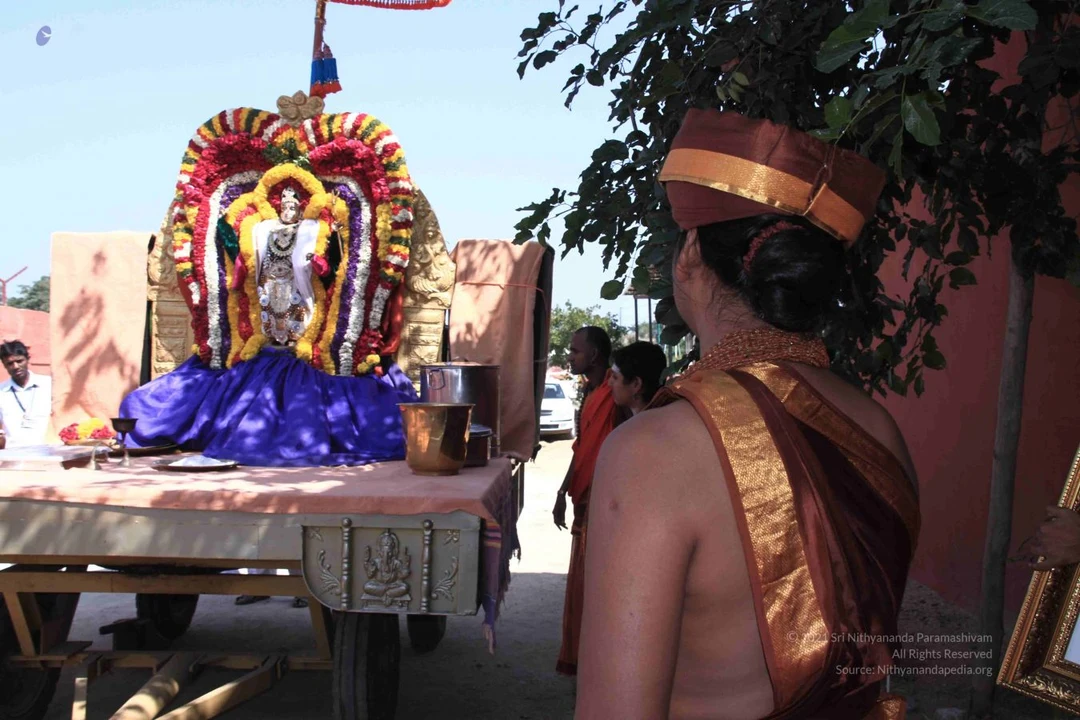
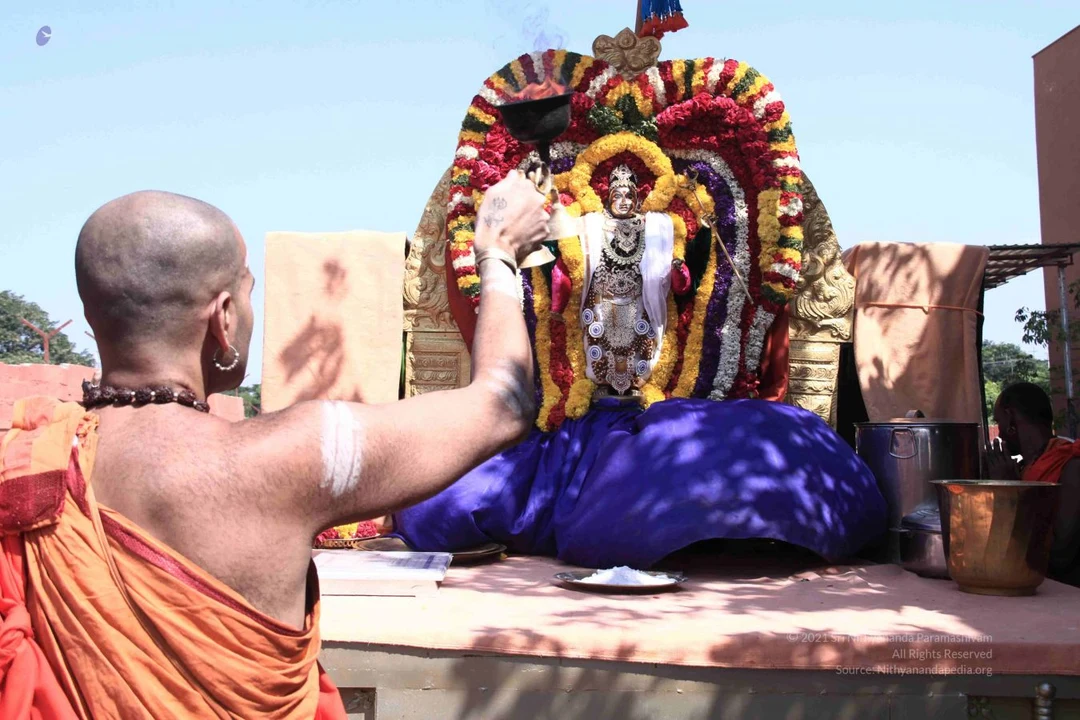
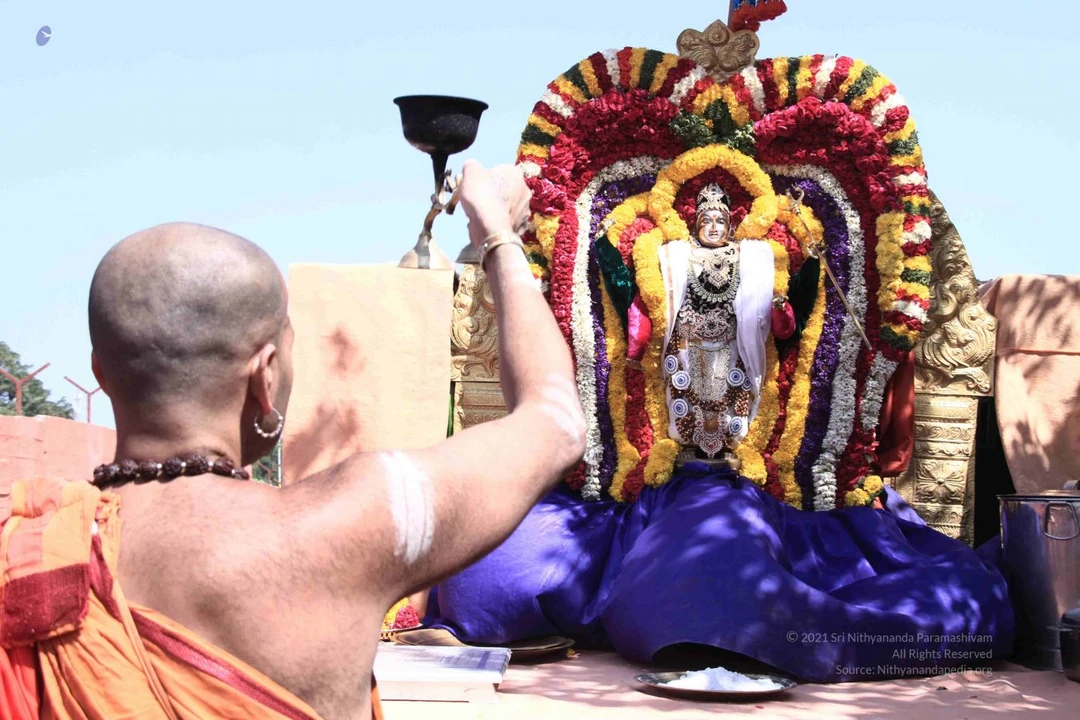
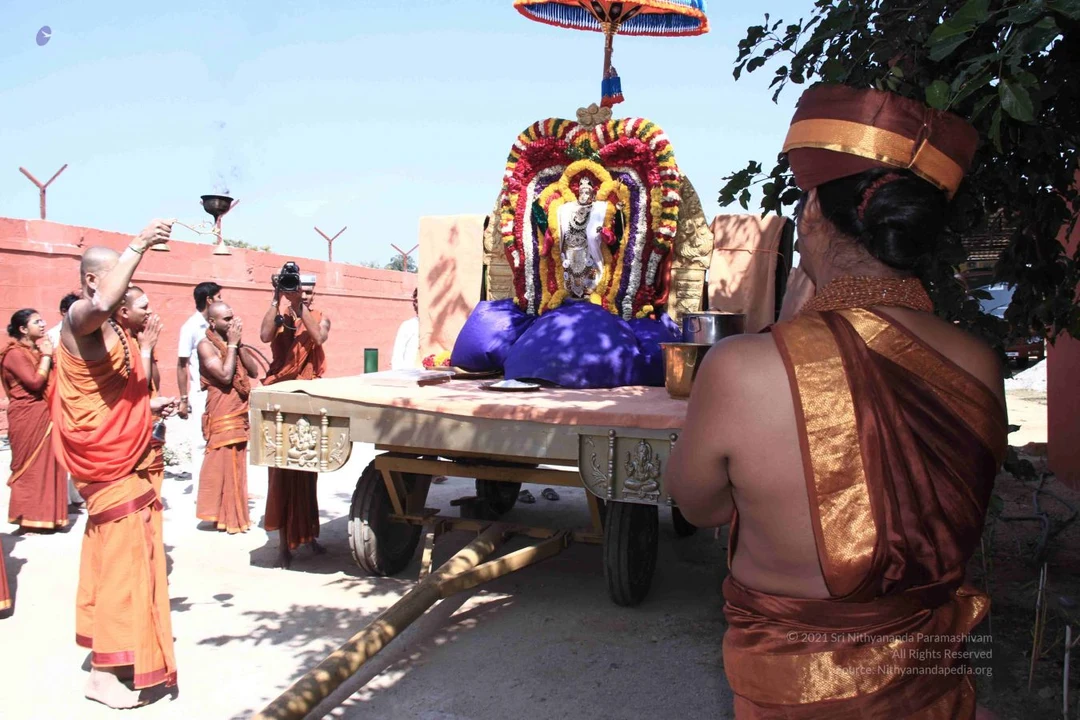
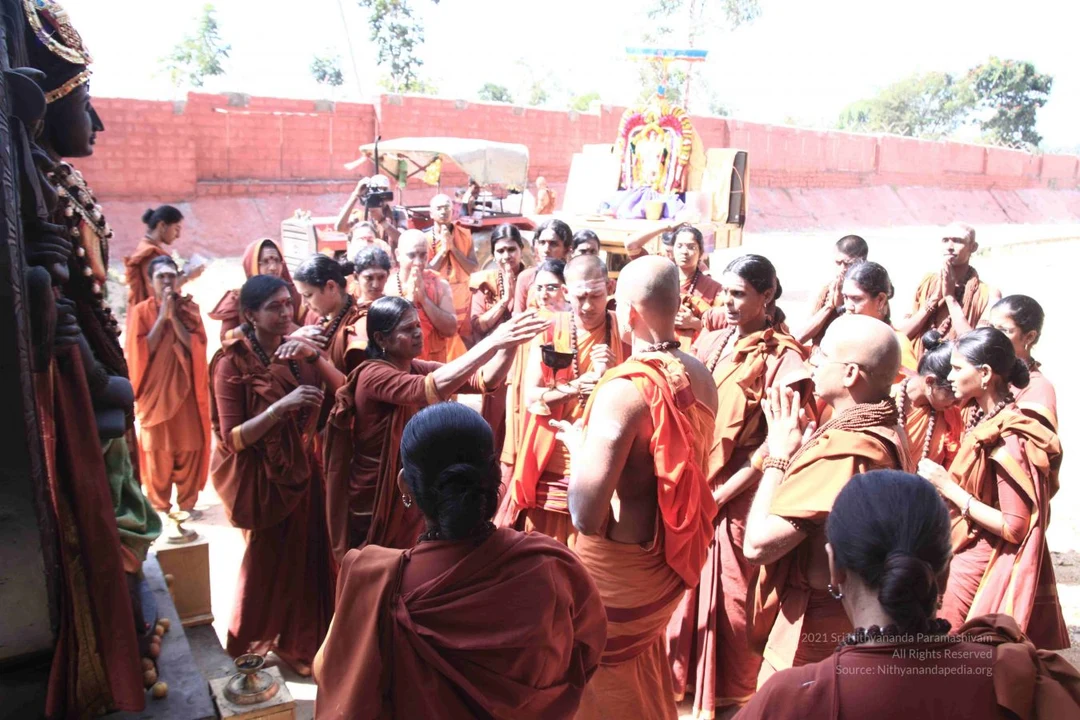
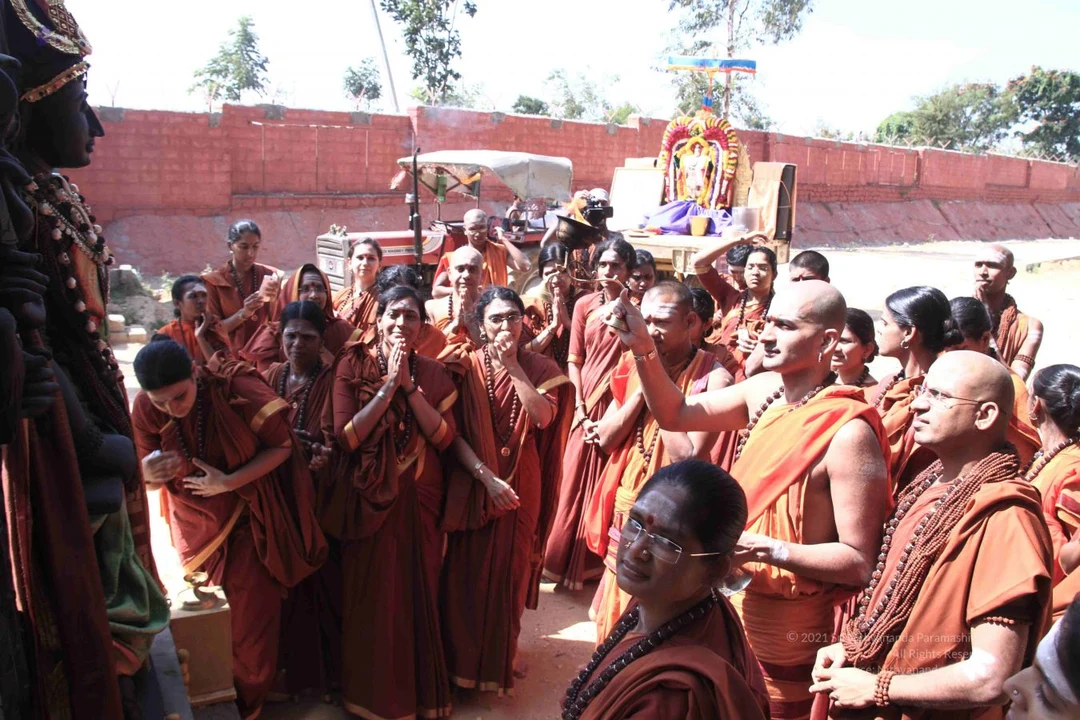
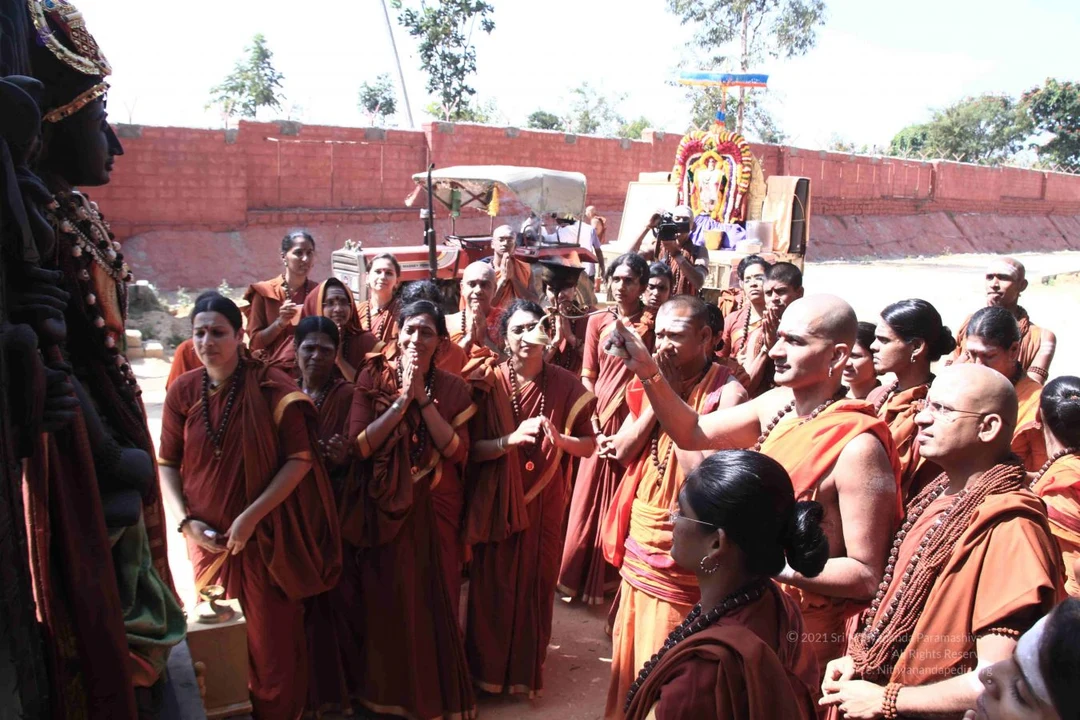
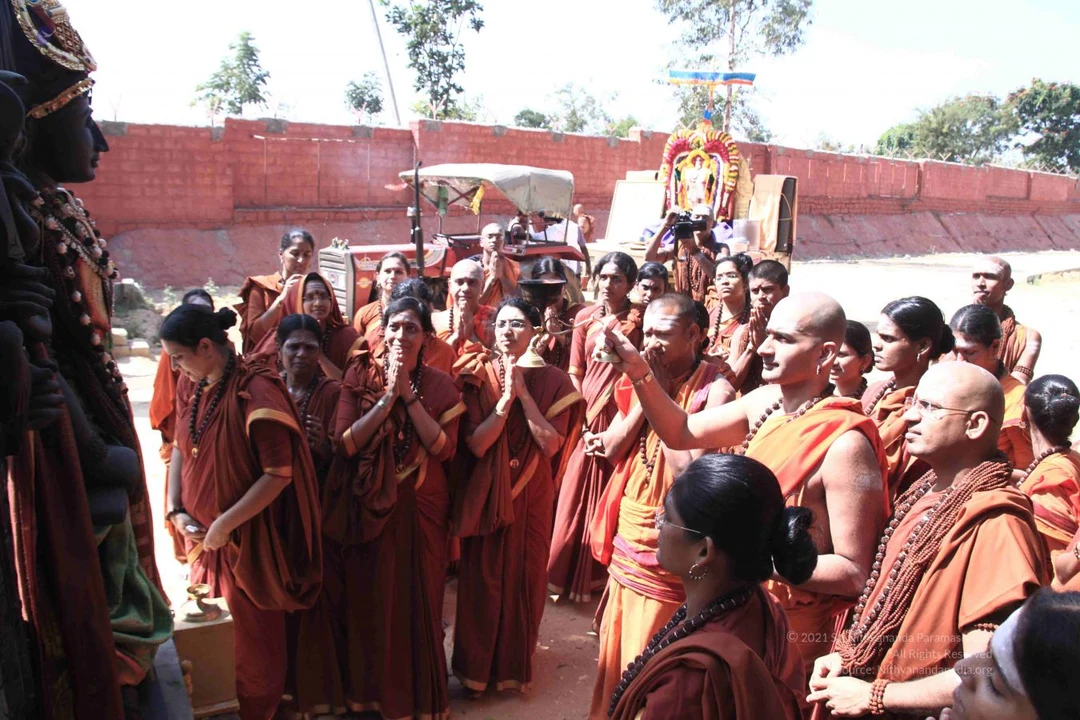
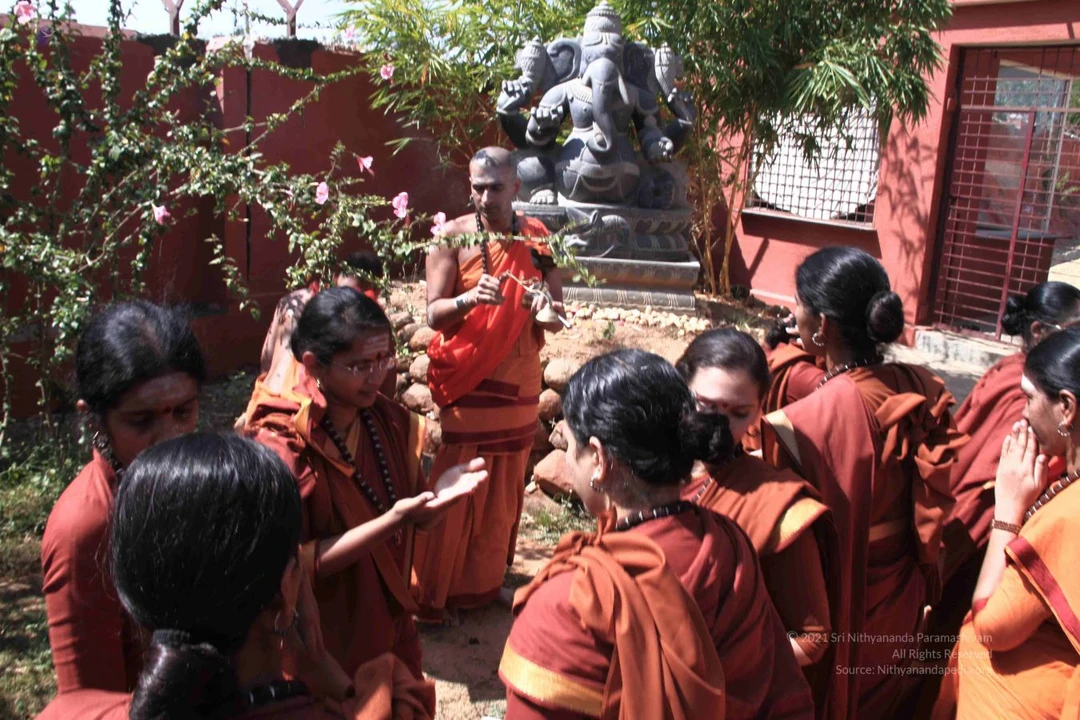
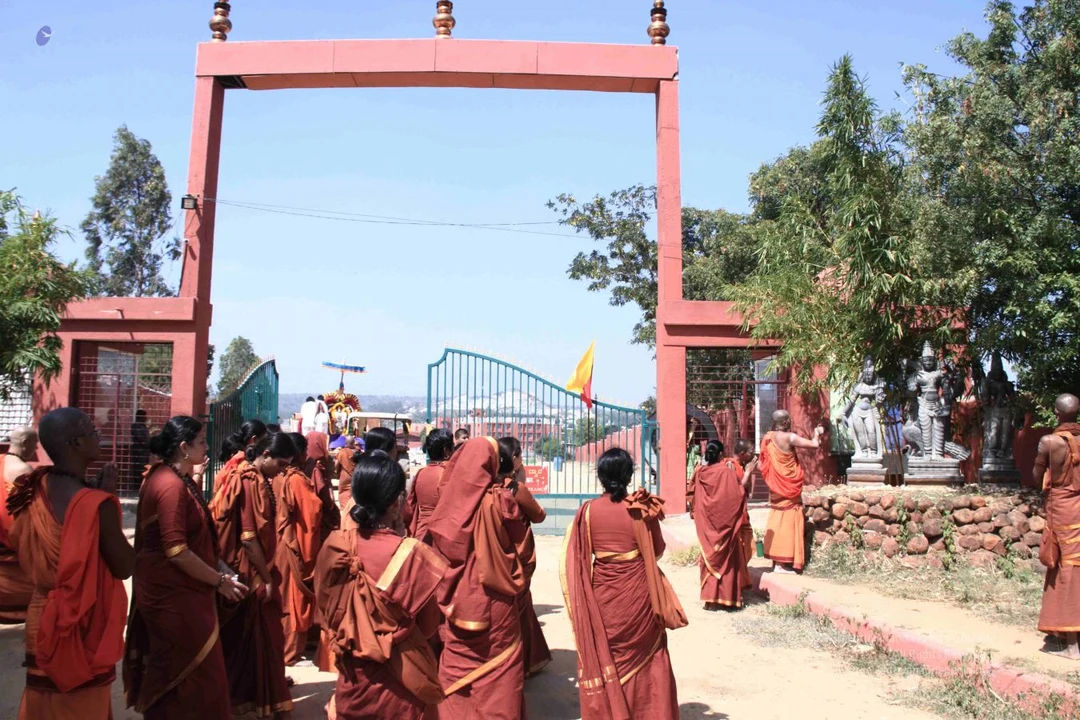
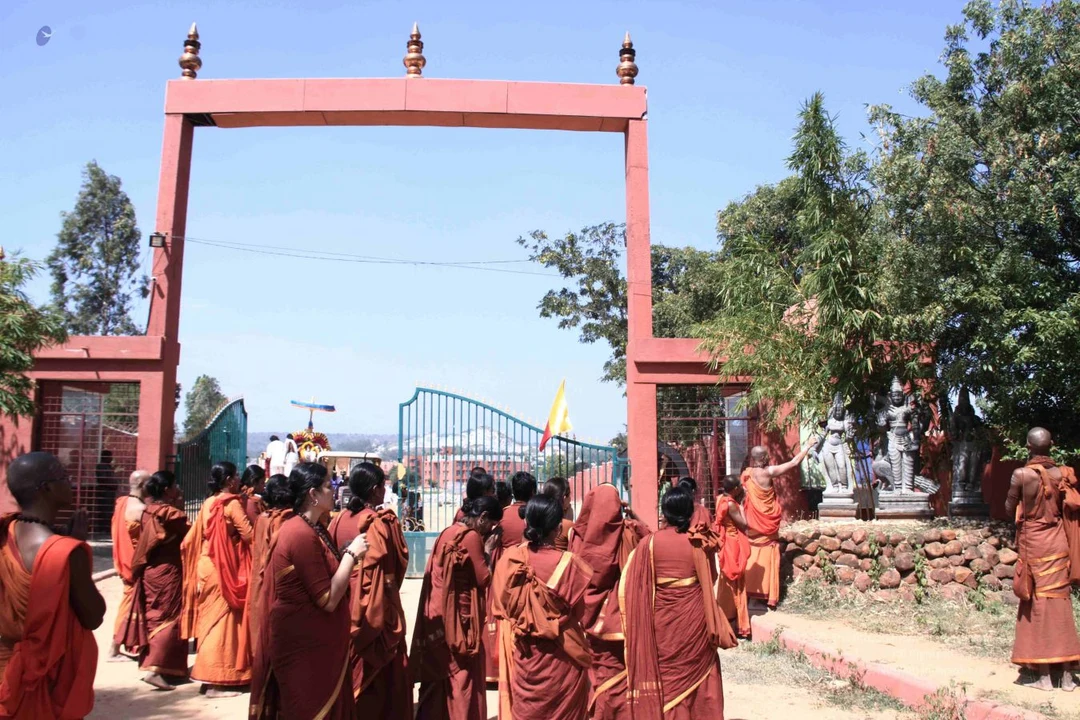
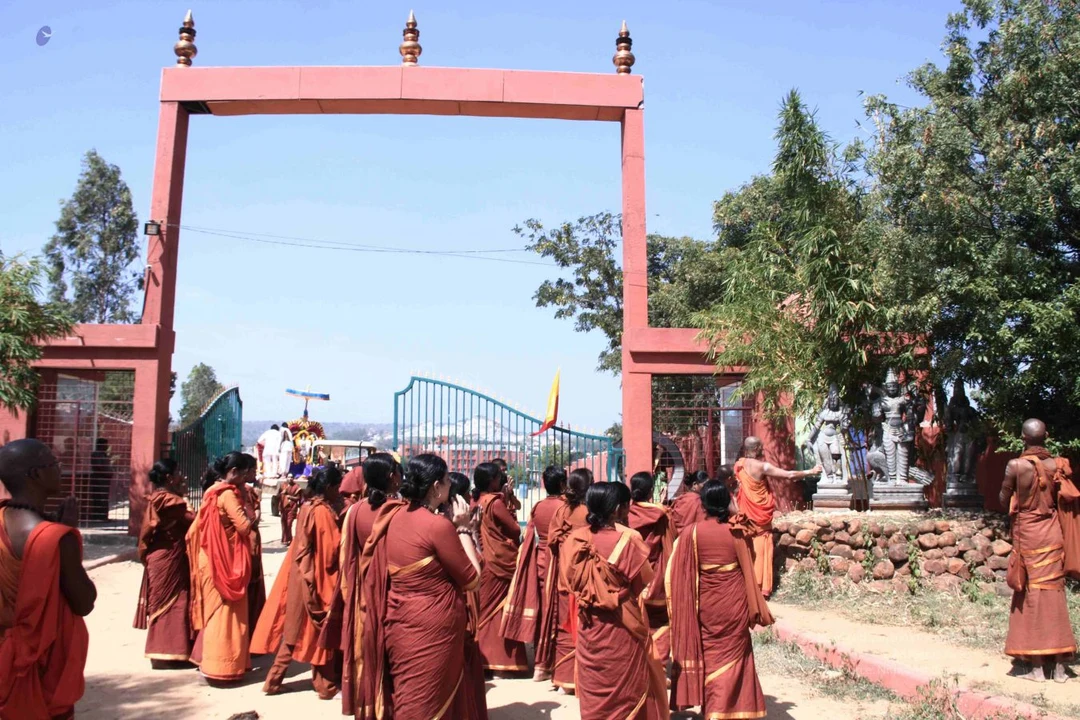
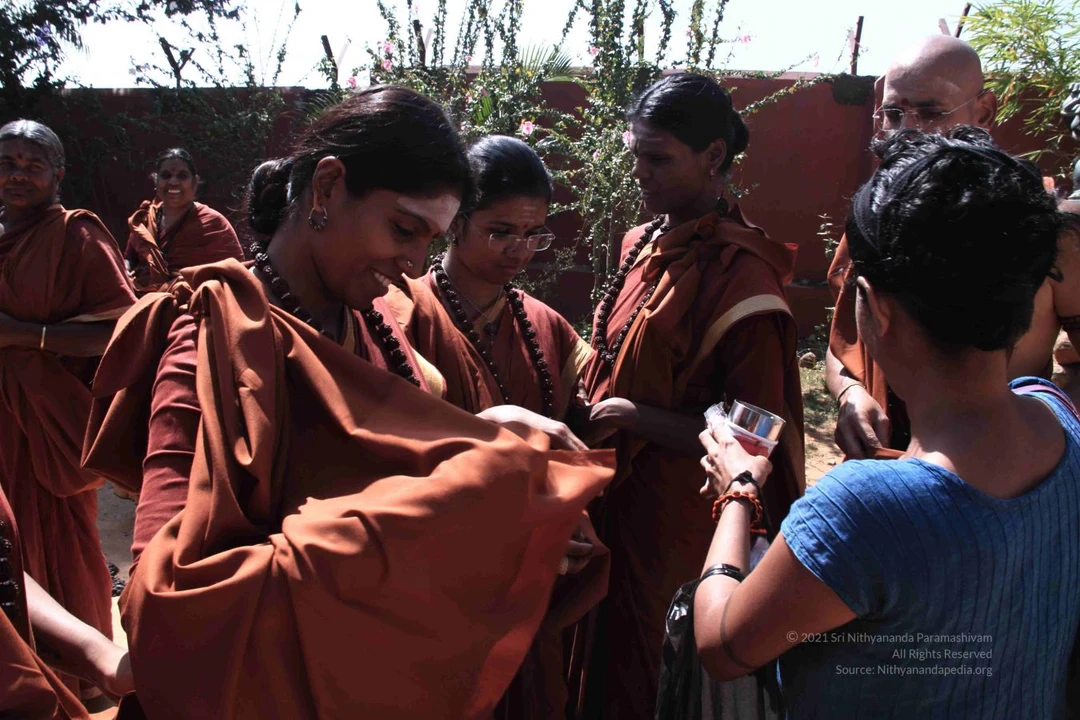
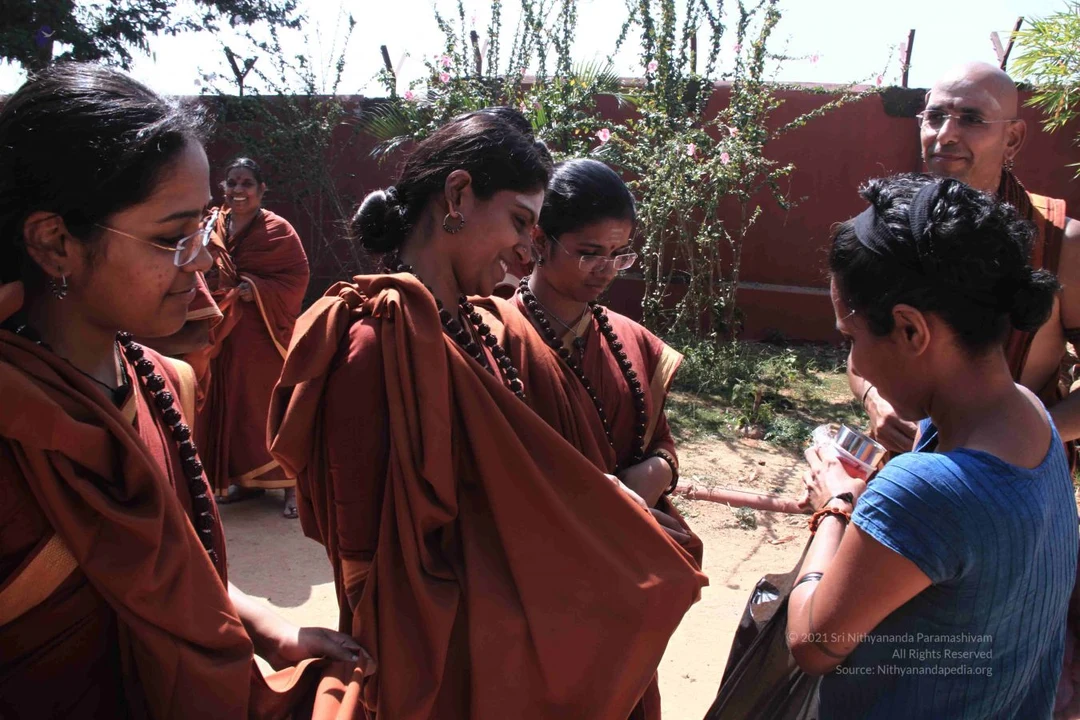
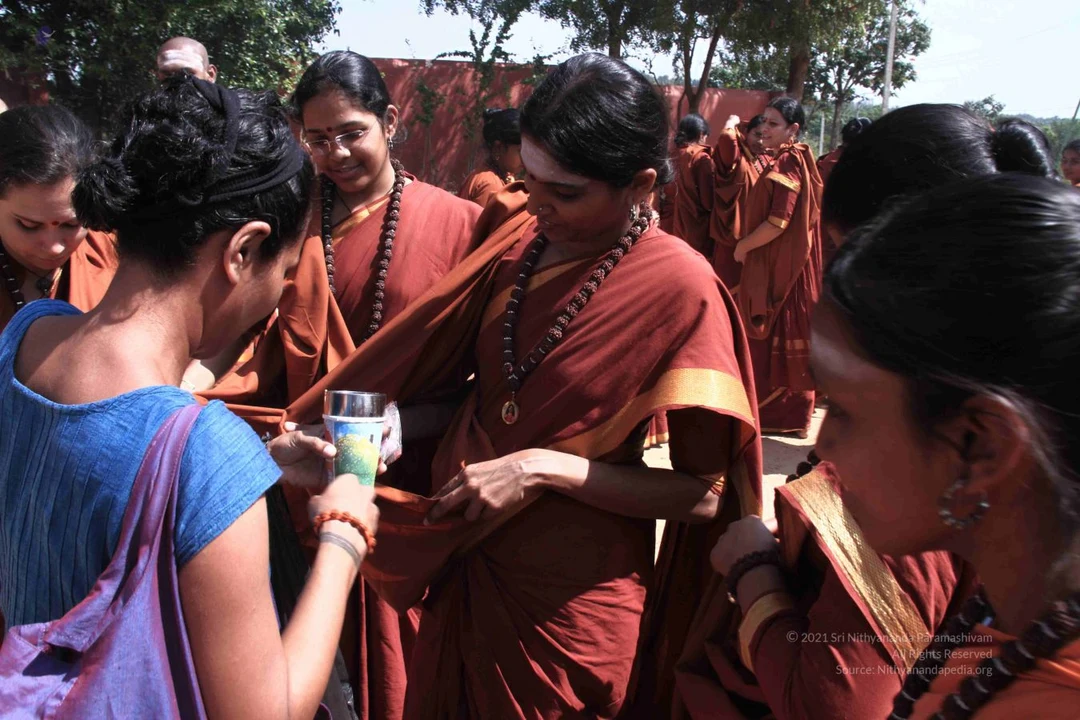
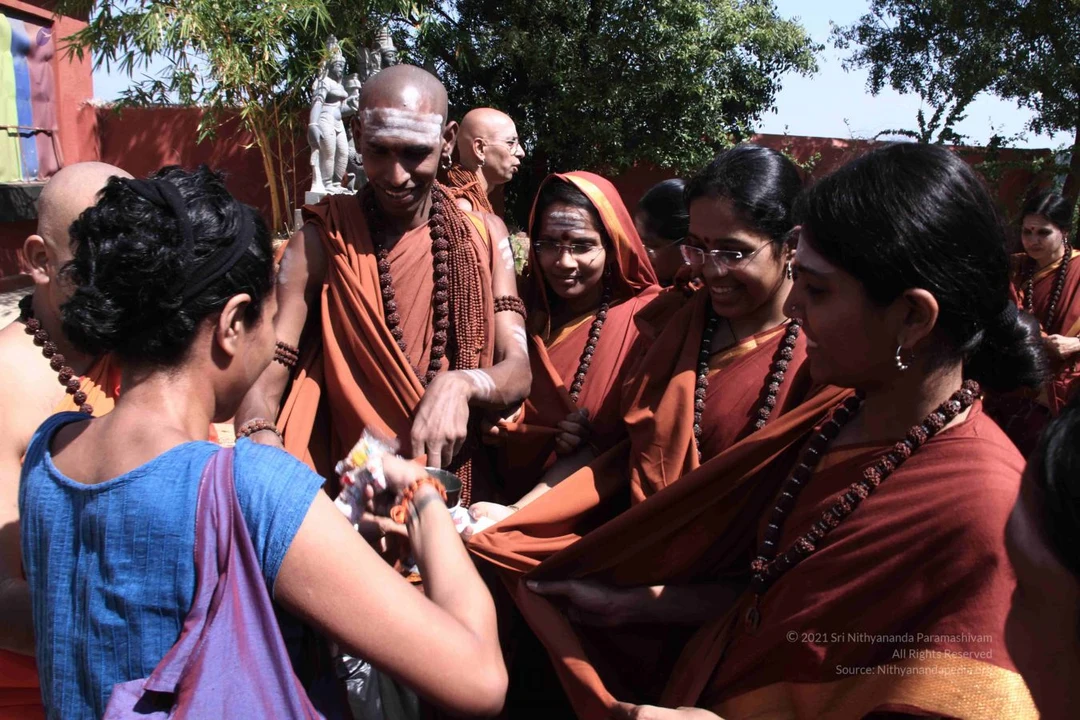
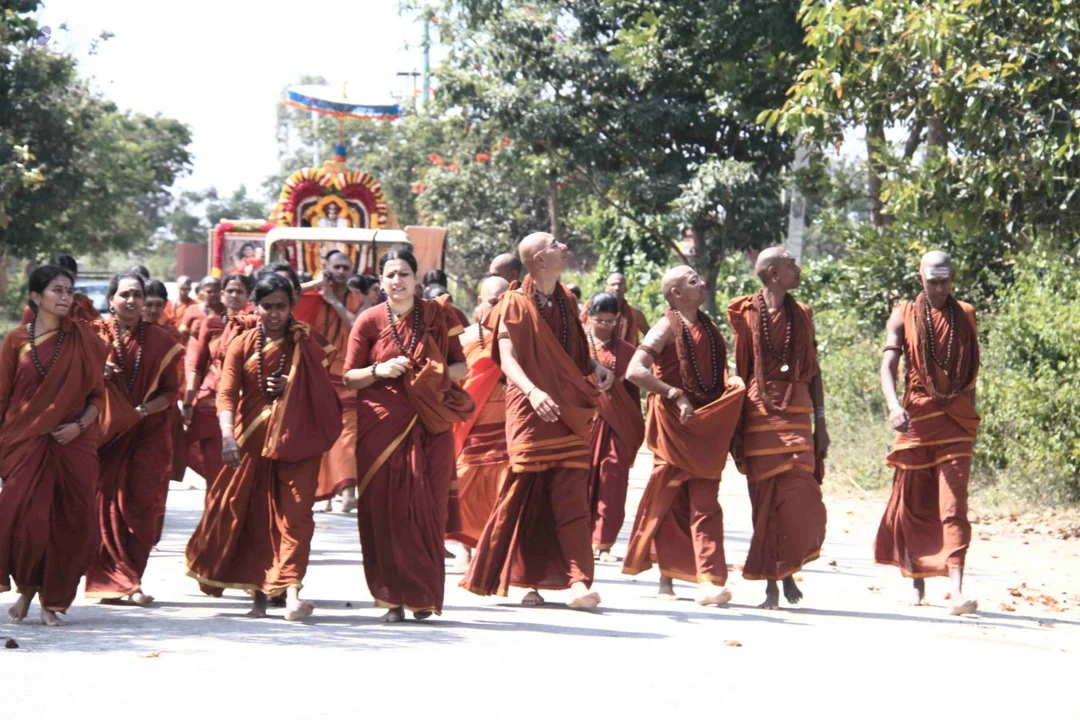
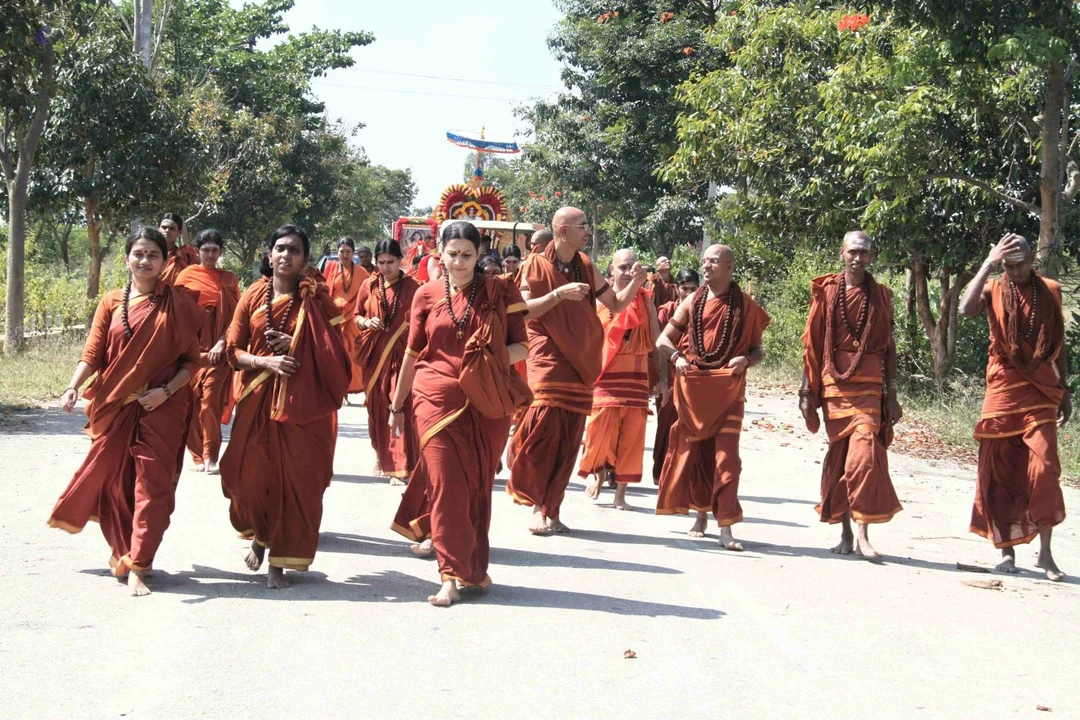
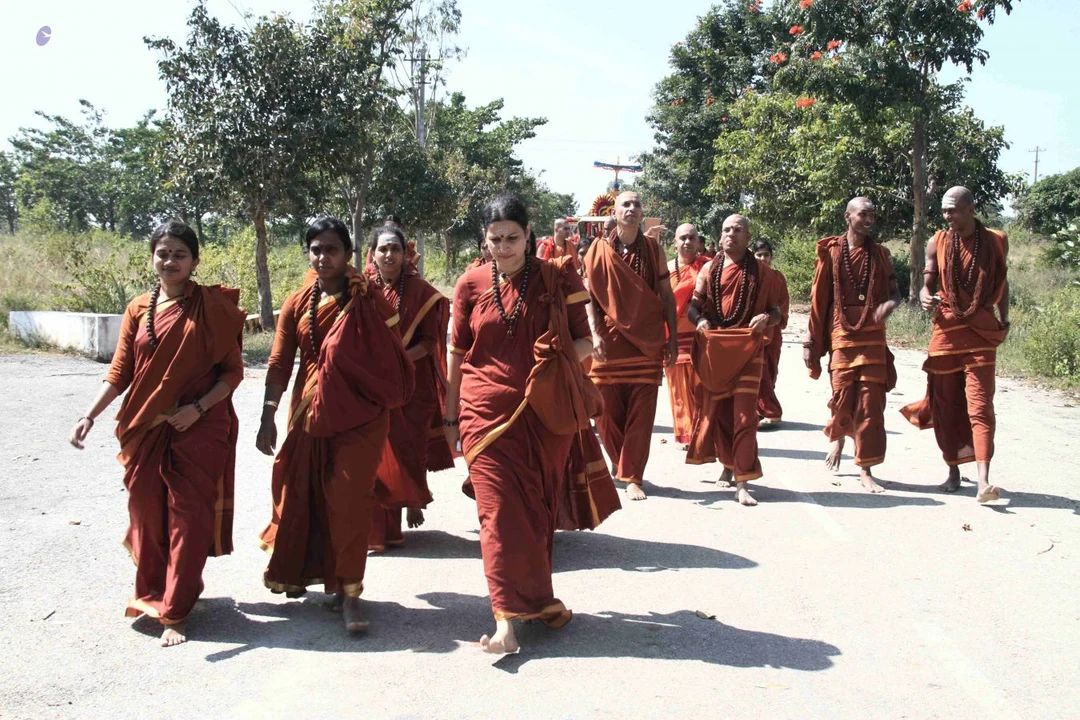
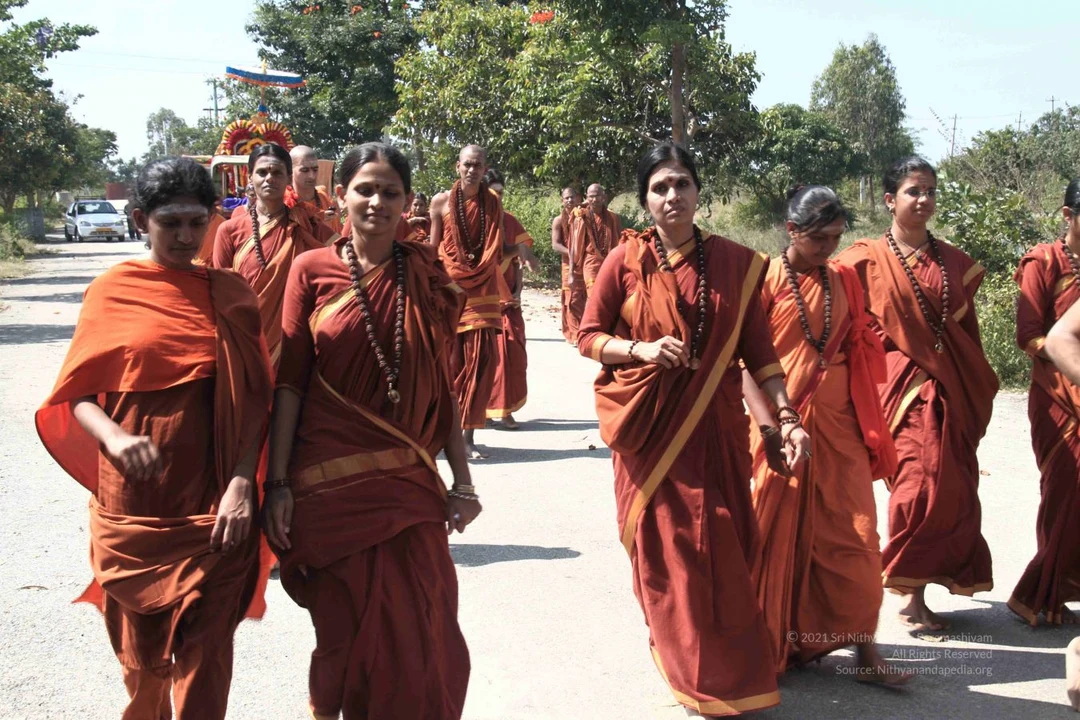
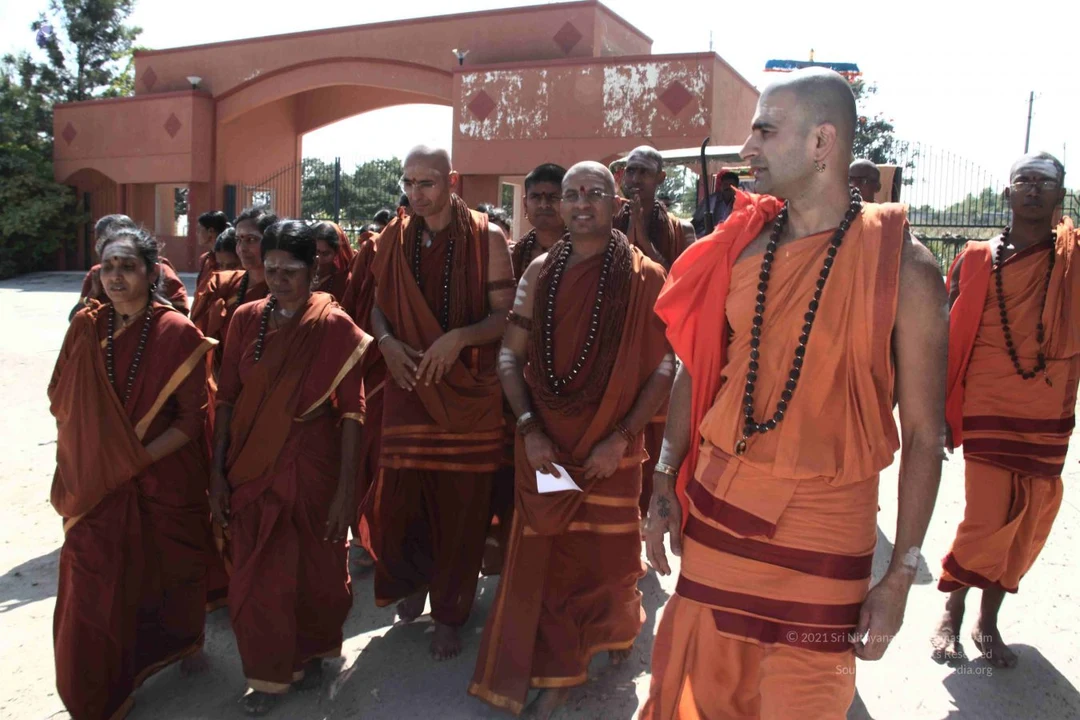
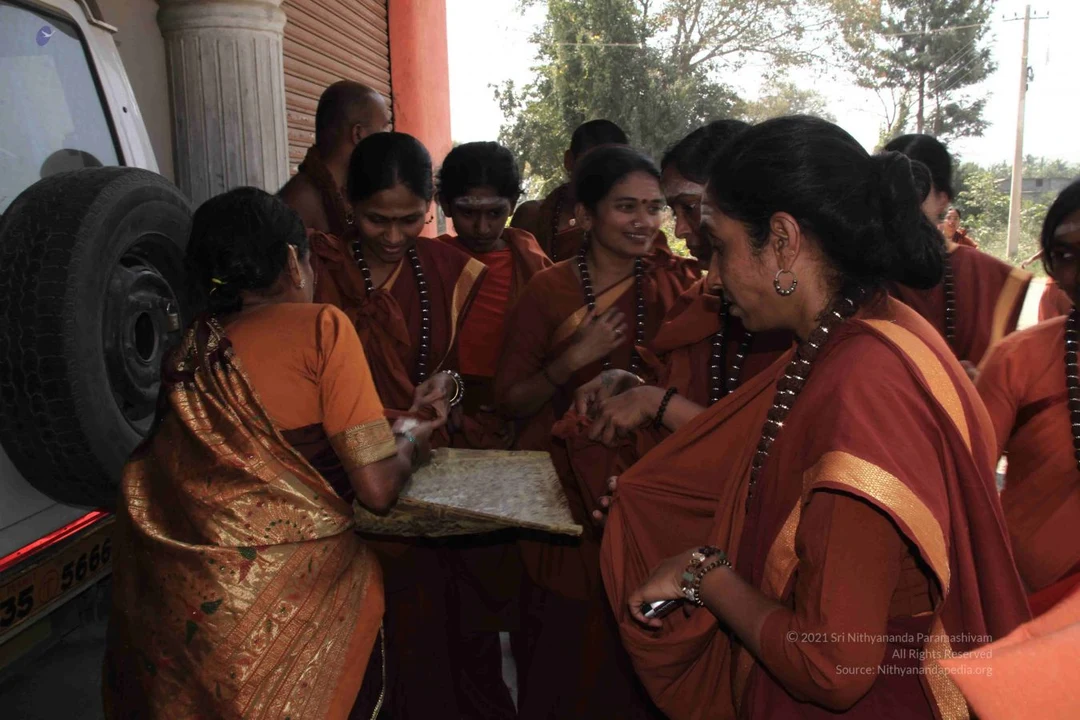
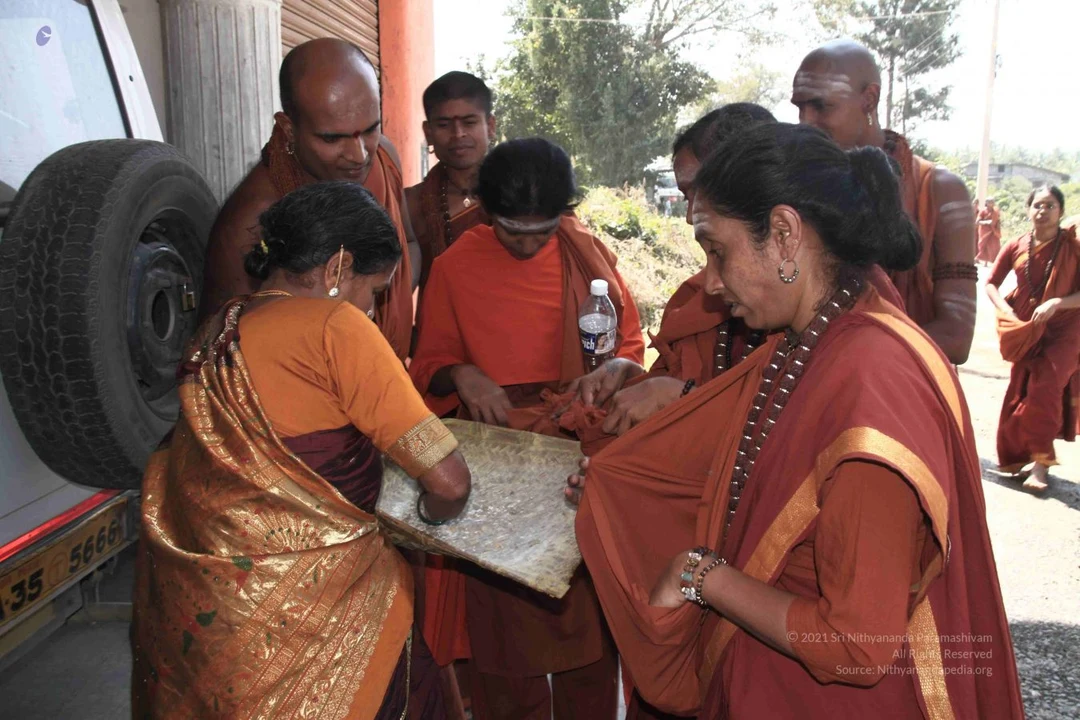
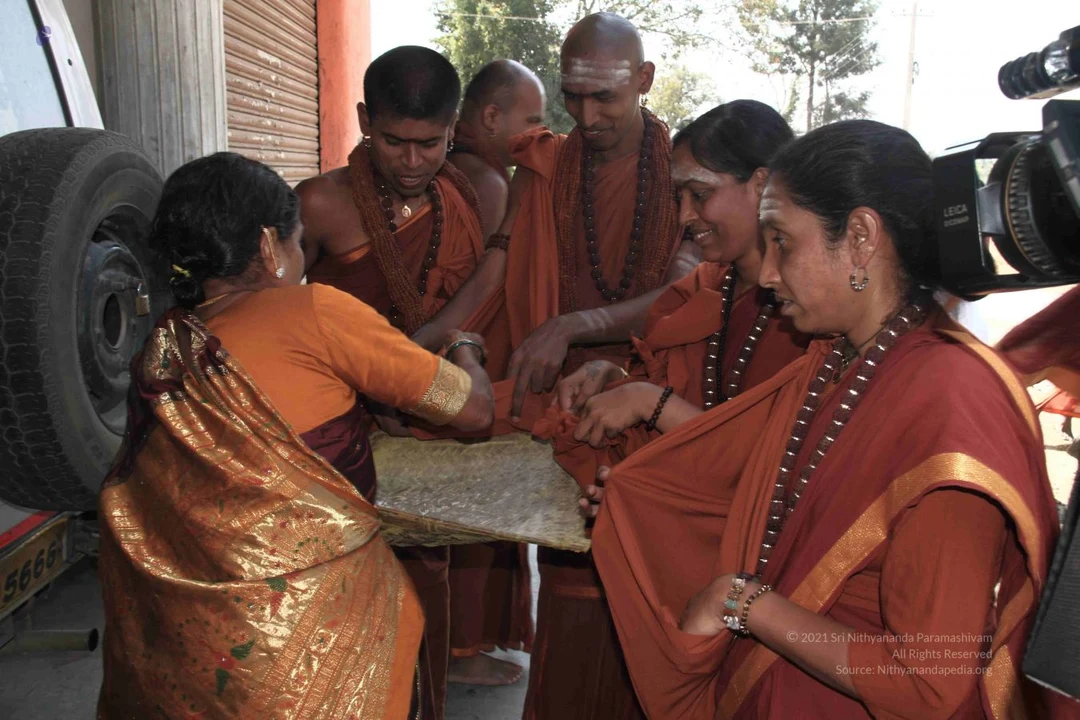
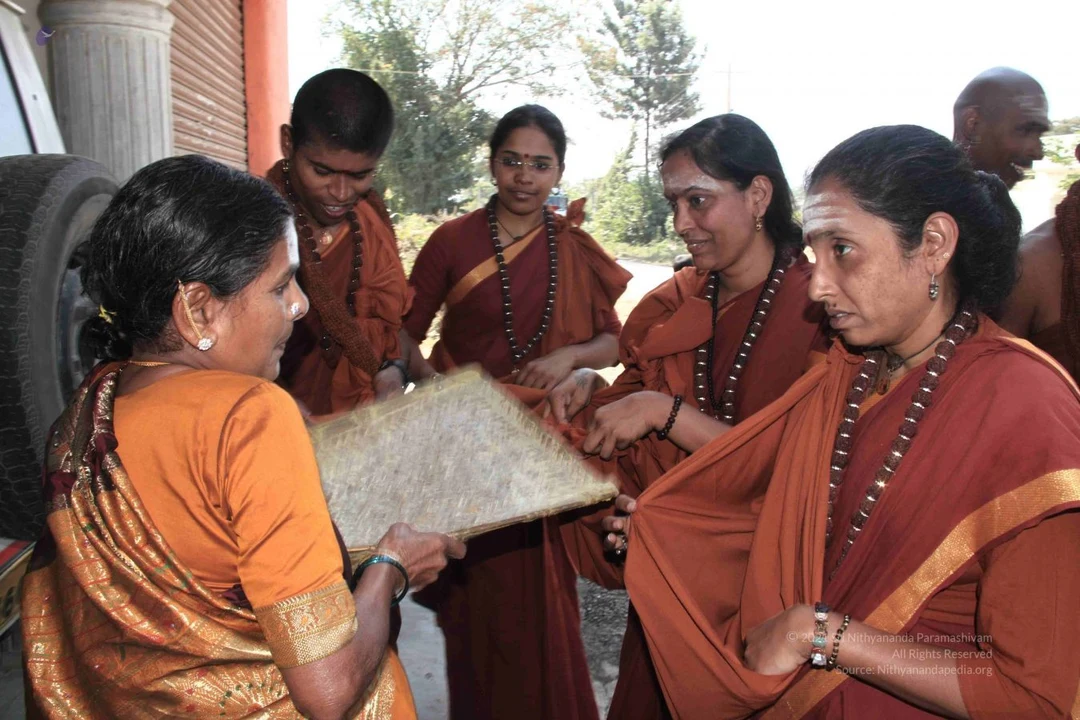
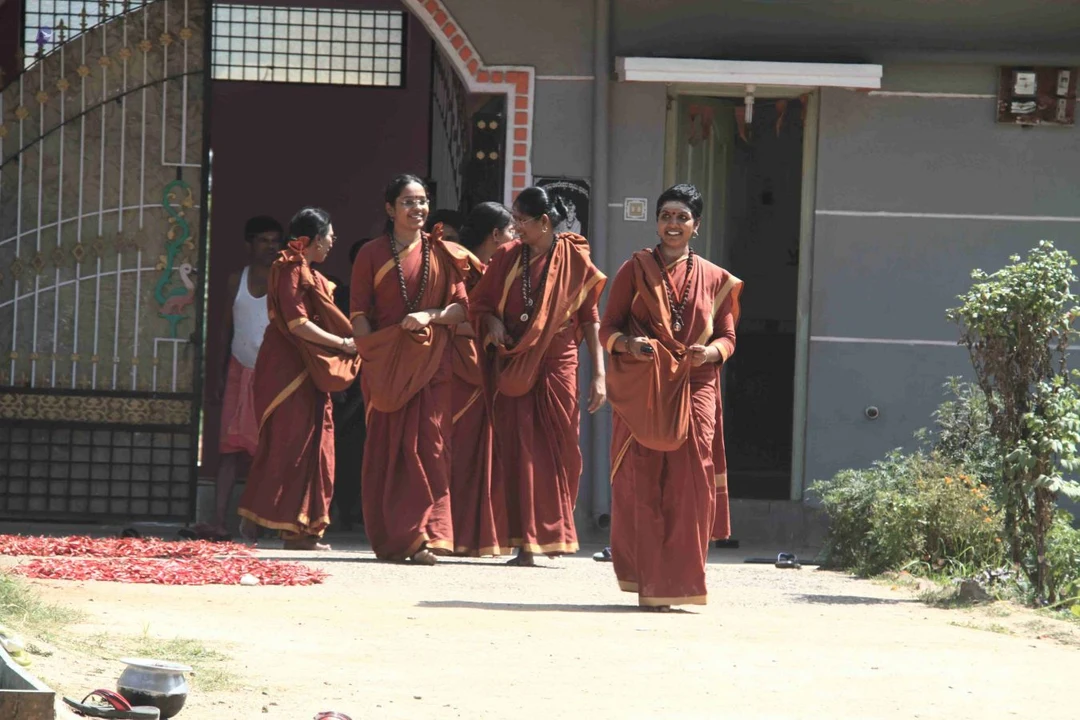
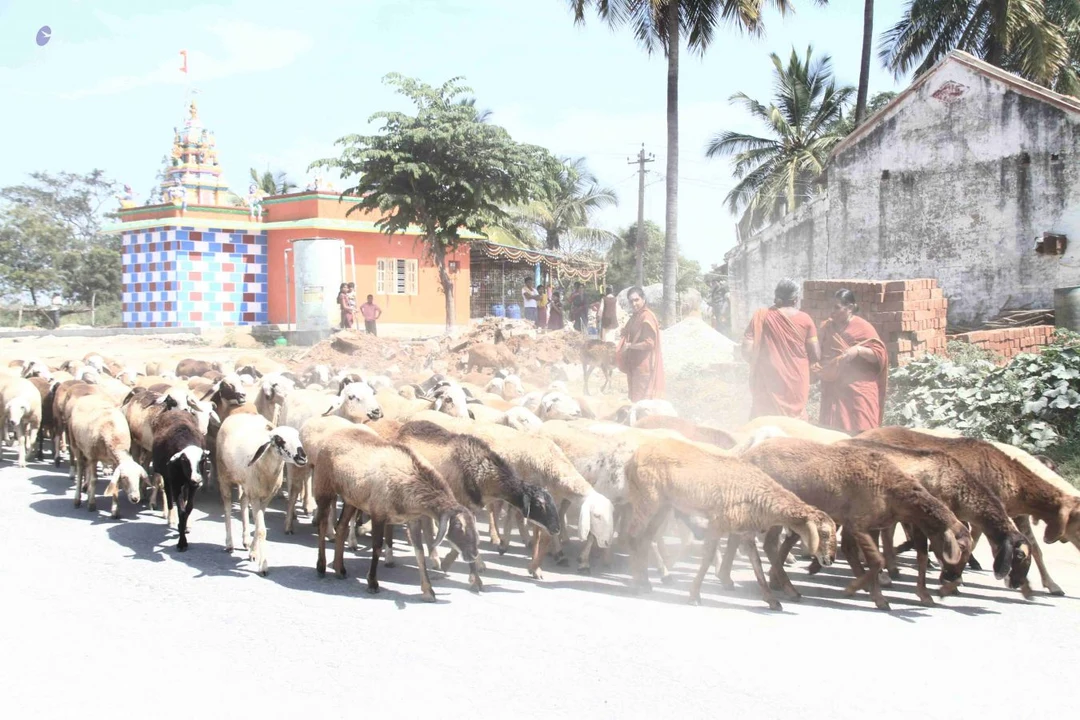
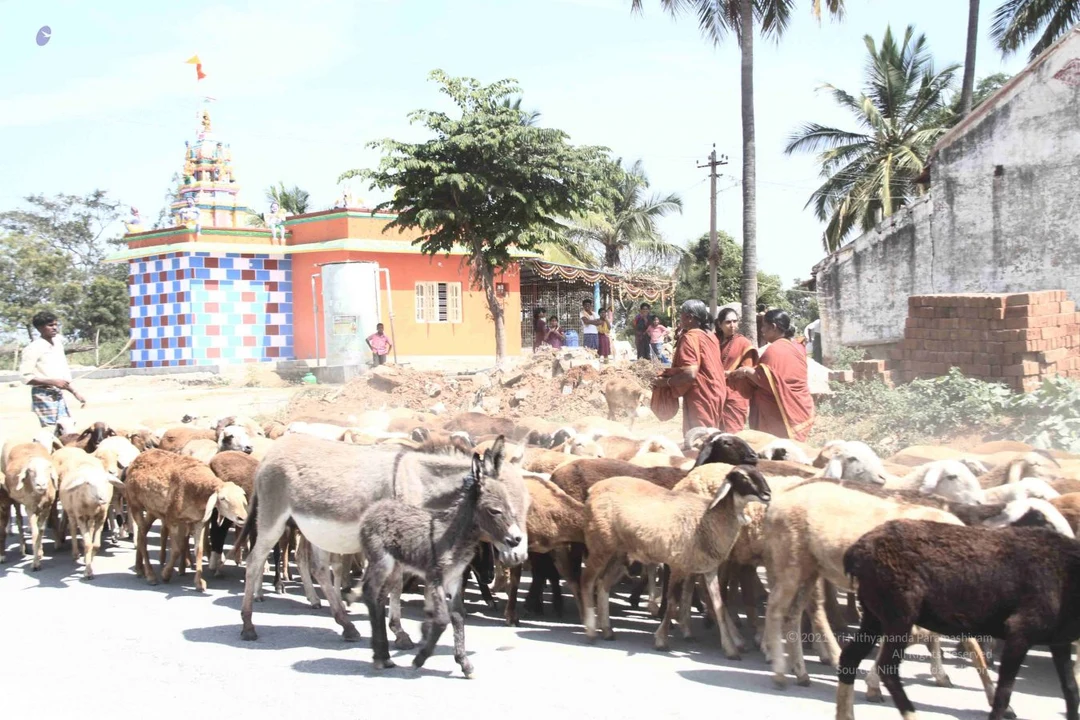
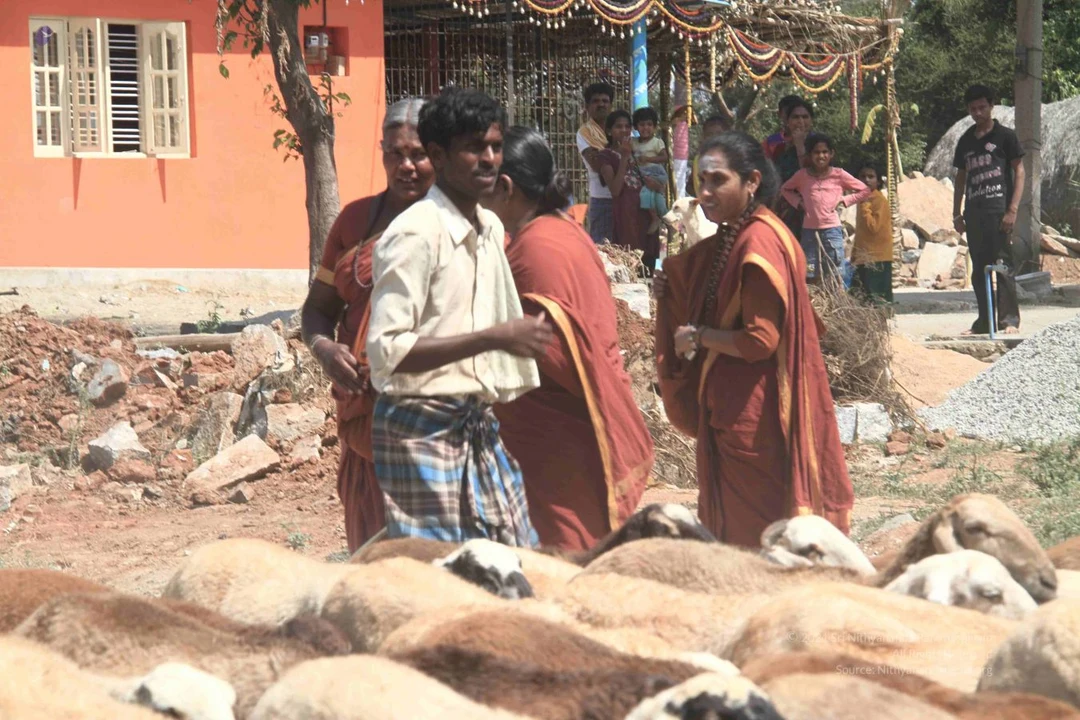
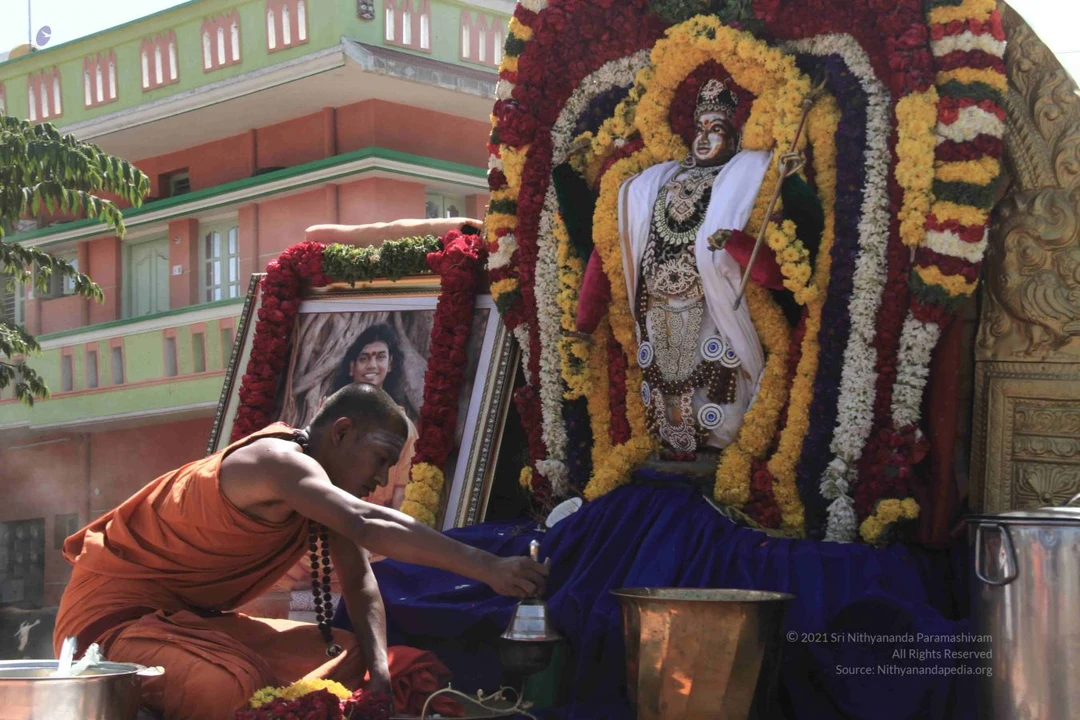
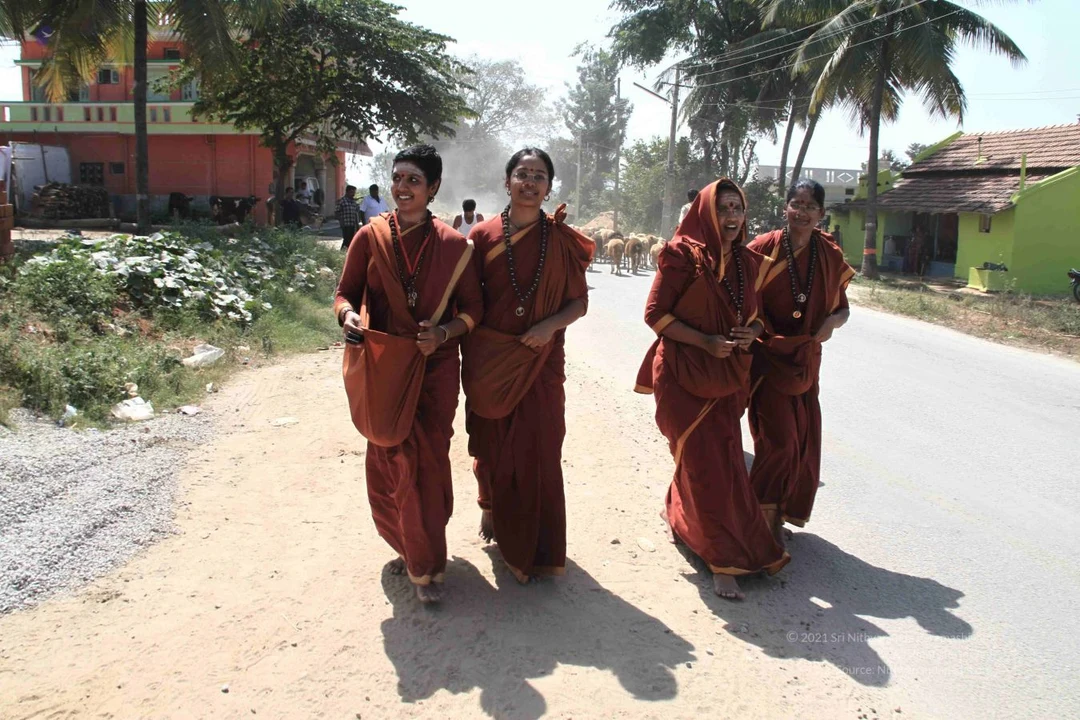
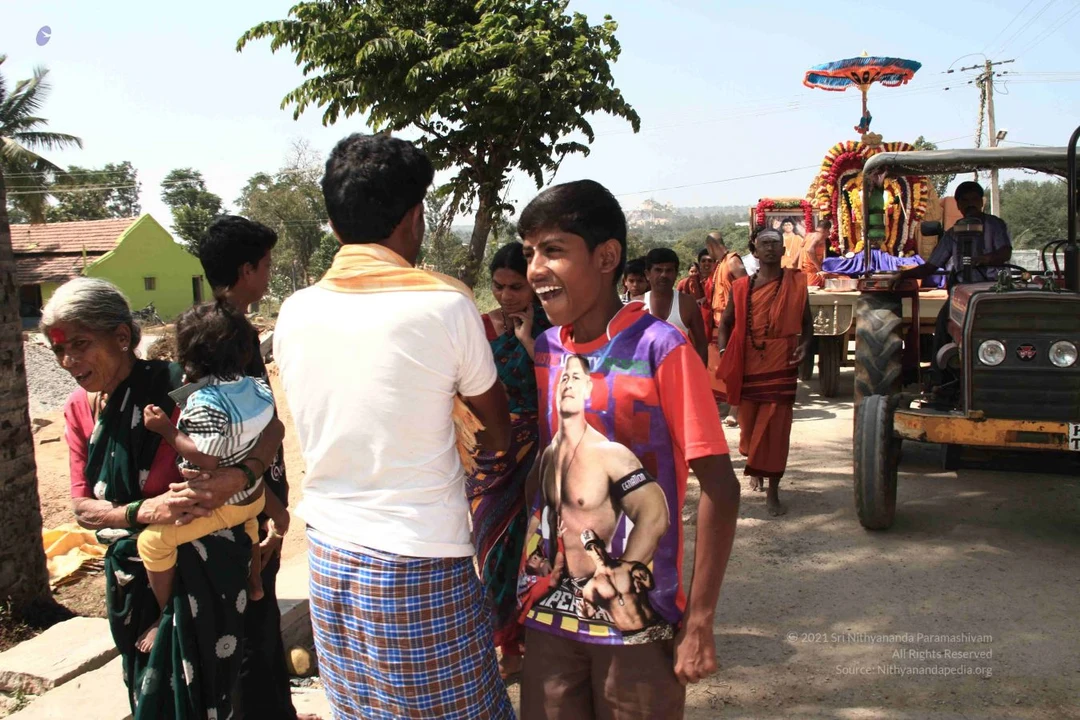
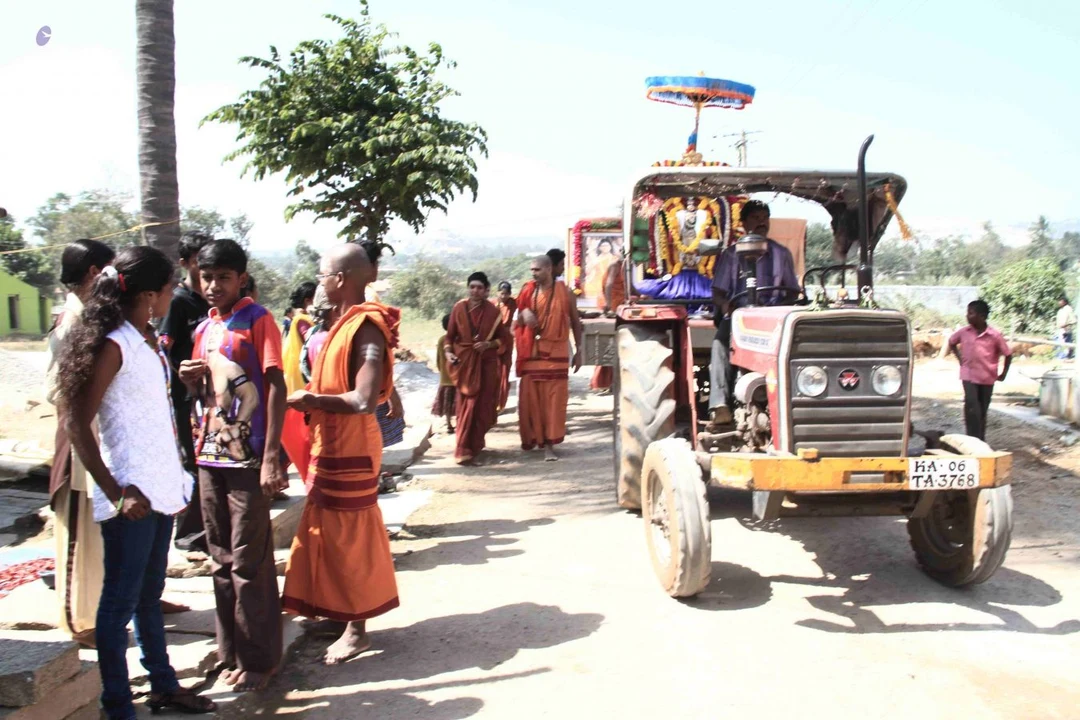
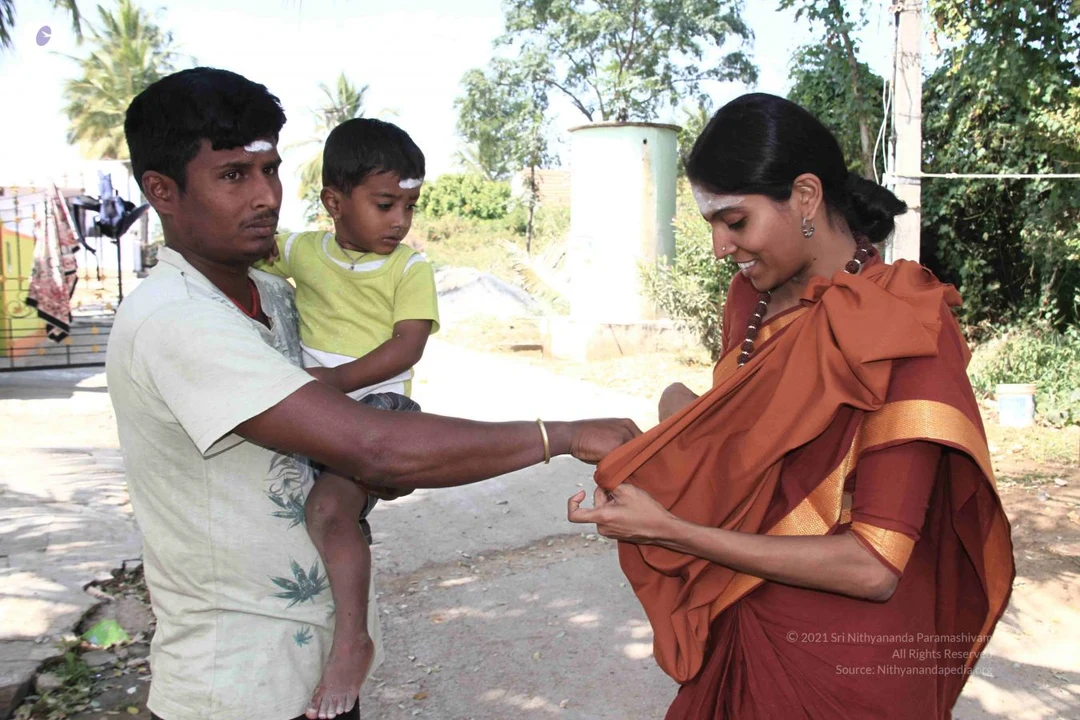
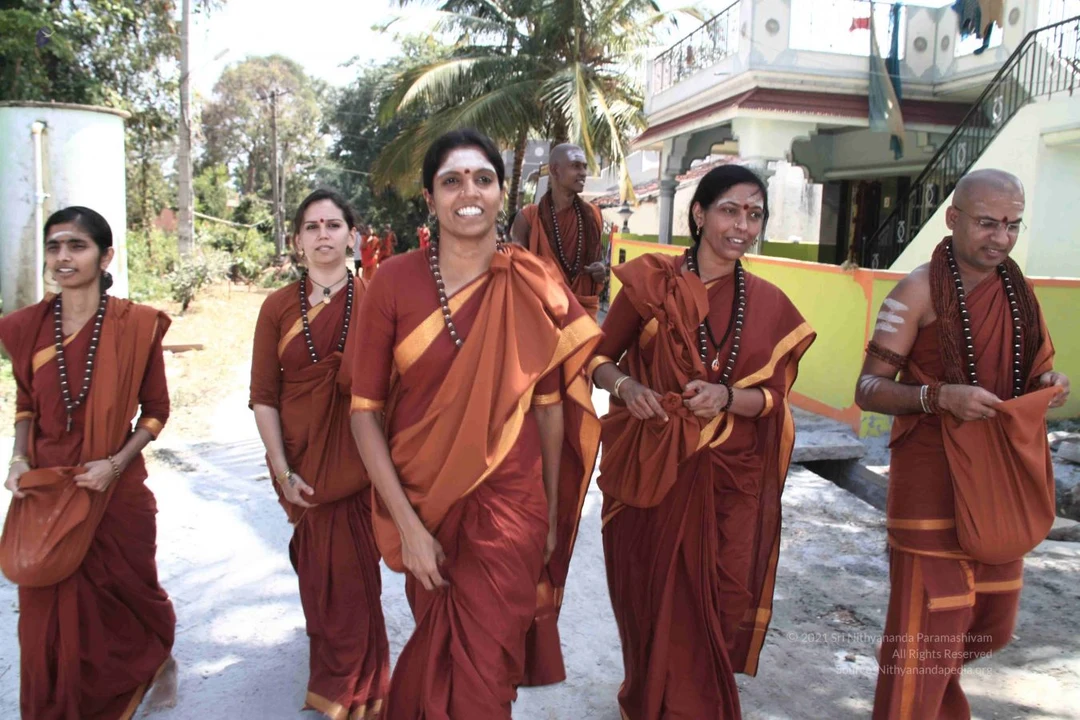
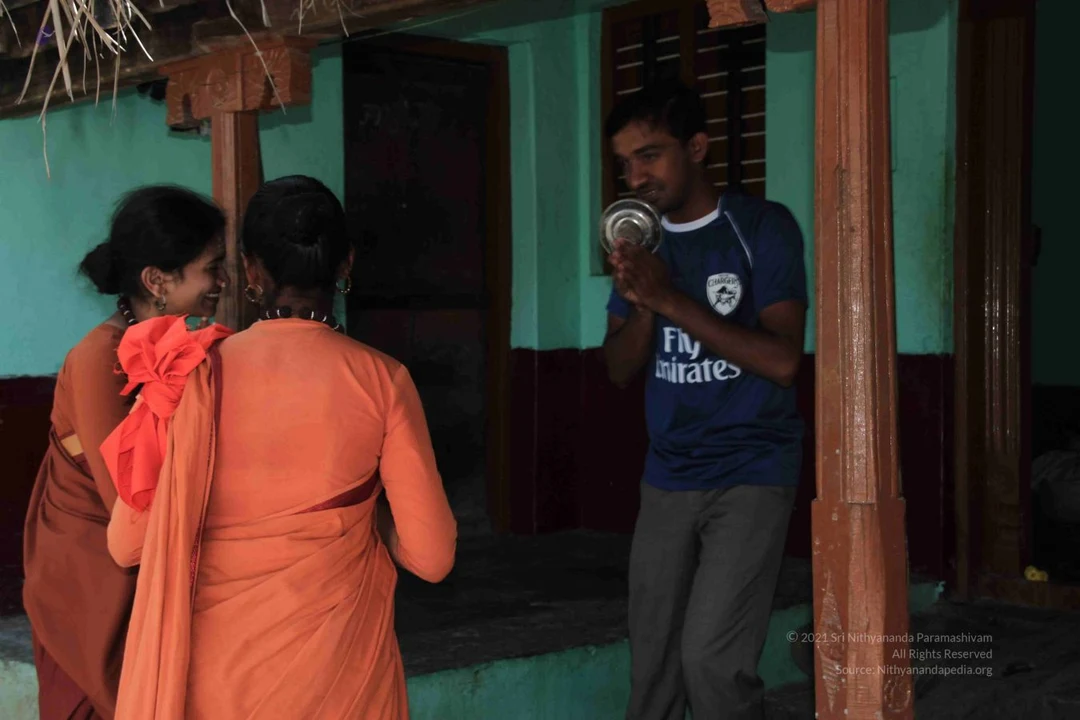
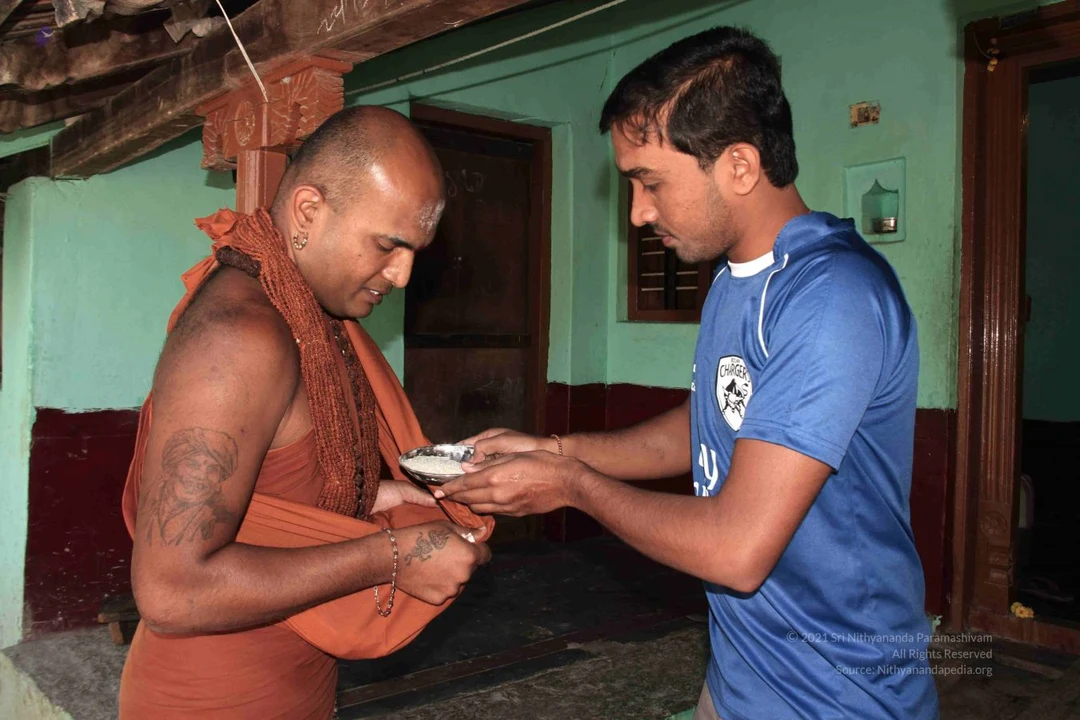
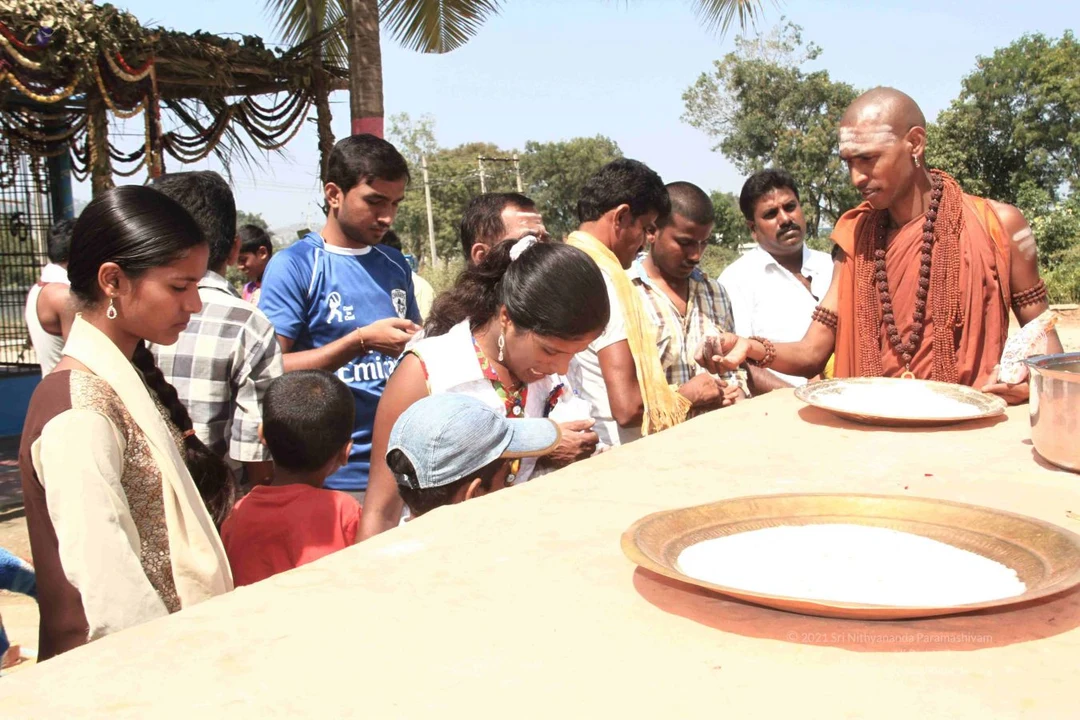
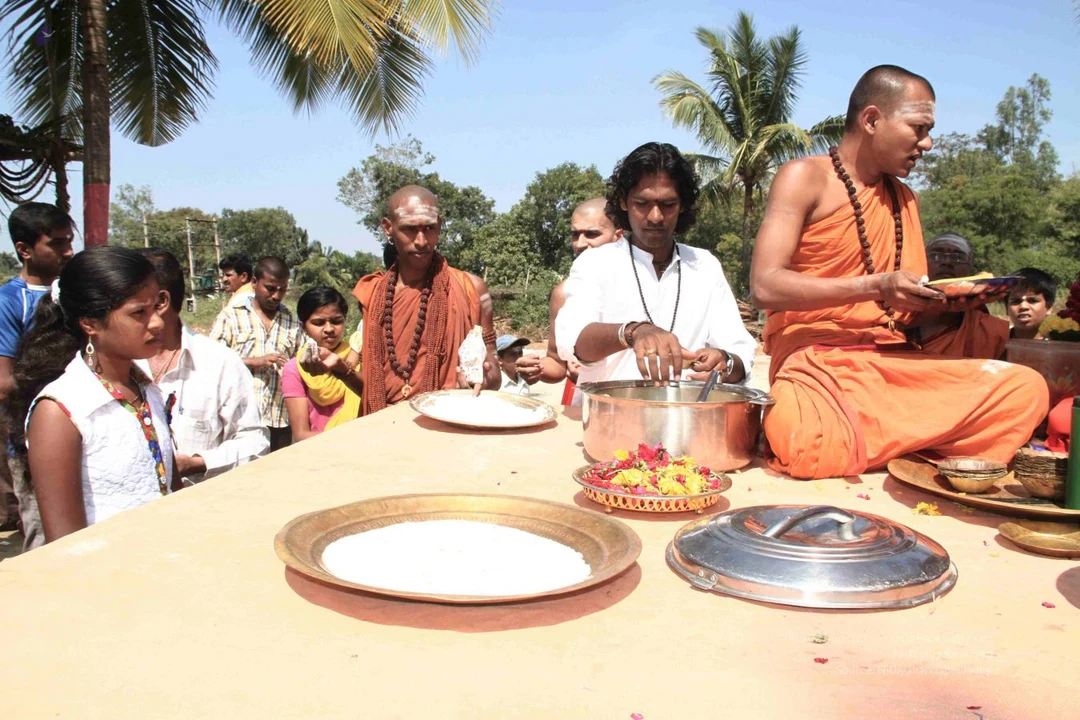
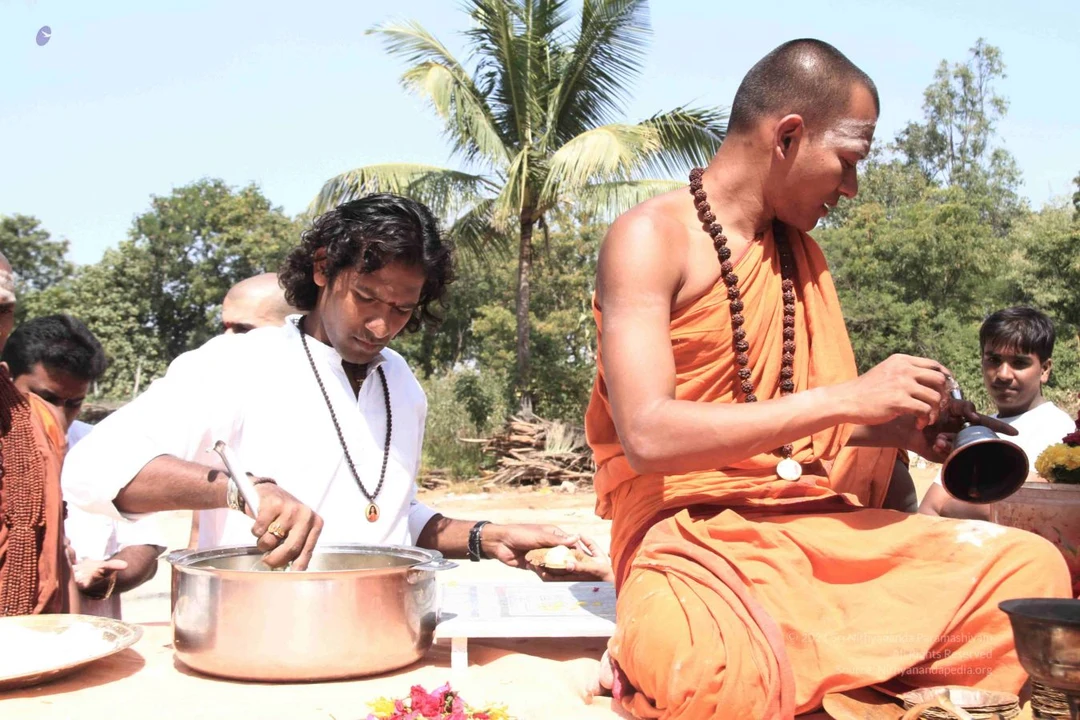
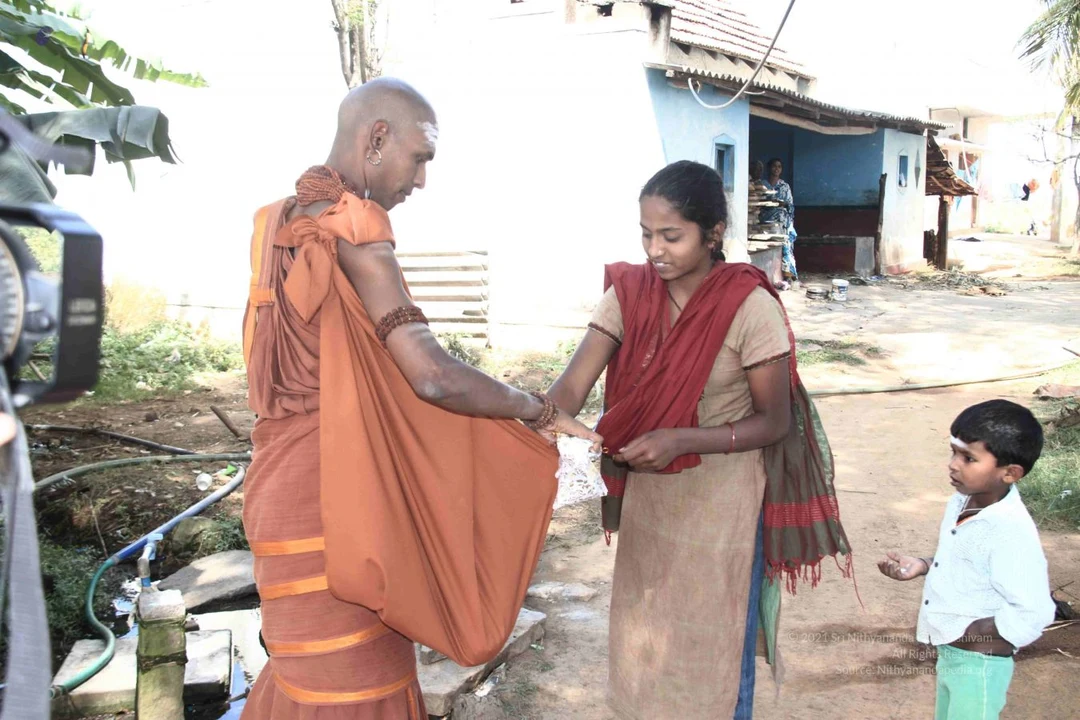
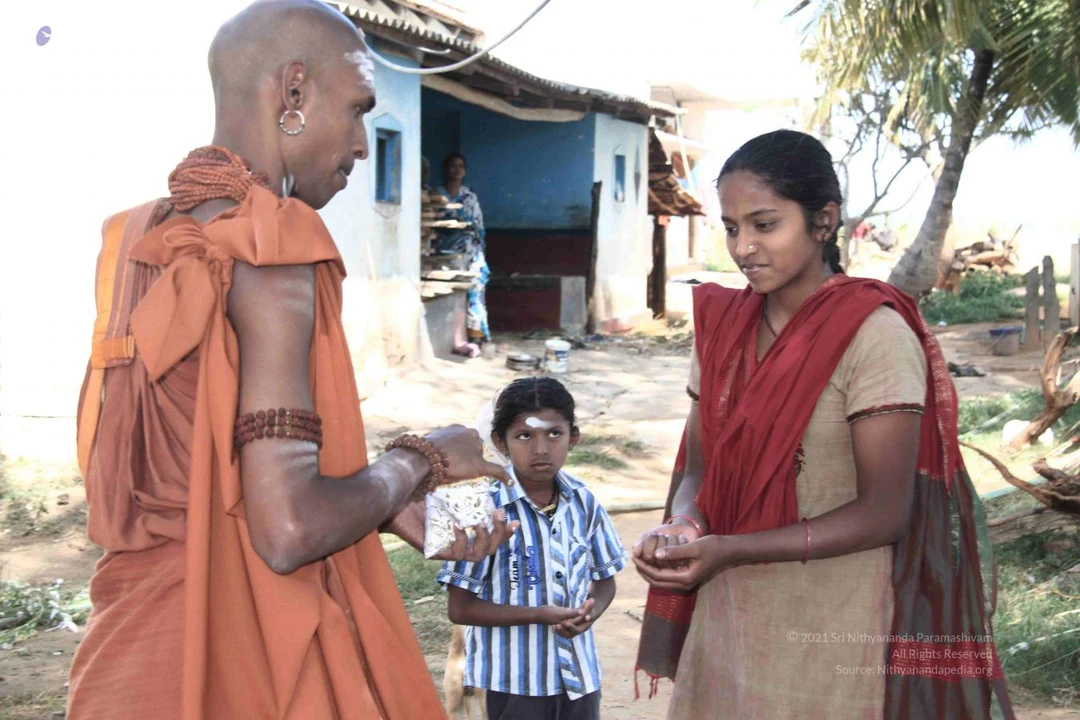
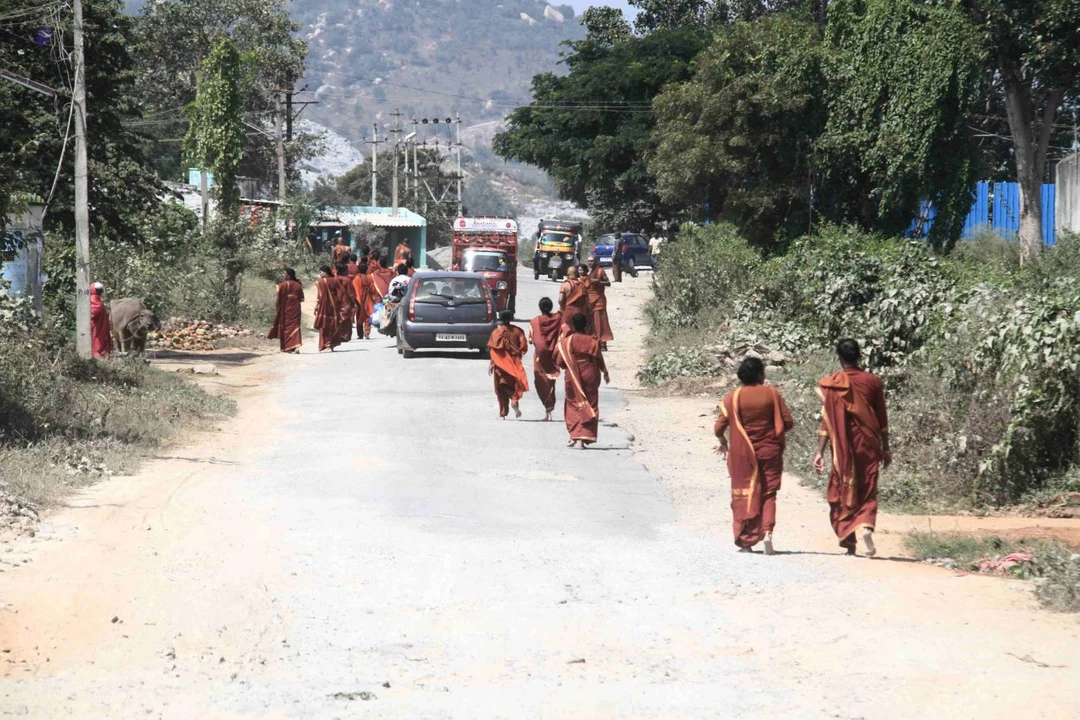
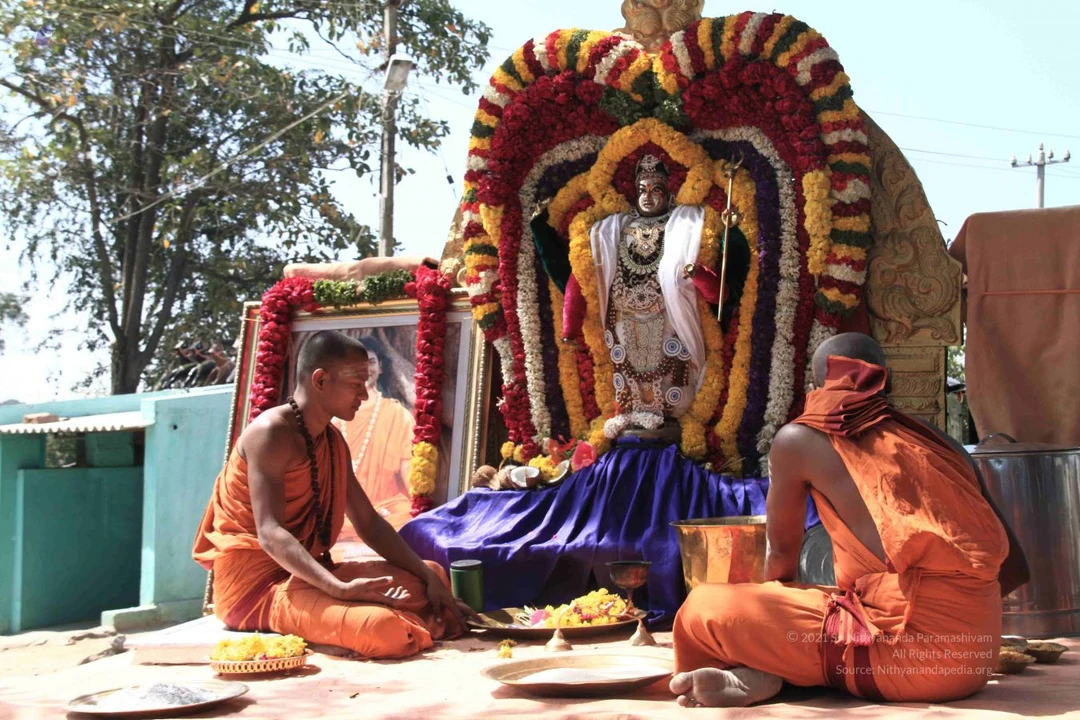
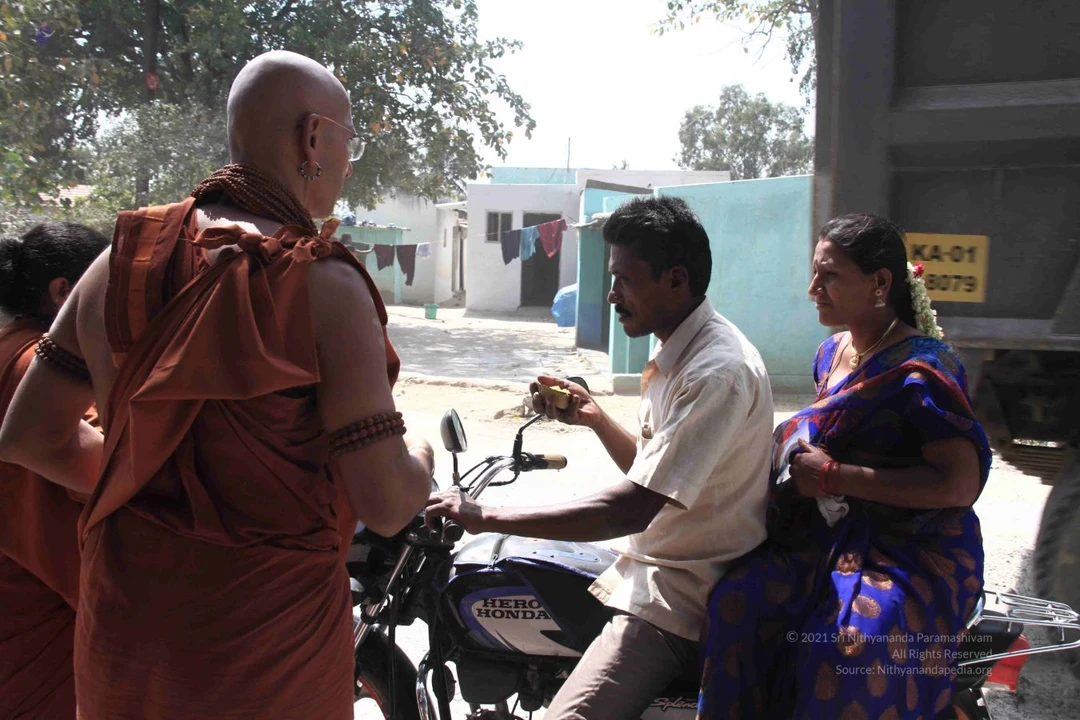
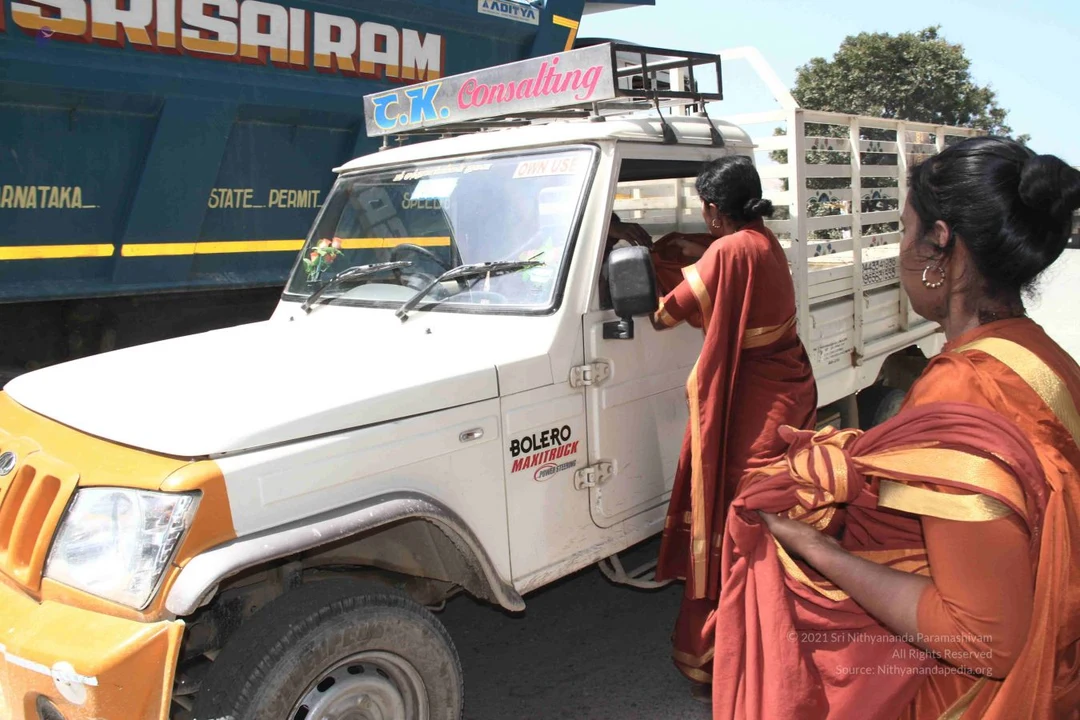
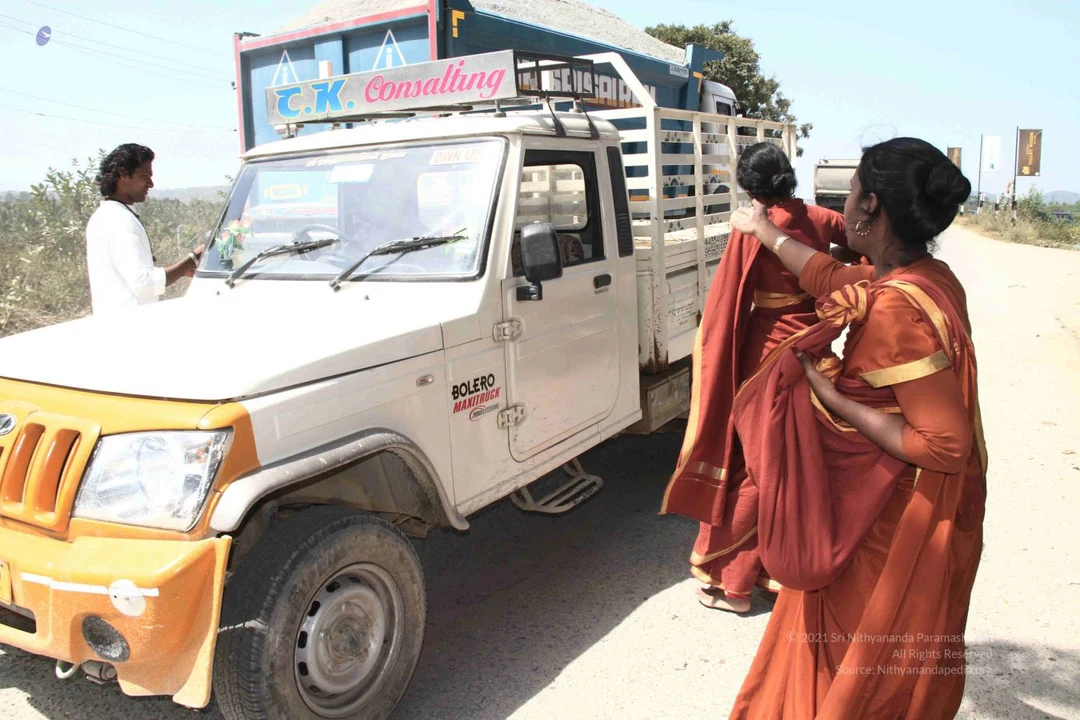
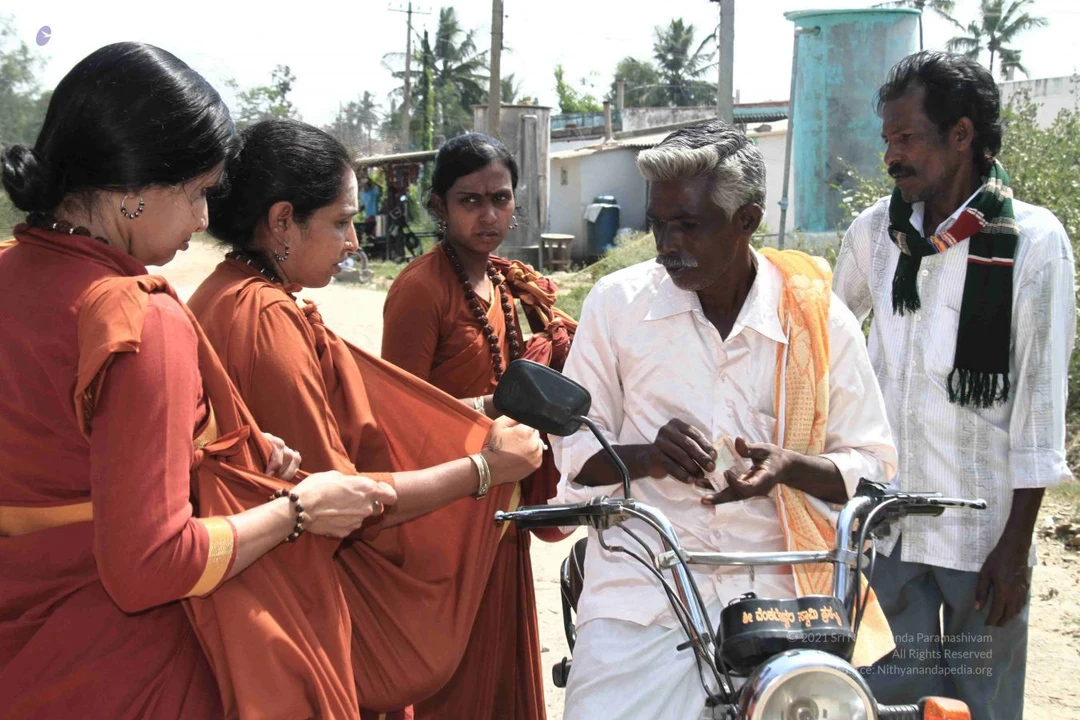
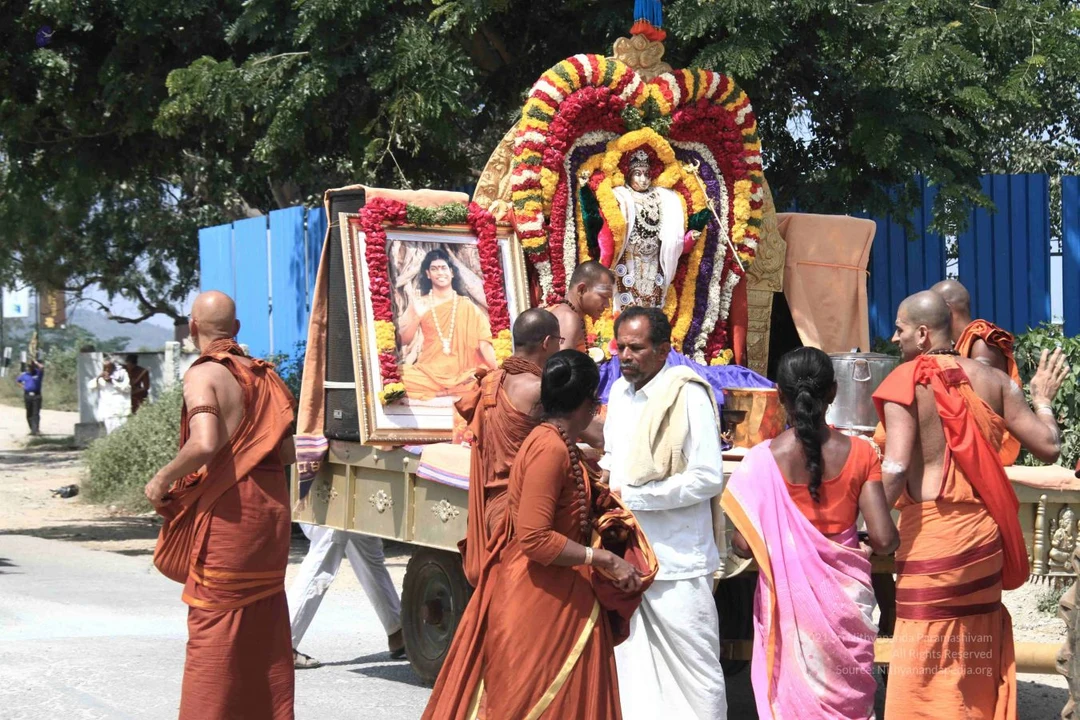
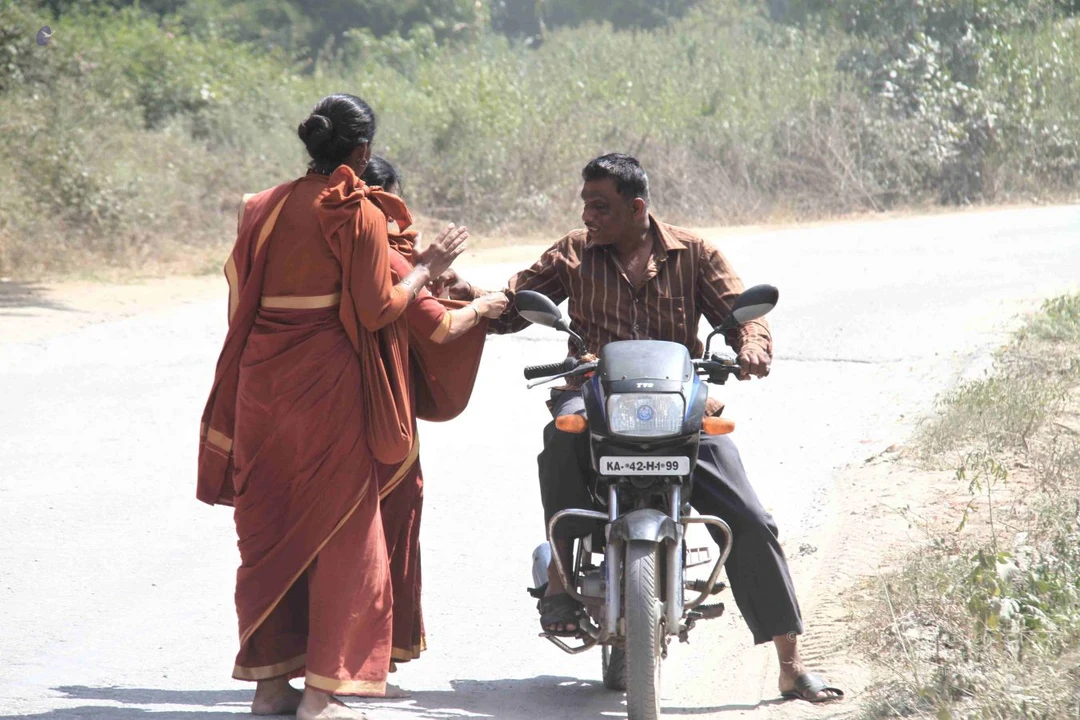
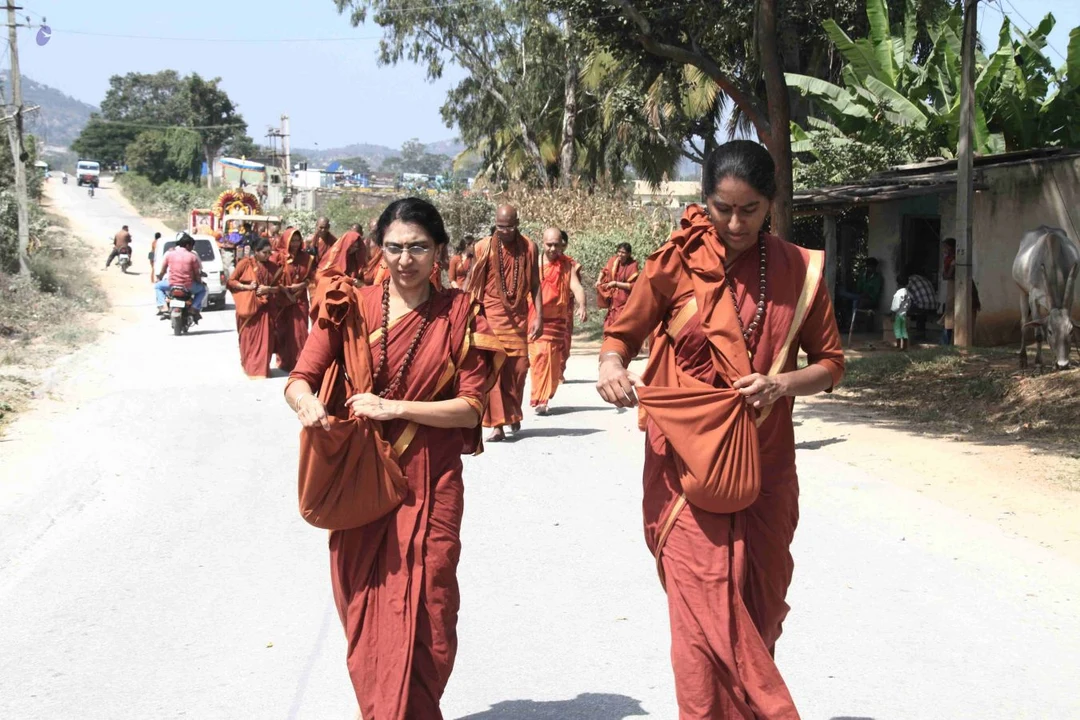
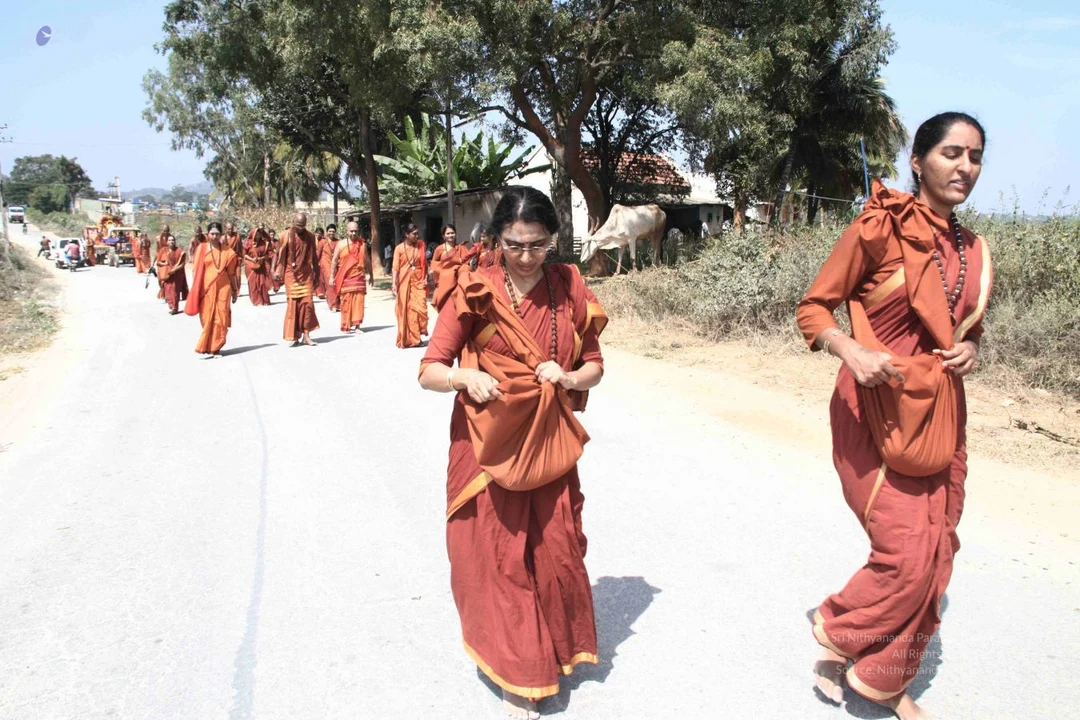
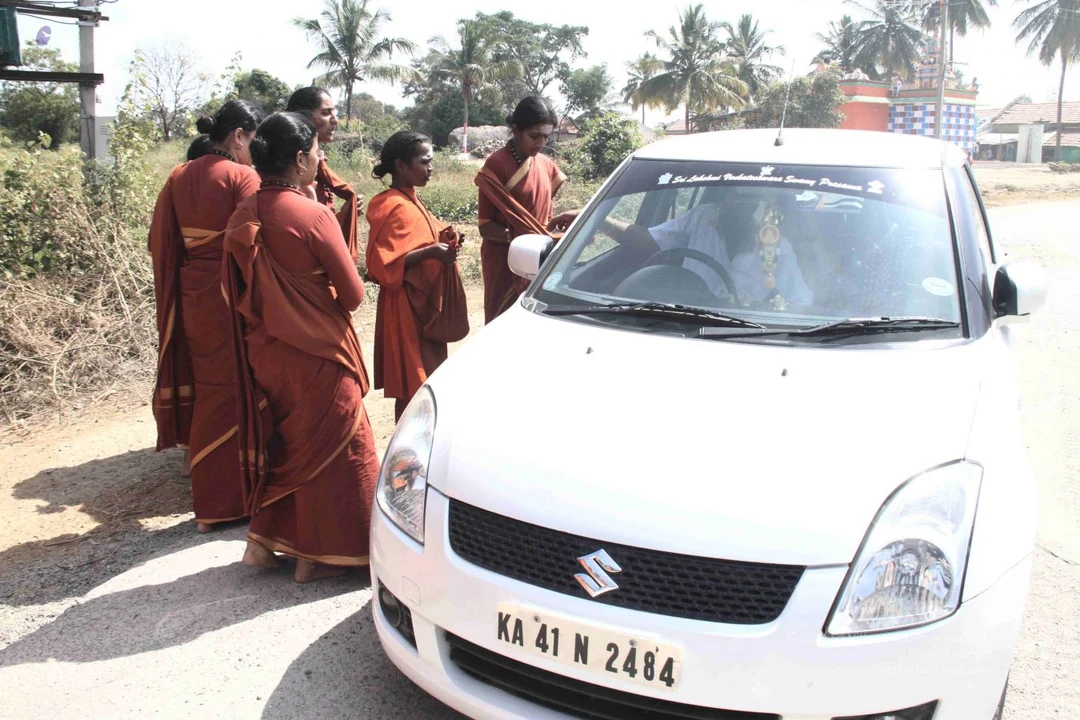
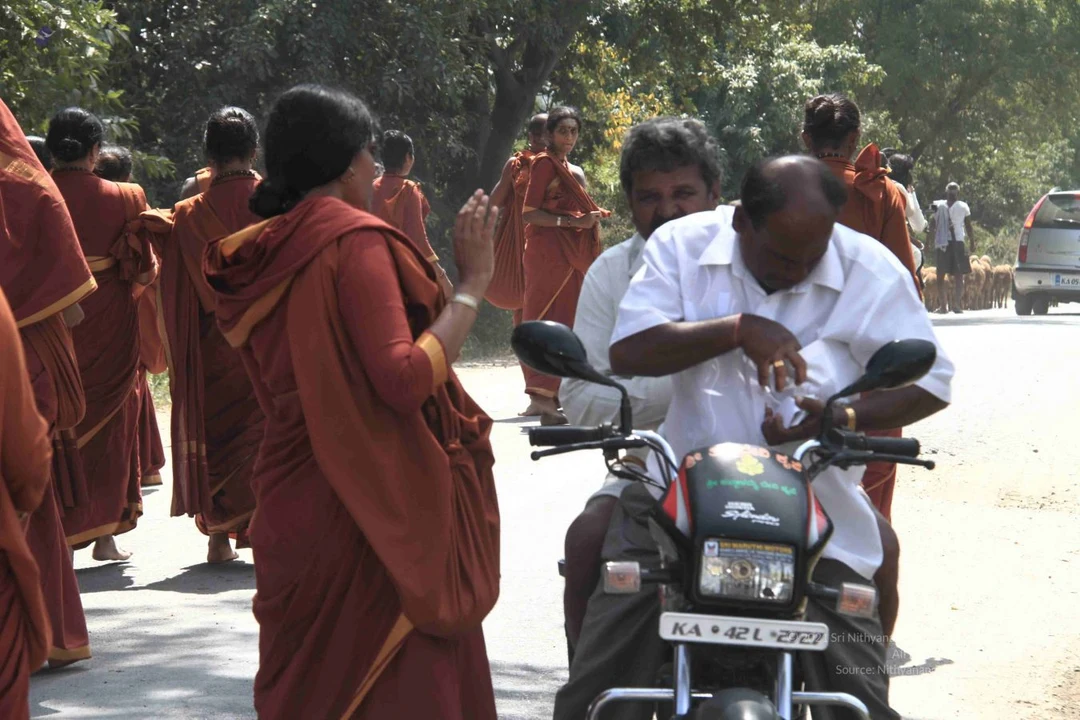
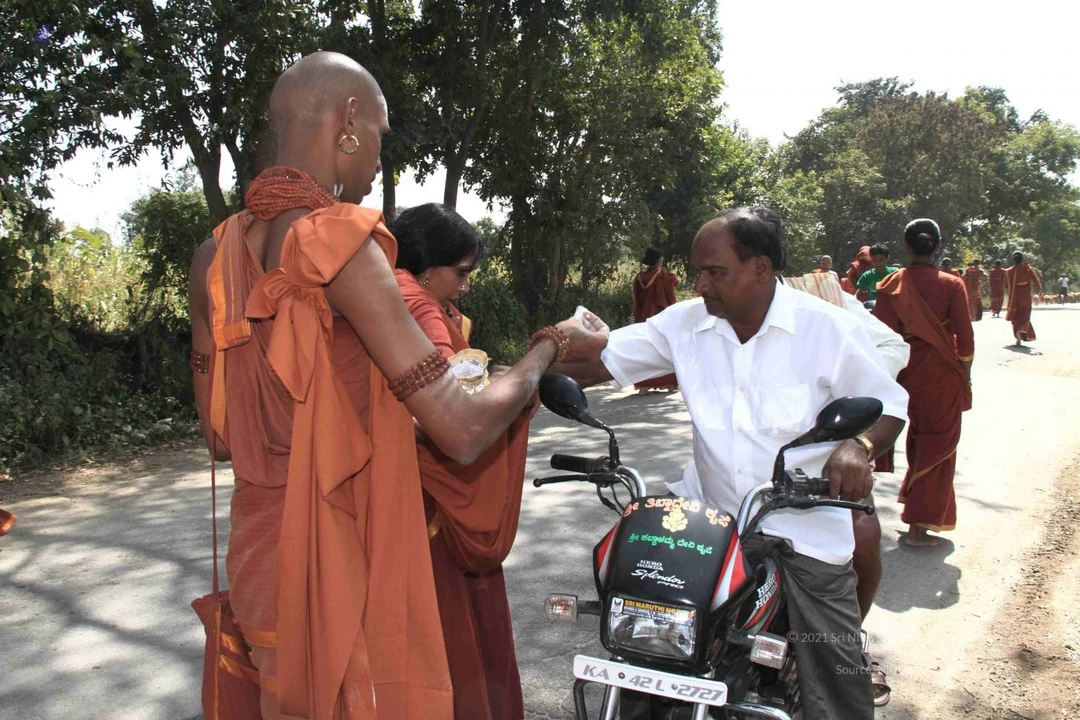
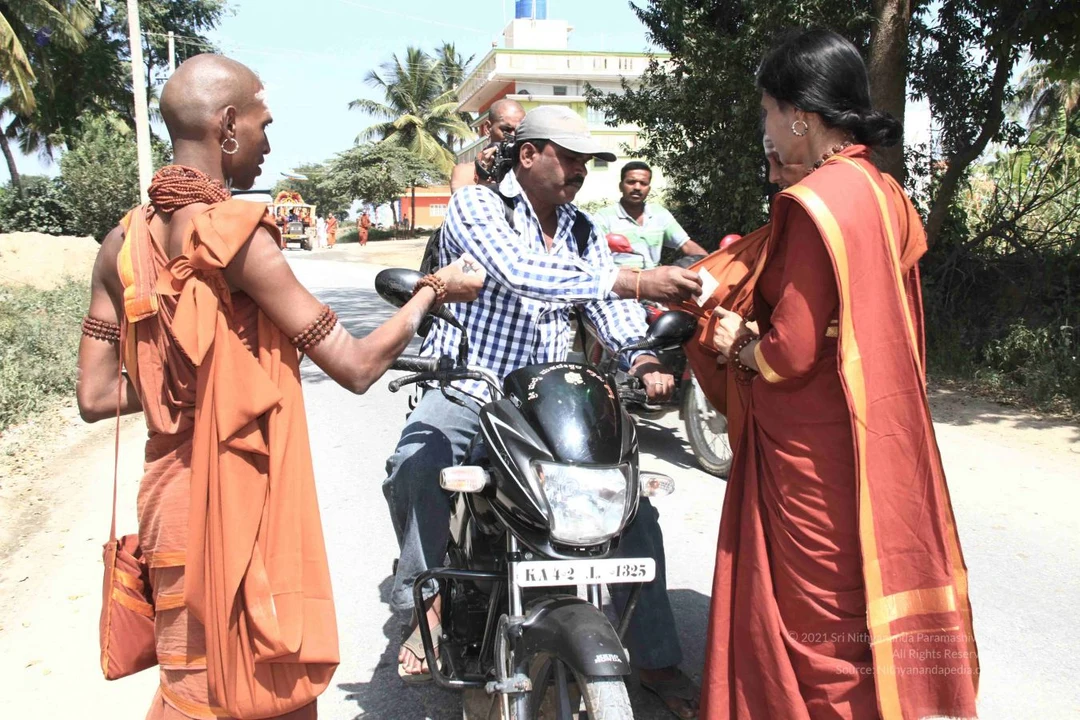
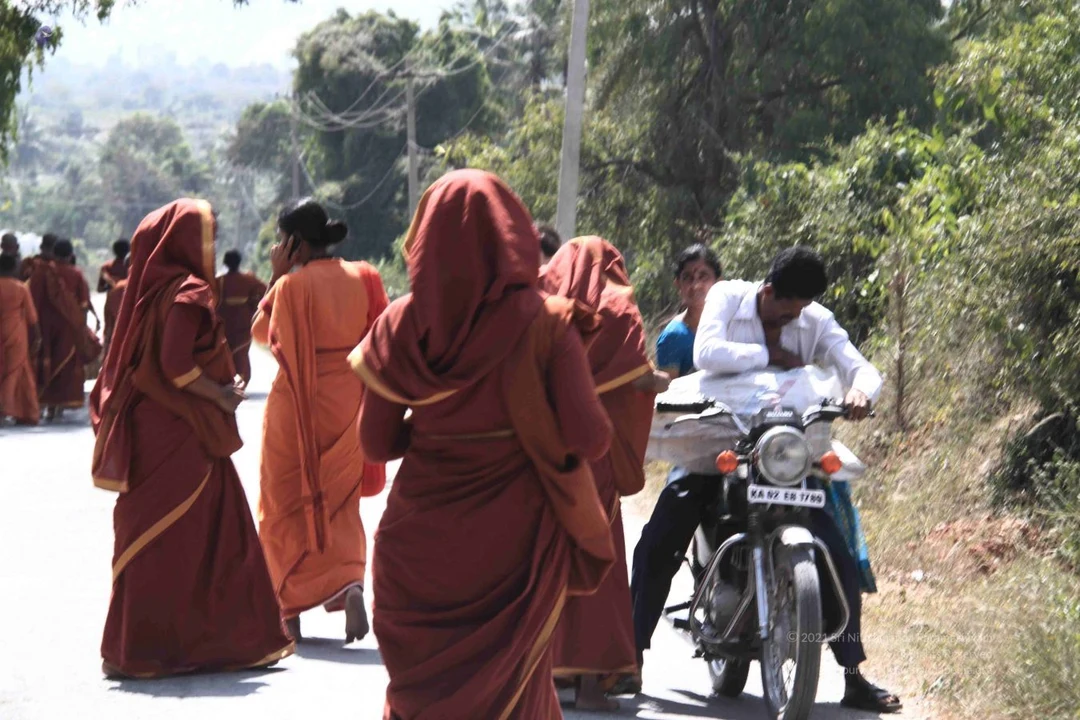
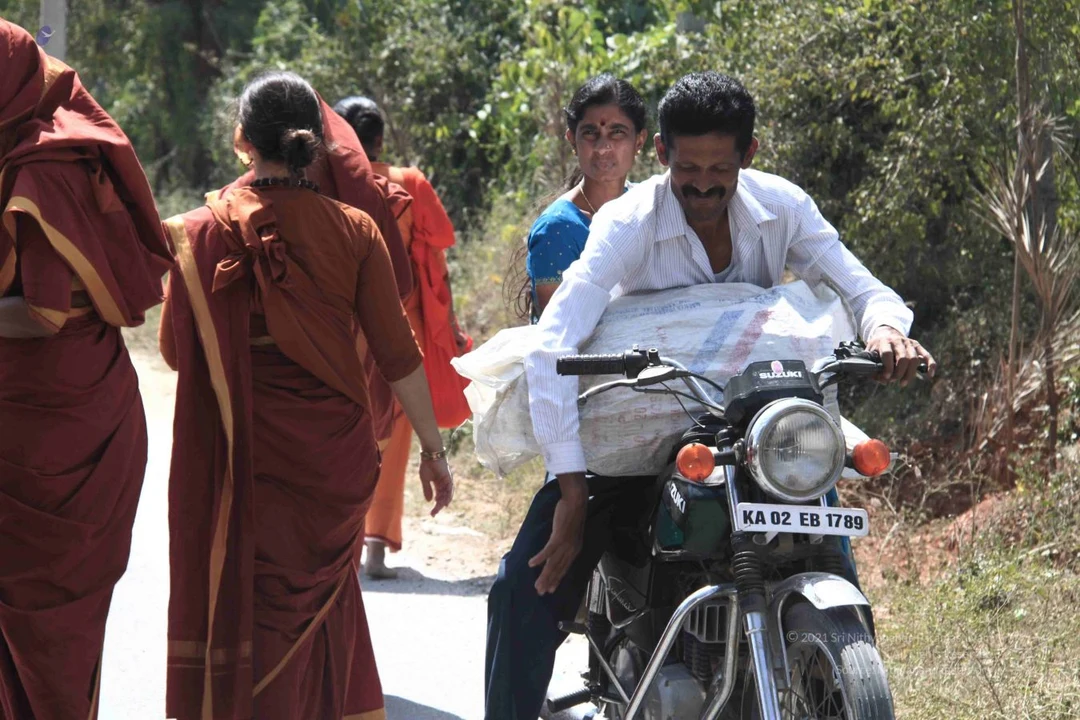
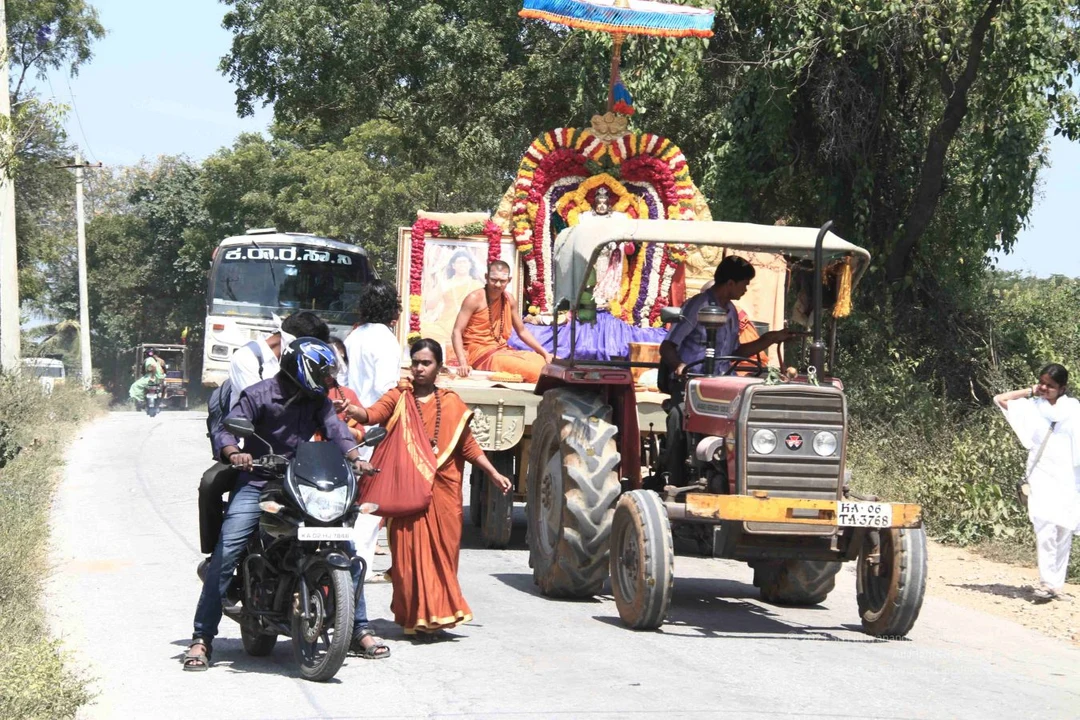
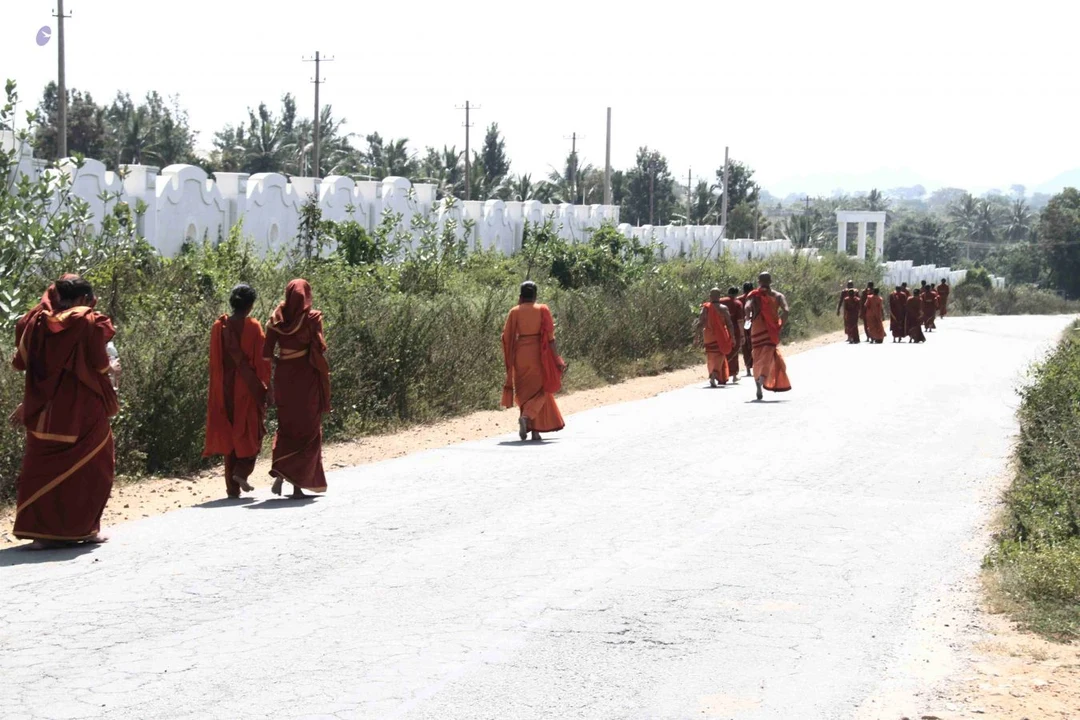
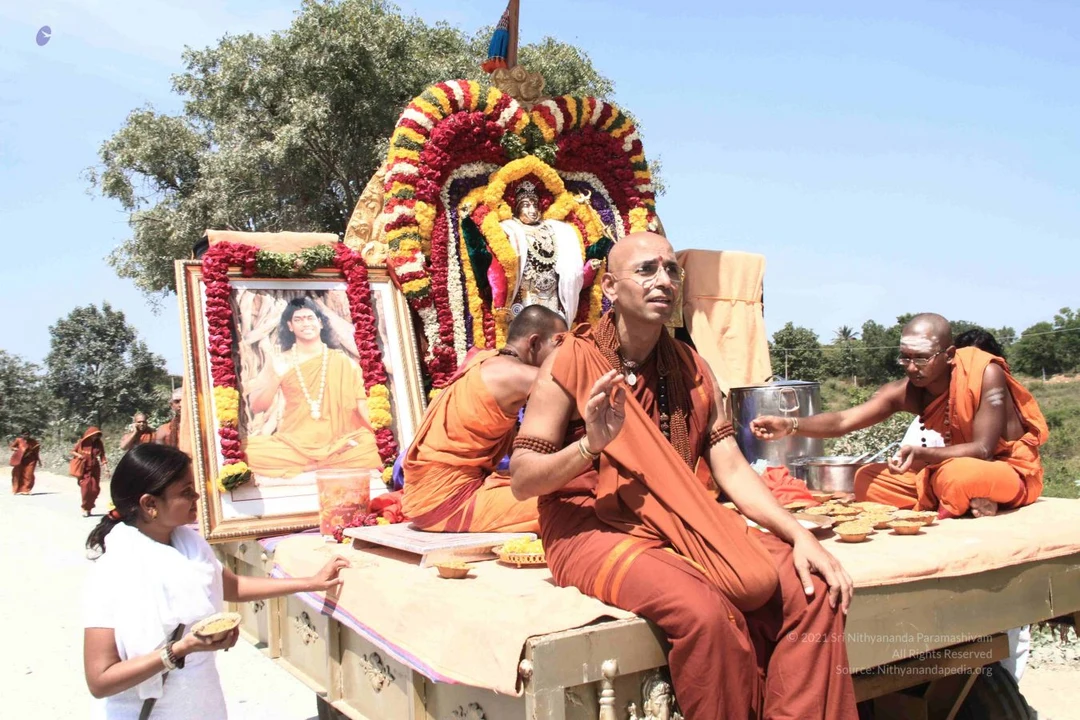
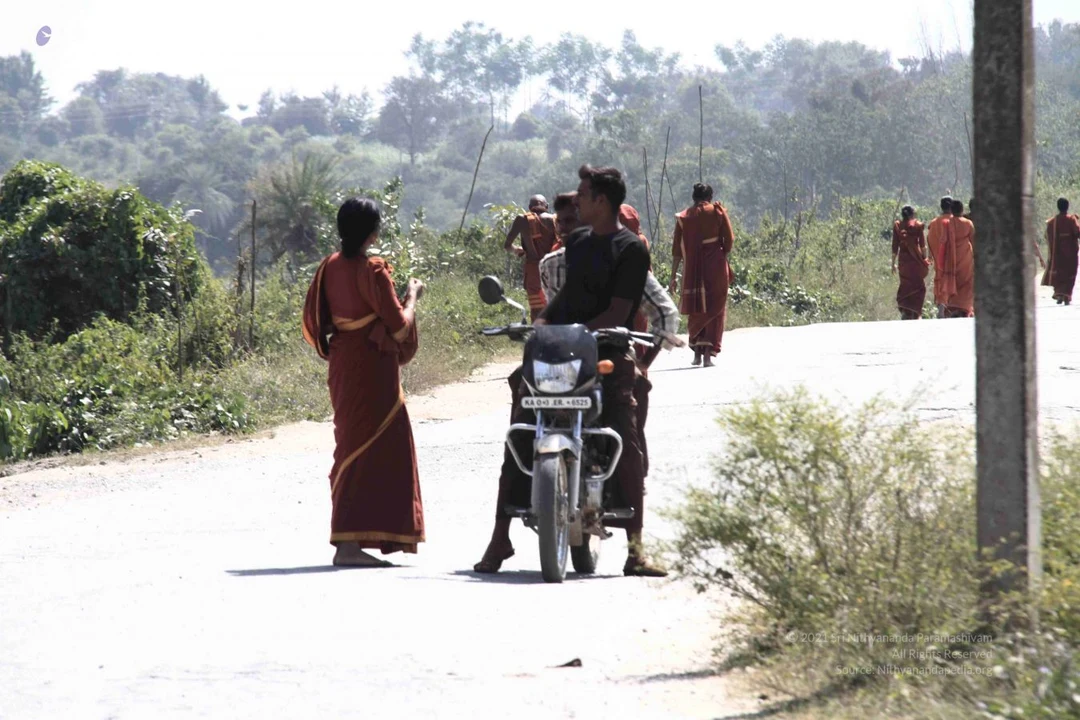
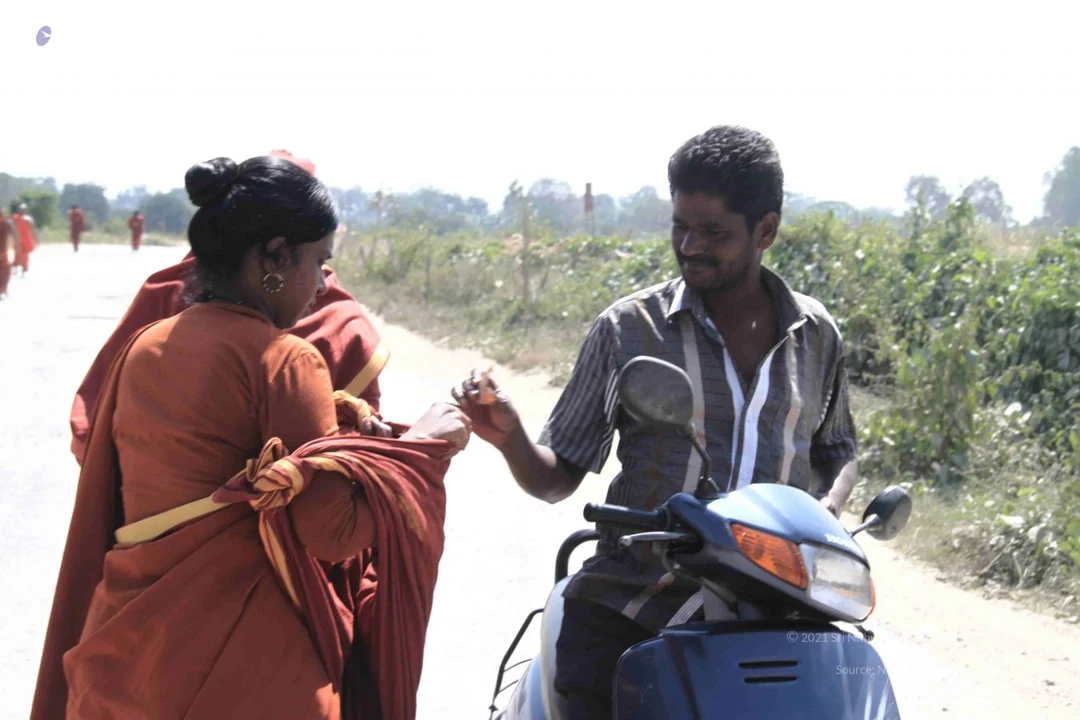
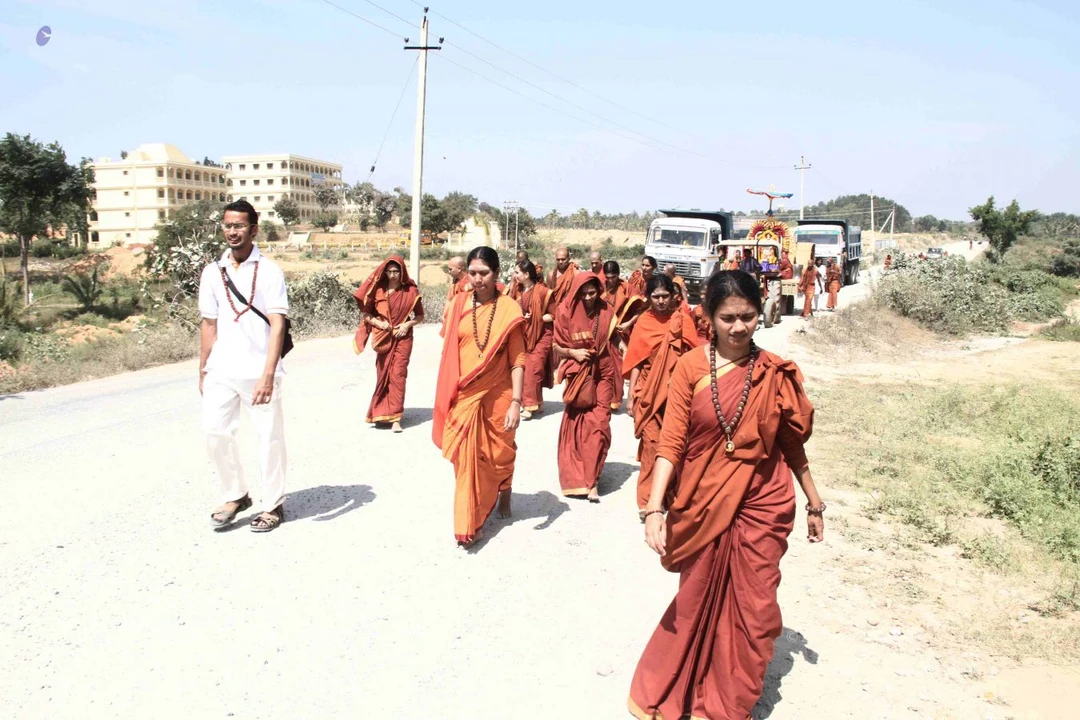
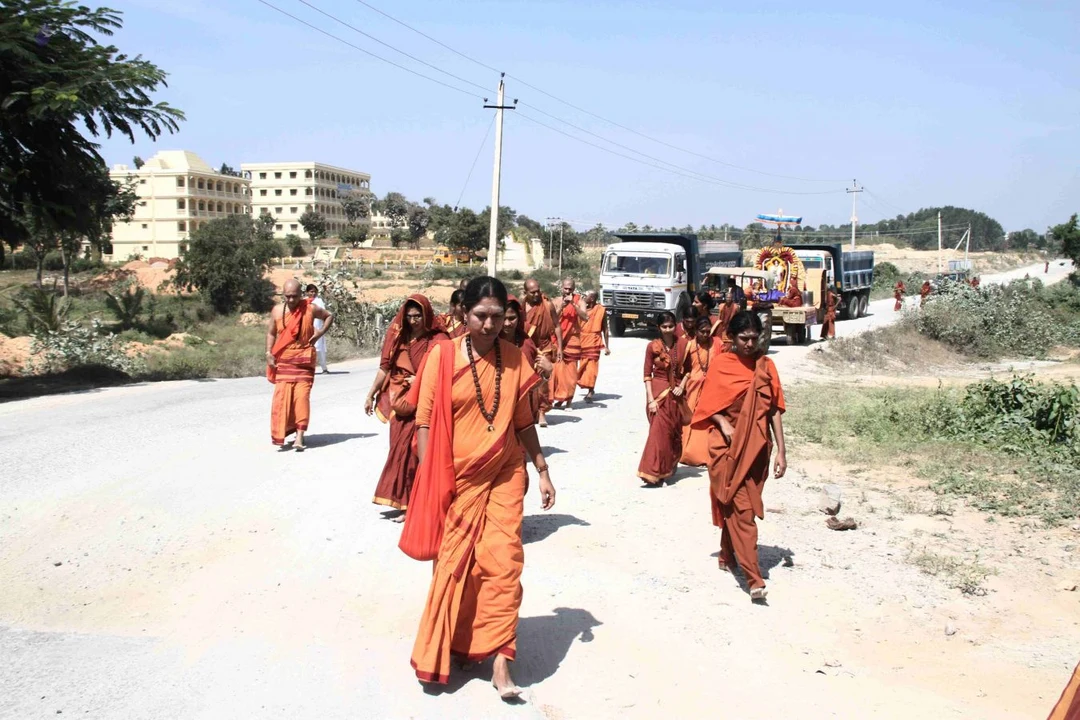
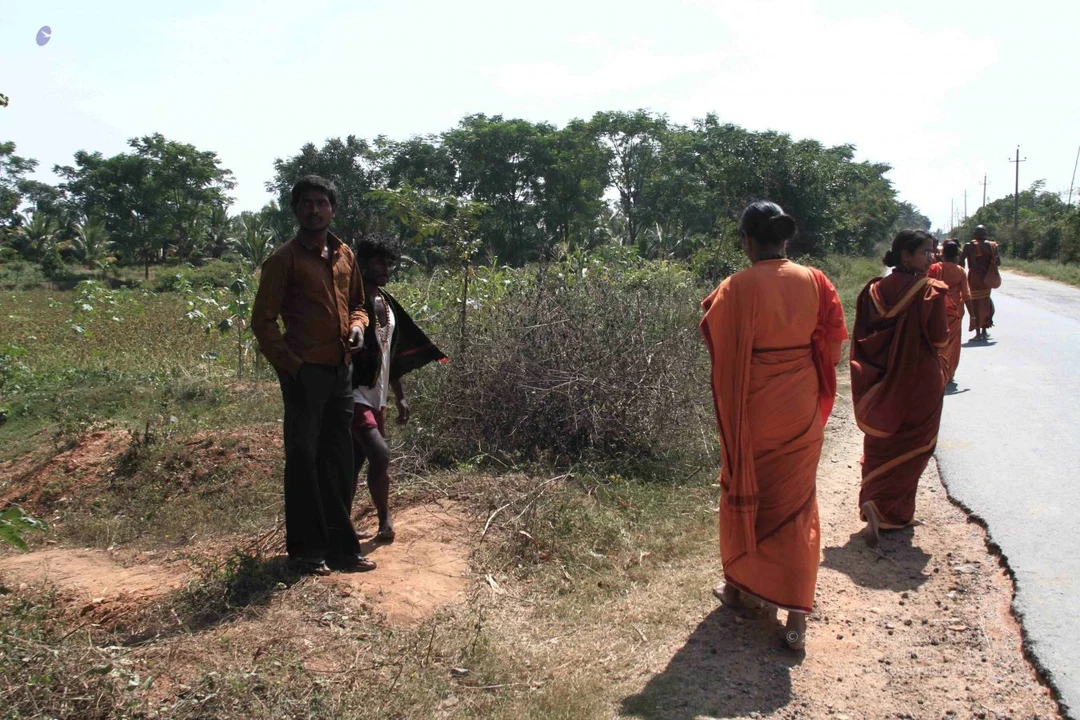
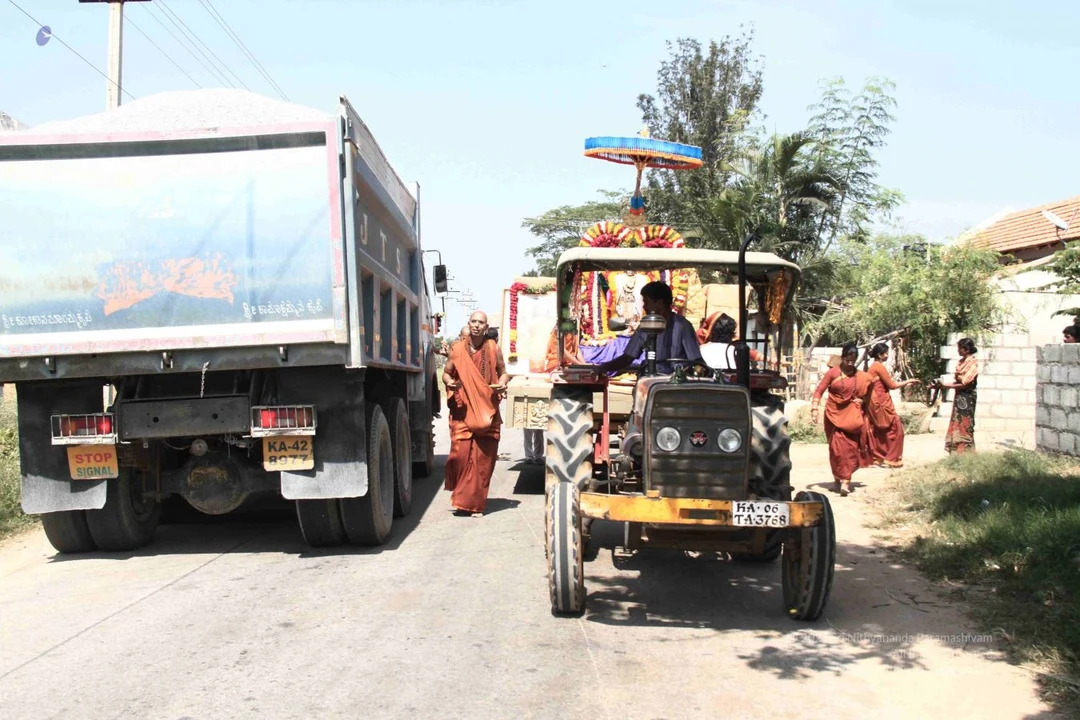
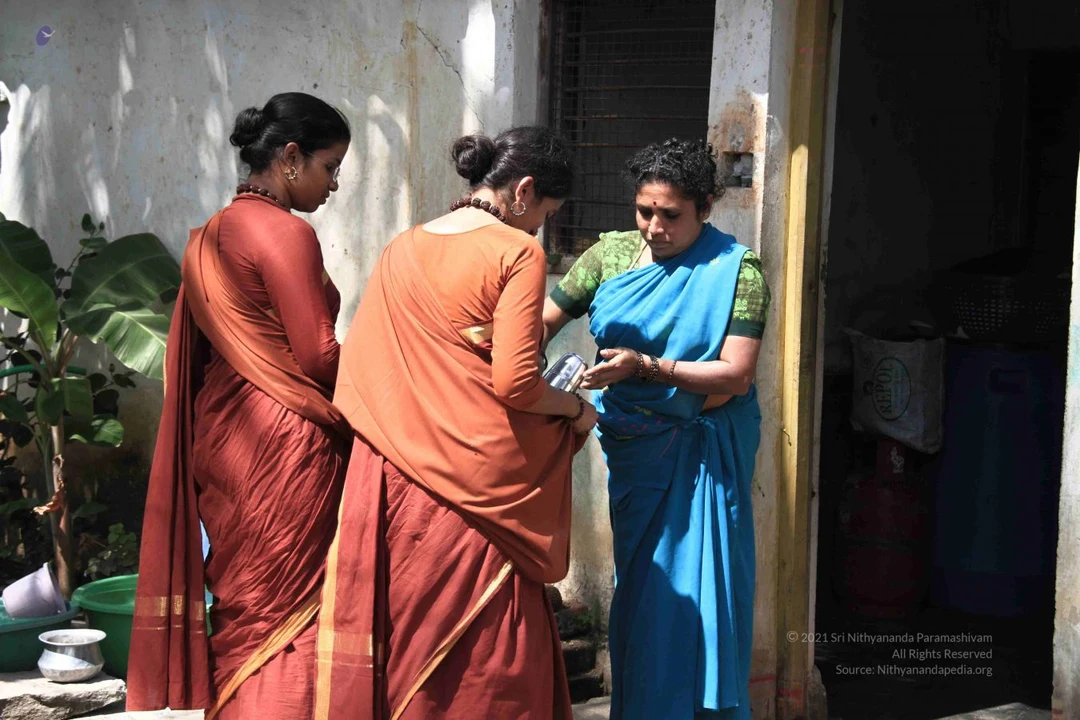
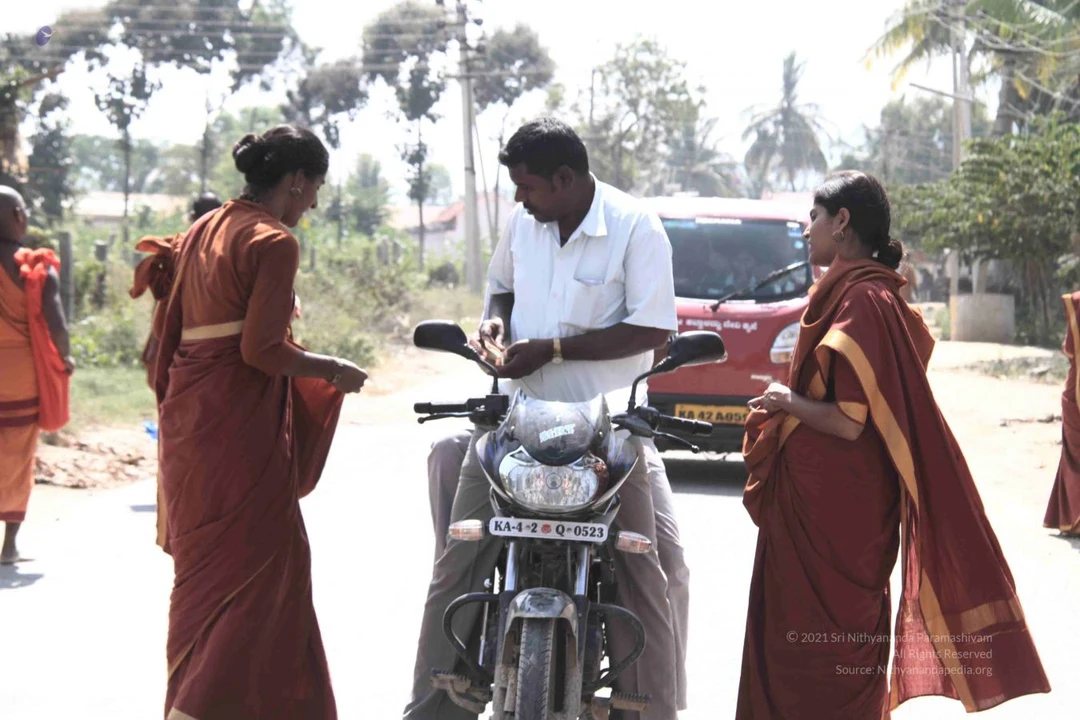
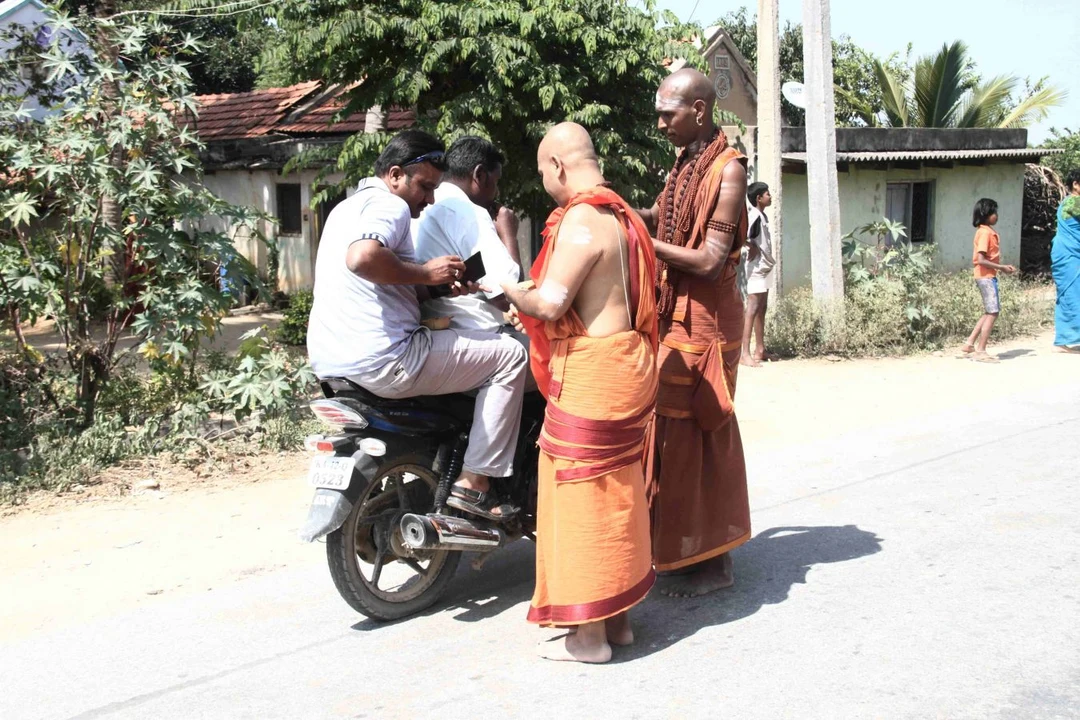
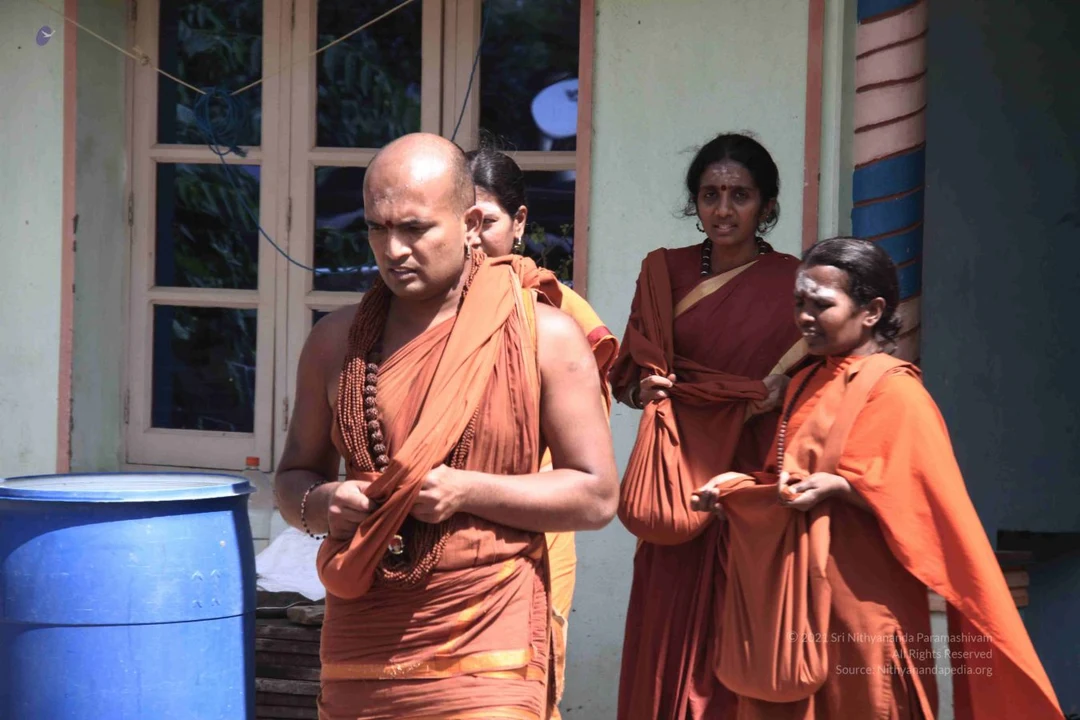
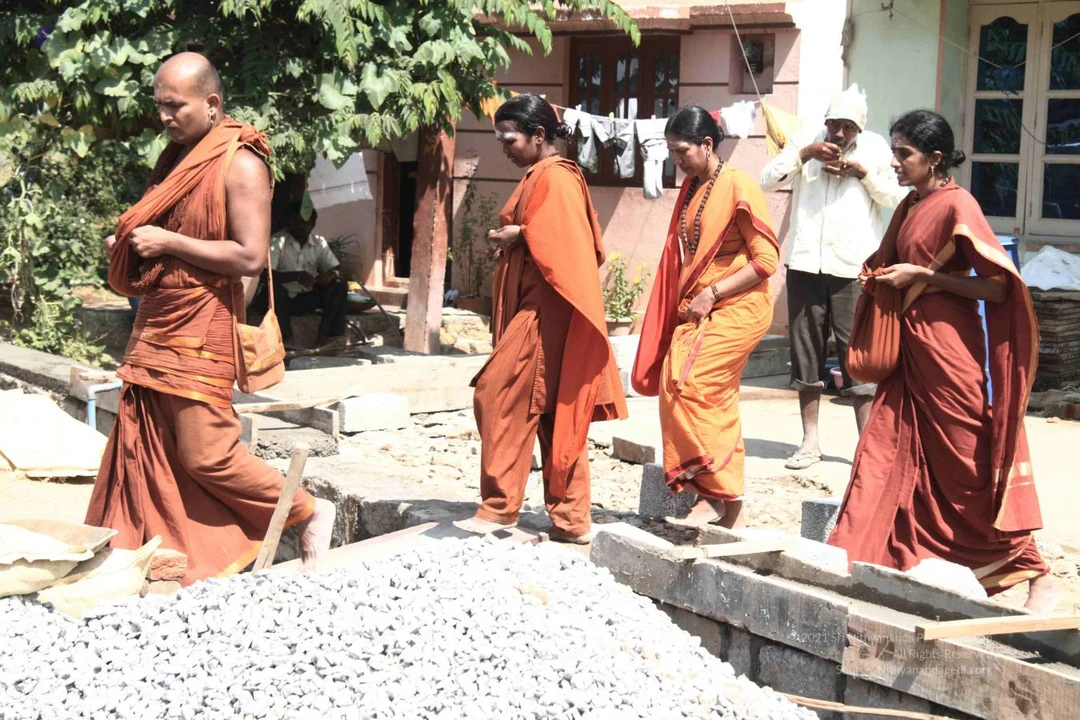
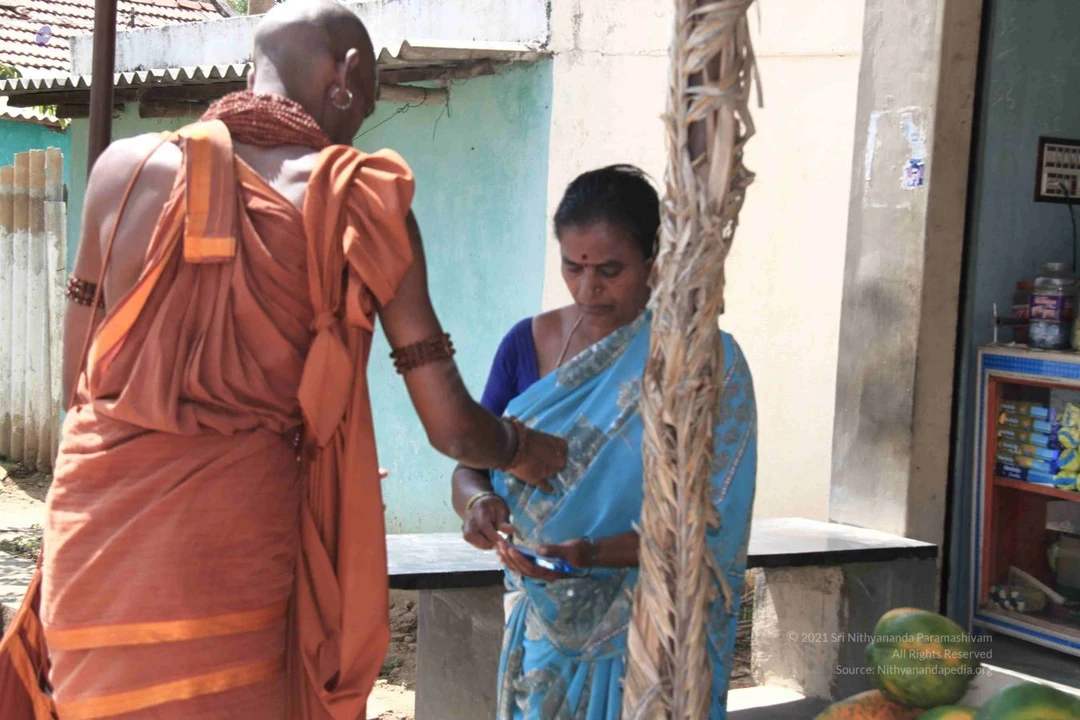
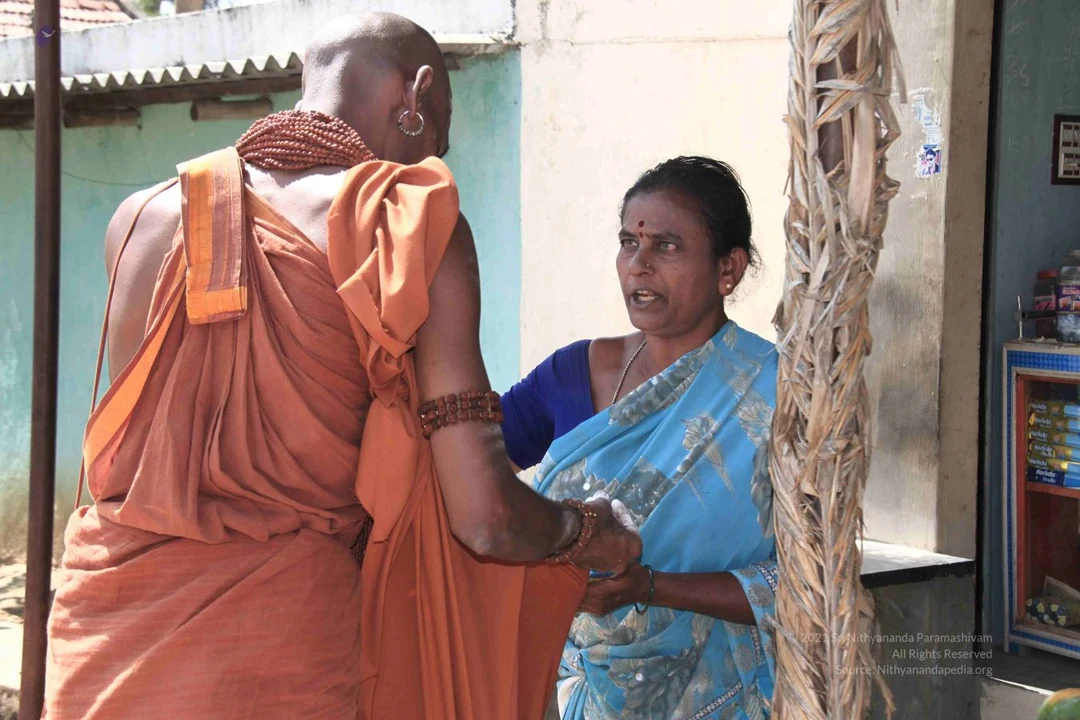
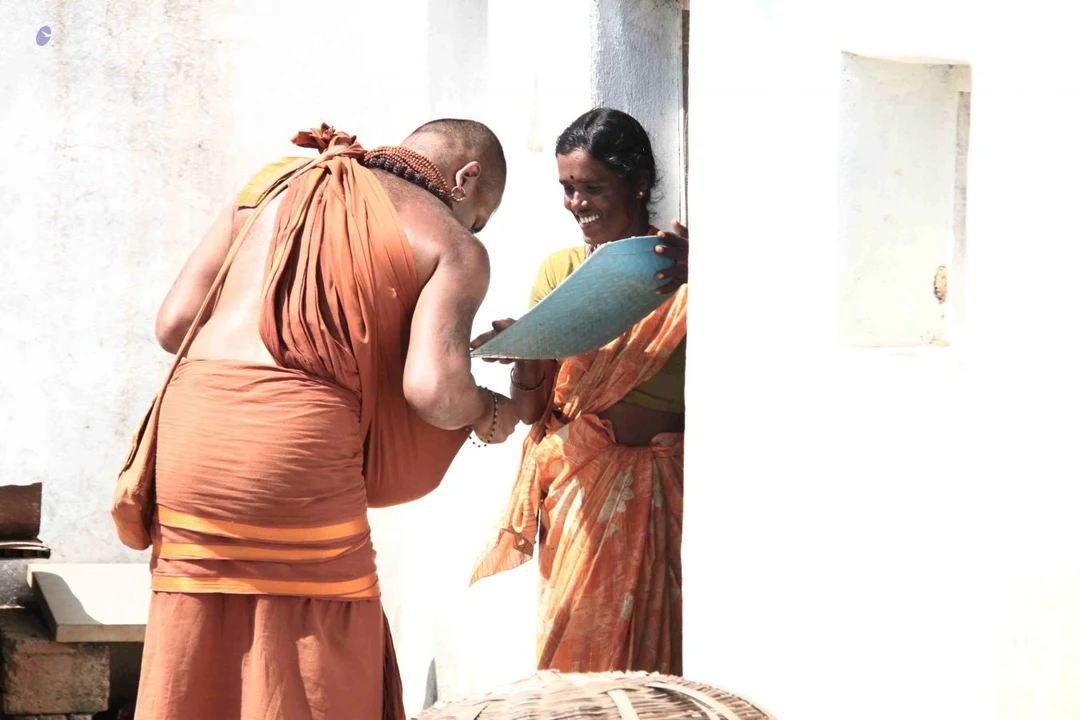
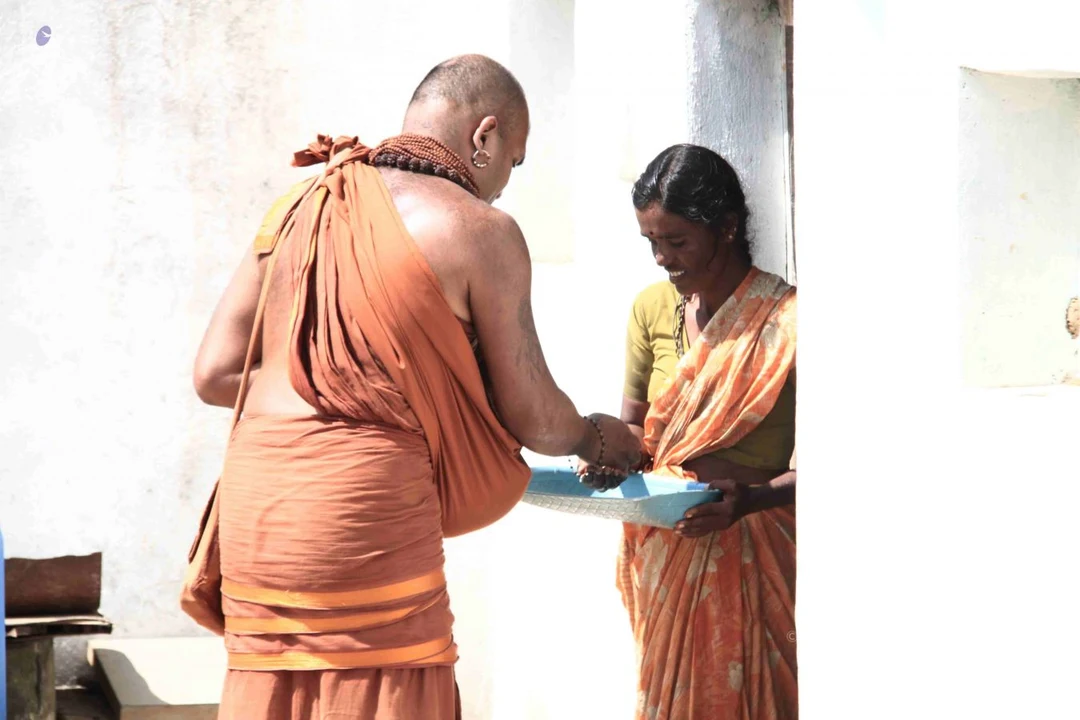
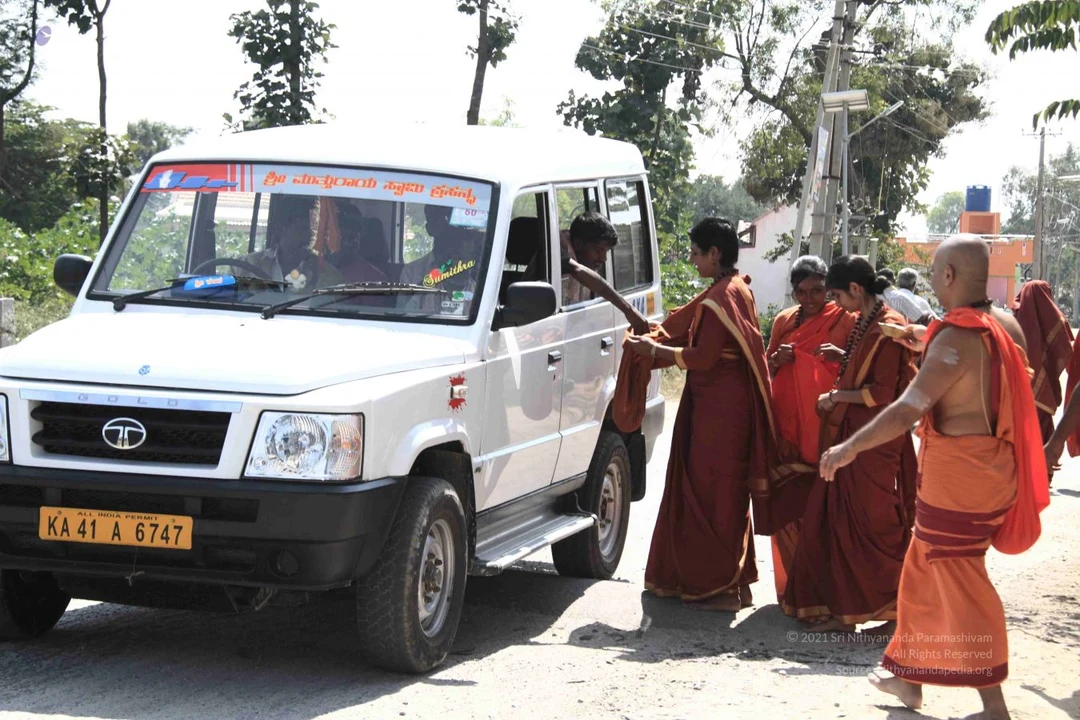
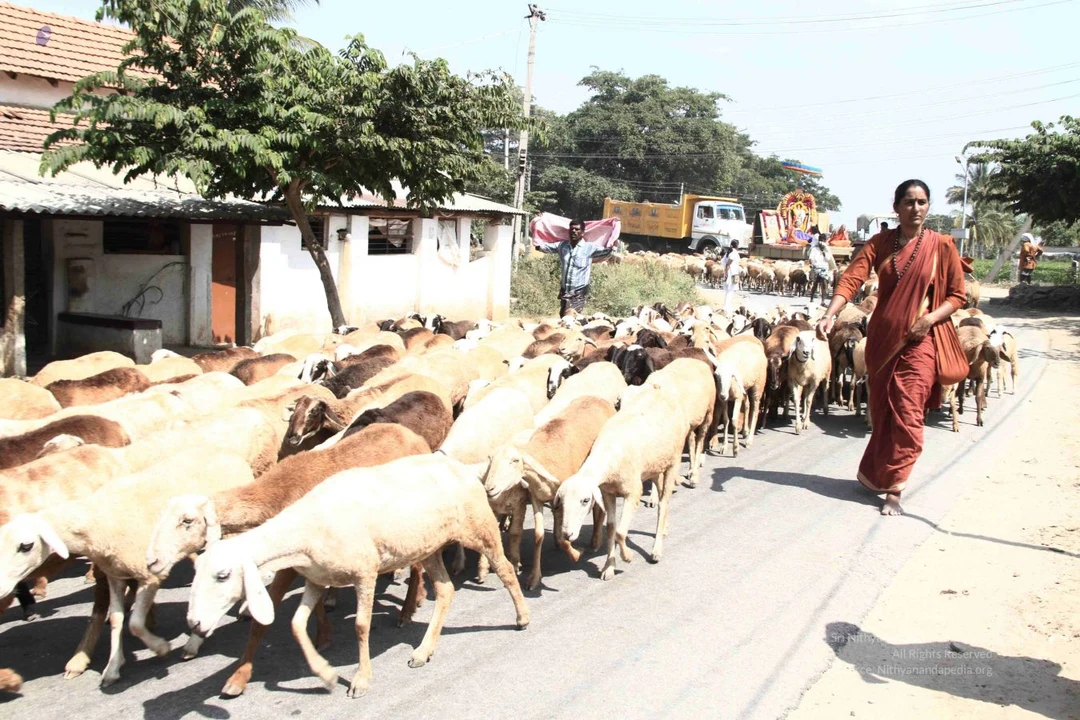
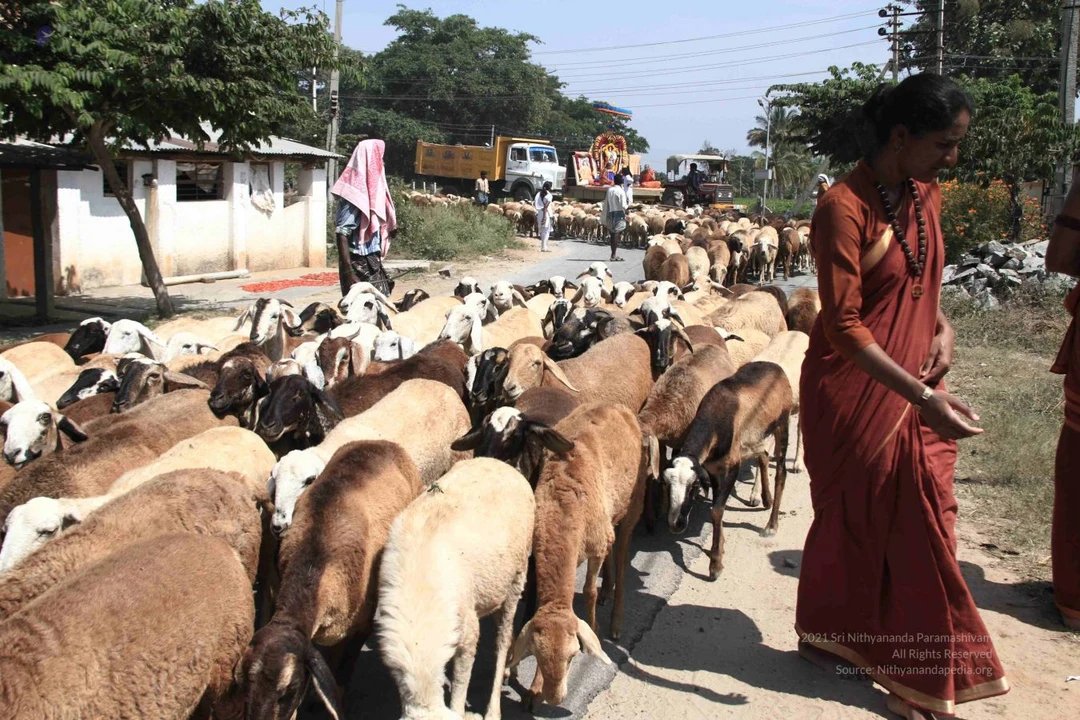
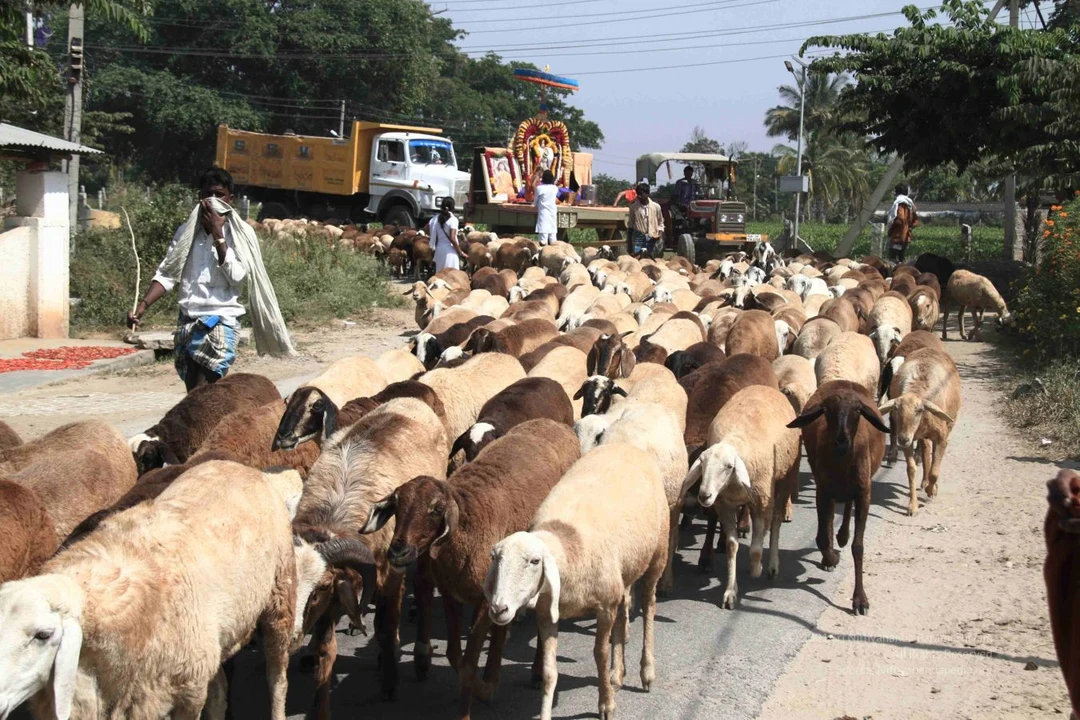
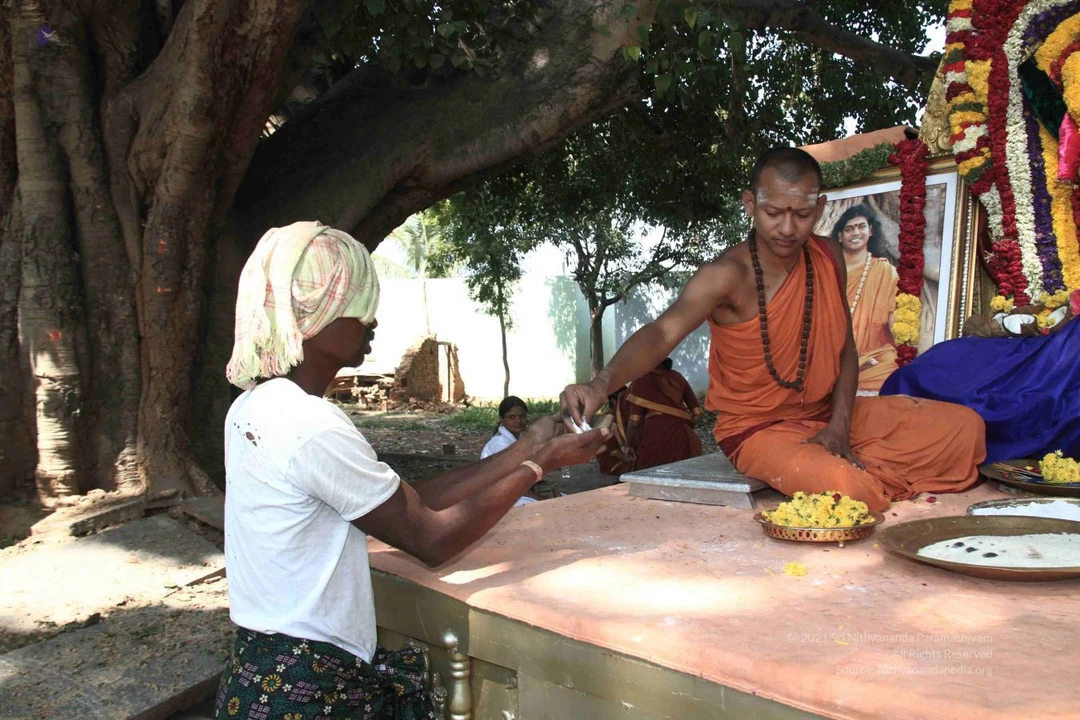
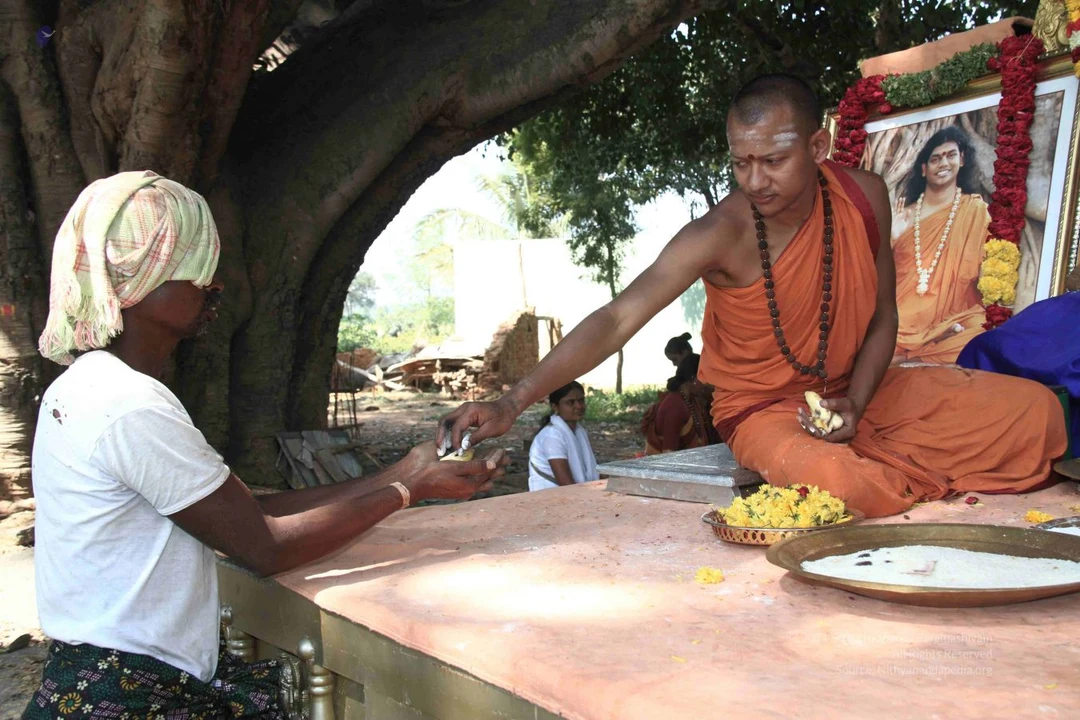
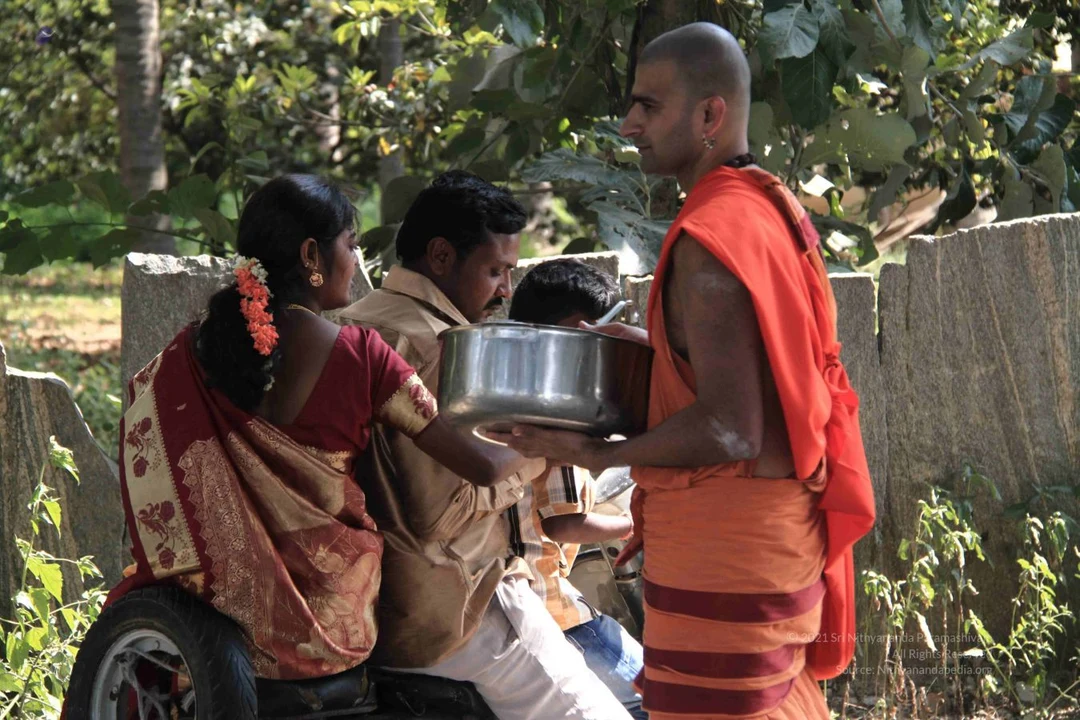
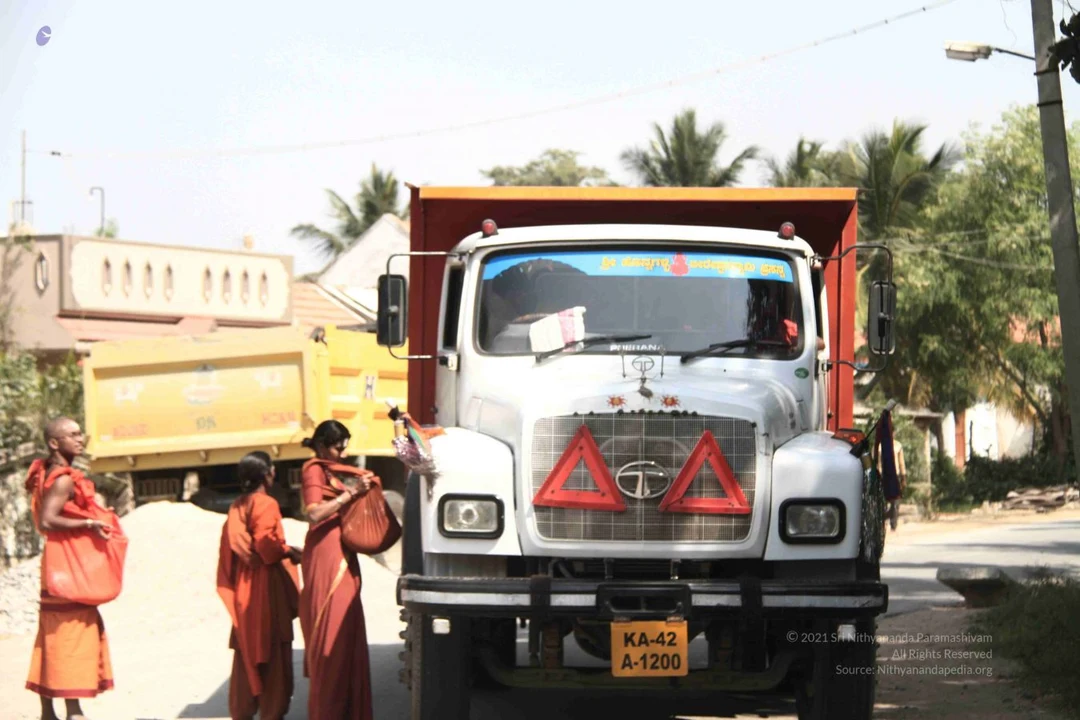
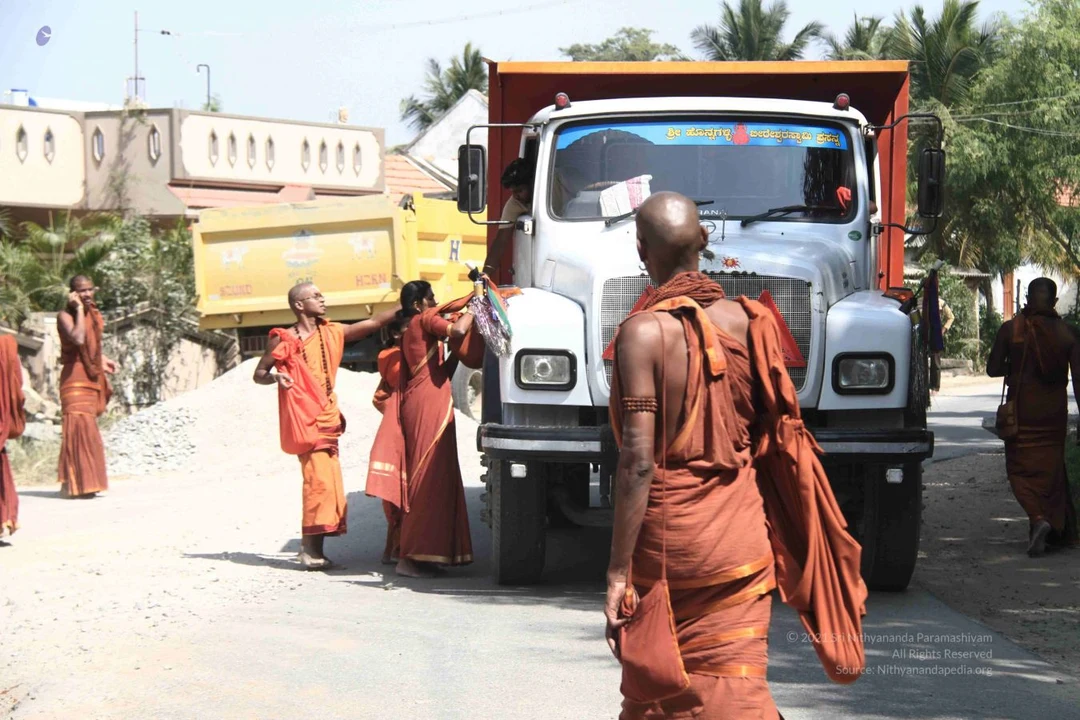
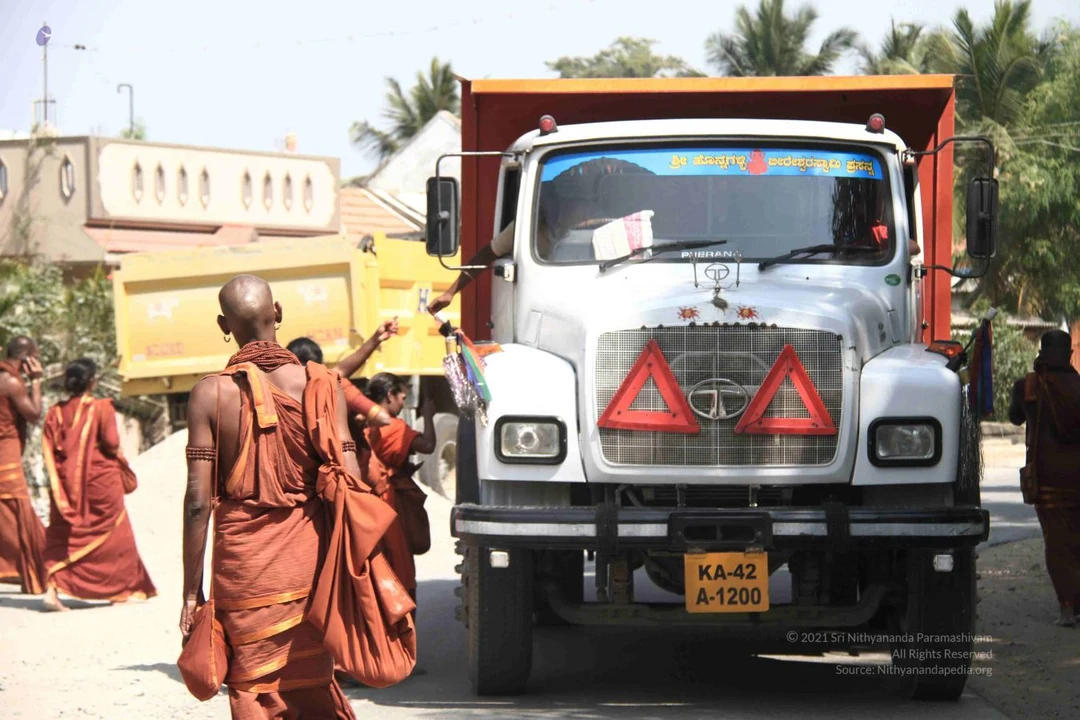
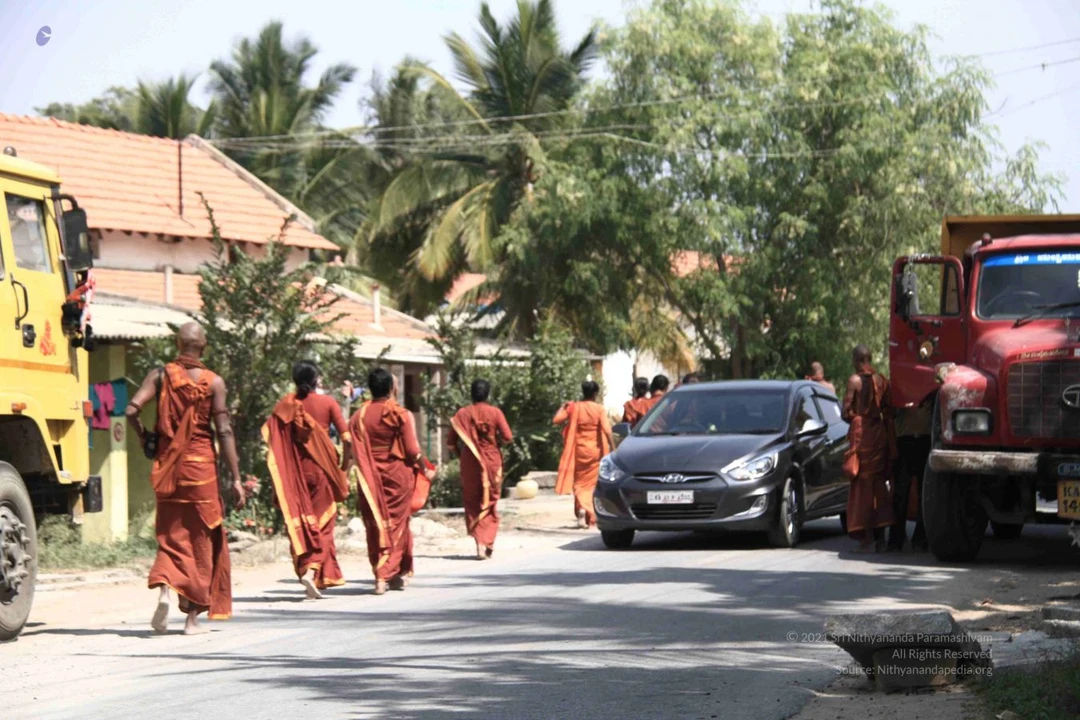
And, as part of the Nithyanandeshwara Brahmotsava, today is Bhikshadana Utsava where Mahadeva goes around begging, taking away all the impossibilities from people, taking away all the incompletions from people, completing them. Just understand, Mahadeva comes down to beg. What a scene it is. He goes around and takes away all the incompletions, radiating the Space of Completion and giving. When Mahadeva goes to beg, he gives more than what he receives. Remember, repeat, WHEN MAHADEVA GOES FOR BEGGING, HE GIVES MORE THAN WHAT HE RECEIVES!

Today, we will have Kalpataru Satsang.

Please listen, these basic truths: That grace is flowing in you forever. Life is flowing in you just to make your life as you want. Life is not sadistic. Life is not life-negative. God is not sadistic. Divine is not sadistic. And, please listen, God is not enjoying your conflicts and complications. Don’t think, God is not a politician, surely not a lawyer. So, he is not happy to put in you some desire and not fulfil that desire. No, he doesn’t enjoy that game. So, please listen. Neither is God sadistic, nor he enjoys the conflicts and contradictions you go through. So understand, it is we who project all our emotions on to God. I have always seen. Just few days before our devotees, one husband and wife, both of them came to ashram. Wife ran away from the house and came to ashram. Some problem in the house, husband also came. Both have their version. Husband says wife is depressed, wife says ‘ No, no he starts yelling at me ’ All I did is I just waited because whoever carries the problem they will naturally not be able to keep quiet here so in few days if we observe we will know where the problem is. Now I found out is the problem on the wife because she is projecting in the same abusive behaviour that she puts on the husband on me! I could see not only on me on everyone around. With whoever she sees, talks. I started laughing, now we know where the problem is and we can sort it out, that’s all.

Same way we also put our ideas on God. God himself is not sadist. He doesn’t enjoy the conflicts. So, please listen, if you are able to wake up in the morning and if you are able to breathe, understand, his Grace is there on you, he wants you to fulfill your life as you want. He wants you to fulfill your life as you want. So when you are fulfilled, Cosmos celebrates with you. When you are expanding, Cosmos dances with you. When you are expanding, Cosmos sings with you. It celebrates with you. So, first thing, you need to have this as a basic cognition. Please listen. This is the basic cognition you need to have: God is graceful. His Grace overflows in our life. How much ever you deny with multi-million arguments or trillions of arguments, the truth is the truth is the truth.

The whole human society is suffering so much because its very existence is built on the wrong cognition. It is built on wrong cognition. See, the whole western civilization is built on the cognition: You have to conquer the Nature. The whole eastern civilization is built on the concept: You have to enjoy the Nature, celebrate the Nature, because, from the beginning, we believed Nature is supporting life, Nature wants us to be here. The trust level between us and the Nature was so high, even if we had to die in some natural calamities, we only felt that this body is getting cleansed so that will come back with another one body. The whole attitude was different. But, unfortunately, in the Greek civilization, the whole attitude was: Conquer the Nature, master the Nature, go against the Nature. So, naturally, that attitude replicated in the relationships with human-beings, in the relationship with everything.

Please listen. Nature is the first god you encounter, God’s first representative you encounter. There are four representatives of God:

One, Nature;

Second, the “Avyaktha” – Un-manifested Nature We can call that as a “God”, “Unknown”.

Third your own “Individual Soul”. Please listen, your own individual soul is representative of God.

Listen. It’s very important for you to understand this:

Avyaktha, Un-manifested; Nature, the Manifested; Your own Soul; and Guru. These are the four representatives of God you encounter in the life.

Nature is the first representative you face because, till you meet God, you will not meet you. Till you meet Guru, you will not meet you. Only when you meet the Guru, he introduces you and God both simultaneously to you. Till you meet Guru, you won’t meet you, you won’t meet God. So, the first representative you meet is Nature. Your relationship with the Nature establishes the pattern how you are going to relate with God, Guru and your own Self. So, be very clear, Nature celebrates your success. Nature wants you to be successful. Nature celebrates your success. Nature wants you to be successful.

Listen. Nature. First root-cognition you need to have is, the whole Nature is waiting for you to be successful, is waiting for you to win the game to celebrate with you. The whole Nature is constantly supporting you to have your life as you want. If you want to be healthy, please be very clear, Nature supports you to be healthy. If you want to be wealthy, the whole Nature supports you to be wealthy. If you want to be enlightened, whole God, the whole Cosmos wants you to be enlightened and wants to celebrate your enlightenment. Everything, everything, everything you want, Nature wants you to have it.

You’re like confused child in the mall. Please listen. Confused child in the mall! When a child goes to a mall, it runs here to the candy shop, it runs there to the toy shop, it runs to the clothes shop, and it runs to the jewellery shop. It is confused about what it wants. Even then, God just sits in the lounge and waits and watches your play and the game and tells you, ‘Please take what you want; it’s all yours.’ But, unfortunately, you are so confused, all the twenty floors of the mall you go up and down, up and down, and each counter, by the time you decide what you want, you are dead!

Listen. Grace is there forever on you. Patanjali explains beautifully: ‘You don’t need to bring water into the land; the canal is there; just remove the obstructions.’ You don’t need to bring Kundalini into your body; it is there with the whole circuit; just remove the blockages you created. Incompletions are the blockages you created. For example, you decide you want to be healthy. The moment you think you want to be healthy, what all blockages come inside you, the ideas come inside you? Come on complete with all of that. Complete and drop! Complete and drop! Complete and drop!

I tell you, the Power of Completion. Somebody who thought he can never wake up before morning 10 o’clock, who lived all his life sleeping up to 10 o’clock, suddenly he started completing with that pattern, just forty-eight hours Completion, from next day he is out 4 o’clock in the morning. I tell you, it is possible. It is a big problem, this waking up in the morning. People are ready to dedicate their life, but not ready to give up their sleep, I know.

Somebody asked me, ‘Swamiji, Give me a simple solution for this problem of morning waking up, I want to become an ashramite.’

Because, in the ashram, that morning waking up is a very important component of life.

I told, ‘See, if you are in Malaysia or in some country where we are a few hours ahead, what will you do?’

‘What will I do?’

I told, ‘See, now in India, you are expected to wake up 4:30. You are in a country where their 10:30 – your waking up time – is India 4:30 am. What will you do?’

‘I’ll sleep a little early and, naturally, I’ll wake up.’

I don’t know whether all of you are understanding? Just move the calendar a little. Think you are in some other country. So, move your sleeping time and naturally you will be fresh, alive, morning 4:30.

Please understand, this morning 4:30 is just your psychological. I know, many of you did not get it. Many of you have not got the example. I’ll give you the example in a detailed way.

See, you are living; you are born and brought up in India. You can wake up Indian Time around 8 o’clock, but not 4:30 but if you move to some country where the Indian Time 4 o’clock is 8 o’clock for them, in two days you will start waking up at 8 o’clock. Is it not? Then you are now waking up at Indian Time 4:30 there. How many of you are understanding now? So, that’s all I want you to do now here itself. Just going to bed, alter that time, push that a little earlier; that’s all. So the Indian 4:30 you will wake up. Because, this time 4:30 is simply psychological; it is not physiological.

Listen. Just with a simple Completion, you will understand time is psychological, not physiological. You will have power over your sleep. Having power over you sleep will bring so much confidence in you. You will have so much confidence. You will have power over your thinking, power over your feeling.

Come back to the subject.

Grace flows in us continuously. We just need to complete all the concepts of “impossibility” we created on our own like a headless chicken, brainless baby in the mall. Brainless baby in the mall and headless chicken is one and the same. Whether the baby is eight or eighty, when it does not have a brain, what the baby goes through in the mall, what a headless chicken goes through in the life, are one and the same.

Listen. Today, pick up just one desire and complete all the impossibilities. I wanted you to do this again and again two-three times. Only then you will catch the knack. Only then you will find how many self-denial patterns you are carrying, how many ways God is trying to give you what you want, and you are pushing him away. He sends you through somebody. He sends what you want as a gift through somebody. You say, ‘No, no! Get out!’ Then he sends through the courier - you don’t want to receive! He sends through Flipkart - you don’t want to receive! He sends through so many ways you throw it away! Finally, he breaks your roof and drops it. Then again you curse the building, ‘You have given way and something has dropped,’ and you get frightened and run away from that house! And the treasure what you want is dropped inside that house.

If you can imagine what I am saying, that is exactly your life, please understand.

You want something. You go and pray to the God” ‘God, please give me a diamond-studded golden pen I really want it.’ God says, ‘Alright.’ He sends it through somebody and that fellow tries to give you the gift. You ask, ‘Who are you? What is your intention to give me the gift? Get out!’ Then He sends through a courier. ‘No, no, no who knows it may be a bomb why to open?’ Then He sends through Flipkart. ‘No, no, no, no these fellows may be cheating me. How did they send it to me without me ordering? They are trying to fleece me.’ So many ways God has sent. You threw it and reject it. Finally your roof opens and he drops it inside. You think, ‘Oh God, something has fallen somebody has thrown a bomb,’ and you run away!

That is exactly the pattern you carry. So many deeper and deeper and deeper ways you deny life. Every idea of “impossible” you carry is a life-denial. Layers and layers of “impossibility” you carry. Morning waking up: impossible. Taking bath: impossible. Brushing teeth: impossible. Going to job: impossible. Doing the job; impossible. Be healthy: impossible. Be mentally blissful: impossible. Have good relationships: impossible. Have wealth: impossible. For anything, you chant the word “impossible” more than any name of the God or any mantra. Then “impossible” becomes your mantra. So the God Impossible appears in front of you and says, ‘O, my son, everything is impossible for you, I give you that boon!’ No, that is what is happening, what you worship appears in front of you!

Understand, stop worshipping “impossibility”. Complete, complete, complete with all the ideas of “impossible”. You will see so much of Kundalini energy’s awakened in you, so much of Kundalini Shakthi is alive in you.

28:53 Hindi - 29:50

Please sit straight. Now I’ll lead you into the process of Kalpataru.

Take one desire, any one desire. Don’t run around like a brainless baby in the mall! Pick up one. Whether you want to be healthy, wealthy, blissful. If you are intelligent enough, you can add all this in one desire, no problem but make it as one, one statement, so that, that statement can be empowered now and it can become reality in your life.

First start completing with all the doubts and your earlier failures – you wanted what you want now, earlier also but you never achieved it, you never got it, so life is not going to give you this. Complete with this pattern first.

Life is not sadist. Life is not denying what you want.

Complete with all the past failures. Complete with life. Complete with every step. Complete with everything. Complete with your doubt whether you can create this space or not. Complete with your doubt whether you will get it or not. Complete with your challenging attitude ‘How will I get it just by thinking?” Complete with all these “impossible” cognitions, the self-denial cognitions. Complete with all those negative cognitions.

33:01 Hindi - 34:17

Complete, complete all the incompletions.

Complete with all the “impossibilities” first. You yourself have become a bundle of impossibility. Complete with that first. Complete with you first.

37:30 Hindi - 37:32

Complete with all your “impossibilities” first.

Now create the desire as reality through your space. Decide that it is real, what you want is real in your life.

41:25 Hindi - 41:50

I bless you all with Integrity, Authenticity, Responsibility and Enriching, as Kalpataru, whatever you all created in your inner space, become reality and auspicious for you and the world.

Let you all achieve, experience live, express, radiate, share and explode in eternal bliss, Nithyananda.

Tags:

Paramahamsa Nithyananda, complete, grace, fulfilled, awakening, kundalini shakti.

Photos Of The Day:

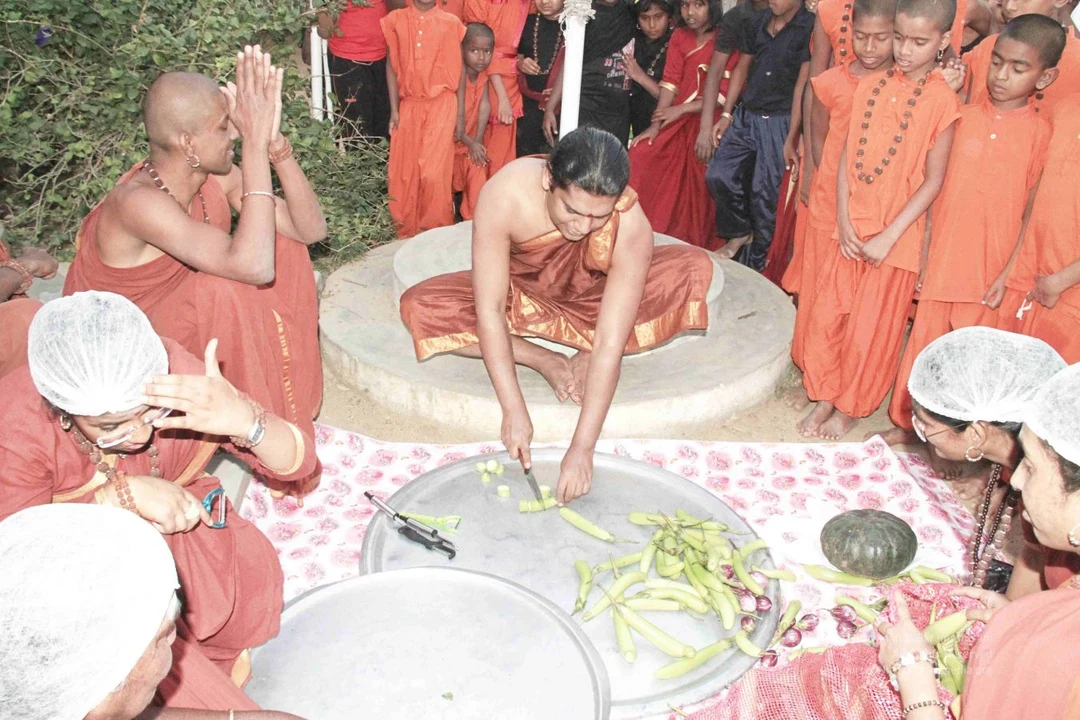
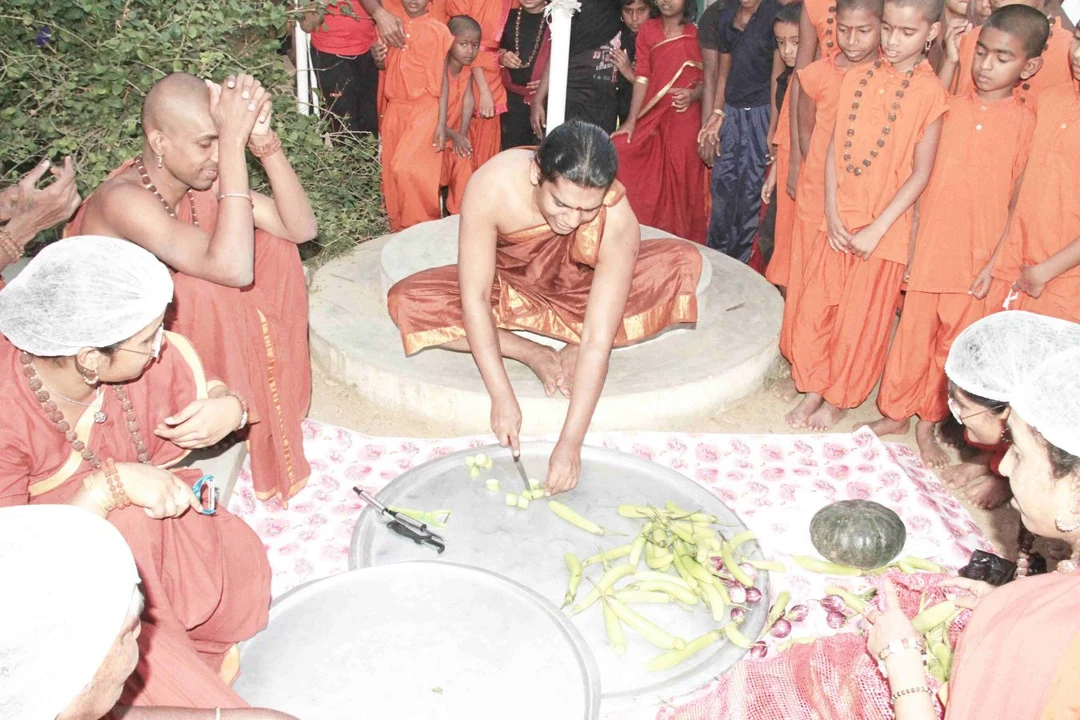
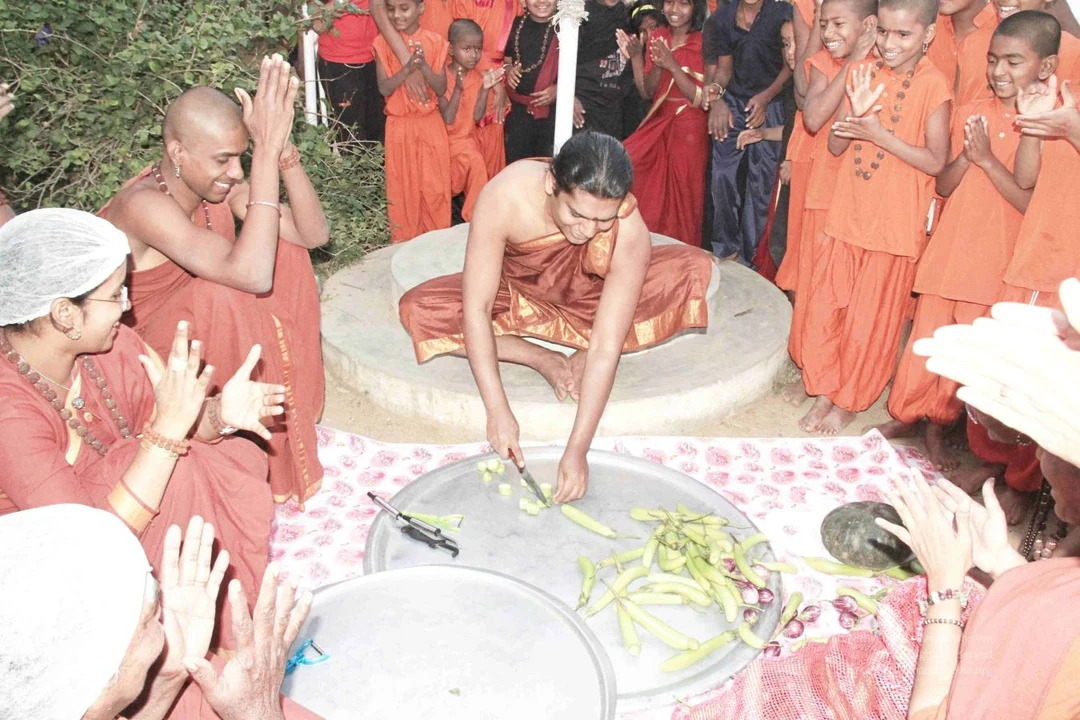
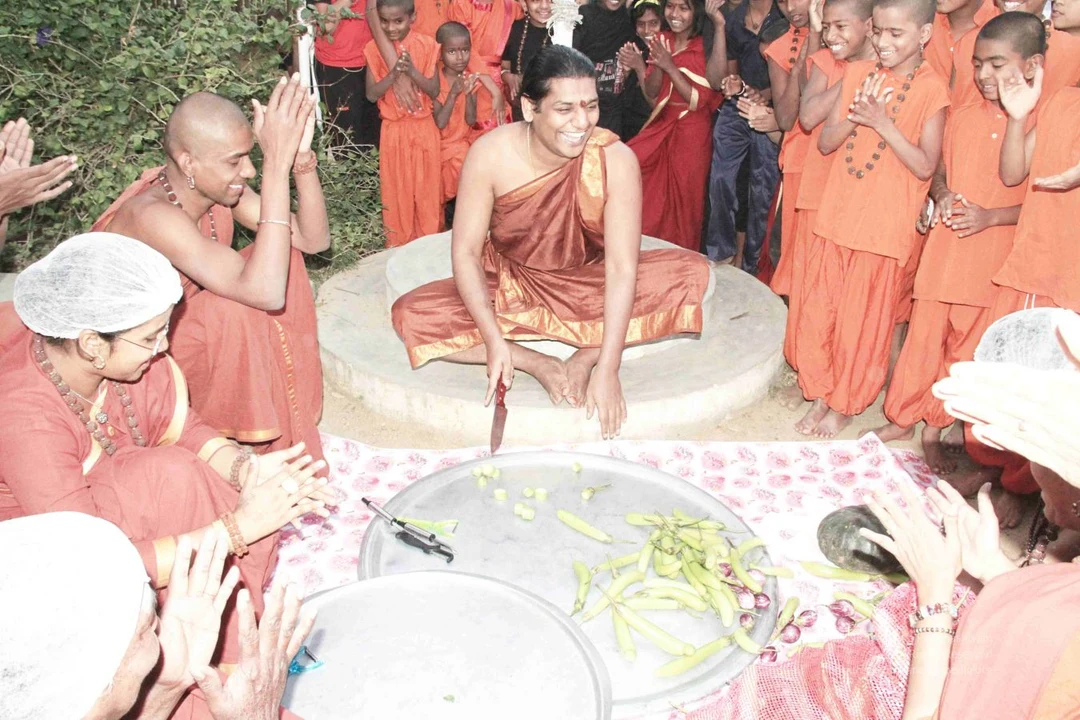
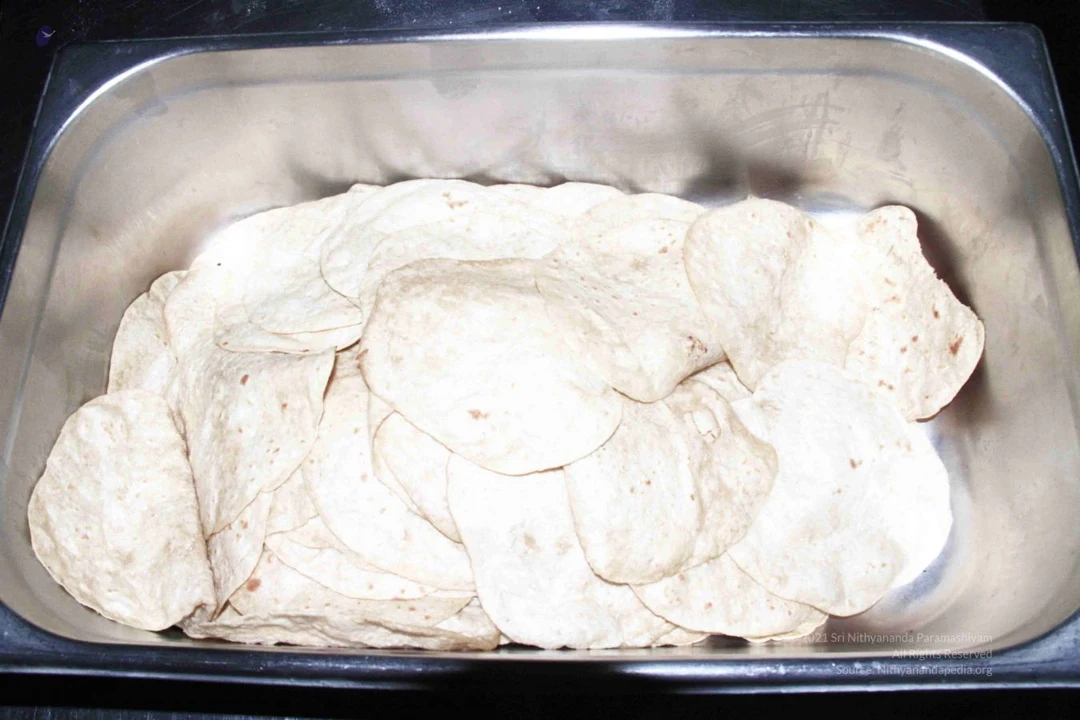
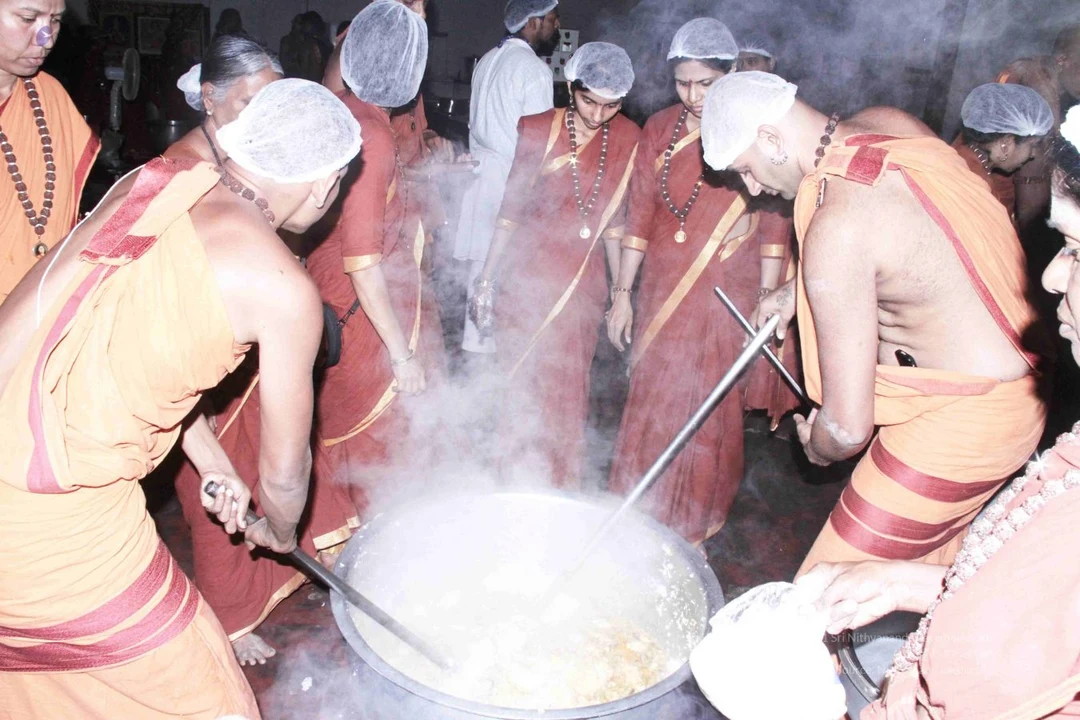
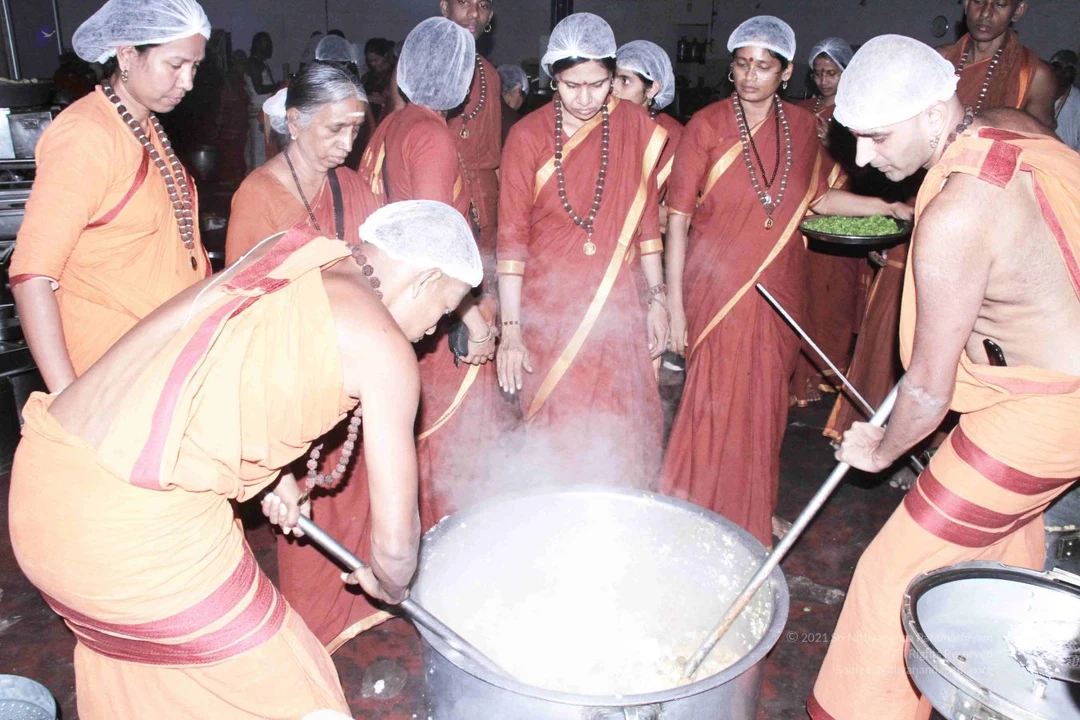
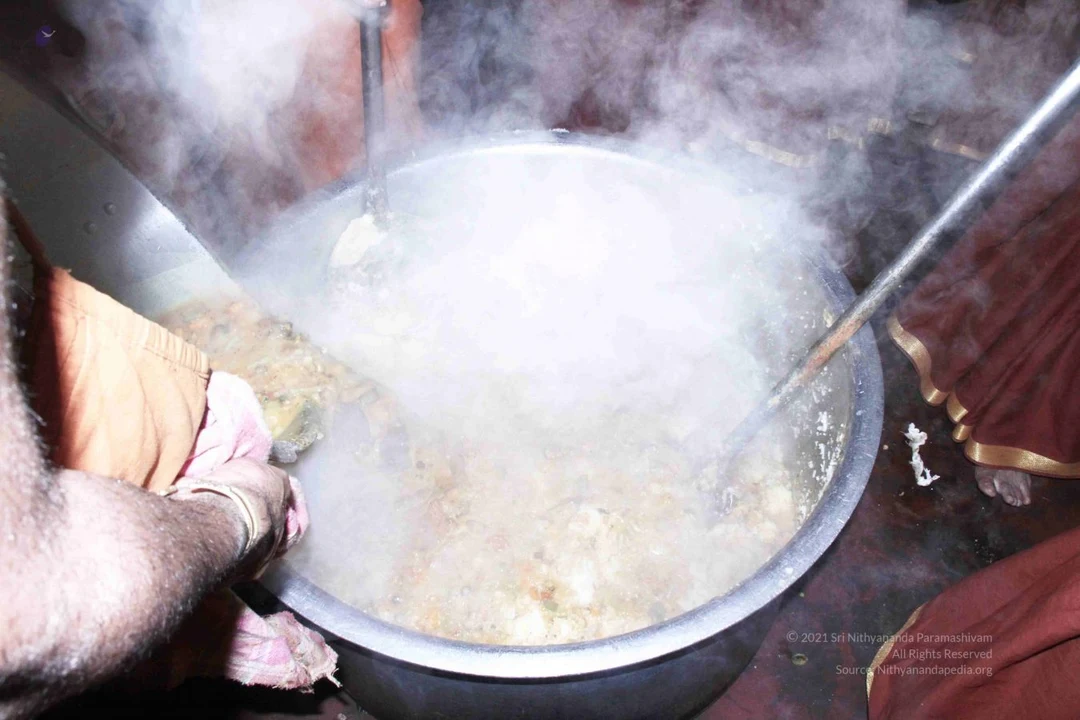
kara-patra-cooking
kara-patra-sharing

ENERGY-DARSHAN

Photos Of The Day:

Yoga

Paduka-Puja

Satsang

Sarva-Darshan

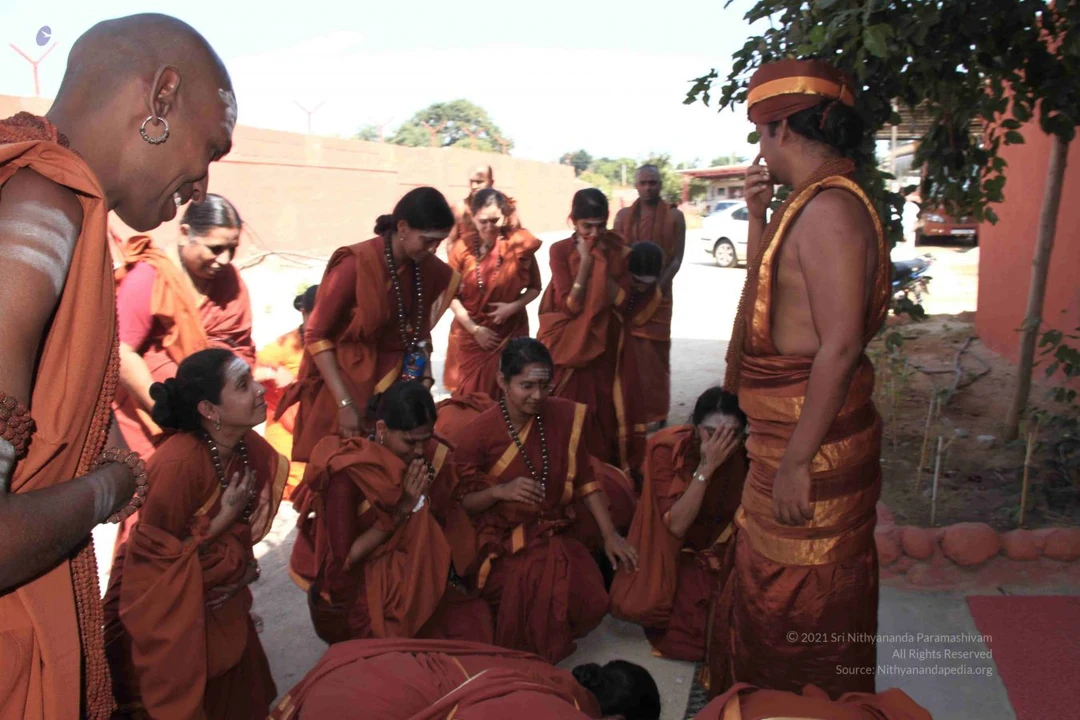
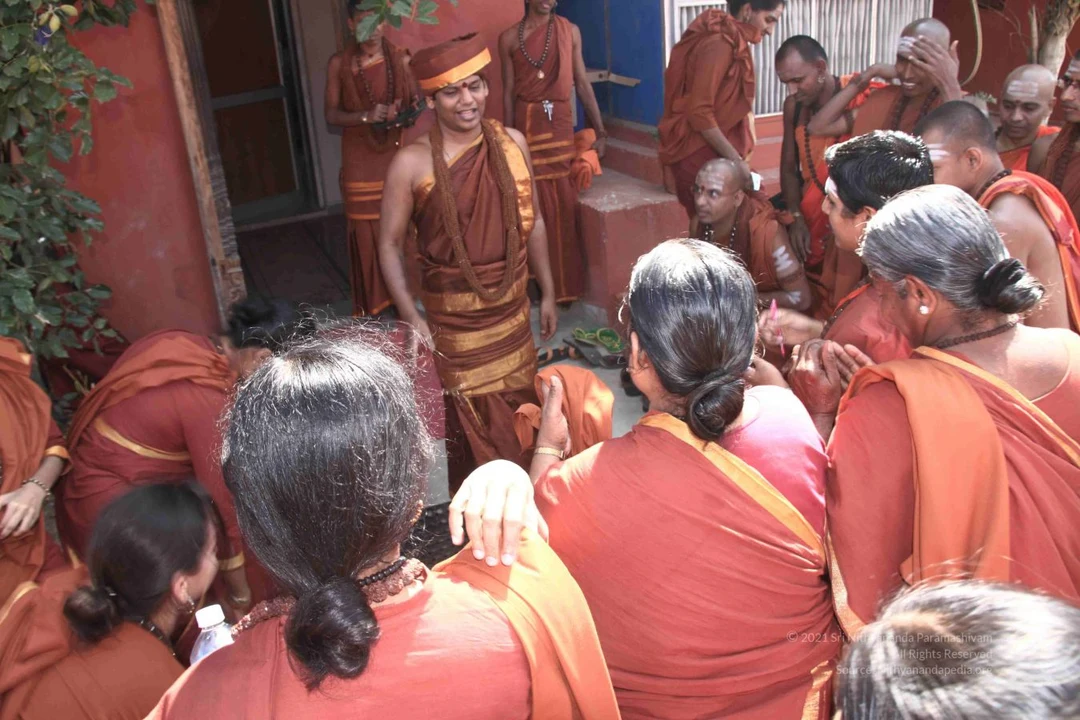
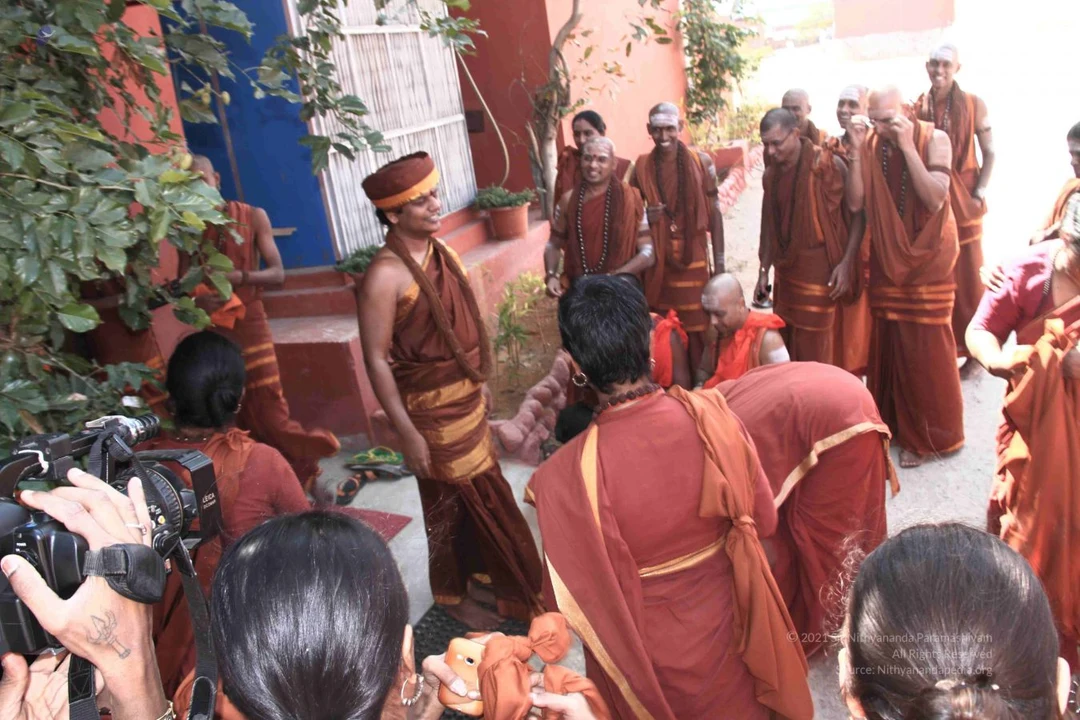
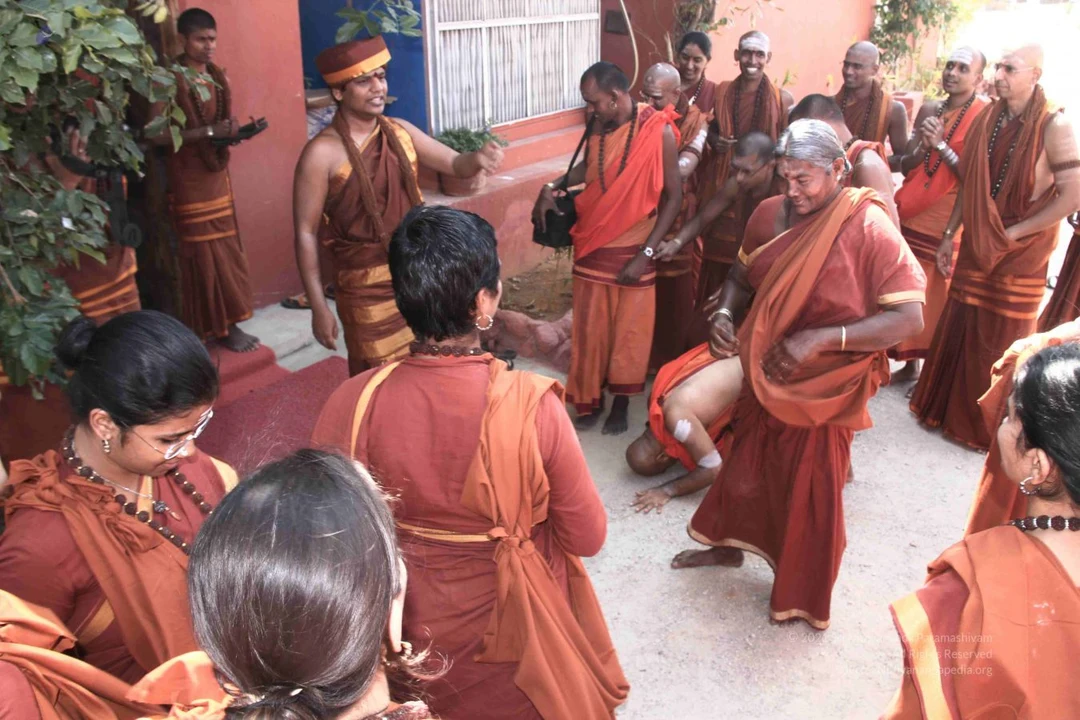
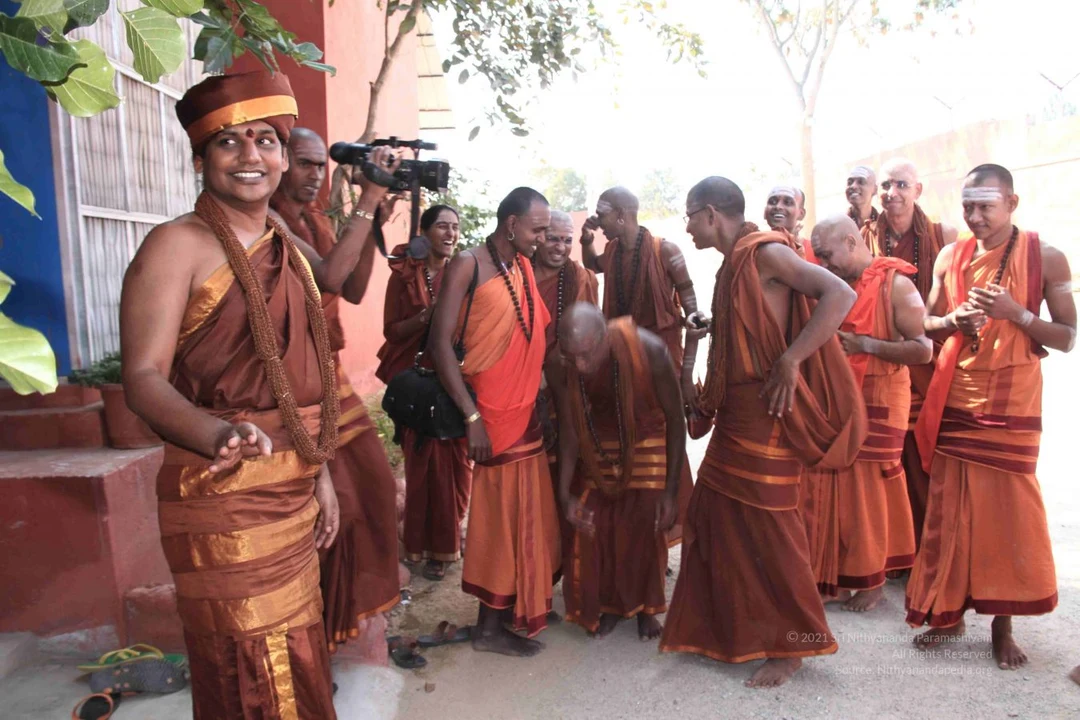
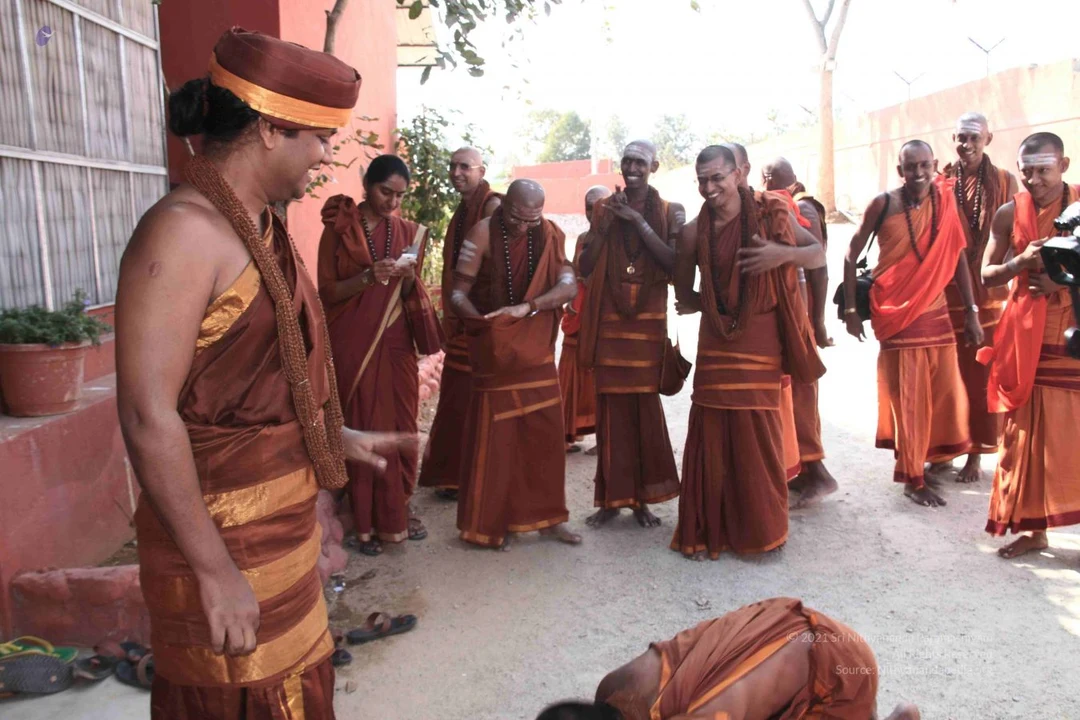
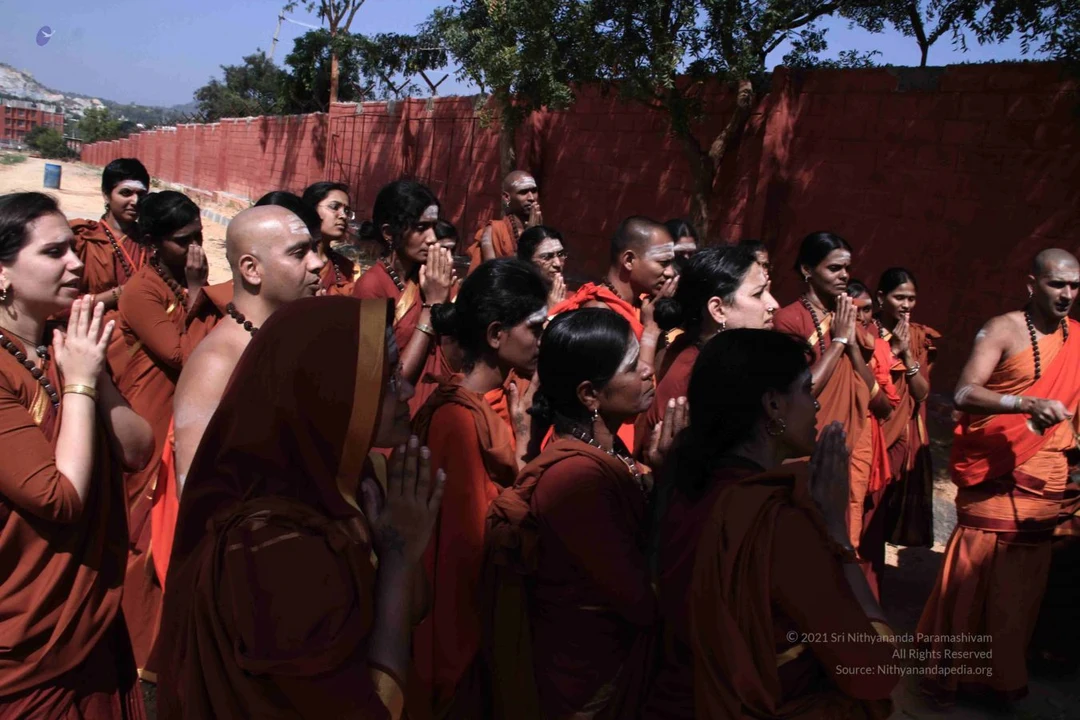
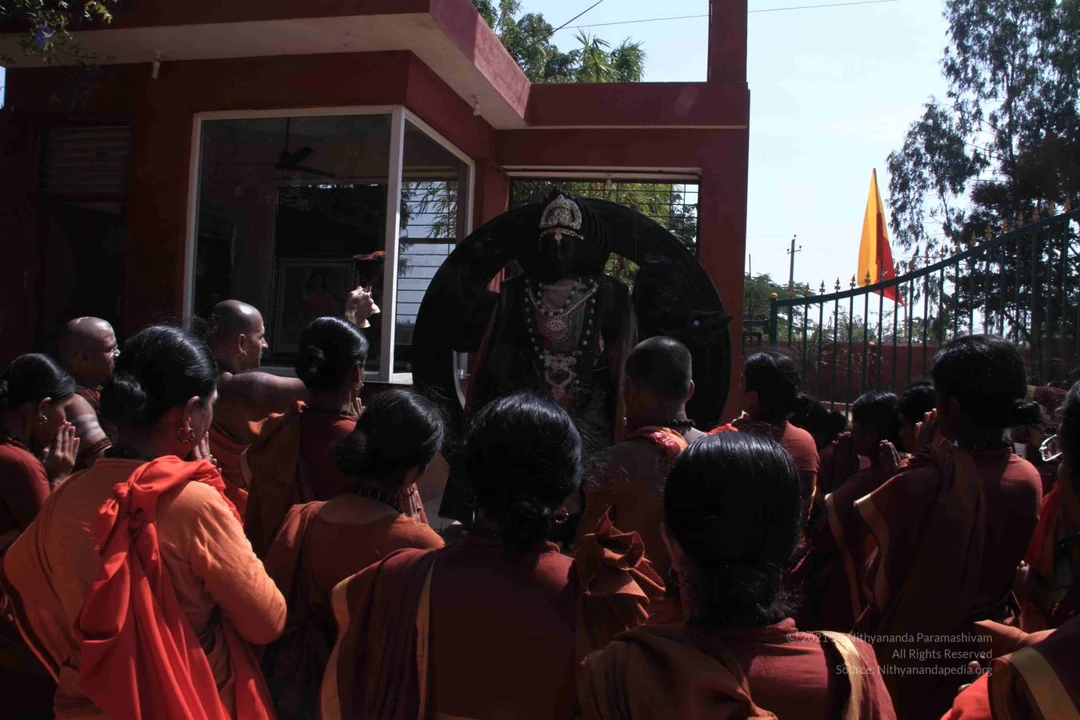
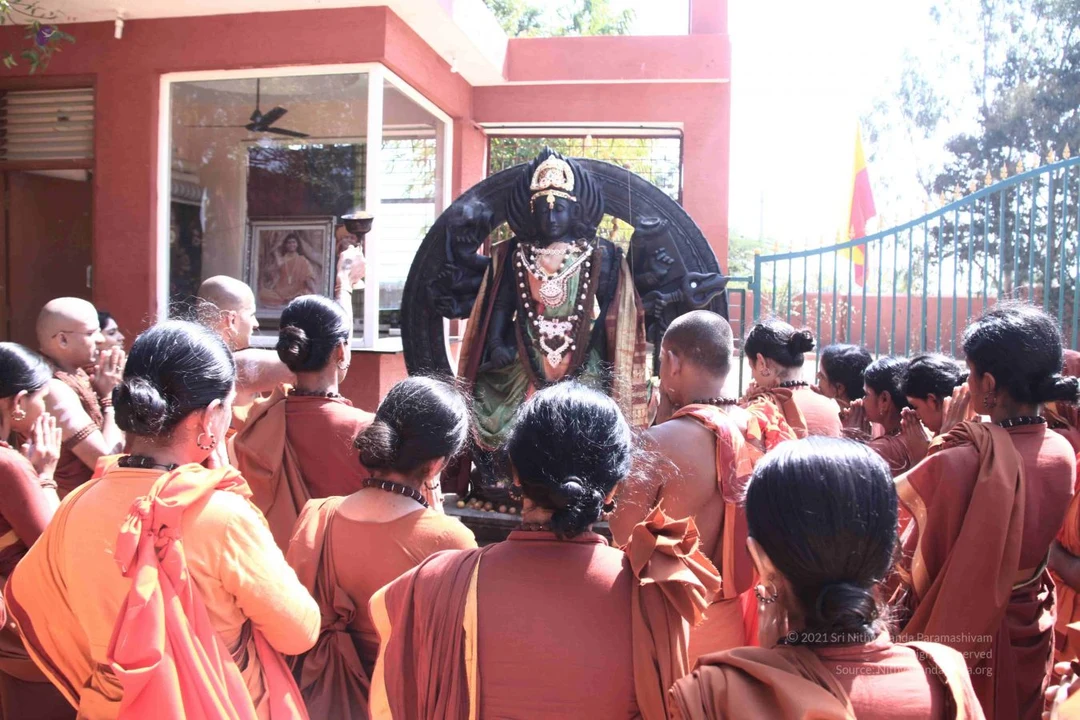
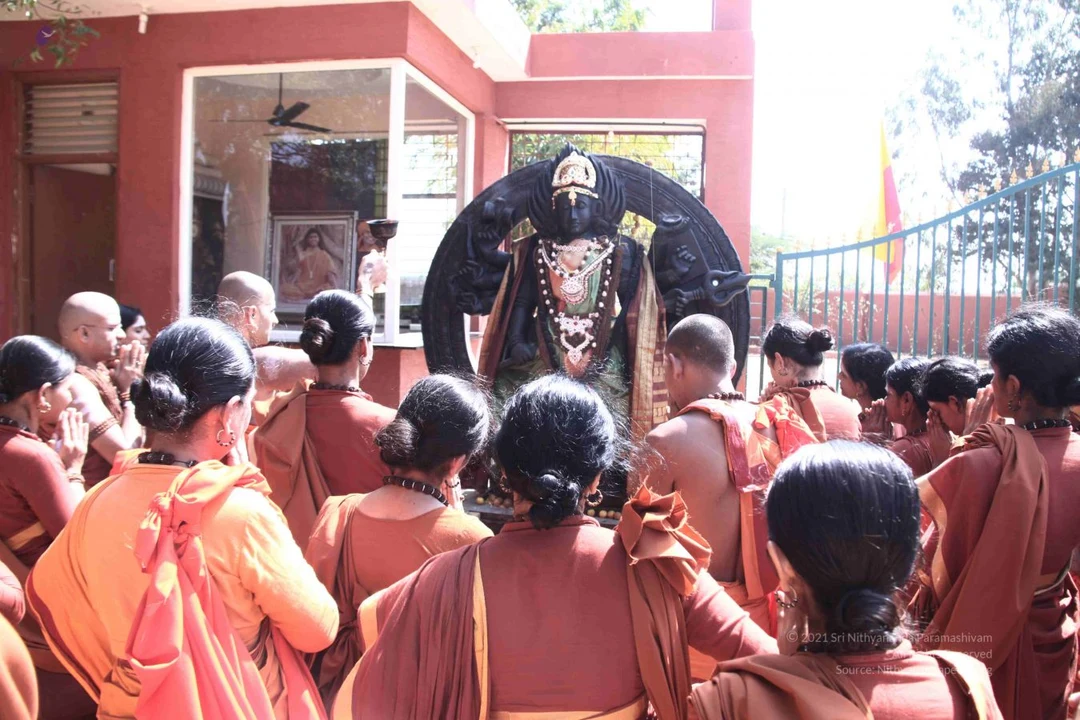
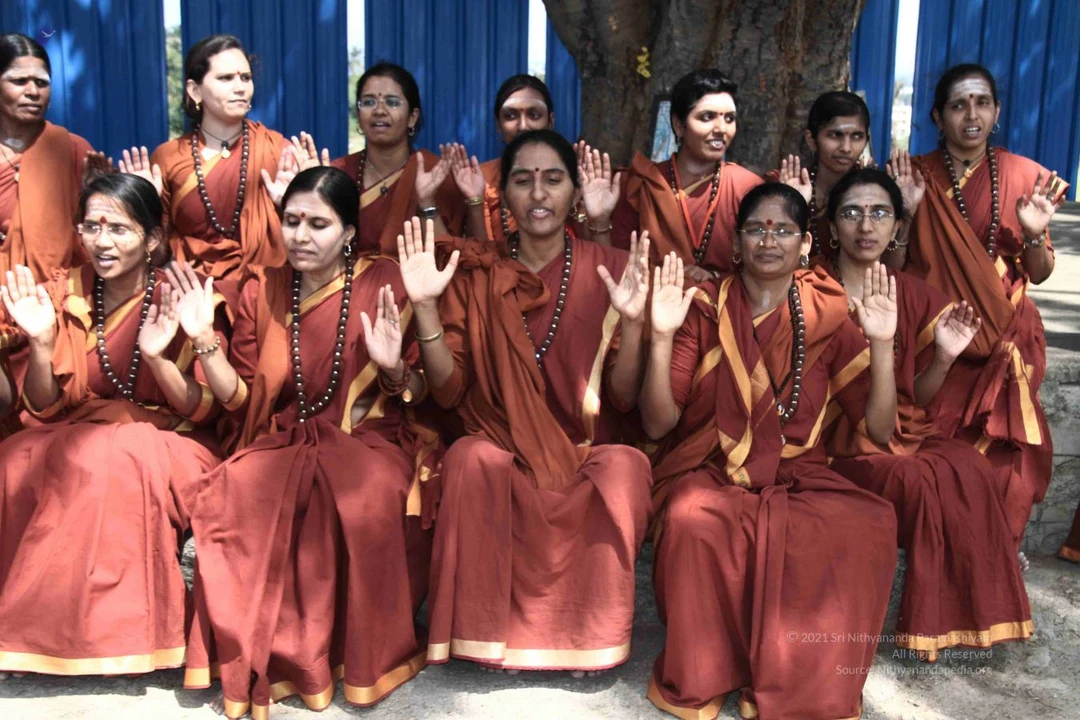
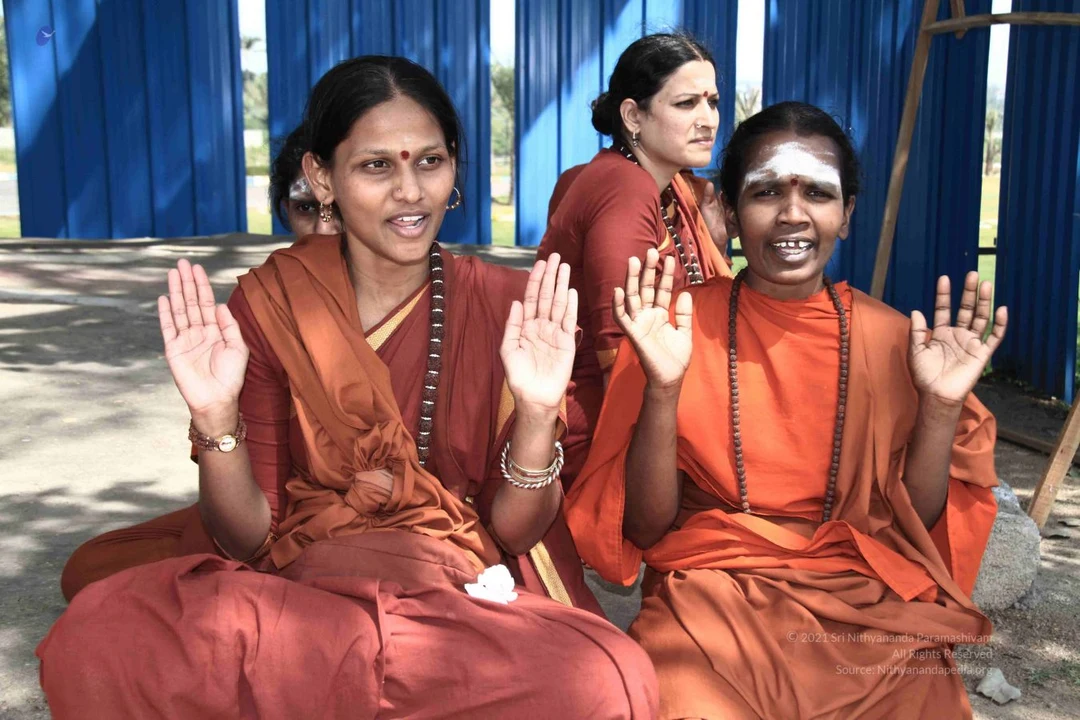
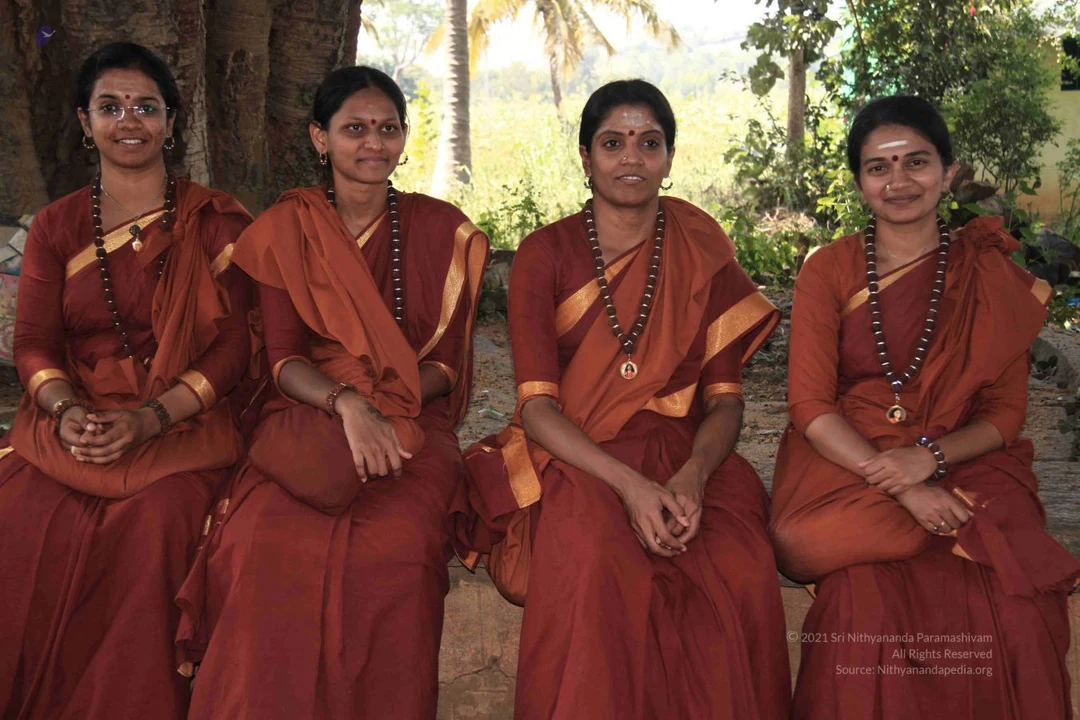
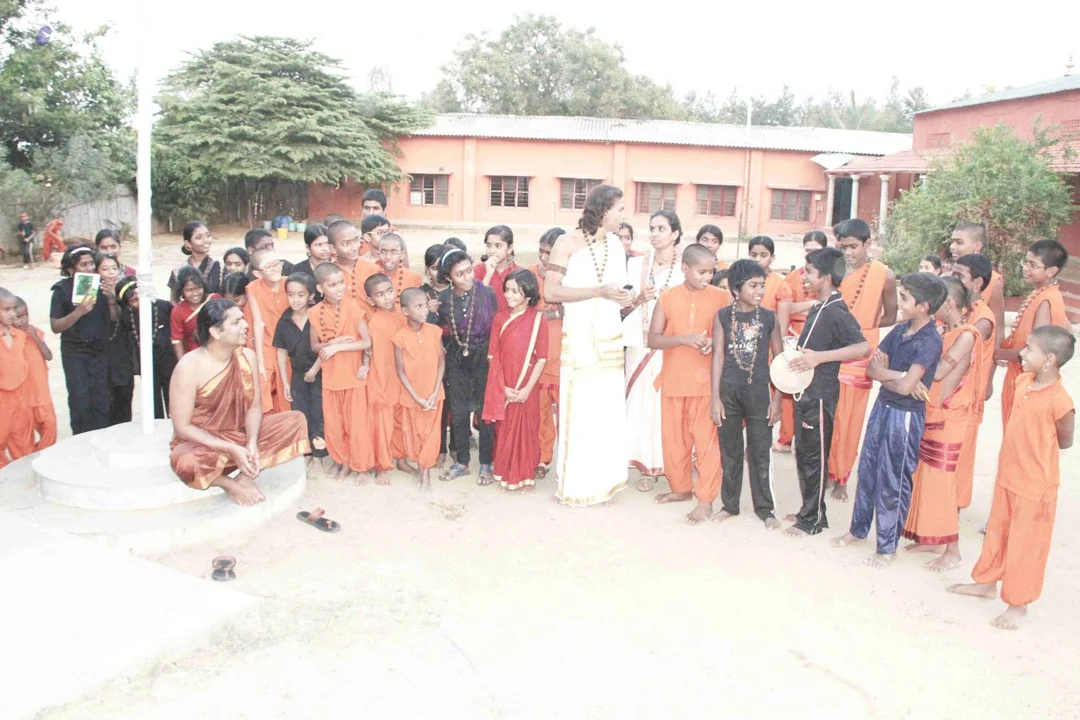
Sanyasis-Bhikshadana-Photos

Photos Of The Day:

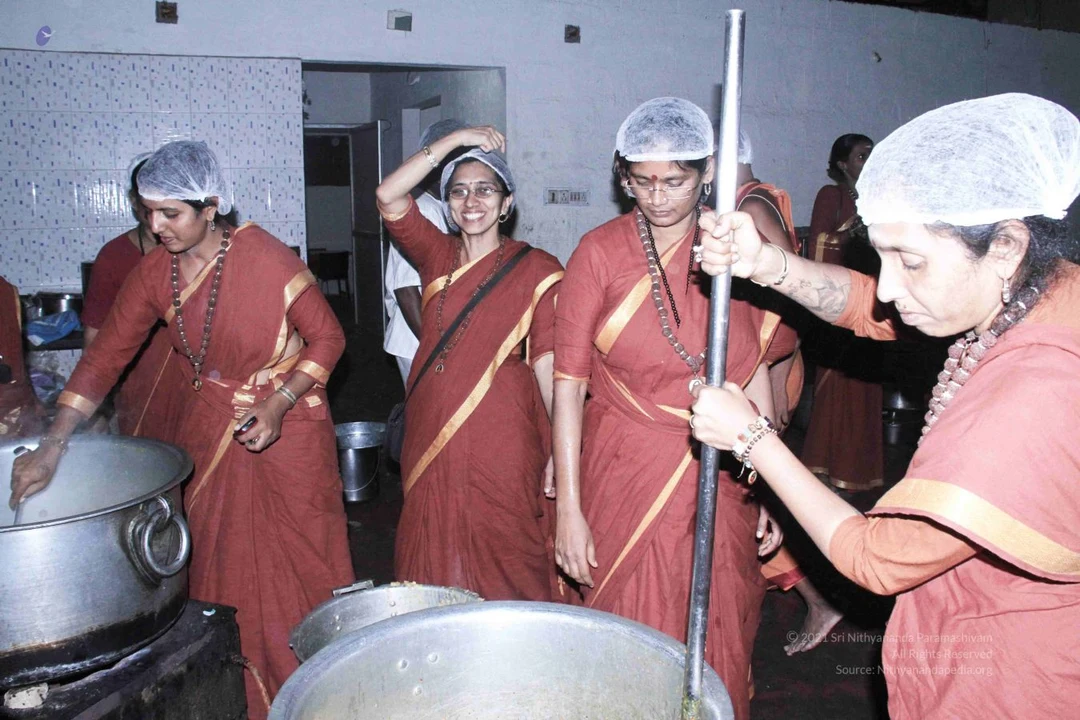
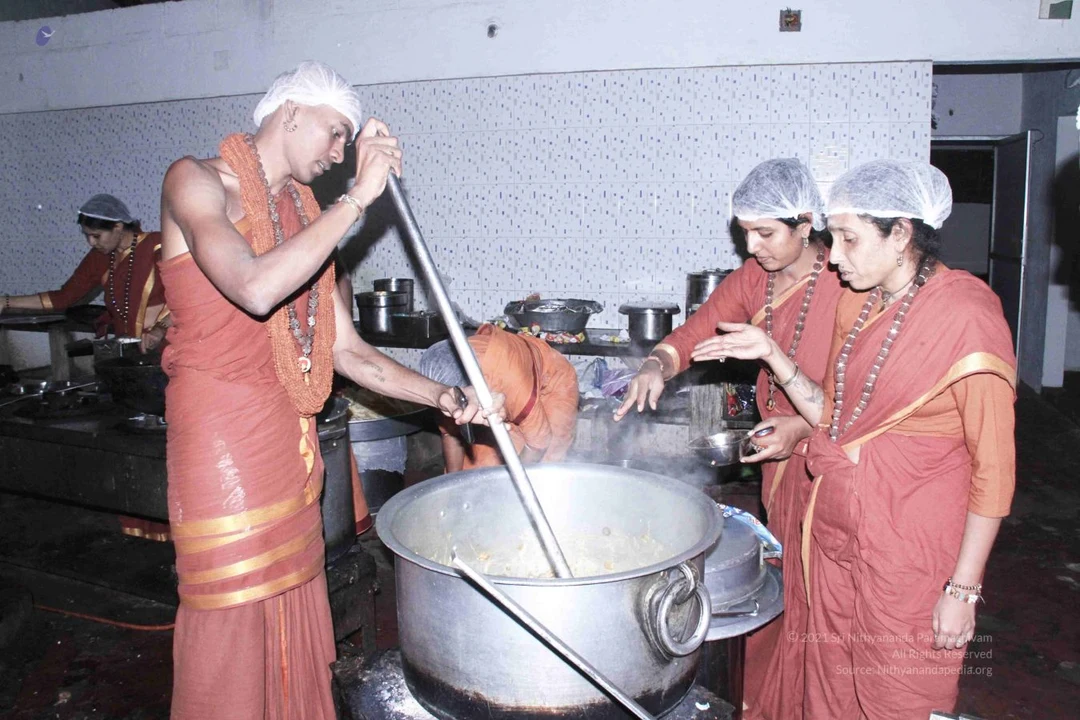
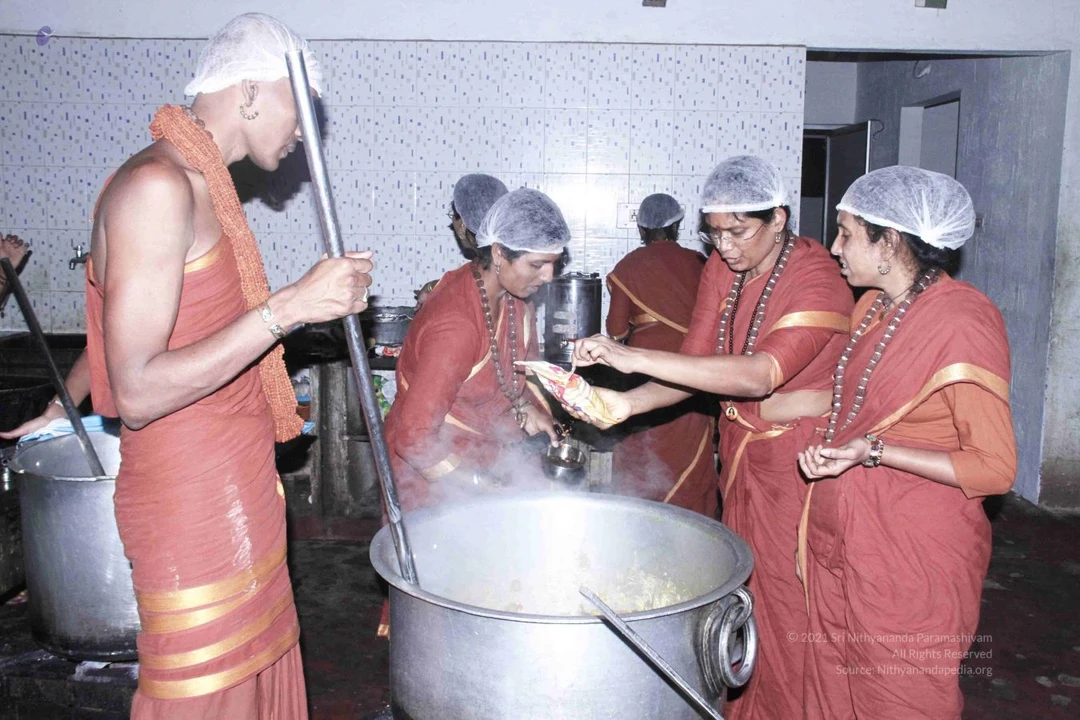
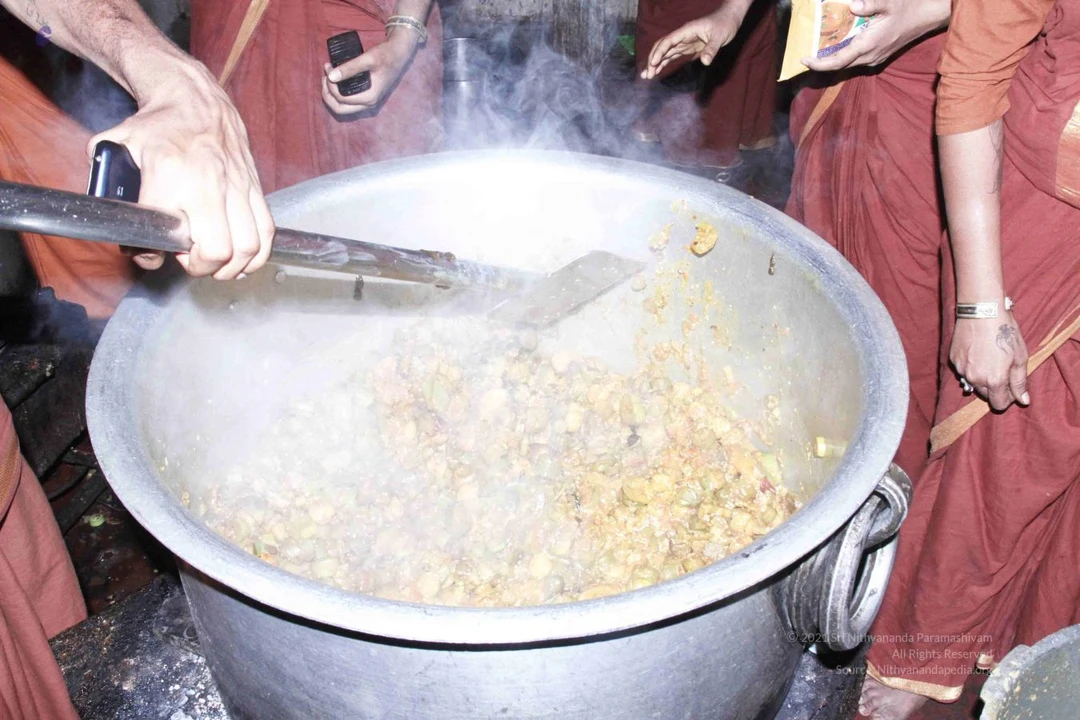
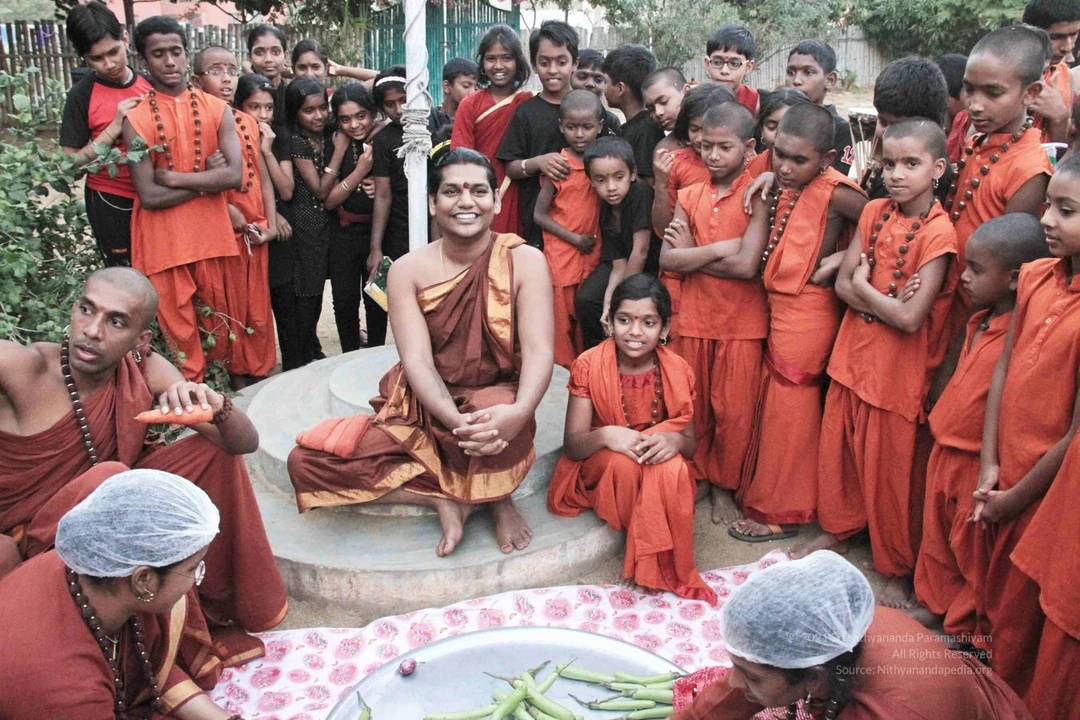
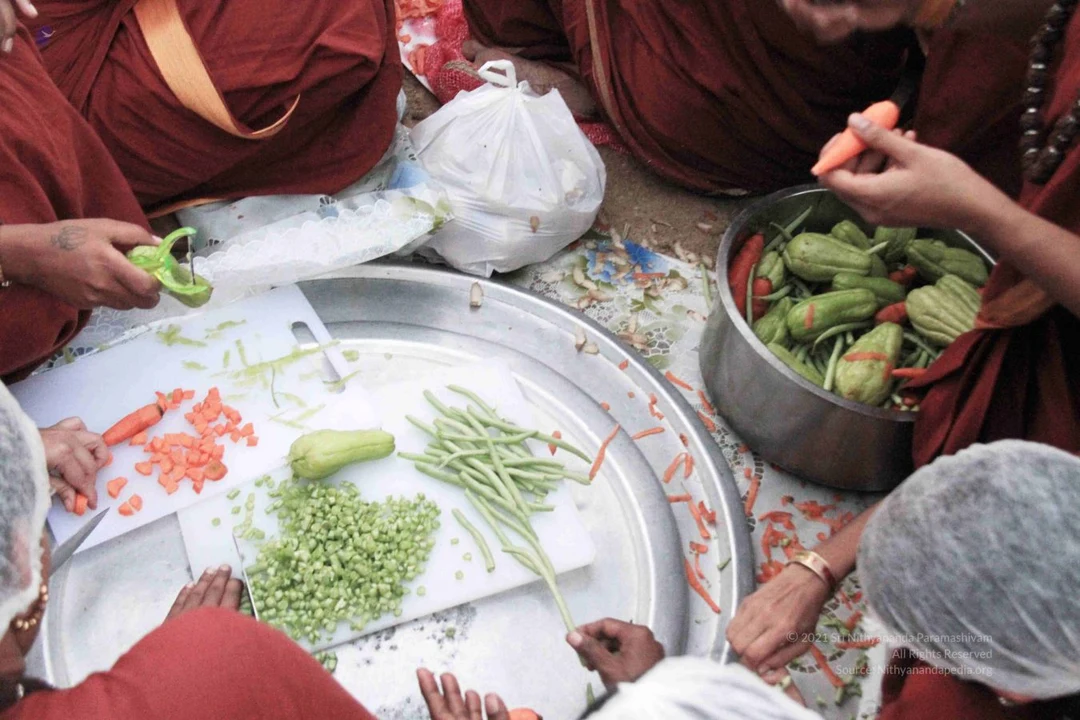
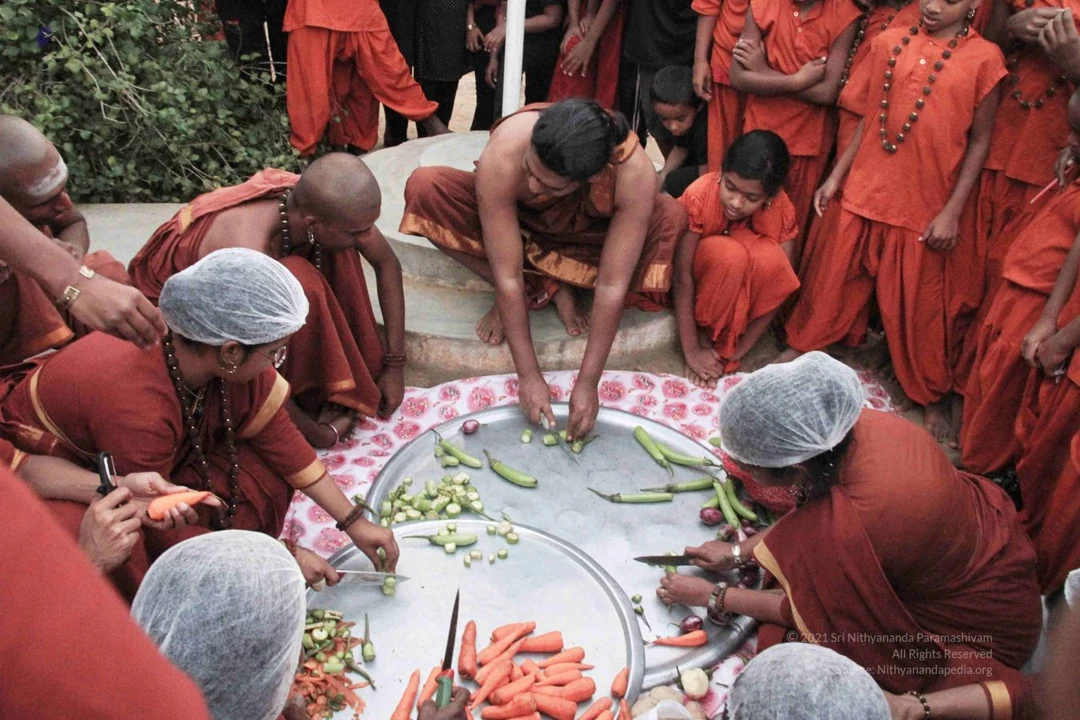
Kara-Patra-Cooking

Photos from this day

View all 673 photos

kara-patra-cooking
68 photosSource gallery
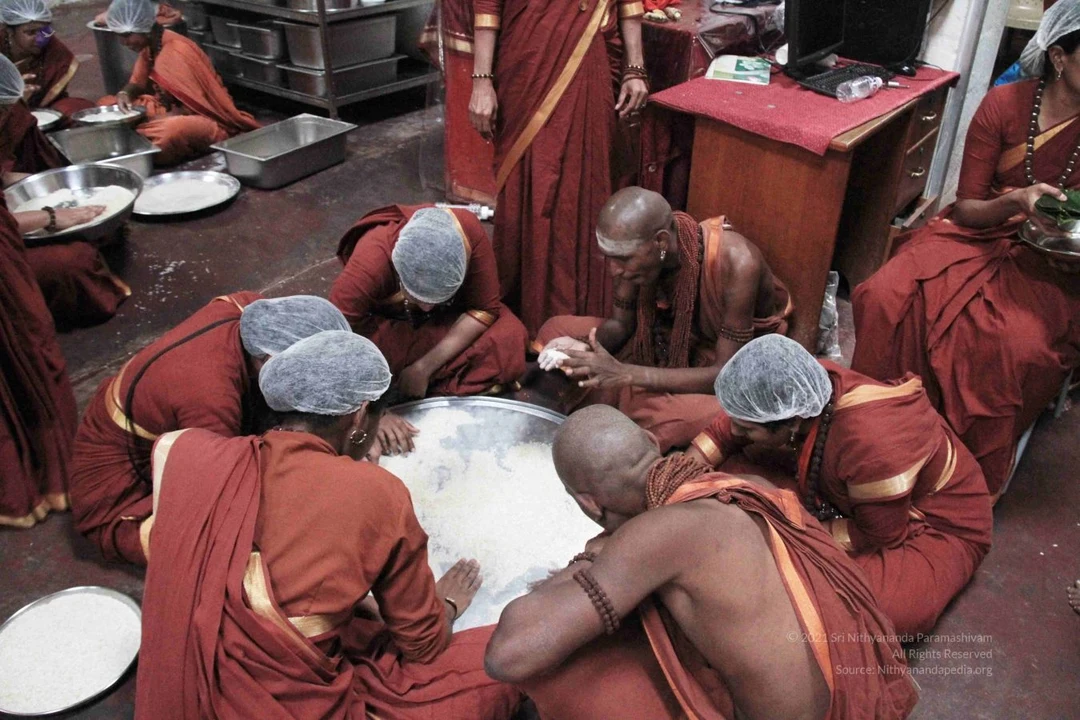
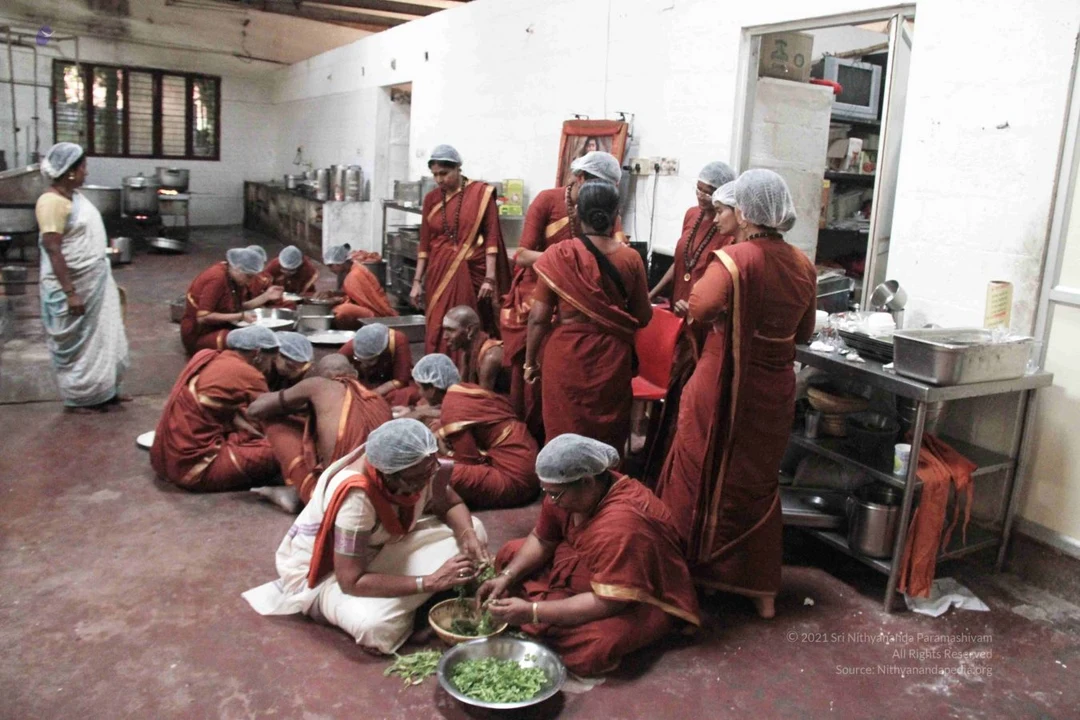
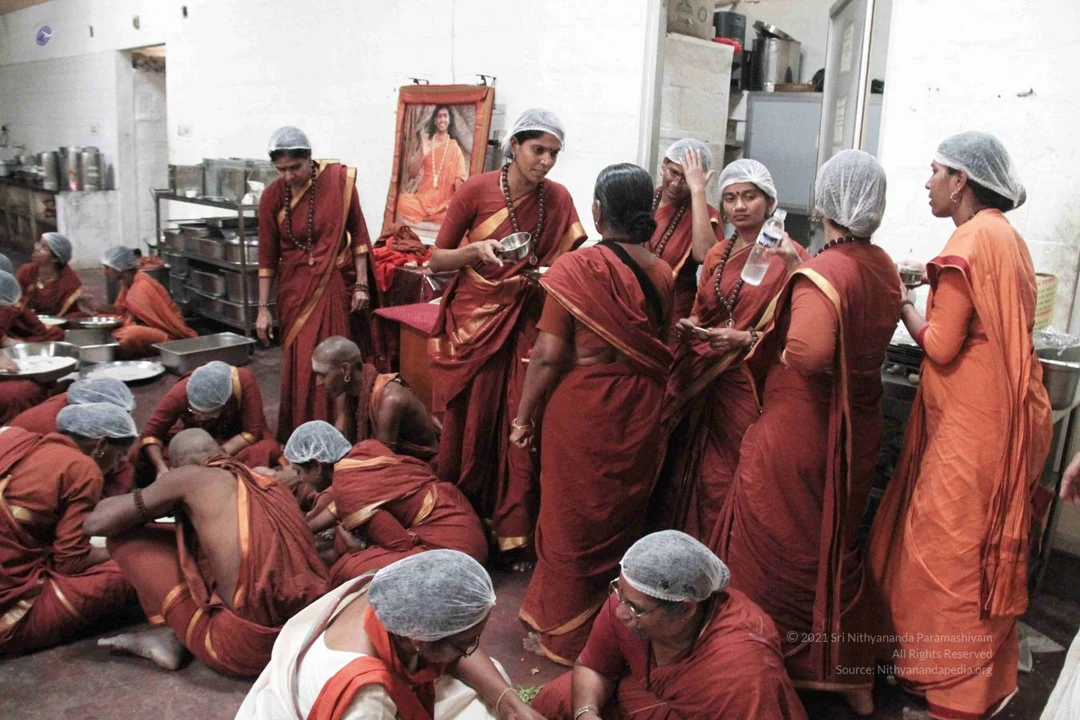
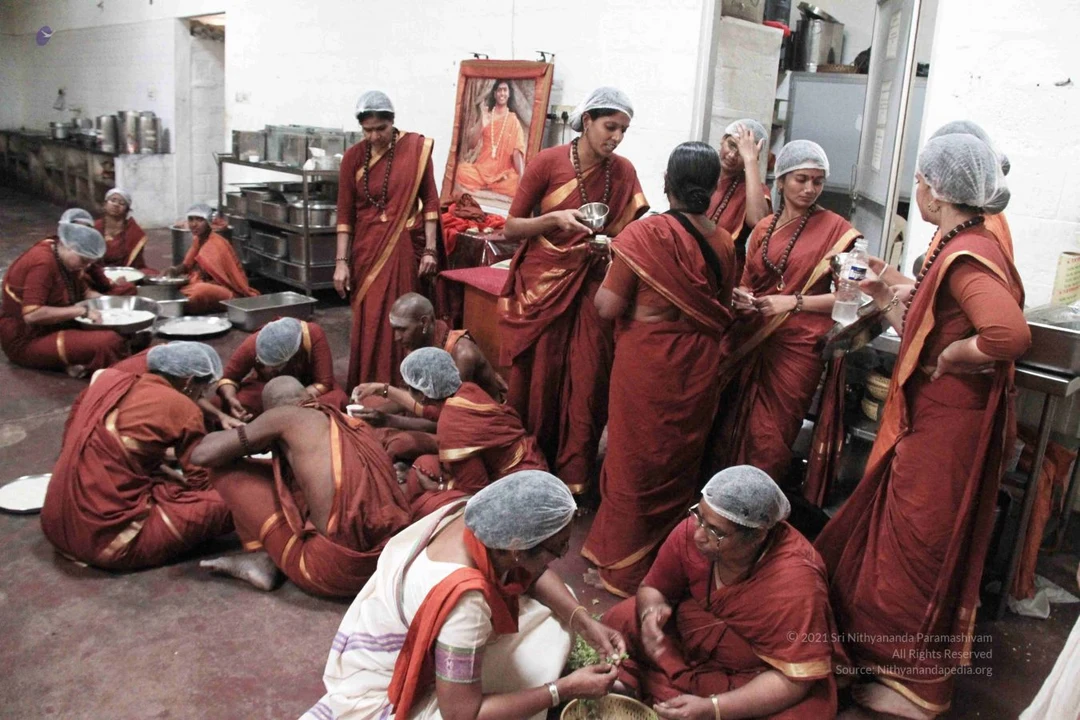
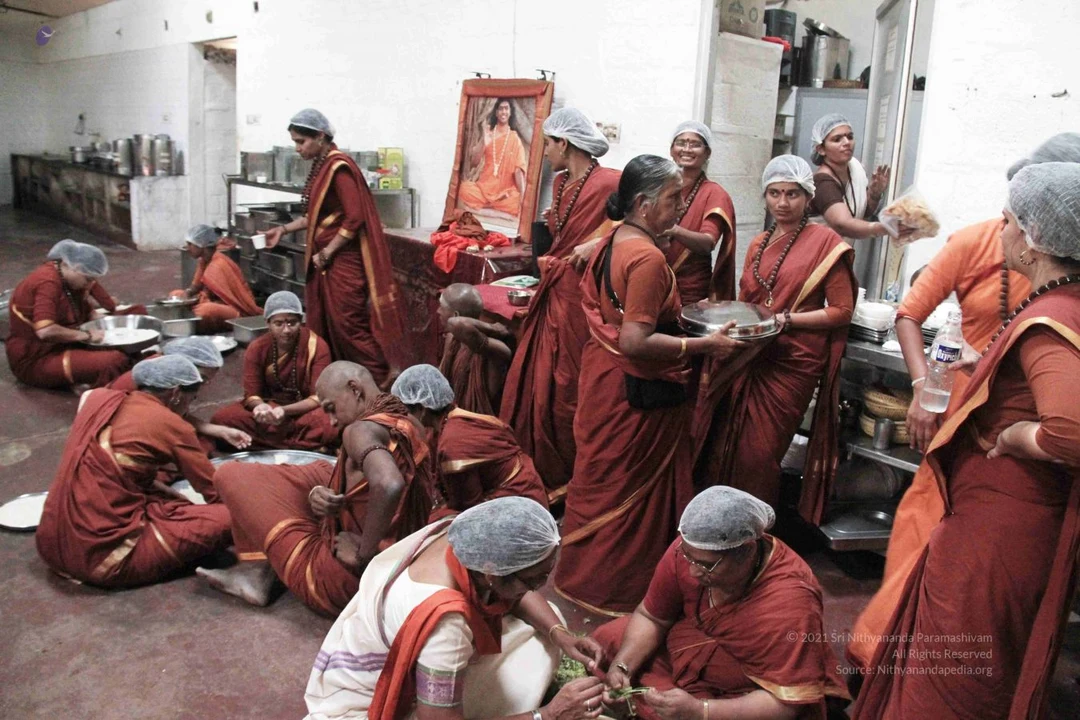
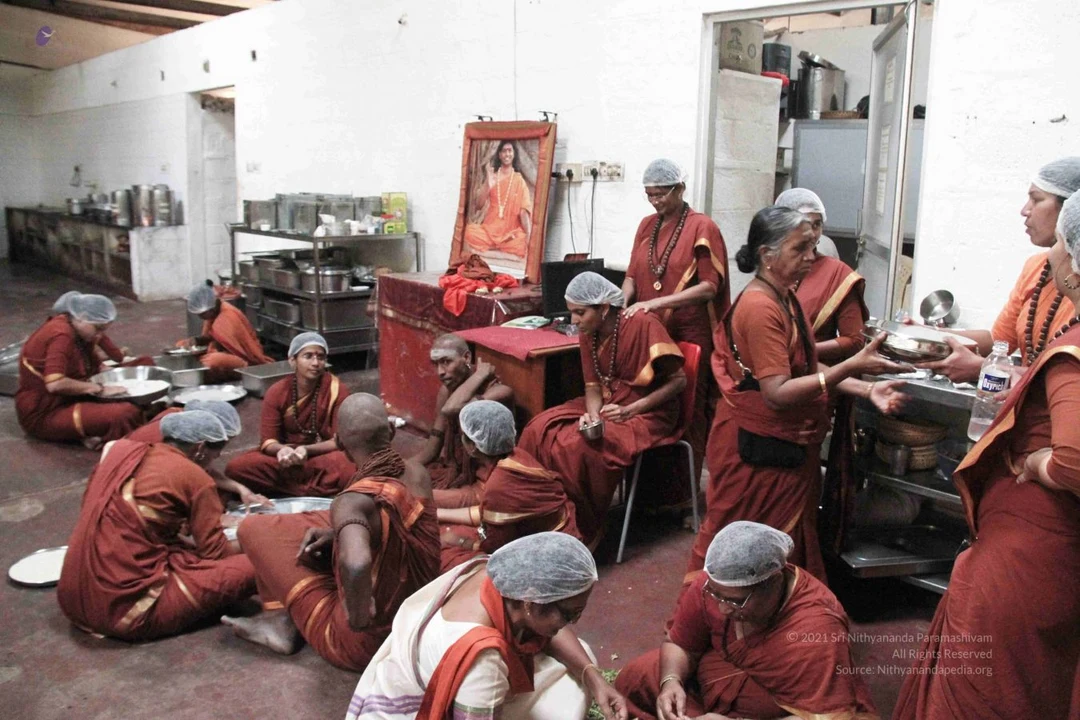
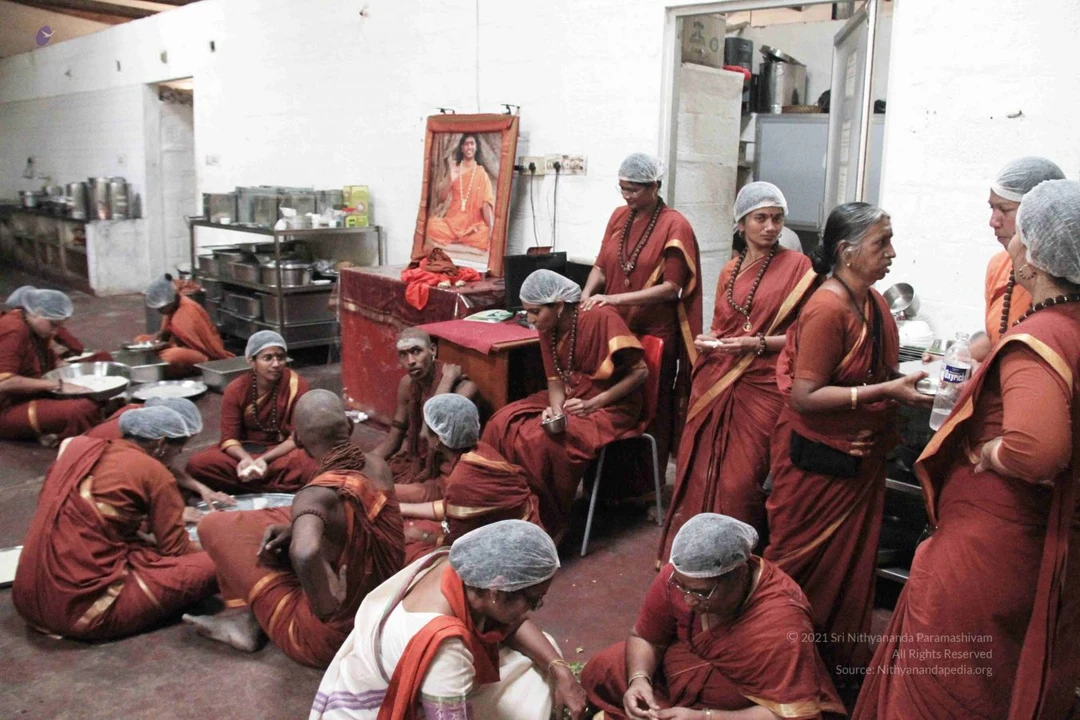
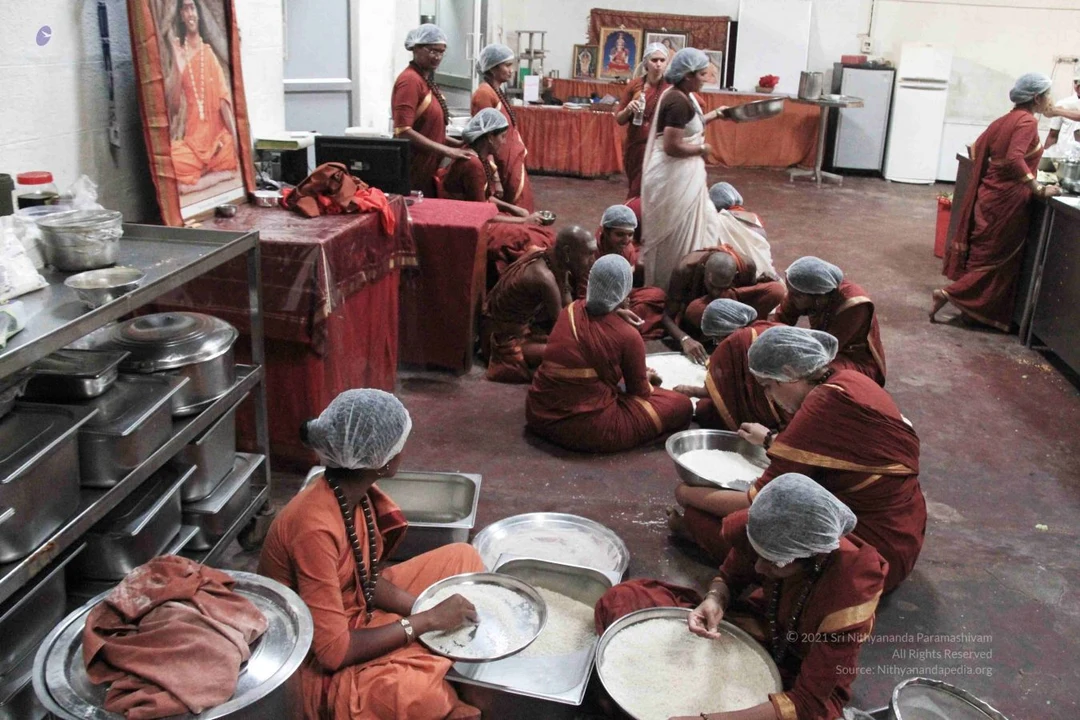
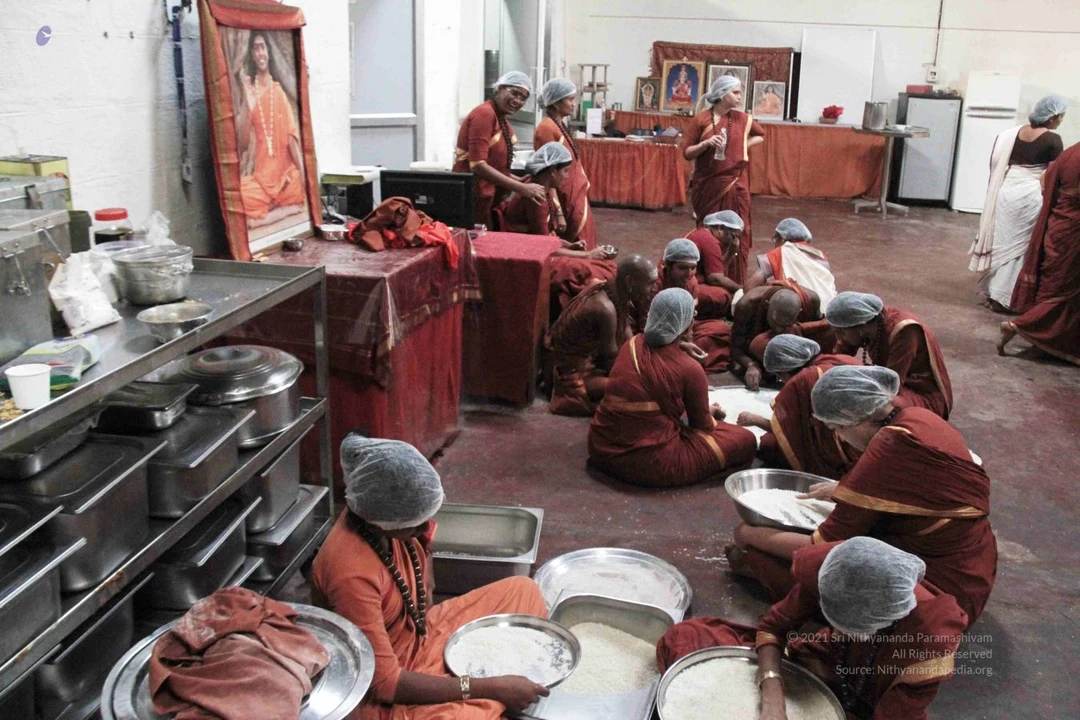
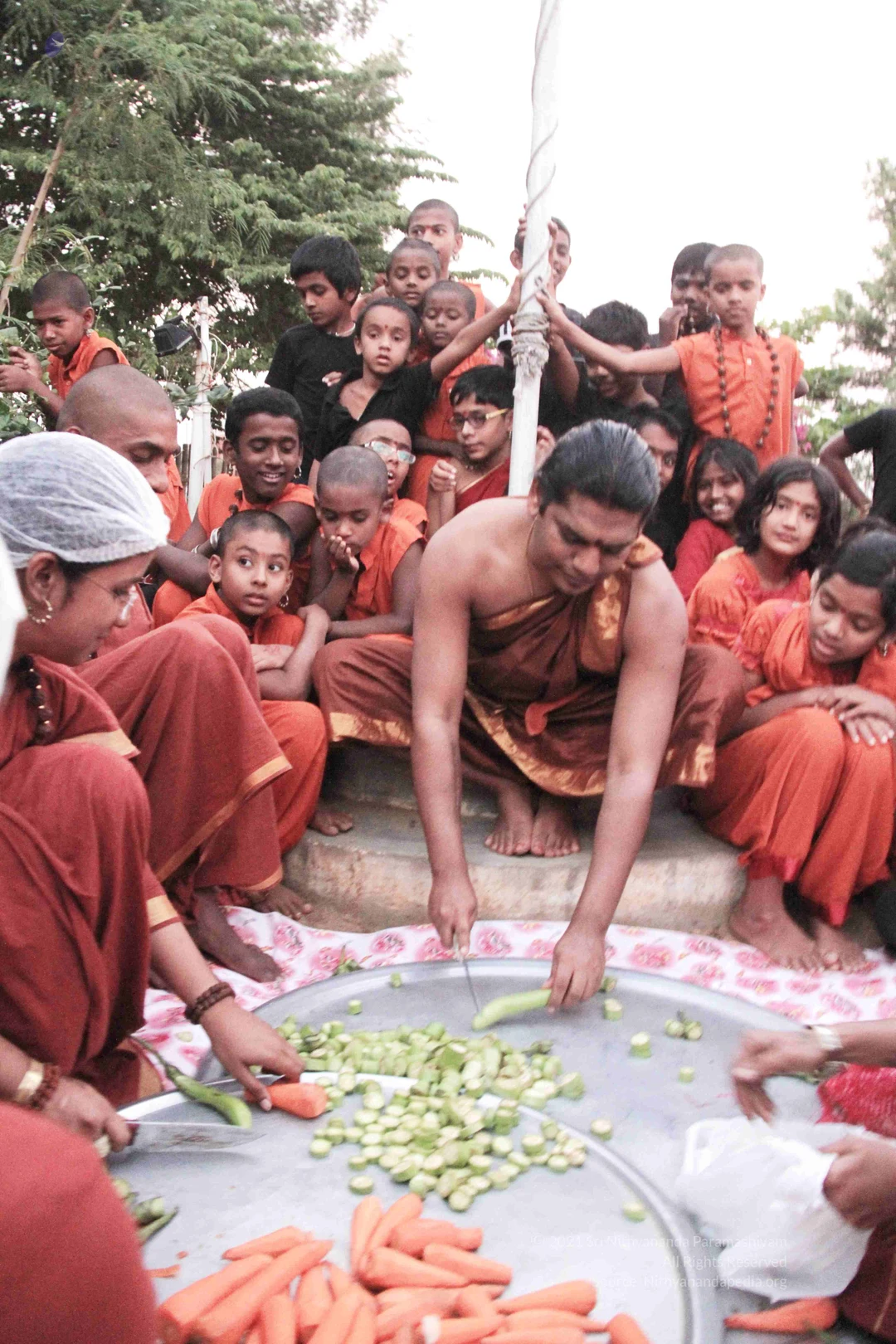
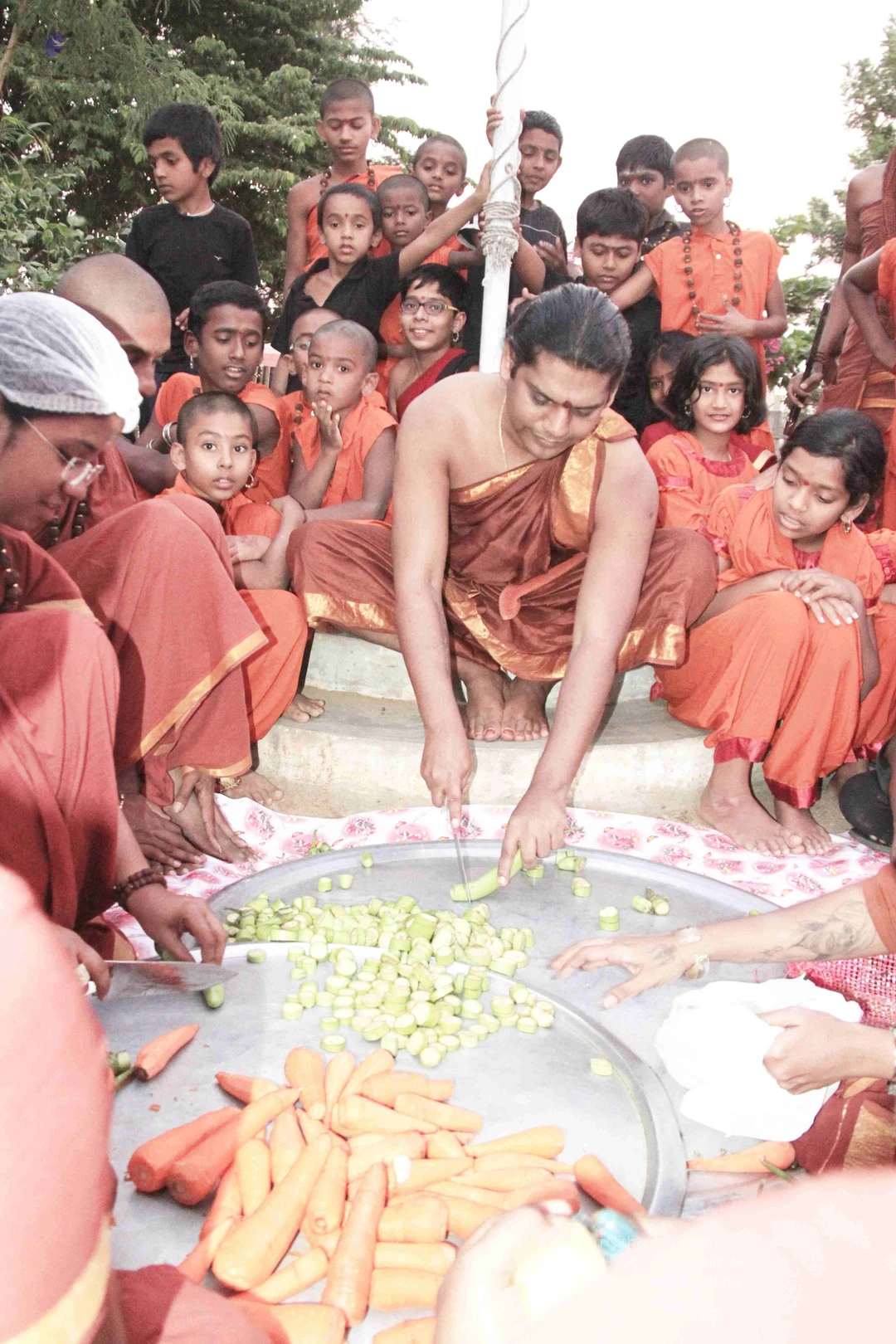
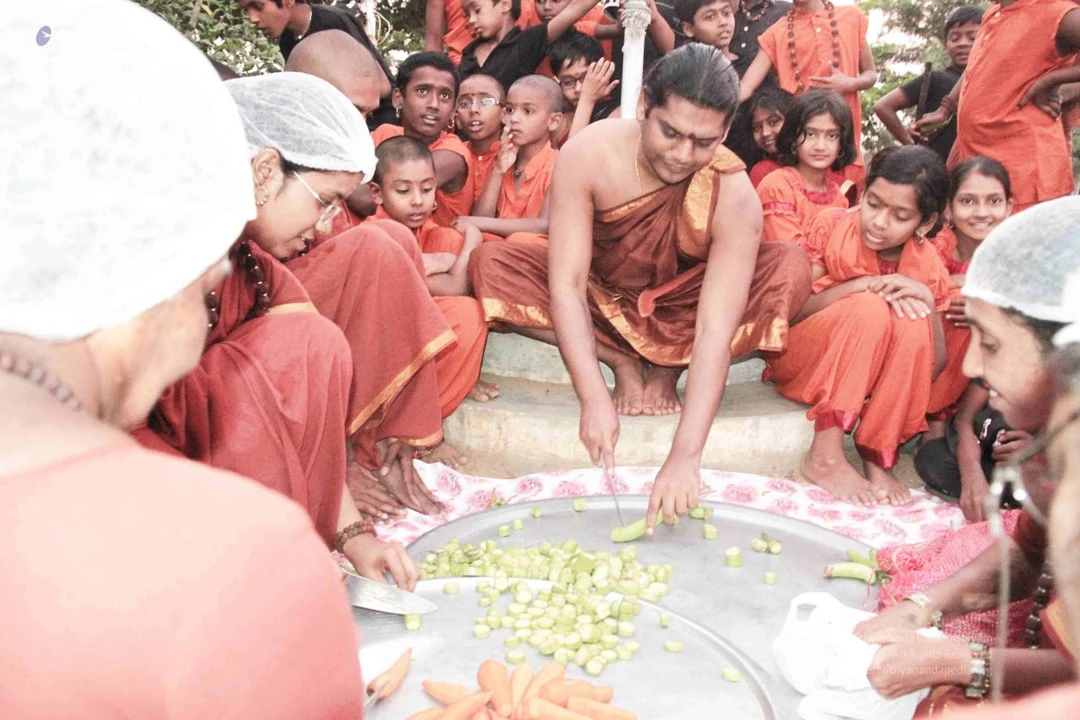
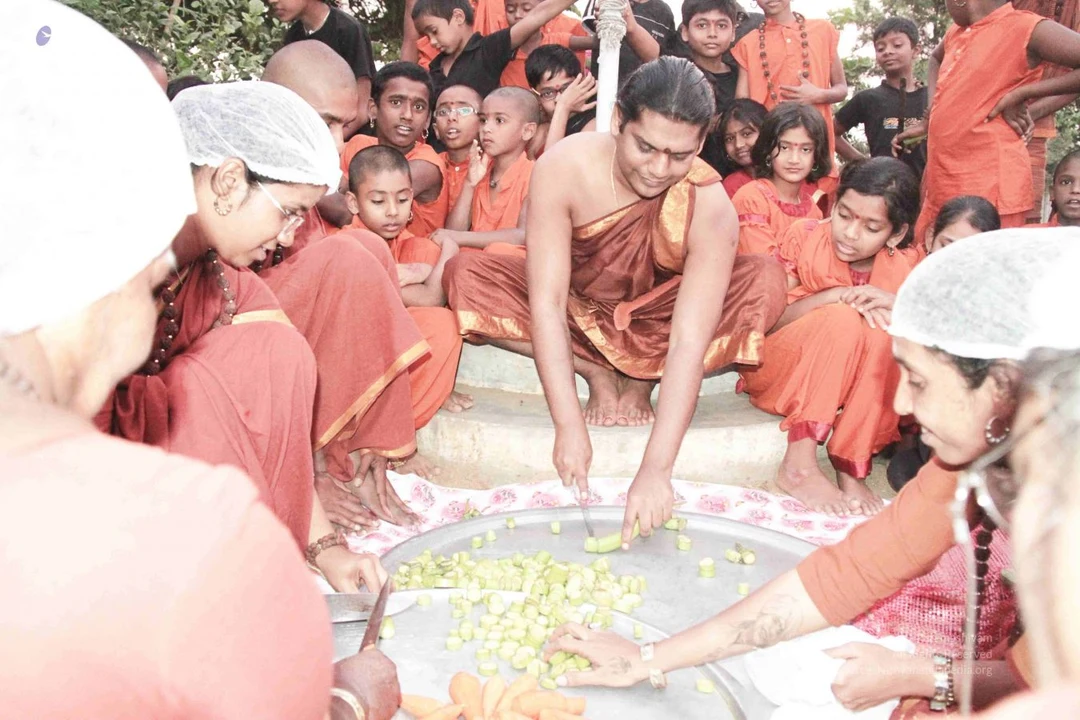
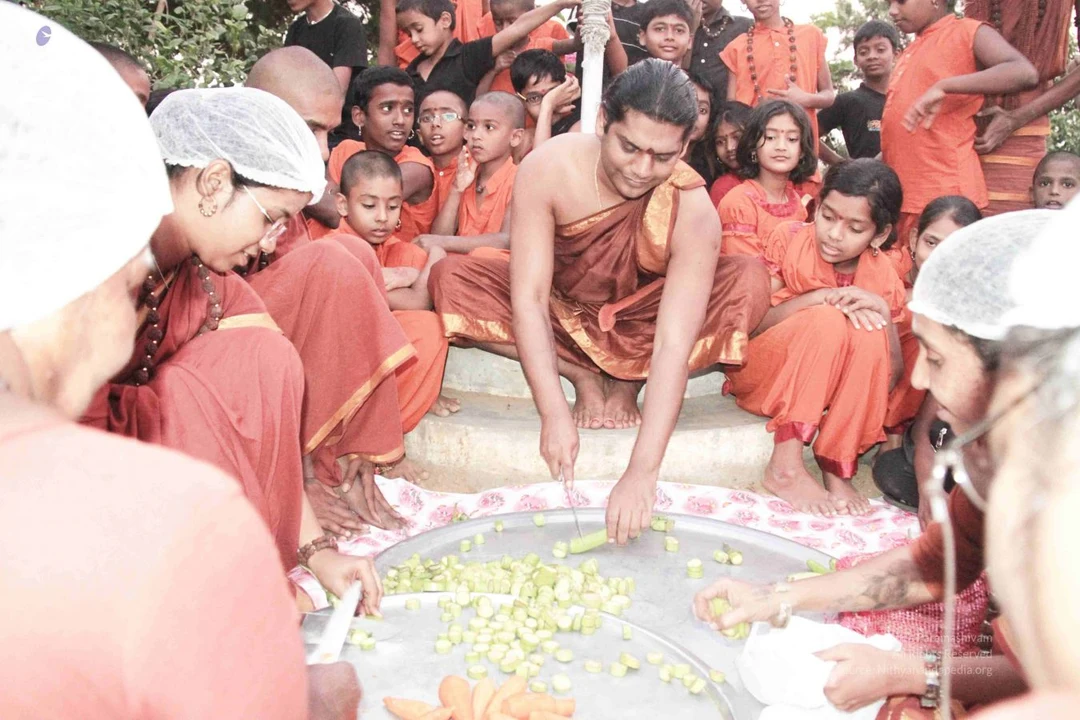
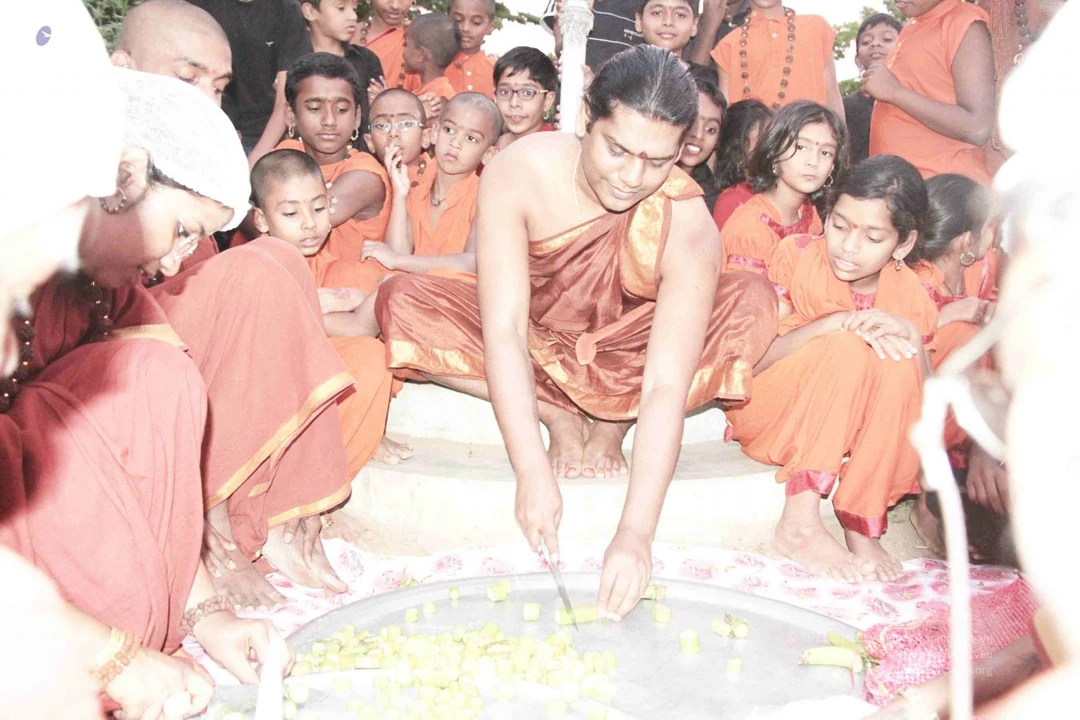
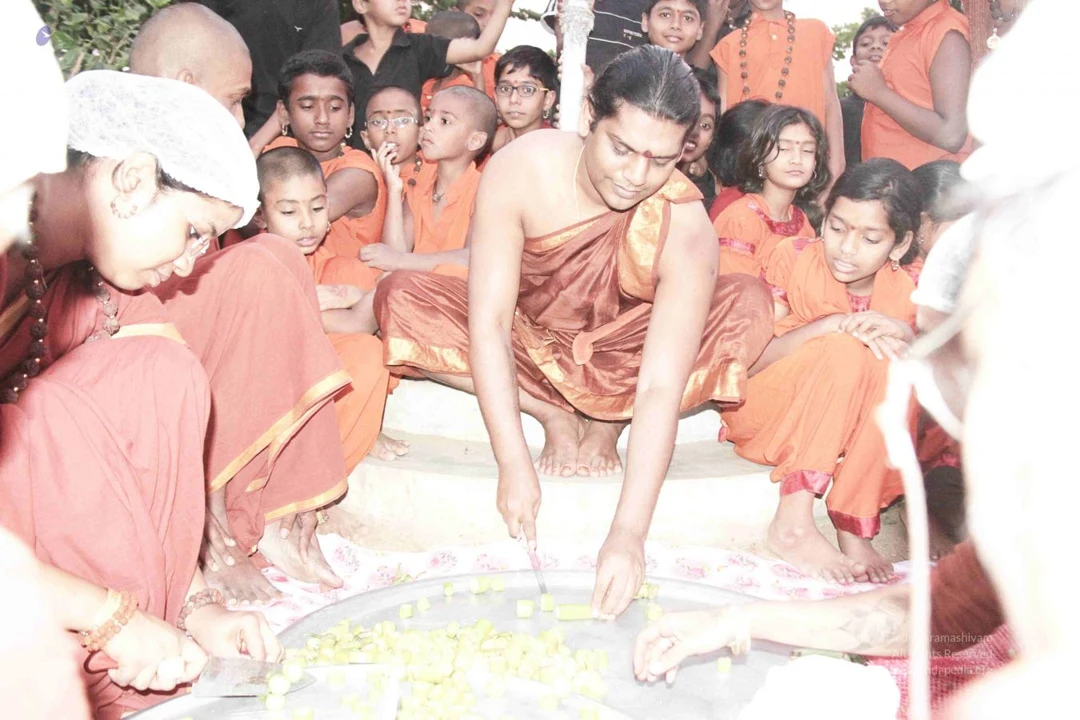
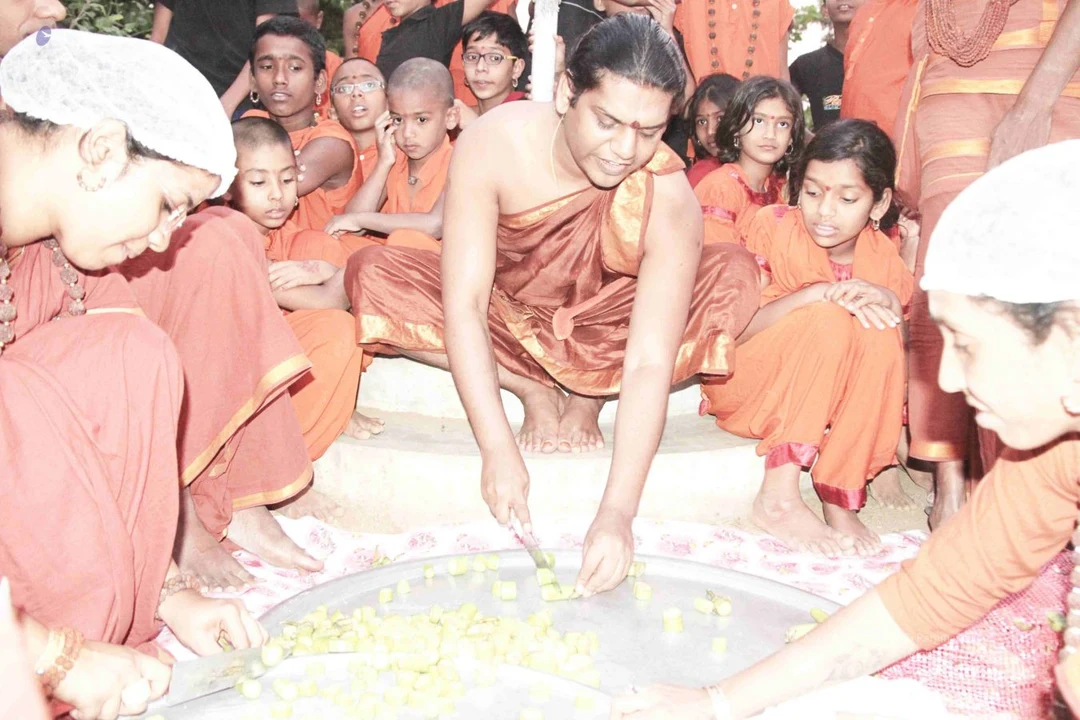
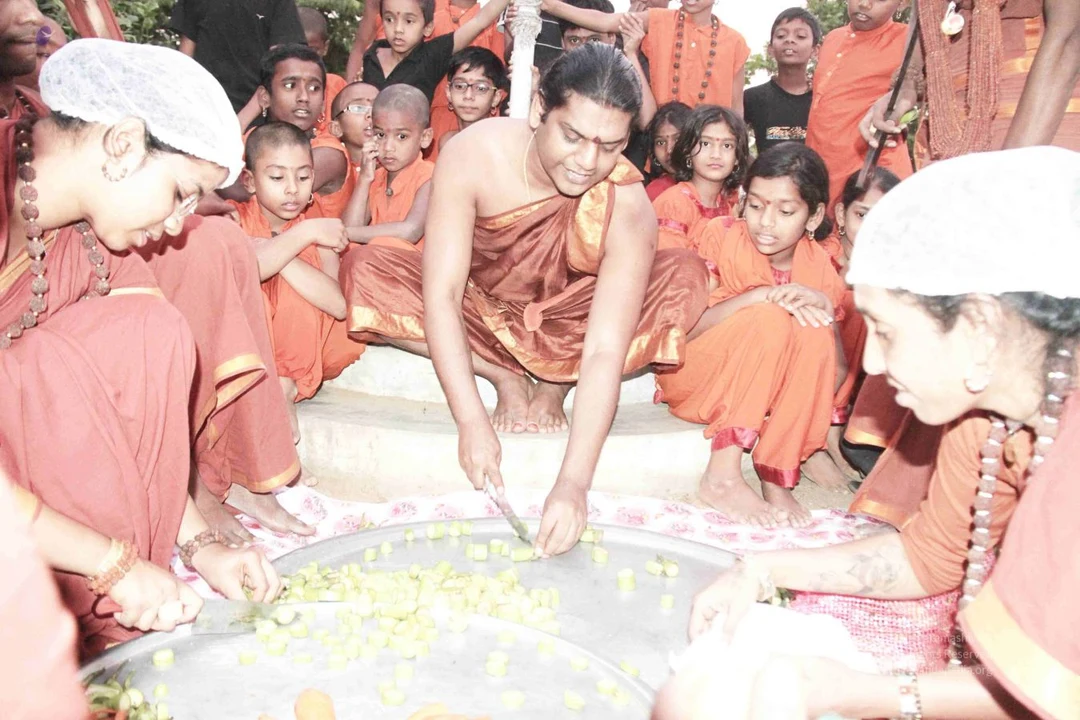
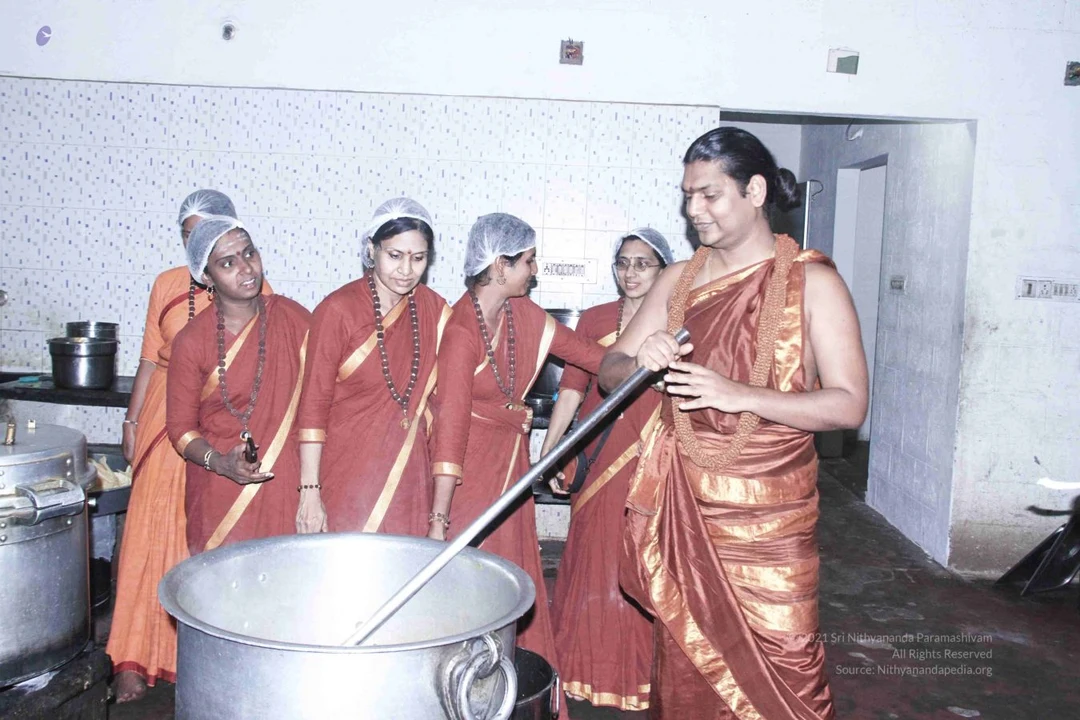
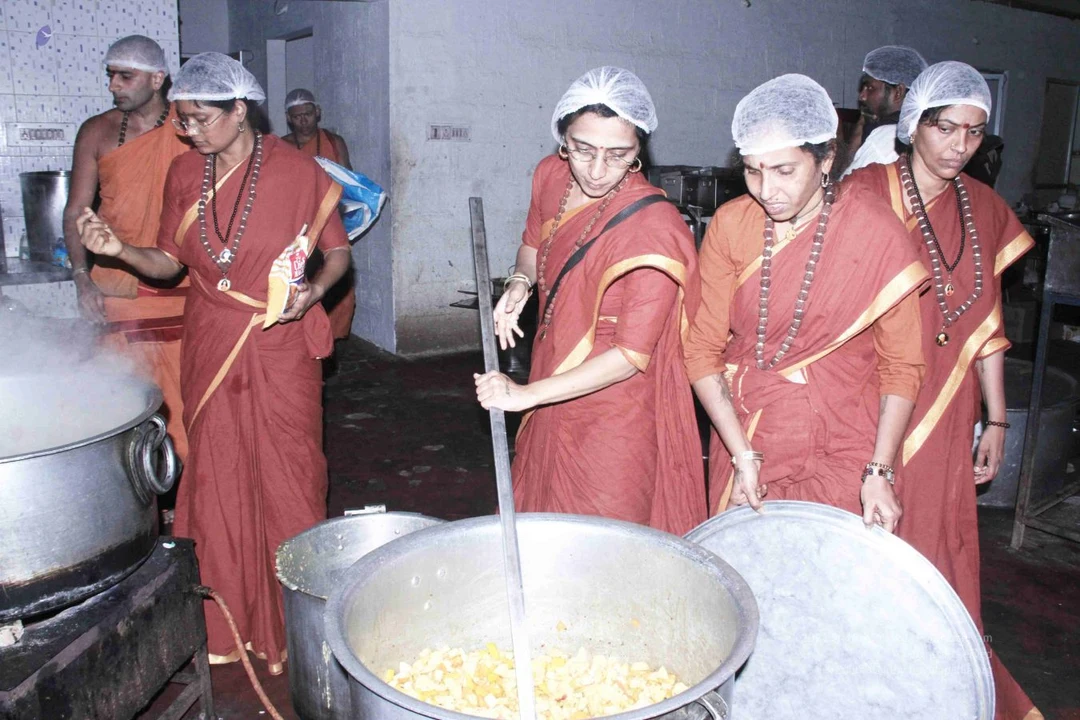
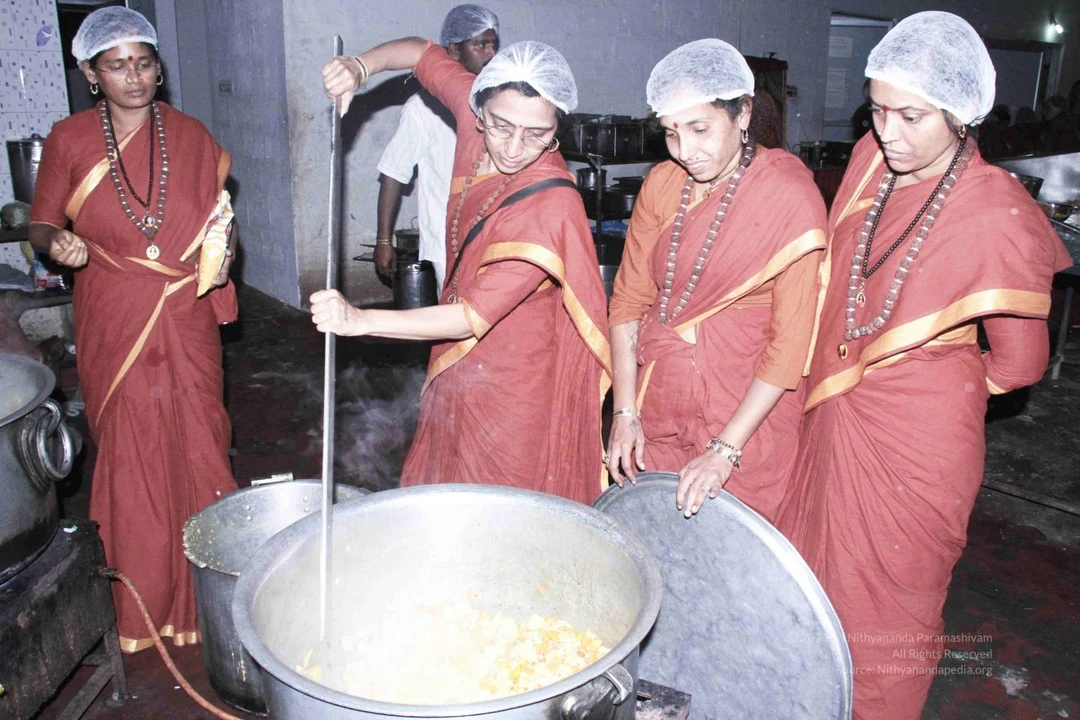
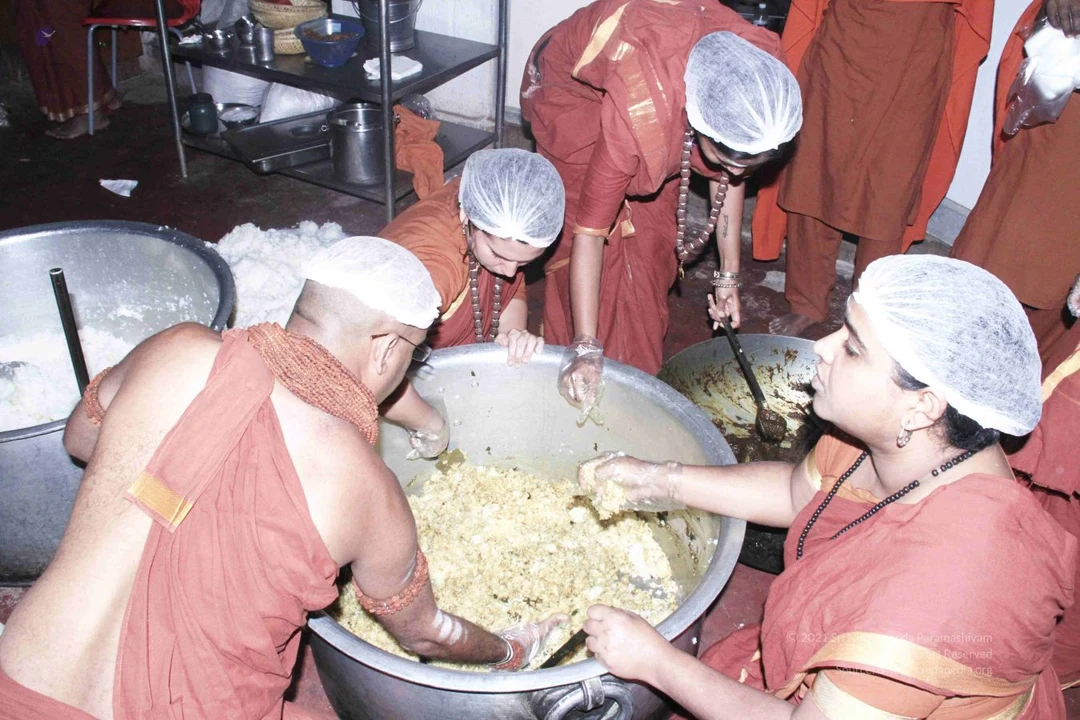
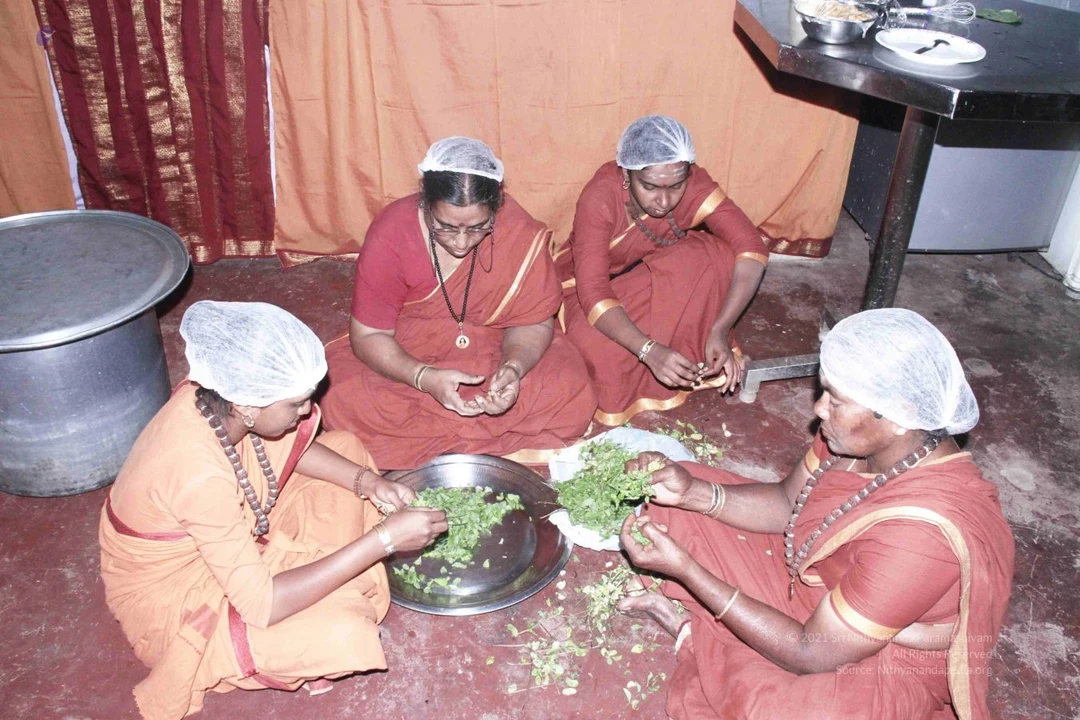
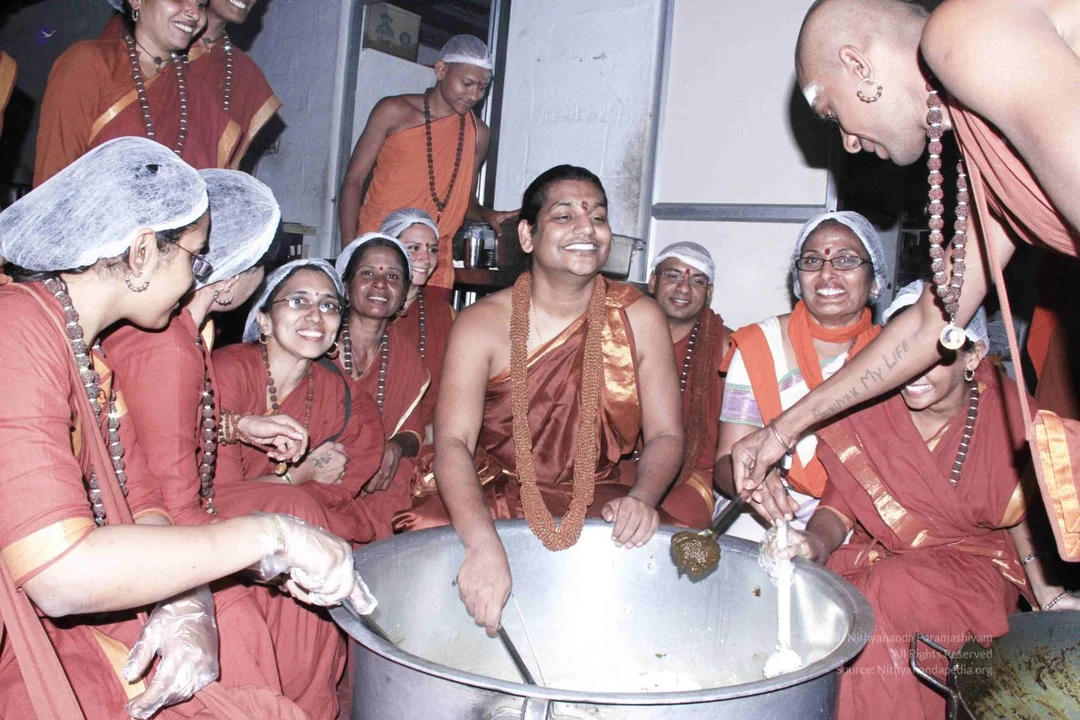
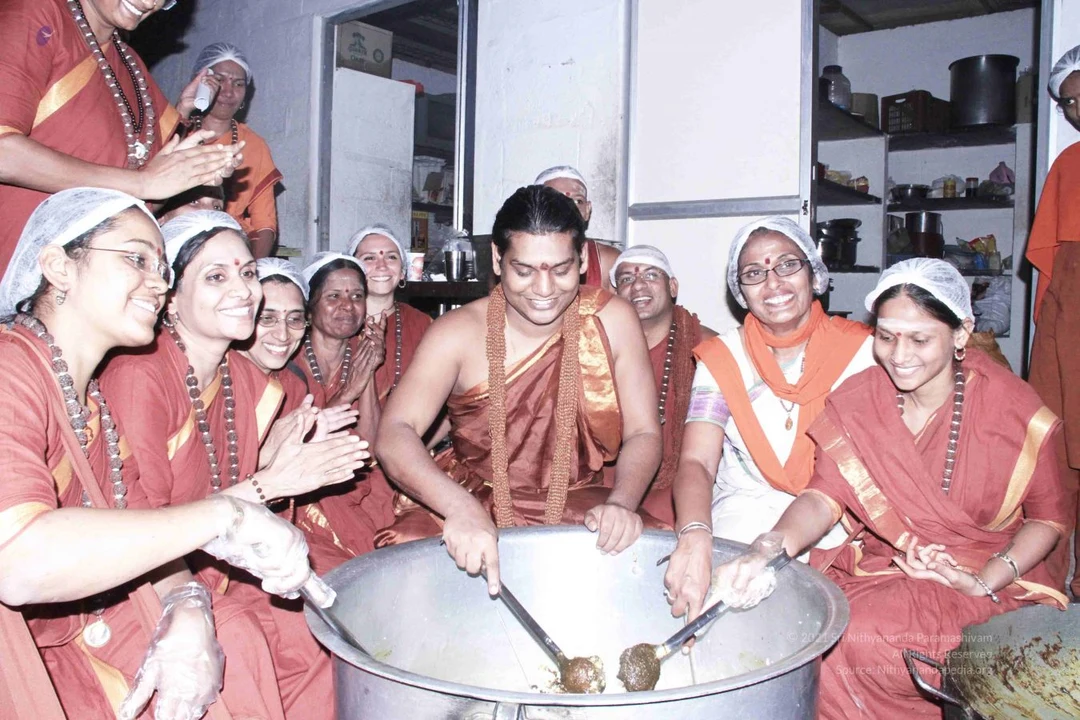
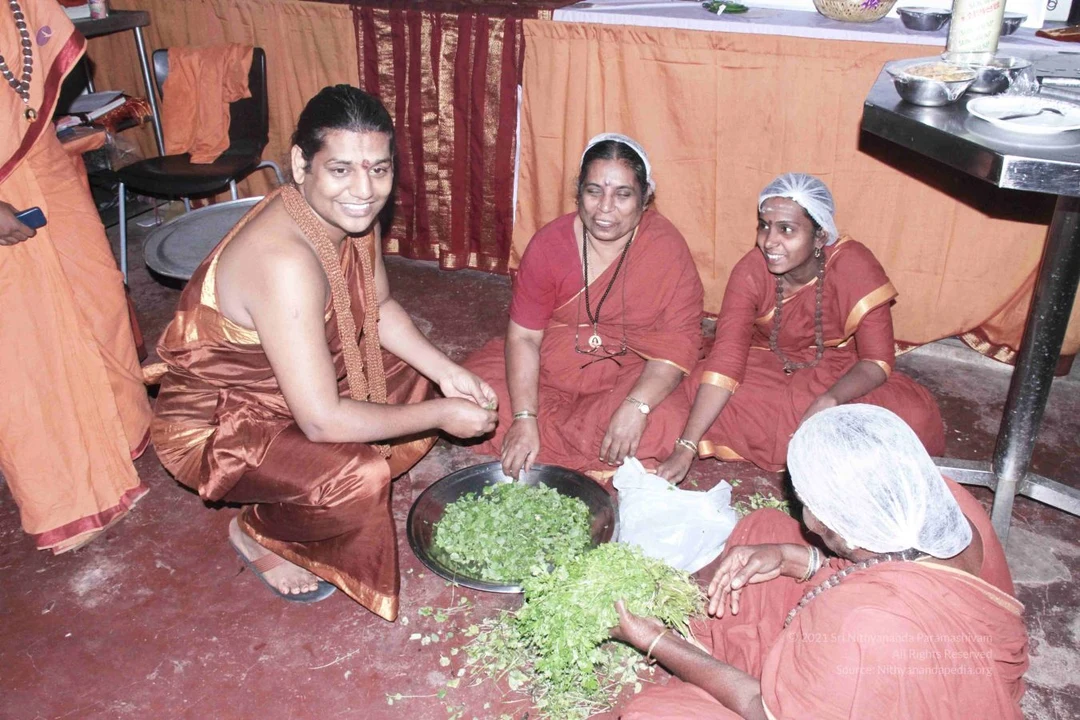
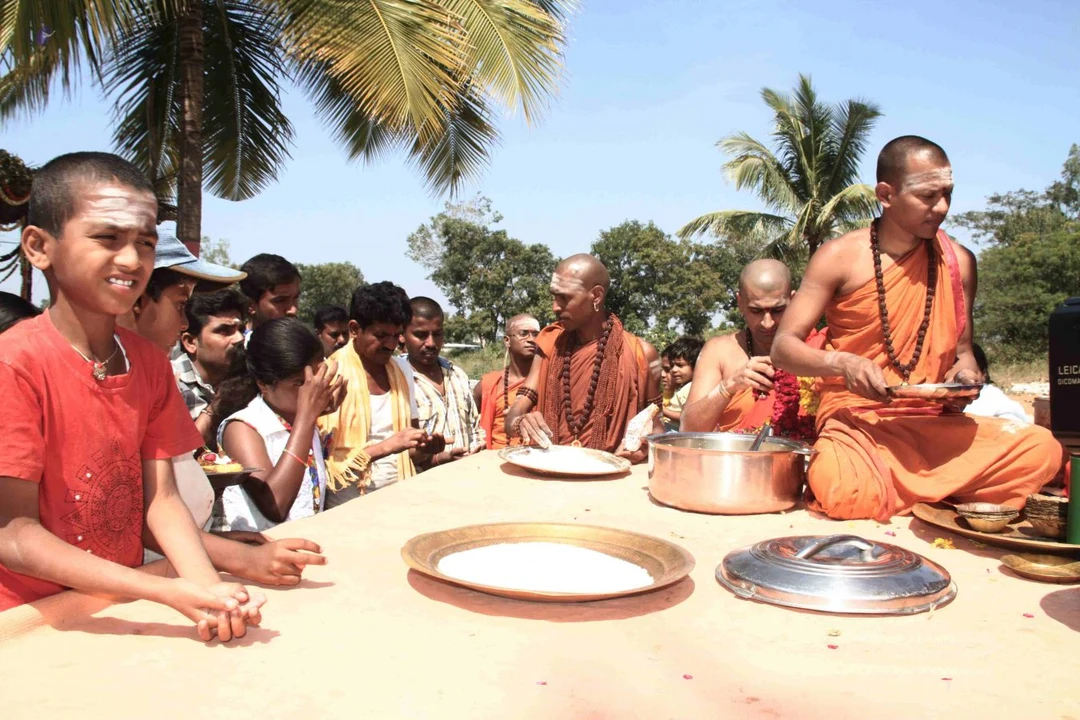
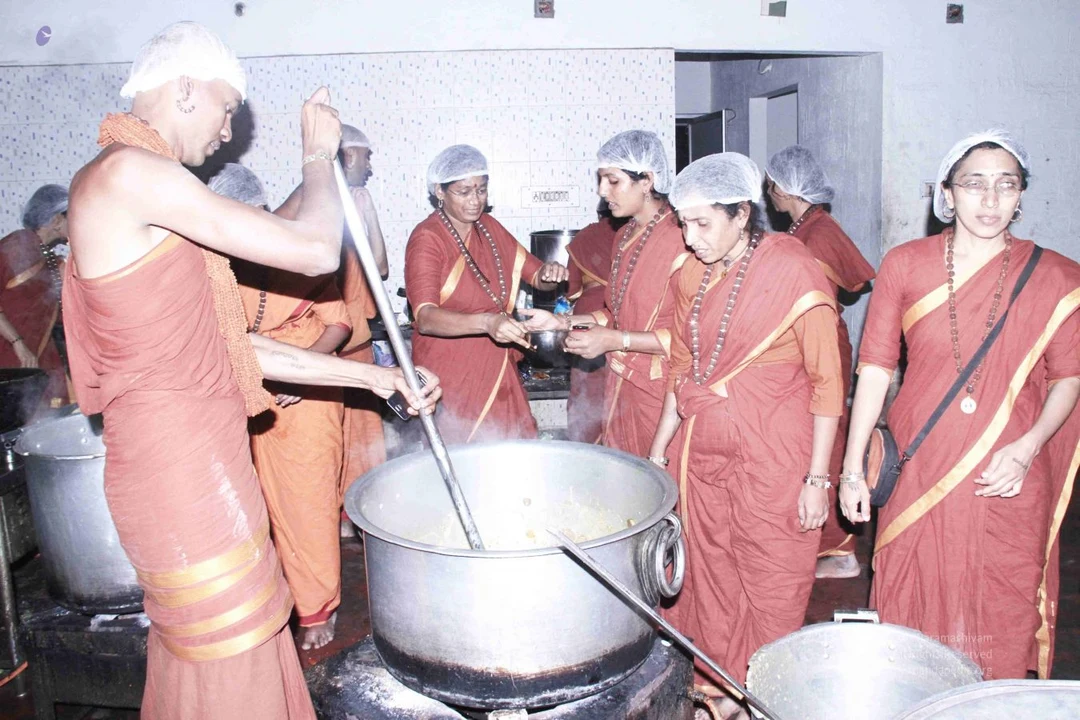
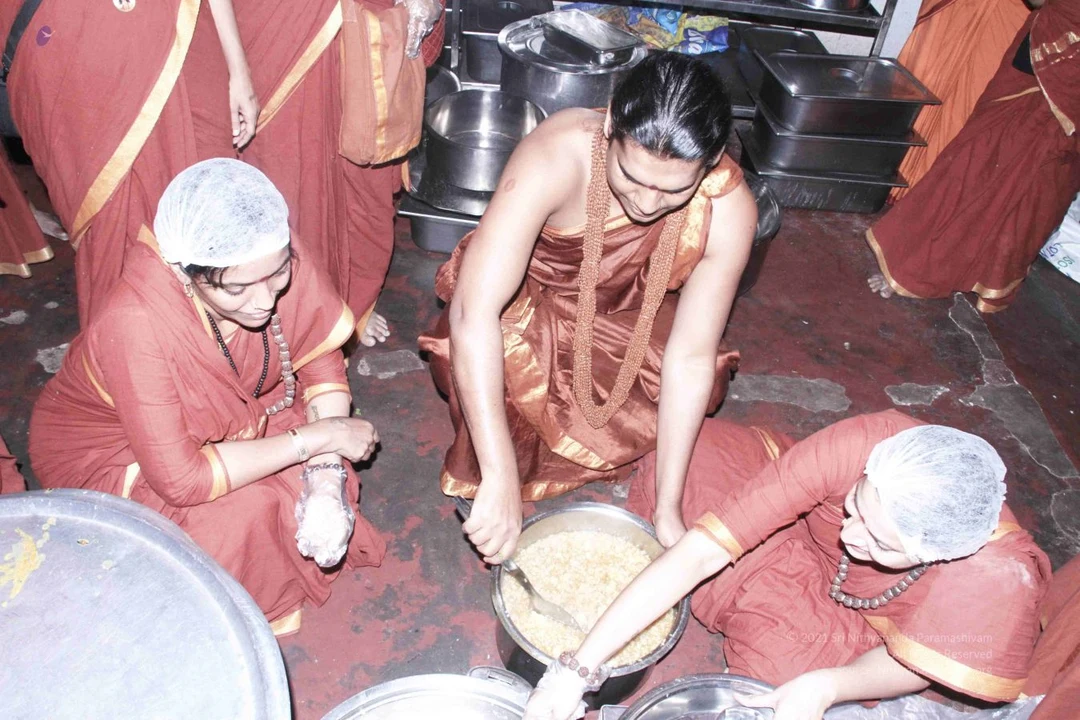
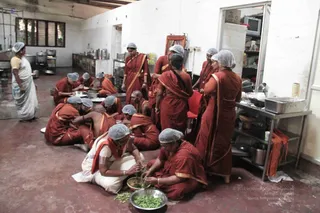
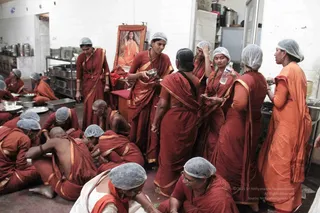
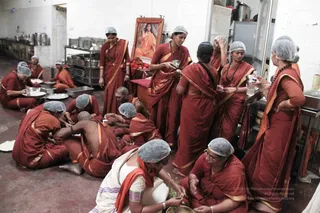
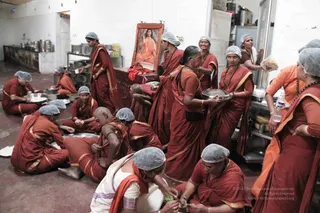
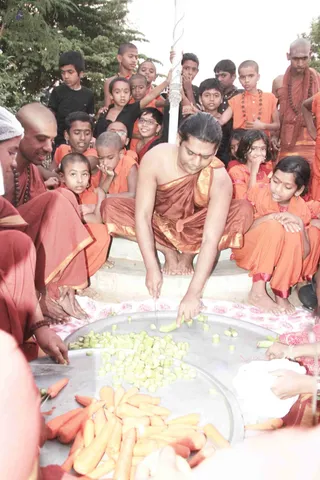
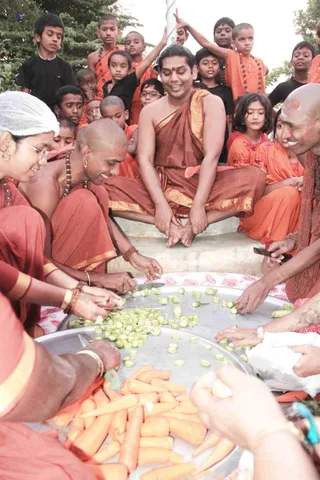
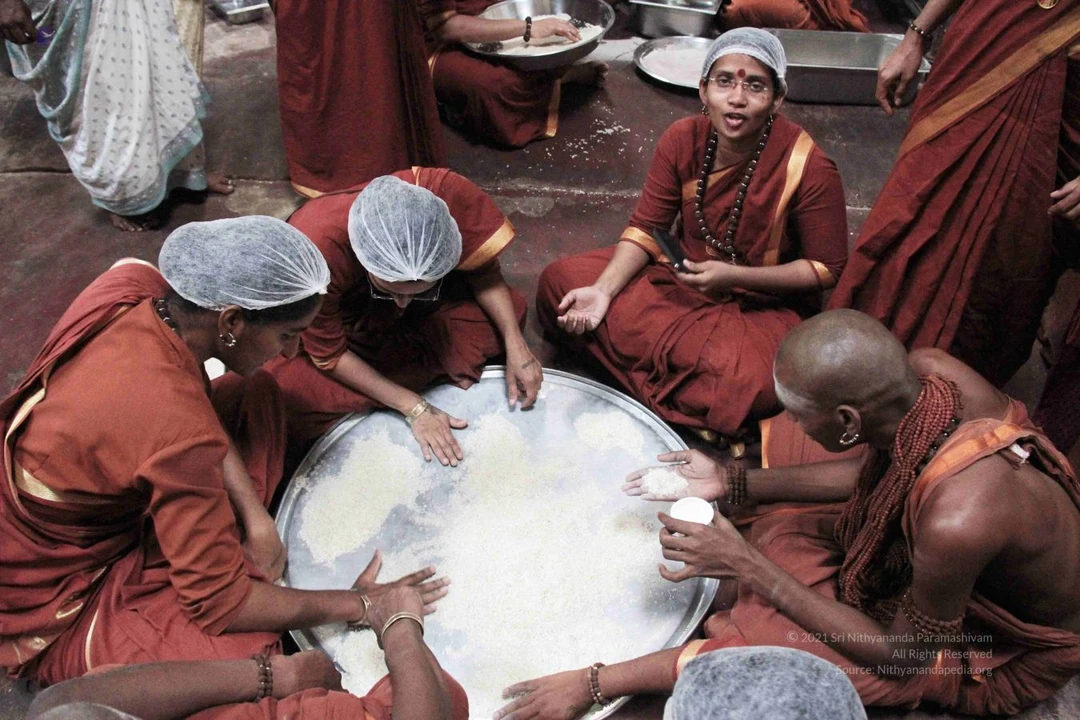
Several women in saffron-orange robes with gold-edged borders sit on a concrete floor sorting white rice on a large round steel tray. Some wear white hair nets and rudraksha malas; one seated woman in the upper centre wears glasses, a kumkum bindi and a dark mala while gesturing with her hand. A bald, bare-shouldered devotee at the right holds a small white cup and rice, wearing red beaded necklaces. Steel tubs and robed figures stand in the background.A kitchen scene in an ashram where several people in rust-red and saffron-bordered robes sit on the floor around a large round steel tray heaped with white cooked rice. Most wear white hairnets. A bald man bare-chested with rudraksha malas over his shoulder, a white forehead mark, and a saffron cloth works closest to the tray, and a woman in the foreground bends over it too. Behind them, stainless steel containers and plates stand on a shelf, and a desk with a computer and a green leaf plate sits at right. The people appear to be preparing food together.A photograph of a busy ashram kitchen with a whitewashed wall, steel cooking vessels and a stainless-steel prep counter. Several women and a few men in rust-orange and maroon robes with gold borders, many wearing white surgical-style head caps, sit on the reddish floor chopping green leaves and vegetables into steel bowls. A woman in white sari stands at the left, and a standing woman in orange sari is at the centre. Rudraksha malas are visible on some devotees. A small framed picture hangs on the wall in the background.A busy ashram kitchen with steel counters, stacked stainless steel pots and trays, and a tiled floor. Many women in rust-red and orange saris, some with rudraksha malas, wear white hairnets as they work. A standing woman in a red sari holds a steel bowl, another in a red sari holds a plastic bottle, and a woman in orange stands at right with a steel vessel. Several people sit on the floor, one bald man in a red-and-gold cloth sitting at left with his back partly turned, and a seated person in white with a red shawl at bottom left. A framed portrait of a long-haired figure in orange robes with rudraksha beads hangs on the wall, its appearance not confirmable here, so it is shown as a portrait only. Several people appear to be preparing food.A busy commercial-style kitchen where about a dozen women and a few men in rust-red and saffron-bordered sarees and dhotis work preparing food. Many wear white hairnets and rudraksha malas; some sit on the floor with steel plates and bowls, others stand at steel counters. A framed portrait on an easel shows a seated figure in saffron robes with a rudraksha mala and long hair, labelled in the caption as a portrait of Paramahamsa Nithyananda. The scene suggests annadan-style communal cooking, though the image does not show a formal ritual.Devotees in rust-red and orange saris and head-caps prepare food in a plain kitchen with white walls and a concrete floor. Several women sit on the floor cutting greens and arranging food on steel plates, while others carry trays and stand near a steel counter lined with pots. A framed portrait of a saffron-robed man with long hair and beaded necklaces sits on a draped table with red cloth and offerings. One bald man in orange cloth sits among the women. The scene is an ashram annadan kitchen service.
kara-patra-sharing

59 photosSource gallery
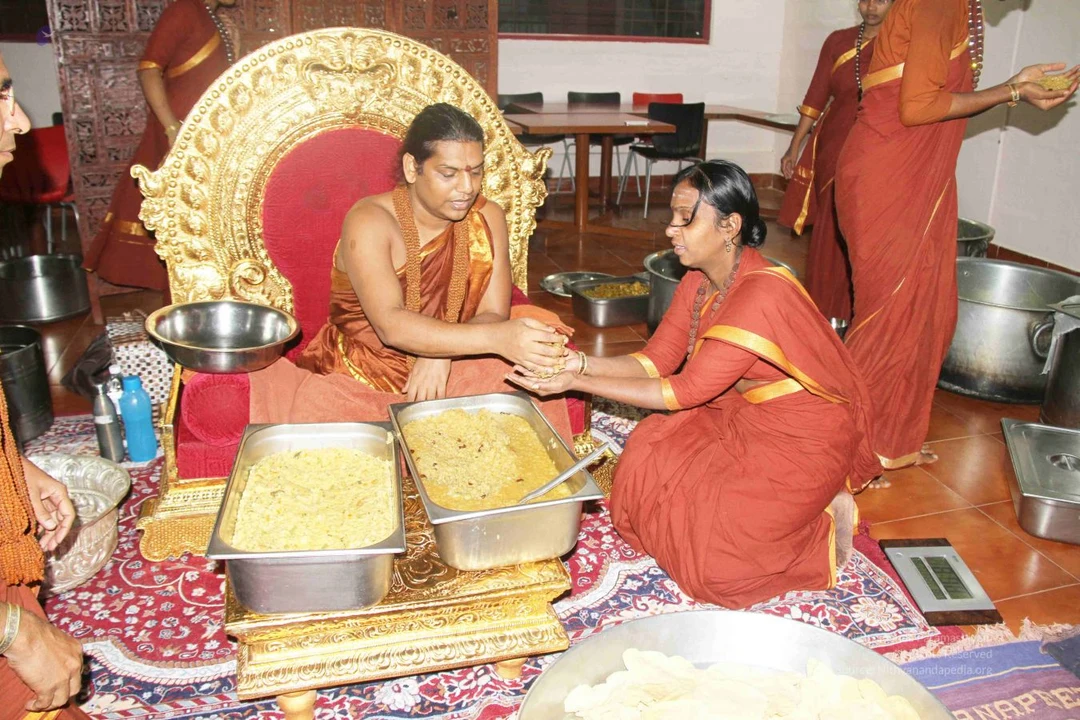
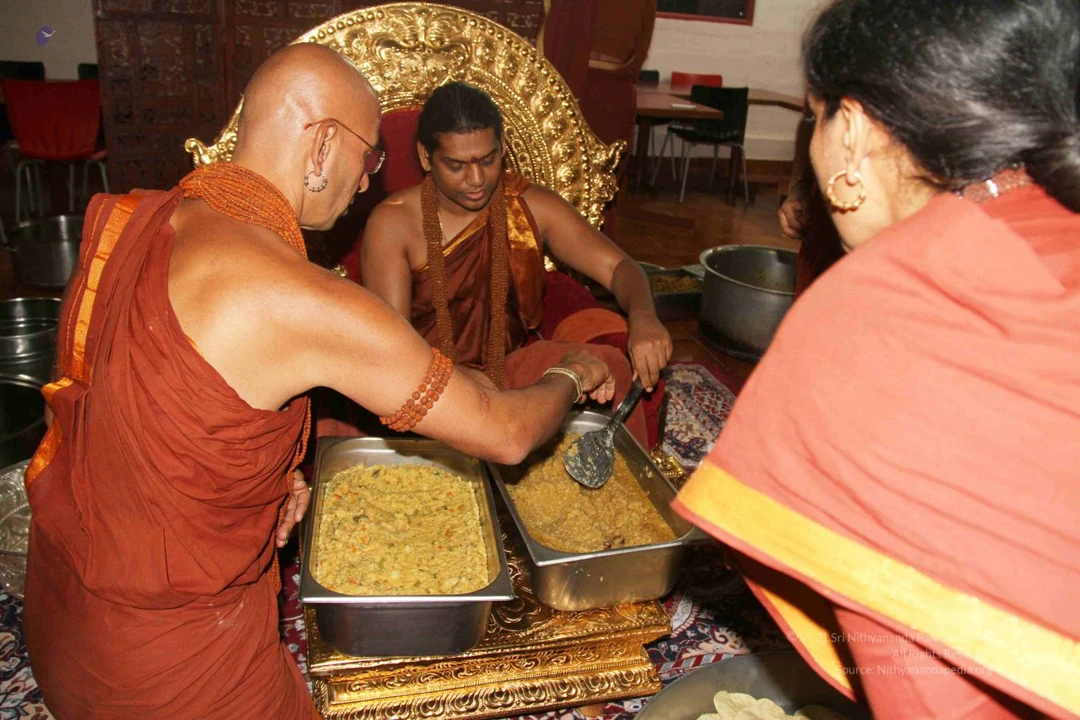
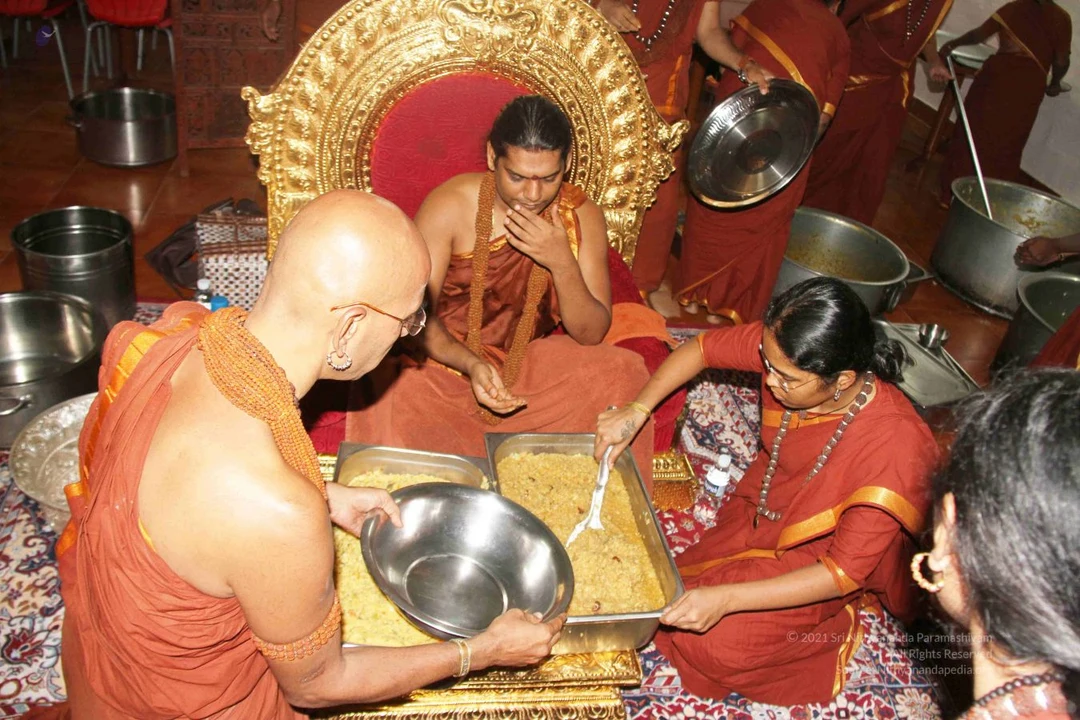
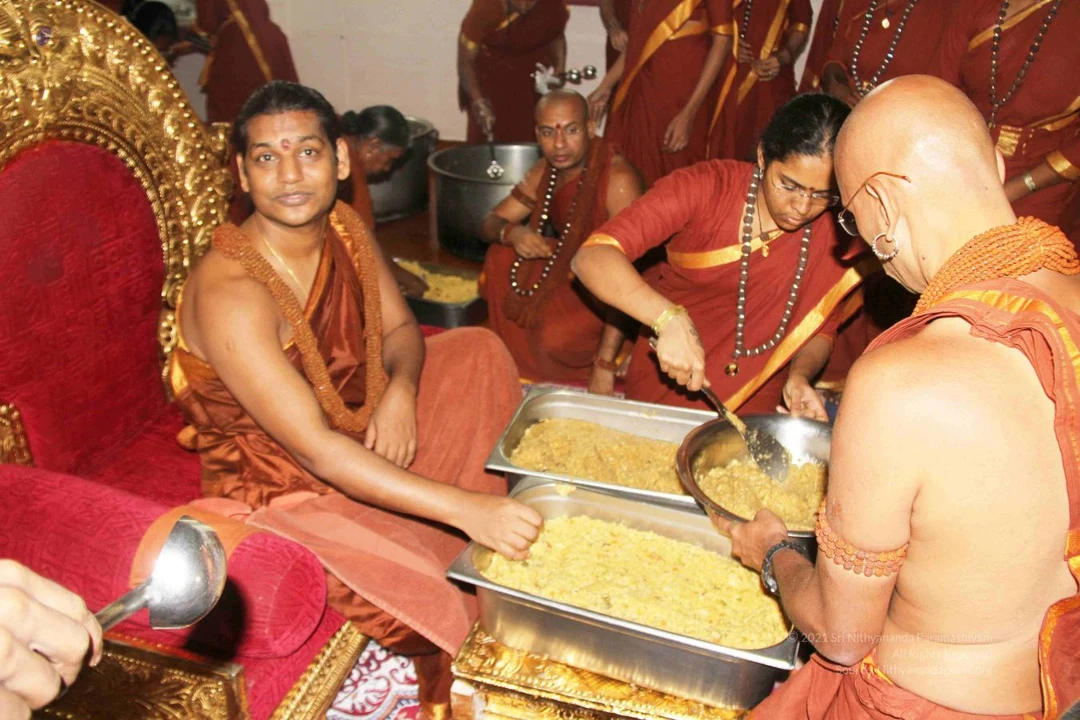
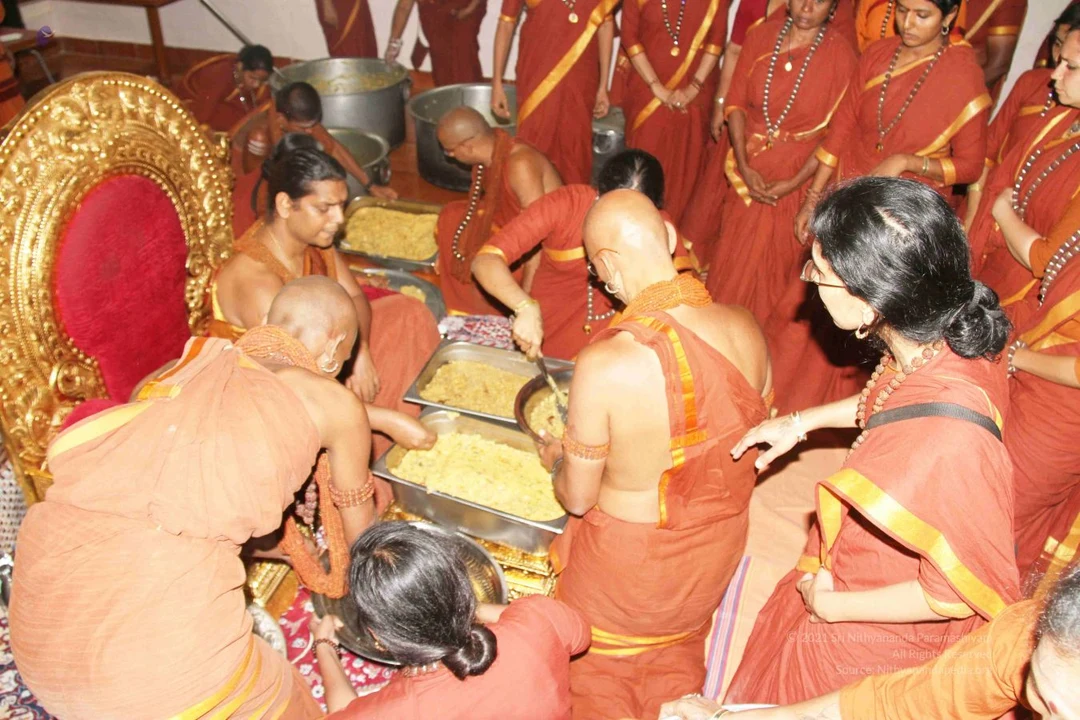
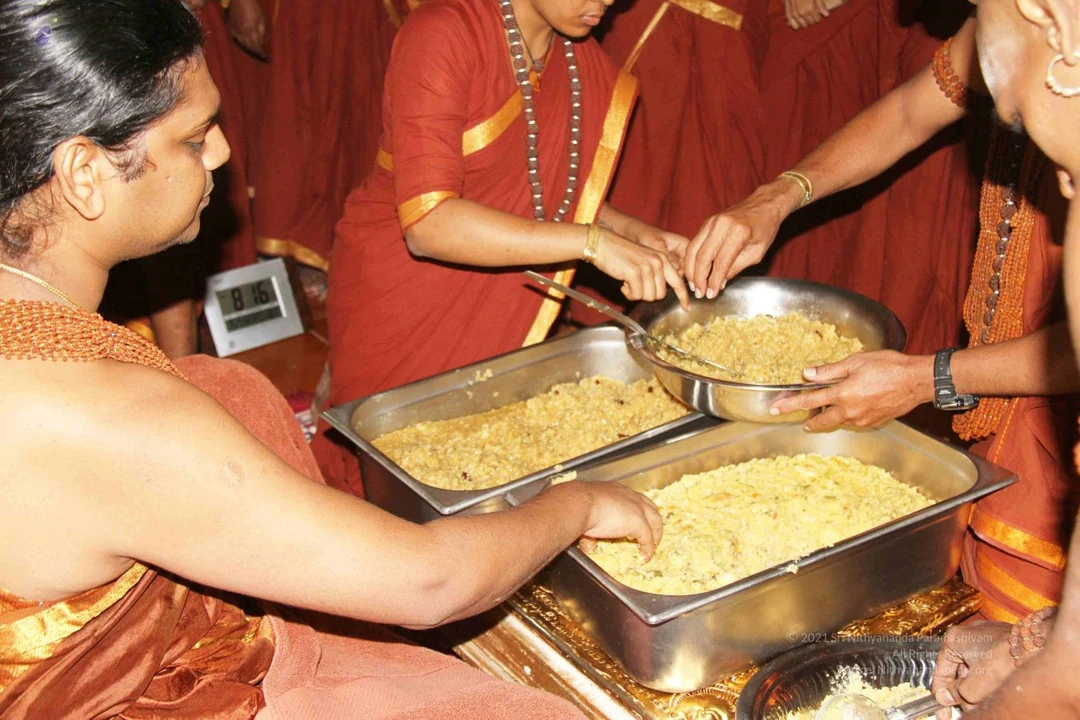
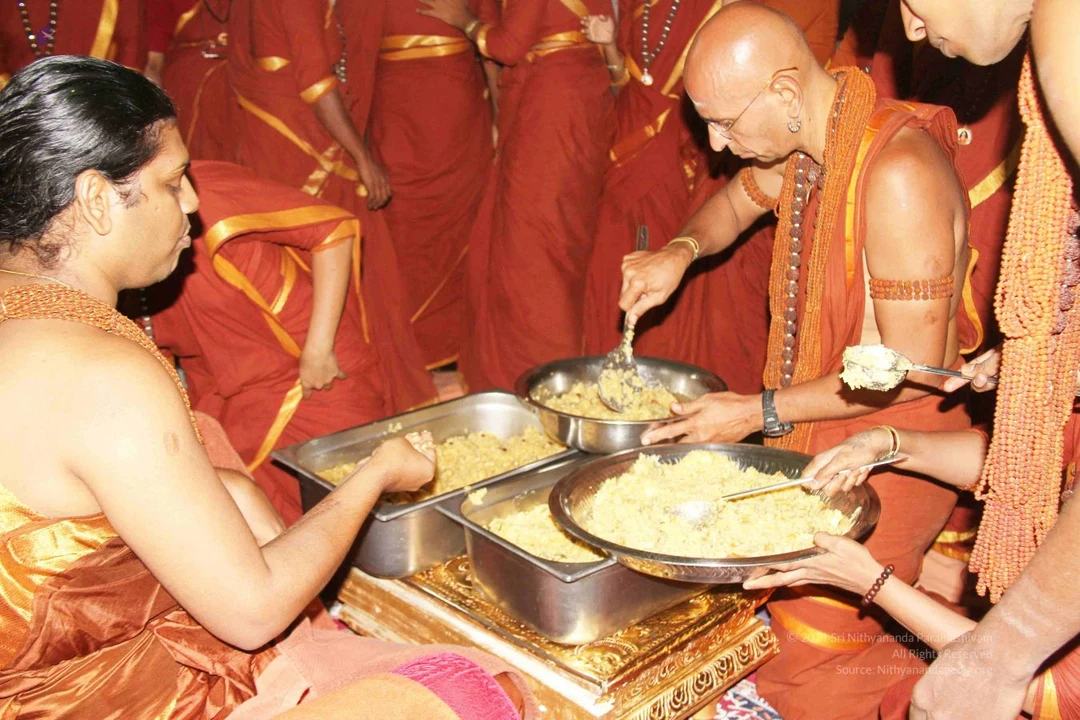
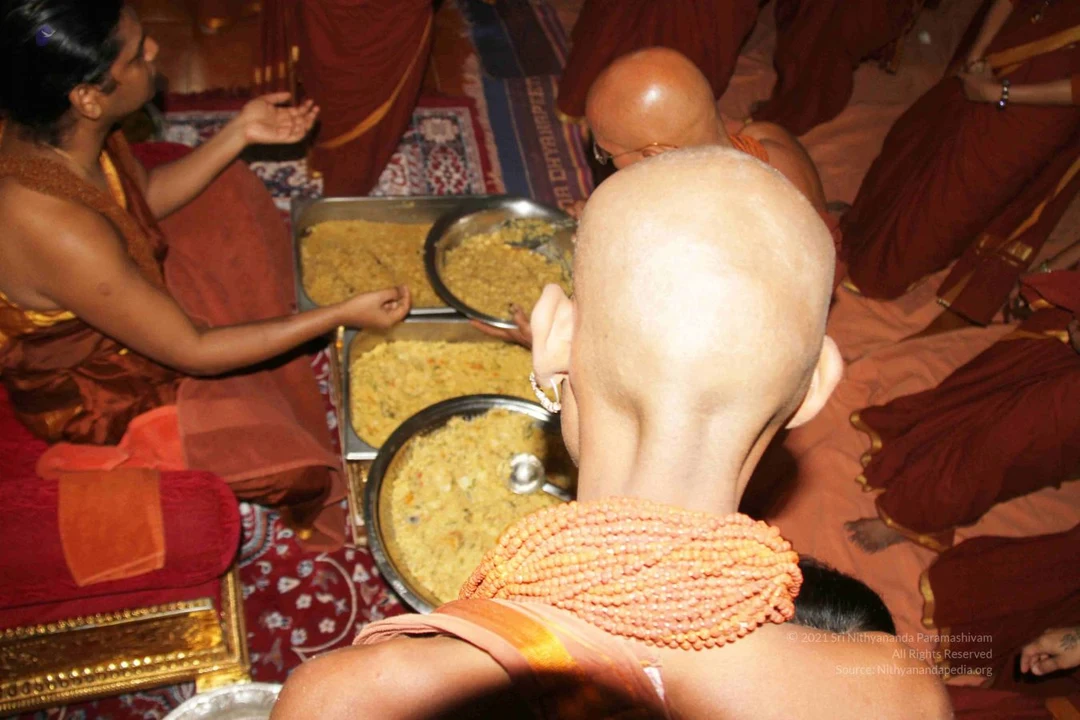
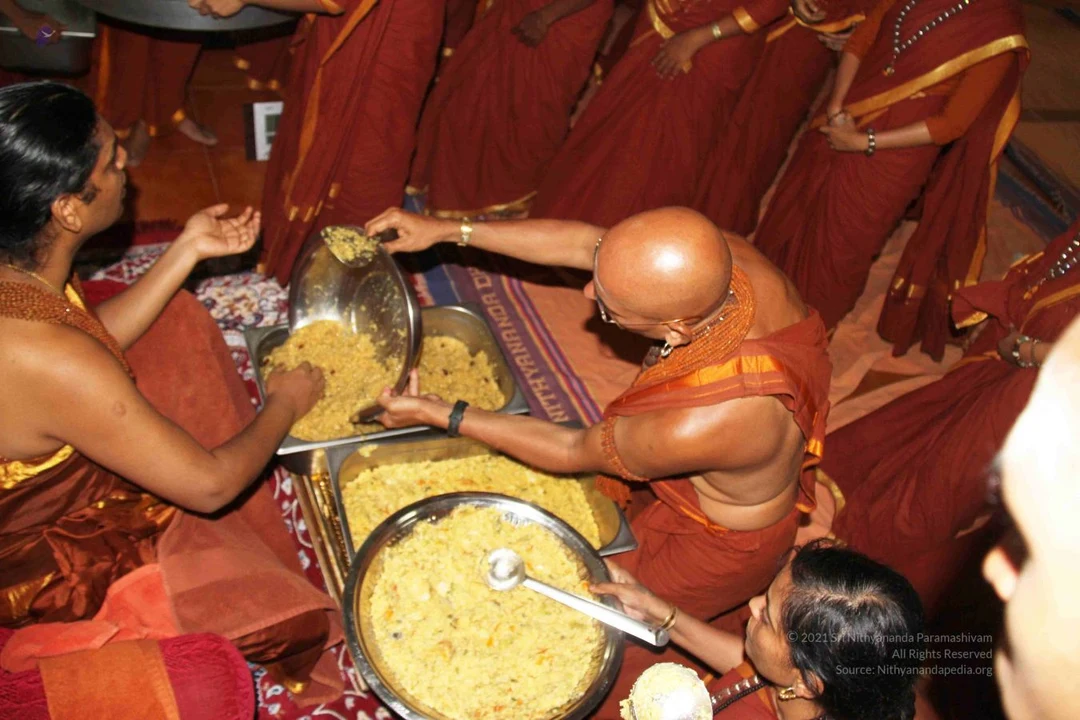
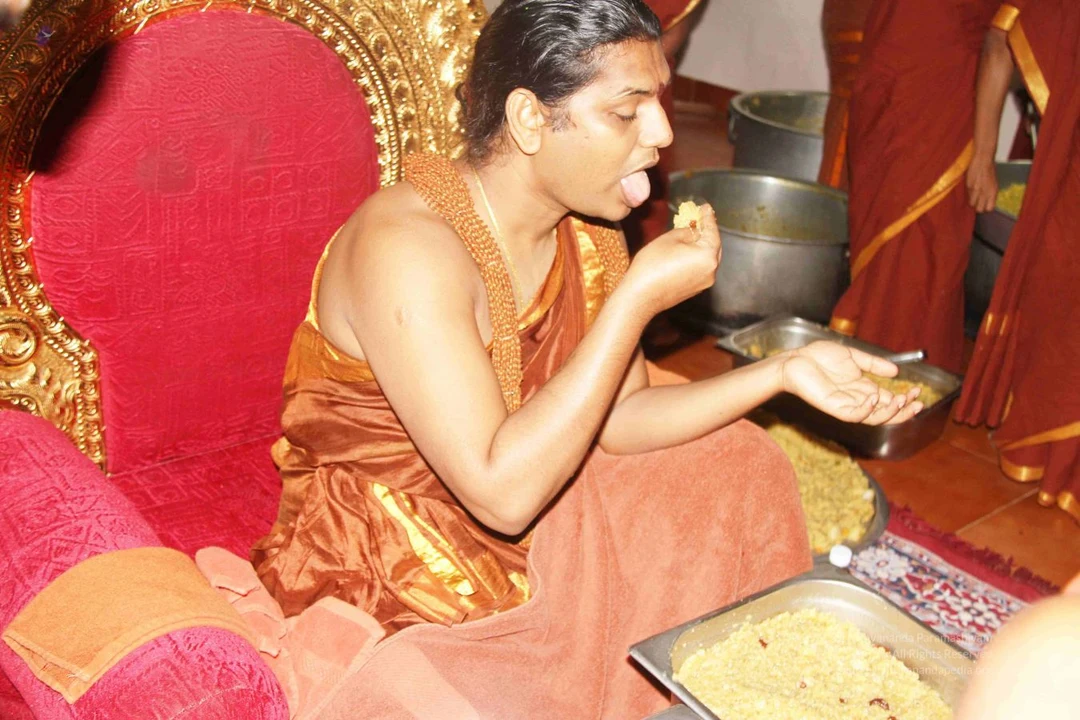
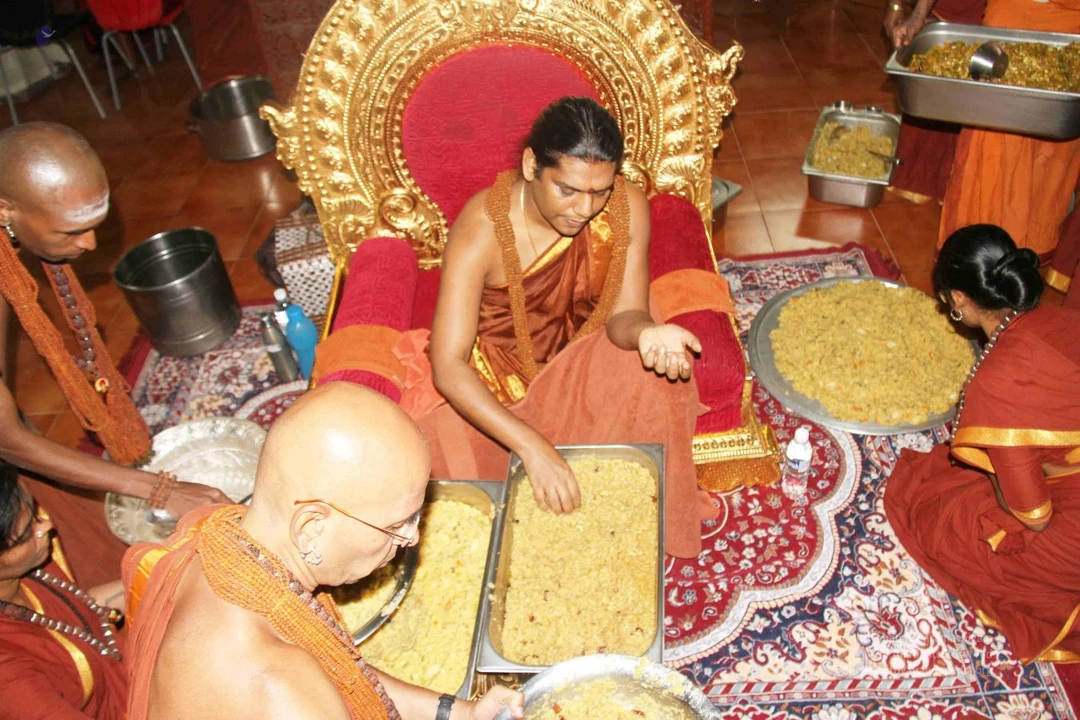
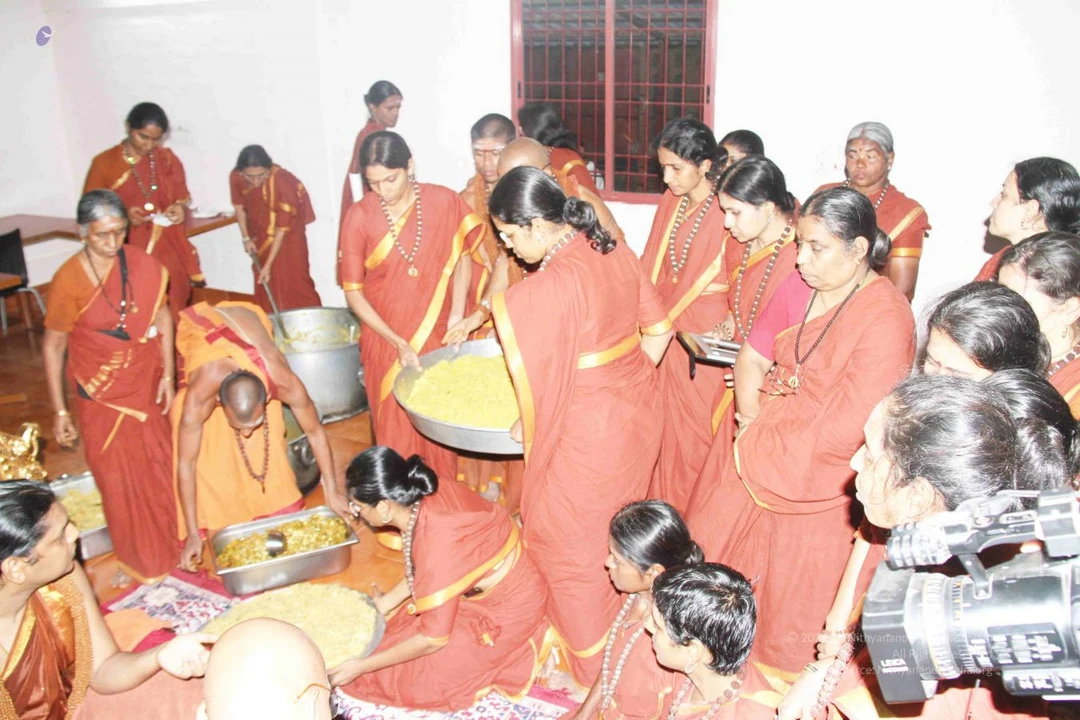
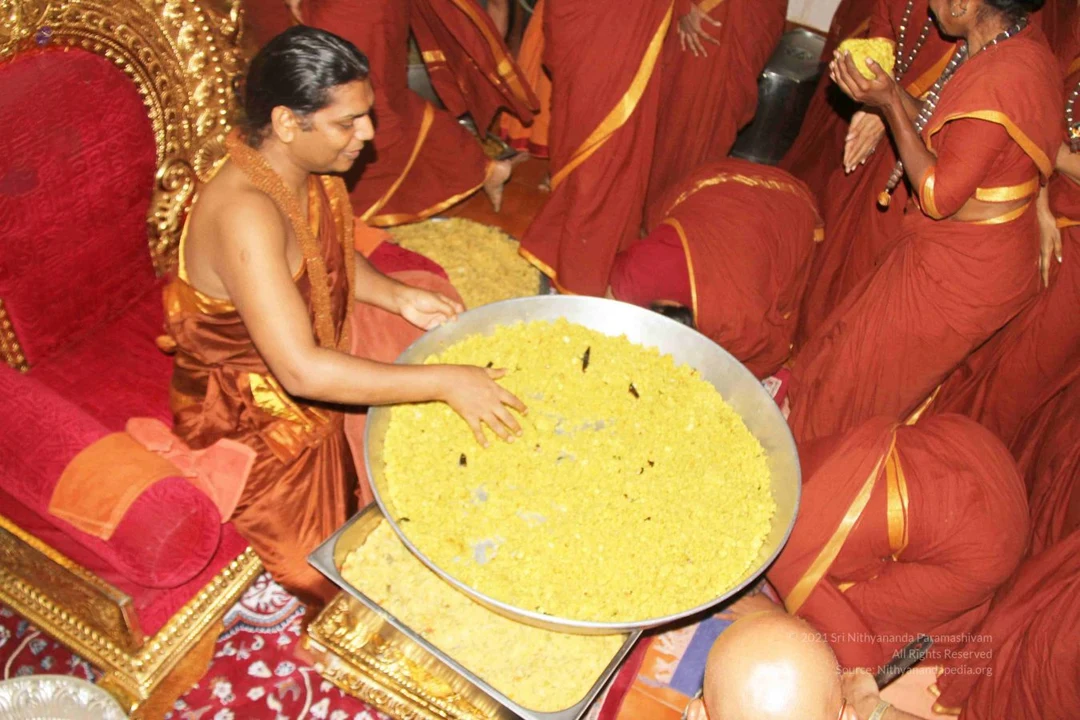
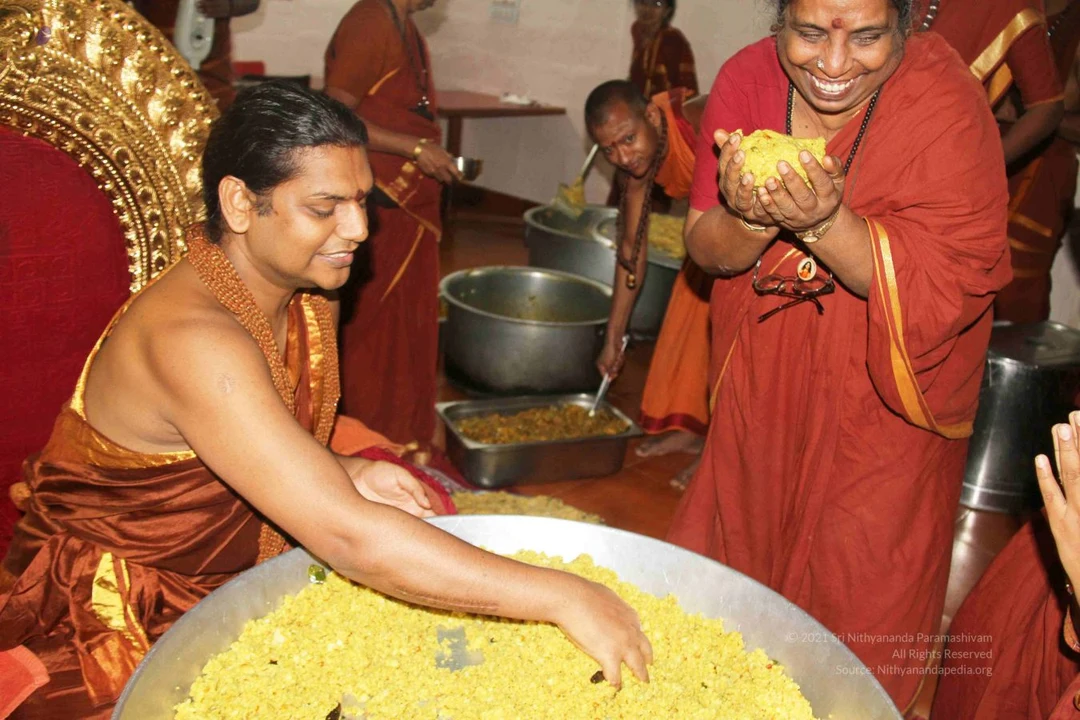
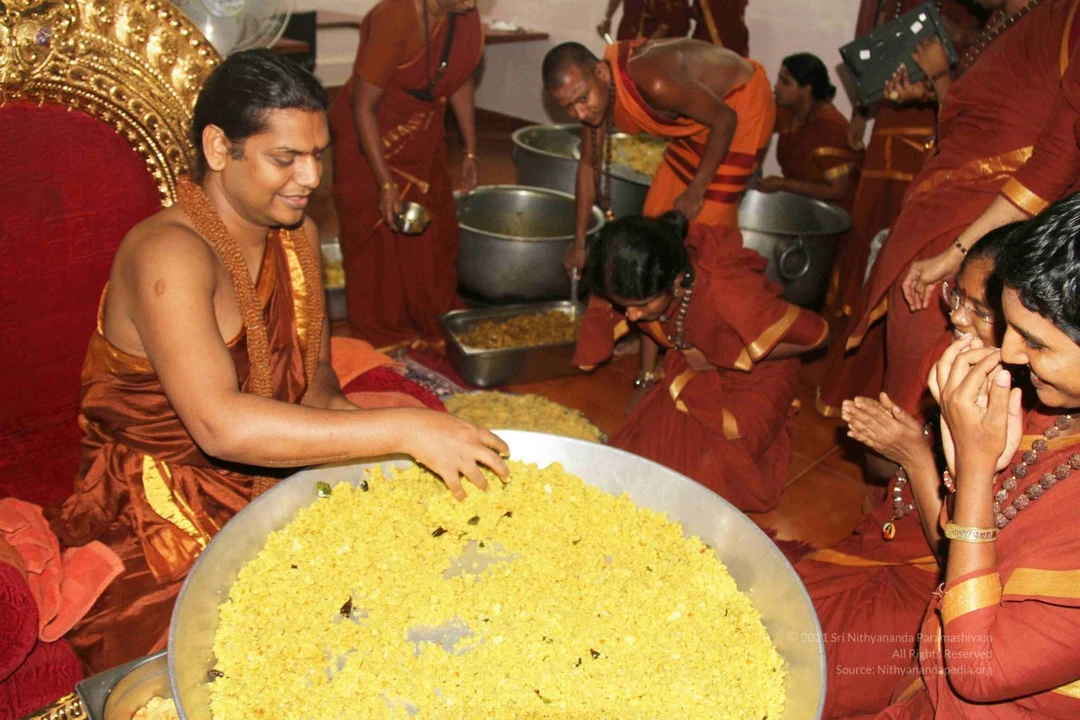
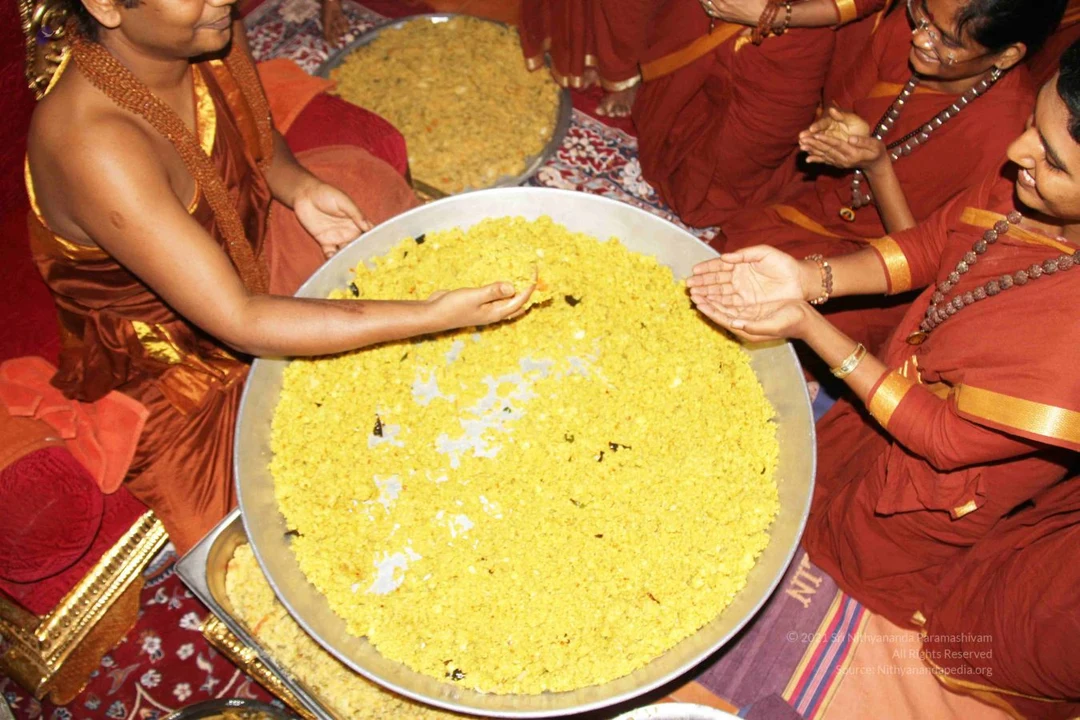
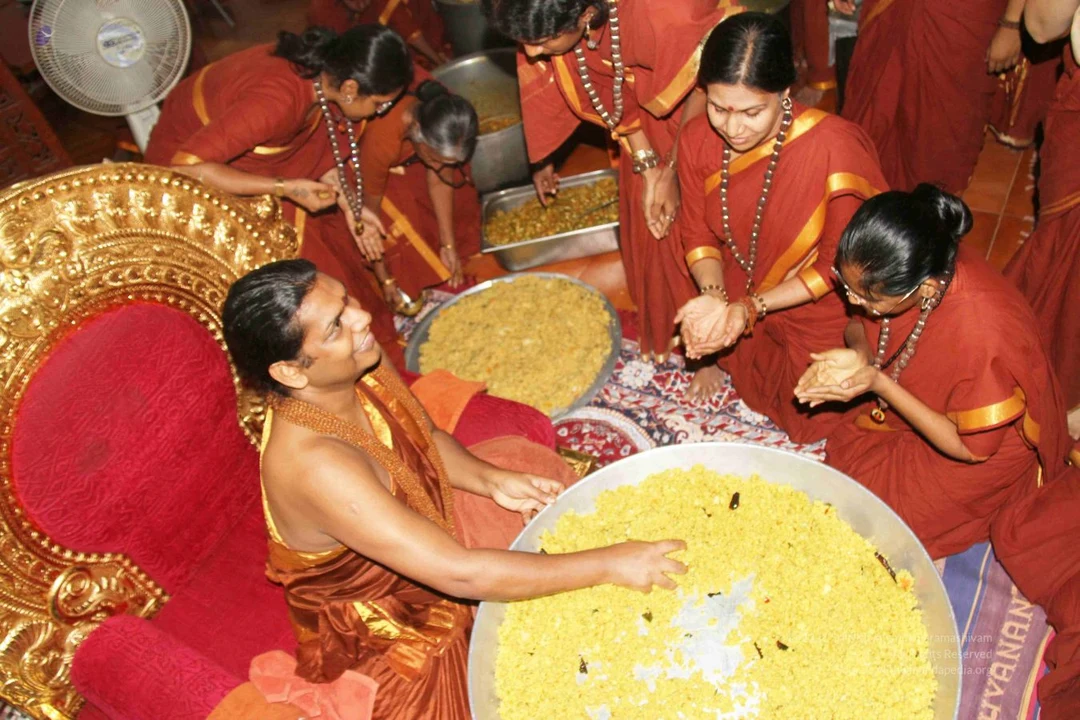
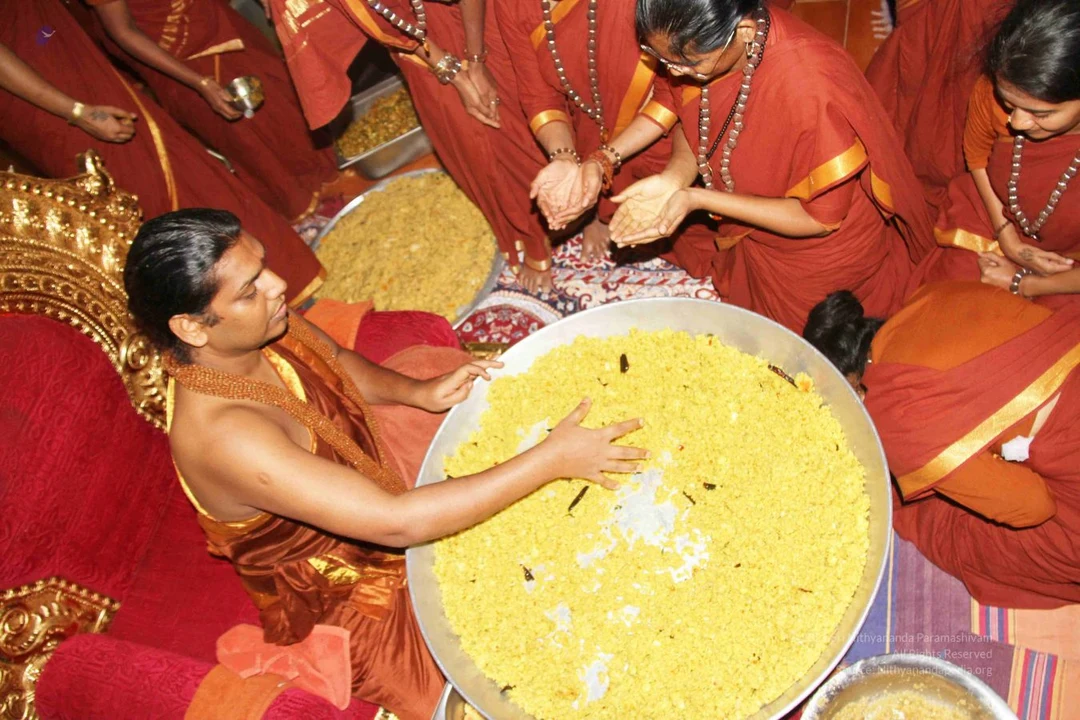
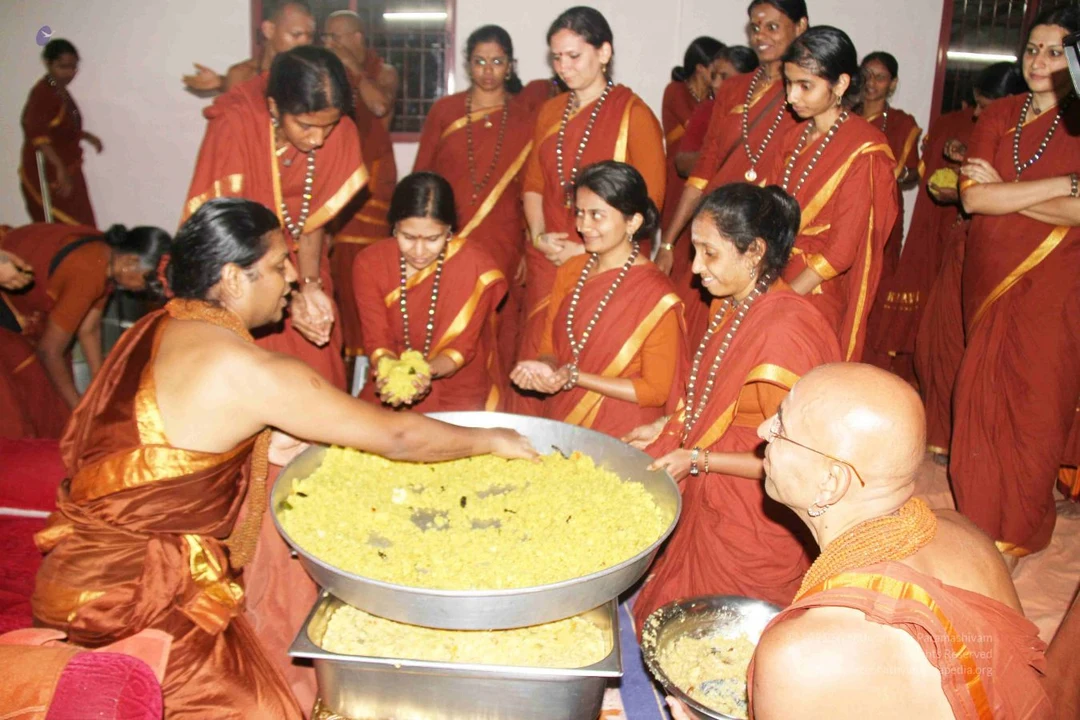
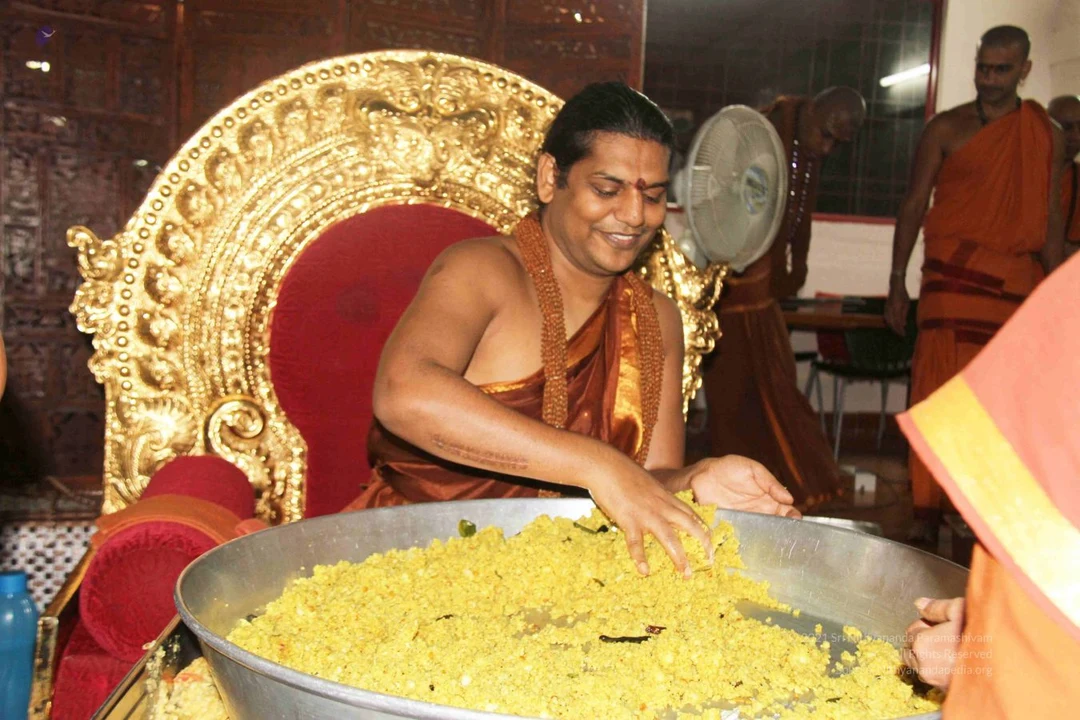
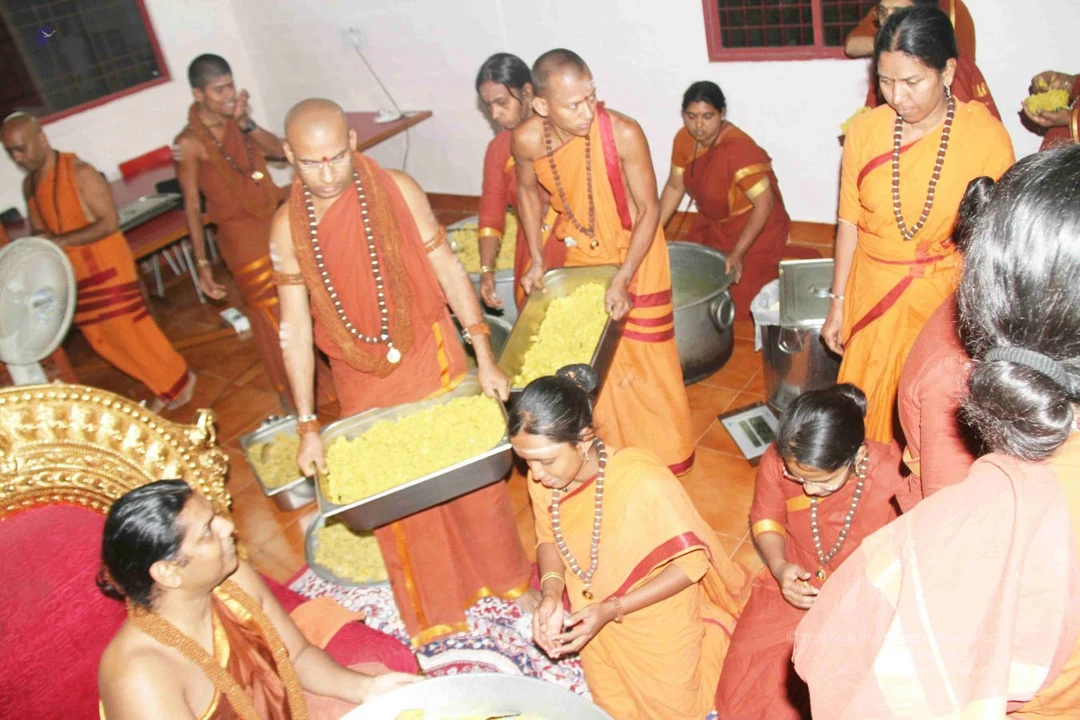
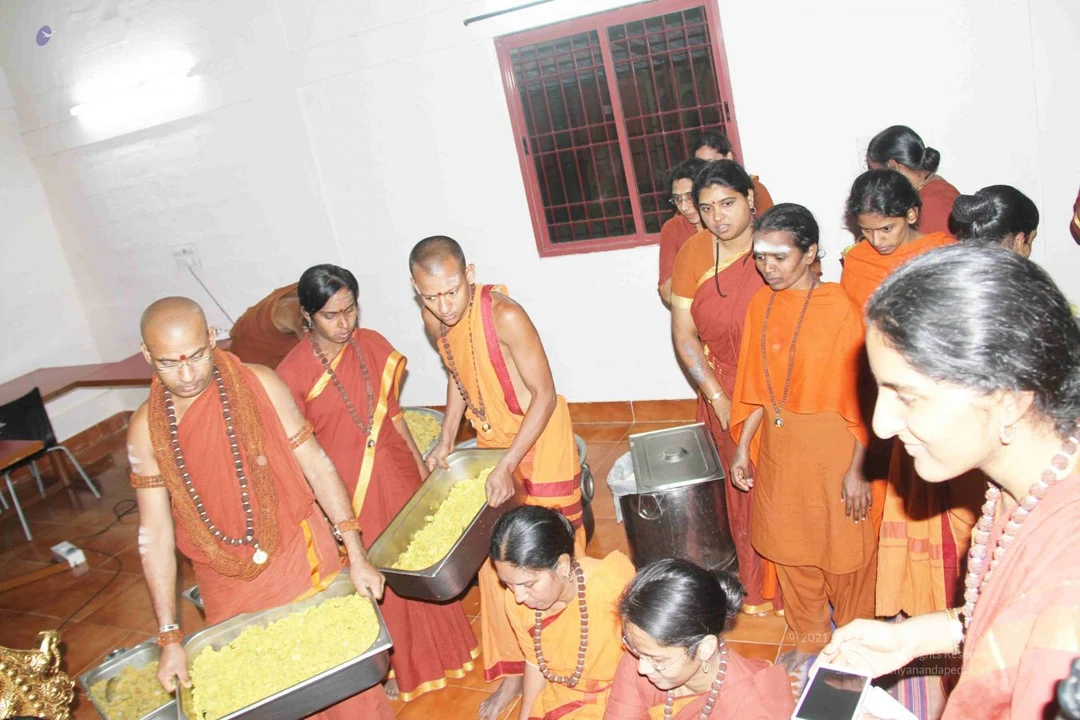
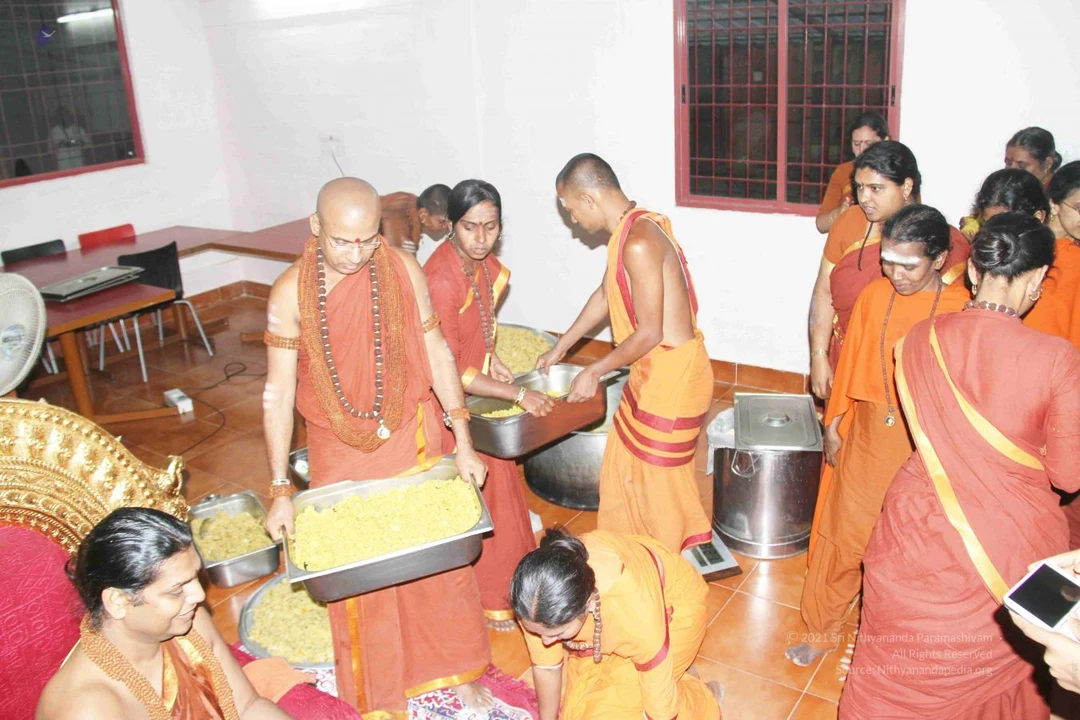
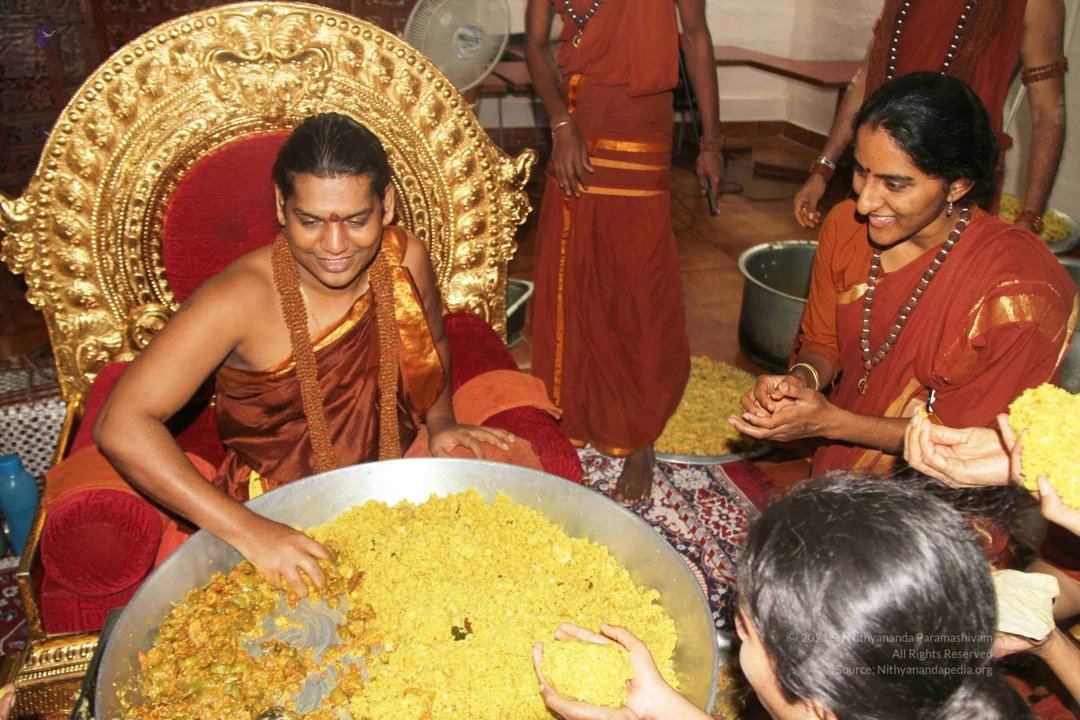
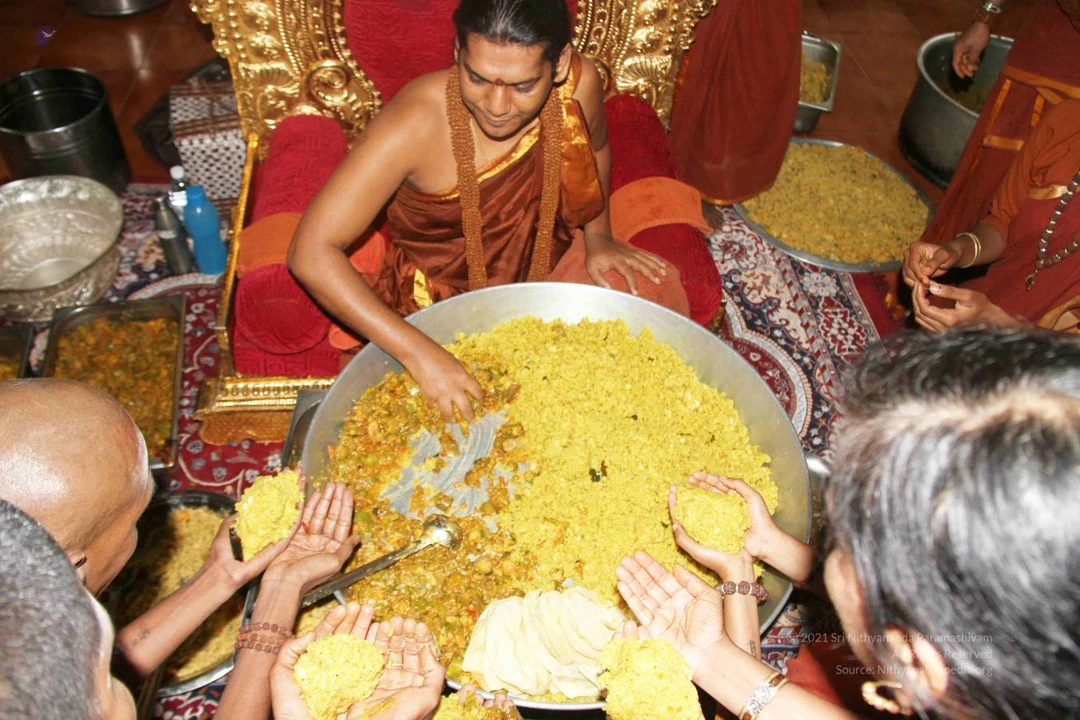
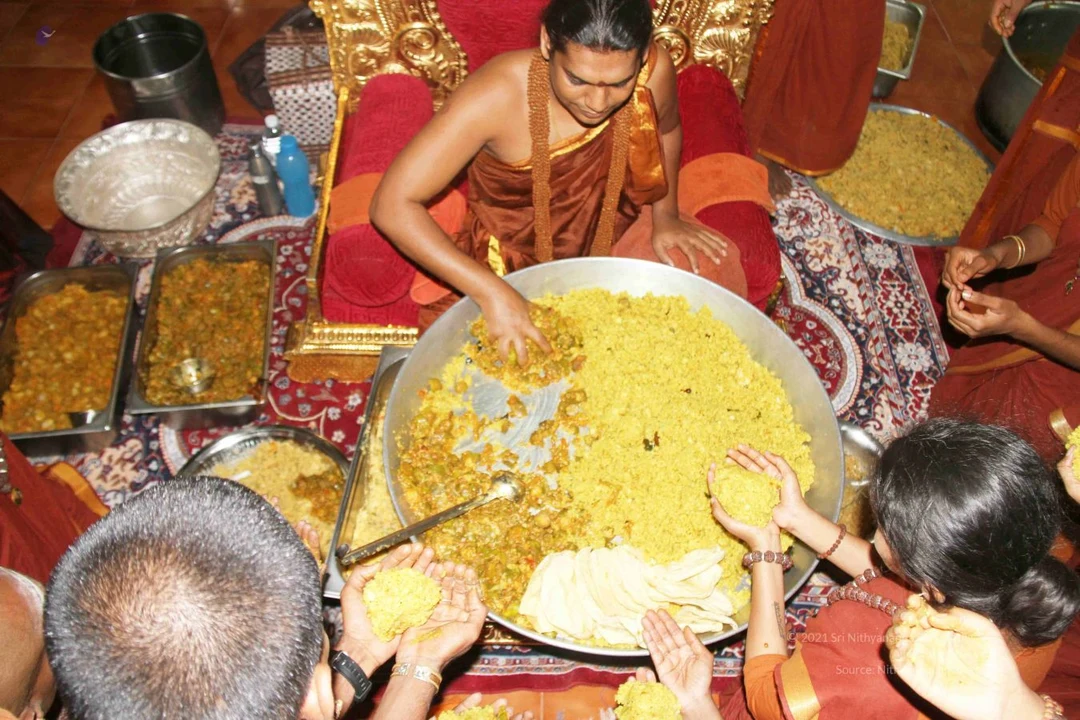
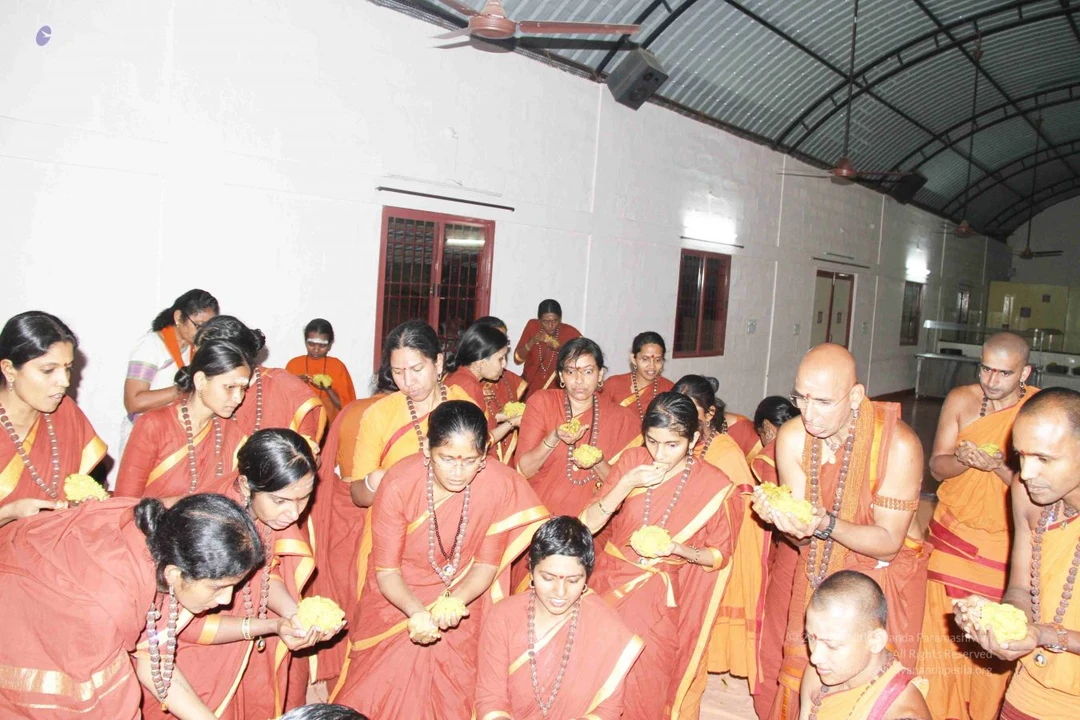
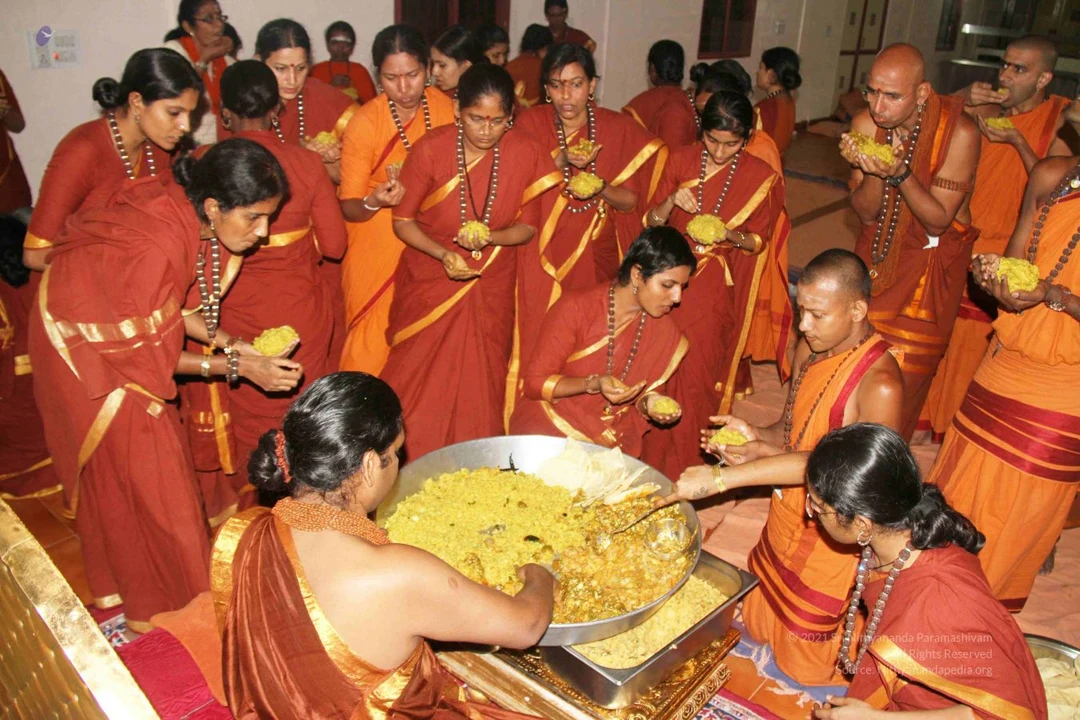
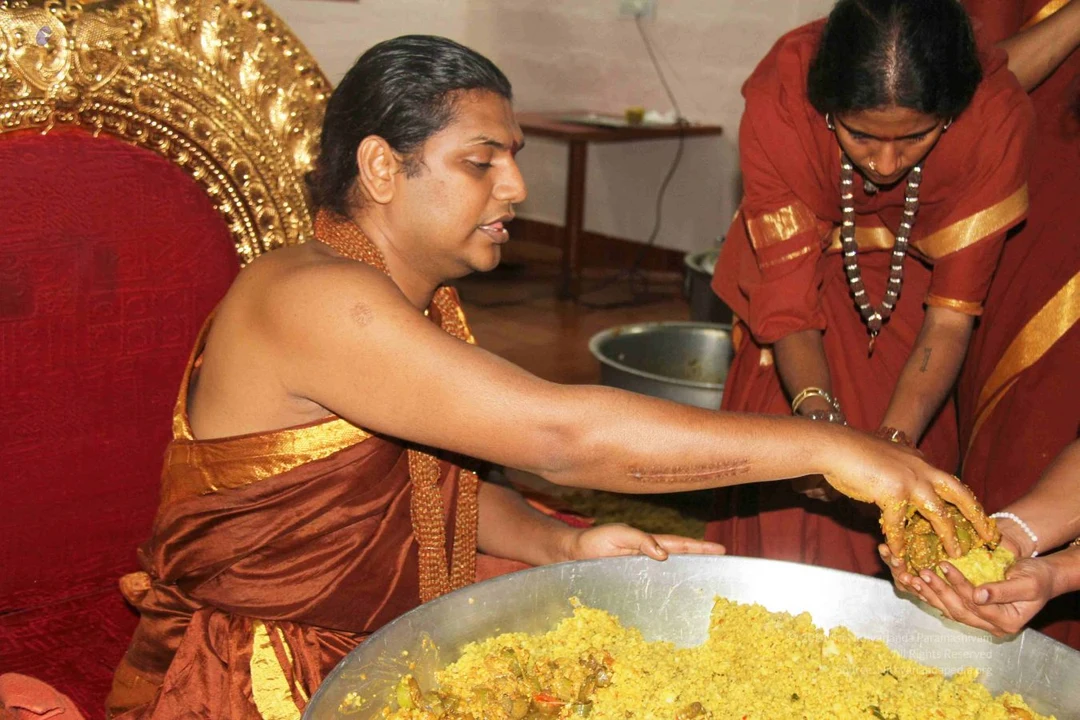
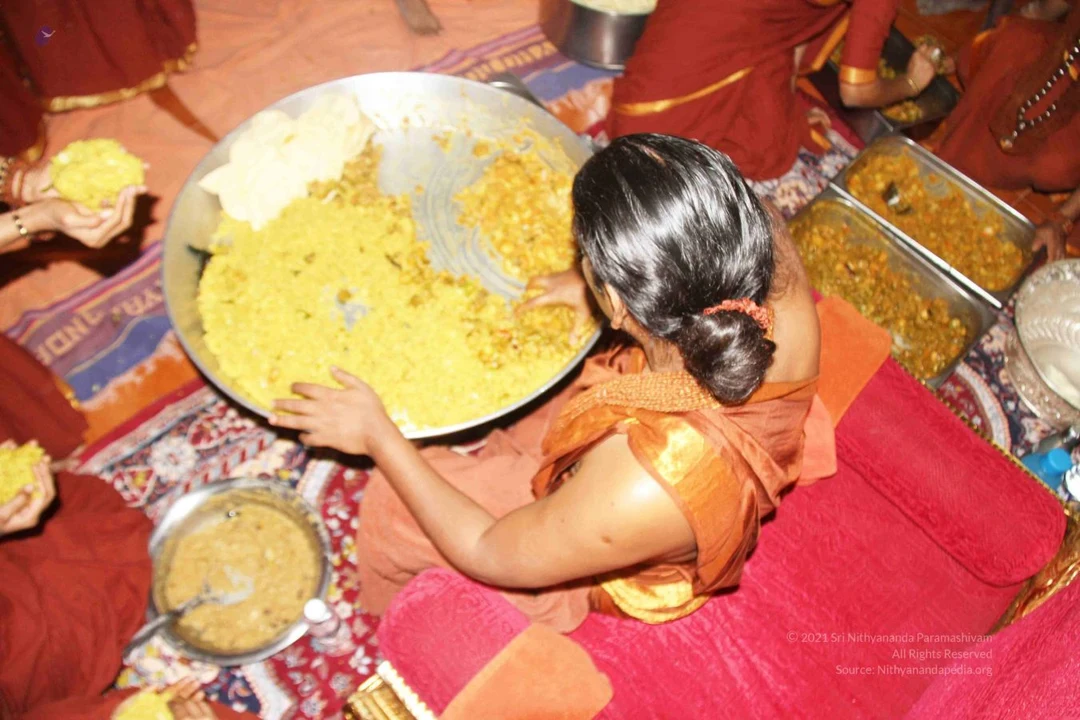
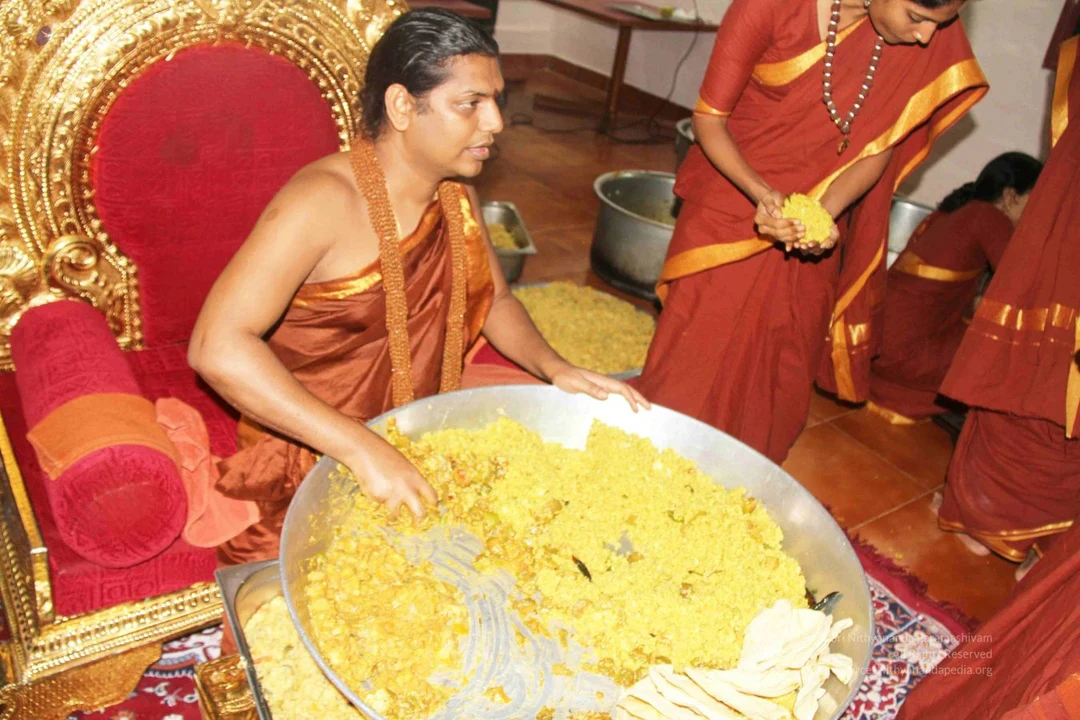
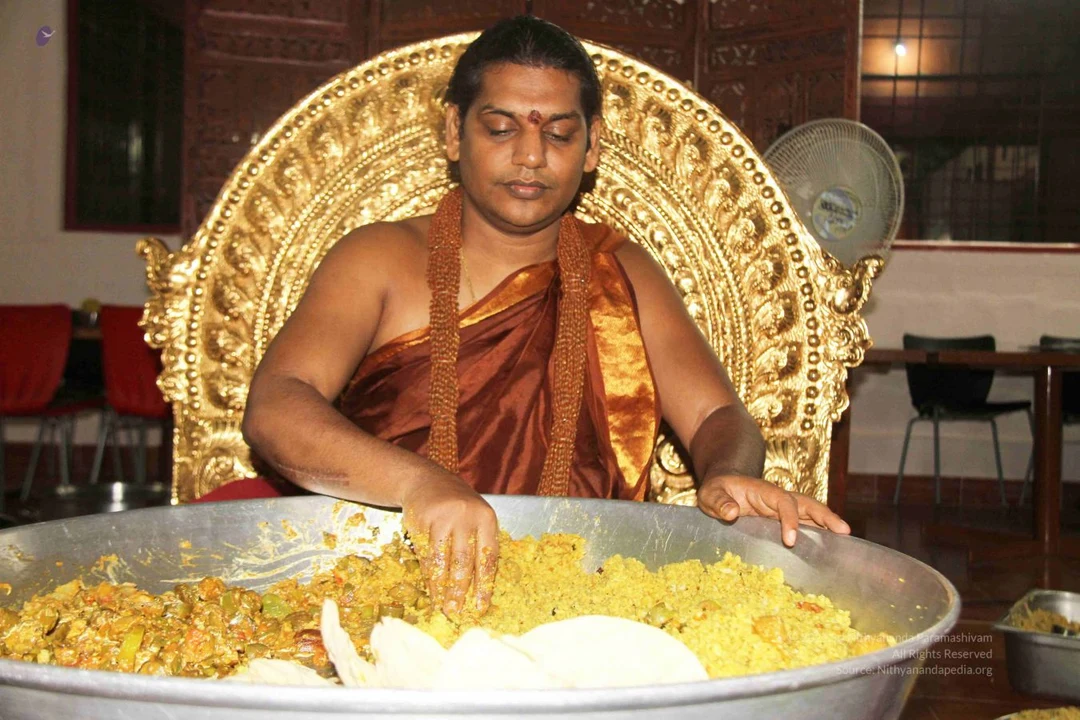
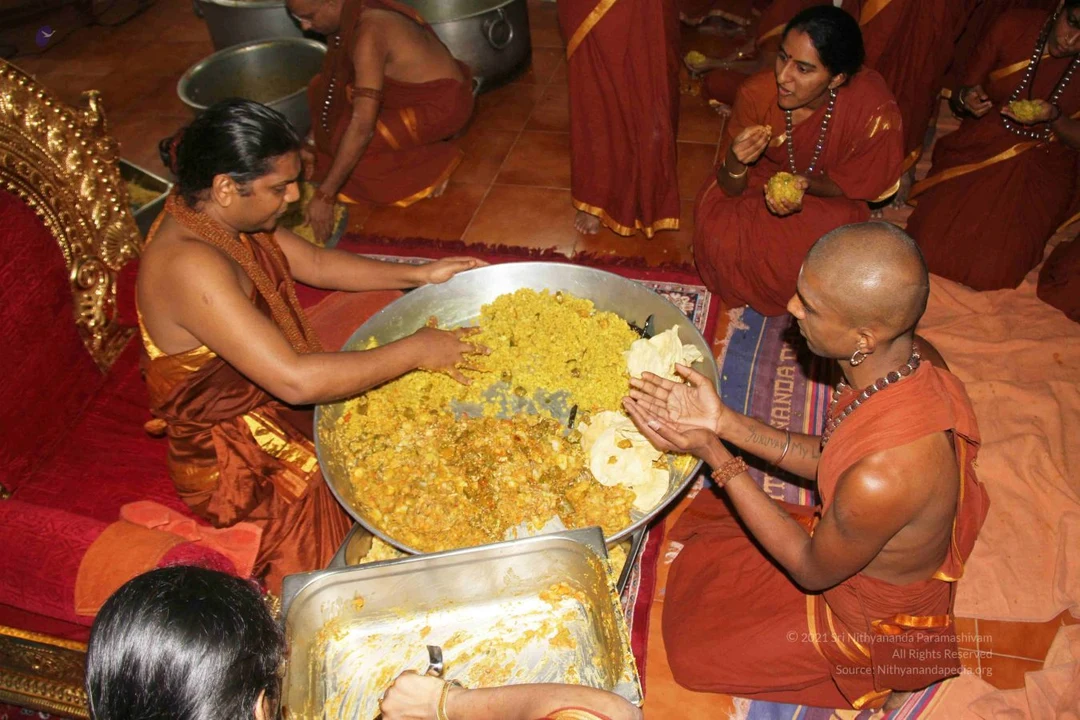
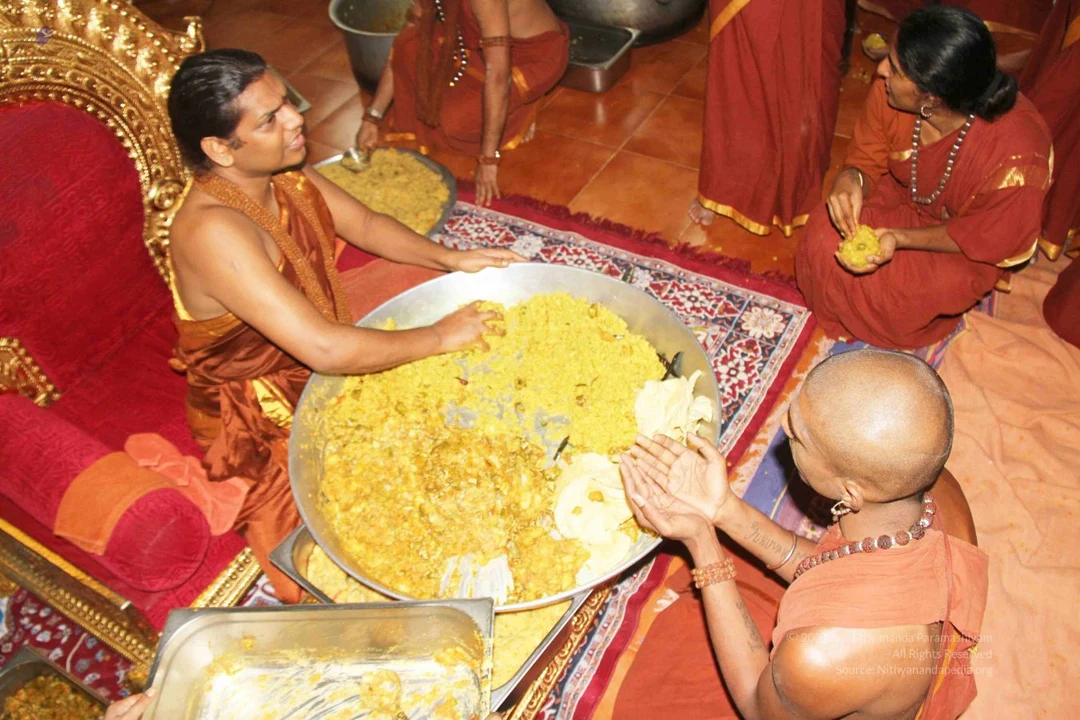
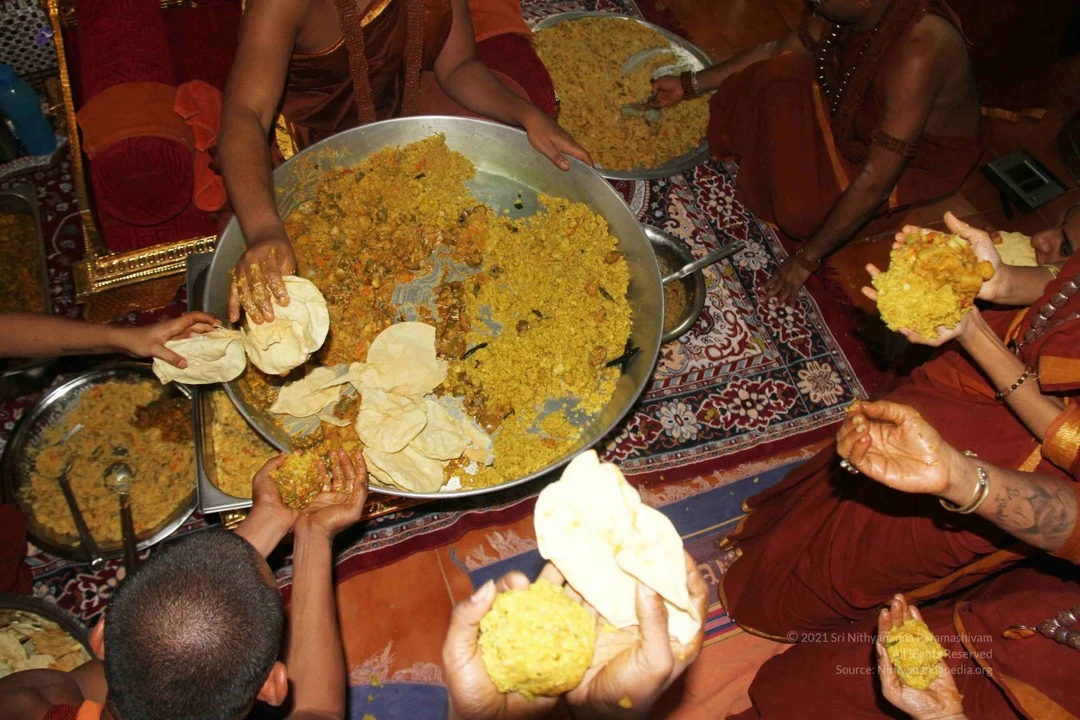
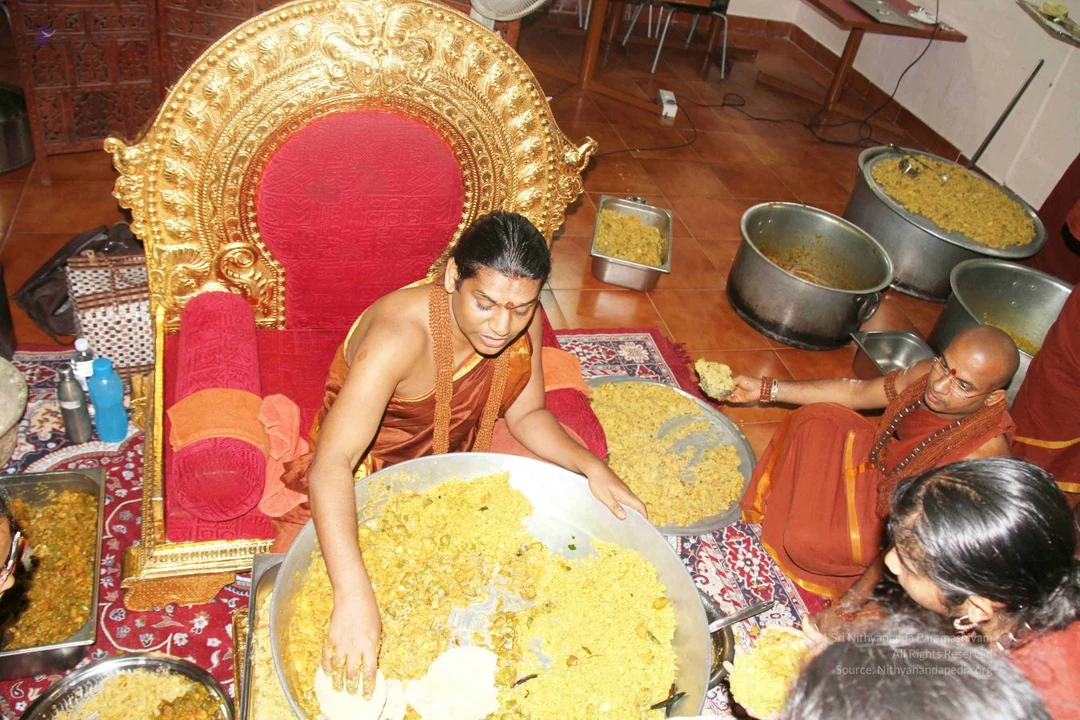
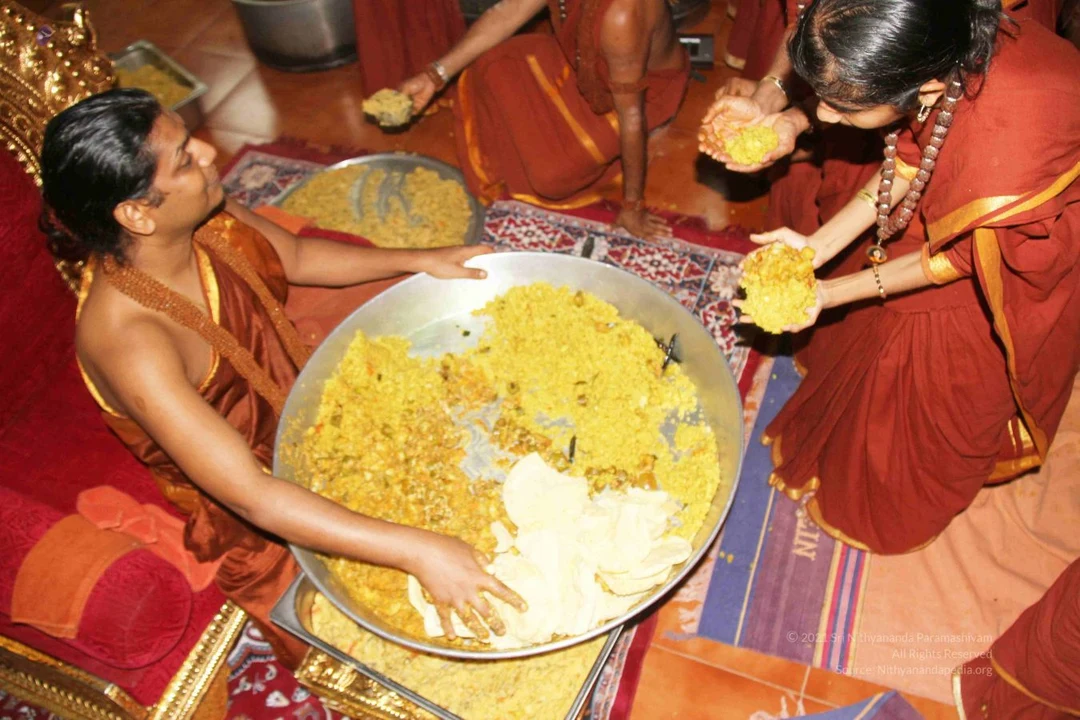
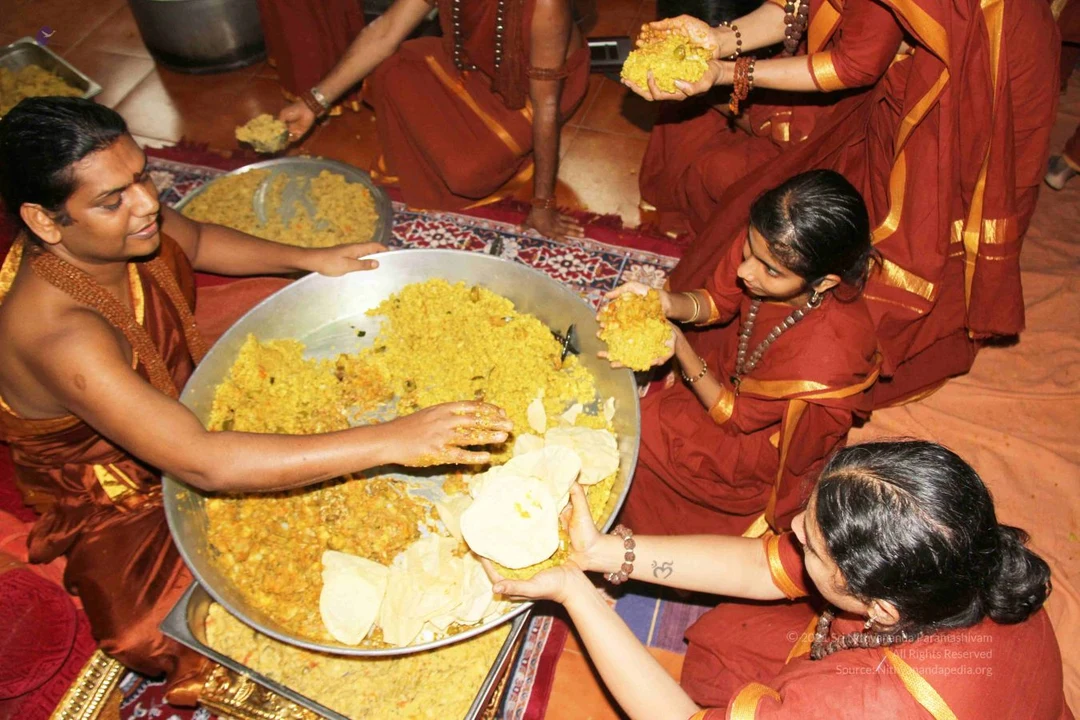
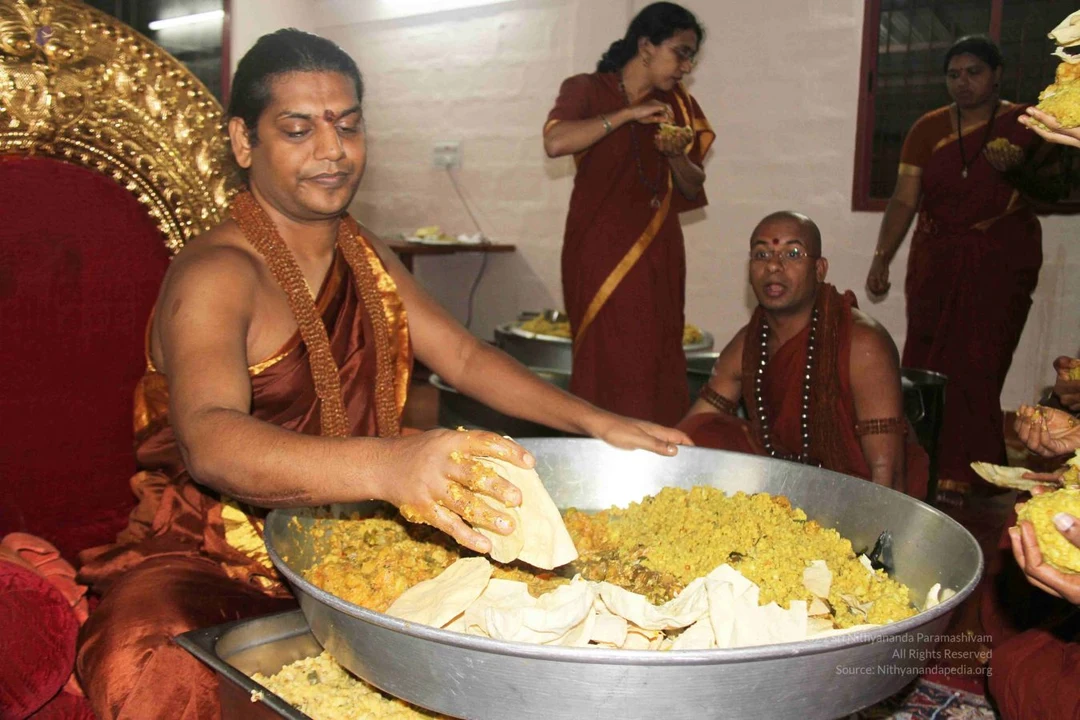
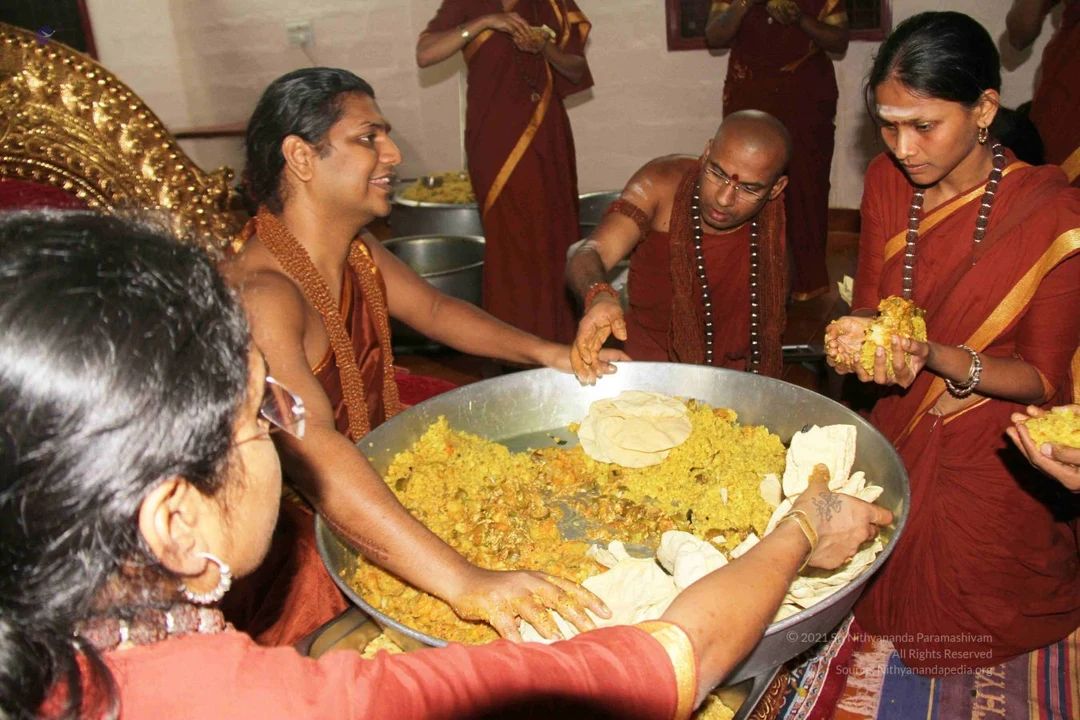
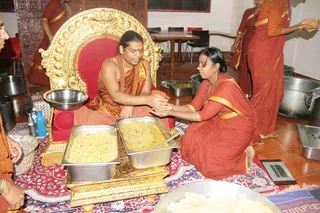
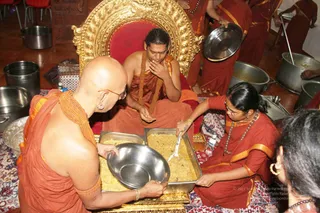
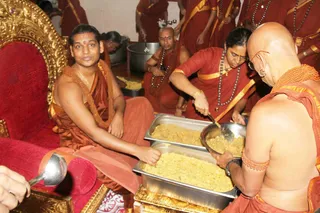
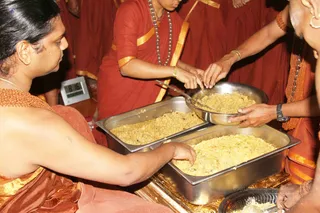
A seated man on an ornate gold-and-red throne wears orange-saffron robes, a rudraksha mala and a gold-toned necklace, and holds out food from a steel tray to a kneeling woman in an orange-and-gold sari who cups her hands to receive it. Steel pans of yellow rice-based food sit on a red and gold patterned carpet. Behind them, women in orange saris stand near steel vessels and bowls, one holding food in her raised hand. The seated figure is an appearance-based a person candidate, identified by the rudraksha mala, ceremonial necklace and saffron robes, with the throne and offering scene as context. The scene shows food offering and distribution with serving vessels and a woven mat.A seated man on a red-cushioned golden throne, wearing an orange-brown robe over bare shoulders and a long rudraksha-style bead mala, rests his hand against his chin while watching food being prepared. In front of him, a bald monk in orange robes and a beaded necklace bends over a steel tray of yellow rice while a woman in an orange sari with a beaded necklace serves from another tray. Steel pots, bowls and a ladle sit on a patterned cloth, and other devotees in orange robes hold steel plates in the background.A seated man in a red-gold ornate throne with a red cushion wears an orange-saffron shawl and a thick orange-beaded mala, sitting with his arm resting on a silver serving tray. Around him, devotees in saffron and orange robes with rudraksha malas serve food: a bald man in front, a woman with glasses and beaded necklace stirring yellow rice in steel trays, and another man in orange at a large steel pot. Steel pans hold cooked yellow rice, and a ladle rests on the throne's armrest. The scene suggests annadan food distribution in an ashram hall.Photograph of a food-serving scene. A seated man on the left, bare-shouldered and wearing a saffron-orange shawl with gold border and a thin gold necklace, reaches toward large steel trays of cooked golden rice. Behind him, people in red-and-saffron robes with gold-bordered sashes and beaded malas hold a steel serving bowl and a serving spoon, portioning the rice. A digital clock display sits in the background. The man's face is partly turned away, and his appearance does not clearly establish a person candidate; he is described by role only.Devotees in orange and saffron robes with gold-yellow borders serve food at a ritual. A bald man in orange robes, wearing rudraksha malas, glasses and gold-toned armbands, stirs rice from a steel pan with a ladle while another ladle scoops from a bowl on a golden tray. A figure in an orange shawl with a long dark ponytail sits on the left, reaching toward the metal trays of cooked yellow rice. Standing devotees in matching robes crowd behind, and a pink-cloth-clad arm appears at the lower right. The scene suggests a prasad or annadan serving.A kitchen scene of several women in matching saffron-orange sarees with golden borders and rudraksha malas serving food. Large steel pots and trays hold a yellow grain dish. One woman bends over a pot stirring with a ladle, another crouches to scoop from a tray, and a grey-haired woman in the foreground works at a bowl. Others stand behind with bangles and beaded necklaces, with a patterned rug and orange tiled floor visible.

ENERGY-DARSHAN

19 photosSource gallery
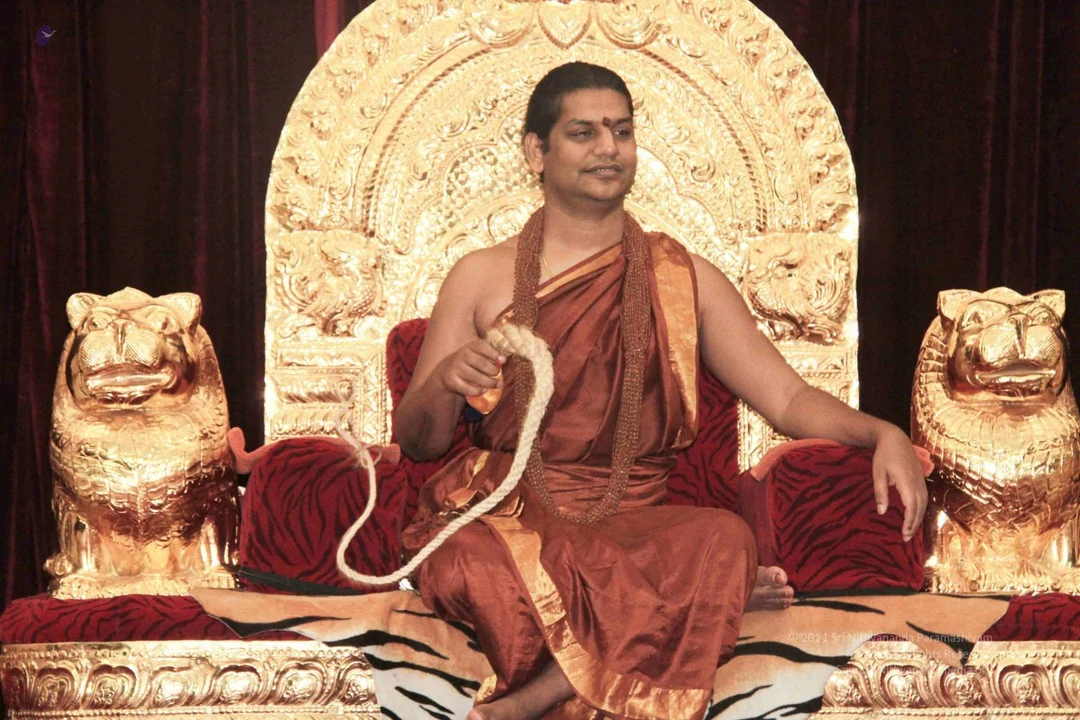
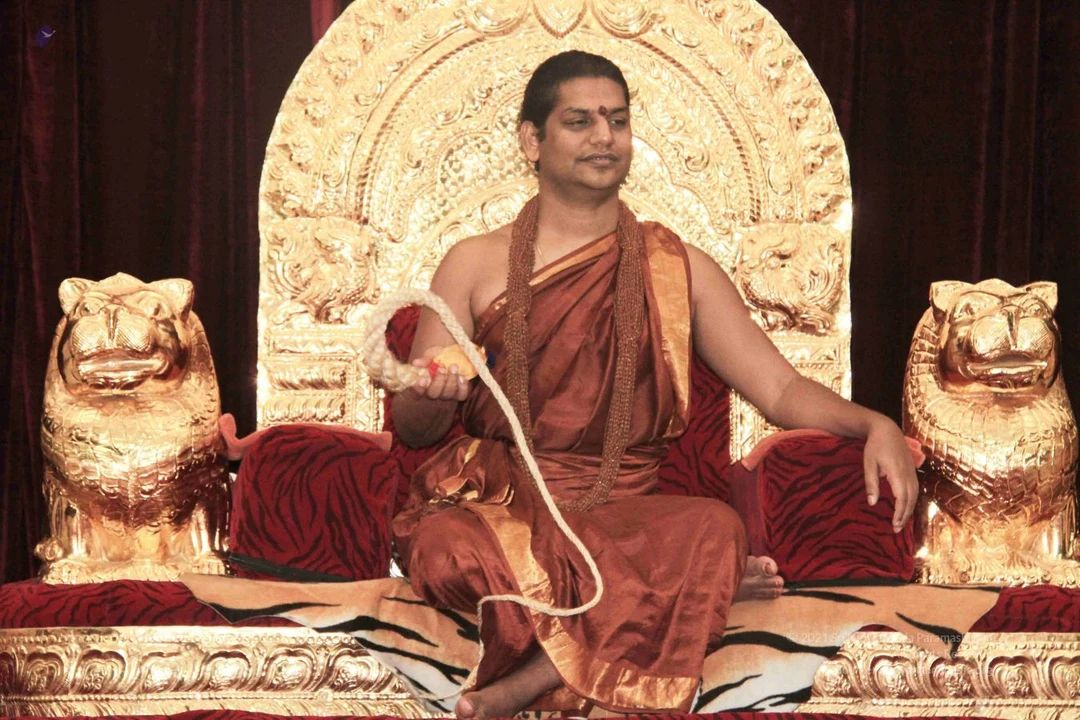
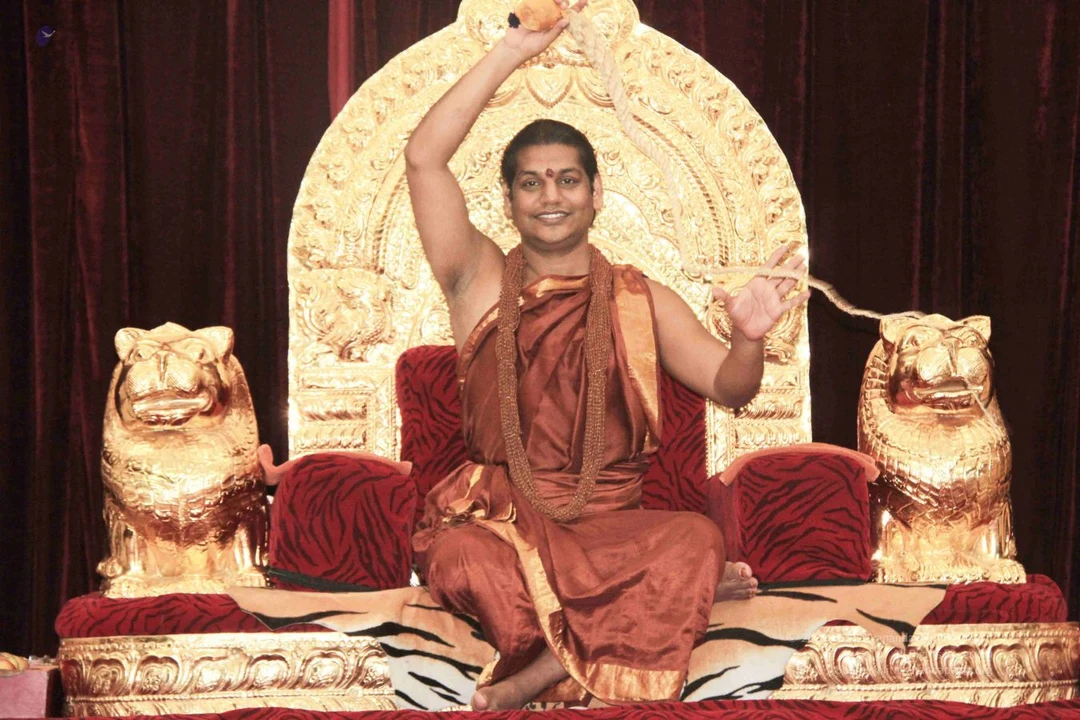
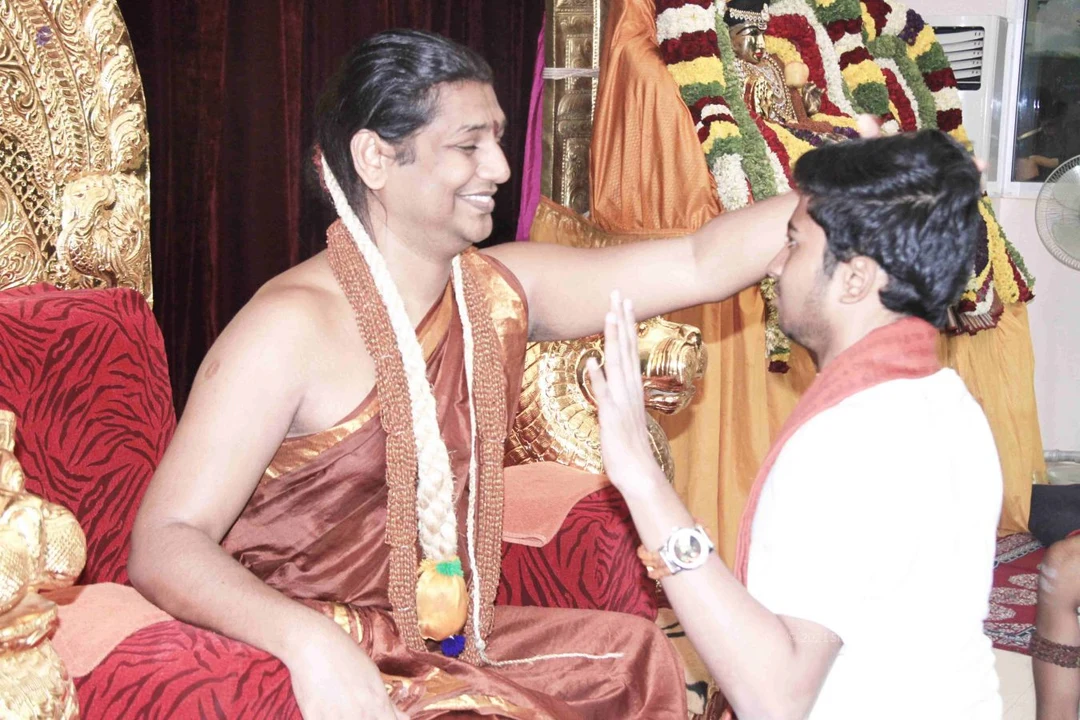
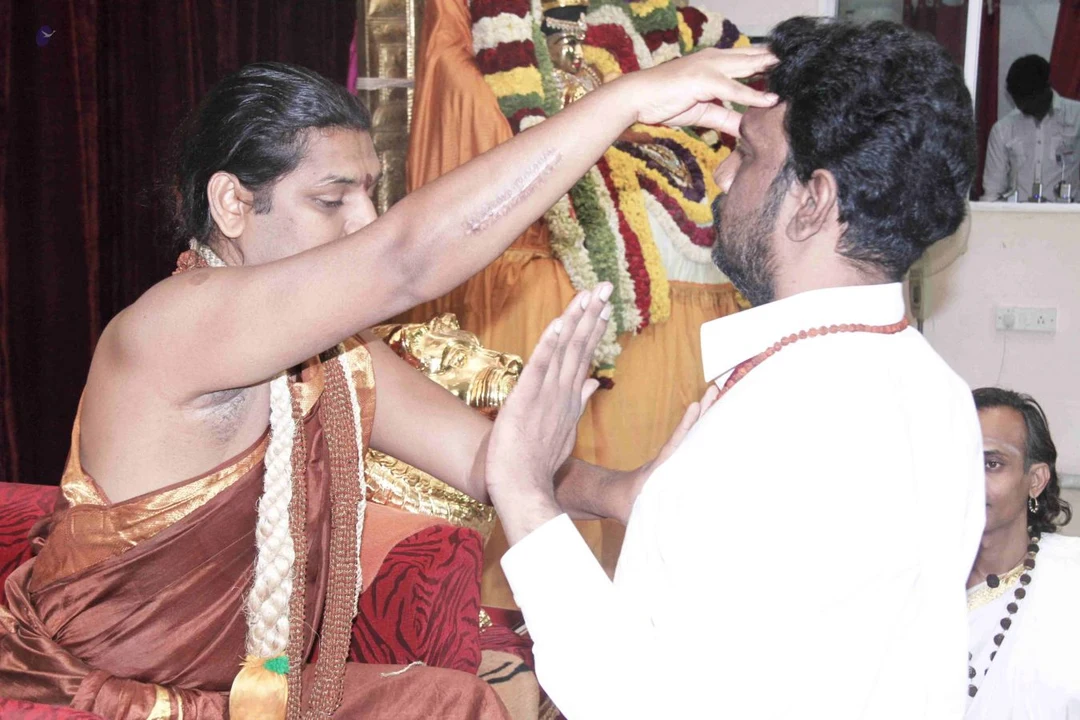
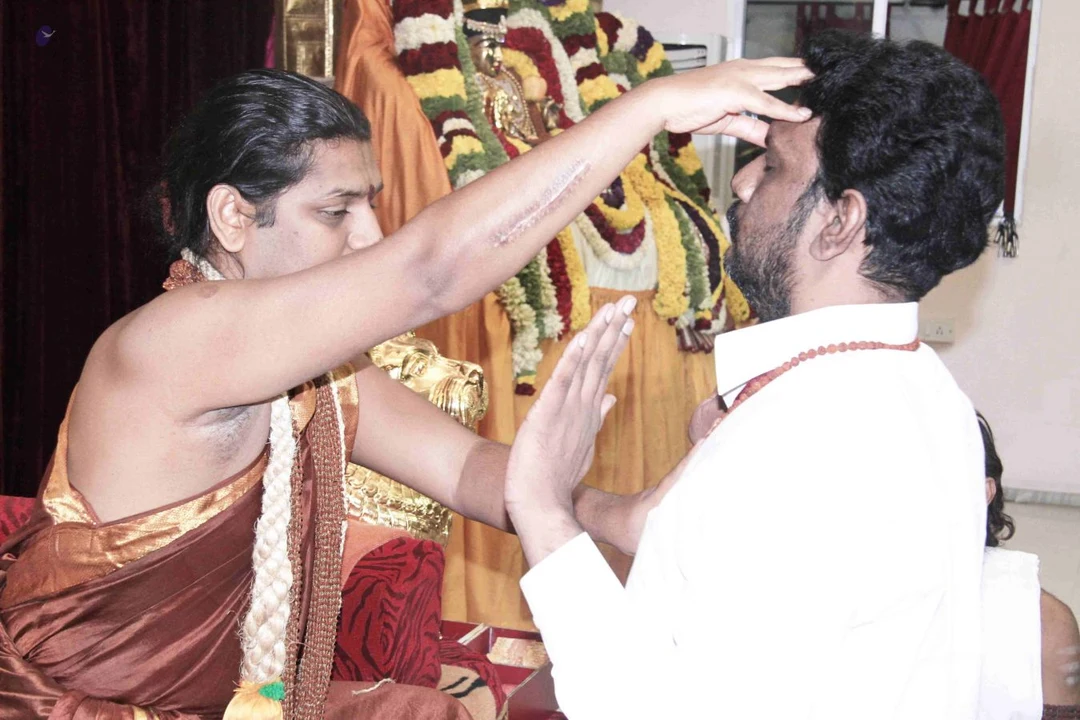
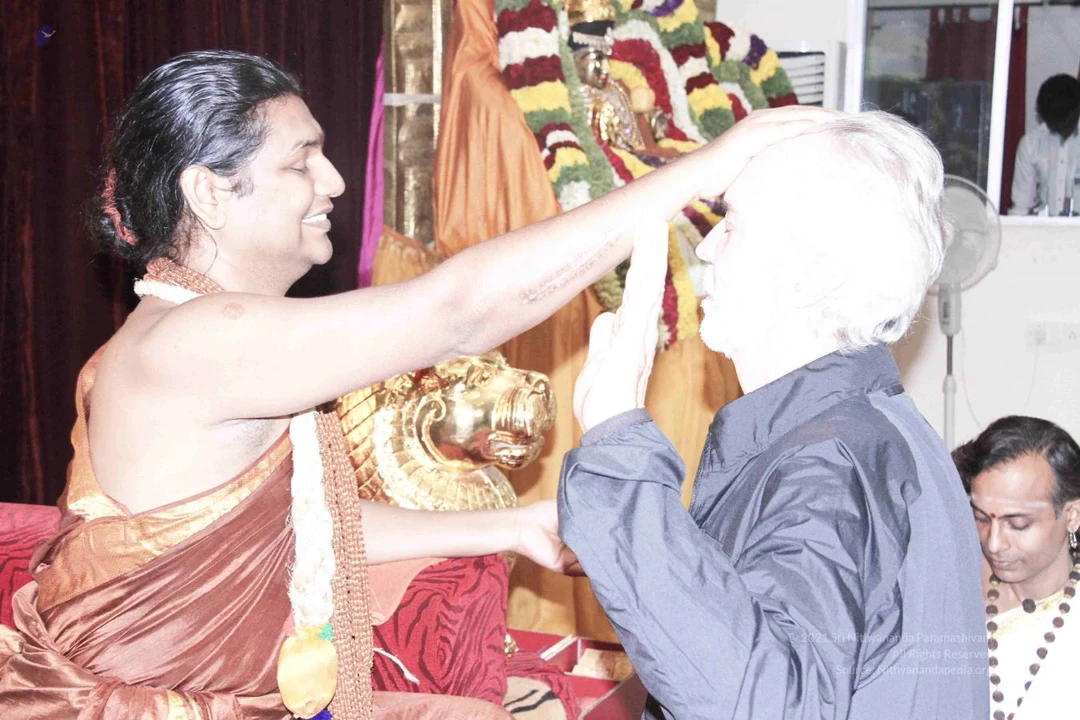
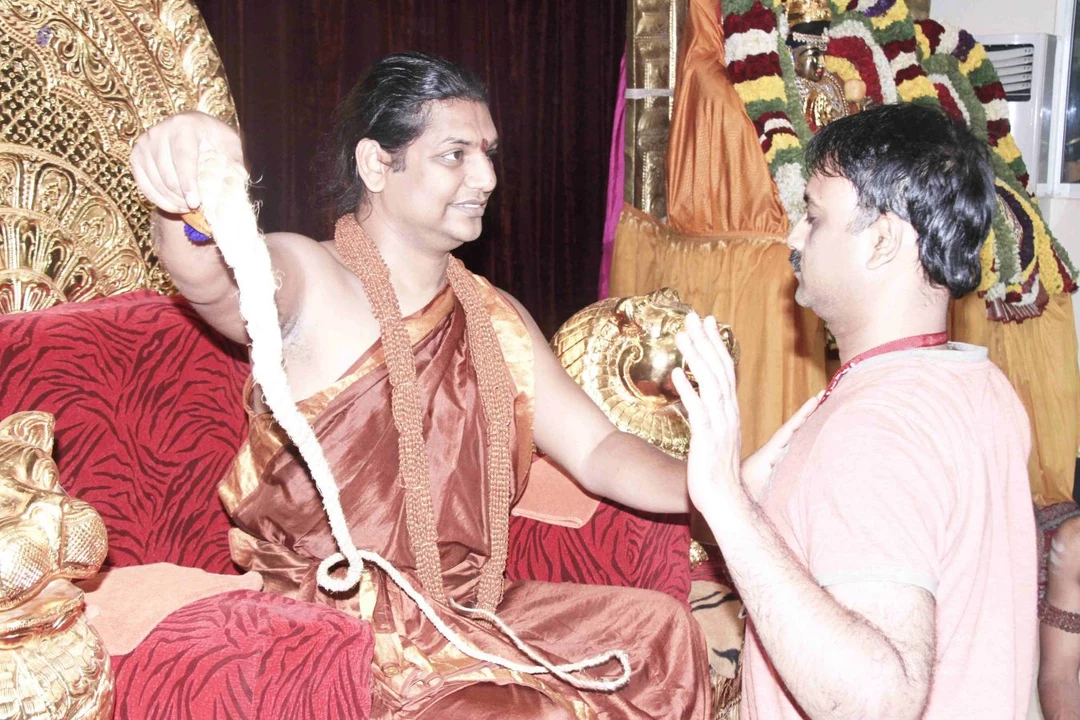
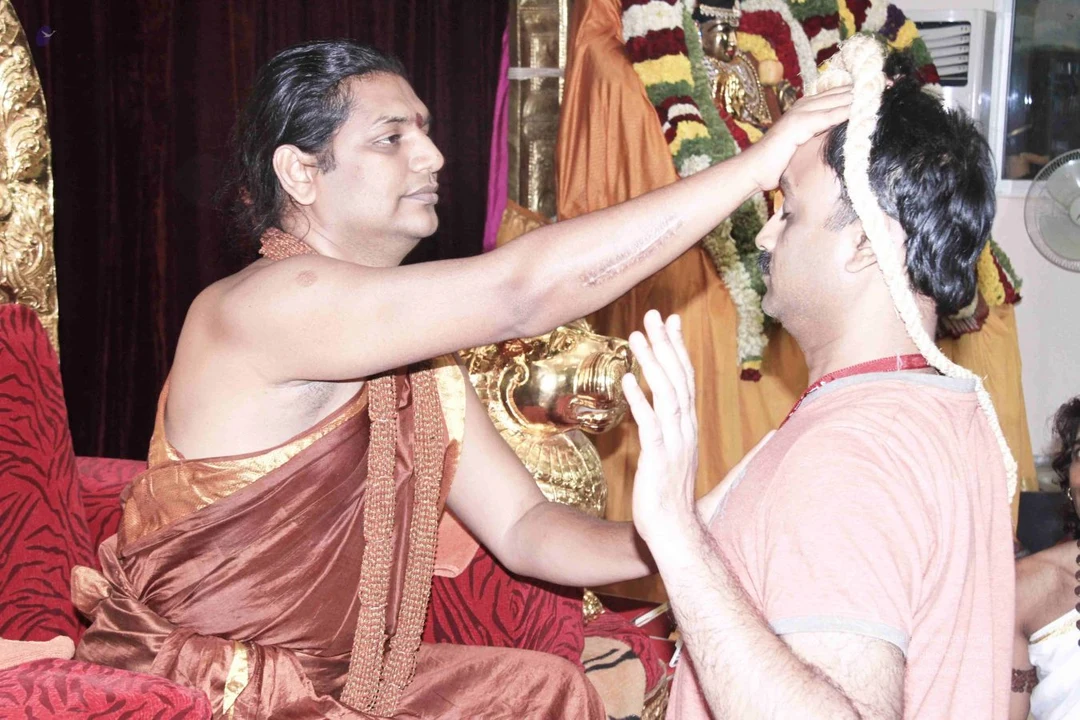
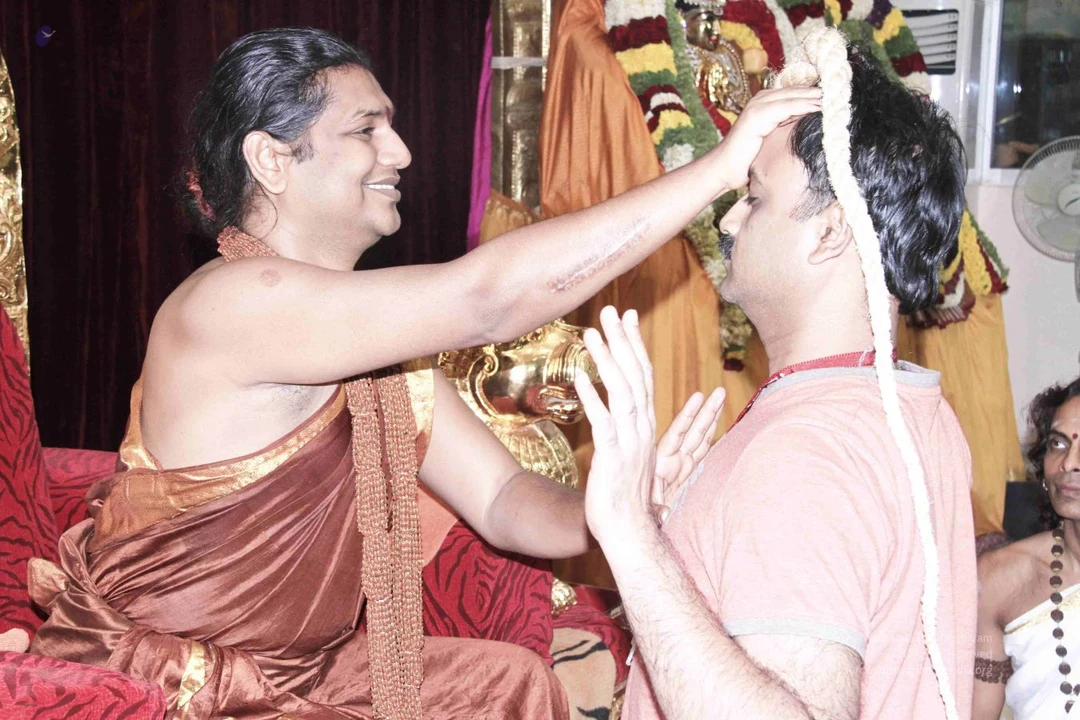
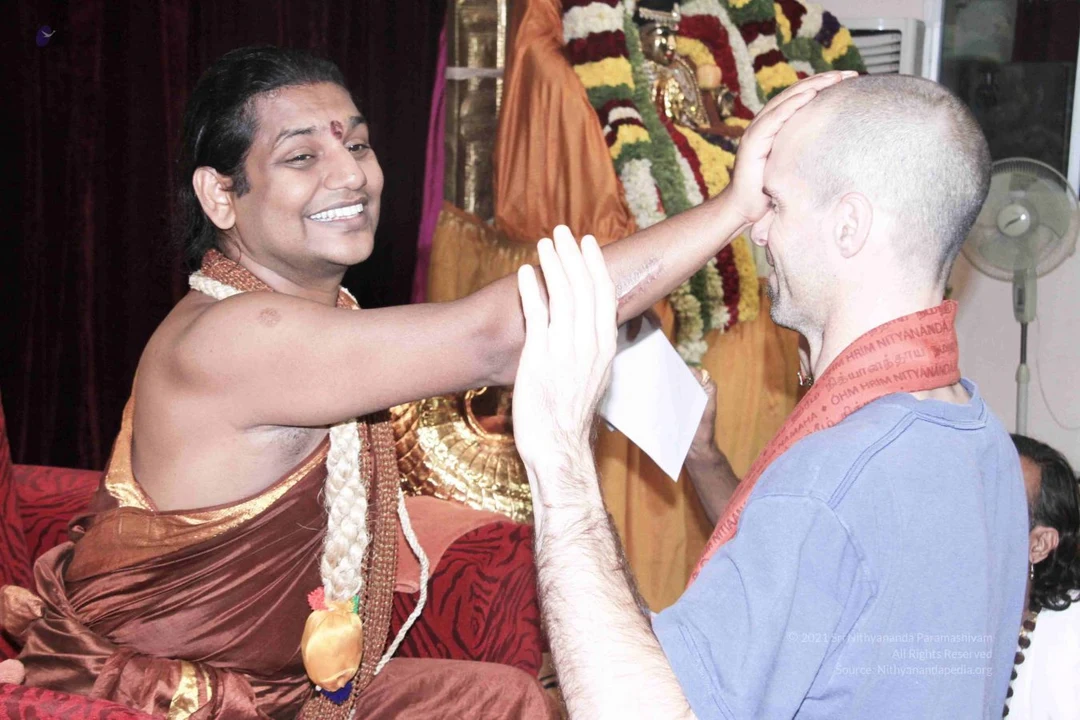
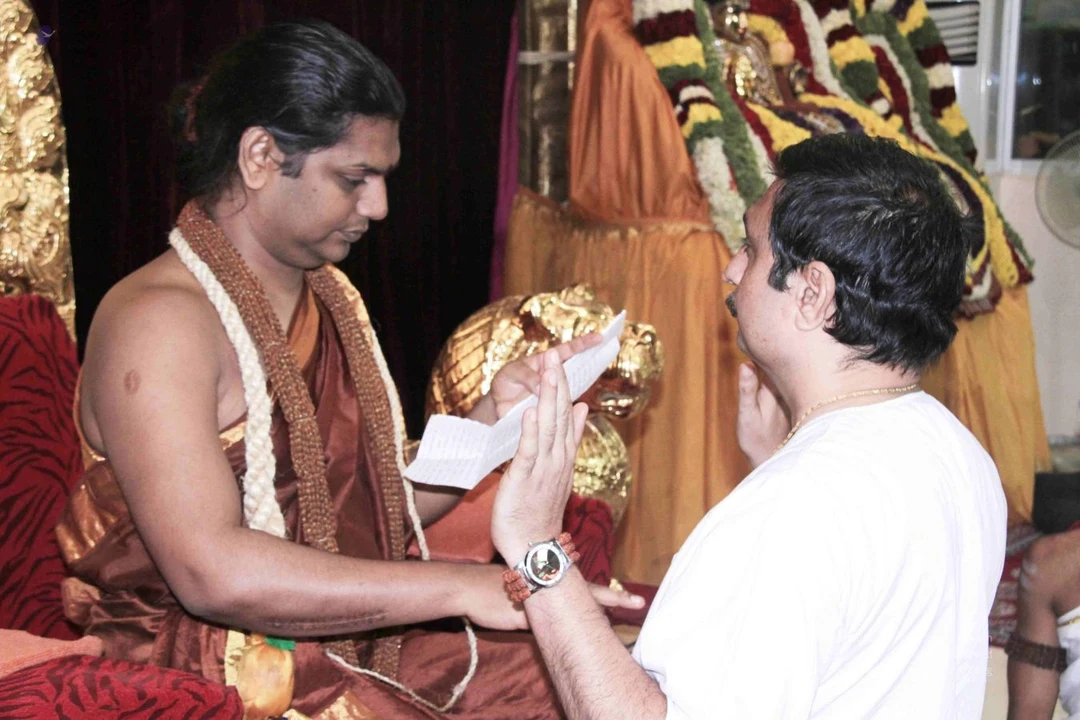
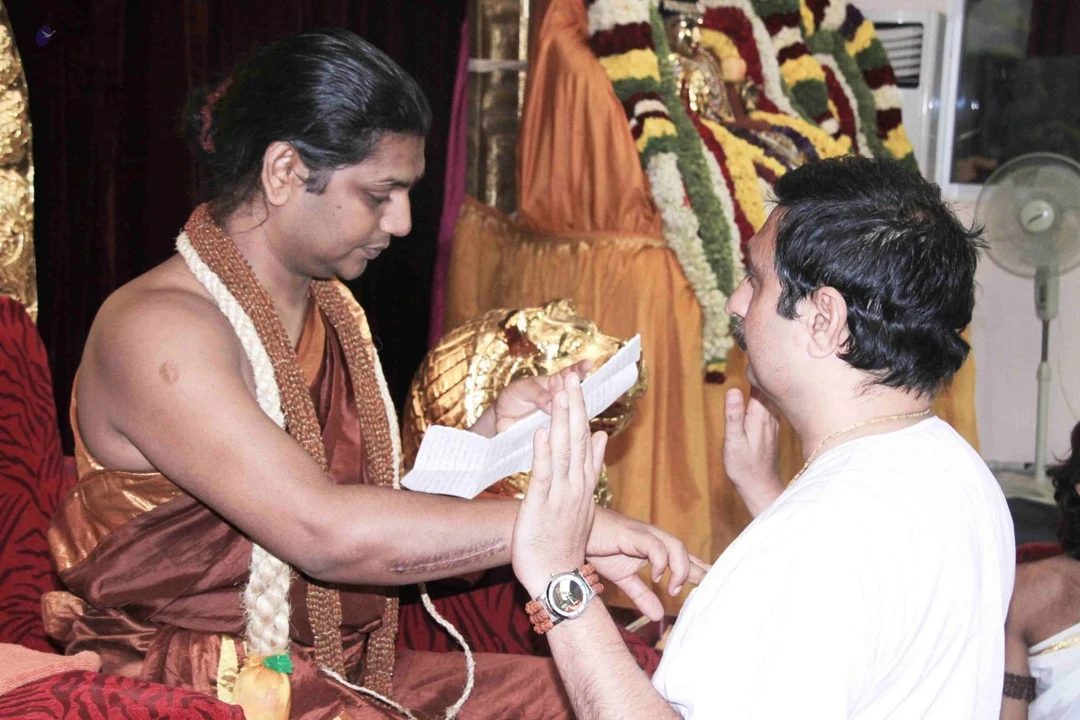
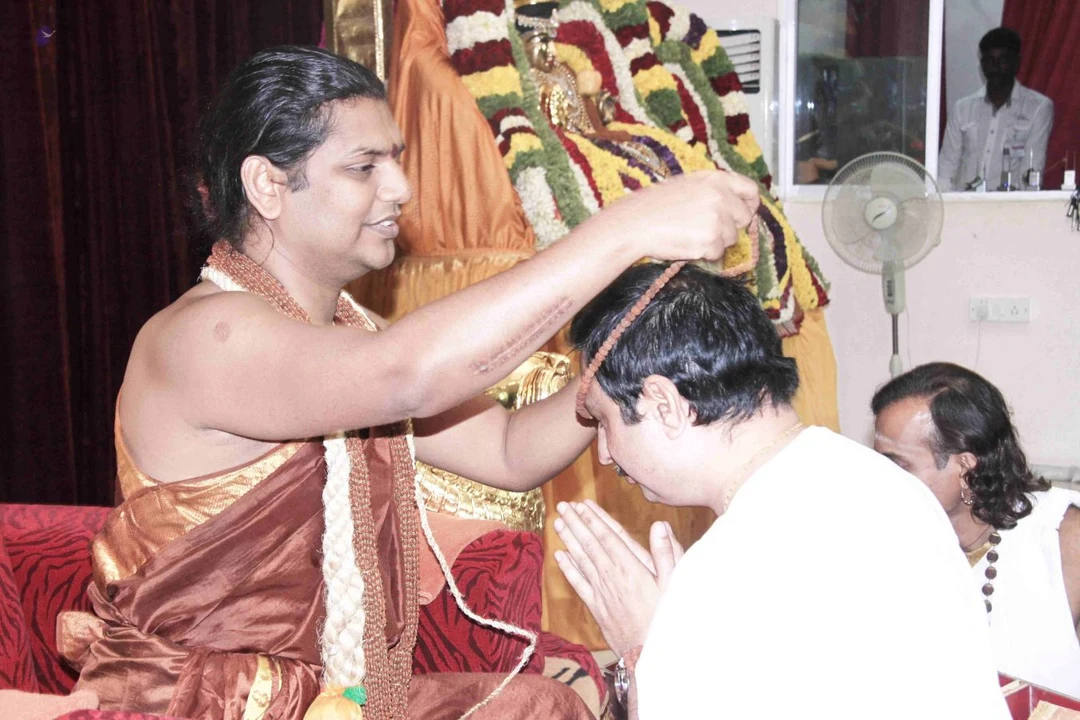
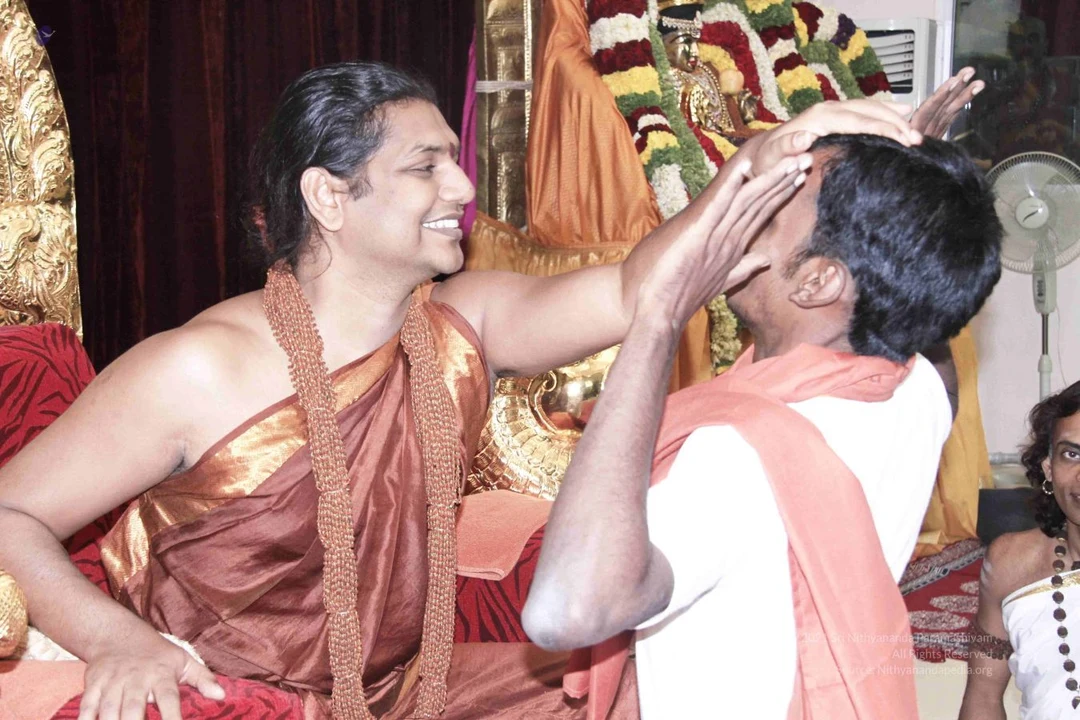
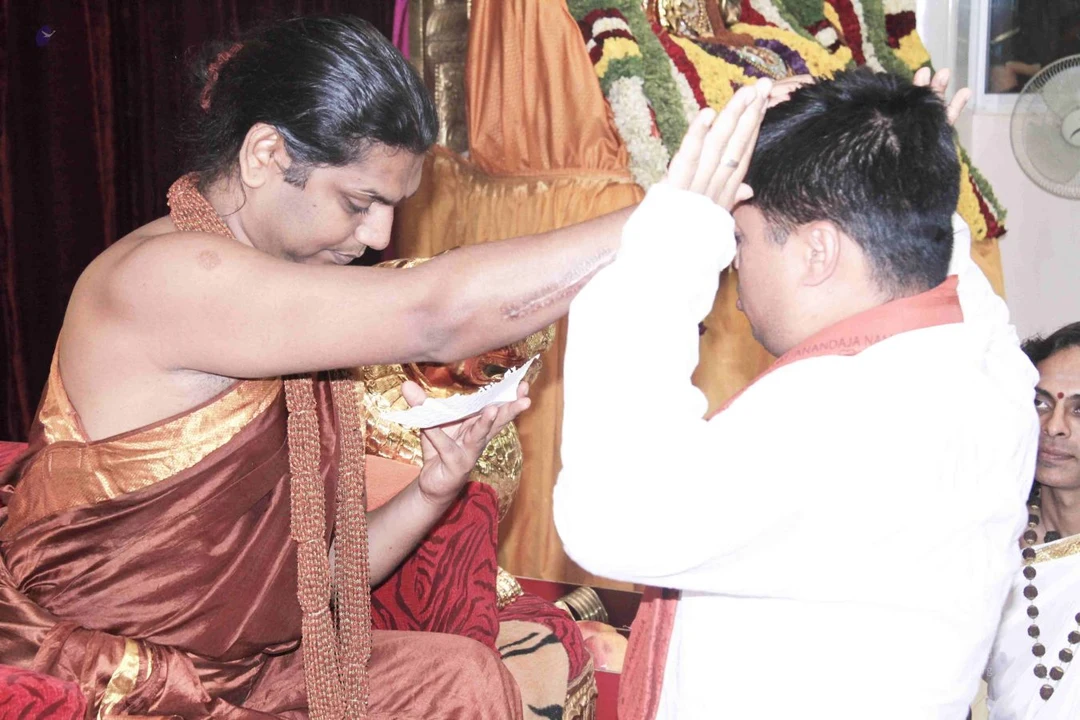
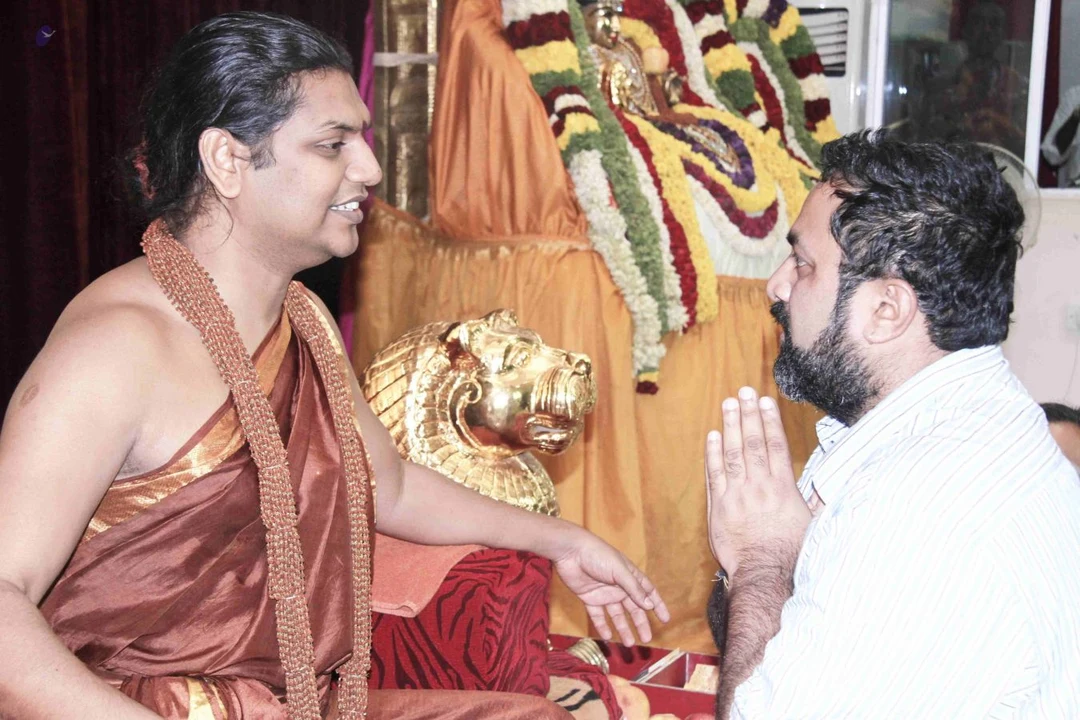
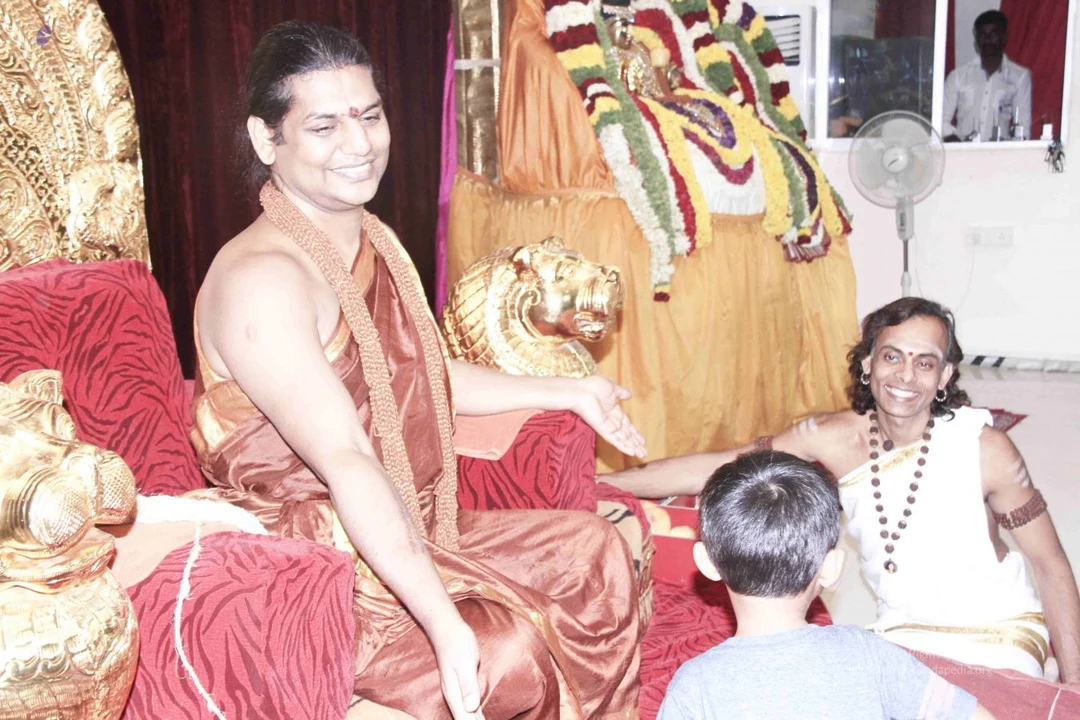
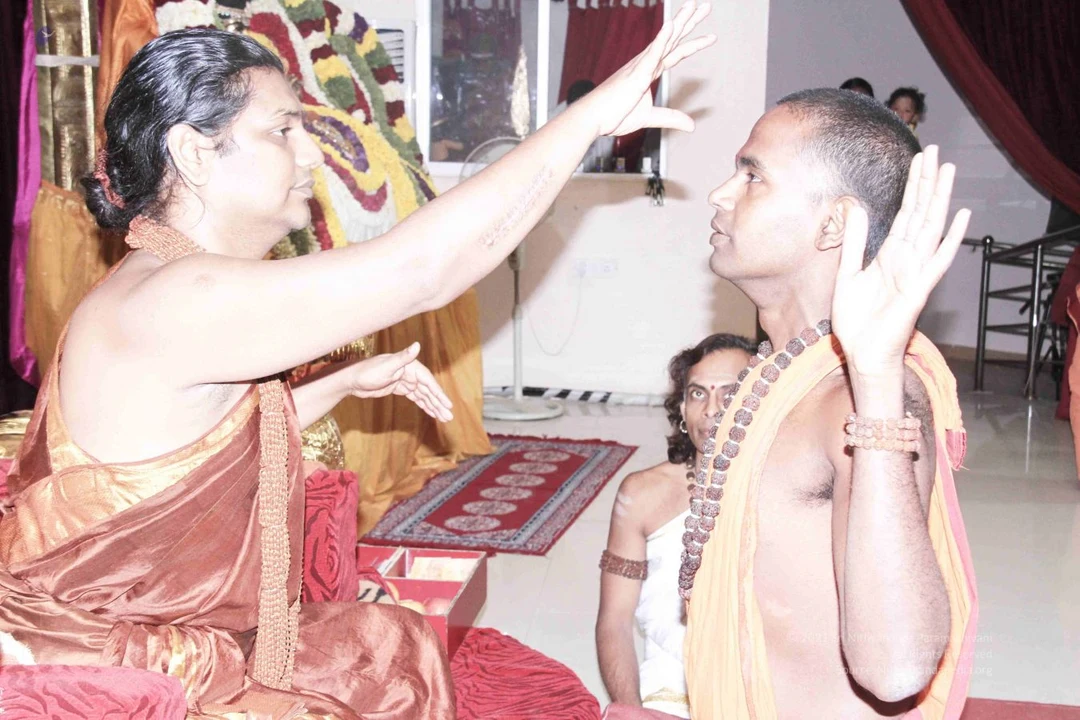
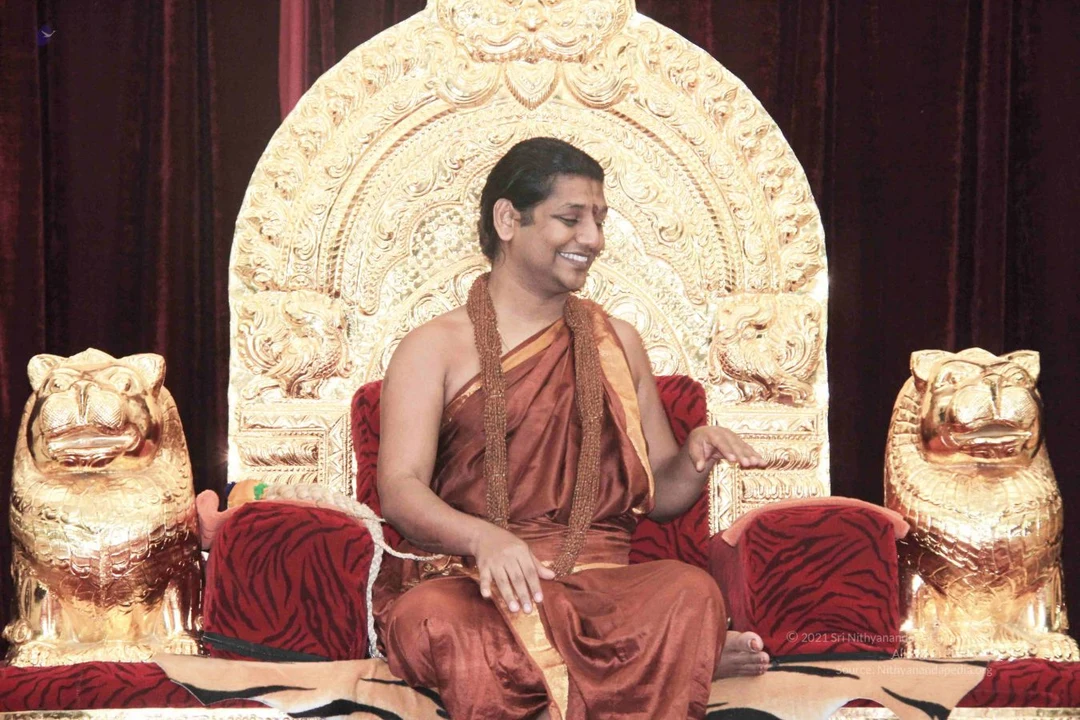
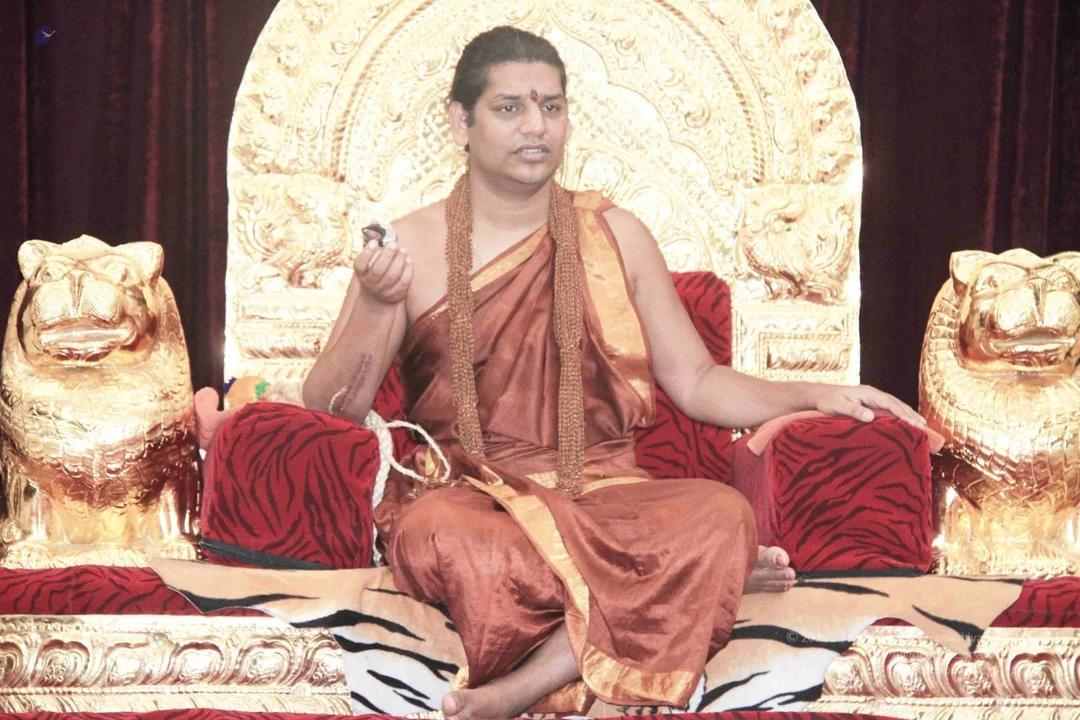
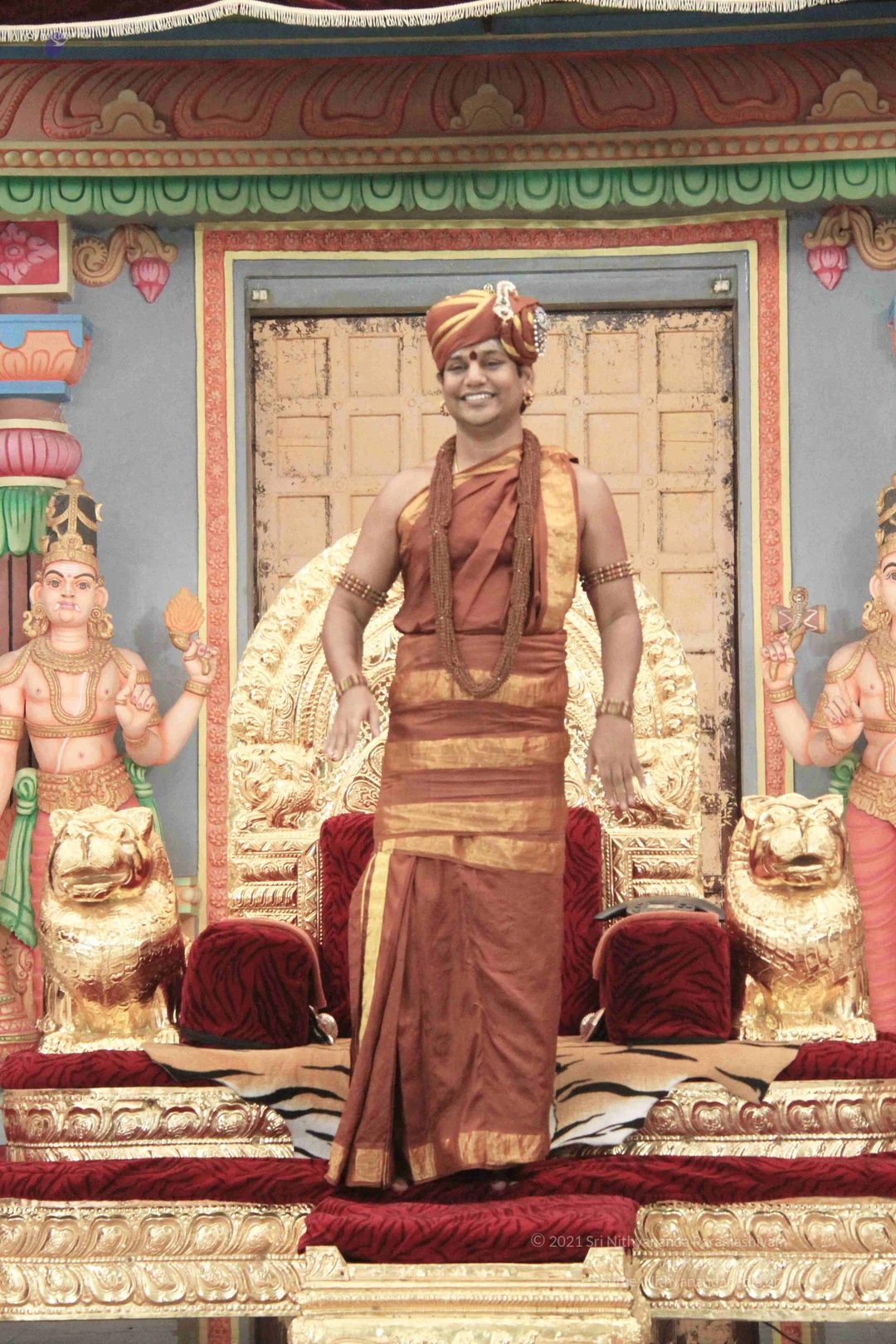
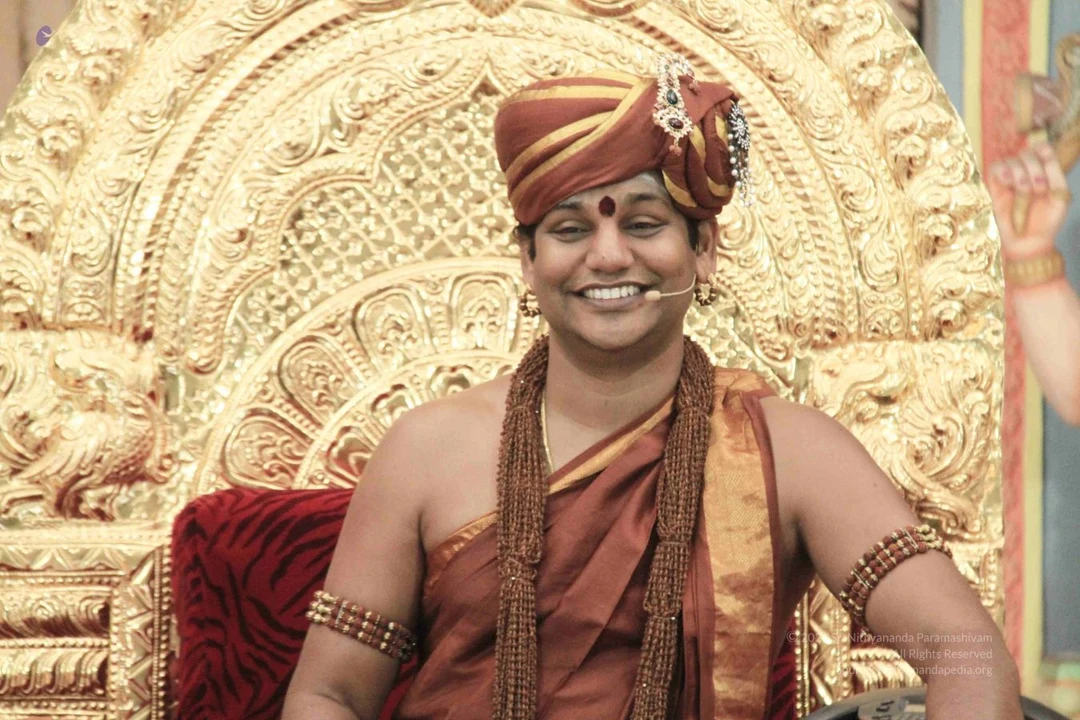
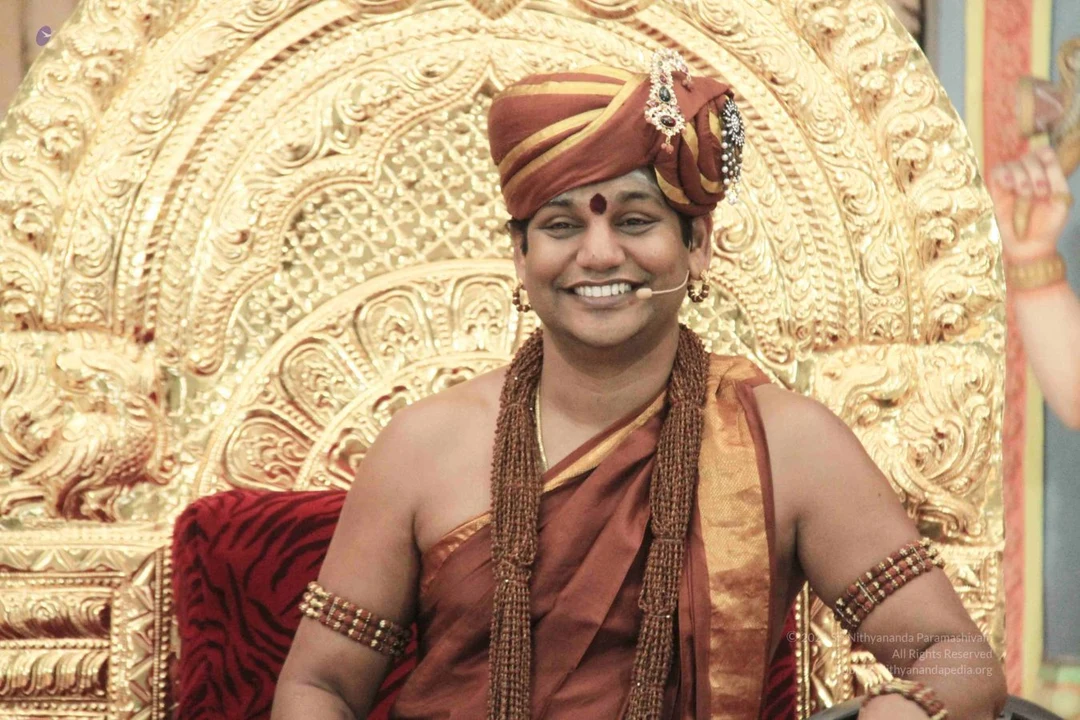
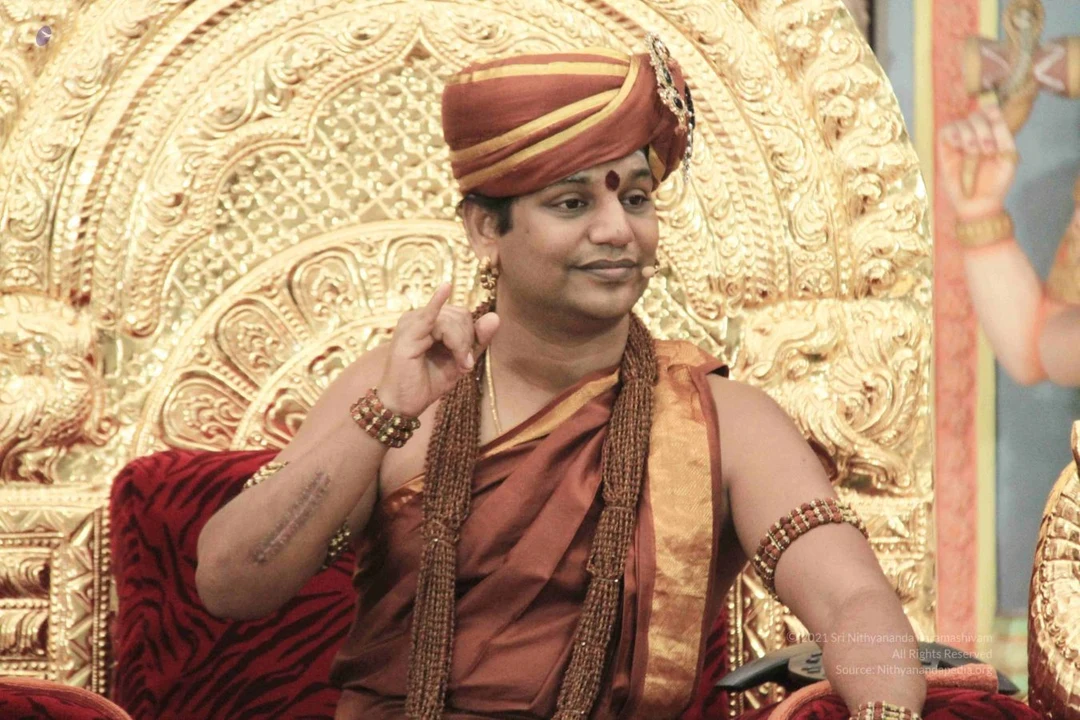
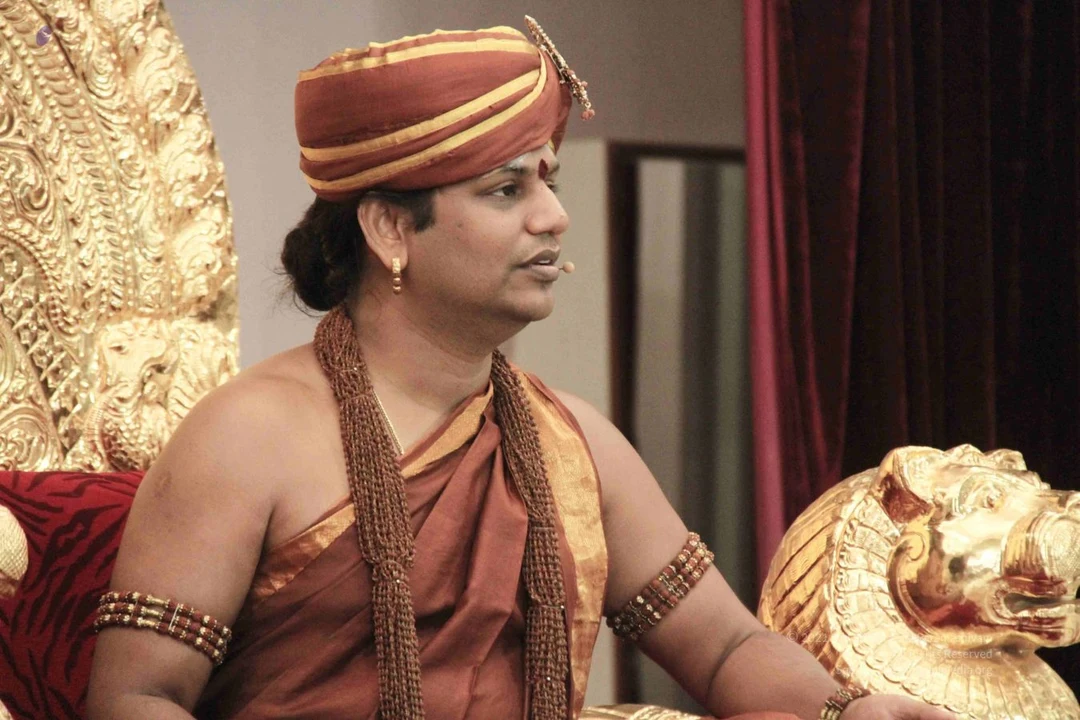
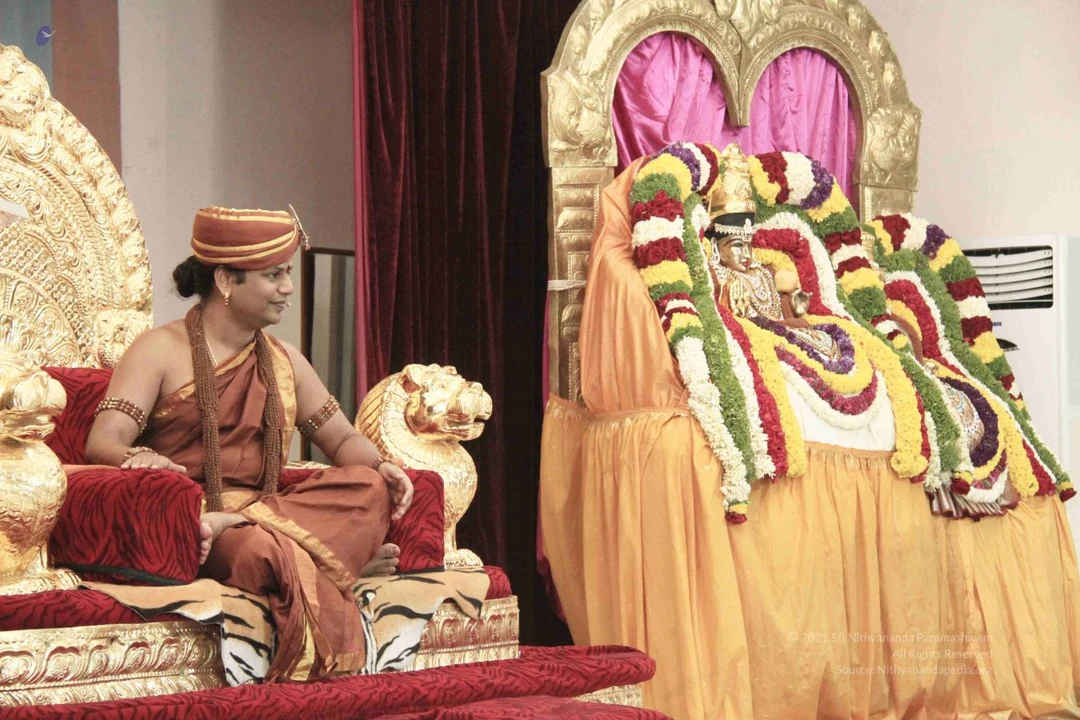
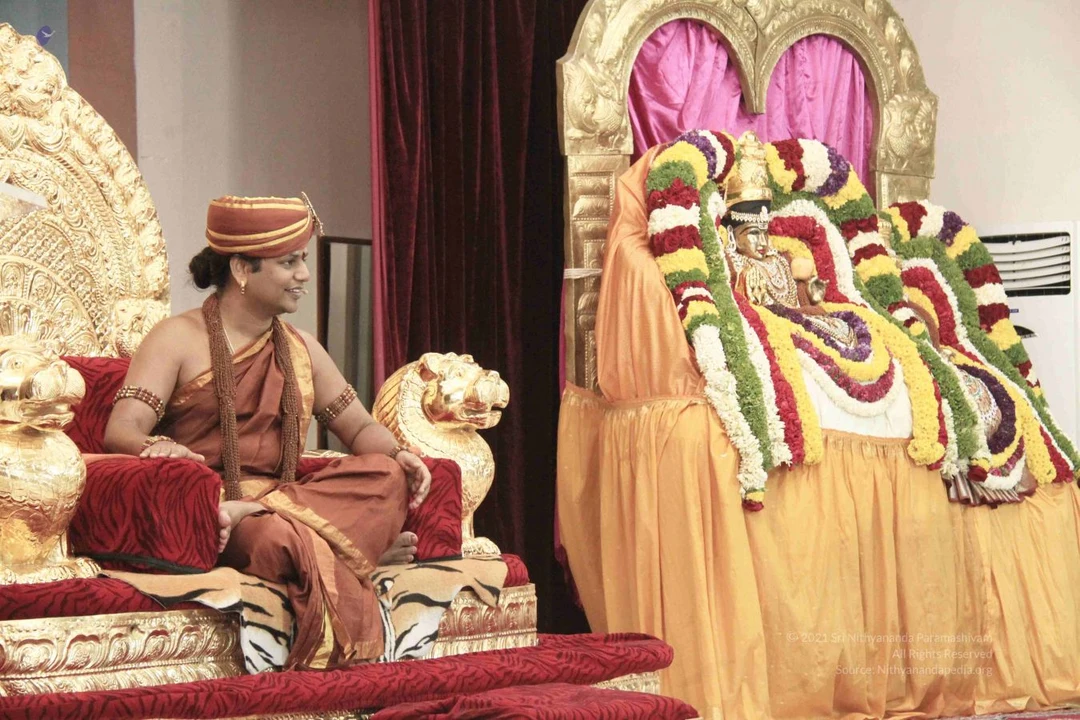
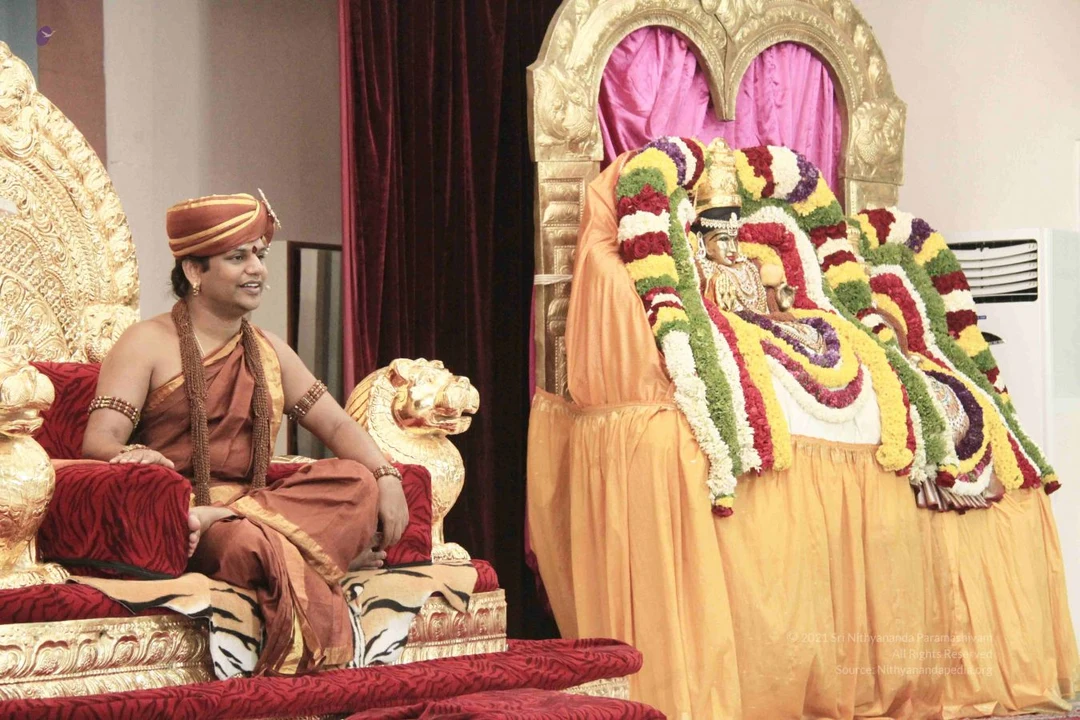
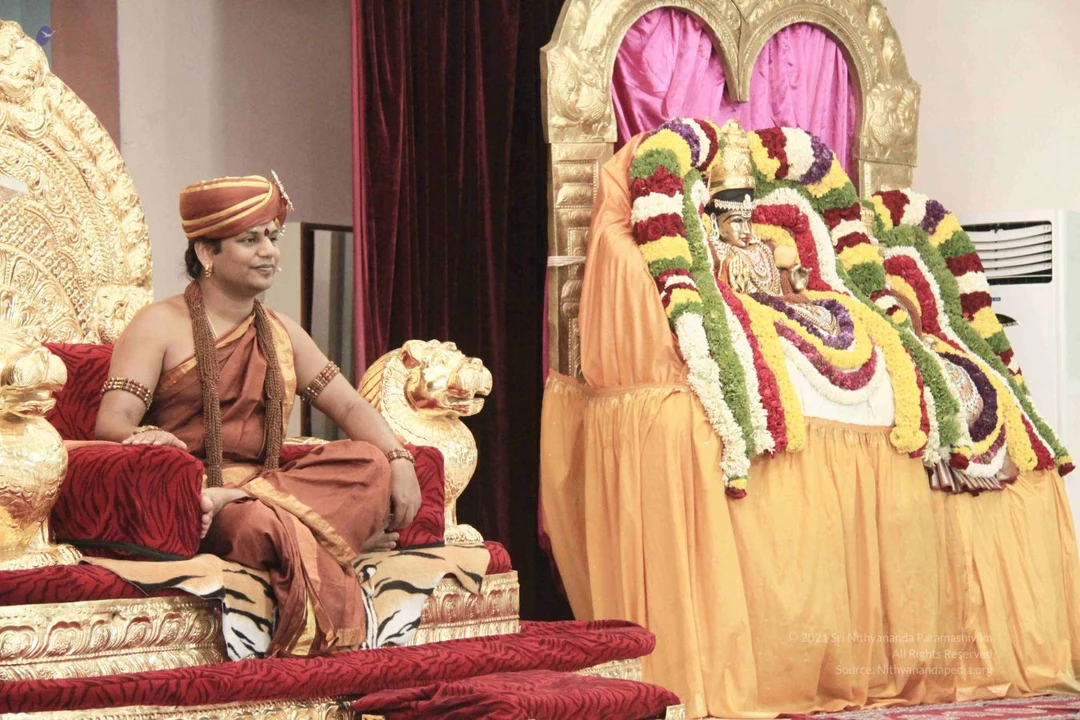
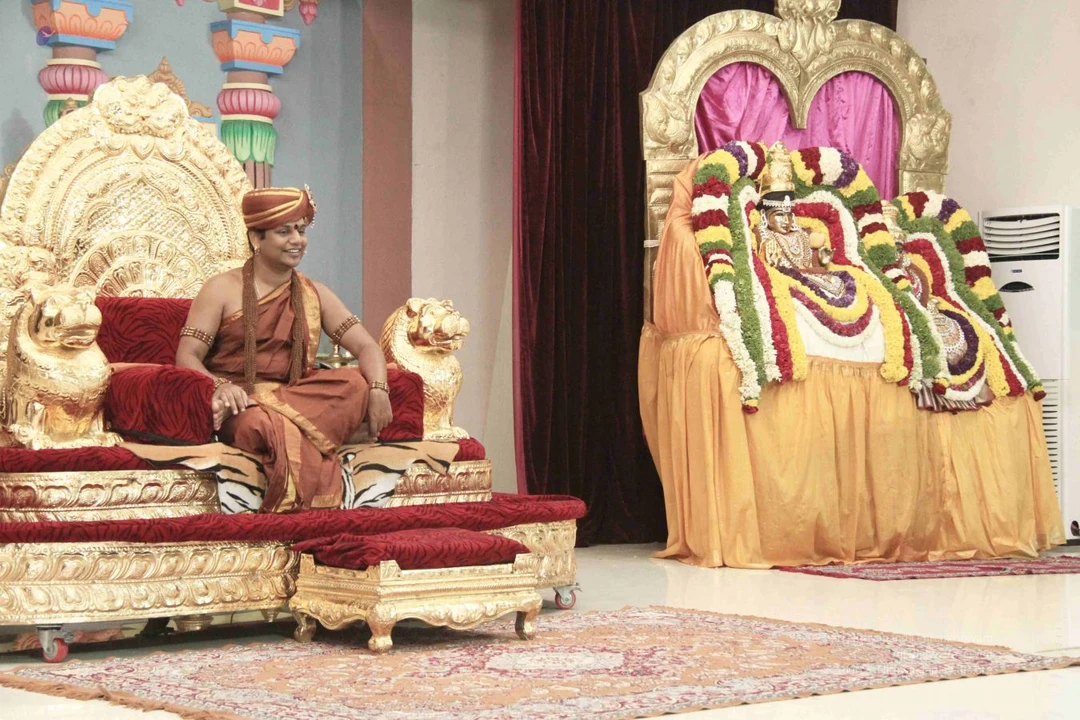
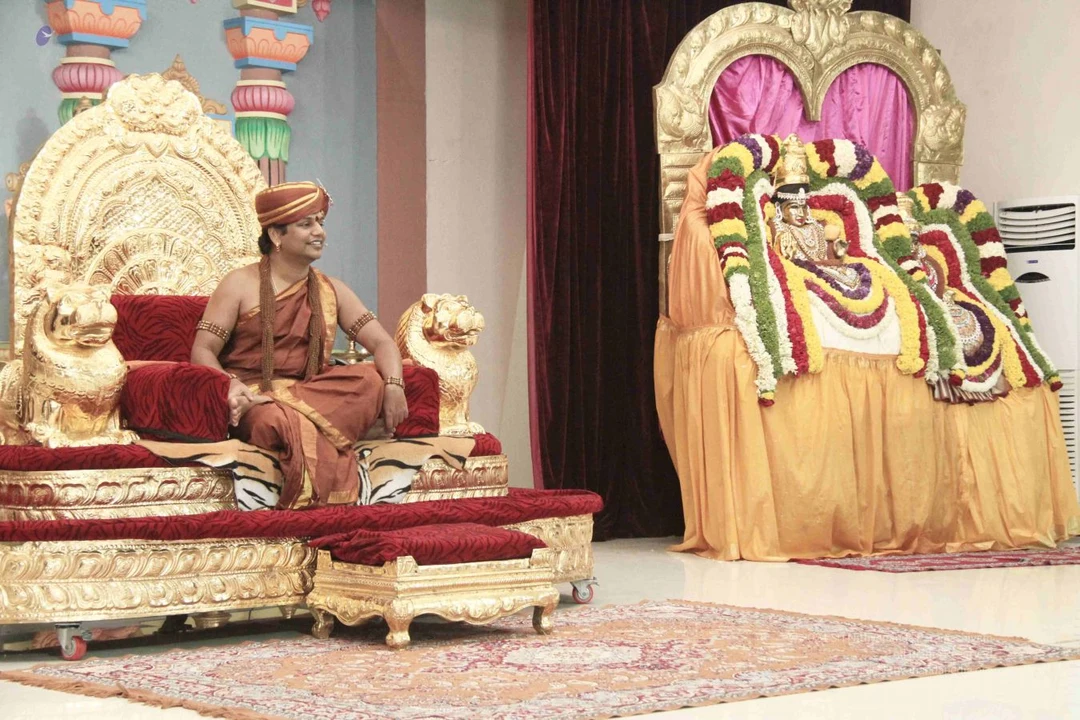
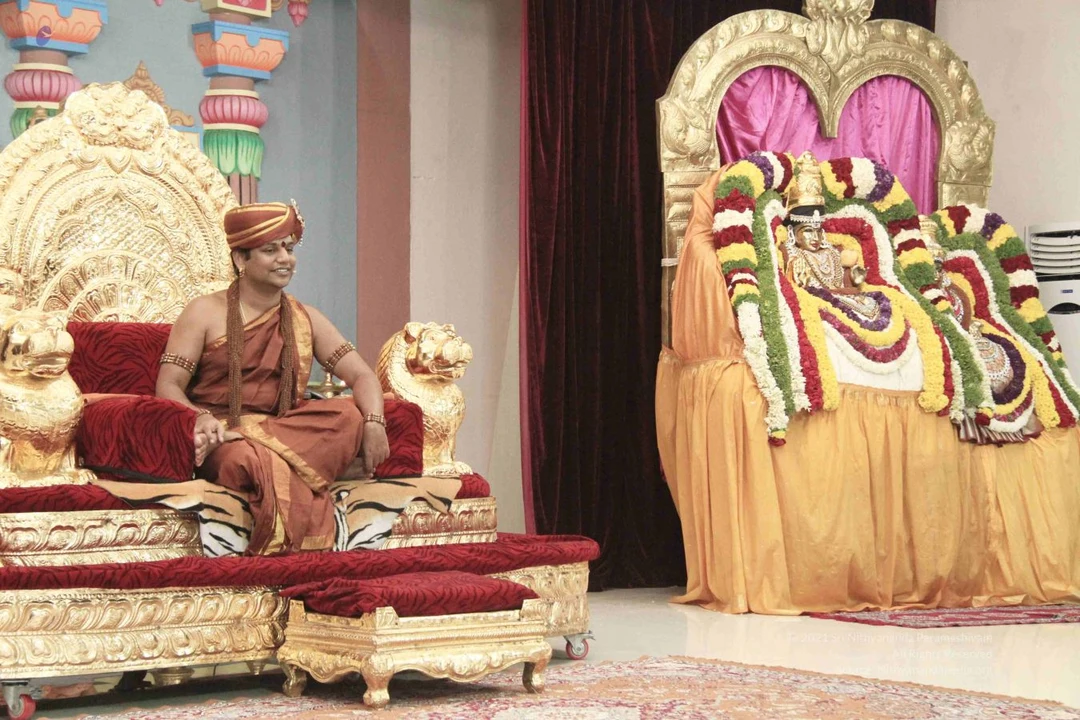
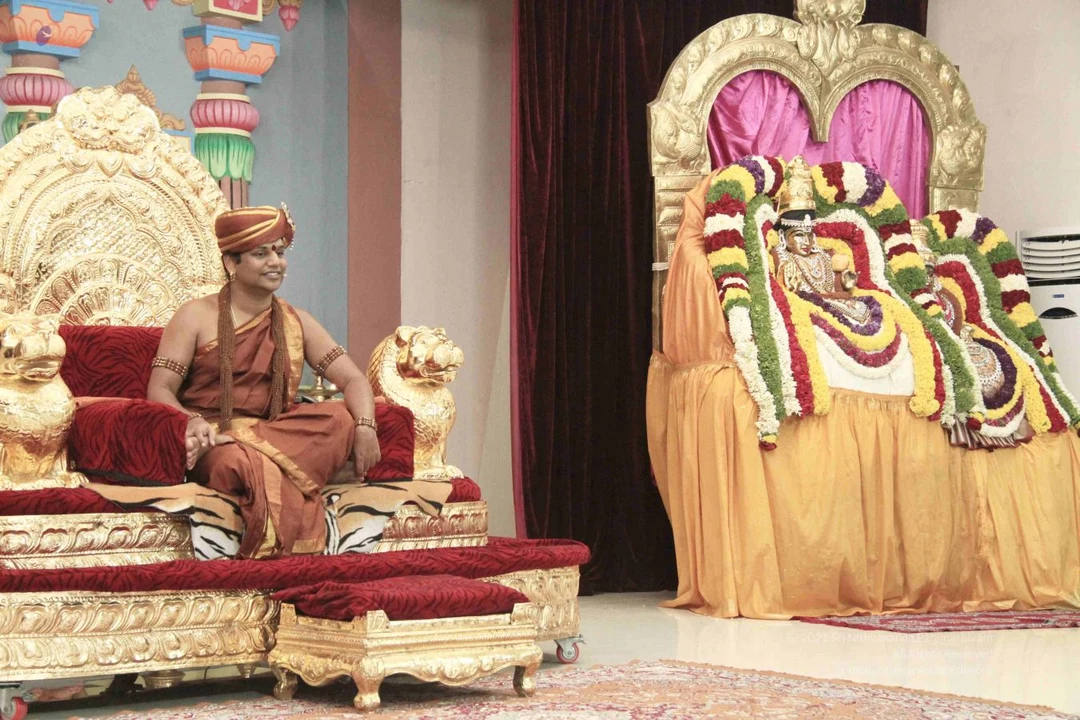
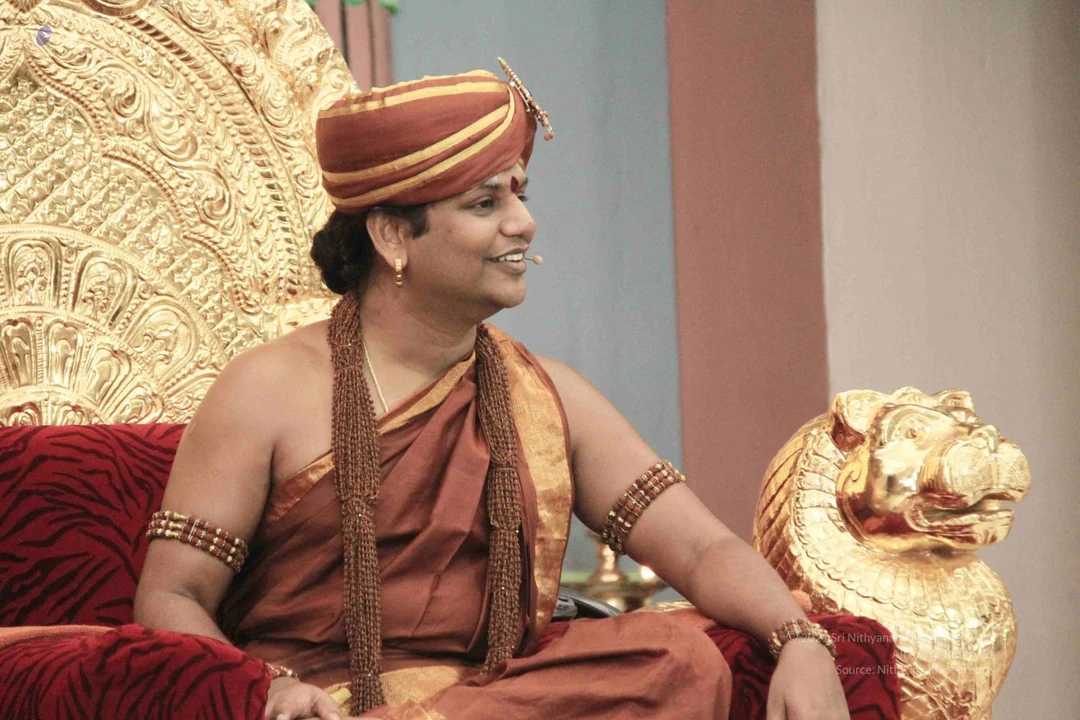
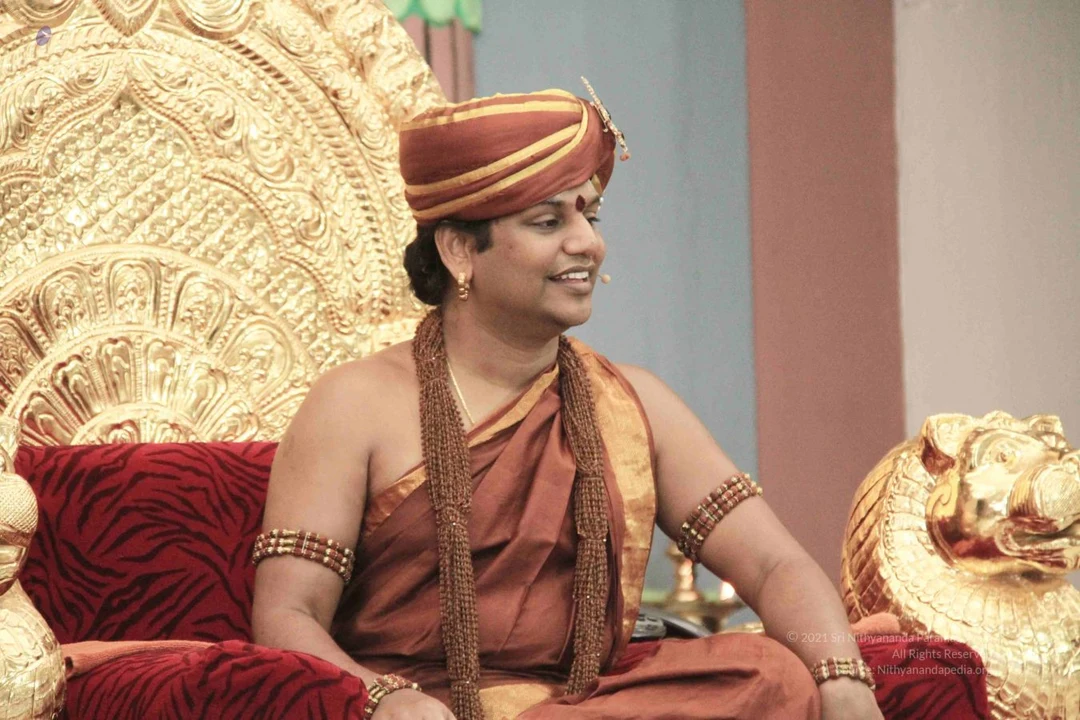
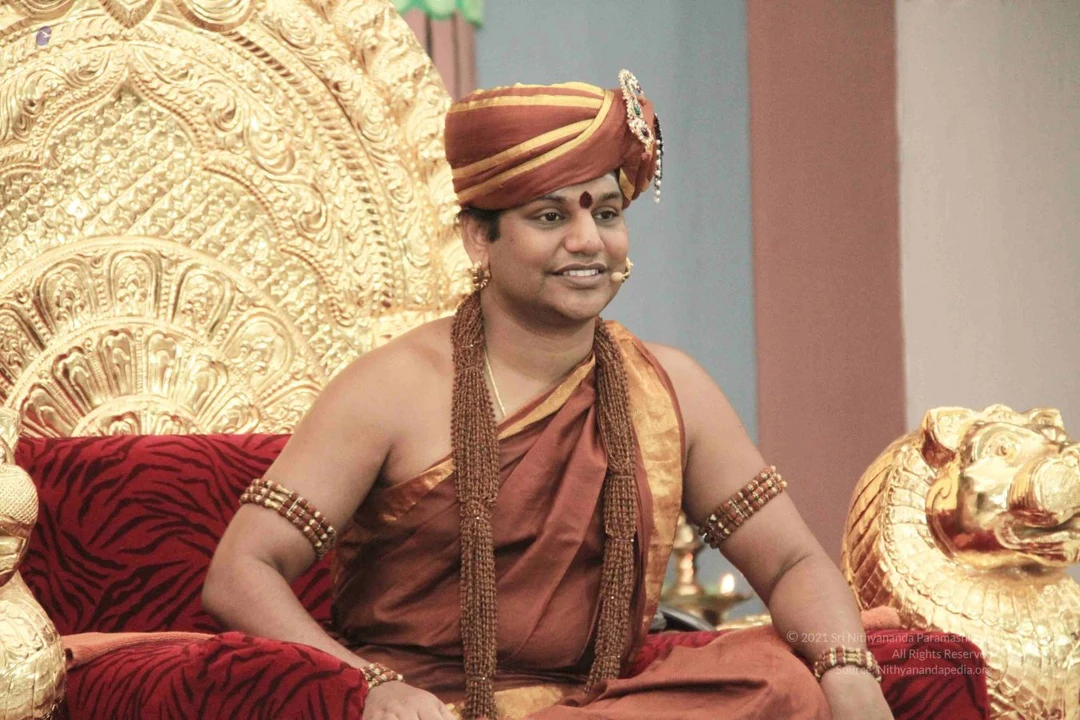
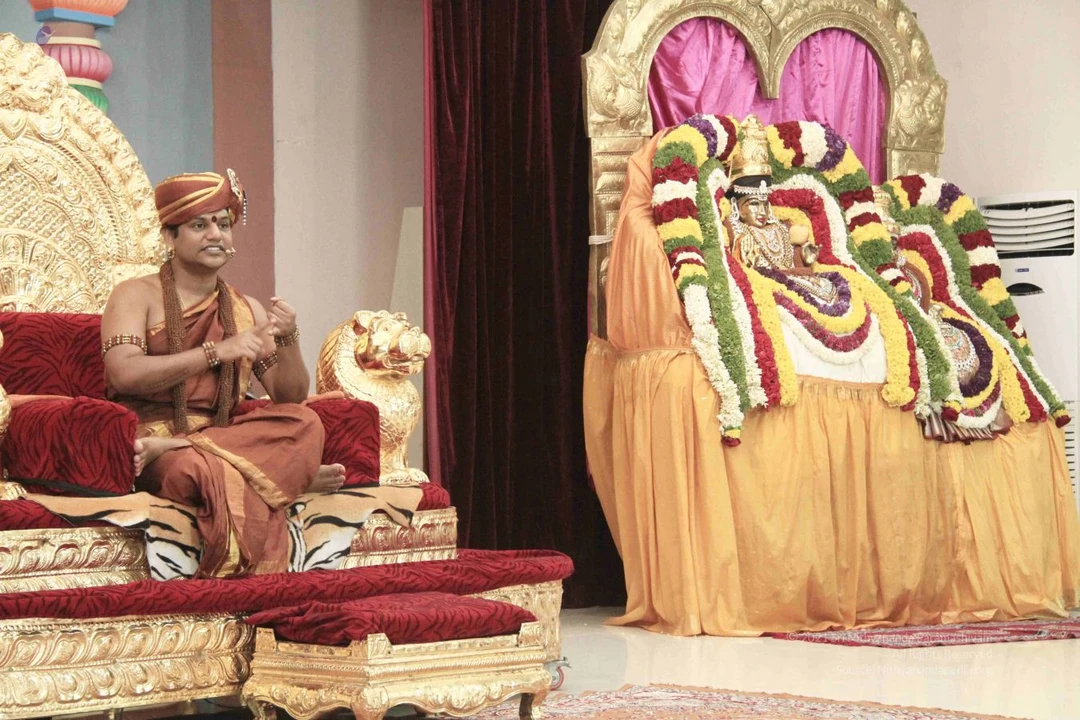
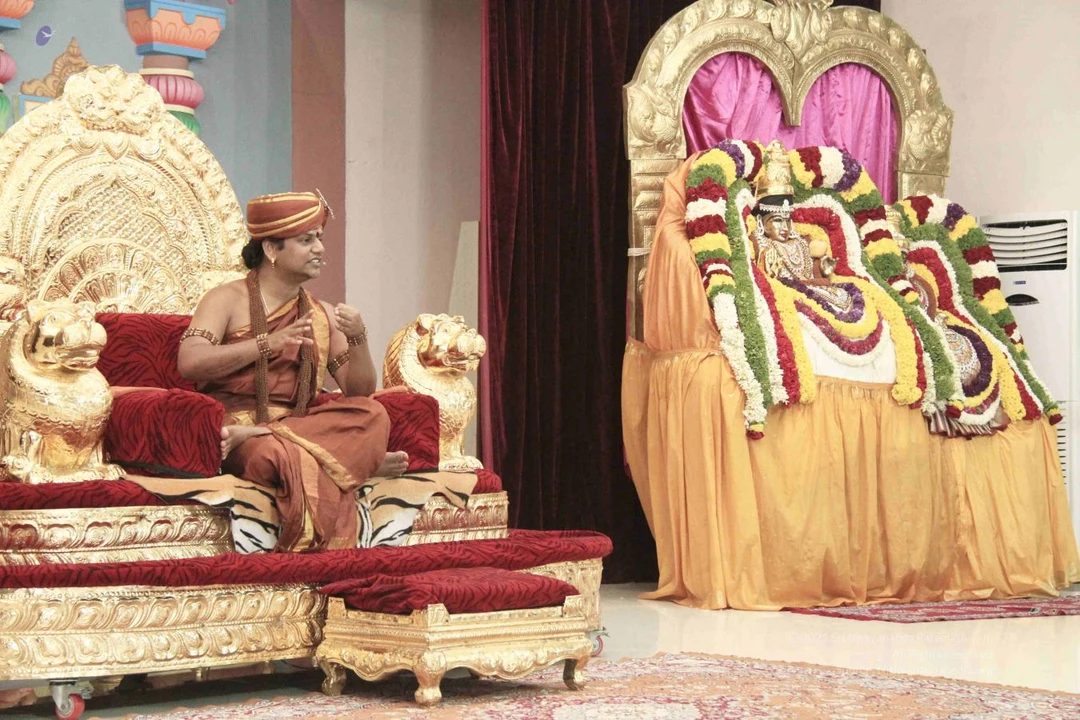
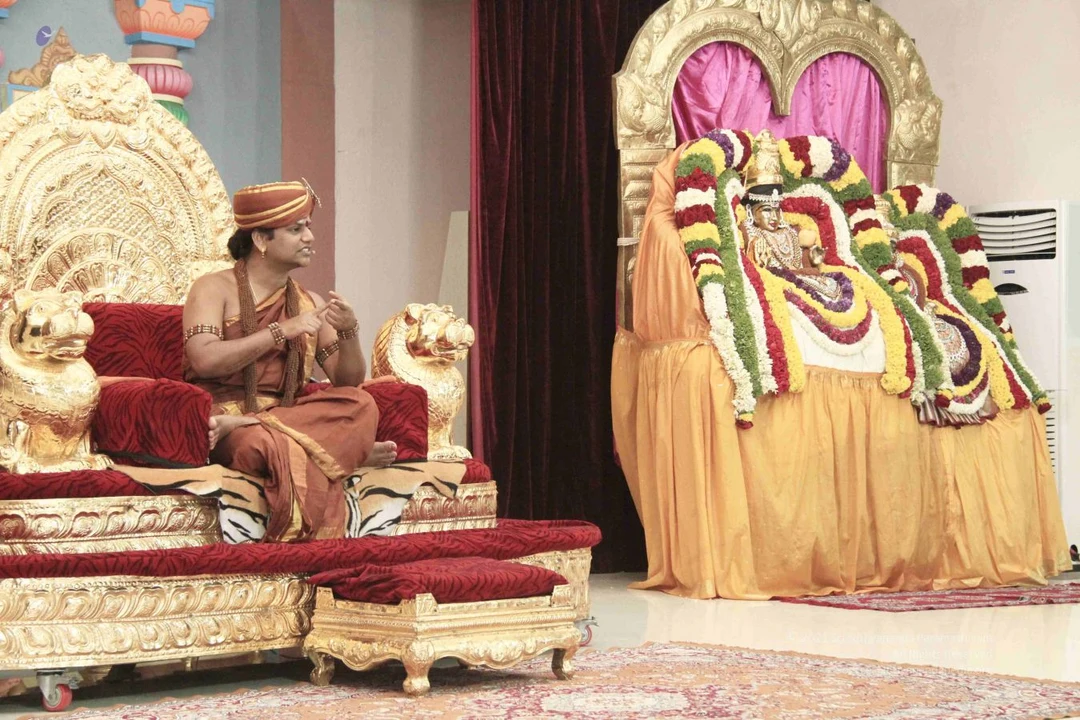
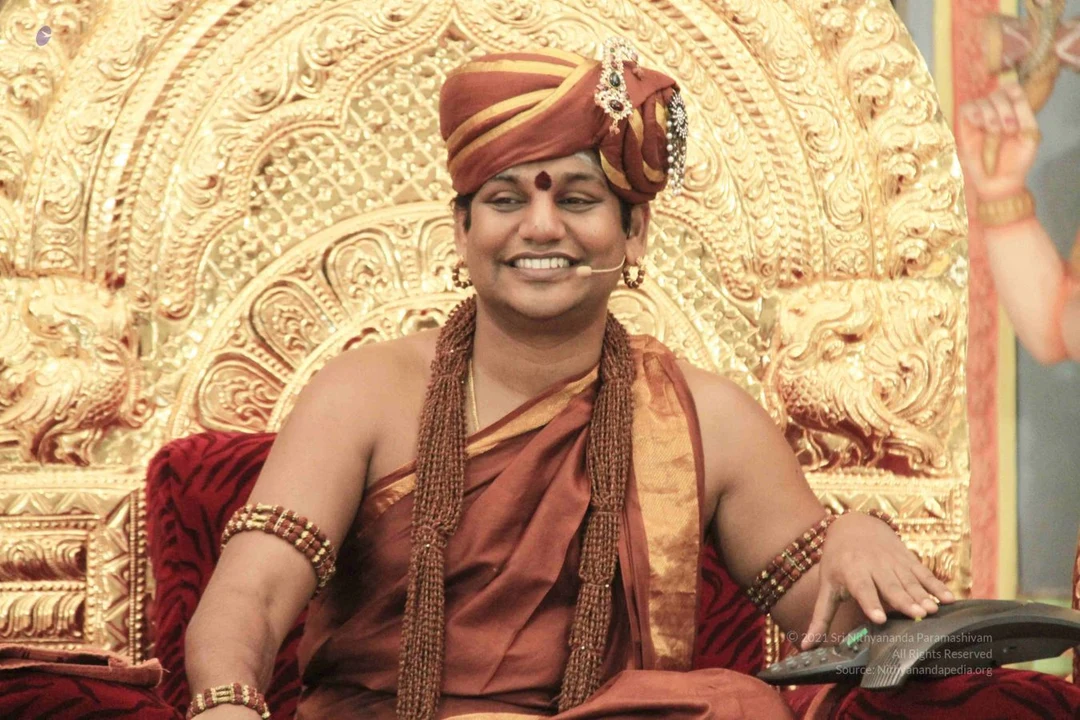
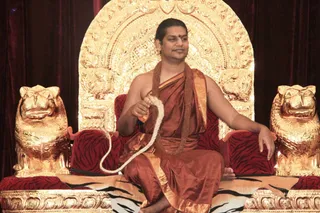
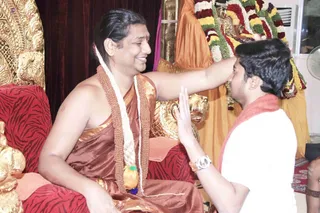
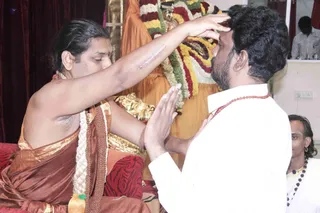
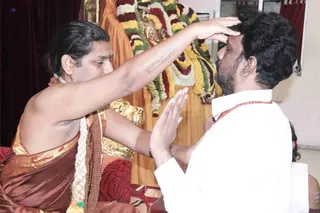
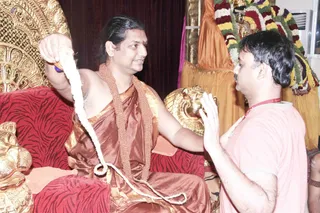
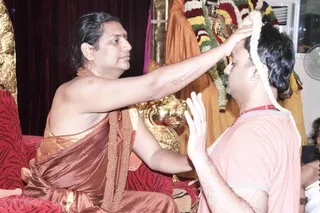
A man seated on an ornate golden throne with a large gilded arched backrest and two gilded lion-head armrests, draped in red-striped upholstery and a tiger-striped cloth. He wears a reddish-orange ochre robe with a gold border, multiple rudraksha mala beads around his neck, and a red bindi. He holds a white rope or braided cord in his right hand and smiles while looking to his left, with dark maroon curtains behind. a person: the figure has a swept-back hairstyle and ochre robes with rudraksha malas on a throne, consistent with the page.A seated man in a copper-brown silk garment with gold border and a long braided white cord hanging over his shoulder, wearing a rudraksha mala and a gold-trimmed shawl, smiles while reaching out to touch the forehead of a younger man in a white shirt and red-orange shawl who bows with hands raised. The seated man sits on a red zebra-patterned cushioned chair with ornate gold carved armrests. Behind them a deity murti is garlanded with red, yellow and green flower garlands, and orange and gold drapery hangs in the background. a person: the seated man, distinguished by his long braid, rudraksha mala and saffron-brown clothing, appears to be the honoured figure receiving a devotee in a blessing gesture.A photograph of a satsang setting where a man with long dark hair in a long braid, bare-chested and wearing a brown and gold draped cloth, places his raised palm on the forehead of a bearded man in a white shirt with a red-beaded mala. The seated figure in brown has long swept-back hair, a long braid, a bare chest, and a gold-bordered brown wrap. Behind them stands a large orange-draped deity murti with a garland of yellow, red and green flowers and a golden face. Another man in white with a beaded necklace sits at right, and a microphone stands near a red-cushioned seat. The bearded devotee in white folds his hands in namaskar.A photograph of a seated figure in a reddish-brown and gold-bordered shawl over bare shoulders, with a long white braid down the back and a beaded necklace, extending his right hand to touch the forehead of a bearded man in a white shirt with a red beaded mala. The bearded man has his palms pressed together in namaskar. Behind them stands a golden deity murti draped in orange cloth and adorned with red, yellow and white flower garlands, beside a golden figure and a red cushion. The setting suggests a blessing or darshan moment. Only two physical people are visible; a partially visible third person appears at the right edge. The seated figure shows appearance cues consistent with the page's reference to a person, but identity is uncertain from appearance alone.A seated man in a rust-brown silk robe with gold border and a long rudraksha-style bead necklace holds up a long white cord with a knot, seated on an ornate gold throne with red tiger-striped upholstery. A young man in a pink t-shirt with a red lanyard leans in, hands raised toward the cord. Behind them stand gold-toned deity murti, an orange draped cloth and a garland of marigolds and multicoloured flowers.A photograph of a seated man in a bronze-gold silk garment and a rudraksha-style beaded necklace placing his right palm on the forehead of a standing devotee in a salmon-pink t-shirt. The devotee has his hands raised in front of him and wears a white flower garland over his head. The seated man is sitting on a red tiger-striped cushioned seat, with a golden lion sculpture beside him. Behind them, a deity murti is decorated with yellow, red and white flower garlands, and orange drapery hangs in the background. A ceiling fan is visible at the upper right. The devotee is receiving the blessing.
Yoga

34 photosSource gallery
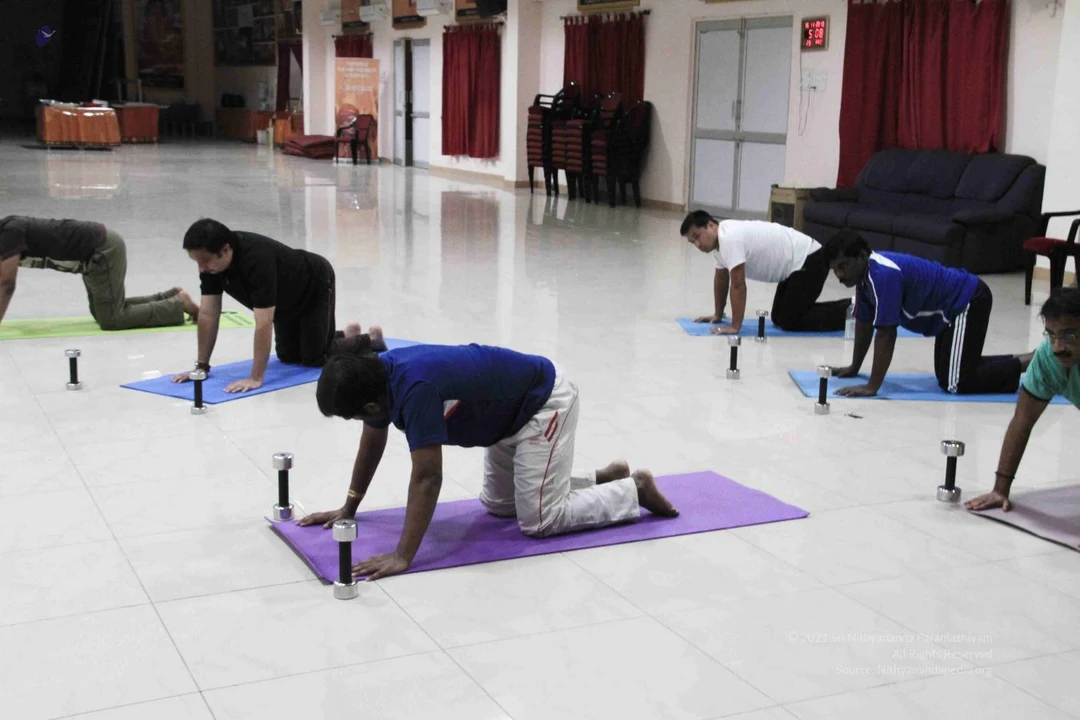
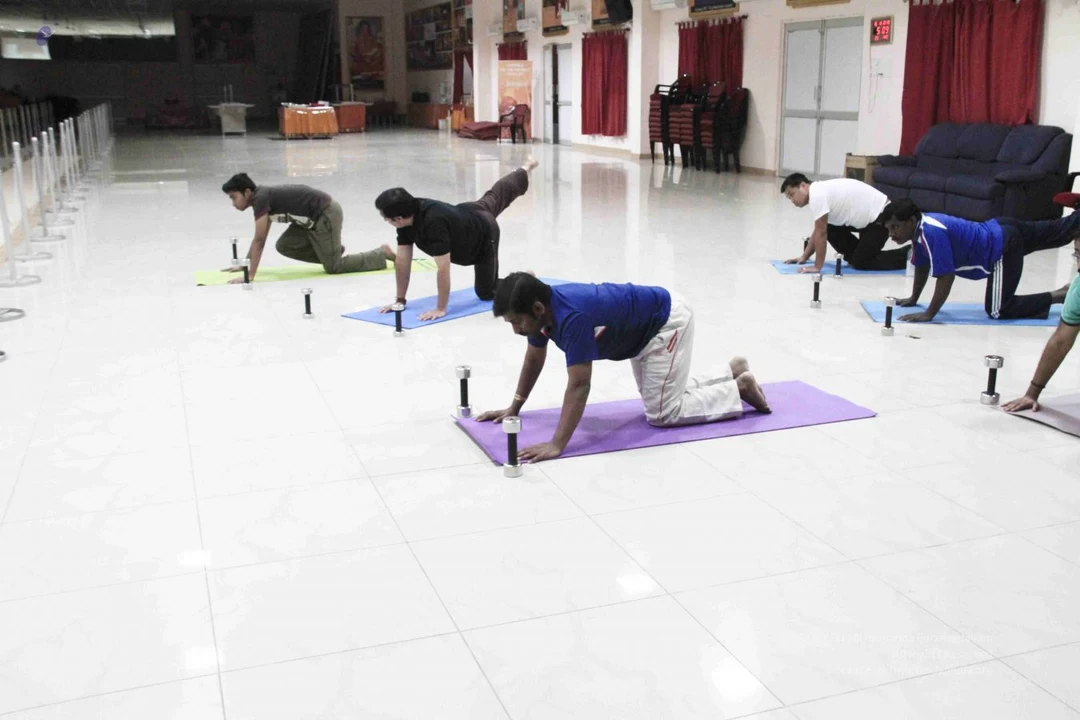
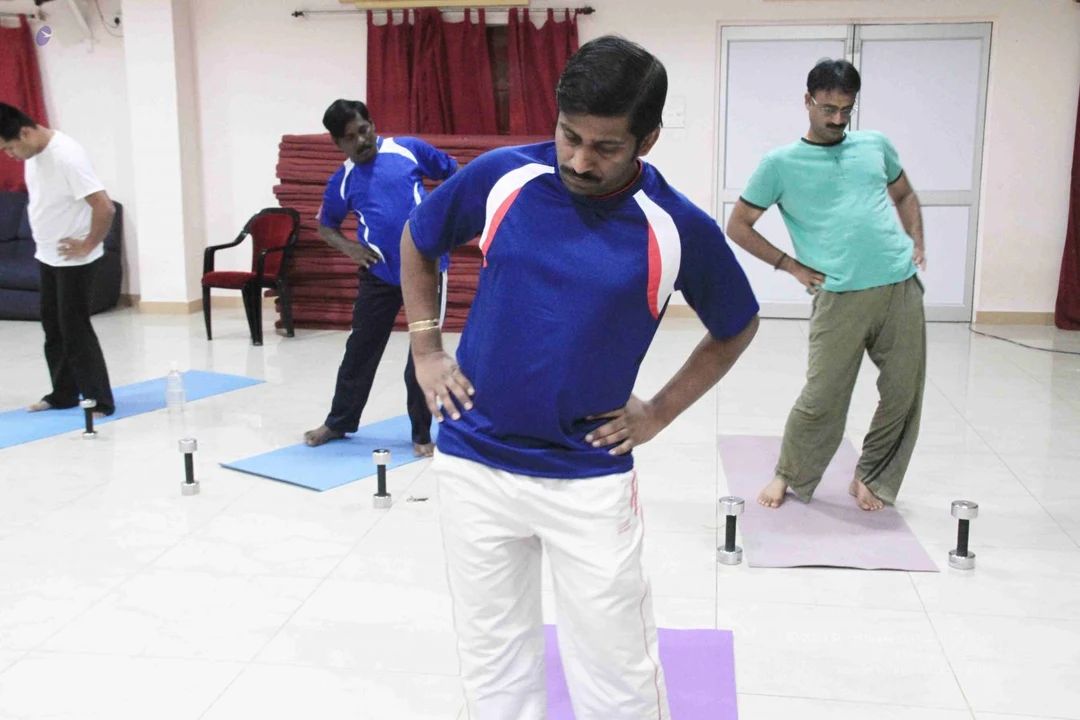
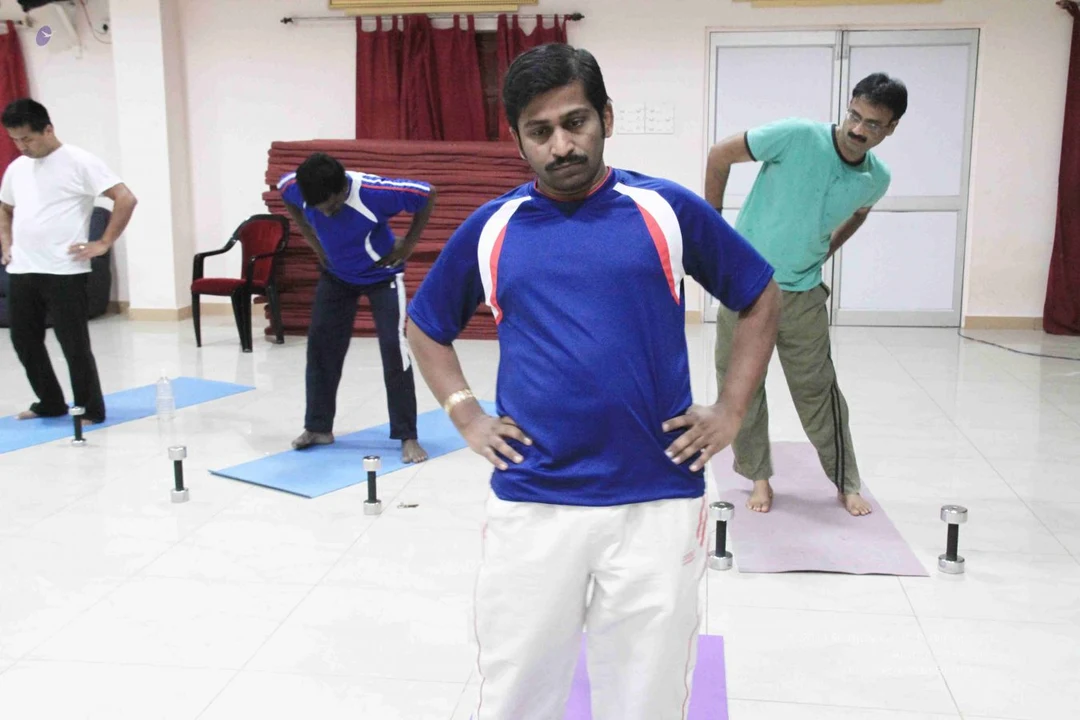
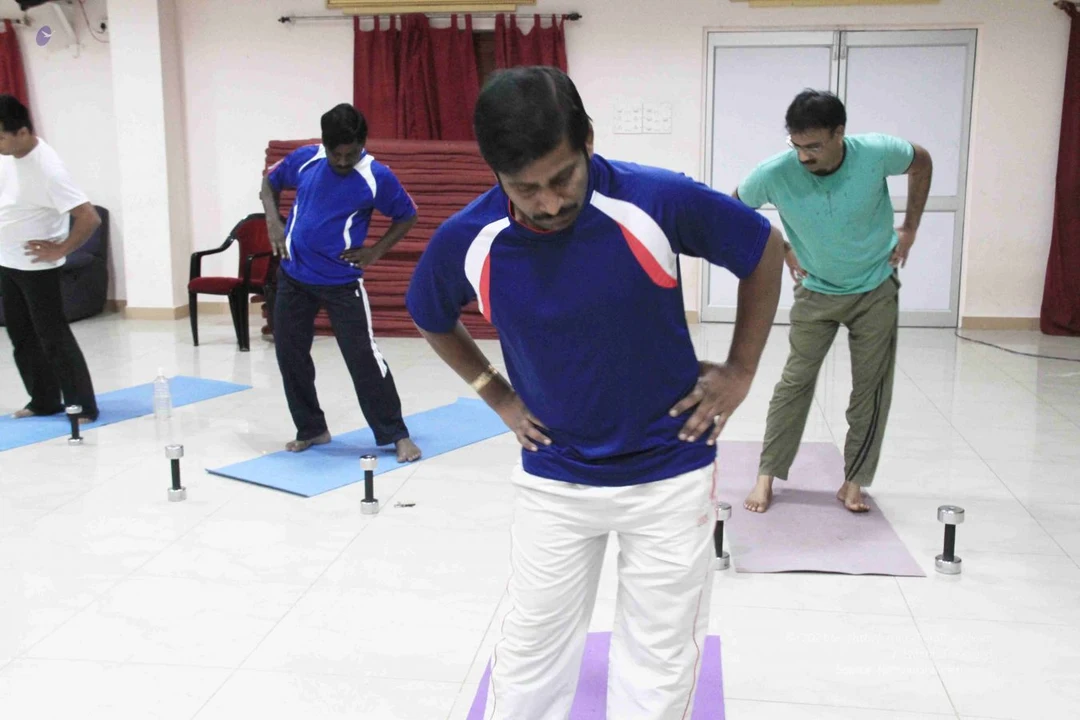
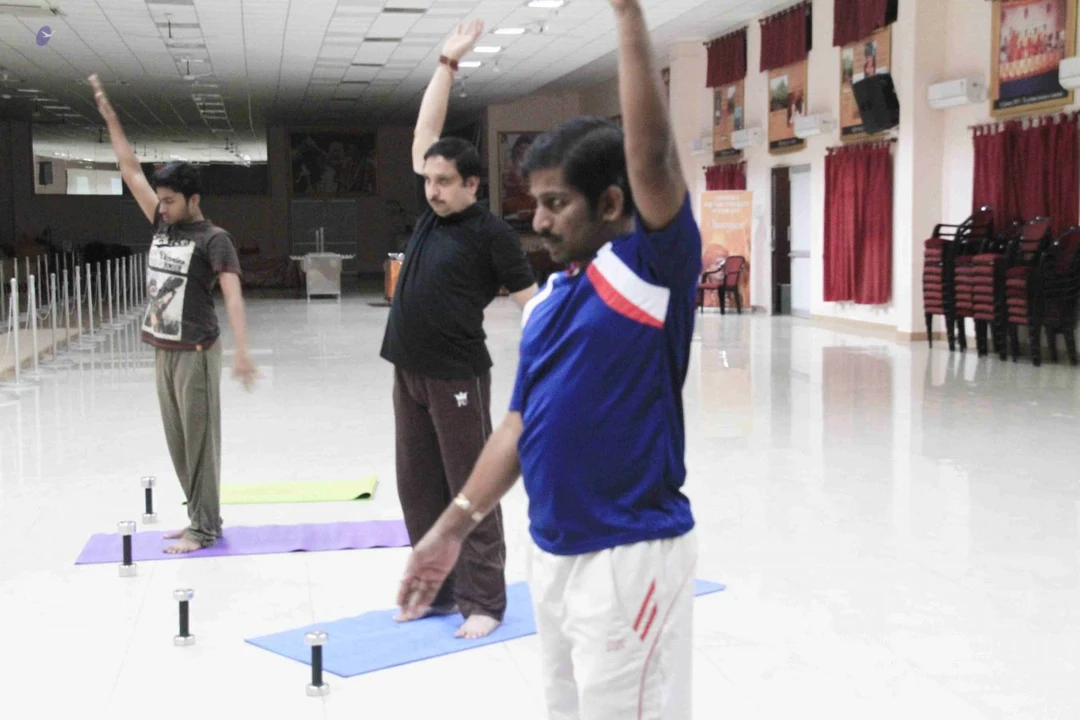
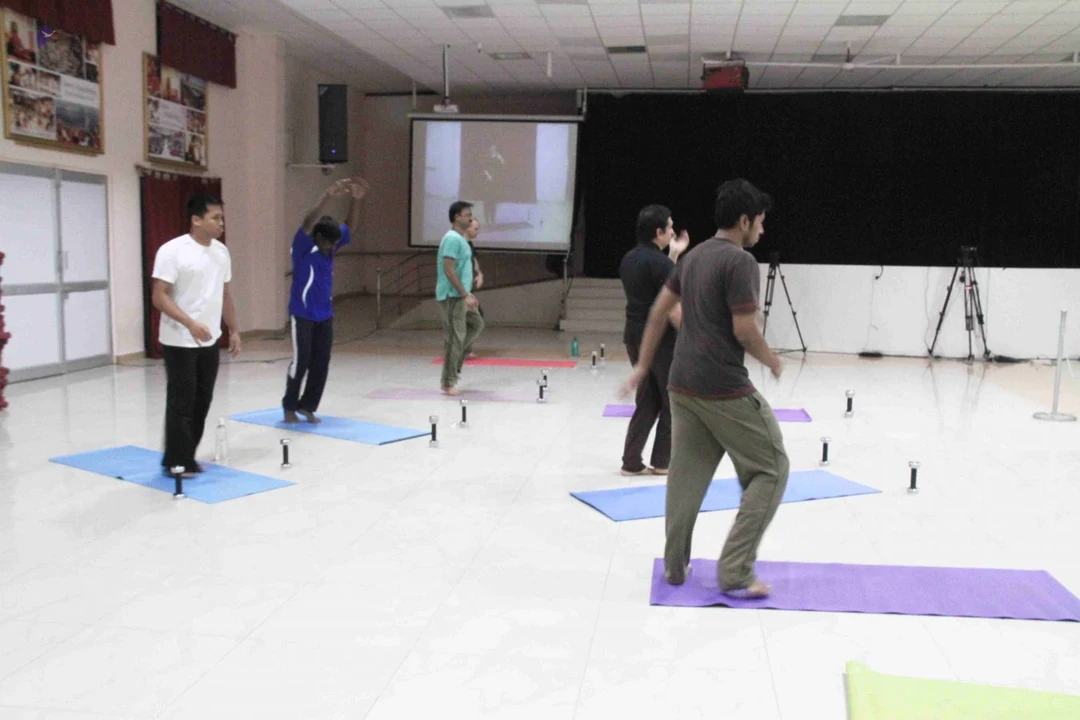
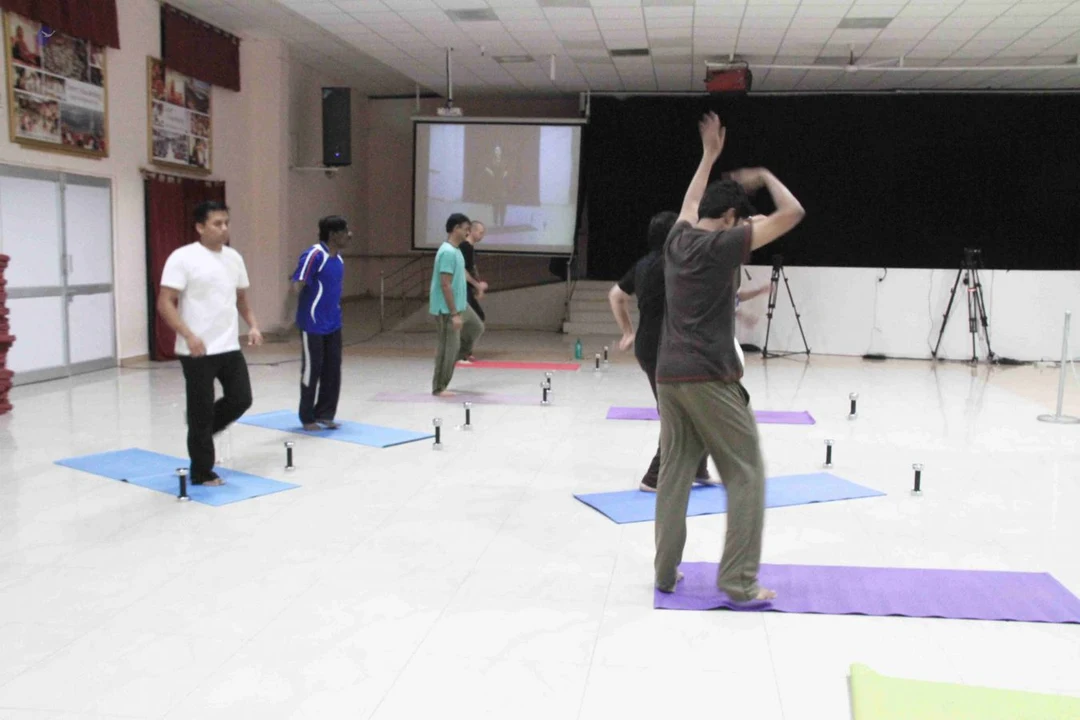
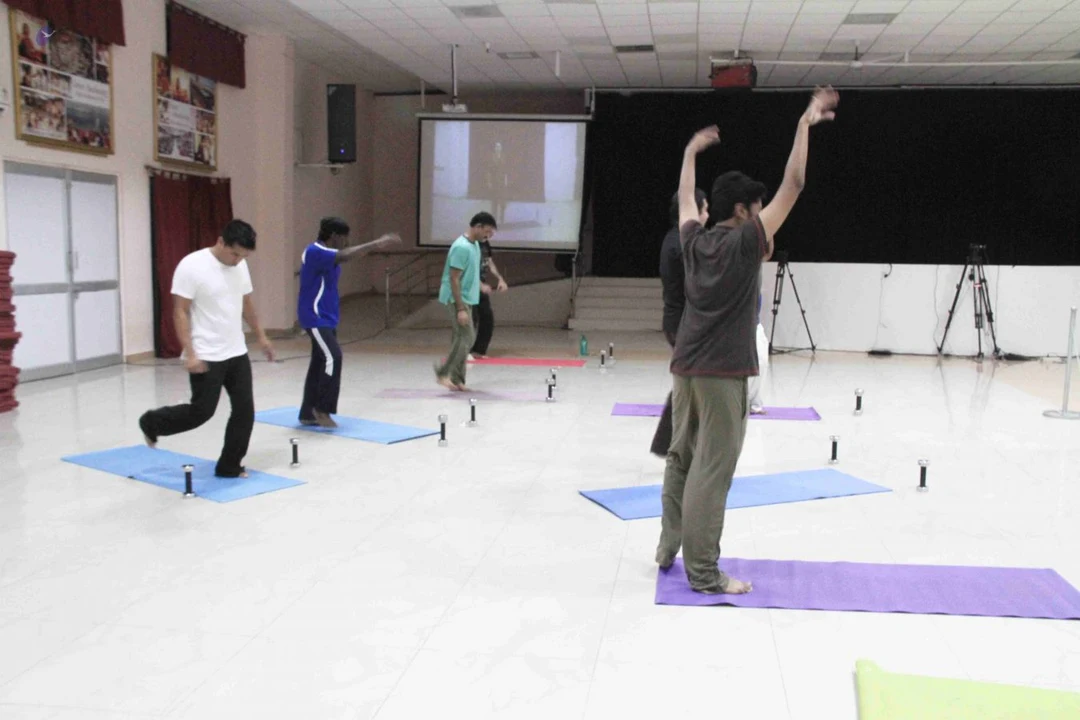
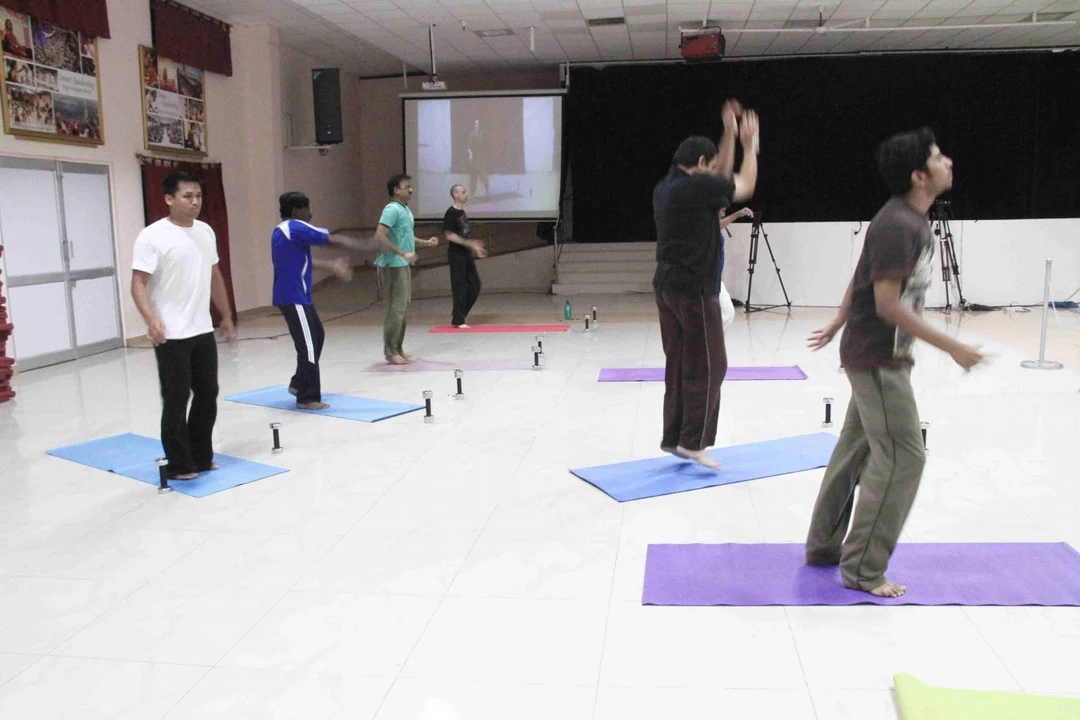
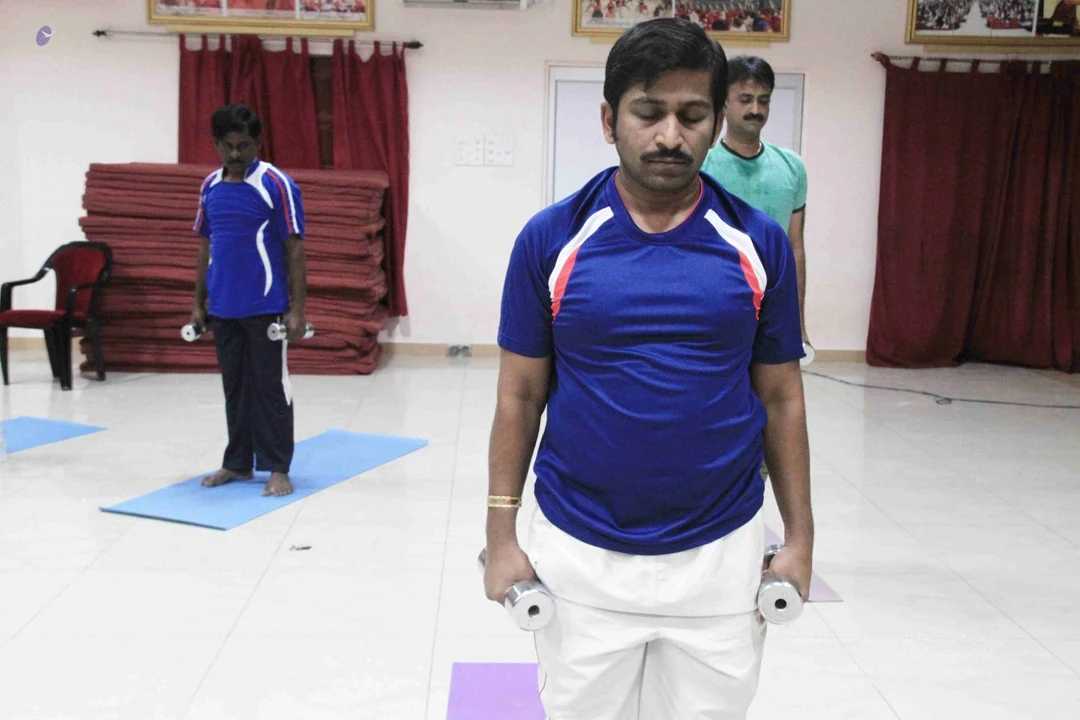
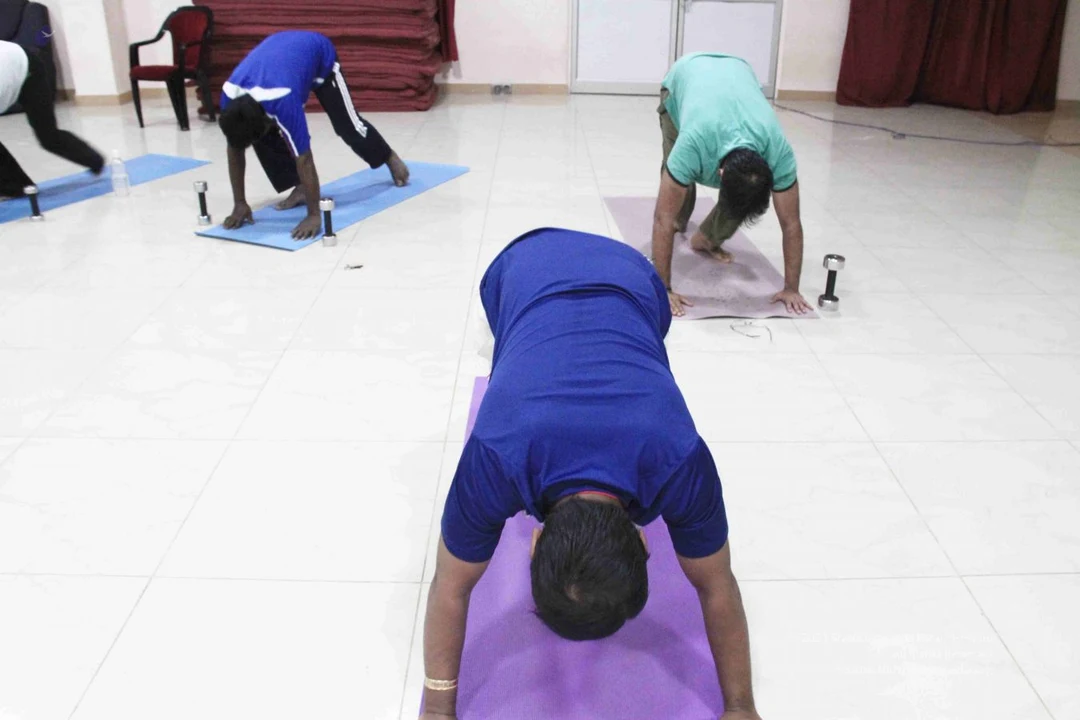
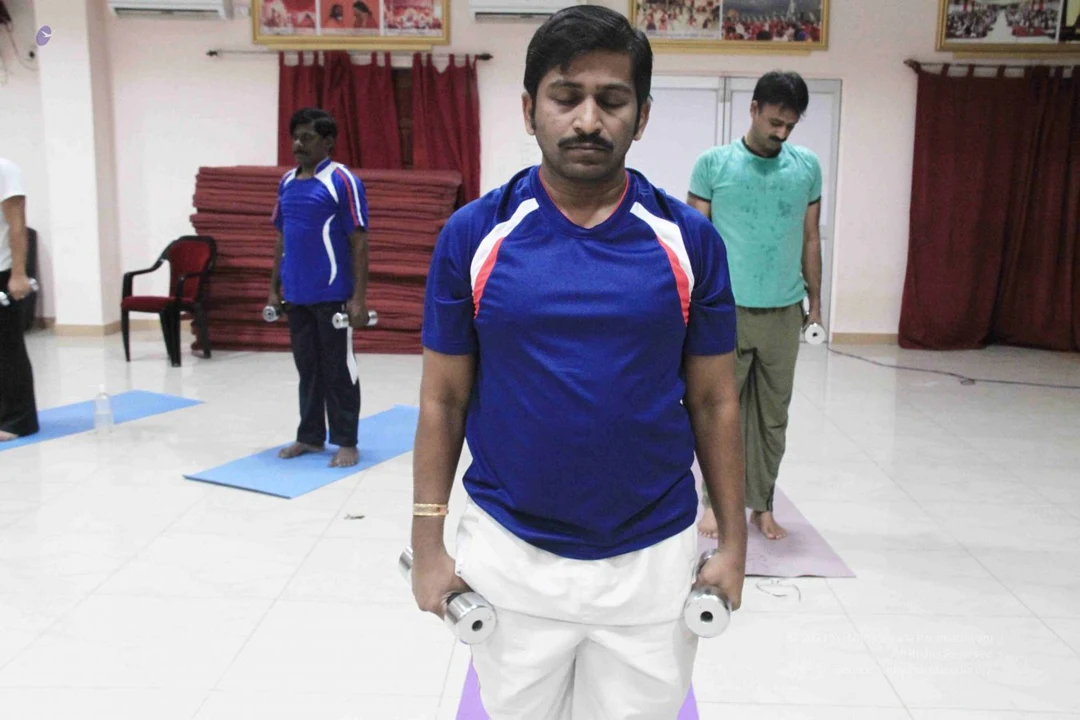
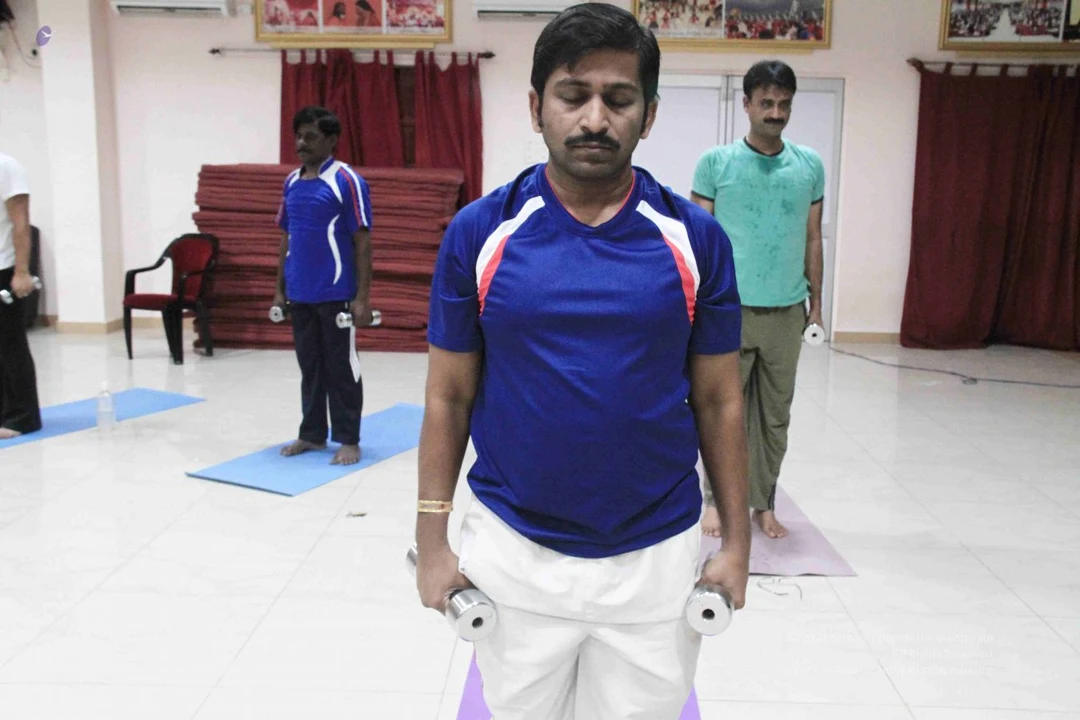
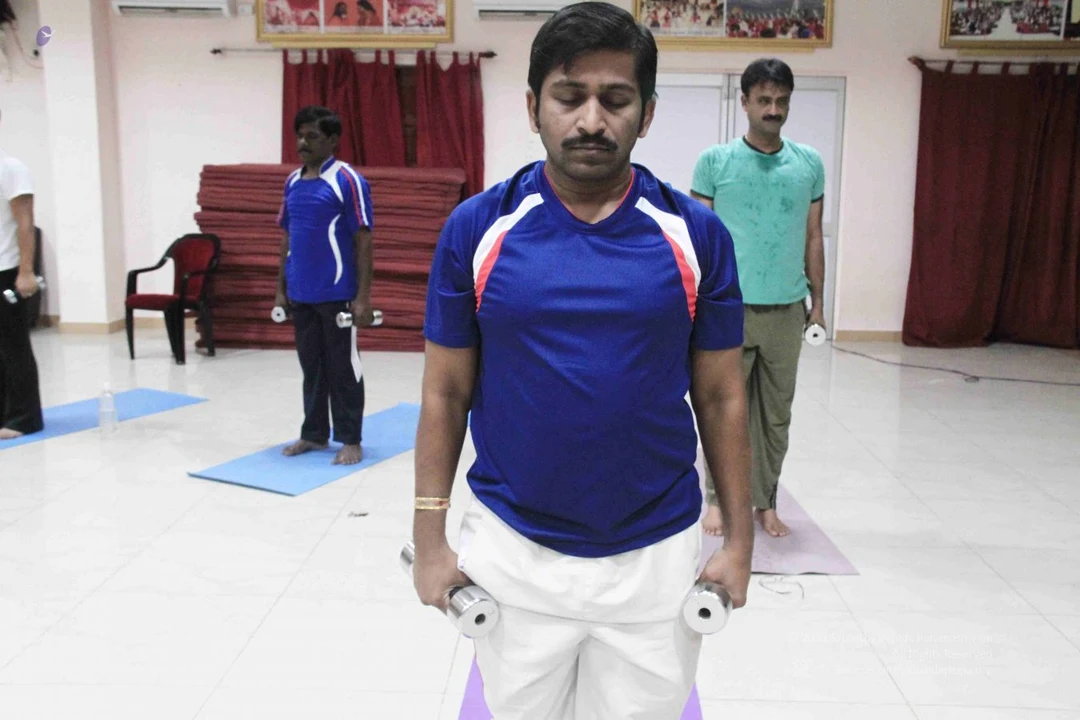
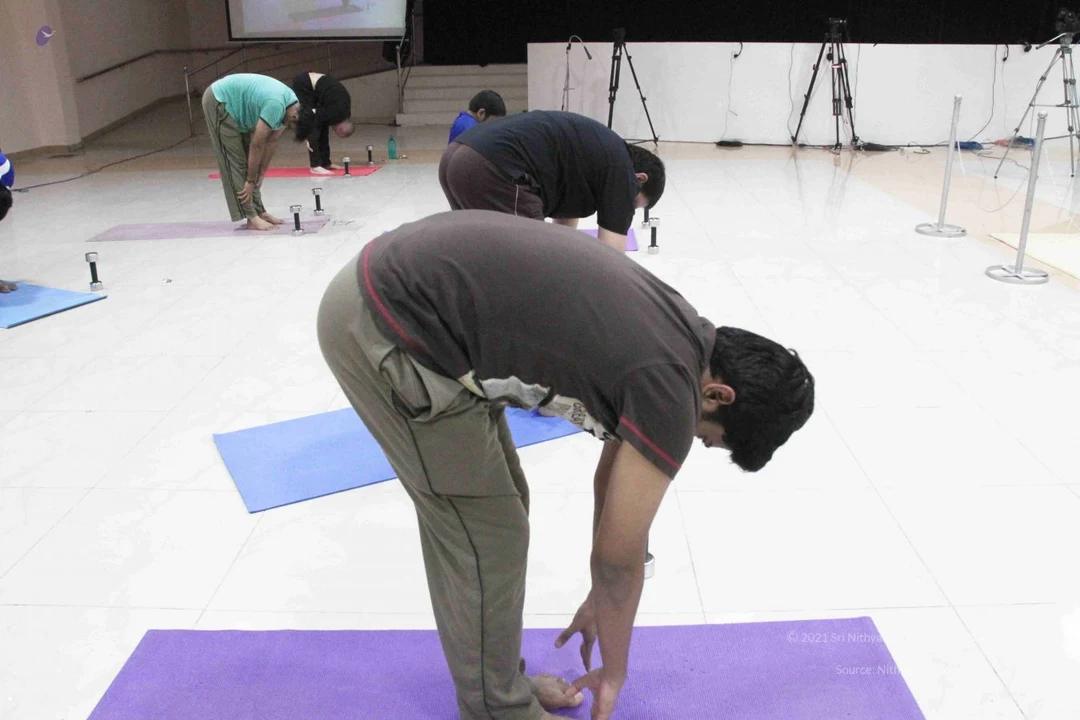
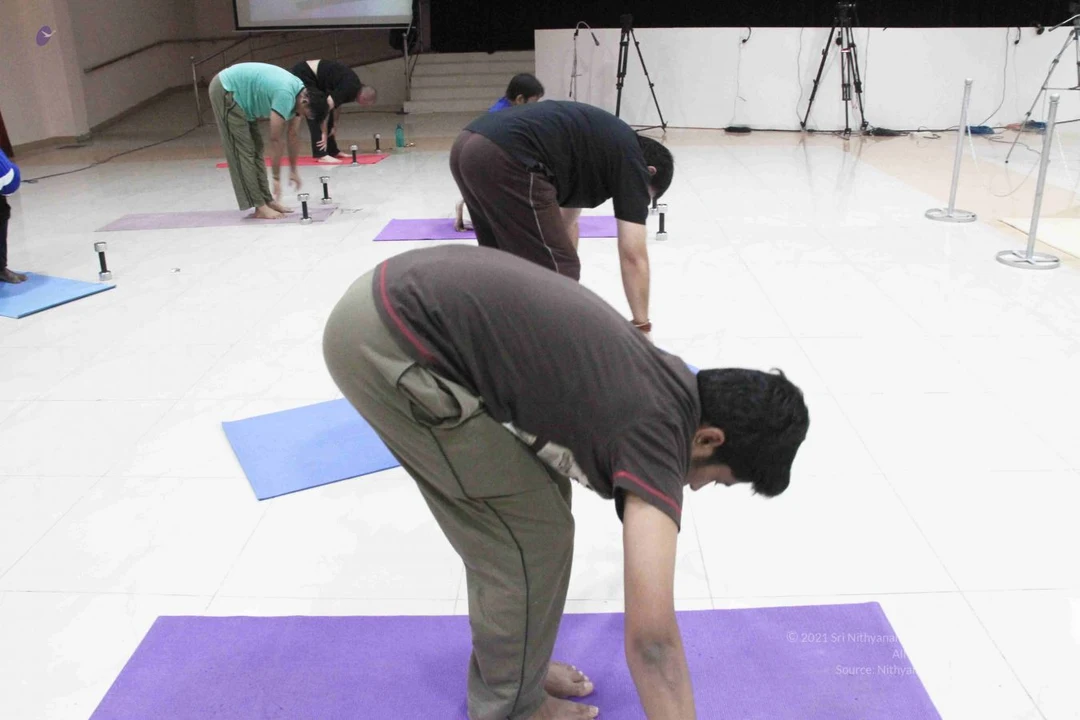
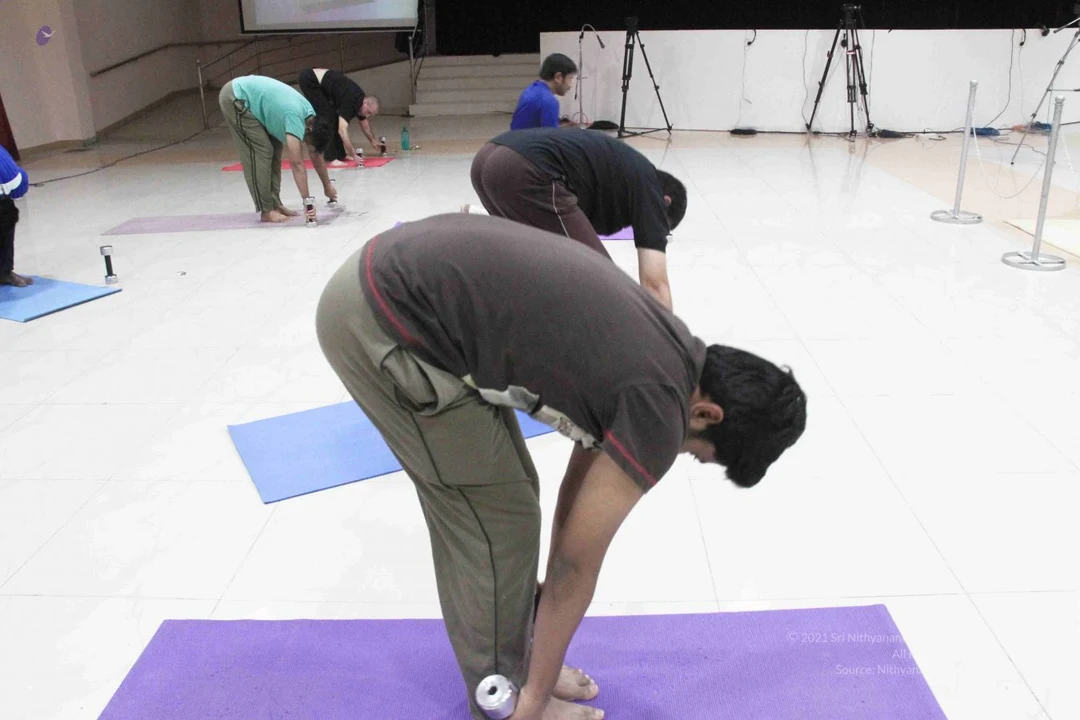
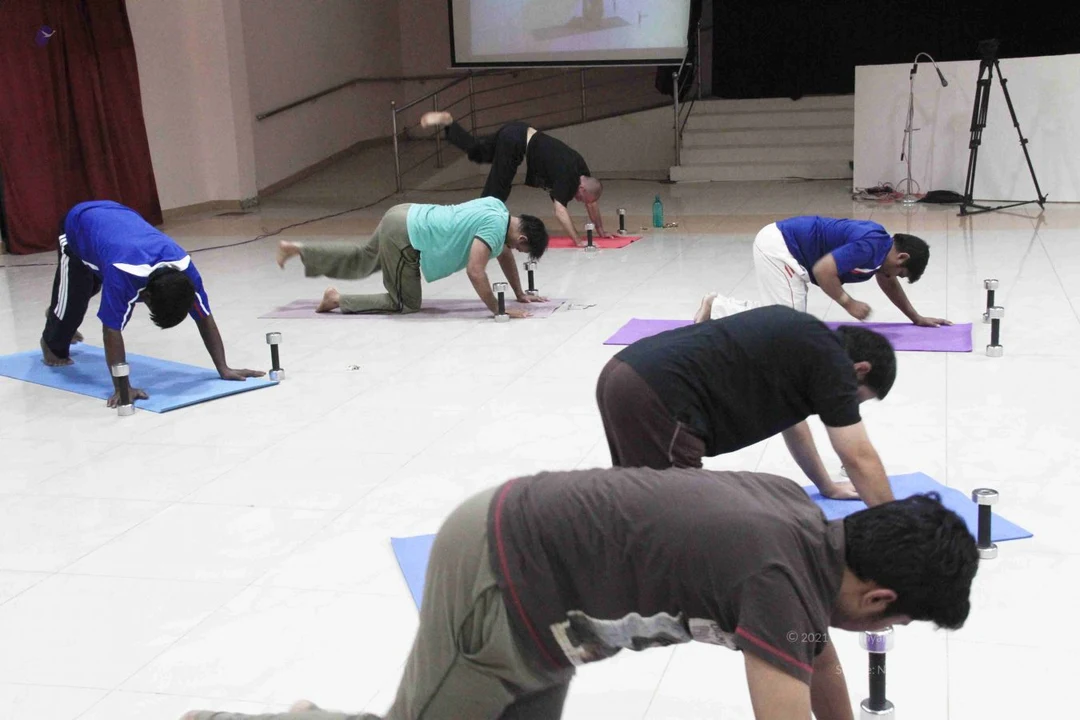
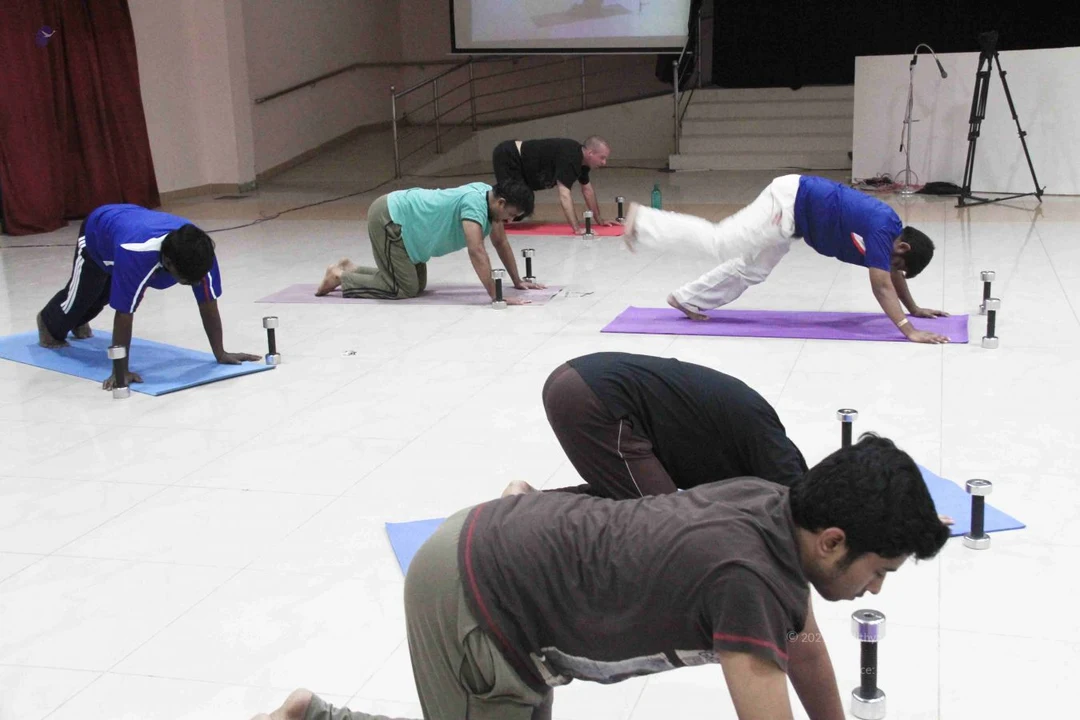
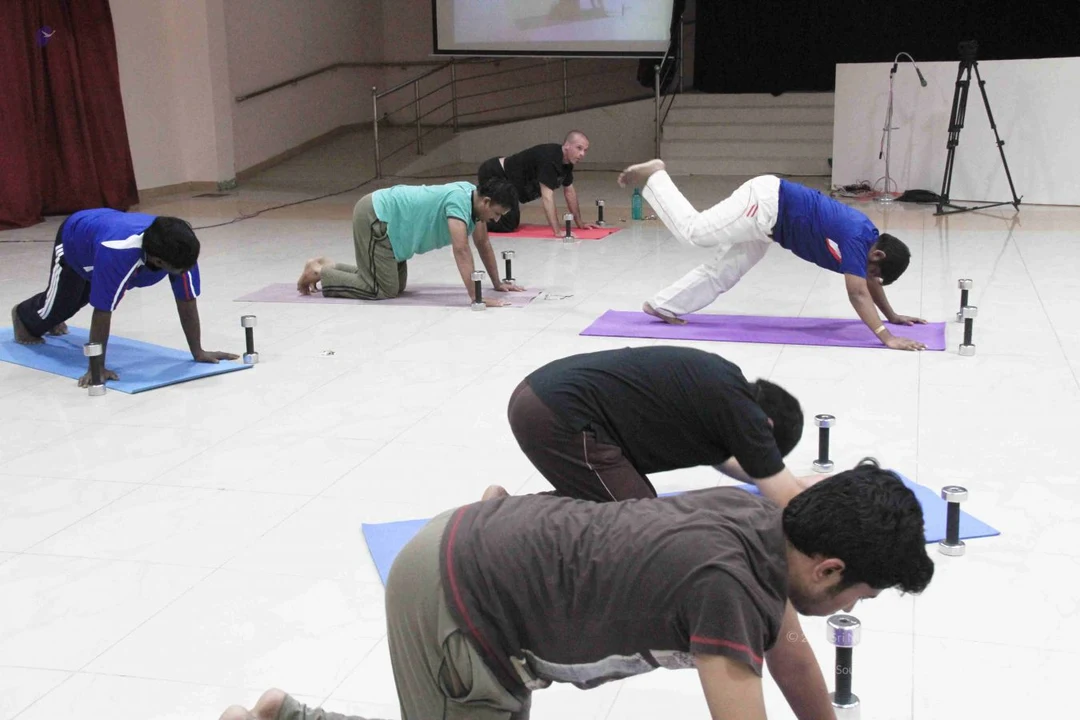
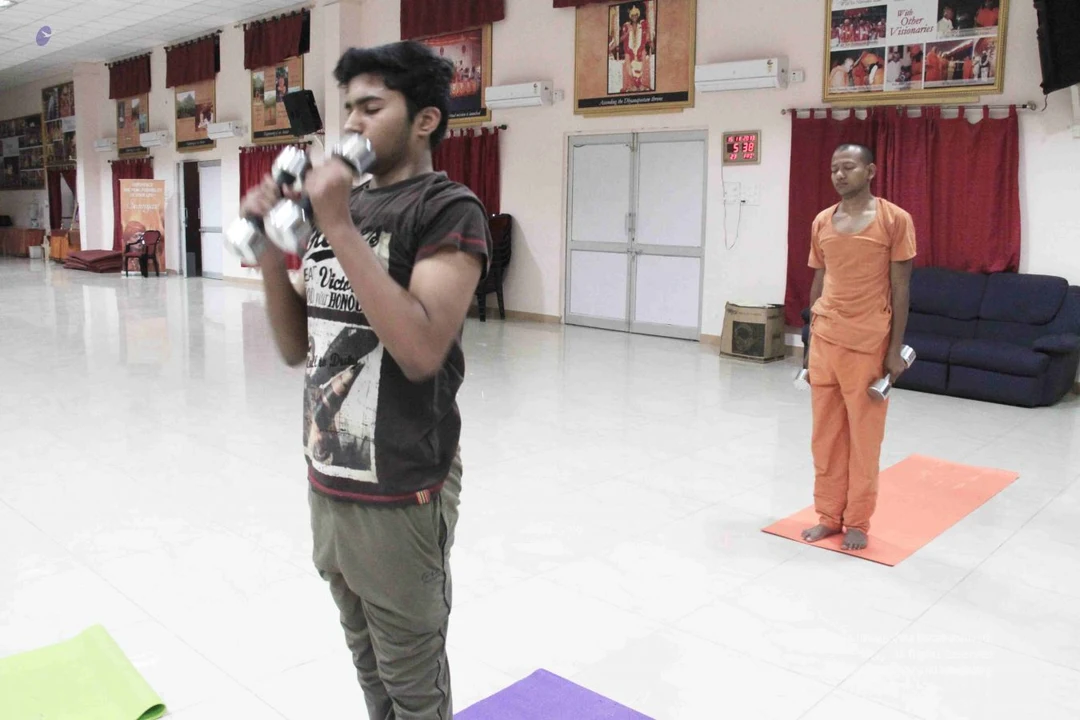
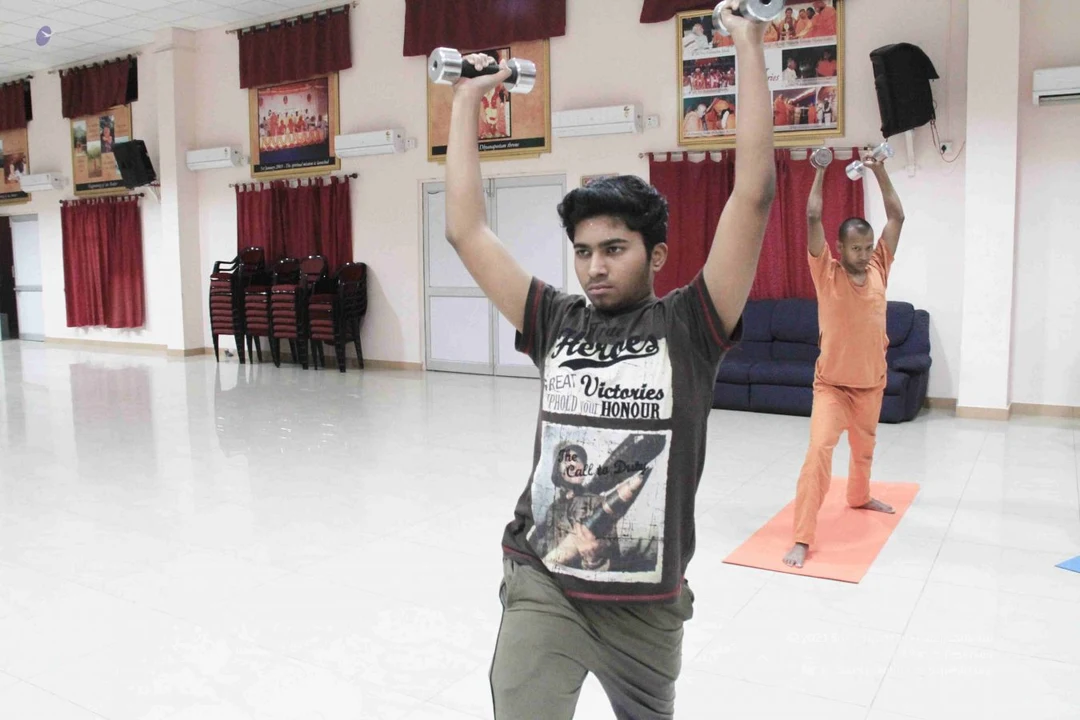
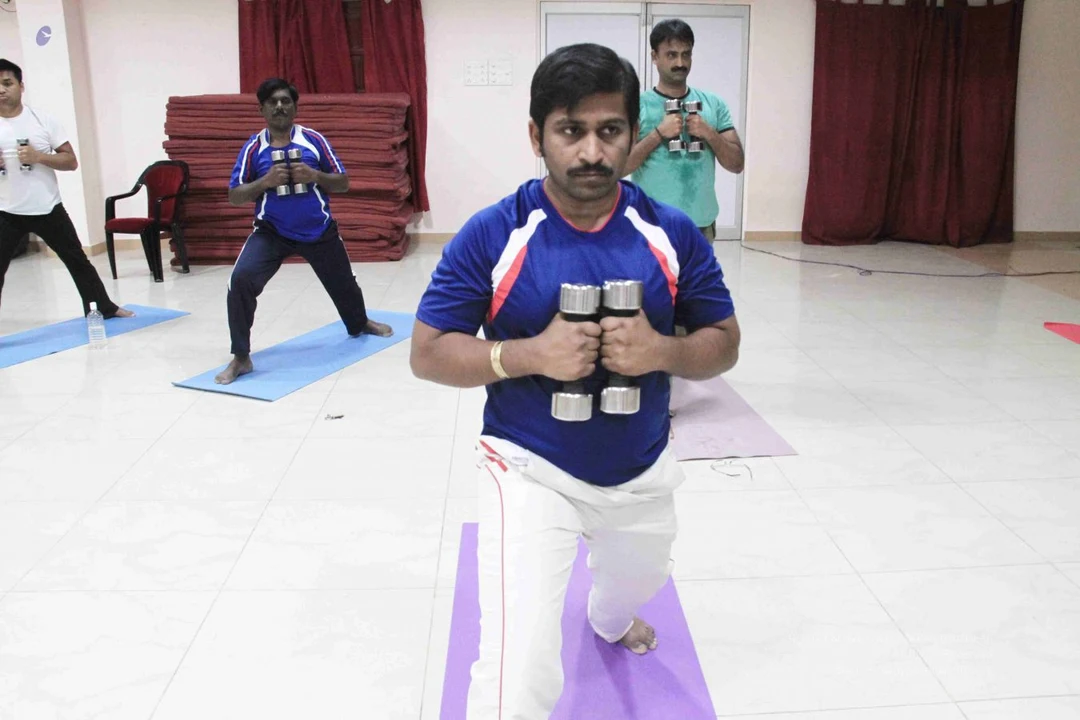
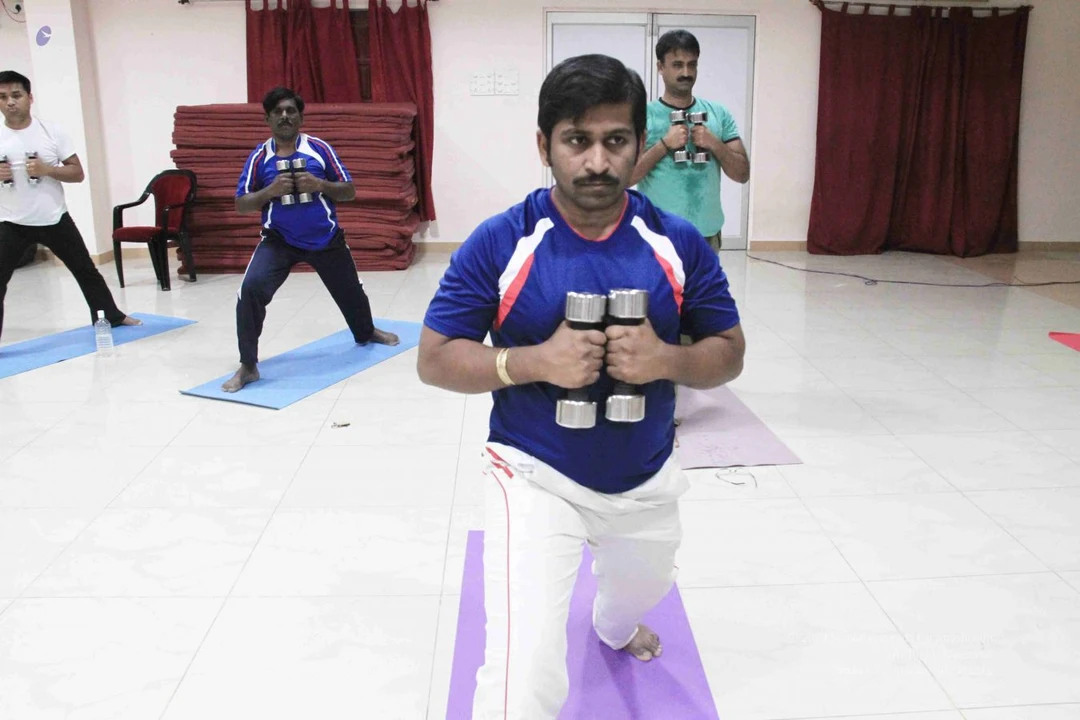
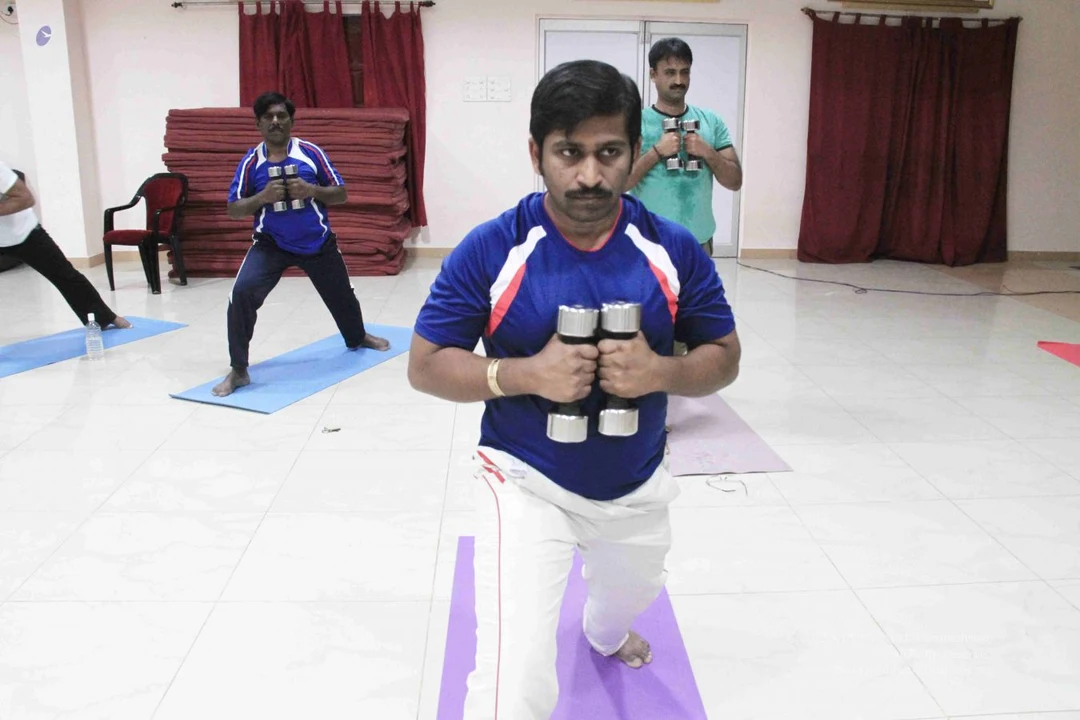
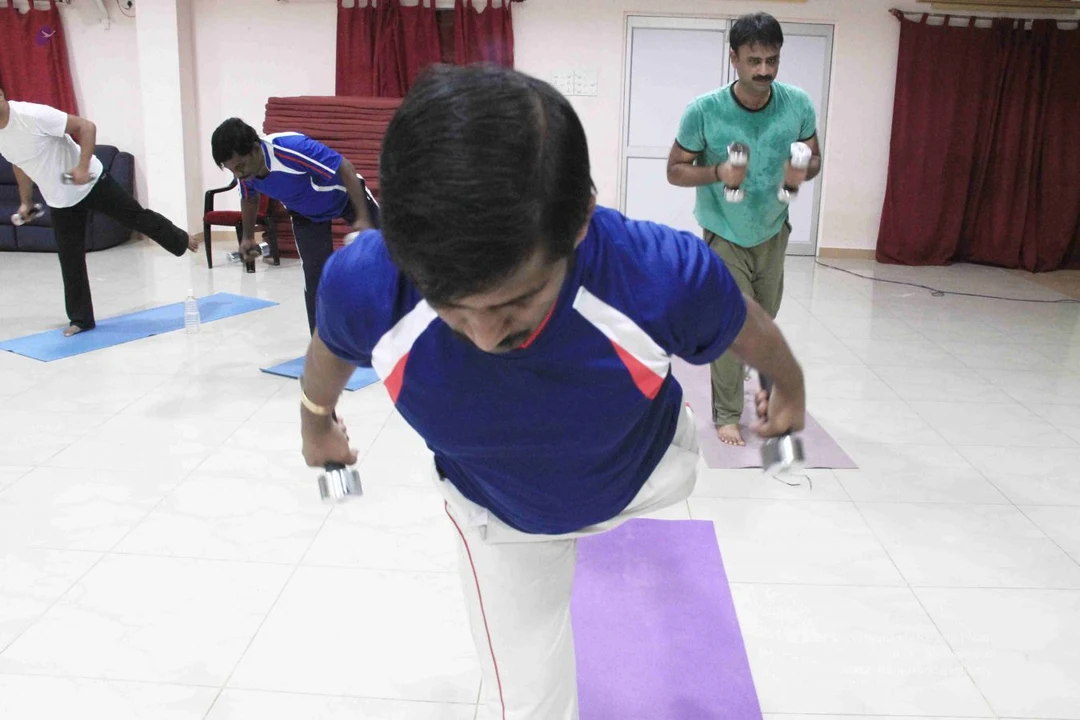
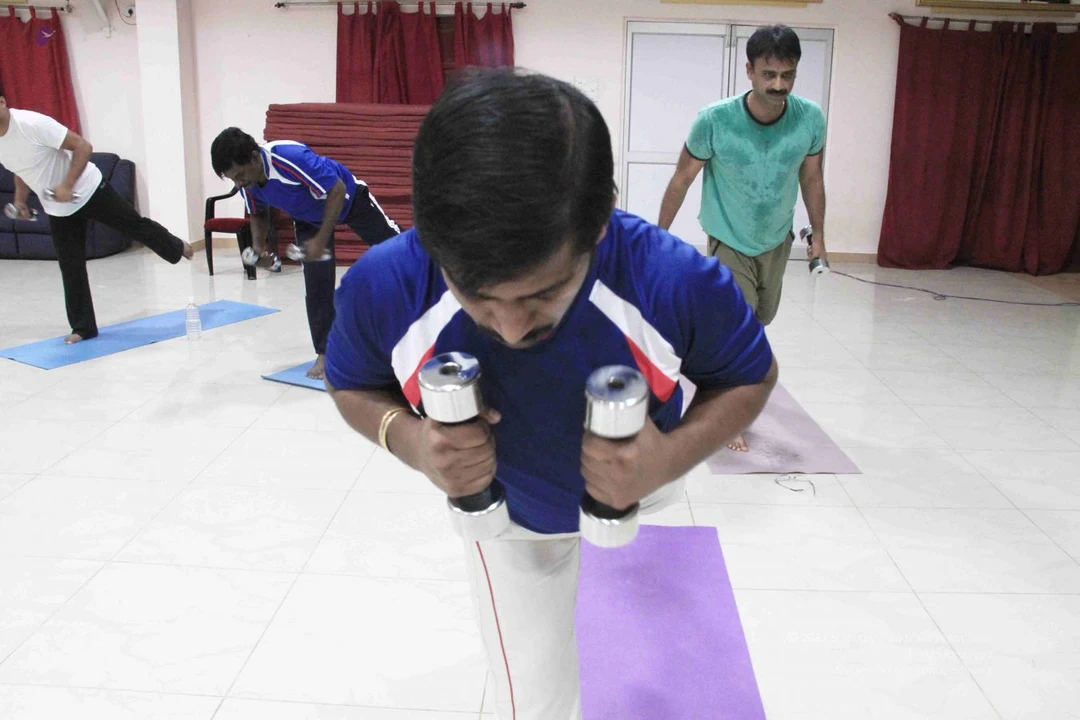
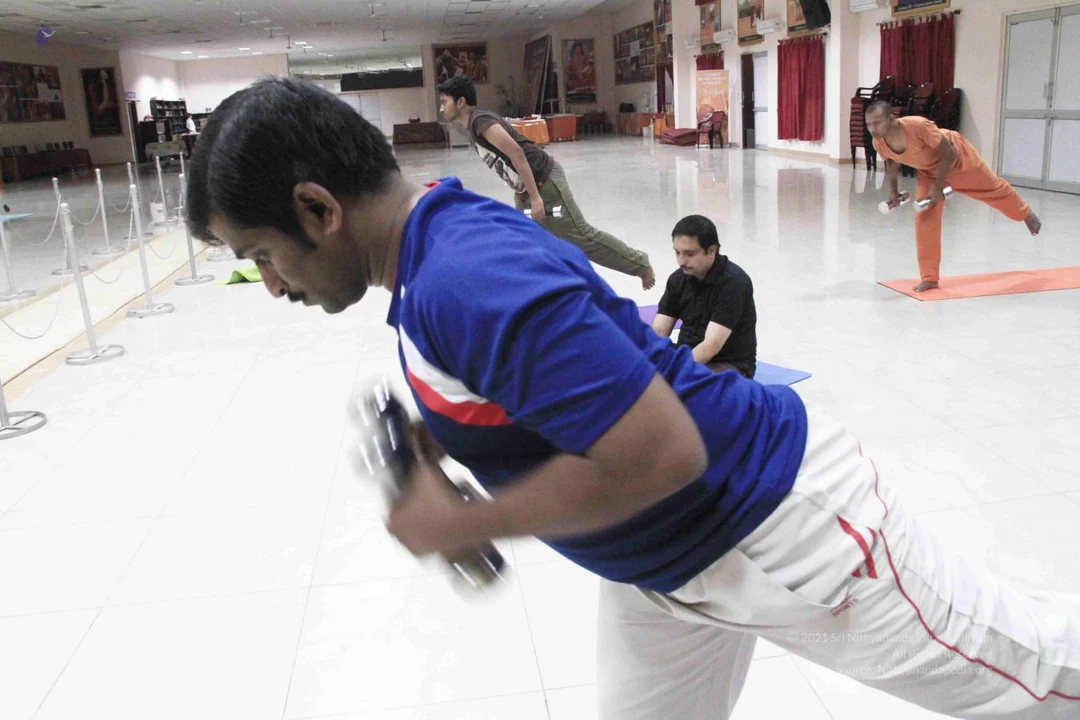
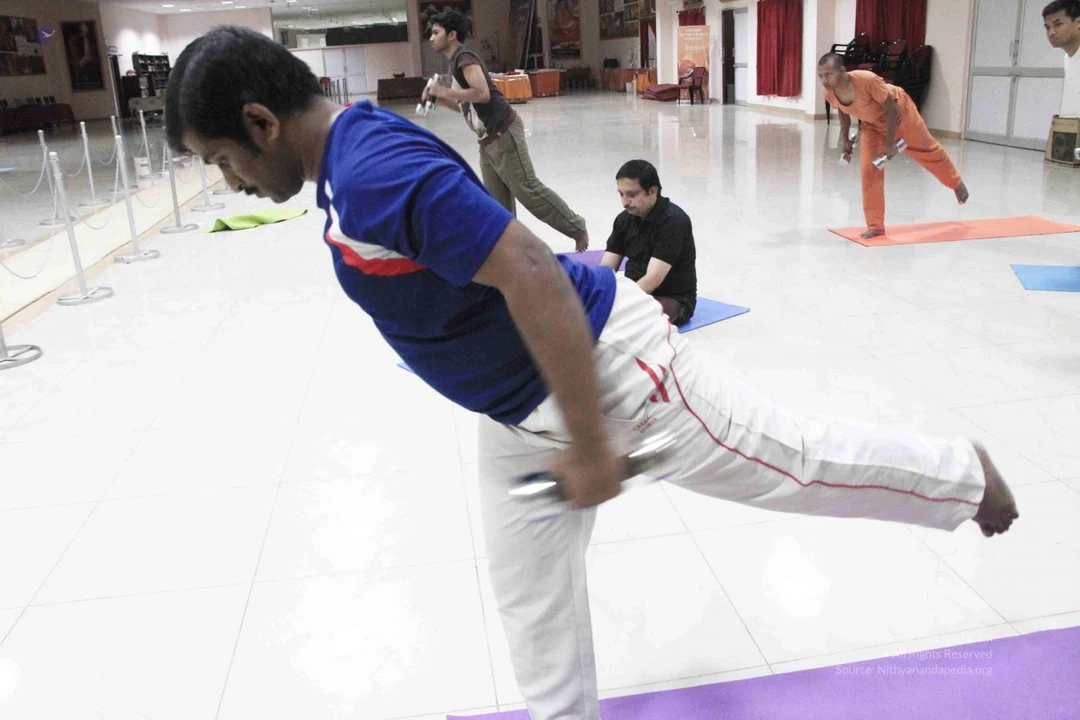
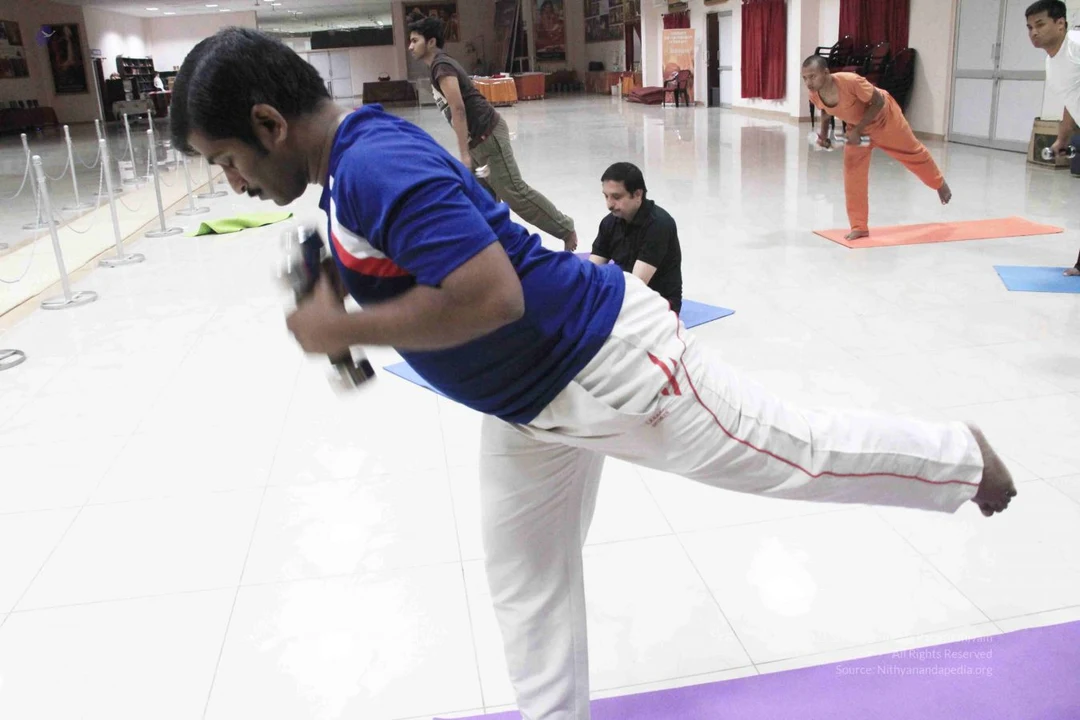
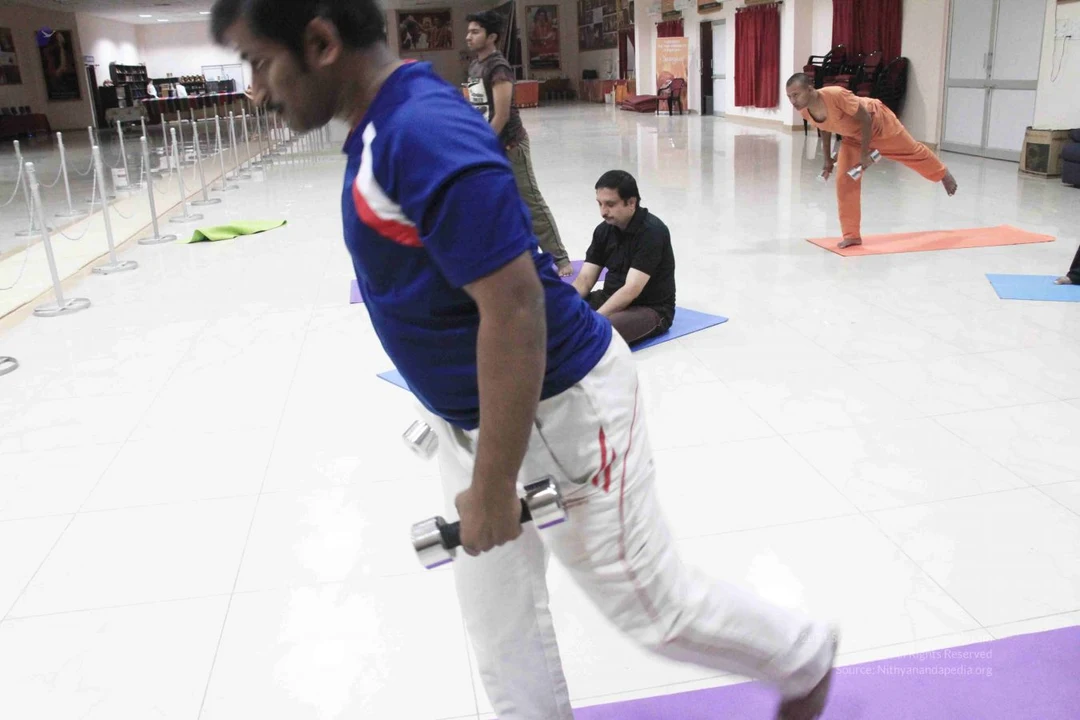
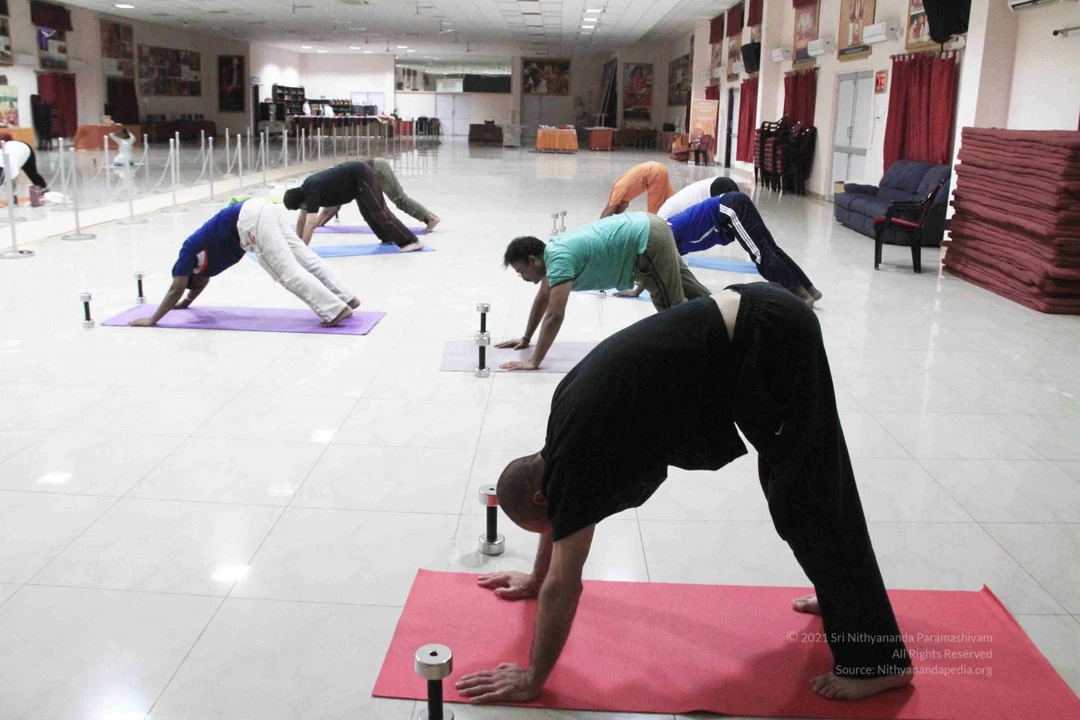
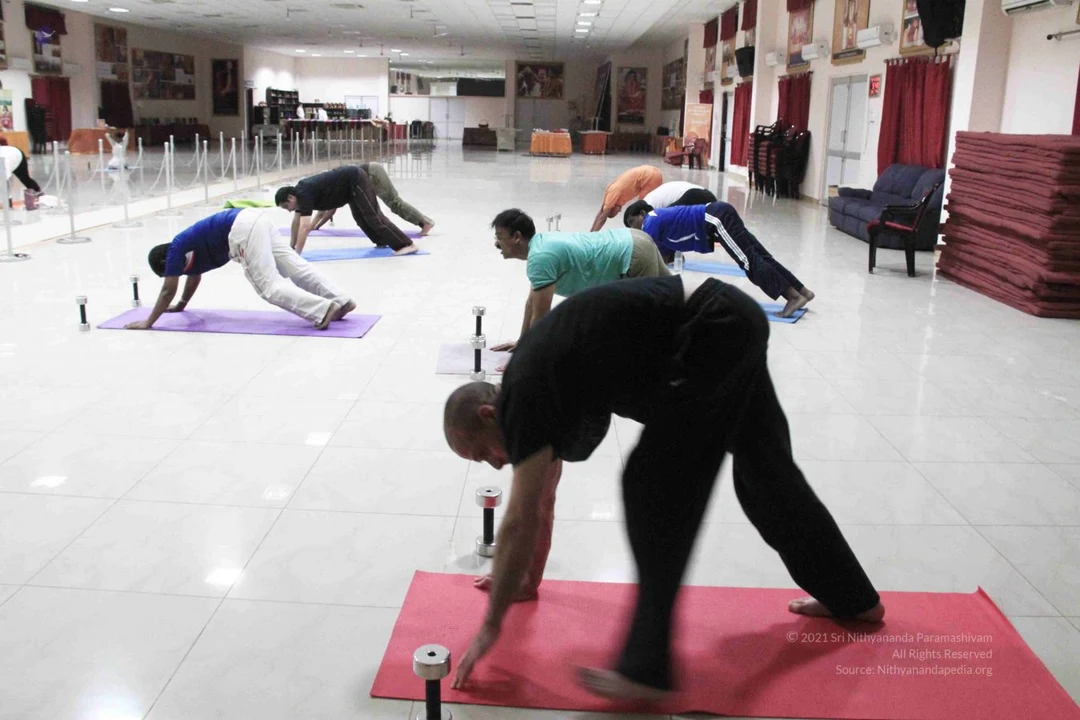
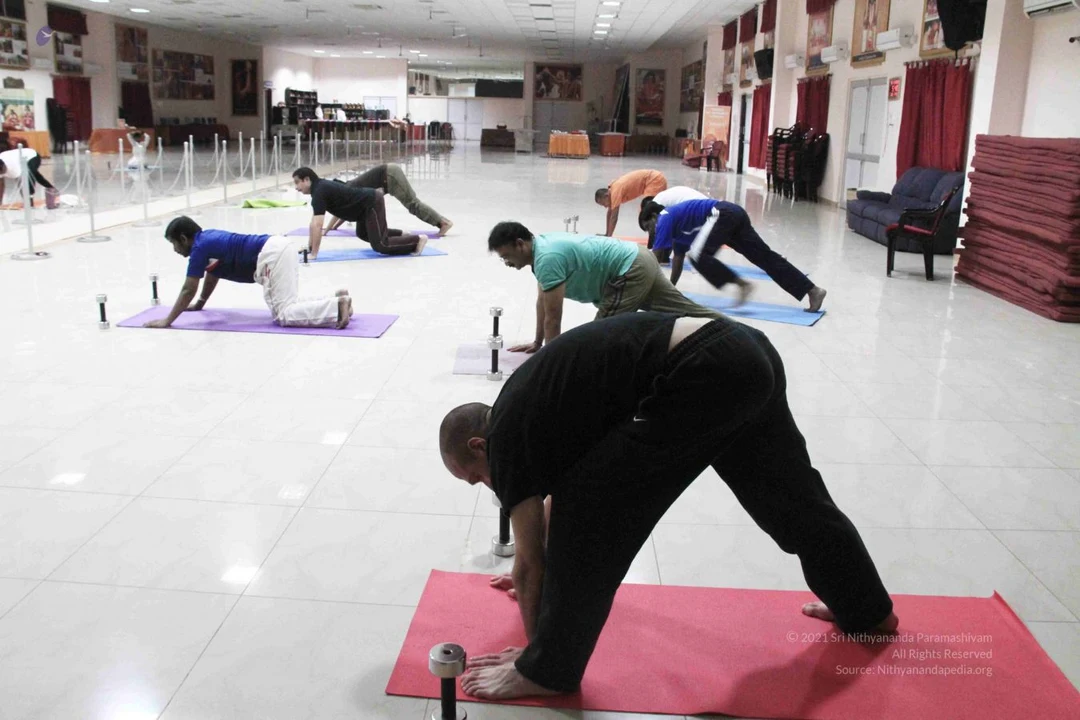
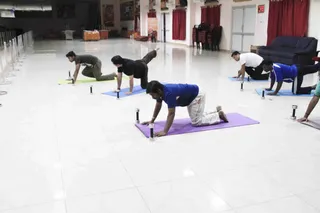
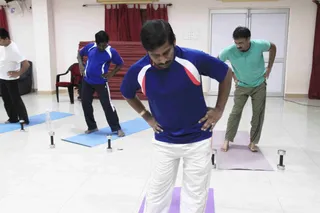
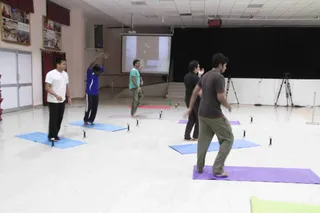
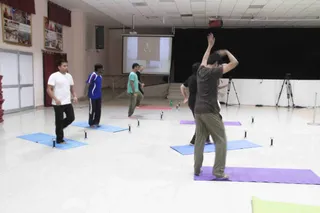
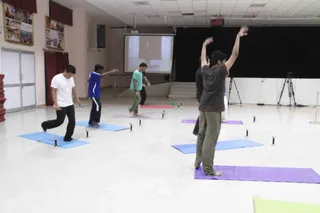
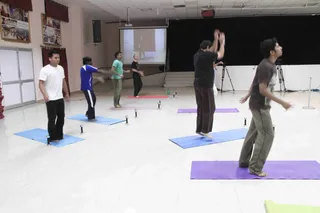
A photograph of a bright, tiled hall where a group of people are doing an exercise routine on colourful yoga mats. Several participants in casual clothes kneel on hands and knees with one leg extended, including a man in a blue t-shirt and white trousers on a purple mat in the foreground and a man in a white shirt and black trousers at right. Metal dumbbells are placed beside each mat. Behind them are a navy sofa, red curtains, stacked chairs and a wall with framed pictures, and a digital clock is visible at upper right.Indoor exercise session in a bright white-tiled hall with red curtains and a stack of red mats. Four men stand on blue and lilac exercise mats, bending forward with hands on their hips, beside small chrome dumbbells. The man in the foreground wears a blue and white athletic top with red trim and white trousers; the man behind him wears a navy tracksuit, another wears a green t-shirt and khaki trousers, and a fourth in a white shirt and black trousers stands at the left edge. No swami is visible.A photograph of men practising a standing exercise routine on coloured yoga mats in a bright hall with a white tiled floor. Several men in casual clothes, including a white t-shirt, a blue top and a grey t-shirt, are mid-movement with arms raised or bent, some barefoot. Small glass cups or candle holders are placed around the mats. Behind them a projector screen shows an image, and a black stage curtain and camera tripods stand at the right side.Several men practise a standing exercise routine in a bright hall with a white tiled floor. Blue, purple and pink yoga mats are laid out, each with a small metal post beside it. In the foreground a man in a dark grey T-shirt and olive trousers raises both arms overhead, while a man in a white T-shirt and black trousers stands on a blue mat at left and another in a blue track jacket stands nearby. A projector screen on the back wall shows a figure, and tripods and a dark stage area are visible at right. No one is identified as a person.A hall with a white tiled floor where several men practise a standing exercise on colourful yoga mats, each mat paired with a small metal post. The man in the foreground wears a brown top, olive trousers and a dark cap, with both arms raised overhead. Nearby, a man in a white t-shirt and black trousers and another in a blue tracksuit extend their arms sideways, while a man in a mint shirt walks on his mat. A projection screen shows an image at the back, with tripods and a black stage curtain to the right and red-and-maroon curtains on the left.A photograph of a bright hall with a tiled white floor where several men practise a standing exercise on coloured yoga mats in blue, purple, pink and red. Mats are marked by small metal stands. A man in a white t-shirt and black trousers stands at left, a man in a blue top and dark trousers beside him, and at right a man in a dark brown shirt and olive trousers stands with arms raised, clapping, while another man in a black shirt claps. A projection screen on the back wall shows a figure, and a tripod-mounted camera stands at right near a black stage curtain. Wall posters with photographs hang at upper left.

Paduka-Puja

24 photosSource gallery
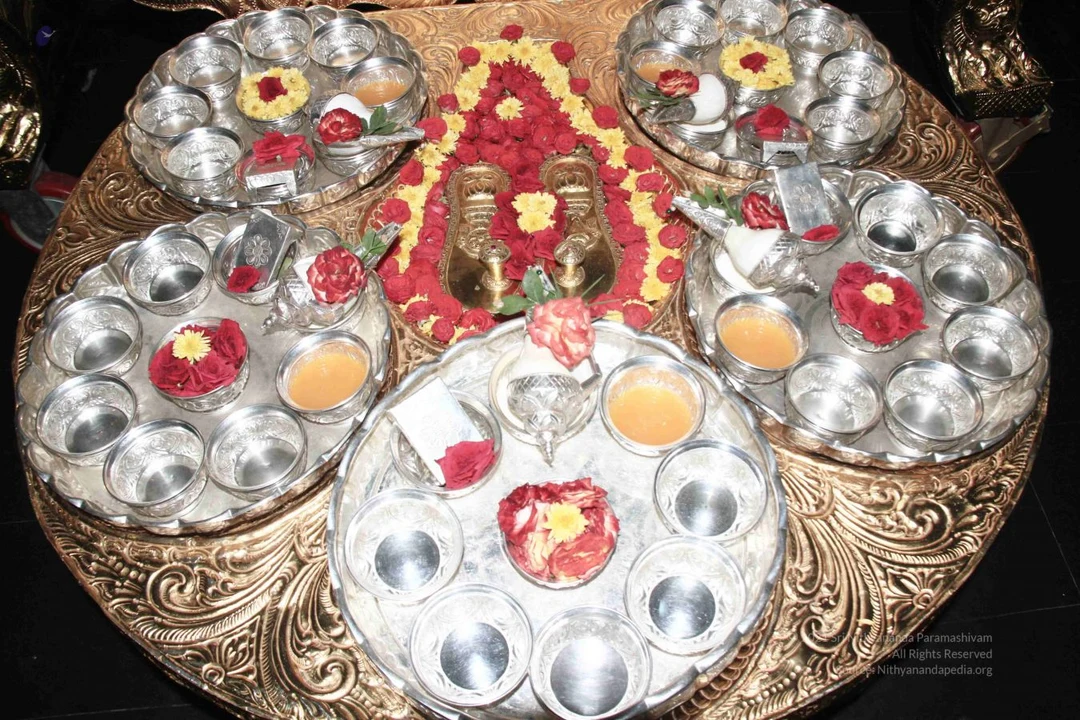
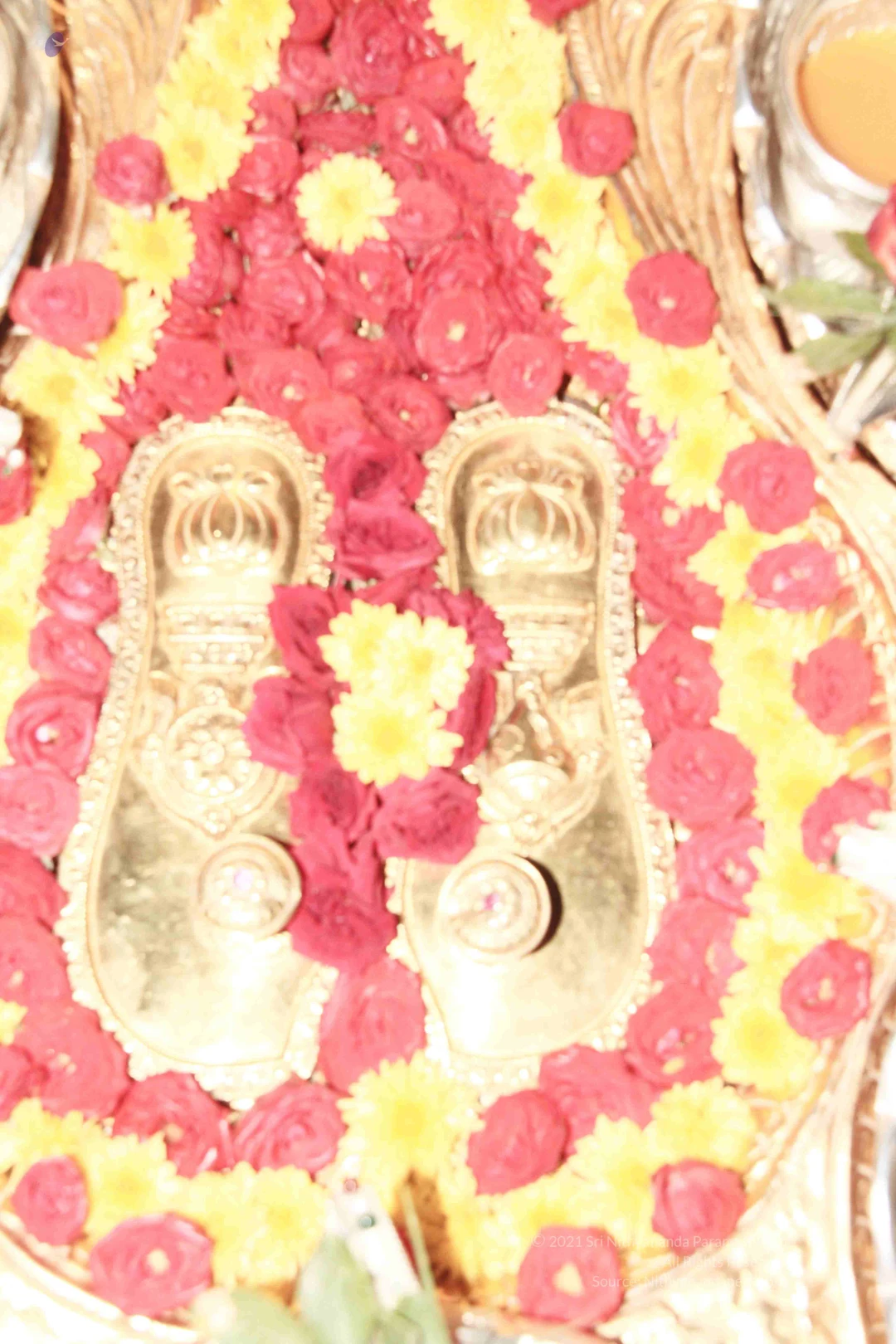
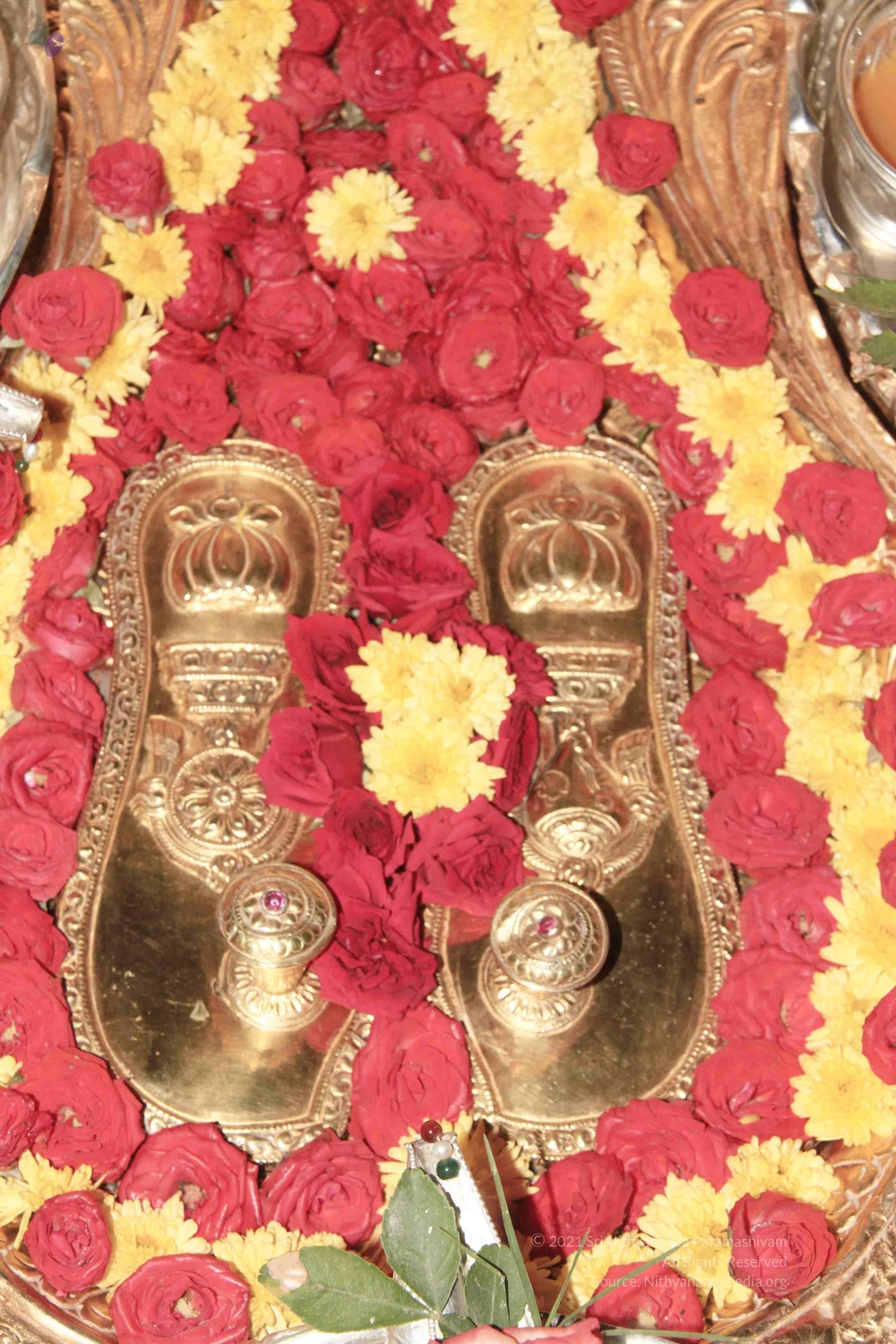
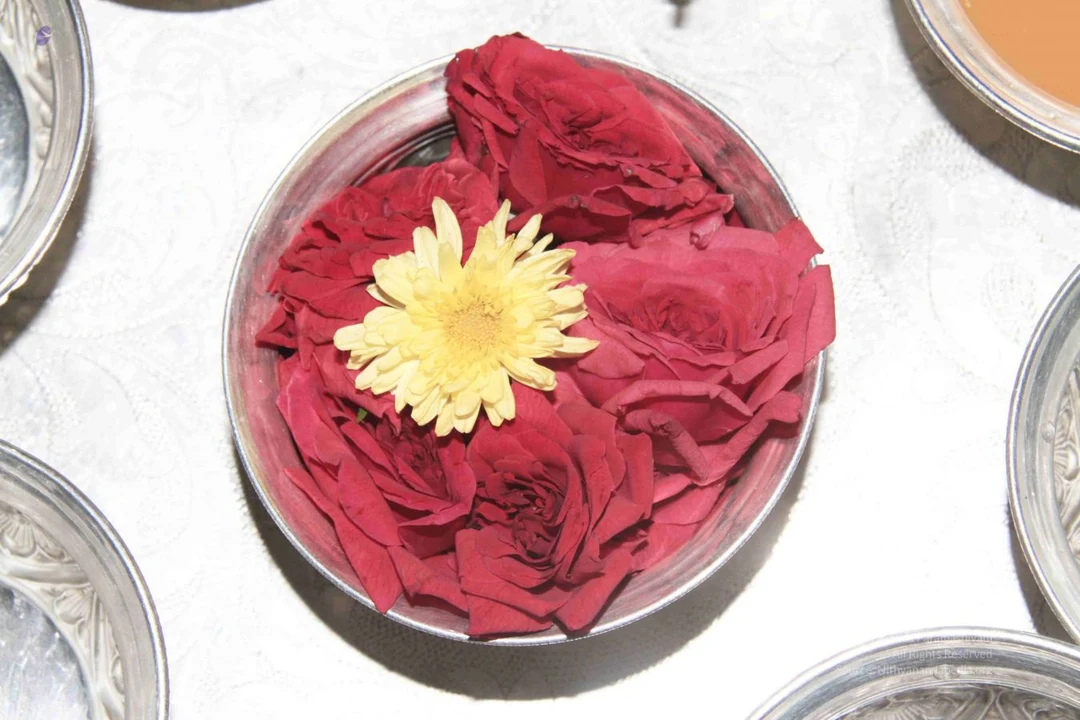
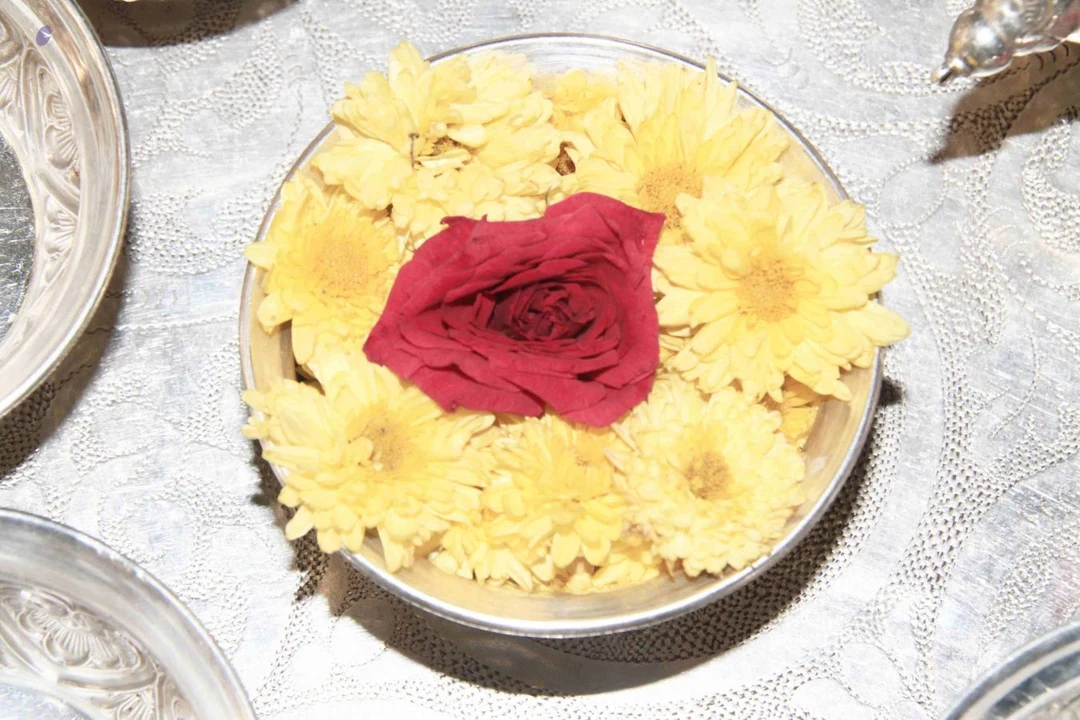
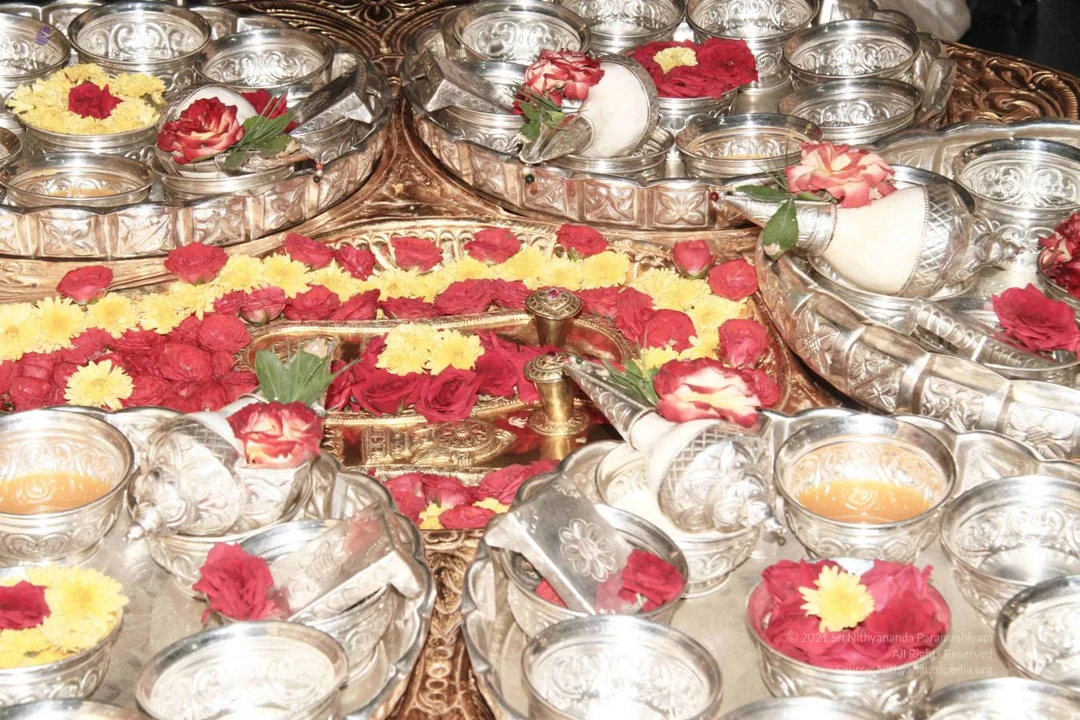
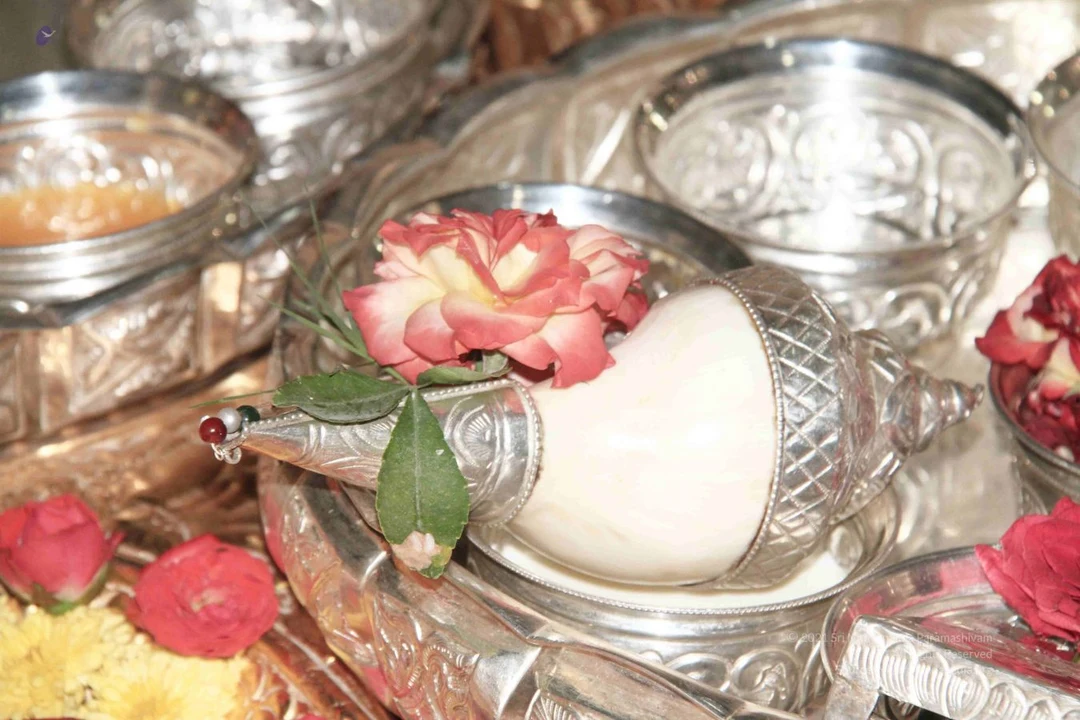
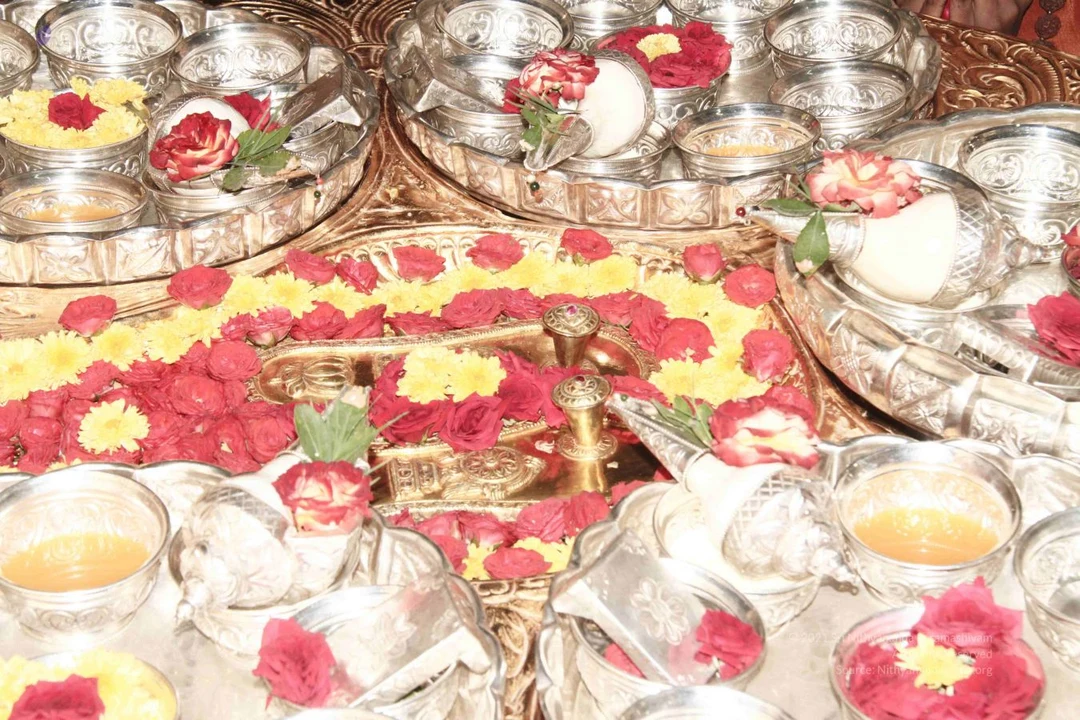
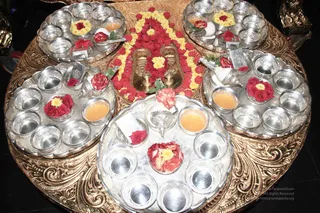
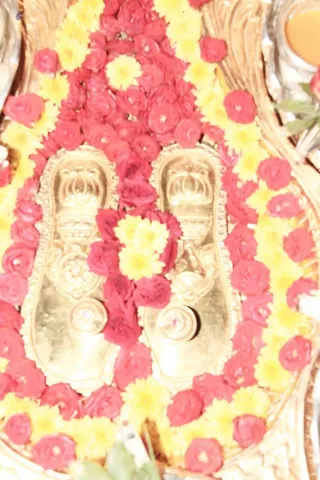
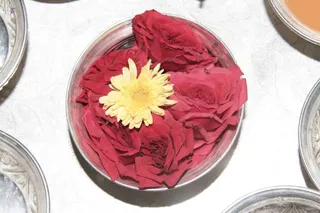
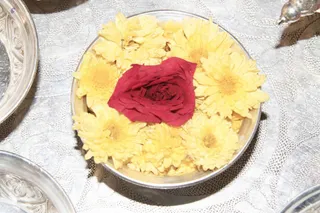
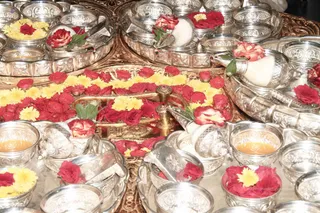
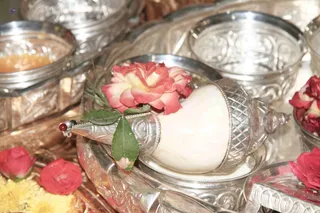
Top-down view of a ceremonial offering arrangement on an ornate gold-embossed tray. Multiple silver bowls and silver plates are arranged in a ring around a central pair of brass footprint-shaped sandals (padukas) strewn with red rose petals and yellow flowers. Several bowls hold orange-yellow sweet offerings, and red rose heaps and small flower garlands decorate the plates. Silver-toned pots and spouts sit among the bowls. No people are visible; the arrangement appears to be a puja or padapuja offering set.Close-up photograph of a pair of gilded metal sandals, or padukas, placed on a decorated surface. Each sandal has a raised crown motif, beaded borders and a round stone ornament on the strap area. Red rose petals and yellow marigold flowers are arranged in garlands and scattered over and around the padukas. The image is slightly overexposed and blurred. No people are visible.Overhead view of a round silver bowl filled with deep red rose petals and one pale yellow chrysanthemum-like flower at the centre. The bowl sits on a white cloth with embossed pattern, beside several other ornate silver plates and vessels at the edges. The arrangement appears to be flower offerings for a ritual setup. No people are visible.Close overhead photo of a round silver plate filled with yellow chrysanthemum blossoms and a single deep red rose at the centre, set on a white lace-patterned cloth. Silver ritual dishes and a silver vessel edge the frame. No people are visible; the arrangement looks like a floral offering tray.A top-down view of an arranged ritual offering on silver and brass trays. Red rose petals and yellow marigold blossoms are scattered across a gold-toned tray in the centre. Around them are ornate engraved silver bowls and cups holding pale yellow liquid, along with silver spouted vessels, small brass stands and a few whole roses. No people are visible; the scene shows only puja offerings and ritual vessels.Close-up photograph of a white conch shell set in an ornate silver-metal holder on a silver ritual tray, fitted with silver mouthpiece fittings and a small red and green bead. A pink-and-cream rose with green leaves rests on the shell, with more red roses and yellow flowers at the edges. Silver bowls with ornamental engraving, one holding a golden liquid, sit on the tray around it, arranged for puja offerings. No people are visible.

Satsang

48 photosSource gallery
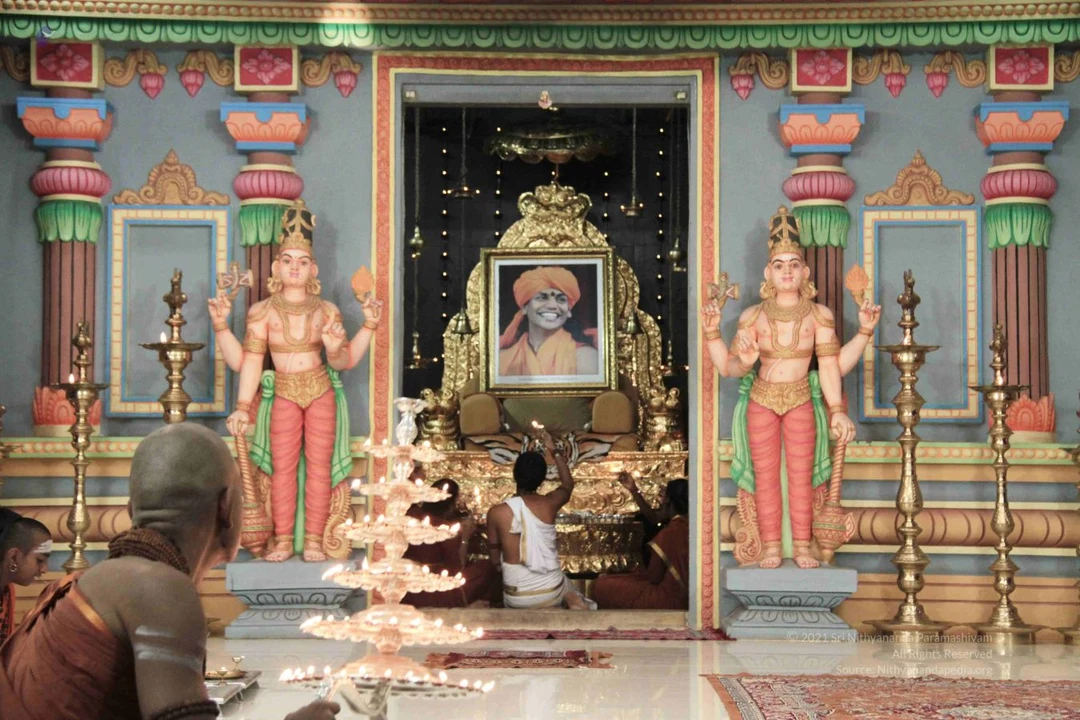
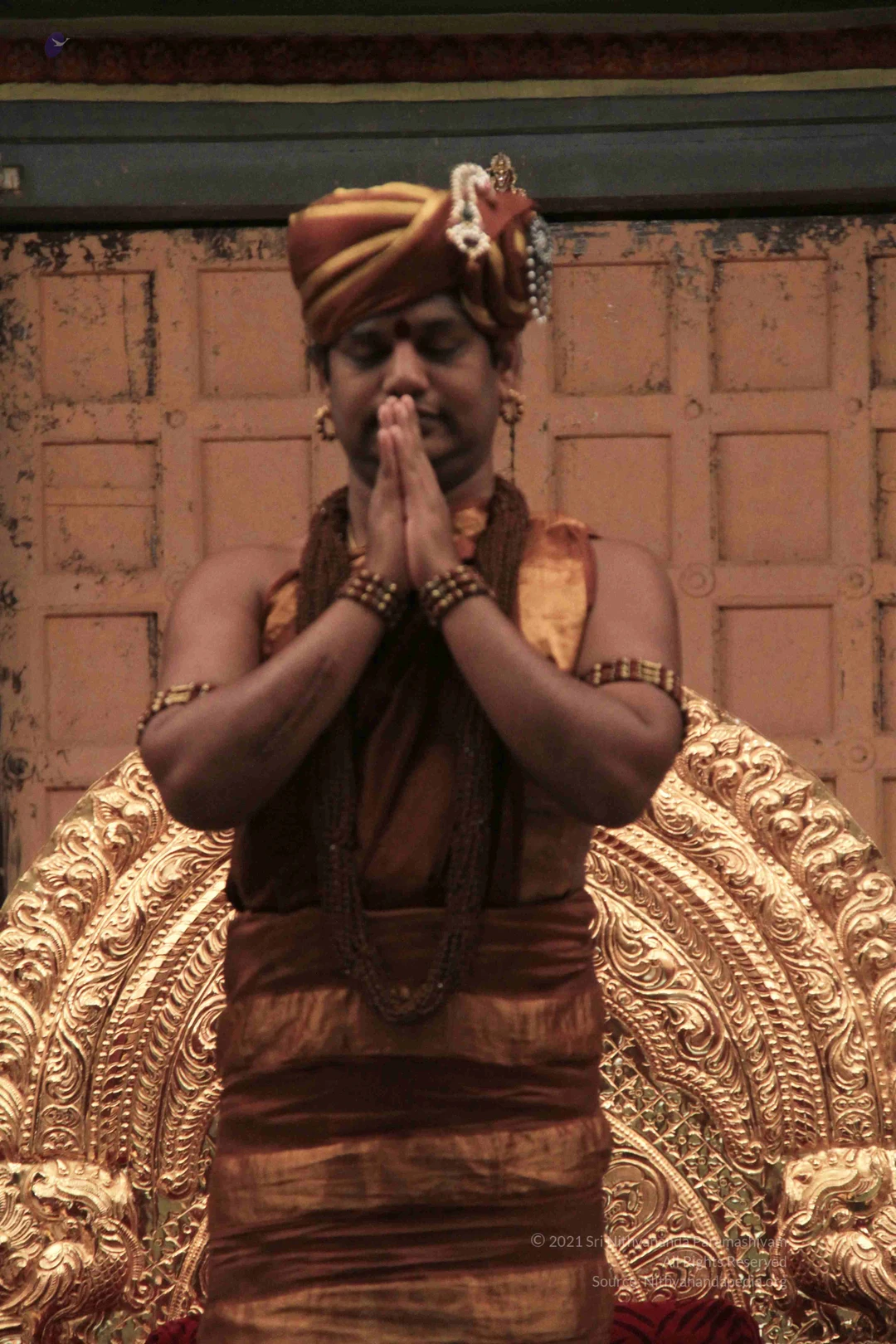
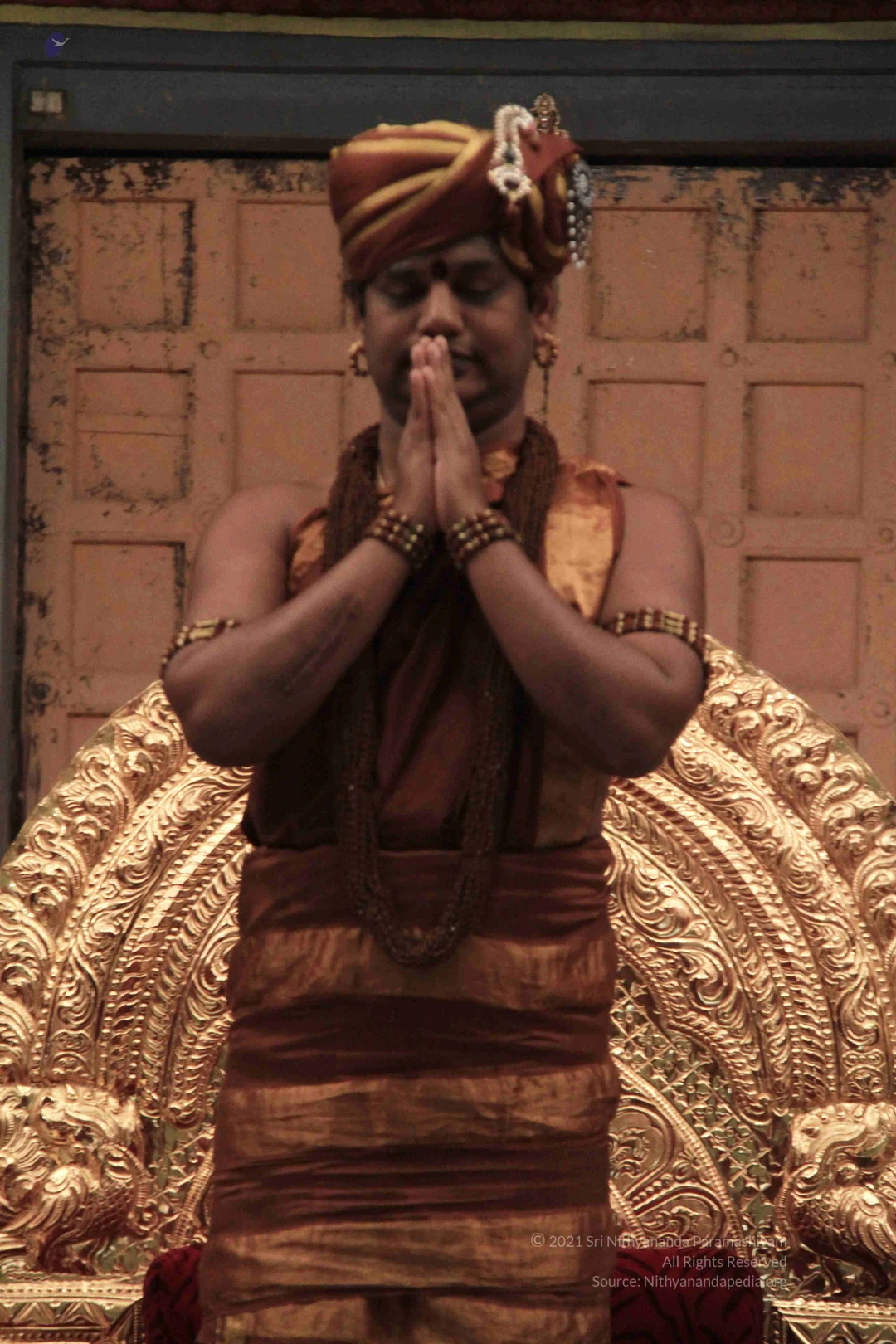
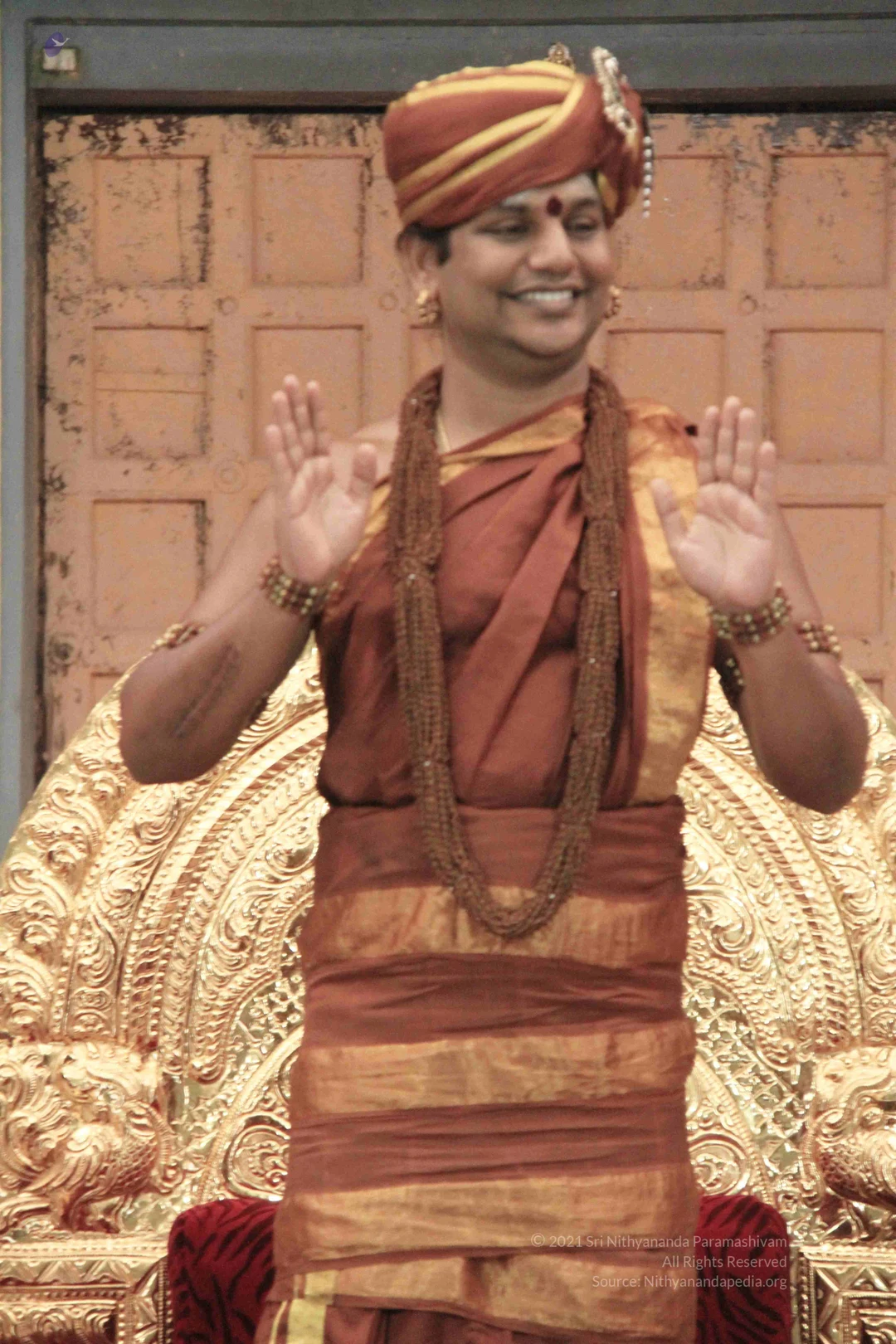
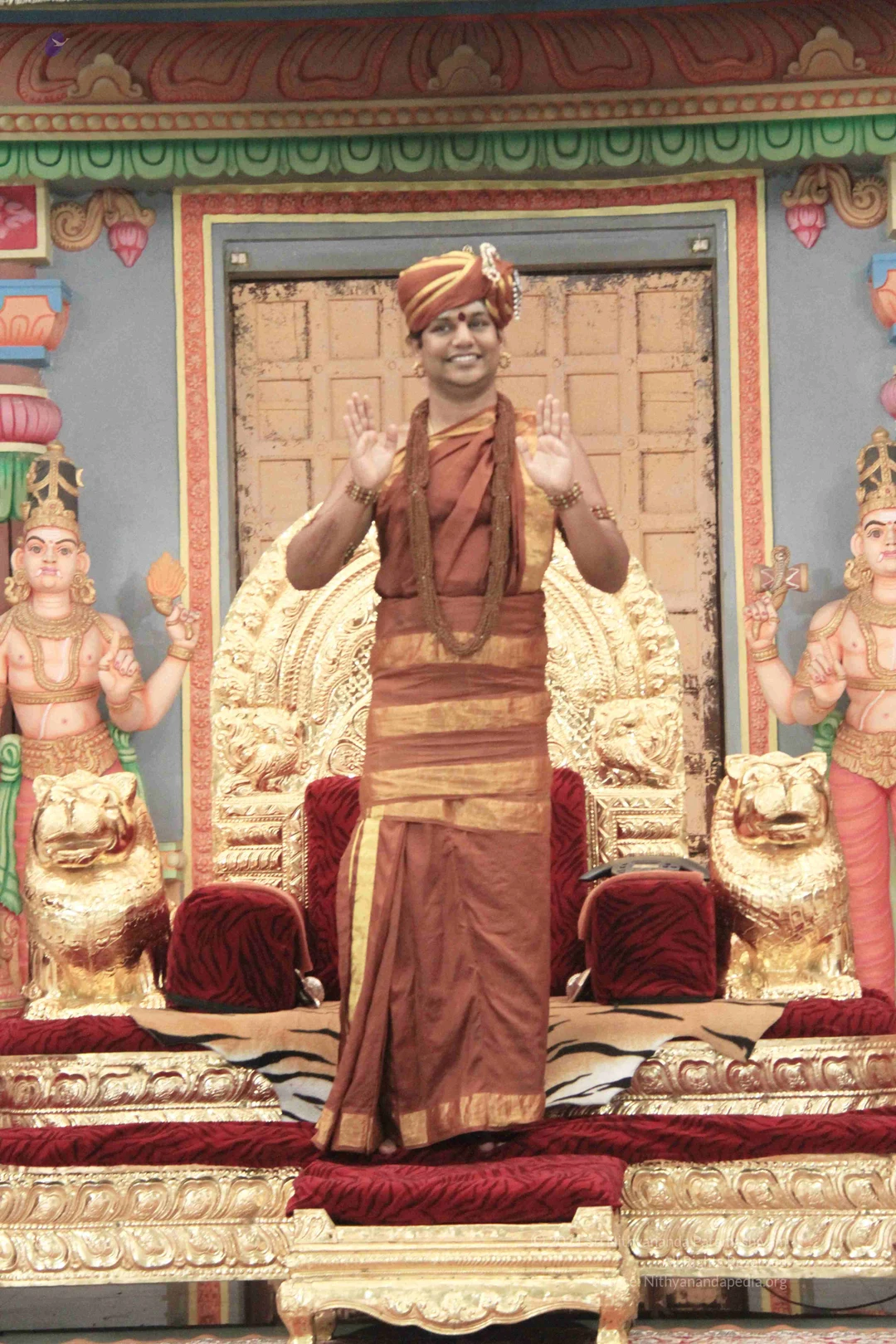
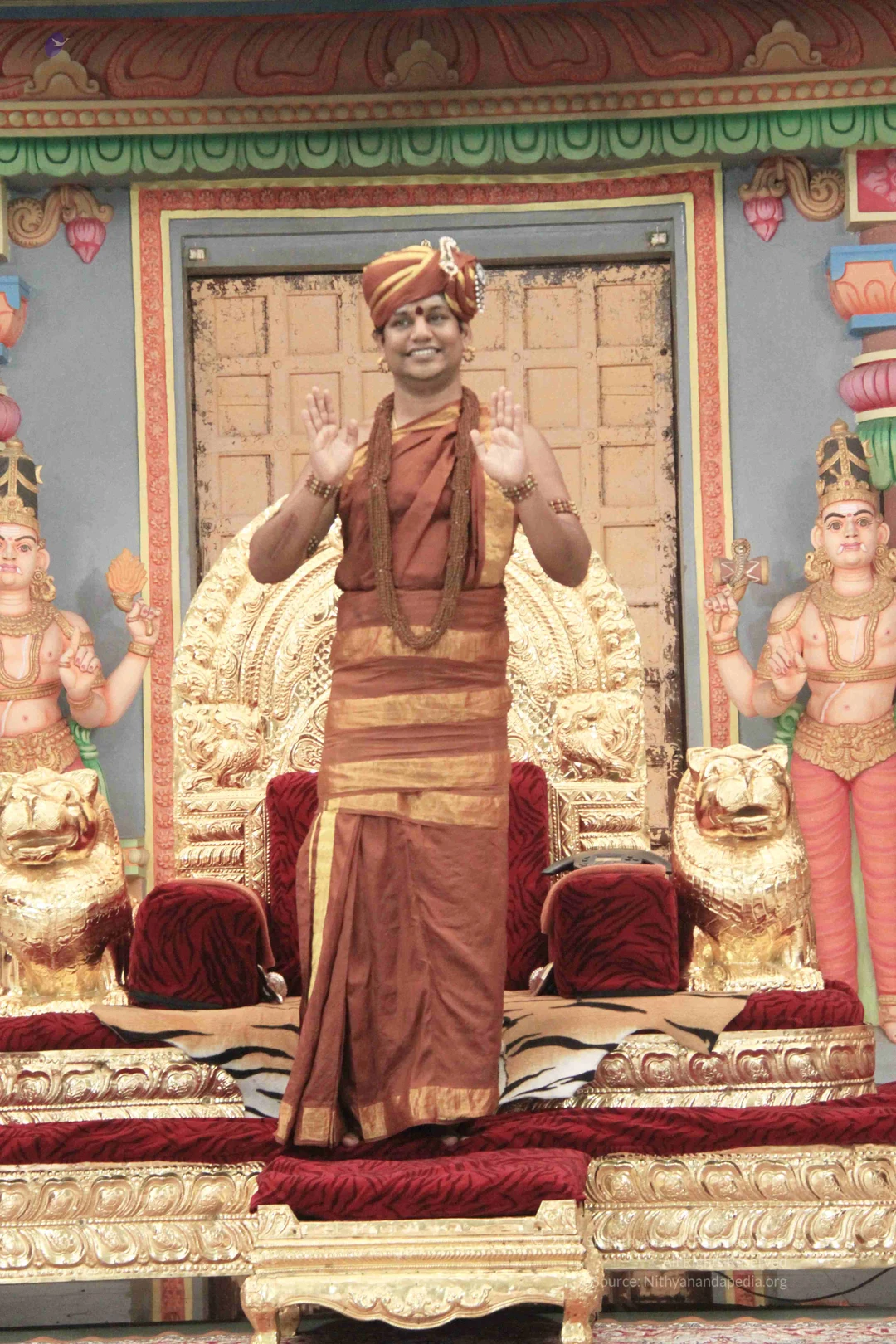
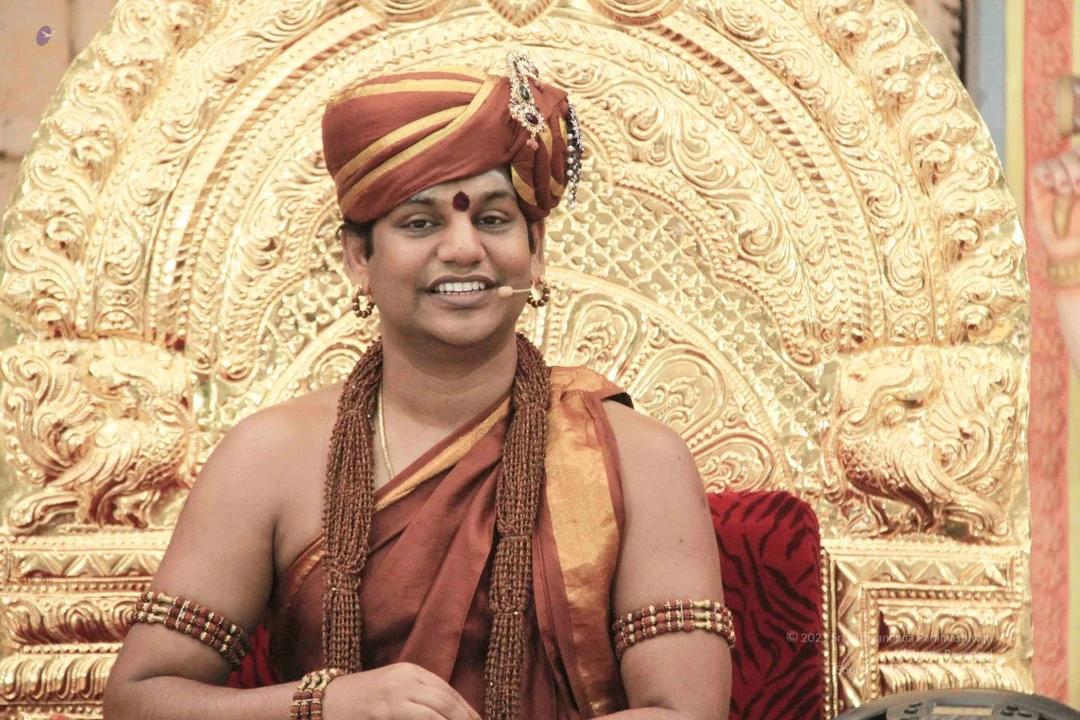
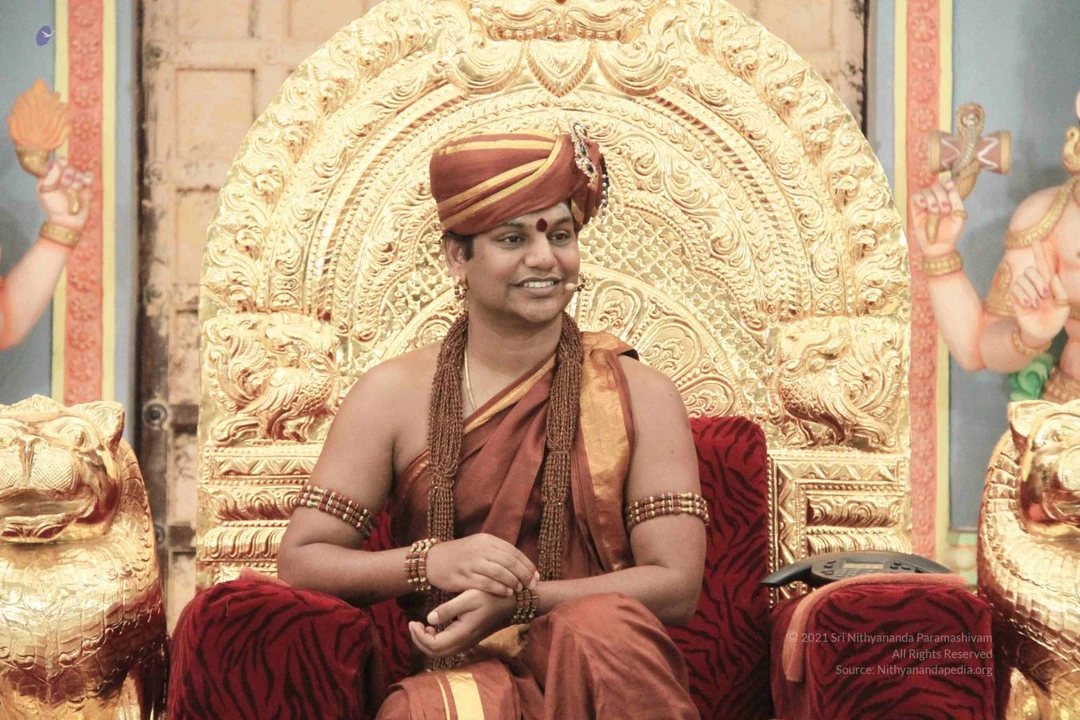
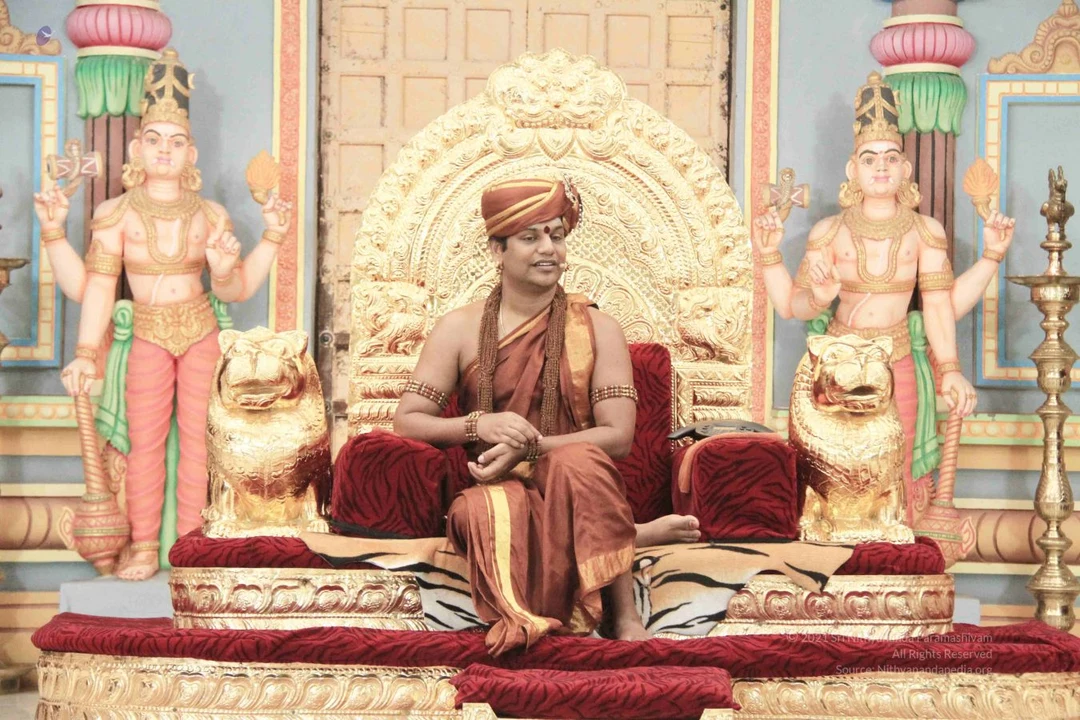
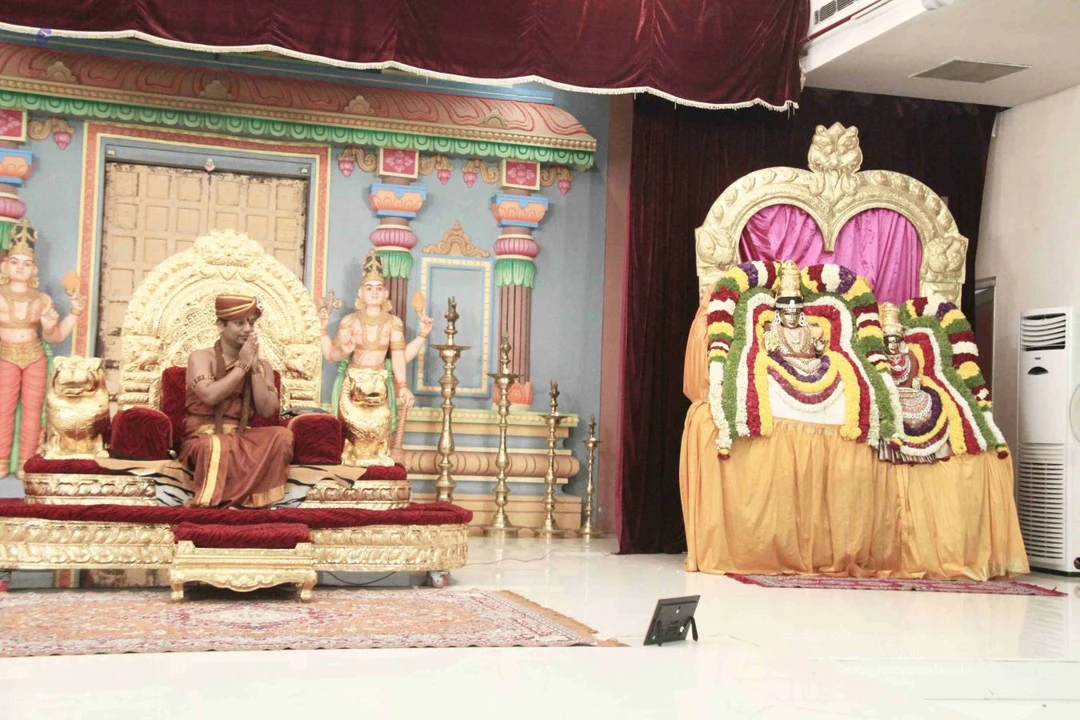
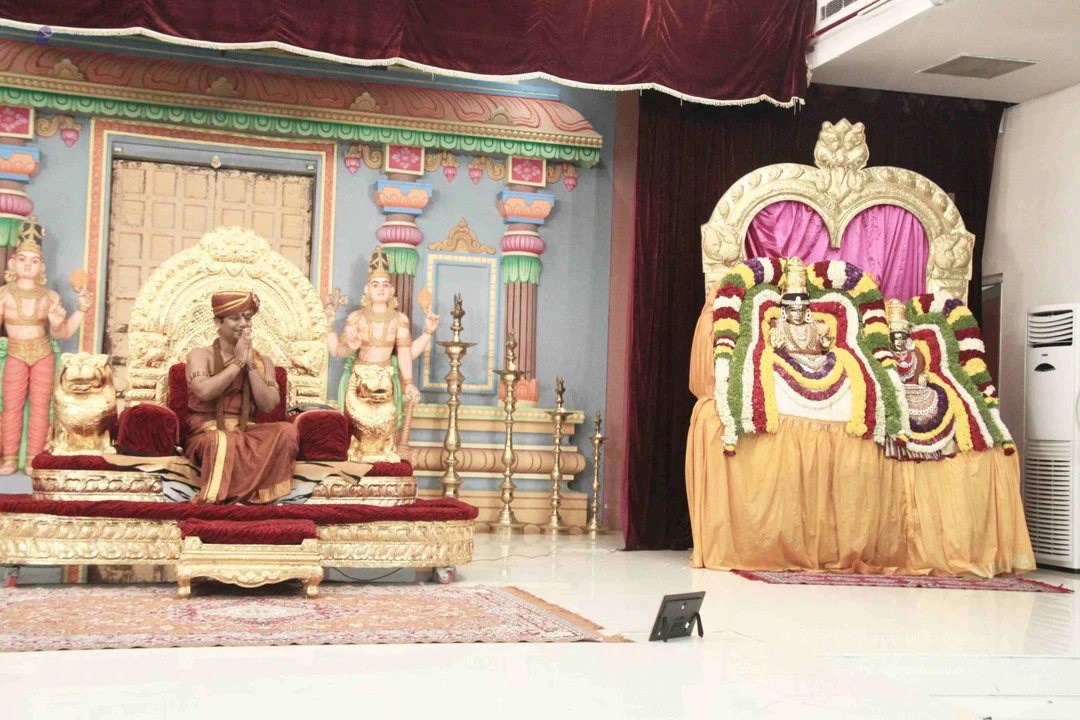
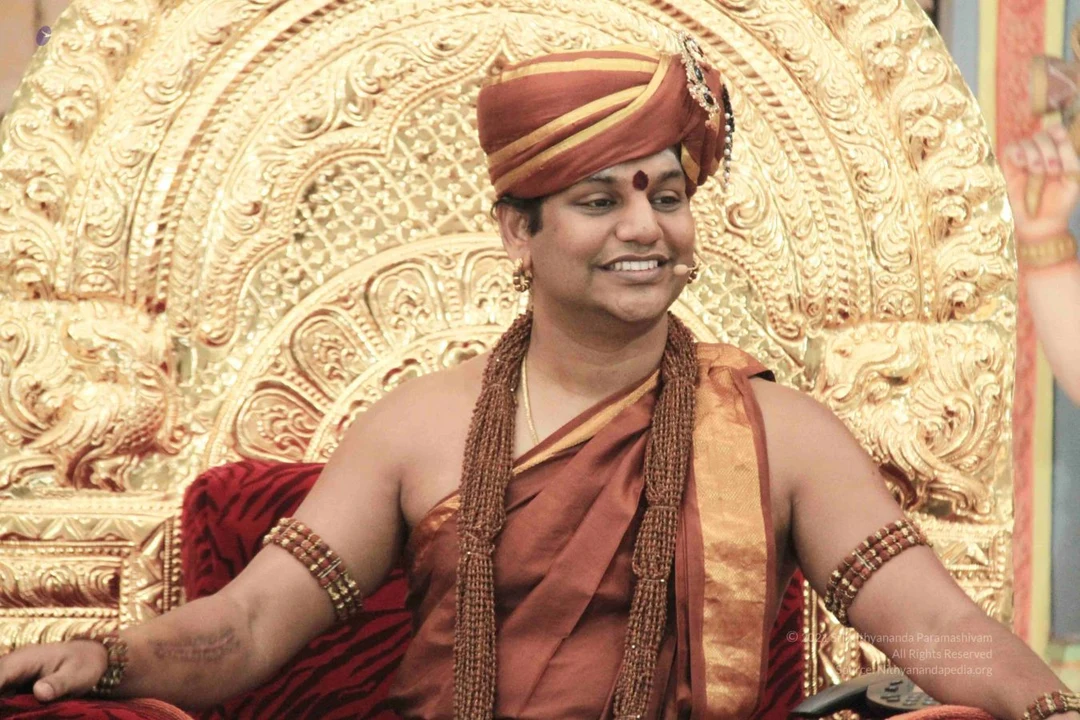
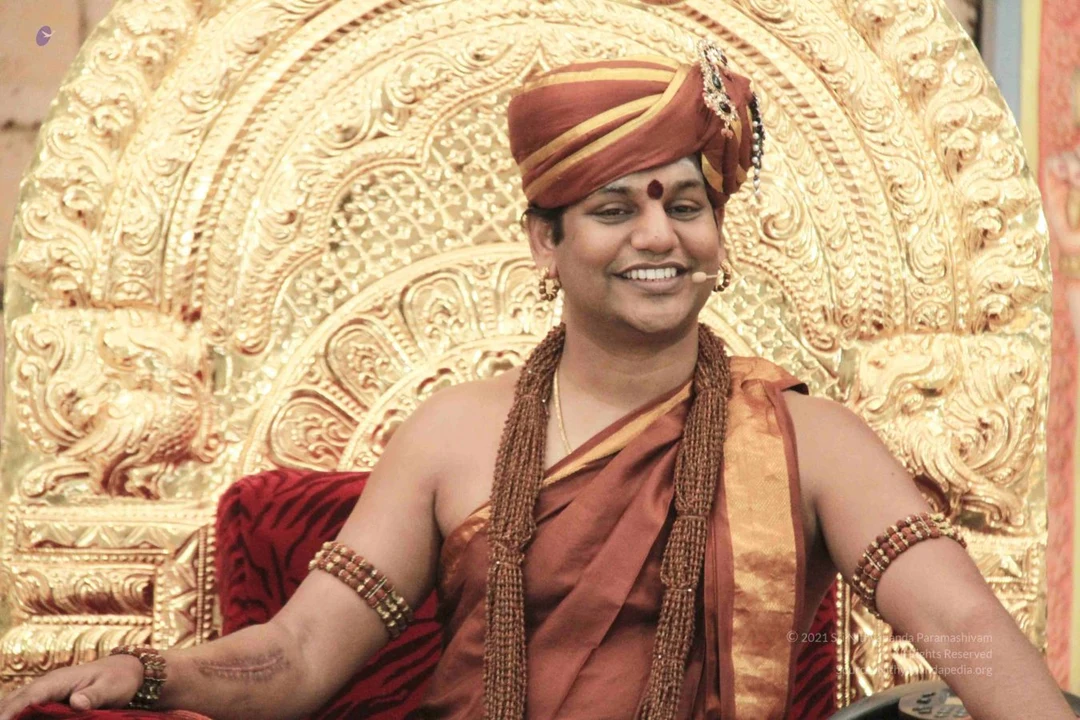
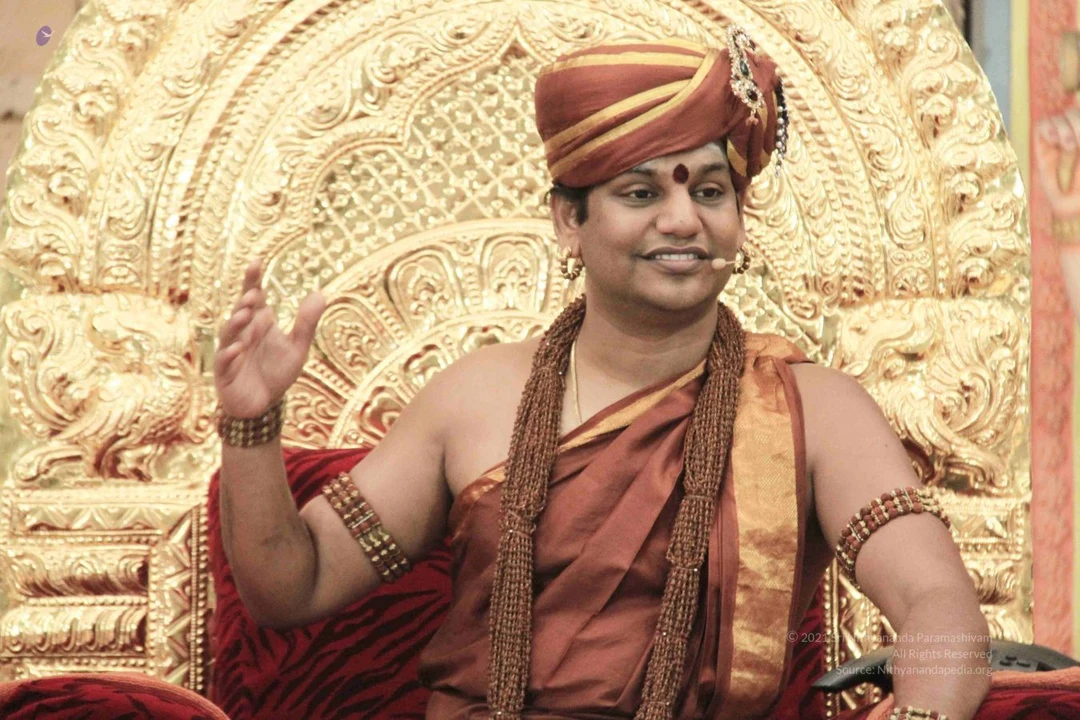
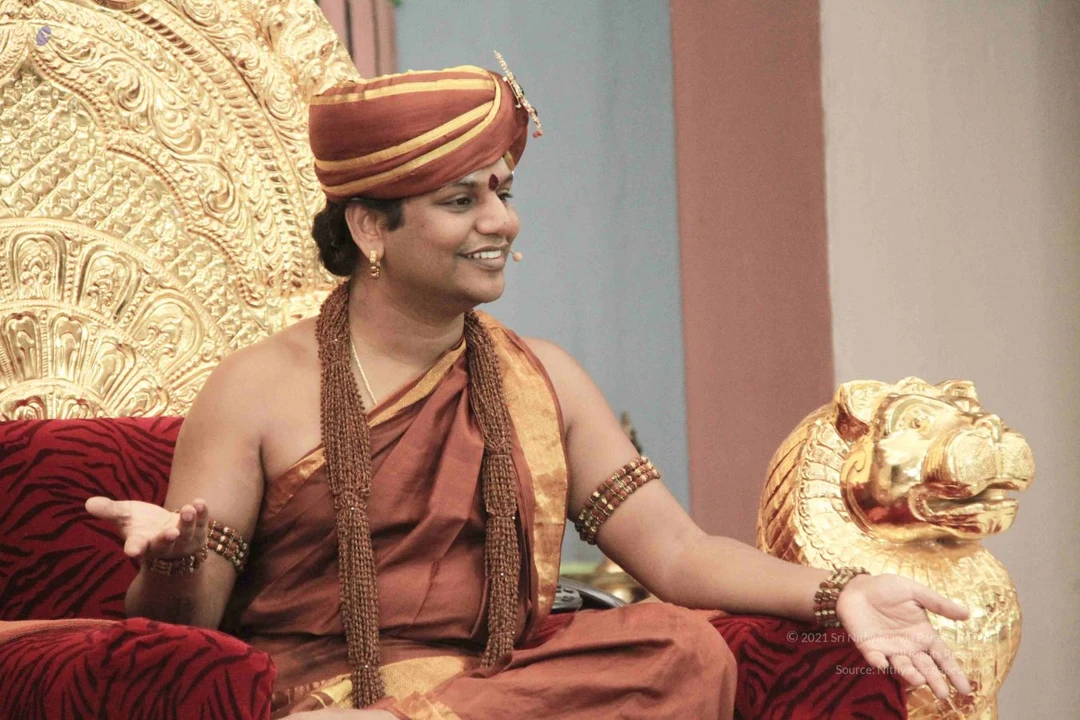
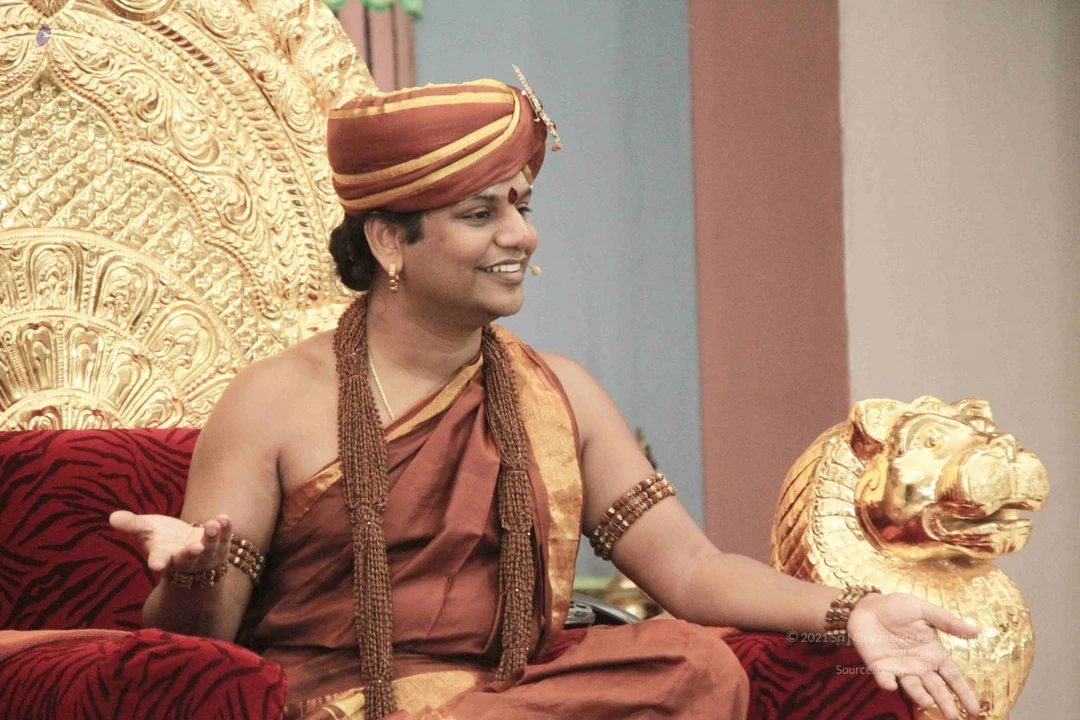
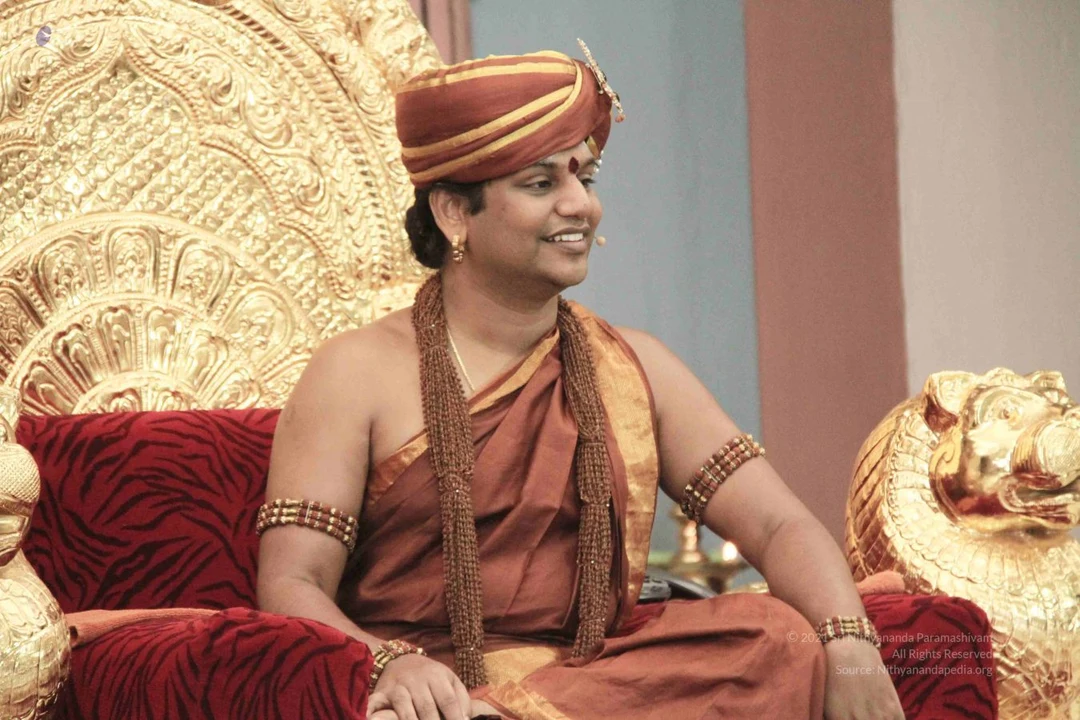
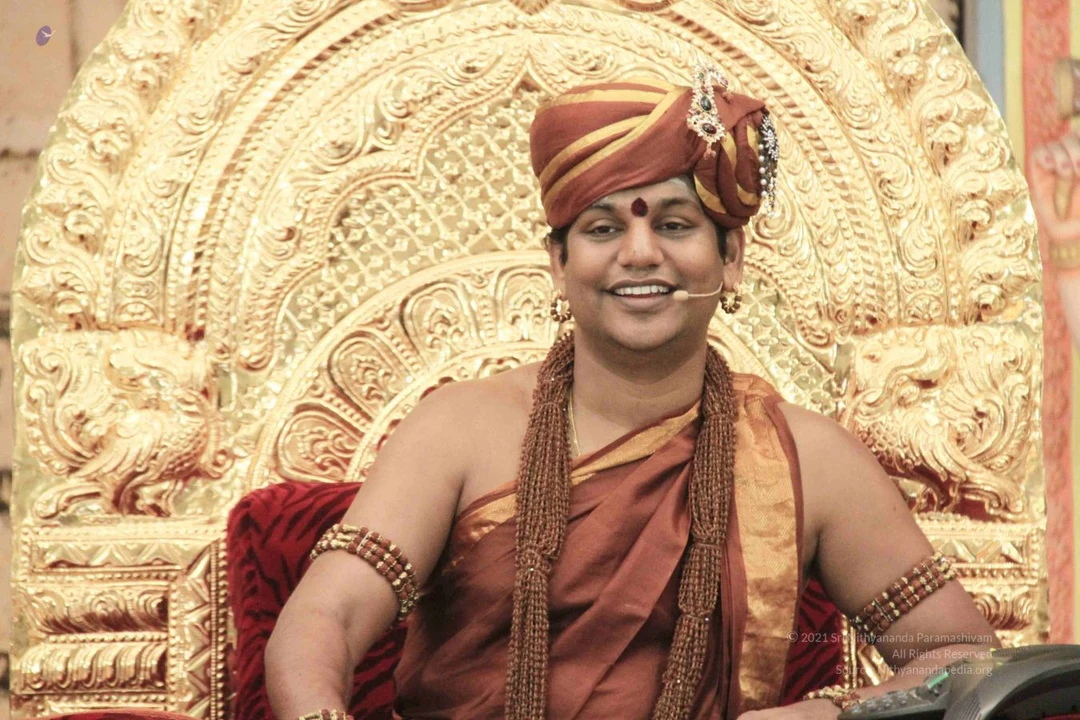
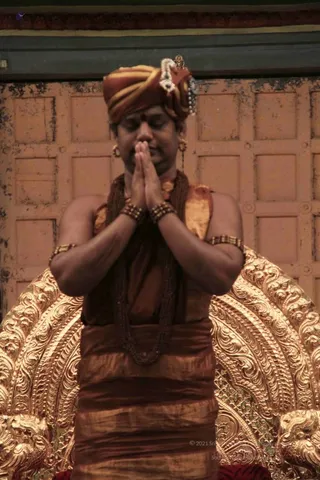
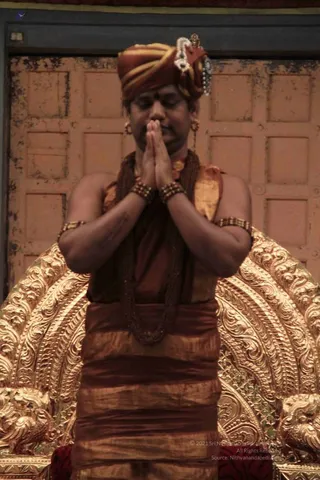
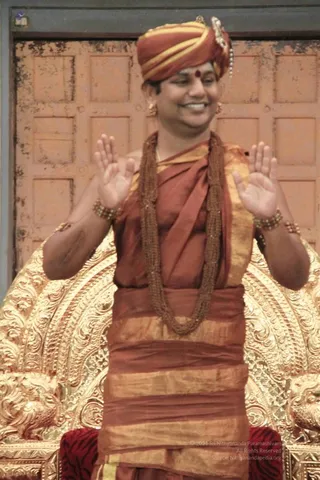
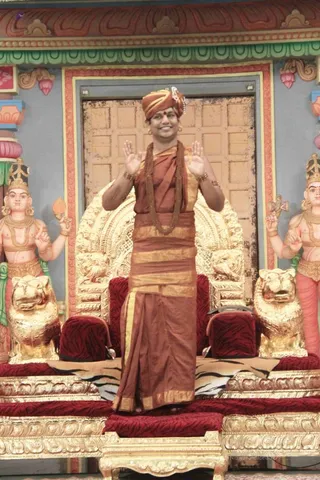
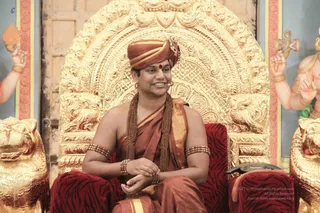
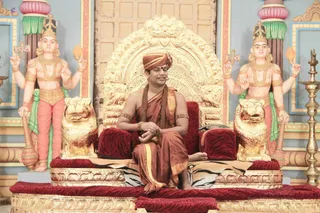
A man seated on an ornately carved golden throne with floral and scrollwork relief, palms pressed together in anjali mudra at chest level with eyes closed. He wears a rust-orange and gold turban with a small deity pendant and white beaded tassel, a saffron-brown upper garment and waist wrap, a dark rudraksha-style mala across the chest, gold earrings, and beaded bracelets on wrists and upper arms. A red-brown carved wooden panelled wall stands behind him. Appearance-based candidate: a person, seated in the honoured position, in devotional pose.A man stands before an ornate gilded throne with carved lion-like finials and a wooden panelled door behind him. He wears a rust-orange and gold turban decorated with white beads and a small ornament, and a deep rust-brown shawl over a gold-tinged wrap. Multiple dark beaded rudraksha-style malas hang on his chest, with beaded bracelets on his wrists and upper arms. His eyes are closed and his palms are pressed together in anjali mudra, a gesture of greeting and reverence.A seated man in a rust-red and gold-bordered turban and matching rust-red and gold-bordered robes smiles with both palms raised beside his shoulders in a blessing gesture. He wears long rudraksha-style beaded malas across his chest, beaded bracelets on both wrists, a red tilak on his forehead and small gold earrings. Behind him is an ornate gold-leaf throne with carved lion and floral motifs, in front of an old orange-painted wooden door. Swamiji (probable): the appearance-based cues are the swept turban, saffron-orange ornate clothing and multiple rudraksha malas, seated on a gold throne, giving a sannyasi presentation.A photograph of a standing man in a rust-red and gold-bordered dhoti-style garment and matching wrap, wearing a rust-red turban with a small decorative ornament, a red bindi, a long rudraksha mala and bangles. He raises both palms outward in a blessing gesture while smiling in front of an ornate gilded throne with red tiger-striped cushions and a tiger-skin rug. Gilded lion heads flank the throne, and two painted deity statues with crowns and raised arms stand on either side against a carved wooden door. Swamiji (probable): the saffron-toned turban, rudraksha mala and ceremonial throne setting are the cues; the presentation is consistent with the page label, but the face is not used for identification. Only one physical person is present.A man seated on an ornate gilded throne with a carved golden backrest topped by a lion-like motif and red tiger-striped cushions. He wears a rust-orange turban with a small gold ornament, a red bindi, a dark-red and gold-bordered dhoti and shawl, and multiple rudraksha malas across his chest and arms, with a gold chain at his neck. He smiles, hands folded in his lap, and a small microphone clips near his face. Golden lion statues flank the throne and multicoloured deity murti figures stand at the sides. This is a probable Swamiji appearance based on the saffron-toned turban, rudraksha malas and ceremonial dress, seated in a satsang setting.A seated man in saffron-orange robes and an orange turban sits on an ornate gold-and-red throne with tiger-motif cushions, beside two gilded lion figures. Behind him, two painted deity statues with multiple arms, crowns and gold necklaces flank the throne, and a brass lamp stands at right. A rudraksha mala hangs on his chest, and he sits barefoot on a striped tiger-skin cloth. The setting resembles a stage or temple-style hall with a wooden door behind.

Sarva-Darshan

21 photosSource gallery
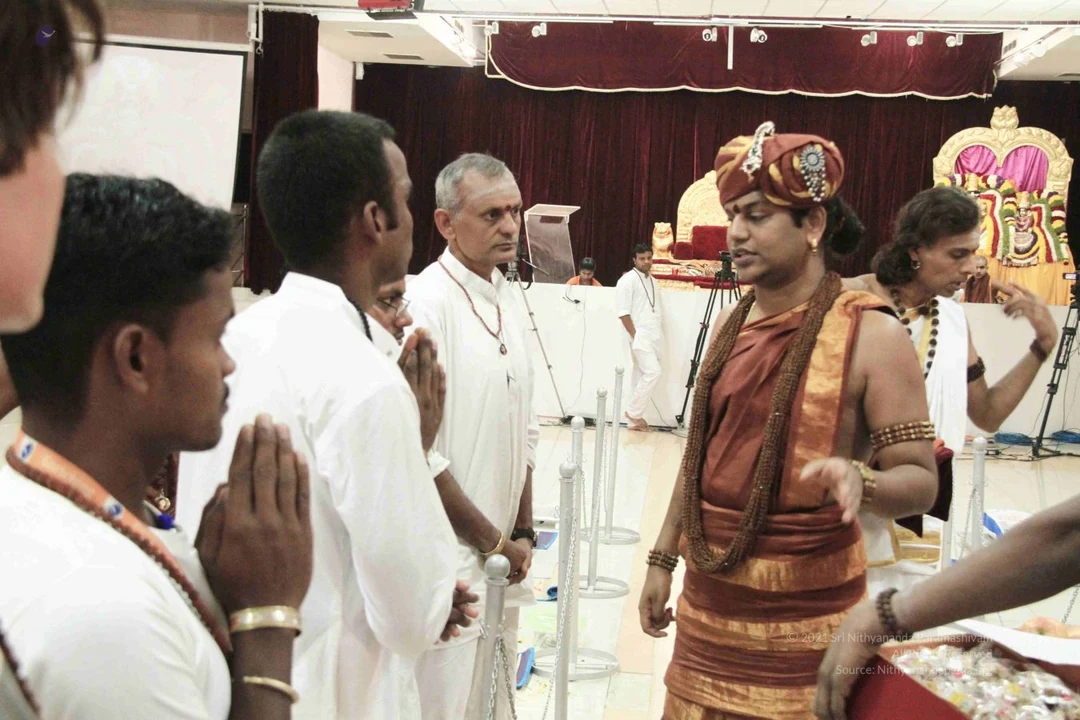
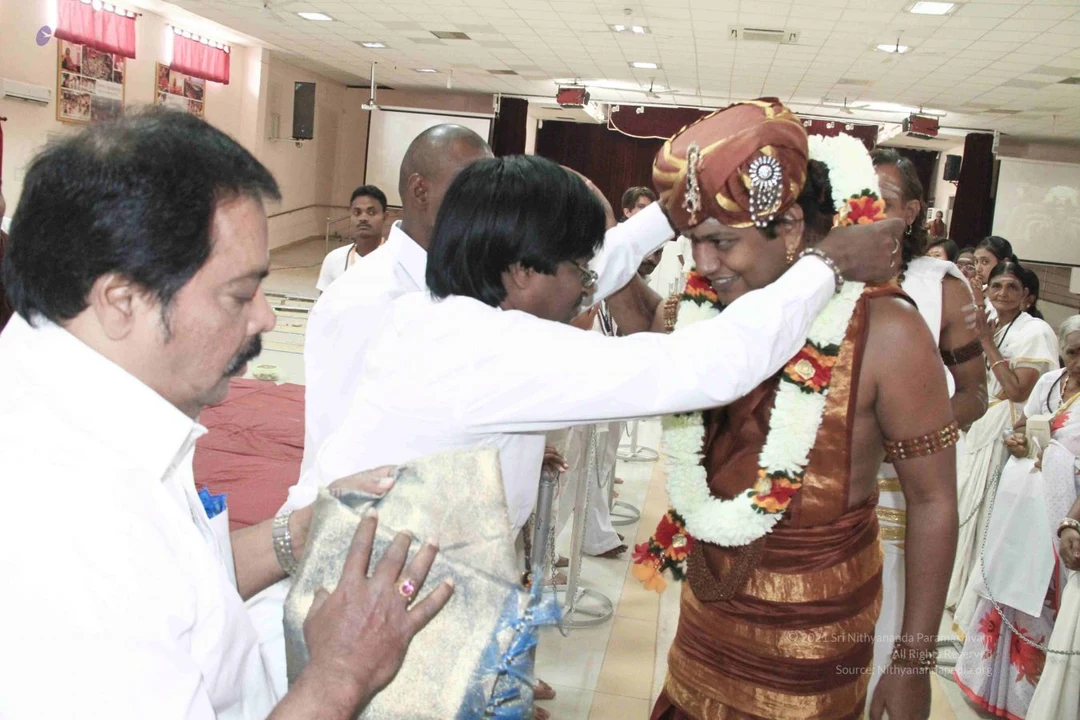
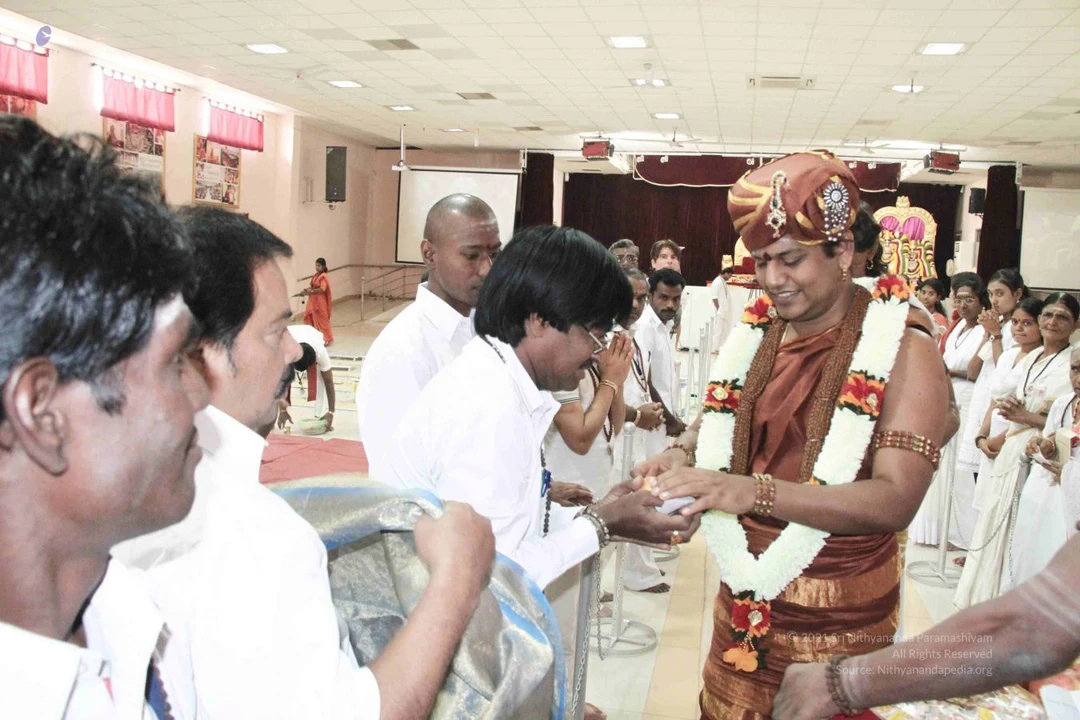
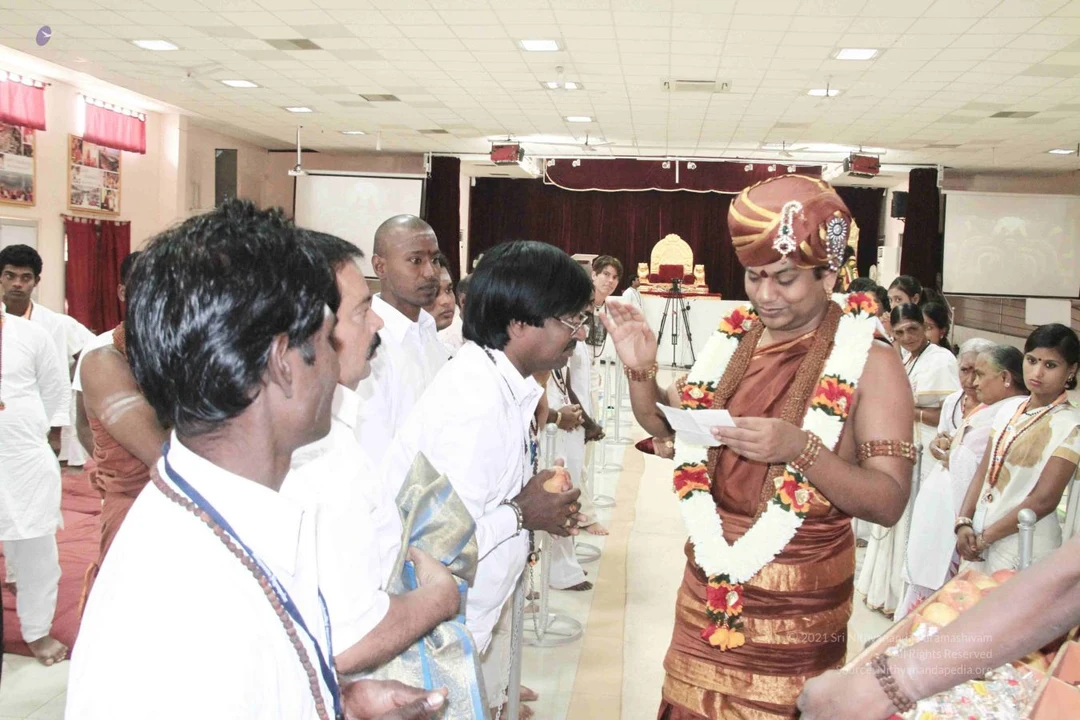
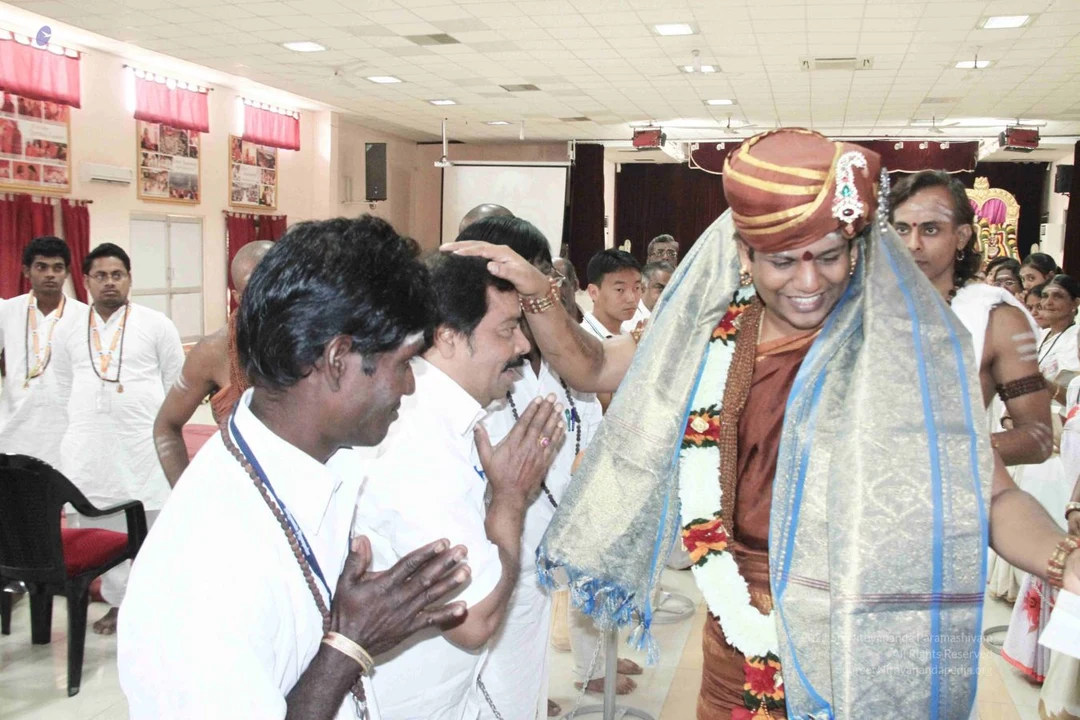
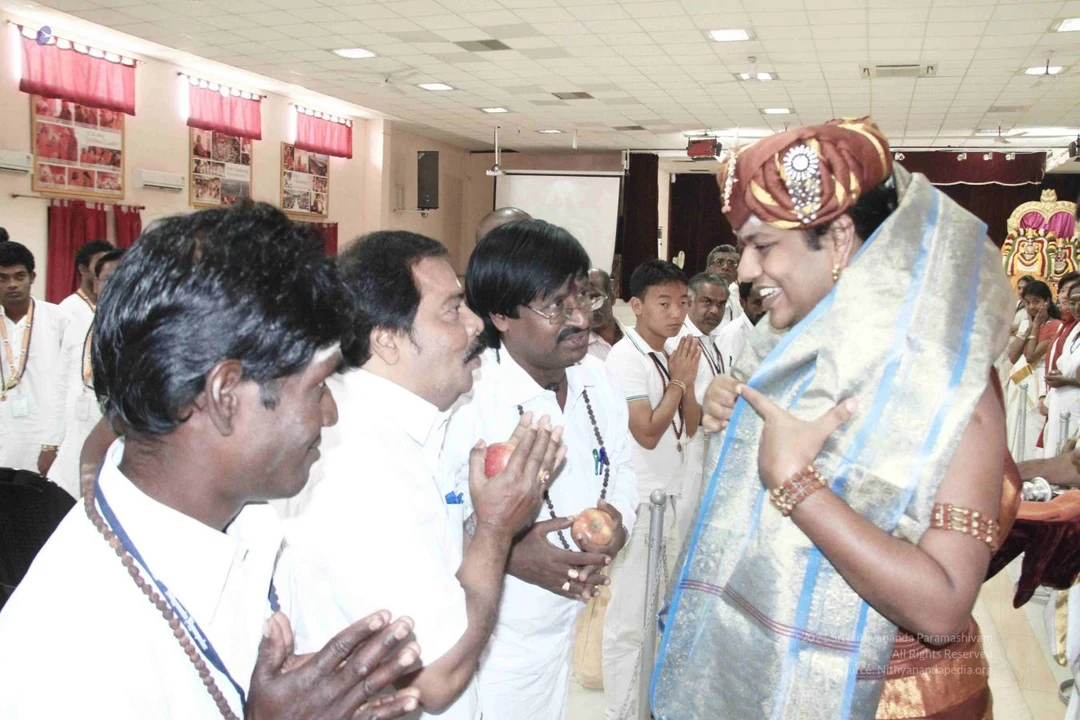
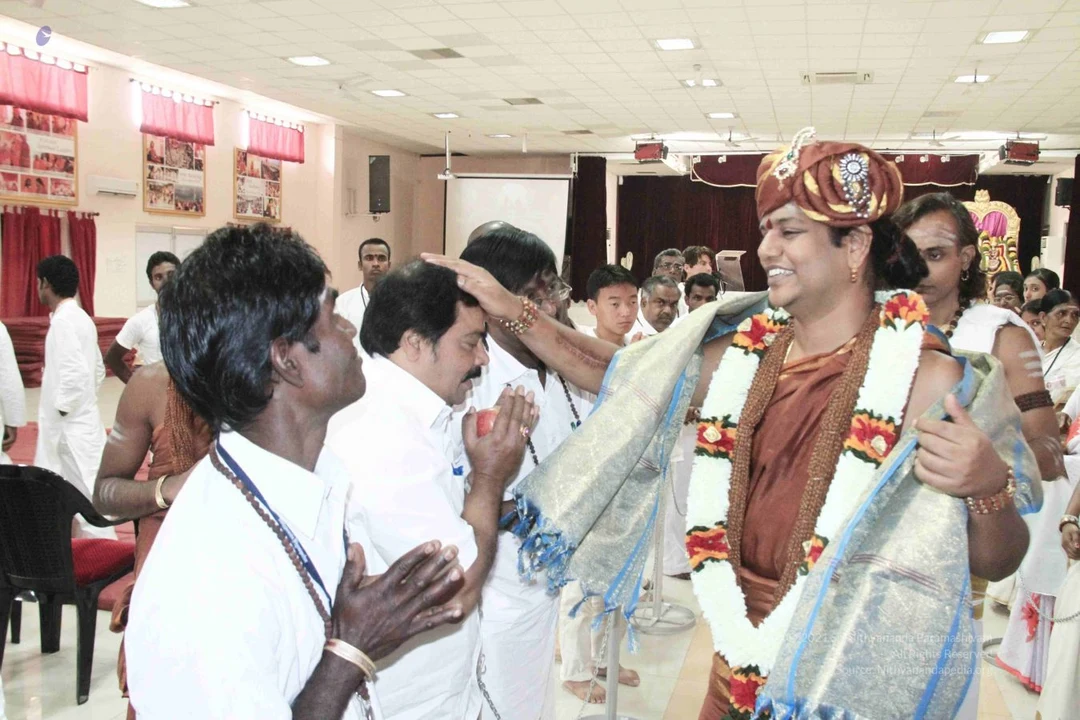
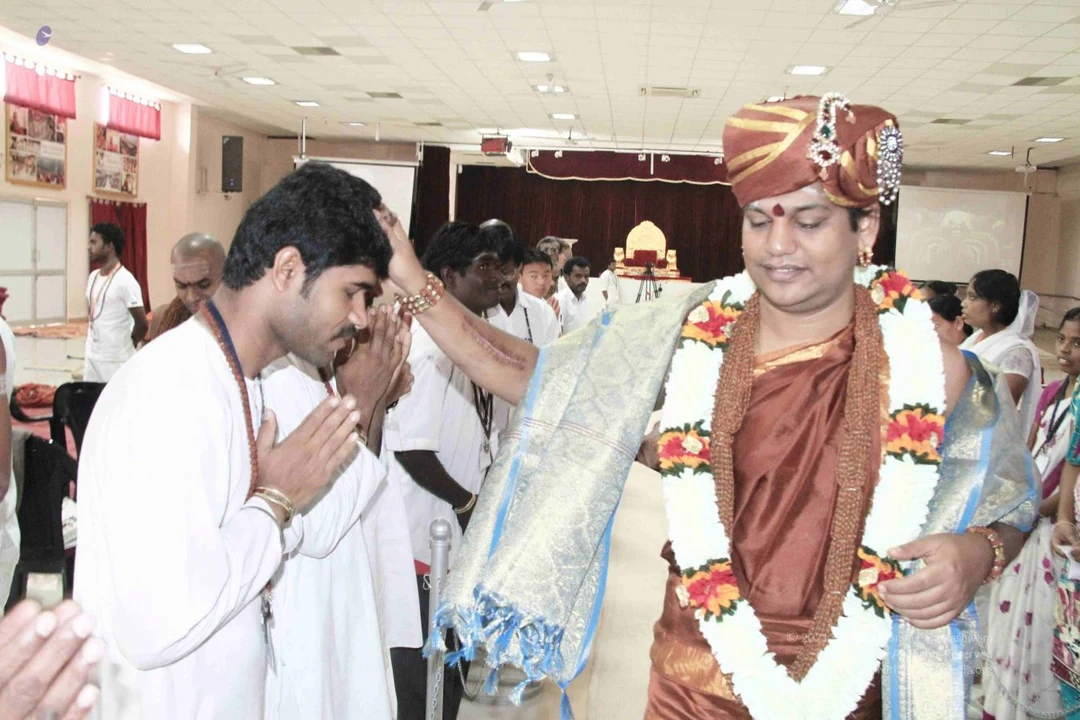
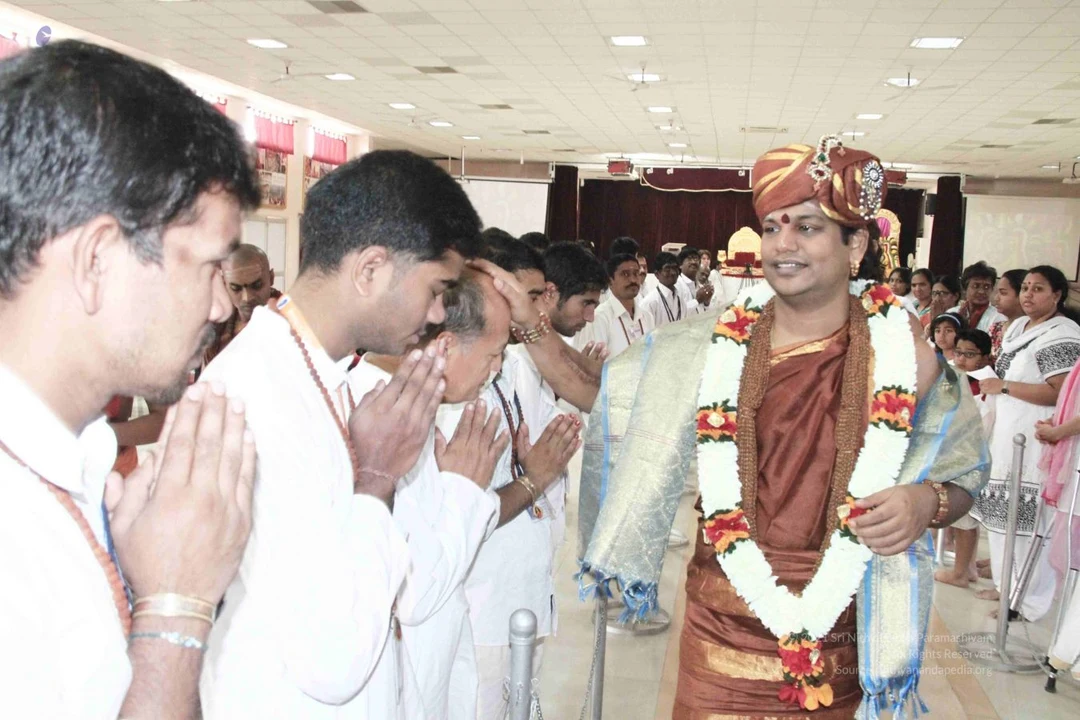
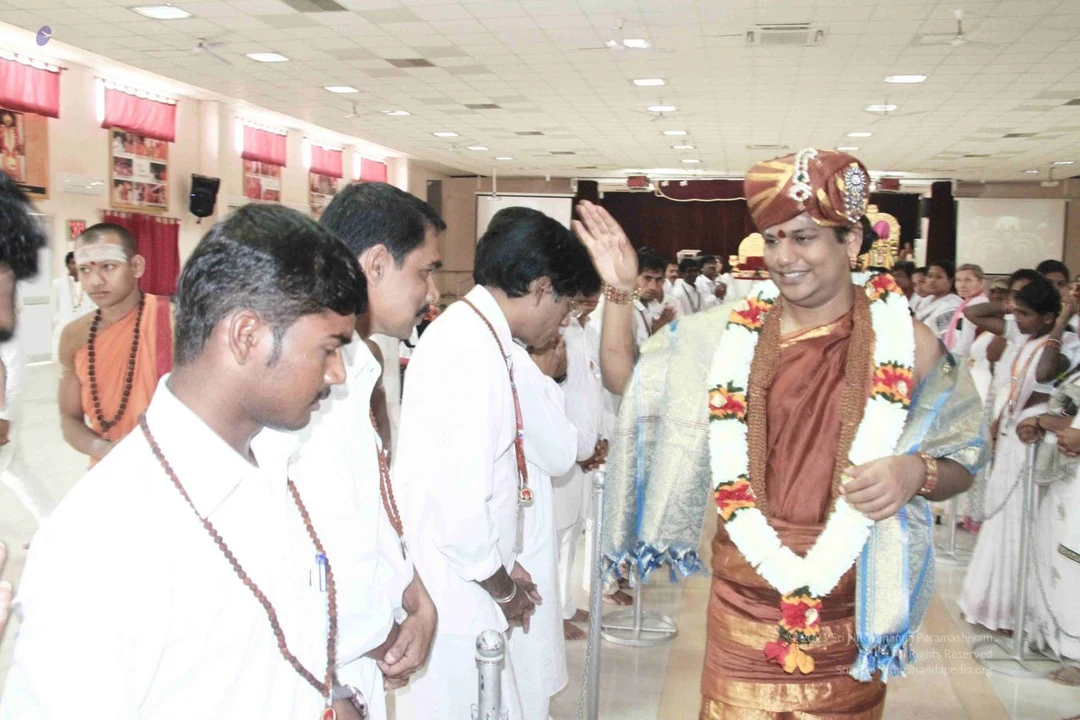
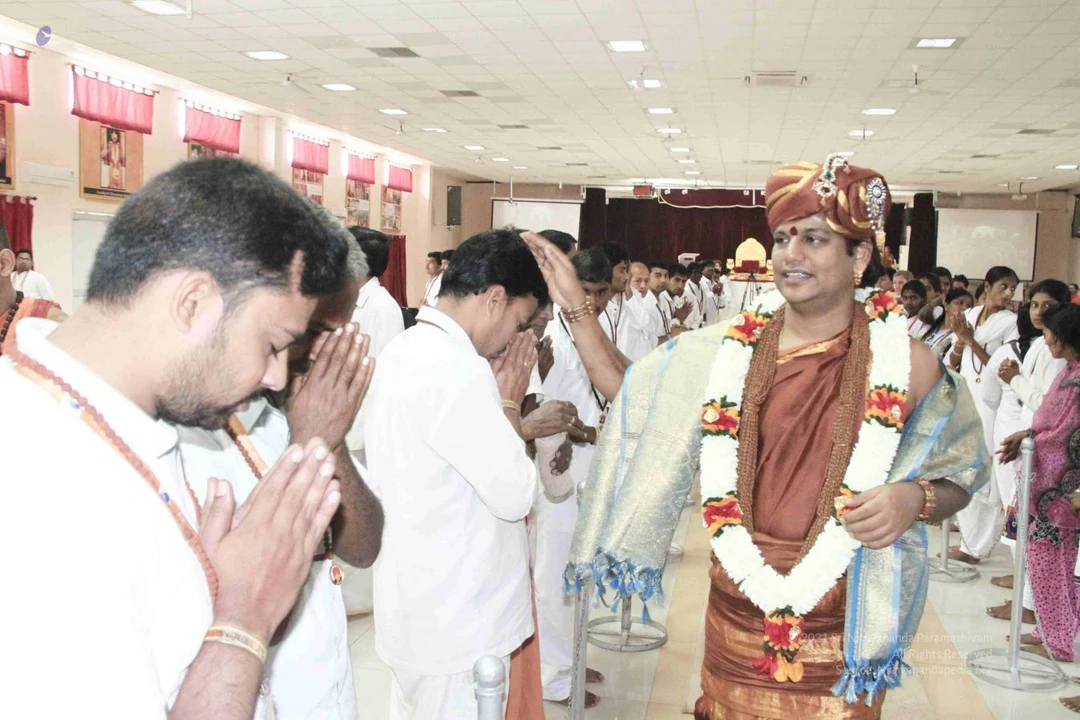
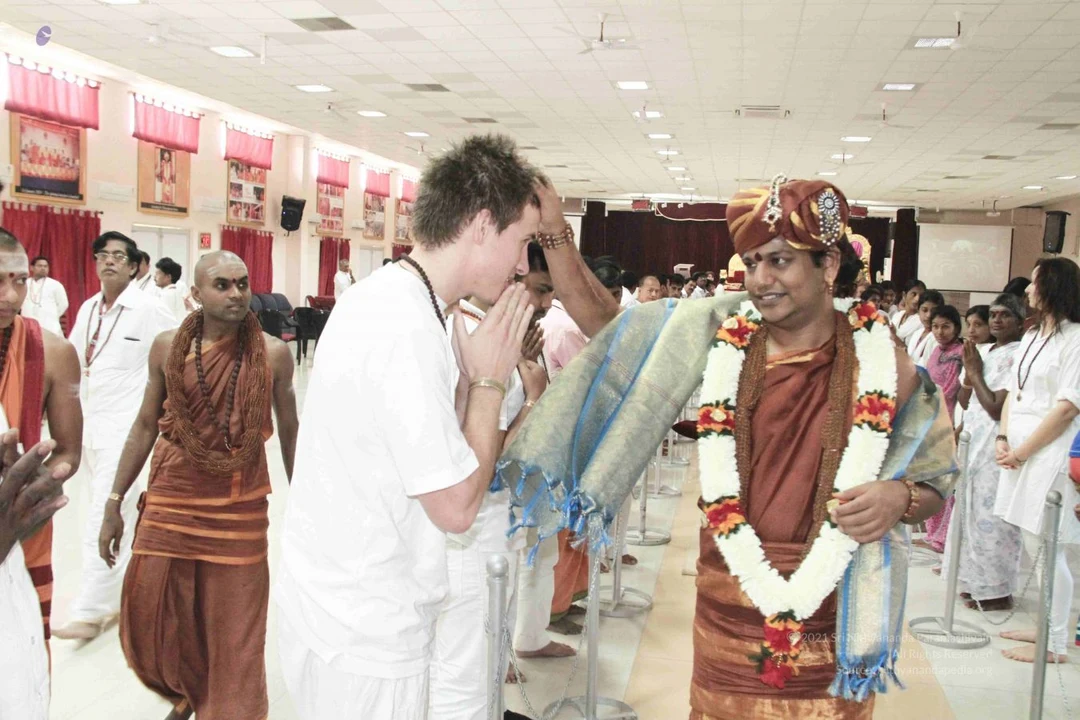
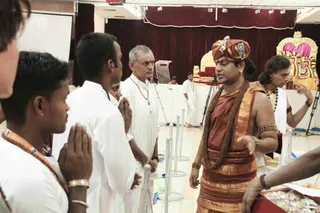
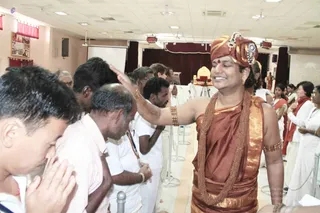
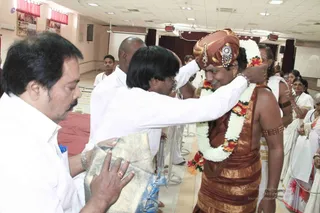
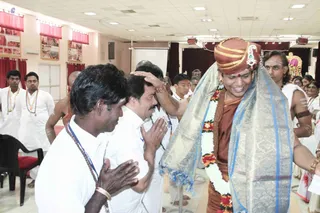
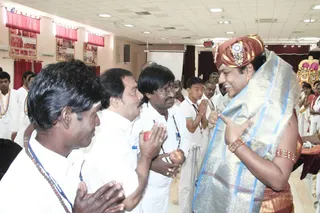
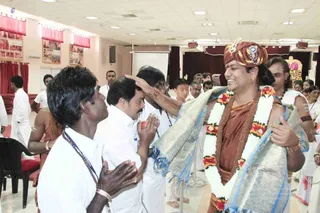
Indoor hall photograph of a devotional gathering in front of a maroon curtain and a gold-and-pink ornate throne with a deity image. A central figure in an orange-red and gold ceremonial wrap, a rudraksha mala, a red-and-gold turban with a jewelled ornament, and bangles faces a semicircle of devotees. Several men in white ritual clothes stand with palms pressed together in namaste, one wearing a red-orange mala and another with a rudraksha mala and a red tilak. Metal crowd barriers and camera tripods sit in the foreground, and a microphone stand is near the stage. A figure in white stands further back, with a flower-decorated altar at the right edge. Swamiji (probable): the central figure in saffron-gold robes with a turban and long hair matches the cues for Swamiji, shown in person.A photograph in a hall with white ceiling tiles and a stage backdrop, where a figure in a saffron-orange draped garment, a matching orange turban with jewelled ornaments, and rudraksha-style beaded necklaces stands smiling and extends a hand in blessing toward a line of devotees. Several devotees in white and pale clothes bow with palms pressed together, and one man in a white shirt and a rudraksha mala bends forward. Behind them, a golden throne-like seat with a red cushion and a small side table sits on a stage, with a tripod and a red curtain beyond. a person (saffron-orange draped clothing, orange turban with jewelled ornaments, long beaded necklaces) is giving blessings to devotees in a darshan line.A photograph in a hall with white walls, a ceiling of recessed lights and a projector screen behind. A figure in a copper-coloured turban with a jewelled brooch, a white flower garland, orange flower accents and a copper-brown wrap over the bare upper body is smiling as a man in a white shirt places a garland or hand on his head. A man in a white shirt holding a folded gold-and-blue cloth stands at left, and white-clad devotees, including women in white saris, stand in the background. a person: the figure wears a turban, a copper-brown wrap, a garland and jewelled adornments, with a presentation compatible with the page's identification, and is receiving honour rather than seated on a throne.A photograph of a hall with red curtains and framed posters on the walls. A smiling man in an orange-brown turban and rust-coloured garment with a silver-blue shawl and a white flower garland stands at right, a rudraksha-style bead necklace visible. A devotee in a white shirt with folded hands bows before him while another man in white has his hand raised near the first man's head, appearing to bless him. Several people in white and orange-saffron garments stand behind, with a bright golden shrine decoration at the far right. The man in the turban has distinctive saffron-orange and ornate attire, with appearance cues consistent with the page's reference, so the appearance-based label applies.Indoor photo in a hall with cream walls, a drop ceiling, red curtains and framed posters. A man in an orange-and-gold turban, jewelled brooch and silver-and-blue embroidered shawl over orange clothing smiles and gestures with his right hand toward a group. Several men in white shirts and white trousers stand in front of him with palms pressed together in anjali; one holds a red apple and another wears a rudraksha mala. Other people in white and a boy in white stand behind them, and a gilded deity murti is visible at the right edge. Probable Swamiji is the man in the turban, identified by the turban, ornate silver shawl and orange garments, while the surrounding devotees are receiving darshan.A photograph of an indoor hall with red curtains and framed photo panels on the walls. A man in an orange-brown robe and a turban with a jewelled ornament stands at right, wearing a white flower garland and a rudraksha mala, and a grey-silver shawl with blue trim. He is smiling while another man in a white shirt presses a hand to his forehead in blessing. Beside them, a man in white with folded palms, and a man in white with rudraksha beads, stand among other devotees in white and saffron. a person: the standing man wears a turban, rudraksha mala, orange robe and garland, and is being blessed by a devotee.

Sanyasis-Bhikshadana-Photos

217 photosSource gallery
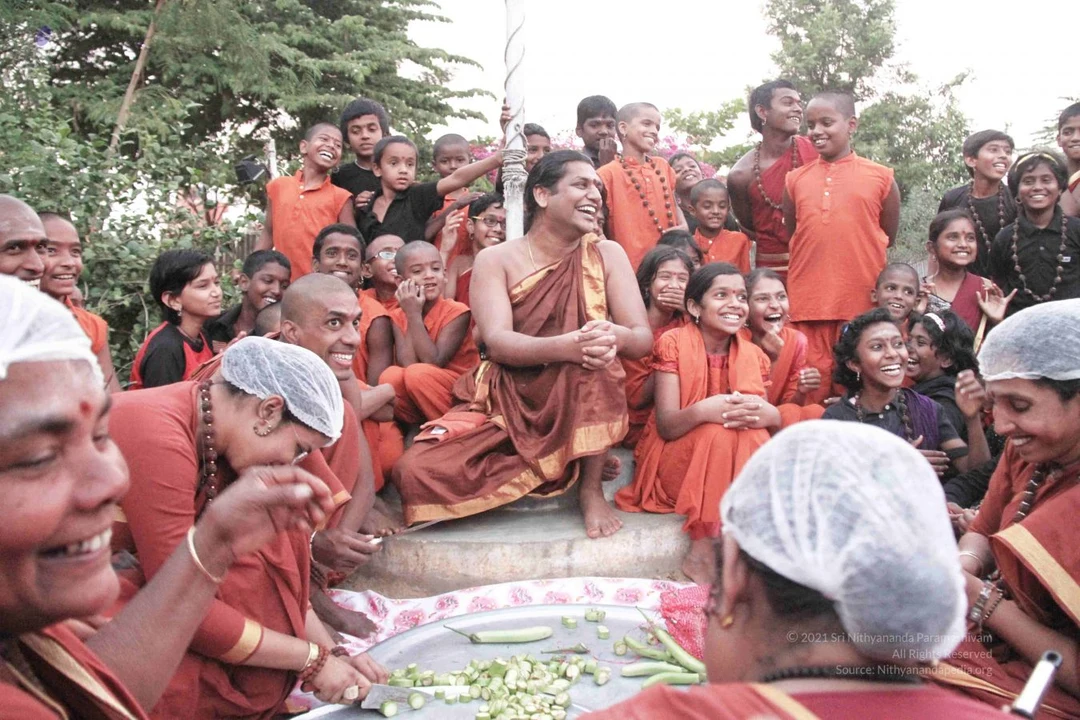
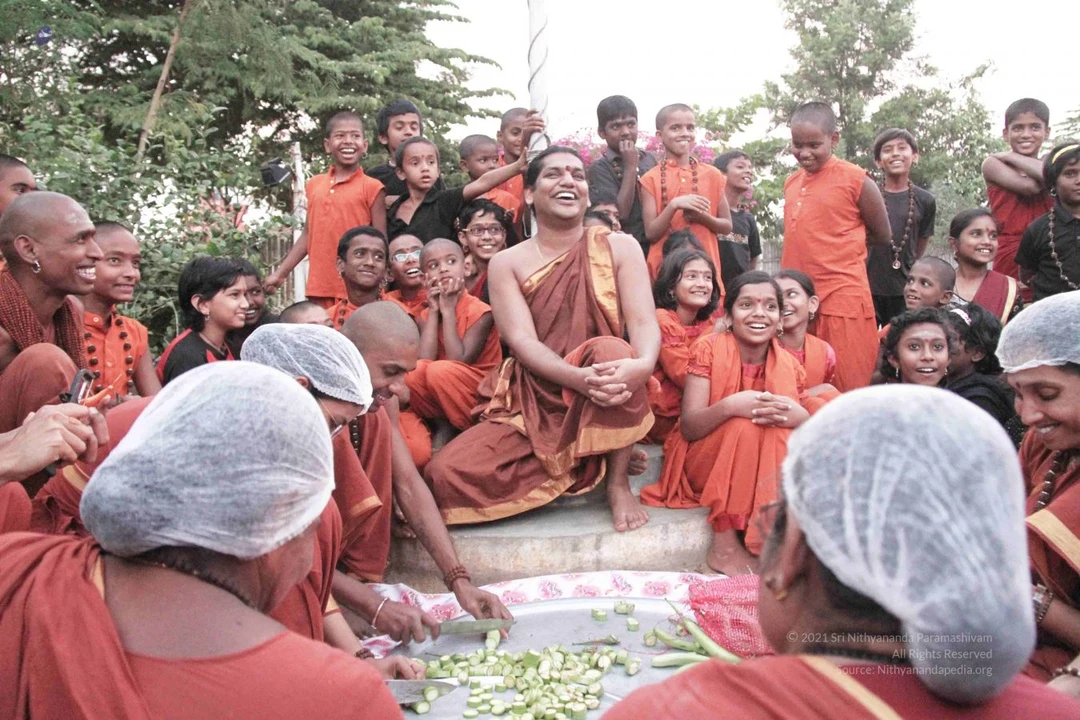
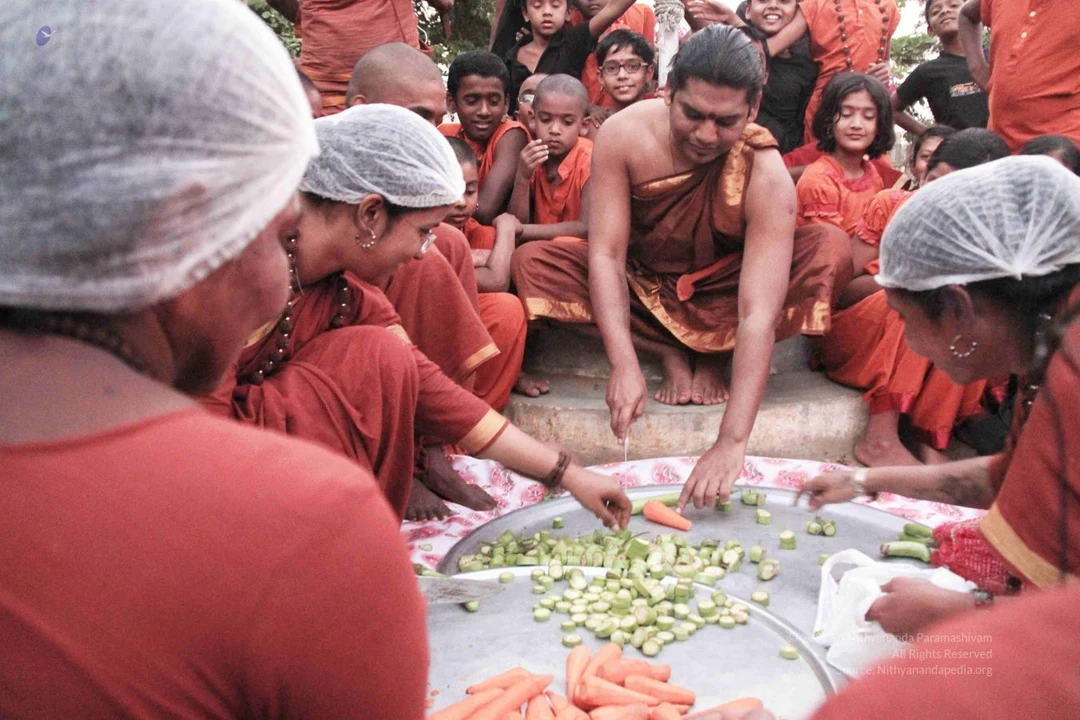
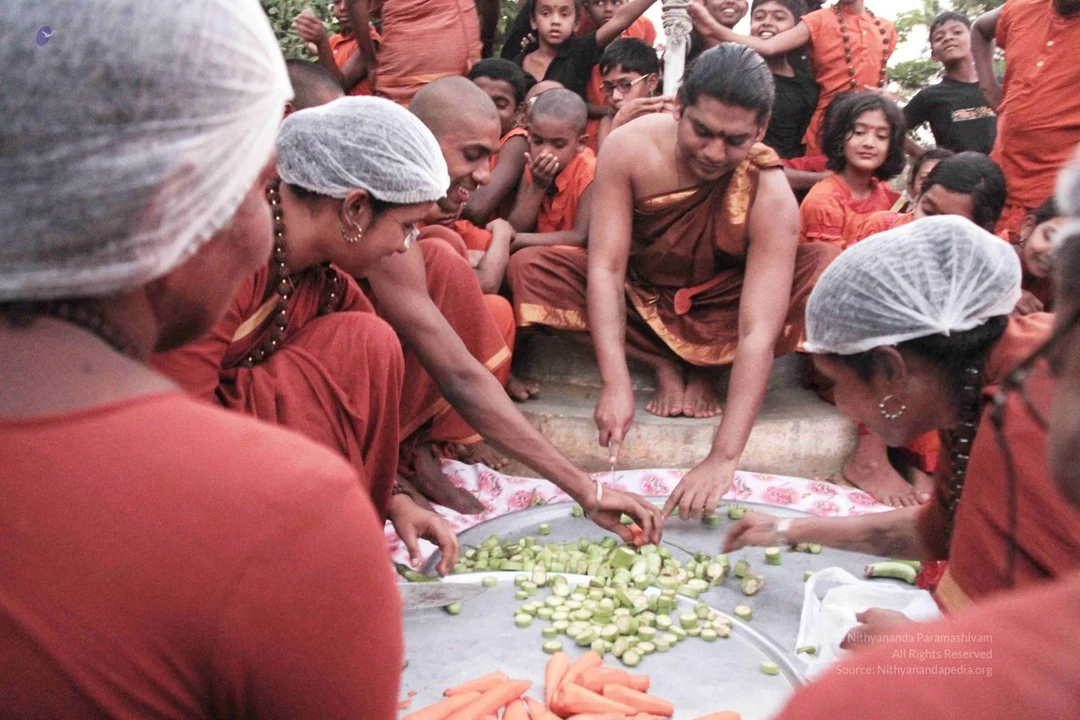
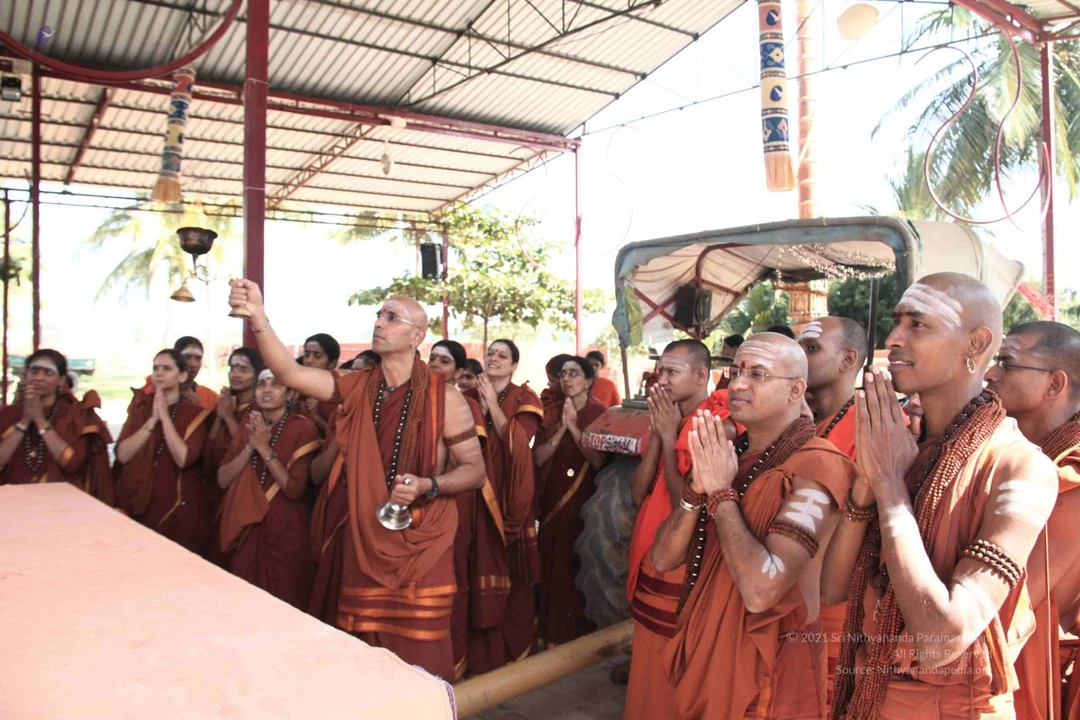
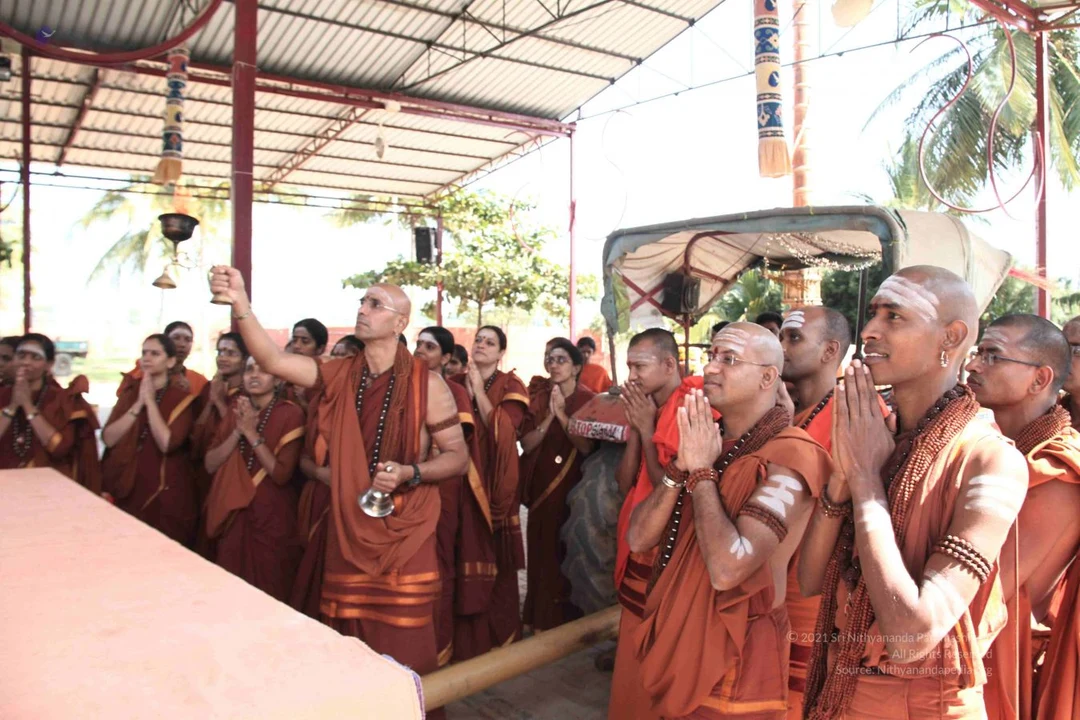
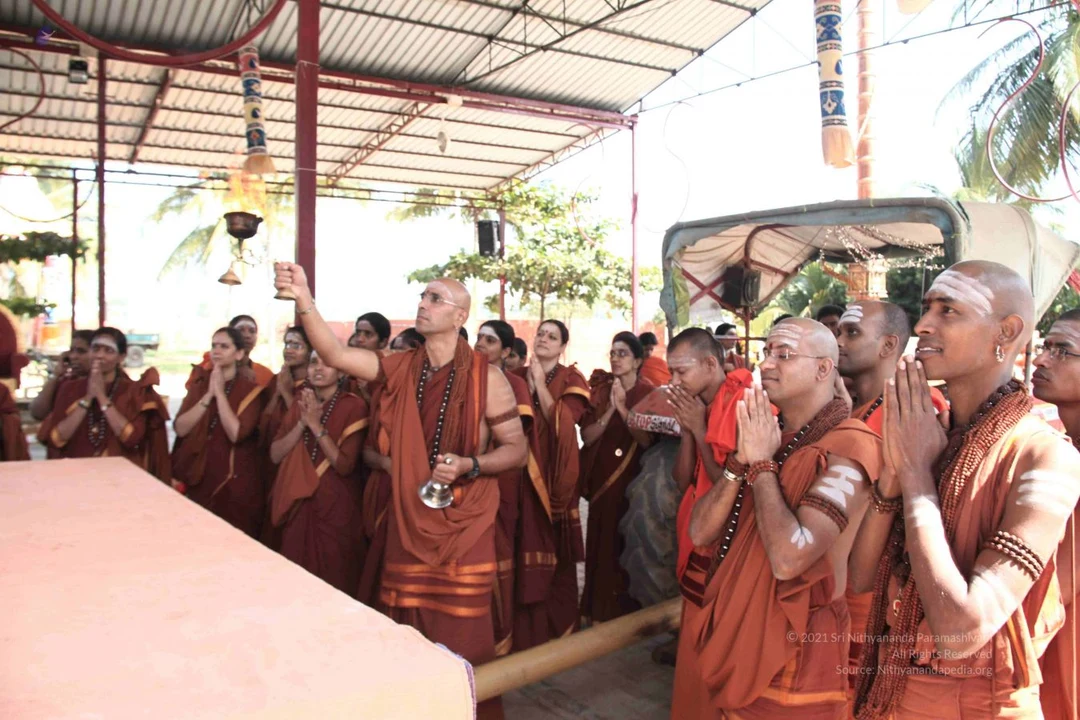
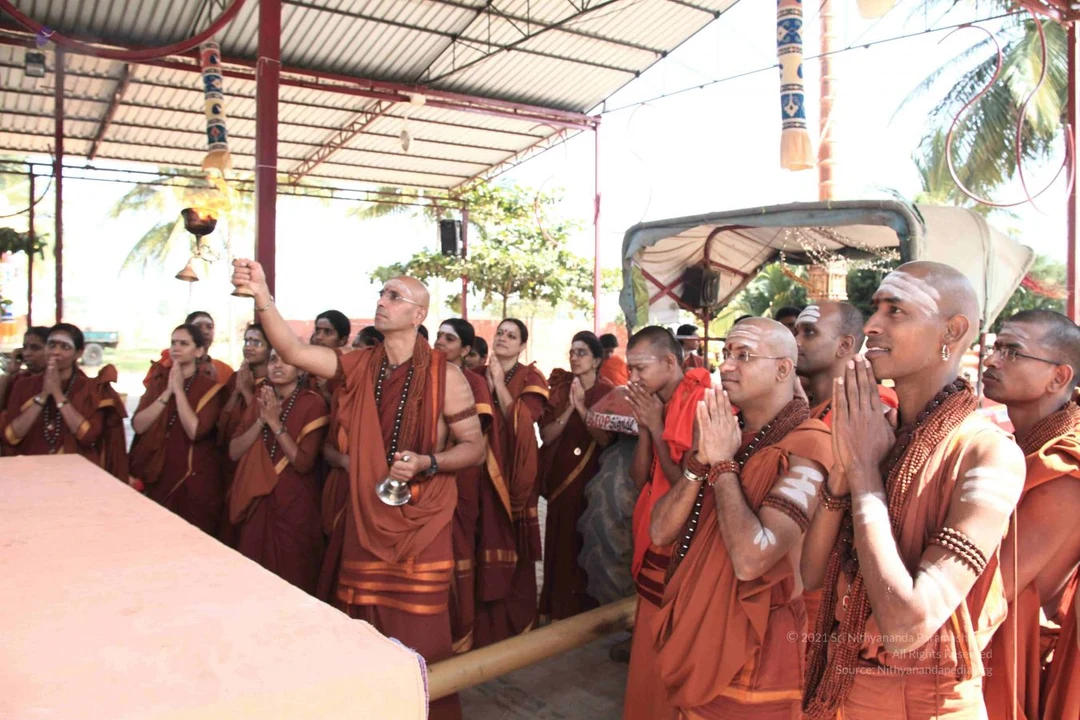
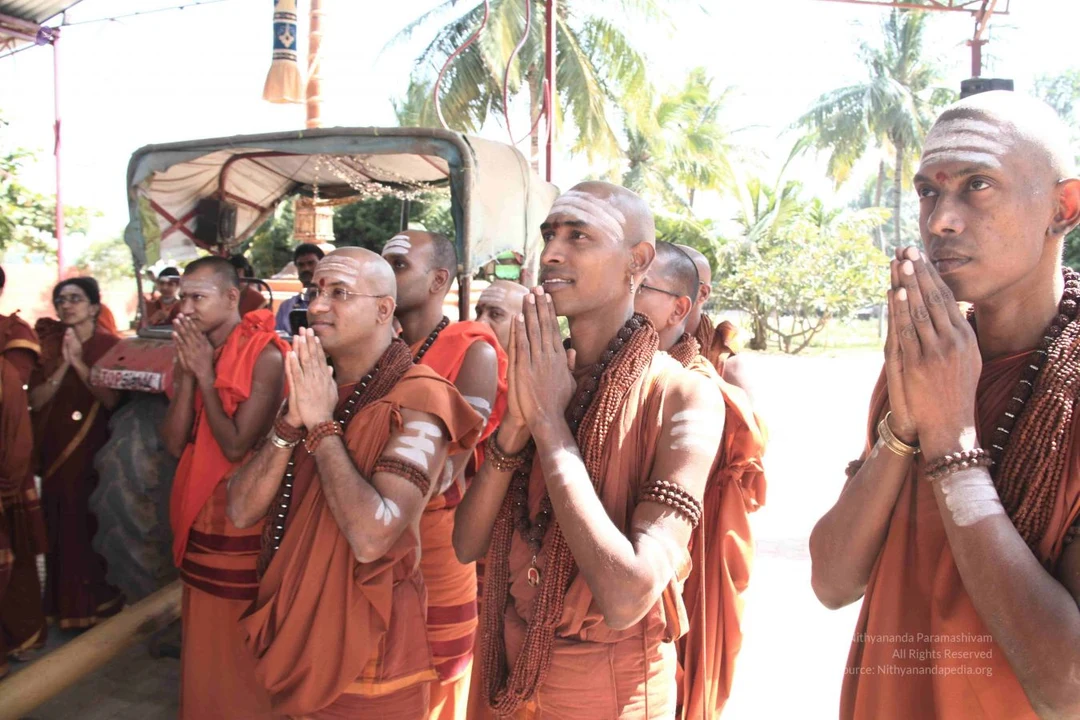
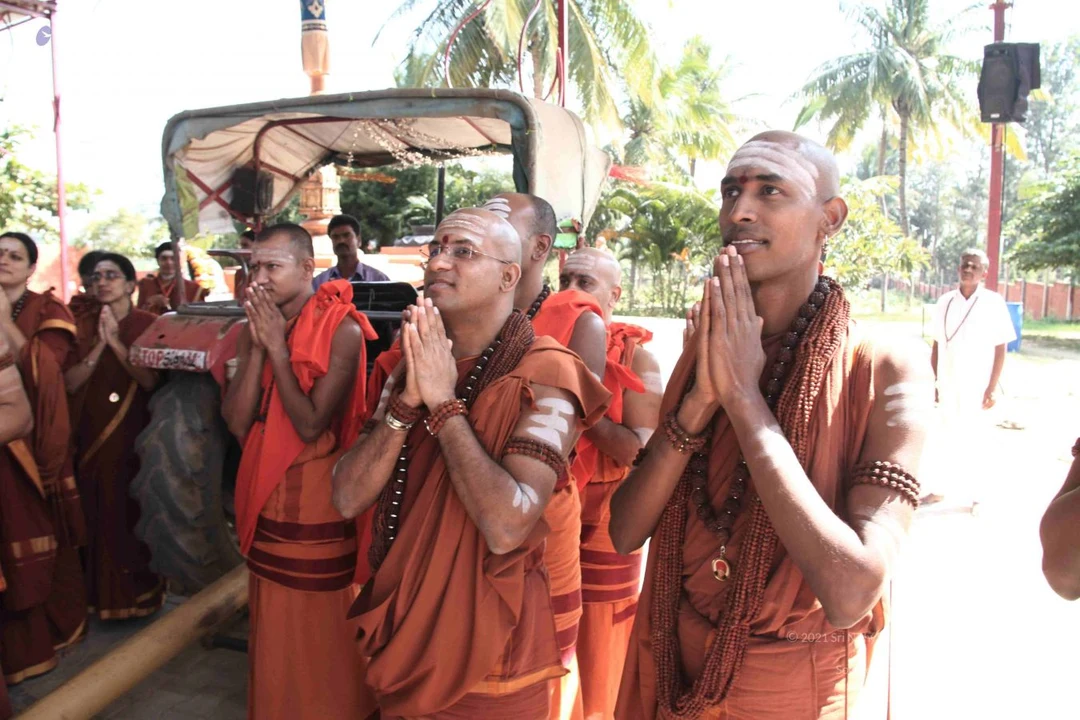
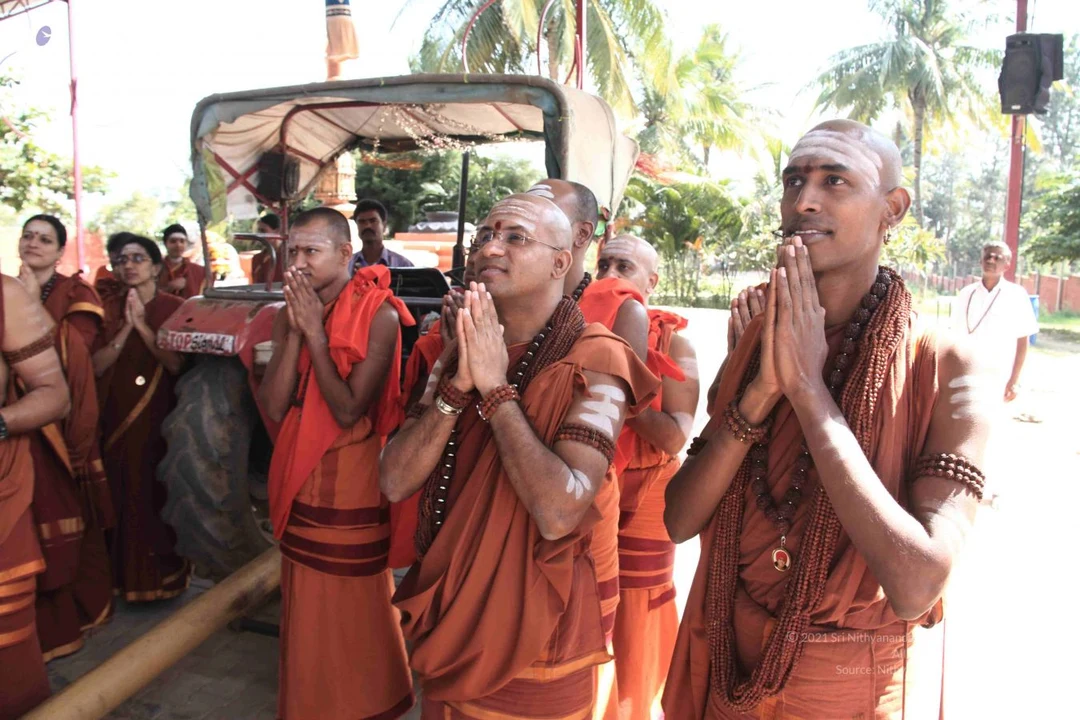
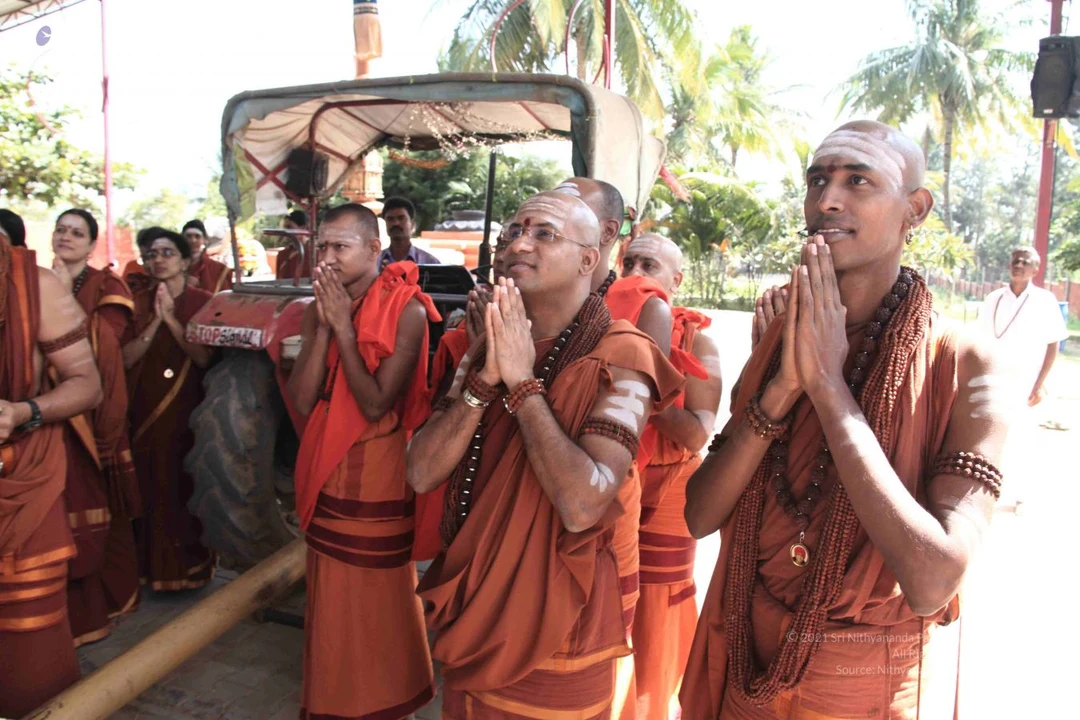
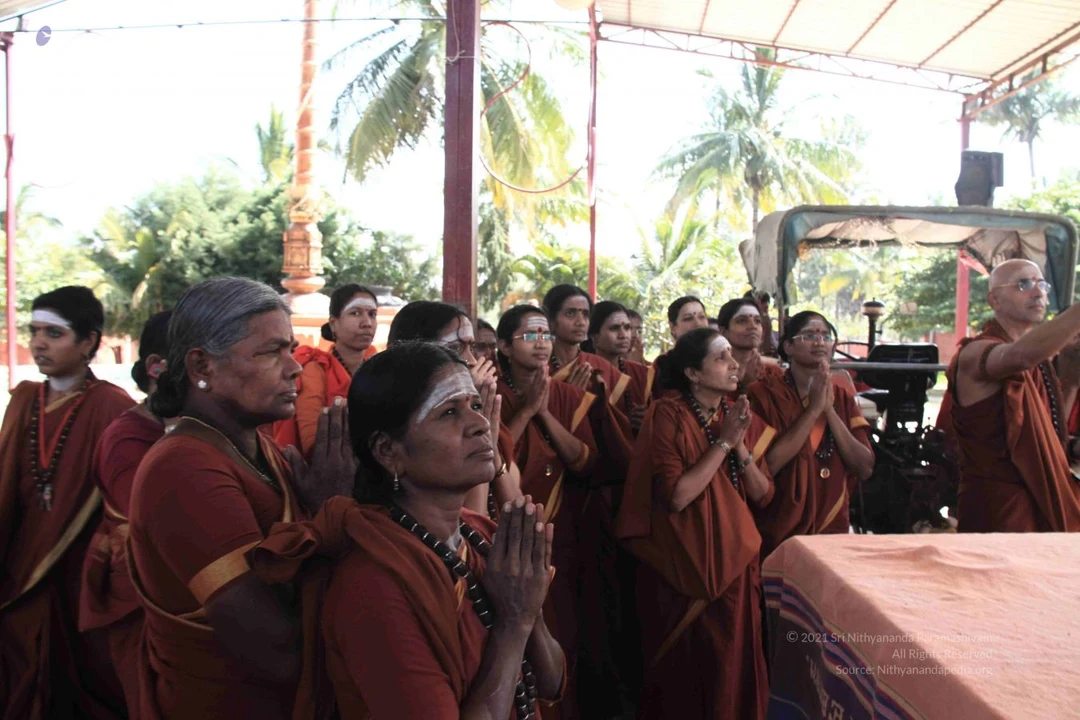
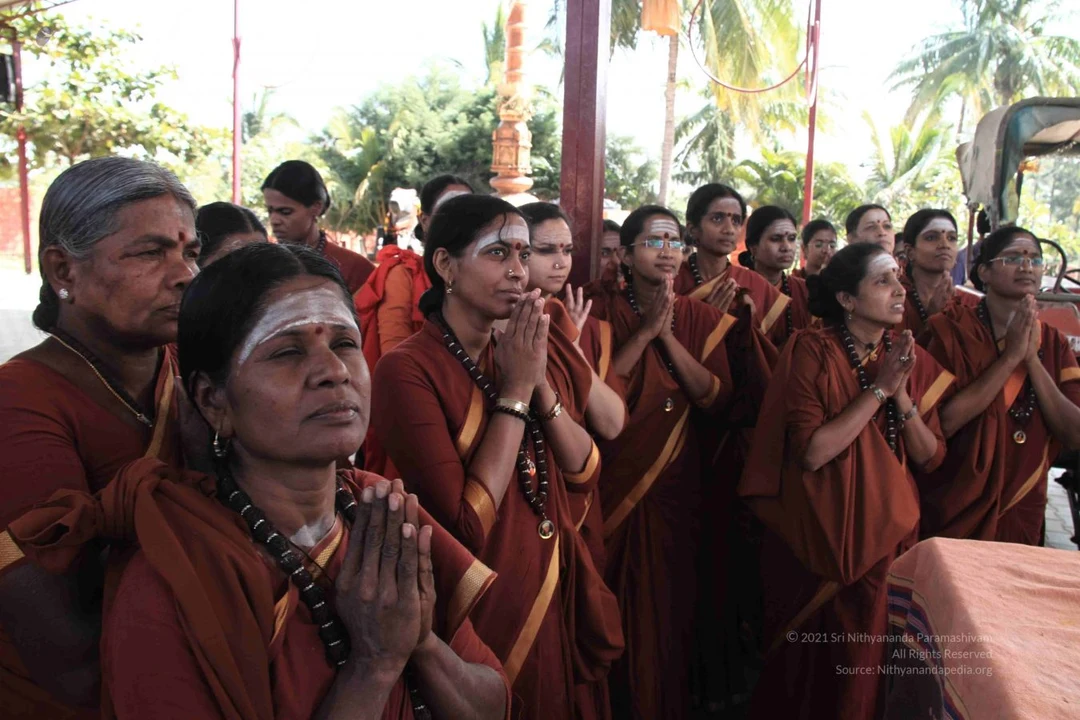
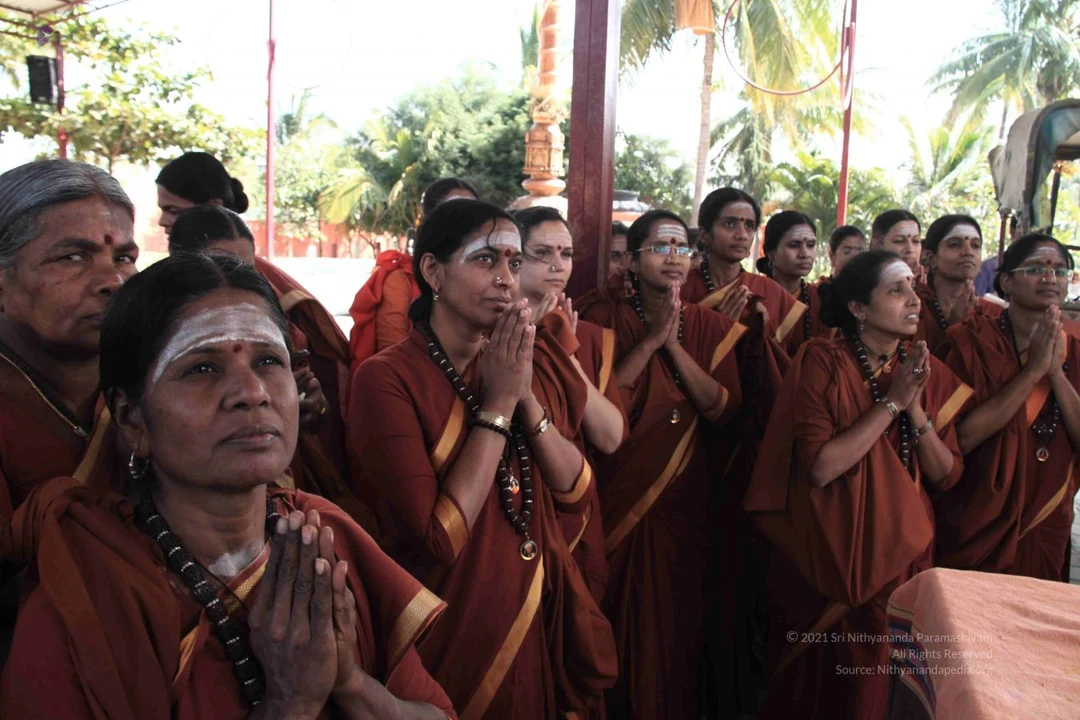
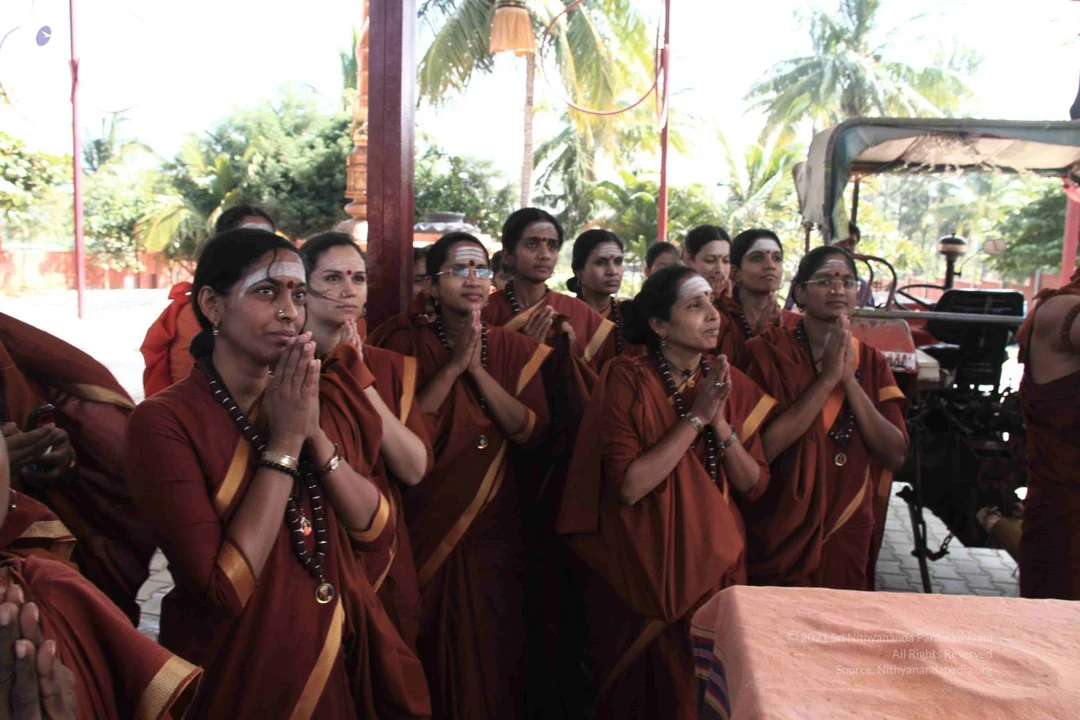
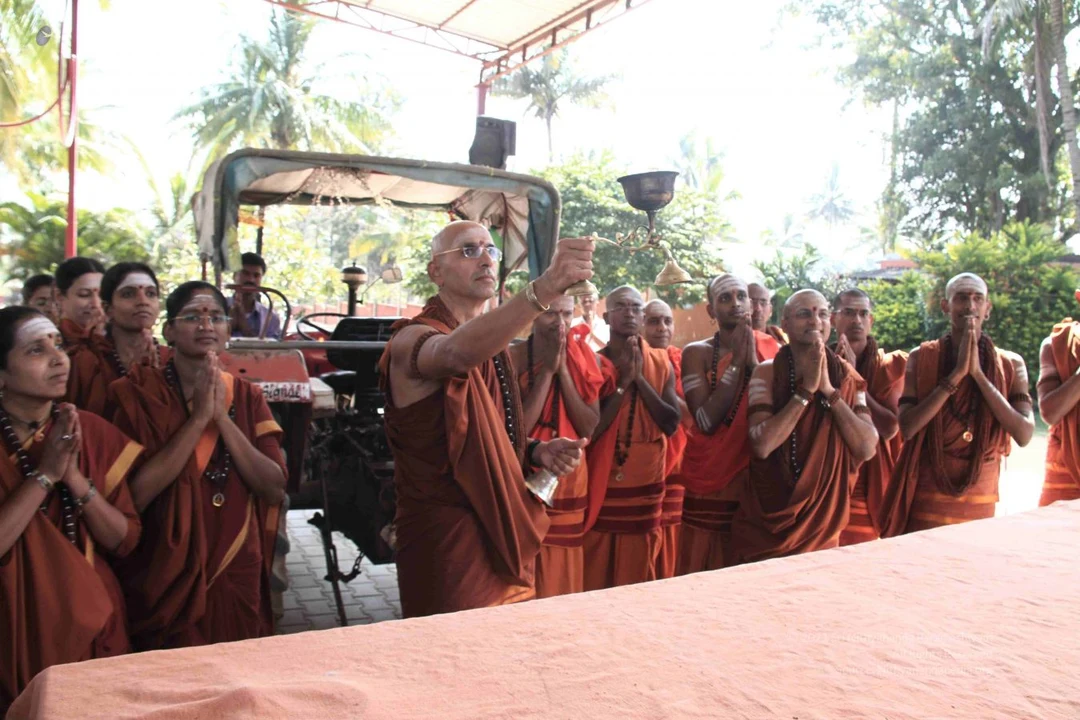
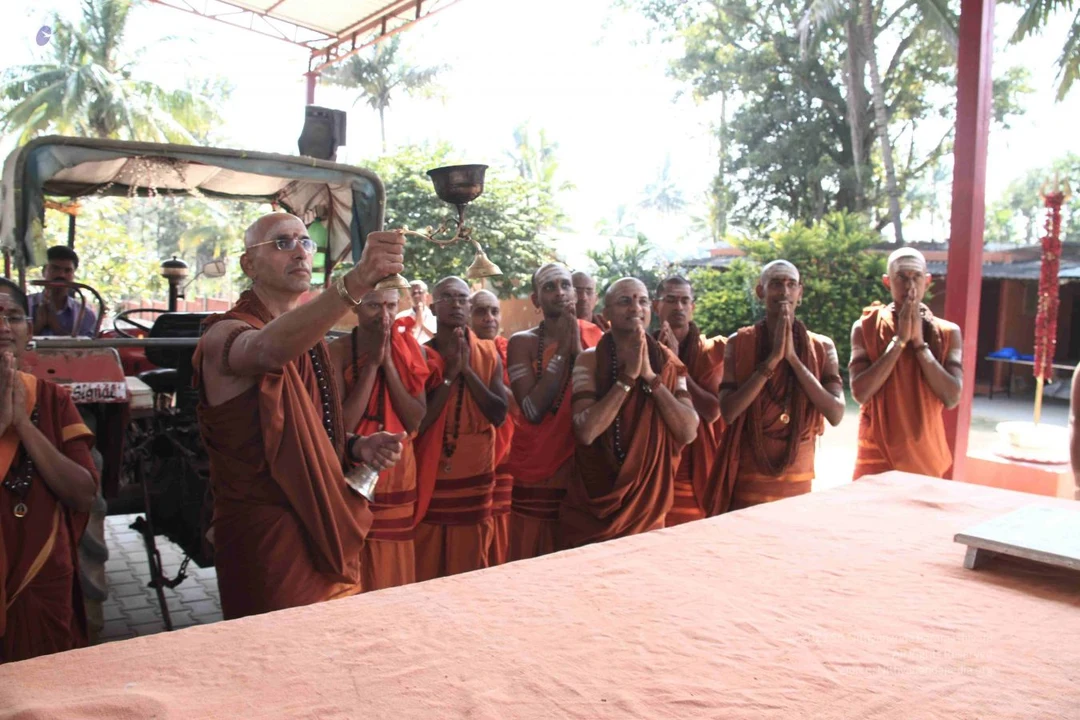
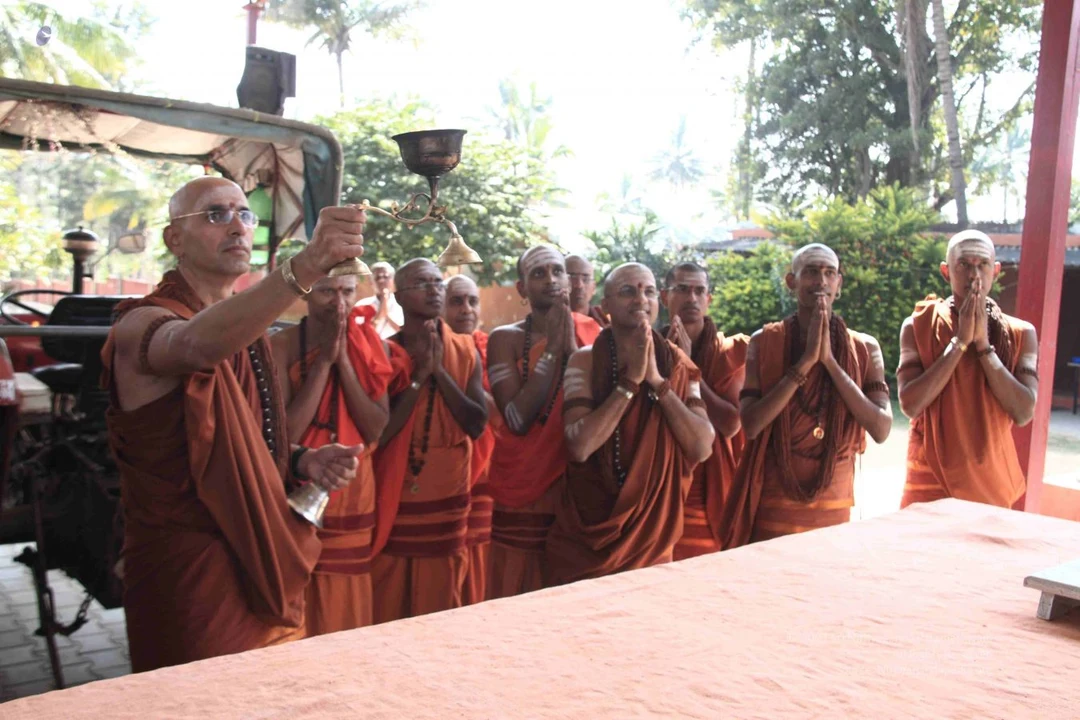
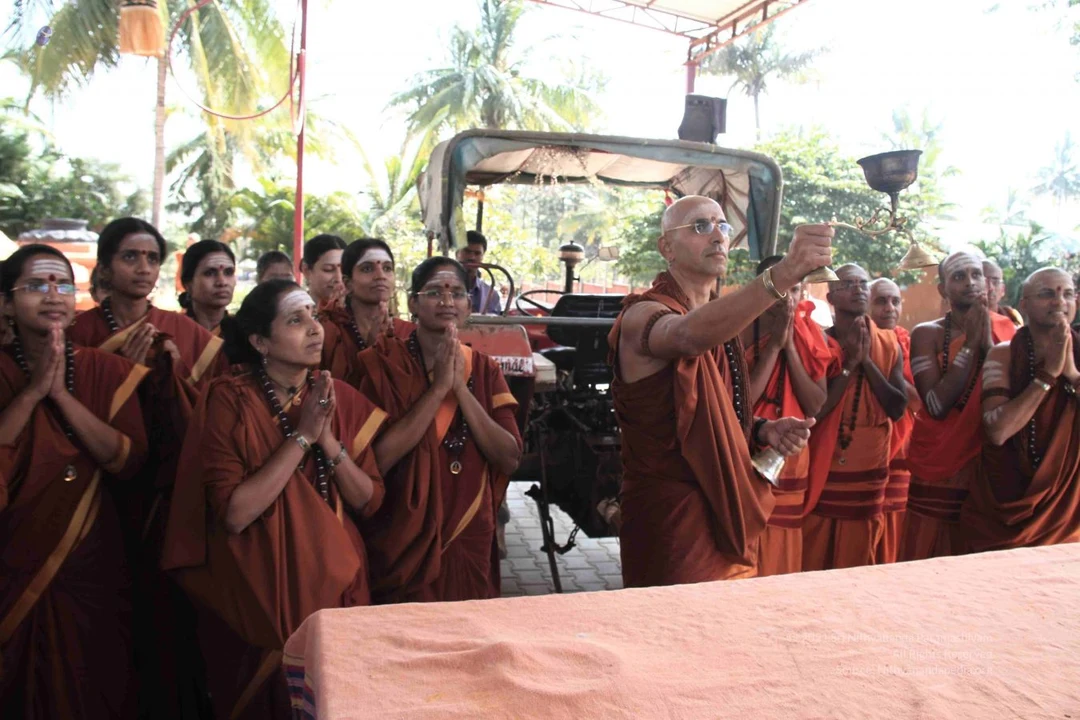
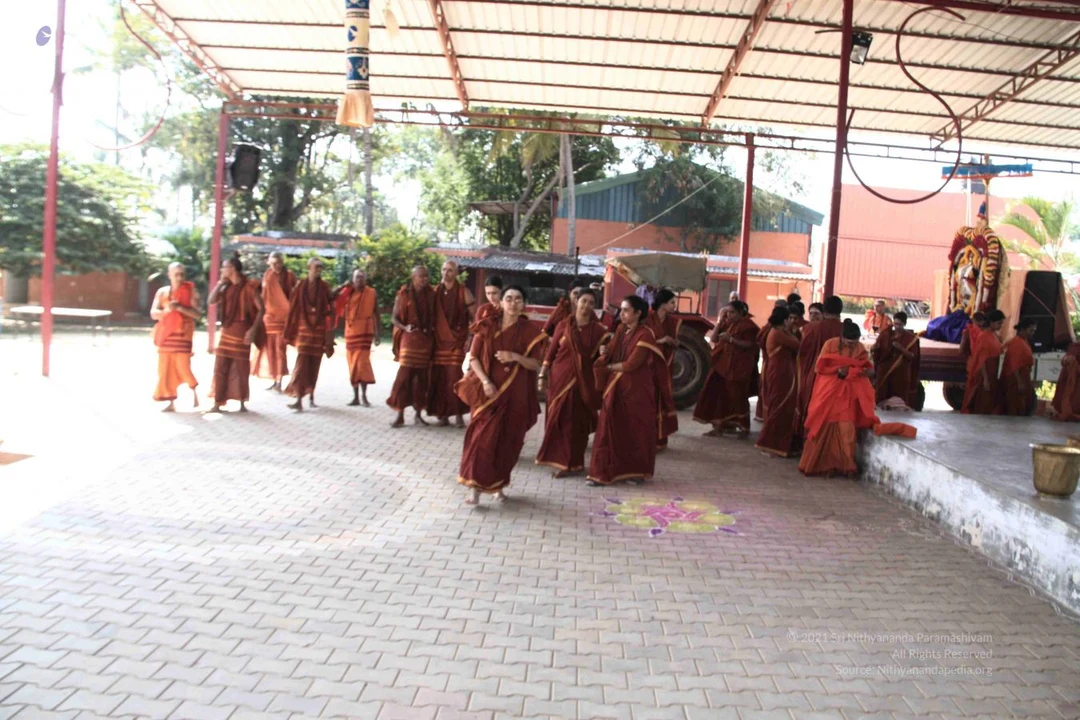
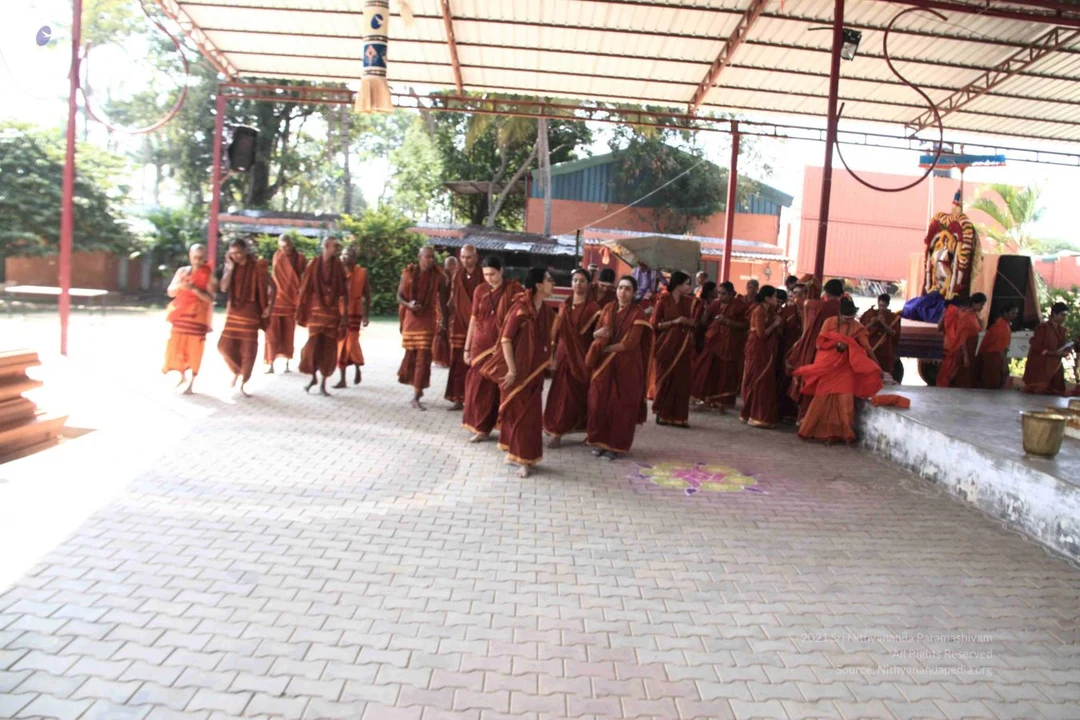
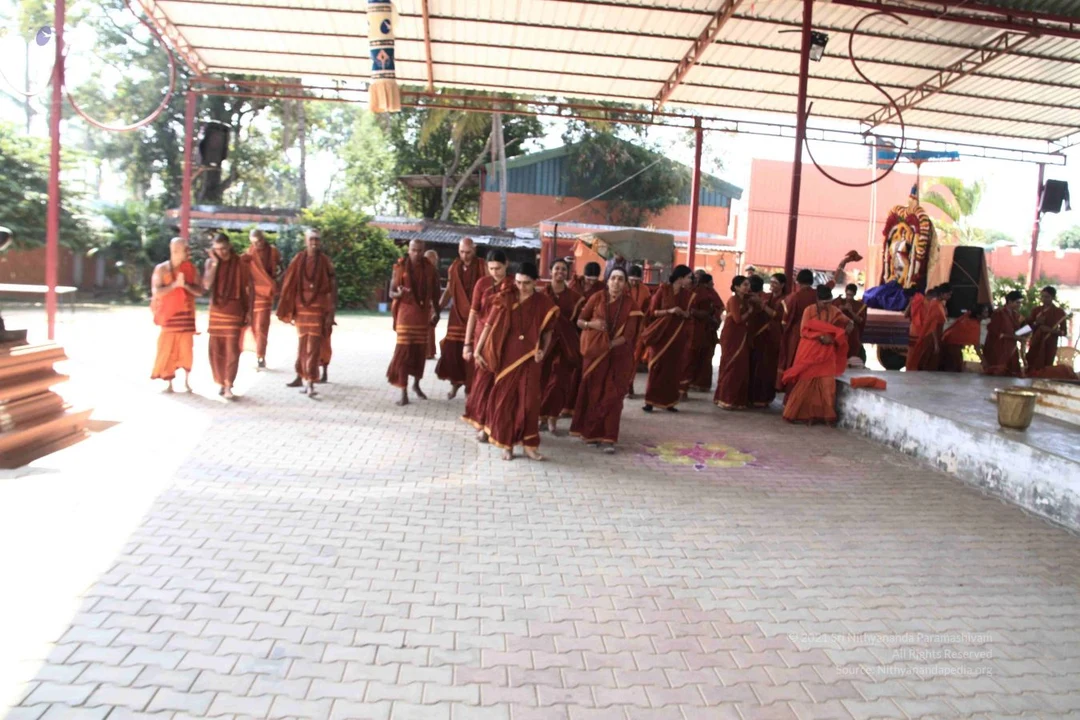
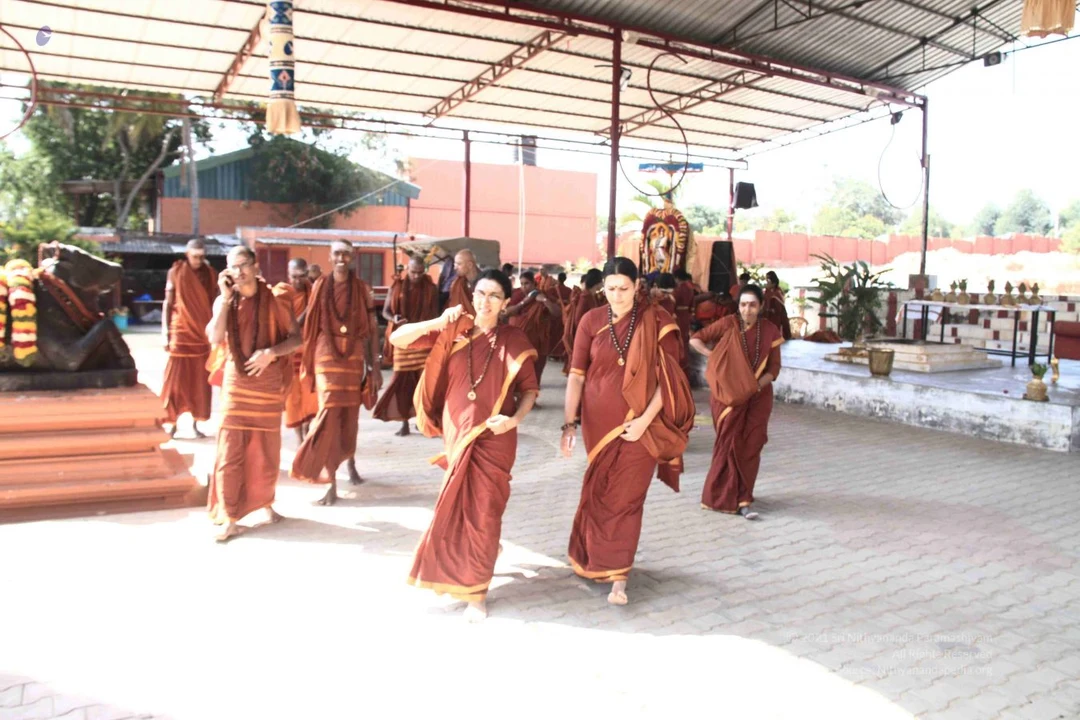
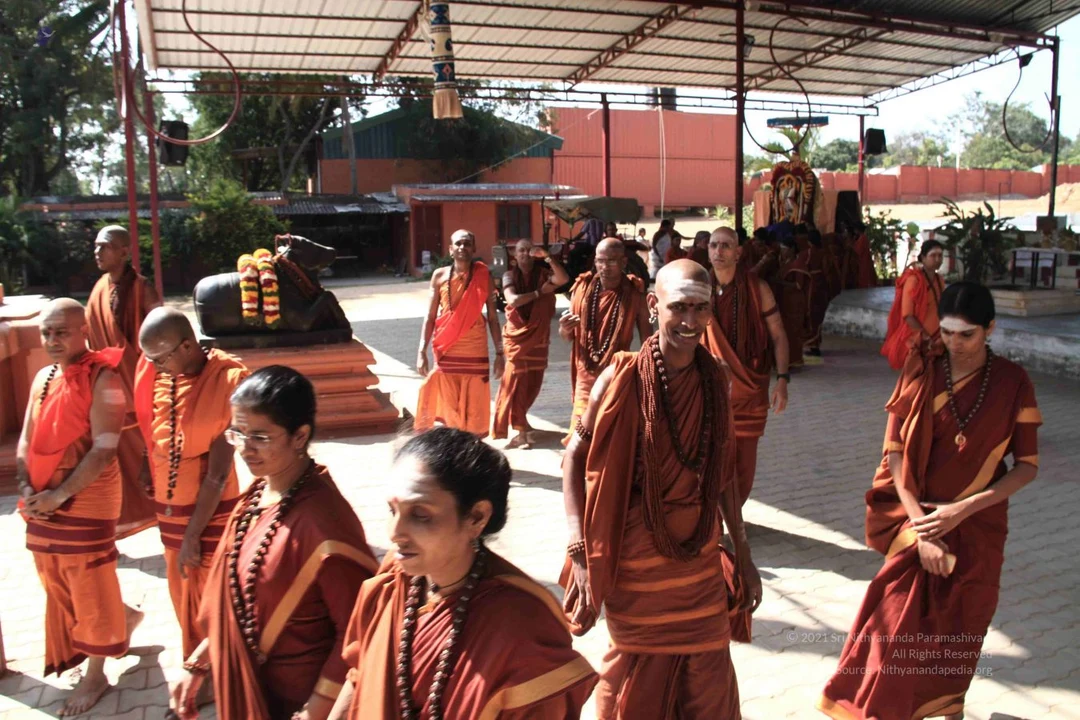
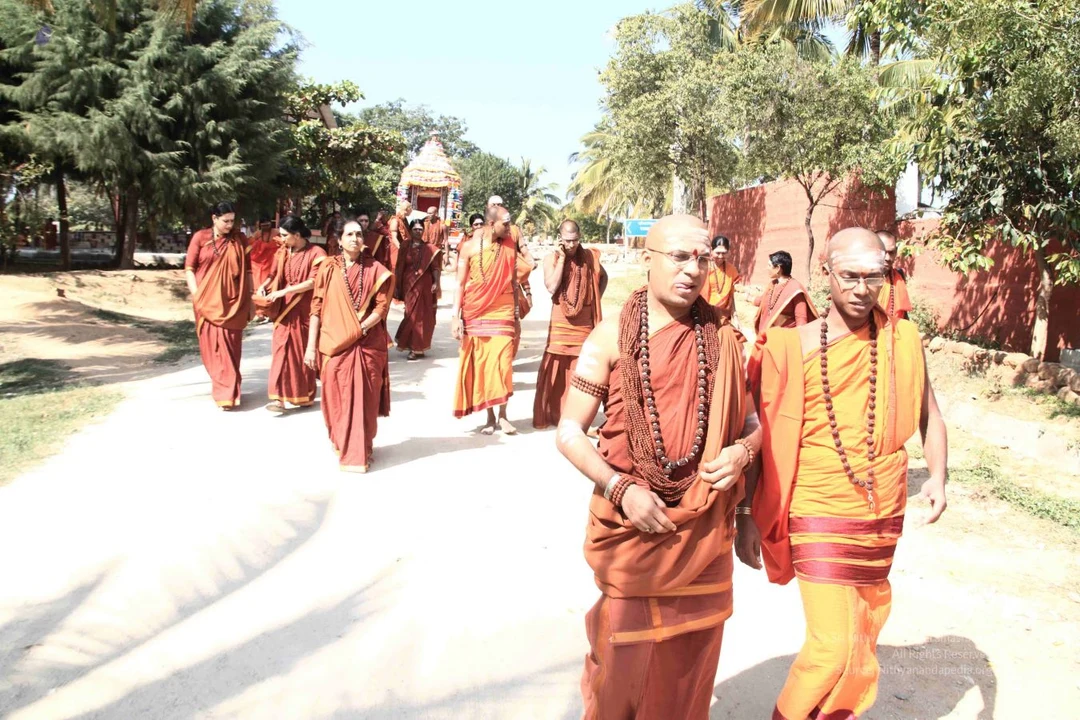
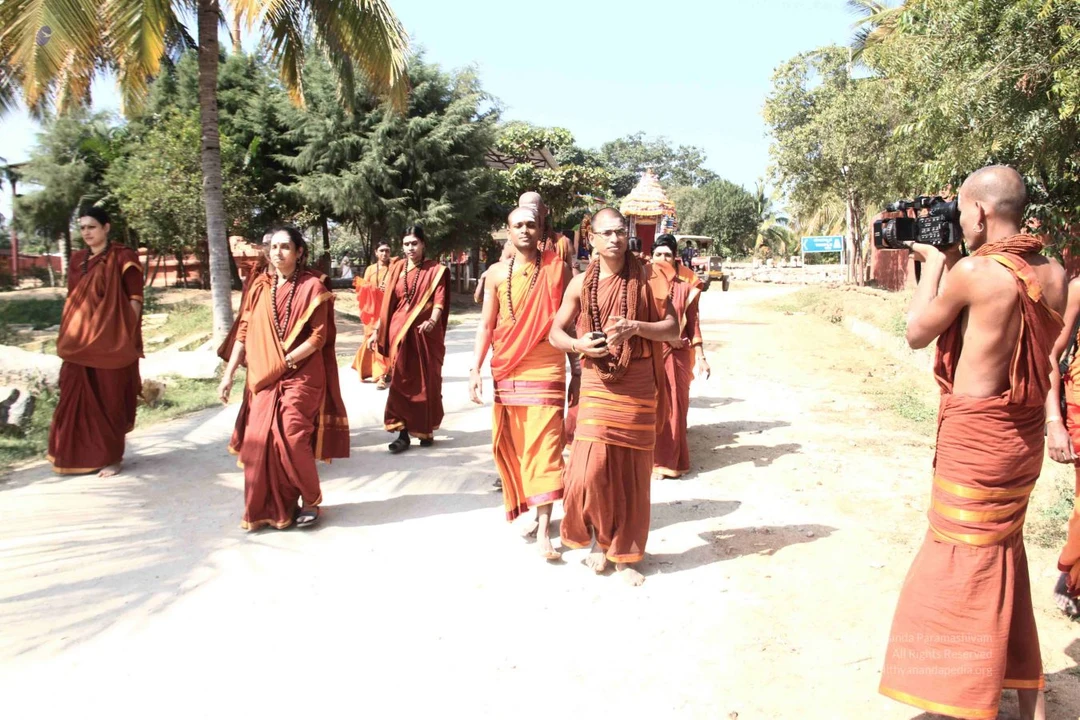
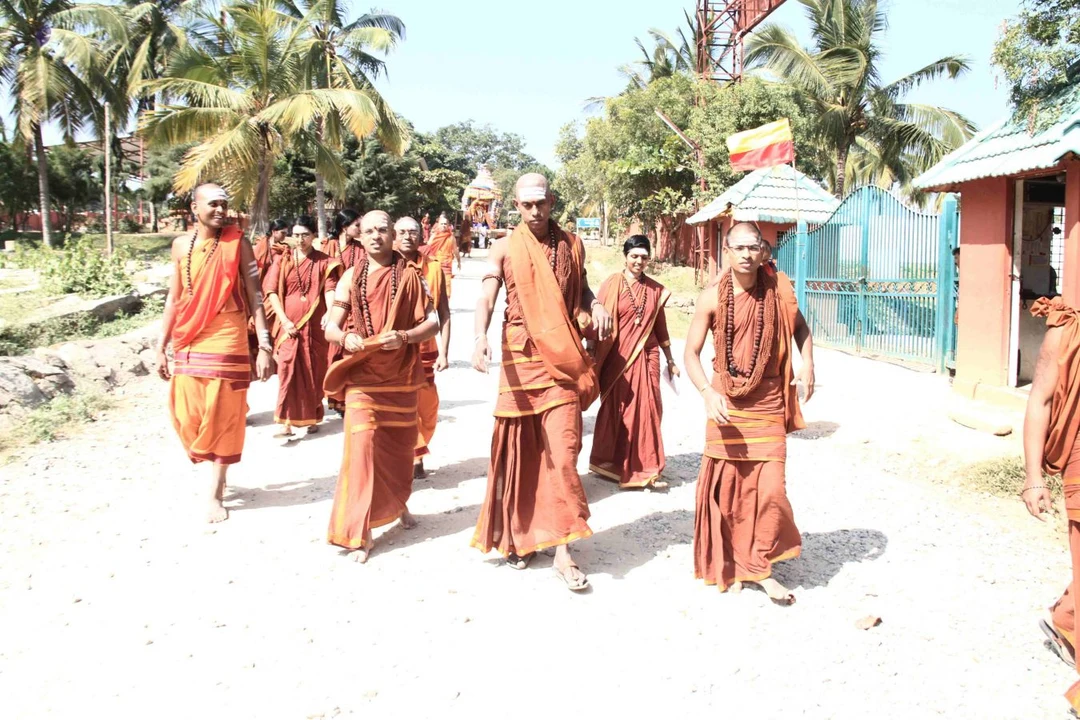
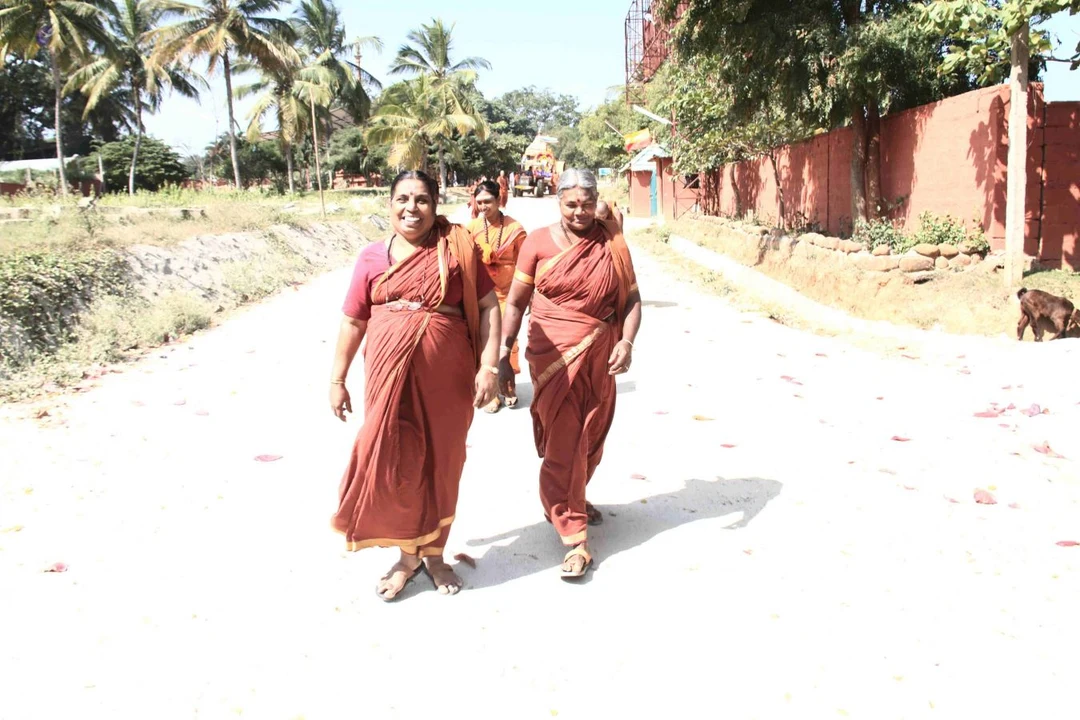
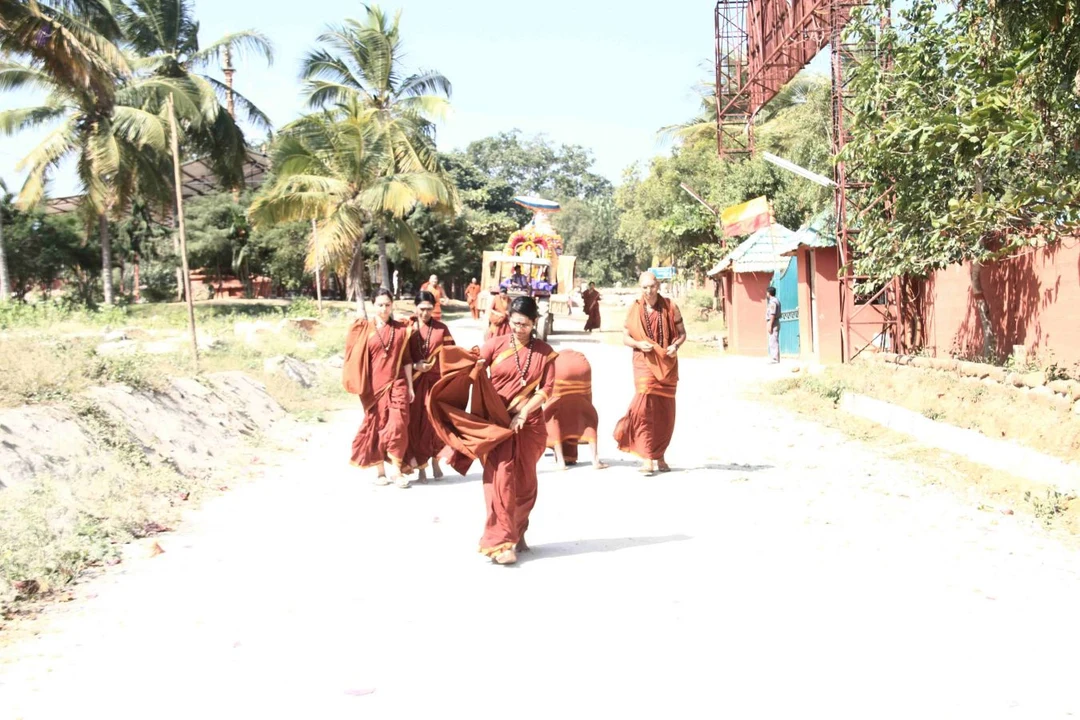
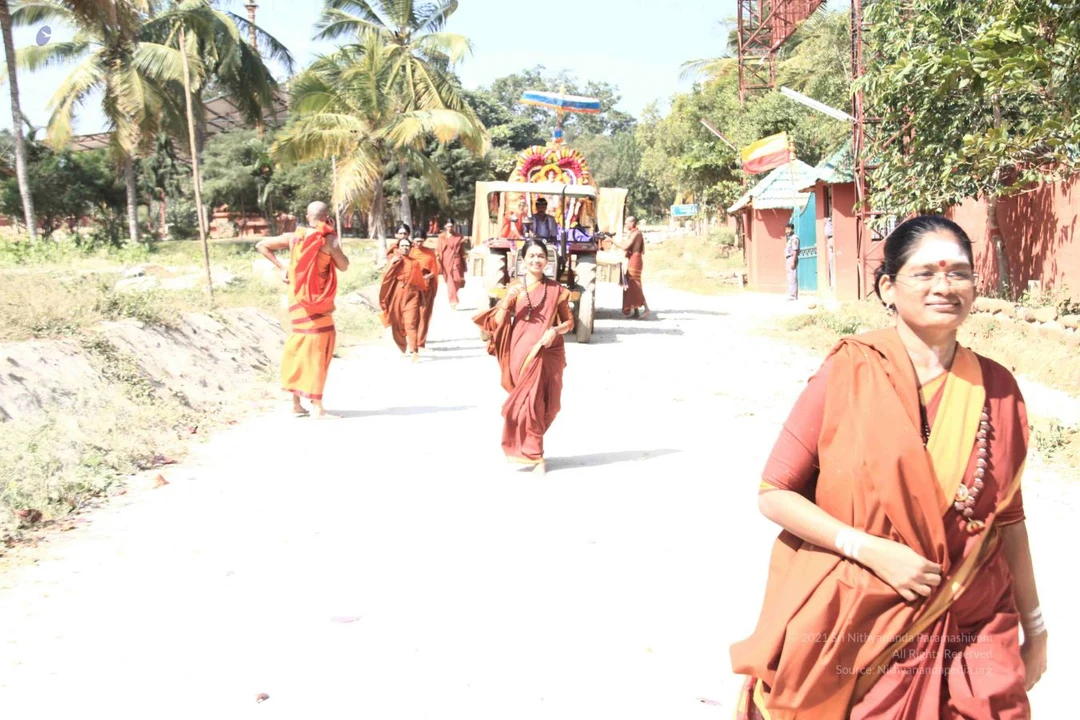
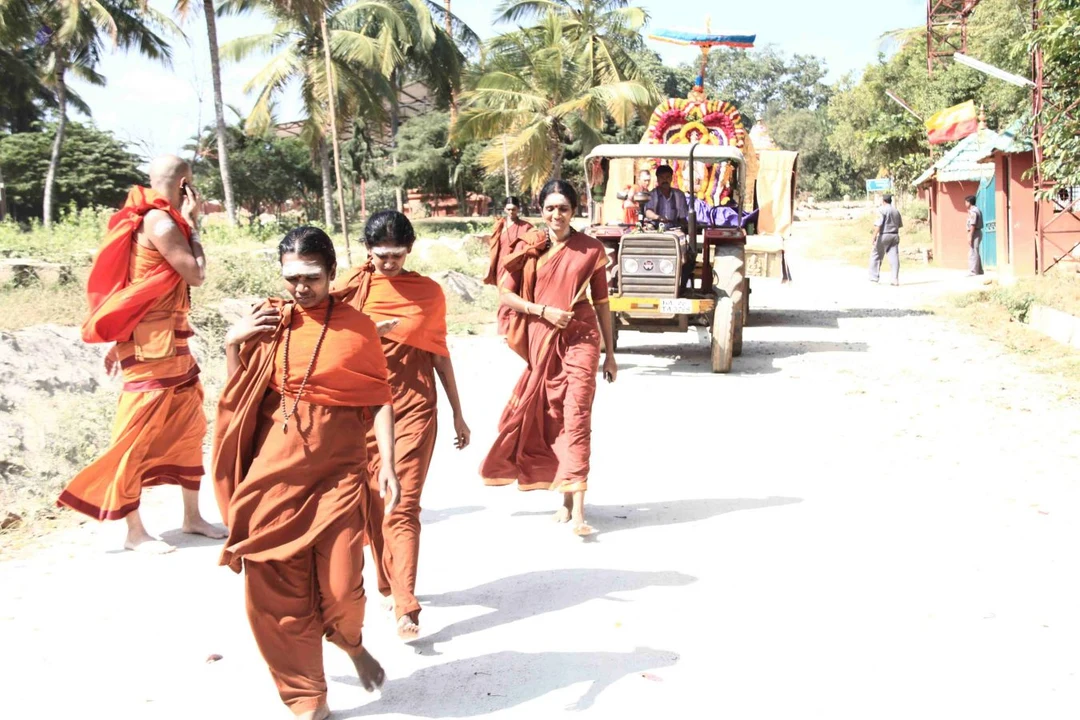
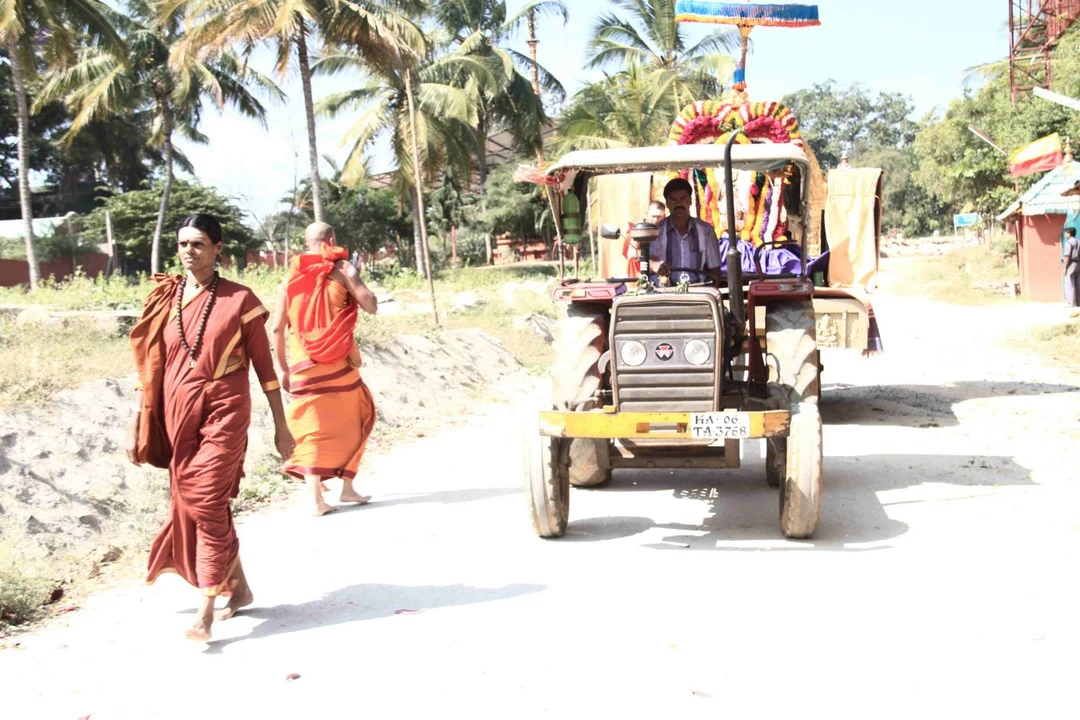
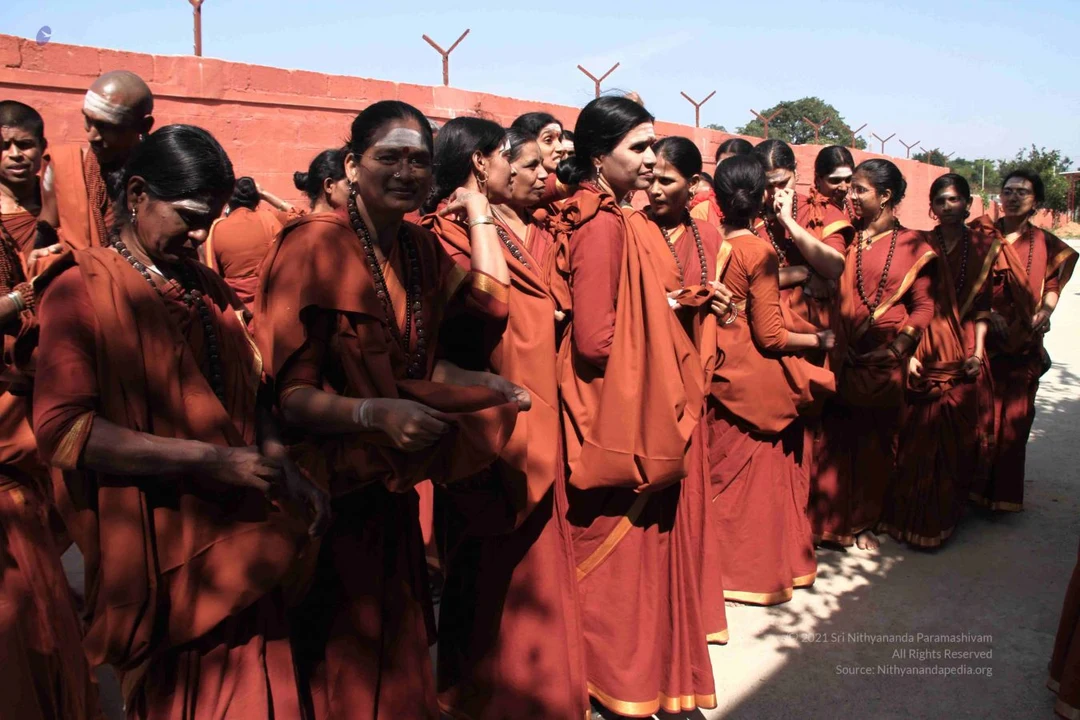
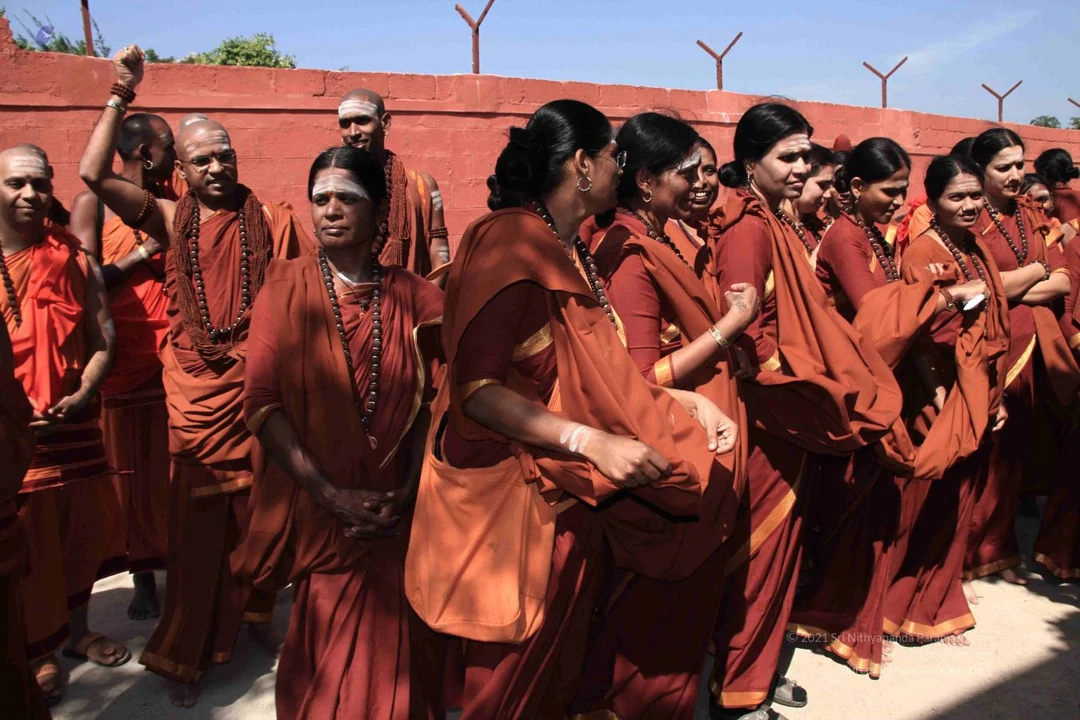
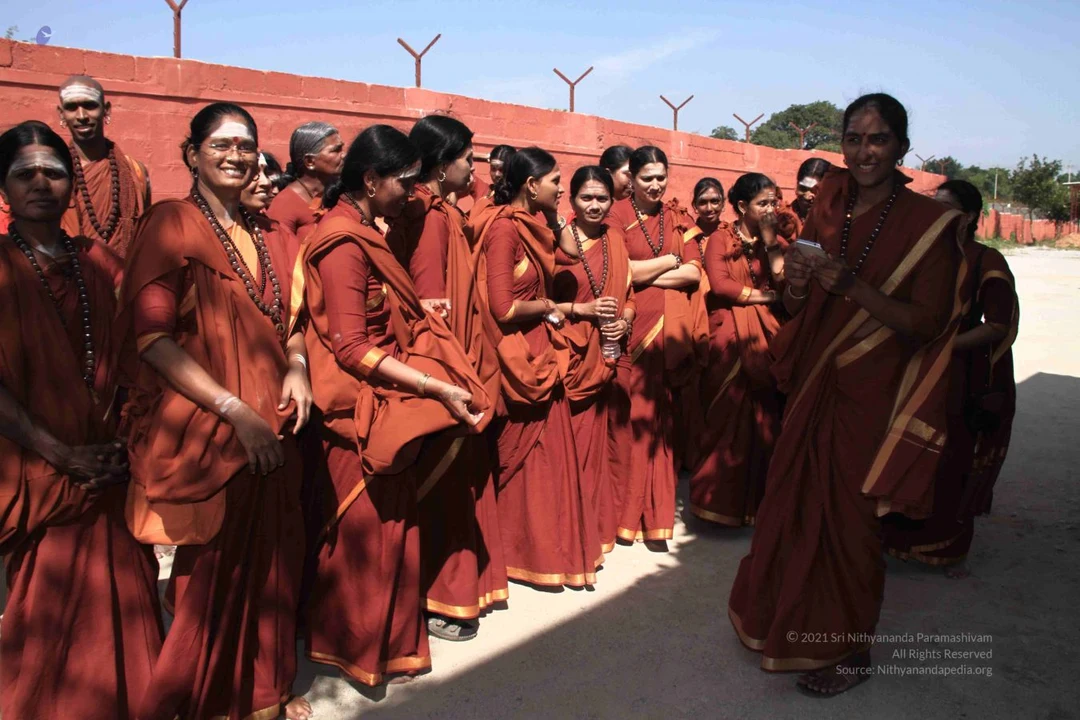
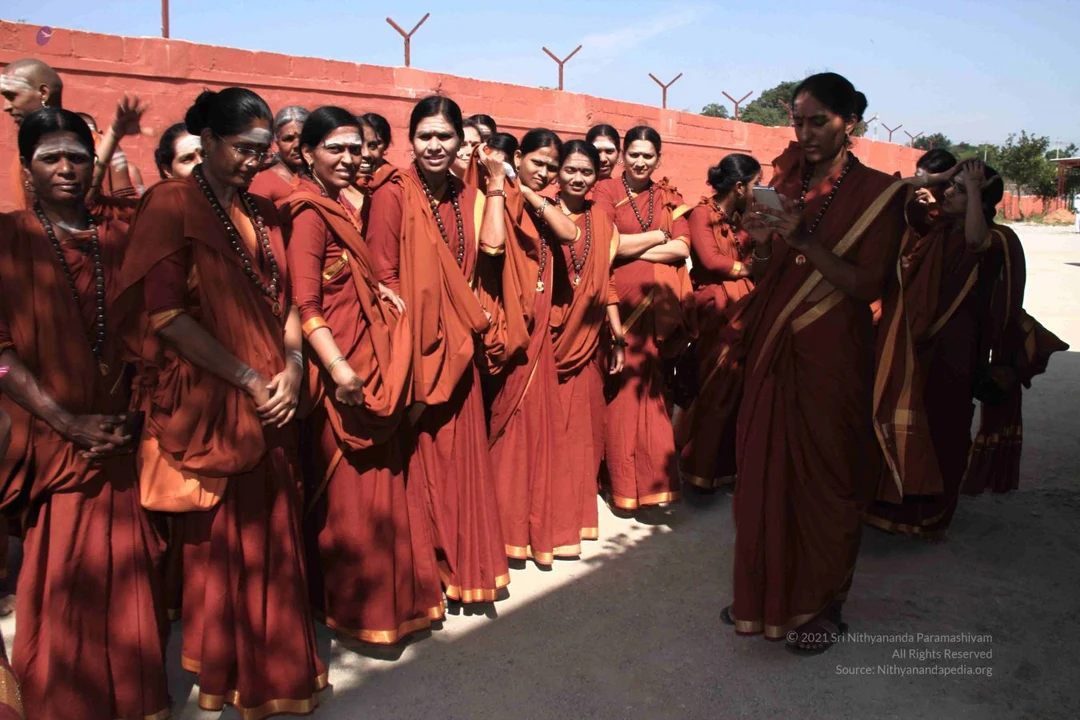
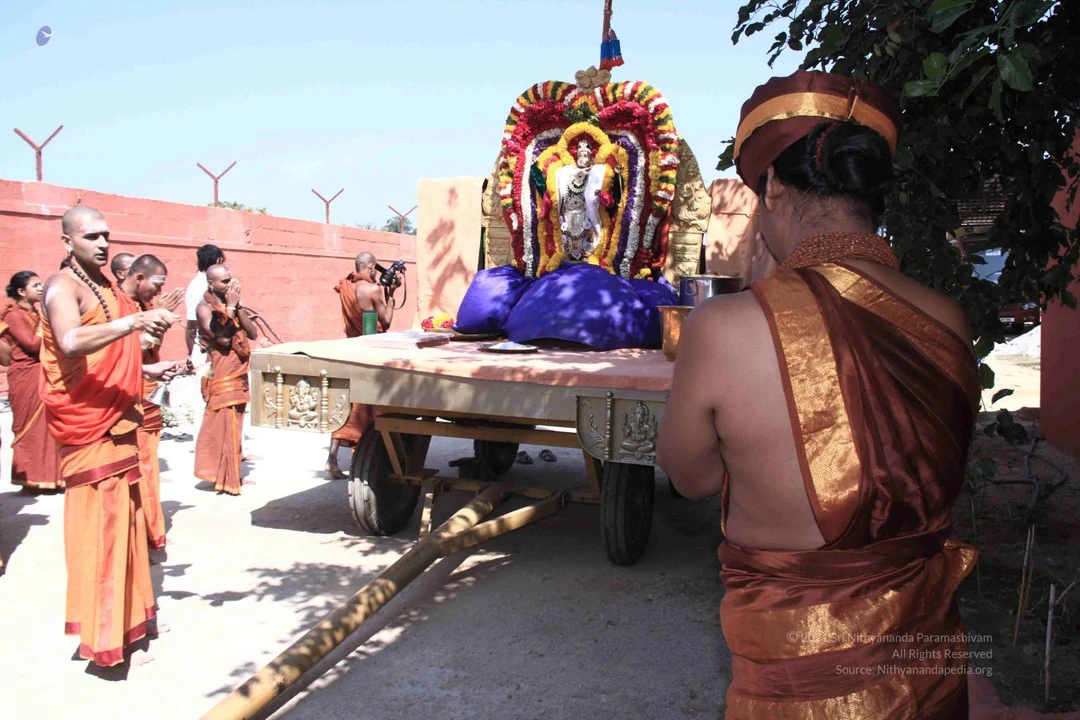
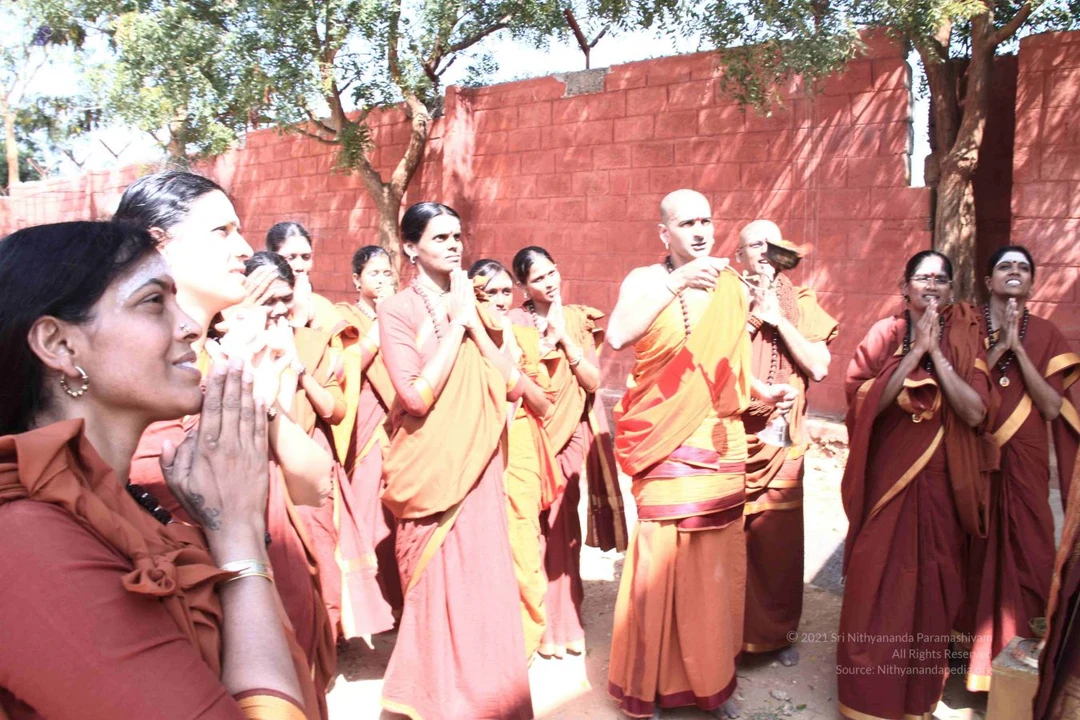
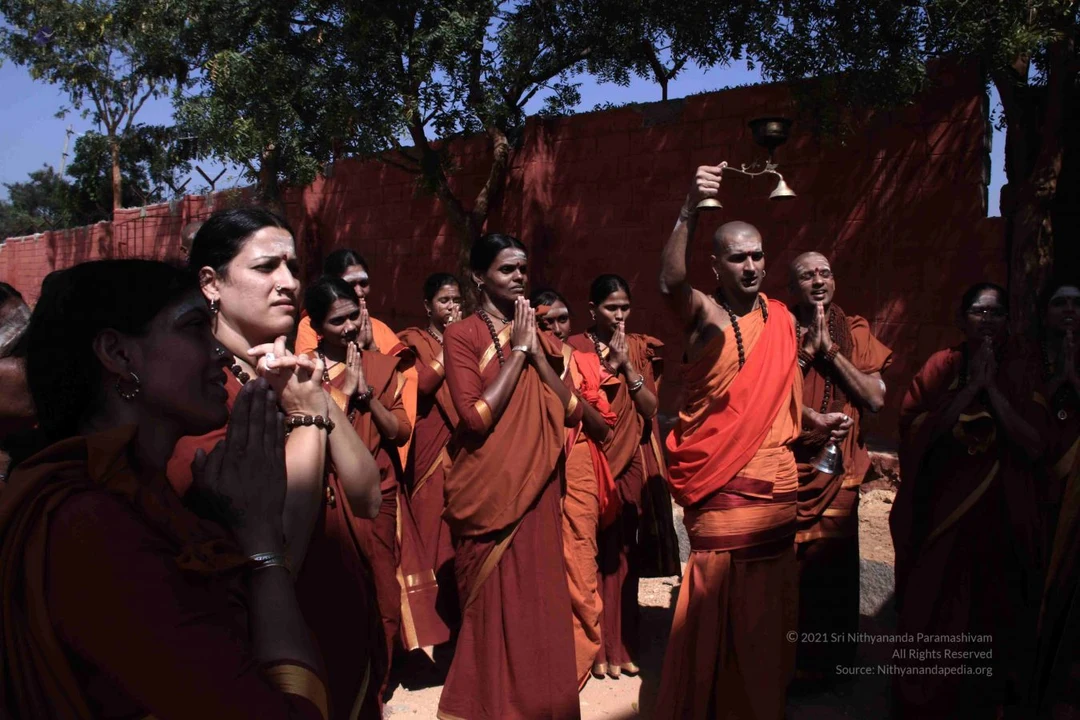
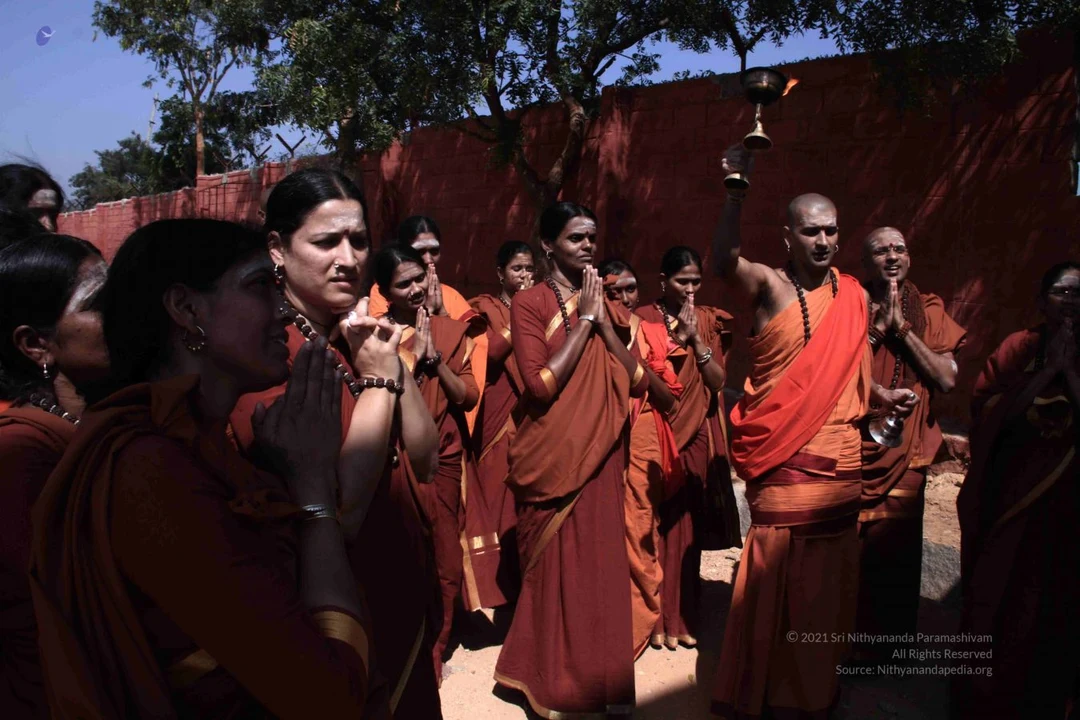
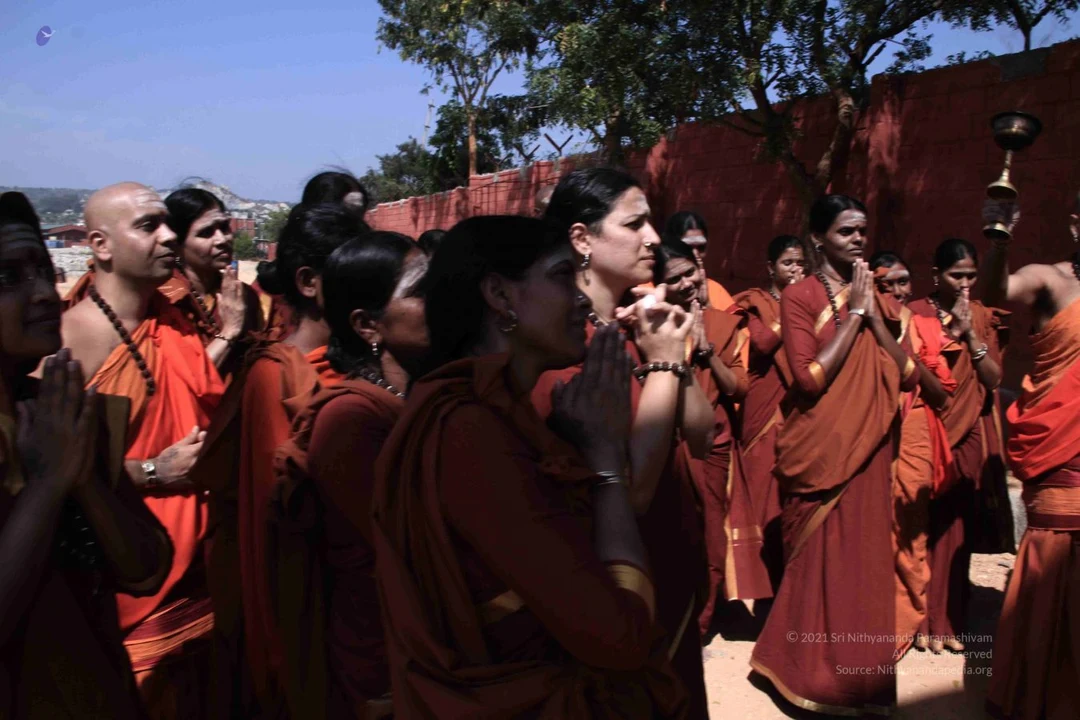
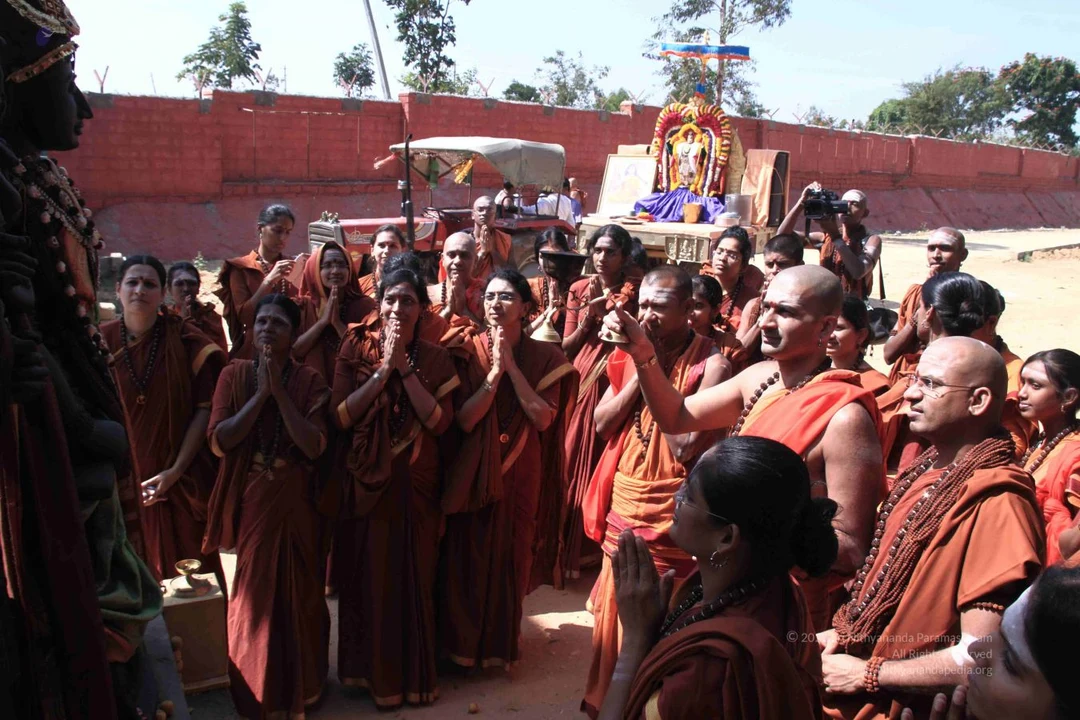
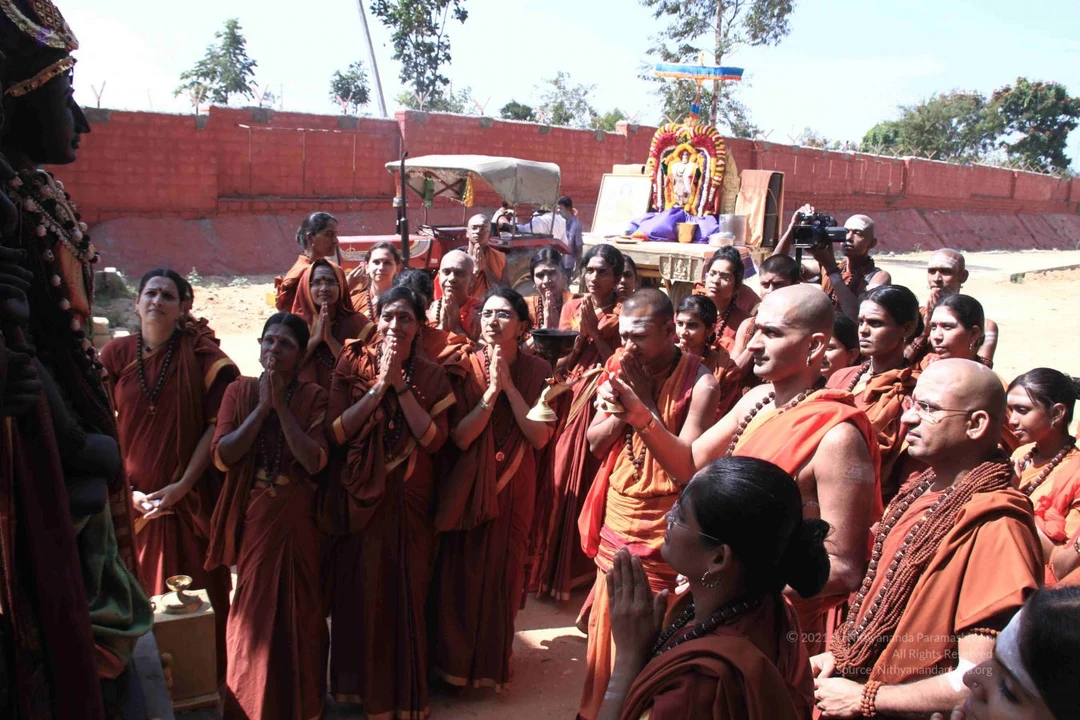
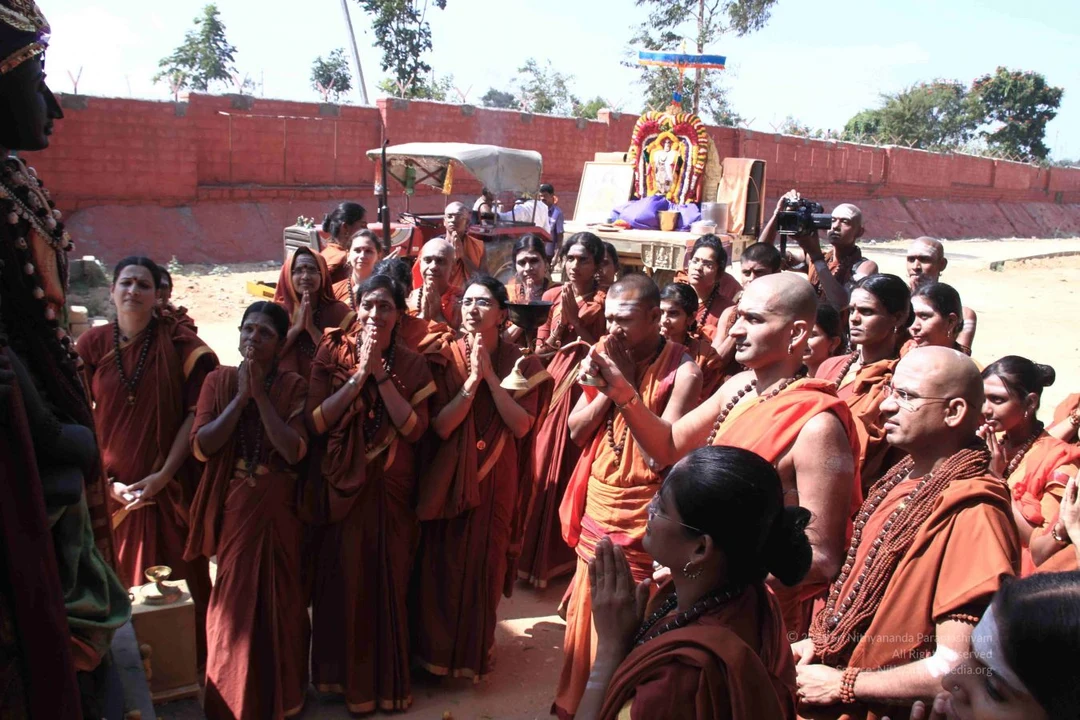
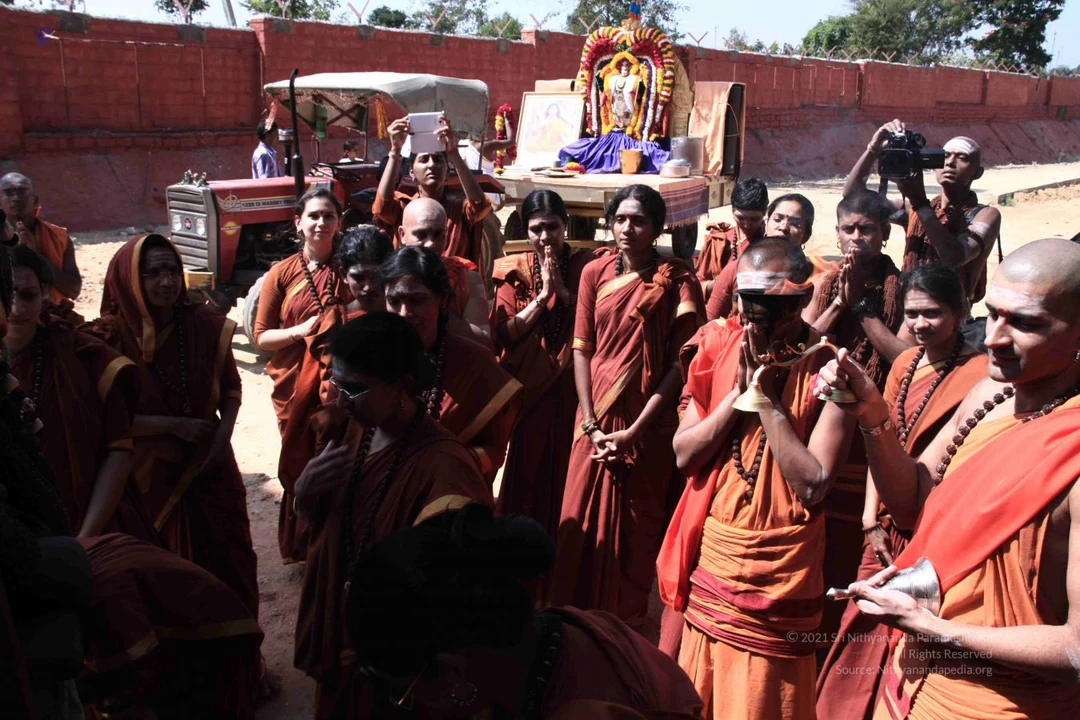
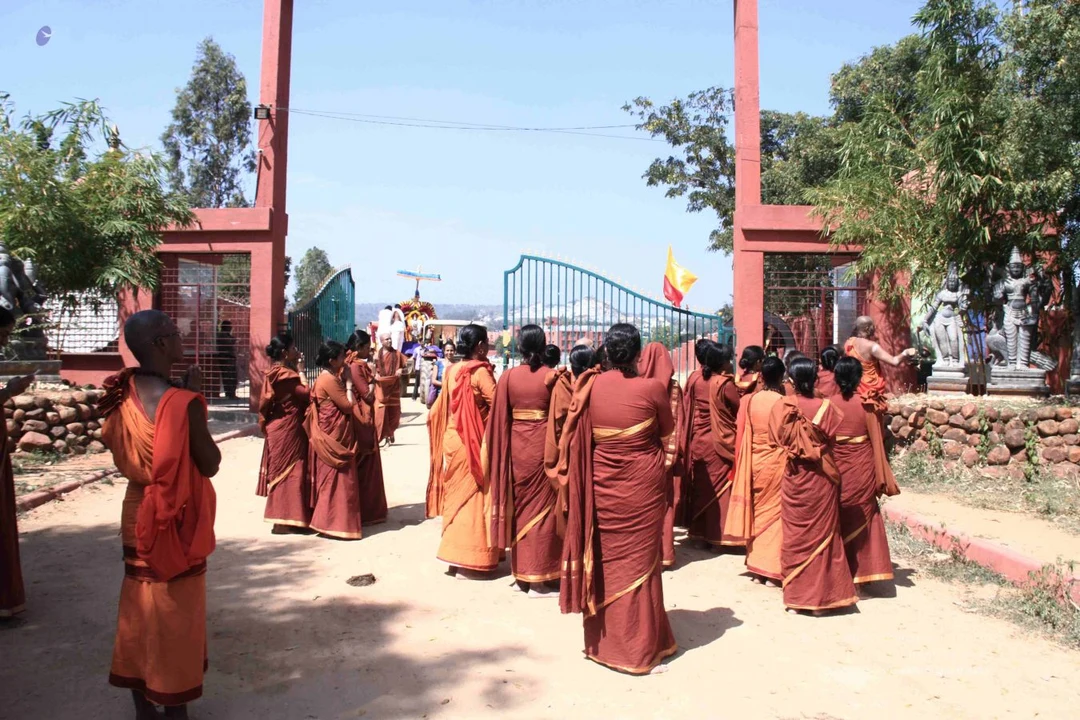
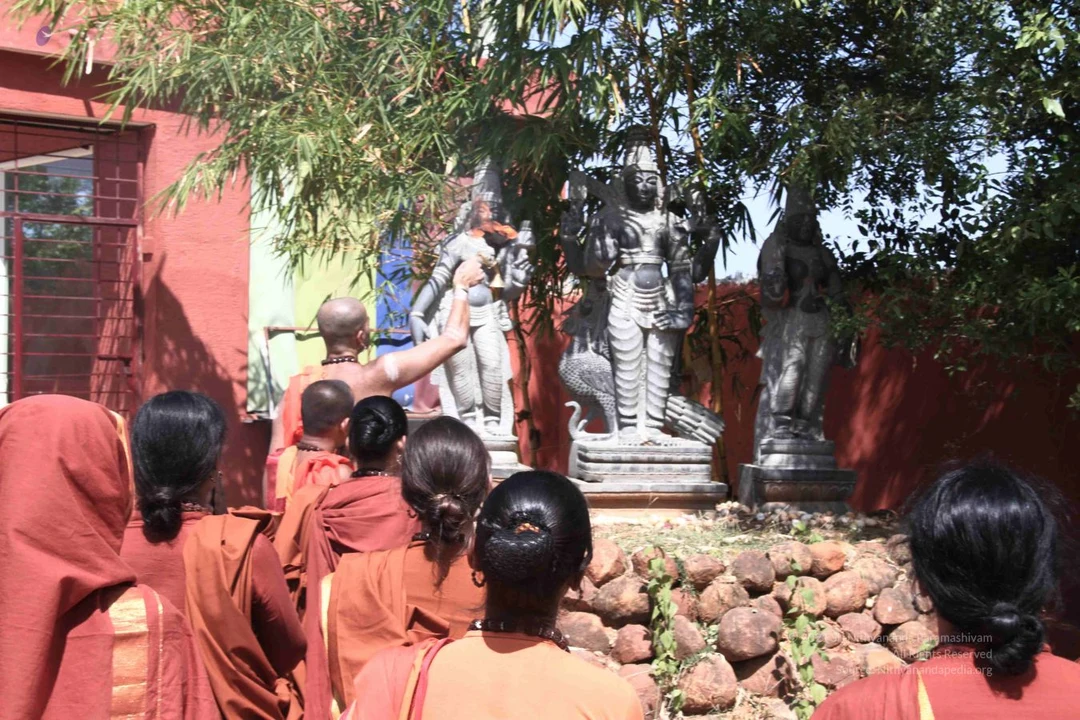
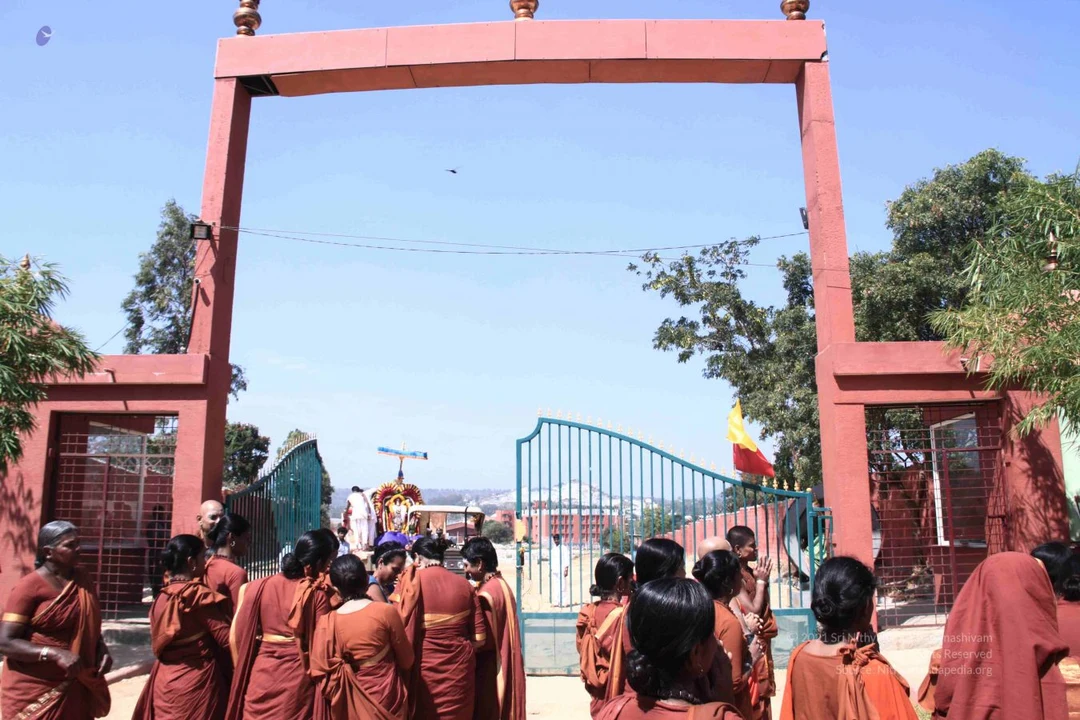
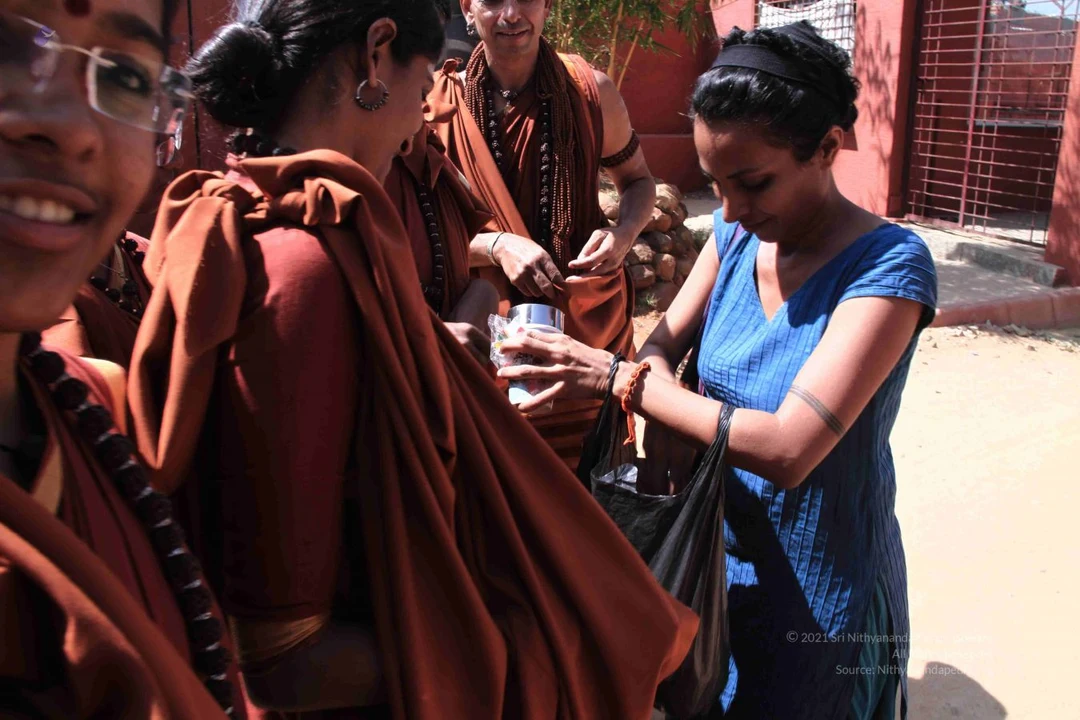
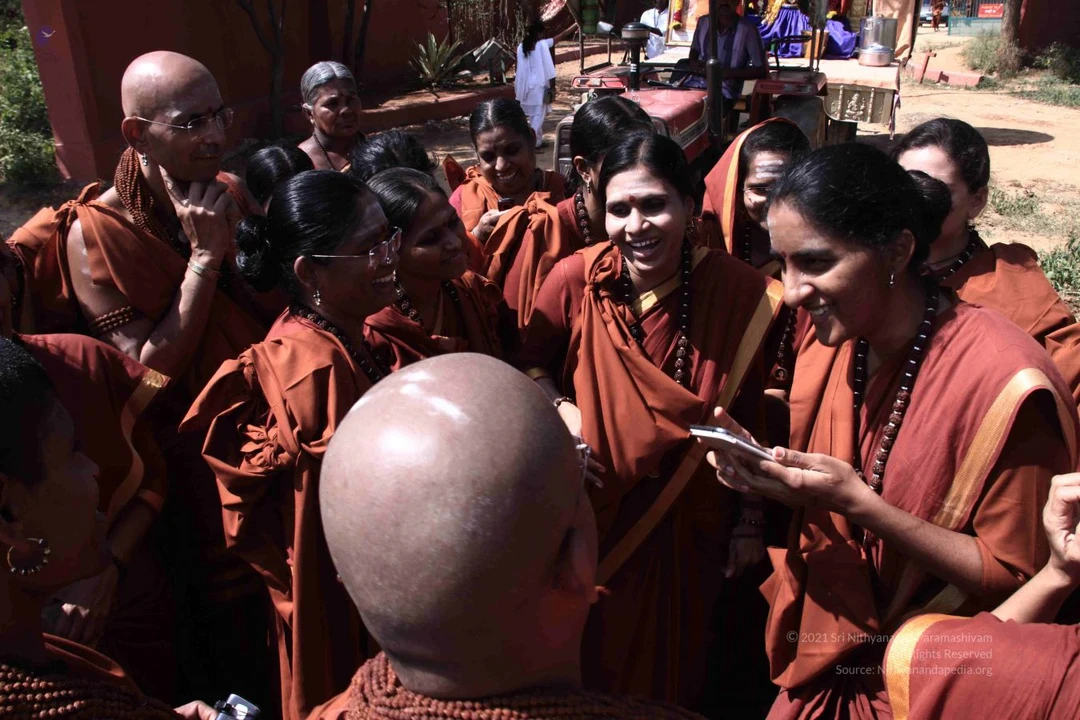
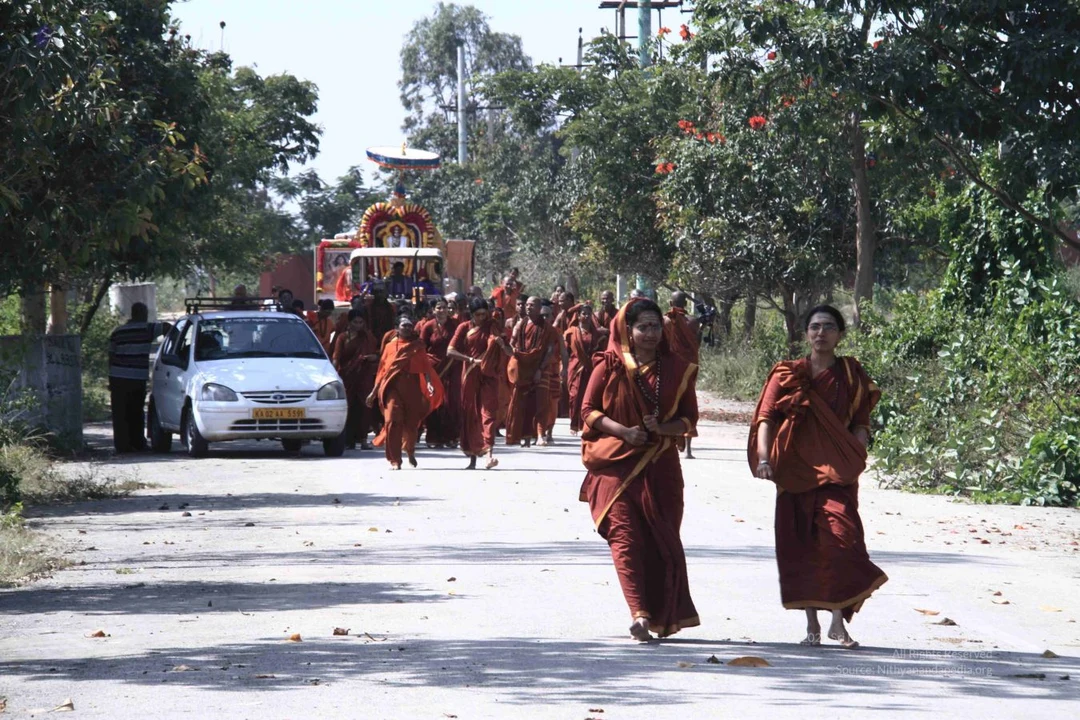
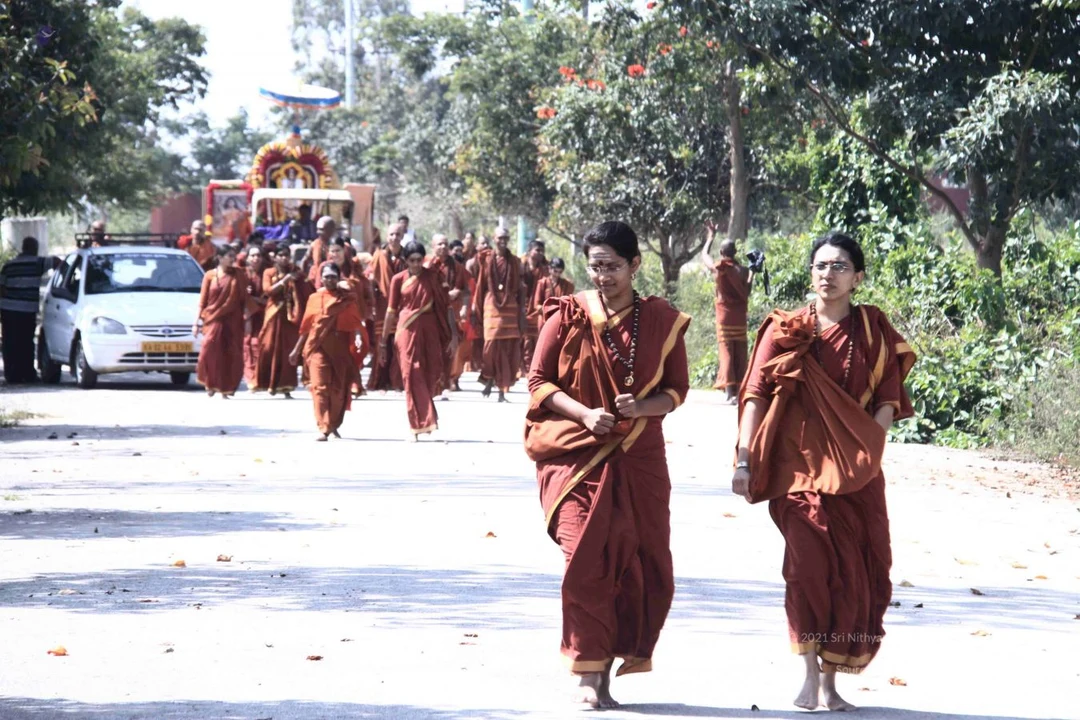
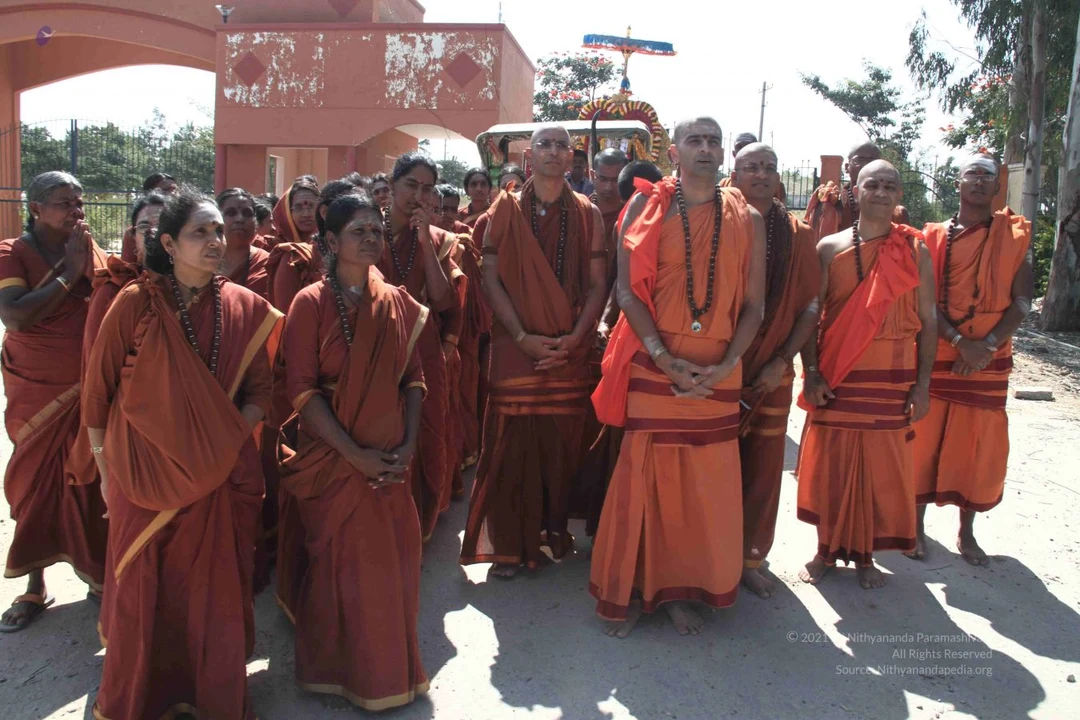
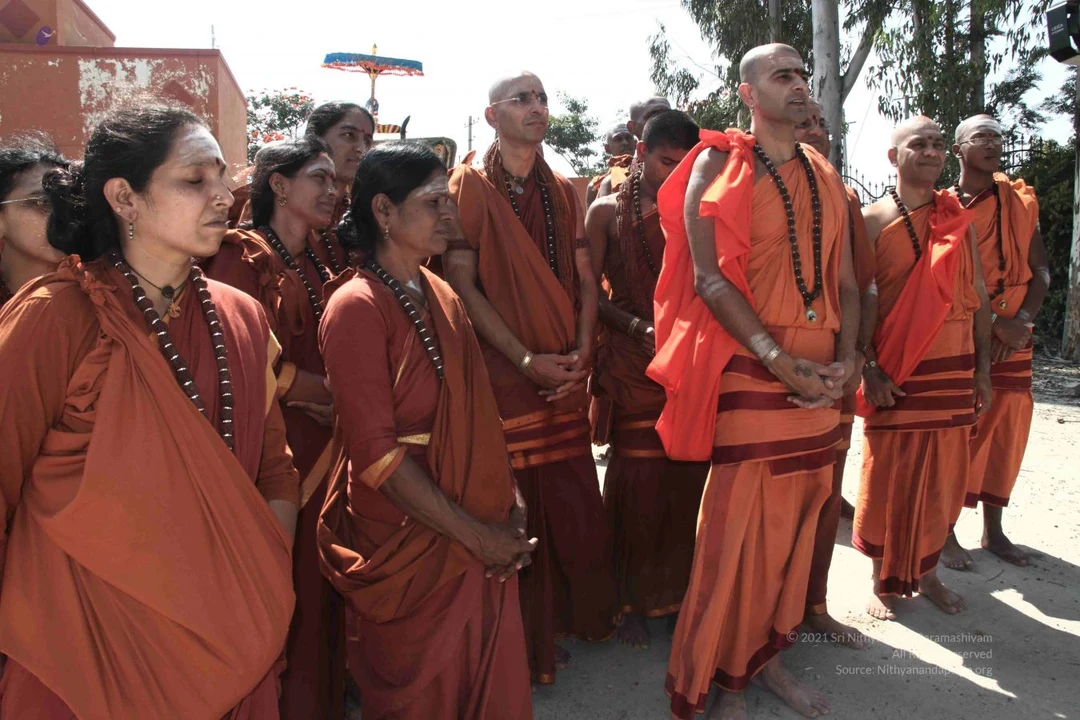
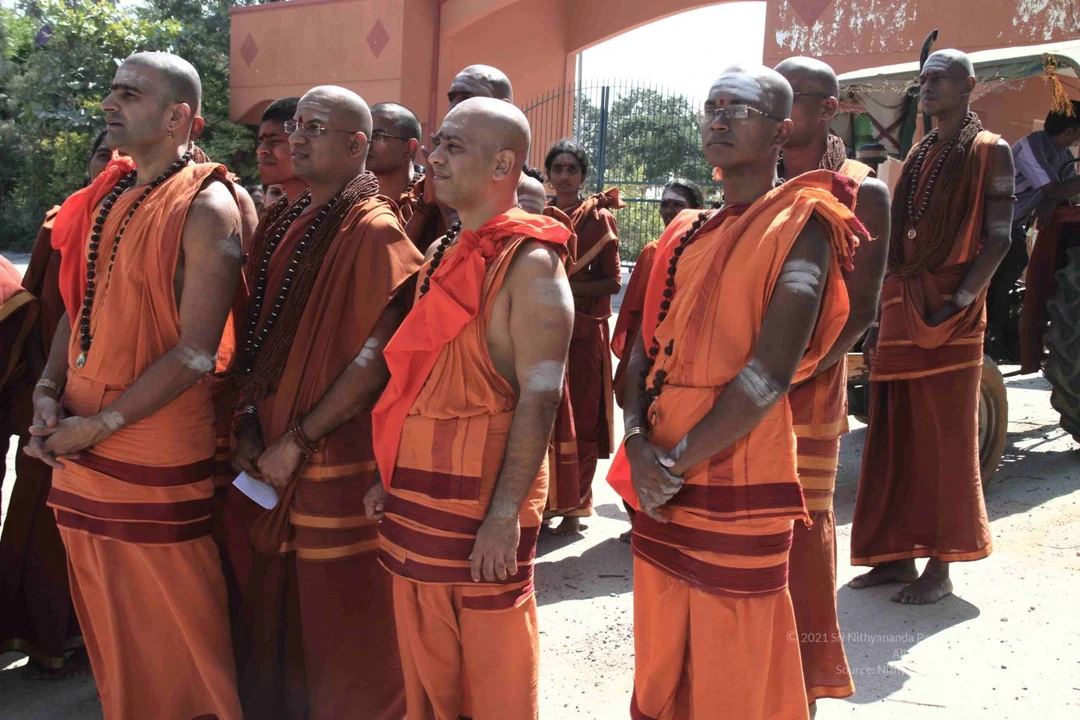
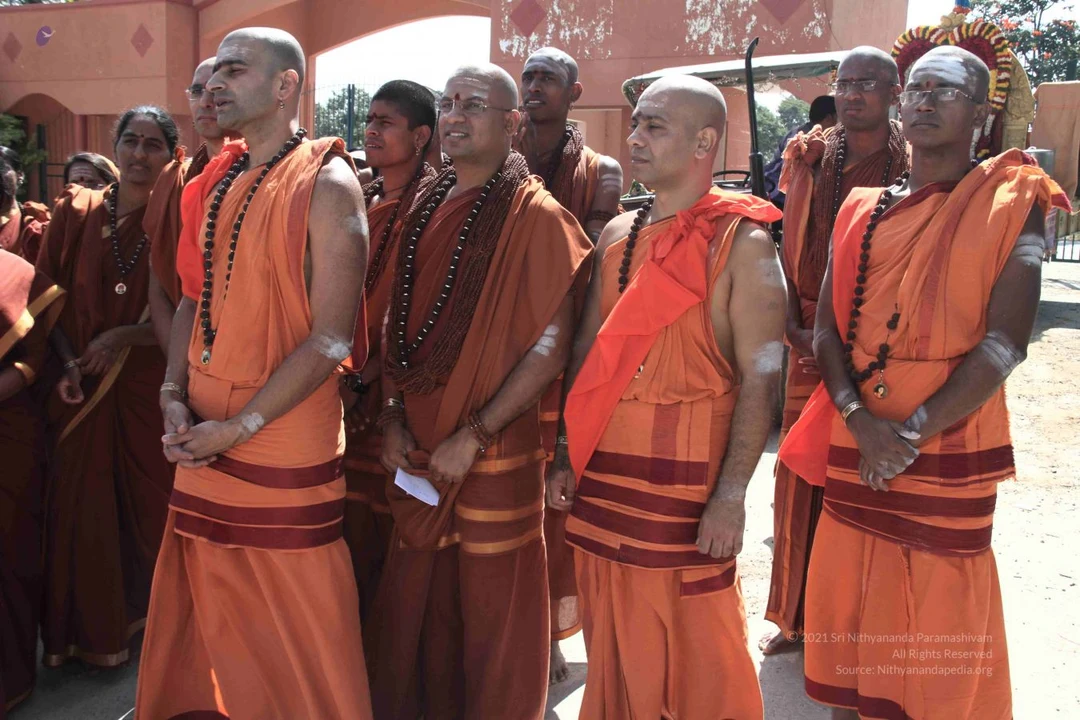
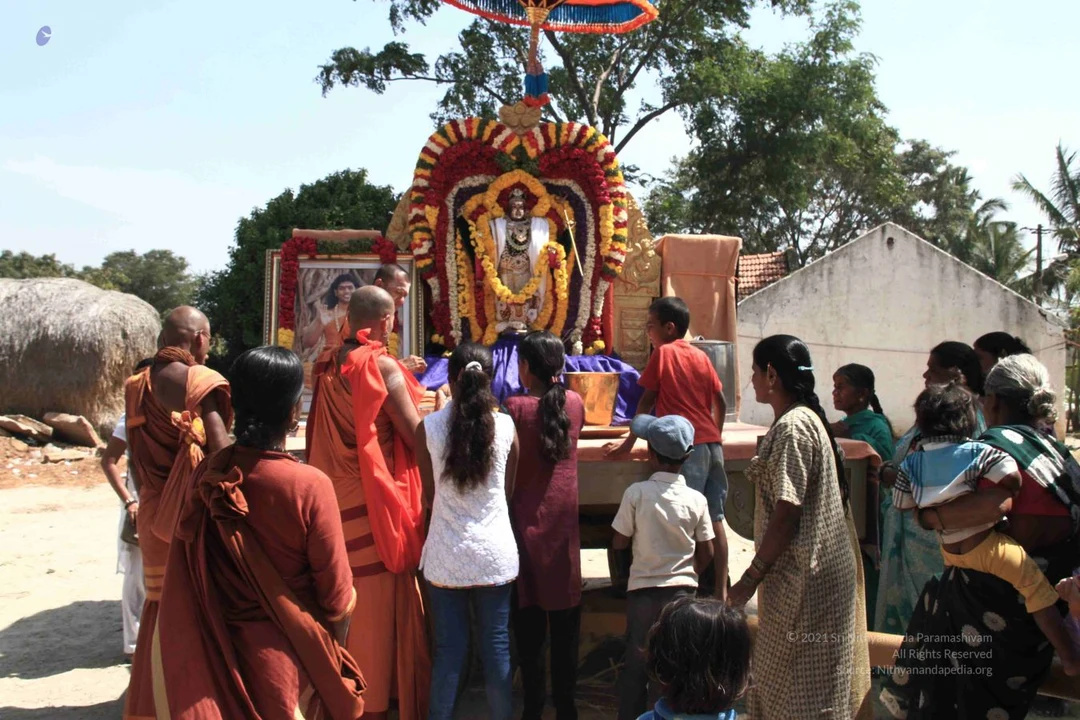
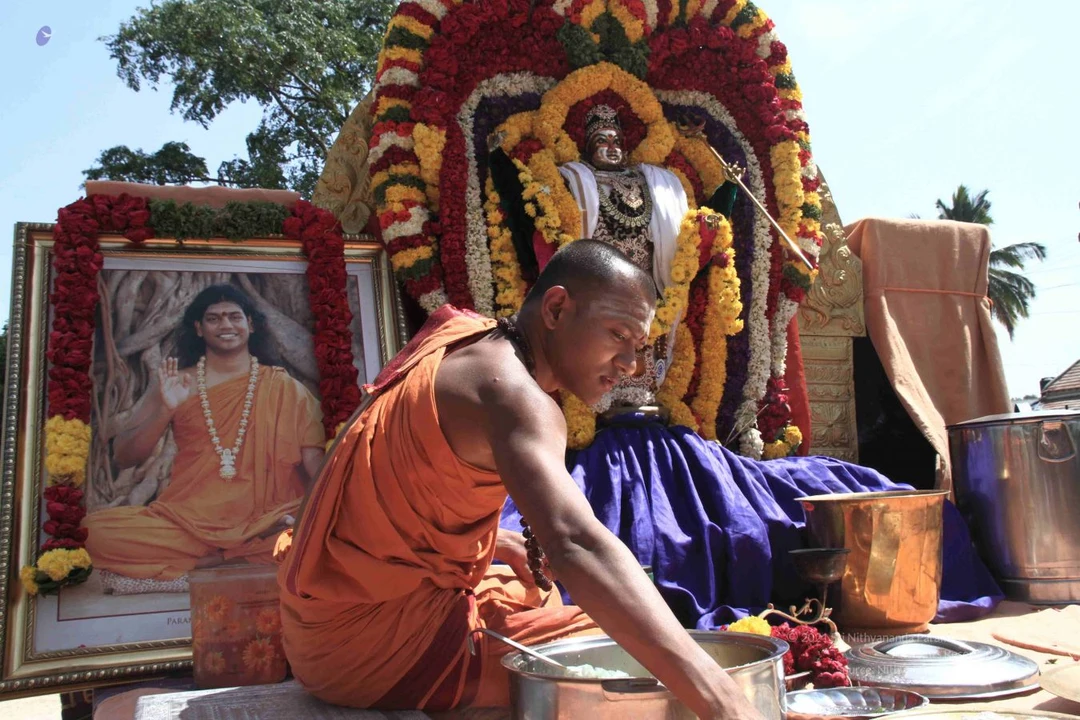
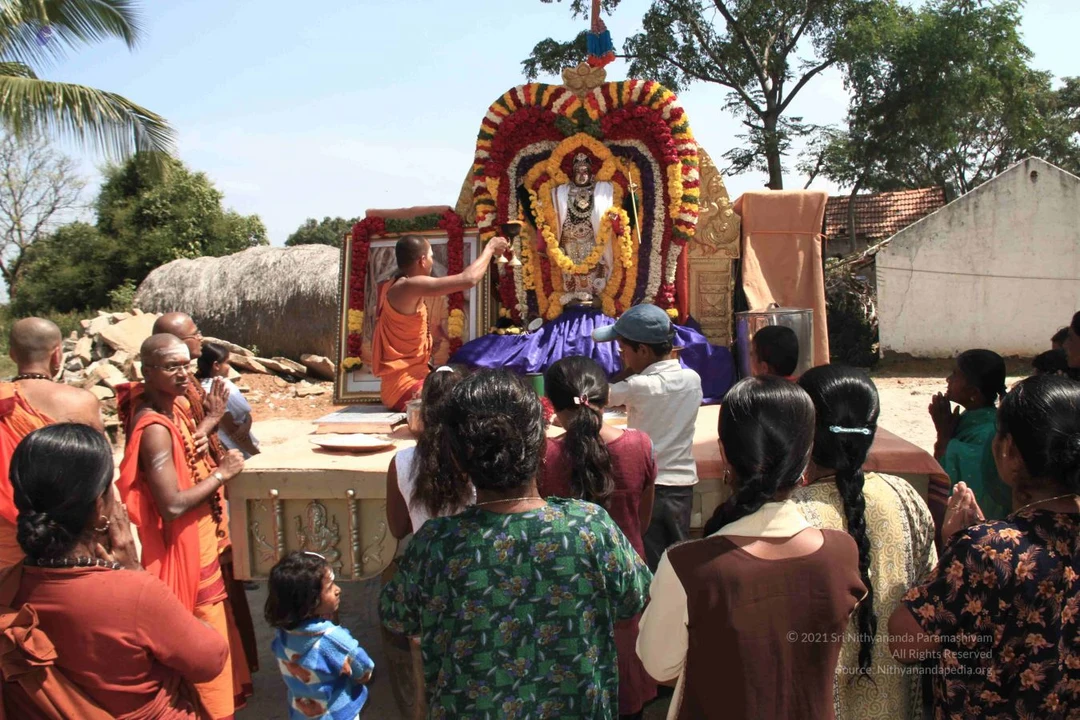
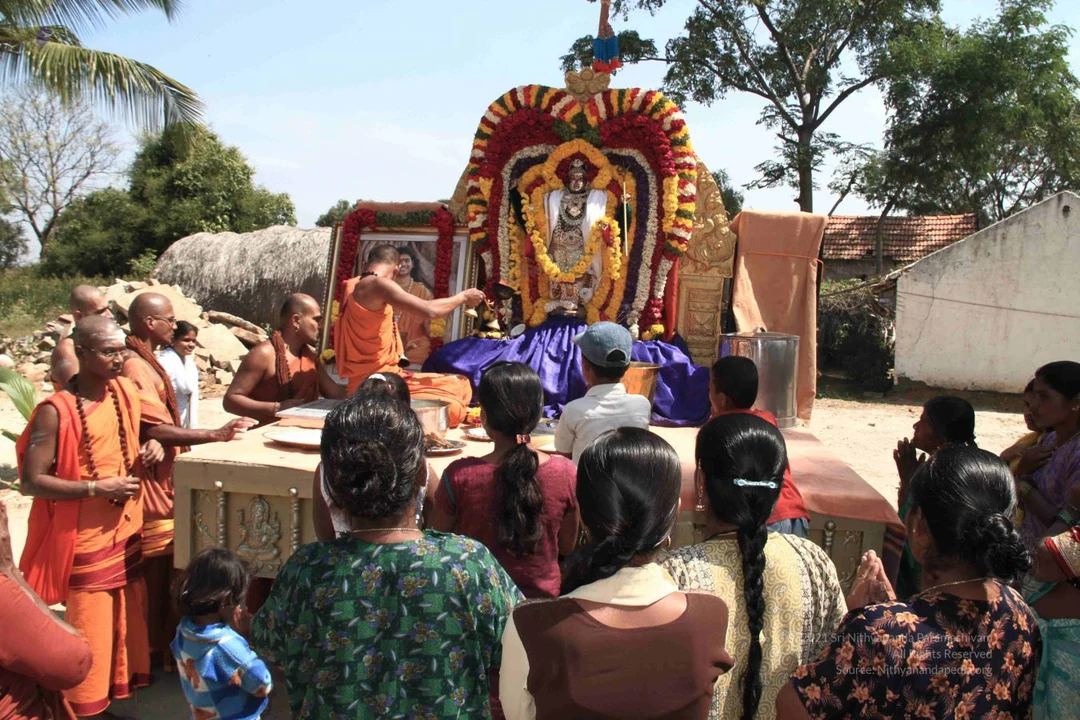
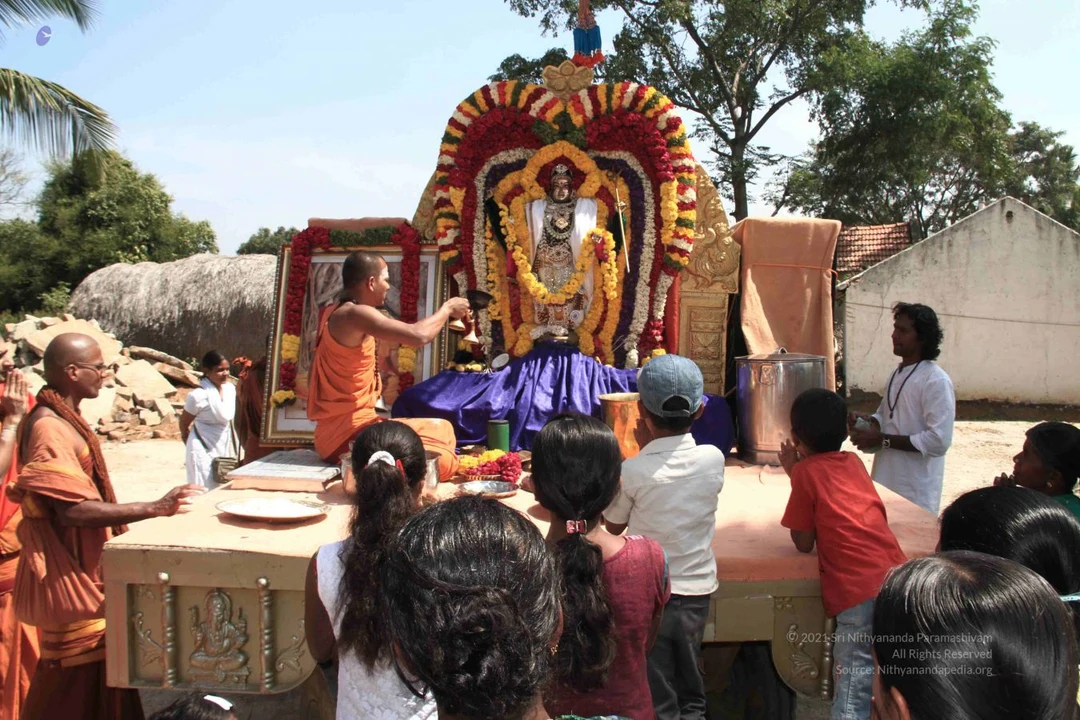
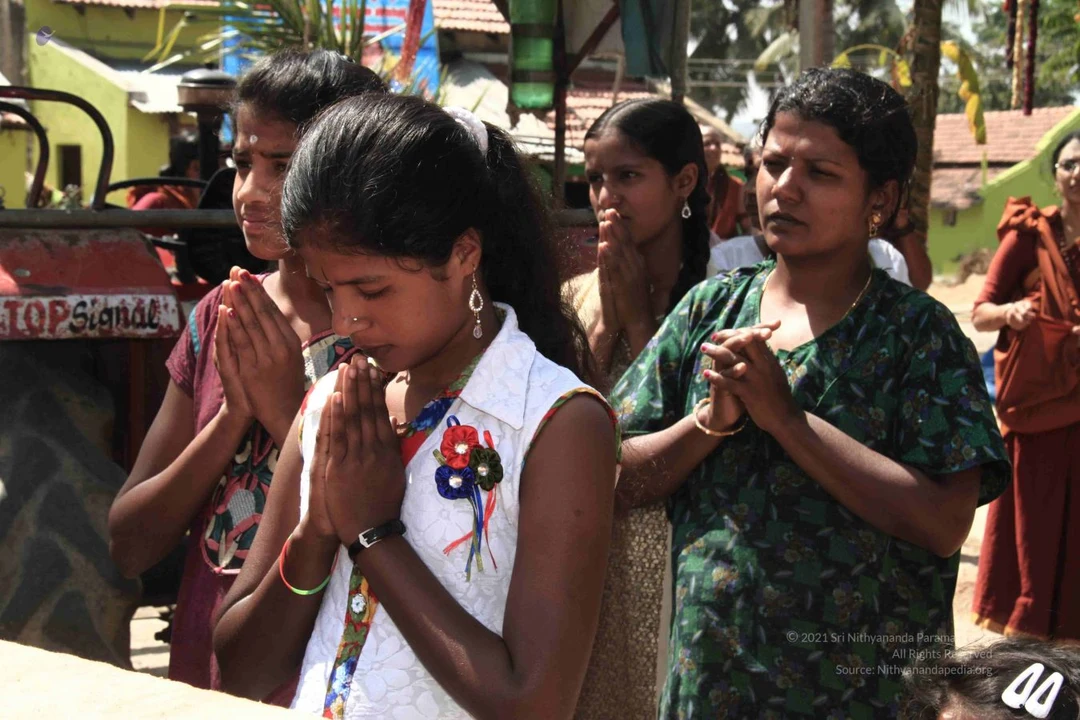
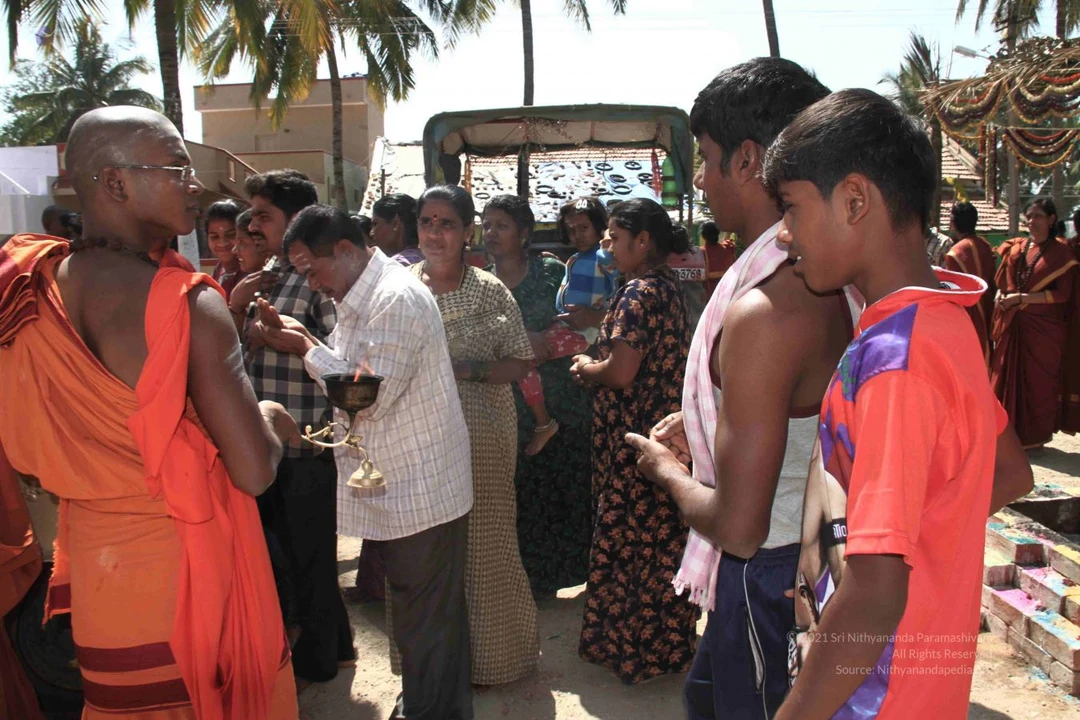
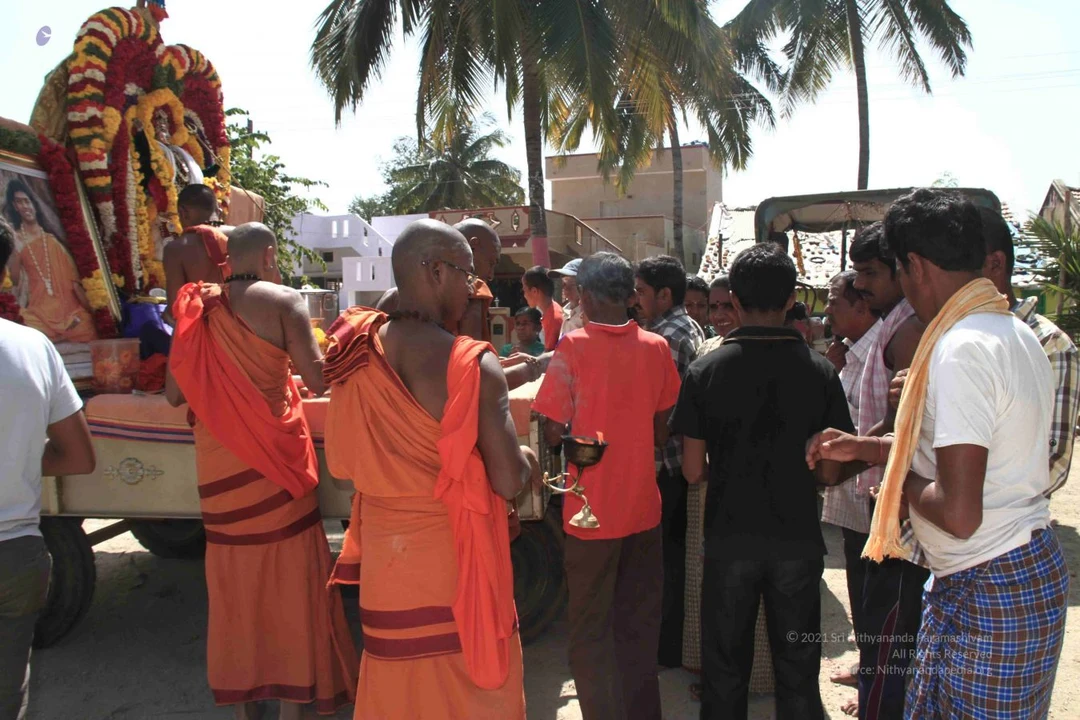
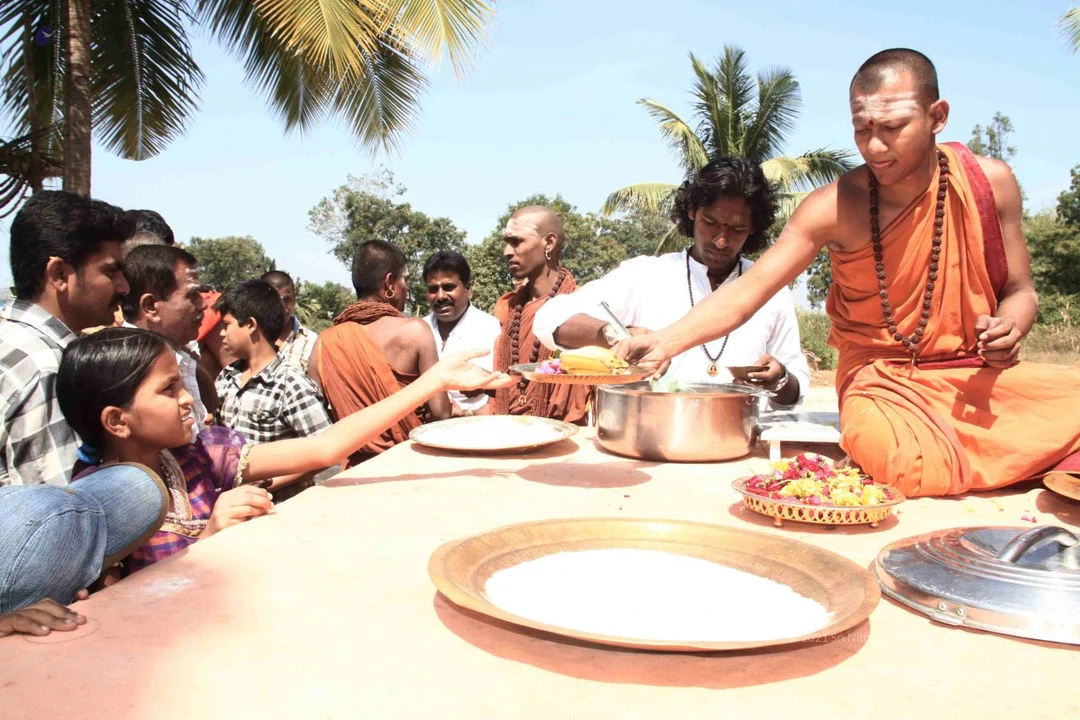
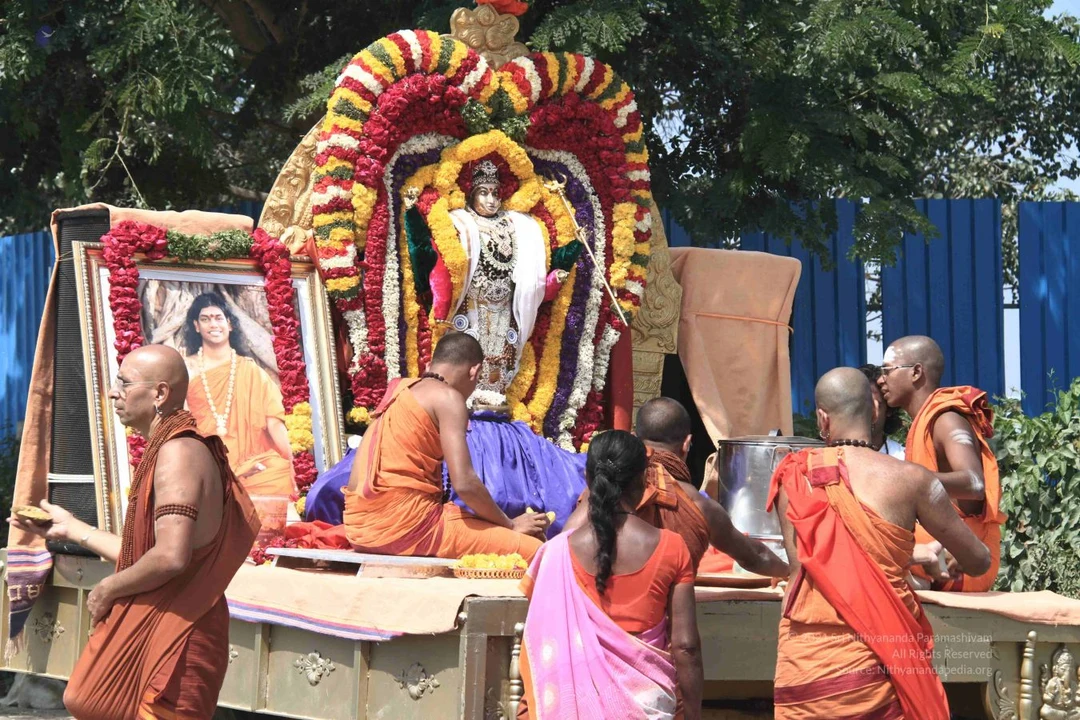
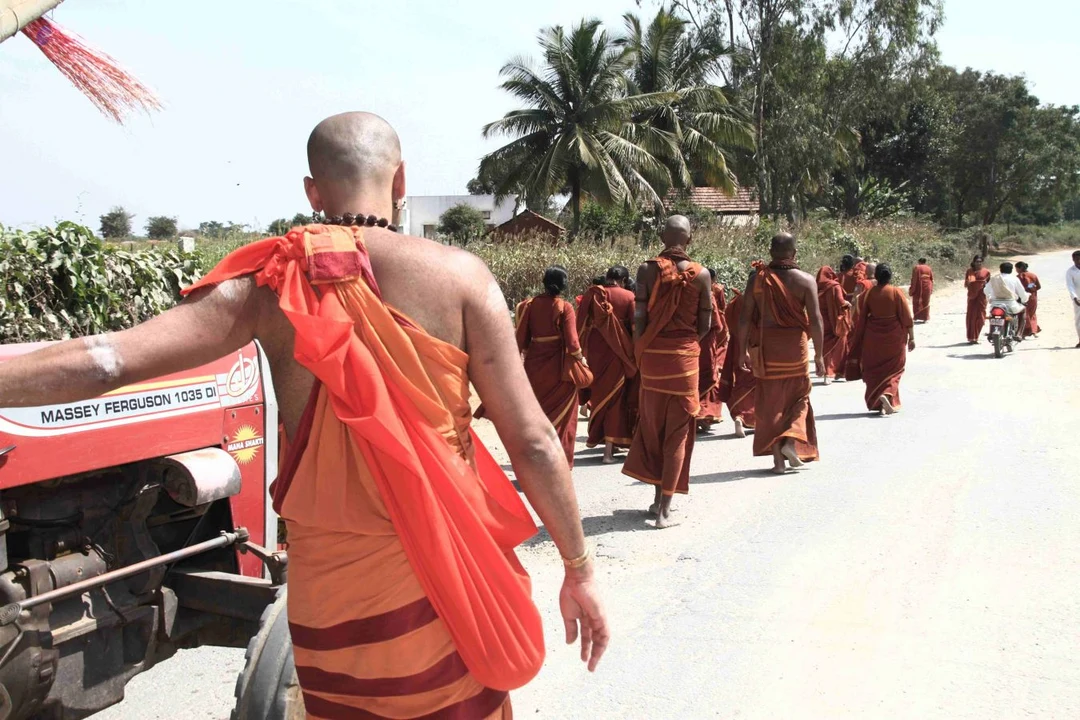
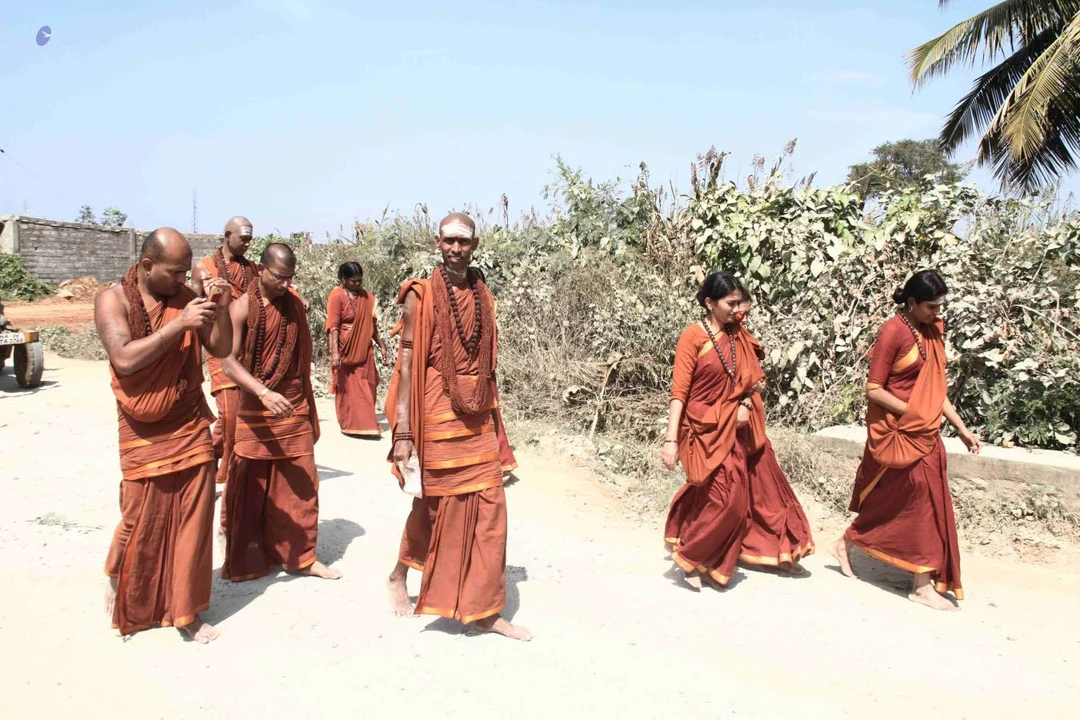
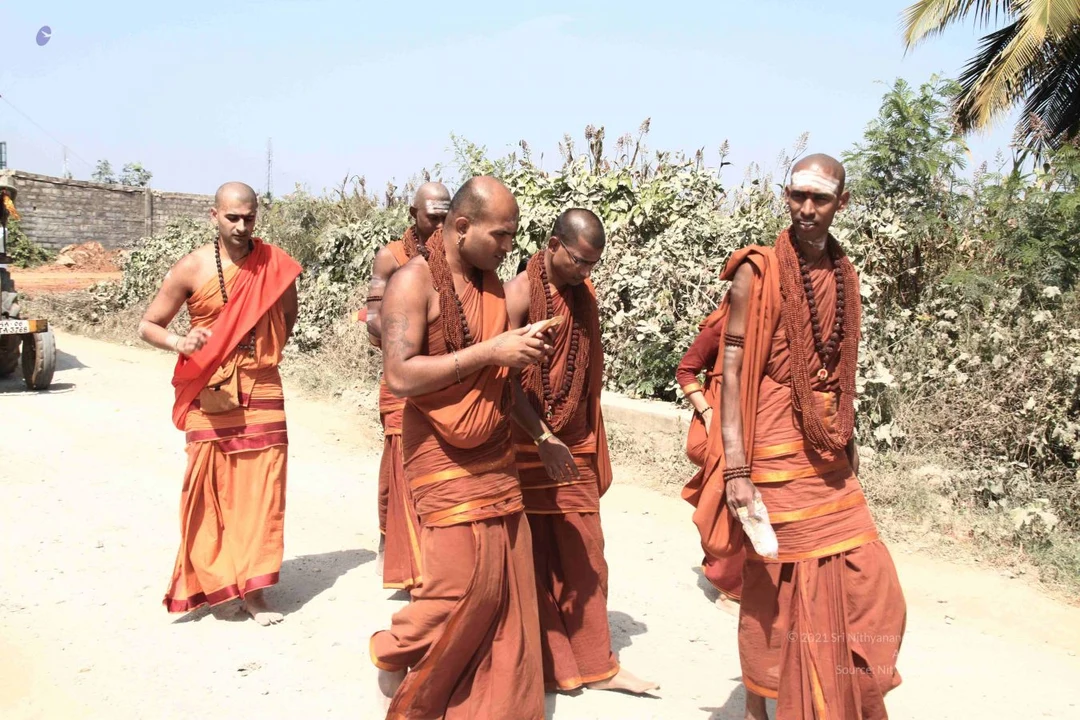
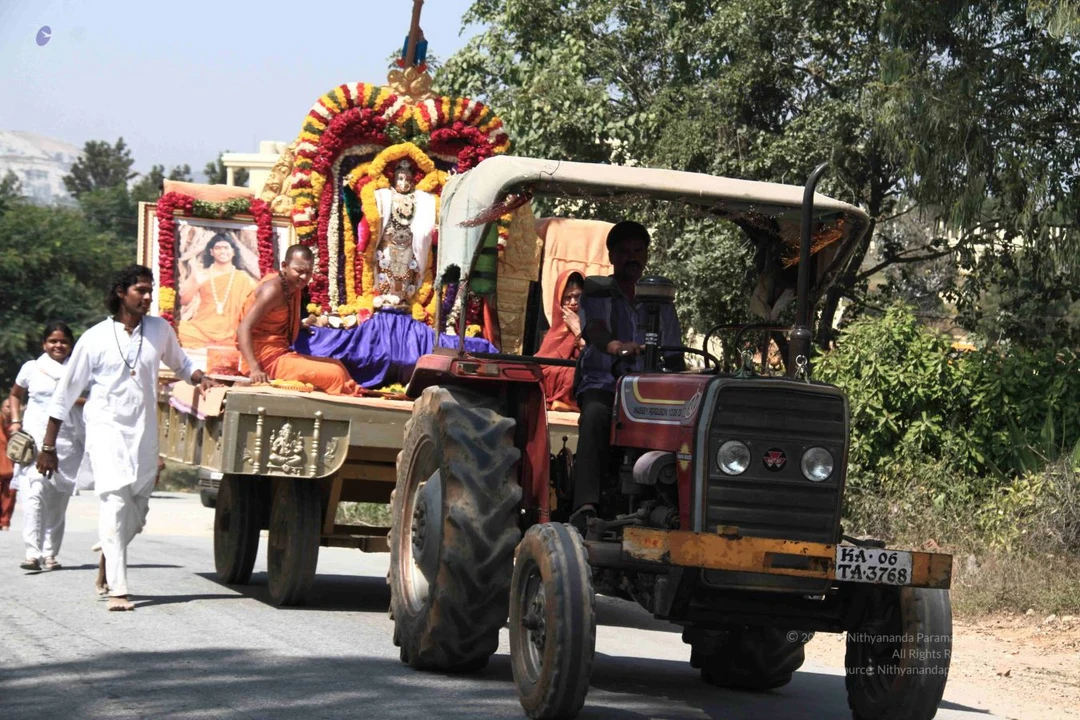
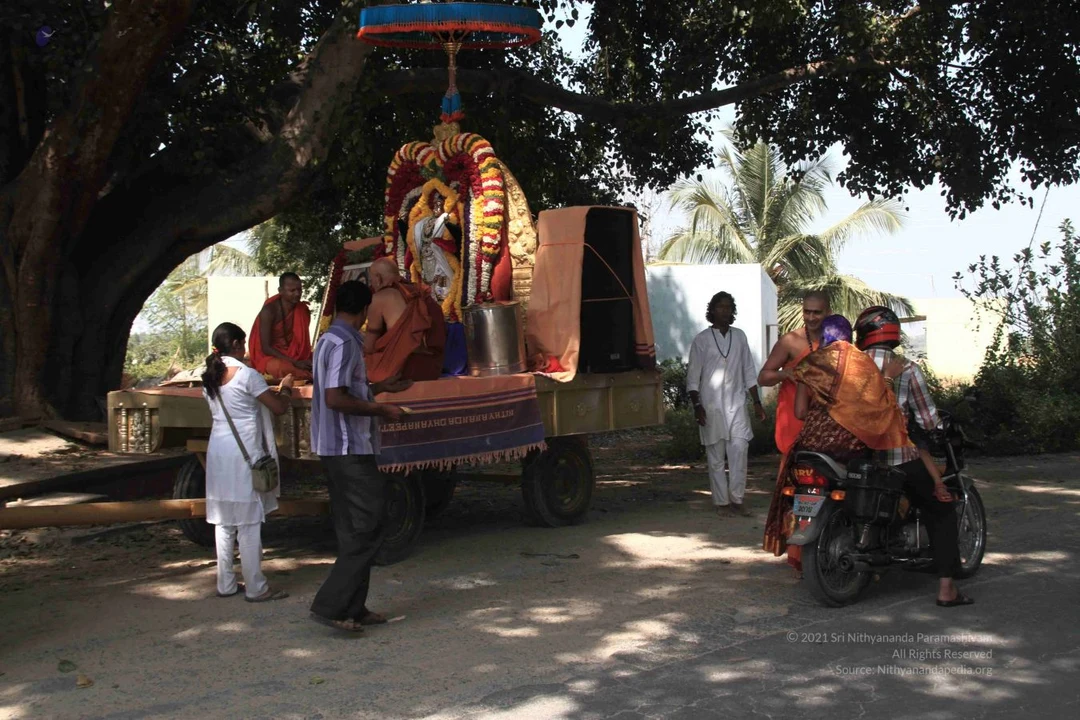
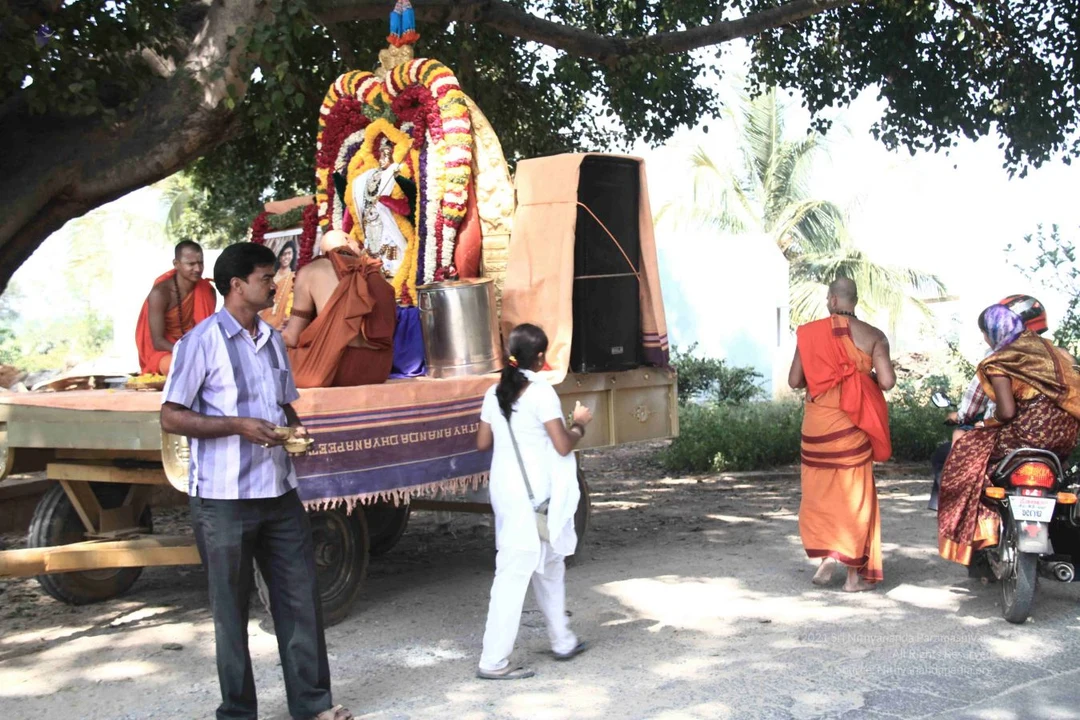
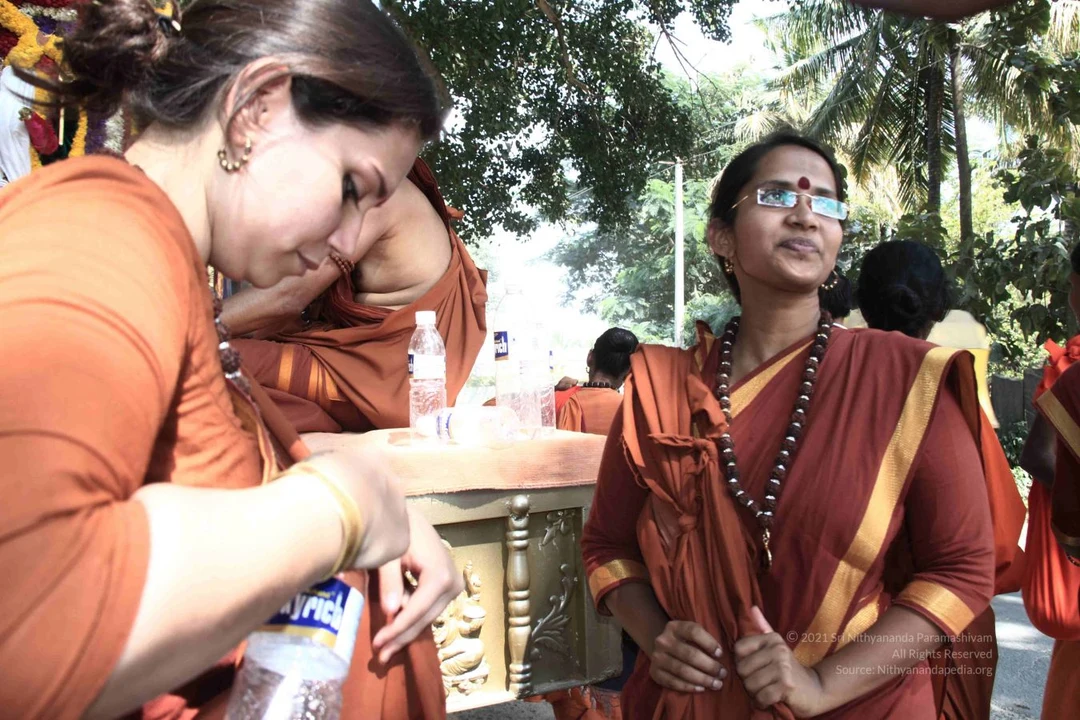
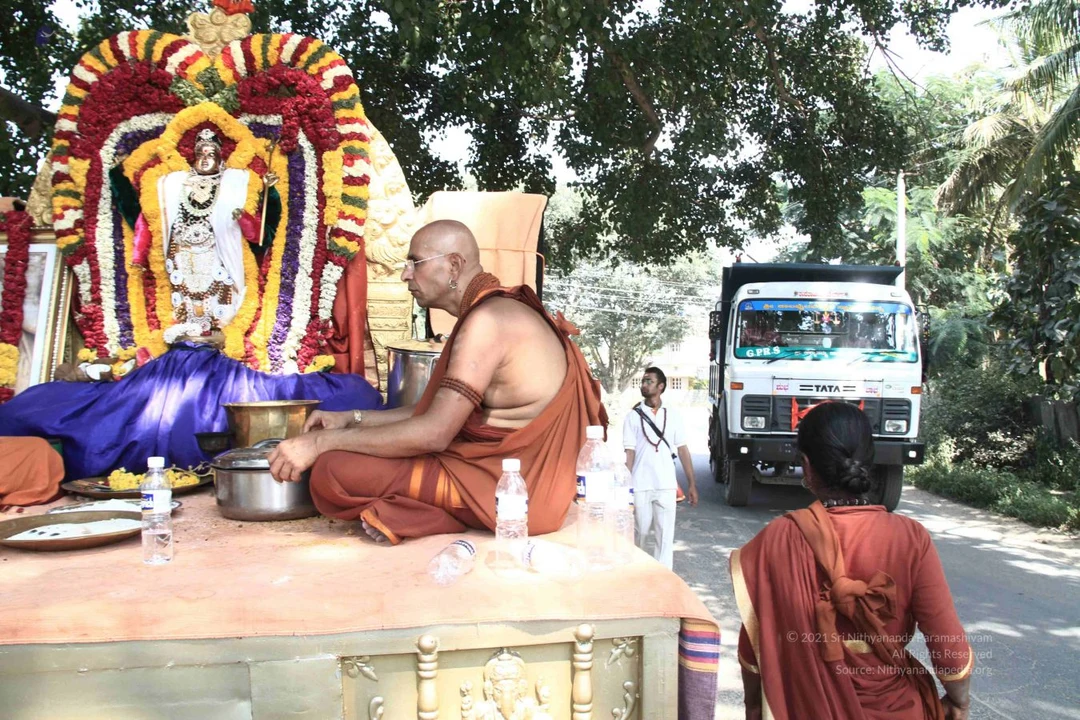
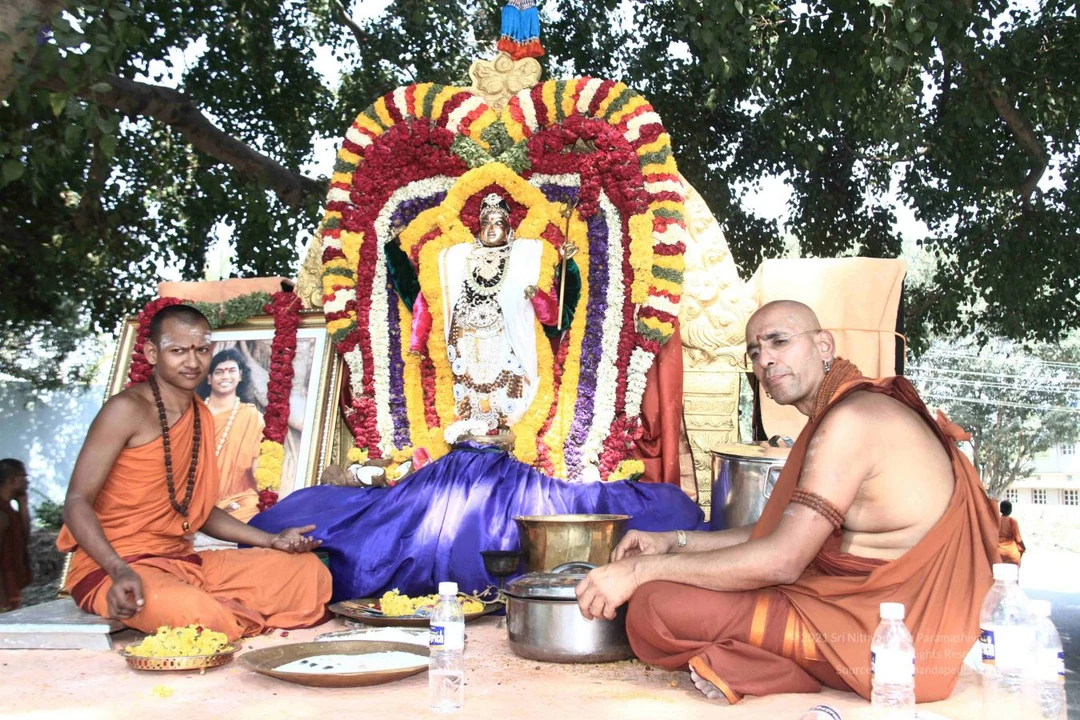
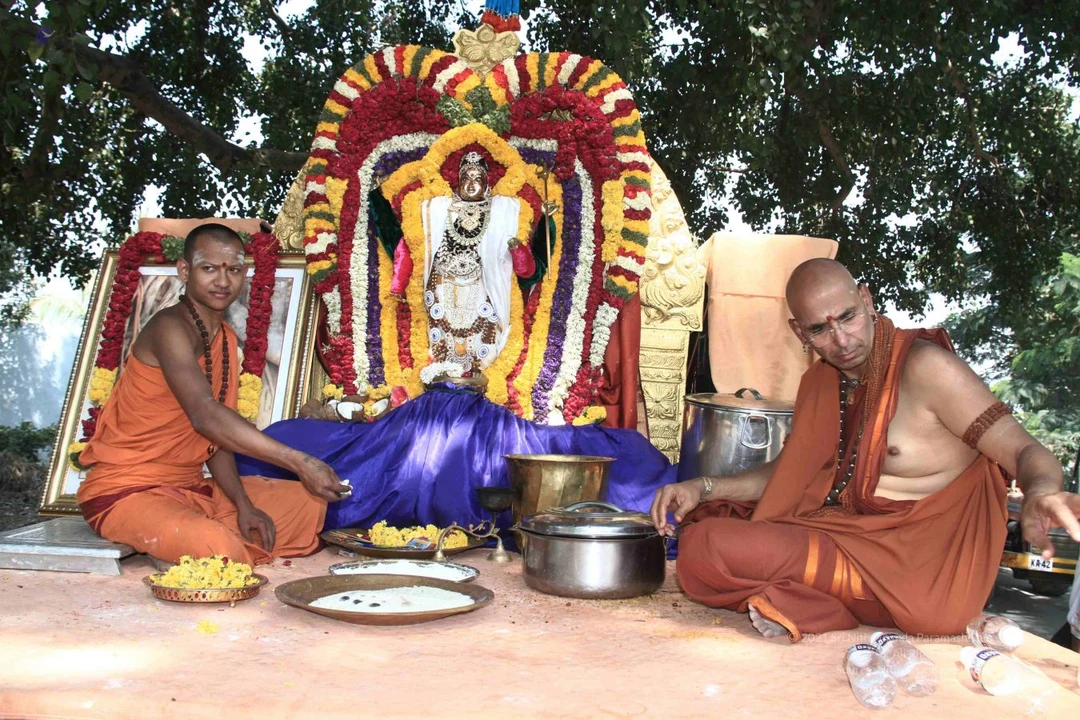
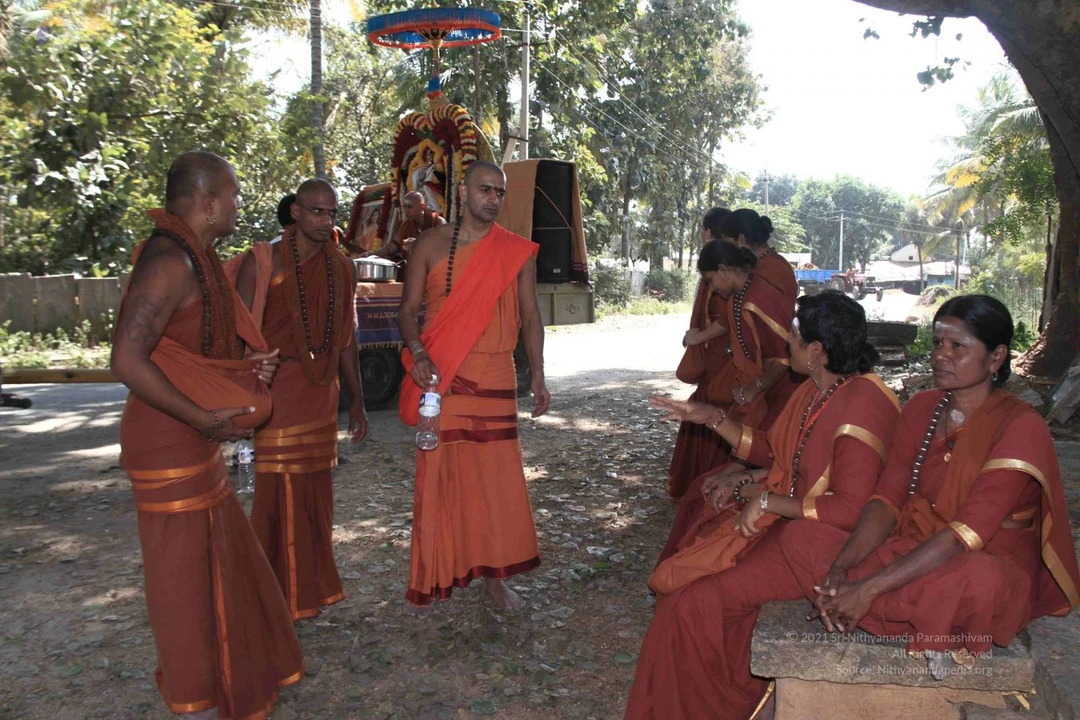
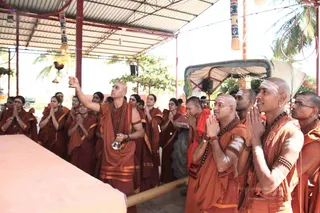
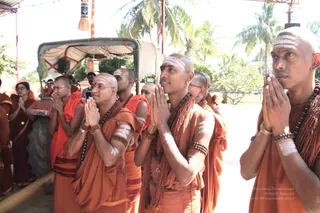
Outdoor temple-style ritual under a canopy. At centre, a deity murti is decorated with a large arch of marigold and rose garlands in yellow, red and white, set on a purple cloth draped over a golden-framed platform. Around it, shaven-headed sannyasis in saffron-orange robes with rudraksha malas stand and sit with hands folded in namaskar, while women in maroon and red saris with orange shawls and gold necklaces stand on the right. A standing man in orange cloth holds a ritual item toward the murti. A metal vessel sits on the platform, and a woman in white stands at the left edge. Greenery and palms surround the open-sided pavilion.Outdoor puja before a richly decorated deity murti seated on a blue cloth, framed by a large arch of red, orange, yellow and purple marigold garlands on a raised platform draped in saffron cloth. A bald priest in orange robes with a rudraksha mala and sandalpaste markings stands at the front with raised hand, while seated devotees in orange and maroon garments with folded palms face the murti. Women in maroon saris and a woman in white stand nearby, with a stainless steel vessel on the platform and a palm-lined background. The bald man in orange robes at the front shows no distinctive a person cues, so no identification is made.Outdoor puja before a decorated deity murti under a tent canopy. The murti, adorned with garlands of red, orange and yellow flowers and a floral arch, sits on a deep blue cloth on a raised platform. A man with a shaved head in orange robes stands at the centre-right, holding a lit flame toward the murti. Around him, shaved-headed men and women in orange and maroon robes, some with rudraksha malas, sit or stand with palms pressed together in namaskar. Trees and a water tank with steps appear behind, and a metal vessel stands on the table to the left.Outdoor ritual under a corrugated metal roof with red steel posts and decorative hanging tassels. A bald man in orange saffron robes with a rudraksha mala raises a small brass lamp with one hand and holds a silver bell in the other, looking upward. Around him, a line of saffron-robed sannyasis and women in dark red sarees stand with palms pressed together in prayer. On the right, shaved-headed men in orange cloth and white vertical tilak marks on their foreheads and arms fold their hands. A decorated vehicle with a canopy and floral garland stands behind them, with palm trees visible beyond.Outdoor ritual scene under a corrugated metal roof supported by red posts, with palm trees and a small covered cart behind. A shaved-headed priest in saffron-orange robes holds a brass bell and raises a small lamp-like vessel toward an overhead hanging lamp. Around him, a large group of ascetics in saffron and maroon robes and rudraksha malas stand with palms pressed together in prayer, several with white vibhuti markings on their foreheads and arms. A pale pink stone platform sits in the foreground. The gathering appears to be a devotional worship, with a flame and bell in use.Photograph of a group of saffron-robed monks standing outdoors under a canopy with palm trees behind them. Several monks with shaved heads and white vibhuti markings on their foreheads and arms press their palms together in anjali, some with eyes lifted upward. They wear orange cloth, layered rudraksha malas and bead bracelets, and gold bangles. Behind them, a covered palanquin or ratha with a white canopy and a red-trimmed base is visible, and several women in dark red saris stand to the left. No single person is clearly identifiable as a person from appearance, so the figures are described by role only.
Kara-Patra-Cooking
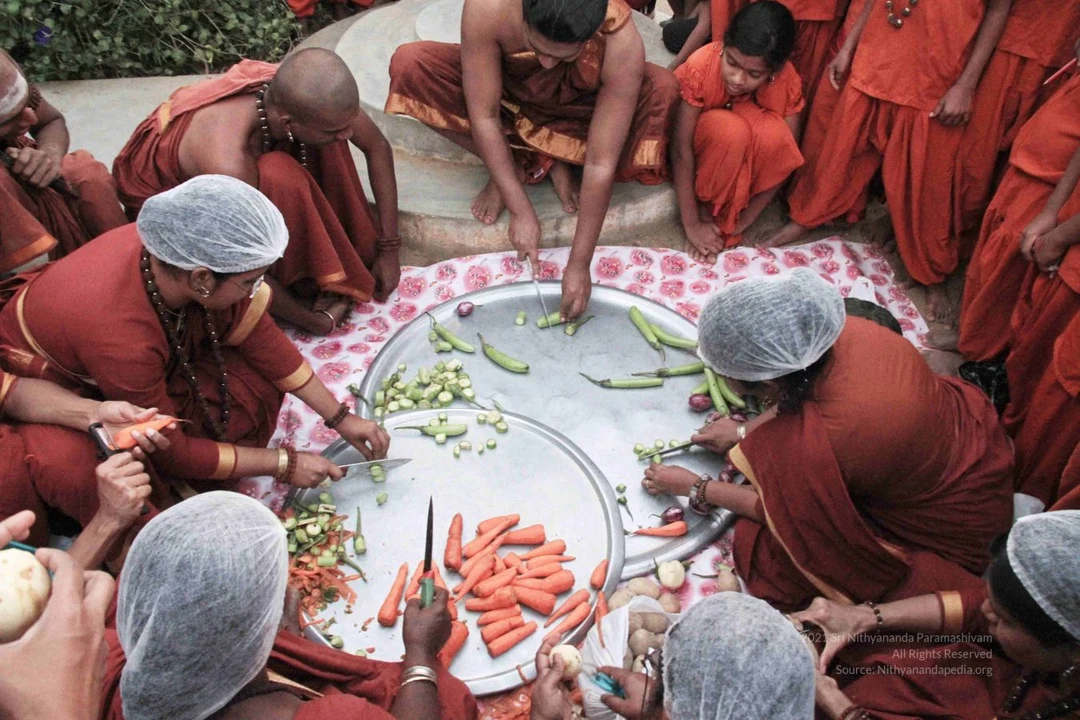
10 photosSource gallery
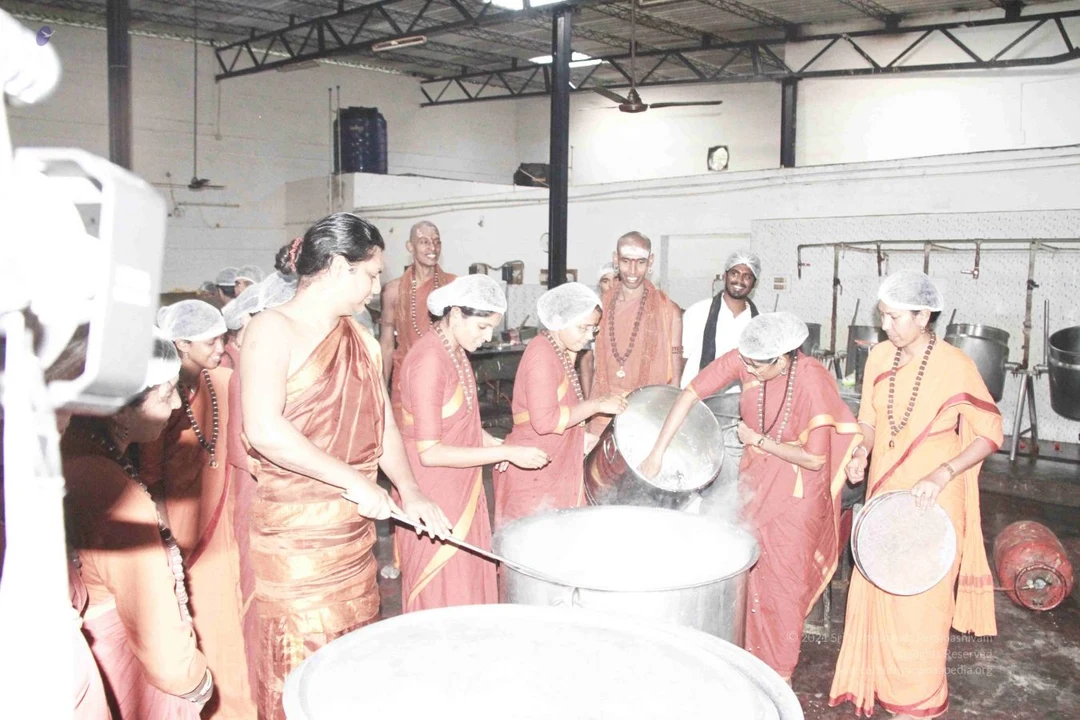
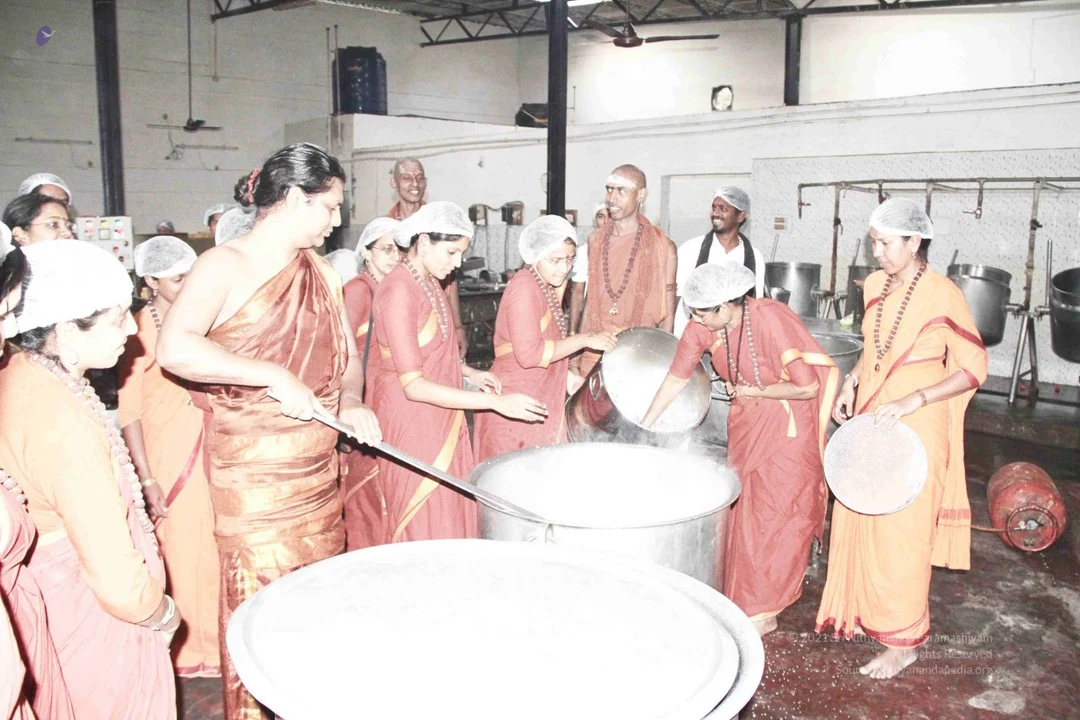
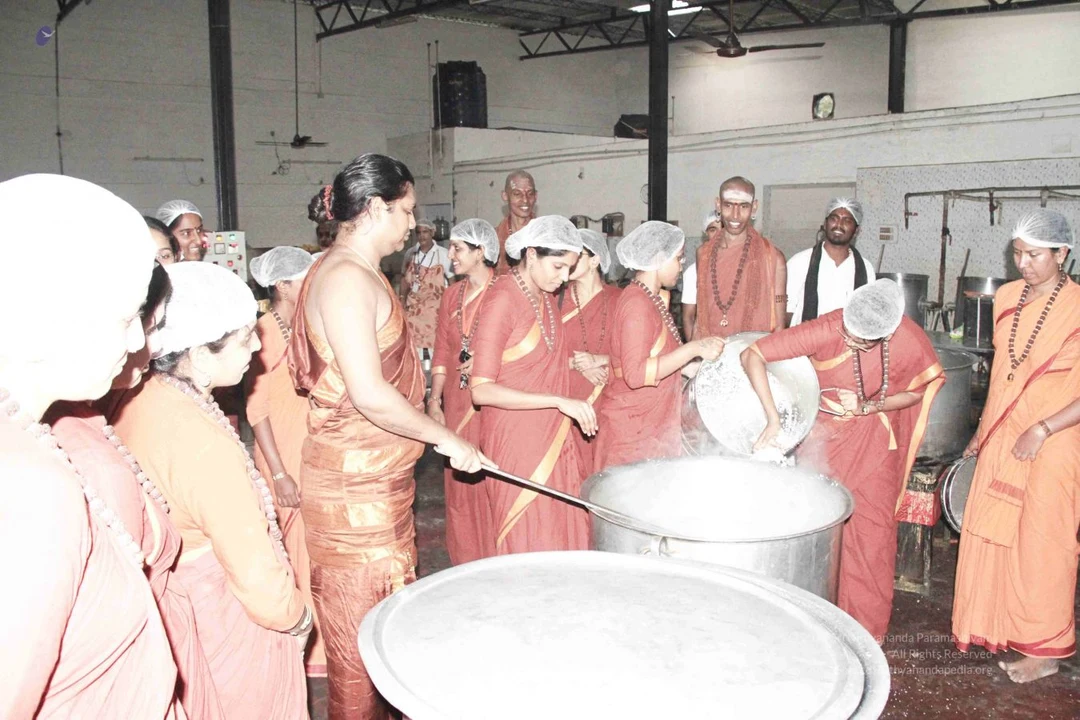
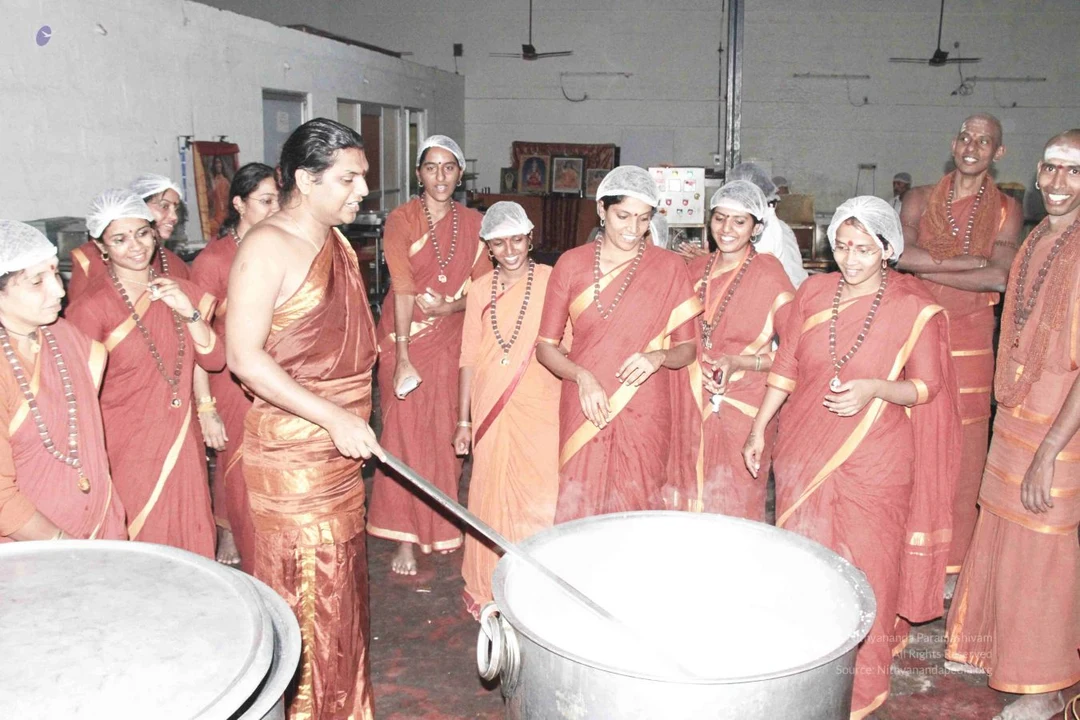
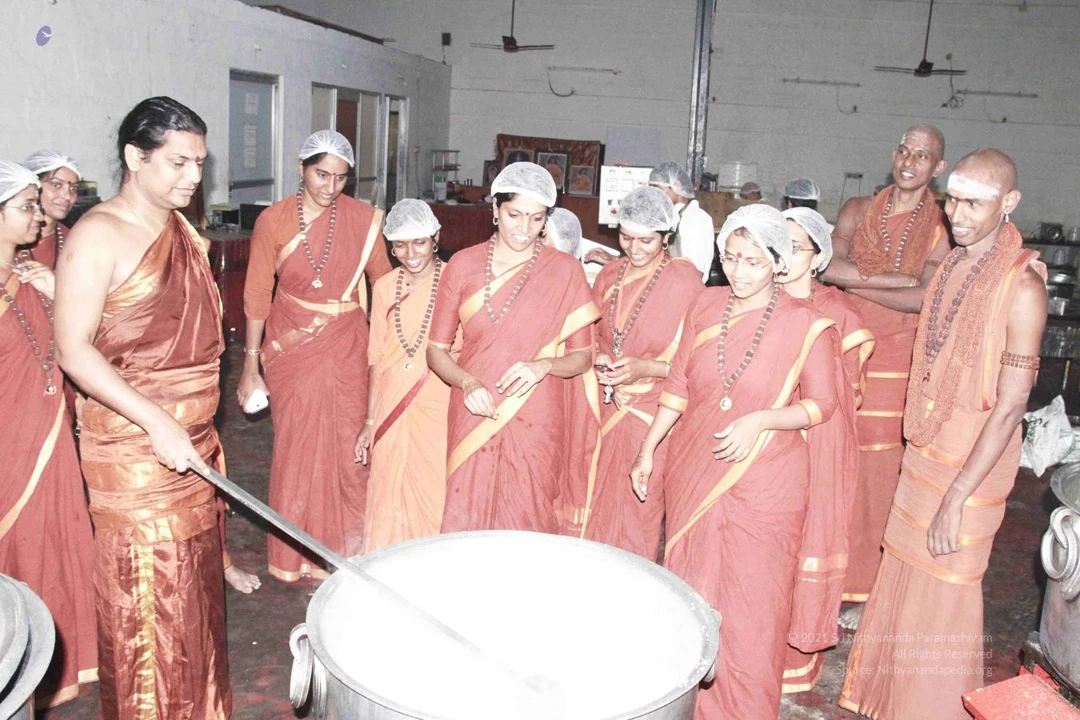
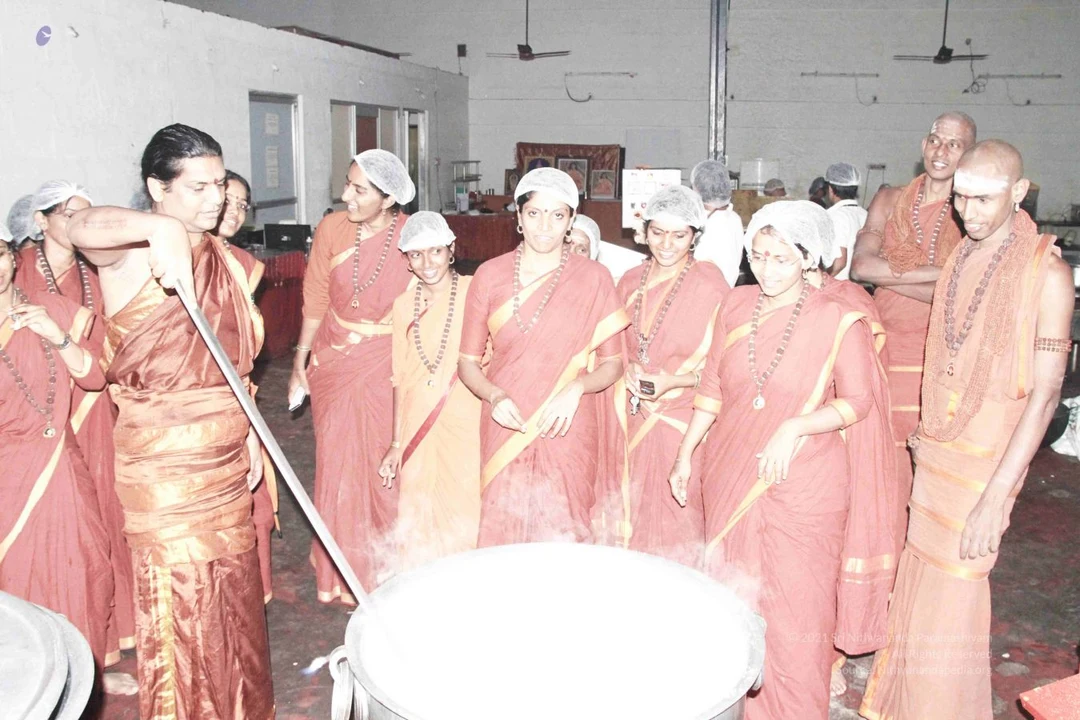
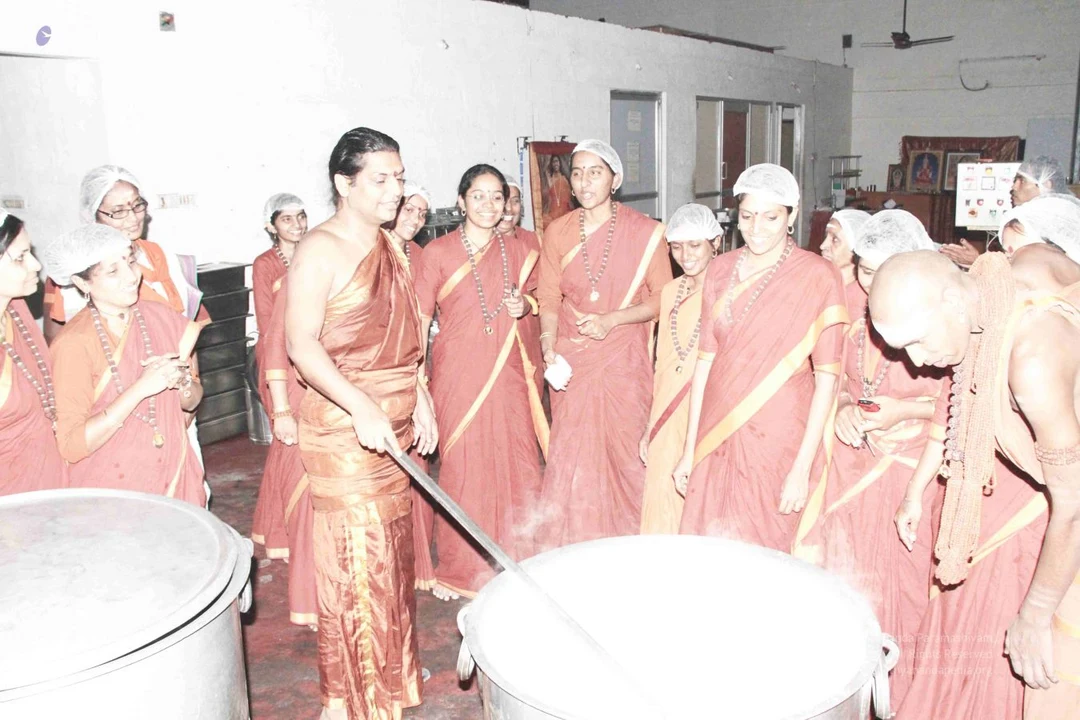
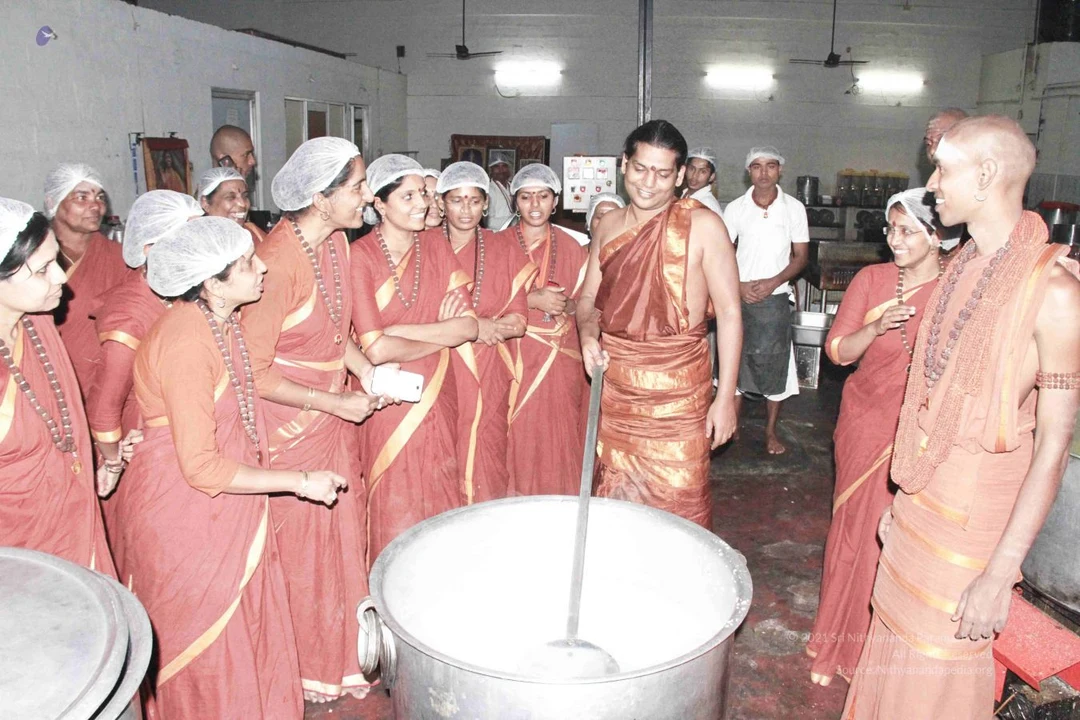
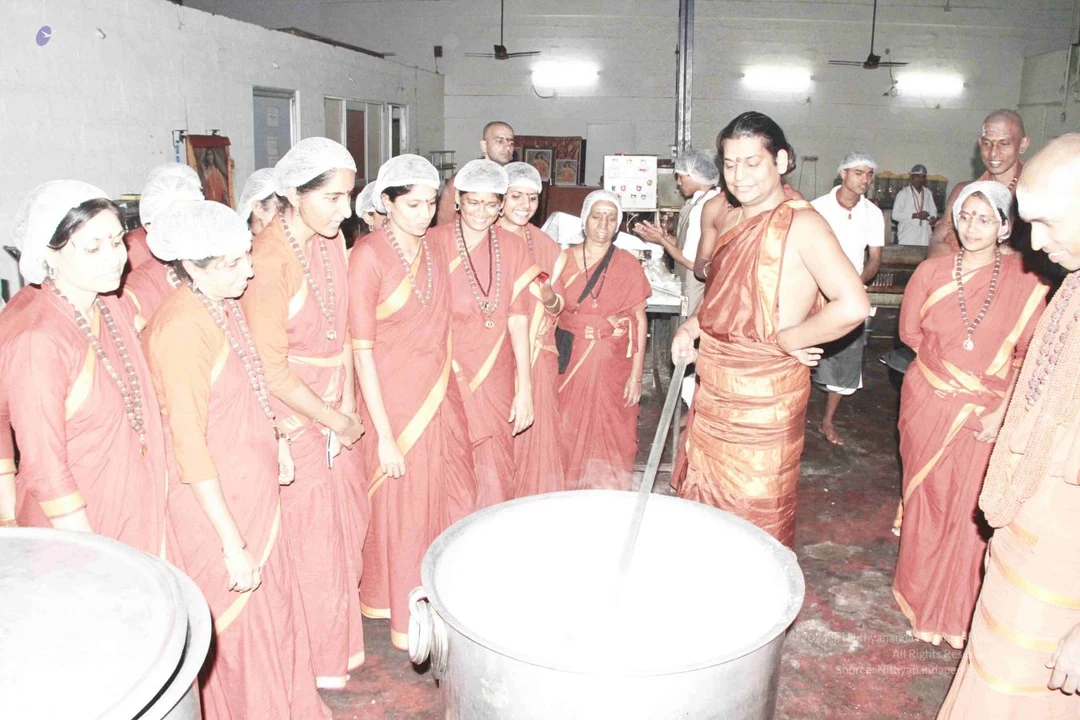
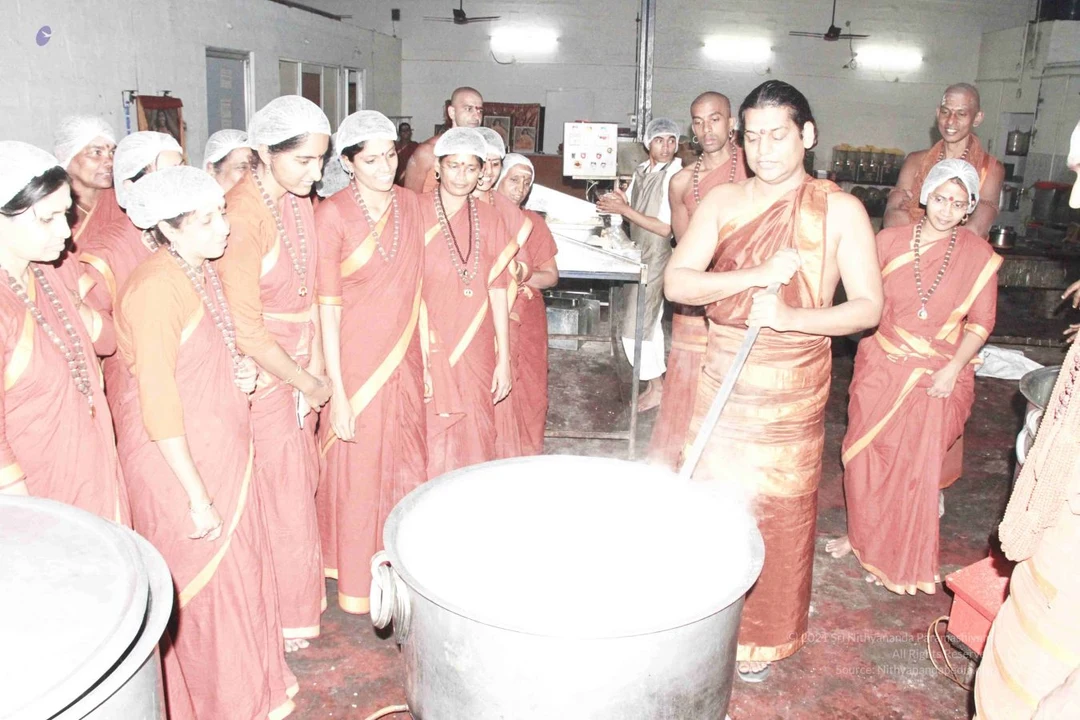
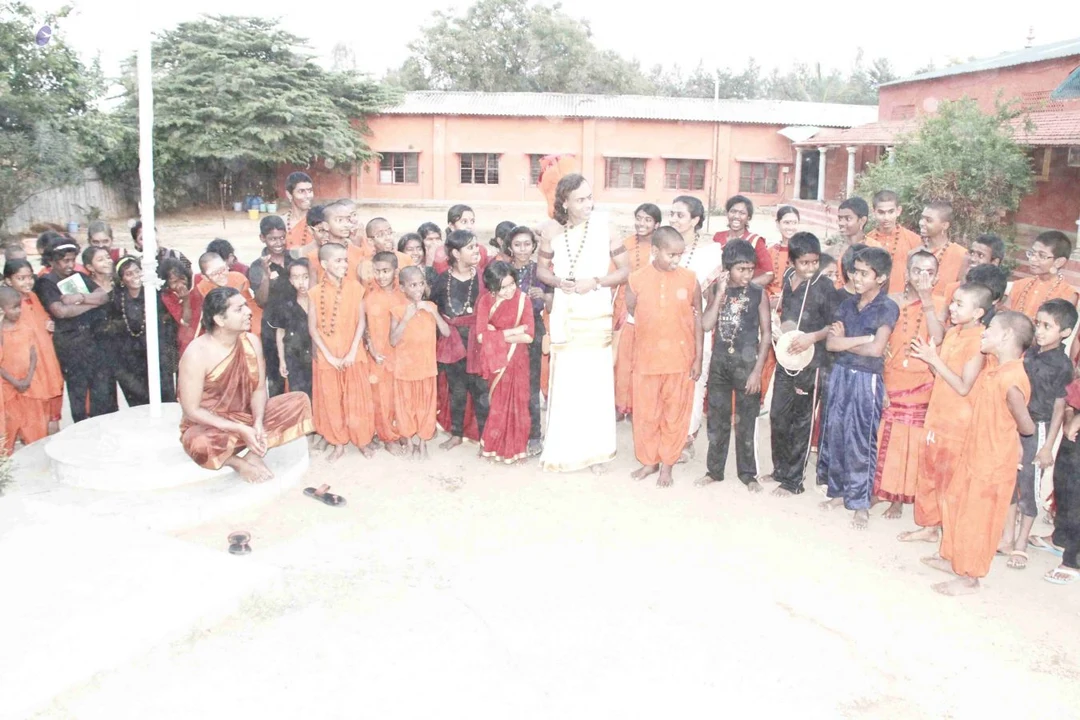
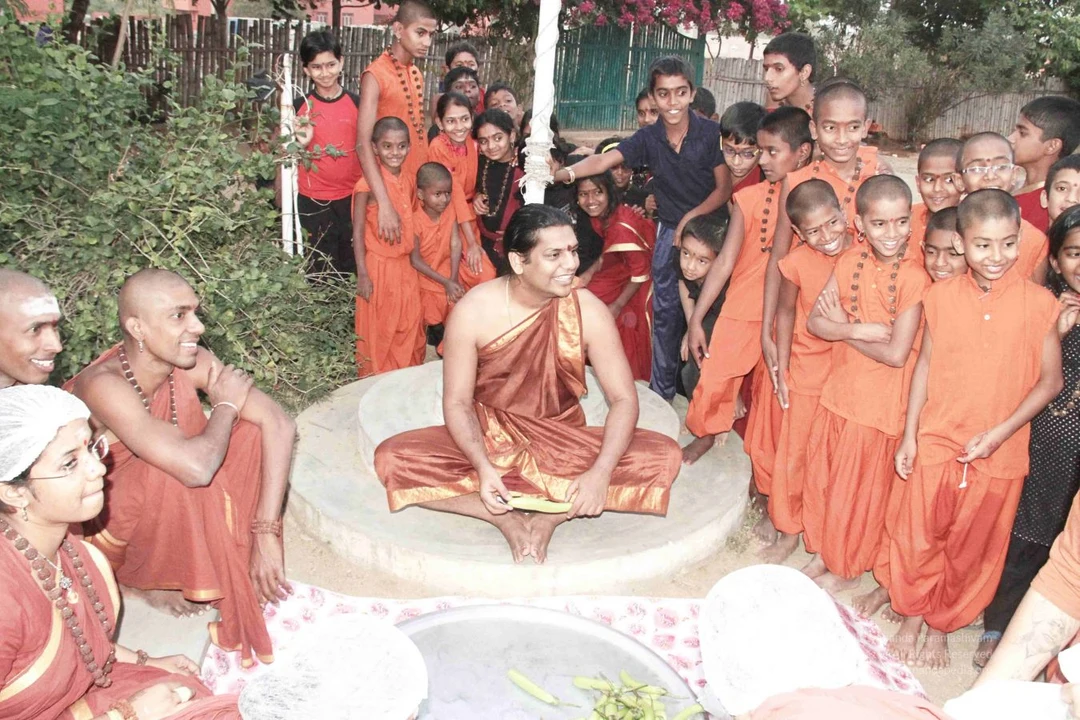
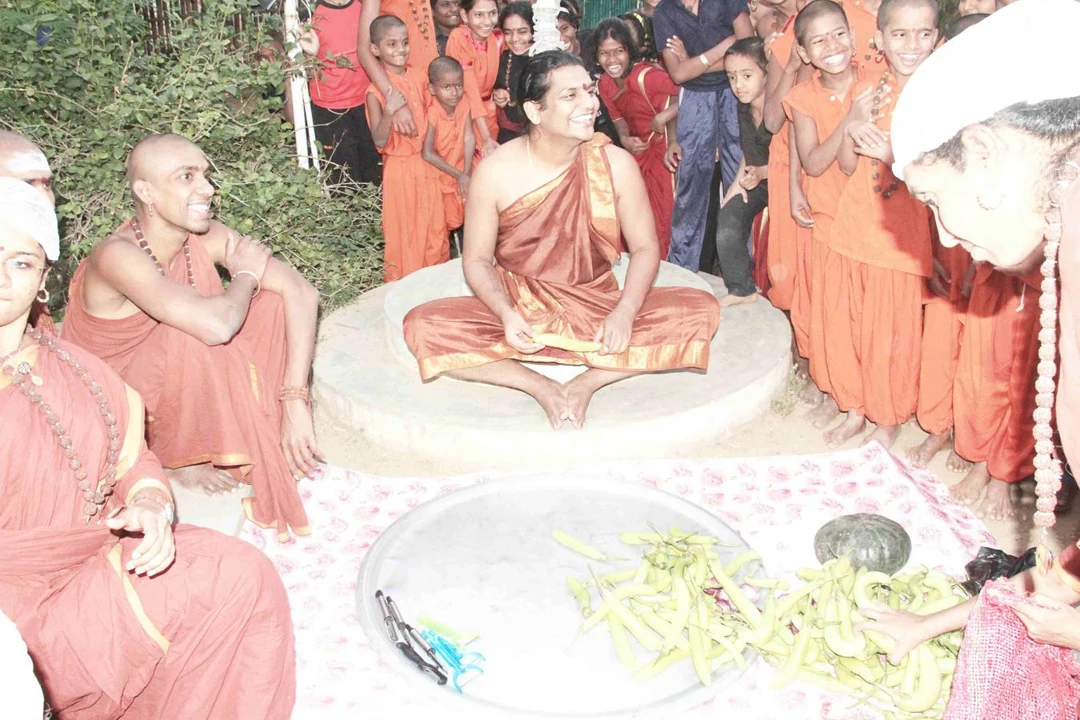
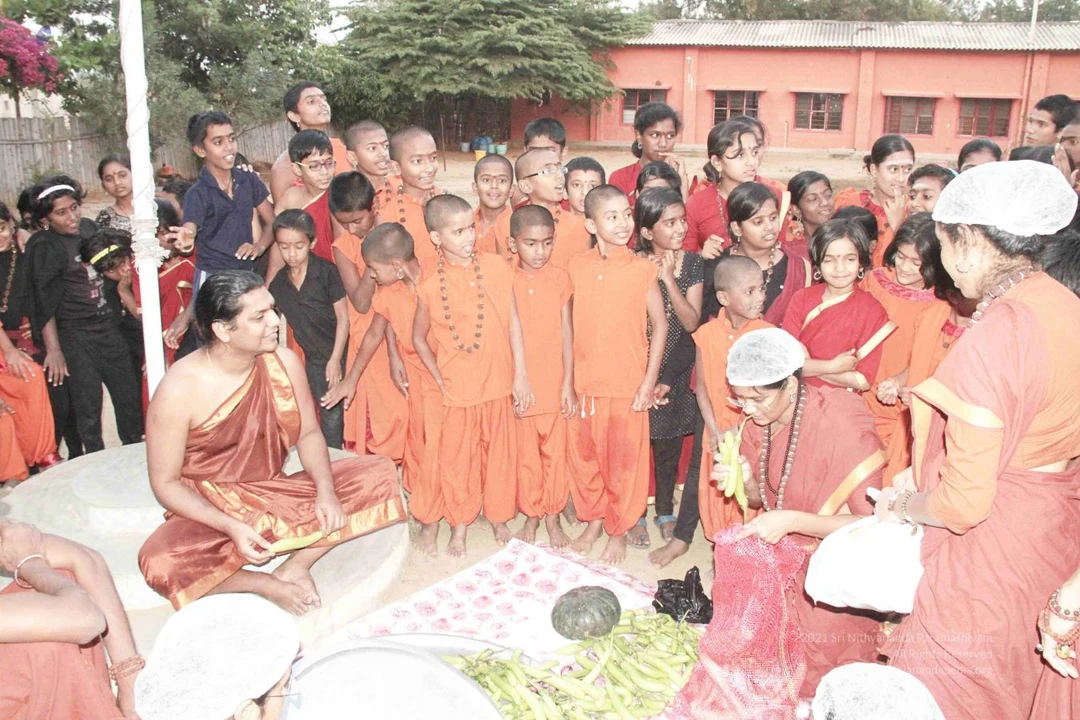
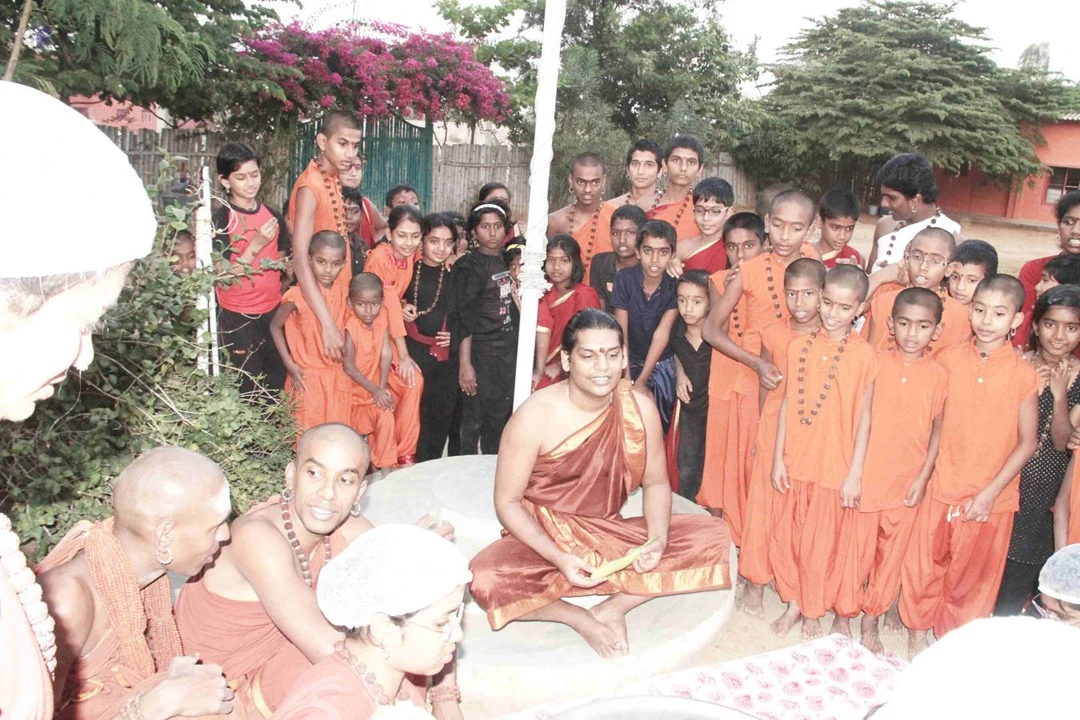
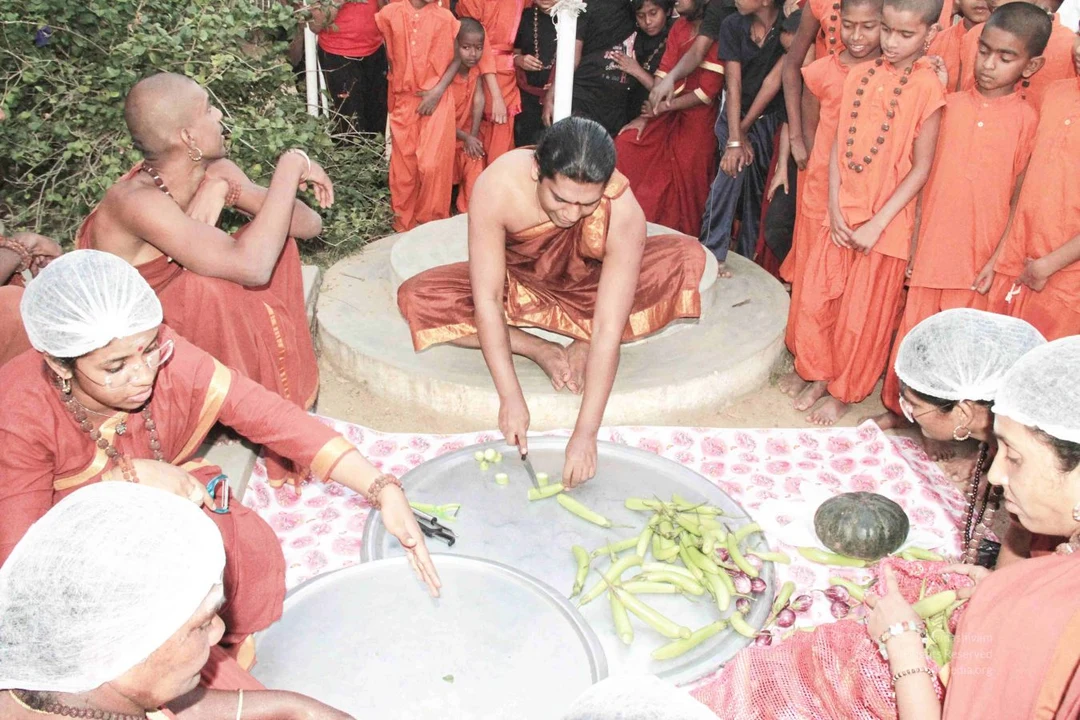
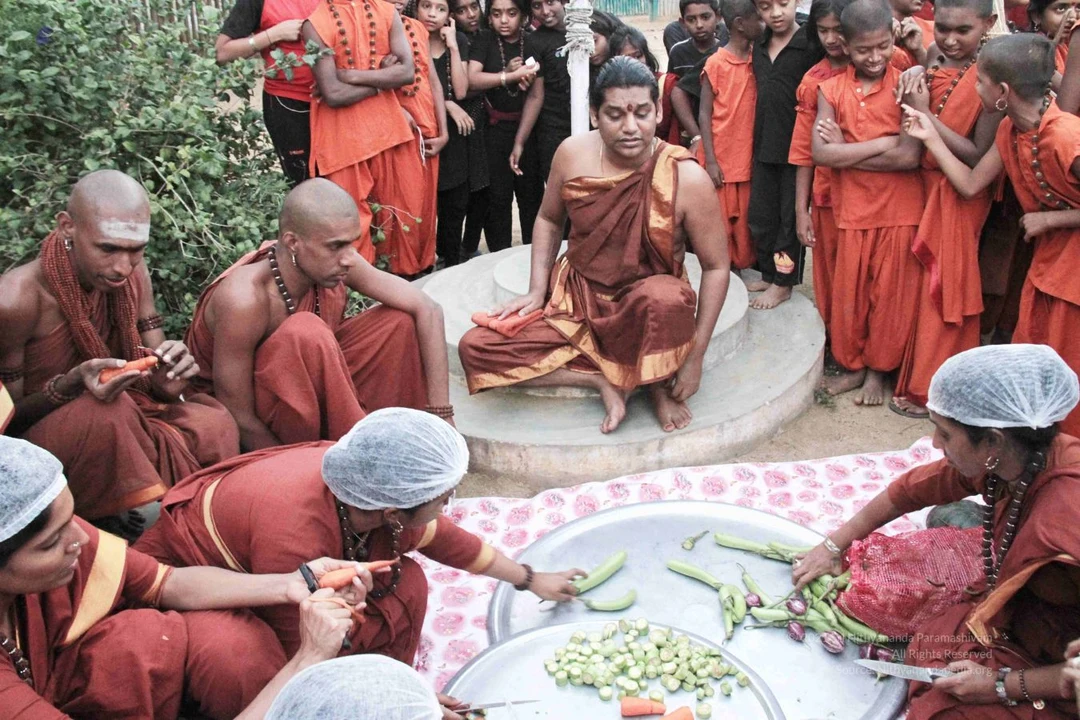
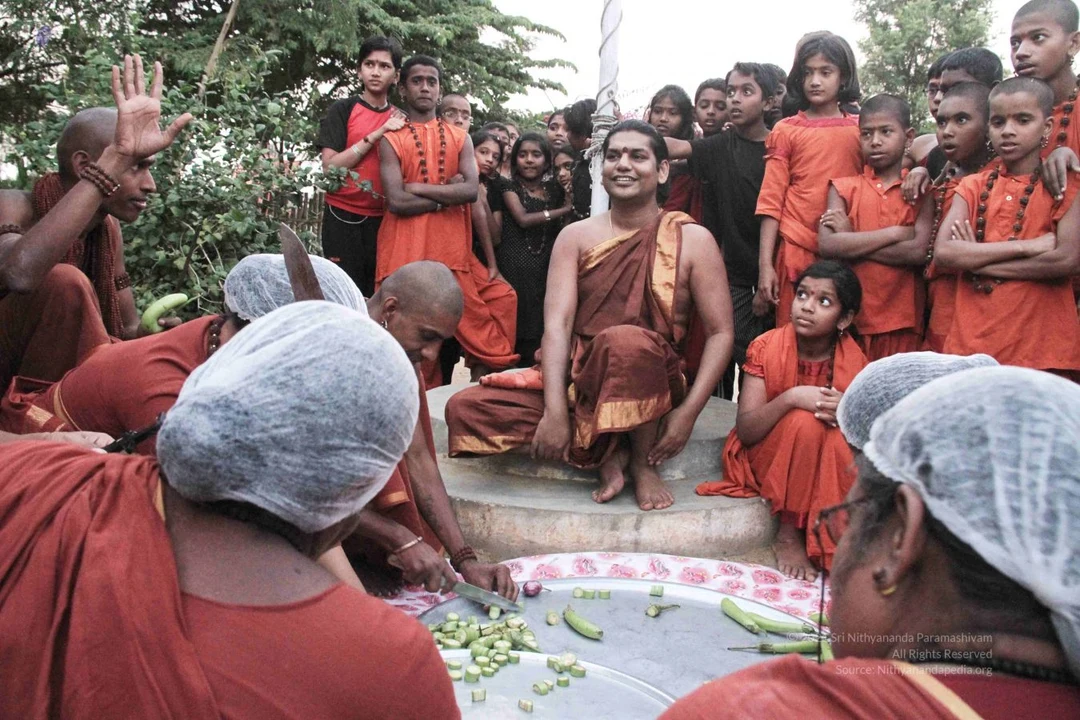
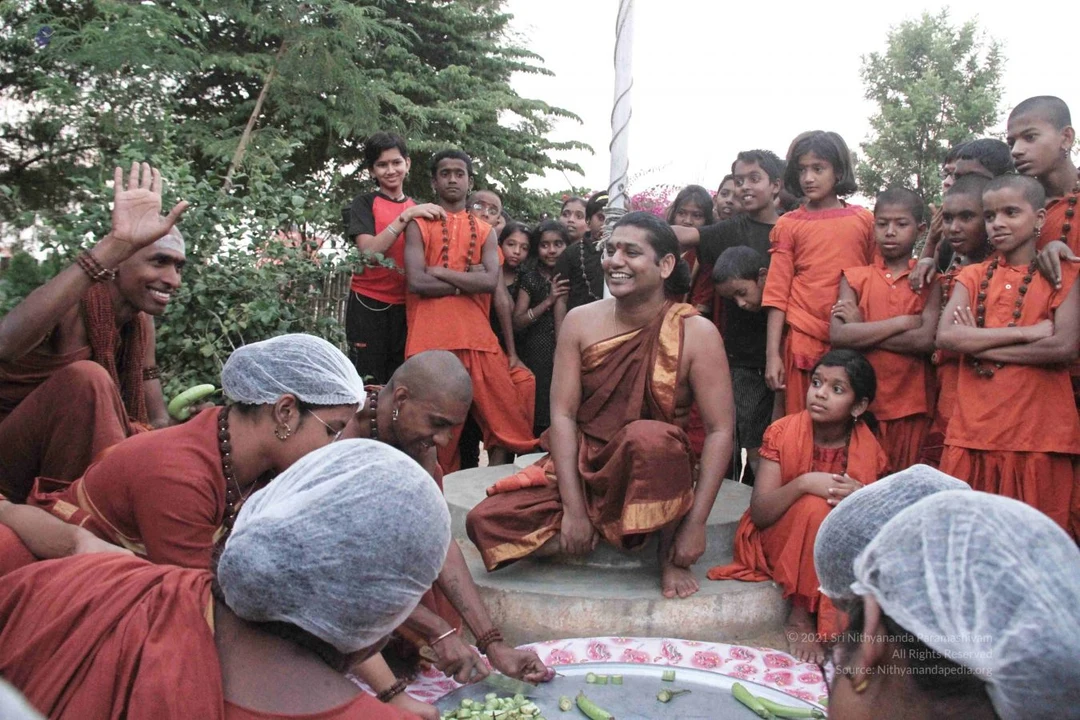
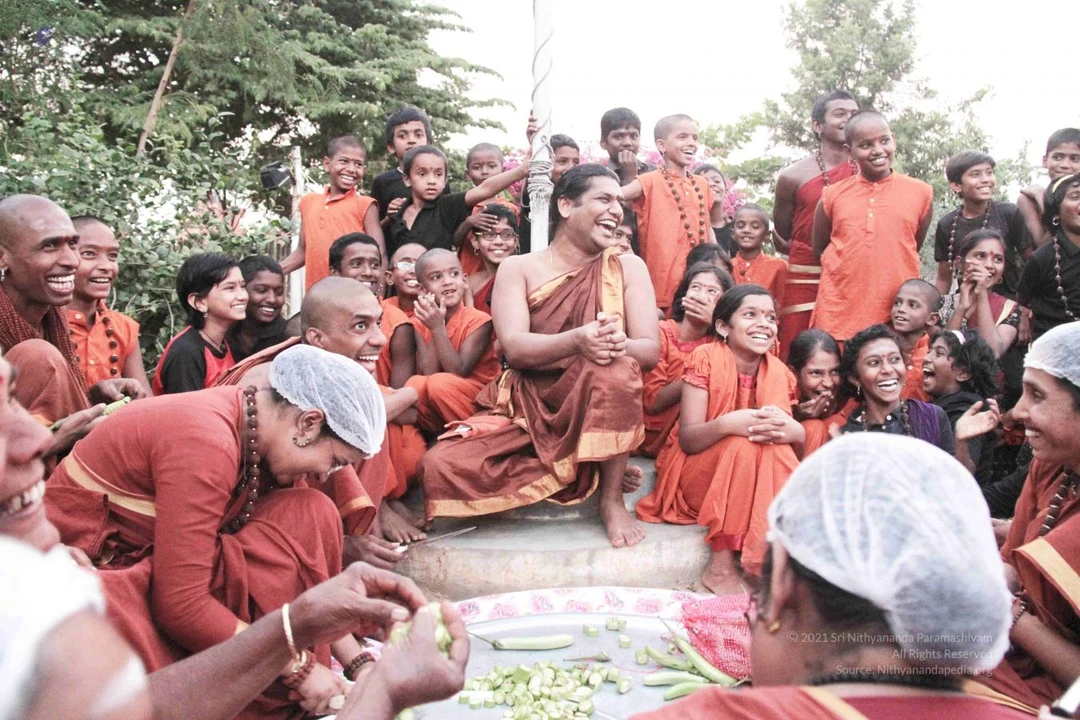
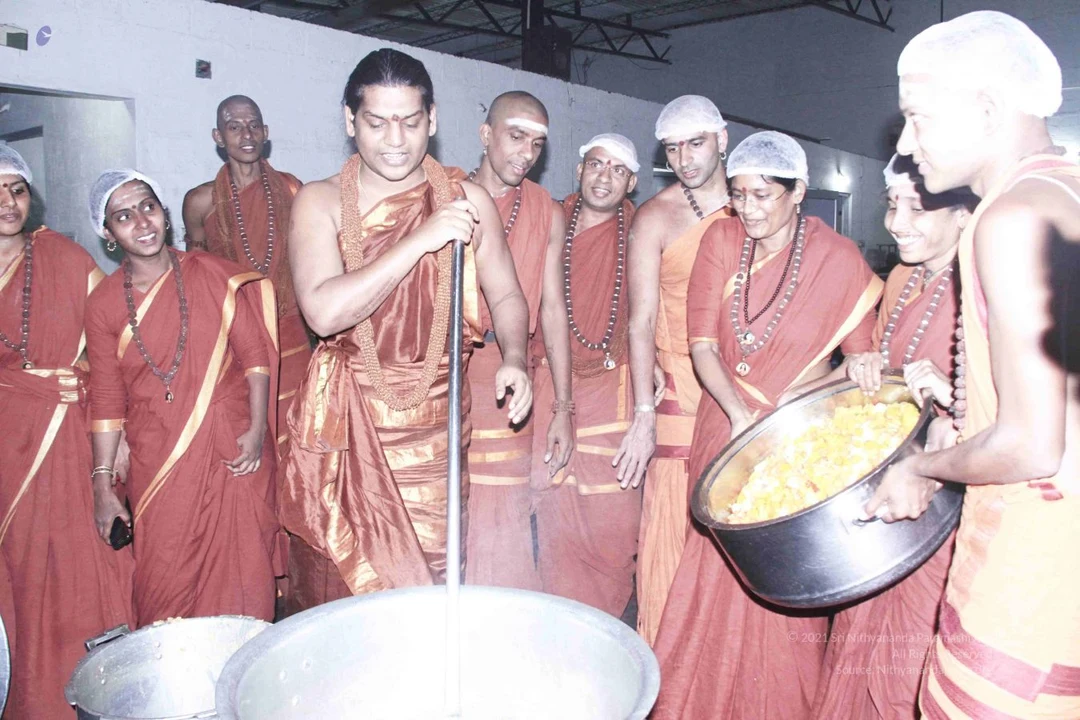
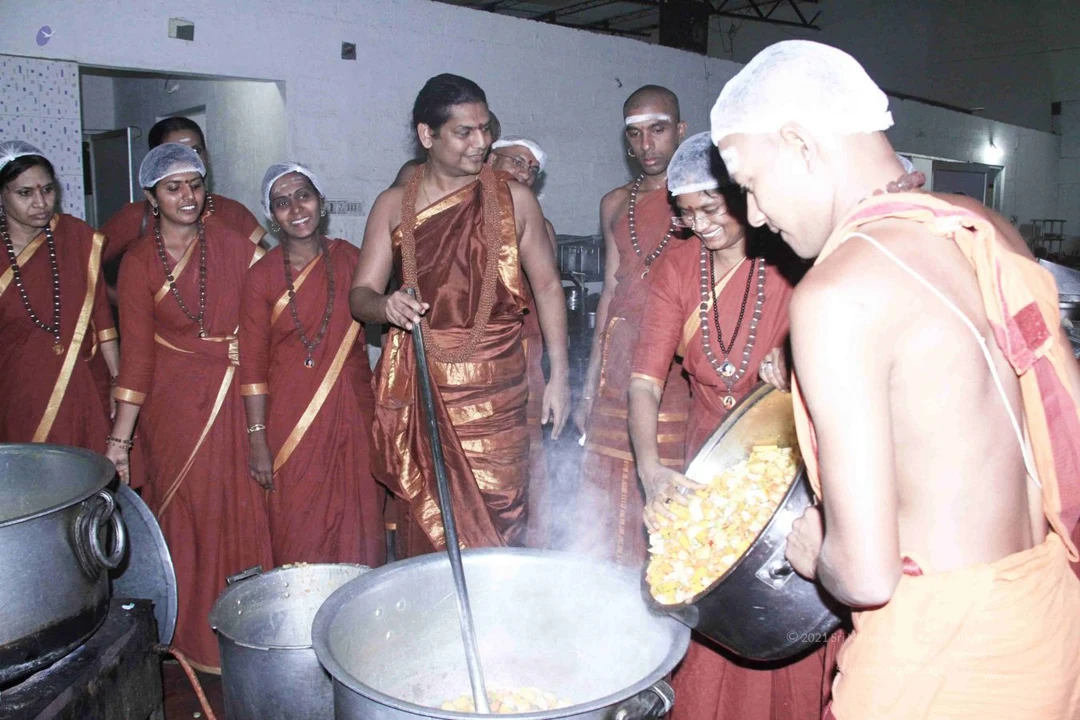
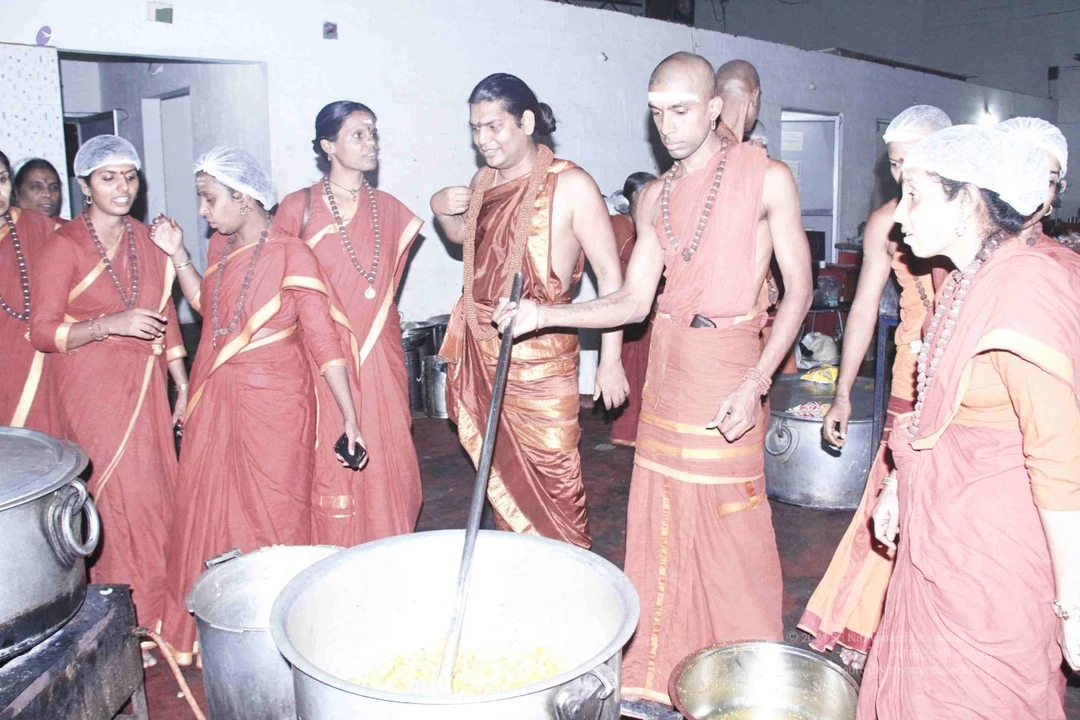
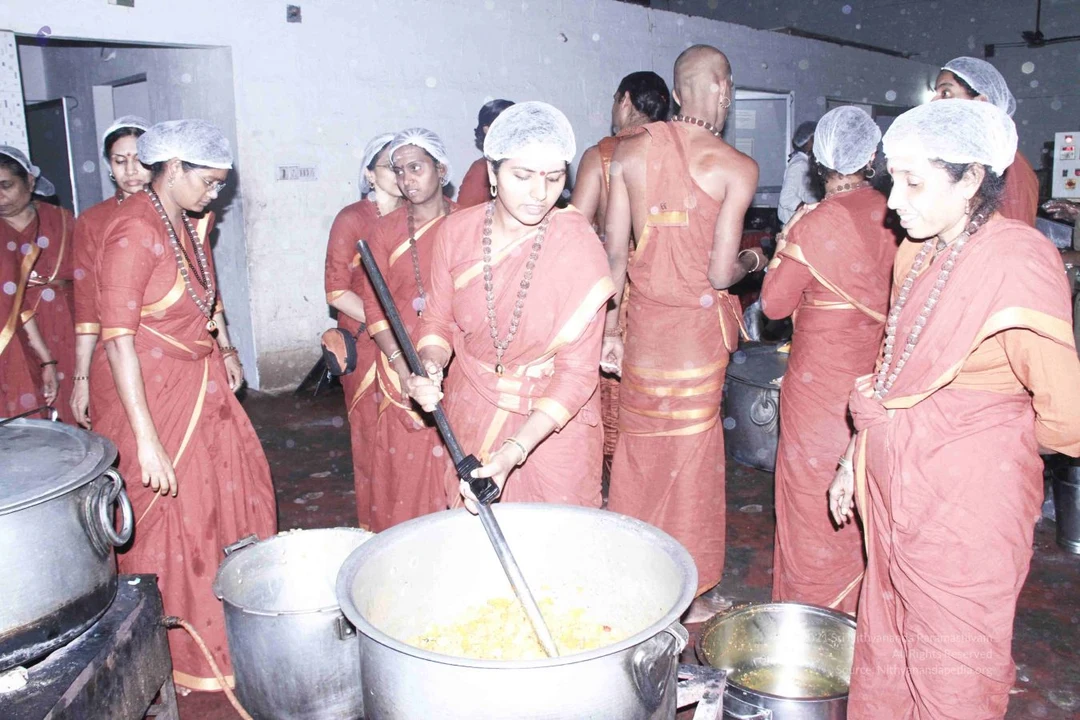
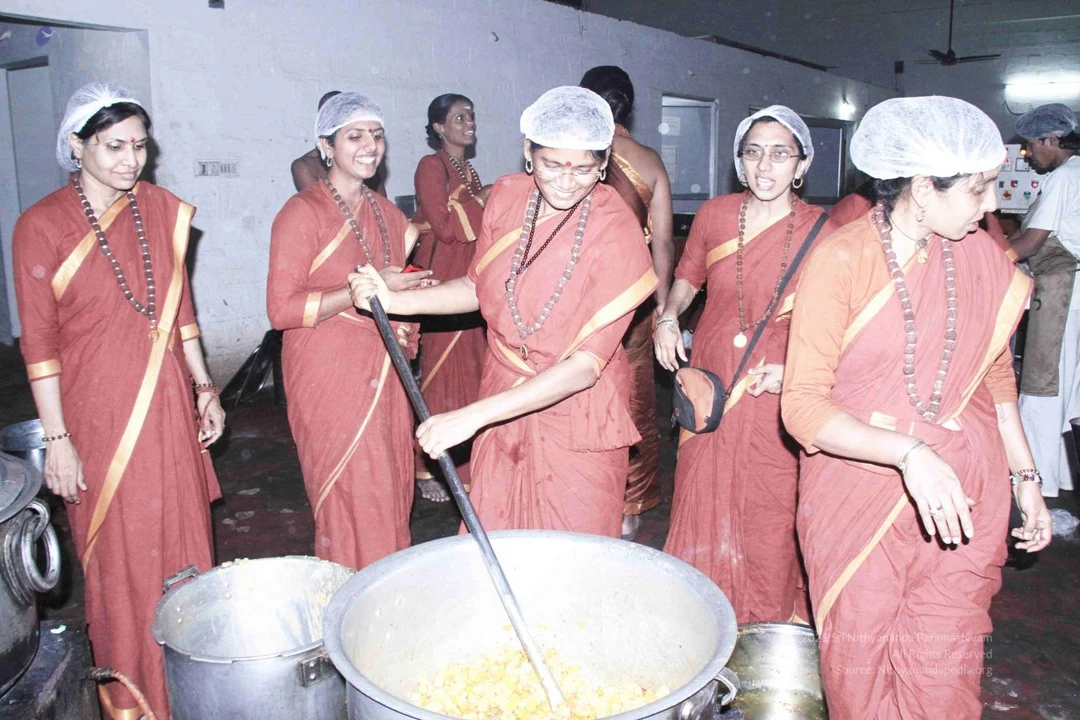
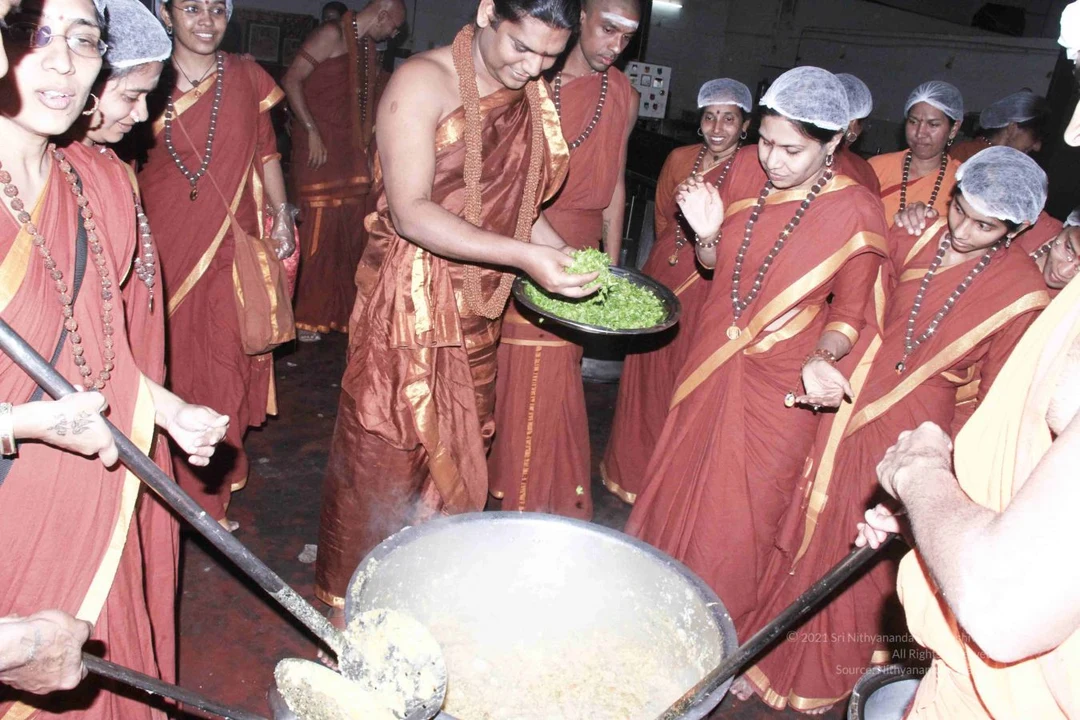
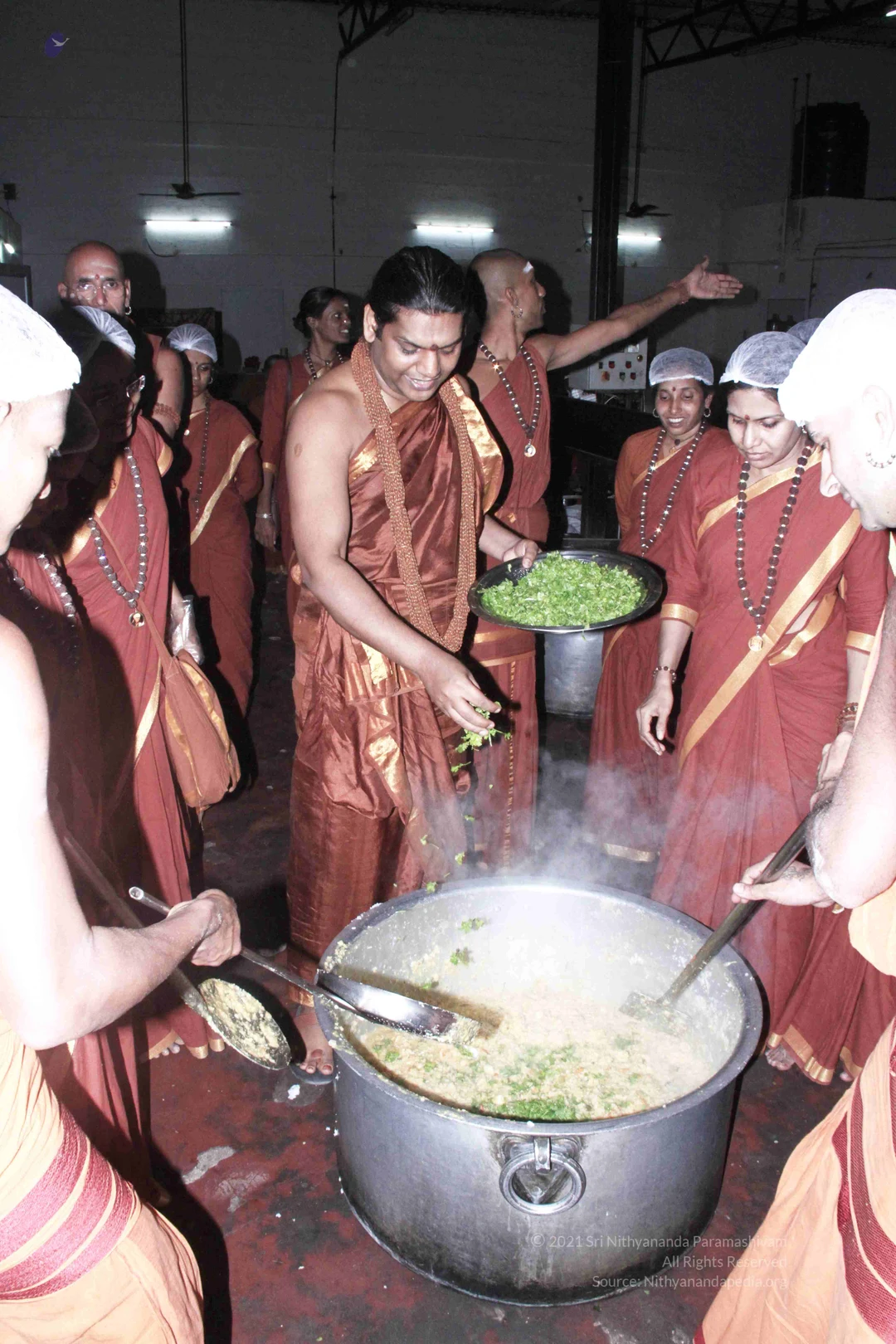
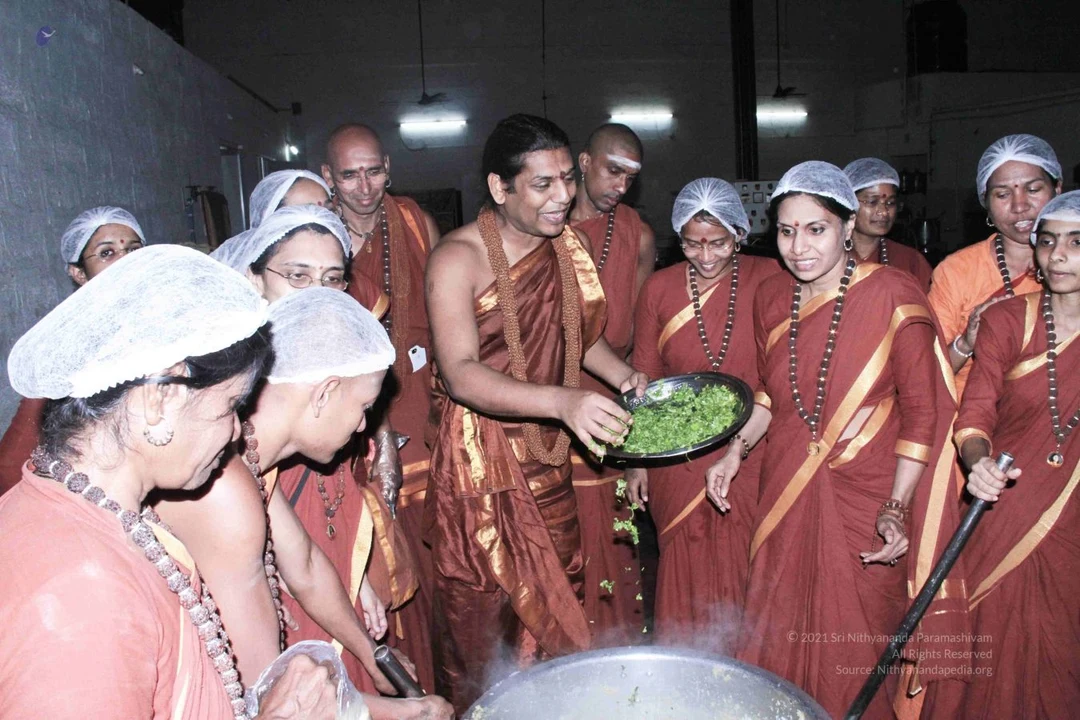
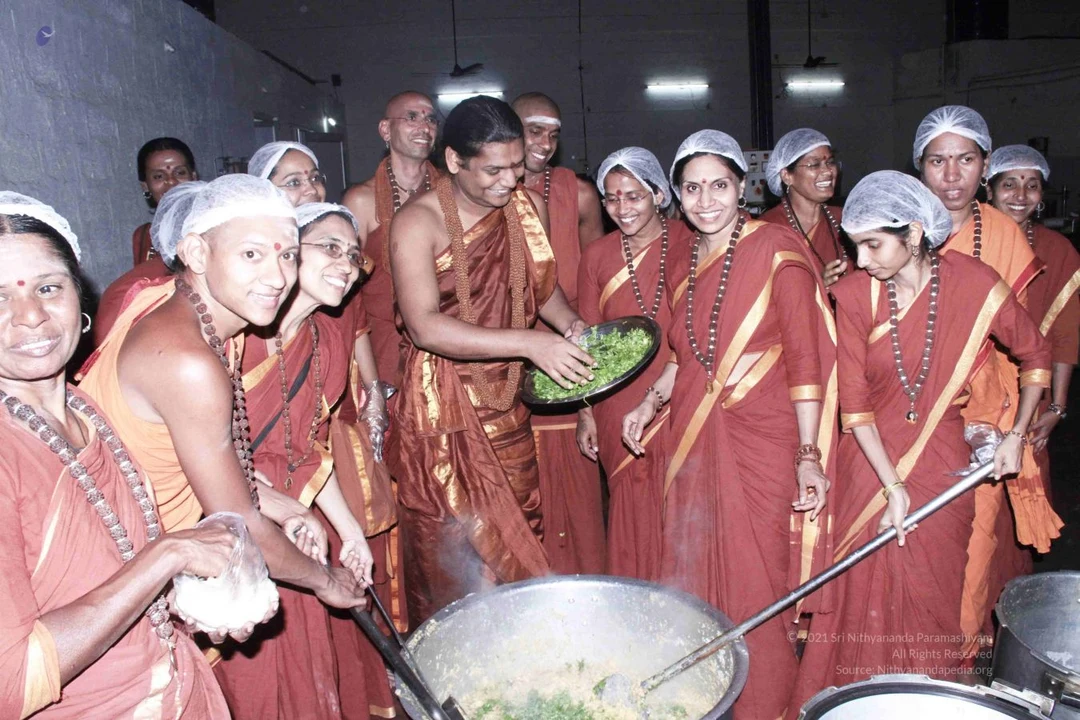
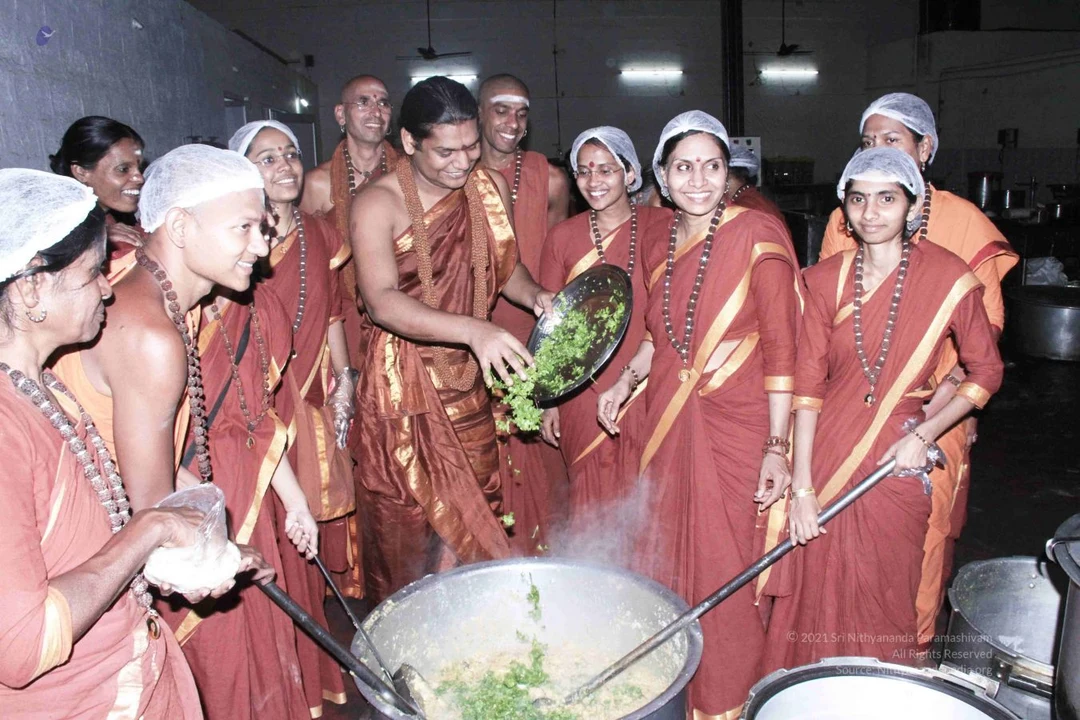
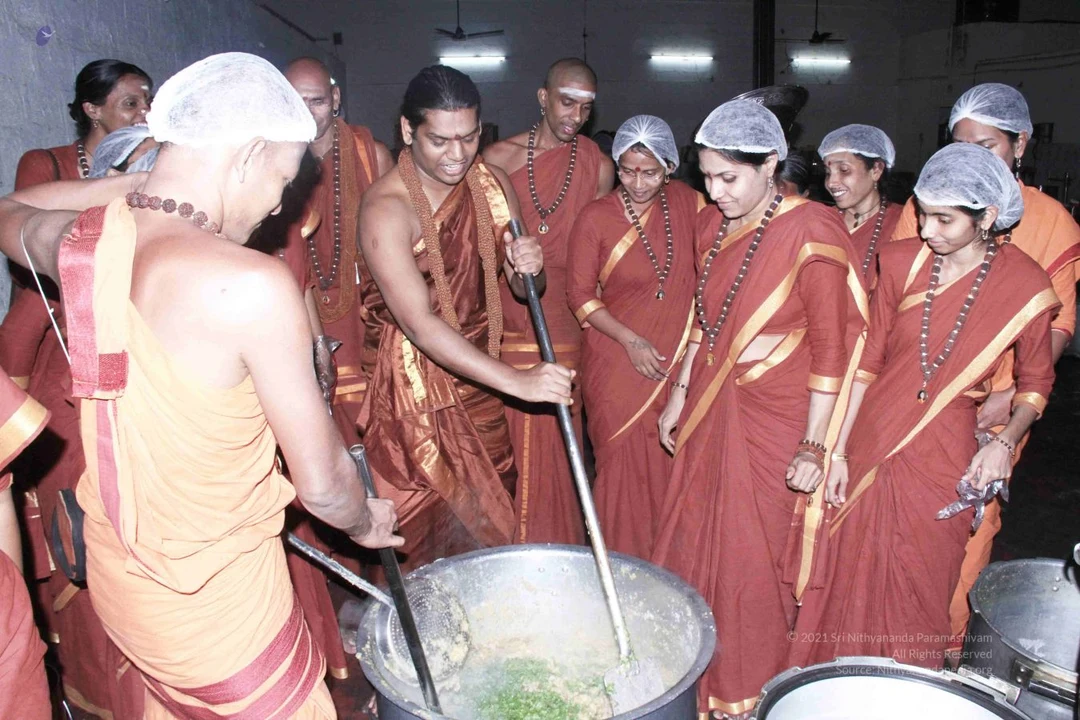
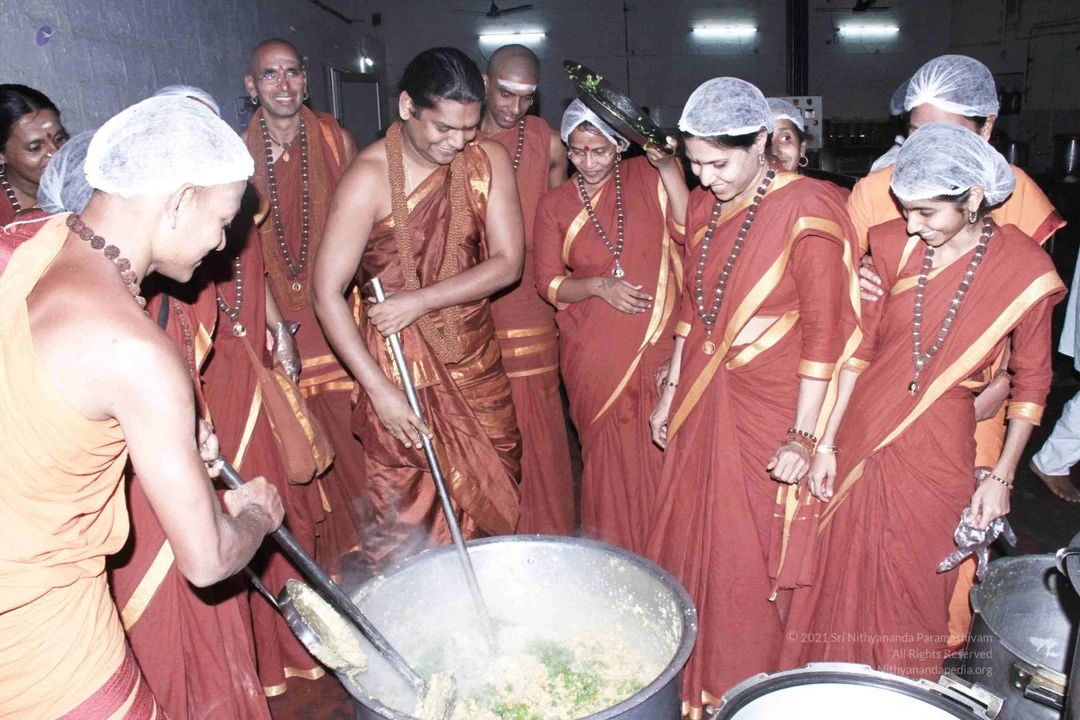
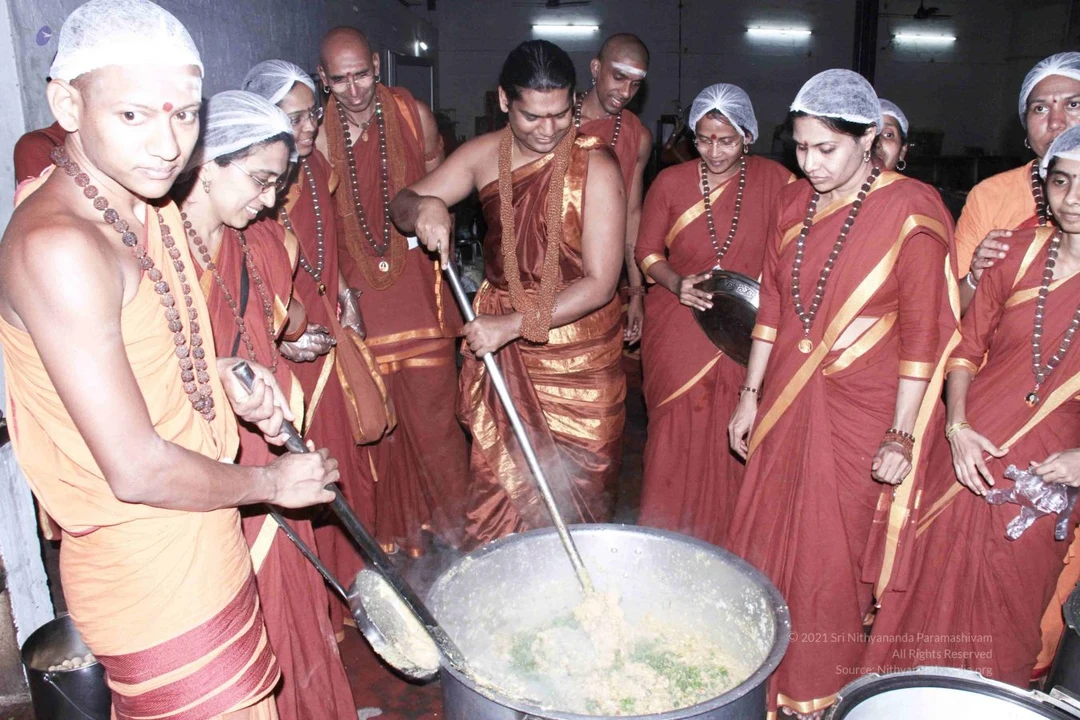
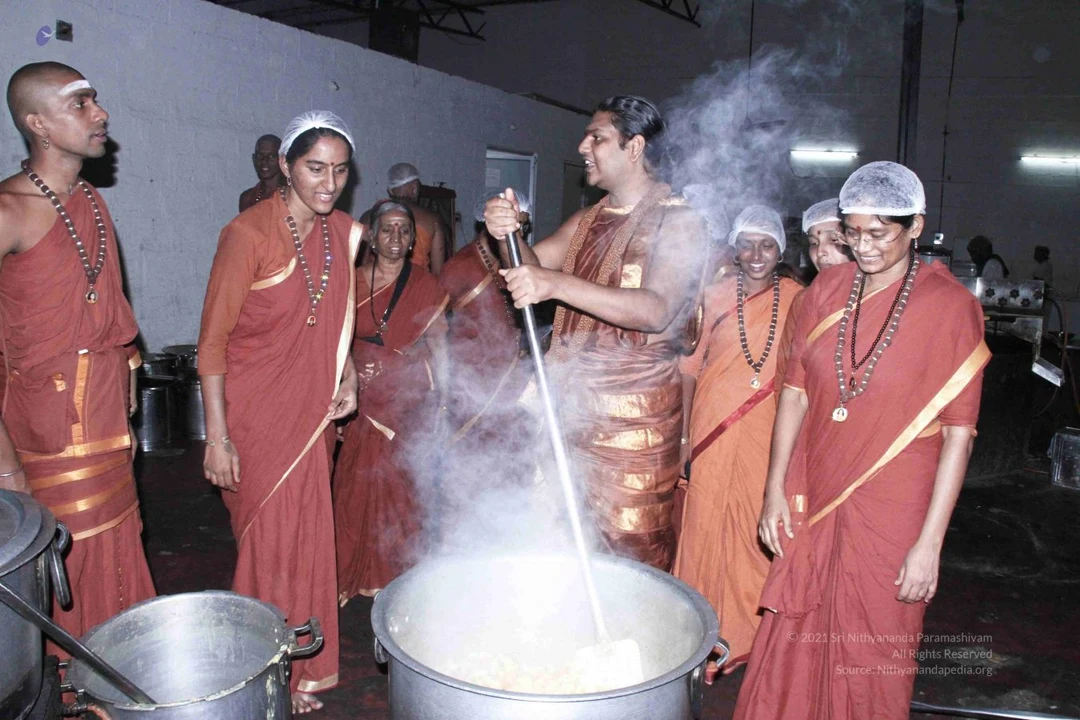
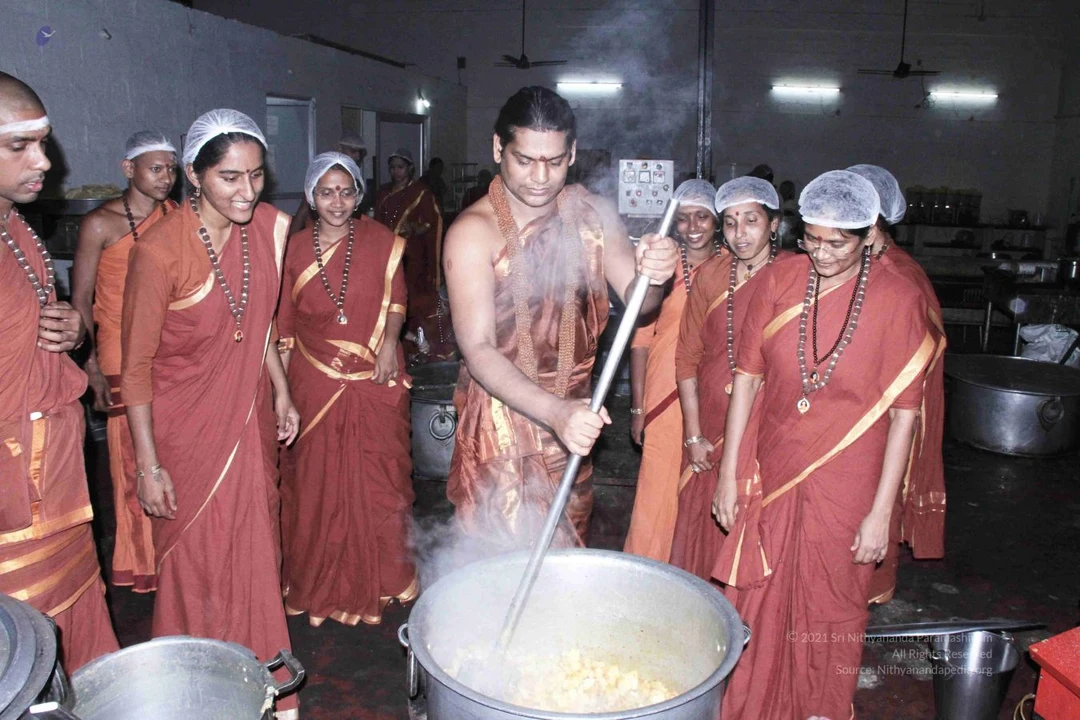
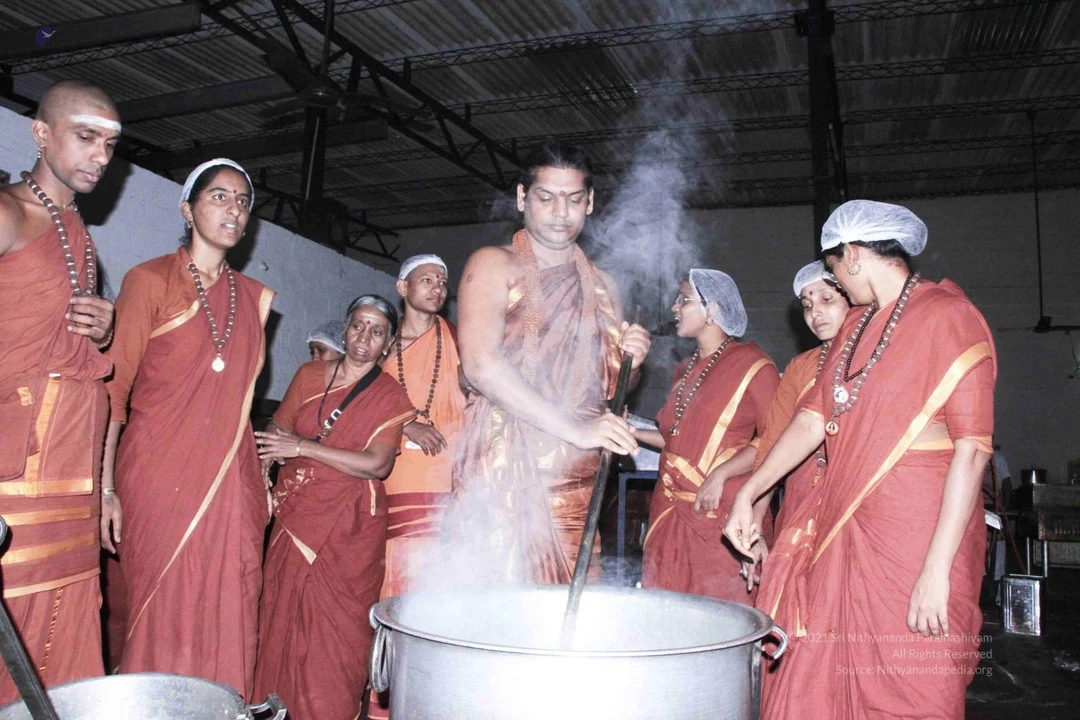
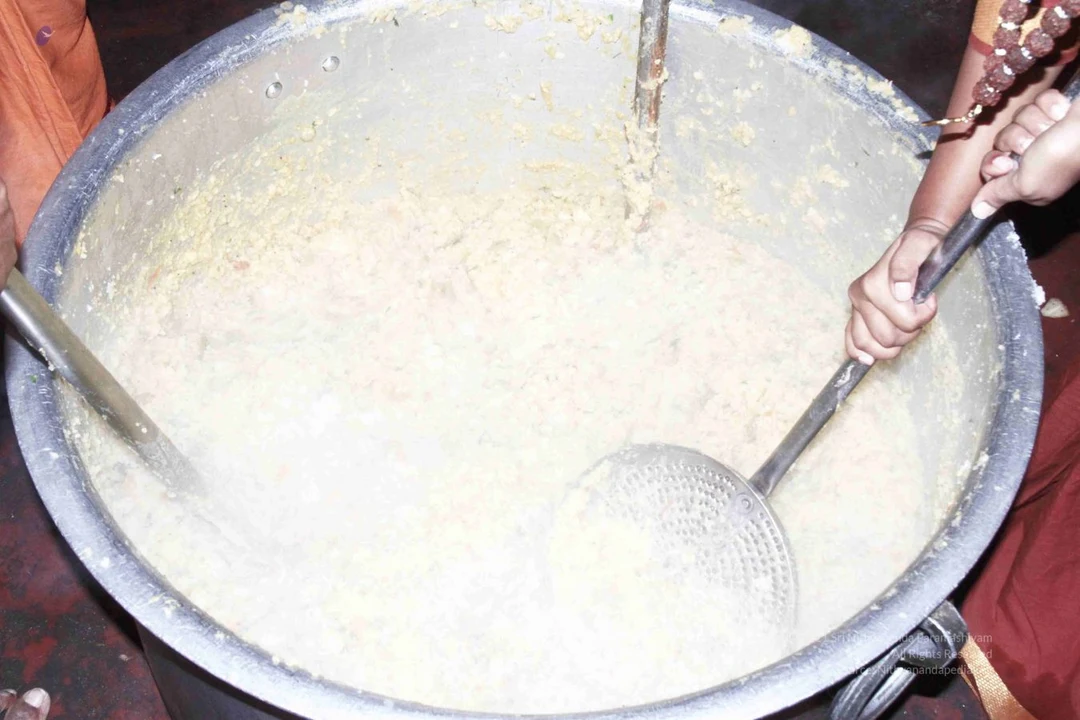
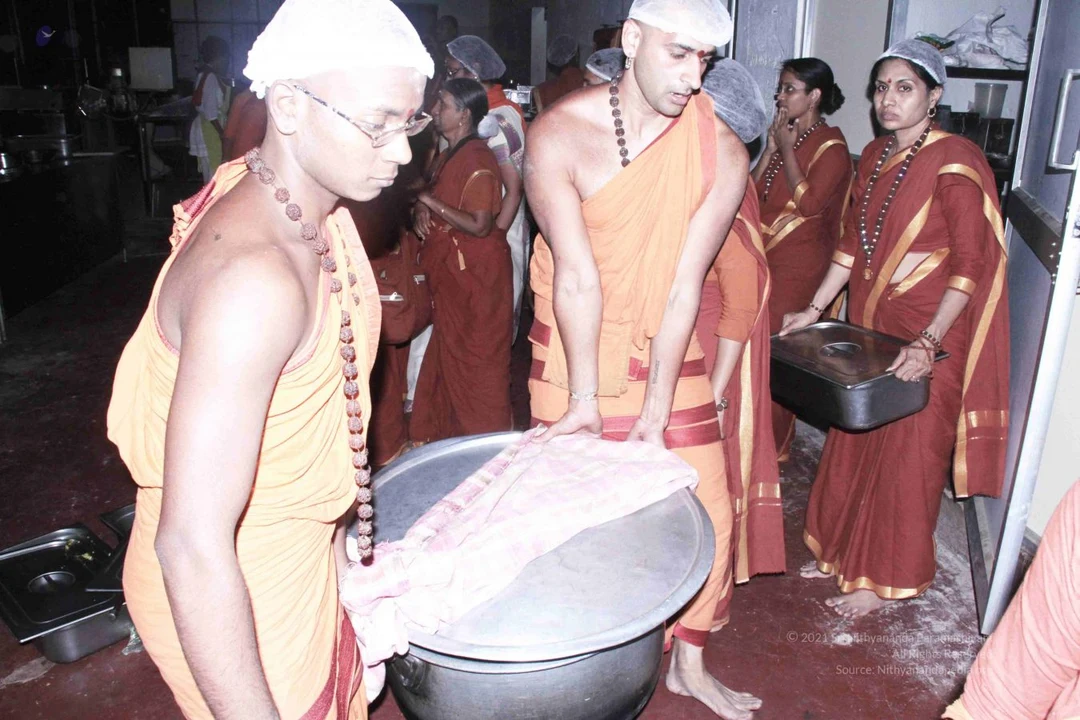
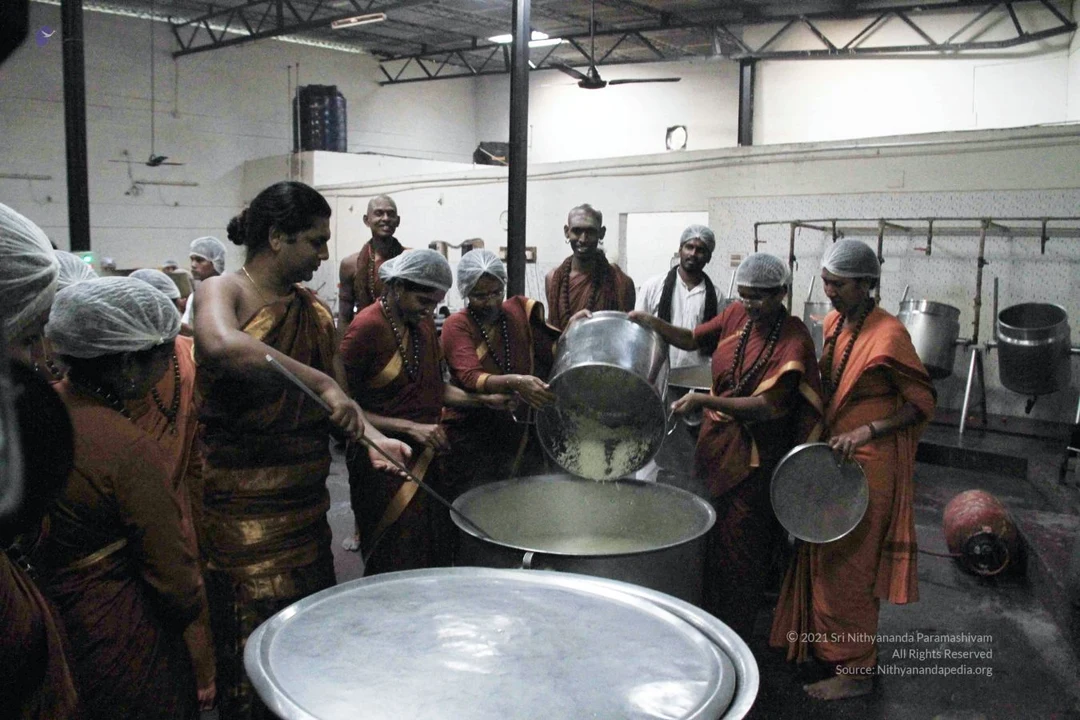
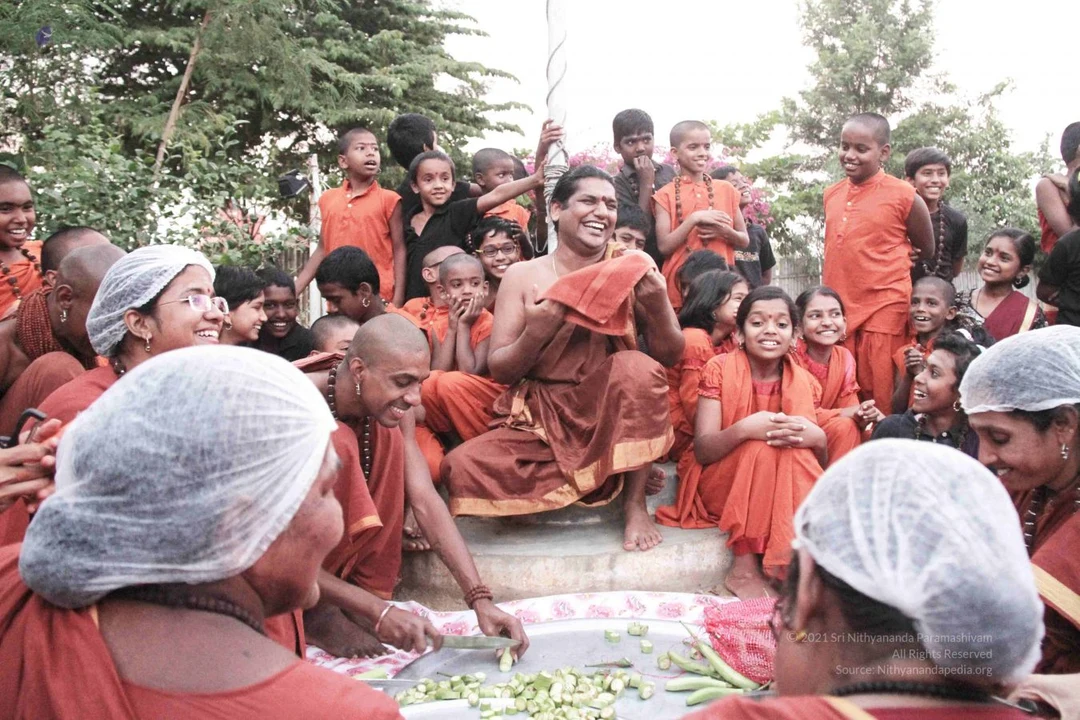
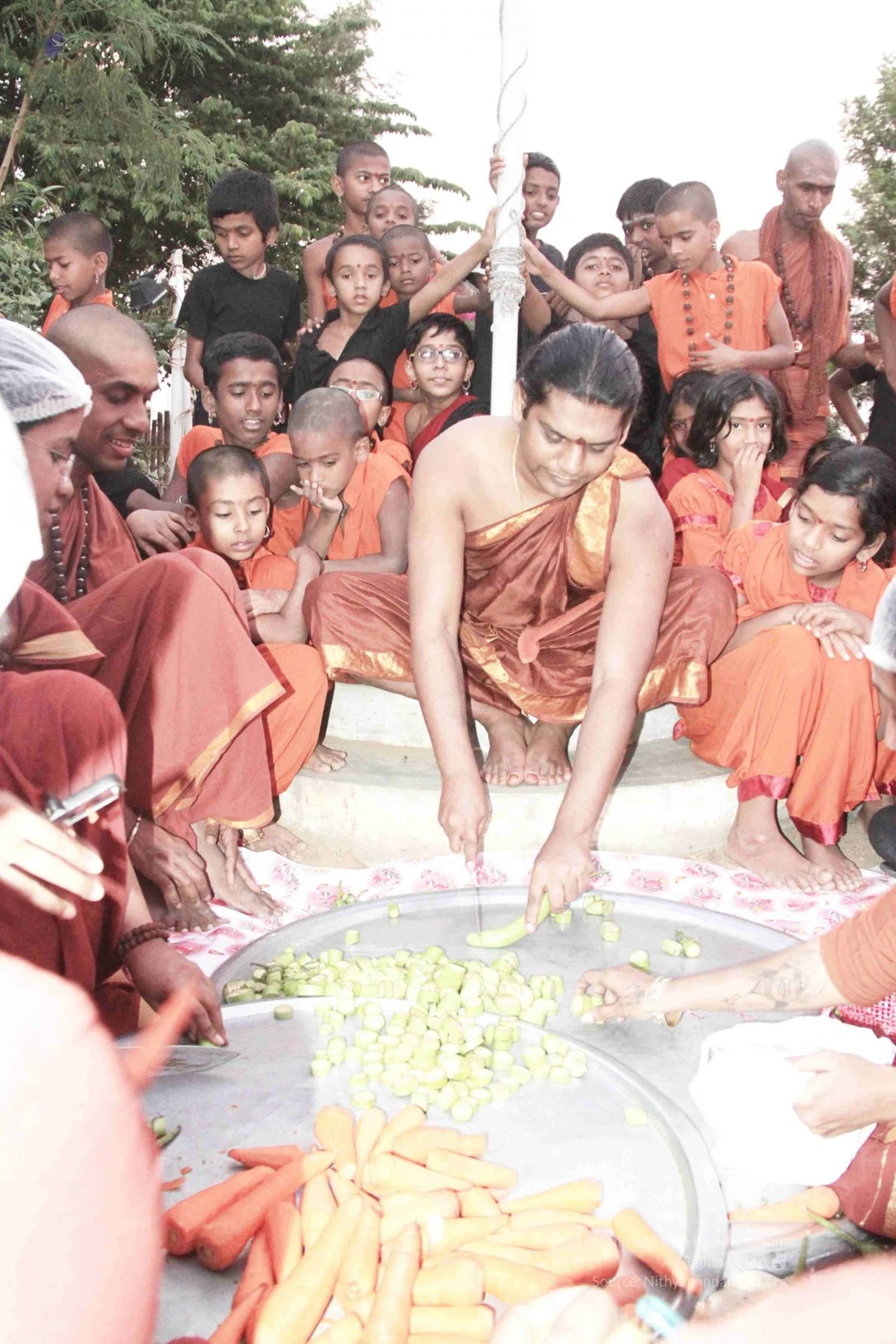
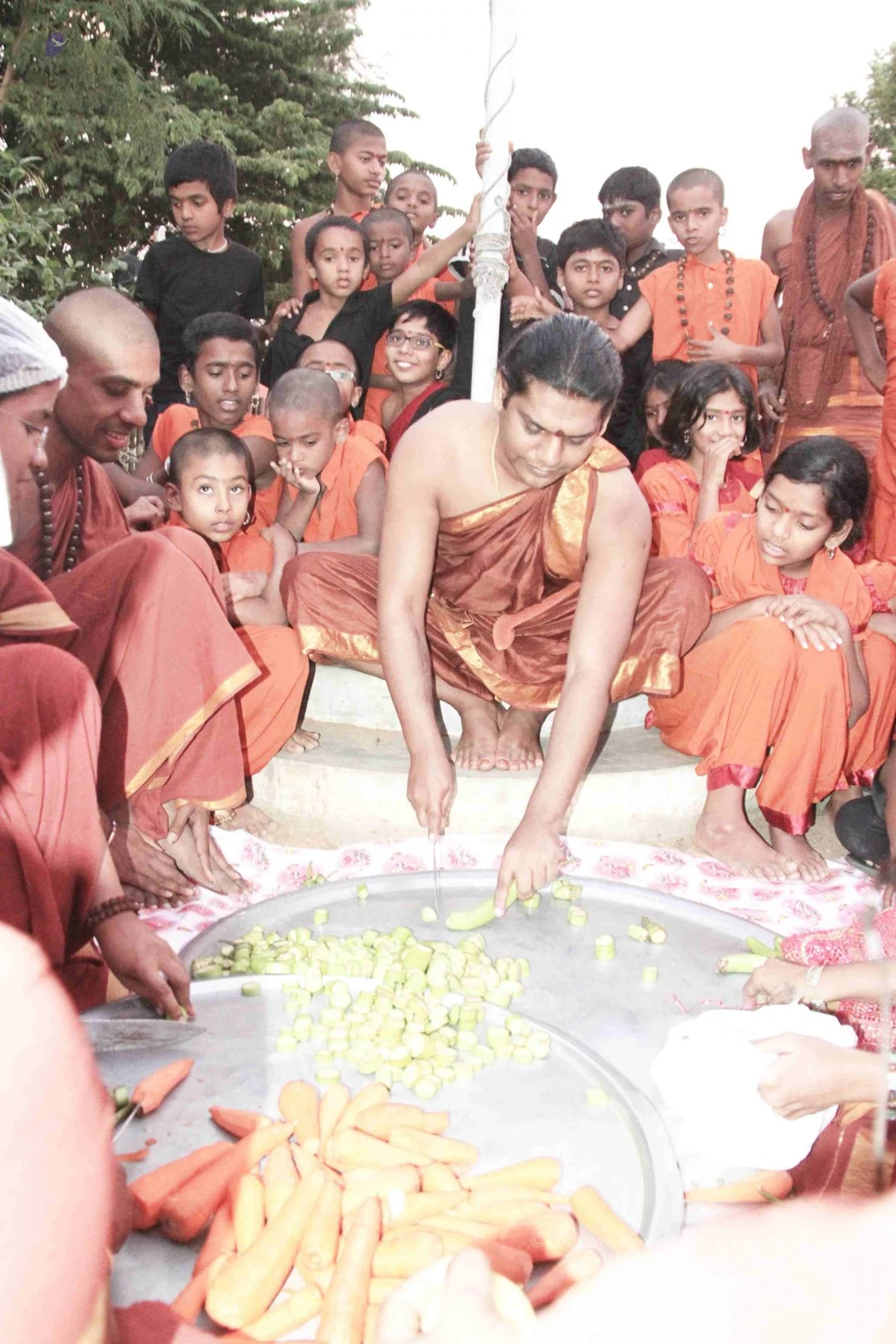
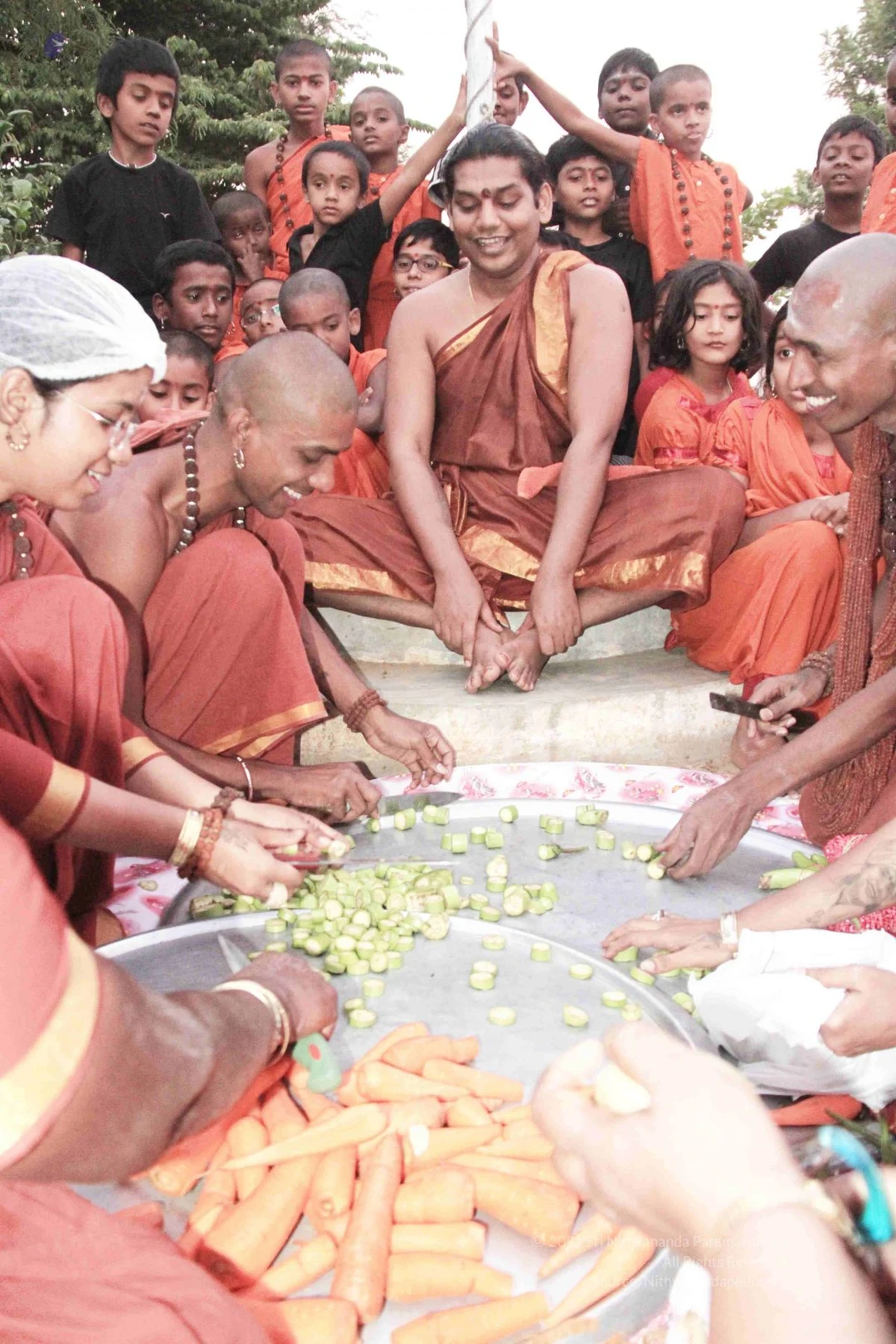
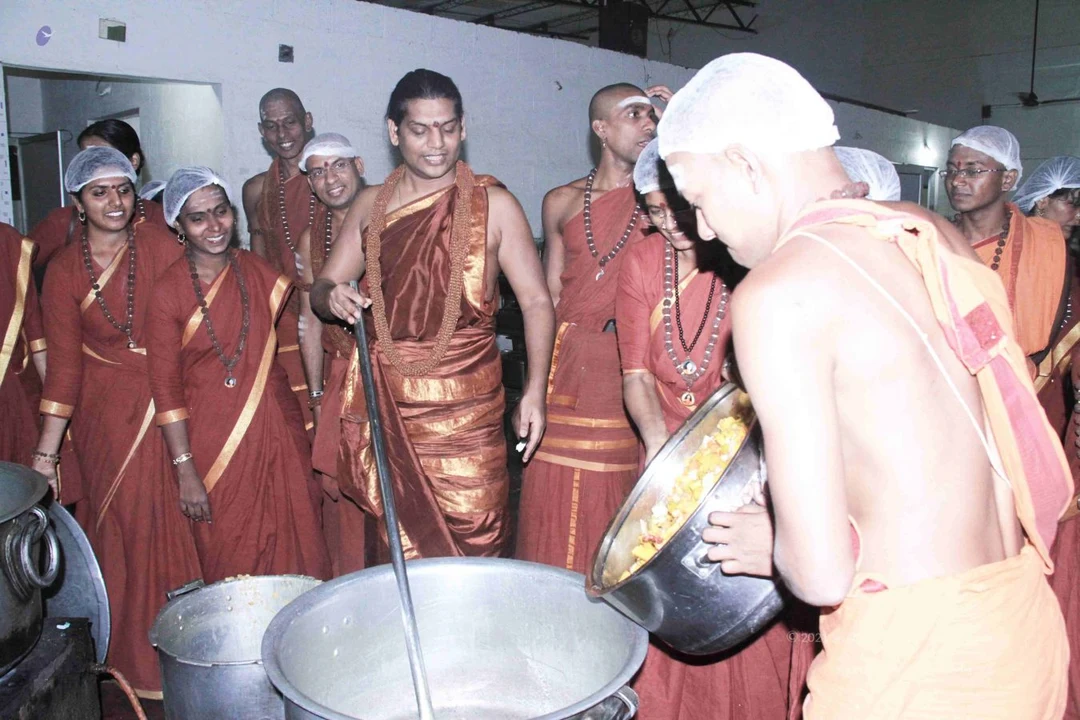
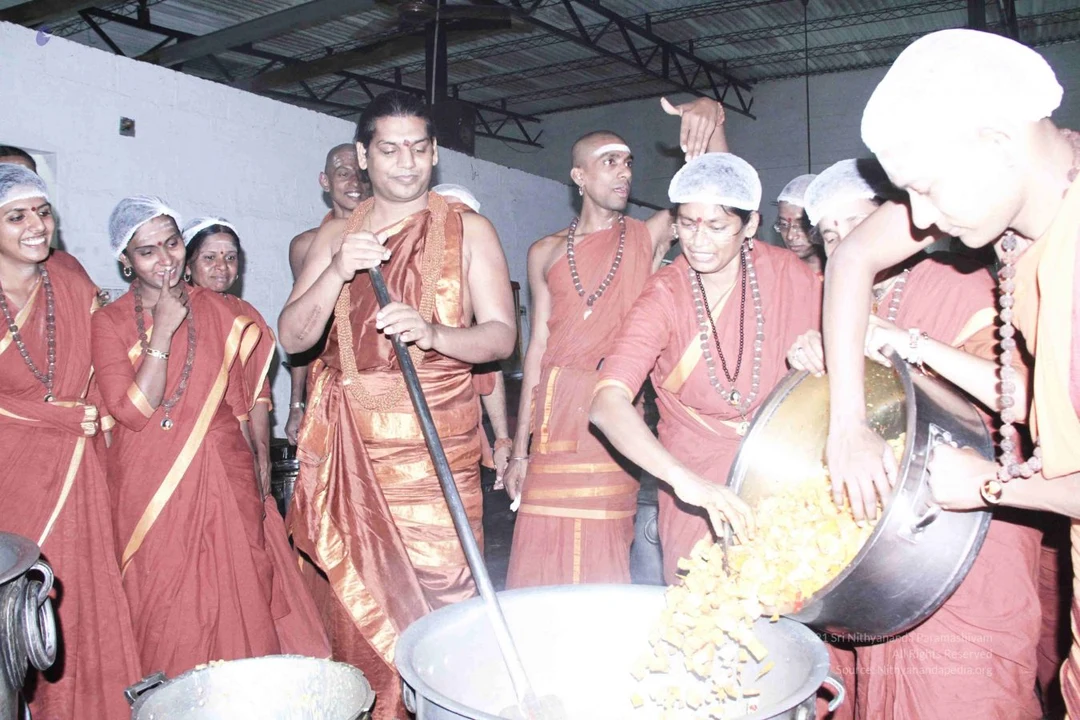
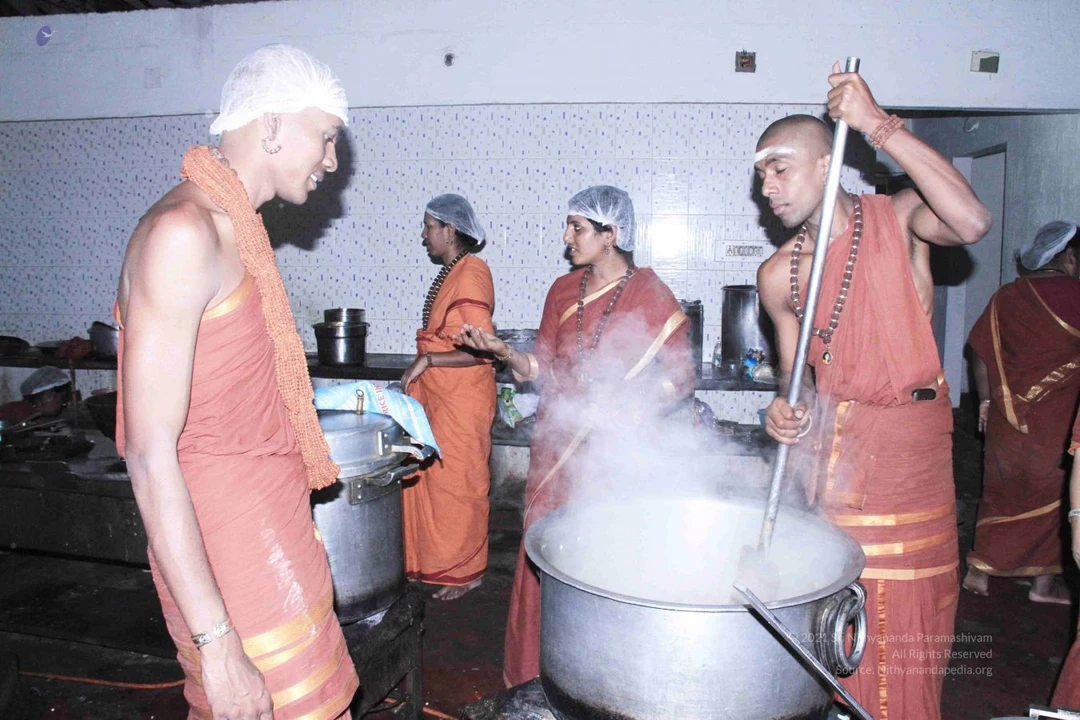
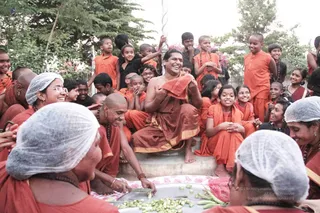
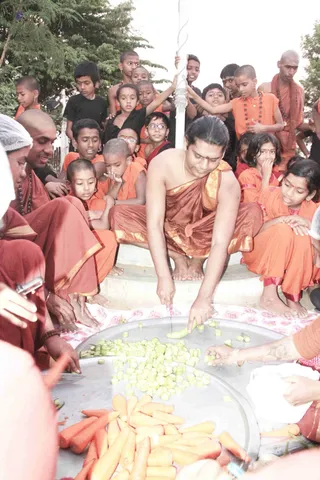
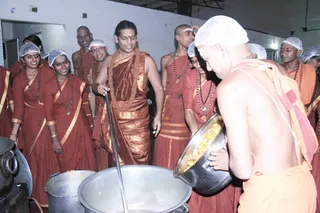
A kitchen scene in an industrial-style hall with exposed ceiling trusses. Several devotees wearing white hairnets and orange-and-maroon robes with rudraksha malas stir and pour food from large steel pots into a wide steel vessel. A man in a white shirt and black-striped shawl stands among them, and a red gas cylinder sits at the right. A bald devotee in a maroon robe smiles at the right of the group, and additional hairnetted people stand in the background. Service in the kitchen is evident, and no clearly identifiable ceremonial figure is seated on a throne in view.Outdoor photo of a cheerful group around a large metal tray of freshly chopped green vegetables. Women in white hairnets sit in the foreground preparing food, and one bald man in orange-brown clothing cuts vegetables with a knife. Behind them, many children in orange and saffron-coloured clothing with rudraksha beads crowd together, smiling and laughing. A bare-chested man in a rust-brown dhoti with a gold border sits on a low concrete platform in the centre, holding a cloth and smiling broadly, with a distinctive long-haired appearance and gold chain visible. Trees and greenery form the background.A group of ashram residents gathered outdoors preparing vegetables. A man with long dark hair, bare-chested and wearing a rust-brown dhoti with gold border and a matching shawl, crouches at the center cutting a green gourd on a large steel tray. Around him, many children and young boys in orange and saffron robes sit and stand, some with rudraksha malas, watching or helping. Carrots and sliced green vegetables fill the tray on a floral cloth, and a few older men in rust-red robes sit nearby. Tall trees and a white pole are in the background.Outdoors under trees, a man in a copper-brown silk dhoti and matching shawl with gold border sits cross-legged on a white platform, slicing green vegetables on a large steel tray. Orange-robed children, many shaved-headed and some wearing rudraksha malas, sit and stand around him, watching. Carrots and chopped green produce fill the tray, set on a pink floral cloth. A man in orange robes with a rudraksha mala and shaved head sits at the left, and a white-turbaned person is partly visible at the far left edge. The scene suggests preparation of food offerings.Outdoor food-preparation scene in a community setting. A seated man in a rust-red dhoti with gold border and a thin orange shawl sits cross-legged on a concrete step, smiling, with a red tilak on his forehead; he has long dark hair and gold ornaments, so he is a person candidate, though the frame is partly cropped. Around him, devotees in red and orange robes and bare-chested men with shaved heads sit on the ground slicing green vegetables and carrots on large round steel trays. Behind them, a row of boys and girls in orange robes and rudraksha malas stands watching, several raising hands. Trees and a pole are in the background.A photograph of a kitchen scene where a man in a reddish-brown silk dhoti and matching shawl with gold border, wearing a long rudraksha-style mala, stirs a large steel pot with a long ladle while smiling. Beside him, a bare-chested young man in an orange-and-cream cloth holds a steel bowl of yellow rice and pours it toward the pot. Around them stand devotees in maroon and orange garments with rudraksha malas, several women wearing white head covers, and a bald man with a tilak. Steel vessels and cooking pots sit on a counter in the foreground.