Skip to content
Tuesday

29 October 2013

Life is a Power!

Dated photos
151
Source pages
1
Media
2
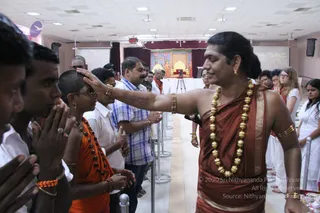
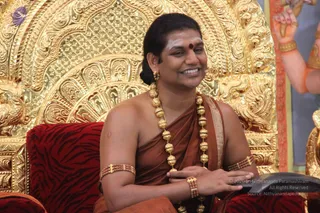
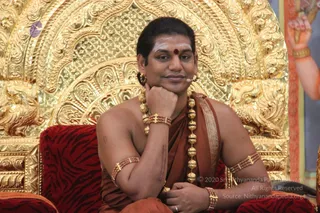
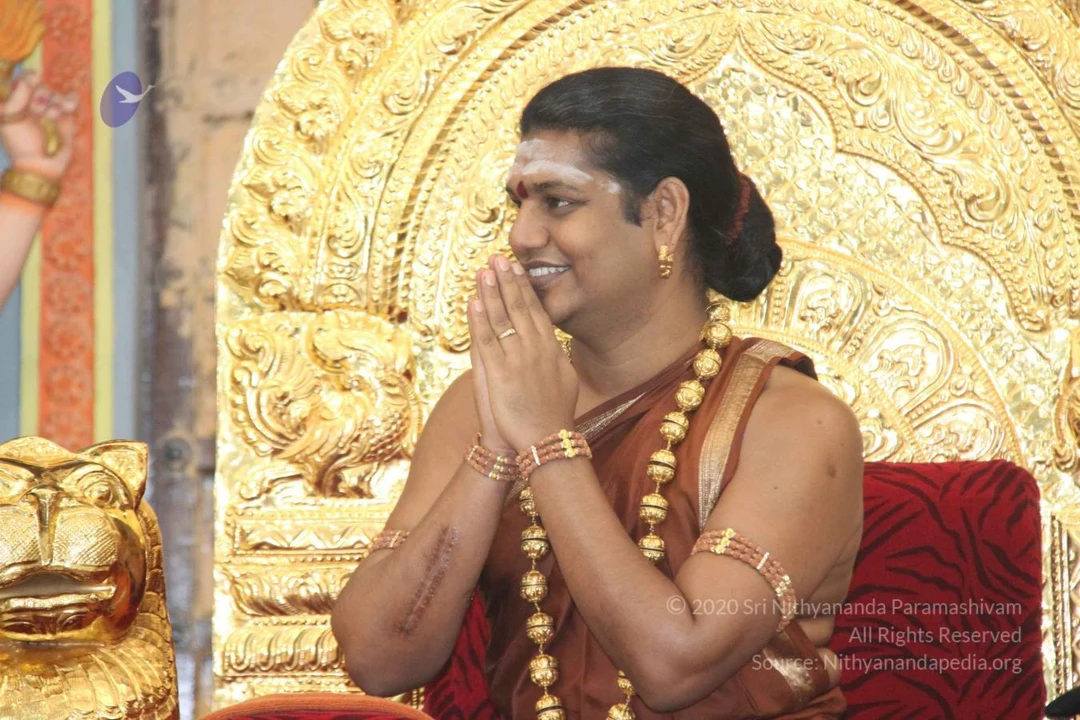
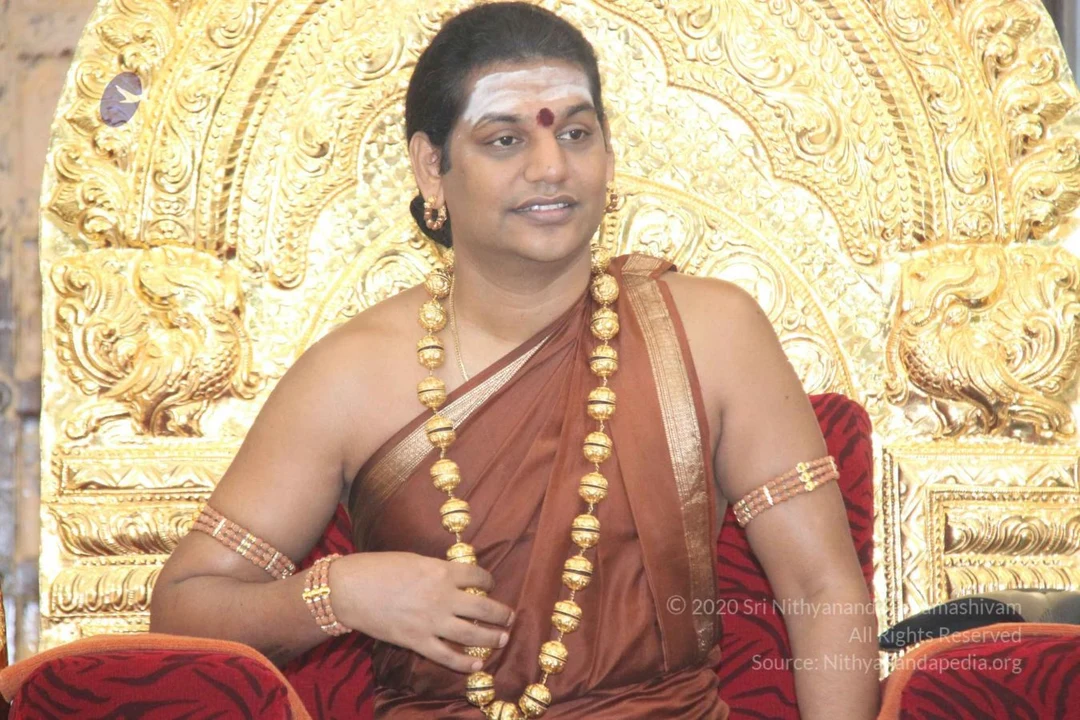
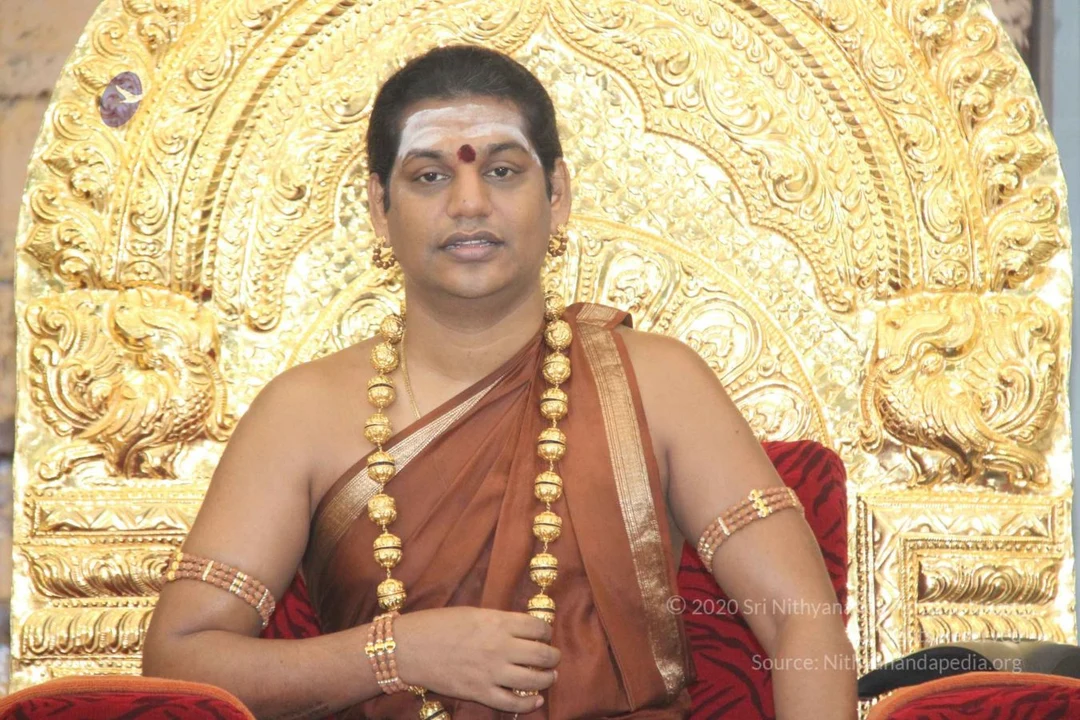
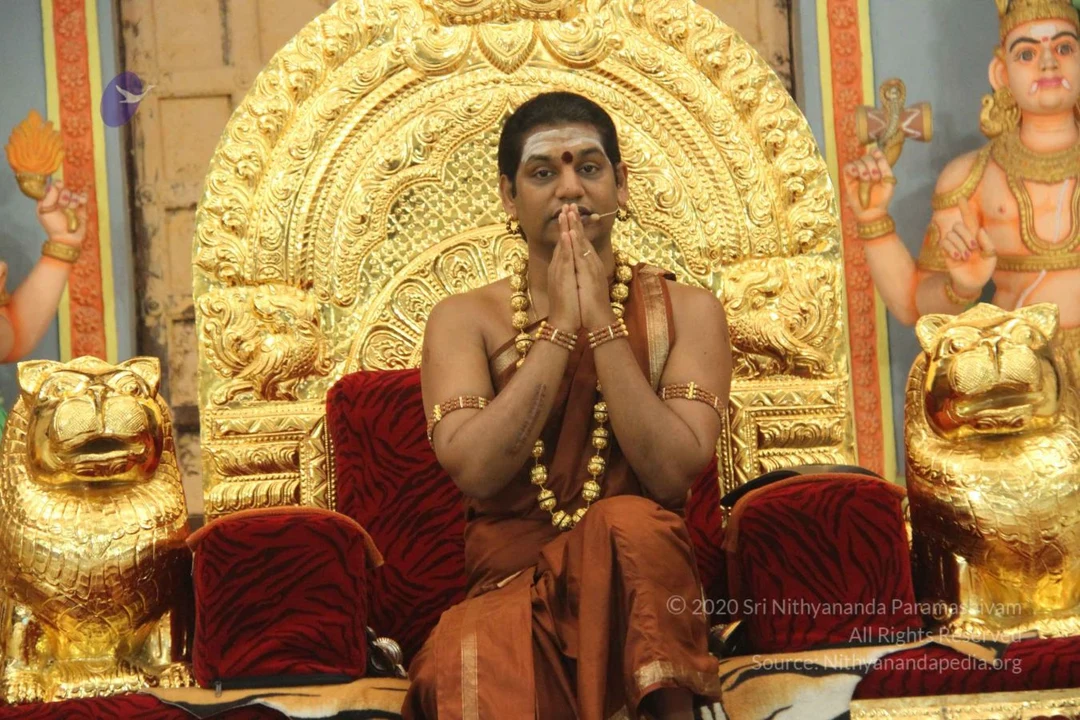
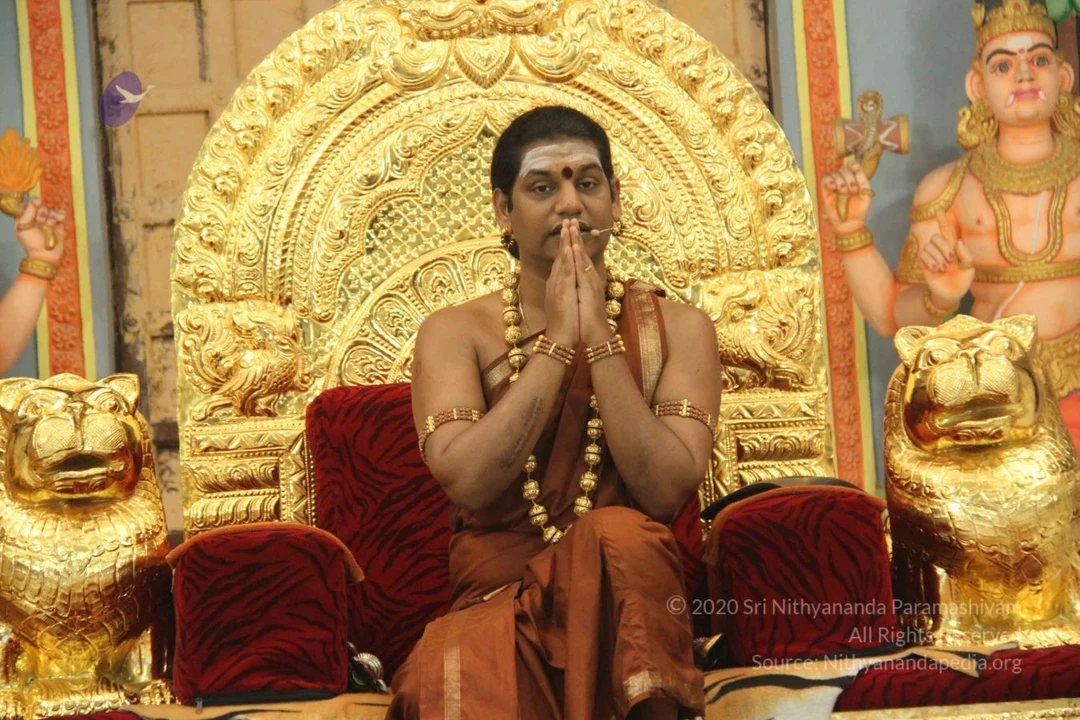
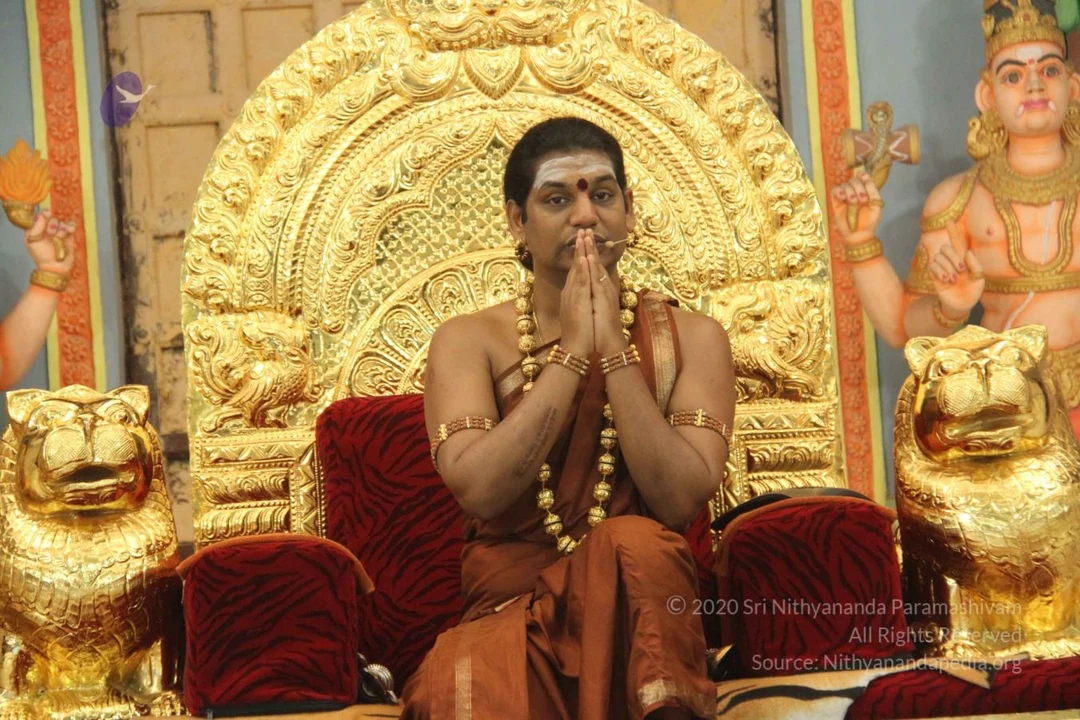
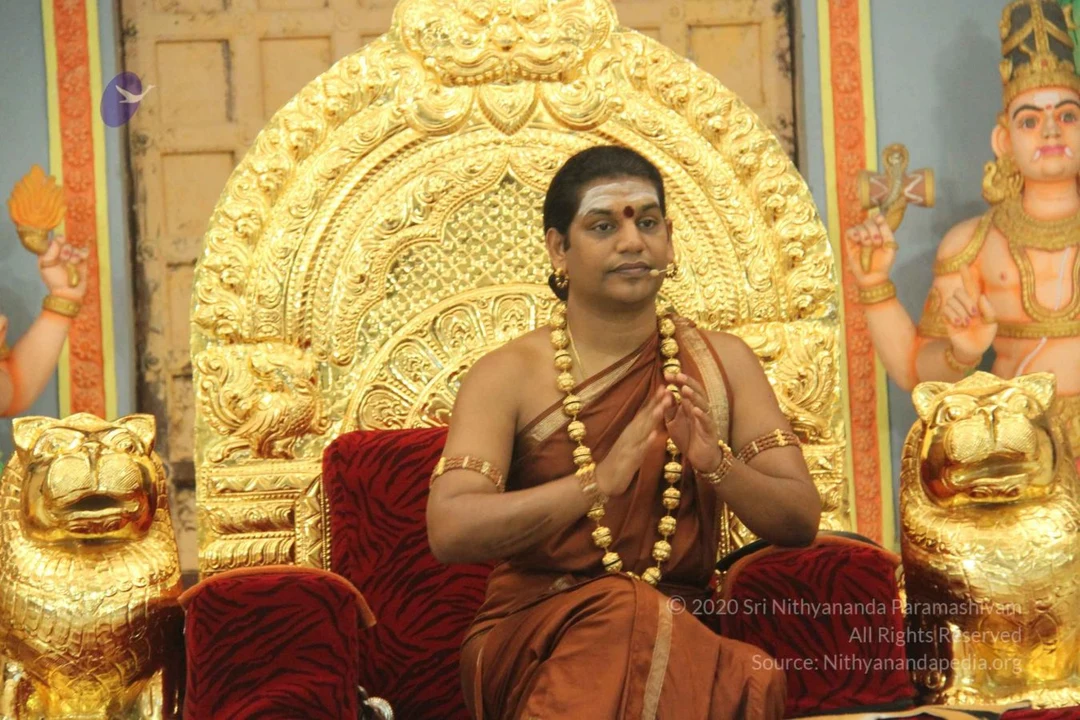
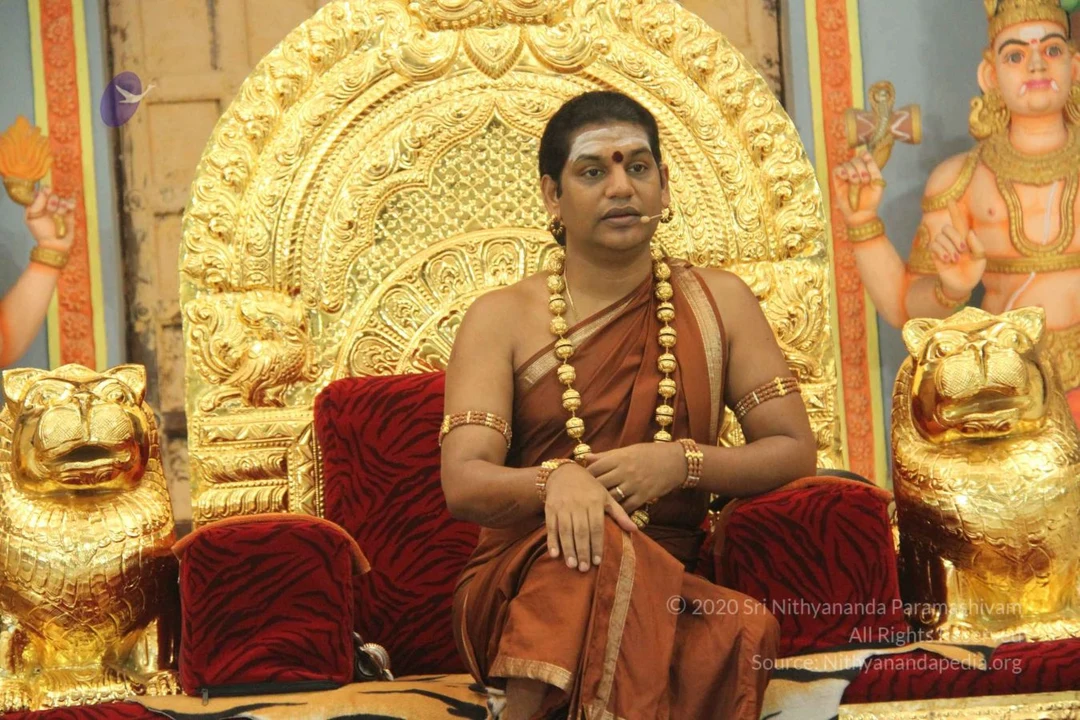
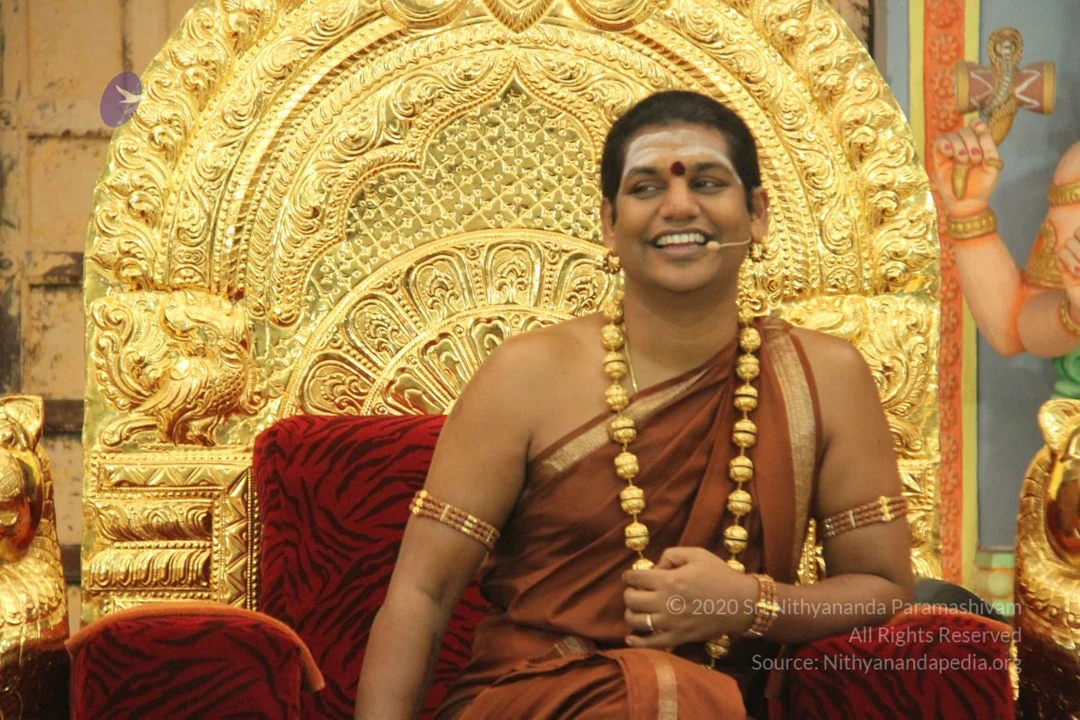
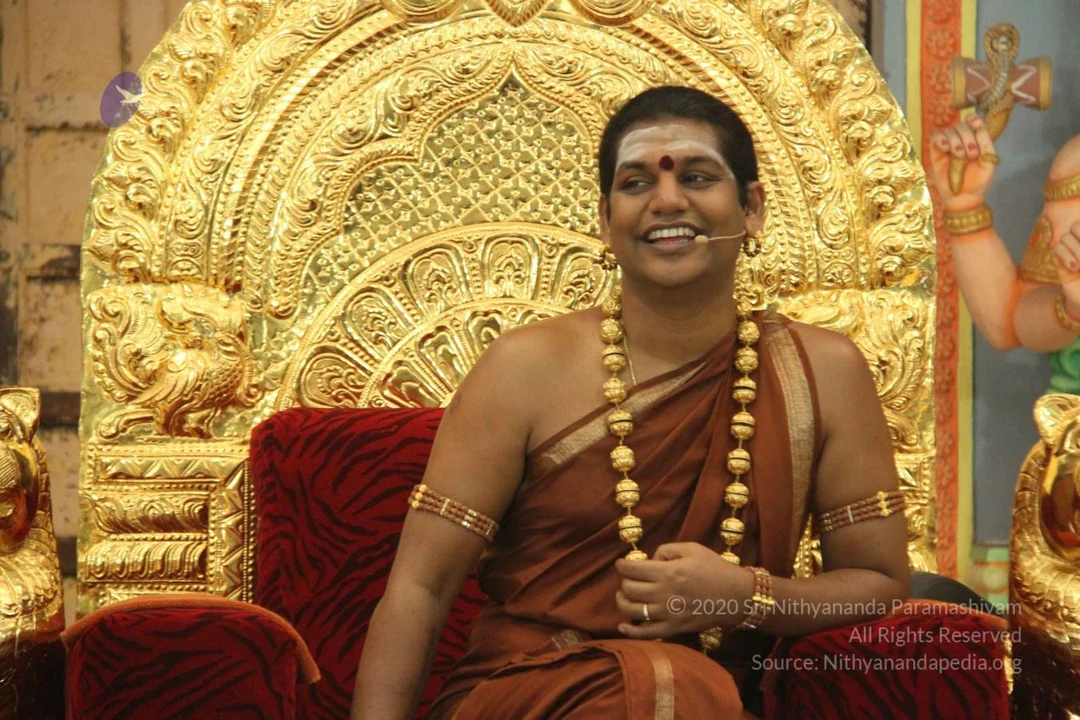
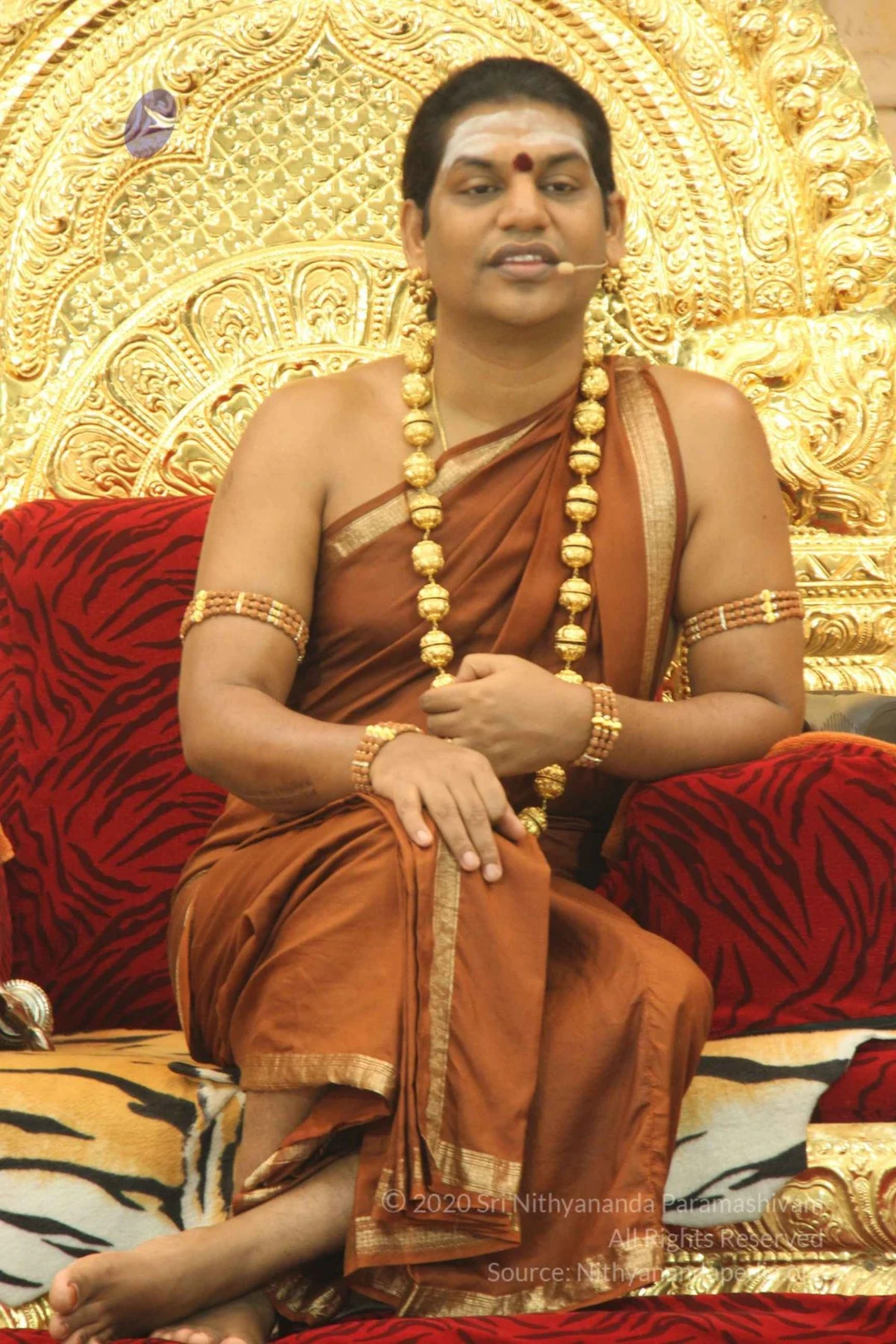
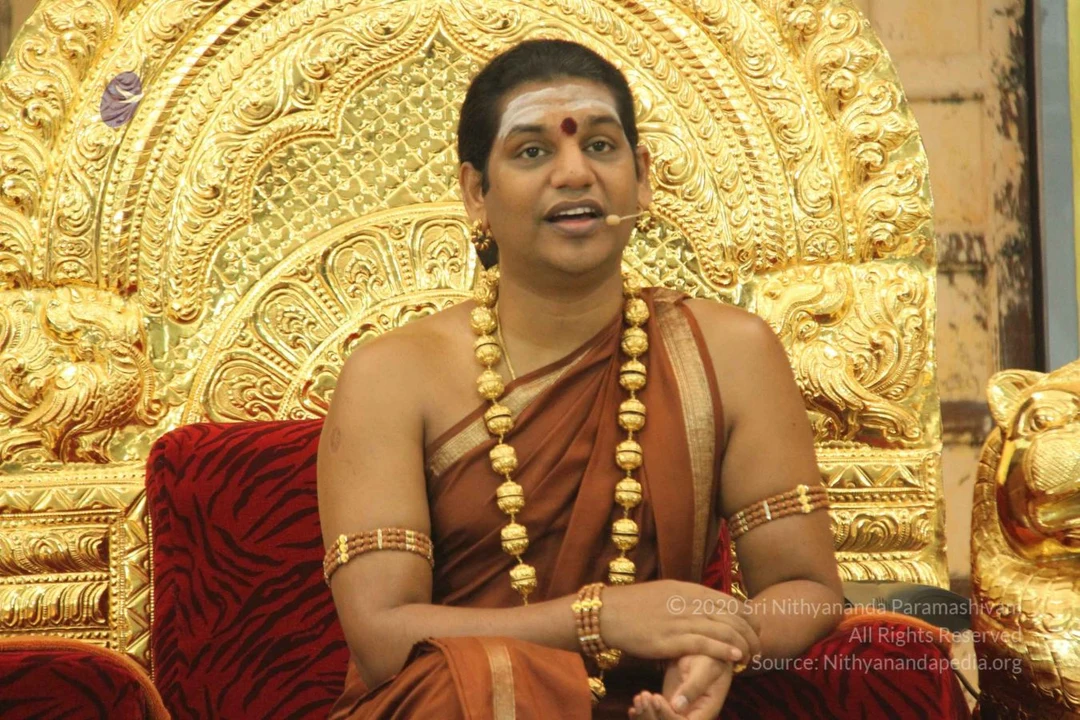
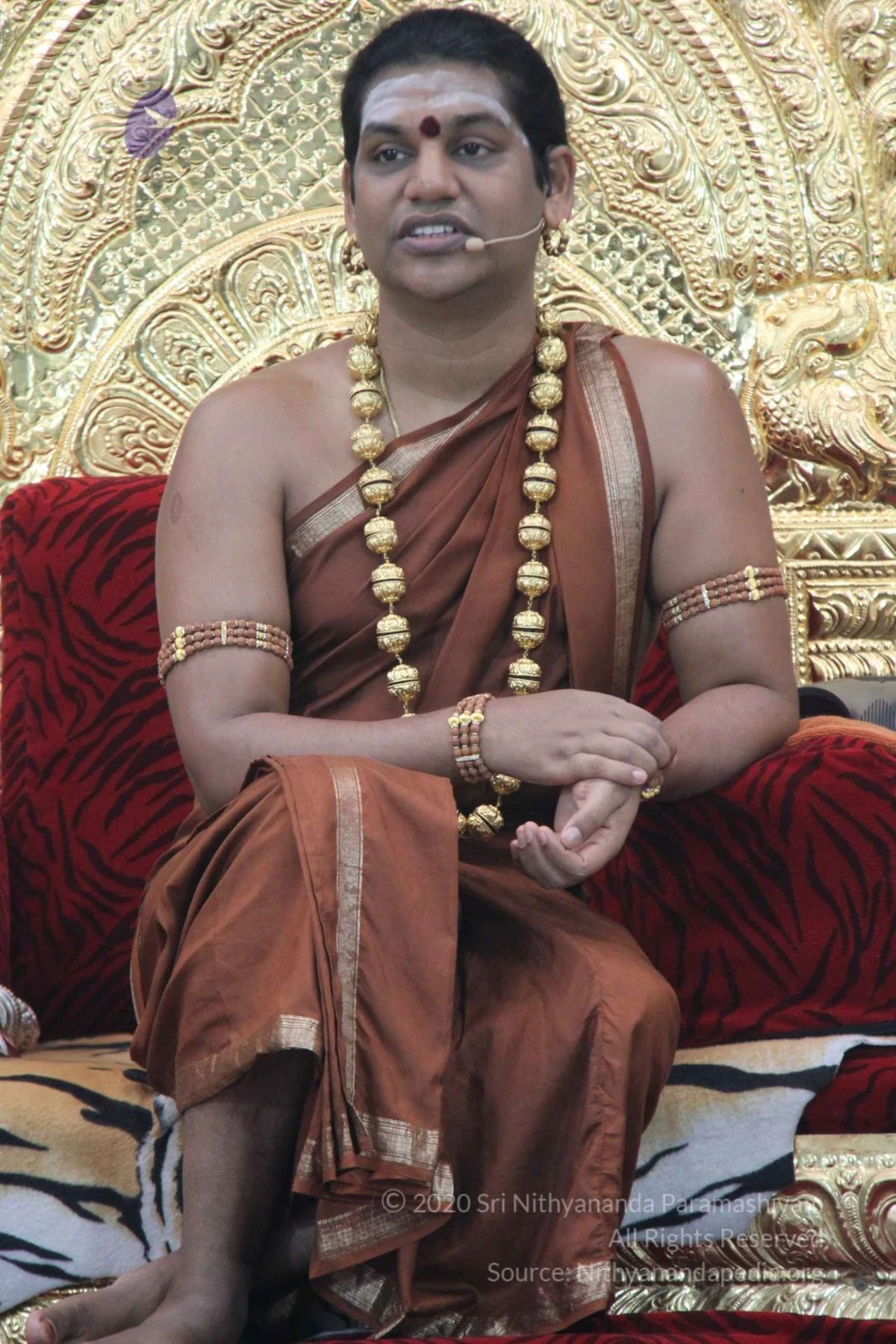
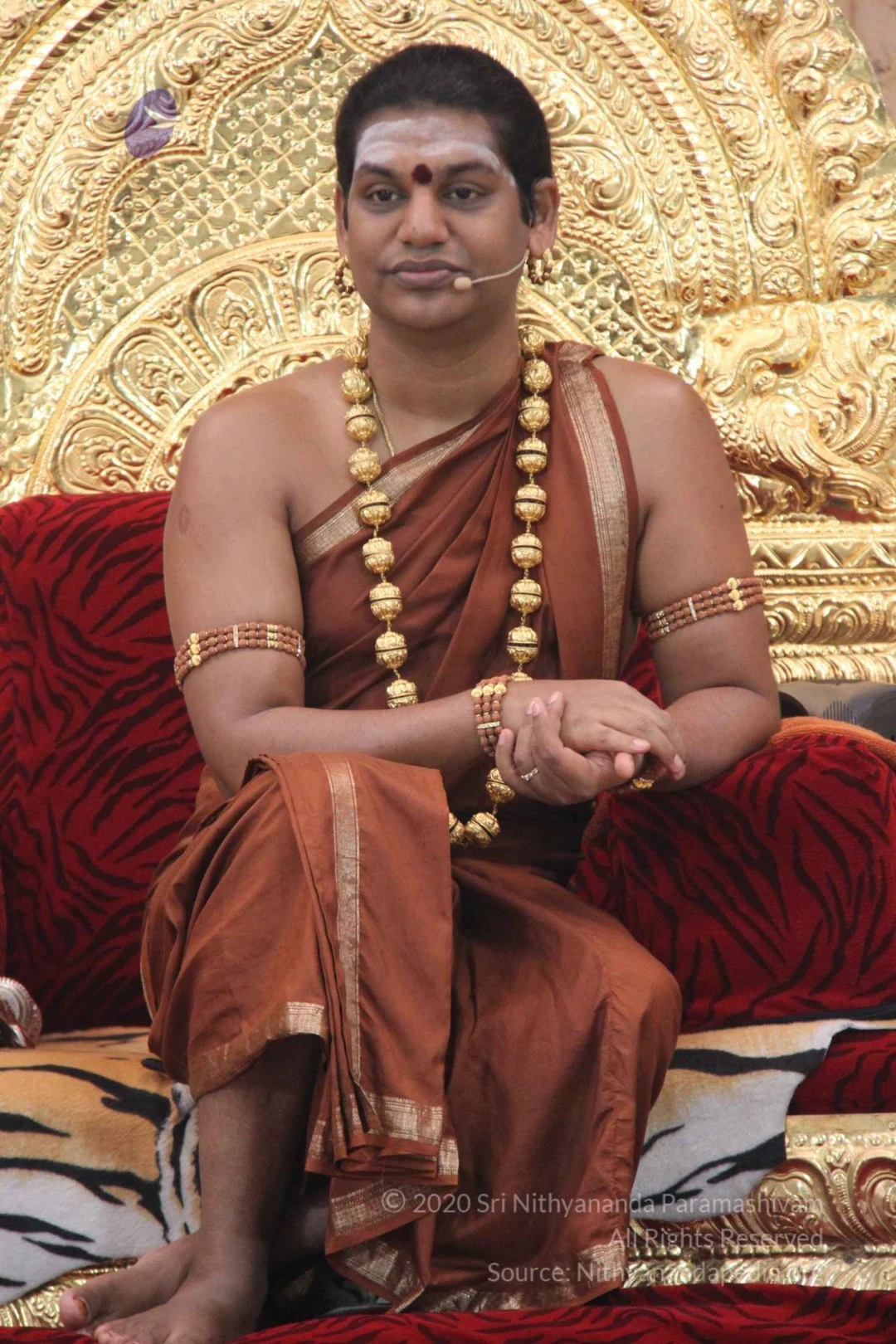
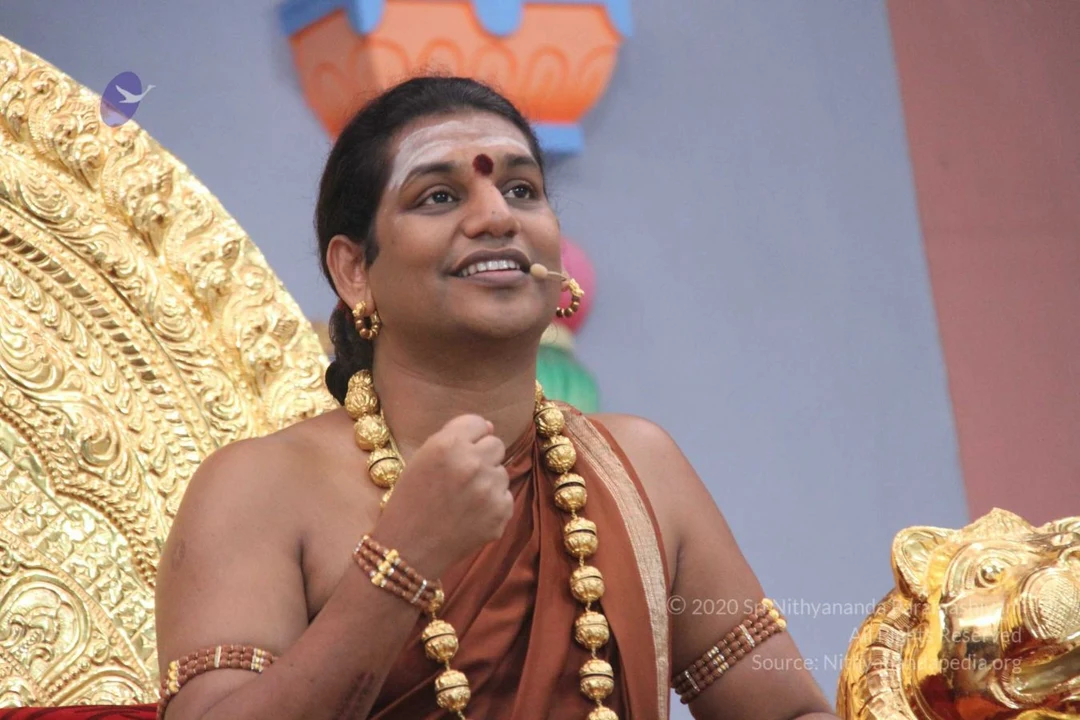
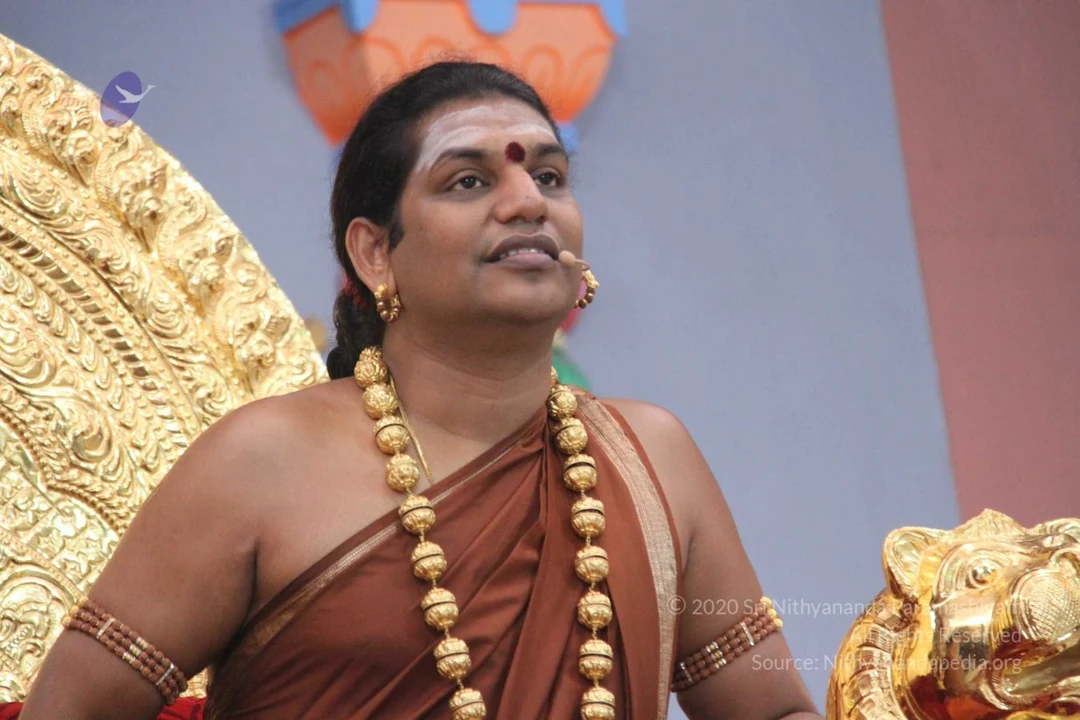
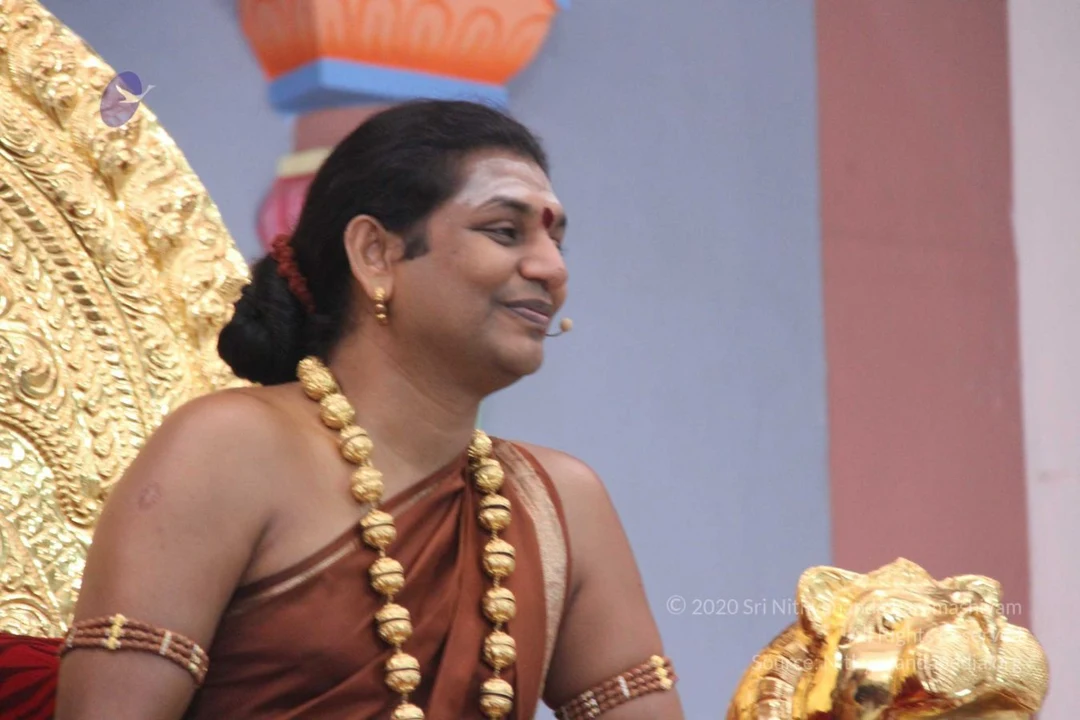
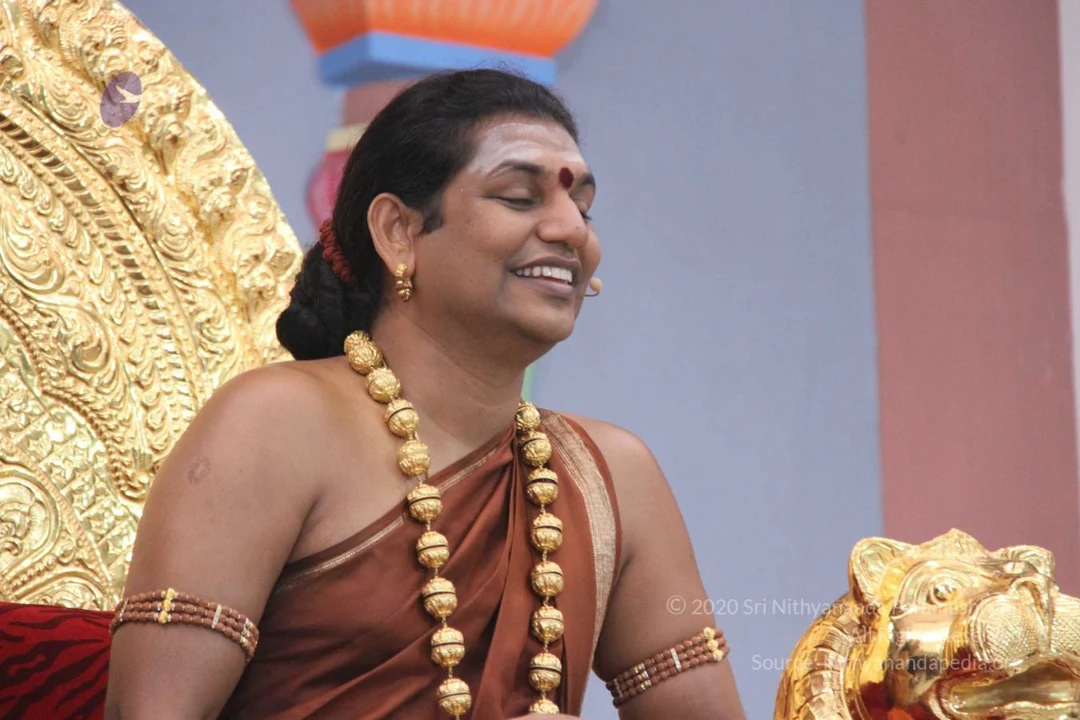
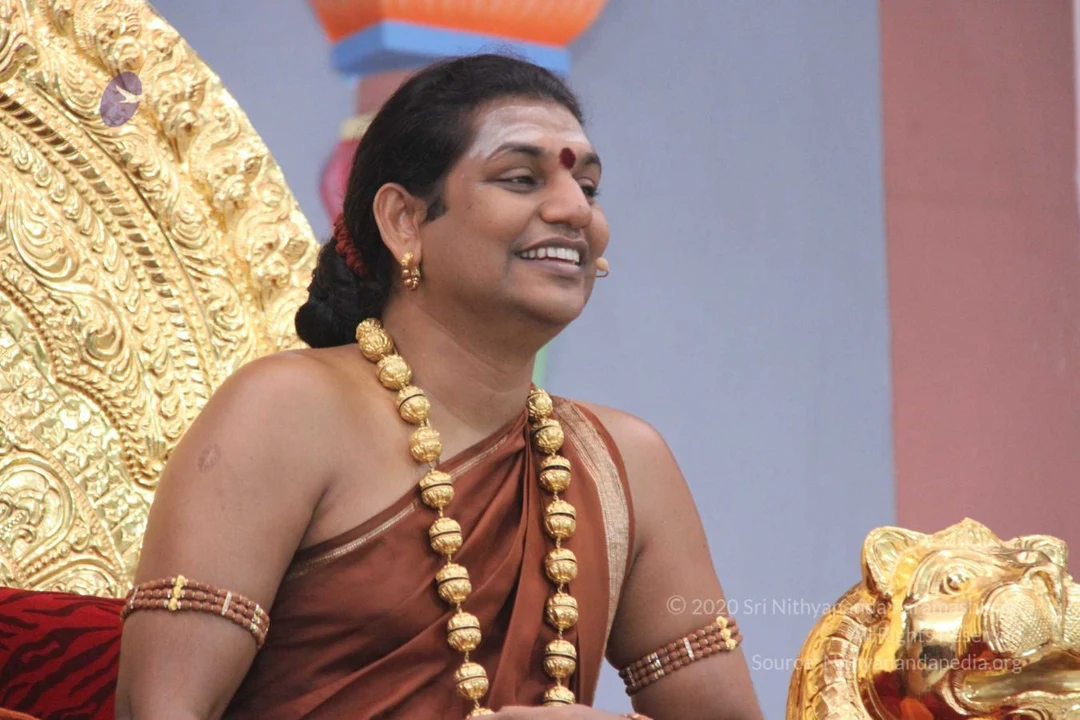
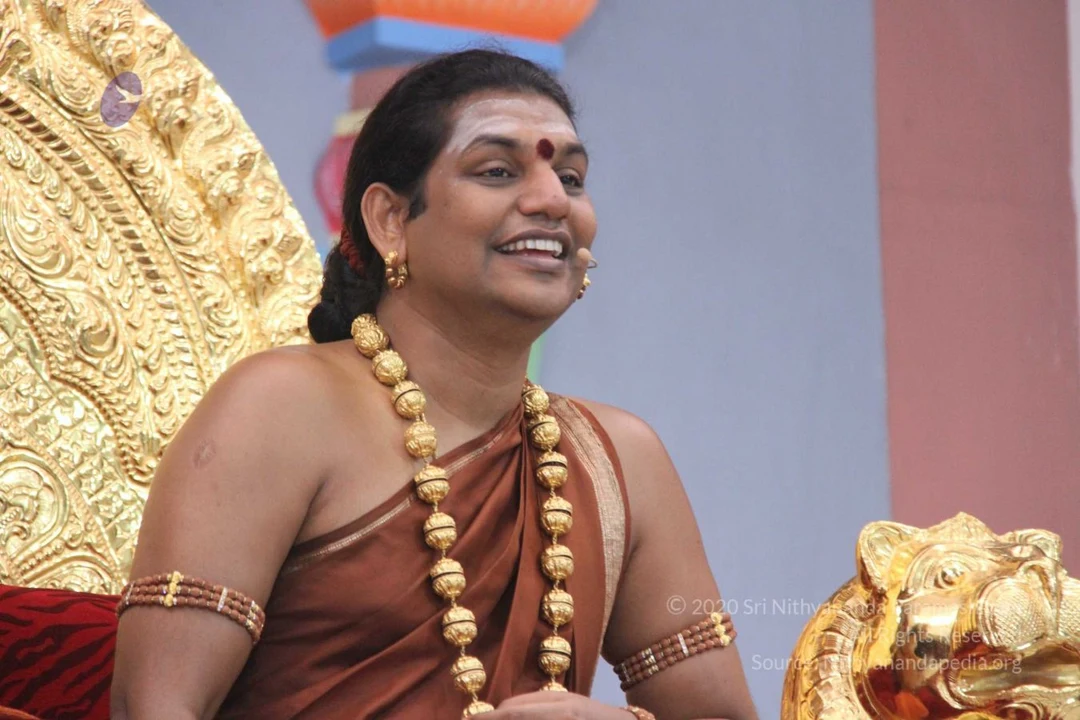
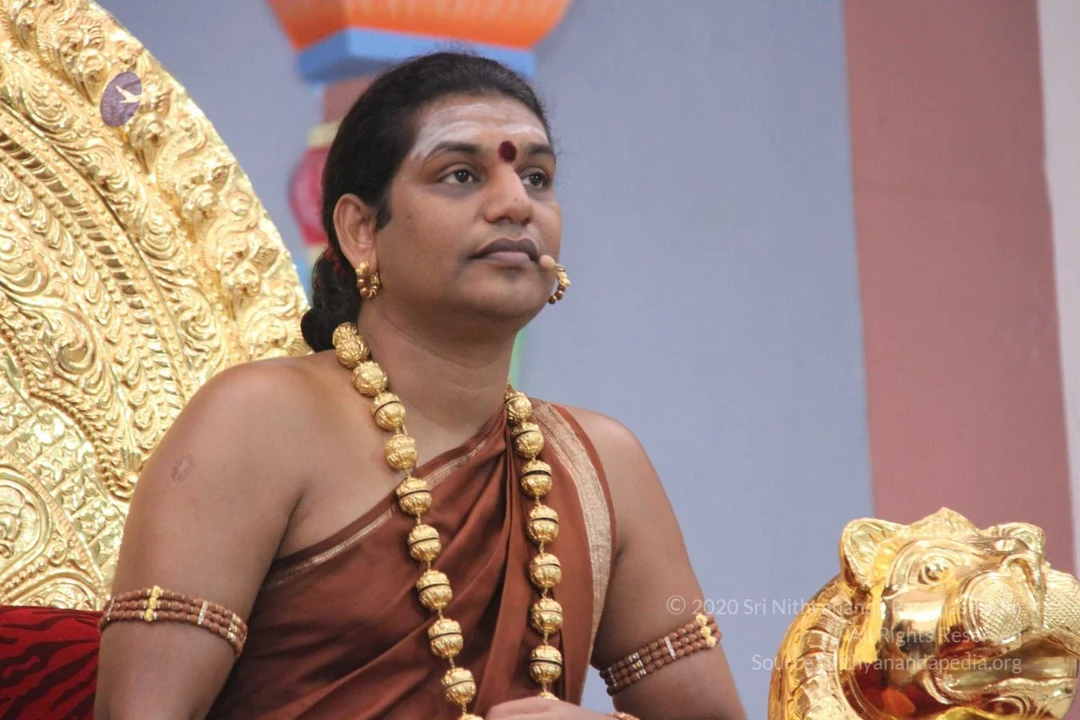
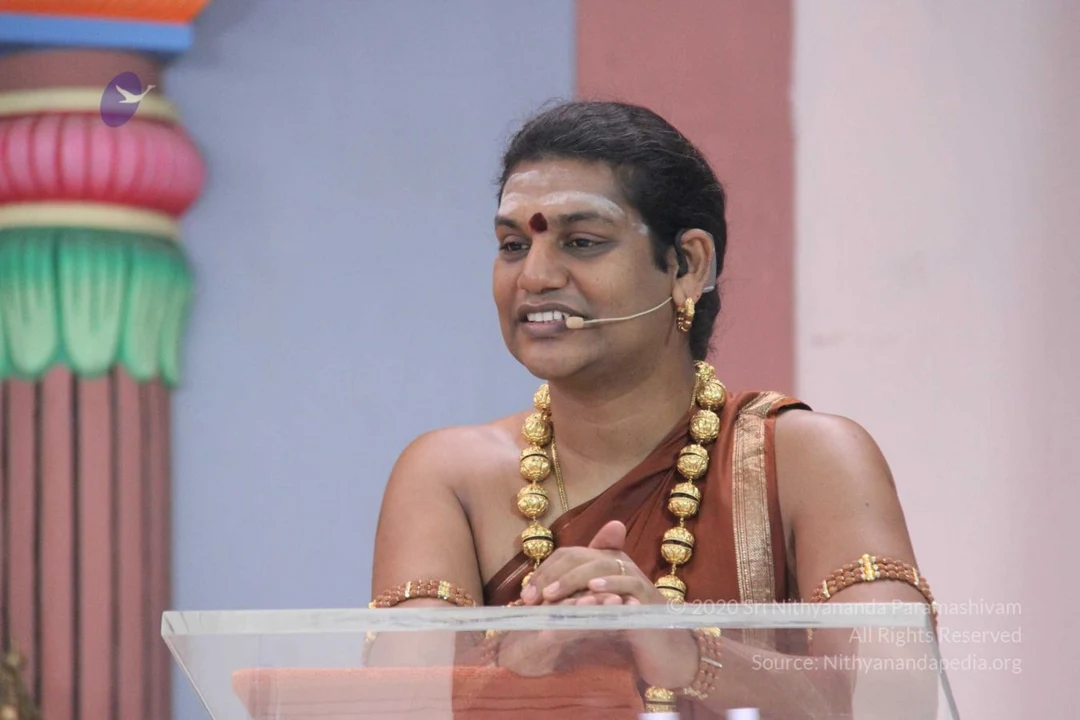
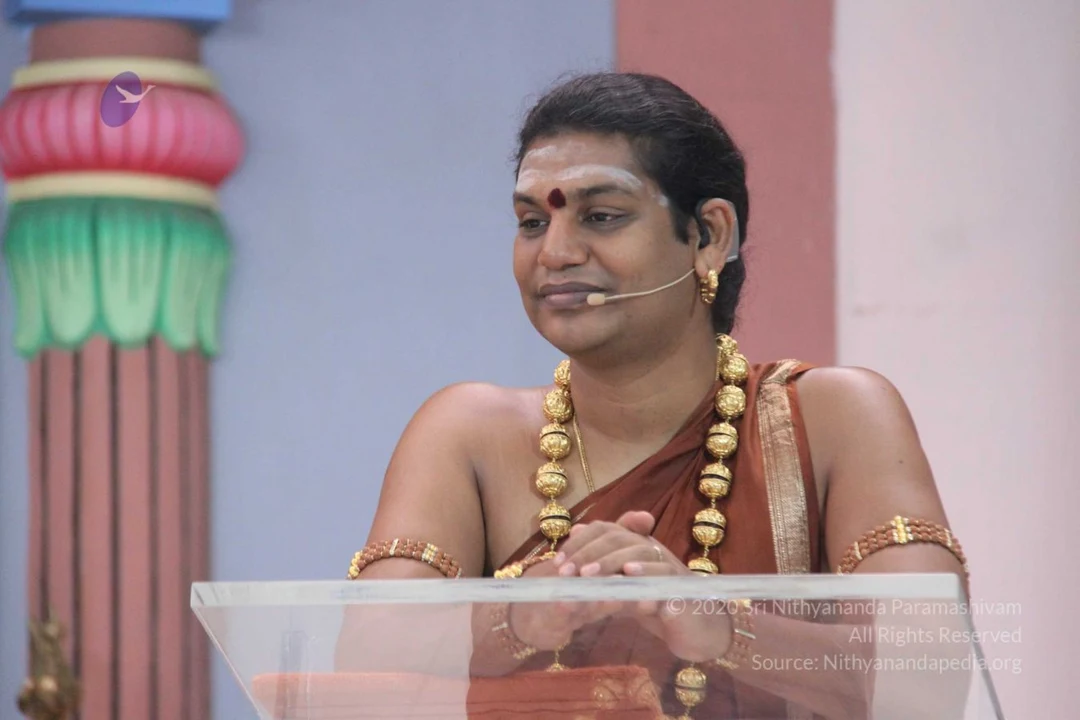
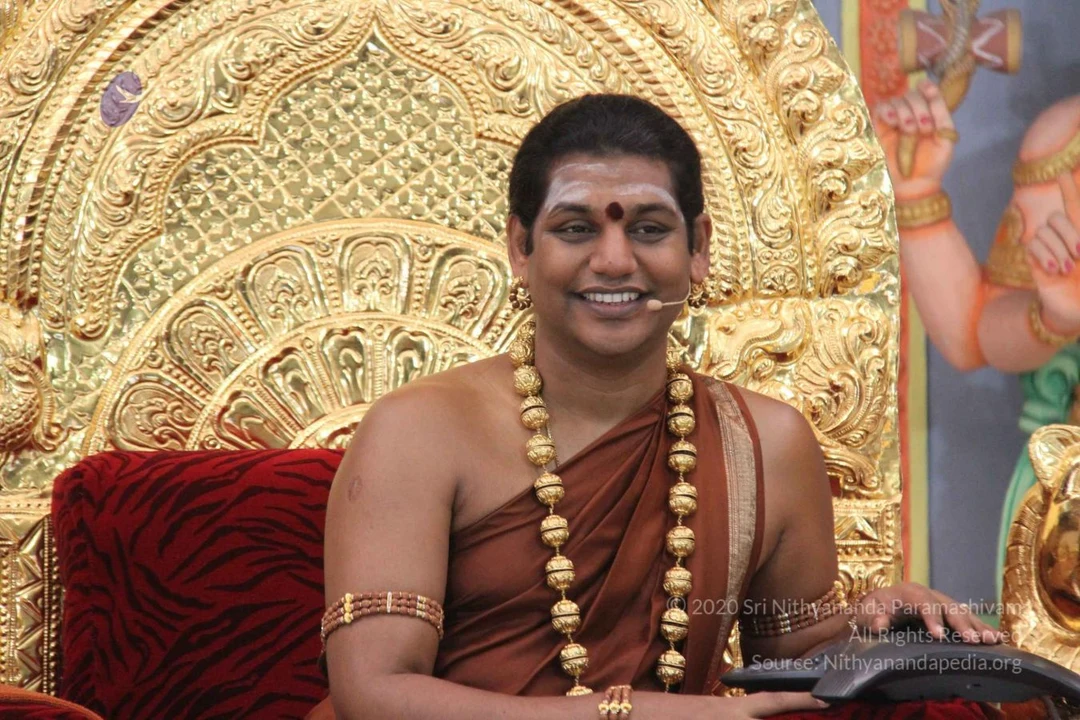
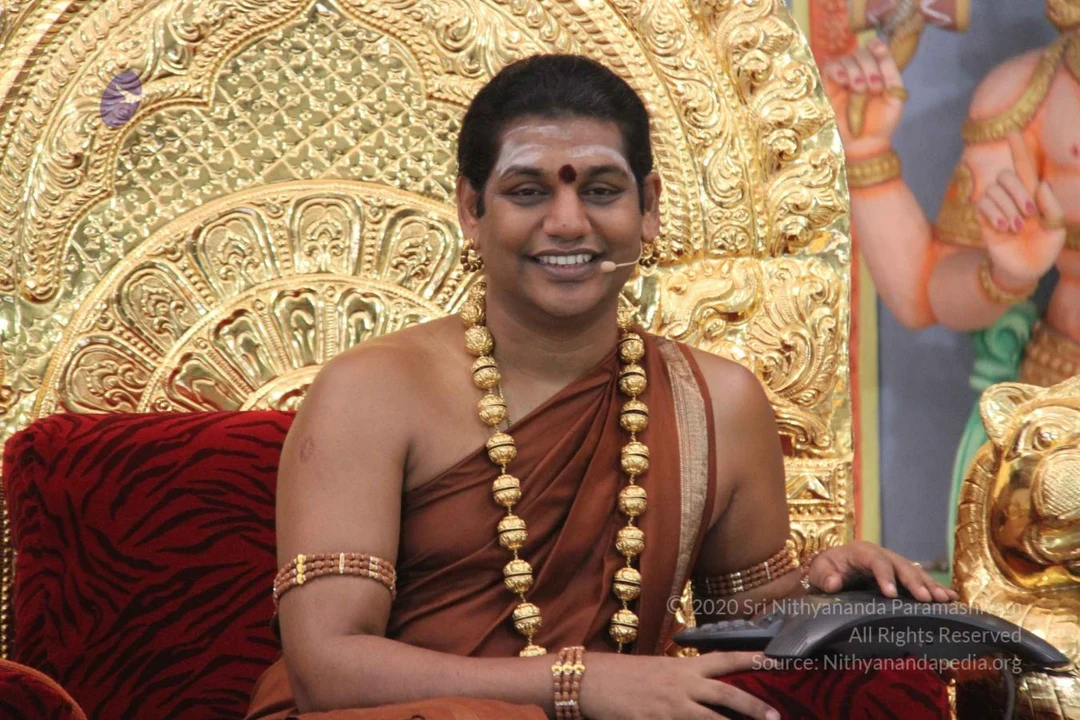
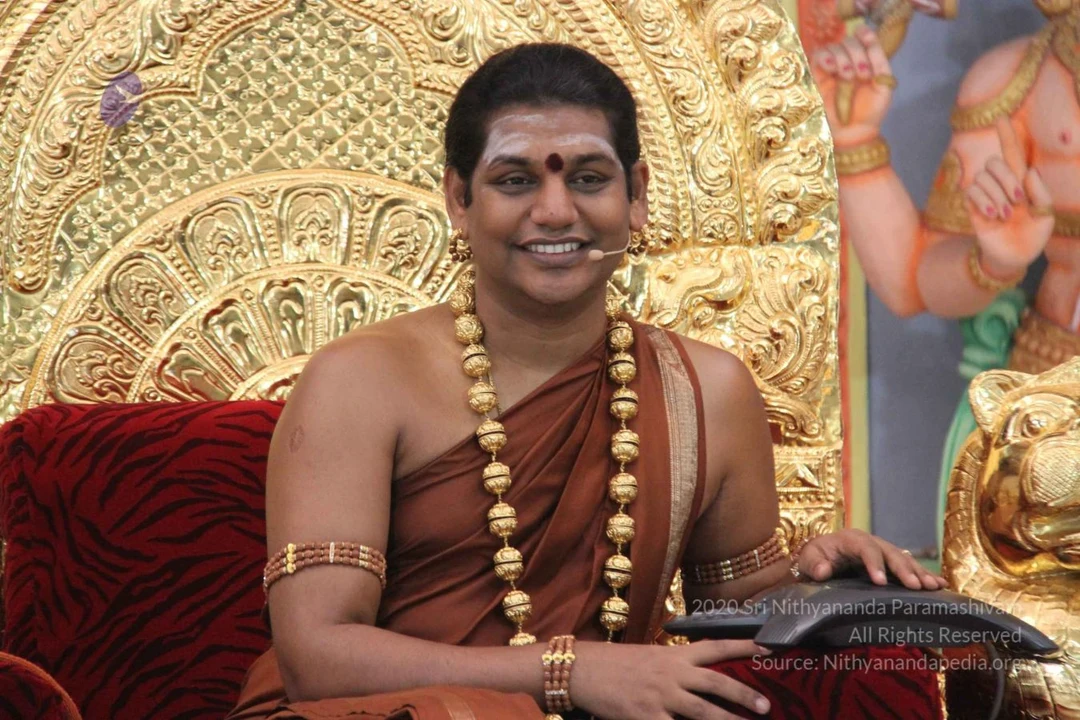
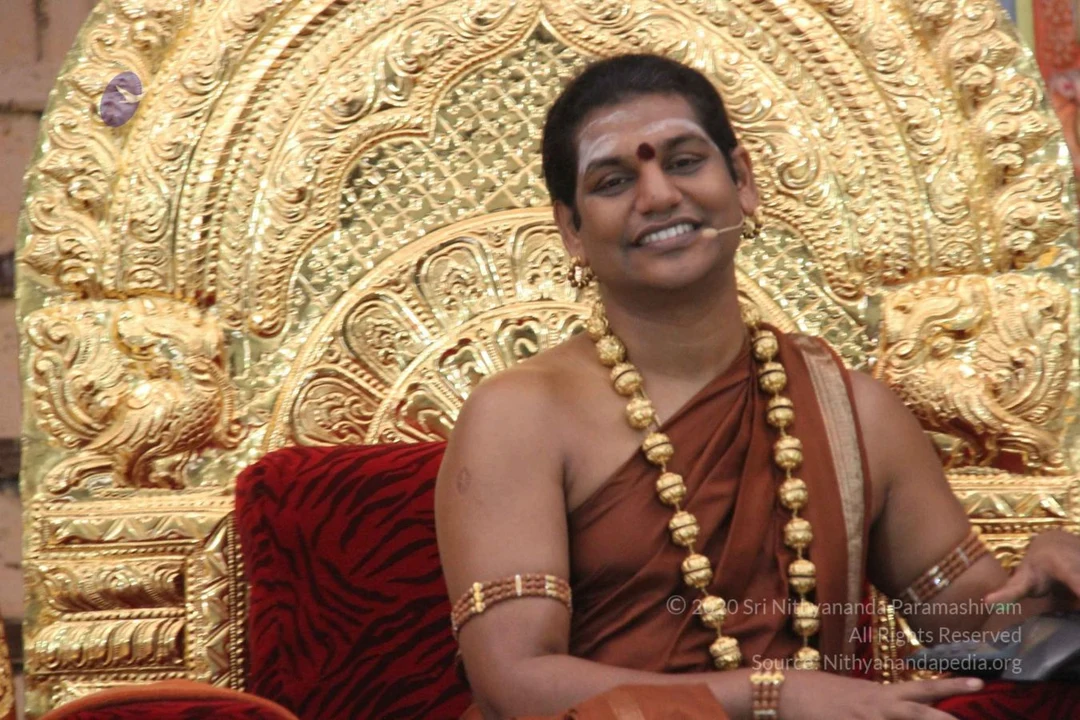
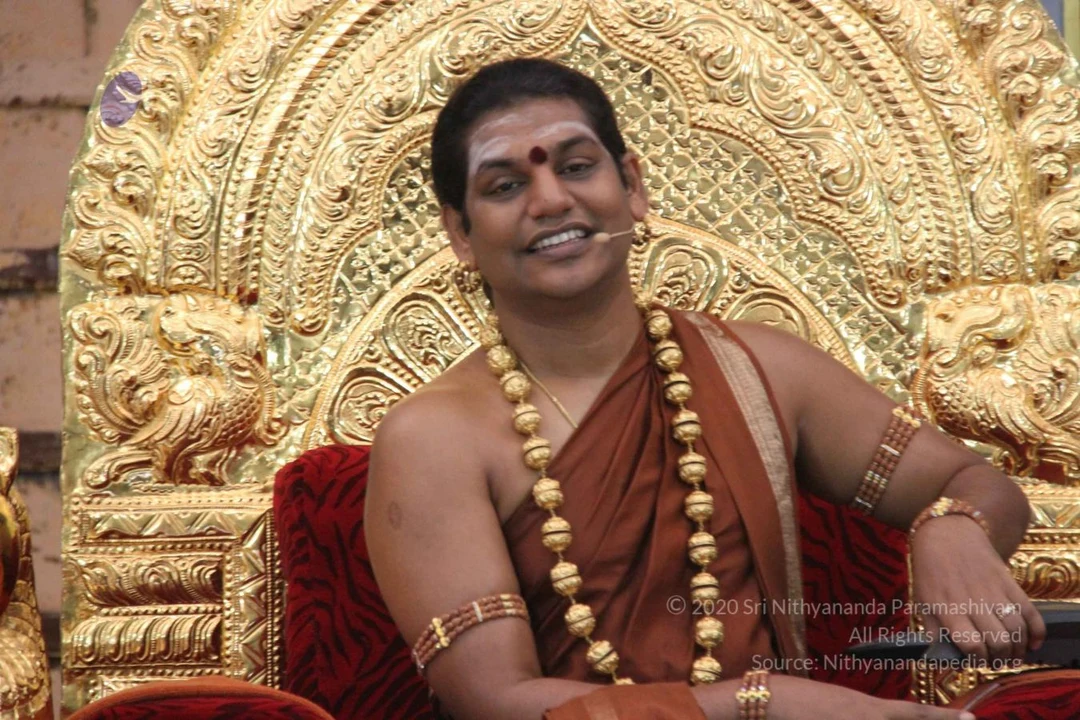
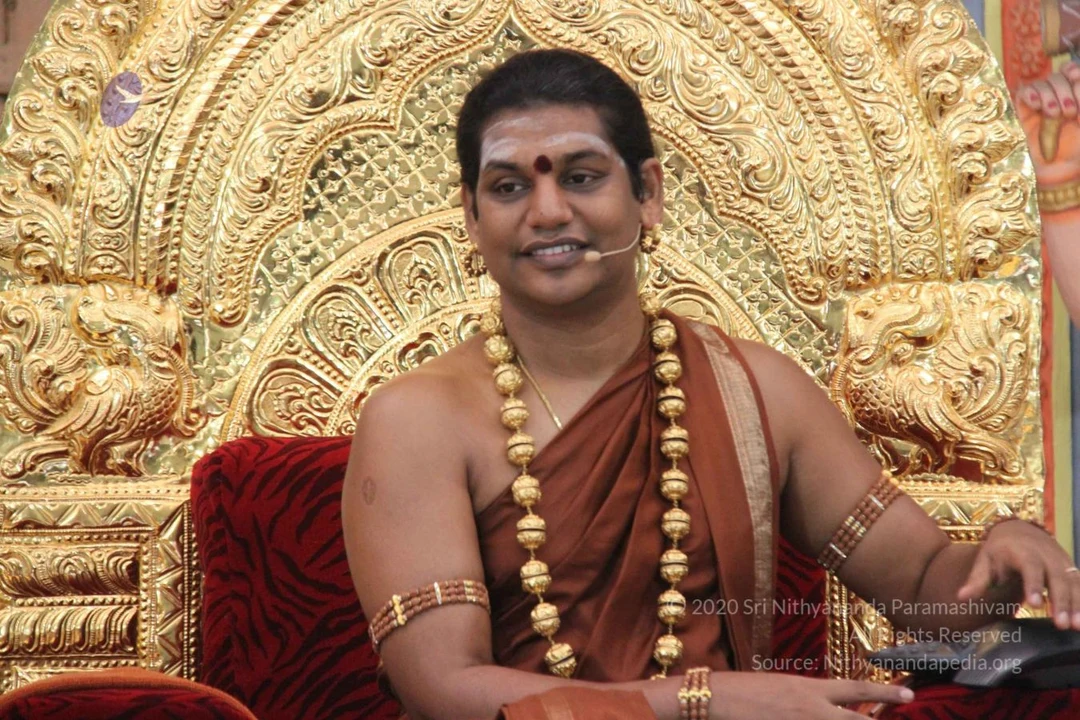
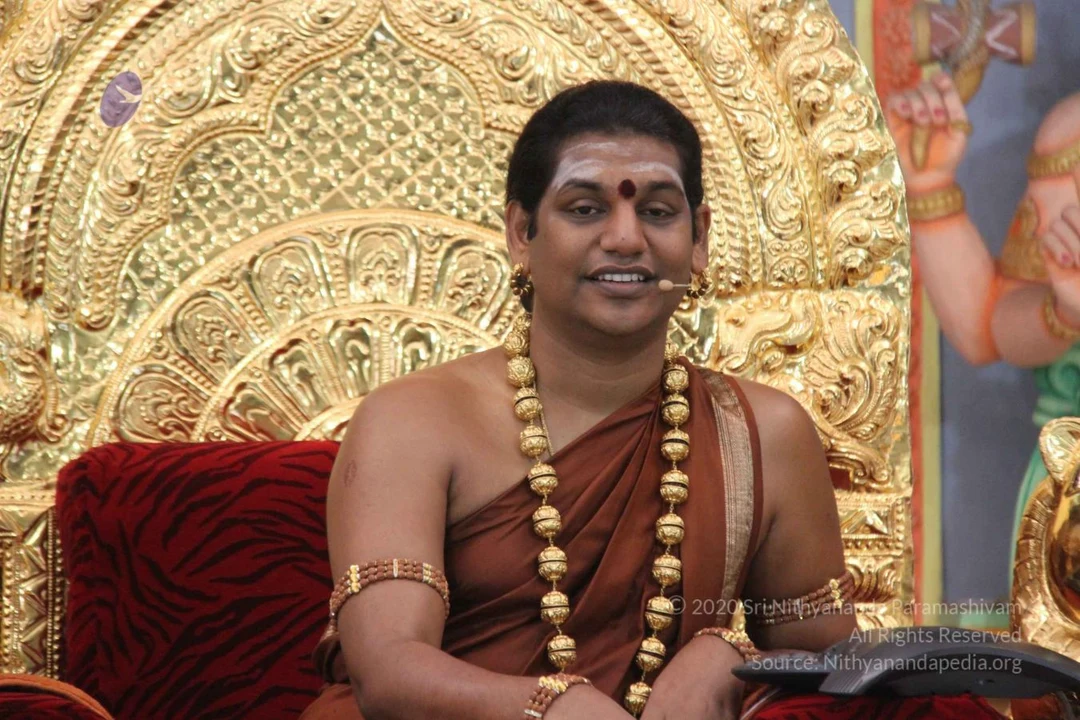
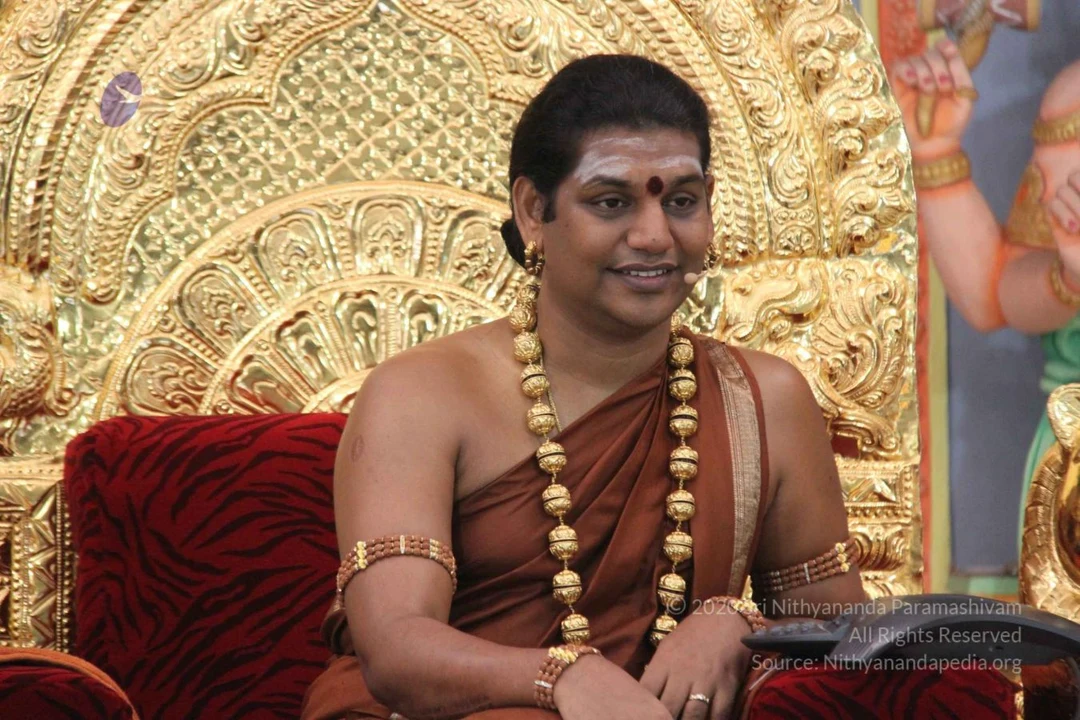
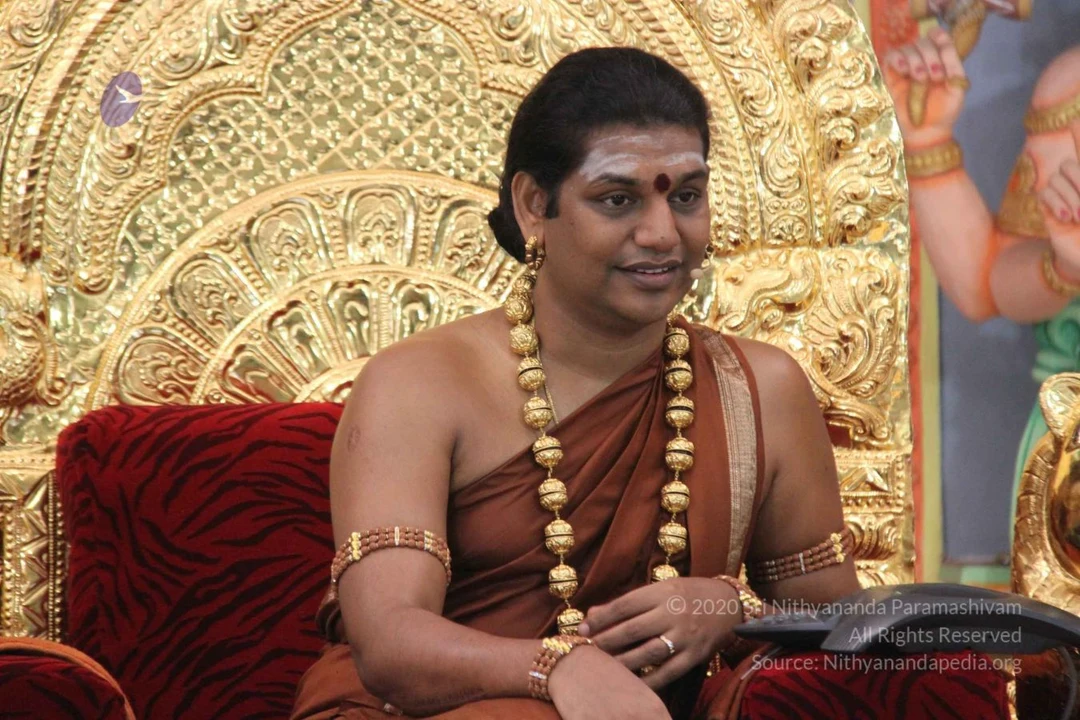
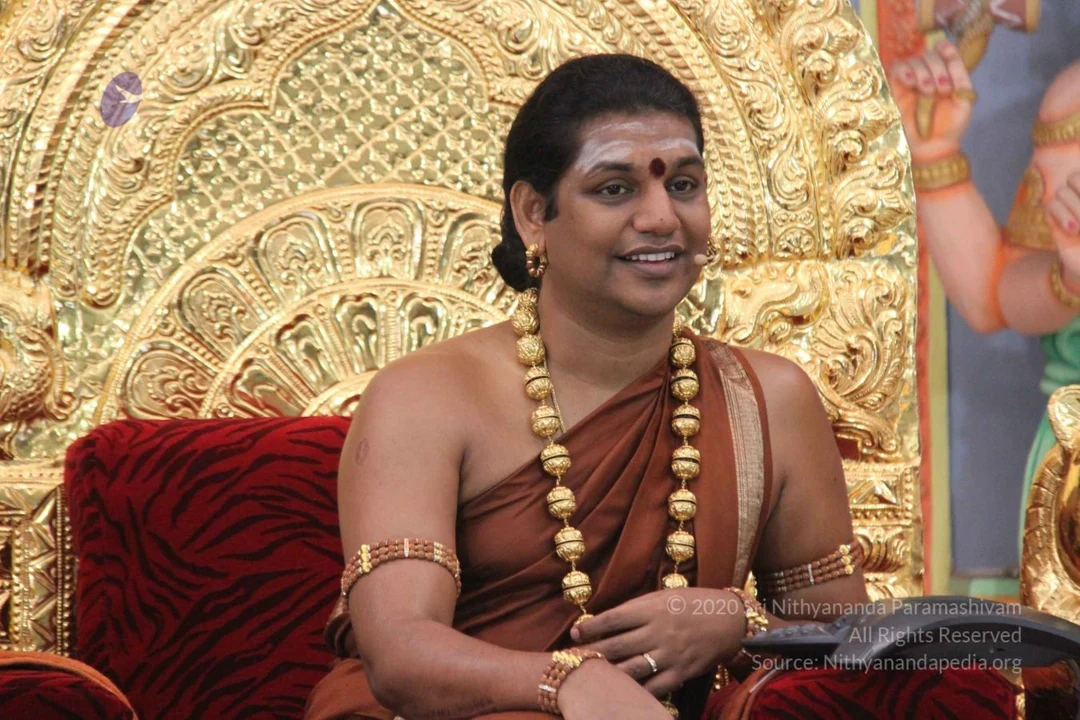
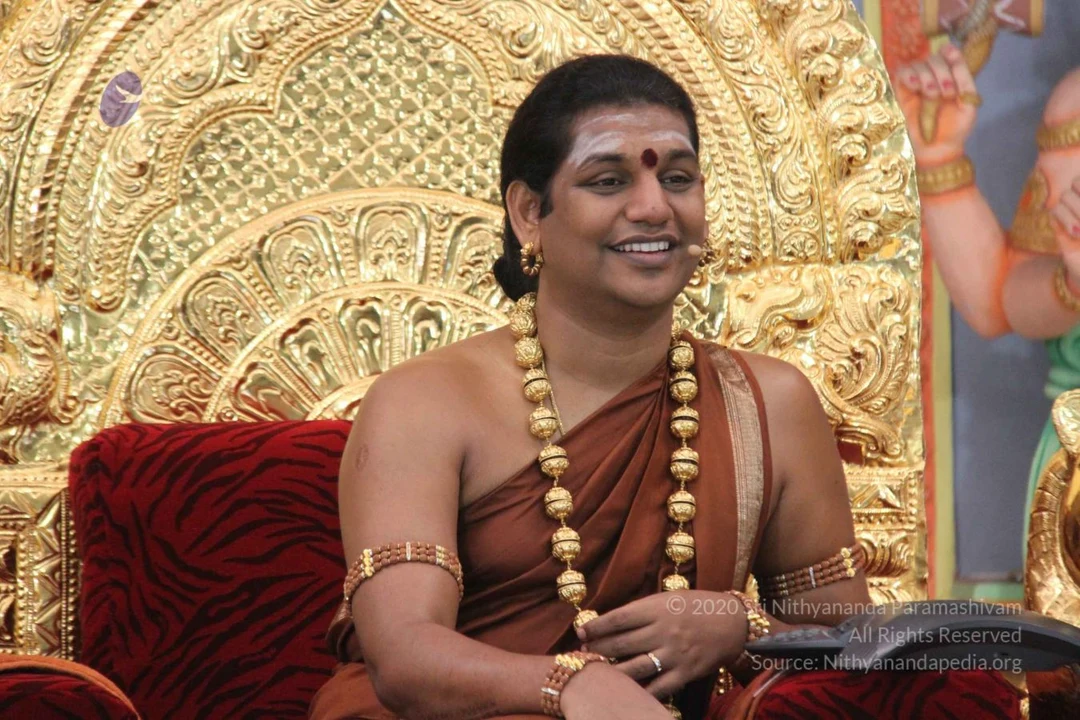
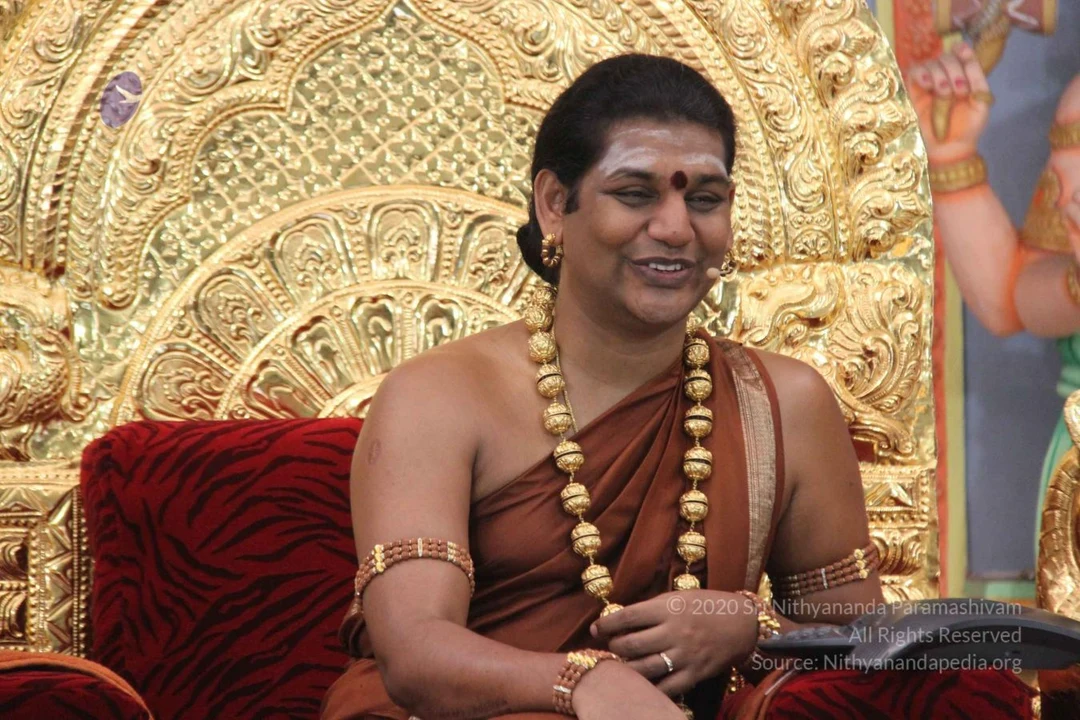
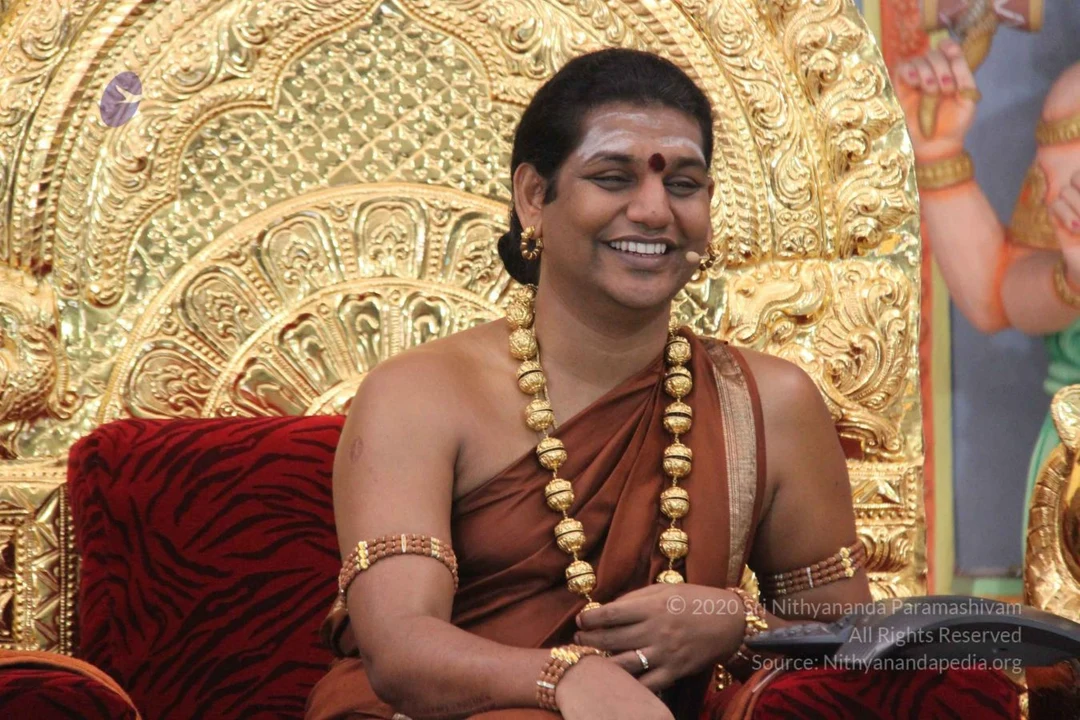
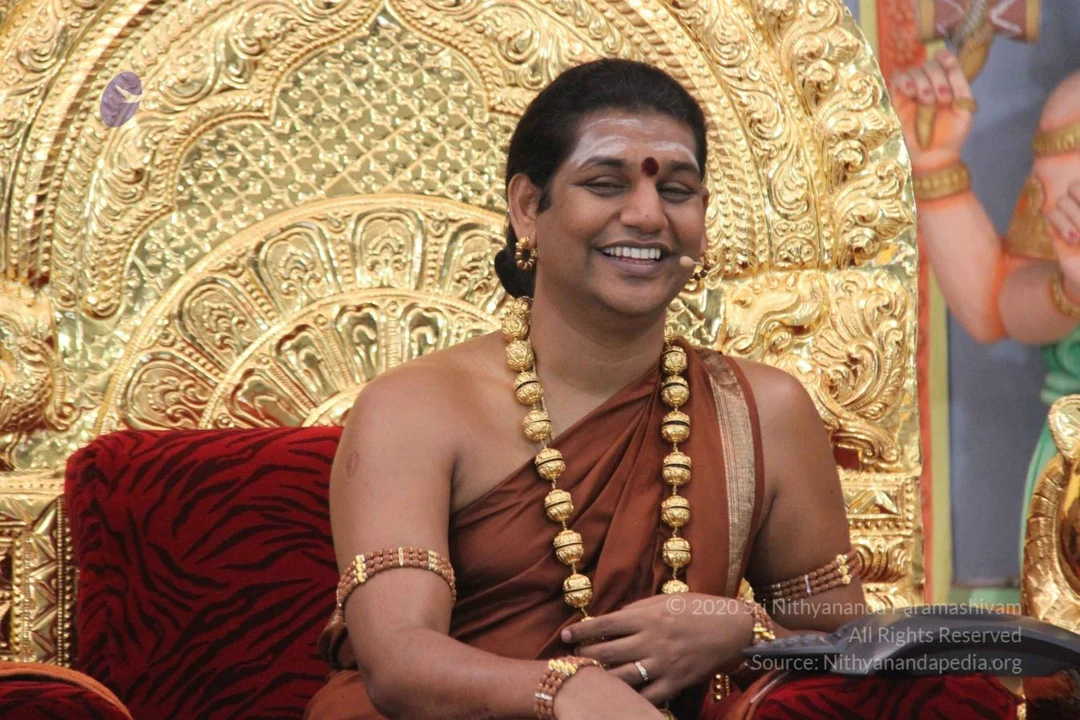
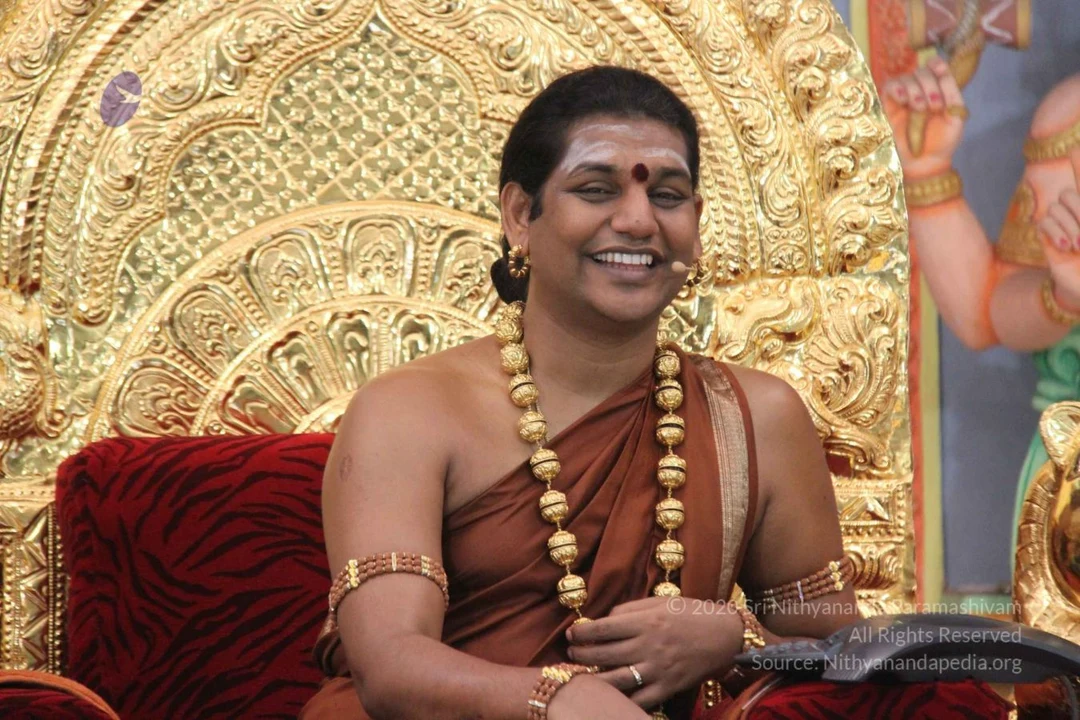
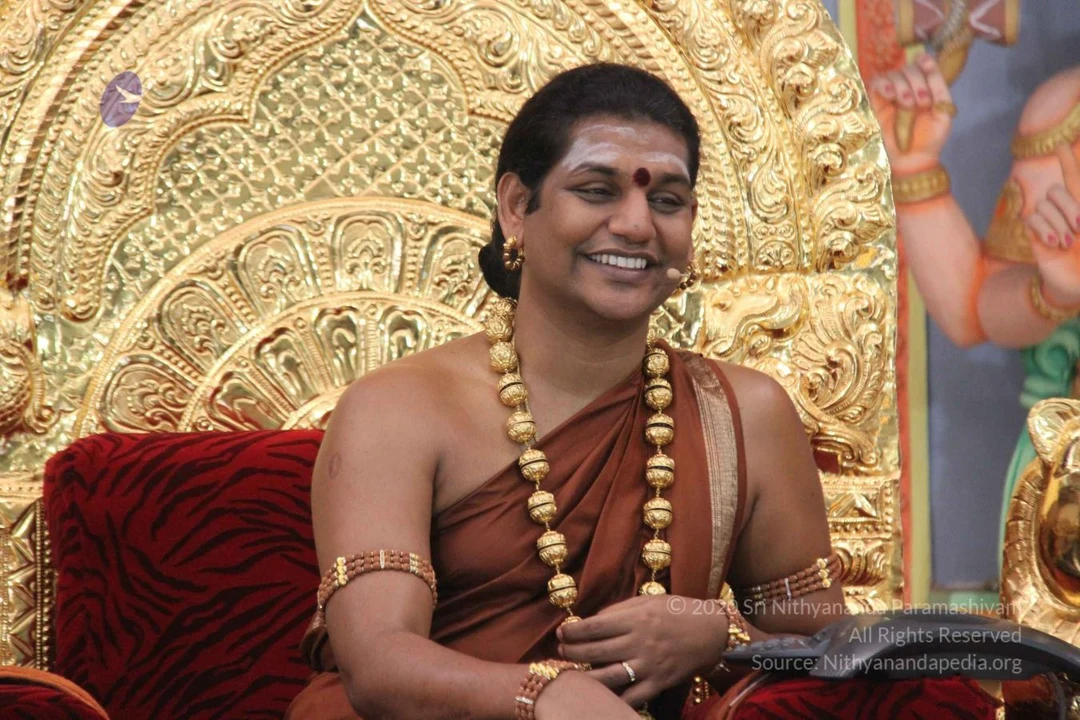
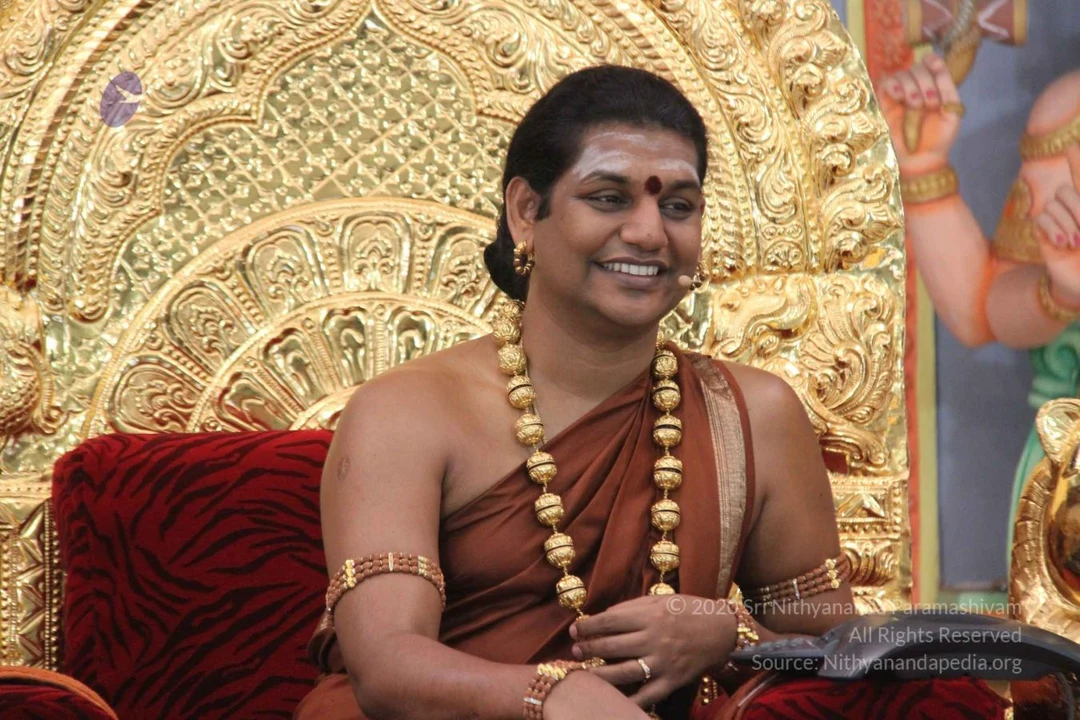
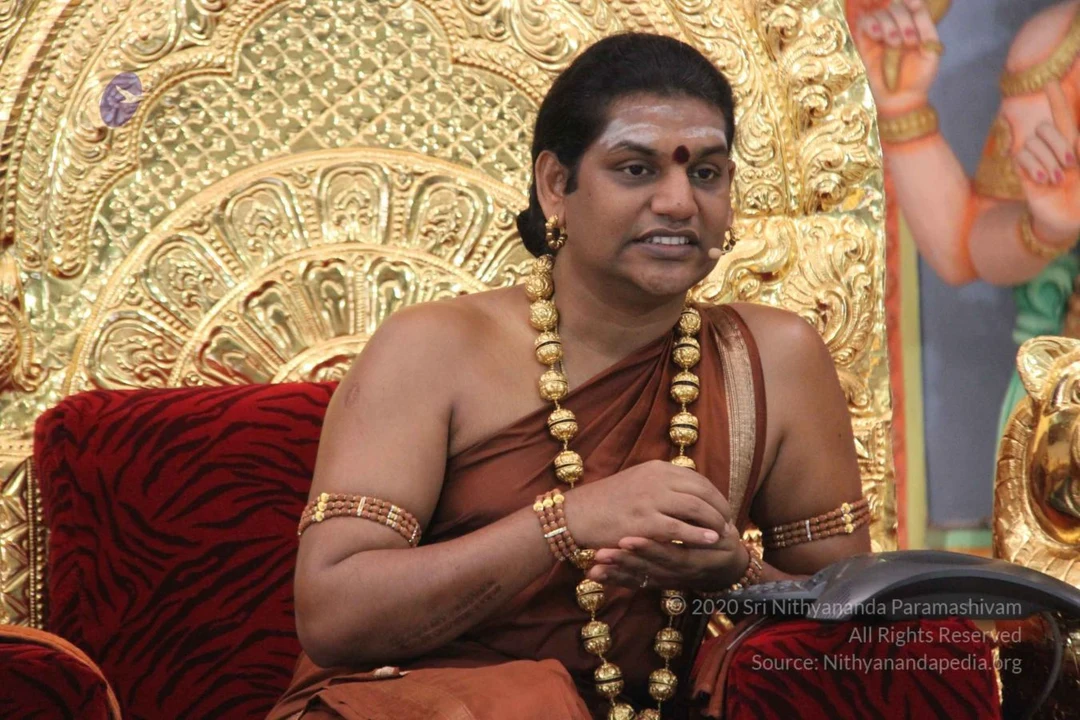
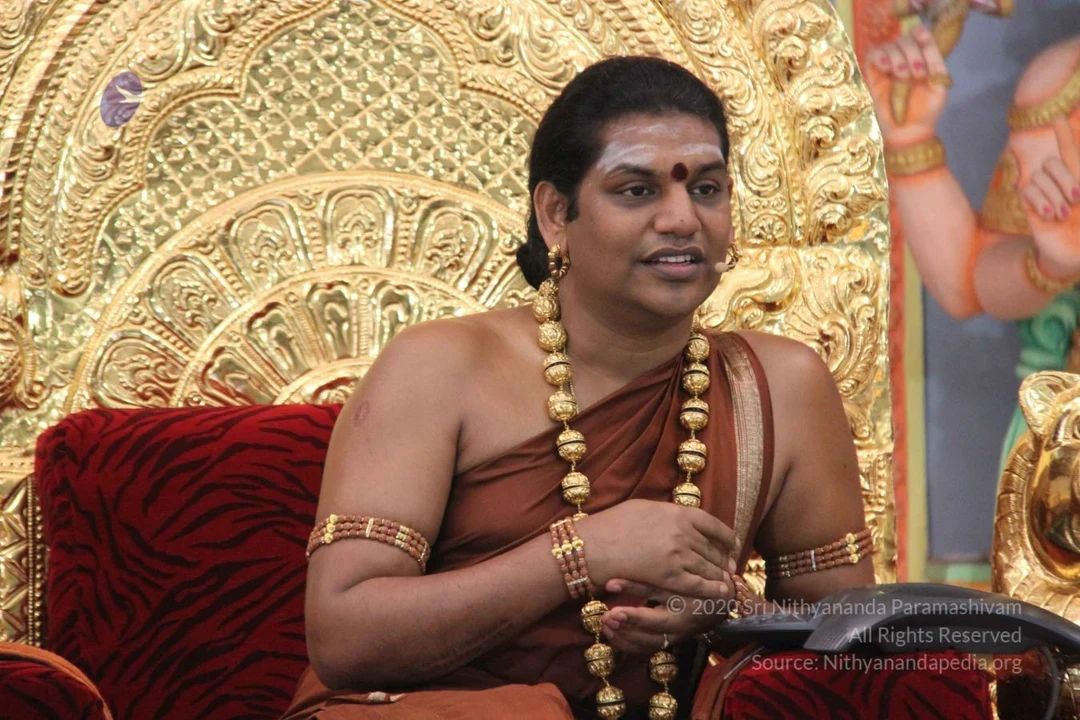
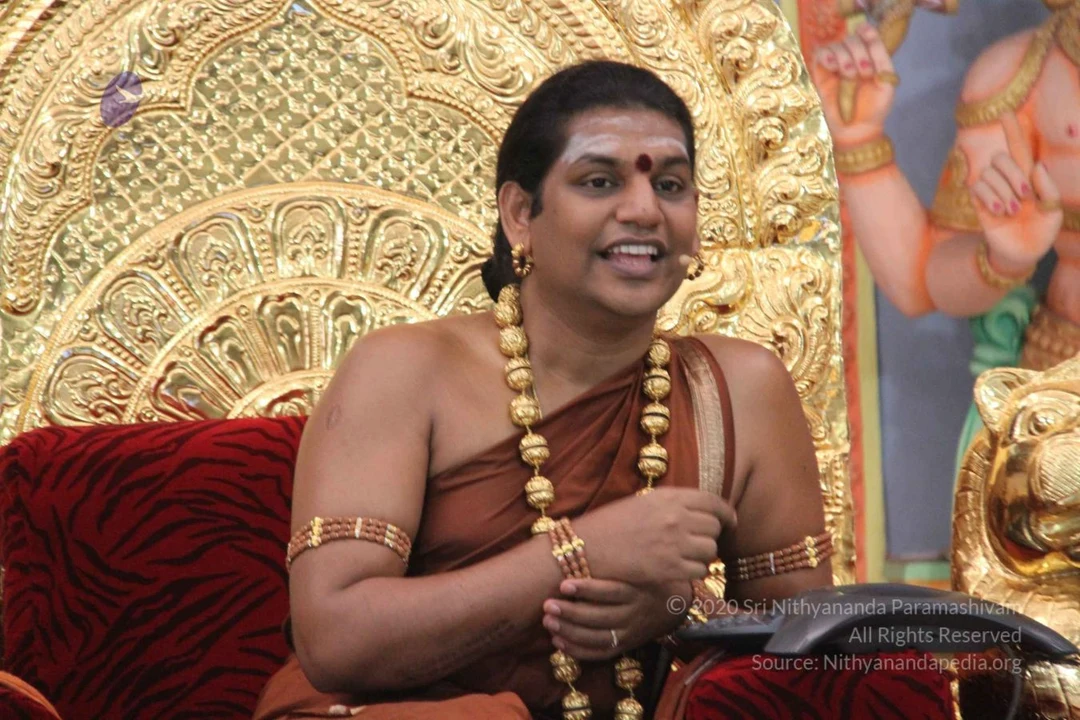
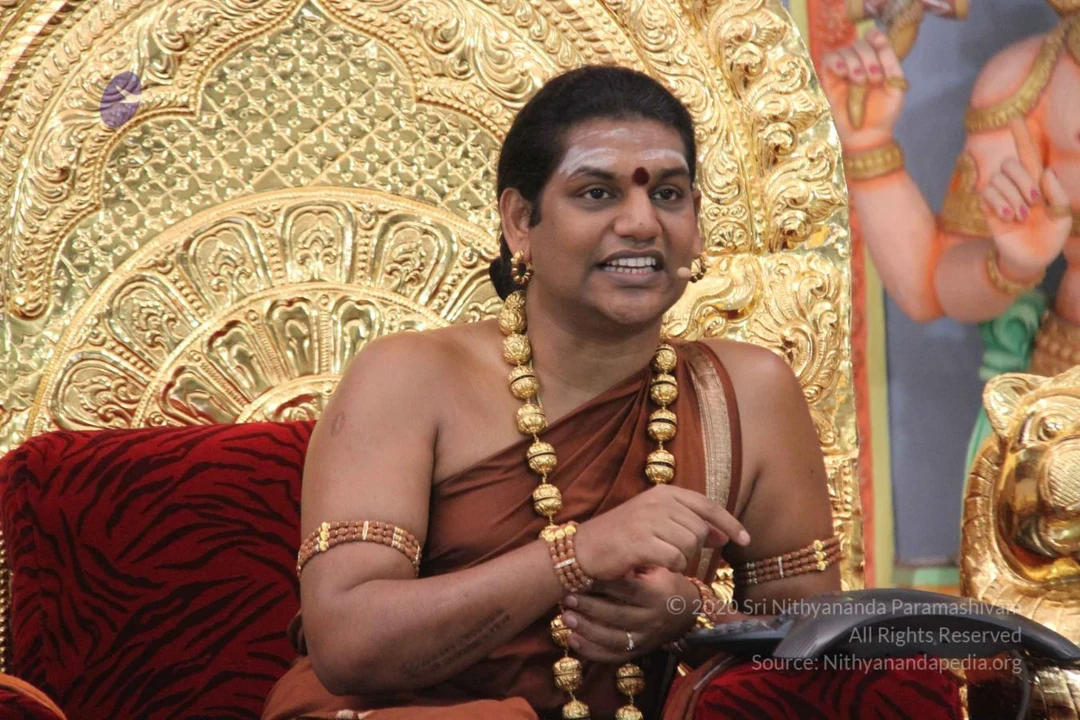
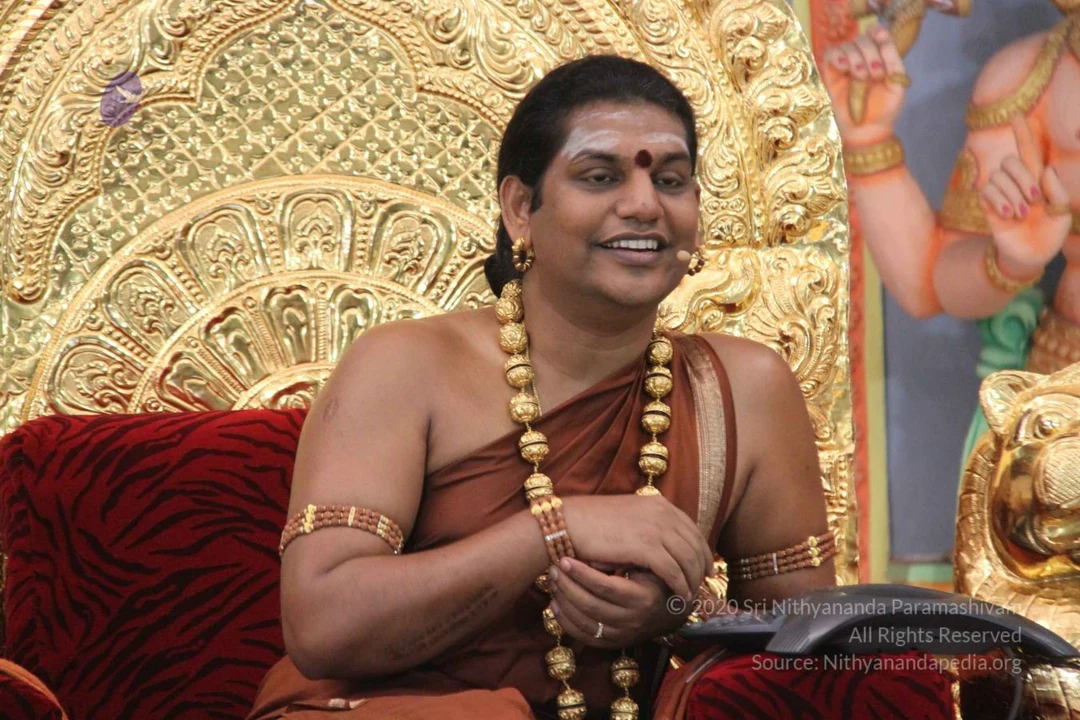
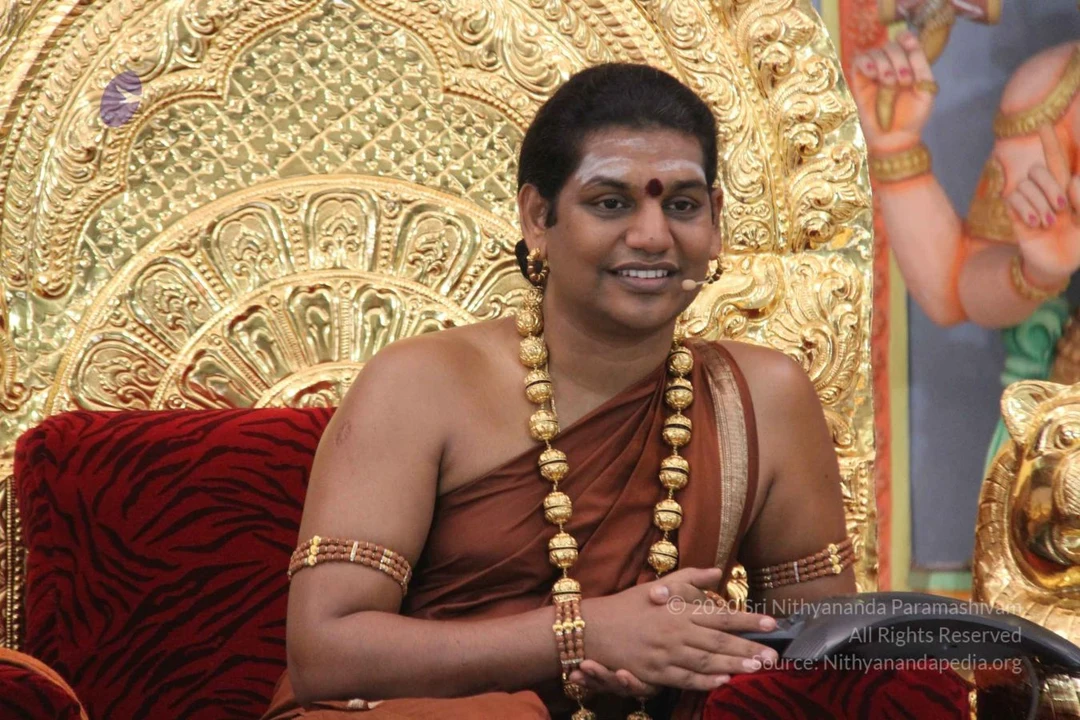
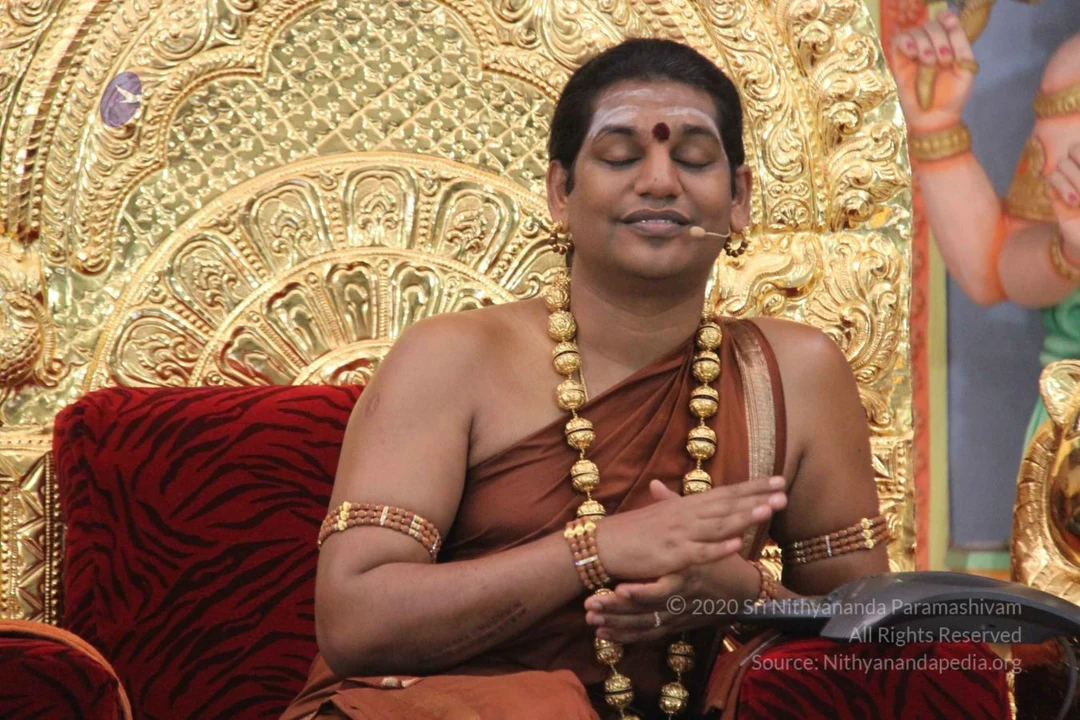
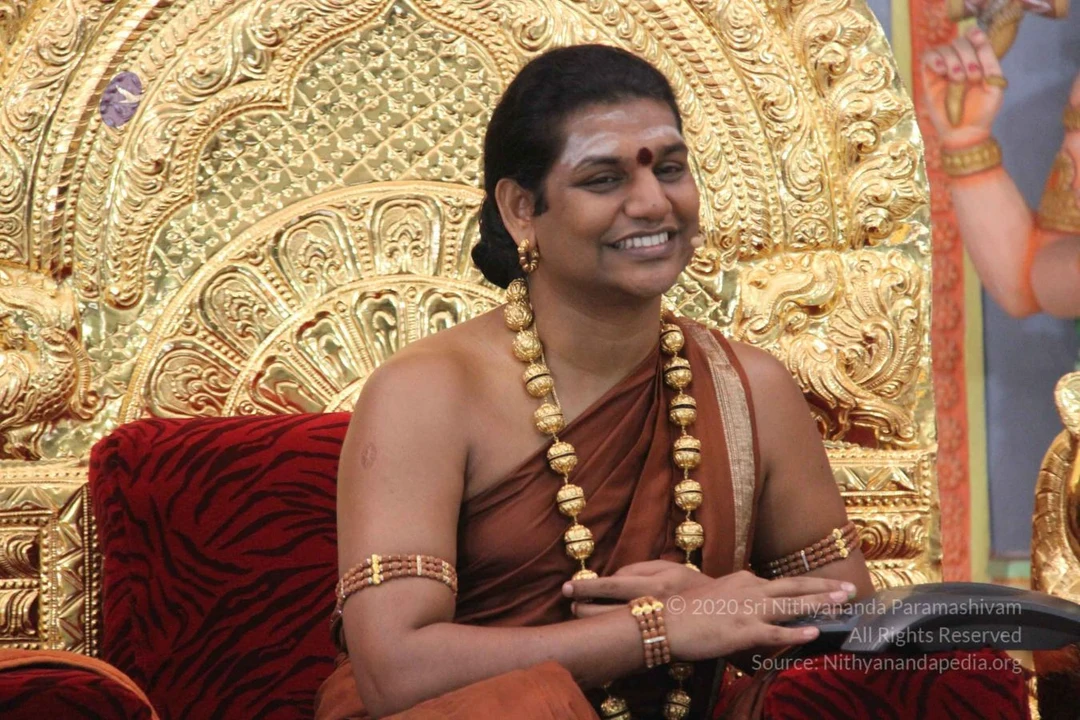
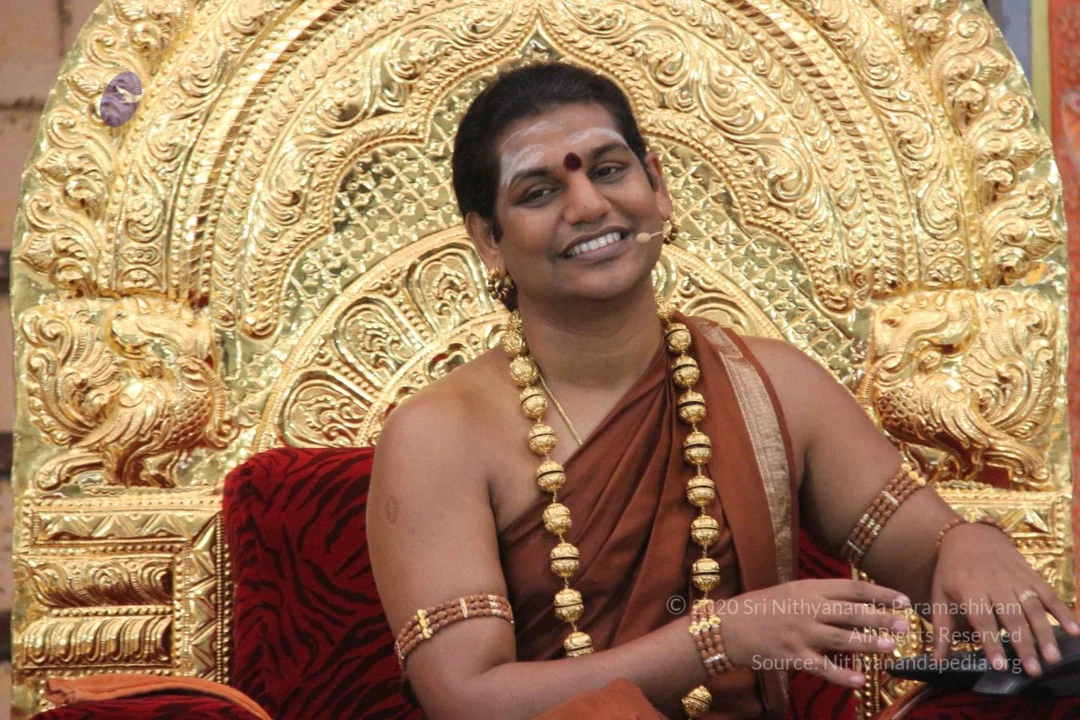
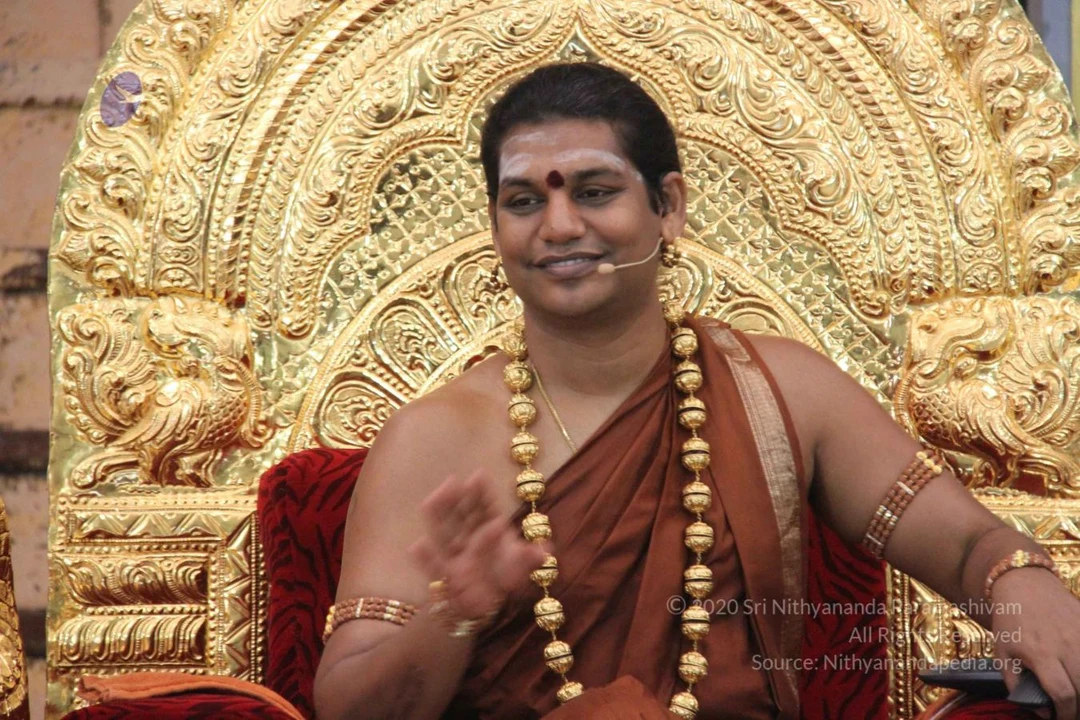
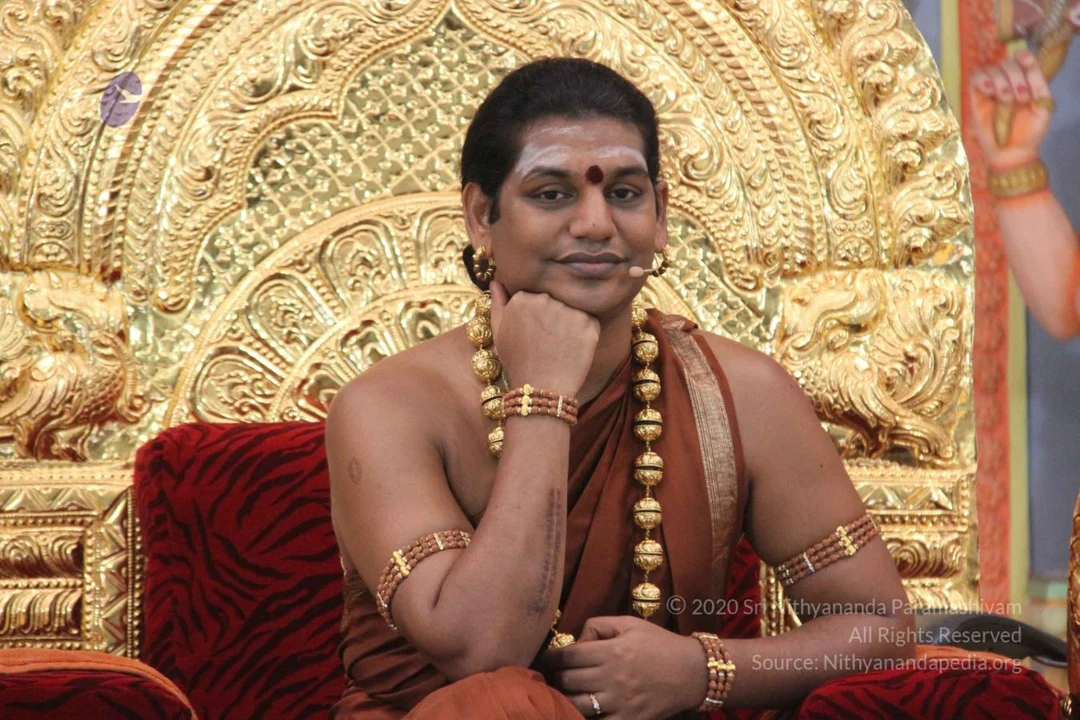
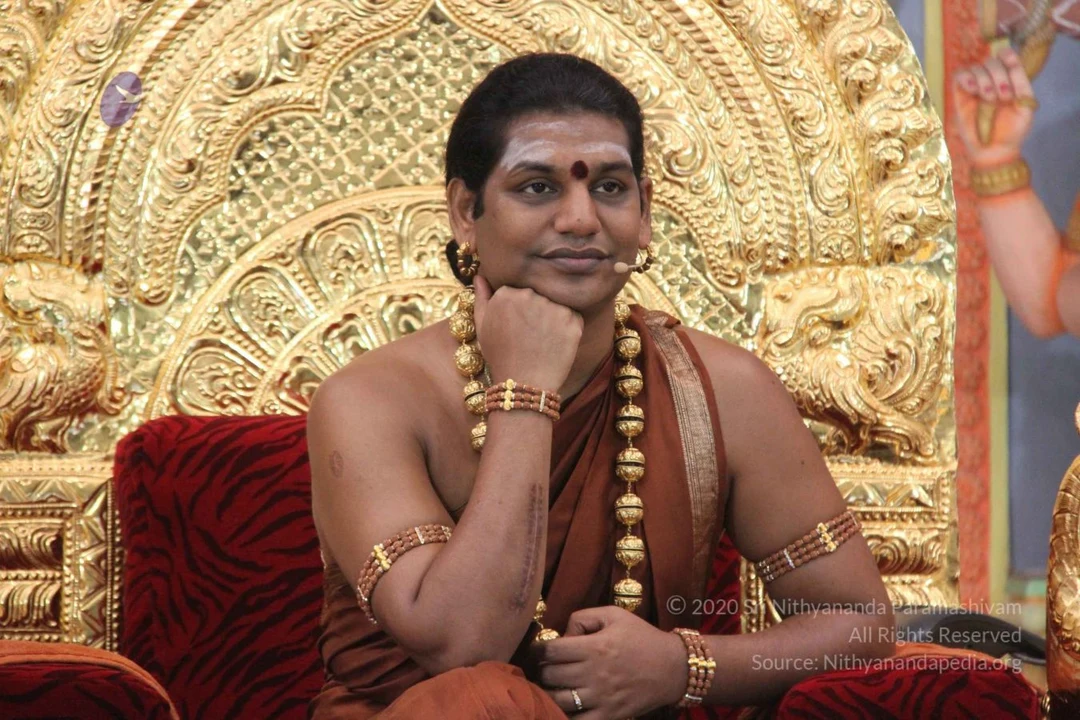
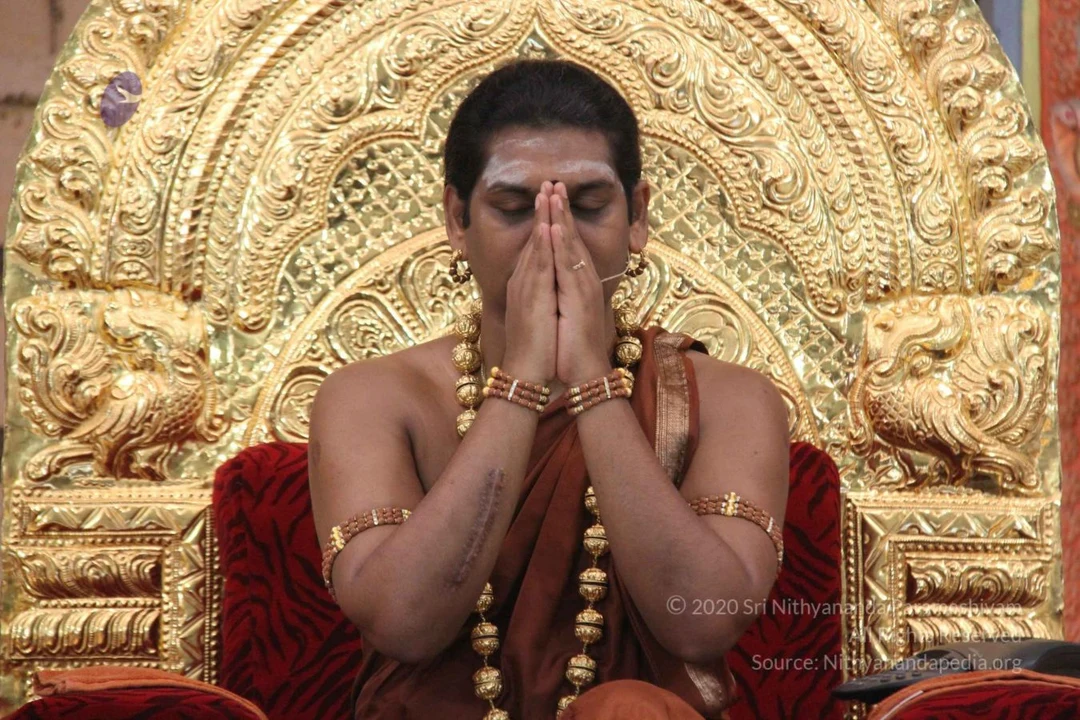
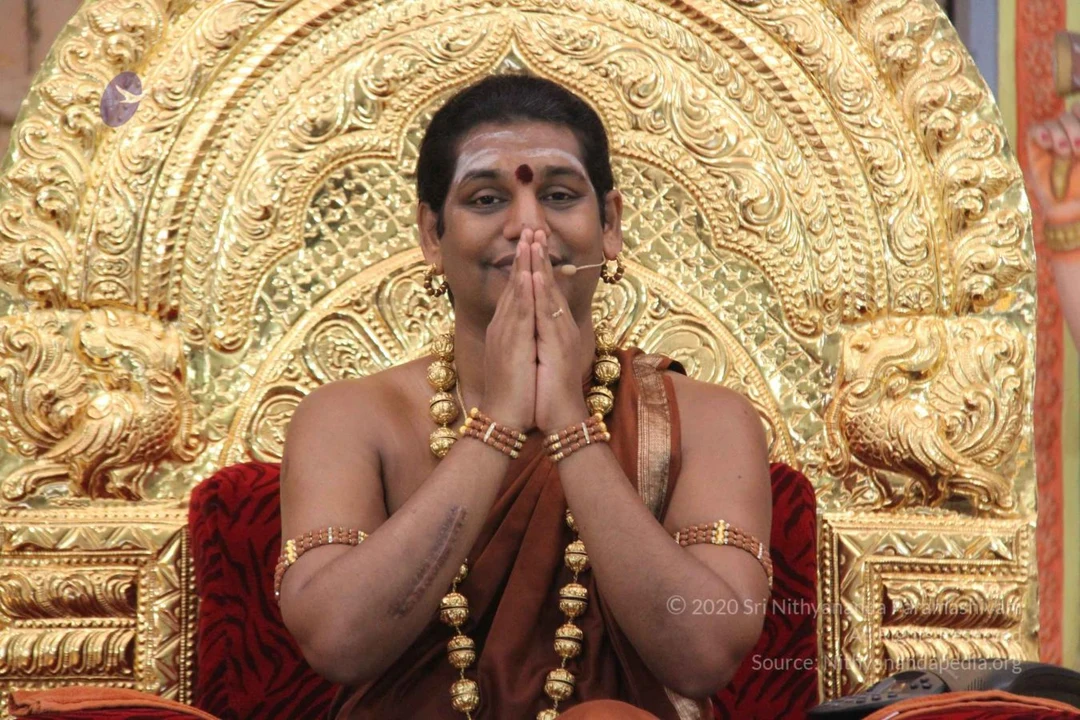
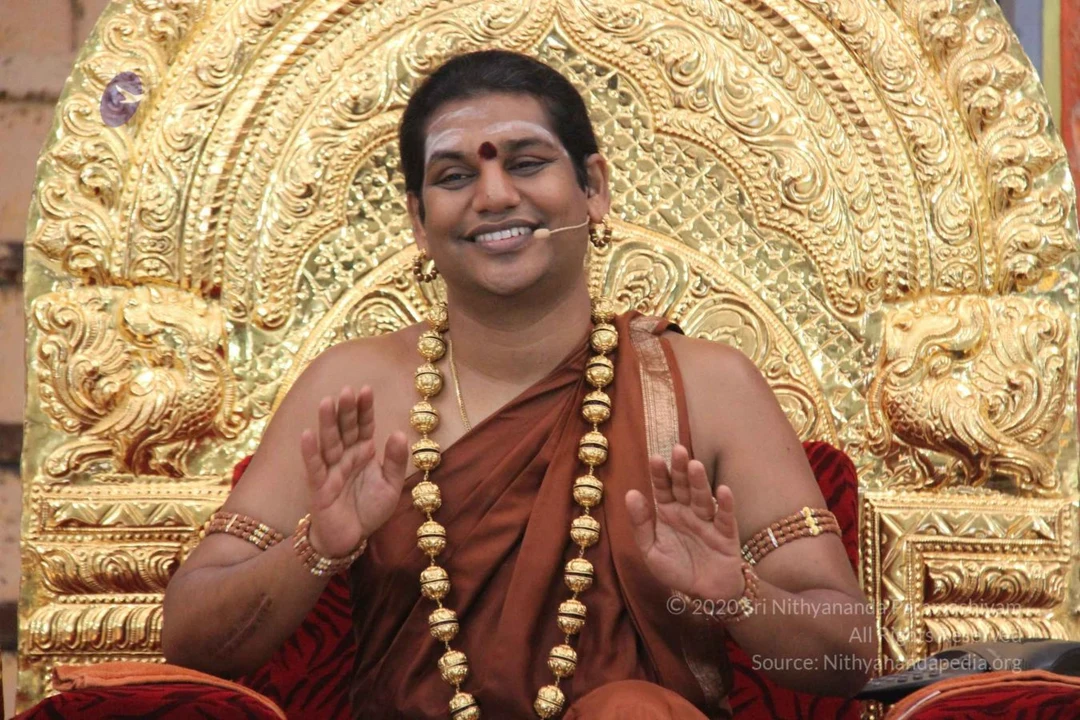
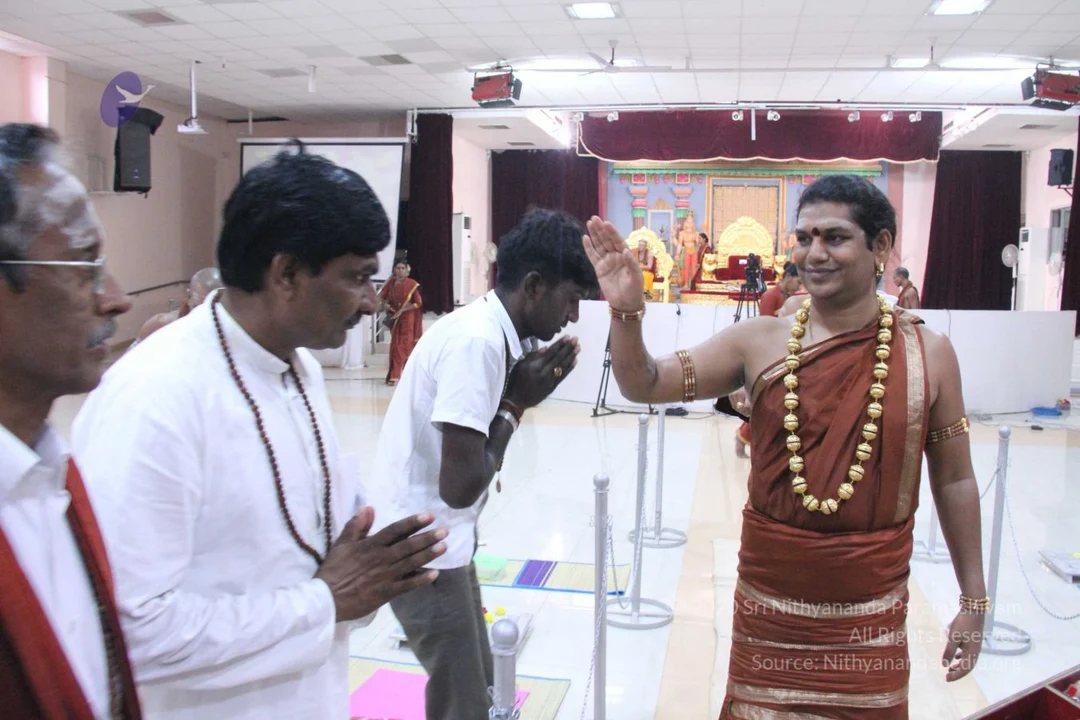
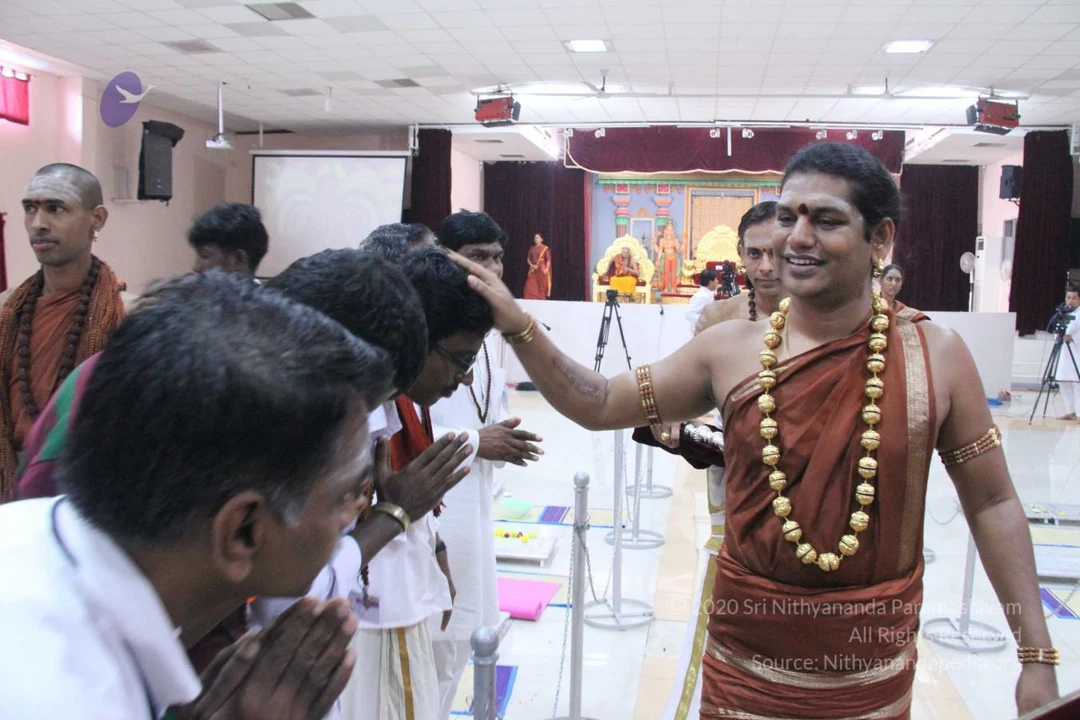
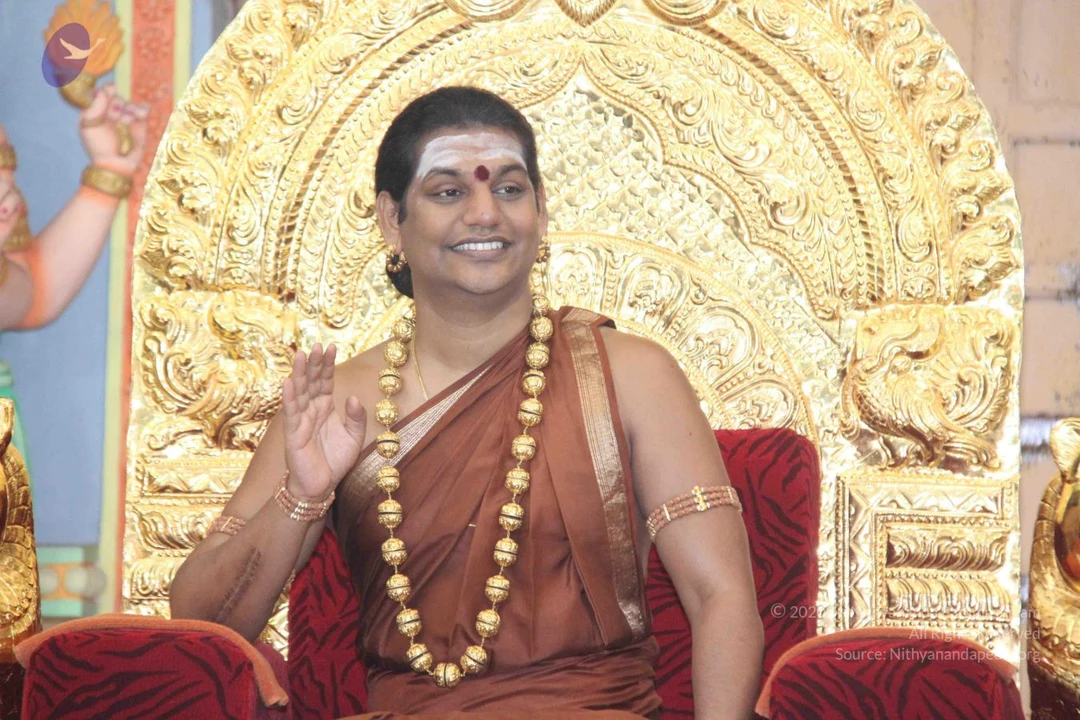
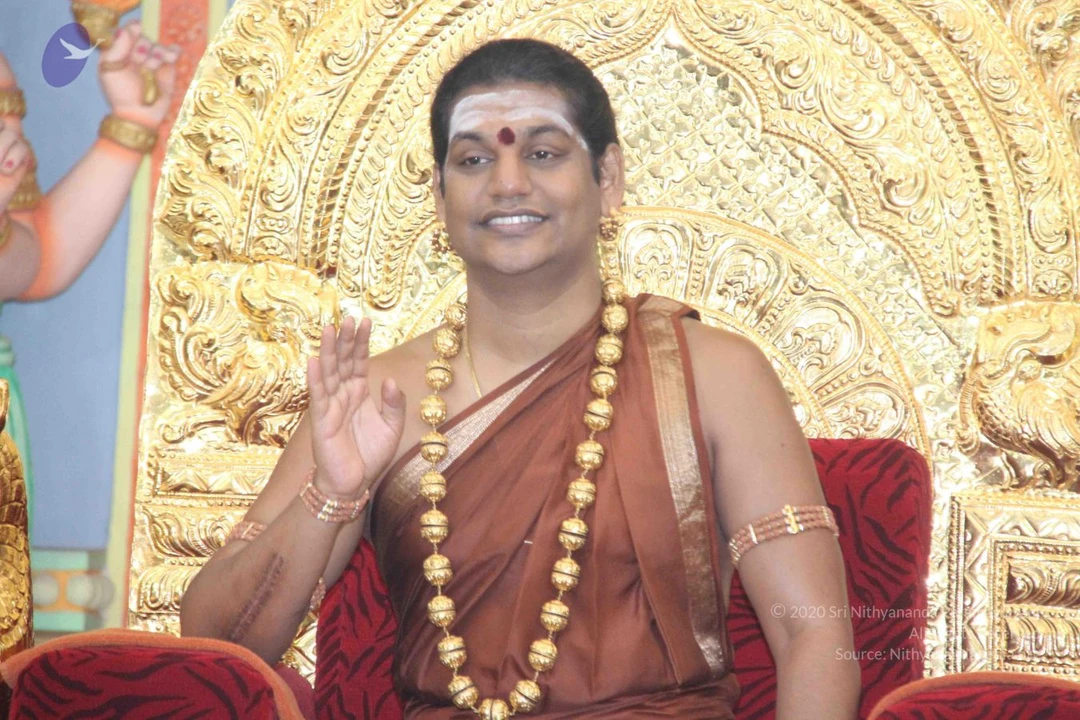
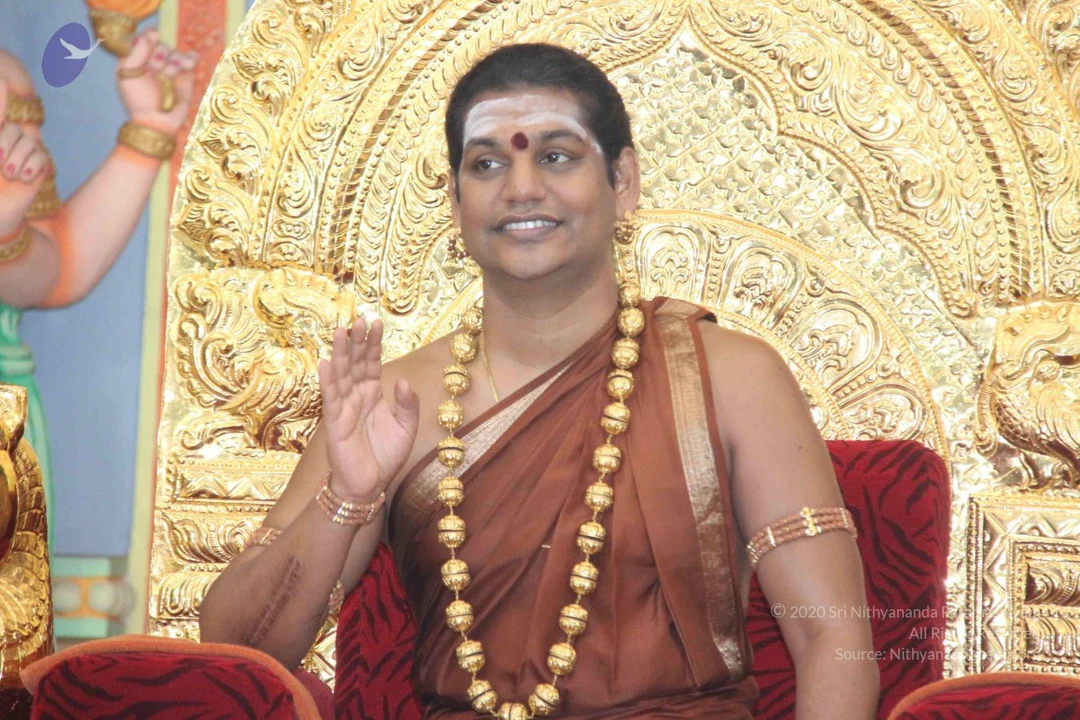
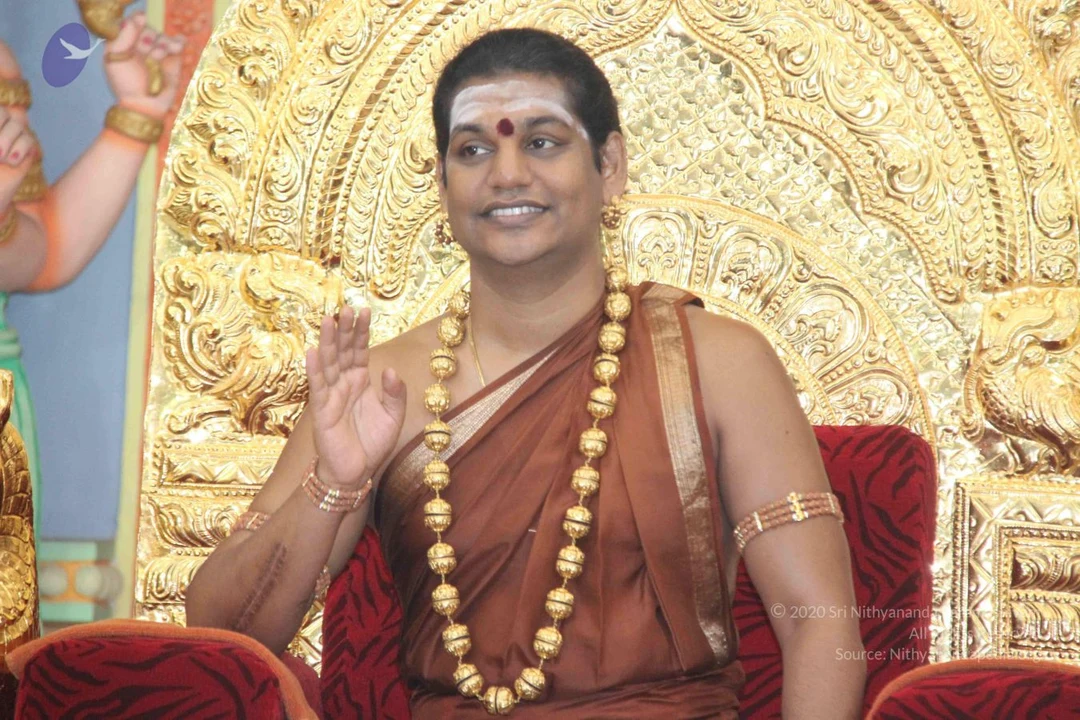
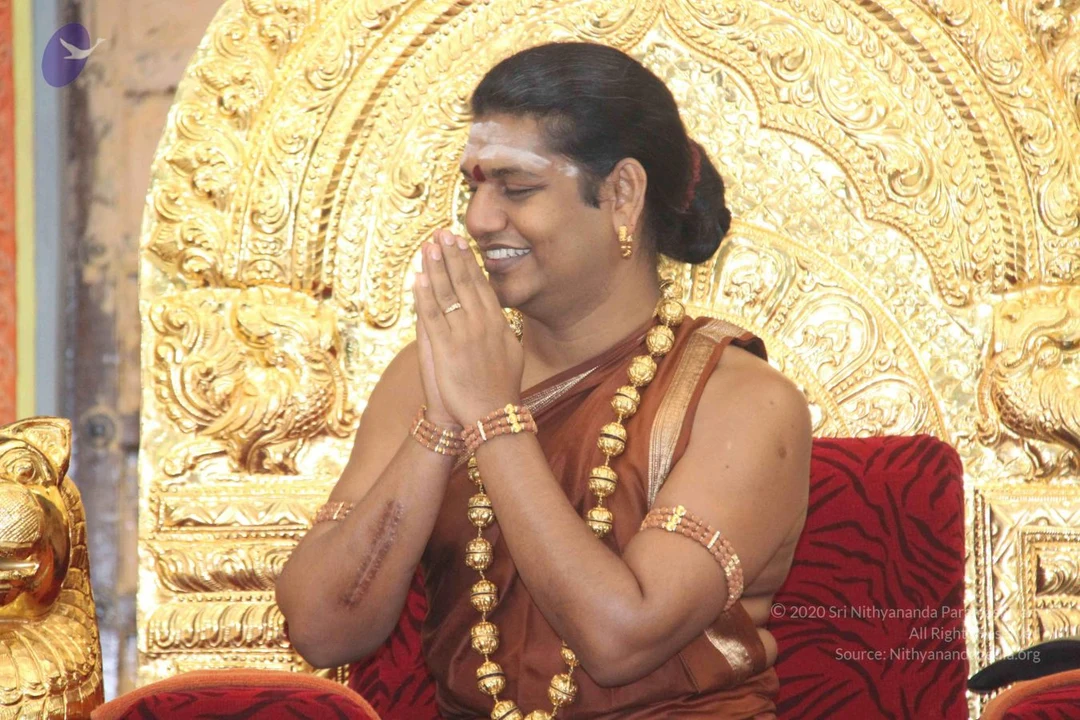
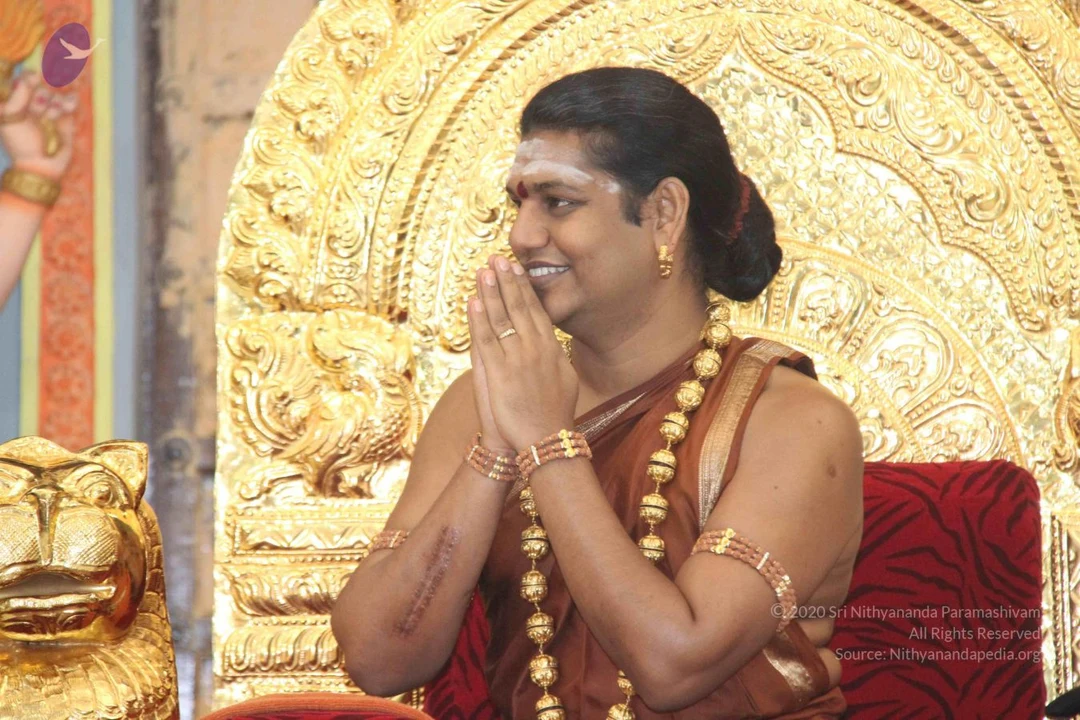
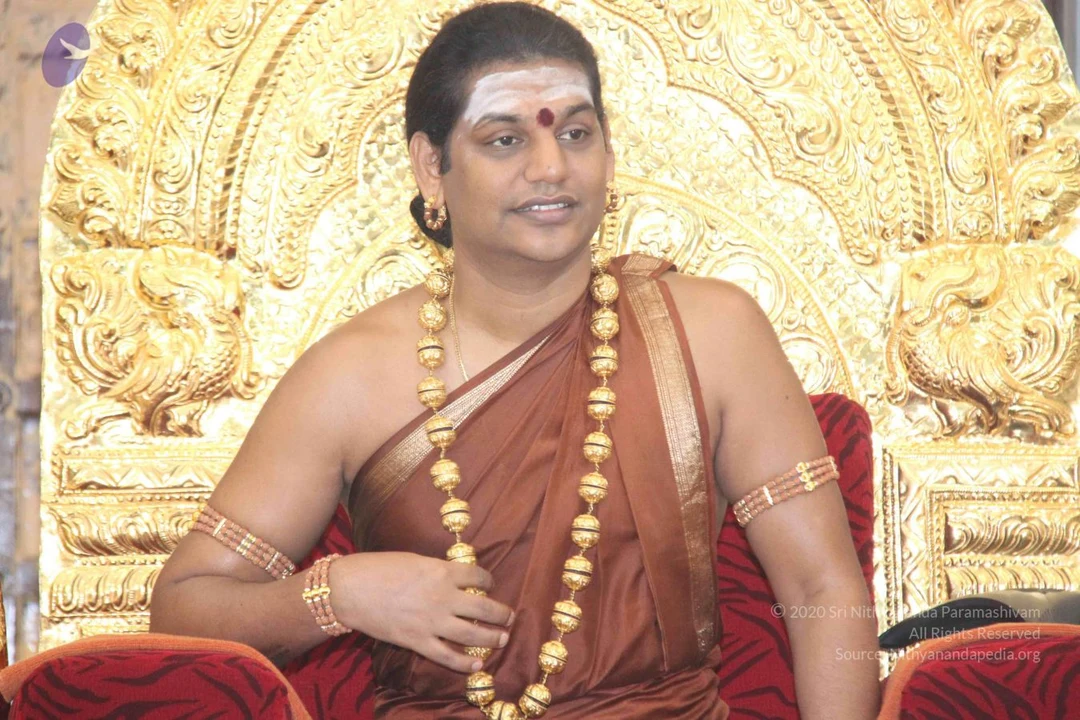
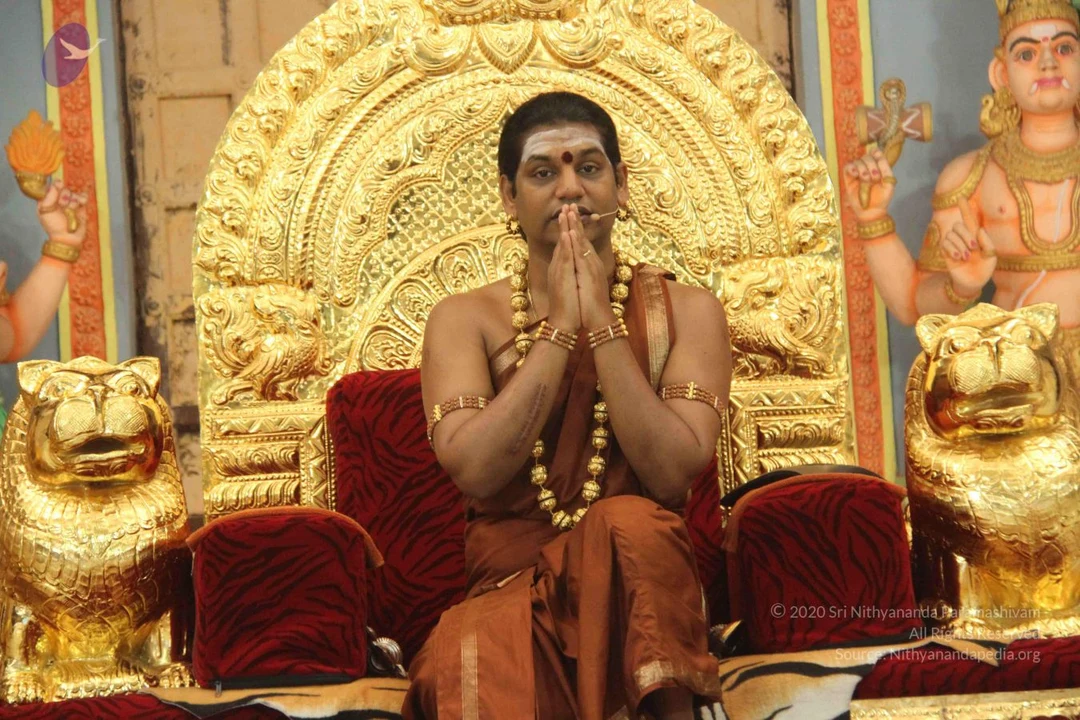
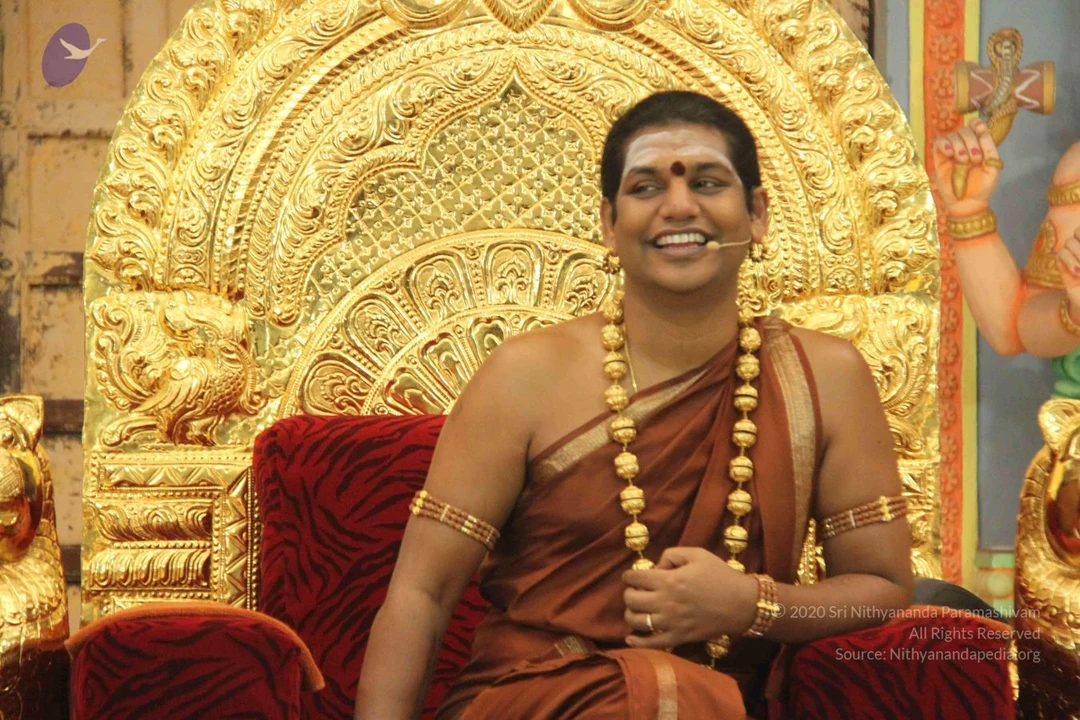
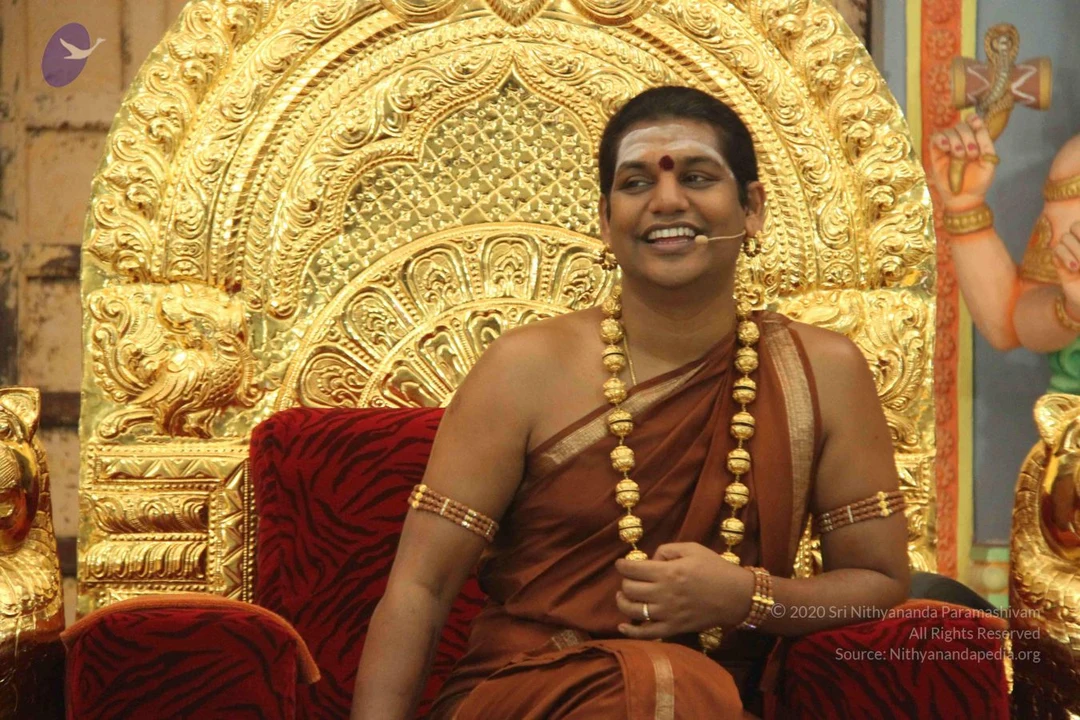
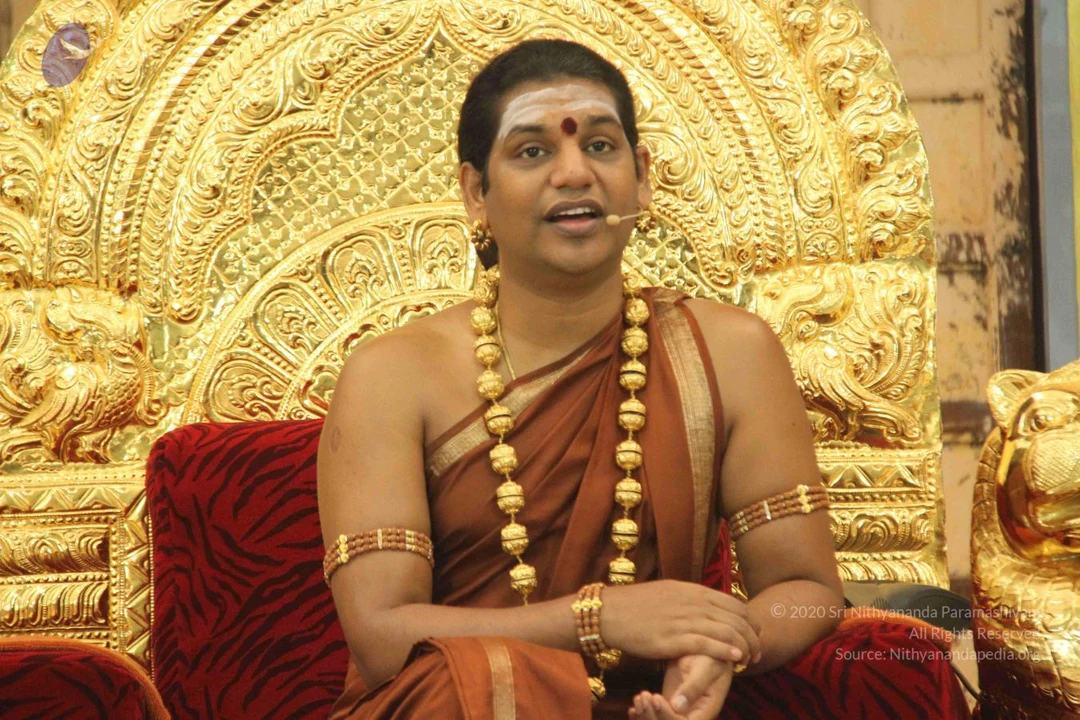
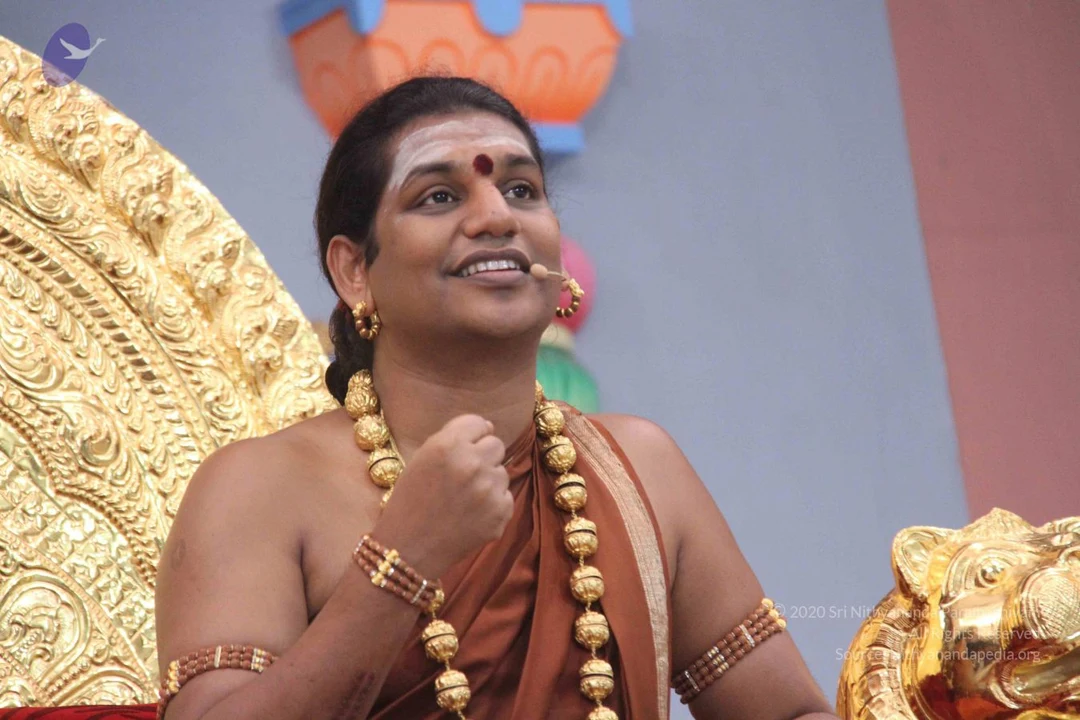
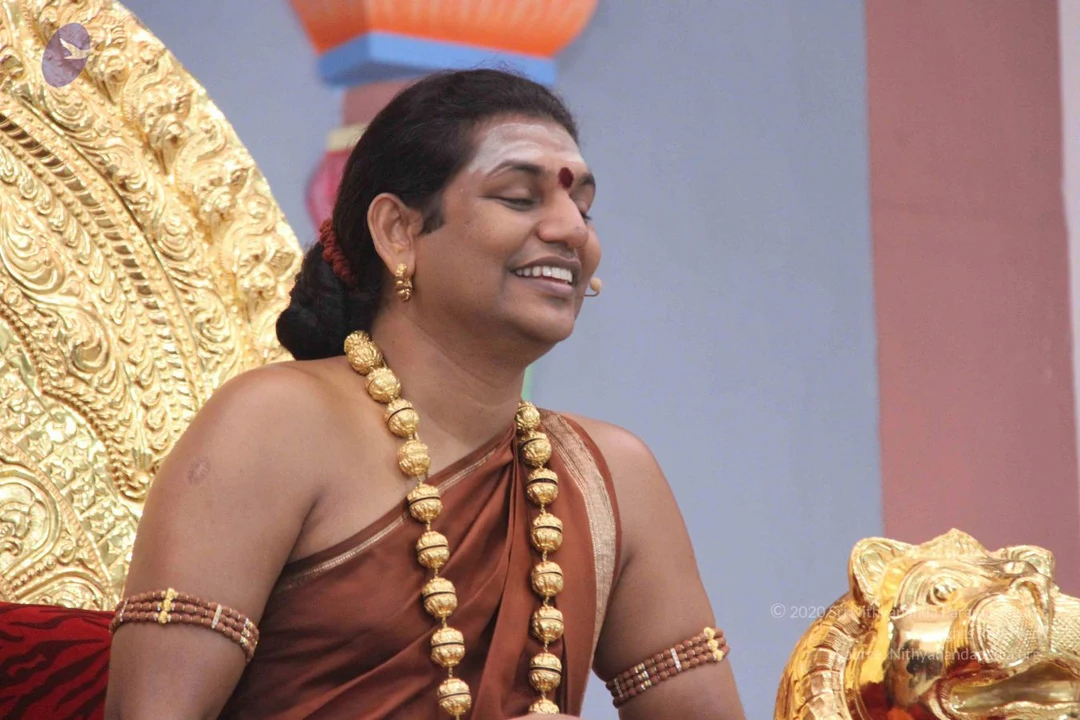
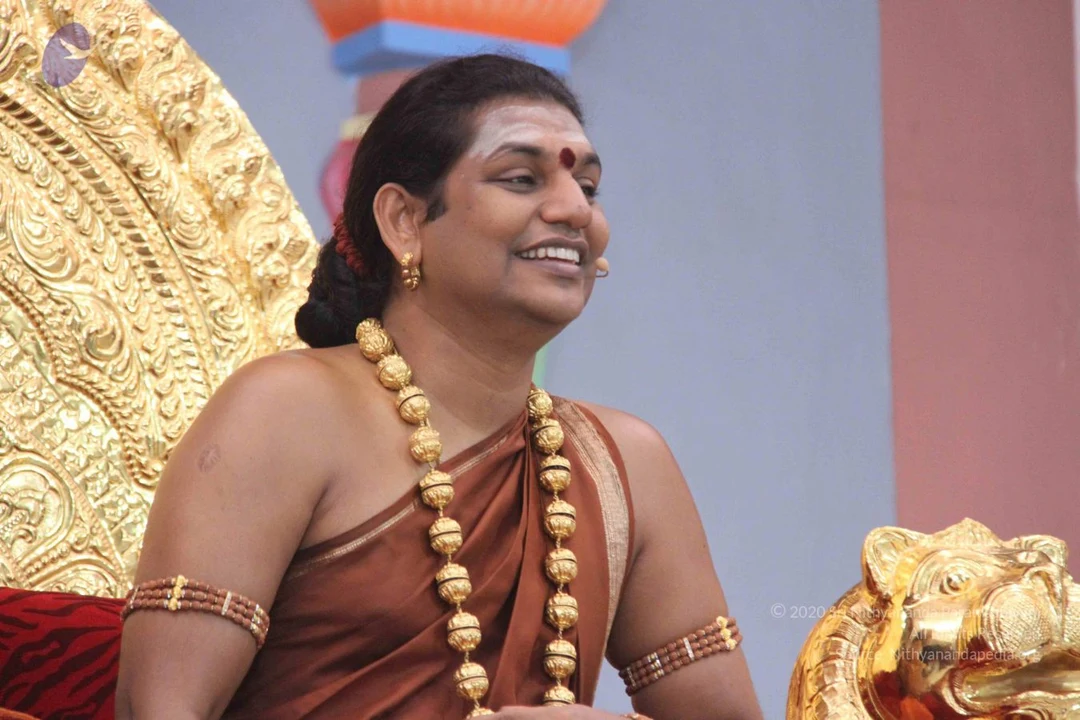
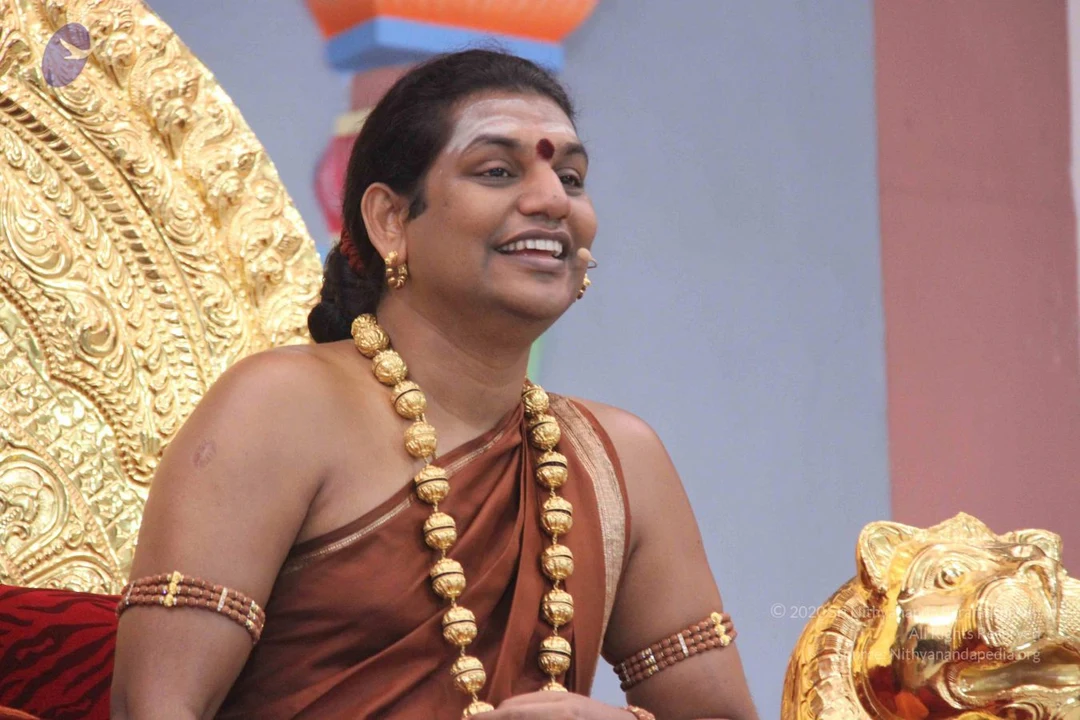
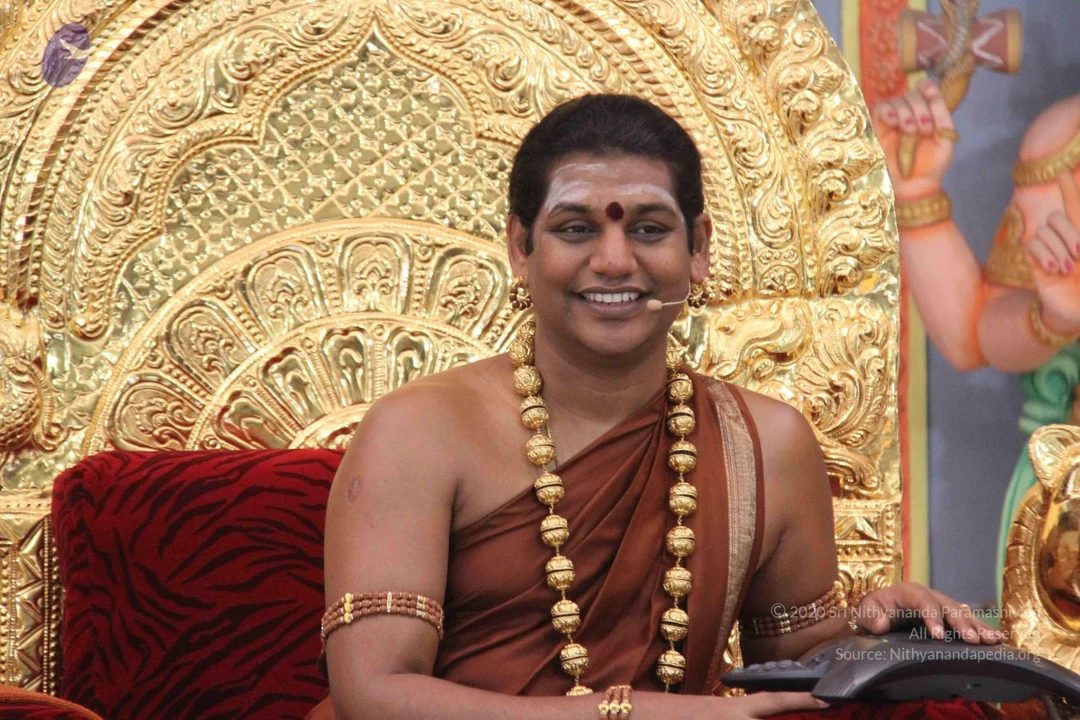
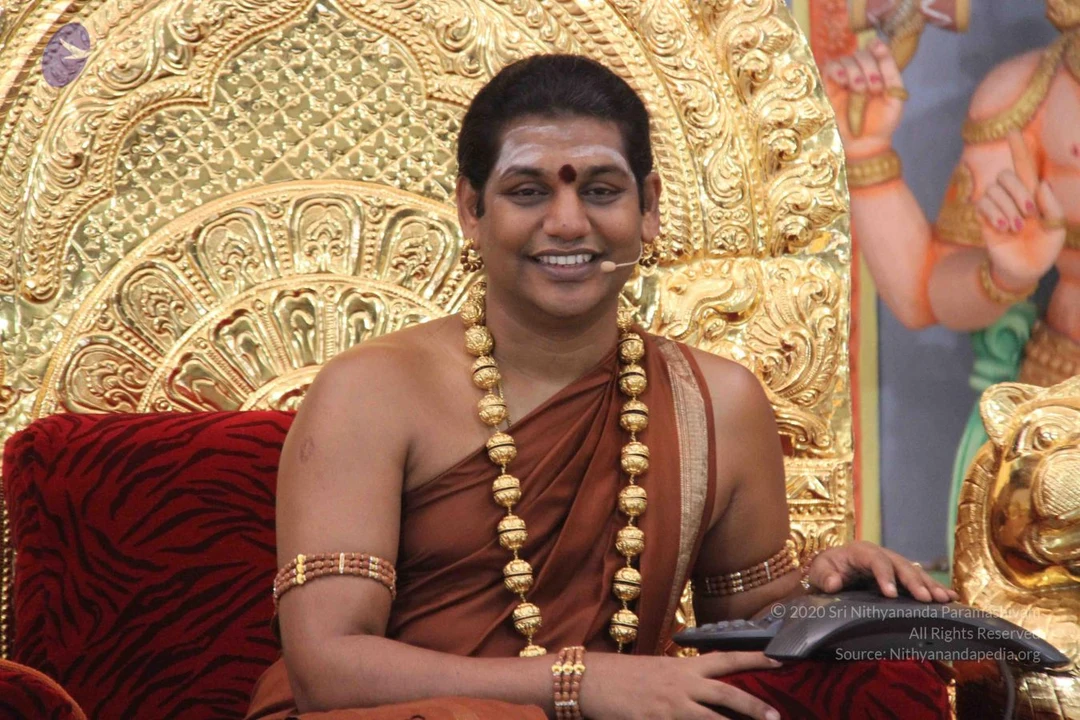
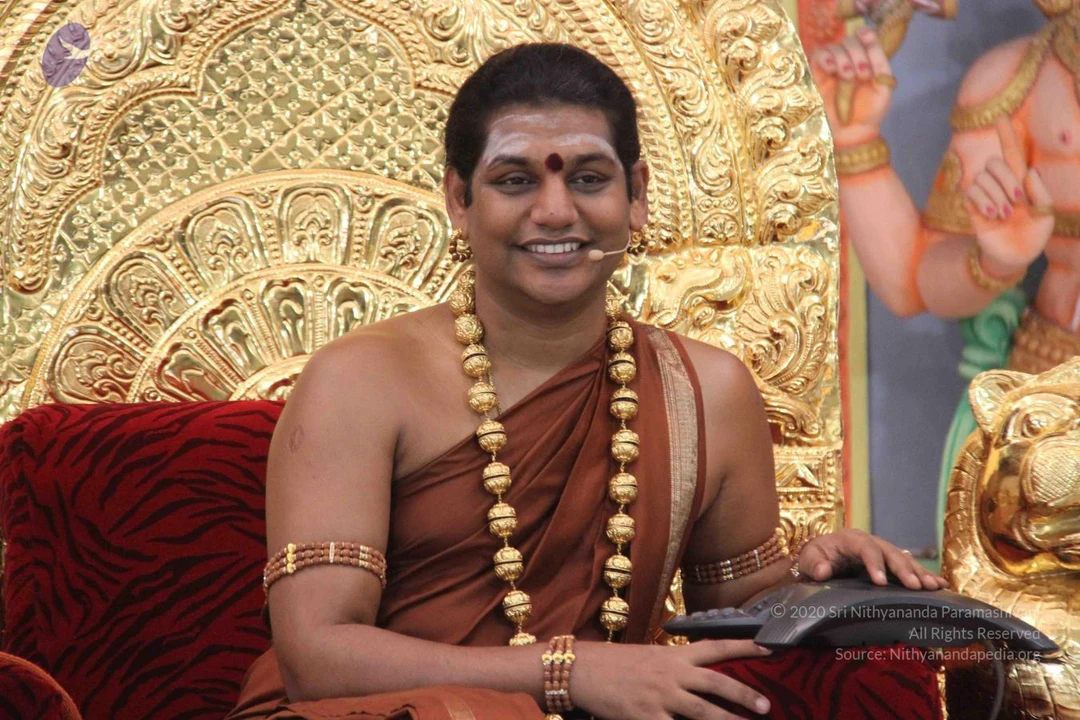
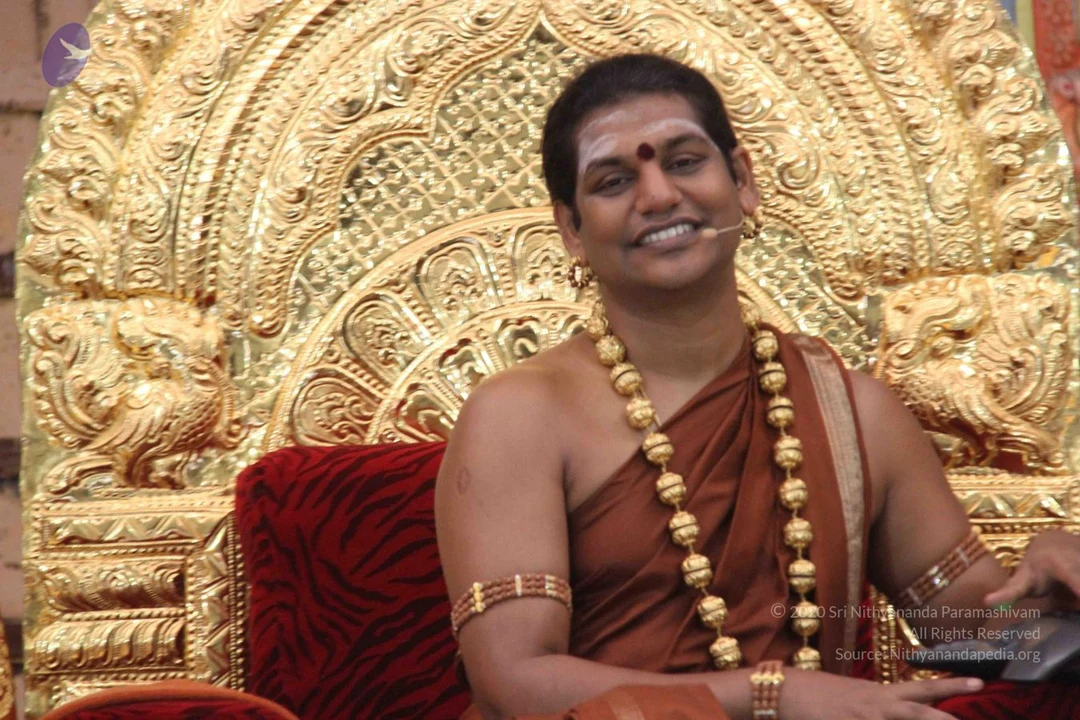
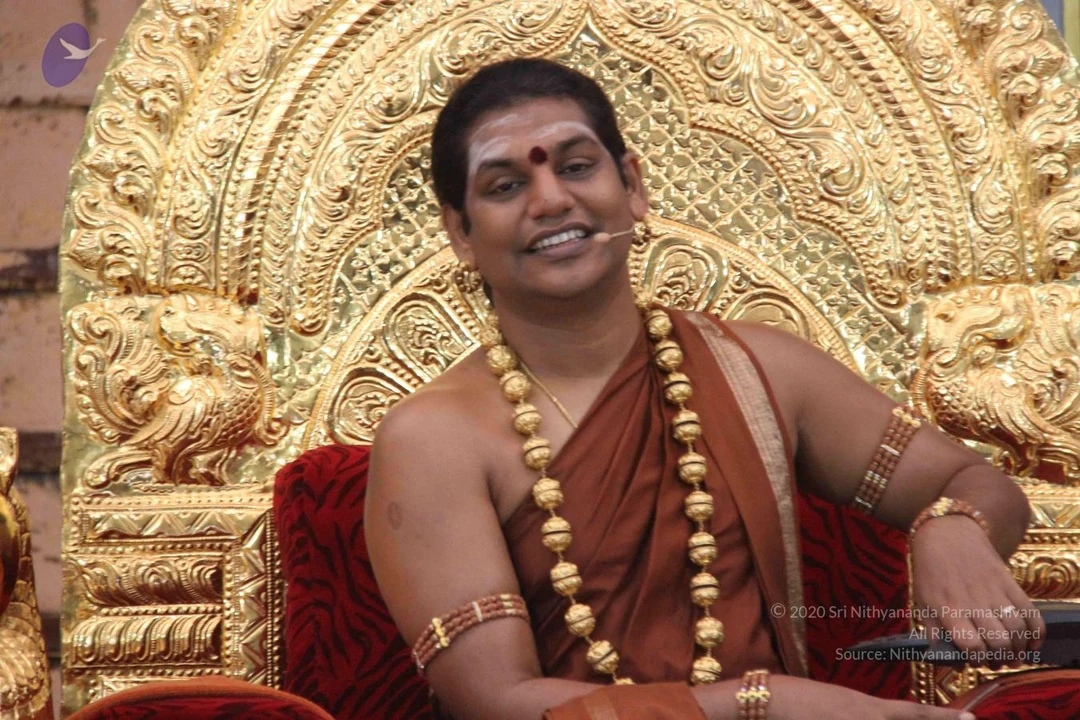
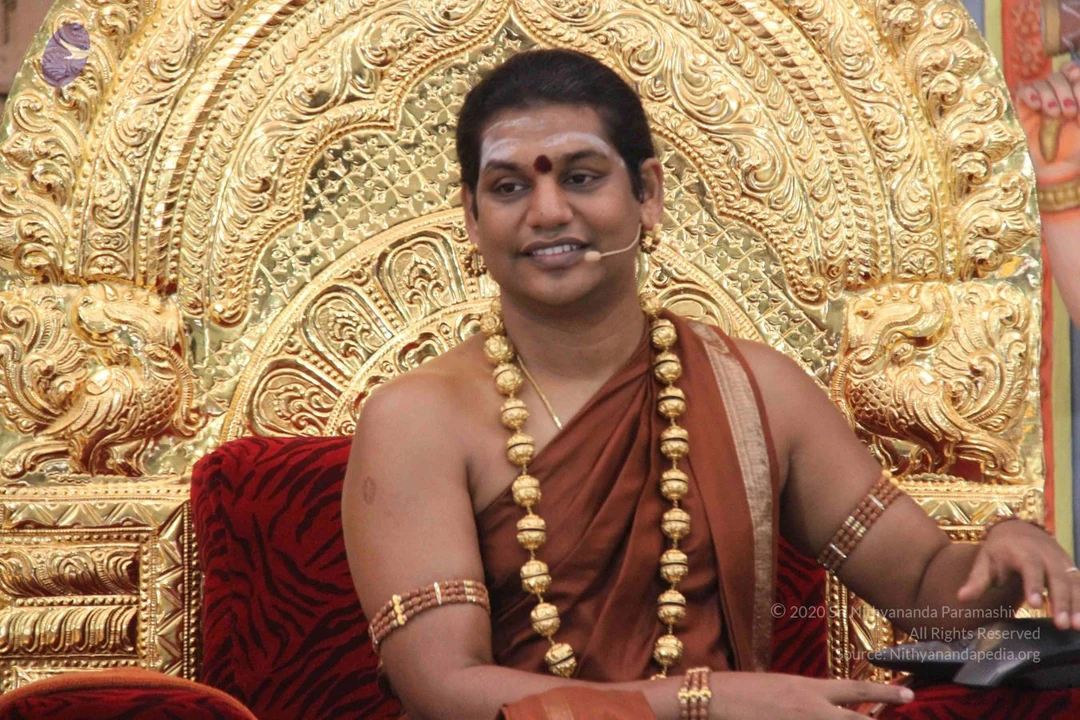
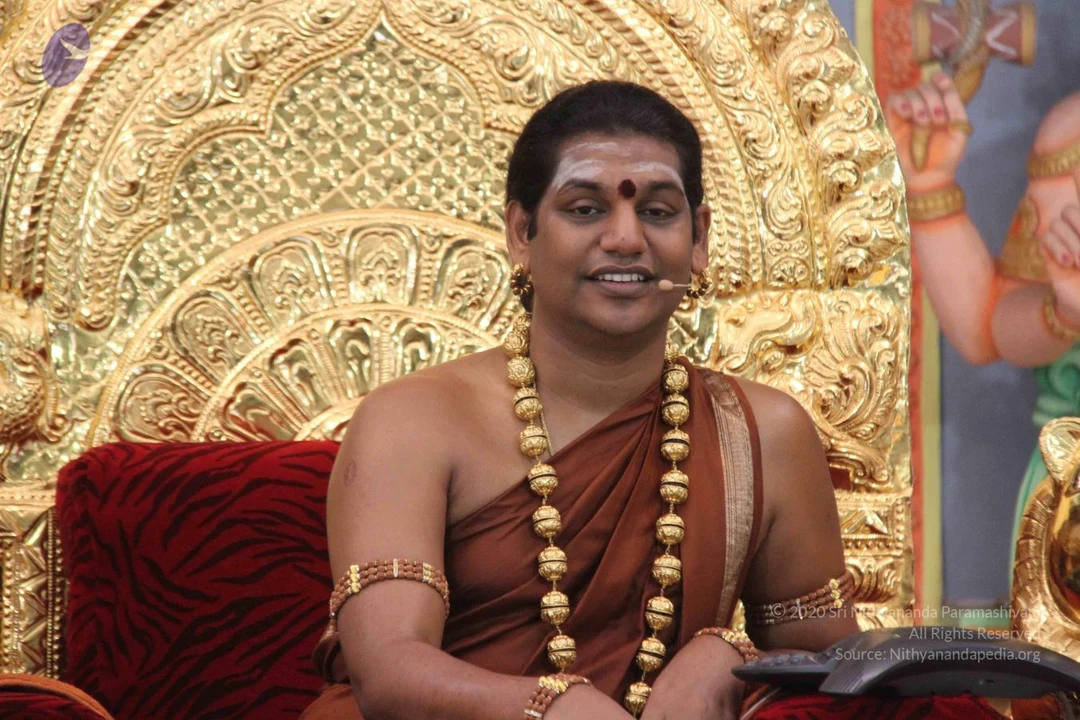
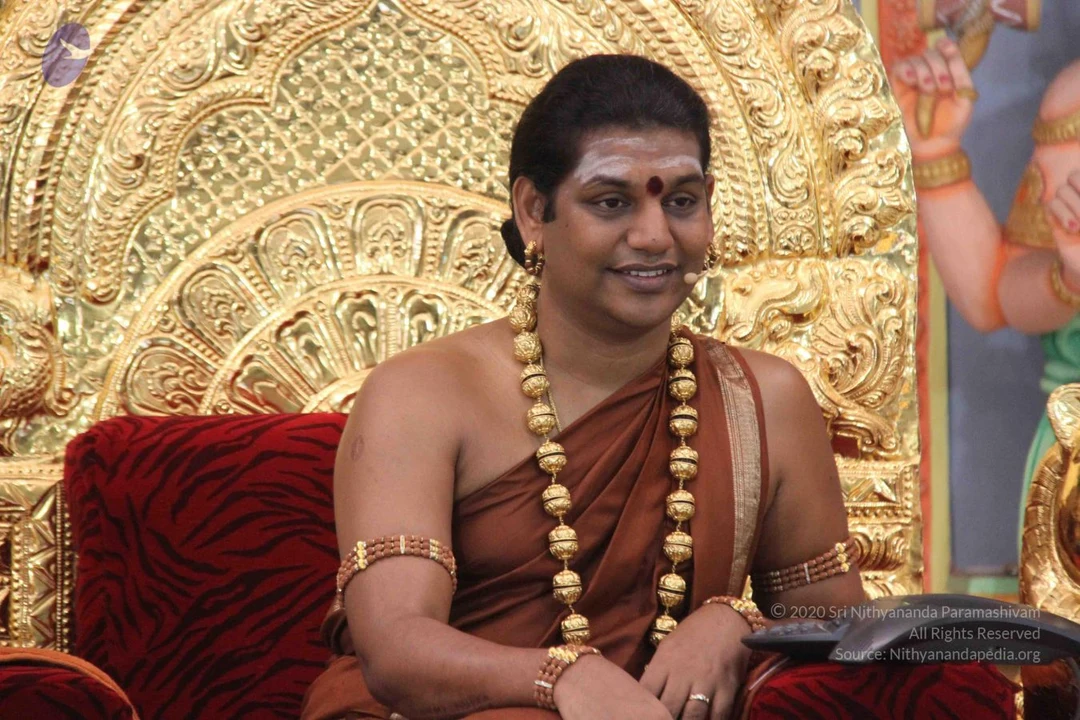
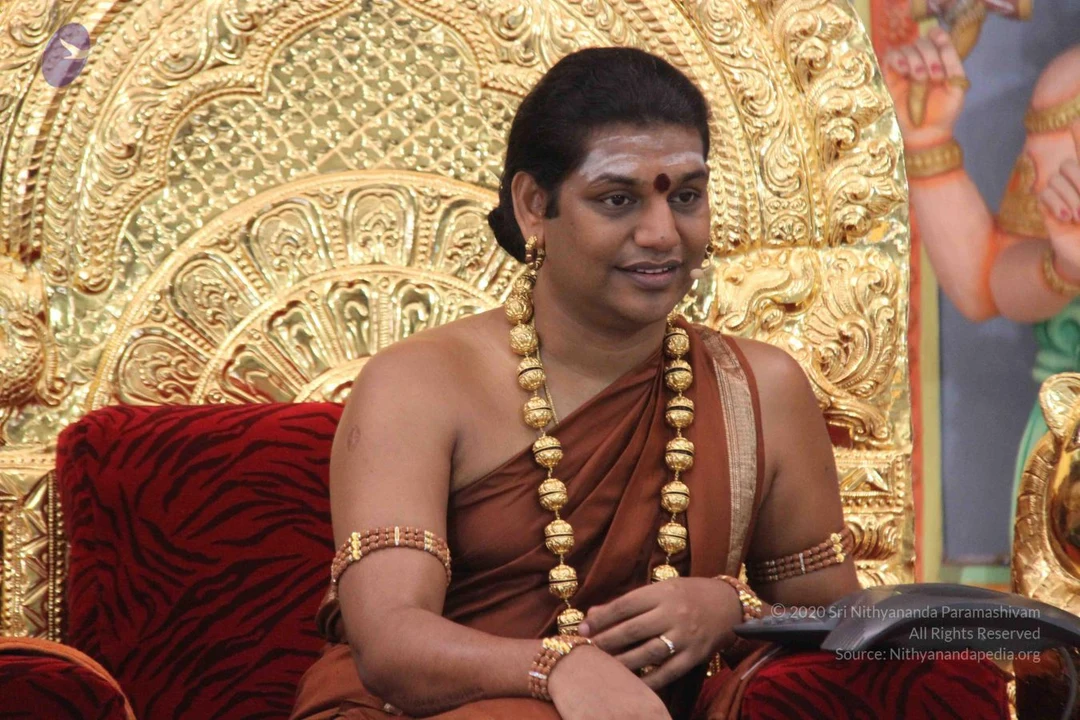
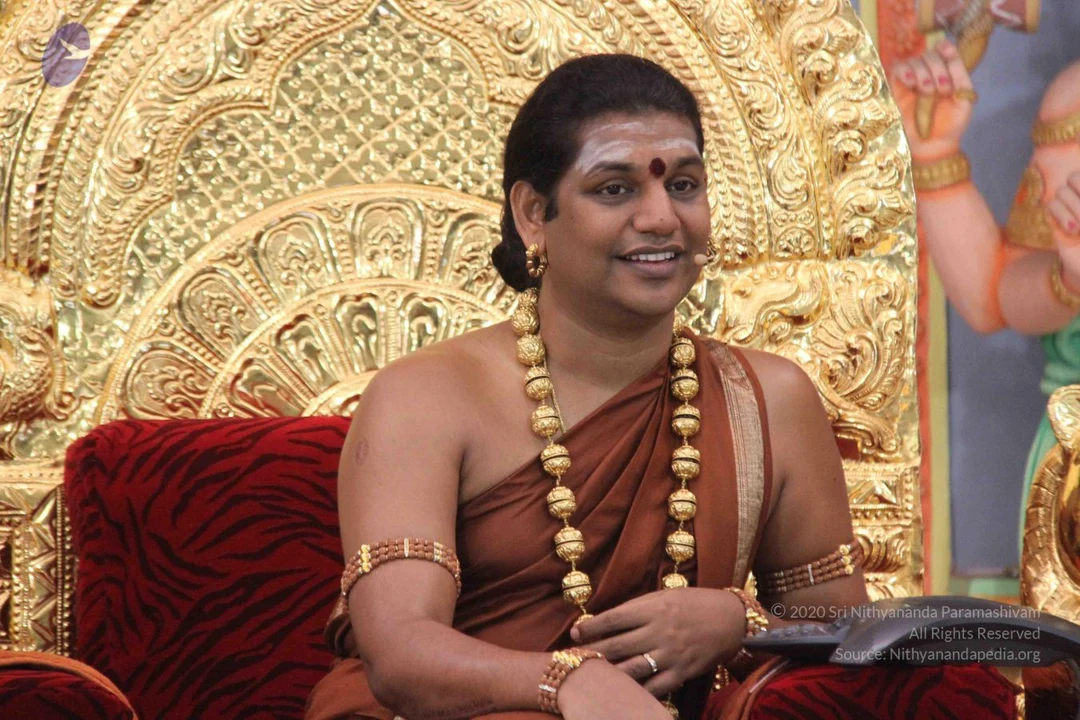
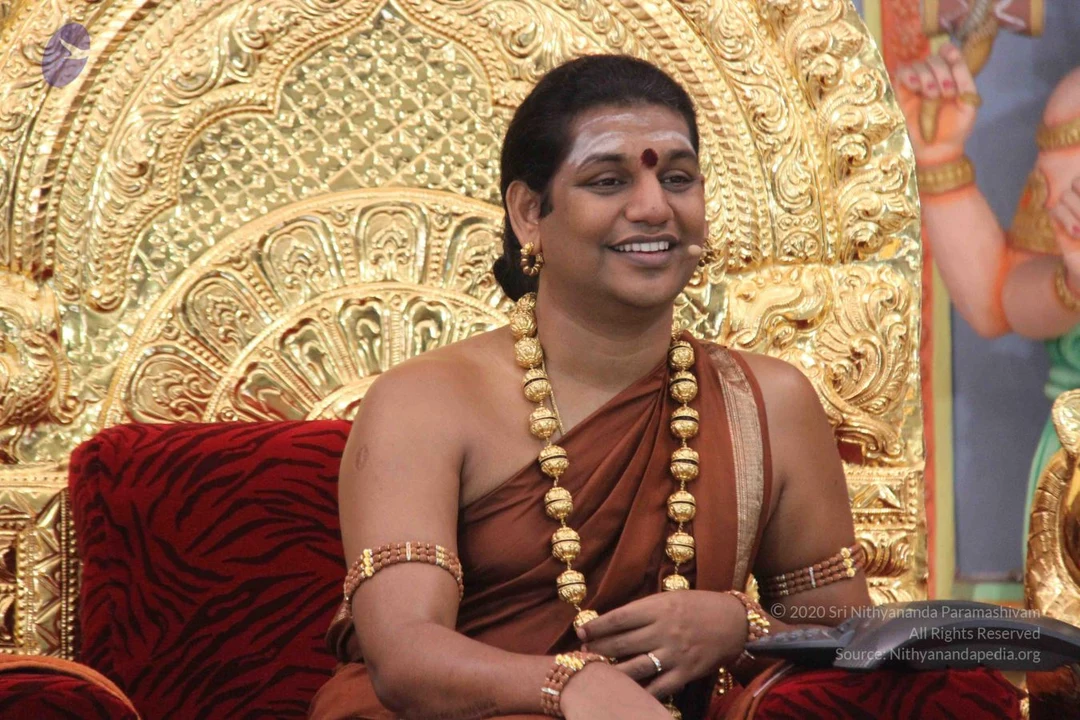
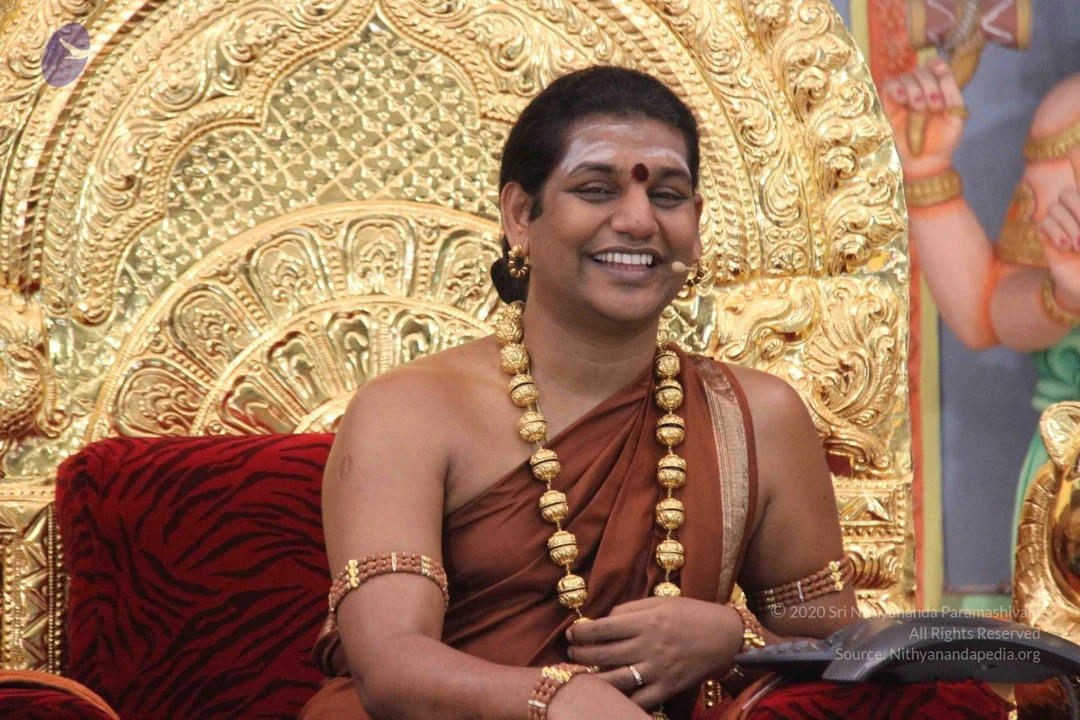
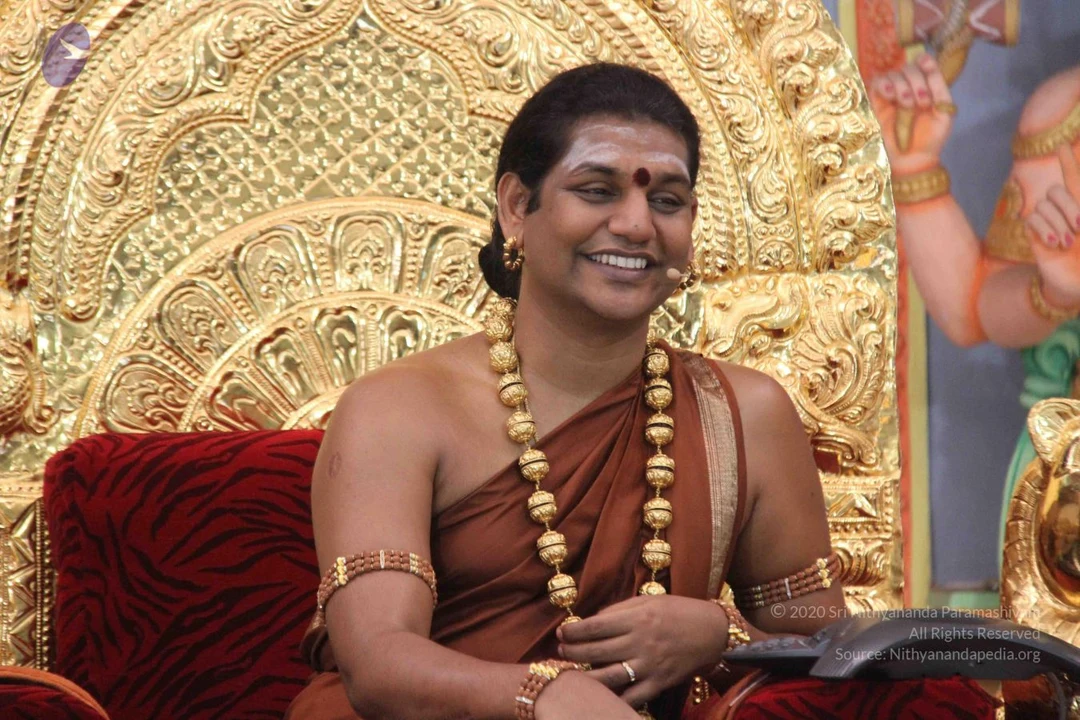
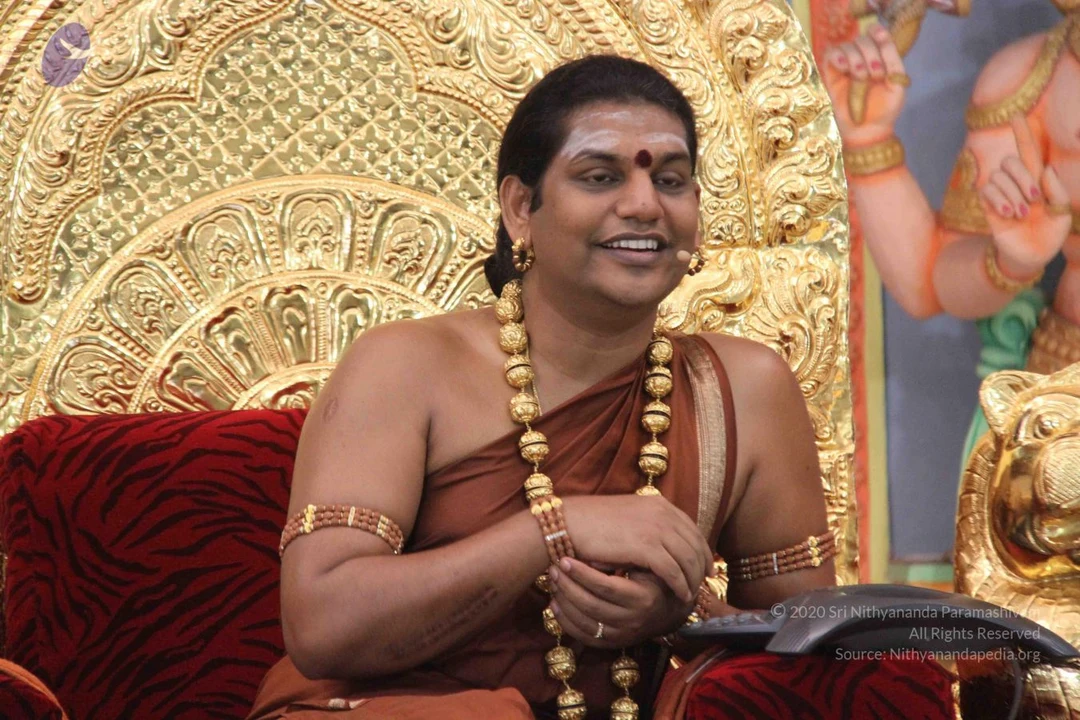
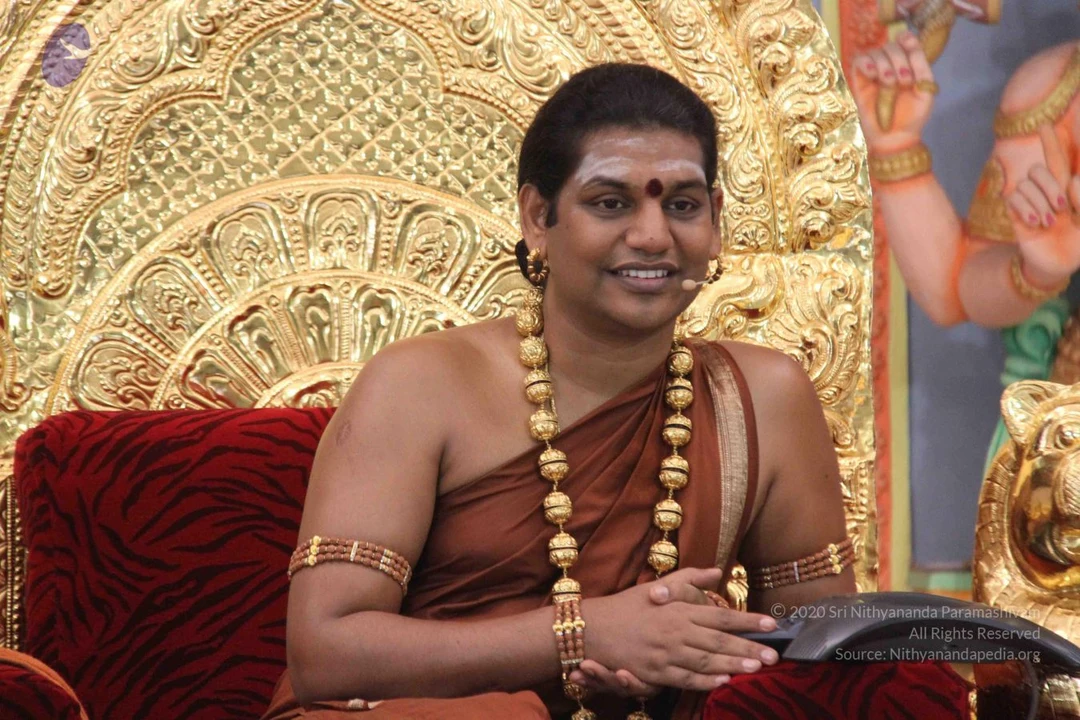
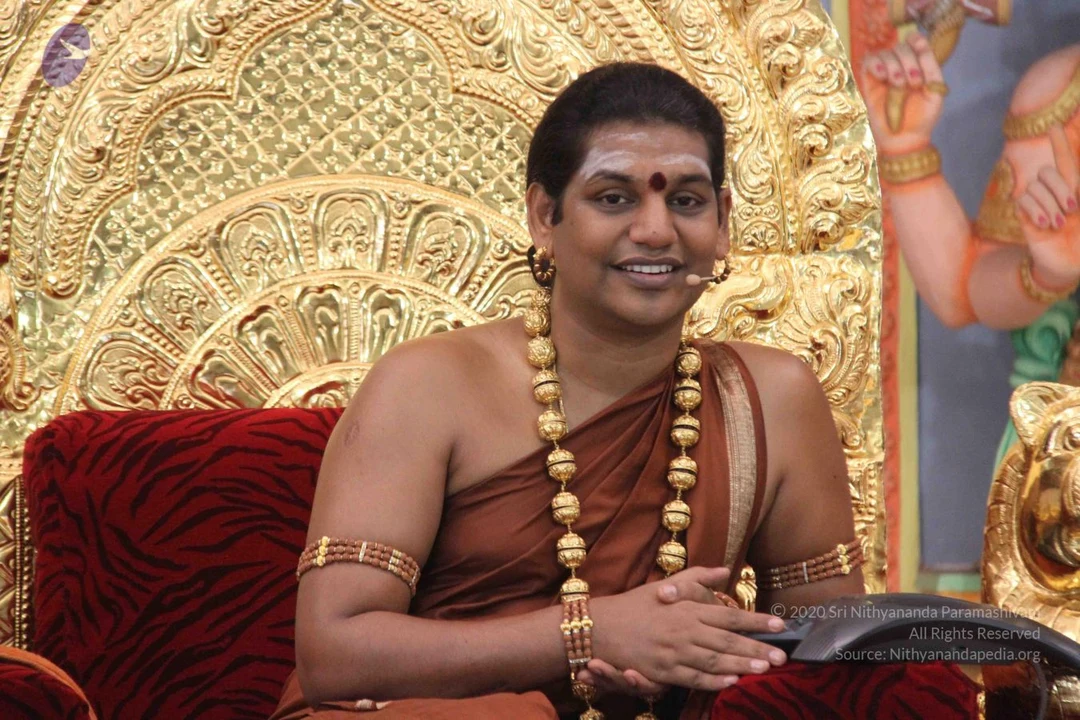
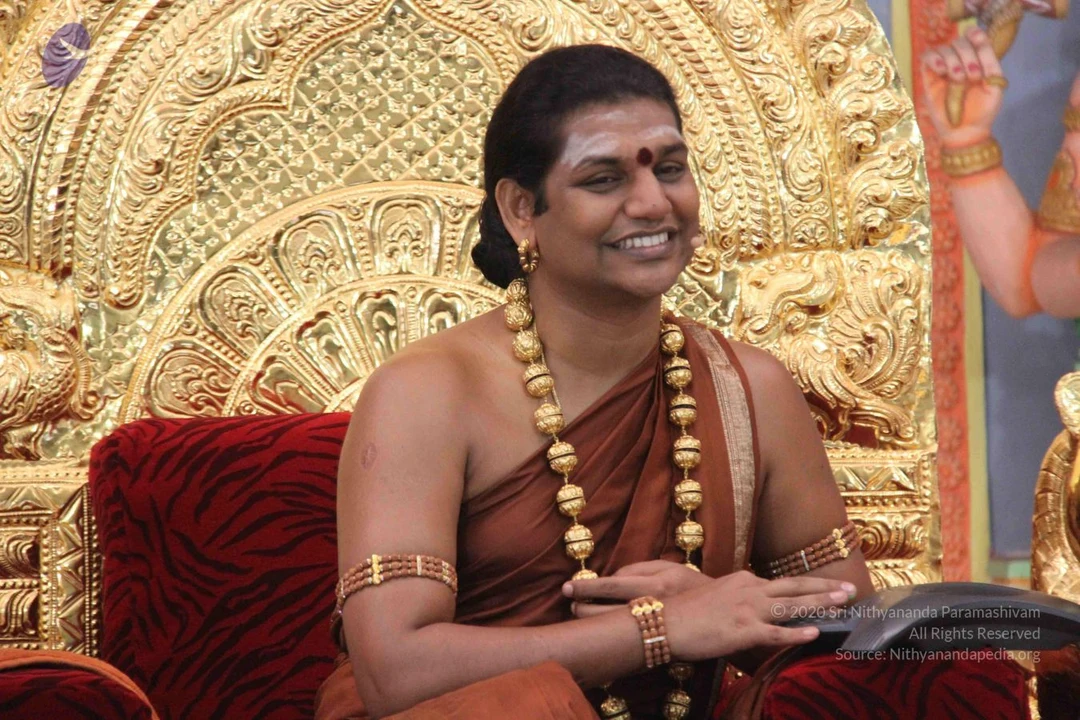
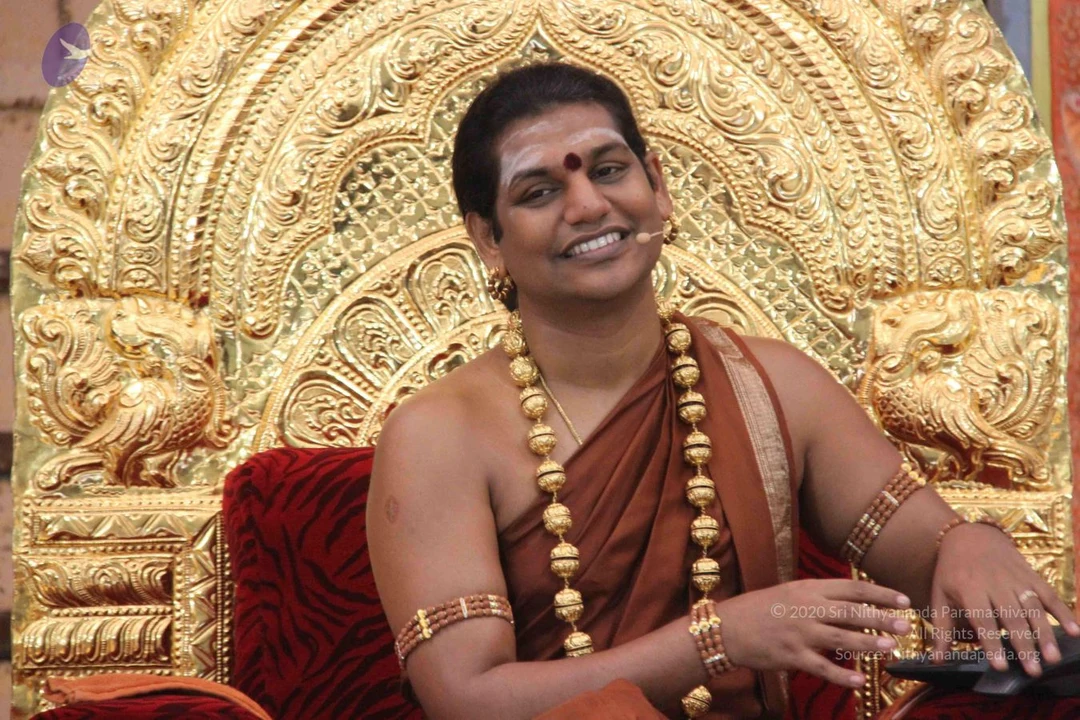
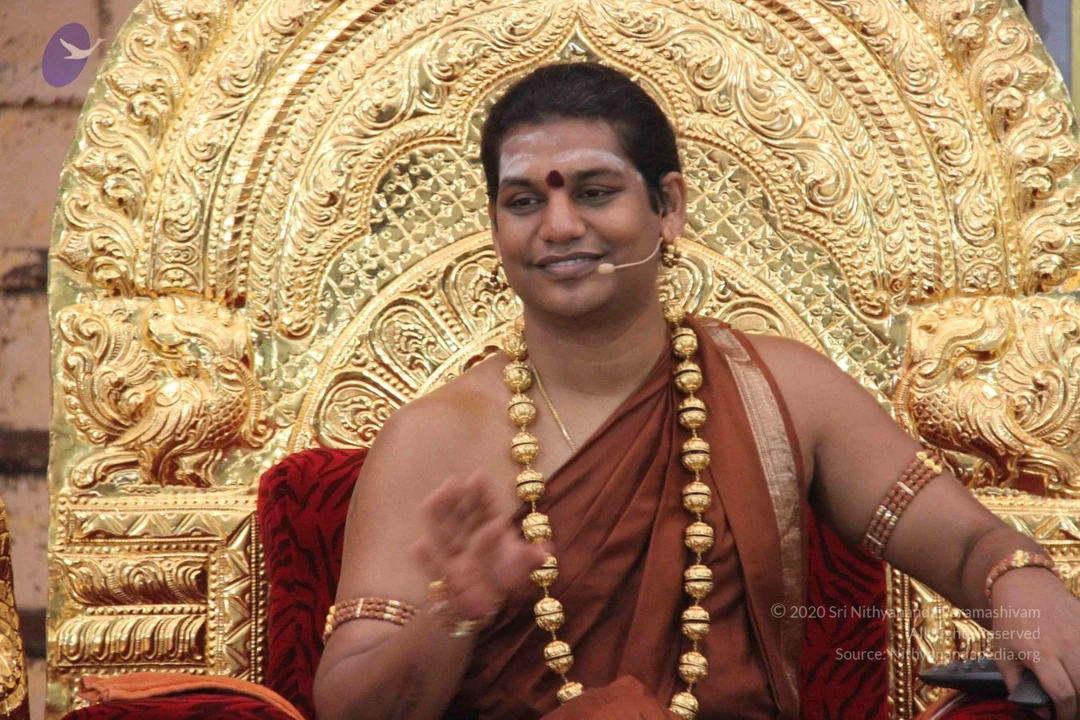
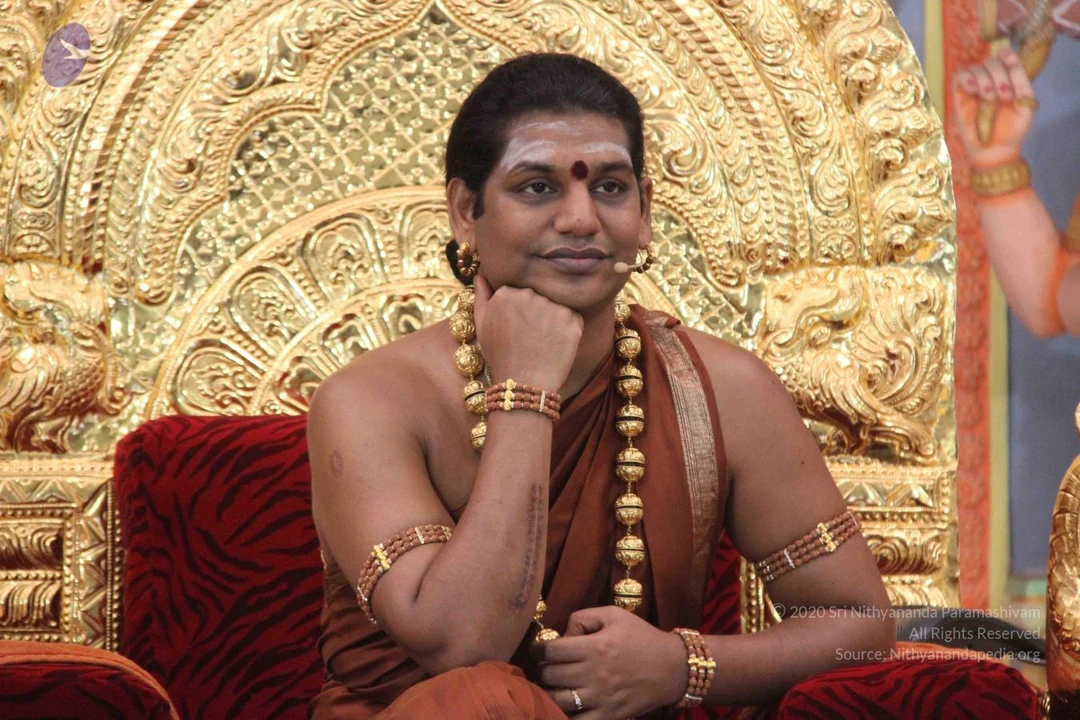
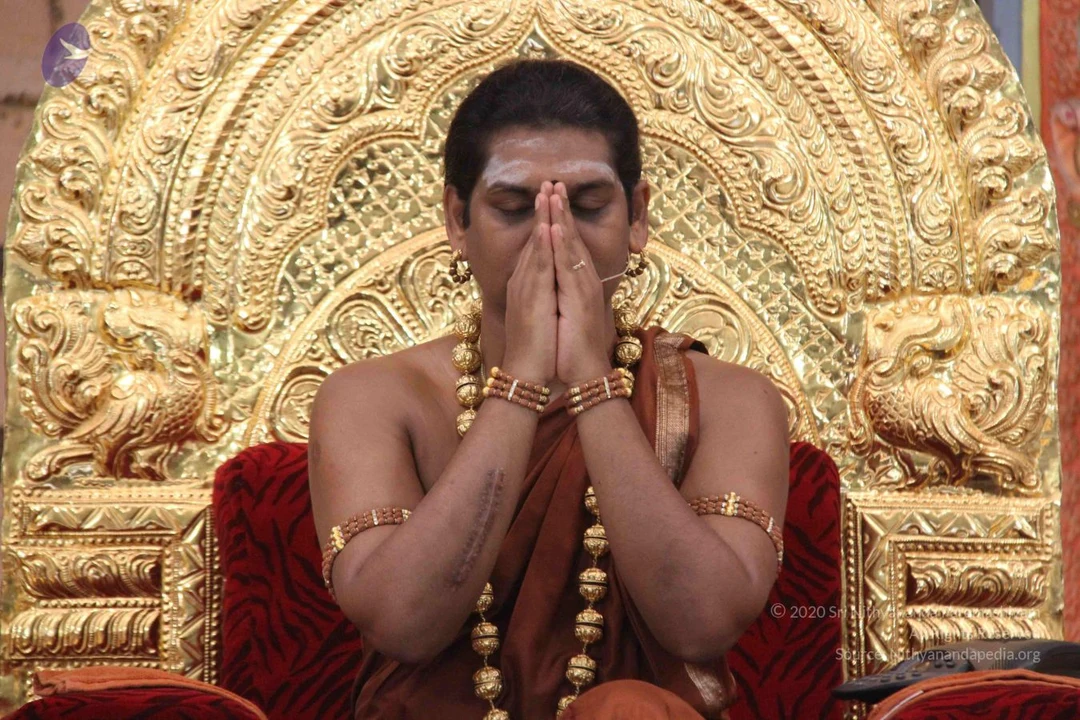
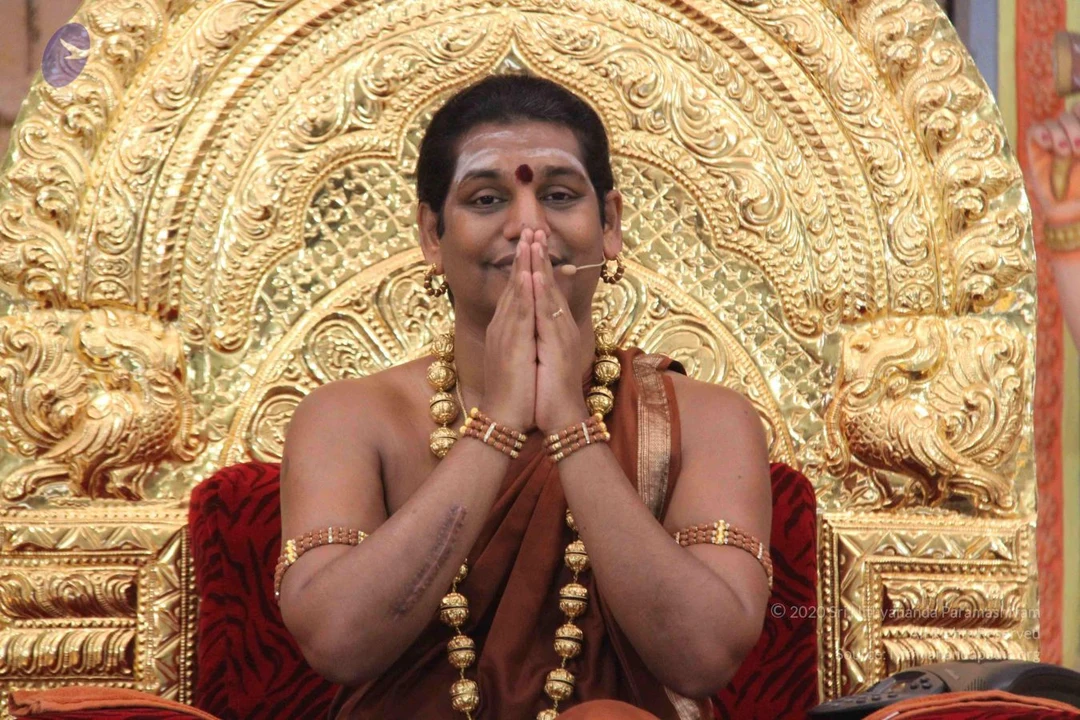
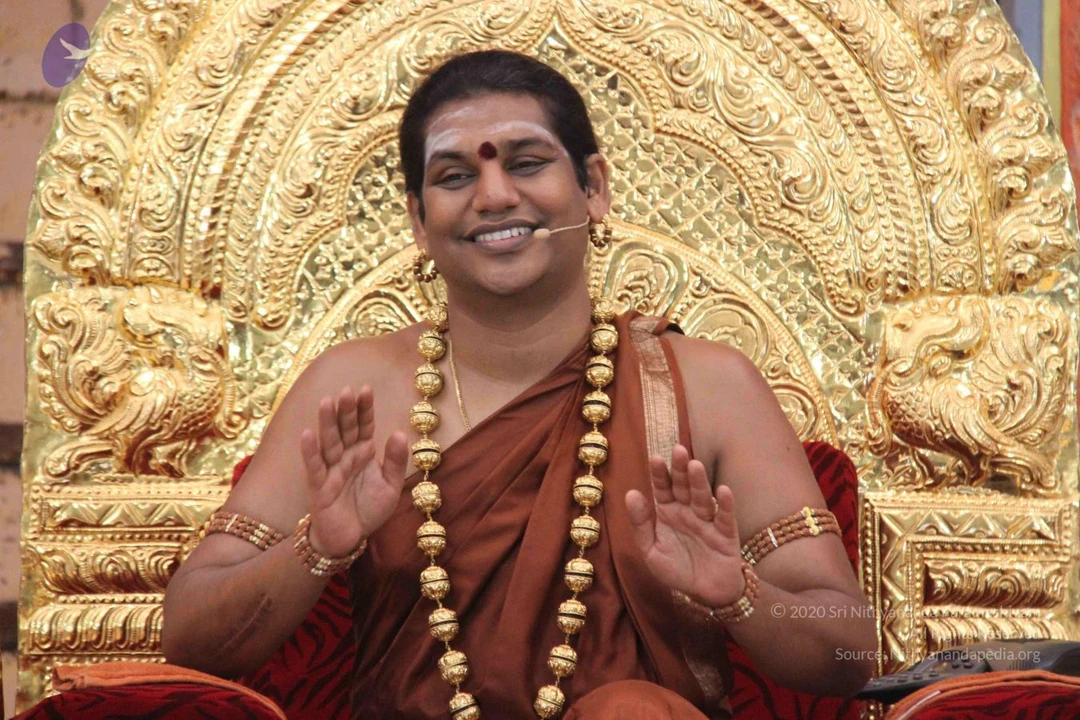
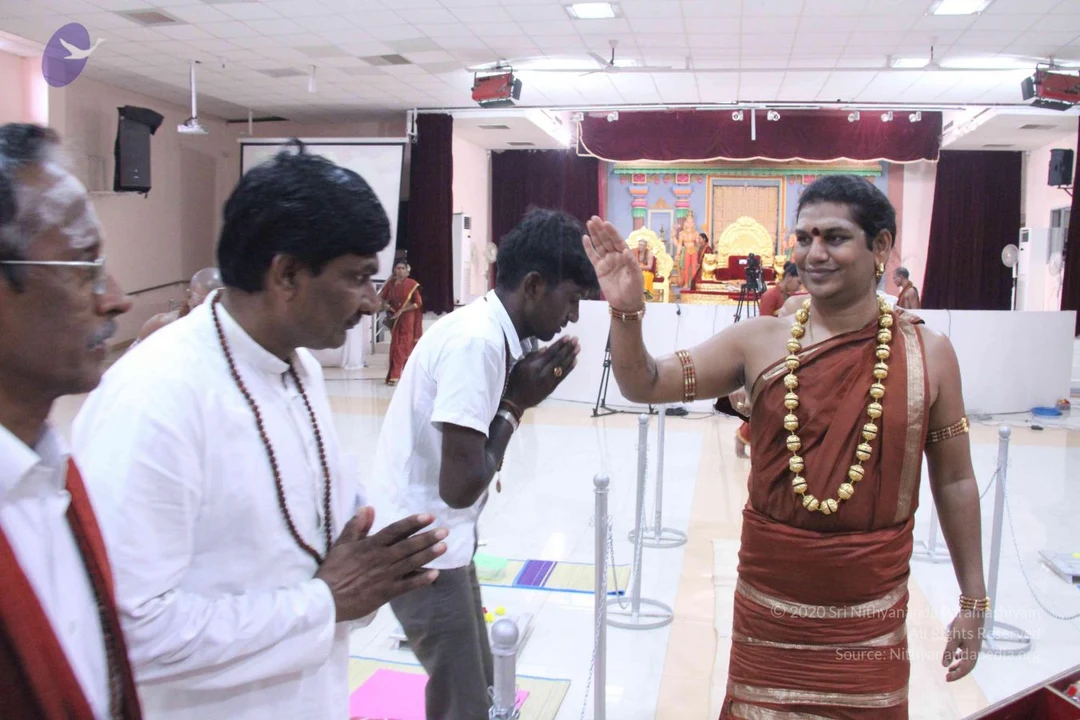
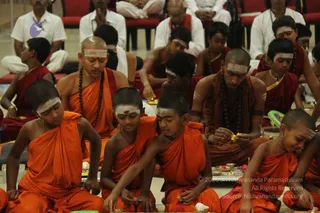
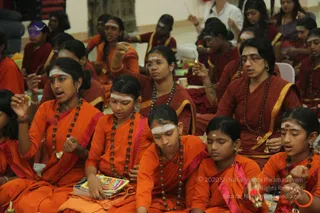
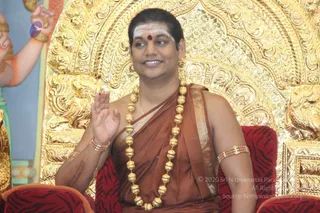
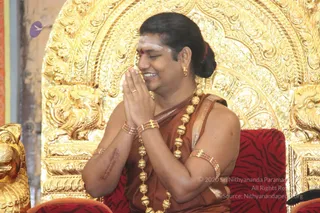
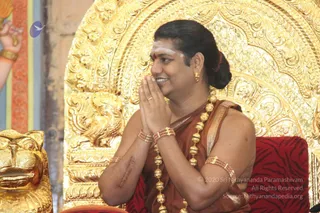
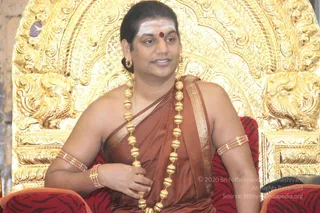
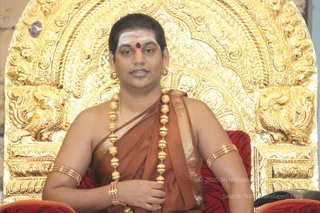
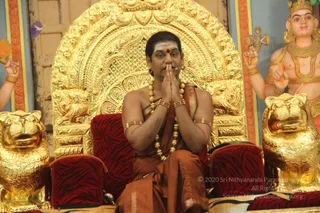
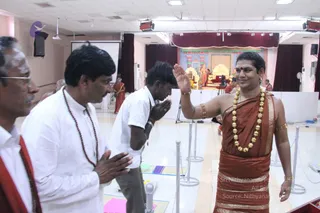
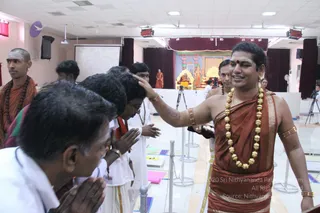
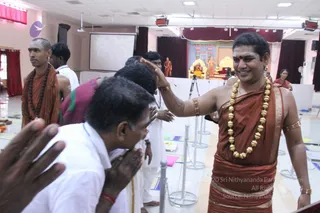
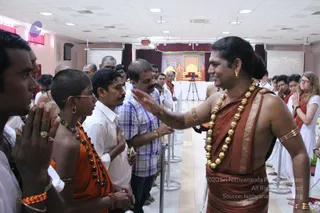
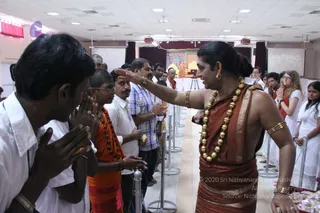
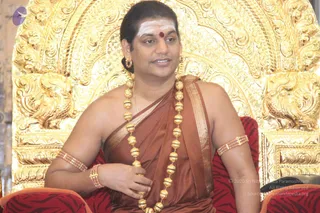
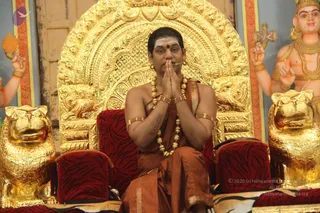
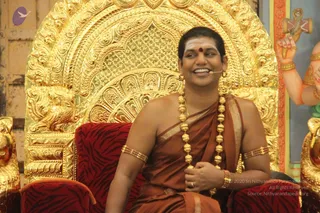
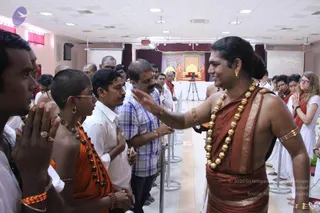
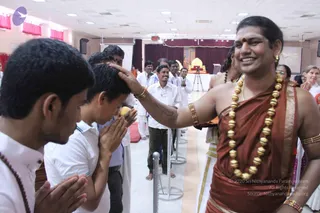
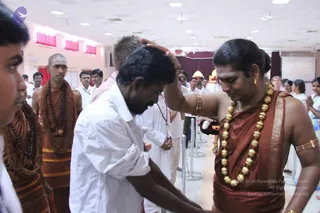
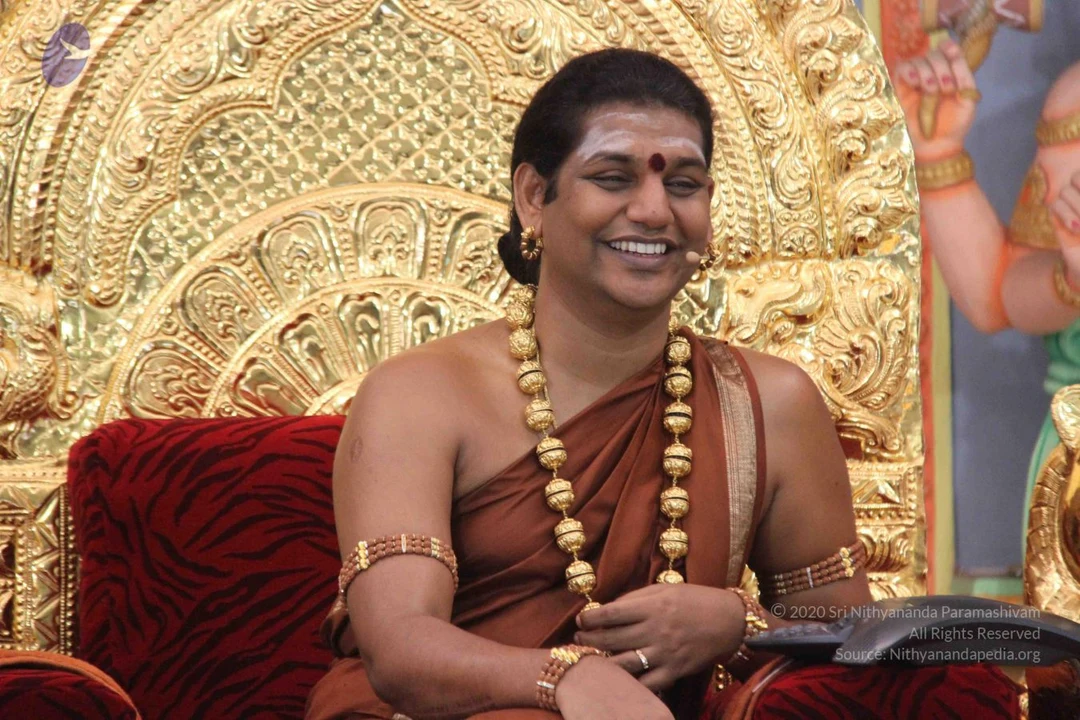
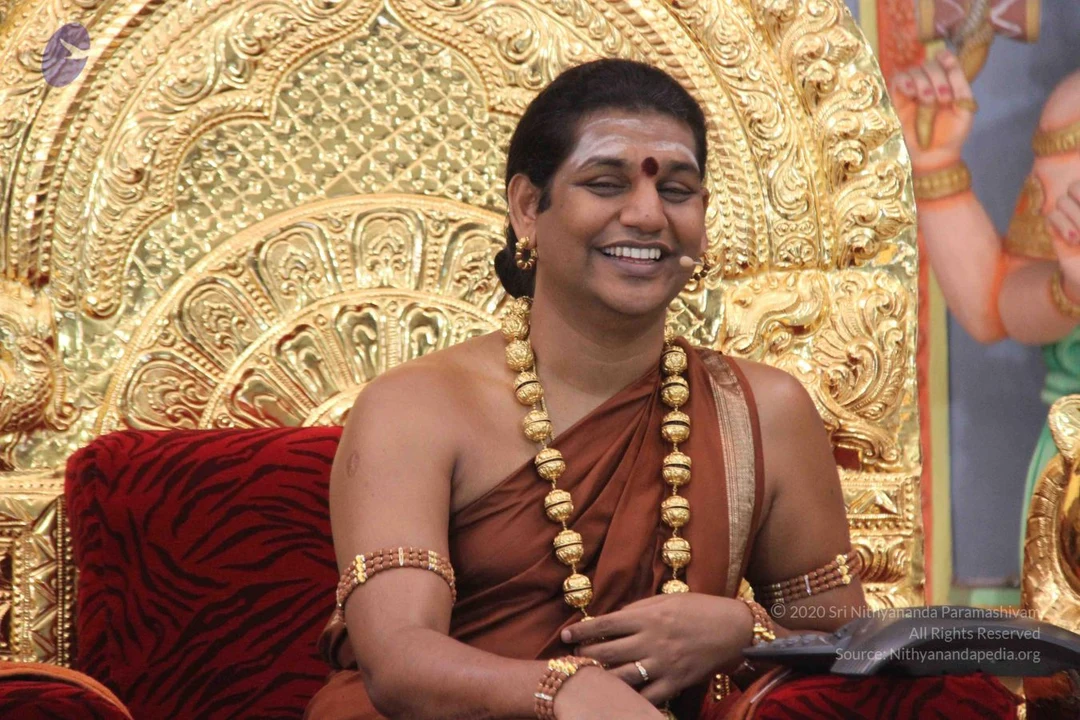
A photograph in a hall with a white tiled ceiling and a stage at the back draped in red curtains, where a deity murti scene is set up. In the foreground a man with long dark hair in a bun, wearing a rust-red shawl over his shoulder, a gold ceremonial necklace of large gold beads, and gold bangles, extends his right hand to touch the head of a shaven-headed young disciple in an orange-saffron robe and a rudraksha mala. Around them, devotees with palms pressed together in namaskar, some in white clothes and one in a blue checked shirt, stand along a barrier line. The man in red has a distinctive appearance matching the page's identification, with long hair, gold necklace and rust shawl, but the description does not confirm his identity from appearance; he is presented here as a senior figure giving blessing.A smiling man sits on an ornate gold throne with embossed floral and lion-like carvings, upholstered in red velvet with a tiger-stripe pattern. He wears a rust-brown saffron-toned cloth draped over one shoulder, a heavy gold bead necklace, gold bangles, a beaded armband and a red bindi with white tilak on his forehead. He rests his hands together in his lap. Behind him, a painted deity figure with orange-clad arms is partly visible on the right. A person is not counted in the scene beyond this one seated figure.A bare-chested man in an orange-brown saffron-toned shawl sits on a red tiger-striped cushioned chair in front of an ornate gold-embossed throne backrest. He wears heavy gold beaded necklaces, gold earrings, beaded rudraksha-style bracelets on wrist and upper arm, a red bindi and white forehead markings, and rests his chin on his fist with a small headset microphone visible near his face. A partially visible painted figure with a gold bracelet appears at the right edge. Probable Swamiji: a seated speaker with long swept-back hair, ceremonial gold necklaces, bracelets and orange-brown robes, seated as the presenter of a satsang.

October 29 2013

Original wiki page
Contents

Title:

Life is a Power!

Description:

In today’s morning Satsang, Paramahamsa Nithyananda declares that life is a power! To unlock this great power, all that we have to do is enrich others. When we carry the truth that life is for others, we will start to understand that our very breathing enriches. Just as all trees and plants on planet Earth require our breath for life, people need to know the great spiritual truths to heal, expand, and have success in their lives. Life is and verb not a noun. Let us take action, be responsible for others, and live the lifestyle of enriching.

Link to Video:

VideoAudio

Transcript:

LIFE IS A POWER

Nithyanandeshwara Samaarambhaam Nithyanandeshwari Madhyamaam | Asmath Aachaarya Paryanthaam Vandhey Guru Paramparaam ||

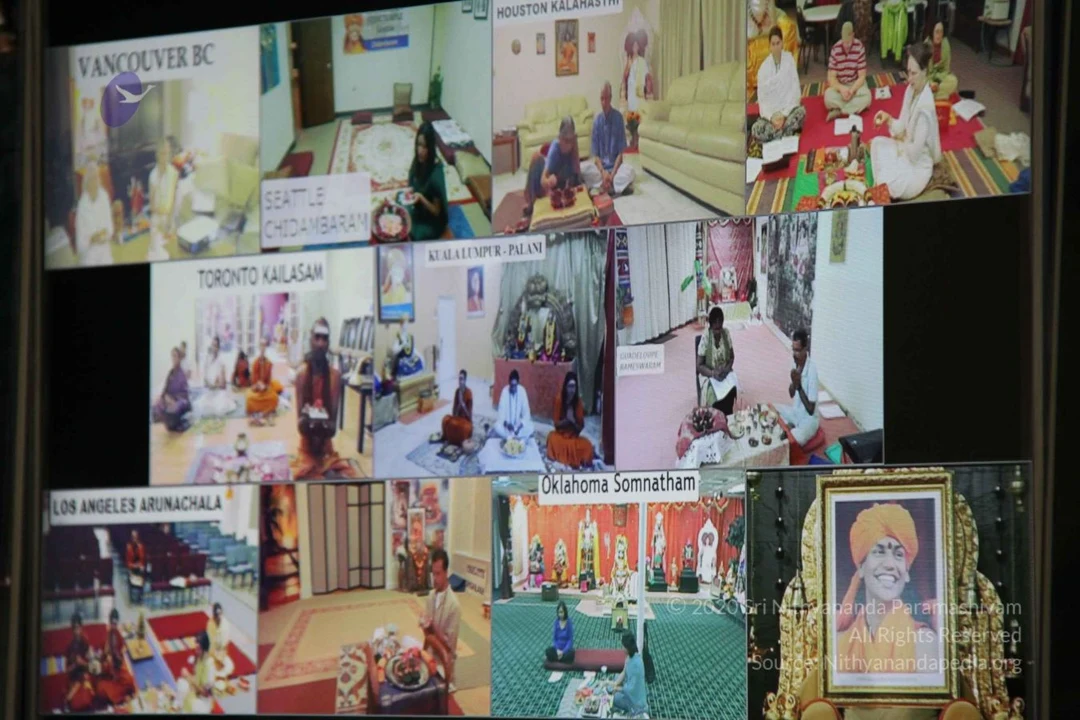
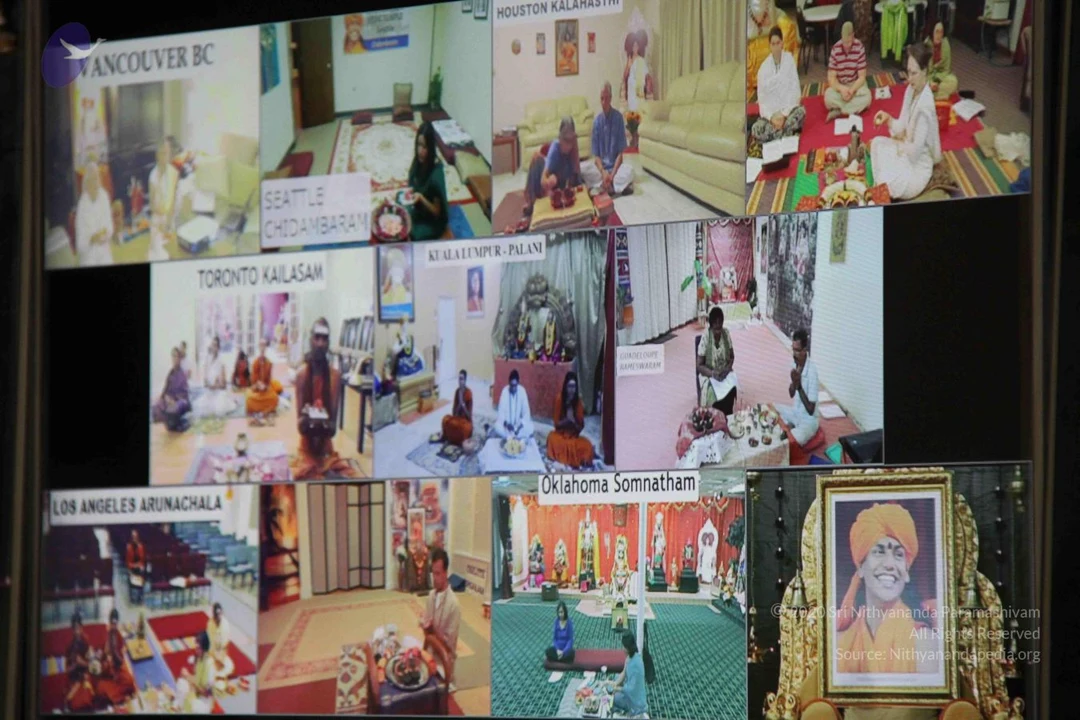
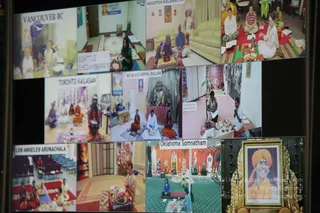
I welcome all of you with my love and respects. I welcome all the devotees, disciples, samajis, satsanghis sitting with us around the world. Cities sitting with us in two-way video-conferencing: Vancouver-British Columbia, Seattle-Chidambaram, Kuala Lumpur, Toronto, Ohio-Prayag, Houston-Kalahasti, Oklahoma-Somanatham, Guadeloupe-Rameshwaram, Los Angeles-Arunachalam, Charlotte-Srisailam, Varanasi, Jorpati-Nepal, Okotoks-Canada, Mukthikananda-Seattle, Oman-Sivagangai, Indrani-New Jersey, San Jose-Madurai, East London-UK, Mumbai-Chembur, Devon-UK, Hyderabad-Gupta Kashi, Hong Kong-Sirkazhi, Dubai-Vaidyanatham, San Diego-La Jolla, Singapore-Singapuram, Enriching Temple-Bidadi.

I welcome all of you with my love and blessings.

Before entering into today’s satsangh, I wanted to announce, yesterday more than thousand missed calls we received. 1874 missed calls we received yesterday. We will be sending Bhagavad Gita books to all of them. And I request all the people who sent the missed call, please send your addresses also. Our Enriching Temple staff also will call you and get your address to dispatch Bhagavad Gita books.

And if you see anywhere in the Internet, social media, satellite media, print media, electronic media, any media, if you see any news abusing Hinduism, Hindu Gurus, Hindu traditions, please send the news report to [email protected]. This [email protected] if you send the message, we will give a clear, logical reply and enrich them not to abuse Hinduism. And you can also send even news articles promoting Hinduism, enriching the world with Hinduism; [email protected].

So, totally 1878 calls we received yesterday. 684 we answered. And, today, the remaining people we will be getting their phone numbers. We will get their phone numbers and address and start sending Bhagavad Gita. We will be shipping at our own cost. We will be shipping the Bhagavad Gita at our own cost.

I will enter into the satsang. I will start today’s satsang.

I wanted to expand on Power of Living. Life itself is a power. It is not punishment. Human-beings who feel that they are not able to achieve what they want to achieve through the life, they feel life is a punishment. It is like your ideas and reality, when they don’t match, you want to be really, really, really peaceful, joyful, happy, wealthy, healthy; but your reality is completely agitated, irritated, all spare-parts are not functioning, in poverty. Your expectation about life and the reality when that does not match, you feel life is a punishment, life is a curse. Please understand life is not curse. If your expectation is not become reality, it means you have not taken the responsibility for life. You have not harnessed the Power of Living. Life is a power. Living is a power.

Please understand, your words are power. Because, constantly the words you utter towards yourself becomes reality about you; the words you utter towards other raises the others’ energy. If you utter the right words, it raises others’ energy positively towards you. If you utter wrong words, it raises their energy negatively towards you. You can make somebody touch your feet or cut your head by the words you utter. The words you utter can make people touch your feet or cut your head. So, listen, the words are really, really, really powerful.

There was a gathering in front of a sadhu.

One poor man came to that sadhu and asked, ‘O, Baba, sadhu, I have health issues. I am sick. Please heal me.’

Sadhu blessed: ‘Let you become healthy. Let you be healed.’ He uttered that word.

See, all over the world, there are multiple religions: Judaism, Christianity, Islam, Hinduism, Buddhism; in Christianity itself multiple segments. All over the world there are multiple religions. Same way, all over the world, there are multiple atheist traditions. The atheism of Karl Marx is totally different from the atheism practiced in different countries. I tell you, the atheism of materialists, atheism of Communists. The atheism practiced in US is totally different from the atheism practiced in Russia. Atheism practiced in China is totally different from the atheism practiced in Japan. So, in atheism also, there are multiple religions and traditions. Just like believers of God have multiple religions, atheists have multiple traditions. Has no logic why he denies the superior power. It is not that I accept the western concept of God or one single autocratic God. I am not saying I am accepting that concept. All I am trying to tell you is, the most baseless atheism, Ramaswami’s atheism, EV Ramaswami’s atheism, is the most baseless atheism I have ever studied. ‘Why there is no God?’ ask them. ‘No, no, we don’t like Brahmins. So whatever Brahmins do is wrong.’ That cannot be a base for atheism. Come on. Use your brain little and talk decently.

10:40

When they, see, whenever they speak any idea they try to convey, they will give twenty solid reasons. If they want to support government or if they want to oppose government, if they want to send any idea or message to the society, when they give a statement, they will give twenty-five supporting logic for their conclusion. But when it comes to atheism, all their logic fails. And the funny thing you know? They deny only Hindu god. They don’t have problem in going to Ramzan. They don’t have problem in going to Christian institutions and praying to Christian god. They have problem only with Hindu gods. Baseless!

This kind of one atheist comes, and that fellow starts screaming at the sadhu. ‘Oh, if you utter one word ‘Let you be healed.’ that fellow will be healed or what?’

This sadhu just looked up this atheist fellow and he said, ‘You idiot, you don’t know anything. You are mad. Why are you here?’

That’s it. That fellow started going crazy. He wants to prove he is a loosu. Screaming, furious, started jumping.

Then that sadhu said, ‘Sir, now you listen. Just my one word can make you mad. Then why, why not my one word can’t heal this guy? If my one word can make you mad, why not my one word can heal this person?’

Power of Words. Understand, the words we utter has its own power over us and over others. Same way, the thinking we have has power over us and power over others. The feeling we carry has real power over us and power over others. Same way, our life itself is a power. Only one life populated the whole earth. In Hinduism, we call ‘Manu’. It all started from one life. Now whatever you see, the whole humanity is from one life. Power of Life; I can give you hundreds of examples for Power of Love.

Small story about Power of Words:

Lawyer says, ‘Now that you have been acquitted, will you tell me honestly, did you steal the car?’

Client said, ‘After hearing your amazing argument in the court this morning, I am beginning to think I did not steal, Sir.’

Listen. Power of Living, I just wanted you to understand about Power of Living. Life can do anything. It can build anything. It can do anything. But you need to recognize you are alive and your living is power. By everyday breathing, either you accumulate more wealth or more poverty. By everyday breathing, either you accumulate more wealth or more poverty. By everyday breathing, either you get healthy or you get aged. By everyday breathing, either you are moving towards death or towards immortality. But life is not noun; it is verb; it is a movement; it is an action. You continue to move either towards immortality or death, towards health or disease. Tomorrow you will be more healthy than today or you will be more sick than today. Tomorrow you will be more happy than today or more sad than today. But there will be change tomorrow than what you are today, because life is not noun; it is a verb. It is a movement; it is a action. Now it is up to you to make what you want from today, out of today, what you want in tomorrow. Please understand, today is the investment for tomorrow.

Many people tell me: Future is a Promissory Note, Past is a bounced cheque, Present is present. I tell you, Present is a present for investment. It is not for keeping it in your locker or storing. You can’t store; that is the truth. You can’t store. Present is a investment for the future. It is your decision. It is you who has to decide. It is in your hands to decide how to use this Power of Life. I tell you, when you don’t have intelligence, when you don’t have clarity, when you don’t have knowledge, the worst punishment is giving you power and freedom. It is like give a child a rifle or gun. If you give the gun, a rifle to a child, what it will do? It will either kill itself or harm others. Life is a power. And if you do not know, if you do not have the intelligence to handle that power, it is like you start driving the car, but you don’t know how to stop it, how to apply brake. Unfortunately, in the life, you are already put. You don’t learn driving and start driving in the life. In the car, you learn driving and then start driving. In the life, you have to learn on the road. The moment you realize you don’t know how to live, you almost lived half of your life and you are on the road. Some people don’t realize till the end.

20:03

Please listen, life is a power. If you want to discover, harness the Power of Word, live Integrity. If you want to harness the Power of Thinking, live Authenticity. If you want to discover and use the Power of Feeling, use Responsibility. If you want to use the Power of Living, decide to Enrich with Integrity, Authenticity and Responsibility.

I tell you, whenever you enrich others and you, life happens in you; you experience Power of Living. I can give you a very simple truth. Just go on, go on, go on, go on, go on enrich others in your life. I tell you, best things of the life will be showered on you. From morning till night, let the enriching be your thinking, let the enriching be your feeling, let all your words be centered on enriching. I tell you, you will understand the Power of Words. Go on uttering the words which enriches others. Go on thinking how to enrich yourself and others. Go on feeling how to enrich yourself and others. I tell you, align your living to enrich others. Even if you are working in Microsoft, understand, you are enriching people. Just understand clearly in your thinking, you are enriching the people. Don’t have the self-doubt. Complete with it. If you are weaving the clothes, you are enriching somebody with clothes. Even if you are doing agriculture, you are enriching somebody with food. Even if you are working in the army, you are enriching your country with security. So, whatever you are doing, you can understand, you should align yourself, realize how you are enriching others.

I tell you, understanding whatever you are already doing is enriching and expanding your life in the line of enriching will make you realize the Power of Enriching. Only one person – a terrorist – cannot align his actions with enriching. A terrorist can never justify. If you are not a terrorist, then be very clear, all your thinking, all your actions, all your feelings can be aligned to enriching. Whole day remember very clearly, you are living only for enriching. Life is for others. I tell you, the moment you convince your heart life is for others, all the sufferings living in your heart leaves you; all the suffering. Now you know, even if somebody is suffering because of you, it is because of them, not because of you. It is because they do not know about life they are suffering; not because you contributed to their suffering.

The initiation into Enriching is what Buddha calls ‘Sannyas’. Please understand, initiation into Enriching is what Buddha calls ‘Sannyas’. I tell you, initiating you into the Power of Living is what I call ‘Enlightenment’, ‘Jeevan Mukthi’, ‘Living Enlightenment’. I can give you tons and tons and tons and tons of evidence. I can give you tons and tons and tons of information. I can give you tons and tons and tons of example. Just look around. Everywhere, power is available. Everything is available when you decide to enrich others. If you decide to hold, nothing is available. Even what you are holding is not available to you. When you decide to hold, even if you hold billions of rupees in the Swiss Bank, not only society doesn’t get, even you don’t get to use it. Holding denies even your existence to you.

I tell you, whenever you start this holding as a pattern, first thing your stomach will do is constipation. Really, I am telling you. Please understand, your stomach is your first child. Whatever you say, it believes, listens, obeys. Your liver is your student. Whatever you repeat, he listens and practices. Please listen, whatever you even say casually, jovially, your child will listen. Whatever you repeat again and again, your student will listen. Your stomach is your child. Your liver is your student. If you start thinking to yourself ‘holding is the right thing’, ‘possessing is the right thing’, first thing your stomach will do is constipation; because your stomach will start holding. Second thing your liver will start doing is building fat, because even your liver starts feeling insecured; it feels, ‘For future, I have to store it.’ It allows the fat to be in your body. So, these two starts all diseases and aging process in your life.

Please understand, what I am talking is one of the very important Hatha Yogic secrets. How your mental setup directly affects your health. Person decide to hold, decides to possess, decides not to enrich, not to associate your life with world, with humanity, person who disassociates the life from the humanity, creates diseases inside your own system. When you continue to enrich, when you decide to enrich, when you decide life is for others, all the greatest things are showered on you and continues to get showered on you. Whether it is wealth or power or intelligence, energy, everything is continuously showered on you.

31:40

The fourth initiation you are going to receive in the Inner Awakening Level-4 is ‘Jeevan Mukthi Deeksha’, the ‘Aapyaayana Deeksha’, the initiation into Enriching. Please understand, deciding to enrich yourself and others is a power. It is not moral. I am not asking you to do this as a service or a moral. No. Anything which is moral or service, humans will never do. And I am not asking you to do some service. When you decide to enrich yourself and others, I can say, that is the best selfish decision you will make in your life. Please listen, I am using two words: Best Selfish Decision. That is the best selfish decision you will make. Deciding to enrich yourself and others, aligning yourself to enriching is the most best selfish decision you will make. I am not here to tell you, ‘Do some selfless service. Do it, because it is right, moral.’ You will never do. And I am not interested in talking. I am not interested in using the words which will not move you. If I don’t move you with my words, then words are waste, useless. Then I disrespected Saraswathi. Then the Power of Words are not used properly. I am telling you, all my words always move the listener, because I talk to your being.

In the fourth level of Inner Awakening, you will experience the initiation into Enriching. Please listen, every one of us know the joy when you give it to others. When you give, when you share, when you enrich, the joy you feel, all of you know. But you always have a conflict, ‘If I give away everything, what will happen to my life? I need to hold something to run my life.’ This conflict will be removed. It will be completed with Enriching Initiation. You will understand even your exhaling is giving. You will understand, when you inhale you enrich this body, when you exhale you enrich all the trees by releasing the carbon dioxide required for the trees. Every moment you will be enriched when you know your life is for enriching.

Power of Words, you achieve the Power of Words through Integrity. You achieve Power of Thinking through Authenticity. You achieve Power of Feeling through Responsibility. You achieve Power of Living through Enriching.

Essence of today’s satsang:

Life is enriching, you just need to align yourself to it. Life is enriching, you just need to understand it. Life is enriching, you just need to look into it.

Photos

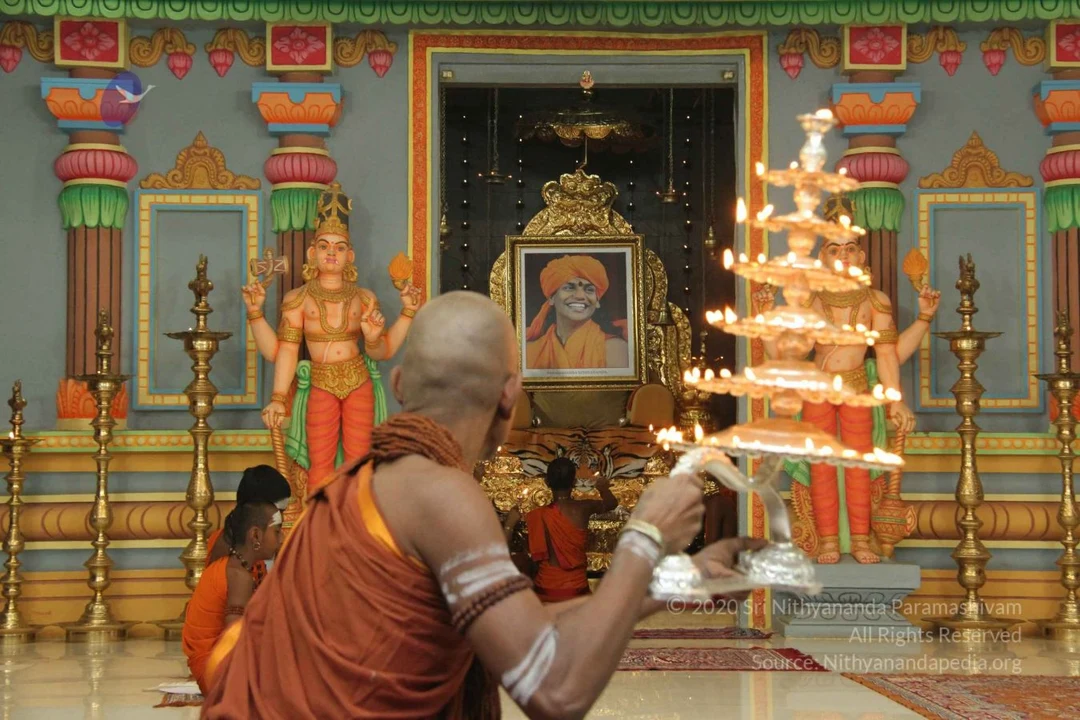
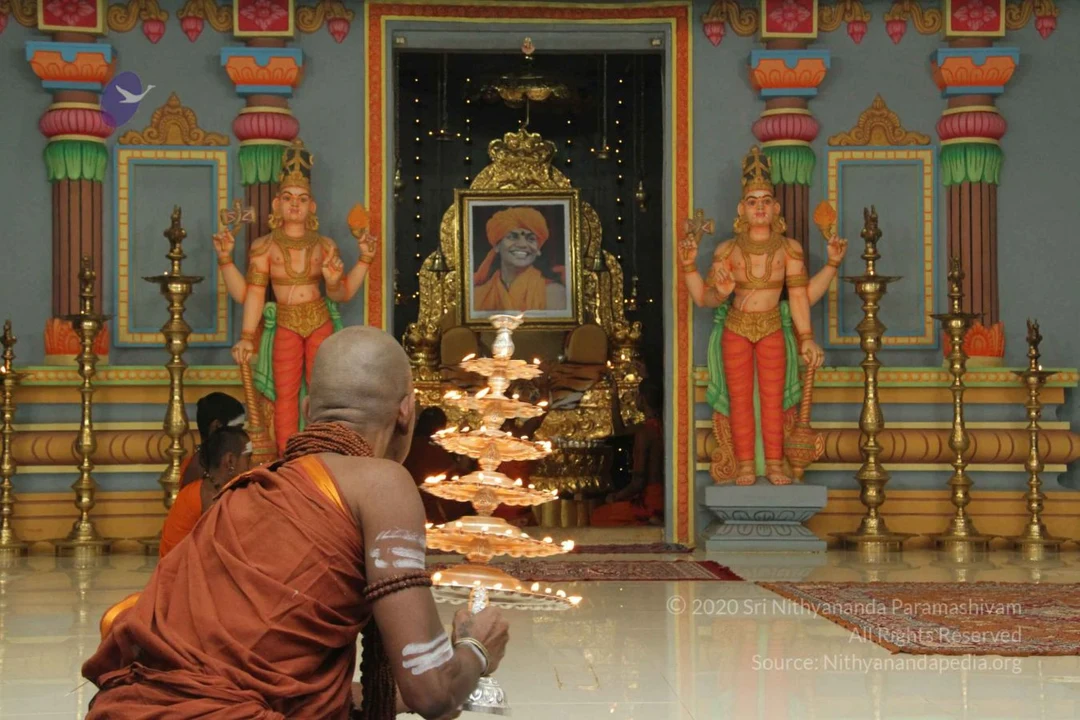
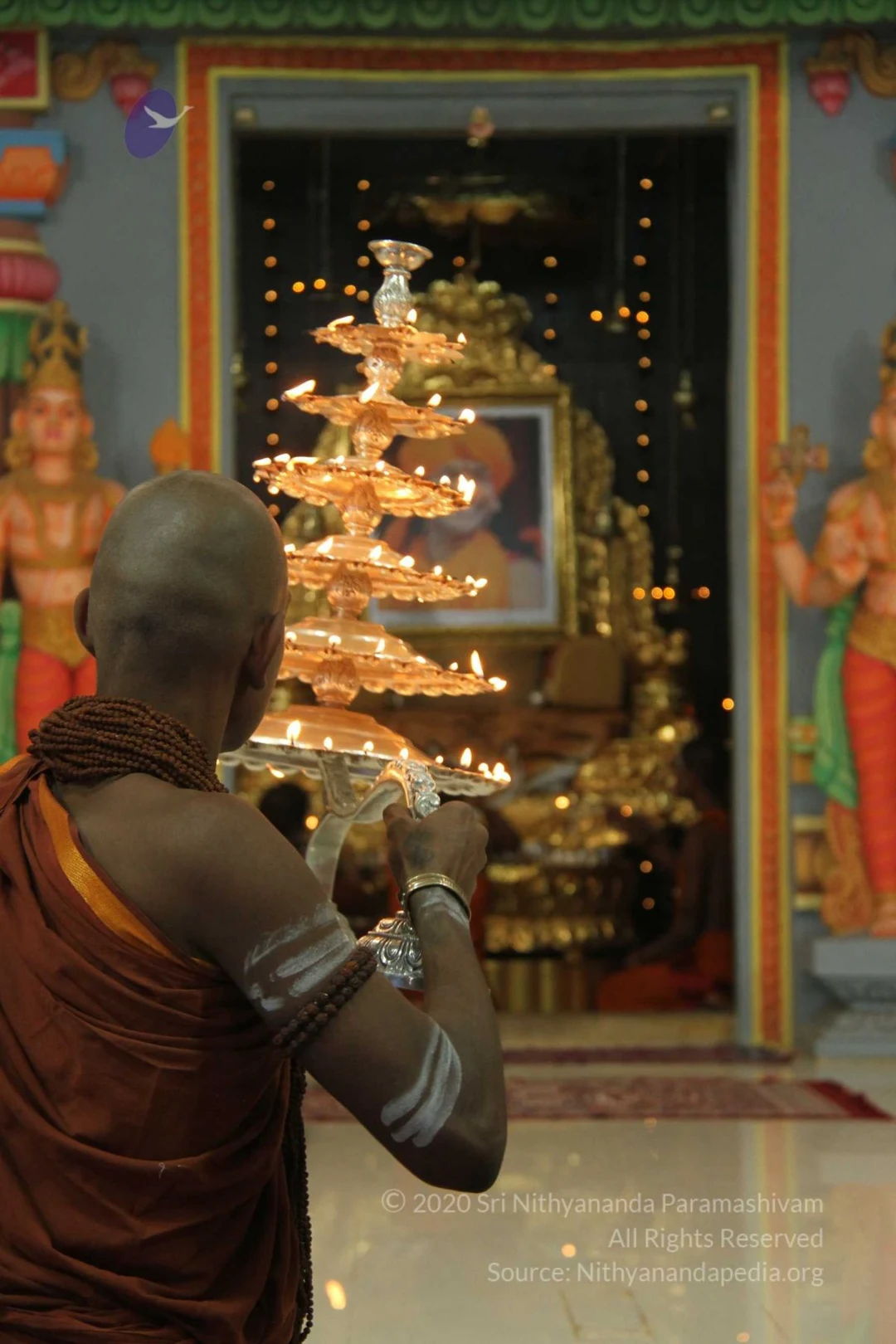
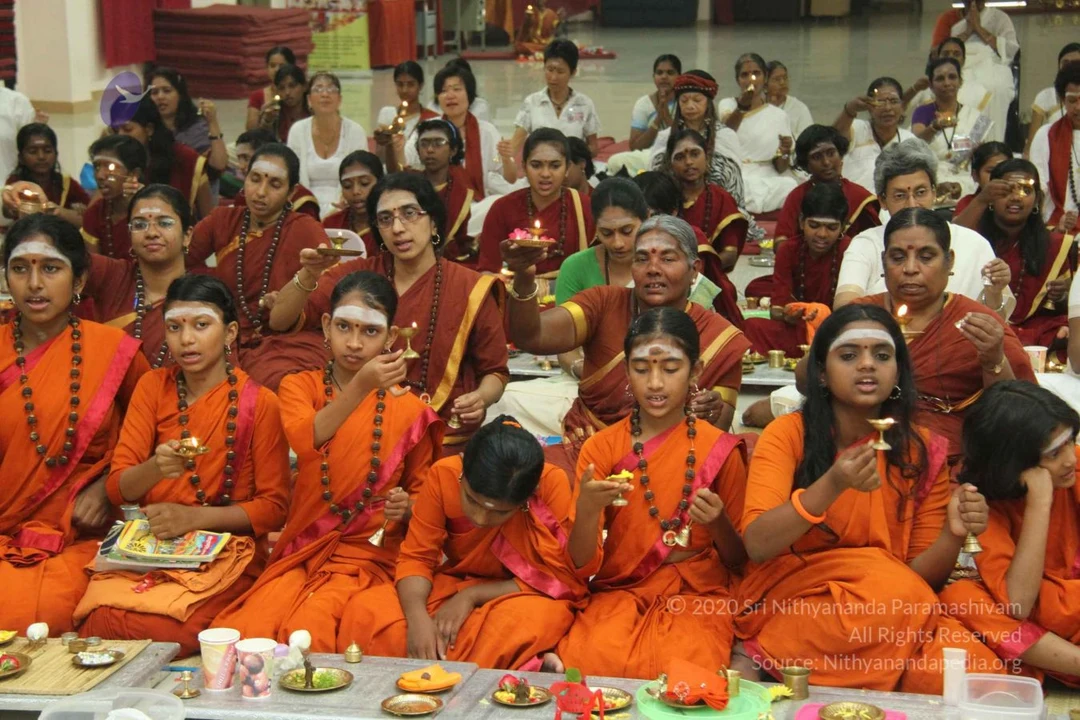
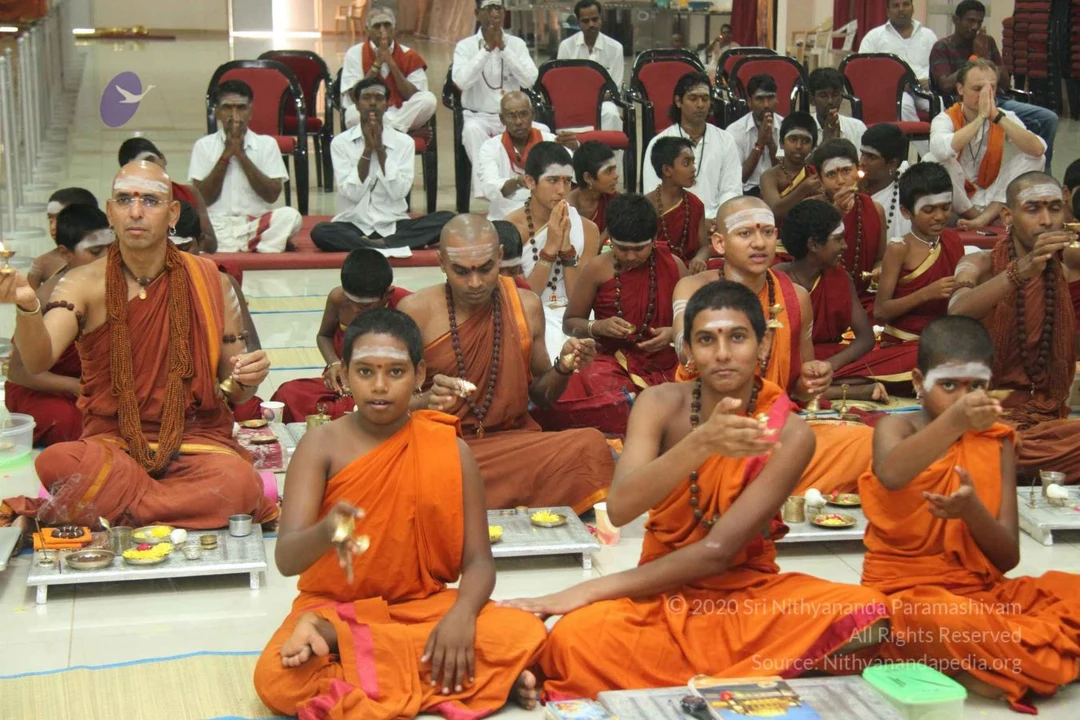
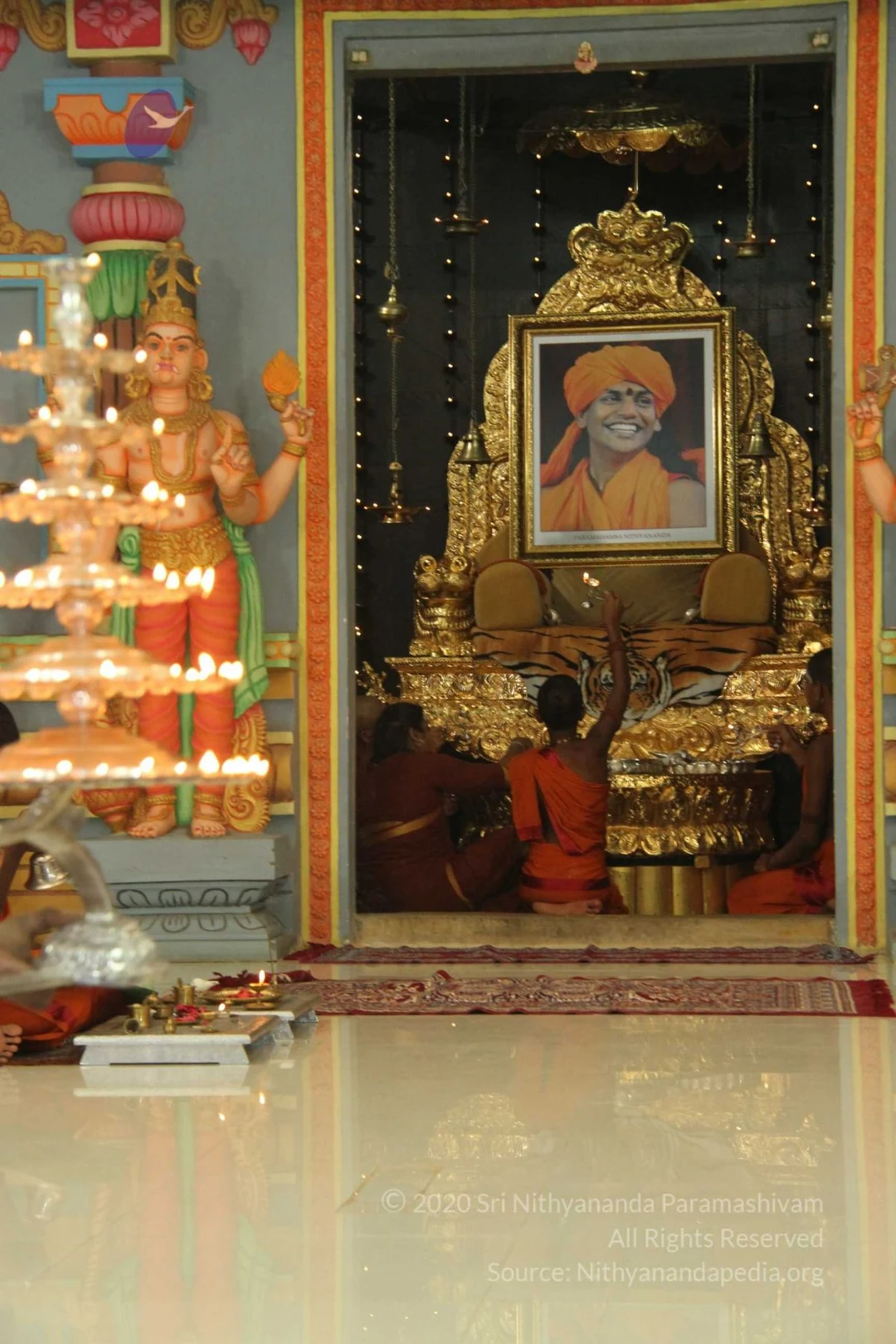
Paduka Puja
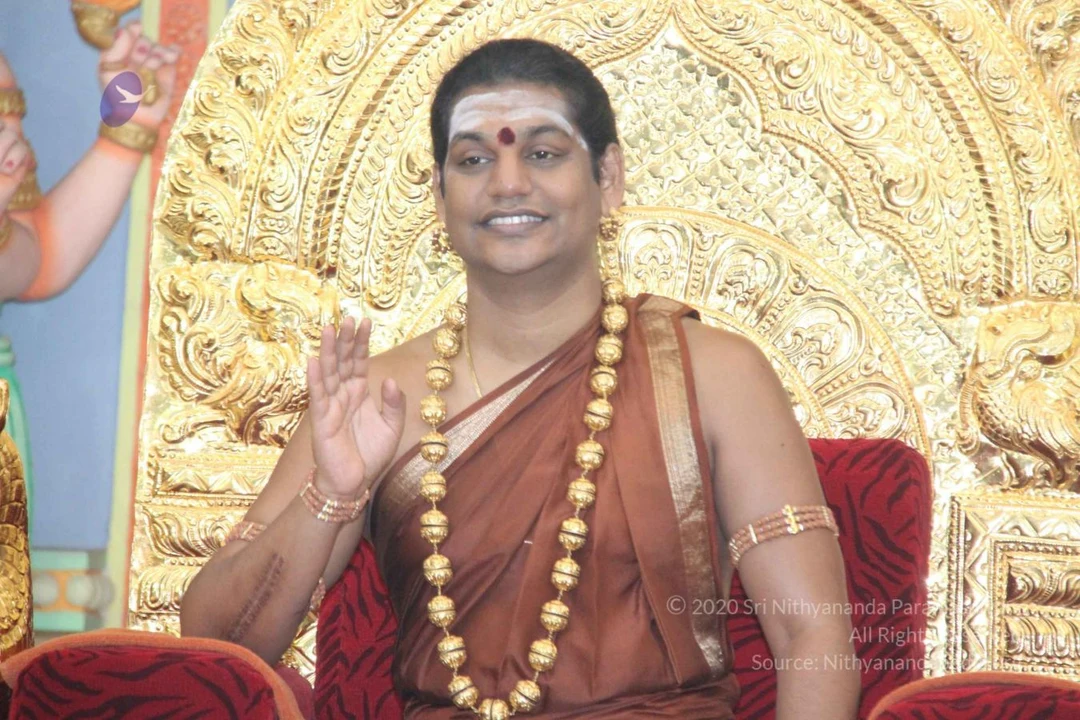
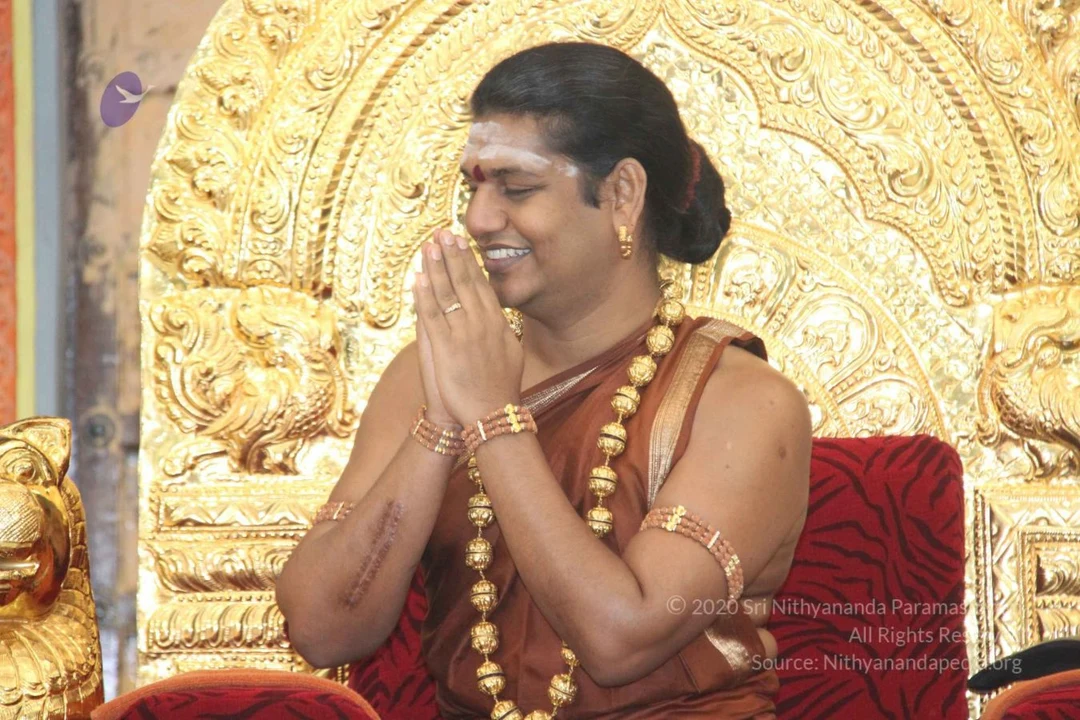
Nithya Satsang
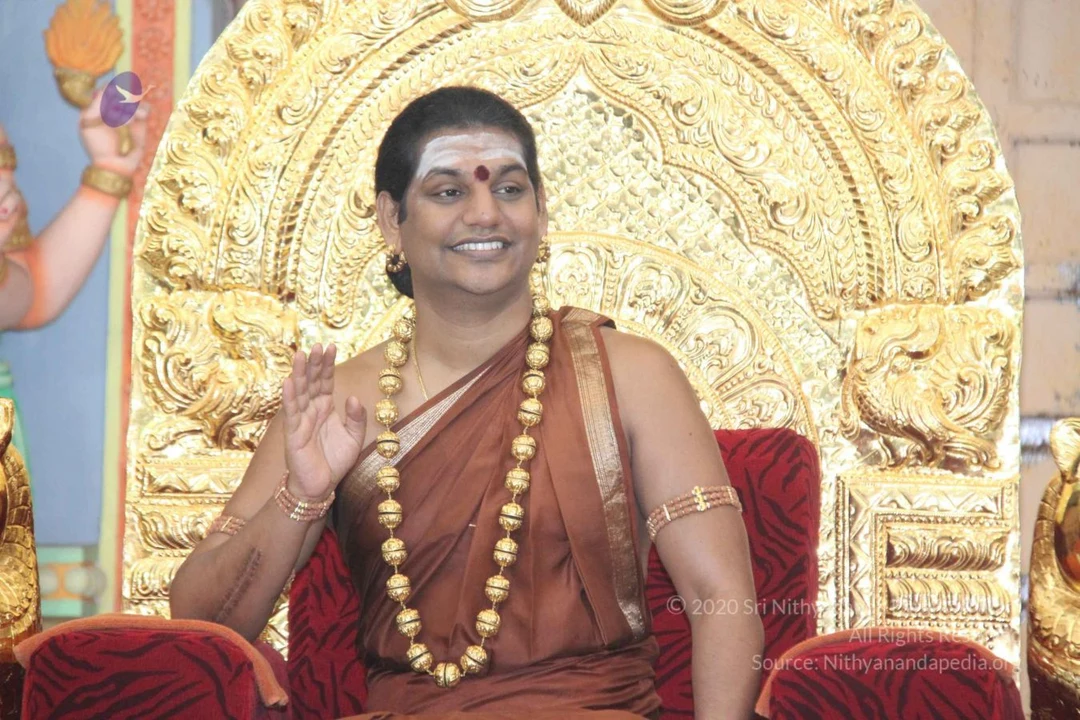
Sarva Darshan

Final Blessing

Sadhna and Lotus channels Live with Swamiji

Photos Of The Day:

Paduka-Puja

Nithya-Satsang

Sarva-Darshan

Tags:

Paramahamsa Nithyananda, life, power, Earth, spiritual, truths, heal, expand, success, lifestyle, enriching.

01-PADA-PUJA

Photos from this day

View all 151 photos

Paduka Puja

10 photosSource gallery
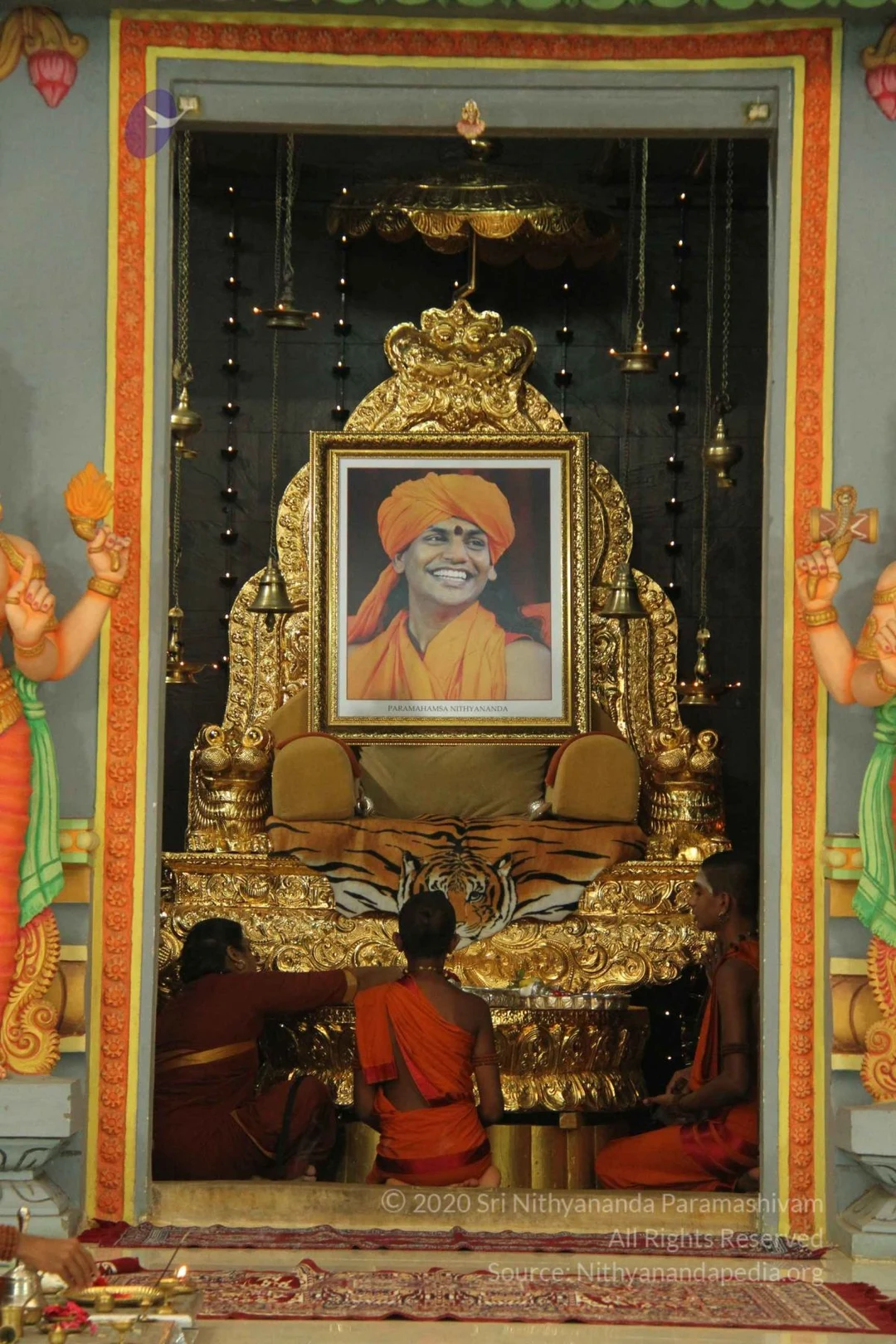
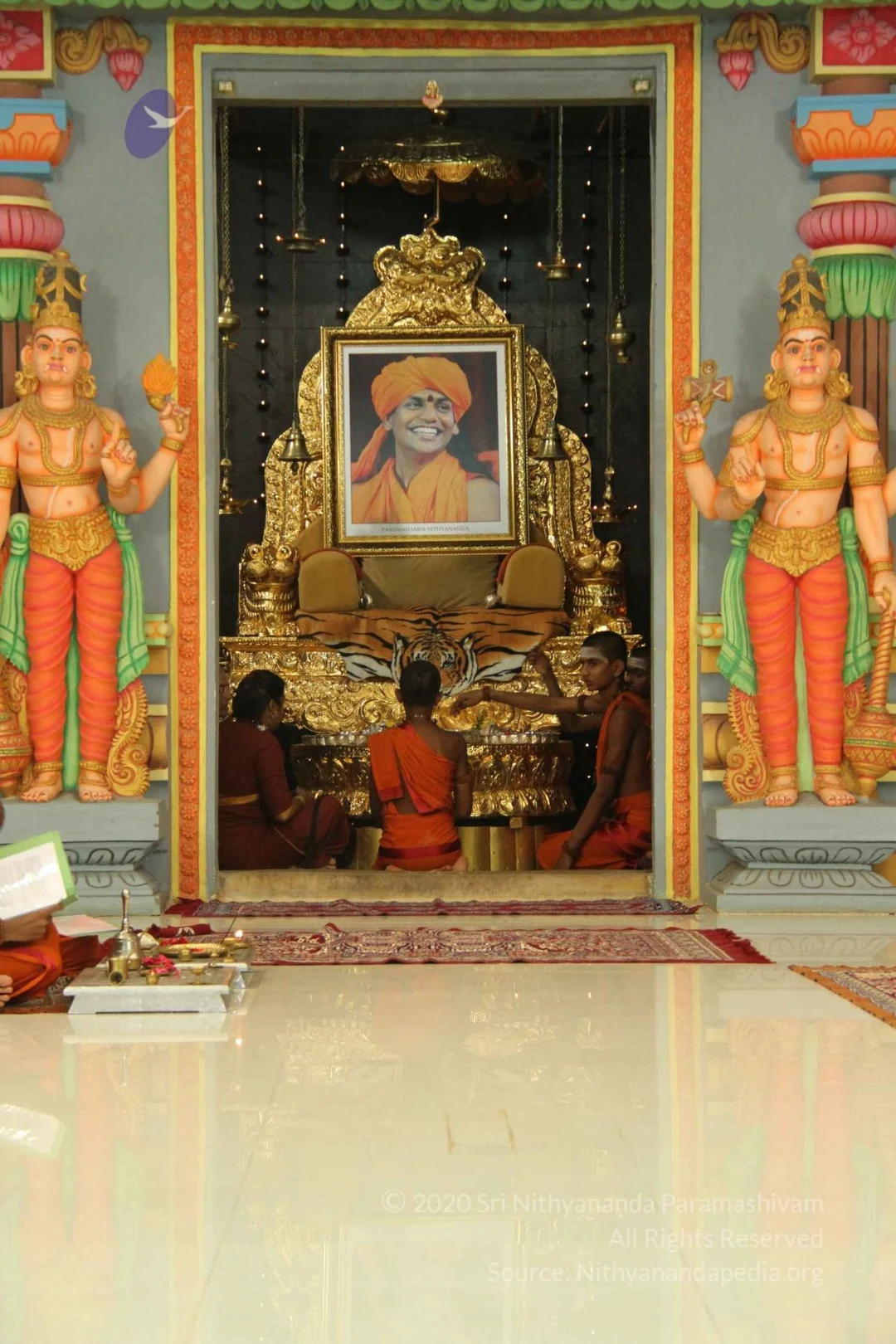
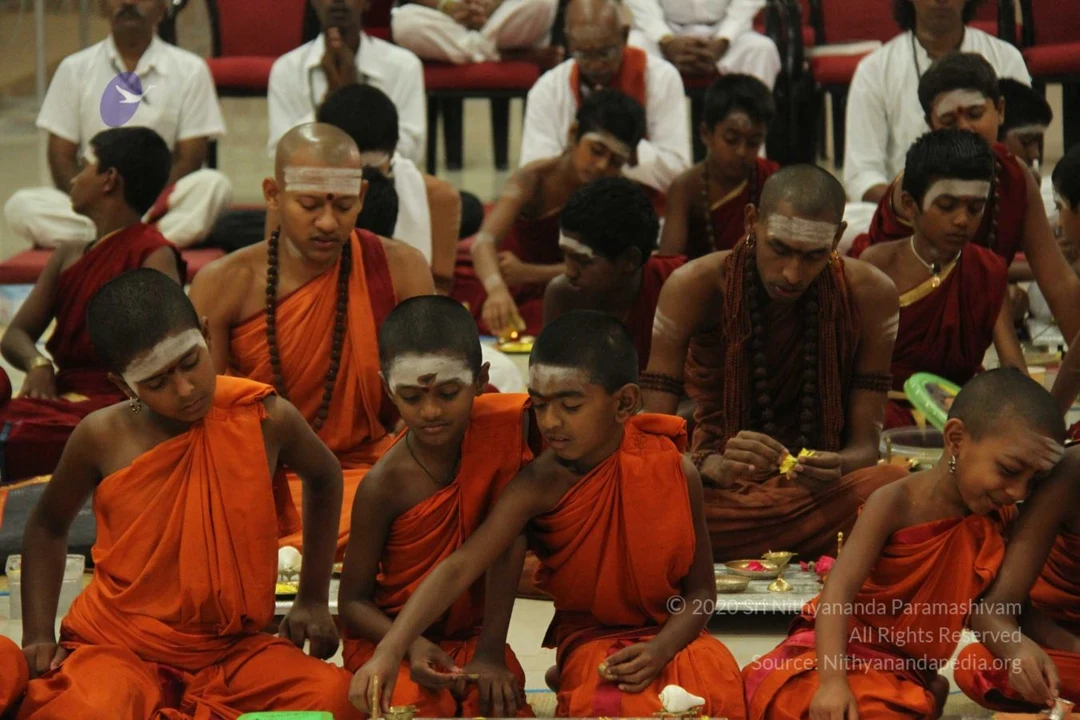
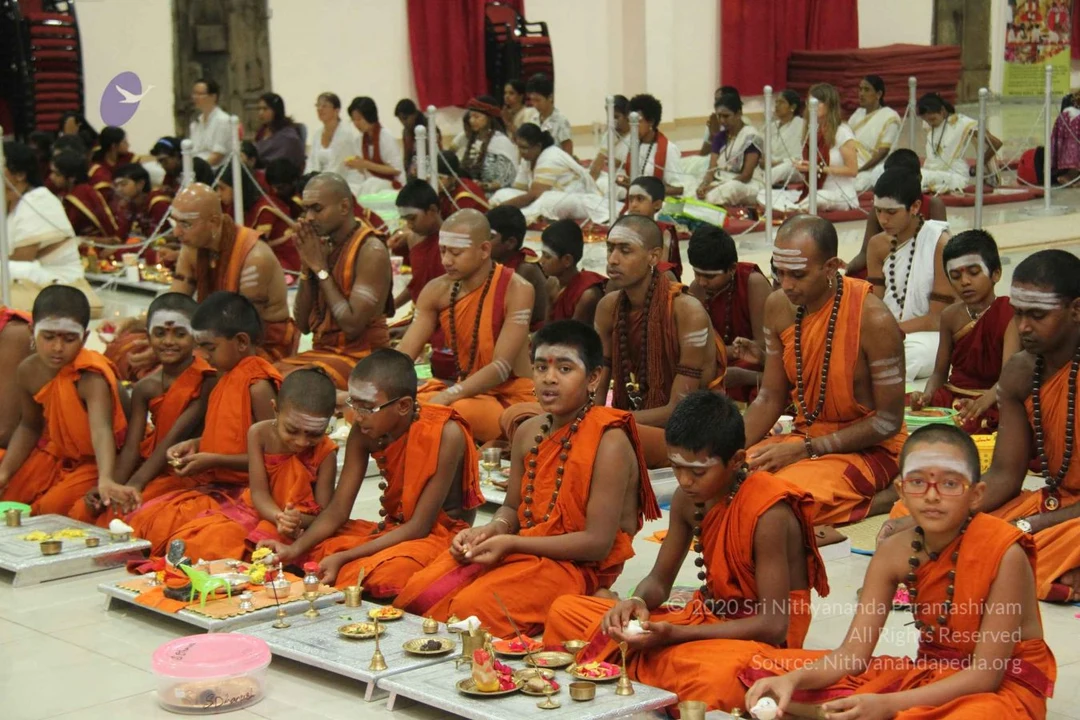
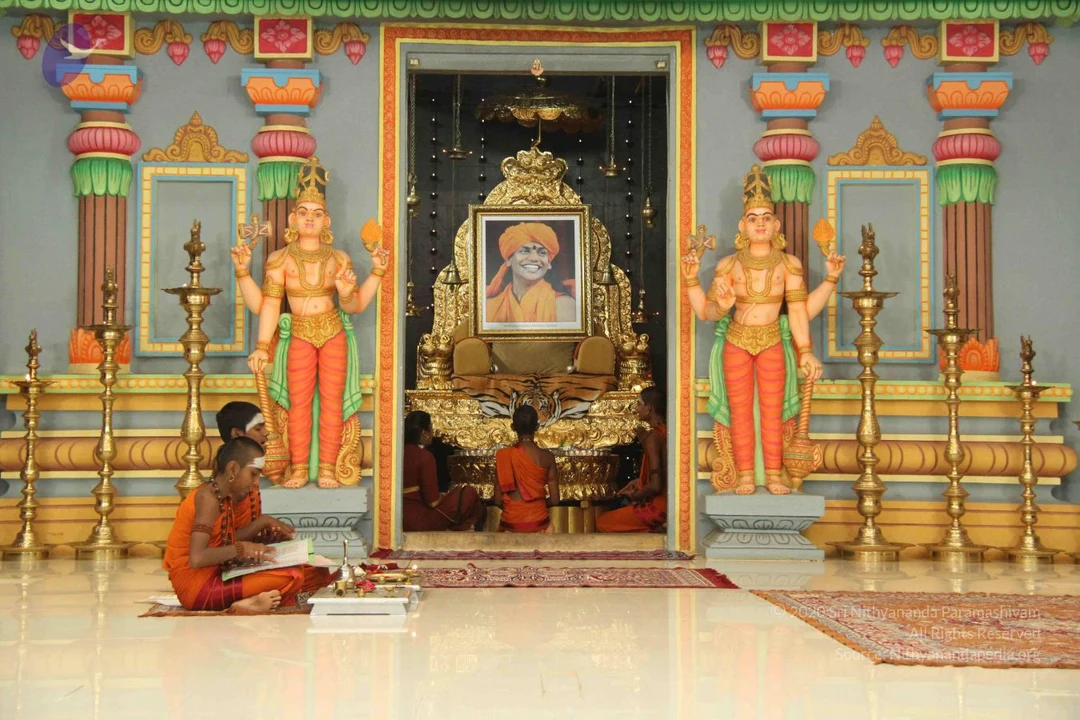
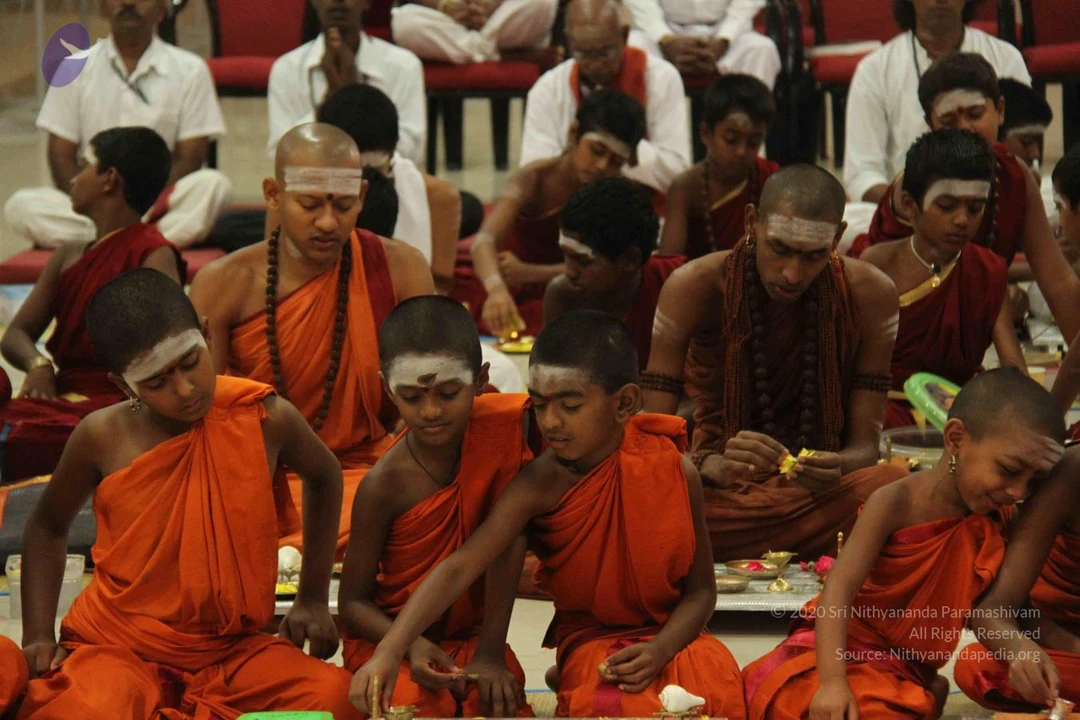
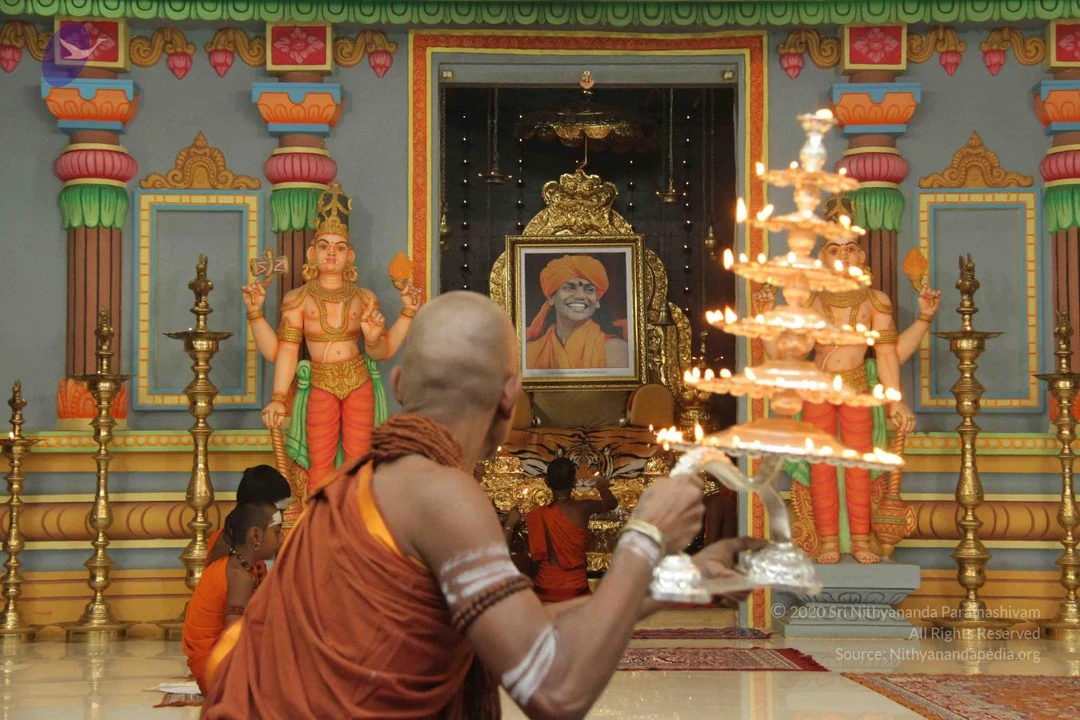
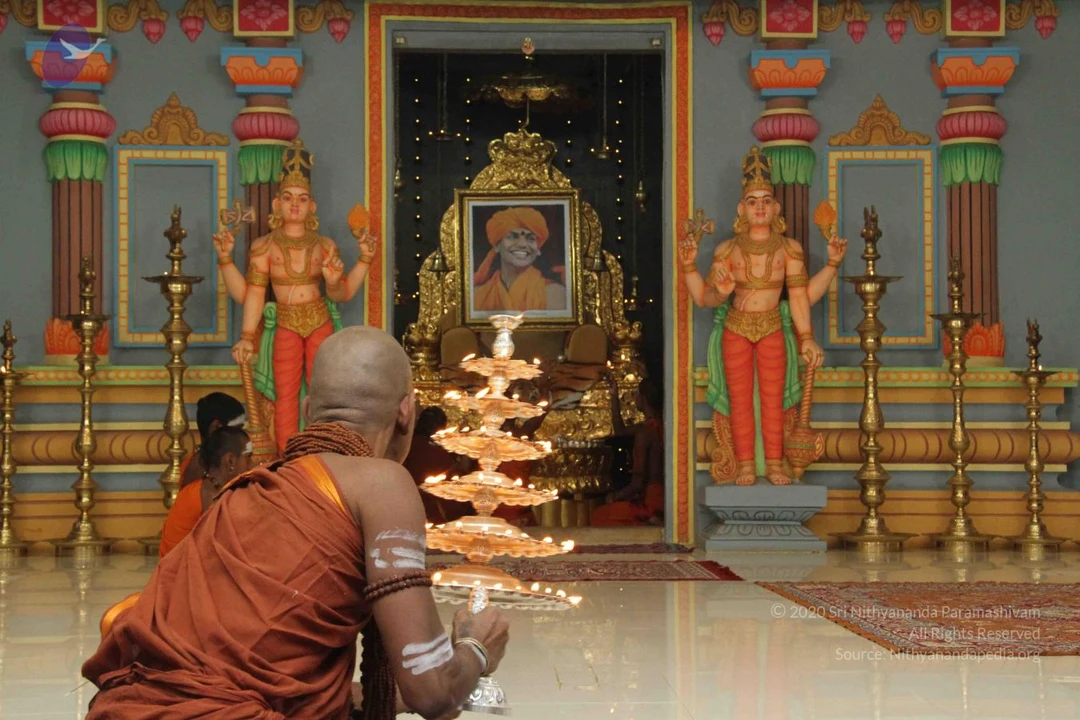
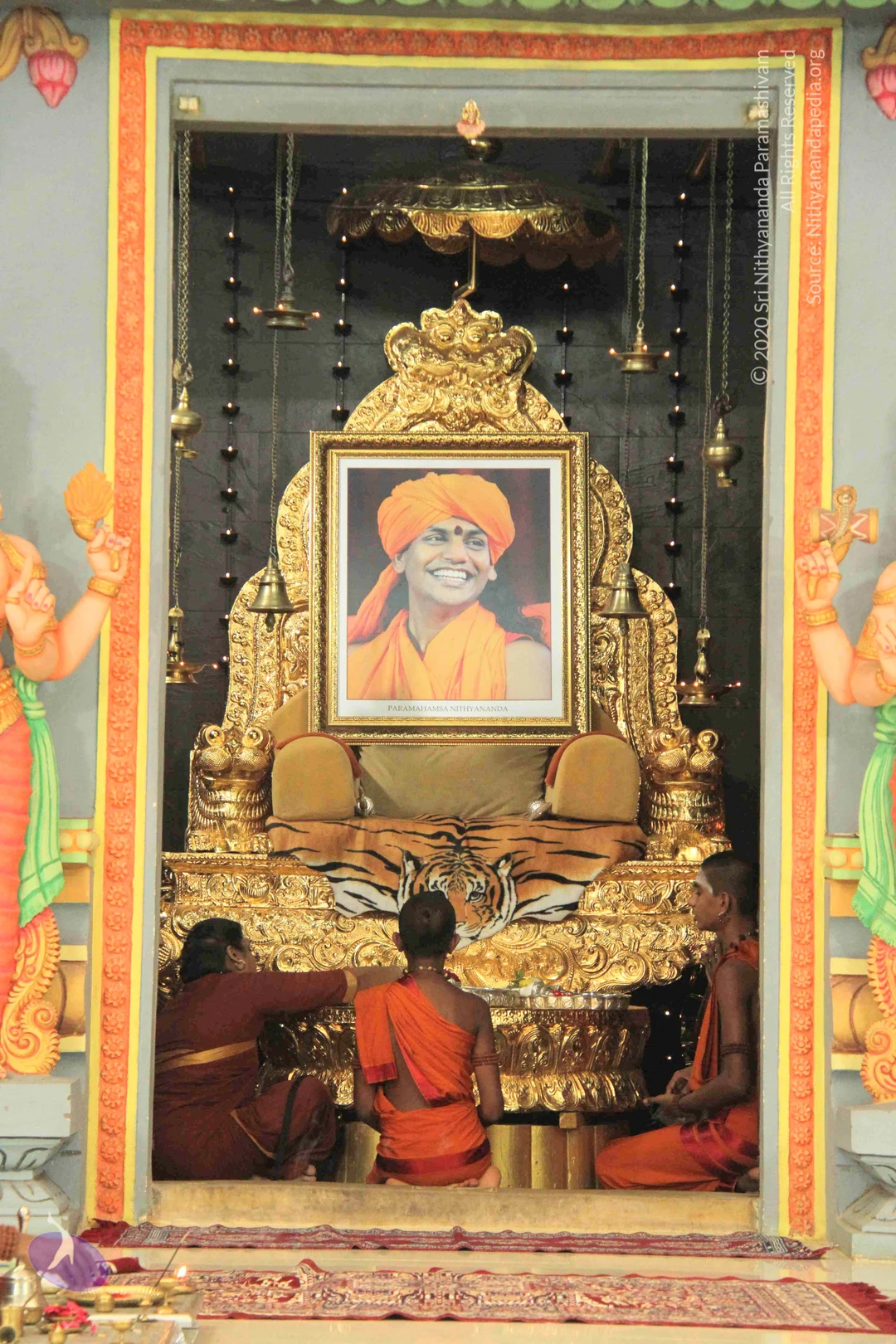
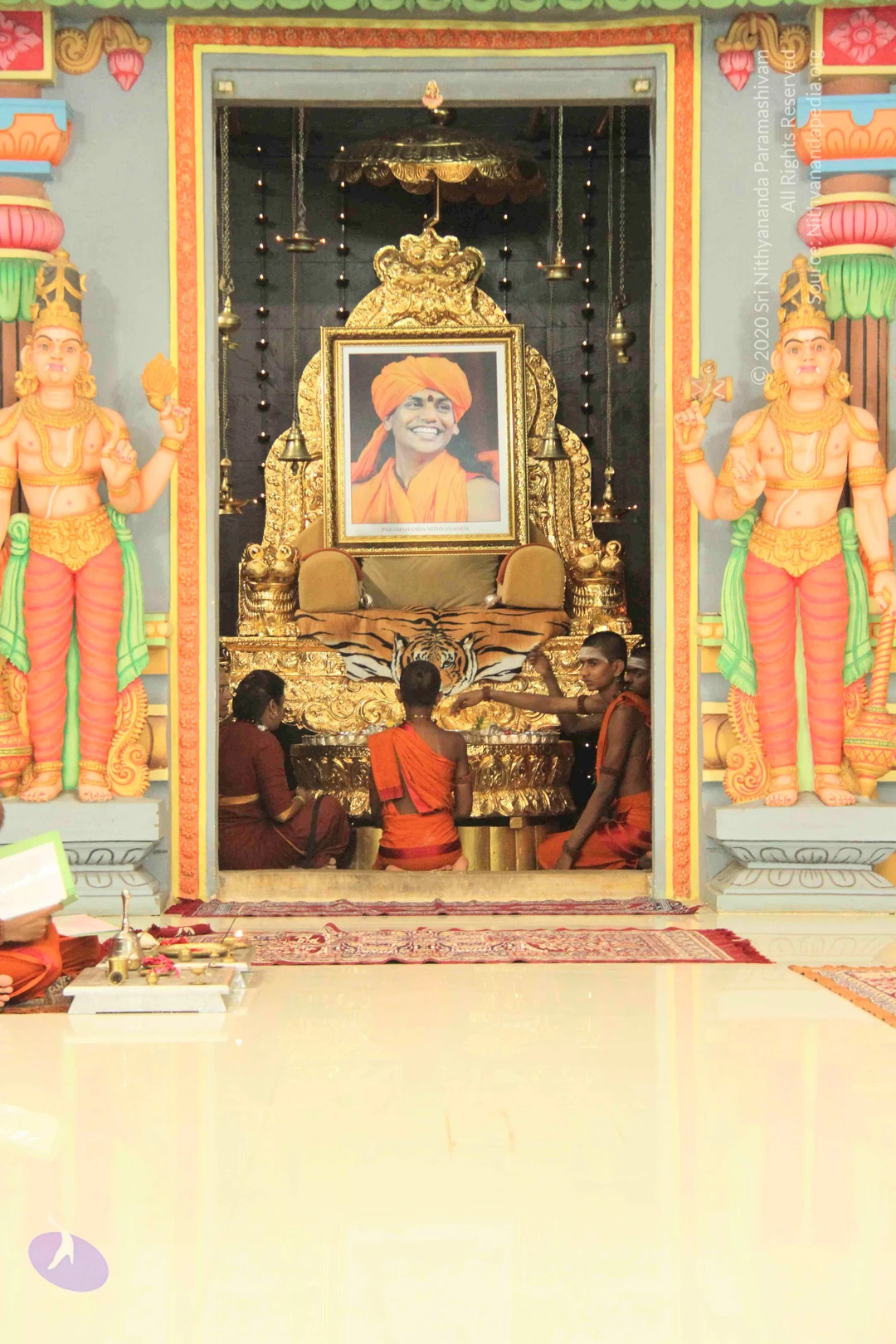
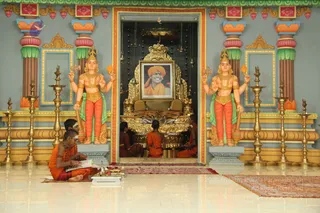
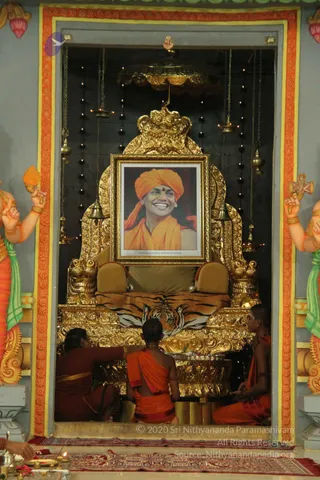
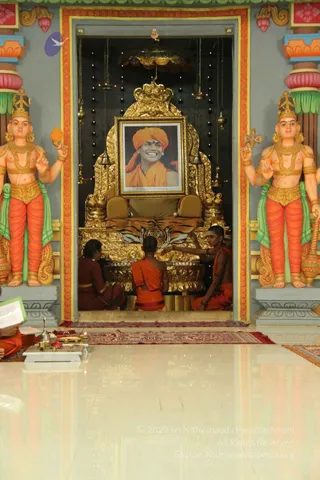
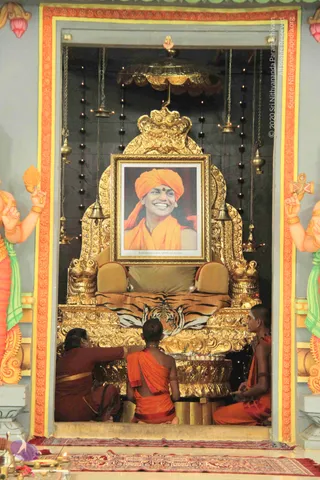
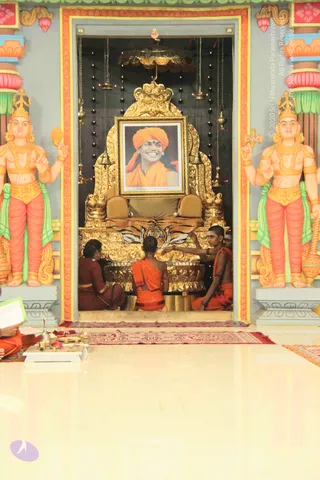
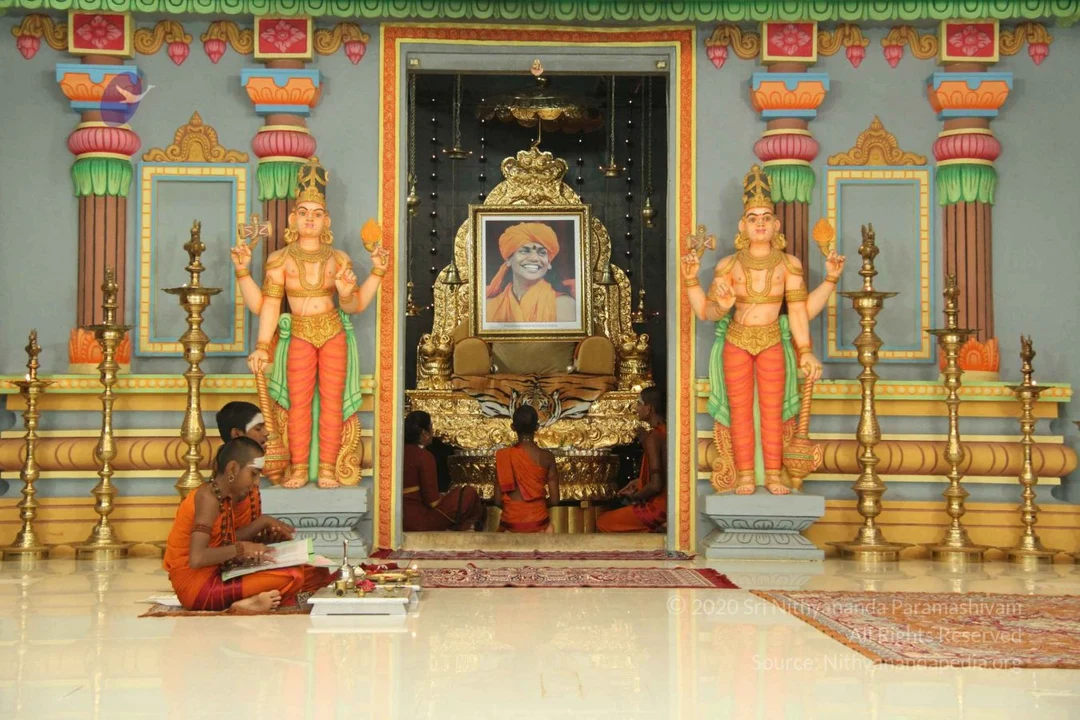
A gilded ornate throne stands in a shrine doorway, draped with an orange-and-black tiger-striped cloth and brown cushions. Above it hangs a framed portrait labelled "PARAMAHAMSA NITHYANANDA" showing a smiling man in an orange turban and orange robe with a red forehead dot. Hanging brass oil lamps and dark rudraksha-style beaded strings frame the throne. On either side stand painted multi-armed deity murti figures holding lamps and objects. At the bottom, three people in orange and maroon robes kneel in front of the throne, one performing a puja with an oil lamp and offerings on a red-and-gold rug. Ritual trays and brass vessels sit in the foreground.Inside a colourful temple shrine, a large framed portrait labelled "PARAMAHAMSA NITHYANANDA" sits on an ornate gilded throne draped with a tiger-striped cloth. The portrait shows a smiling man in an orange turban and orange robe. Below the throne, several people in orange and maroon clothing kneel and sit in devotion, one in orange offering something at the throne's base. Two tall painted guardian statues with crowns, orange dhotis and green sashes flank the entrance. Hanging bells, a golden canopy and brass lamps decorate the shrine, and a brass puja tray with oil lamps sits on the marble floor in the foreground.A group of young boys and a few adult men in saffron and orange robes sit closely together during a ritual, many with white sacred ash bands across their foreheads and bare shaved heads. Several boys hold small brass dishes and offer petals and flowers near a low ritual setup with small oil lamps and brass vessels on the floor. Behind them, seated devotees in white clothing watch quietly in rows of red chairs. The scene appears to be a puja or ritual offering performed by young initiates.

Nithya Satsang
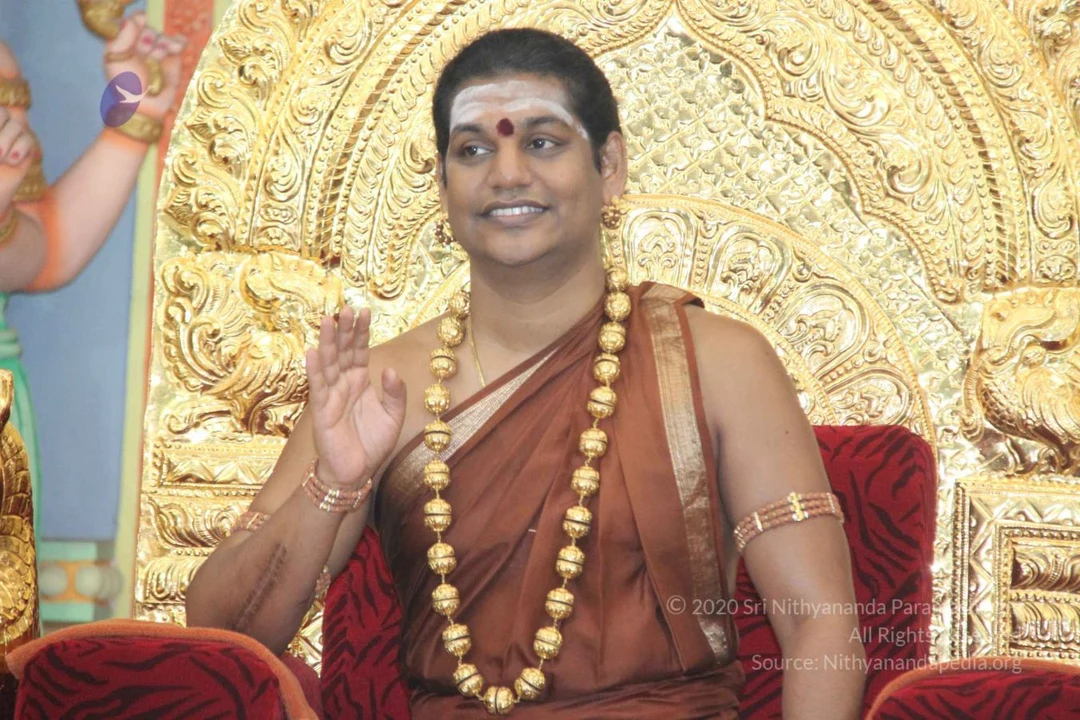
52 photosSource gallery
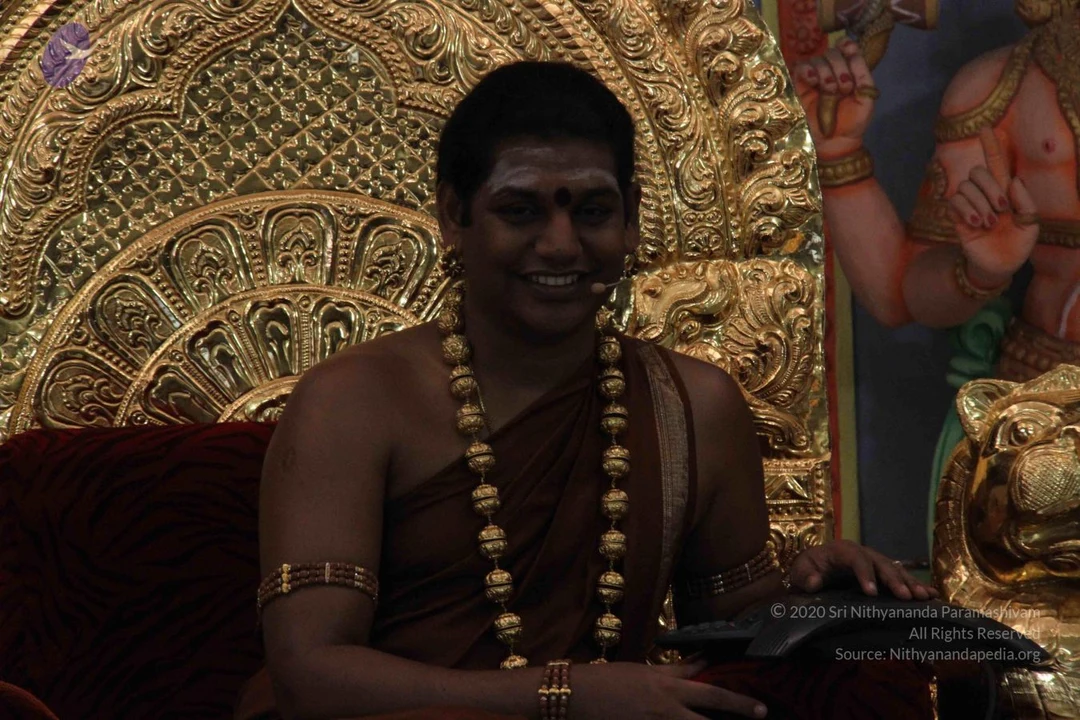
Photograph of a man seated on a red-and-black tiger-striped cushioned chair in front of an ornate gold throne backrest with carved scrollwork. He wears a rust-brown sleeveless robe draped over one shoulder with a gold border, a long necklace of large gold beads, gold armlets and bangles, gold earrings, a white horizontal tilak with a red dot on his forehead, and has his hands resting in his lap. a person is shown in a seated satsang setting; the man is seated in person, with a gold-beaded mala and white-and-red forehead markings.A man sits on an ornate gold throne with heavily embossed floral and scrollwork carvings. He wears a rust-brown robe with a gold border draped over his shoulders, a long gold bead necklace with a rudraksha-style mala, gold bangles on his upper arms and wrist, and gold earrings. He has white vibhuti lines and a red kumkum dot on his forehead, and his hands rest together at his lap. The a person is seated in a satsang-style setting, with a red cushioned seat visible below the throne. a person is shown speaking to an audience, as the page indicates.A seated man with a shaved head and white tilak on his forehead, wearing a rust-orange dhoti and shawl, gold bangles and a long multi-strand gold bead necklace, sits with palms pressed together in namaste on a large gilded throne with carved lion heads. Red and black tiger-striped cushions line the seat. Behind him stand painted deity figures with gold crowns and jewellery. a person is the central figure: he appears as the seated presenter in the satsang setting, though the bare shaved head and absence of long hair make this only a partial match.

Sarva Darshan

20 photosSource gallery
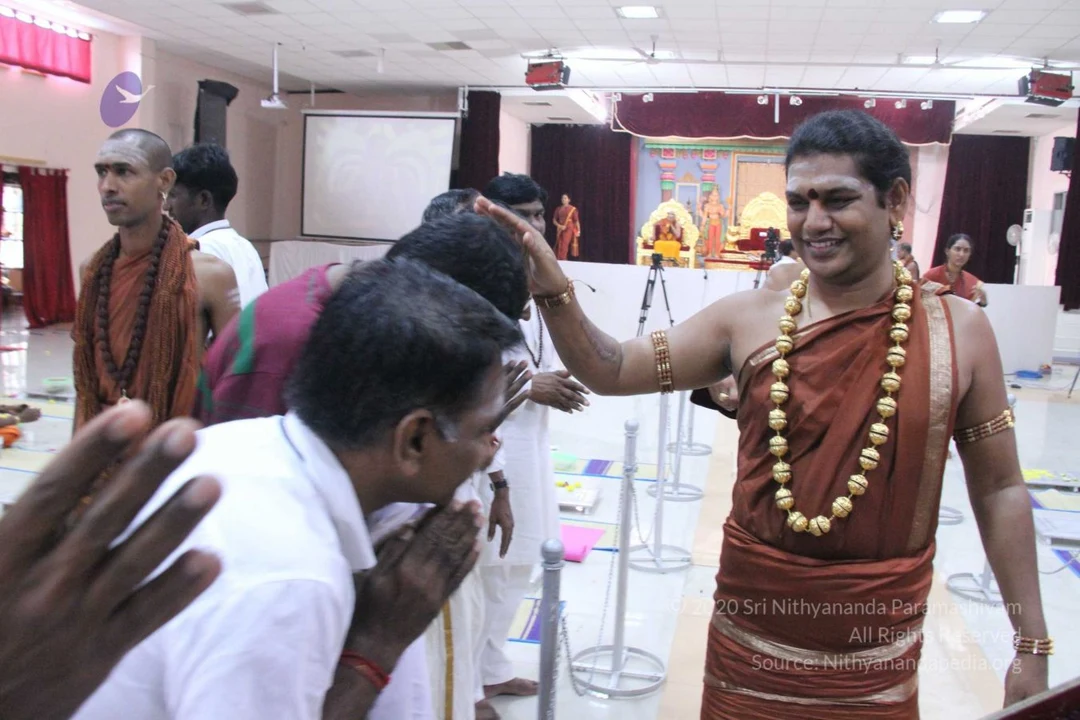
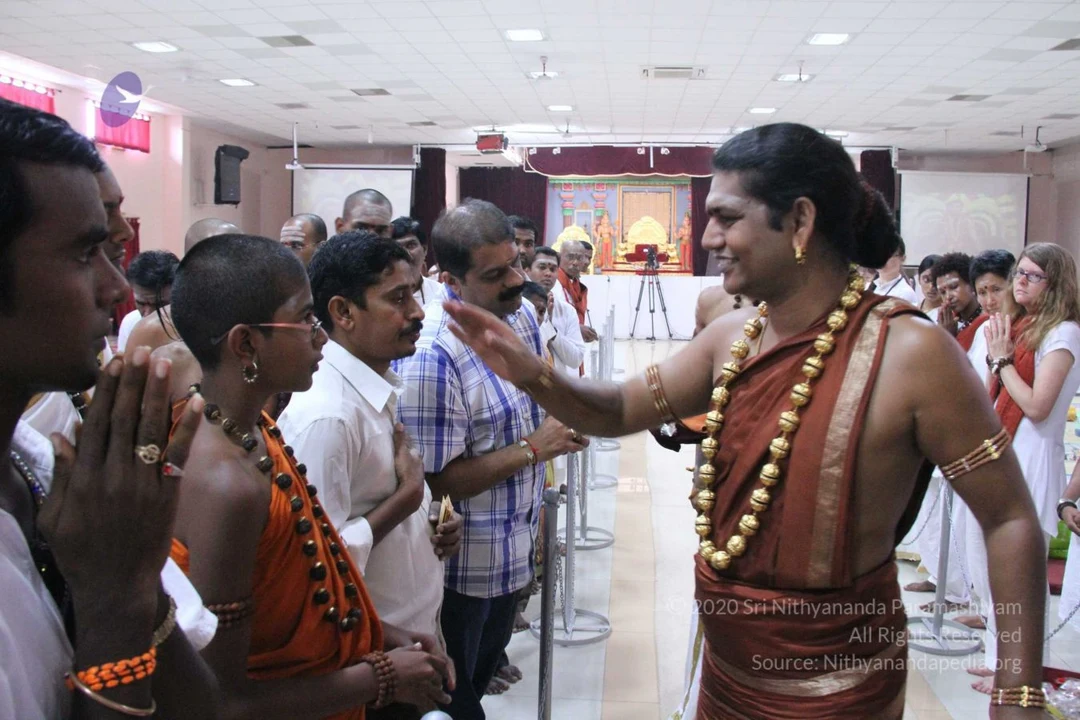
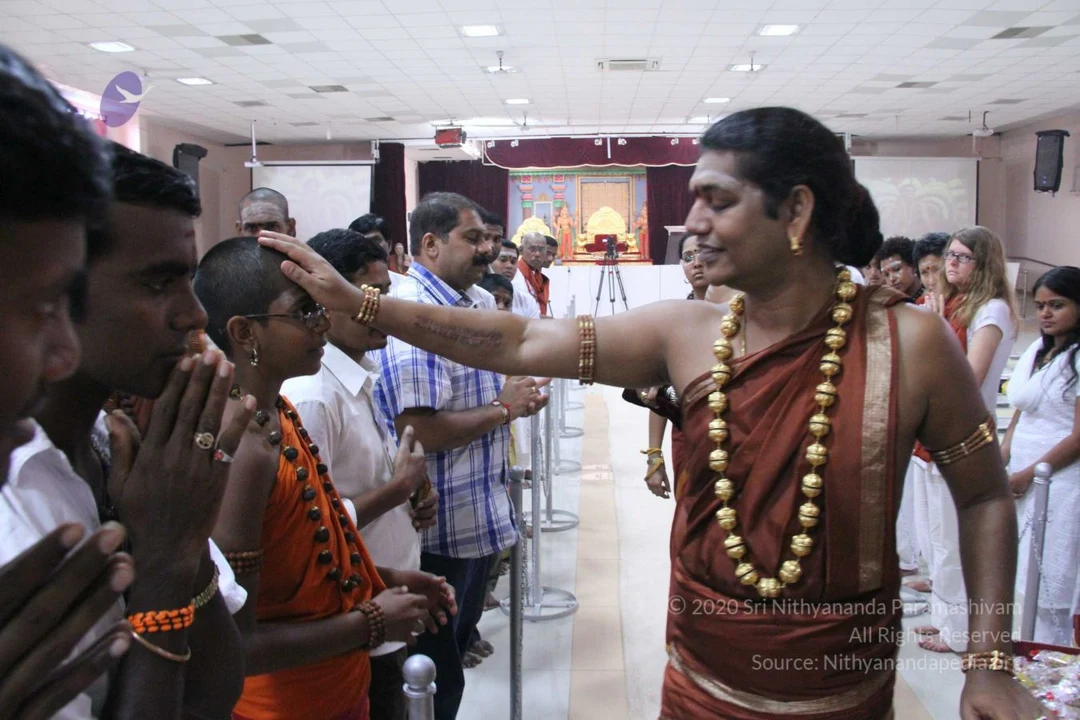
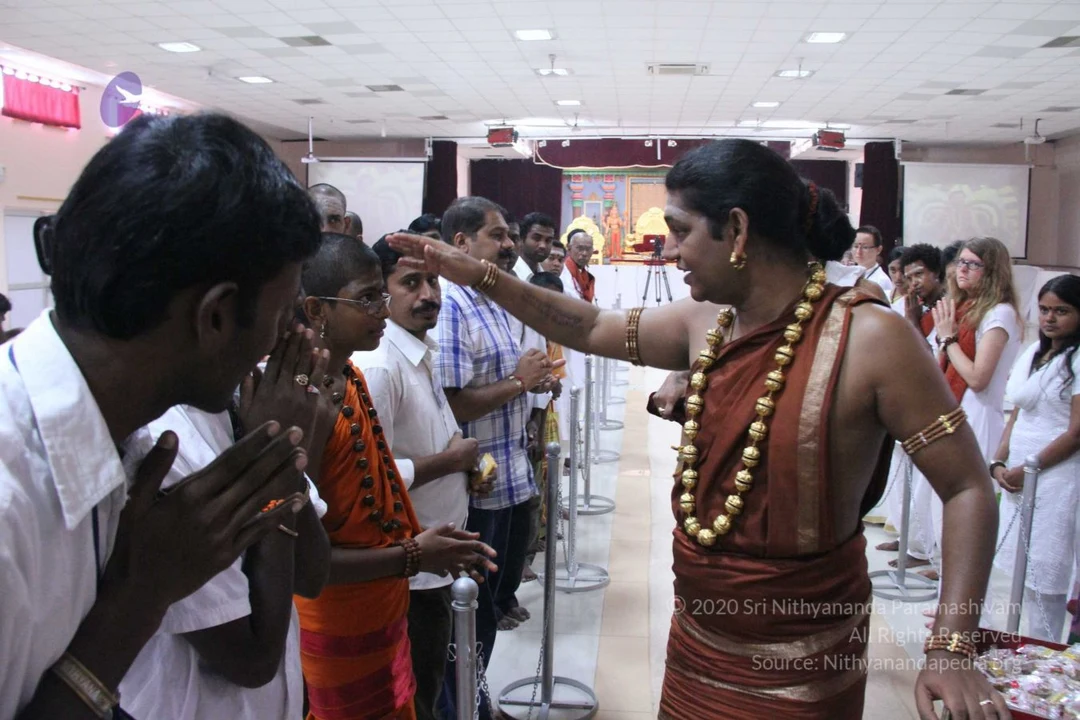
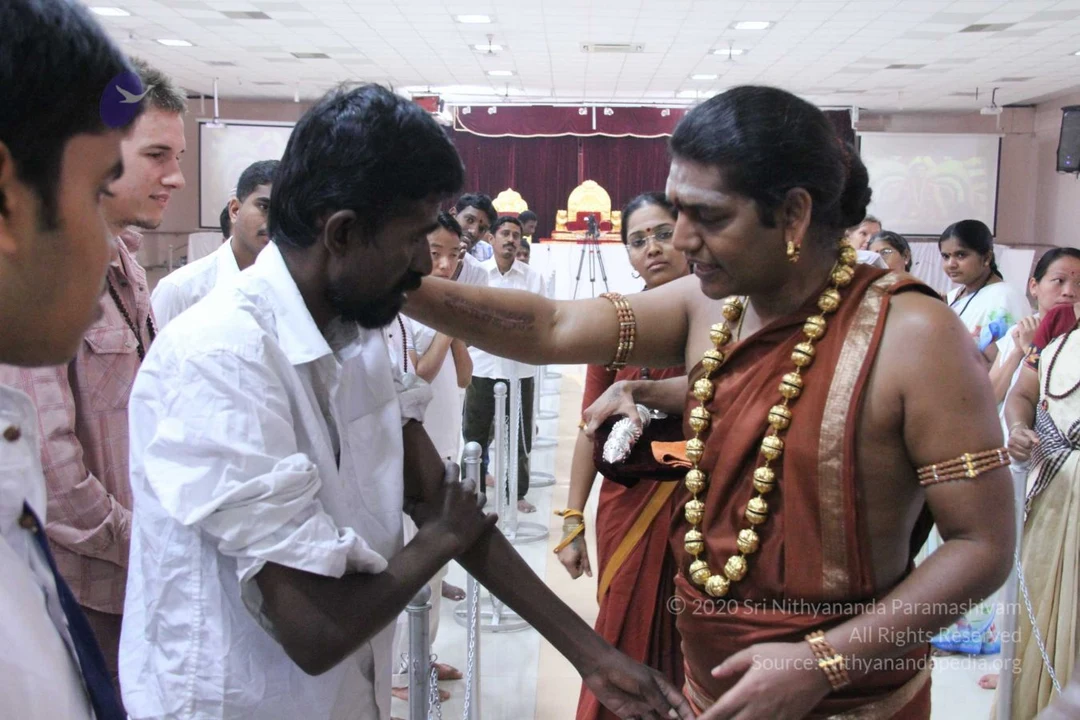
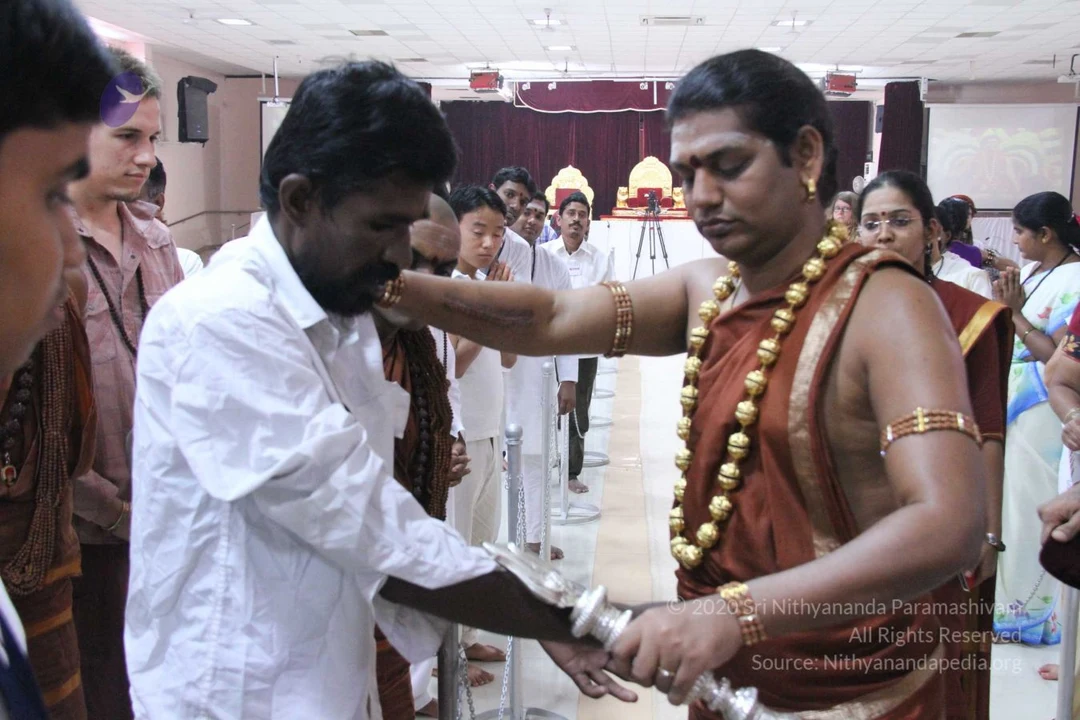
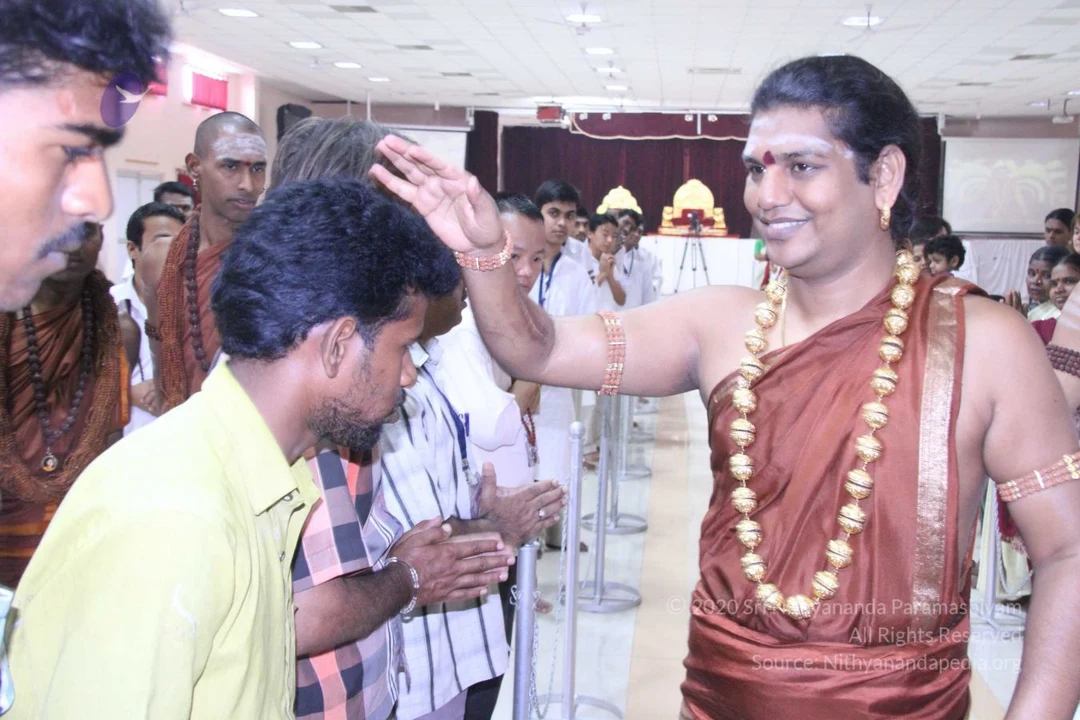
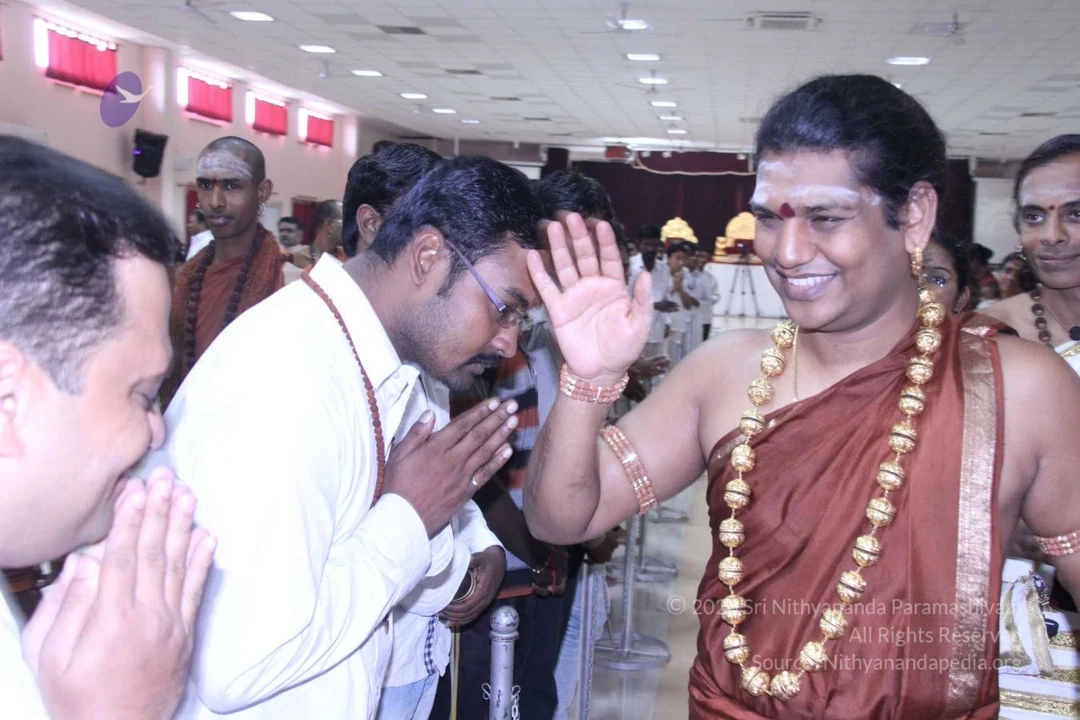
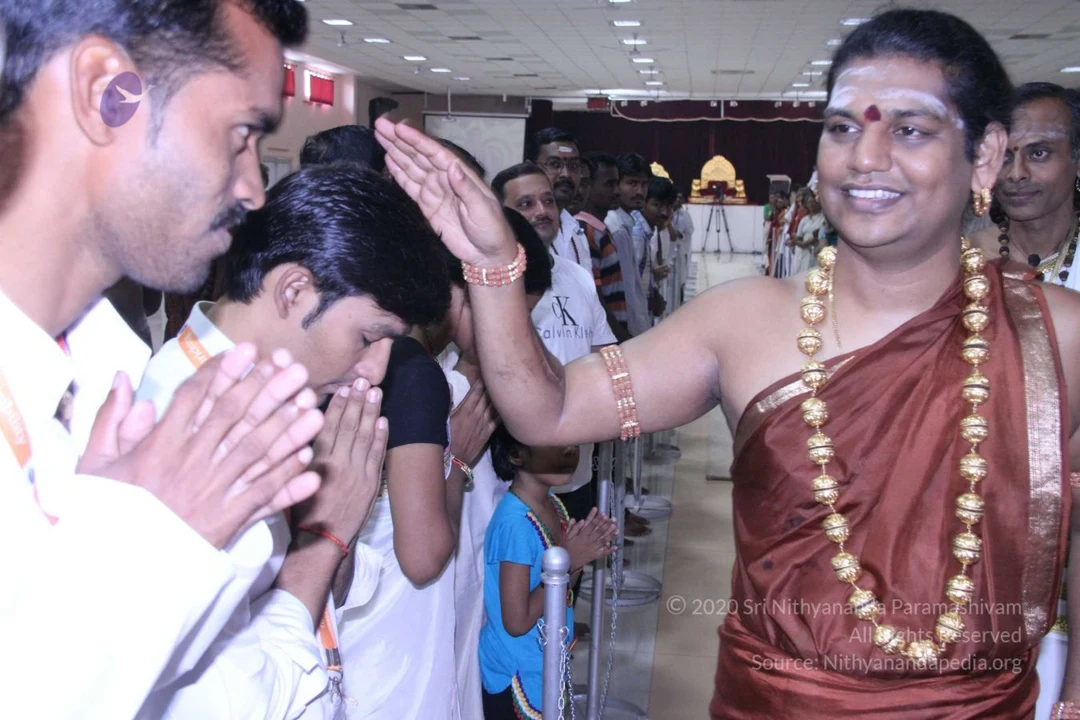
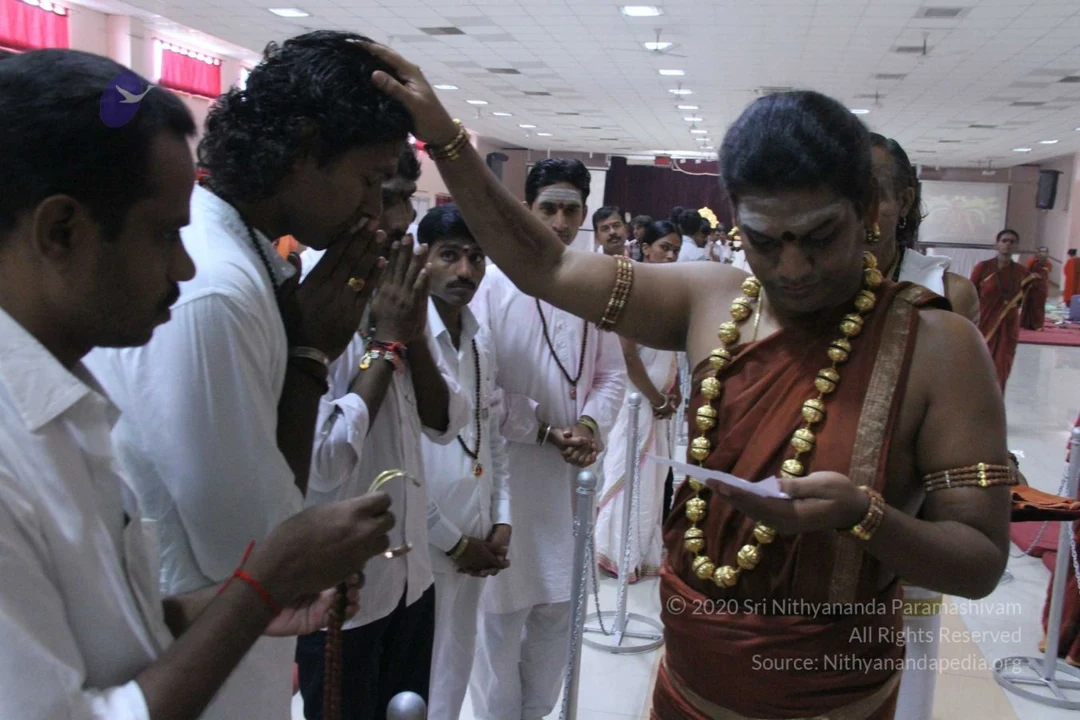
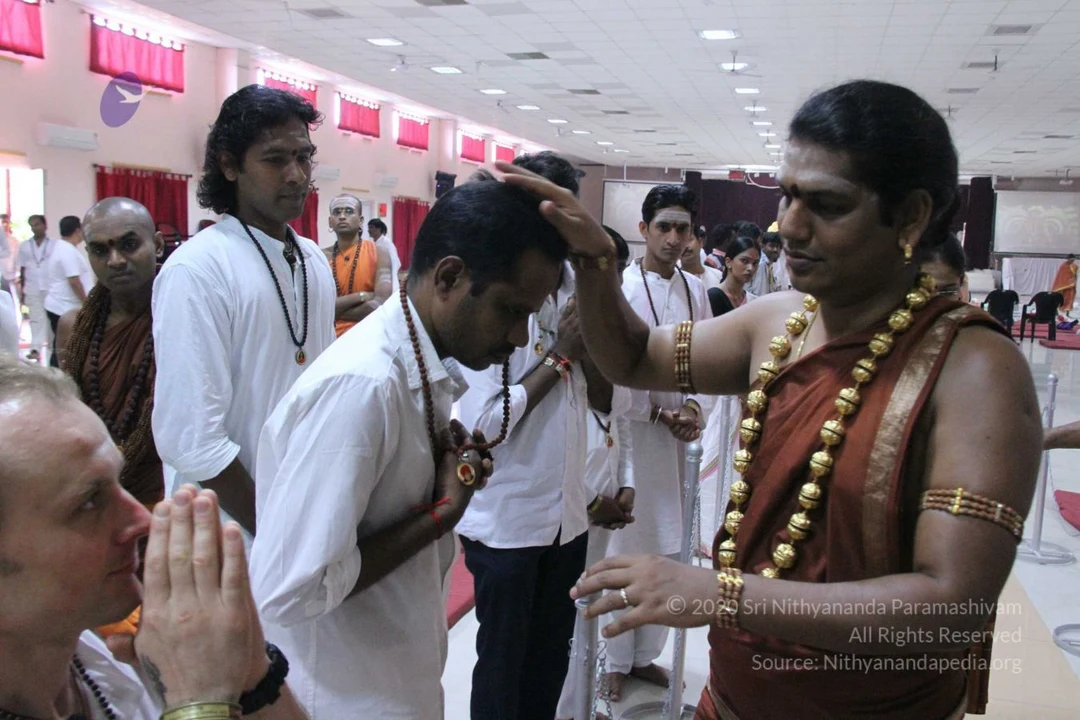
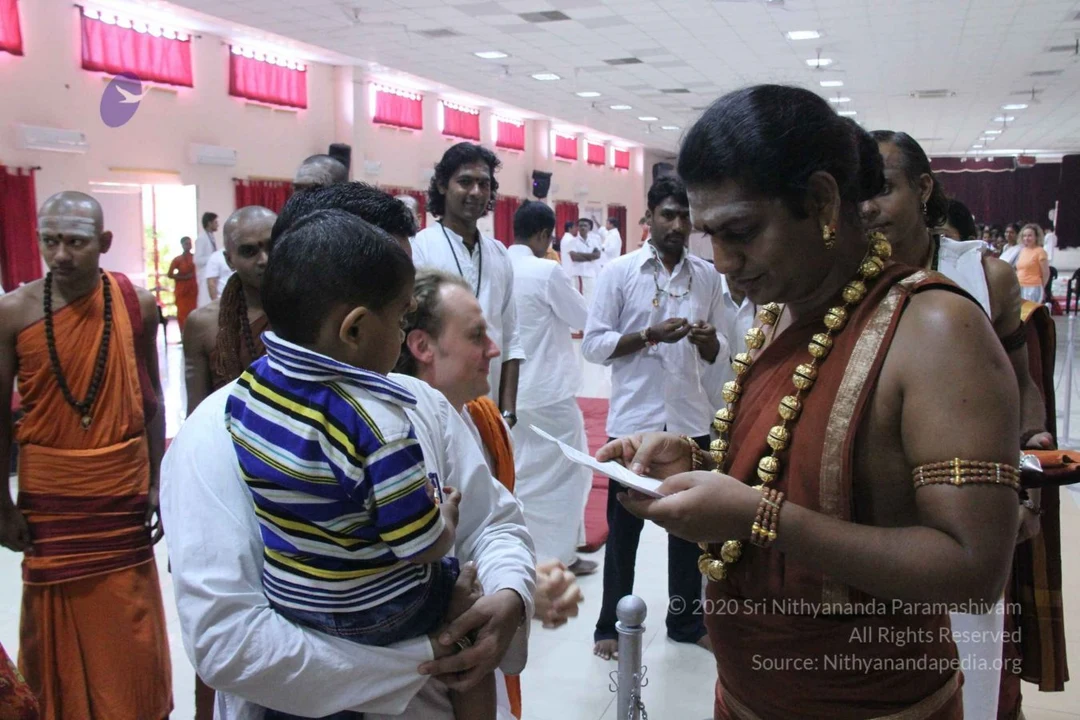
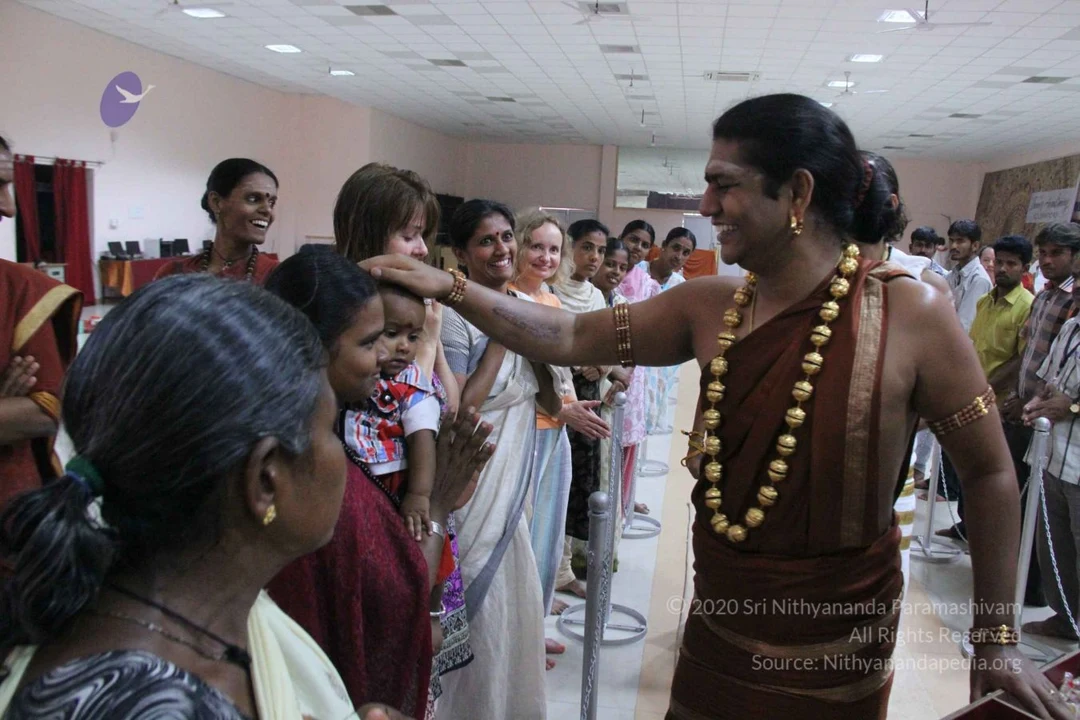
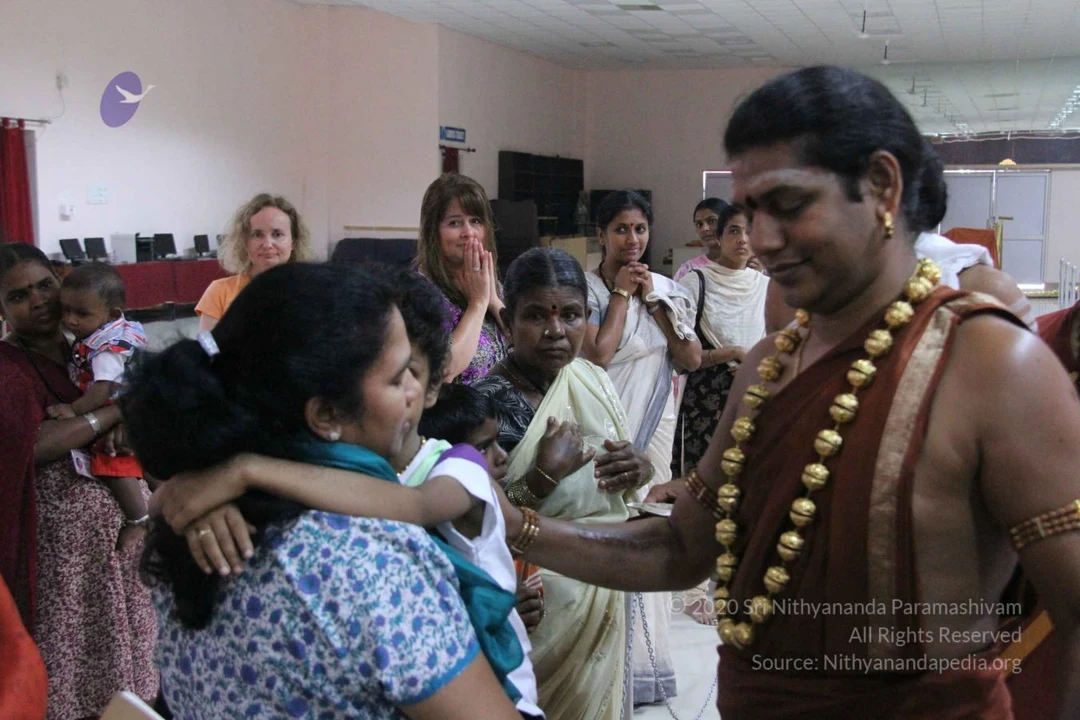
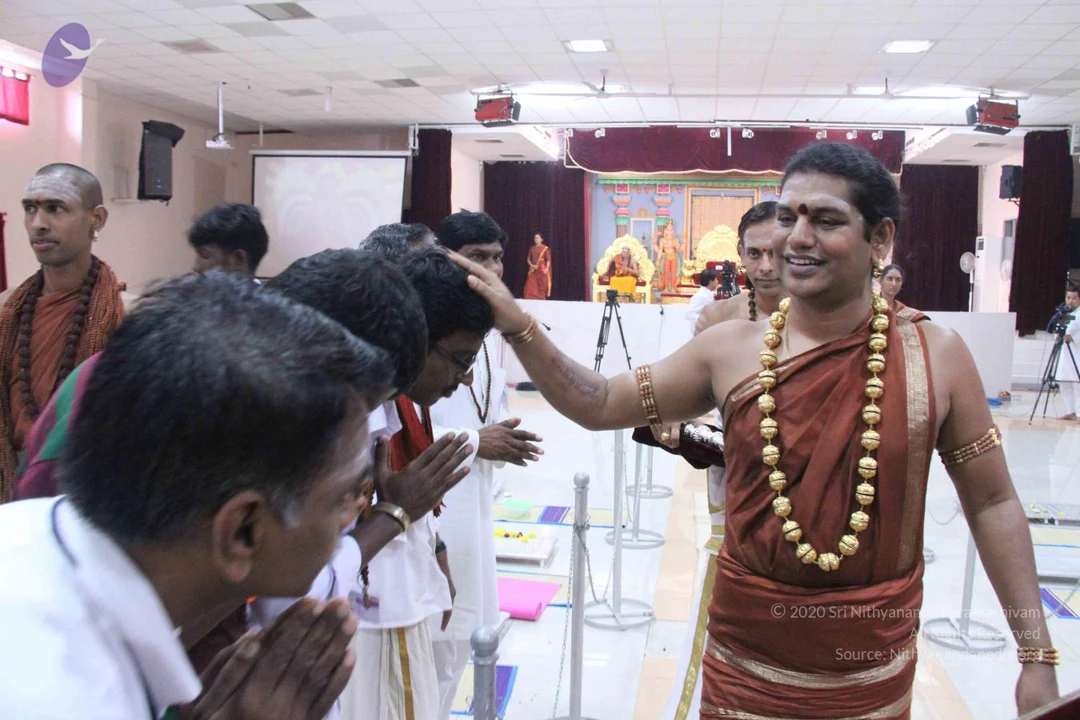
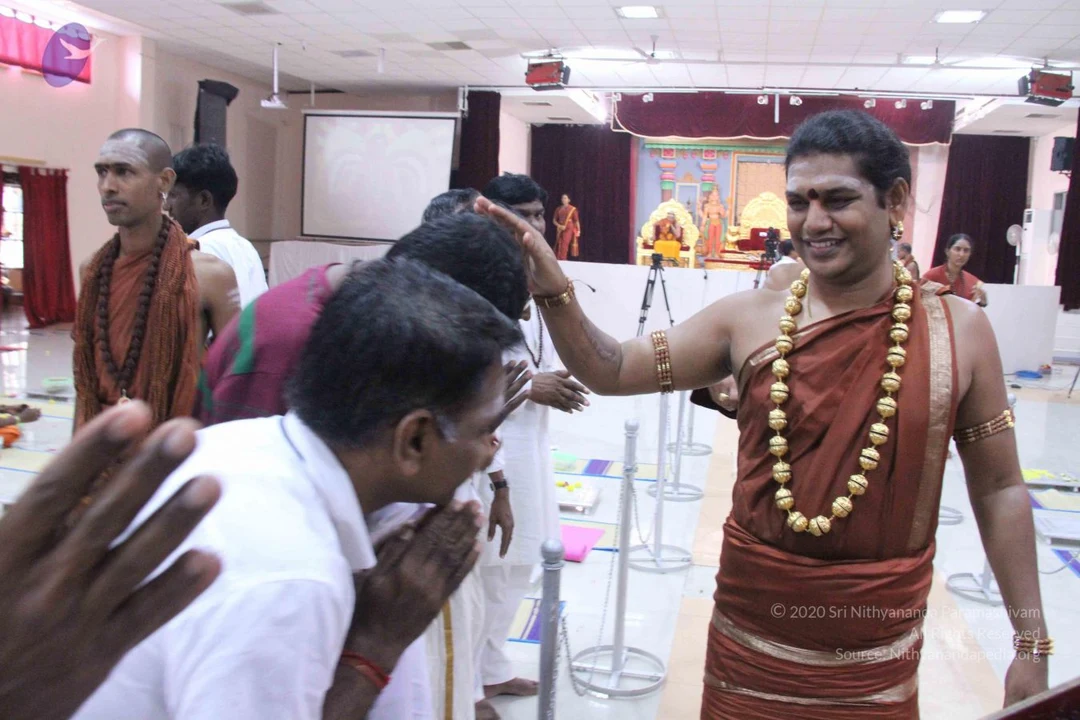
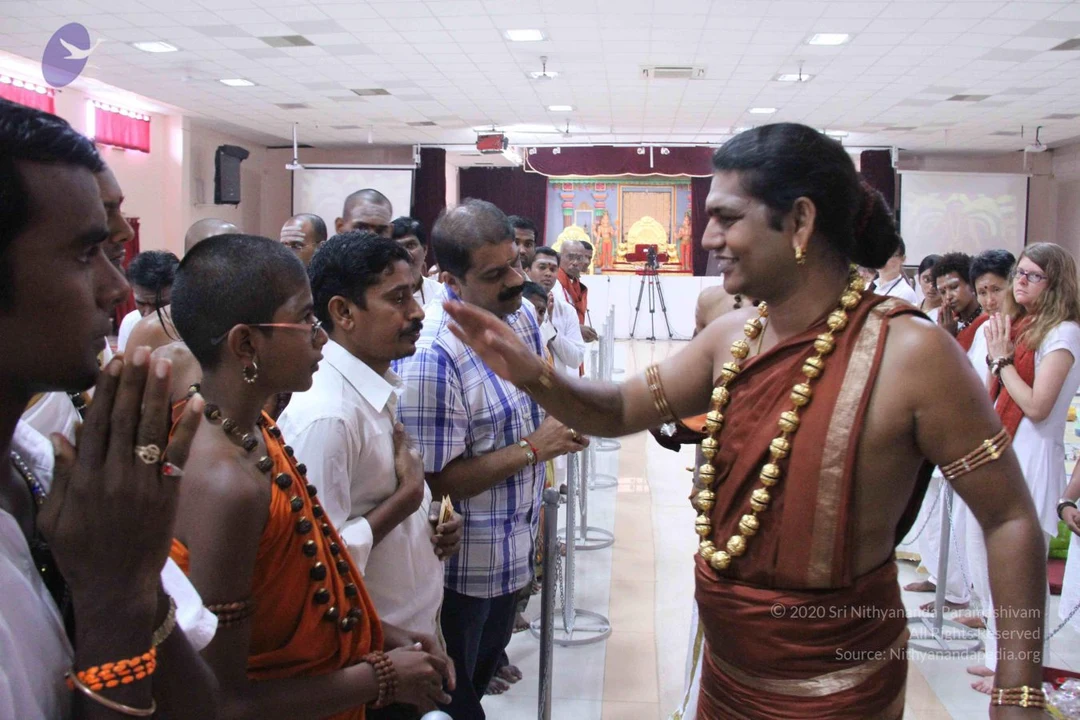
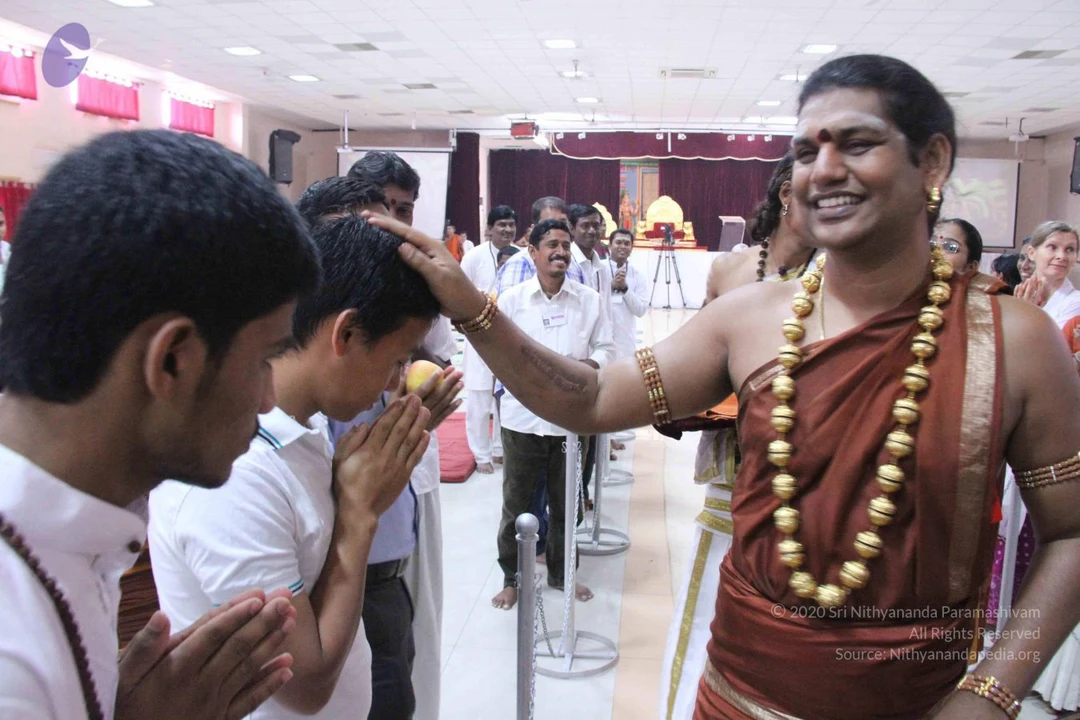
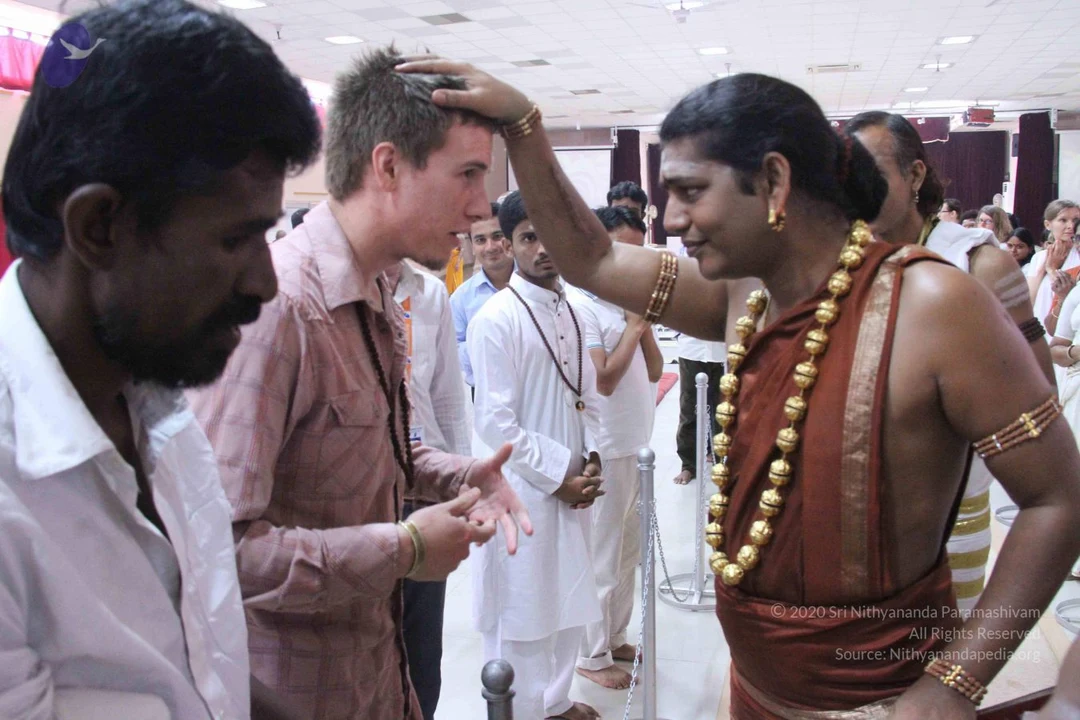
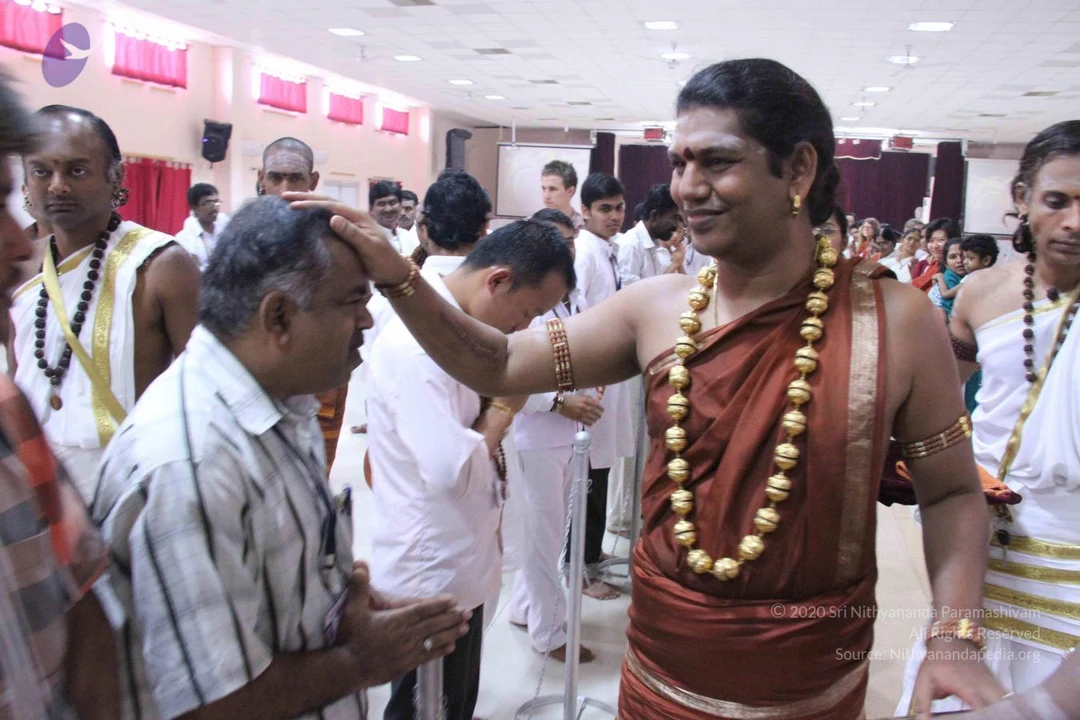
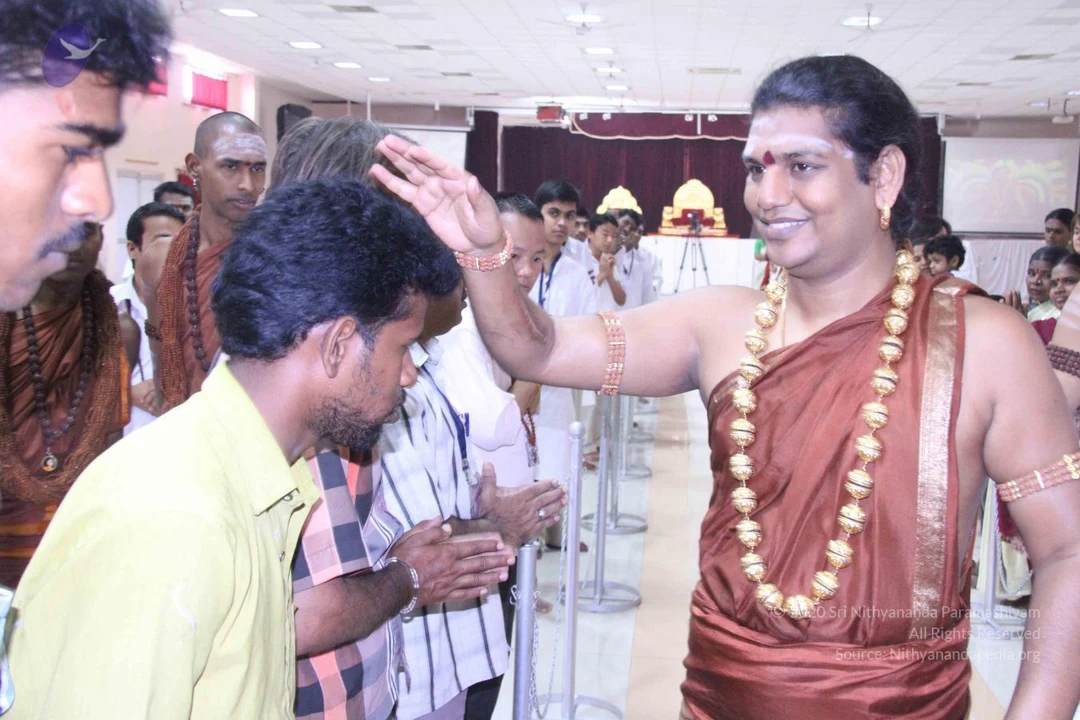
Indoor photo in a hall with white tiled floor and a shrine backdrop with a golden throne and deity murti at the far end. A man with long hair tied back, gold beaded necklace and bangles, wearing a saffron-orange and gold-bordered dhoti and shawl, extends his hand in blessing toward a line of devotees. Several people stand with palms joined in anjali; a shaved-headed devotee in orange with rudraksha beads and a man in a blue checked shirt are nearest. A woman in white with glasses stands at right. Cameras, a tripod, and stanchions line the aisle.A photograph in a hall with a white tiled ceiling and a stage at the back draped in red curtains, where a deity murti scene is set up. In the foreground a man with long dark hair in a bun, wearing a rust-red shawl over his shoulder, a gold ceremonial necklace of large gold beads, and gold bangles, extends his right hand to touch the head of a shaven-headed young disciple in an orange-saffron robe and a rudraksha mala. Around them, devotees with palms pressed together in namaskar, some in white clothes and one in a blue checked shirt, stand along a barrier line. The man in red has a distinctive appearance matching the page's identification, with long hair, gold necklace and rust shawl, but the description does not confirm his identity from appearance; he is presented here as a senior figure giving blessing.A photograph of a devotee line in an indoor hall with a rope barrier and stanchions. A man in a rust-red wrap with gold bangles and a heavy gold bead necklace stands on the right, arm extended toward devotees, appearing to bless them. Swamiji (probable): long hair swept back, gold necklace and bangles, rust-red garment. Devotees in white shirts and orange-saffron garments stand with palms pressed together in namaskar at left. A decorated altar with colourful deity murti and a red curtain is visible at the back, with a tray of offerings at lower right.

Final Blessing

4 photosSource gallery
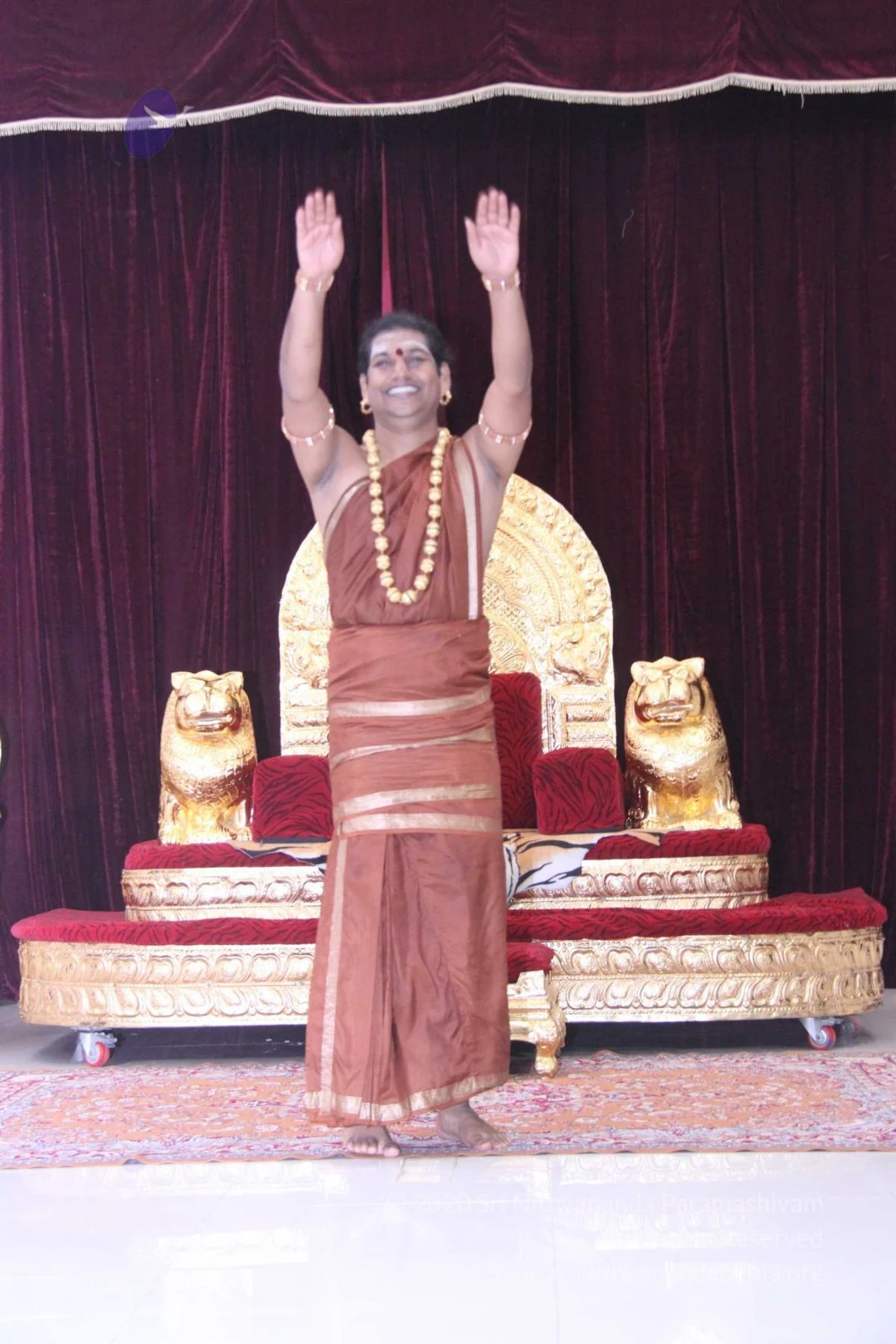
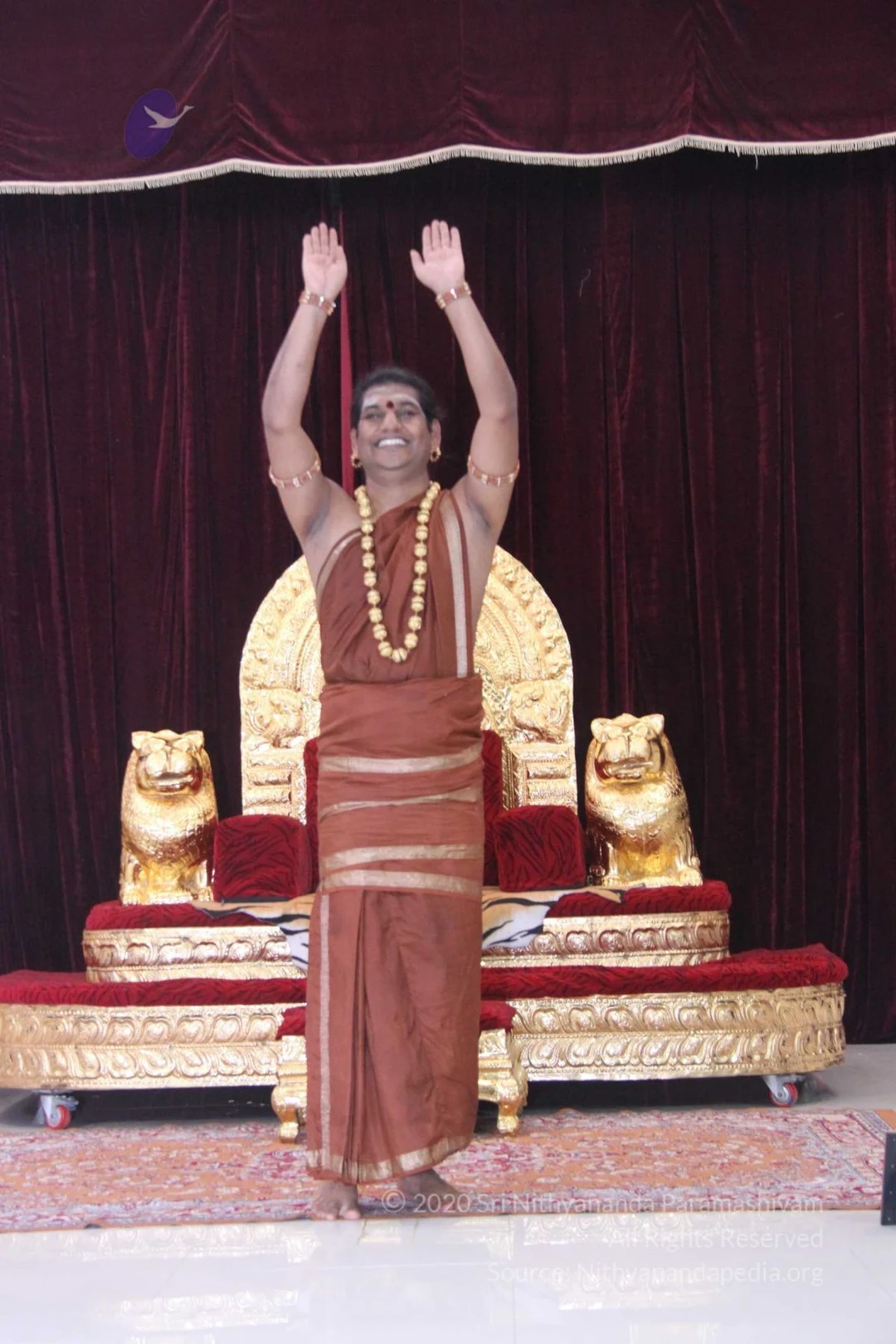
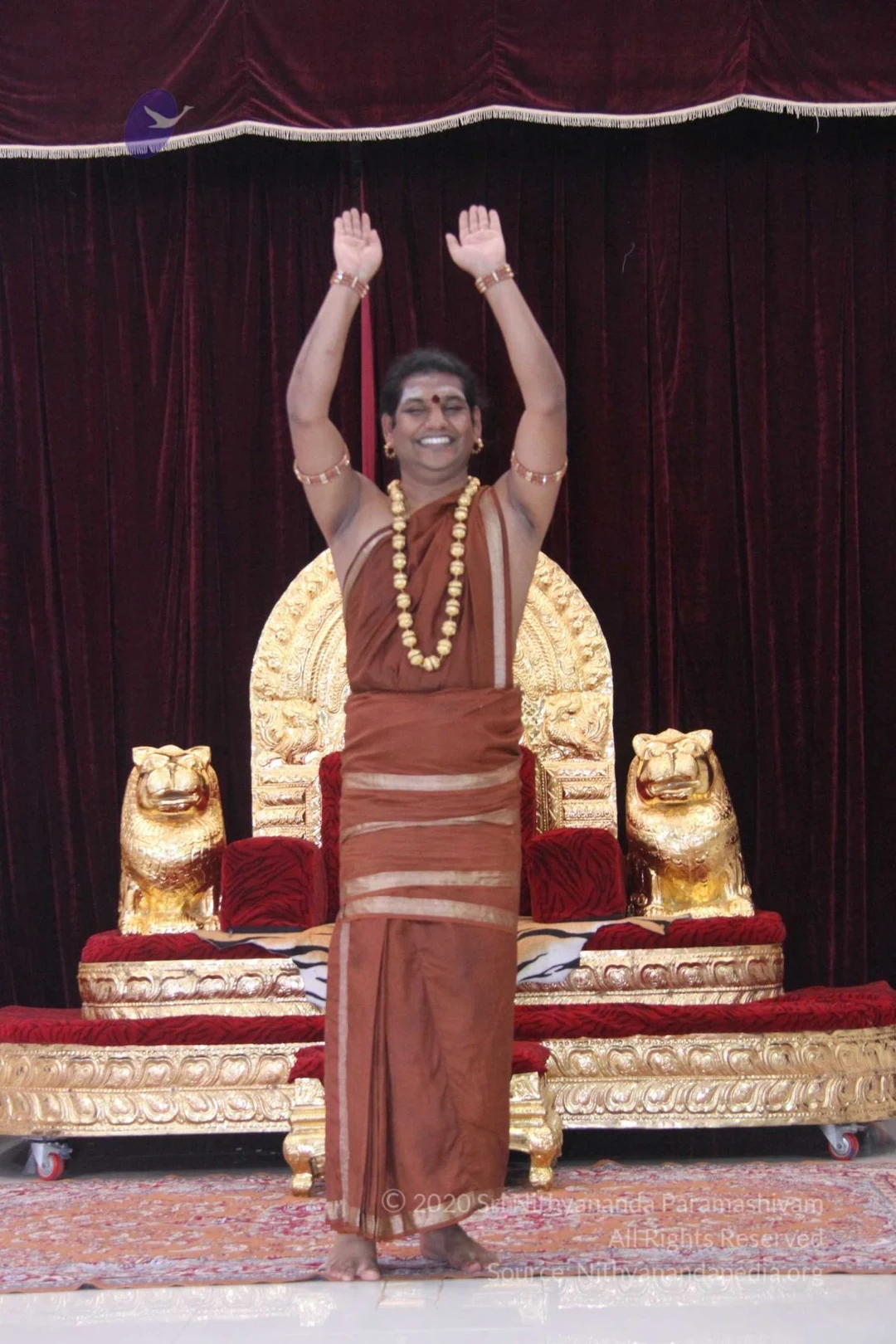
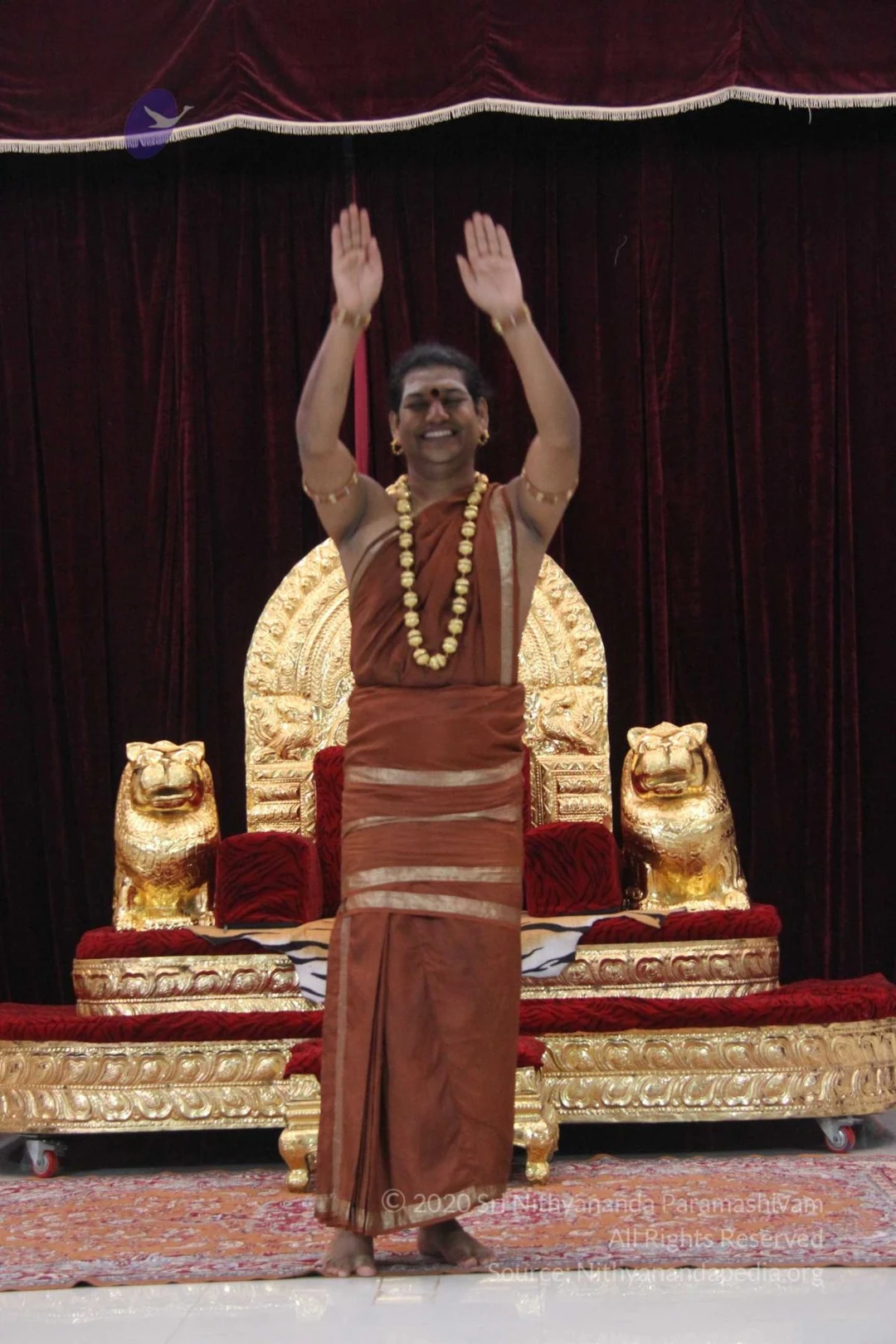
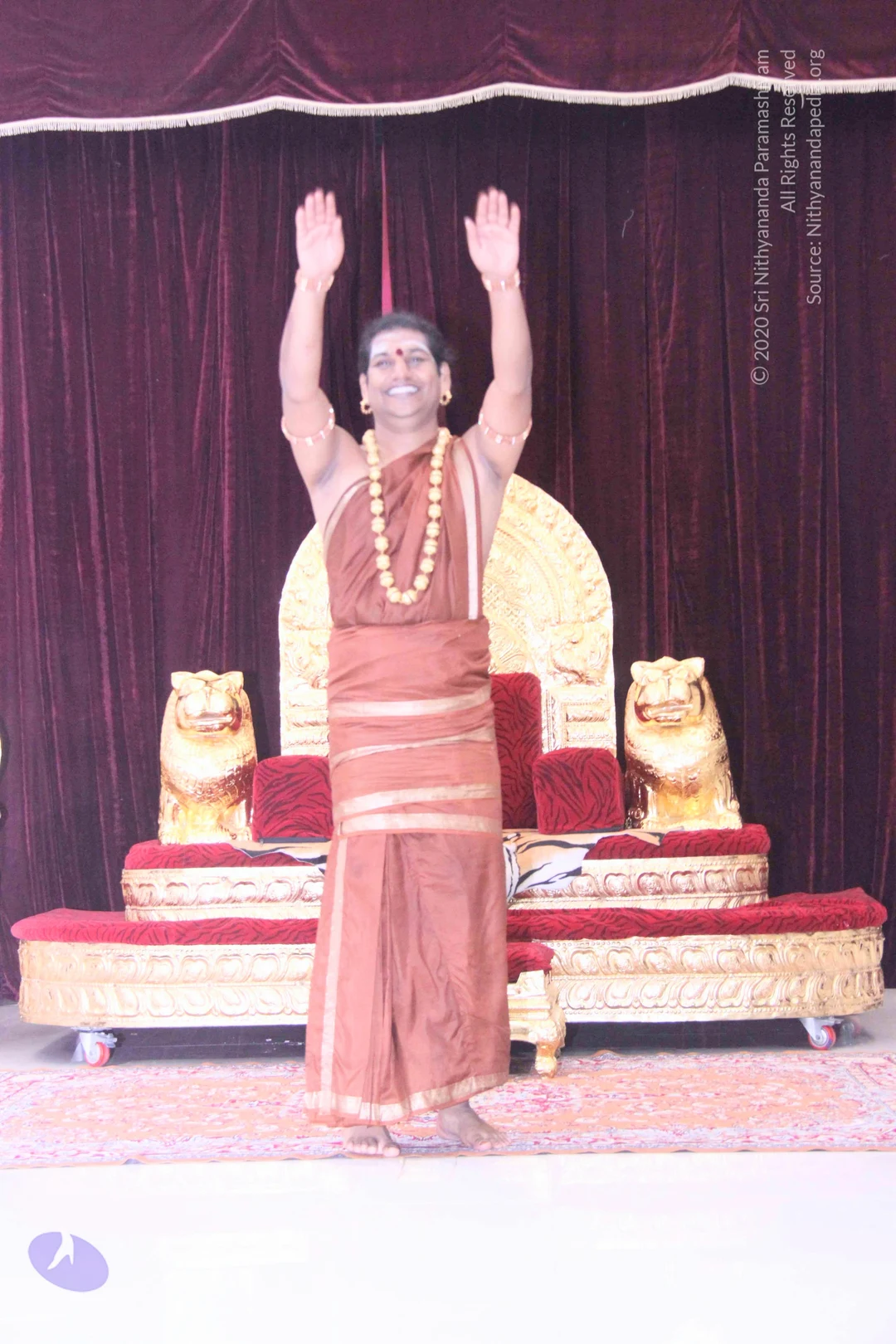
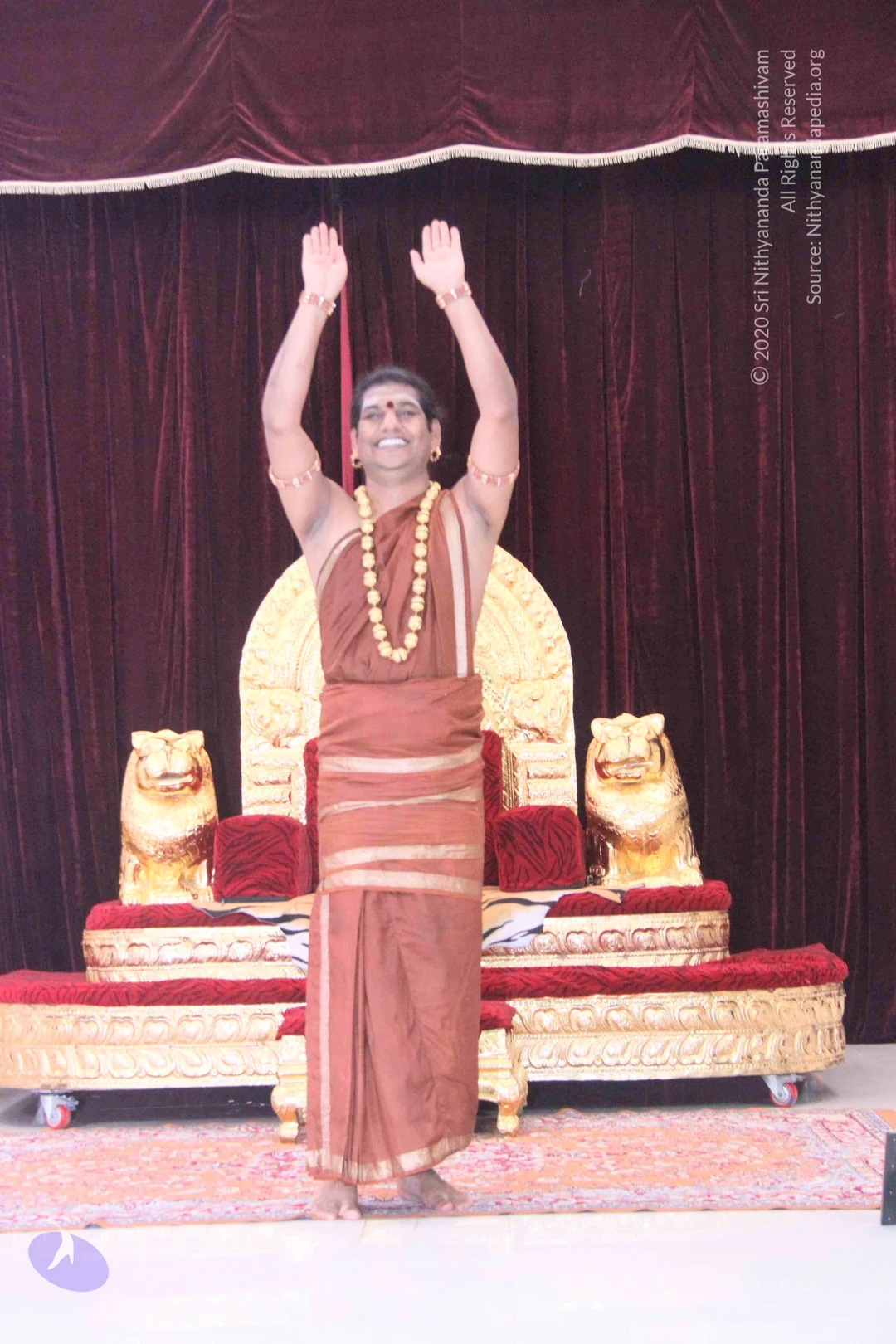
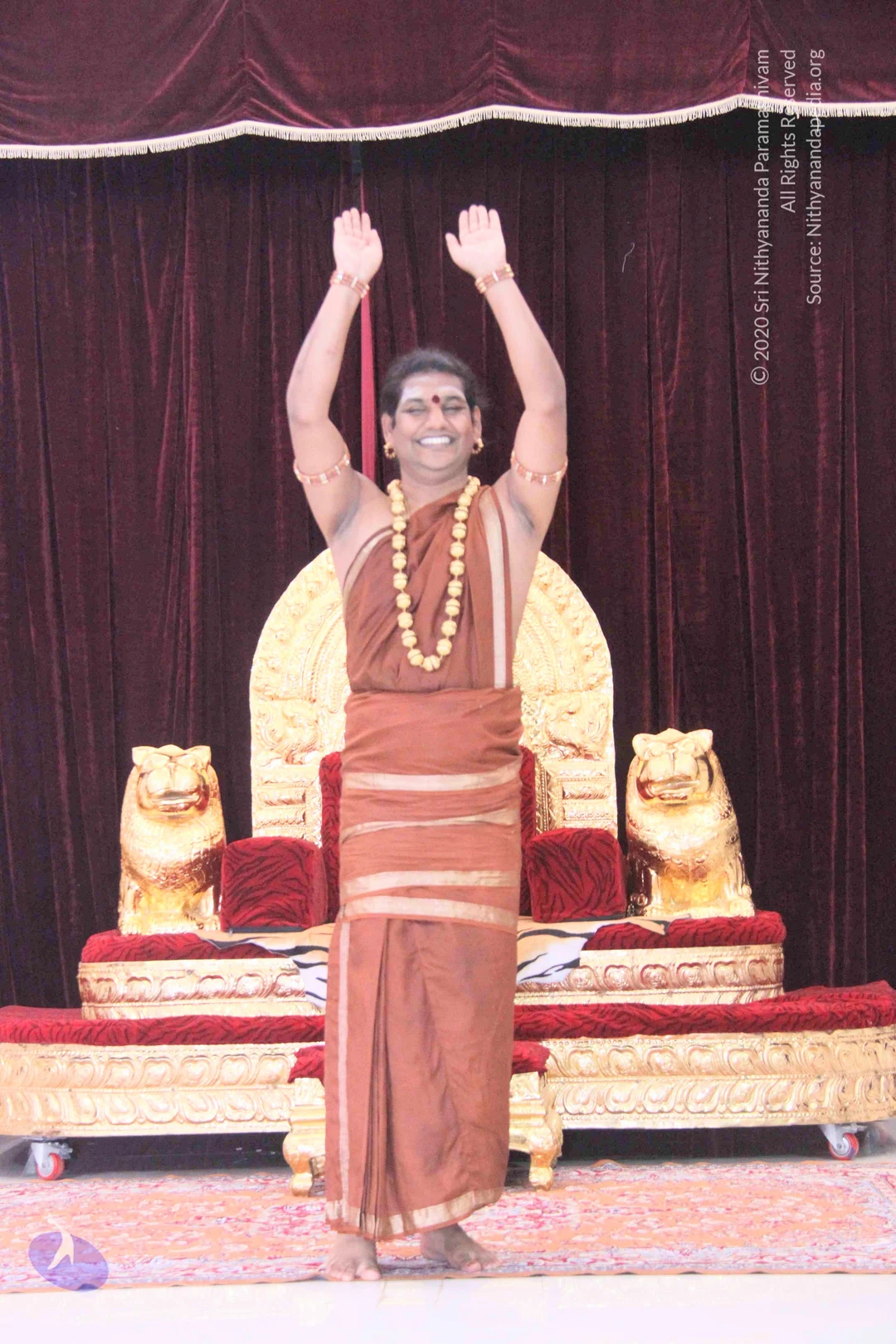
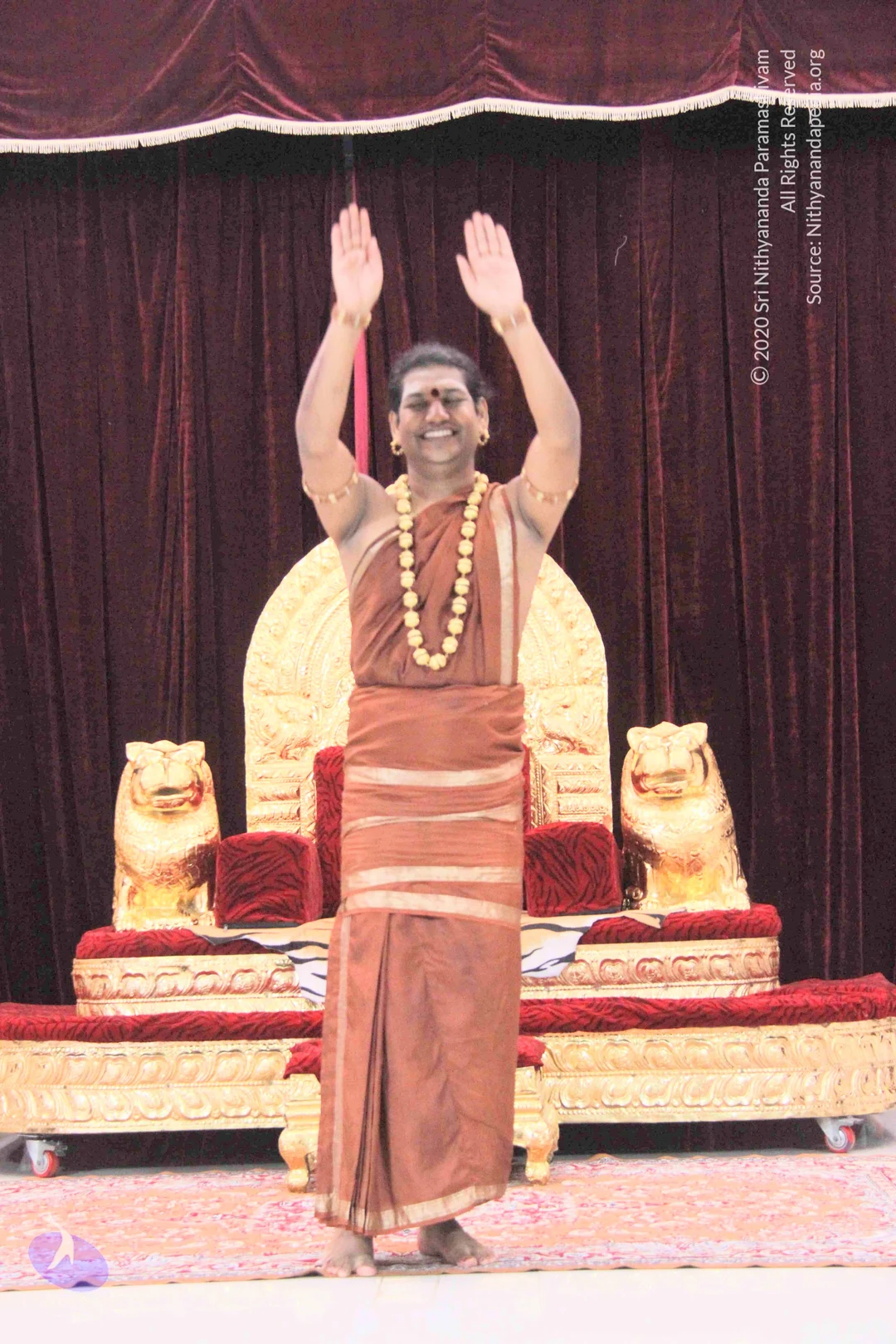
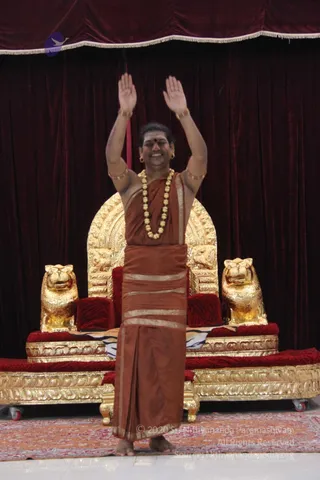
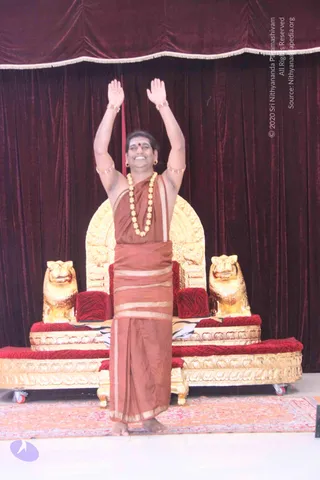
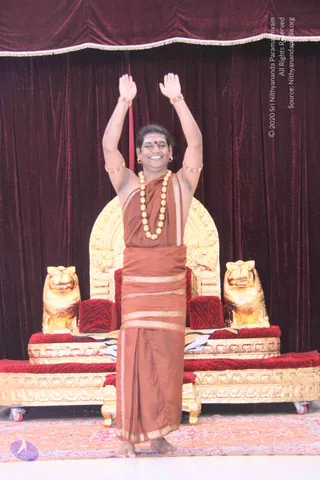
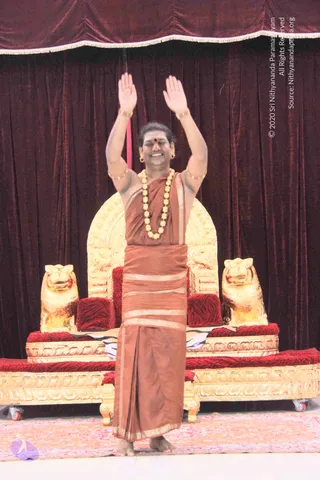
A standing man in a rust-brown saffron-toned dhoti and upper wrap with gold border stripes raises both arms overhead, smiling, with gold bangles on his wrists and a gold bead mala around his neck and a red bindi on his forehead. Behind him stands an ornate gold throne with carved lion heads and red tiger-striped cushions in front of deep maroon velvet drapes, on a patterned rug. a person: the figure wears a rudraksha-style gold bead mala and ceremonial gold ornaments and stands before a throne, a welcoming pose during a satsang setting.A standing man in a rust-brown dhoti-style wrap with a gold-coloured band stands on a white floor with both arms raised overhead, smiling with eyes closed. He wears a gold bead necklace, gold armlets and bangles, a small red bindi, and a red-brown band across the forehead. Behind him stands an ornate gold throne with carved backrest and two gold lion figures, upholstered in red velvet with a tiger-striped cushion, in front of deep red velvet drapery. A red-and-cream rug lies at his feet. The appearance is consistent with the page's reference to a person, though identity is uncertain from appearance alone.A man stands barefoot on a red patterned rug before an ornate gold throne with carved lion-head arms and red velvet cushions, against a deep red velvet drape. He wears a rust-brown dhoti and shawl with gold borders, a long gold bead necklace, gold armlets and earrings, and a red bindi. His arms are raised with palms open, and he smiles broadly.

Sadhna and Lotus channels Live with Swamiji

8 photosSource gallery
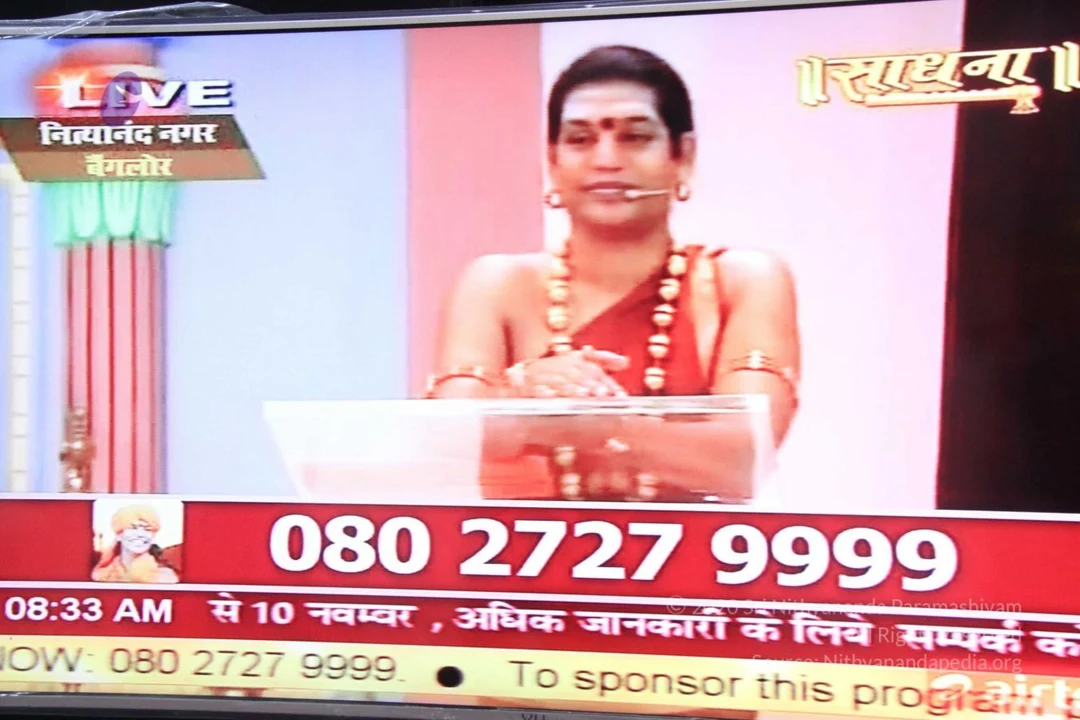
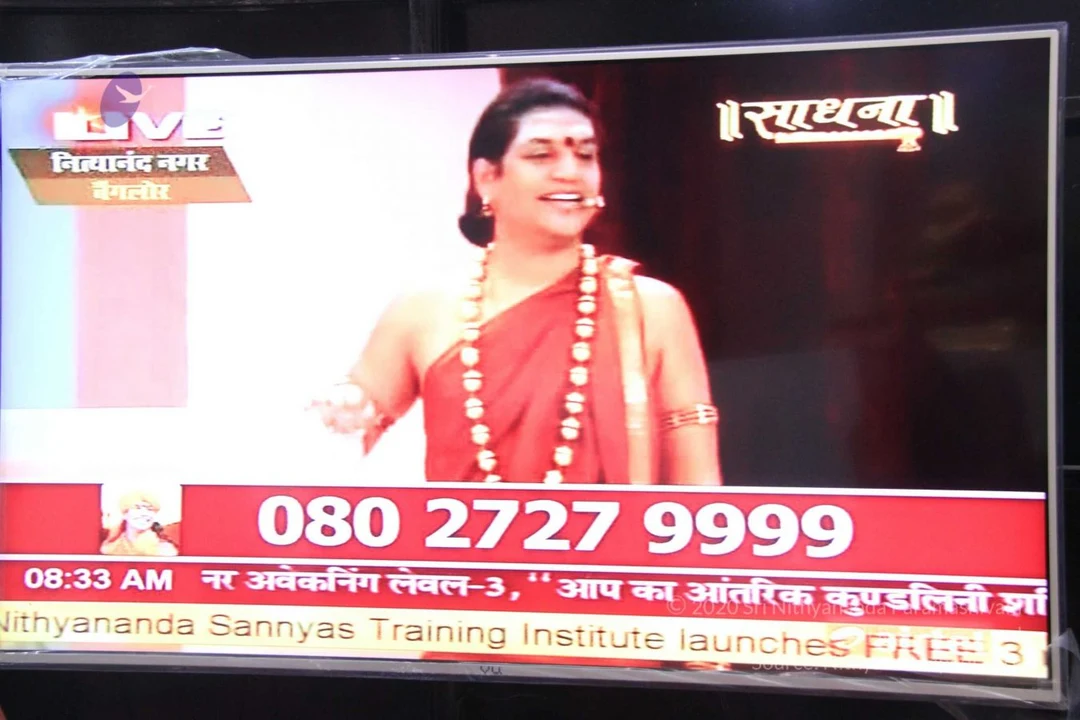
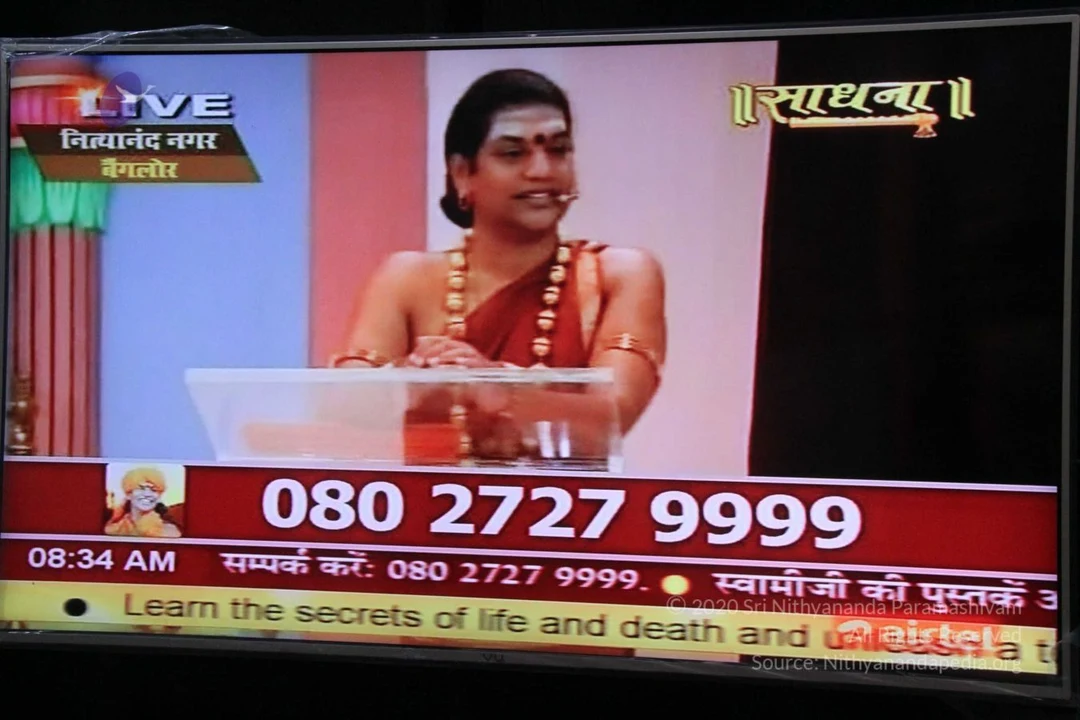
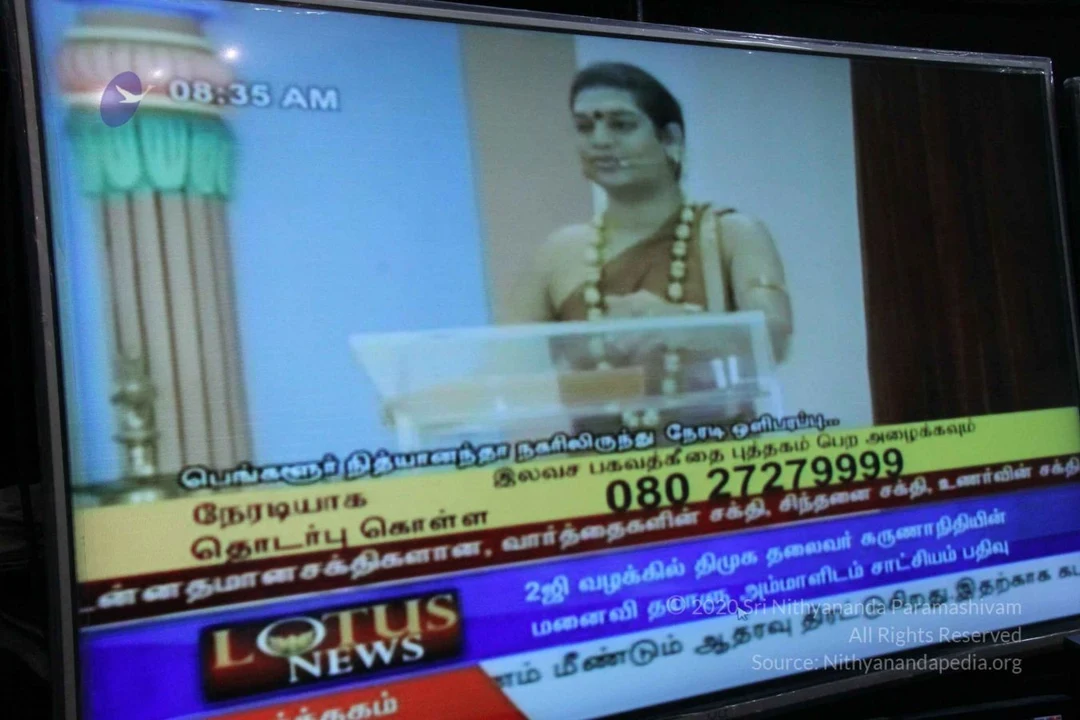
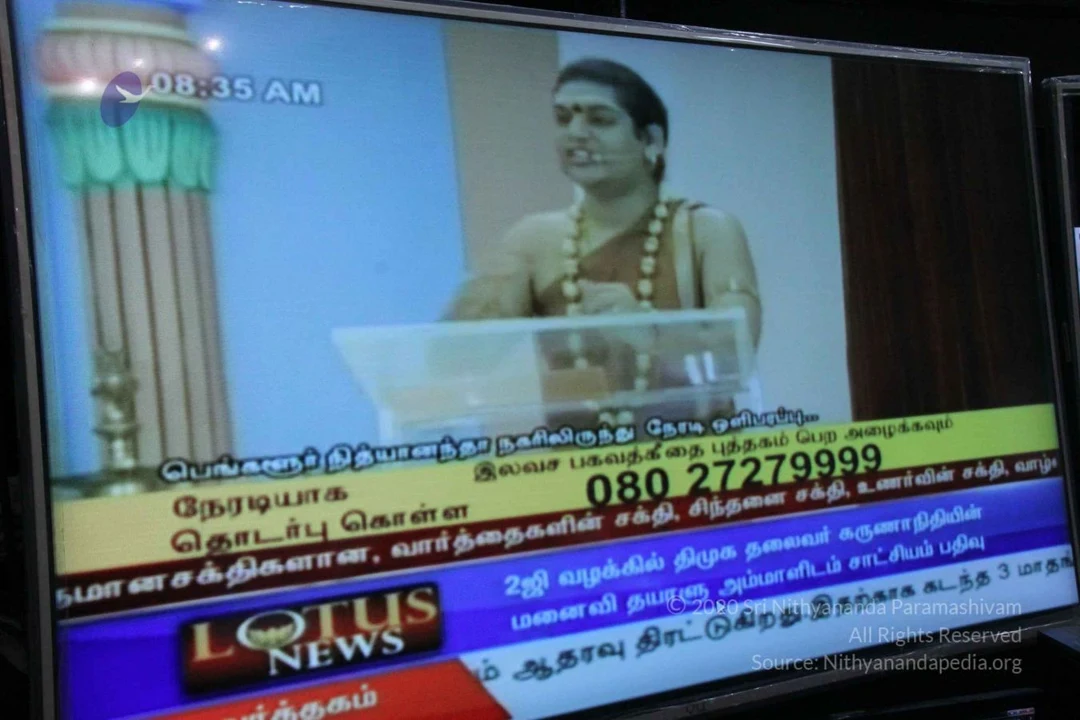
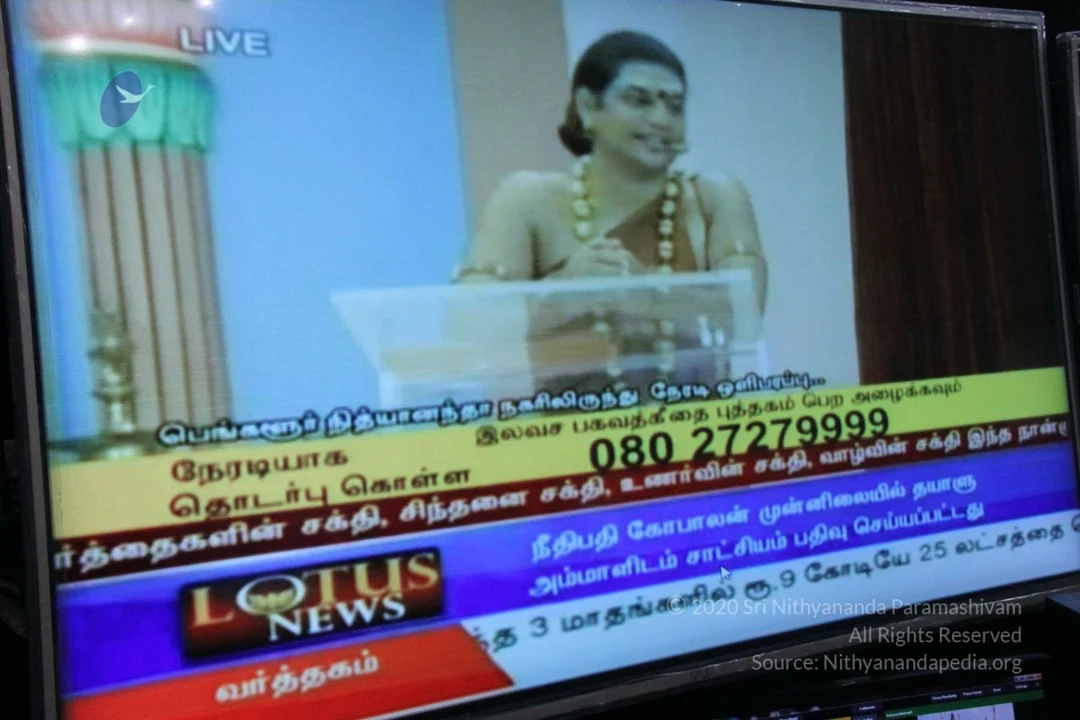
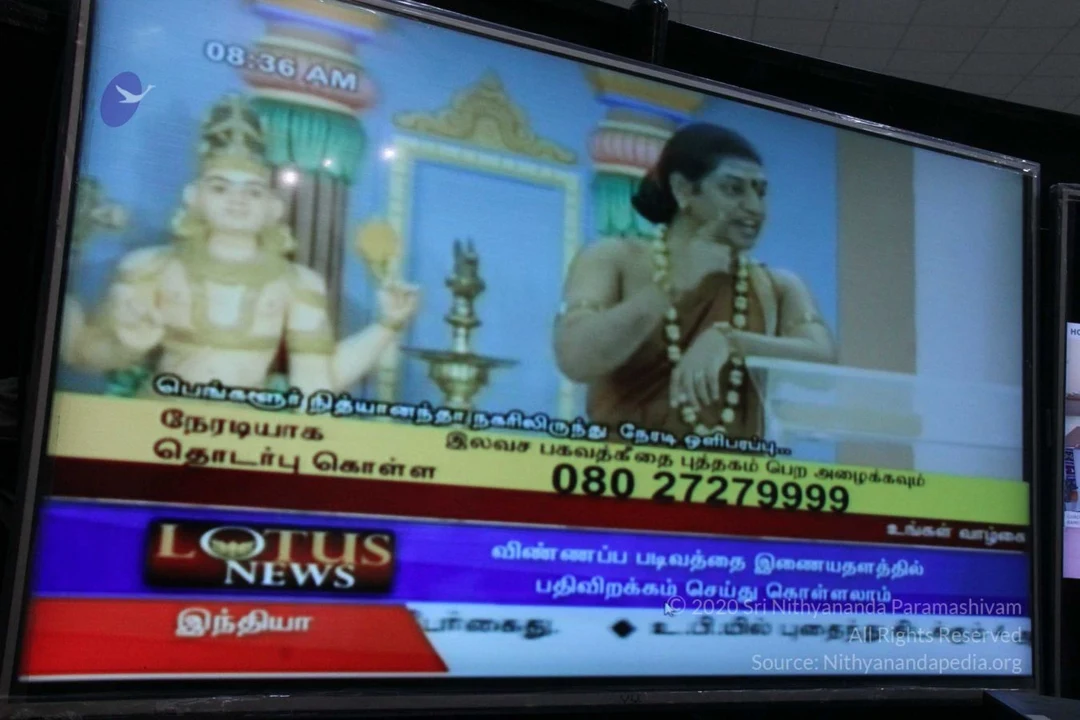
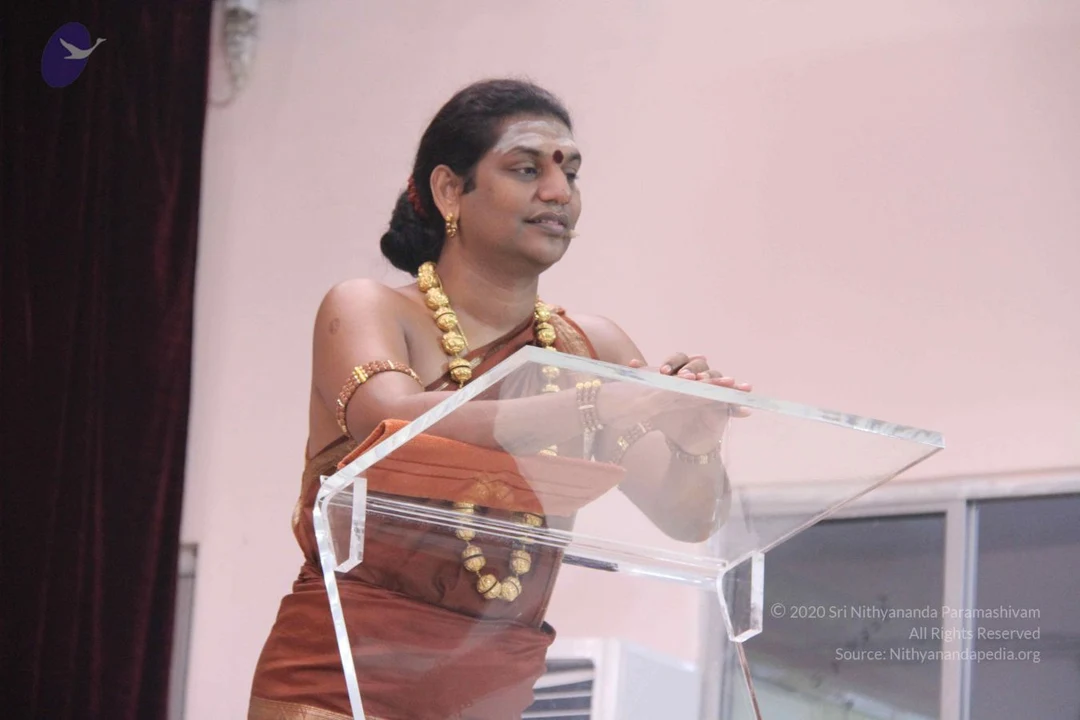
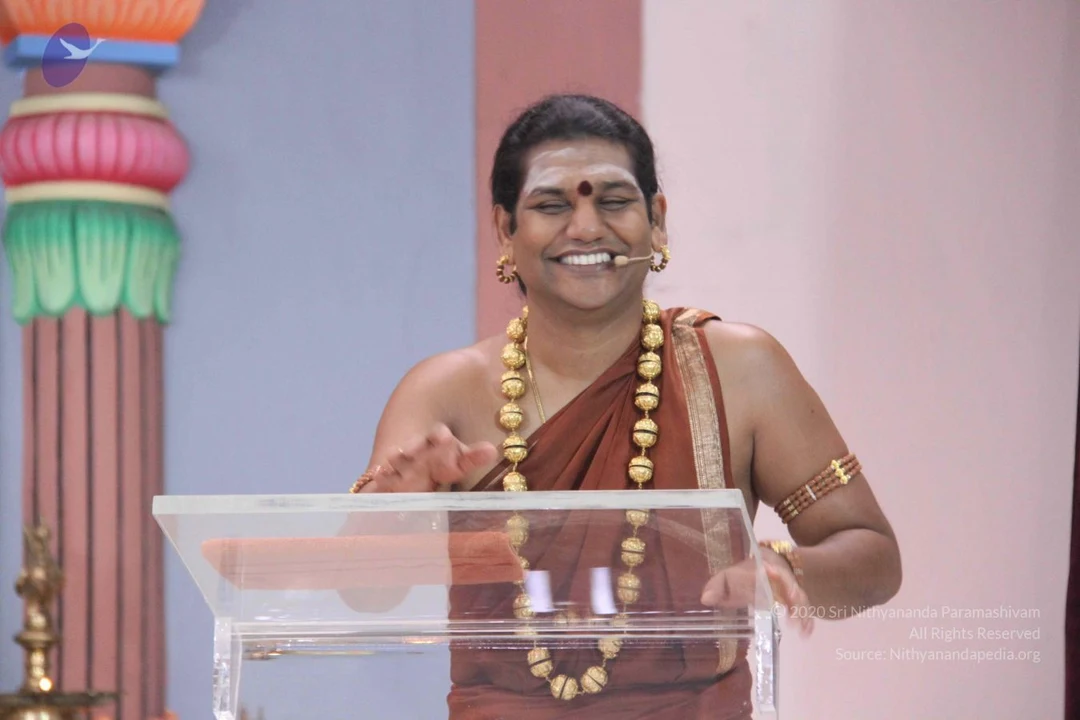
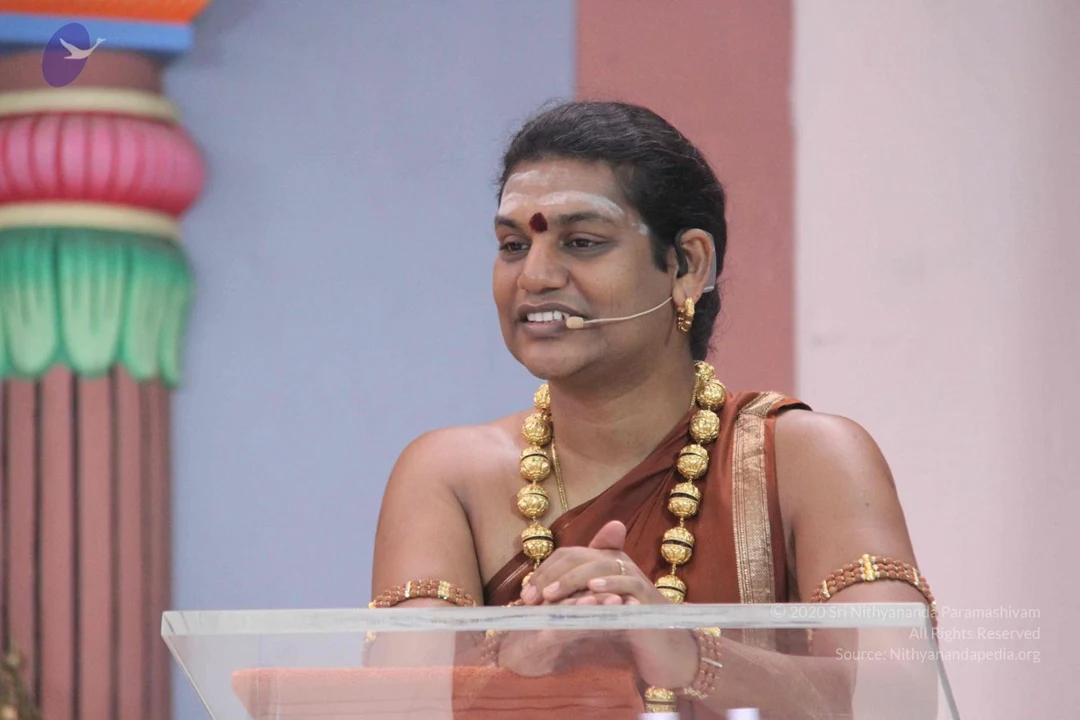
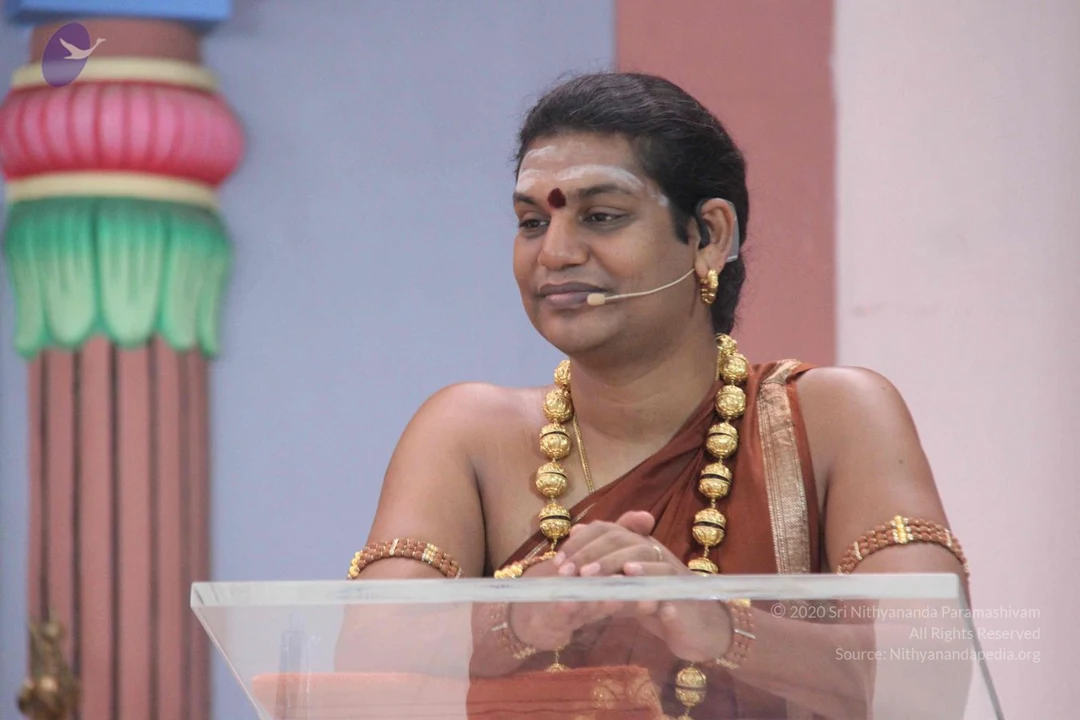
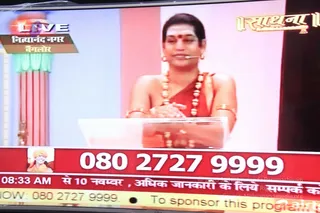
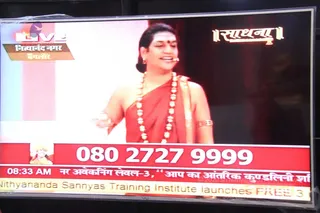
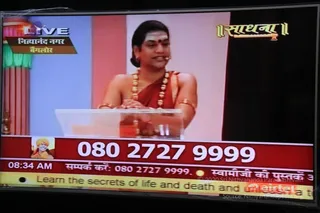
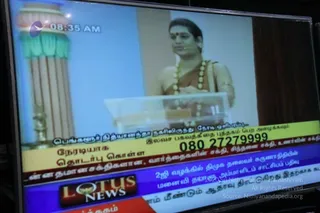
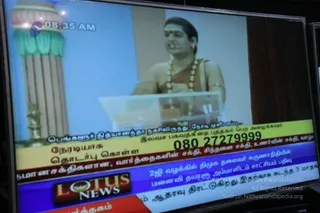
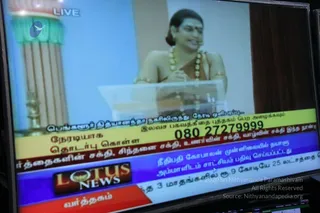
A photograph of a television screen showing a live broadcast. A person with short dark hair, a red-and-orange garment and a long beaded necklace of golden-brown beads stands behind a clear acrylic lectern with hands clasped, wearing a small headset microphone. The broadcast backdrop is pink and blue with a green draped curtain and a column. A red ticker bar across the bottom shows a phone number and scrolling text, and a small circular portrait of a saffron-turbaned figure appears at lower left.A photograph of a flat-screen television showing a live broadcast. The on-screen scene shows a man with swept-back dark hair, a red bindi, a small earpiece microphone, a red-orange shawl over the shoulder and a long beaded necklace of rudraksha-style beads, gesturing with one hand while speaking before a dark red backdrop. A lower-third reads LIVE with Nithyanandanagar Bengaluru, and a red banner shows a phone number and a scrolling ticker about the Nithyananda Sannyas Training Institute.A television screen shows a live broadcast from Nithyanand Nagar, Bangalore, with the Sadhana programme logo at upper right. On stage, a person with a shaved head, saffron-red garments, a gold-and-bead necklace and gold armbands stands behind a clear acrylic lectern with hands resting on it. Red and green drapery forms the backdrop. A red banner shows a phone number and a scrolling ticker. The image is a photograph of a screen, and the person on it is a screen depiction; the appearance cues do not clearly establish the identity claimed by the page, so this is described as a person speaking on a live programme.A flat-screen television in a room shows a live broadcast of a woman speaking at a clear lectern, wearing a rust-orange sari, layered beaded necklaces and a small red bindi, with a headset microphone. A decorative green-and-cream pillar stands at left. The on-screen lower-third ticker shows a Lotus News channel logo and clock reading 08:35 AM. The television is the main subject, showing the broadcast rather than the room itself.A flat-screen television displays a live broadcast of a satsang on the Lotus News channel at 08:35 AM. On the screen, a man in saffron-coloured robes and layered beaded necklaces stands behind a clear lectern with a head microphone, gesturing while speaking. A tall decorative pillar with teal and gold ornamentation stands to the left. The lower screen shows Tamil ticker text and a phone number. The image is a photograph of the television, so the speaker appears only as a depiction on screen.A flat-screen television displays a live broadcast of a speaker at a clear acrylic lectern in front of a pale backdrop and a green curtain. The person on screen wears a bare-chested ochre-and-saffron garment with multiple strands of beaded necklaces and a red forehead mark. A Tamil news ticker runs along the bottom with a Lotus News logo, a phone number and a headline about a Bengaluru Nithyananda Nagar broadcast. The television screen is the subject, so the people shown are depicted rather than physically present.

Paduka-Puja

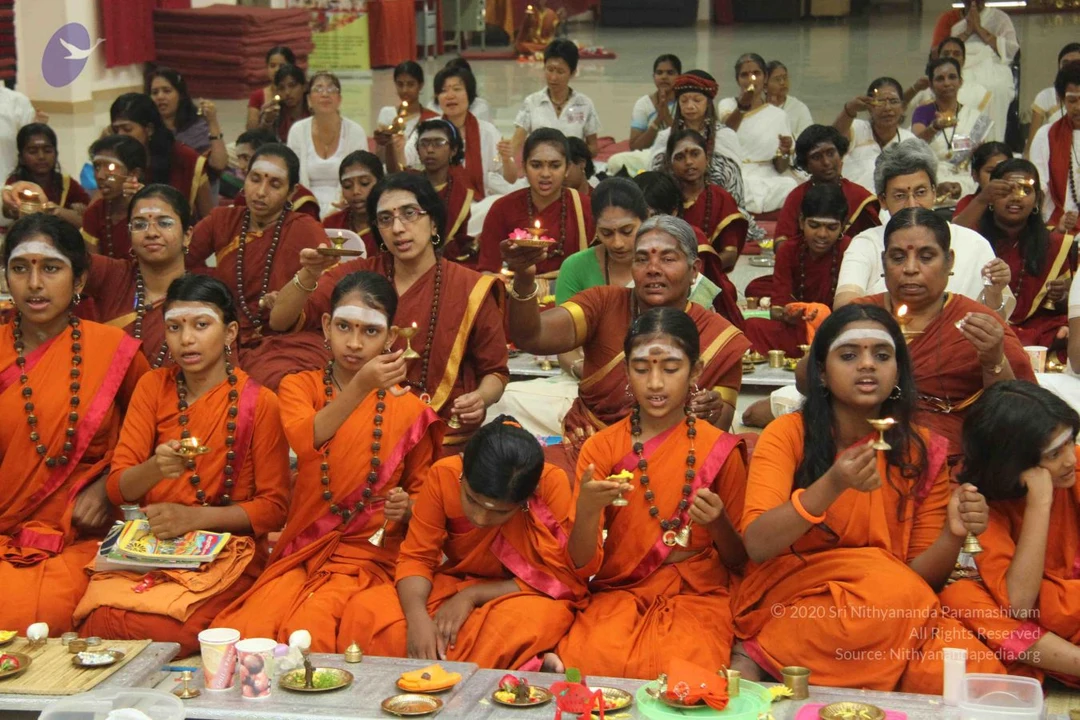
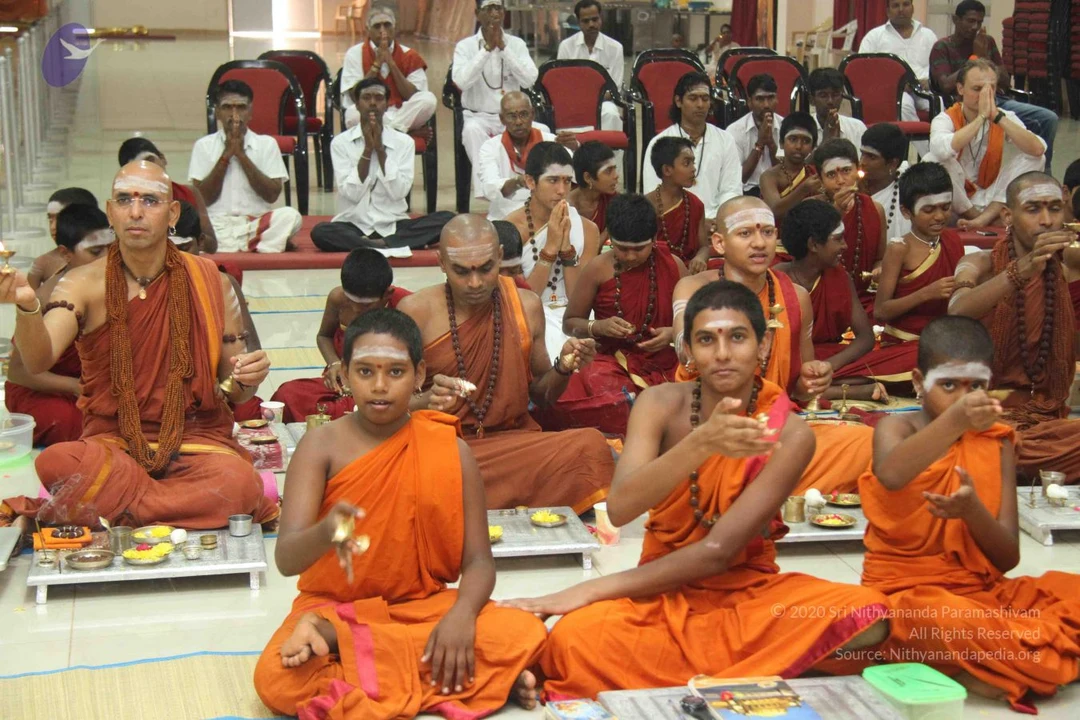
12 photosSource gallery
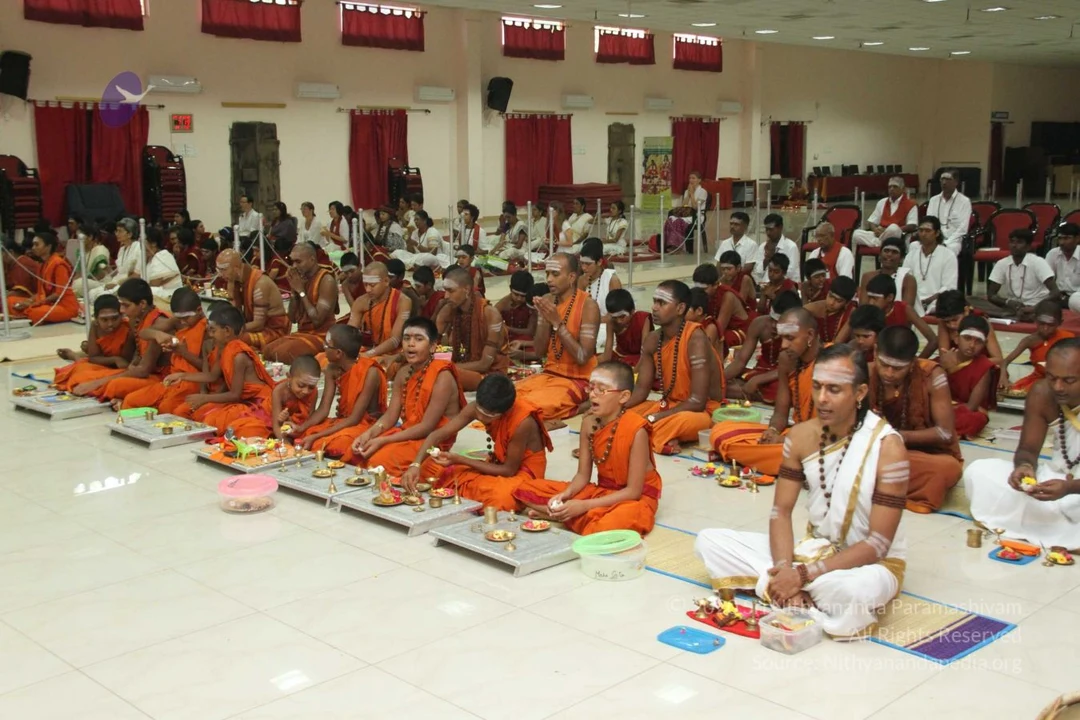
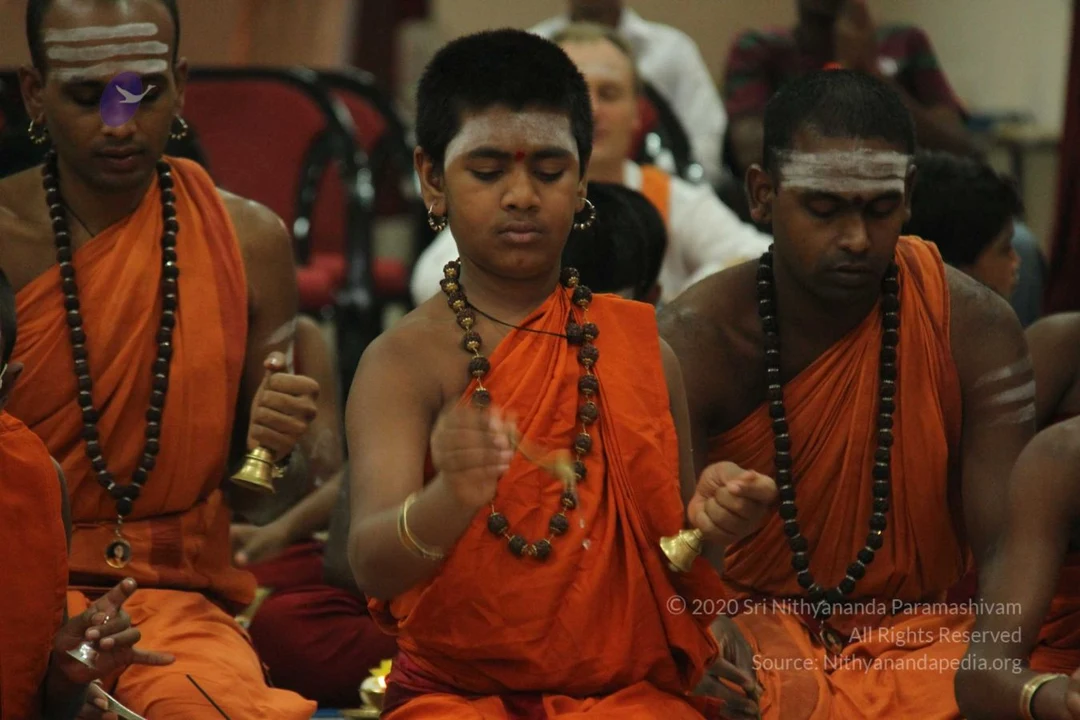
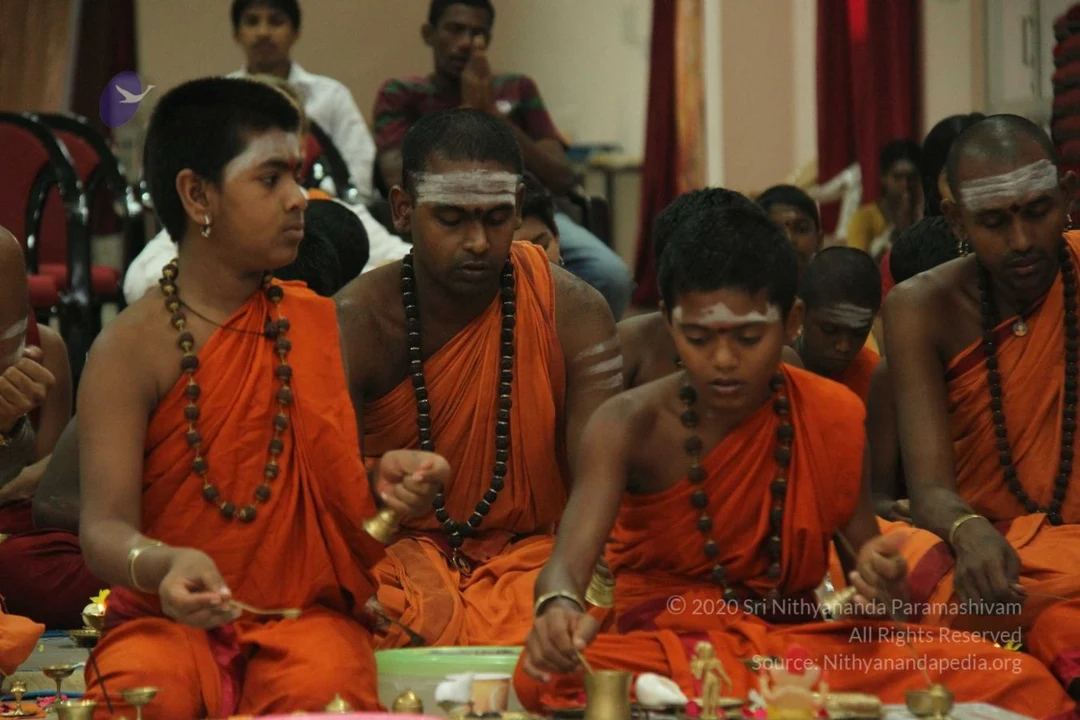
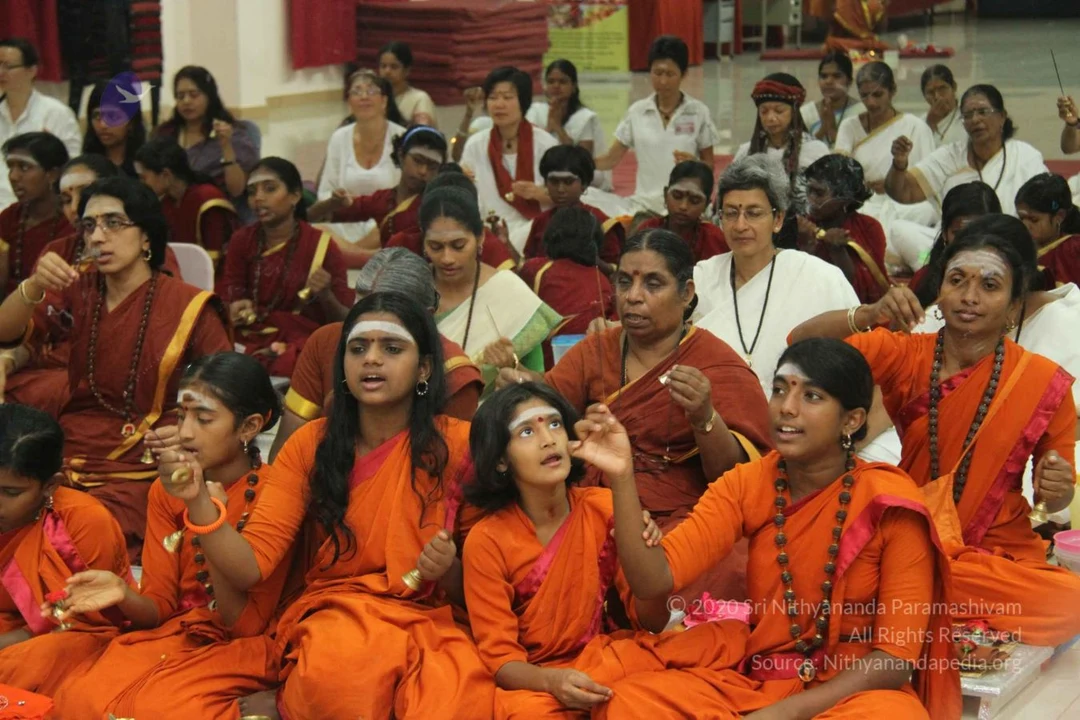
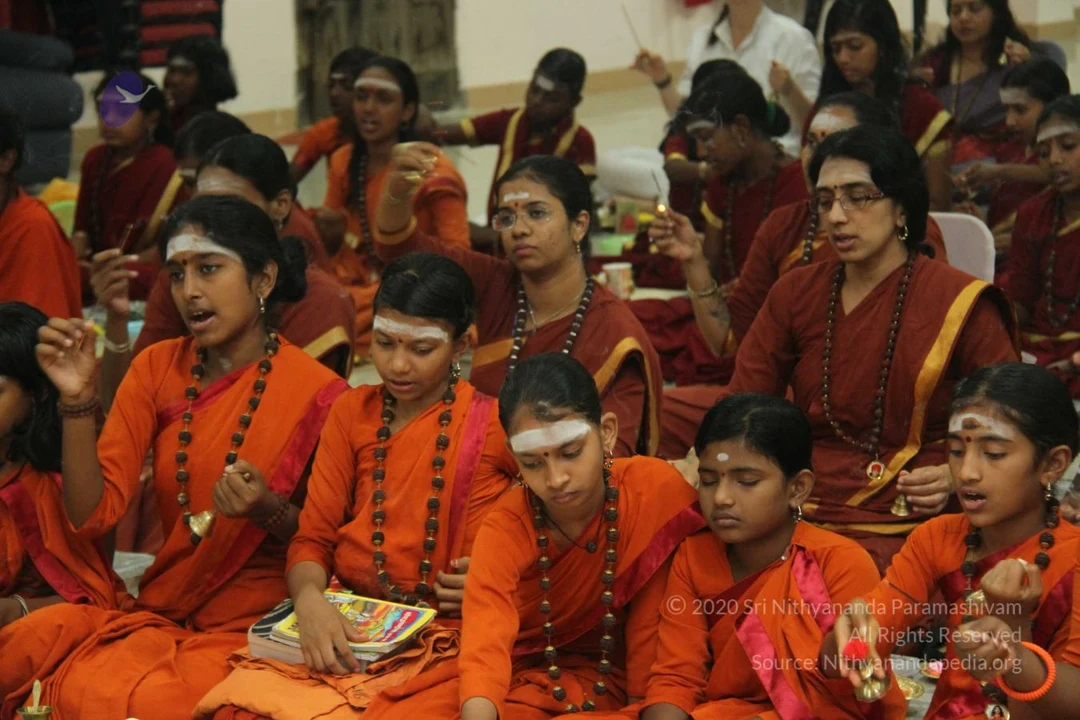
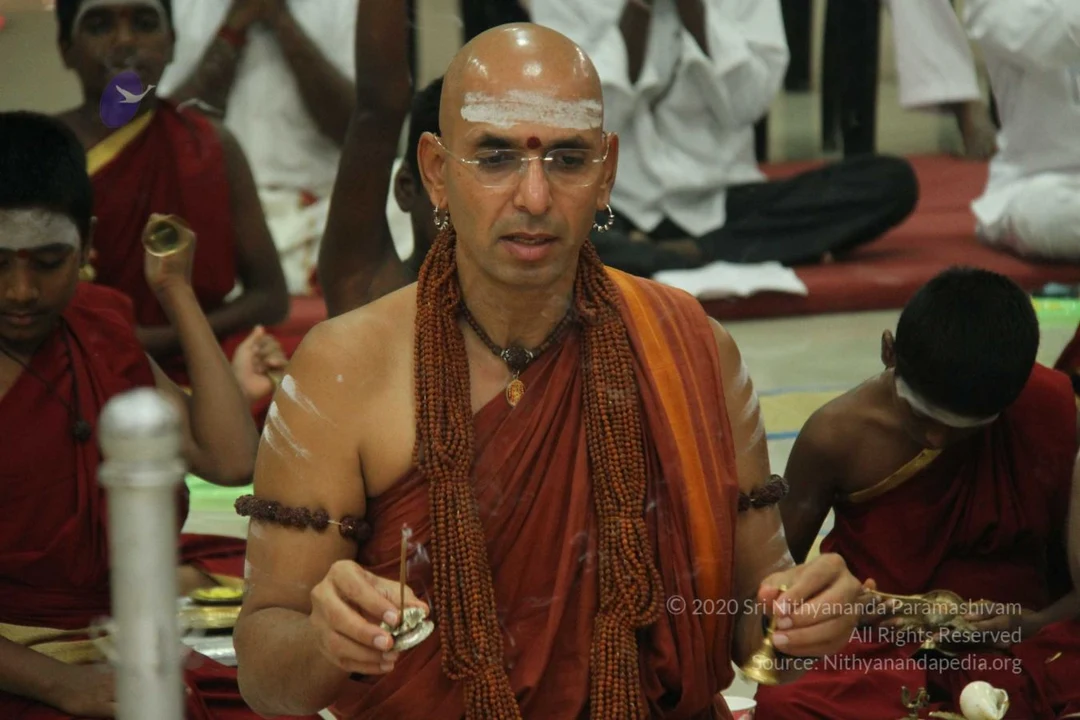
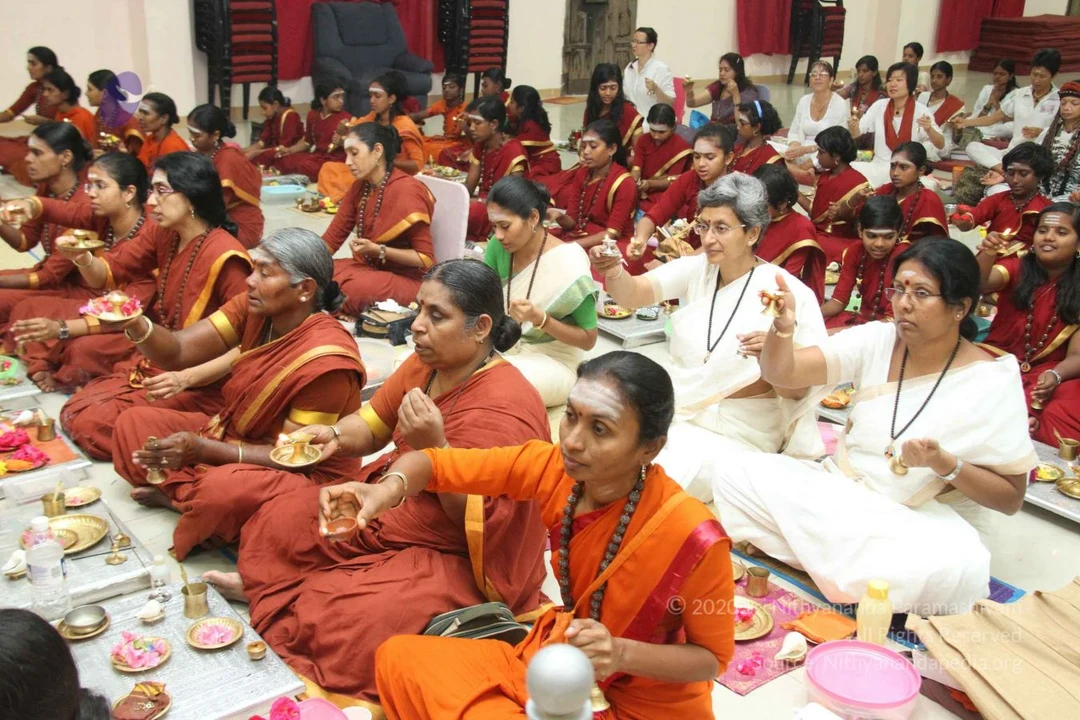
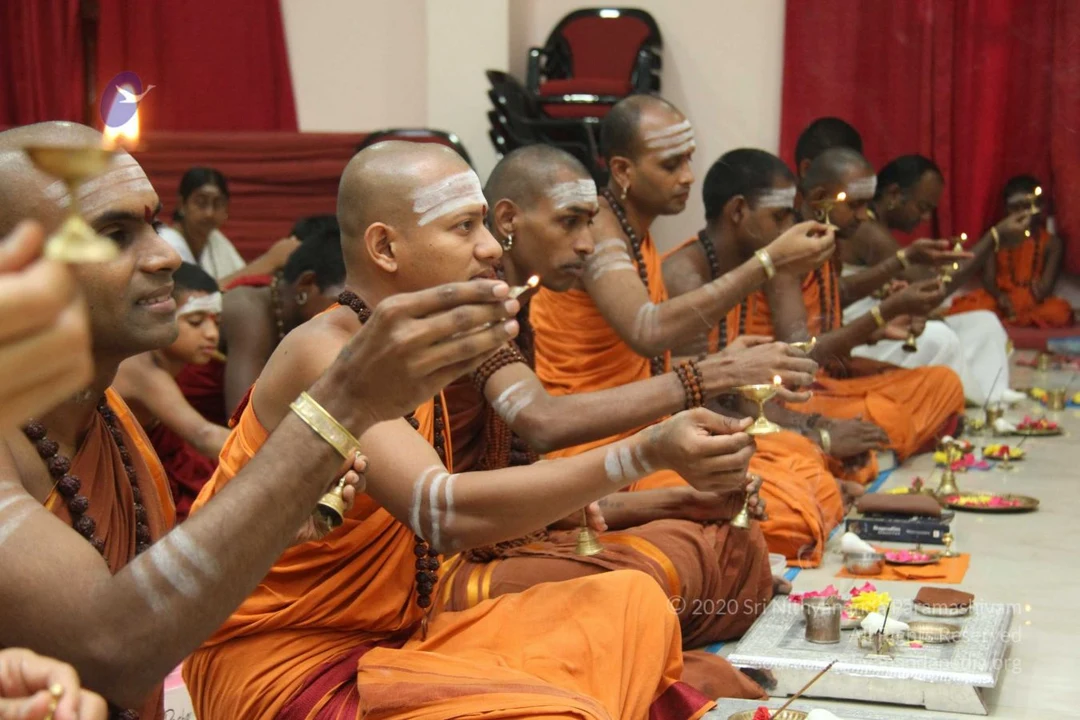
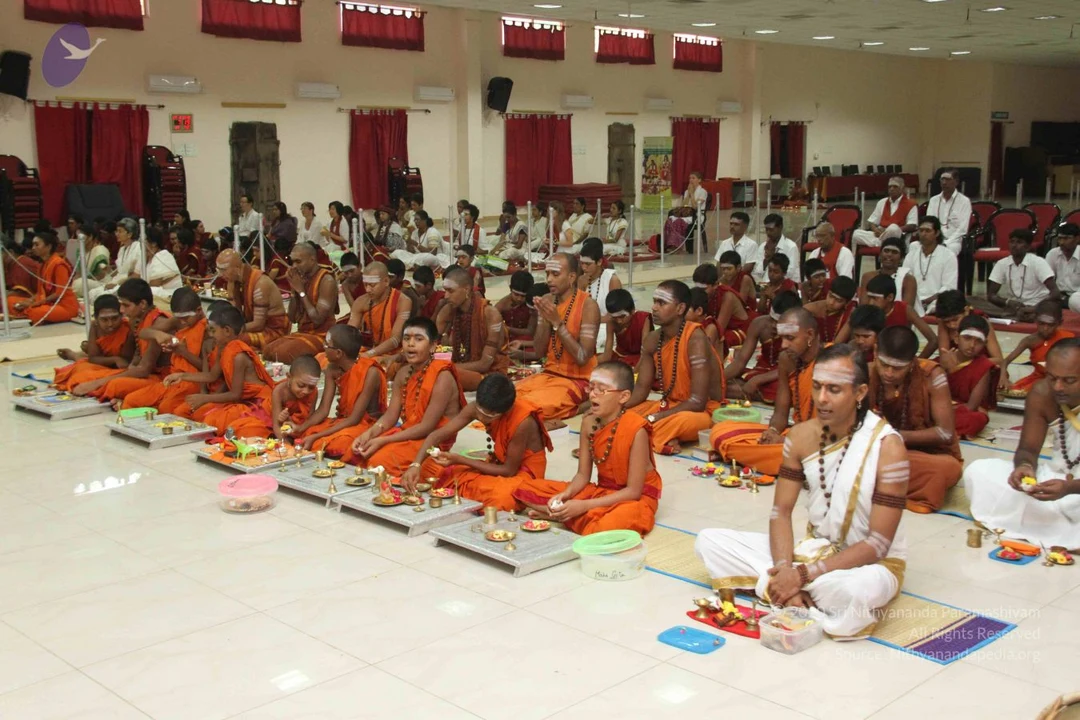
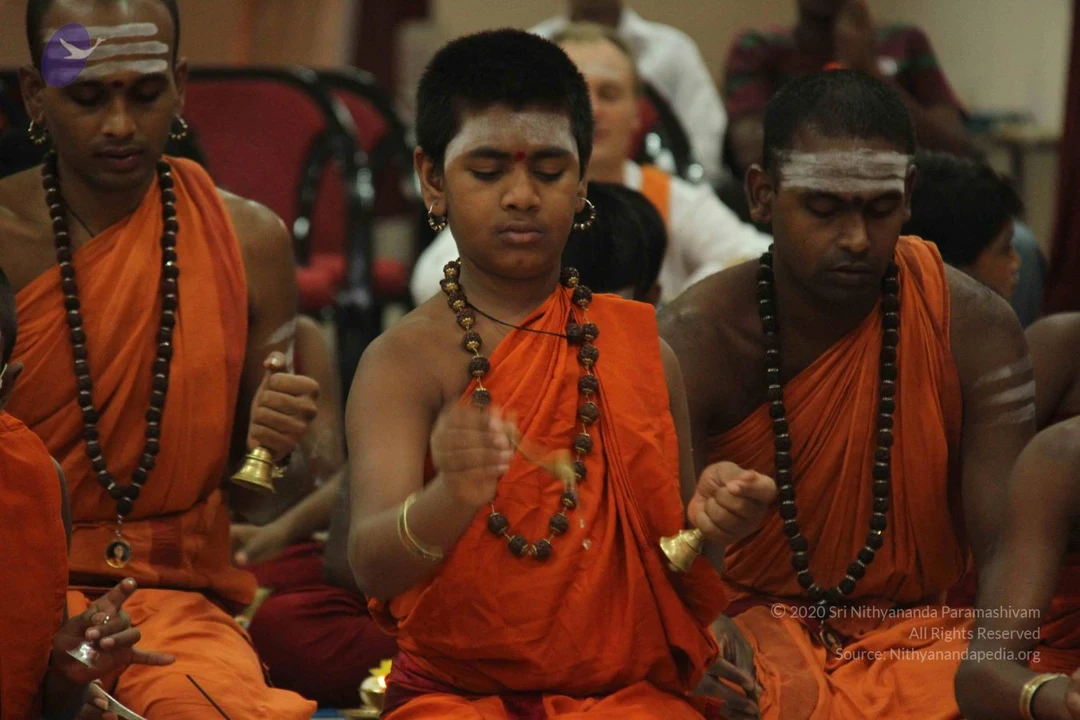
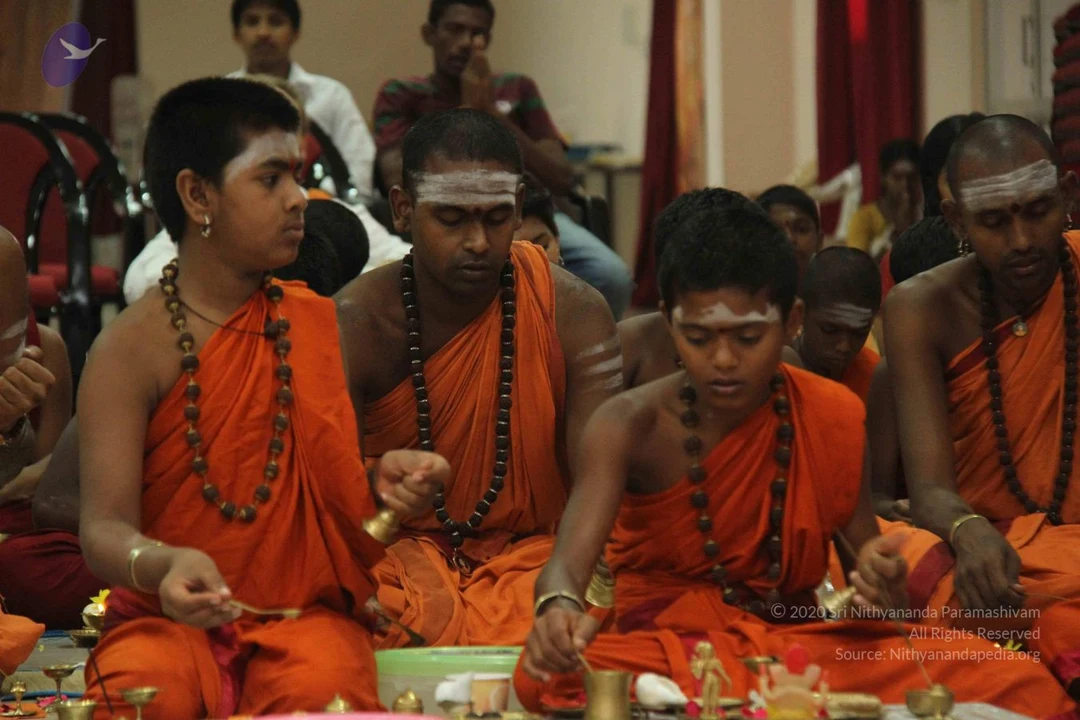
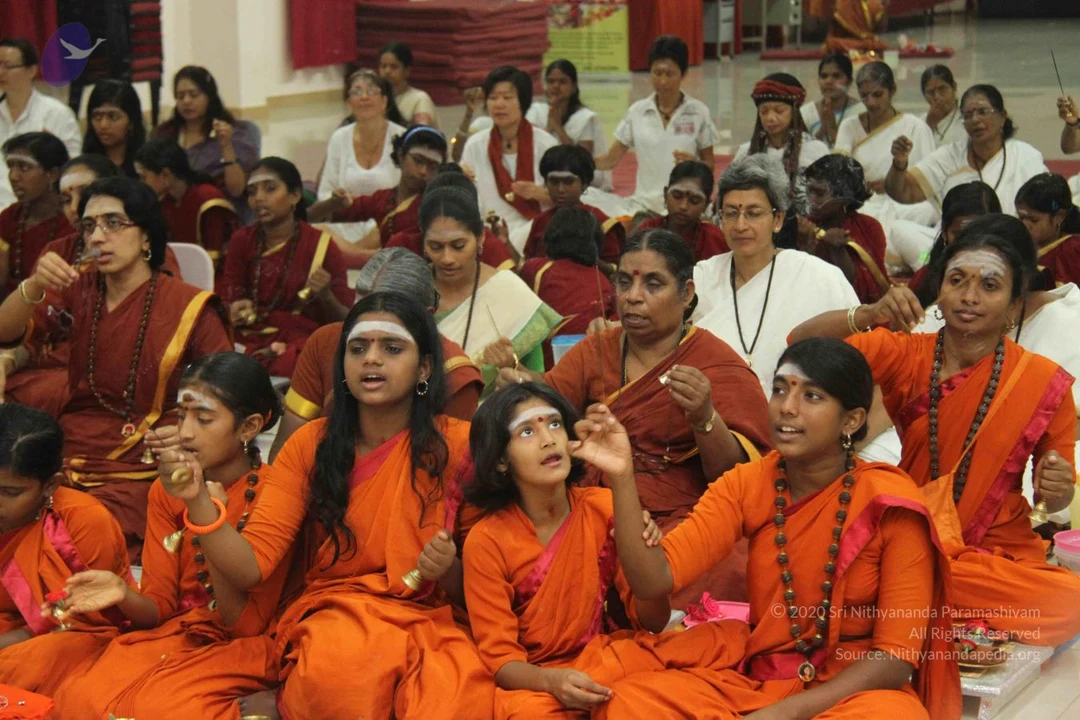
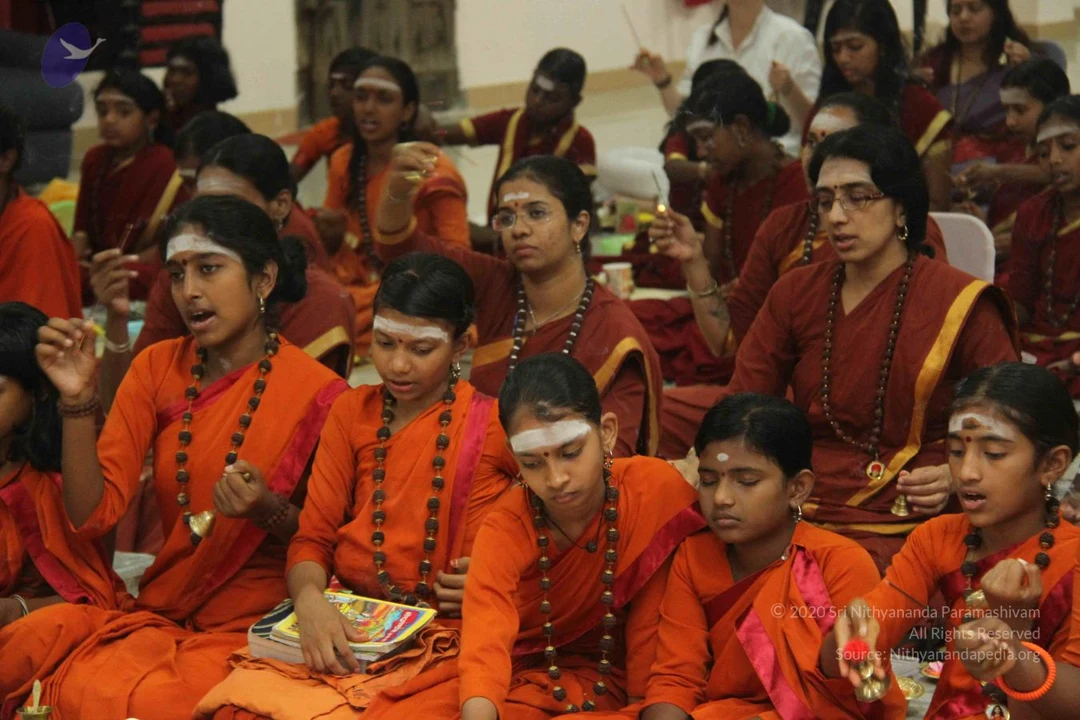
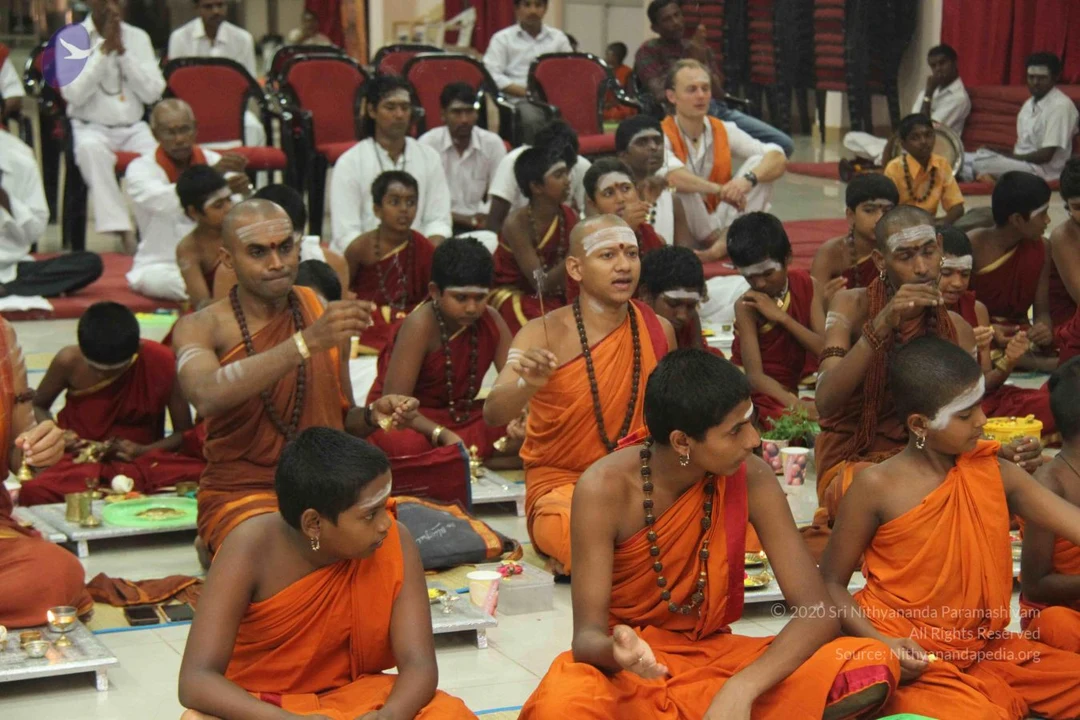
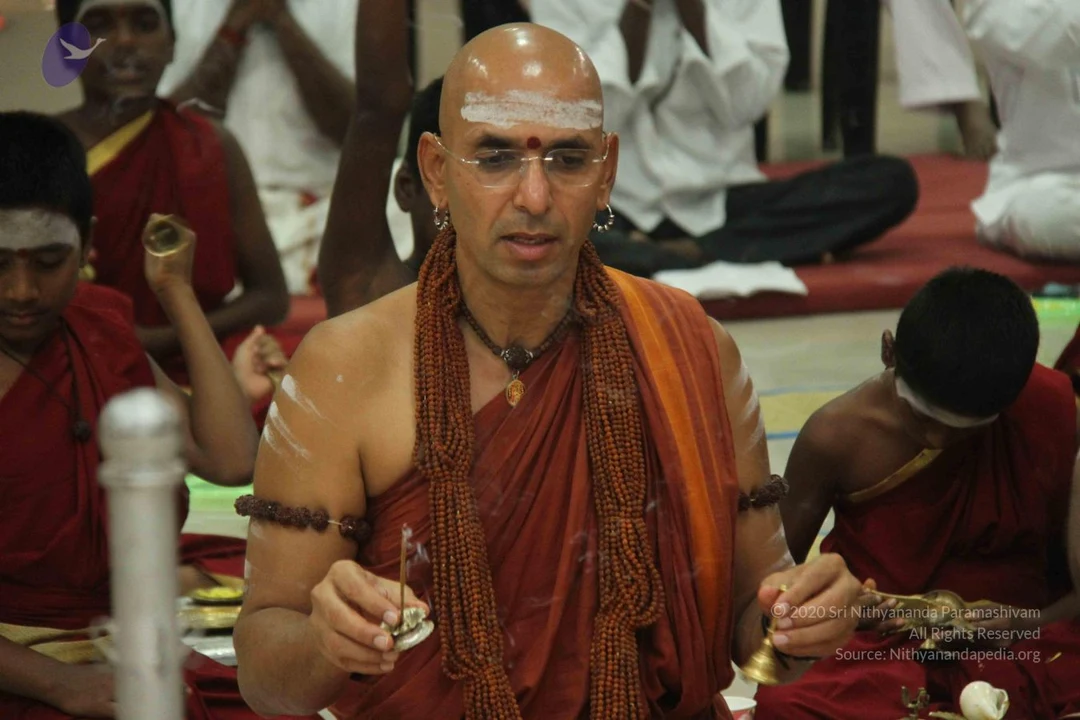
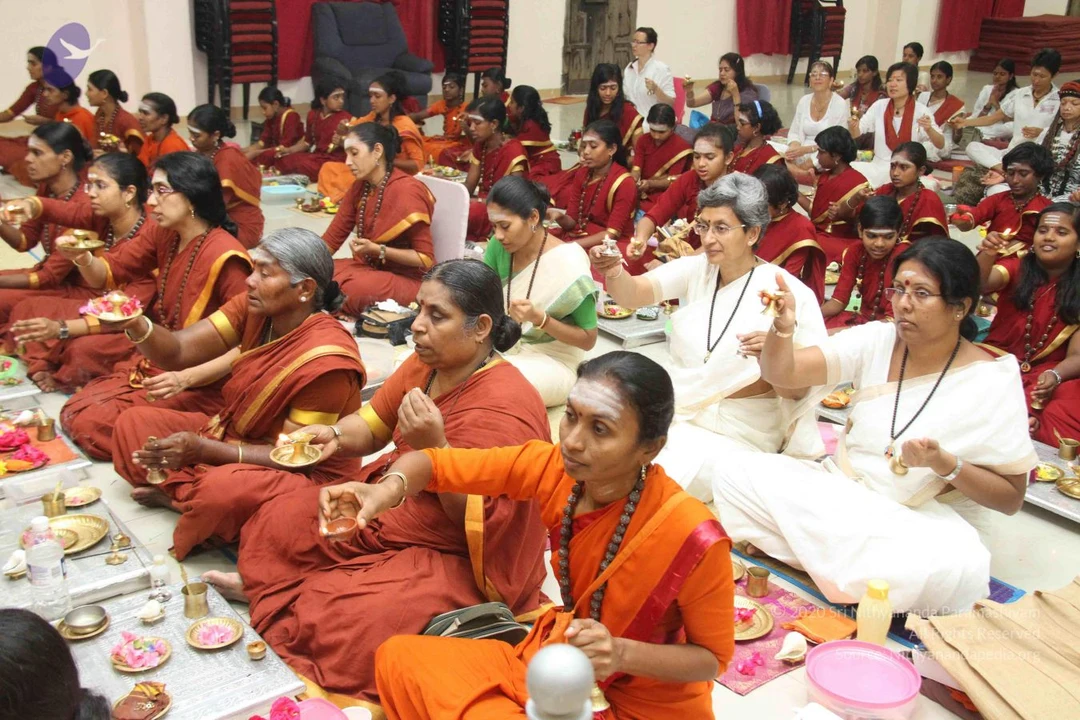
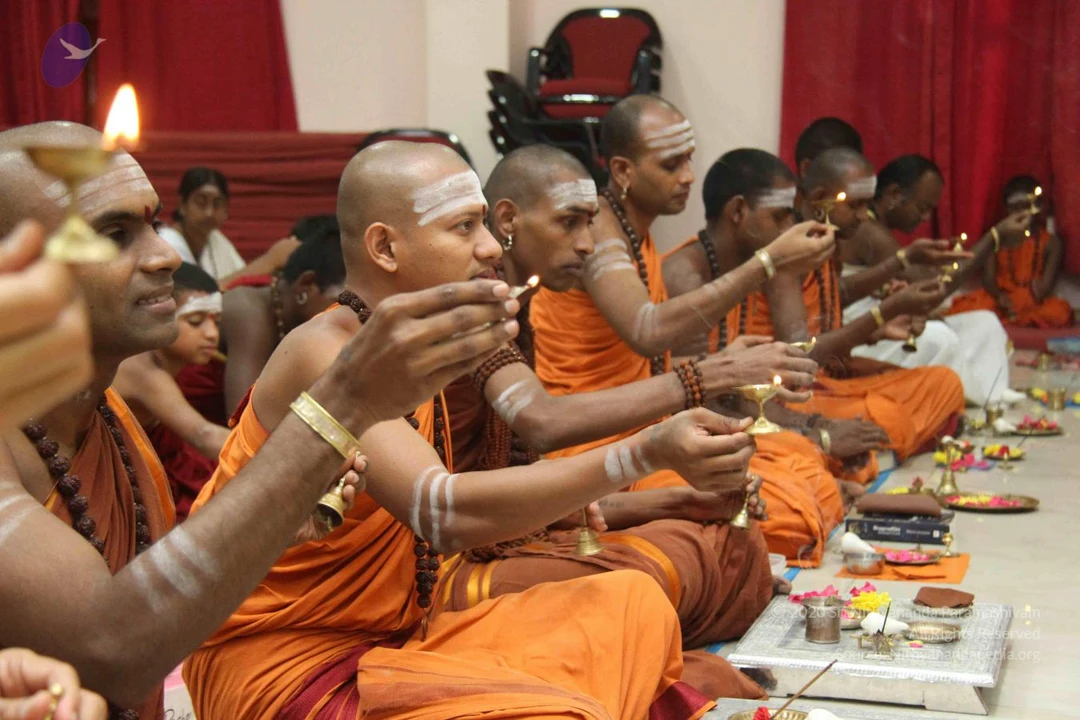
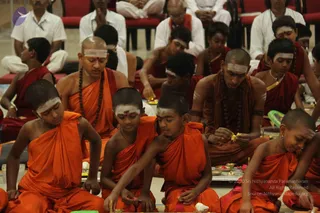
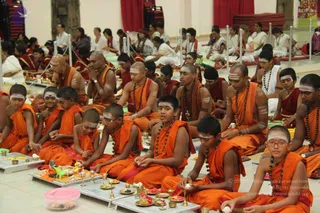
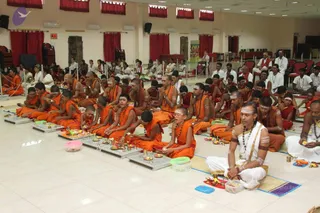
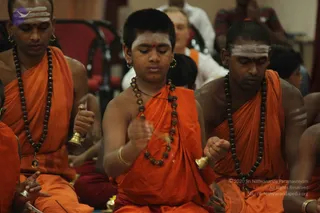
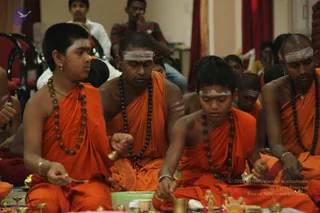
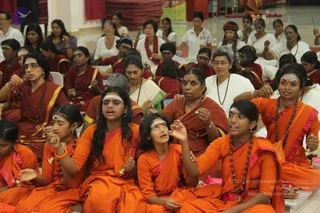
A group of young boys in saffron-orange robes sit cross-legged on the floor performing a ritual. Several have white and red sacred ash markings on their foreheads and shaved heads. Some hold small yellow items and brass plates with oil lamps and flower offerings before them. Behind them, adult men in white and red clothing sit on red chairs, one wearing a rudraksha mala and another in a saffron wrap. The setting appears to be a hall with a tiled floor.A photograph of a large group of saffron-robed young monks seated on the floor of a hall performing a puja. Many boys and young men wear orange dhoti-style wraps, rudraksha malas and white tripundra marks on their foreheads and arms. Each seated row has small brass lamps, bowls, plates of flowers and offerings on silver trays. Behind them, women in white saris and men in white sit in a wider assembly beneath red drapes and a banner. A bald older priest in orange sits at the left edge, hands folded. The setting is a ritual hall with pillars and red curtains.A large hall with red curtains and white walls holds a group of young men and boys in saffron-orange robes seated on the floor in rows, performing a puja. Each small seated group has a brass plate with lamps, flowers and offerings in front of them. A bare-chested man in front wears a white dhoti and shawl, with a rudraksha mala, white tripundra marks on his forehead and arms, and hair tied back, seated on a mat with a small lamp and offerings. Behind the rows, people in white clothes and white caps sit on chairs, and a few women stand near the back. The scene looks like a ritual gathering in a community hall.A photograph of a group of young male devotees seated on the floor during a devotional session, all wearing saffron-orange robes and rudraksha malas. In the foreground a boy with a red bindi and white vibhuti lines on his forehead holds a small object while chanting; to his left a man holds a brass handbell, and to his right another man with white vibhuti stripes on his forehead and arms sits with eyes closed. Behind them other seated participants in white and red clothing watch, and red chairs line the hall.Four young men in saffron-orange robes and rudraksha malas sit cross-legged on the floor performing a ritual puja. Their foreheads and arms bear white sacred ash markings. Brass bowls, small lamps and offerings are arranged in front of them, and two of them hold ritual implements while another handles a brass vessel. Behind them, seated devotees in white and colourful clothes watch in a room with red curtains and chairs.A photograph of a large seated group of devotees in an indoor hall, mostly women and girls, many wearing orange and red saffron-toned saris and dresses with rudraksha malas. Several have white or ash forehead markings. A girl in the foreground in orange sari with a rudraksha mala sings with an open mouth, while a woman in a red sari beside her gestures with her hand. Behind them, women in white saris and white tops sit with folded hands and beaded necklaces, and a red banner with gold and red decoration hangs in the background. No identifiable a person figure is visible in this crowd.

Nithya-Satsang
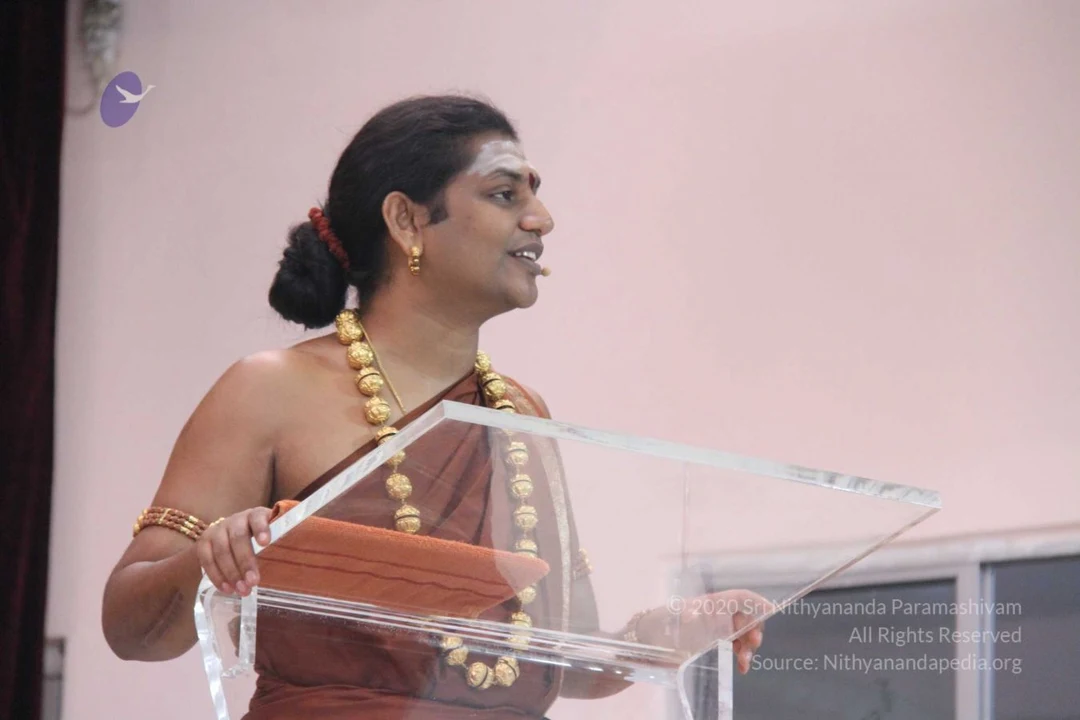
36 photosSource gallery
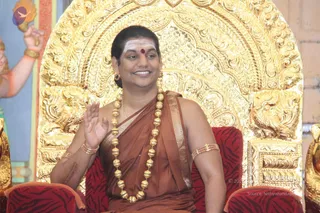
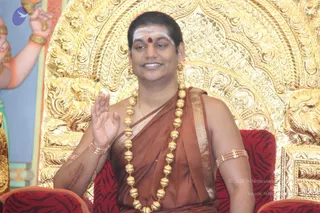
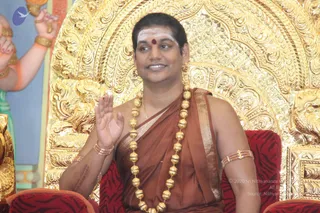
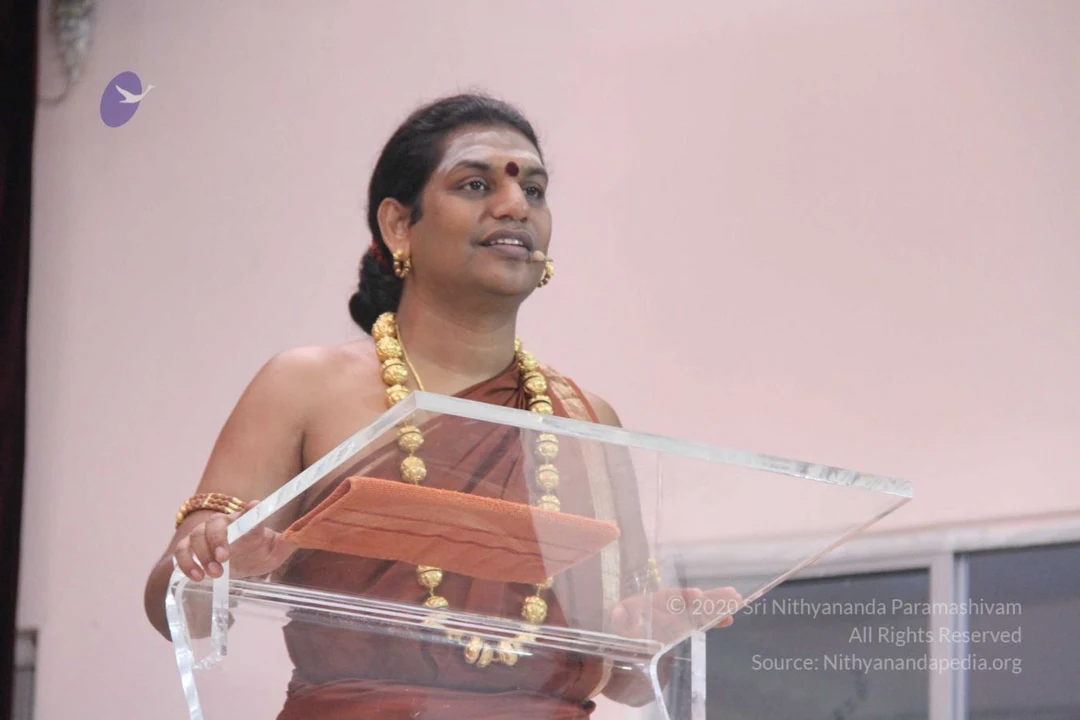
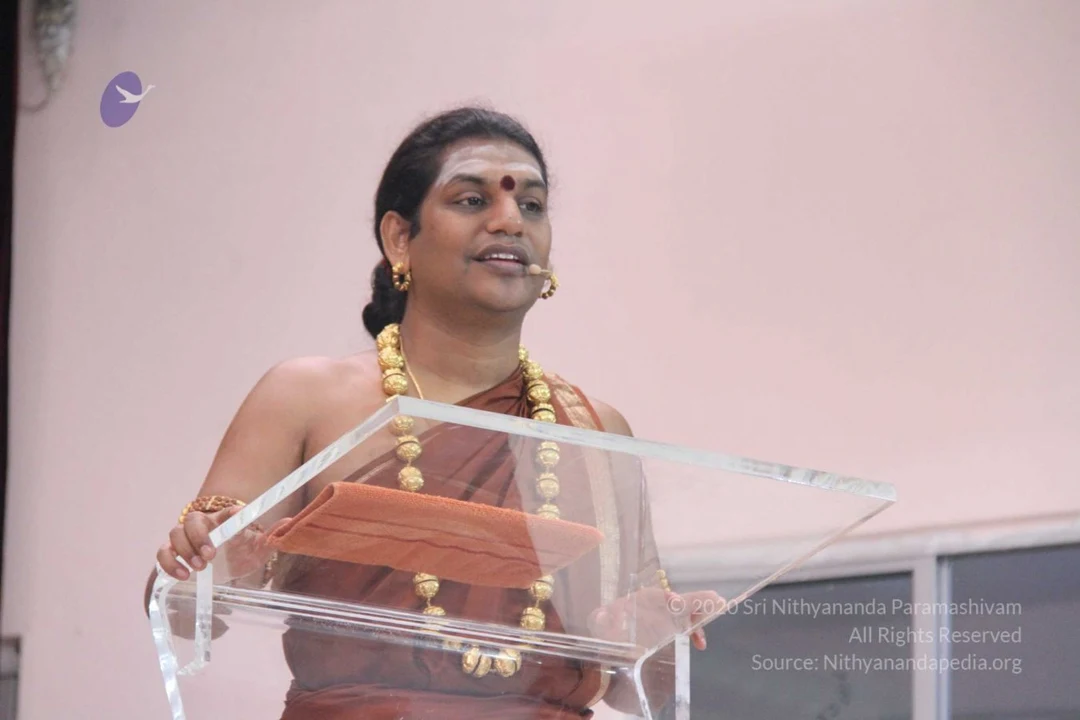
A man seated on an ornate gold throne with carved floral and scroll patterns, raising his right hand in a blessing or teaching gesture while smiling. He wears a rust-brown saffron-toned robe with a gold-bordered shawl, a thick necklace of large gold beads, gold bracelets and an armlet, and gold earrings. His forehead bears white vibhuti lines and a red kumkum dot. He sits on red-and-black striped upholstered armrests. Behind him a painted deity figure with raised arm is partly visible at the left edge. a person seated in a satsang setting, with gold throne, rudraksha-style gold bead mala and saffron robes as cues.A man seated on an ornate gold throne with a carved, gilded backrest, raising his right hand in a blessing or teaching gesture and smiling. He wears a rust-brown saffron-toned robe with a thin gold border, a large gold-beaded rudraksha-style mala reaching his chest, gold bangles and an armband, and a white vibhuti mark with a red kumkum dot on his forehead. The chair has red and black tiger-striped upholstery, and a painted deity murti with raised arms is partly visible at the left edge.A man seated on an ornate gold throne with carved gilded panels and red-upholstered armrests, raising his right hand in a gesture of blessing while smiling. He wears a rust-brown dhoti-style garment with a gold-bordered edge, a long necklace of large gold beads, gold bangles and an armband, and has a white vibhuti line and red kumkum dot on his forehead. The. A painted deity figure with raised hands and gold bangles appears at the left edge, and a golden lion-shaped carving is at the right.A man seated on a red and black tiger-striped cushioned chair in front of an ornate gold-leaf throne back with carved floral and scrollwork. He wears a rust-brown bare-shouldered wrap with a gold border, a long necklace of large gold beads, gold bangles on his wrists and upper arms, and gold earrings. He has white tilak on his forehead with a red dot at the centre.A seated man in a rust-orange dhoti and shawl sits on an ornate gold throne with carved lion-head armrests upholstered in red zebra-striped velvet. He has a red bindi and sandalwood marks on his forehead, a long gold beaded mala and gold armlets, and holds his palms together in anjali mudra near his chest. A gold deity murti with a trident stands at the right edge, and another gold figure appears at the left. The event appears to be a formal satsang setting.A smiling man in a rust-brown saffron-toned dhoti and shawl sits on an ornate gold throne with a red zebra-striped velvet cushion. He wears a thick multi-strand gold bead necklace, gold armlets and bangles, and a red bindi on a white-marked forehead, with a small lapel microphone clipped near his chin. A carved golden arch and gilded lion-head armrests frame him. At the right edge, a partial painted deity figure holds a trident-like staff. Appearance-based label: a person, seated in person, teaching in a satsang setting.
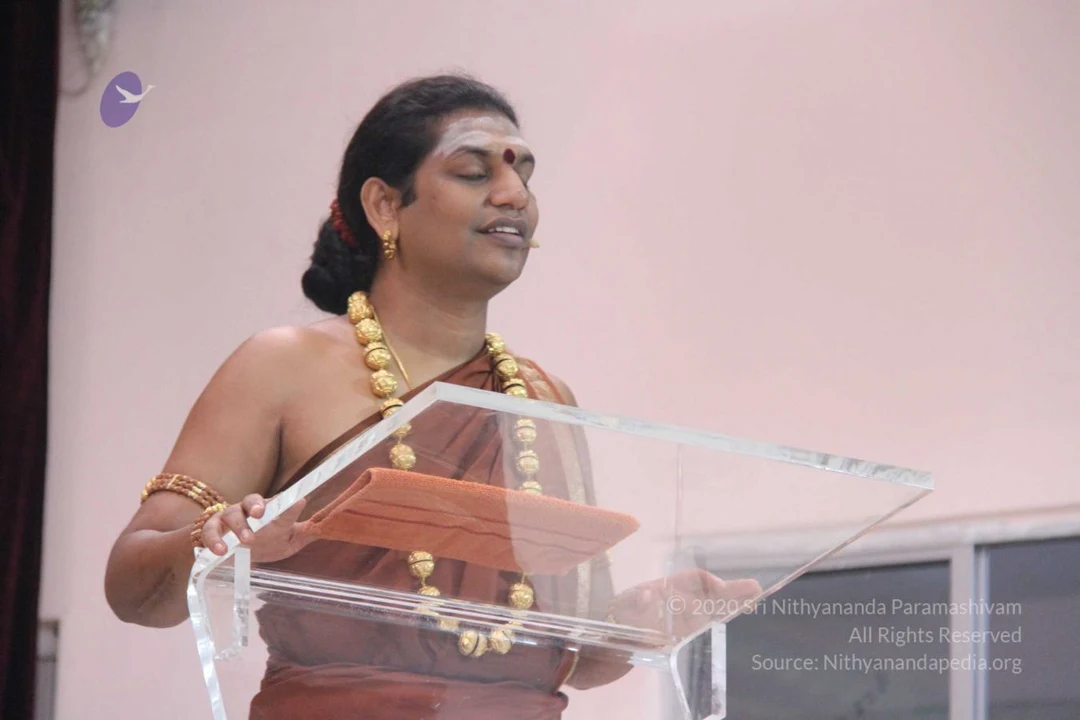
Sarva-Darshan

3 photosSource gallery
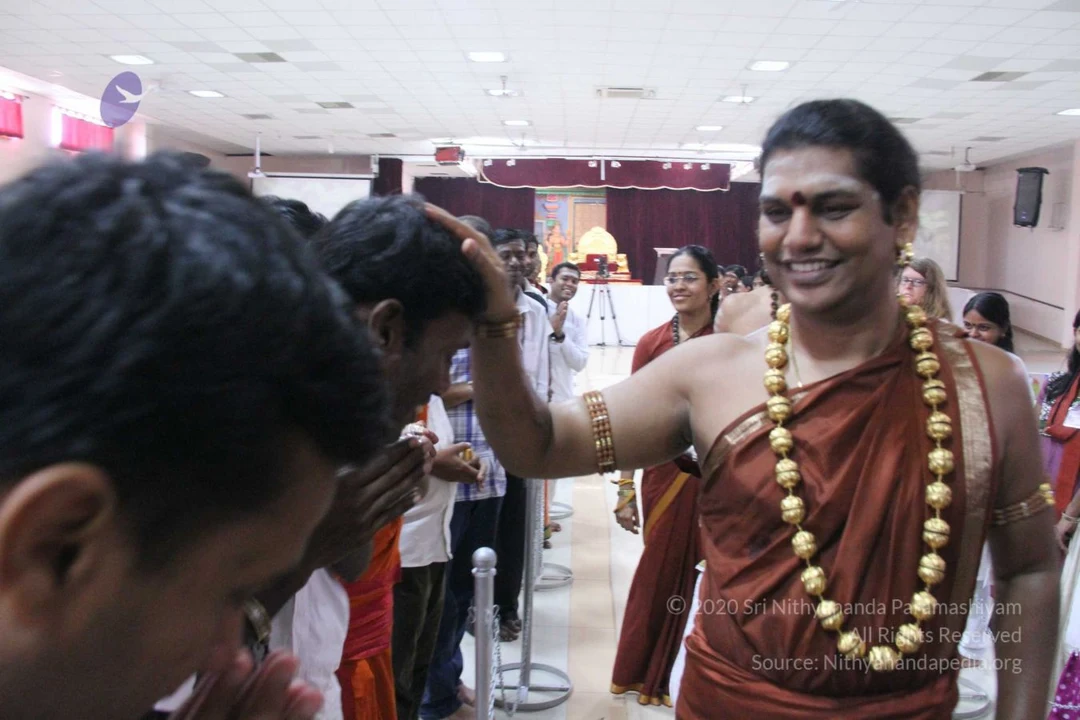
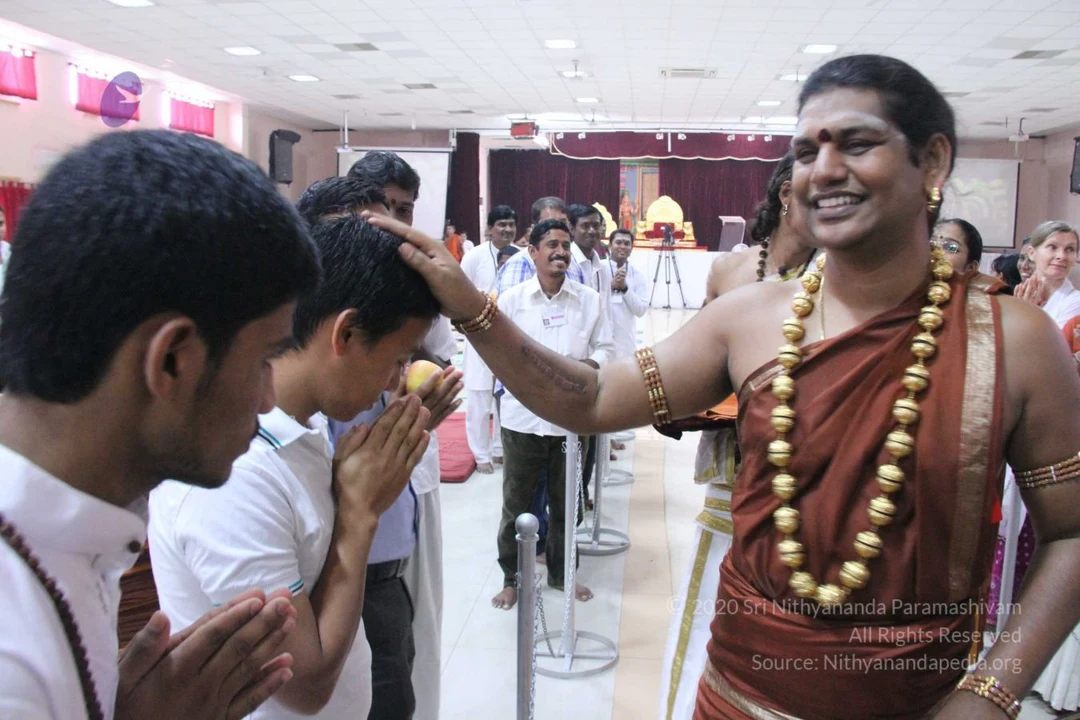
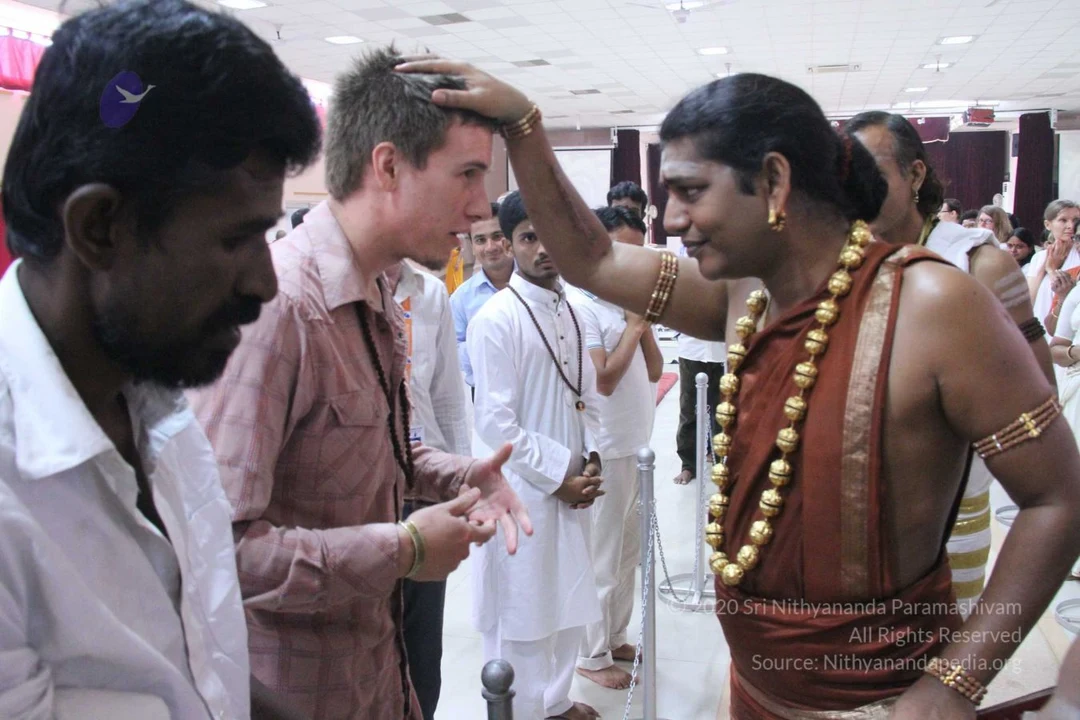
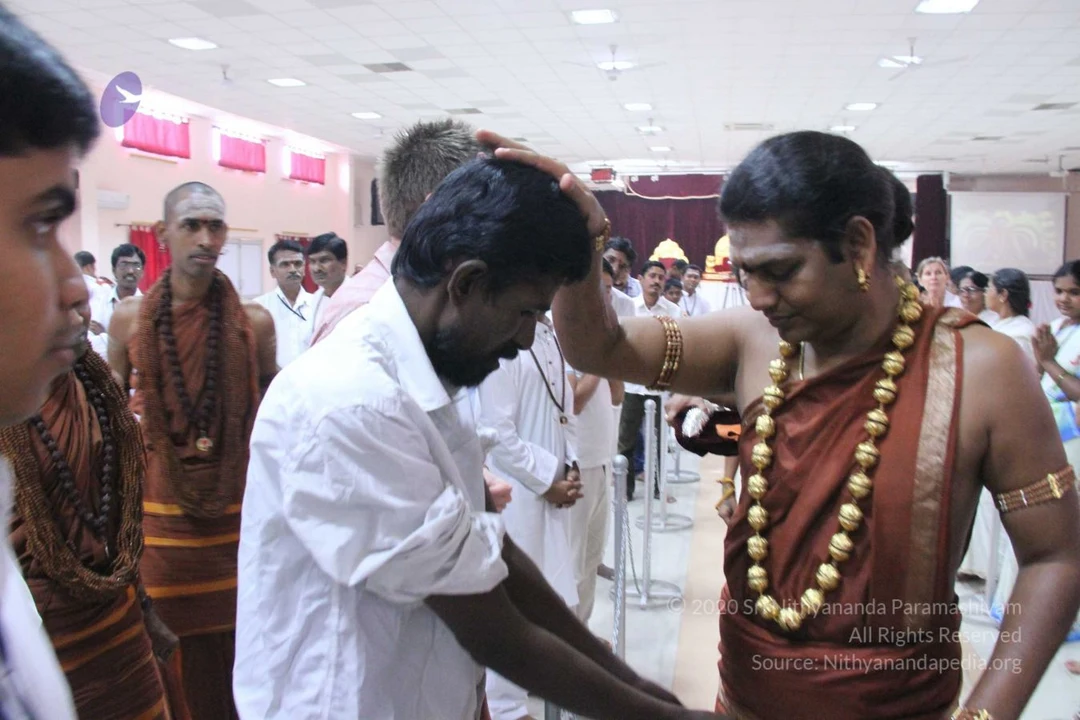
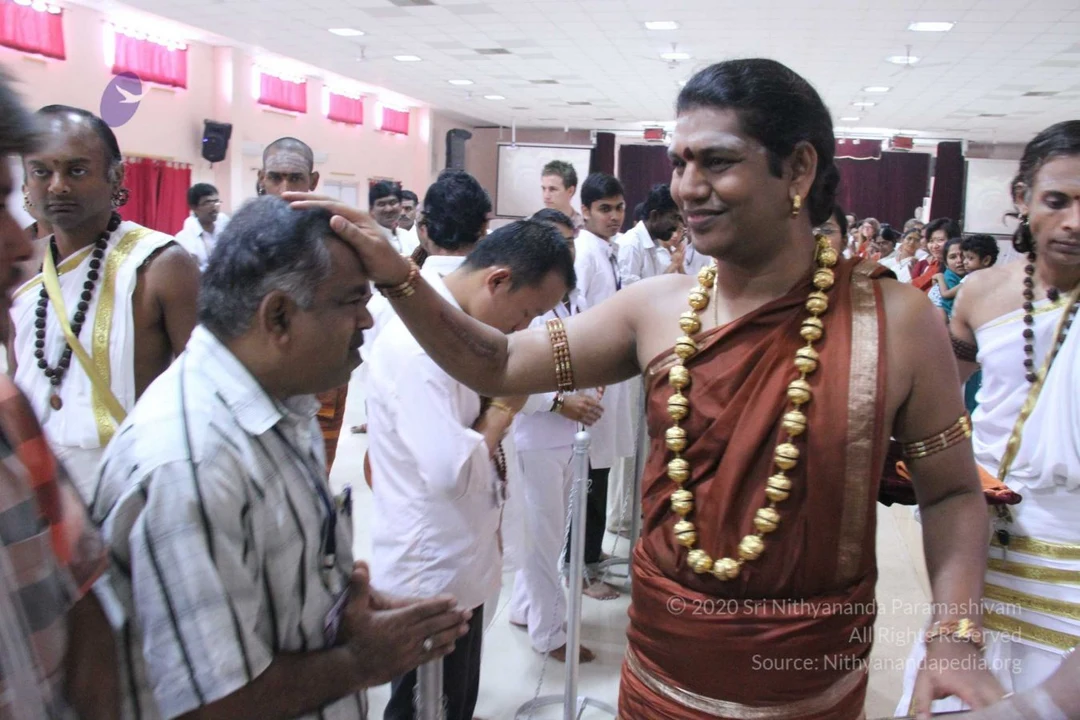
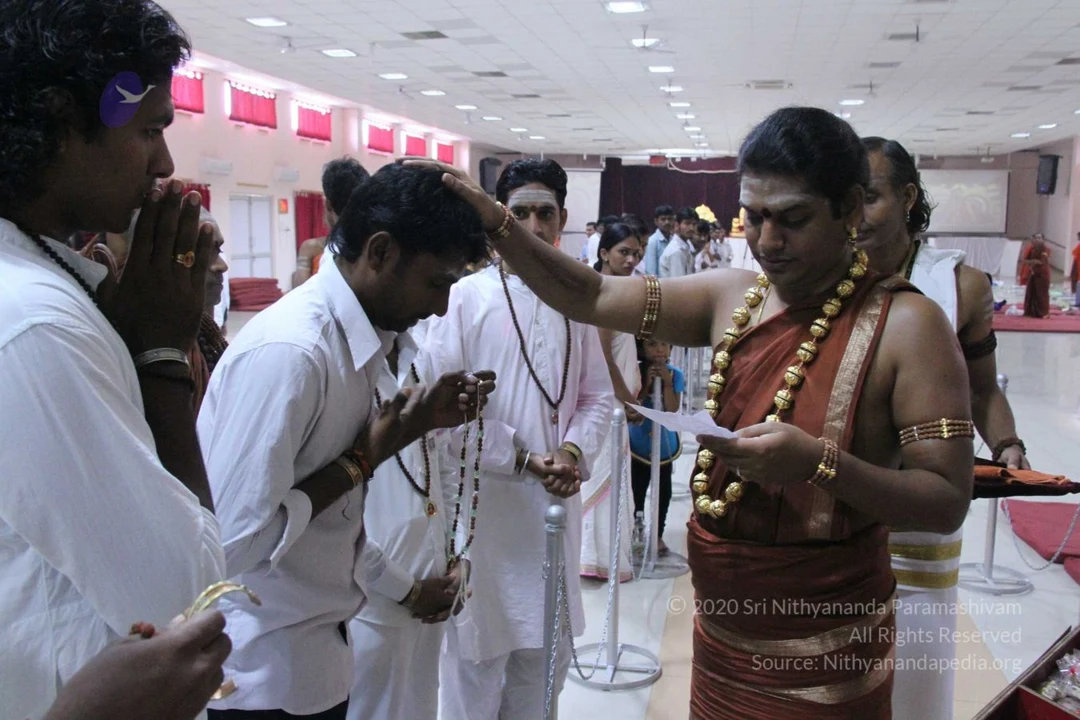
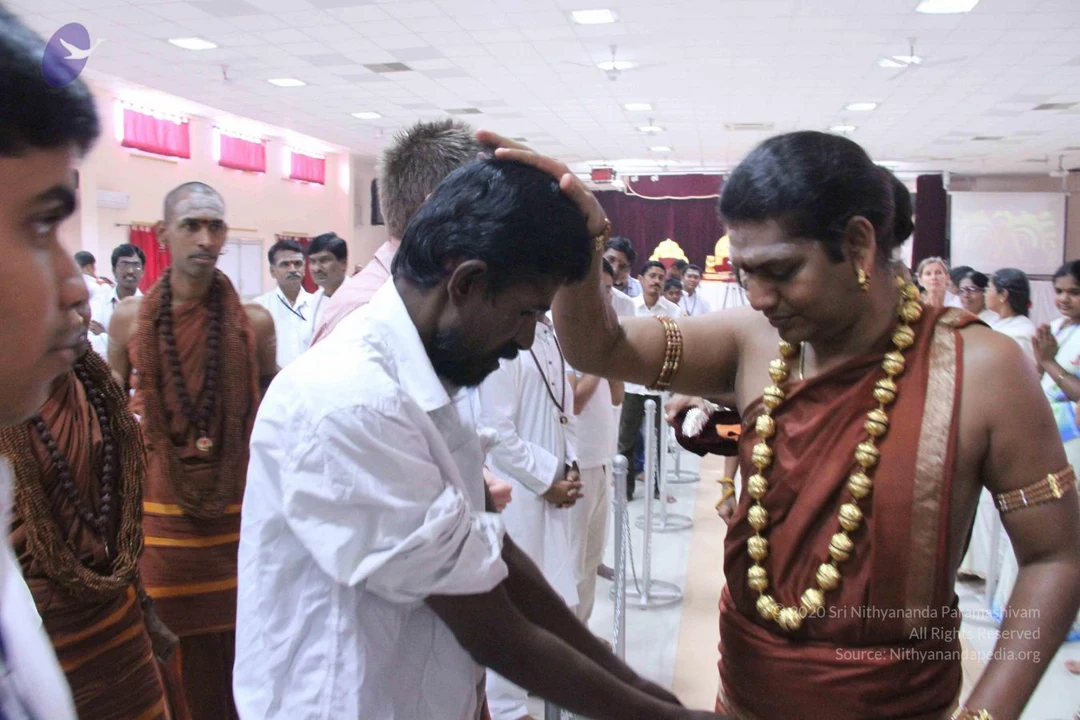
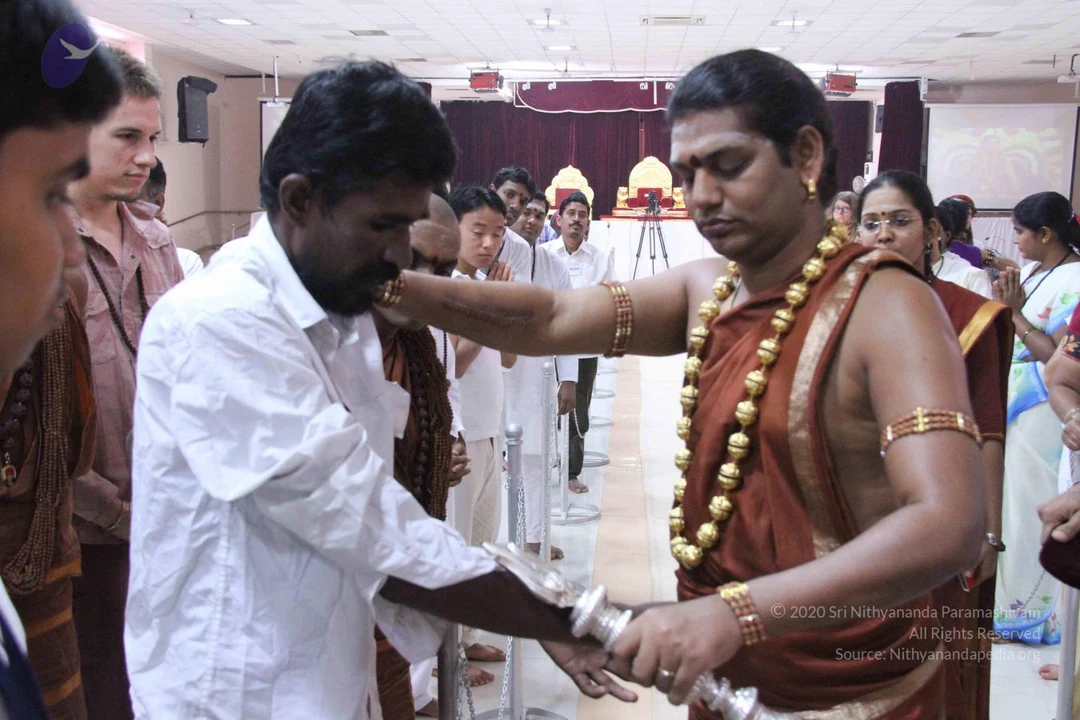
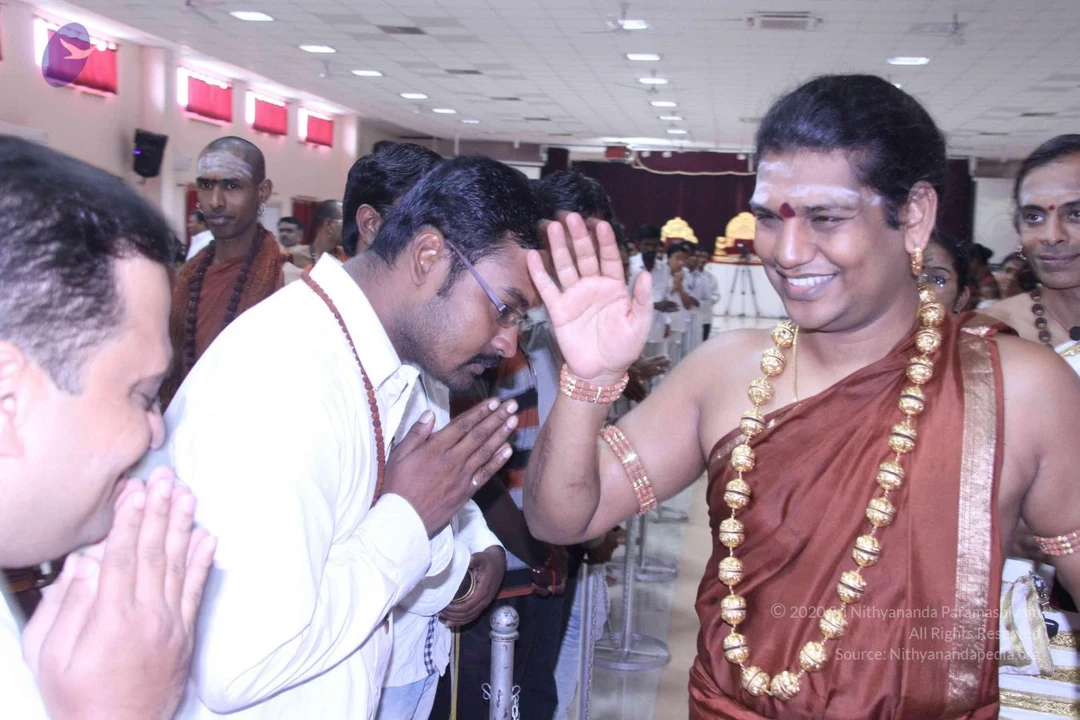
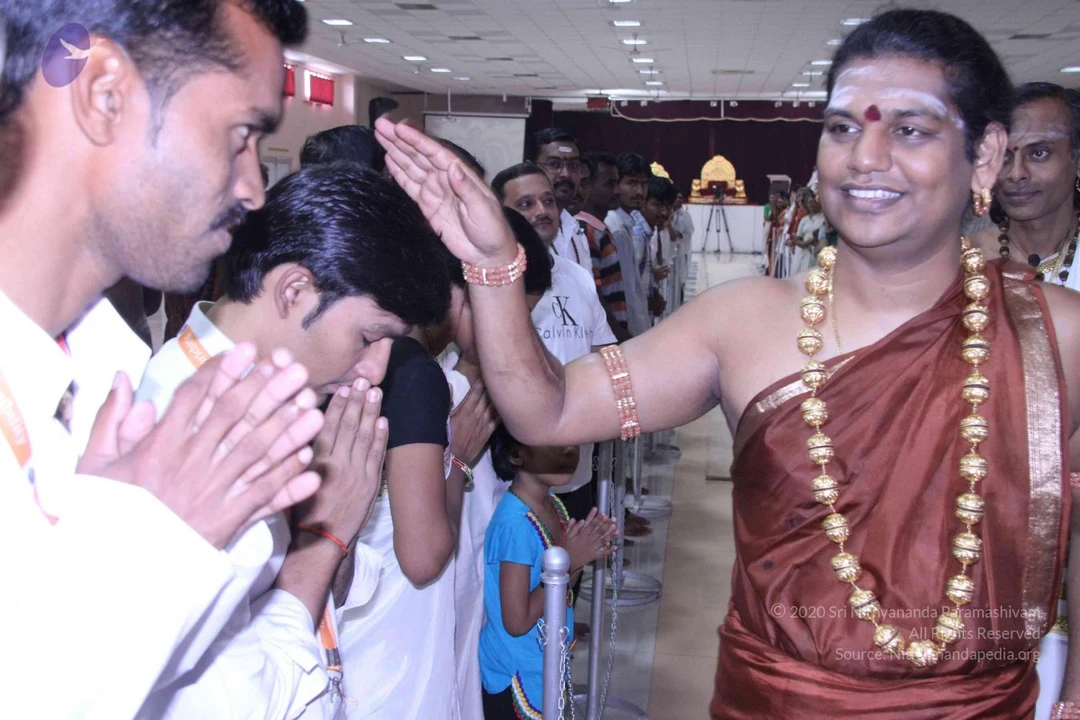
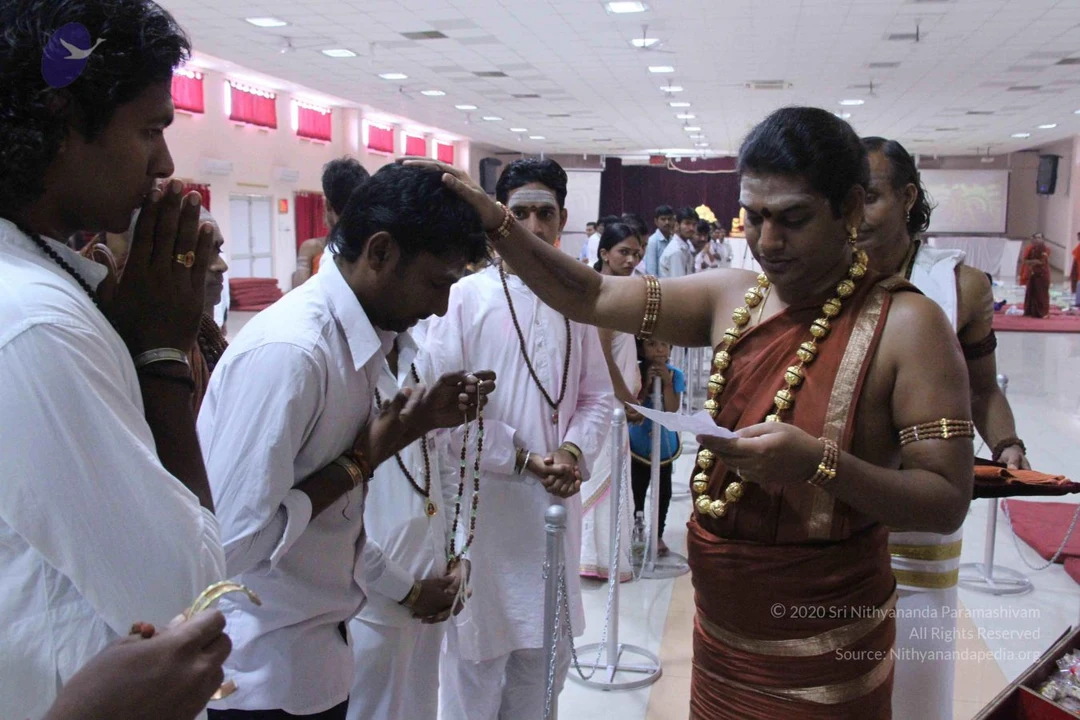
A photograph in a bright hall with a white tiled floor and a red-draped backdrop. On the right, a man with long dark hair tied back, gold beaded necklace, orange-red robe with gold border and gold armbands, extends his right hand in blessing toward a line of people. Several devotees on the left stand with palms pressed together in anjali; one young man wears an orange robe with rudraksha beads and a shaved head, and a man in a blue checked shirt stands with hands folded. Behind them, a decorated altar with a golden throne and a deity image, a camera on a tripod, and women in white saris with red shawls stand among the crowd. About 15 people are visible.A photograph inside a hall with red curtains and a gold throne-like seat at the back. A man in an orange-brown wrap and a heavy gold bead necklace stands at right, smiling and placing his hand on the head of a young man in a white shirt who has his palms pressed together. Other young men in white shirts stand with hands folded, and several men in white and an older woman with glasses stand behind. a person (wearing a saffron-brown wrap, gold bead necklace, gold bracelets, and a red-and-white tilak on the forehead) blesses the devotee with a touch on the head. Visible people number roughly six to twenty.A photograph inside a hall with pink-red curtains and a ceiling of recessed lights. In the foreground a bearded man in a white shirt bows his head while a man in rust-orange dhoti and shawl, wearing a long gold bead necklace and gold armband, places his palm on the bowed man's head in blessing. Behind them stand several men in orange-brown robes with rudraksha malas, and a crowd of people in white clothes watches, with a gold-decorated shrine at the back.
01-PADA-PUJA

6 photosSource gallery
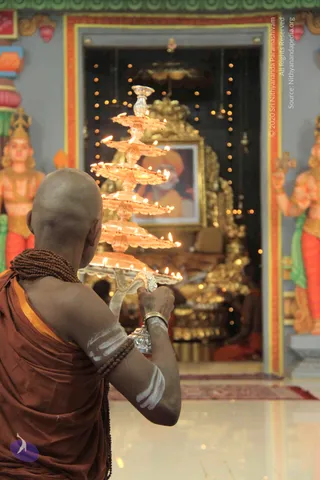
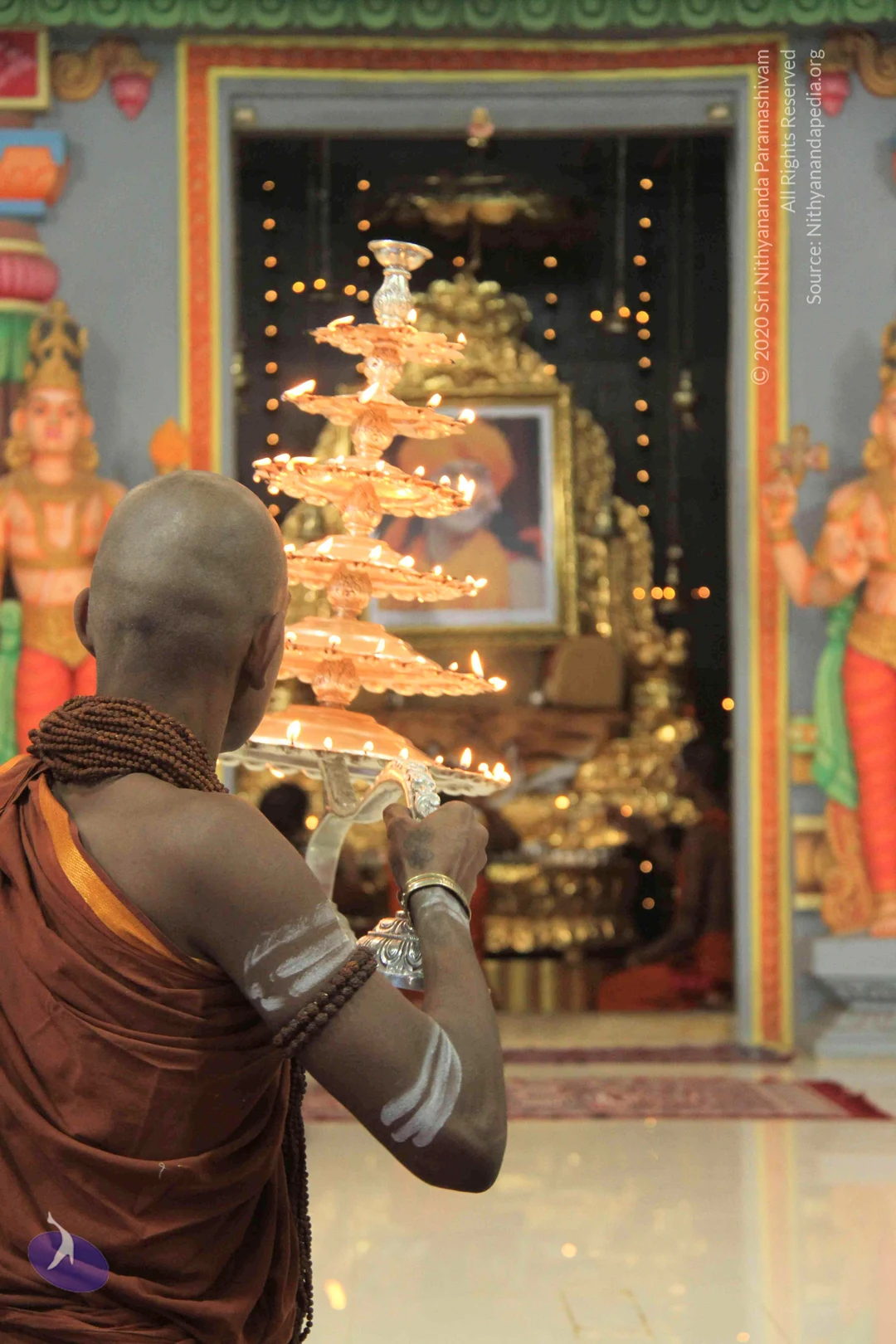
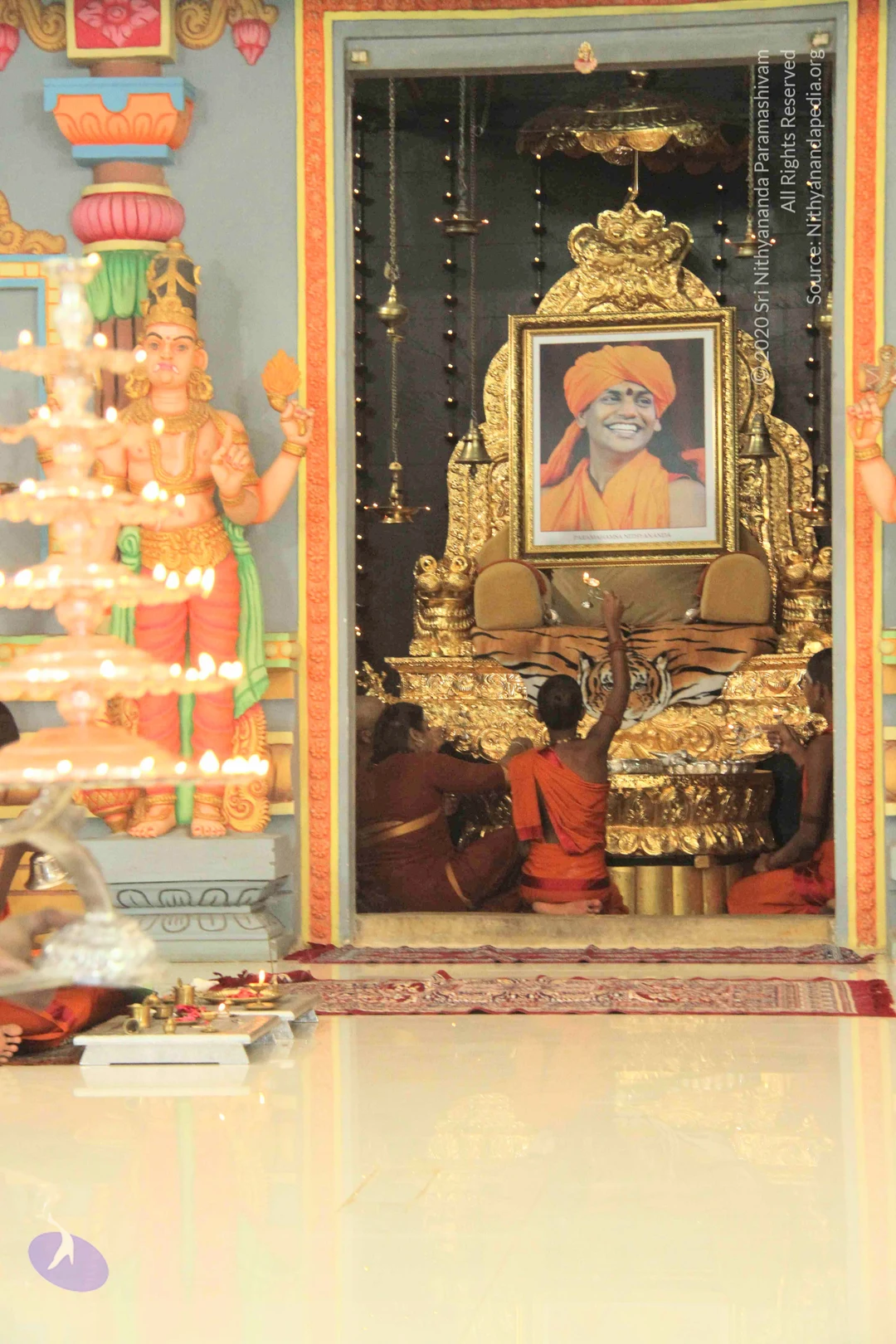
Ornate golden throne (peetha) set within a painted shrine doorway flanked by large painted deity figures holding lamps and a trident. A framed photograph on the throne shows a smiling man in an orange turban and orange shawl with a red forehead mark, captioned in print as PARAMAHAMSA NITHYANANDA. A striped tiger skin lies on the seat cushions, and hanging brass oil lamps and rudraksha beads surround the throne. Three people in orange and saffron robes kneel at the base of the throne performing puja: one in a deep red robe leans in to tend the offerings, a shaven-headed figure in orange sits in the centre, and another in orange kneels at right. Brass lamps and offering trays are on the floor in front, with a red and gold rug beneath.Photograph of a gilded throne (peetha) set in a shrine niche, draped with a tiger-striped cloth, beneath a golden canopy with hanging brass bells and oil lamps. Framed on the throne is a portrait labelled "PARAMAHAMSA NITHYANANDA", showing a smiling man in an orange turban and orange robes with a red forehead mark. Flanking the niche are painted dvarapala guardian figures with crowns, gold ornaments and green sashes. In the foreground, several people in orange and maroon robes kneel and sit before the throne, one in orange holding an offering, others assisting at a brass puja tray with a bell and lamp. Polished cream floor with small red and patterned rugs.A shaven-headed priest seen from behind wears a rust-brown robe with a gold edge and a rudraksha mala over the shoulder. He holds a tiered silver aarti lamp with many lit oil lamps, offering it toward a shrine doorway. White ash markings decorate his arm. Inside the shrine, a framed portrait labelled "Paramahamsa Nithyananda" shows a figure in orange, and gold ornamentation surrounds it. Painted guardian figures in orange and green stand on either side of the doorway, and strings of small lamps frame the entrance.A smiling man stands barefoot on a patterned rug in front of a golden lion-armrested throne with red cushions and a deep maroon velvet backdrop, arms raised overhead with hands open. He wears a rust-orange unstitched robe with gold-striped borders, a long strand of large beads around his neck, gold bangles on his wrists and armlets, and a red dot on his forehead. a person: the appearance cues are a long swept-back hair style, a rudraksha-style bead mala and gold ornaments on a saffron-toned robe, seated-throne presentation, with a printed caption reading Paramahamsa Nithyananda on the sidelines not present; treat identity as uncertain.A photograph of a smiling man standing barefoot on a rug before a gold throne with carved lion-head arms and red tiger-stripe cushions, against deep maroon velvet drapes. He raises both arms overhead with palms open, wearing a rust-brown dhoti and wrap with gold borders, a large beaded rudraksha-style mala, gold bangles and armlets, and a red dot on his forehead. a person: the figure has short hair, gold earrings and ceremonial gold armlets and bangles, but the wrap, mala and seated-throne setting are the main cues, so the appearance is only moderately distinctive.A man stands barefoot on a patterned pink rug before an ornate golden throne with lion-shaped armrests and red cushions, against deep maroon velvet drapes. He raises both hands high with palms open, smiling, wearing a rust-brown dhoti-style garment with gold-edged border, a thick yellow bead mala around his neck, gold bangles and earrings, and a red bindi on his forehead. Two decorative lion figures and the throne suggest a ceremonial stage setting.