Skip to content
Sunday

20 October 2013

Dated photos
357
Source pages
1
Media
2
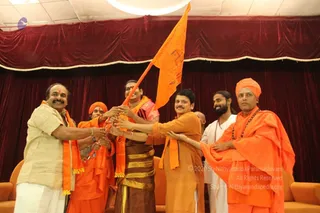
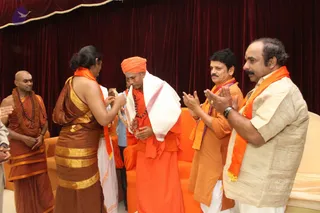
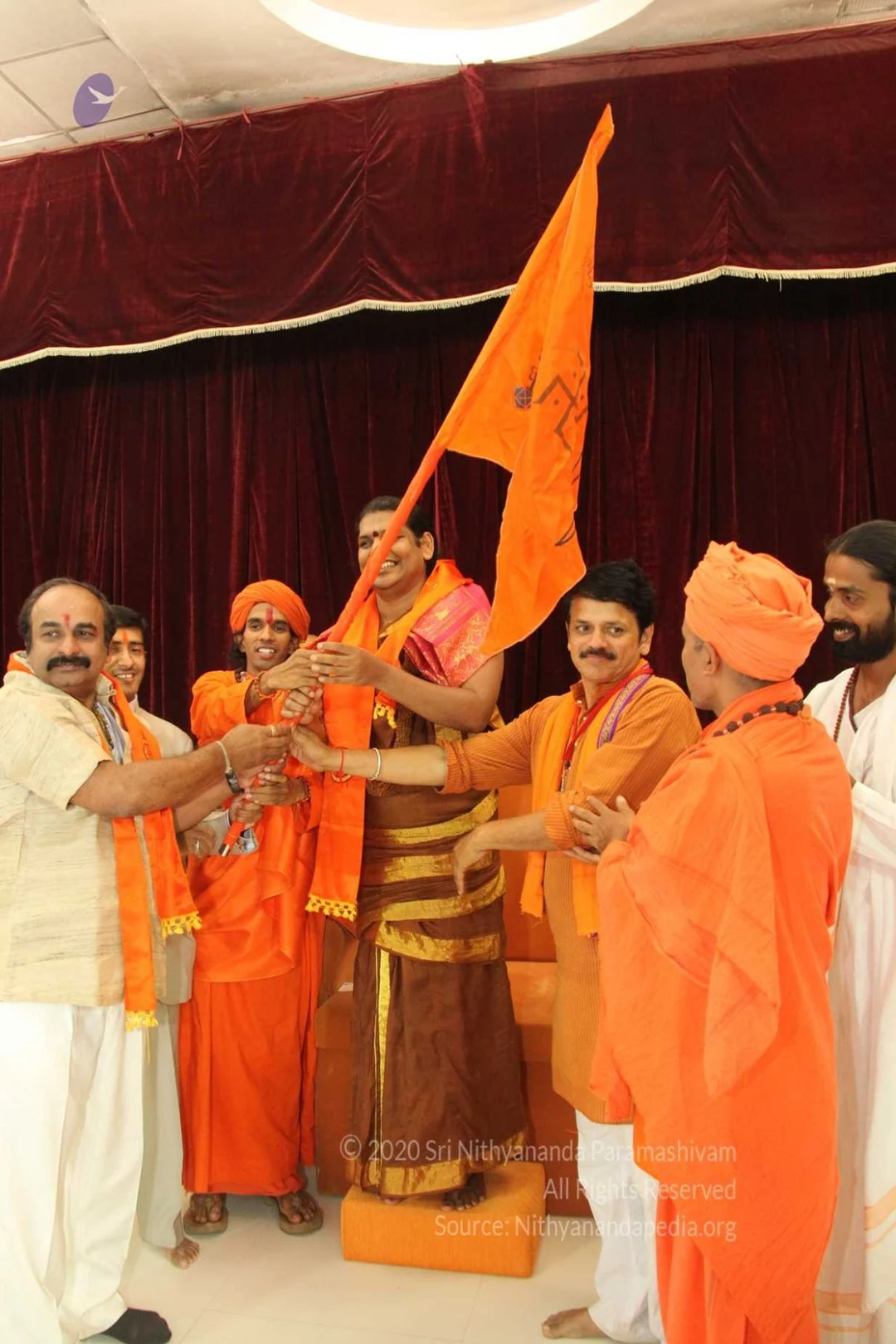
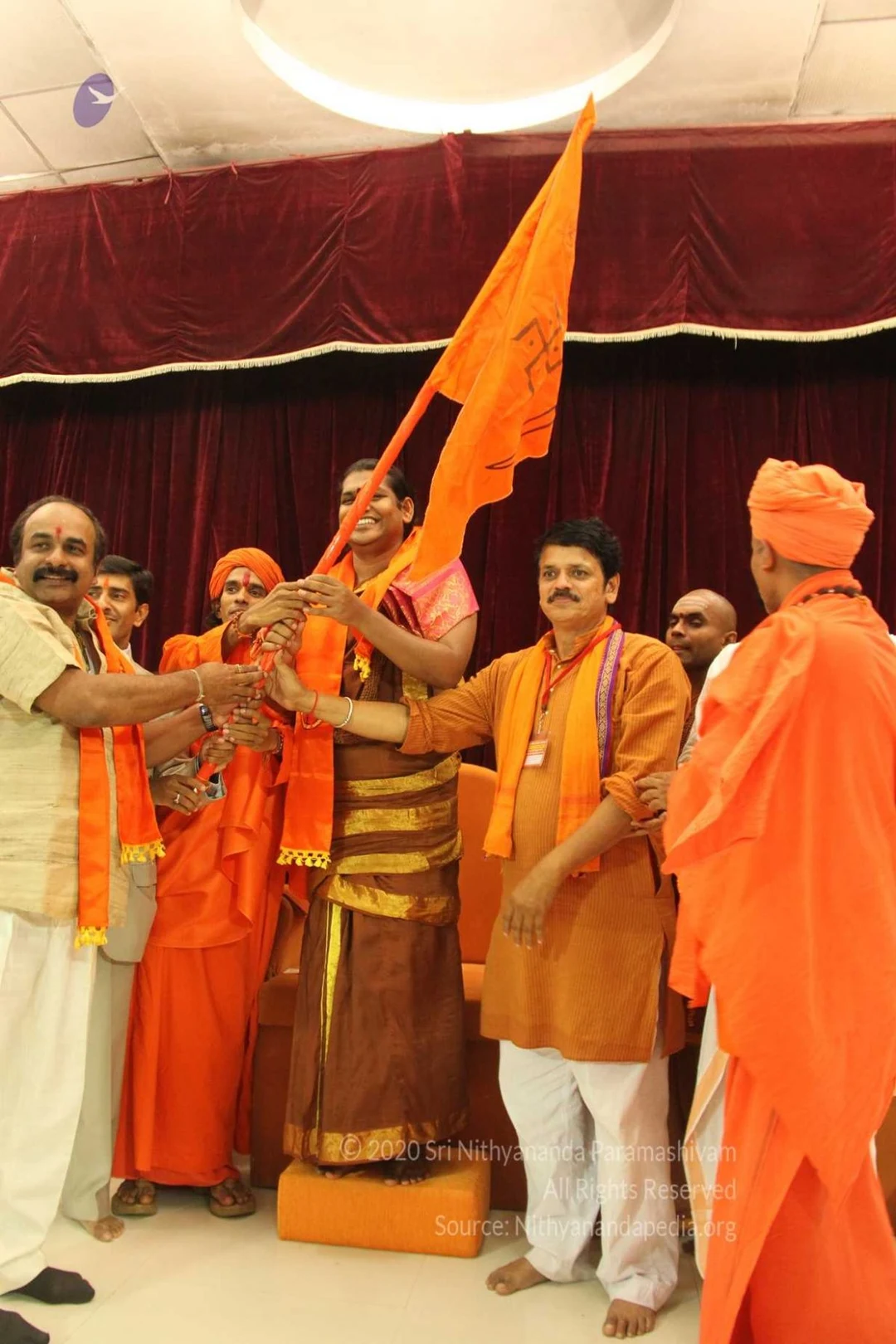
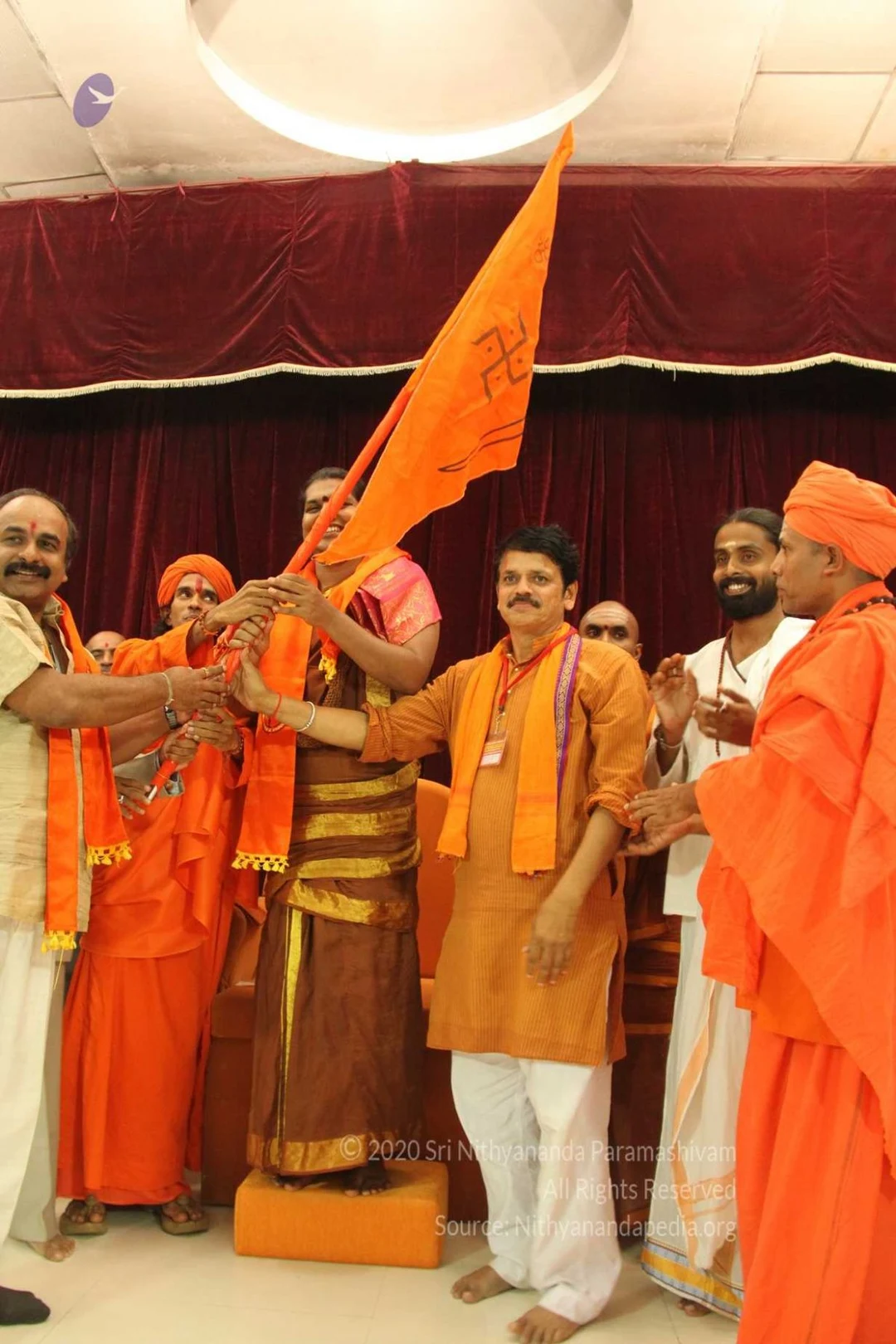
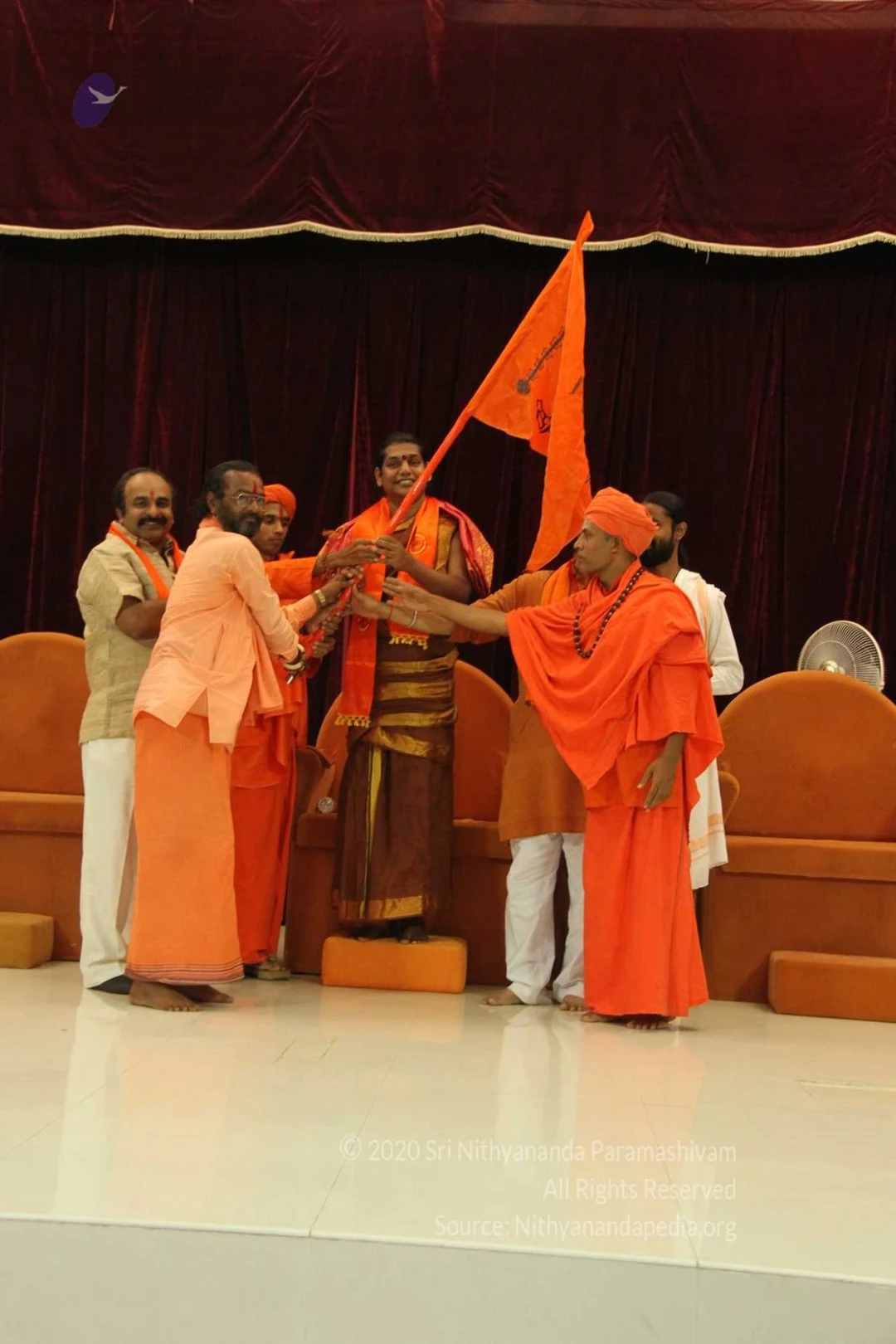
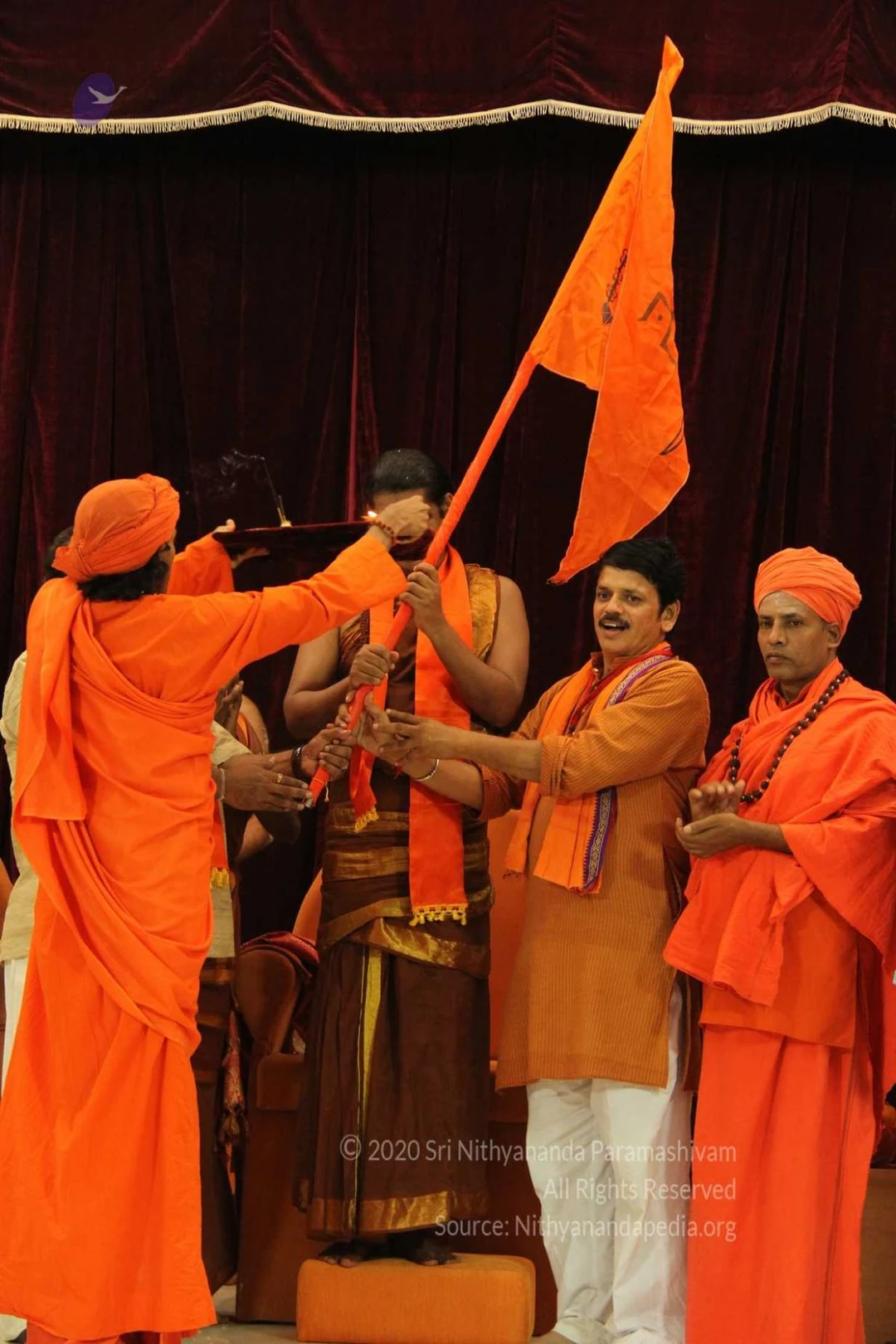
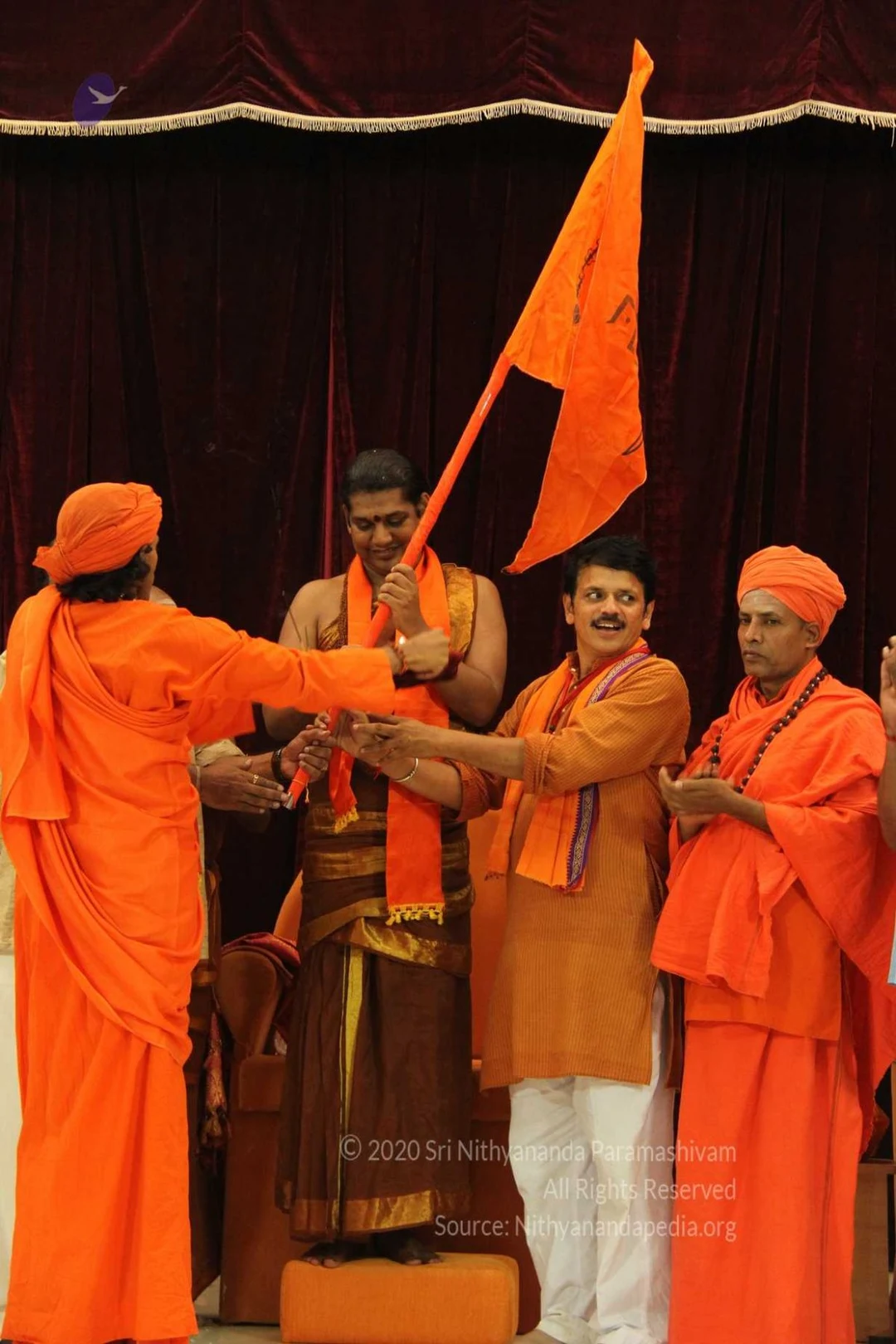
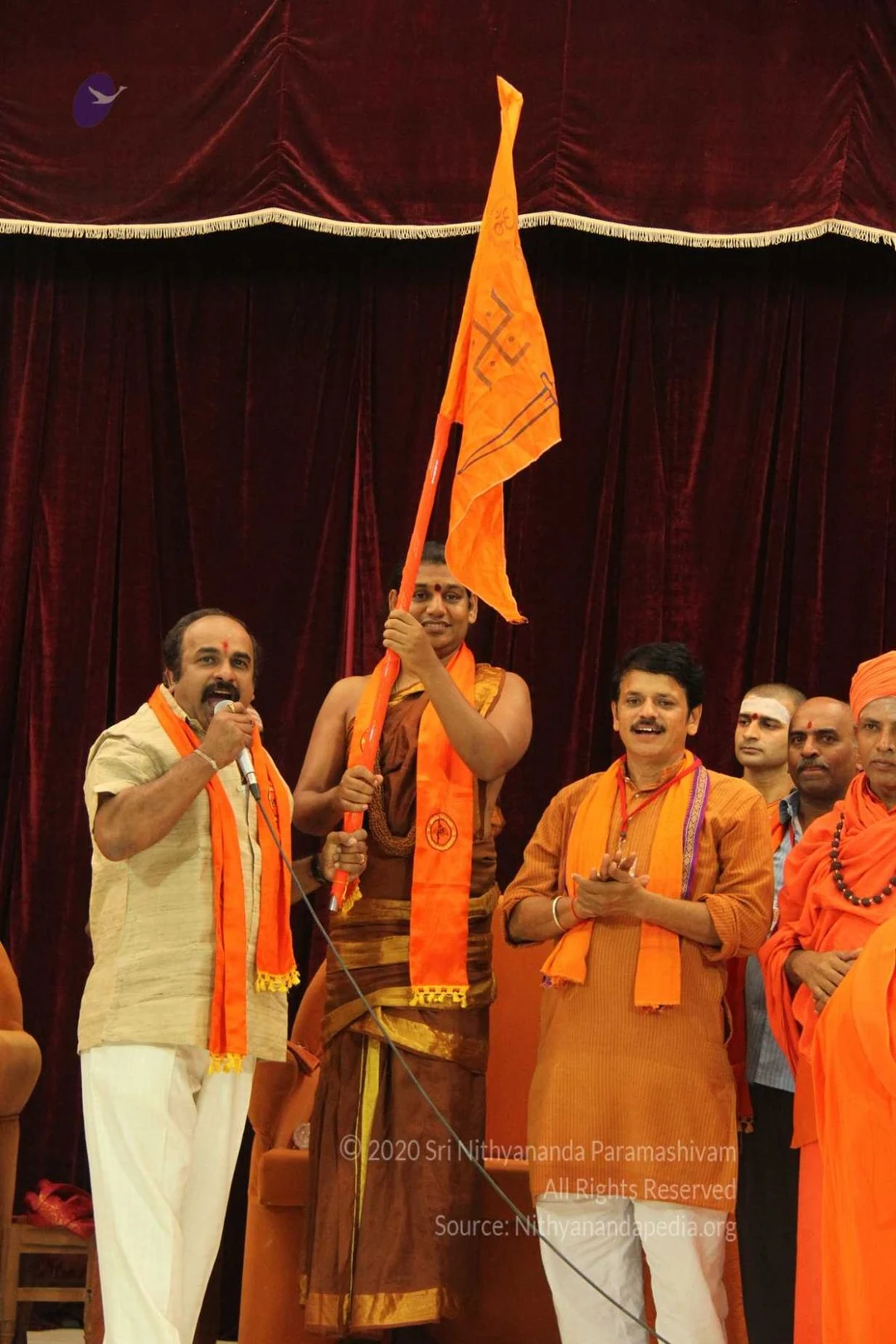
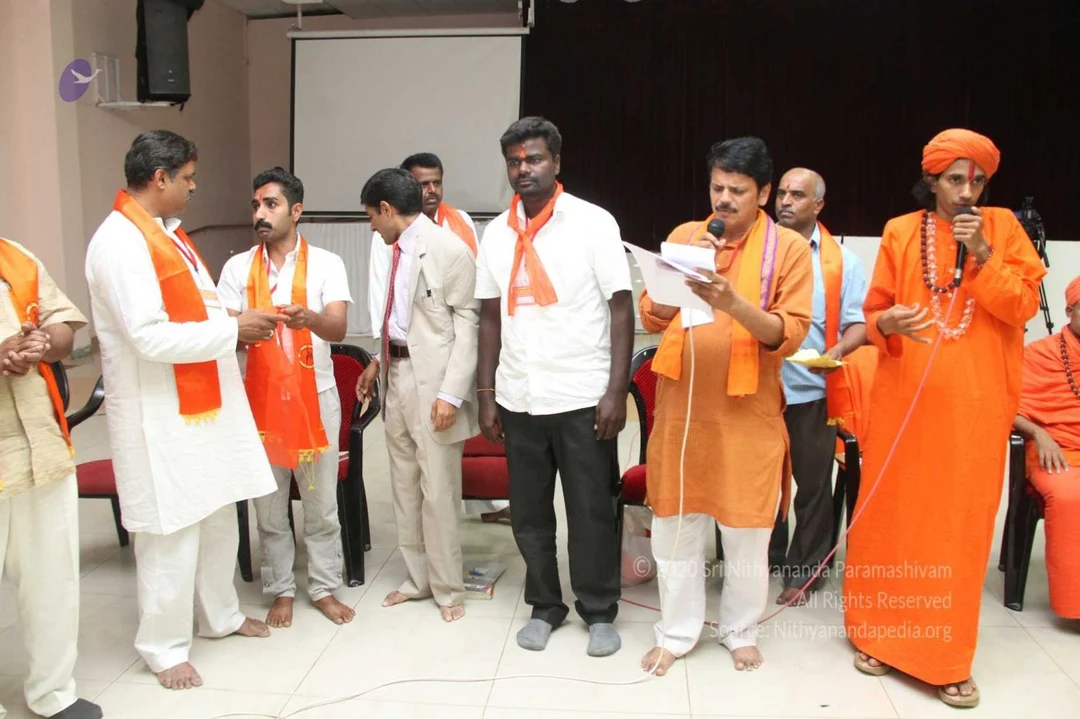
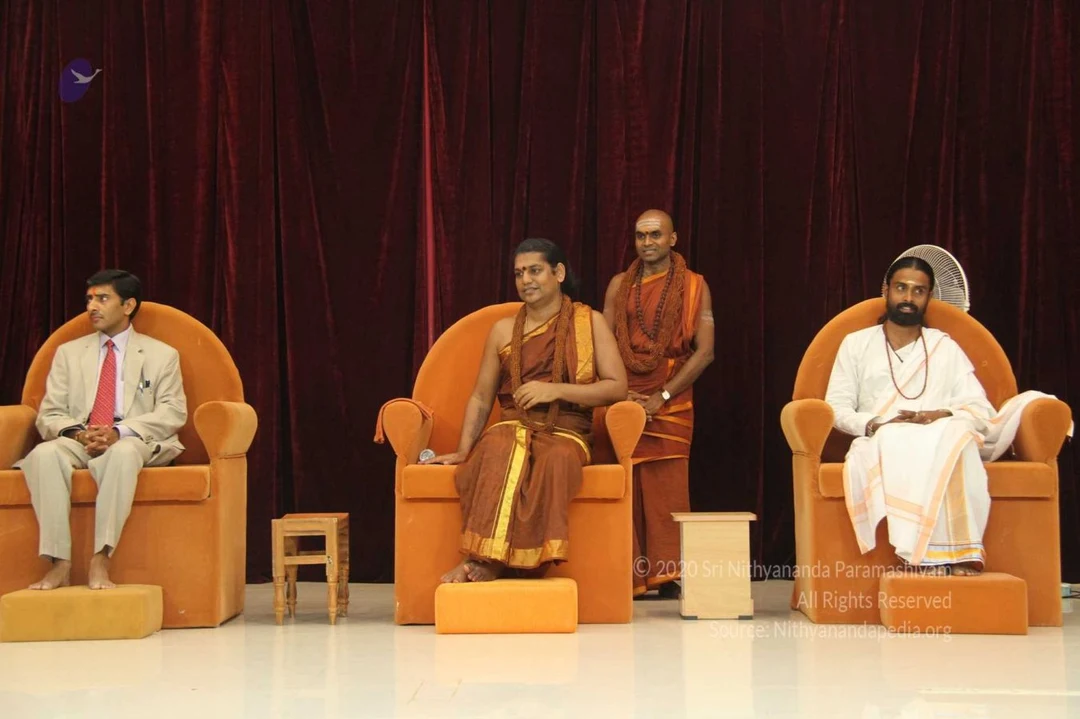
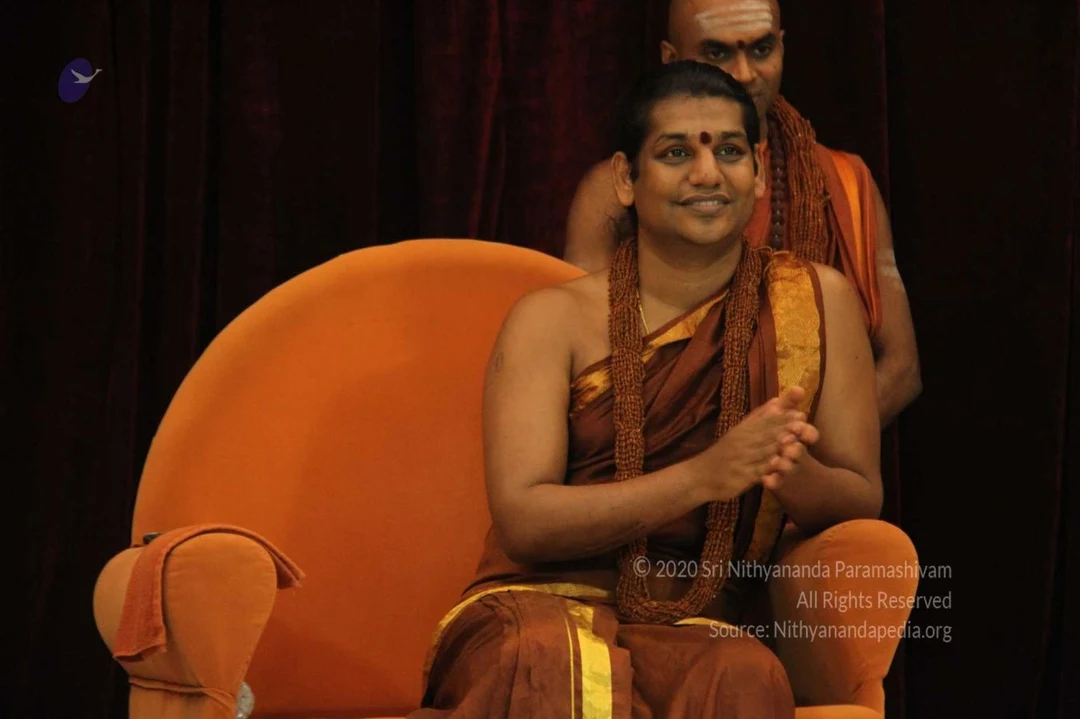
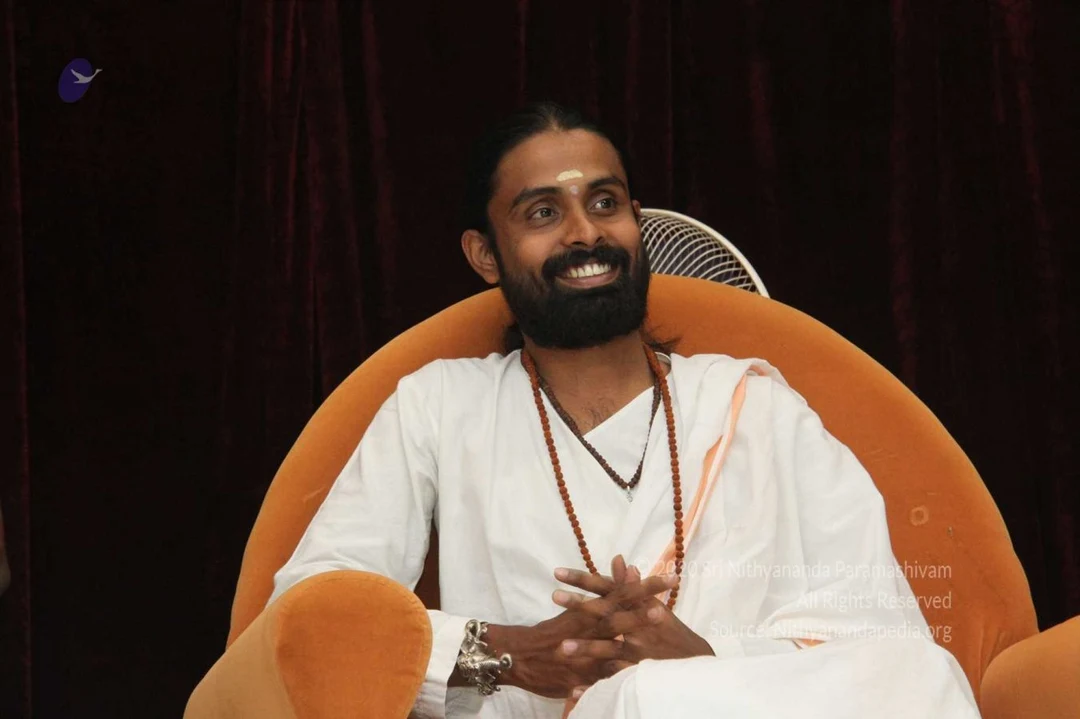
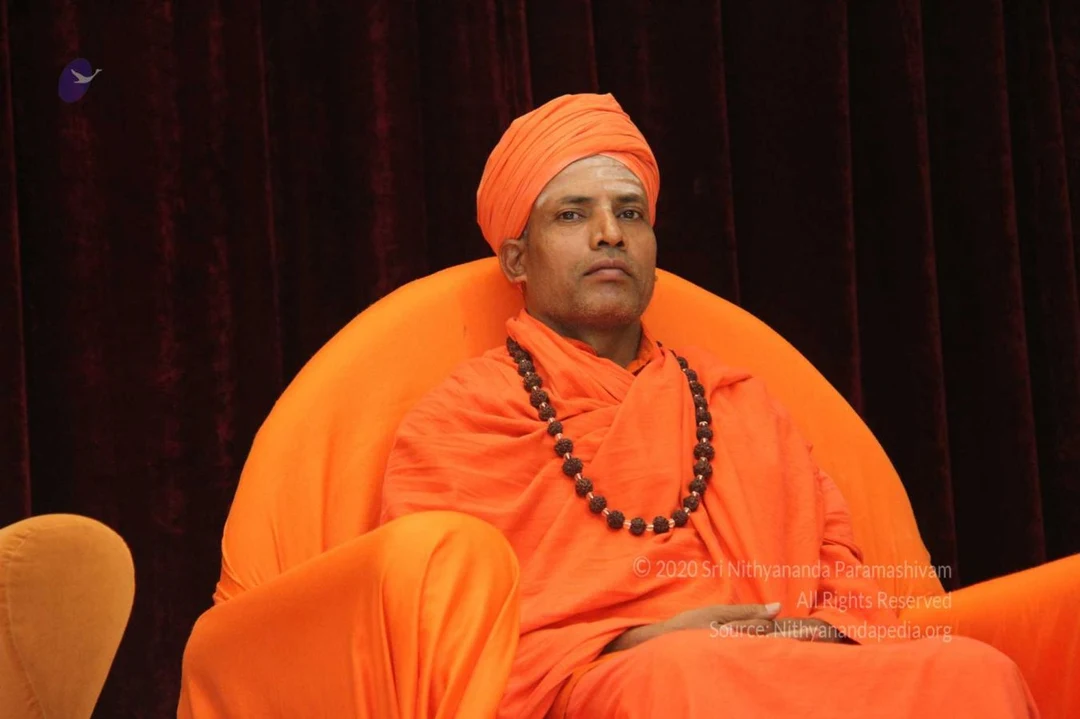
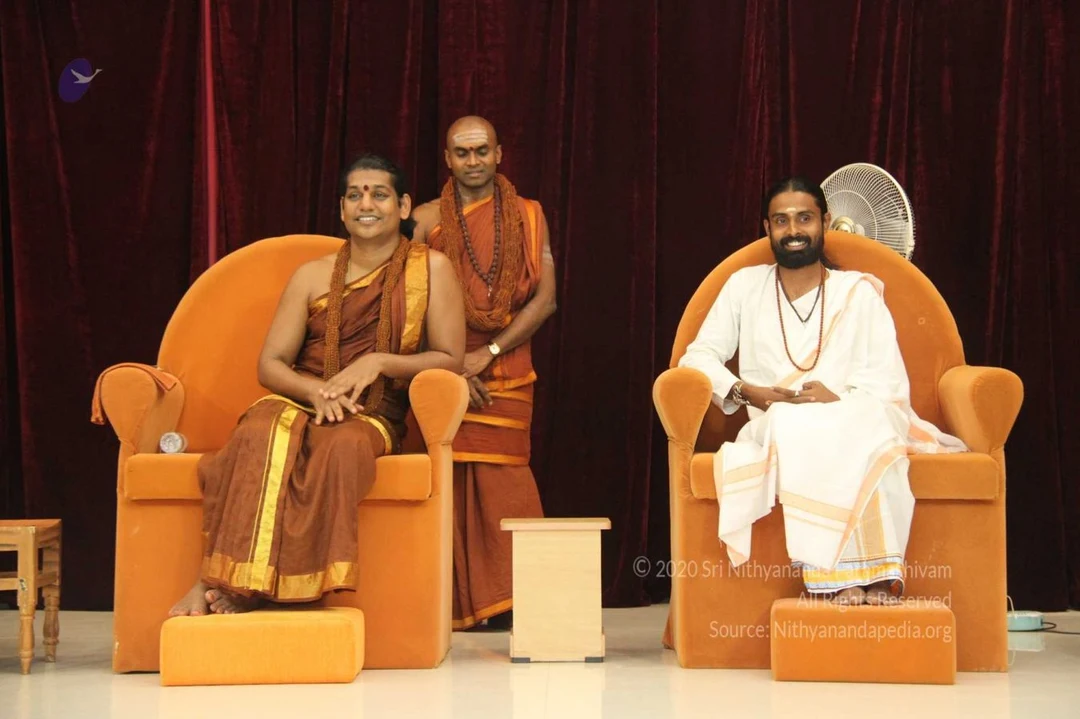
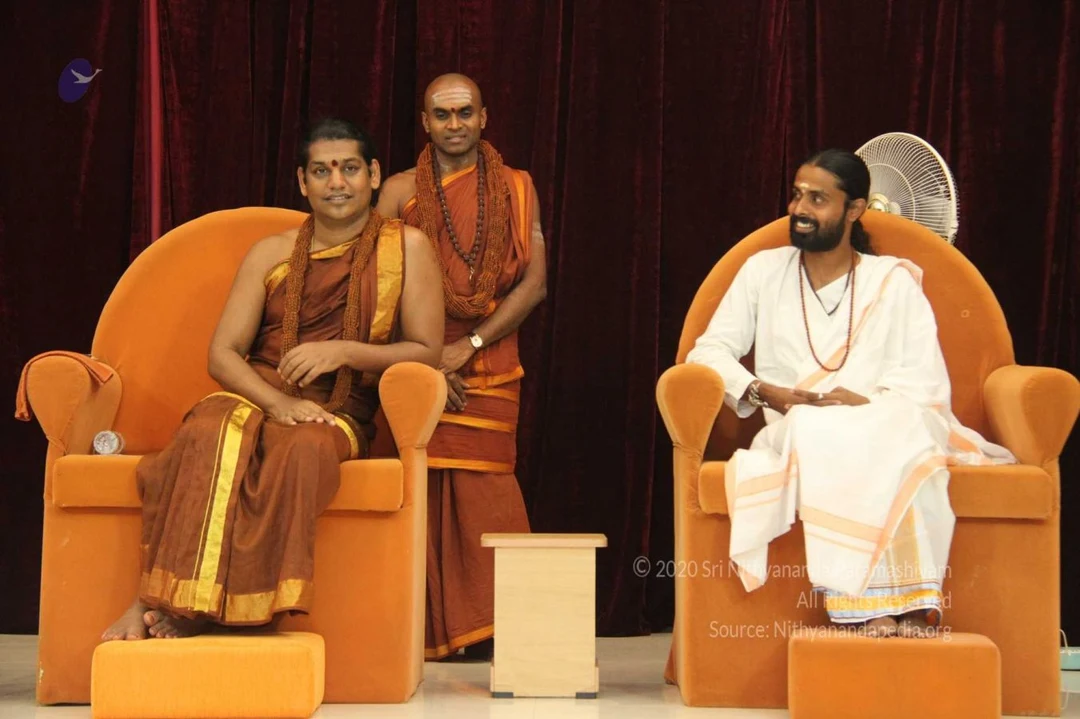
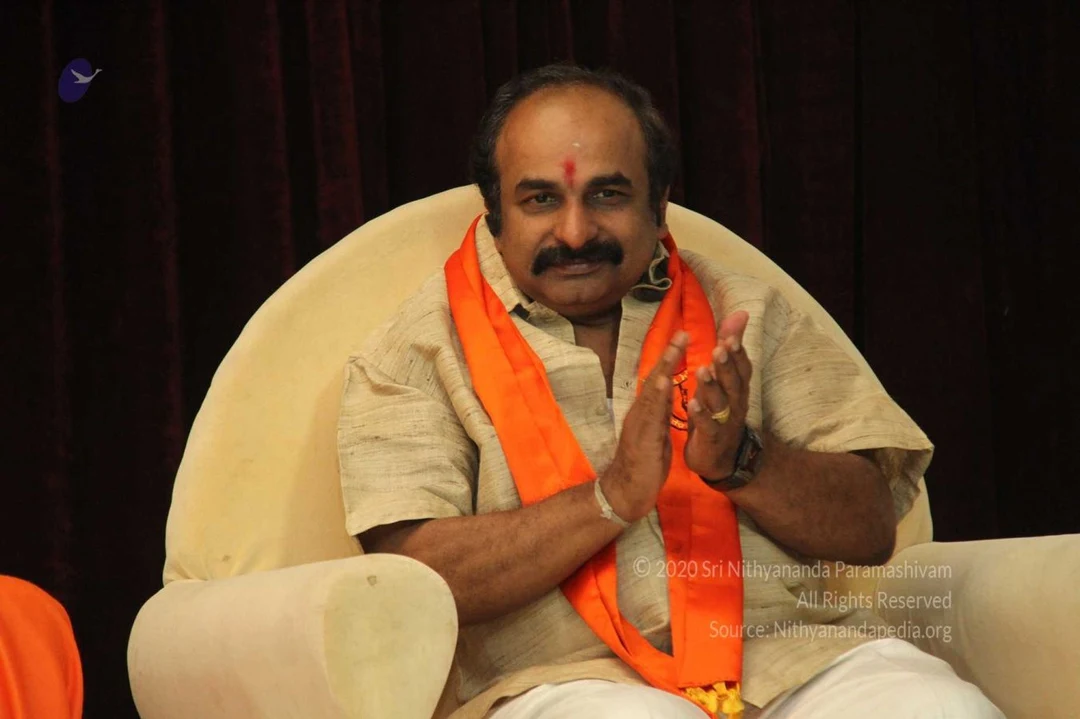
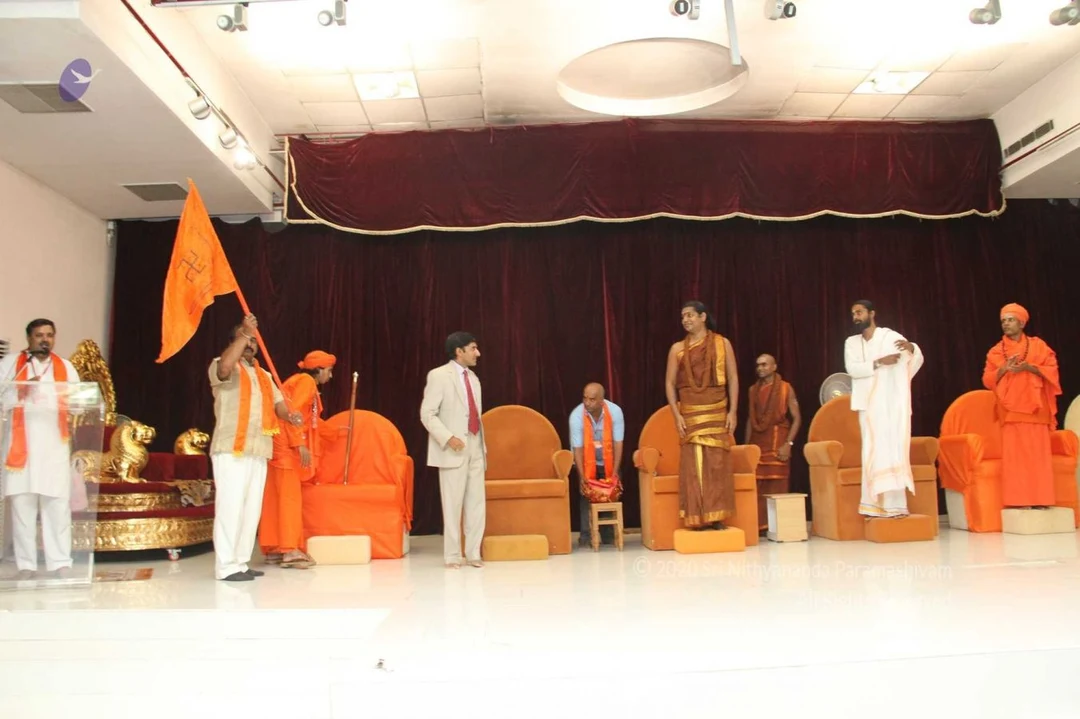
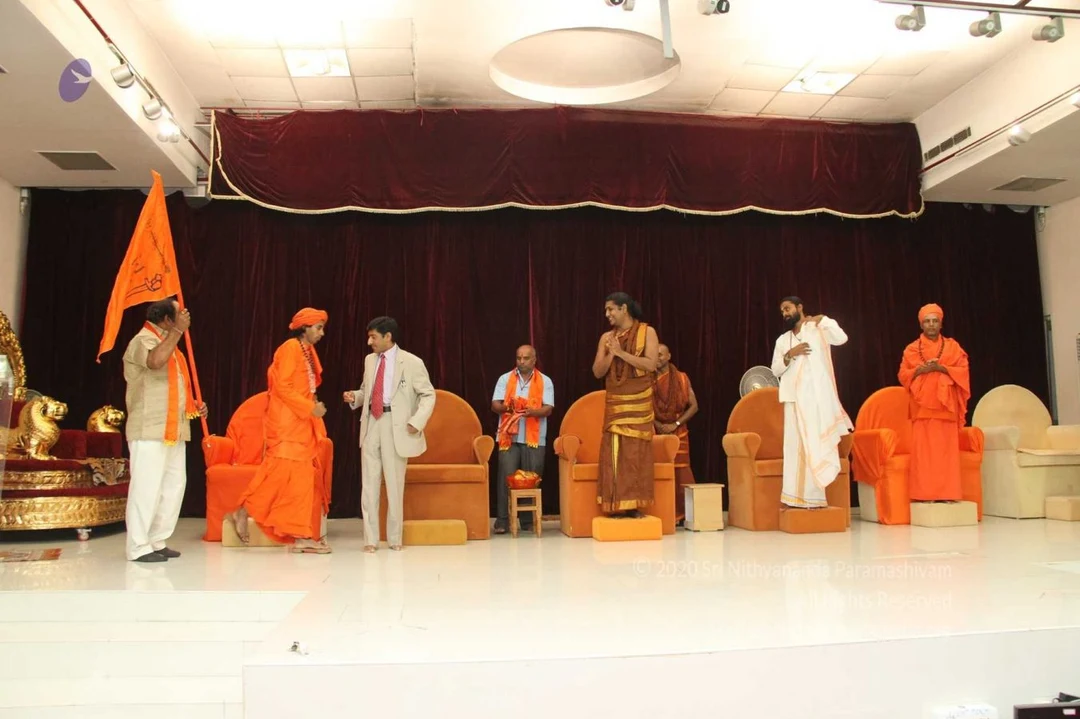
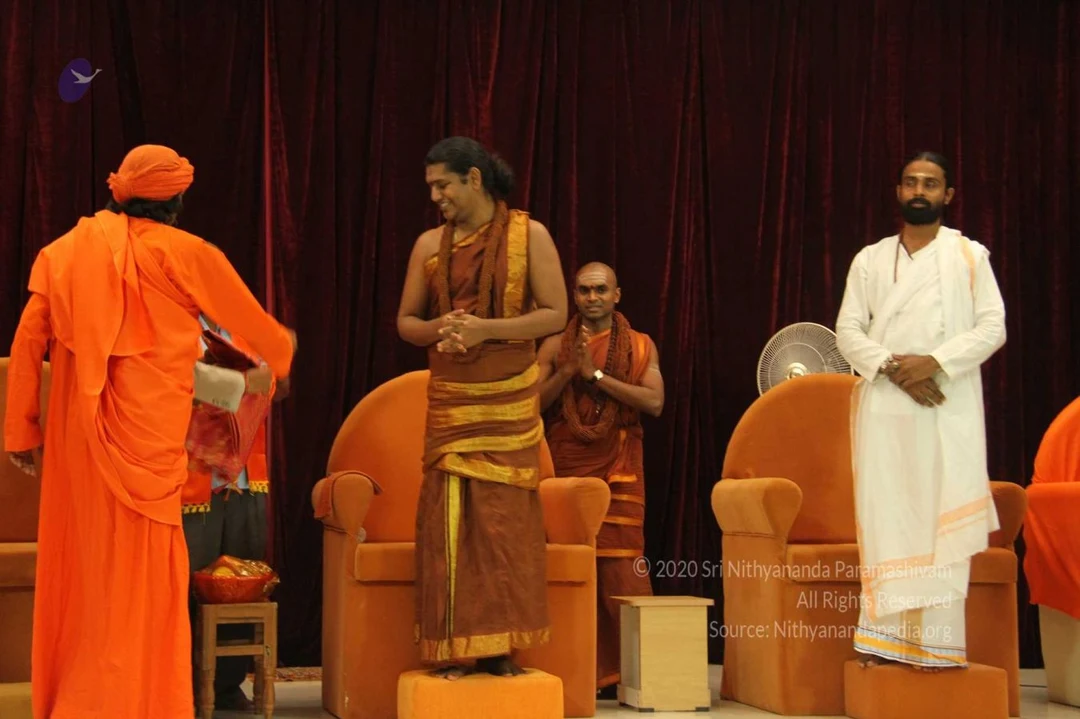
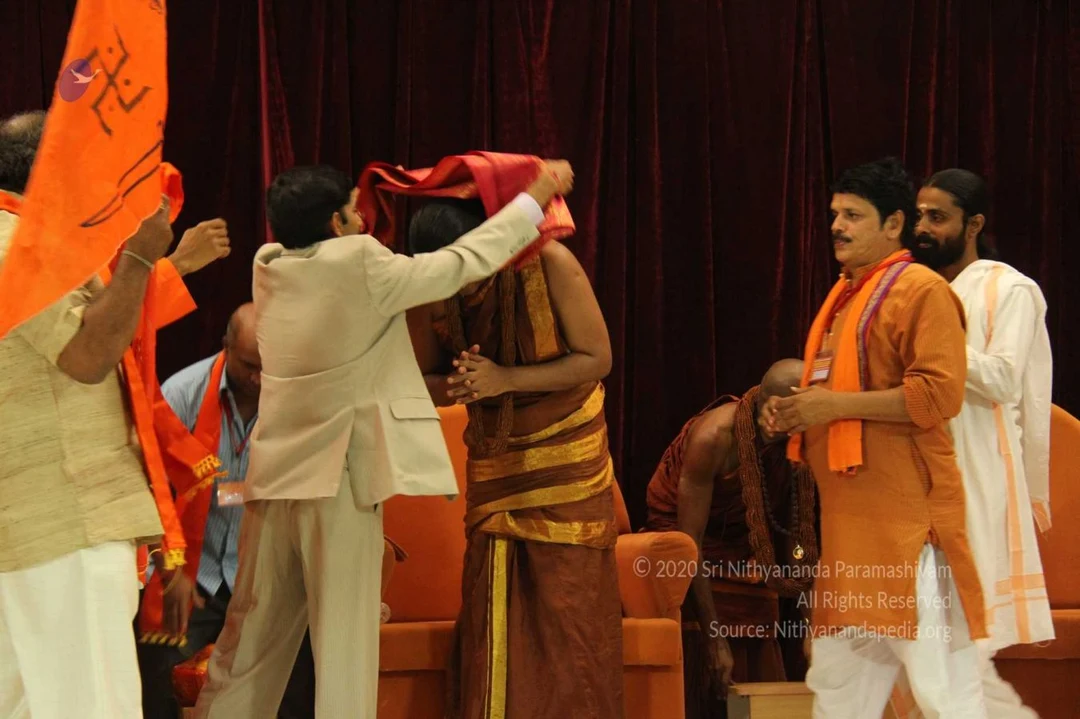
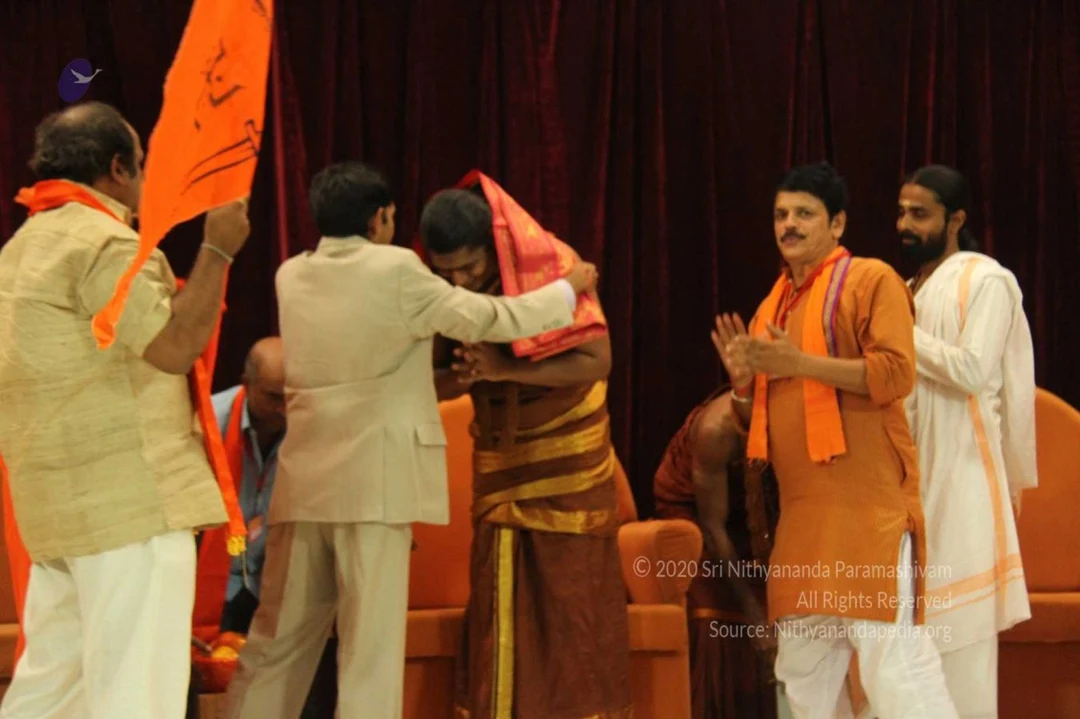
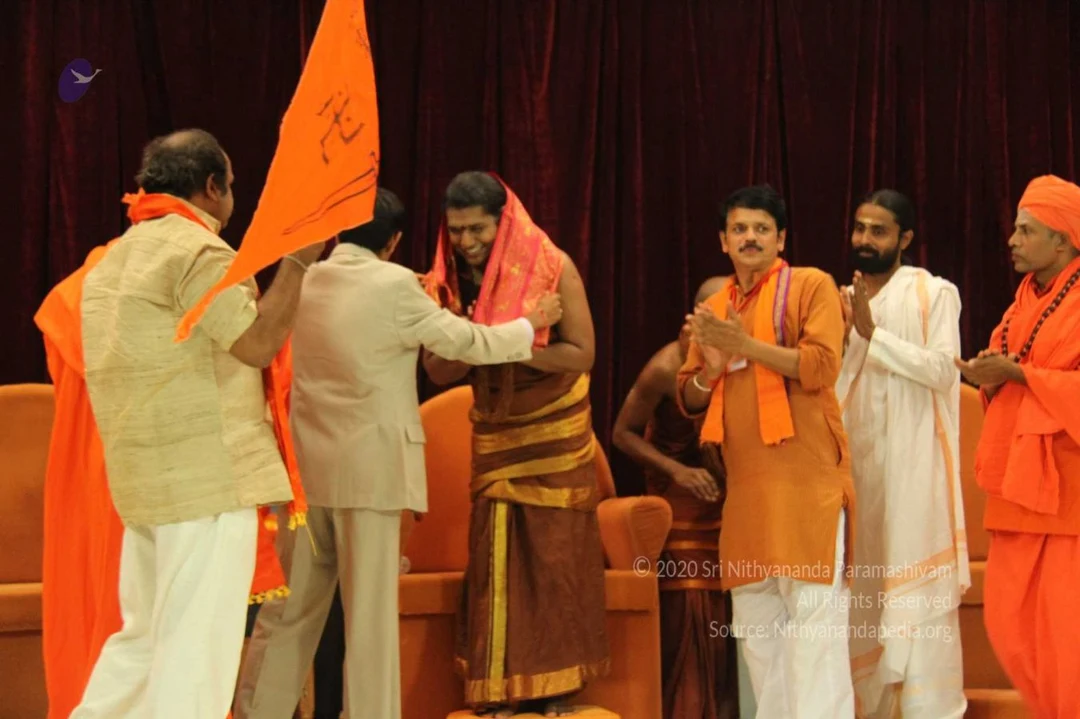
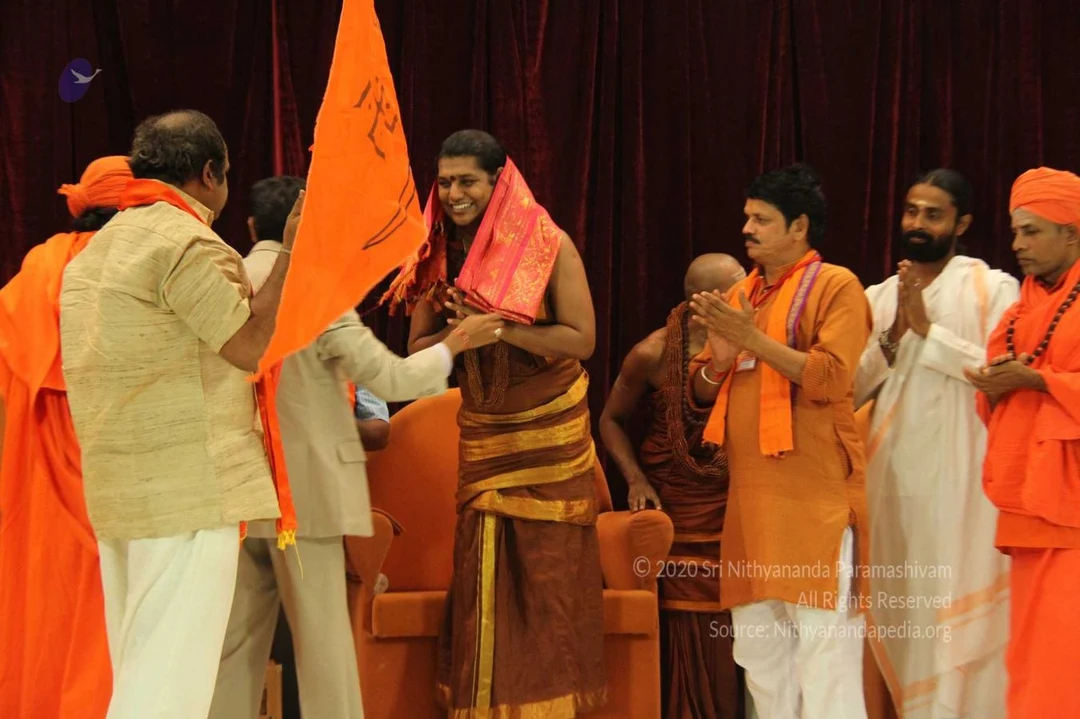
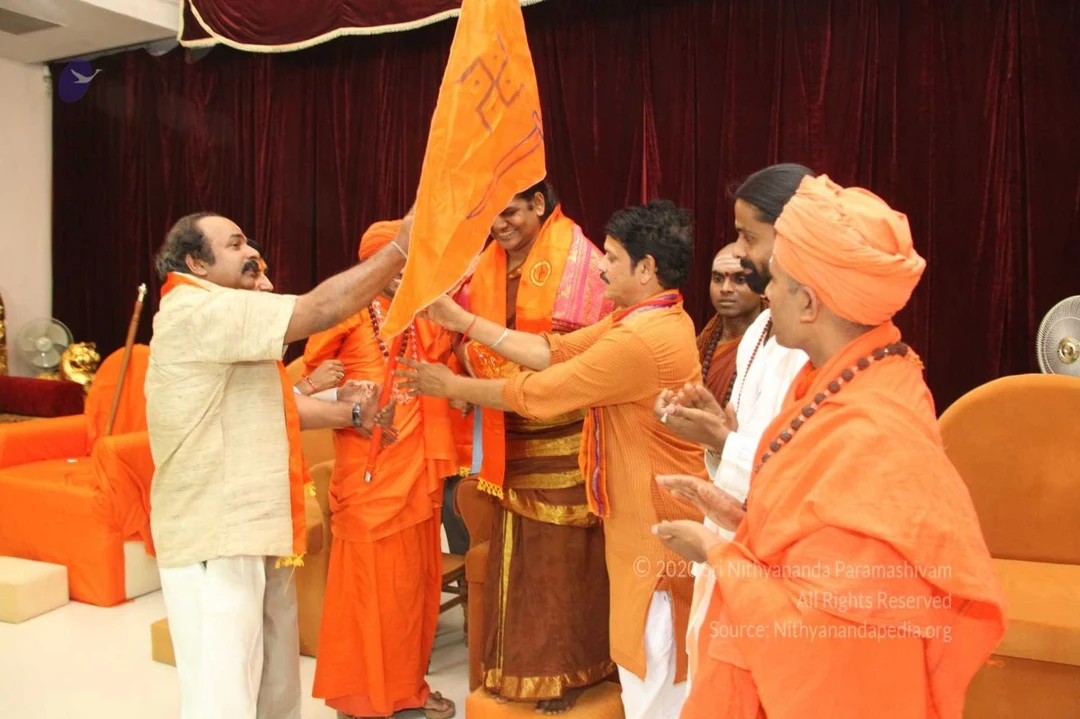
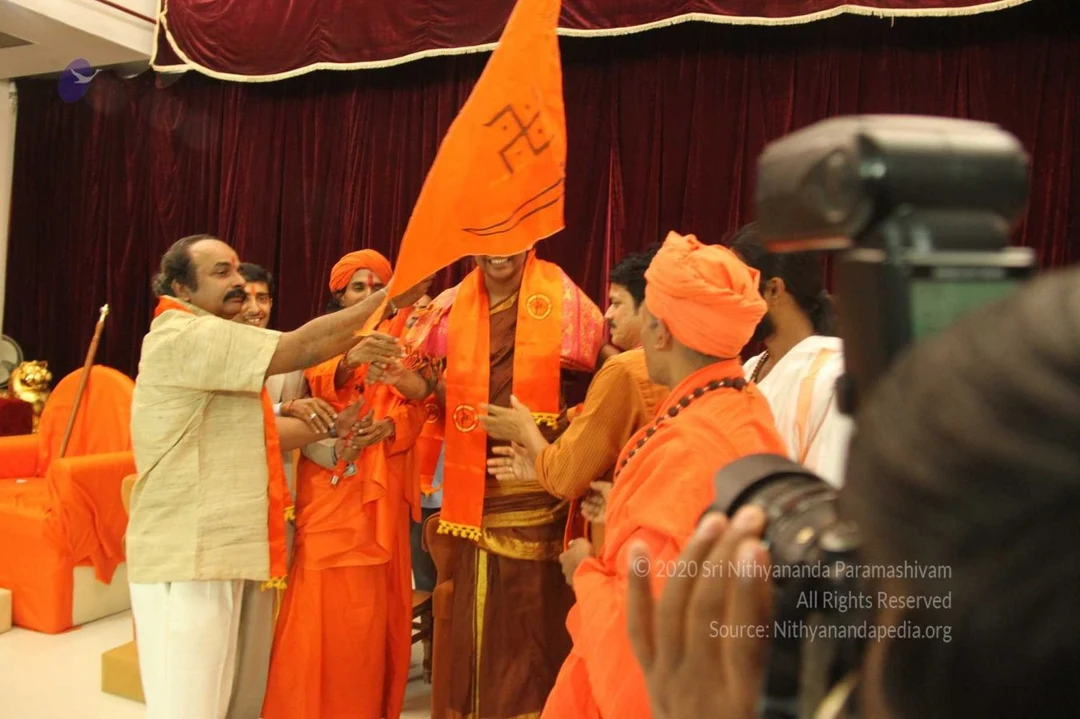
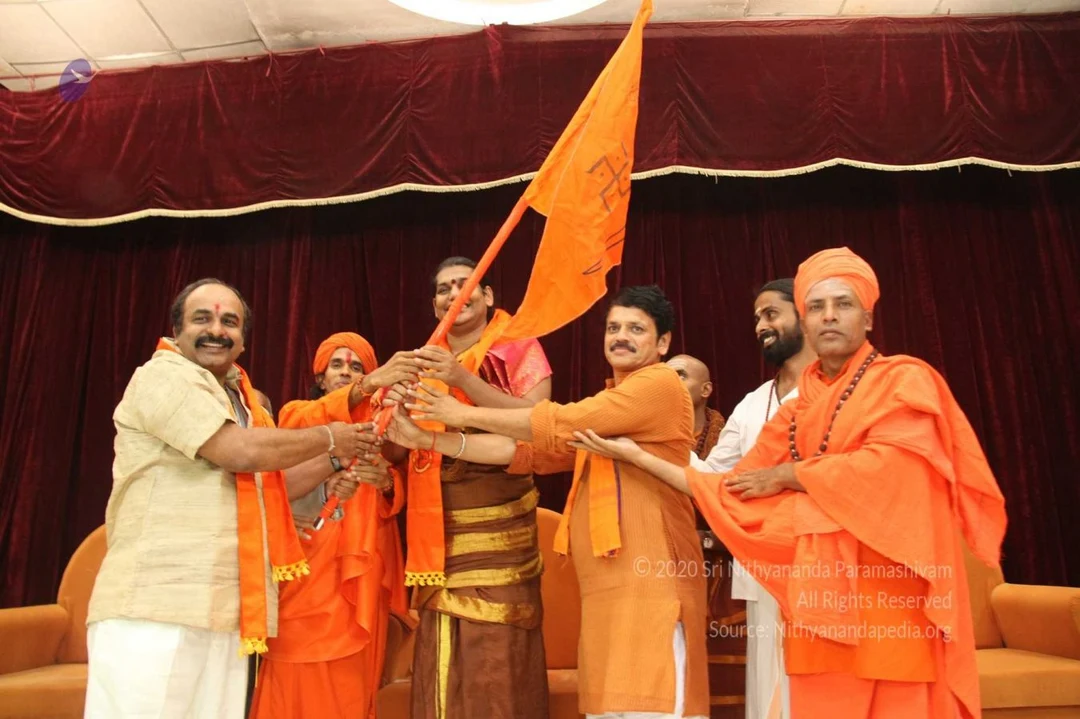
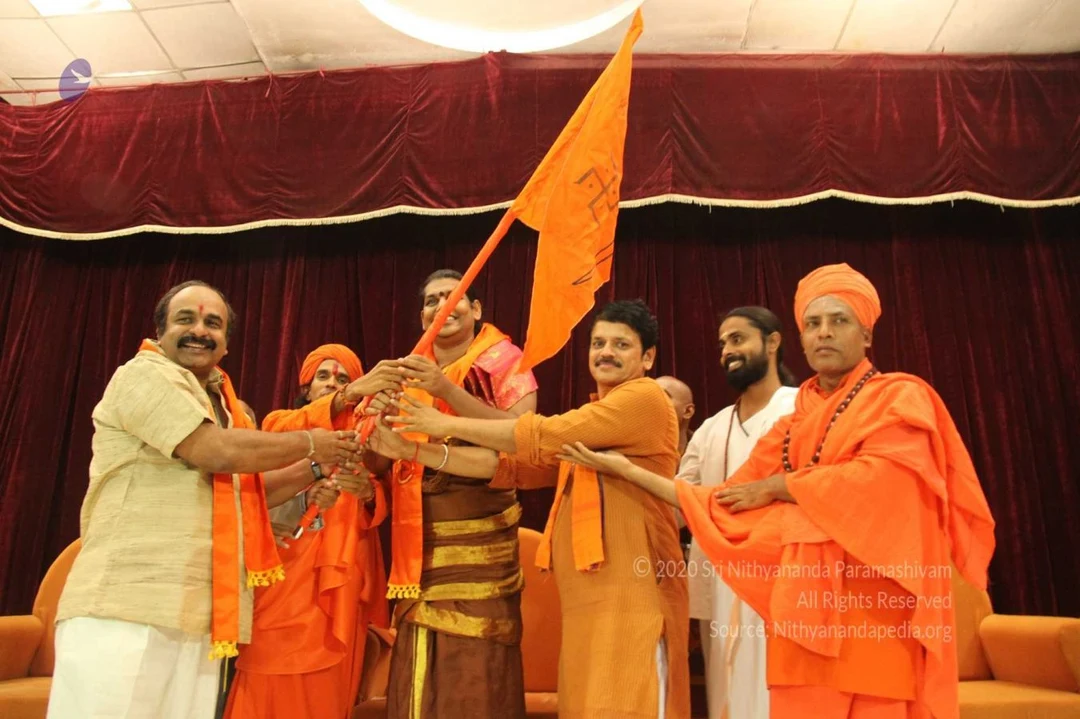
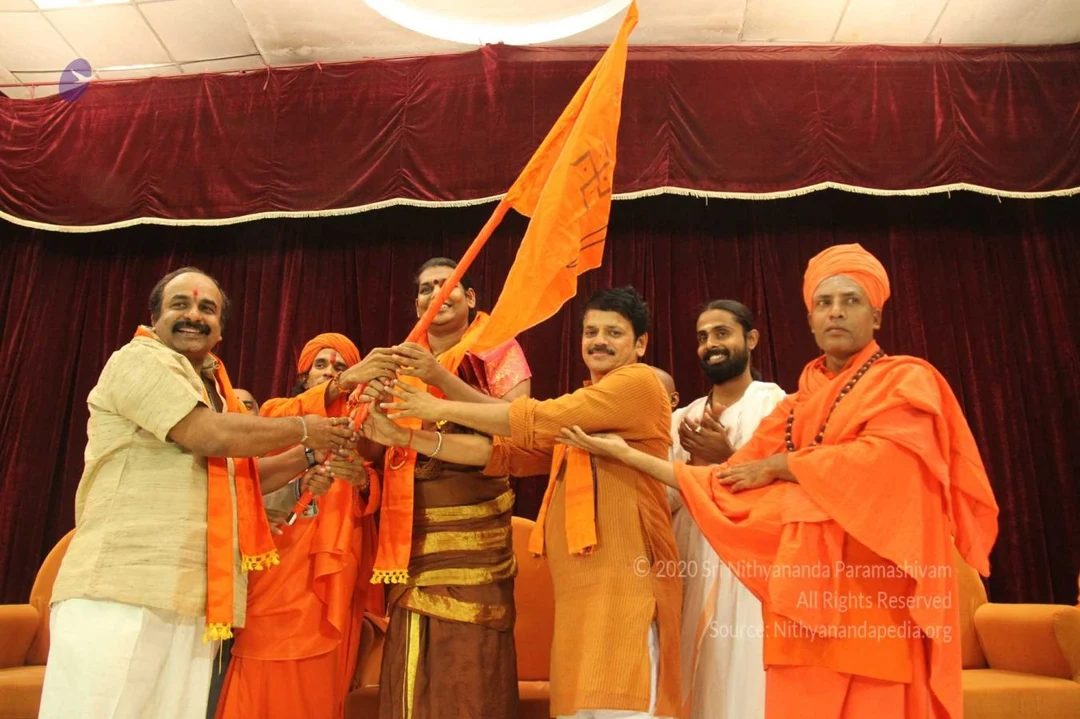
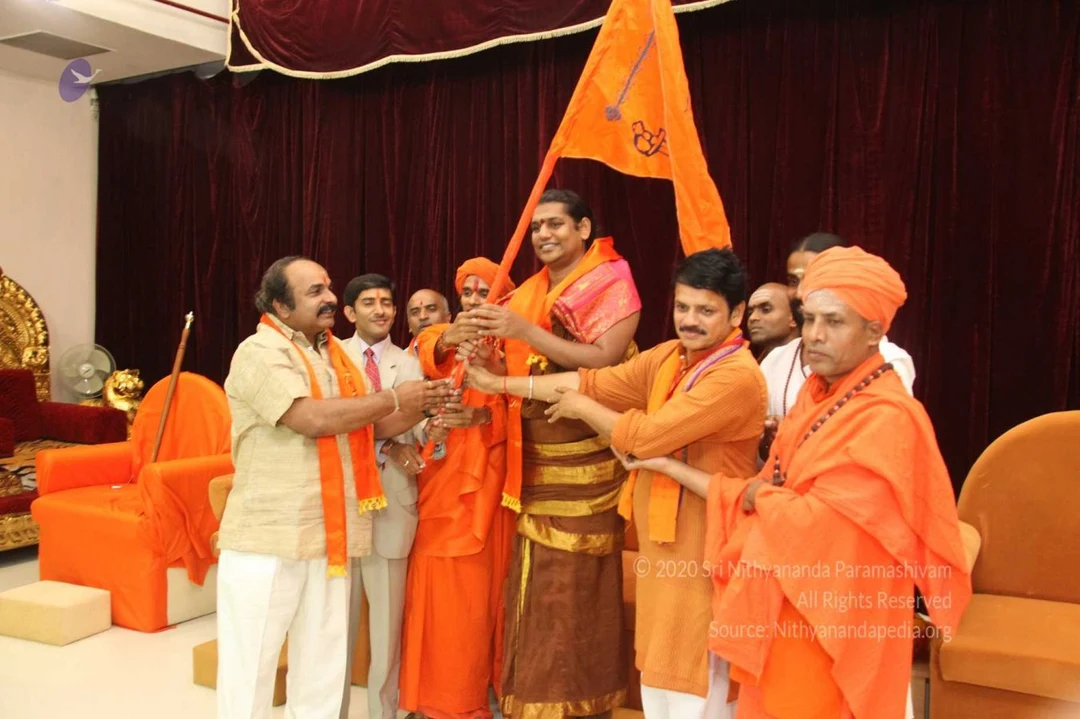
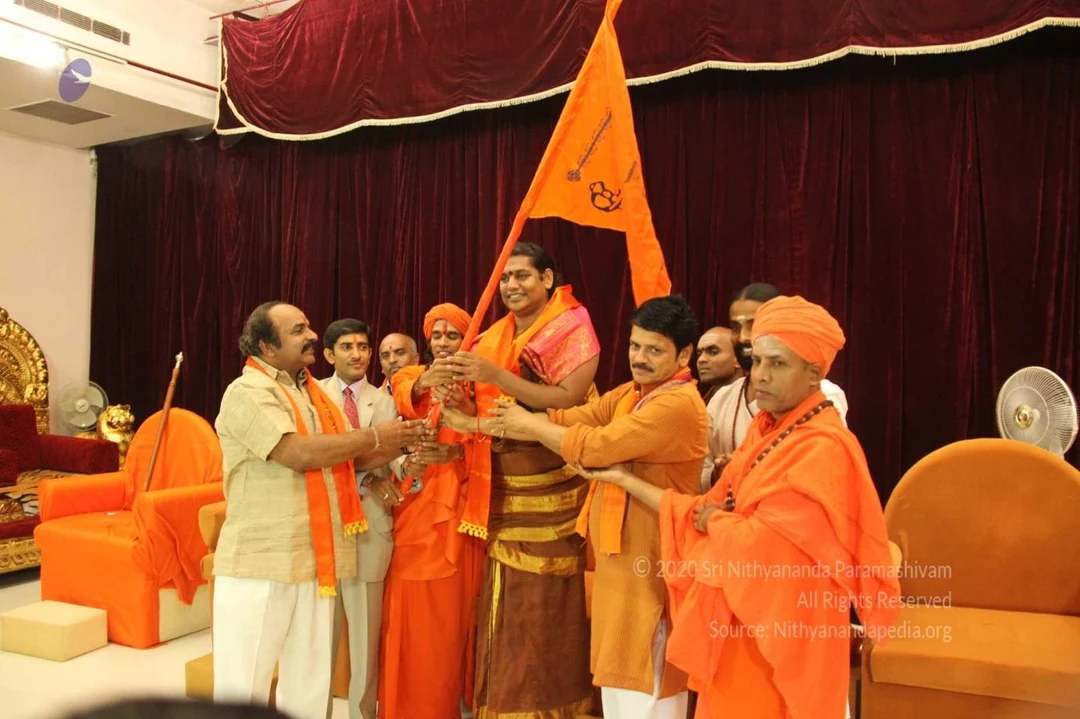
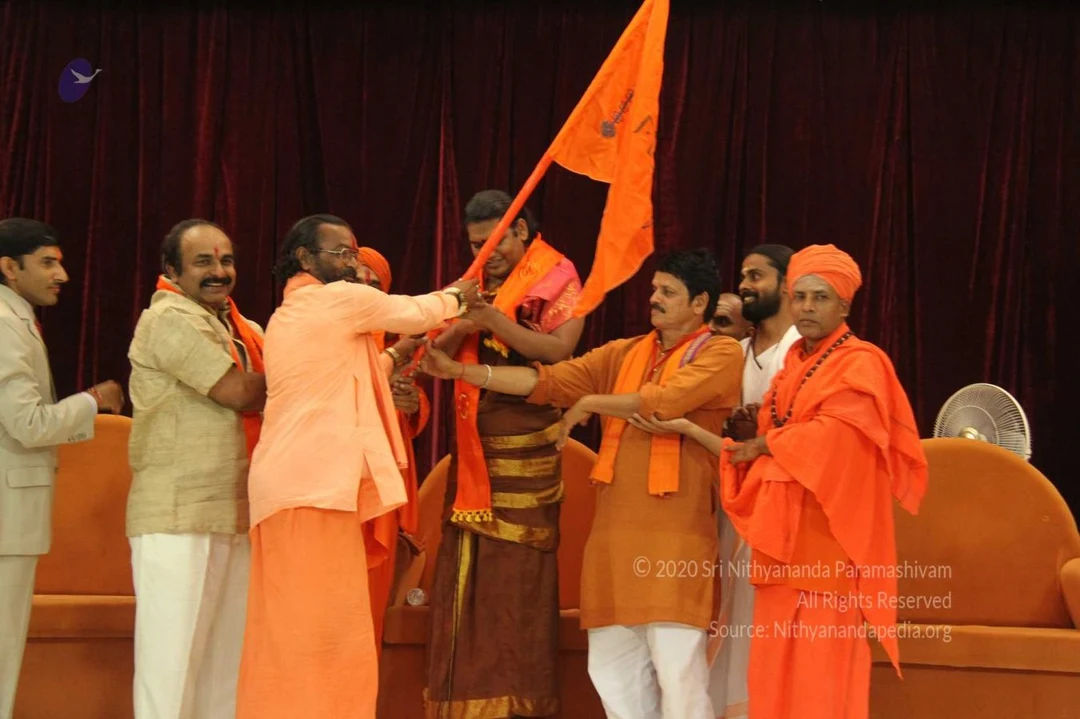
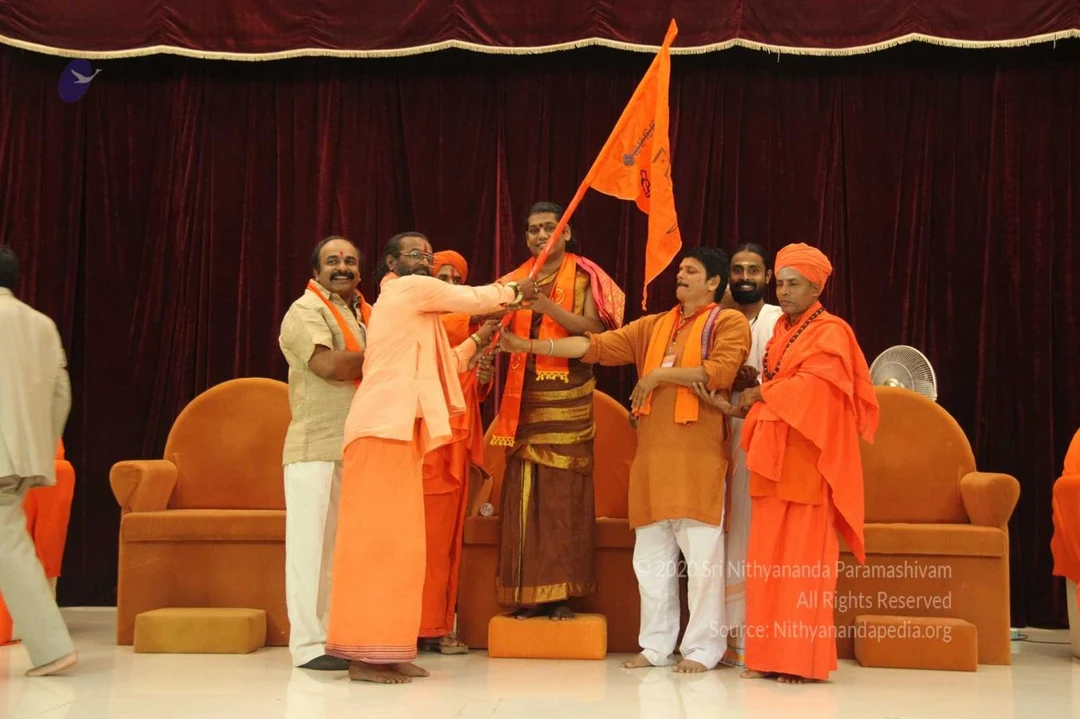
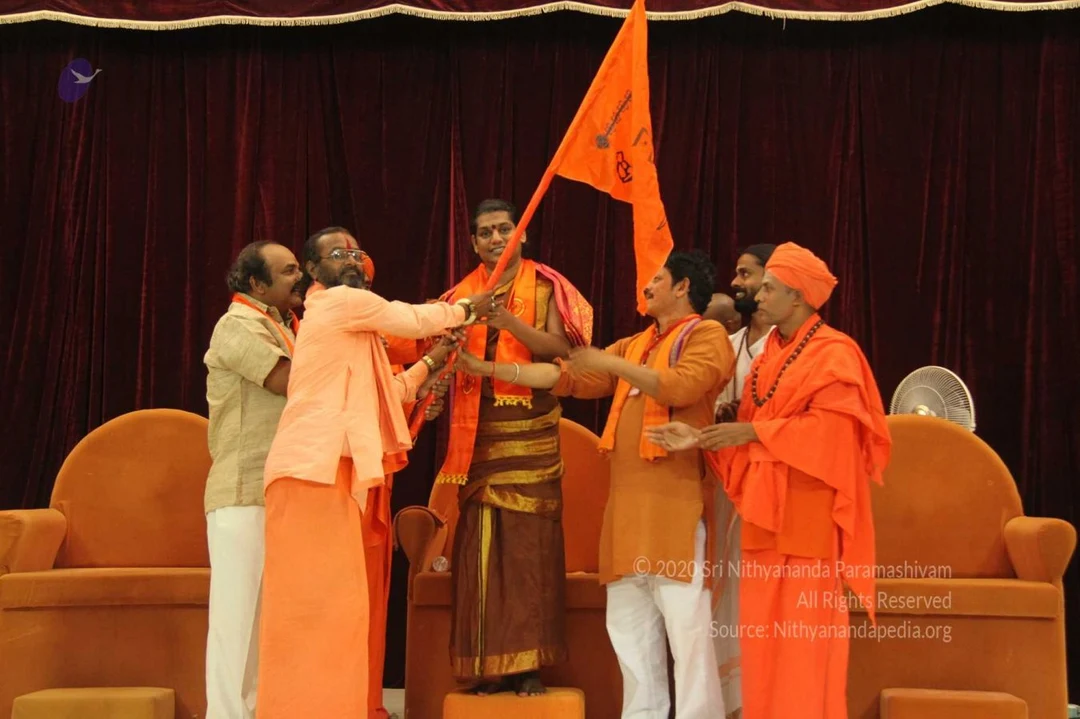
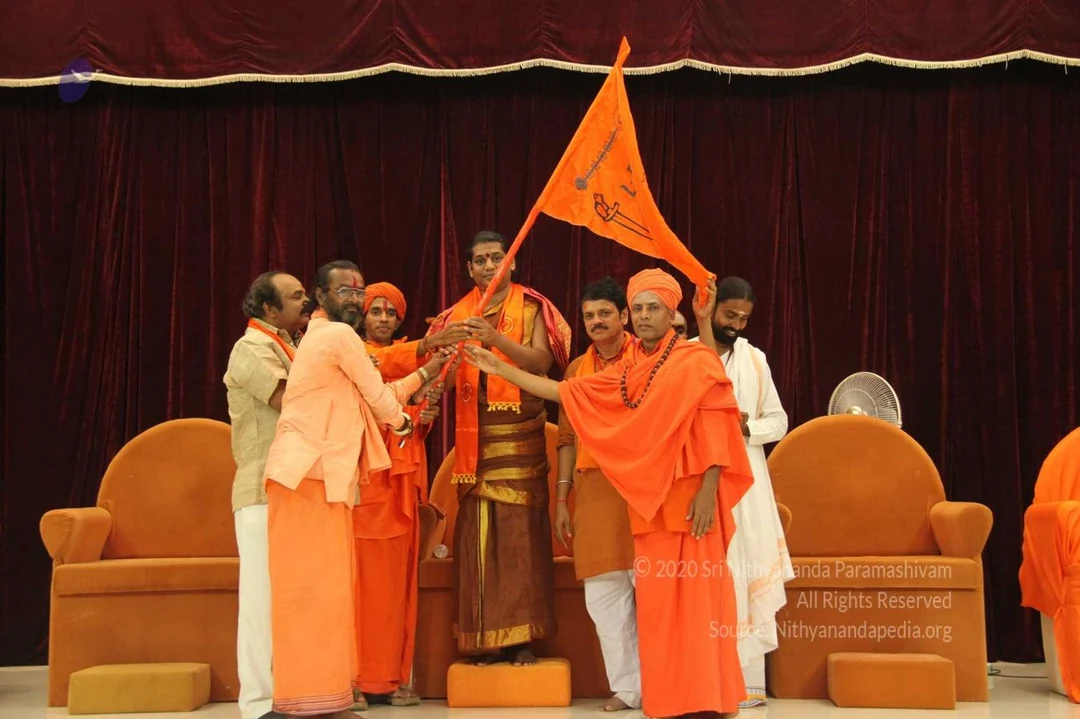
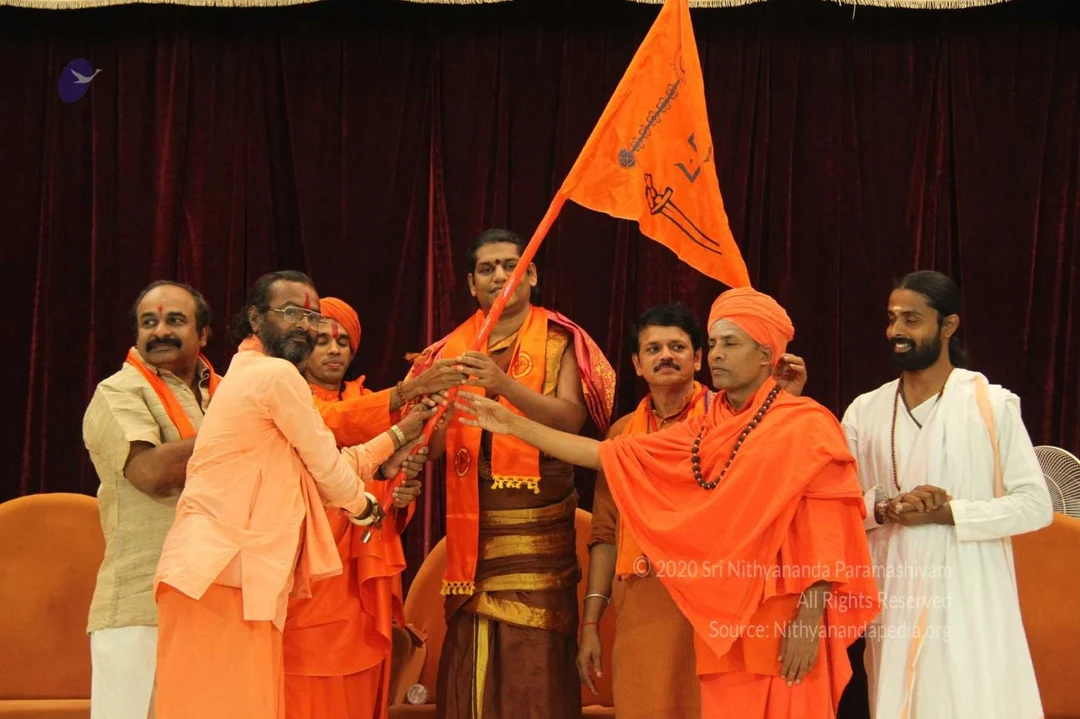
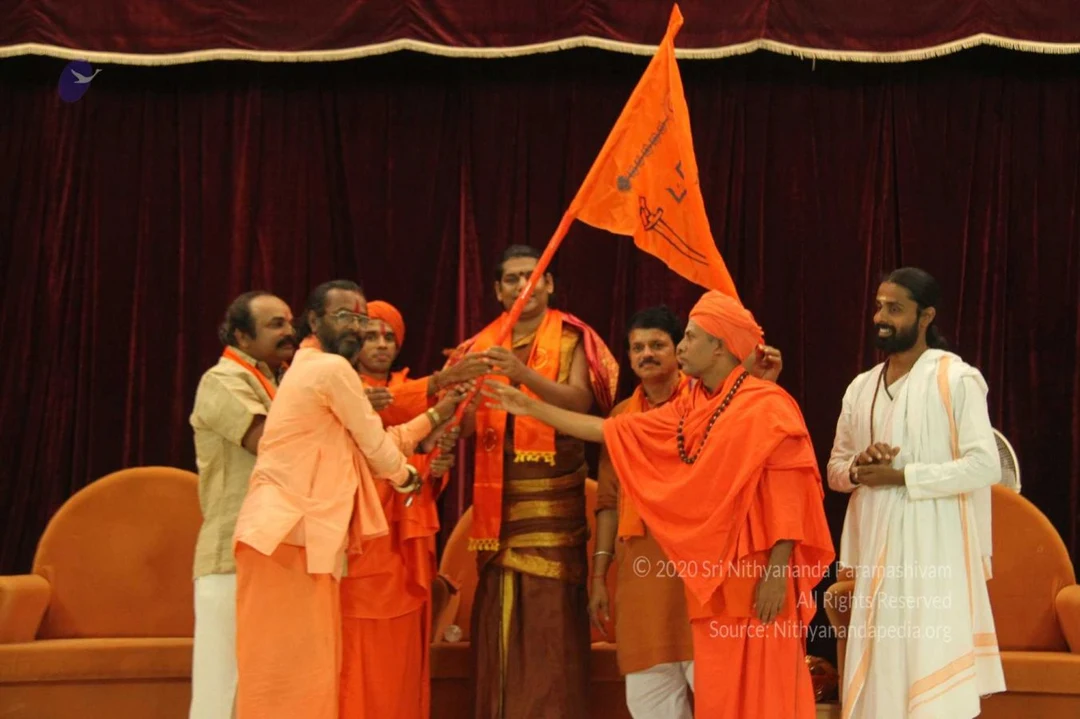
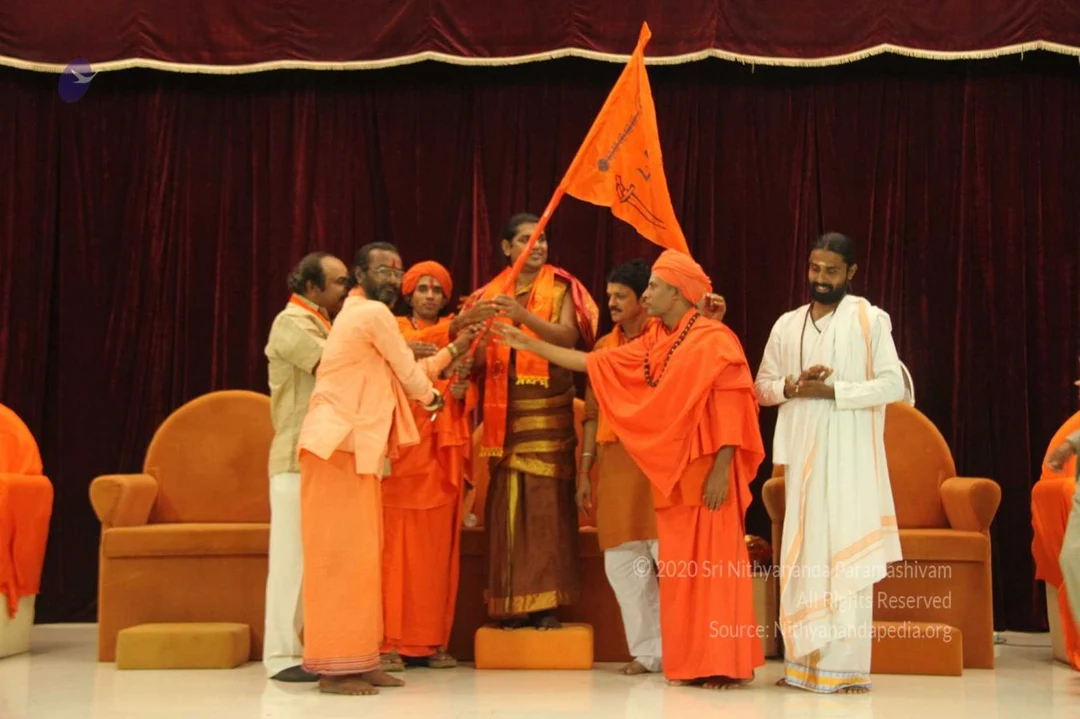
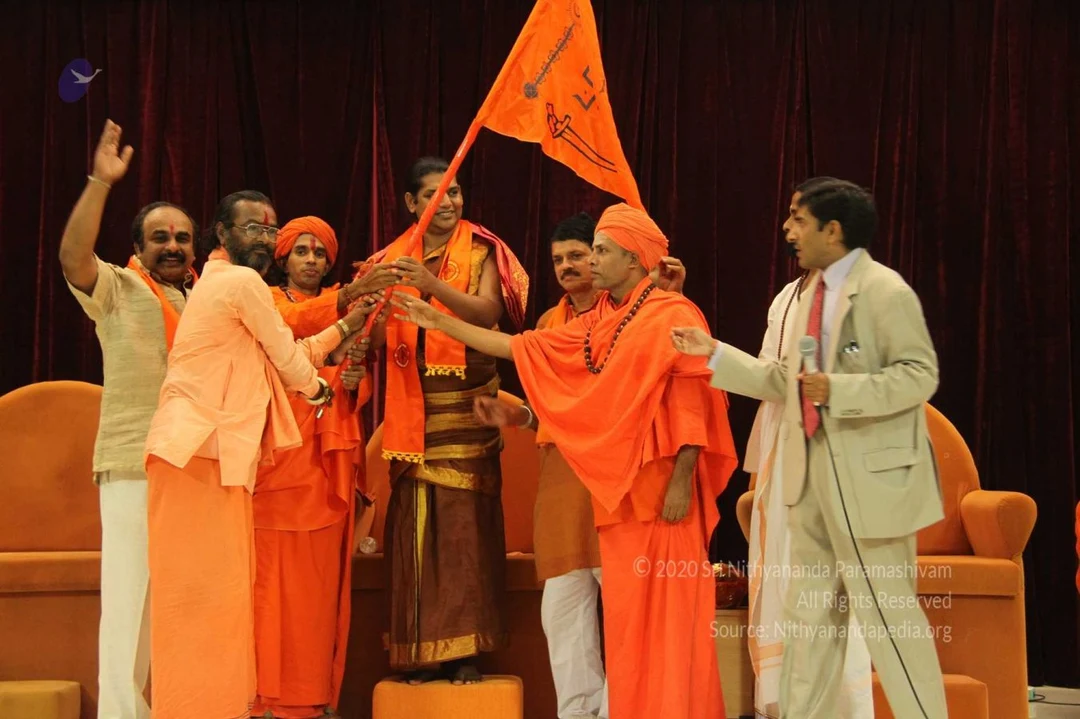
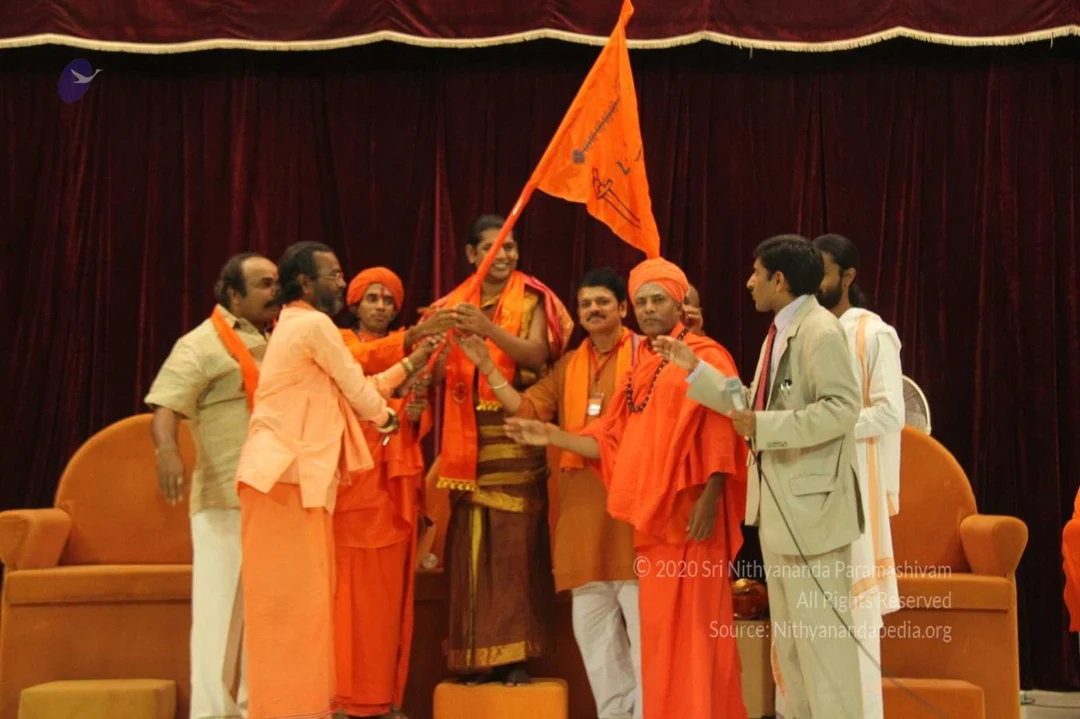
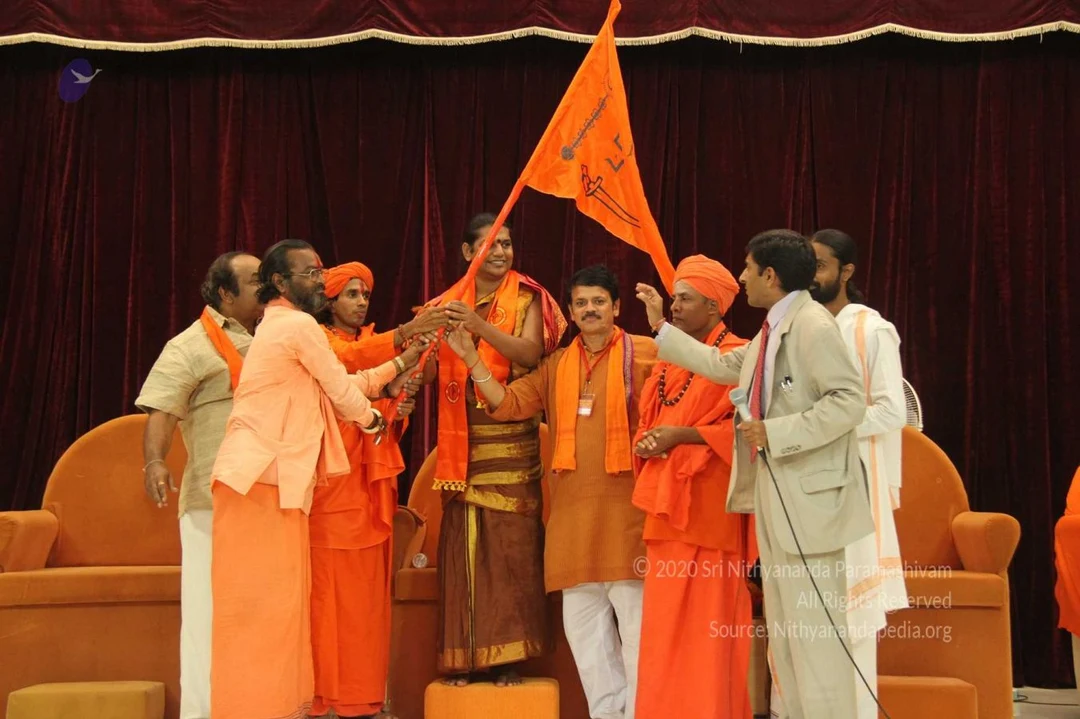
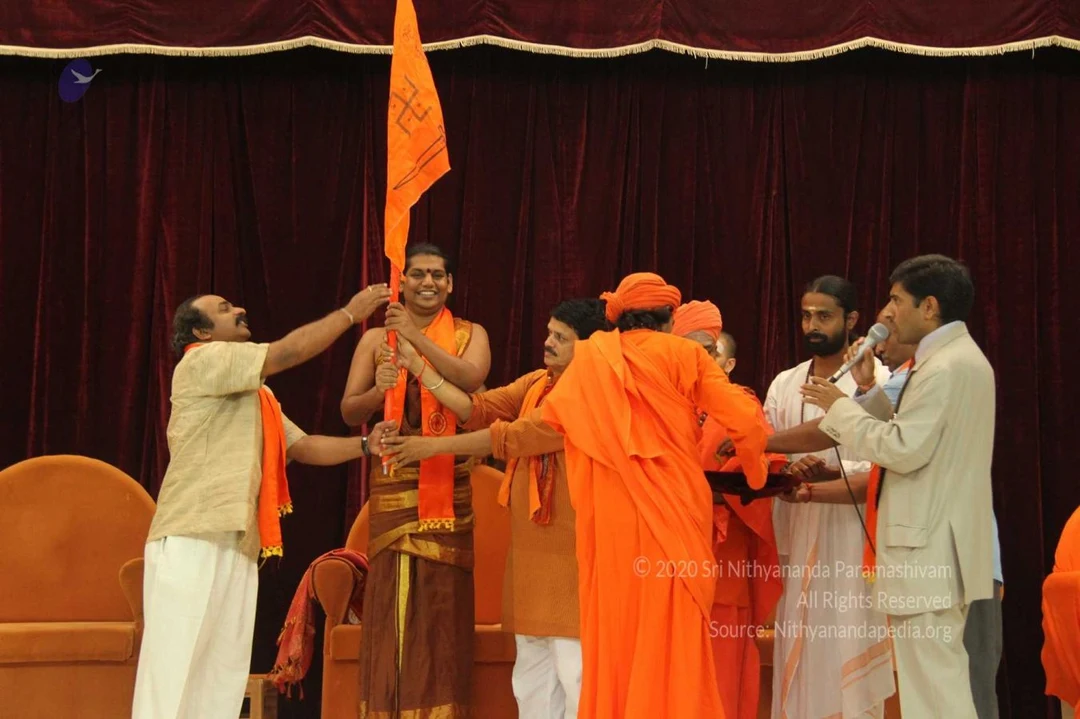
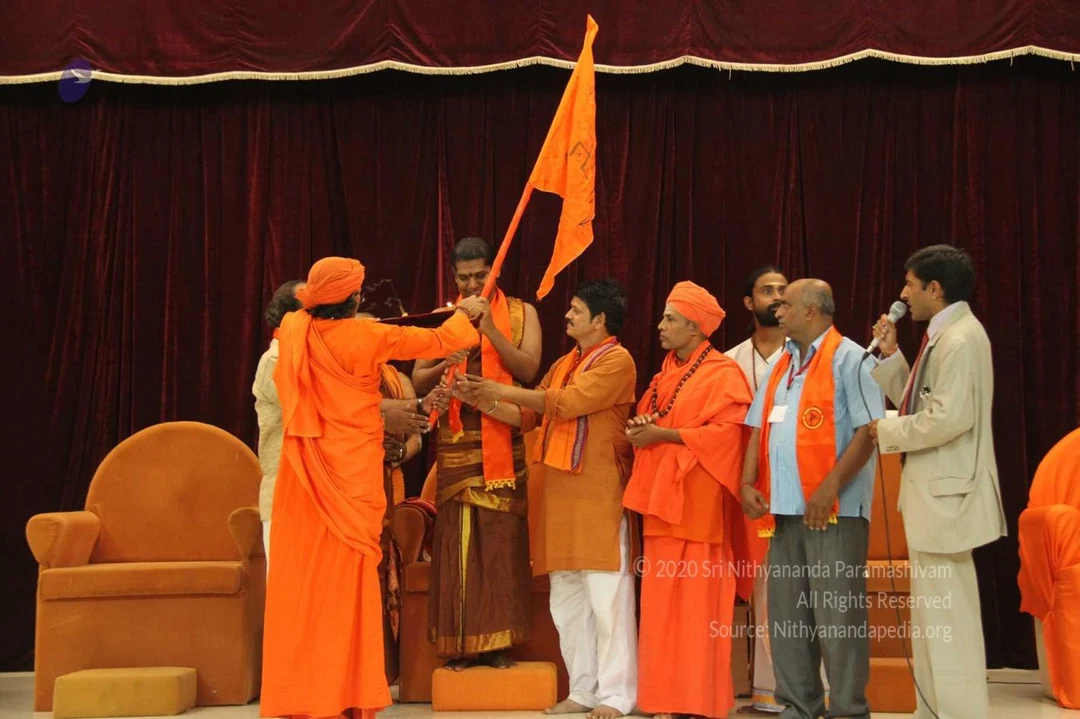
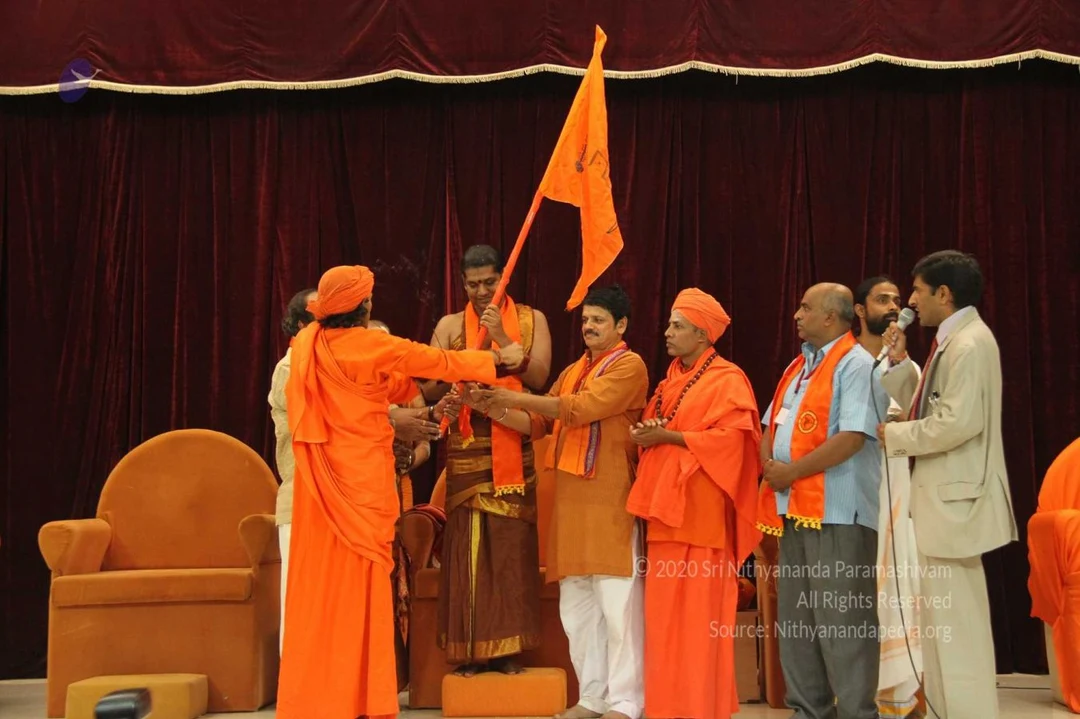
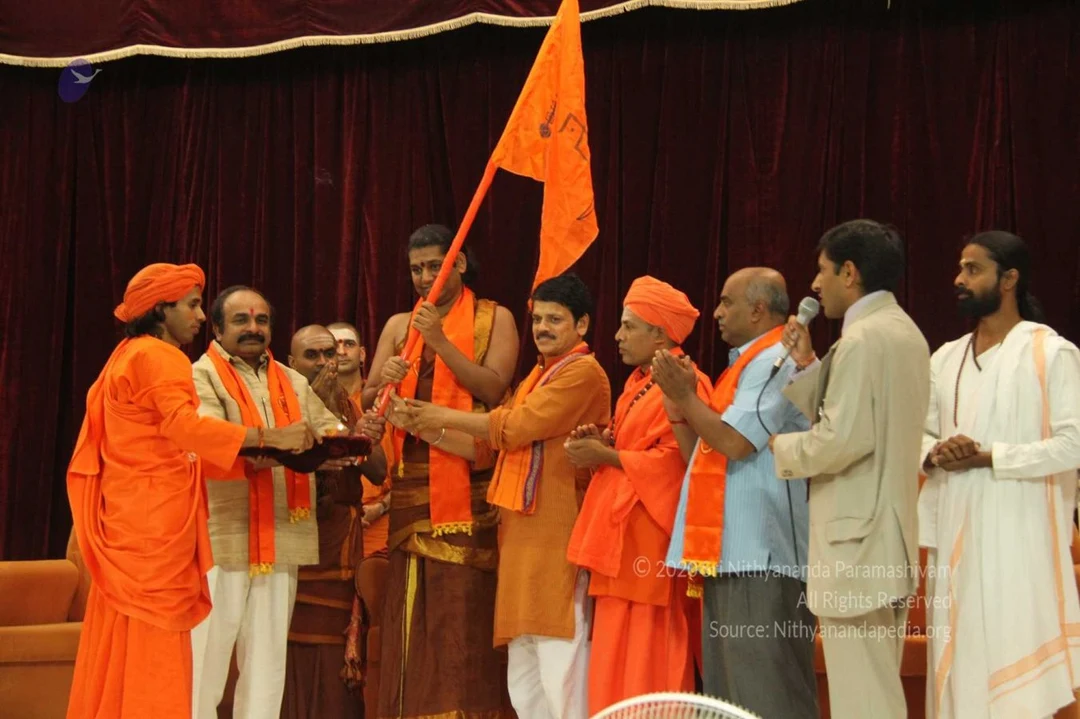
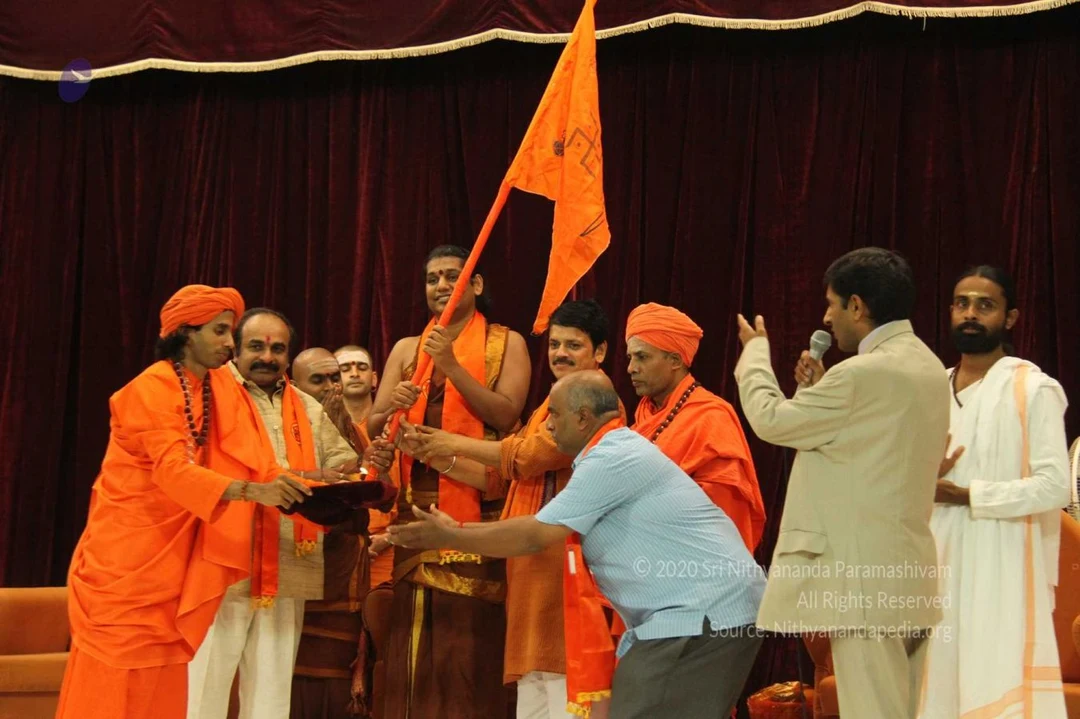
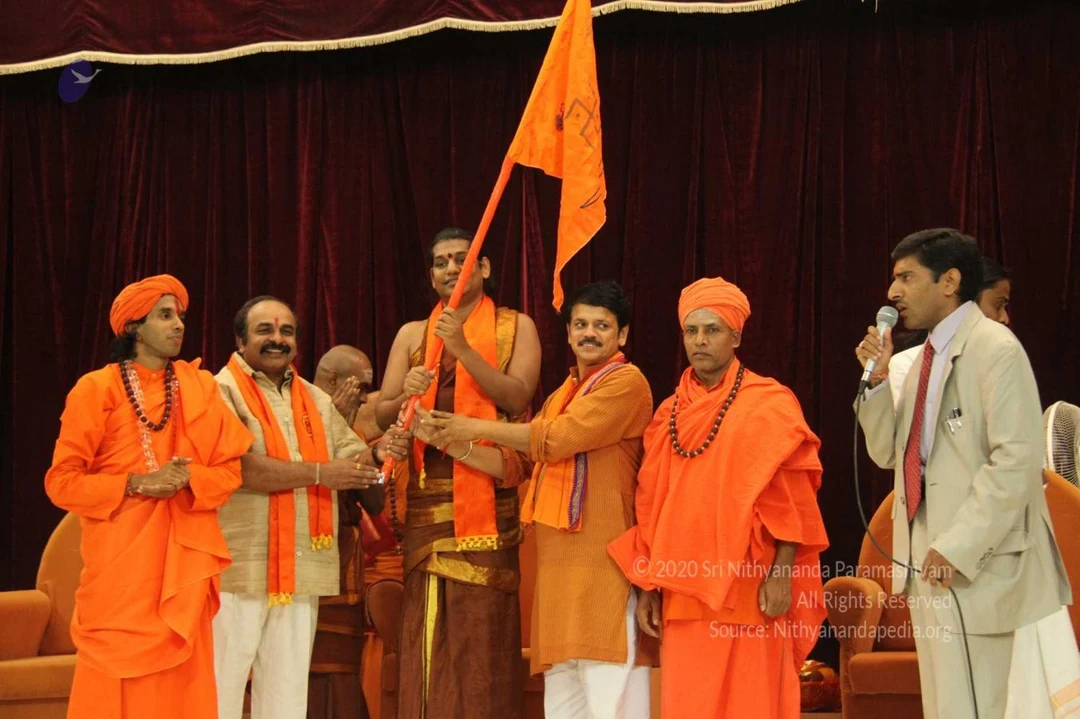
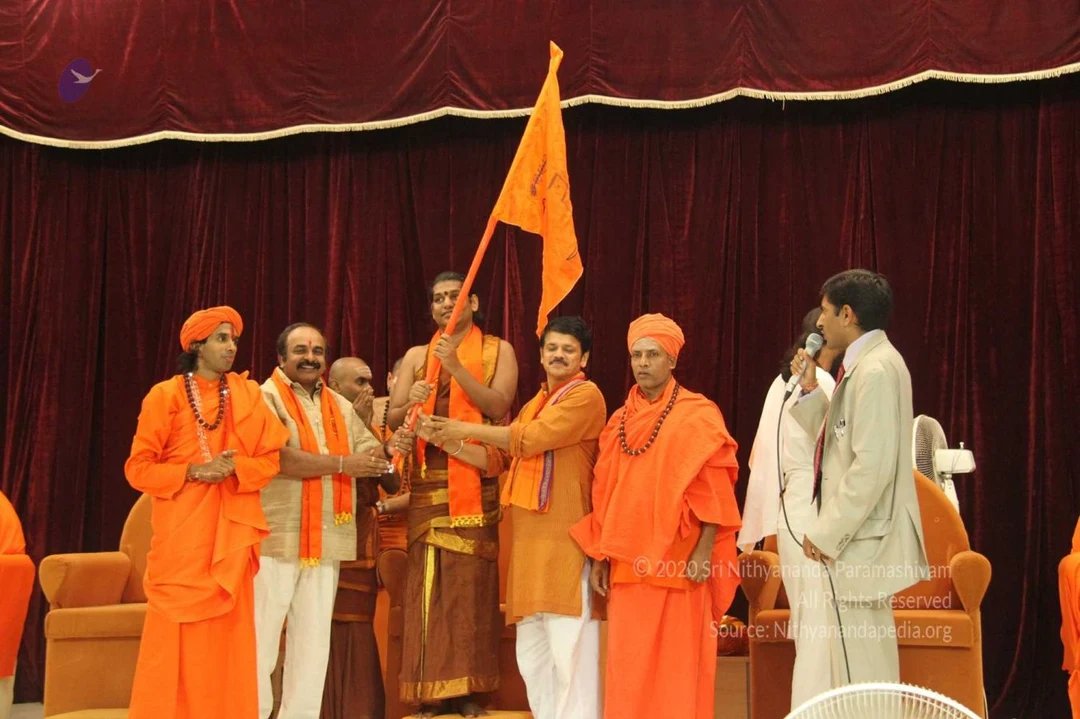
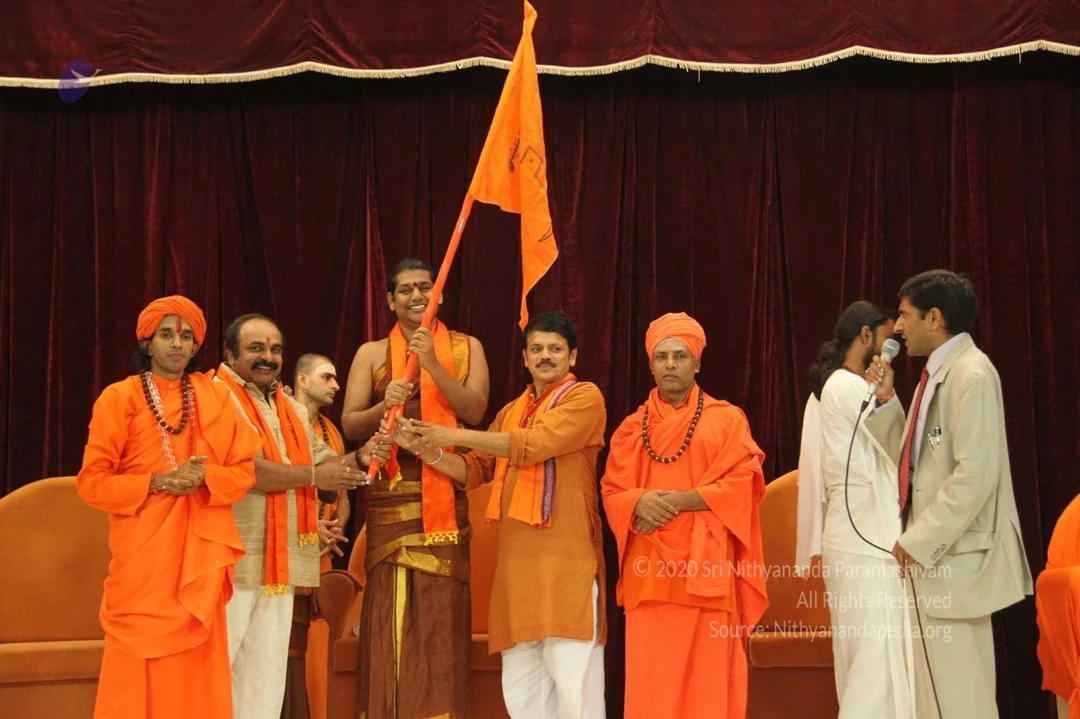
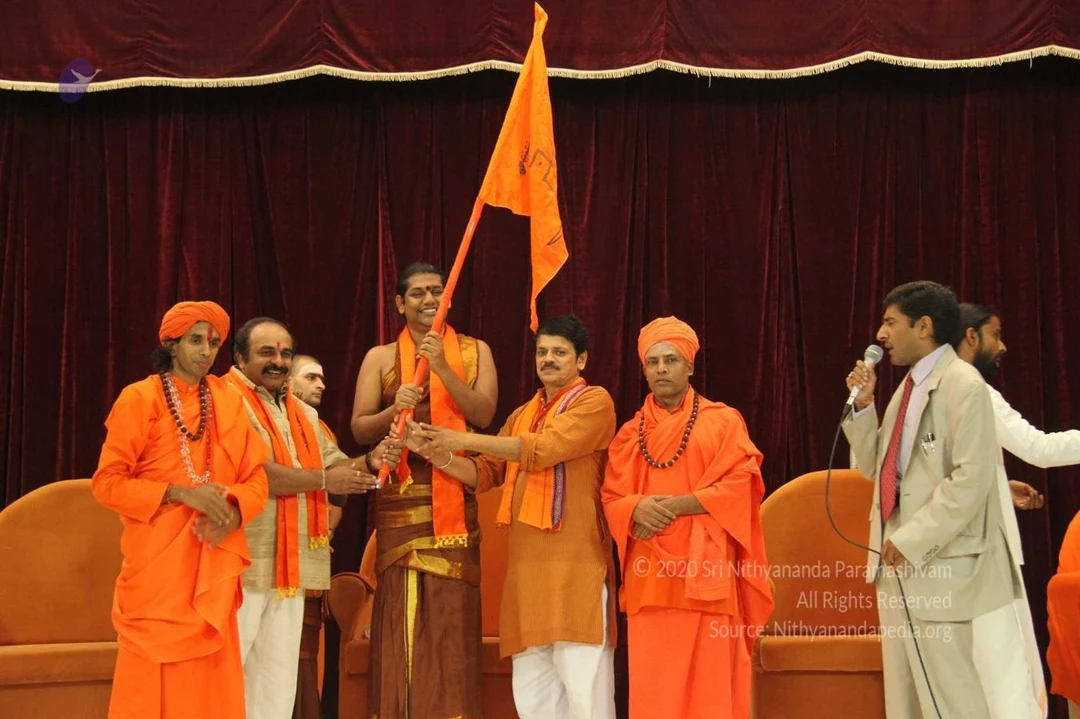
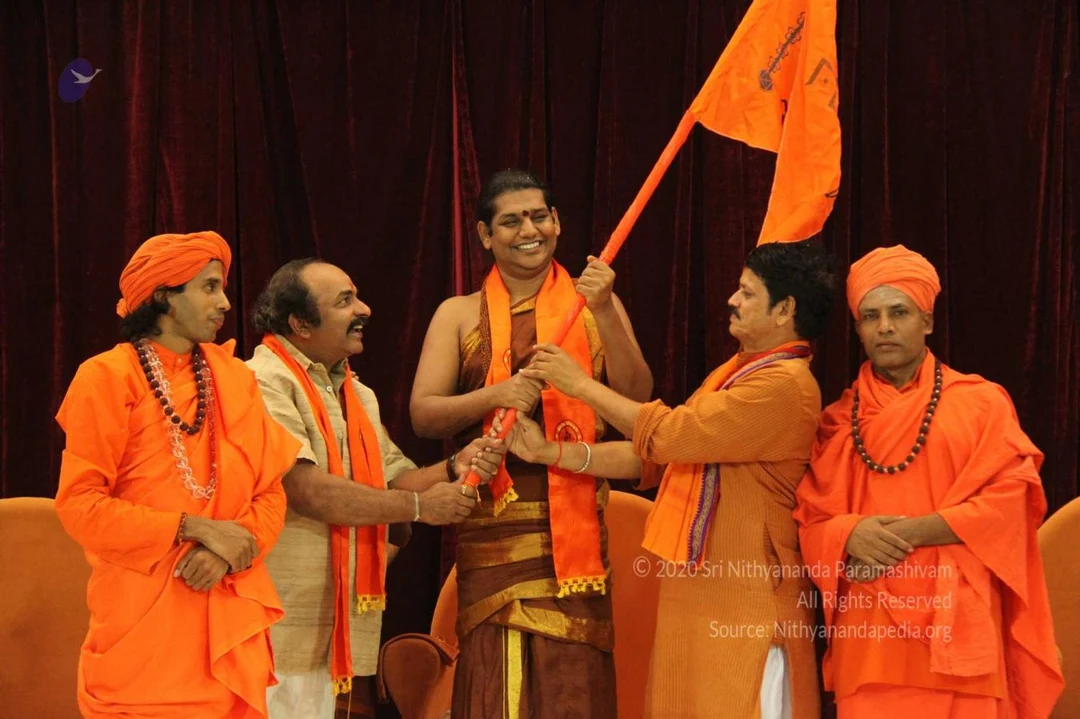
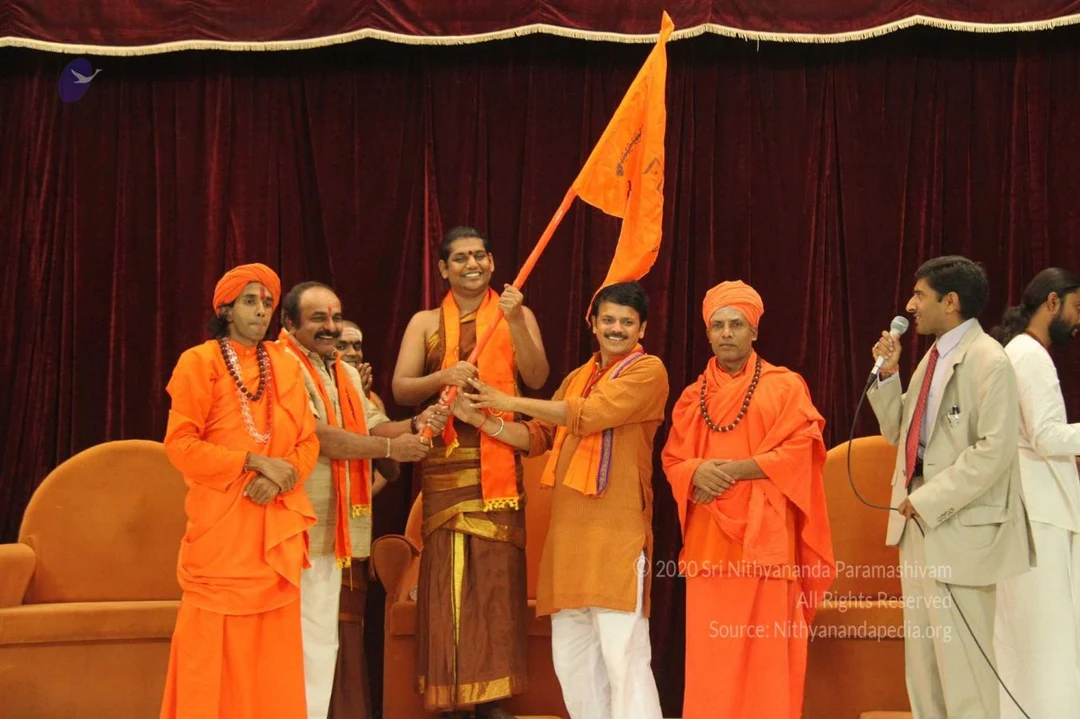
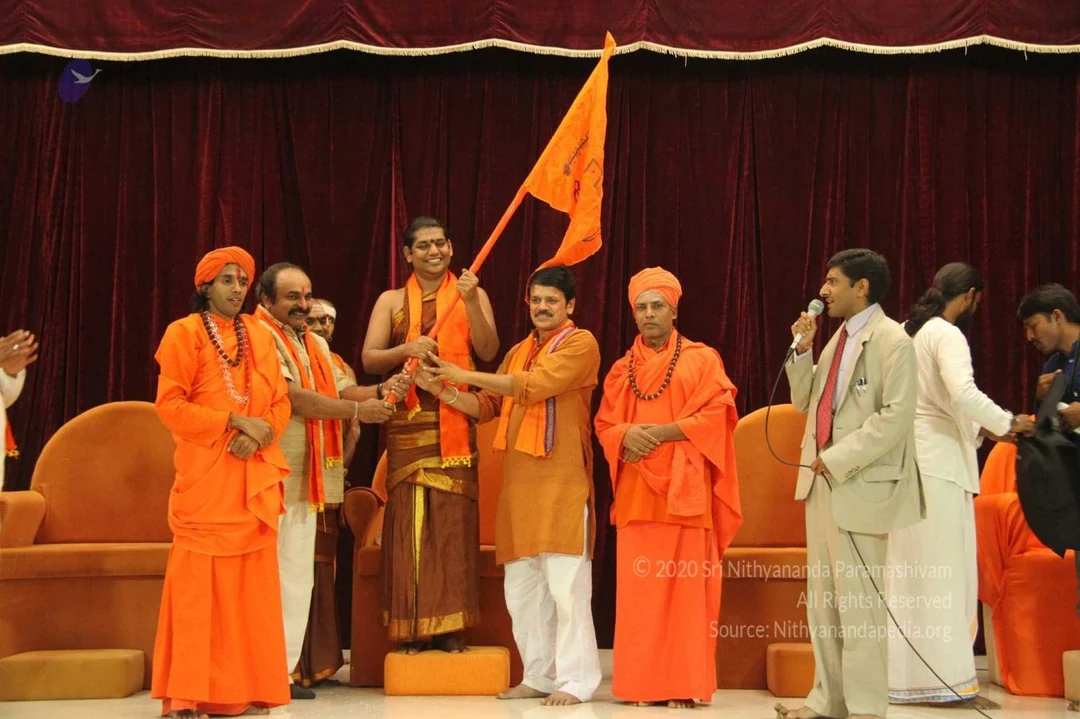
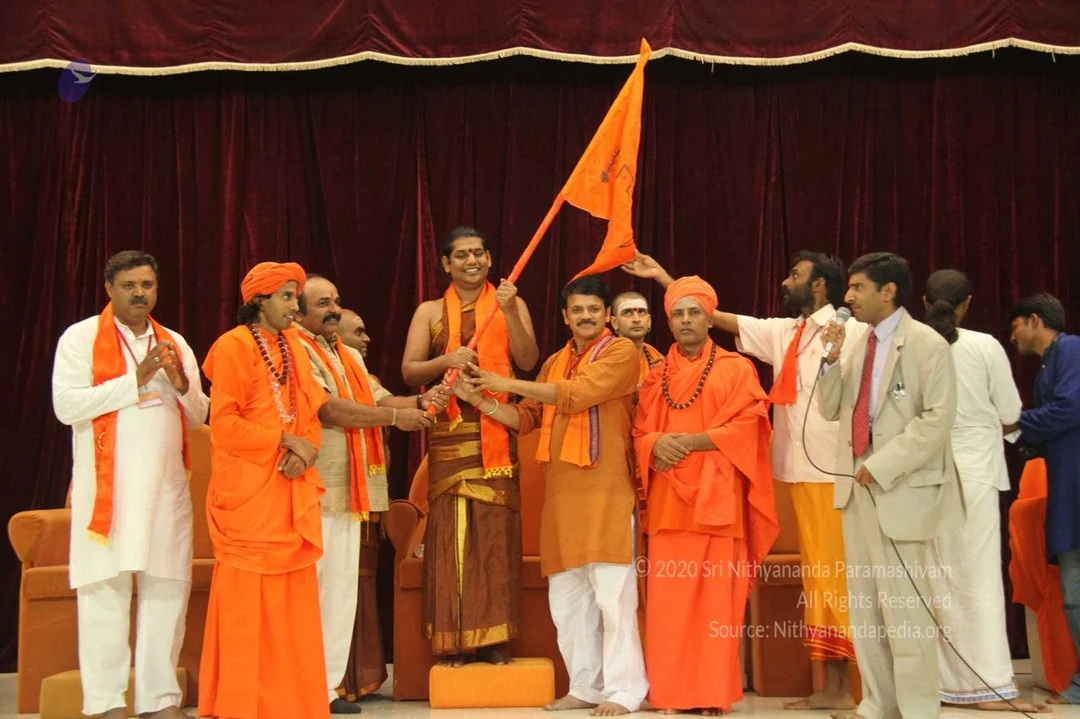
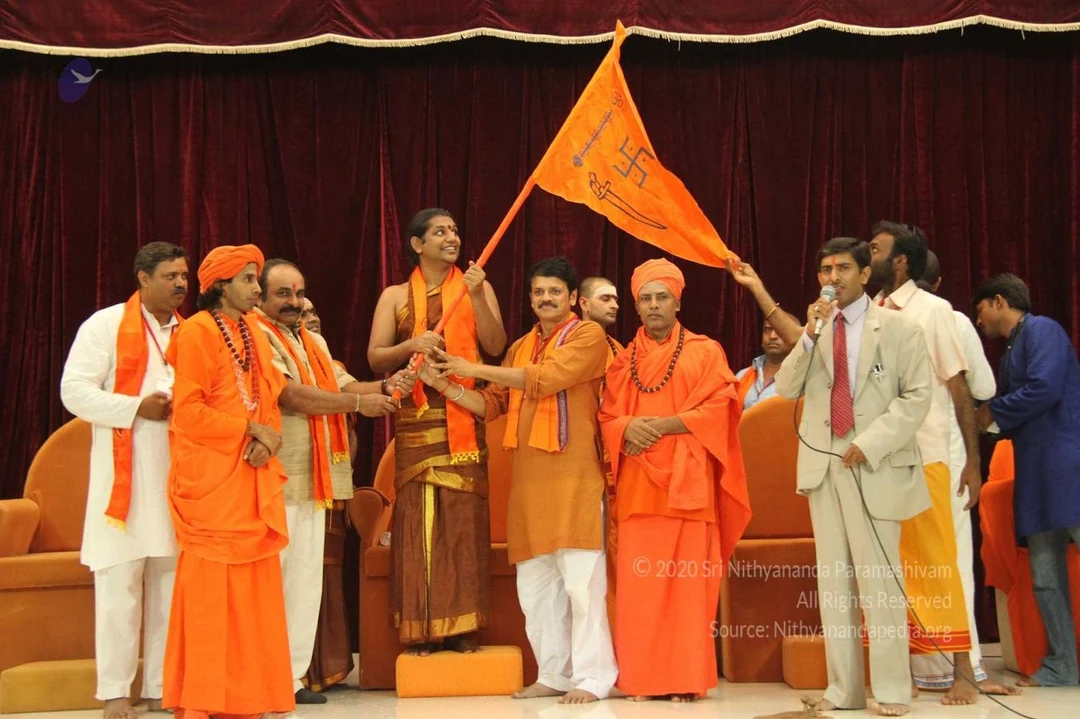
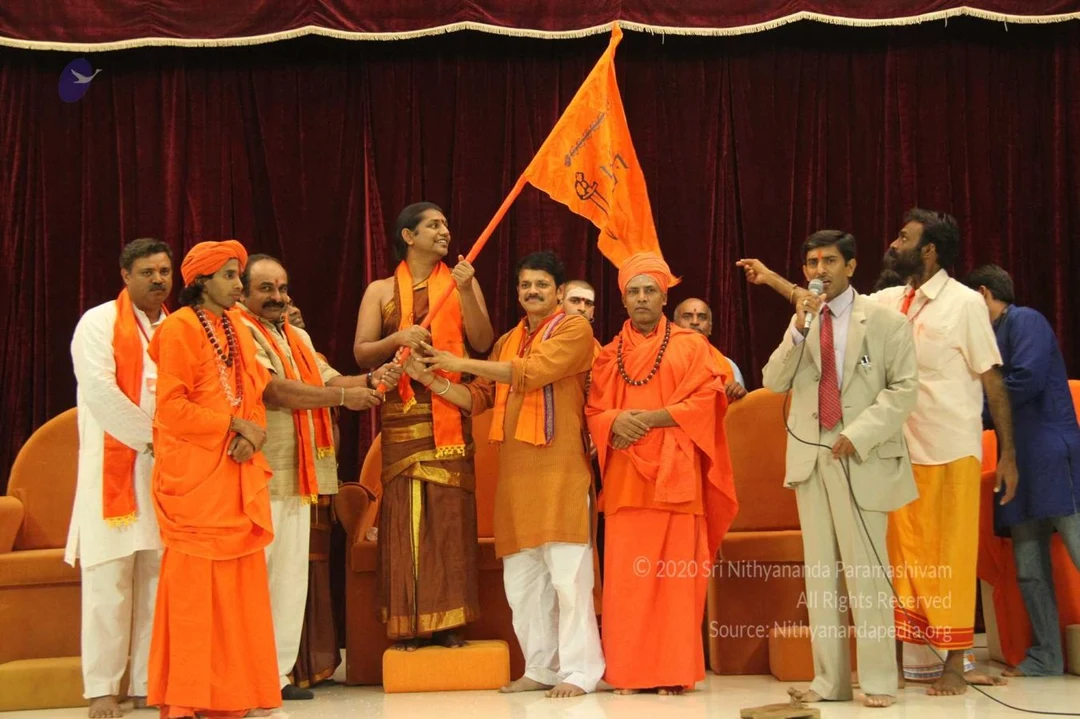
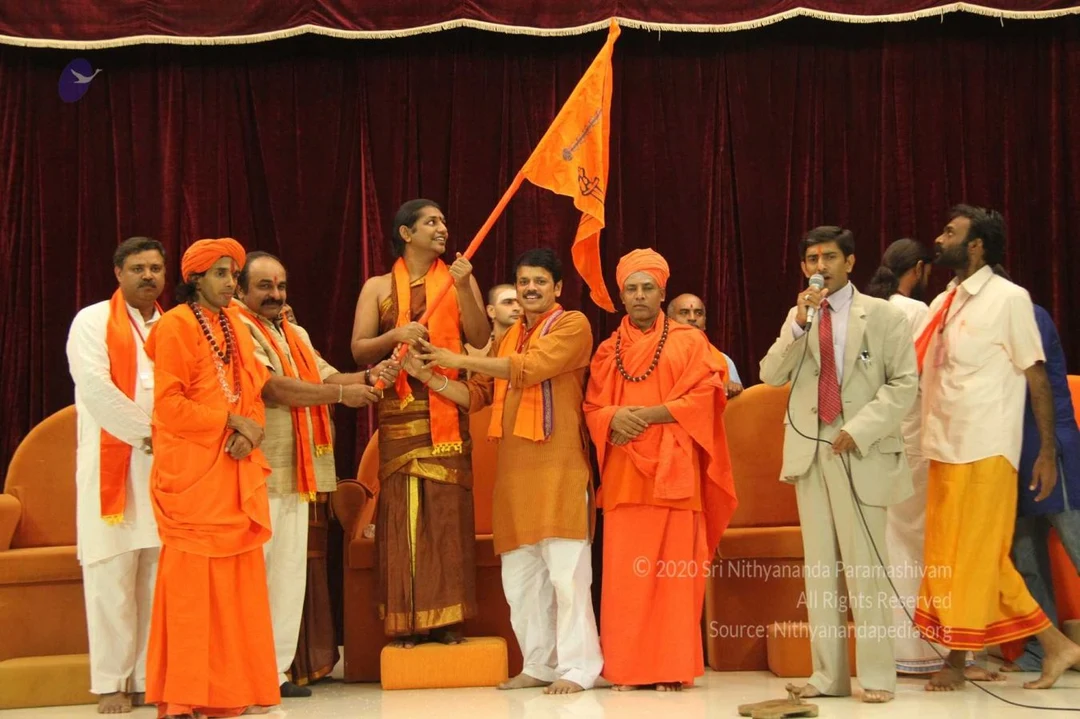
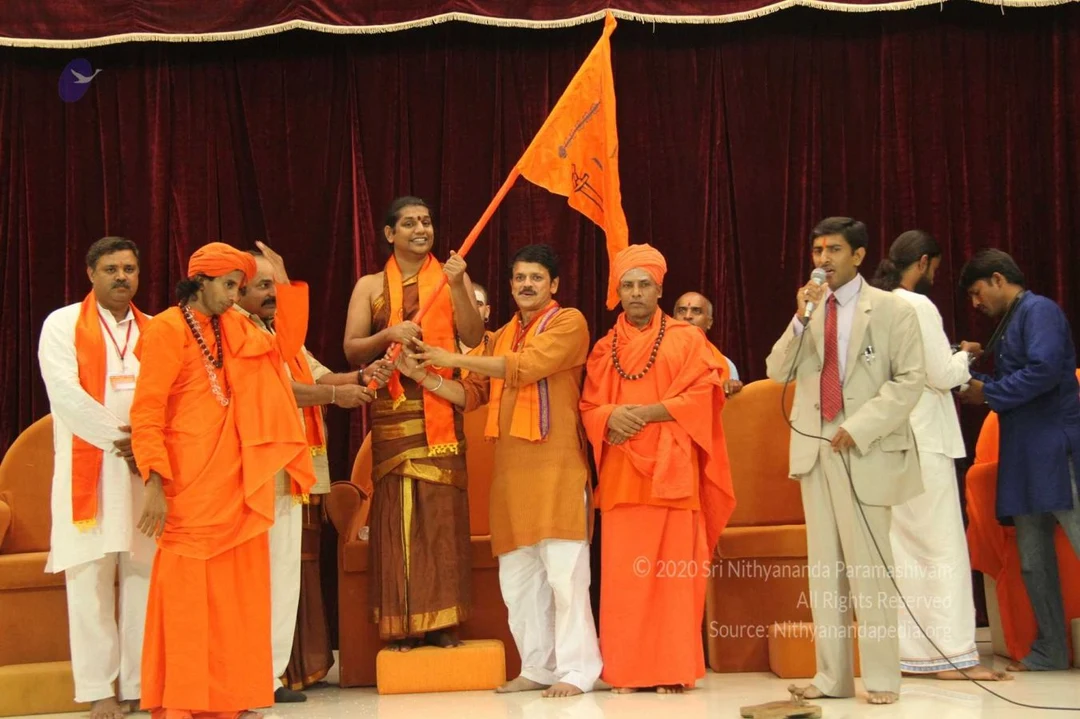
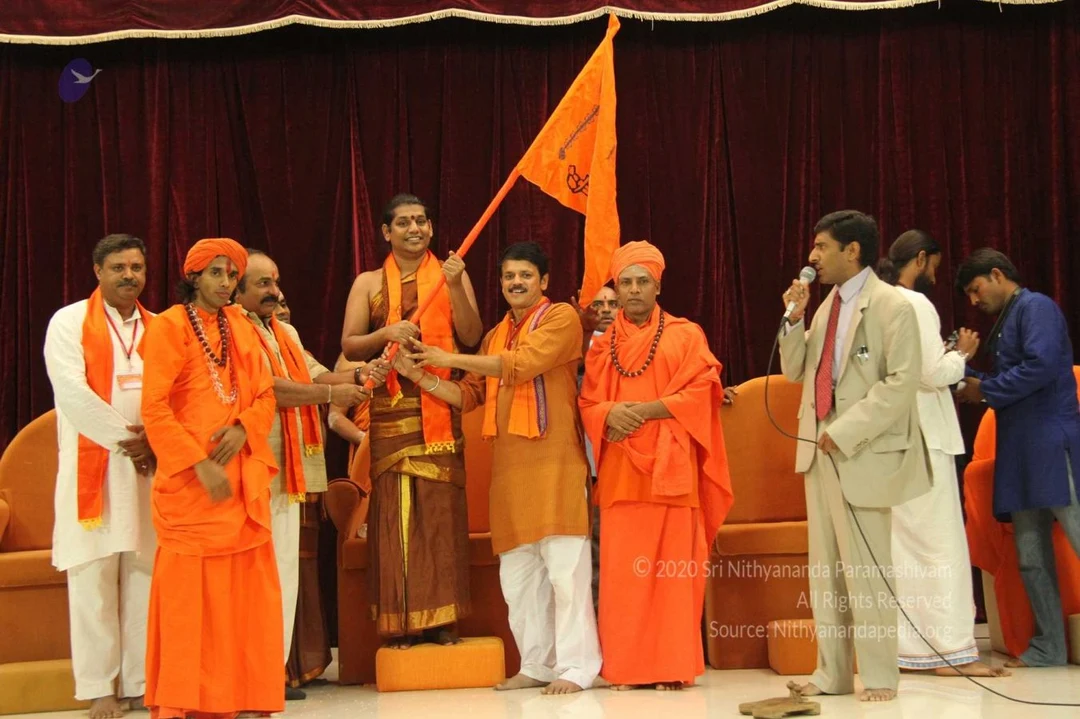
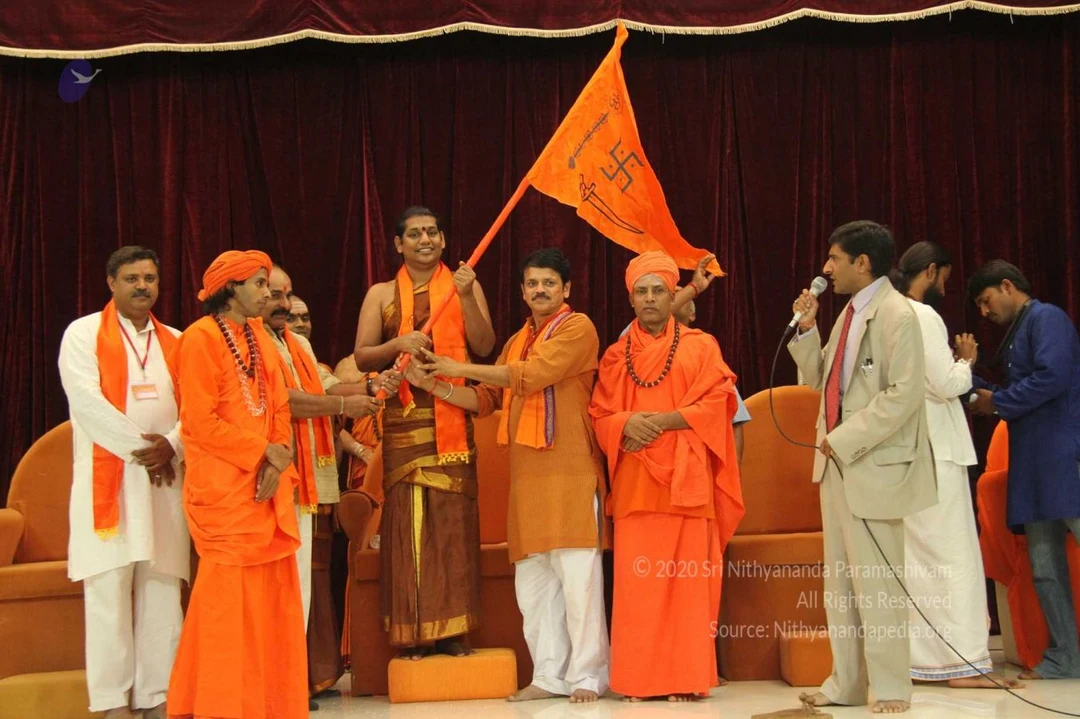
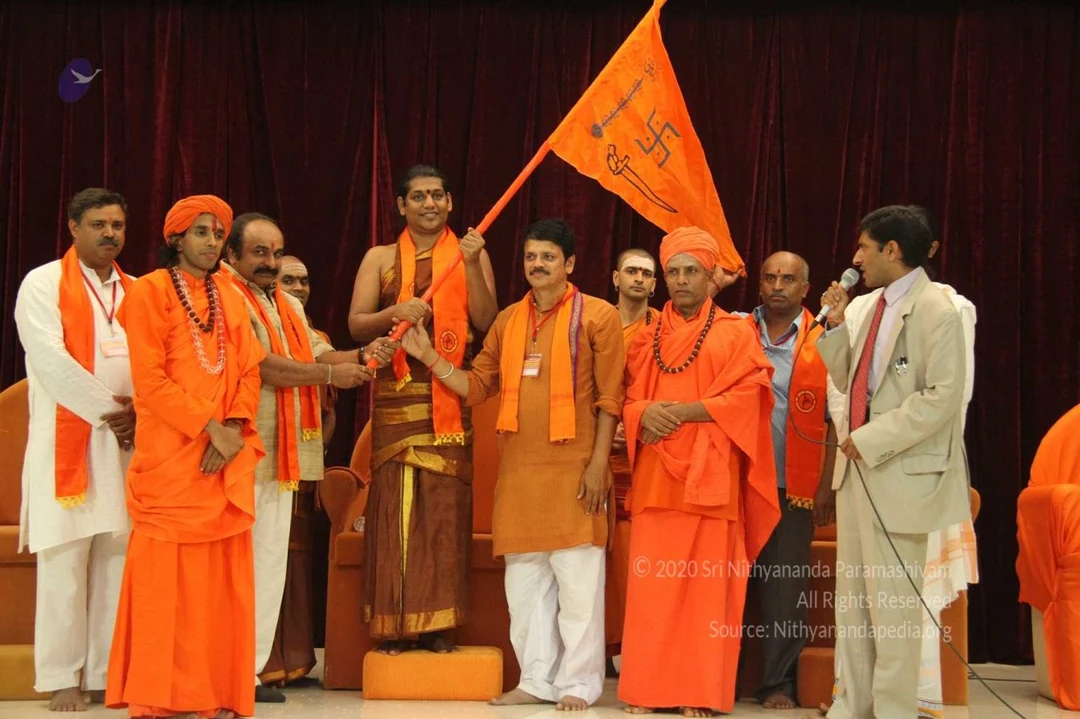
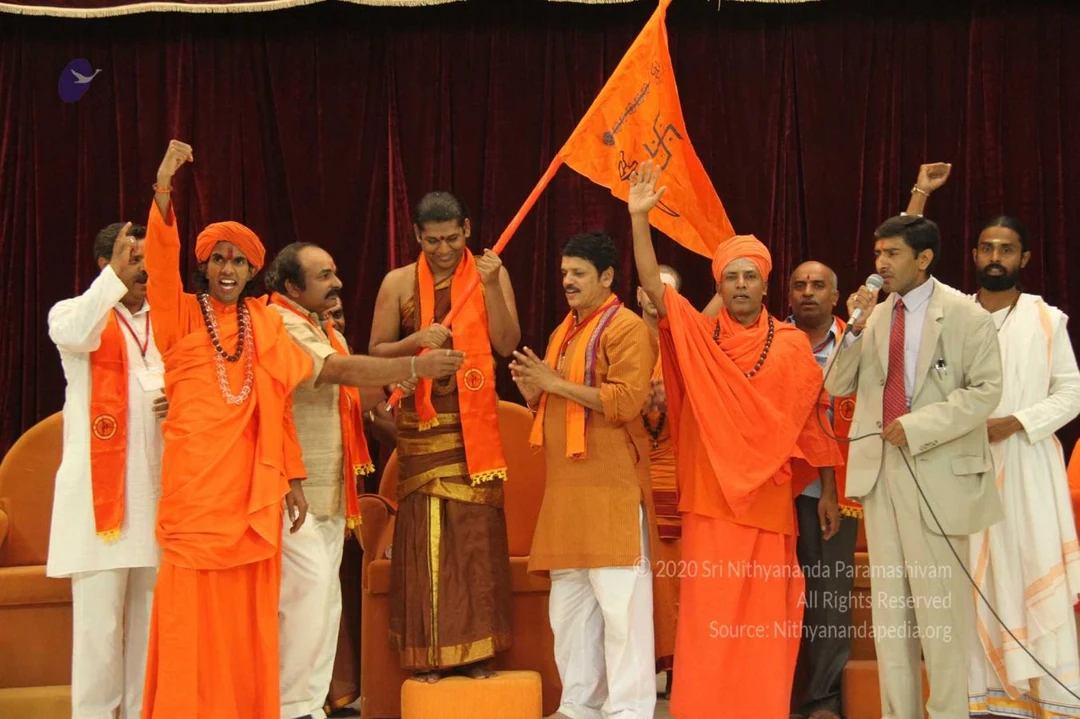
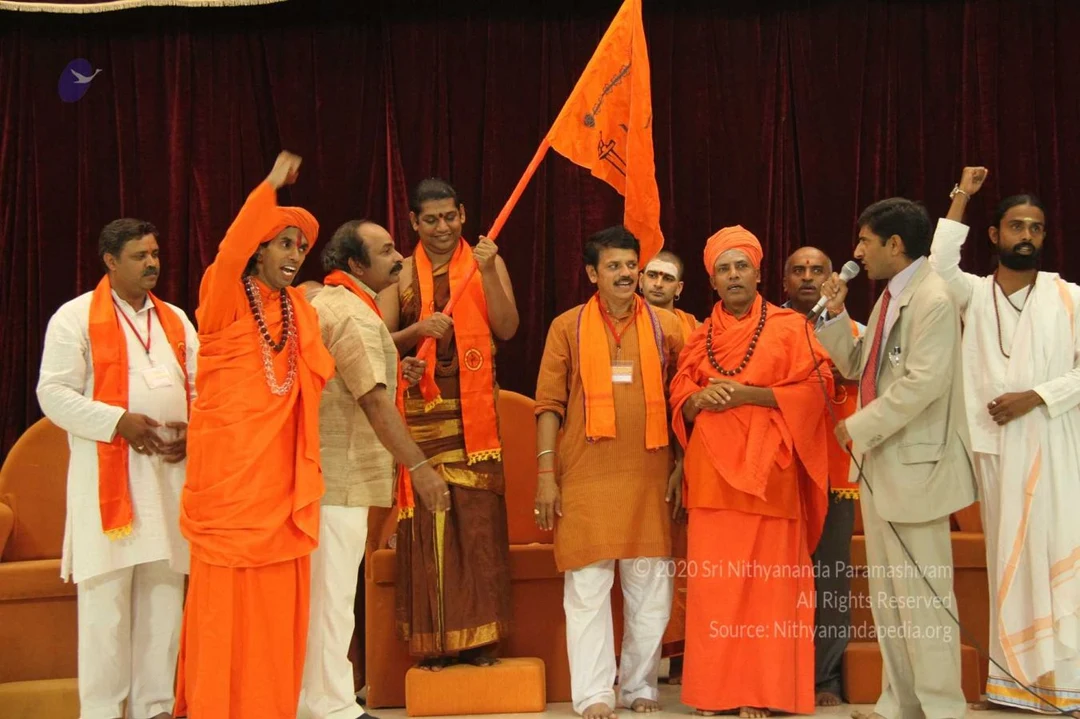
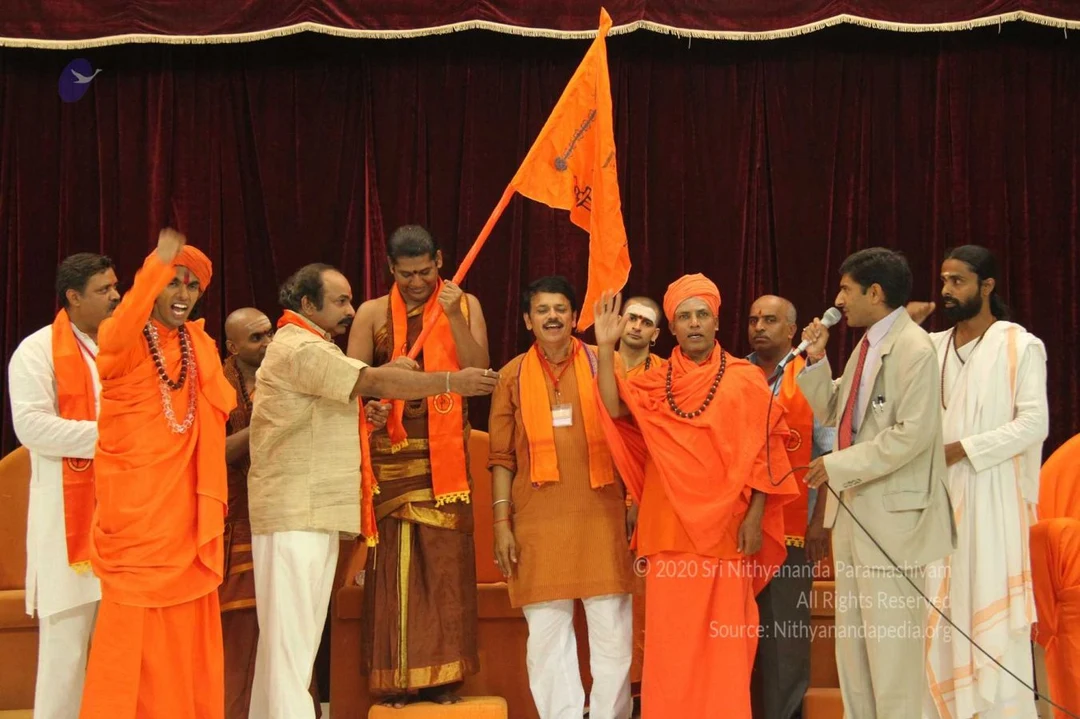
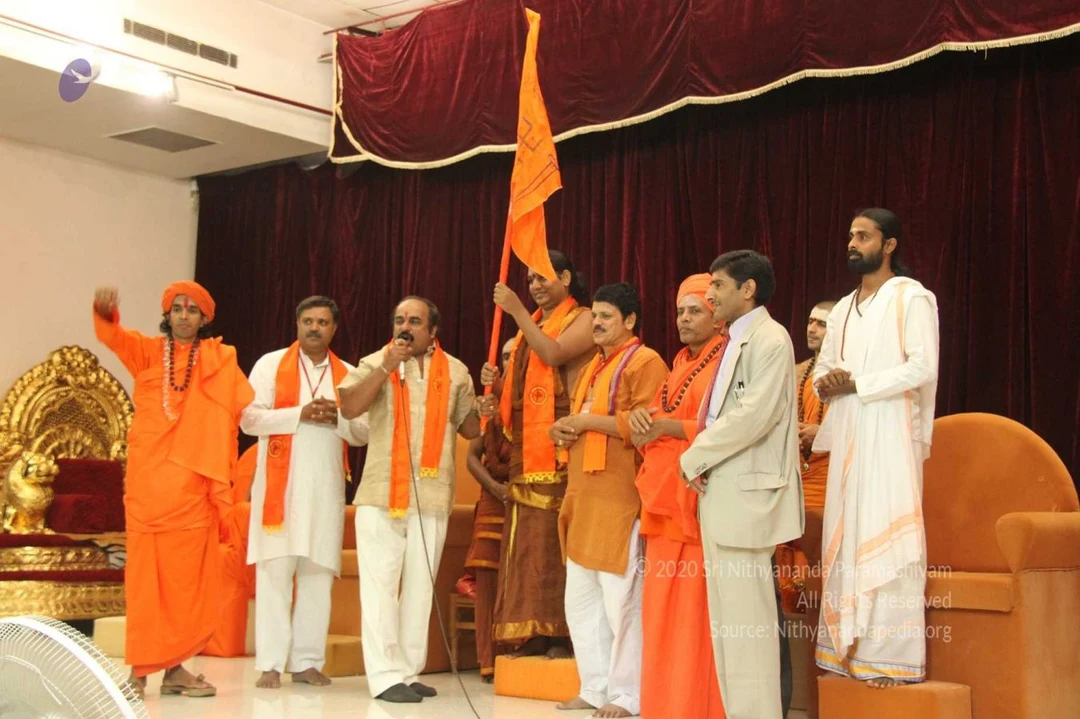
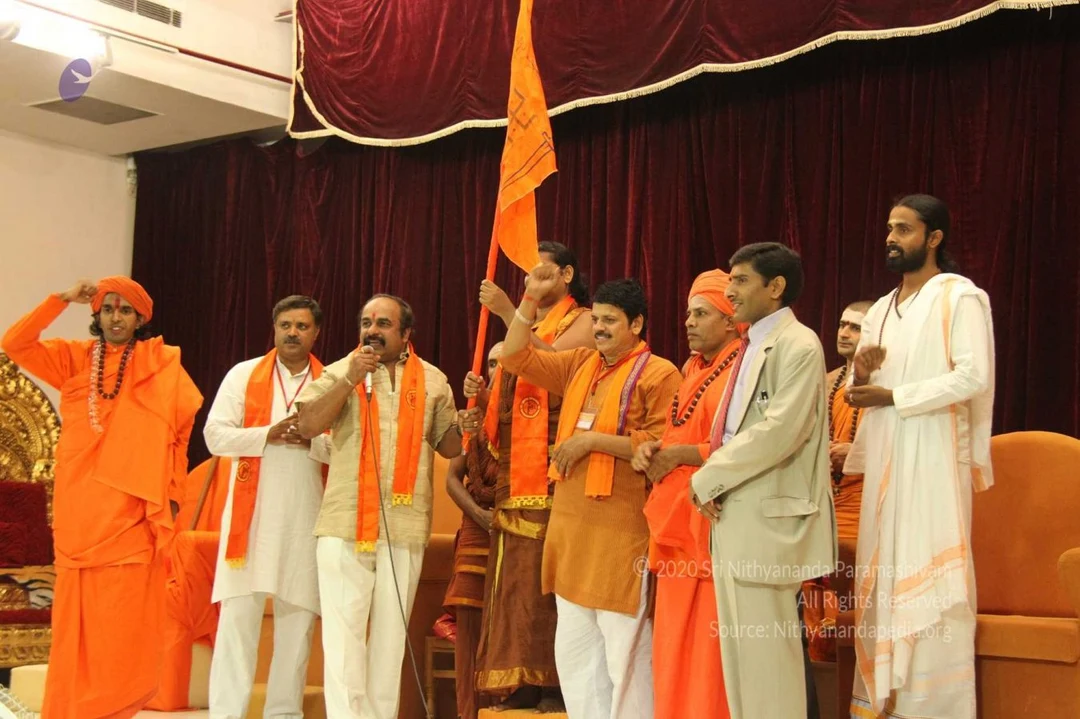
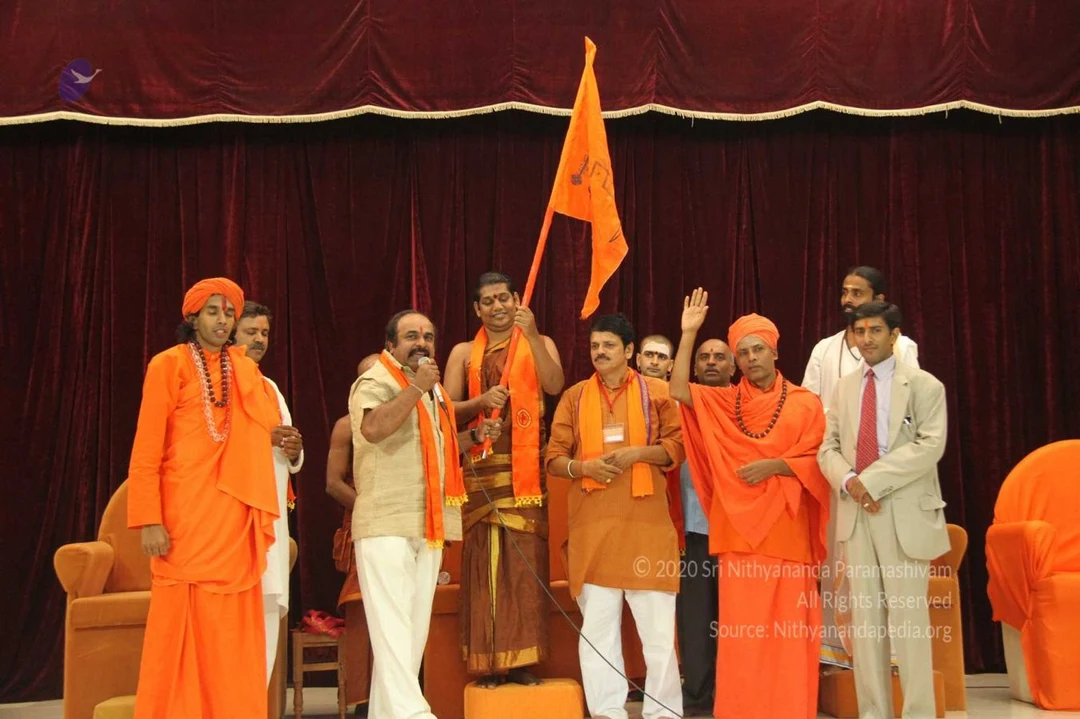
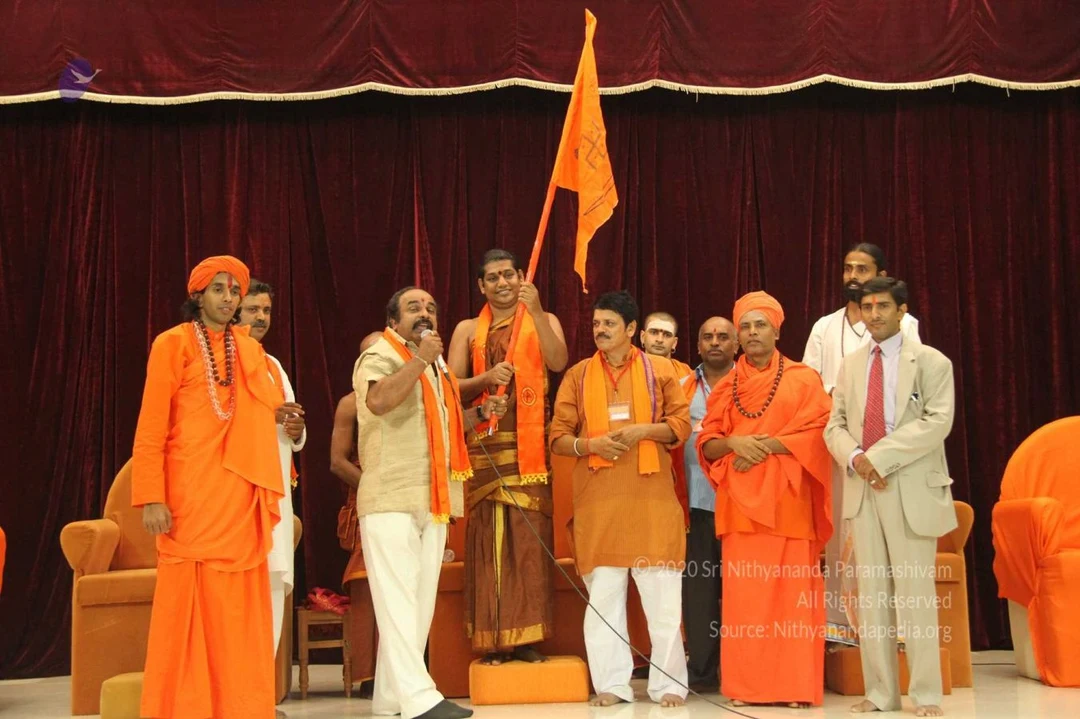
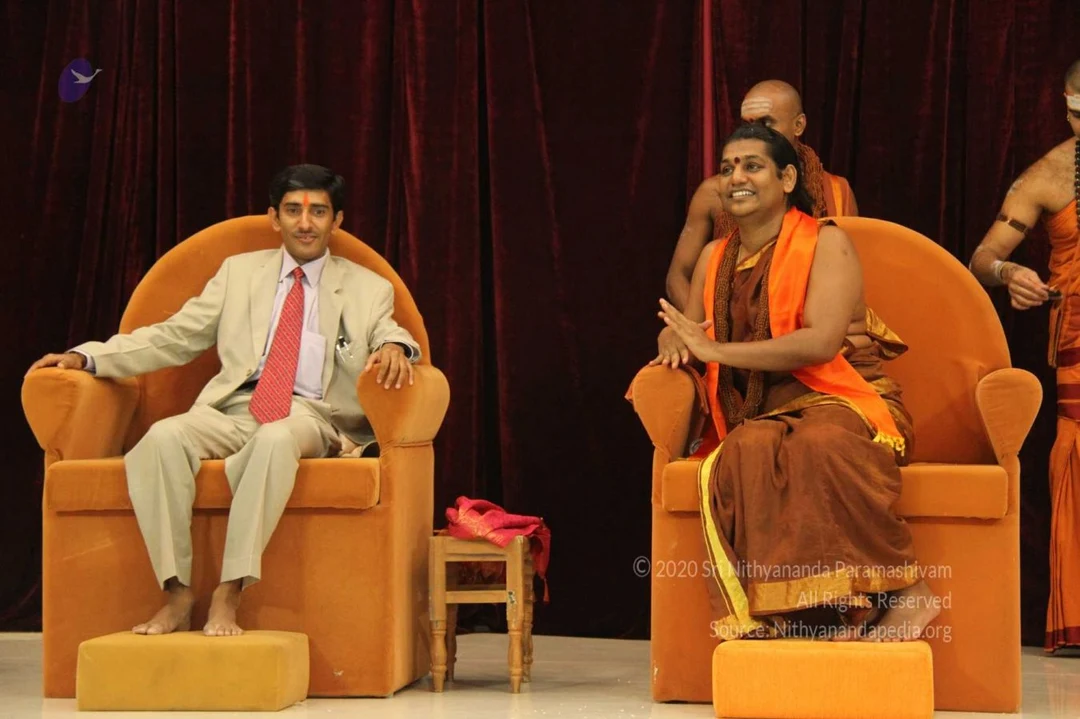
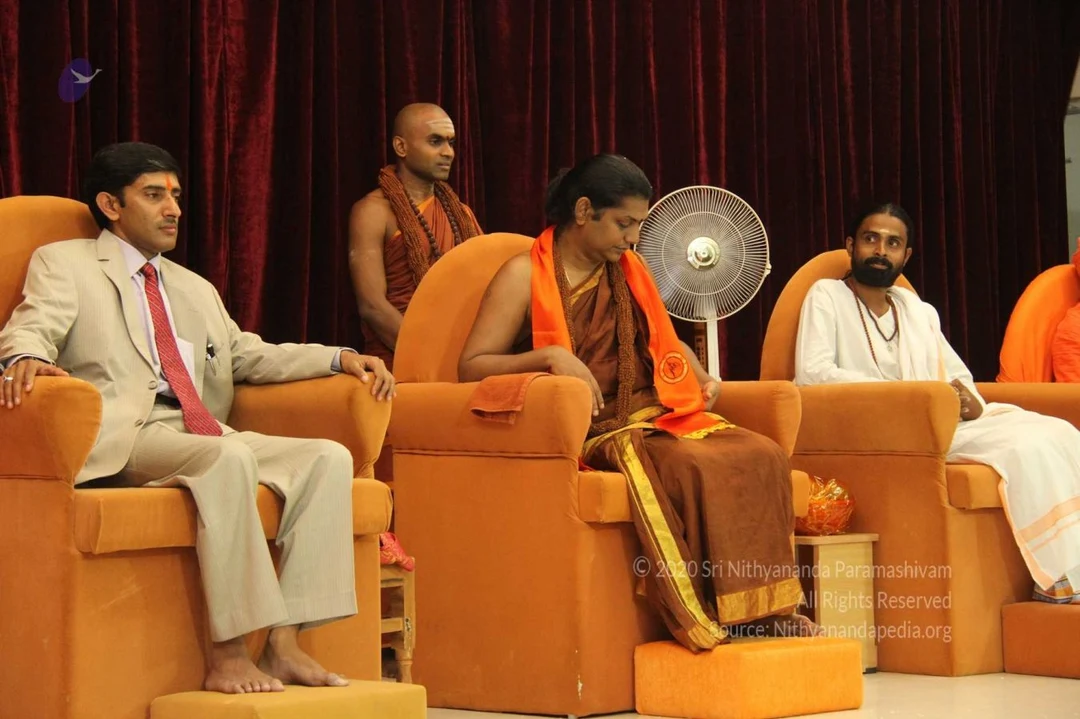
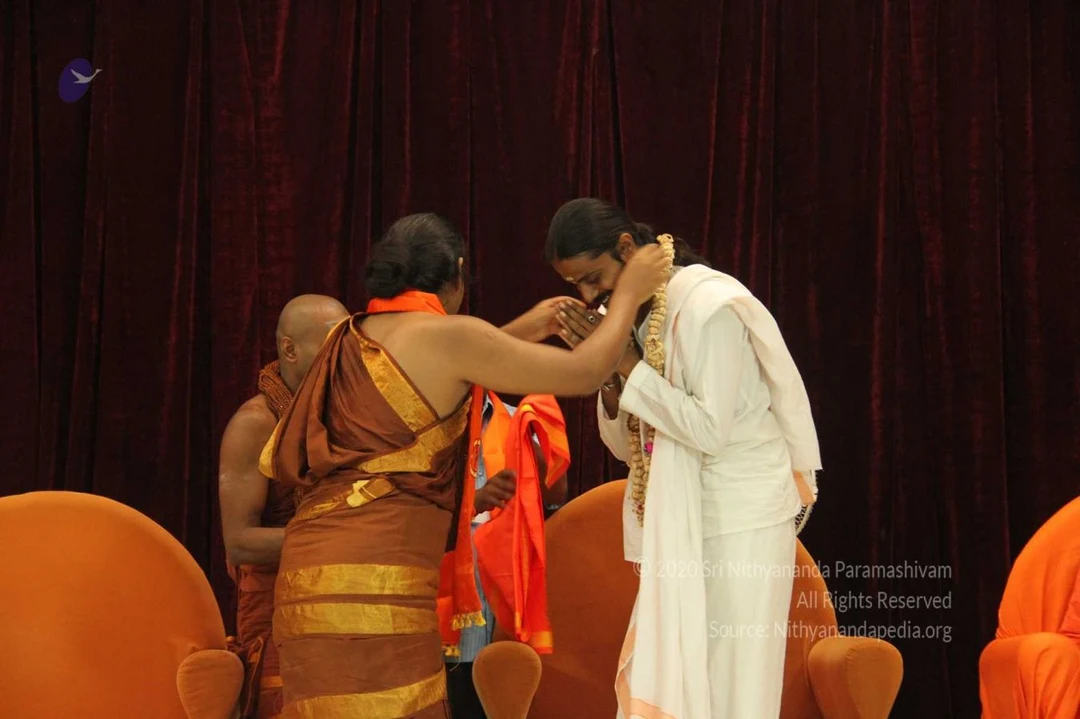
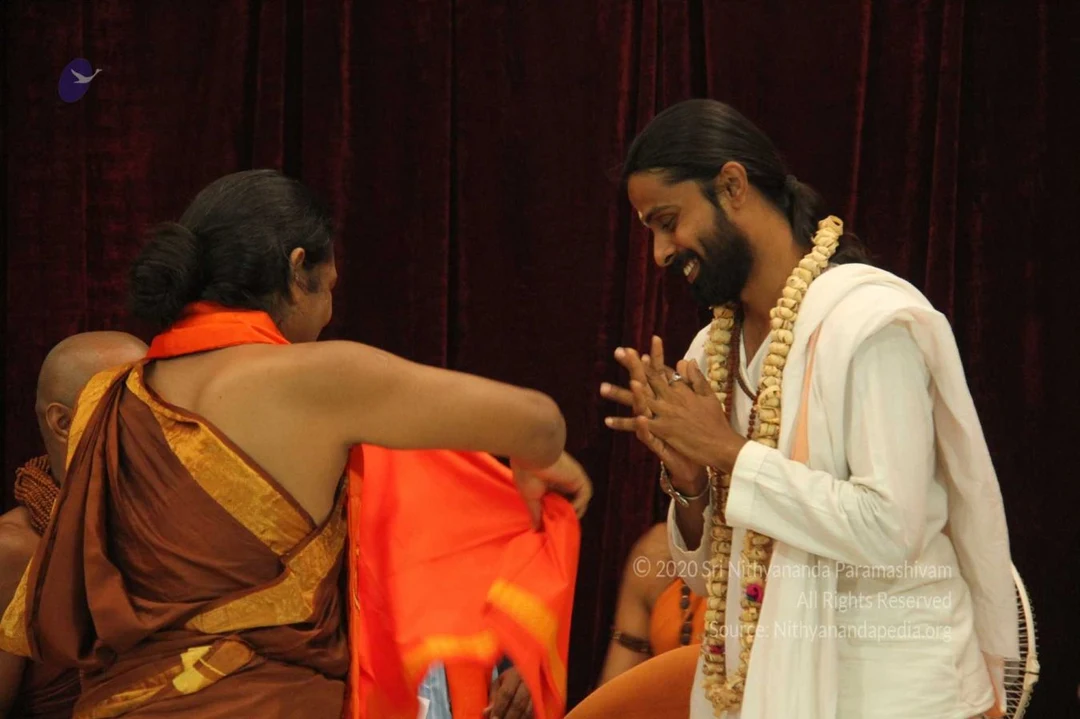
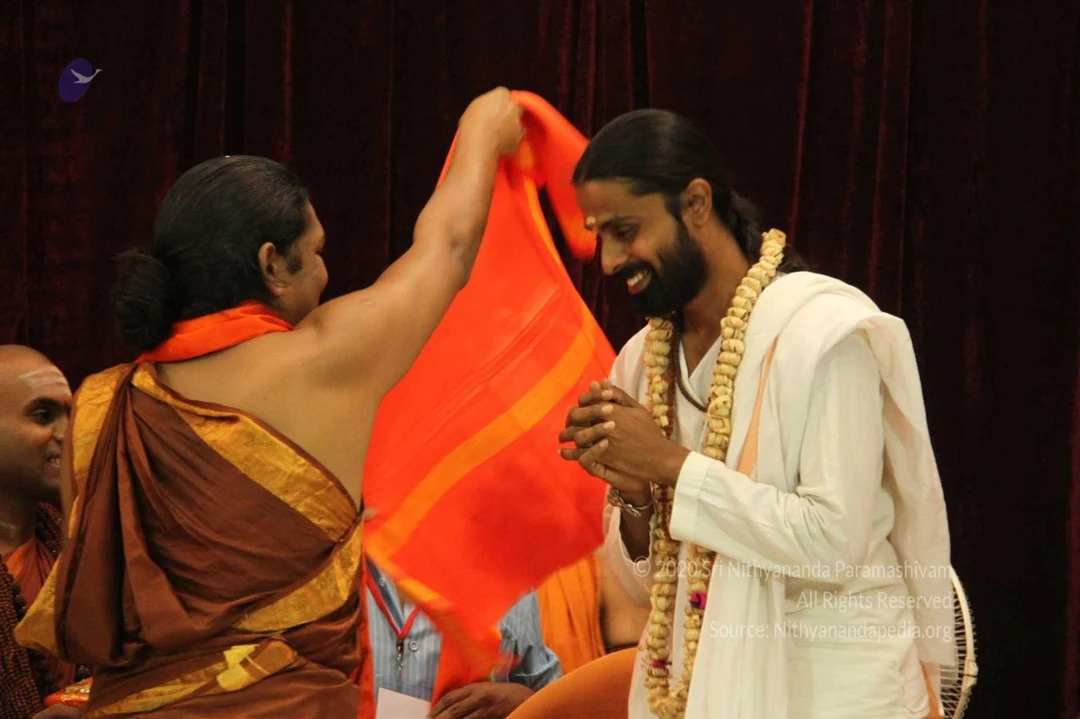
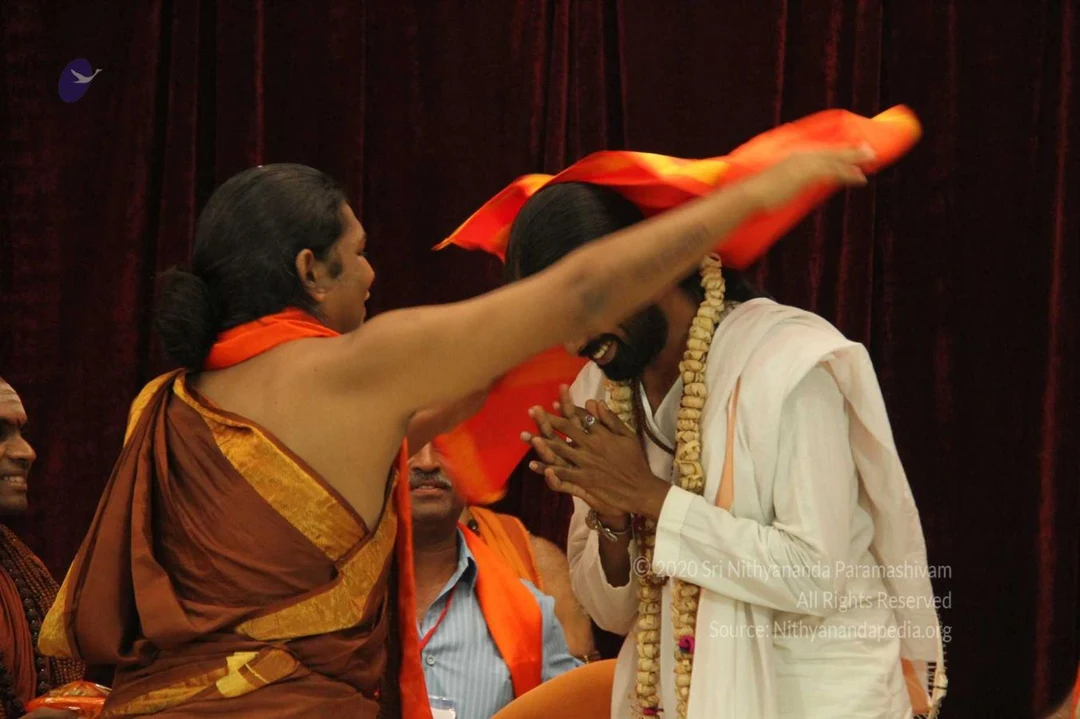
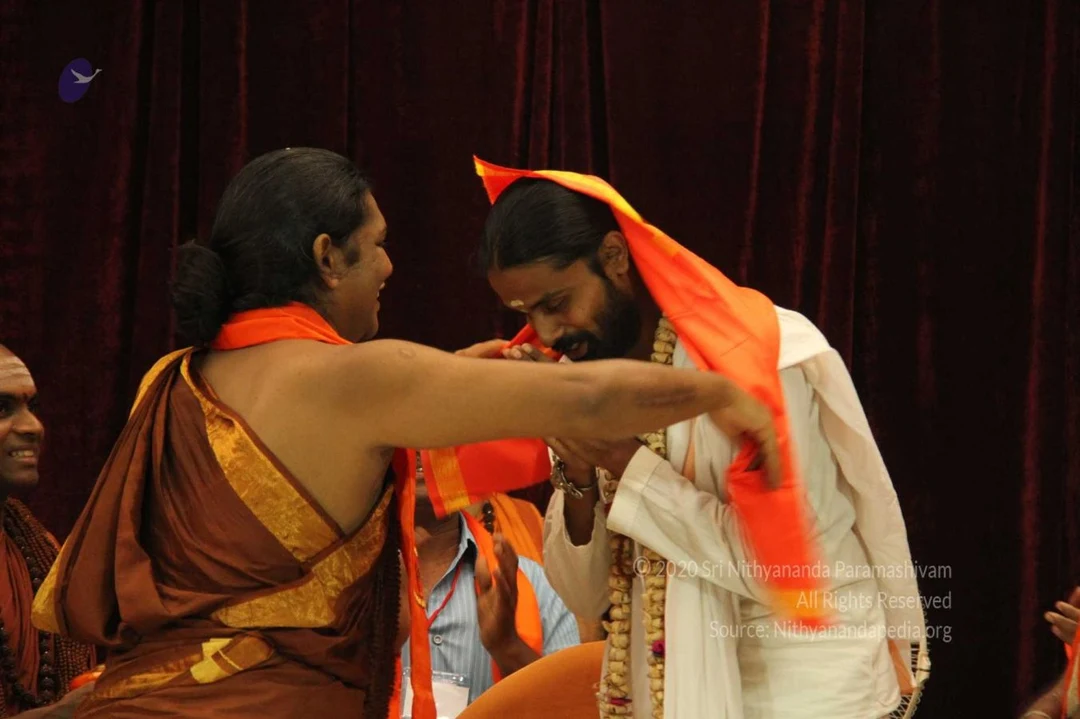
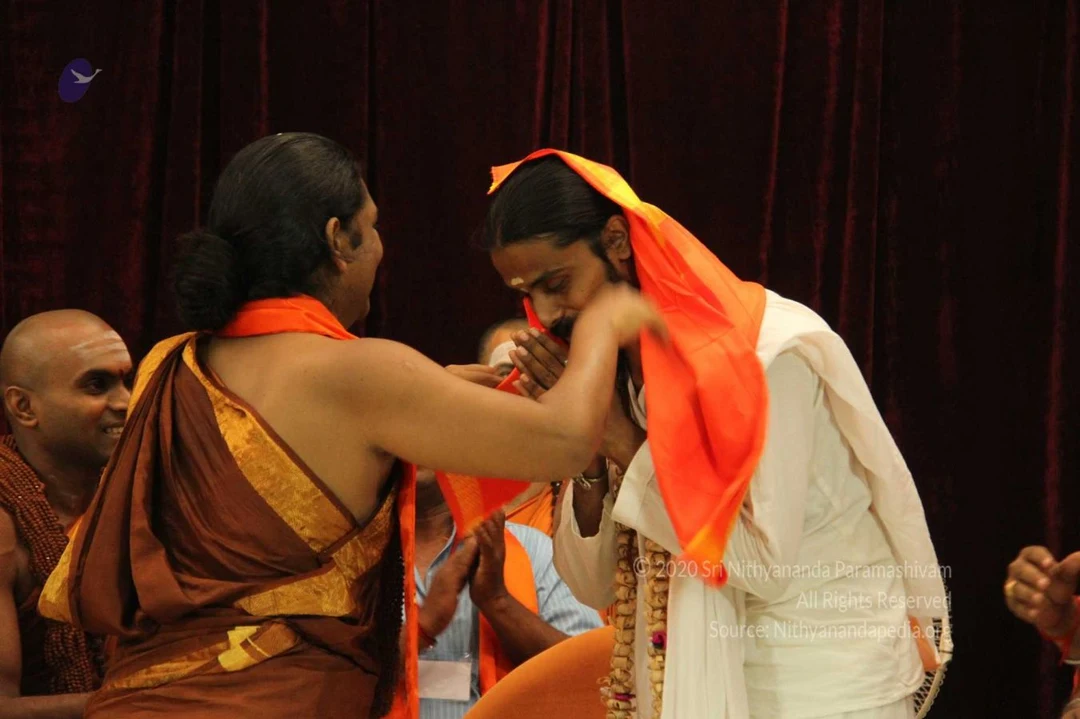
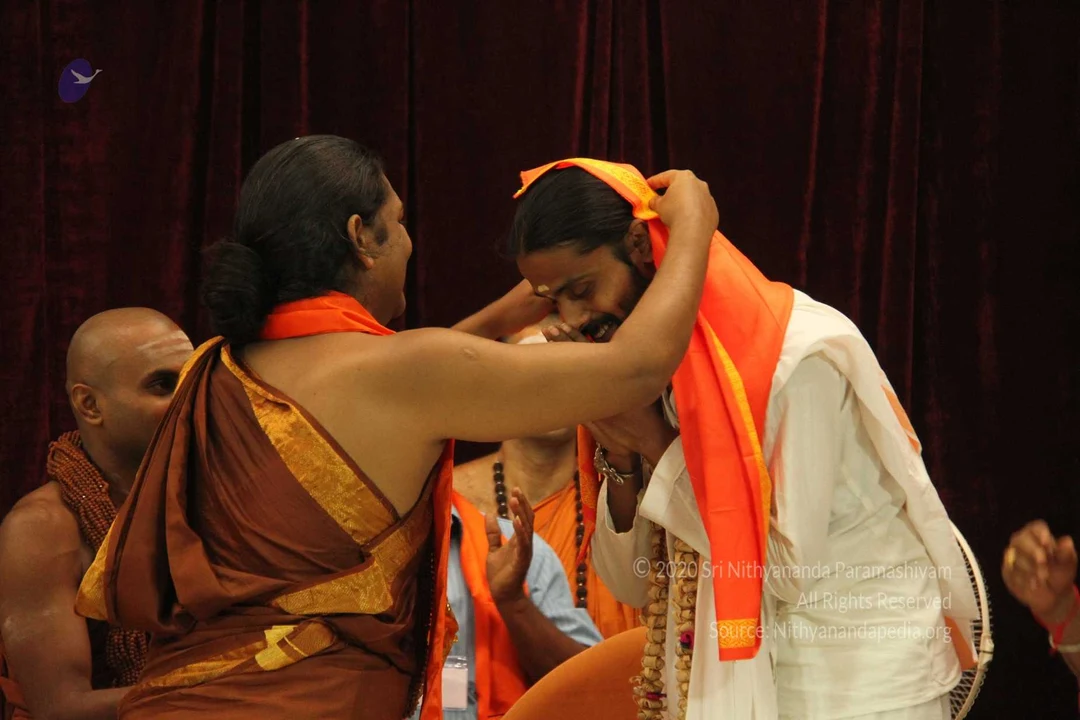
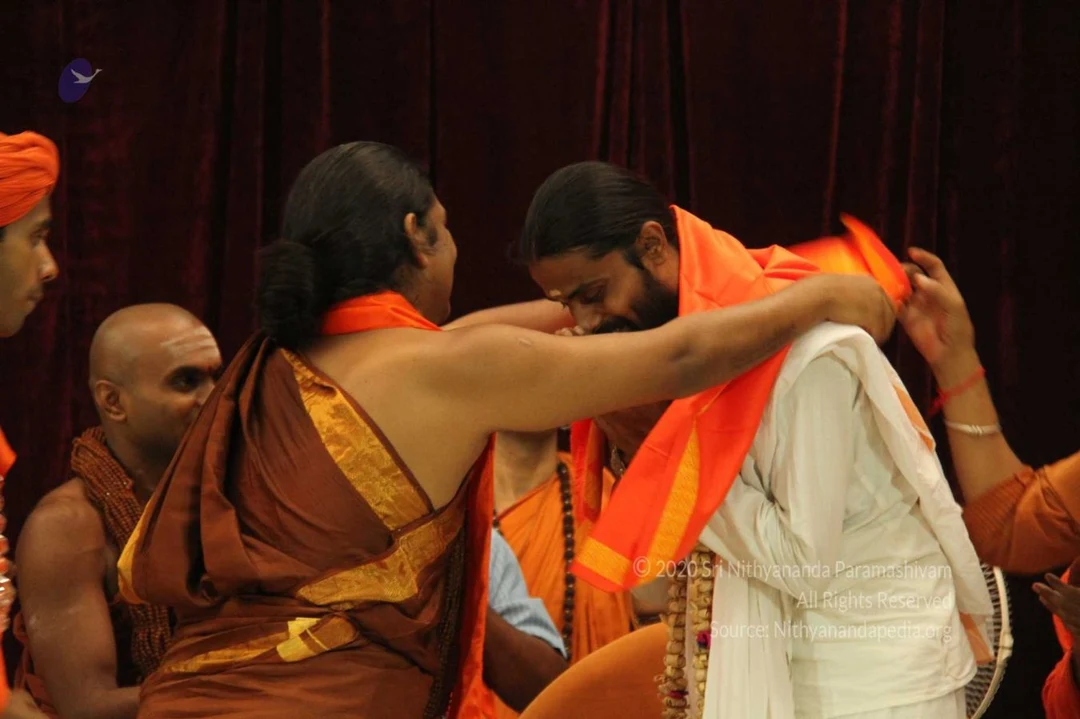
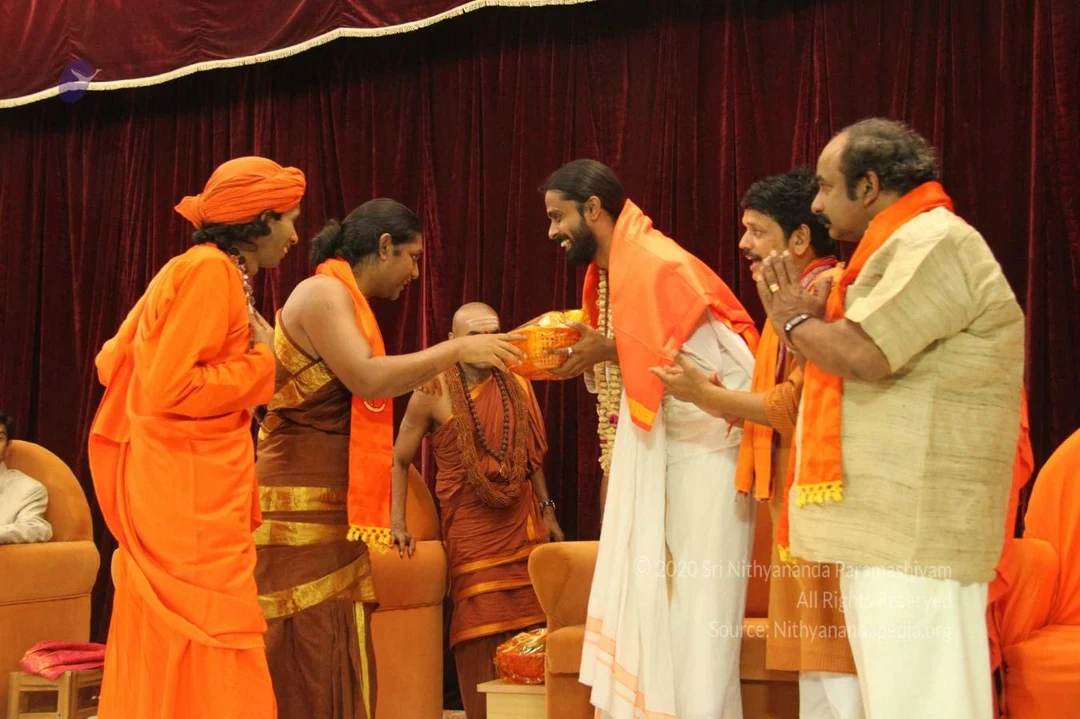
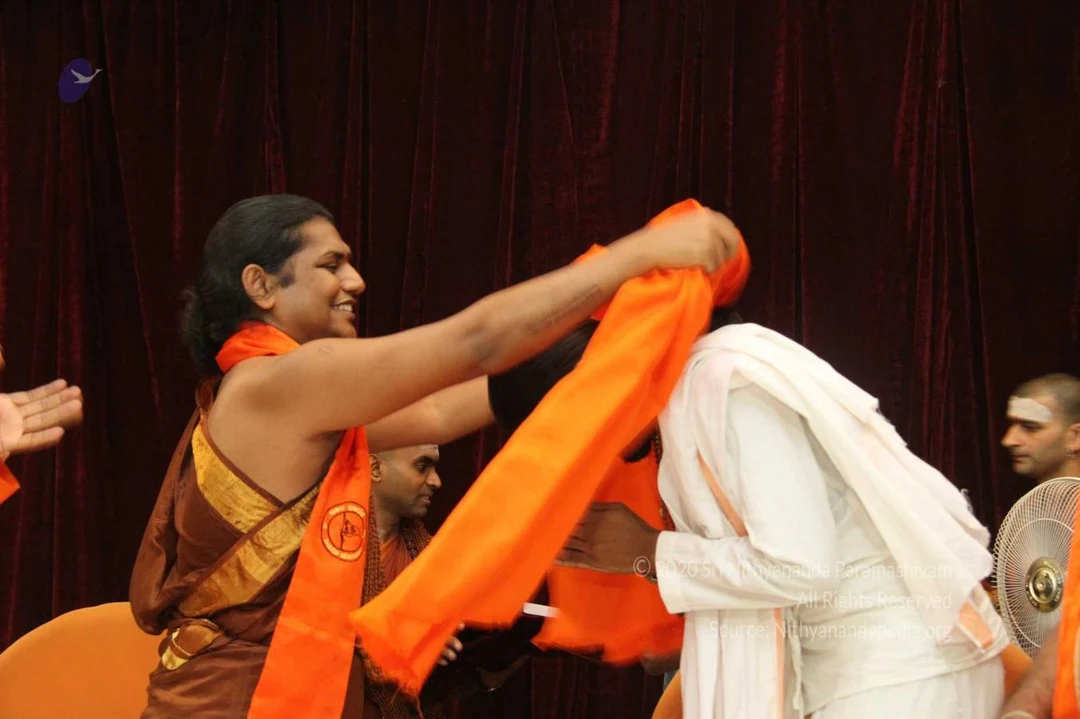
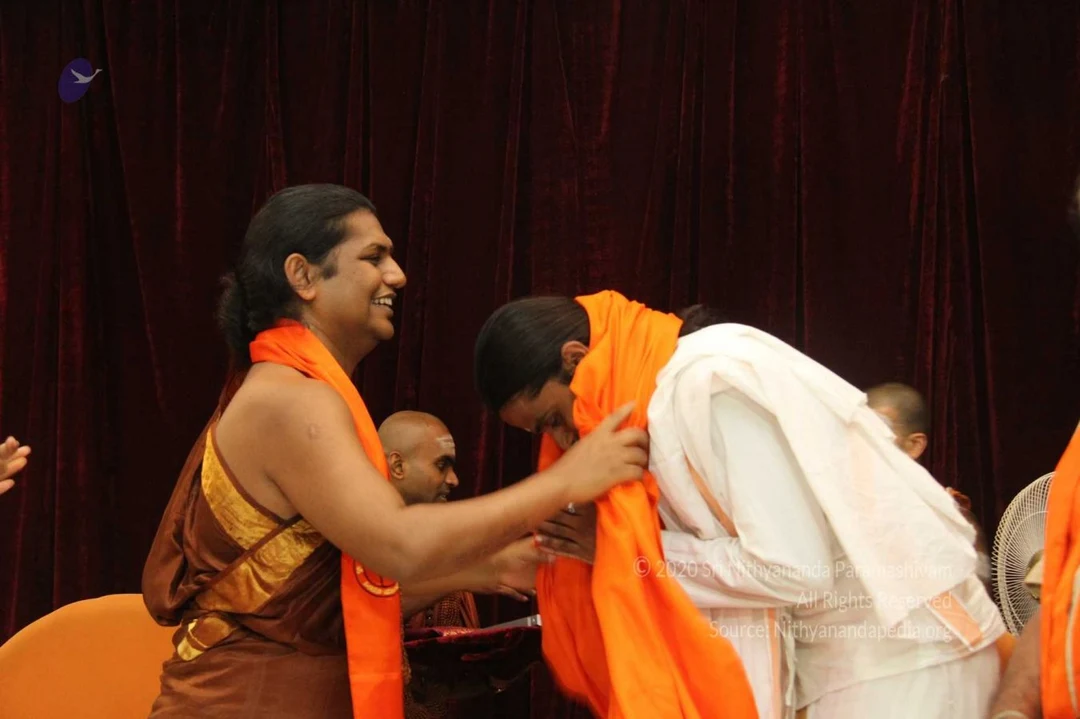
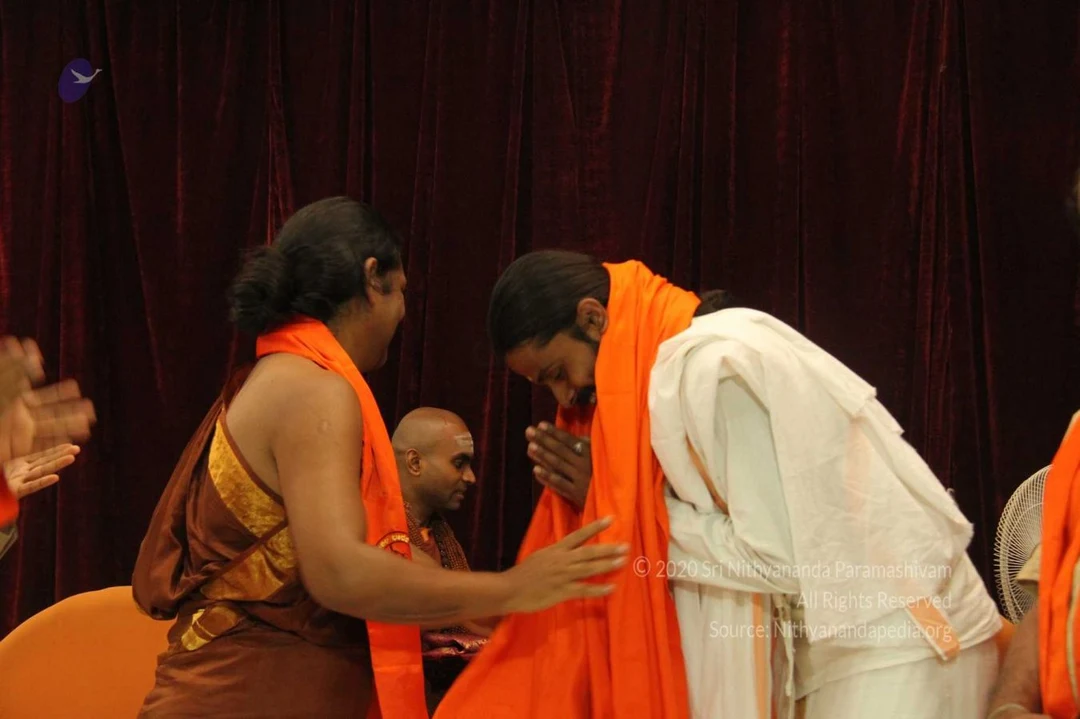
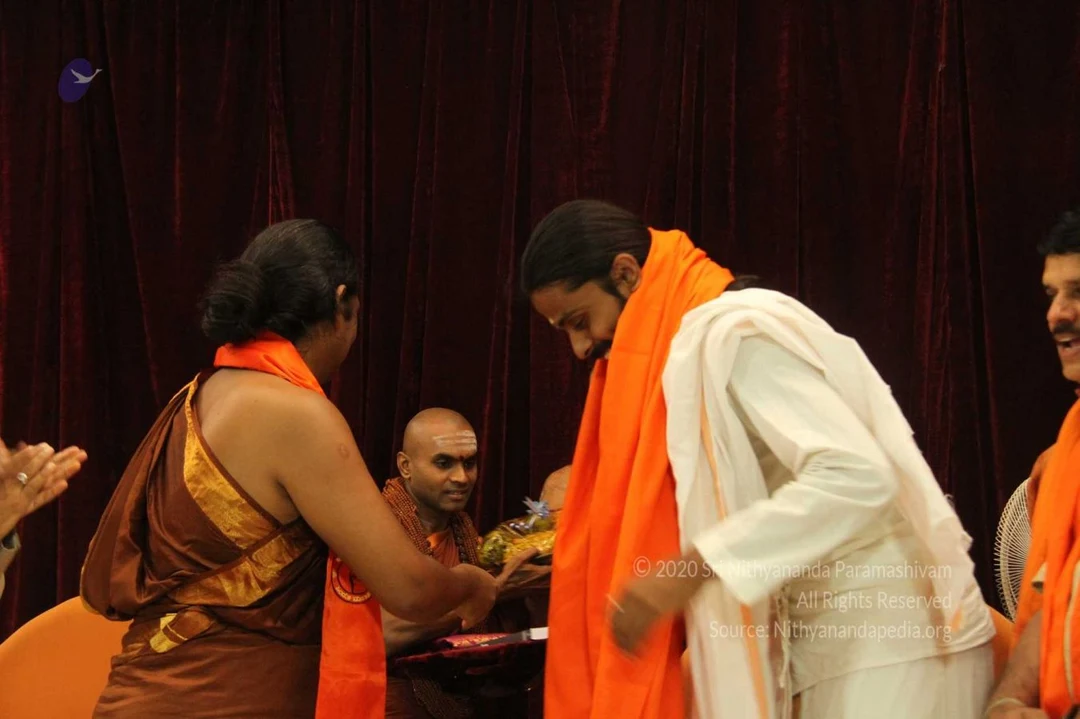
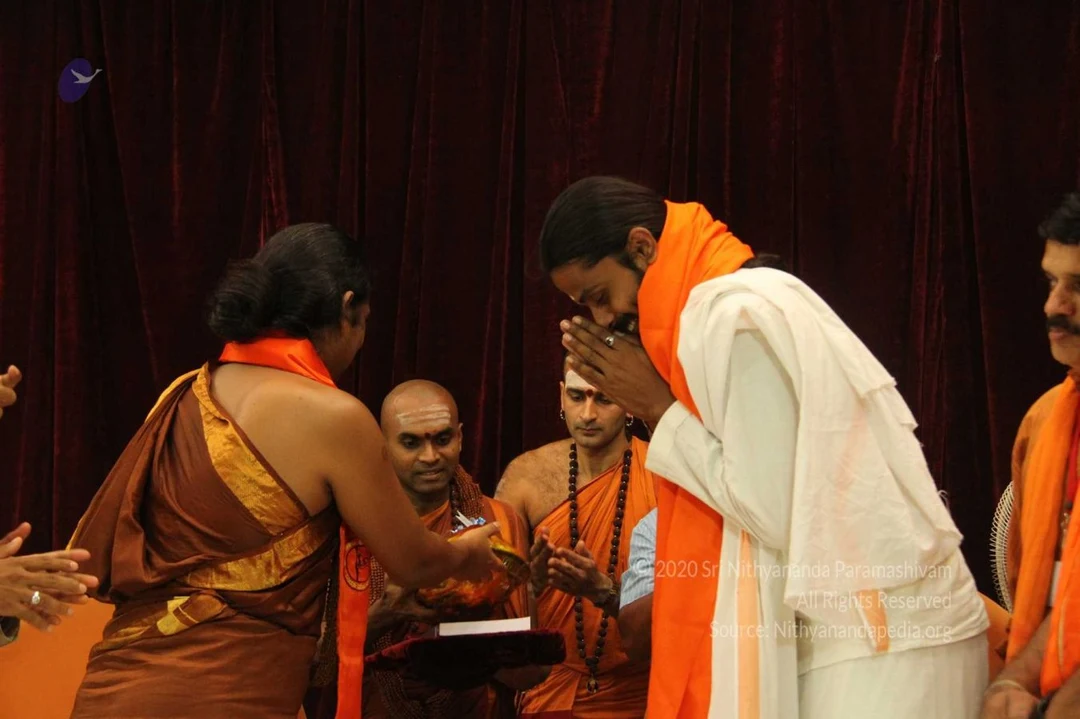
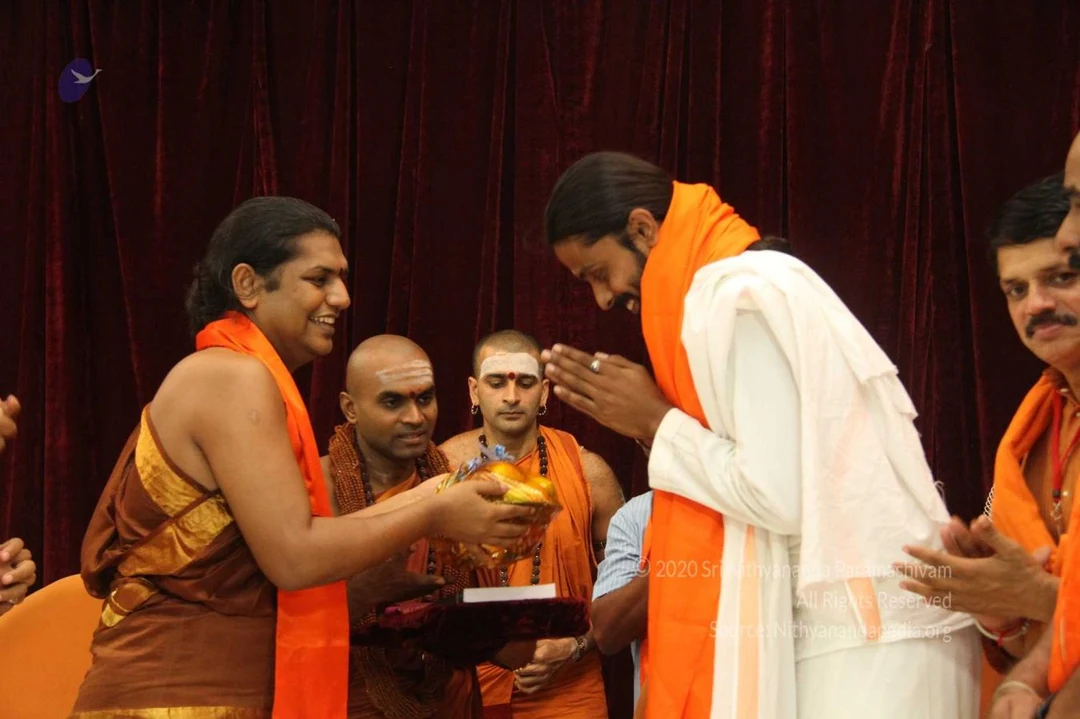
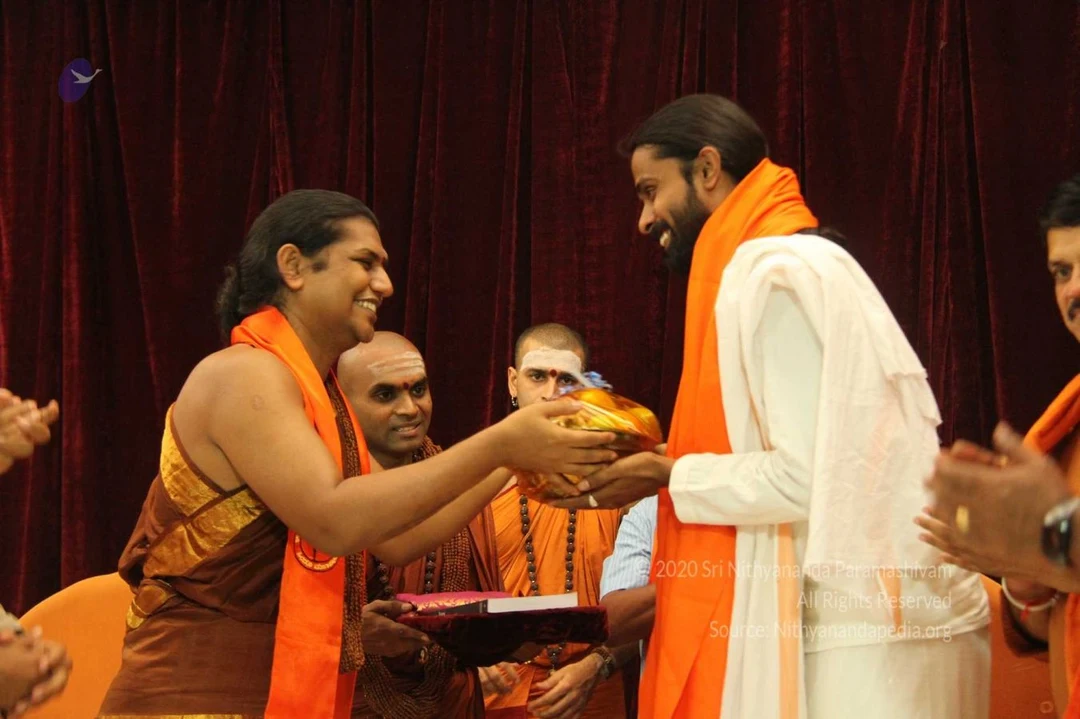
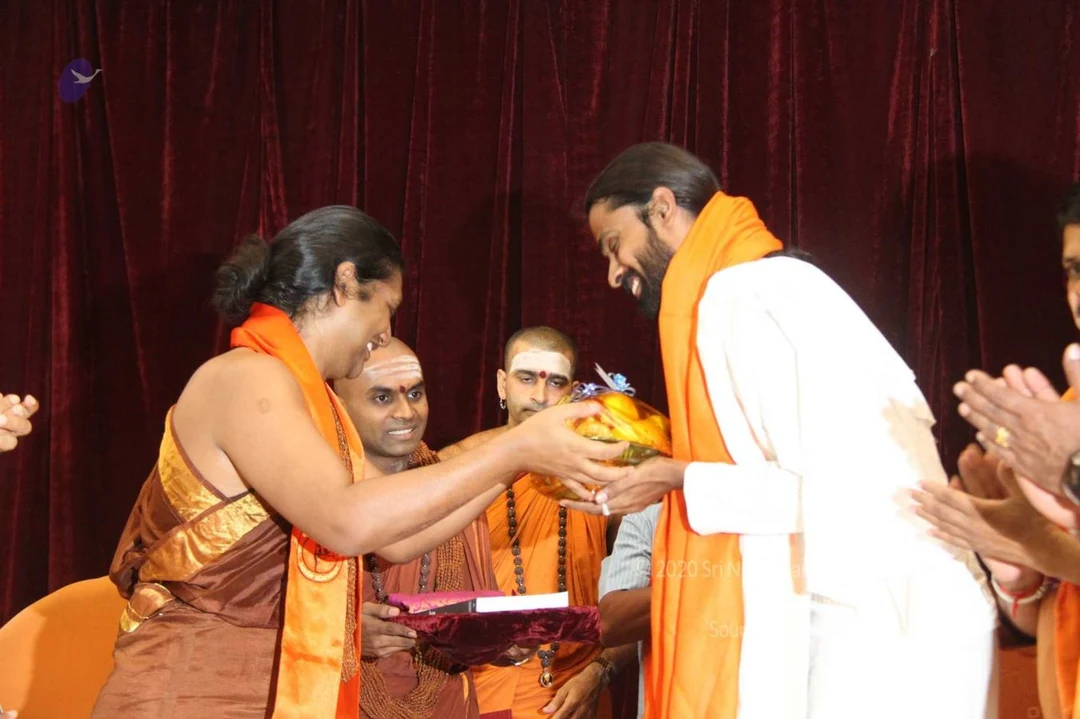
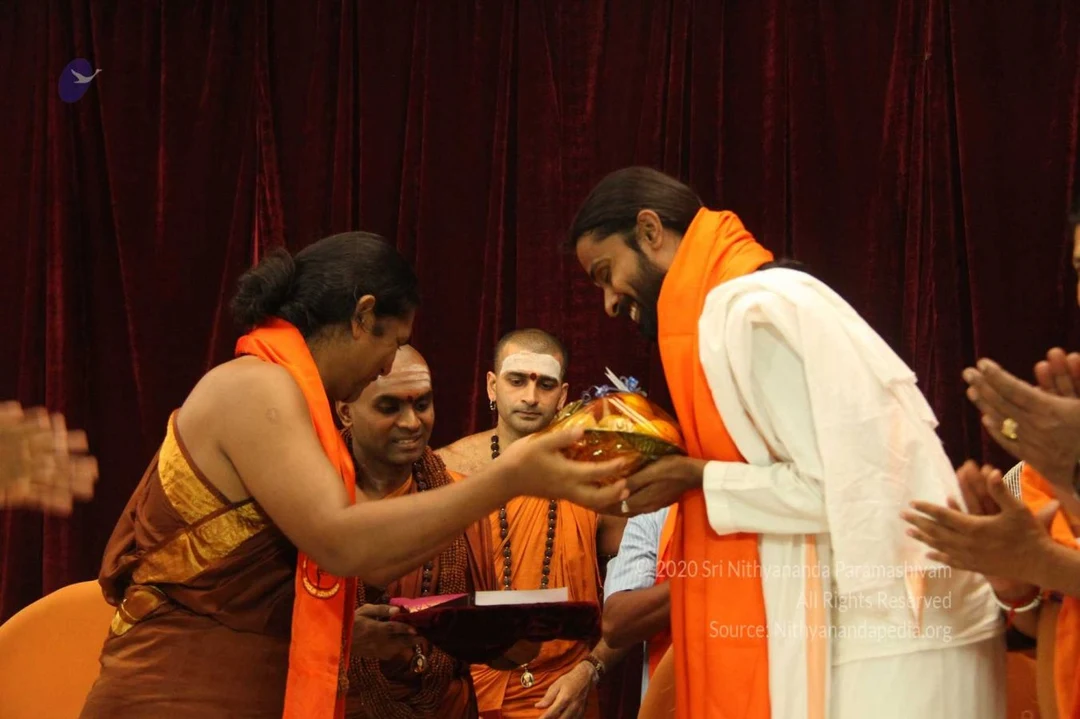
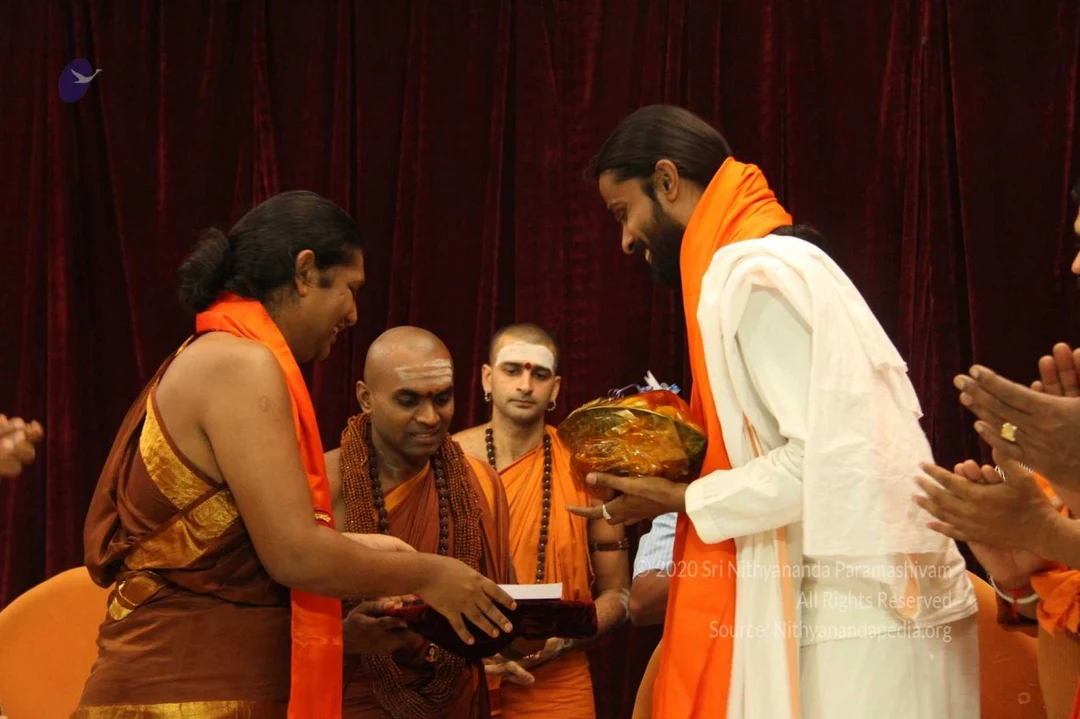
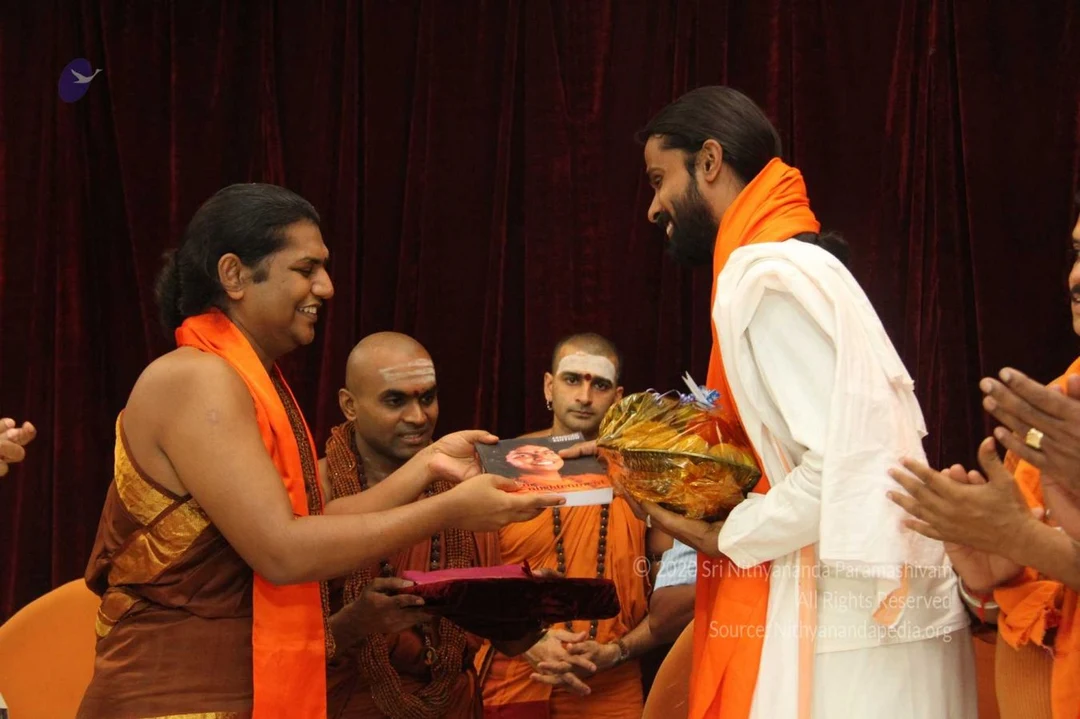
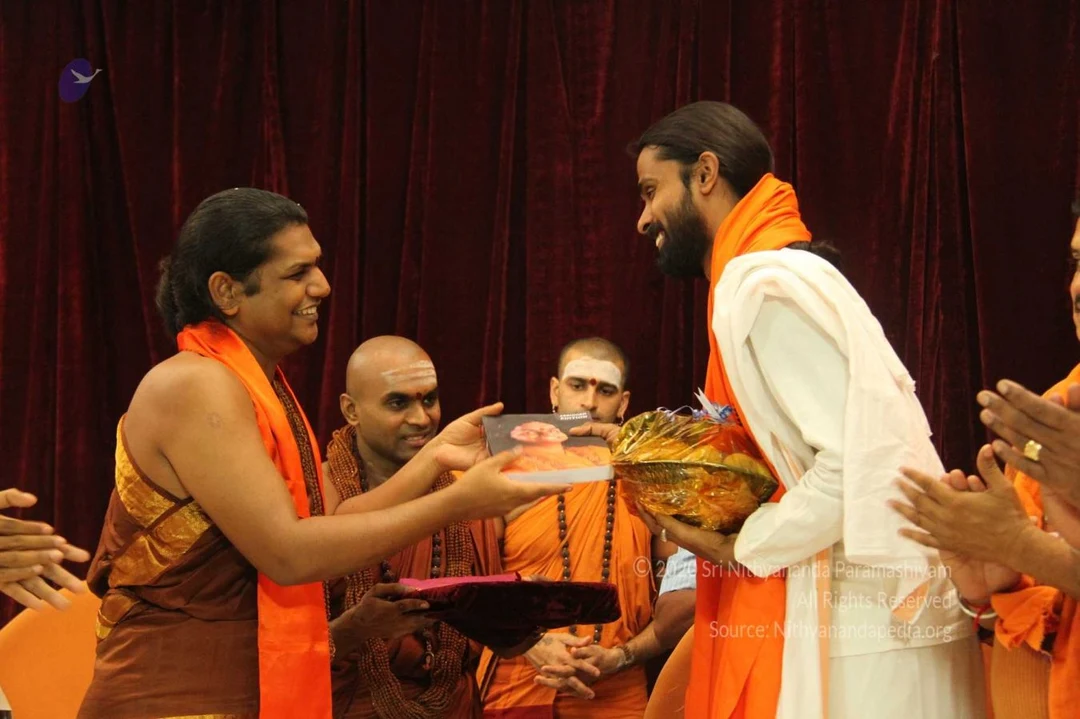
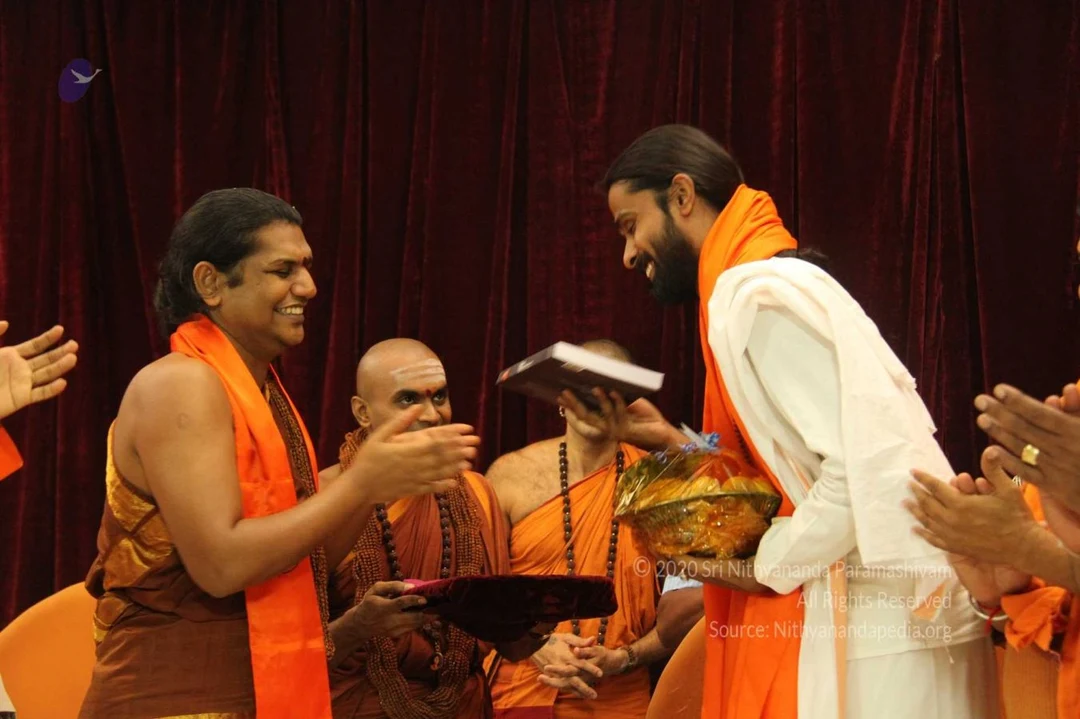
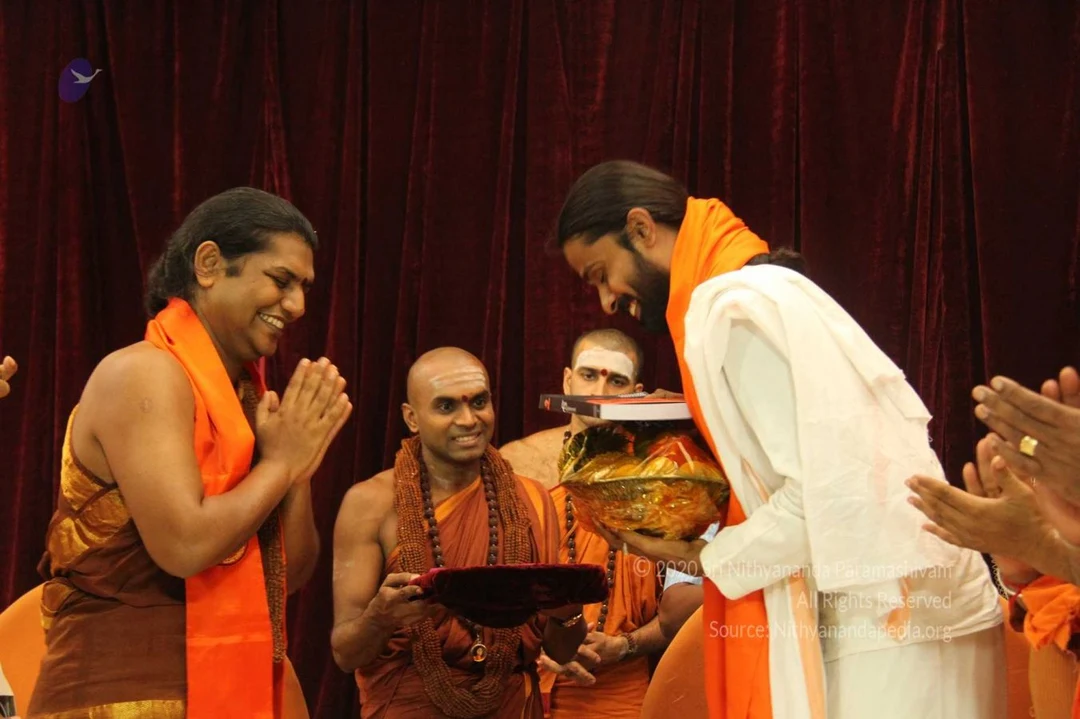
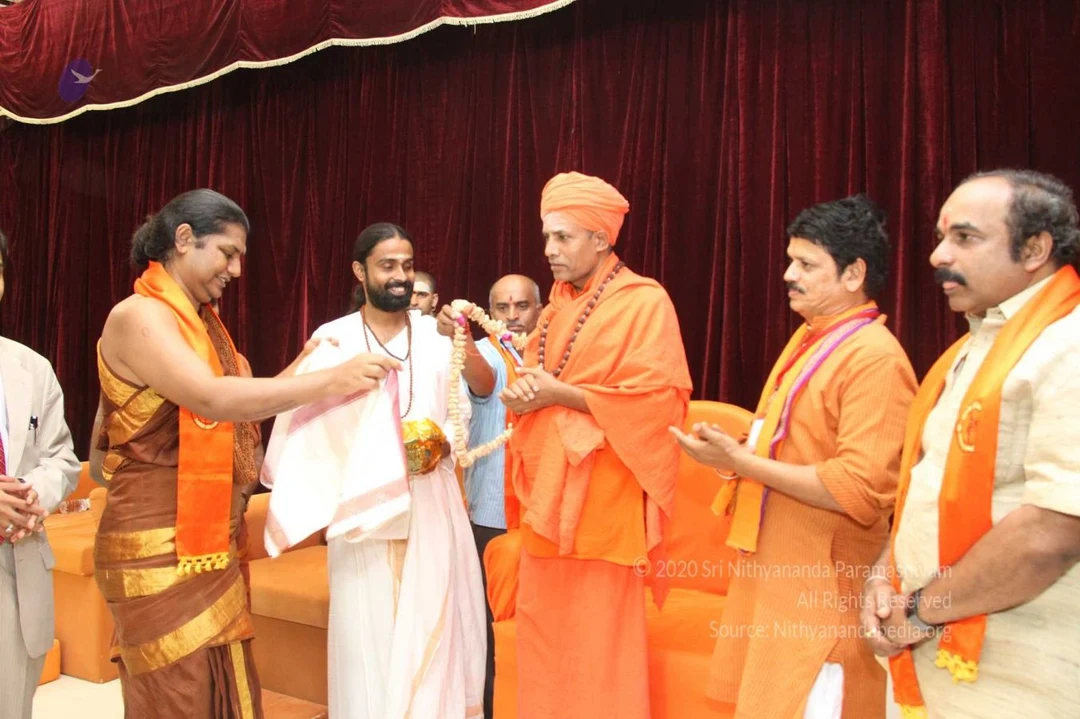
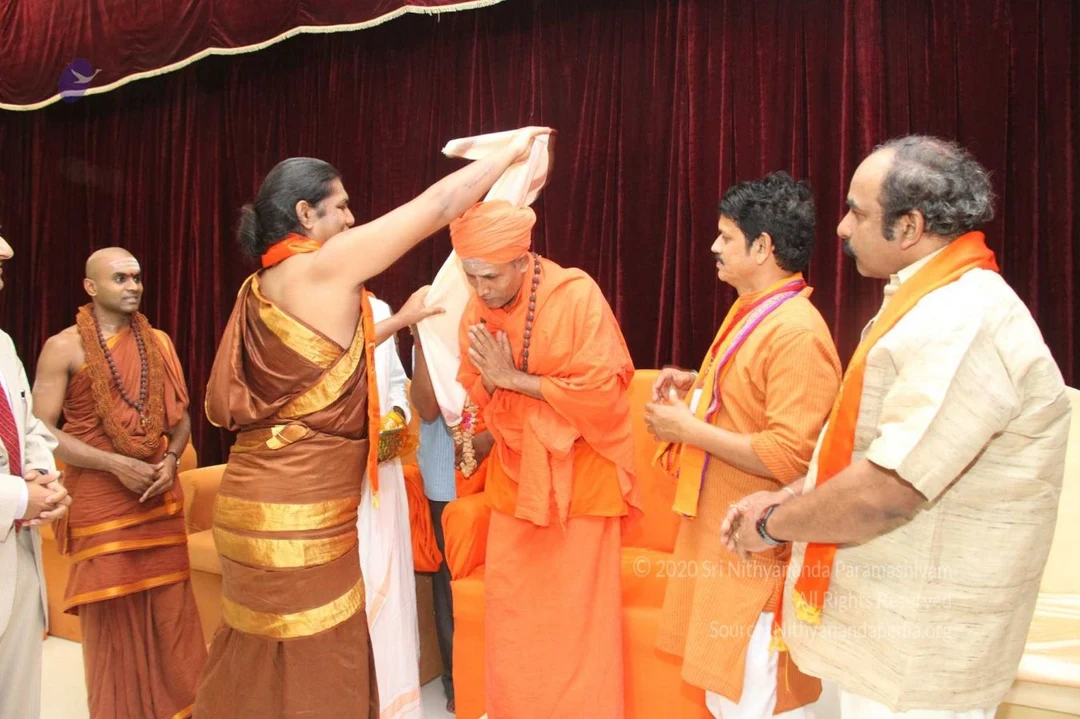
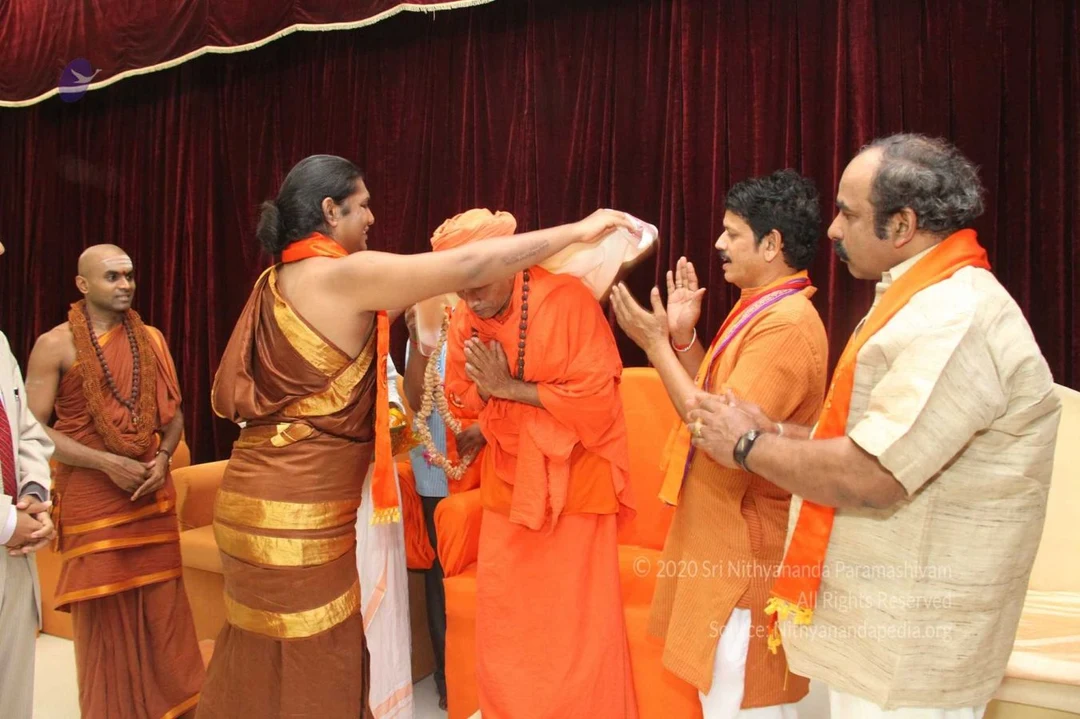
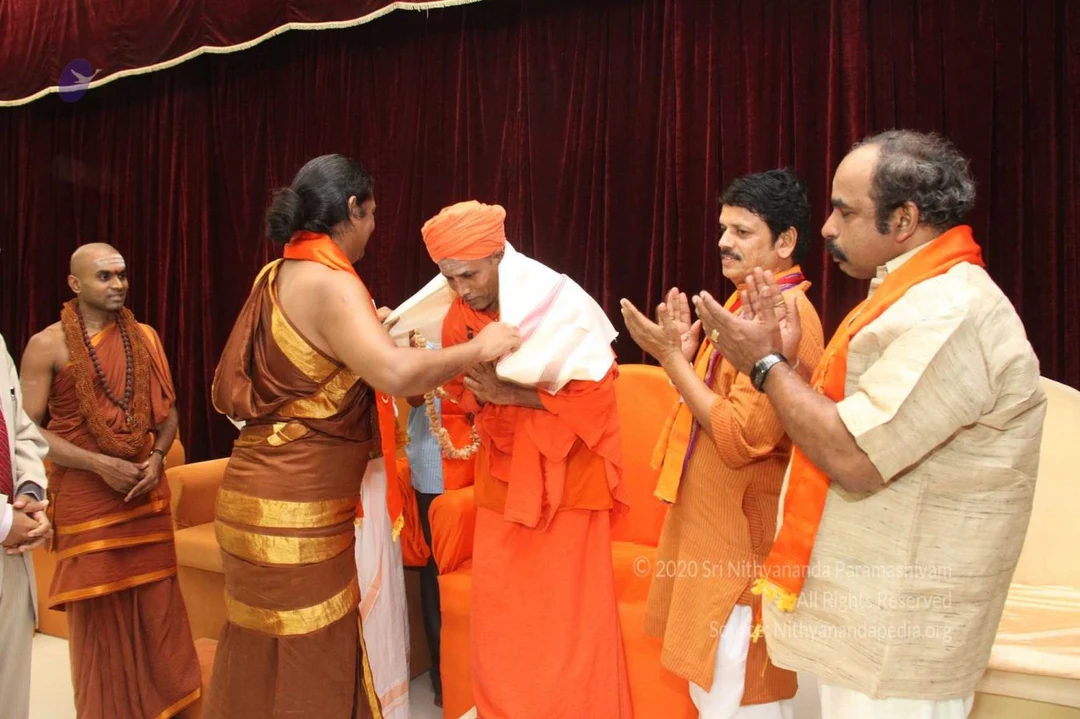
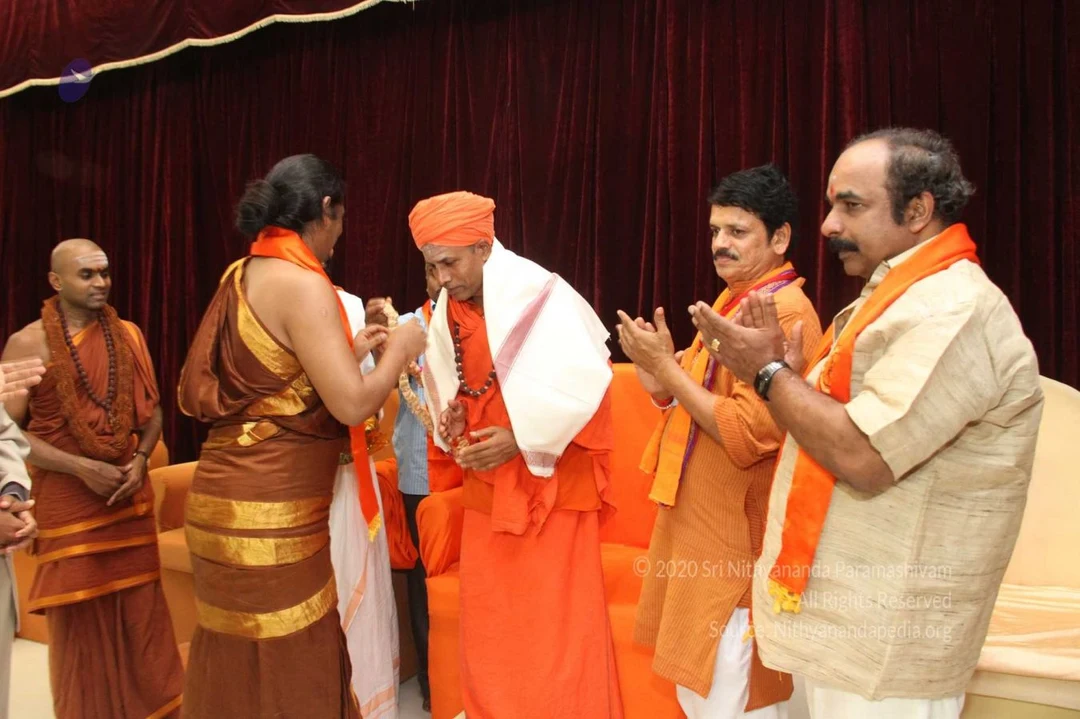
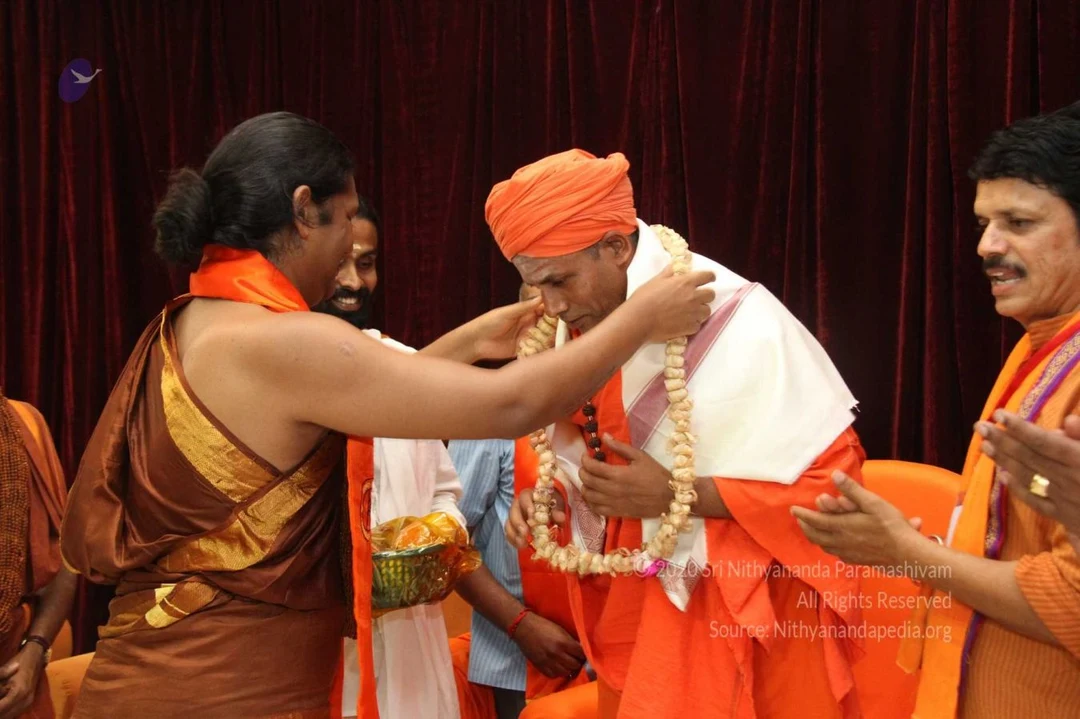
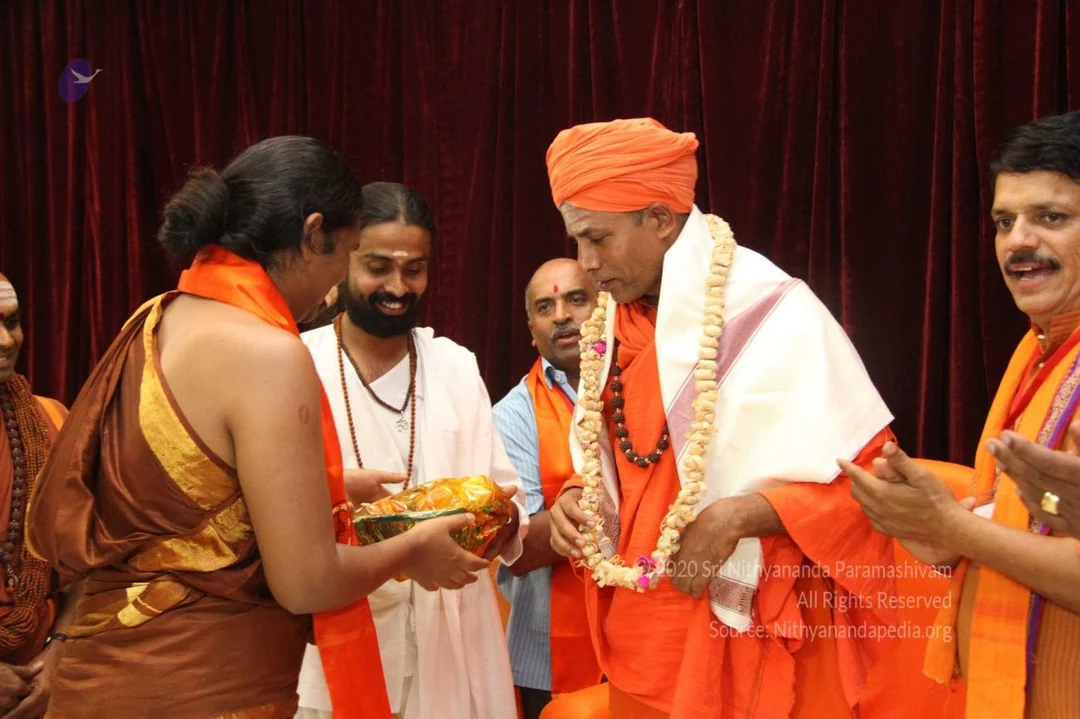
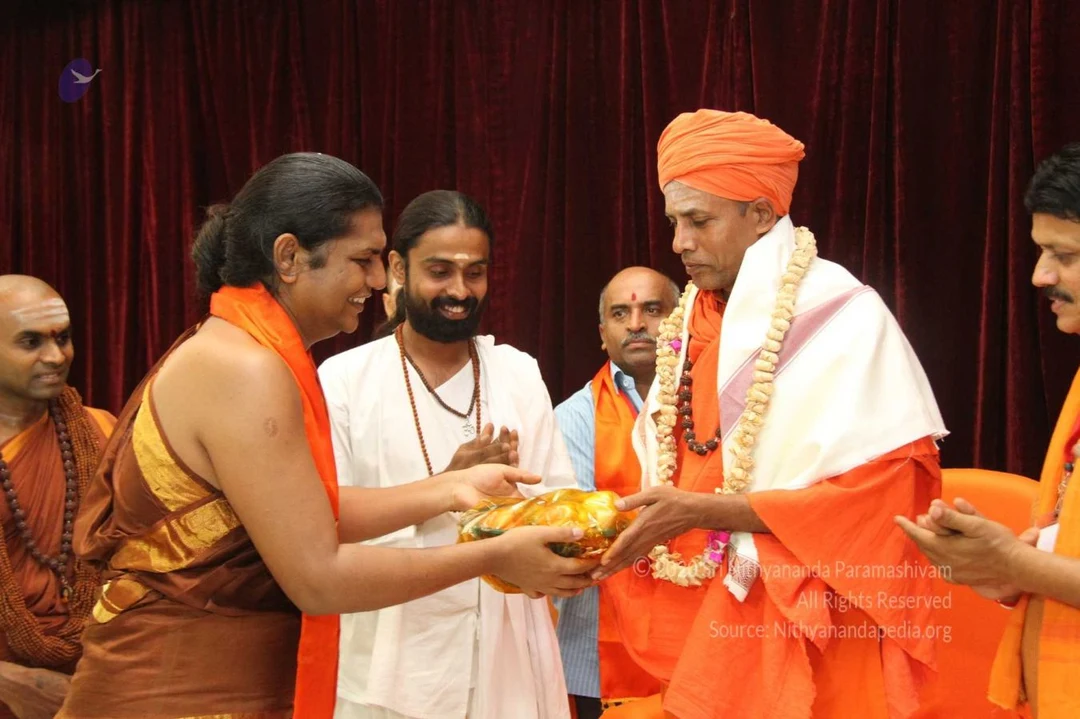
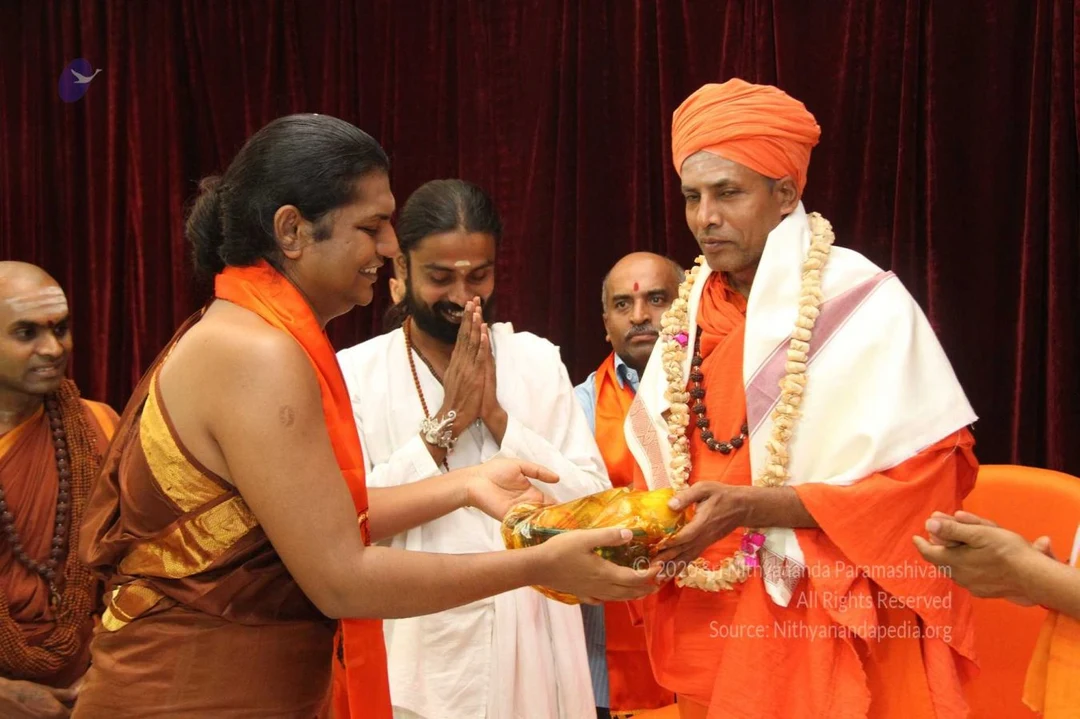
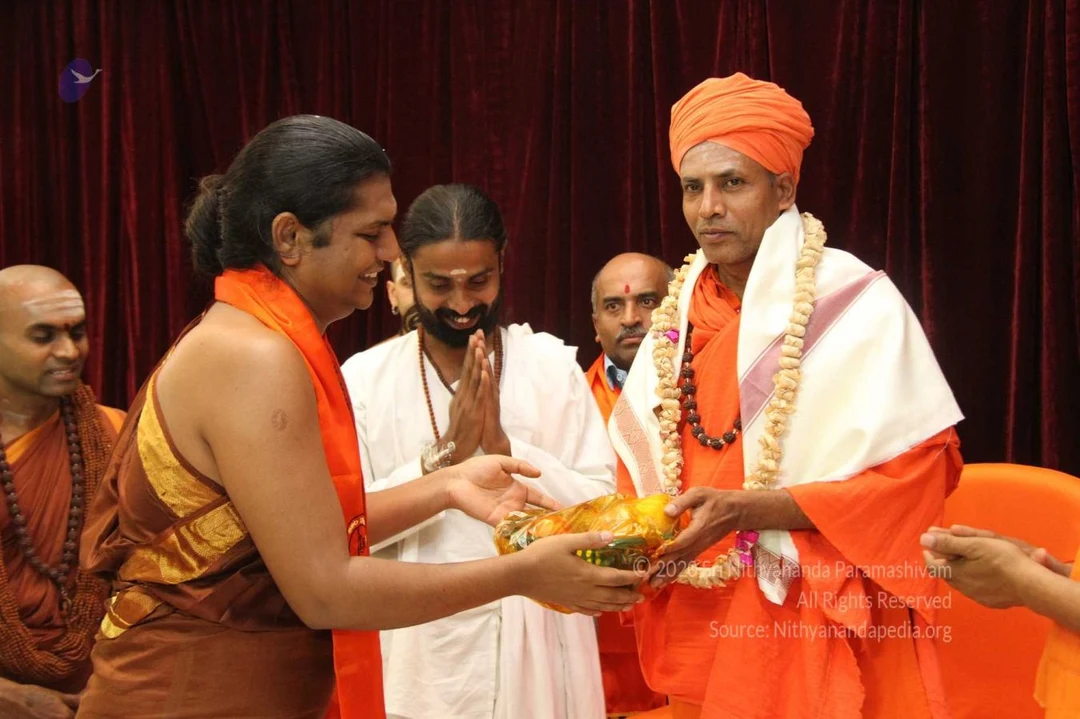
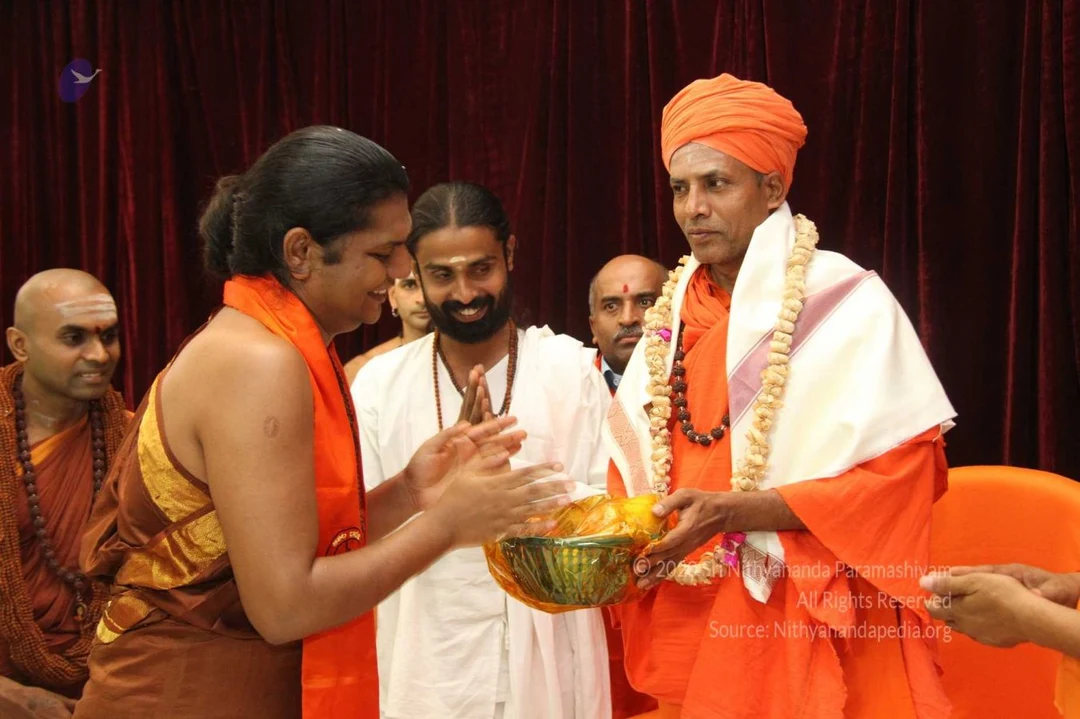
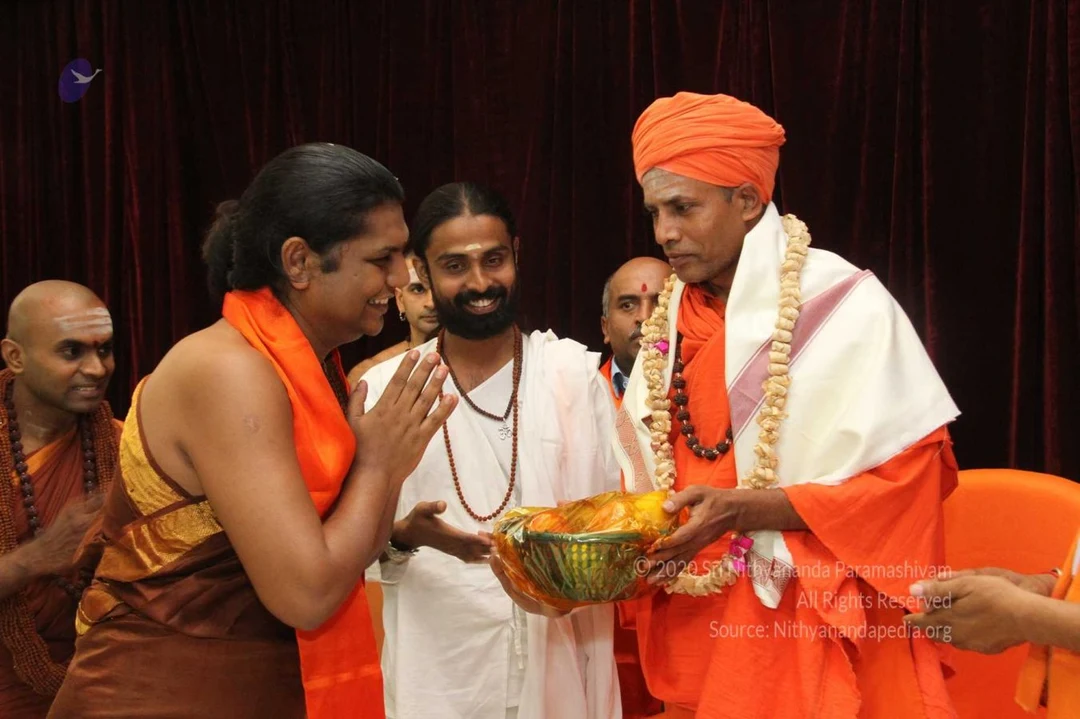
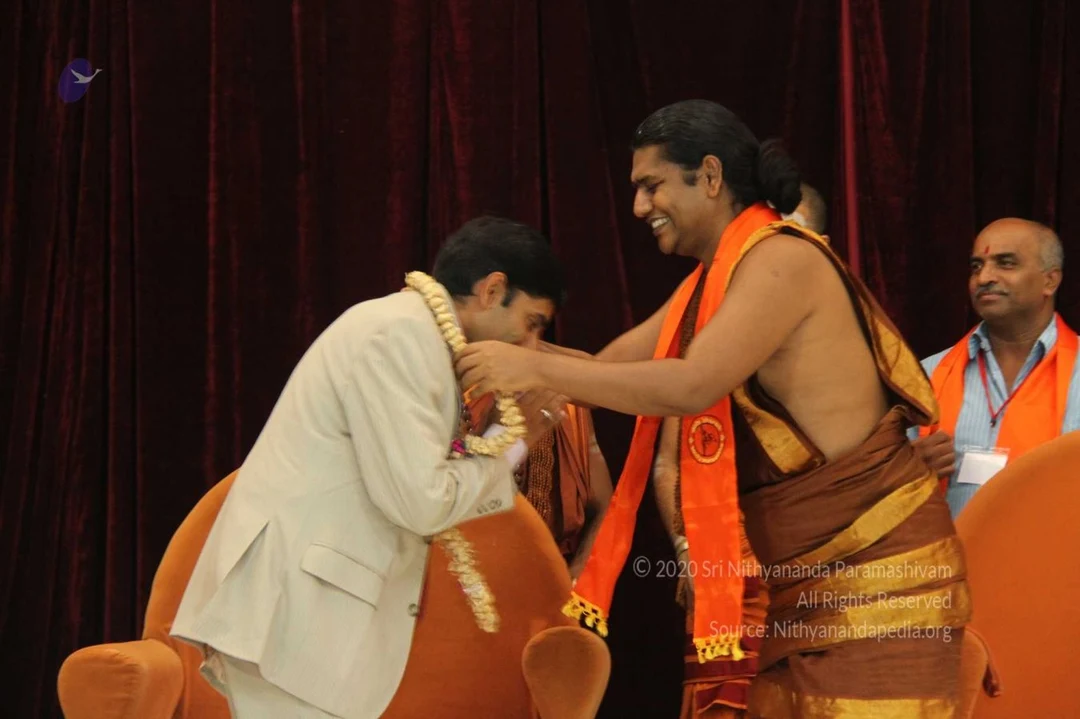
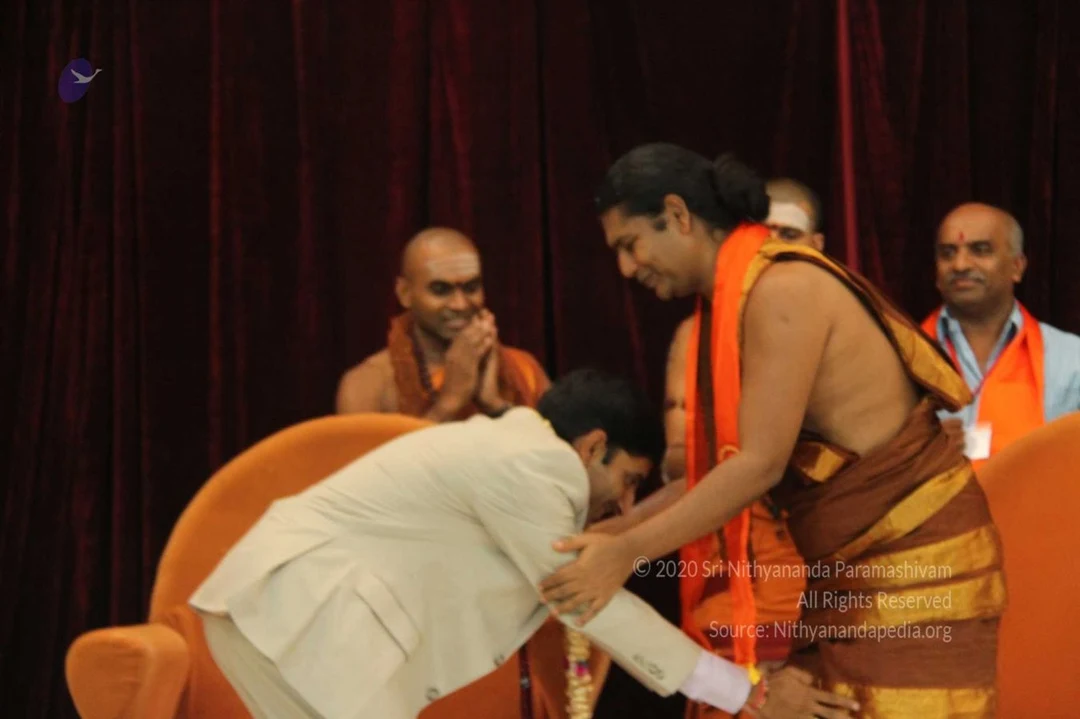
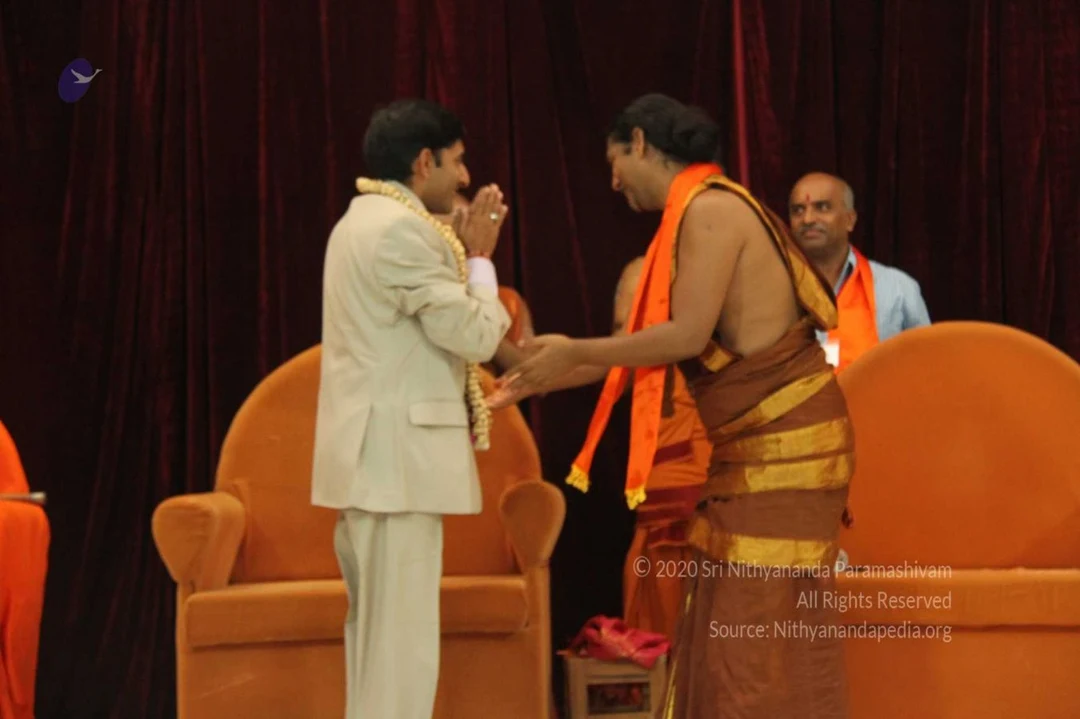
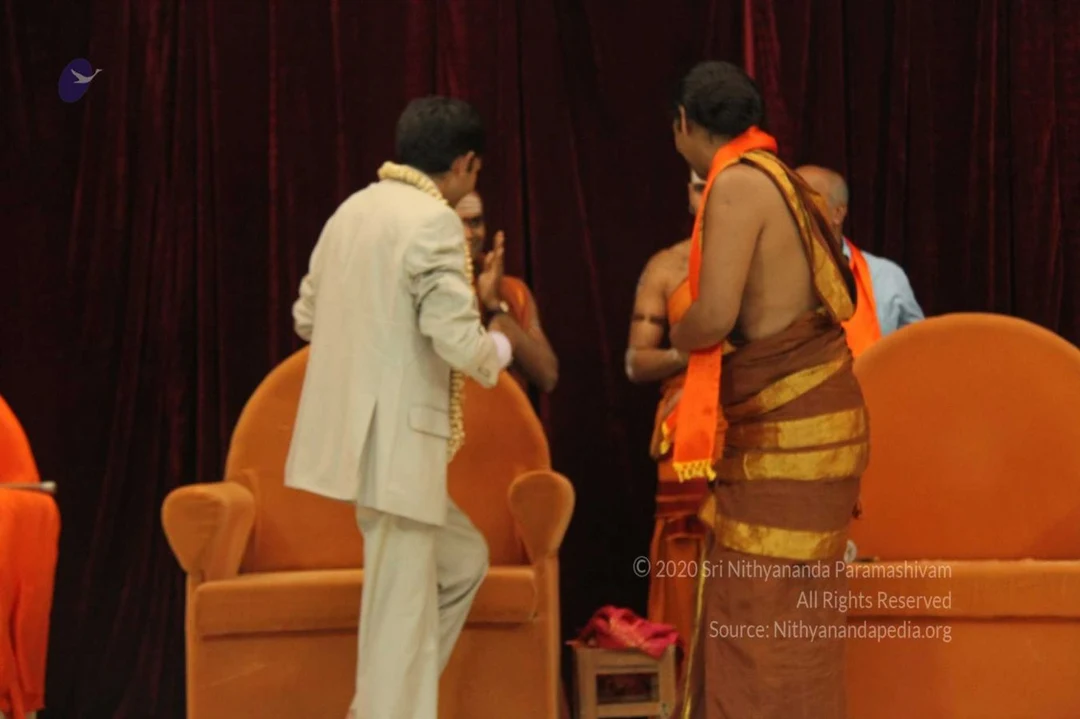
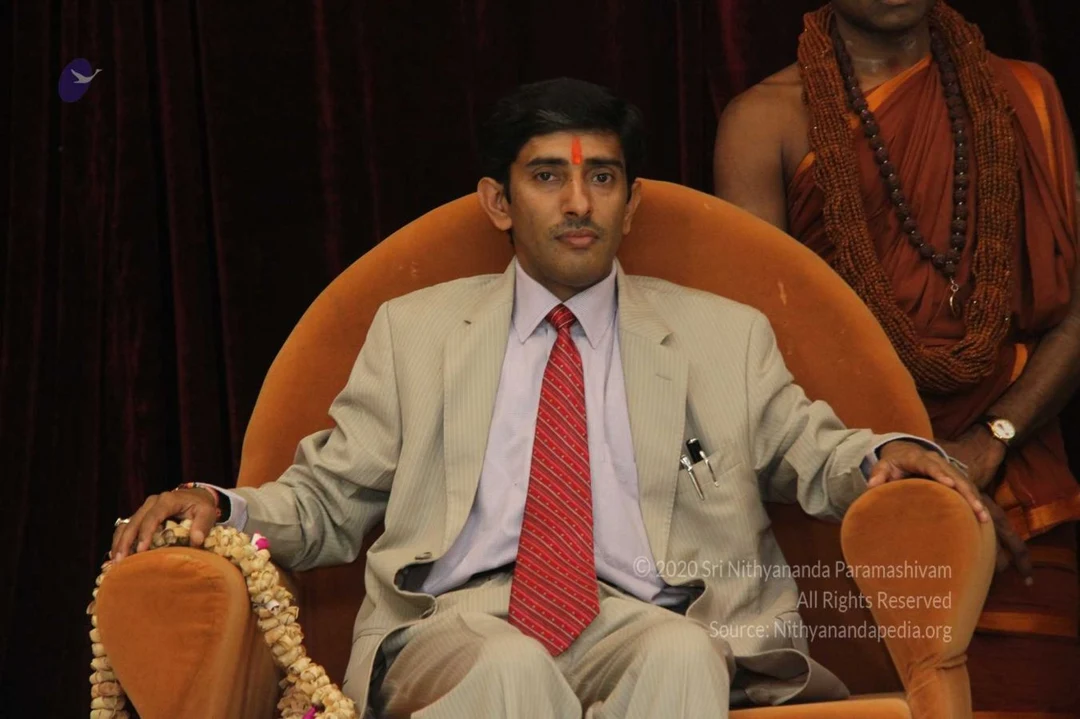
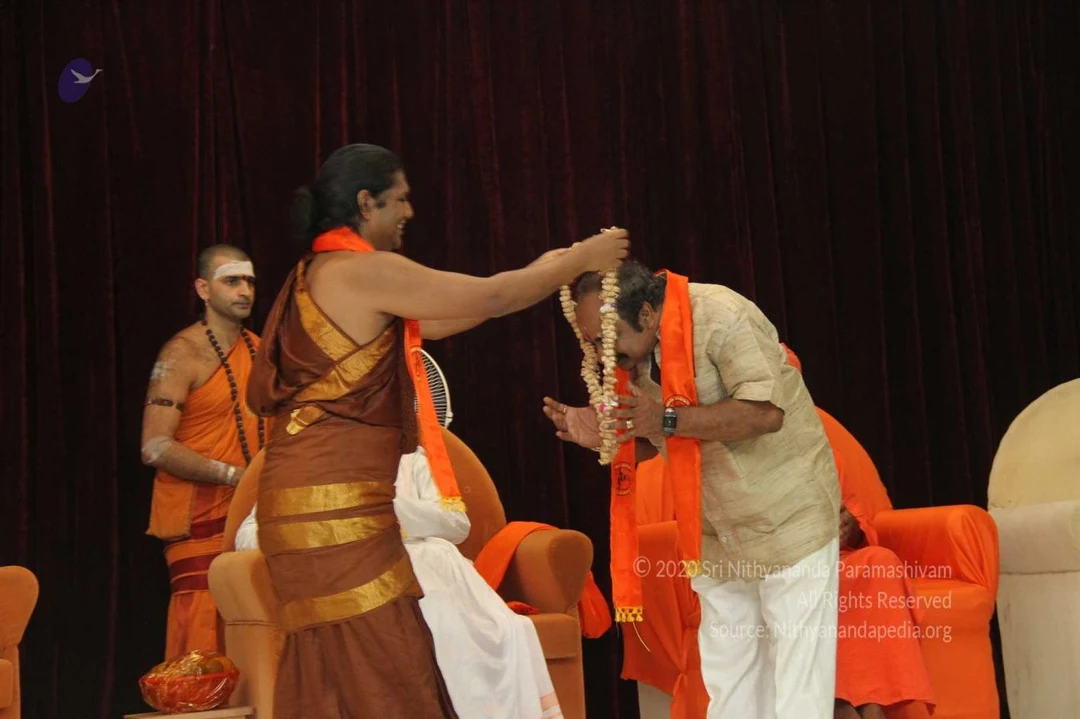
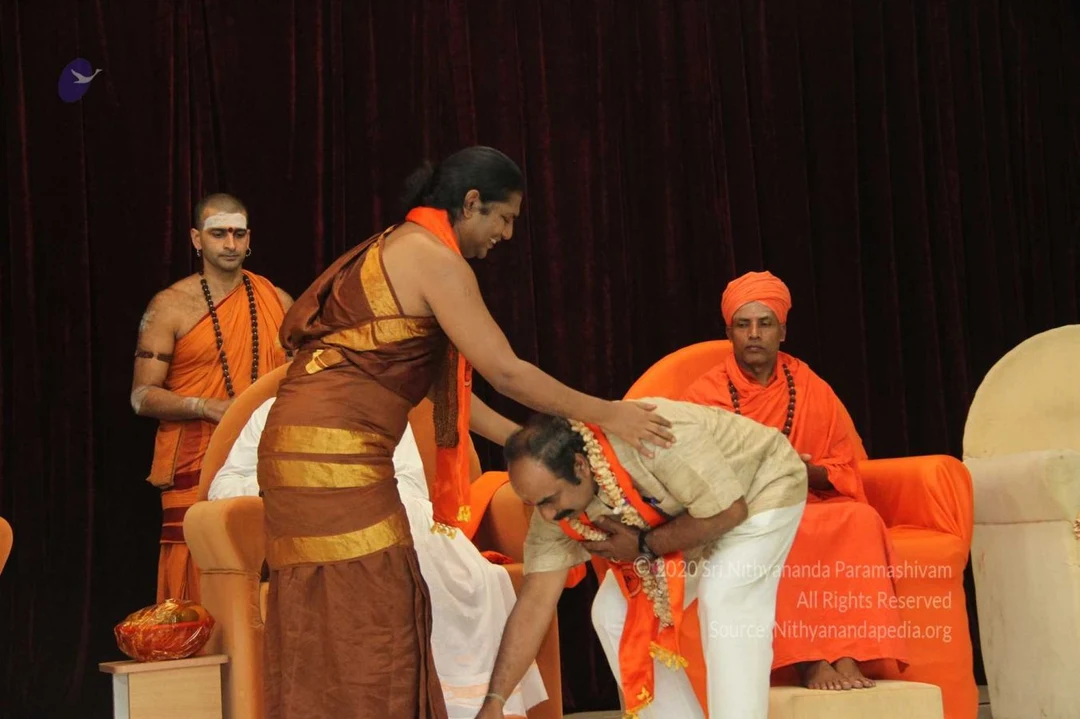
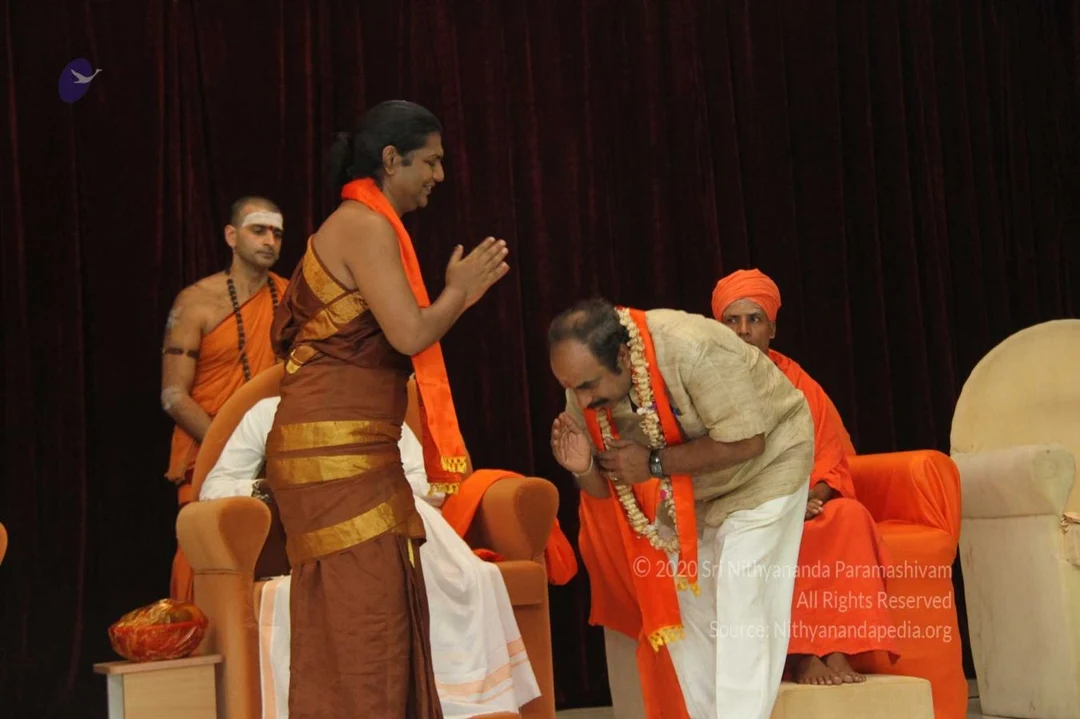
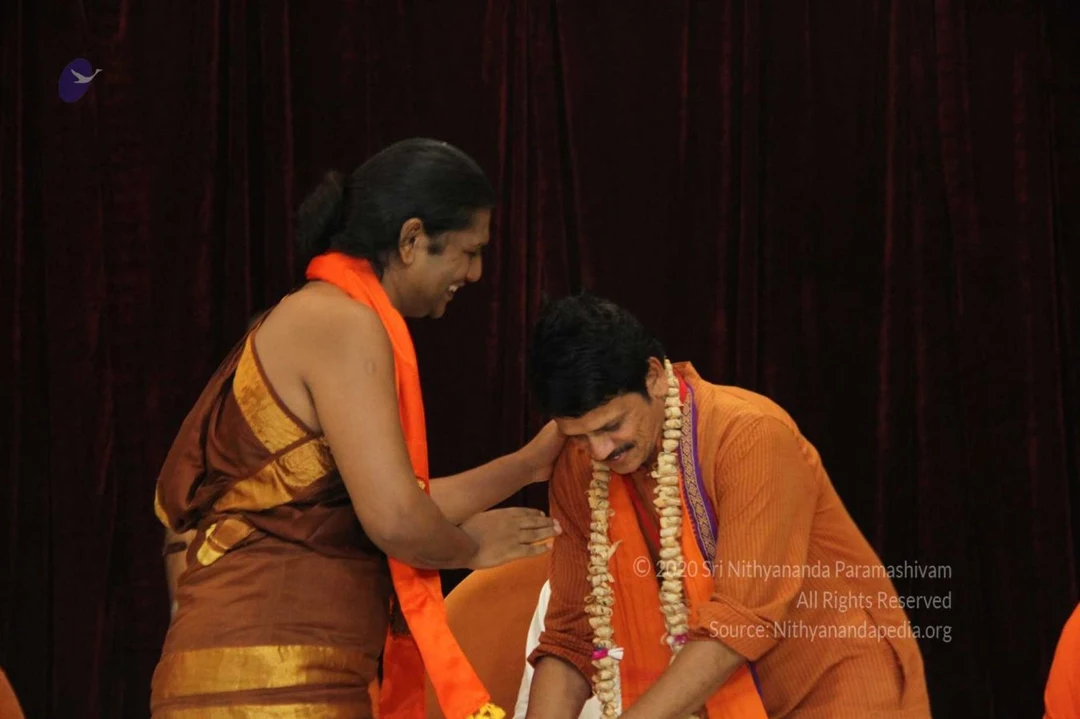
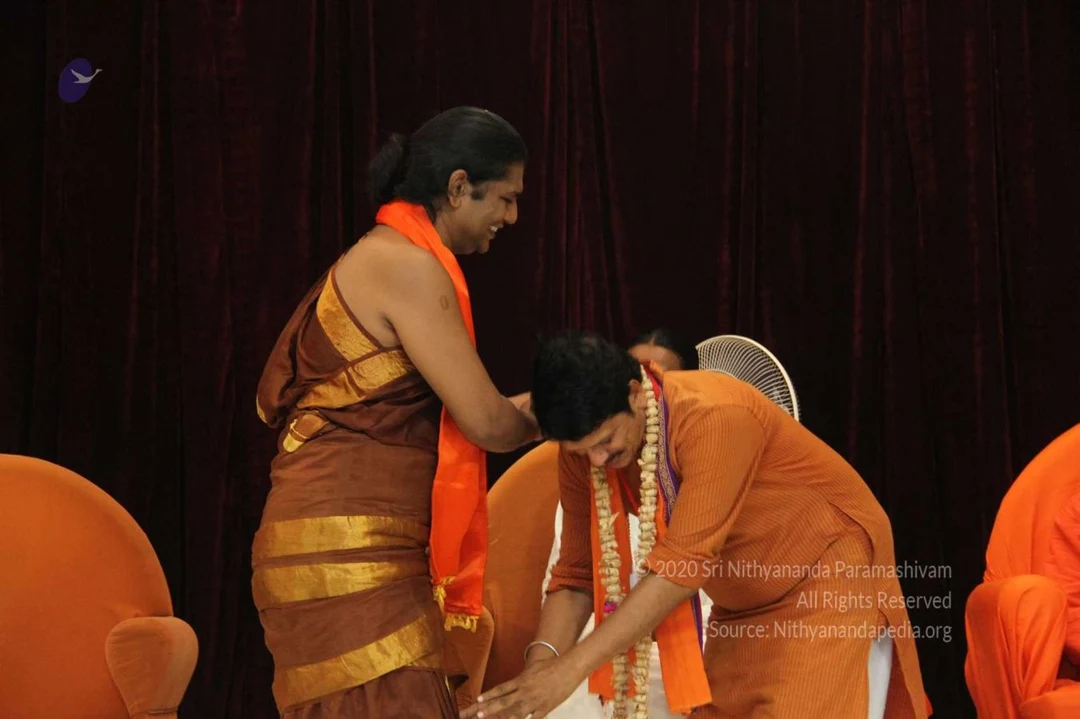
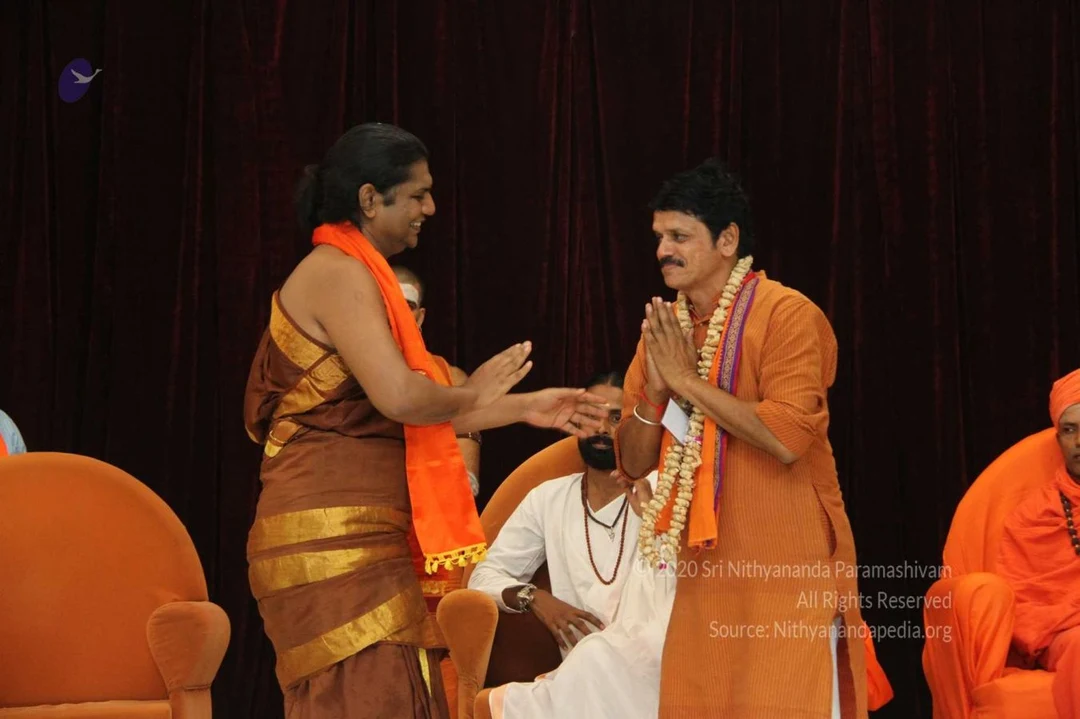
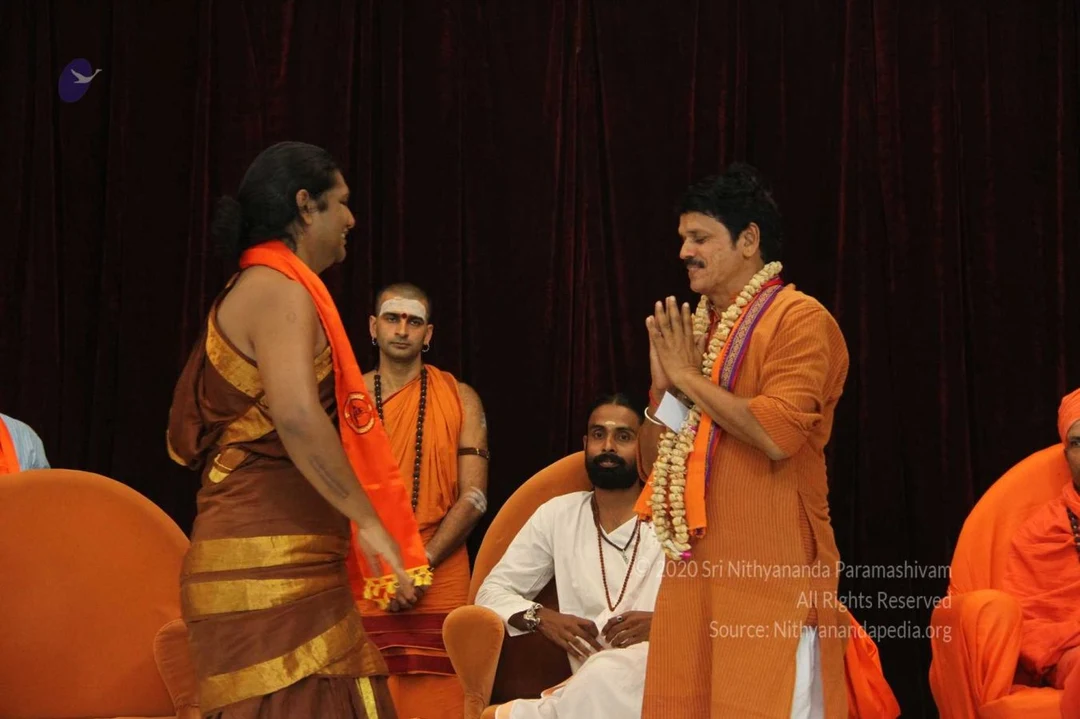
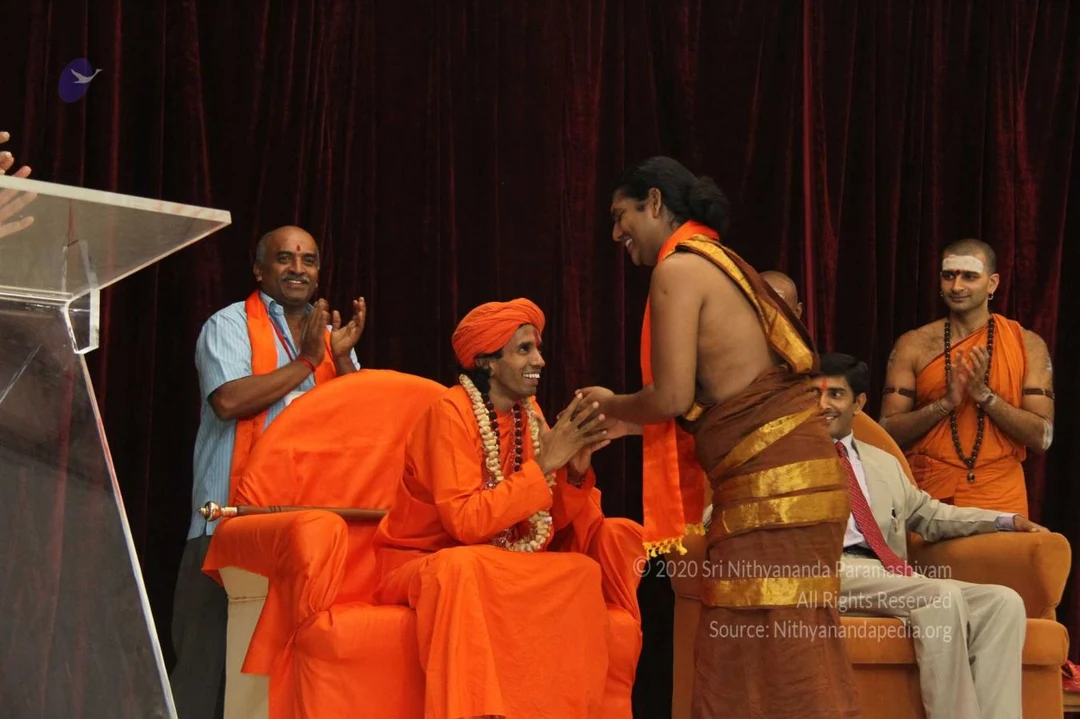
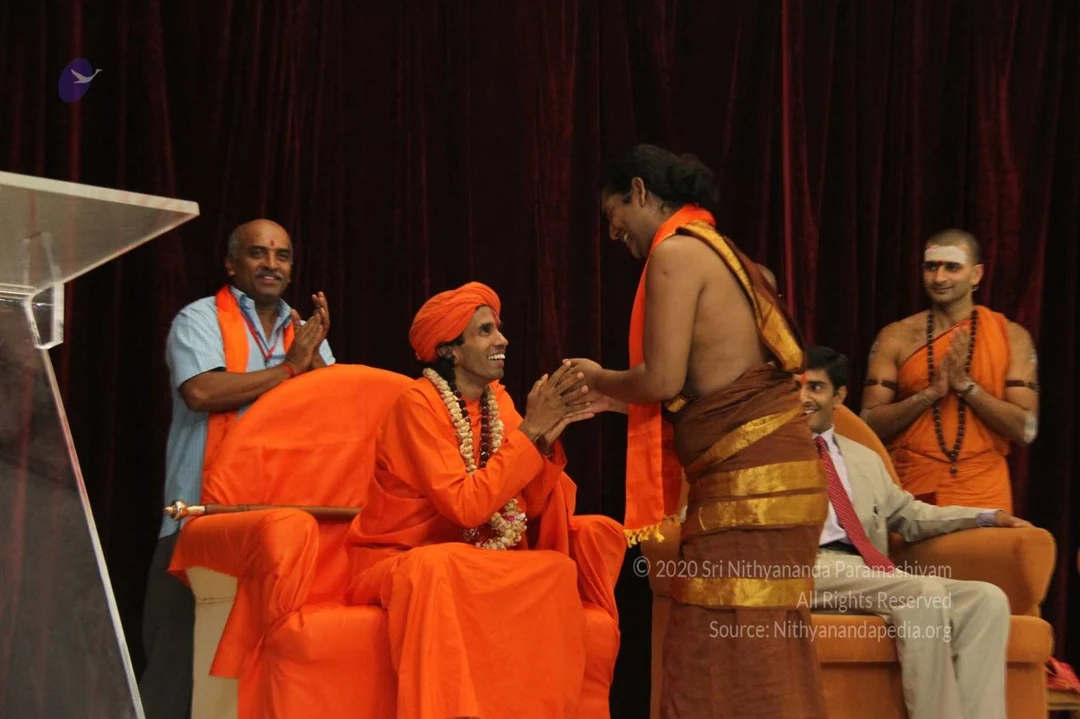
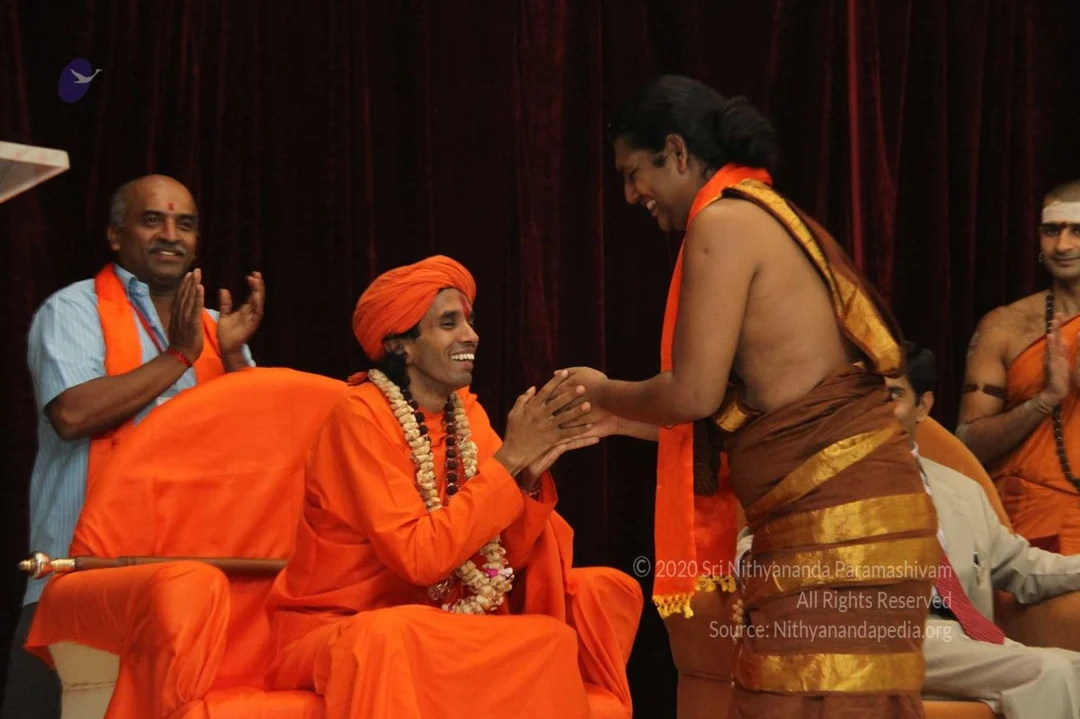
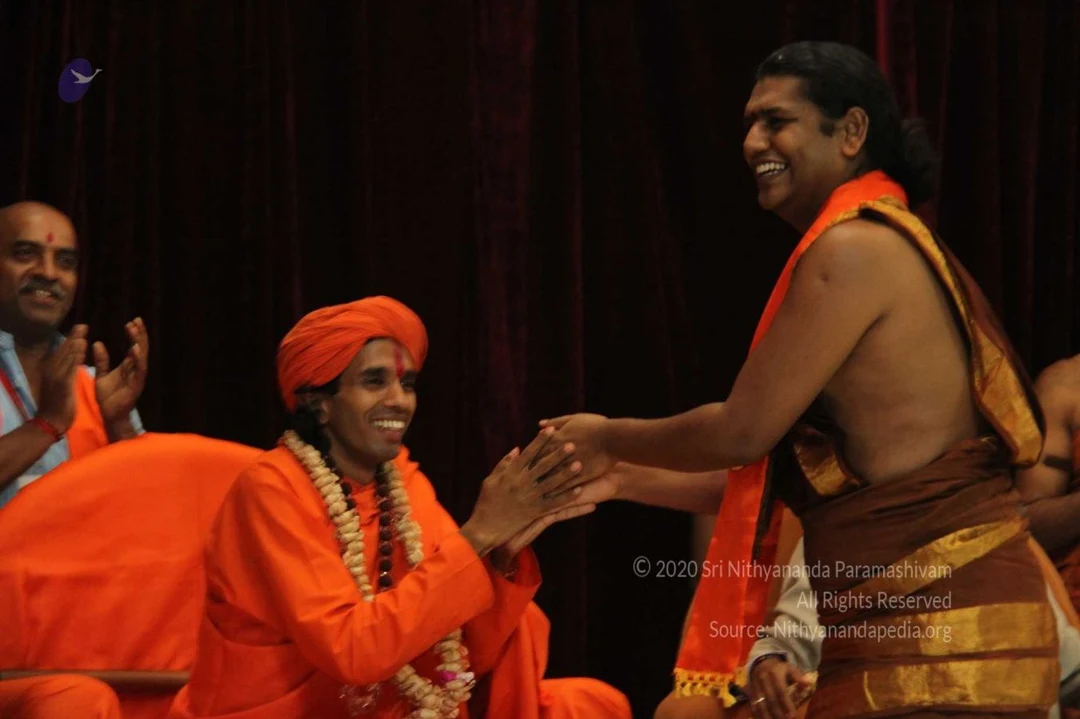
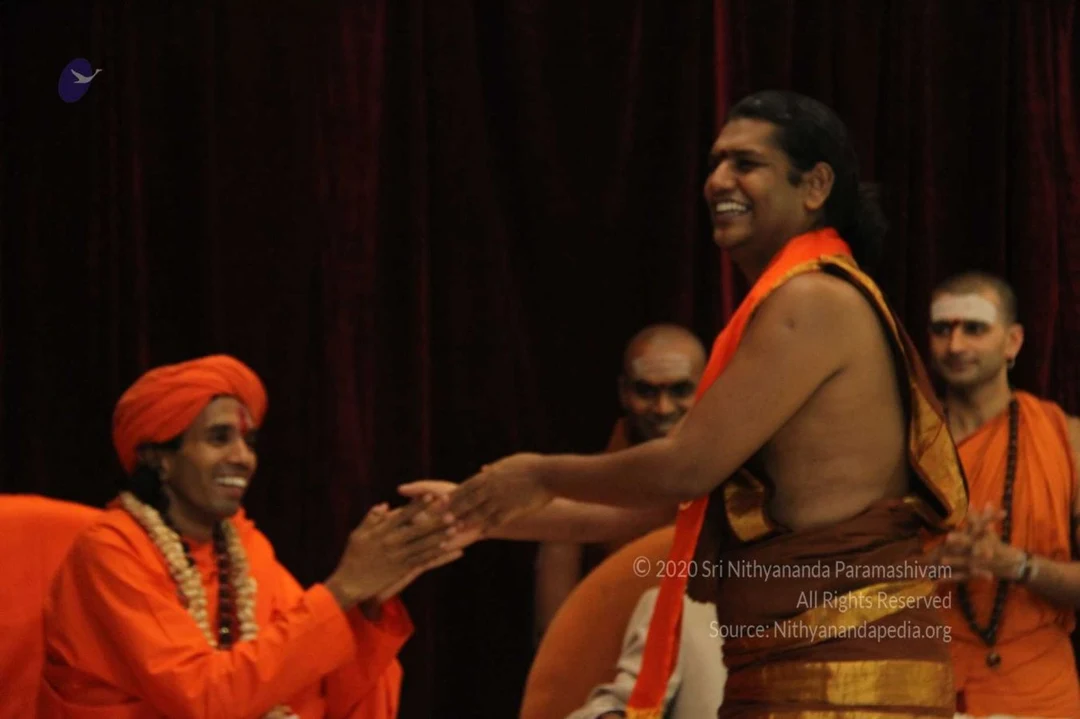
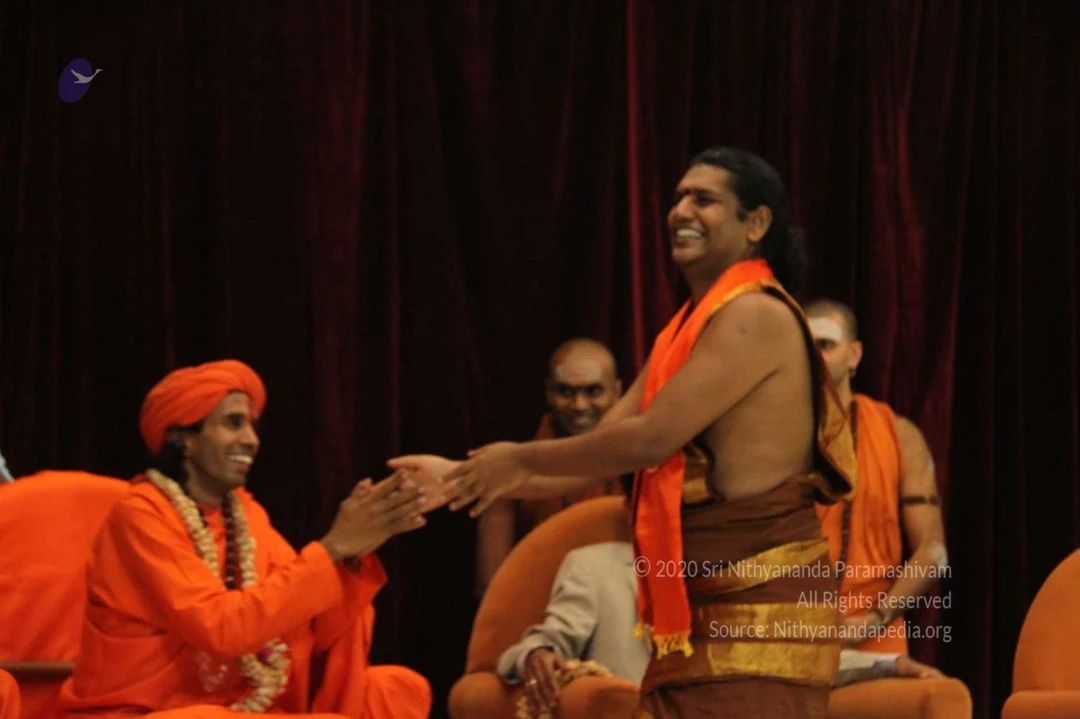
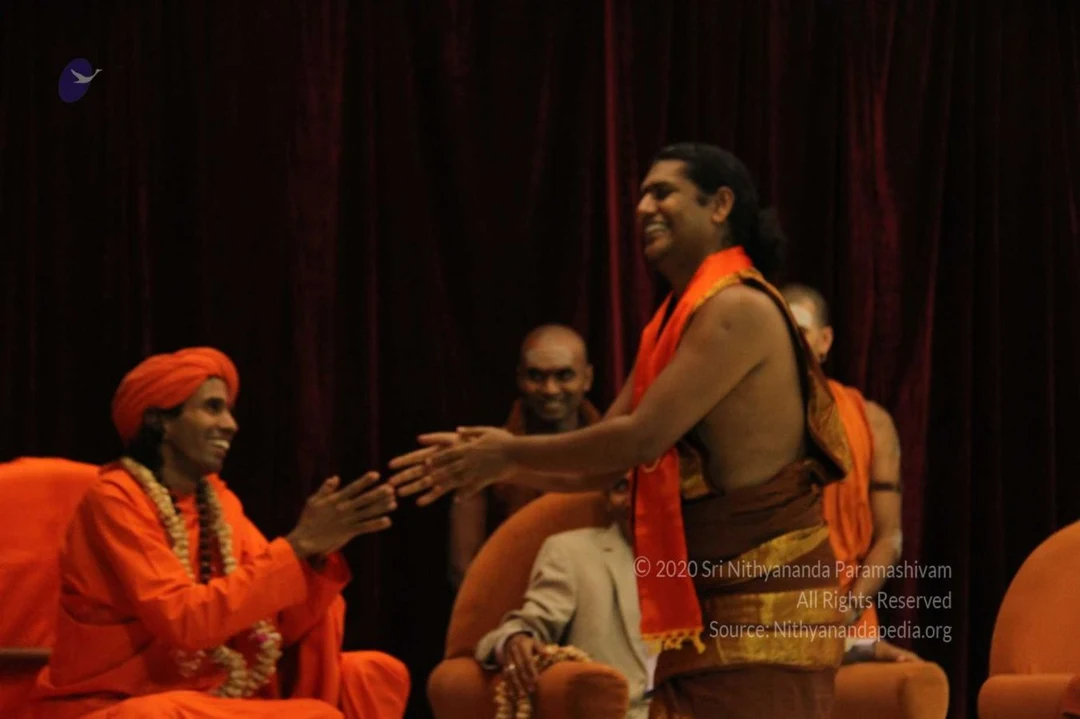
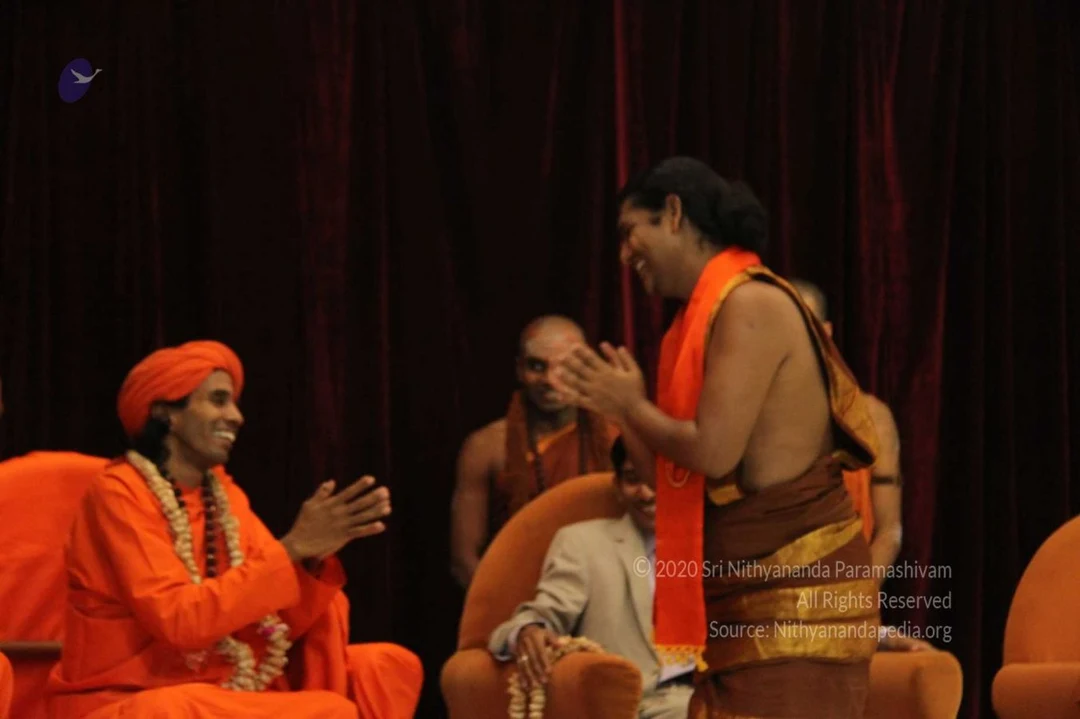
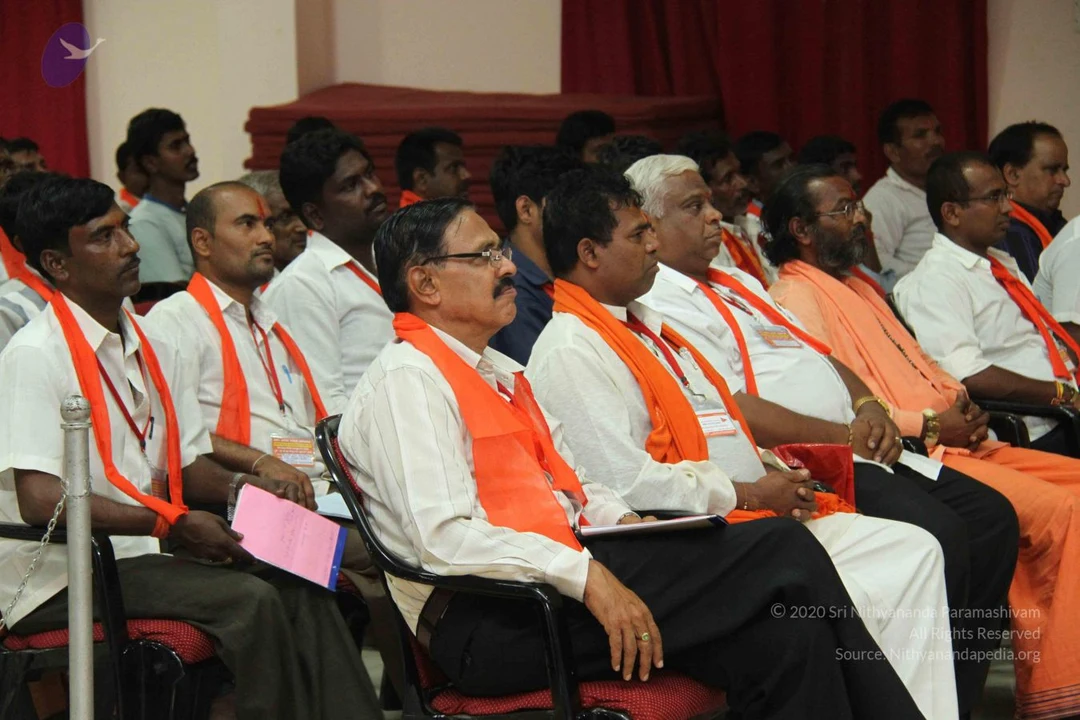
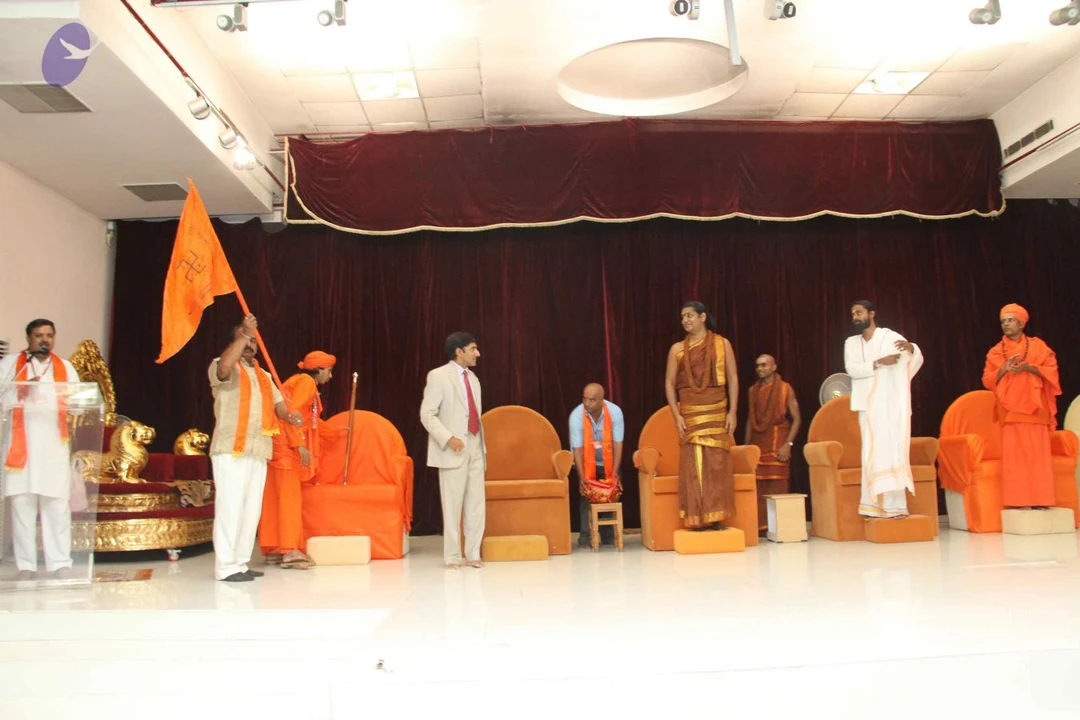
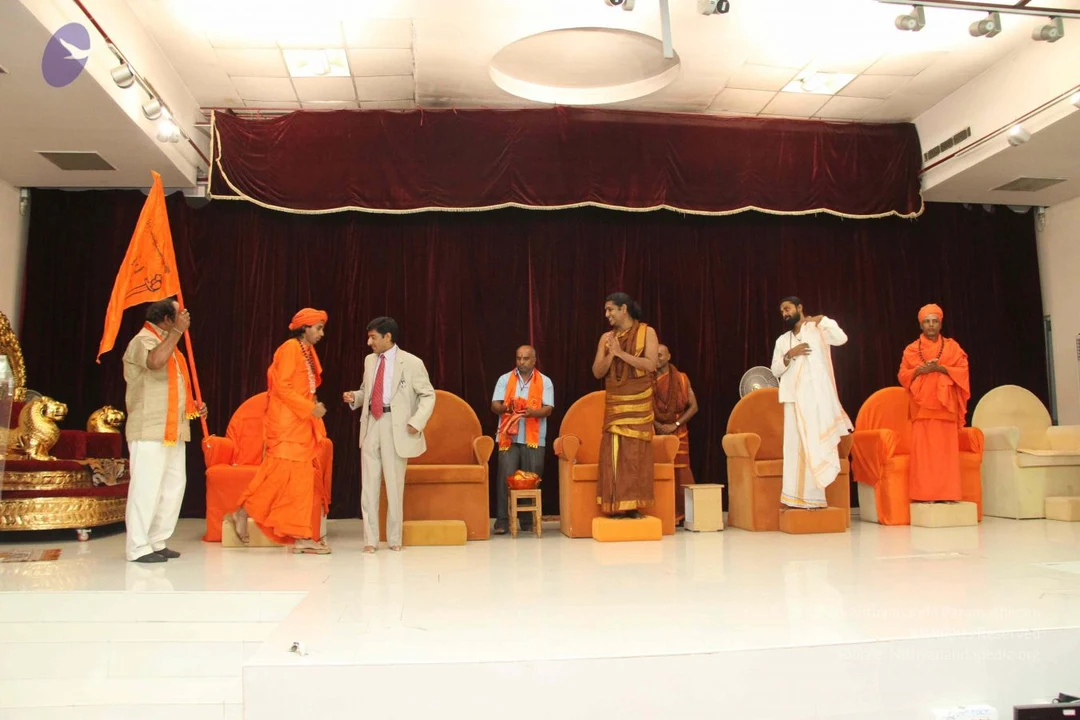
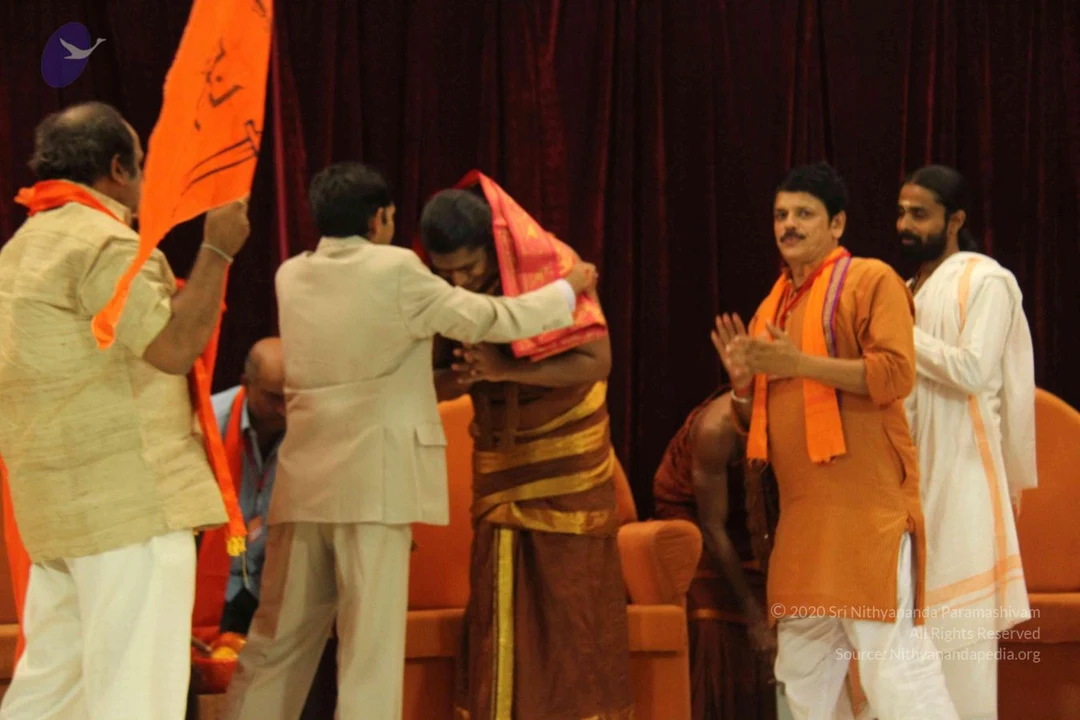
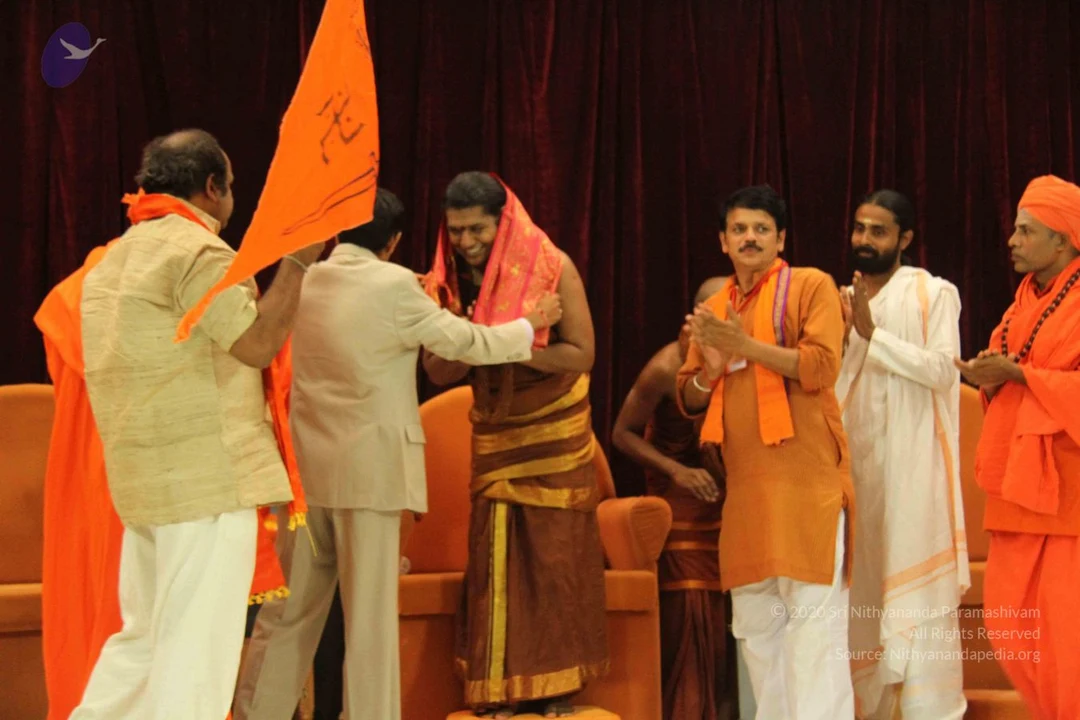
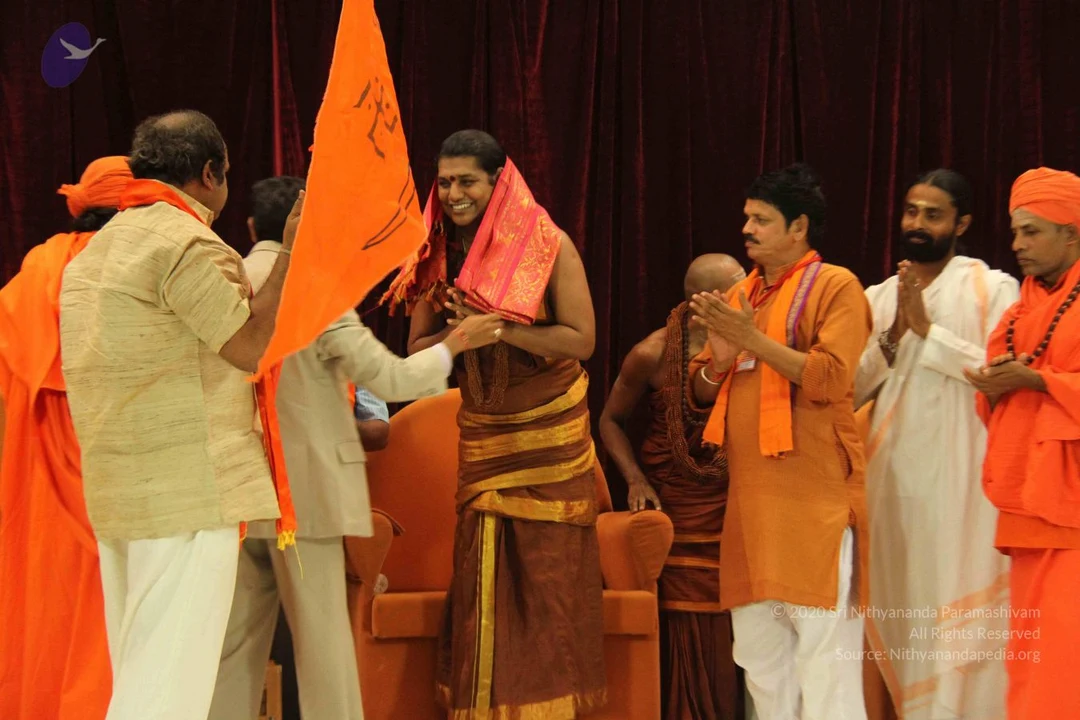
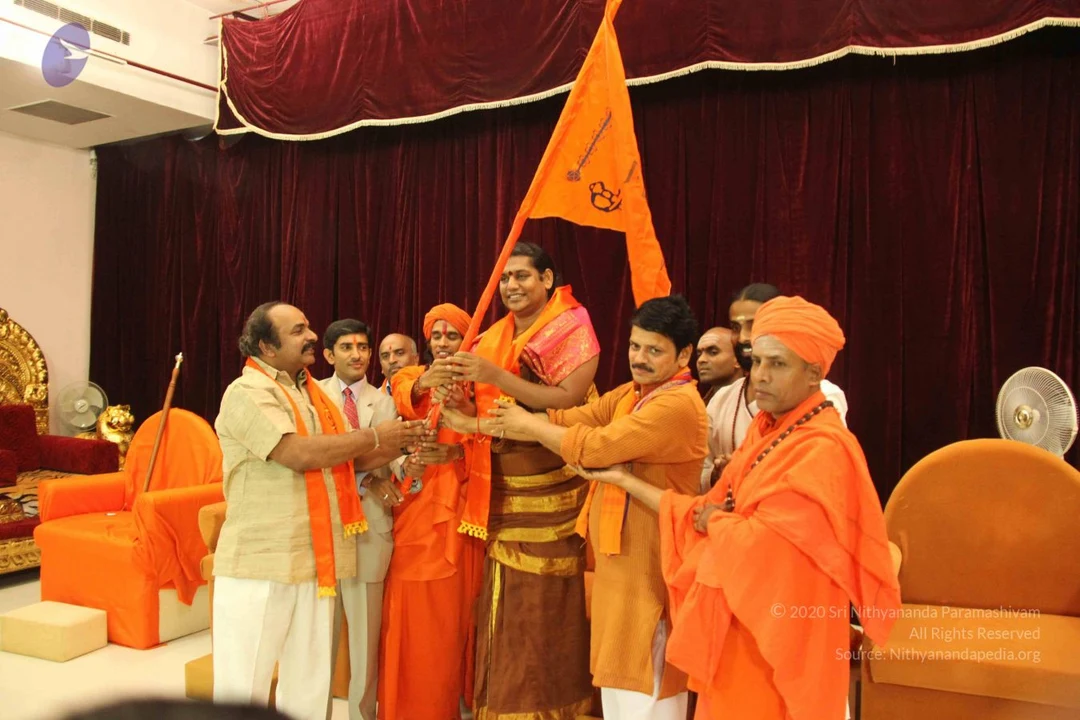
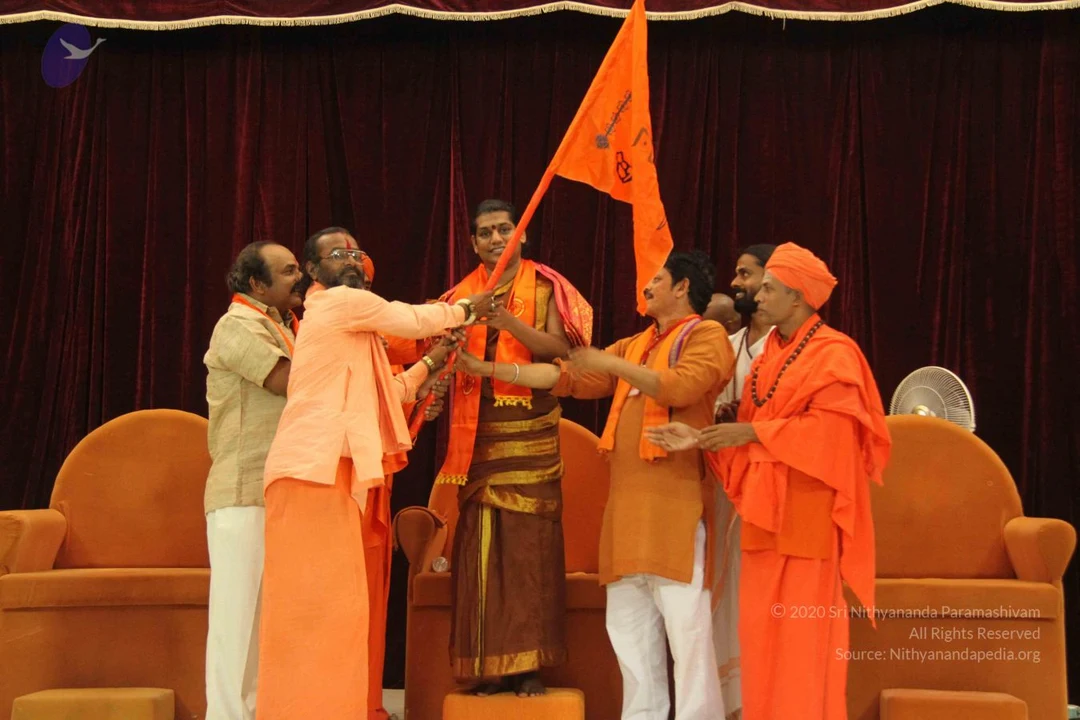
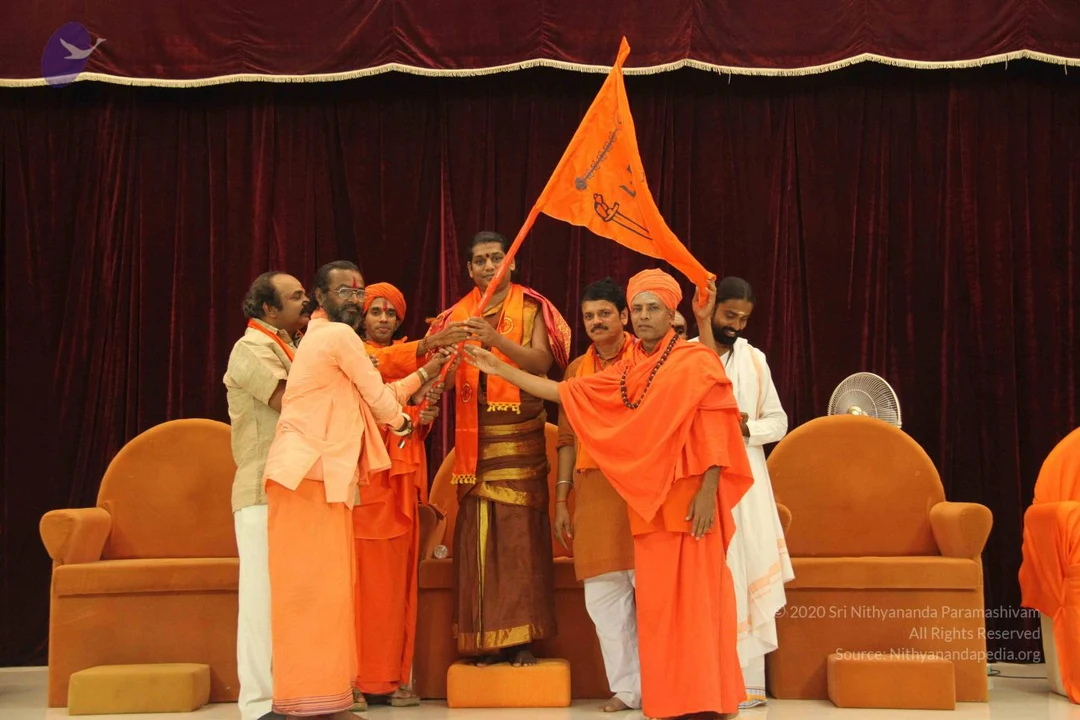
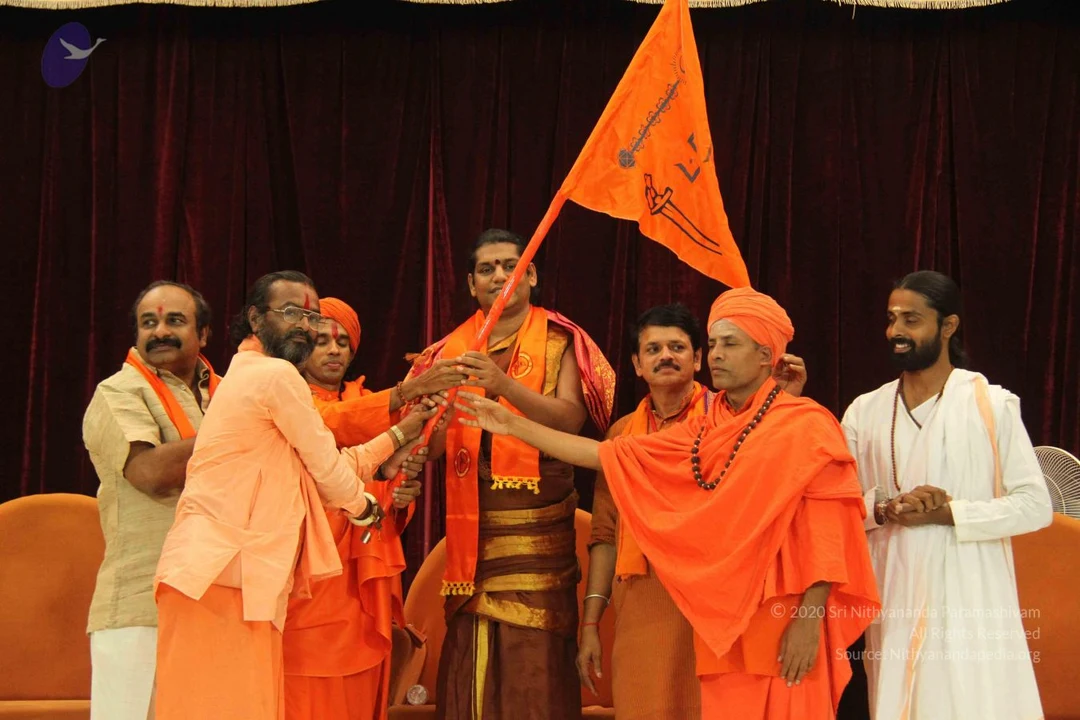
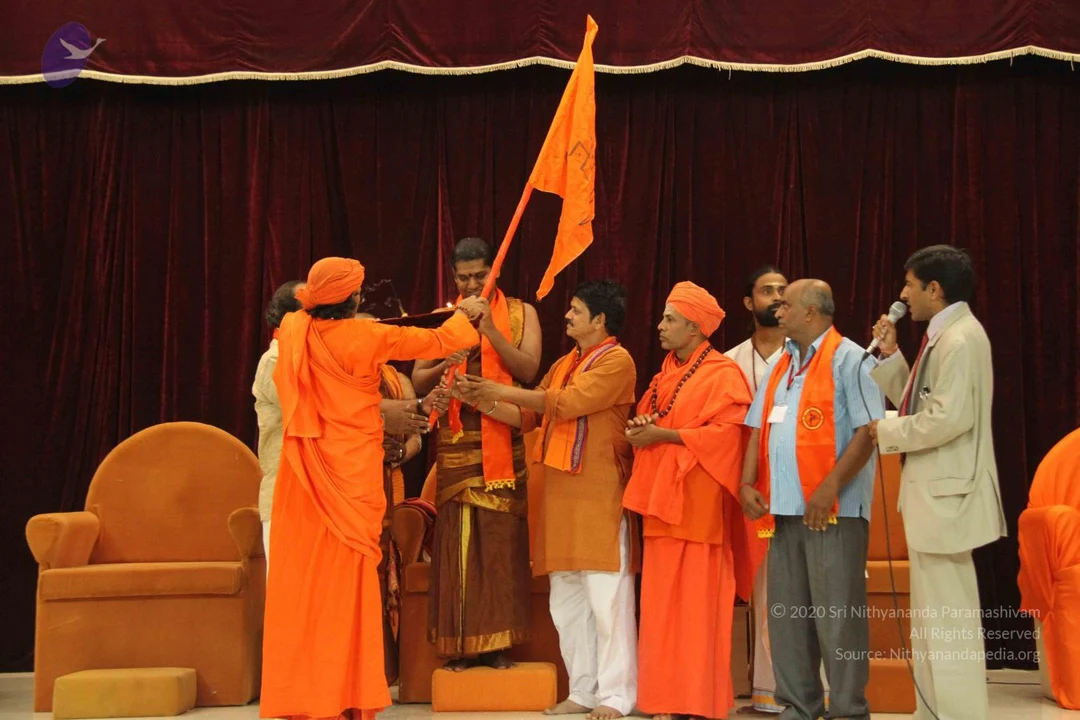
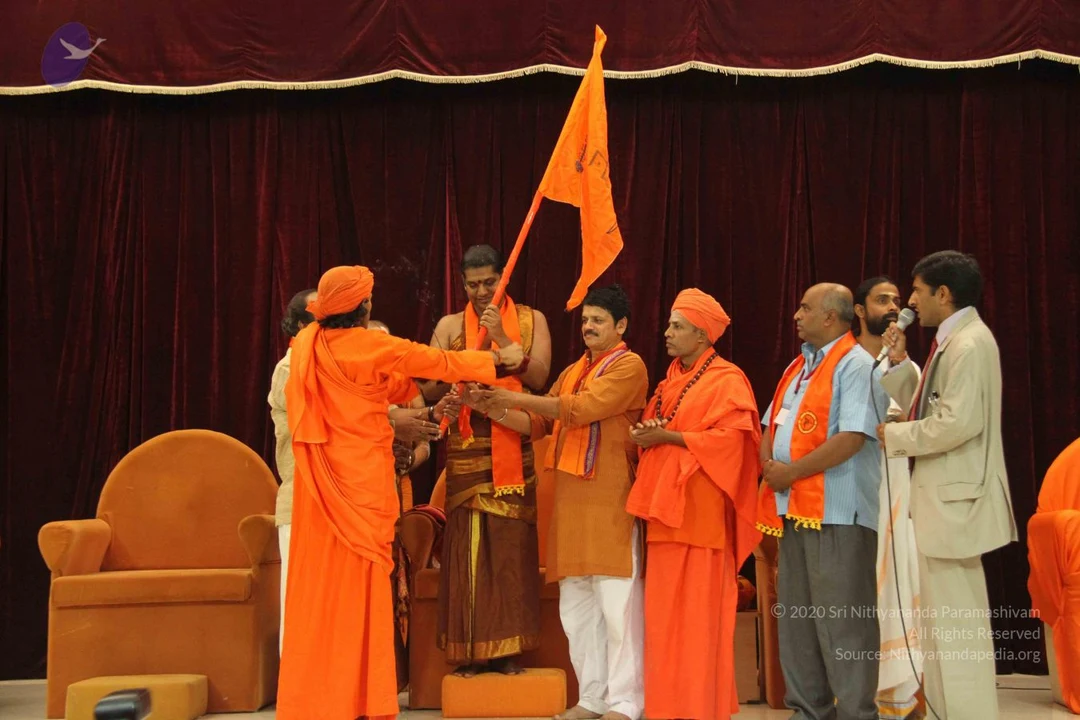
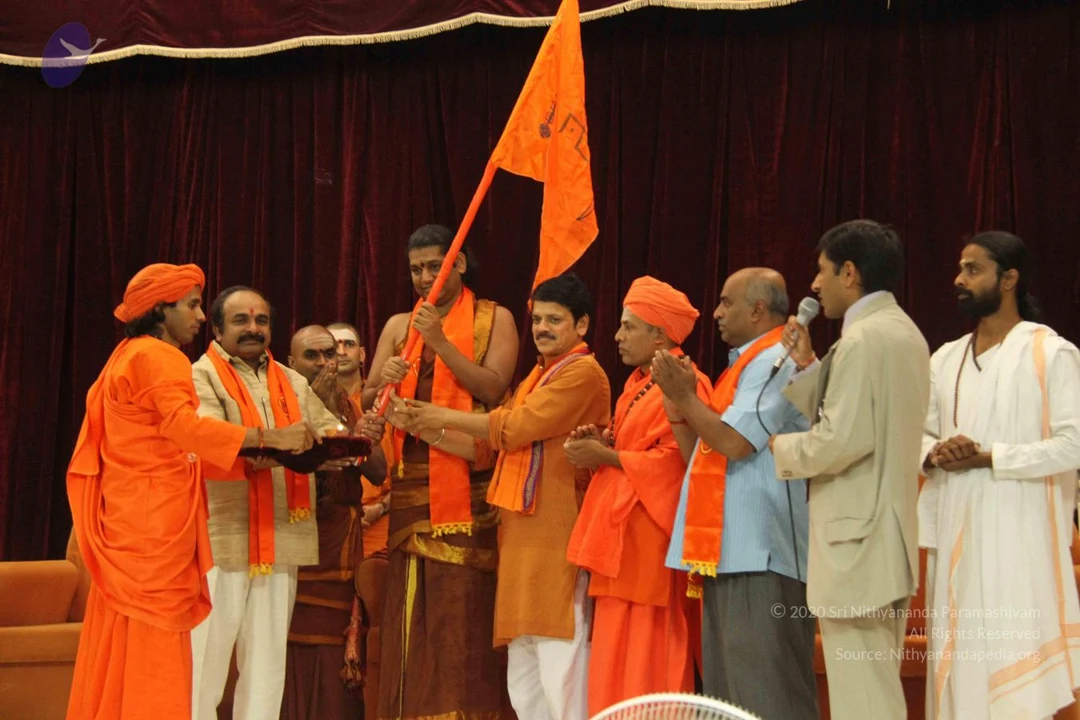
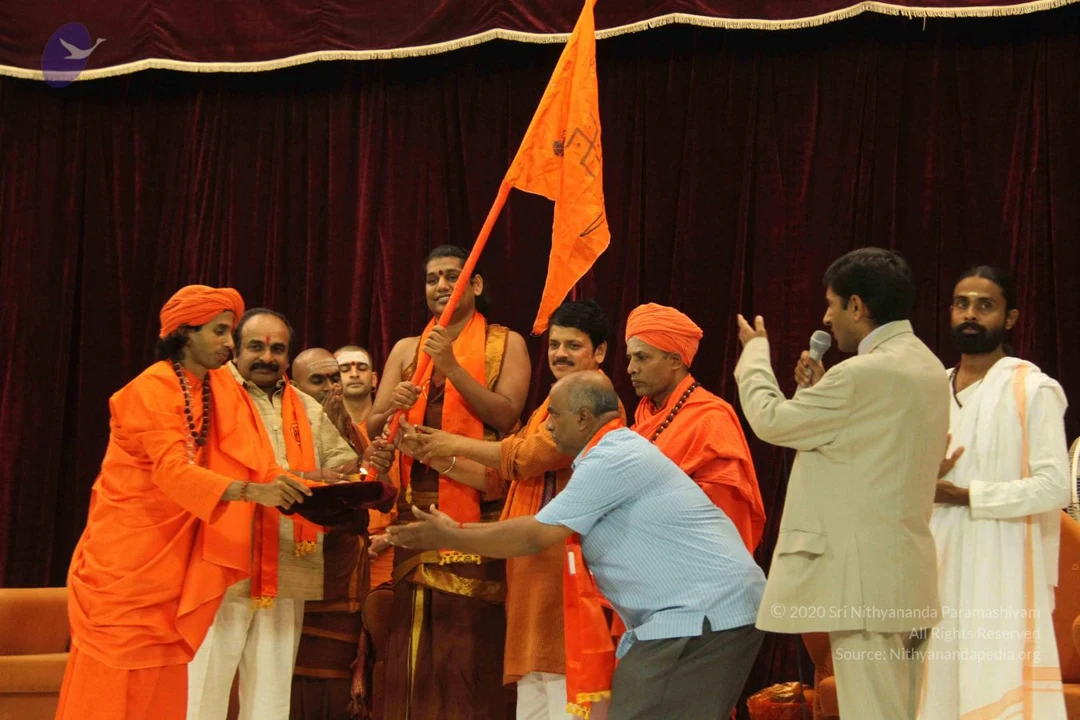
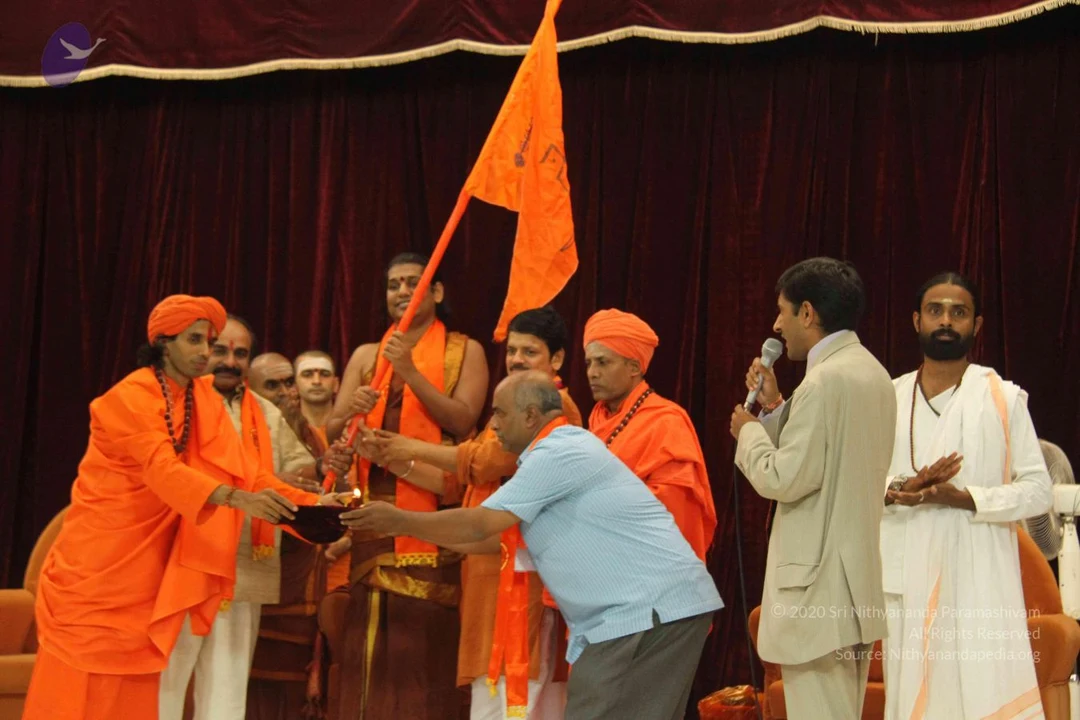
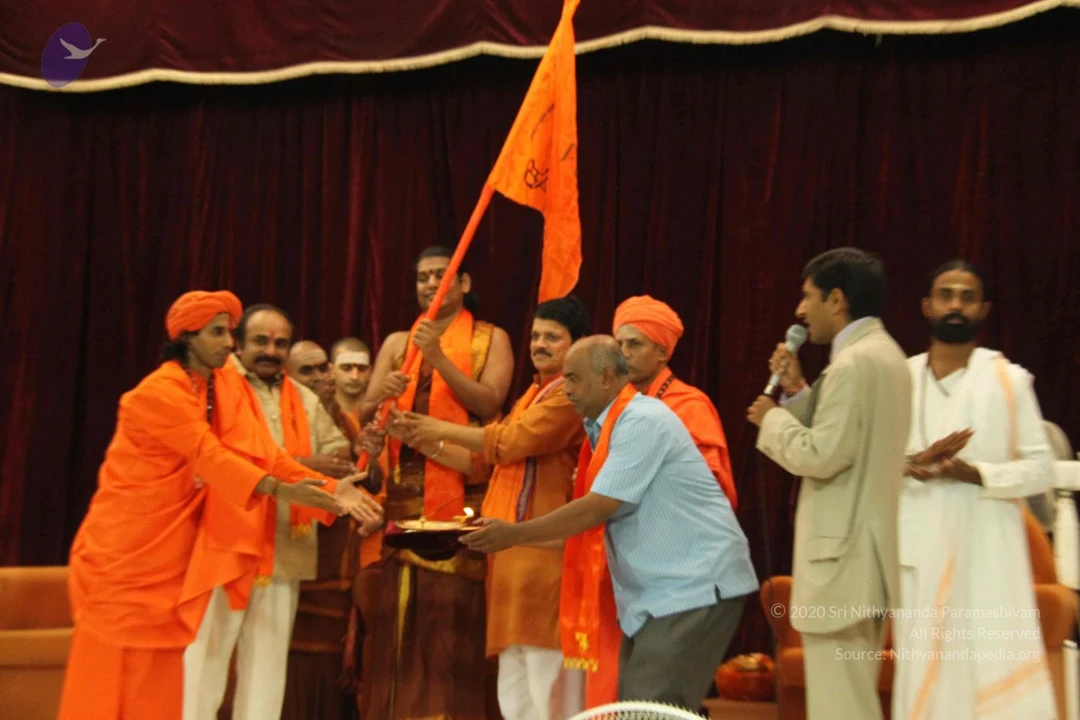
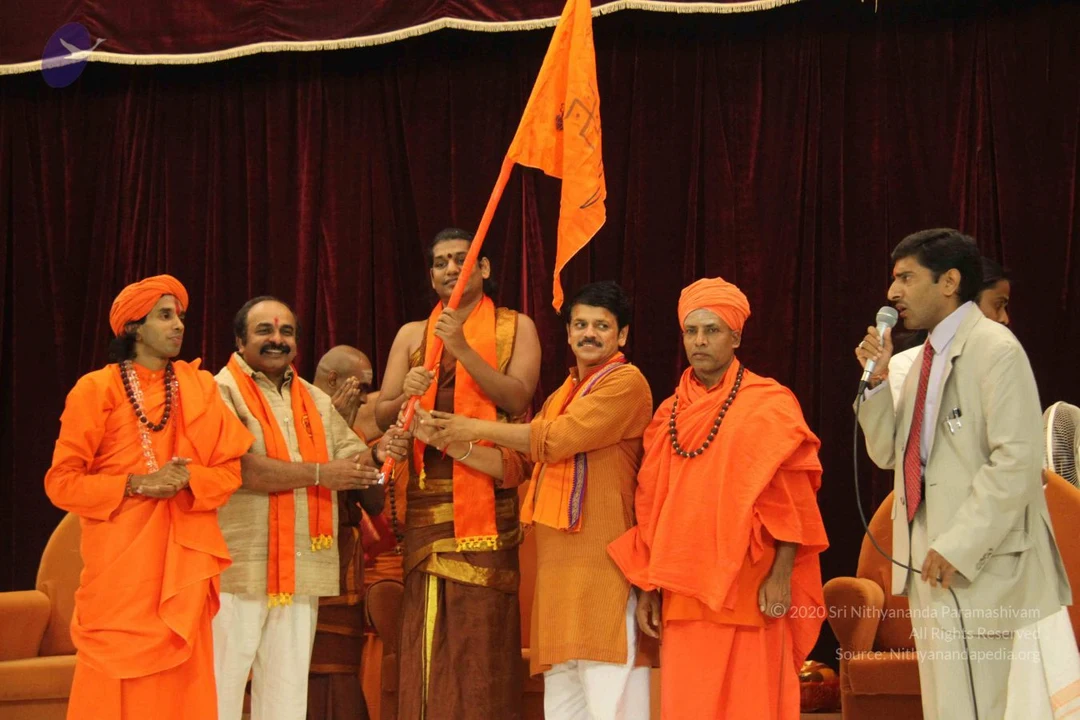
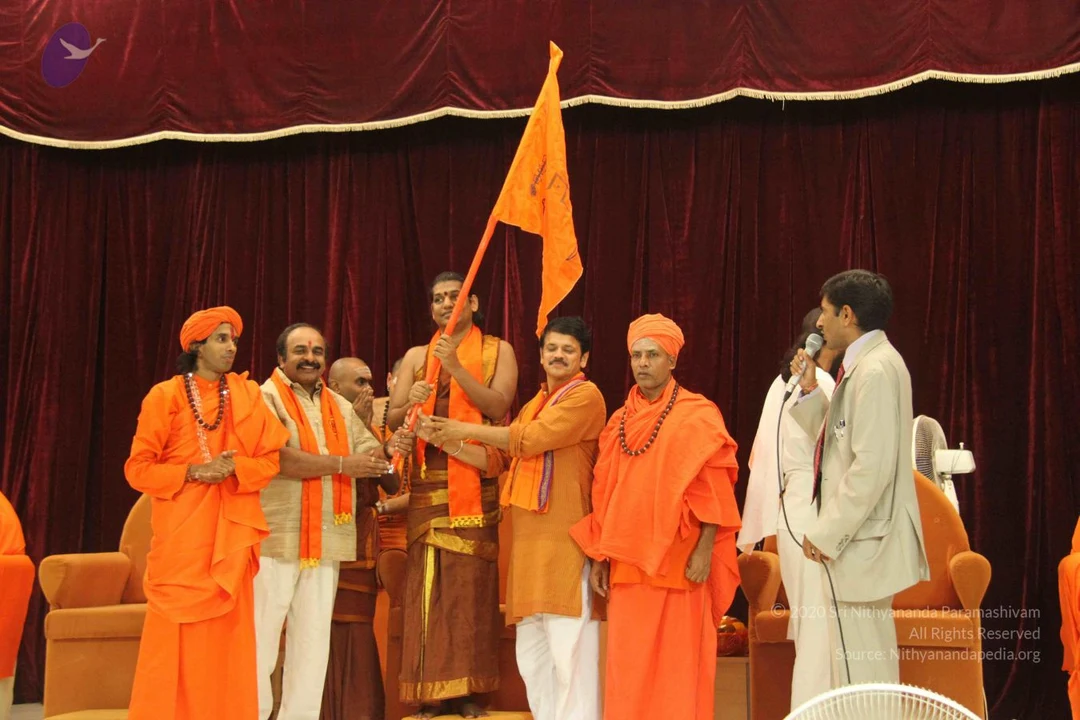
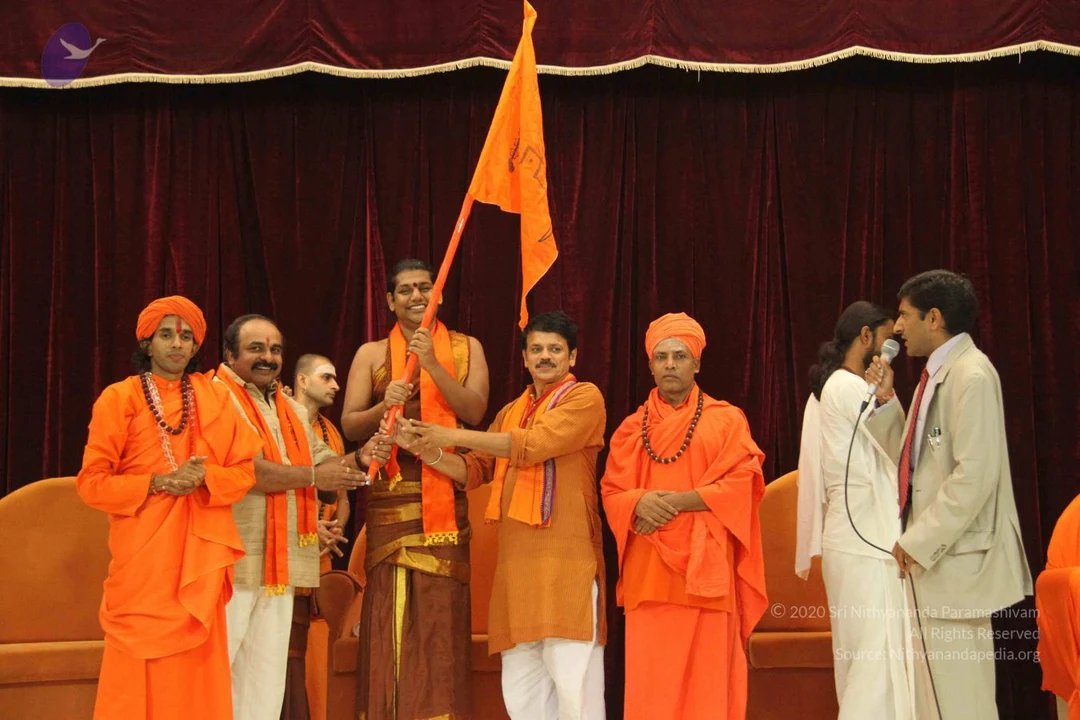
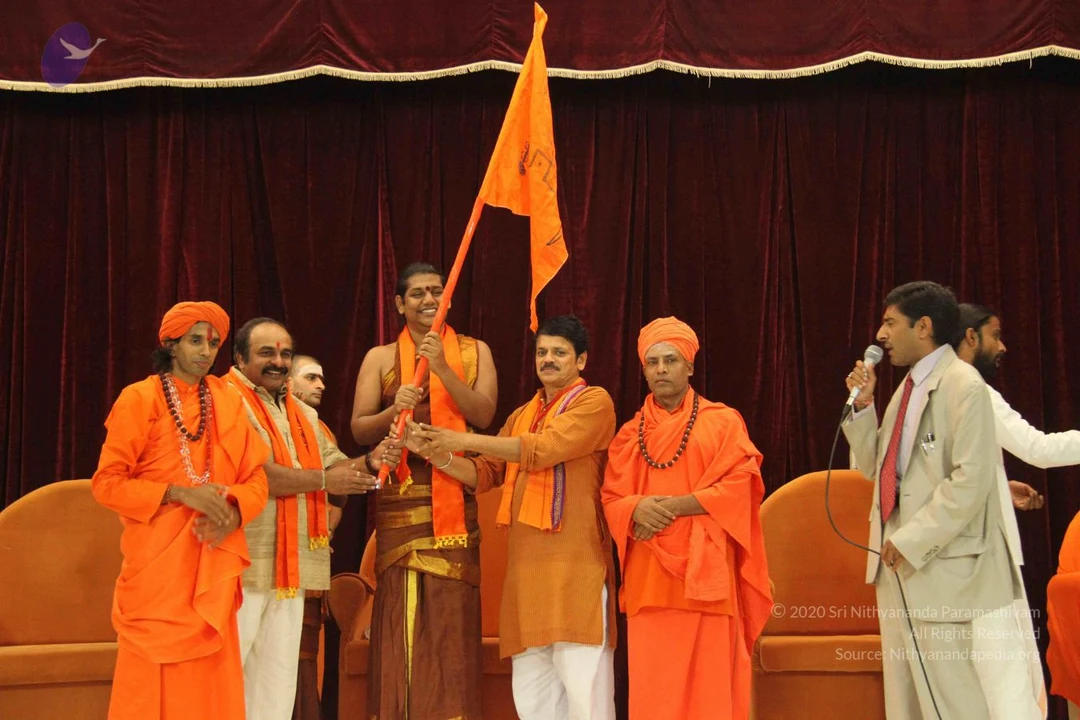
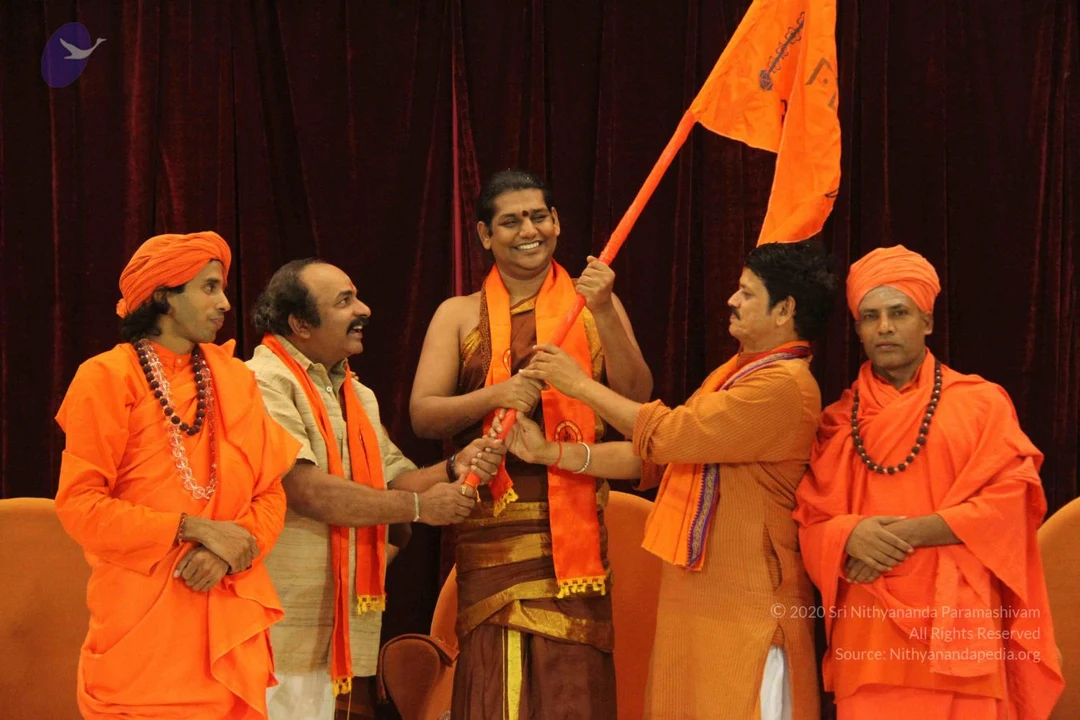
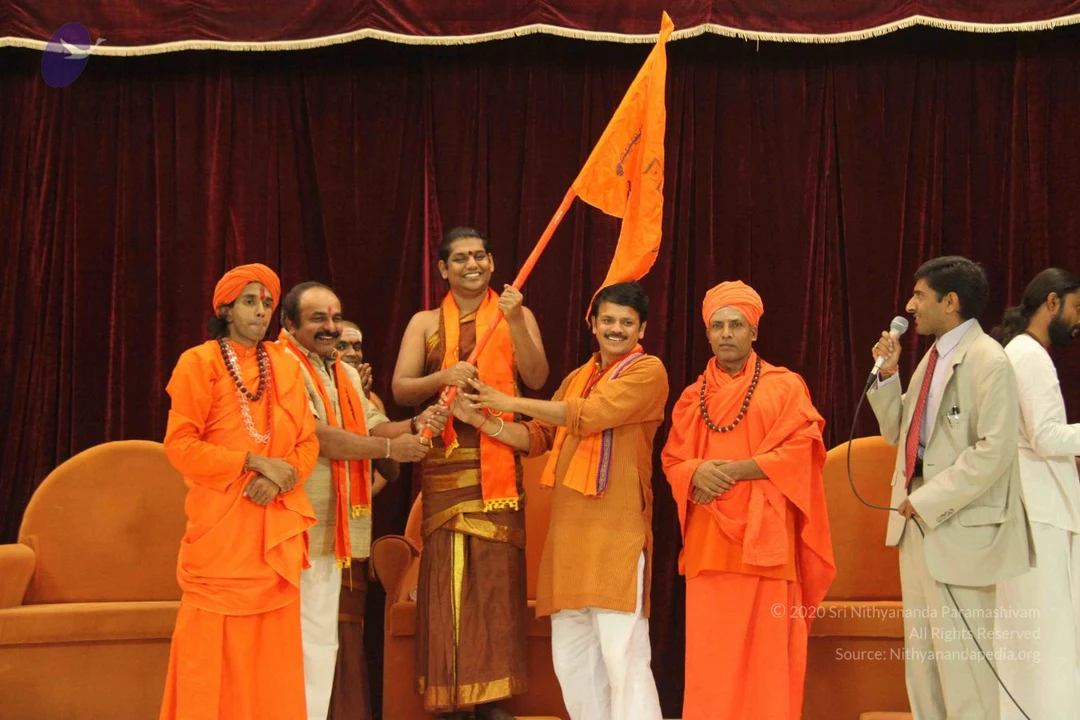
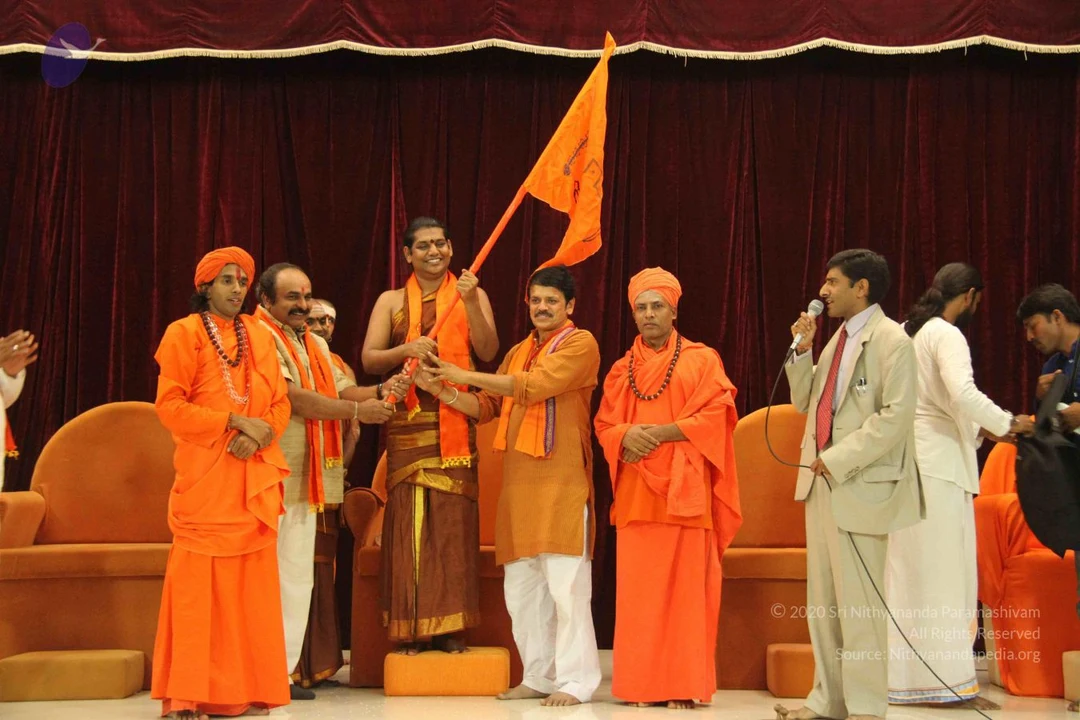
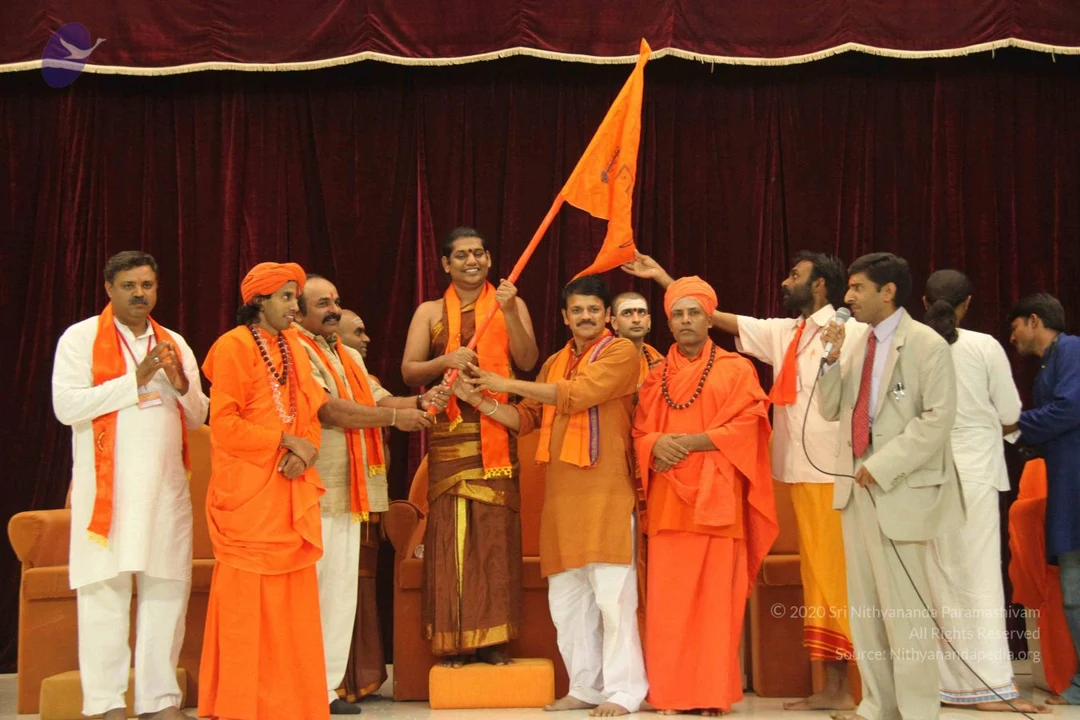
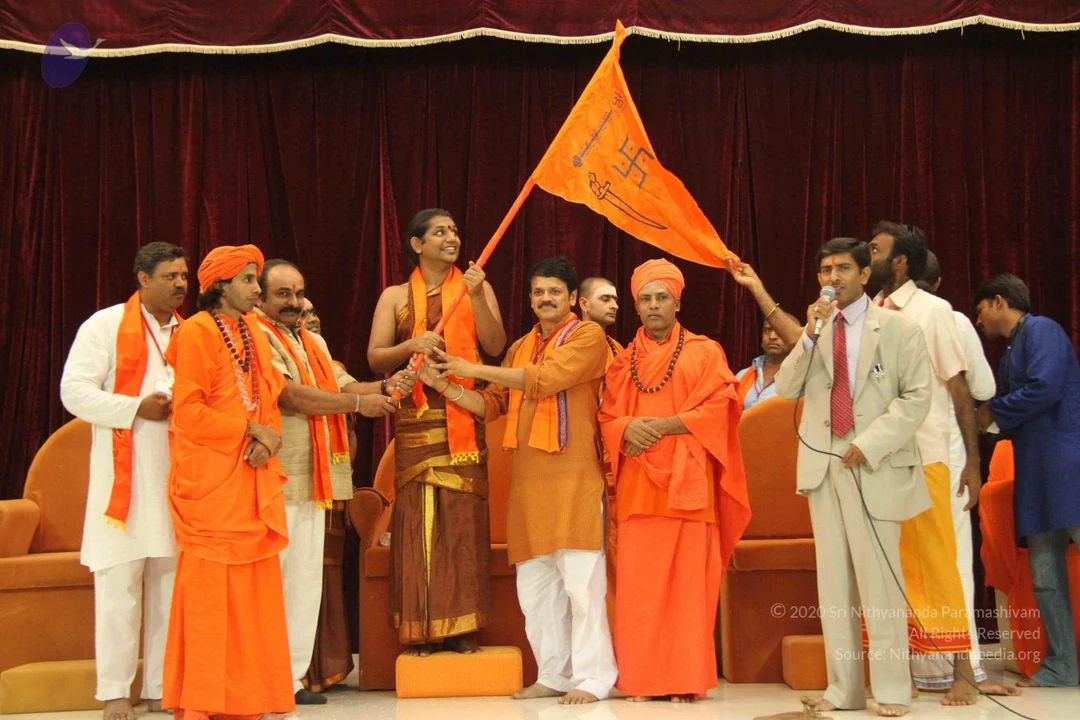
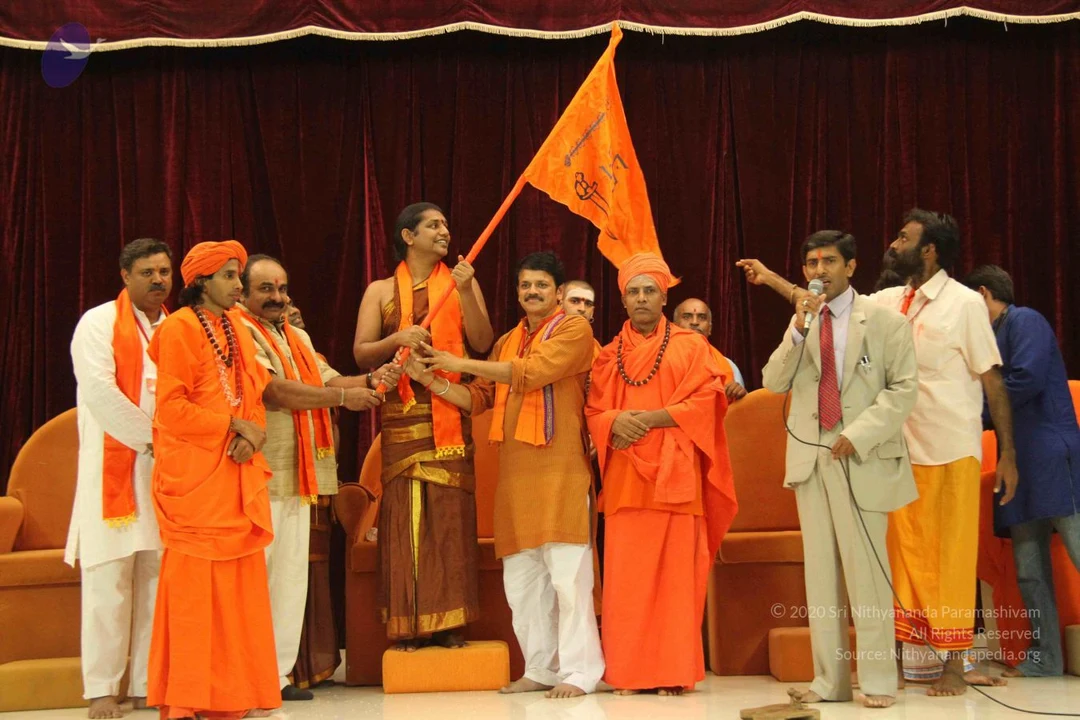
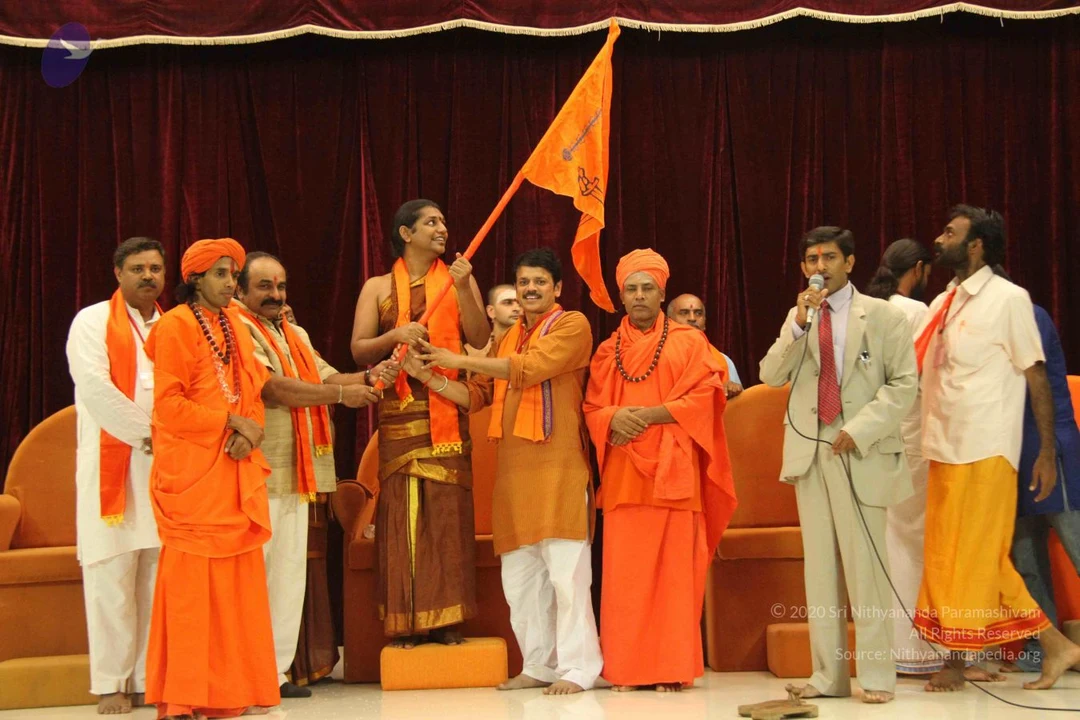
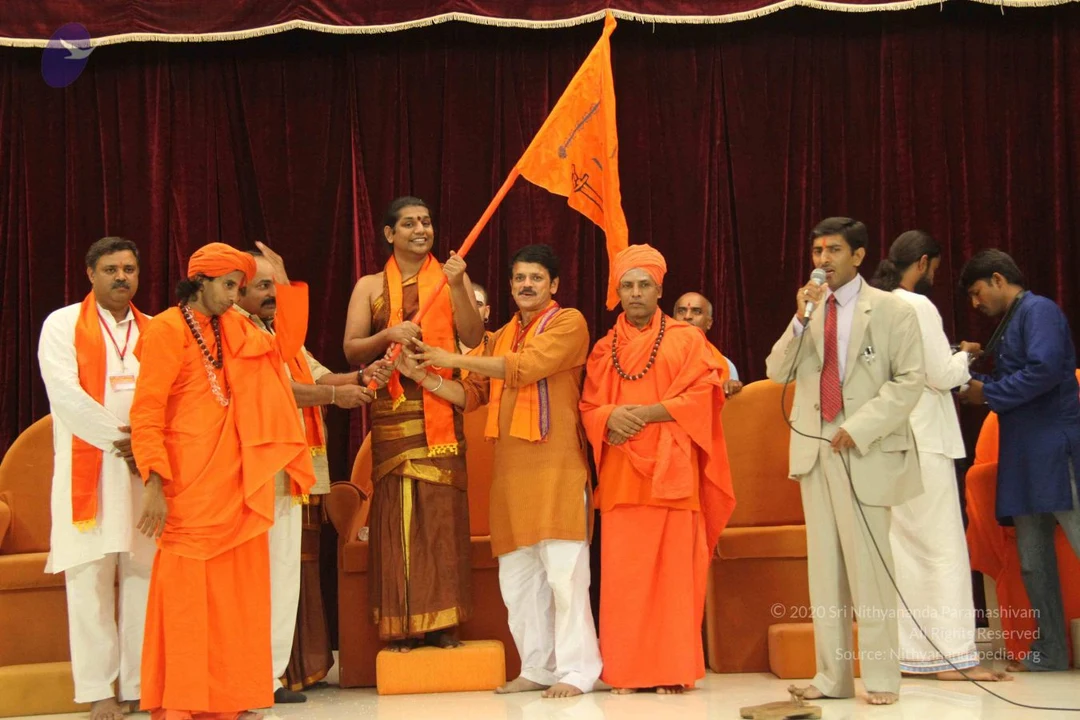
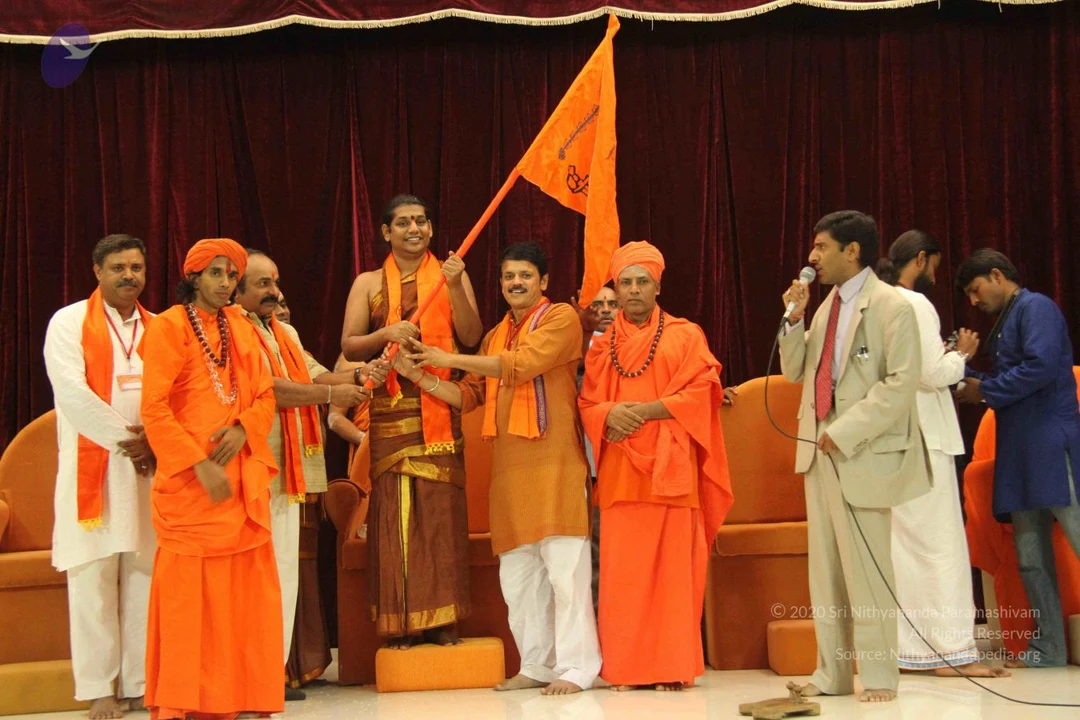
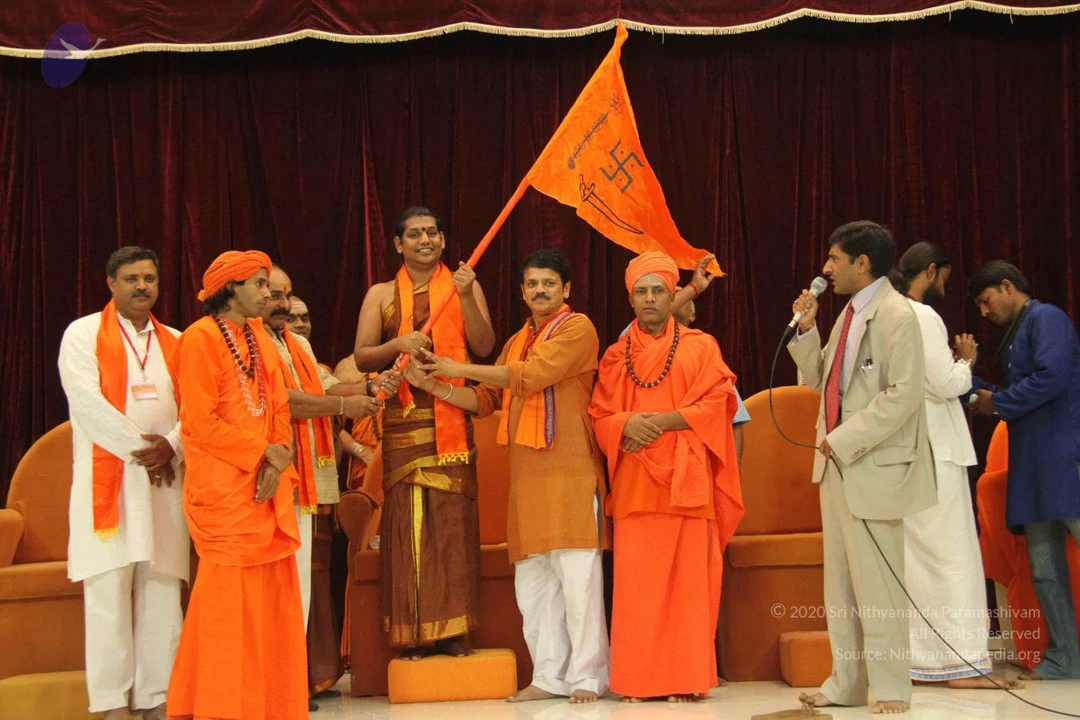
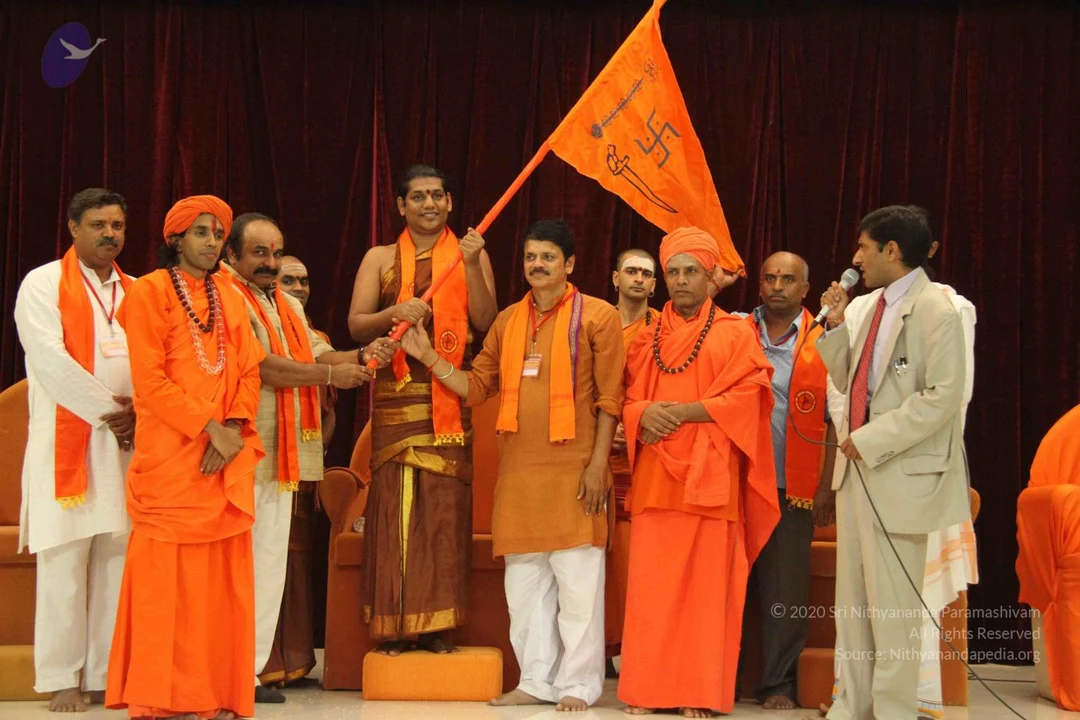
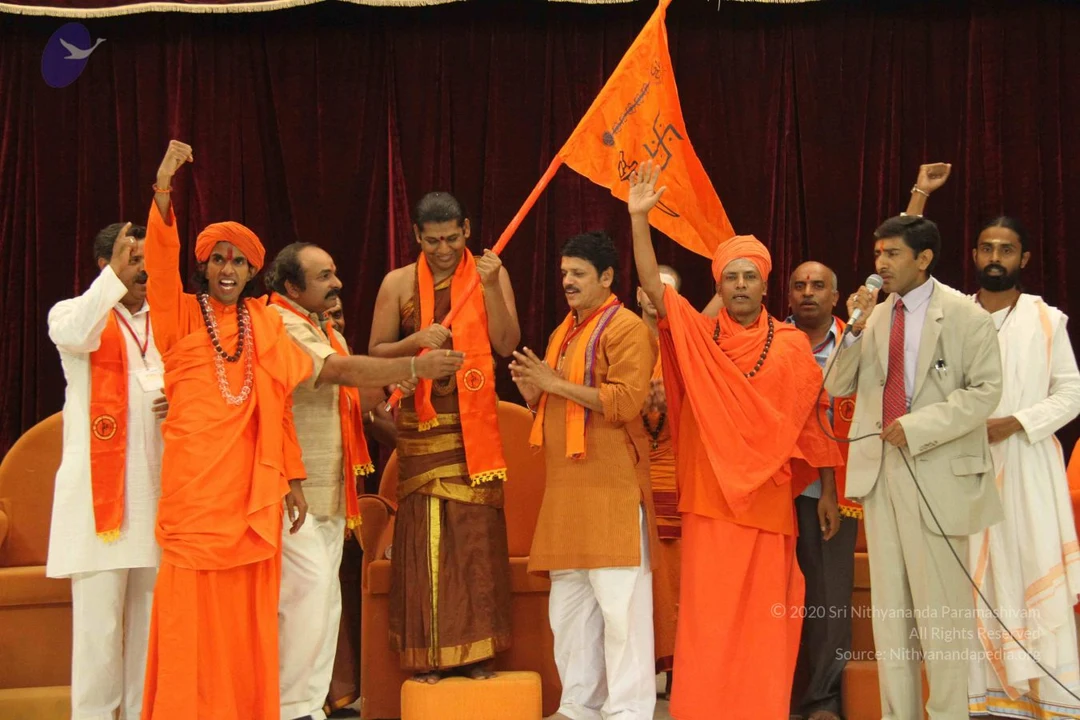
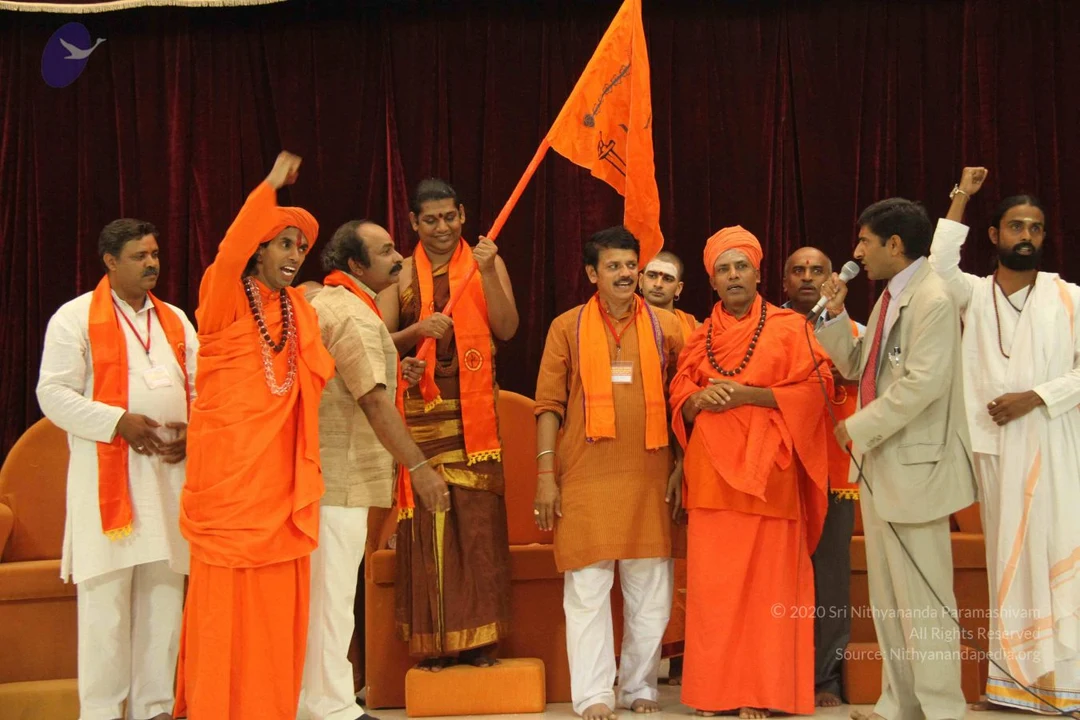
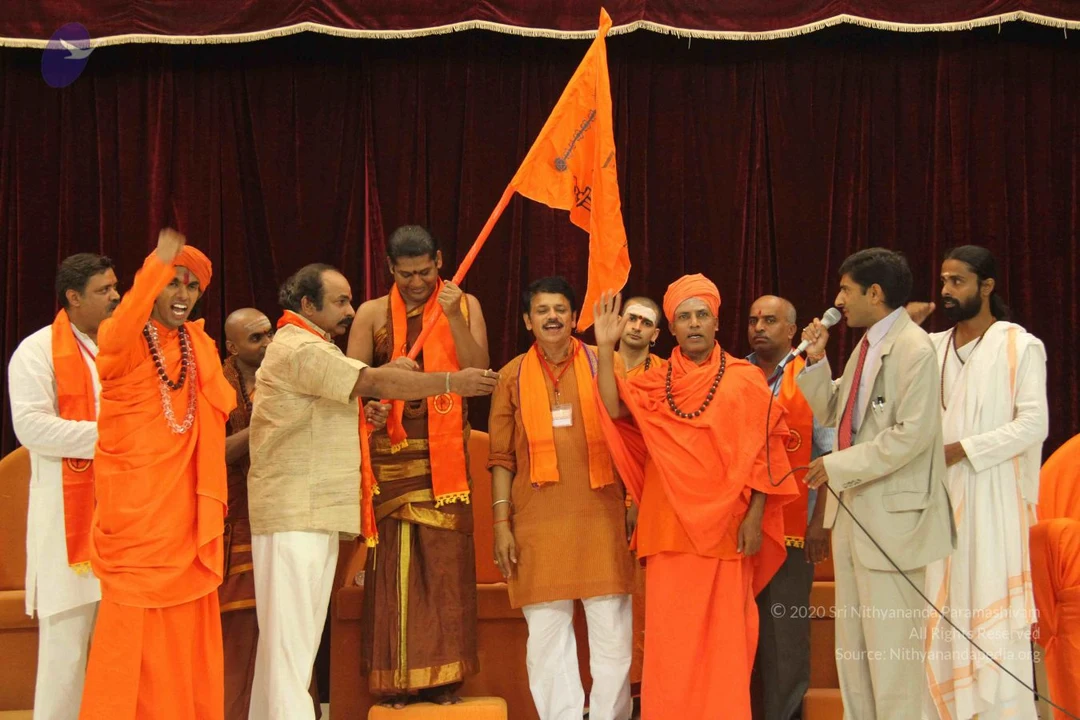
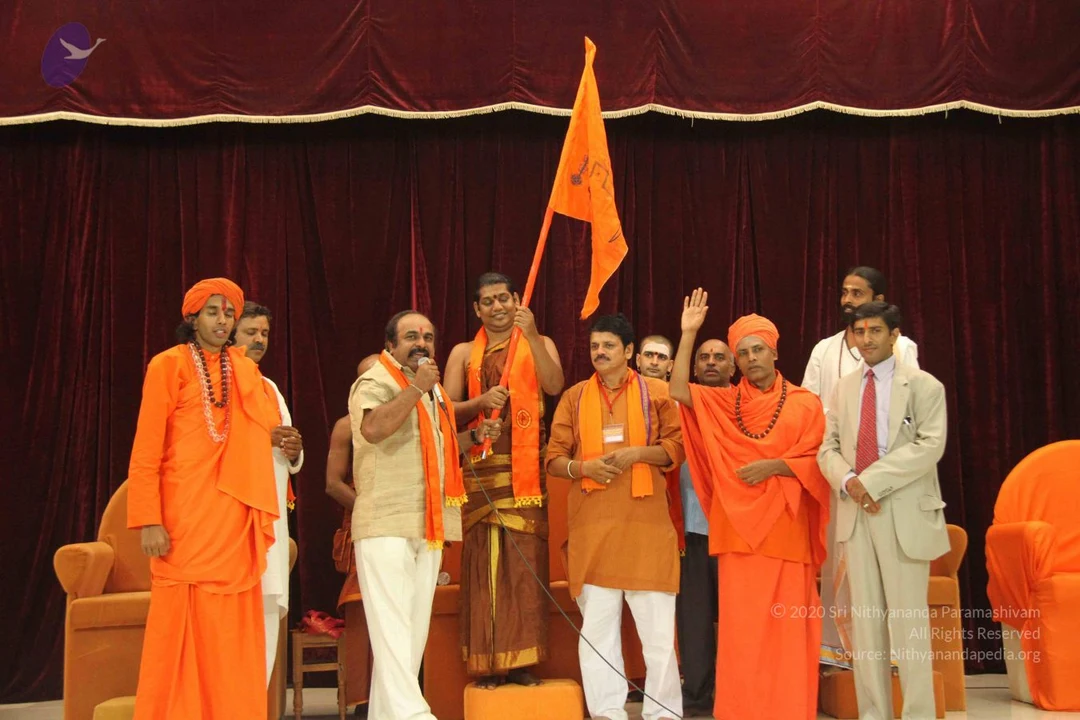
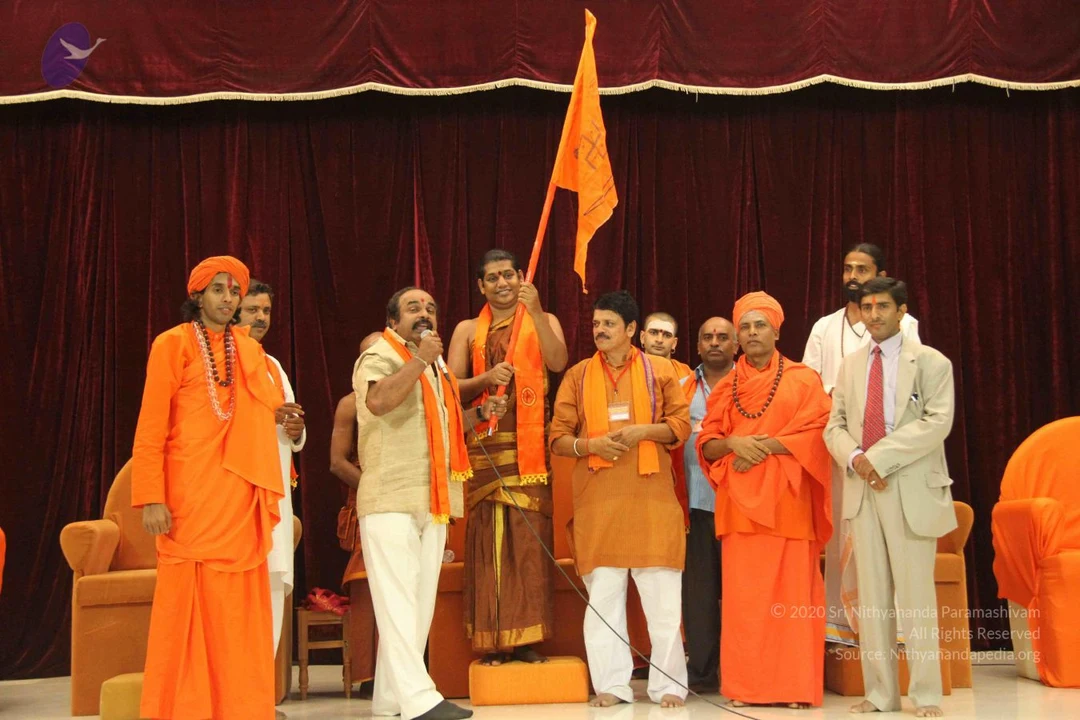
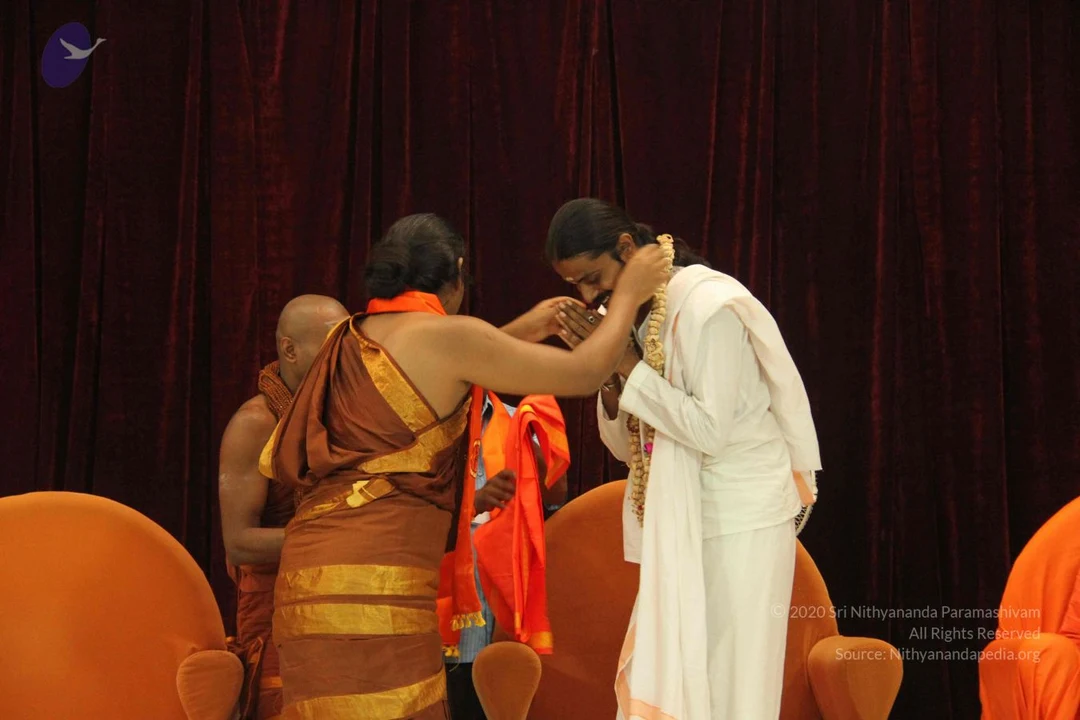
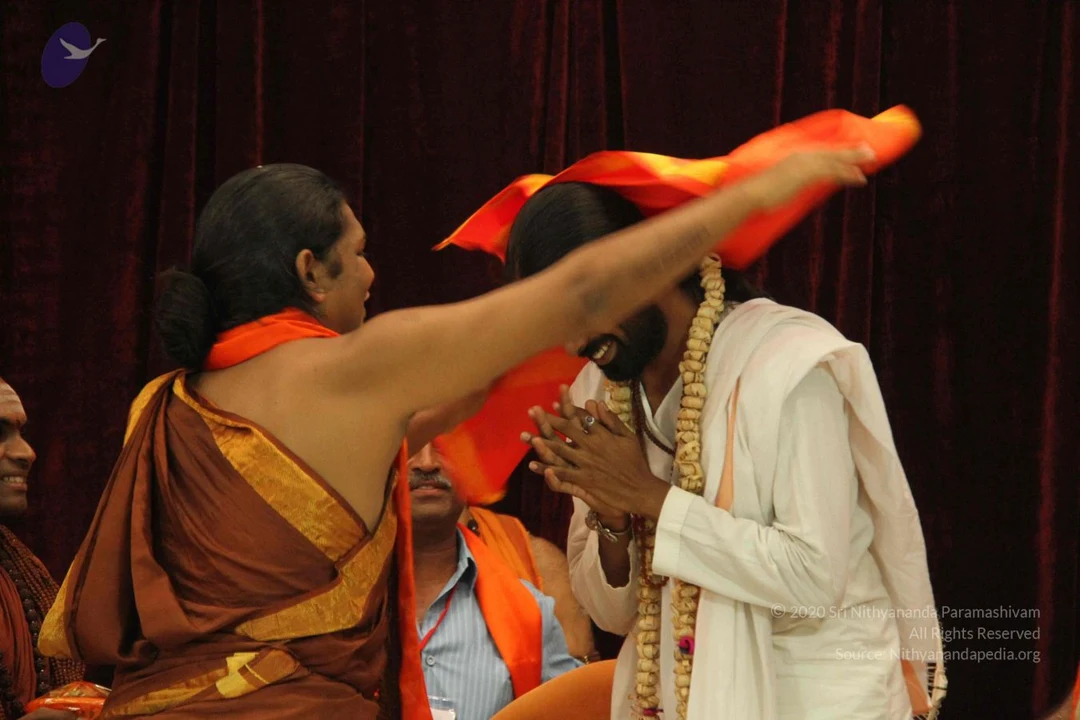
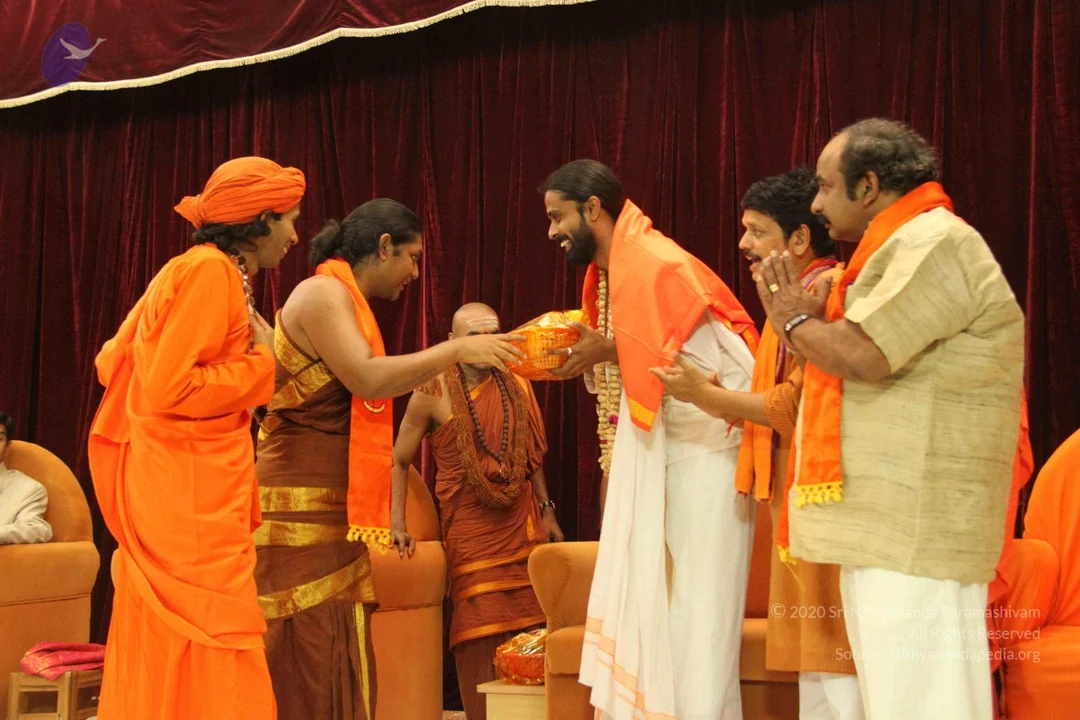
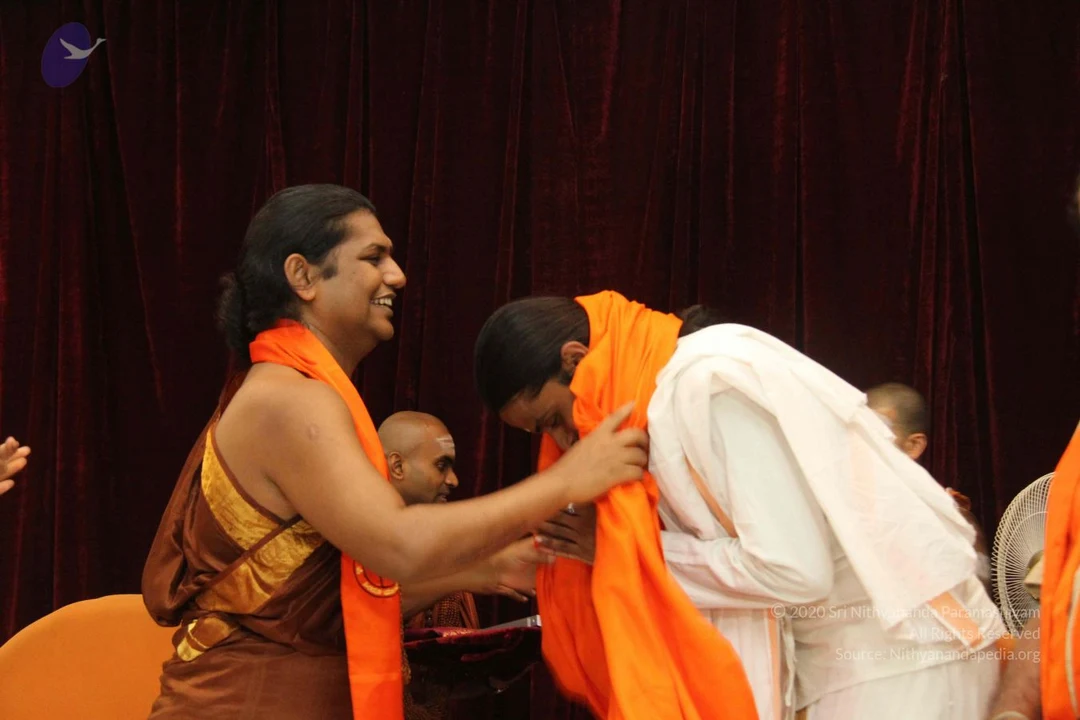
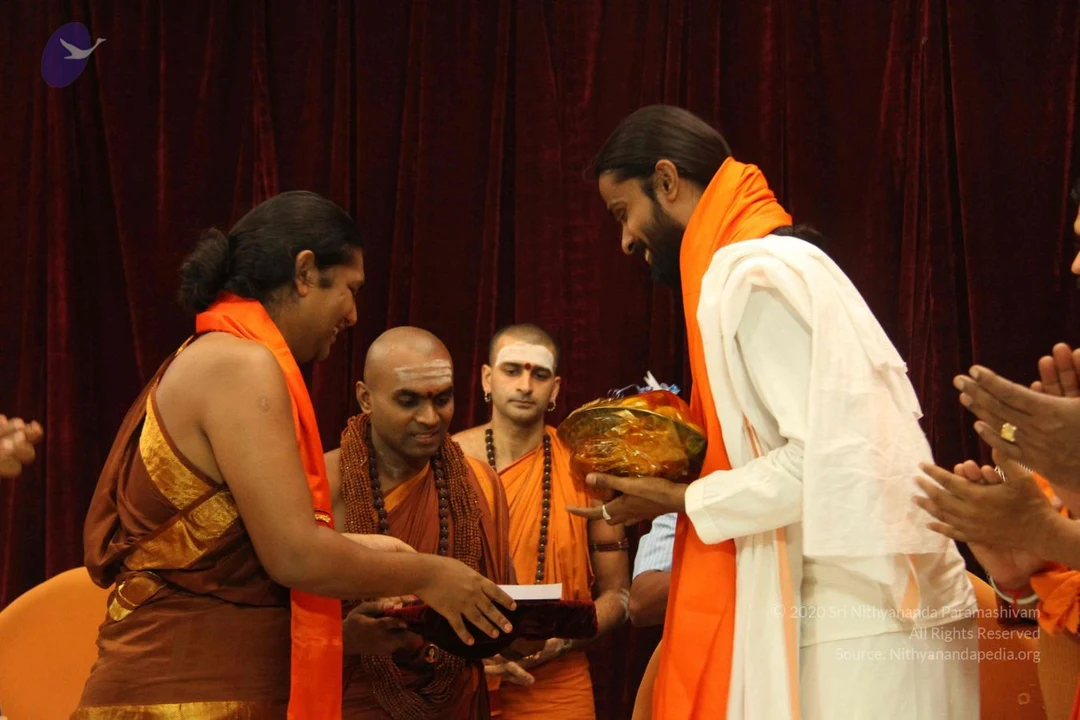
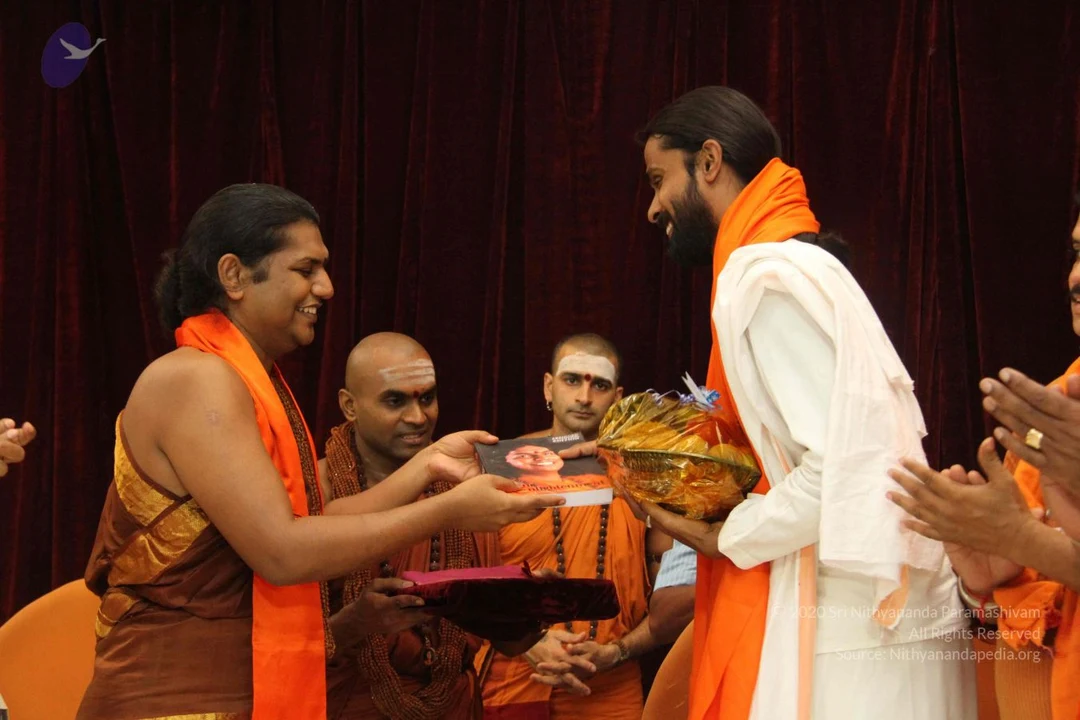
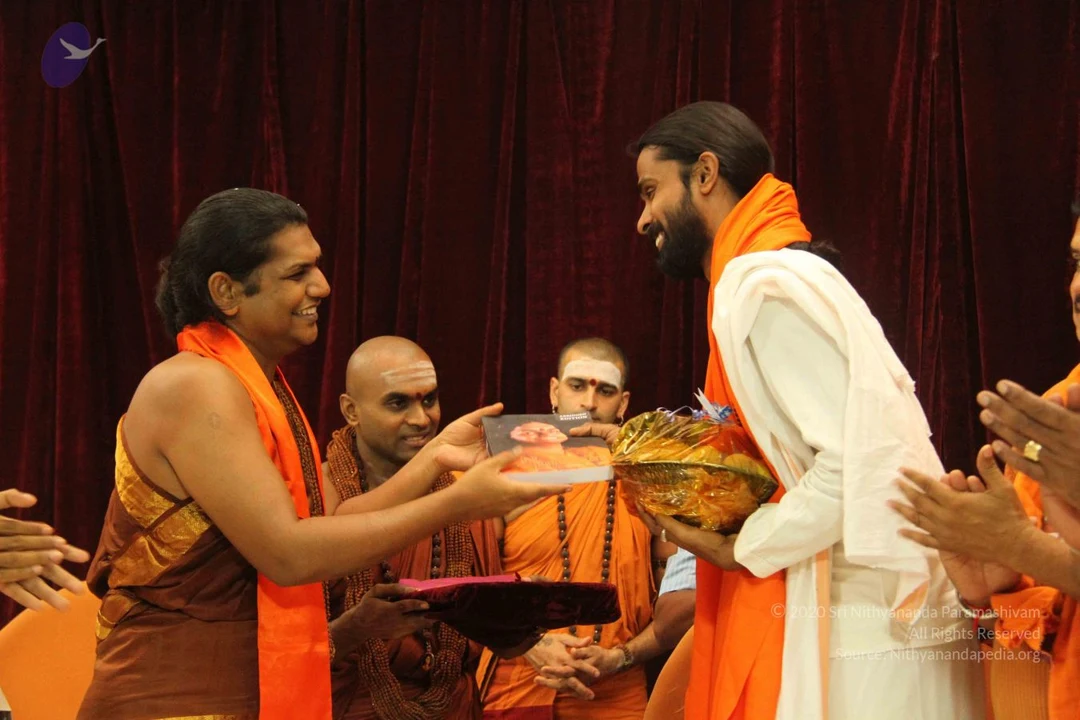
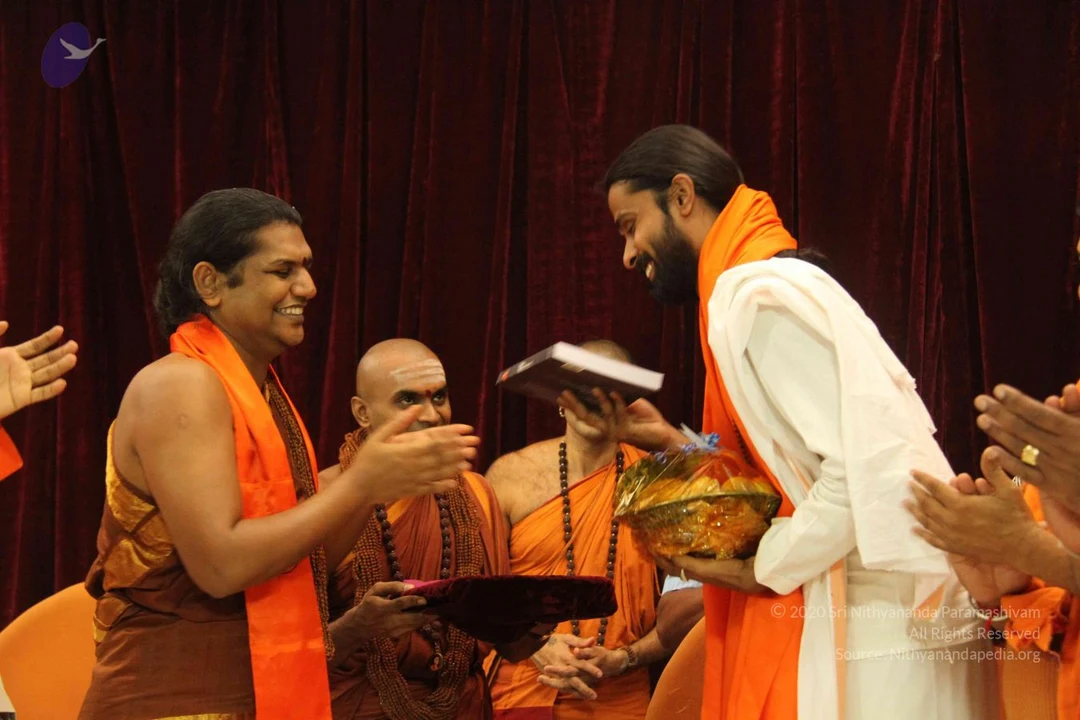
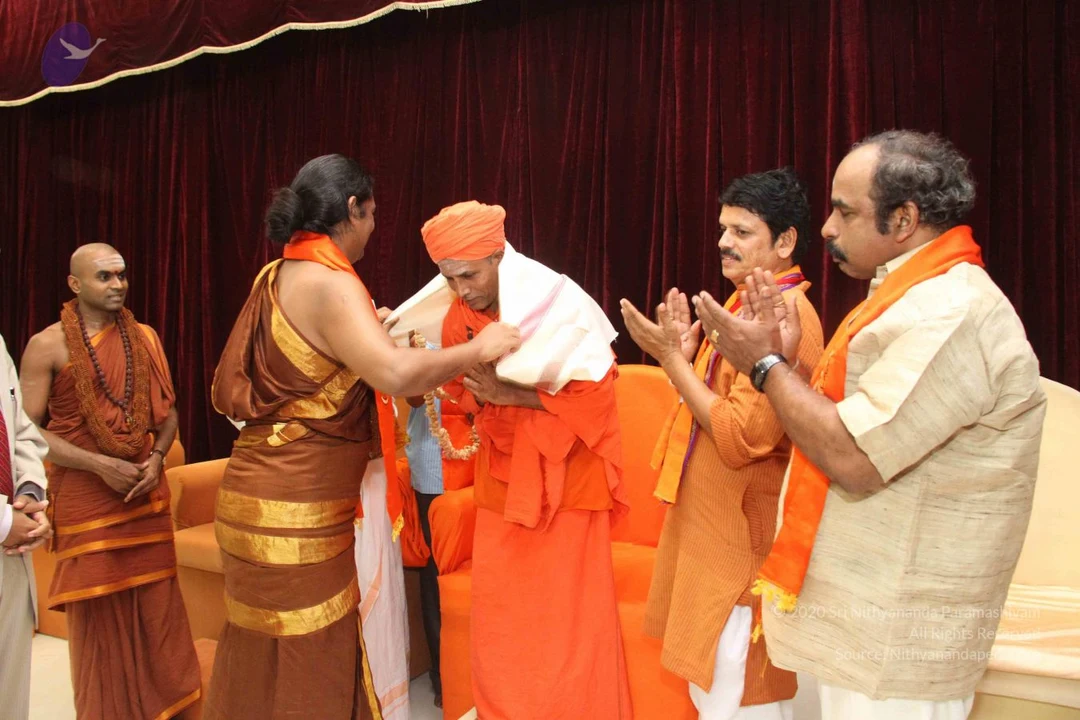
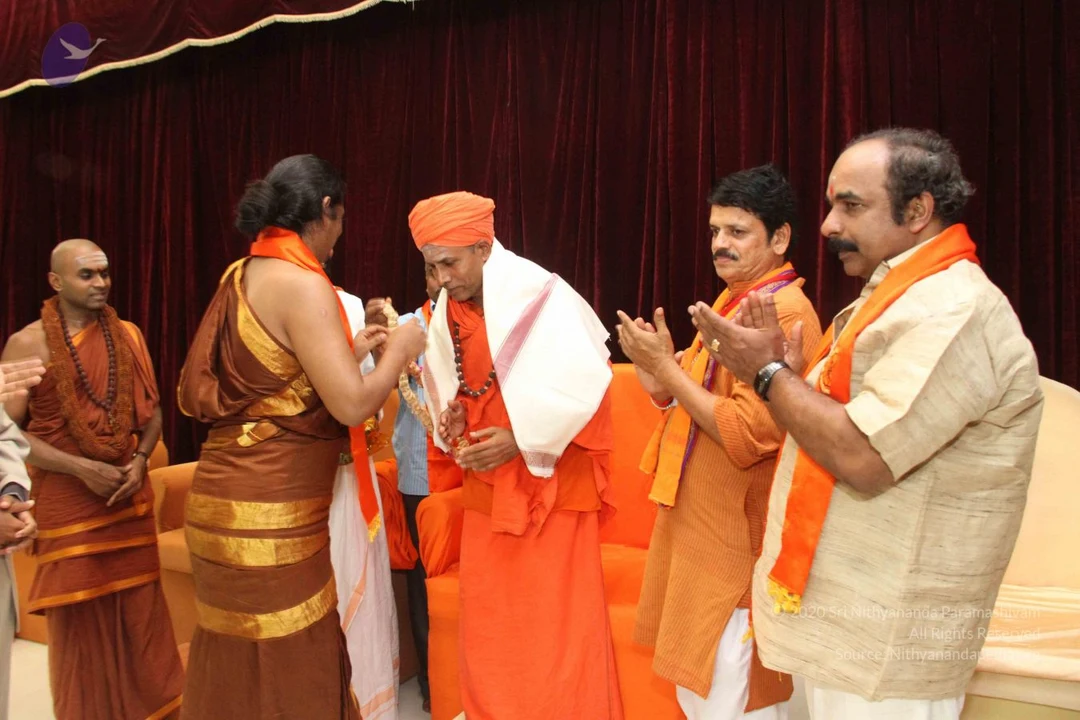
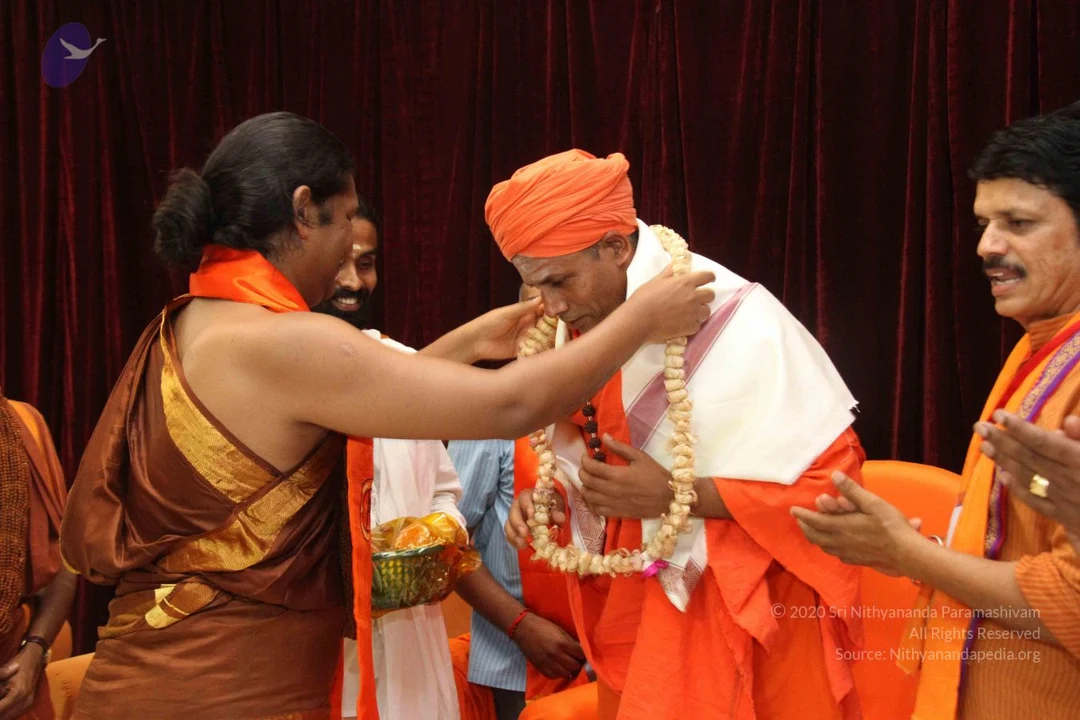
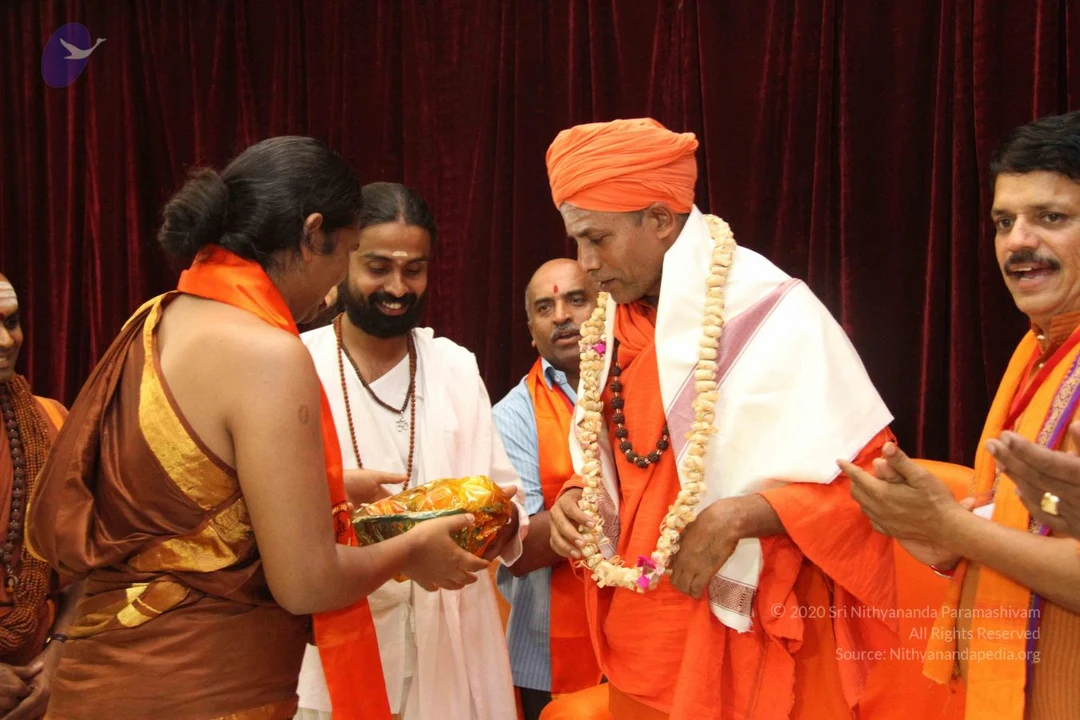
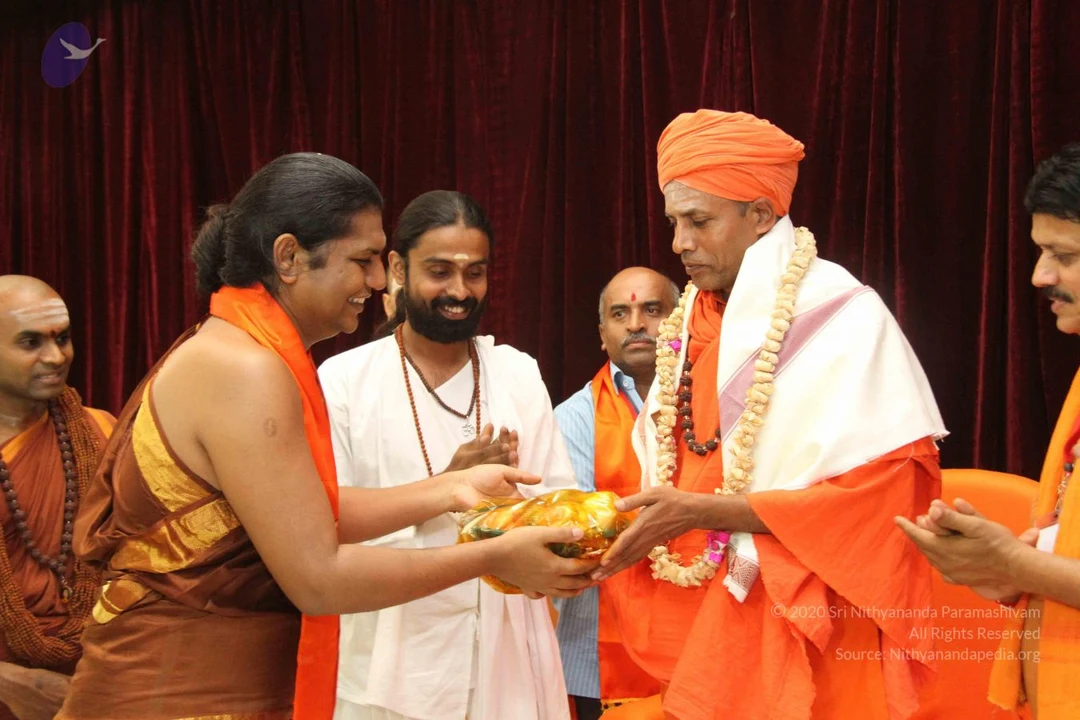
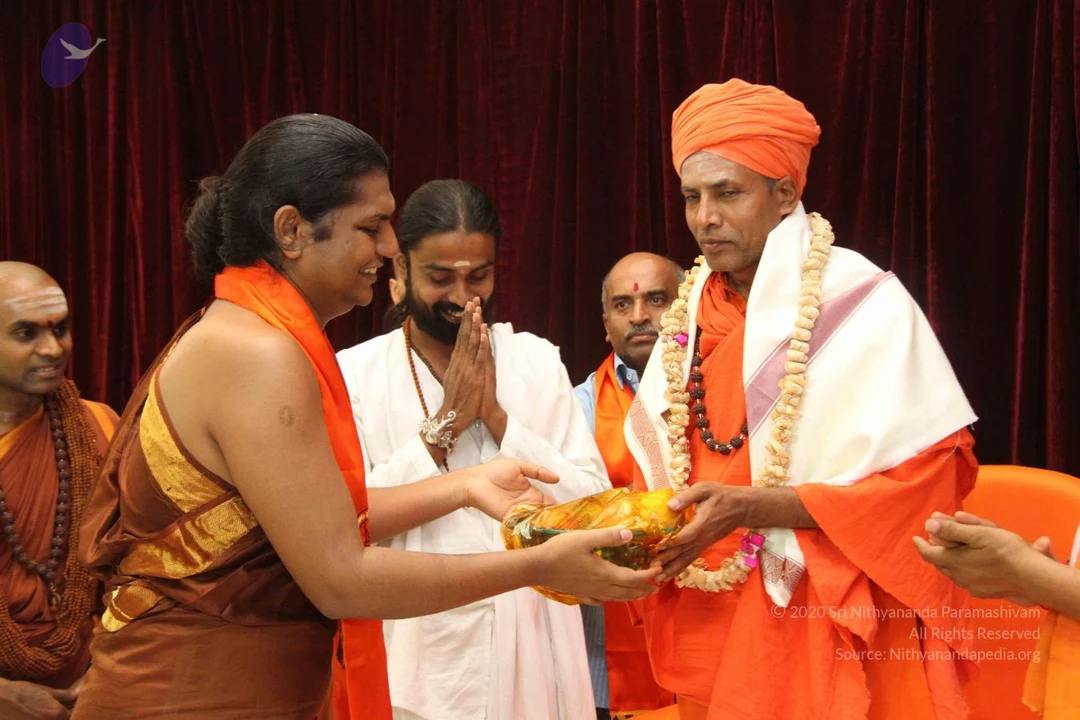
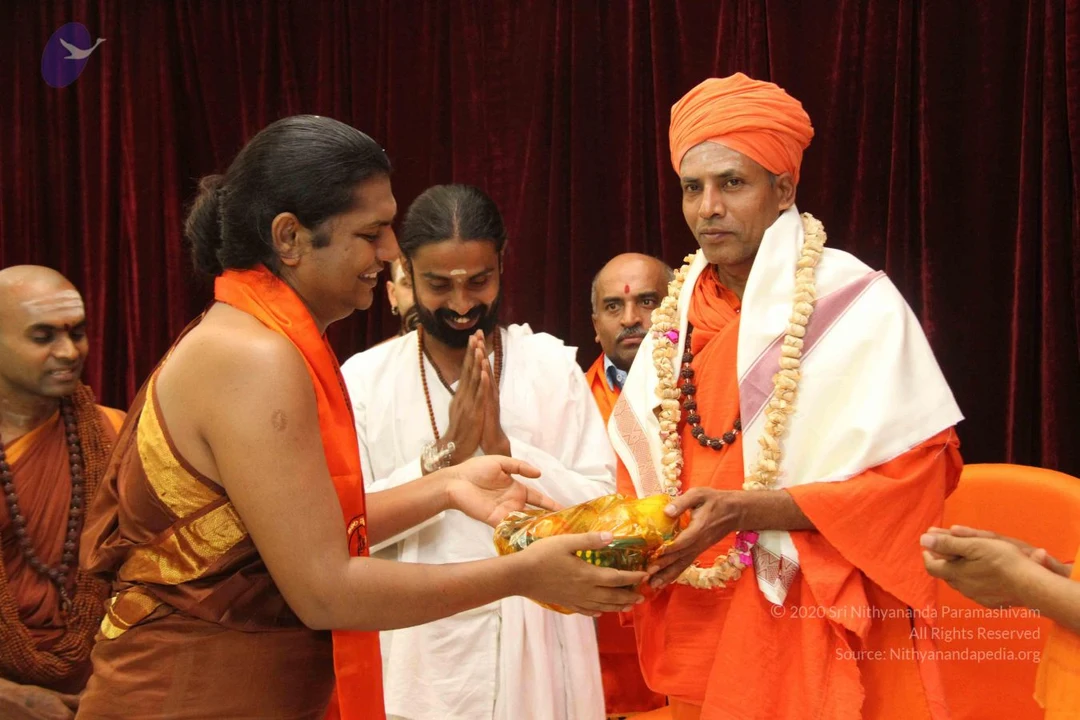
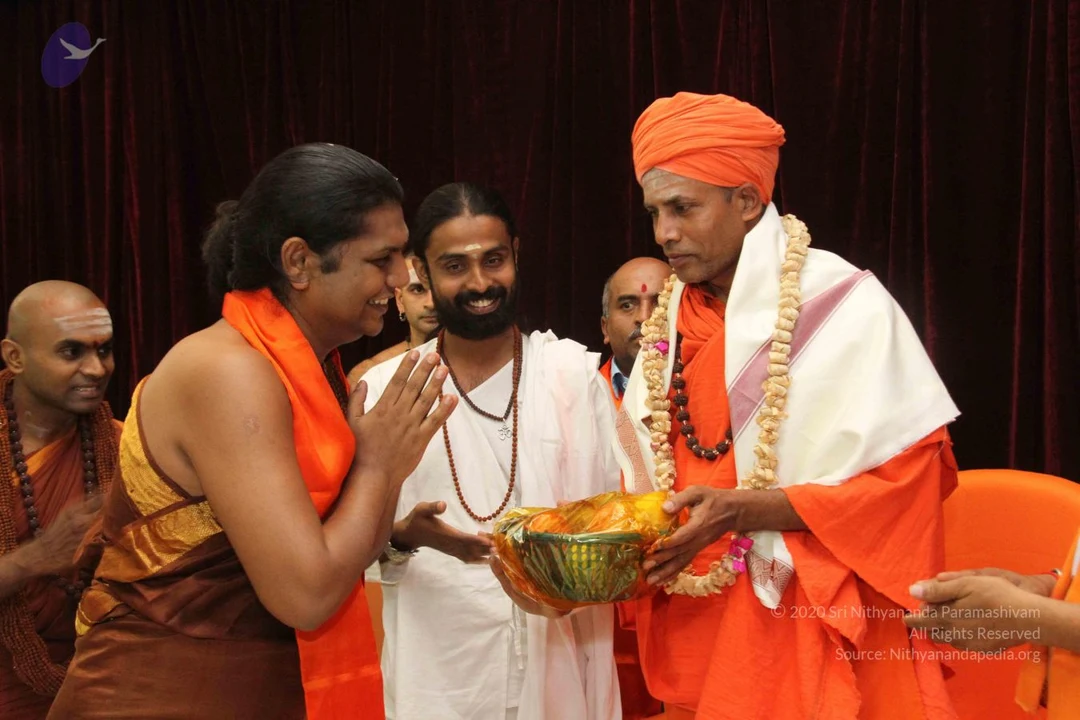
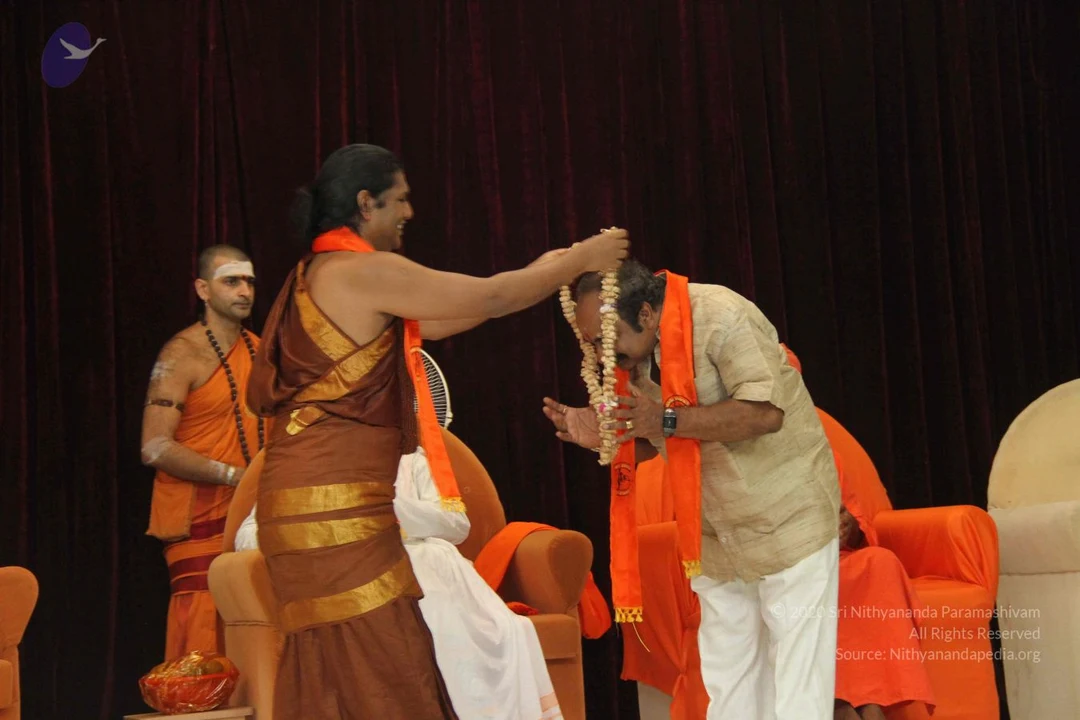
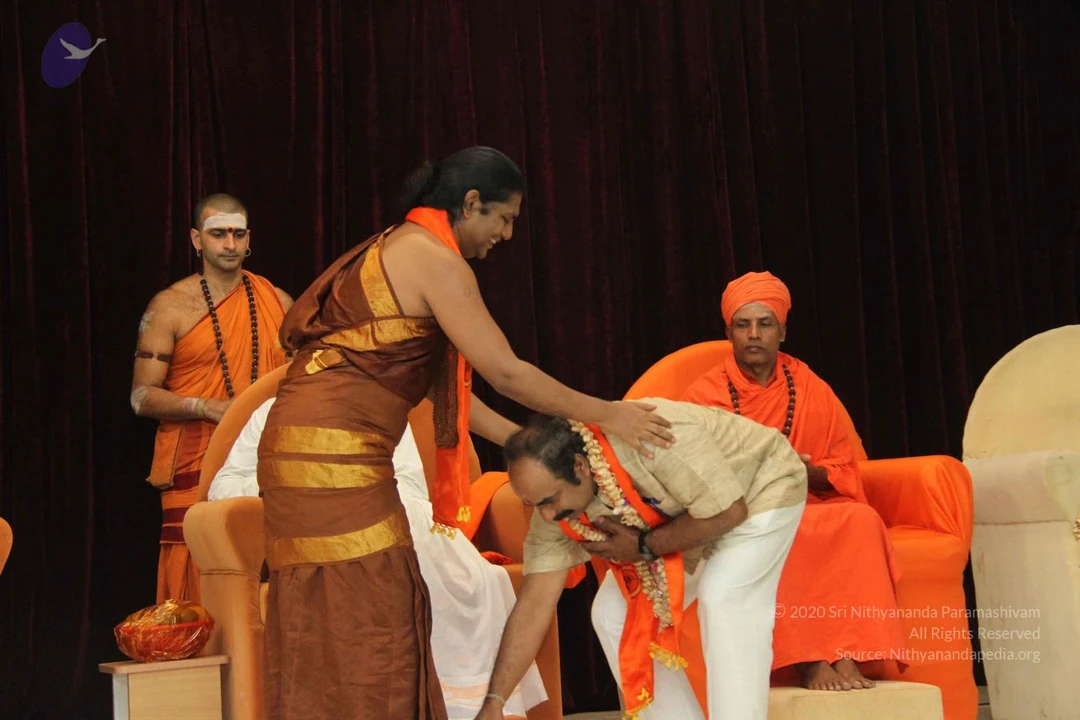
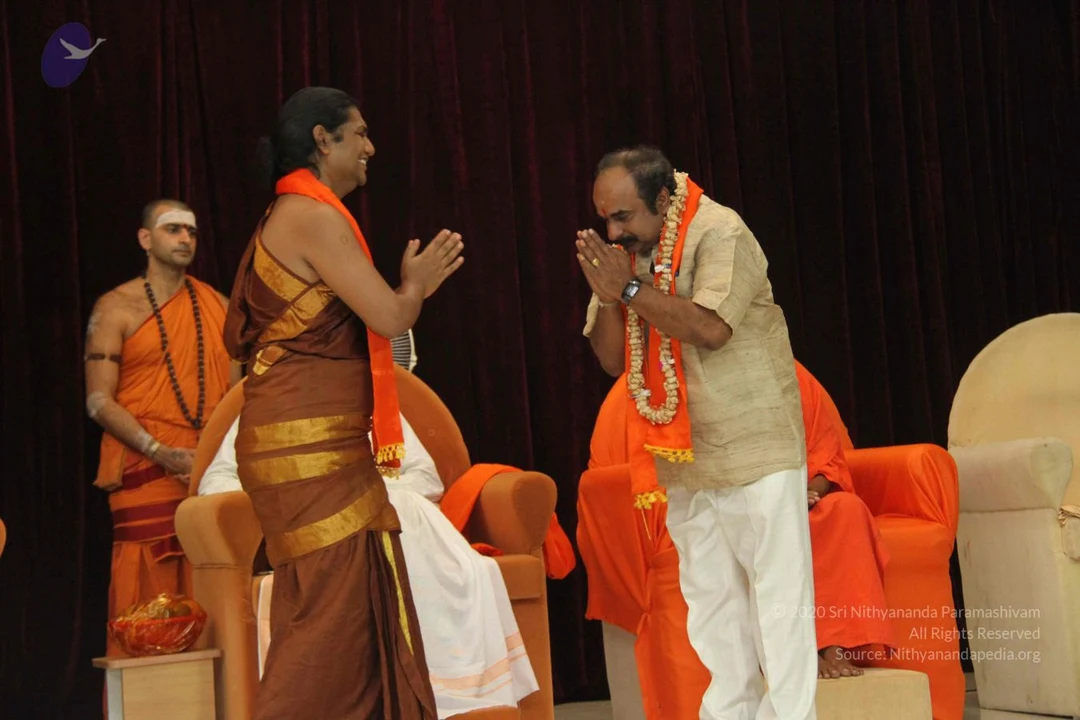
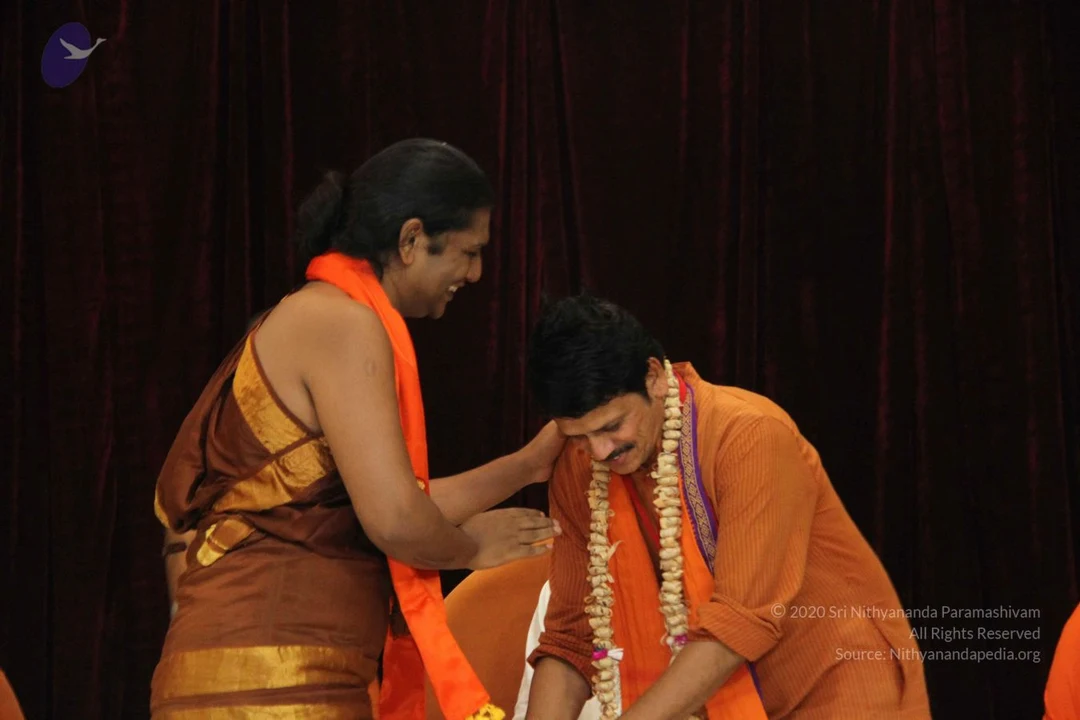
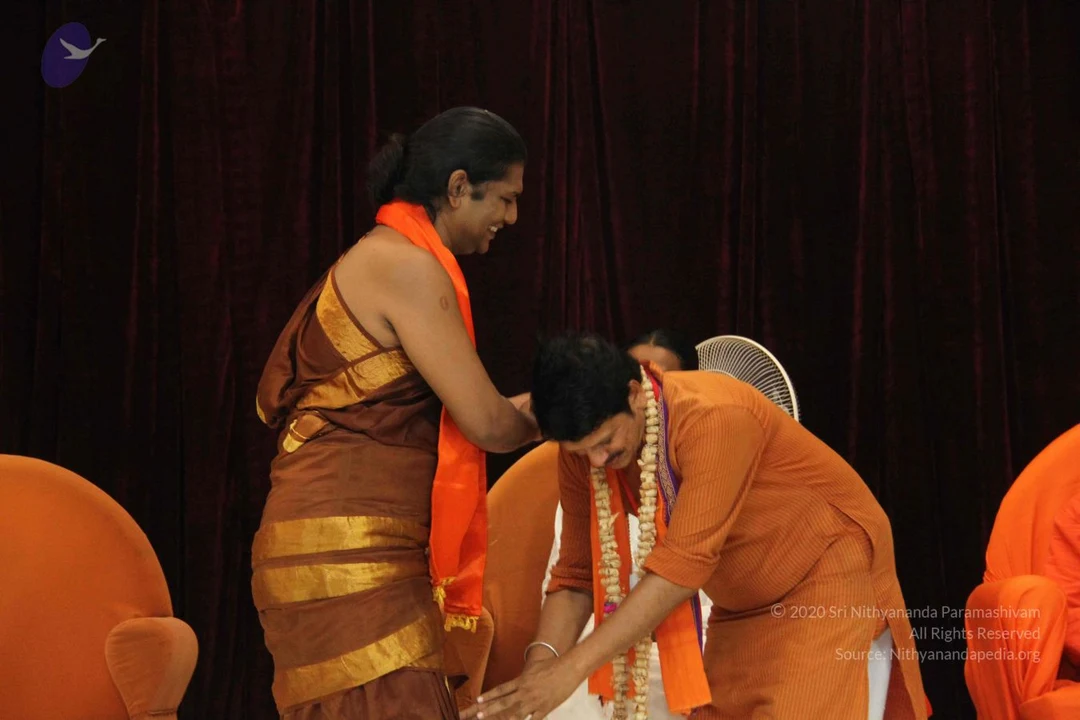
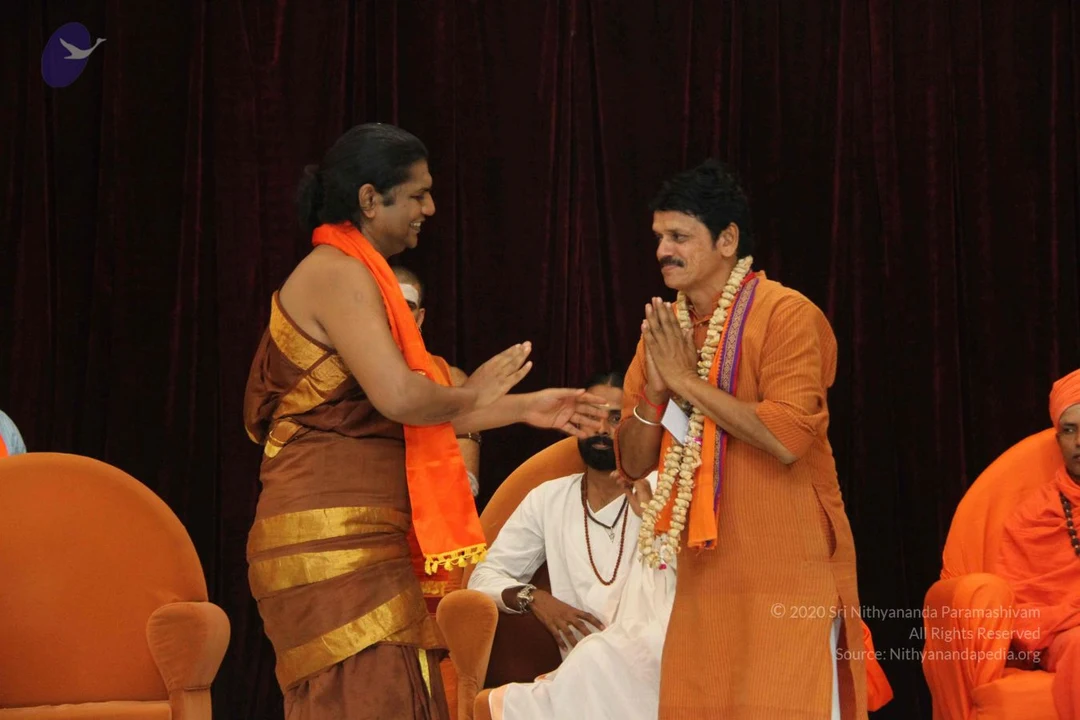
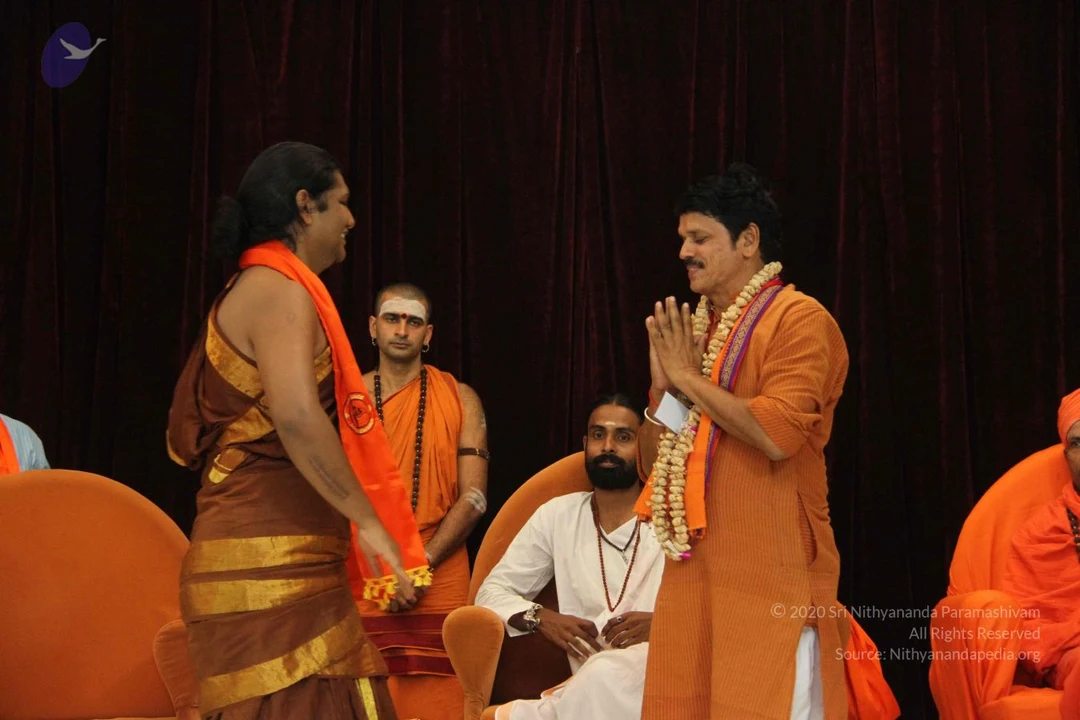
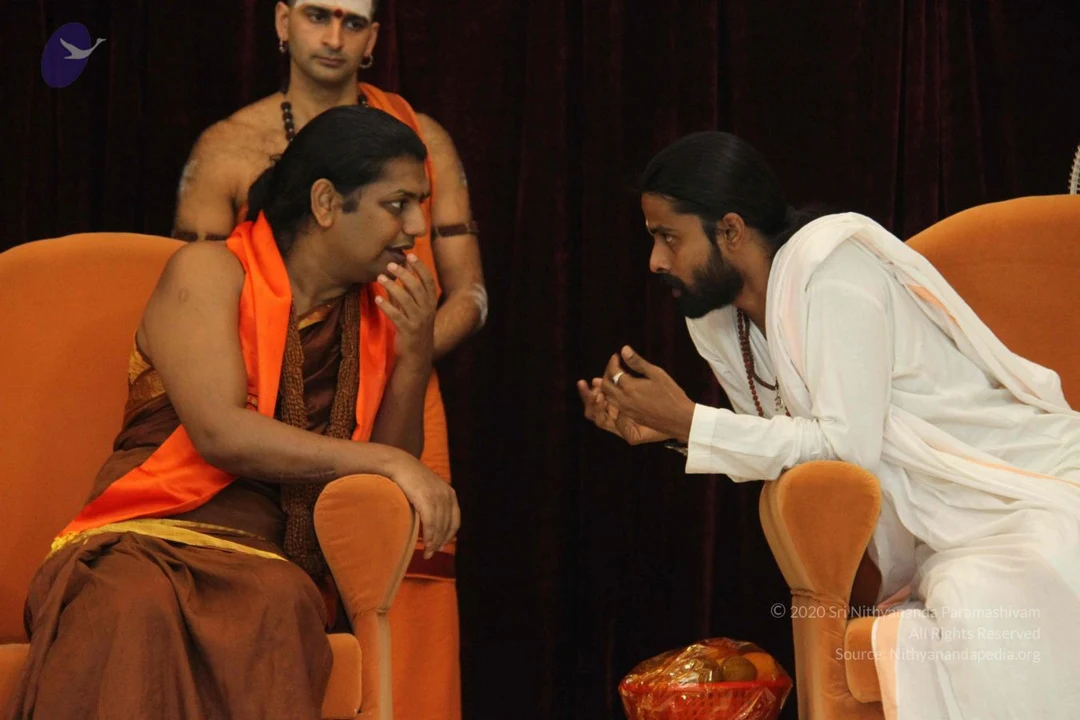
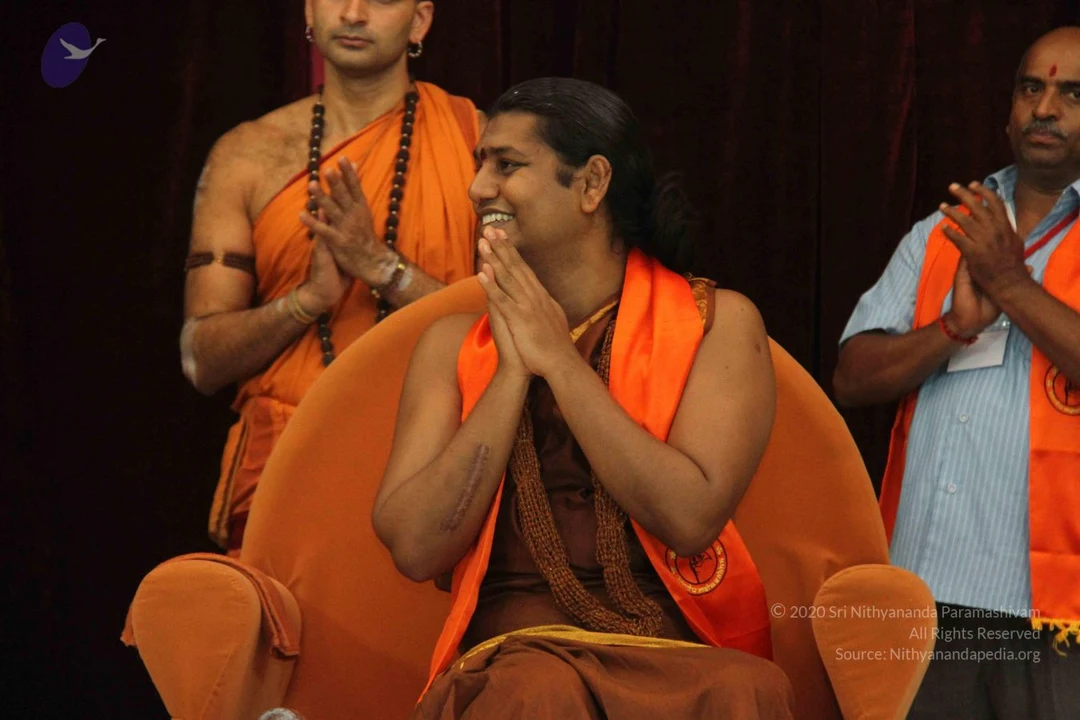
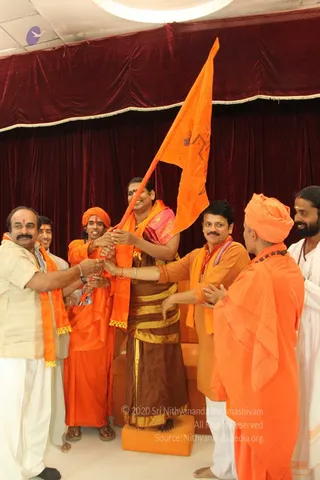
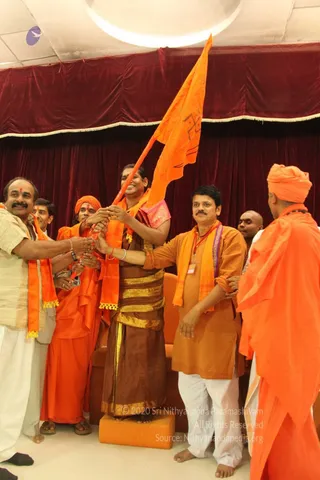
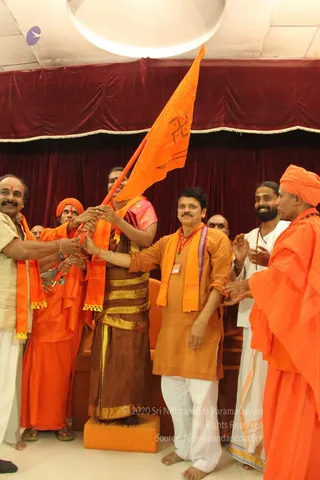
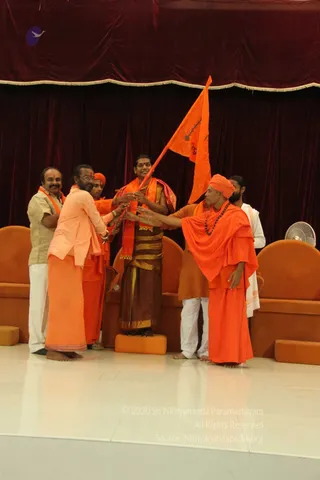
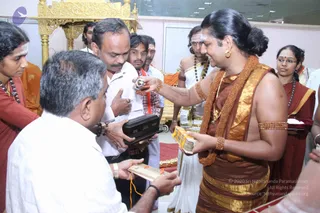
A group of seven men stands in a row on a stage in front of a deep maroon velvet curtain, all reaching forward to grip a tall orange flag on a pole. On the far left a man in a cream kurta and white dhoti wears an orange shawl and smiles. Next to him a man in an orange turban and orange robe holds the pole. A central man in an orange shawl over a gold-bordered brown dhoti and a pink garment grips the pole high. At right, a man in an orange kurta with an orange shawl reaches in, while a bearded man in a white robe stands beside an older man in an orange turban and orange robe with rudraksha beads who smiles at the flag. Orange upholstered chairs line the bottom of the frame and a white ceiling light is visible above. The flag is plain orange with a faint emblem near the top.A ceremonial honouring scene in a room with deep red velvet drapes and orange-upholstered chairs. A woman in a brown and gold-bordered sari with her hair in a bun places a garland or lei around the neck of an elderly man in an orange turban, orange robe and white shawl with a rudraksha mala. To the left a bald man in orange robes and a rudraksha mala stands with hands folded. On the right two men in orange shawls and a man in a cream kurta with an orange shawl clap their hands in appreciation.

October 20 2013

Original wiki page
Contents

Description:

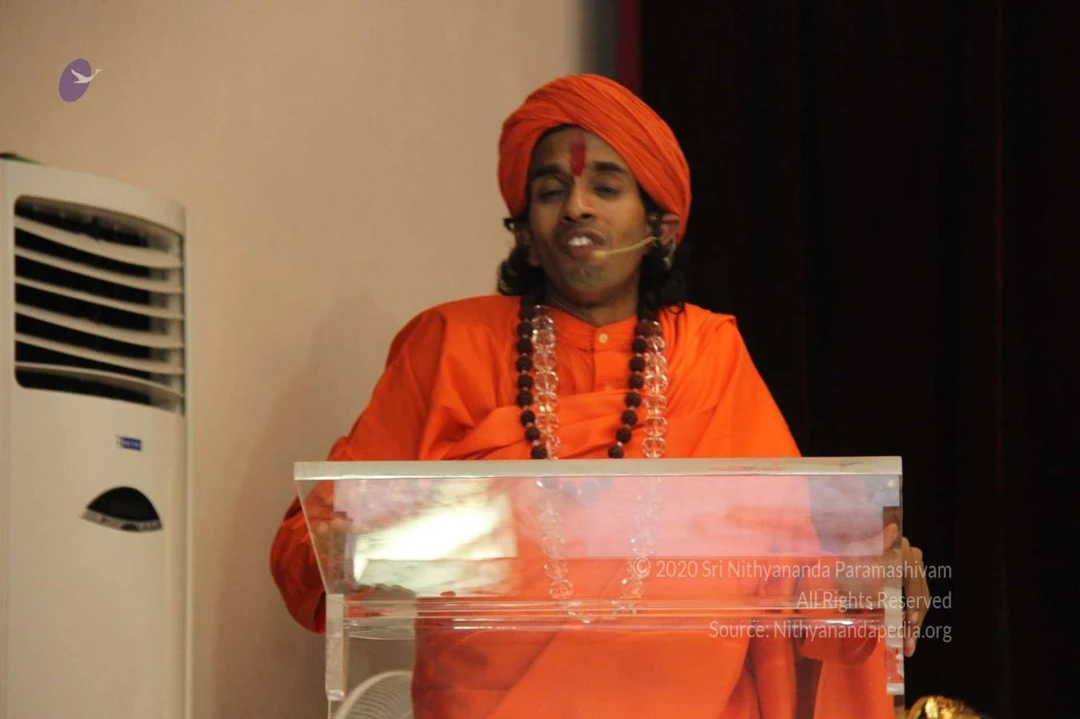
In today’s morning Satsang, Paramahamsa Nithyananda explains how infusing Dharma into the four Tattvas will awaken Powers within us – Integrity awakens the Power of Words, Authenticity awakens the Power of Thinking, Responsibility awakens the Power of Feeling, and Enriching awakens the Power of Living. Make this verse from the sacred Mahabharata part of your life and awaken your Powers - do not unto others that which would cause you pain if done to you.

Link to Video:

VideoAudio

Transcript:

Nithyanandeshwara Samaarambhaam Nithyanandeshwari Madhyamaam | Asmath Aachaarya Paryanthaam Vandhey Guru Paramparaam ||

00:43 Hindi - 00:55

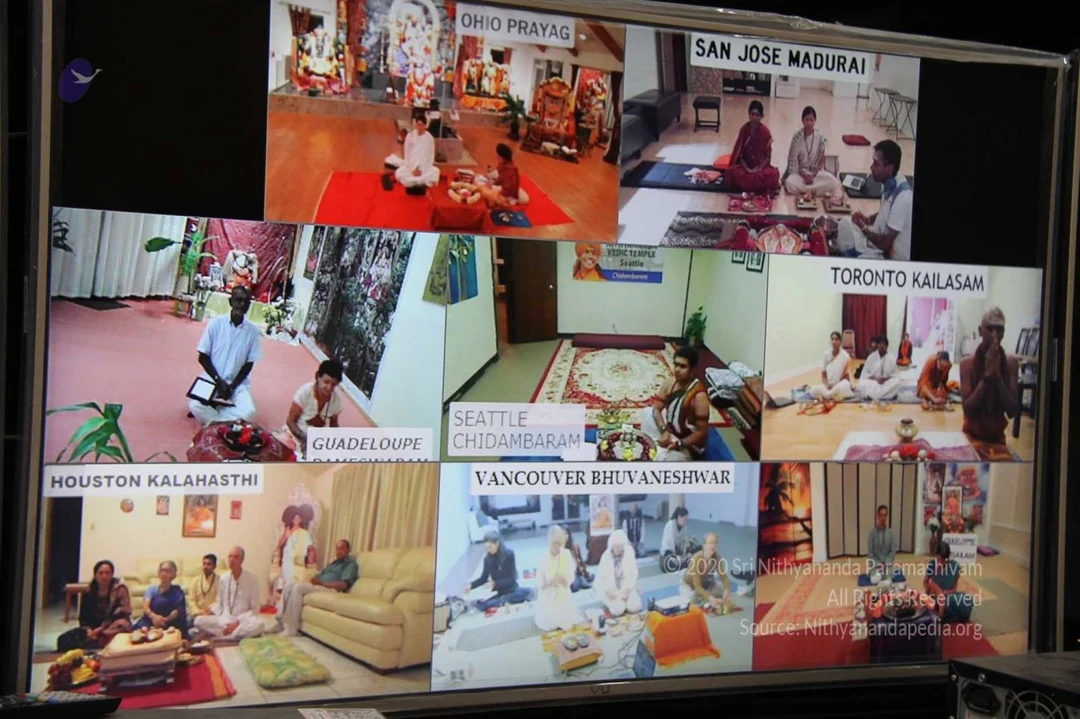
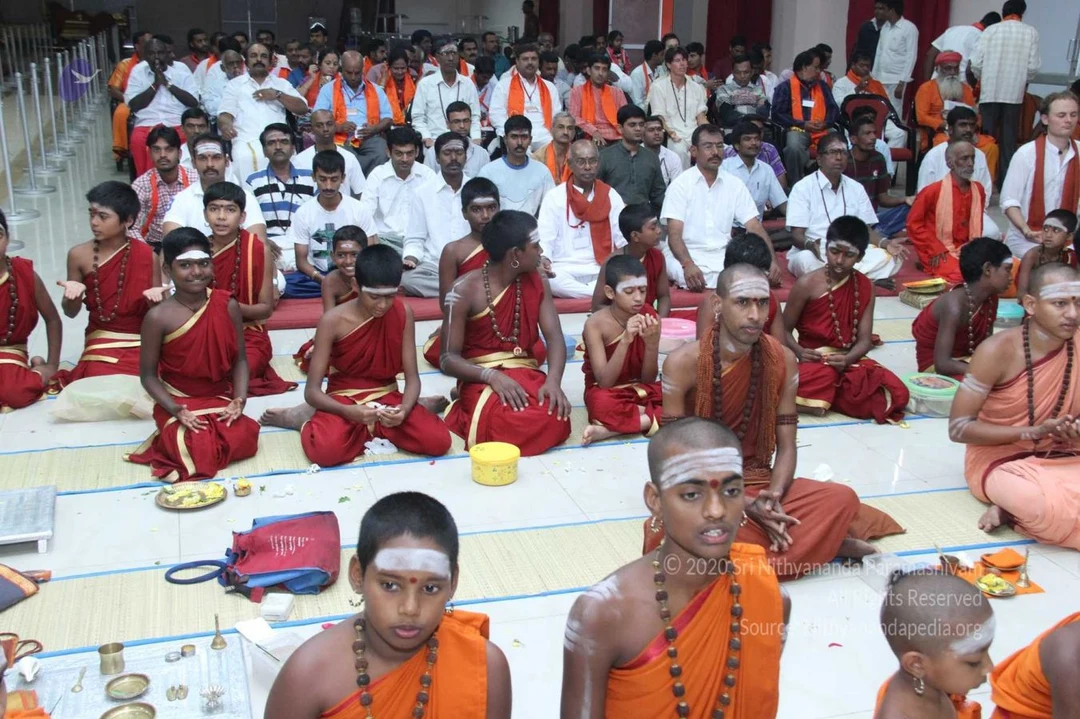
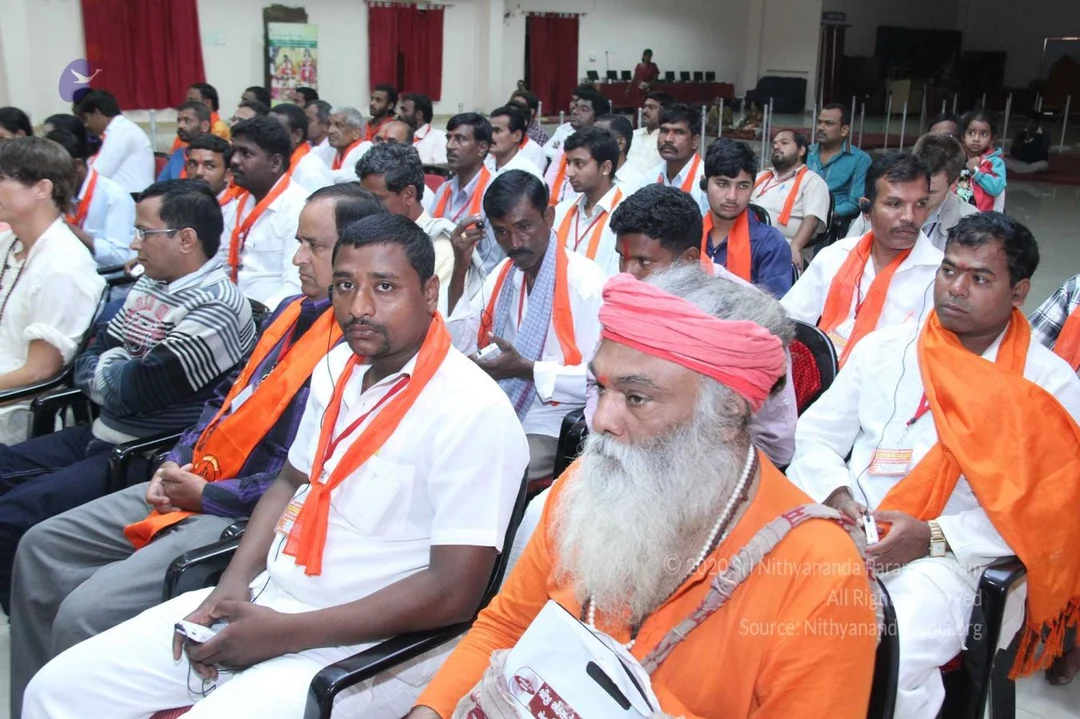
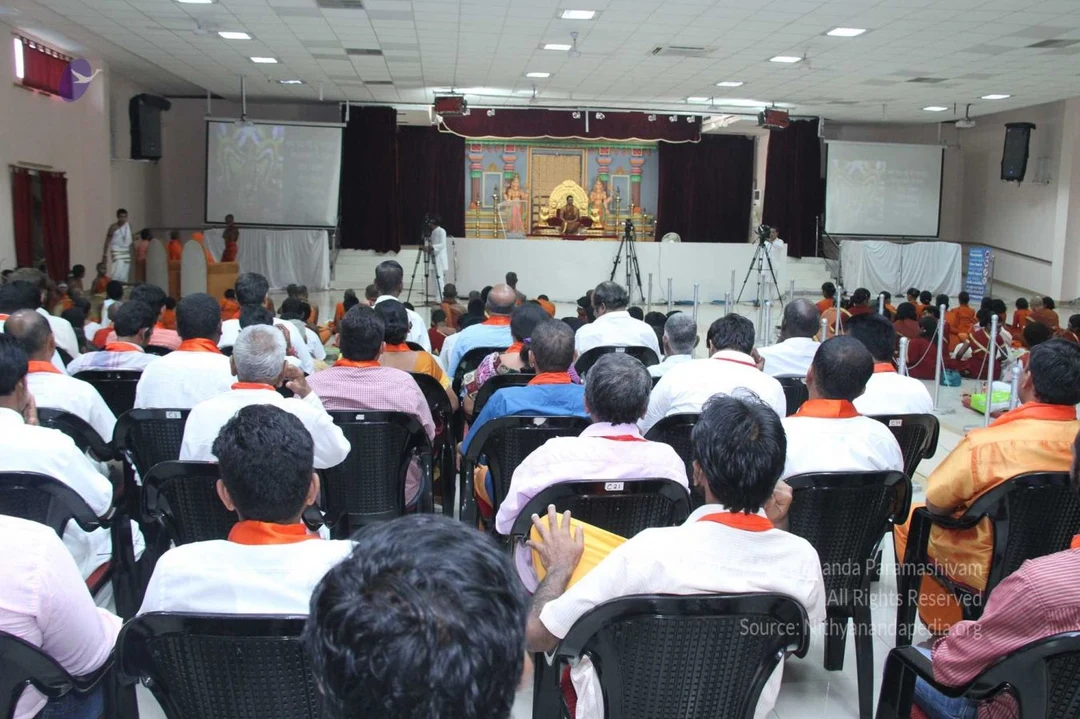
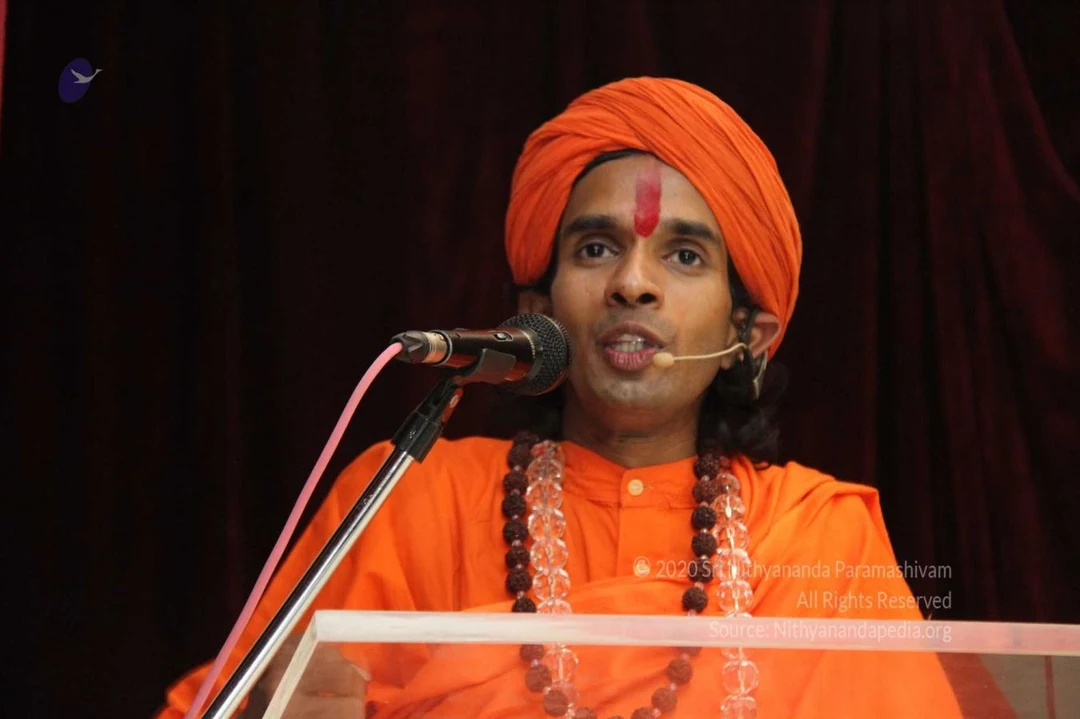
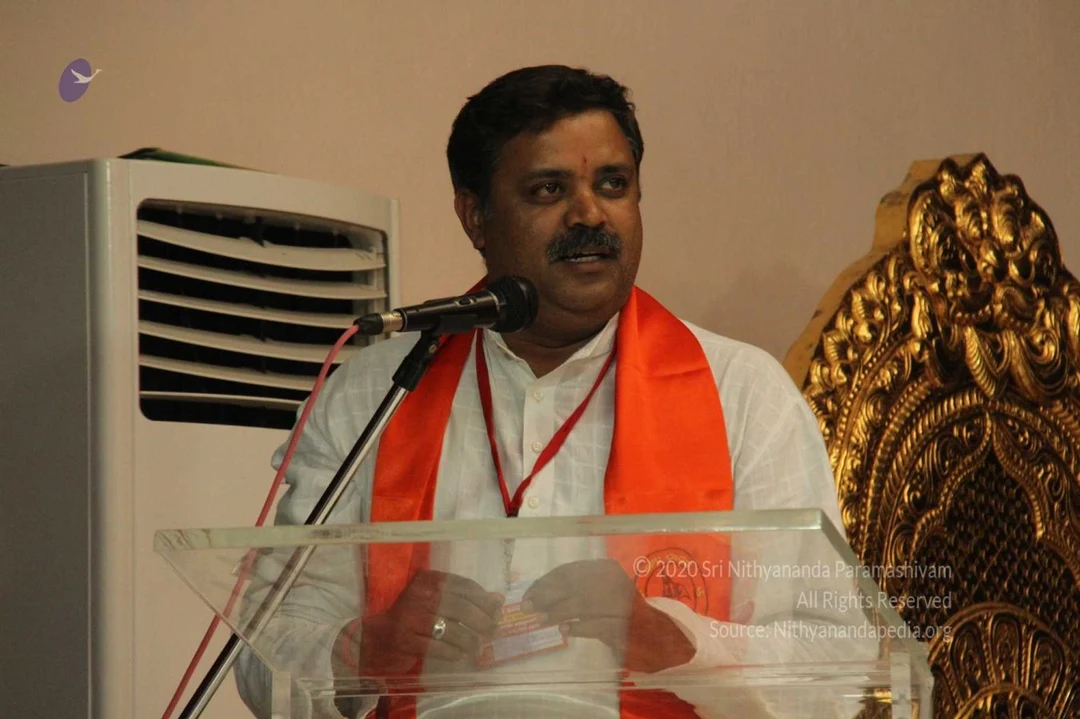
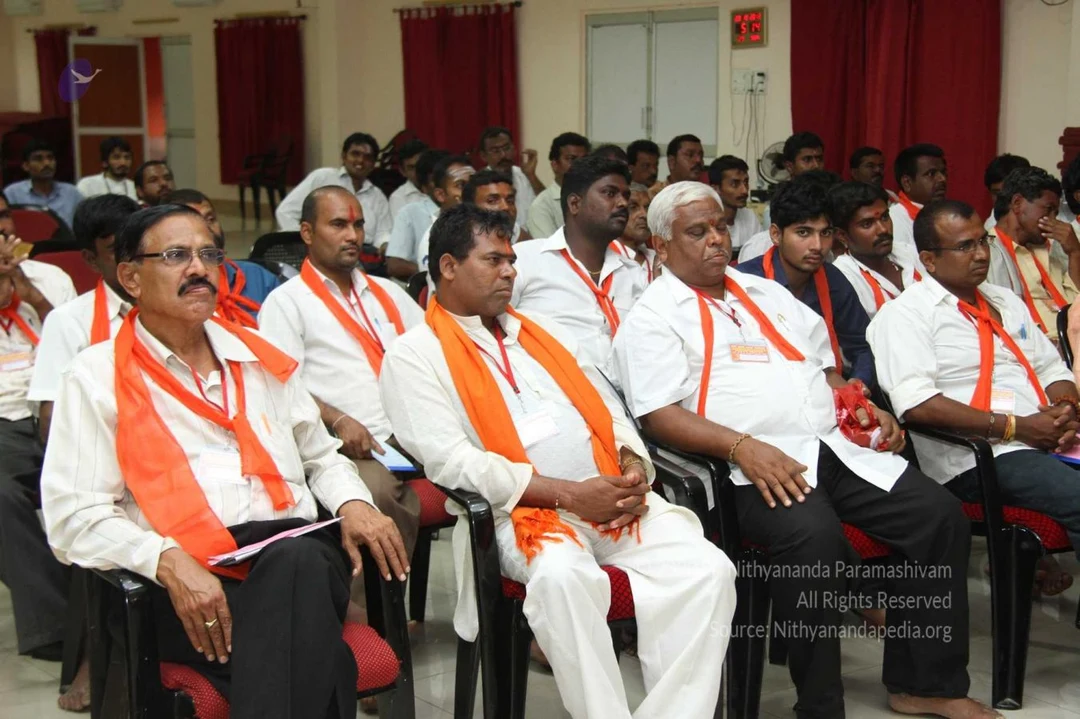
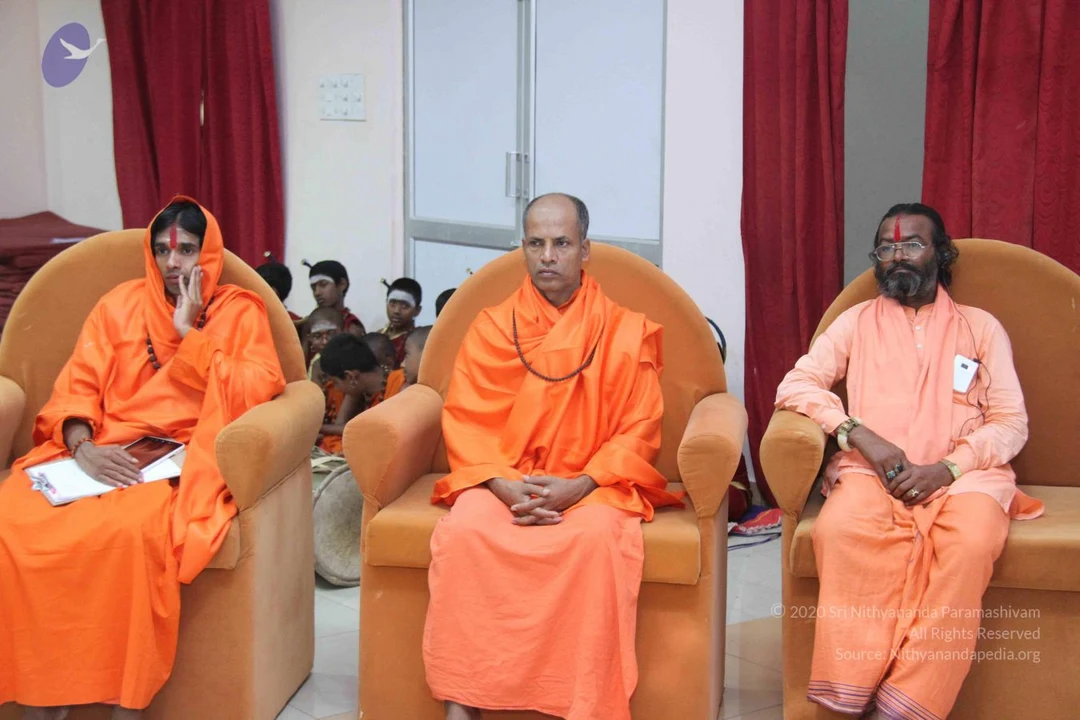
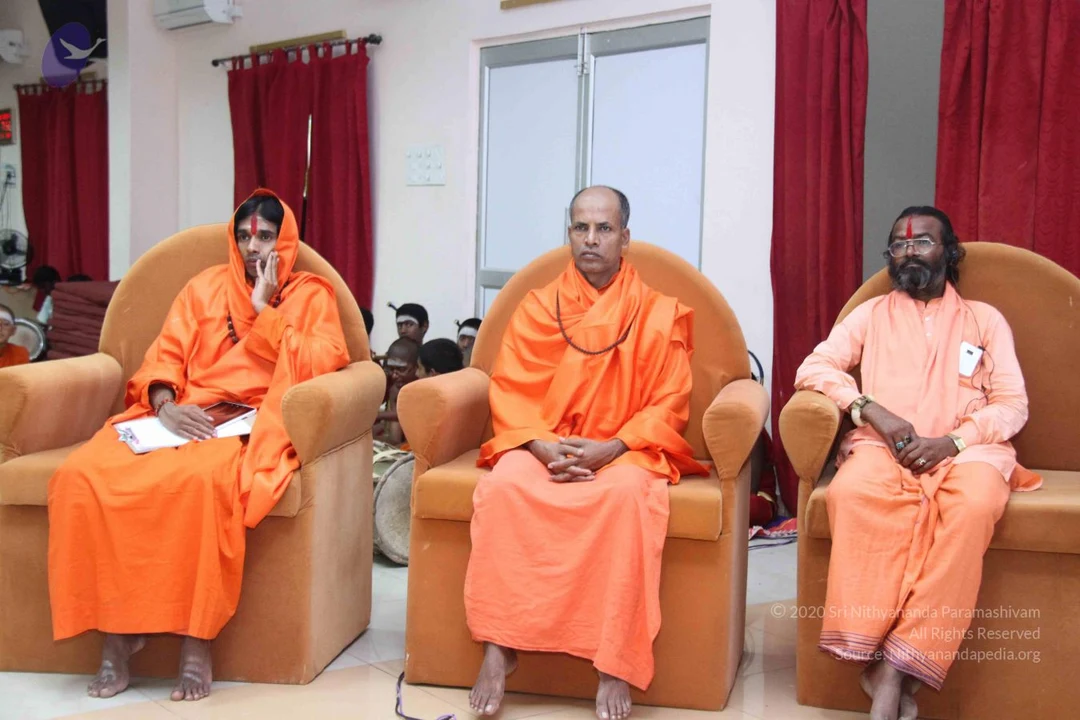
I welcome all of you with my love and respects. I welcome all the Hindu Mahasabha Swamis sitting here in the satsangh, Swami Pranavananda and Shri Basava Swamiji, and Swamiji from Juna Akhada, and all the Hindu Mahasabha members, delegates of the State Committee, and disciples, devotees, samajis, satsanghis sitting with us all over the world at this moment through Nithyananda TV, Sadhna TV, Lotus News Channel, Janashree TV, Eshwar TV and two-way video-conferencing having Nayana Deeksha.

I welcome all of you with my love and respects.

And today, 20th batch of Nirahara Samyama, 3rd level, 8th day.

Today, I will expand on the definition of Dharma and Power of Words – Vaak Siddhi; Power of Thinking – Mano Siddhi; Power of Feeling – Prema Siddhi. Please understand, I am using a new word – Prema Siddhi, because Love was never considered as a power in the logical, rational world. It was always considered as a quality. I tell you, Love is not just a quality, it is a power, because it can cause miracles, it can do miracles. And, ultimately Atma Shakti – Power of Living. Vaak Shakthi, Mano Sakti, Prema Shakti, Atma Shakti. How we need to imbibe everything as part of us, we need to make everything available for us, above all, we need to know how simply to achieve this in our life.

Please understand, to achieve the Vaak Shakthi, Vaak Siddhi, you don’t need to escape into some remote forest, or do some unknown technique, method. No, just in your life if you don’t lie to your boss and wife, that’s enough. If you can be integrated to your neighbours and to yourself, that’s enough. ‘Oh, that is the most difficult thing, Swamiji!’ I know, people are actually ready to escape into Himalayas, because they have made their whole life a mess, they really wanted to escape, but they are not interested in cleaning up that mess they have created. I tell you, even if you escape to the Himalayas for the reason you made your whole present life mess, you can’t be there and you have to disappear into some safe place, you are wrong. You are wrong and you are making the decision out of incompletion. I tell you, just simple Integrity and Authenticity, simple Integrity and Authenticity can bring all these great powers to you, can make all these great powers happen in you.

I wanted to remind this story, how a single word or single letter missing, you will miss the whole essence of life.

Please understand, you should also look, you need to really, really, really look, any decision, whether to escape into the Himalayas or get into the depths of life let it be out of Completion. Understand I have thrown few ideas in front of you now. One, Dharma. I’ll give you the definition of Dharma. Mahabharata very clearly says, “Don’t do unto others what will cause pain to you if done to you.” This is the definition of Dharma. Second, I can give you that verse also.

न तत्परस्य संदध्यात्प्रतिकूलं यदात्मनः। एष संक्षेपतो धर्मः कामादन्यः प्रवर्तते॥

|| Na tat parasya saṁdadhyāt pratikūlaṁ yad ātmanaḥ Eṣa saṁkṣepato dharmaḥ kāmād anyaḥ pravartate ||

This is the definition of Dharma. Mahabharat 5th Canto, 1517th Verse, 113th Chapter of Anushasana Parva, 8th Verse, defines about Dharma.

न तत्परस्य संदध्यात्प्रतिकूलं यदात्मनः। एष संक्षेपतो धर्मः कामादन्यः प्रवर्तते॥

|| Na tat parasya saṁdadhyāt pratikūlaṁ yad ātmanaḥ Eṣa saṁkṣepato dharmaḥ kāmād anyaḥ pravartate ||

This is the definition of Dharma.

Next, when this definition is imbibed into our speaking, you achieve Power of Words, the Vaak Siddhi express through you. When this definition of Dharma is imbibed into your thinking, the Power of Thinking express through you. When this definition of Dharma is imbibed in your feeling, Responsibility, it expresses, it gives you the Power of Feeling. When you imbibe this one truth into your living, the Power of Living expresses through you.

Please understand, just this one truth becoming part of your words, thinking, feeling and living is essence of Dharma. When your thinking imbibes this one truth – “Do not do unto others that which would cause you pain if done to you” – actually that is Integrity. I can define Integrity. I don’t want to give a very low definition of Integrity, like keeping up time, speaking the facts. No, no, no, no, no, I am very clear. Please understand I wanted to give the adequate, larger complete definition for integrity. The adequate complete larger definition for integrity is bring this principle of Dharma -

|| Na tat parasya saṁdadhyāt pratikūlaṁ yad ātmanaḥ Eṣa saṁkṣepato dharmaḥ kāmād anyaḥ pravartate ||

Bring this principle into your words. Bring this Dharma into your words. The words you utter towards yourself and others.

I tell you, many of the spiritual organizations in India slowly lose the spirit of Enriching, reaching out to people and many of the socio-politico organizations of Hinduism loses the spiritual strength, that is why the country continues to suffer. Spiritual organizations learn to reach out to people. Social organizations need to learn to retain the spiritual strength. Please understand, spiritual organizations stop with the spiritual practices like Integrity, Authenticity. Social organizations stop with the social principles like Responsibility and Enriching. First time I am trying to connect and it is time we need to connect the spiritual strength and a powerful inspiration to reach out to society like Vivekananda or Chhatrapati Shivaji Maharaj. See the strength of their Integrity. I know the power of Vivekananda’s words. Still when I read Vivekananda’s words, they are so relevant like today’s satsang, as if the satsang delivered today morning. So relevant. A leader’s words will always be relevant for ages, I can see that. Please understand, when you bring Integrity into your thinking, you will know the right words to be uttered. And, I tell you, all leaders, whether social or political or cinema or religious or spiritual or revolutionary leaders, all leaders are successful, you can become a leader, you can become a successful leader, only when you achieve the Power of Words, only when you can choose the right word at right moment.

The whole world, I can say, there are only two kinds of people. The whole world can be divided just as two. One, the people who know the right words to choose; they are always leaders. The one who don’t know how to choose the right words; they are always followers. That’s all. World has only two categories.

The ability to choose the right word. Please understand, I am not saying just the ability to choose the right word when you speak to others. I am not saying the oratory skill or the ability to be a speaker. That is secondary. I am saying ability to choose the right word even when you talk to yourself. Ability to choose the right word when you relate with yourself. Ability to choose the right word towards you. Integrity starts, the Power of Dharma starts, the Vaak Siddhi starts, Vaak Shakthi starts in you when you choose right word towards you. Please understand, right words towards you starts leadership quality in you. When you choose the right words towards you, you will choose the right words towards others. Choosing right words towards you.

Please listen, I am giving you some of the important , very important basic truth of life. Only the act of choosing is given consciously. Once chosen and trend is set, you cannot change it, for yourself a different trend and for others a different trend. There is only one printing machine inside you have. Whether you want to print something for yourself or something for others, the same machine only can print. If you are using the right words towards yourself, you will use that same right words towards others. If you are using disheartening, negative words towards you. – I have seen many people use negative words towards themself; ‘Oh, whatever I touch will not be successful. Anything I do will be a failure. I don’t know why I am still alive.’ – When you use this kind of abusive words towards you, you will be using same words towards others; you will never give confidence, courage, energy to the people who are living around you. I tell you, only when you give courage and confidence and energy to the people who are living around you, only when you make others a leader, you are a leader. Leader continues to be a leader as long as he makes everyone a leader. Making leaders is the job of leader. The words you use inside you and the words you use towards others will always be in the same tone. It is double-edged sword.

So, I tell you, the first spiritual practice you need to do is bringing Dharma into your words, Dharma into your words, bringing awareness into your words.

Next, bringing Dharma into your thinking. Please understand, your thinking, your mind, your inner space has four major components:

The idea you carry about you – Inner Image; The idea you project about you to others – Outer Image; The idea others carry about you – Others’ Image; and The idea you carry about others and life – Life Image. Please listen, these four put together forms the way you think, why you think the way you think, why you behave the way you behave. So, these four parts of your thinking need to be completely purified. It needs tremendous purification.

Listen.

The idea you carry about you, Inner Image – in Sanskrit we have a word, “Mamakara”; the idea you carry , how you project you to others is Outer Image – “Ahankara”; others’ expectation about you – in Sanskrit we say “Anyakara”; your idea about life and others – in Sanskrit we say “Swa-Anyakara”; these four – Inner Image, Outer Image, Others’ Image, Life Image – I’ll define once more.

Idea you have about you inside you, Inner Image, it will always be low –‘Ah what am I? OK!’.

The ideas you project about you to others, Outer Image – in Sanskrit we have a word “Ahankara” – it will always be more that what you are – ‘Do you know who am I?’ The ‘do you know who am I ‘, That is “Ahankara”.

And “Anyakara” – what others expect from you, what others want from you, how others hold you for themself this is “Anyakara”.

How you hold life and others for yourself – “Swa-Anyakara”.

Understand, these four need to be consciously organized in you. If you are postponing cleaning your house, cleaning your bathroom, cleaning your bedroom, cleaning your kitchen, all that can be forgiven but, don’t postpone cleaning your ideas about yourself, cleaning your ideas about your experience of you, cleaning your ideas about life. Please listen. Integrity or Authenticity is nothing but cleaning the house we reside, cleaning the space we reside. You reside in your inner space more time than in your bedroom and office. Clean this. It is unfortunate we miss the place where we reside more time and go on cleaning the house in which we stay less time. What we feel about us, what we experience as we and how we project yourself to others, this needs to be completed first. I am not saying remove bad quality, bring good quality. No, no, no! No quality is good or bad. All qualities are good at some point, bad at some point. I am not talking about that. I am trying to tell you only one thing. I am trying to tell you only one thing: Just bring awareness into your thinking, Completion into your thinking; you will have spiritual strength.

I tell you, without spiritual strength, all socio-politico organizations fail. Just having social or political strength without spiritual strength, all socio-politico organizations fail. Please listen. And same way, just having spiritual strength without socio-politico strength, all spiritual organizations die. Like Krishna says, “Yogo Nashta Paranthapaha”! If you just have the spiritual strength and don’t reach out to human-beings.

Somebody asked Buddha, ‘Why do you make your monks beg?’

He says beautifully, ‘Only then they will continue to keep enriching. If they get everything they need, the enriching will stop in them.’

I have seen my own kids, my Sannyasis, many of them are really, really, really sincere. You may not expect this word from me. Many of them are really, really sincere. But enriching has not become a survival instinct in them. It is a sincere instinct. Sincere instinct is different, survival instinct is different. Only if you enrich, you will have your basic need. Buddha kept it in such beautiful way. For my Sannyasis, it is a very sincere decision, but not survival decision. Buddha made enriching as a survival decision. If you don’t reach out, you won’t have food. That is why, from the time immemorial, people who are supposed to enriching are always made to beg and eat, because when you beg, you have to reach out to people, you have to convince that guy why he should give you food, you have to offer something in return, you have to be in touch with humanity, you have to be in touch with life.

I tell you, these wealthy monasteries, where the monasteries’ wealth is accumulated, where lot of wealth is there, they lose completely great truth of enriching. When enriching is lost, you start sleeping and with that, as Krishna says, “Yogo Nashta Paranthapaha”! Life is lost. Life is lost.

I tell you, Ramana Maharshi says beautifully, in the initial times in his ashram, they have to send people for begging for their food. That is the time he composed a beautiful stotra, verses, songs on Arunachala – “Akshara Mana Malai”. So, he used to tell , when the ashram became very popular, rich, he used to tell people, ‘I think when our sadhus were going around begging, singing Akshara Mana Malai, that time we were spreading spirituality to more number of people than now, because now they have become rich.’

I tell you; even giving food to sadhus is not a big thing. I can give food to any number of people. But once they come and settle down with their own untrained patterns and the arguments they bring. ‘Everyone should be looked upon equally. When he is not doing, why should I also not do?’ Alright, he eats dash dash, you also eat that! He goes to hell; you want to go to hell? This ignorant equality. Please understand, the Ignorant Equality is the source of Communism. Unique Responsibility is the source of Zen. Unique Responsibility is the source of Vedic Varnashrama Dharma. Ignorant Equality is the source of Communism. Unique Responsibility is source of Varnashrama Dharma. Varna and Adheenama of Hinduism is born out of Unique Responsibility. But, unfortunately, these fools they try to say, ‘No, no, no, no, no, no! We are all equal. When he is not doing, why should I do?’

Please understand, thinking, thinking with awareness, aligning your thinking, the idea you have about you, the idea you project about you to others, and ideas others have about you, and the idea you have about life, all these four need to be ironed out, complete with this great truth of Dharma. You need little contemplation. Today, take a little time to contemplate on how to bring Dharma into all these – Integrity, Authenticity, Responsibility and Enriching – the Power of your Thinking and Power of your Words, Power of your Feeling and Power of your Living. Your Power of Words gets enhanced with Integrity. Your Power of Thinking gets enhanced with Authenticity. Your Power of Feeling gets enhanced with Responsibility. Your Power of Living gets enhanced by Enriching.

I tell you, in only two ways you can spend your time, Kaala – either by enriching, or in to the laziness. Time spent in laziness prepares you for hell. Time spent in enriching prepares you for heaven. That’s all. That’s all nothing else. There is no third choice. Either you continue to reach out to people, enriching, enriching, enriching, or you continue to wind up and fall into the ditch of laziness, shrinking, getting destroyed. One of the biggest problem Hindus have never reach out to the world. Do you know, all over the world, outside India, all the university Chairs on Hinduism – many university have Hinduism Chairs – not a single Chair is occupied by a born Hindu. All the people who learned Hinduism from books are teaching about Hinduism. Then what kind of a teaching will they do?

Actually, few months before, I announced I am producing on Hindu Ph.Ds. through our gurukul to be appointed in those Chairs because now they know somebody is claiming their rights. It is my right. Why will my religion be taught by somebody who is not born in my religion, who has studied few books and who doesn’t not have a right idea? I tell you, if you listen to what they are talking about Hinduism, it will be horrible! Once I went to a university to give a lecture in US. Literally, the Hinduism students asked me, ‘Swamiji, inside India do you travel in car or elephant or horse?’ I said, ‘Come on!’ Means, still they are thinking we are all jumping from branch to branch and riding on elephant wearing snakes. No, all that is not wrong. But I am telling you, they have no idea about how we are living now. They think Hinduism is either a pagan or some idol-worship religion. I told them, ‘Hindus don’t worship idols, we worship through idols.’ There is a big difference between “worshipping the idols” and “worshipping through idols”.

I tell you, one of the biggest problems we Hindus have is we never reach out to people, we never stand for Dharma. A little bit of spiritual practice we think which is spirituality, we do that. Going to temple or chanting little mantra, I am not saying that is wrong, but I am saying very clearly, it is not adequate, it is not enough. Complete overhauling of the personality is required with Integrity, Authenticity, Responsibility and Enriching. We need to bring Responsibility into our thinking, into our feeling. The Power of Feeling is achieved when you bring Responsibility. I always give this example: If you see a scrolling in the channel “Bomb blast! 120 people died”, you wake up, ‘Oh, god! Where? Where?’ ‘Iraq!’ You just… ‘Okay. It’s okay.’ The moment you get the information, Iraq, you think, ‘It is not my responsibility. It is somebody else’s place. Leave it.’ But if that word is India, immediately you wake up, ‘Oh, god! What is happening?’ Because, you feel emotionally responsible only for India. I tell you, we need to feel emotional responsible for all the Hindus all over the world and ultimately all human-beings all over the world. It is our responsibility to enrich them. Understand, only with responsibility, the Power of your Feeling is awakened.

Enriching, the fourth principle. Reaching out to people. Constantly enriching others’ lives. Constantly enriching others’ lives.

Please listen, Integrity brings Power of Words in you. Authenticity brings Power of Thinking in you. Responsibility brings Power of Feeling in you. Enriching brings Power of Living in you. Infuse this one concept of Dharma – Na tat parasya saṁdadhyāt pratikūlaṁ yad ātmanaḥ | Eṣa saṁkṣepato dharmaḥ kāmād anyaḥ pravartate into your words, thinking, feeling and living; I tell you, you will live in your peak possibility, you will like God on the earth!

I’ll continue on the same truths tomorrow also.

Inner Awakening in Bali is all about these four major truths becoming life, experience, bio-memory, bio-energy in you.

Let you all achieve, experience, live express, radiate, share and explode in eternal bliss, Nithyananda.

Photos

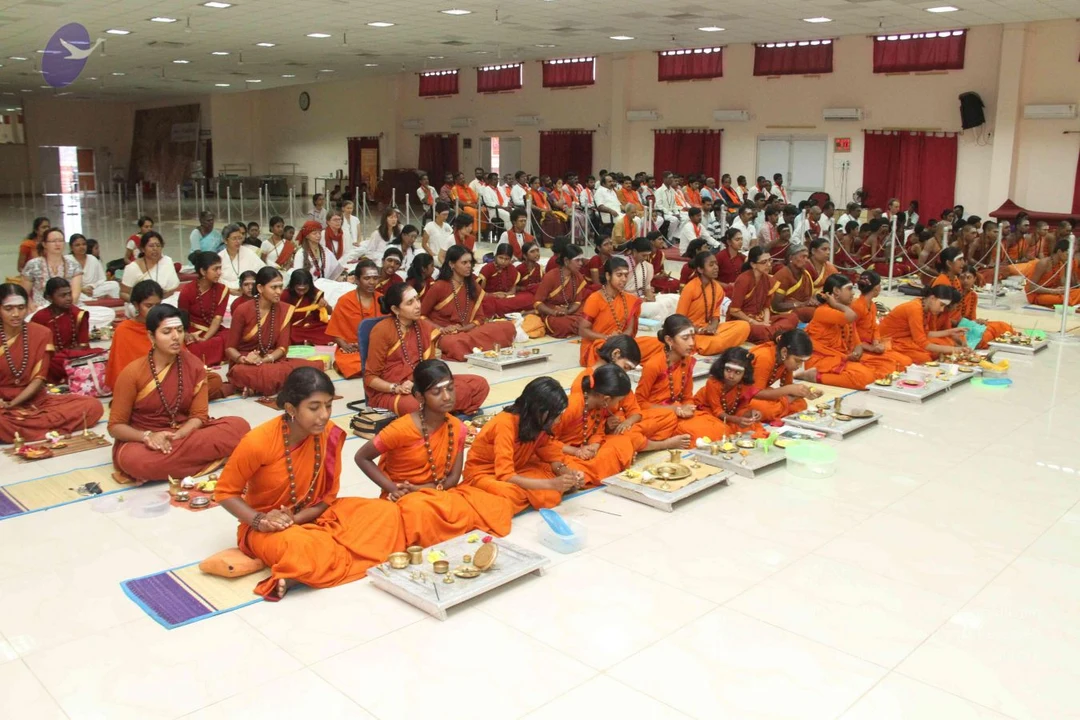
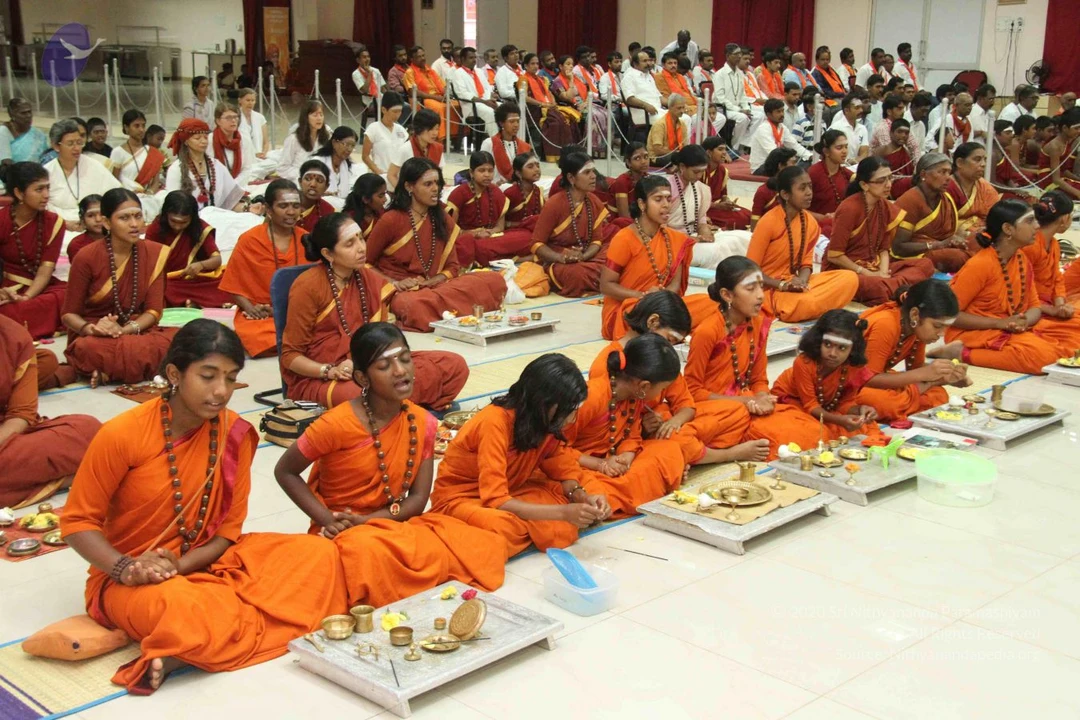
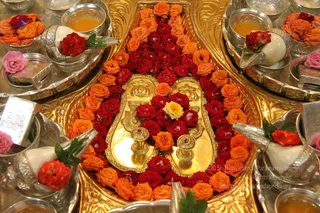
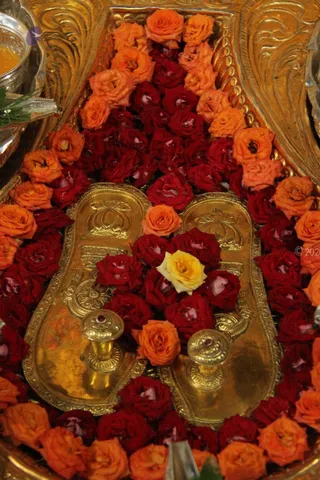
Paduka Puja
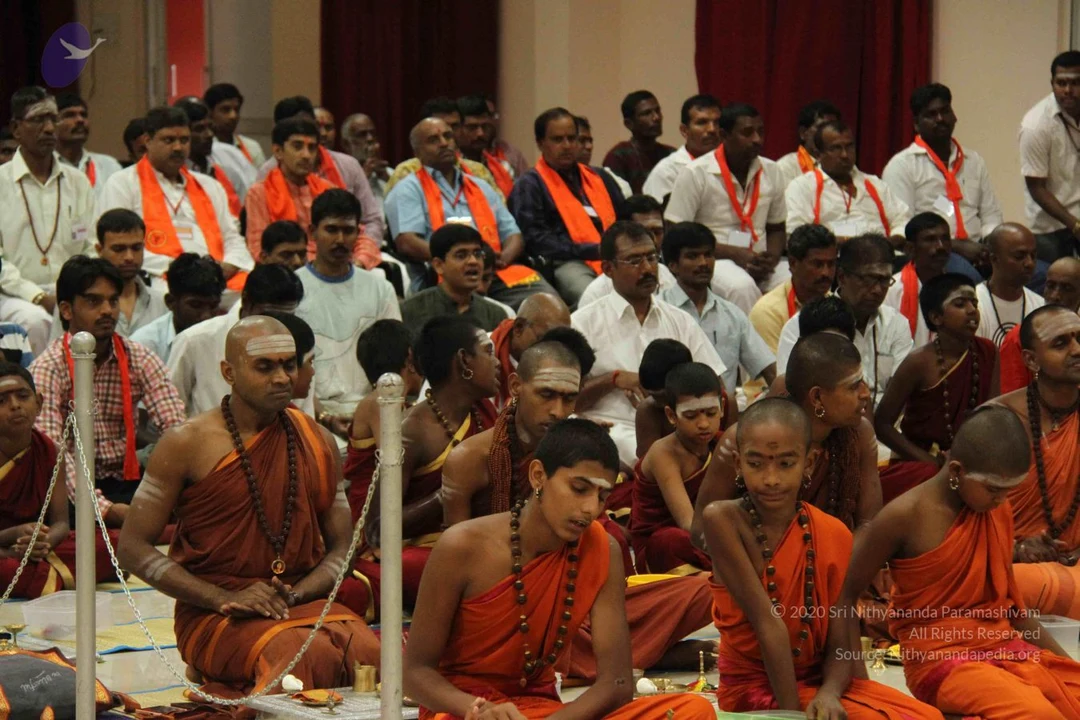
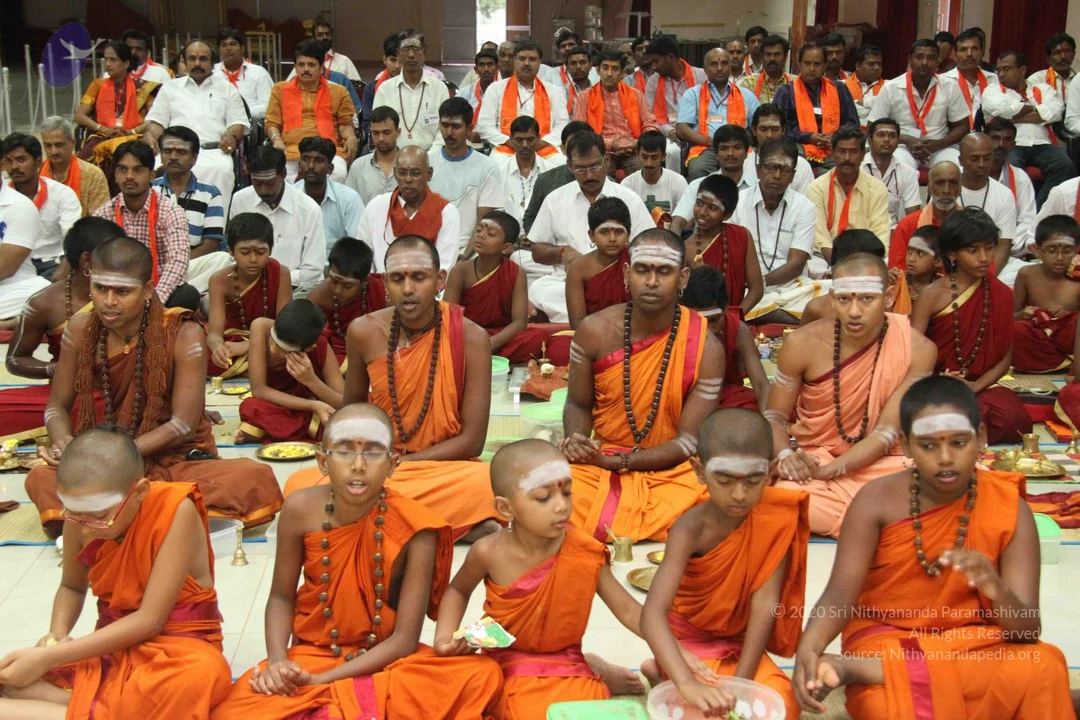
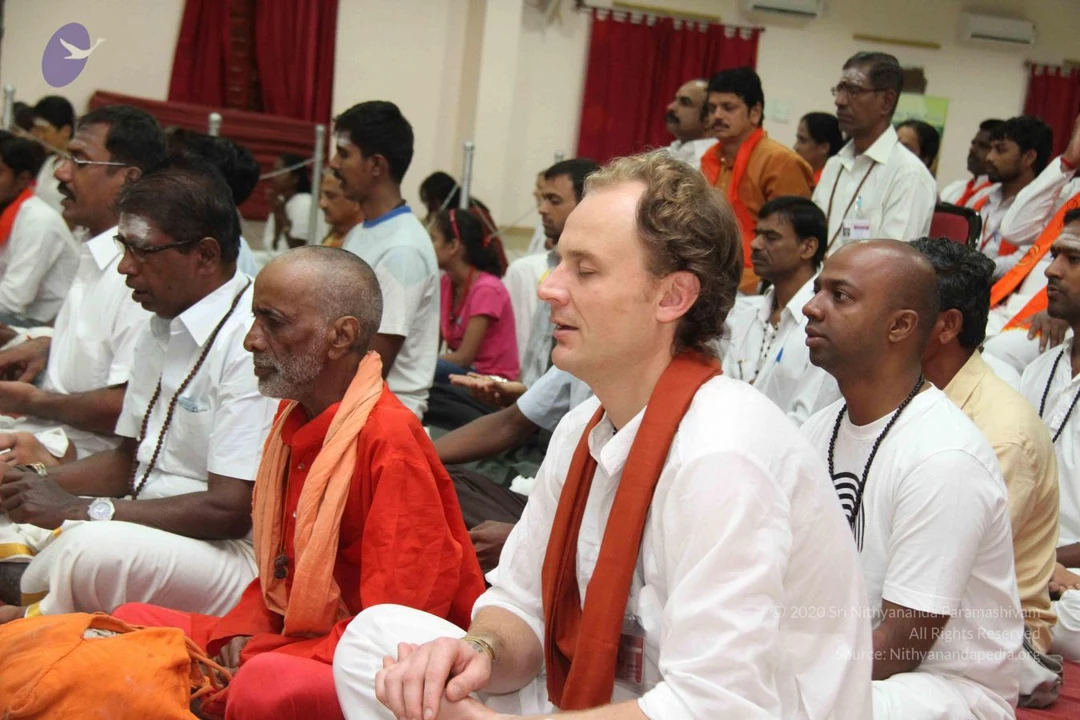
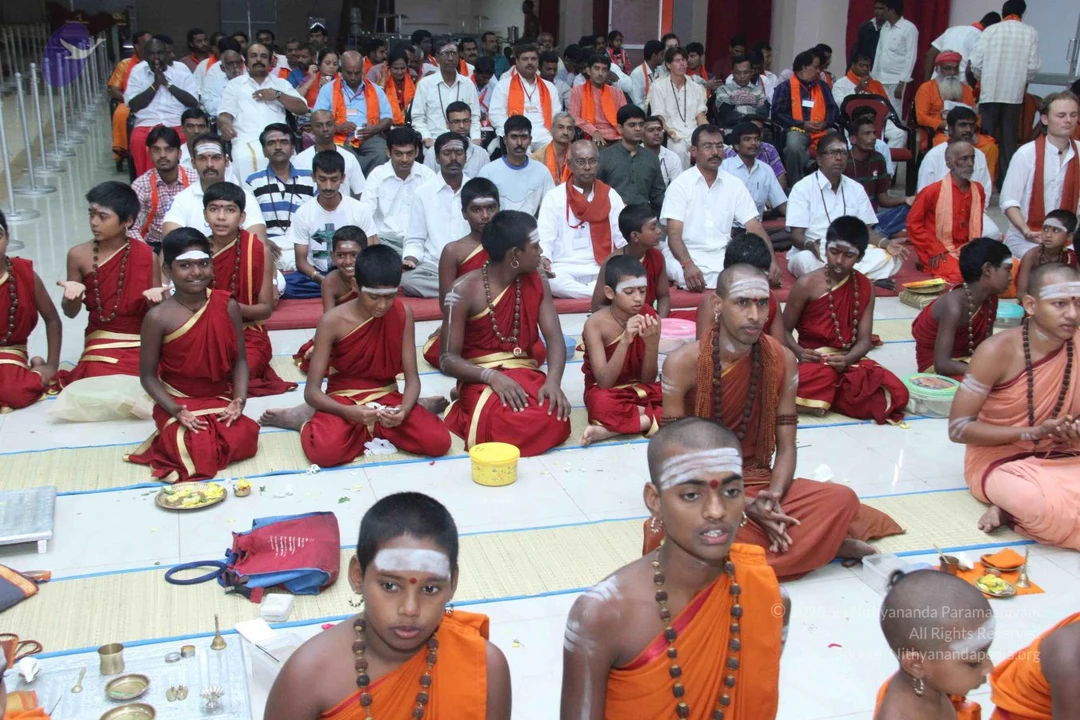
Nithya Satsang

Sarva Darshan

Final Blessing

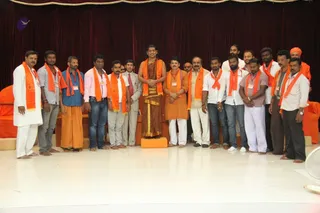
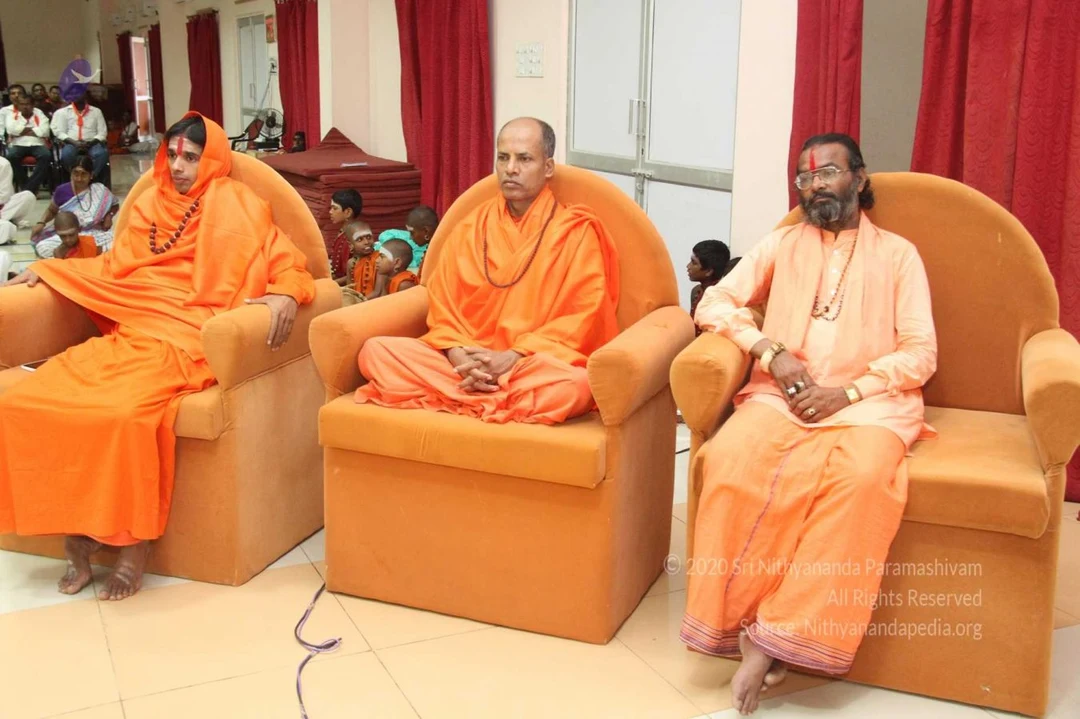
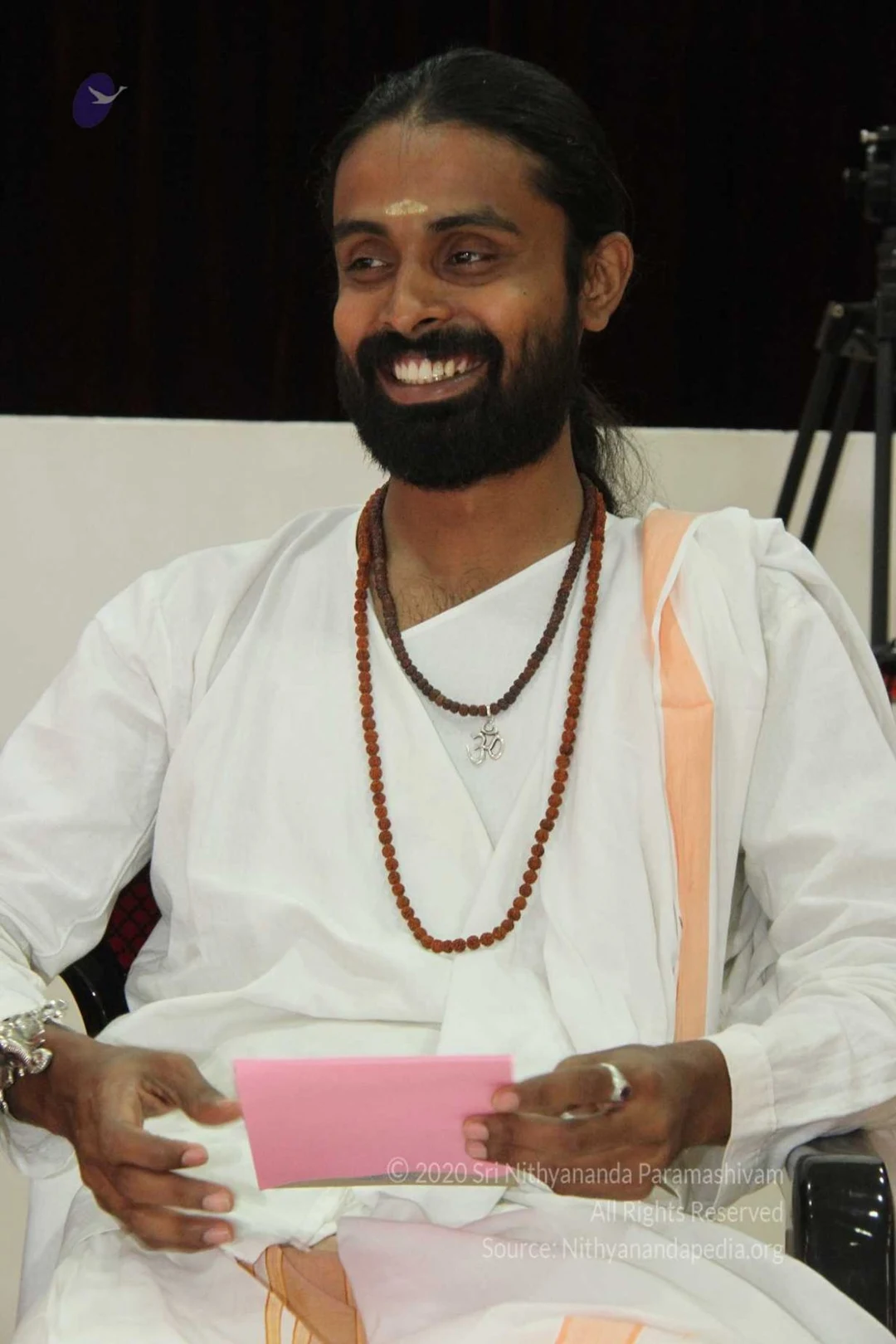
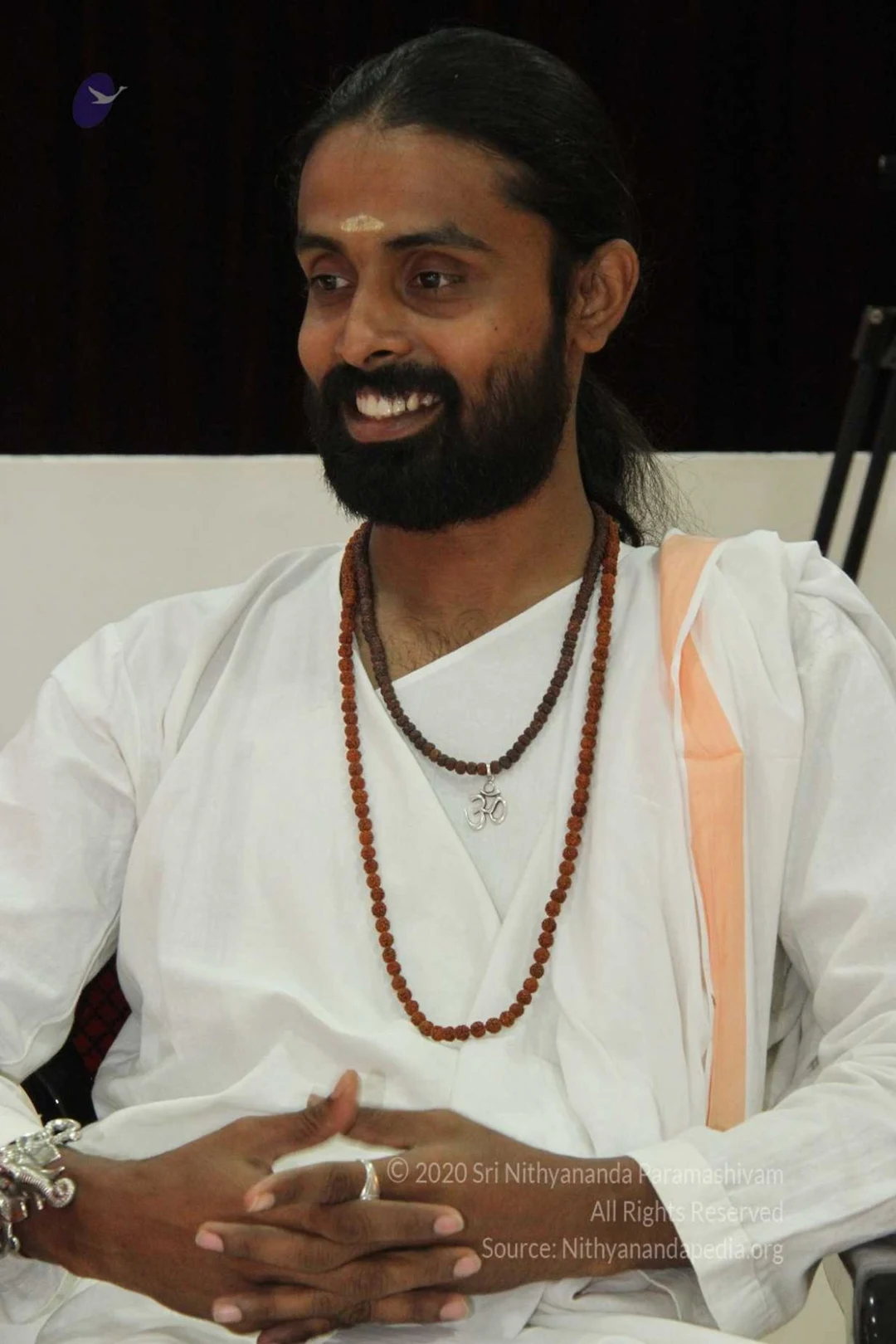
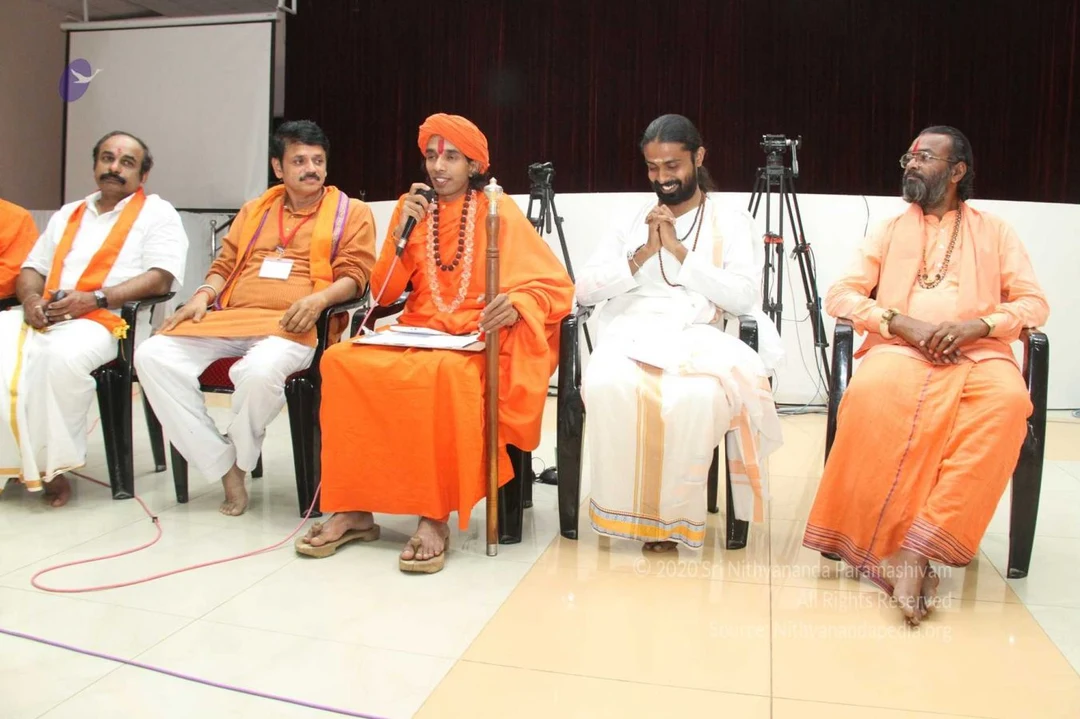
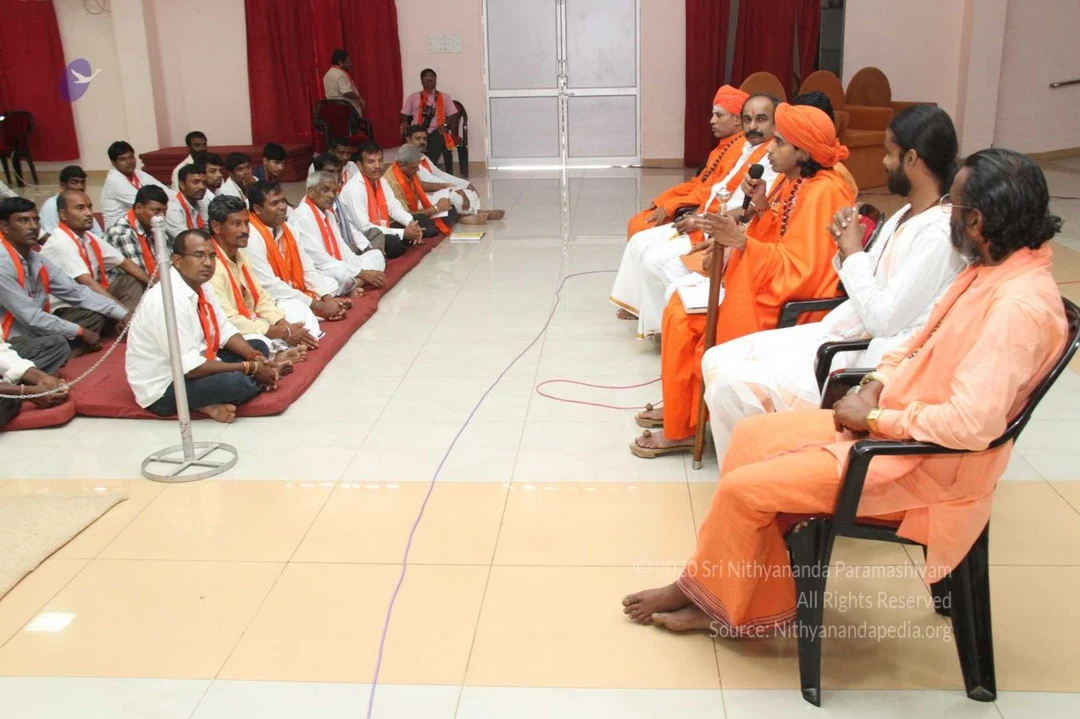
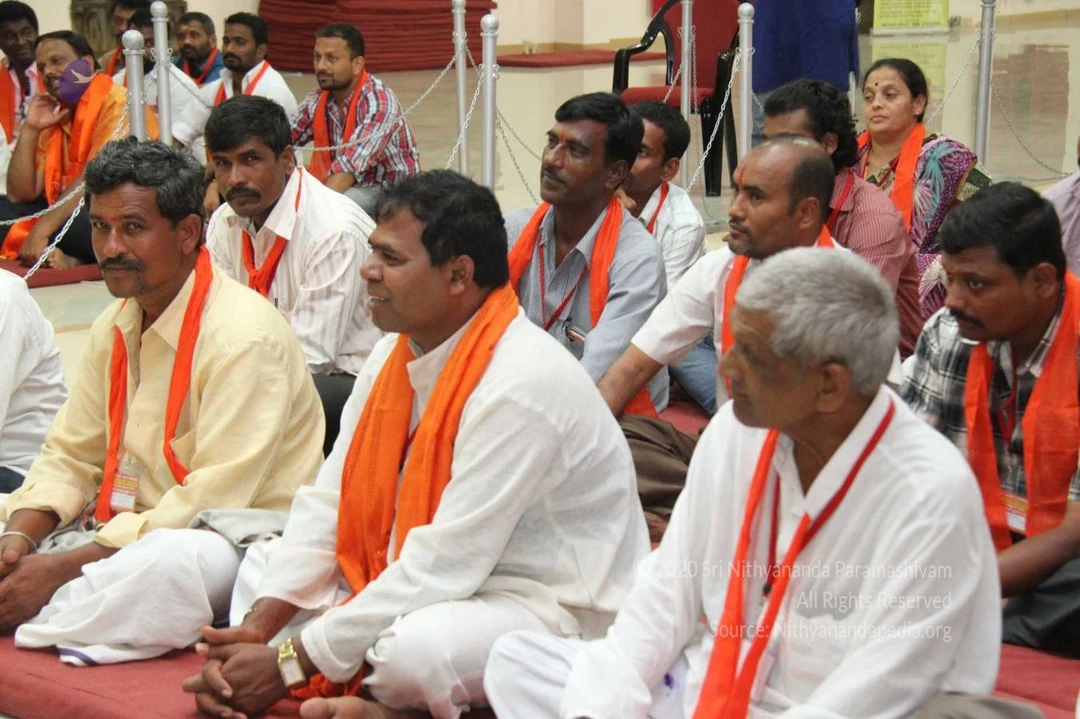
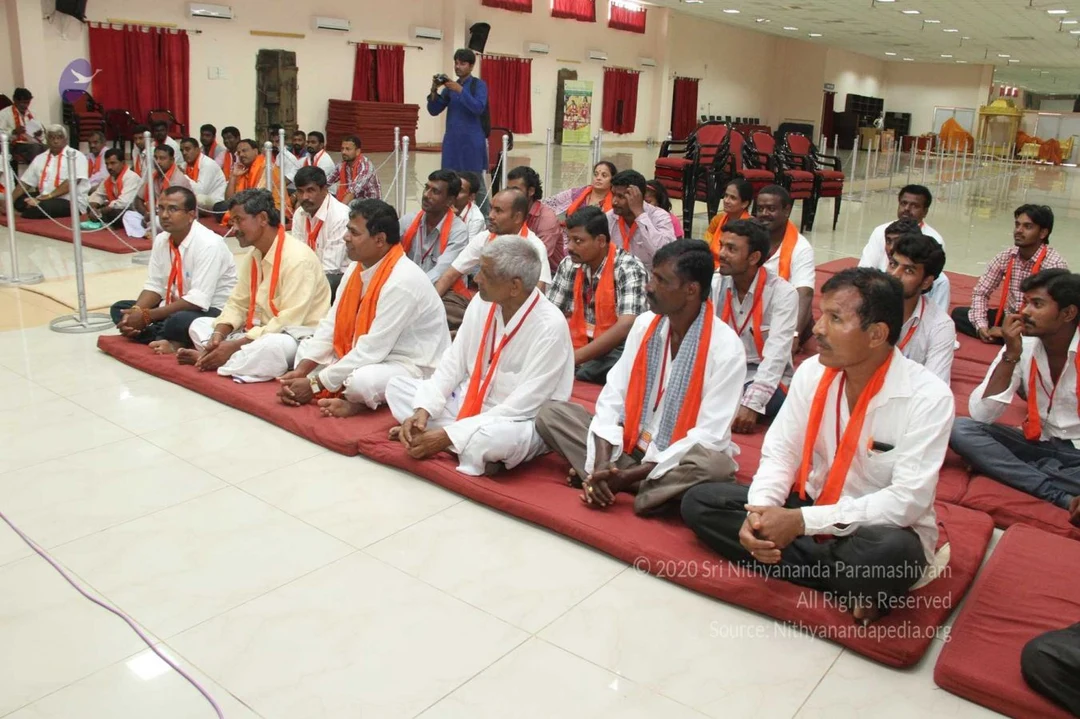
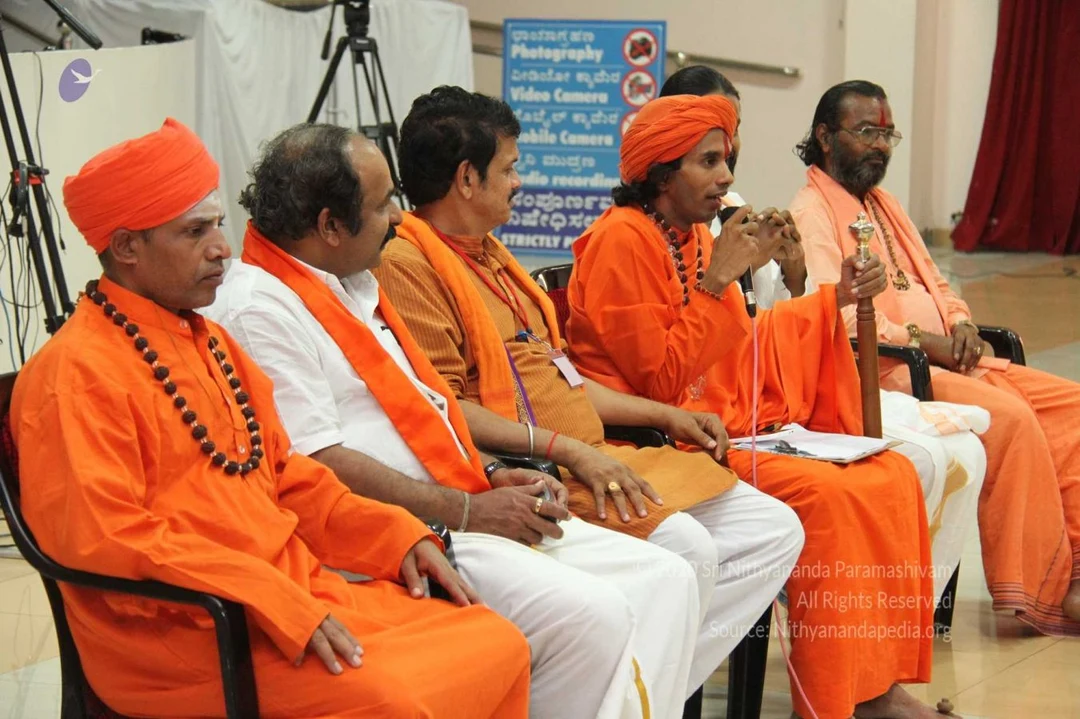
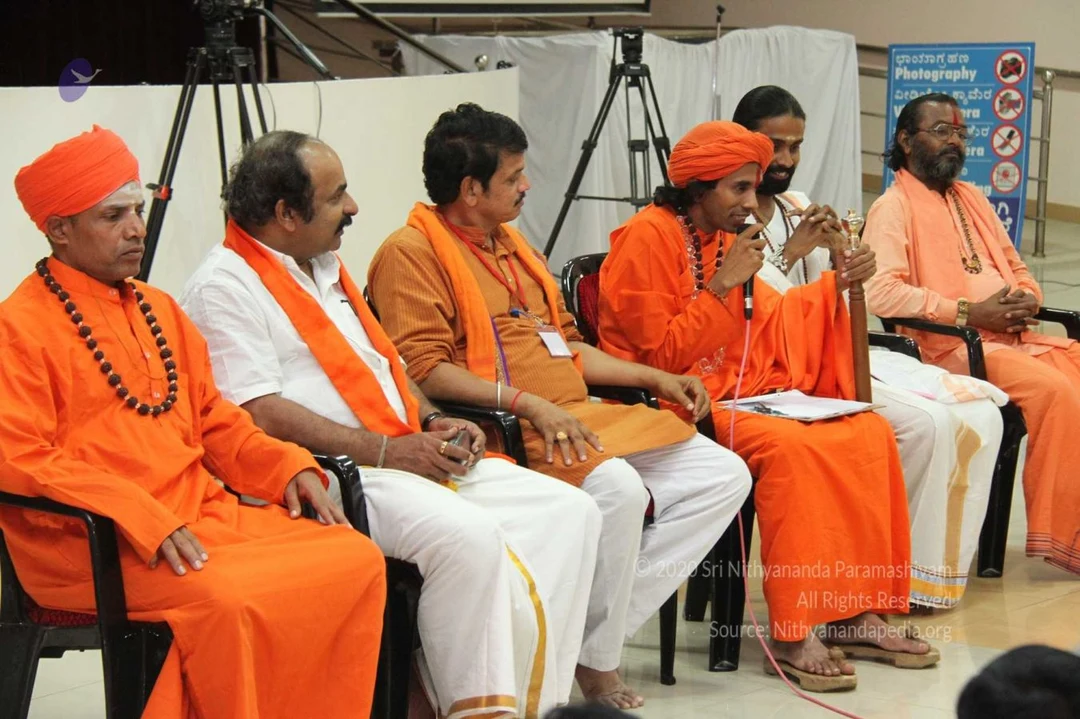
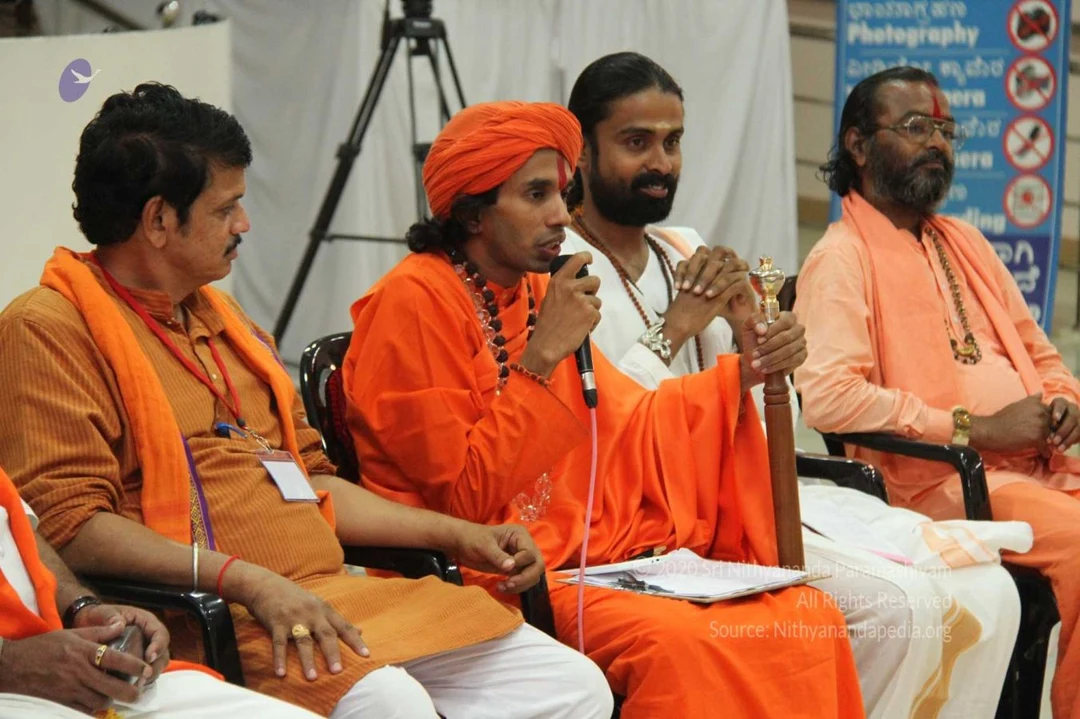
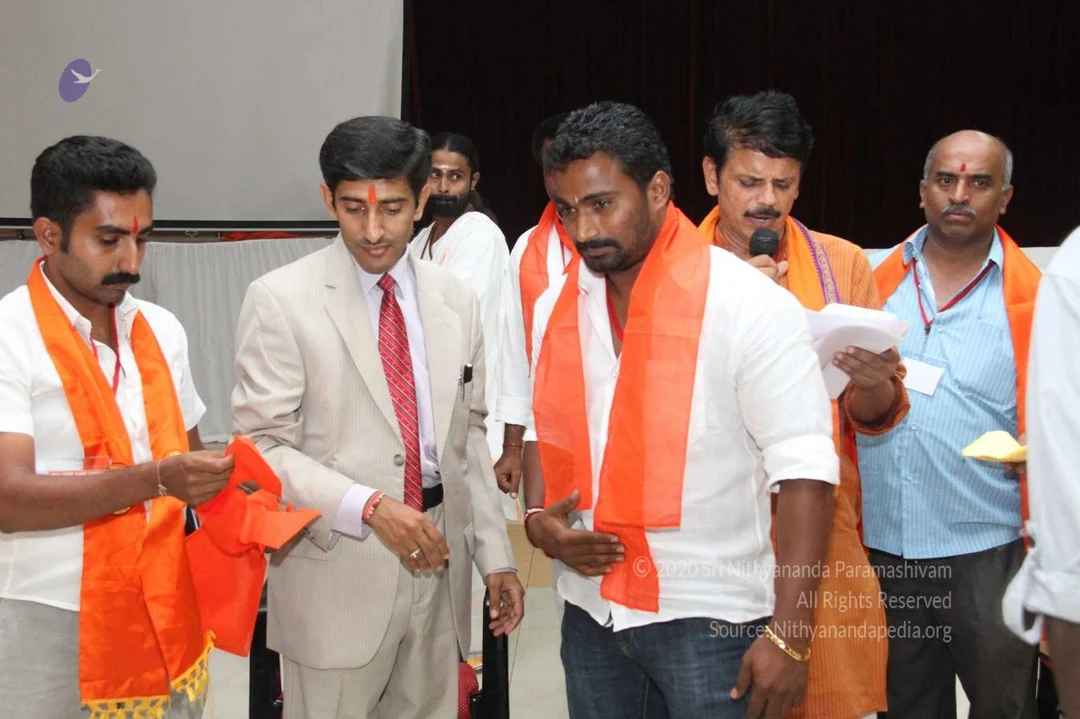
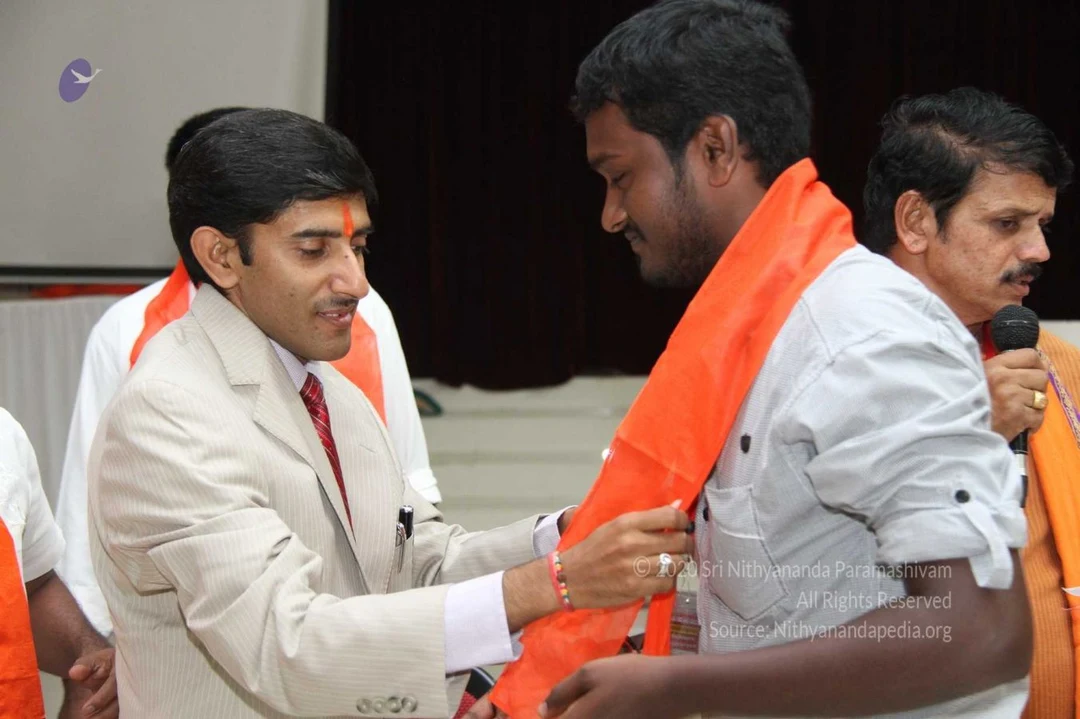
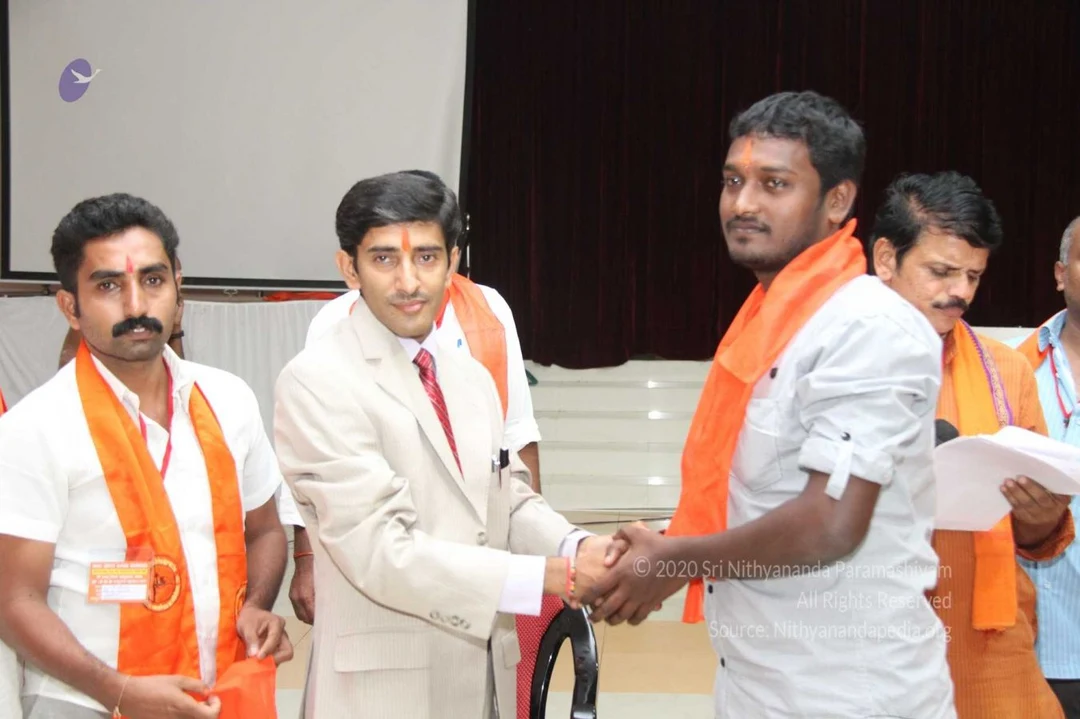
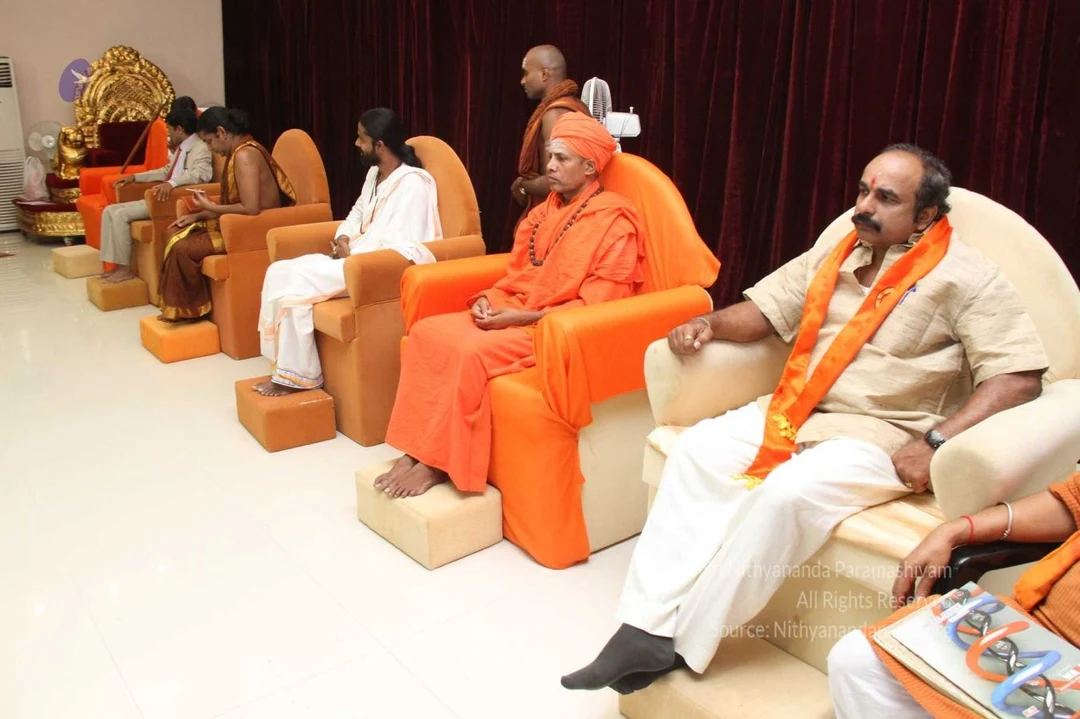
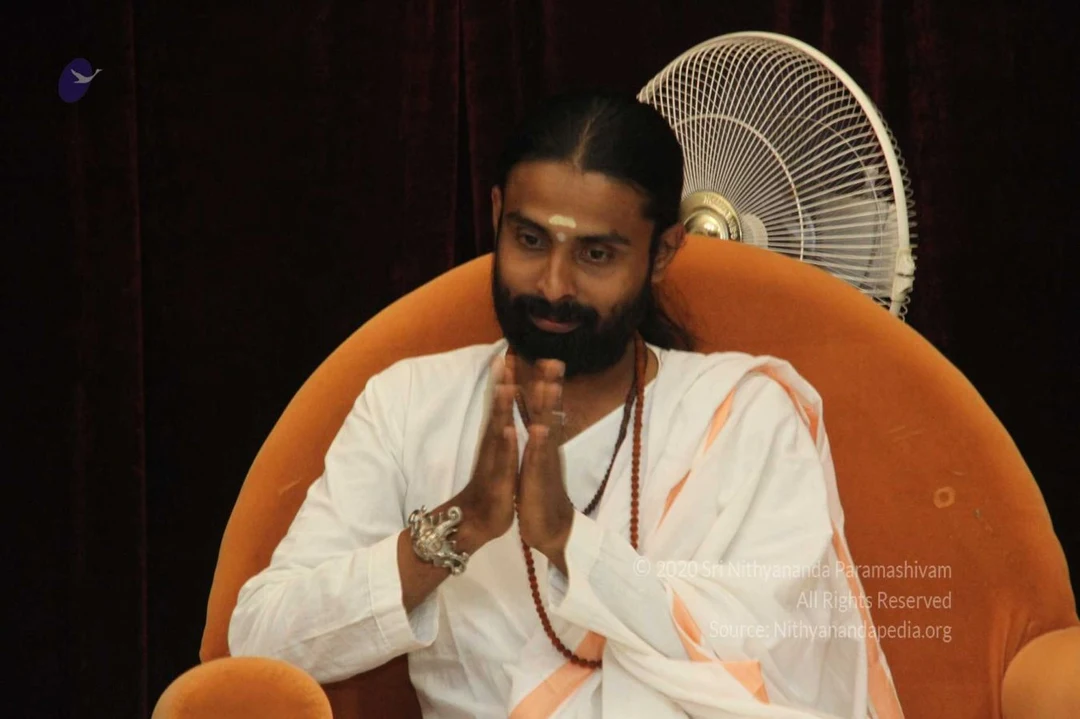
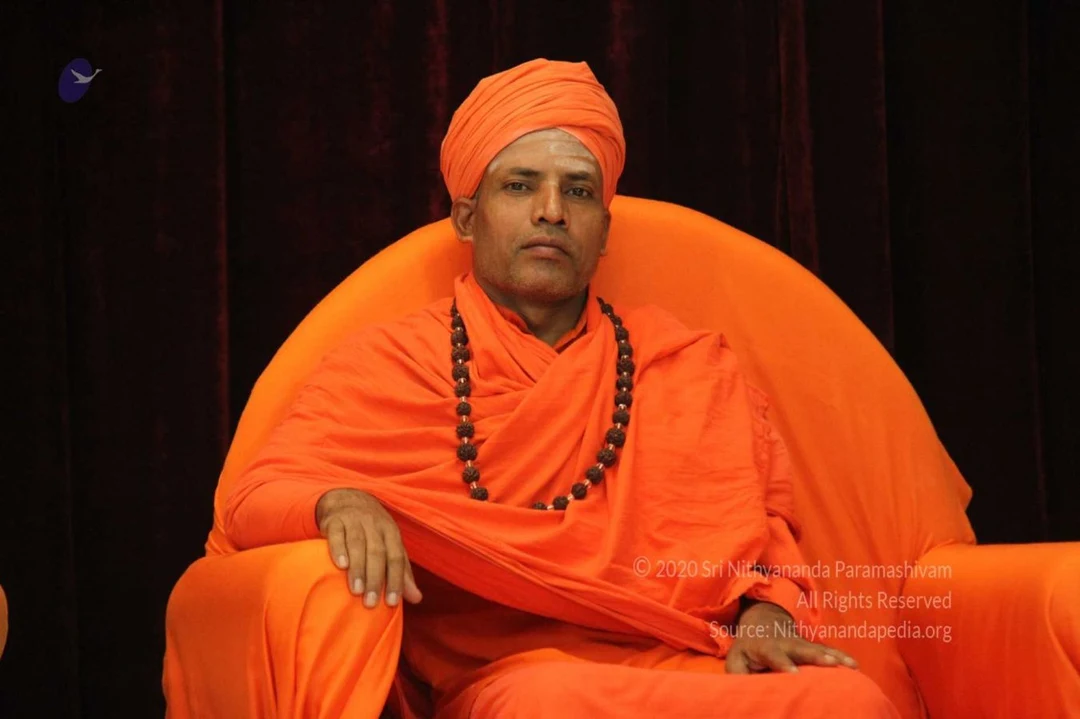
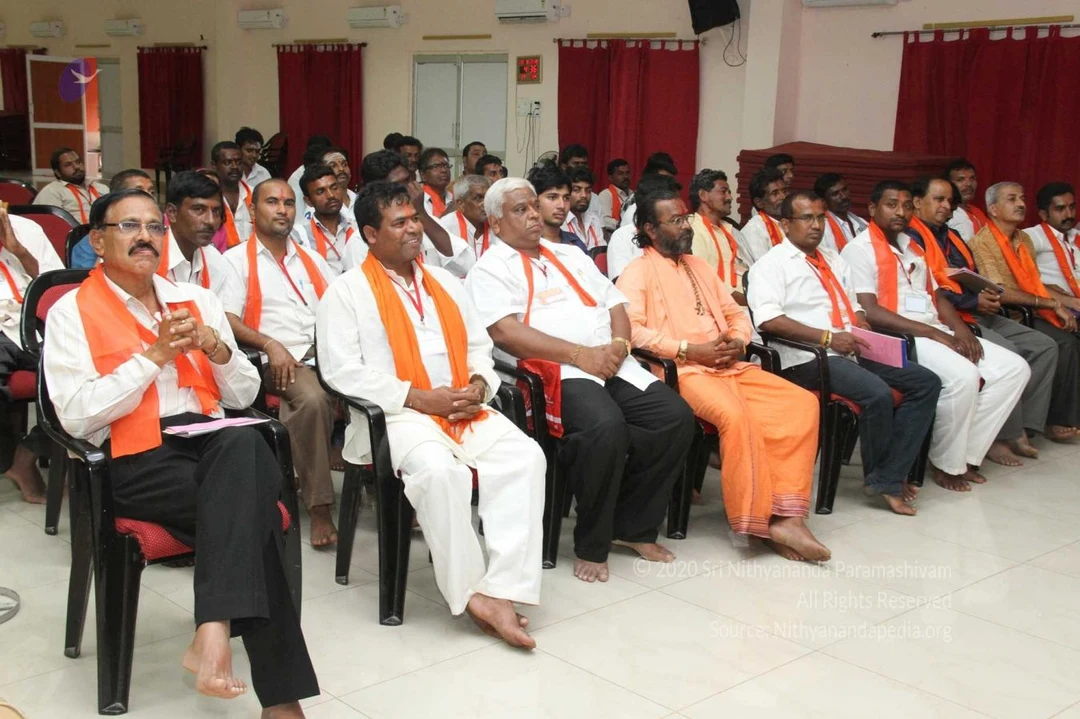
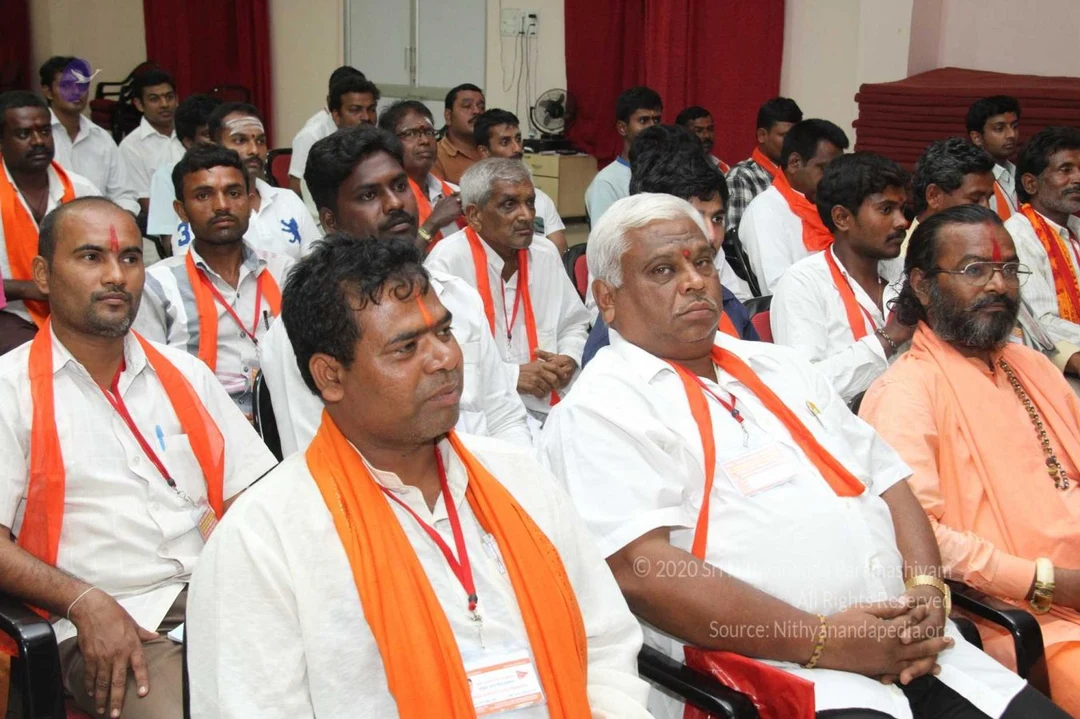
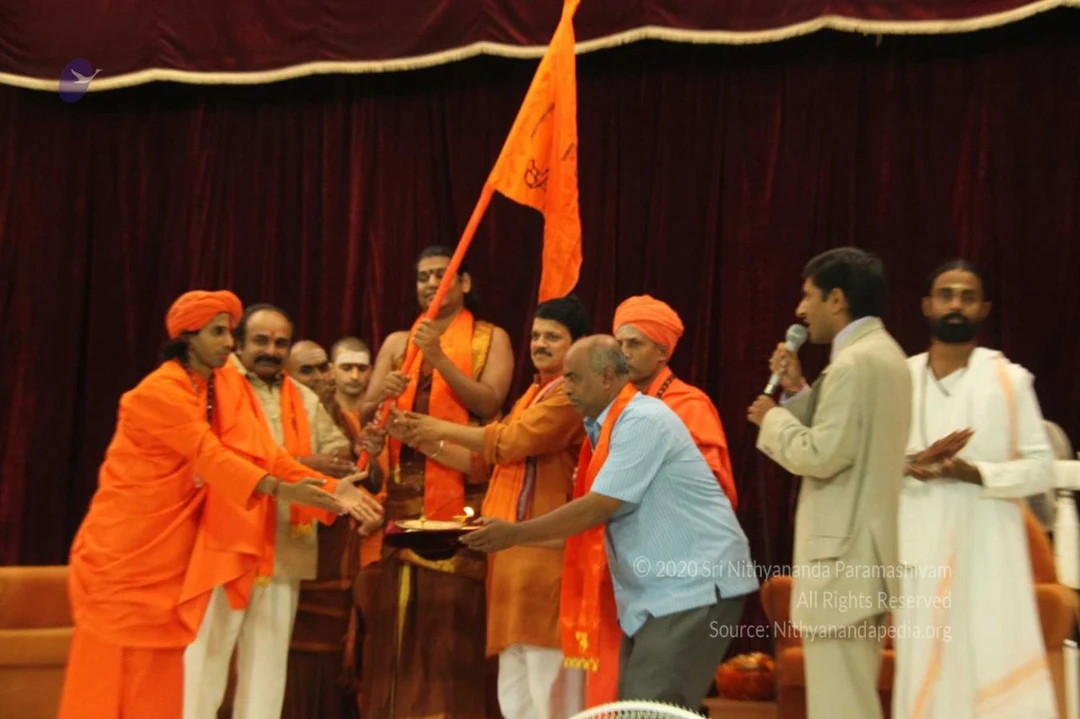
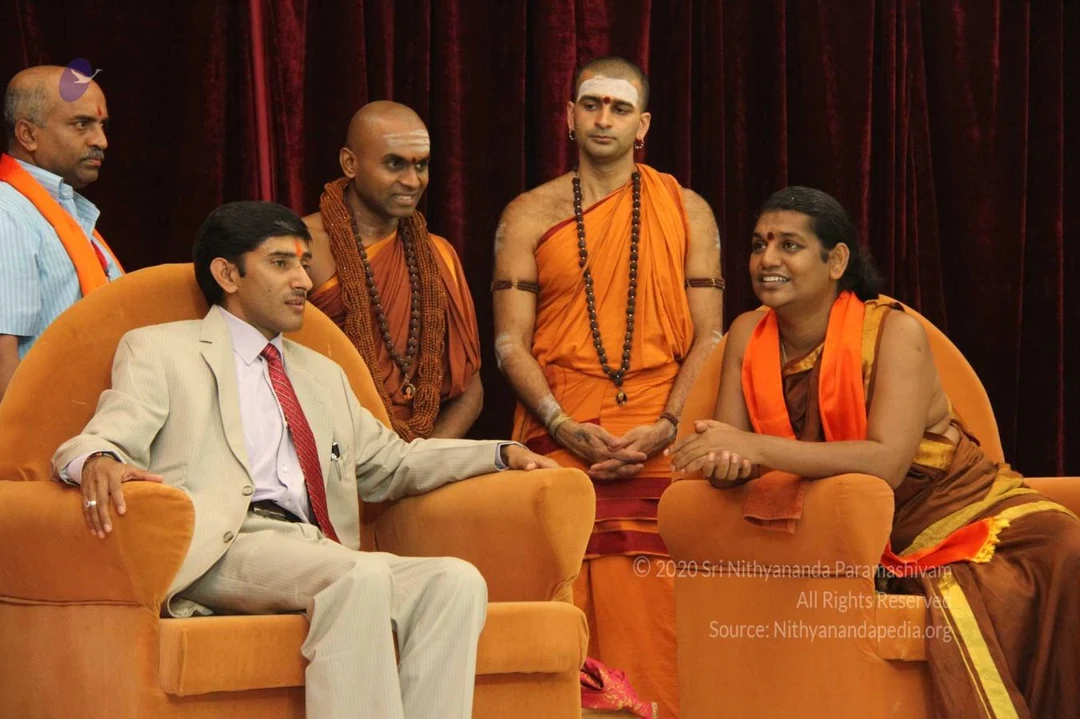
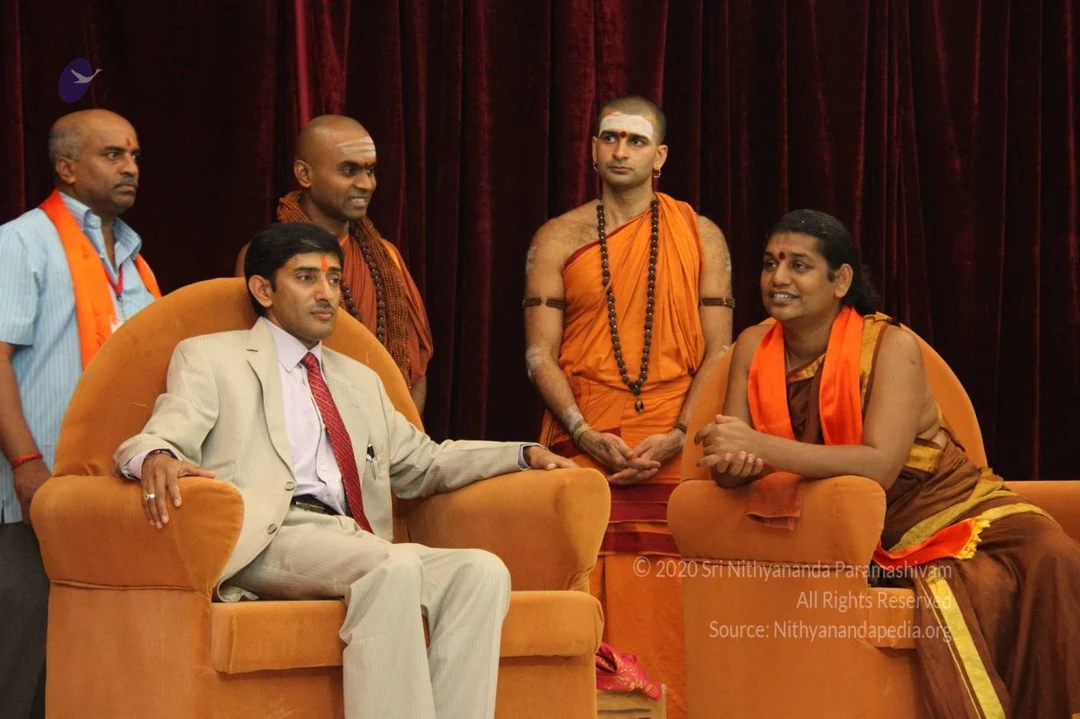
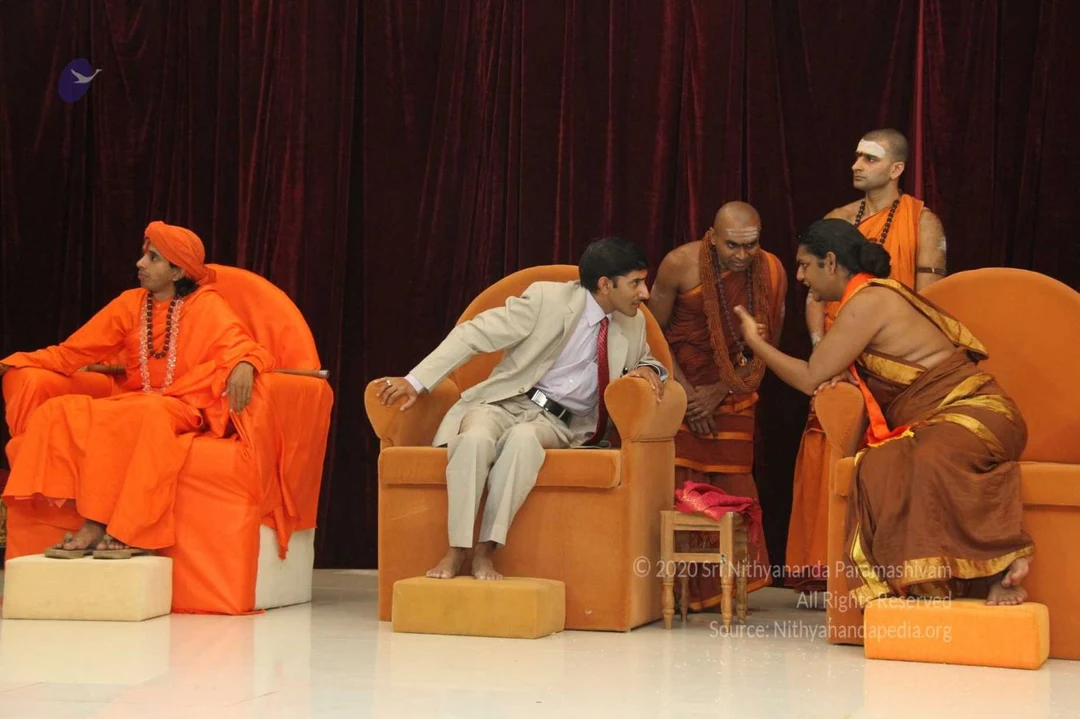
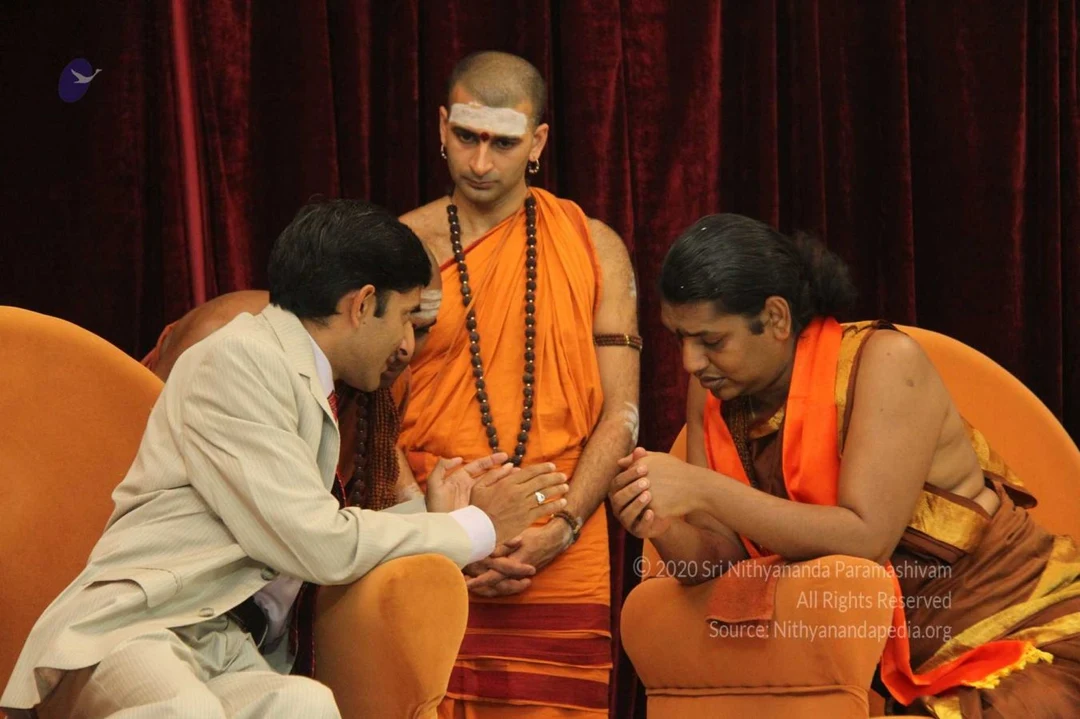
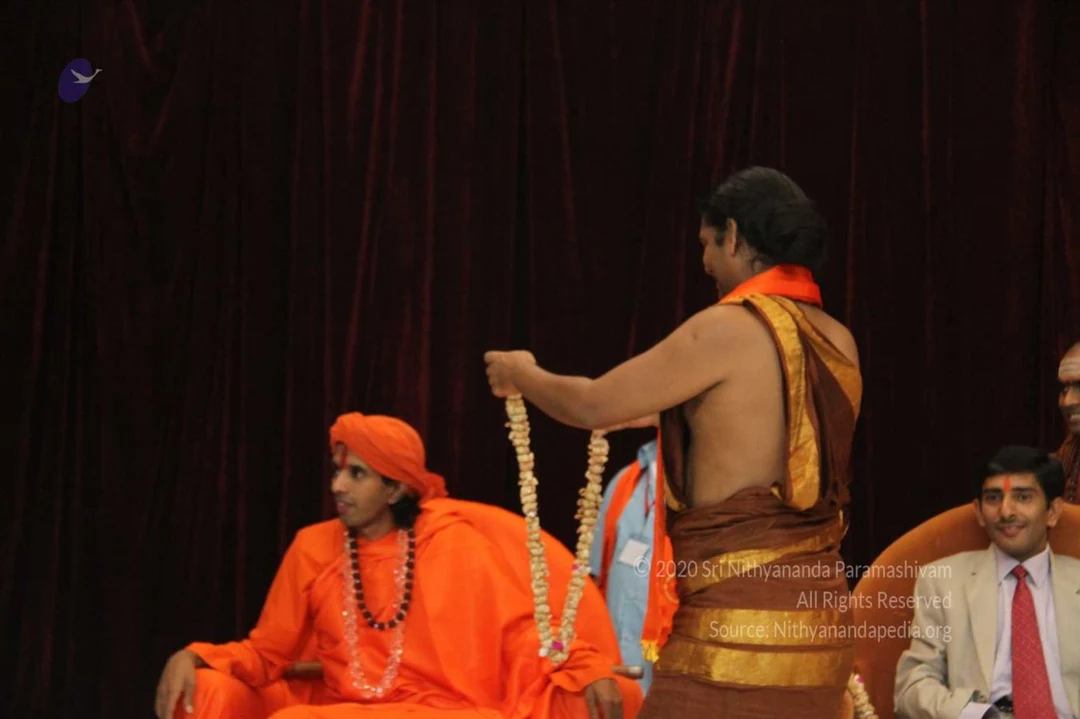
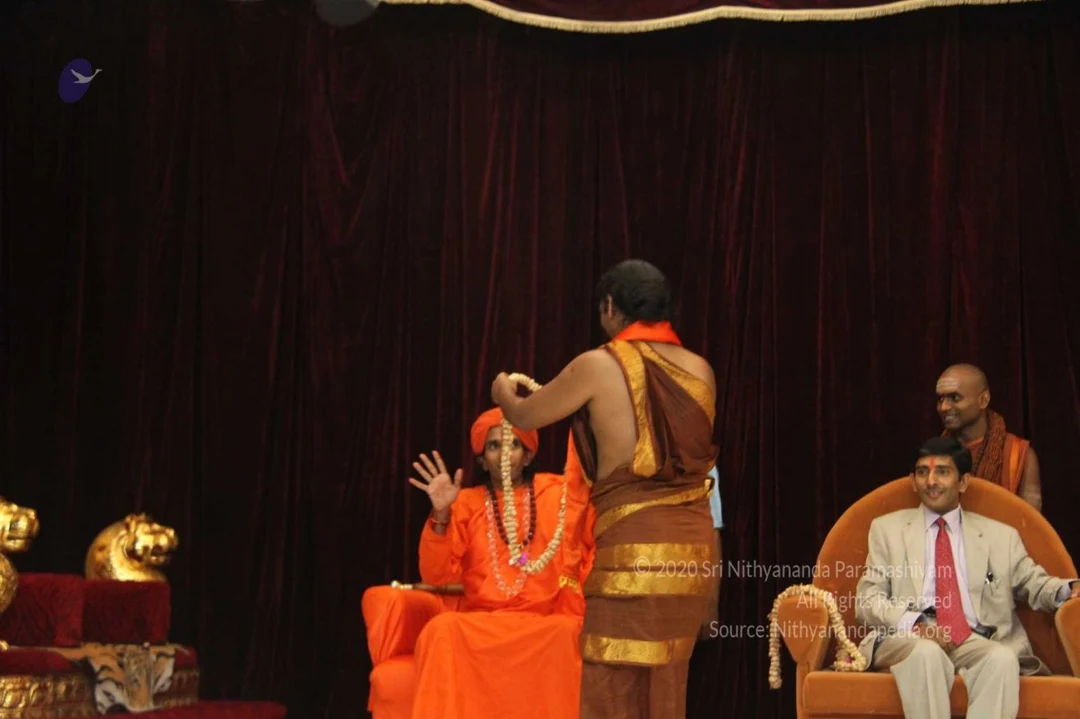
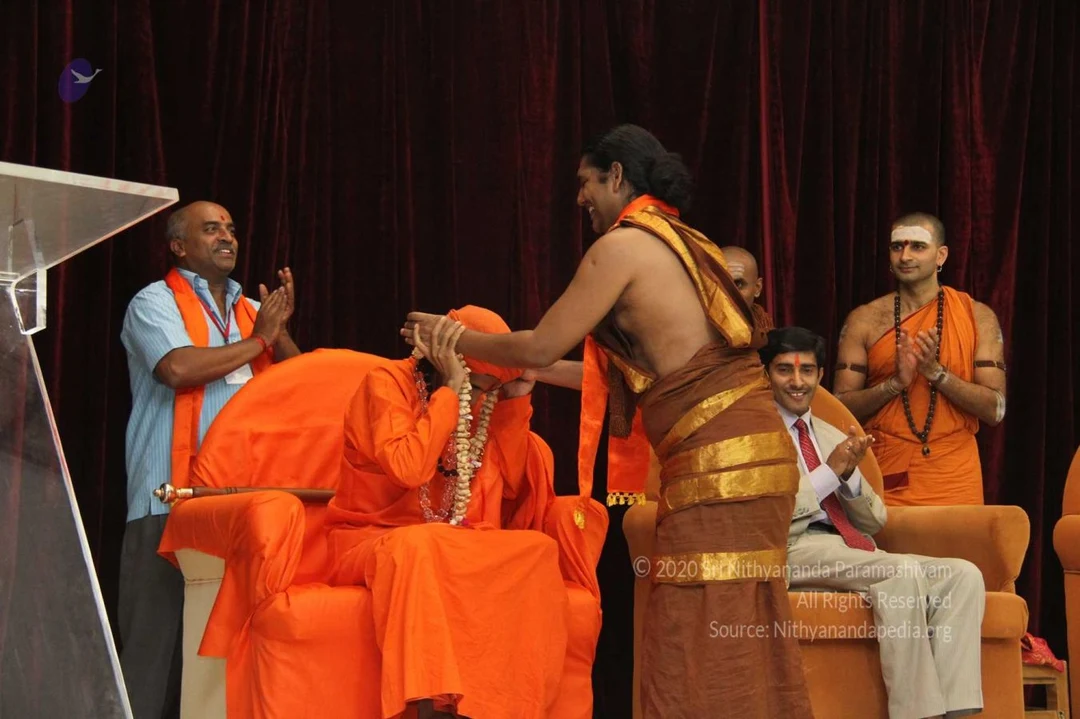
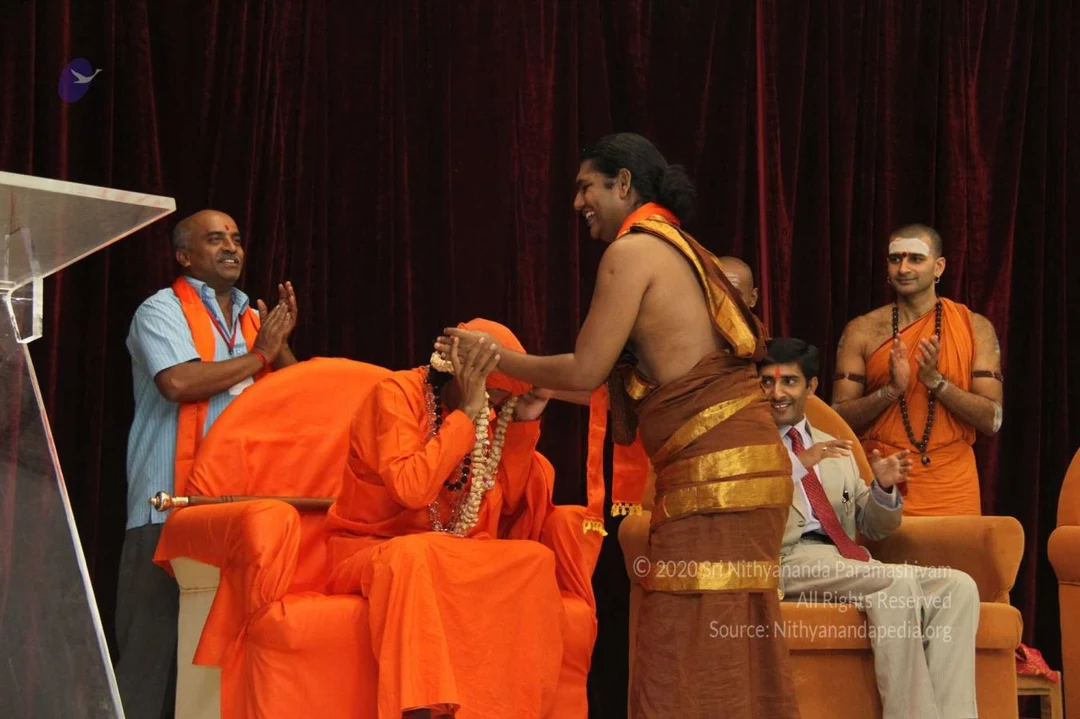
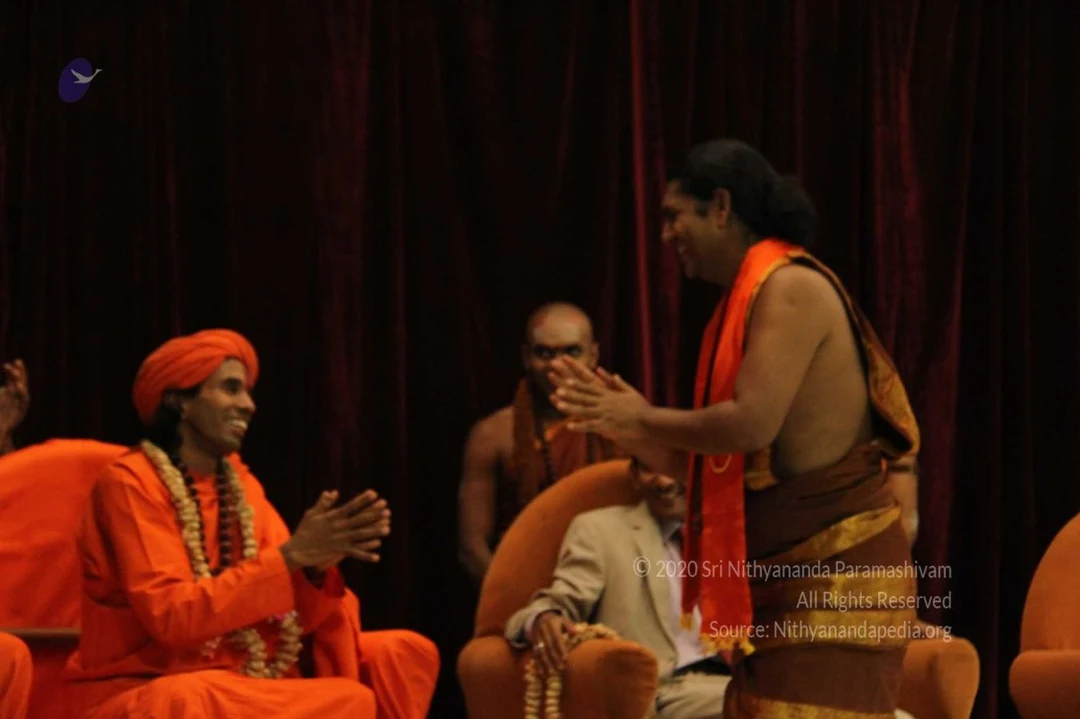
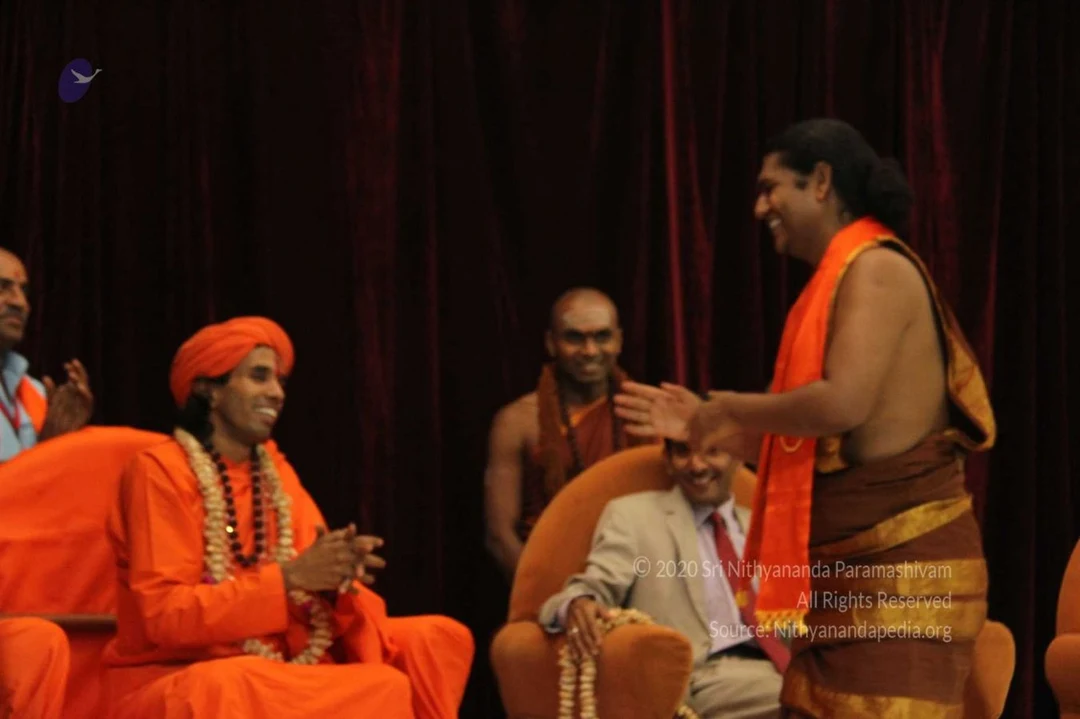
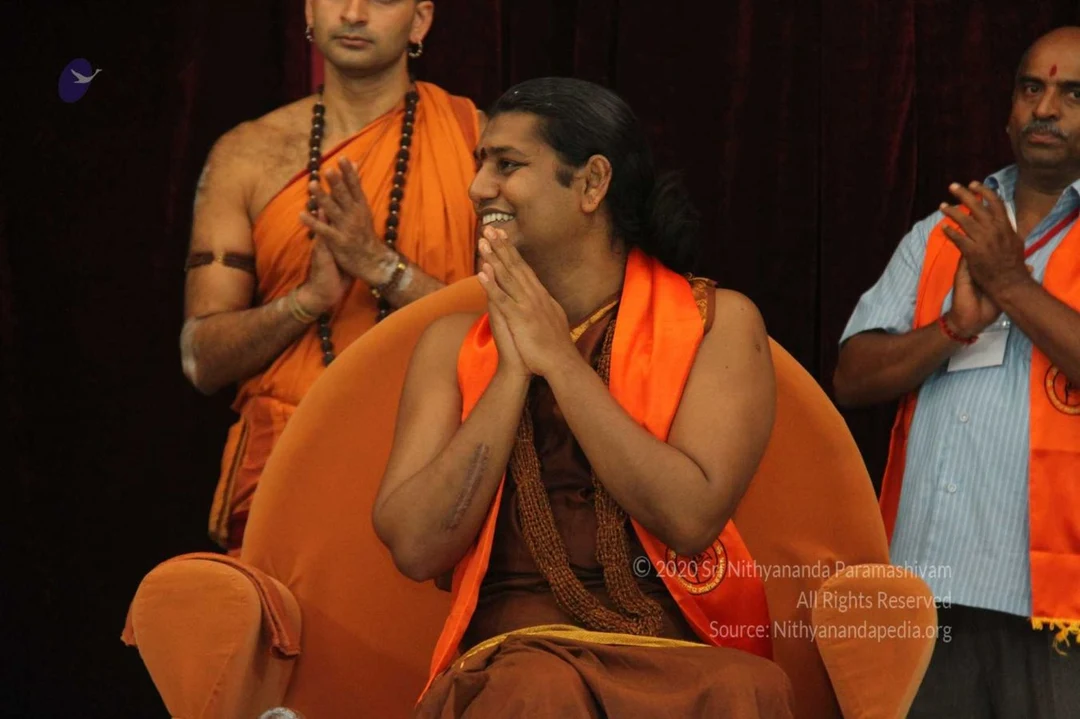
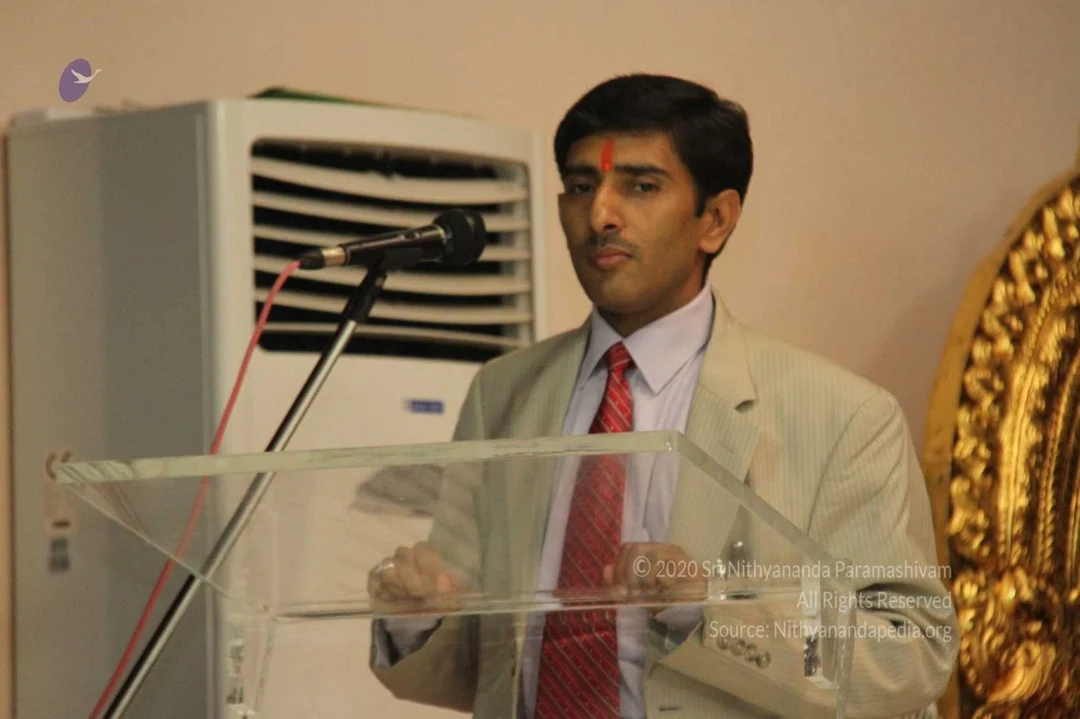
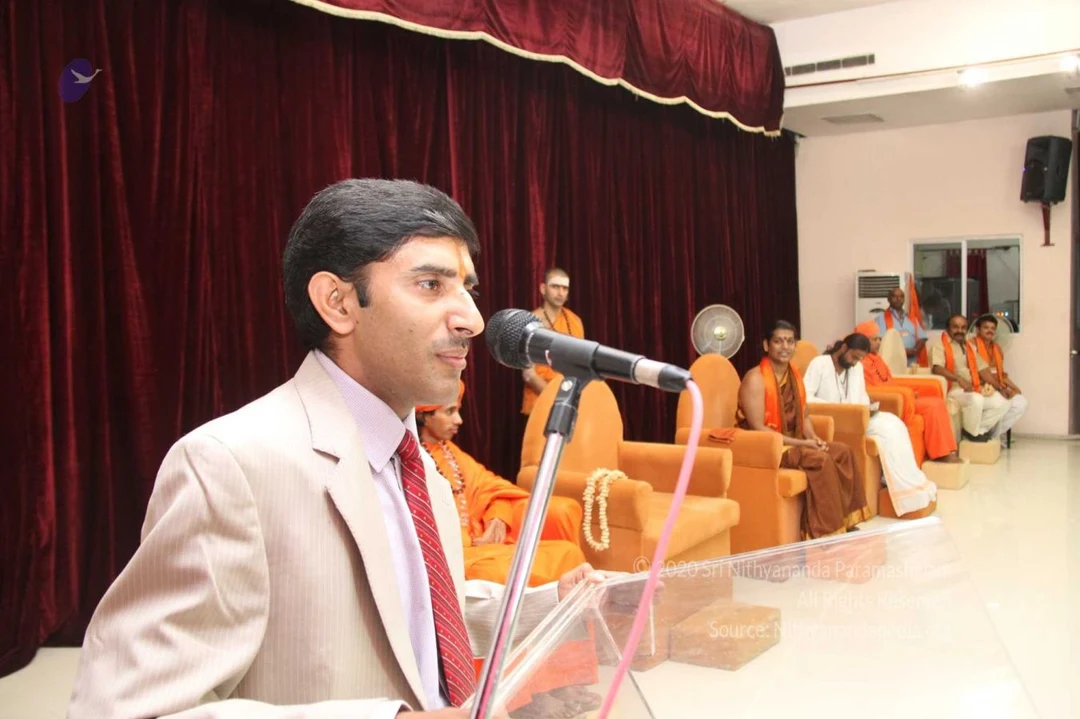
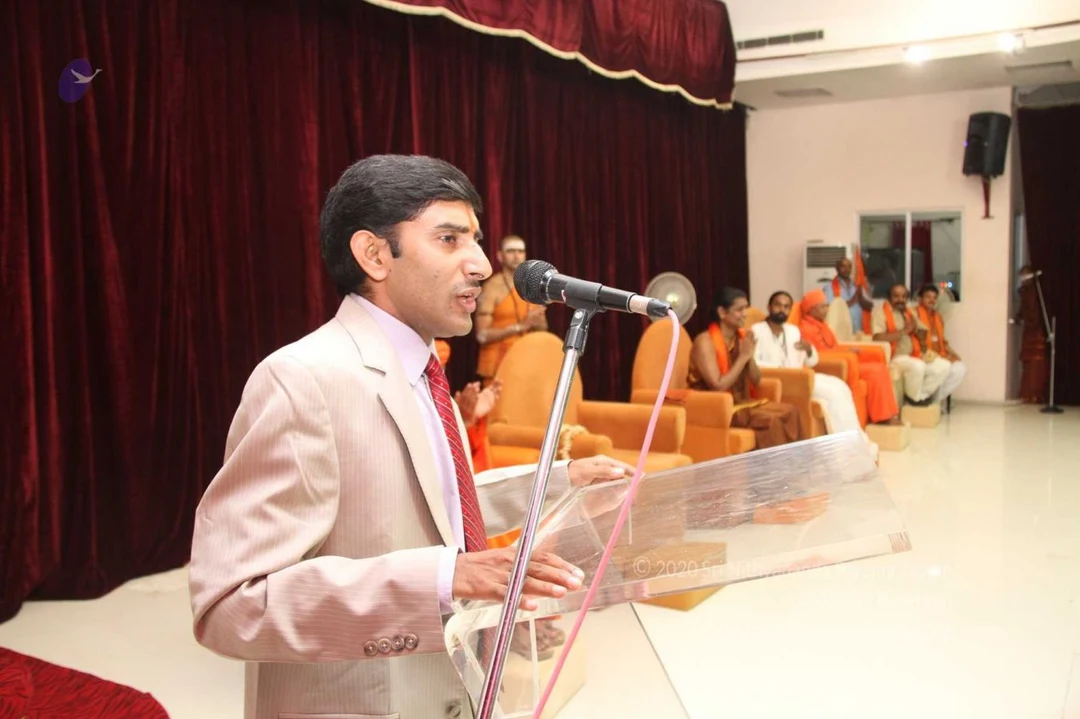
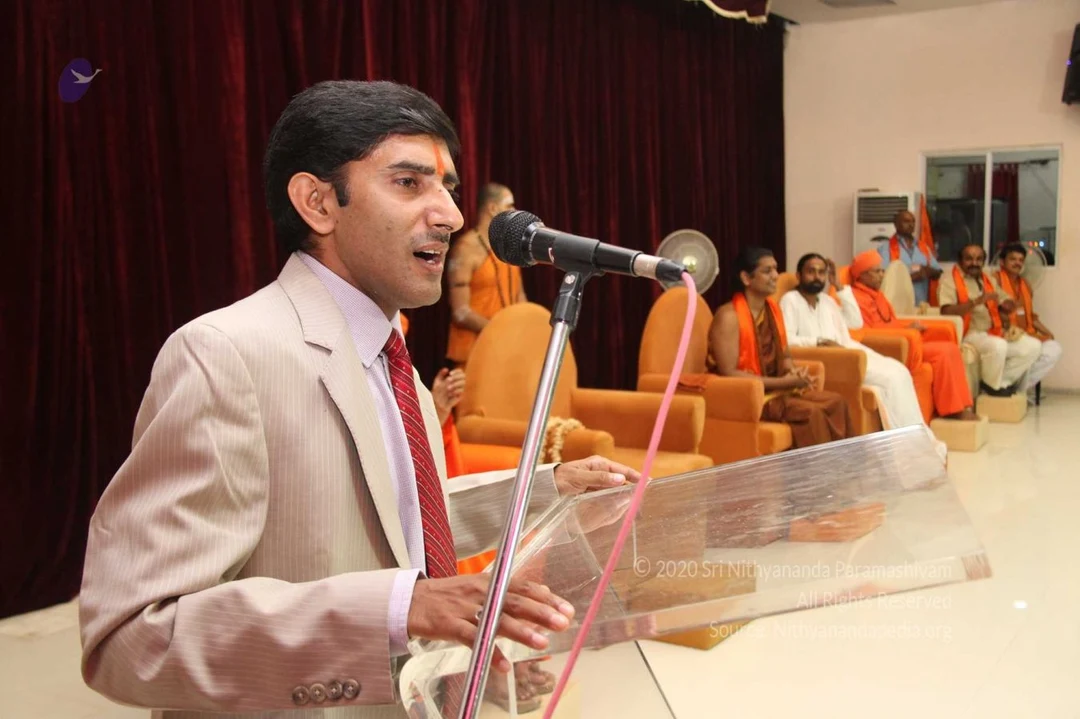
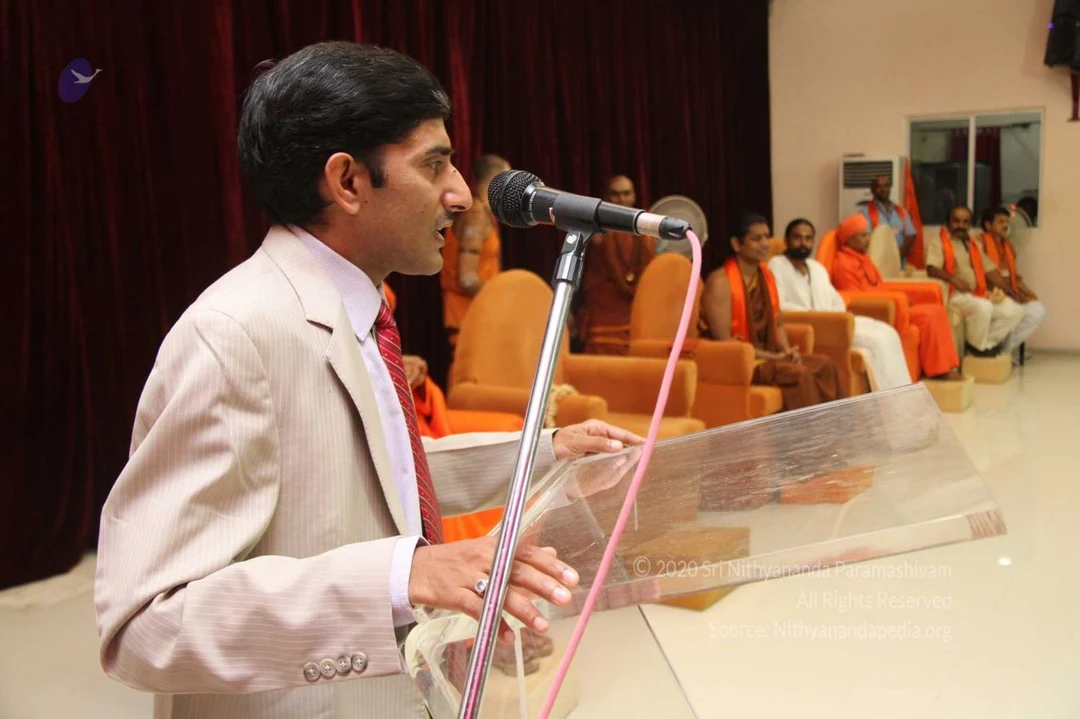
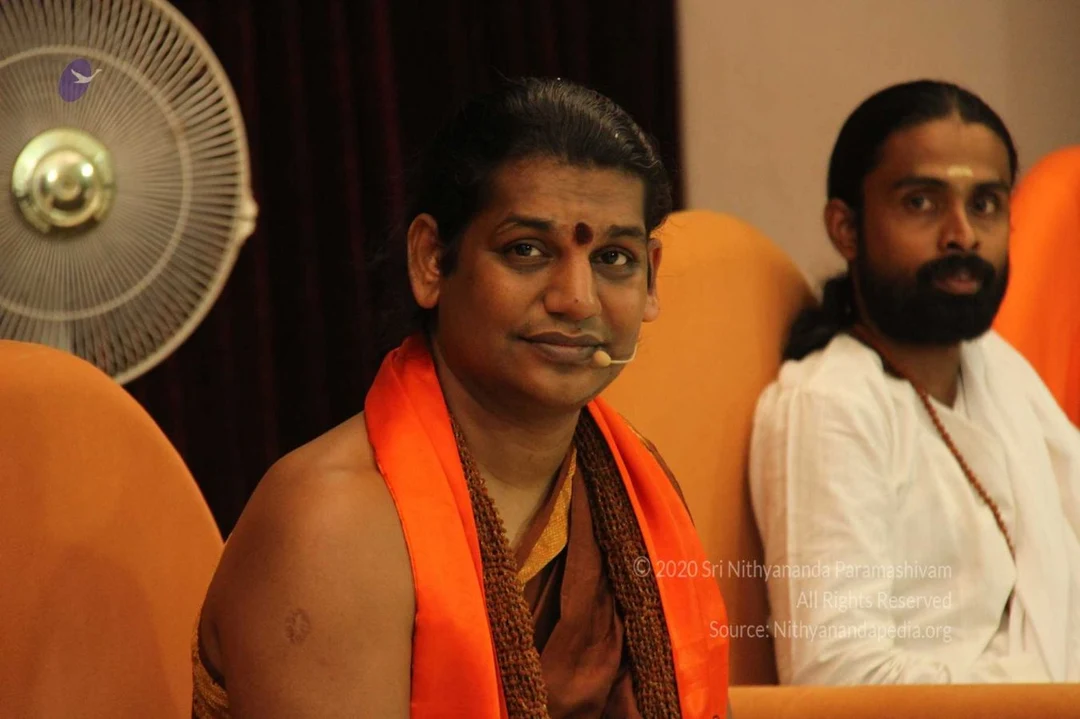
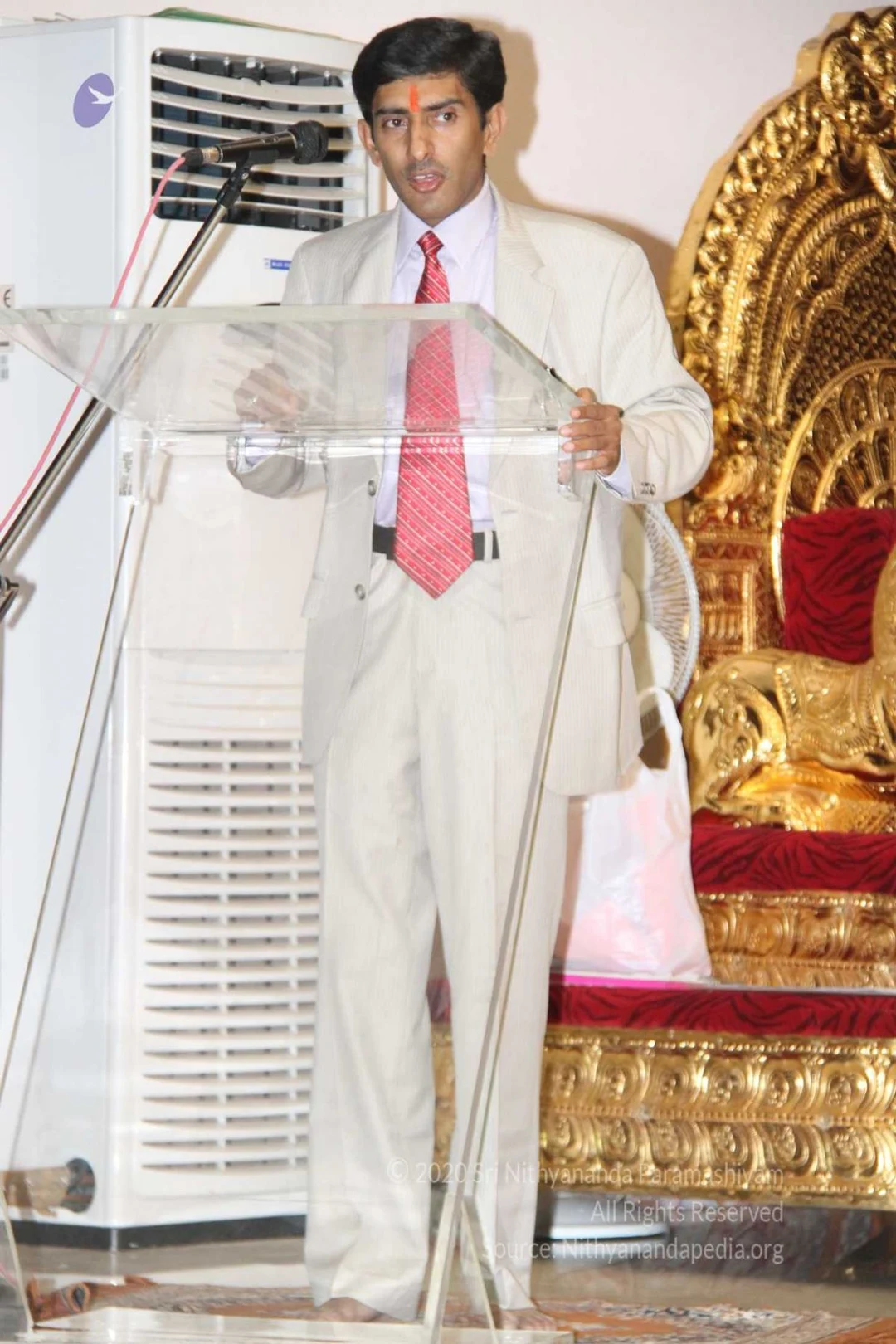
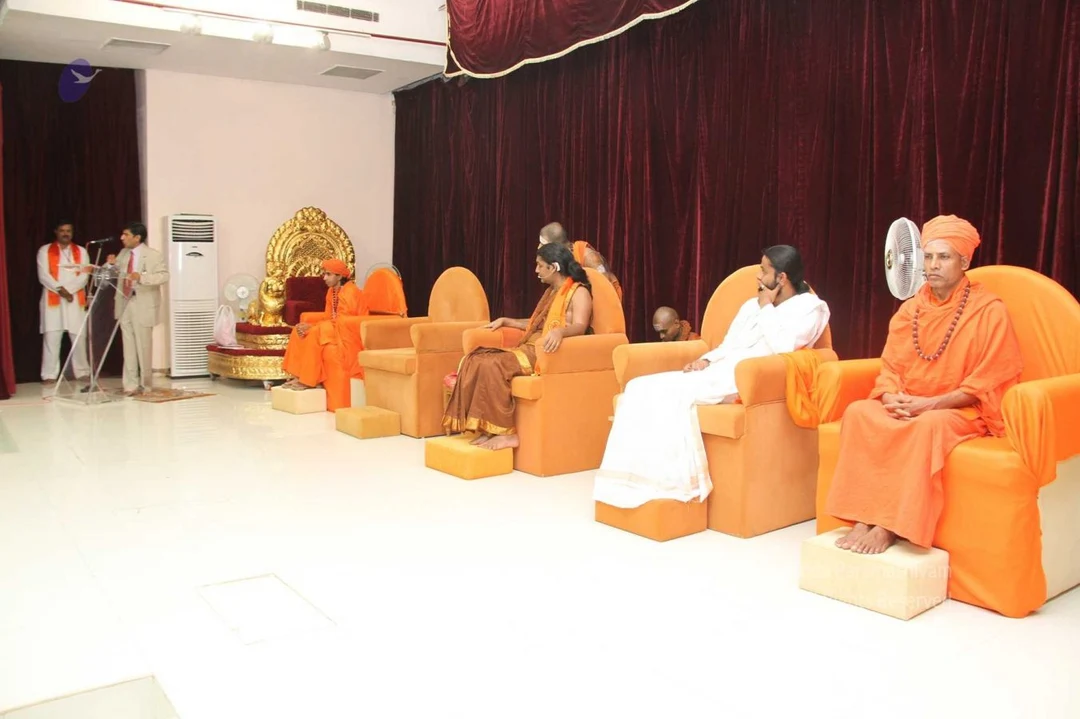
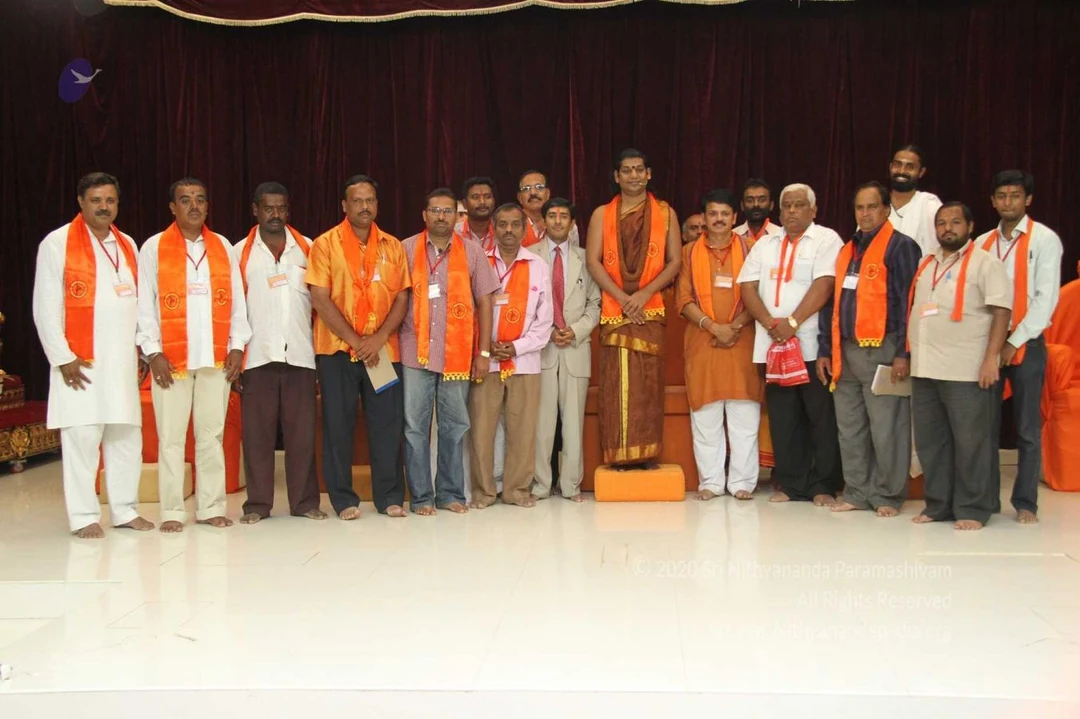
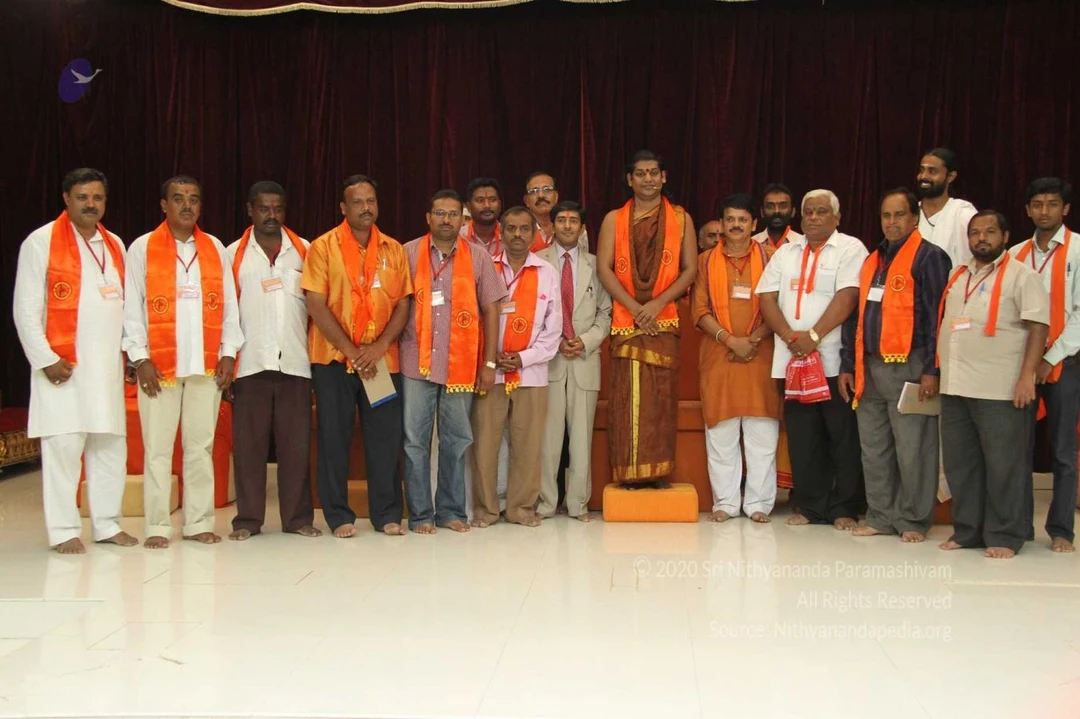
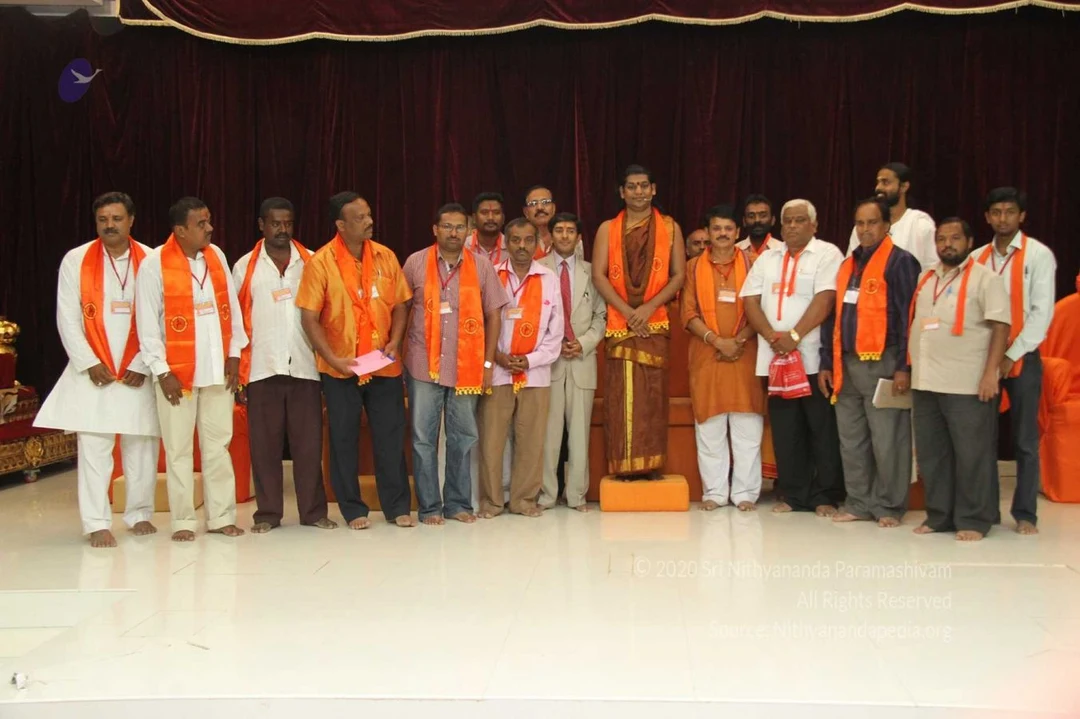
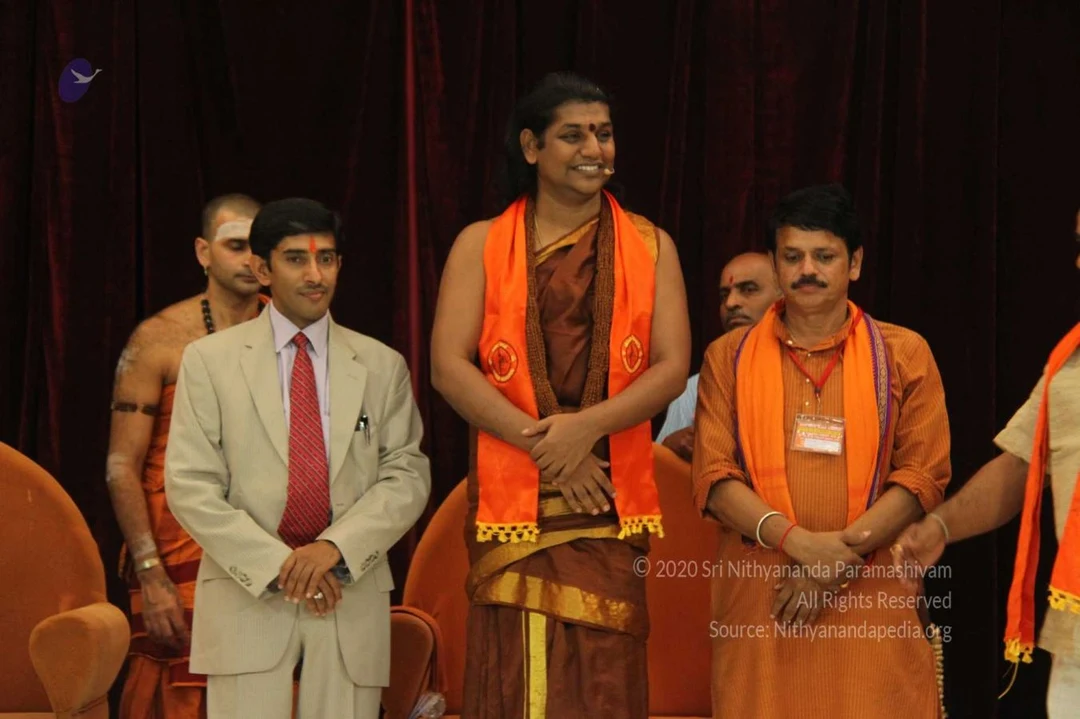
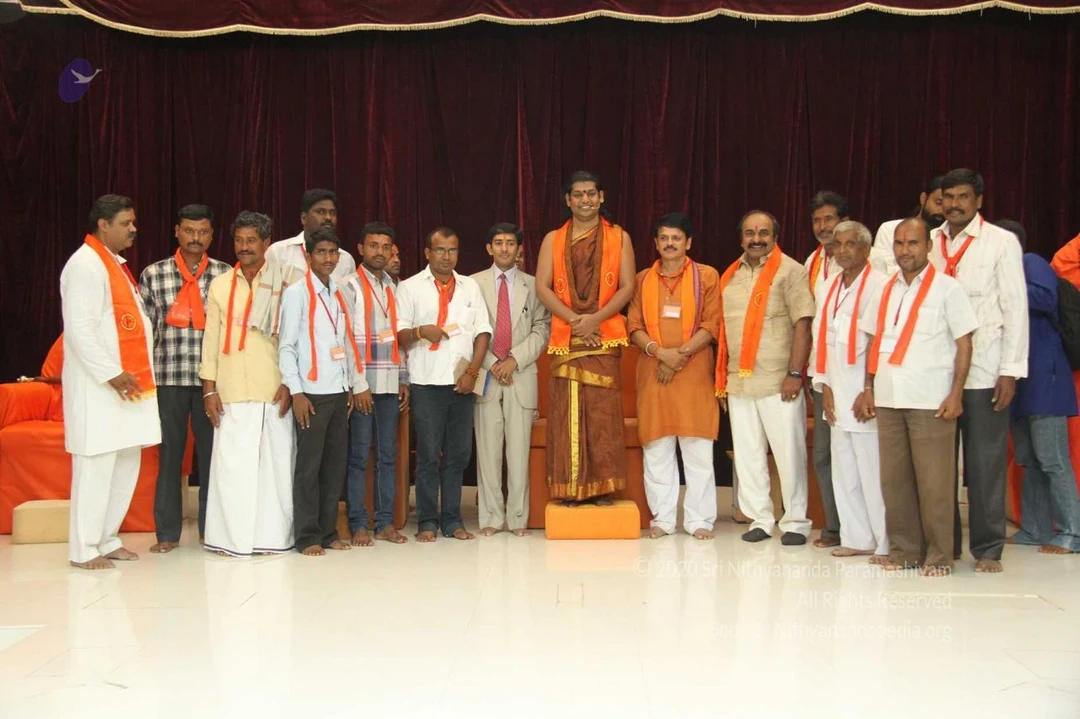
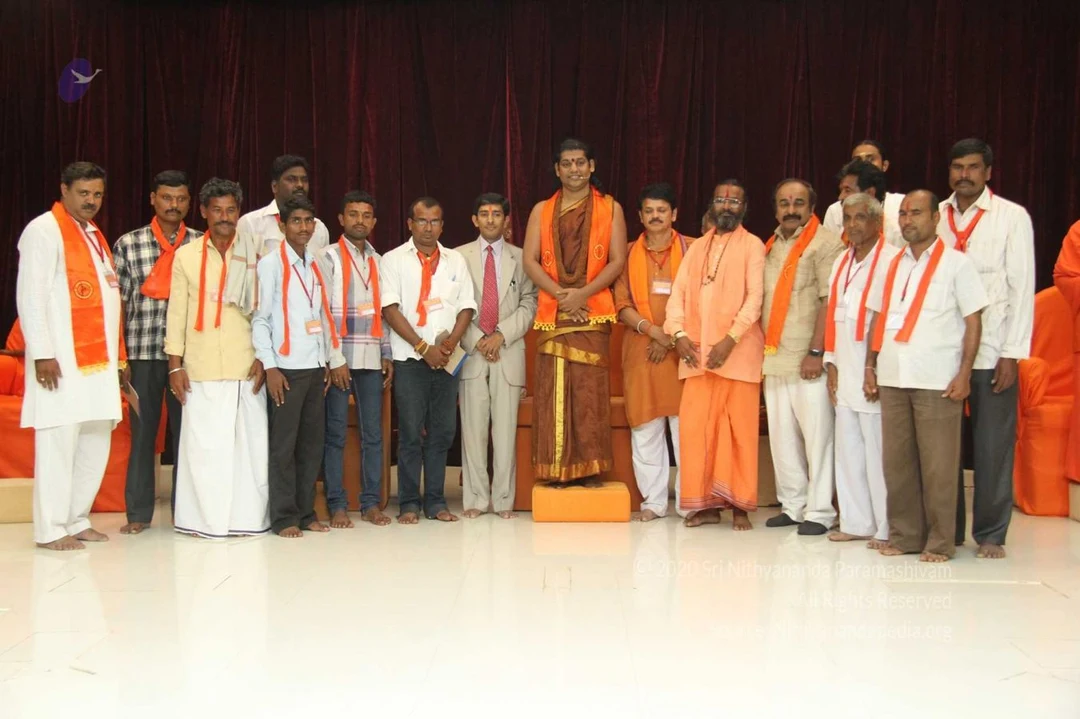
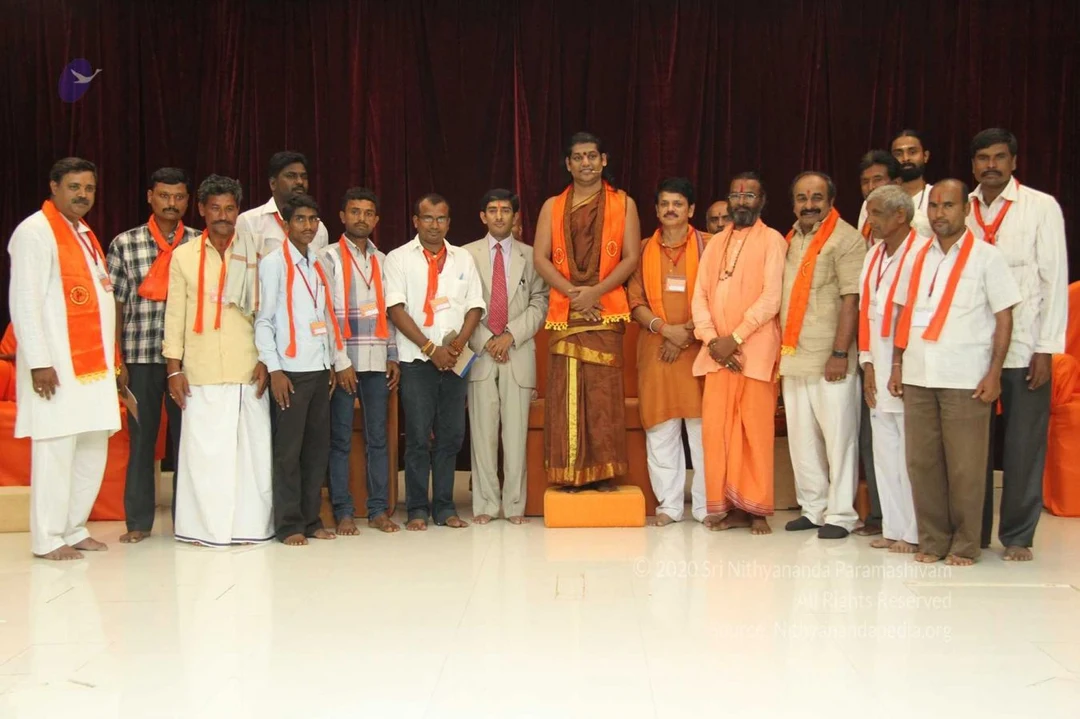
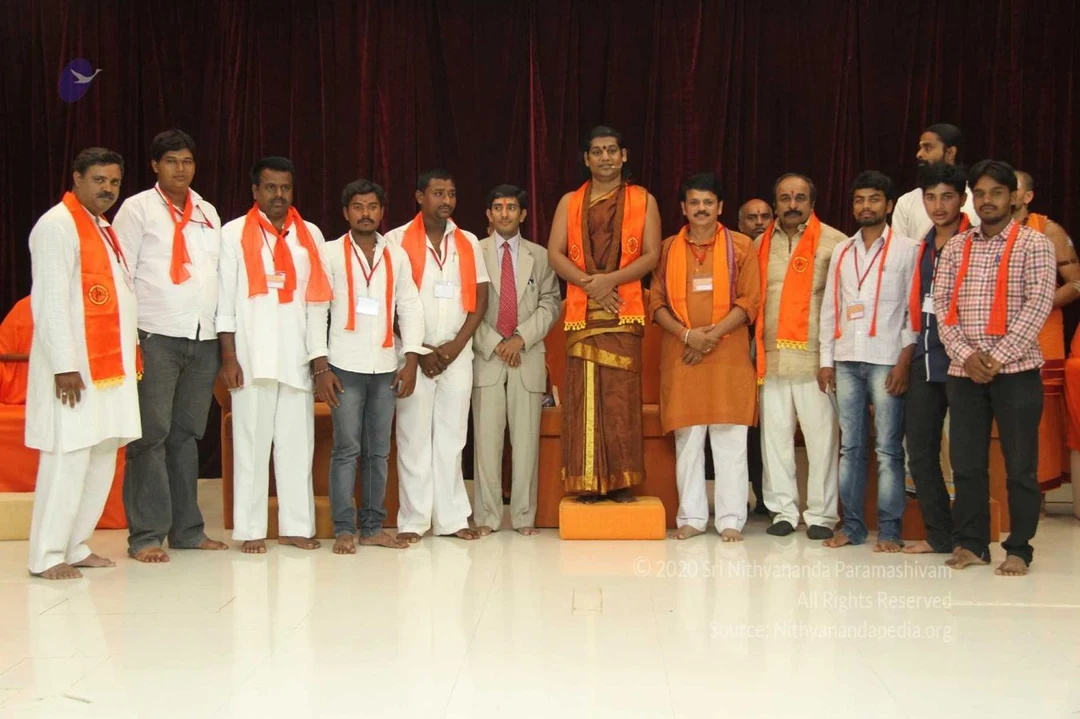
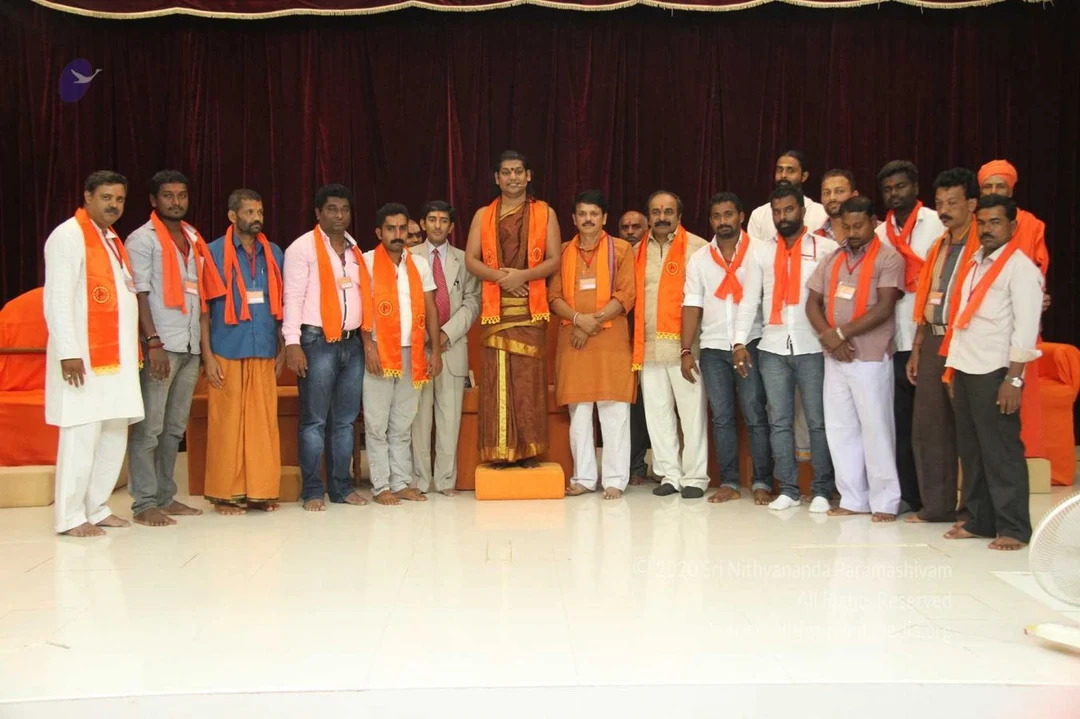
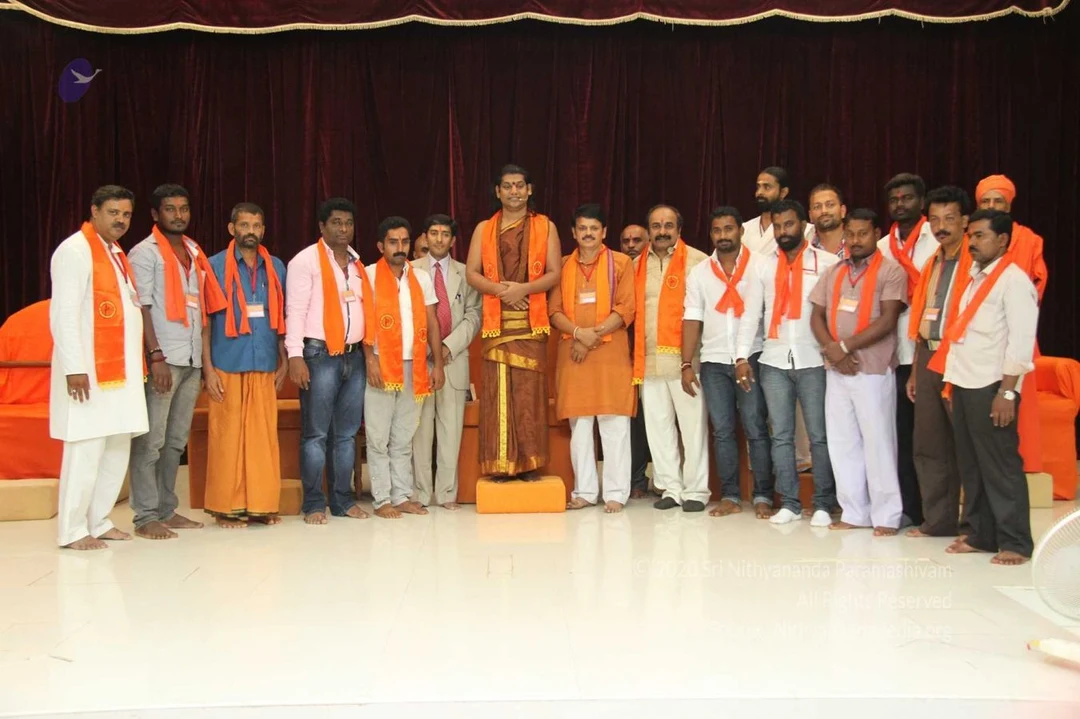
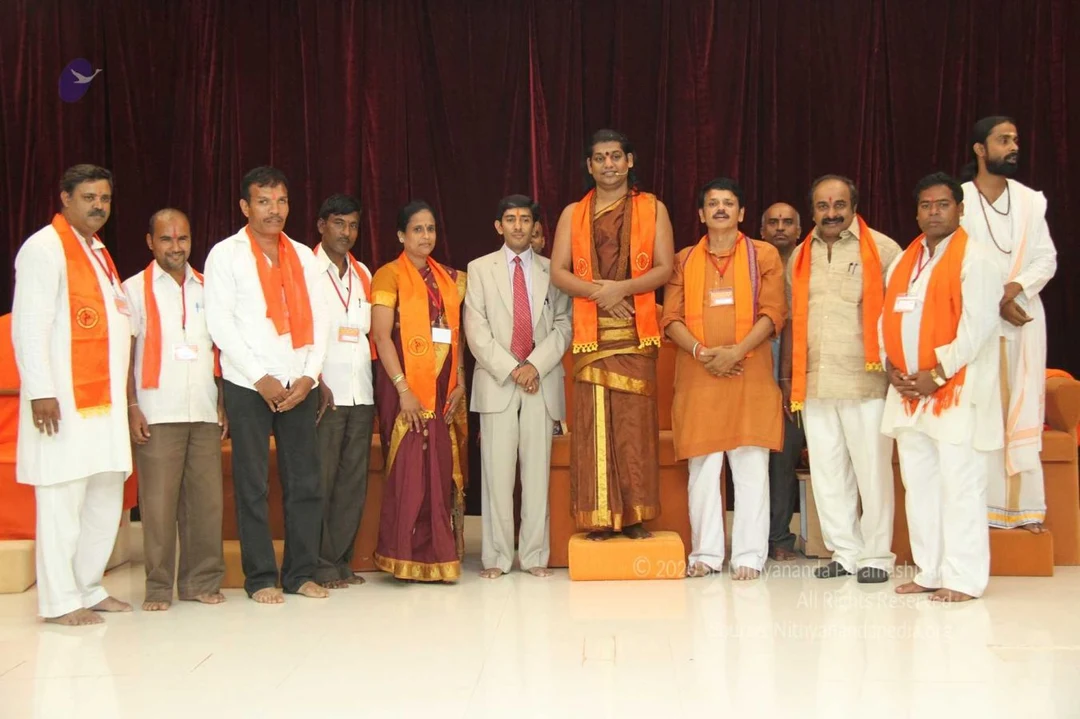
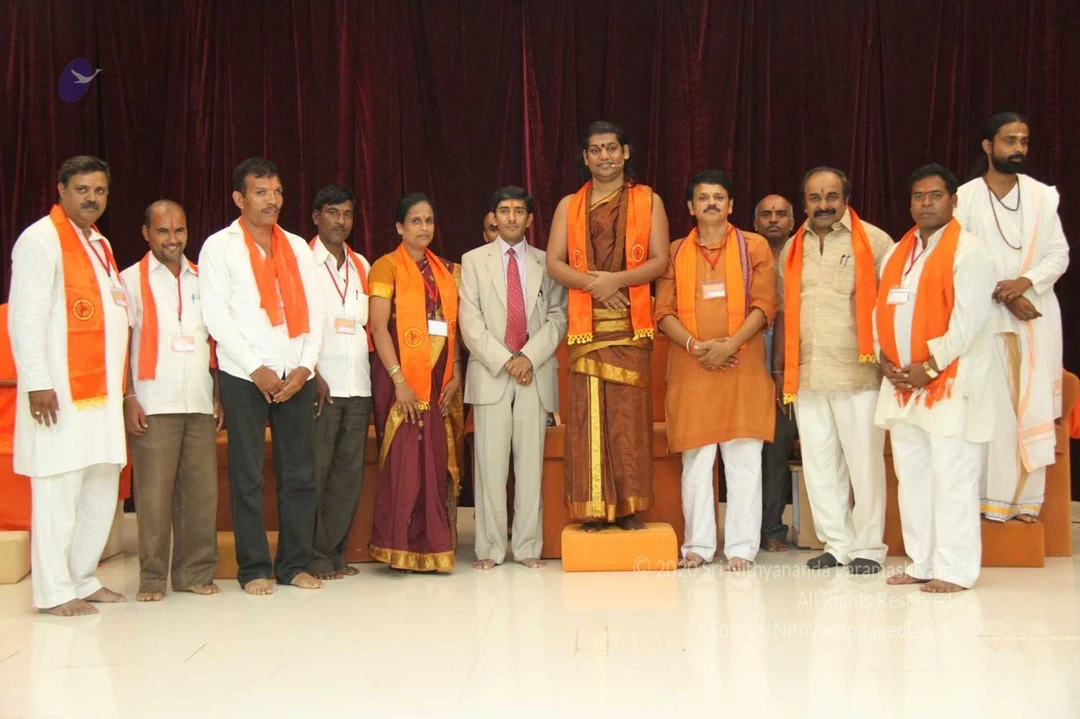
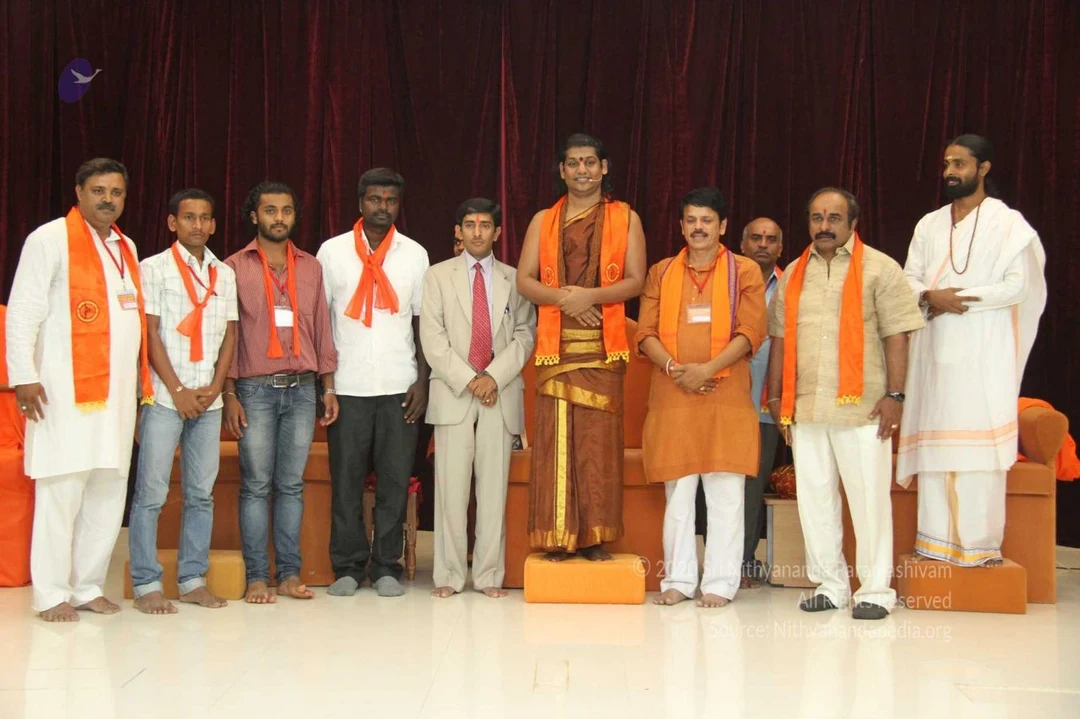
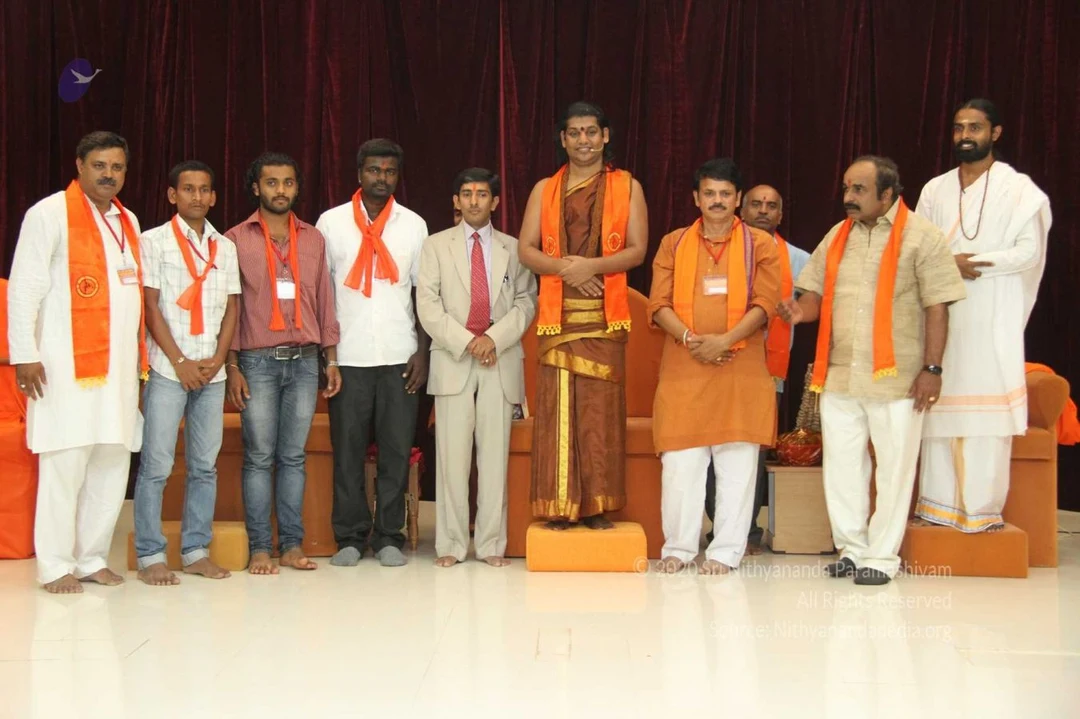
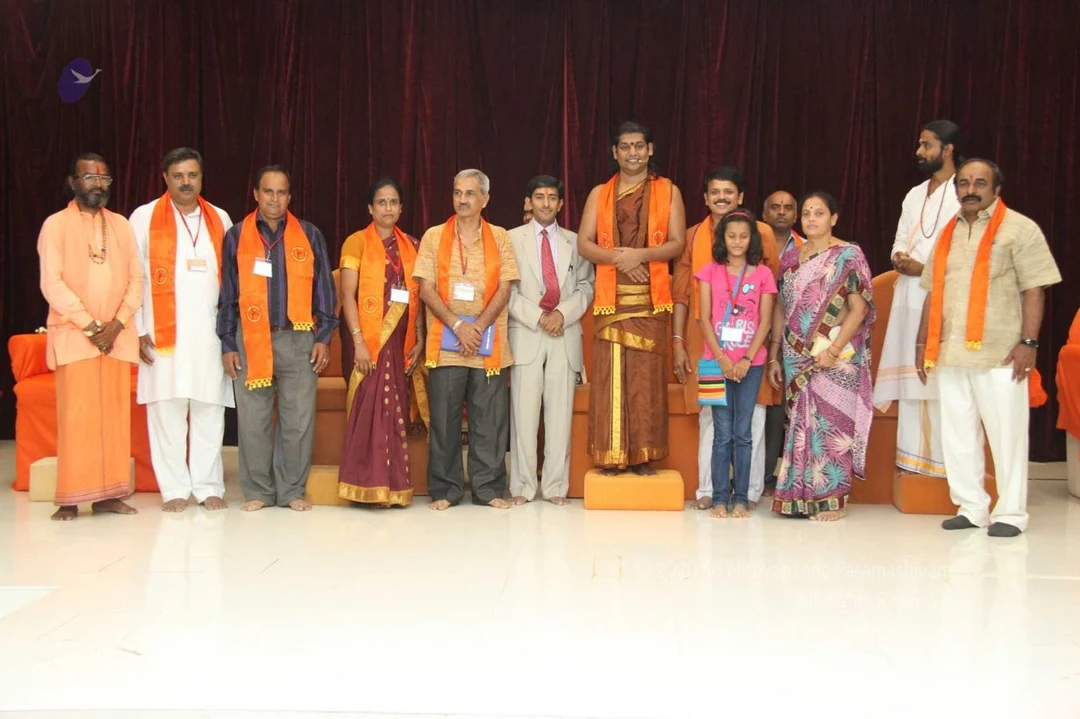
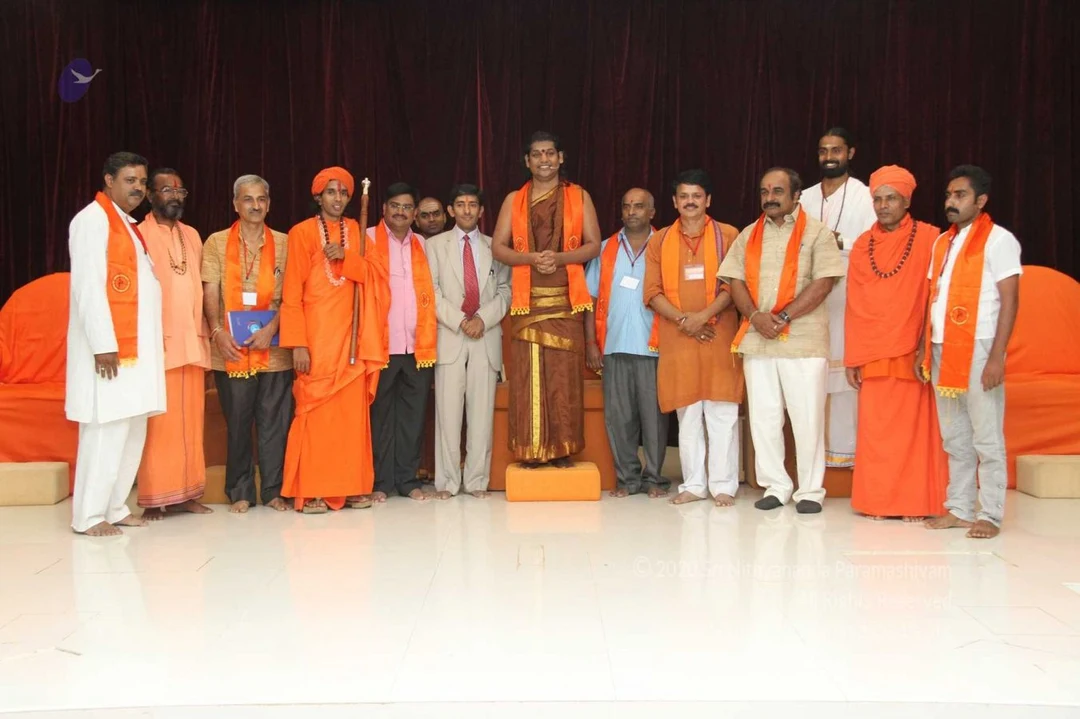
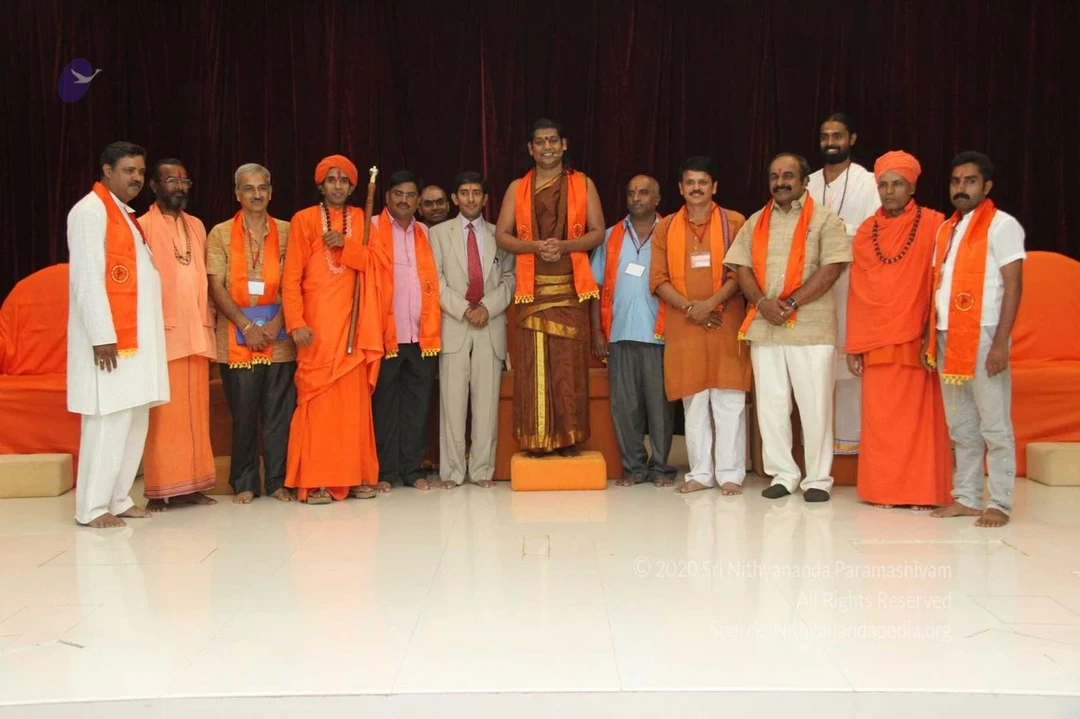
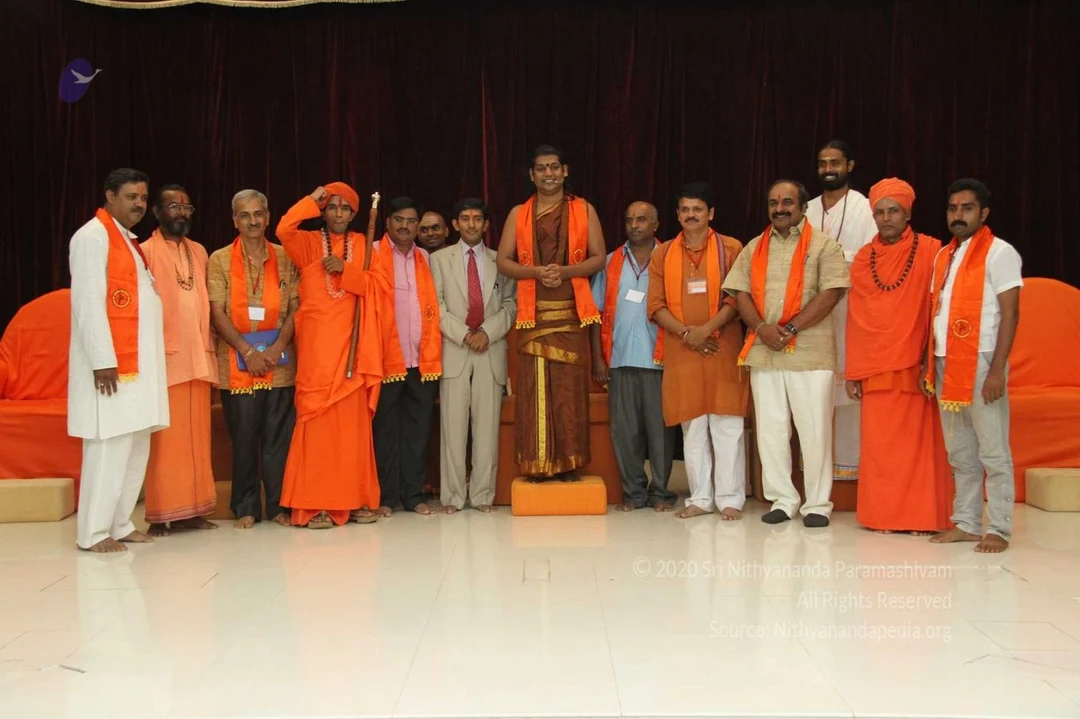
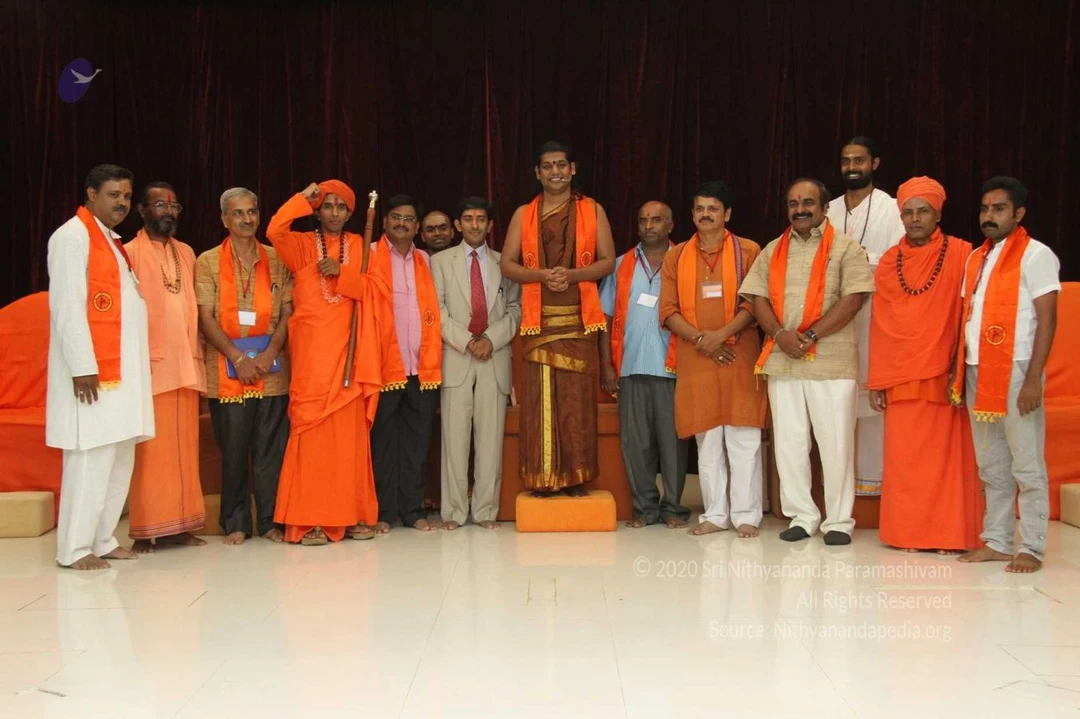
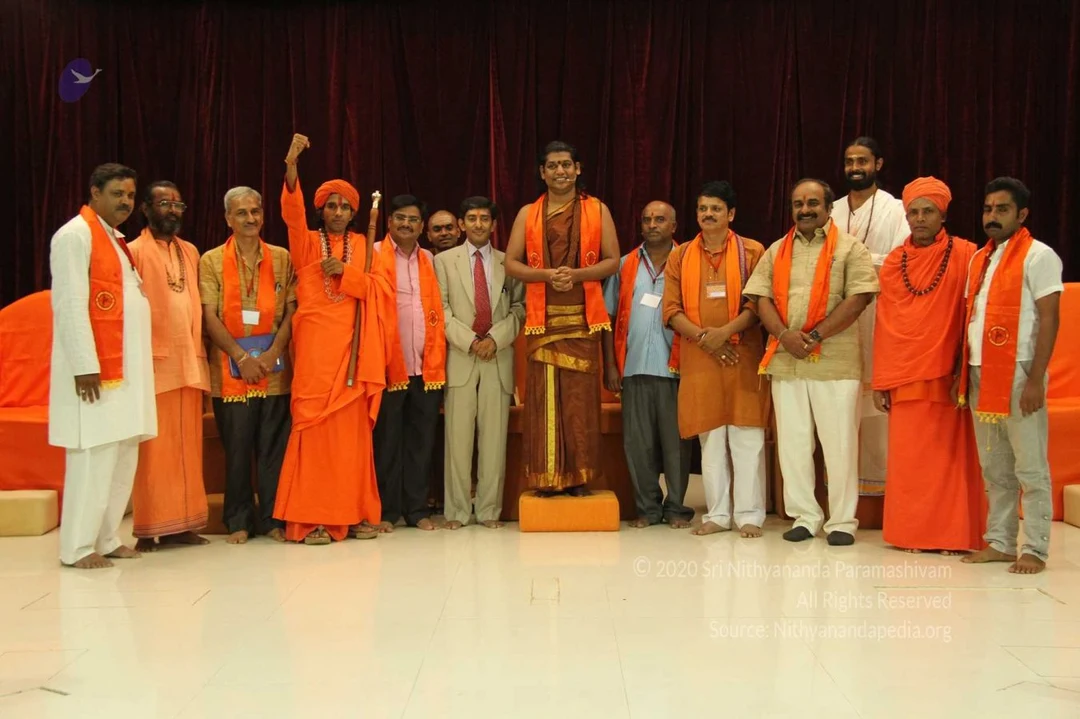
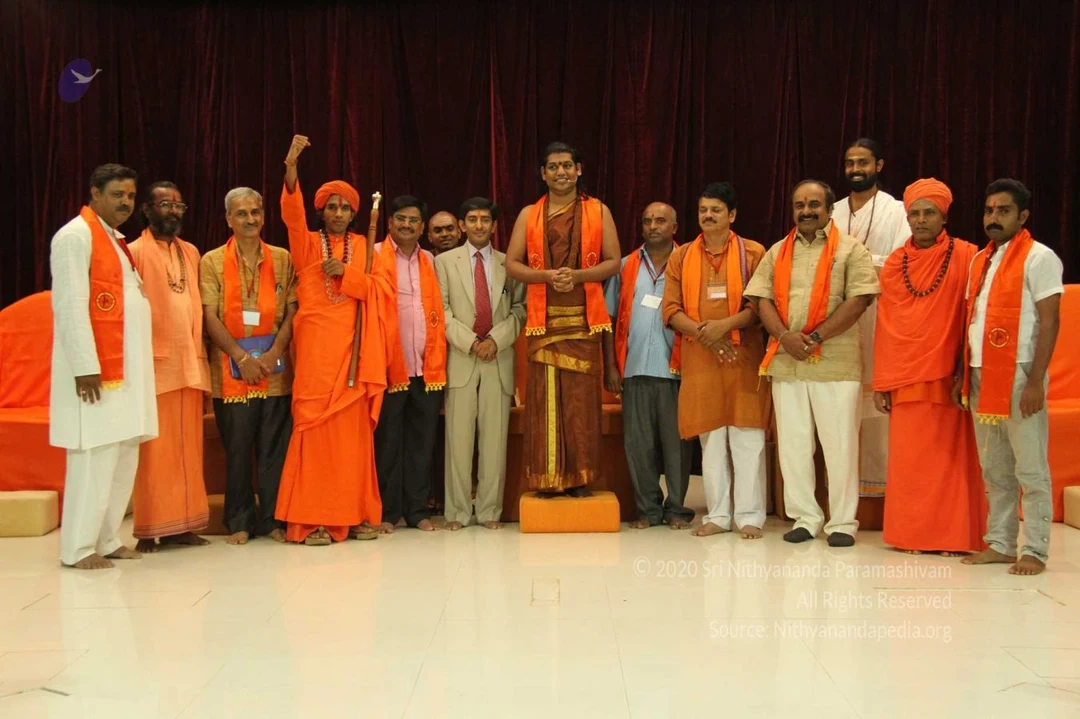
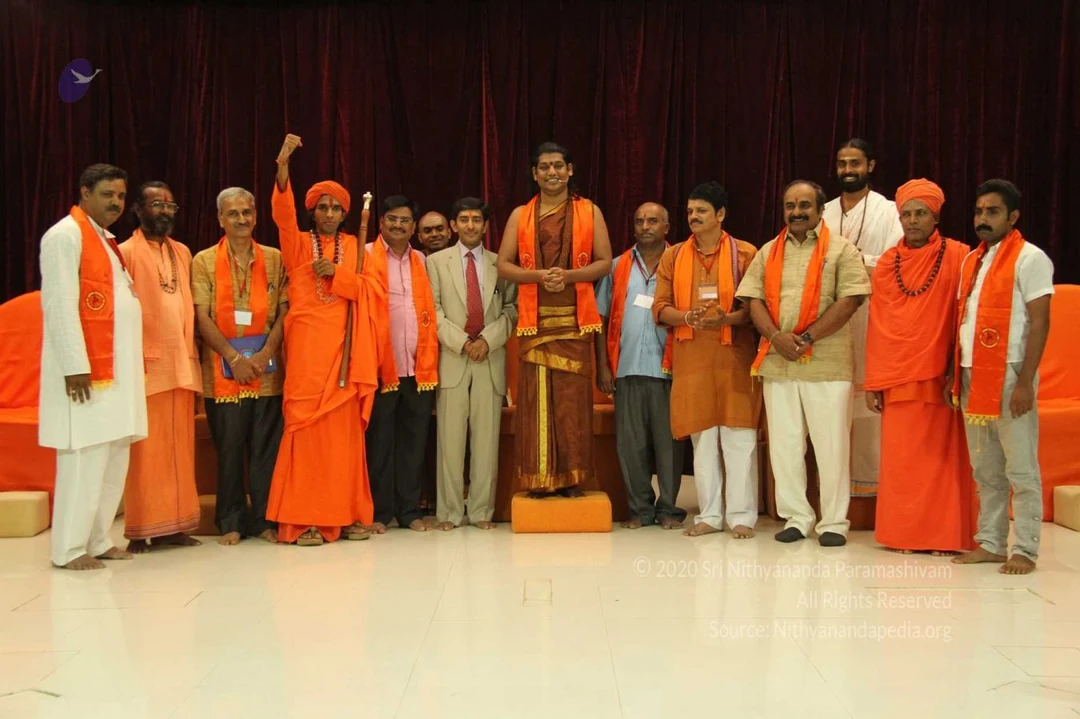
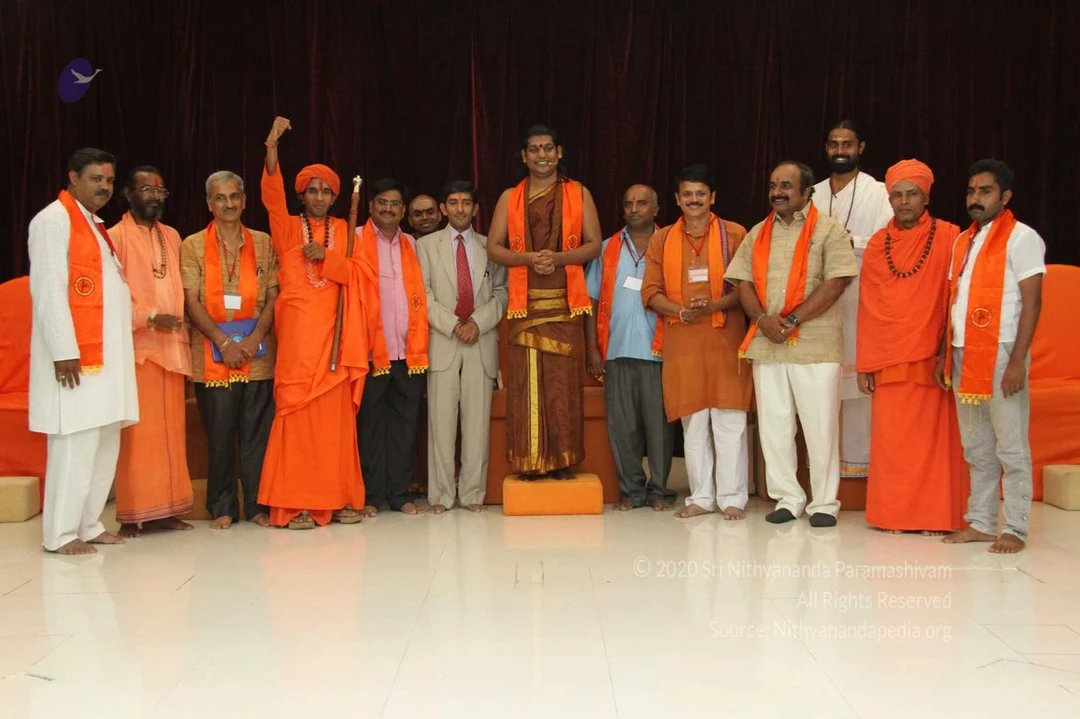
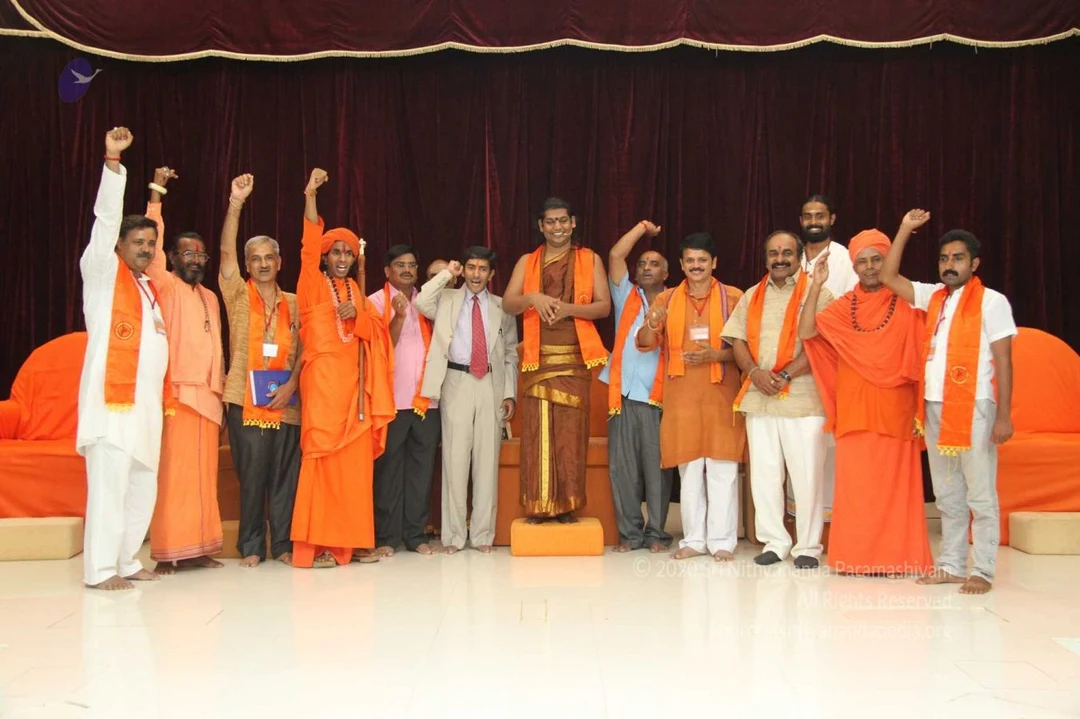
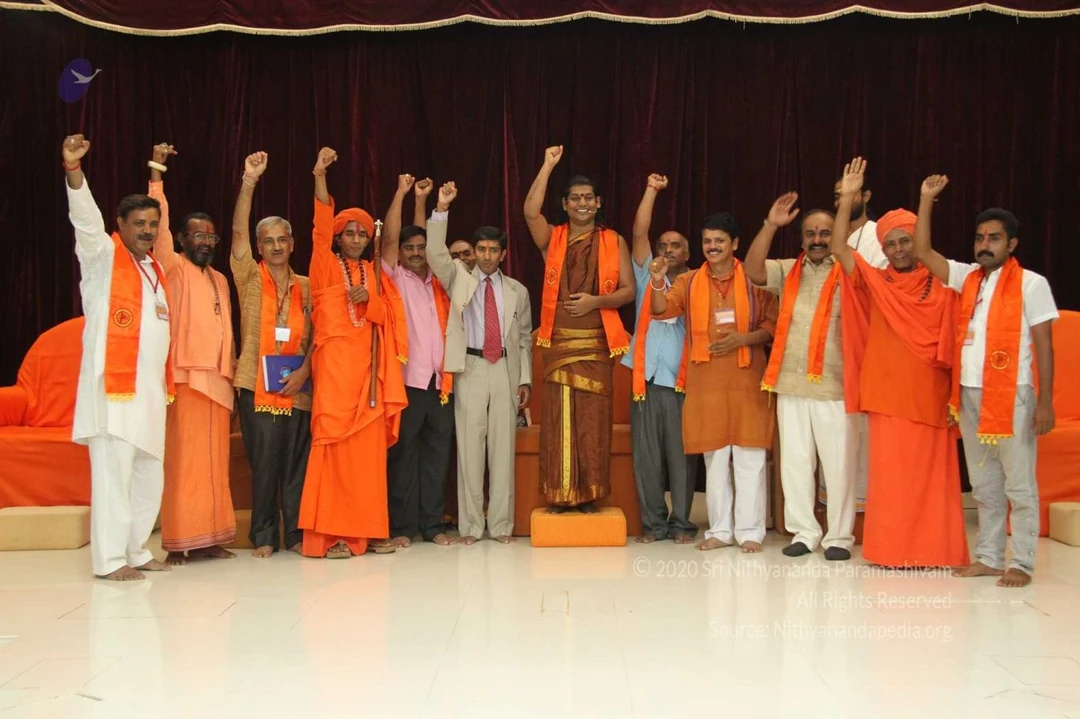
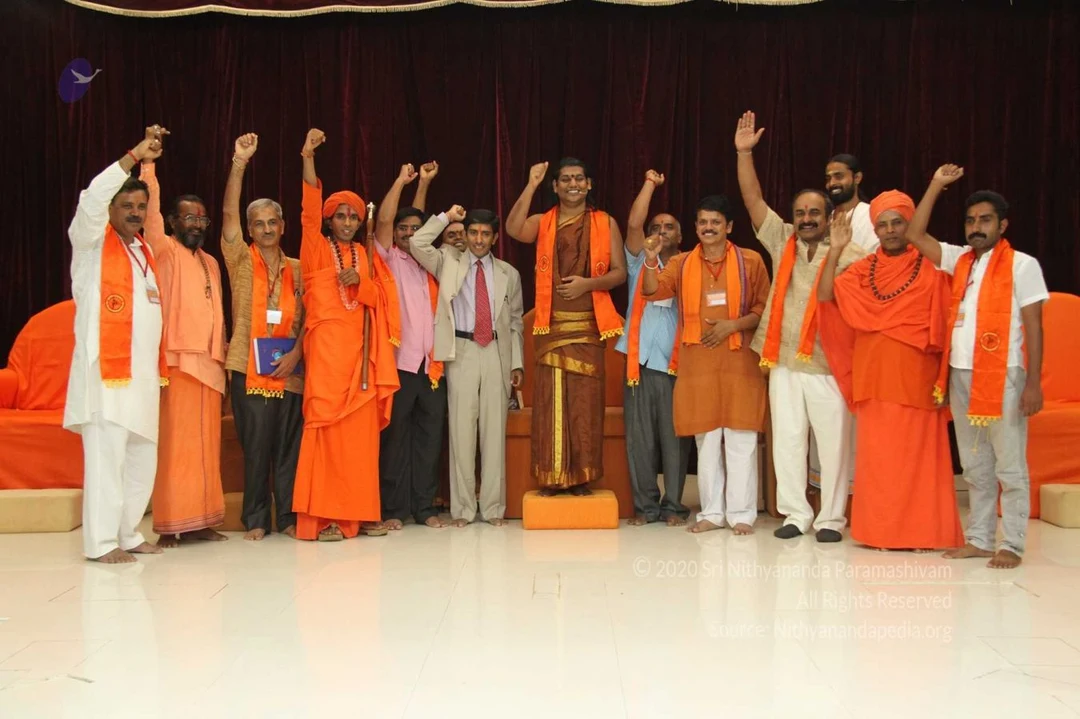
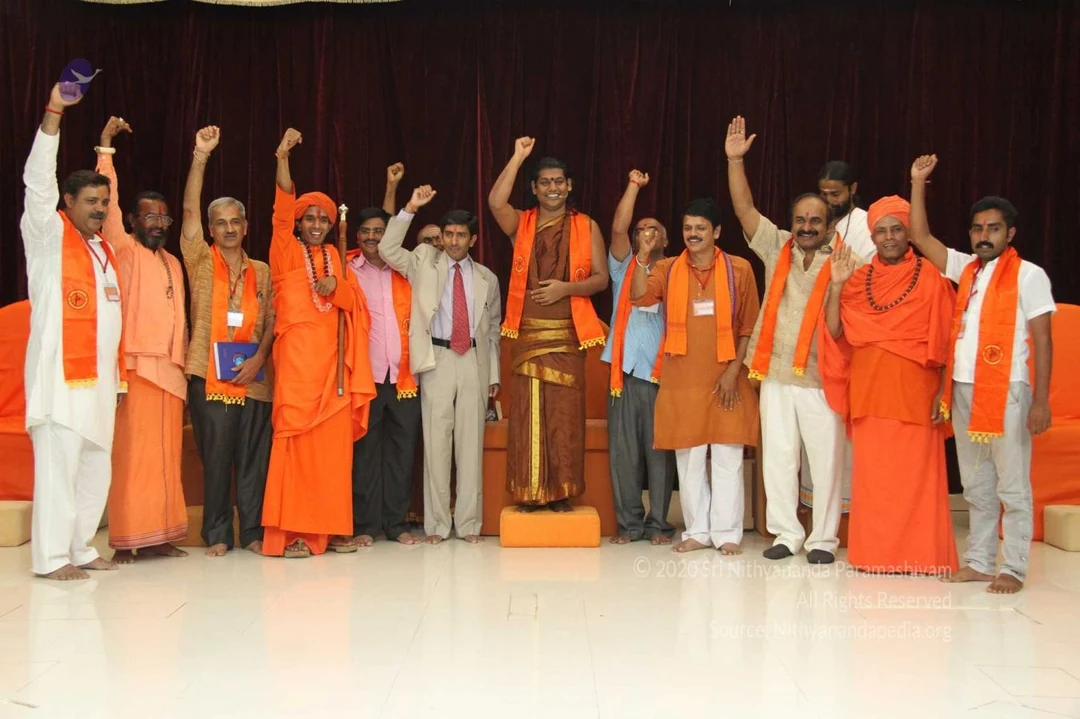
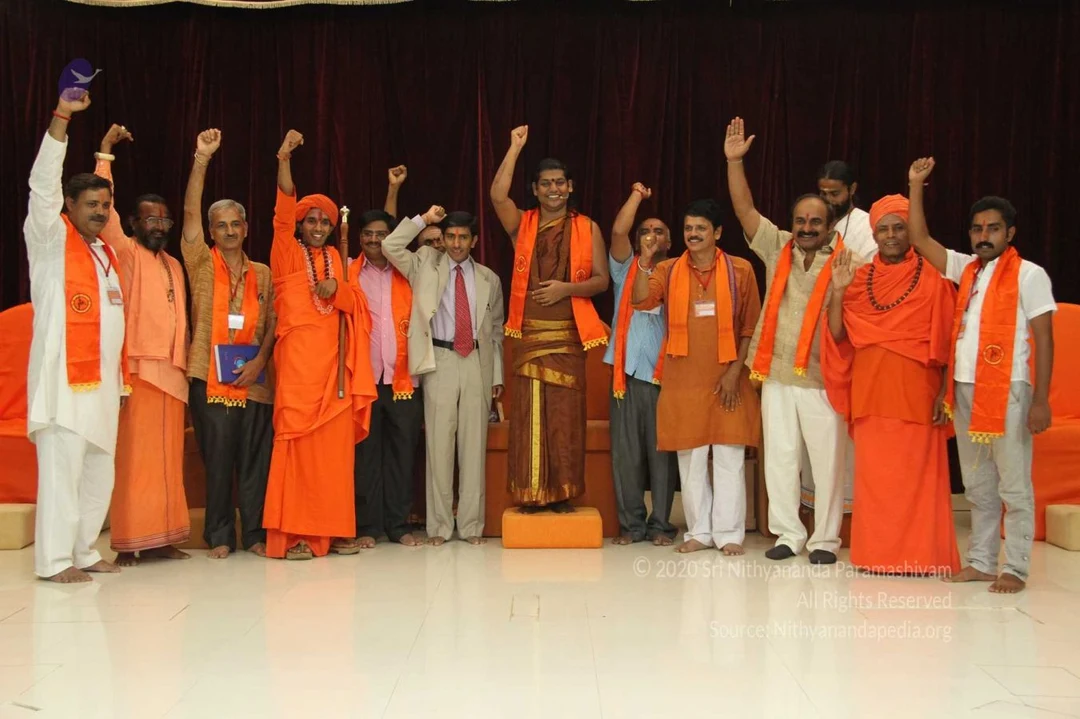
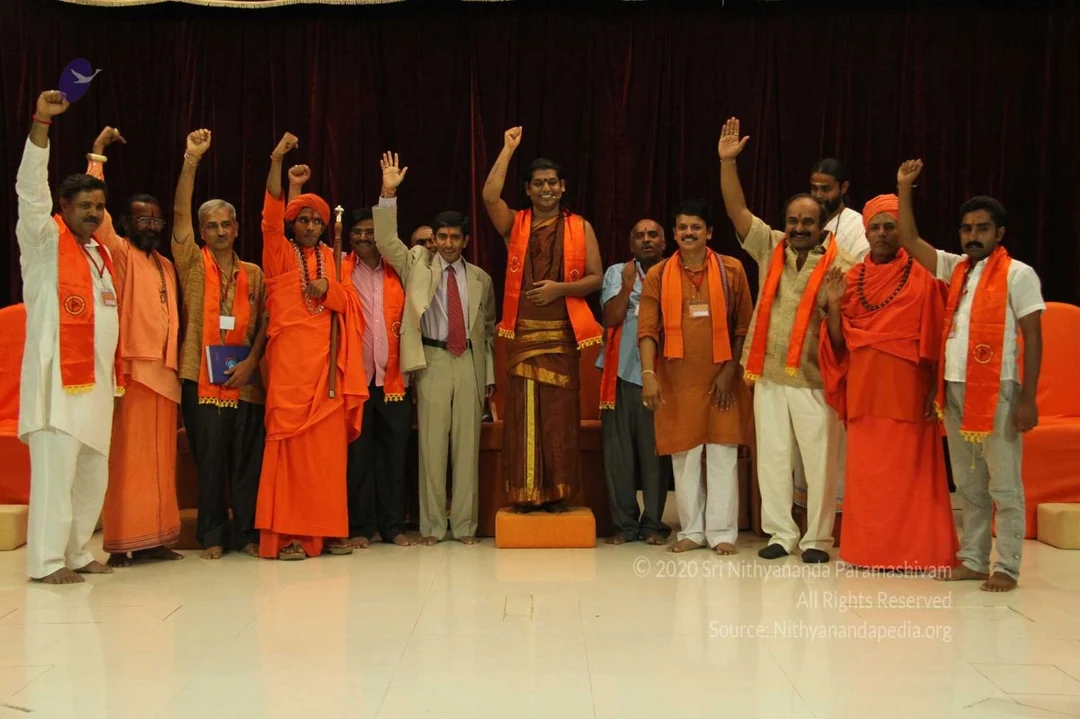
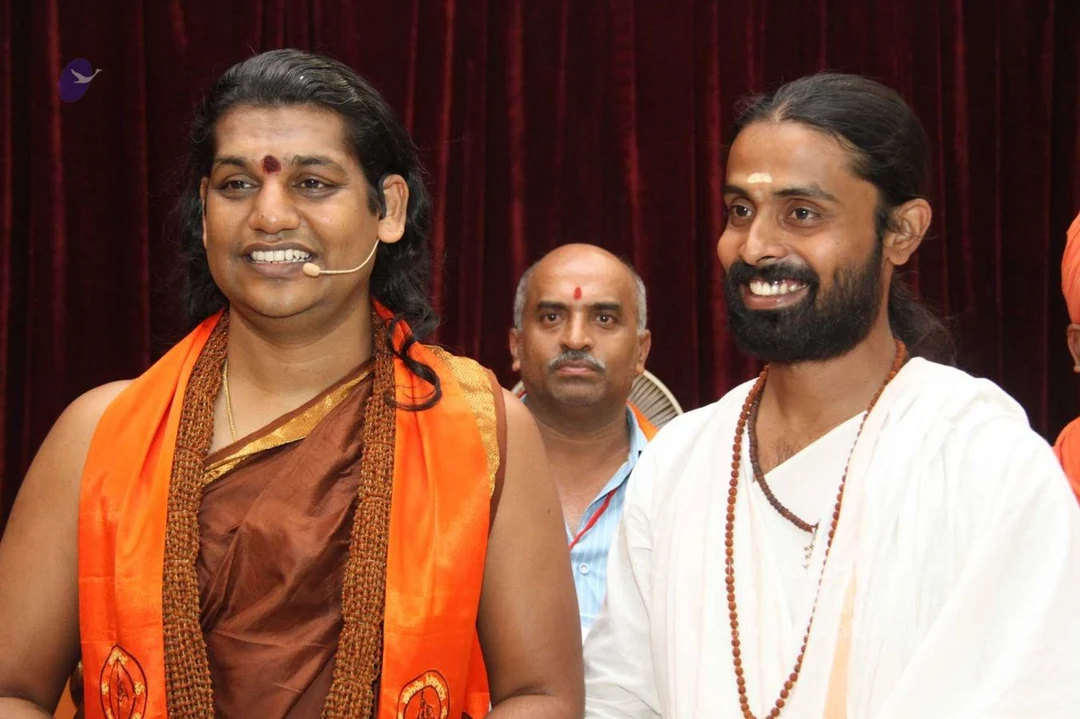
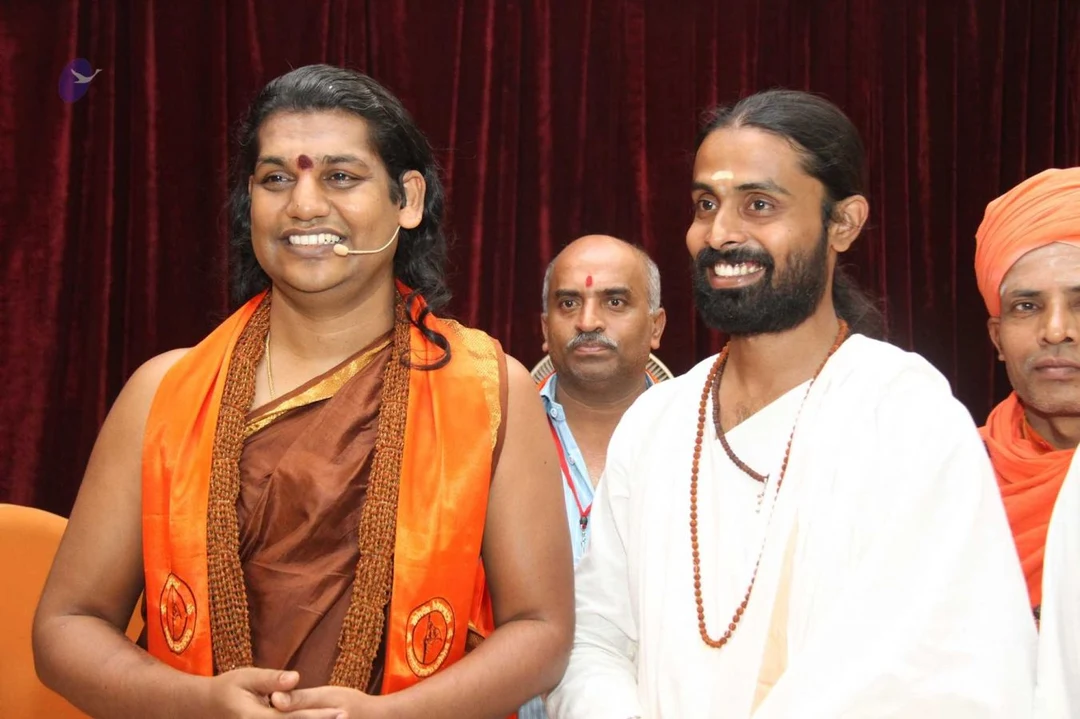
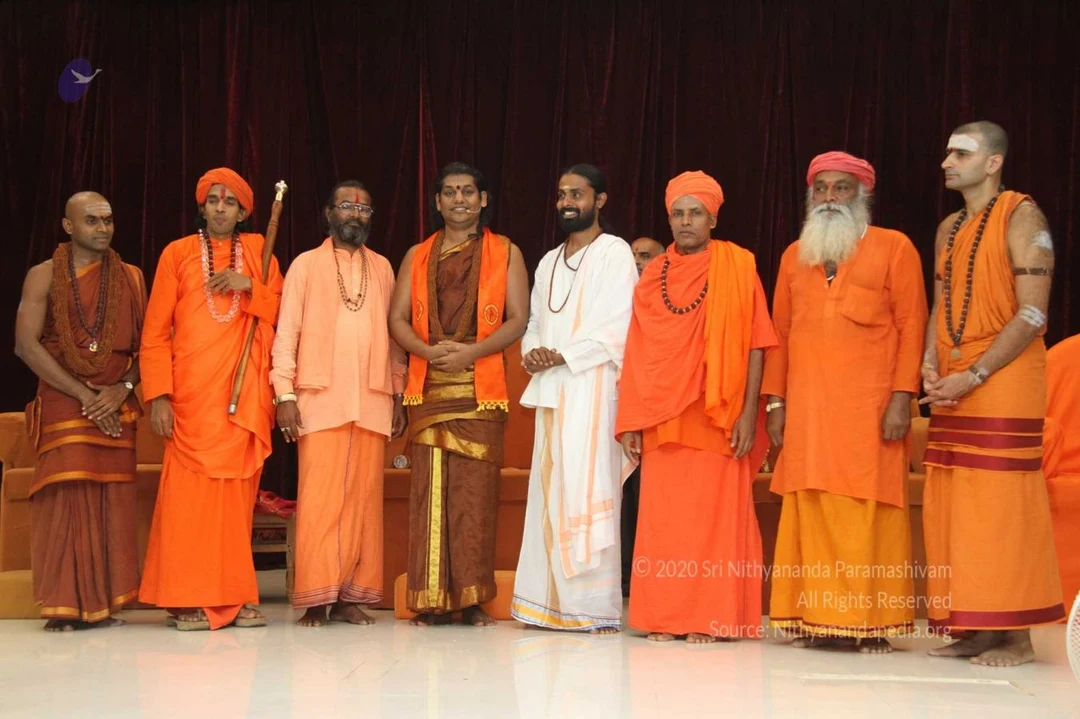
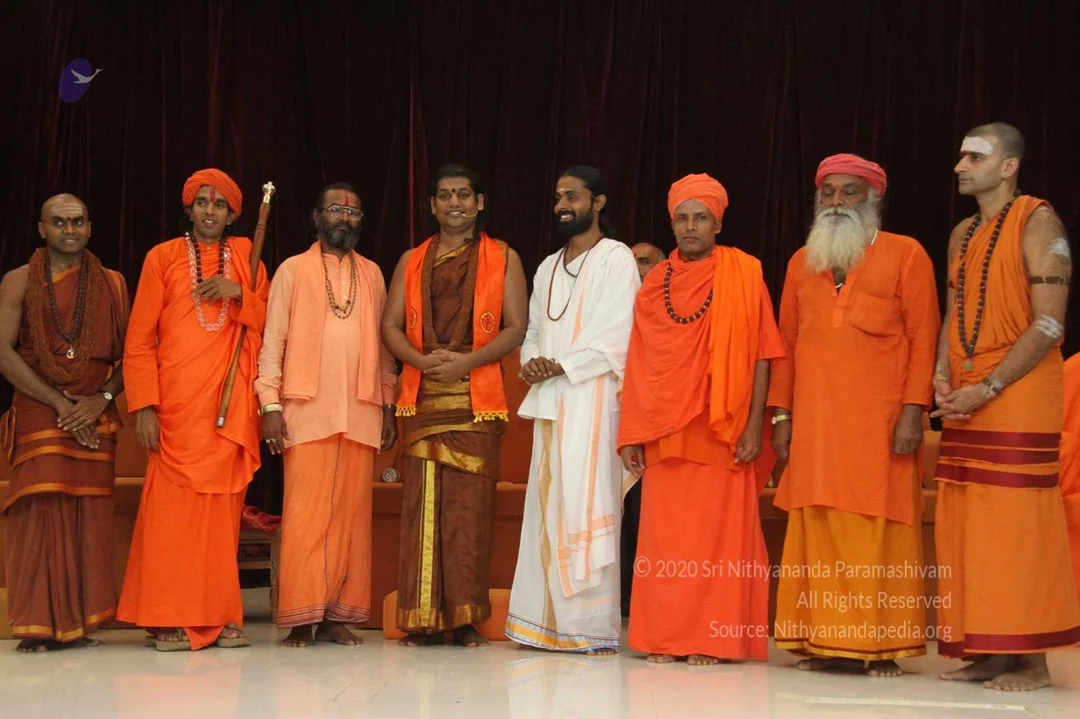
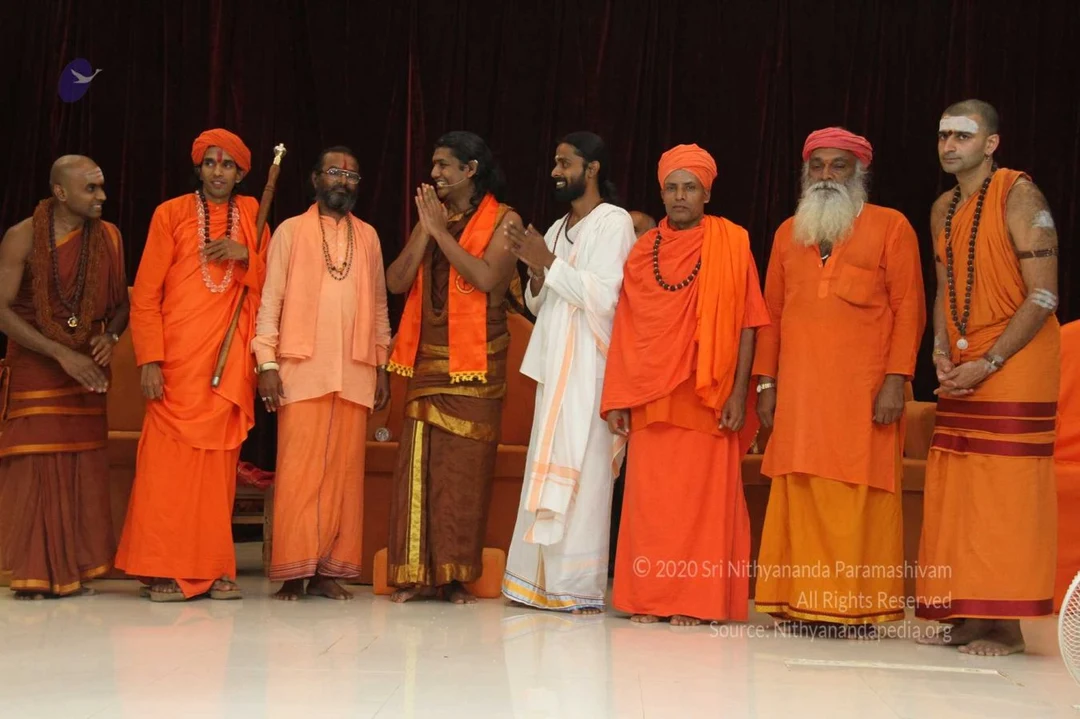
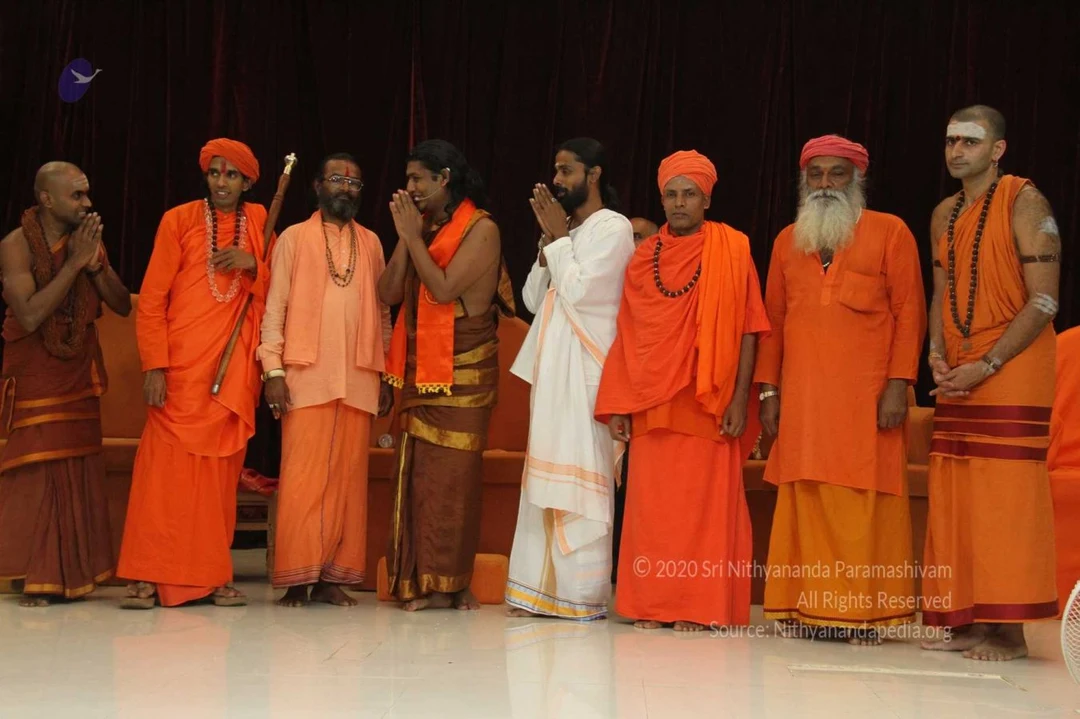
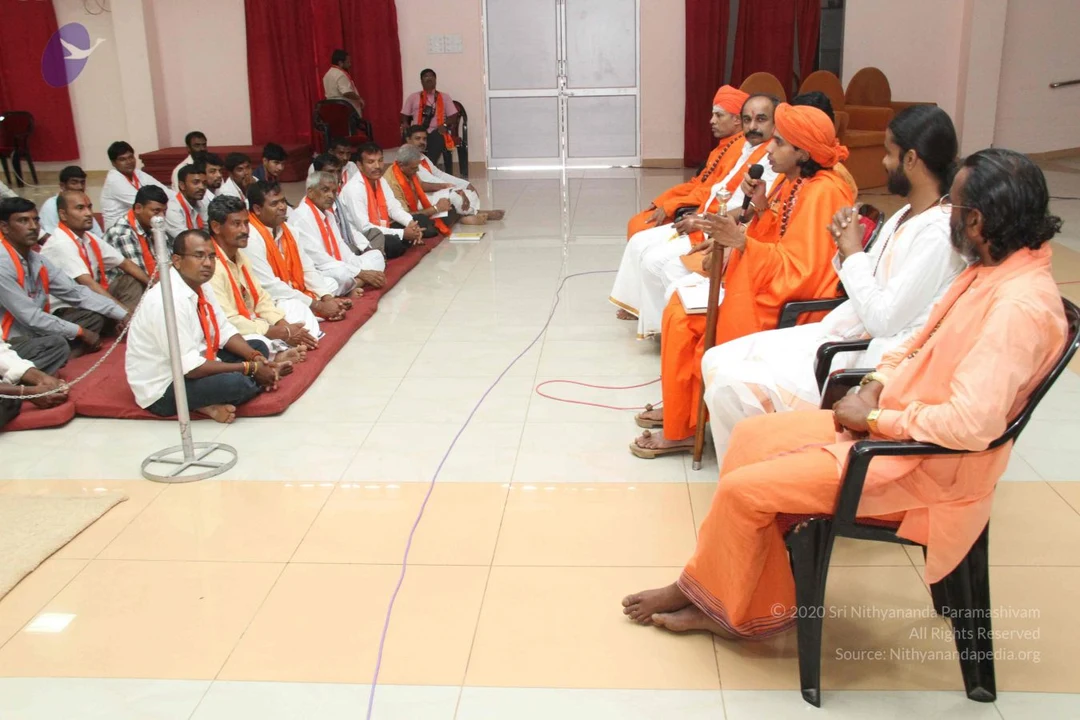
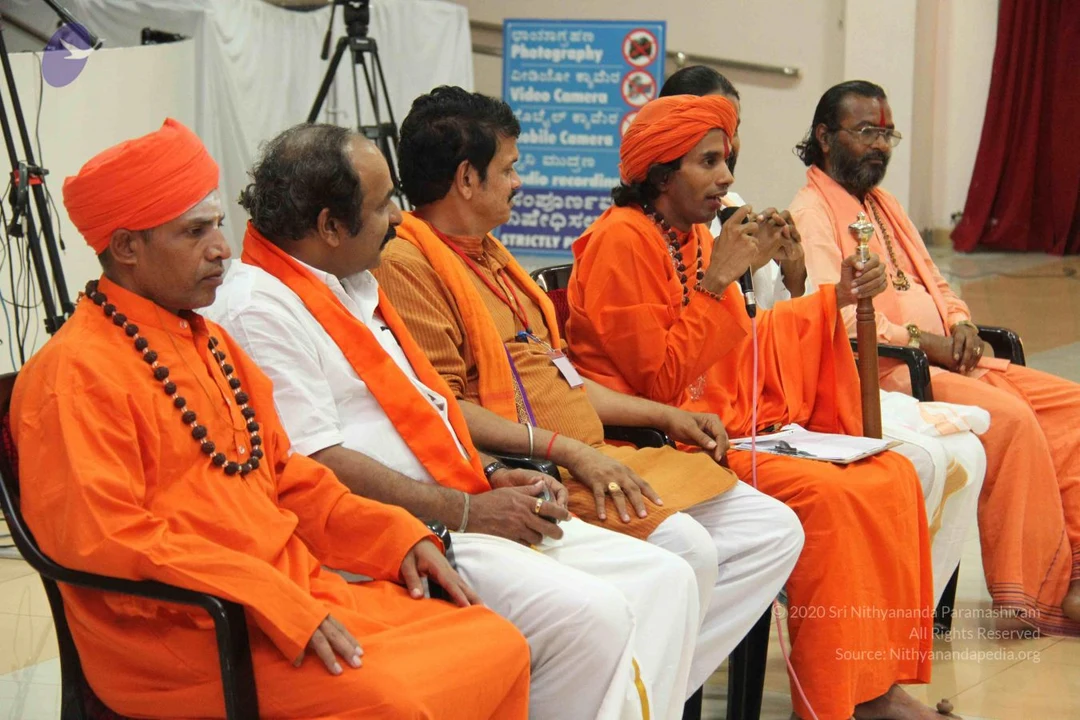
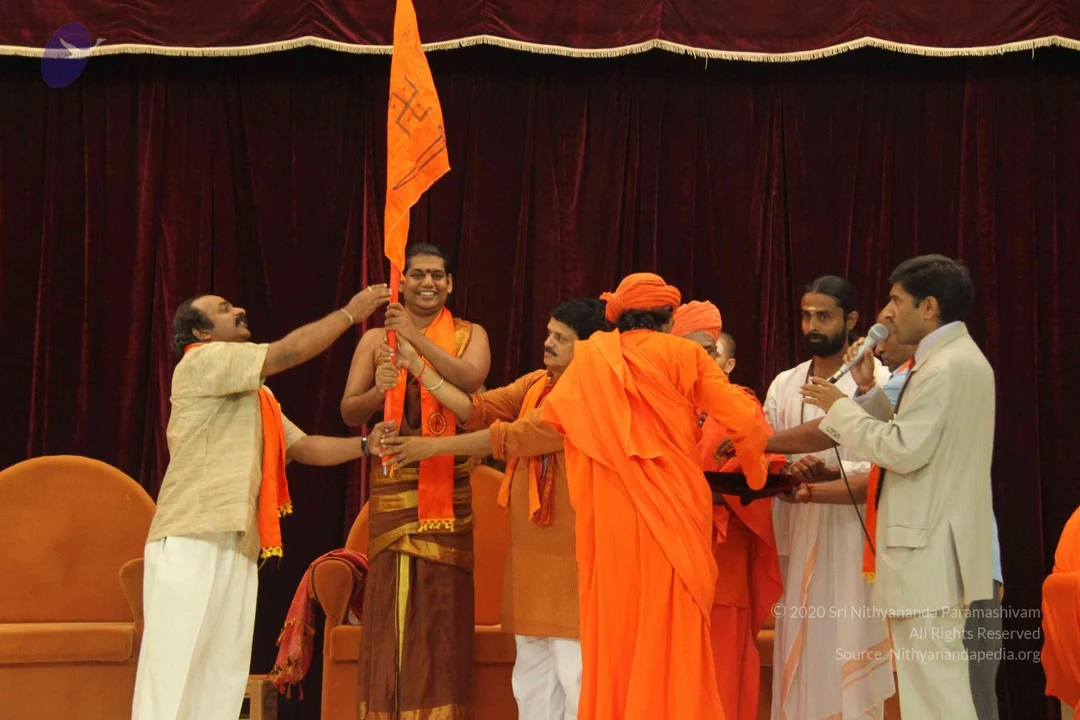
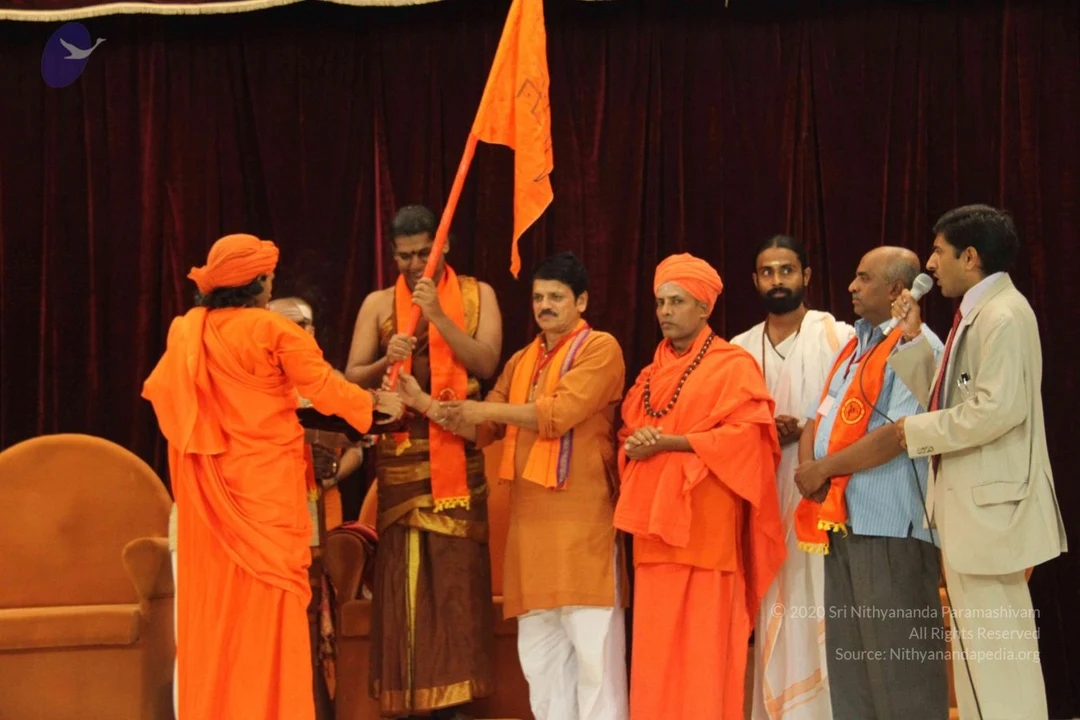
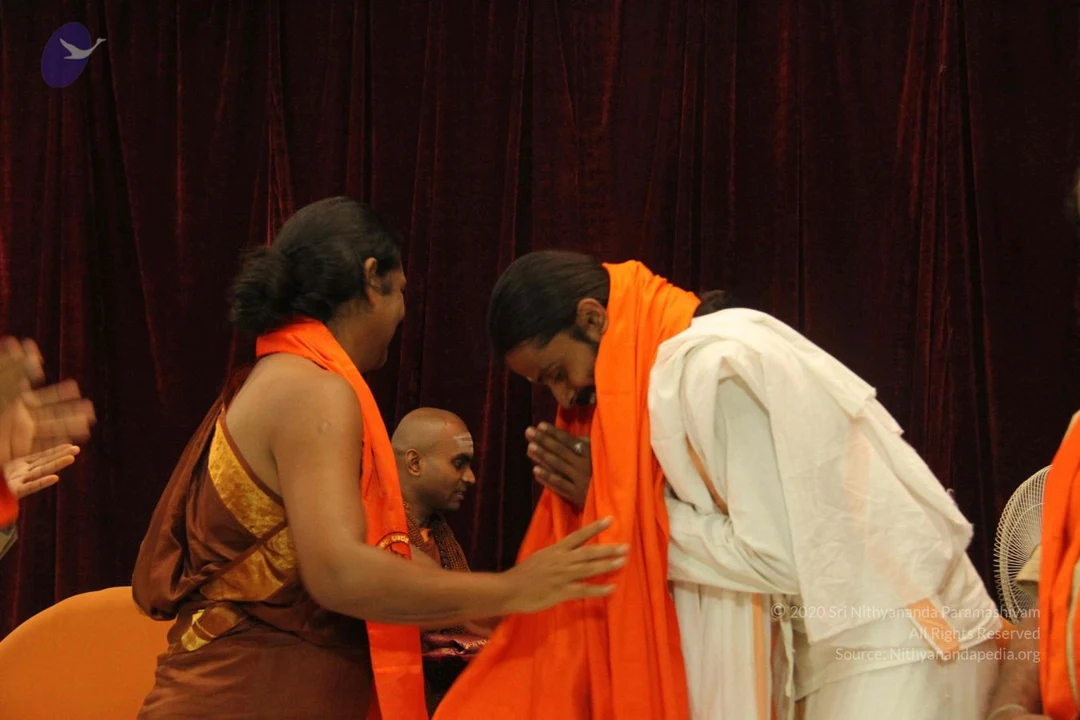
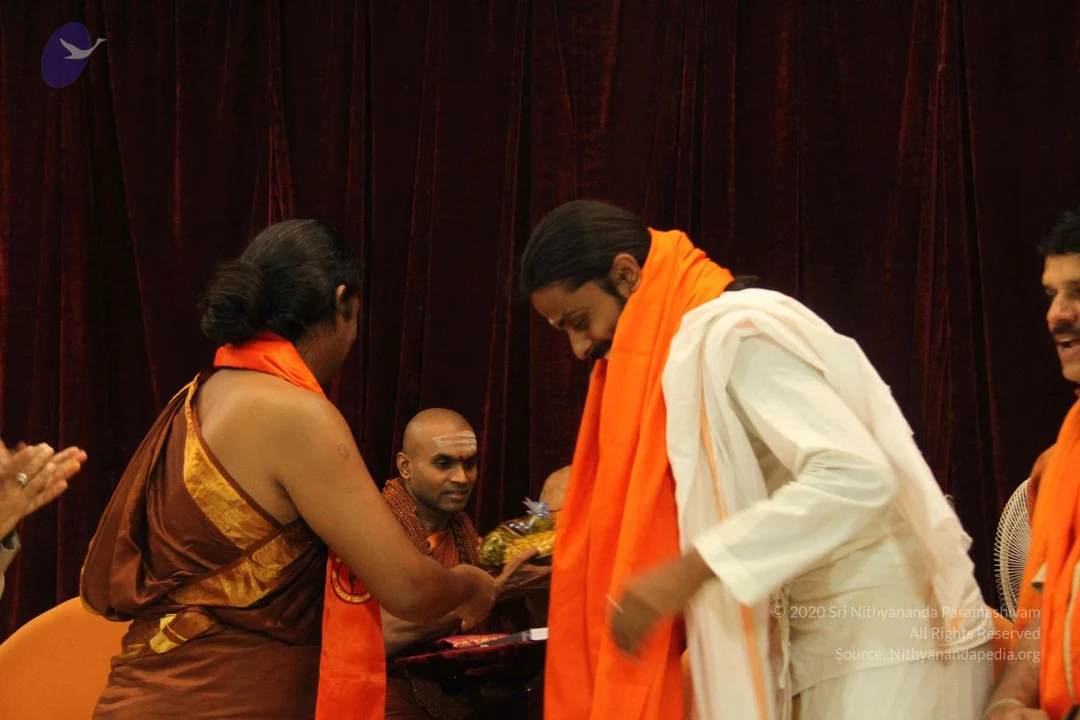
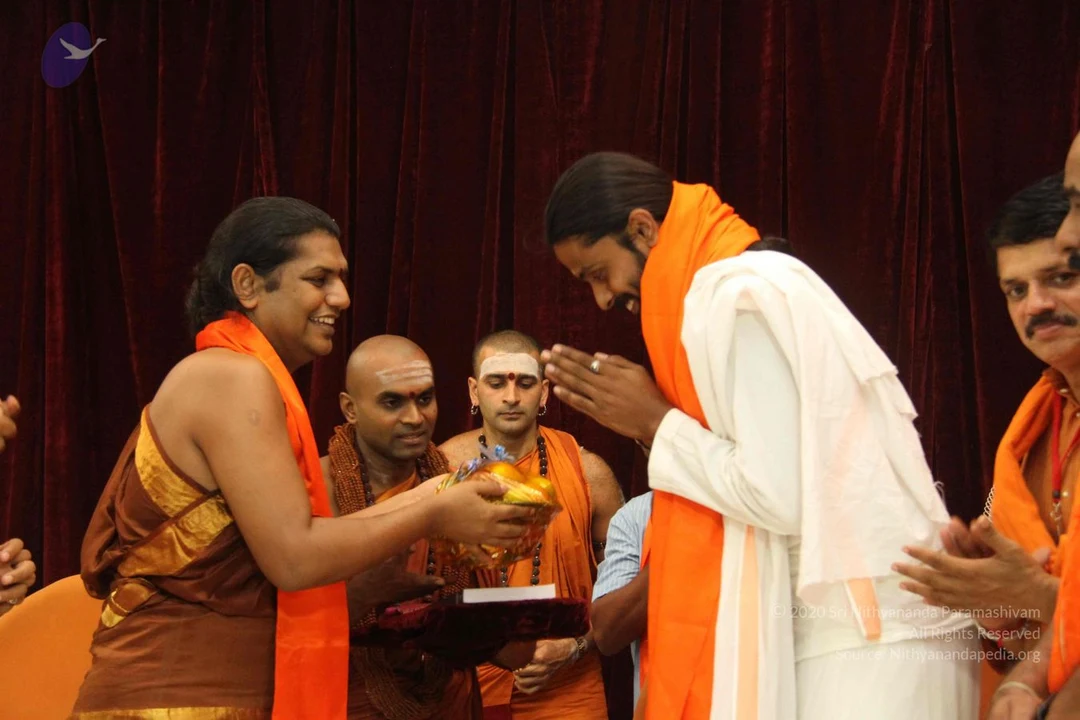
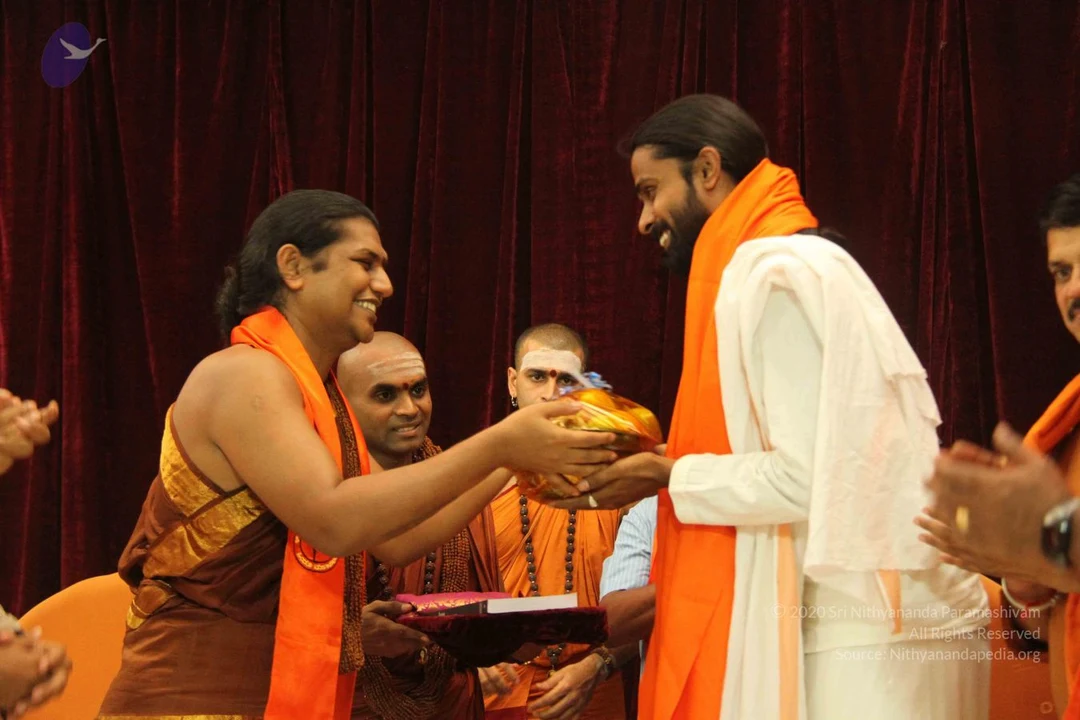
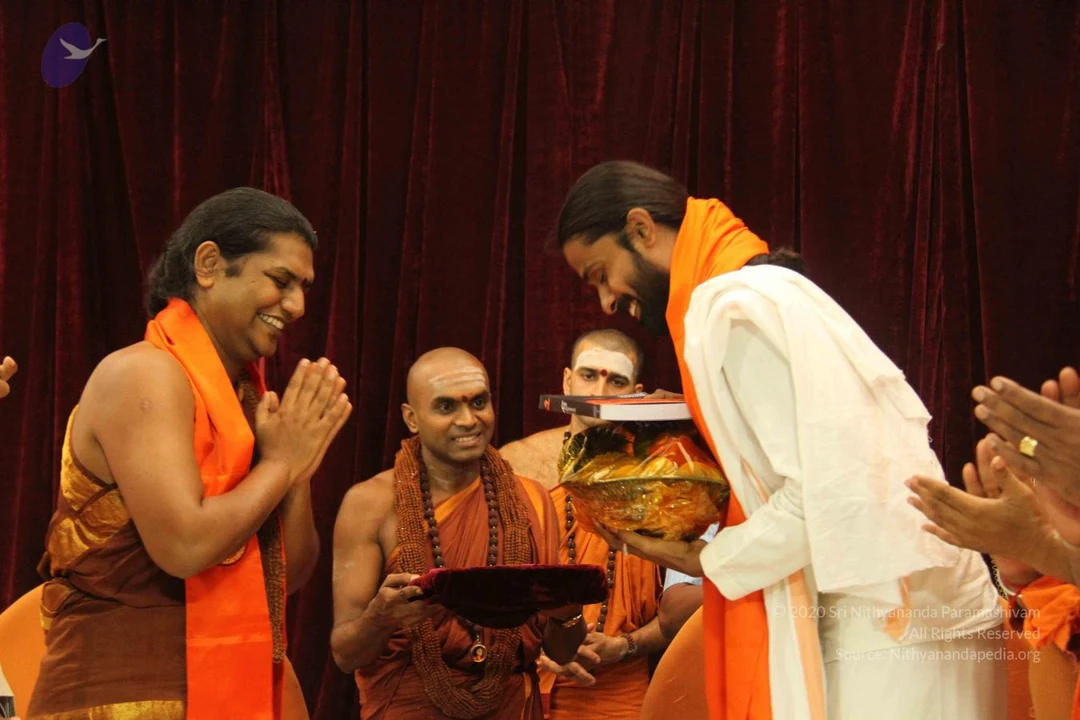
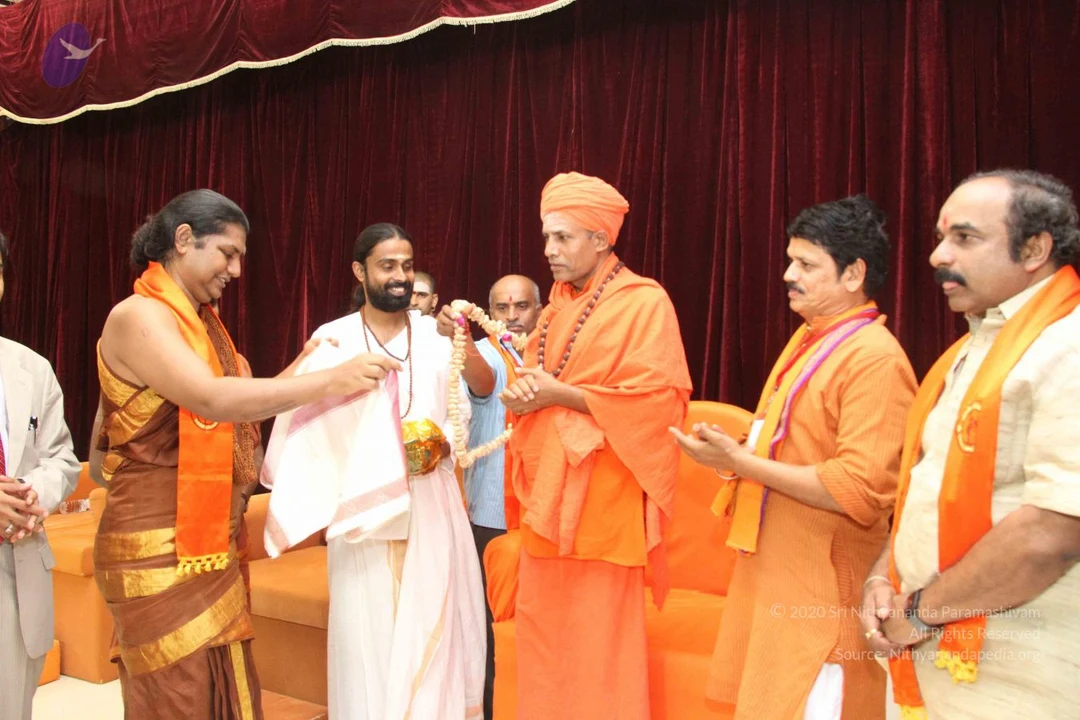
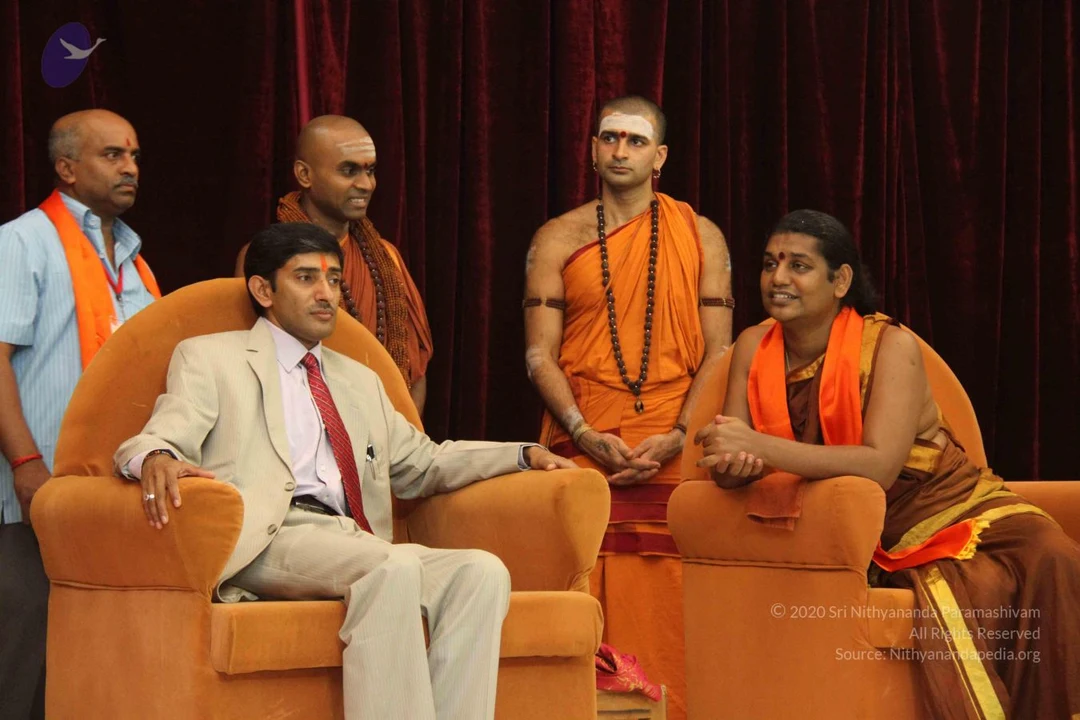
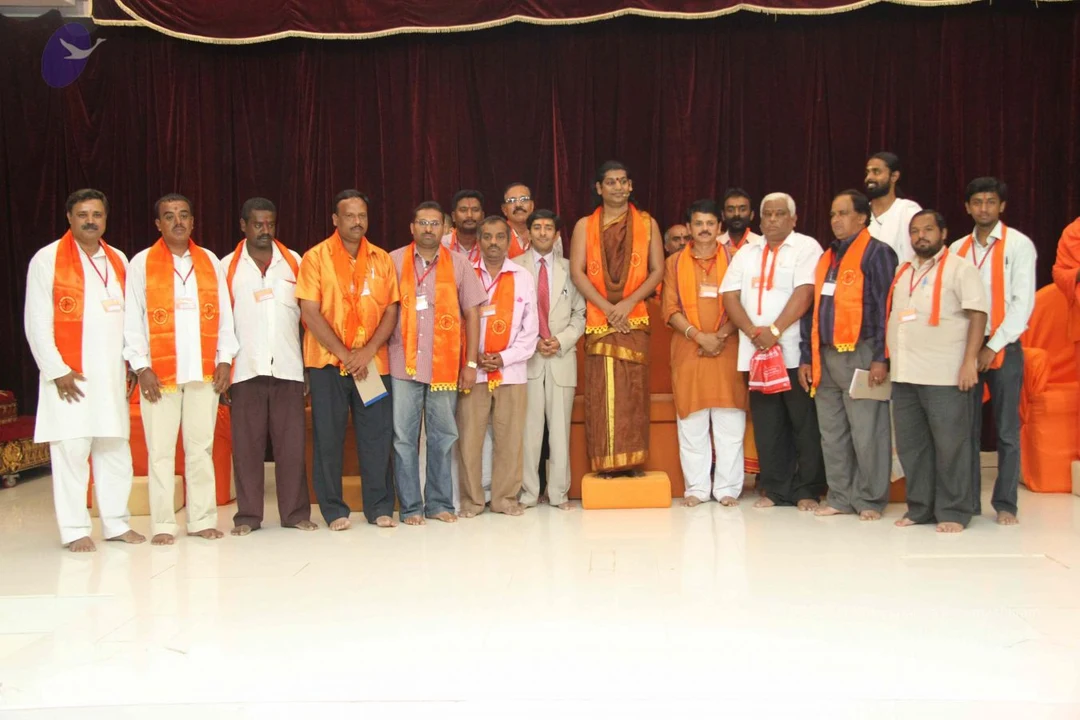
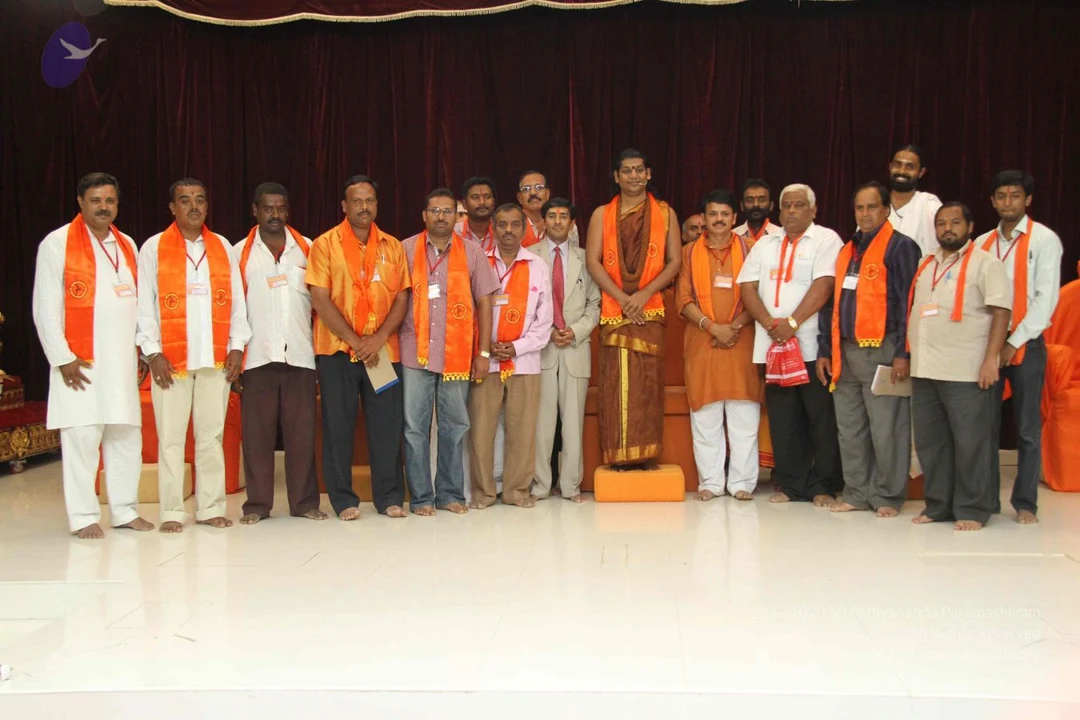
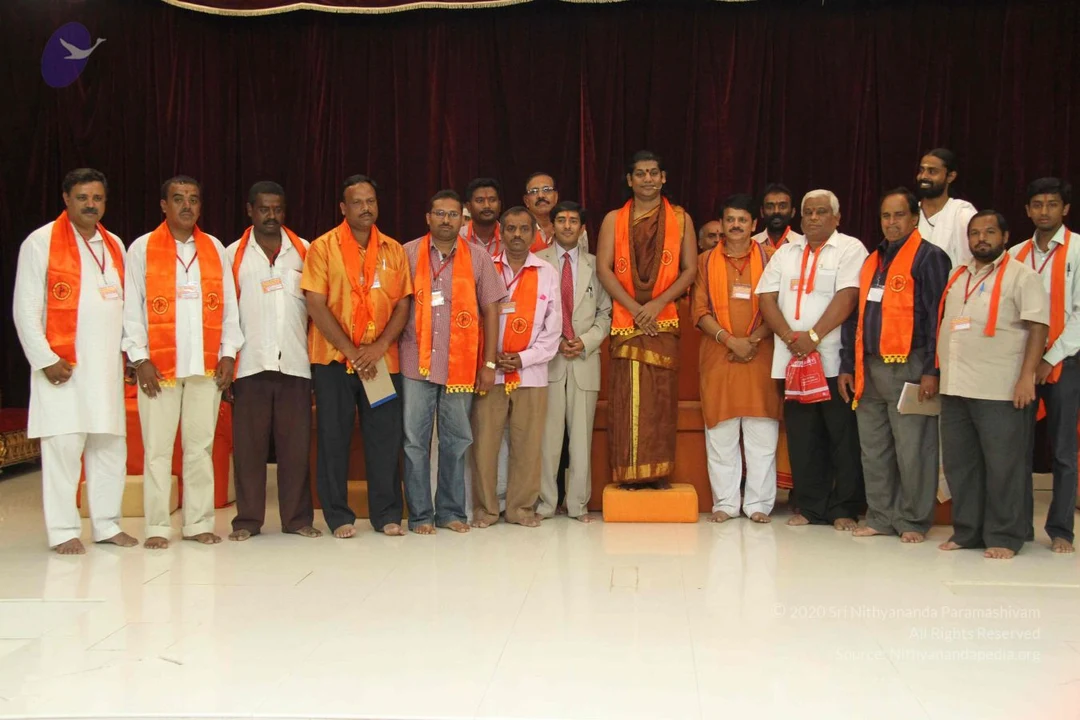
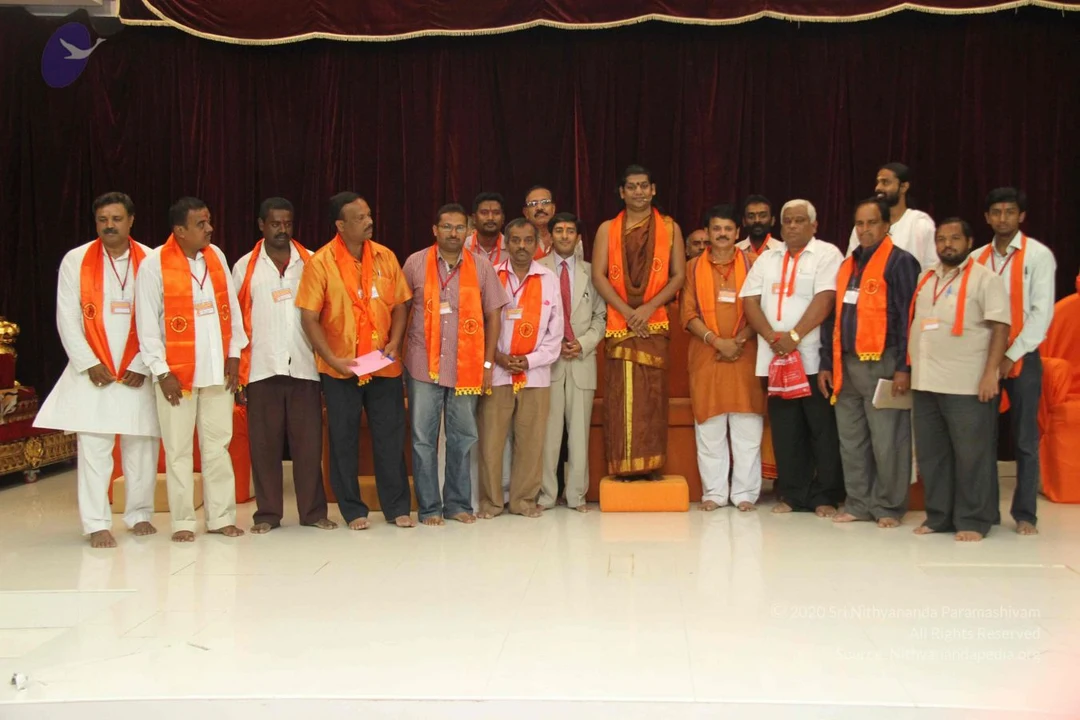
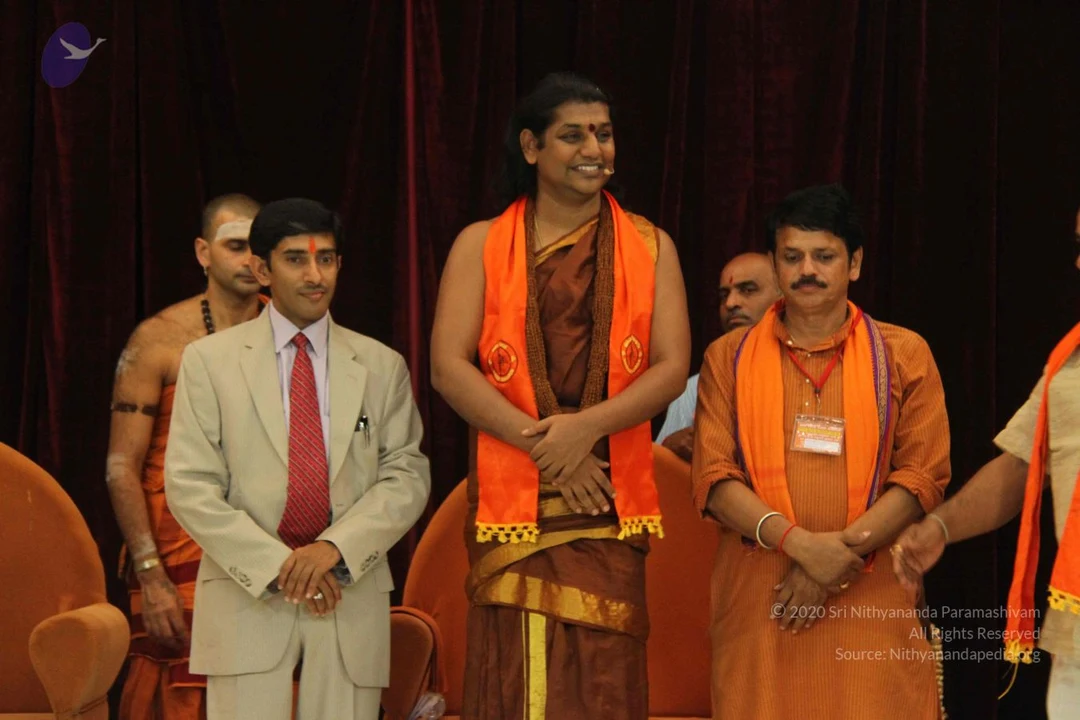
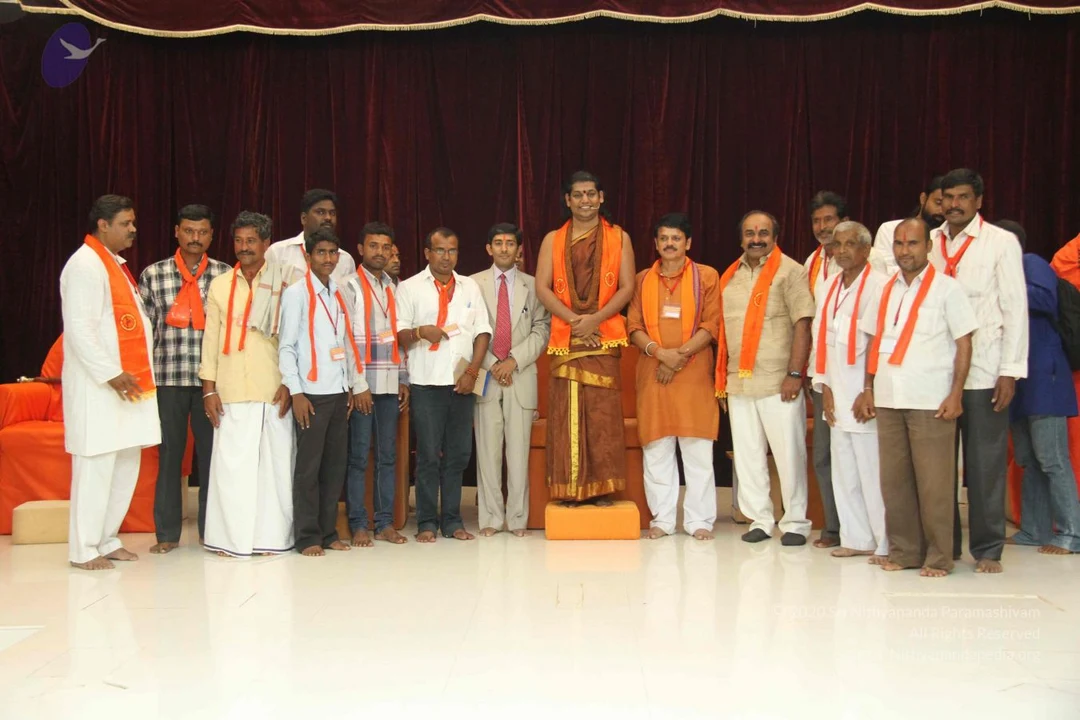
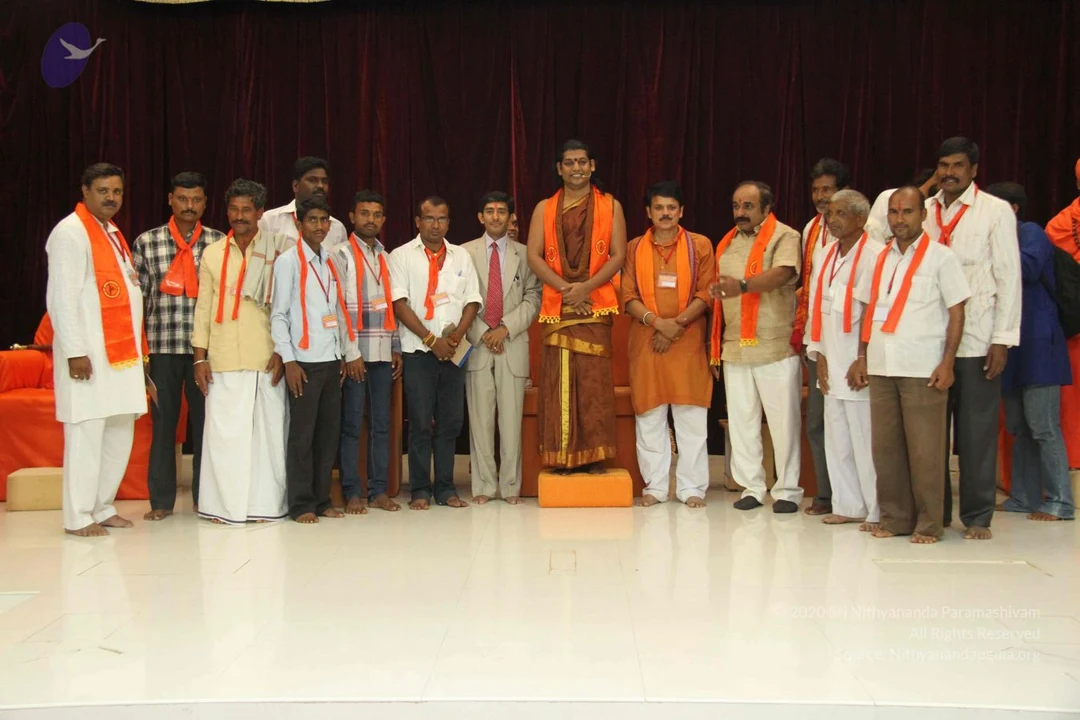
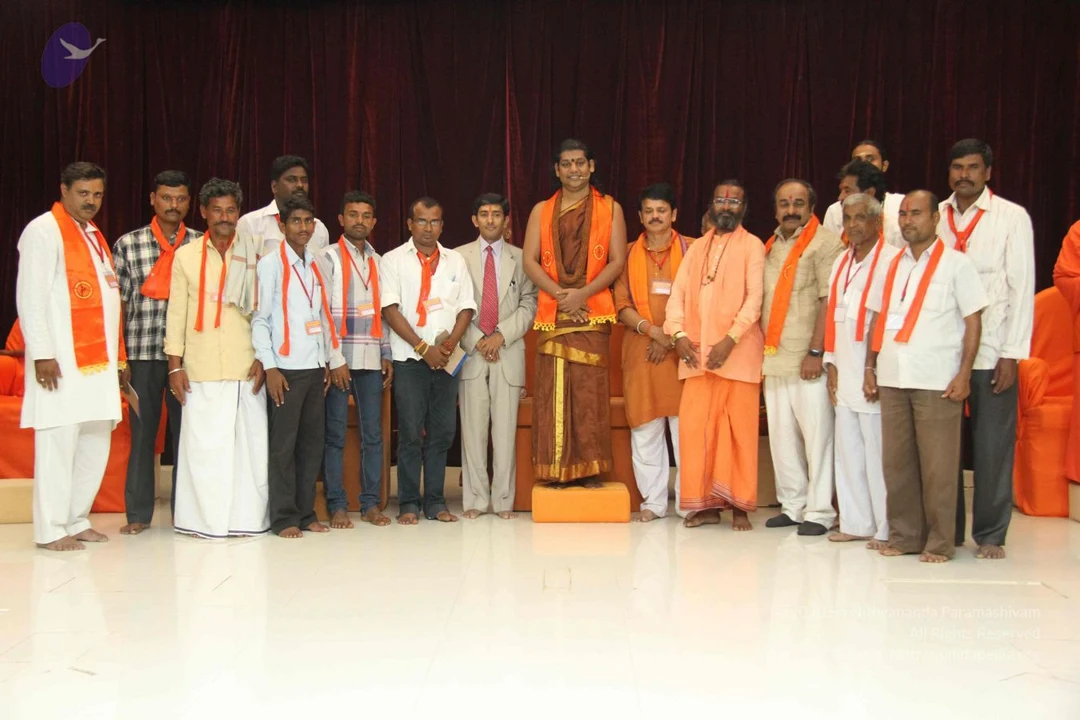
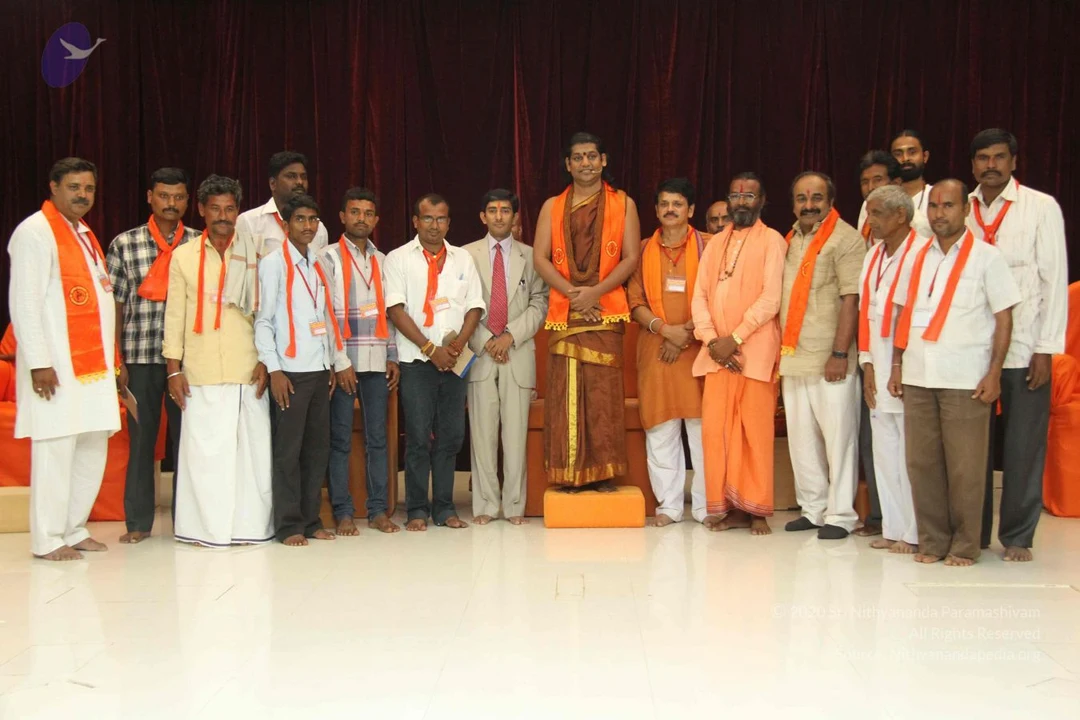
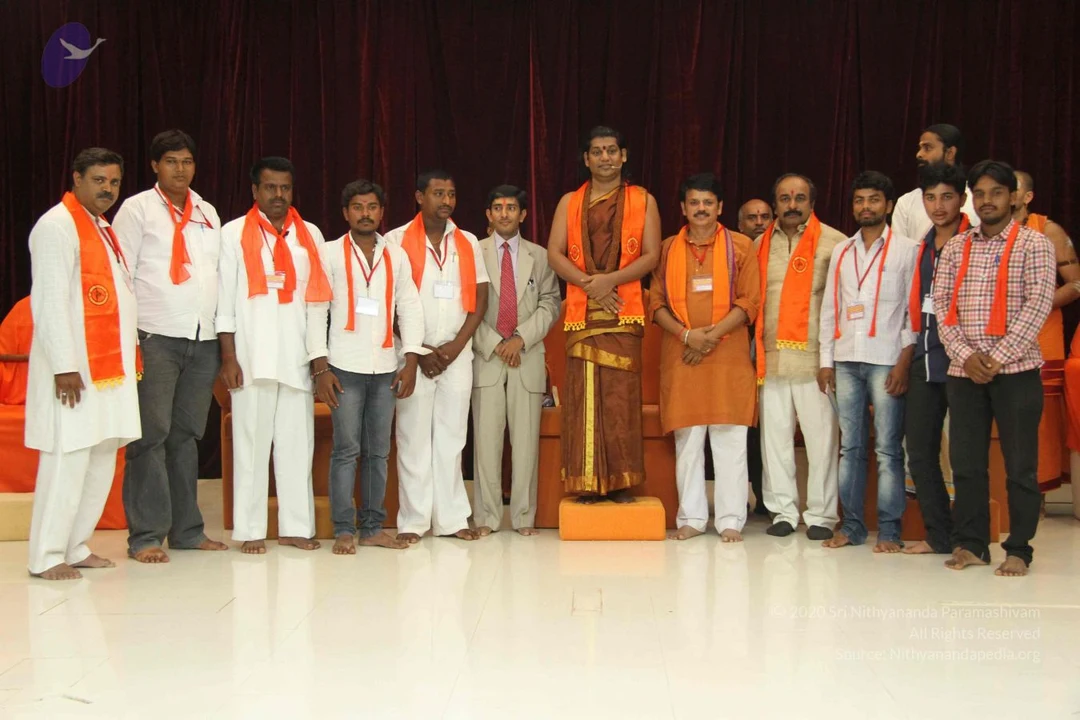
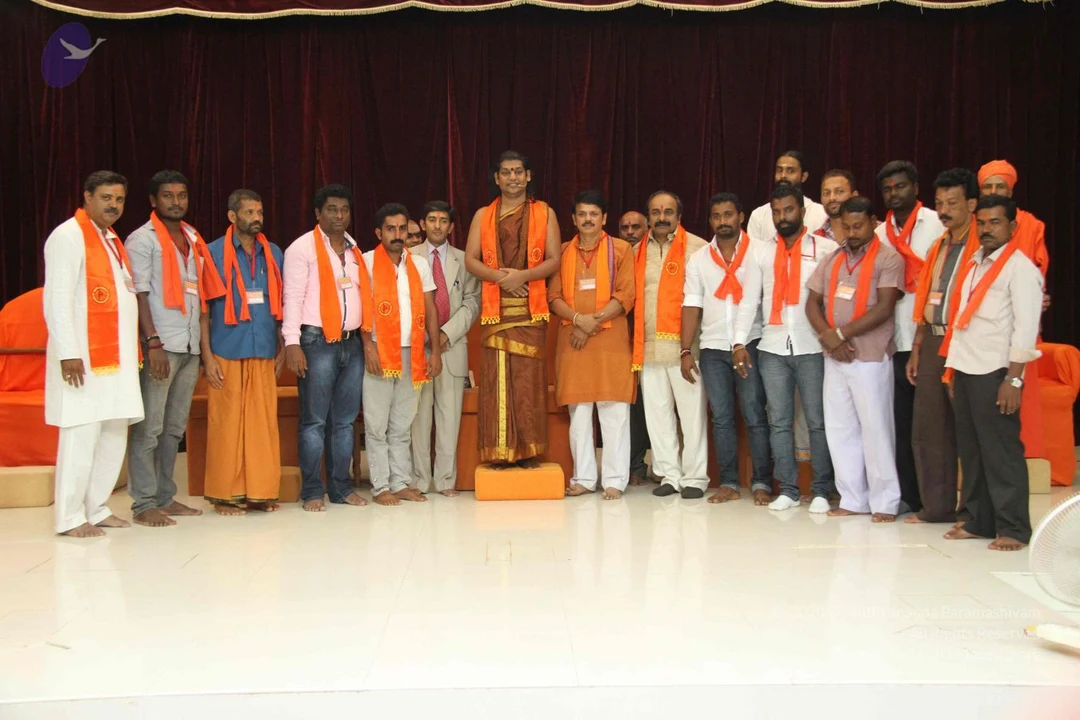
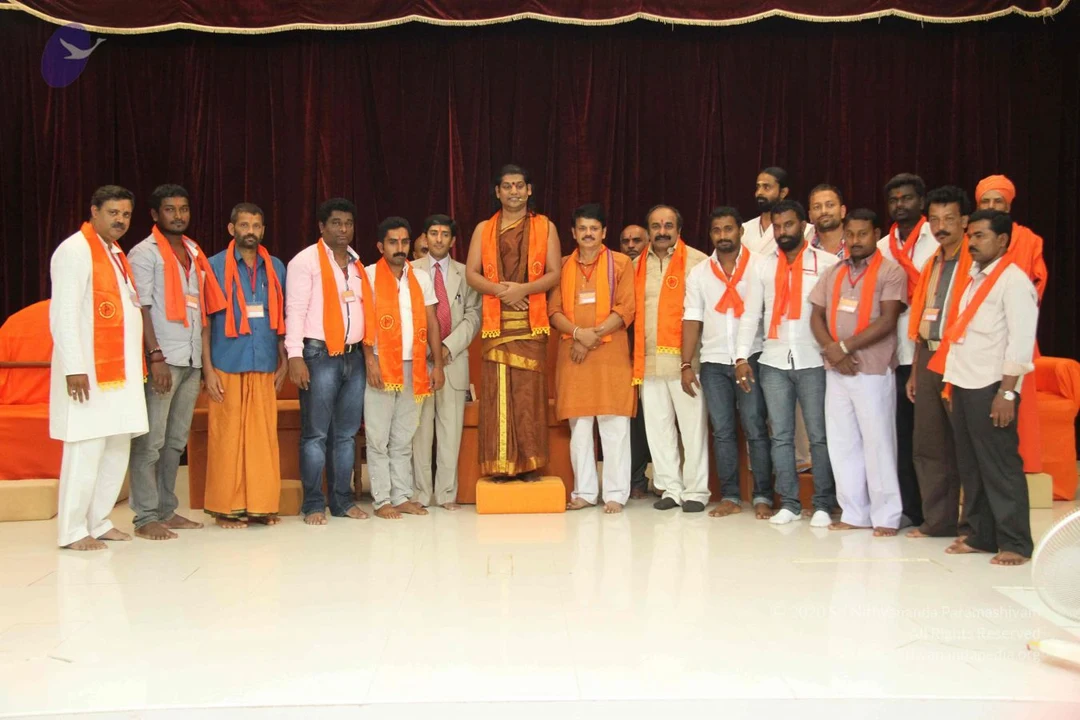
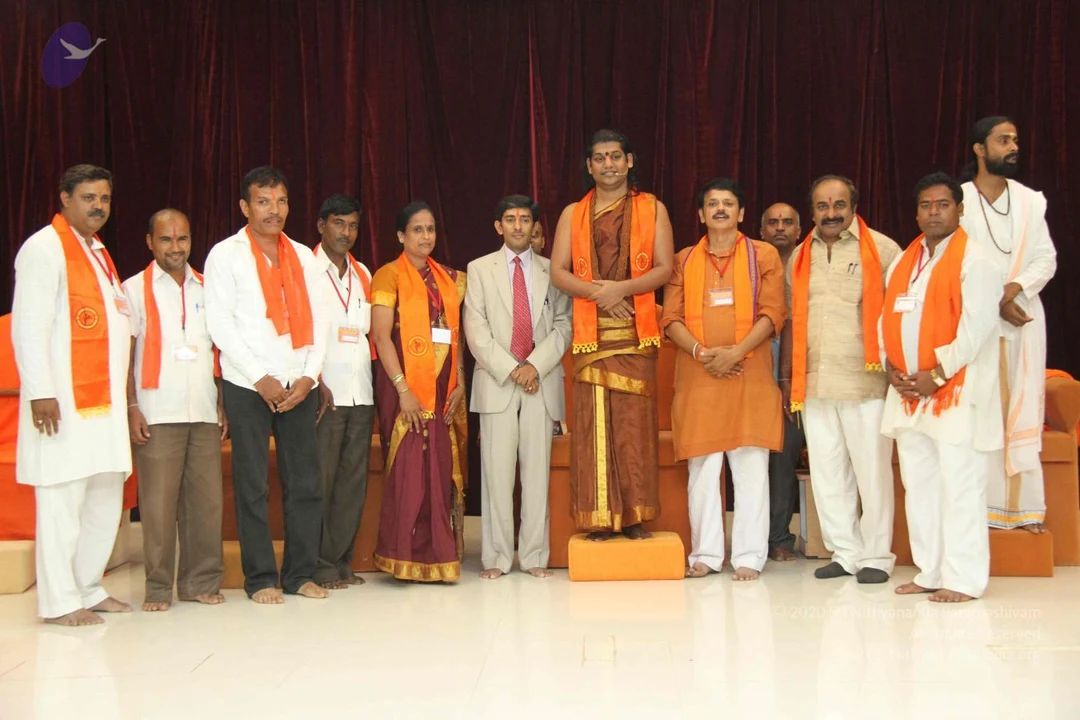
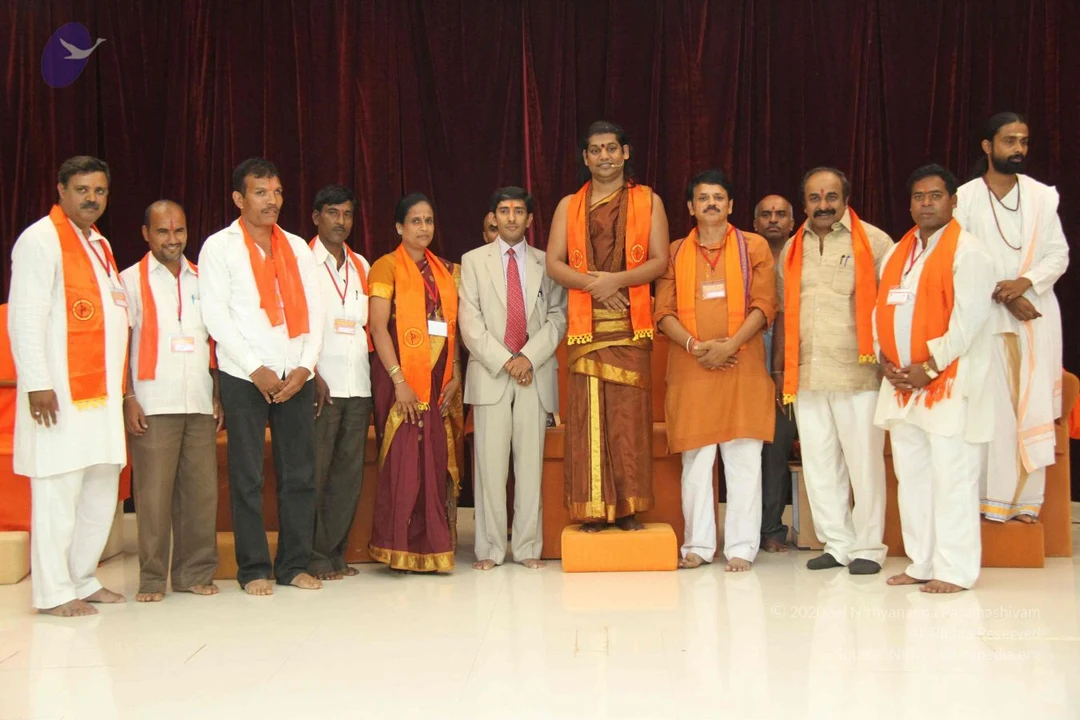
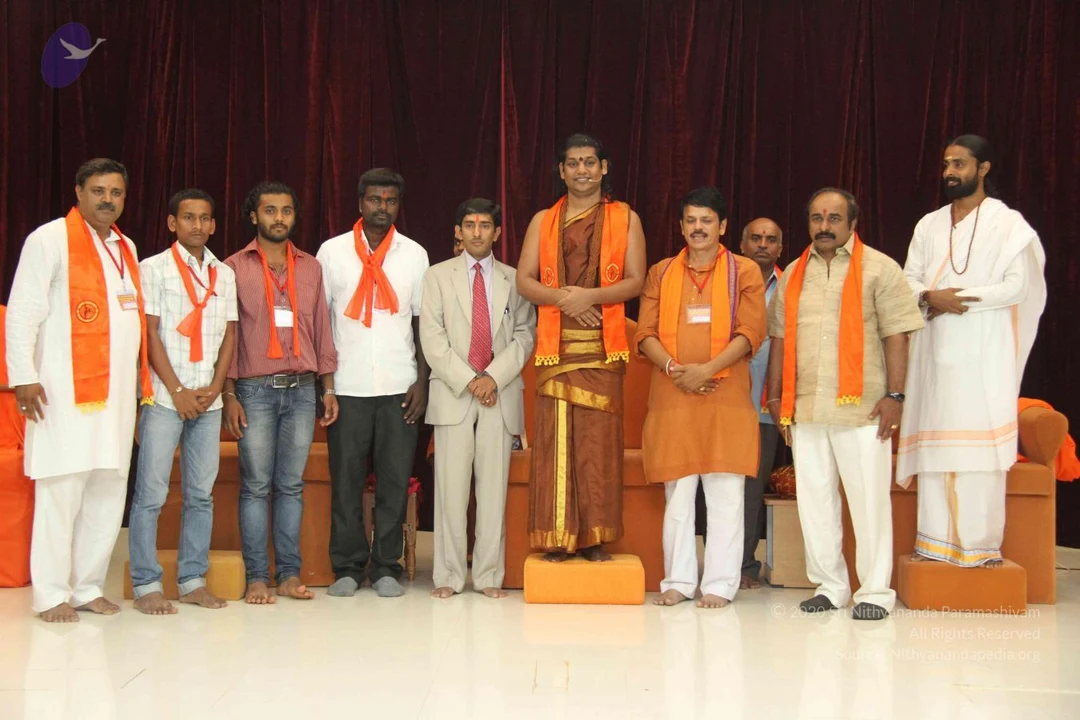
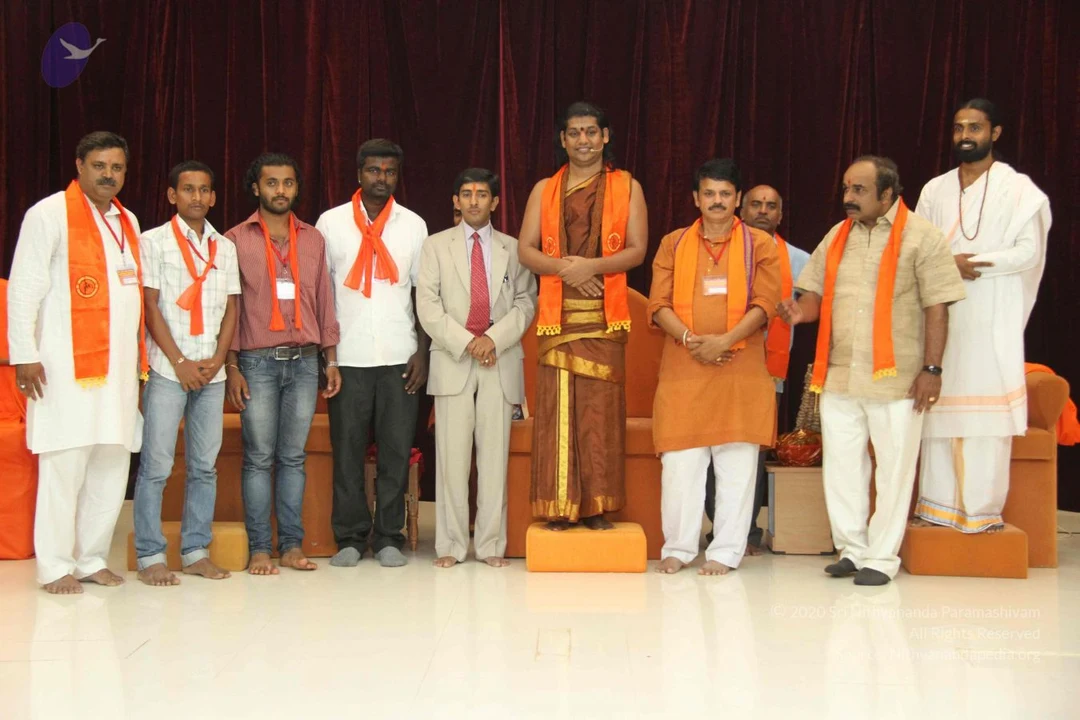
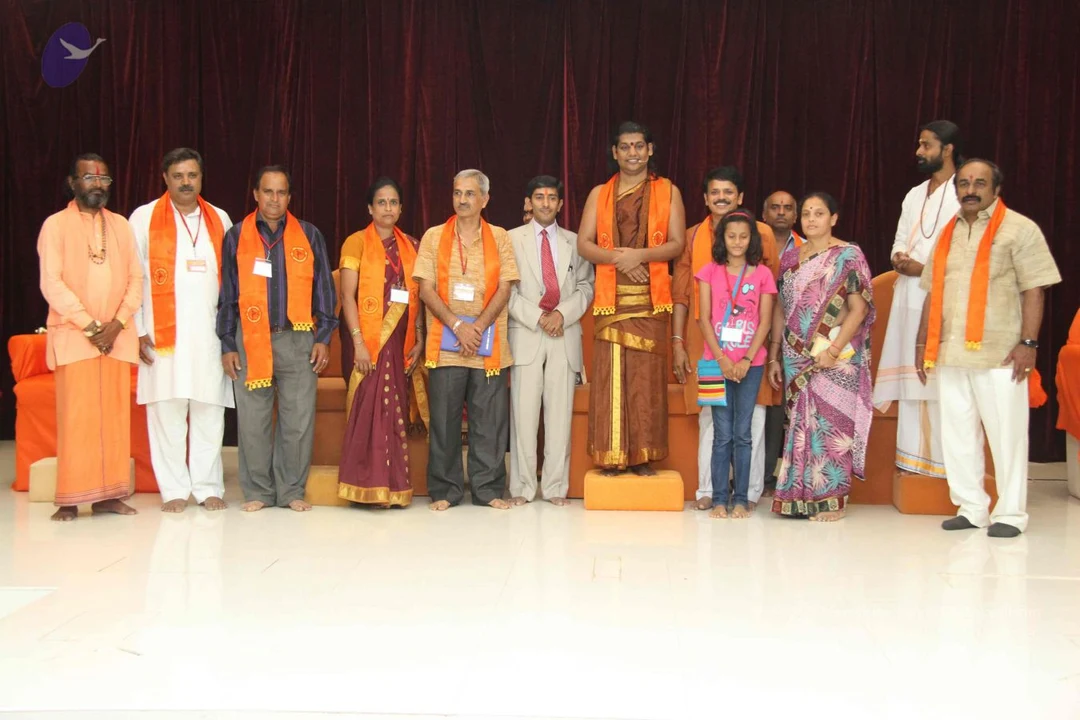
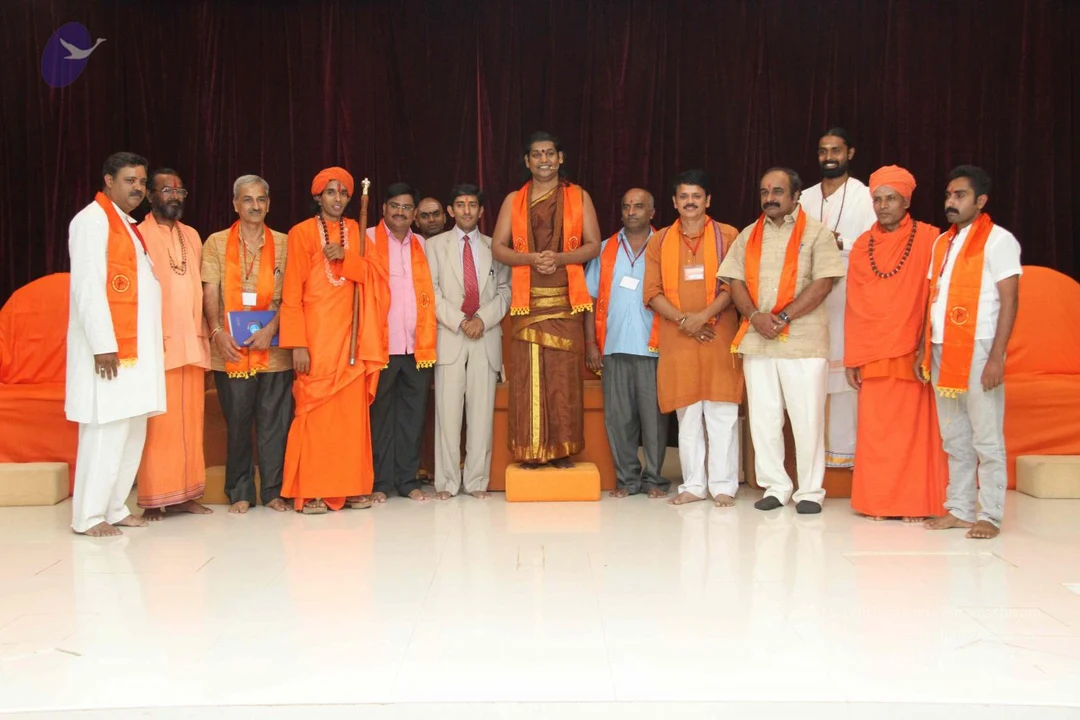
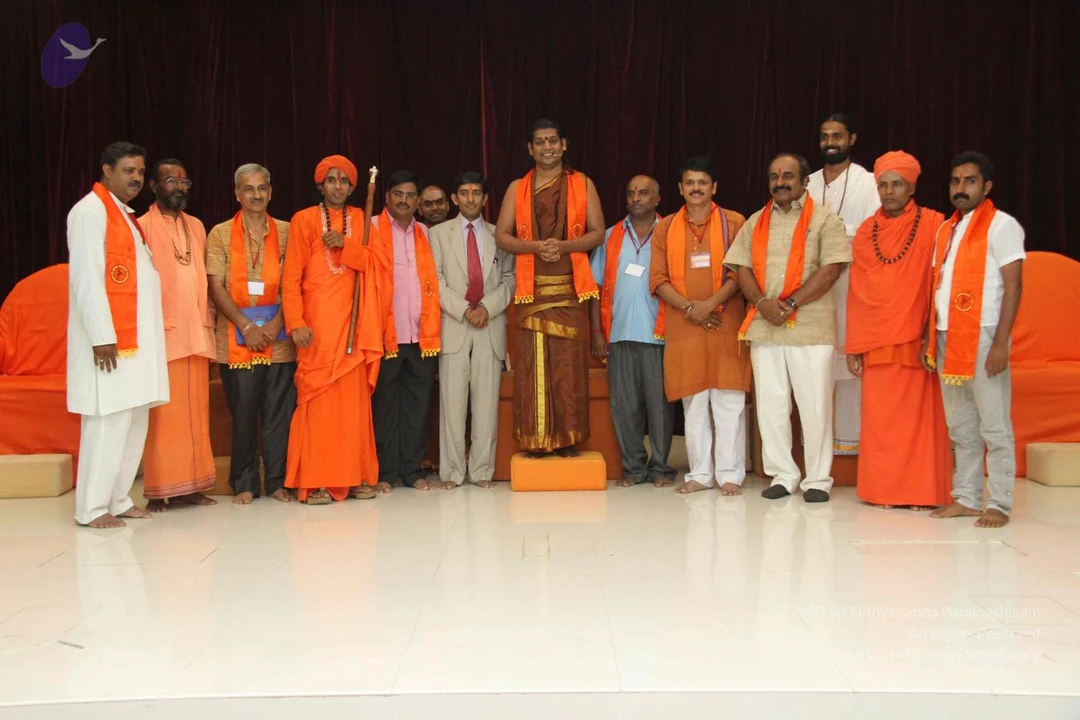
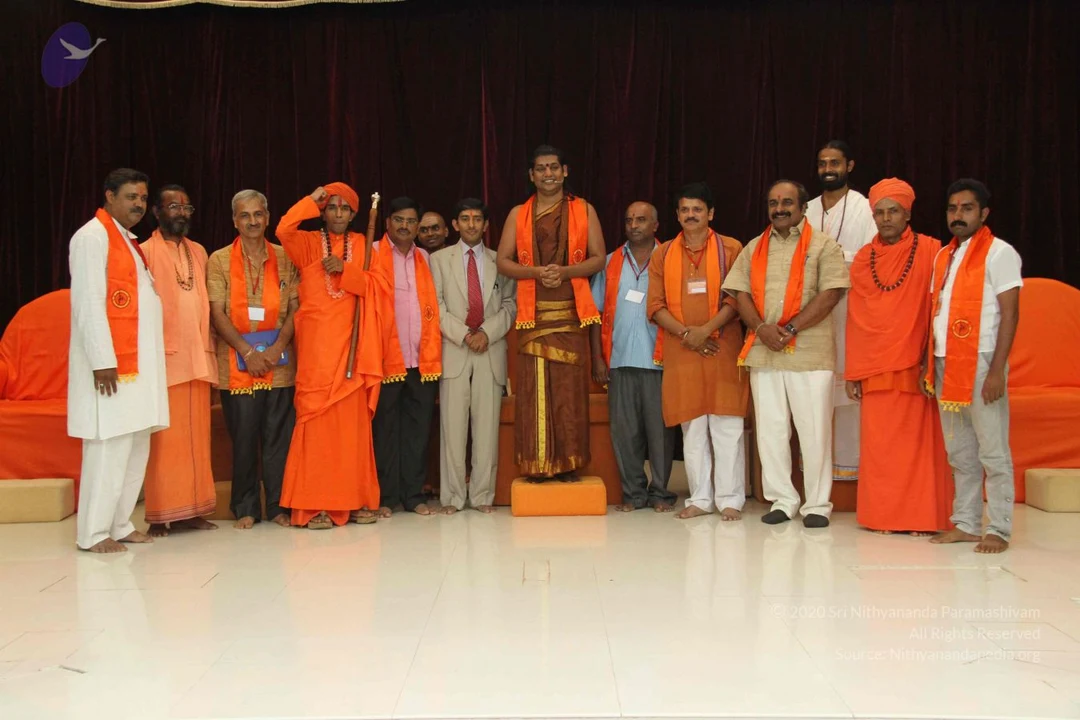
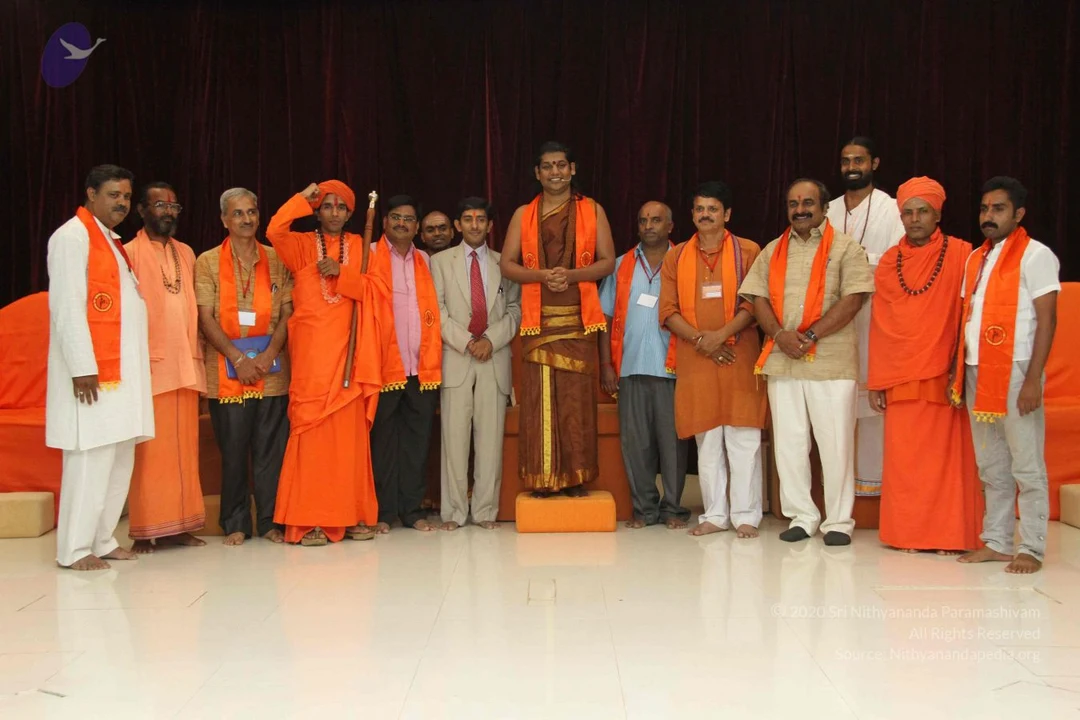
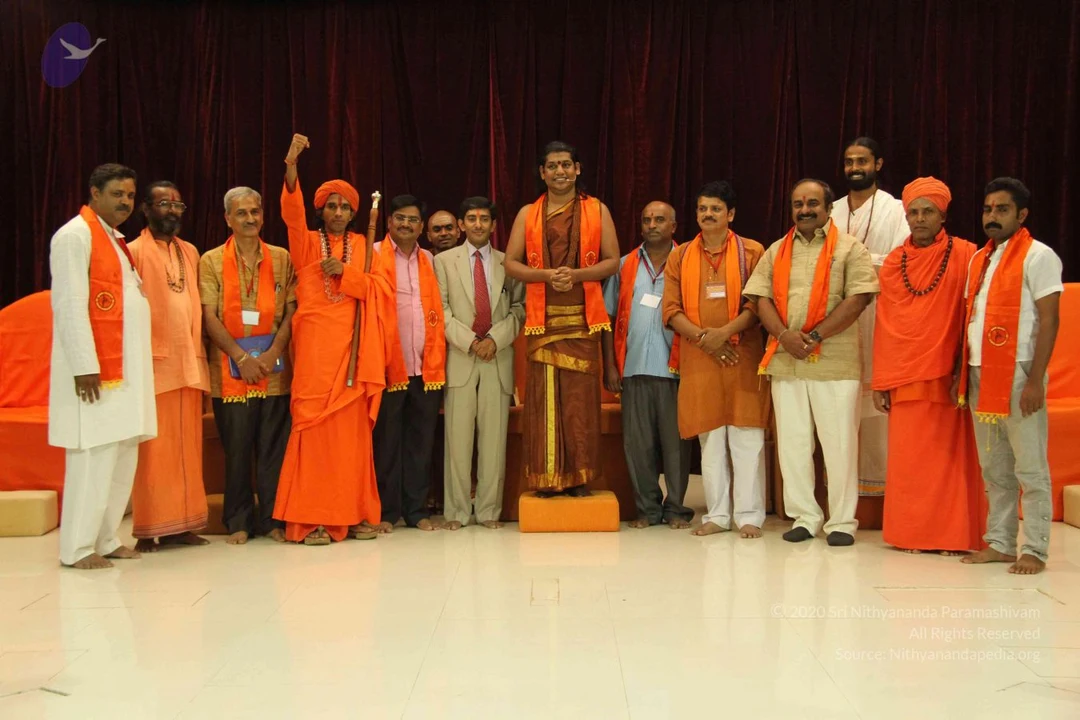
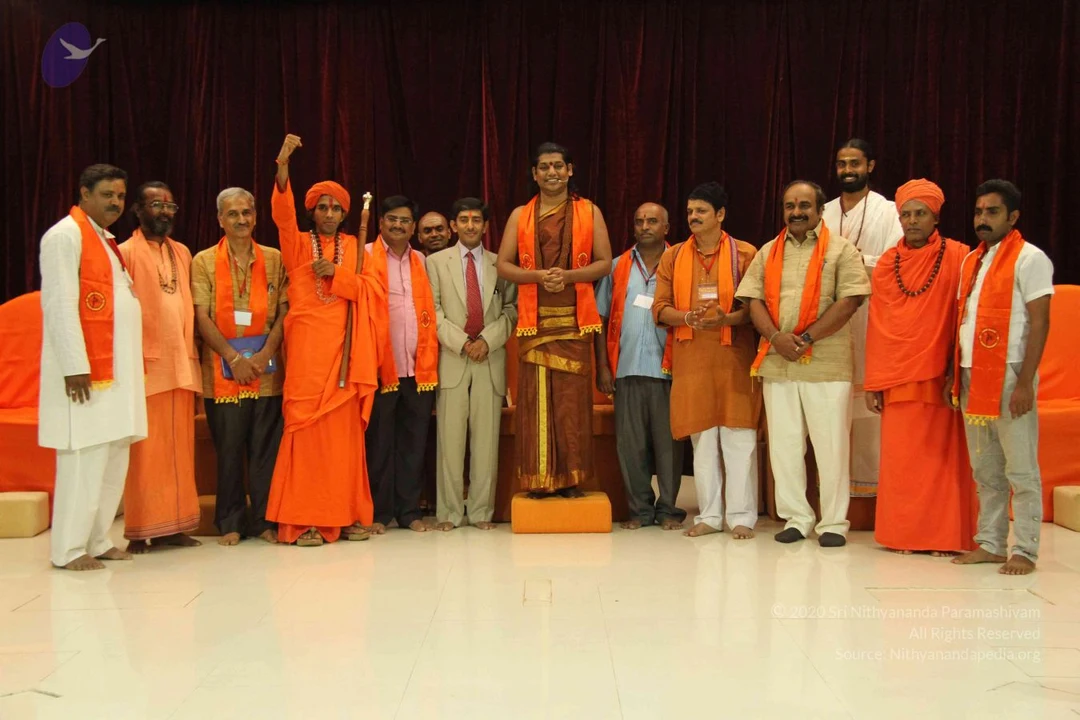
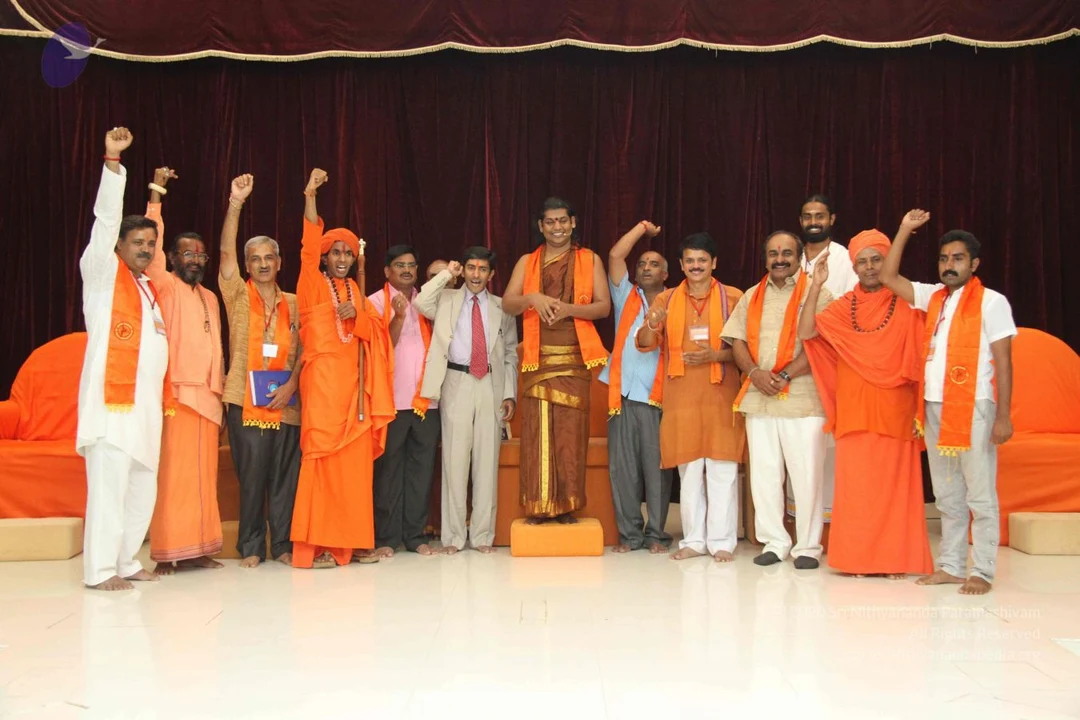
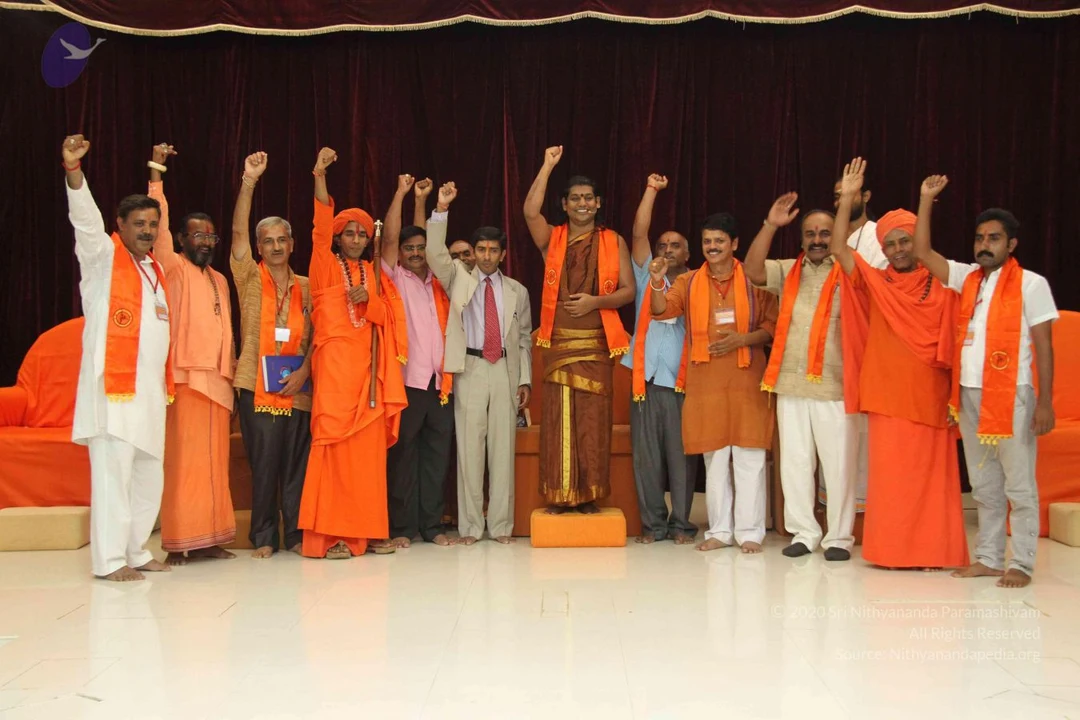
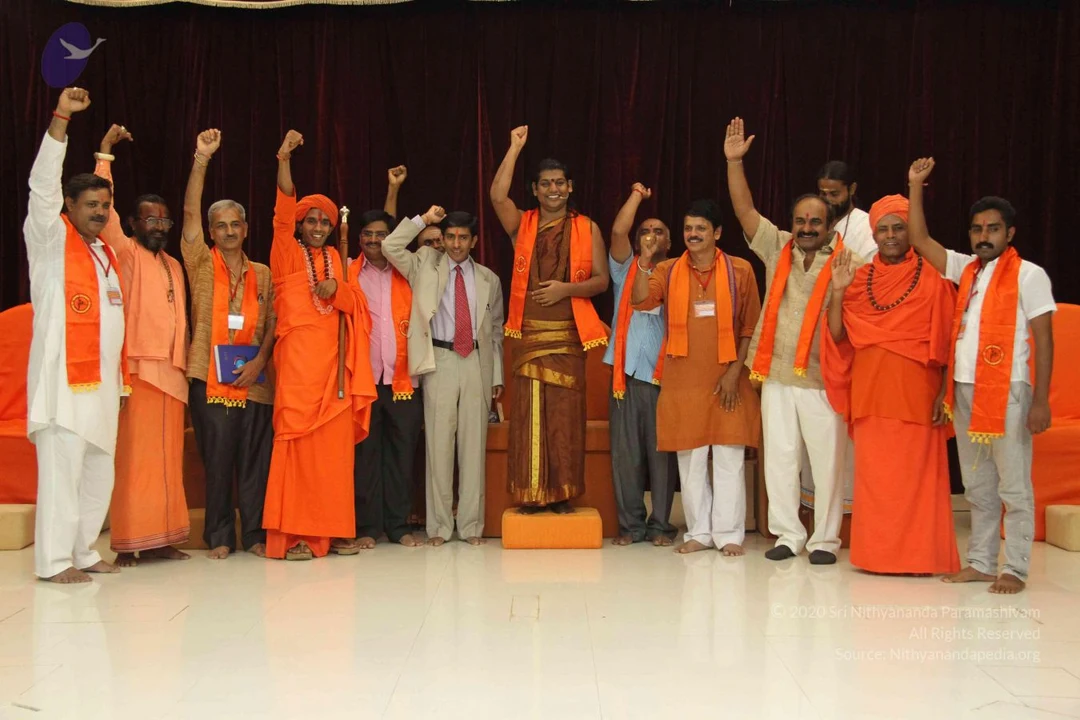
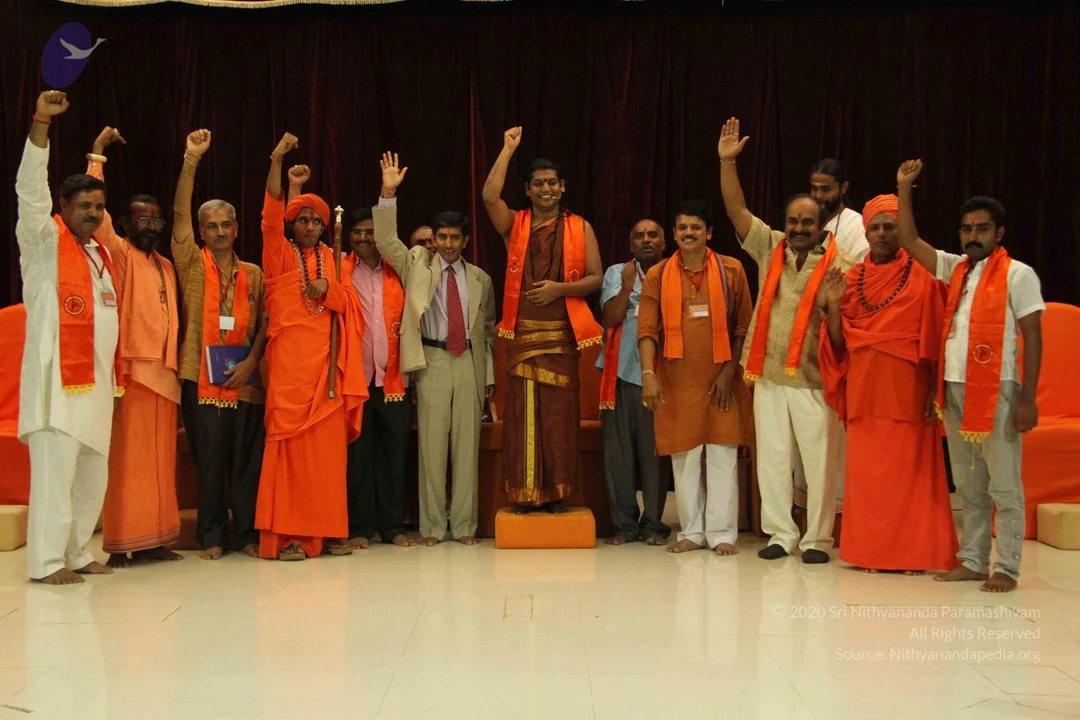
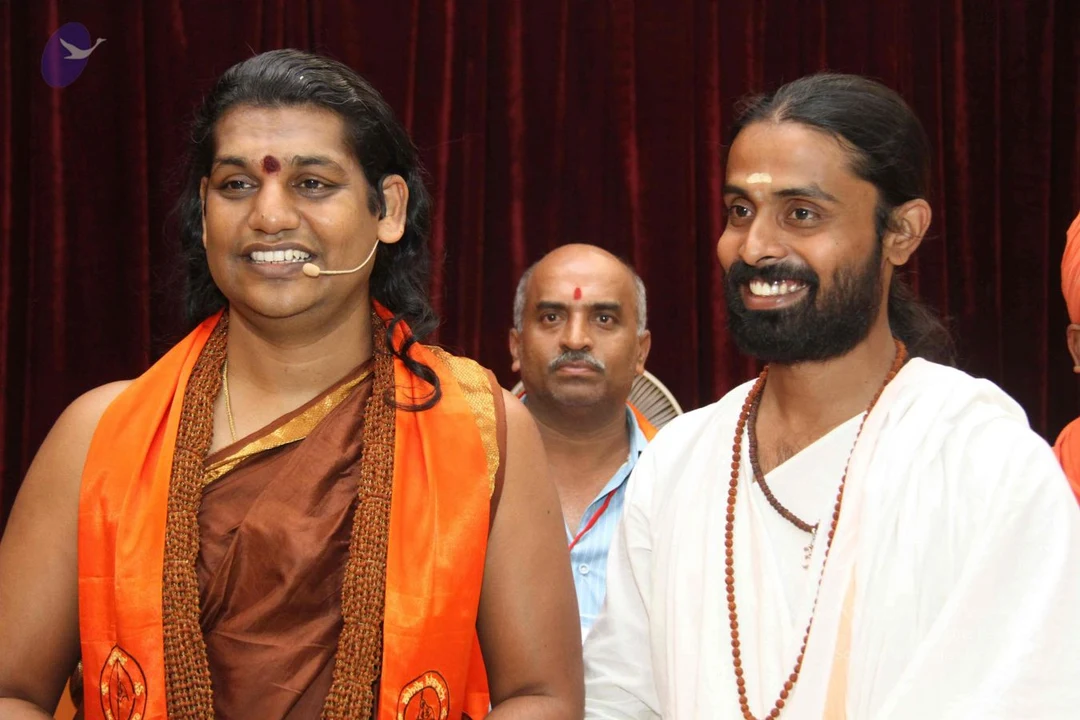
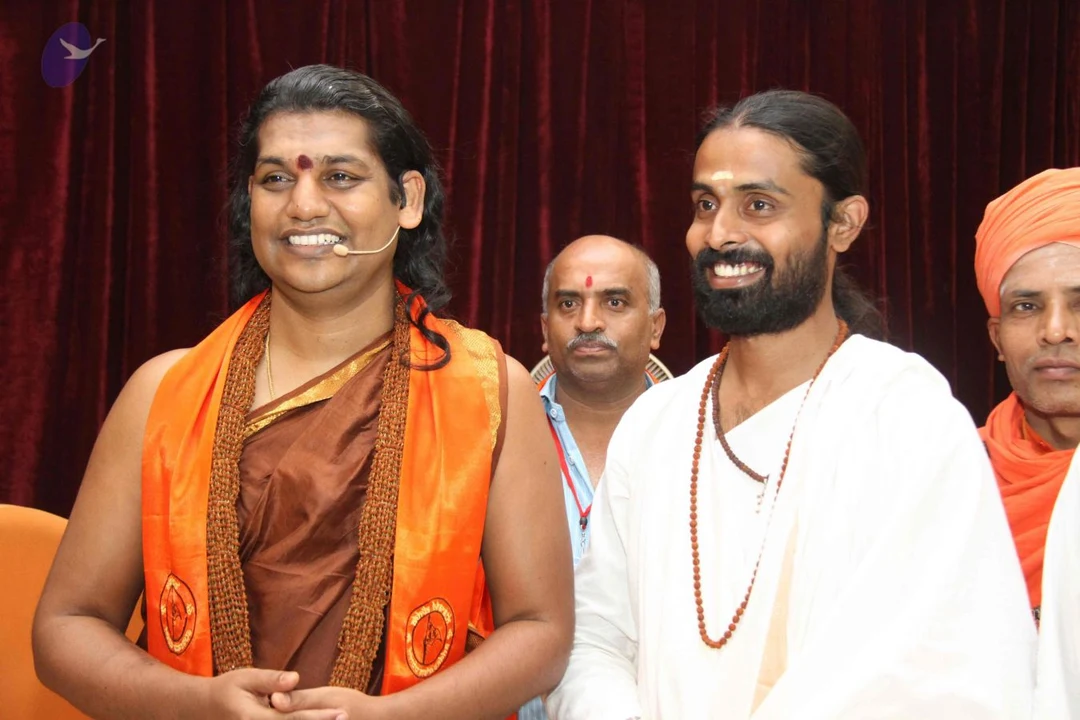
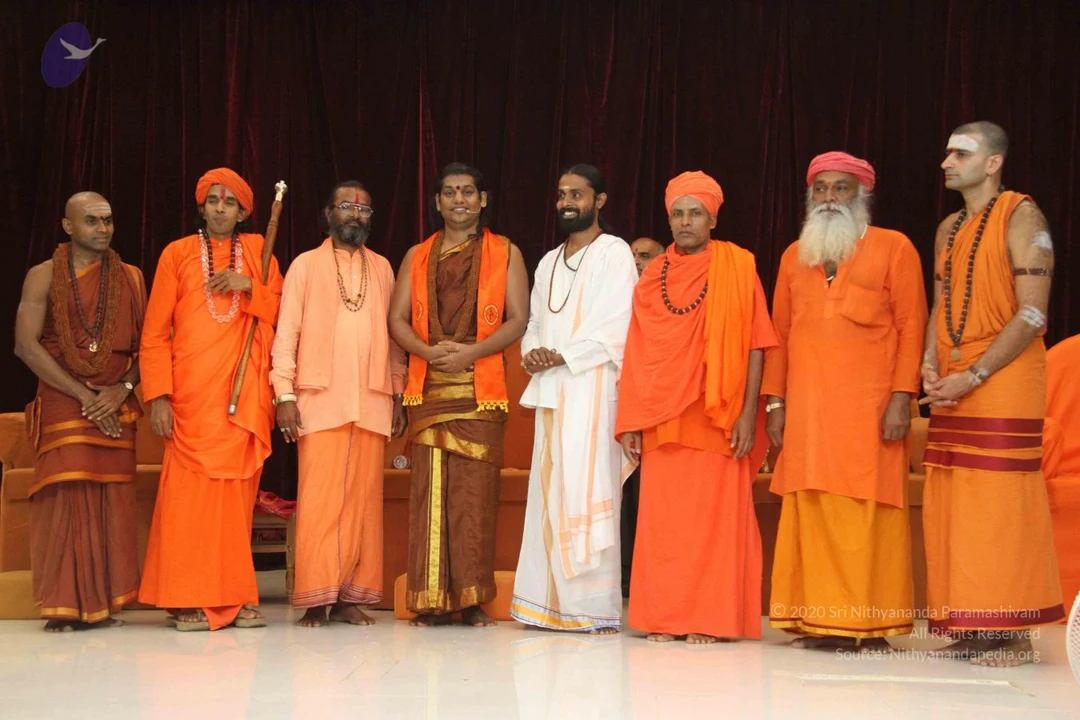
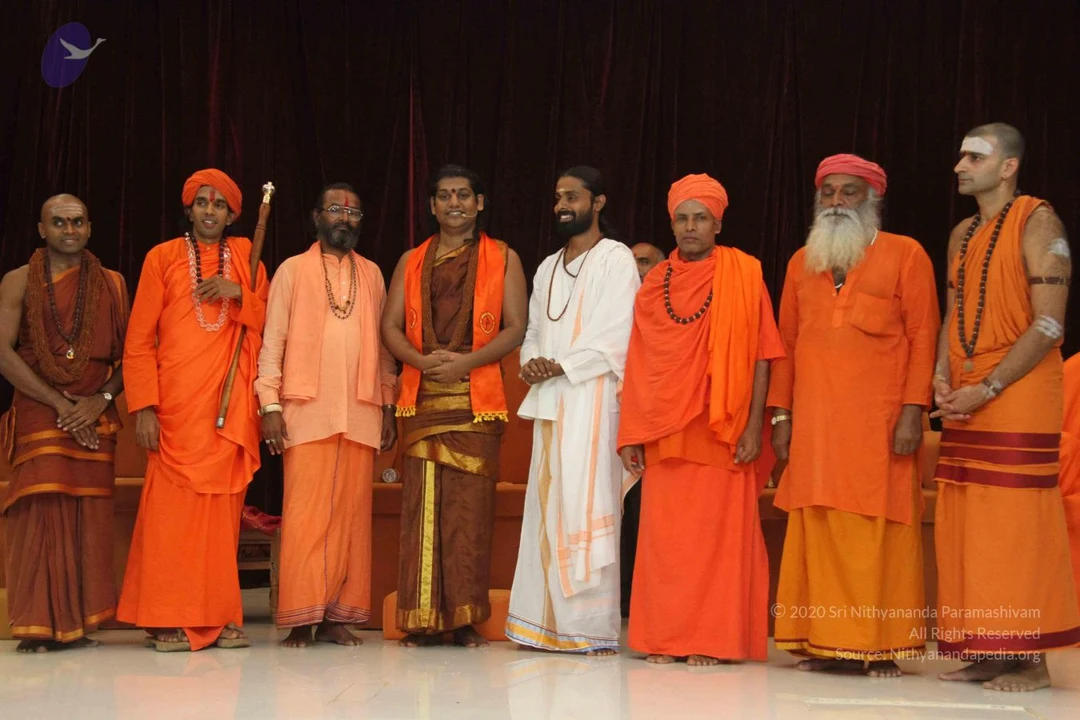
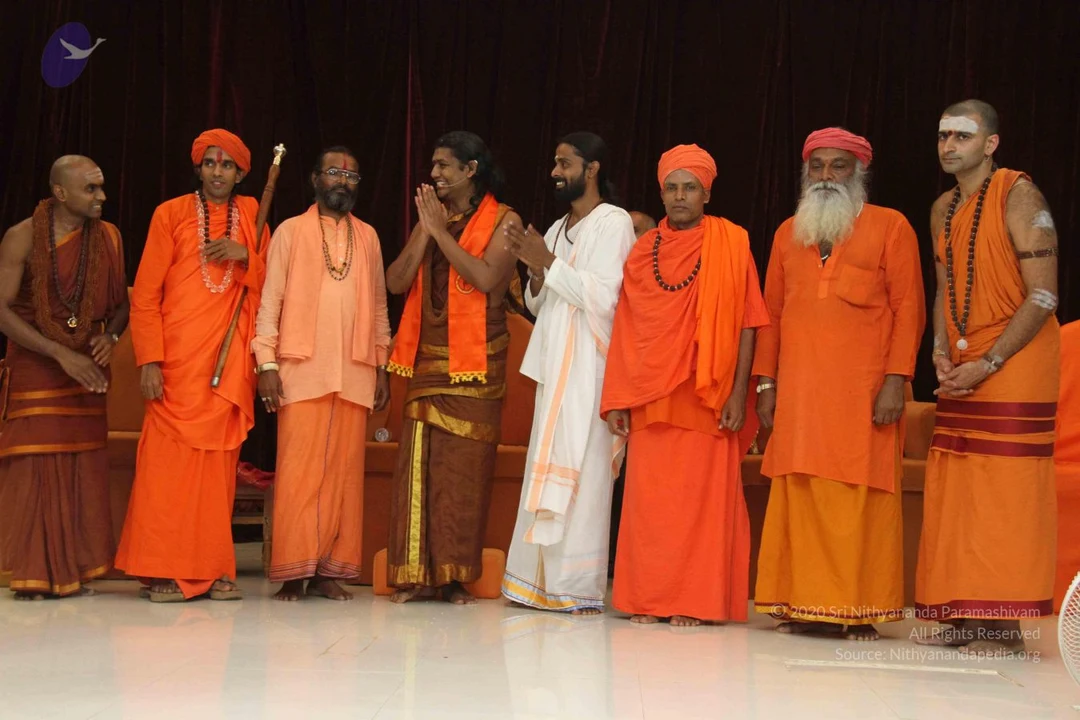
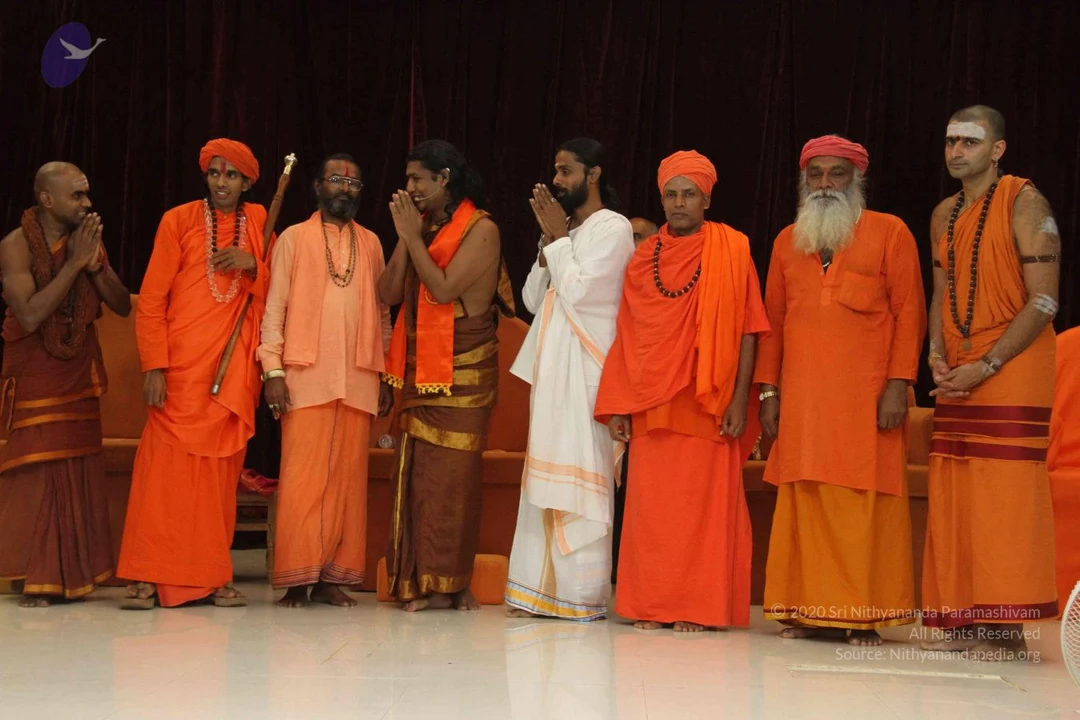
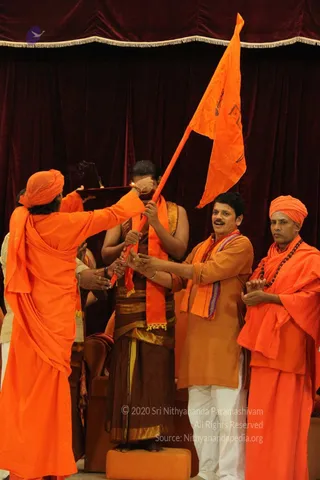
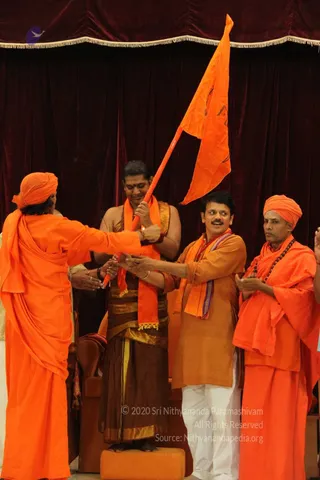
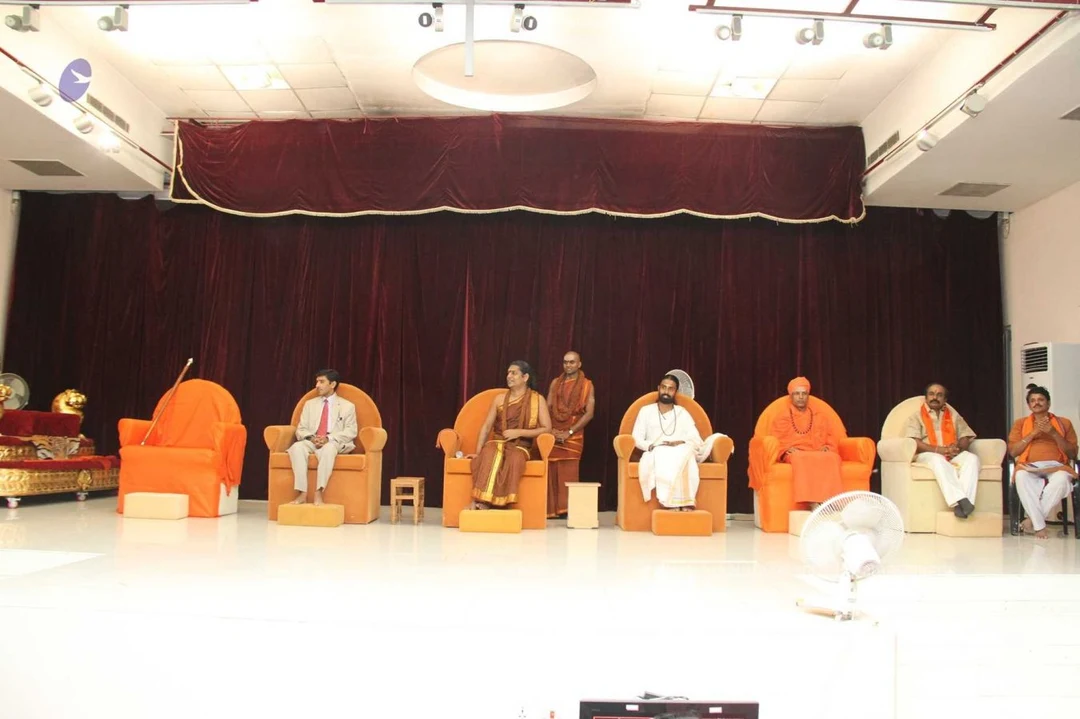
Akila Bharat Hindu Maha Sabha Honoring Swamiji

Photos Of The Day:

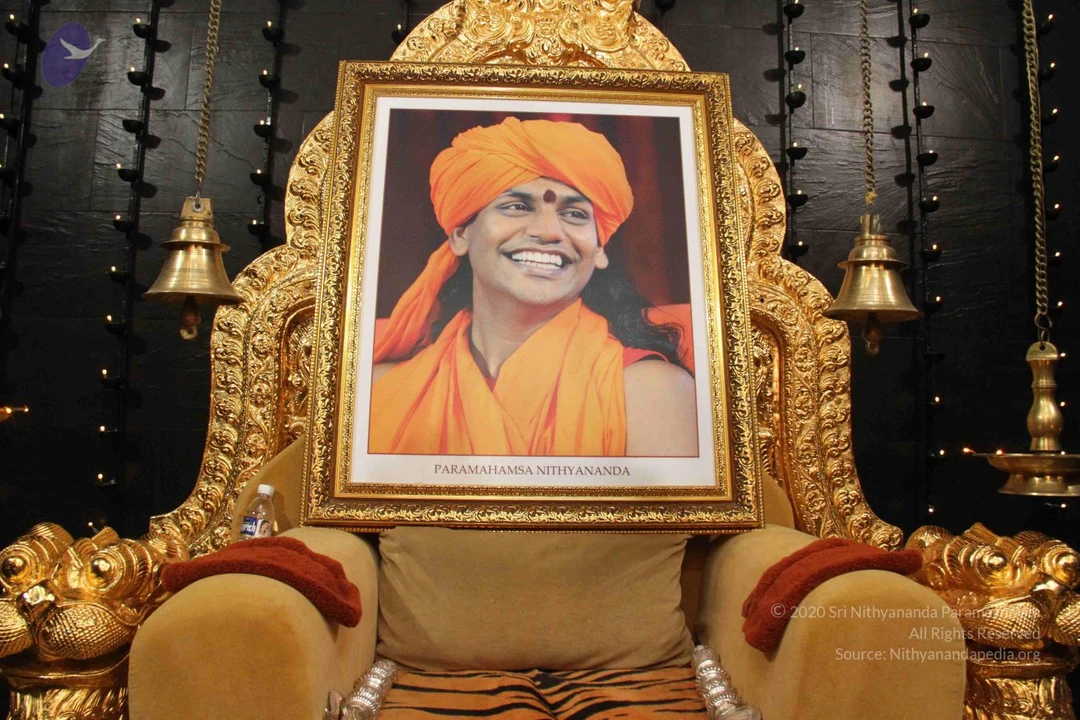
Paduka-Puja

Nithya-Satsang

Sarva-Darshan

Akila-Bharat-Hindu-Maha-Sabha-Honoring-Swamiji

Tags:

Paramahamsa Nithyananda, Dharma, Tattvas, Powers, Integrity, Words, Authenticity, Thinking, Responsibility, Feeling, Enriching, Living, Mahabharata.

Photos from this day

View all 357 photos

Paduka Puja
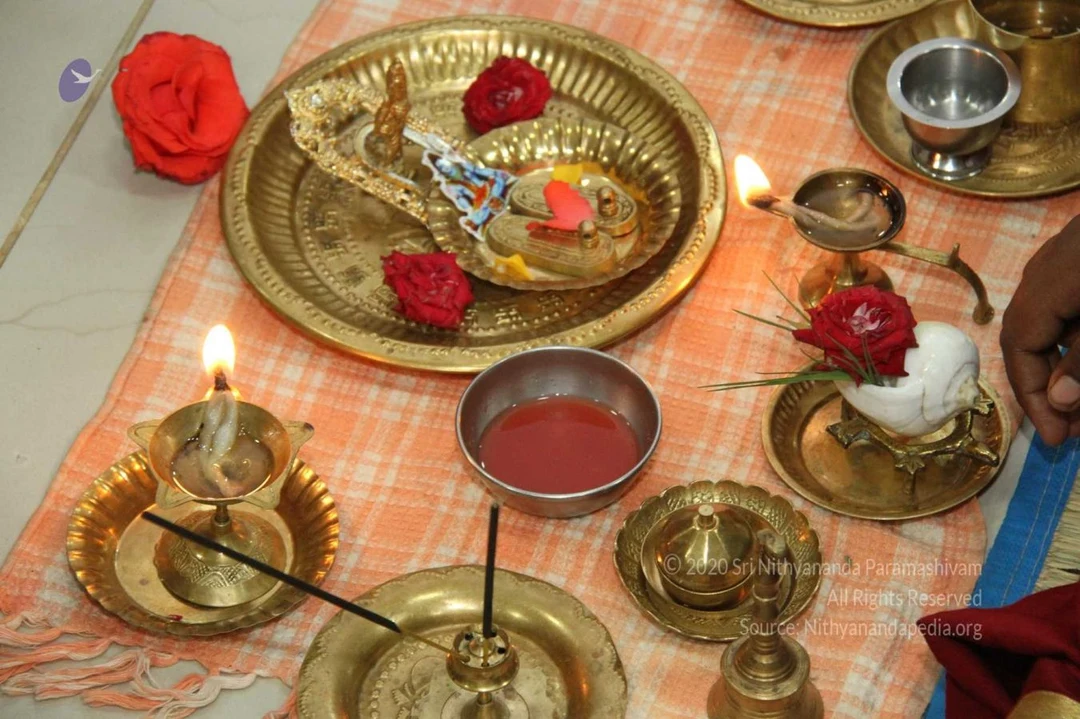
15 photosSource gallery
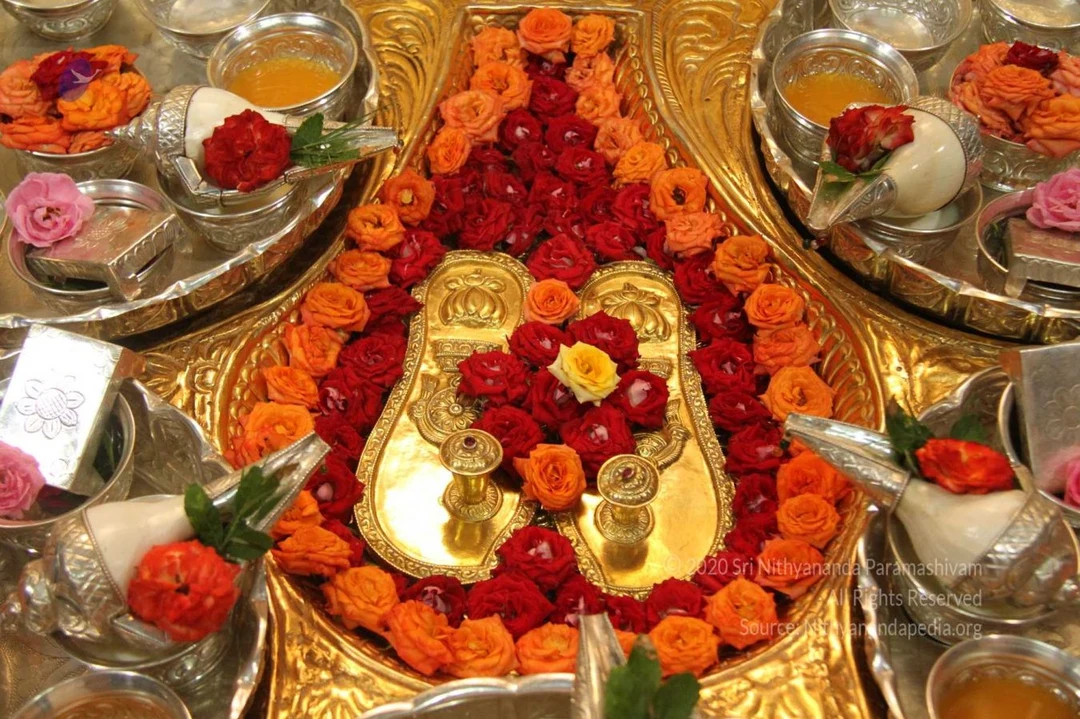
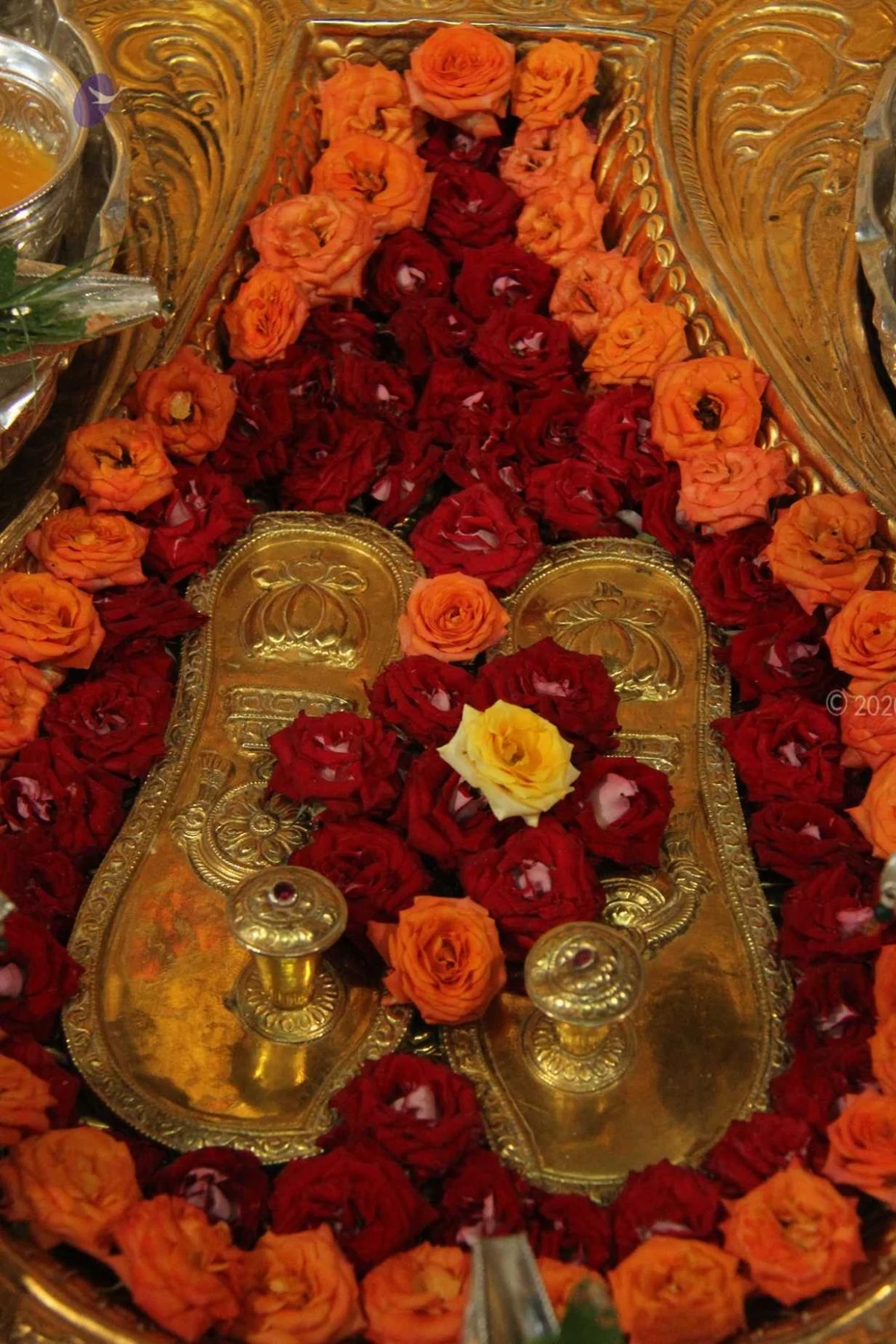
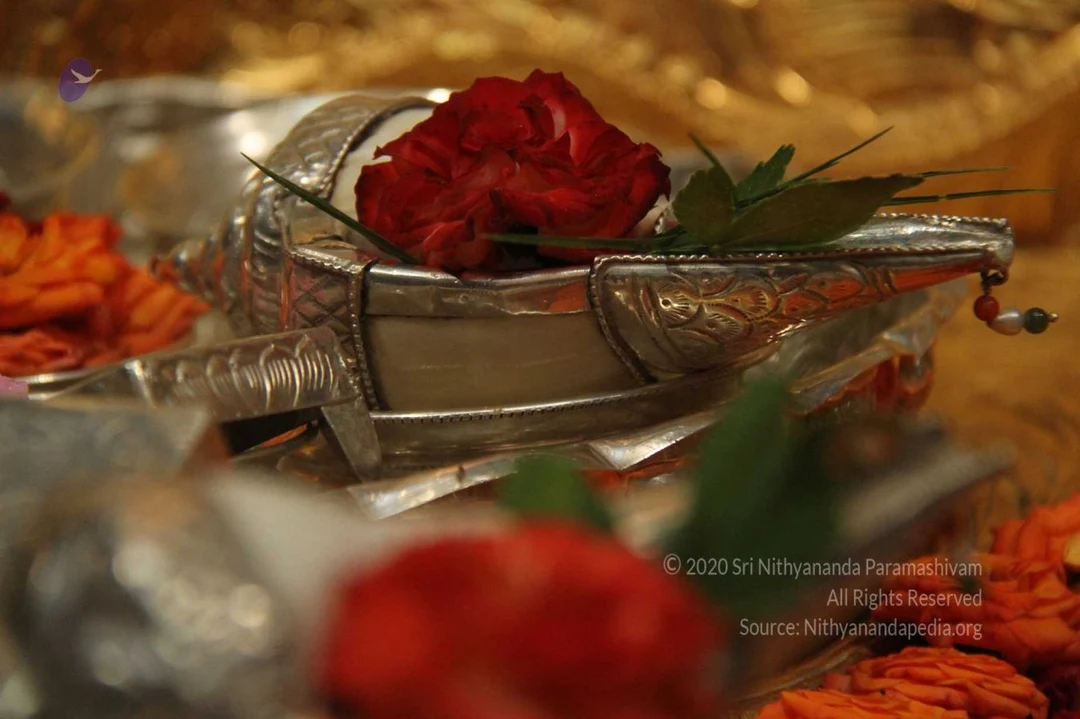
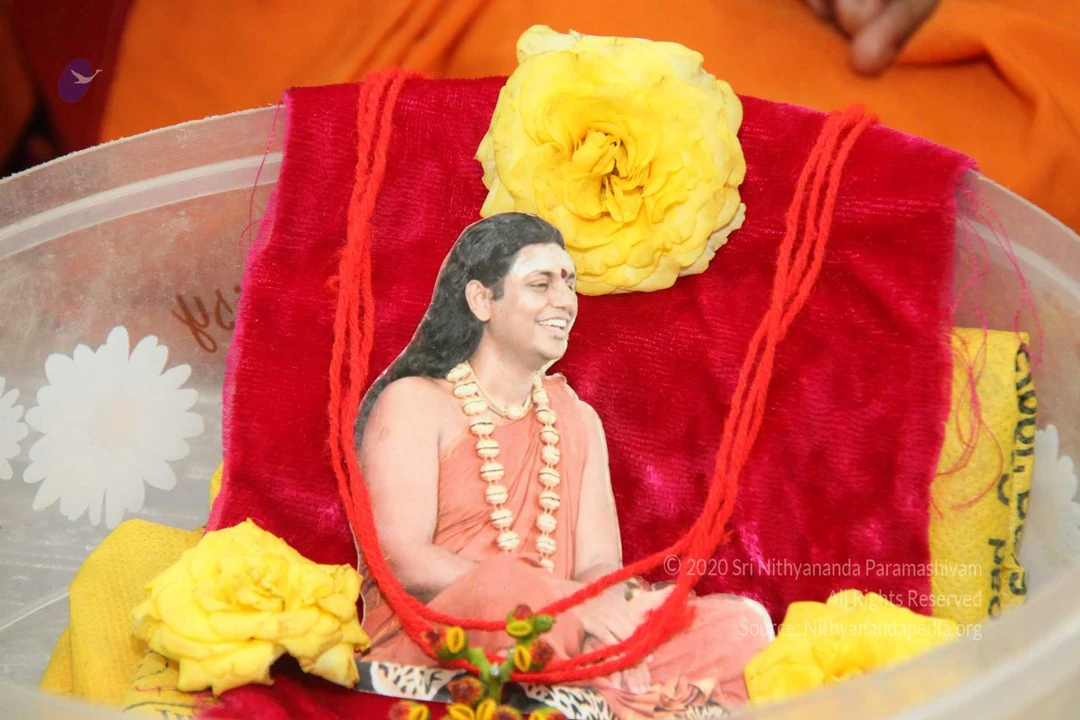
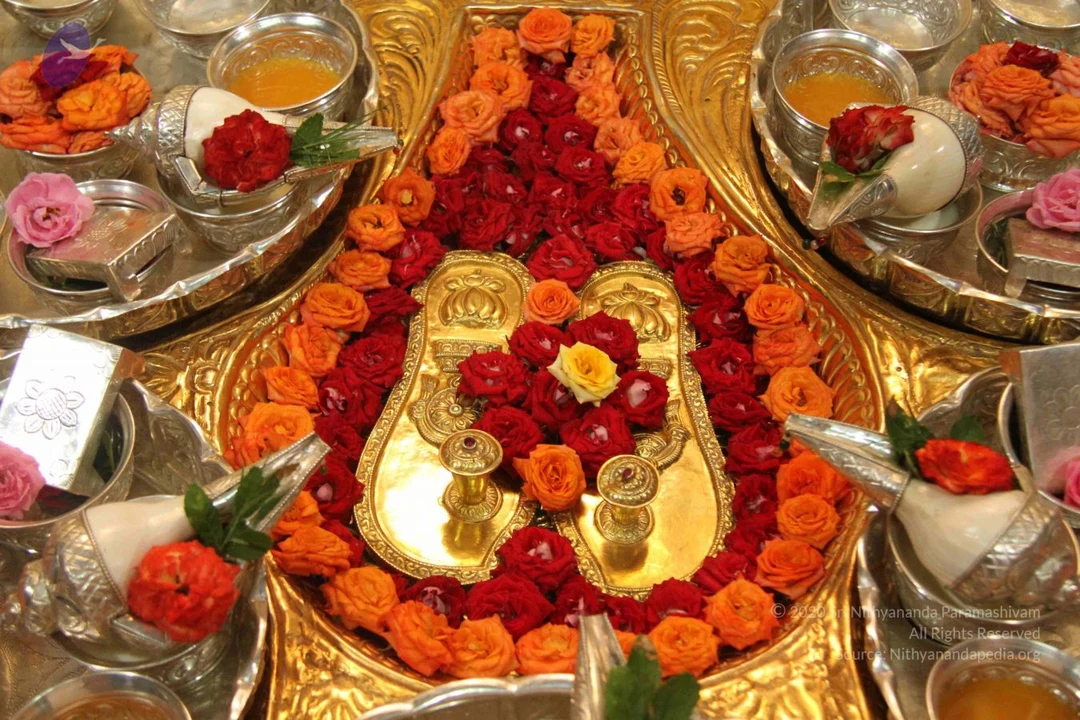
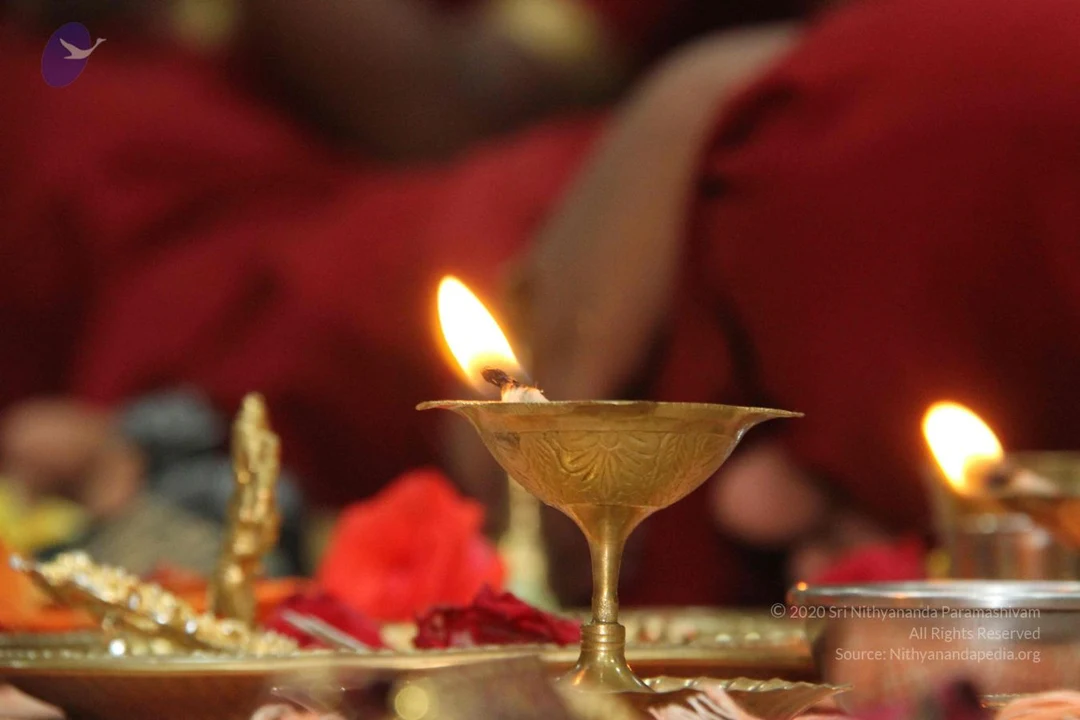
Close-up photograph of a pair of ornate gold sandals, or padukas, resting on a gold-embossed tray and surrounded by a dense bed of red and orange roses with a single yellow rose at the centre. Small gold stands with jewelled knobs flank the sandals. The padukas are a sacred symbol of a guru's presence and are typically worshipped in padapuja. No people are visible; the image shows only the floral arrangement and metalwork.

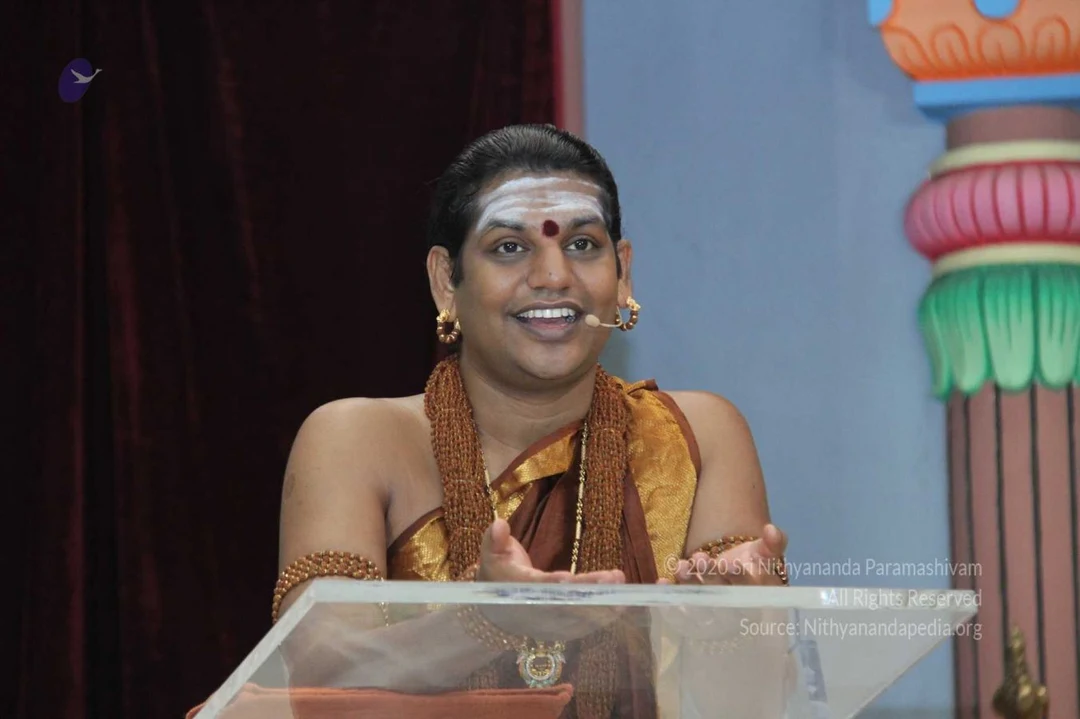
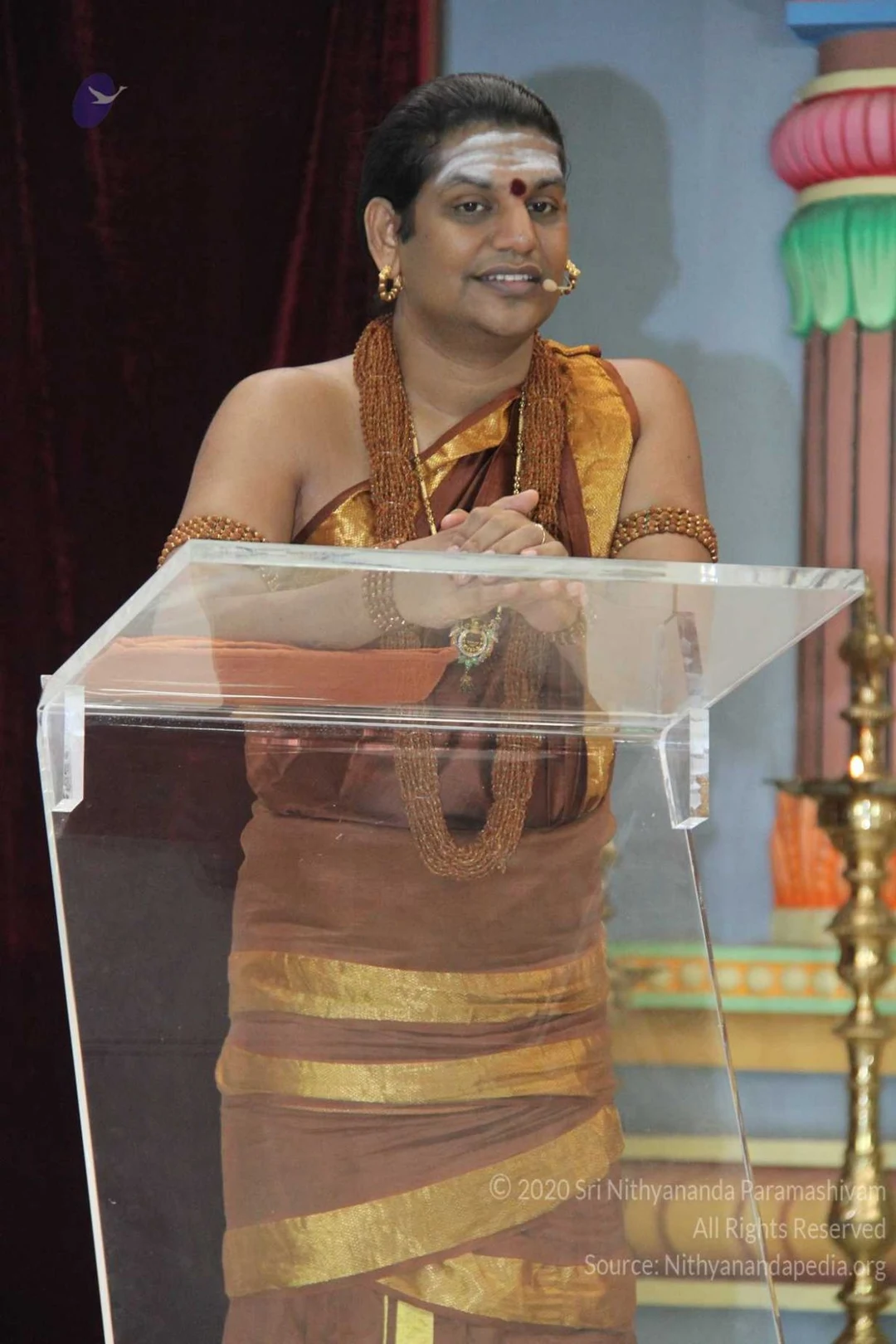
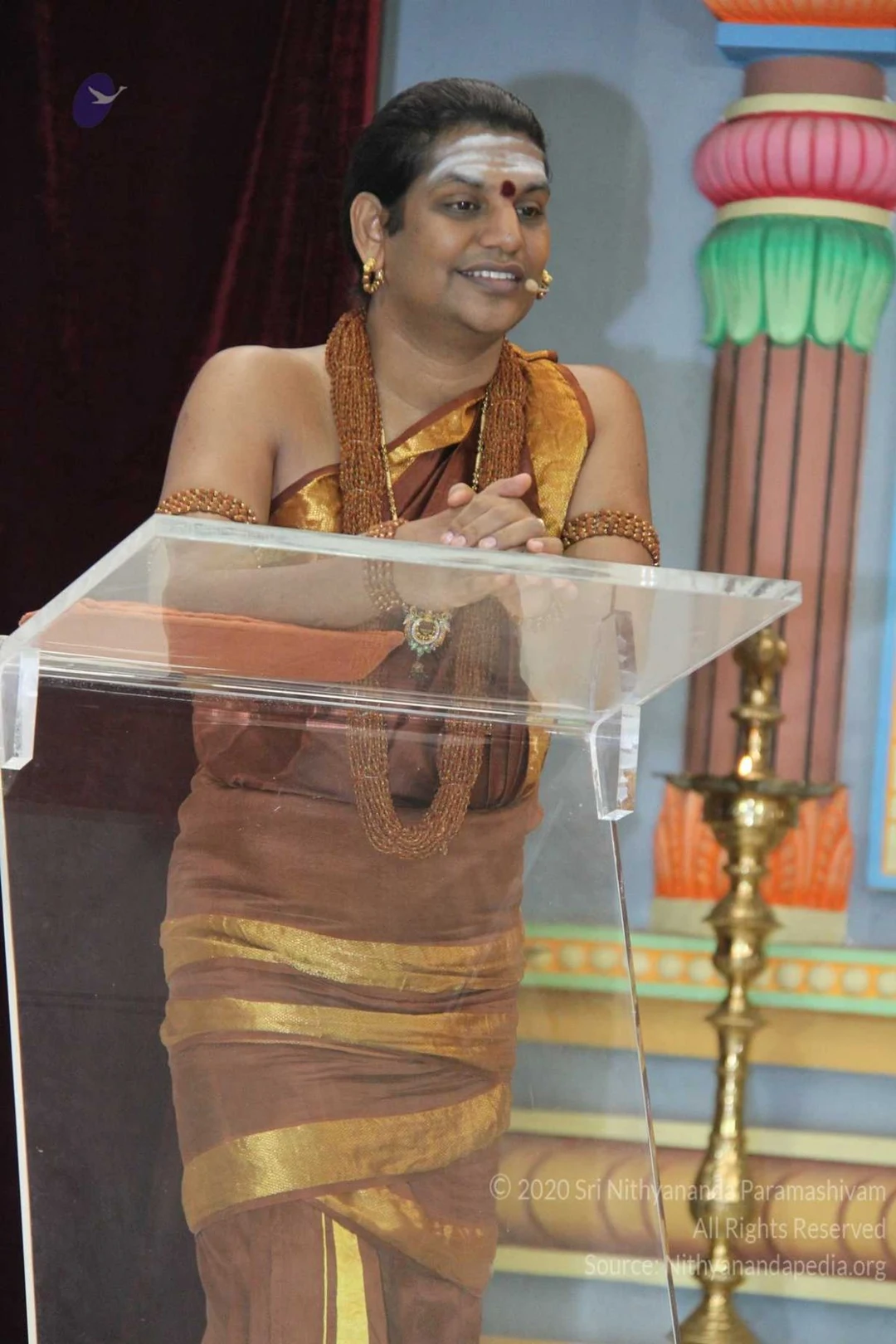
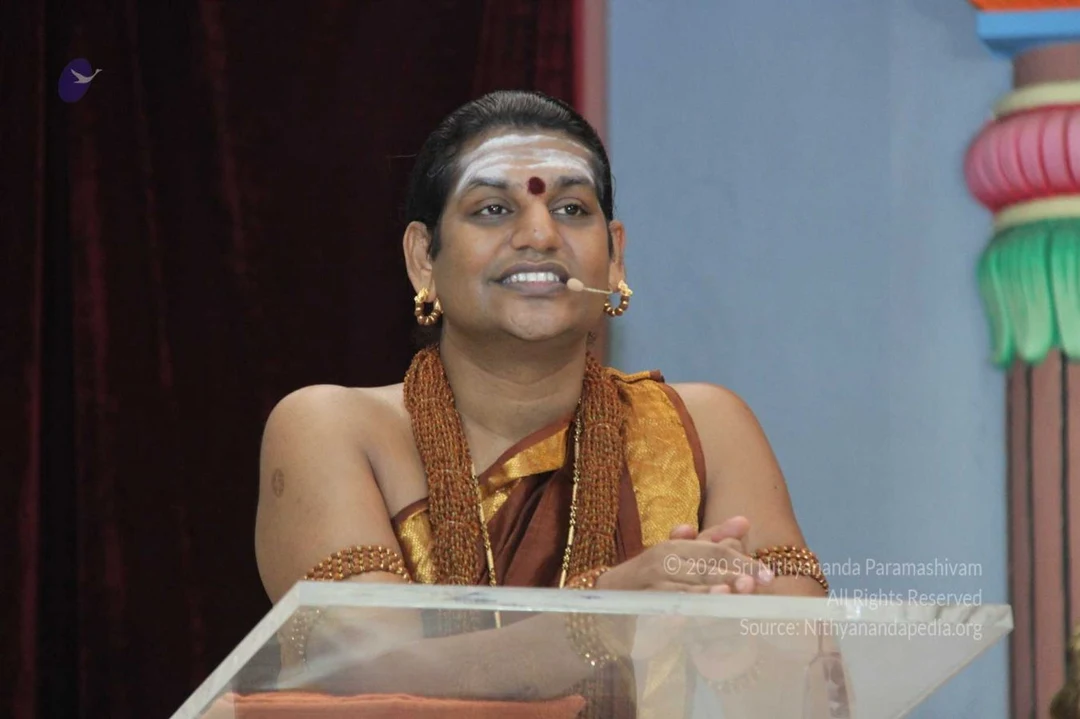
Nithya Satsang
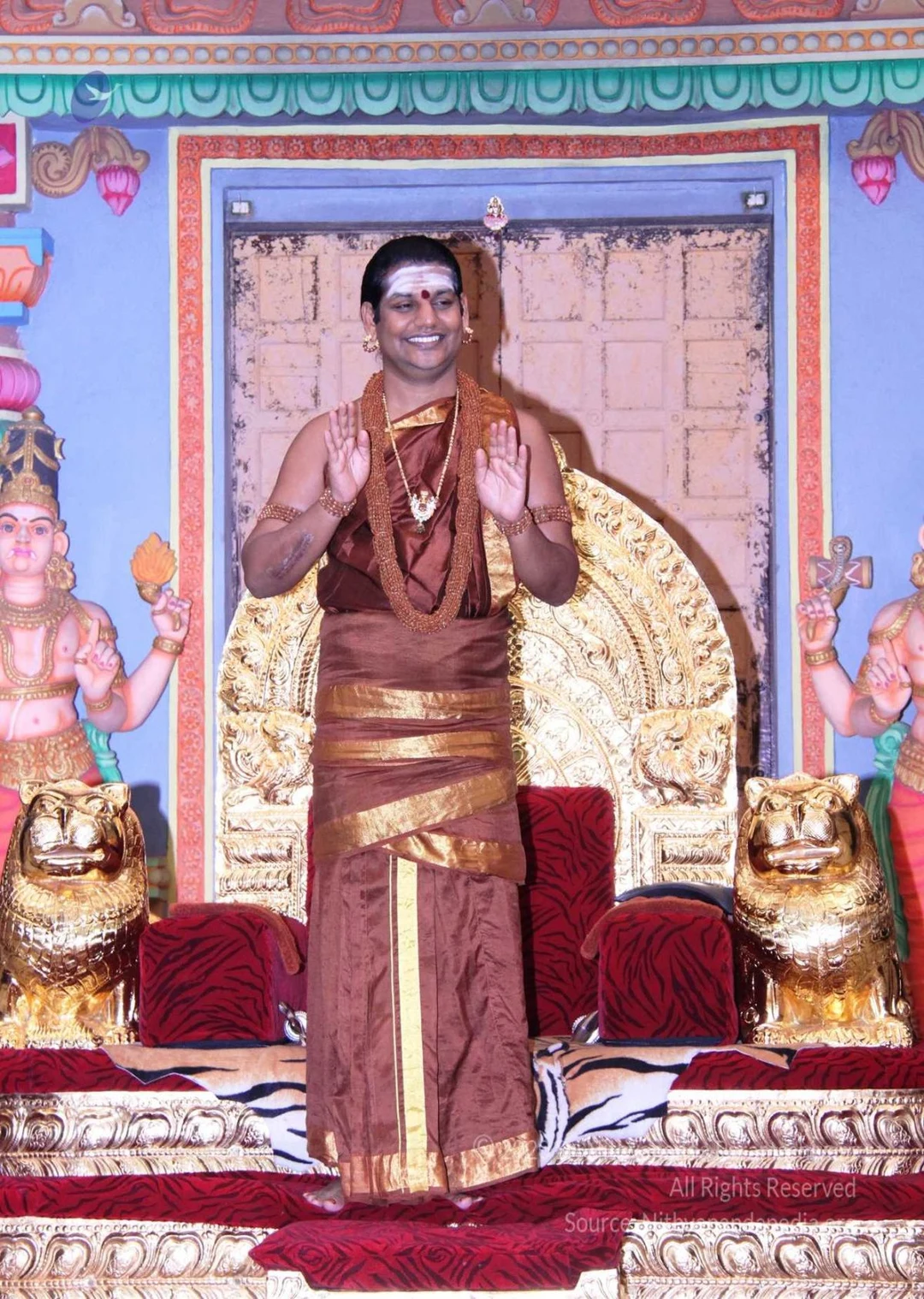
25 photosSource gallery
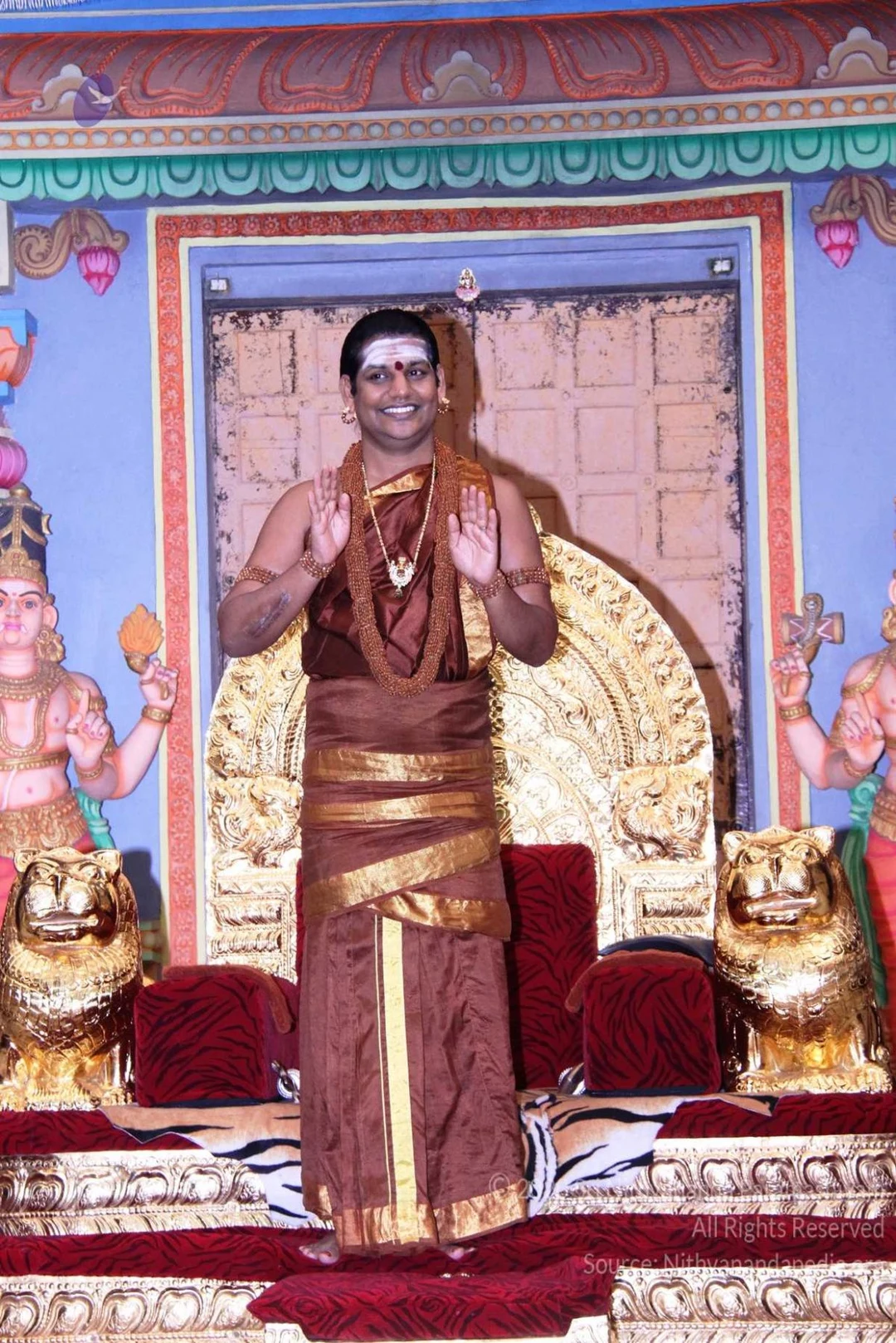
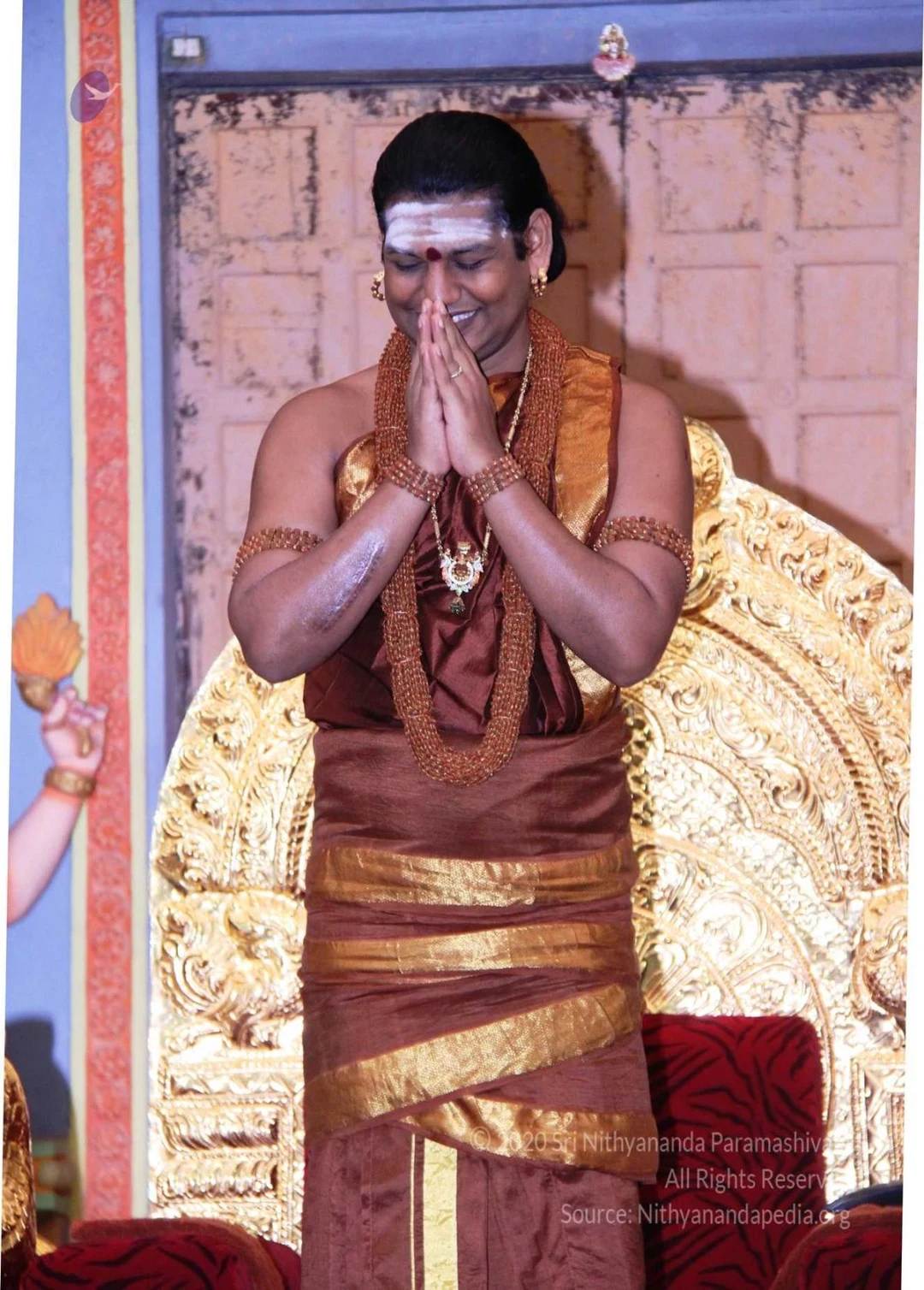
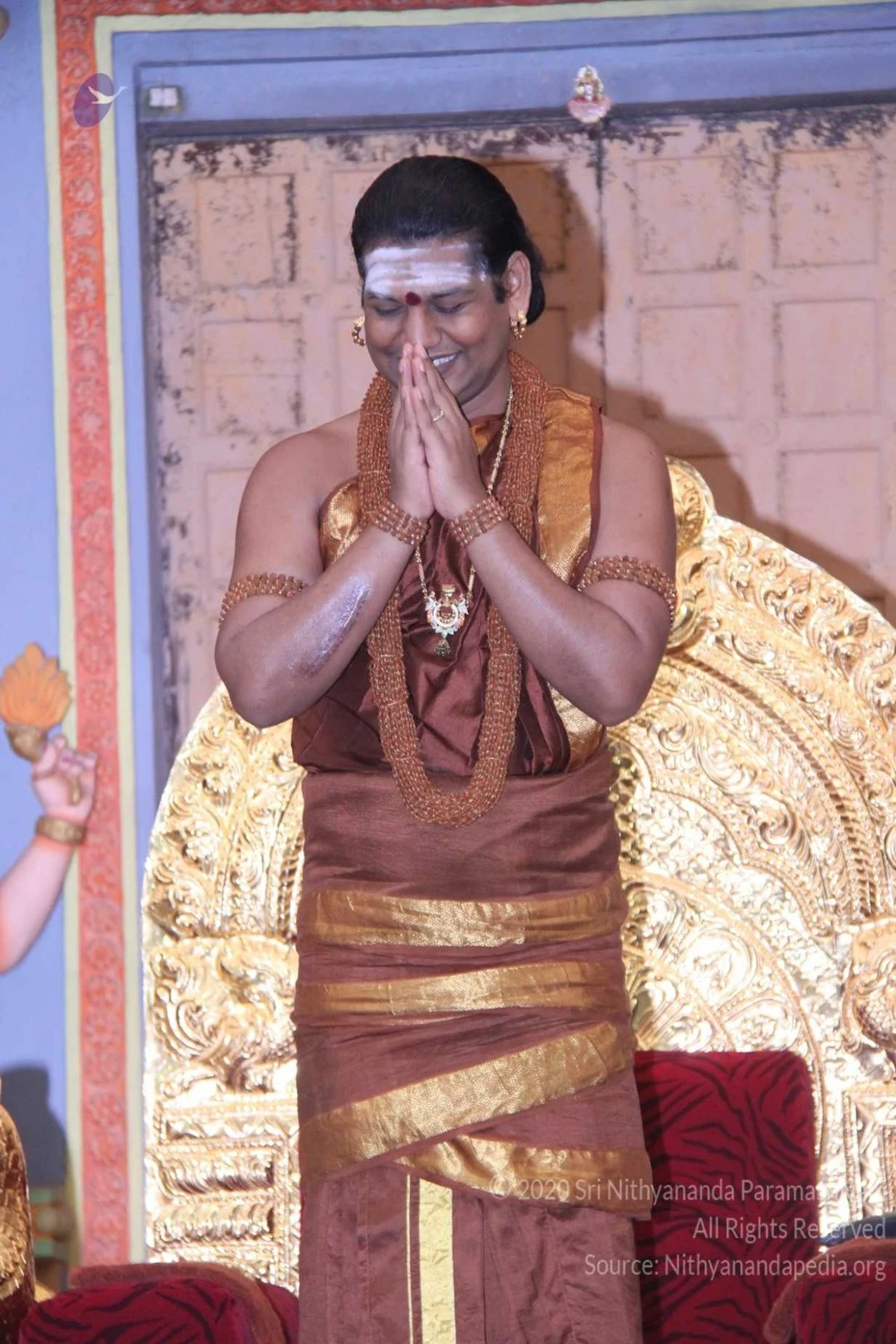
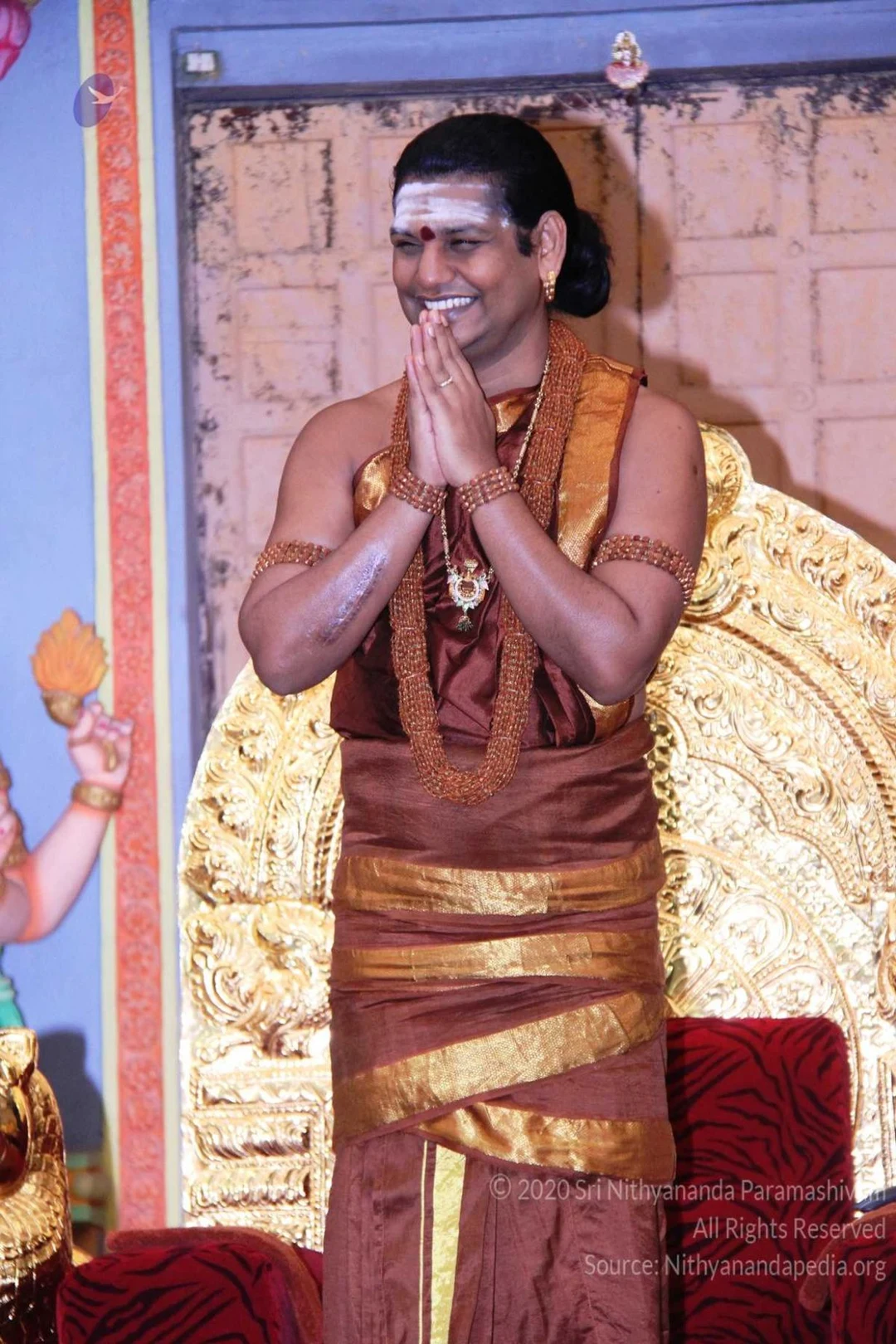
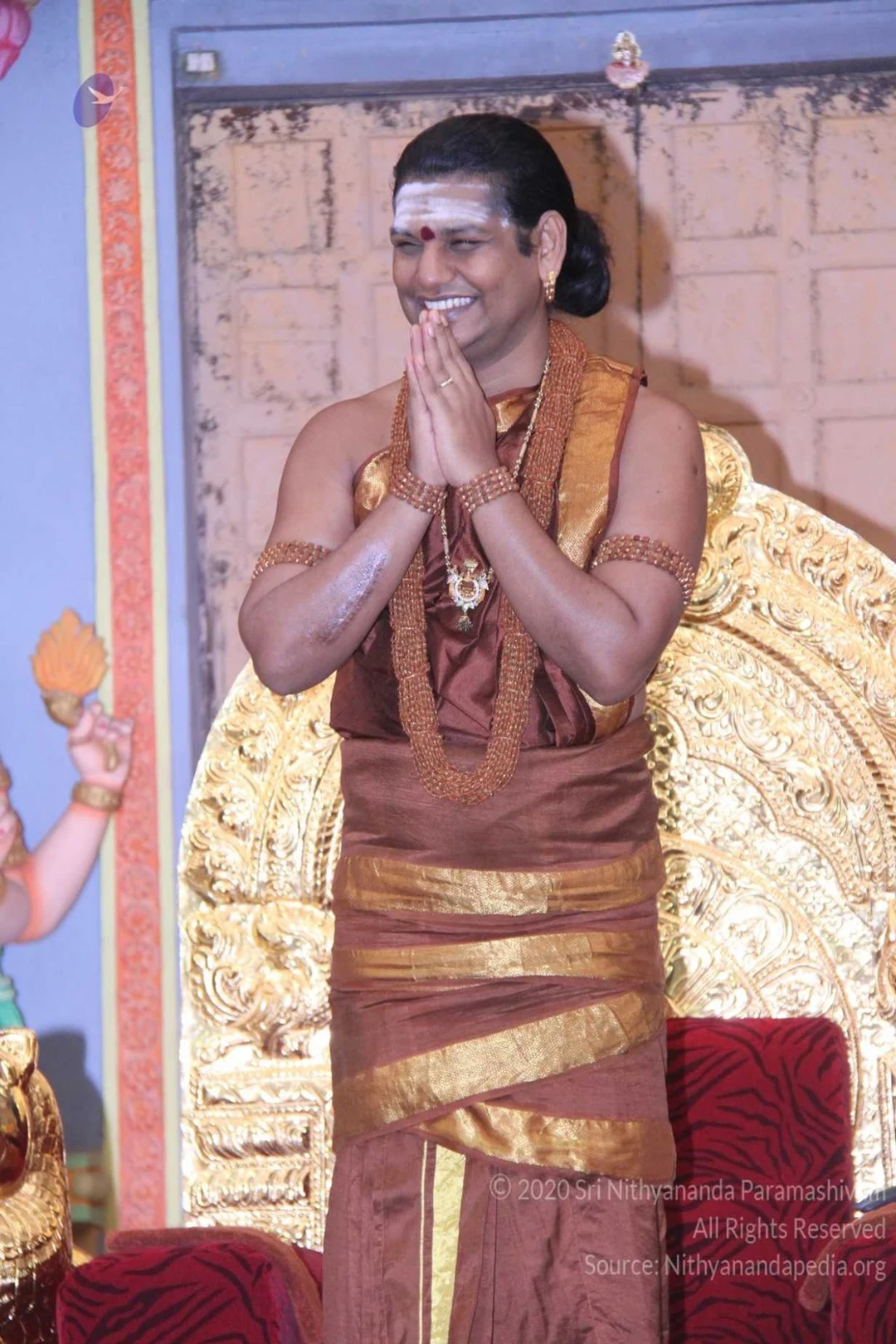
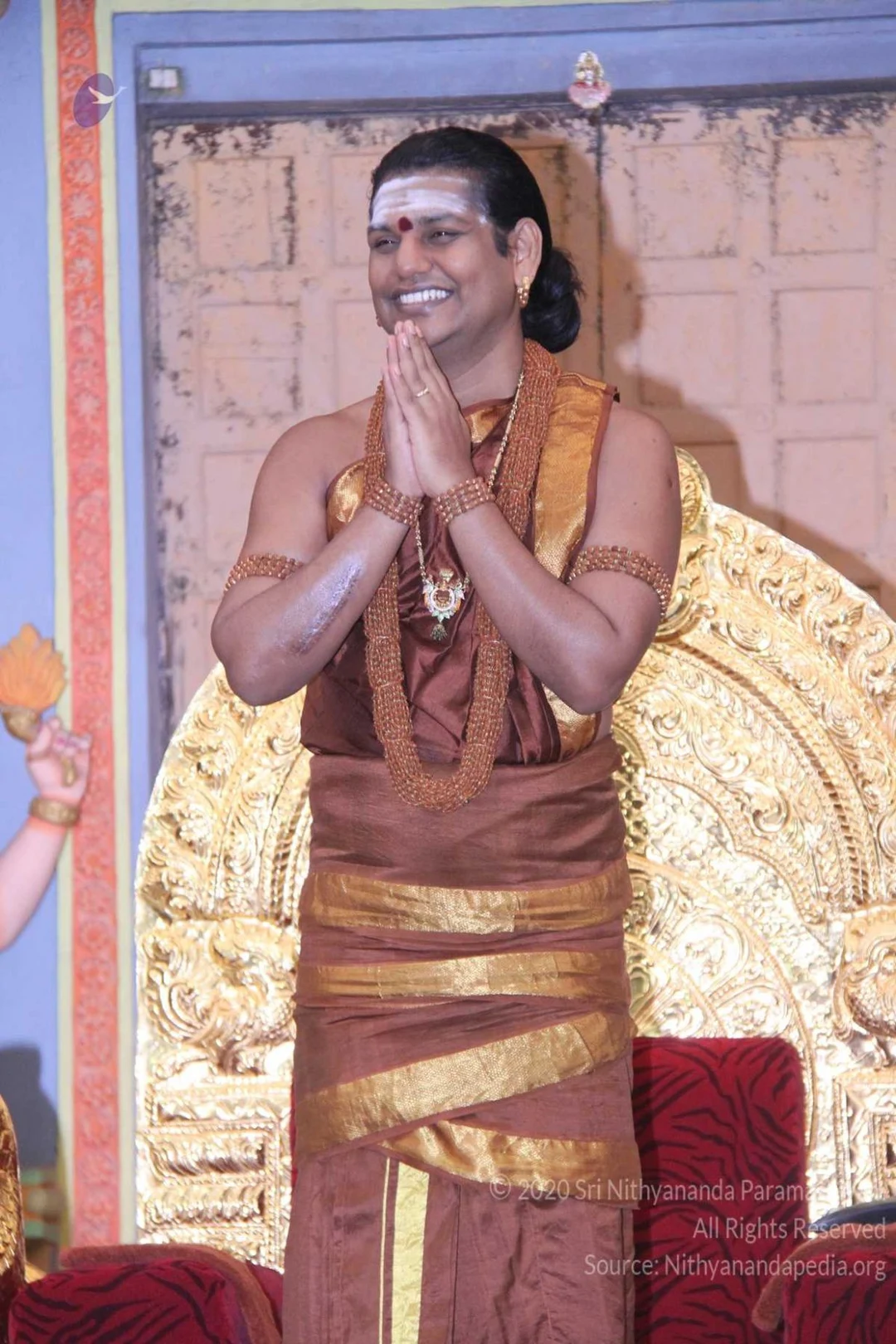
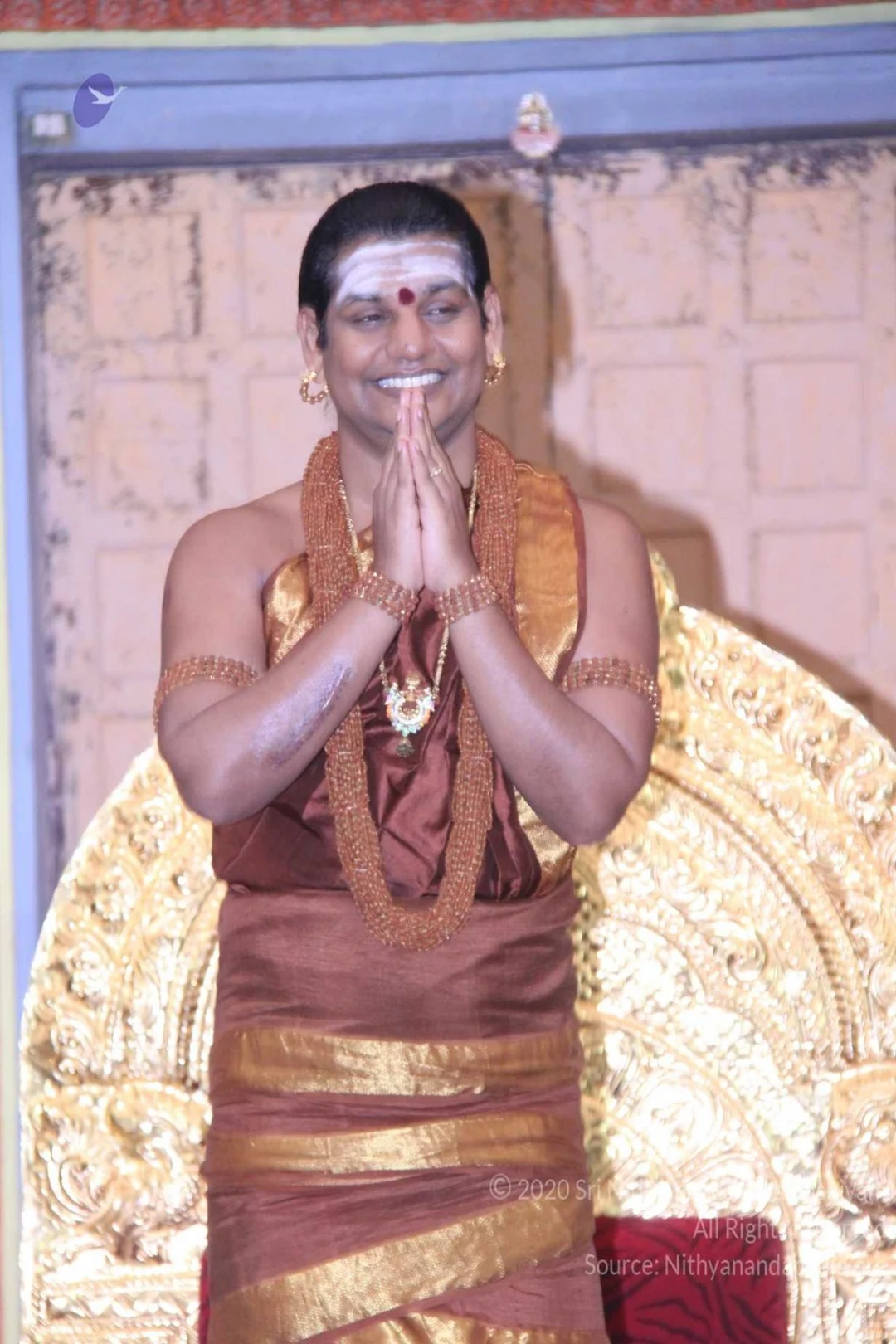
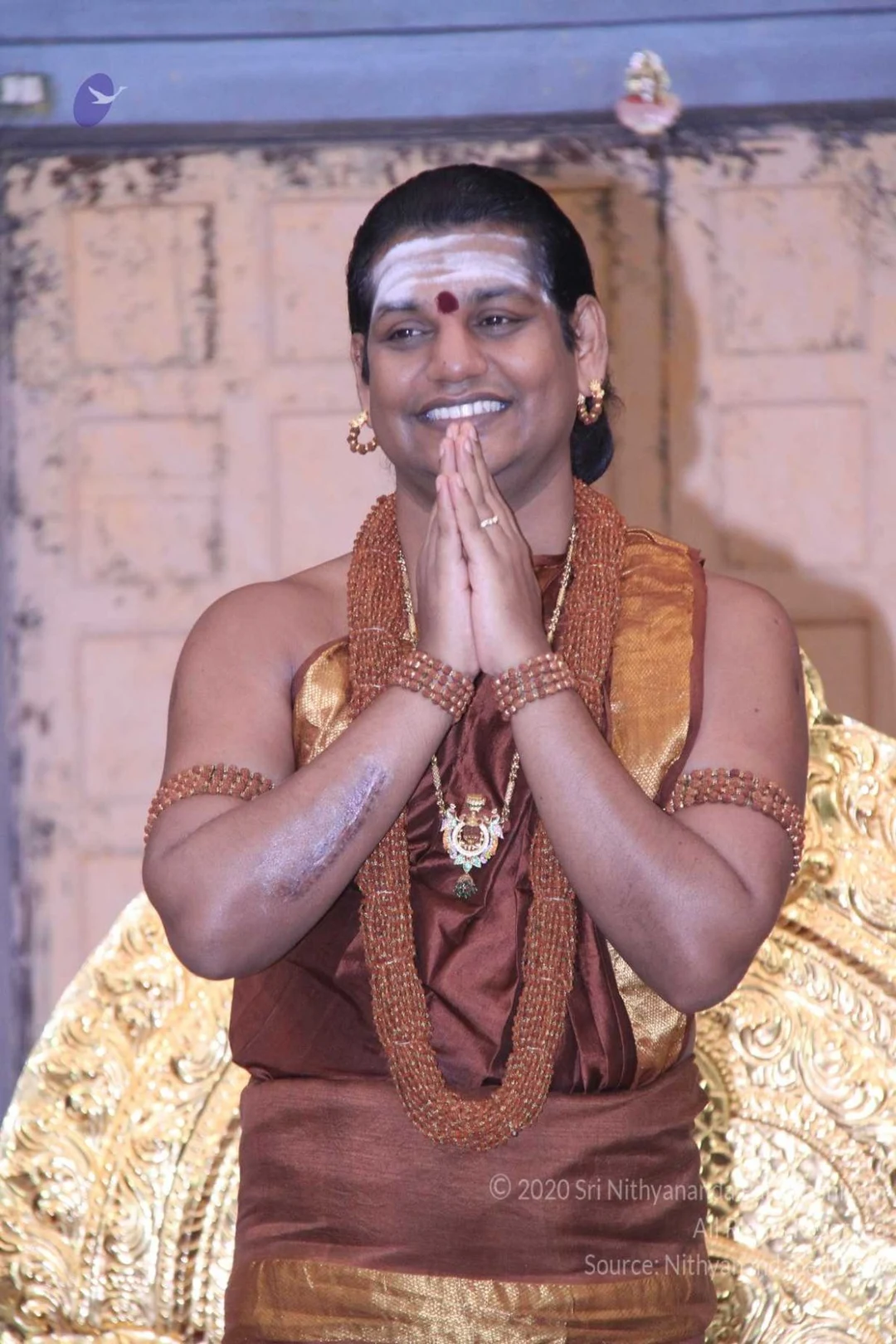
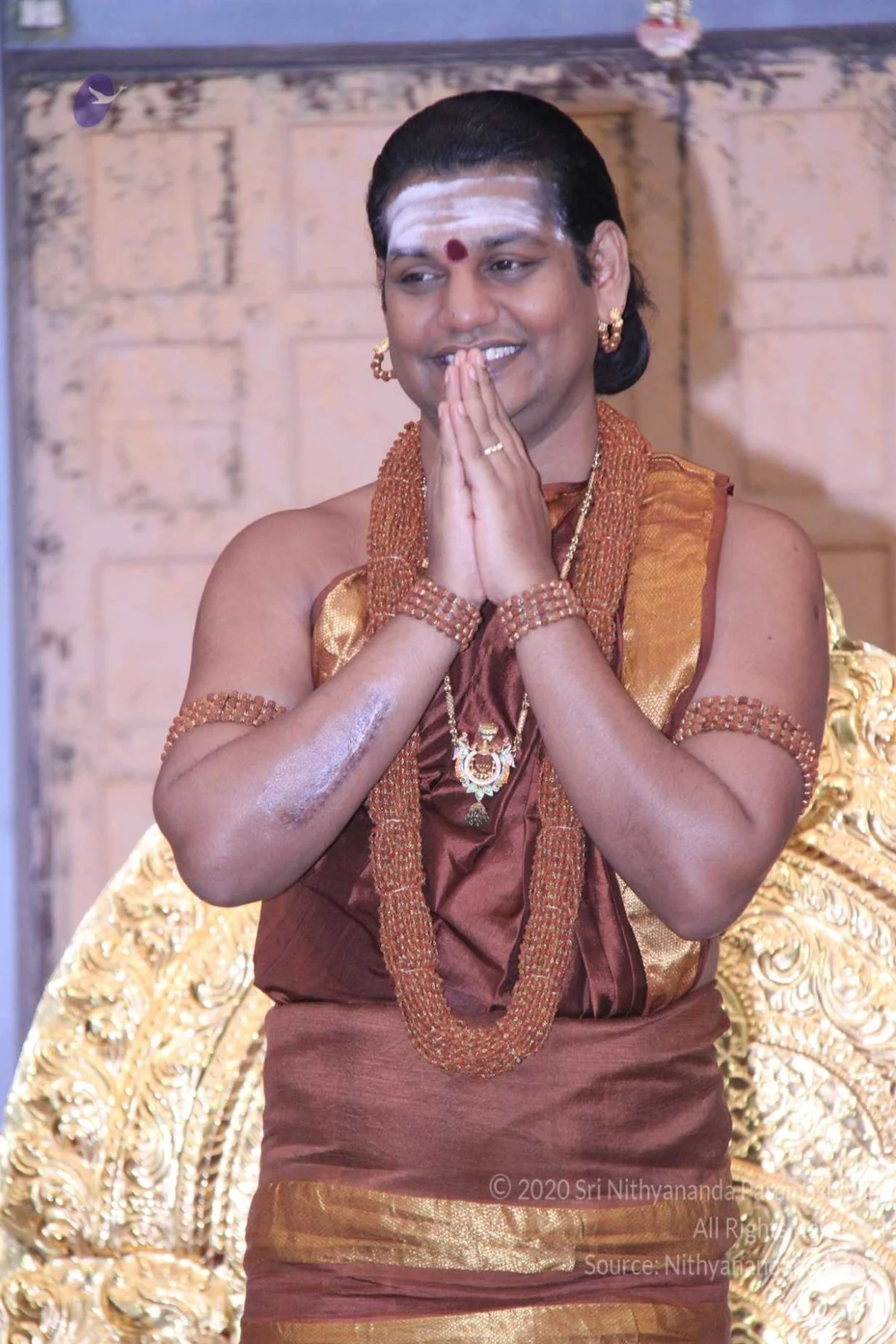
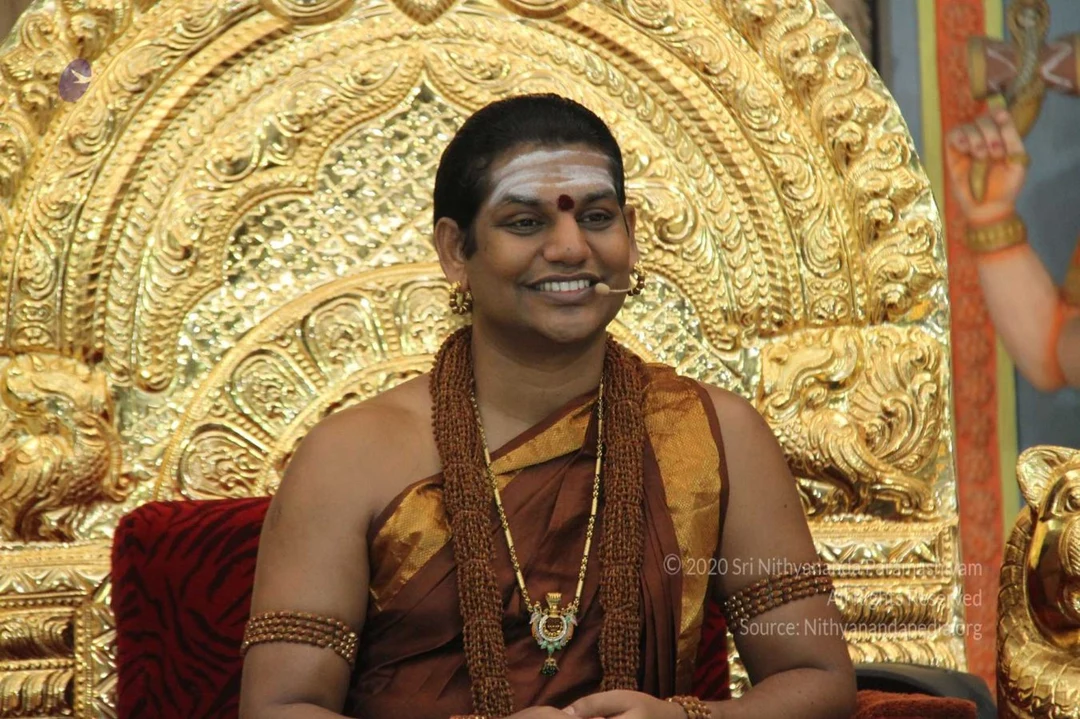
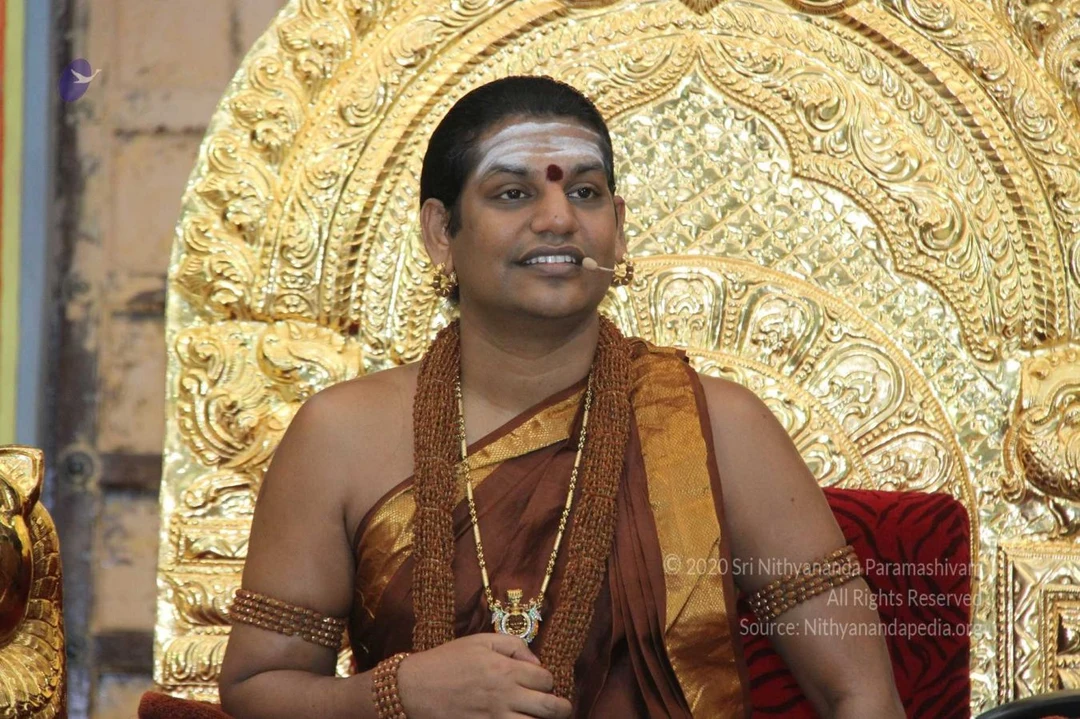
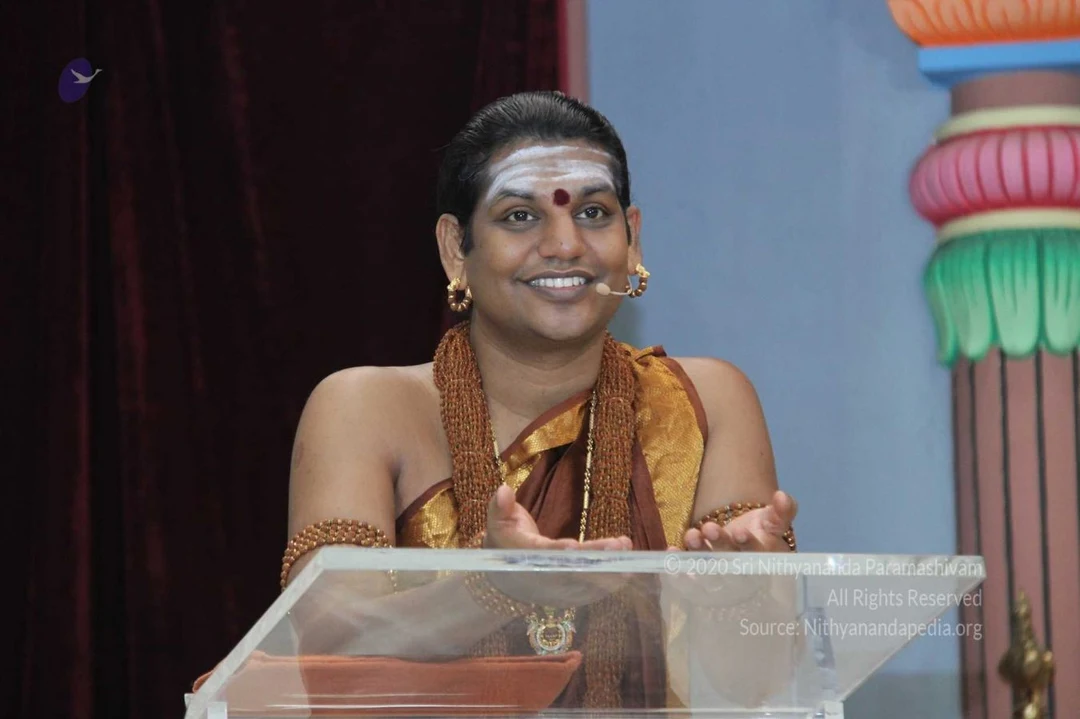
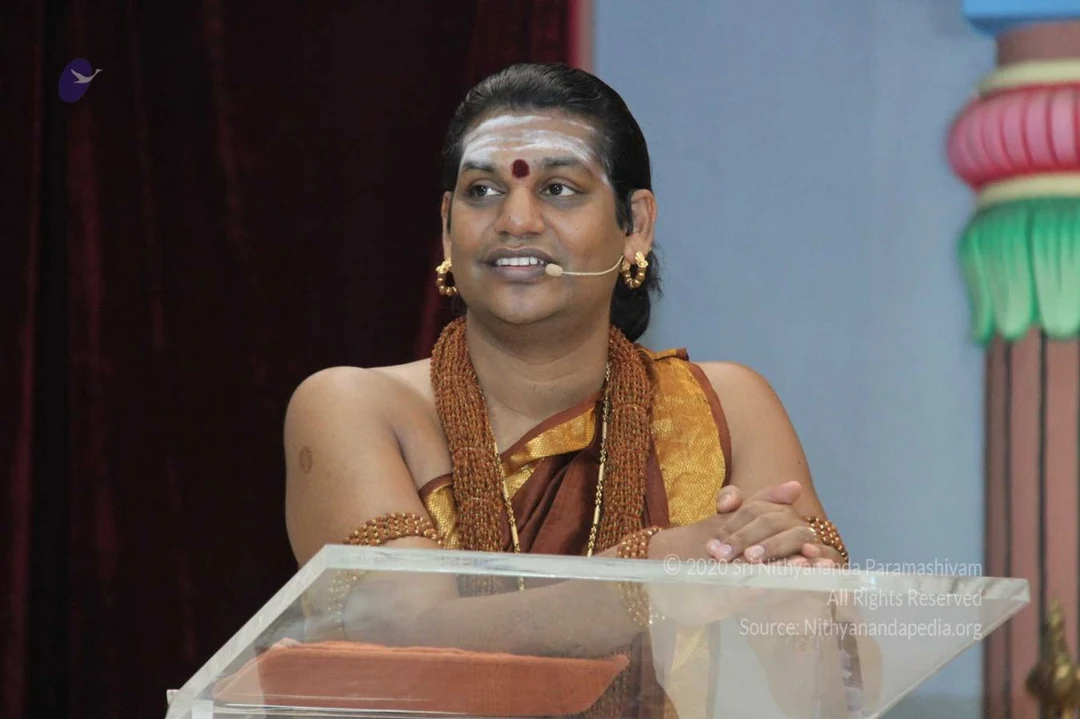
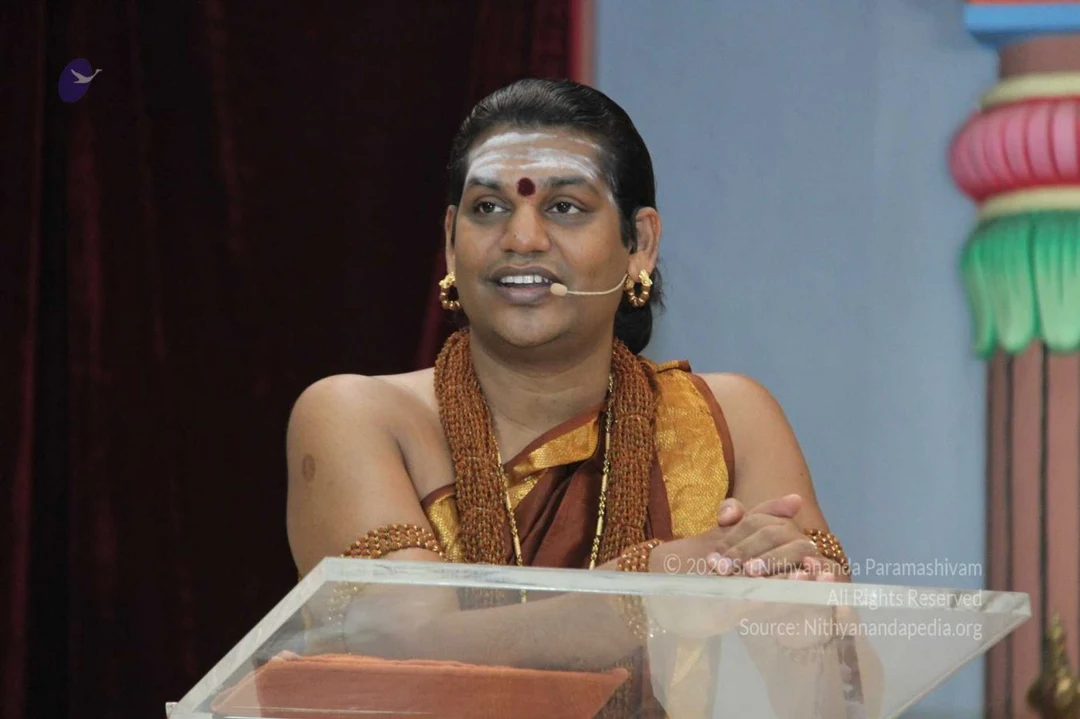
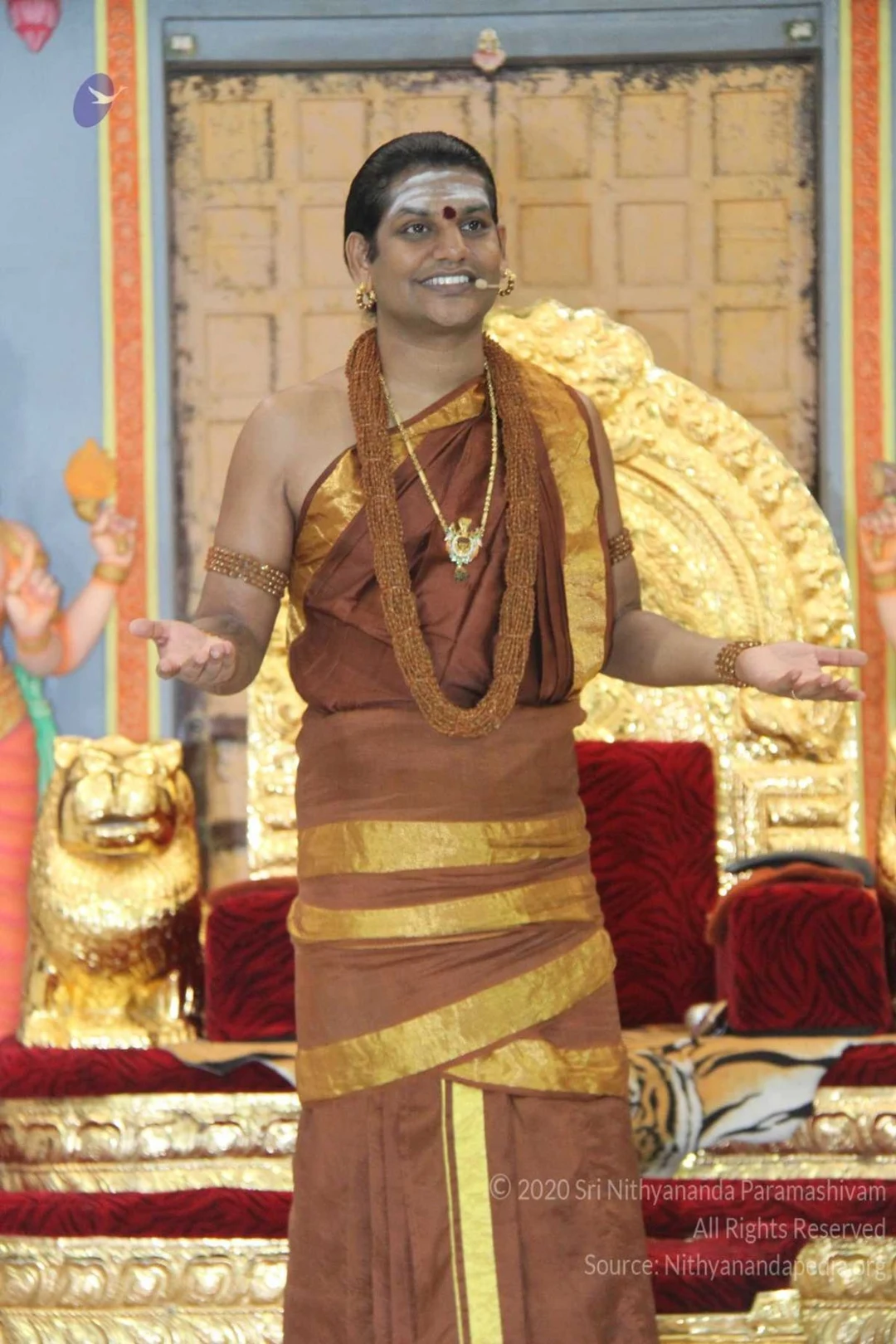
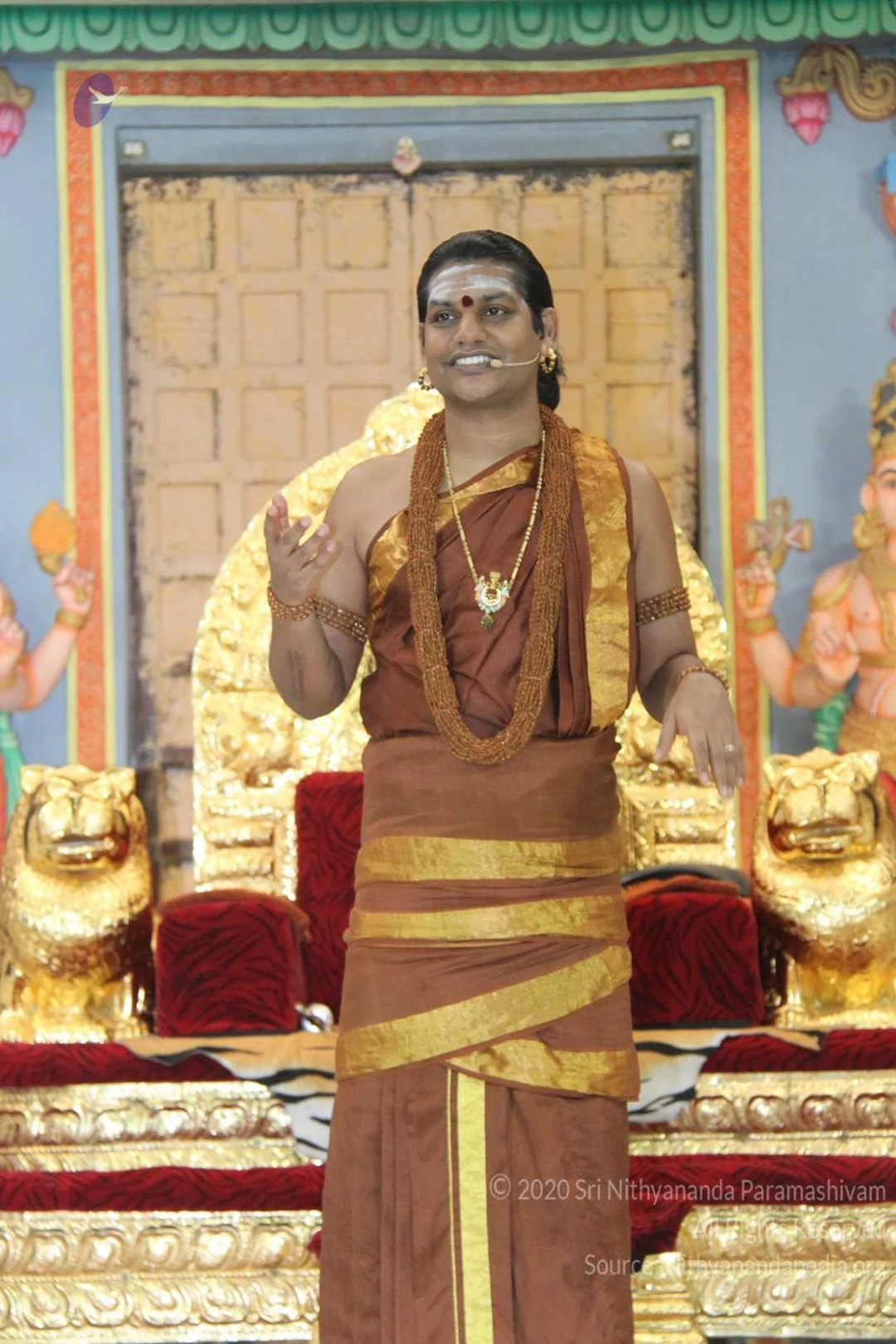
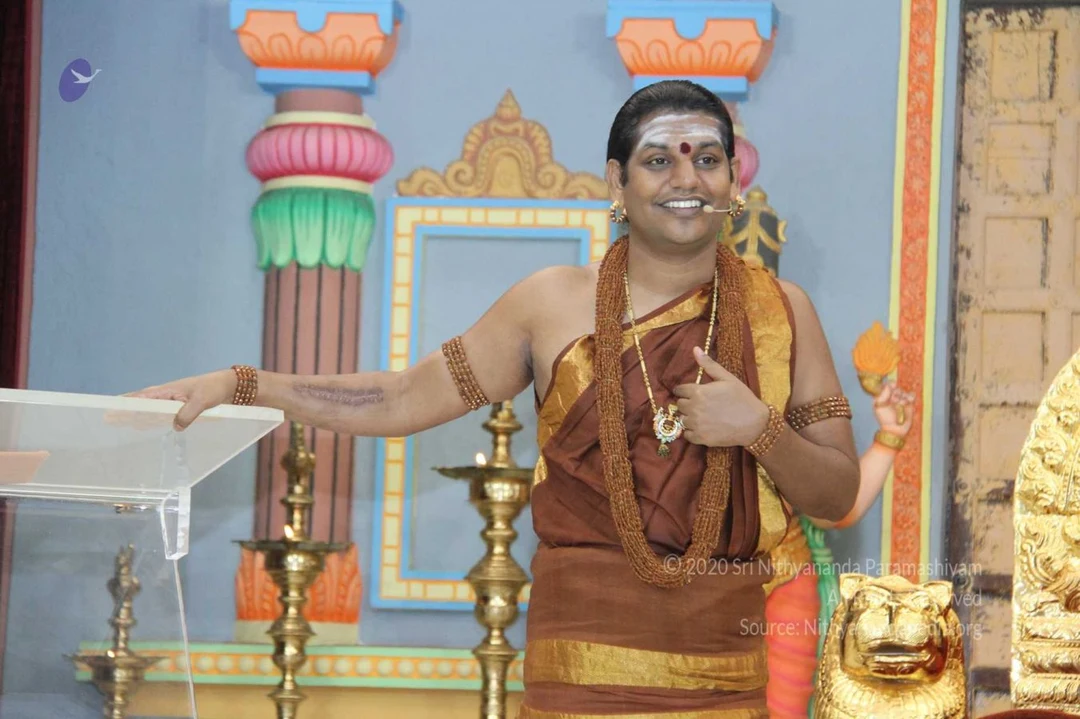
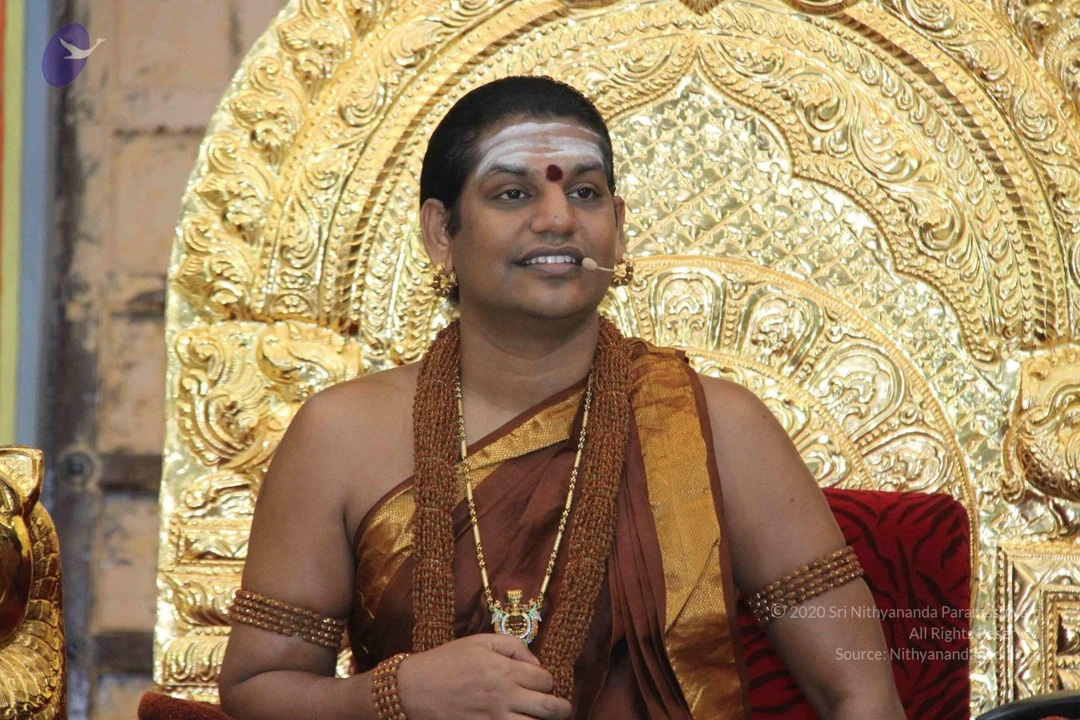
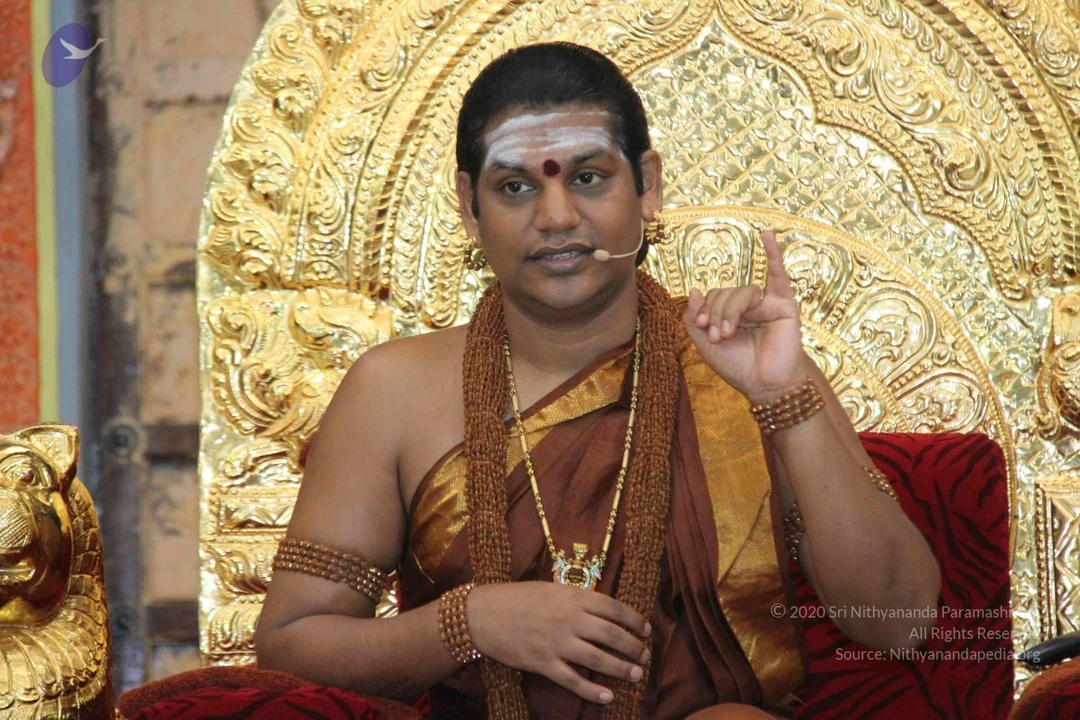
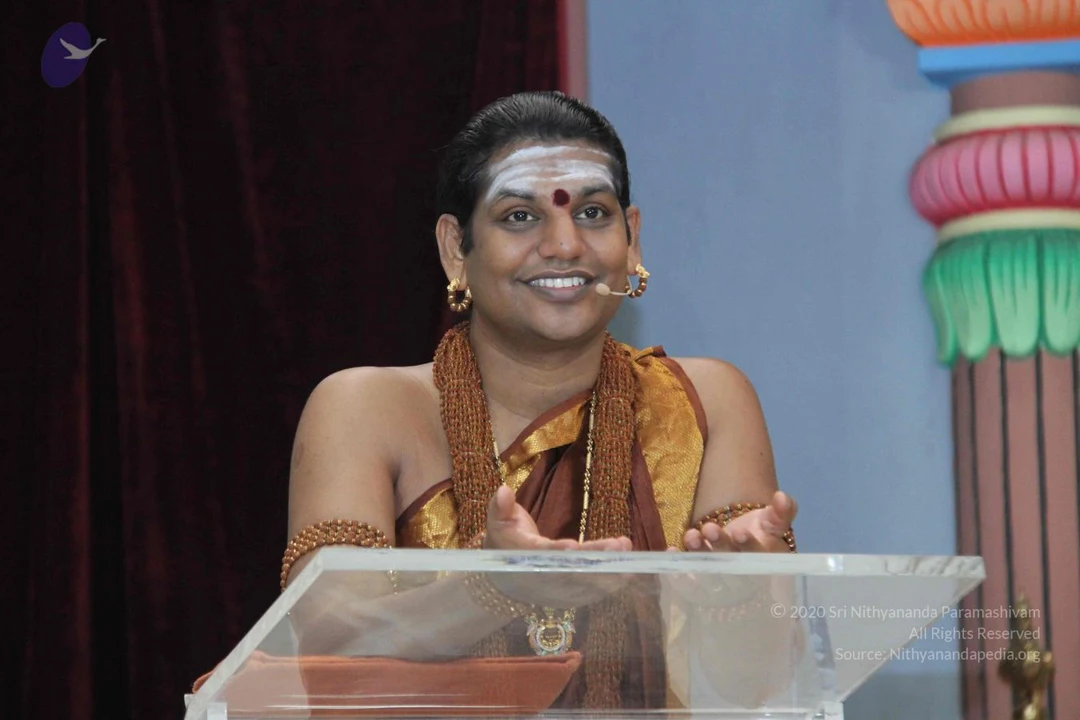
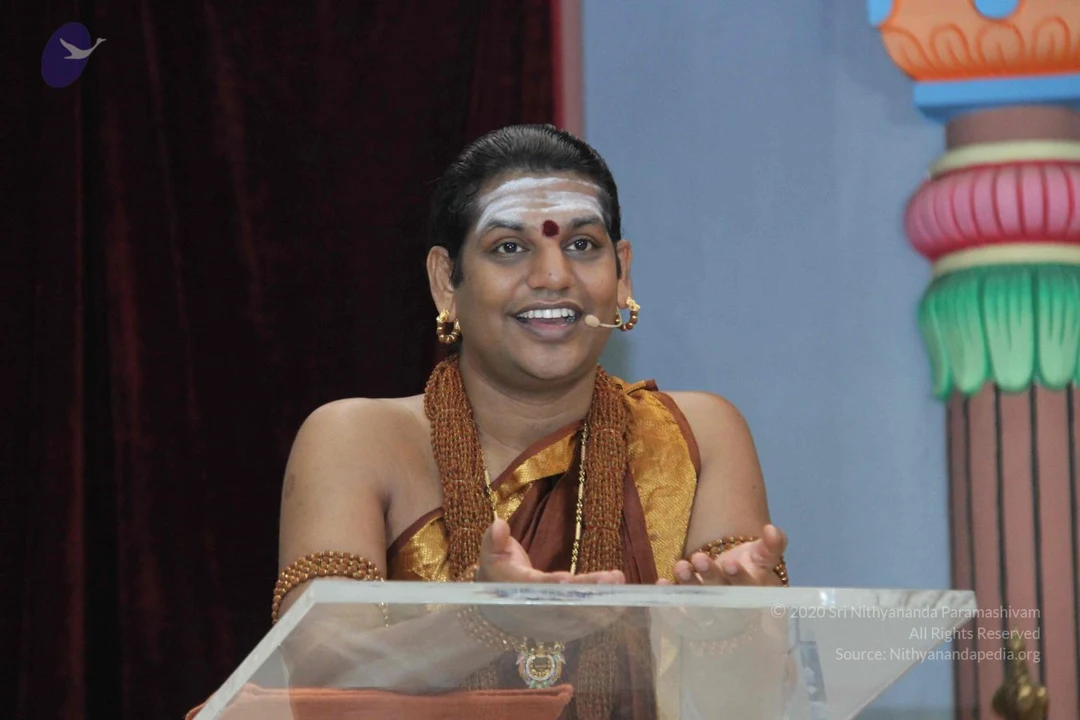
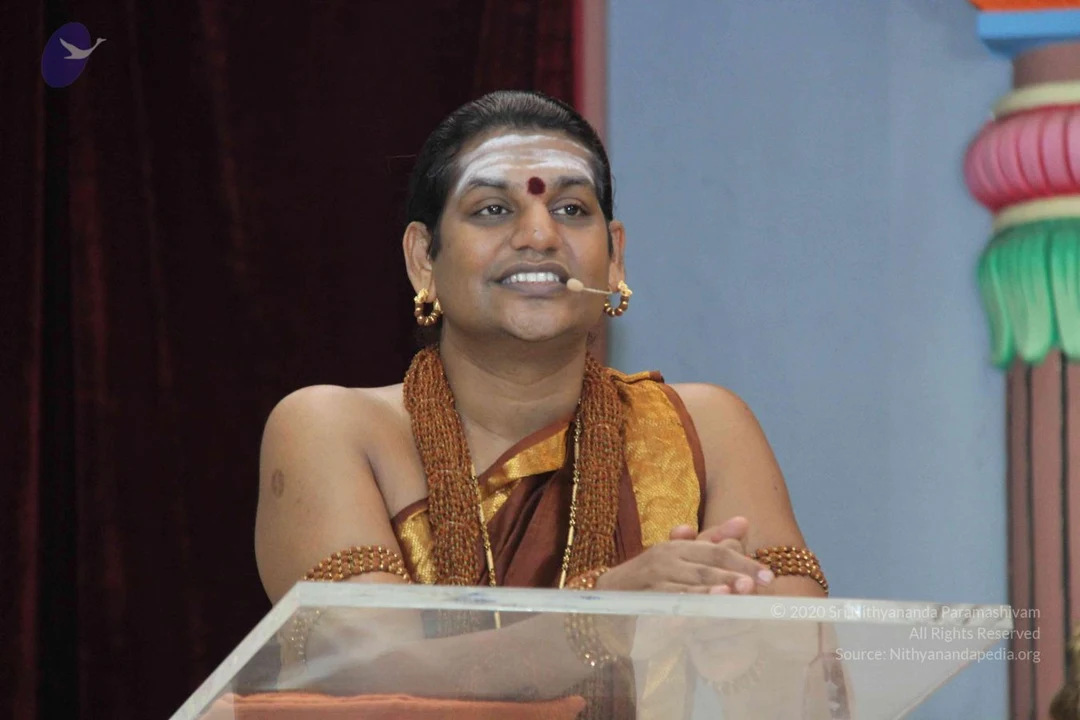
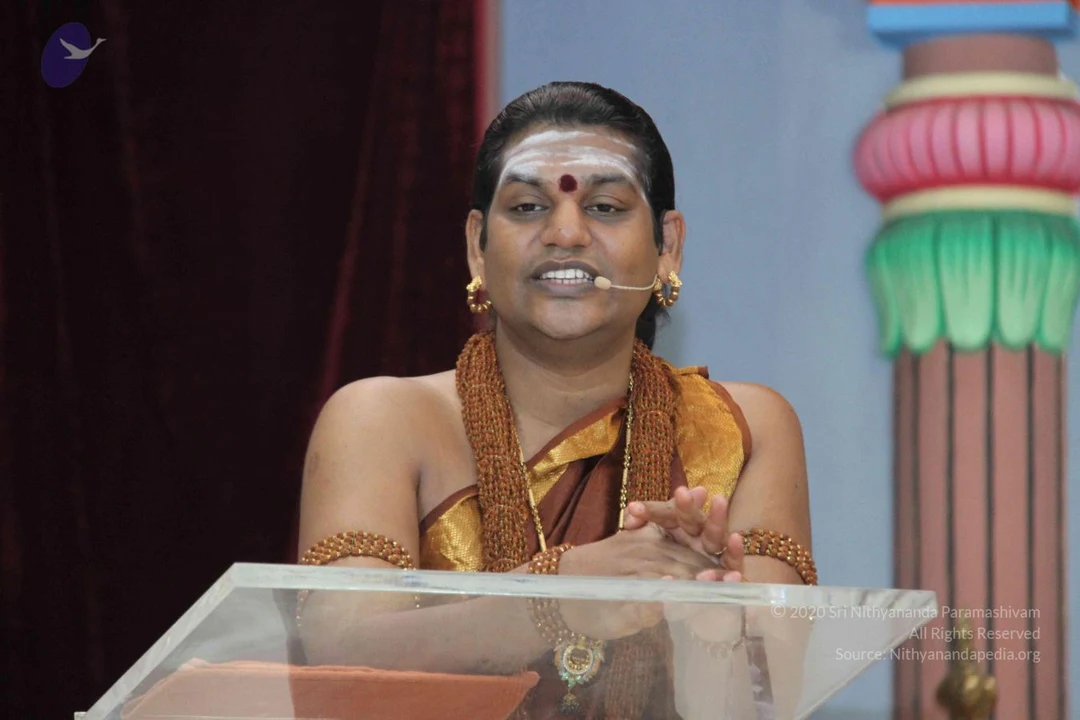
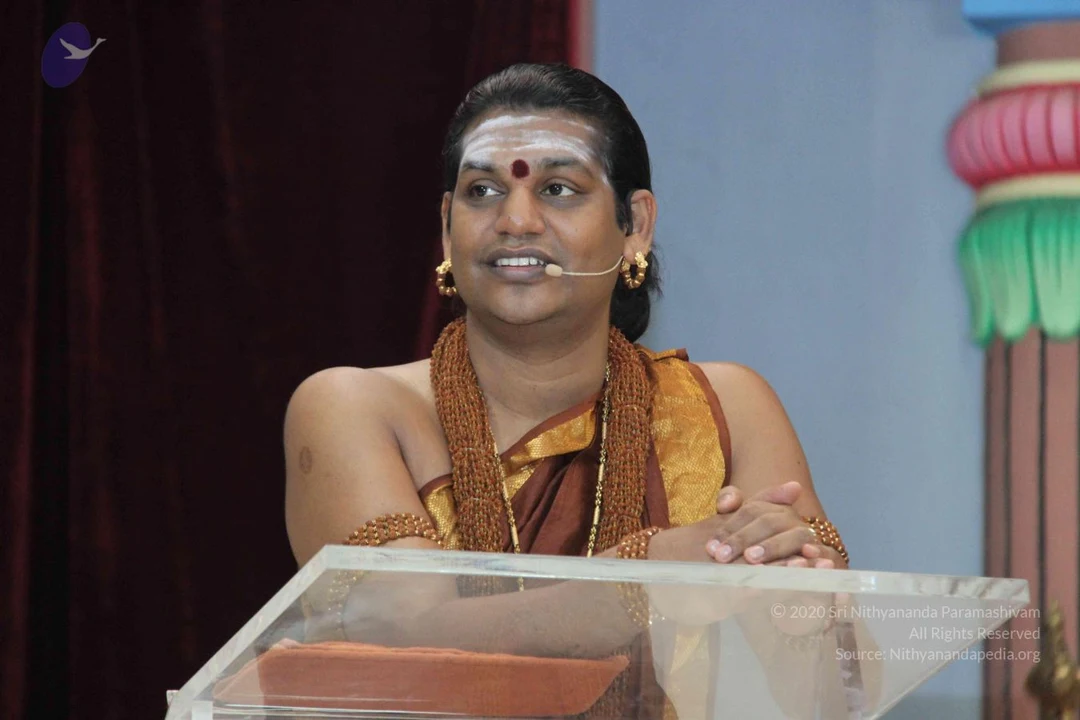
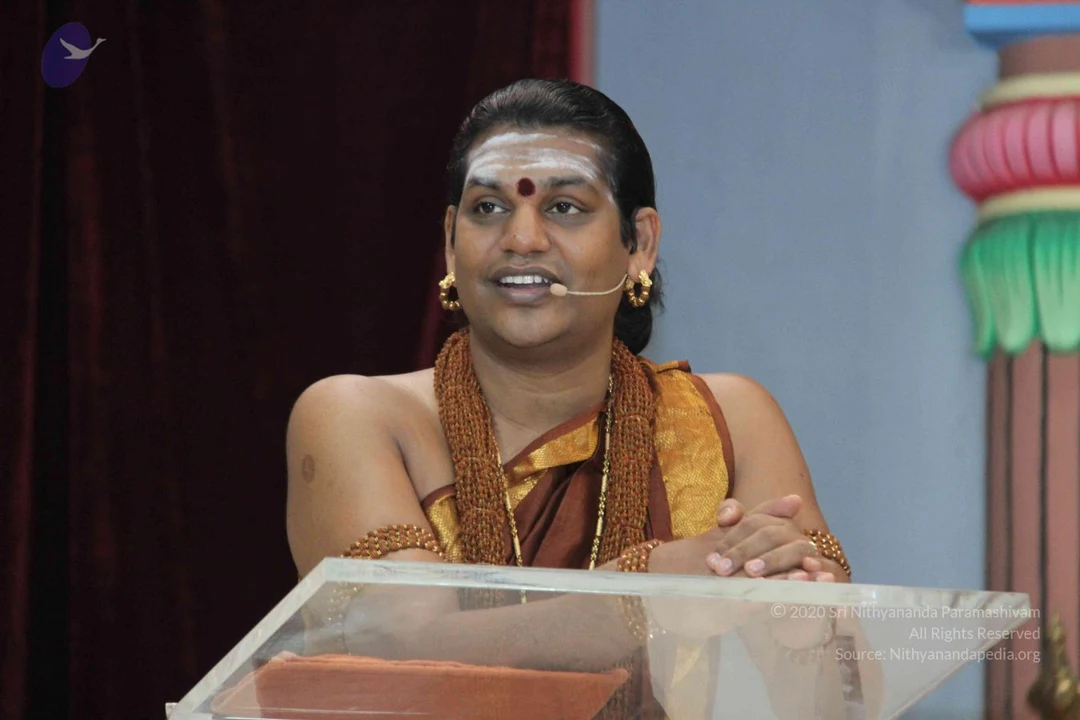
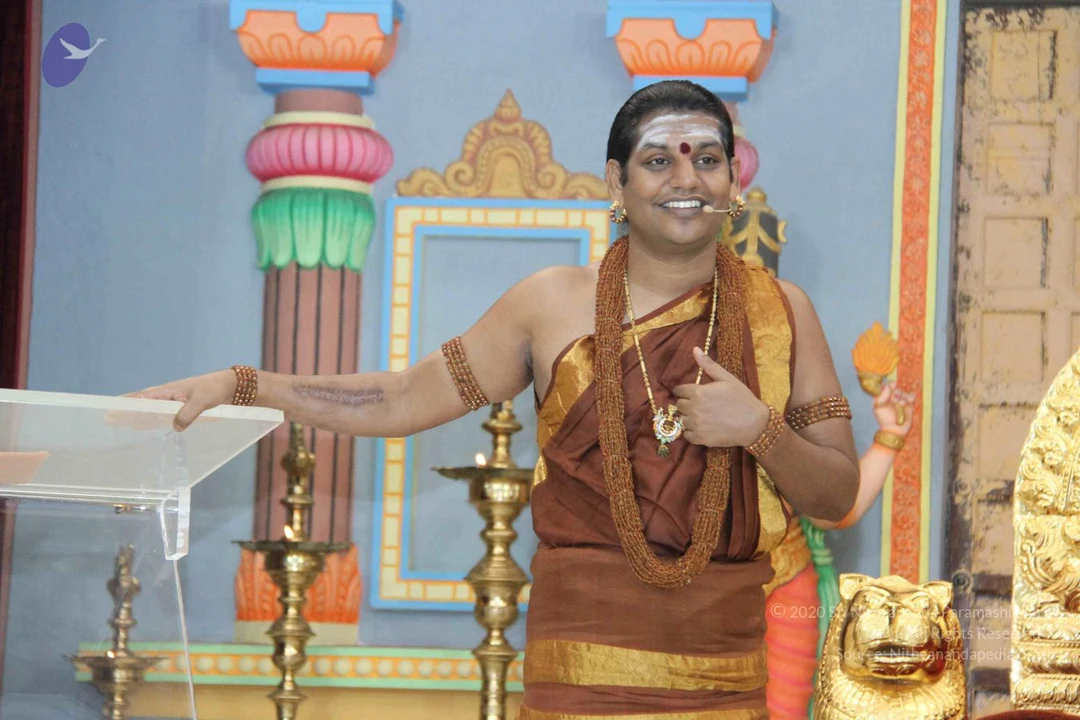
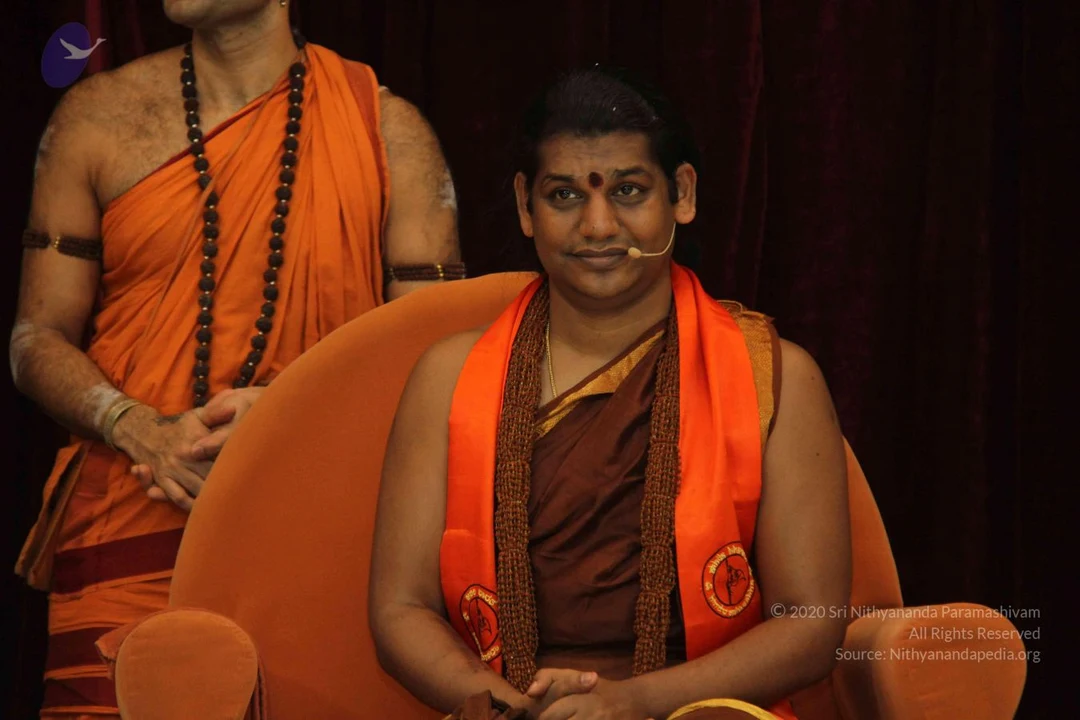
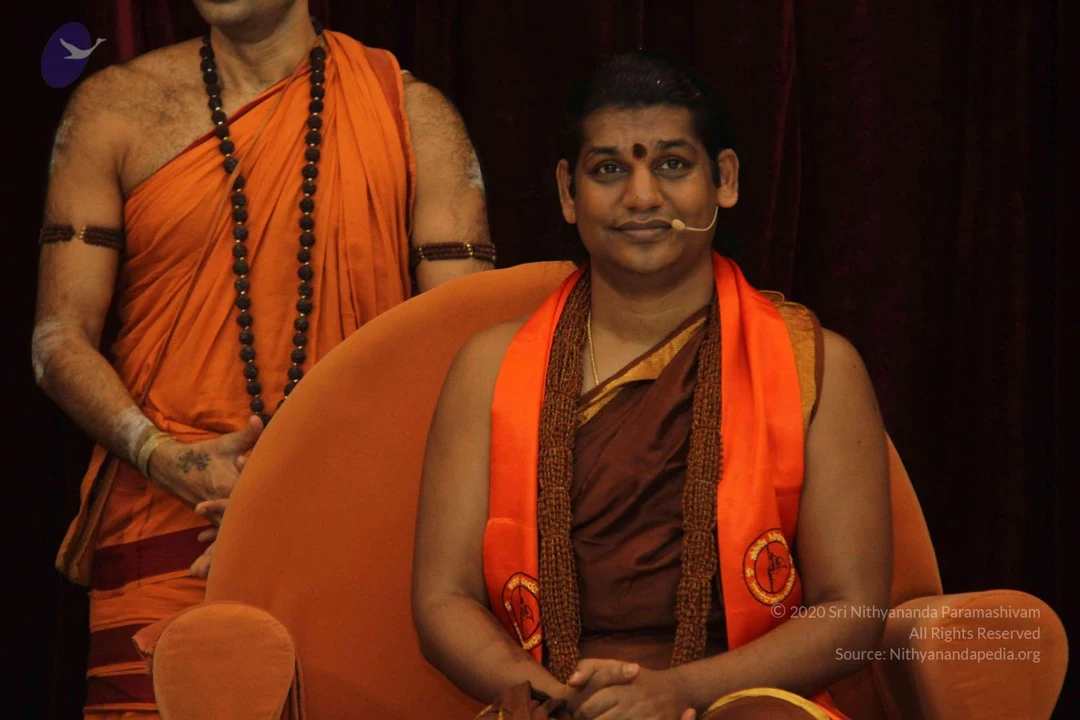
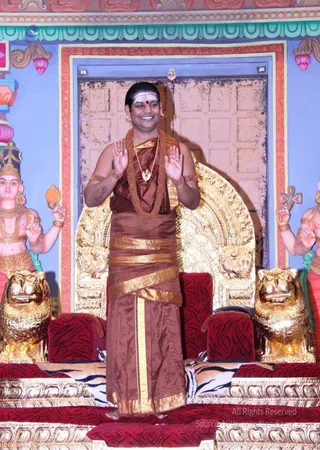
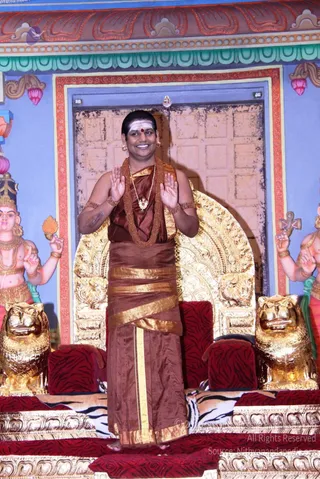
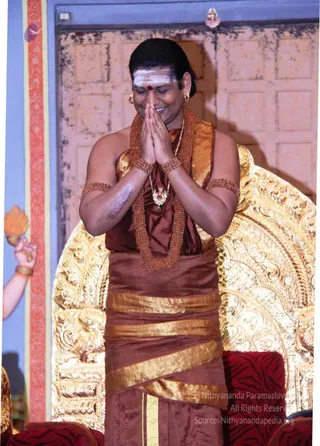
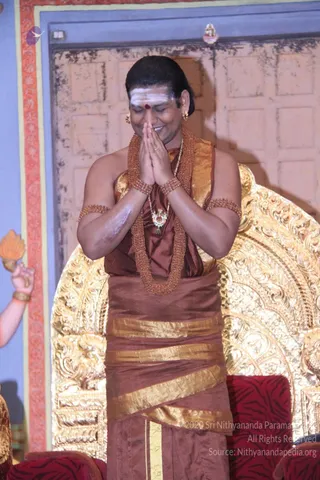
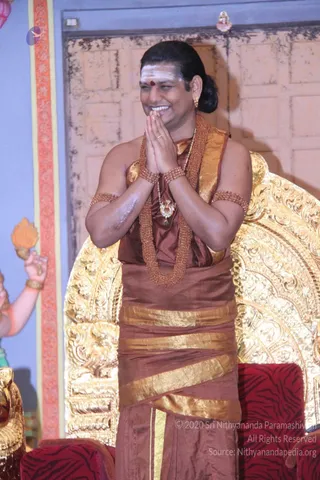
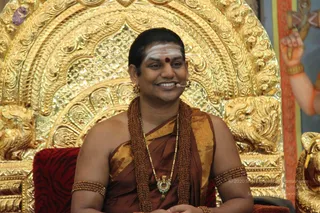
A smiling man stands on a red and gold dais before a gilded throne flanked by two golden lion figures and red tiger-striped cushions. He wears brown-and-gold silk robes, a rudraksha mala with a gold pendant, gold armbands and a white and red tilak on his forehead, and raises both palms in greeting. Painted deity statues with raised arms stand on either side against a blue and orange temple backdrop with a wooden door behind the throne. Swamiji (probable): long, swept-back hair and a rudraksha mala with ceremonial gold necklace, while standing in a satsang setting.A smiling man stands in front of a golden throne with lion-shaped arm rests, on a red tiger-striped cushioned dais. He wears a rust-brown silk upper cloth and dhoti with gold borders, a long rudraksha-style mala, gold bangles and a gold pendant necklace, with a white vibhuti line and red bindi on his forehead. He raises both palms in a blessing gesture. Behind him are painted walls and a carved wooden door, with colourful deity statues flanking the throne. Appearance-based label: a person, with a long-haired, ornately adorned presentation visible in the scene.A man stands with palms pressed together in namaste, eyes closed and smiling, in front of an ornate gold throne with carved floral scrollwork. He wears a rust-brown silk garment with gold-bordered draping, a tiered rudraksha-style mala of amber beads across his chest, matching beaded armlets and bangles, and a gold pendant. A white horizontal tilak and red bindi mark his forehead, and gold earrings hang from his ears. Behind him stands a pink wall with a panelled door, and a painted figure's hand holding a lamp appears at the left edge. The photograph carries a copyright and source caption. a person is shown in the photograph, standing in greeting with a rudraksha mala and ceremonial gold necklace, consistent with the page's reference to a person.A man stands with palms pressed together in namaste, eyes closed and smiling, in front of an ornate gold throne with carved scrollwork. He wears a rust-brown silk garment with gold borders wrapped at the waist, a long multi-strand rudraksha mala draped over his shoulders, rudraksha bracelets on his wrists and upper arms, and a gold pendant necklace. A white tripundra with a red bindi marks his forehead, and his hair is swept back. Behind him is a pale wooden panel, and a red-upholstered seat is visible at the bottom. A partial painted figure with a raised hand appears at the left edge.A smiling man stands with palms pressed together in anjali namaskar greeting, wearing a brown silk dhoti with gold borders and a matching brown upper cloth, with a rust-coloured rudraksha mala garland, bangles and armlets. He has a white vertical forehead mark and red bindi, and his hair is swept back into a bun. Behind him is an ornate gold throne back with red patterned upholstered chairs at the bottom edge, and a painted deity figure with a raised hand appears at the left edge. Swamiji (probable) appears in this photograph based on the swept-back hair, rudraksha mala and distinctive ceremonial clothing; he is greeting the audience as a speaker at a satsang.A smiling man stands with palms pressed together in anjali namaskar greeting. He wears a brown silk dhoti and wrap with gold borders, a matching brown silk upper cloth, a long rudraksha mala draped to the waist, bead armlets and bracelets, and a gold pendant. His hair is swept back into a bun, with white urdhva-style tilak and a red bindi on his forehead. Behind him stands an ornate gold-carved throne with floral relief, with red zebra-patterned cushions at the edge. At the far left, a partial figure holds a lamp-like object.

Sarva Darshan

21 photosSource gallery
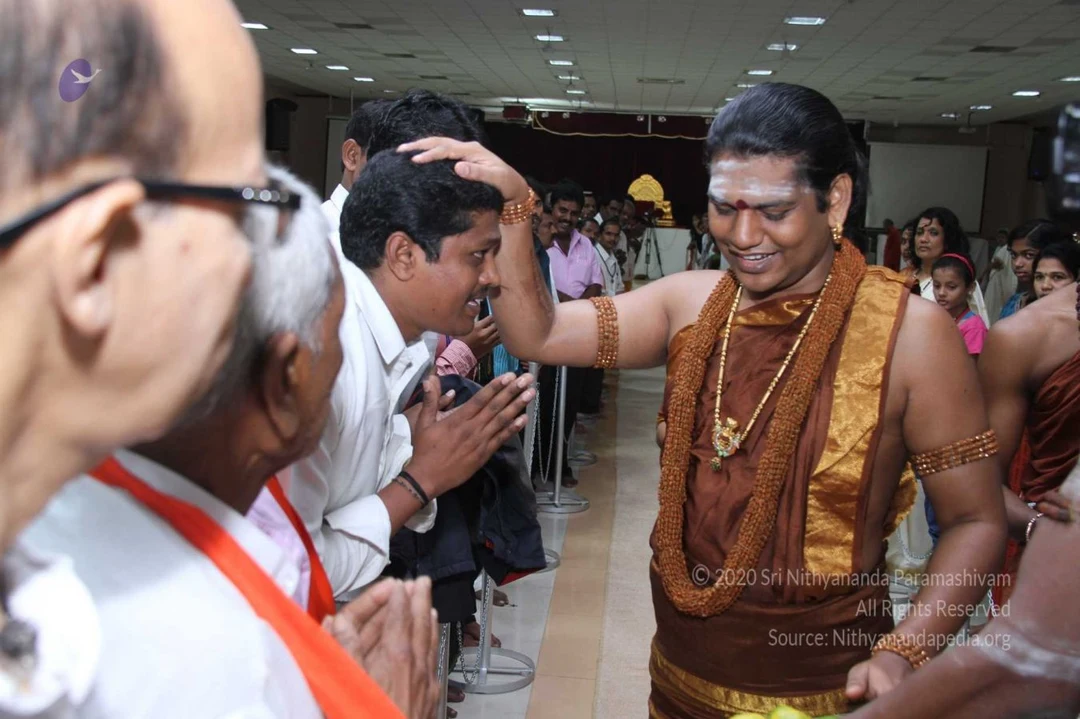
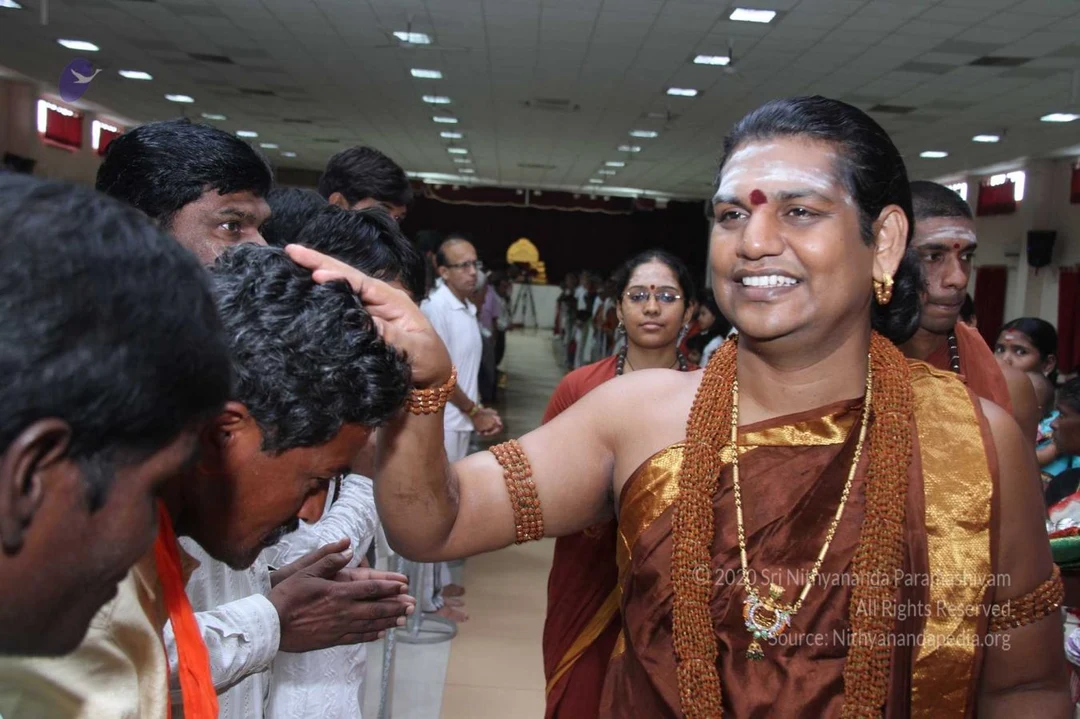
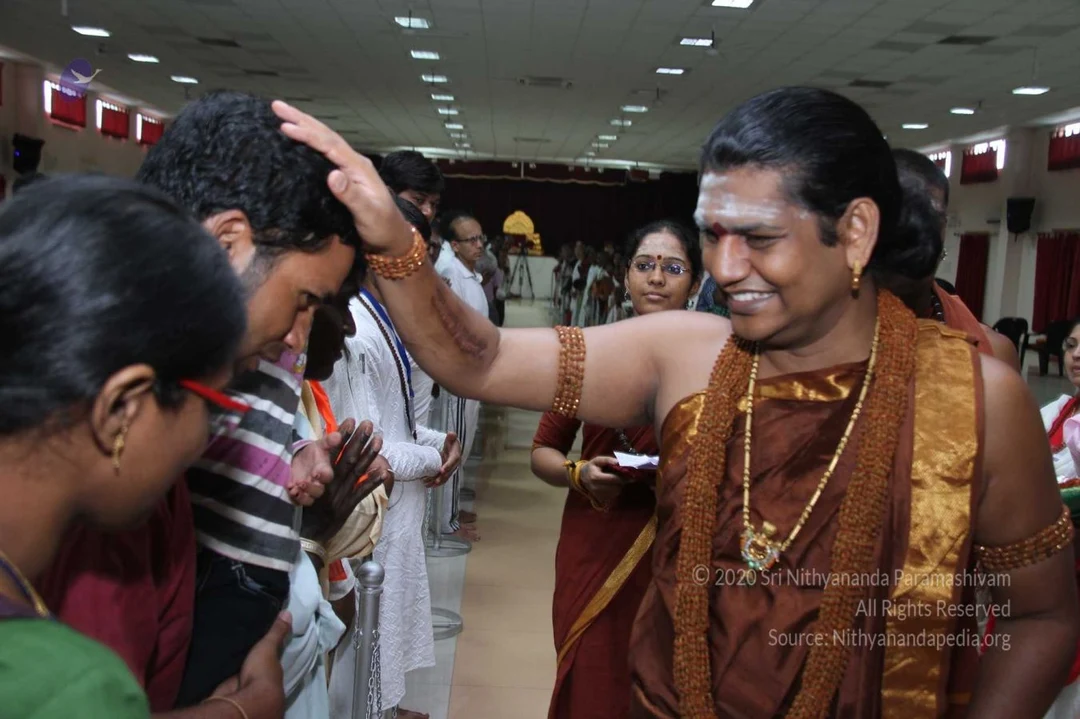
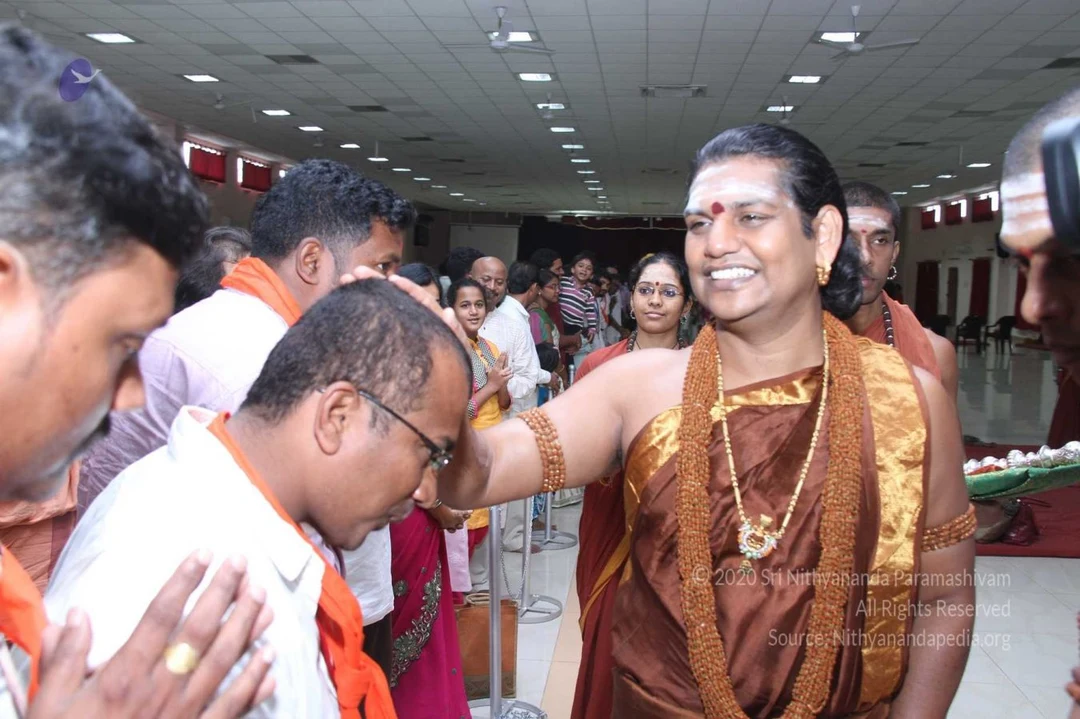
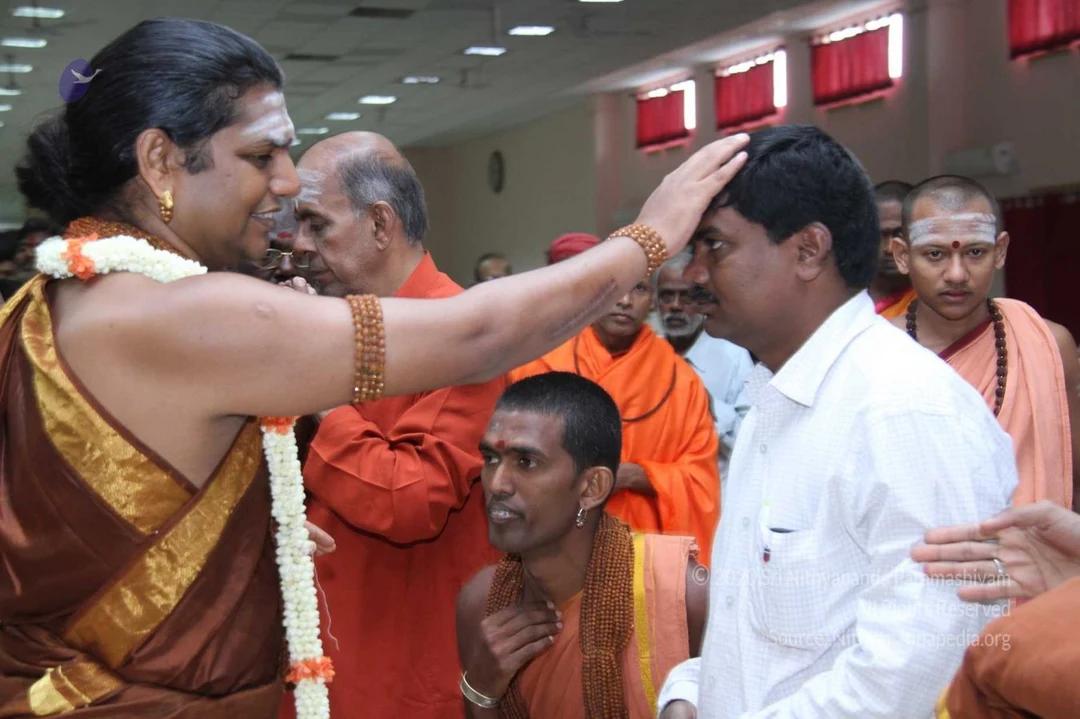
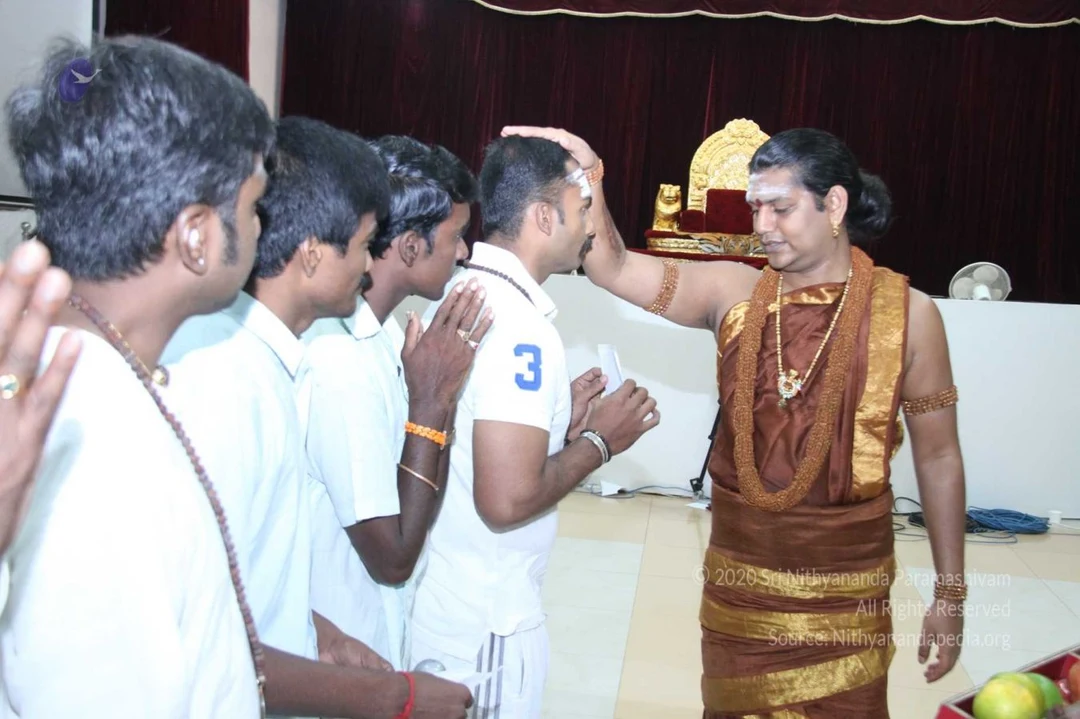
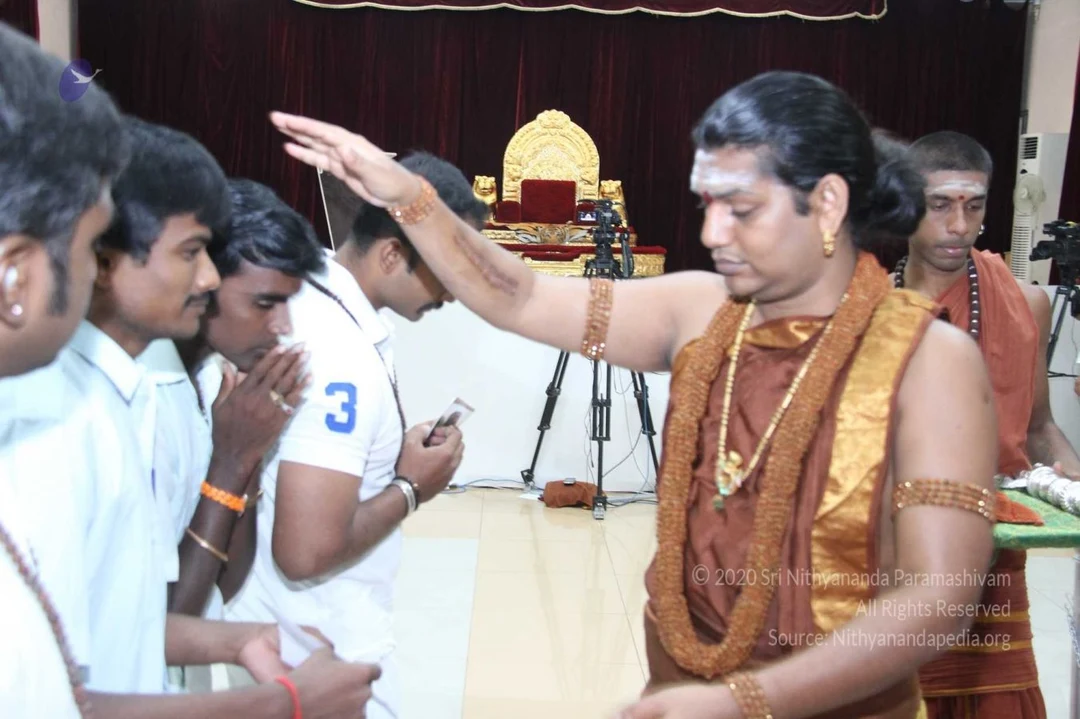
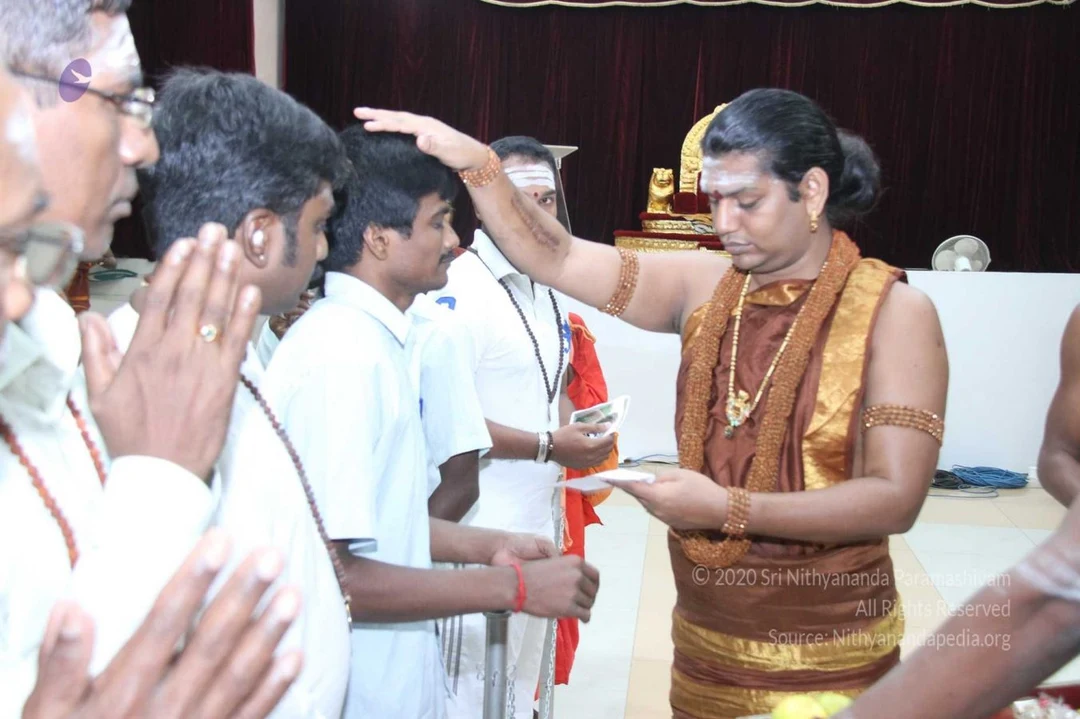
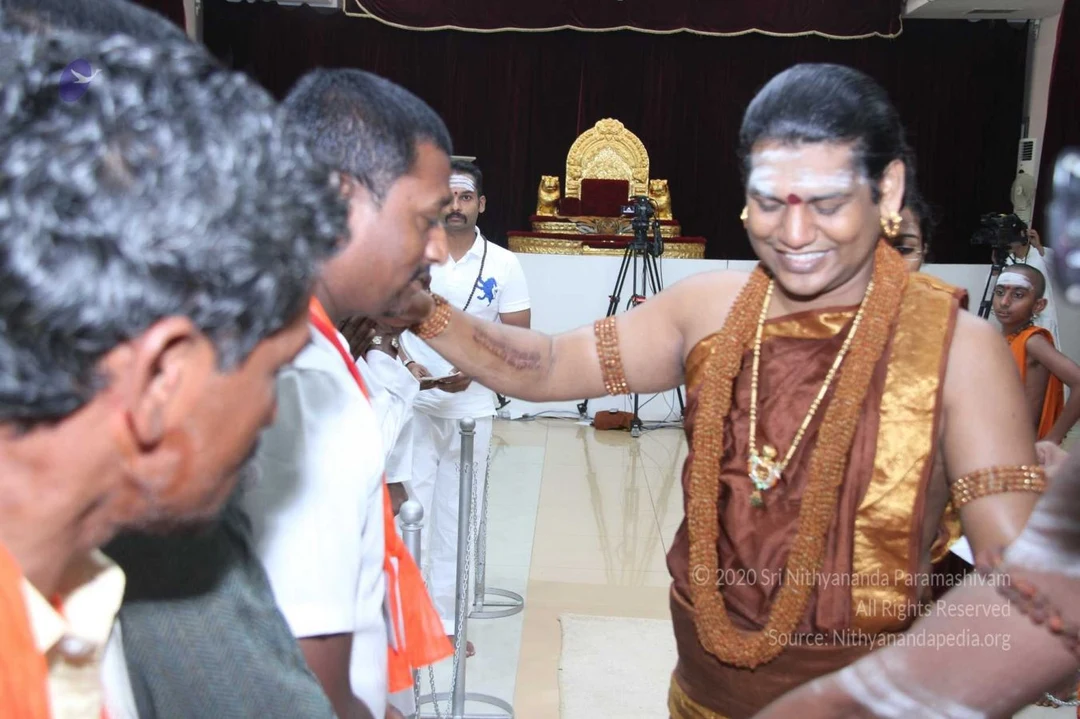
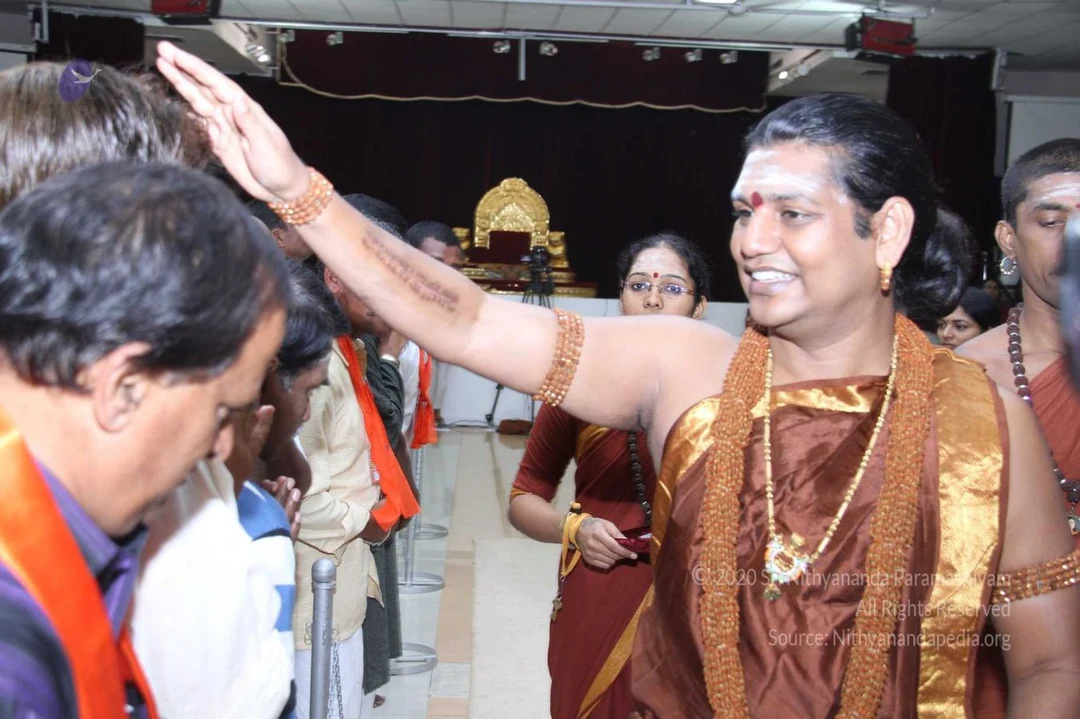
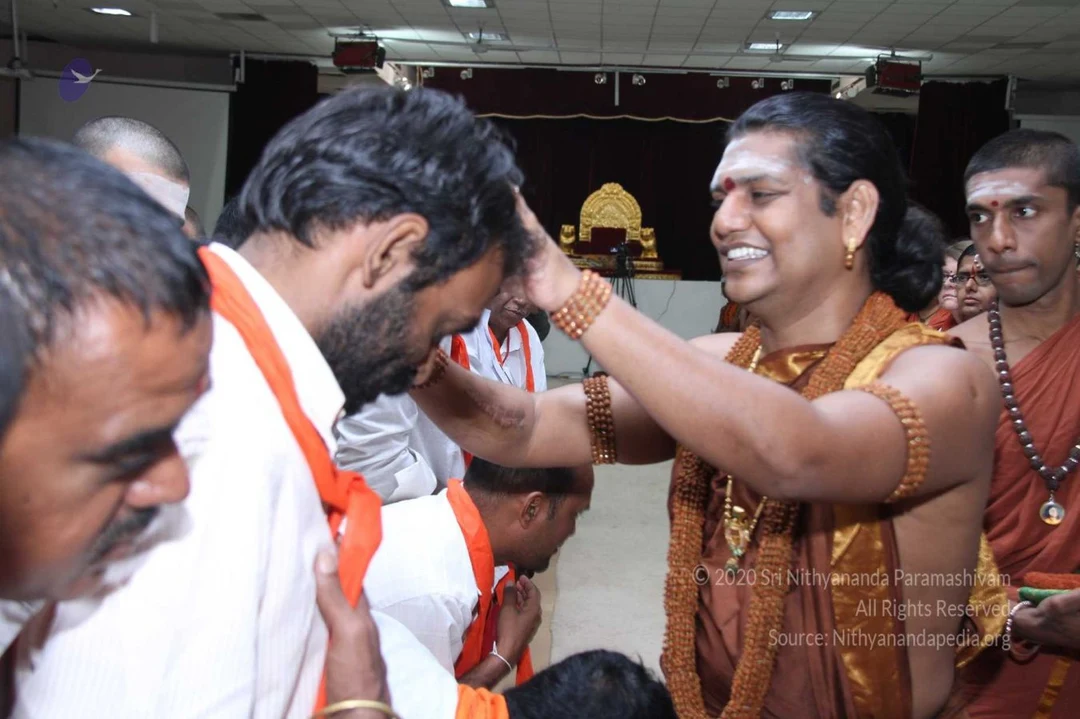
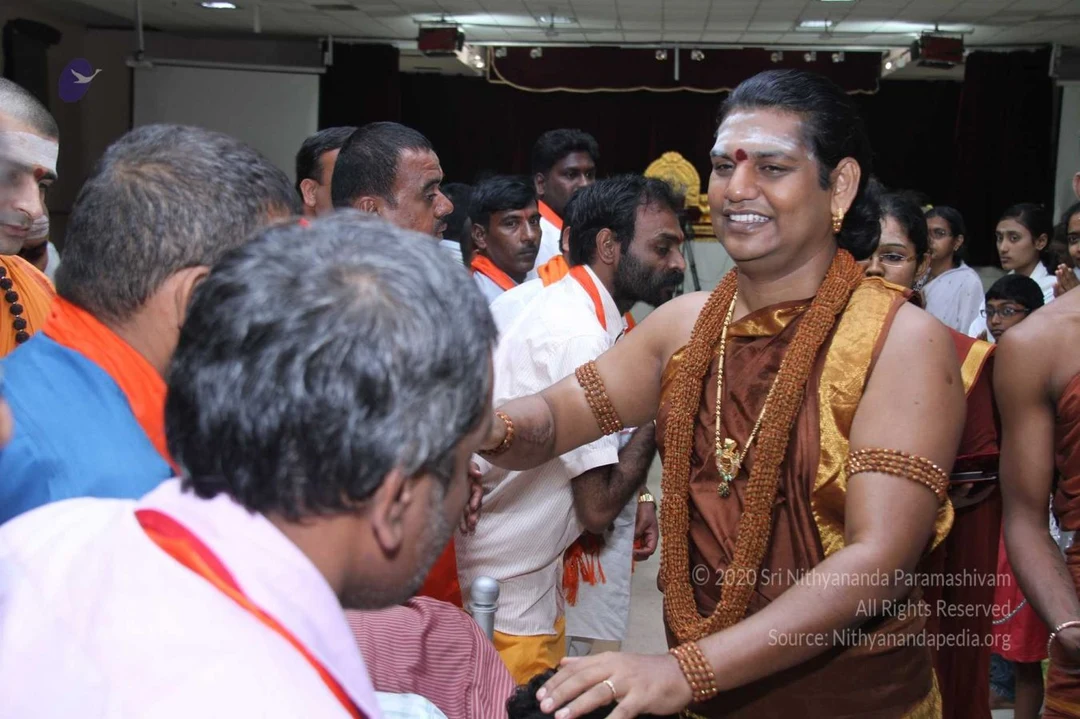
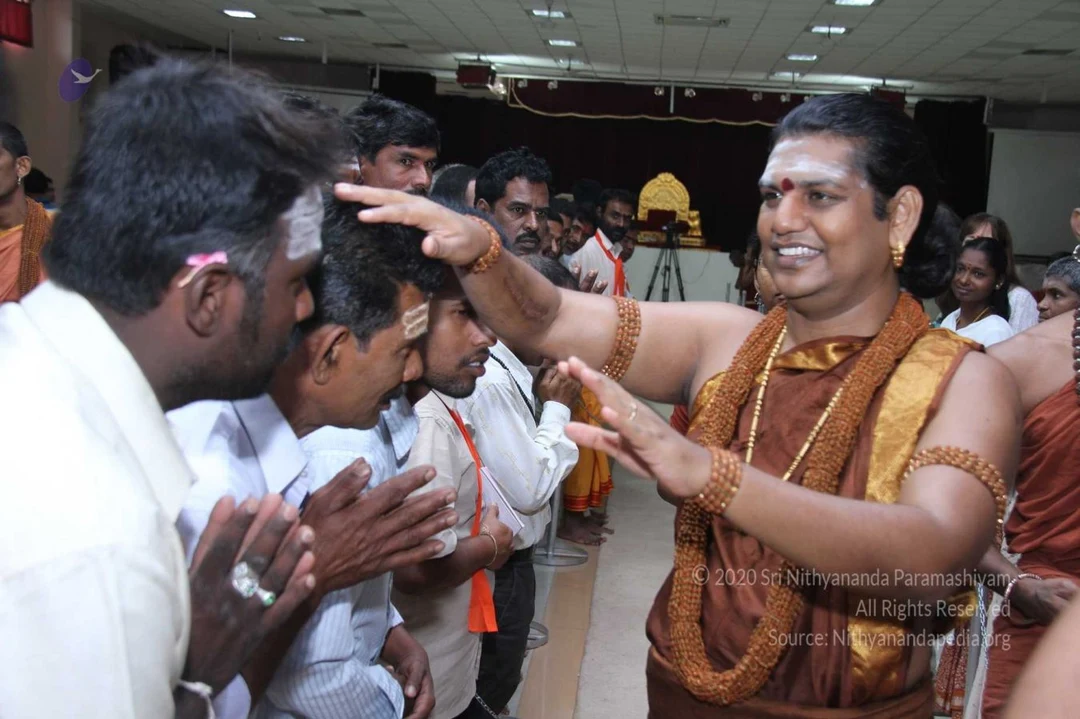
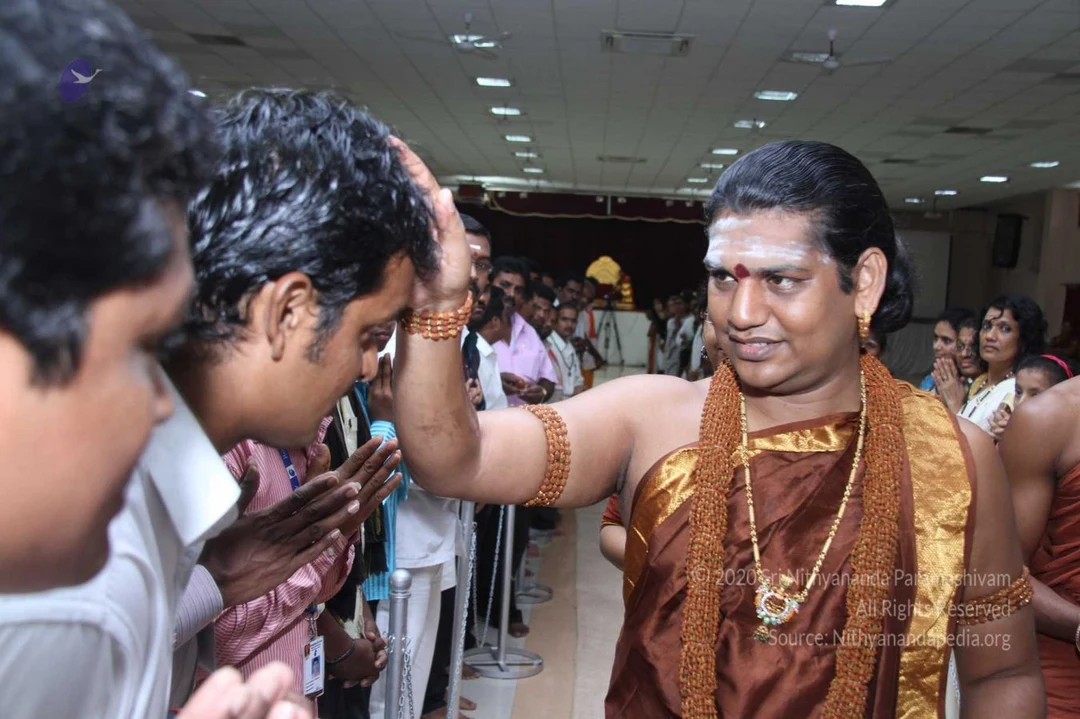
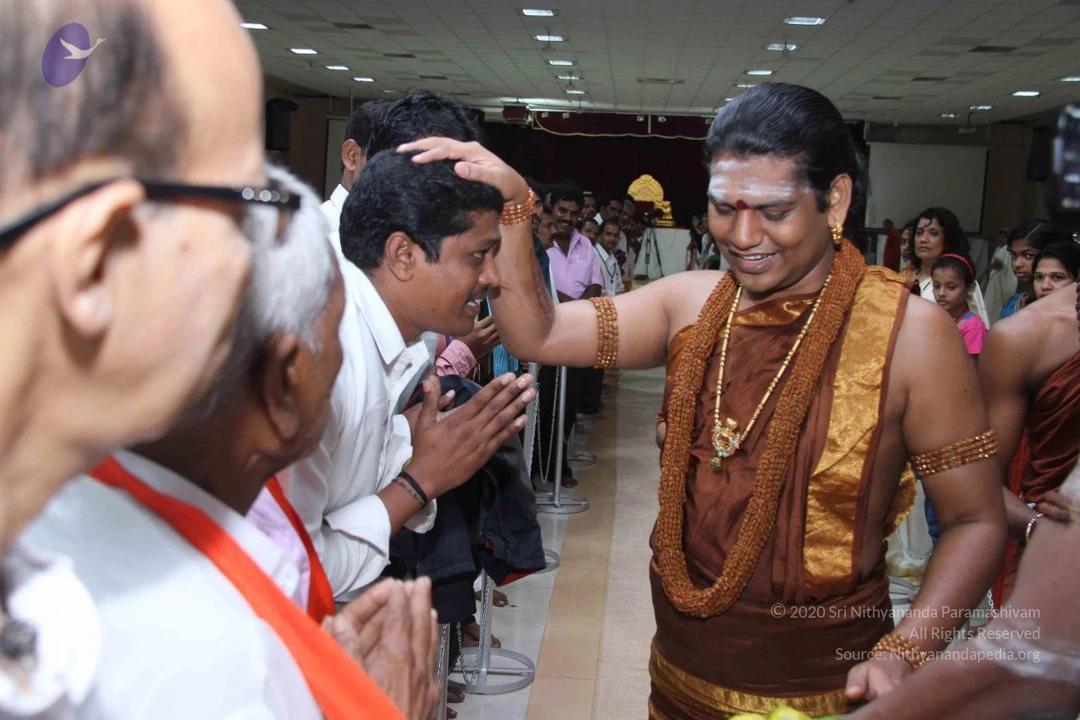
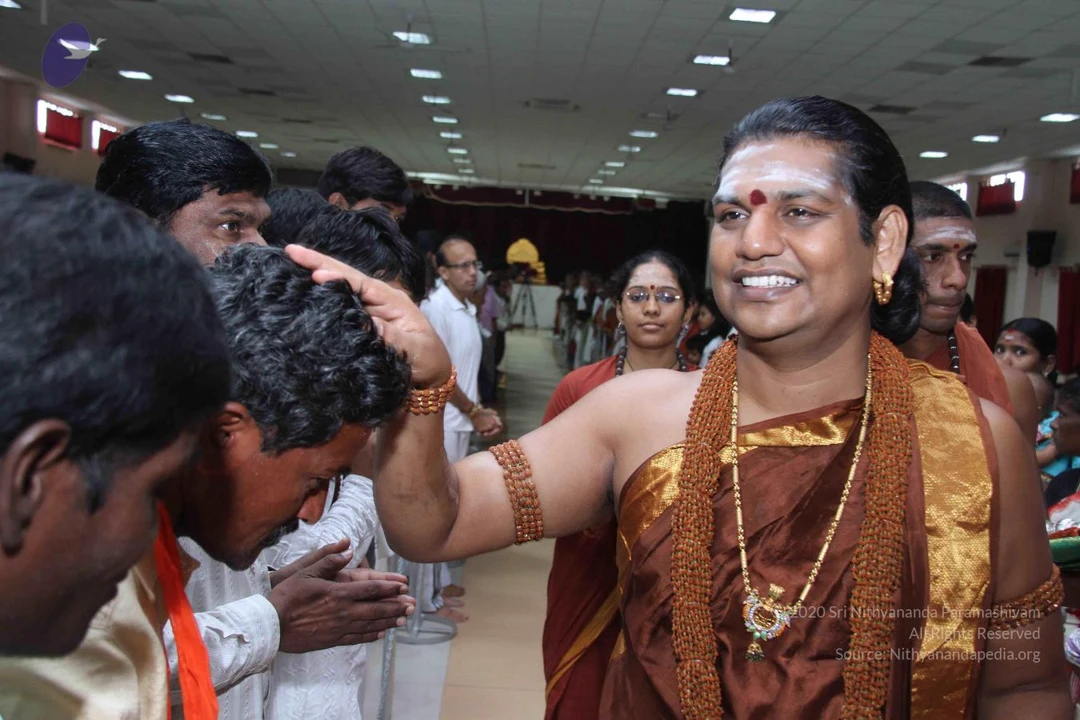
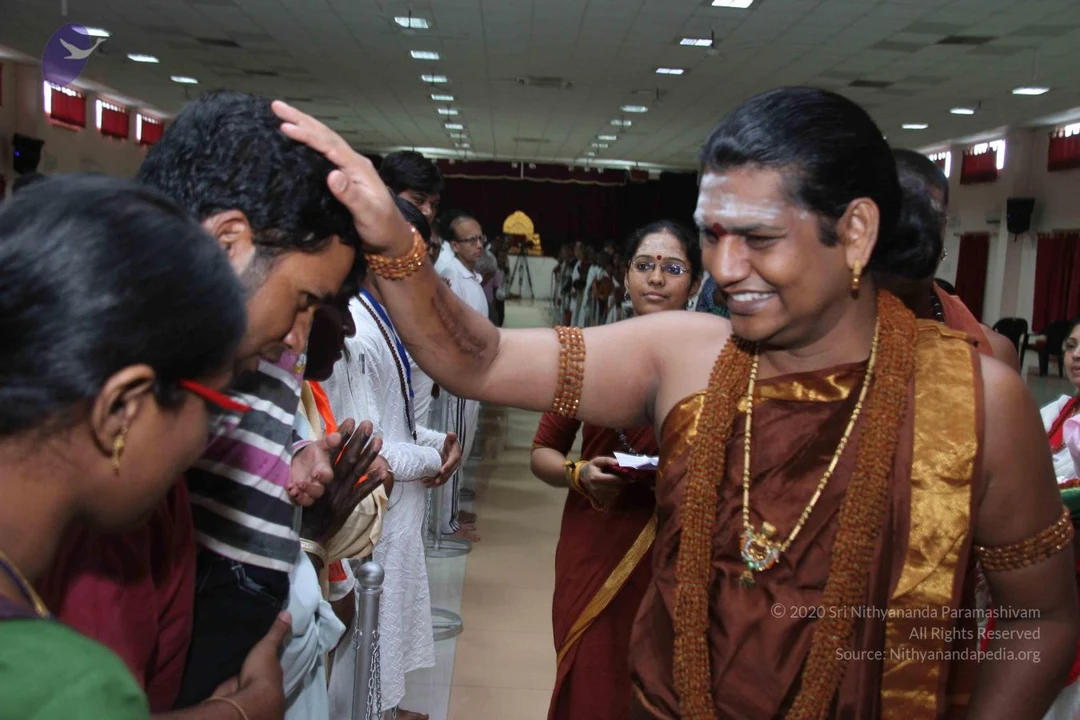
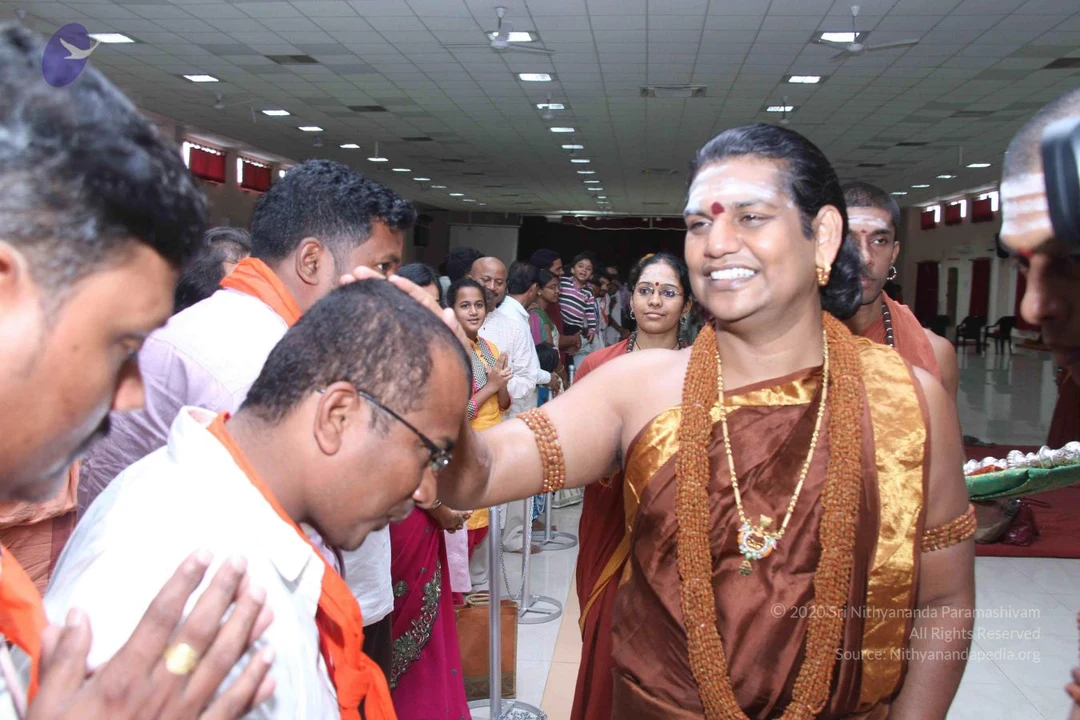
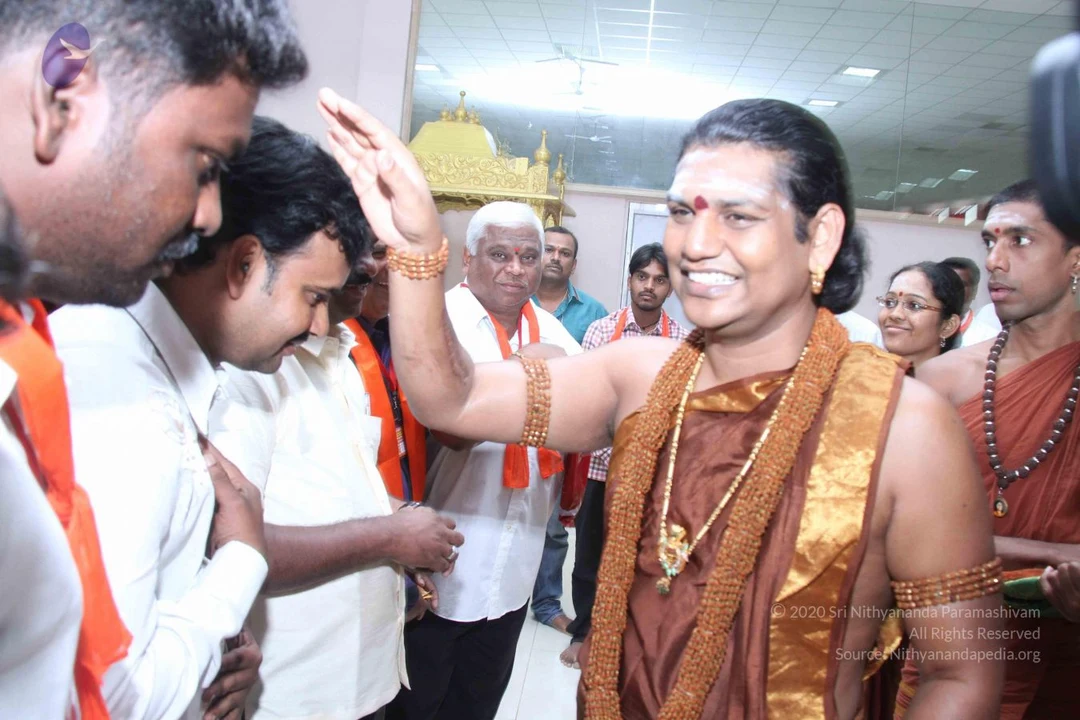
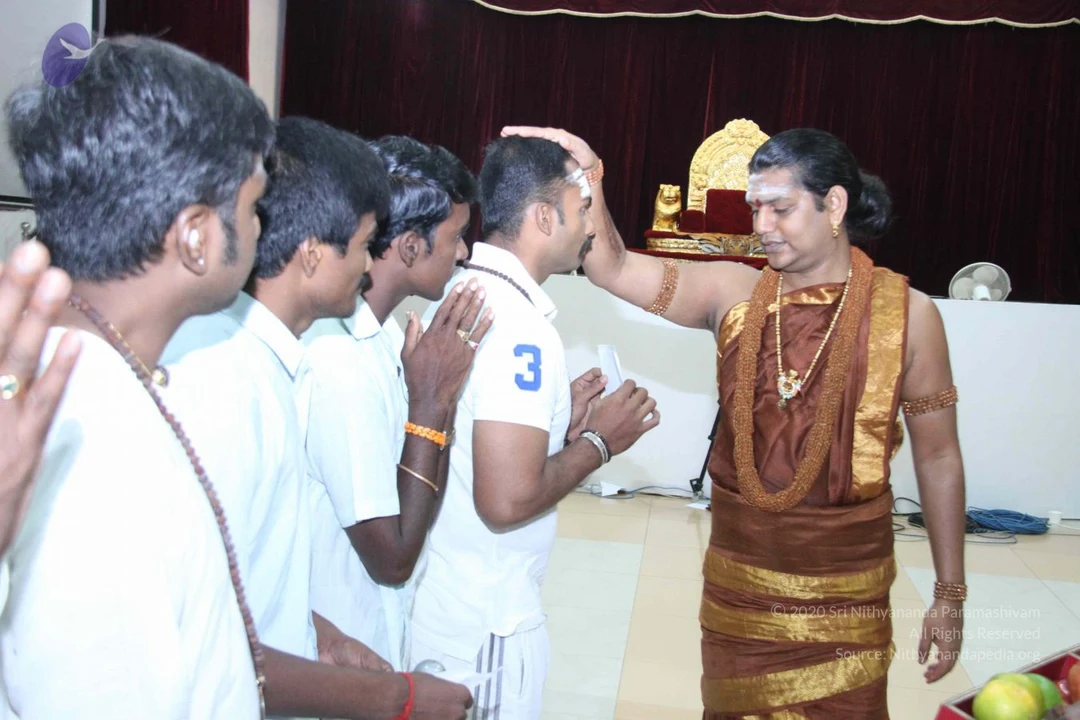
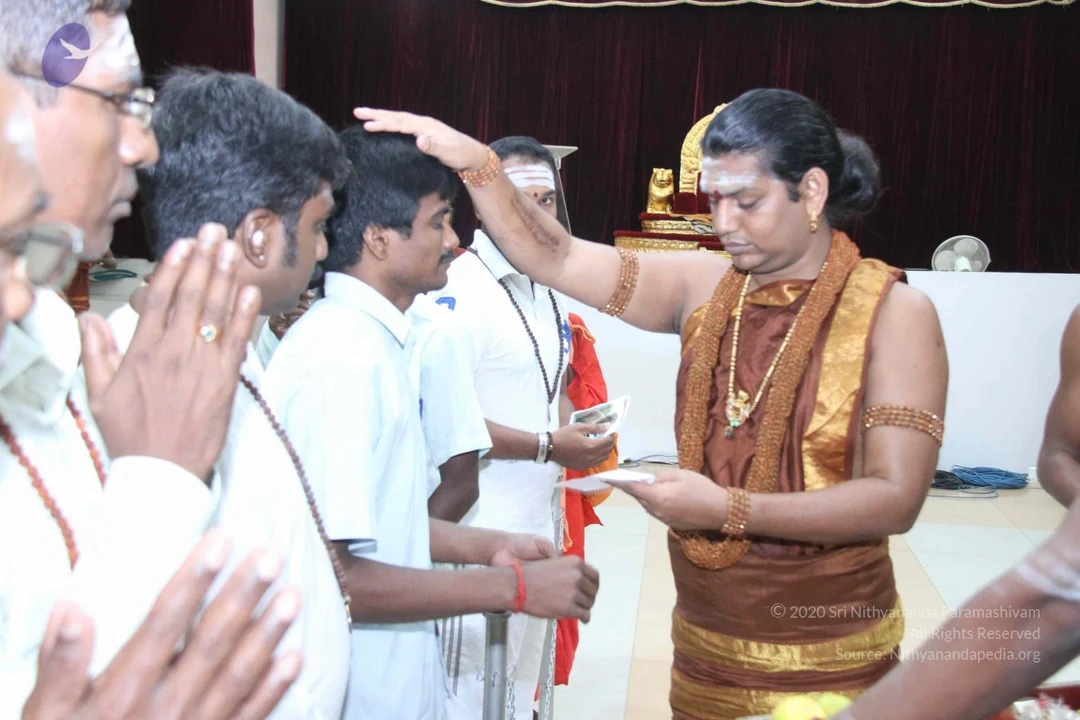
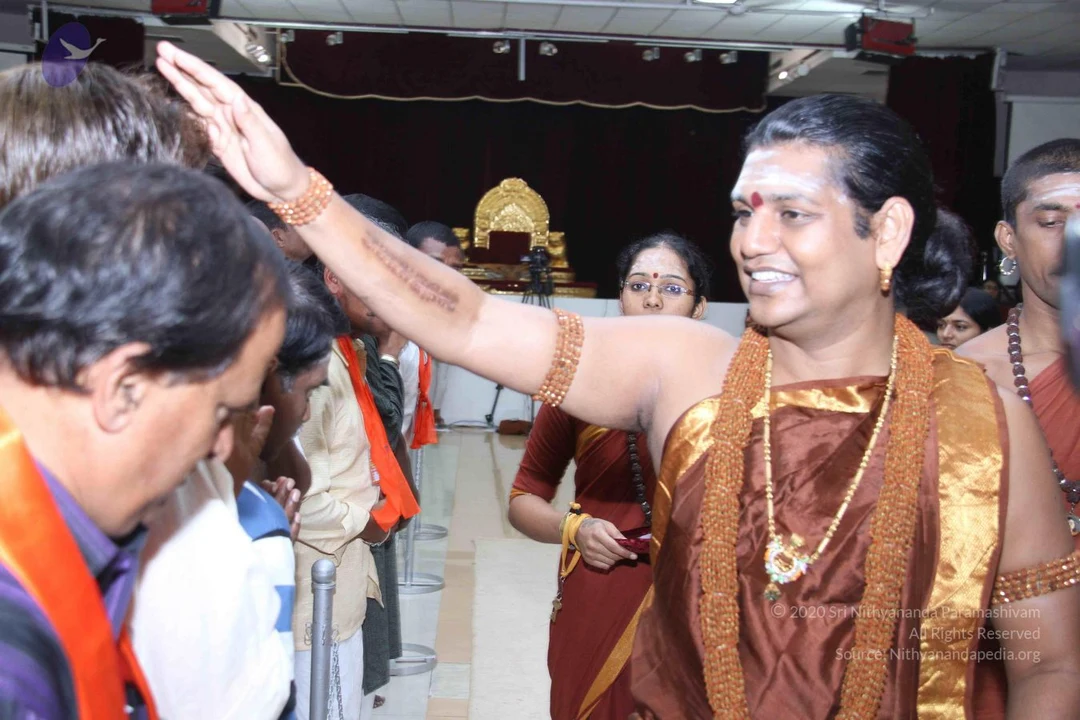
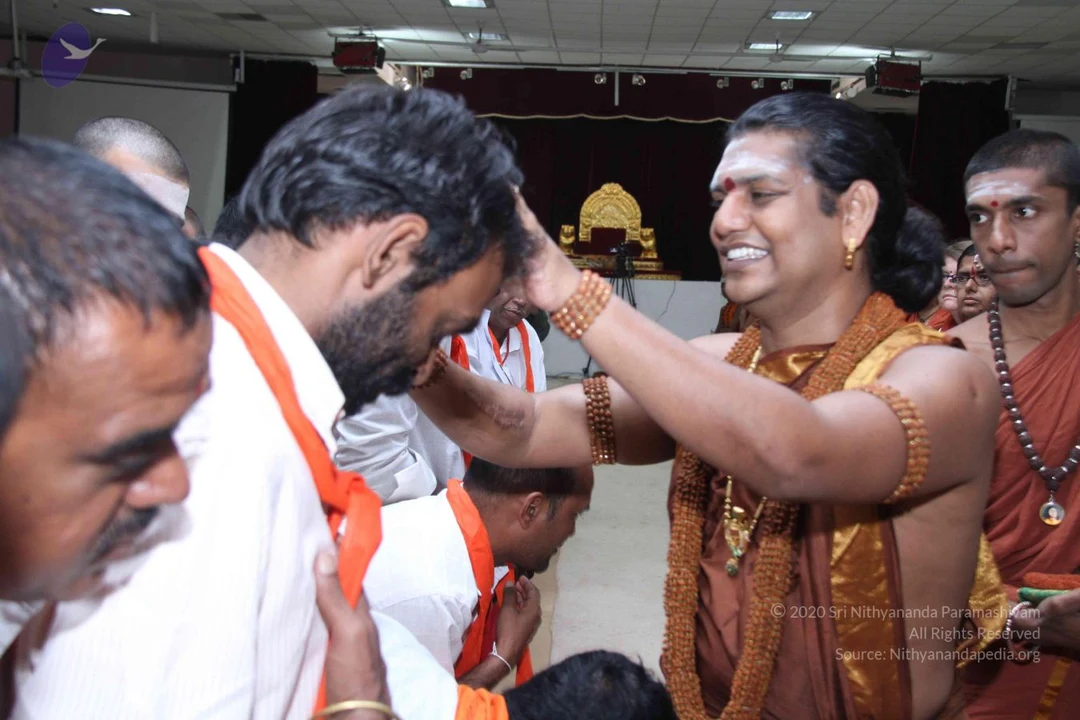
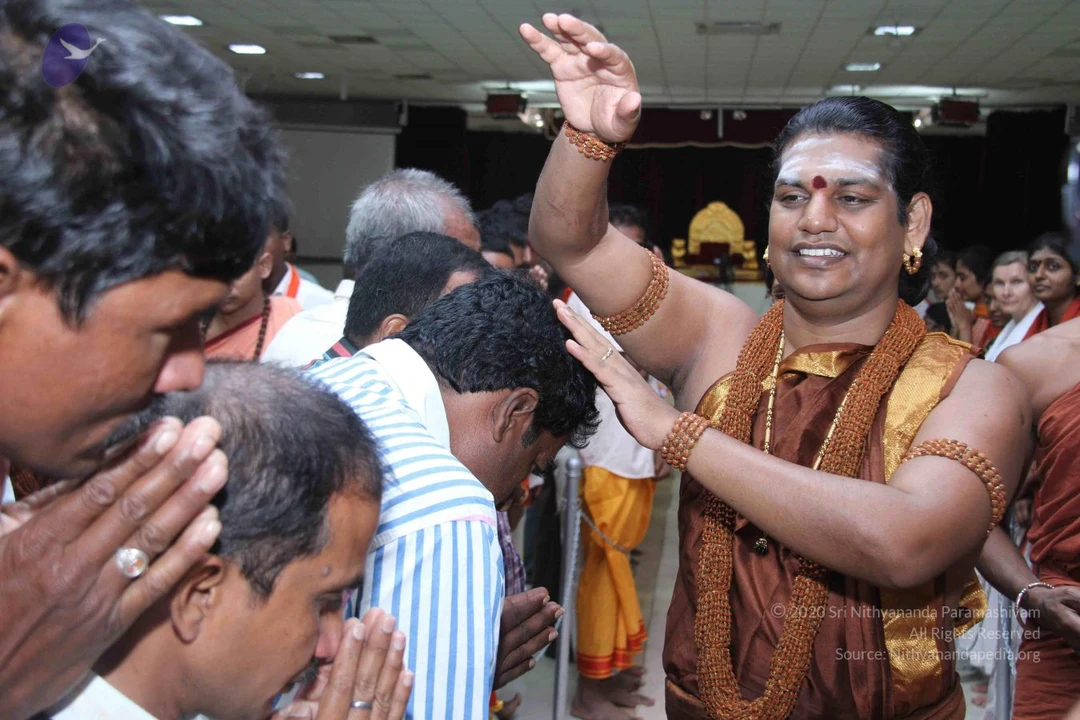
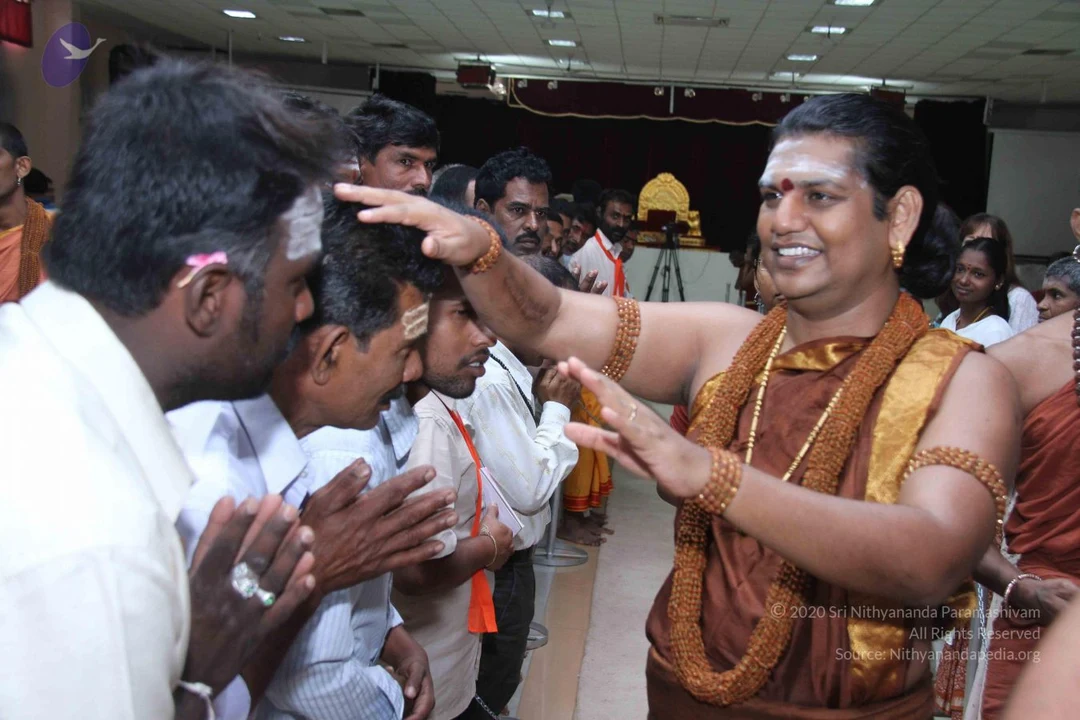
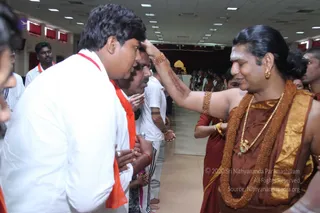
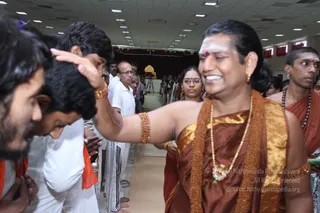
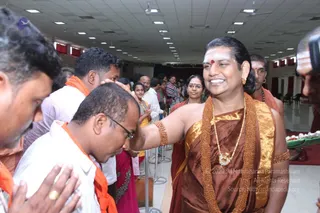
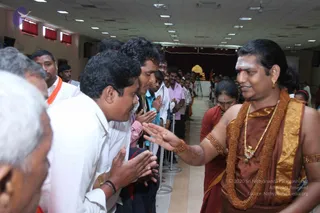
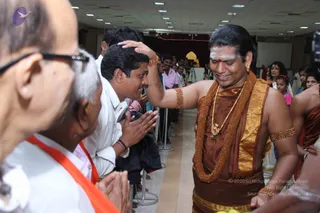
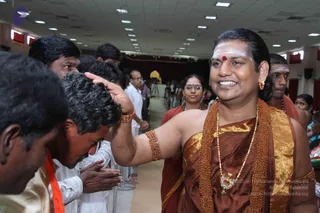
A photograph of an indoor hall with a crowd of devotees. On the right, a figure with hair pinned up, a tilak on the forehead, a rudraksha mala with a gold ornament, and a brown robe with a gold border touches the forehead of a man in a white shirt with an orange shawl. Two other men in white stand beside him with hands folded in namaste. Behind them, people in white and orange-red clothing stand in a line. The hall has white ceiling lights and red curtains on the walls.A photograph of a satsang hall where a man in an orange-brown silk dhoti and a golden-bordered shawl, with a red bindi, white forehead markings, a gold necklace and a dark rudraksha mala, extends his hand in blessing toward a devotee who bows with his head lowered. Around him, several devotees in white dhotis and orange shawls wait in a line, one man in white with spectacles stands nearby, and a woman in glasses and a sari watches. Behind them, a golden throne or seat is visible on a raised platform beneath a maroon backdrop. The visible cues on the blessing figure include long swept-back hair, ornate gold jewellery and rudraksha, which align with the page's identification as Swamiji (probable), who is shown giving blessings to devotees.

Final Blessing

5 photosSource gallery
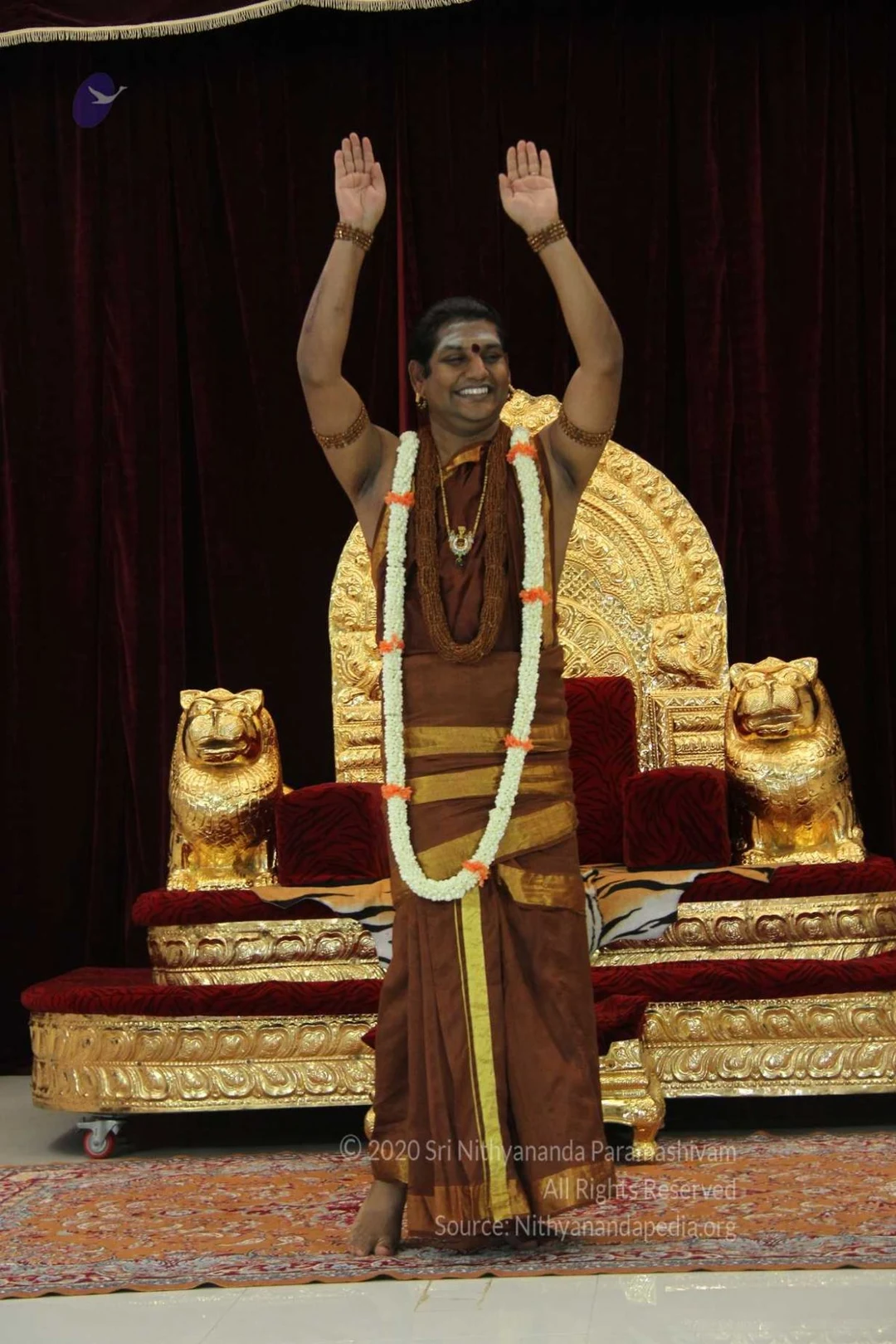
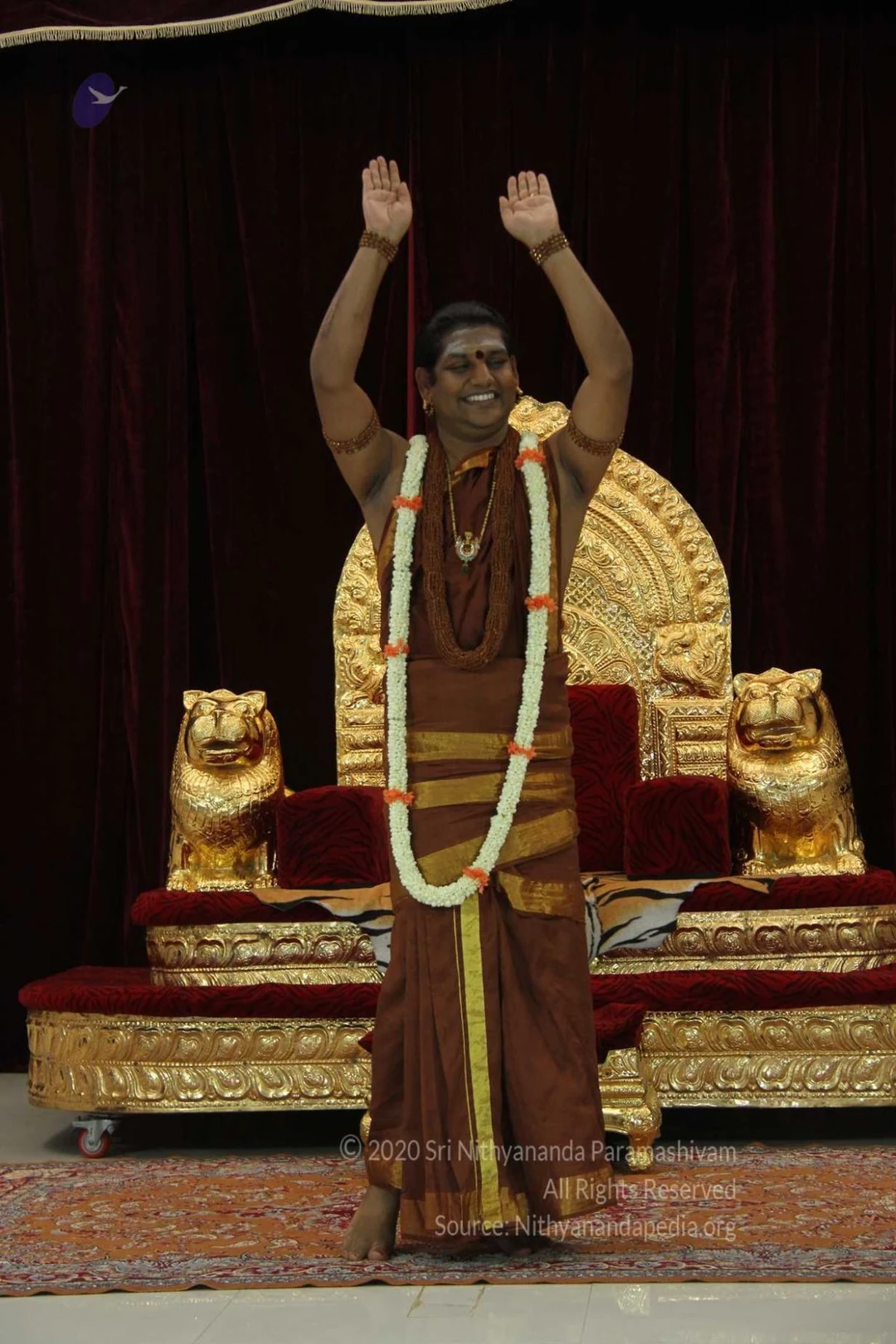
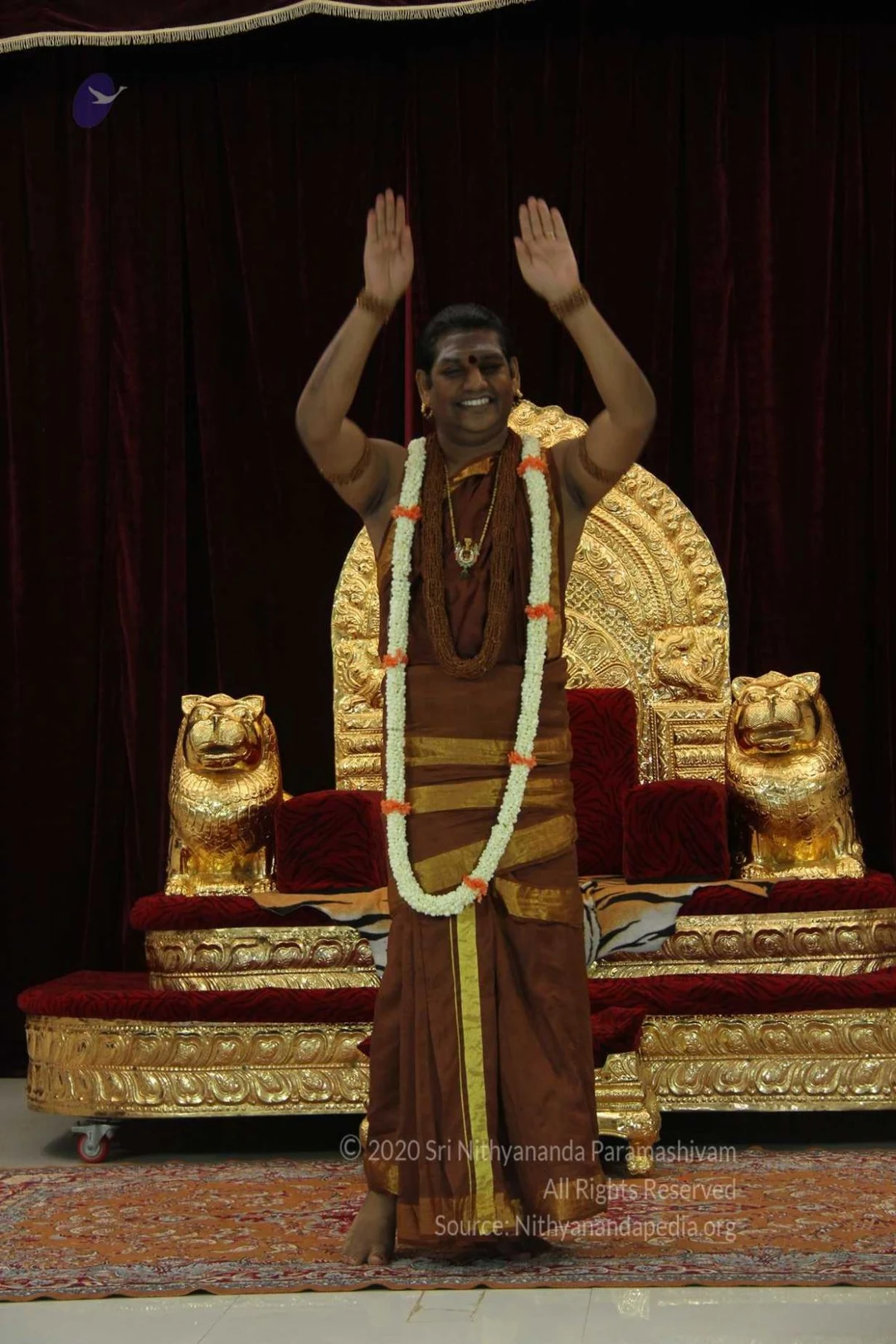
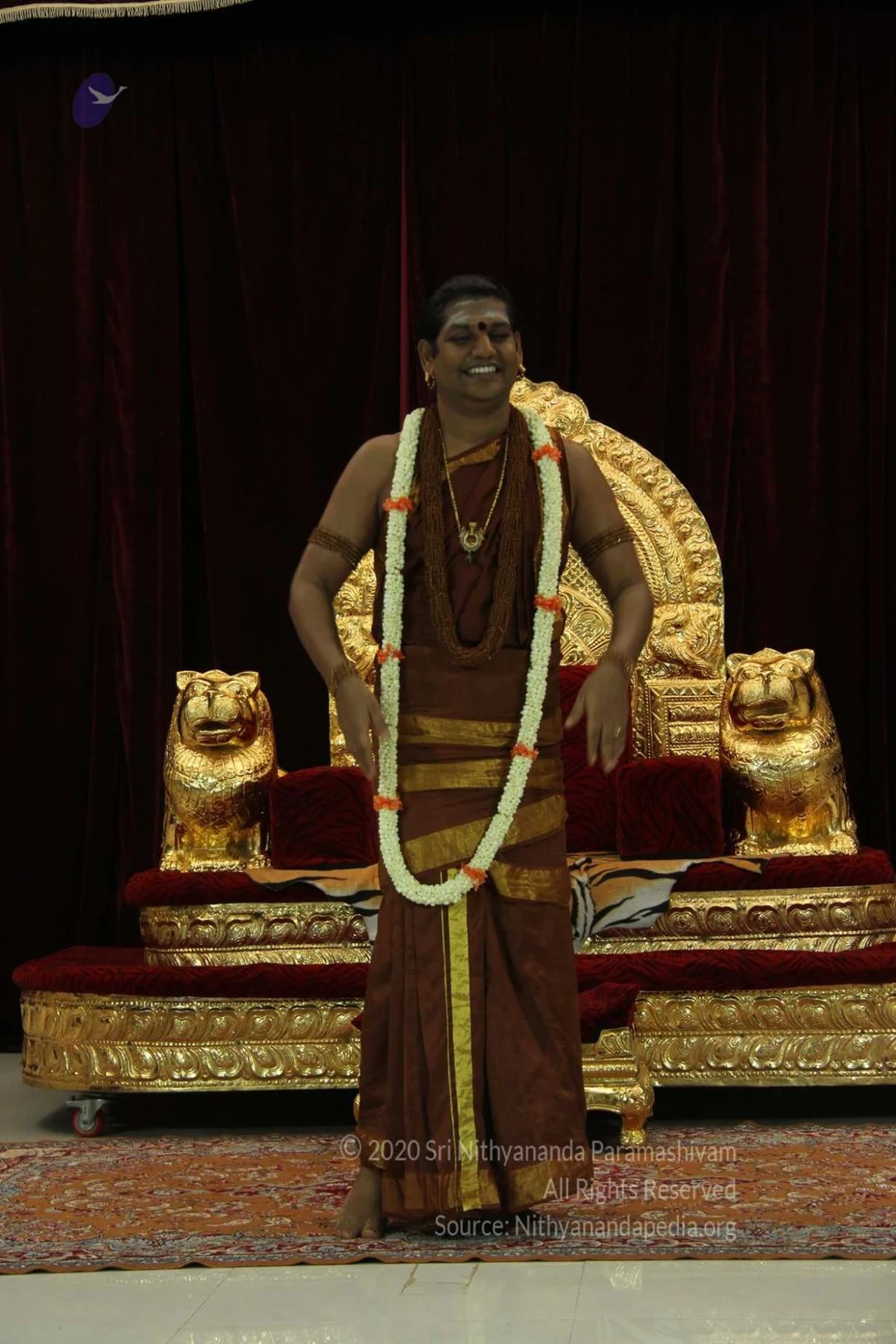
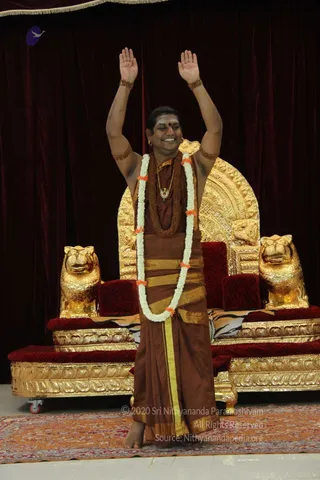
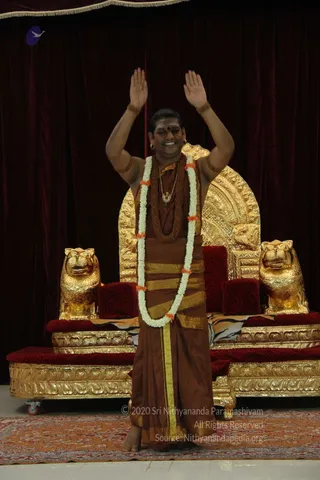
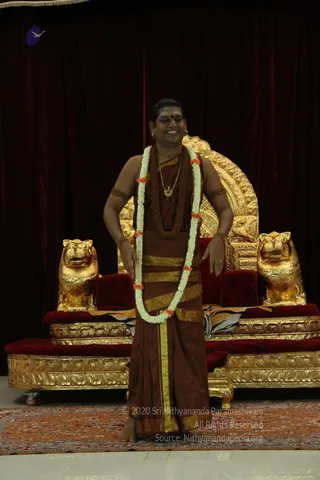
a person stands barefoot on a patterned rug before an ornate gold throne with carved lion heads and red cushions draped with a tiger-striped cloth, against dark red velvet drapes. He raises both arms overhead with palms open, smiling broadly. He wears a brown silk garment with gold borders, a white jasmine garland with orange flowers, a dark rudraksha mala, a gold pendant necklace, gold bangles, and a red bindi. Ceremonial satsang setting.A smiling man stands barefoot on a red patterned rug before an ornate gold throne with carved lion heads, draped in dark red velvet curtains. He raises both hands overhead in a welcoming gesture. He wears a brown silk garment with gold borders, a white and orange jasmine garland, a rudraksha mala and ceremonial gold pendant, and bangles on his upper arms. A red tilak marks his forehead. The throne is decorated with tiger-striped cushions.A photograph of a single man standing barefoot on a patterned red-and-cream rug before an ornate gold throne with carved lion-head armrests, red velvet cushions and a tiger-striped throne cover, against a dark maroon velvet curtain. He raises both hands high with palms open, smiling, wearing a rust-brown dhoti and matching brown upper cloth with a gold border, a white jasmine garland with orange flower accents, a brown rudraksha mala, a gold pendant necklace, gold bangles on his wrists and armlets. A red bindi marks his forehead.A standing man in brown and gold ceremonial robes raises both hands palms-forward in greeting before an ornate gold throne with red velvet cushions and two gold lion-head armrests, backed by dark red velvet drapery. He wears a white and orange flower garland, a brown rudraksha mala, a gold pendant necklace, and a red tilak on his forehead. A red and gold carpet covers the floor. The page indicates this is a satsang setting; the figure's appearance with long swept-back hair and ornate ceremonial adornments suggests a person presence, though this is uncertain from appearance alone.A standing man in a brown and gold-bordered dhoti and brown shawl stands barefoot on an ornate red and orange rug before a gilded throne with lion-head armrests and red velvet cushions, against dark red drapery. He wears a white jasmine garland with orange flower accents, a rudraksha mala, a gold chain with pendant, gold armlets and a red bindi with vibhuti on his forehead.

Akila Bharat Hindu Maha Sabha Honoring Swamiji

177 photosSource gallery
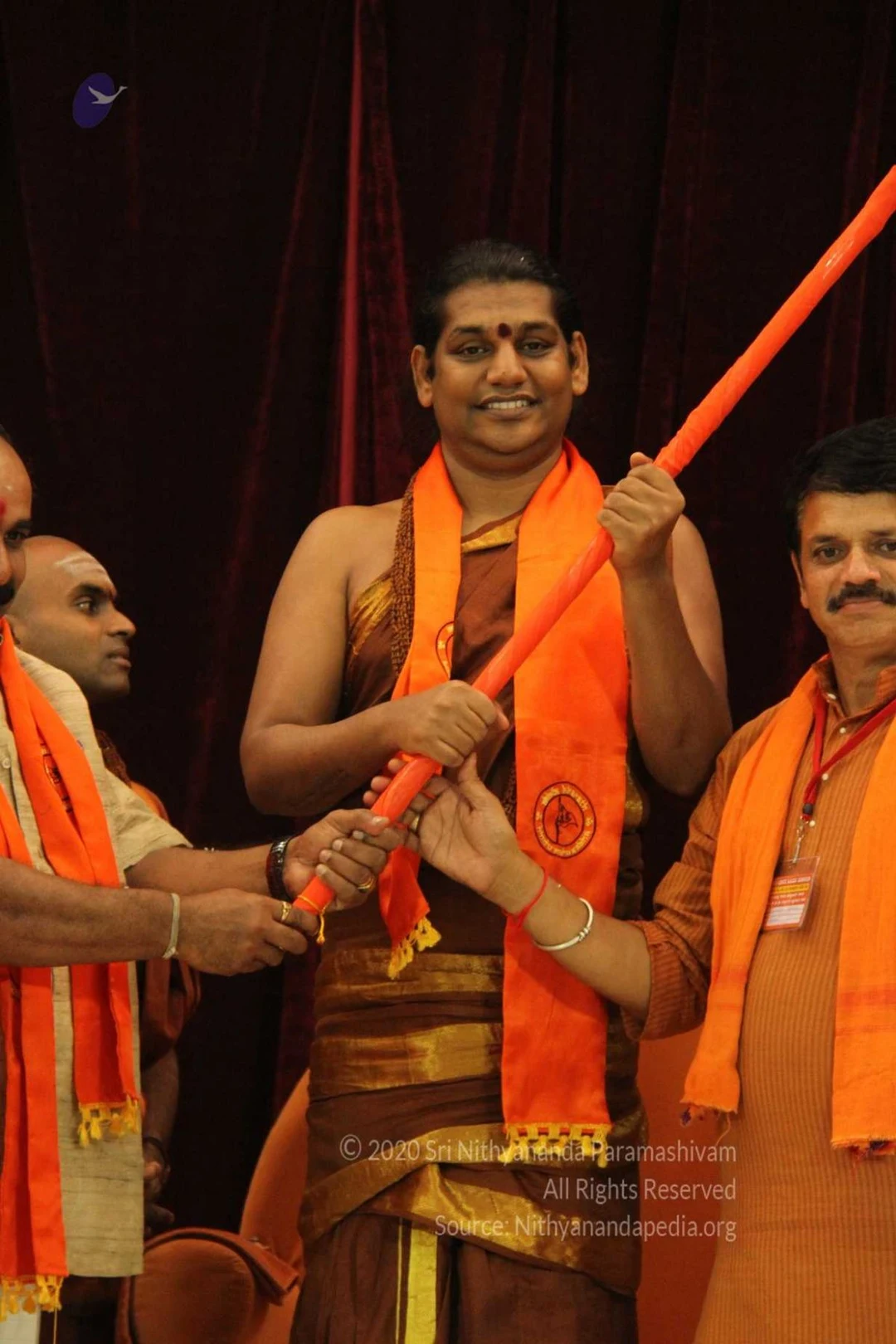
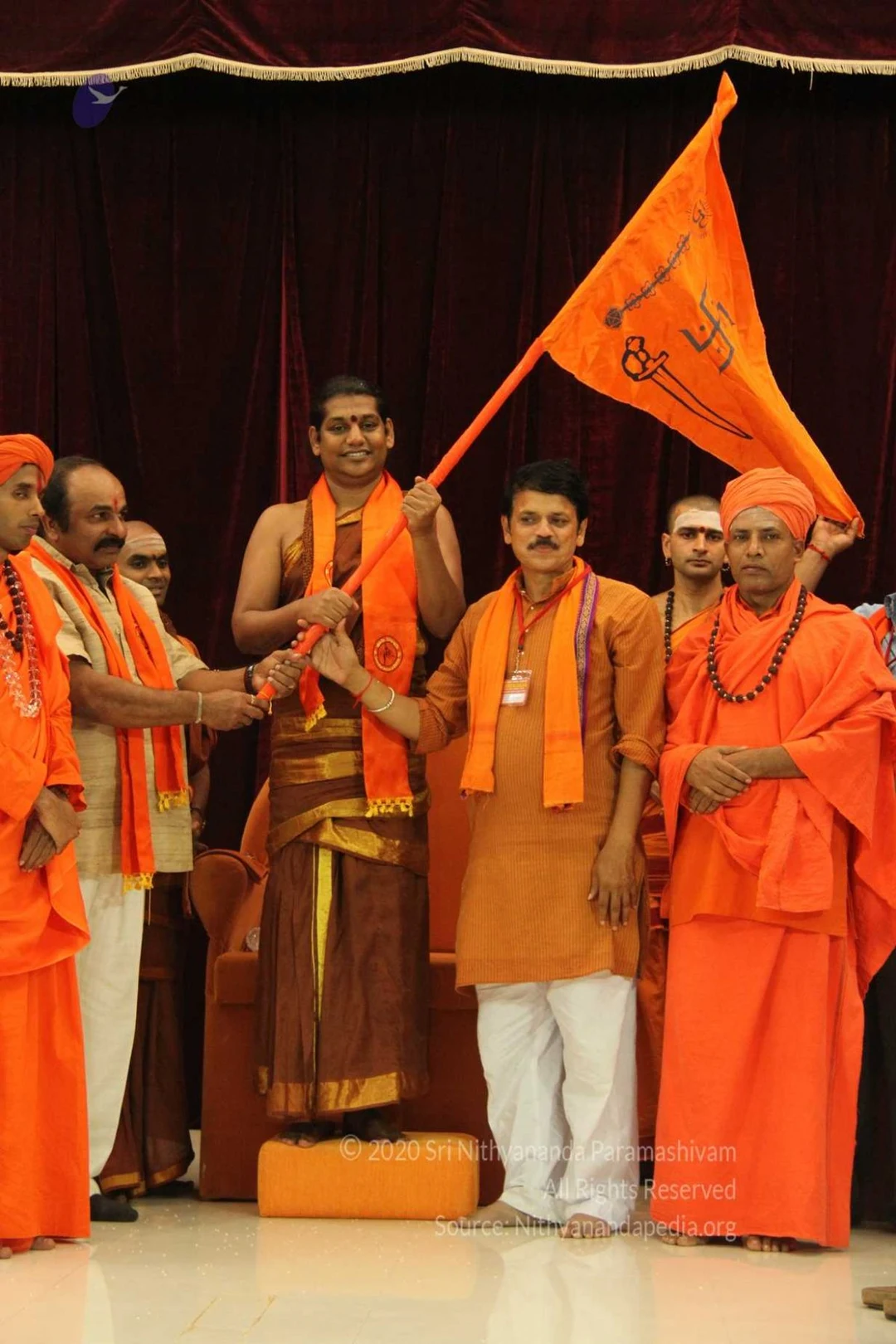
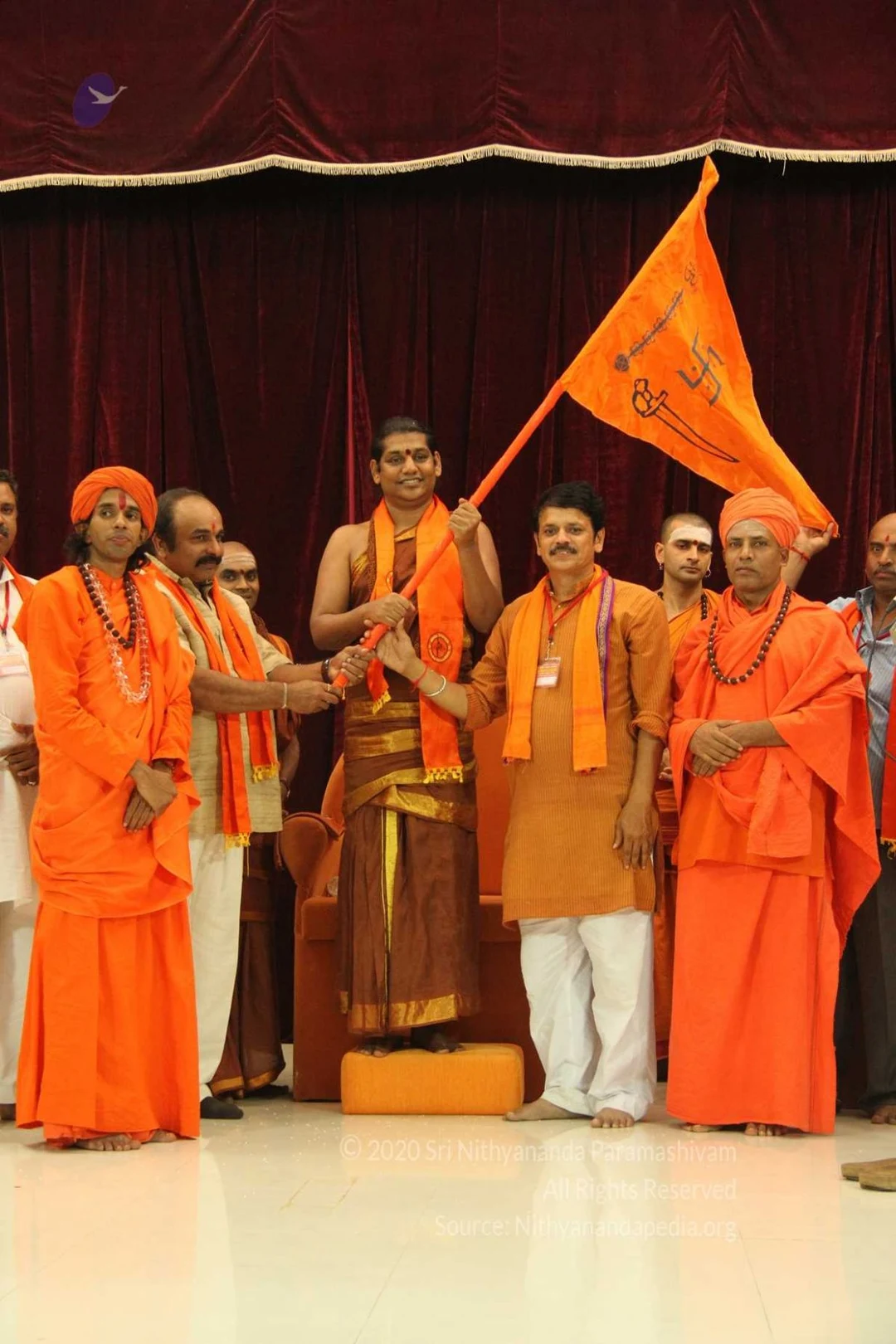
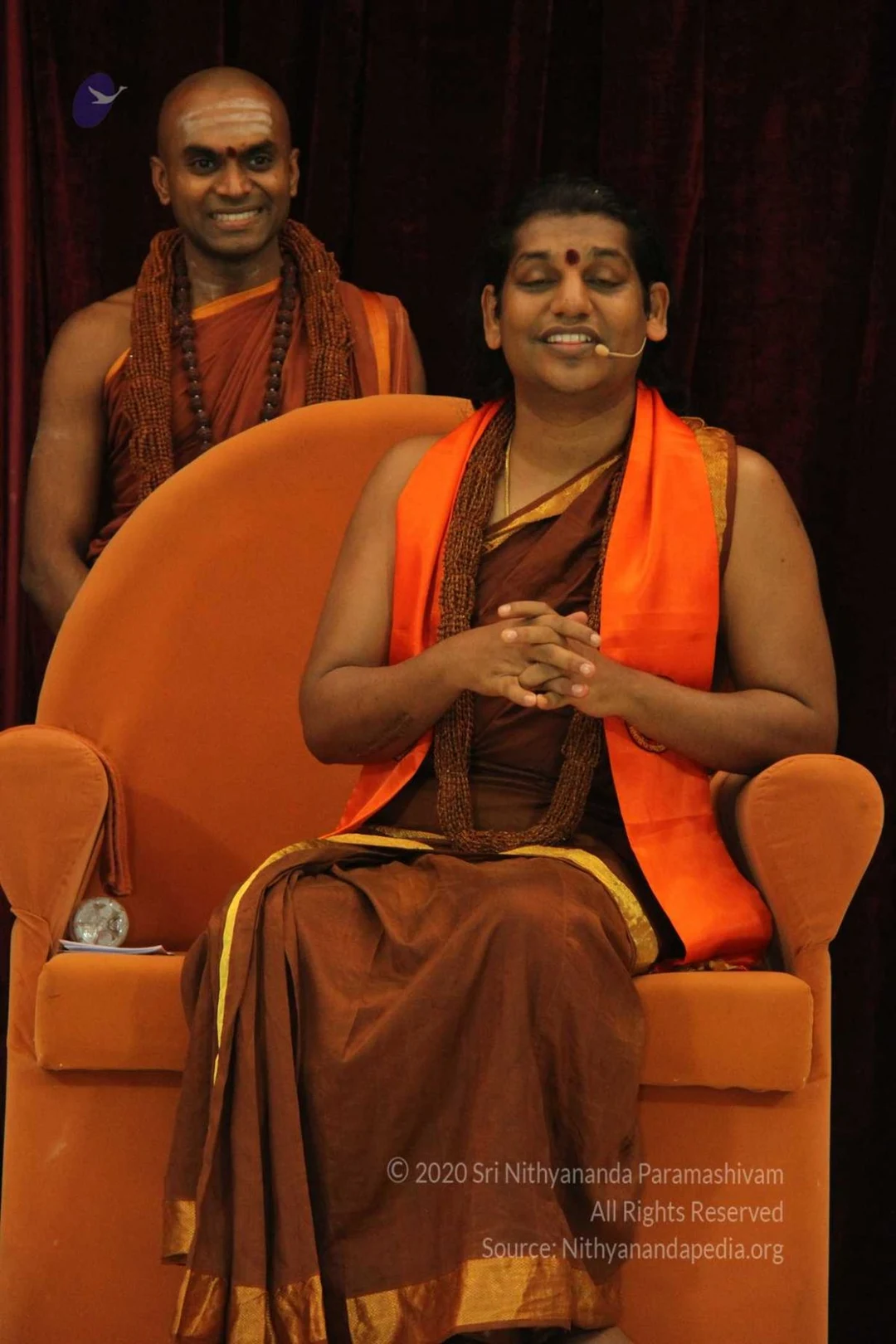
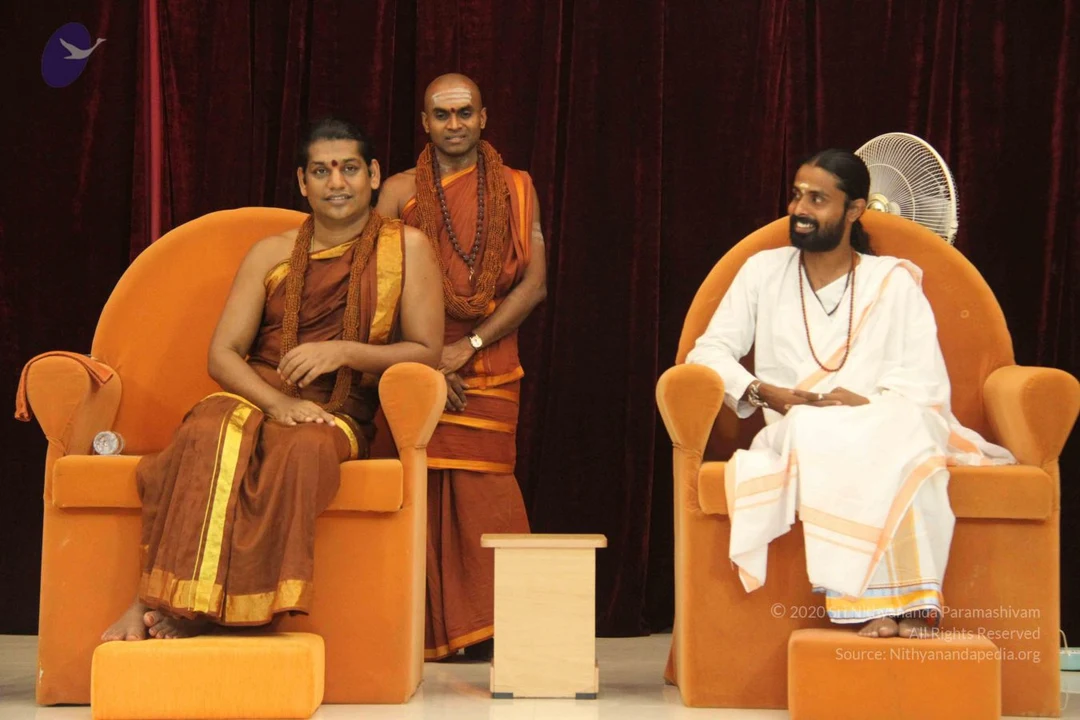
A photograph of several men gathered around a central figure holding an orange saffron flag on a pole, with dark red velvet drapery and a fringed valance behind them. The central figure wears a brown and gold-bordered dhoti with a pink-and-gold shawl over one shoulder and an orange sash. Around him, men in orange turbans and orange robes, and a man in cream kurta and white dhoti, grip the flagpole together, as a man in white with a beard stands at the right edge. An orange flag with a dark geometric emblem is raised above them.Several people on a stage in front of maroon velvet drapes hold a long pole topped with a saffron flag with dark script. A woman in a brown and gold sari with a pink blouse stands in the centre, smiling, gripping the pole. Men on either side wear saffron scarves, cream kurta and orange kurta; one man in an orange turban and saffron robe stands at right. A man in an orange turban with a tilak and saffron clothing stands at left among the group. A round ceiling light and a small white-and-purple emblem appear above. No figure is clearly identifiable as the a person candidate by appearance; the scene shows a flag-raising moment with devotees and organizers.A photograph of a group of men holding a long pole that flies a saffron-orange flag with a swastika and an Om-like symbol. In the centre, a man in a pink top and brown dhoti with gold borders is grasping the pole, with several men in orange robes and orange turbans around him. Two men in white with bearded faces and rudraksha malas stand on the right, and a man in orange kurta with an orange shawl and lanyard is in the middle. A red velvet curtain forms the backdrop beneath a round ceiling light.A photograph of a stage ceremony in front of maroon velvet drapes. A man in a brown dhoti with gold border and orange shawl stands centrally, smiling, while holding the shaft of an orange saffron flag. Around him, several men in orange and saffron robes and turbans hold the flagstaff with him; one wears a rudraksha mala. A man in a cream kurta and white dhoti stands at left, and another in white stands at right. Orange-cushioned chairs and a fan are visible. The scene shows a flag-handing or flag-hoisting gesture.A ceremonial flag-consecration scene against a deep maroon velvet curtain with gold fringe. On the left, a figure in an orange turban and orange robes holds a lit oil lamp or offering plate toward a saffron flag held aloft by a man in a brown dhoti with gold border and orange shawl, whose face is covered by the offering. A smiling man in an orange kurta and white dhoti holds the flagpole beside him, and on the right a man in an orange turban and orange shawl wears a rudraksha mala and claps. Four physical people are visible, with a cushioned stool or pedestal below. The saffron flag has a faint emblem on it.Four men stand on a stage before a dark red velvet curtain as an orange saffron flag on a pole is passed between them. On the left, a monk in orange robes and an orange turban reaches out to hand over the flag. Behind him, a bare-chested man with an orange shawl, a gold-bordered brown dhoti and a red tilak on his forehead holds the pole, standing on an orange cushion. Beside him, a smiling man in an orange kurta with a patterned orange shawl and white trousers reaches forward to take the flag. On the right, a man in an orange turban and orange robes with a rudraksha mala presses his palms together. A tall man in brown dhoti with a tilak stands centre-stage and appears to be a person by appearance cues: bare-chested with ornate gold-bordered dhoti and an orange shawl, though the face and hair are not clearly distinctive. The flag shows partial orange emblem lettering.

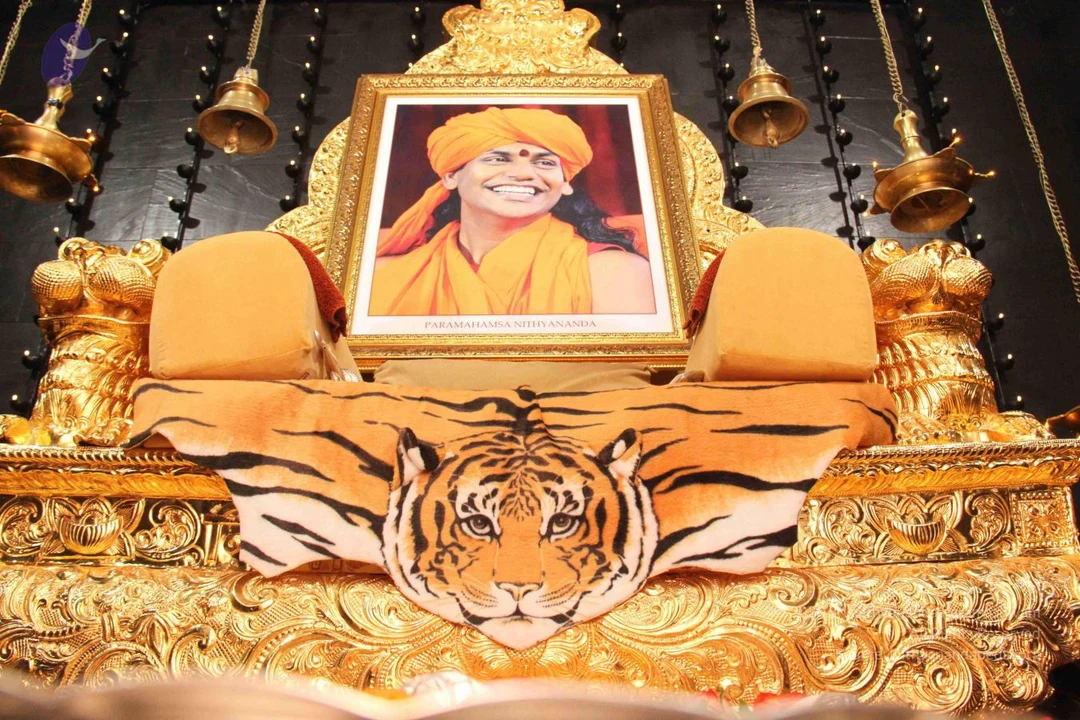
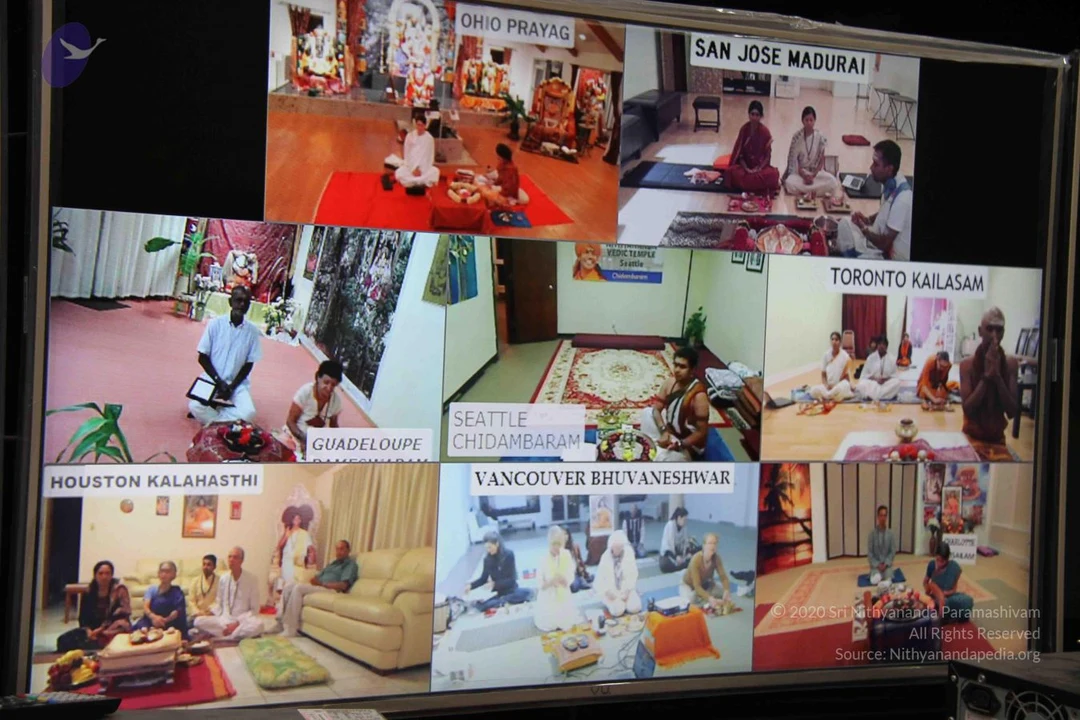
Paduka-Puja

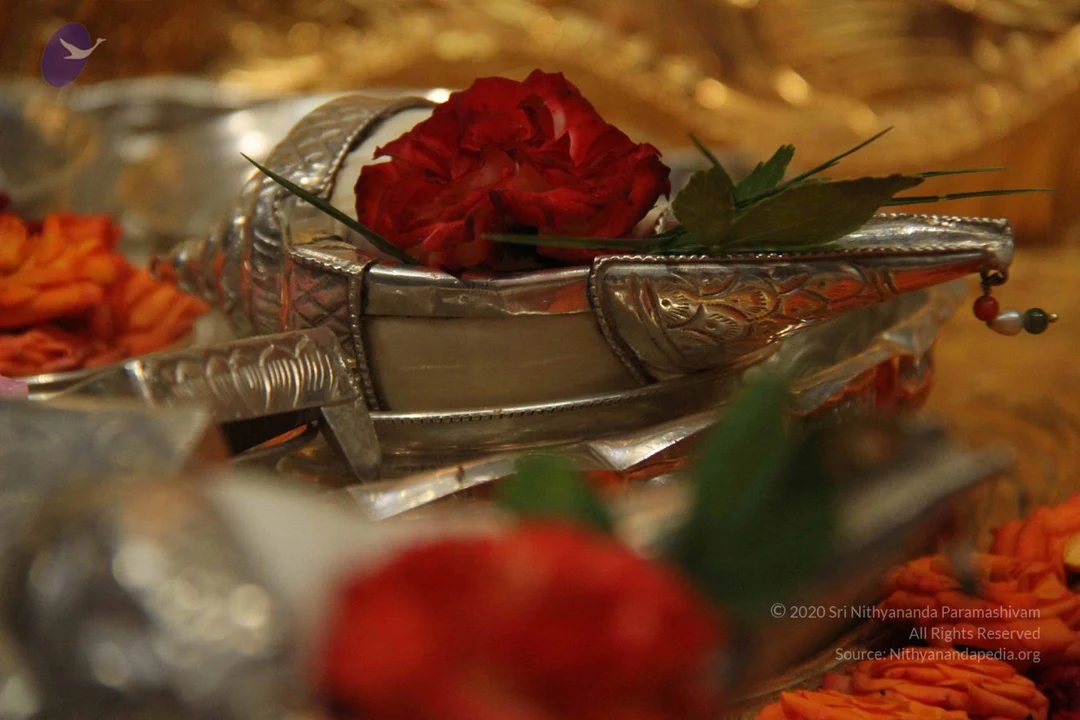
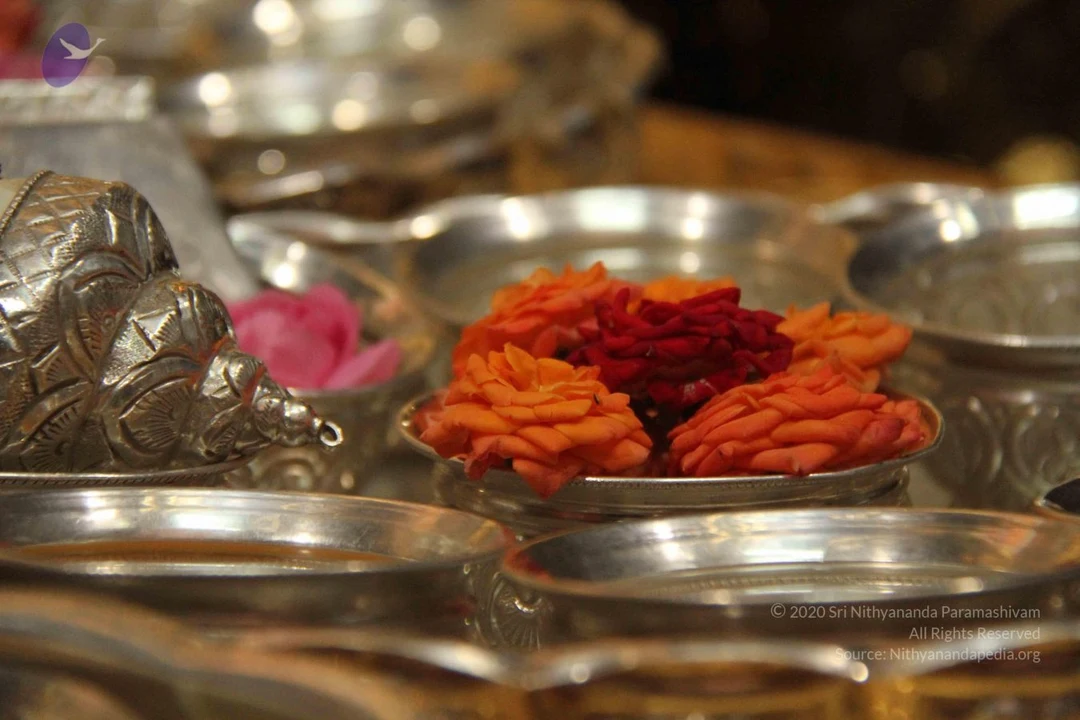
16 photosSource gallery
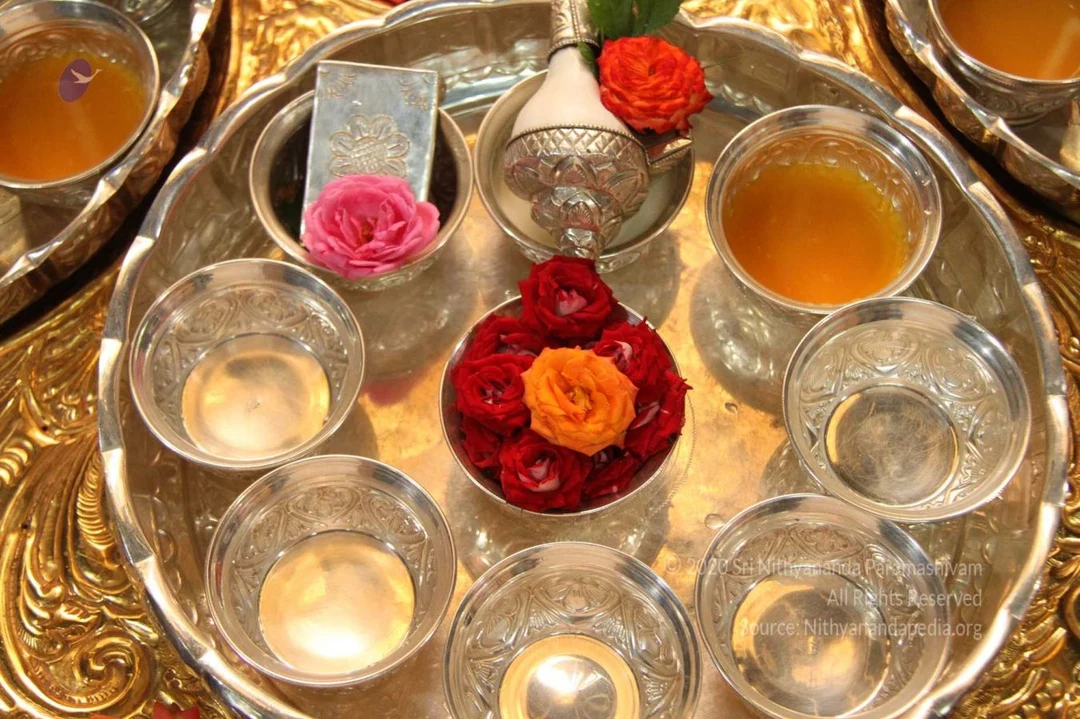
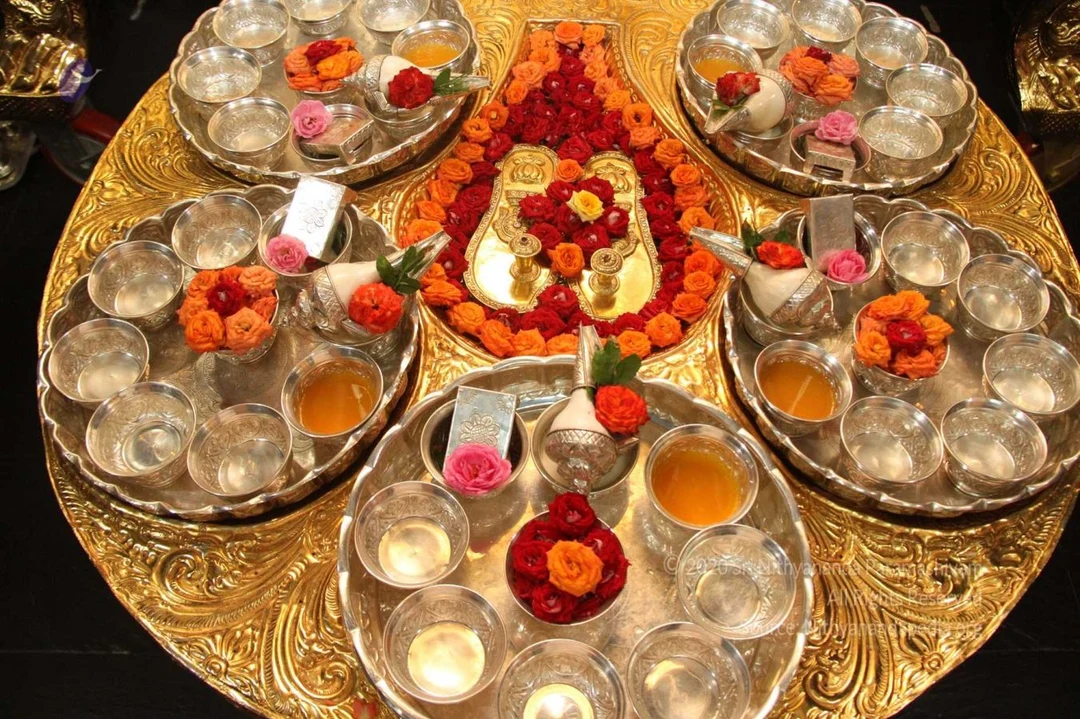
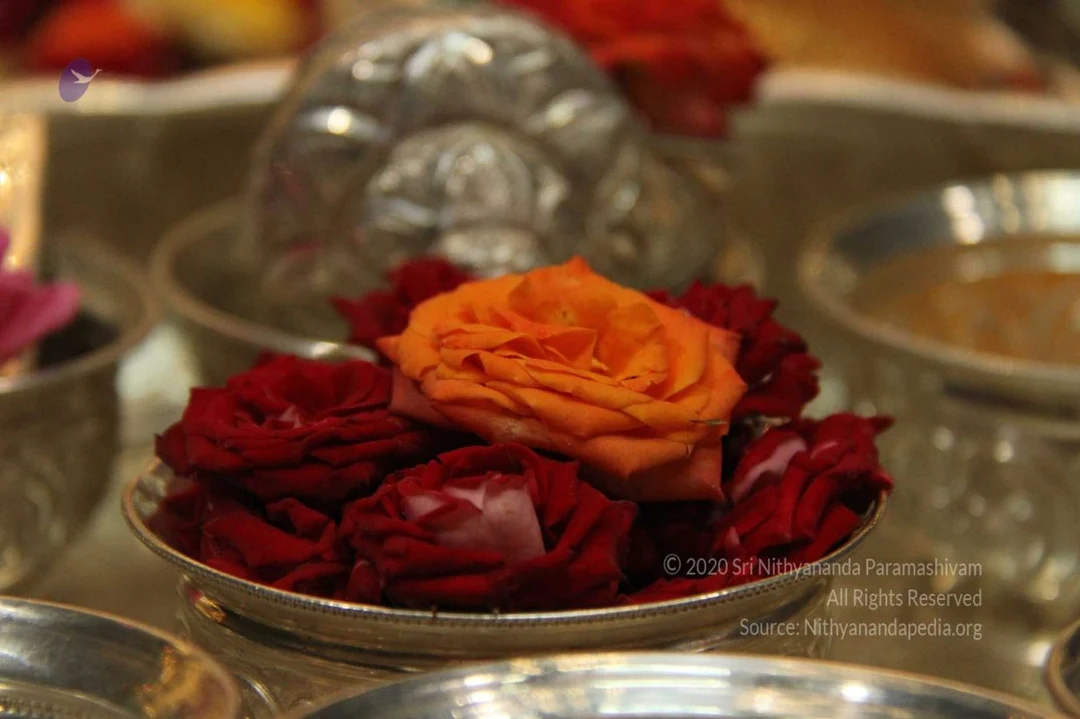
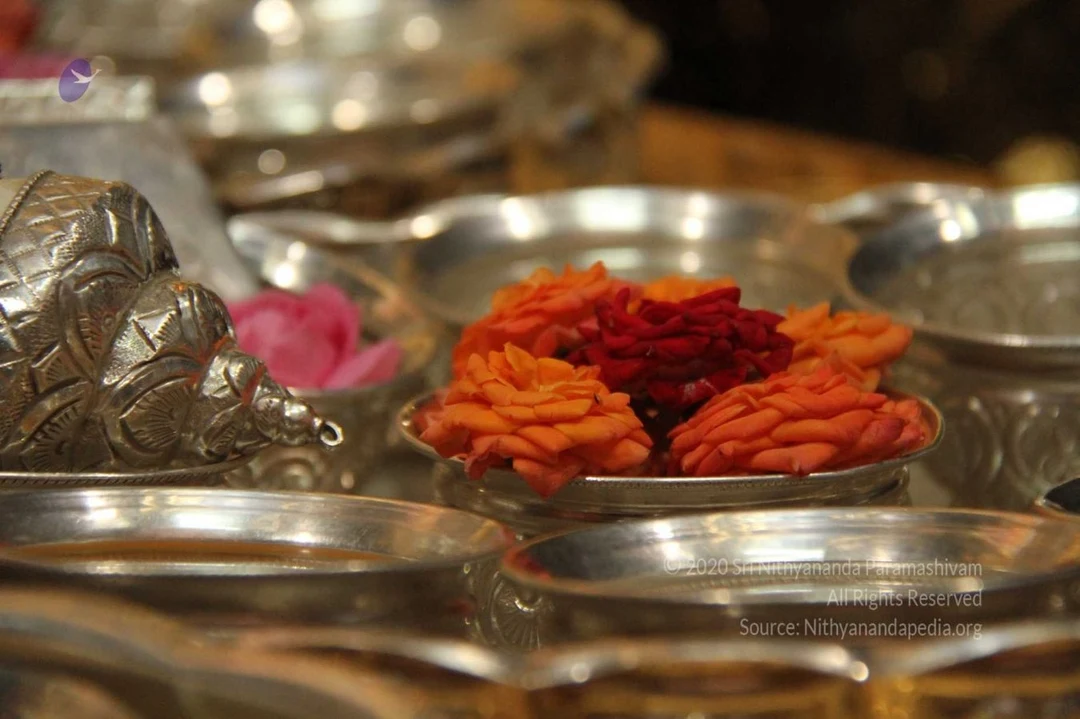
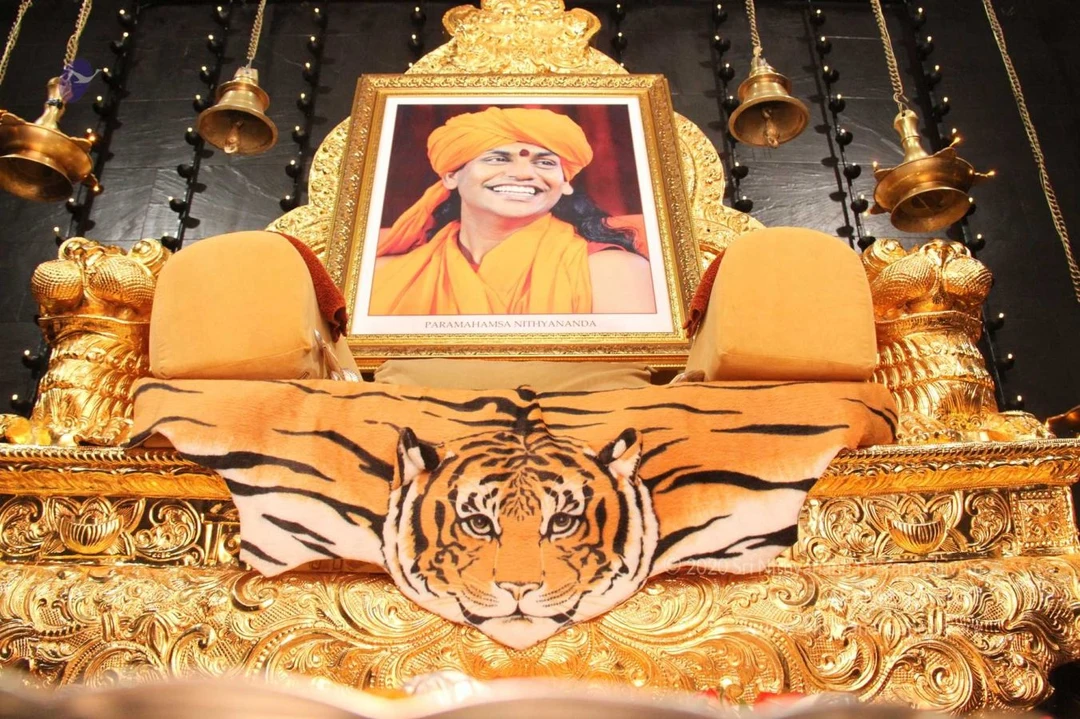
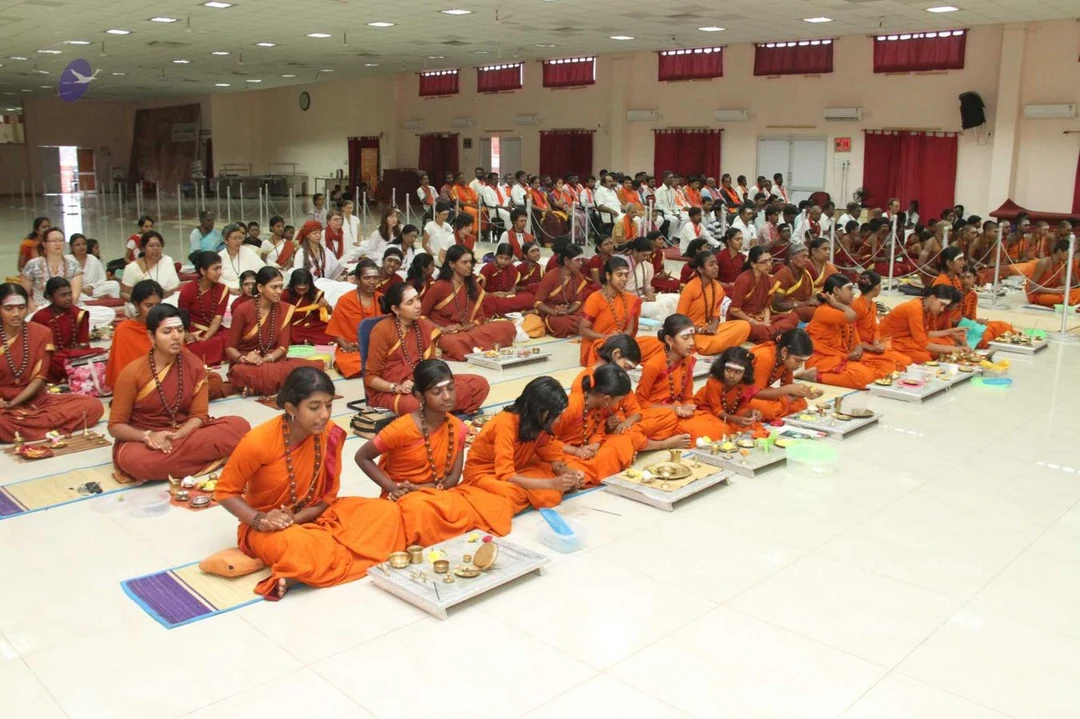
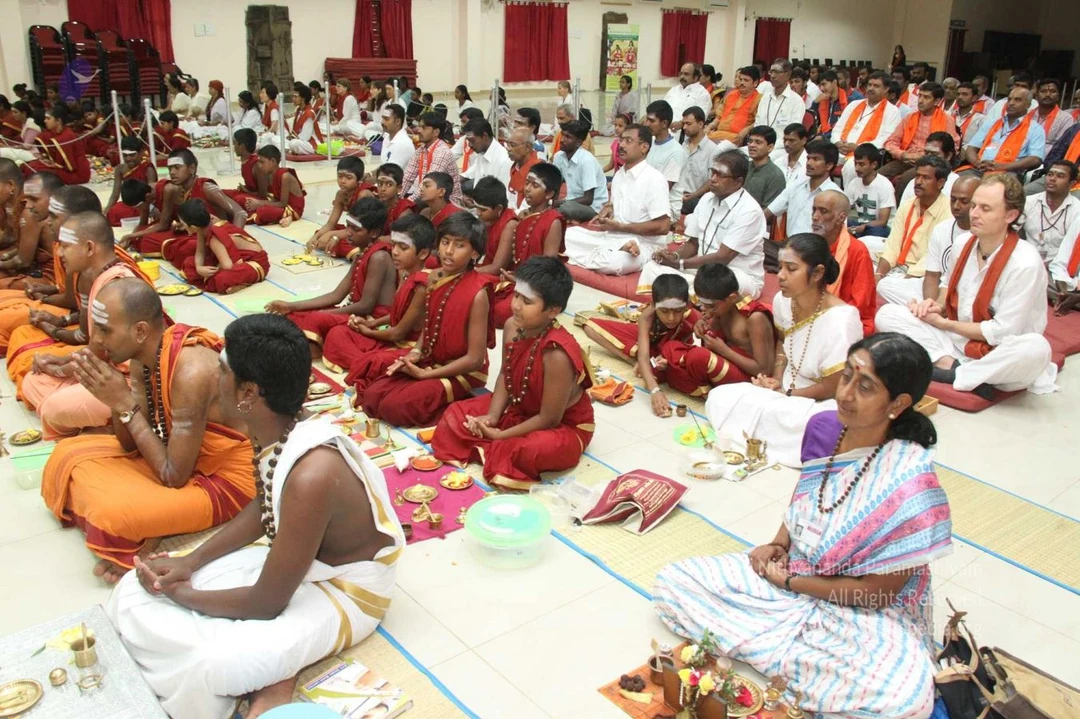
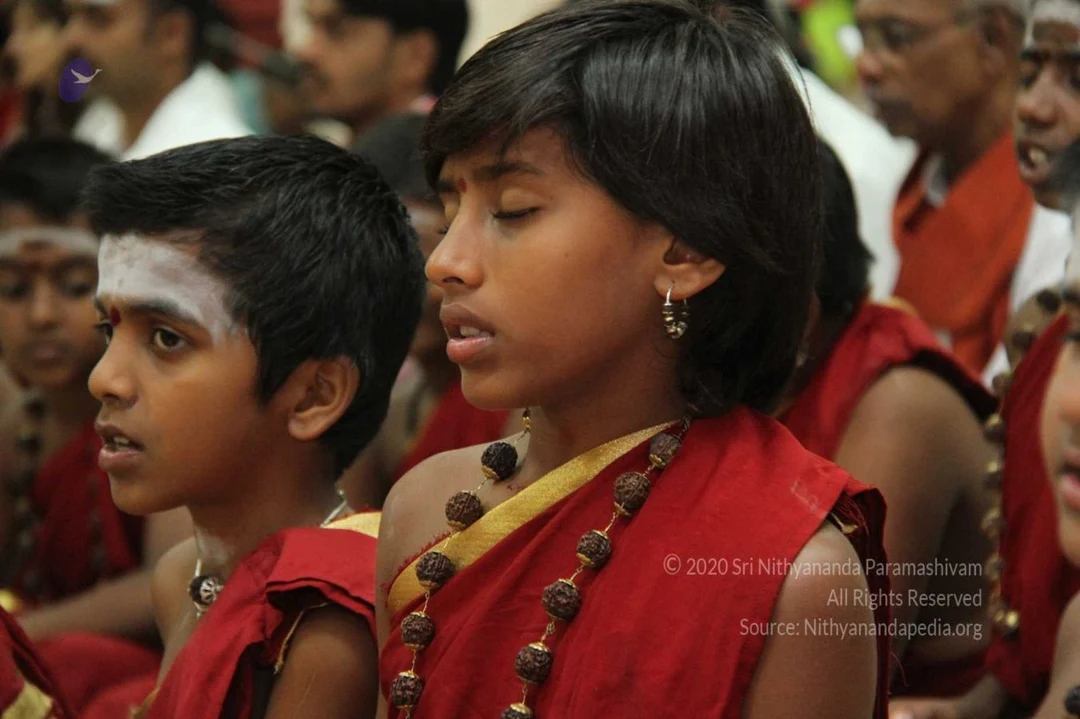
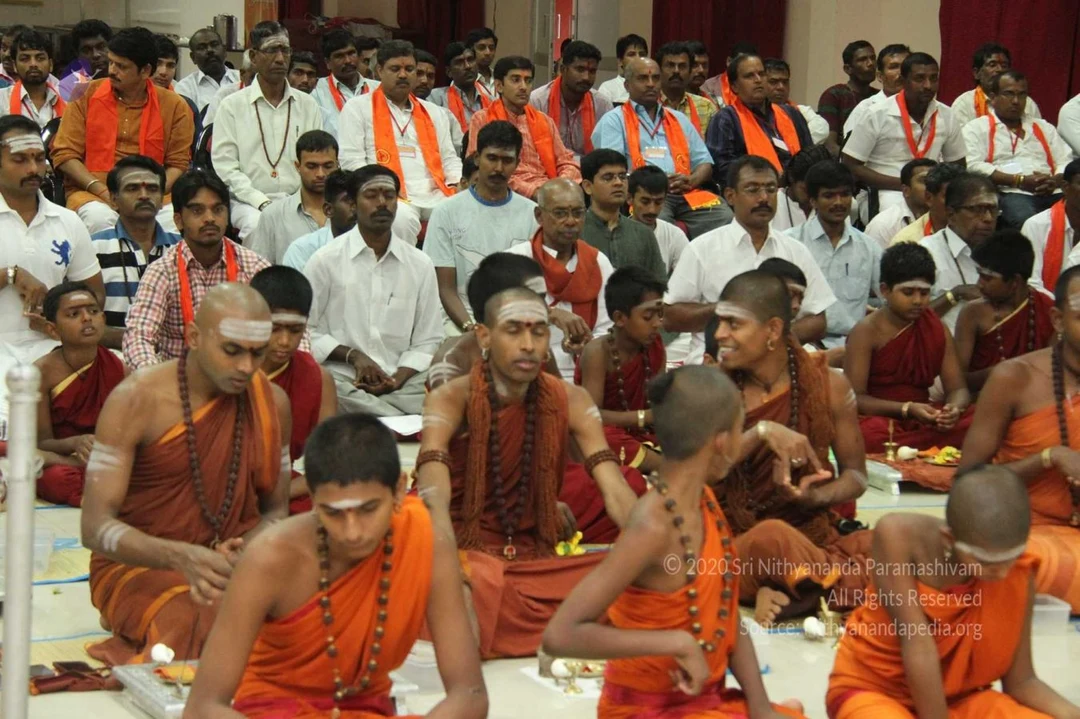
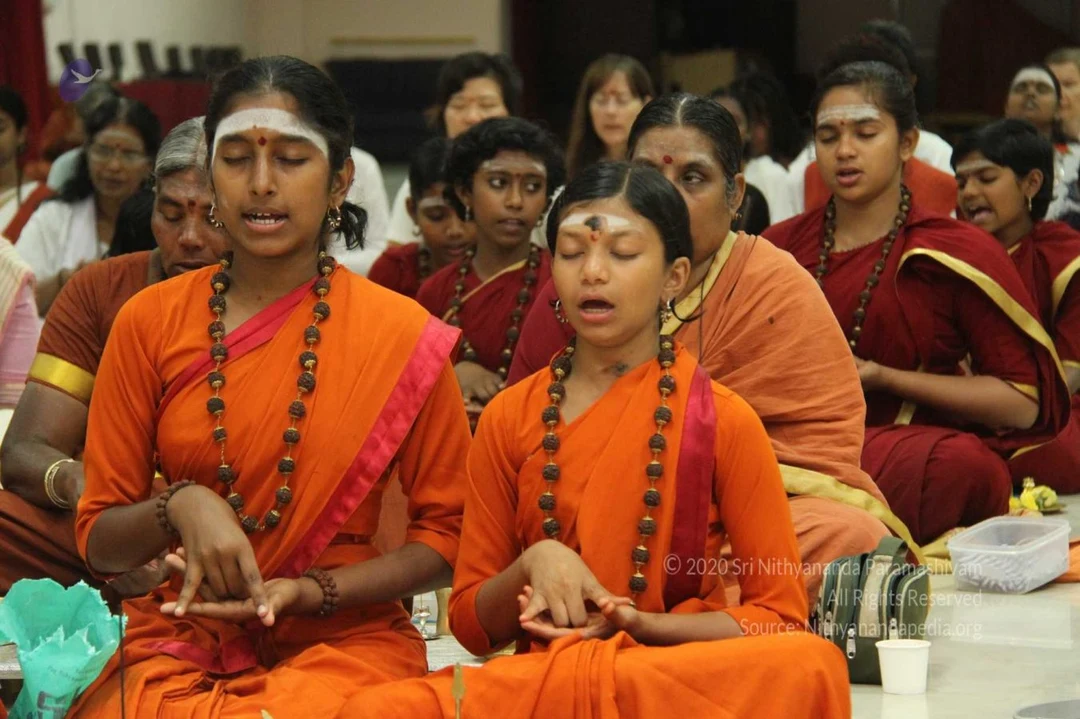
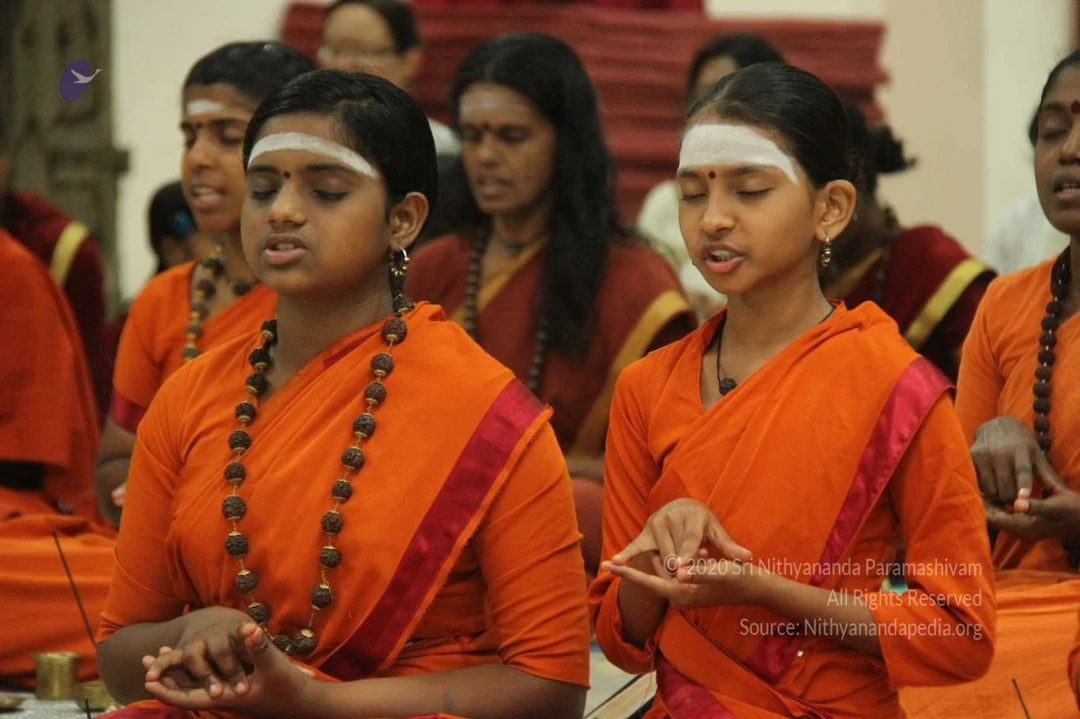
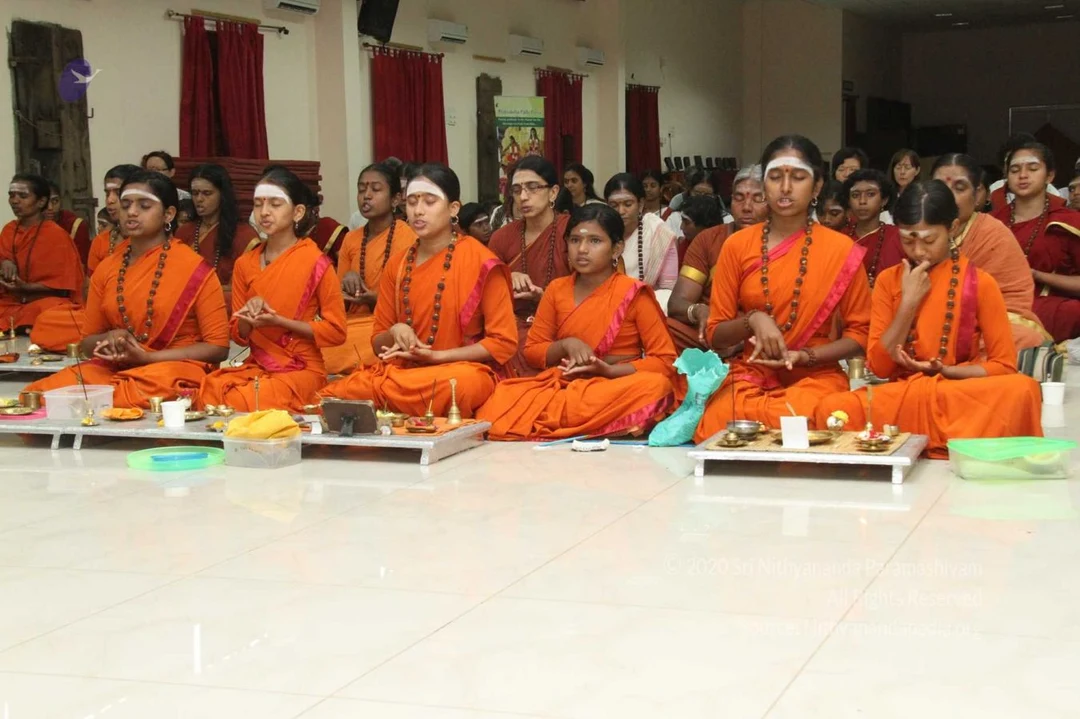
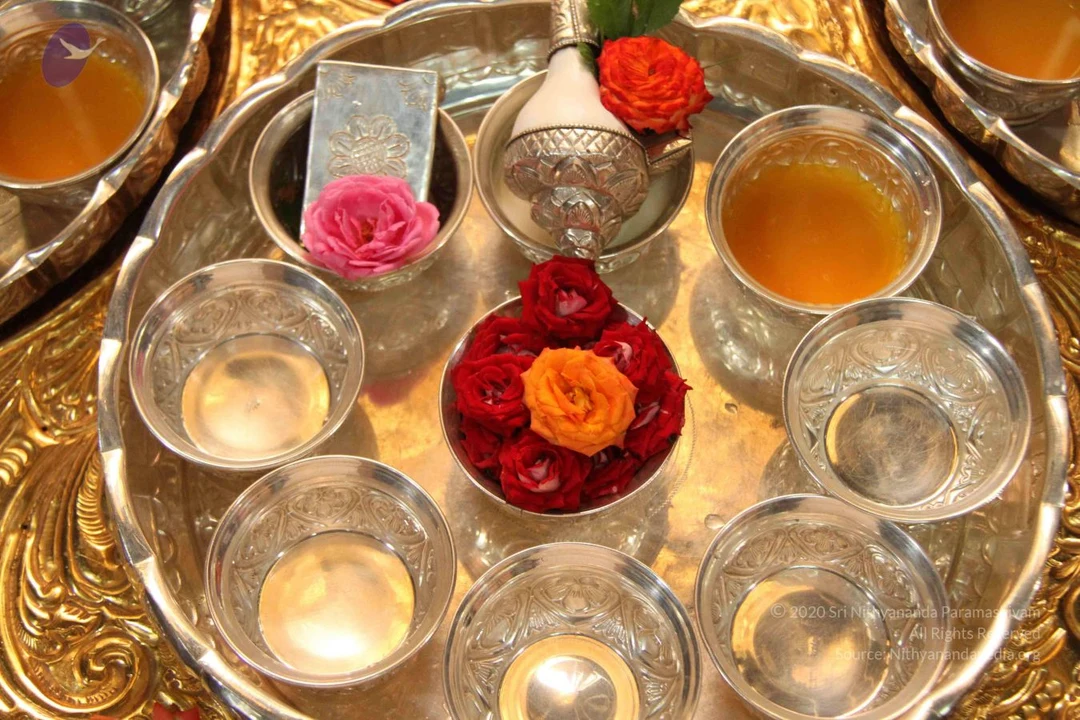
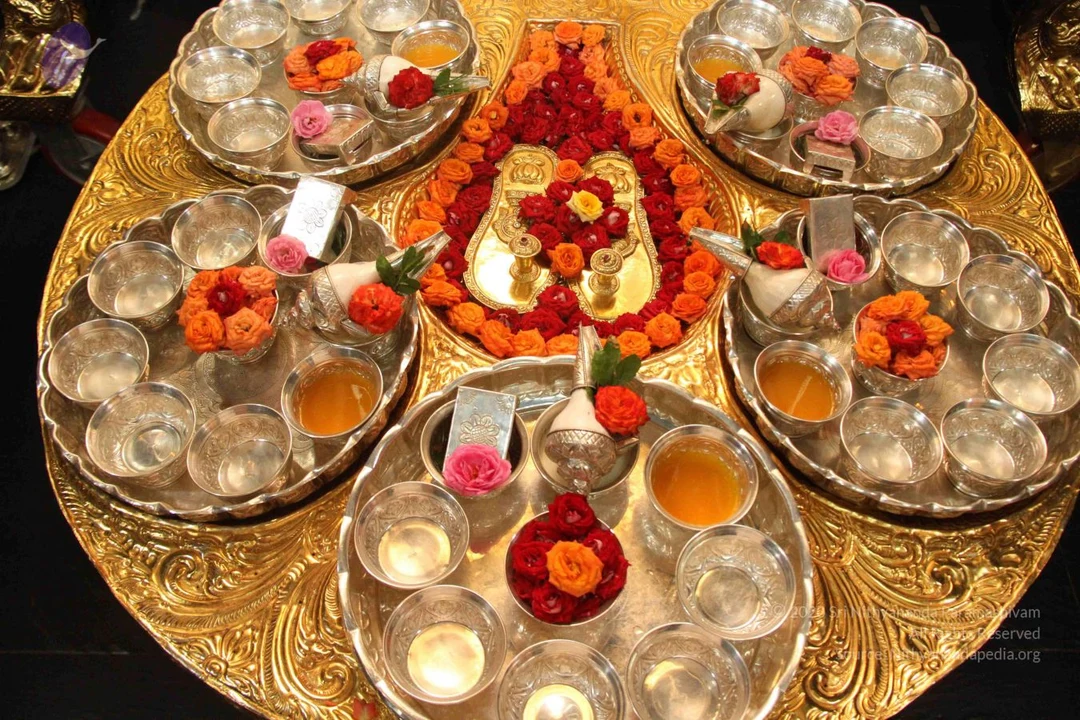
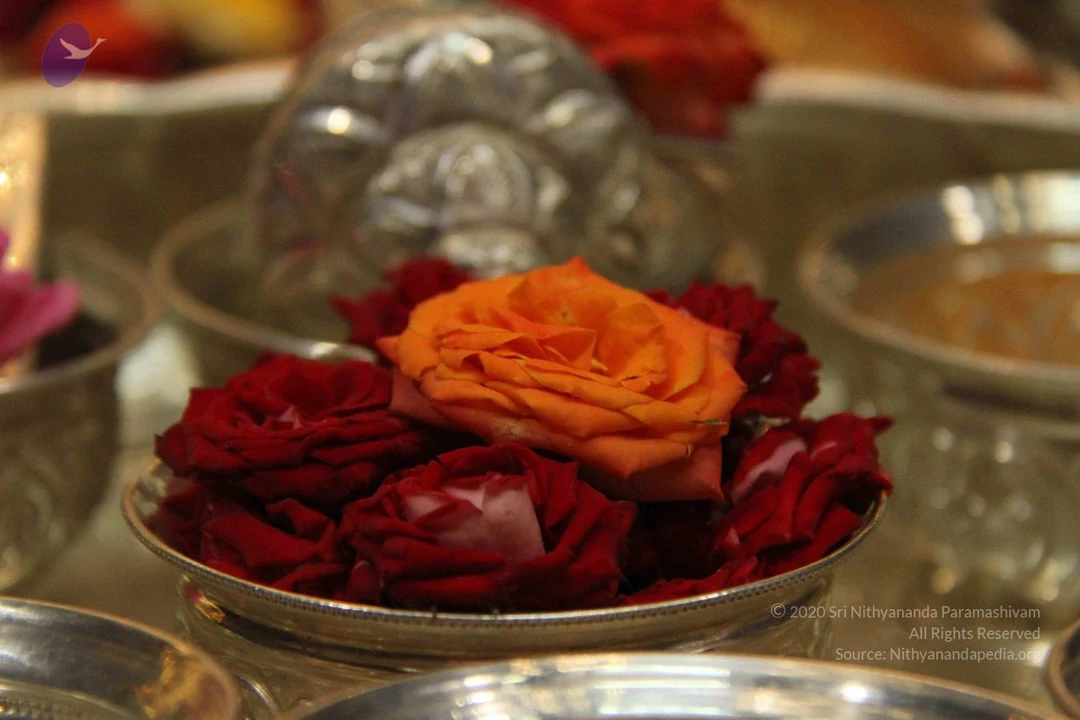
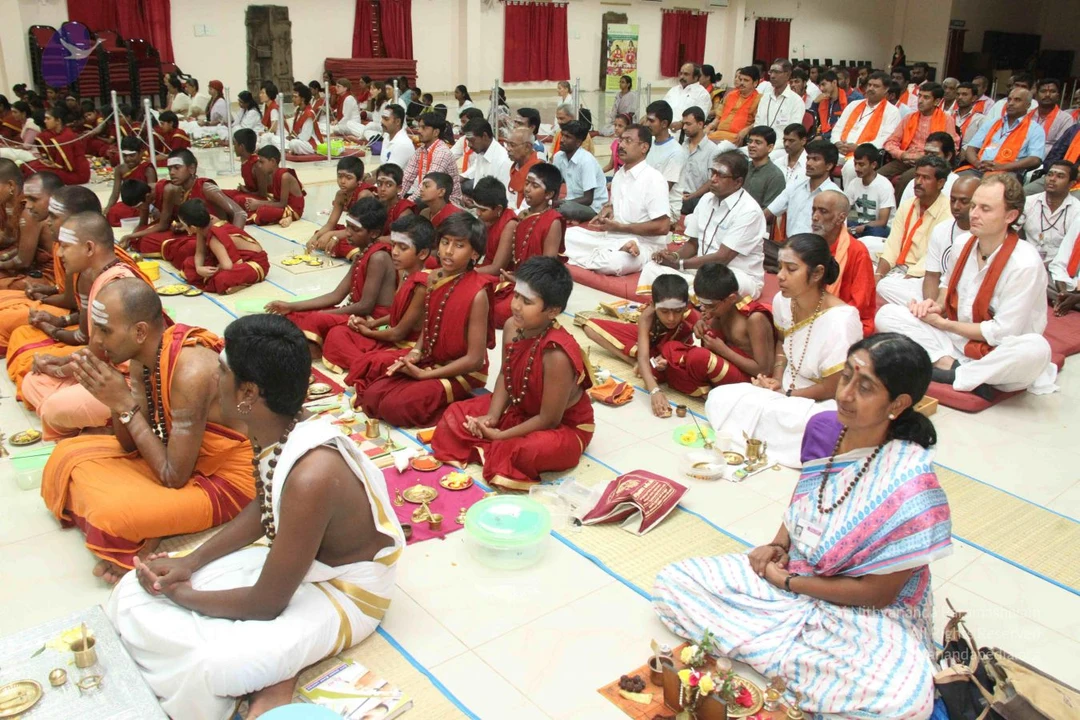
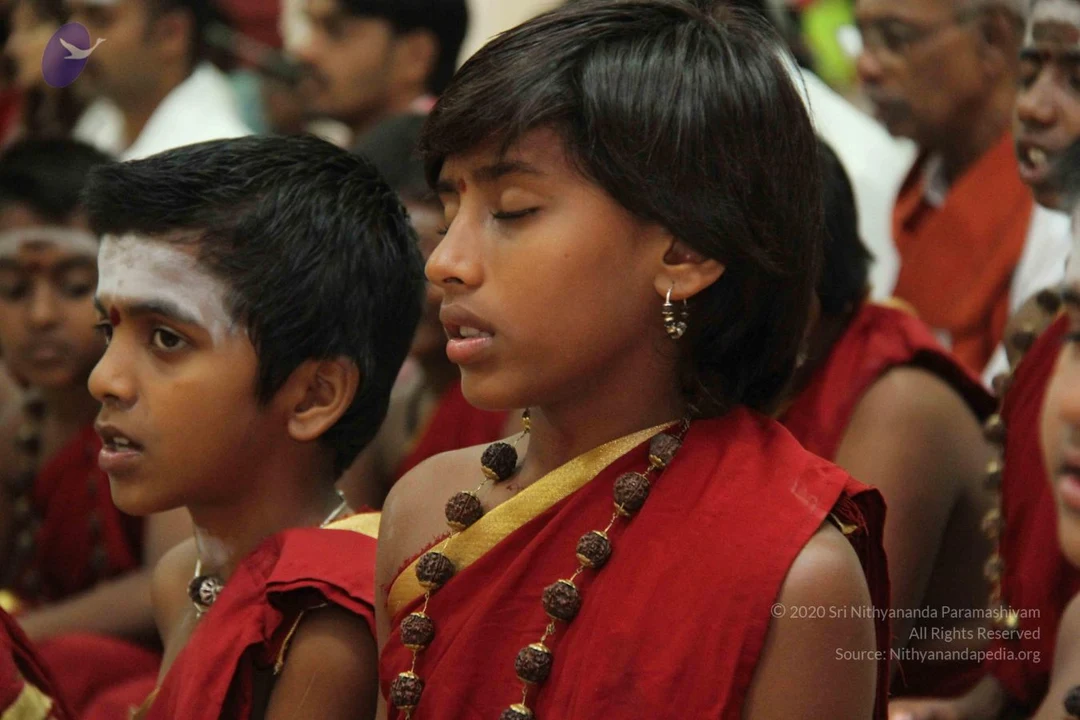
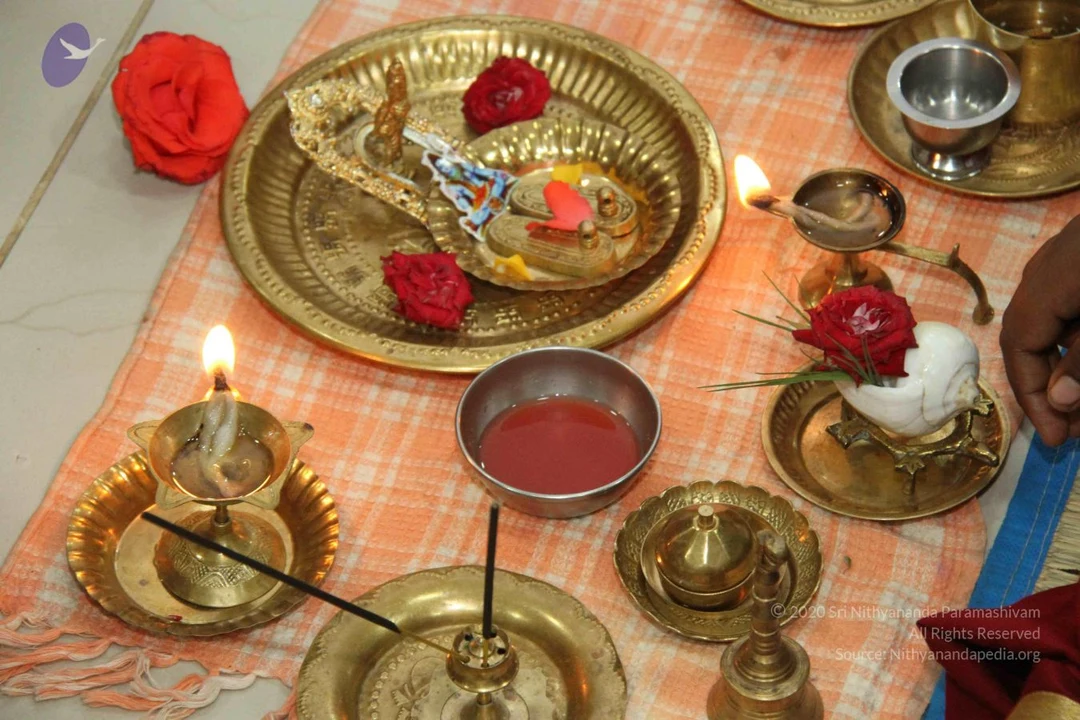
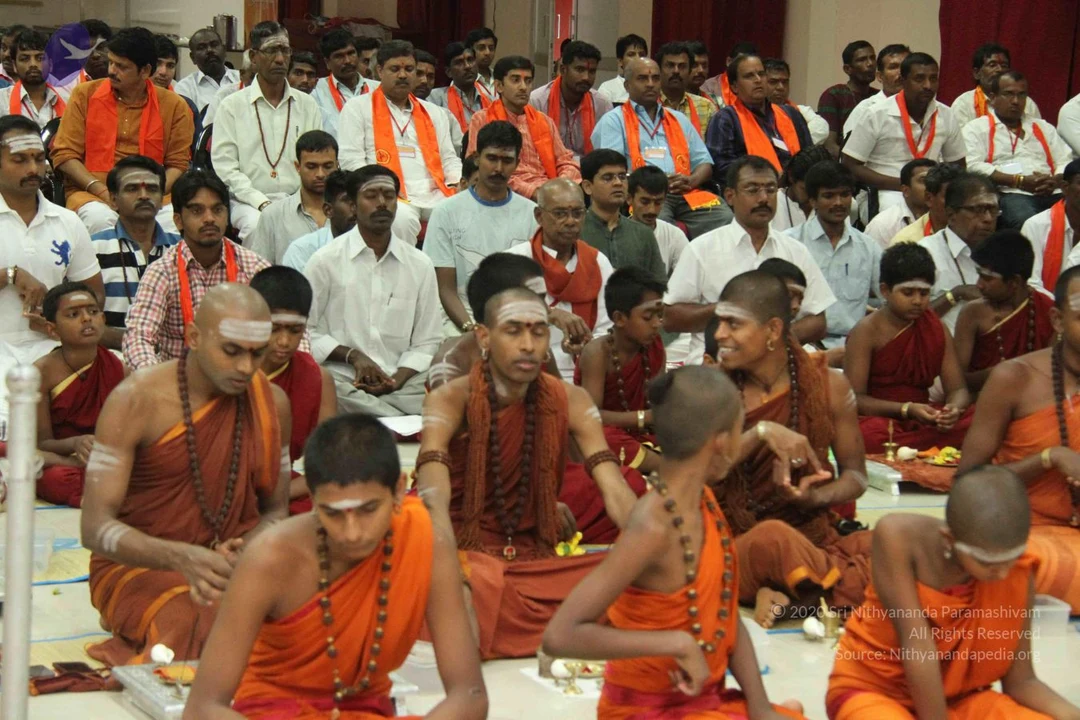
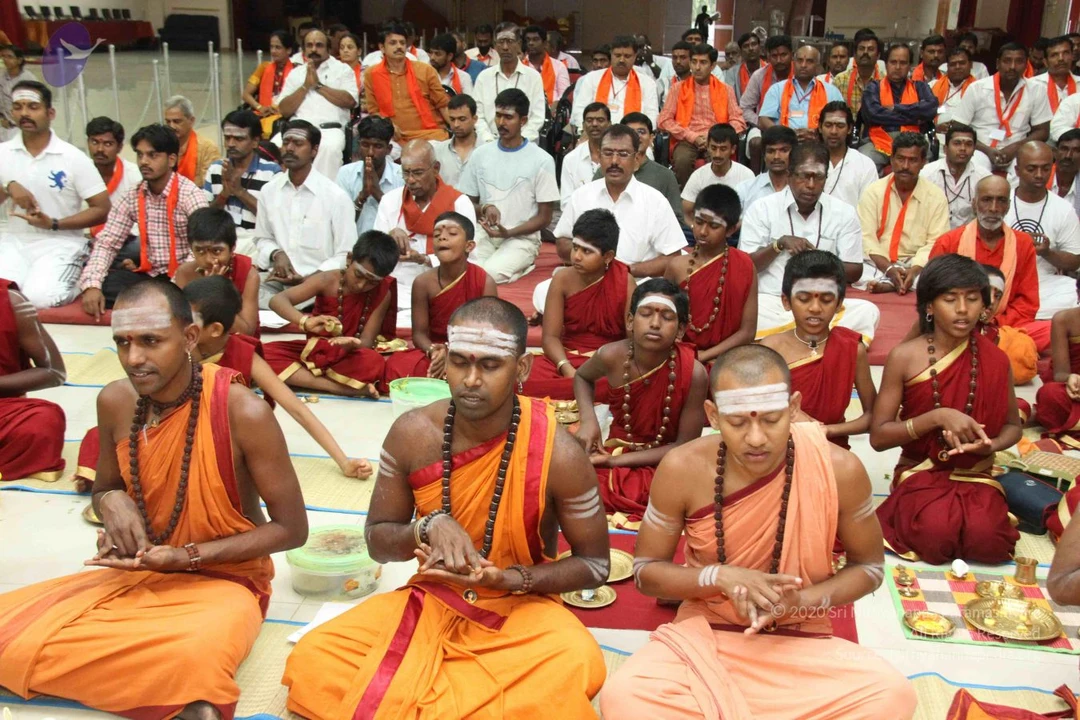
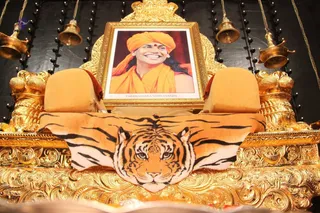
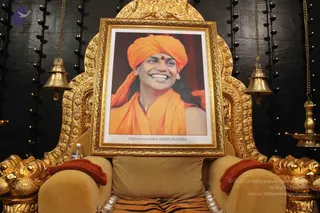
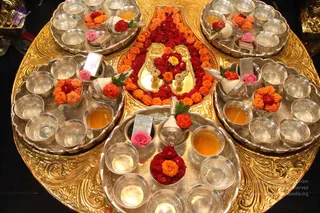
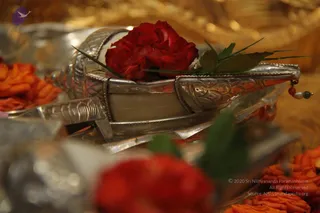
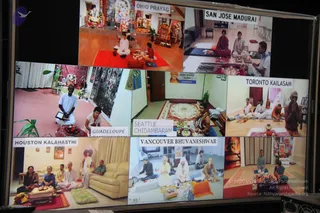
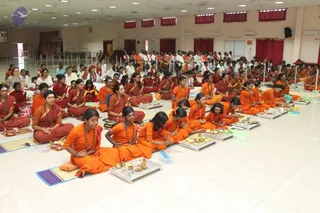
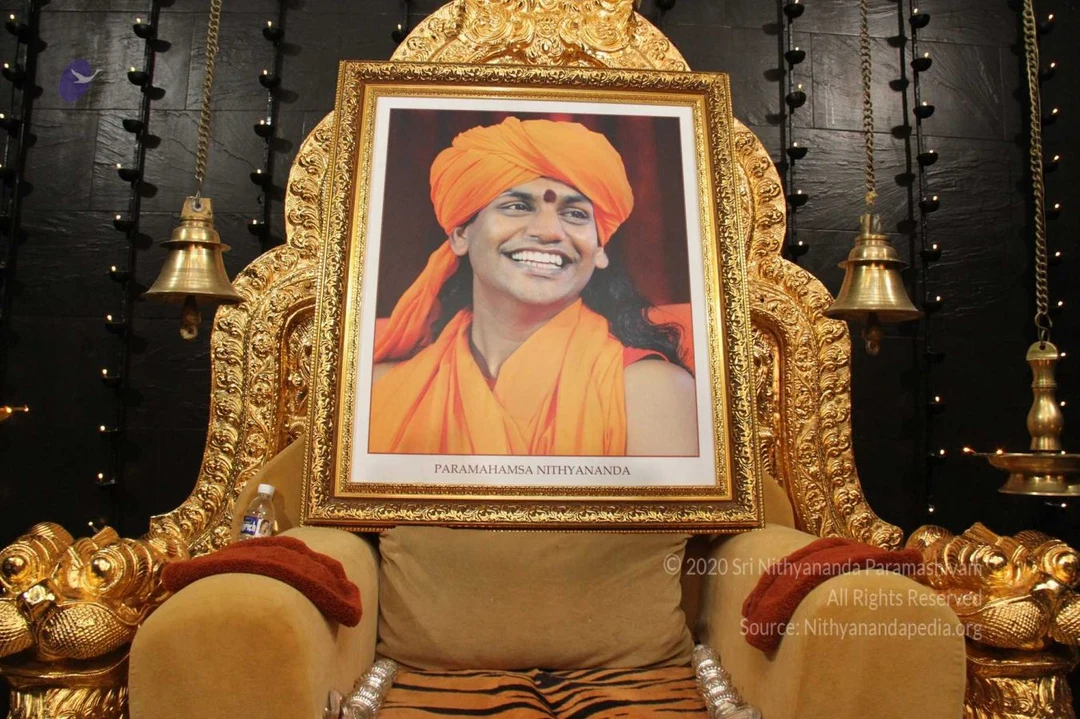
A large framed portrait labelled "PARAMAHAMSA NITHYANANDA" sits on an ornate gold throne with carved lion-head armrests and a tiger-striped seat cushion. The portrait shows a smiling man with long hair, an orange turban with a red bindi, and orange shawl. Brass hanging bells and a brass oil lamp flank the throne against a black wall with lamp fixtures. A water bottle sits beside the throne. No physical people are visible.Overhead photo of a large ornate brass tray holding an arrangement of ritual offerings. Eight small silver bowls with engraved rims are set around the edge, several holding clear liquid and two holding small lit oil lamps. Two bowls hold amber liquid. A central silver bowl is filled with red and orange roses. A silver jug with a flower stuck in its spout and a pink rose sit at the upper area, along with a small silver plate with floral engraving. The tray rests on a gold-patterned cloth. No people are visible.Overhead photograph of a ritual arrangement on a large ornate gold tray. Several silver plates hold small silver bowls filled with clear liquid and yellow-orange liquid, along with silver cones and marigold and rose flowers in orange, red and pink. At the centre, a golden yantra-shaped base is ringed by red and orange roses and holds two small golden lamps. No people are visible, so this is a ritual setup with offerings rather than a gathering.Close-up photograph of an ornate silver ritual vessel with engraved floral and paisley patterns, holding a red rose with green leaves and a few blades of grass. Orange marigold garlands lie in the foreground and blurred background, and a golden fabric fills the backdrop. A small string of beads hangs from the vessel's tip. No people are visible.A large screen shows a multi-panel video-conference collage of satsang participants from several centres, each panel labelled. Top left, Ohio Prayag shows people seated on red mats before a decorated altar with deity images and flowers. Top right, San Jose Madurai shows a woman in red and a man seated on mats with ritual items. Middle left, Guadeloupe Rameshwaram shows a man in white kneeling beside offerings. Middle centre, Seattle Chidambaram shows a man in a white dhoti seated on a red rug with a puja plate. Middle right, Toronto Kailasam shows several people in white, with saffron-clad figures and a man with folded hands. Bottom left, Houston Kalahasthi shows seated devotees with a puja tray. Bottom centre, Vancouver Bhuvaneshwar shows people in white seated around offerings. Bottom right, Kailasa centre shows a man seated on a rug beside a red-draped altar. The panels are screen images, not physical people in the room.A large hall with cream walls, red curtains and white tiled floor shows rows of people seated on mats in orange and saffron robes, many wearing rudraksha malas and forehead vibhuti marks. In the foreground, young women in orange sit cross-legged before brass plates holding oil lamps, bowls and flowers, apparently in ritual worship. Behind them, a larger seated crowd in white and orange clothing fills the room, with white-clad attendants at the back. Ritual objects and brass lamps line the floor in front of the seated devotees.

Nithya-Satsang
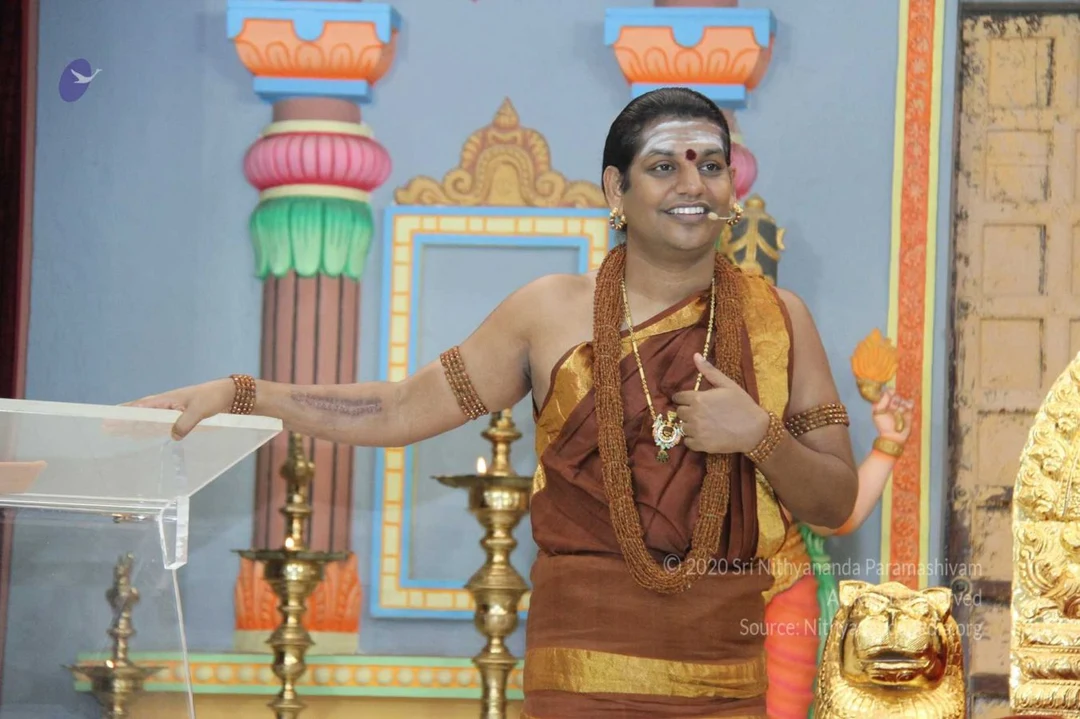
11 photosSource gallery
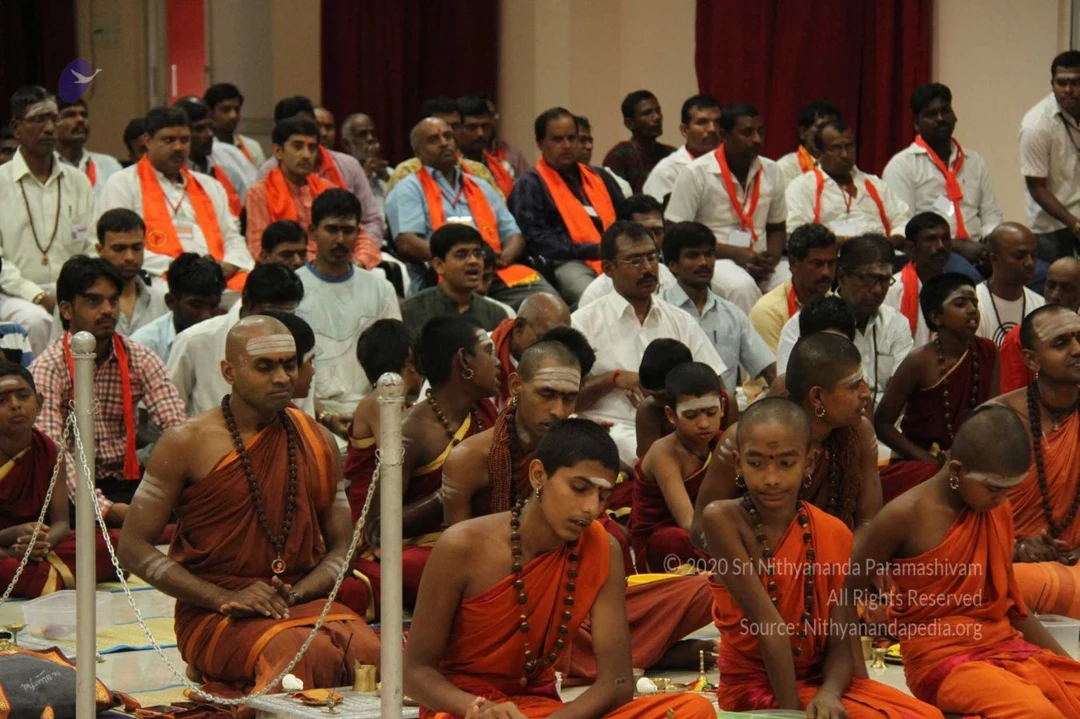
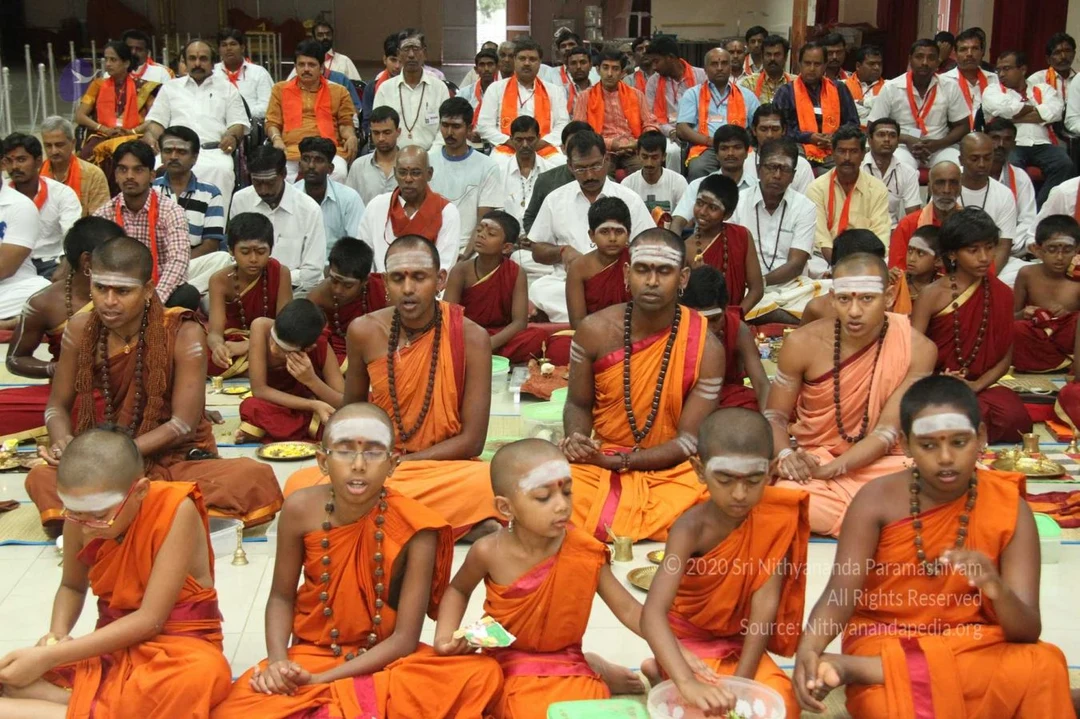
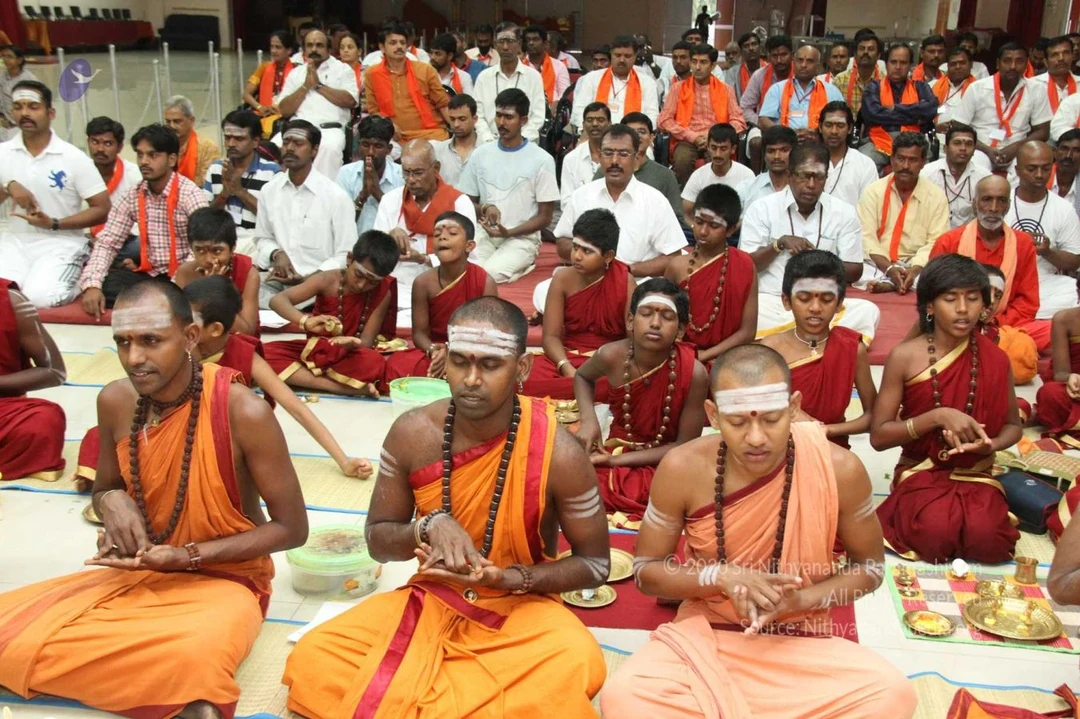
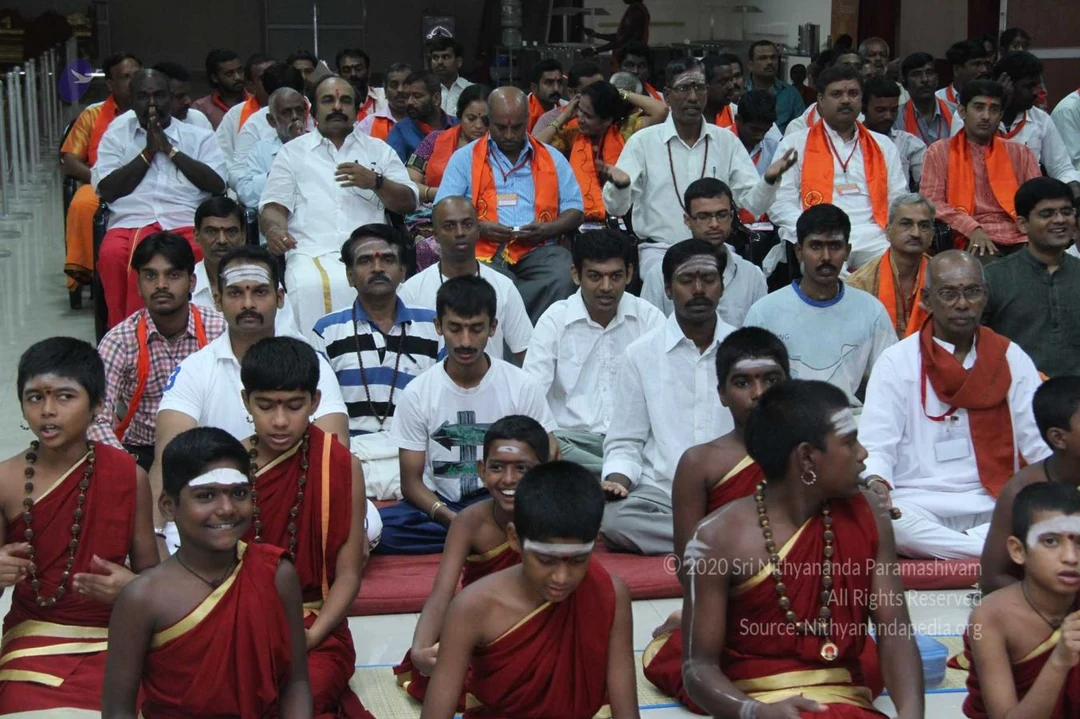
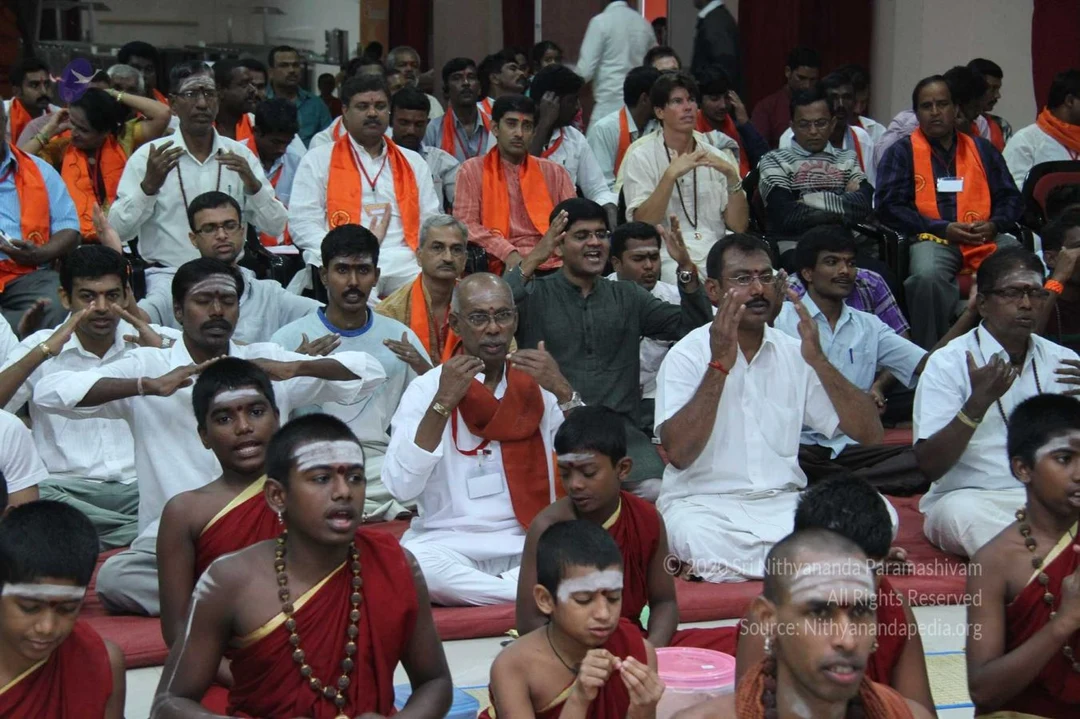
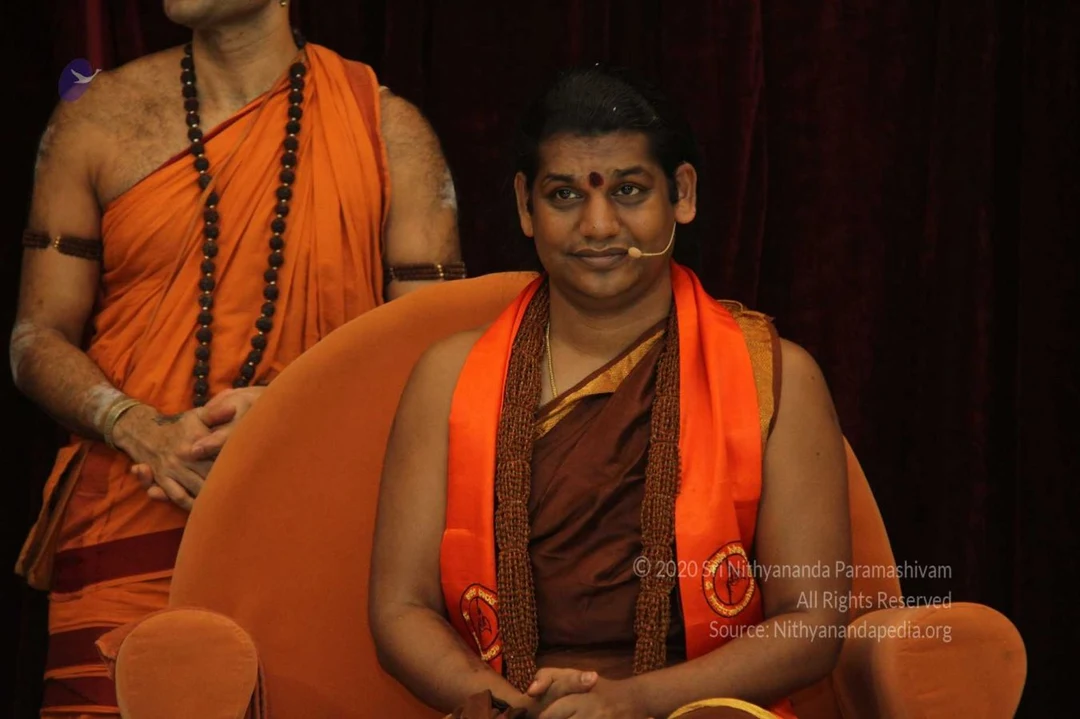
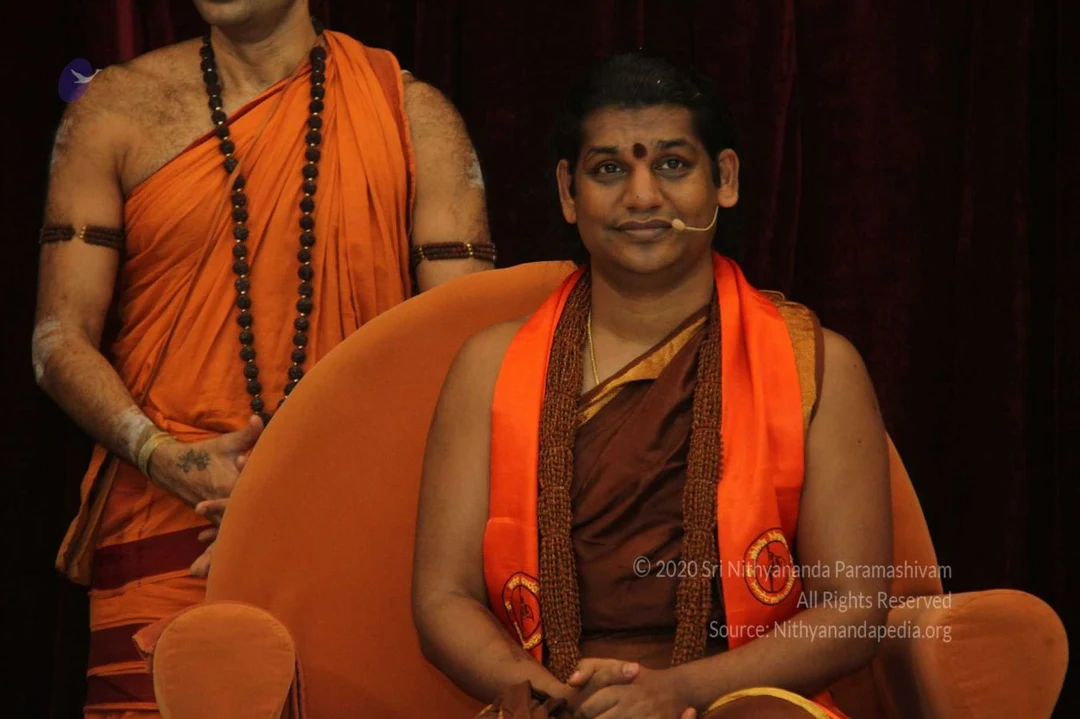
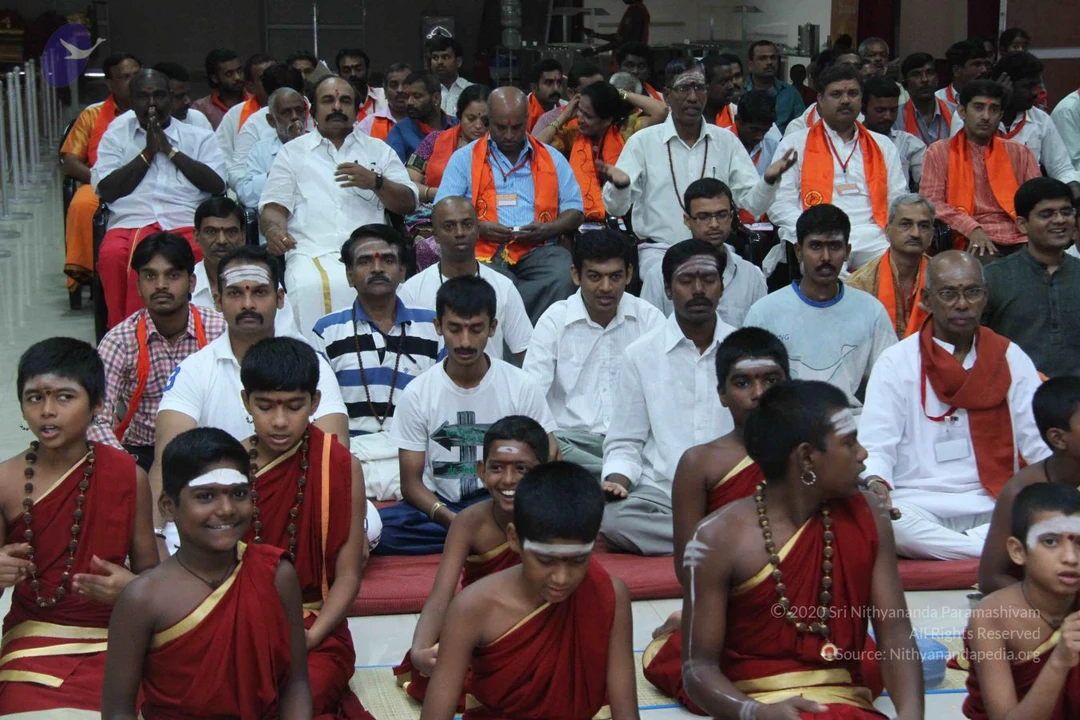
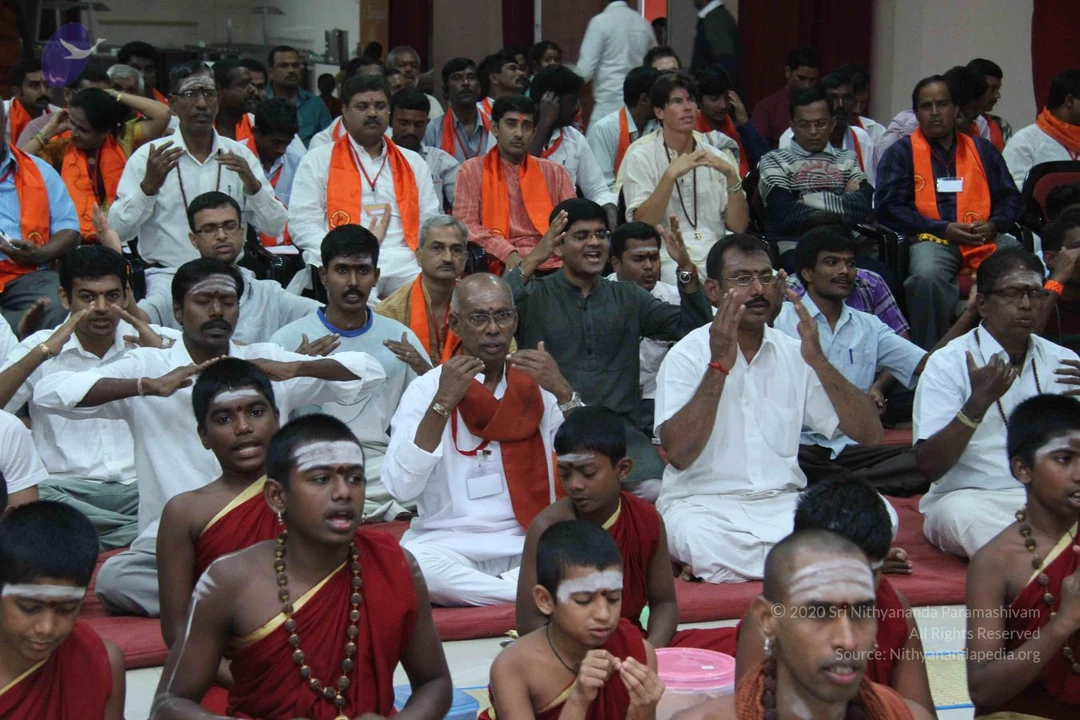
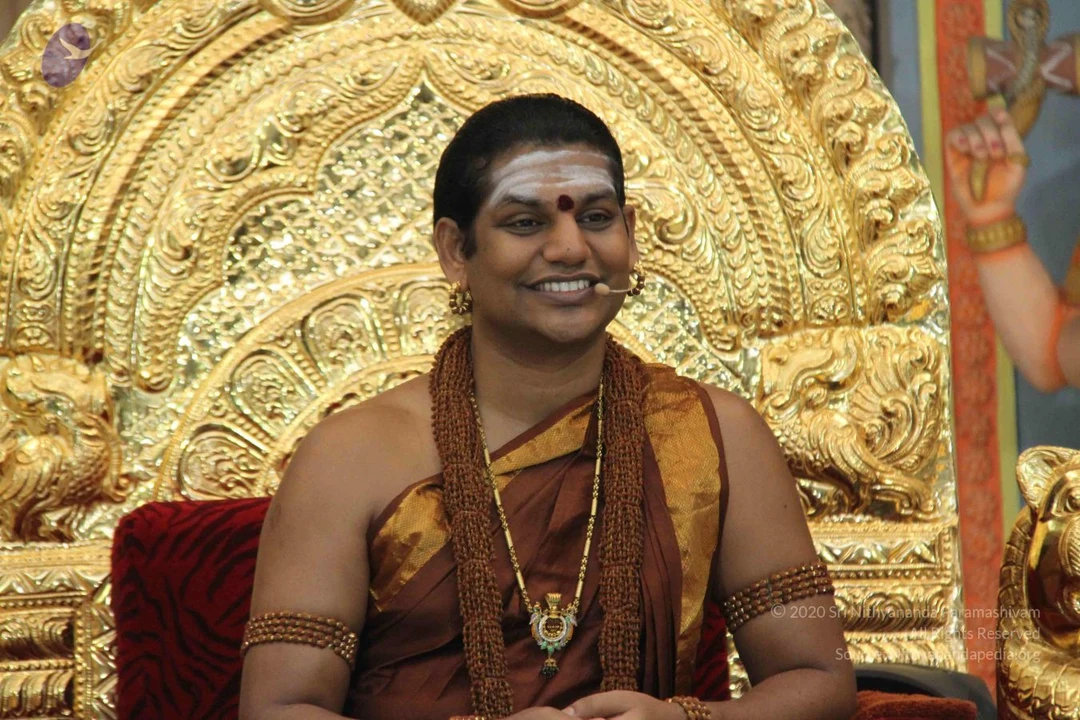
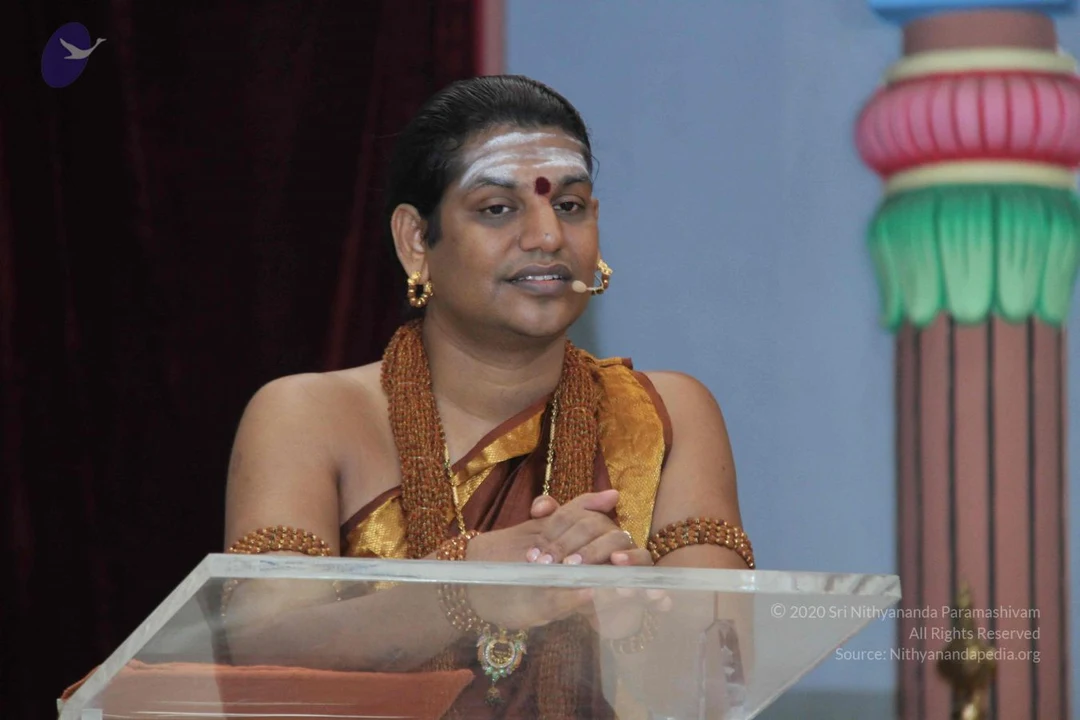
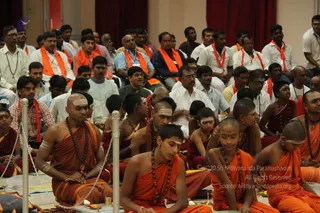
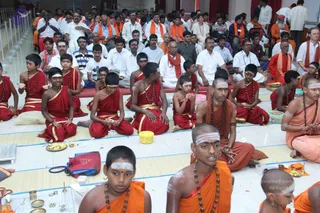
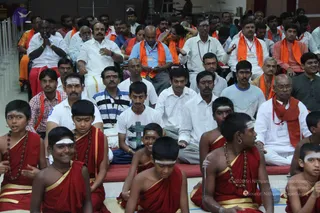
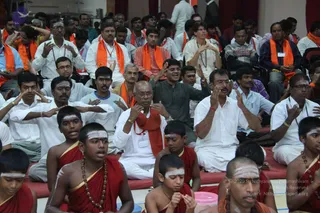
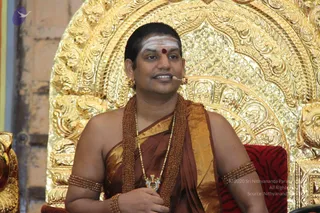
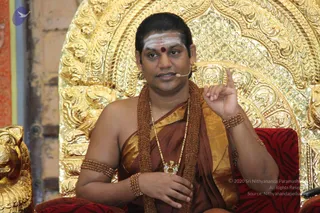
A seated satsang gathering in a bright hall with white tiled floor and mats. In the foreground, young boys in orange and red robes with rudraksha malas and white sacred ash on their foreheads sit cross-legged, some holding folded hands; brass plates with fruit and sweets and a small brass bell lie before them. Behind them, rows of men in white shirts and dhotis, many wearing orange or saffron shawls, sit attentively. A man in the centre wears a saffron shawl and white ritual clothing. A visible plate of offerings and brass vessels sit on the floor. No individual is clearly identifiable as the subject from appearance here.A seated satsang audience fills the frame, with boys in the foreground wearing red-and-saffron dhoti-style cloths, rudraksha malas and white forehead markings, some with hands raised in gesture. Behind them, rows of adults sit on red floor mats in white shirts and dhotis, many in orange saffron shawls with name badges. A man in a blue-and-white checked shirt sits among them, and an older man in white with folded hands sits at center. No single presiding figure with distinctive ceremonial cues is clearly visible in this frame.Seated satsang gathering in a hall with red carpeting, where participants raise their hands in mudra-like gestures. In the centre, a bald older man in white clothes and an orange shawl with a red-and-white lanyard sits cross-legged. Around him are men in white shirts, orange stoles and grey or blue clothing, plus young boys in red dhoti-style cloths with white forehead markings and wooden bead malas. A man in a dark green kurta sits behind. Several people wear orange stoles and name badges. Background includes a standing man and an orange-and-white backdrop. Participants appear absorbed in chanting or meditative practice.A man seated on an ornate gold throne with carved floral and scrollwork panels, smiling broadly with a small microphone at his cheek. He wears a brown-and-gold dhoti-style garment with a gold border draped over one shoulder, layered rudraksha malas, a long gold chain with a pendant, gold bangles and armlets, and gold earrings. A white tilak with a red dot marks his forehead, and his hands rest in his lap. Behind him, a red tiger-striped cushion and a painted deity figure with raised arms appear at the edges. This appearance-based identification is a probable match to a person, seated in satsang: long swept hair is absent but rudraksha malas, ornate gold jewellery and saffron-brown ceremonial dress are present.A man seated on a red velvet chair in front of an ornate gold repoussé backdrop, speaking into a headset microphone. He wears a brown and gold-bordered dhoti-style garment draped over one shoulder, a long rudraksha mala with a gold ornament at the chest, gold armlets and bangles, and gold earrings, with white and red tilak marks on his forehead. His hands rest together near his lap. Two gold lion-like carved figures are partly visible at the left edge.A man seated on a red and gold throne with ornate gilded carvings behind him, raising his right index finger as he speaks into a small headset microphone. He wears a brown and gold silk garment over bare shoulders, a long rudraksha mala, a gold chain with a pendant, bead armlets and bangles, and gold earrings. A white vibhuti line and red kumkum mark his forehead. A carved golden lion armrest is visible at left. a person is visible here in a sitting discourse, with the upright finger gesture.

Sarva-Darshan
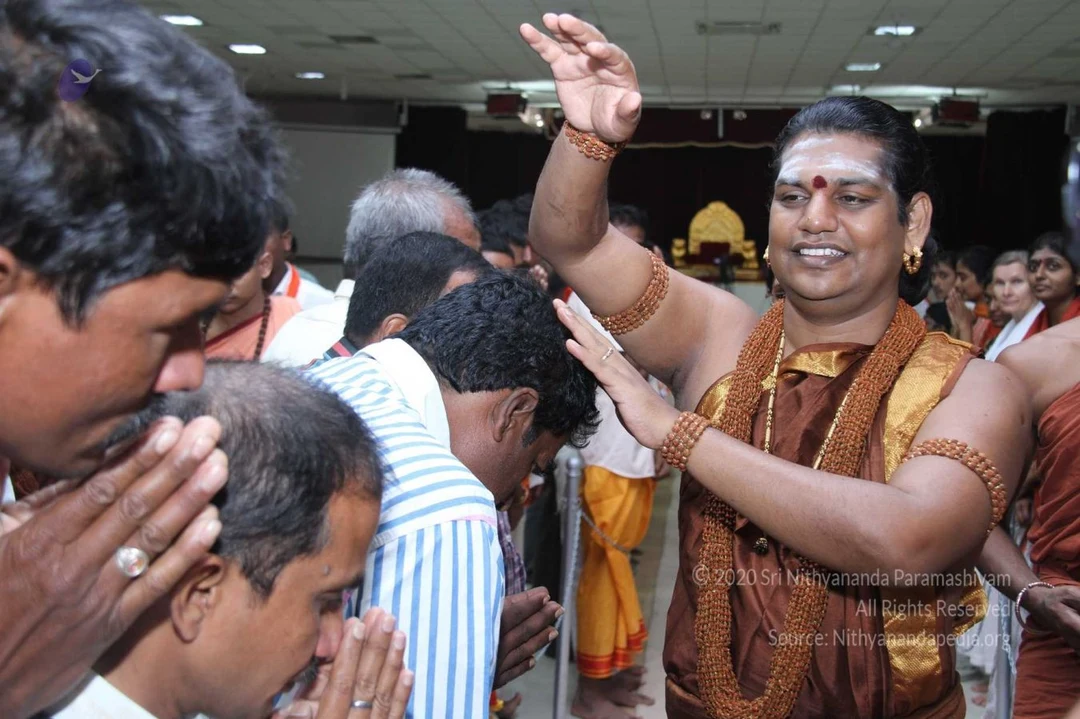
18 photosSource gallery
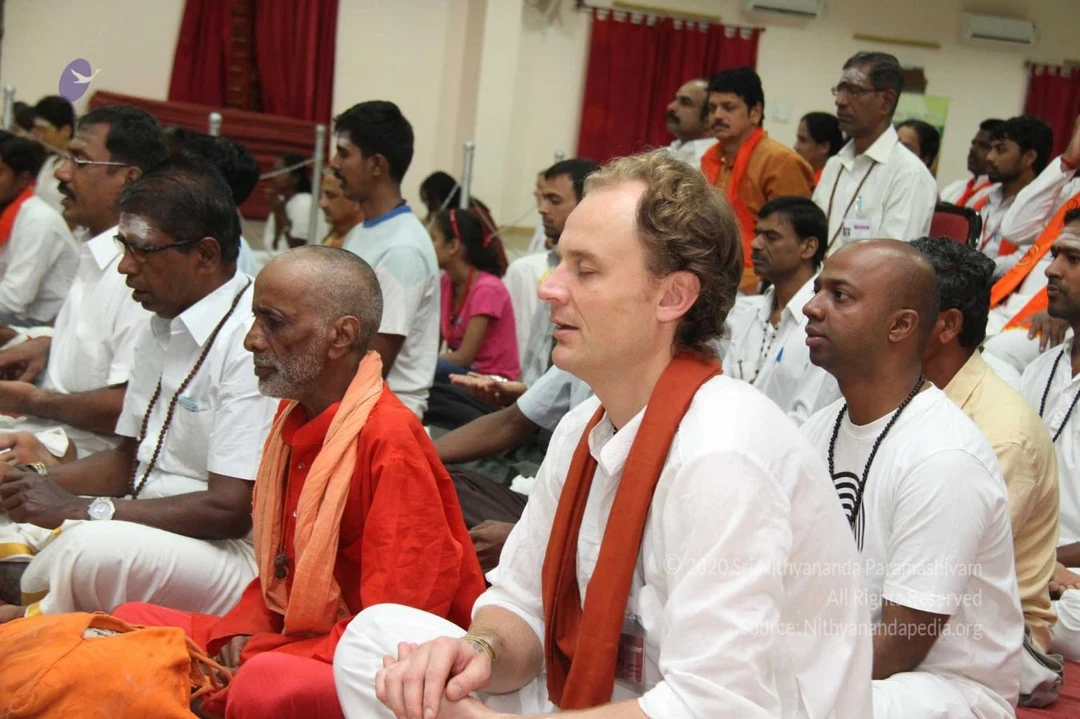
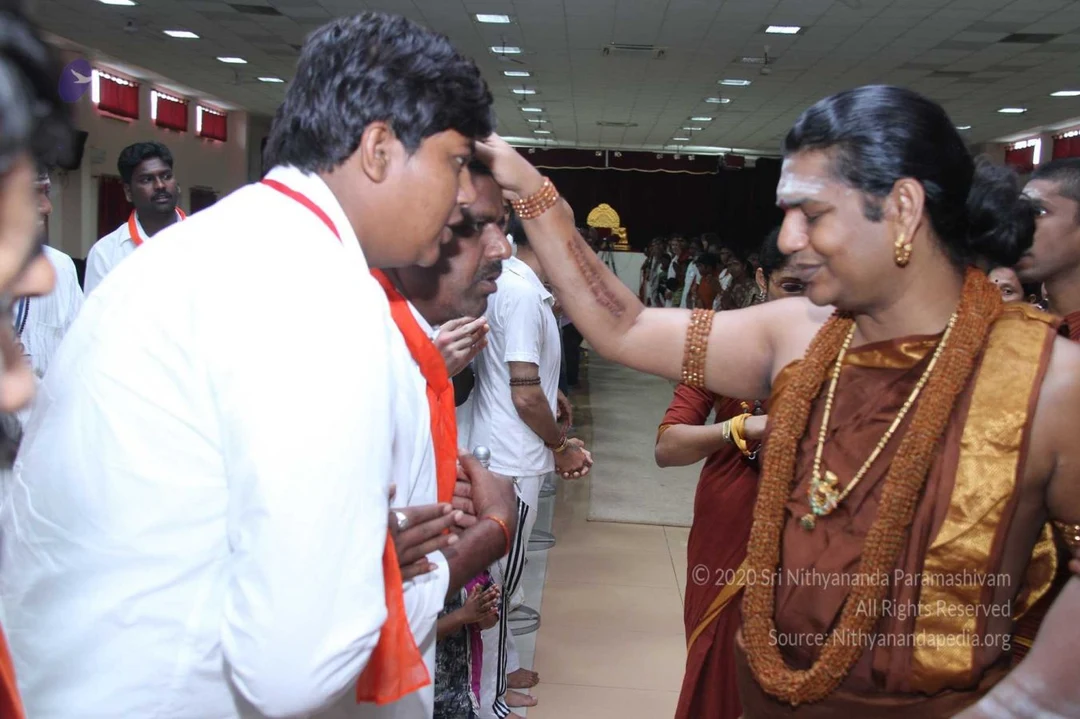
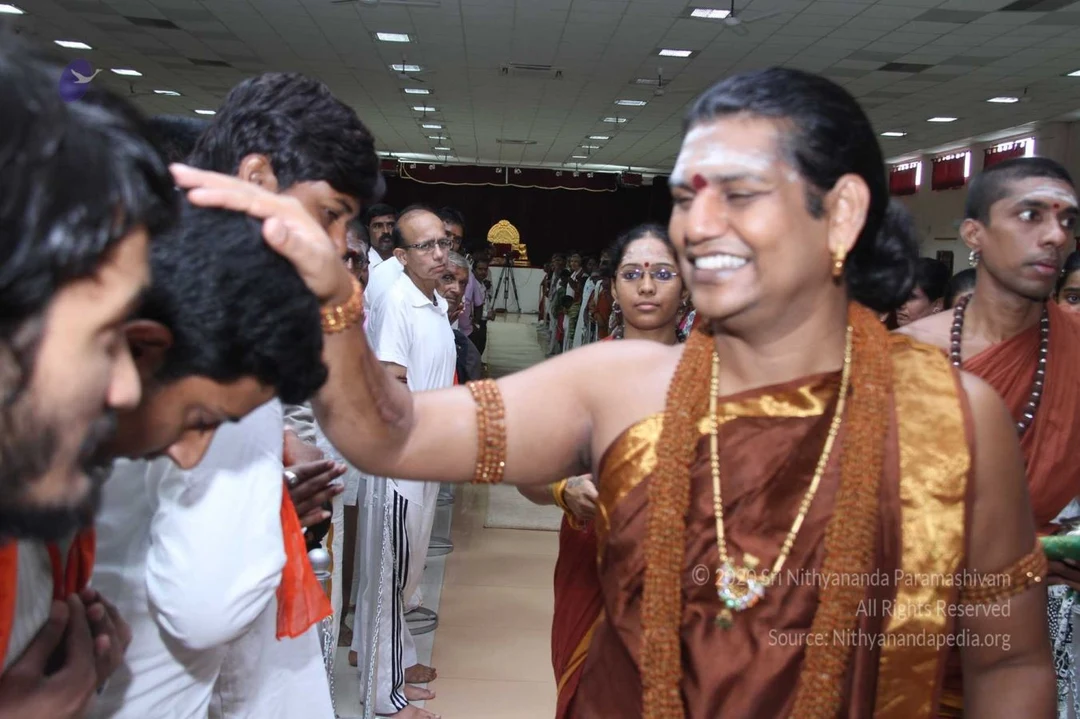
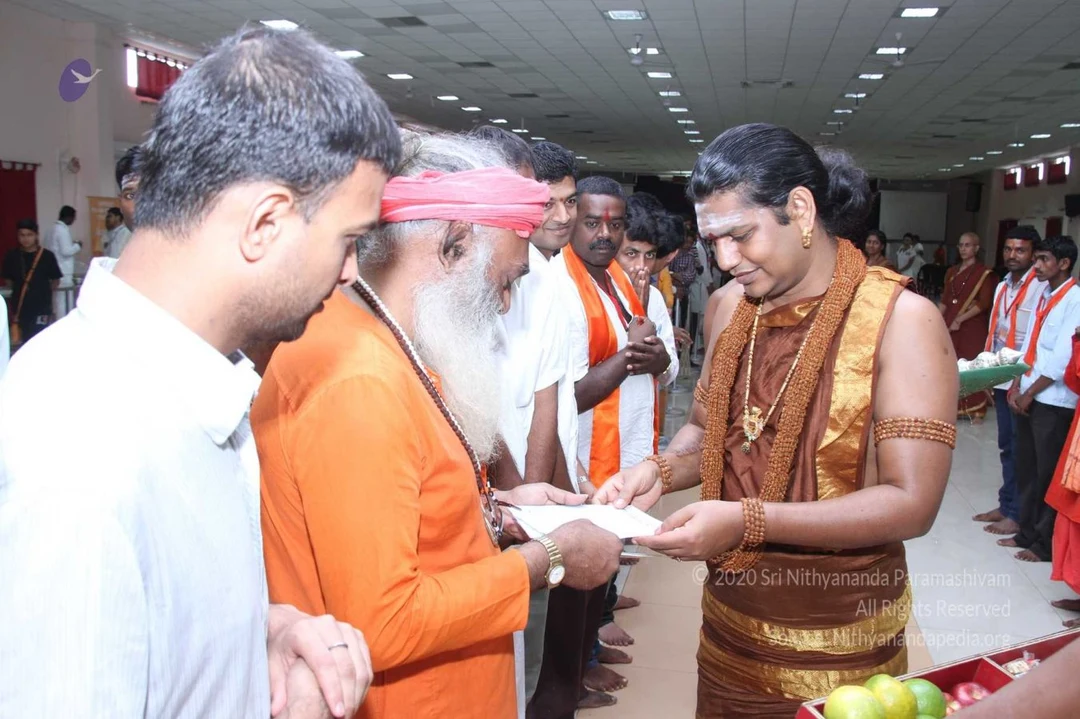
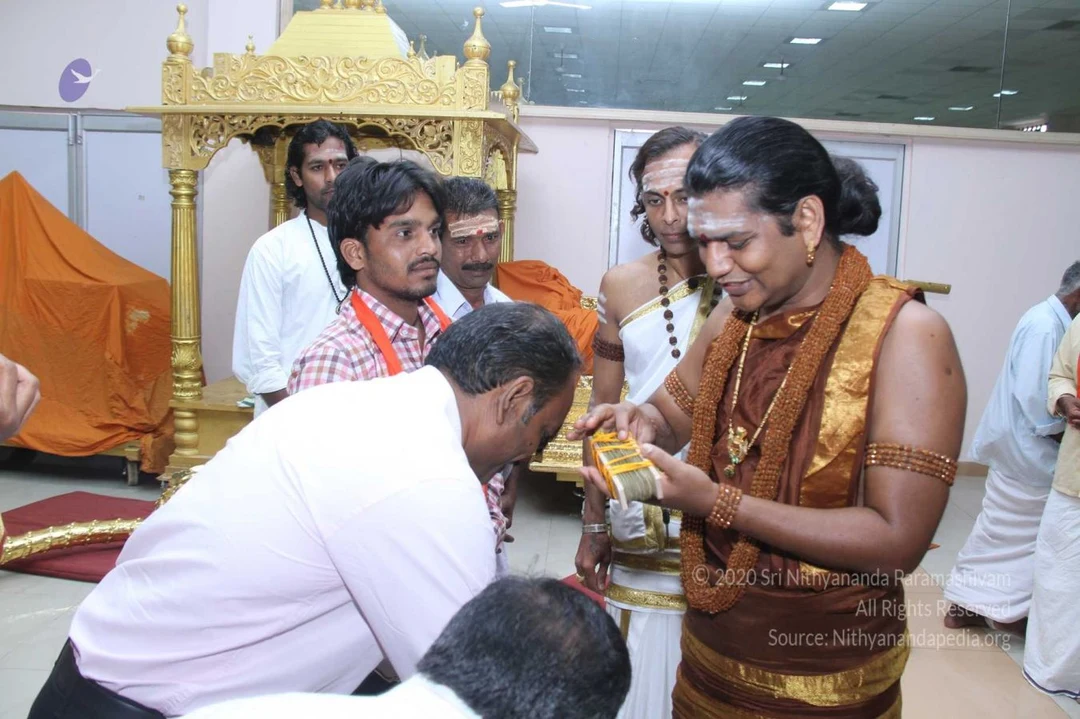
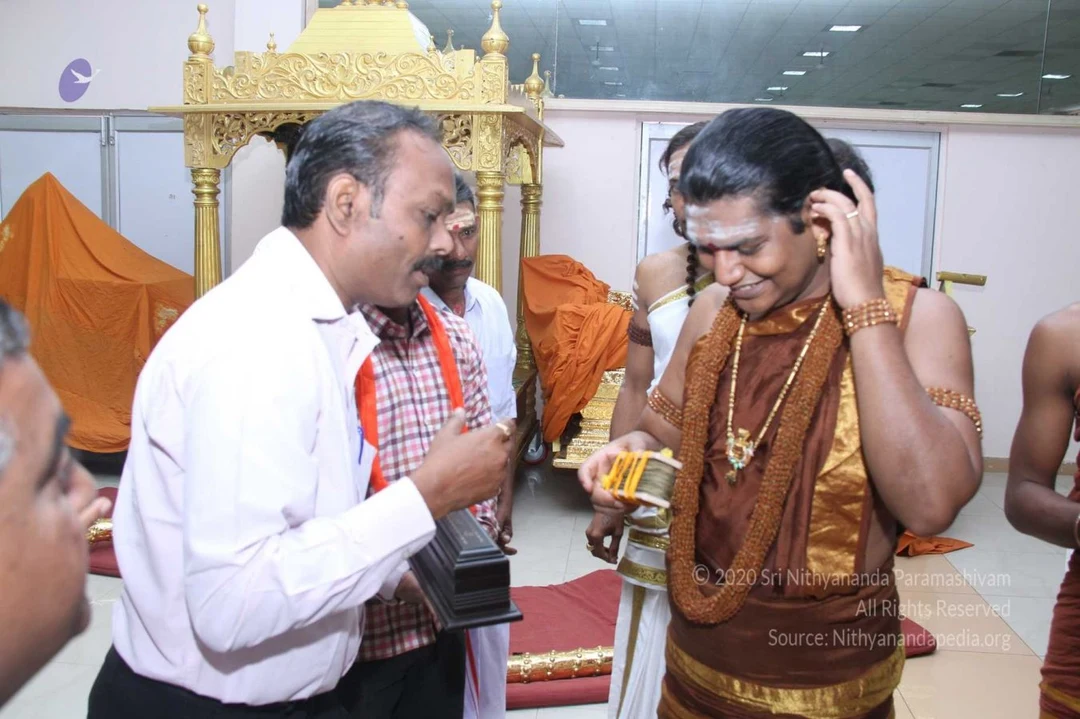
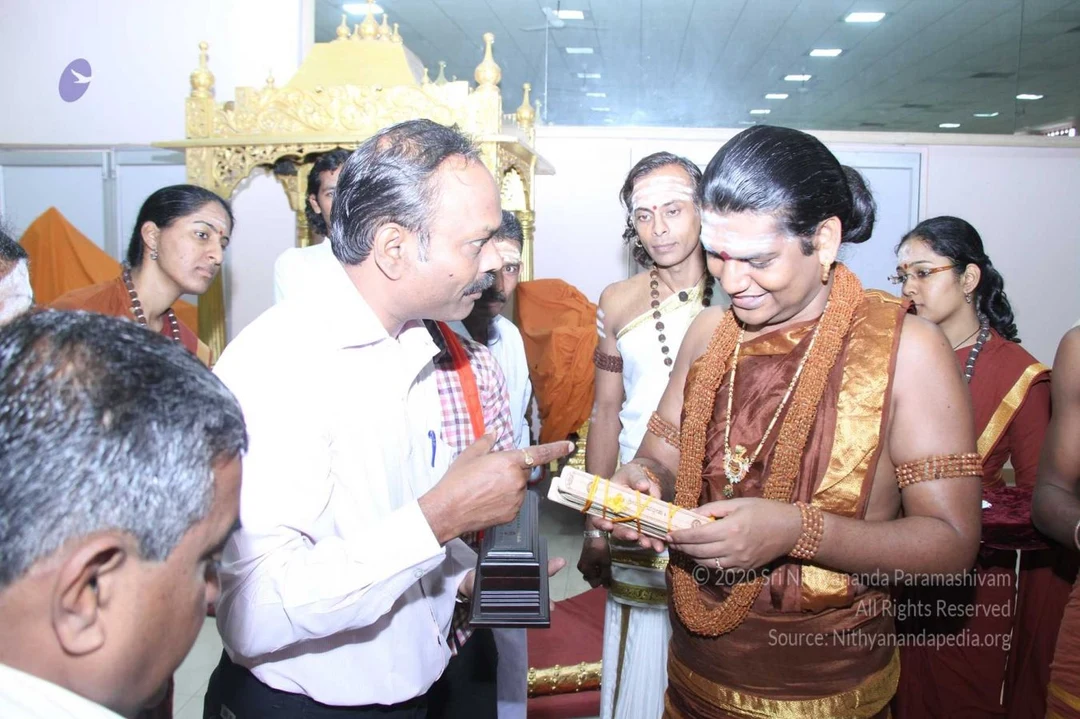
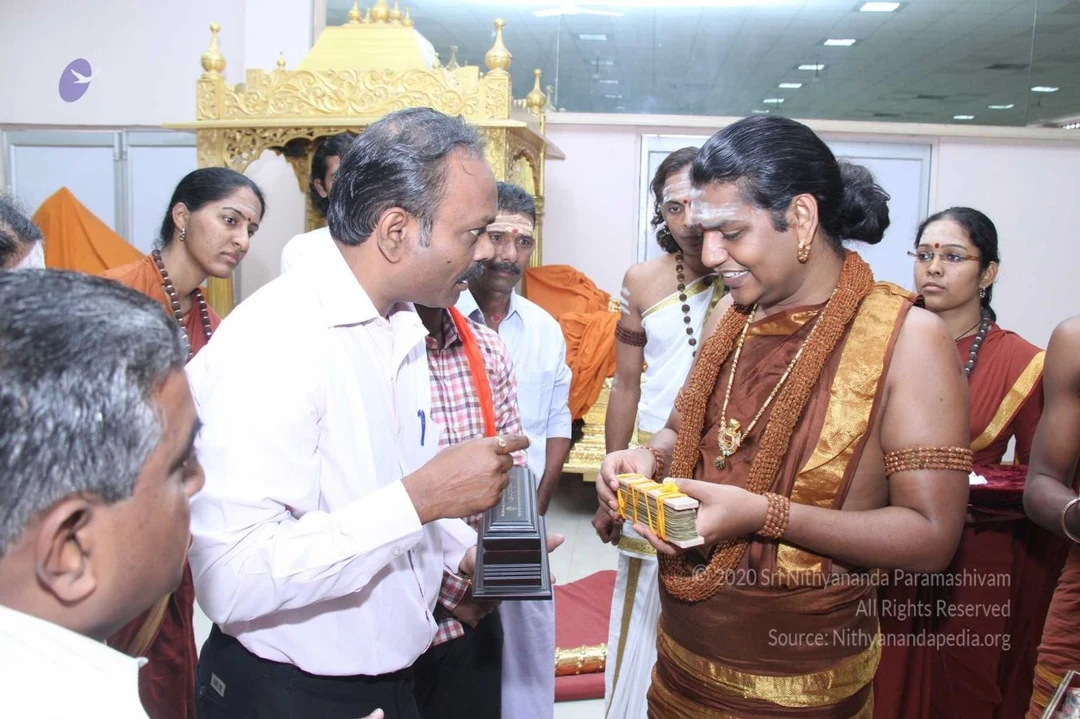
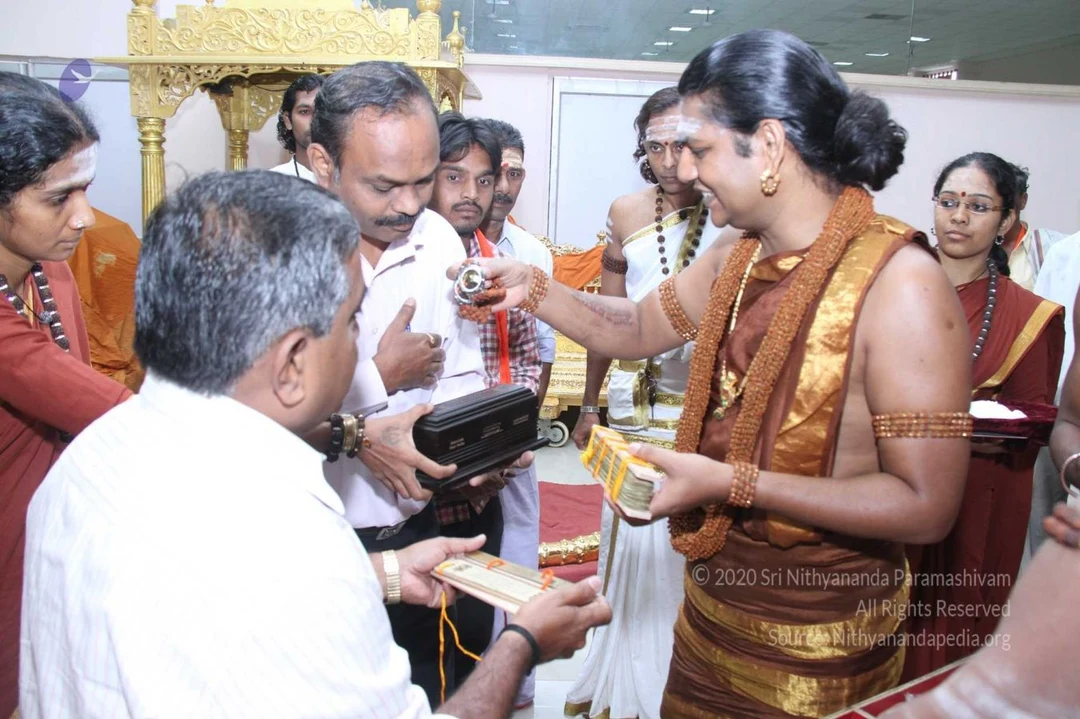
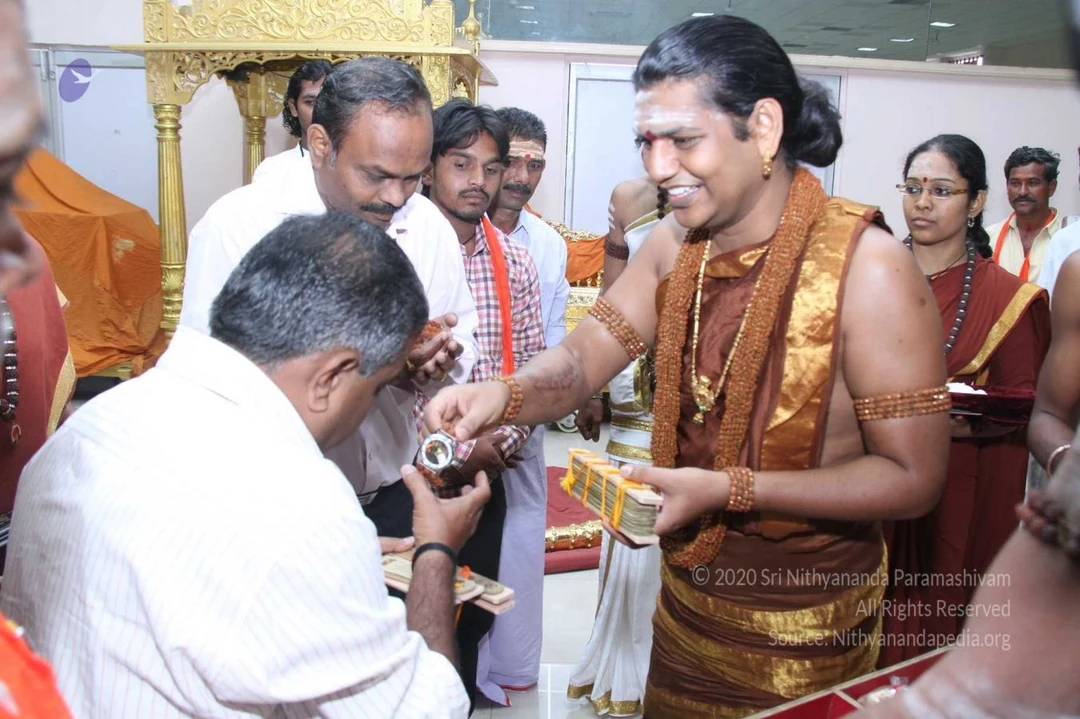
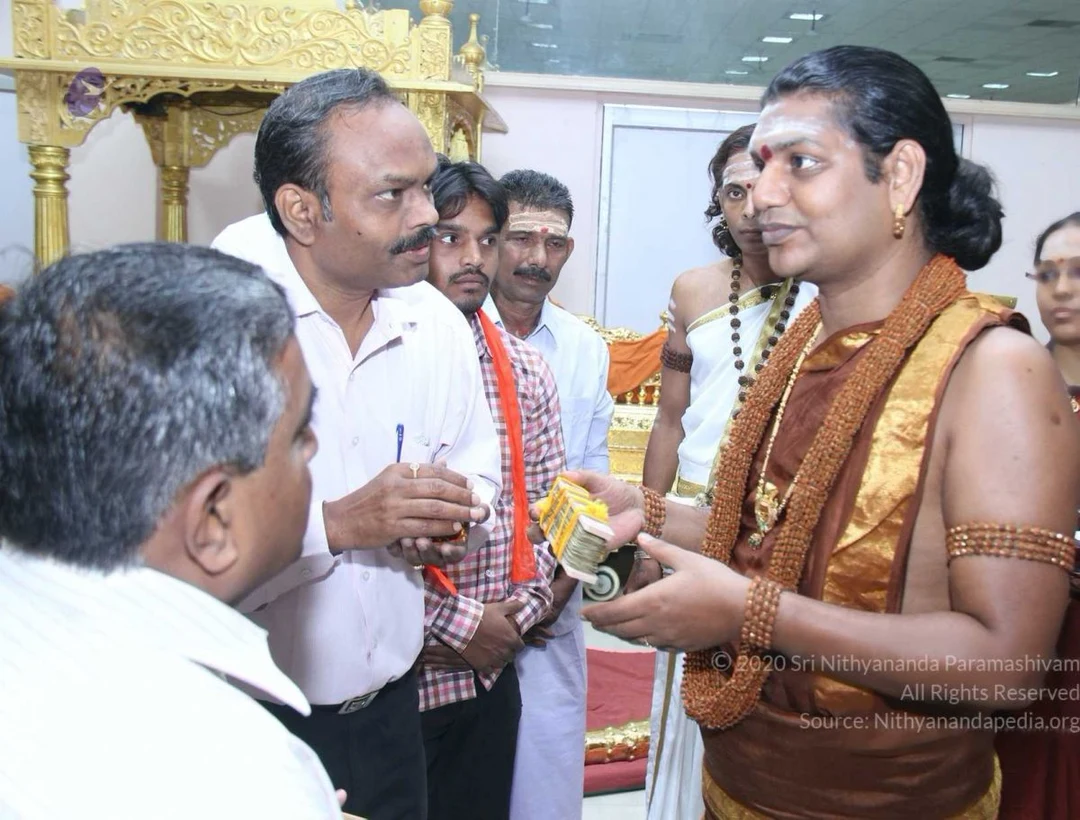
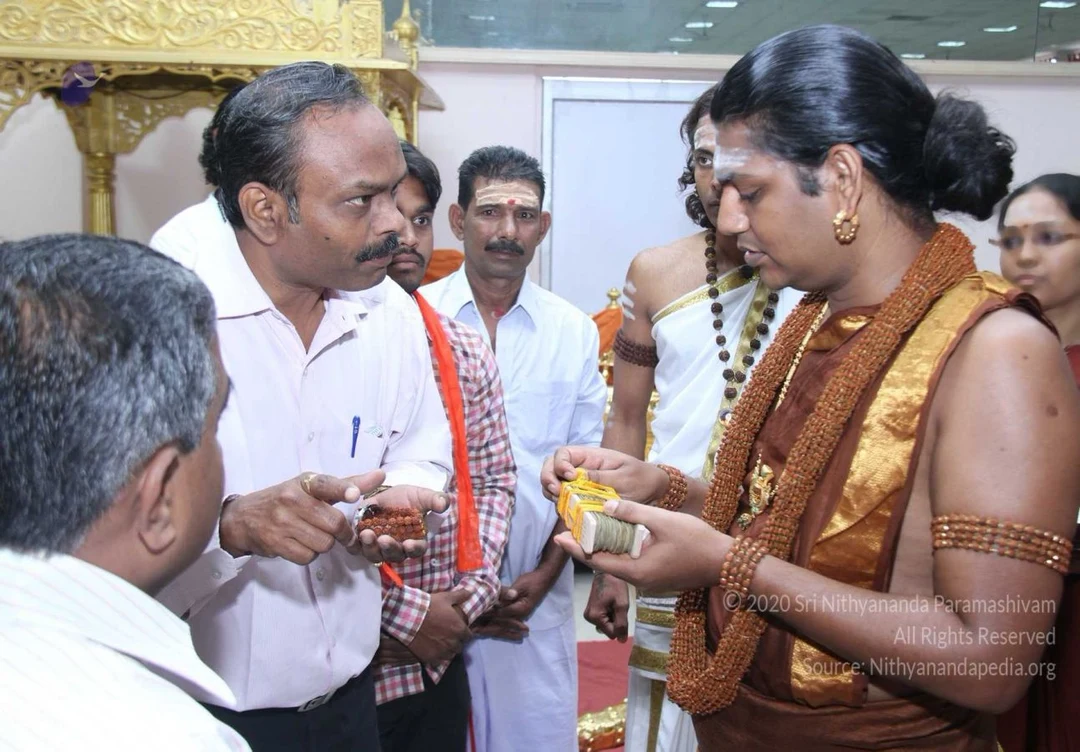
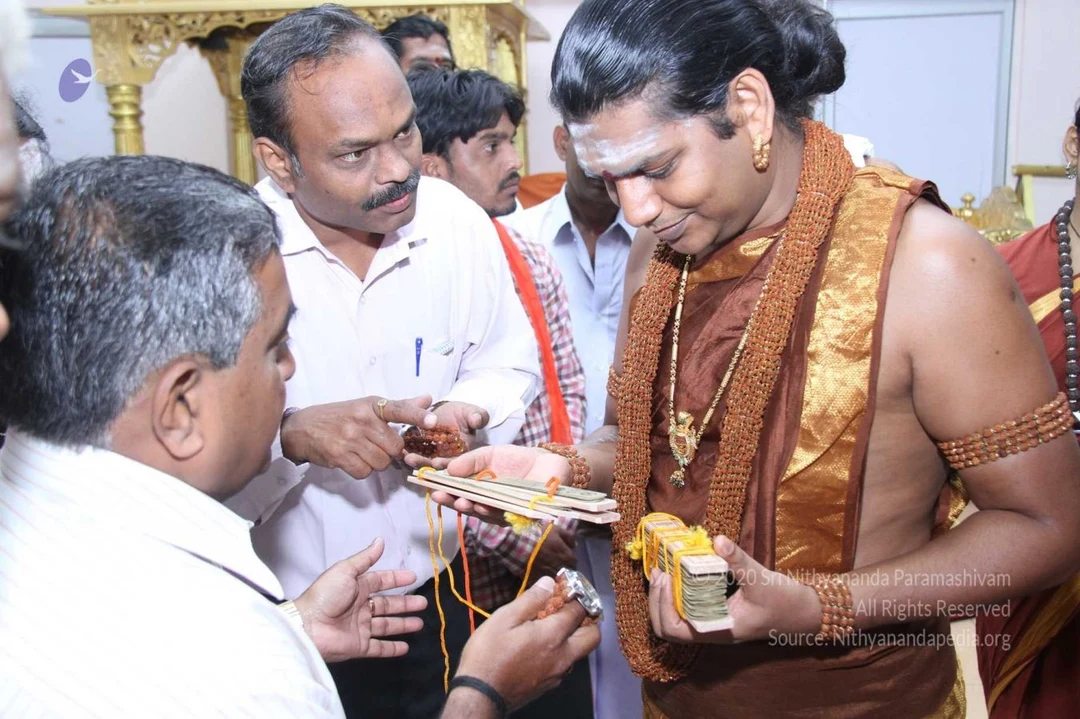
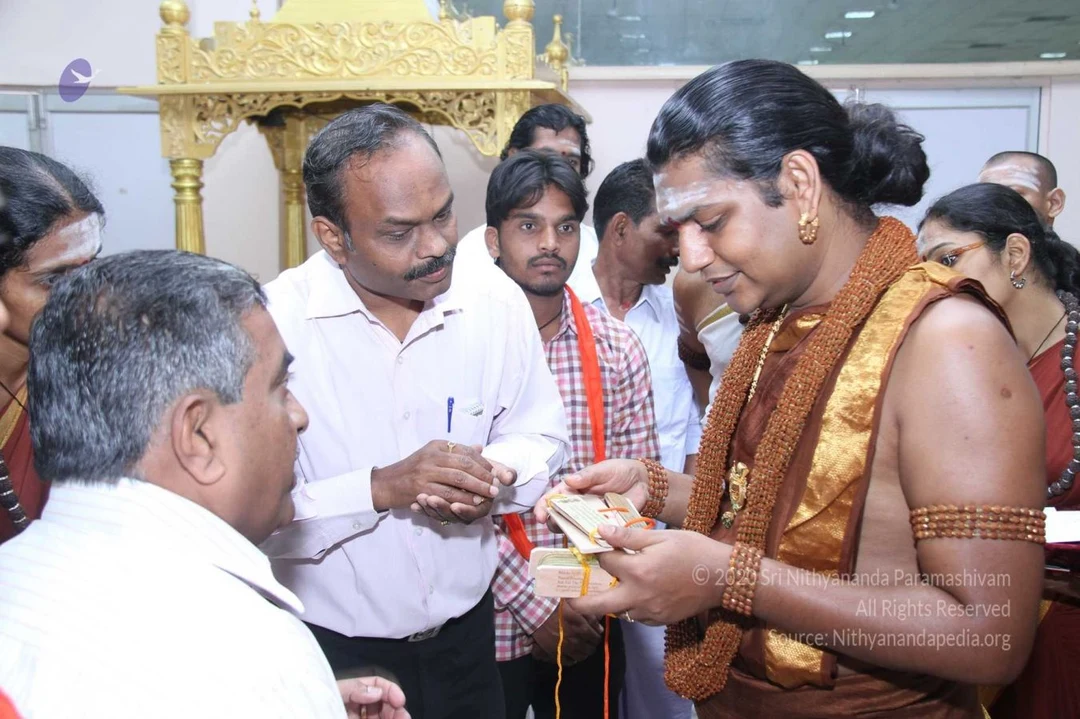
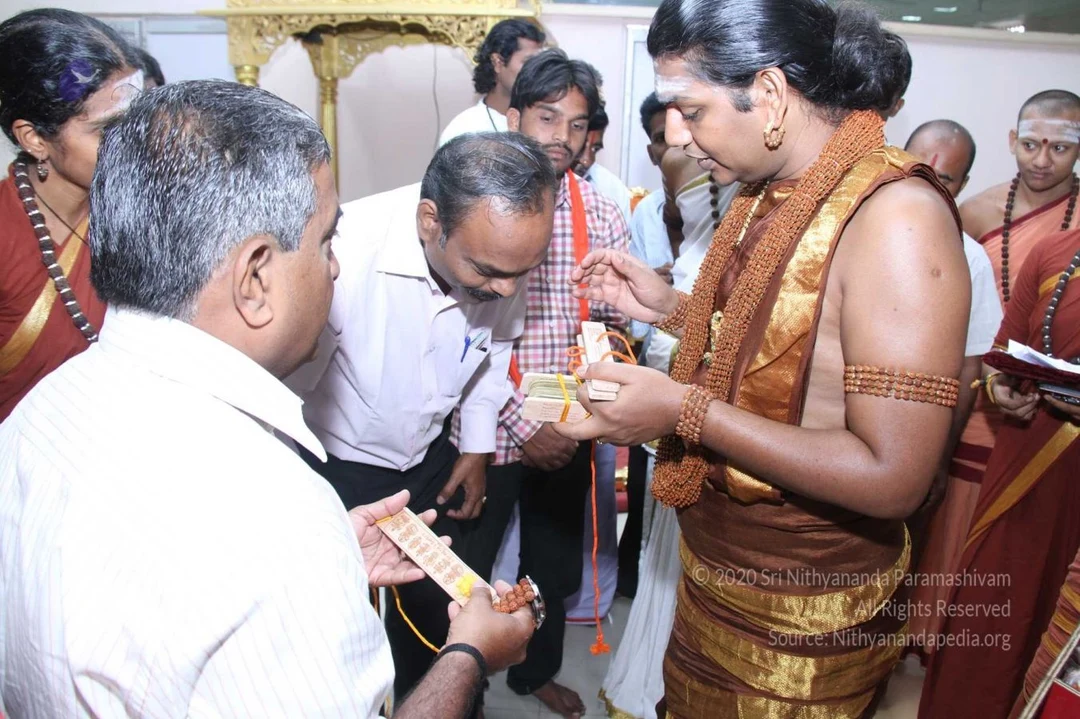
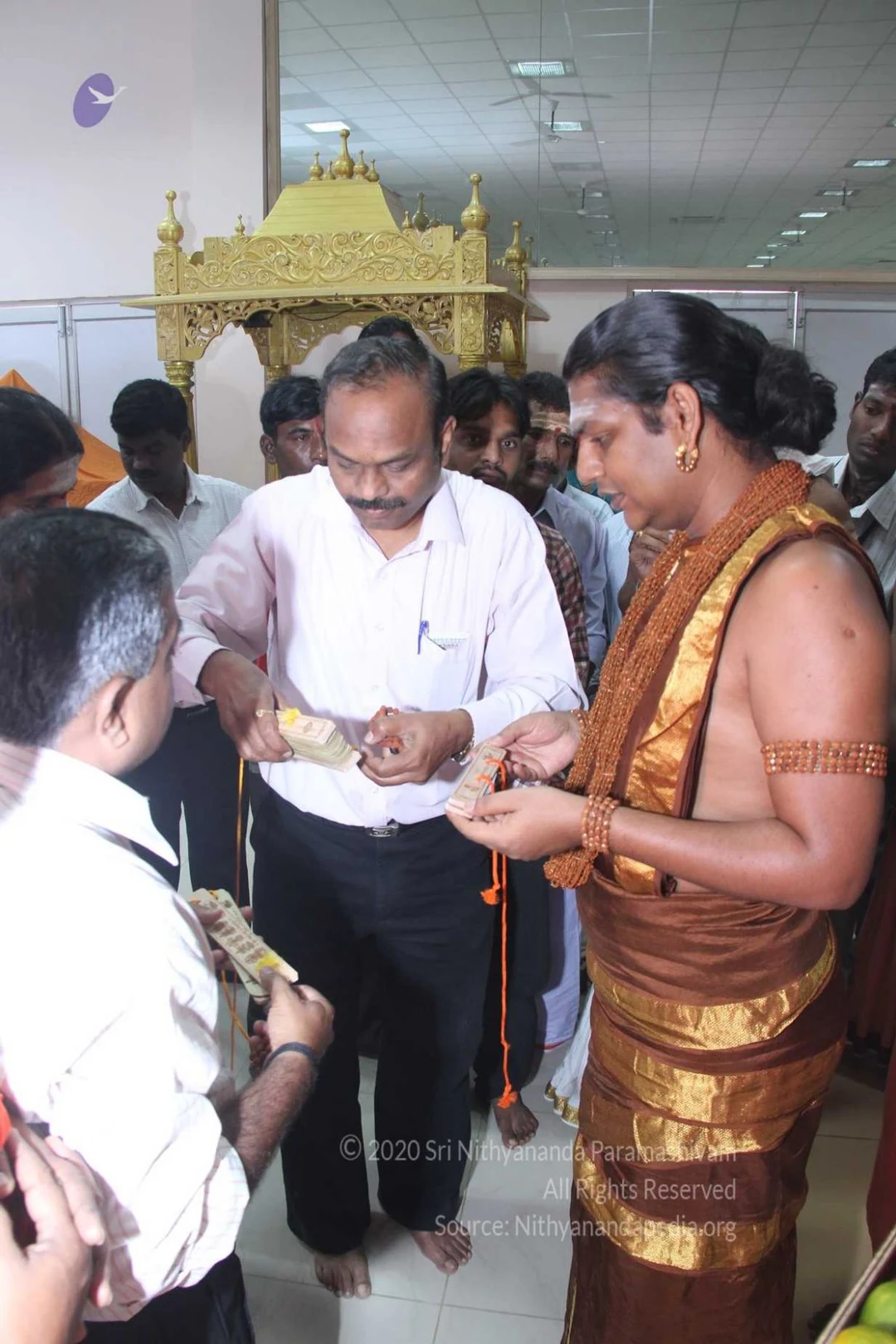
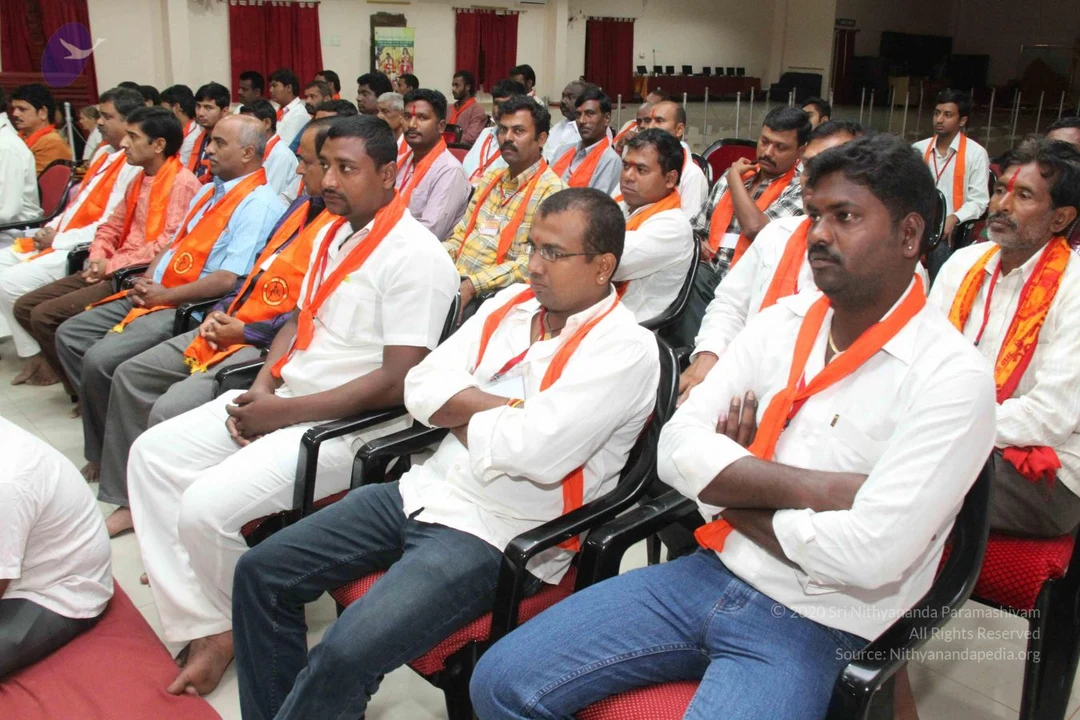
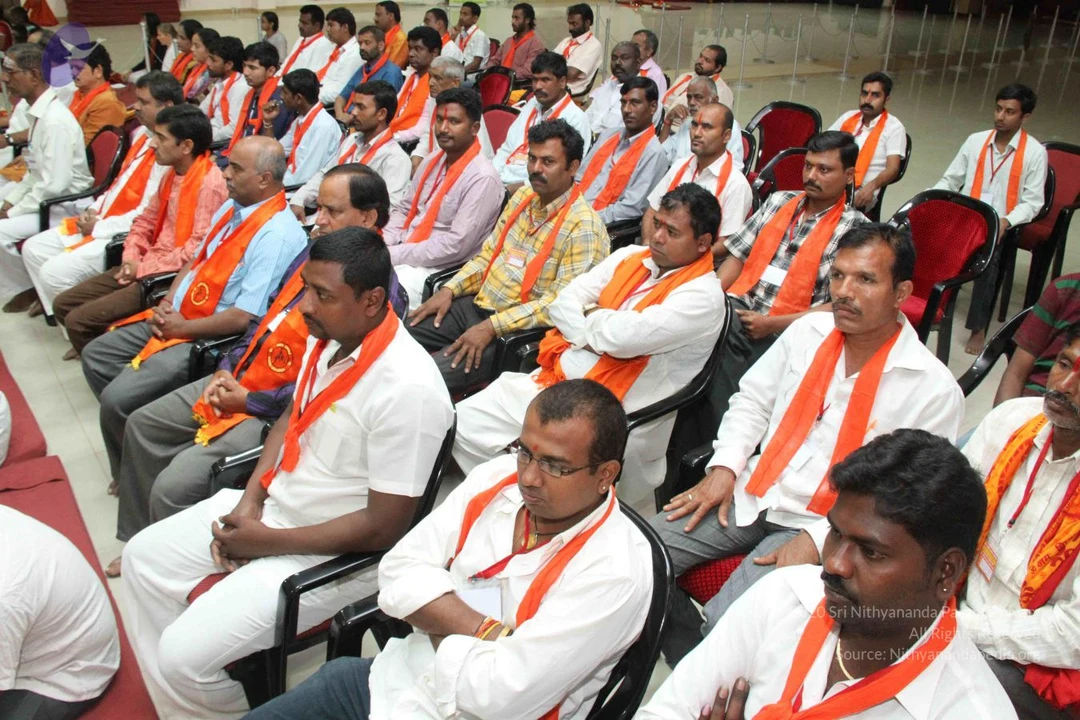
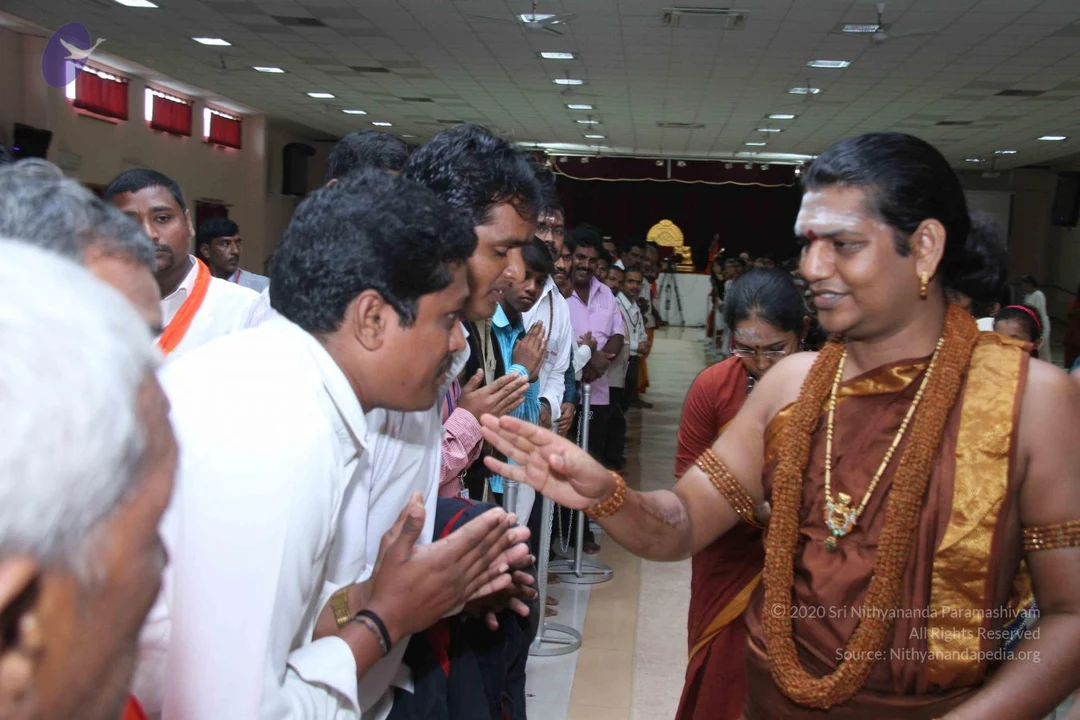
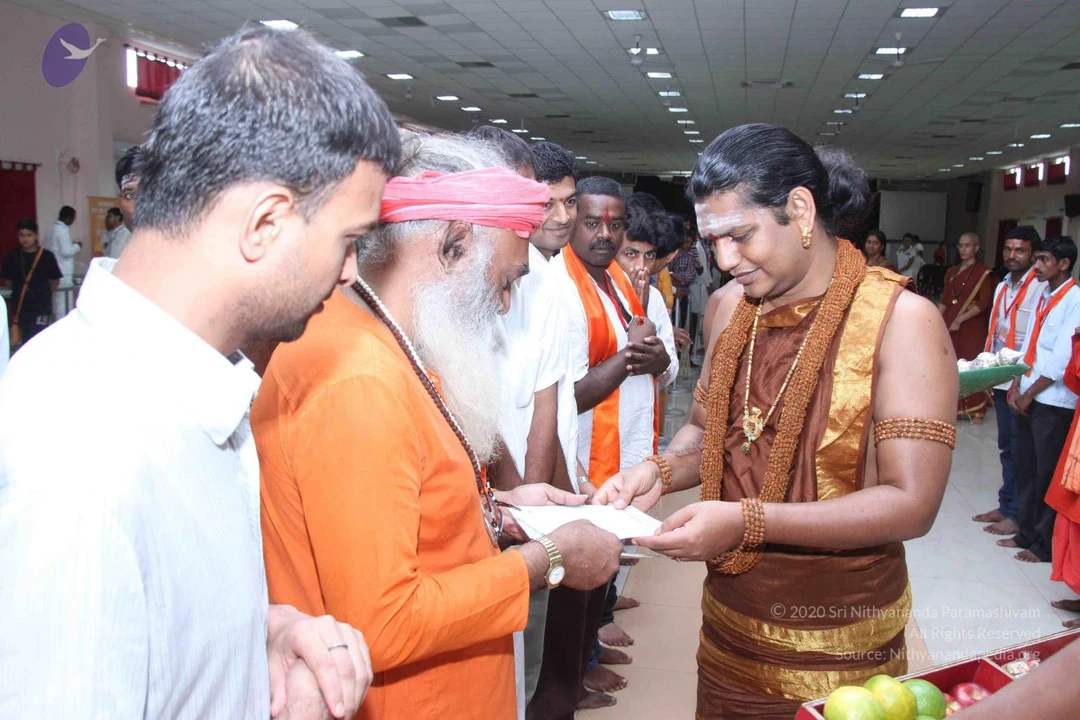
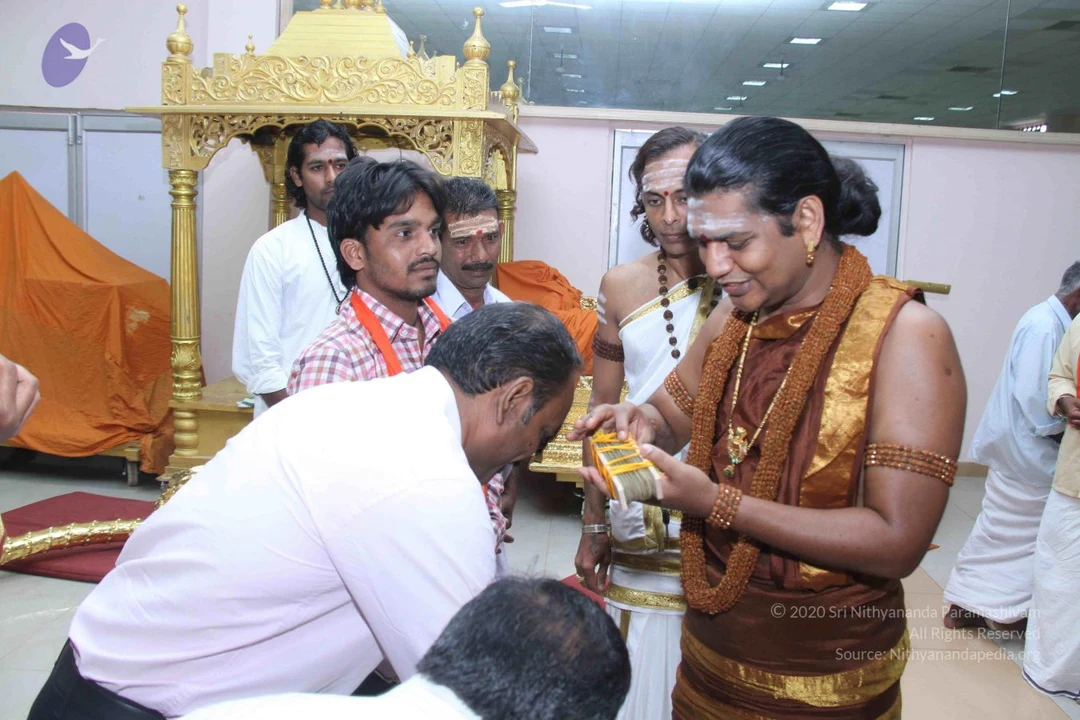
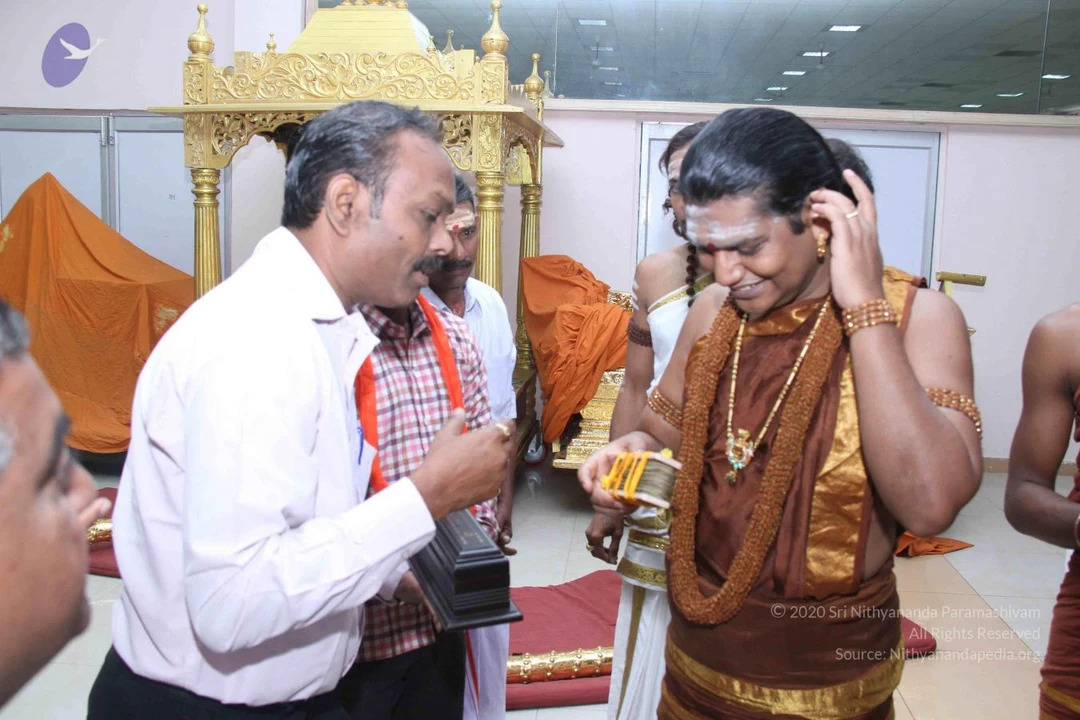
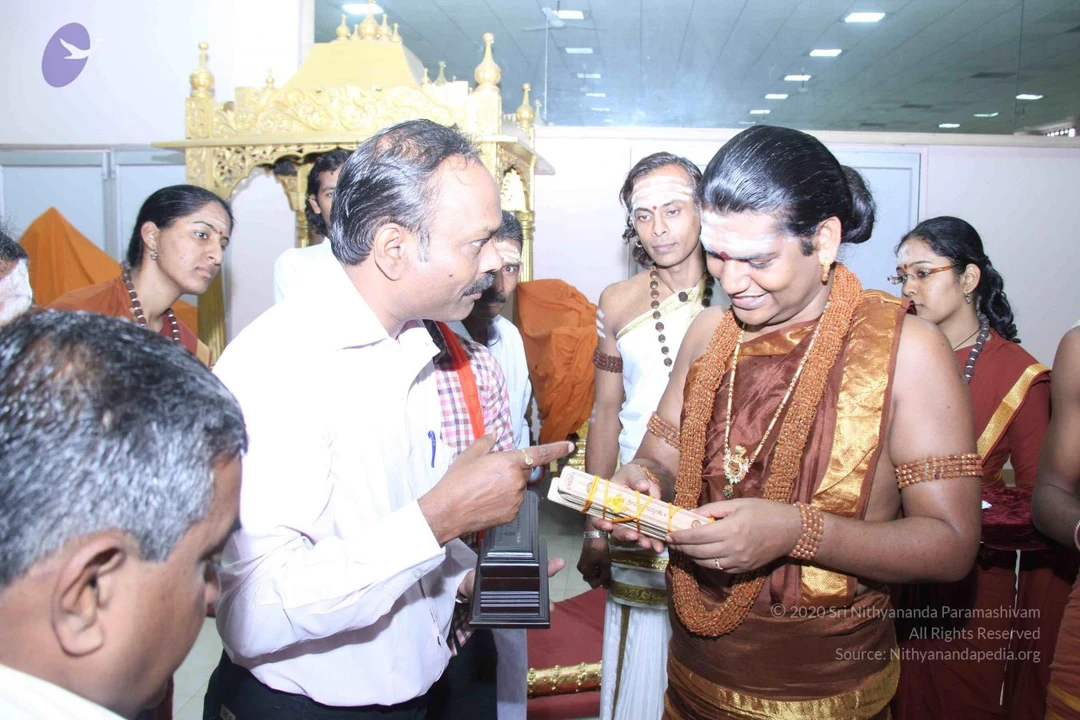
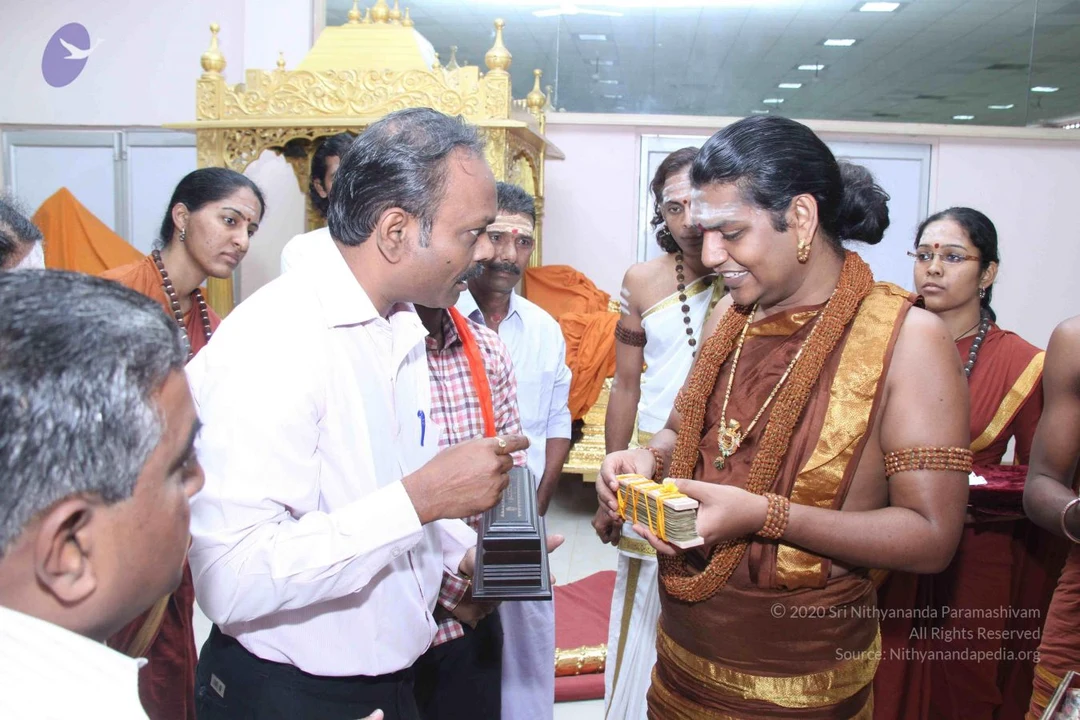
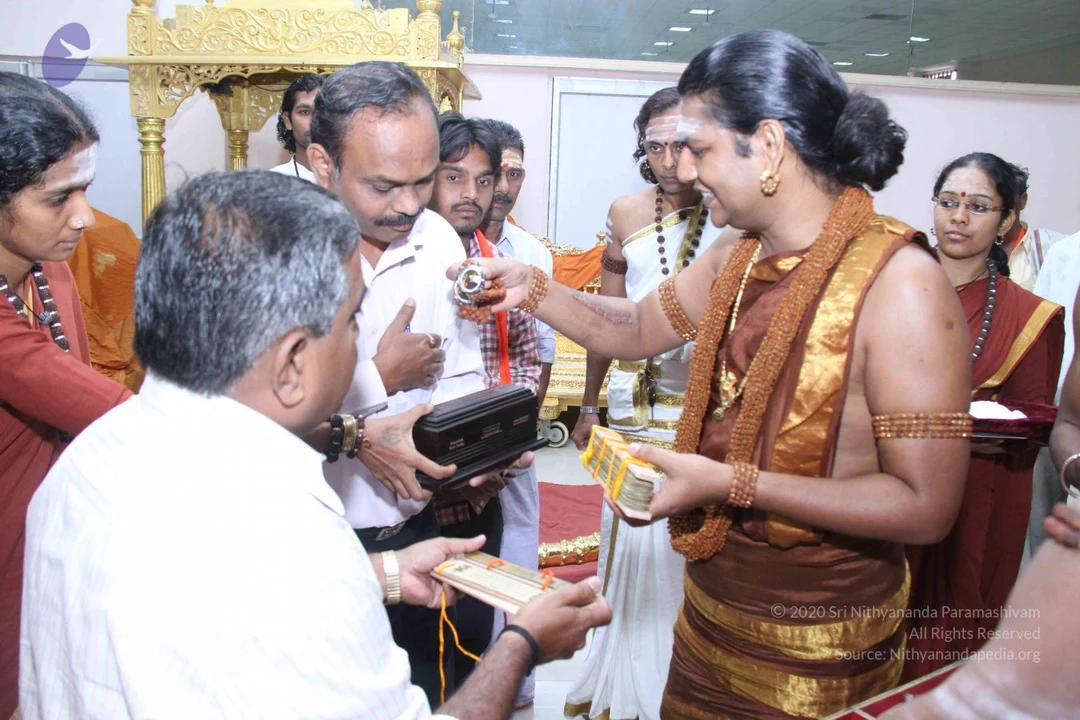
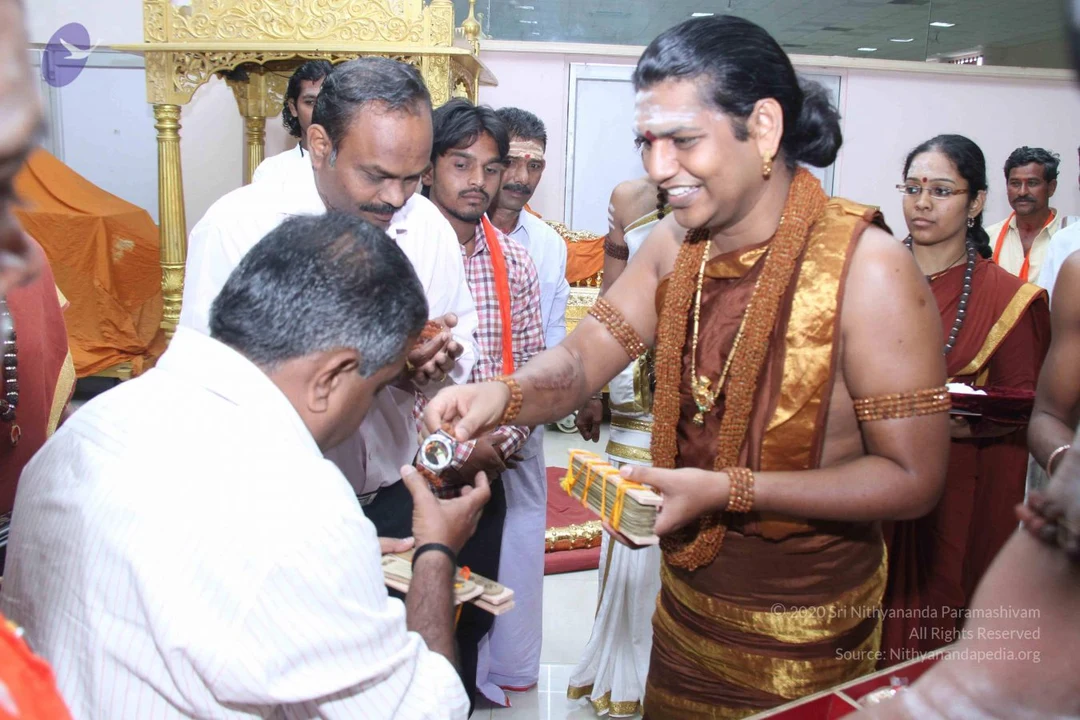
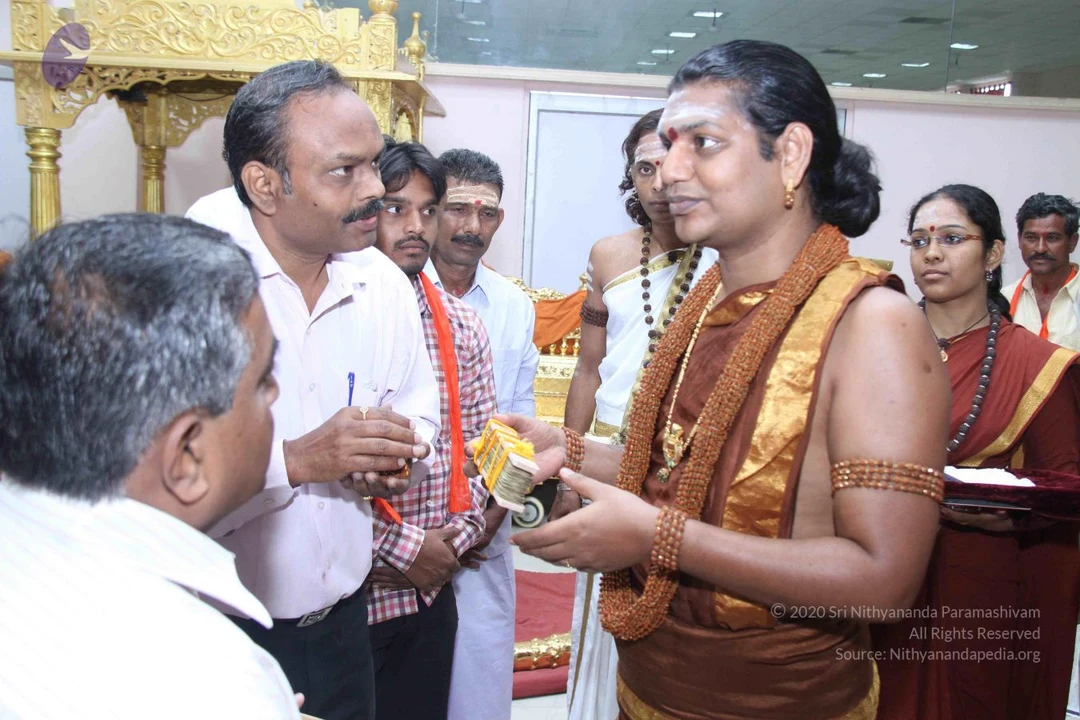
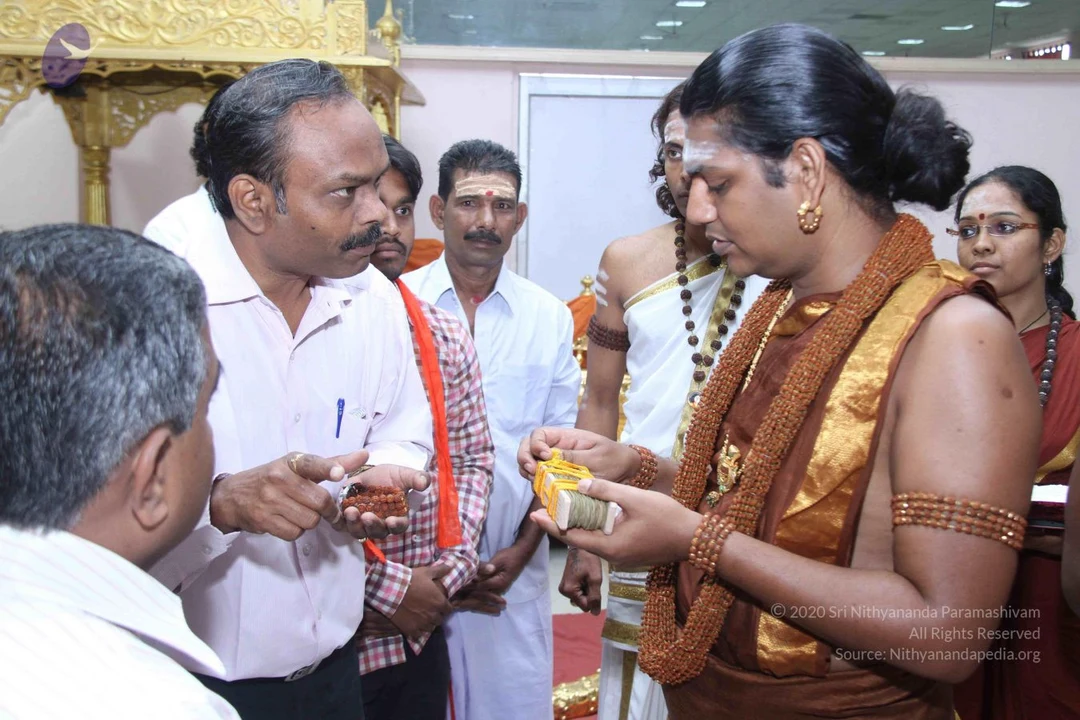
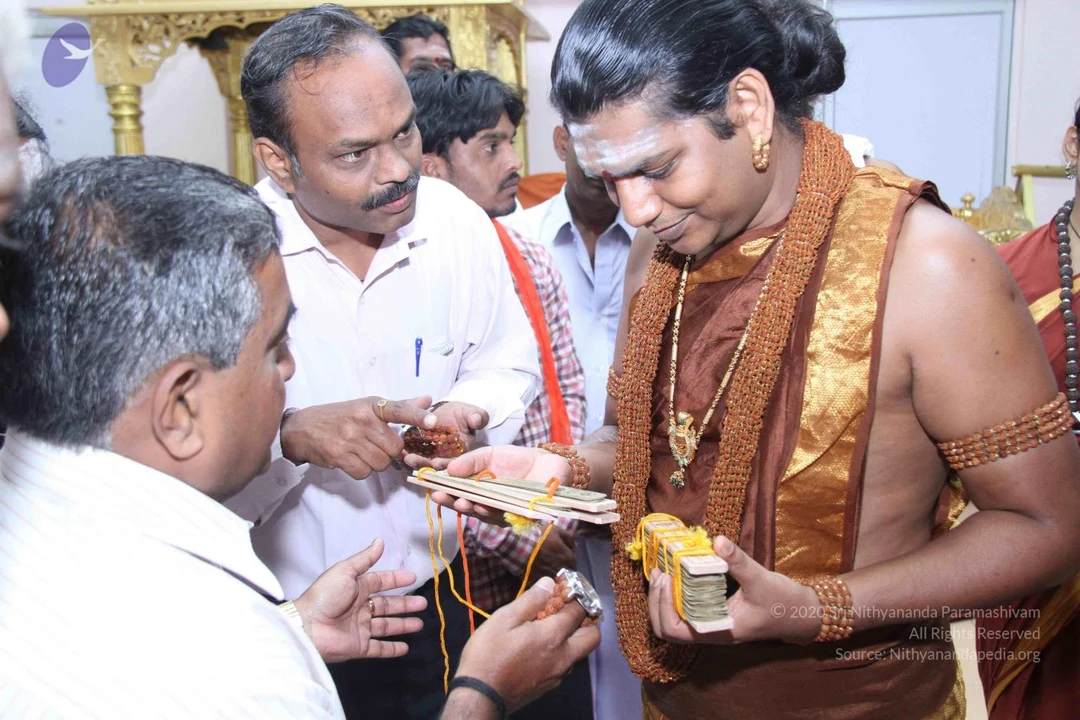
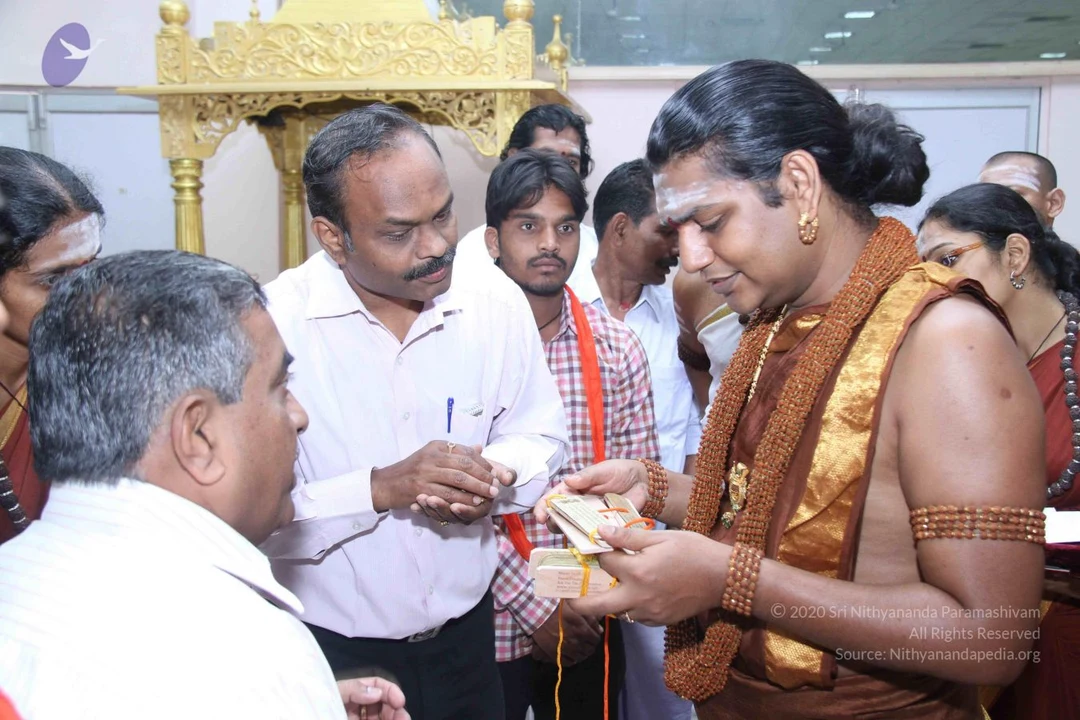
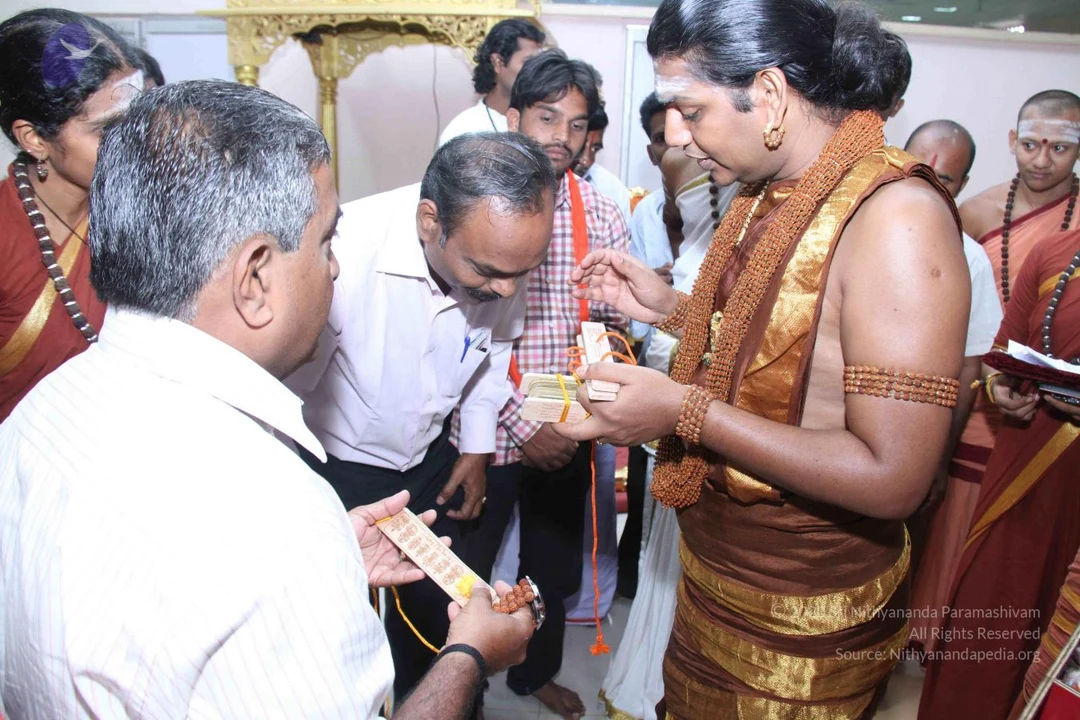
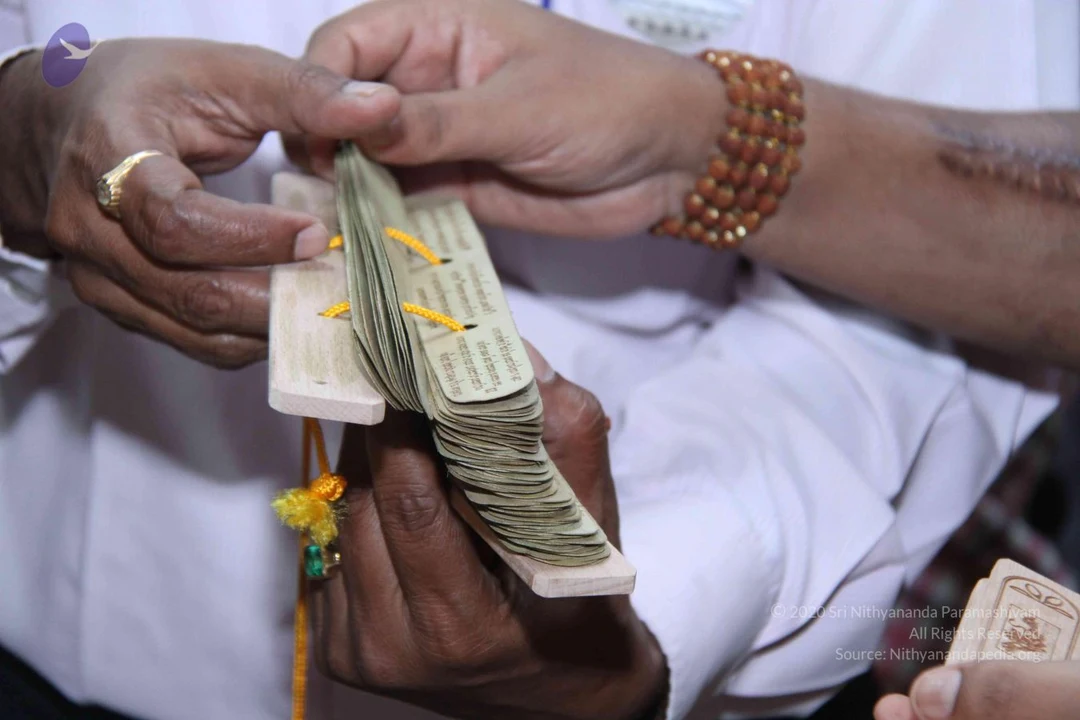
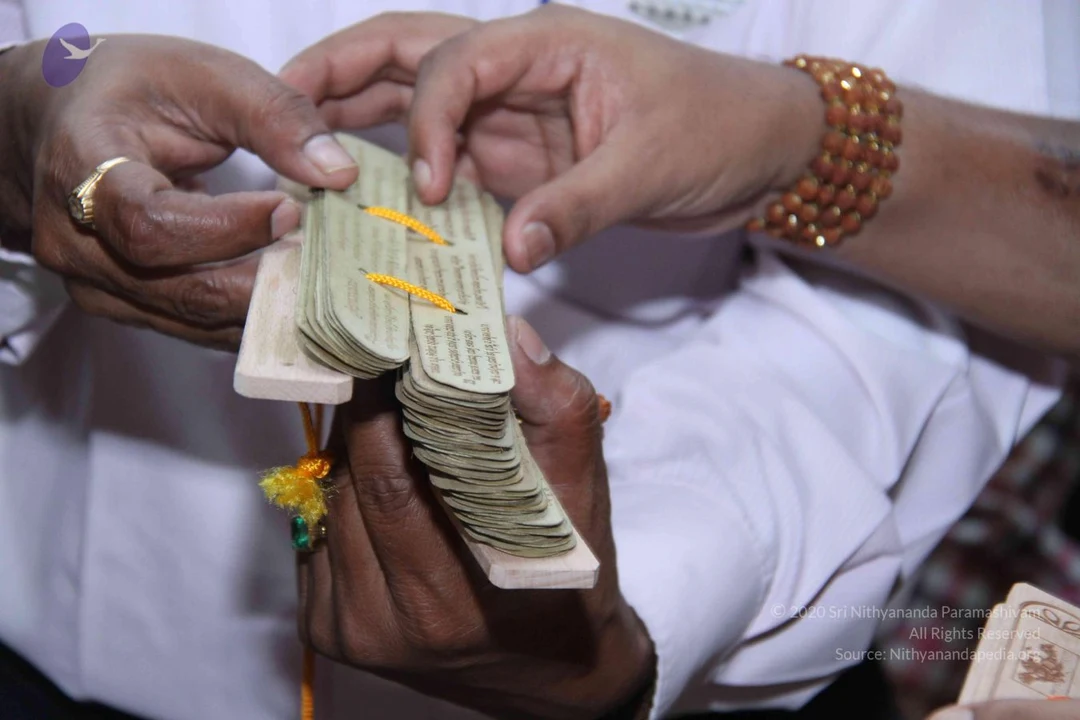
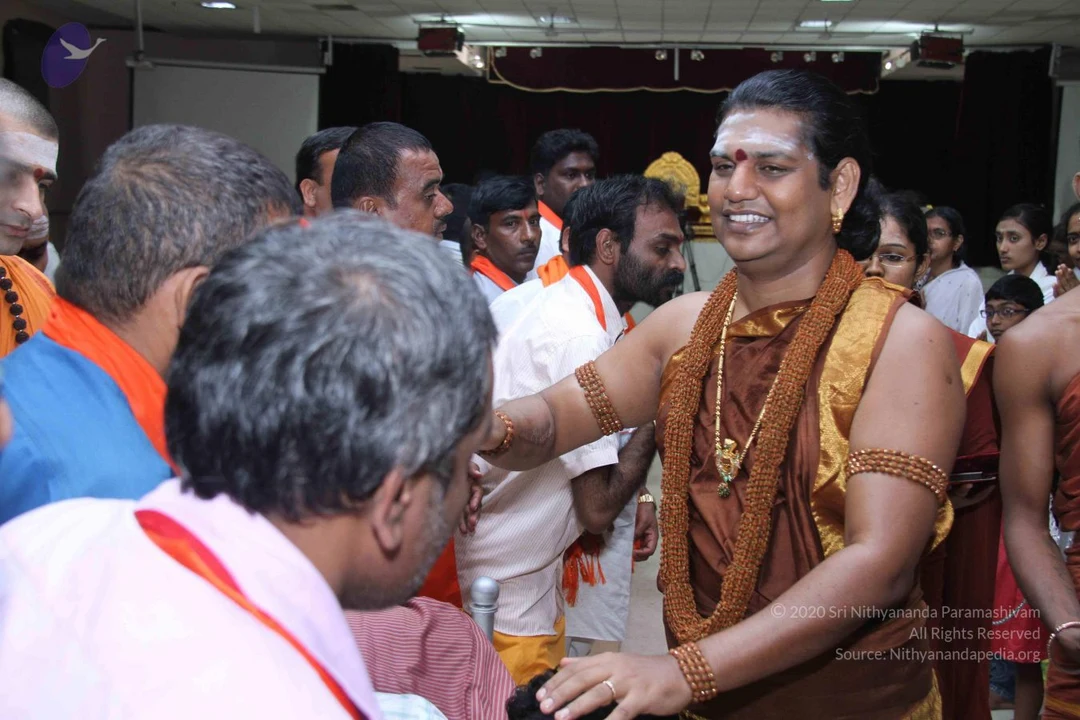
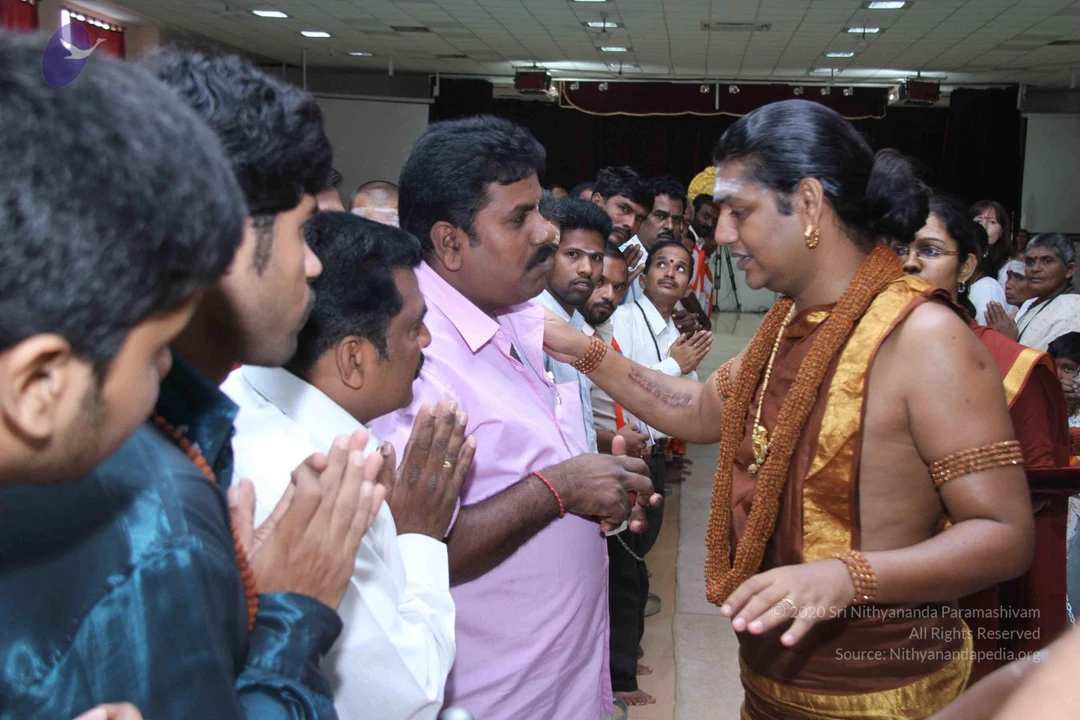
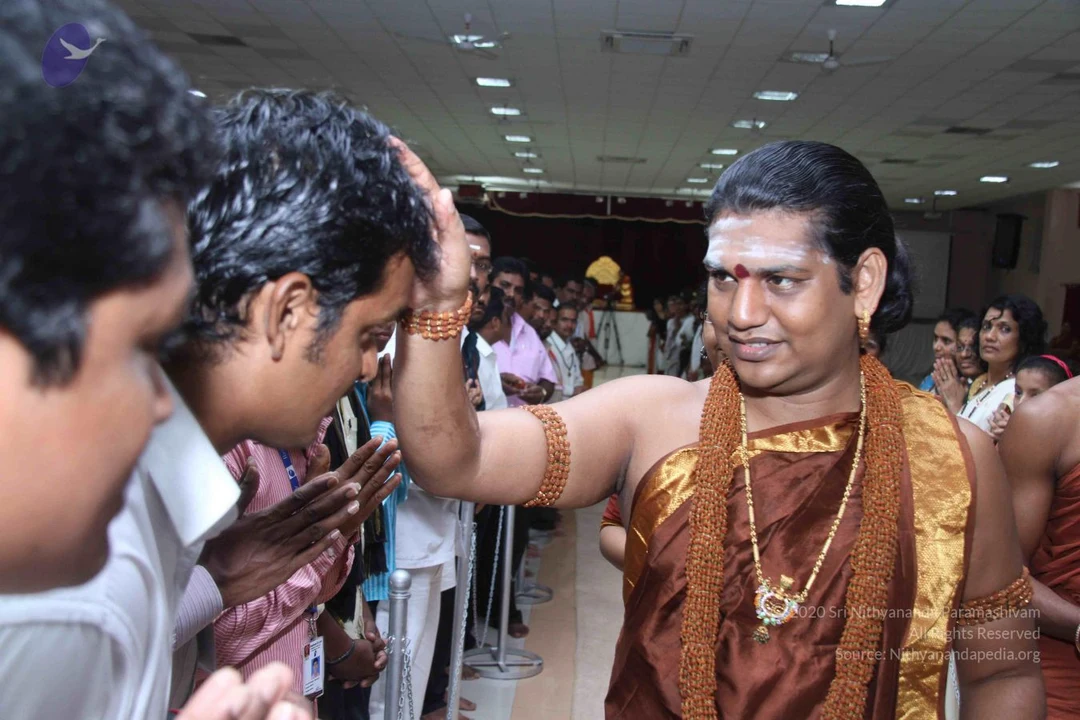
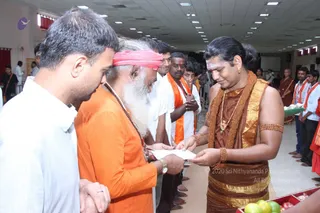
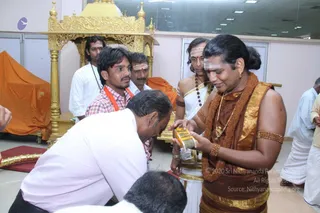
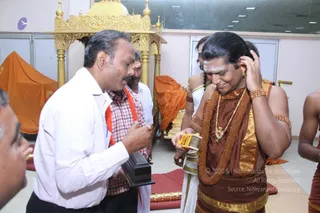
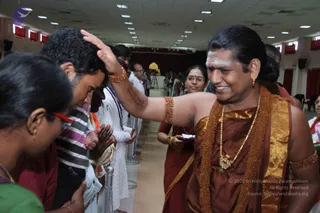
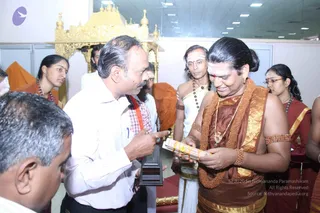
A photograph of a long hall with a line of men in white shirts and dhotis, many with hands pressed together in greeting, standing along a carpeted aisle. On the right, a figure in an orange-brown robe with a gold-bordered shawl, a large rudraksha-style garland, a gold necklace, gold armbands and bangles extends a hand toward the men. Behind them, women in red and brown saris and a stage backdrop with gold decoration are visible.A photograph of a man in a brown and gold ceremonial dhoti and shawl, with rudraksha mala and gold necklace, placing his hand on the head of a smiling devotee in a white shirt in a hall. Several people line the aisle with hands folded in greeting; an older man in glasses and an orange sash is in the foreground. a person cues are visible on the central figure: long swept-back hair, ornate gold jewelry and rudraksha beads, and the blessing gesture indicates he is giving darshan. Background includes a gold deity murti and an onlooking crowd.A photograph of a man with long swept-back dark hair, a red bindi and white forehead markings, wearing a rust-brown and gold-bordered shawl over the shoulder, a rudraksha mala with a larger orange-brown bead strand, a gold ceremonial necklace, gold earrings and an orange-brown bangle, smiling as he extends his right hand to rest on the head of a bowing man in a white shirt. Several other people stand or bow along a line in a hall with ceiling lights and red curtains. a person is the central figure, giving blessing to devotees in a satsang setting.A man with a shaved head and white-and-red tilak on his forehead, wearing a brown-and-gold silk garment, a rudraksha mala and a gold ceremonial necklace, places his right hand on the head of a devotee bowing before him in a hall. Gold bangles adorn his arm. Around him, devotees in white, green, maroon and striped clothing stand in a row with folded hands, and a woman in a maroon sari with gold border stands nearby. The hall has red-curtained windows and a gold decorative backdrop in the distance.Indoor scene in a hall with a gold-trimmed ornate canopy and throne-like structure at the back. A woman with hair in a bun and rudraksha mala stands on the left, while a man in a white shirt with a red-and-white checked shawl holds a small black trophy or plaque and gestures toward a person on the right. On the right, a figure with a shaved head, tilak, brown silk garment with gold border, and ornate garlands of rudraksha beads and a gold pendant, holds a bundle of wrapped papers tied with yellow cord. Behind them, a man in white dhoti and shawl with rudraksha malas stands beside a woman in saffron with a rudraksha mala.A photograph of a ritual exchange in an indoor hall with a gilded throne-like seat in the background. A figure with long dark hair in a bun, wearing a rust-brown and gold-bordered garment, rudraksha mala beads, a heavy gold necklace and gold earrings, extends a small silver object to a man in a white shirt who holds a black box. Another man in a white shirt and a younger man in a checked shirt stand nearby, and a priest in white dhoti with a bare chest and rudraksha mala, sacred ash on his forehead, stands behind. A woman in a red-brown sari and glasses stands at right, and beside the central figure a tray of orange-brown items and a red cloth are visible.

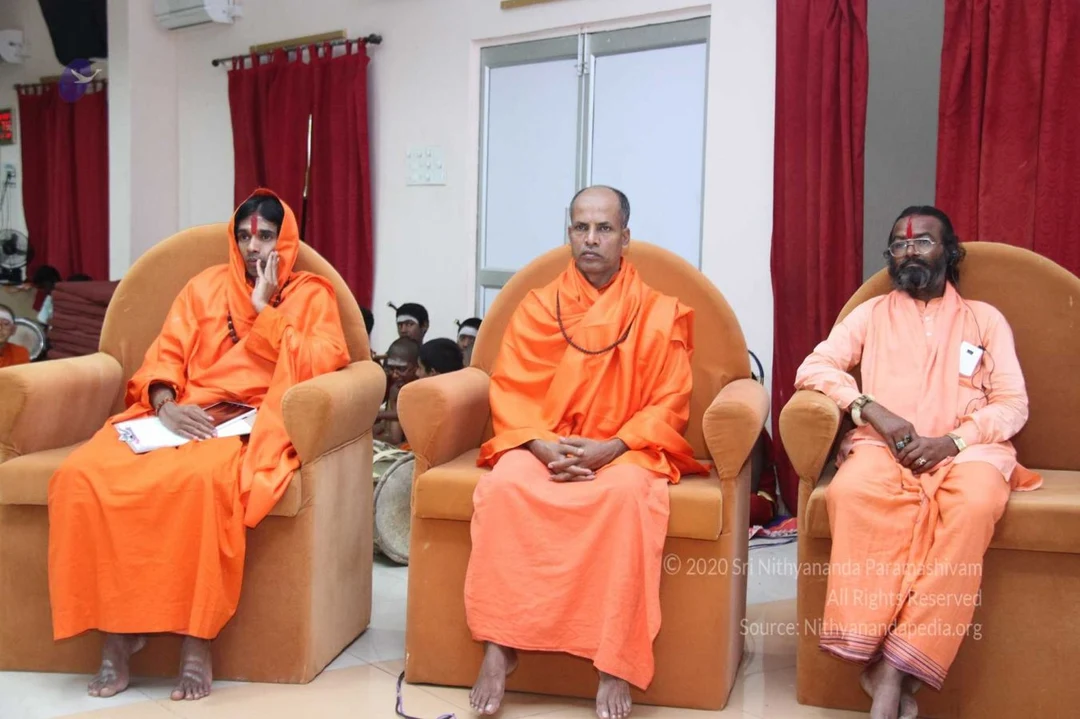
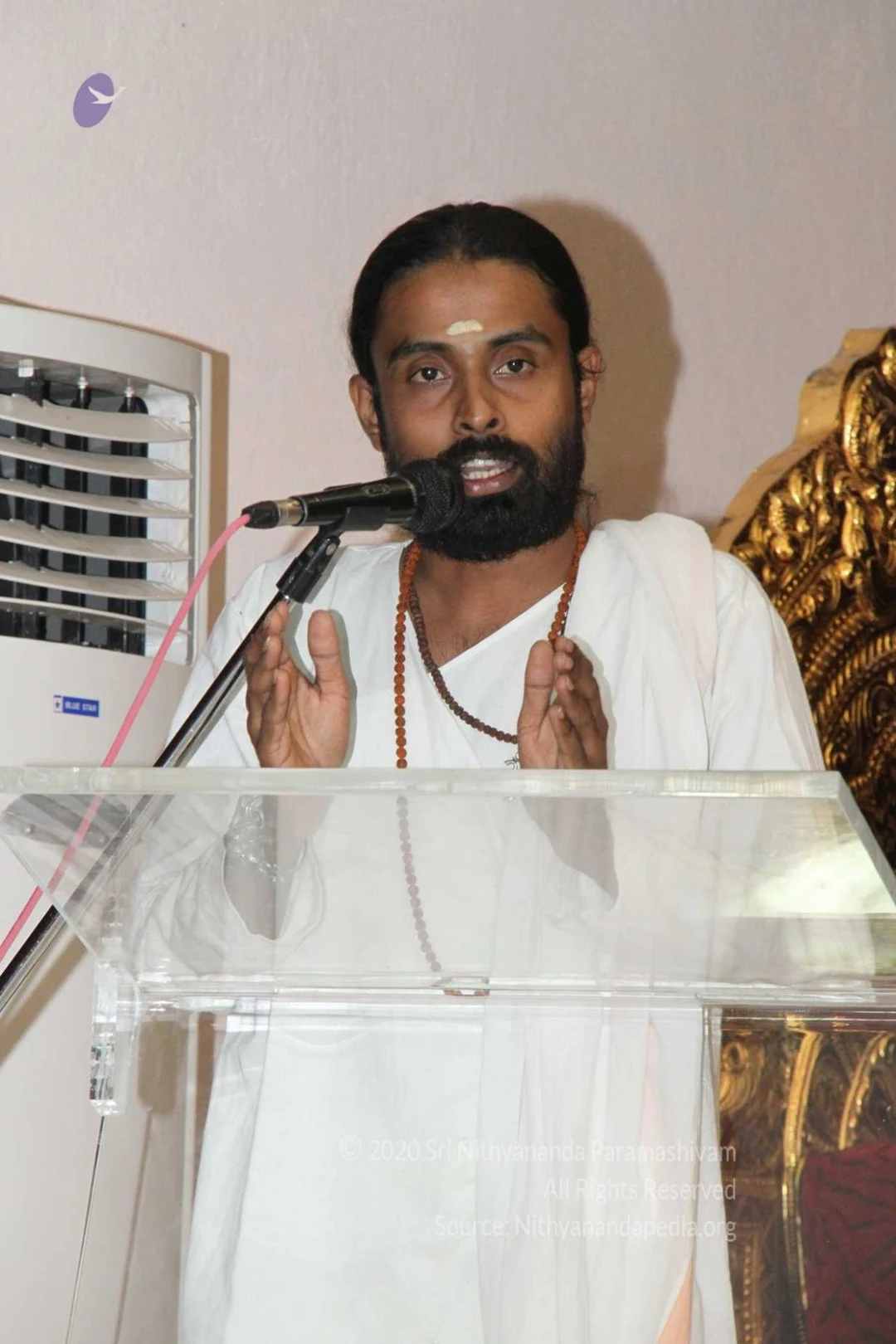
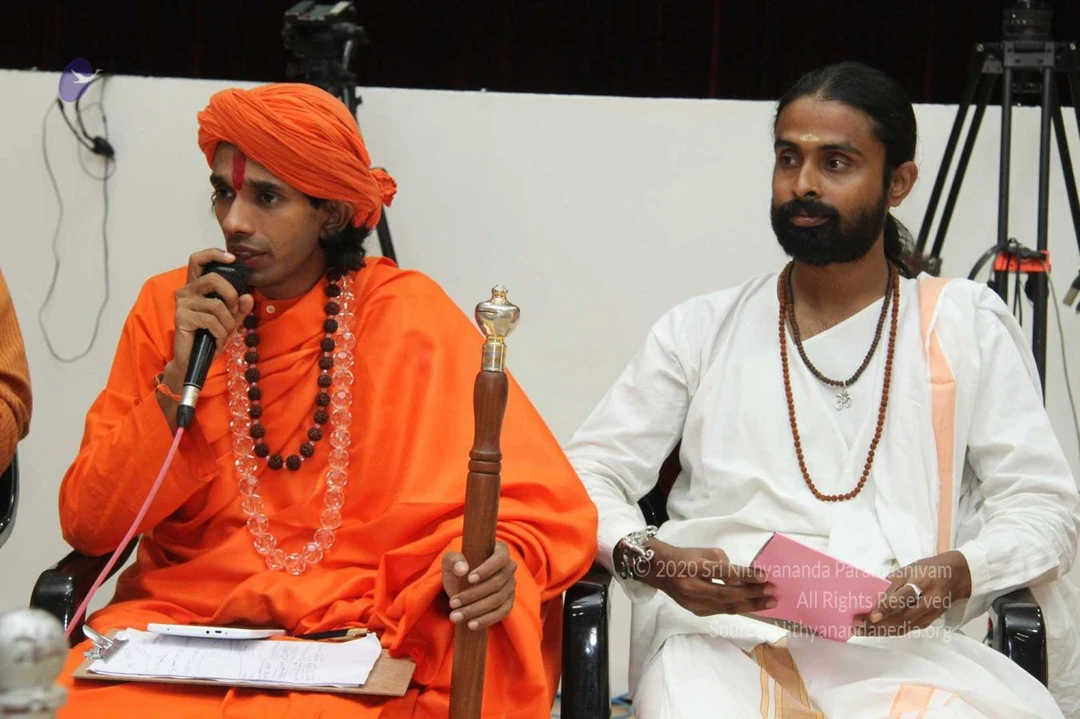
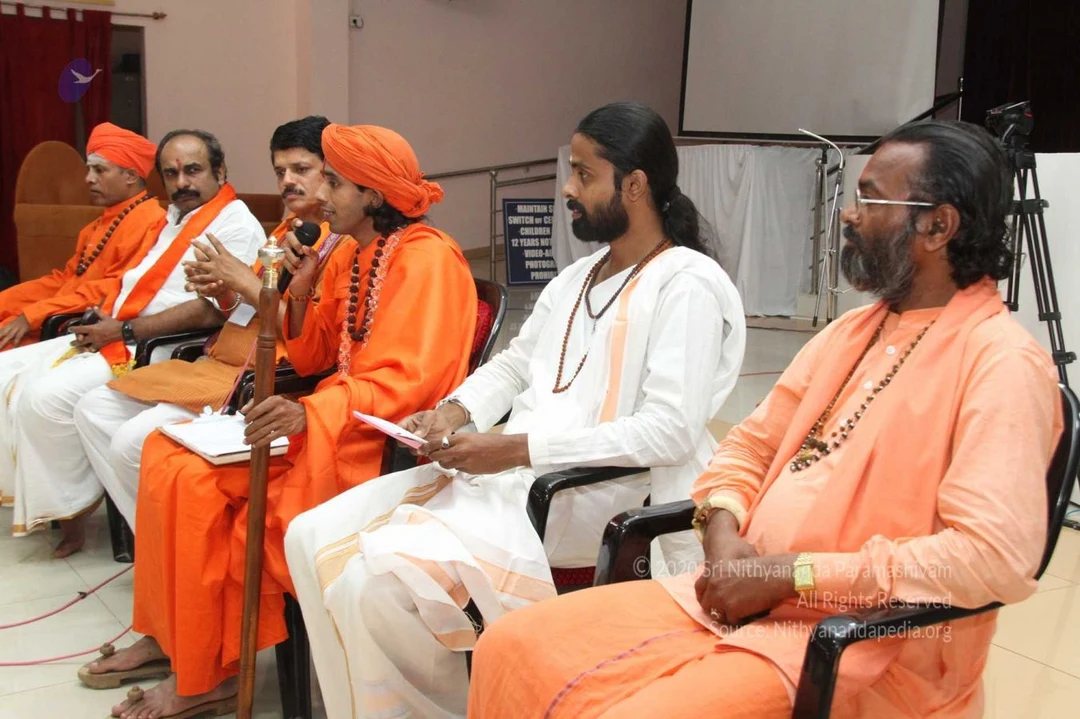
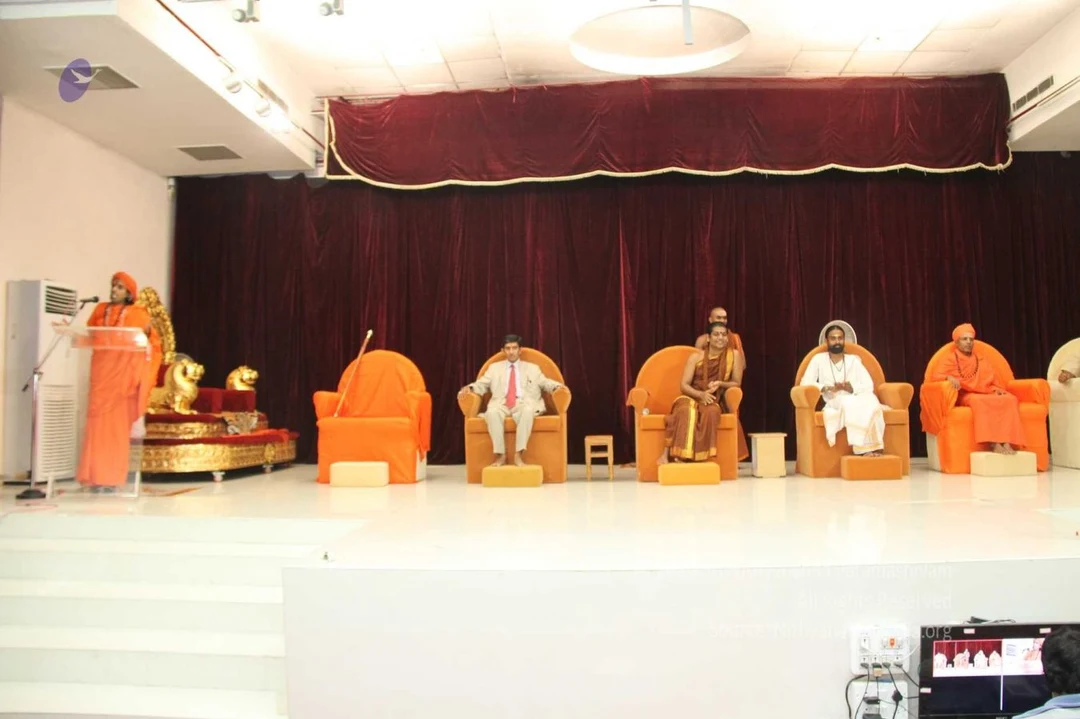
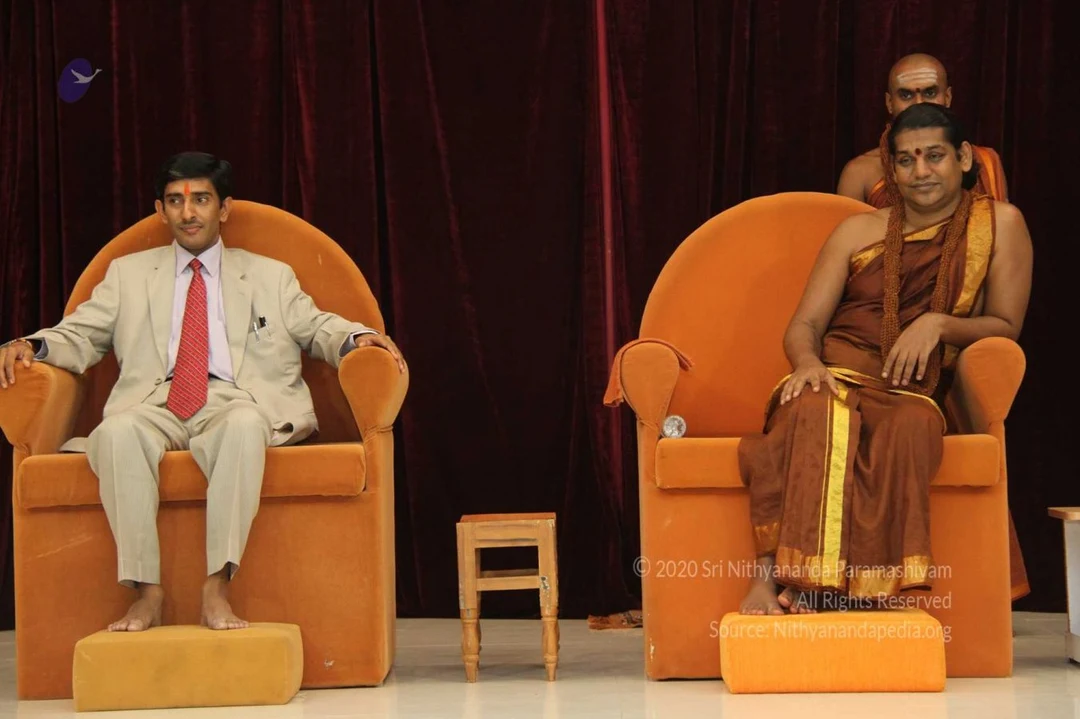
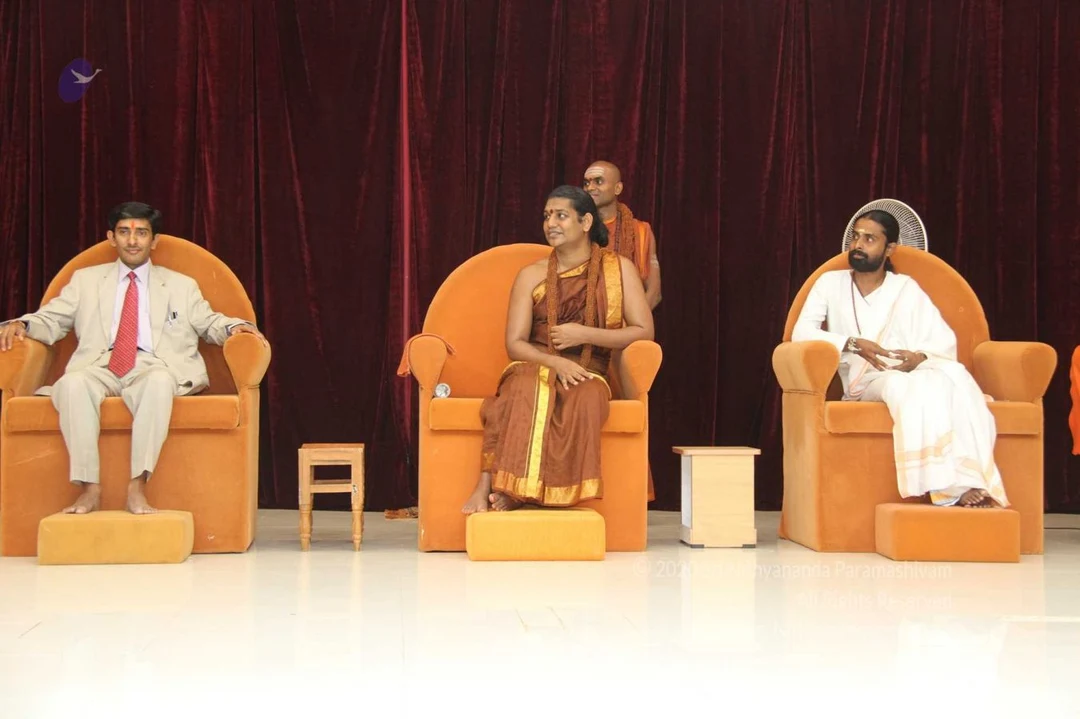
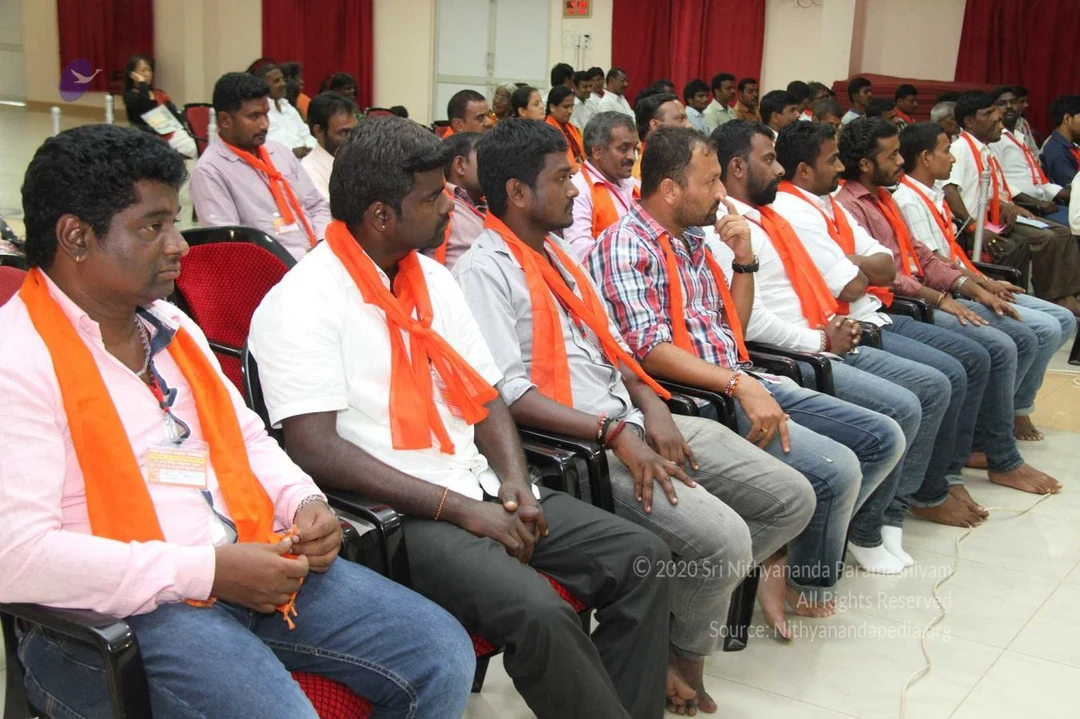
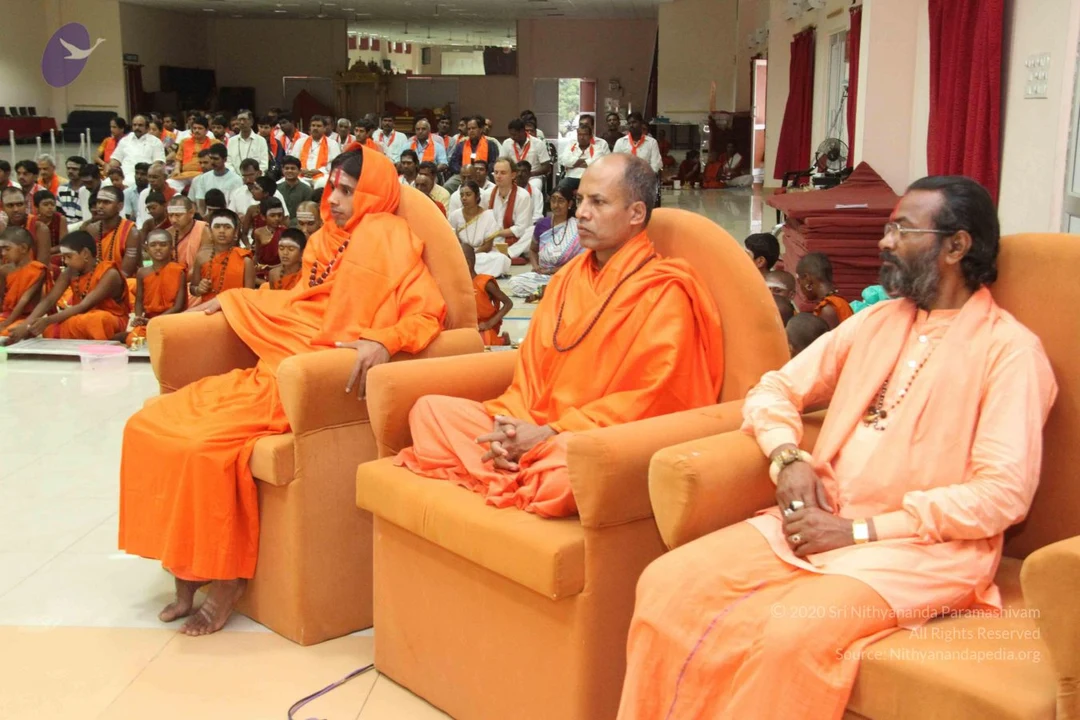
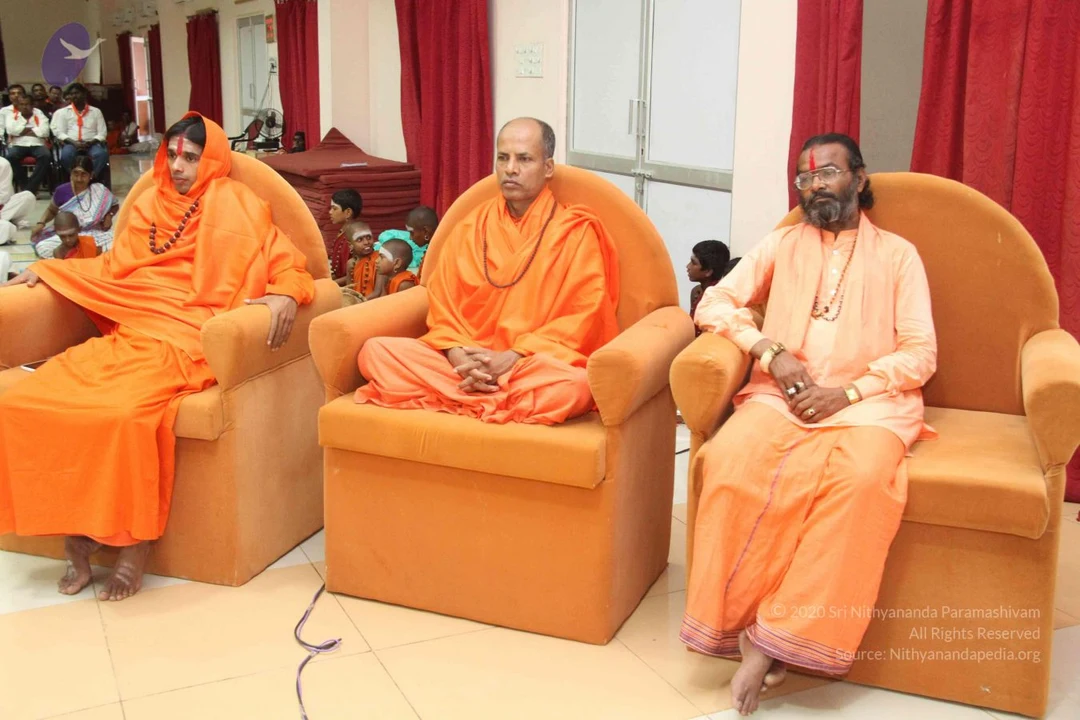
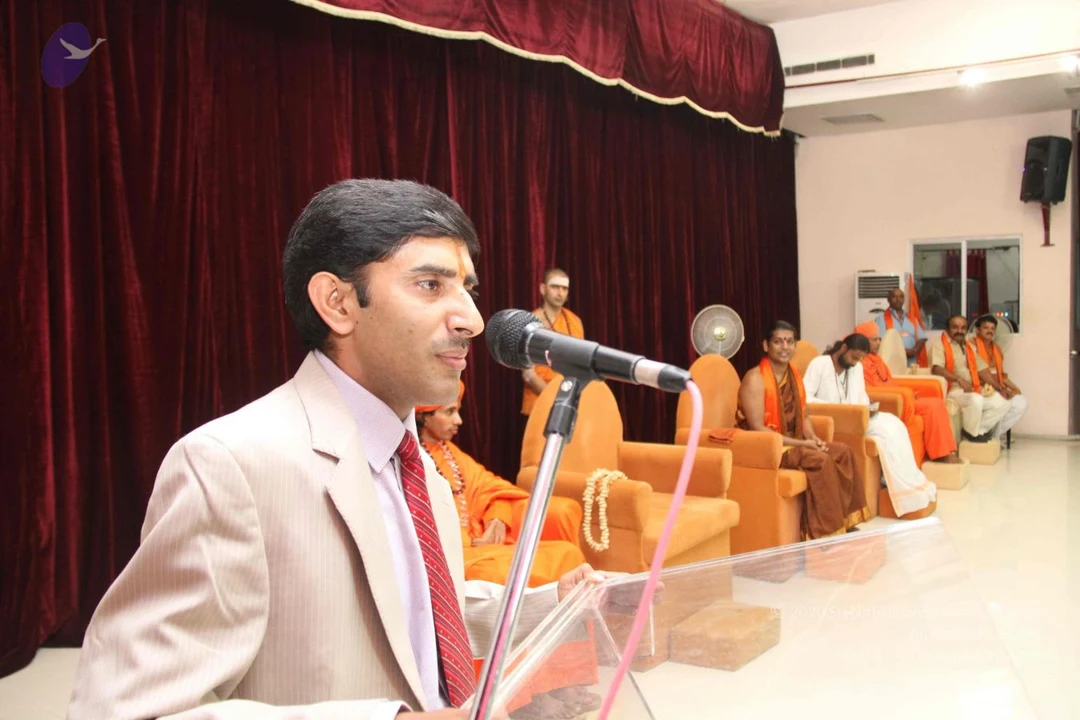
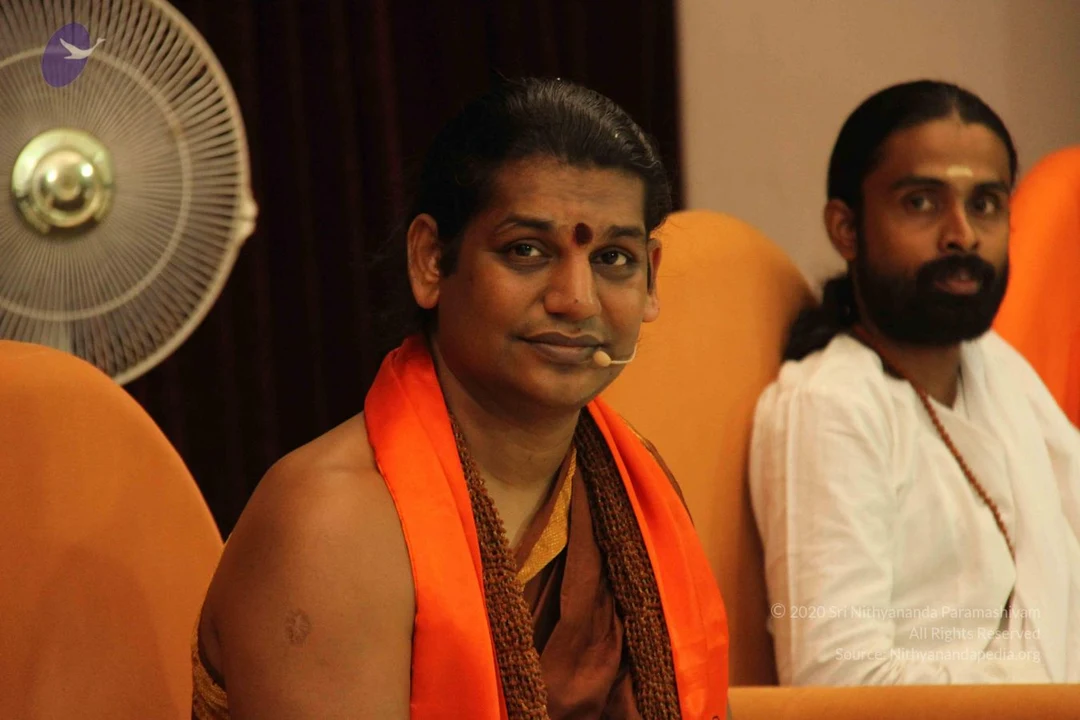
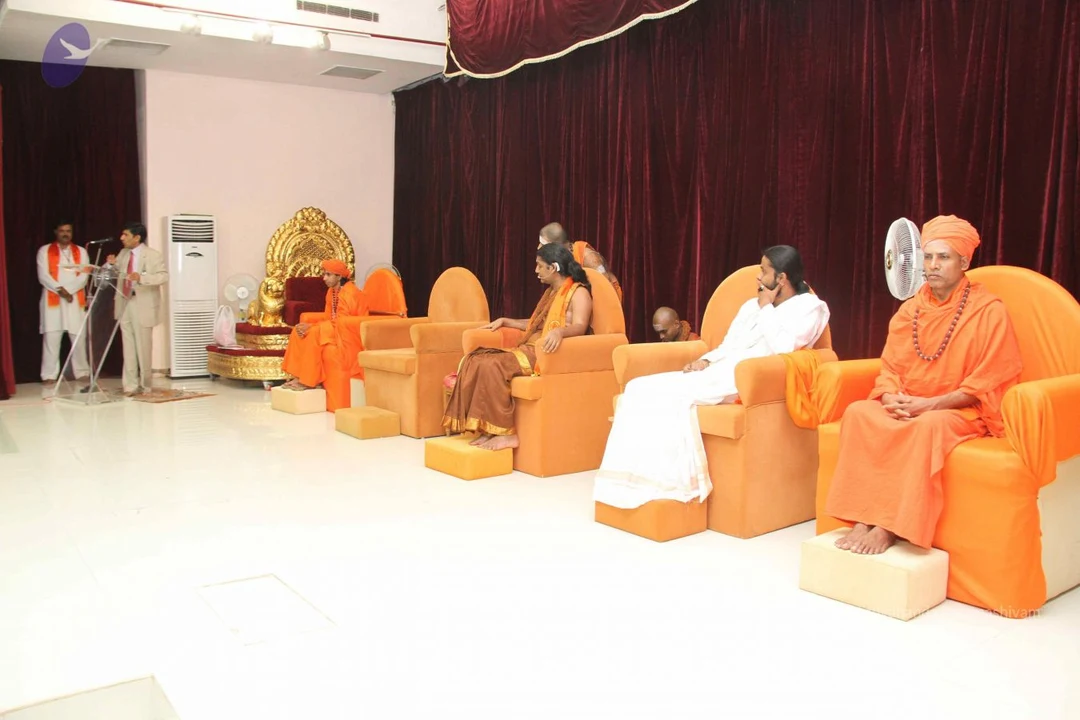
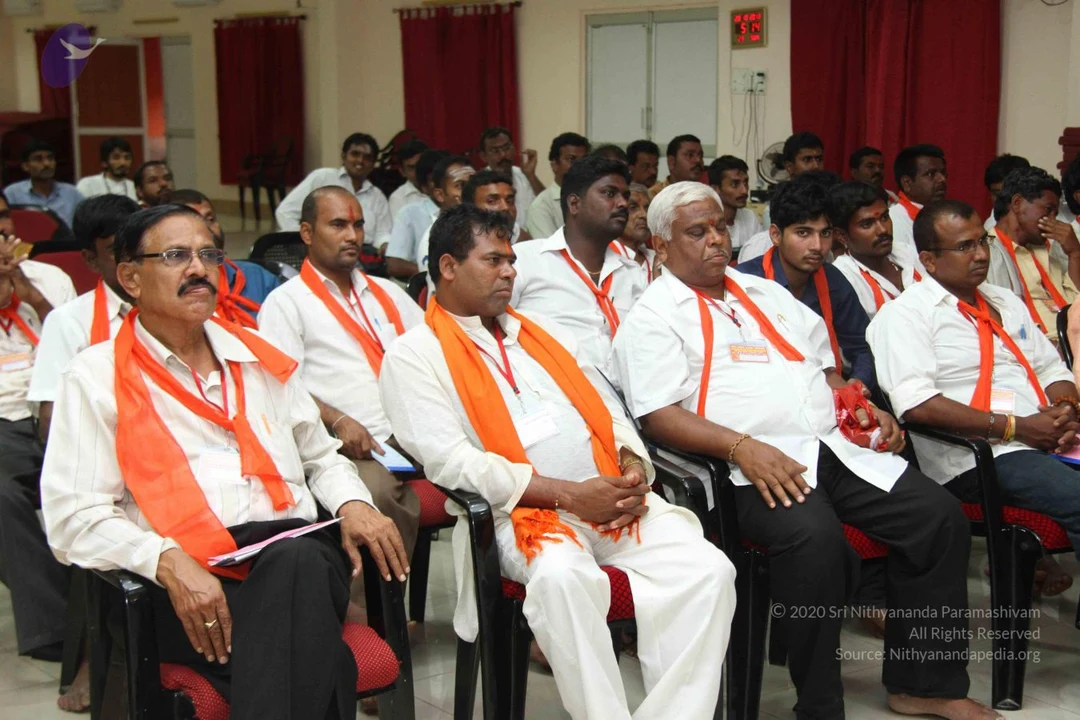
Akila-Bharat-Hindu-Maha-Sabha-Honoring-Swamiji
69 photosSource gallery
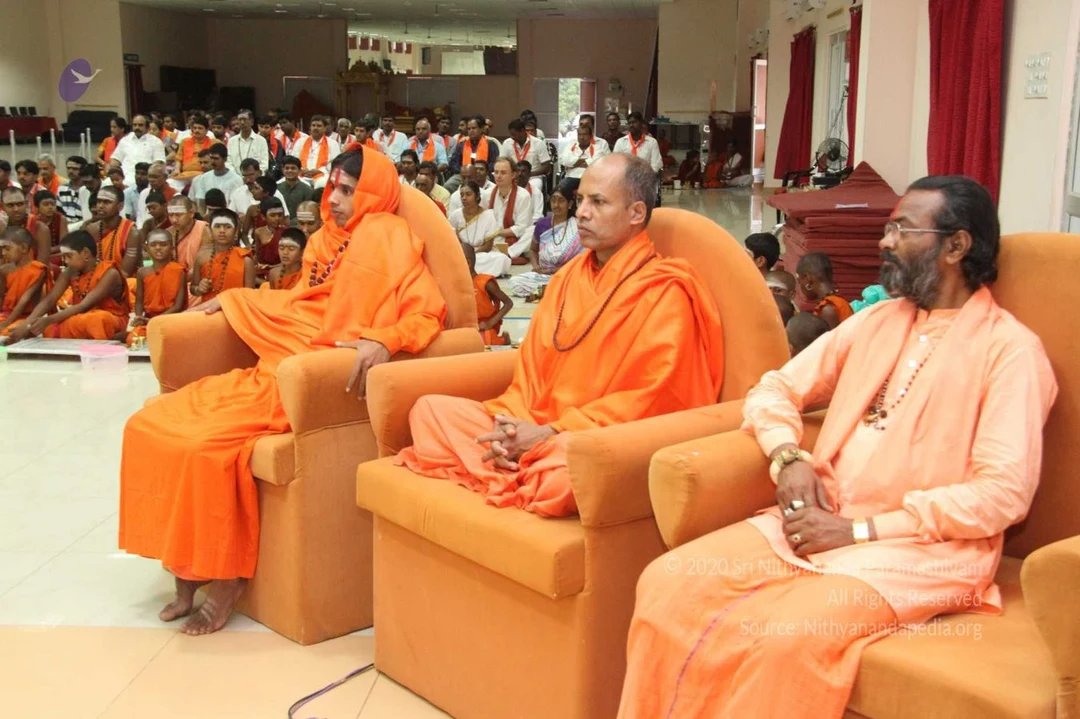
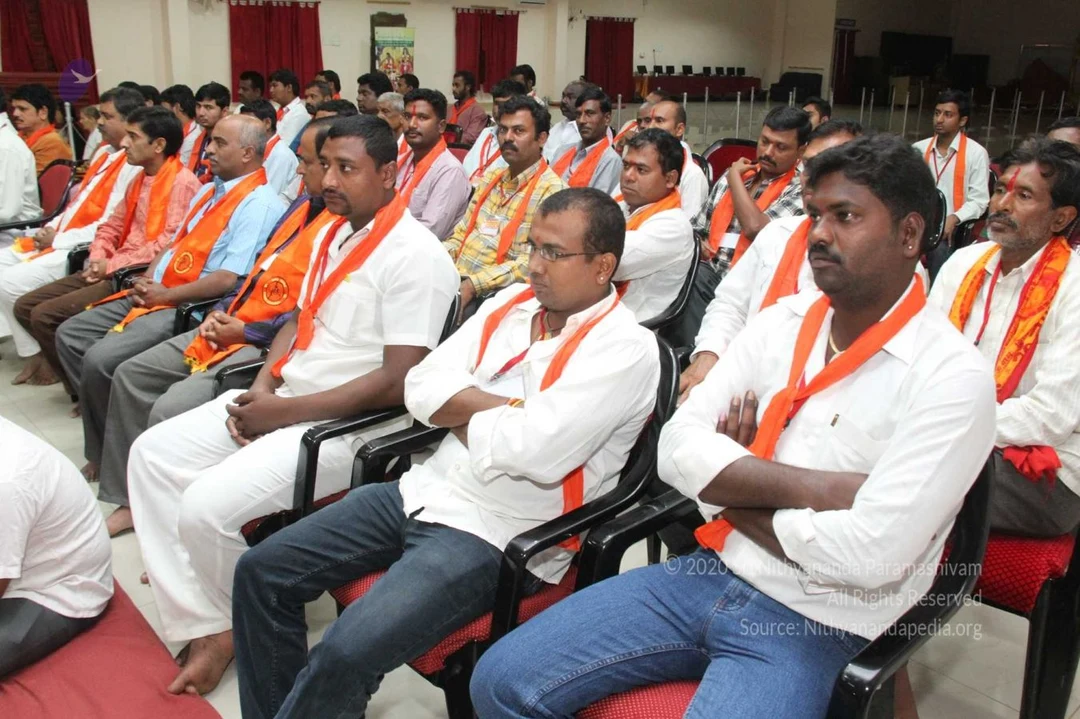
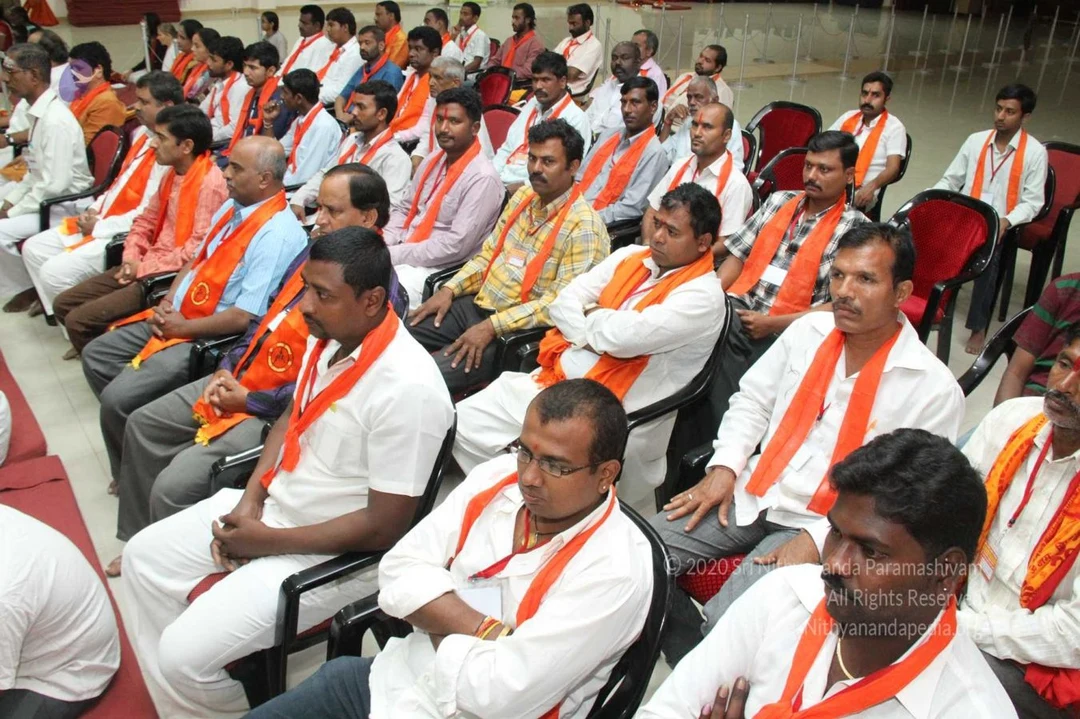
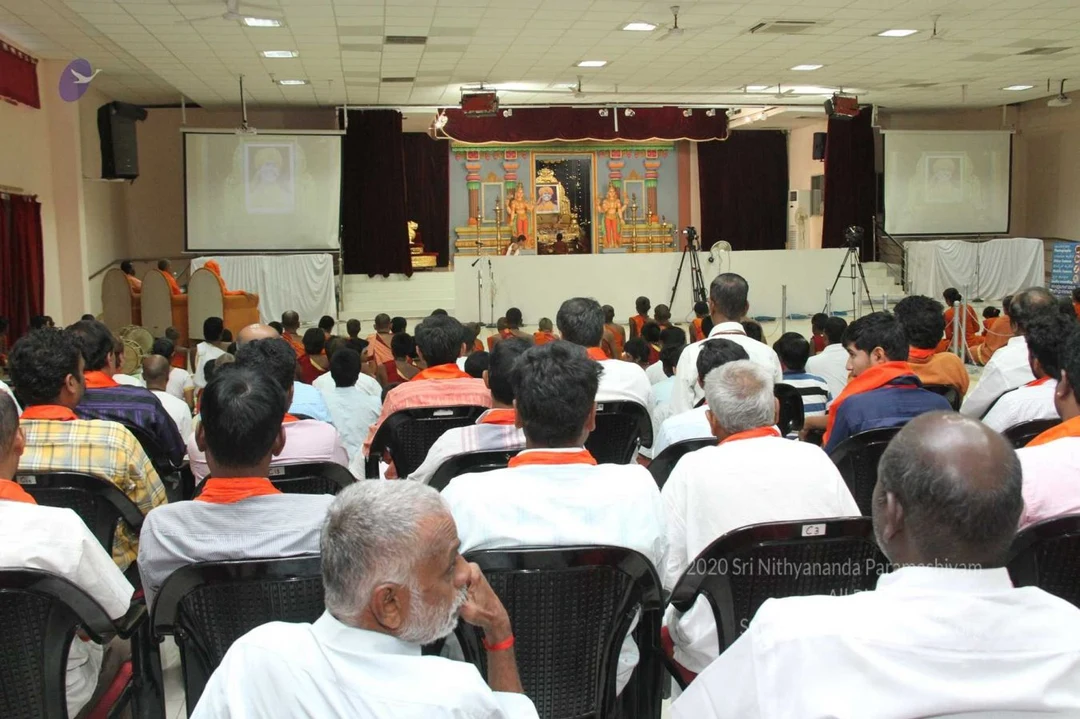
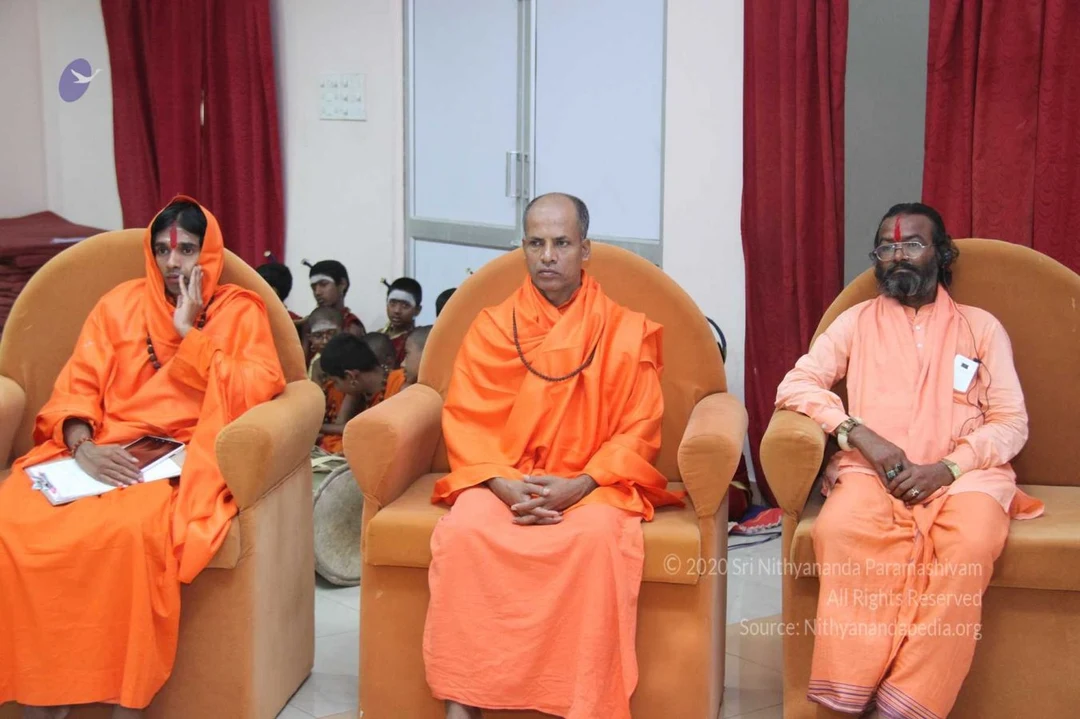
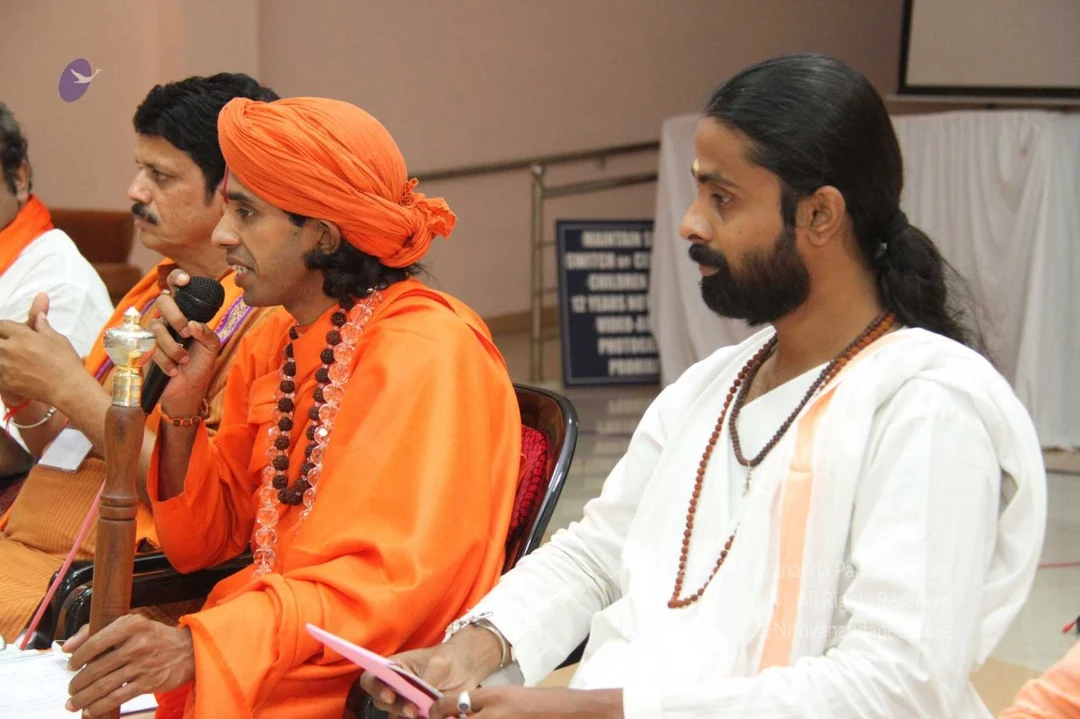
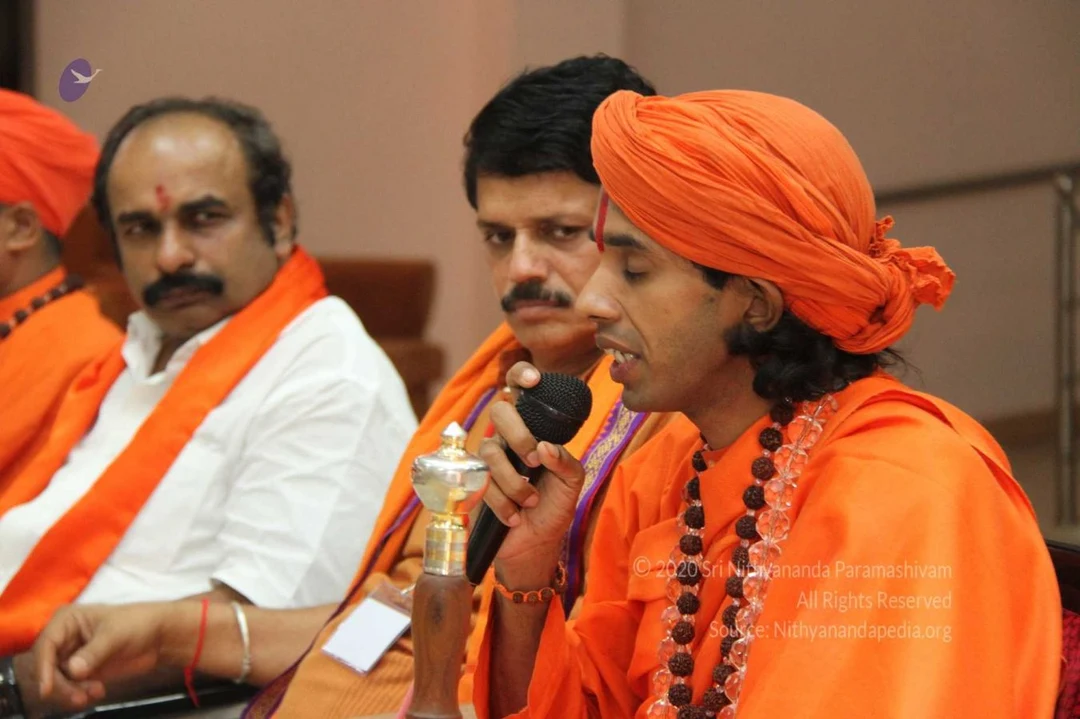
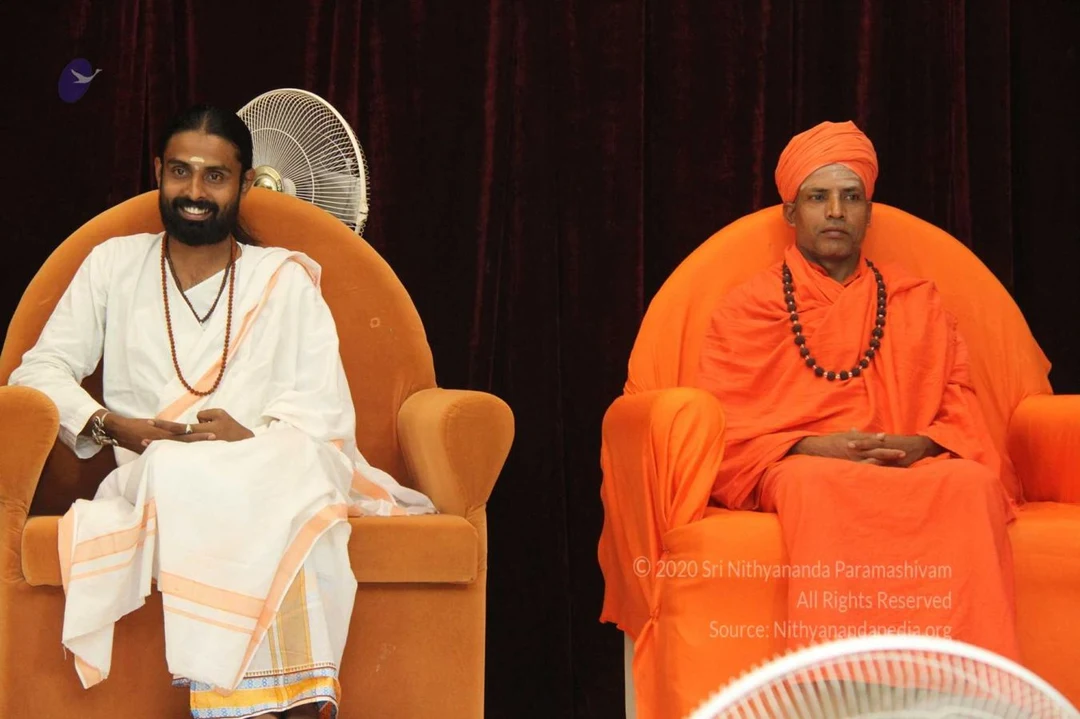
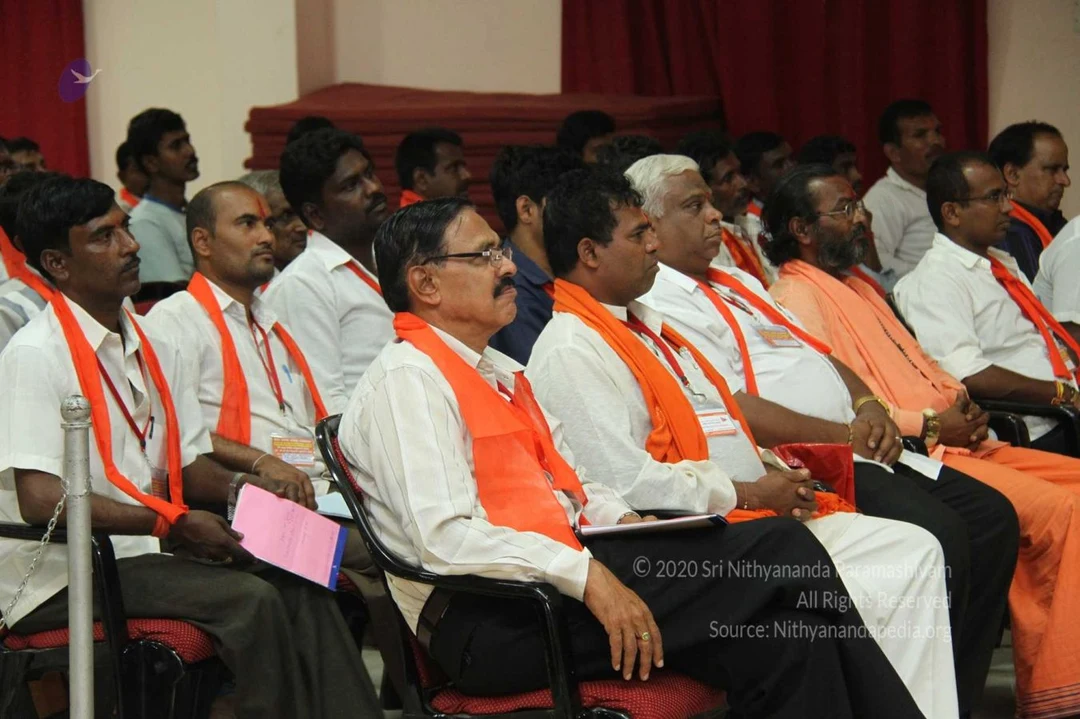
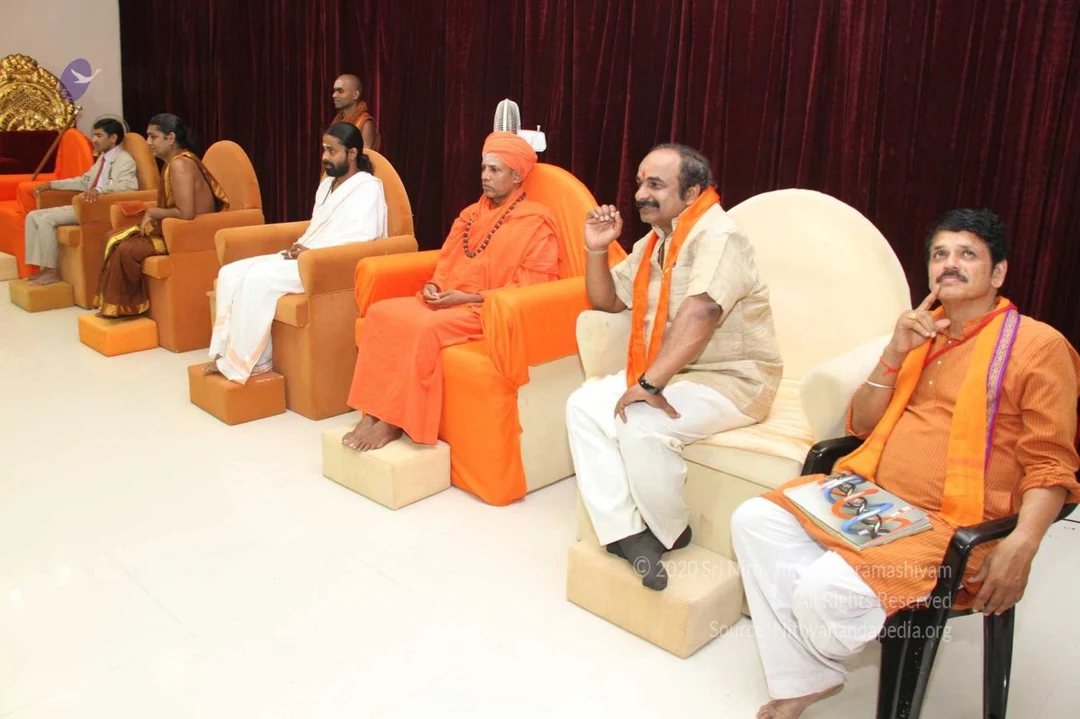
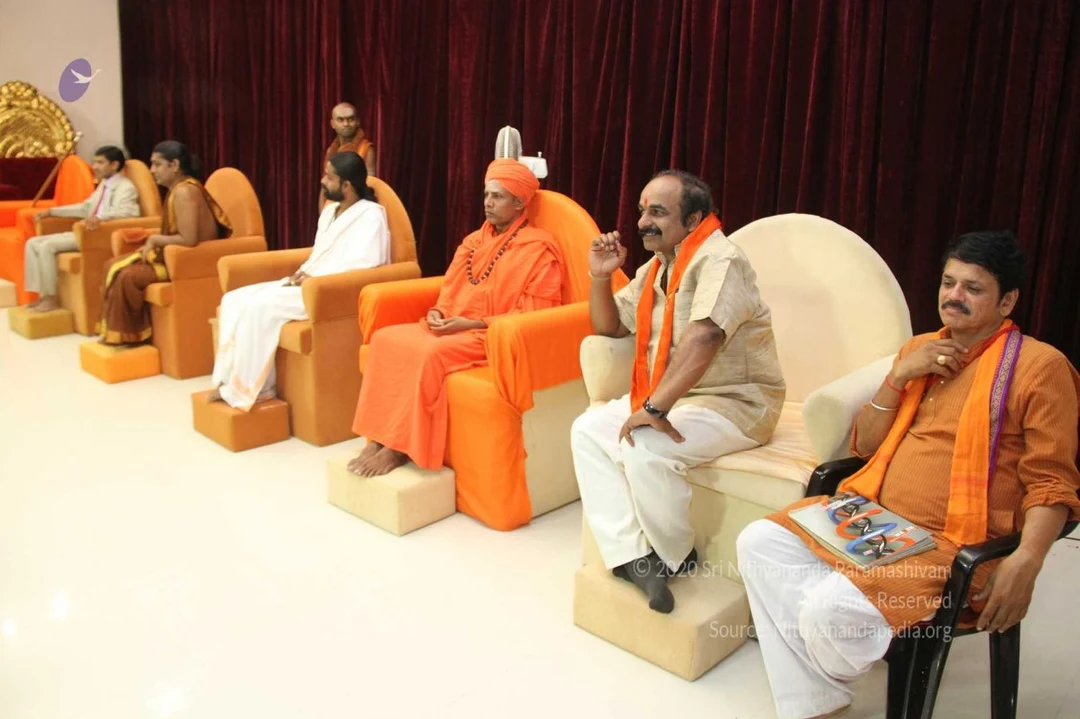
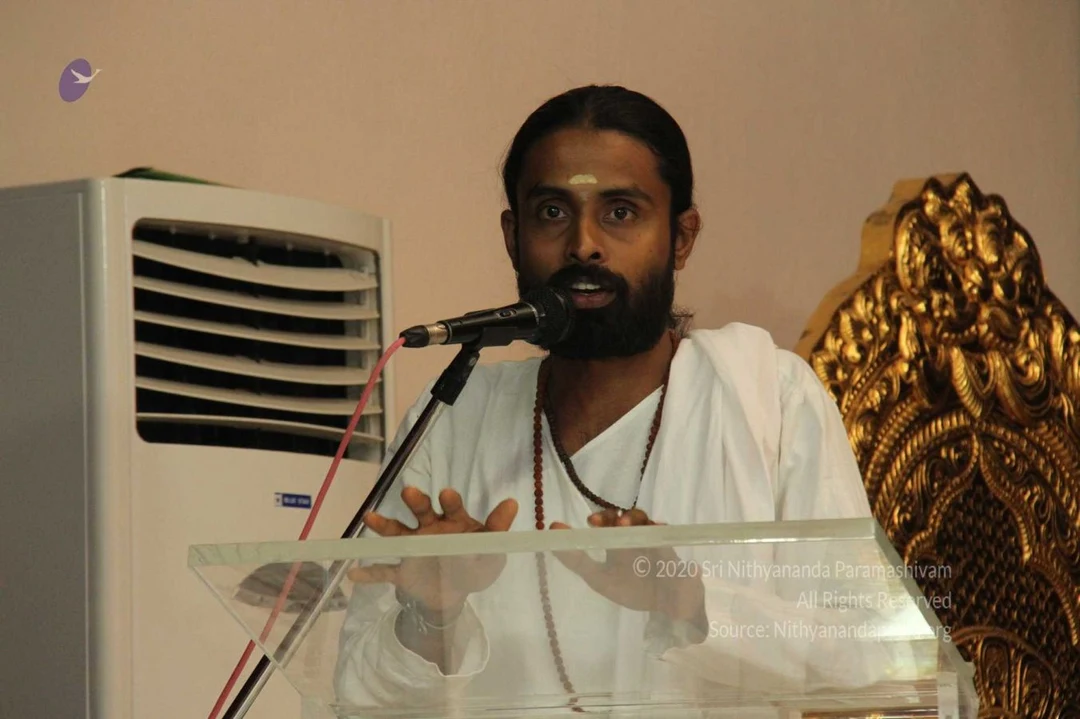
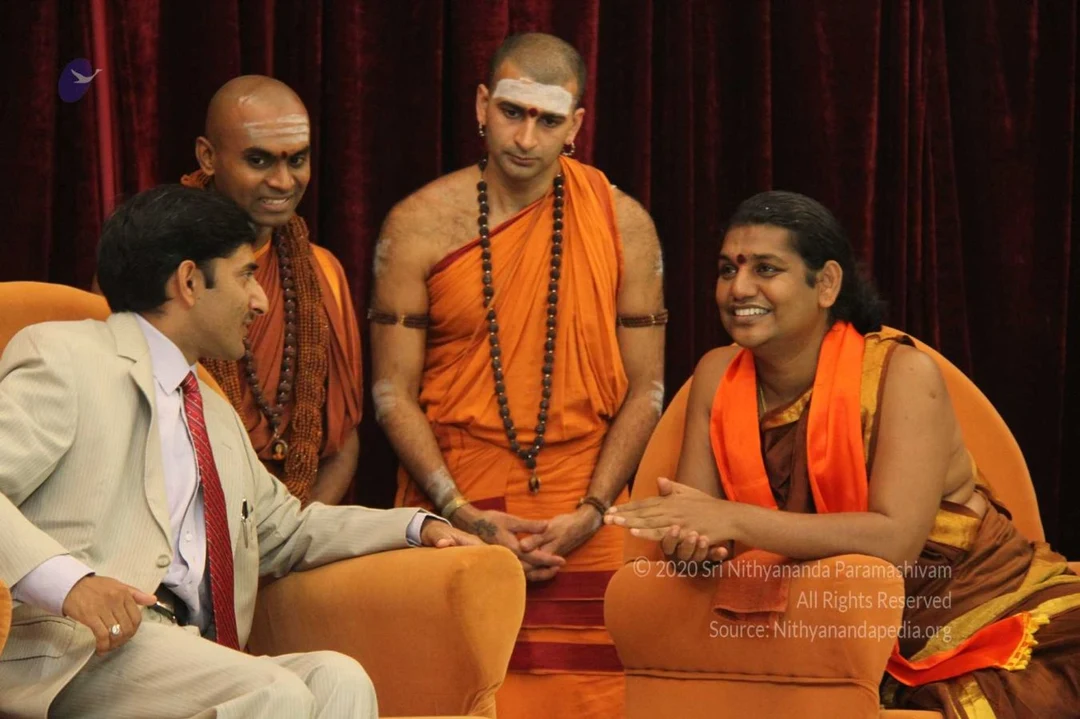
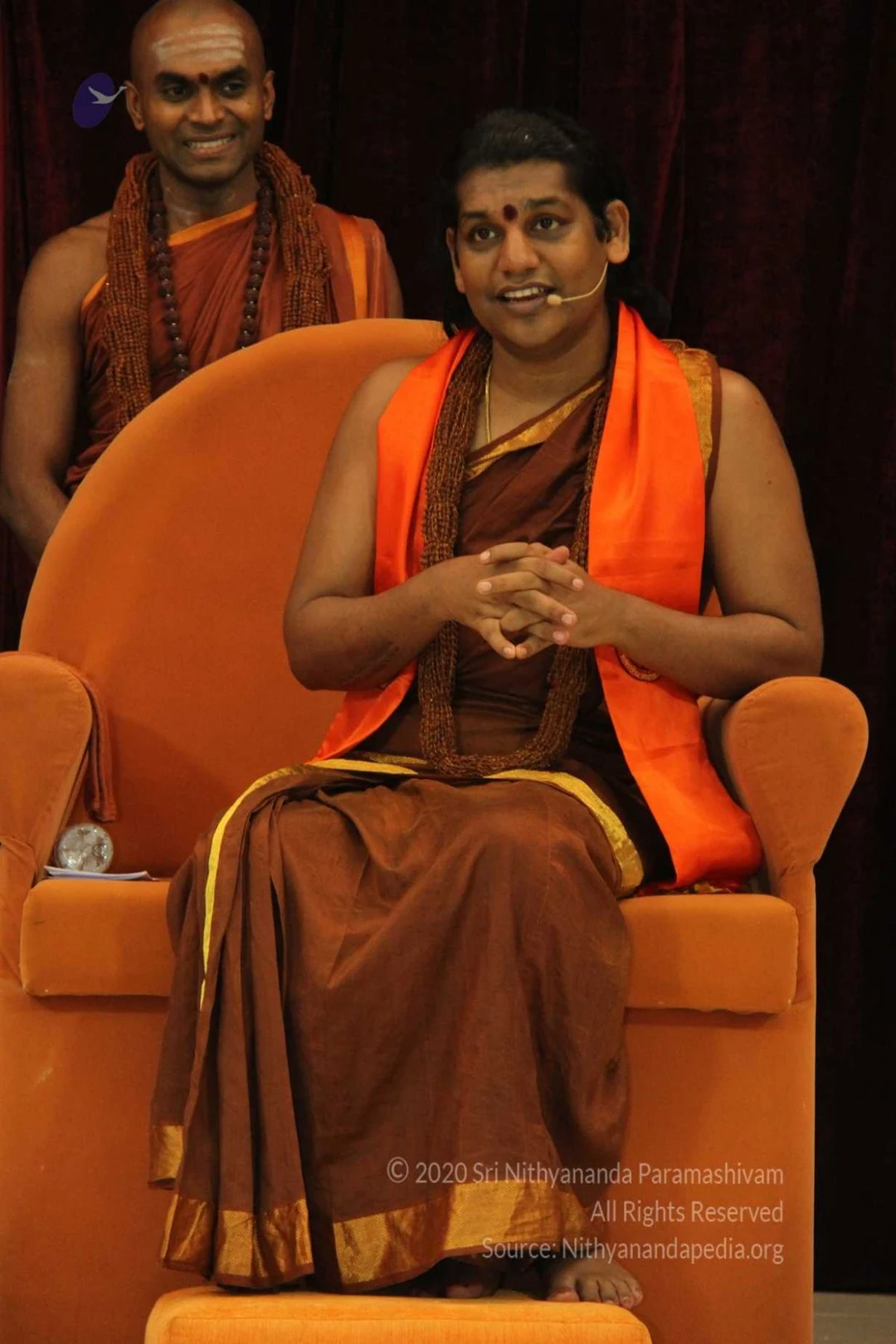
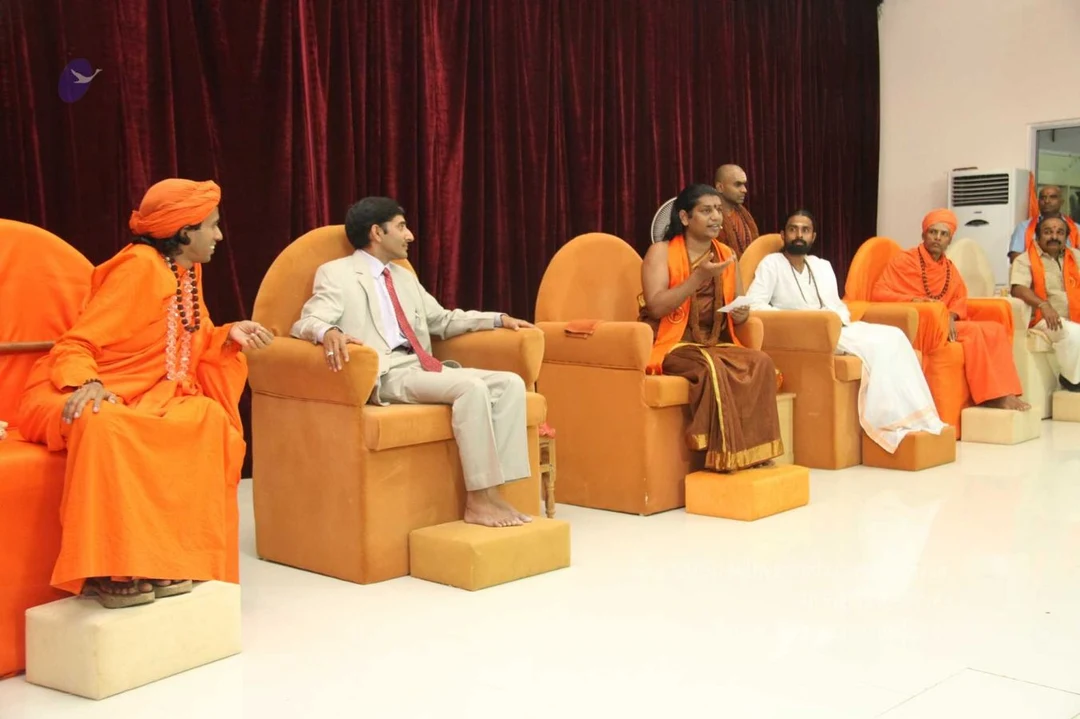
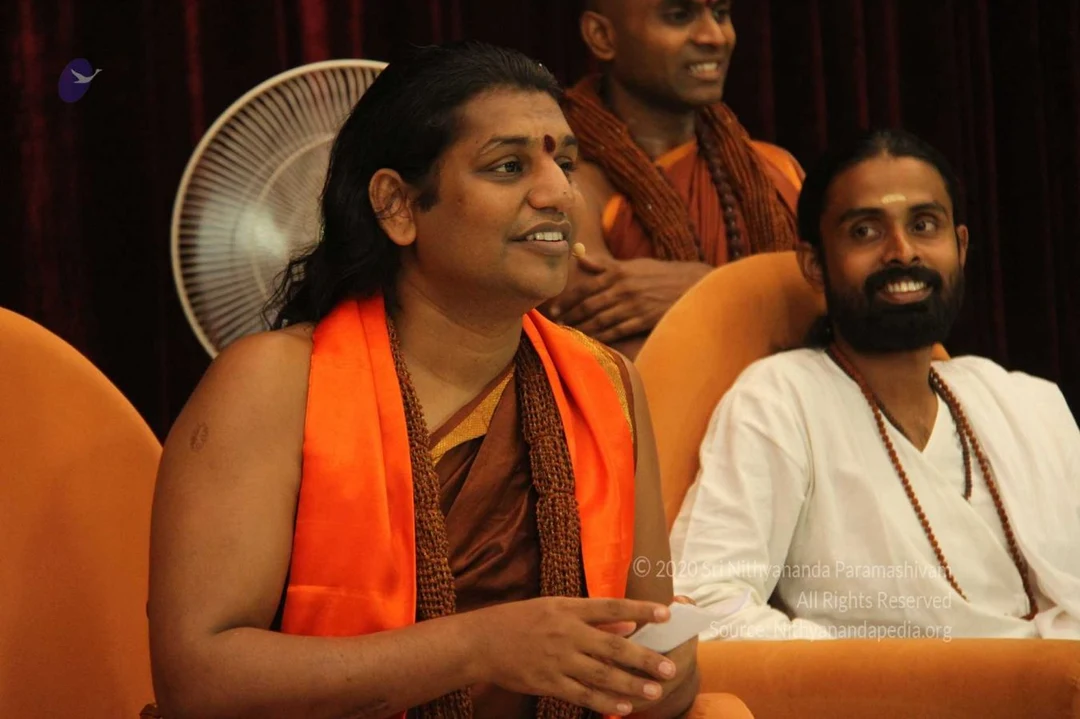
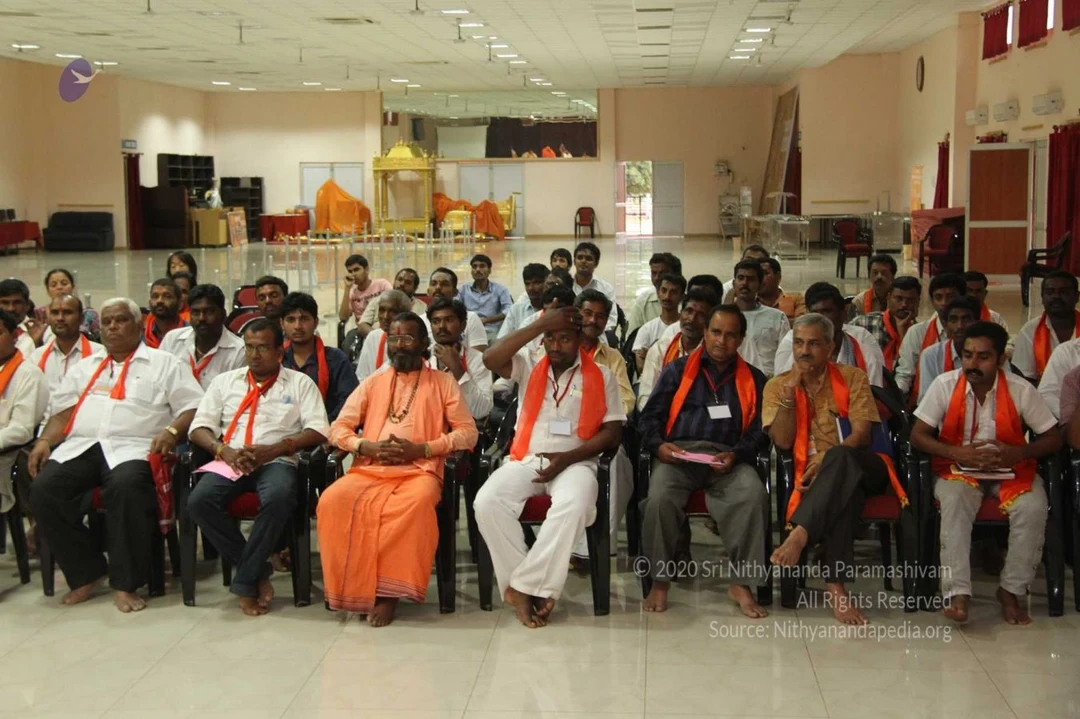
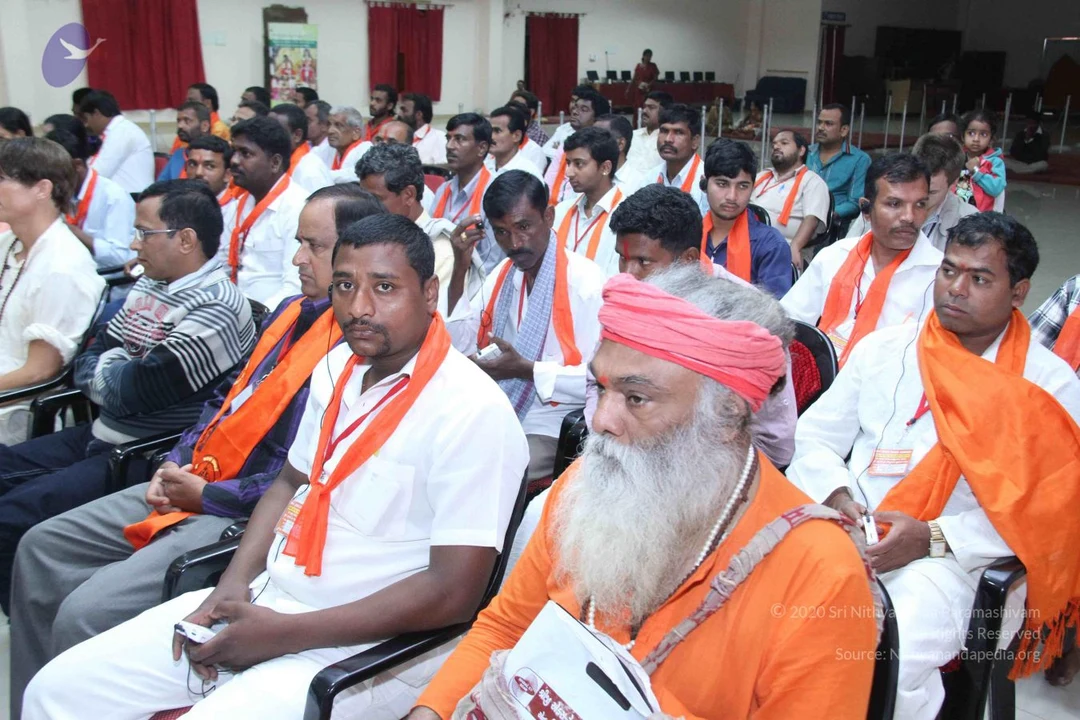
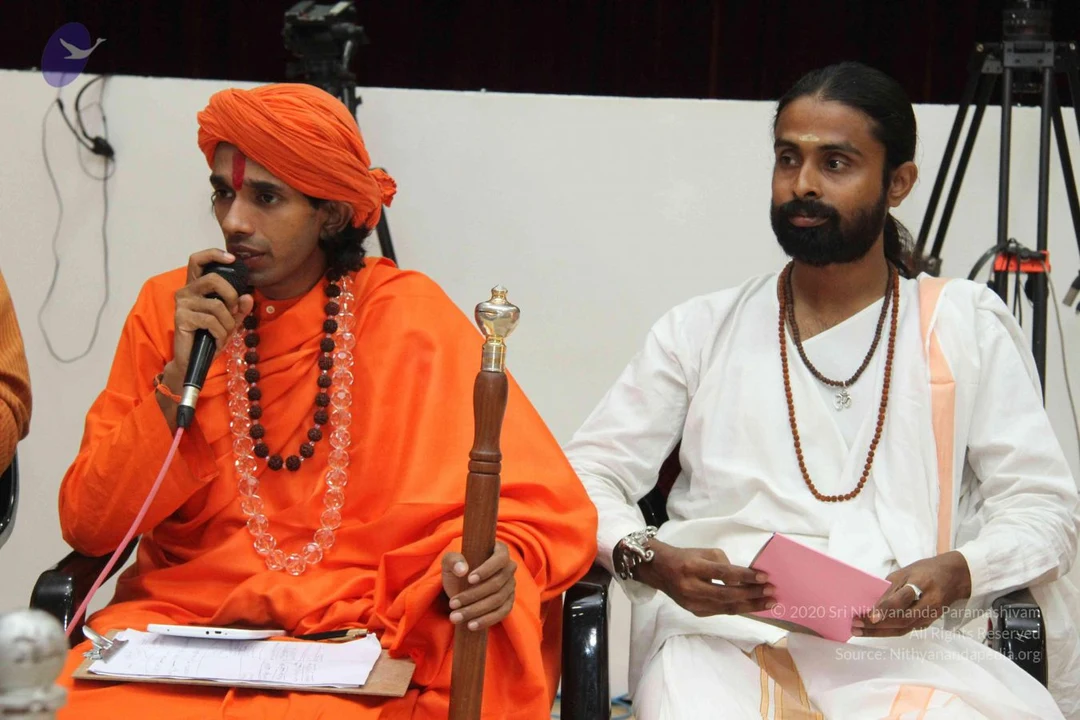
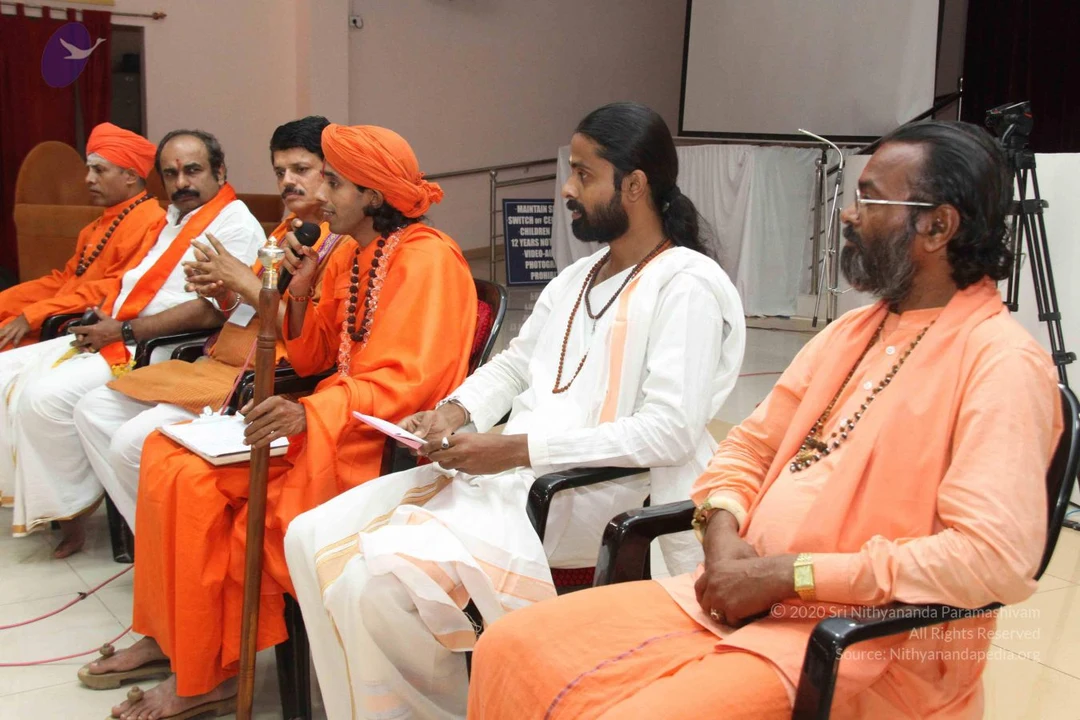
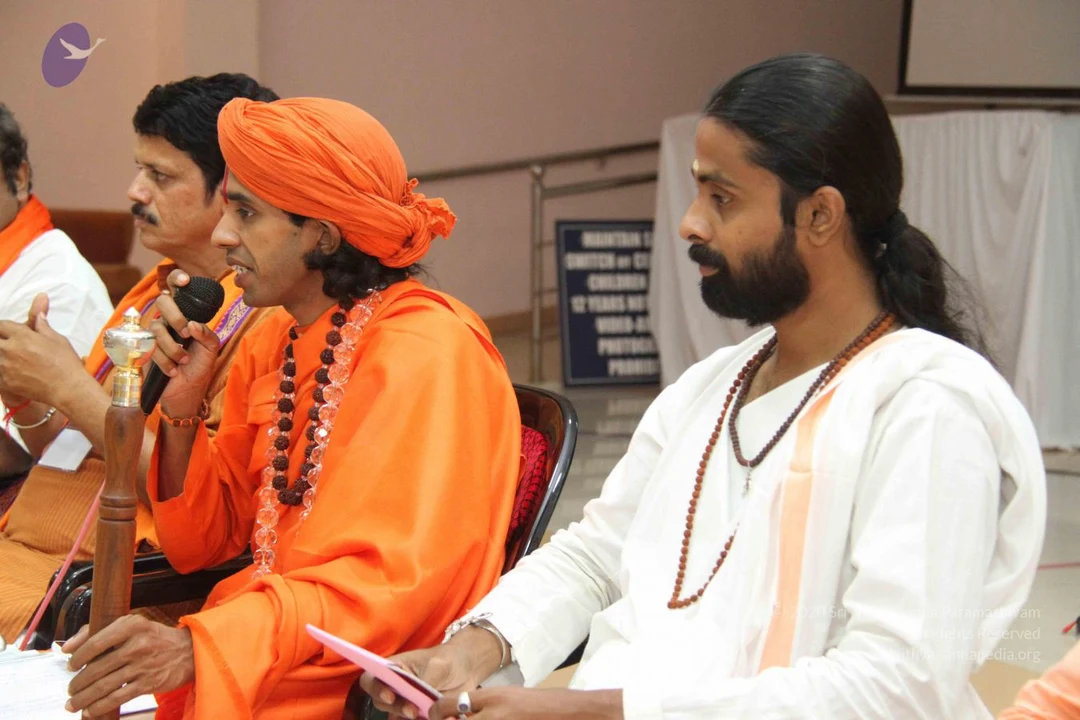
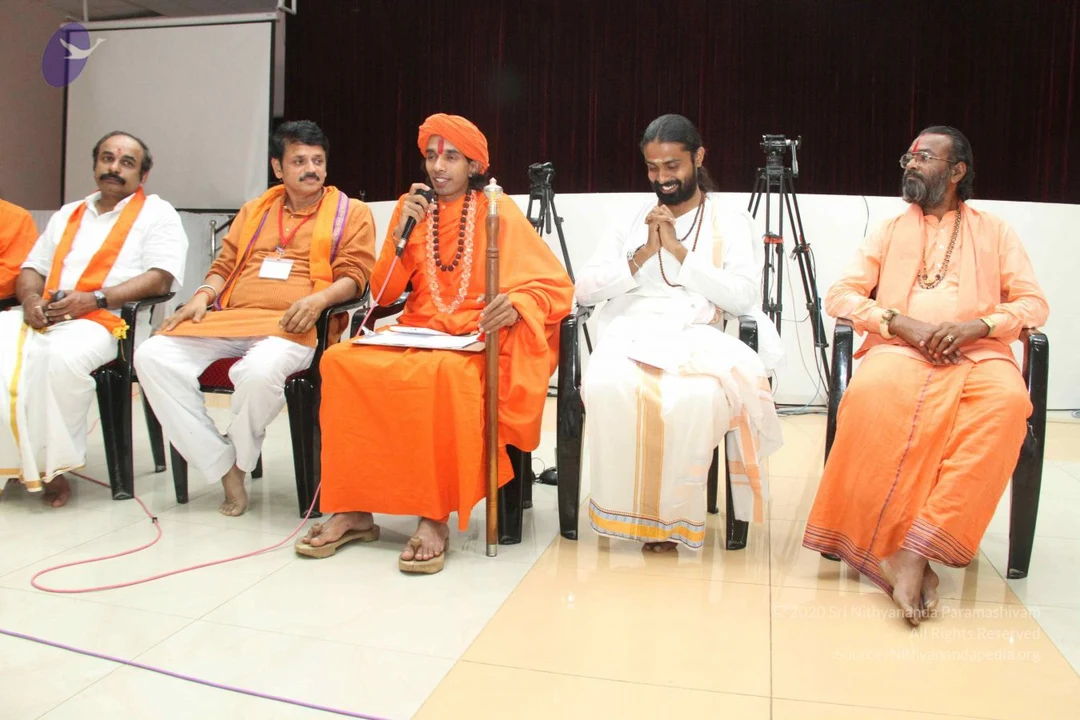
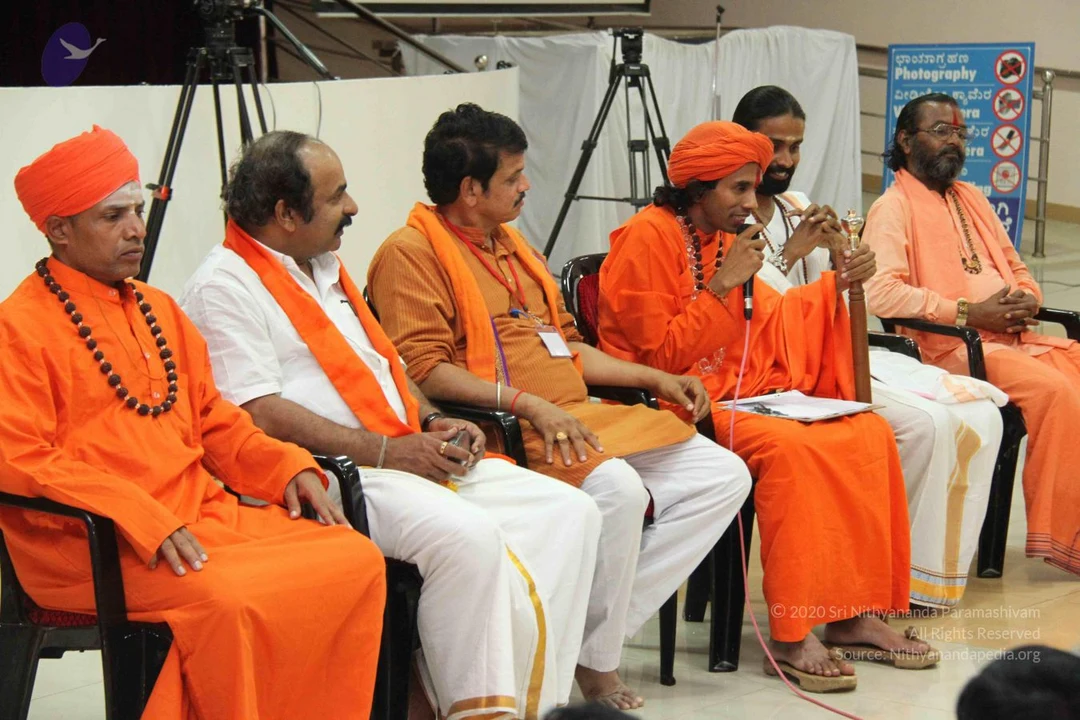
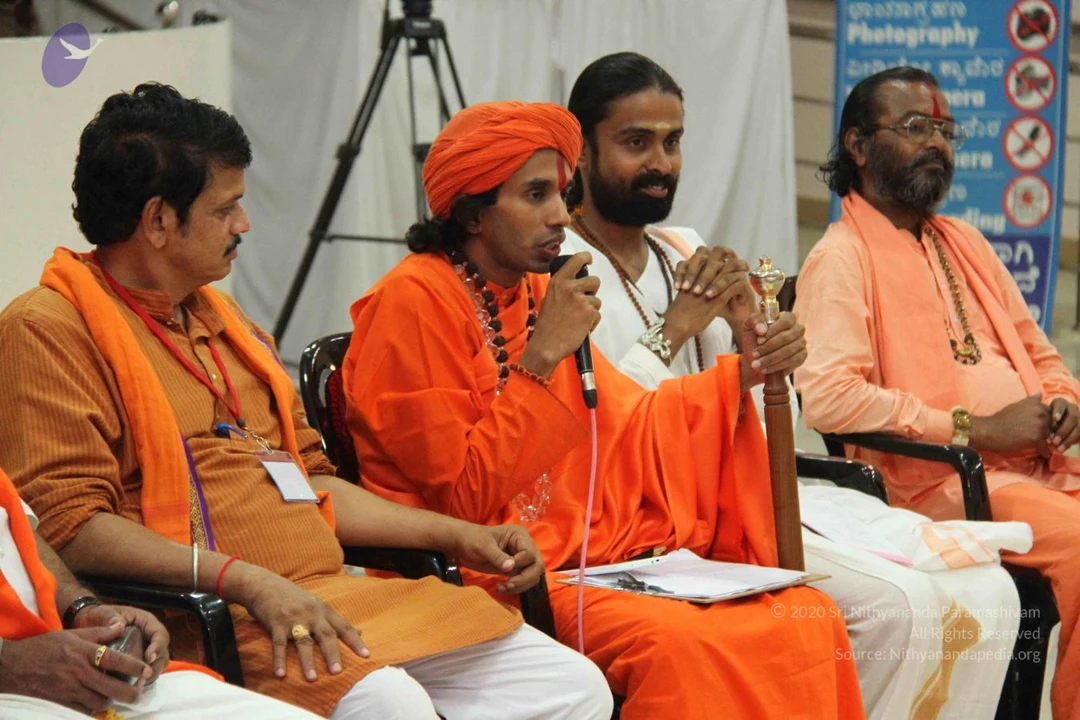
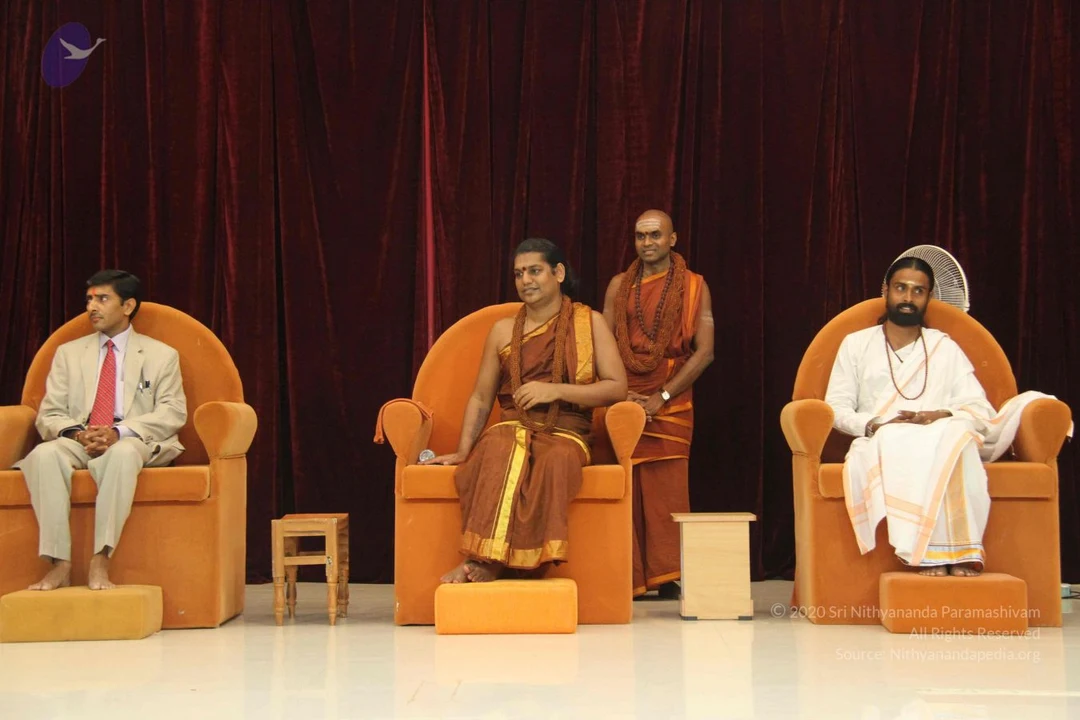
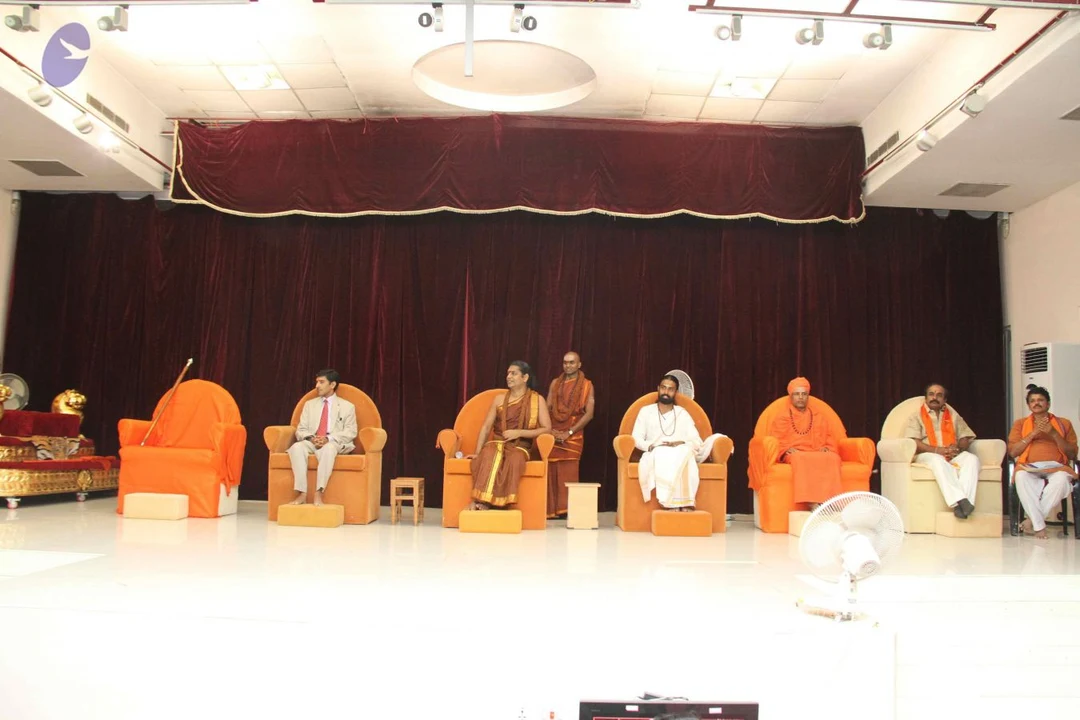
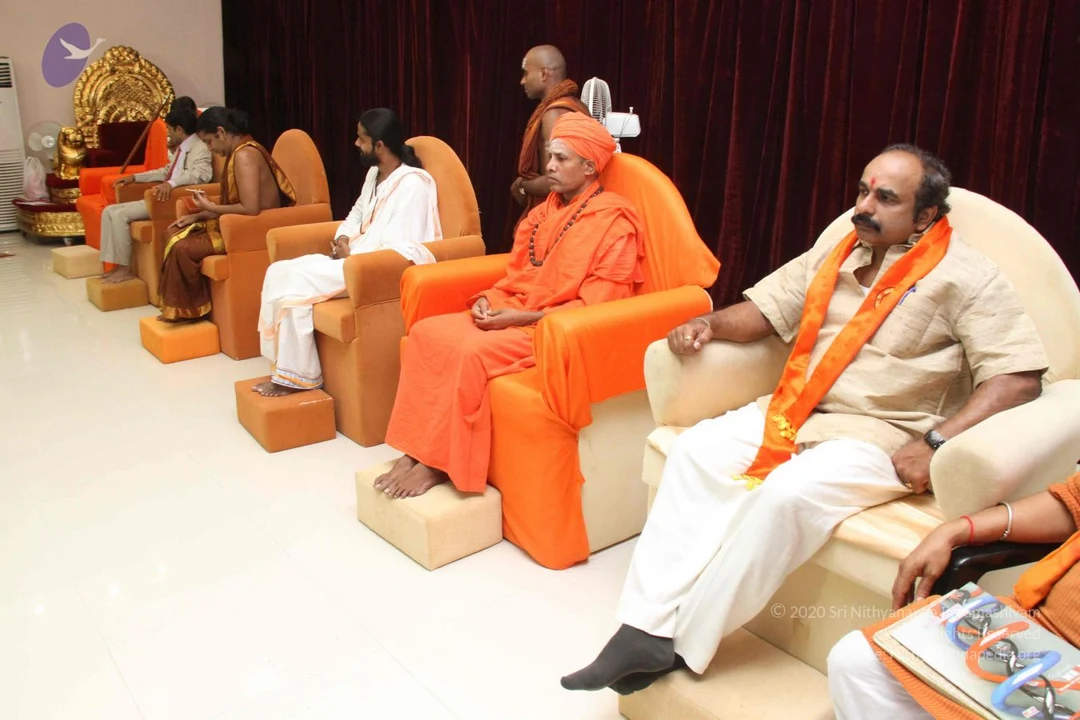
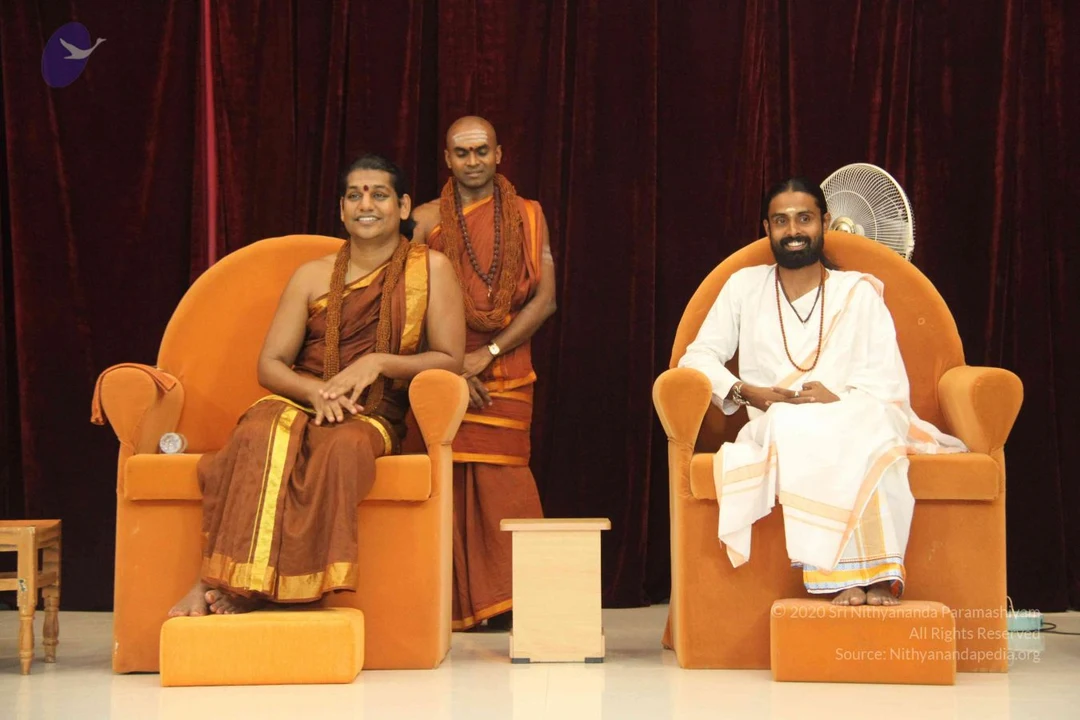
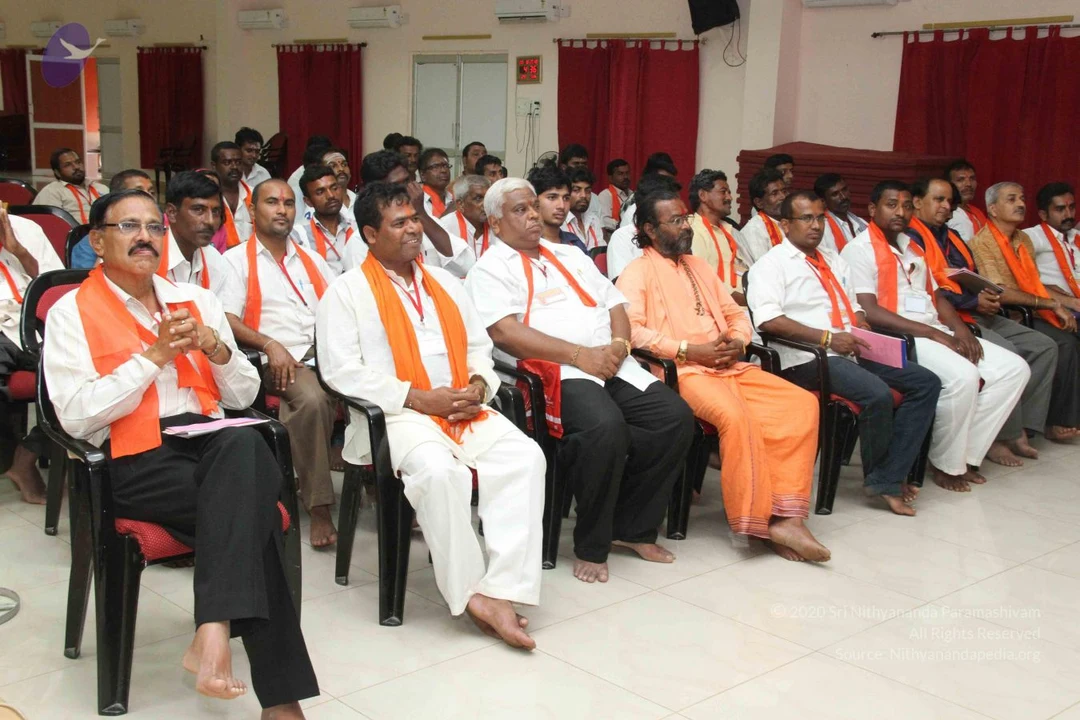
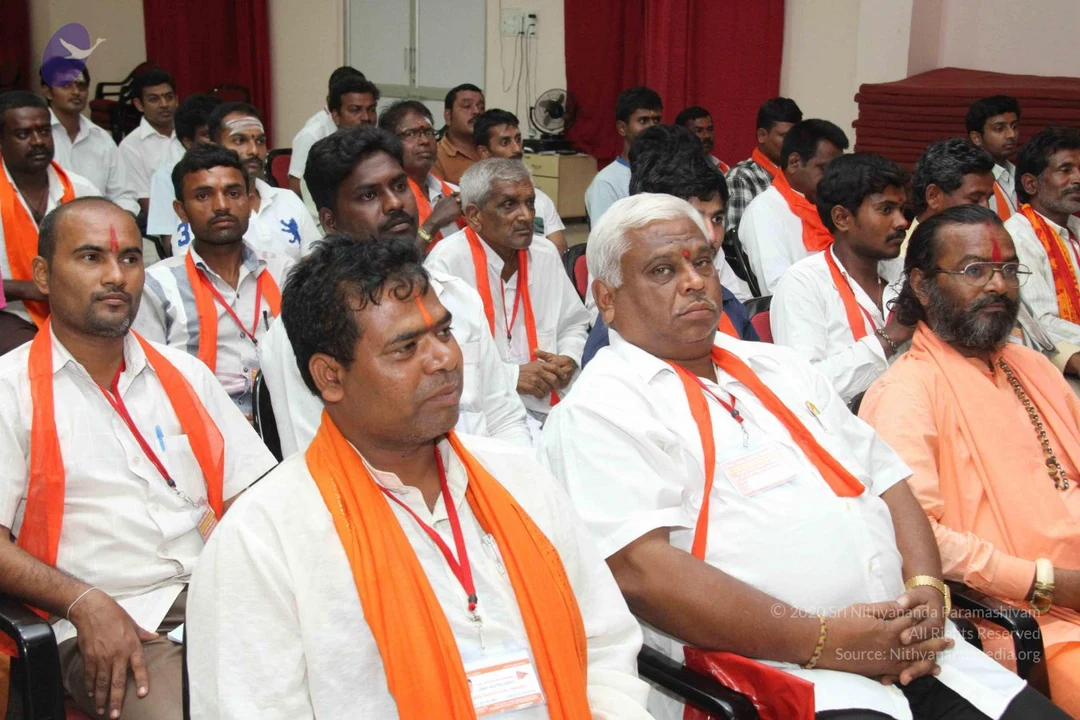
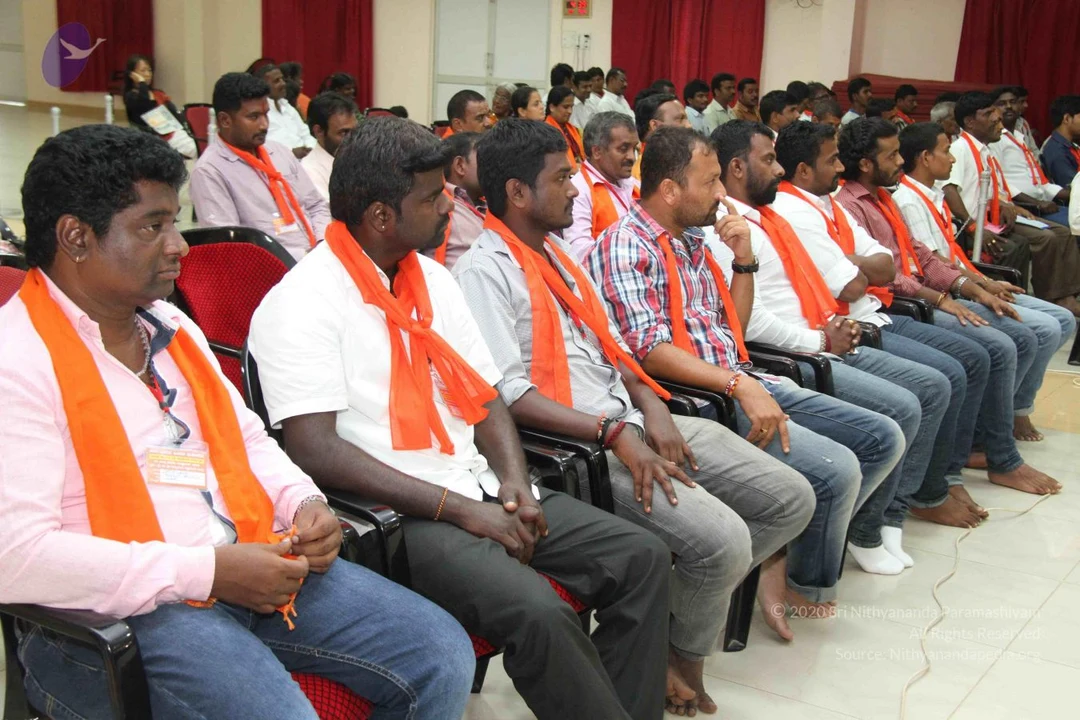
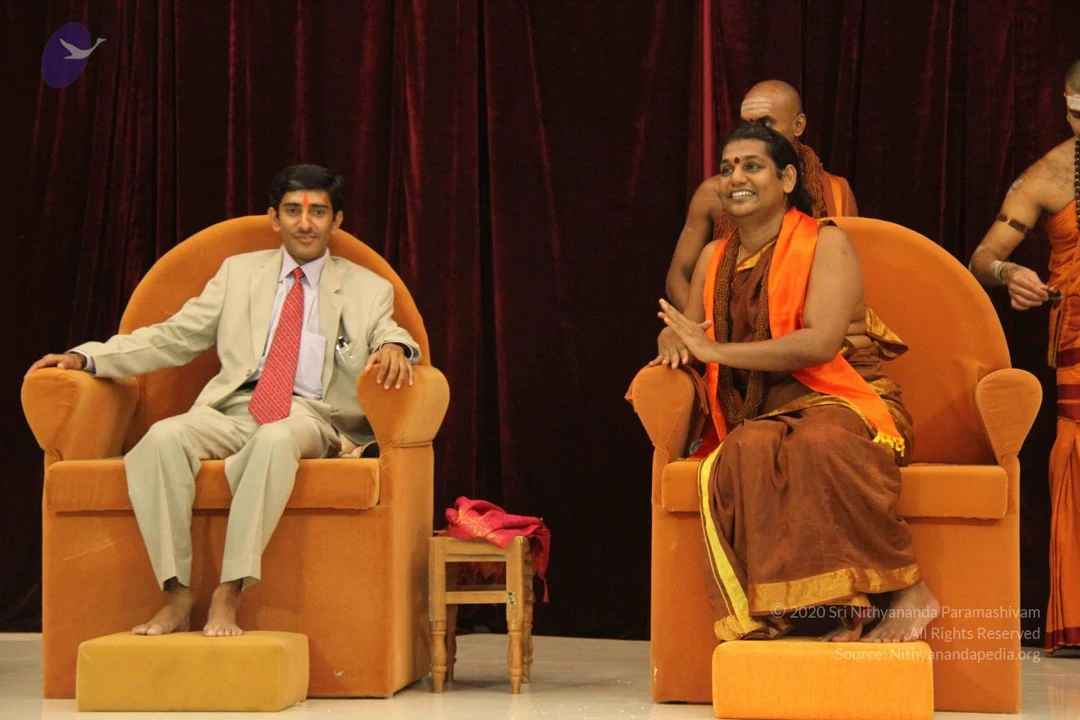
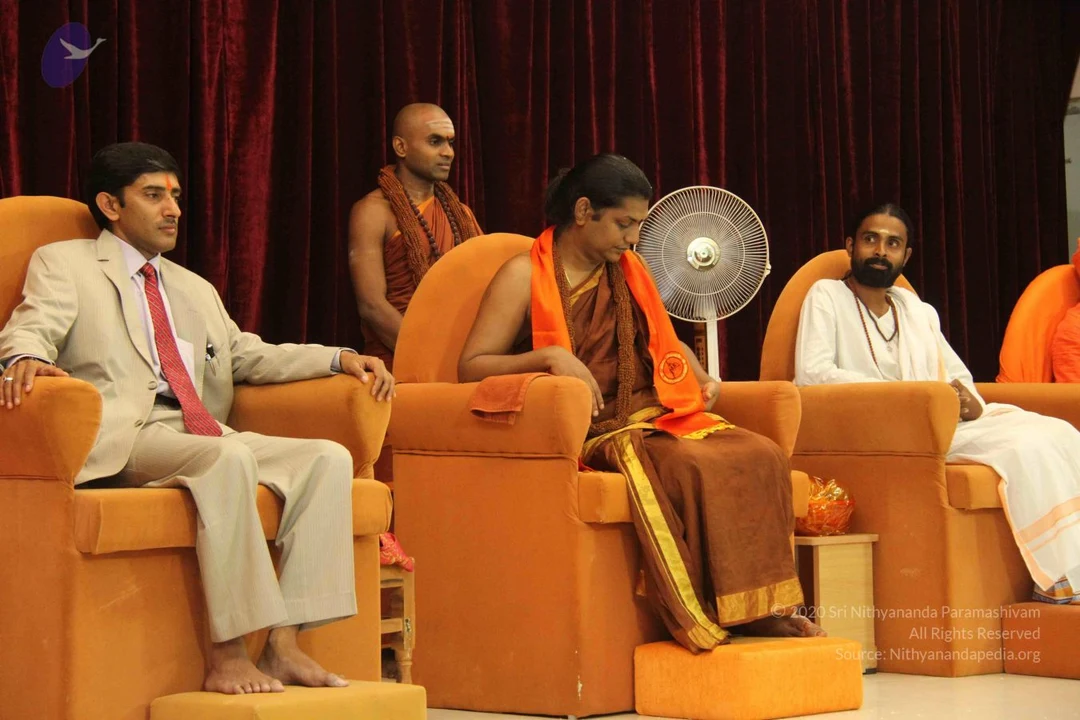
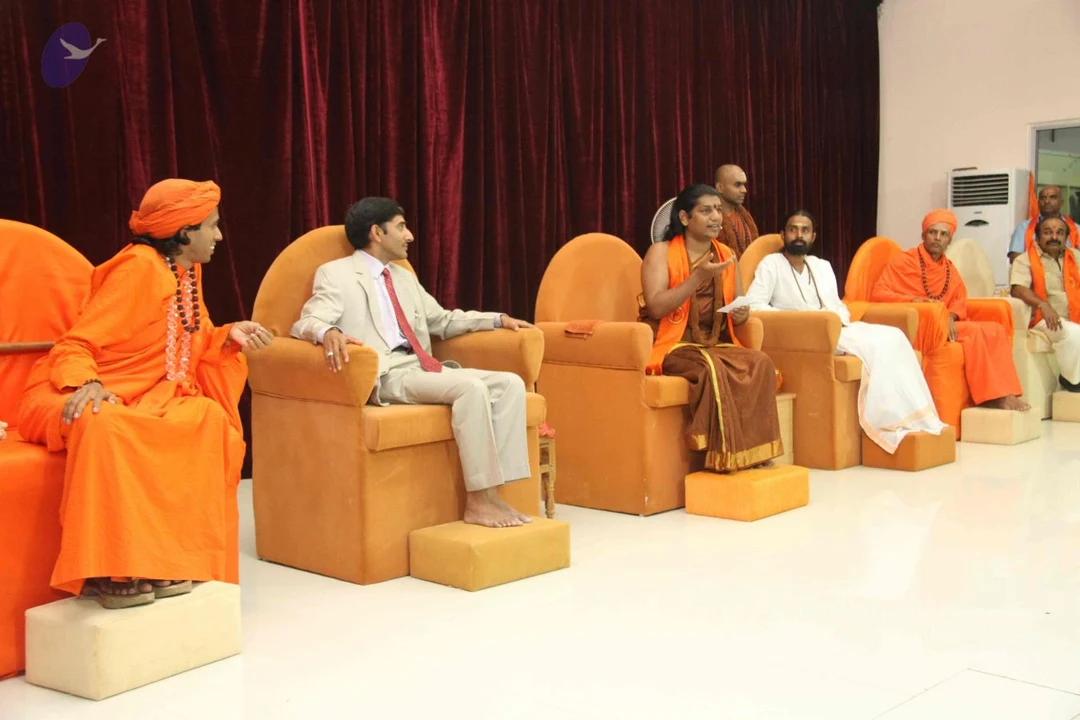
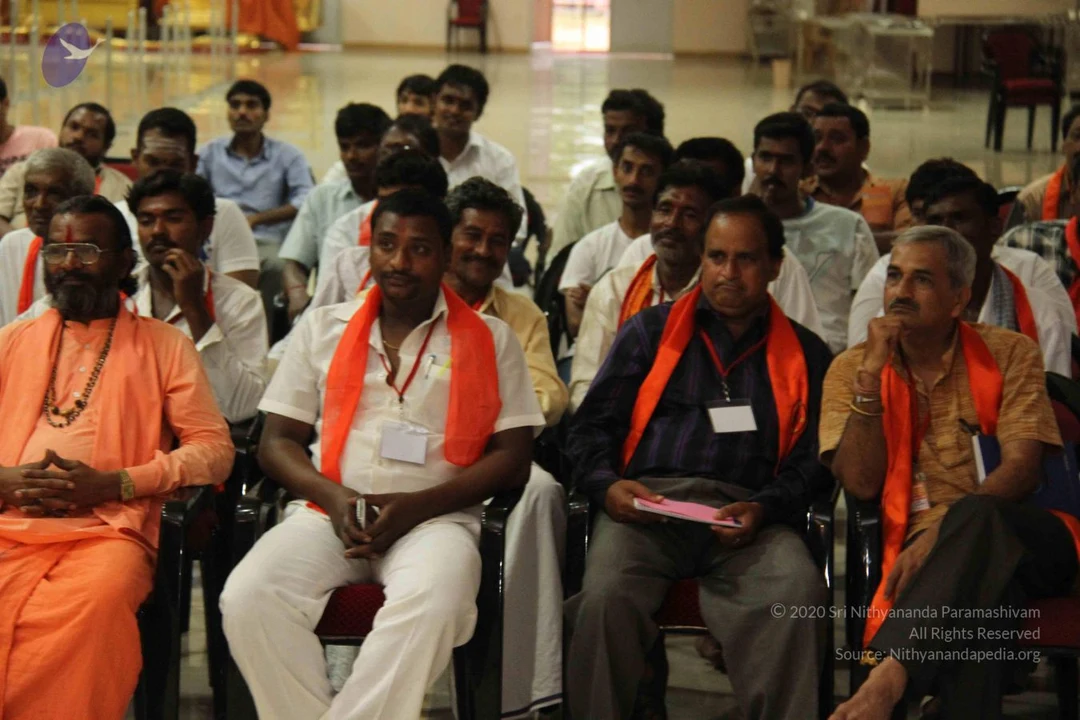
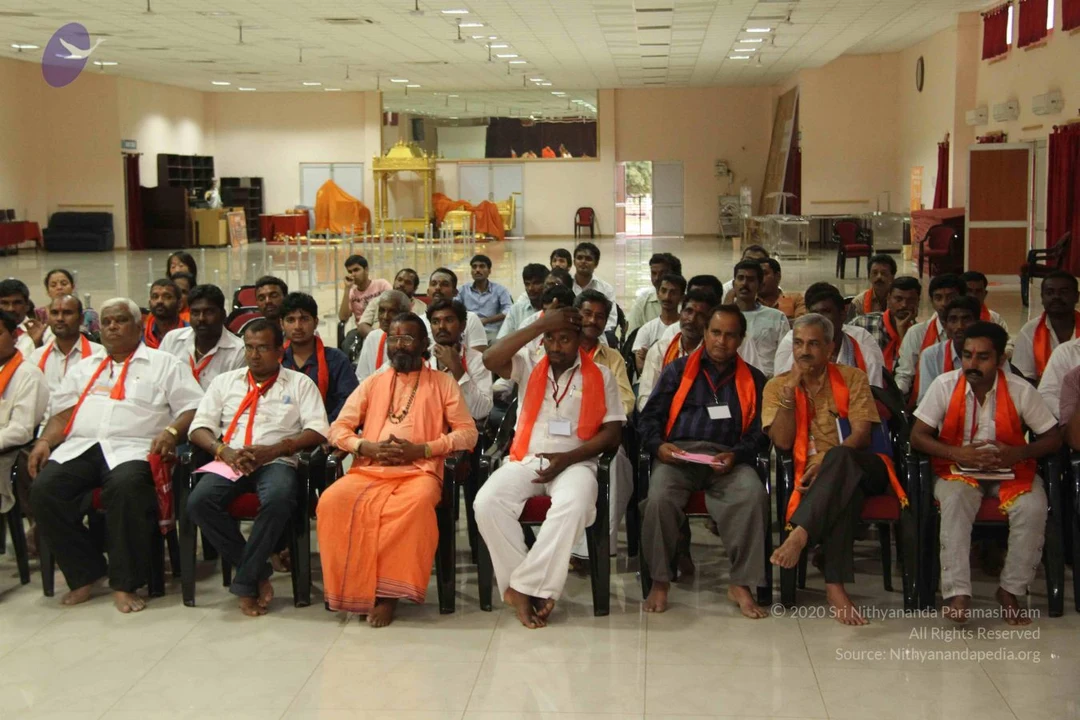
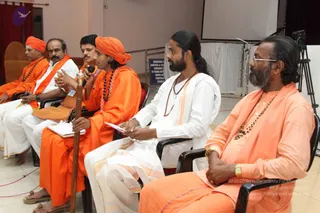
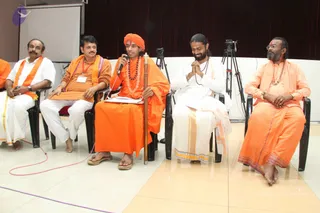
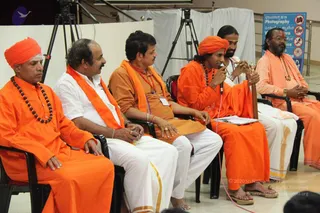
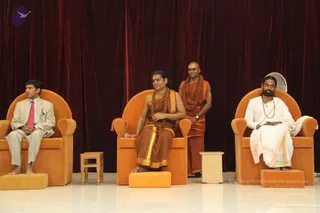
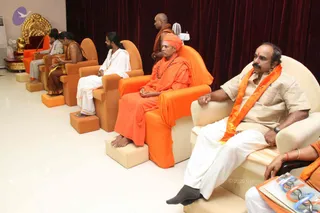
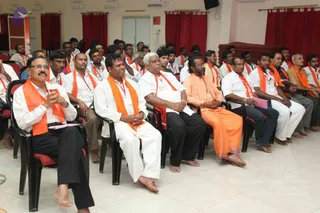
A seated panel of seven men in a meeting hall, most in saffron and orange robes, with rudraksha malas and wooden staffs. On the left, a man in an orange turban and an orange shawl sits beside a man in white with an orange-bordered shawl; a man in an orange turban holding a microphone gestures while another man in orange sits at the centre. On the right, a bearded man with long hair tied back wears white clothing and a rudraksha mala, holding papers; the figure at far right wears light orange robes, a gold wristwatch and a mala. A screen and a banner reading Maintain Switch on Cell Children 12 Years are visible behind them.Five men sit in a row of black chairs on a light tiled floor in front of a dark curtain, at what looks like a satsang with a microphone. The seated man in the centre wears a saffron turban with a red tilak, saffron robe, a rudraksha mala and a wooden staff, holding a microphone and speaking. To his right, a bearded man in white dhoti and shawl with prayer-folded hands smiles. On the far right, an older bearded man in saffron clothing and rudraksha beads sits with hands clasped. On the left, two men wear white and orange shawls, one in a white shirt and one in orange with a lanyard. A camera on a tripod stands behind them.A seated panel of six men on a stage at an indoor satsang, with a blue Photography prohibition sign and camera tripods behind them. The central figure in a saffron robe and orange turban holds a microphone and a wooden staff while speaking. Beside him a man in a saffron robe with a rudraksha mala and a man with long hair in white holding a microphone sit in a row. On the far left a man in a saffron robe and turban and a man in a white shirt and dhoti sit, and on the far right a bearded man in a pale saffron shawl wears a rudraksha mala. Four people appear clearly and the seated panel totals six.A stage with a dark red velvet curtain behind four people. In the centre, a man in a rust-brown dhoti and shawl with a gold border, rudraksha beads and a red bindi sits on an orange-cushioned throne-style chair with his feet on a low orange stool. Beside him, a bald man in saffron-orange robes and a rudraksha mala stands. On the left, a man in a beige suit and red tie sits on an orange armchair. On the right, a bearded man in white dhoti and shawl with a rudraksha mala sits on an orange armchair with a fan behind him. A small wooden stool and a wooden lectern stand on the white floor.Indoor satsang seating in an ashram hall with dark red velvet drapes and a white tiled floor. In the foreground a man in a cream shirt and white dhoti, wearing an orange shawl, sits in a cream armchair. Beside him an elderly sadhu in orange robes, orange turban and rudraksha mala sits in an orange chair with bare feet on a footrest. Further along, a man in white kurta and dhoti, a woman in orange sari and a man in cream attire sit in orange chairs. A bald man in orange robes stands in the background near a fan, and a golden throne stands at the left edge. Several people are seated and visible.Indoor satsang audience seated on black chairs in a hall with red curtains and wall-mounted air conditioners. Many men wear orange saffron shawls, white kurtas and white shirts, with lanyards and name badges; several hold small booklets or folders. A bearded man in the centre front wears an orange robe and dhoti with a rudraksha-style mala and gold necklace, appearing to be a sannyasi-type attendee, while others in white and black sit beside him, mostly barefoot. a person's identity in this image is uncertain and cannot be confirmed from appearance alone. Roughly forty people are visible.