Wednesday
21 August 2013
Supreme Pontiff of Hinduism HDH Bhagavan Nithyananda Paramashivam
- Dated photos
- 29
- Source pages
- 1
August 21 2013
Original wiki pageTitle:
Supreme Pontiff of Hinduism HDH Bhagavan Nithyananda Paramashivam
Transcript:
Nithyanandeshwara Samaarambhaam Nithyanandeshwari Madhyamaam |
Asmath Aachaarya Paryanthaam Vandhey Guru Paramparaam ||
I welcome all of you with my love and blessings. Let’s start today’s Satsang.
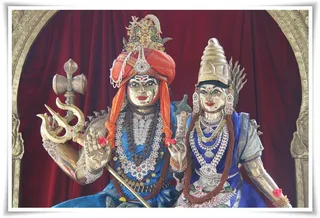
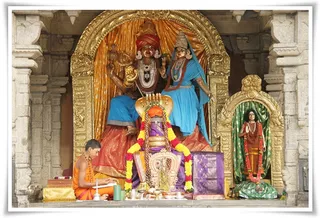
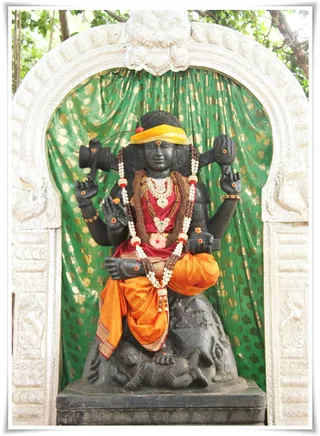
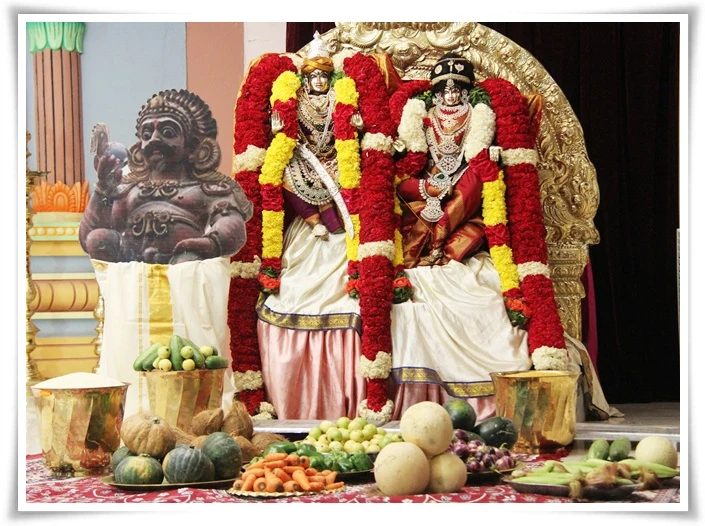
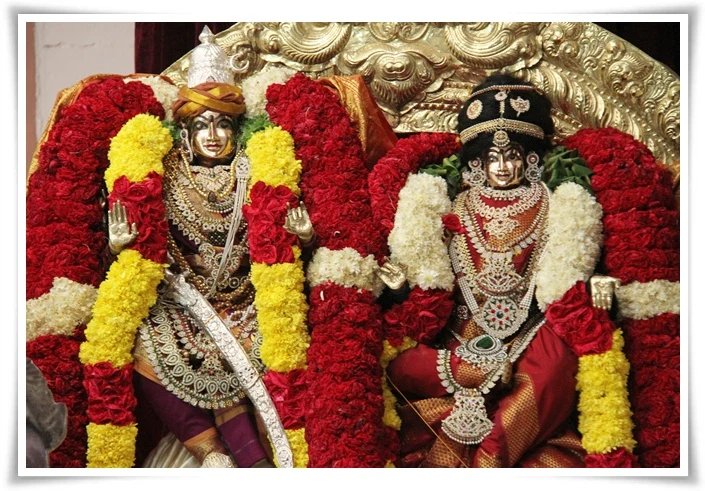
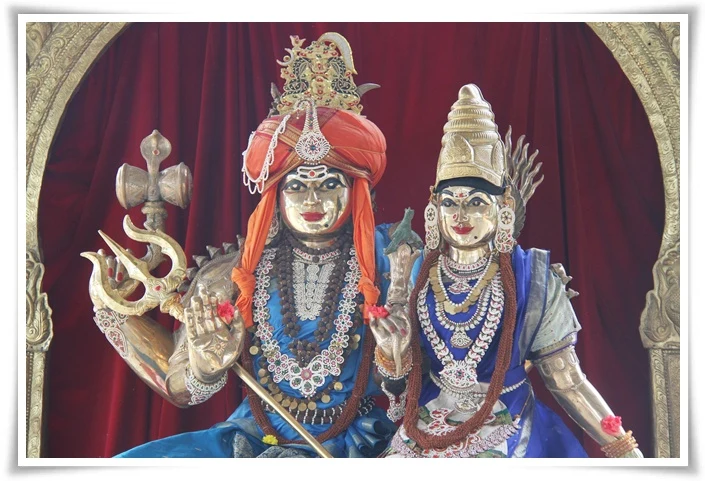
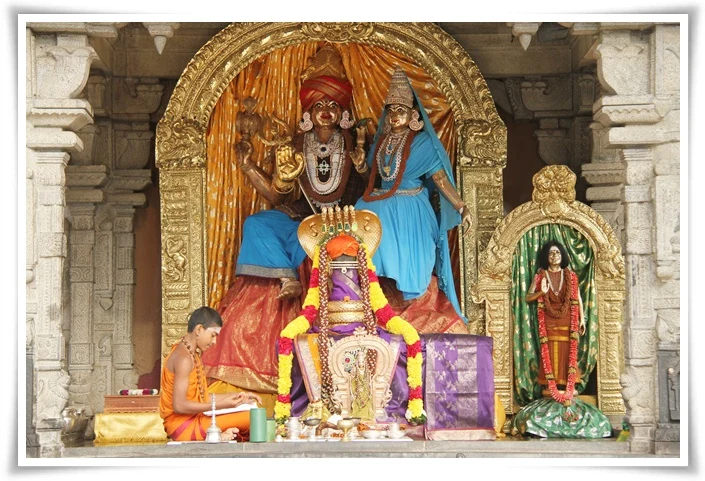
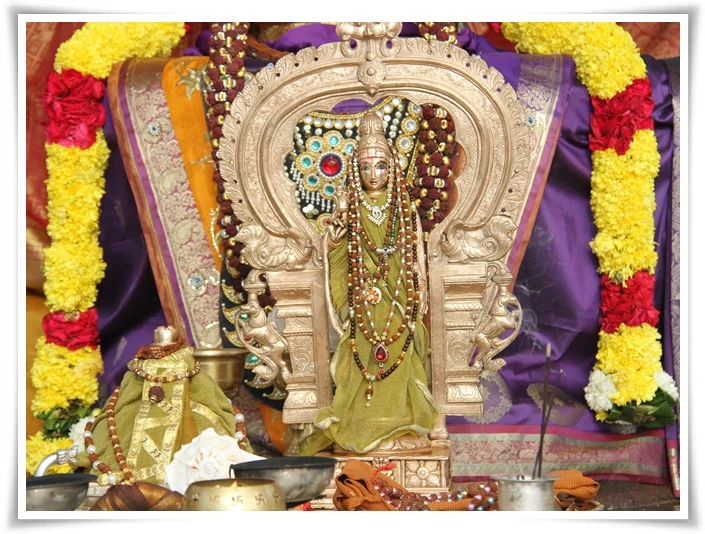
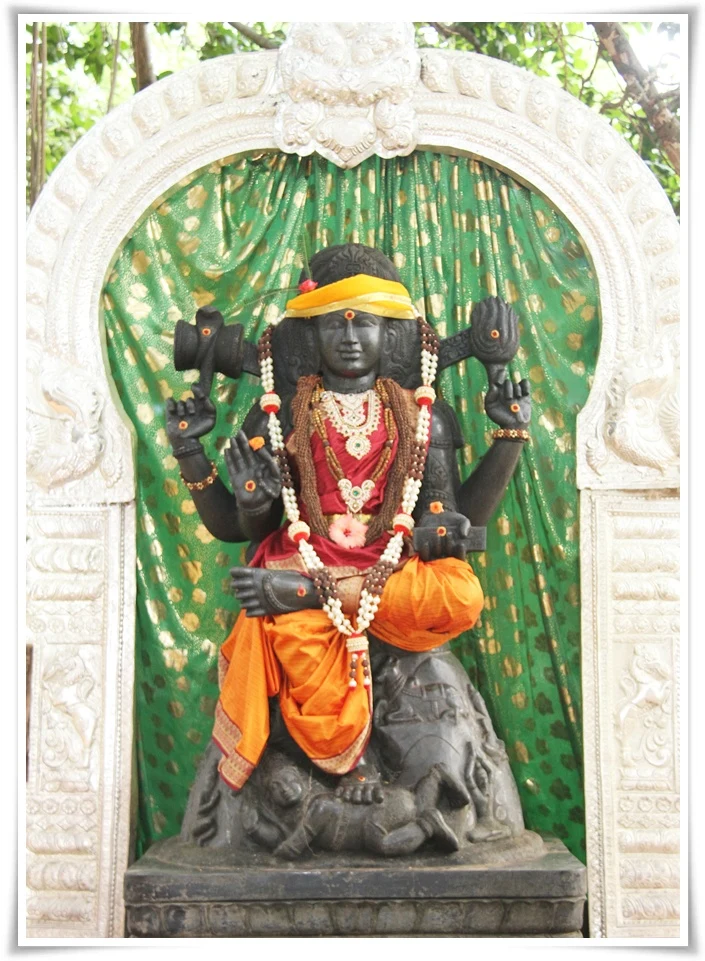
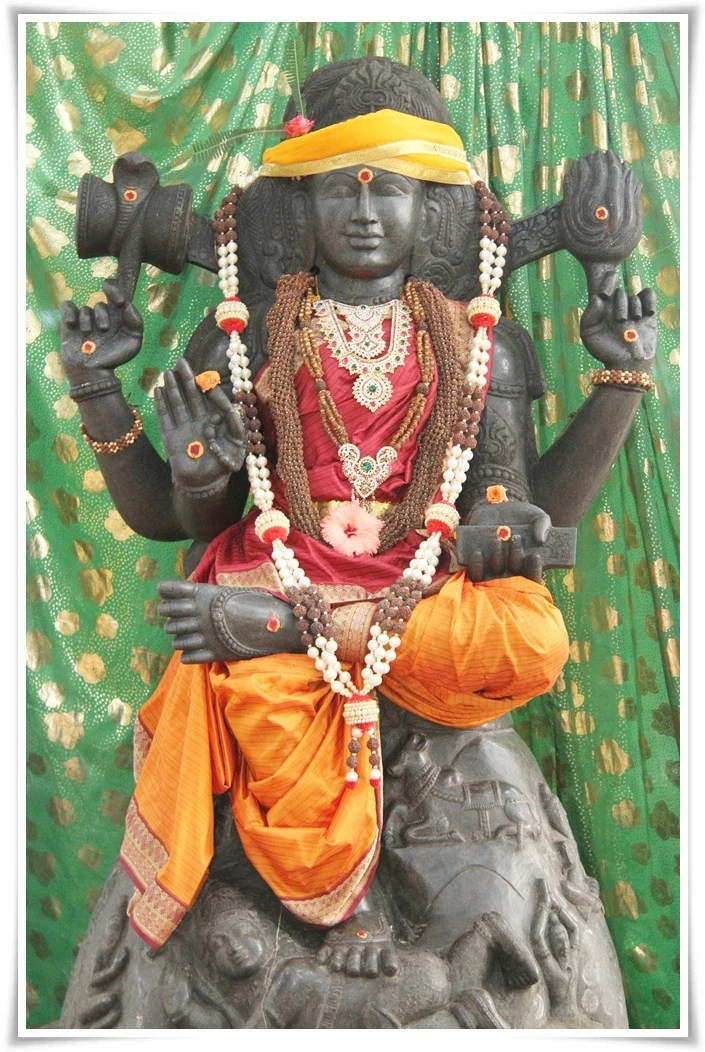
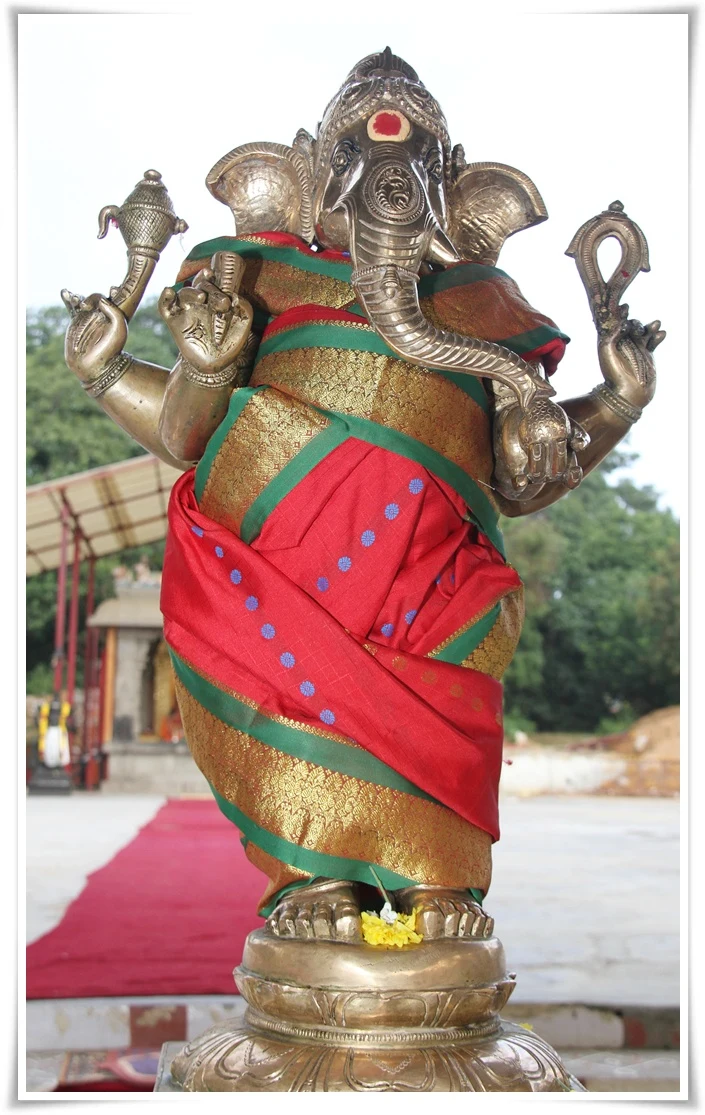
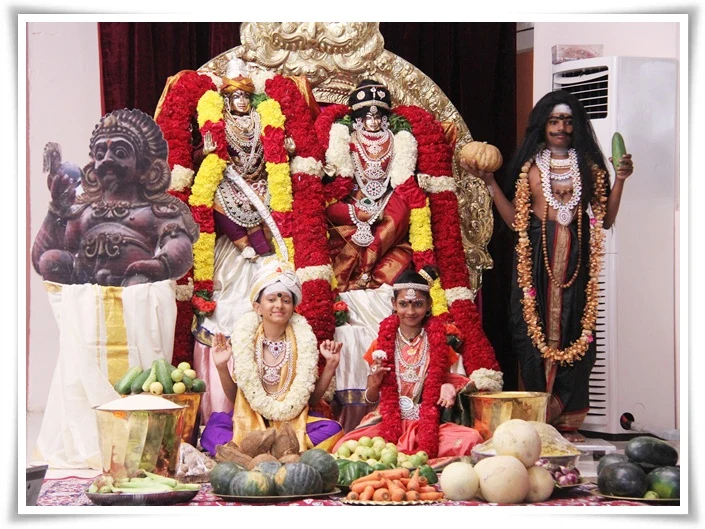
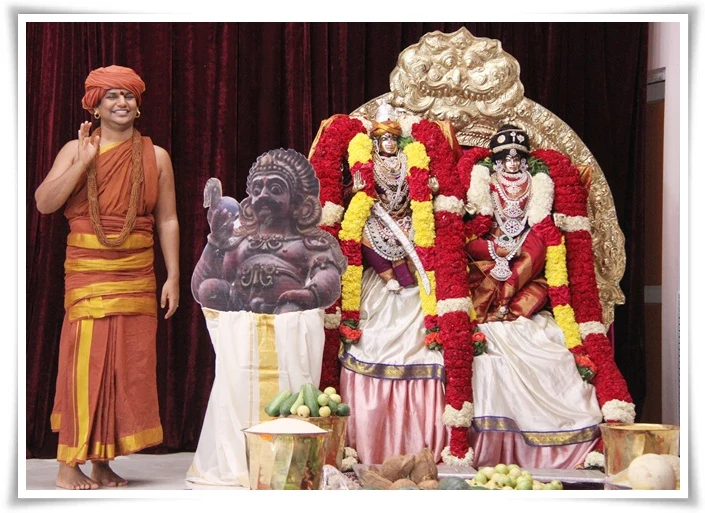
Today, Mahadeva is gracing us in the Leela of feeding Gundodhara, one of his boothas, one of his Shiva gana, during the marriage ceremony. Let us have Mahadeva’s darshan in this Leela.
Mahadeva, when he got married, the Meenakshi’s side (the Meenakshi’s family and Meenakshi itself) had little pride that they have done best marriage arrangement such a large quantity of food. Mahadeva just smiles and says, “Okay, if you can, feed just my one bootha.” Because Meenakshi said, “C’mon, I have arranged food for all your ganas.”
All Meenakshi’s side people were all very pretty, the Kings and Queens and Princes and Princesses. But all Mahadeva’s side people were all boothas, prethas and big, big belly. Some are walking, some are rolling, some are moving. Naturally they had that complexion that beautiful people are nice people.
So, Meenakshi tells everyone with lot of pride, “Shiva, tell all your ganas to eat! We have prepared everything!”
Shiva laughs and says, “If you can feed just my one gana, try.” That’s it. Gundodhera is the gana who holds the Umbrella for Mahadeva all the time.
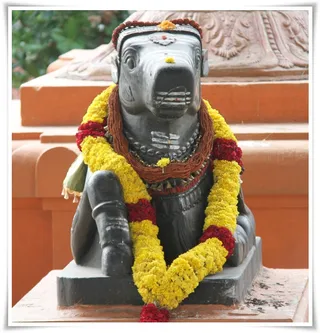
You see each gana is allotted a separate seva. Nandi’s assistants are two separate ganas. And holding umbrella is the Gundodhara’s job. He just looks at Gundodhara who says, “Umbrella! Umbrella!.”
Mahadeva says, “It’s okay. Leave the umbrella for a few minutes and go. Have fun!.”
That’s it! That fellow (Gundodhara) goes and eats the whole Madurai! Nothing is left. Nothing cooked or uncooked, nothing is left in Madurai other than the human-beings! He has not left– vegetarian, non-vegetarian – nothing is left other than human beings, Madurai citizens! He will say, “Ohh, where is your ID card? You came for marriage? All right, you go! You came for marriage? All right, you go!” Other than the natives of Madurai and human-beings of Madurai, he did not leave anything and anybody. He finished!
And then Meenakshi was shaken. She goes and tells, “Stop! Stop! Stop your bootha! That fellow has literally swallowed the whole Madurai!”
Mahadeva laughs and says, “Now you understand. Don’t have pride about what you can and you cannot. Don’t judge by the look.’
Devi understands and apologizes. So, first day fight itself, Mahadeva won the game! And then Devi sincerely apologizes.
But, this bootha, after eating the whole Madurai also, his hunger did not stop. He goes to Mahadeva and says, “Come on! You started my hunger and now I am not having anything! Only now I had the appetizer!”
After eating the whole Madurai, this guy says, “Just now I had appetizer! Come on! Give me lunch!”
And then Mahadeva invokes Annapoorni and gave a huge bowl full of rice. Then, once eating that, the bootha, Gundodhara is satisfied.
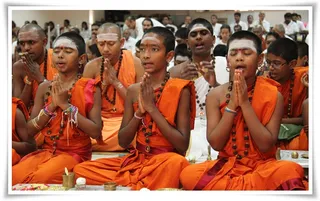
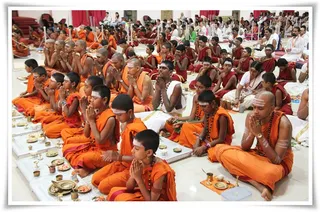
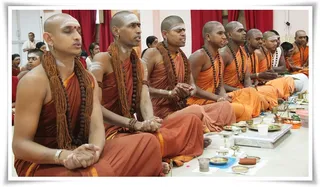
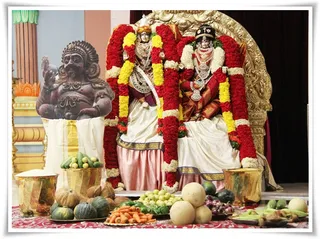
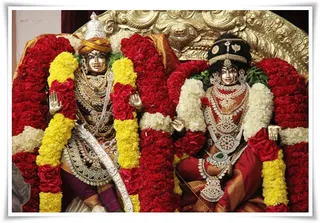
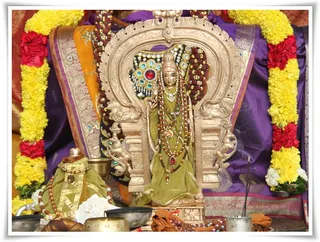
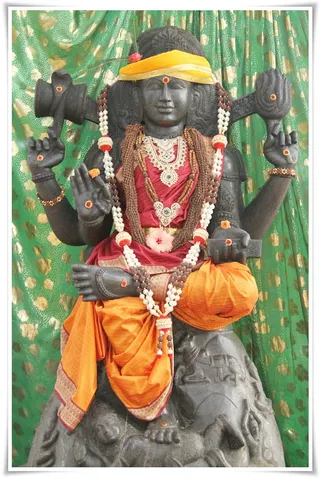
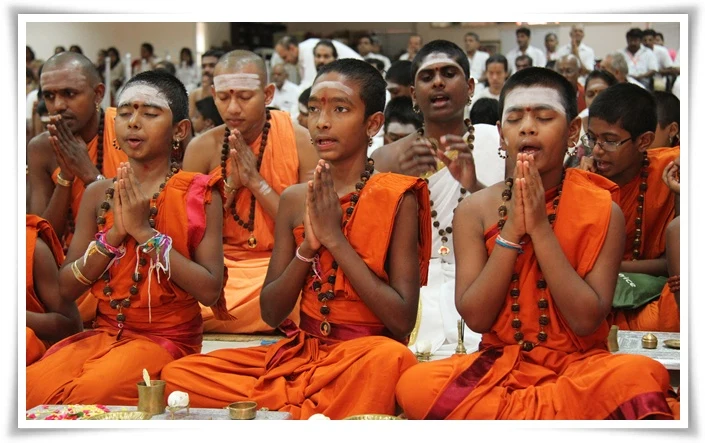
Today, Mahadeva is gracing us in that form, and the gurukul kids are playing the role of Meenakshi-Sundareshwara and Gundodhara. Give them a big hand!
This Leela is called “Annakuzhi Azhaitha Padalam”. Means, Mahadeva calls the whole mountain of rice to feed Gundodhara.
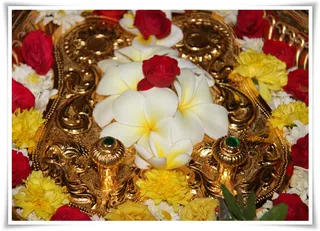
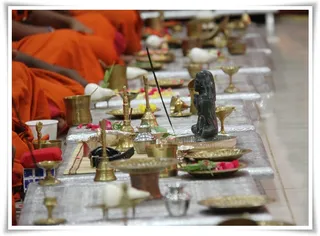
And, beautifully, our kids have nicely enacted the scene and here are the items for Gundodhara to eat.
We will move to today’s Satsangh.
I really wanted this to be done every day. See, if we don’t have these presentations, we will forget all these things. Please understand, every day I am organizing and seeing to it that Mahadeva graces us in one form, for various reasons. One, I wanted to give a statement to the whole world that these are all not mythological, imaginary stories. These all happened and, listen…..these are all still happening! These all happened, and still these are all happening. And all these Leelas, all these playful acts of Mahadeva, they are all not imagination or some fantasy.
We will enter into today’s satsang.
Again in Inner Awakening today, we are going to work on root-patterns, because once you start the completion with yourself and others, Poornathwa Kriya, completing with others, then the process takes off. It is like a new being happens! So, first one or two days, I really want to do the work of cleaning up, cleaning up the root-patterns. Level-2 is exclusively to dig the deepest part of your root-pattern and complete with others. We will start the completion, completion with others. Exclusively, we will be digging the root of the roots.
And, tomorrow, we will work on Death, all the incompletions with Death – a very powerful process! See, one thing, when you complete all the incompletions with death, only then you can start completing with the others.
Then, from day-after-tomorrow, we will start completing with others – not only the people who are living, we will even complete with the departed people in your life, who are dead. Actually, many are dead in your life, but still they are roaming around in your life! That’s different. And some are really dead, but still have influence over your life! See, there are some, who are really alive, but they don’t have influence over your life; there are some who are dead, but they have influence over your life. So, completing with all that.
Completing with the dead, departed souls is the unique contribution of Hinduism. Please understand, no other religion has such powerful understandings, verifiable evidences. Please understand, verifiable, evidence-based theories, truths, knowledge! No other religion has about death and the departed ones, life-after-death! Hindus are the masters, Hindus are the masters of the philosophies, teachings, the truths related to life-after-death. No other religion has done so much of work on death and life-after-death. What happens during death, after death, how the souls move from one place to another, how you can complete with the people who left the body, no other religion has done so much research in this field.
Unfortunately, these westernized Indians, Residential Non-Indians – I have a new word, “Residential Non-Indians” (RNIs); like NRIs, Non-Resident Indians (NRIs), like that I have a new word, “Residential Non-Indians” –
Two big crimes have happened: One, these Residential Non-Indians abusing all these rituals and traditions which are for doing completion with the elders – the departed ones, and pitrus, and the people who passed away, with whom you need to complete – these Residential Non-Indians have started abusing, saying that all these rituals are for Brahmins to make money. What money have they made? Because many of these Residential Non-Indians studied in Christian schools! What money have they (these Brahmins) made? I know, I know the priests in Bhavani, in Rameshwaram, who sit and do these rituals for people, hardly they have food to eat!
This is one of the biggest crimes that happened! The science of Completion was destroyed with such a foolish, third rate logic! How will you steal somebody’s jewelry for whom you give the whole life? It is like telling Nithyananda stole this temple’s (Bidadi Nithyananda Dhyanapeetam temple) jewelry! Arrey, I made it! We are putting it! We are maintaining it! Why will we steal it?
And these fellows who are abusing the Chidambaram deekshithars, the amount of money they swindled, the country’s wealth they plundered, unimaginable! Unimaginable! And they abuse. They don’t have money to run their basic life and you go on abusing them saying that Brahmins have created all these rituals for gathering wealth! Nonsense!
These Residential Non-Indians don’t have brain! The Valentine’s Day is getting popularized because of fellows who sell all these Valentine Cards and other marketing things which is not Indian things; dumping all these imported items on your head and their culture also to sell their products. And you idiots don’t wake up to that and you go on abusing for 15 cents, not even 15 cents. 15 cents – Rs 30. Who pays Rs. 30 to priest? I think ten cents, 10 cents or 15 cents to be precise; 15 cents, one banana and half coconut which you give to the priest for the half-an-hour ritual which he does for you. You guys have the audacity to calculate and abuse that these are invented by Brahmins to make money. What do you mean?
I sincerely request that all our devotees should do all these shraaddha, pinda tharpana, completing with the elders who have departed from Planet Earth, who are no more in the body. Completion with all of them should be done as regularly as you can! As regularly as you can! At least once in a year do it in the sacred places like Srirangapatnam, Bhavani, Varanasi or Vishnu Gaya Bhadri – like these some places – Manasarovar. At least once a year in some sacred place, go and complete with the departed soul; and in the place where you are staying, in your house itself, at least once in a month or once in three months, complete with them. It does so much completion in you, so much completion. I tell you, because so much of your bio-memory, agitation, restlessness is because of your incompletions with elders!
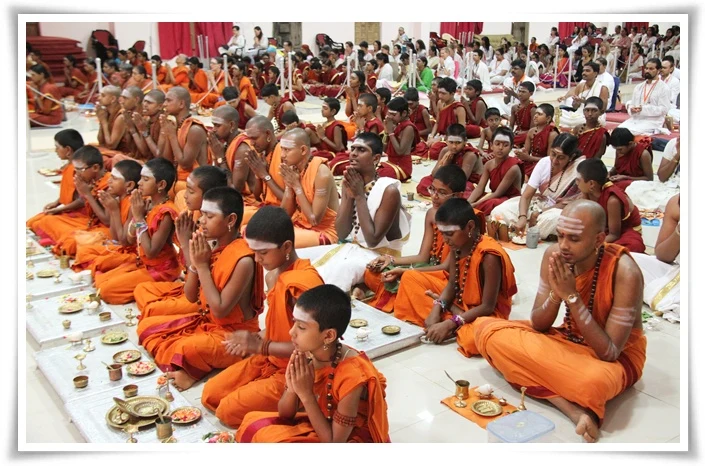
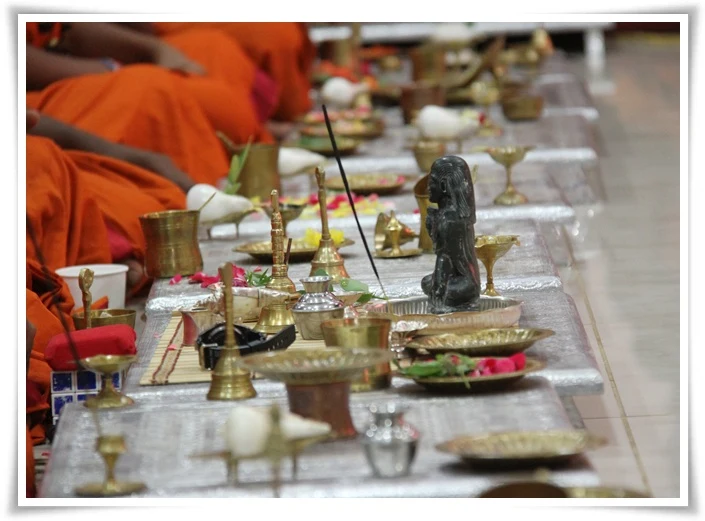
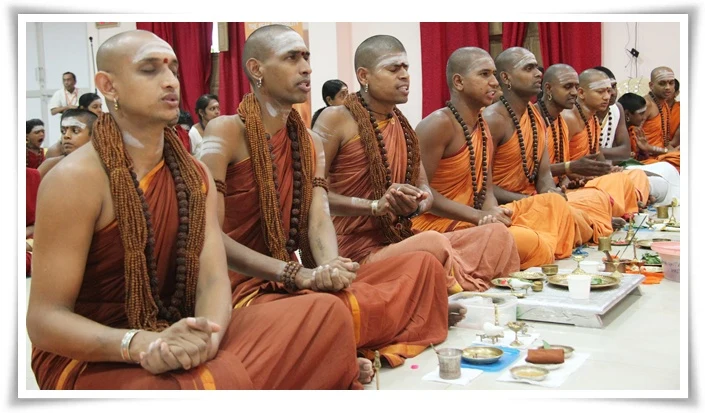
Rituals, rituals completing with the departed soul, are also part of completion with others. That is why in the Inner Awakening Level-2, we do this Maheshwara Puja which is a ritual to complete with the elders who left the body. That is the only day I accept meal from people, I accept food from people, and I give food from my own hand. That is one of the powerful rituals. I am very clear, I have not created all these rituals to make money!
I sincerely request all the Brahmins by birth to come back. Let us keep the tradition alive. Let us keep the tradition alive. Come back!
In Hinduism, Brahmins are expected to keep the temple science, the temples alive. Mudaliars were expected to keep monasteries alive. That is why the 4,000 Adheenams in Tamil Nadu, in 3,700 only Shaiva Vellalars, Mudaliars – they are called “Shivacharyas” – they are only expected to sit in the throne. I give my clarion call to both communities, to Brahmins – I can say, in a way both are very closely mingled and they are in a way internal divisions; both of them I can call them as sub-sects – I request and give a clarion call to both communities: Come back! Take a U-Turn. It is time! Only when you turn, U-Turn, you can be alive and the tradition can be kept alive!
I request all the Brahmins, directly or indirectly stand up to support the temple tradition and culture. And all the Mudaliars, Shivacharyas, especially Shaiva Vellalar community – there are sub-sects in that – I request all of them to take up sannyas to keep the sannyas tradition alive. If these two communities had not done the crime of abandoning the Vedic tradition, India would not have been destroyed. These two communities have done a crime! They are not actually even two communities, they are two sub-sects. If these two sub-sects had not done the crime of abandoning our Vedic tradition, India would not have suffered so much, will not be suffering so much, Vedic tradition will not be suffering so much. All right! Even if destroyed your life away from your responsibility, Okay. Now, decide at least you will give birth to a few kids and hand over them for this purpose and keep this tradition alive. Wash your sins and do prayaschitta, do prayaschitta, do completion for the incompletions you have done.
This Shaiva Vellalar community was expected to sit in all the Adheenams. But you know? Now, not even a handful of Adheenams have sannyasis, because this community nobody become sannyasis. They abandoned. Same way, the priests (Brahmins). I can see, thousands of temples doesn’t have a single priest, thousands of villages don’t have a single priest to conduct the rituals for them. So, naturally, what do they do? Any preacher who comes, any religious person who comes to do the ritual, they go with them! Each village should have at least five priests and two sannyasis. We have five lakh (5,00,000) villages. Means, I need twenty-five lakh (25,00,000) priests and ten-lakh (10,00,000) sannyasis! Understand, only then we can tell the country back, we can tell these people back, that these rituals of Completion are not created for money’s sake, they are not created for money’s sake! Twenty-five lakh priests, twenty-five lakh acharyas, and ten-lakh sannyasis! But I will create! I am creating the space, the right space, powerful space for creating it! And when I create the space to create the space, it is already created!
If you are a Brahmin not doing the job of protecting and maintaining temples and Vedic tradition, the only prayaschitta you have is give birth to at least three kids and hand over them to Dhyanapeetam. We will train them and they will protect the temples and the culture of temples.
If you are a Shaiva Vellalar and you are not a sannyasis, the only way you can wash your karma is give birth to at least three and hand them over to take Sanyas to Dhyanapeetam.
I am not making fun. I am telling very seriously. Only then you will wash your incompletions, your sin, and that is the only prayaschitta you can have. Because, we need at least twenty-five lakh Acharyas and ten lakh Swamis.
Yesterday, I was reading a book by Stephen Knapp. Amazing book! I will speak about that book. I only wanted to make one statement: It is an amazing book! I request all my devotees and disciples and followers to read the book. And it is sent to me by Mokshapriyan. And I am still reading it. I will speak about that book. The book’s title is: “Crimes Against India and The Need to Protect its Ancient Vedic Tradition”.
We need at least twenty-five lakh priests and ten lakh sannyasis to stay in every village and teach them, help them to complete, live the life of Completion.
The essence of today’s satsangh:
Expect miracles when you live Completion. Completion is life. Completion is everything. And Completion with the people who left the body is necessary at regular periods as much as you can.
Let you all achieve, experience, live, express, radiate, share and explore in eternal bliss! Nithyanandam!
Photos From The Day:
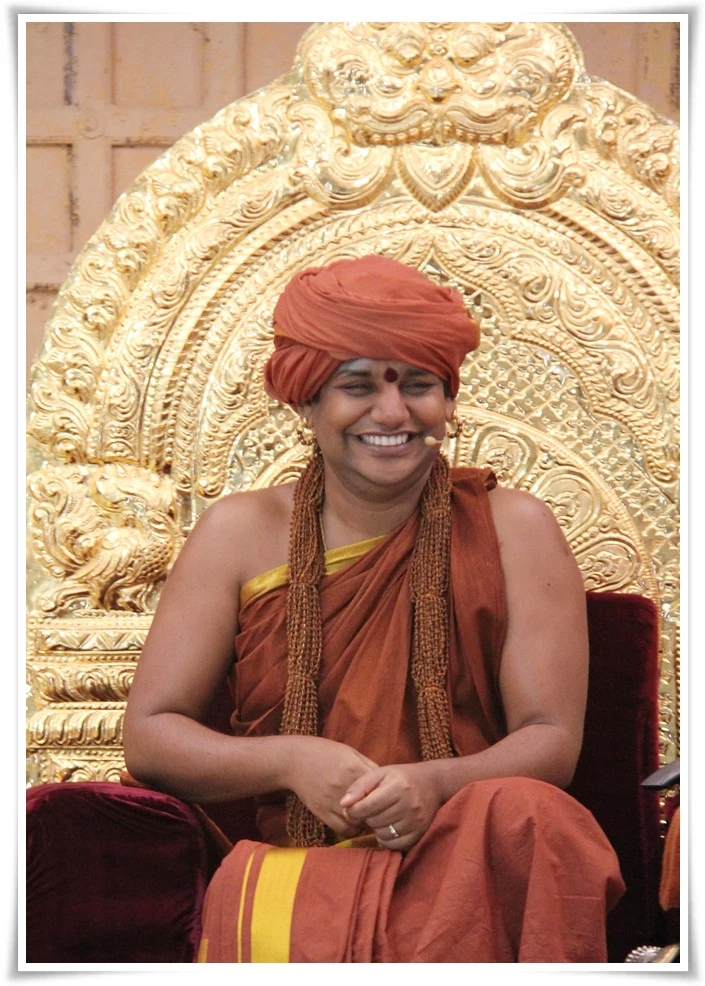
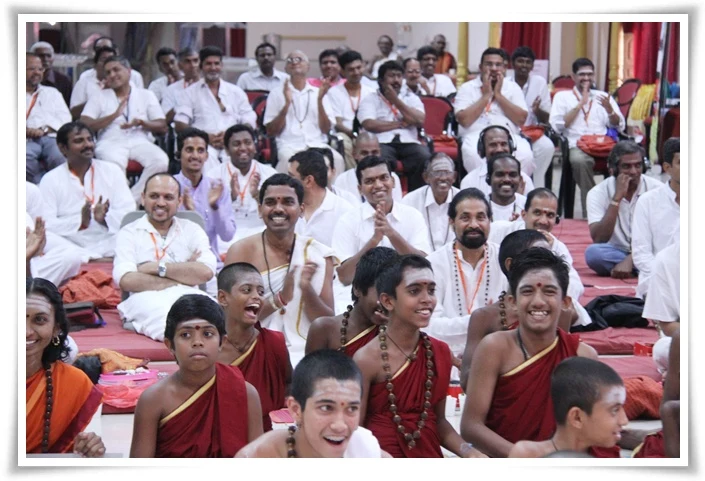
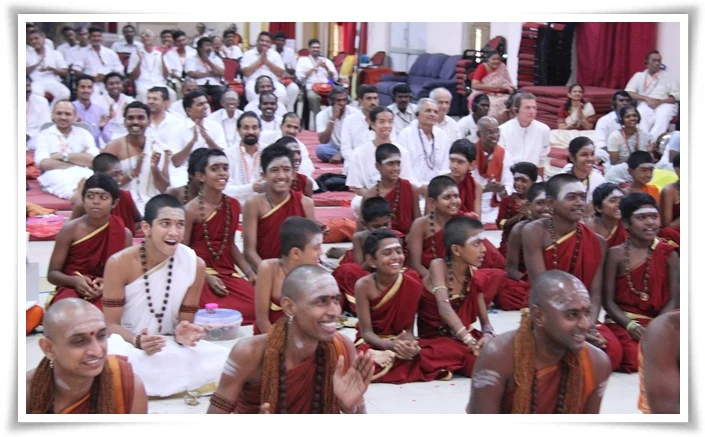
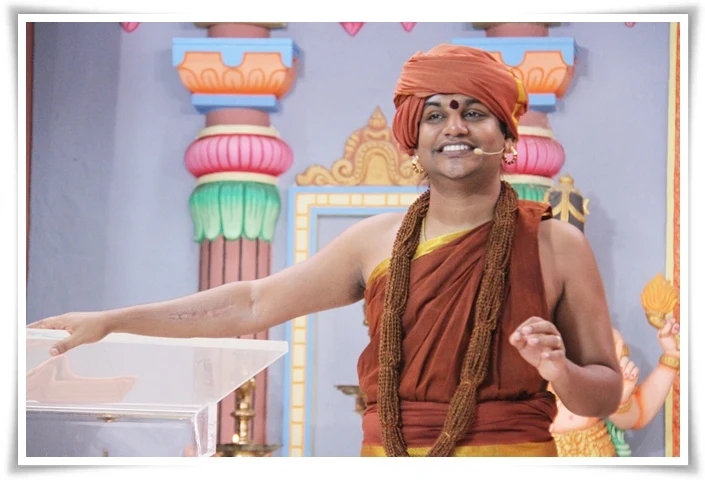
Photos from this day
View all 29 photos