Skip to content
Sunday

21 August 2016

Science of Will Persistence

Dated photos
319
Source pages
1
Media
3
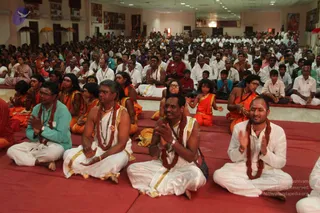
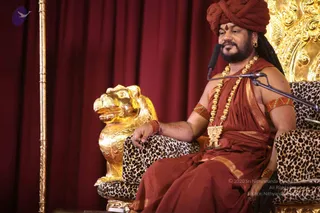
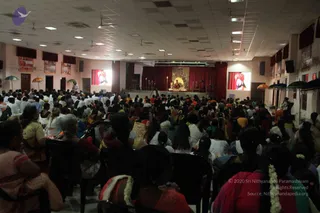
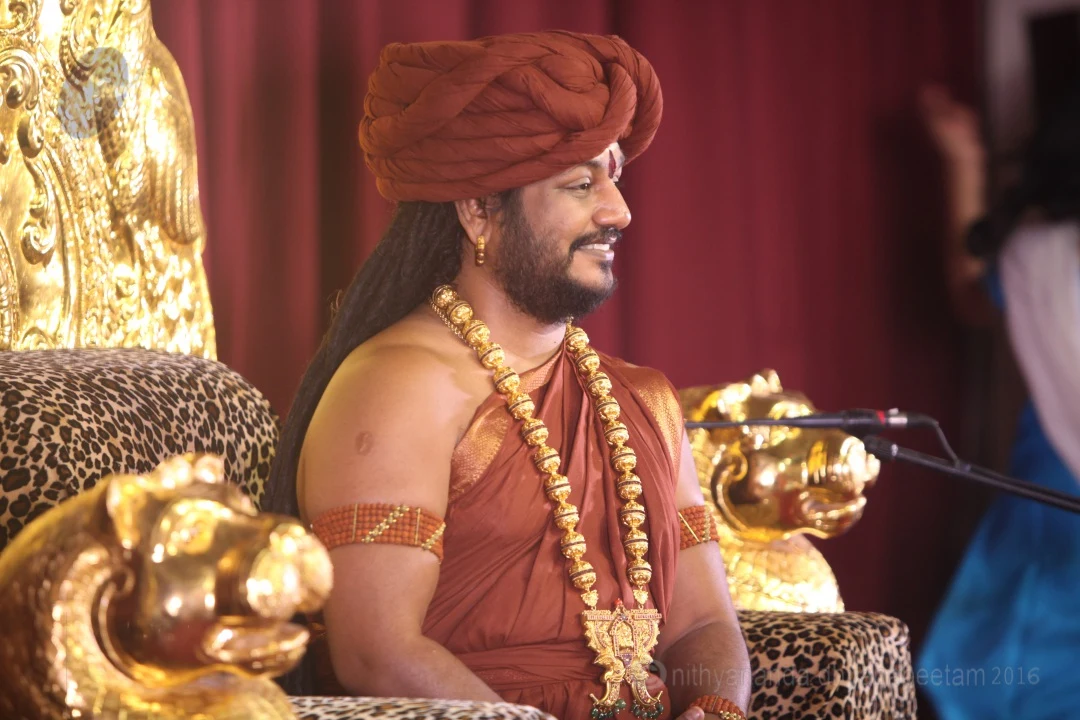
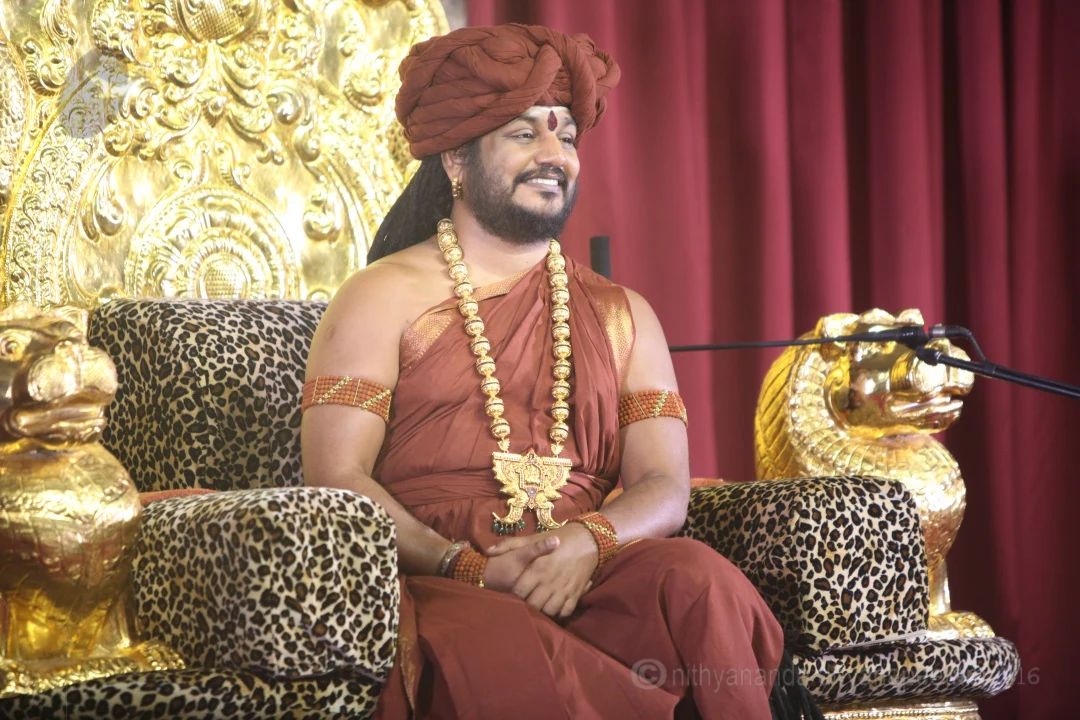
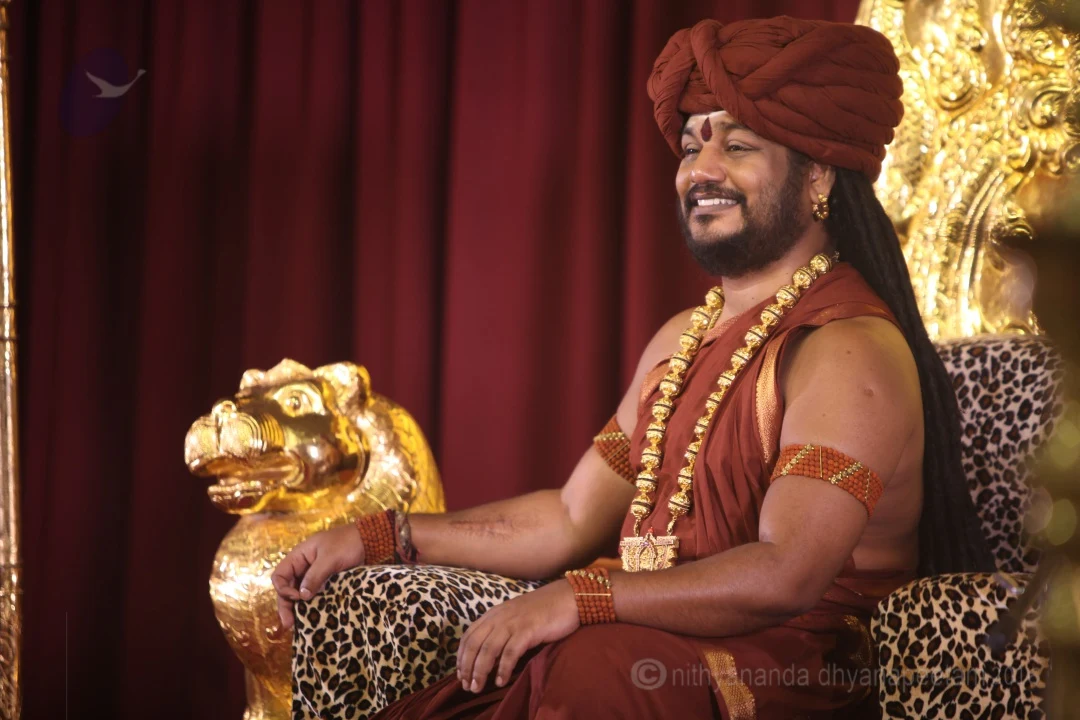
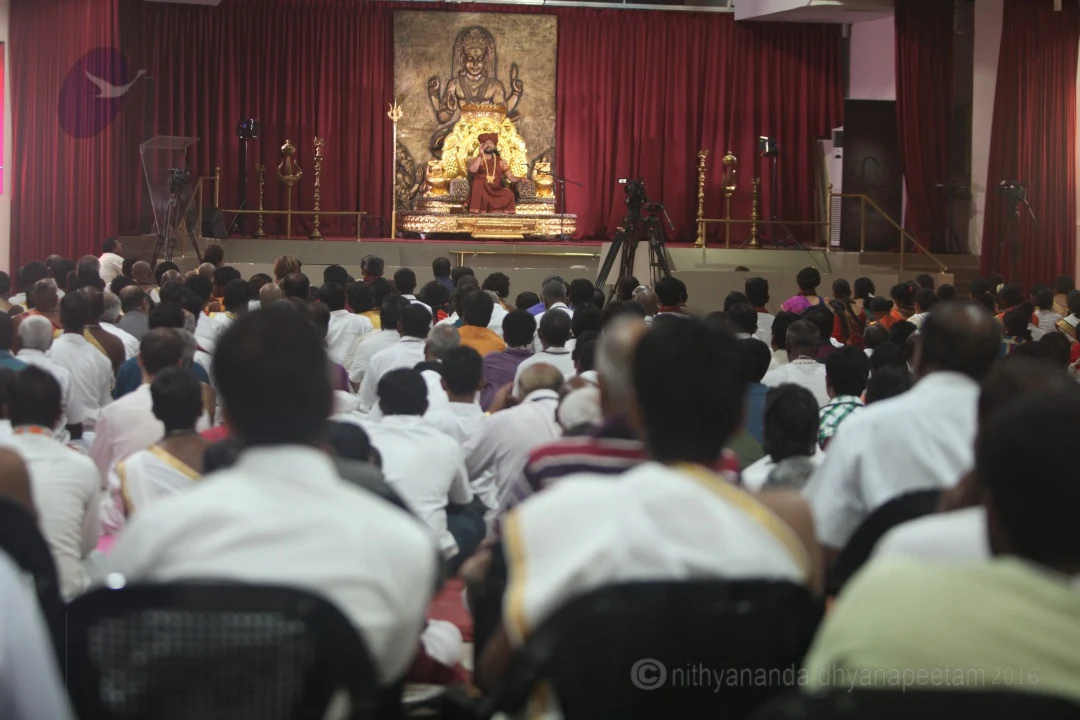
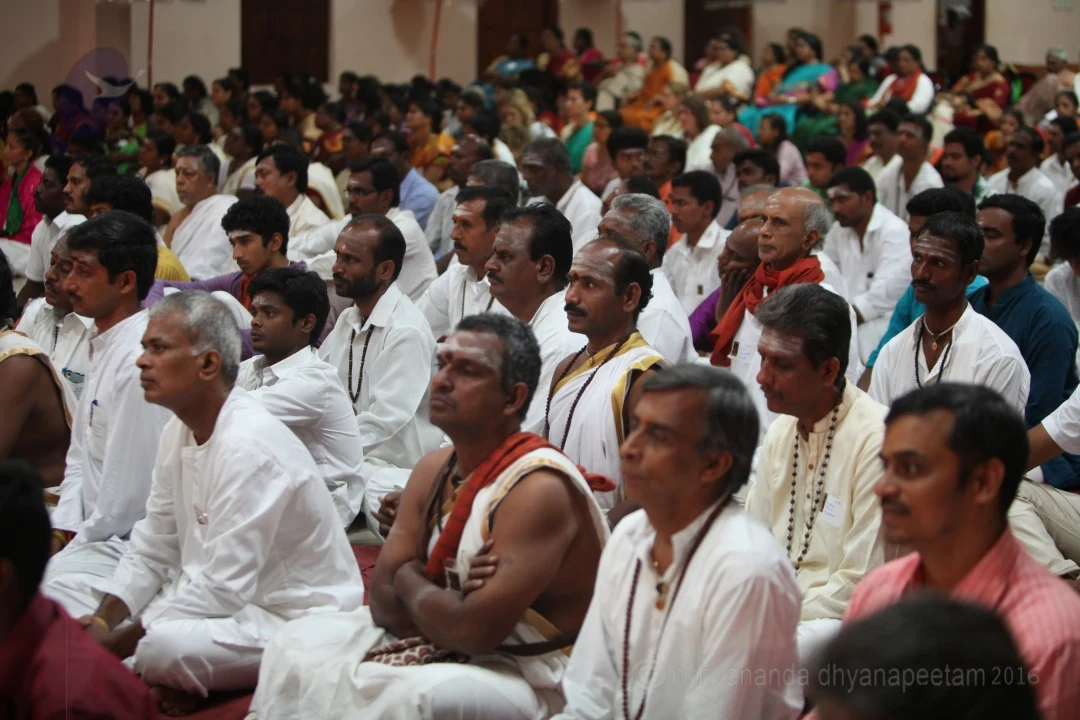
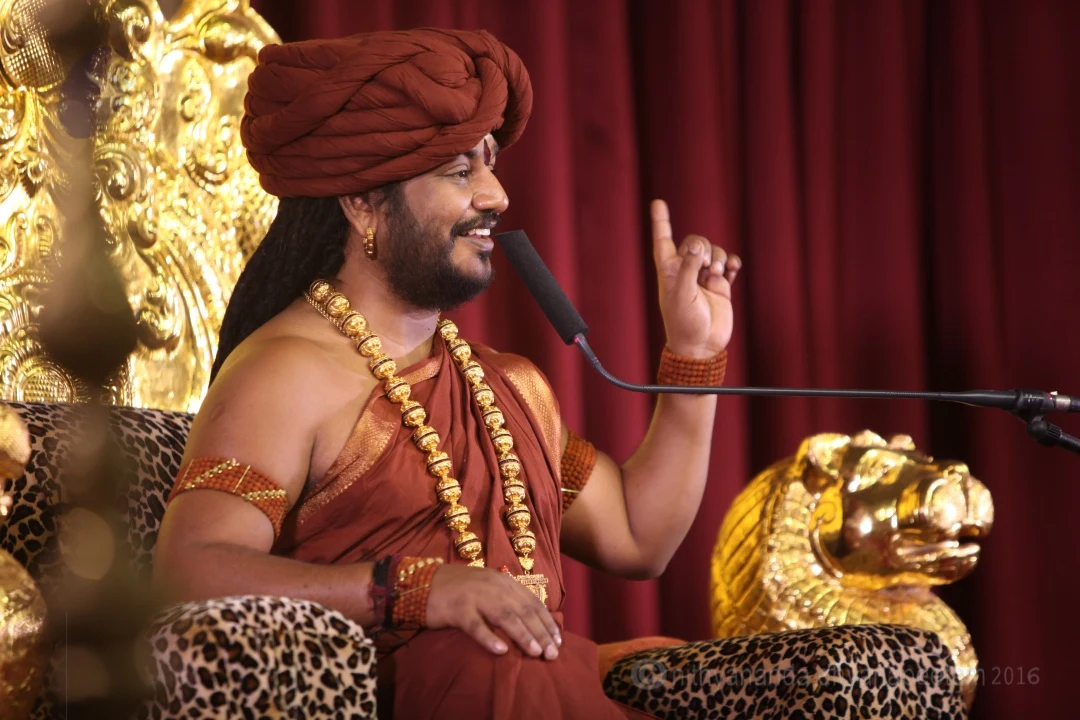
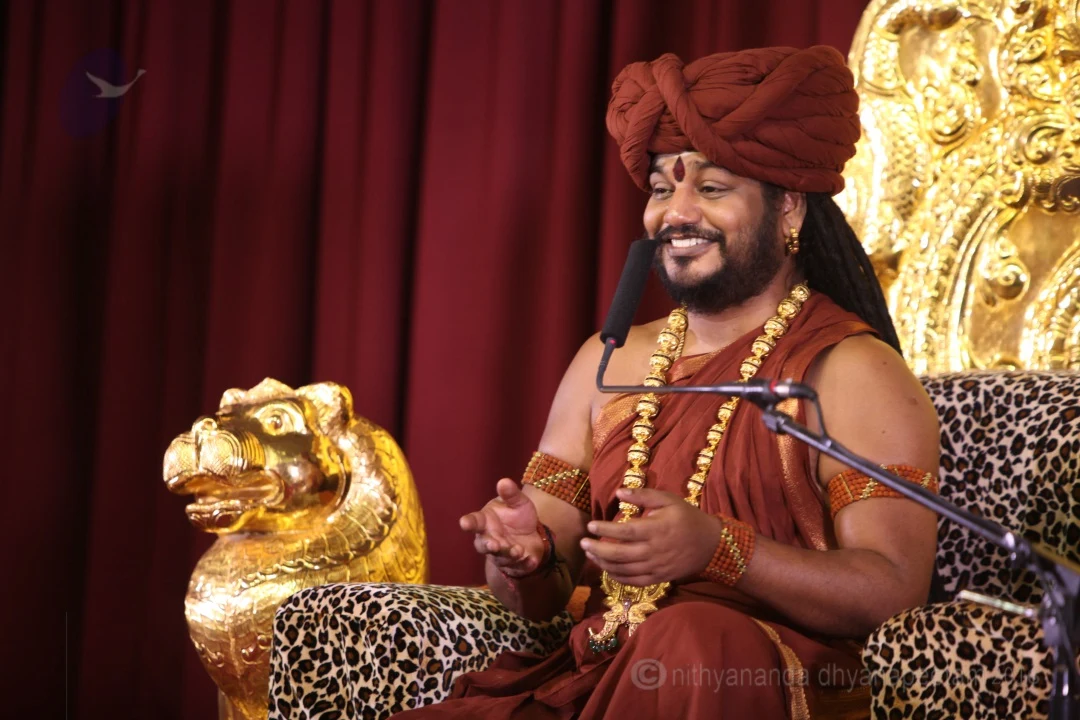
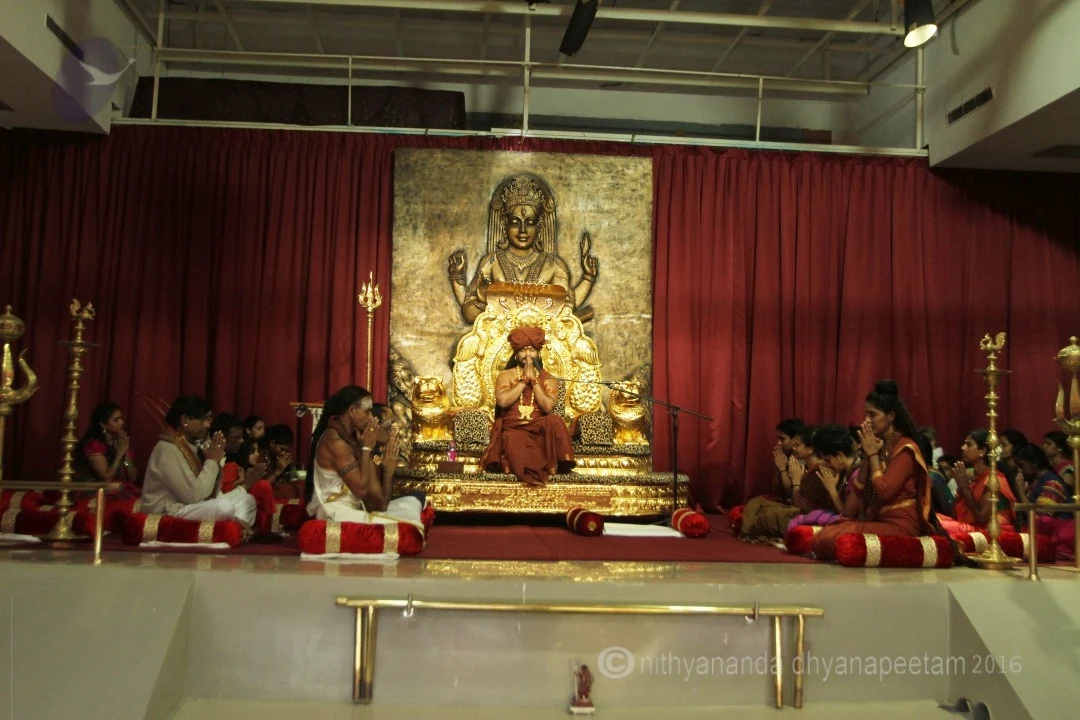
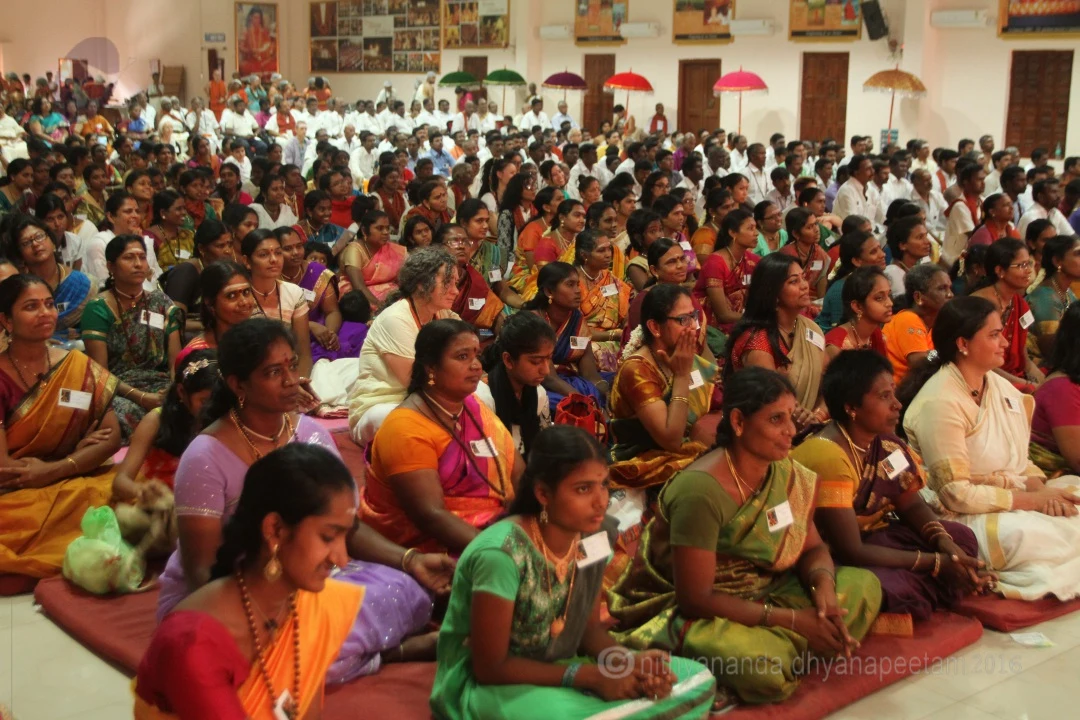
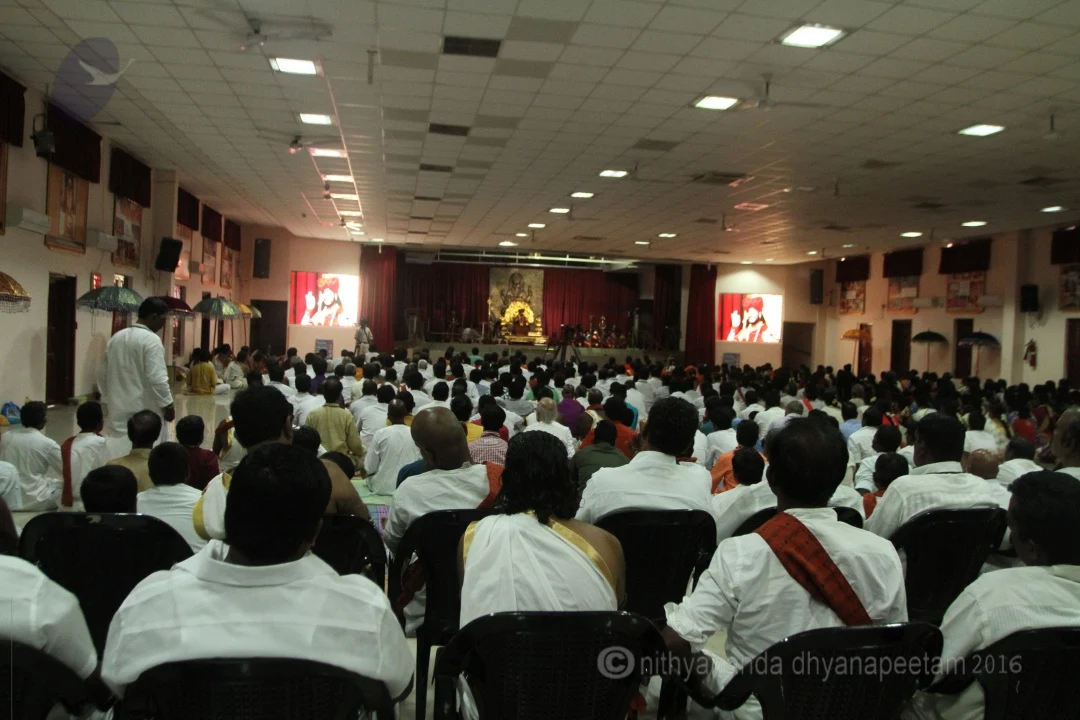
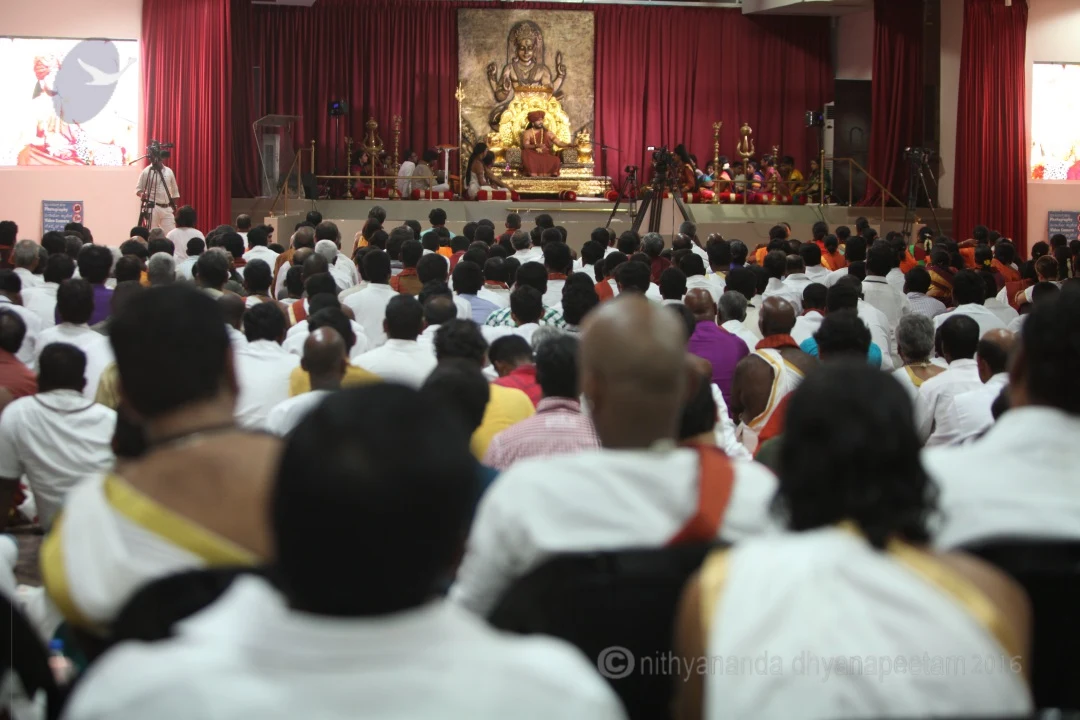
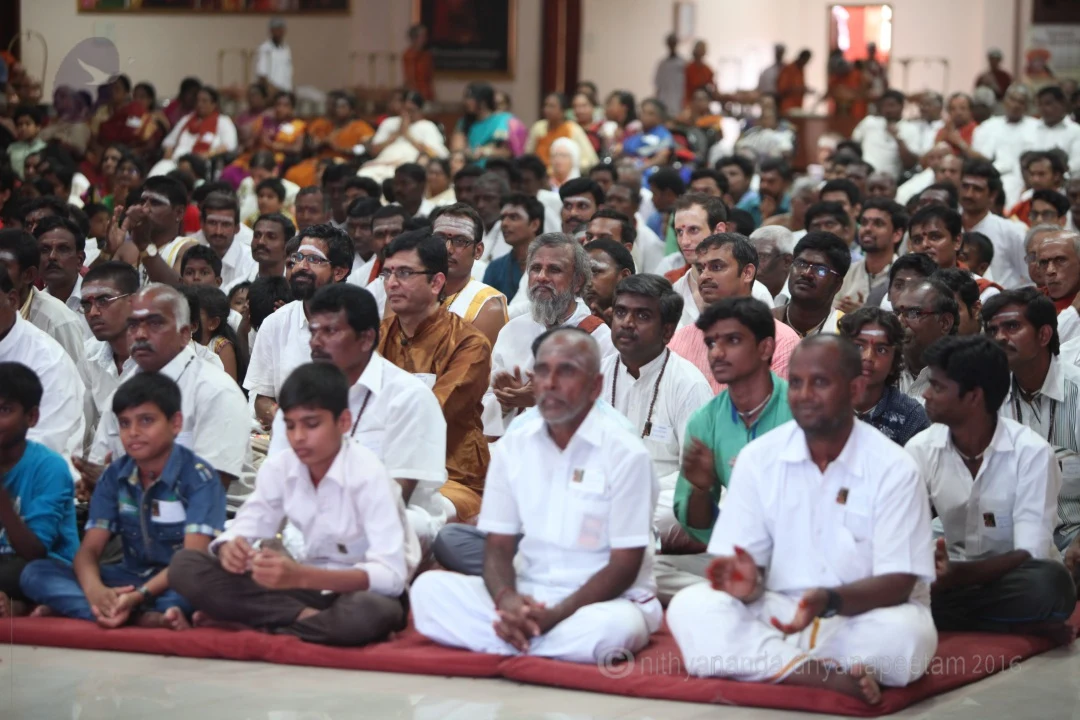
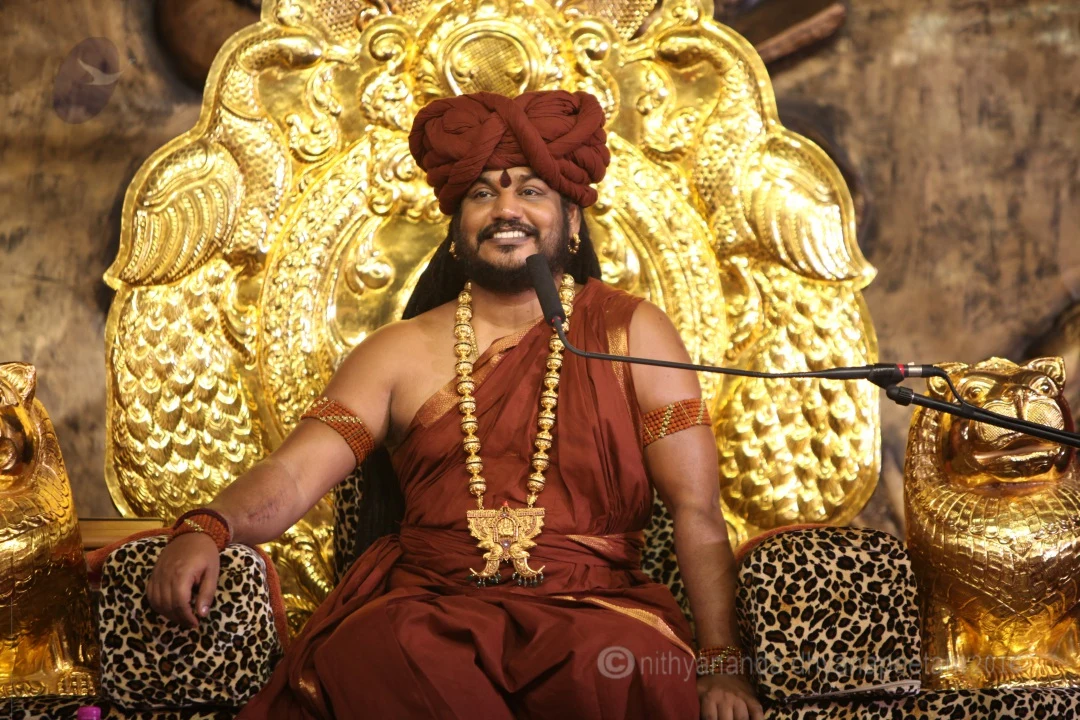
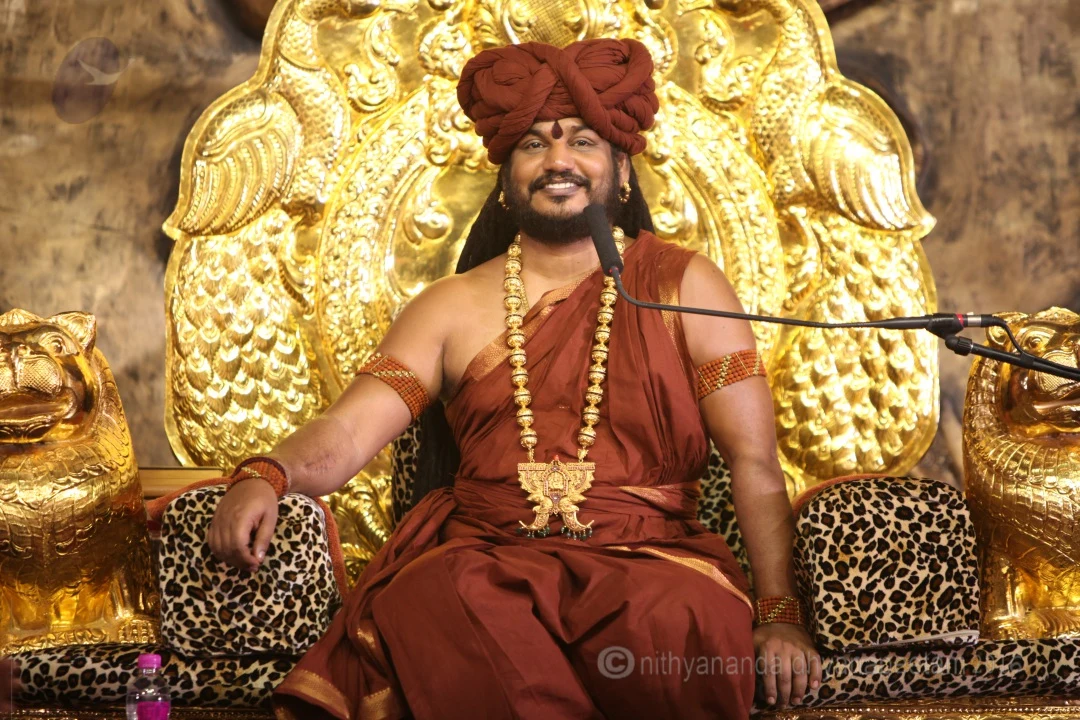
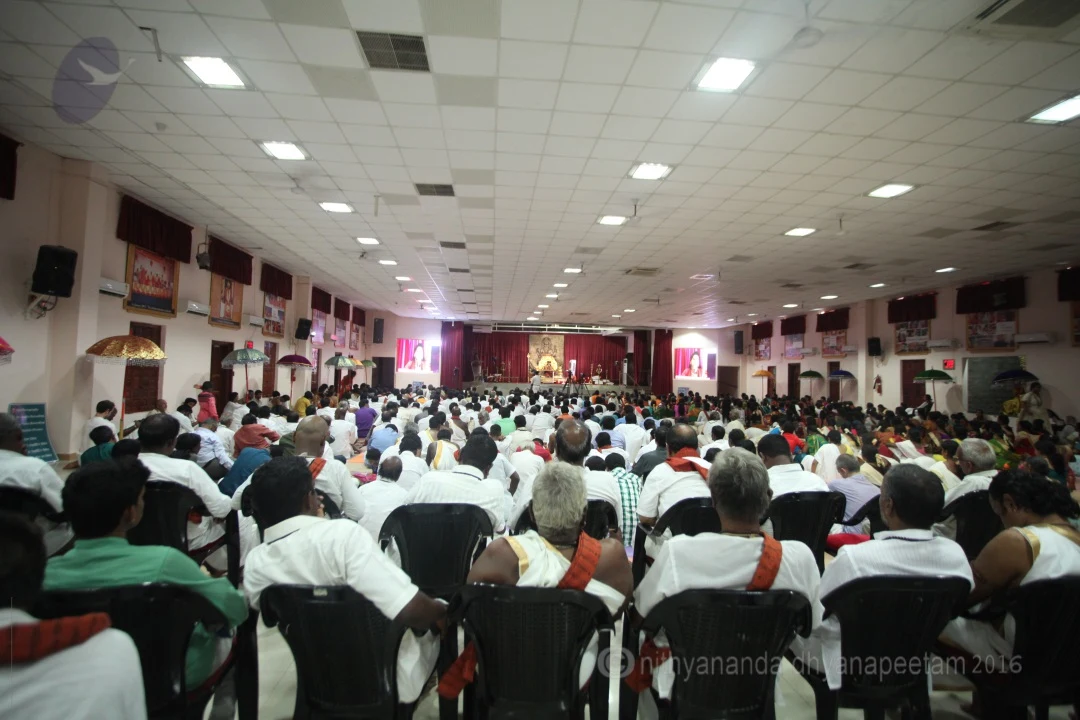
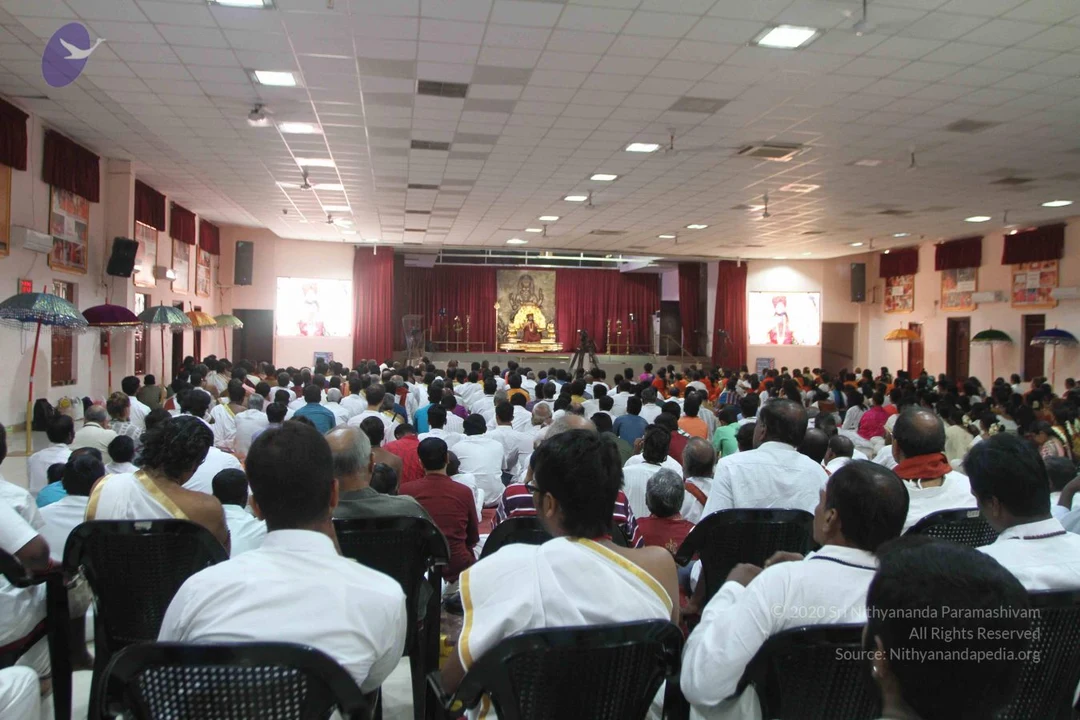
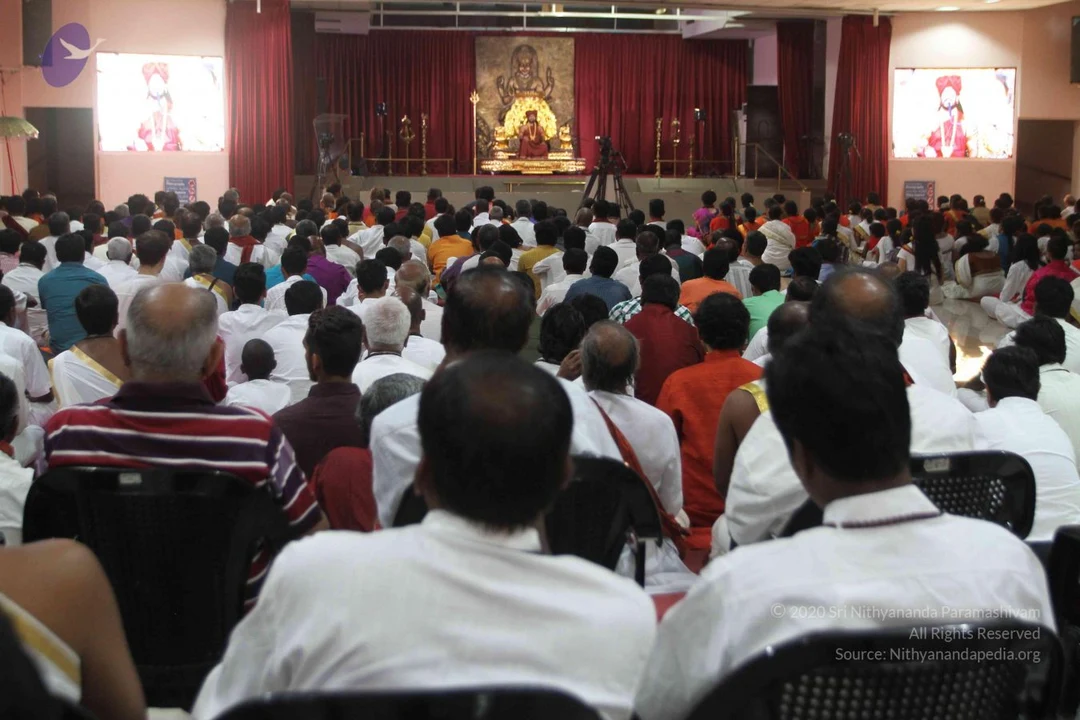
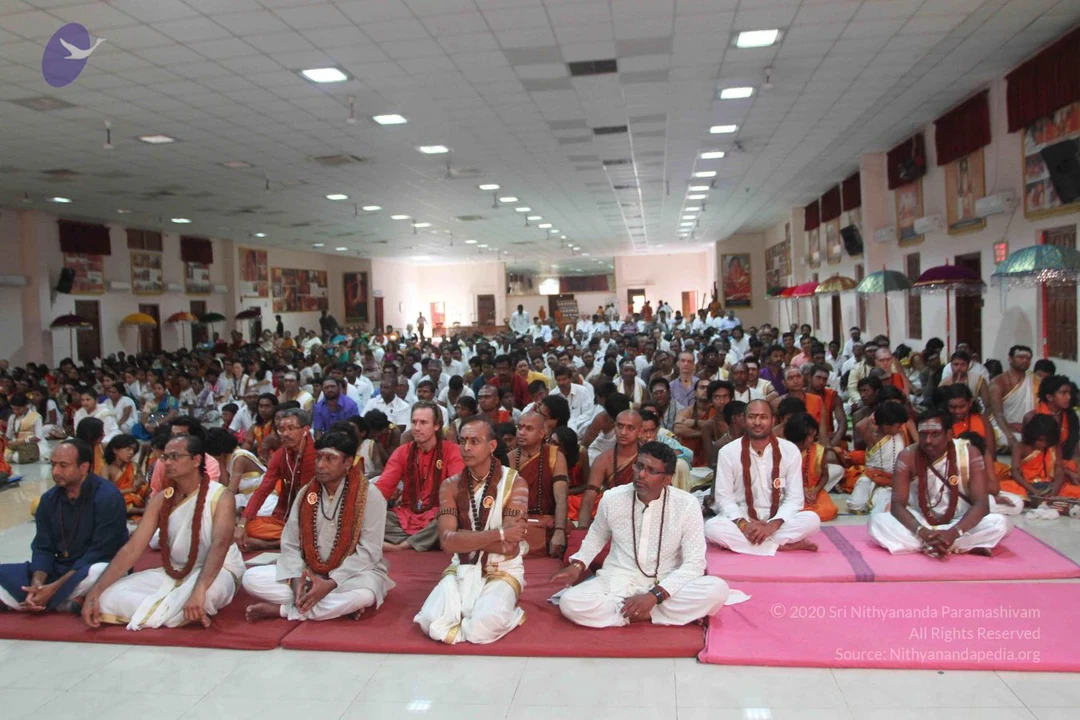
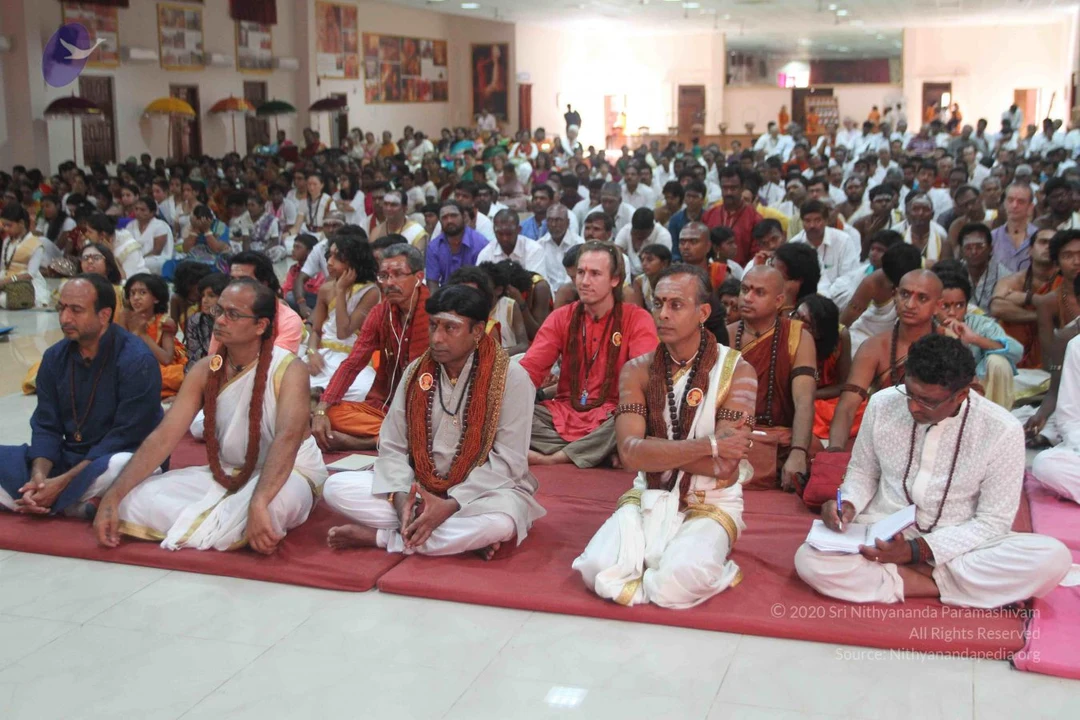
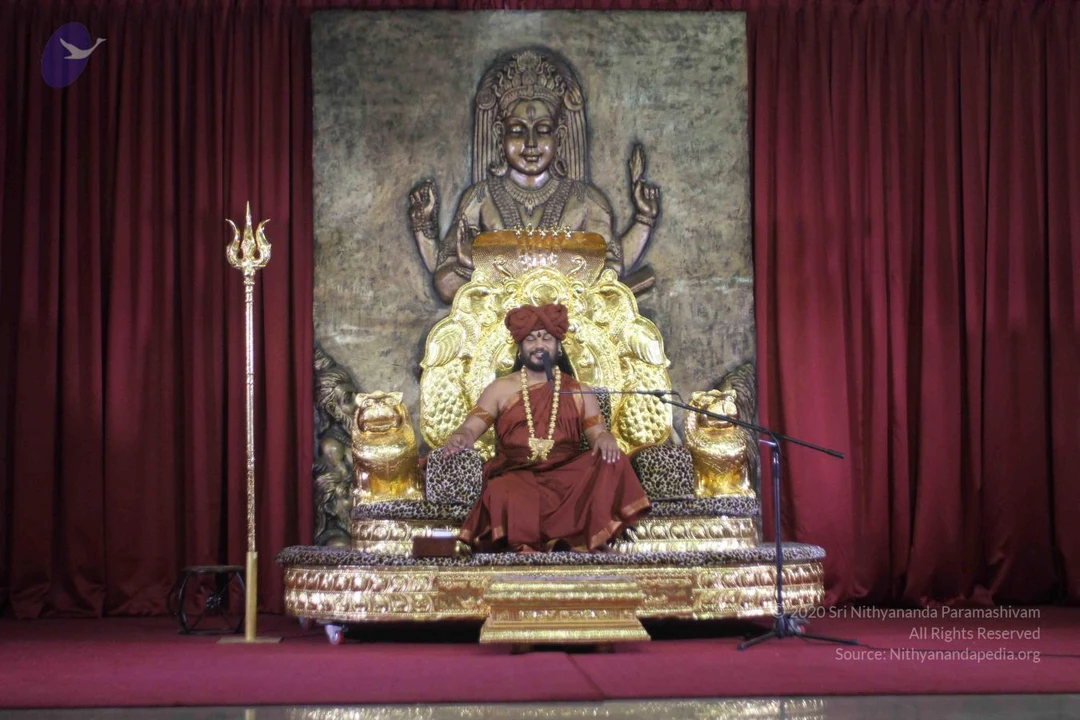
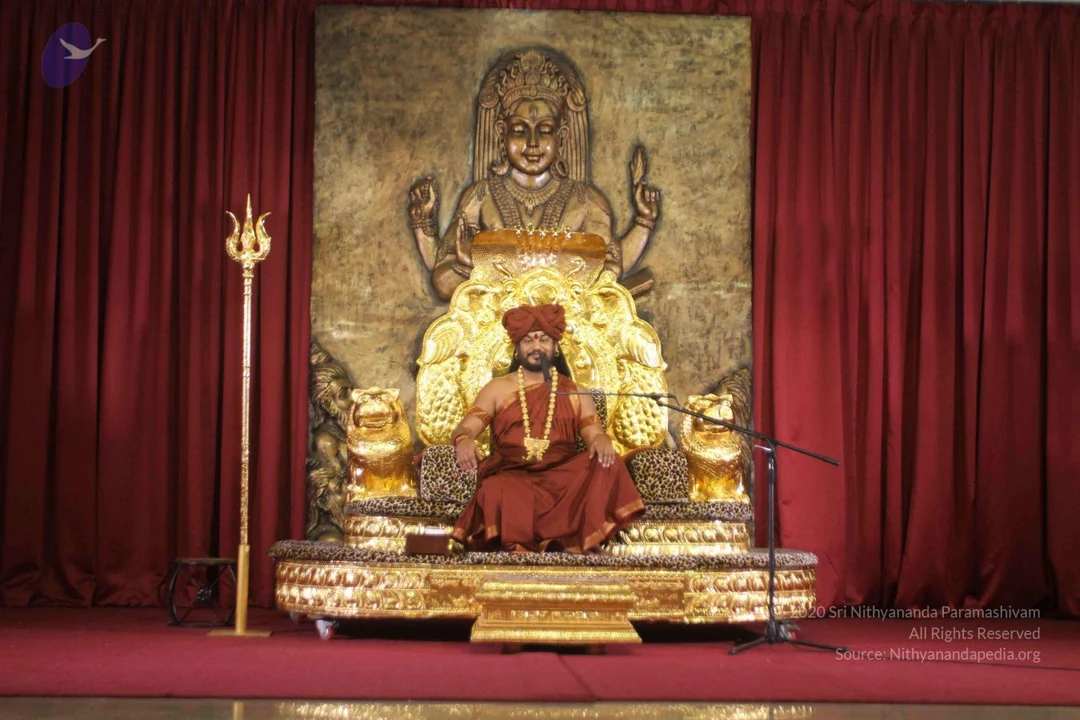
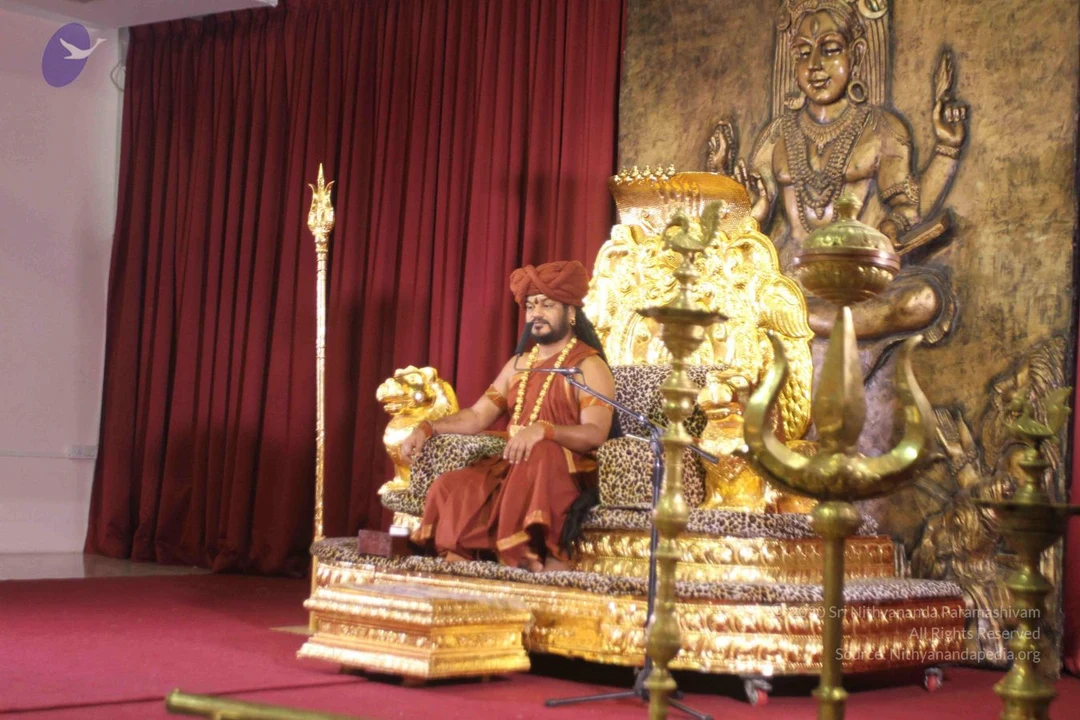
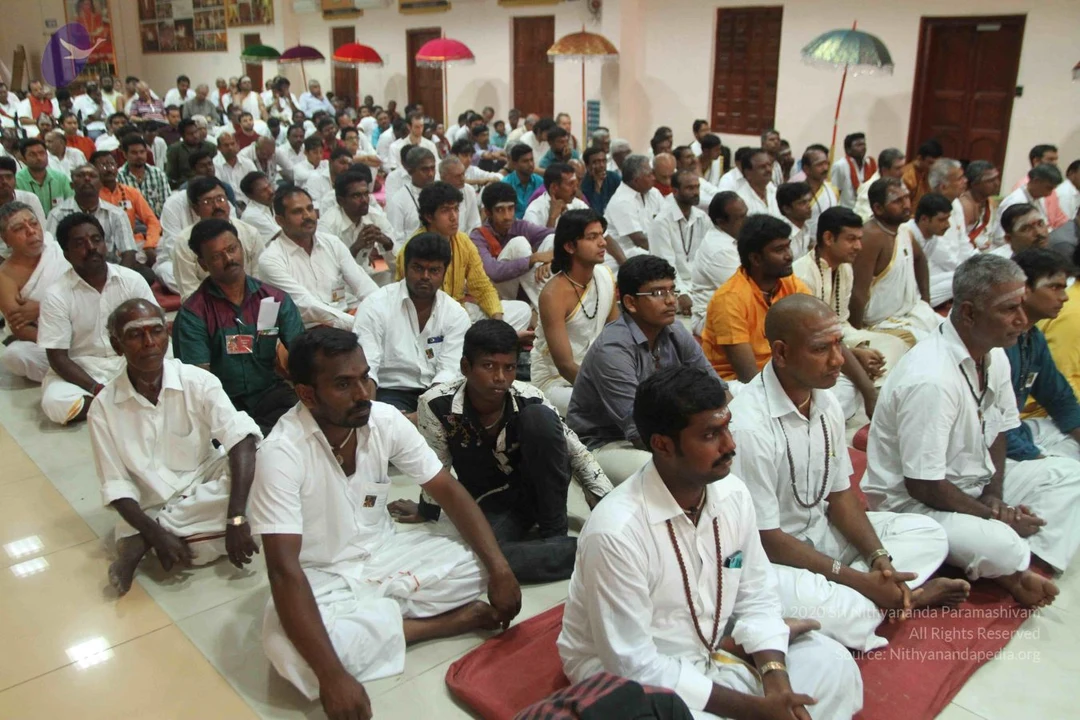
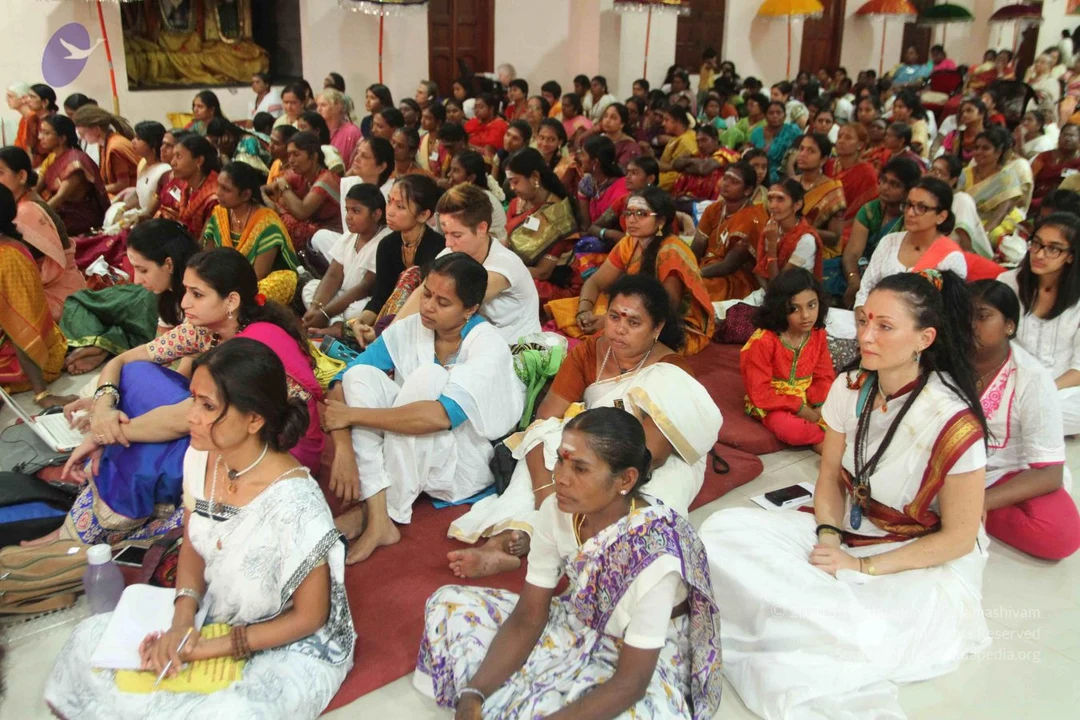
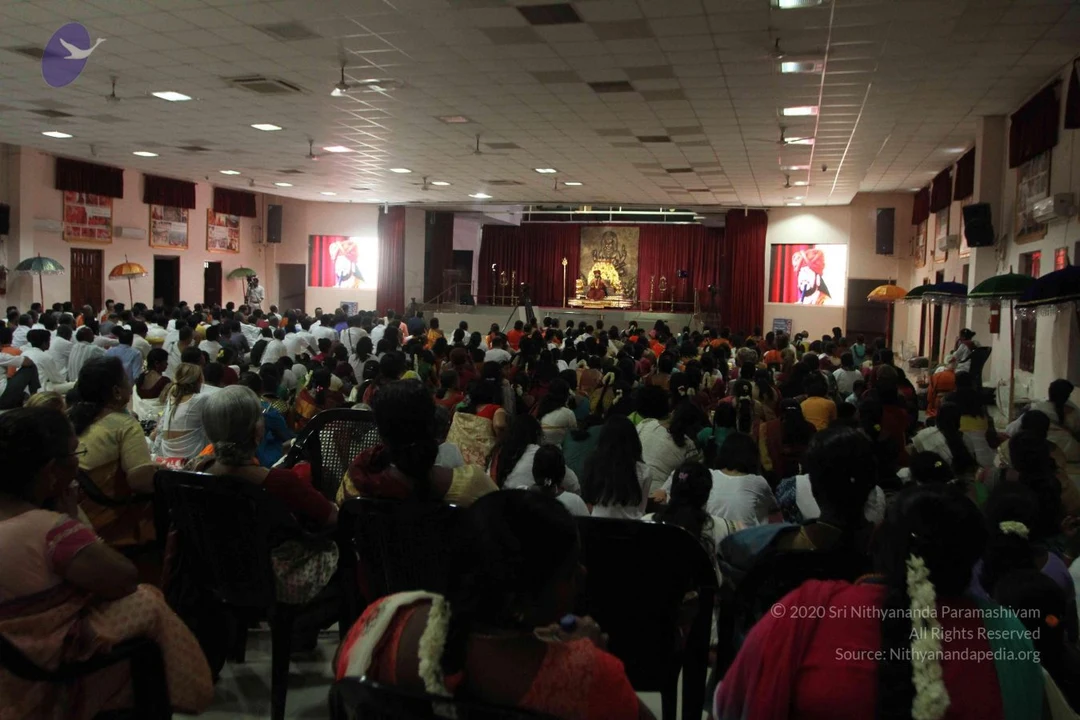
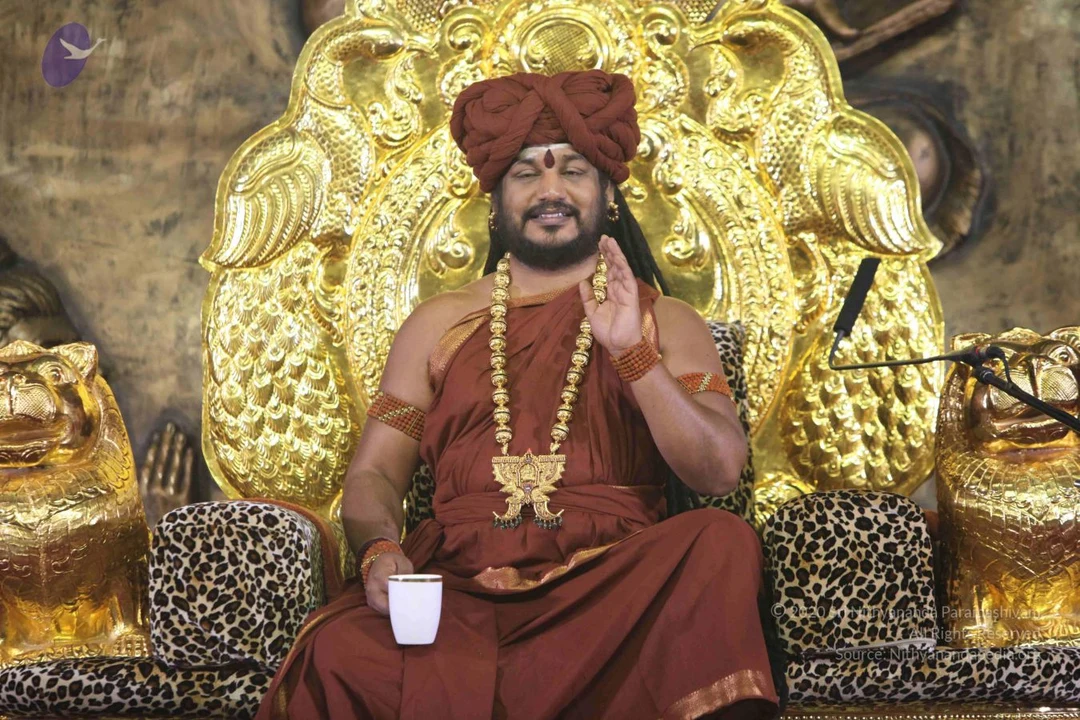
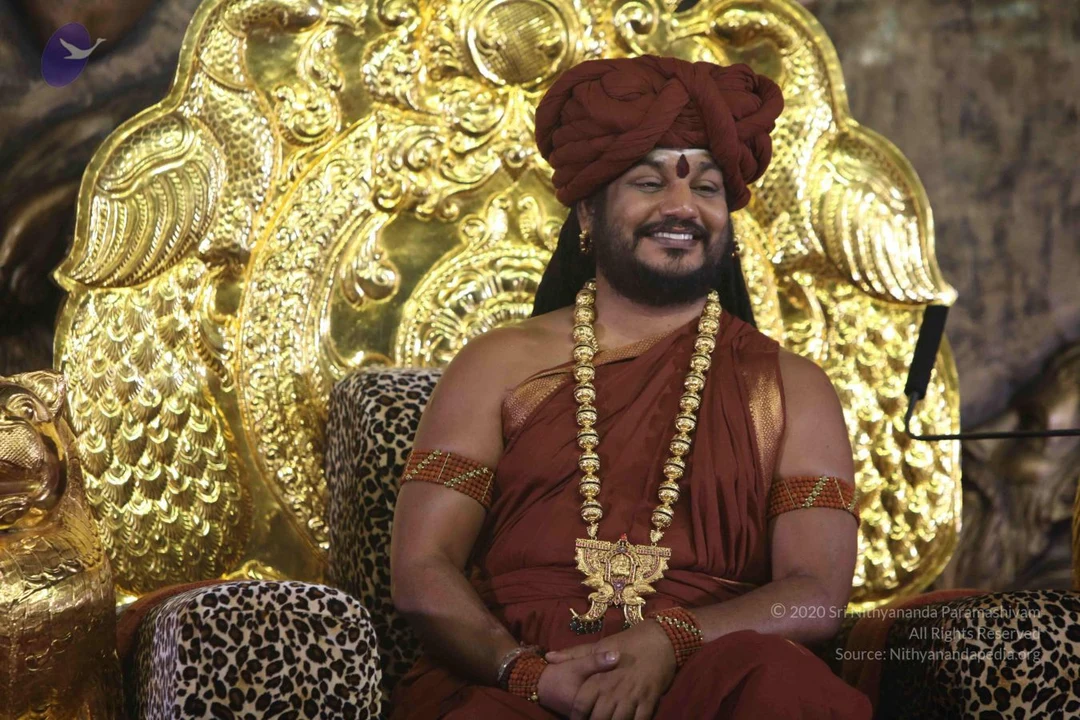
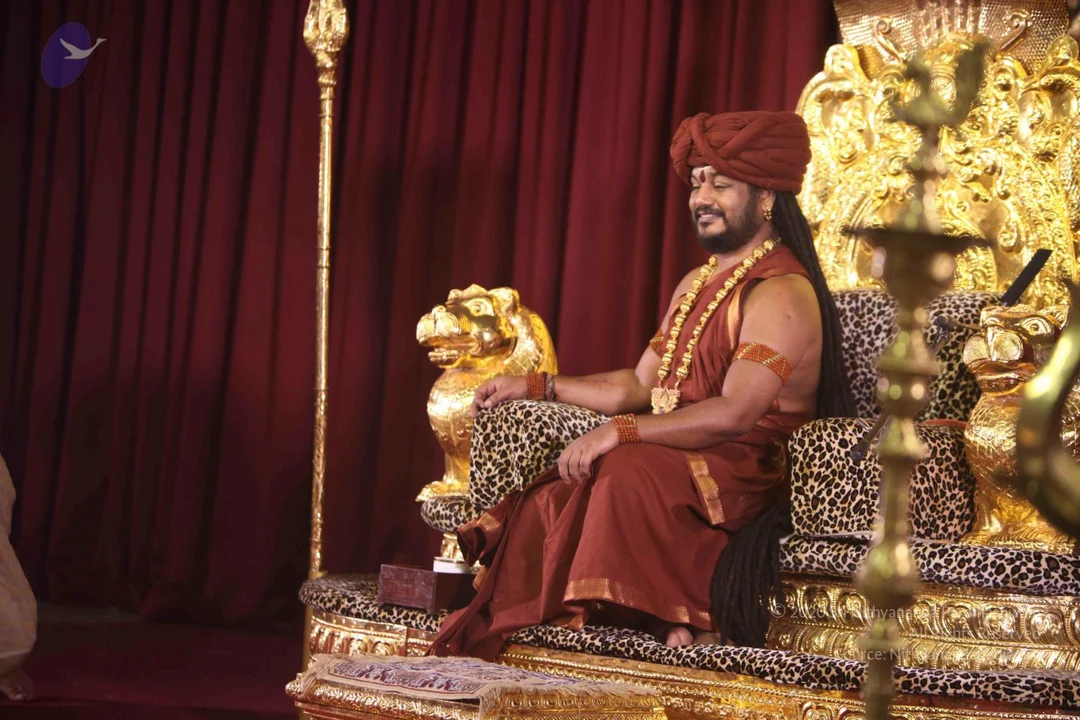
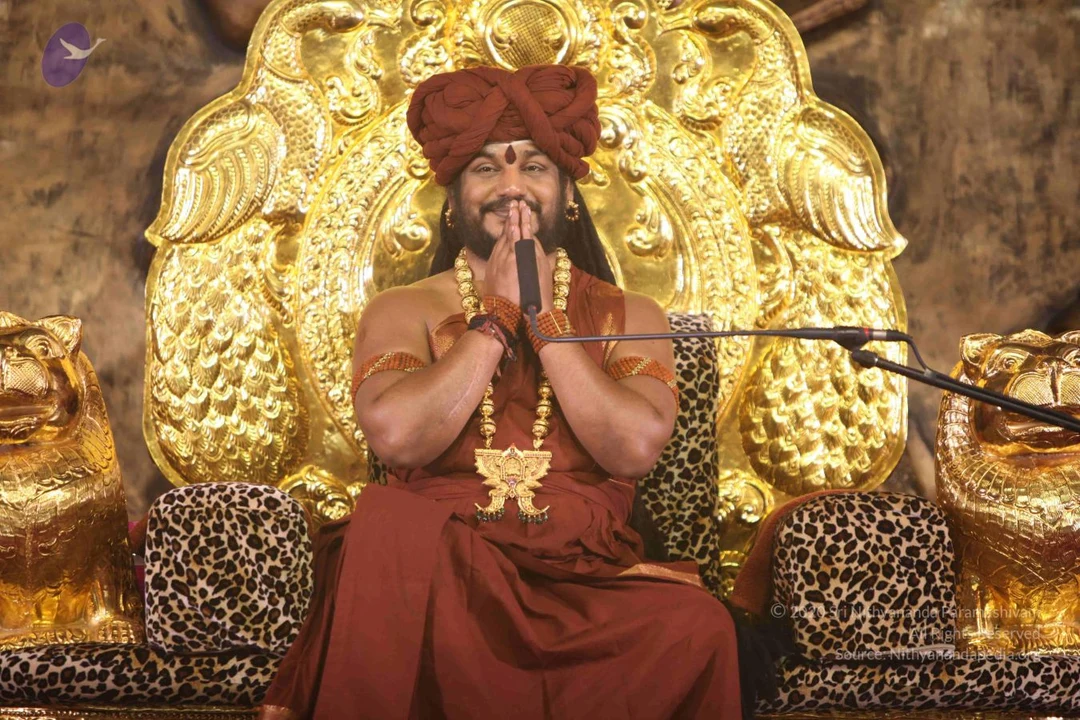
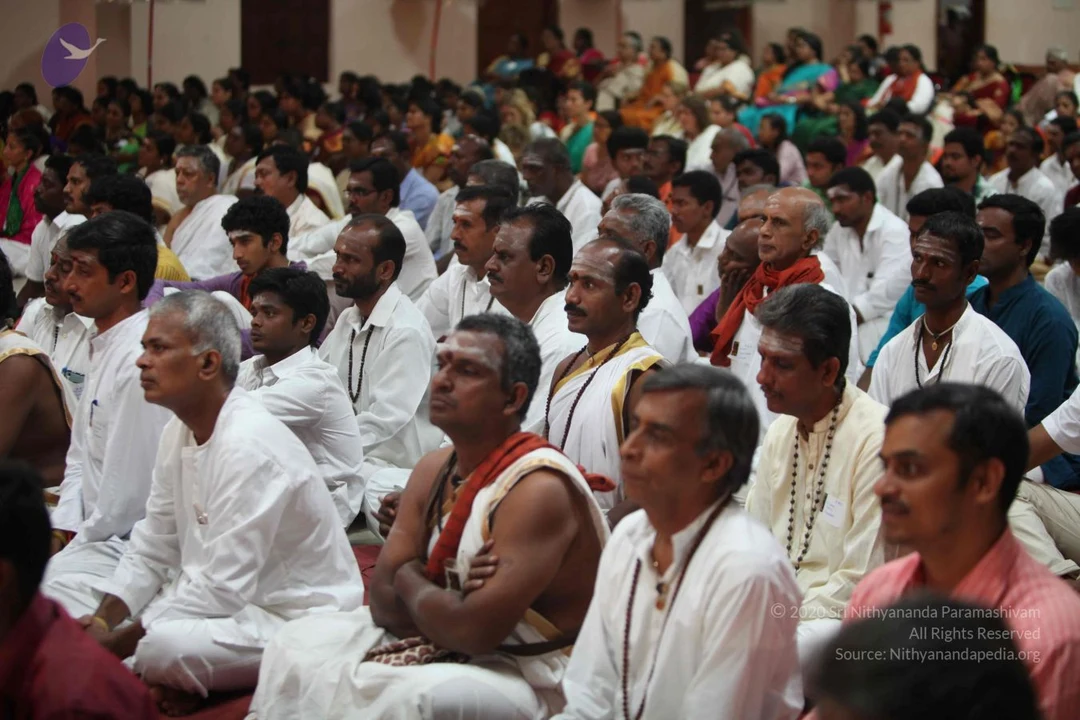
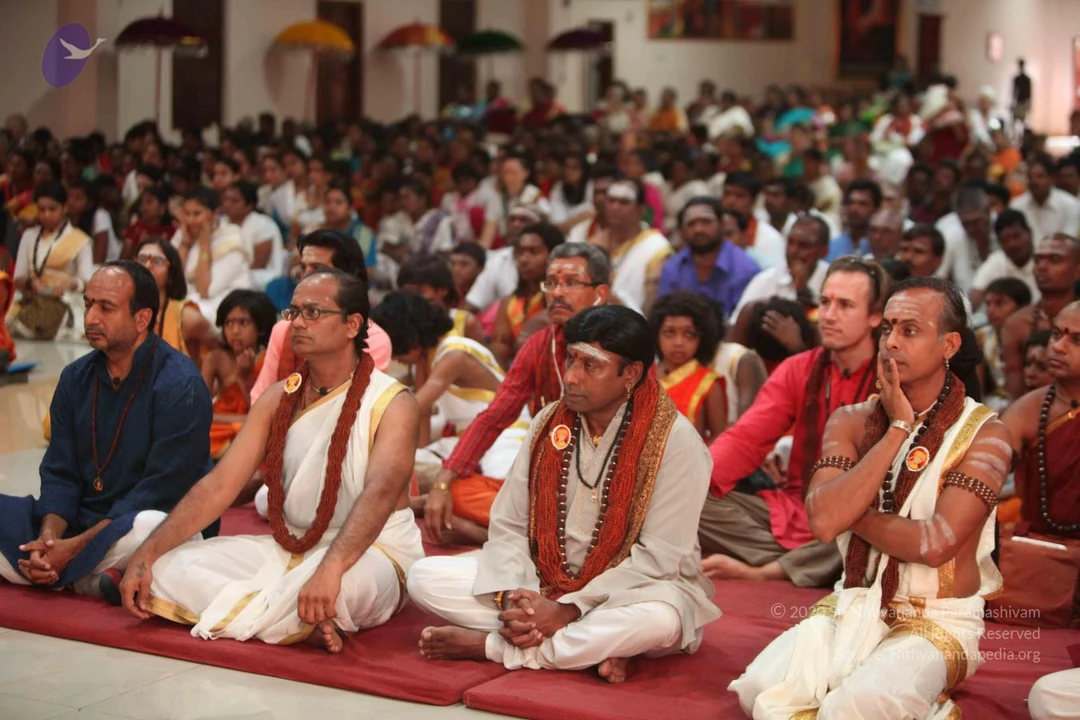
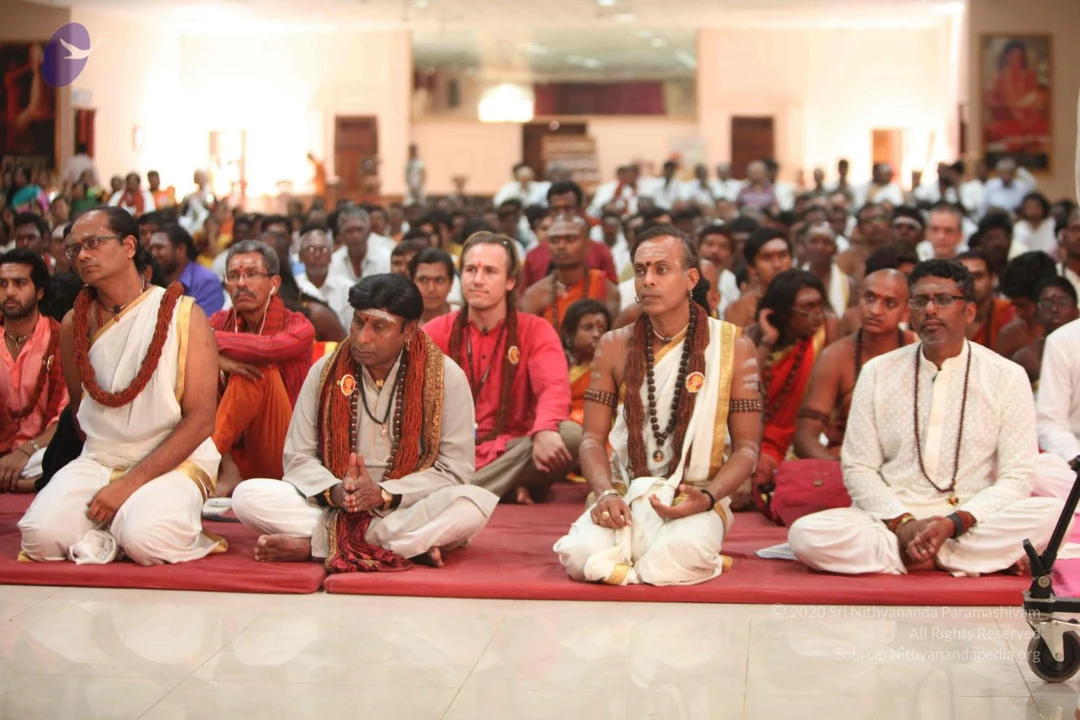
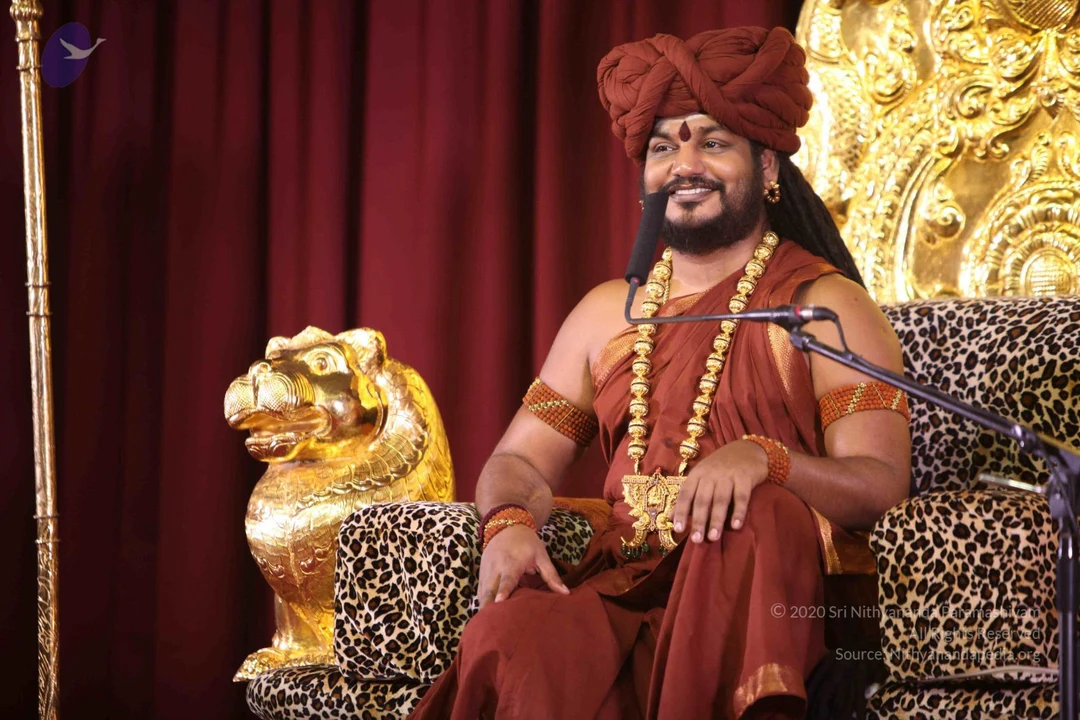
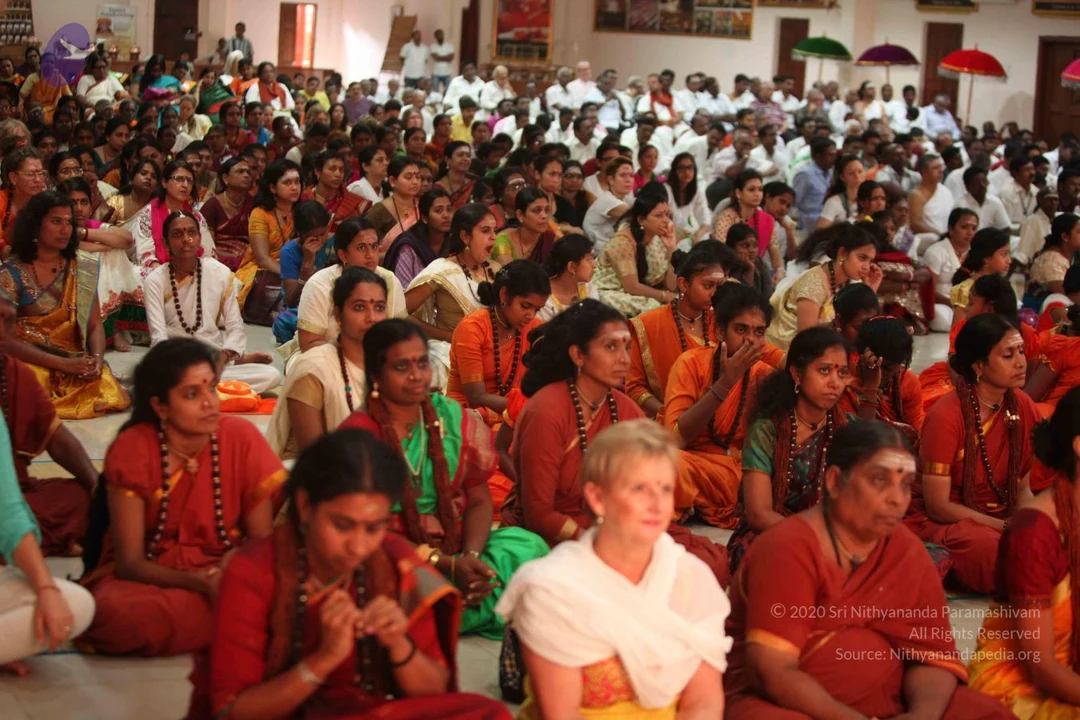
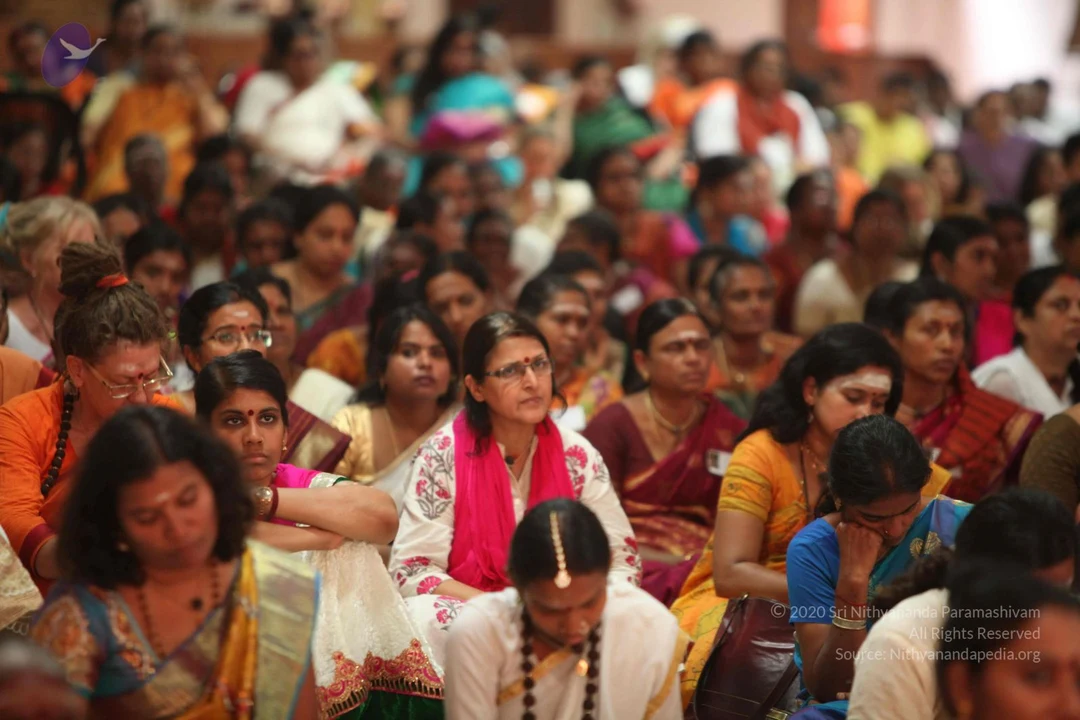
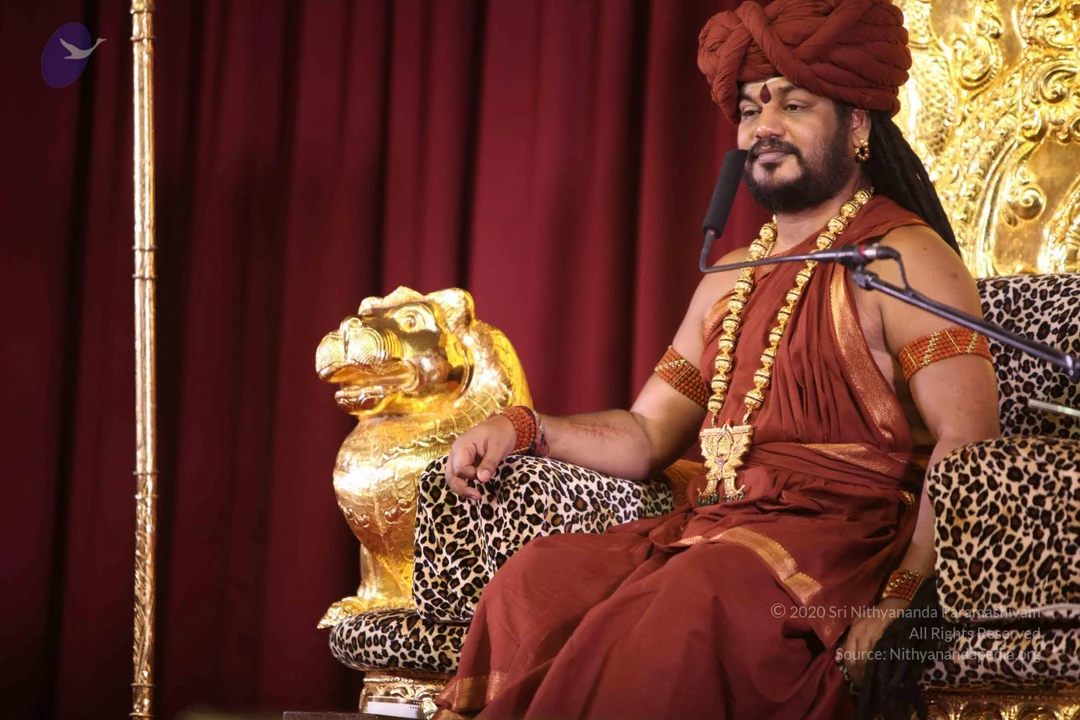
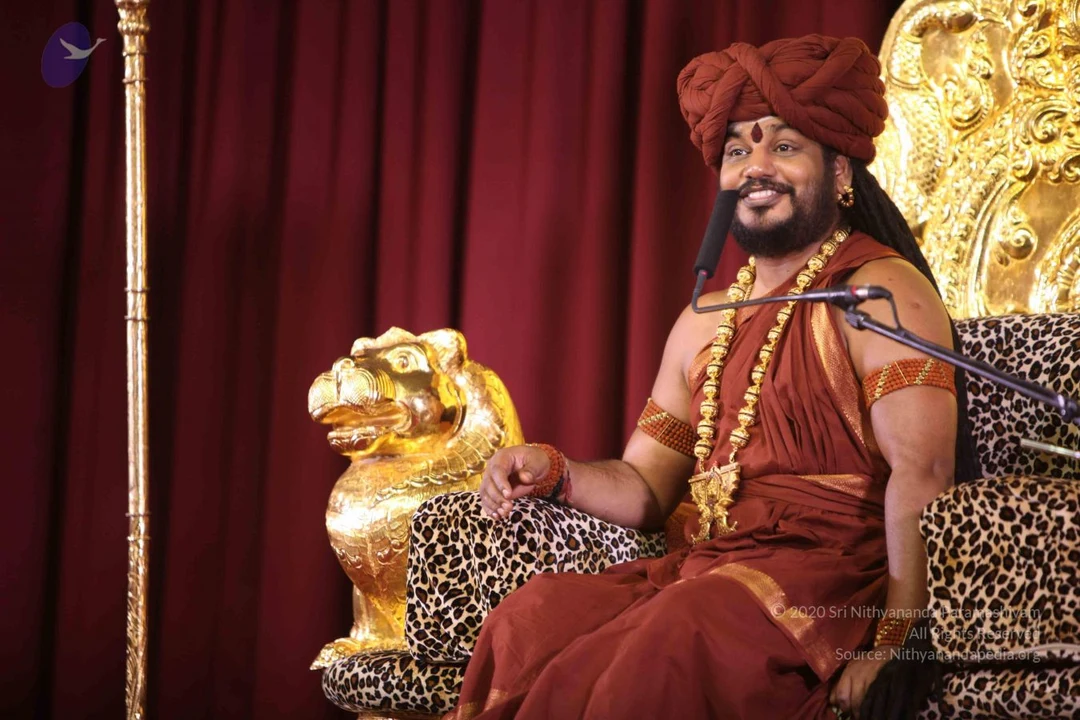
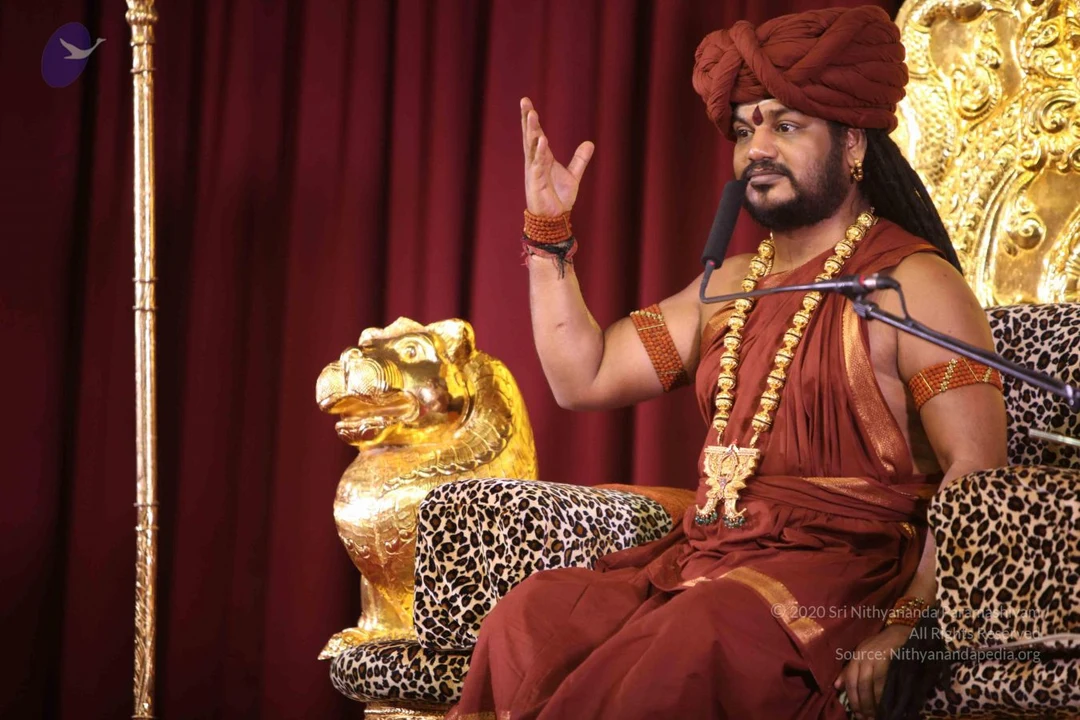
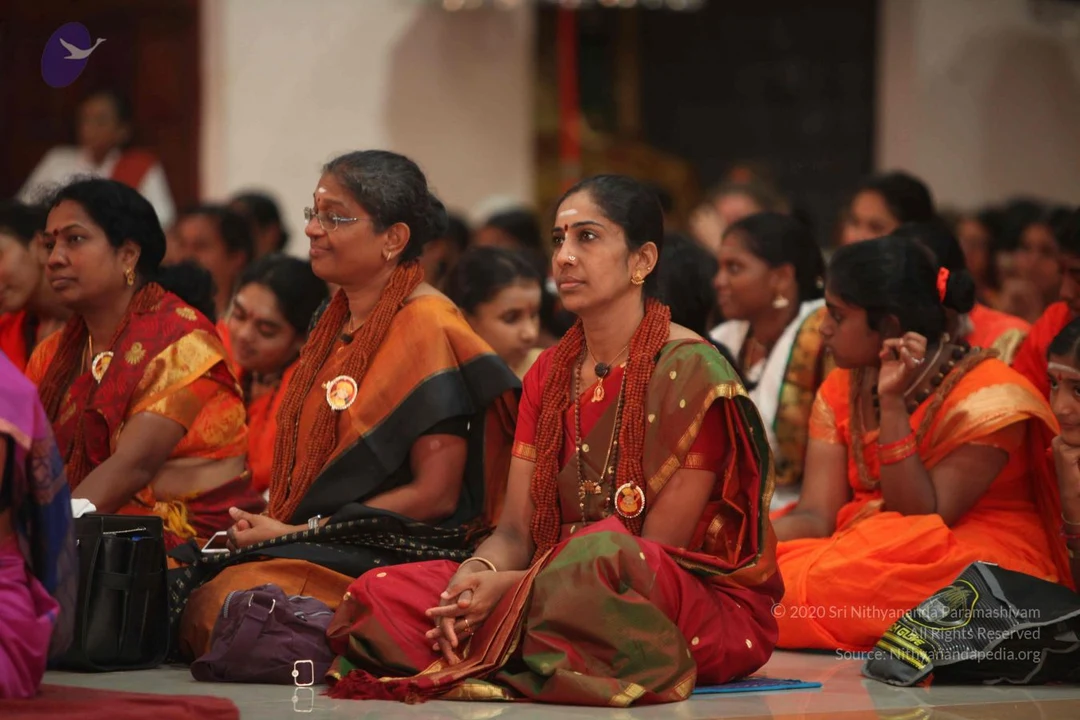
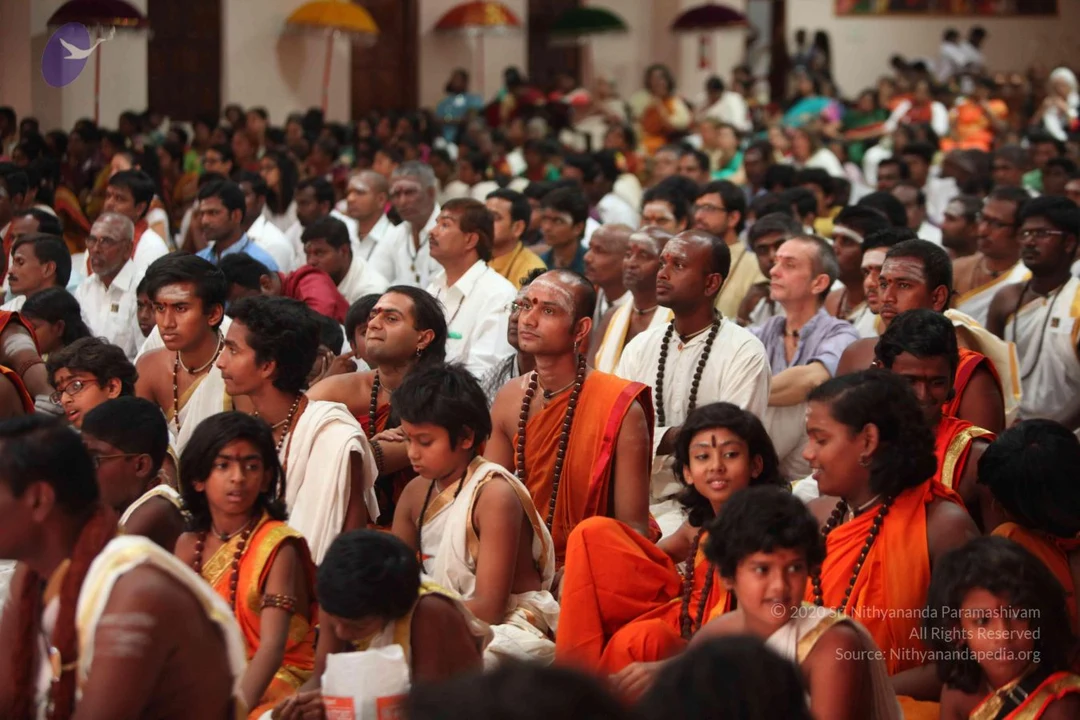
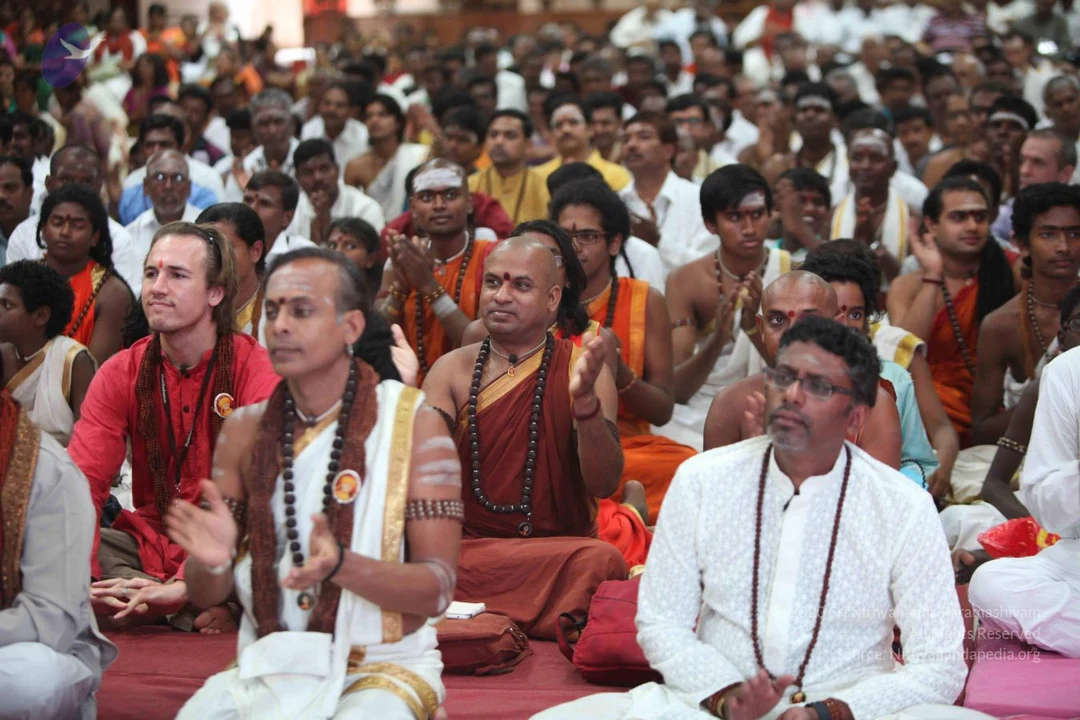
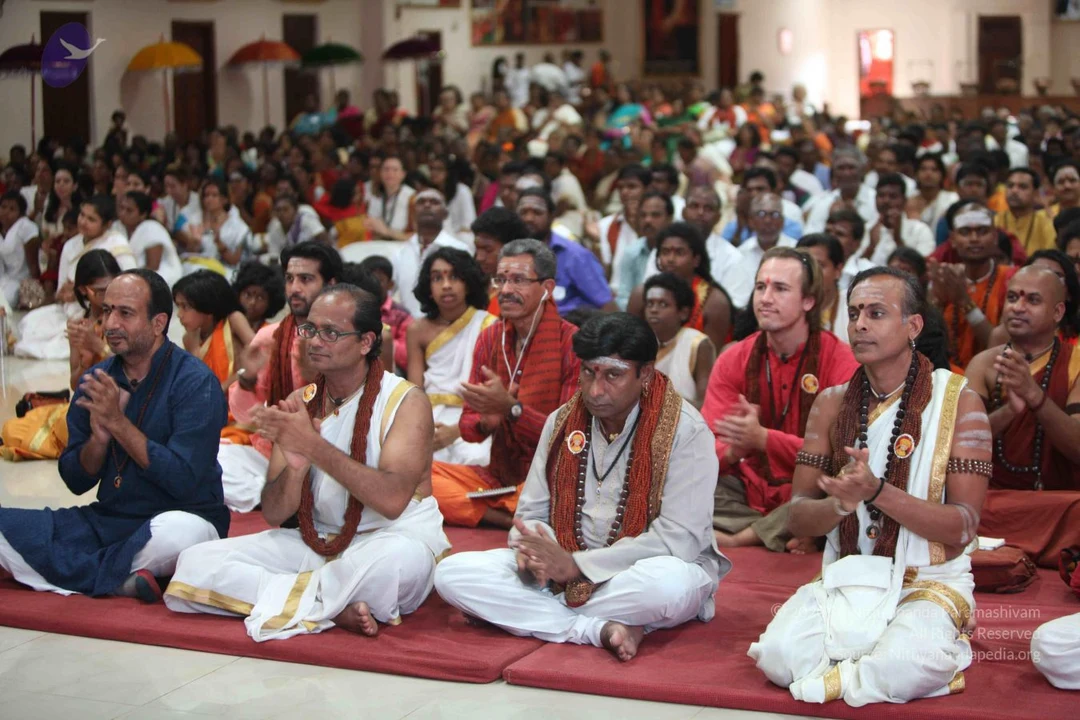
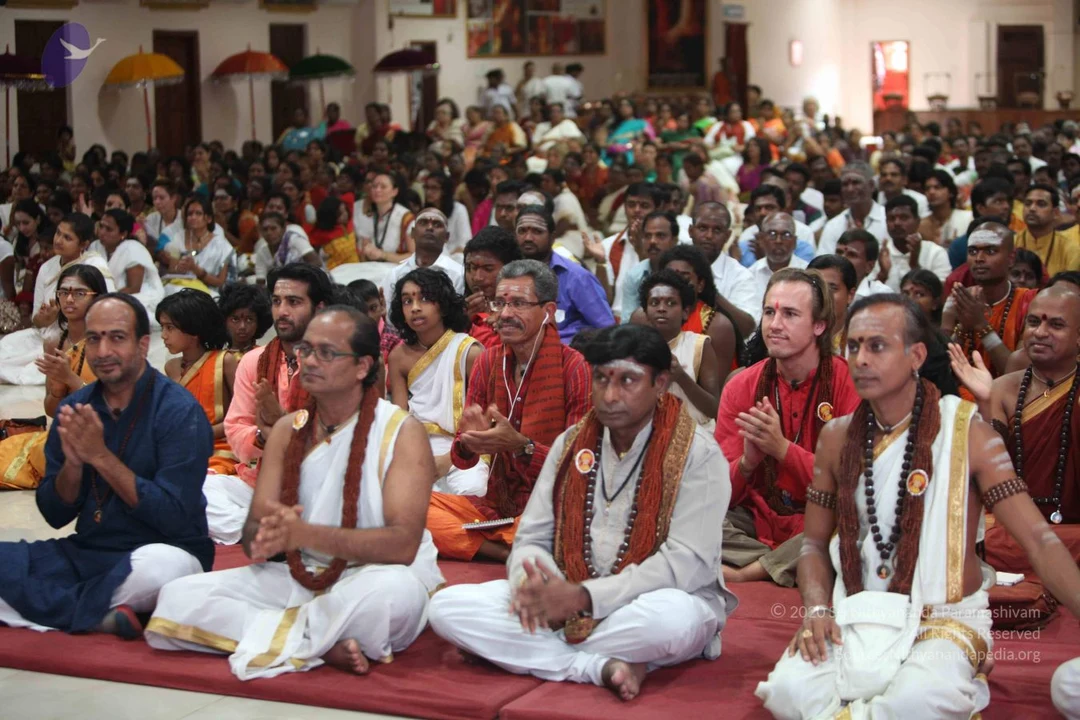
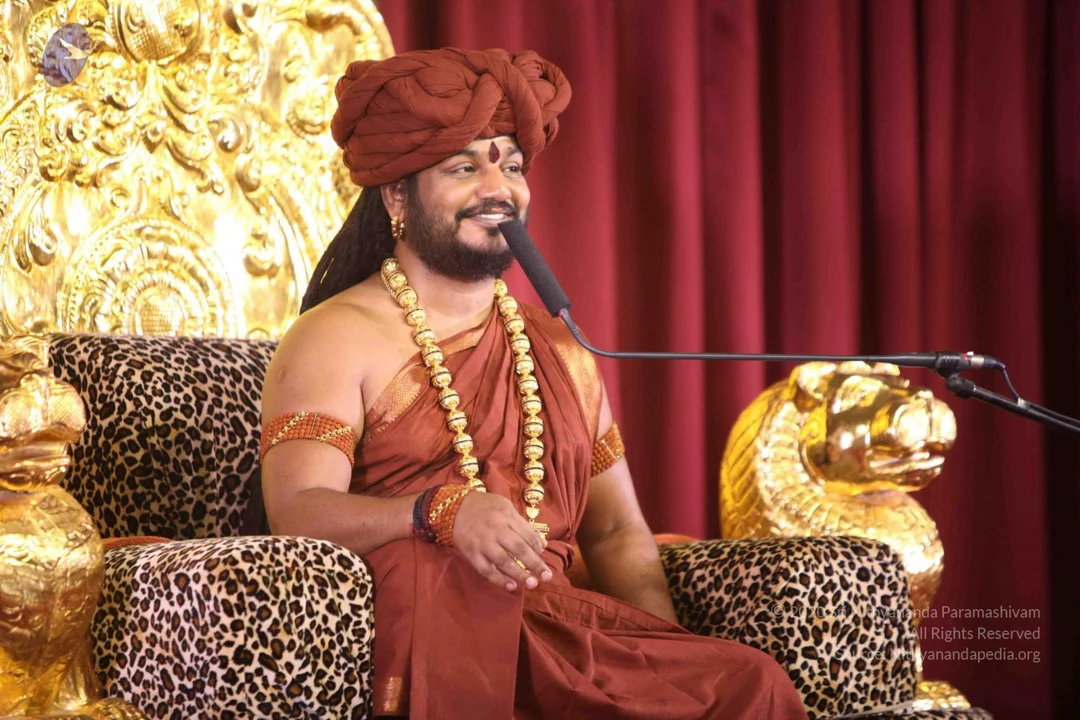
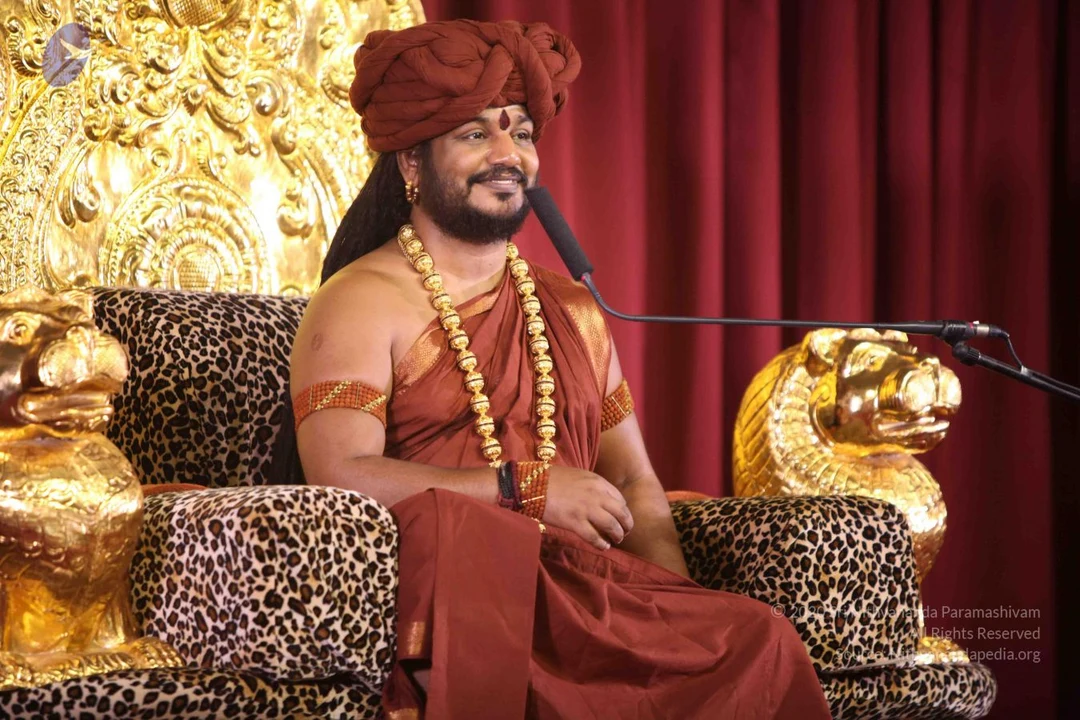
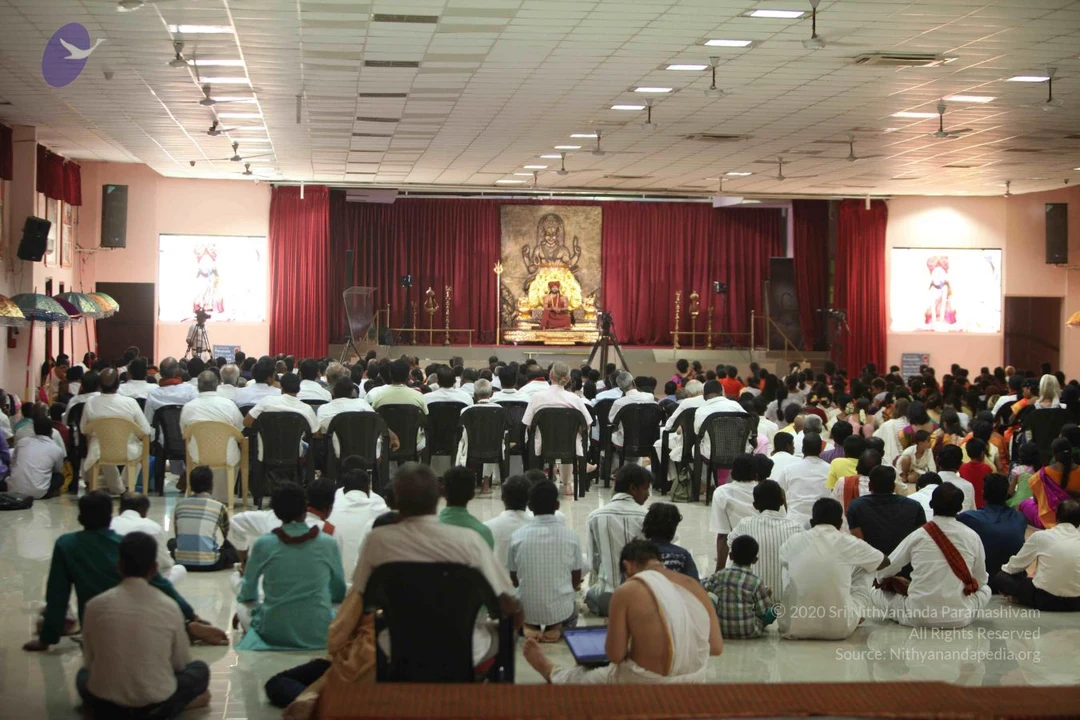
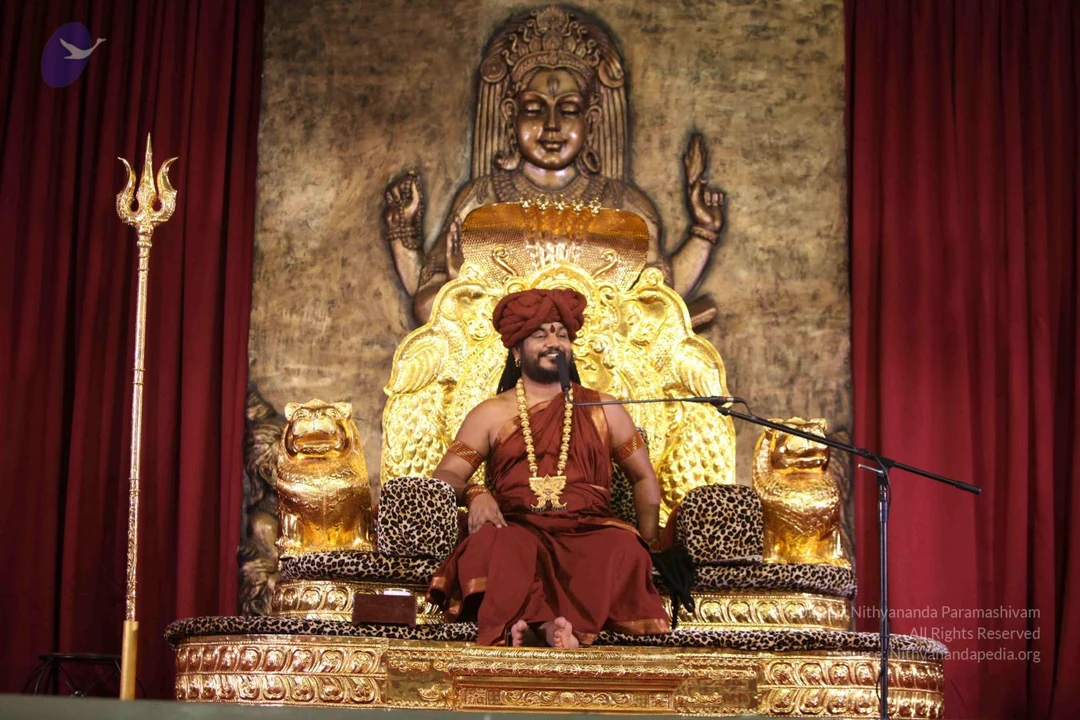
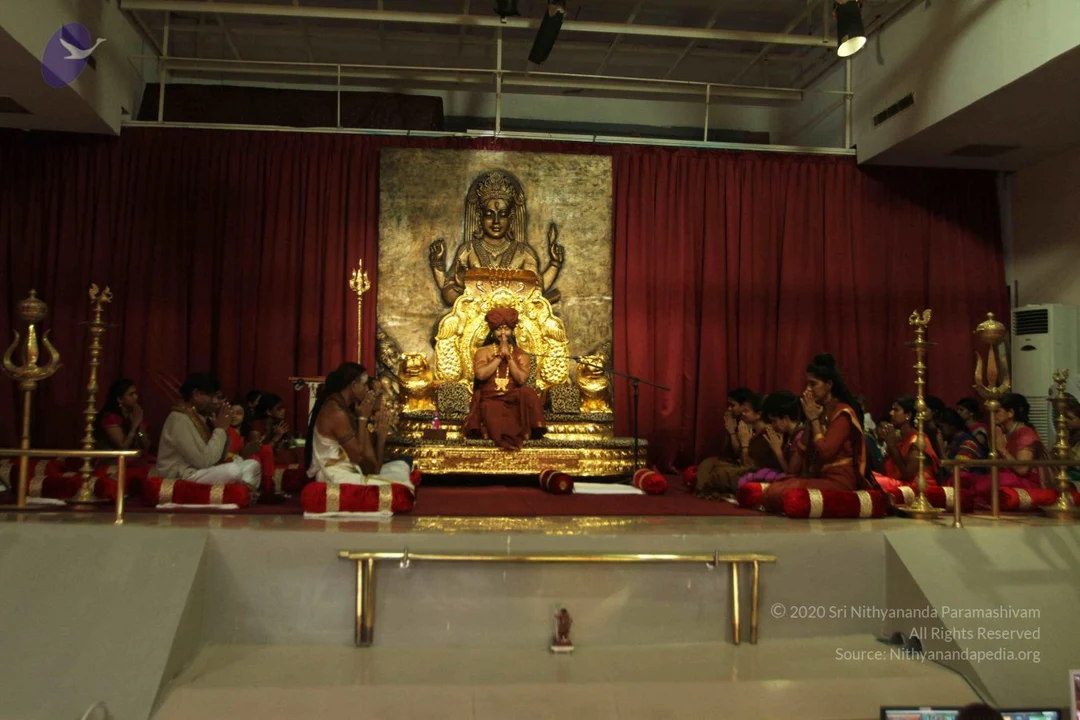
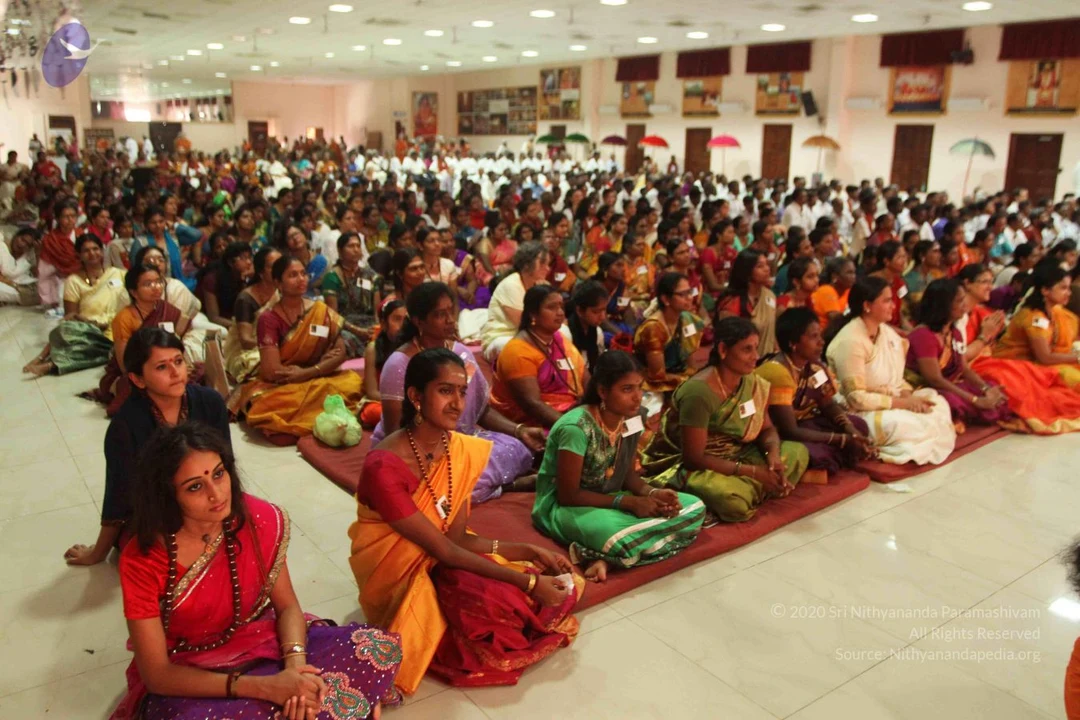
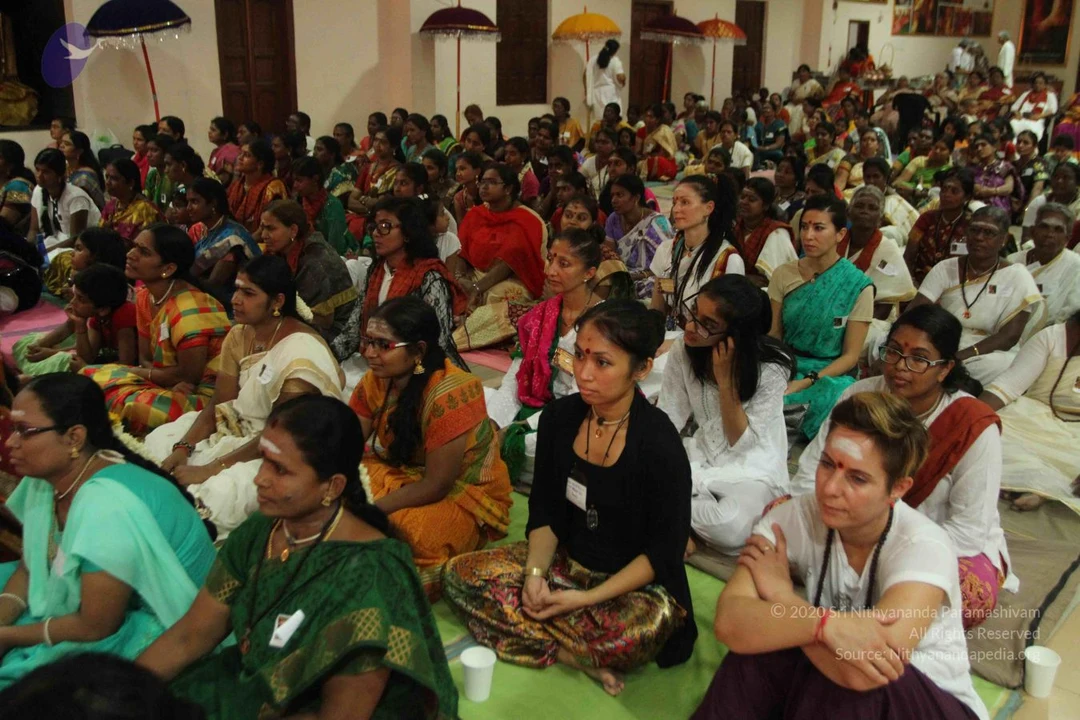
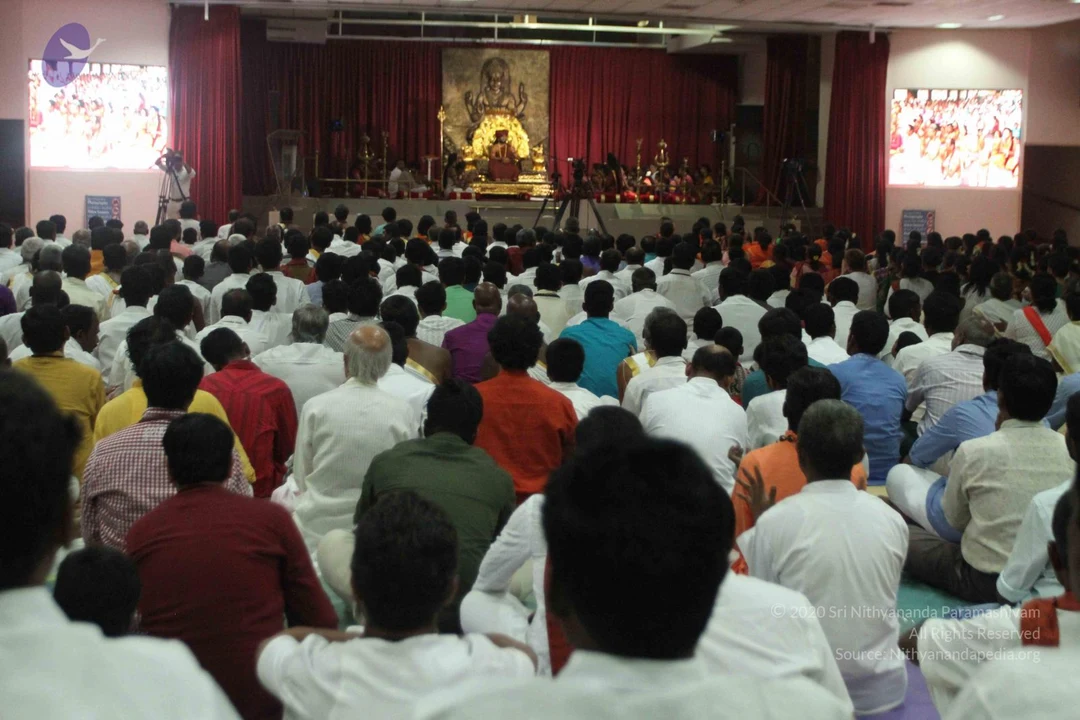
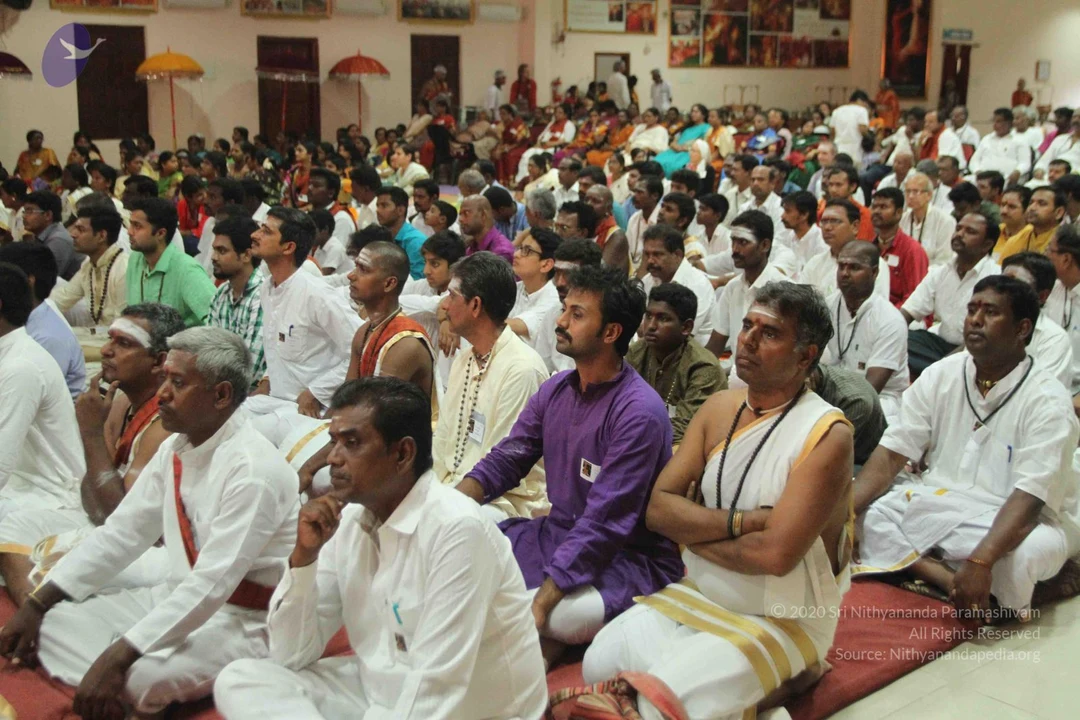
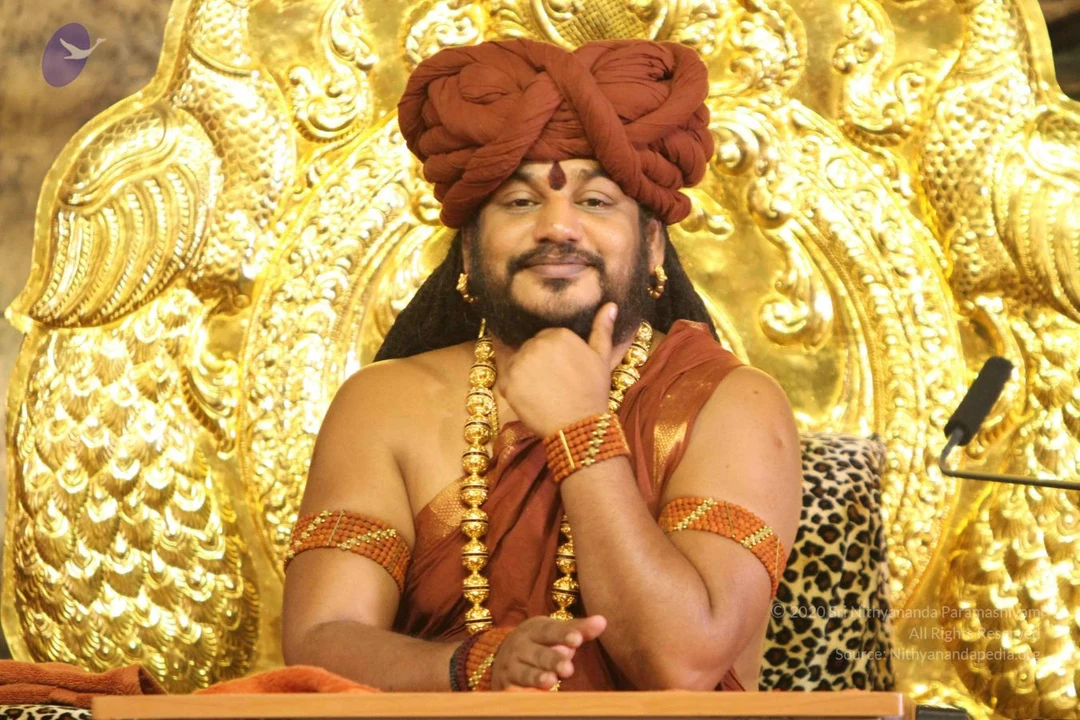
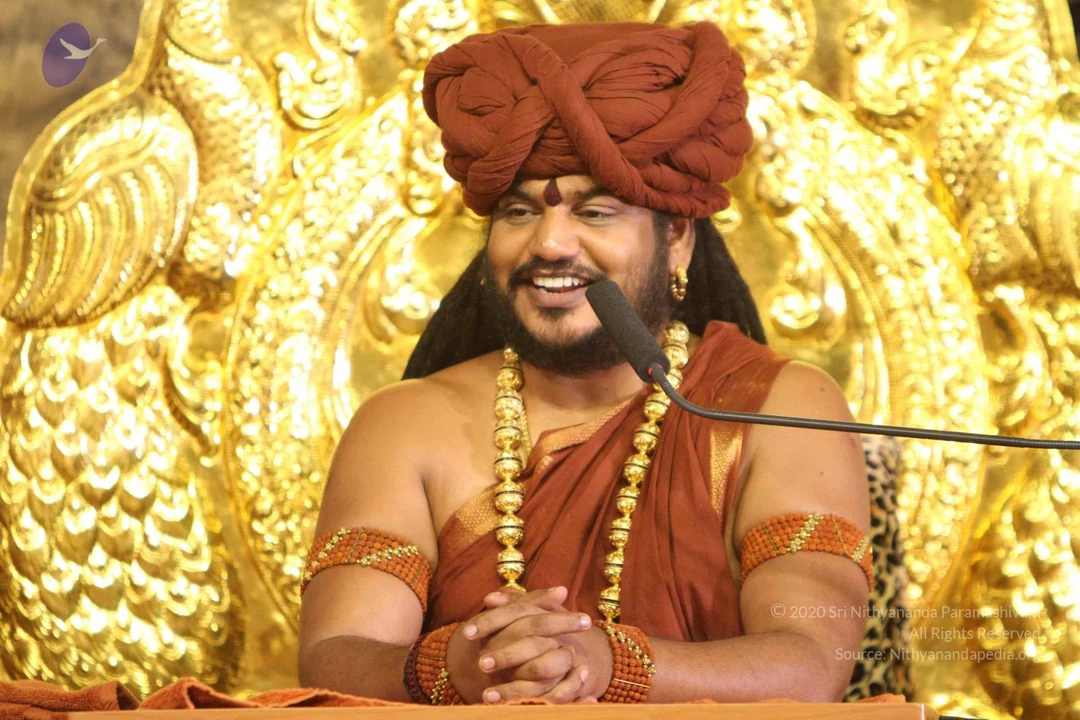
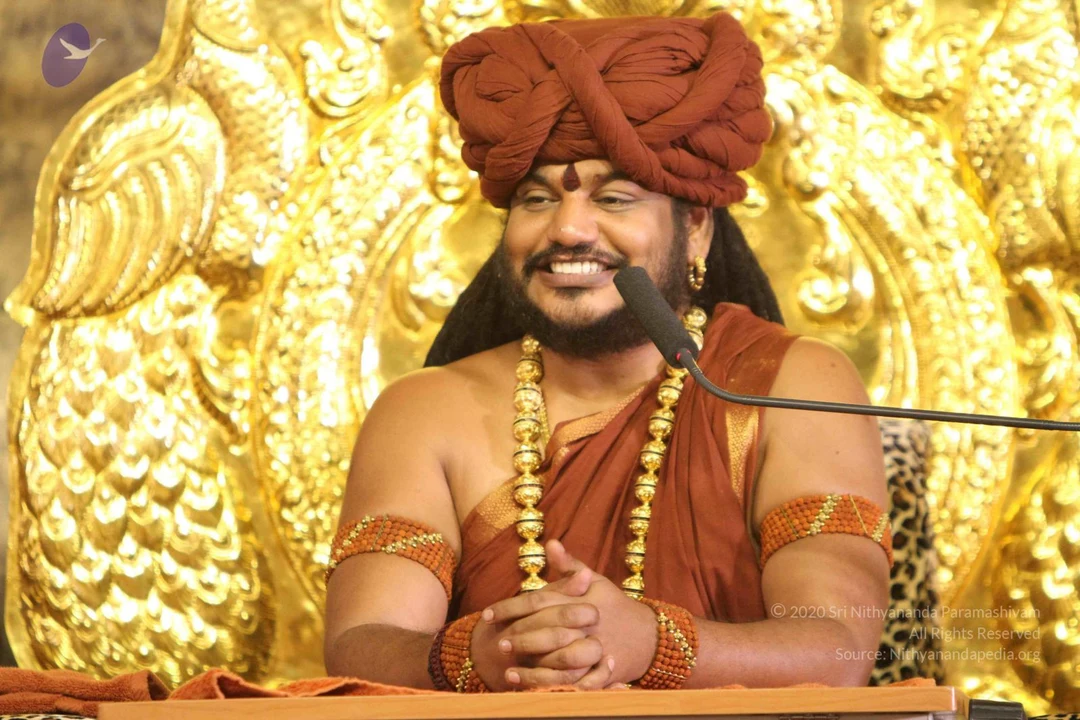
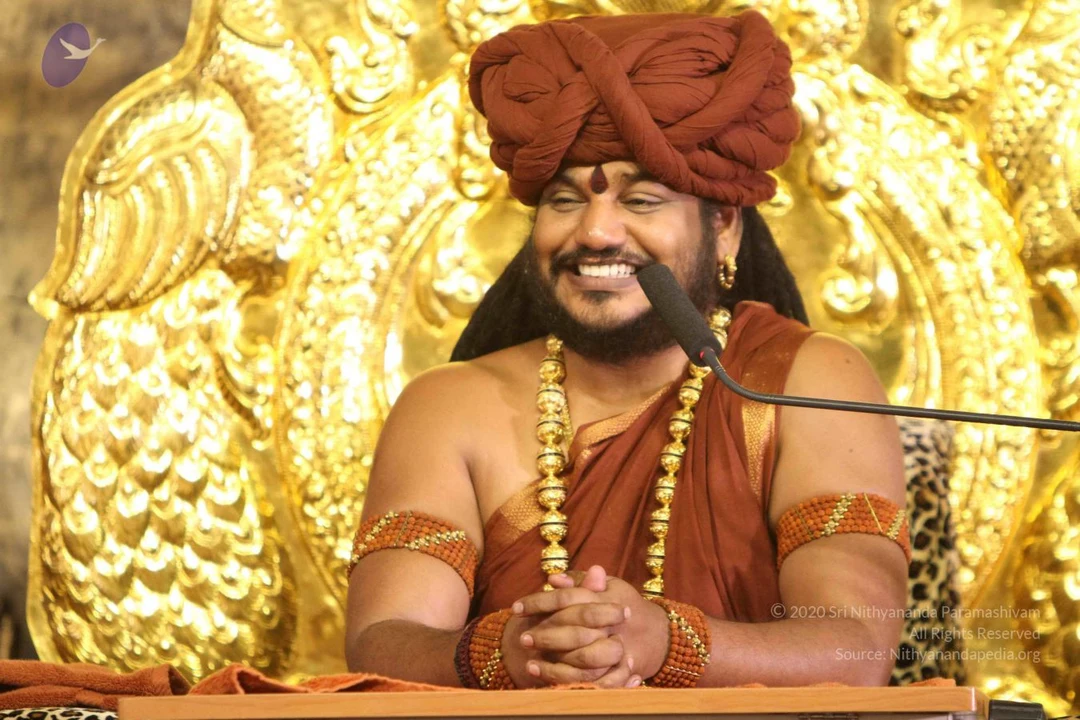
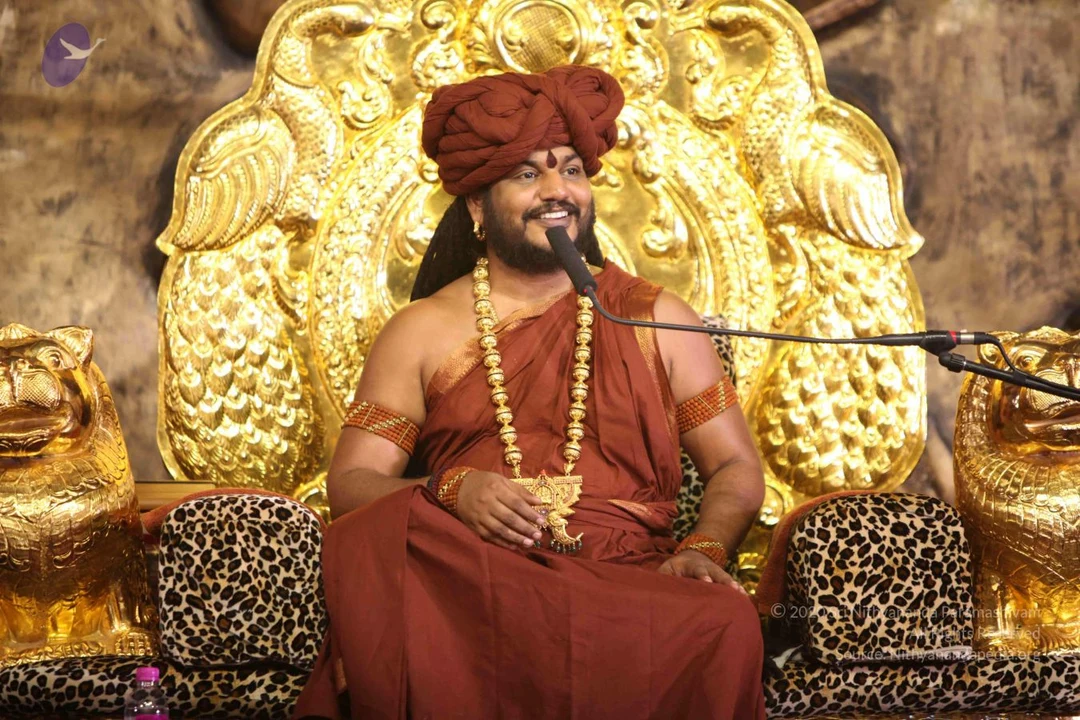
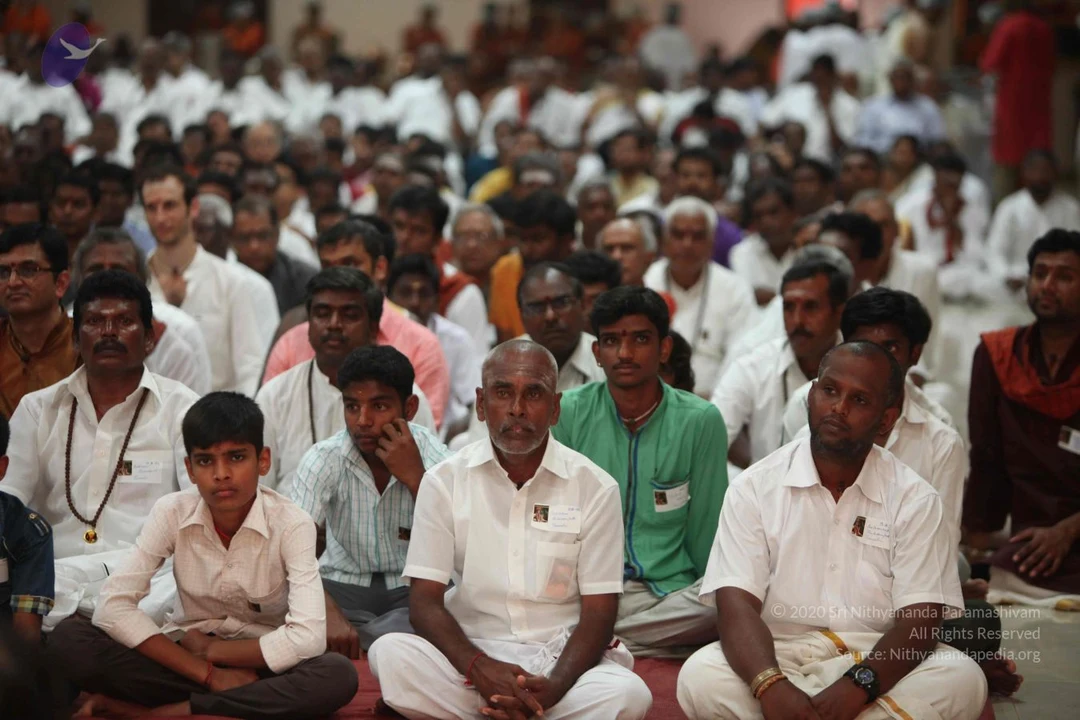
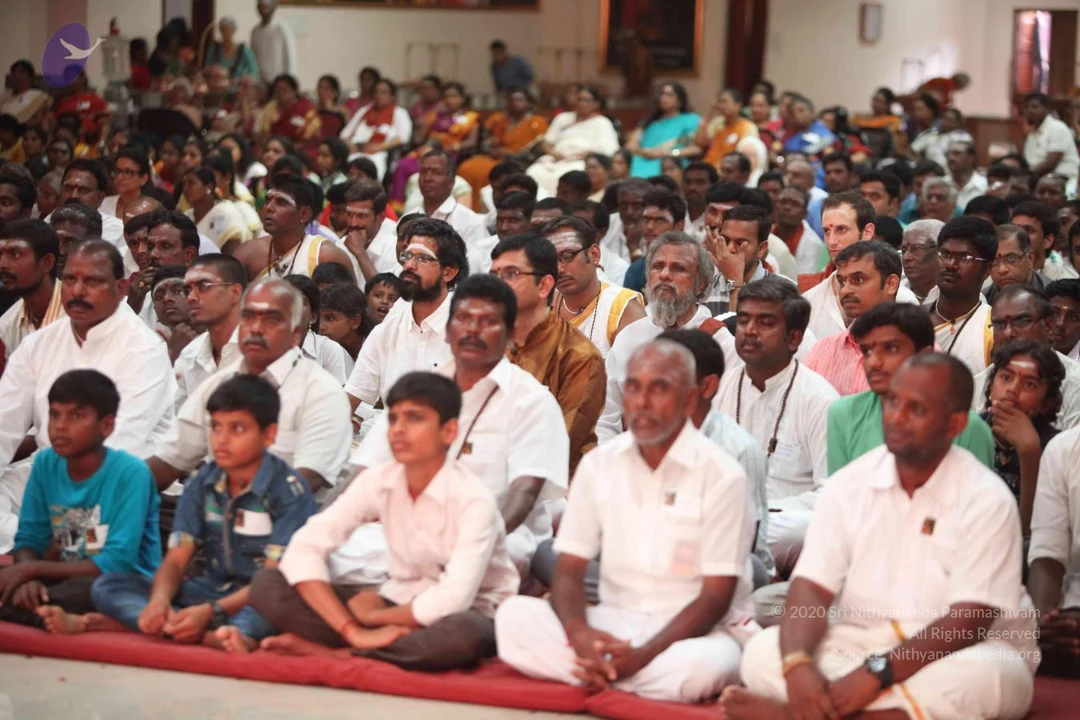
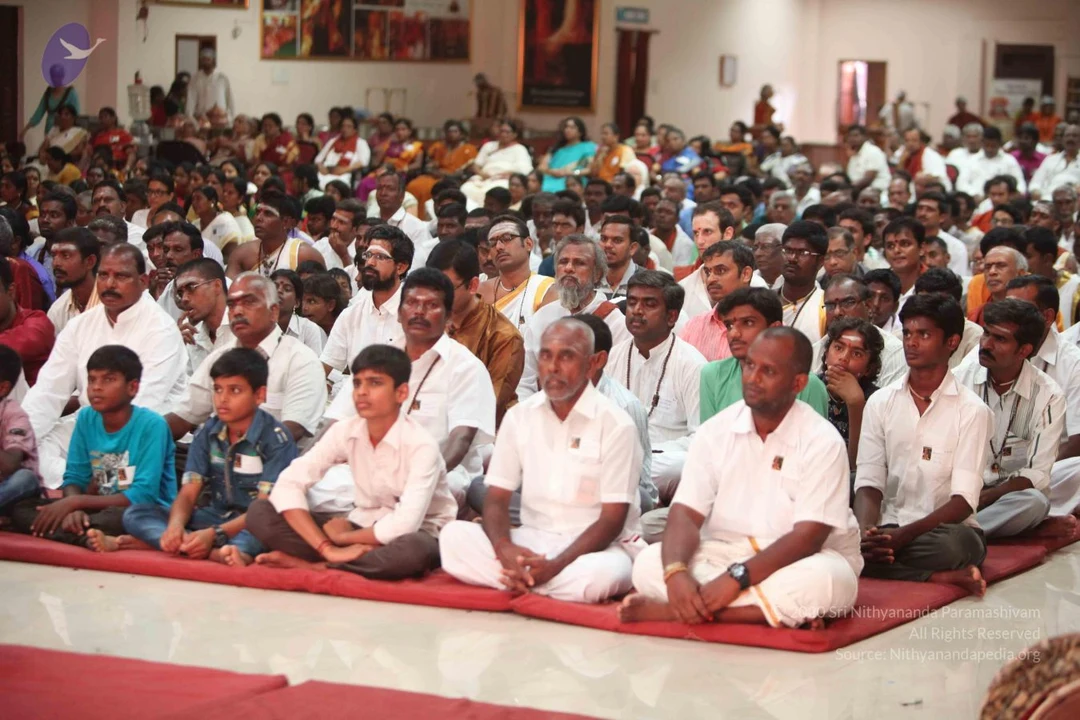
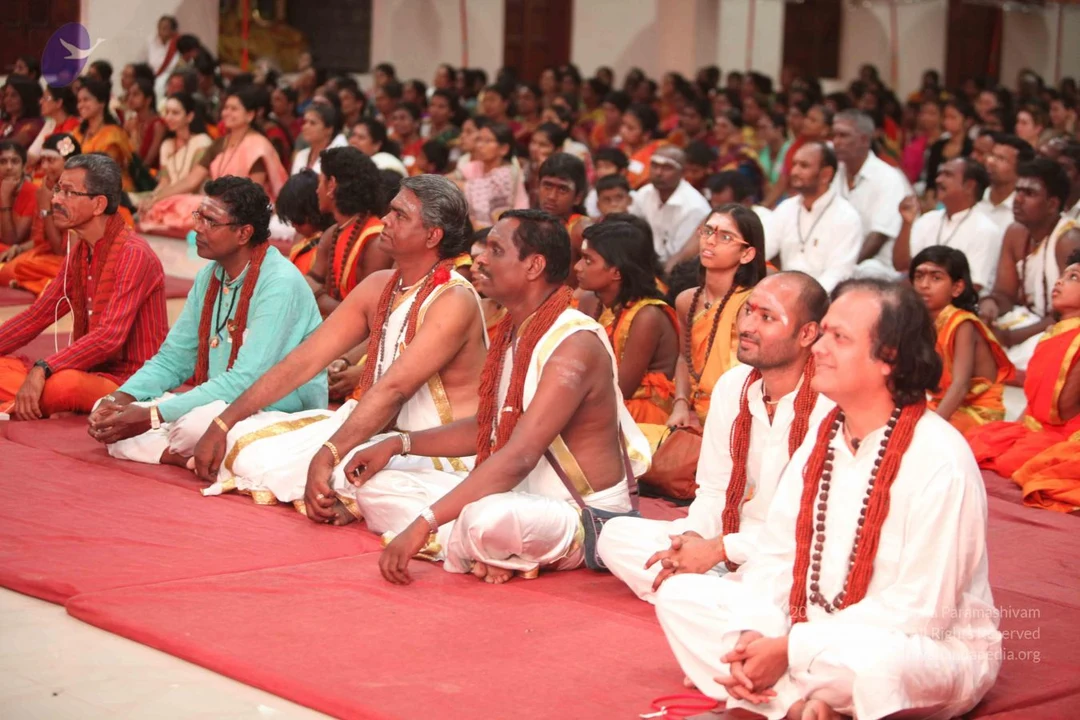
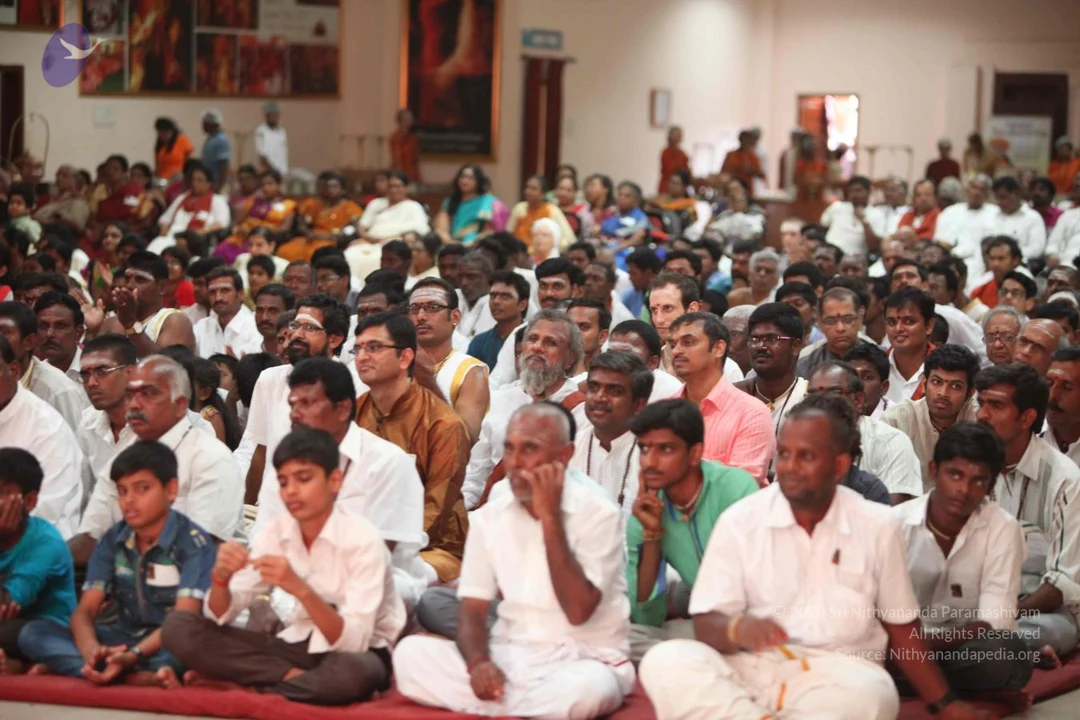
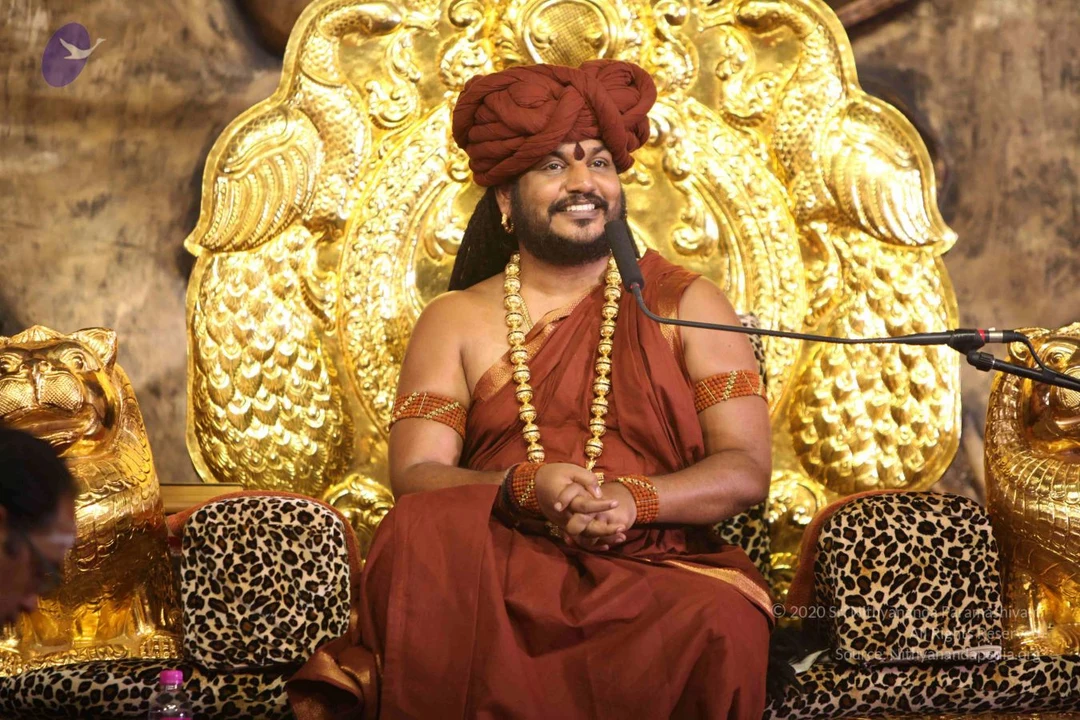
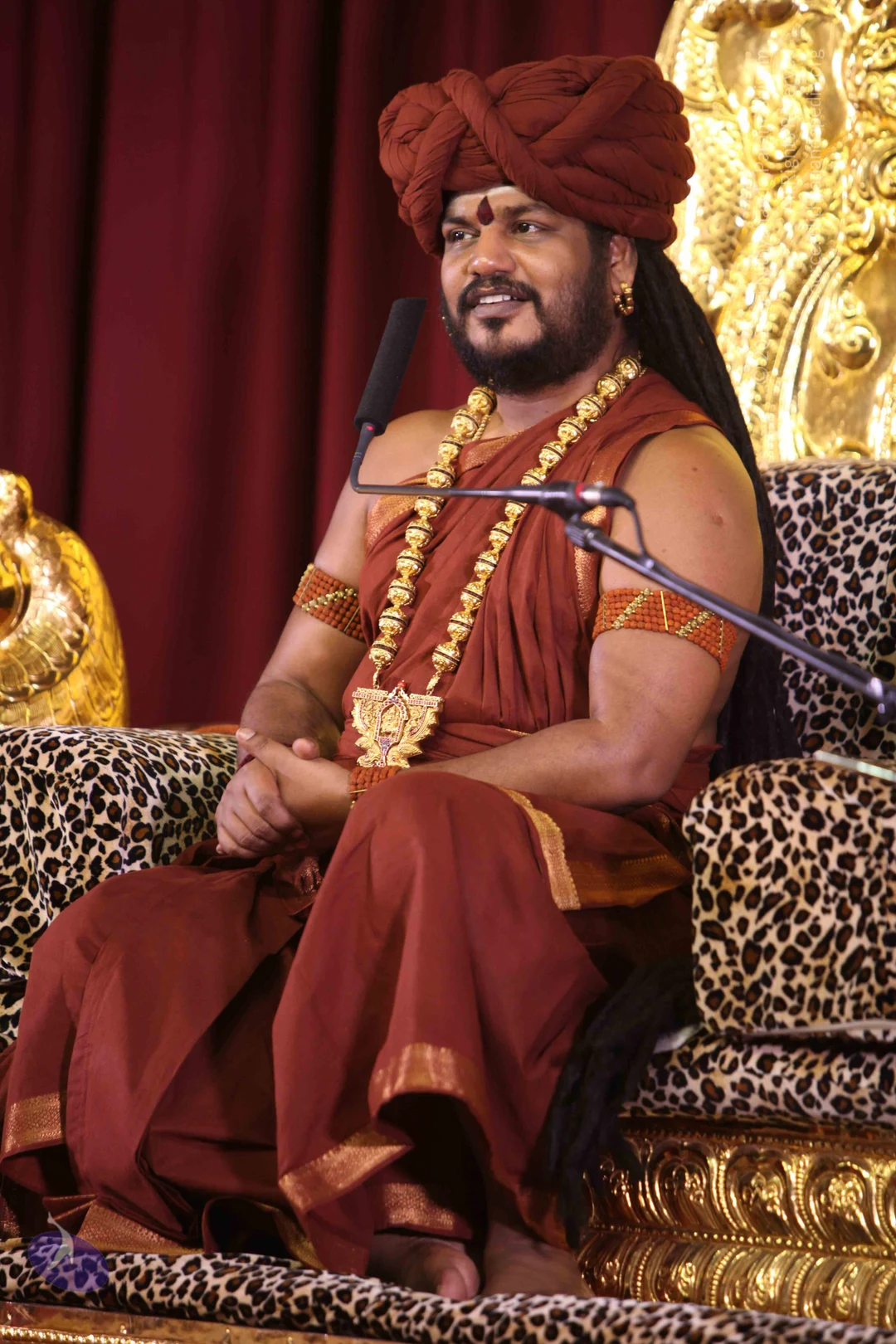
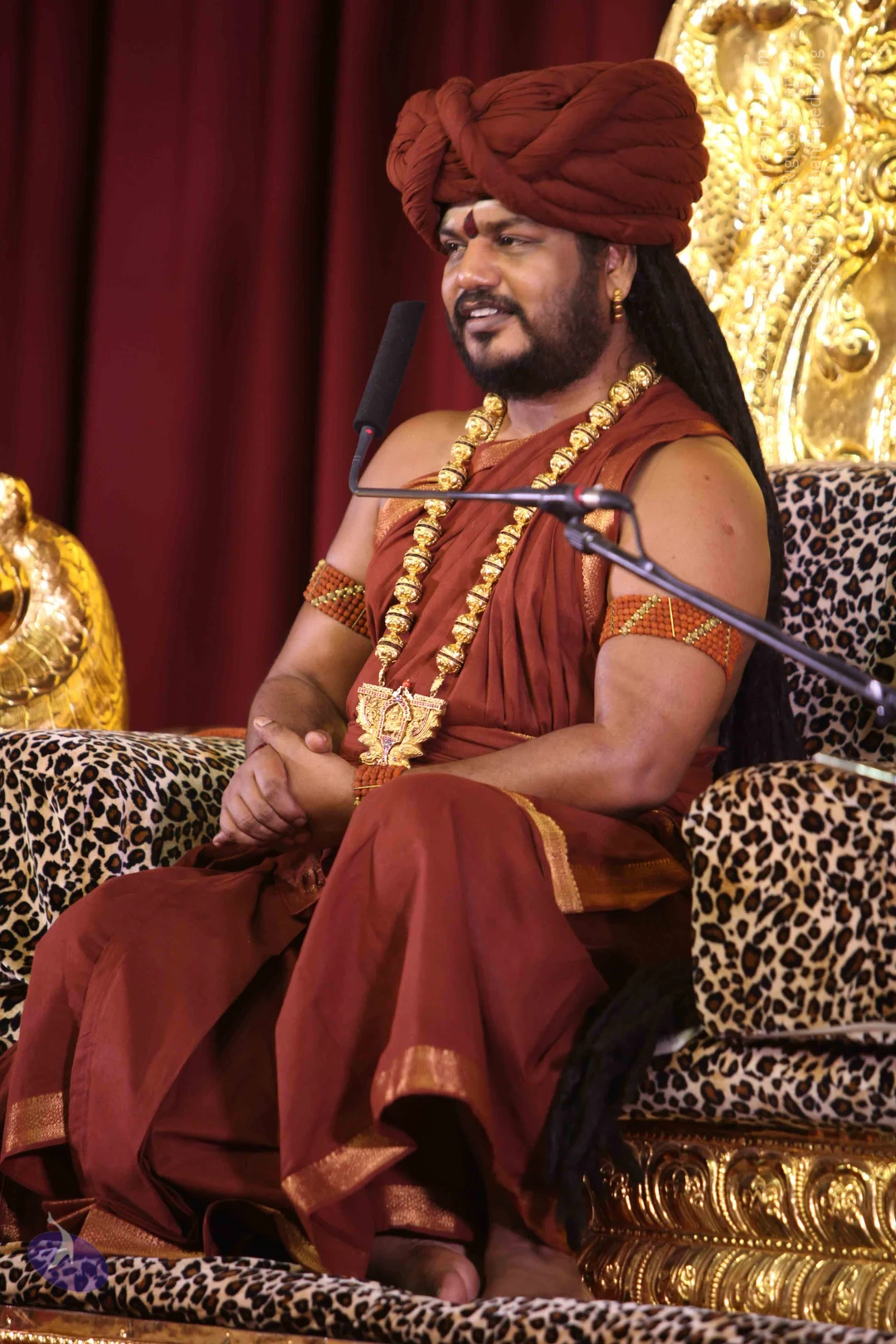
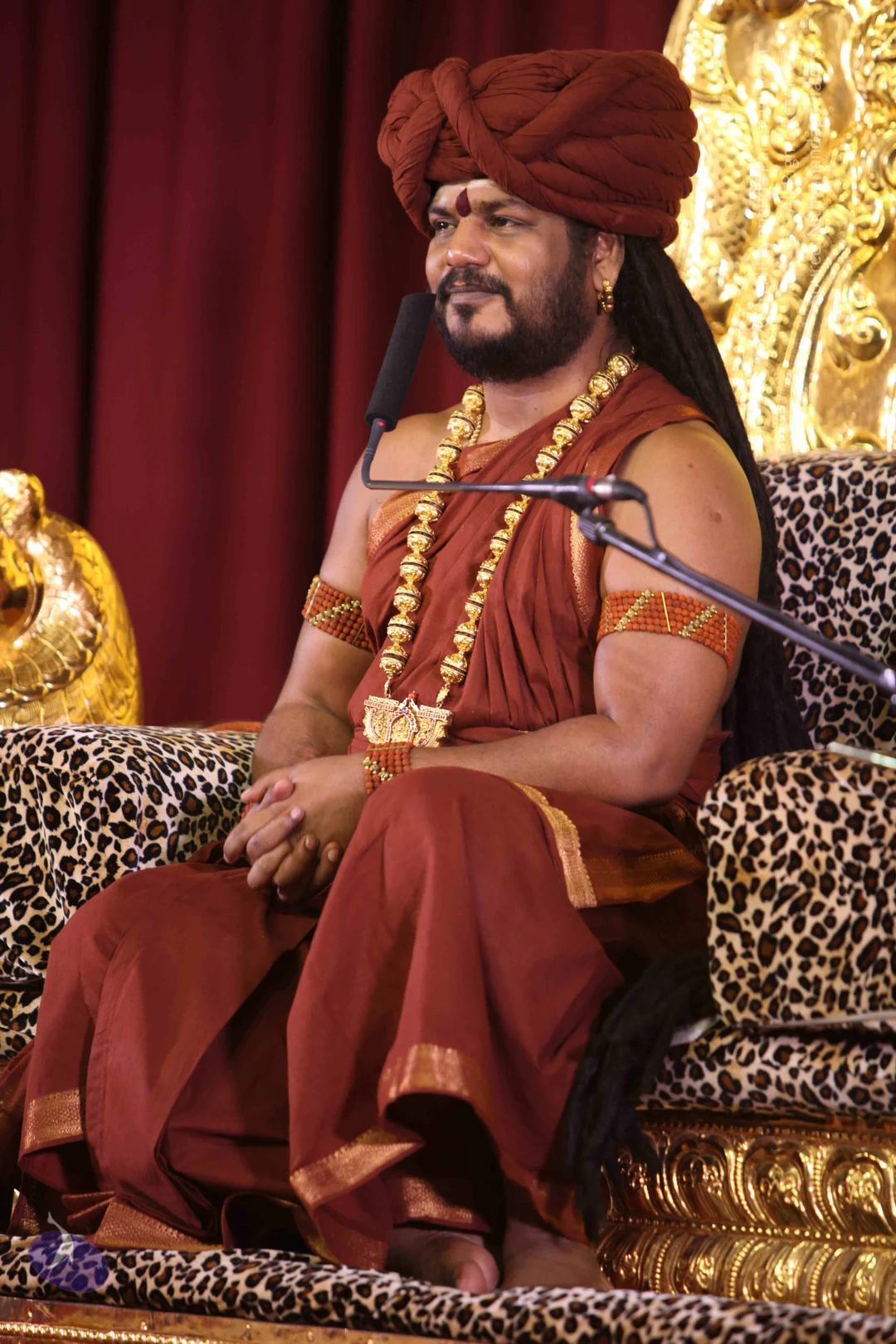
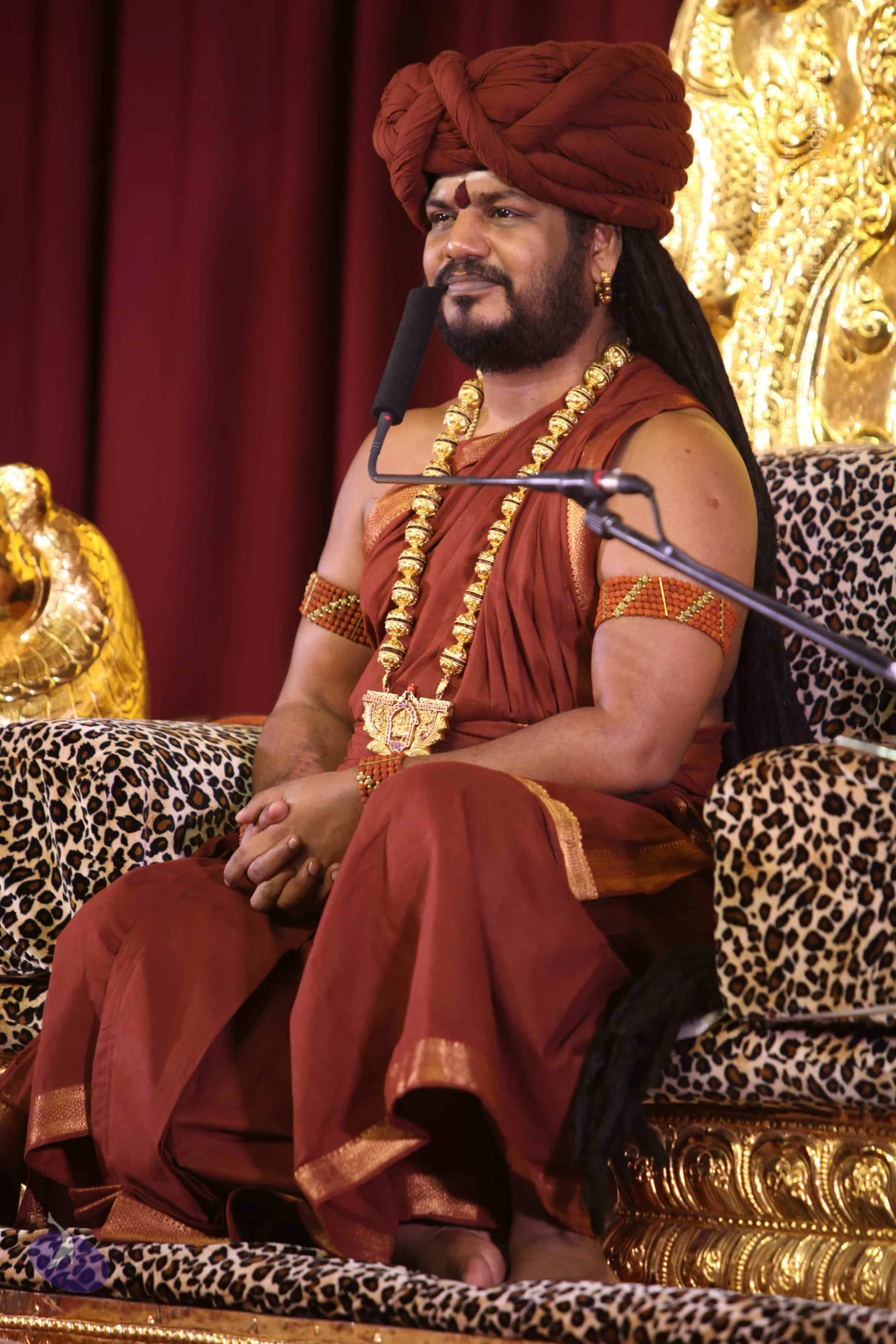
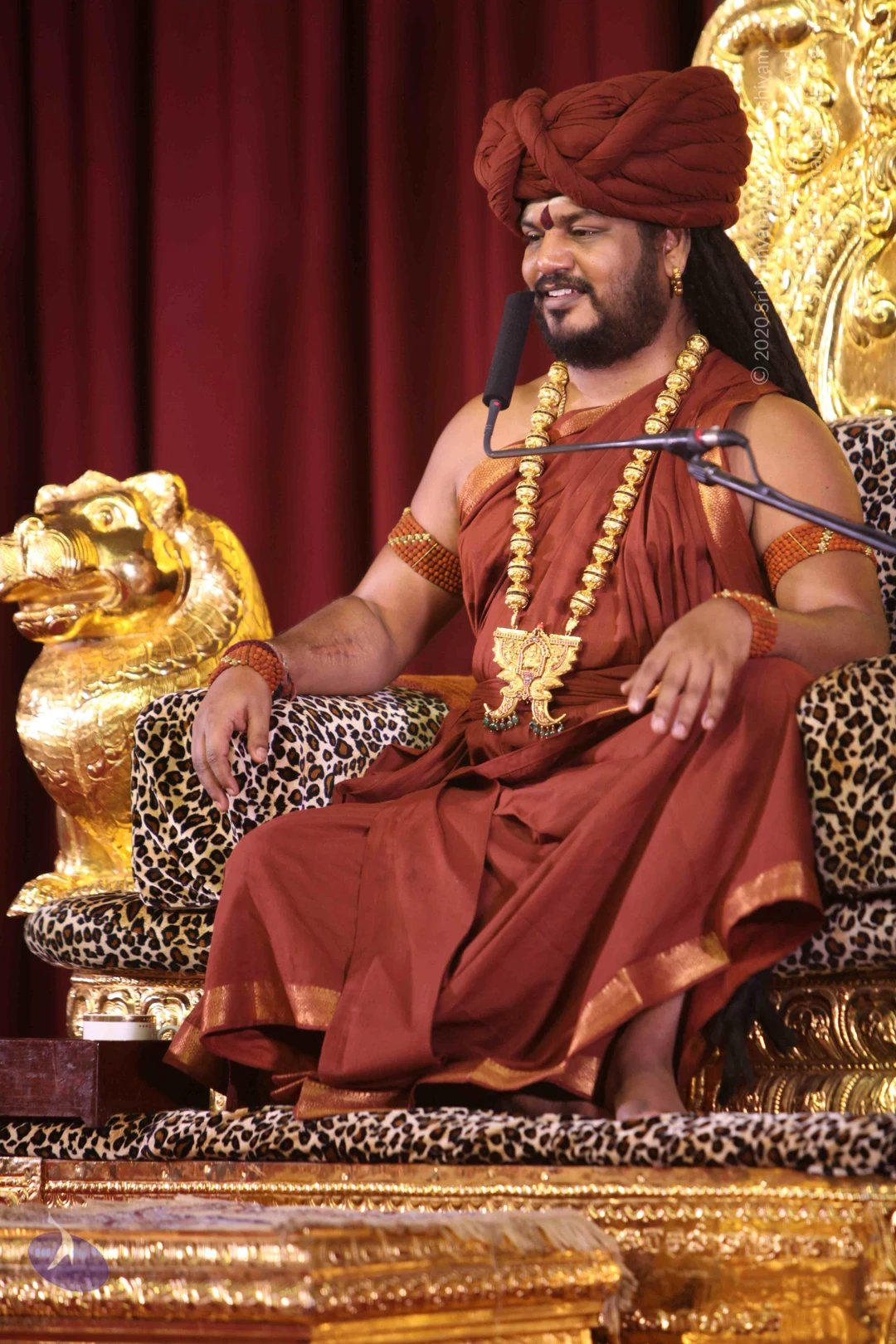
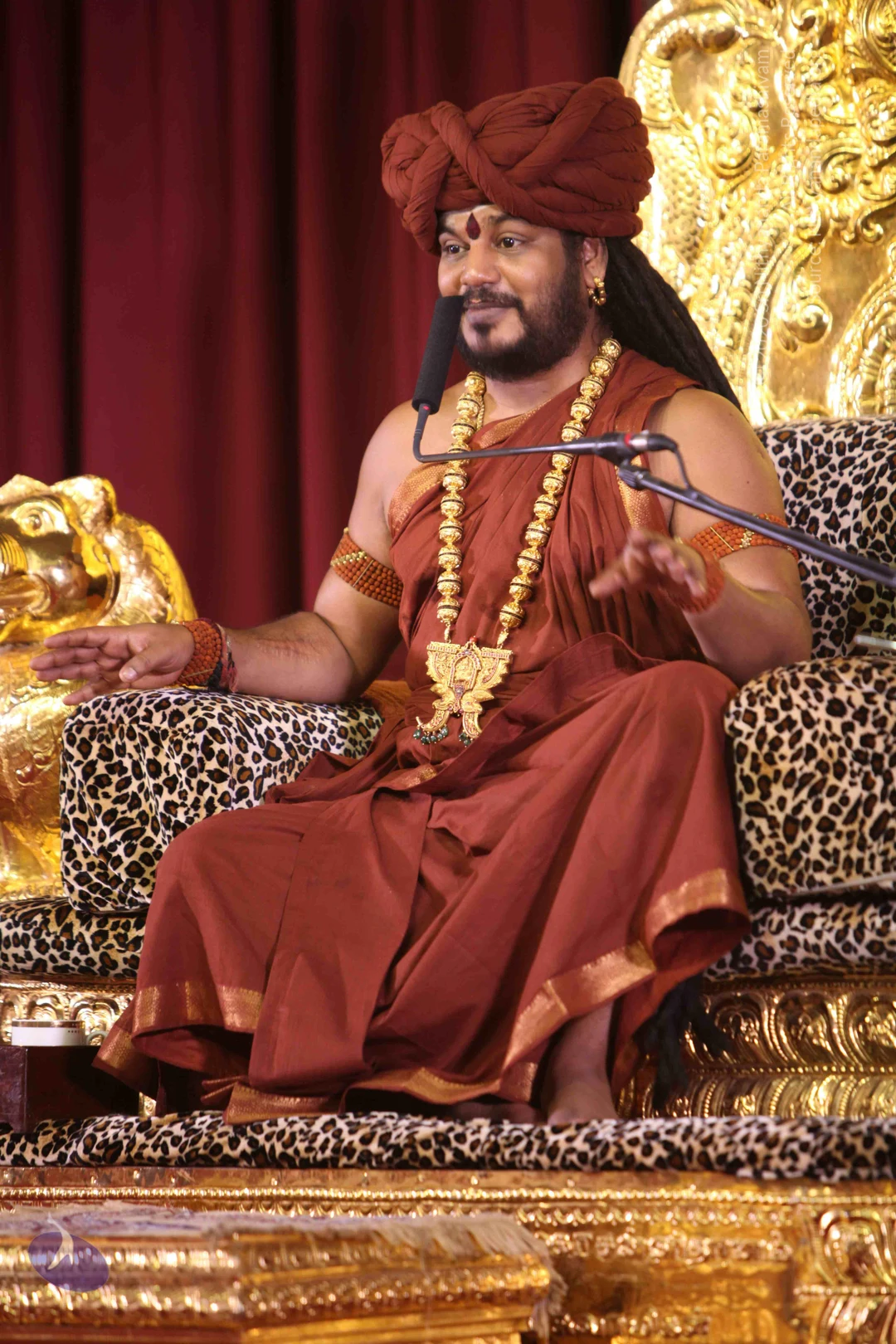
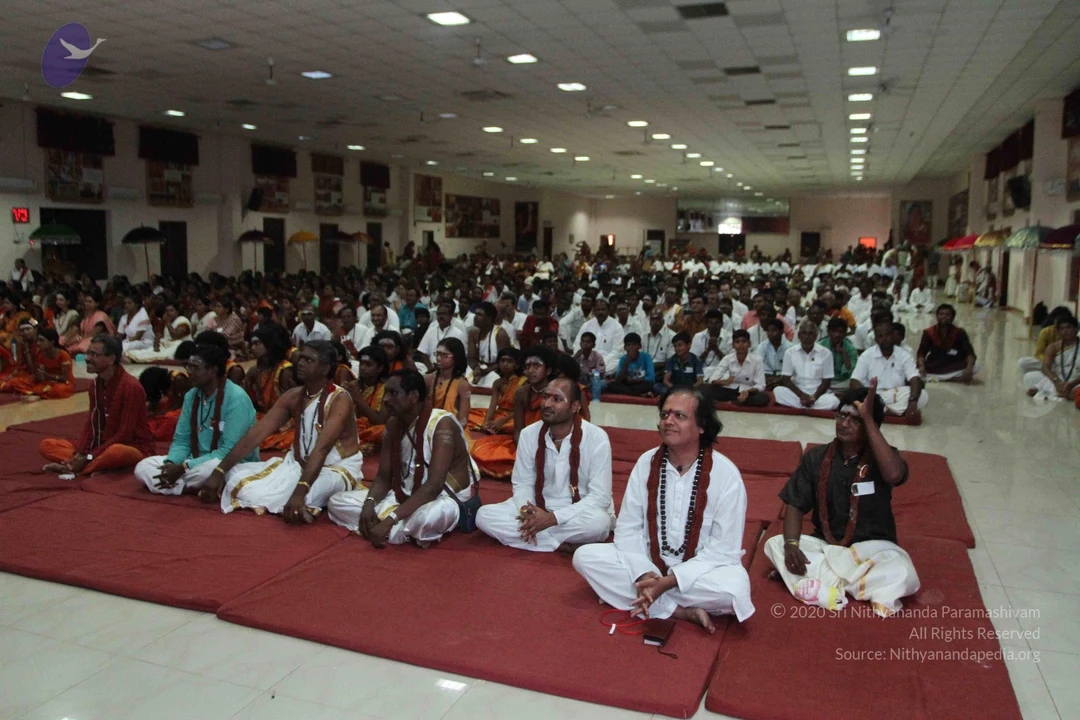
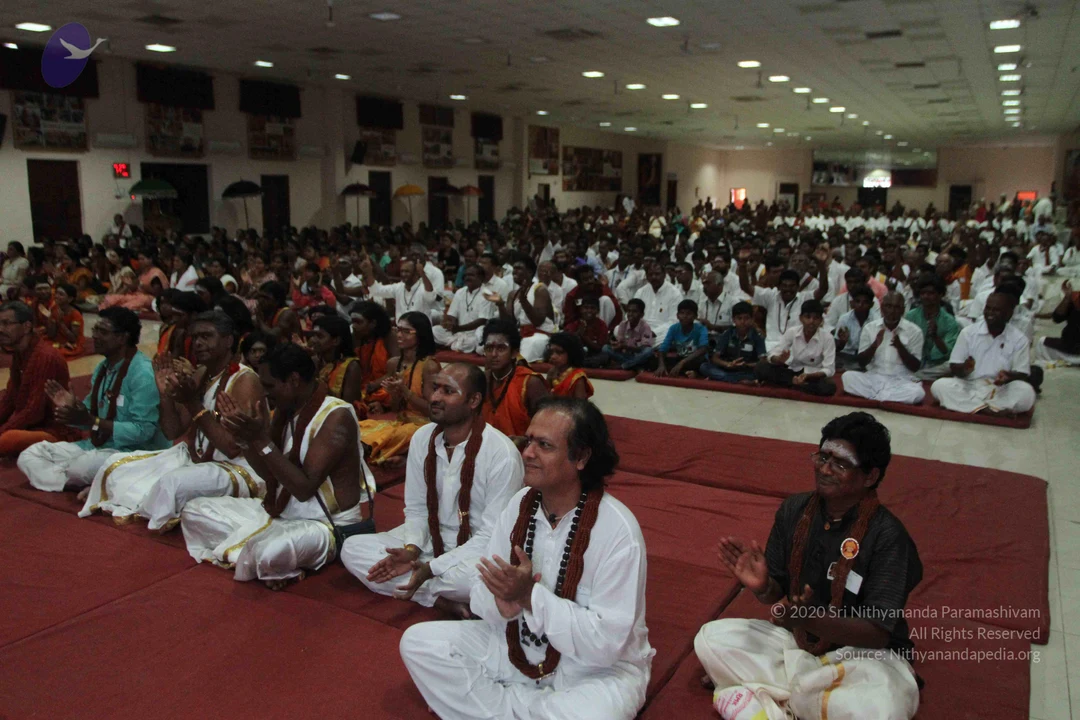
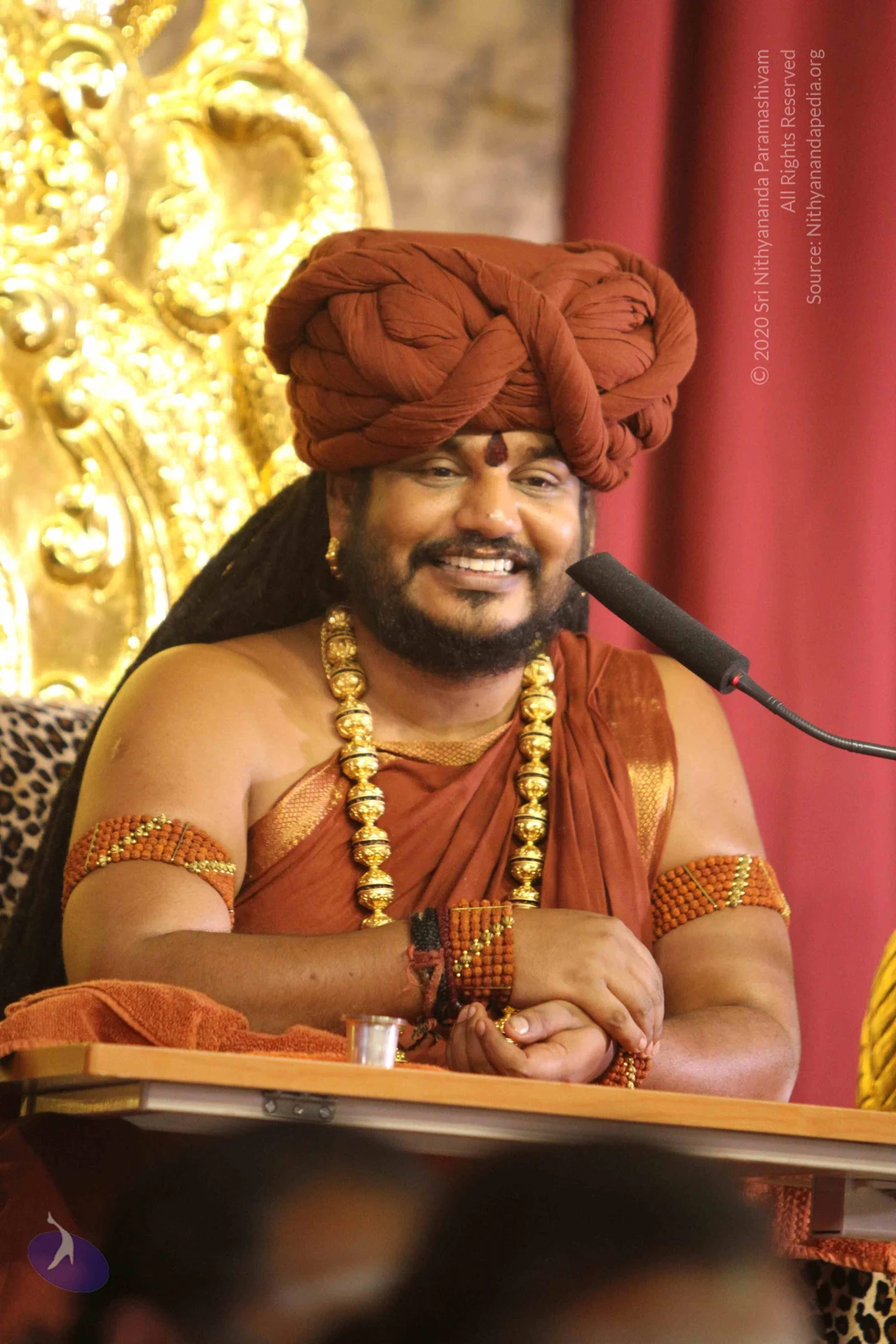
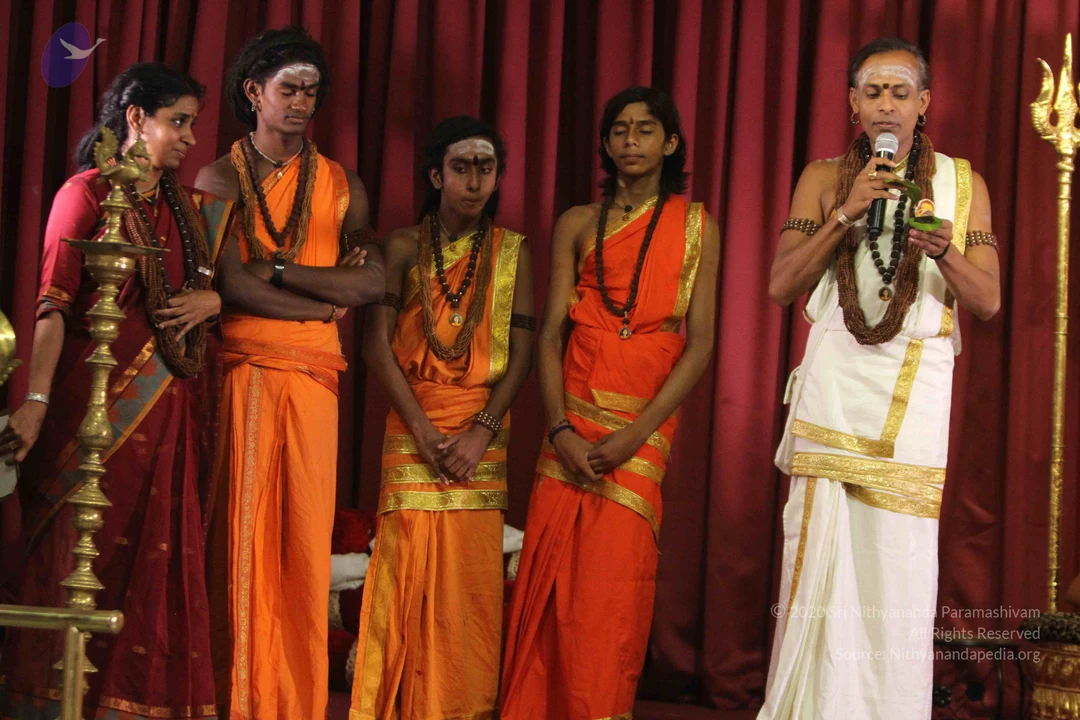
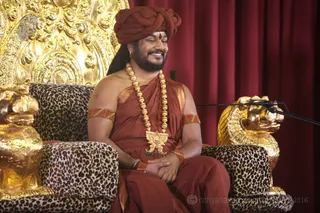
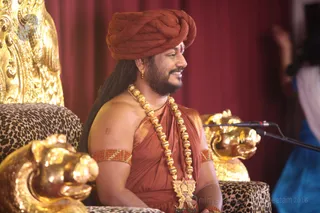
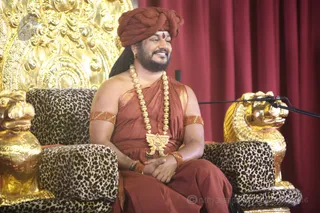
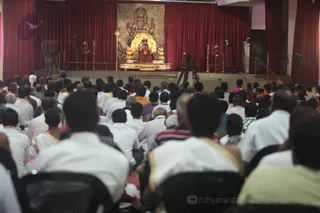
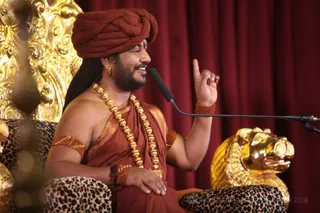
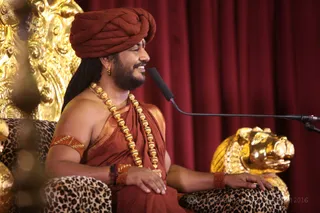
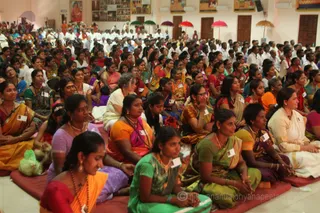
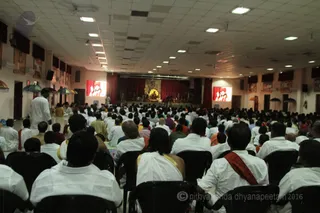
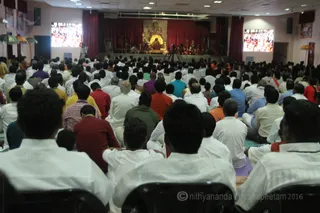
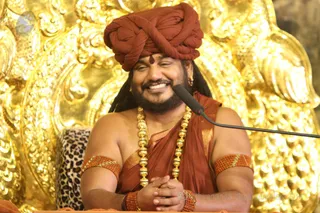
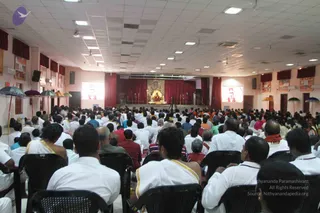
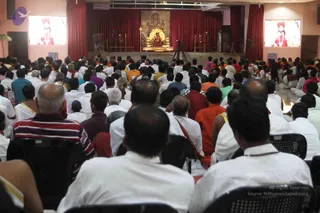
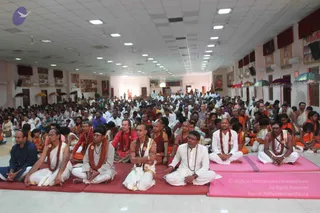
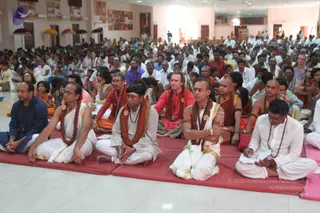
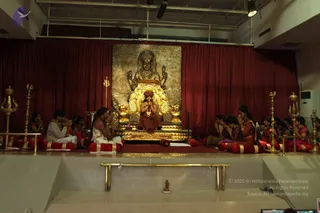
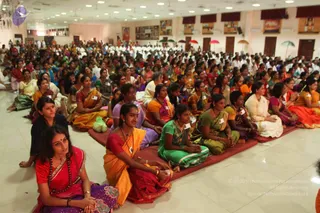
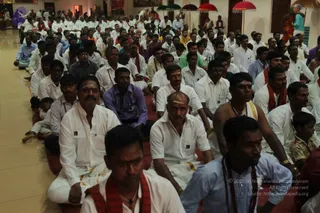
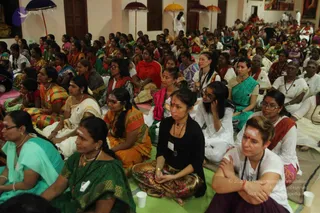
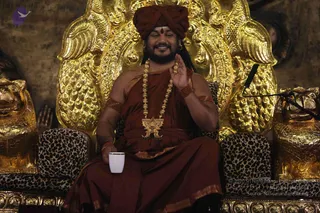
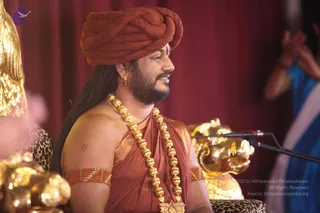
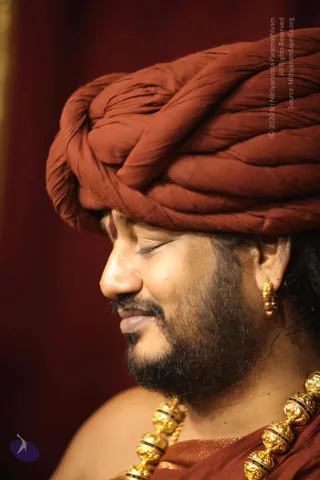
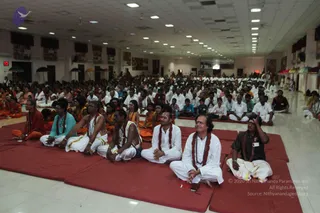
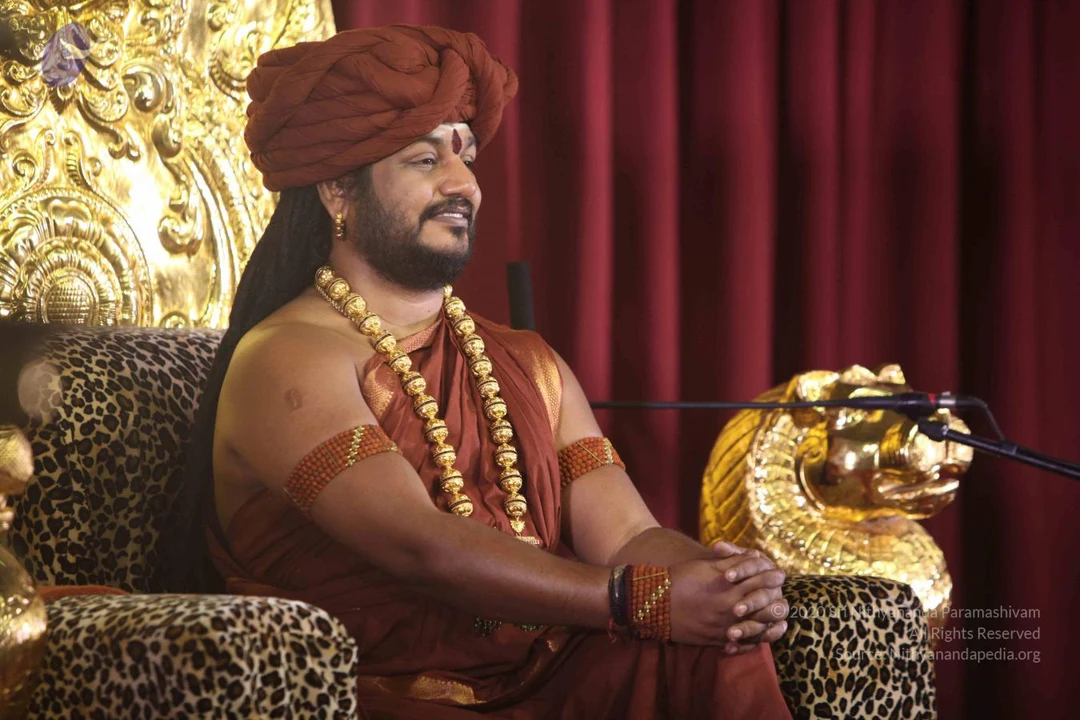
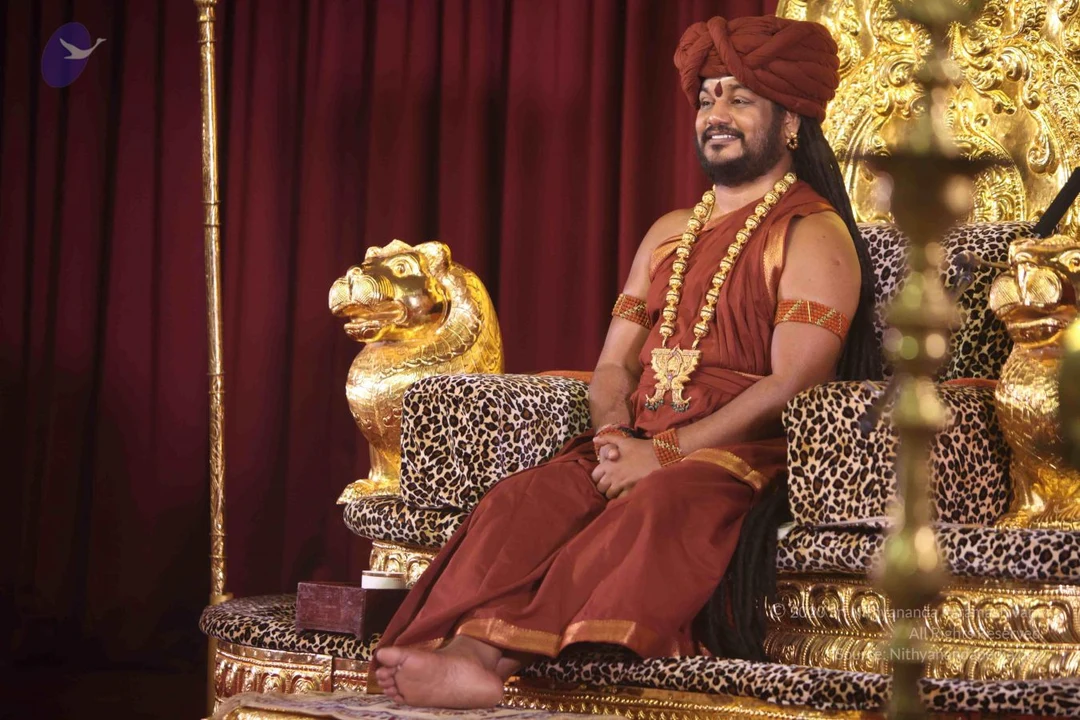
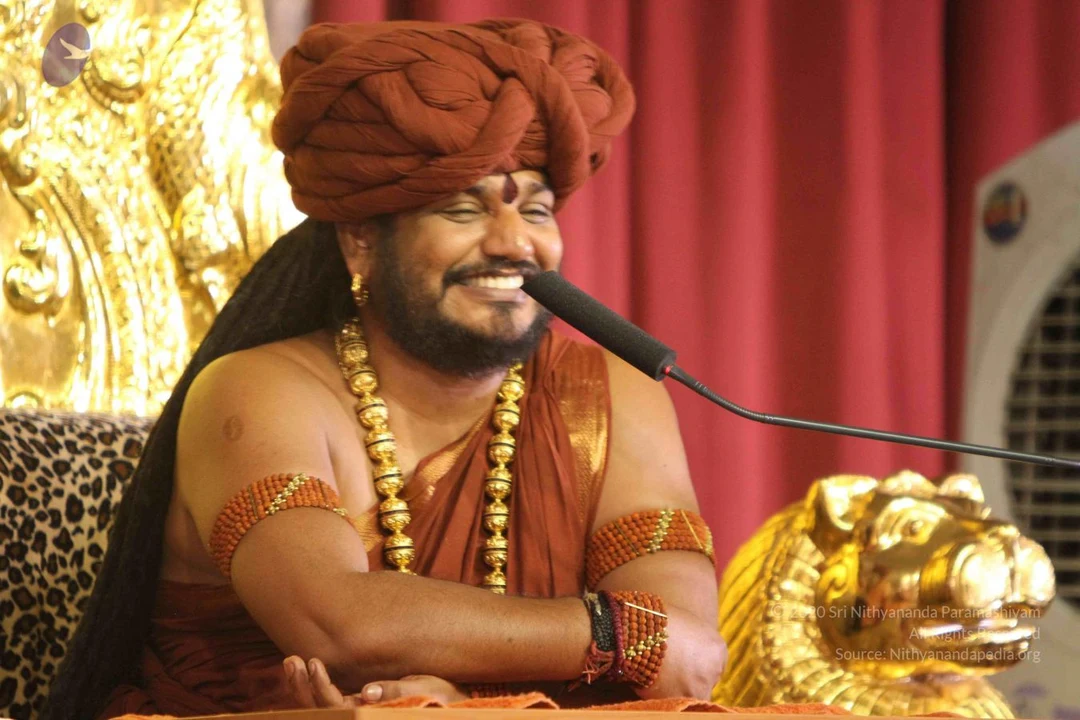
A large seated congregation fills a hall with red mats, many people in white dhotis and shirts and others in saffron-orange robes. Foreground men in white dhotis with gold borders and rudraksha malas sit with palms pressed together in prayer, and one man in a teal shirt holds his hands folded. Behind them rows of devotees sit attentively, some children among them. Ornate red and beige decorations and framed pictures line the walls.A man seated on an ornate golden throne with leopard-print upholstery and a golden lion-head armrest, in front of deep red curtains. He wears a dark red-orange turban with a small vertical mark on his forehead, a long dark-red robe with gold border, a shawl draped over his shoulder, a long gold necklace with a pendant, and orange-red armbands. A microphone on a stand is in front of him as he speaks.A photograph from behind a large crowd seated on chairs in a bright hall with ceiling lights, red curtains and pale walls. Many people, mostly women in saris and salwar kameez in pink, red, yellow and white, with jasmine flowers in some hair, face a stage at the far end. On the stage a seated figure in orange and gold sits before a golden ornate backdrop and brass lamps, with two large screens on either side showing a red-draped image. Umbrellas are displayed along the right side near the wall.

August 21 2016

Original wiki page
Contents

Title

Science of Will Persistence

Link to Video:

VideoAudio

Transcript

nithyānandeśvara samārambhām nithyānandeśvari madhyamām | asmat āchārya paryantām vande guru paramparām ||

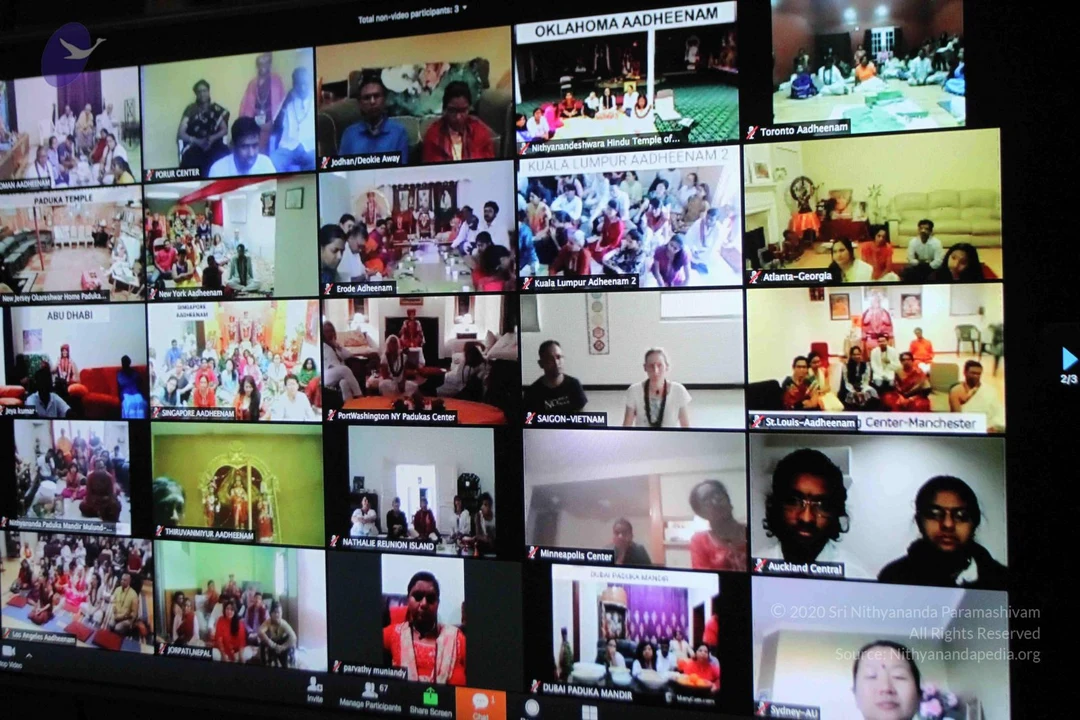
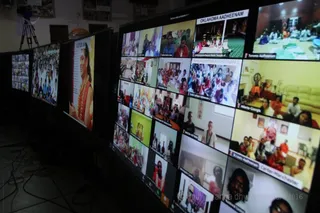
I welcome all of you with My love and respects. I welcome all the Living Shuddhadvaita Process Participants, Sarvajnapeetha Yajamans, Sri Mahants, Mahants, Kotharis, Thanedars, who are sitting with us all over the world, at this time through Nithyananda TV, Facebook live, YouTube live and through two way Video Conferencing having Nayana Deeksha all over the world. Cities sitting with us is a long list. When I see the cities sitting with us all over the around, I feel we are successful in creating beautiful Sangha all over the world. From Washington DC to Kanchipuram, from Madurai to Los Angeles, New York to Varanasi, Oman to Abu Dhabi, Hyderabad to Dubai, Oklahoma to London, Rajapaalayam to Singapore. Such large Sangha. I welcome you with all with My love and respects. (2:40) First thing I wanted to share with all of you. Whether the inner world success or the outer world success, whether Jeevan Mukti, Living Enlightenment or the outer world success, power, money whatever you want happens with one Master key – Will Persistence. Listen. Not Will Power. Will Power means you try to make a Will few times, my health should be like this. My life should be like this. My business should be like this. You make few Will. With the clear idea it is not going to be successful and when that fails, you think, “Oh, it is not for me, this if not for me,” and you collapse. That is what I call Will Power, actually it is Will arrogance. But Will Persistence means the number of times again and again and again, your ability to create the Will intensely is Will Persistence. Your Will is made out of the material called Persistence. Please understand. Water in the Ganga breaks the Himalayas not because of power but because of Persistence. Not because of power but because of Persistence. Whether it is a inner world, enlightenment, or outer world success; like money name and fame, power, health, relationships, whatever you want, inner world or outer world, the master key is Will Persistence not Will Power. Will Power will always make you feel you are a failure. Will Persistence manifest the real Will power and it will make you always successful. Understand. Ganga, the water of the Ganga, neither by its power nor by the object She carries, She opens the Himalayas. It is just by Her Persistence She opens the Himalayas. Just by Her Persistence She opens Himalayas. (6:18) Understand. Will persistence not Will Power. Whenever you use Will Power it has to happen, it has to happen, it has to happen immediately. Always you have the shade, “No, if it’s not, what will I…..? It means already you planned for failure and when it collapses, you are confirming, “This Will Power and all is not going to work for you.” You don’t have either you don’t have Will Power or you feel that will not work for you or you’ll feel that is only for others or you’ll feel this much only is for me. It may be for others. Understand. The person who says, “No, it never works for anybody,” is a Atheist. The person who says, “It works for others not for me,” half Atheist. Half Atheist are more dangerous than the full Atheist. “No, it works for me once…. in a while when I am….. fully concentrated, not otherwise but I don’t know when it works and when it does not work. Dangerous Atheist. Only when you know the science why it works. When it works and when it does not work. That is the only….. Only when you know when it works. When it does not work. Why it works. Why it does not work you start Living Enlightenment. Listen carefully. Will. WILL. Will persistence means manifesting enlightenment and powers. If you decide to persist that moment power starts manifesting you don’t even need to spend your whole life on Persistence. Persistence is your decision without self-doubt. Persistence is your decision to persist. Persistence is your decision to persist and being sure about it. Will Power when you use just will, you are not sure about you, what will happen if it goes this way and that way. With Will Persistence you are sure anyhow how you are going to be. (9:29) I tell you. Listen. Listen to this carefully. Whenever you approach a life, “Will I…..start business in my hometown or start business in Chennai or start business in Mumbai or I’ll go to Dubai and settle, no, no, no, no….. I think I will go to Ashram and become a Sannyasi and…….no…..alright I’ll try to go and be in the Ashram and if I get some good contacts and good business opportunity, I’ll take up the business. I’ll try workout Sannyas life and in between some opportunity comes...okay let me get married….” No, when you look at the life which so much of confusion and not having clarity. Not being sure about YOU. Life also constantly teases you. Constantly tortures you. Showing the carrot here and showing the carrot there. Showing a carrot here. Showing a carrot behind and you will be 360 degree fighting. Just like 360 degree seeing, I’ve seen people 360 degree fighting. Jump for this grape. Jump for that carrot. When you approach a life with the attitude of opportunism, life ever teases you. That is what is approaching life with cunningness. But when you approach the life with that decision, with the clarity, this is what I am going to do. Suddenly you’ll see, whatever is needed for that life brings beautifully and presents it in front of you. (11:57) Look at every step in your life— all your patterns of withdrawing from life. All your decisions to withdraw from the life comes from Will arrogant decisions. All the life involvement decision comes from Will Persistence. I tell you whether inner world or outer world life is all about how much you are intensely getting involved that’s all. The intensity with which you get involved with the life. Intensity with which you get involved with the life, the more and more and more interaction, more and more involvement, more and more ice breaking. Will Persistence is ALL ABOUT LIFE. Life is about Will Persistence. There is a beautiful story, Vivekananda used to say. He decided to become…..somebody had decided to become Sannyasi and he was walking to the Tirtha Kshetra, a pilgrimage place through a kingdom. The king saw the young Sannyasi and said, “You look so handsome, in this young age you look so wise, why did you become Sannyasi? I will give you half of this kingdom and my daughter, marry and rule this kingdom.” Immediately the Sannyasi vomited and said, “Only dog eats whatever it has vomited not the man.” Only dog eats what it vomited not man. Beautifully Vivekananda puts it. That moment he became enlightened. That clarity what he wants was so clear. He is not waiting for opportunities to decide who he is. He is not waiting opportunities to mold who he is going to be. He is letting his life designed by his Will Persistence not opportunities. (15:37) Opportunism is great in politics and you manifest what you want to manifest. I tell you Will arrogance is failure. Will arrogance means, “I’ll try to create a Will if it is successful, then I will believe this philosophy if it fails if it does not click then I think this philosophy is not for me. This does not work for me or I think this does not work for anybody.” All this is what I call Will arrogance. “Let me check out how it looks. How it feels. My friend told,’ it worked for her but the other friend said its not working for him.’ All failure, withdrawal, patterns is from Will arrogance. All success Completion is from Will Persistence. The one and only way you will build Will Persistence is through Sangha. Sangha teaches you the science of Will Persistence. I tell you stupid are those who say, “Oh, what is there in building temple outside. God is everywhere and why do you put all your time and energy, money, in all this?” I tell you, when you build a temple outside, all the things required for it, creating a Sangha, creating…..inspiring people, enriching, causing, everything, teaches you the science of Will Persistence and you become enlightened. By the time Sadāshiva sits on the temple you built outside, He already is sitting on the temple which you built inside. I tell you, anybody wants Enlightenment, build a temple you will have it. Because building temple is not a joke, you need to work with so many people. So much of involvement with life is required and I also commit with you guys, get involved with life. Get involved with Sangha in a very organized, systematic way. I am responsible for your enlightenment and manifesting powers. When I say, I’ll do it! When I say, I’ll do it! (19:06) Listen. Sadāshiva wants something to be done to the human beings and planet Earth. That is why He is sending great devotees, disciples, enlightened Masters, finally He himself comes down. He has a Mission of radiating through all of you in a very systematic, organized, scientific, best, most effective way. The most effective way is this Sangha, living organism. It is not just a mechanism. It’s a living organism. Life is all about ‘Involvement.’ Not about words. It is about experience. Not about thoughts. It is about the actual actions you performed and the context you carry while you perform the action. It is not shallow though currents. It’s the ‘context’ which moves you and the actions you do from the right context. Understand. The science of Will Persistence. Actually what is Will Persistence? Many times even you are not able to handle yourself. That’s the worst space to be in. The best space to be in is to be with the group, who will constantly help you to develop the Will Persistence through which you can handle yourself. The Sangha prasada to you is teaching you the science of Will Persistence, which you can never learn by yourself, which you can never do it by yourself. Teaching you to get involved with life, which you can never do it on your own. For that you need Sangha. That is why the Sangha. Even Agama, Sadāshiva is very clear about these three - Guru, Linga and Sangha. Guru - embodiment of Sadāshiva. Atma Linga - your own personal….your own personal guide and version of Guru with you. It’s like carrying a bit of the Guru with you. The piece of the Guru with you. And Sangha - constantly reminding you to live in Will Persistence. (22:54) Will Persistence does not take time as you think before practicing Will Persistence. You always think, “Oh God! Will Persistence means I have to persist whole life.” Actually your whole life is nothing but the moment you have in your hand. Persist in that few moments you have in your hand. That’s all that is required. The moment you think of the whole life, it’s Will arrogance not Will Persistence. The moment you decide Will Persistence, simply you start manifesting Sadāshiva. This December Nithyanandoham is all about making you Sadāshiva’s powers - Sadāshivoham. All the experiences…..all the experiences and expressions, powers of Sadāshiva, letting the whole Sadāshiva manifest in you through Will Persistence is Sadāshivoham 2016. Get ready to manifest Sadāshiva through Will Persistence. Understanding the whole nuances and science of Will Persistence and manifest Sadāshiva, through Sadāshivoham 2016. “Oh Sadāshiva Sena, I bless you all to manifest Sadāshiva’s powers, experiences, expressions, through Will Persistence.” Drop the Will arrogance. Develop the Will Persistence. Manifest Sadāshiva’s experiences, expressions and powers. (25:50) I welcome all of you to be part of Sadāshiva’s Sena and Sadāshivoham 2016.

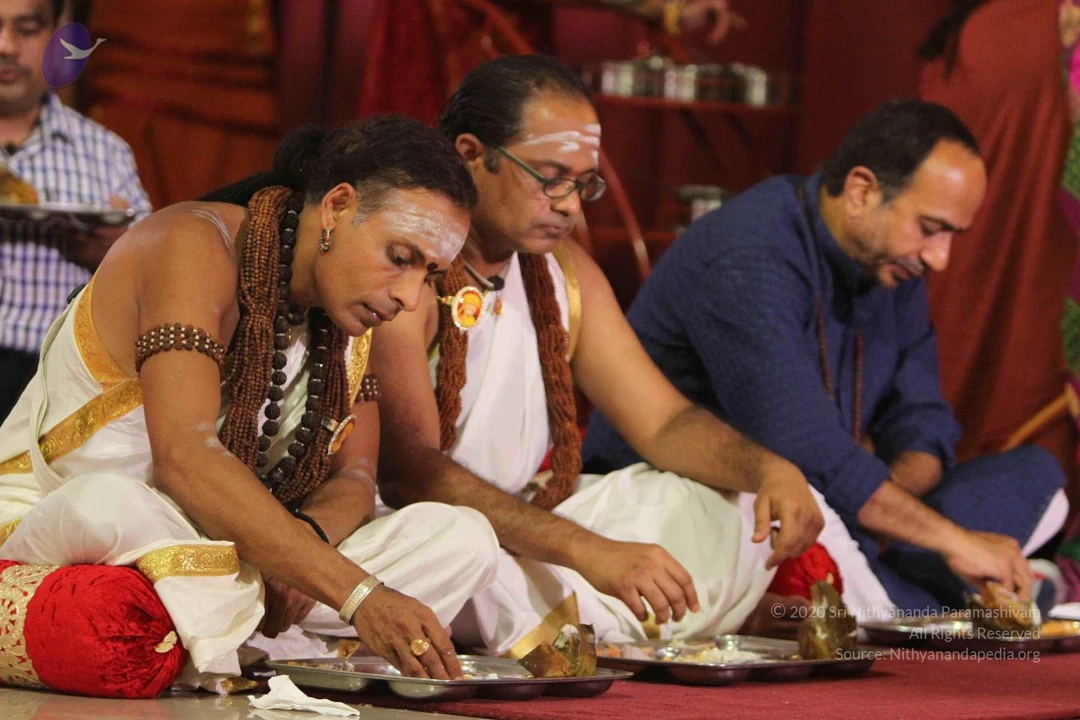
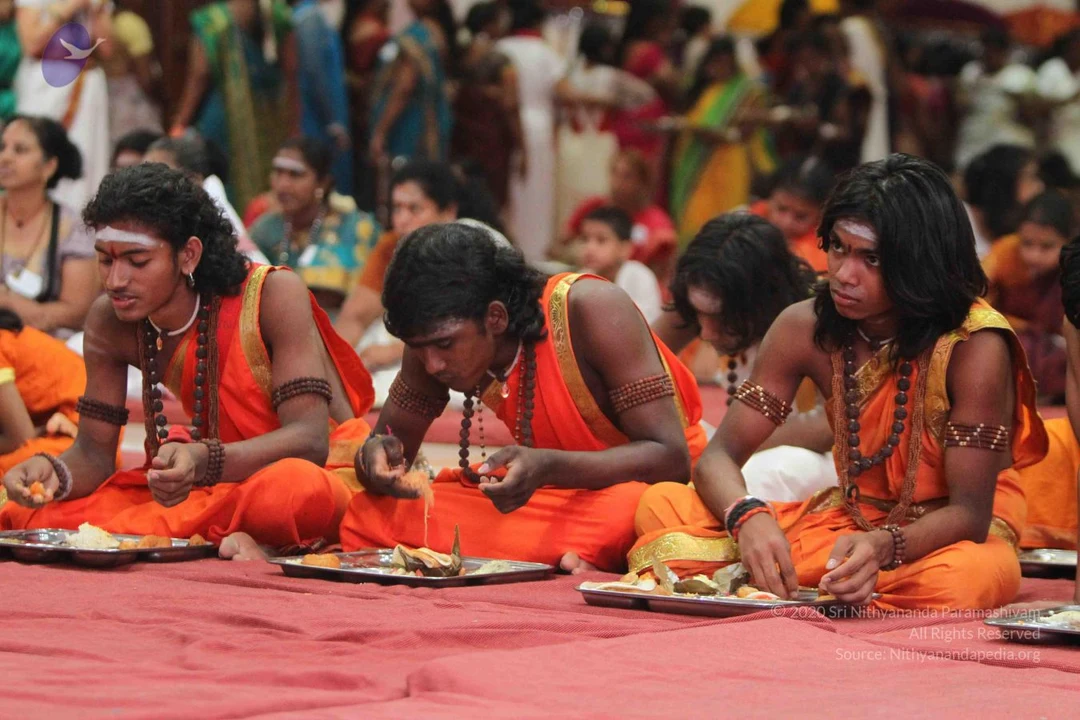
I bless you all. Today we have a beautiful day. Lot of wonderful programs. Dine, dance and dinner in….dine, dance and darshan. For some countries dinner. For India breakfast. For some countries lunch, whatever. Dine, dance darshan with Divine. Divine which is the Vine of the world.

Photos From The Day:

Sankirtan
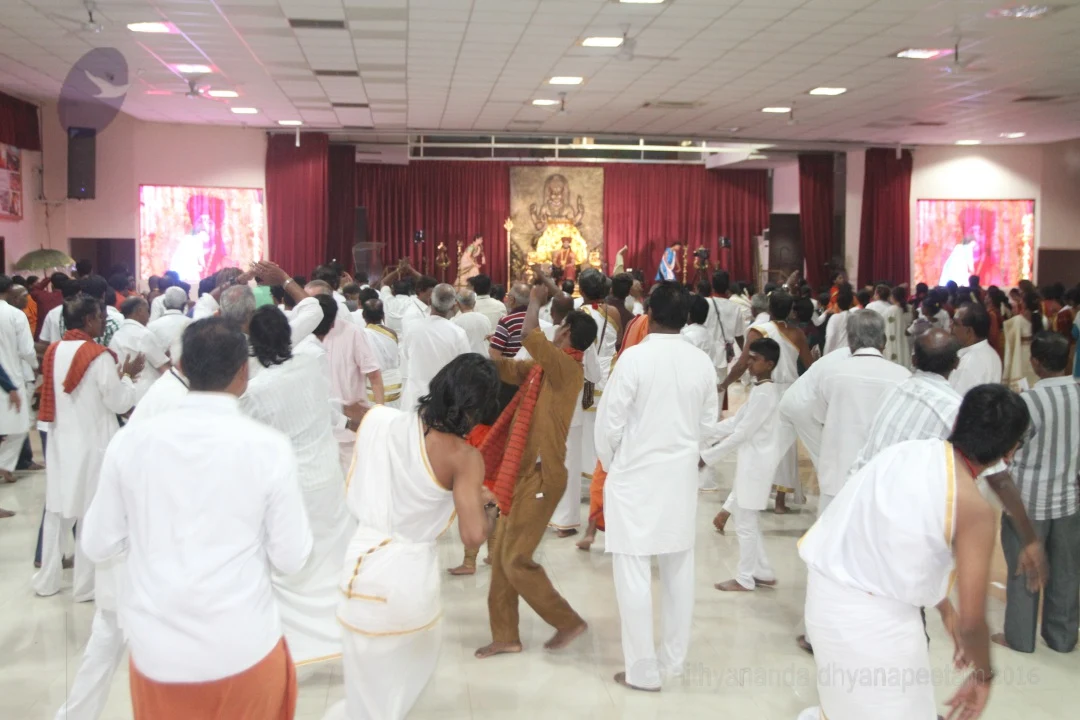
The Joy of Kirtan Dancing!

Living Shuddhadvaitam Process

Festival

Nithyananda Yoga Teacher Training

Sakshi Pramana:

Sharing from INNER AWAKENING

Photos Of The Day:

Photos Of The Day:

SMKT-Dine-Dance

01-LSP

02-Kalpataru-Darshan

03-SMKT-Dine-Dance

Photos from this day

View all 319 photos

Living Shuddhadvaitam Process
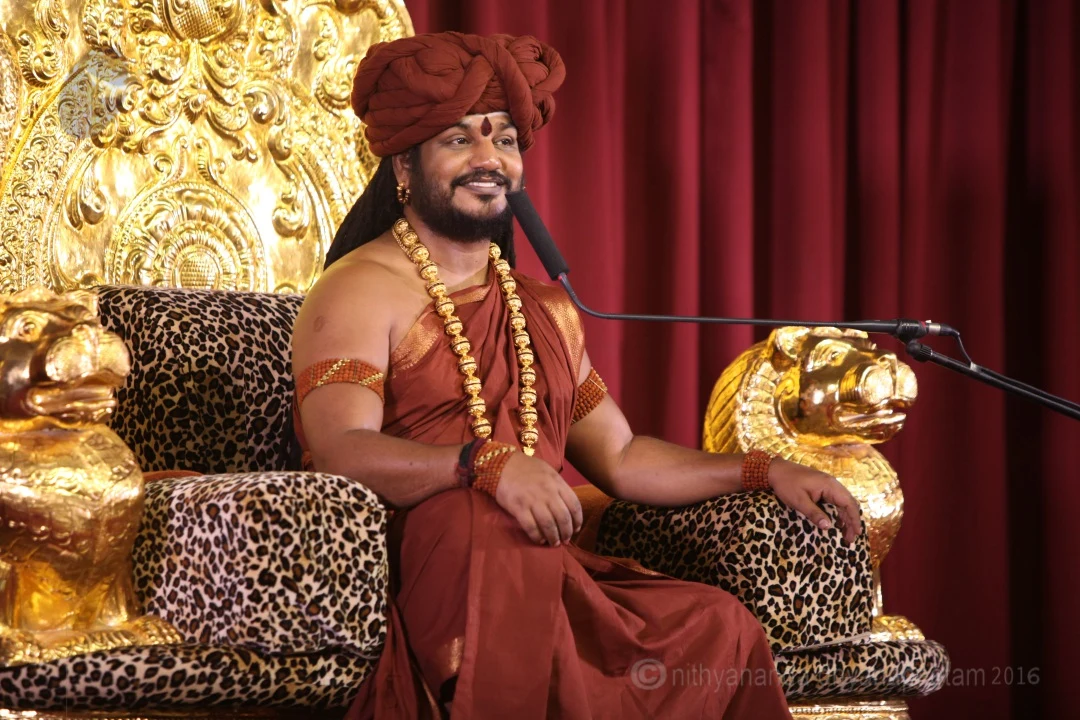
13 photosSource gallery
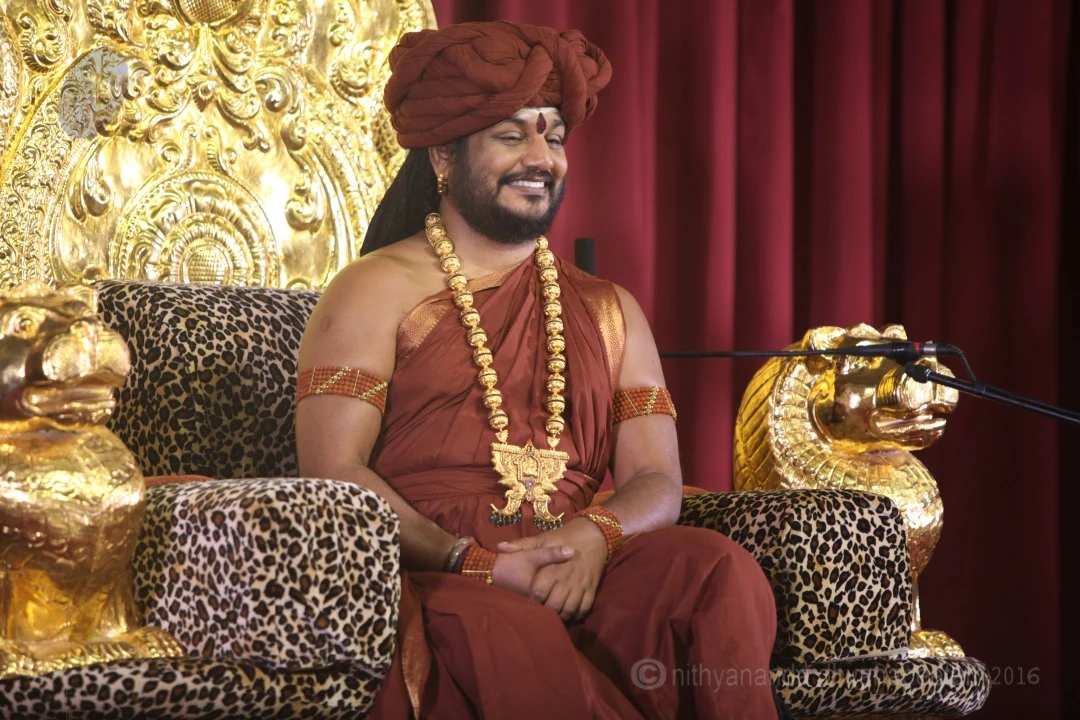
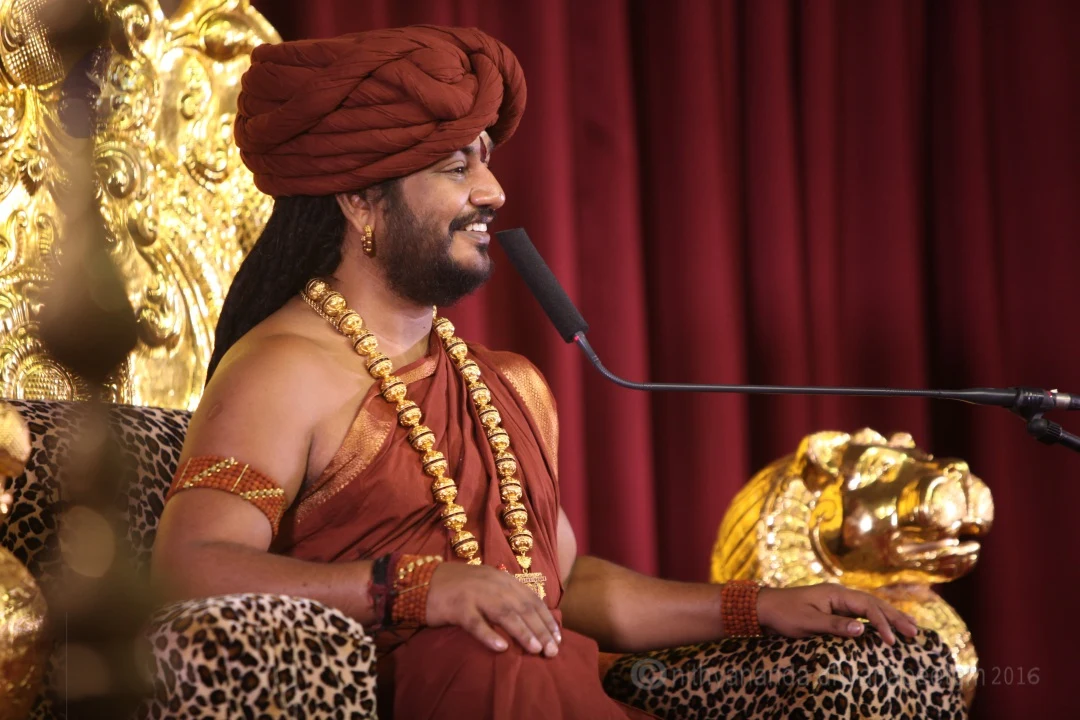
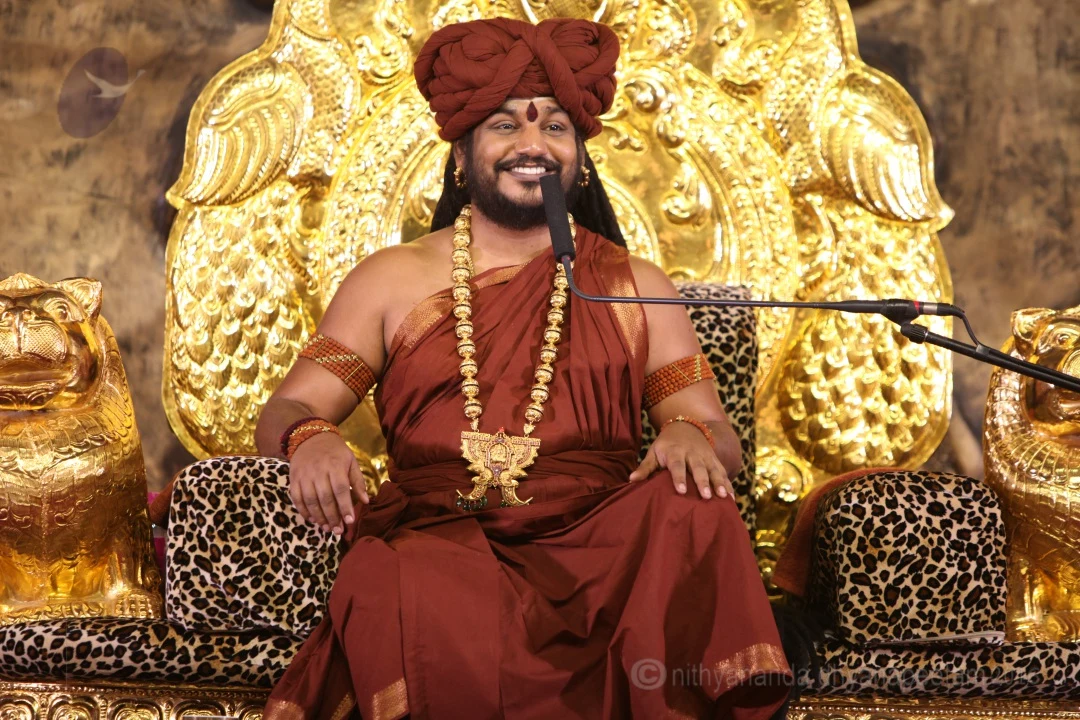
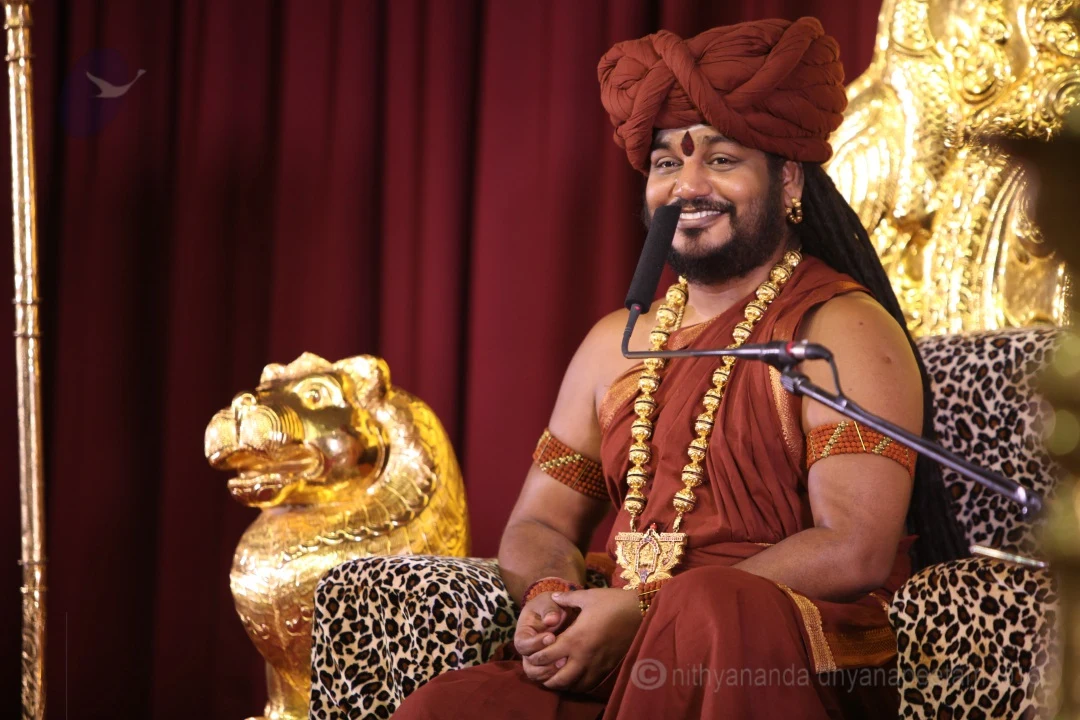
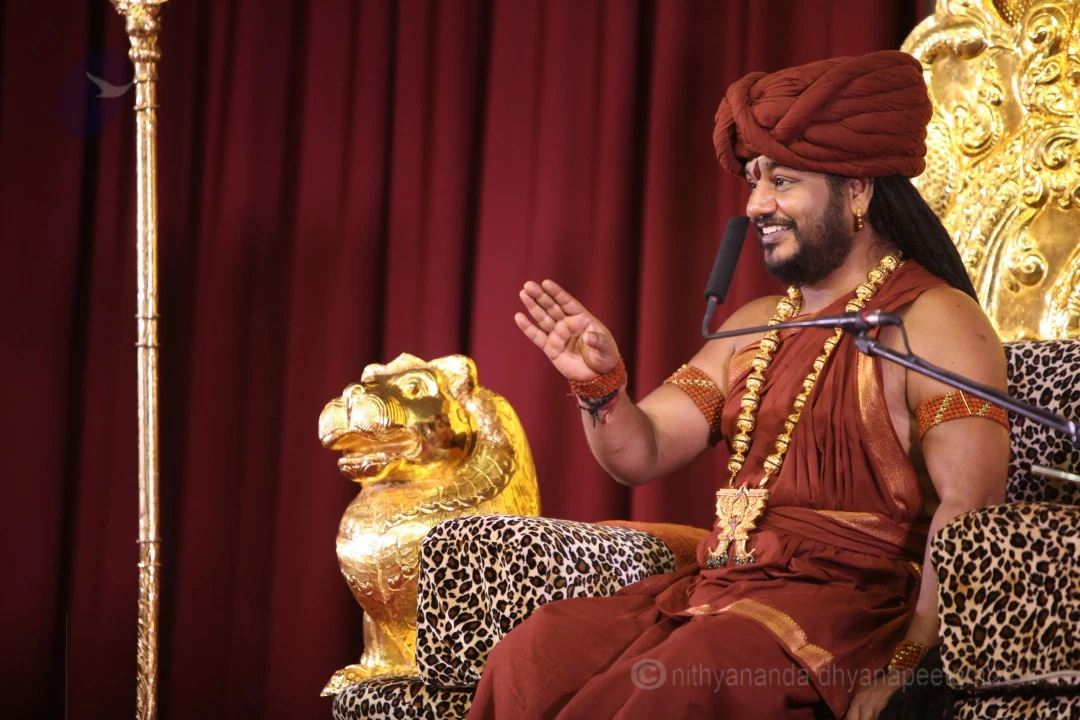
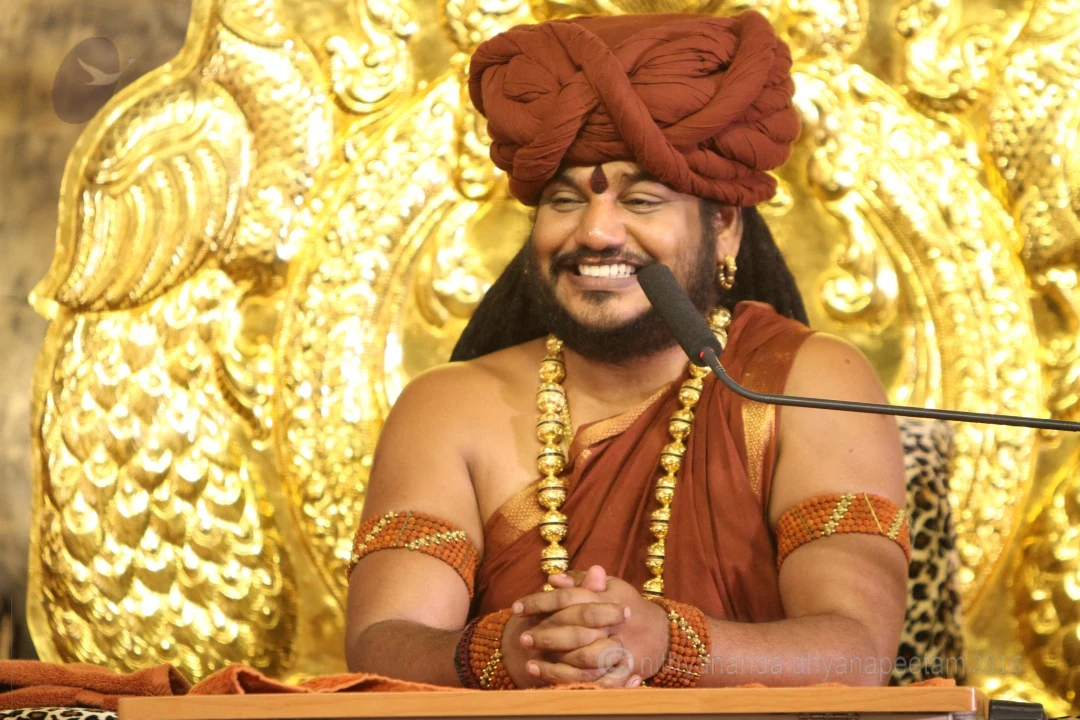
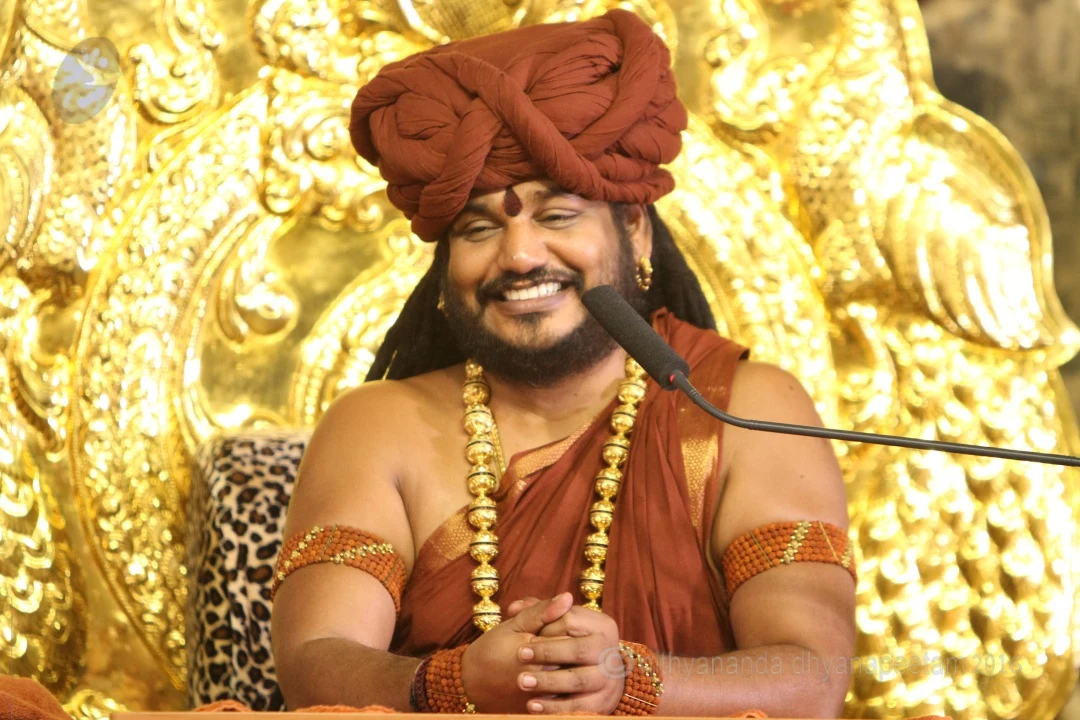
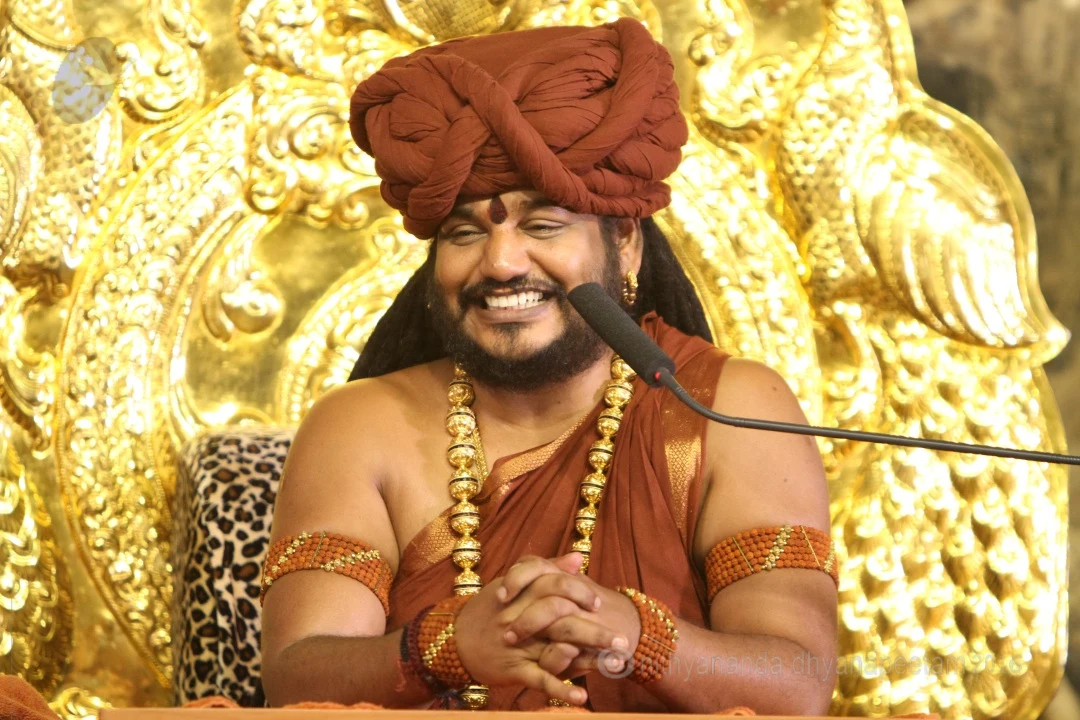
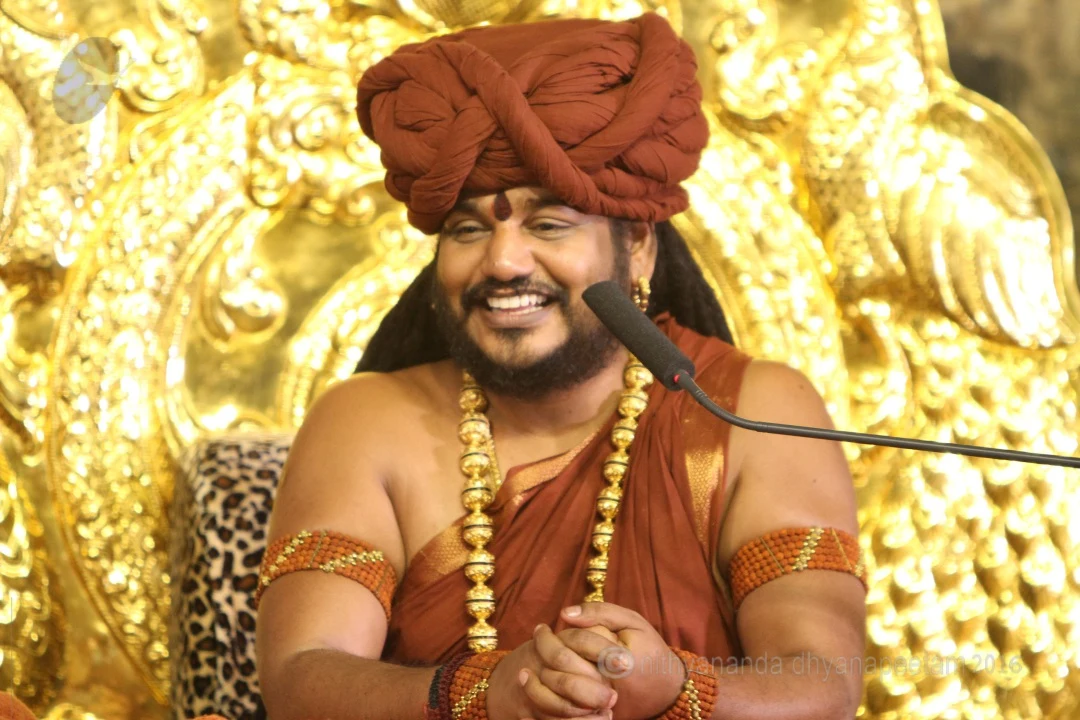
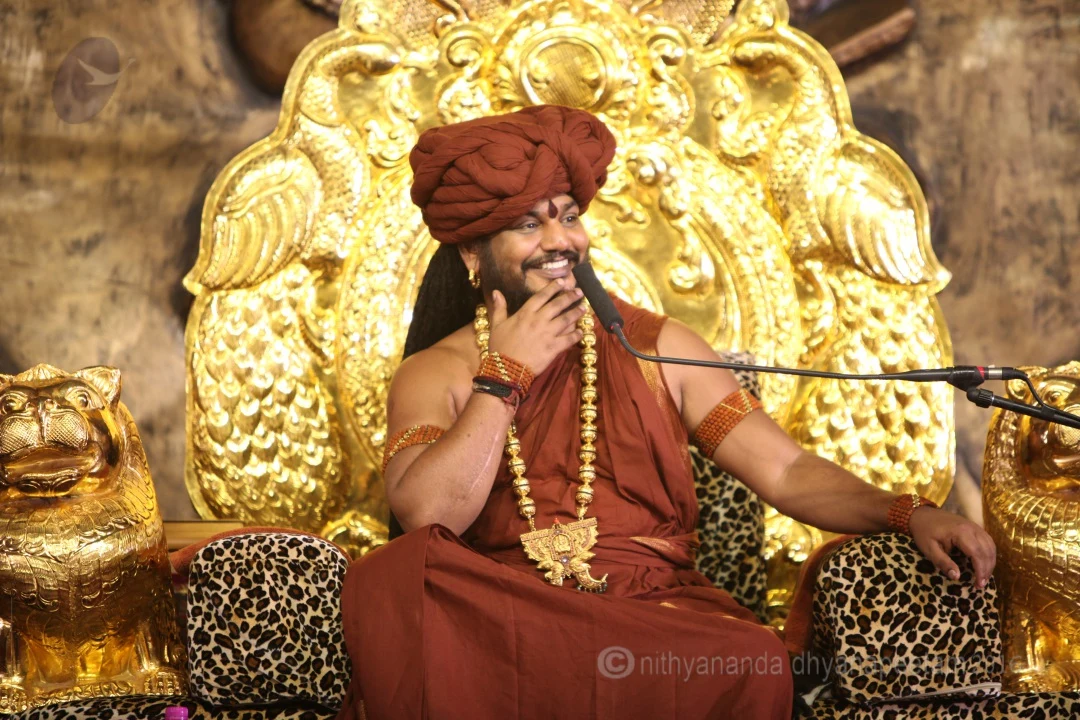
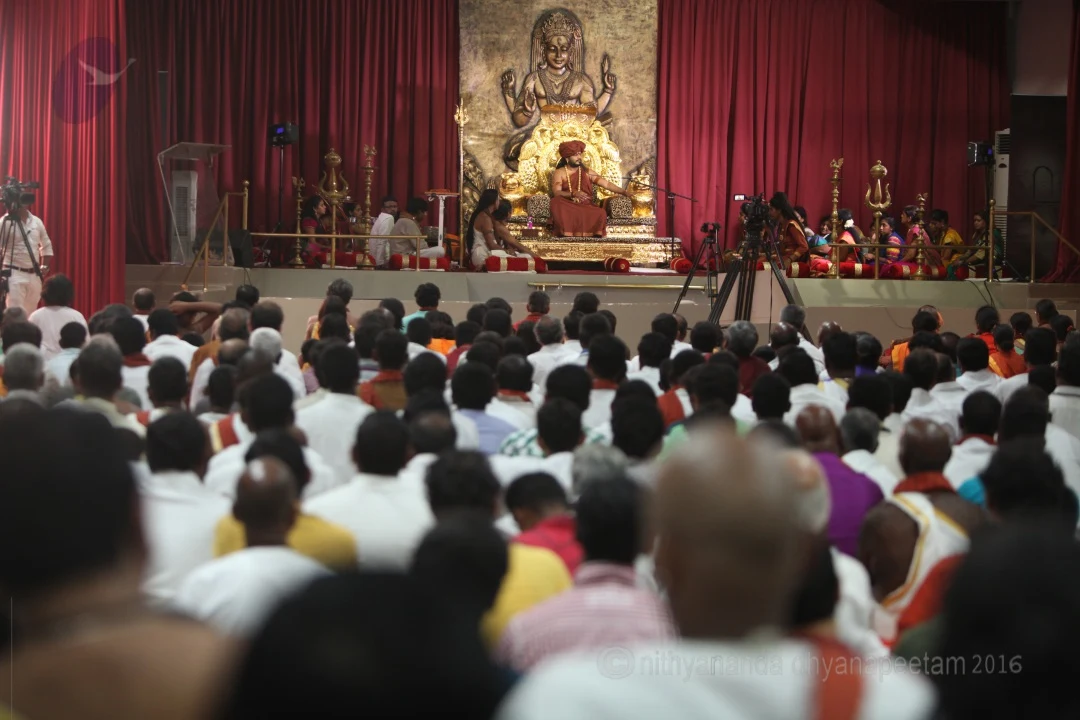
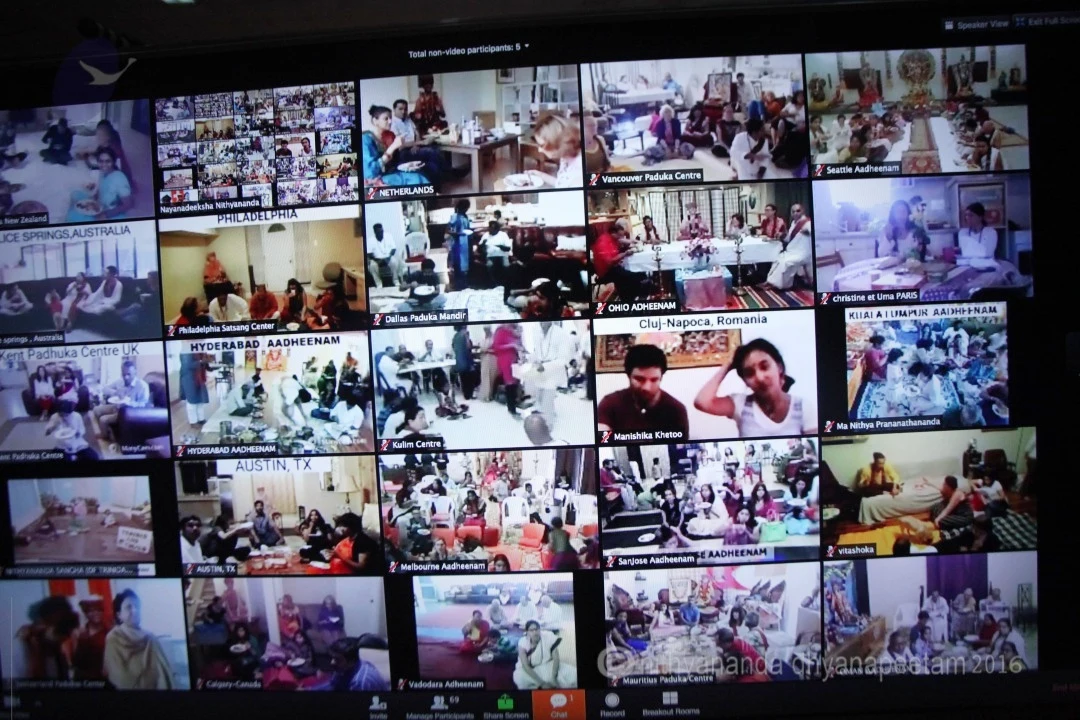
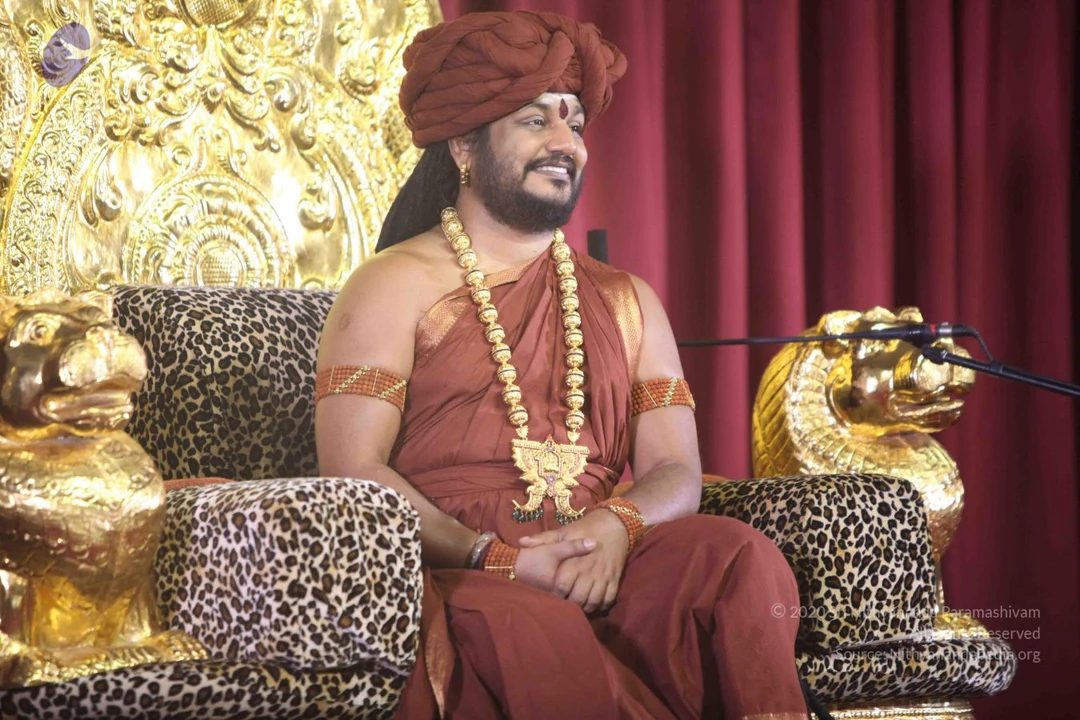
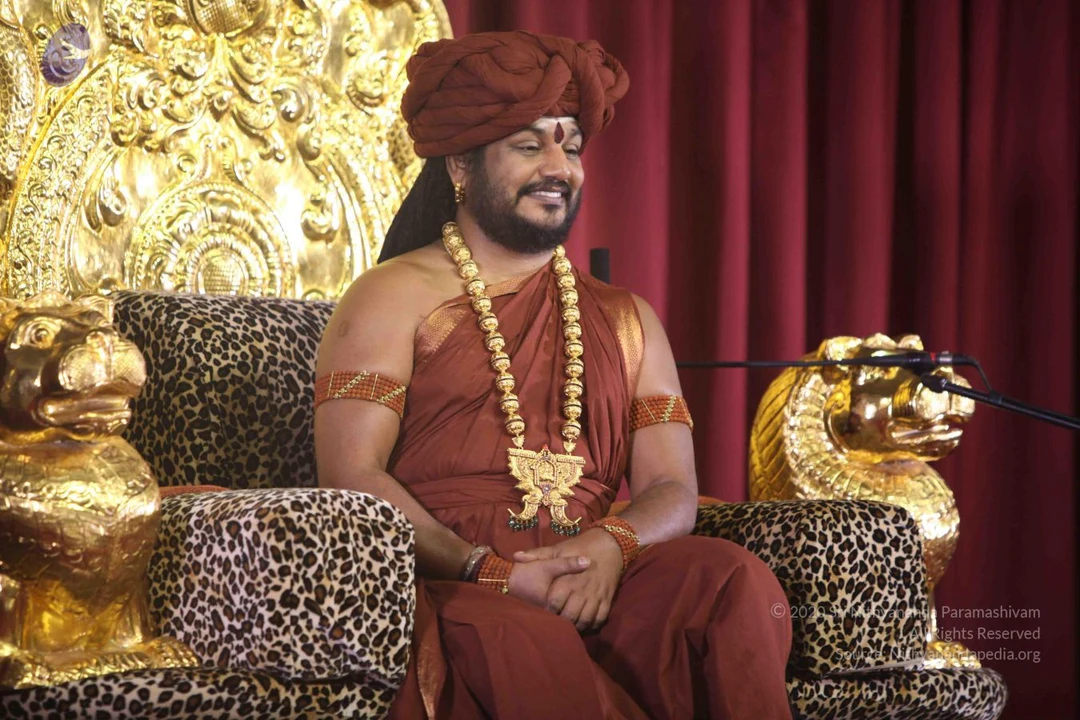
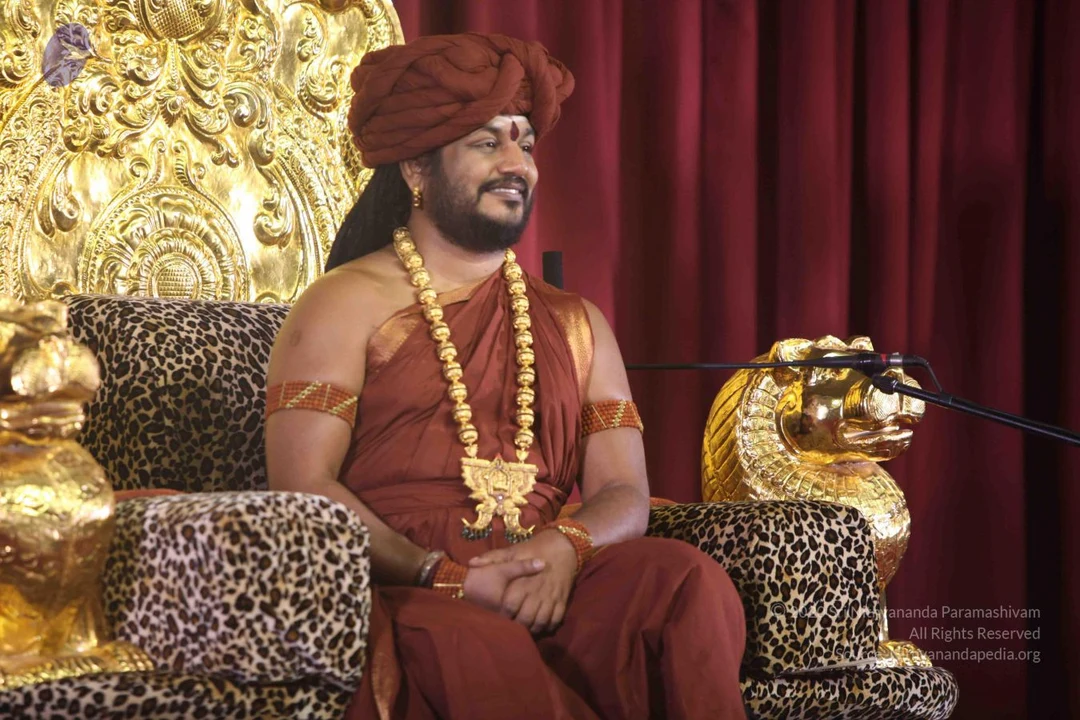
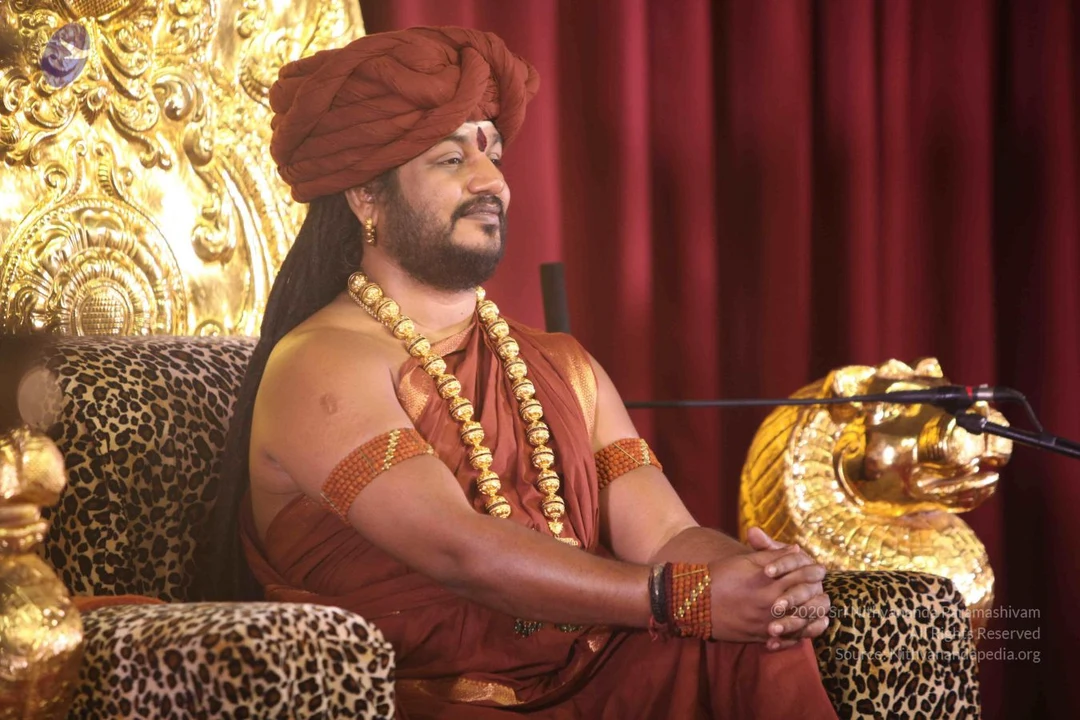
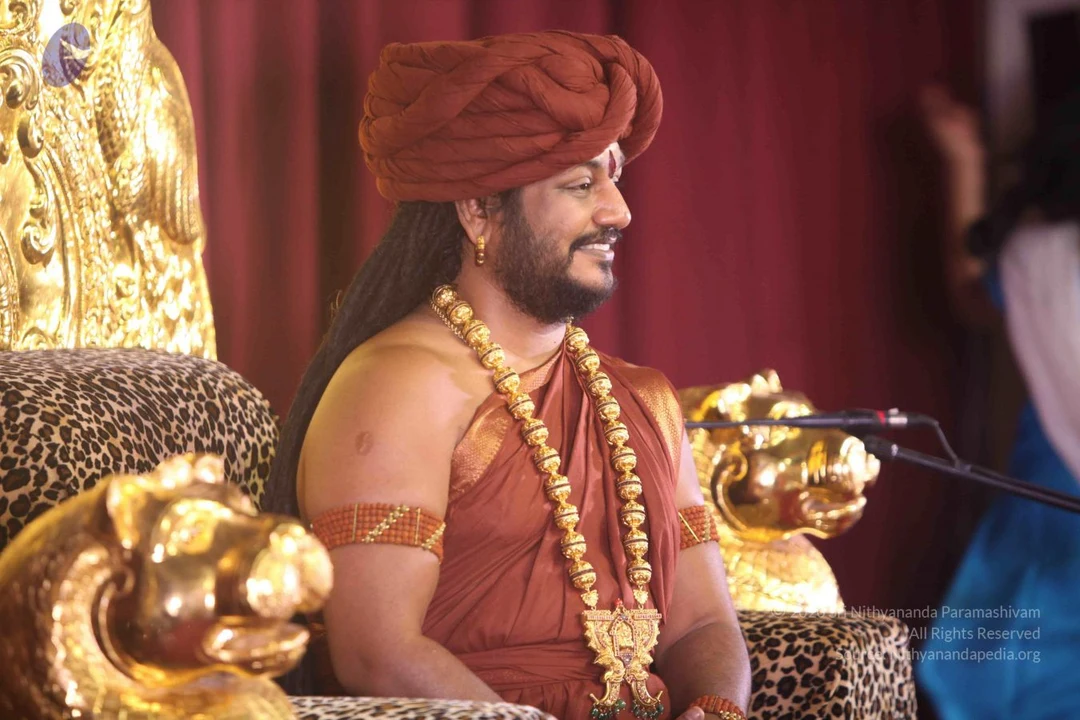
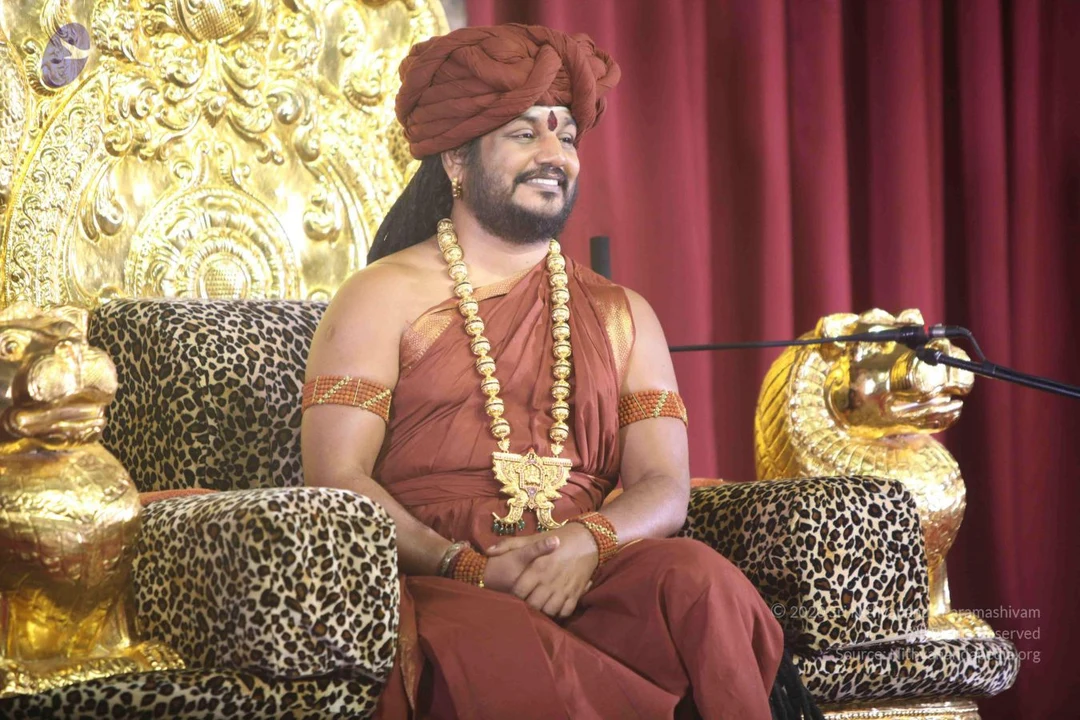
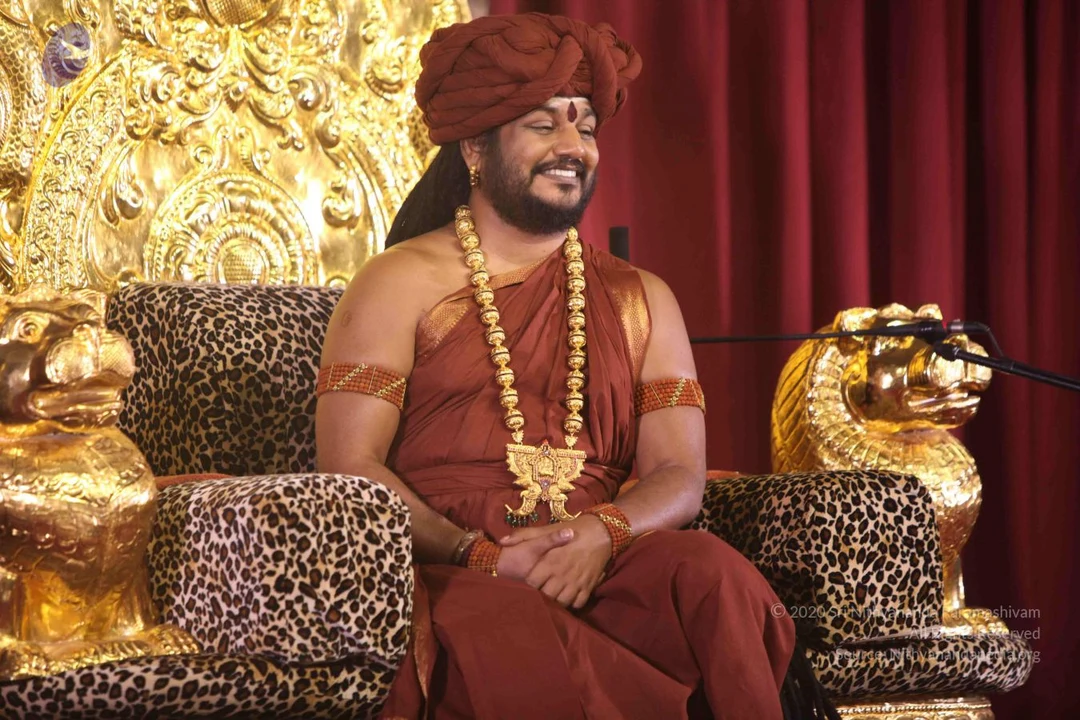
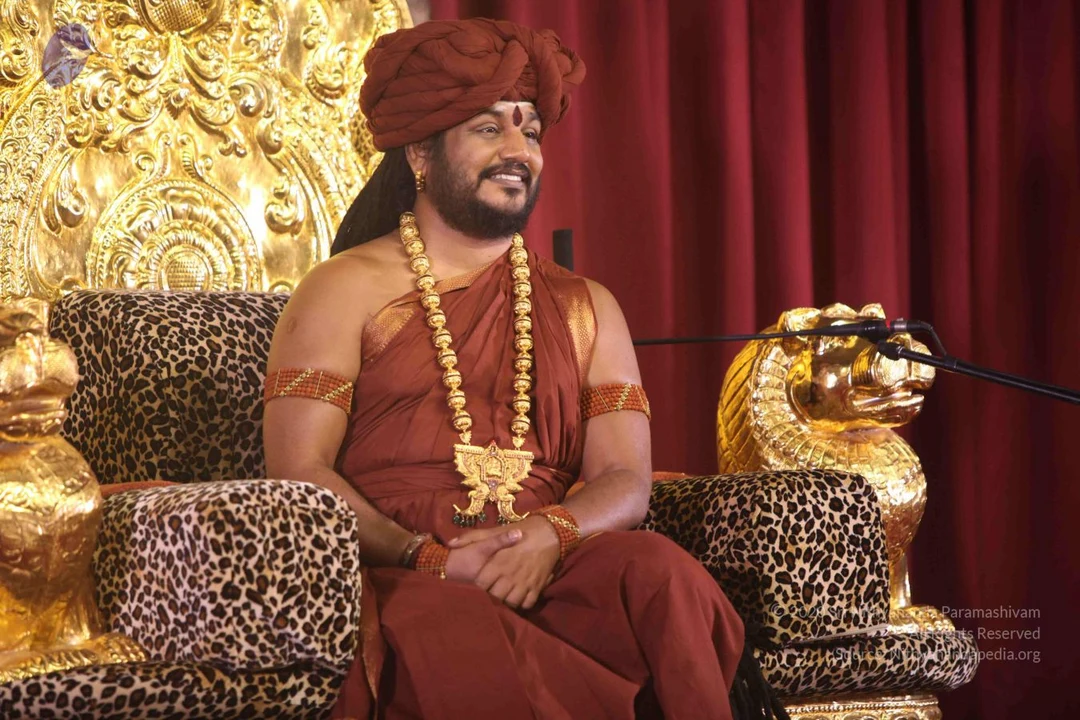
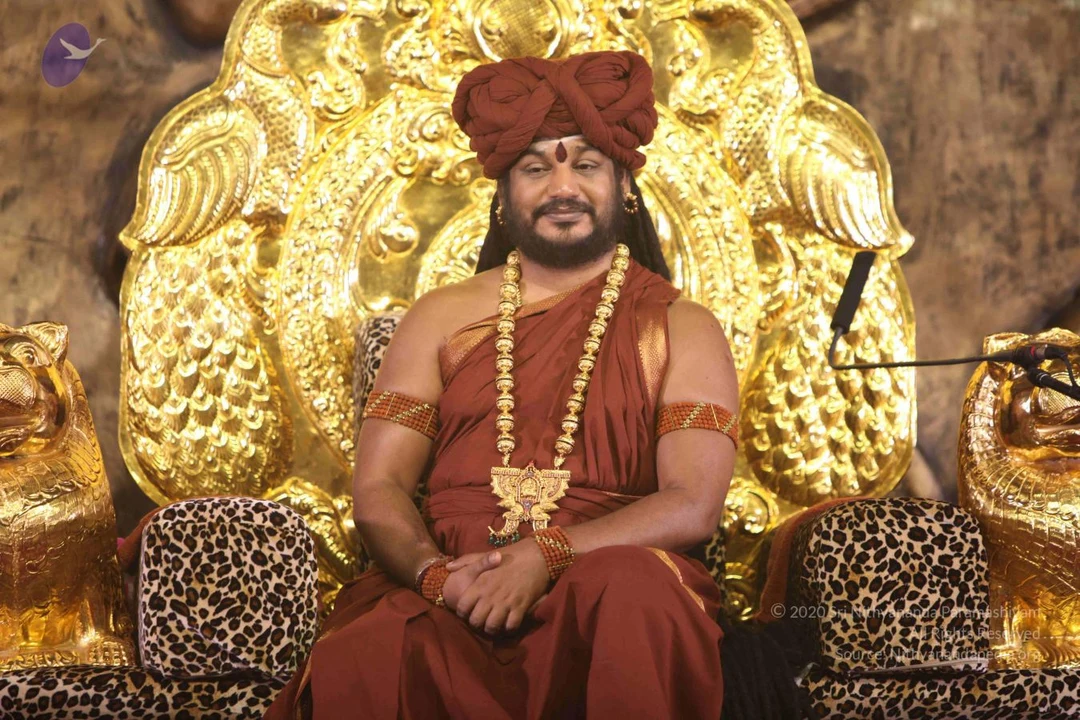
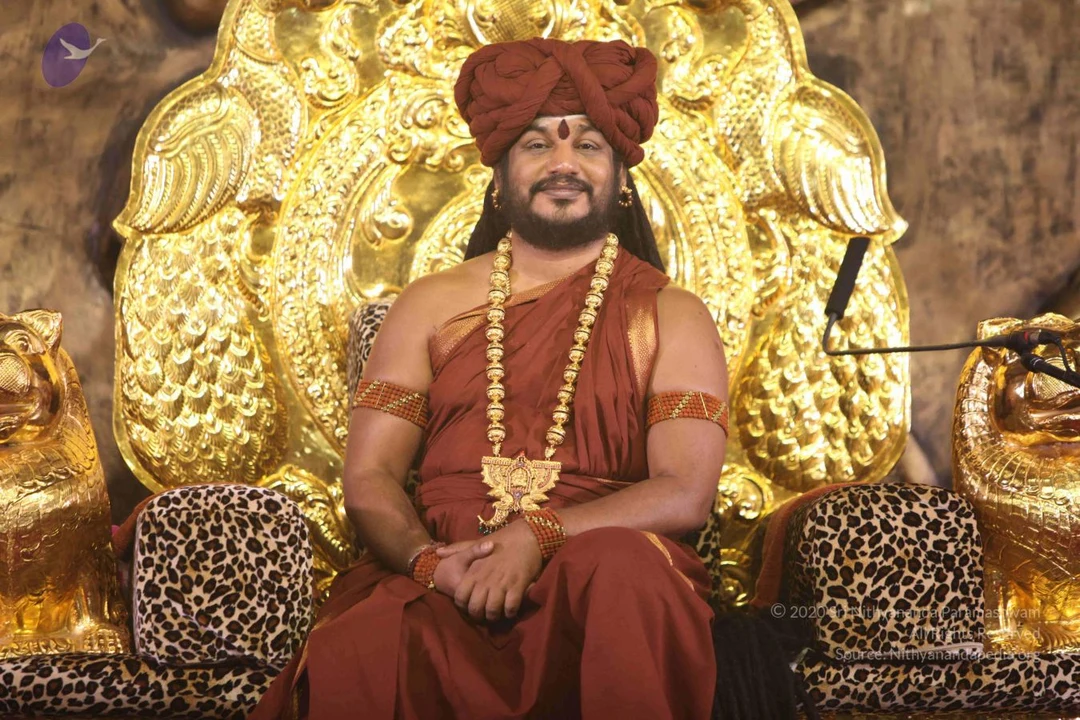
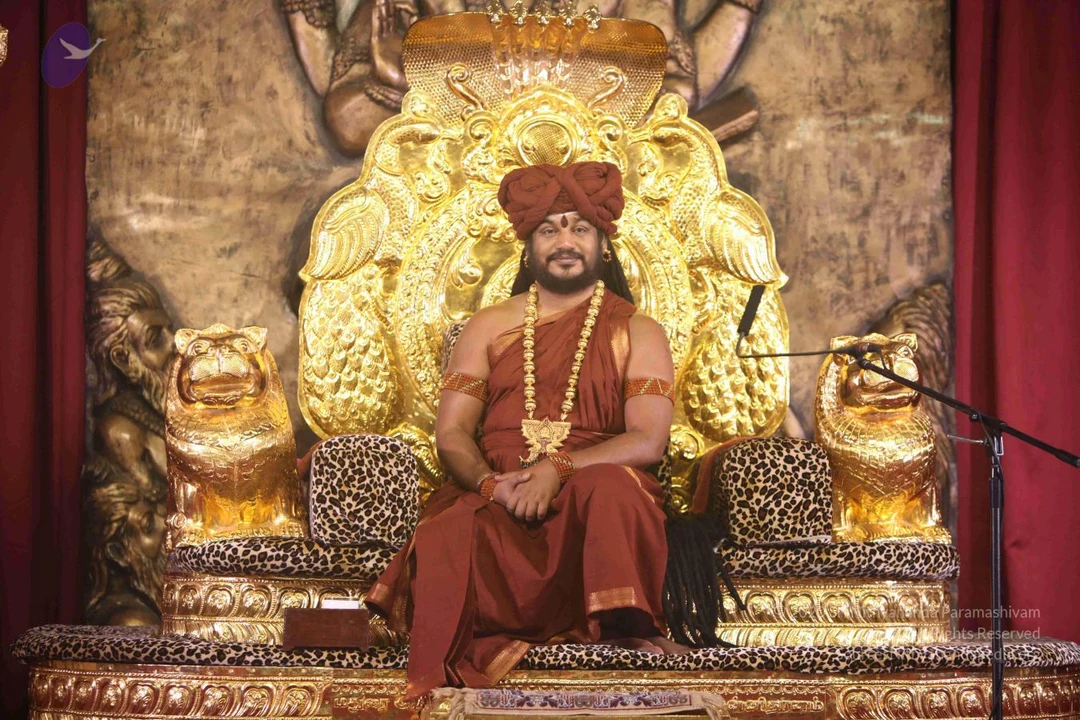
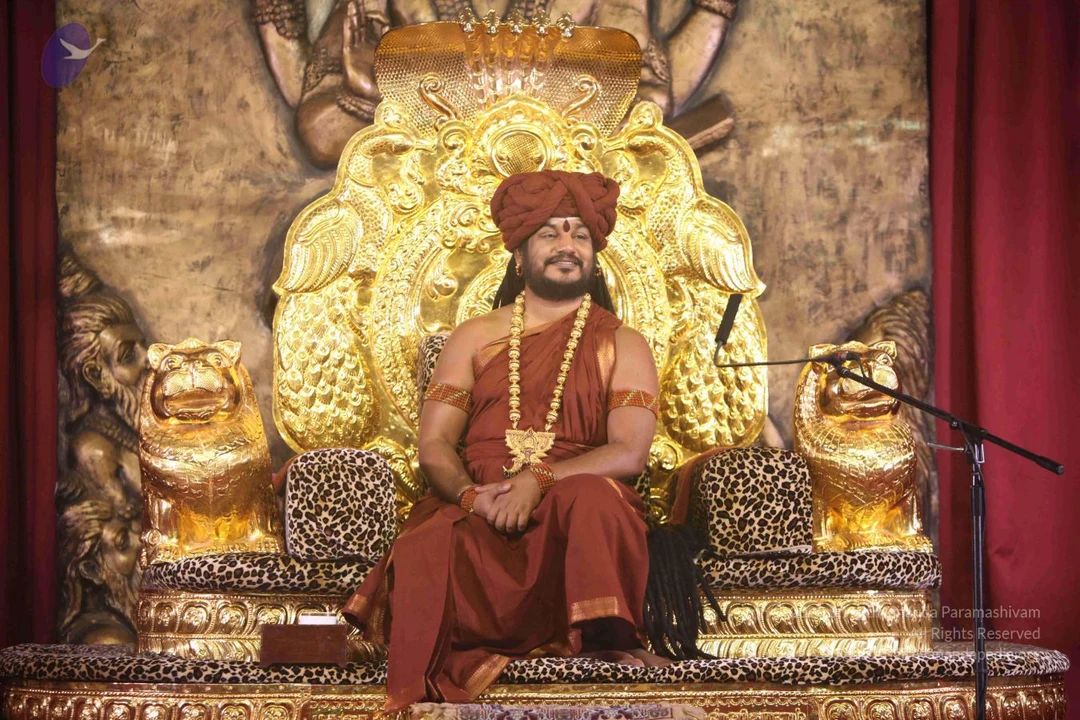
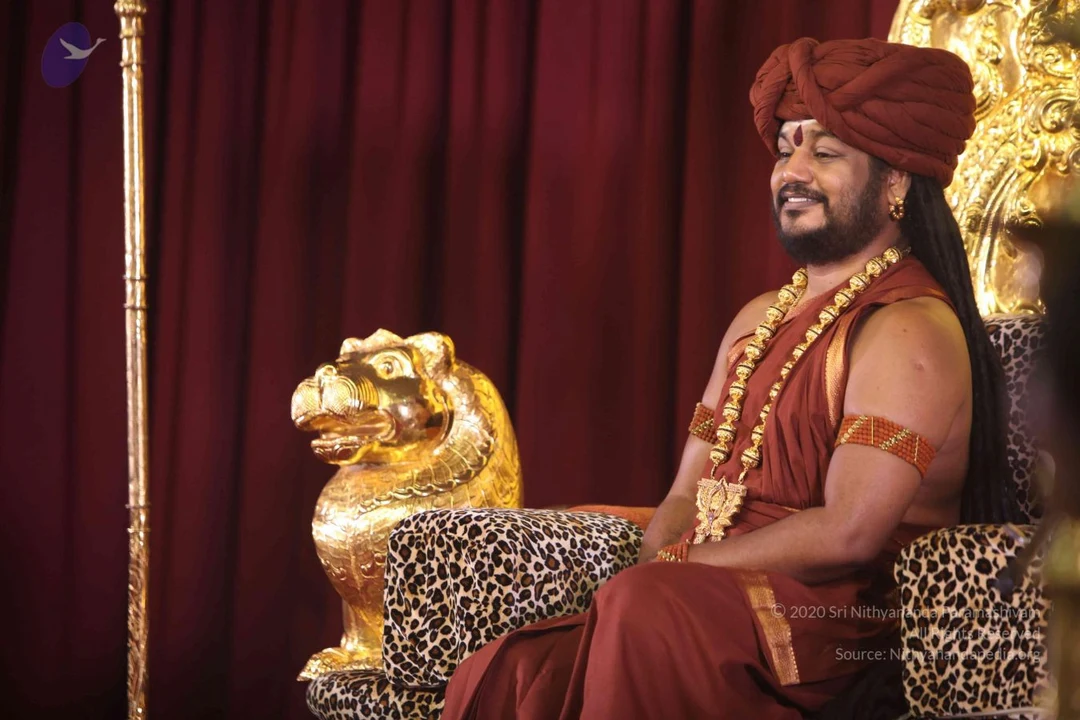
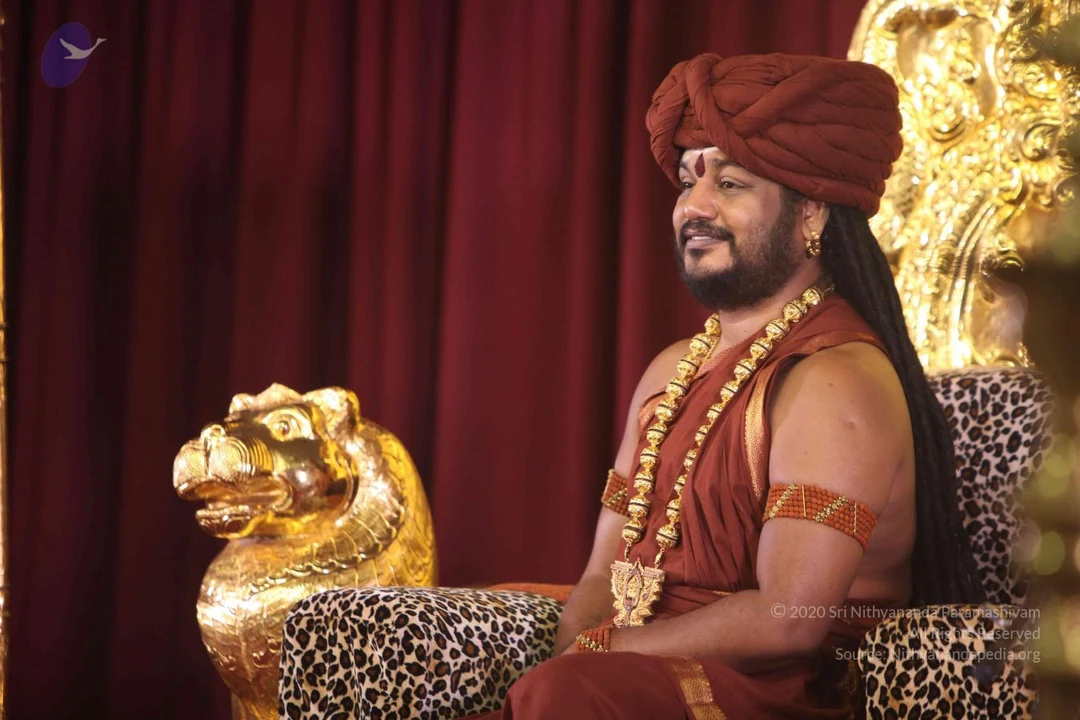
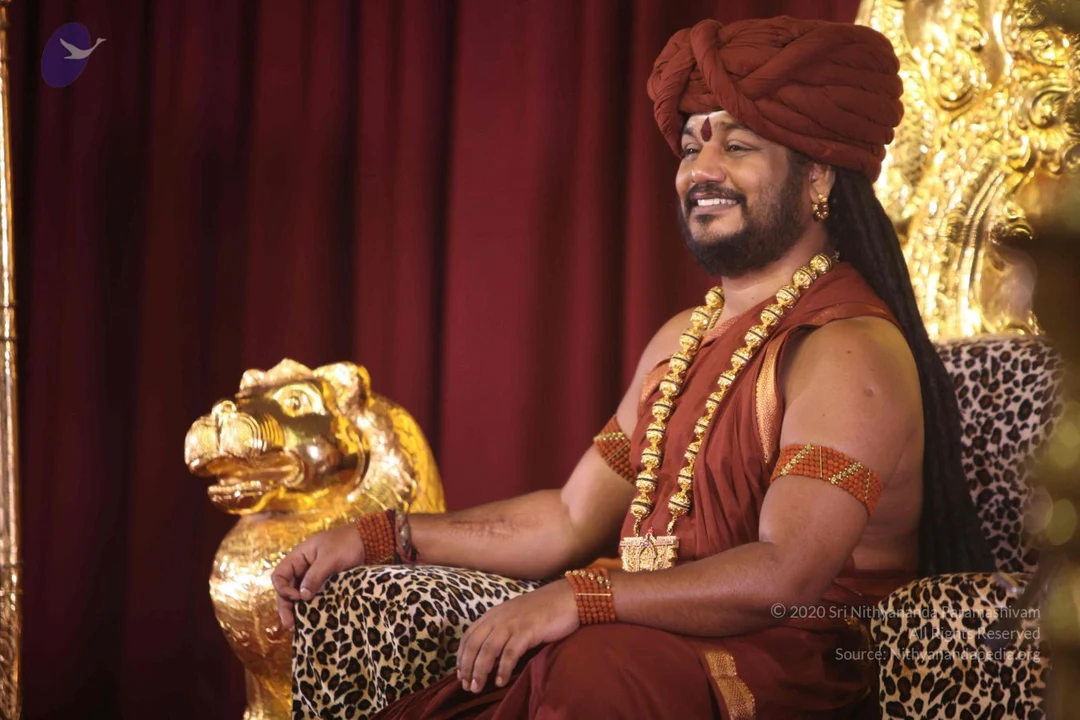
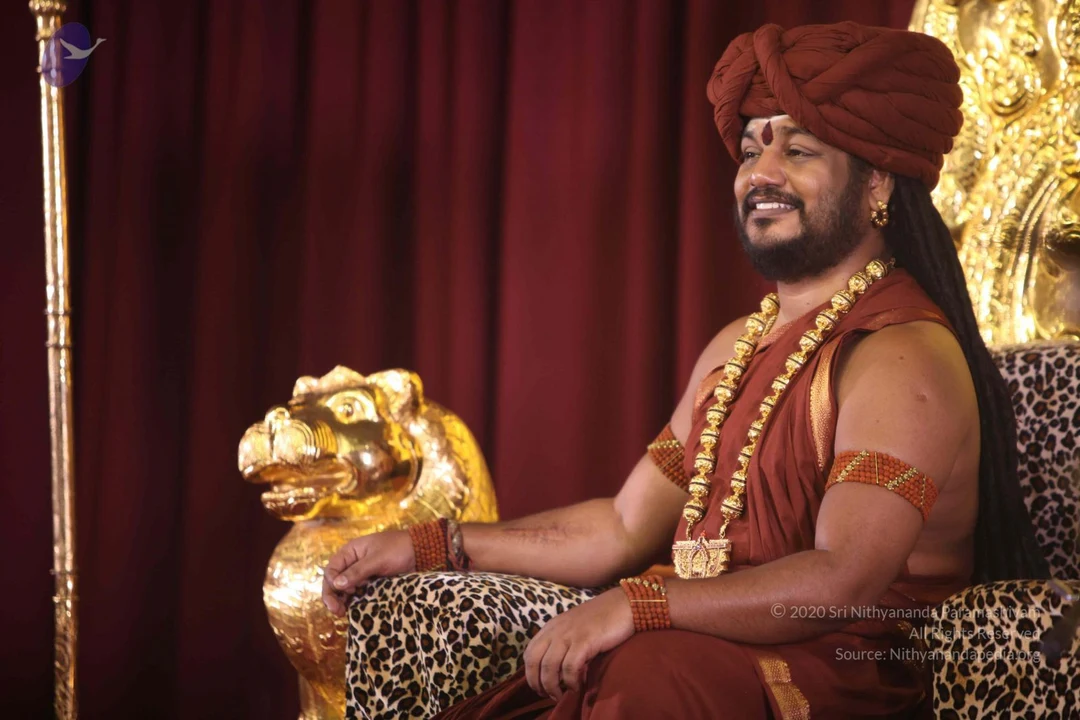
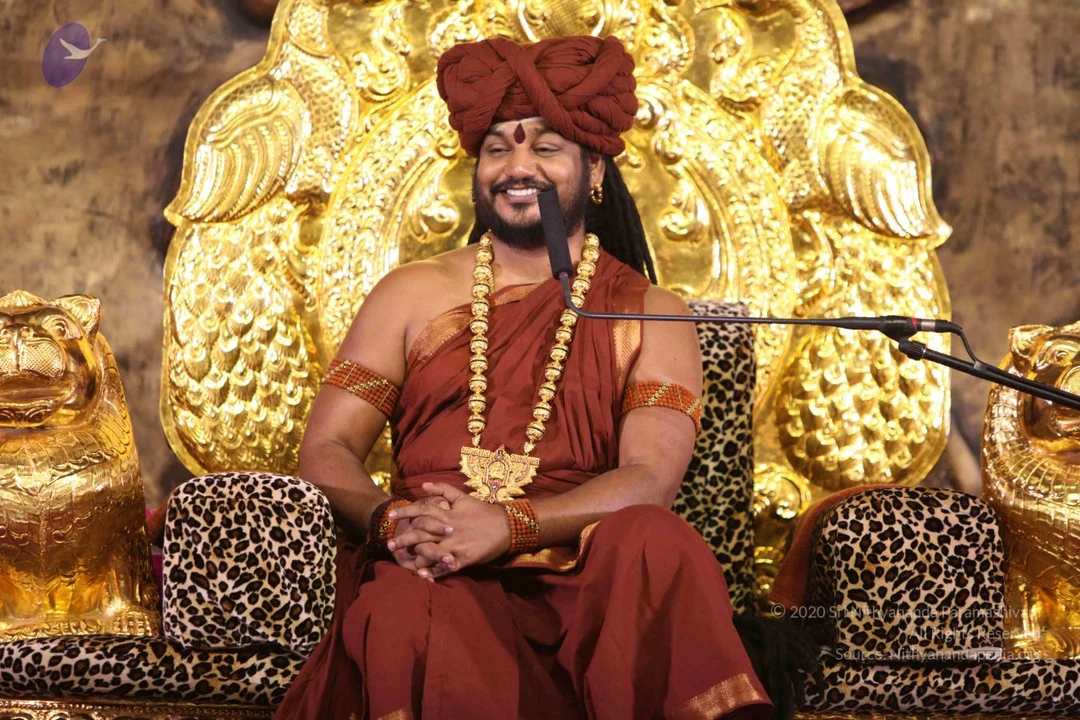
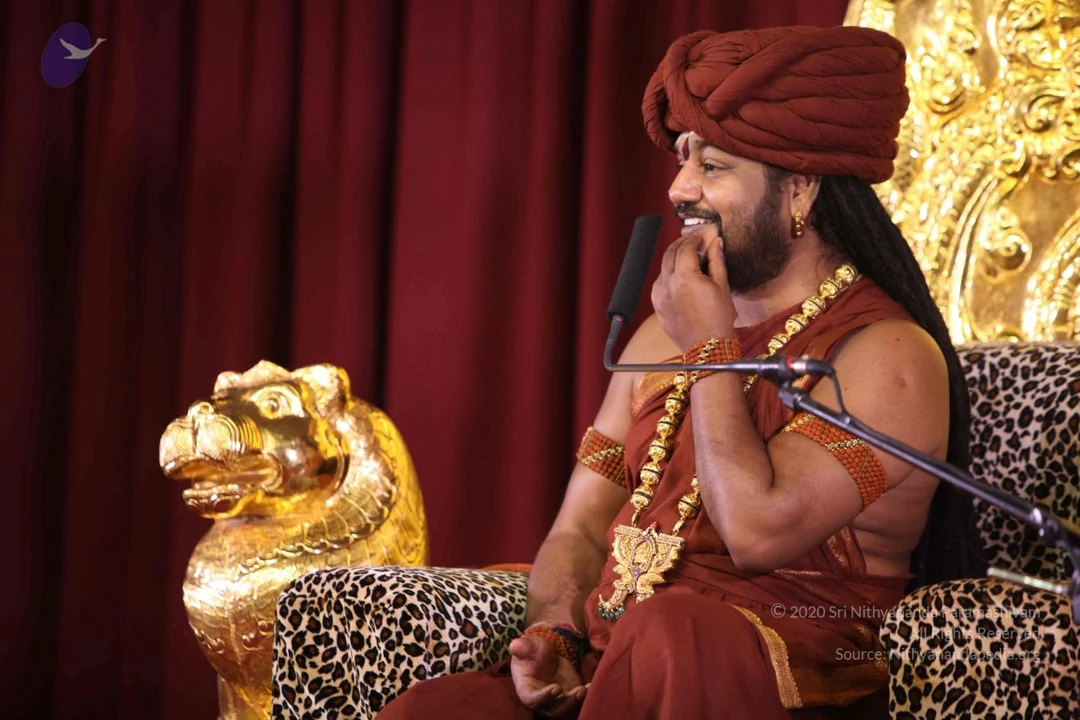
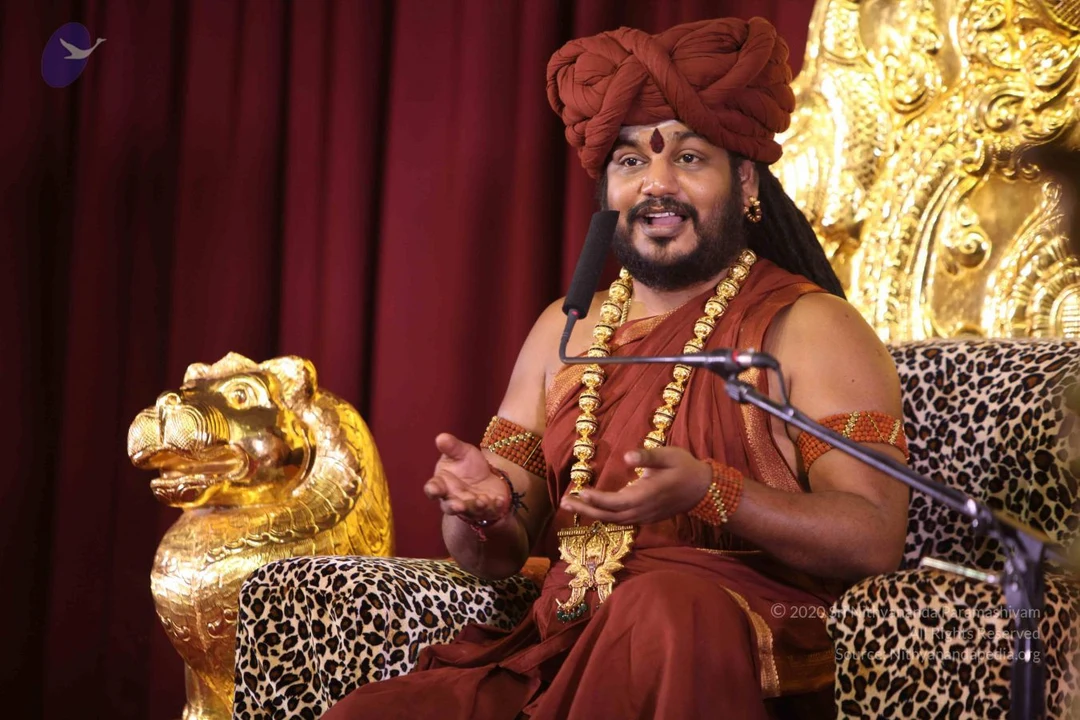
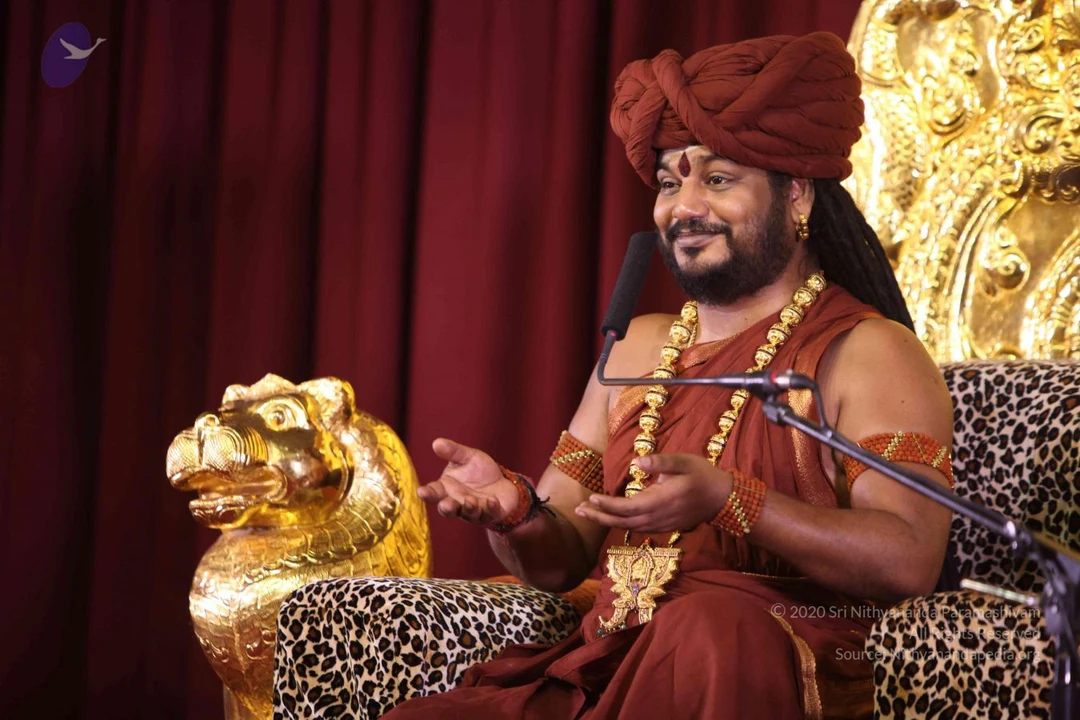
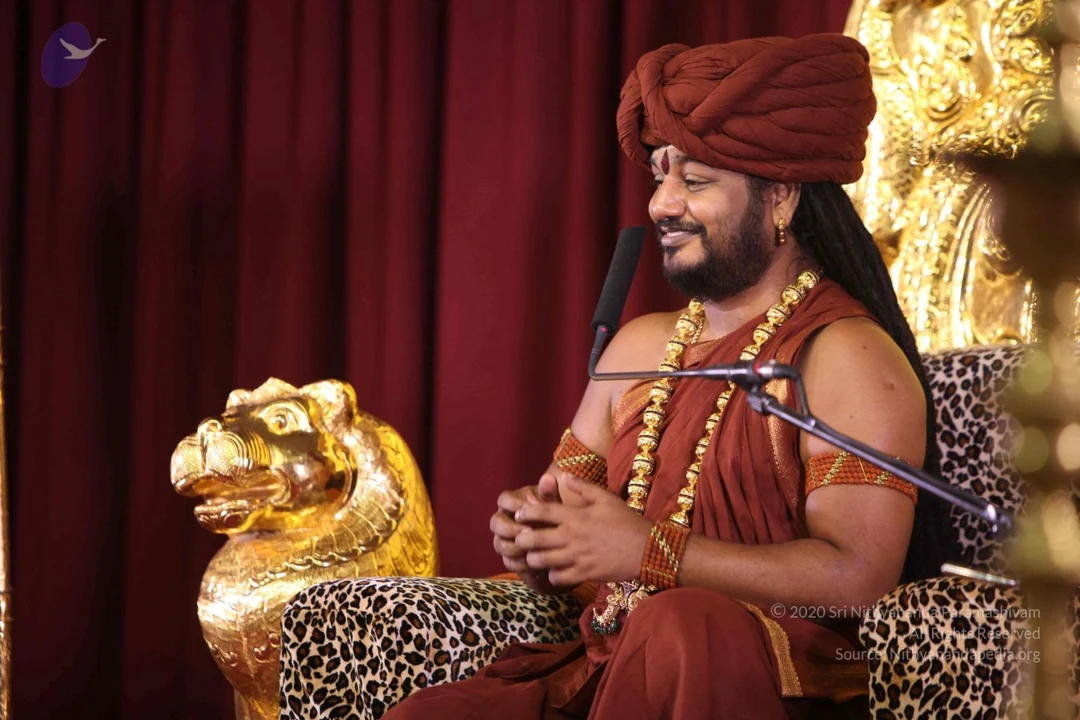
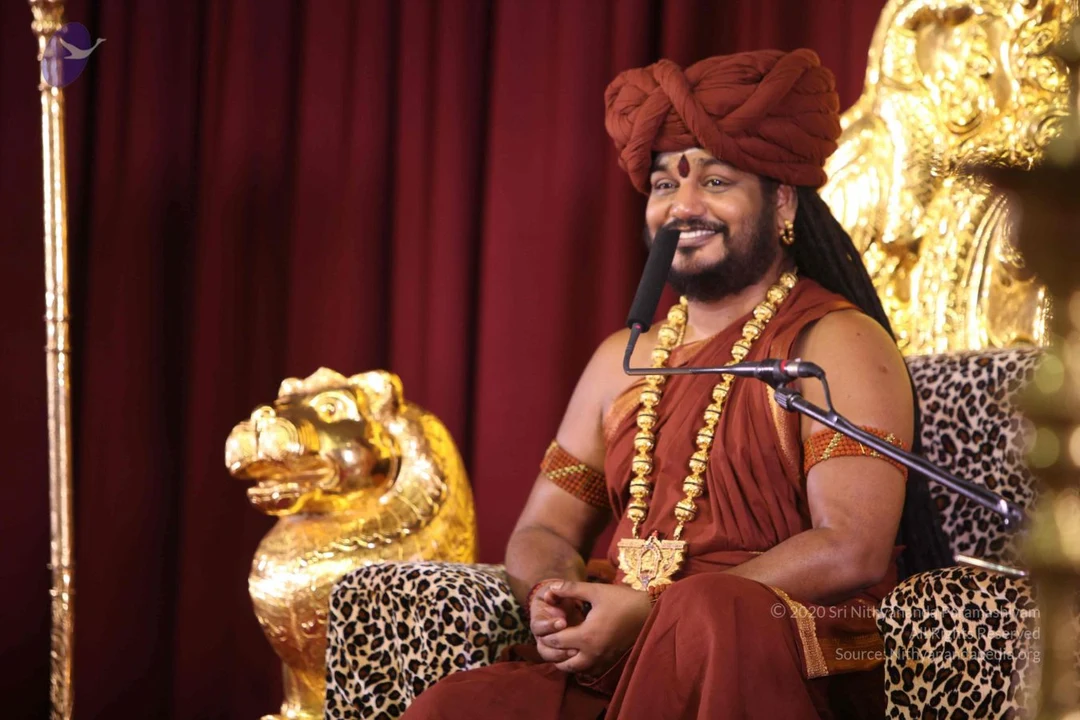
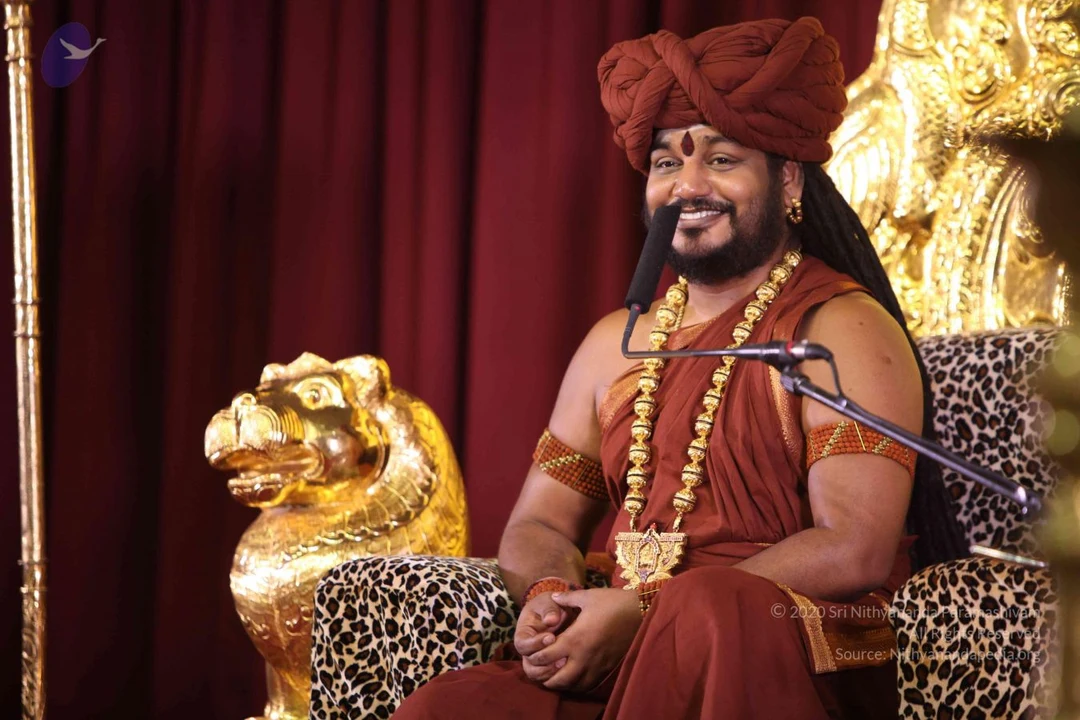
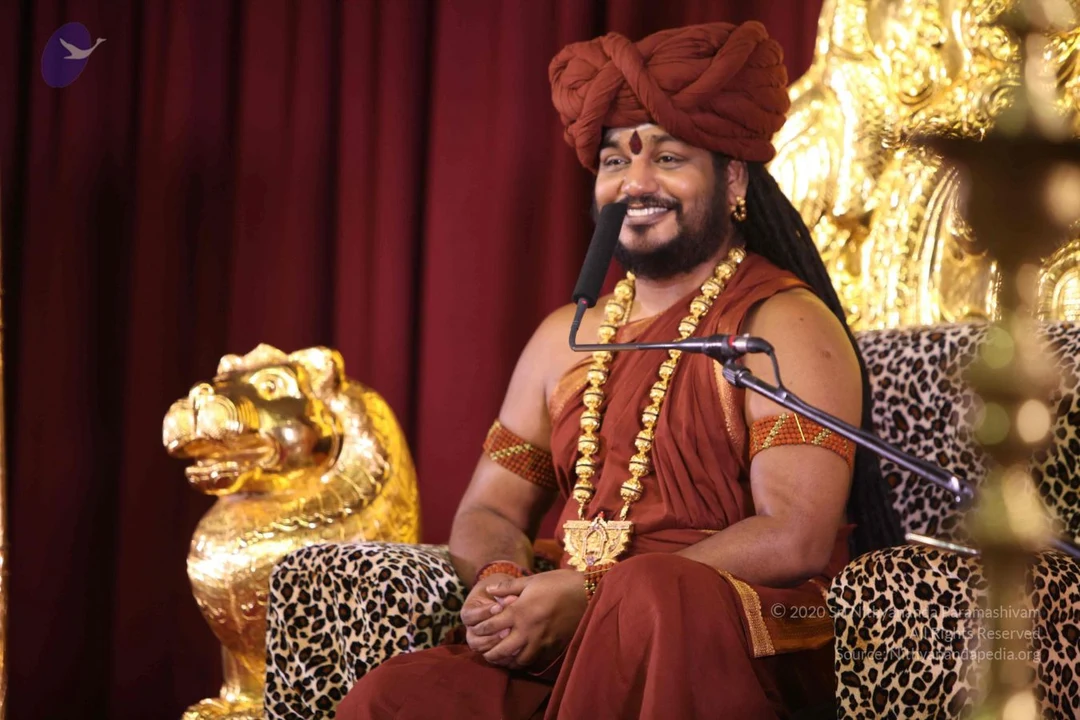
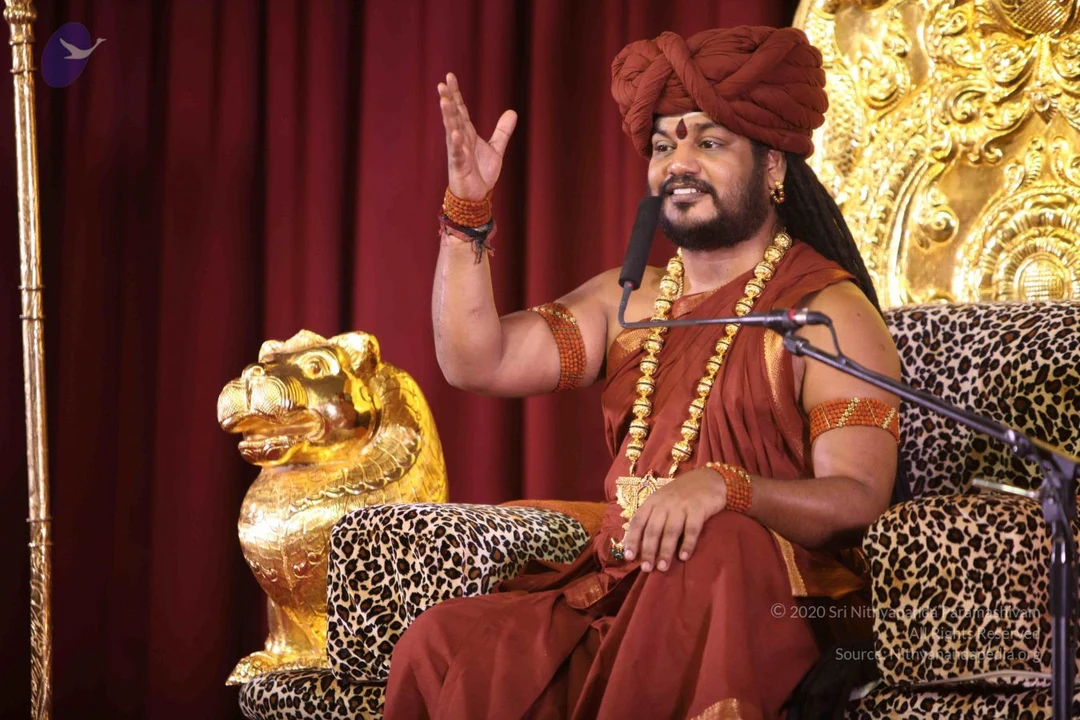
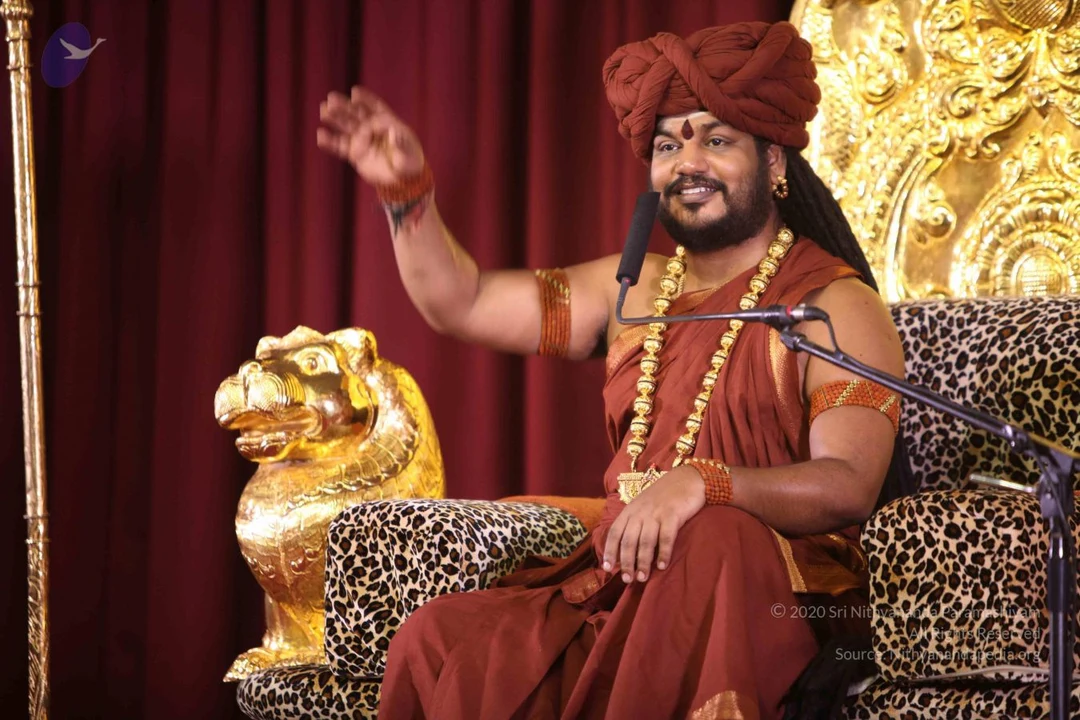
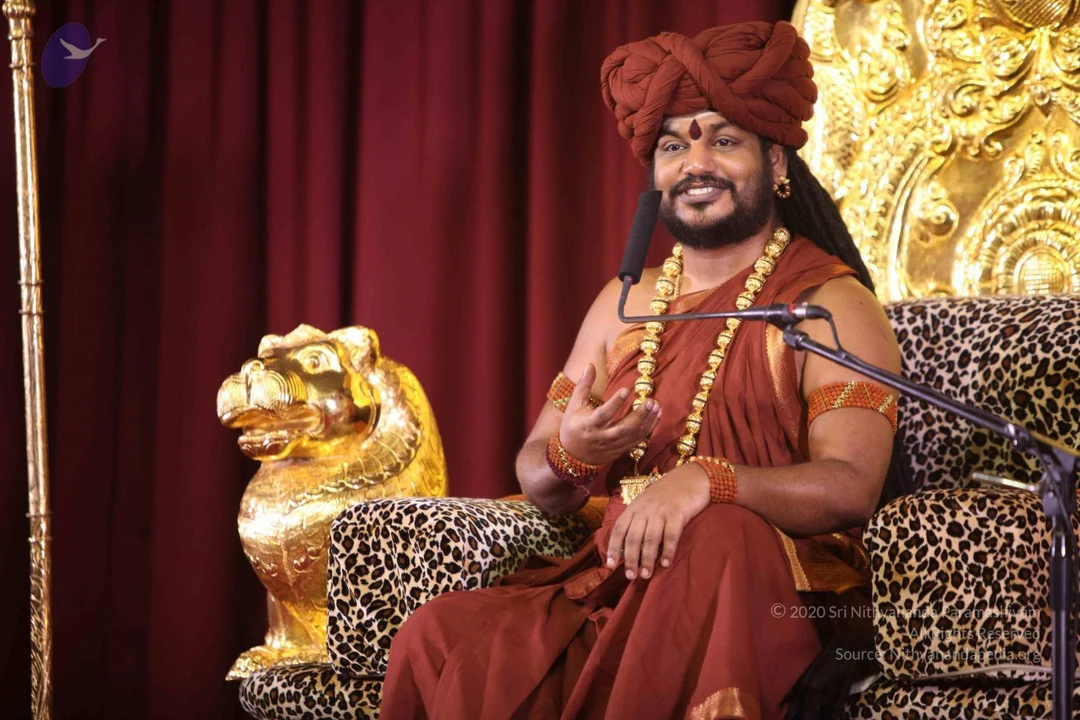
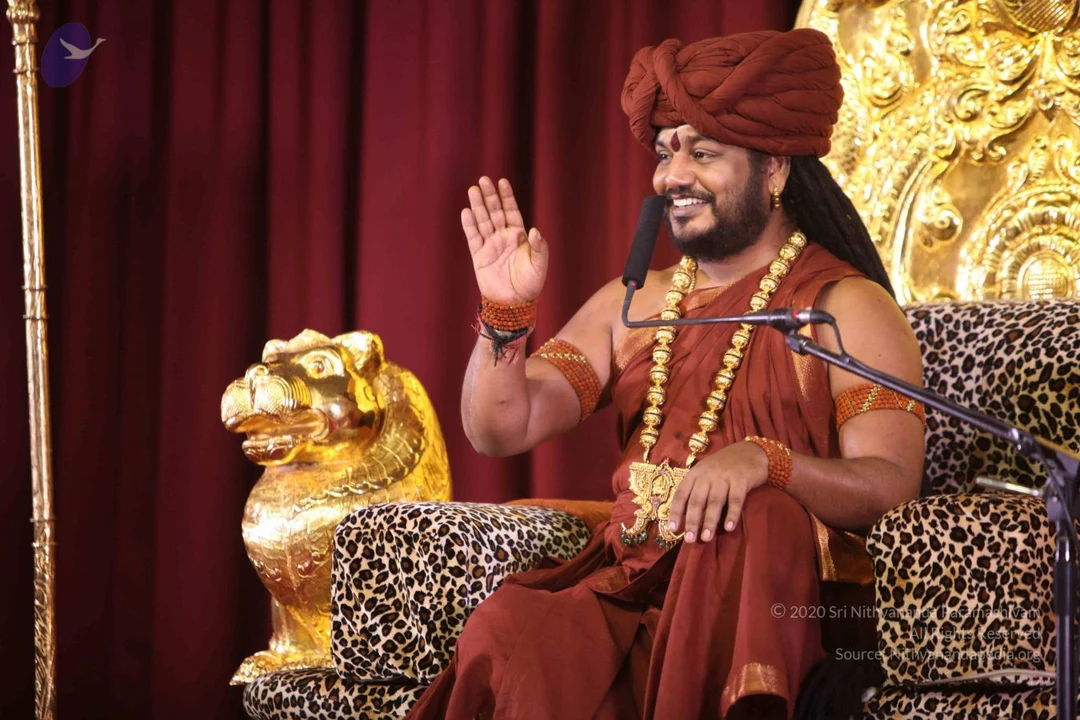
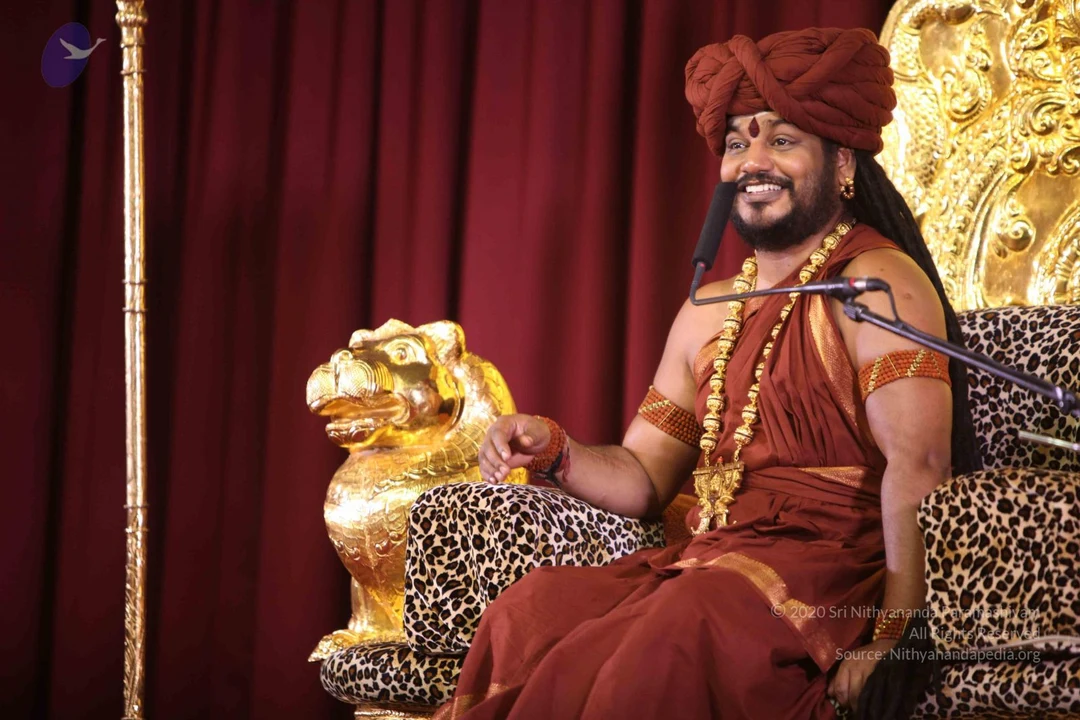
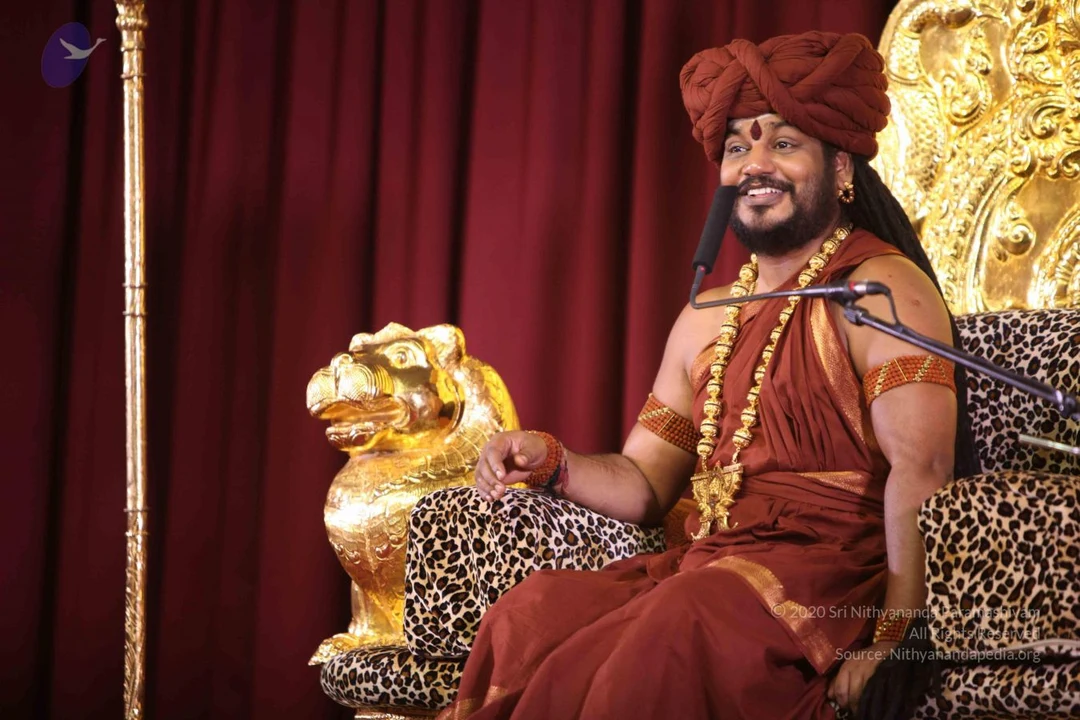
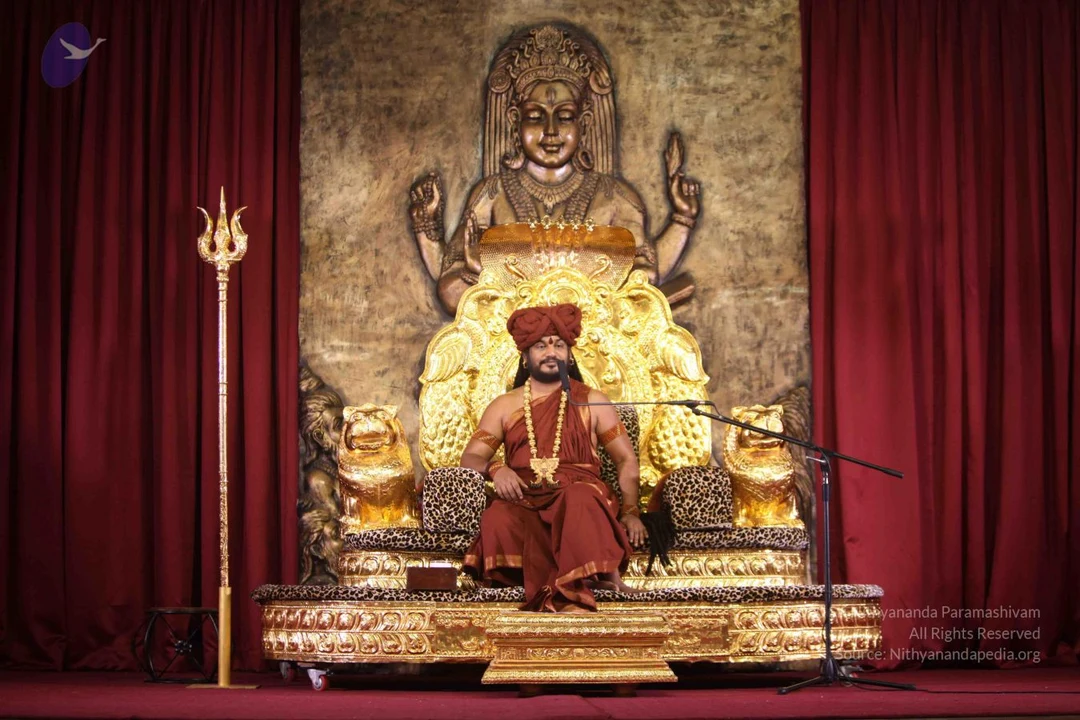
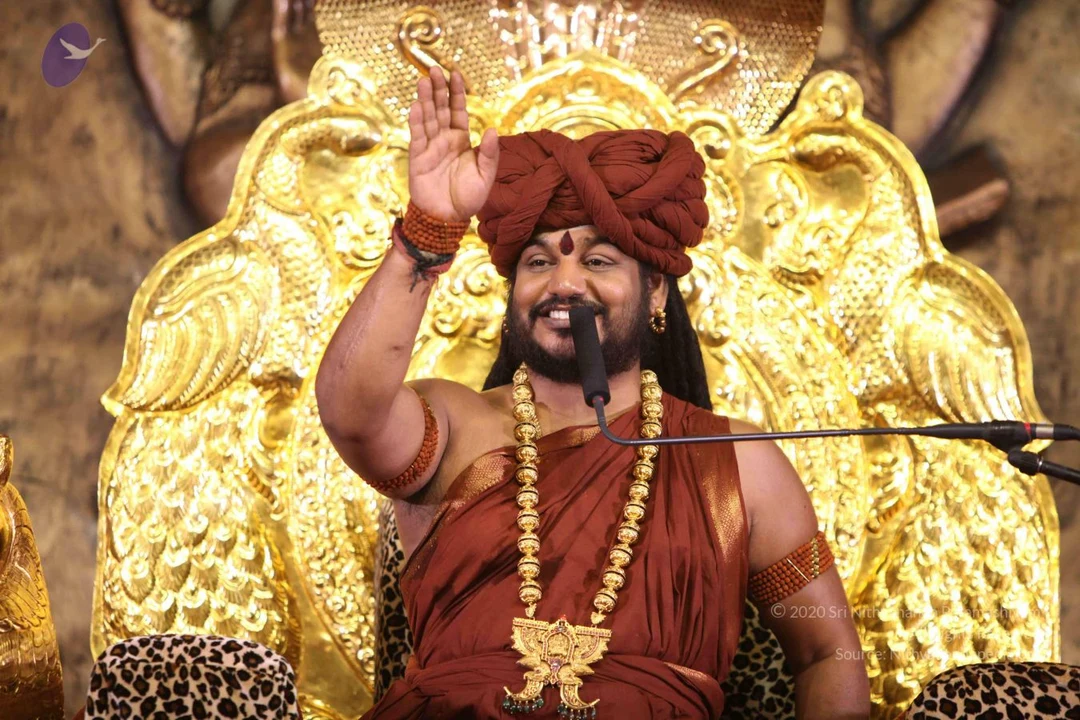
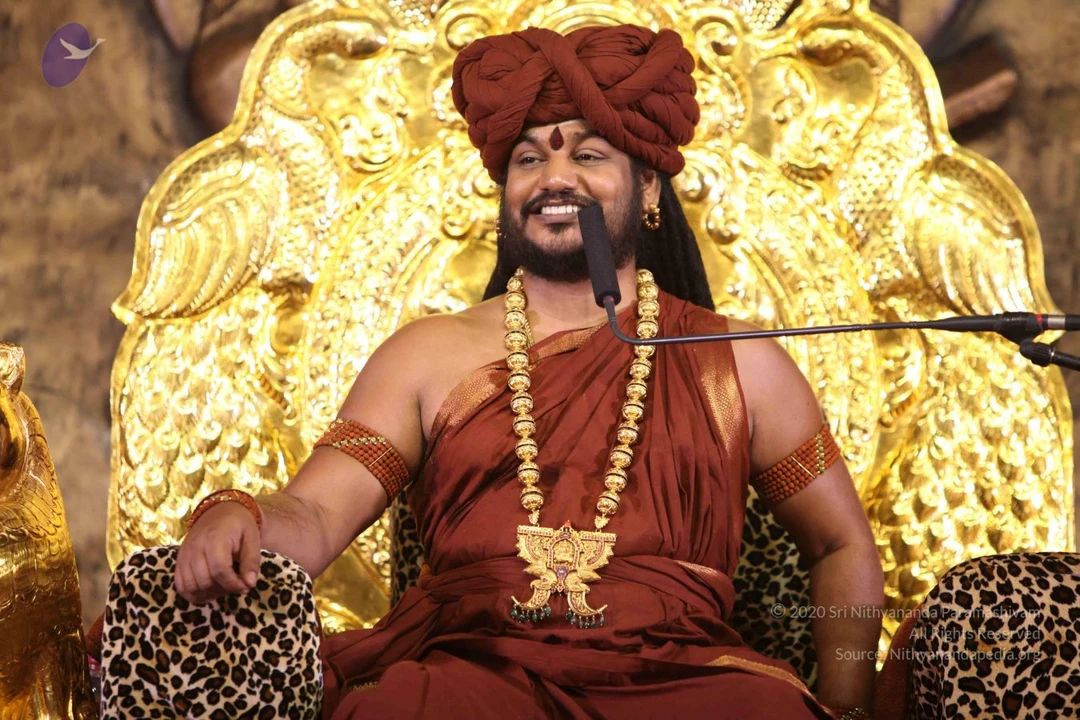
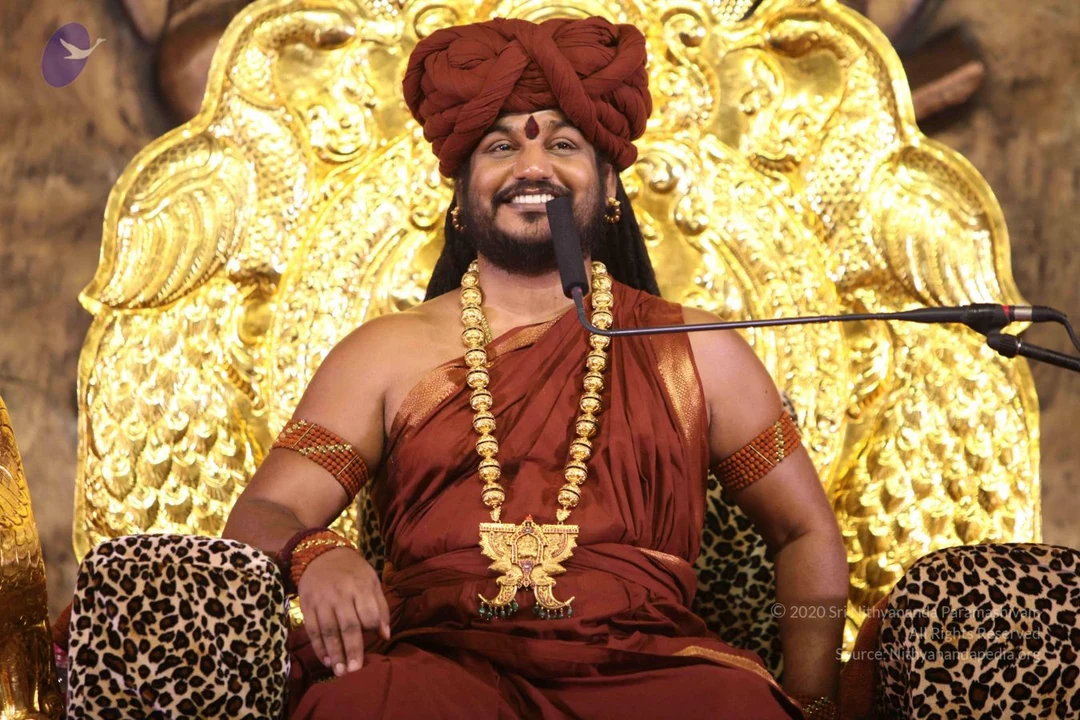
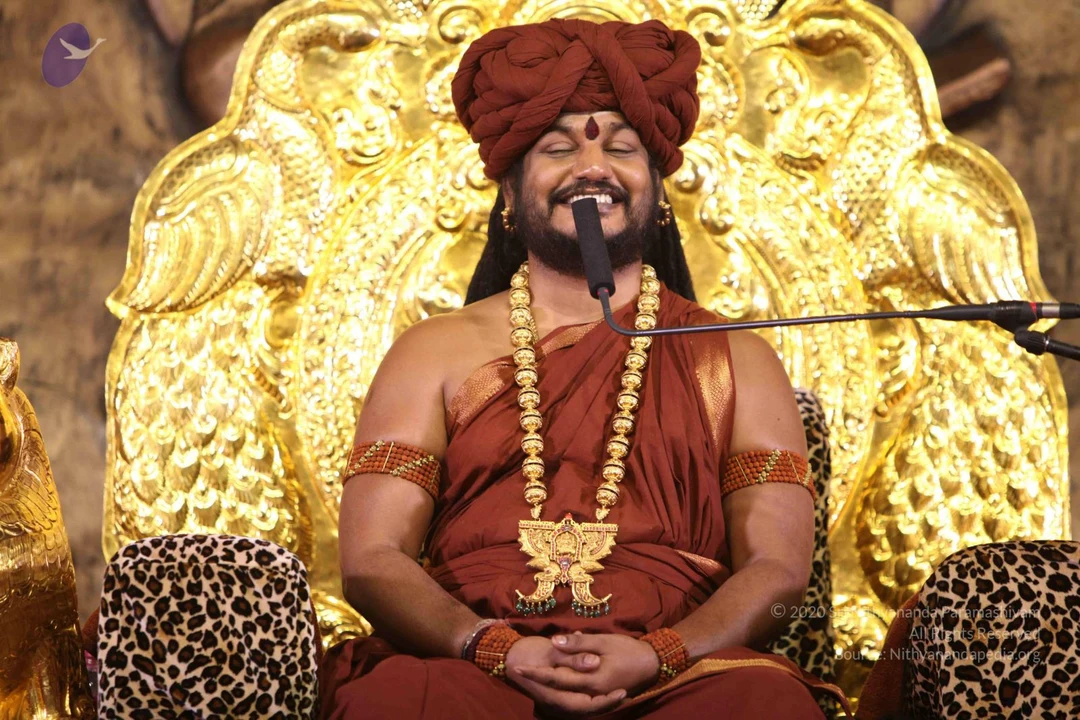
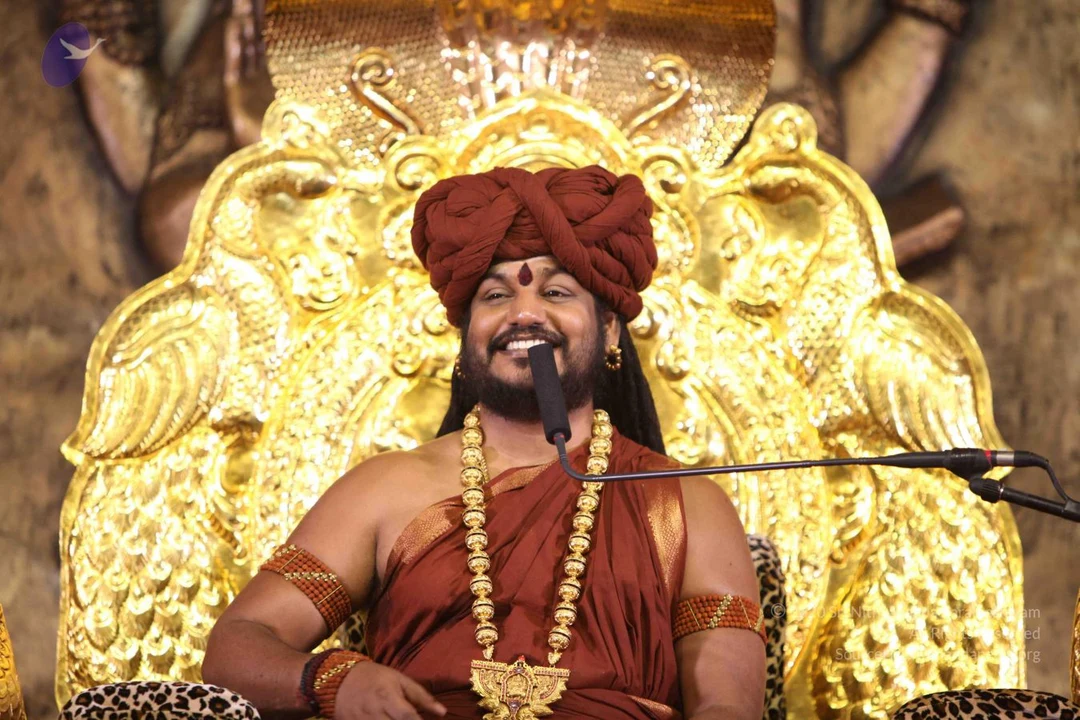
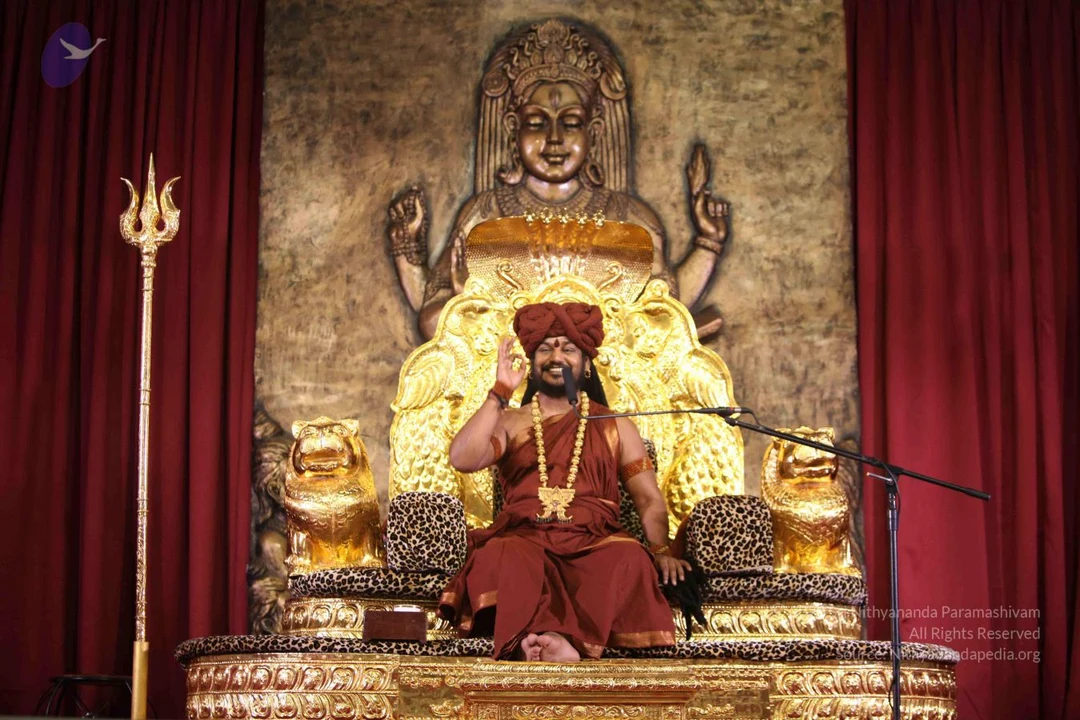
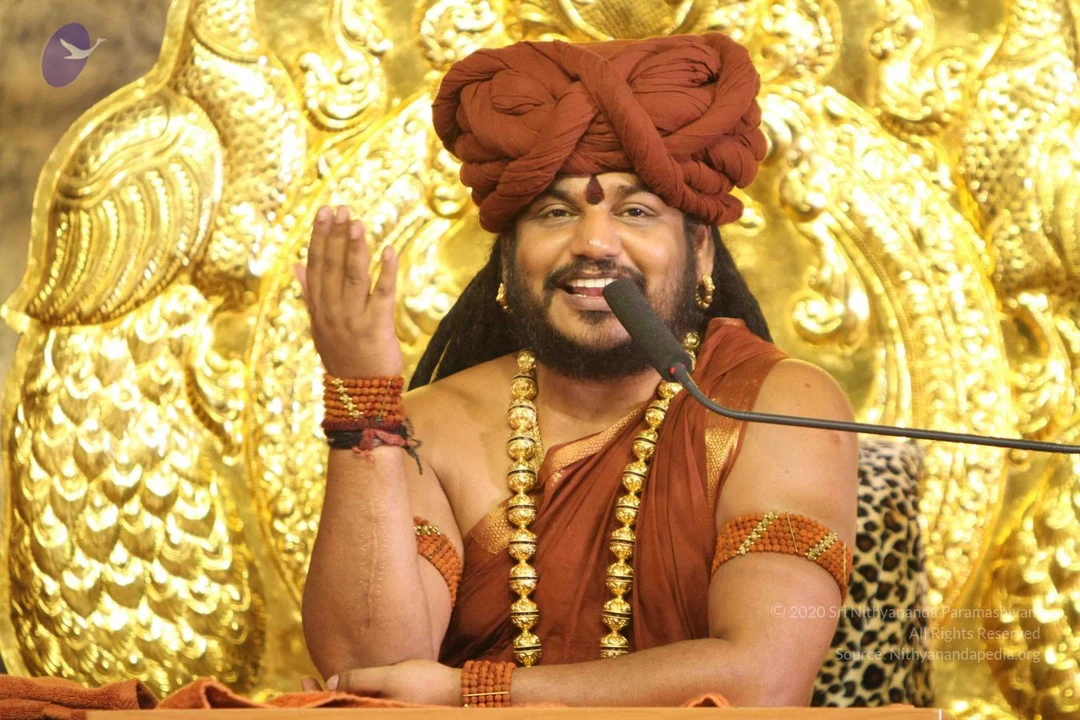
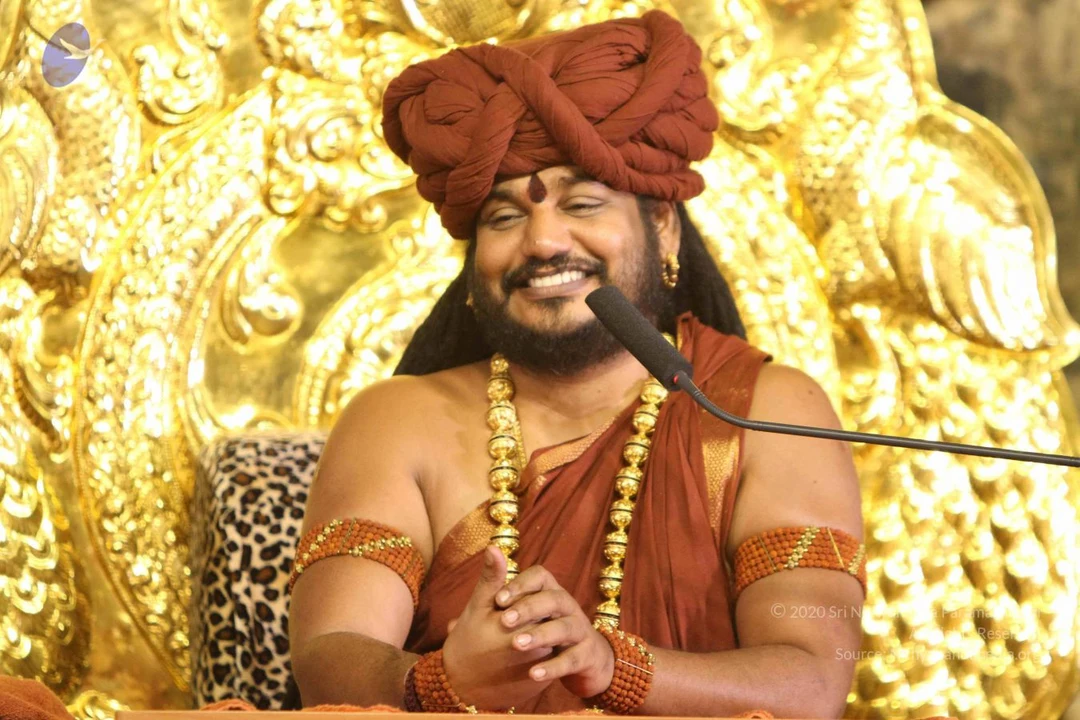
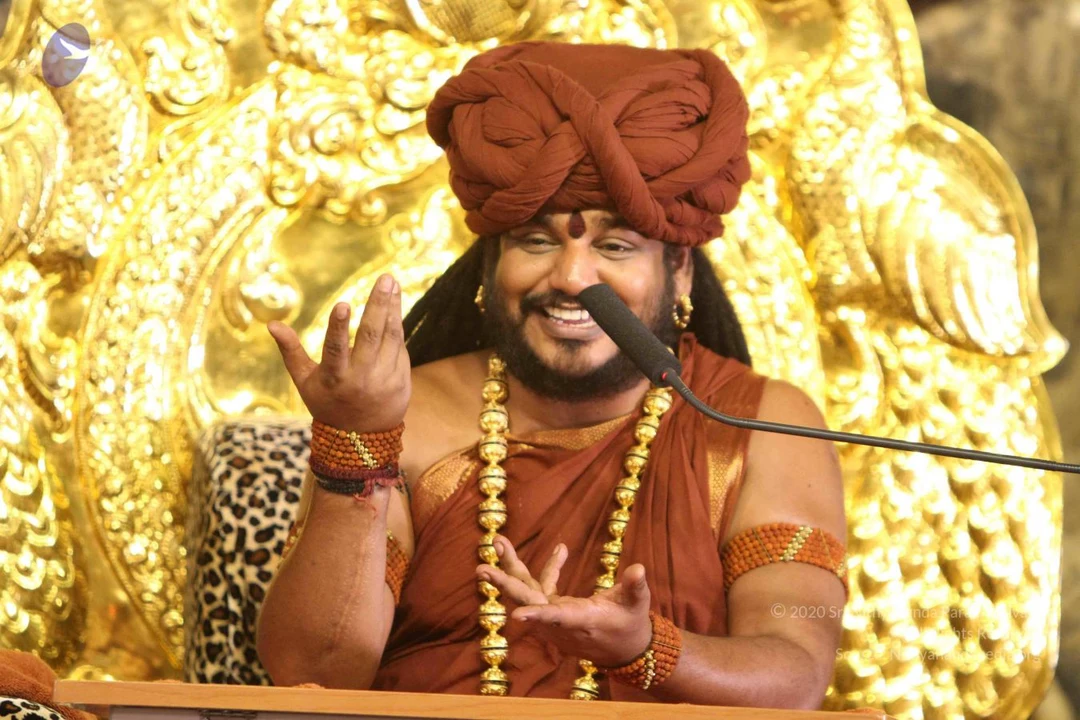
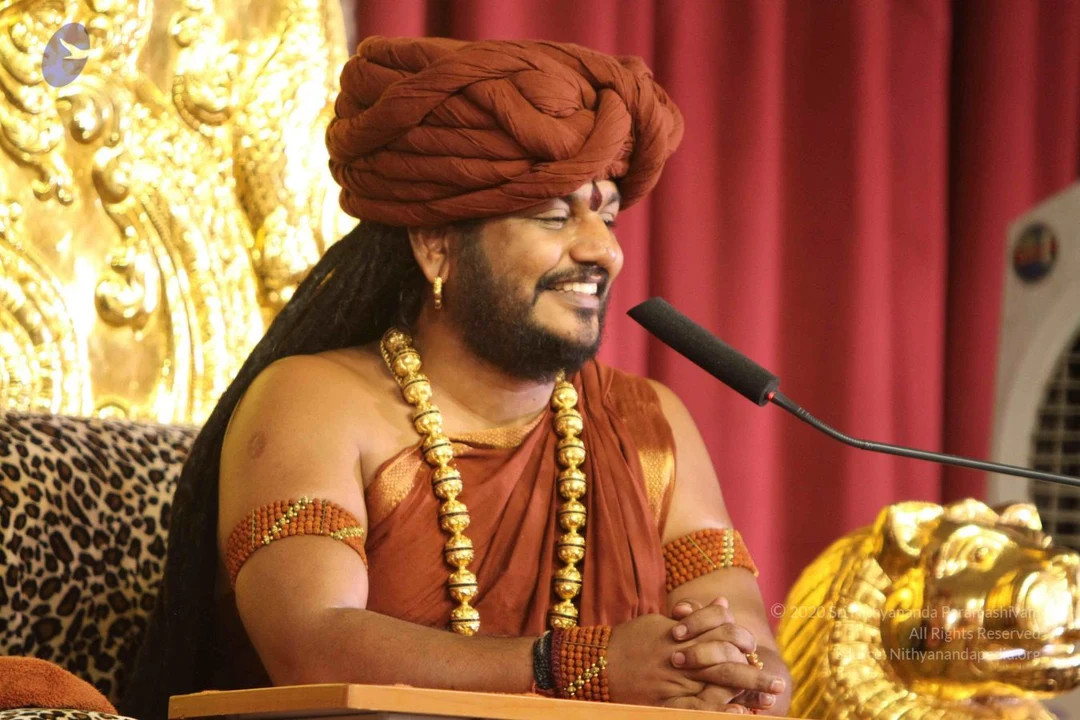
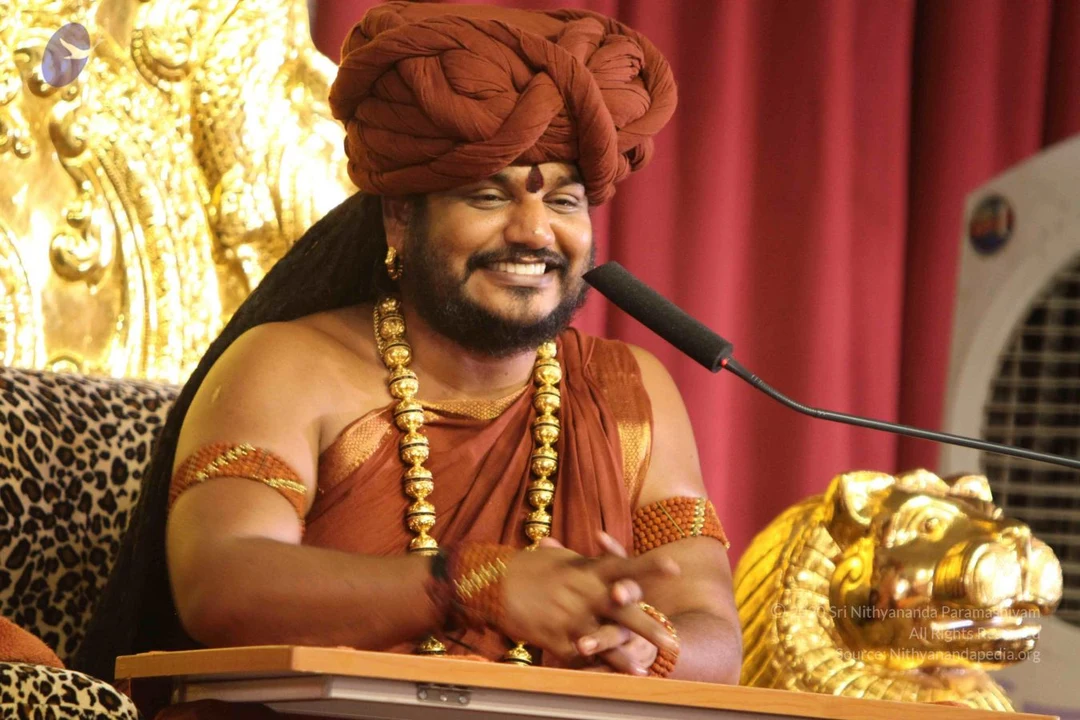
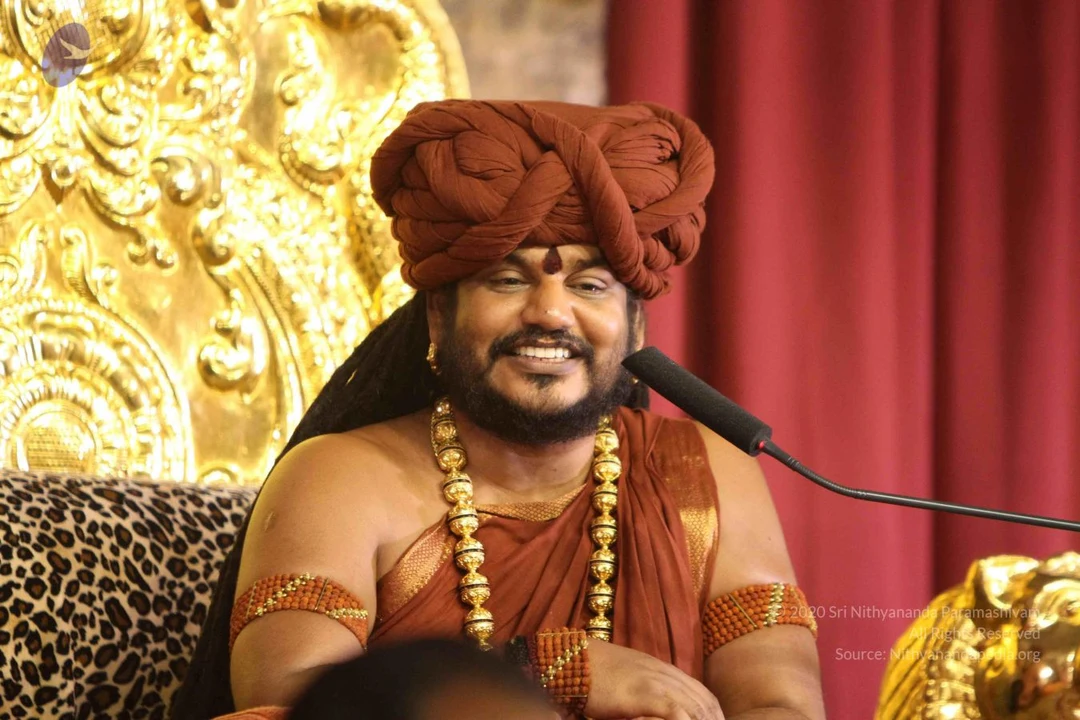
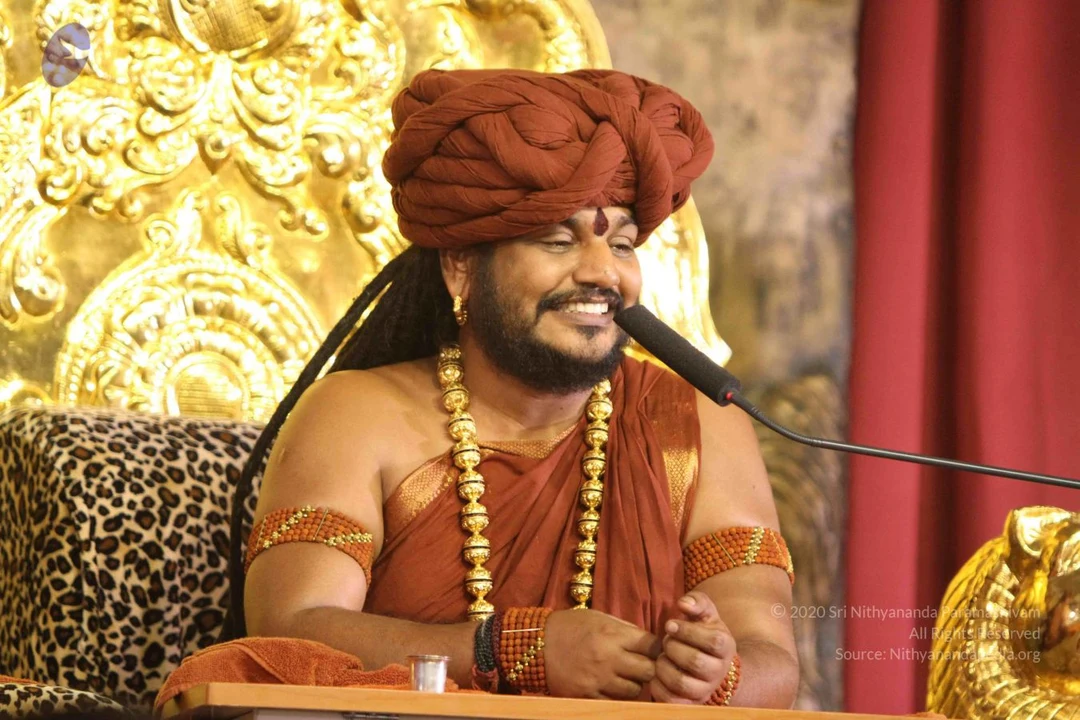
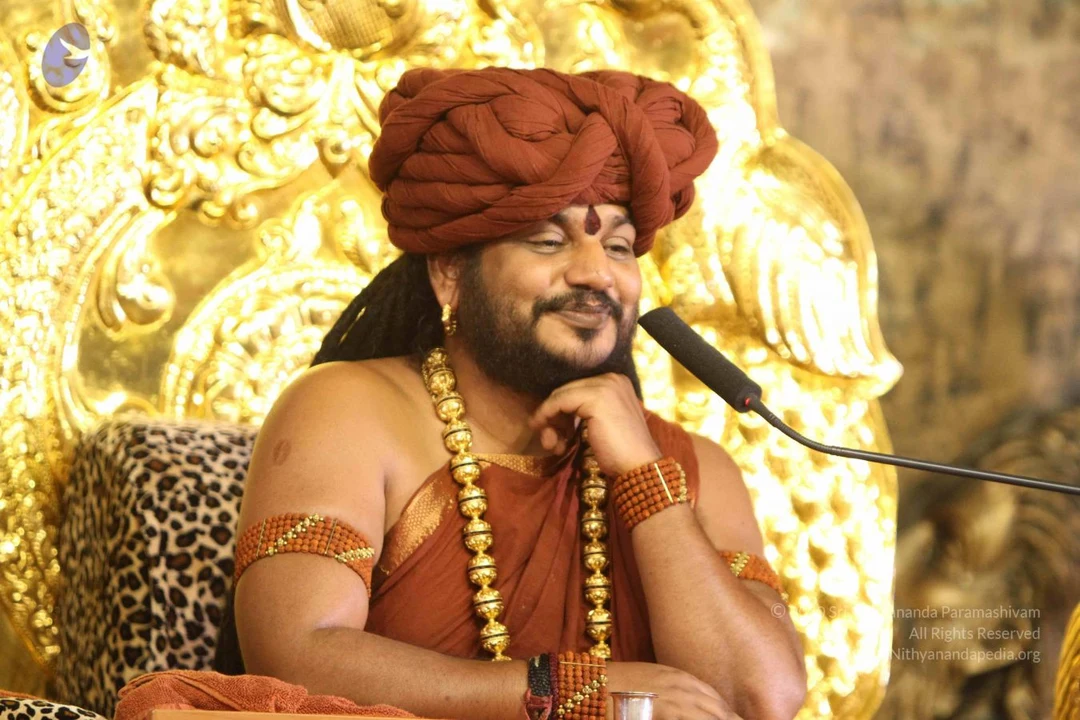
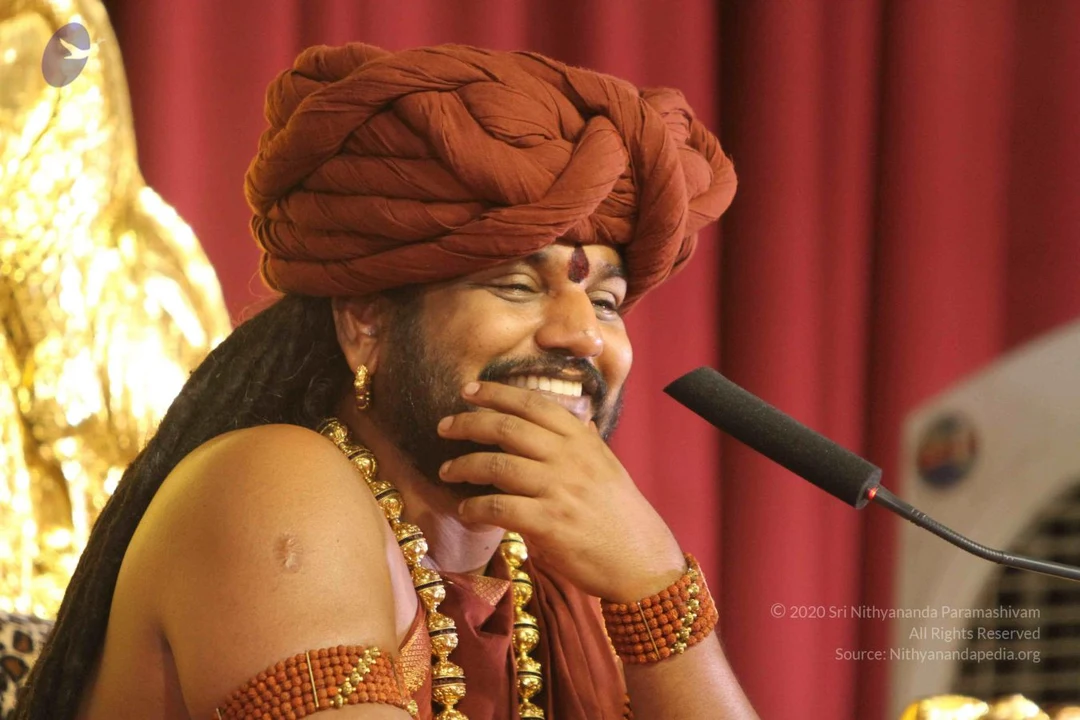
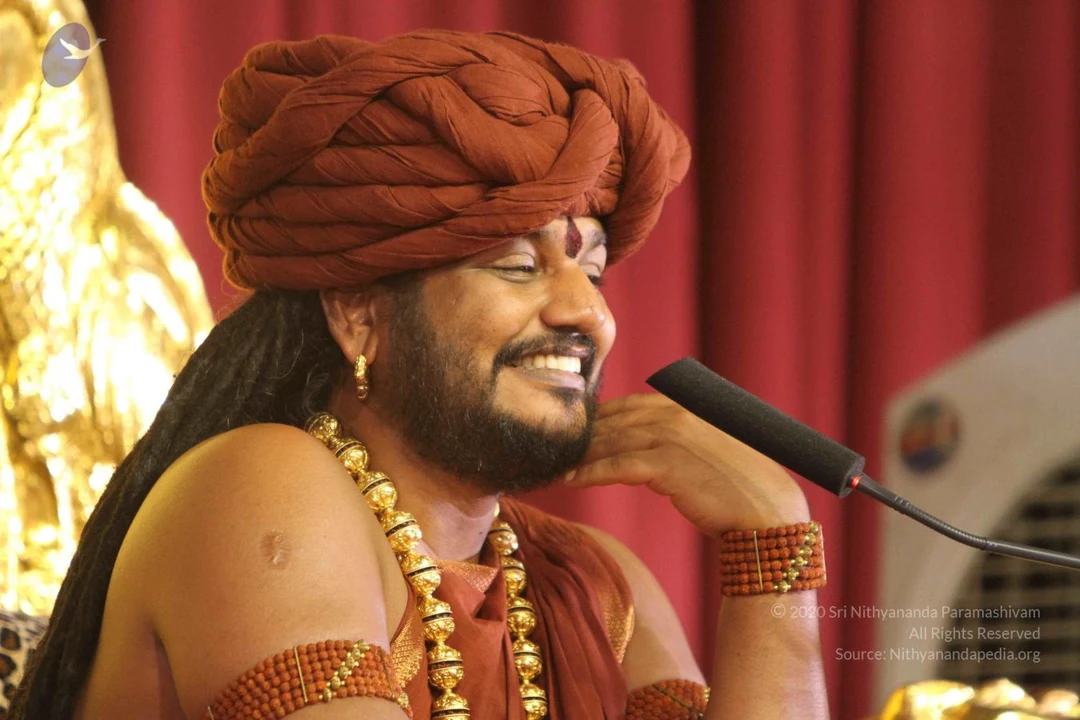
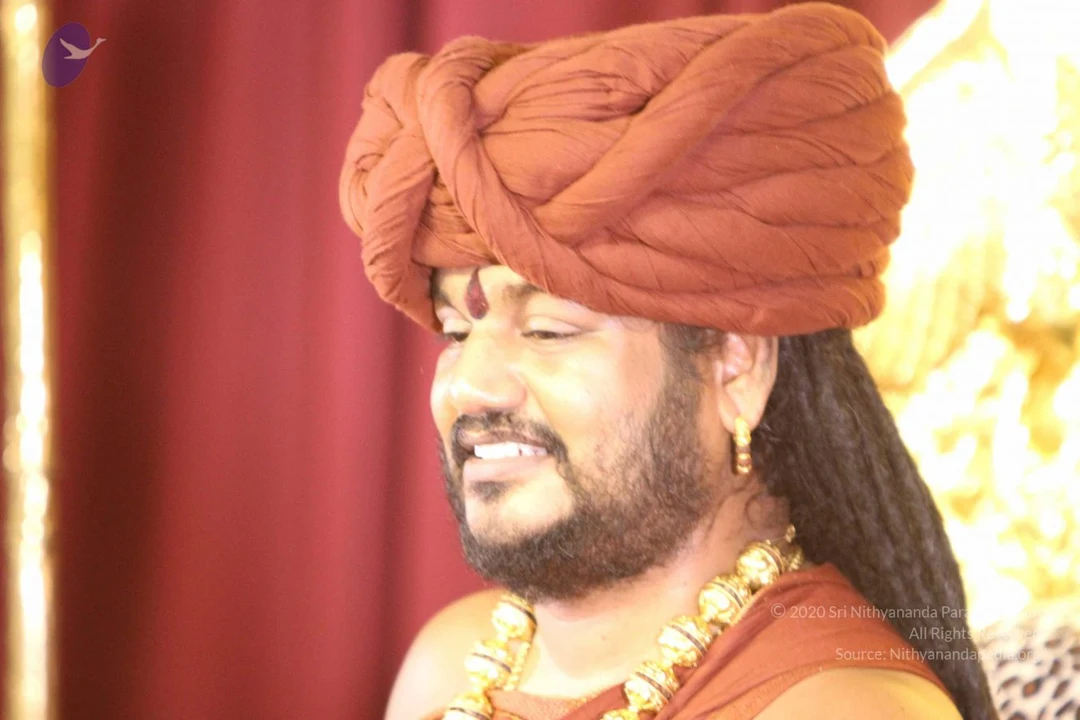
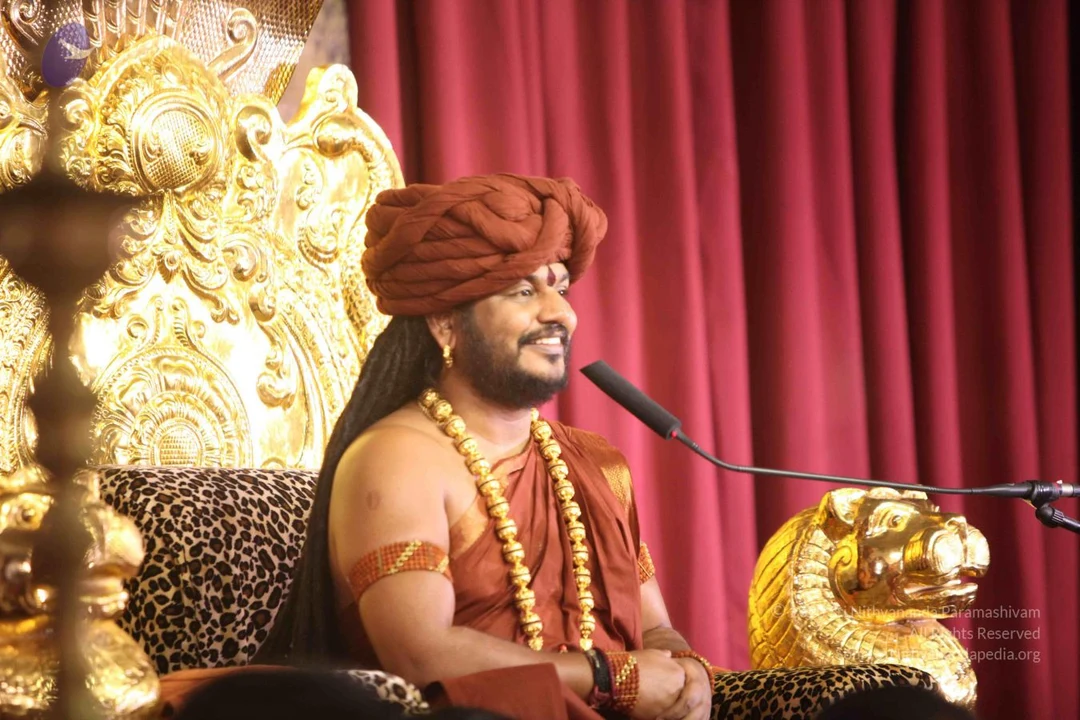
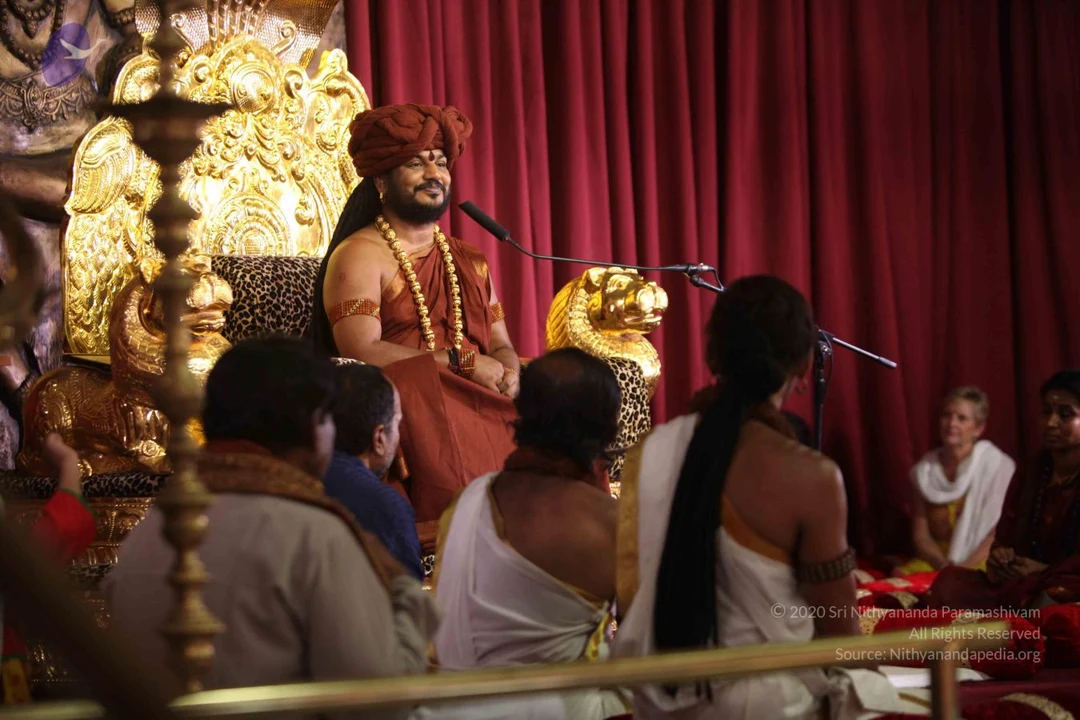
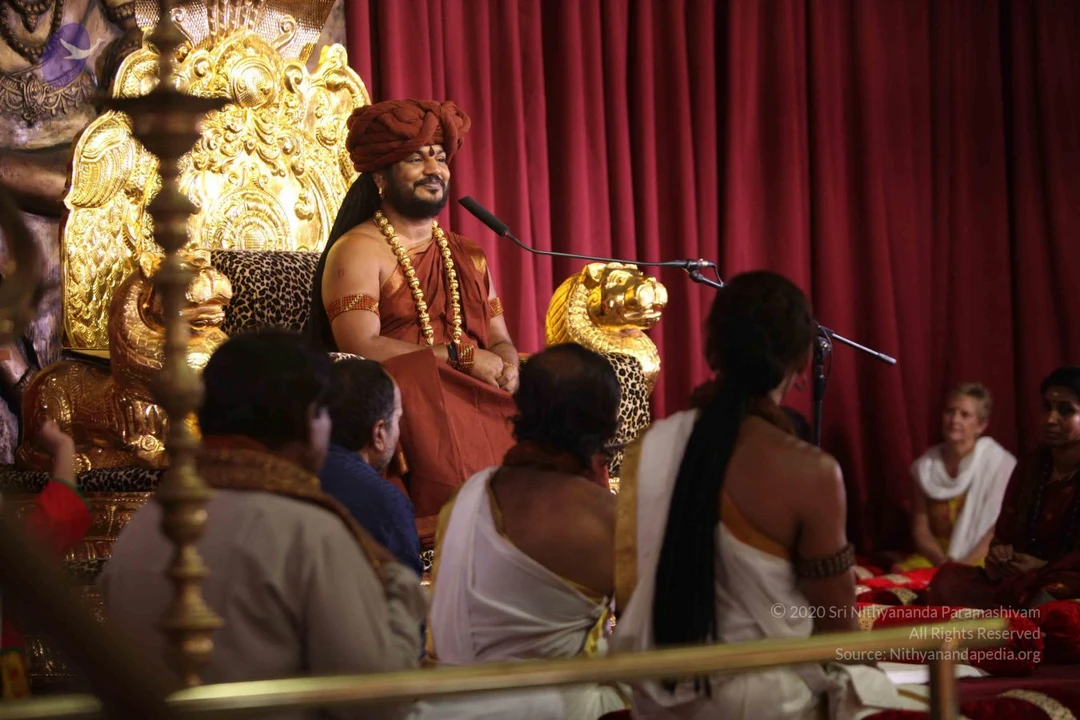
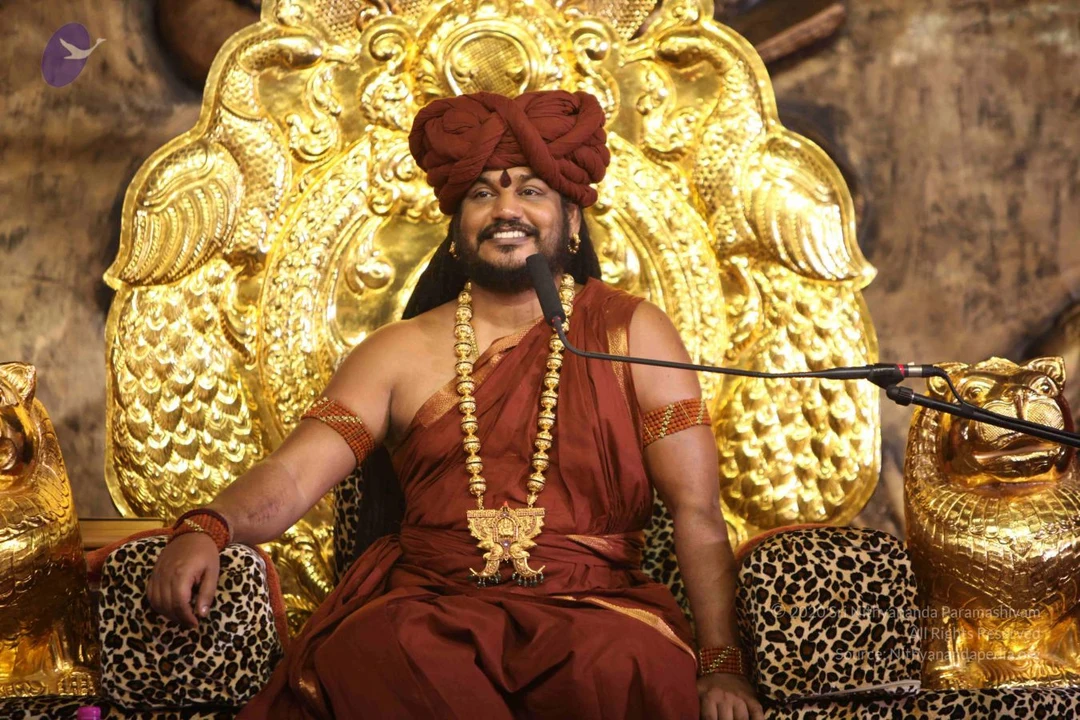
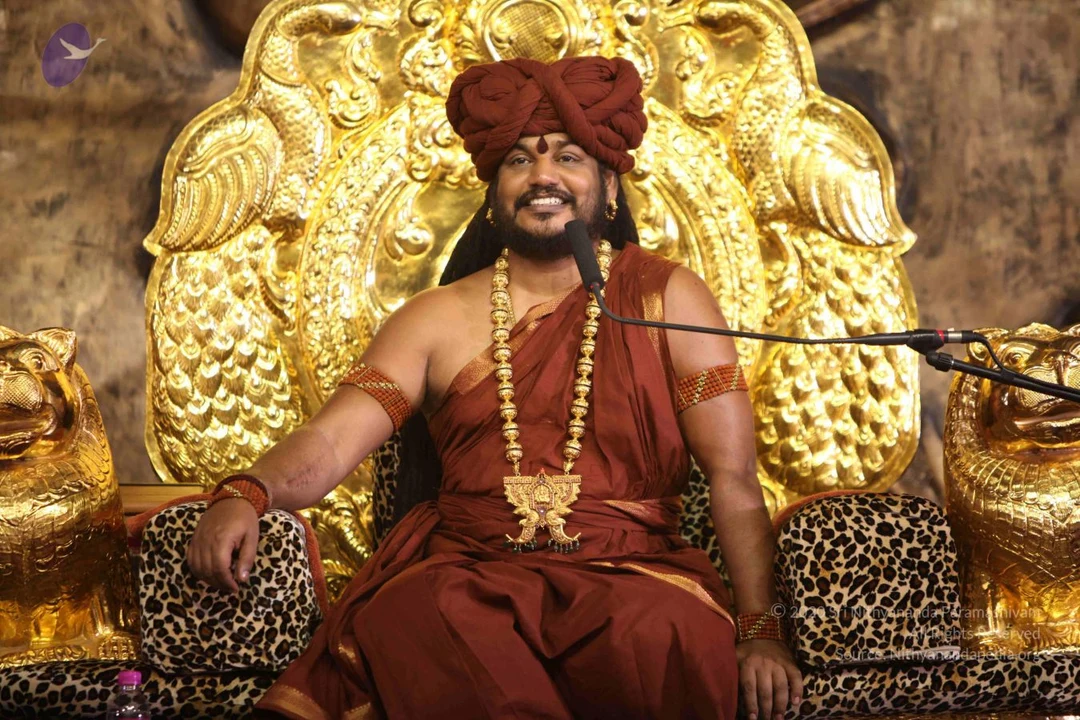
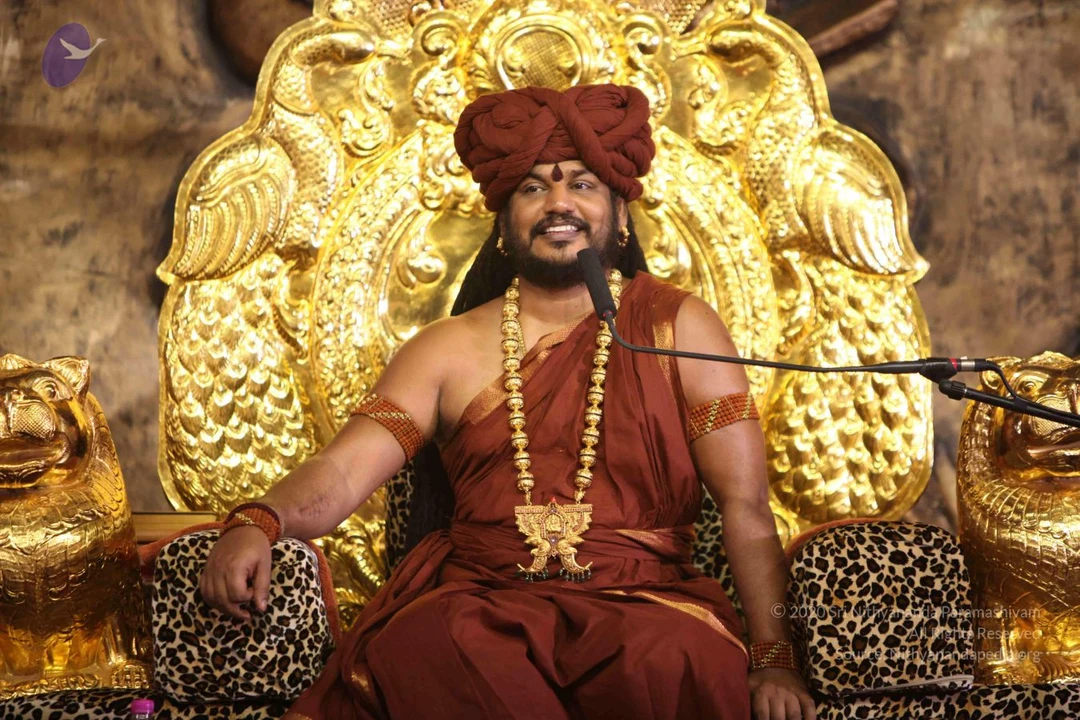
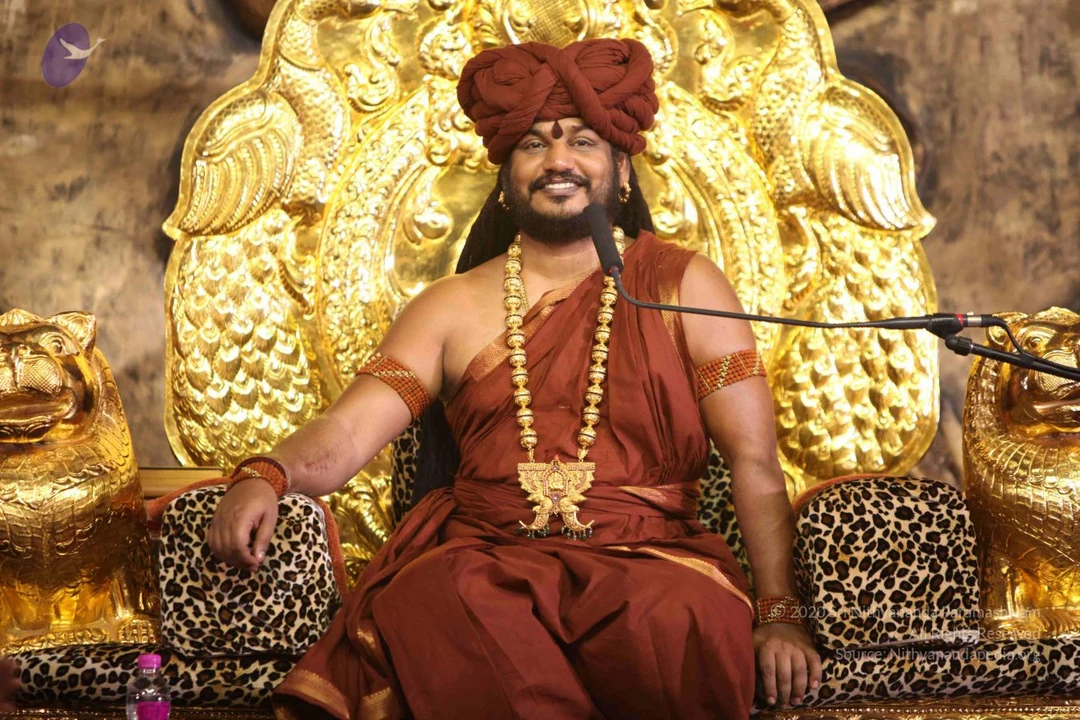
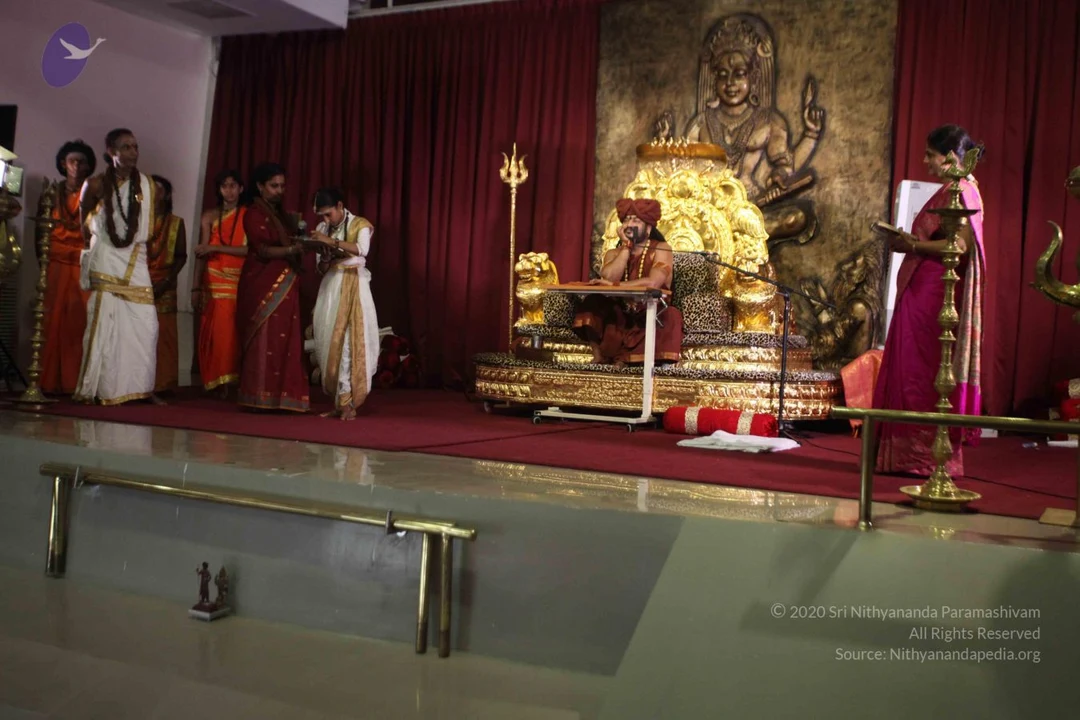
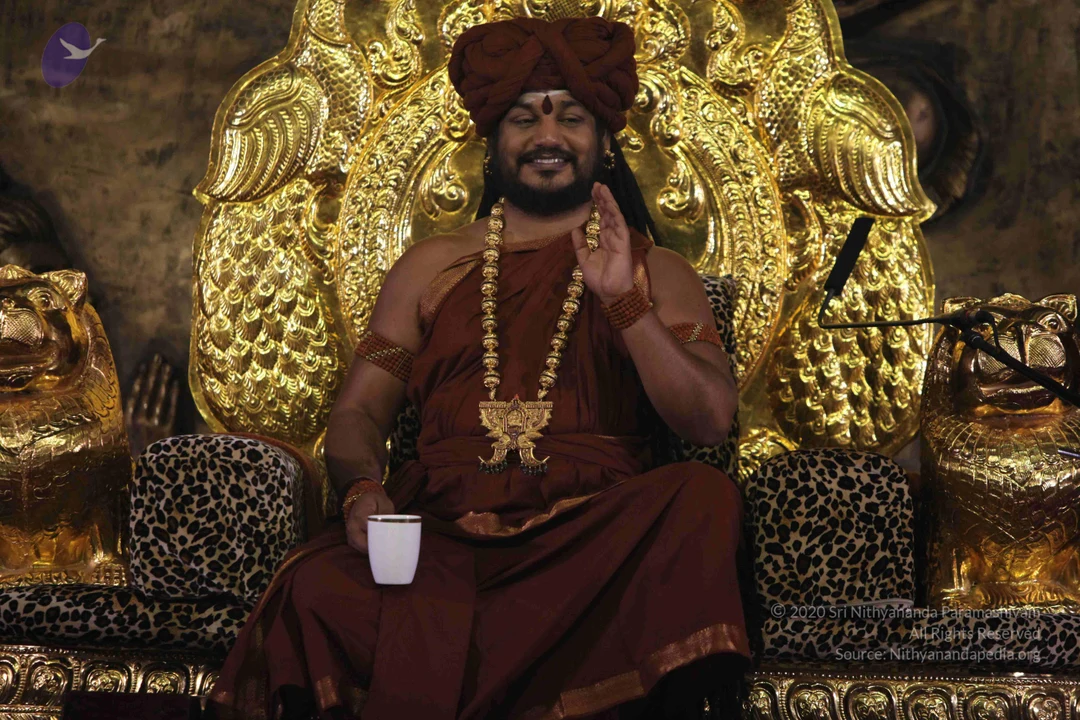
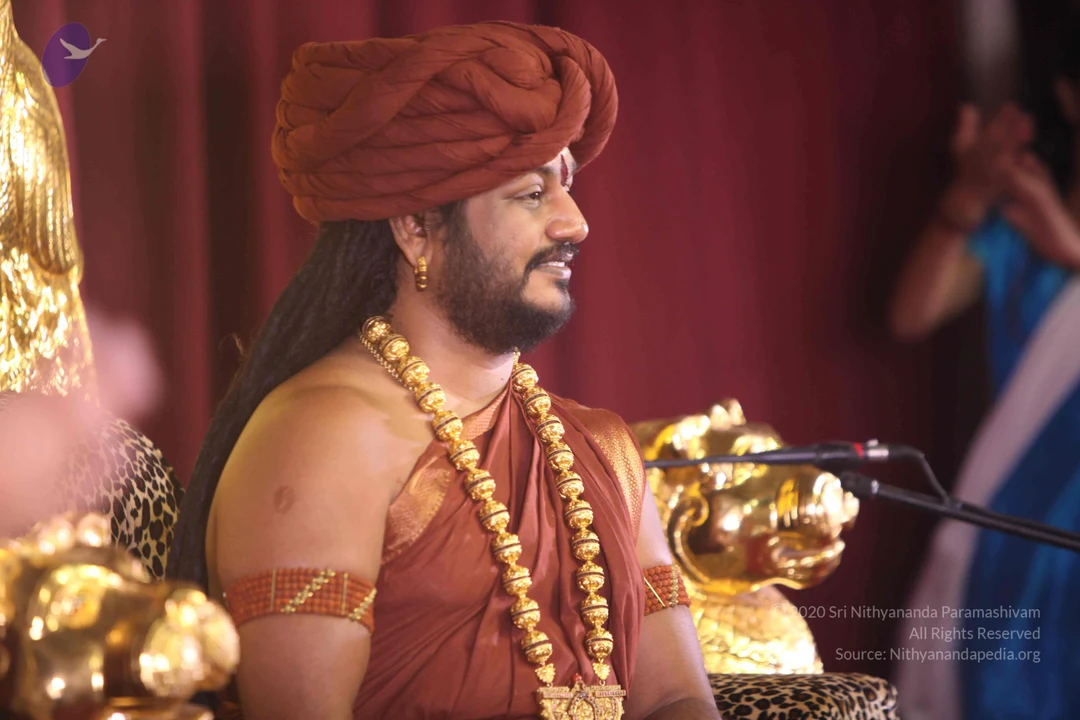
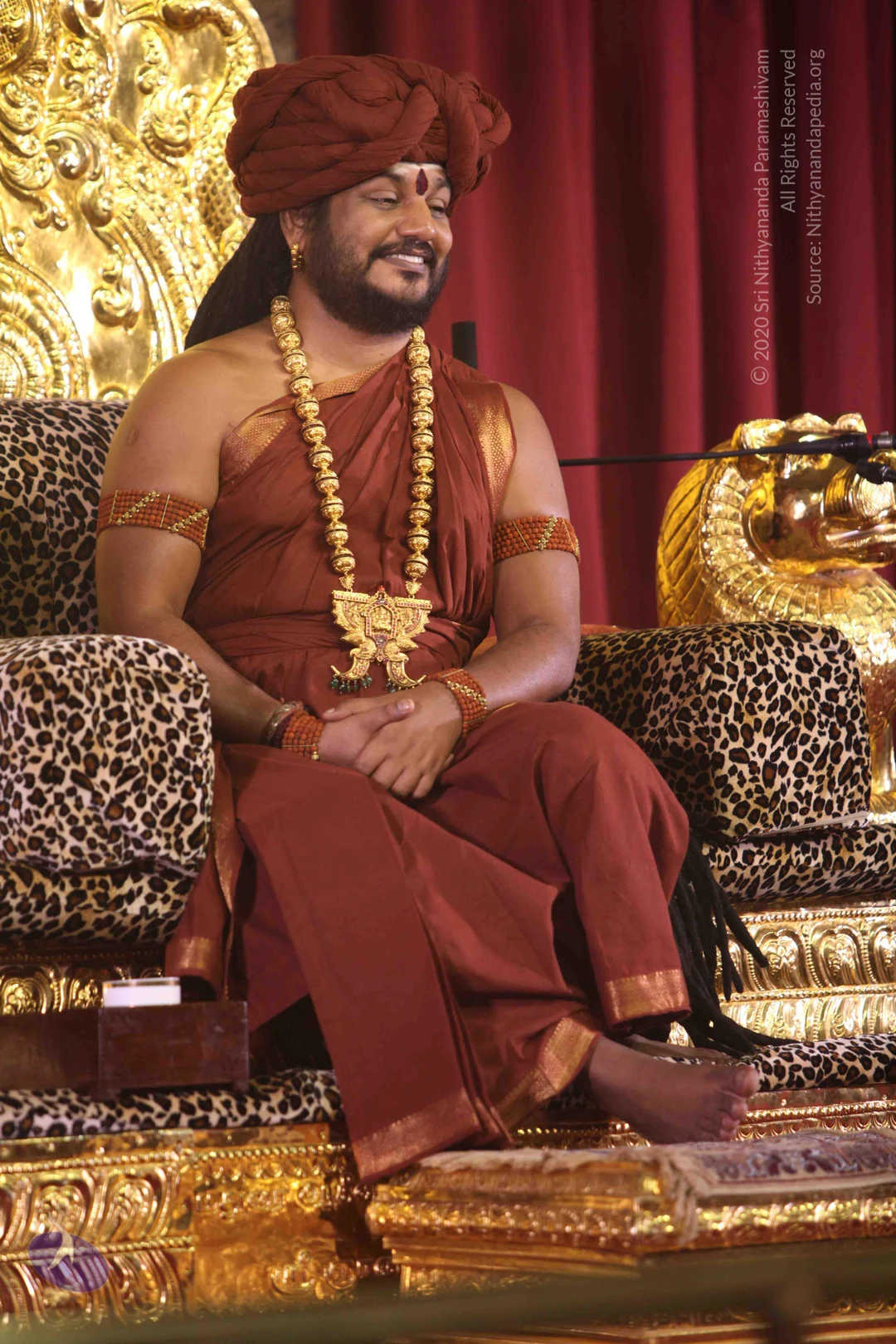
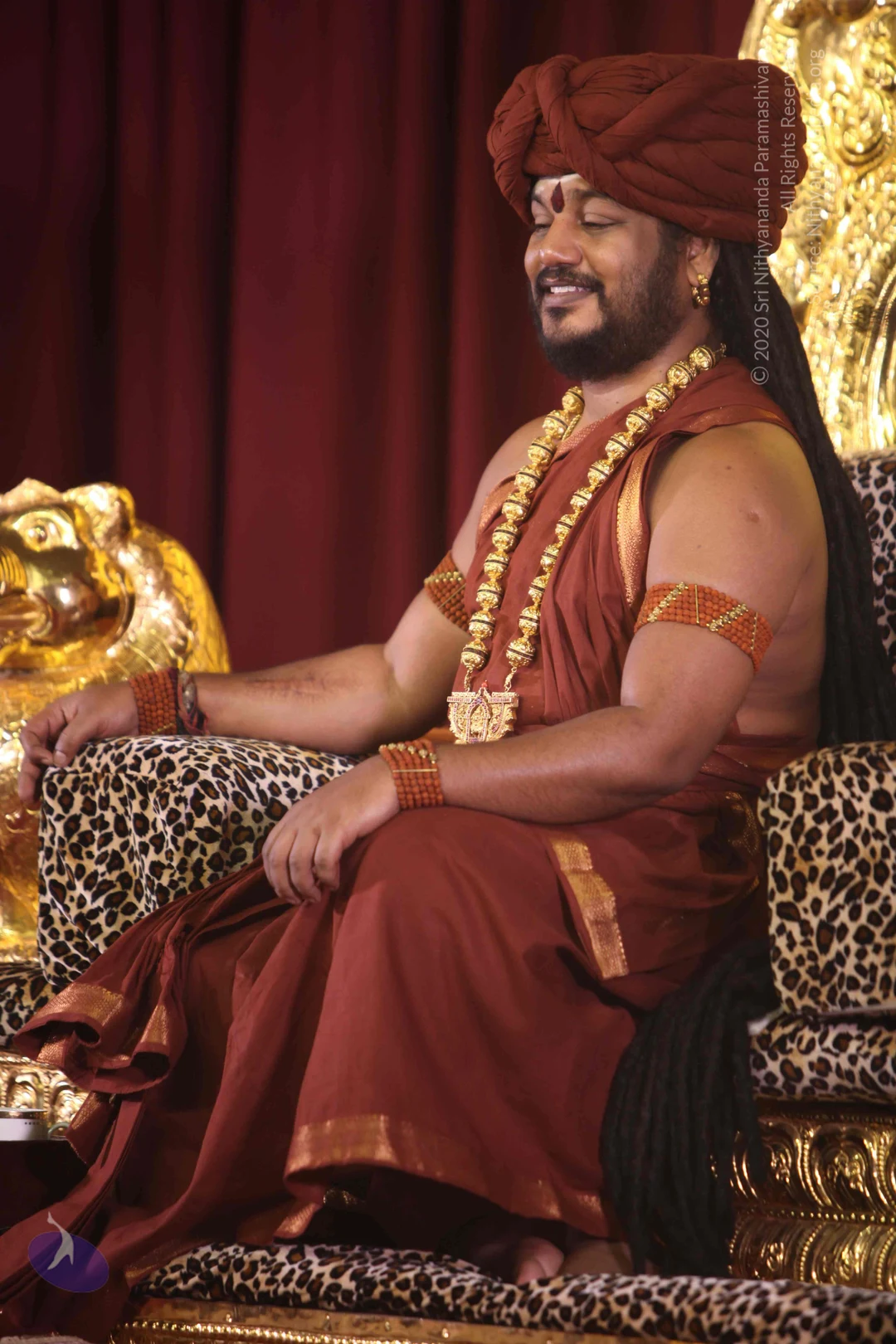
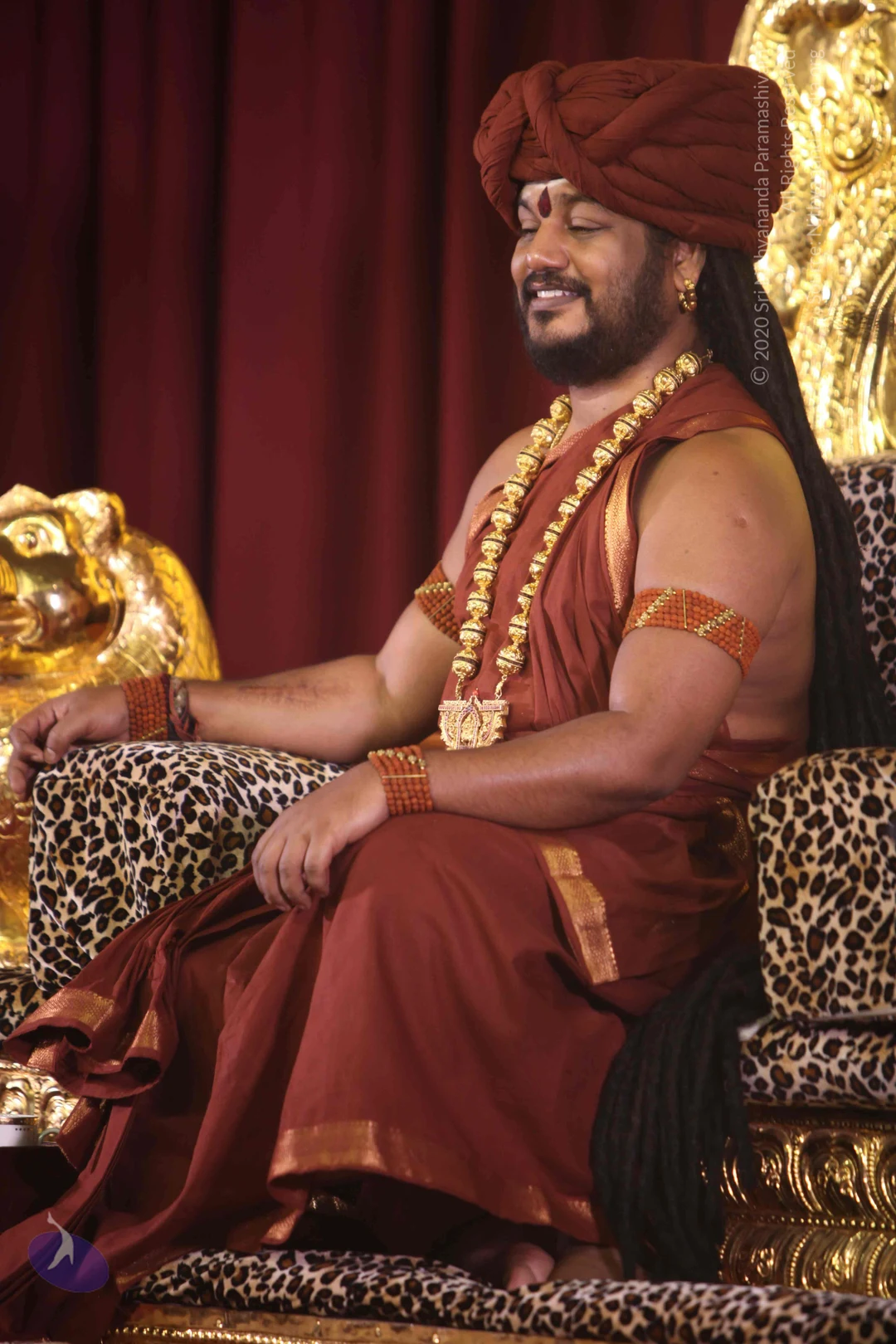
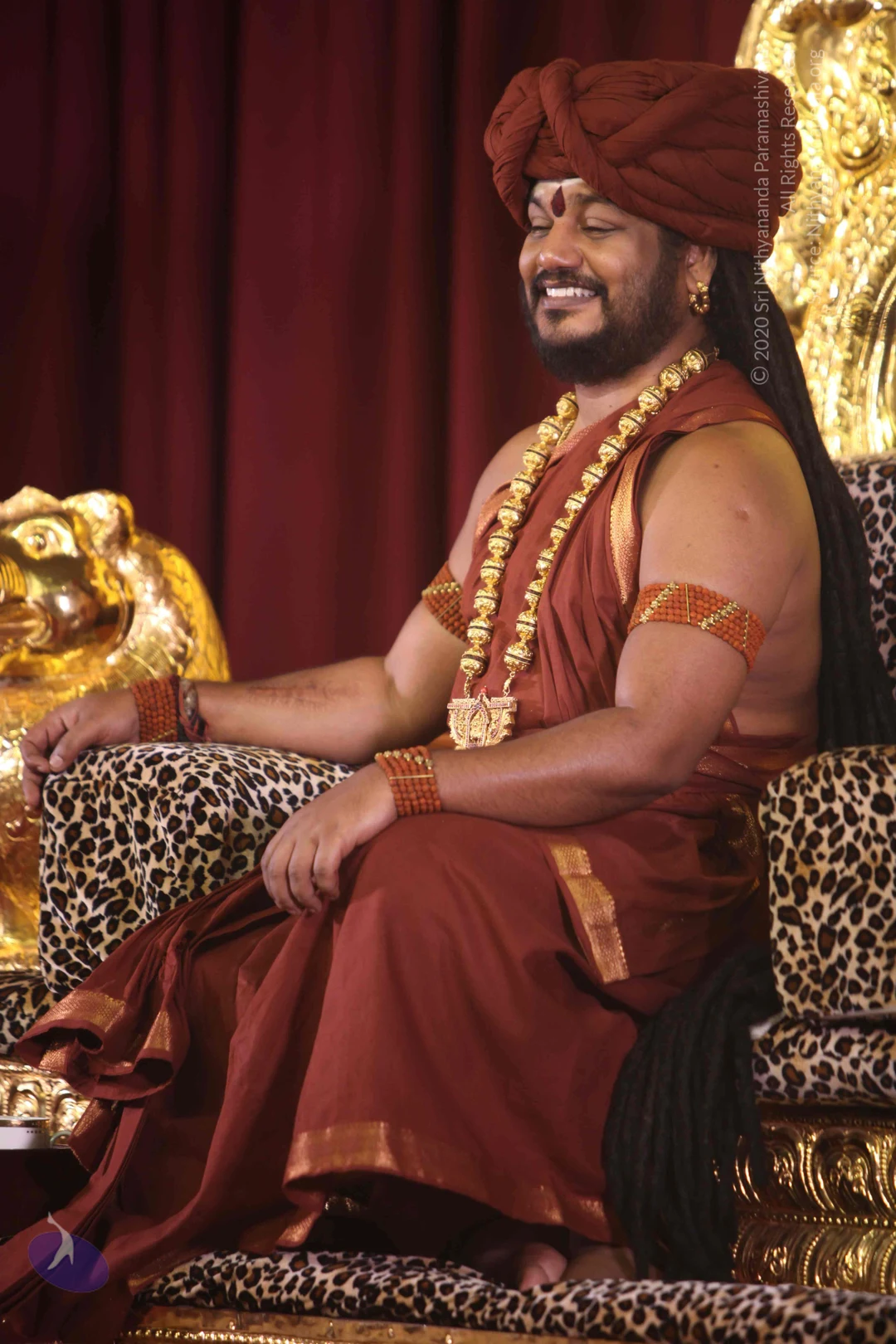
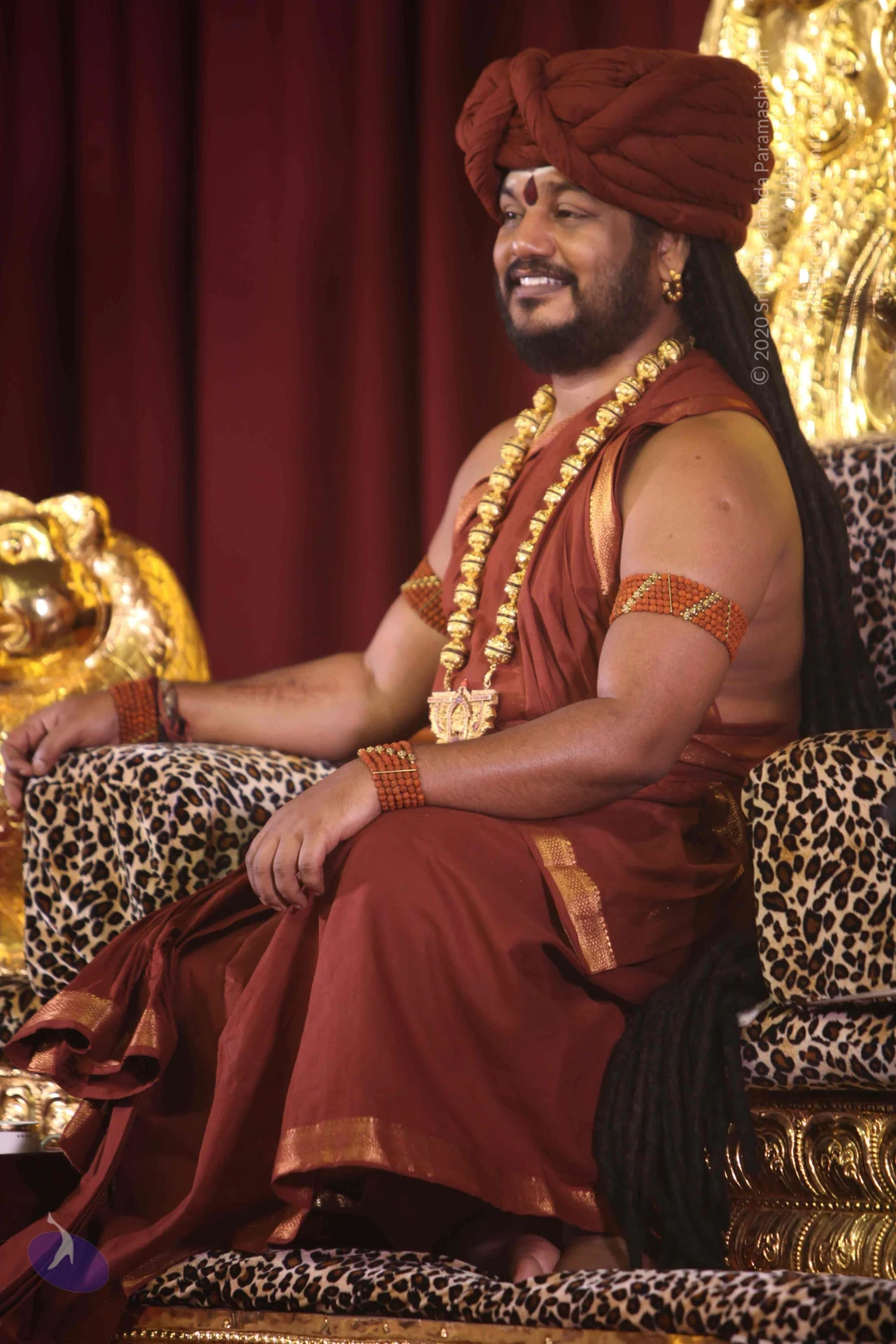
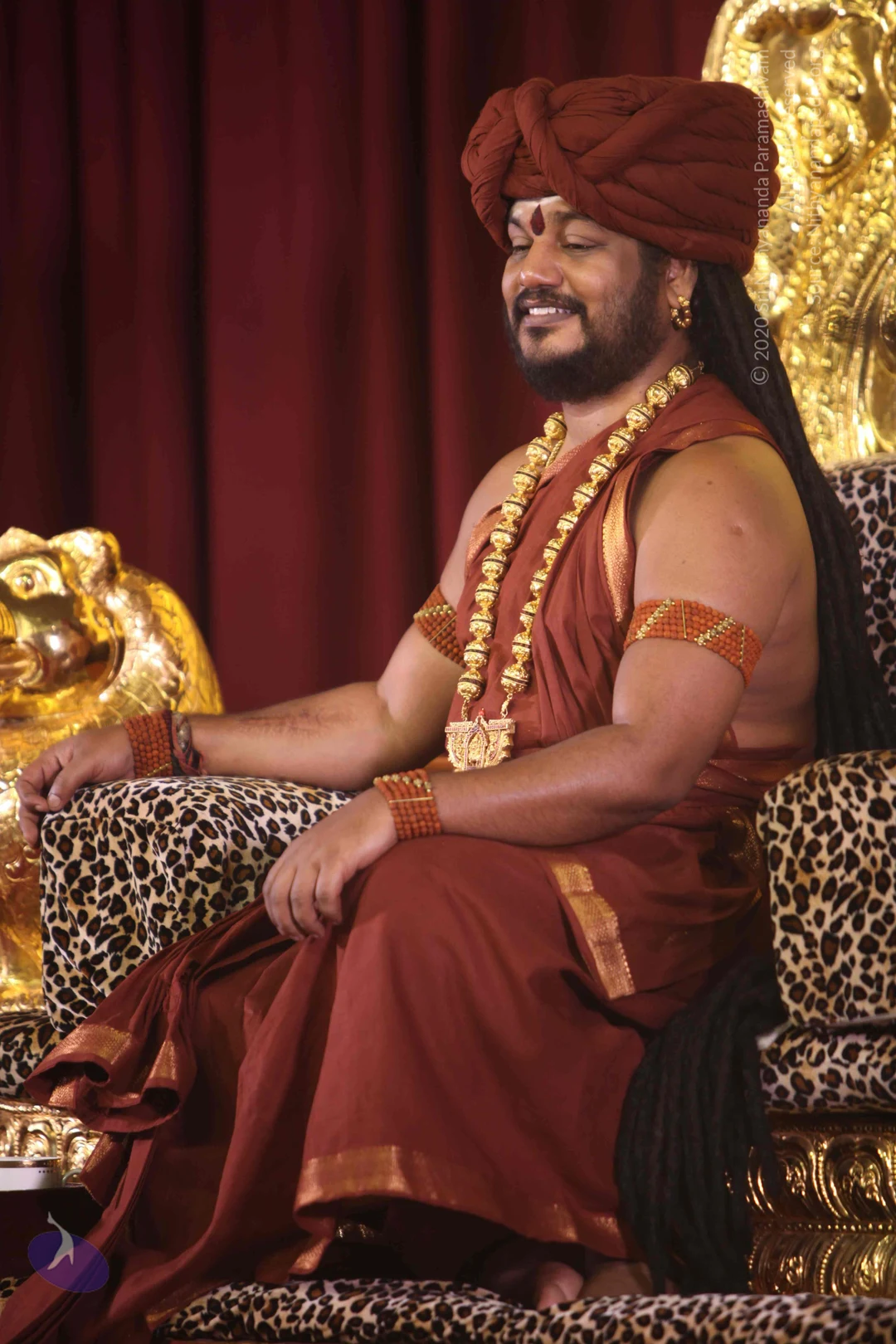
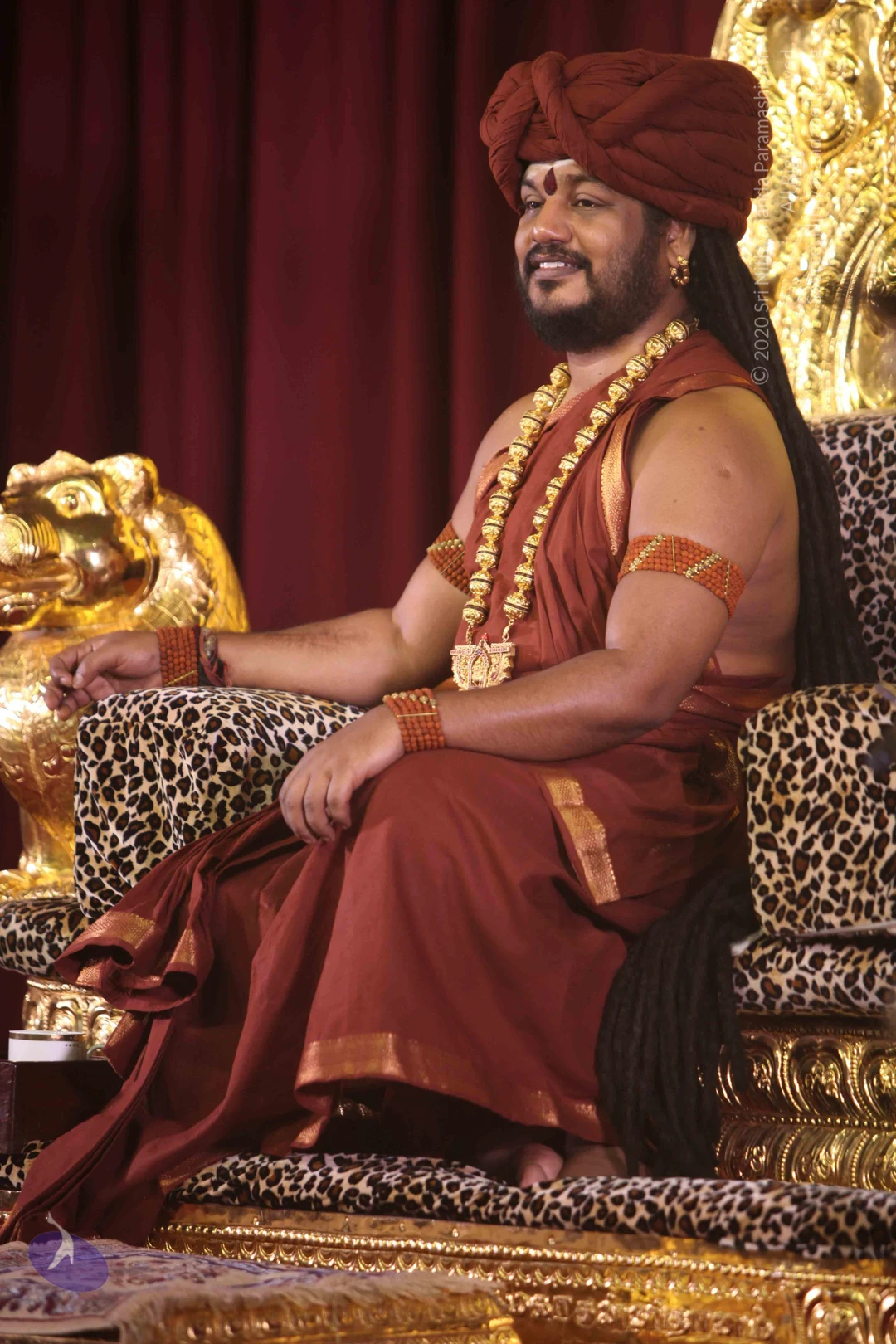
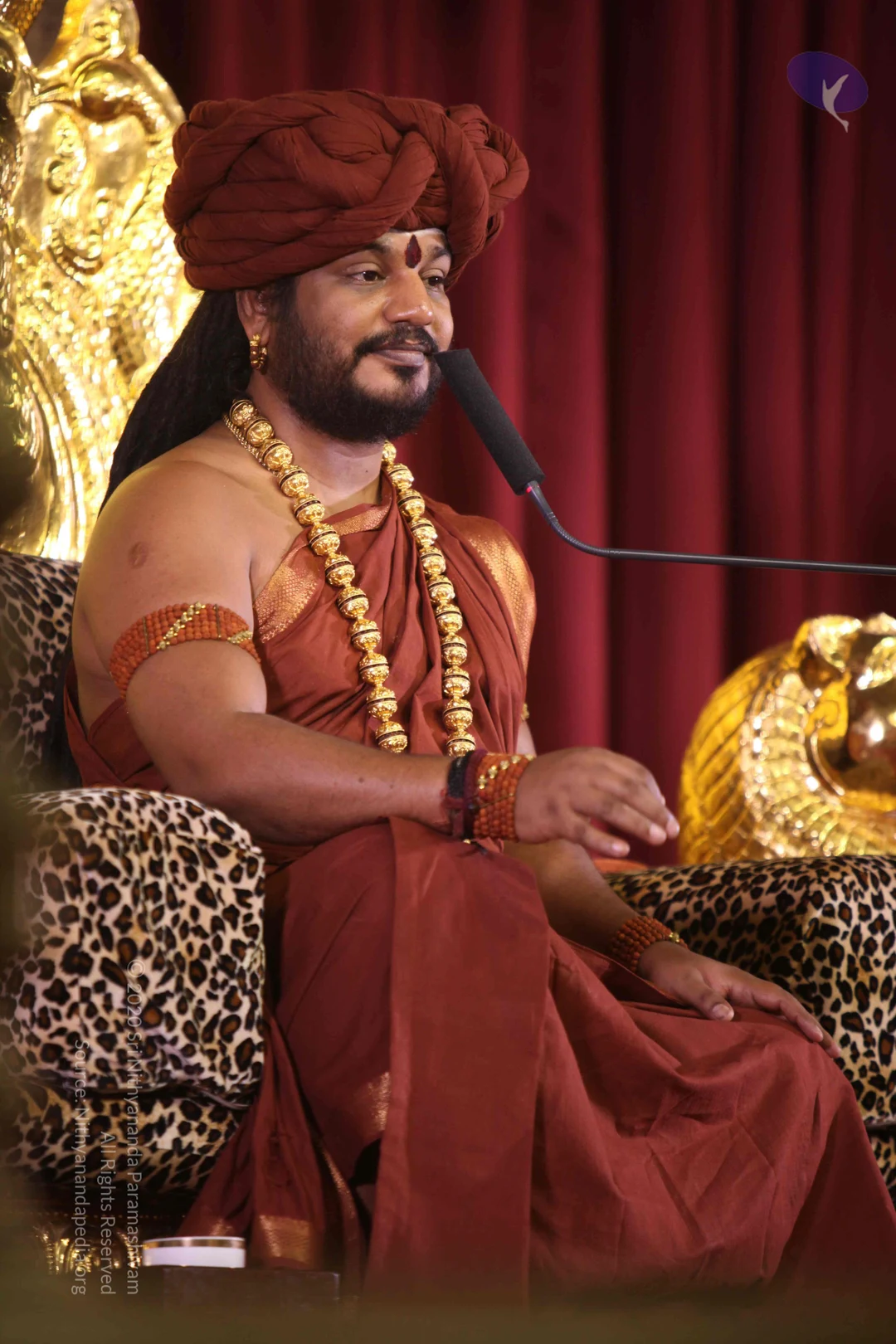
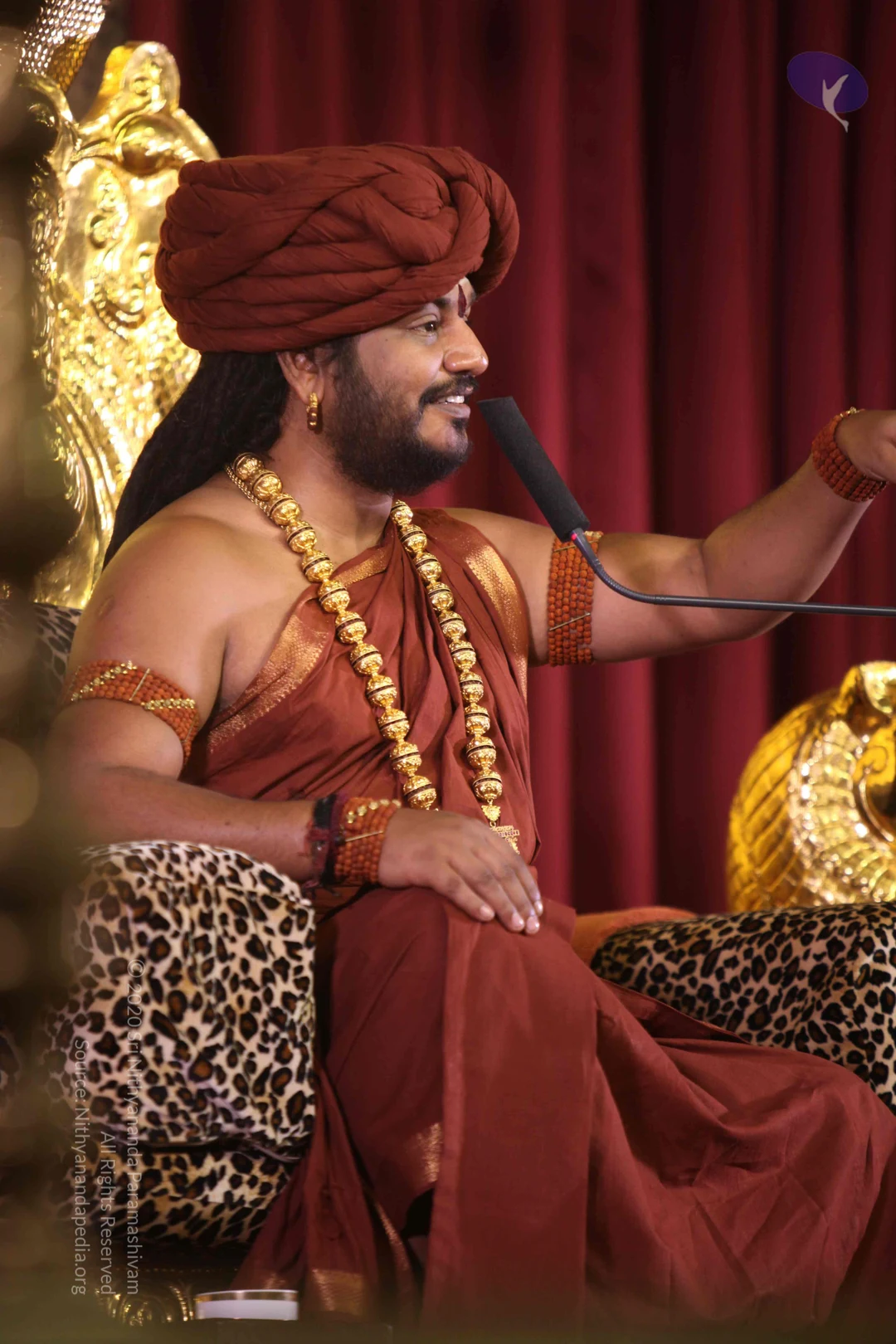
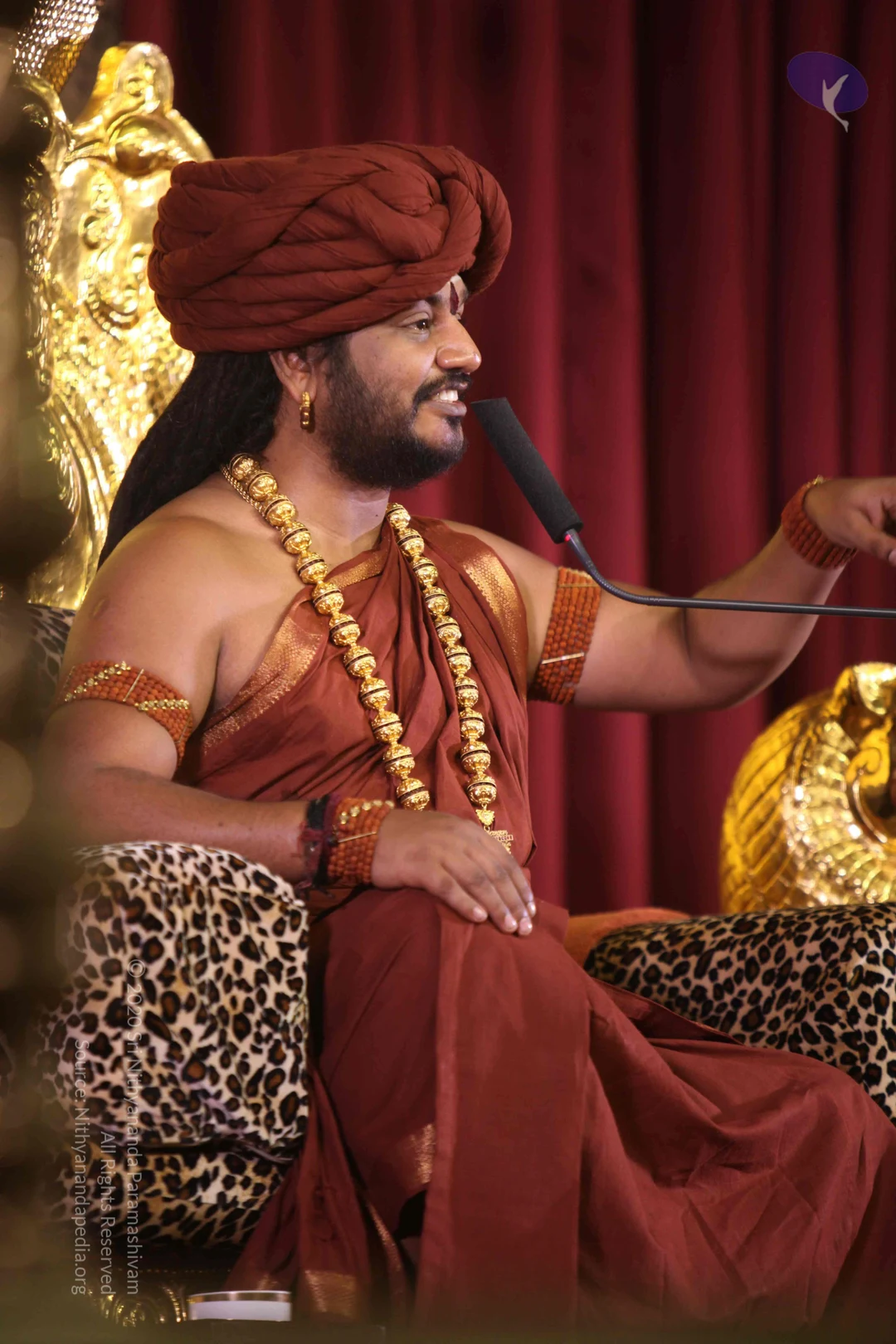
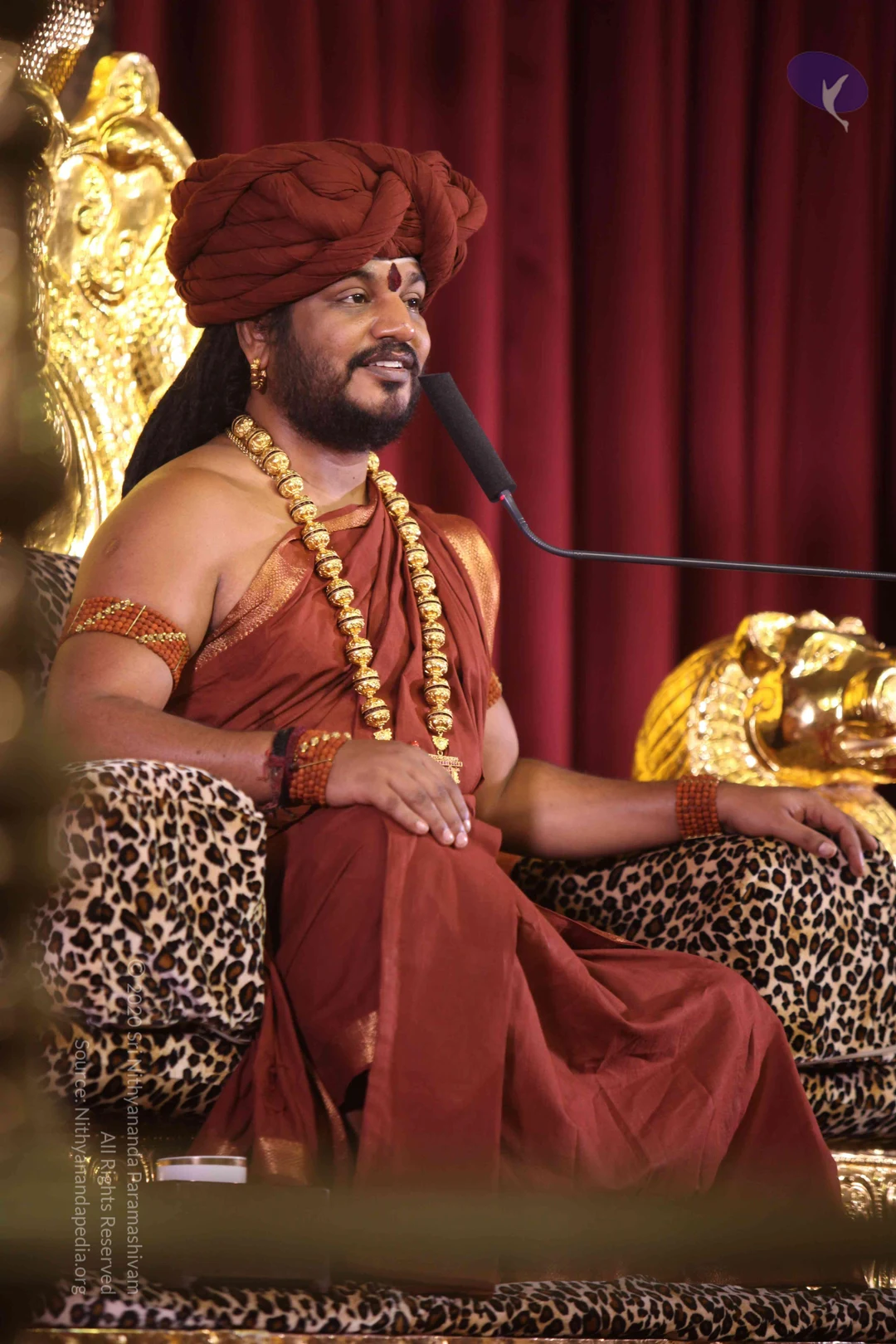
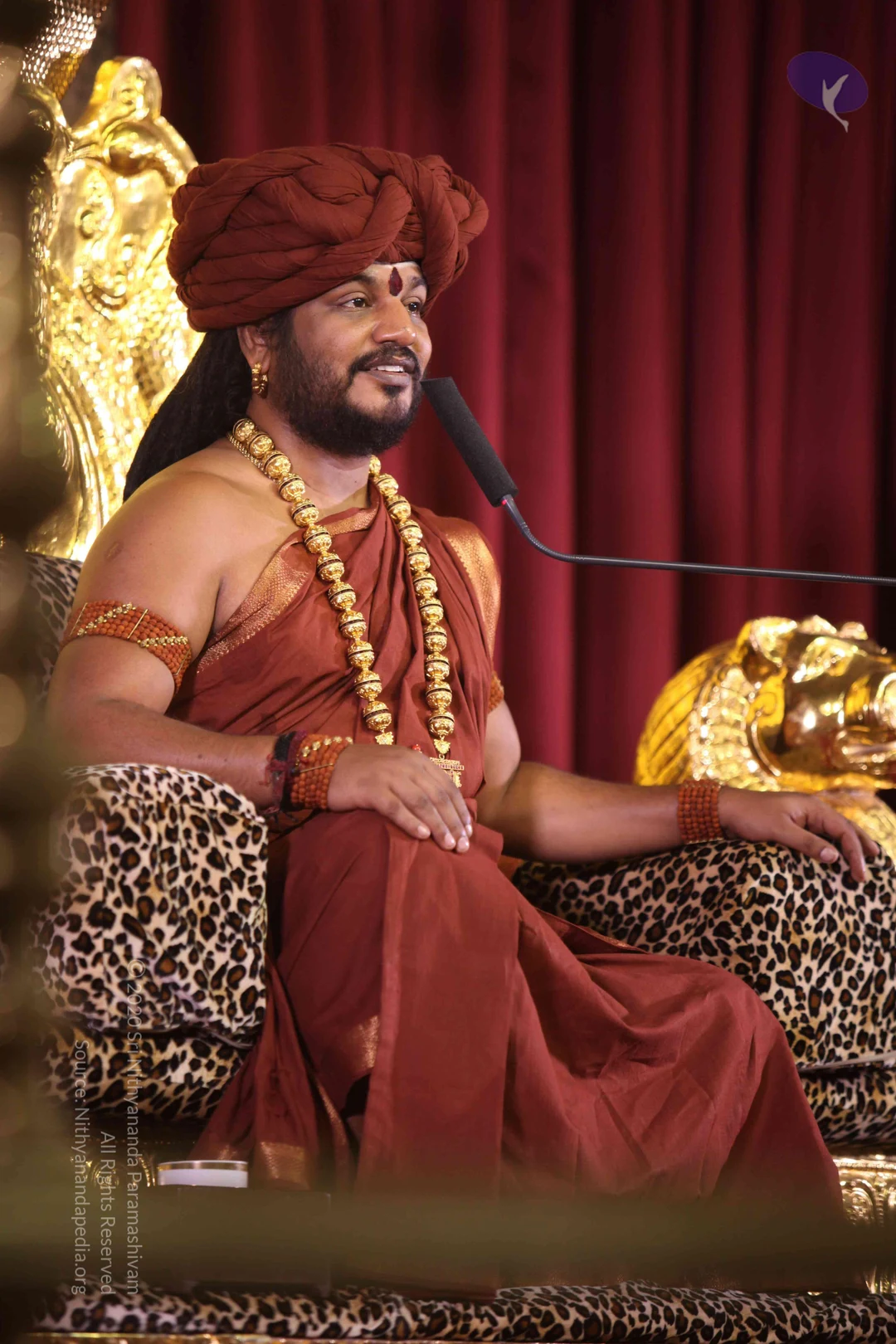
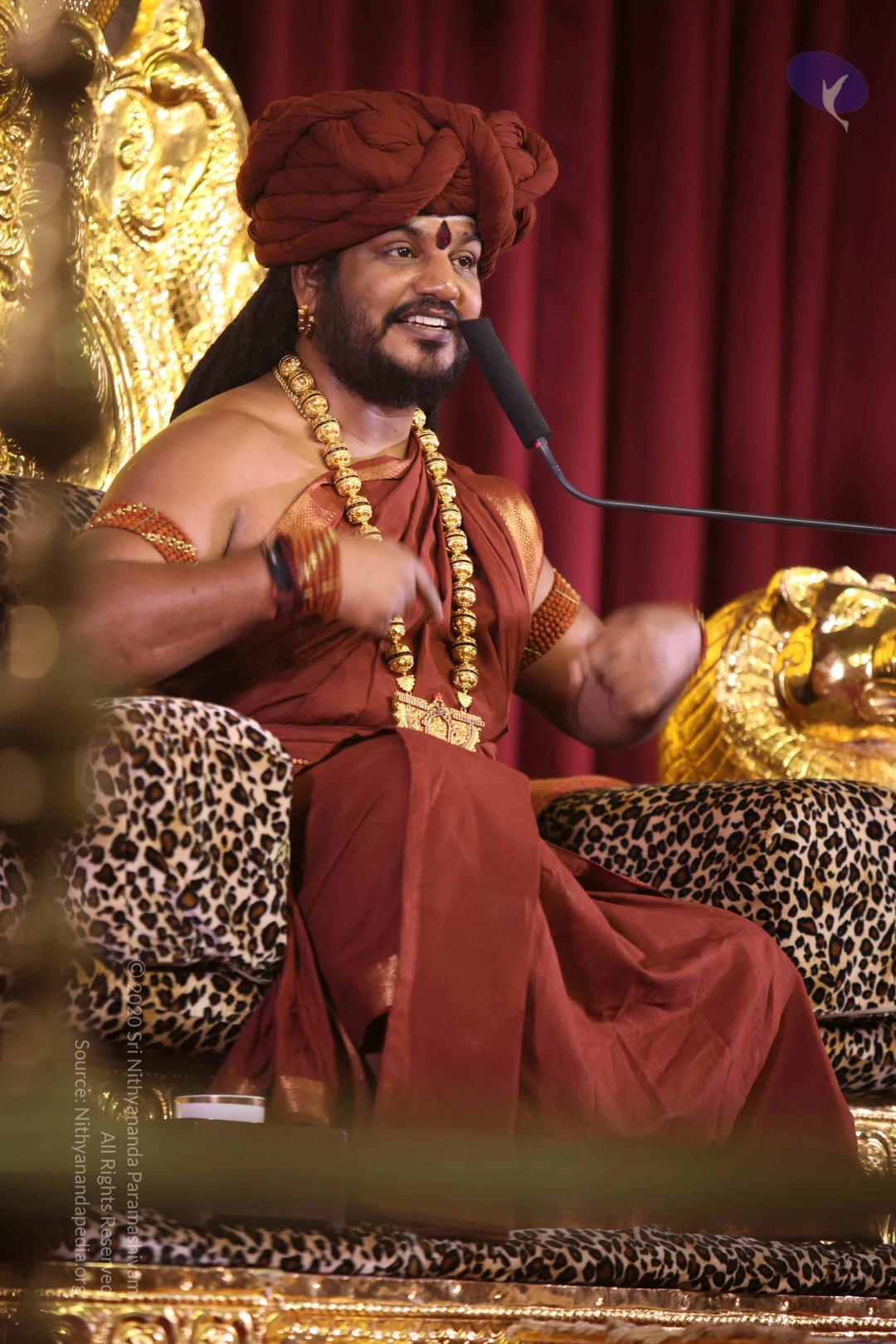
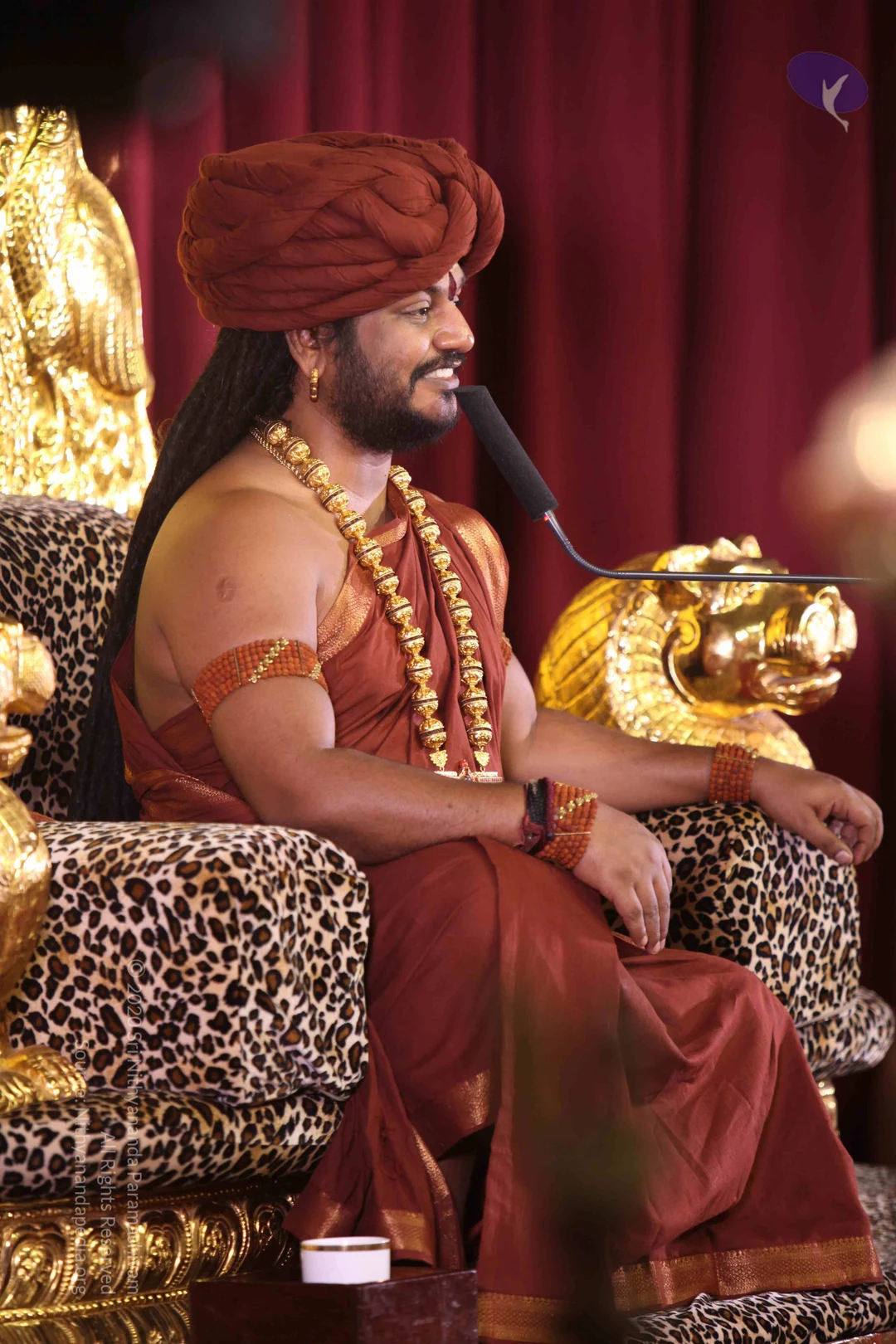
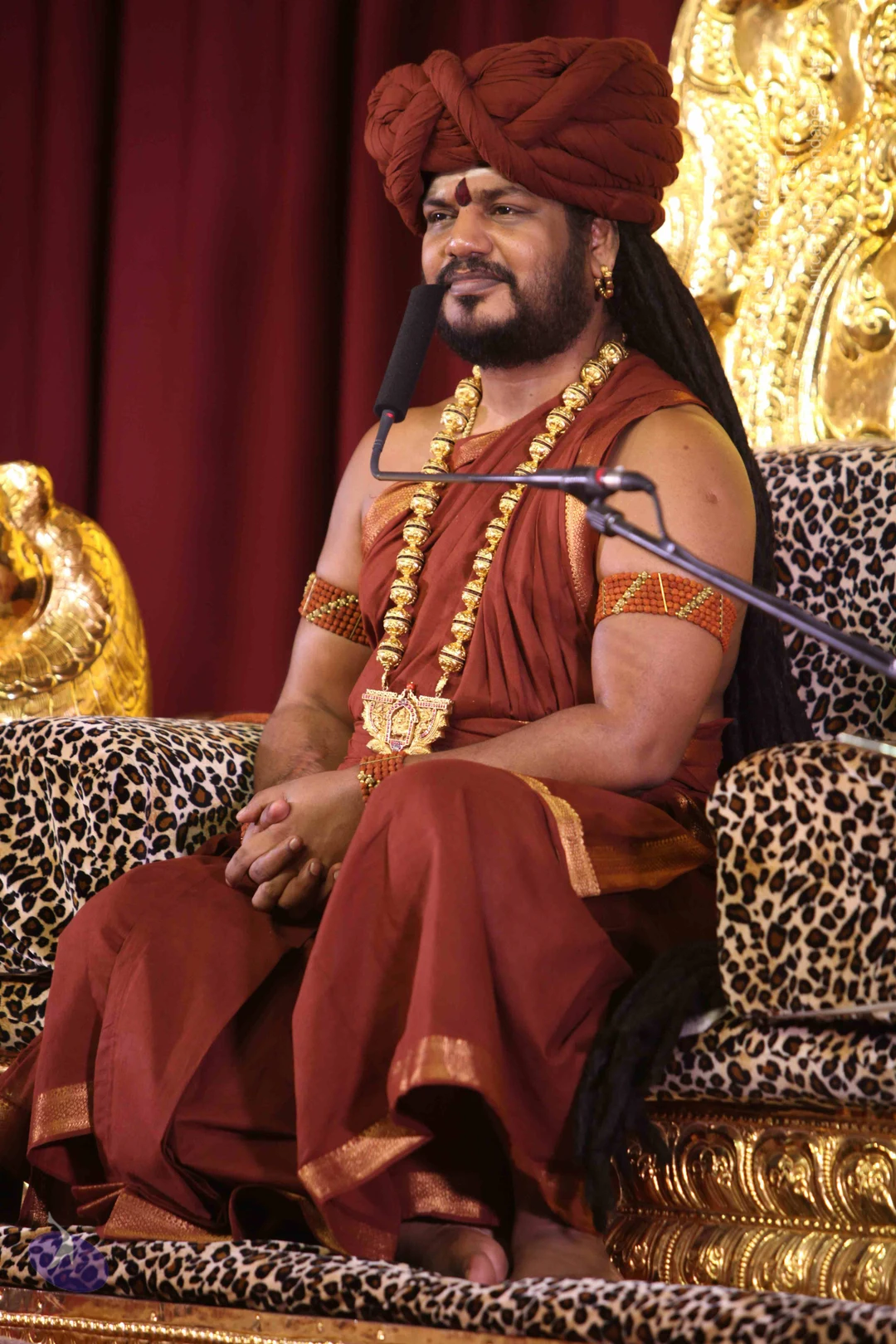
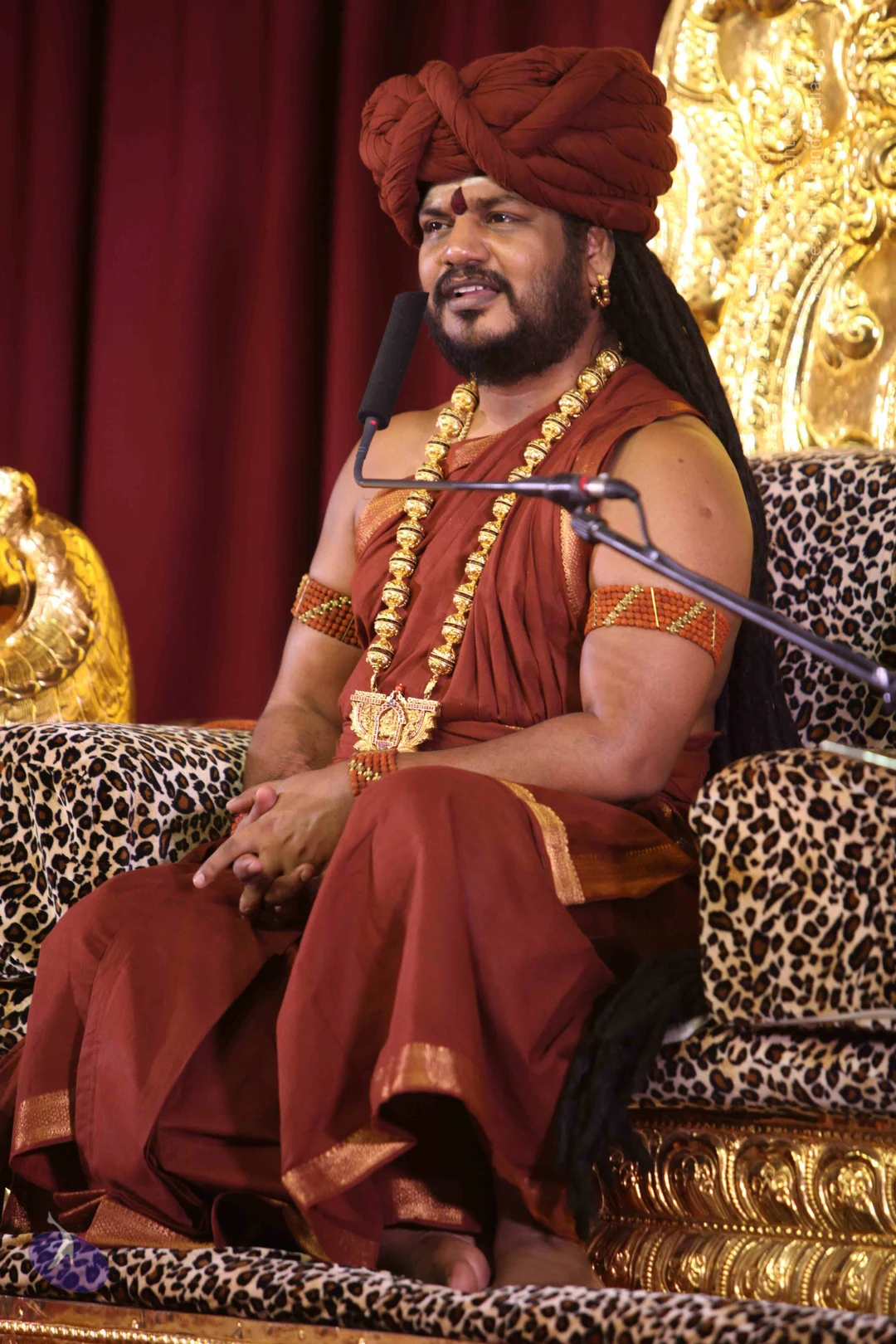
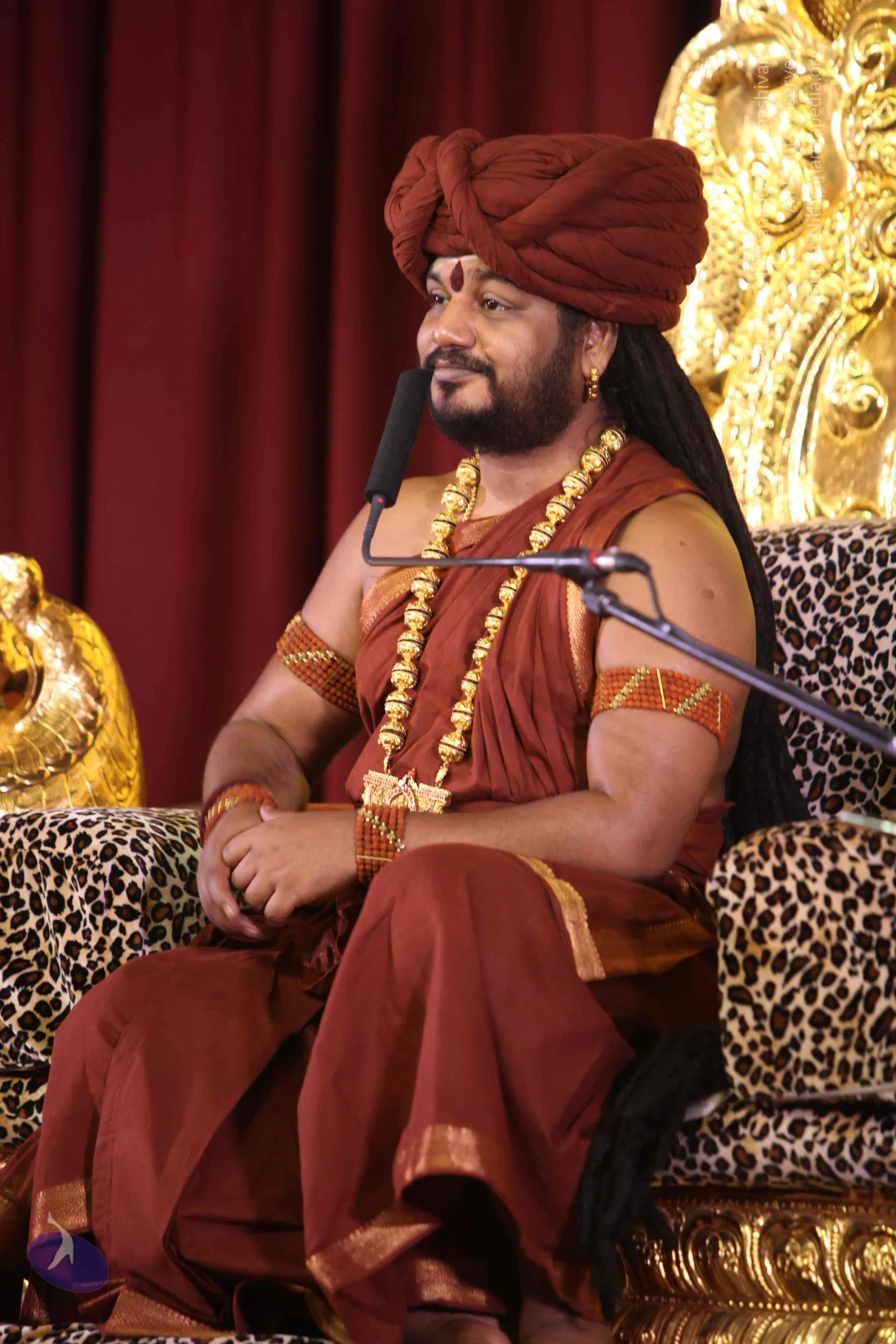
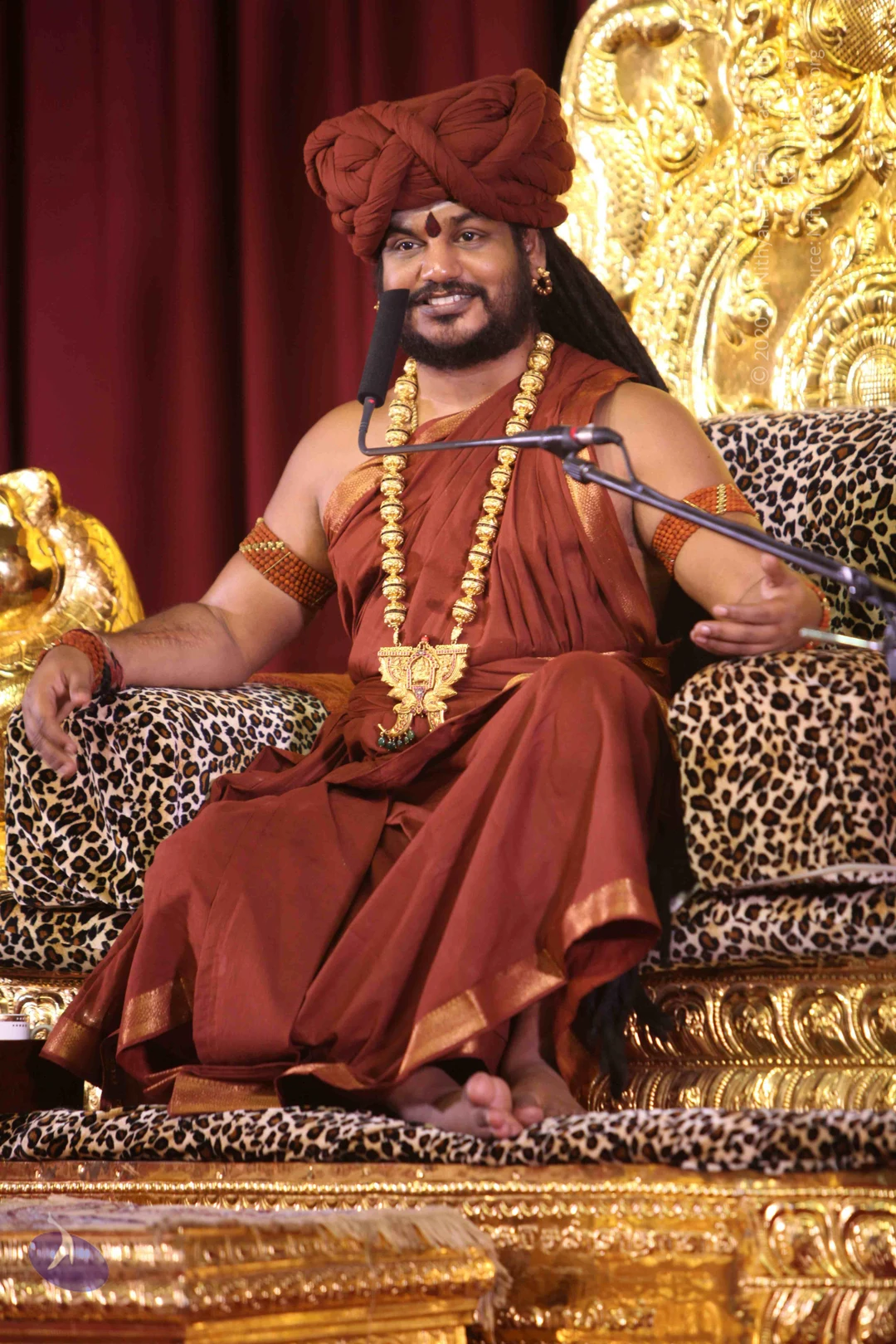
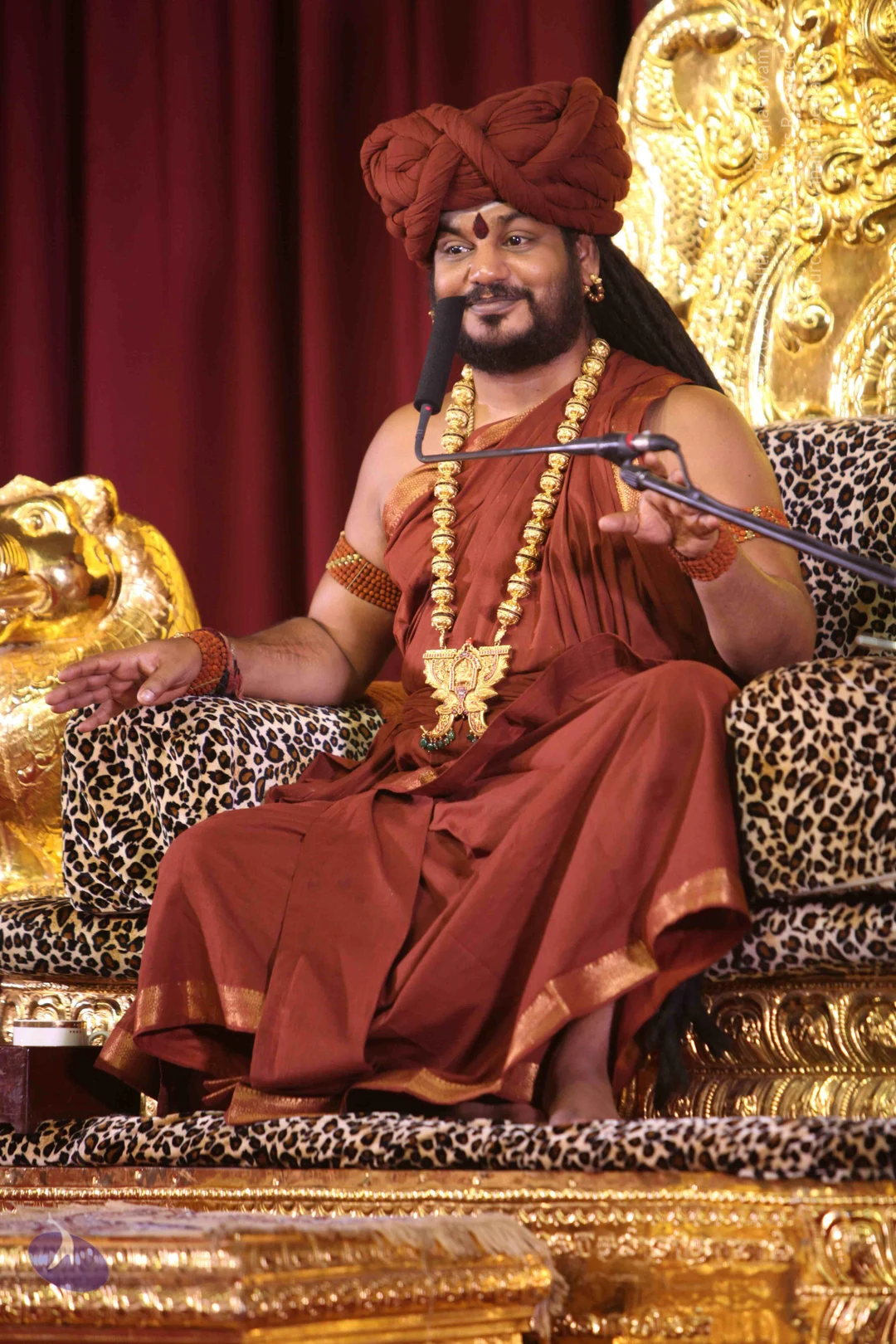
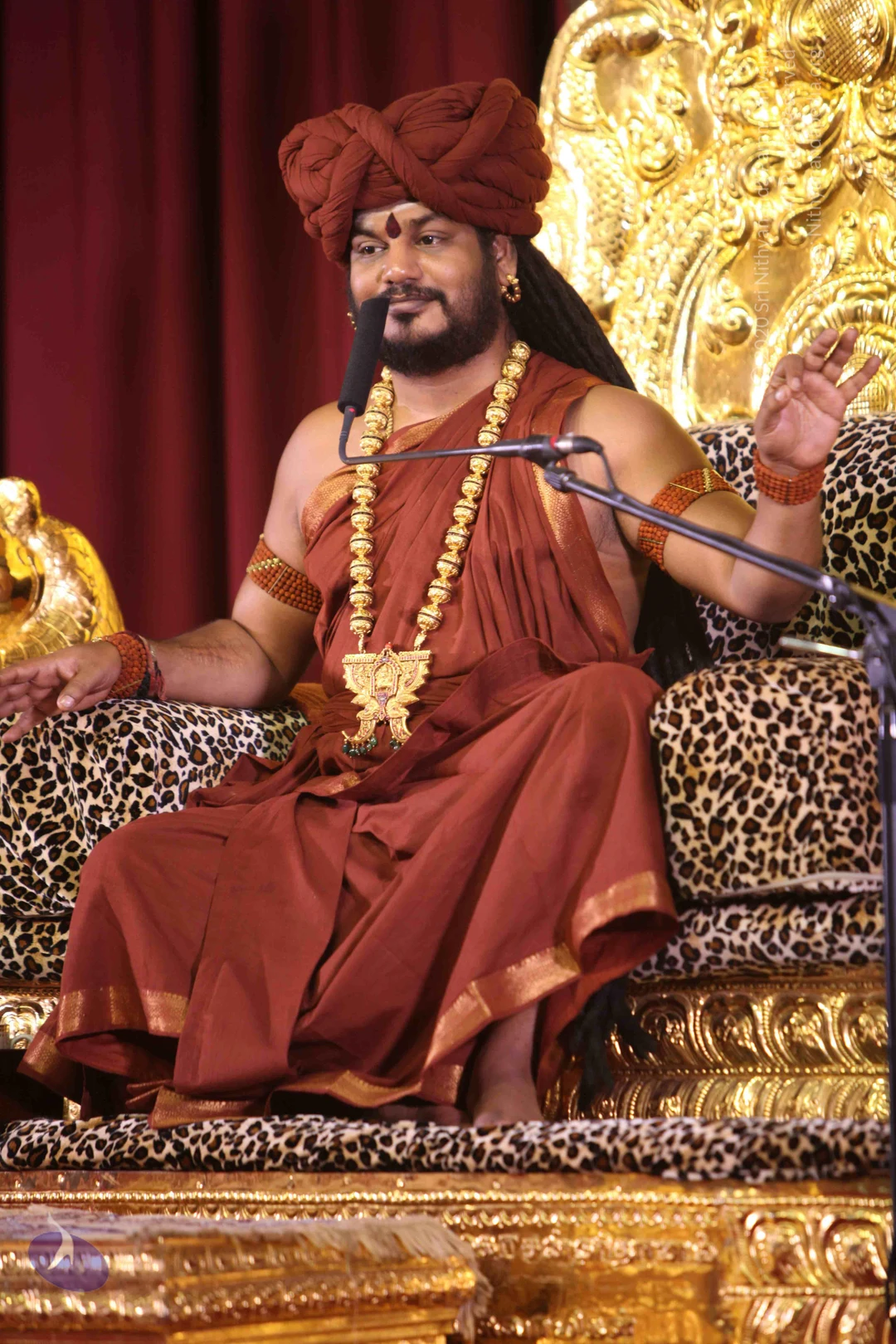
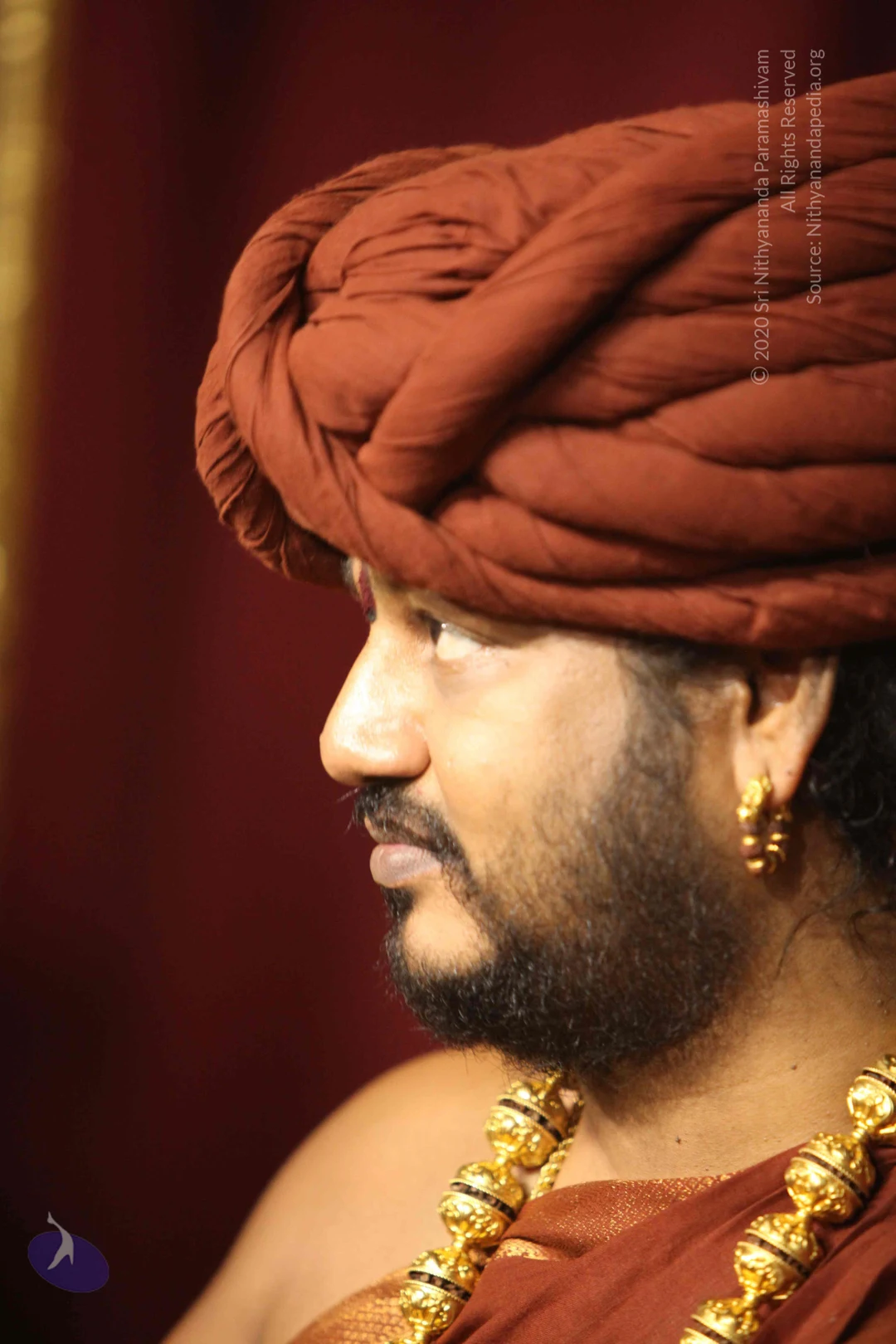
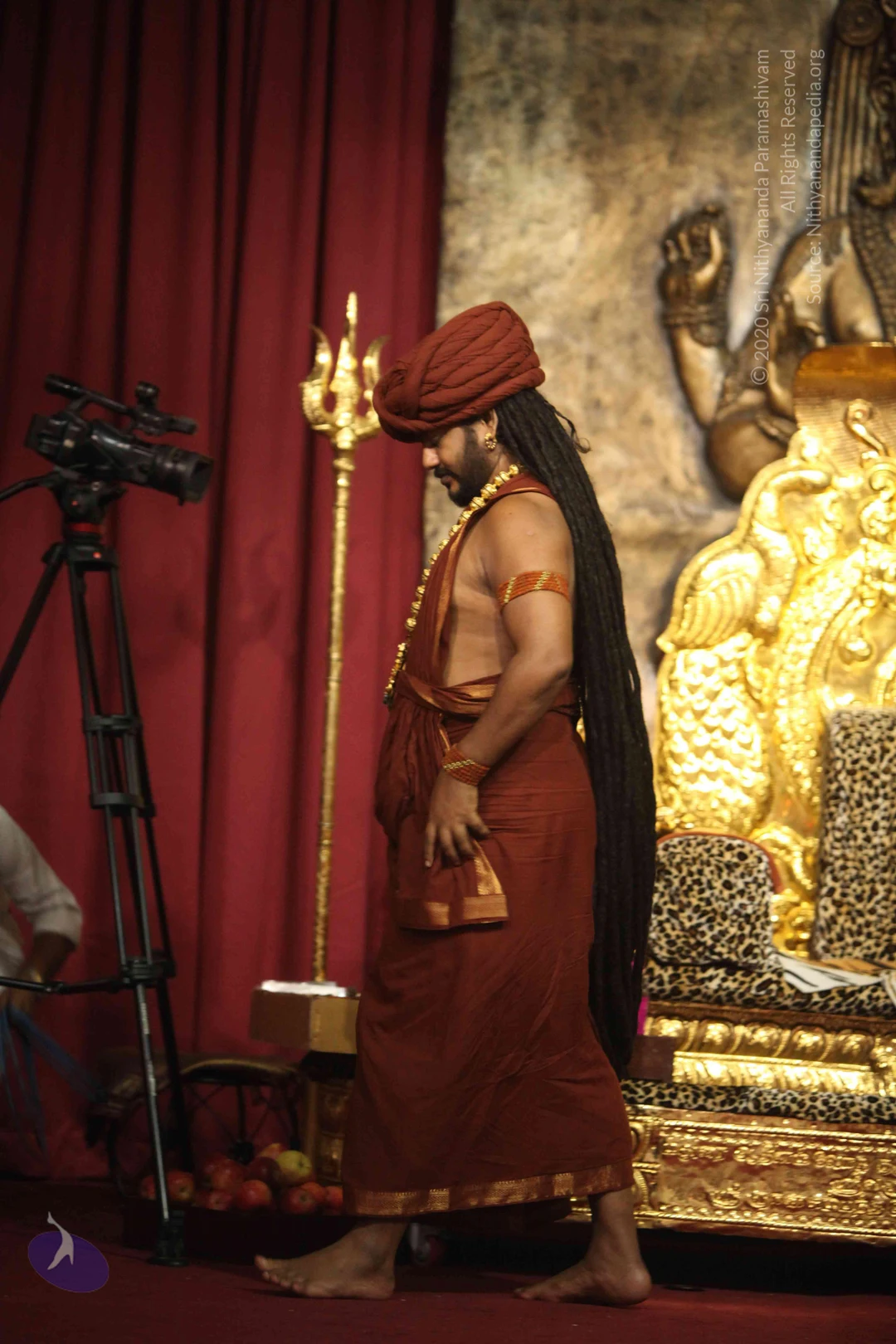
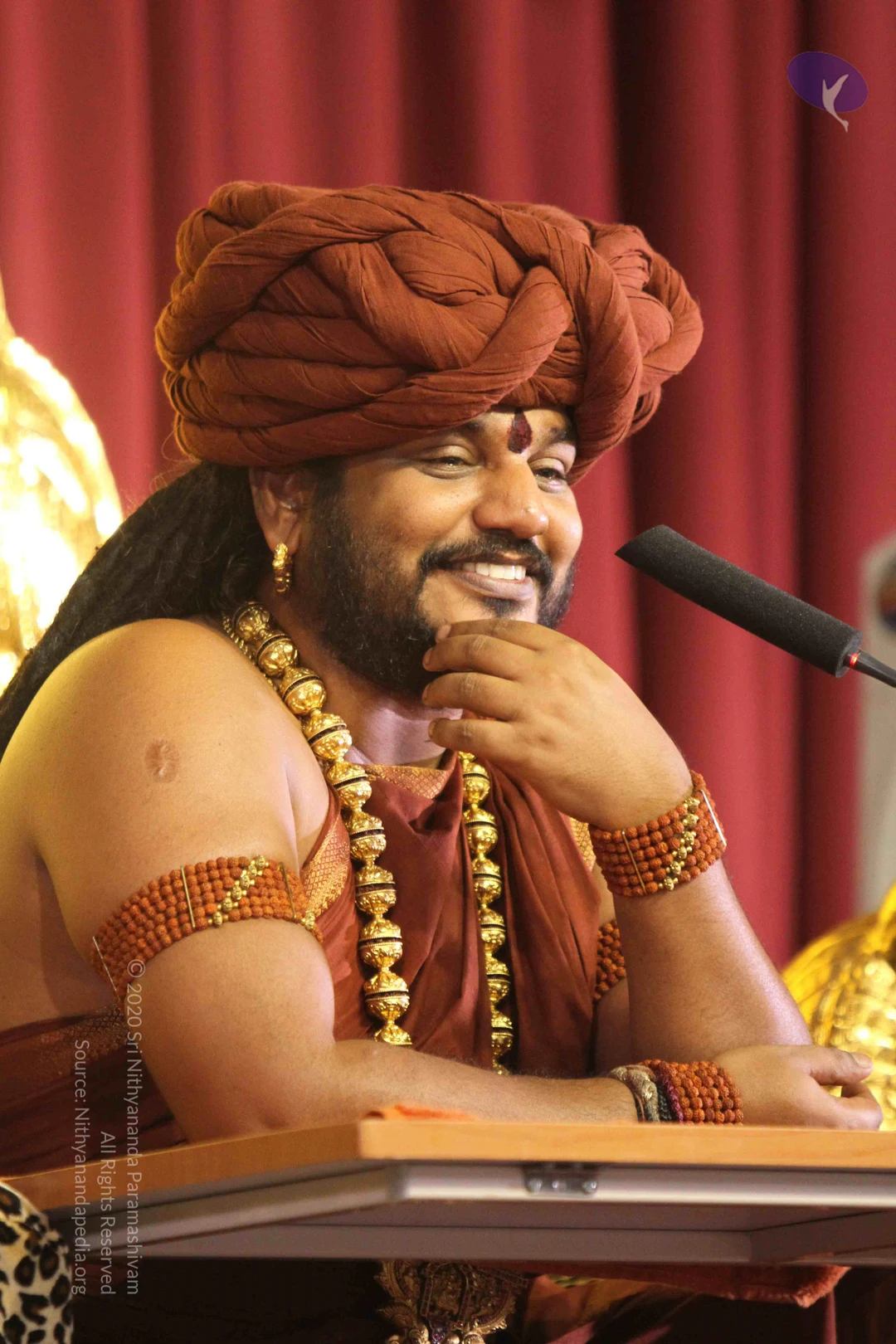
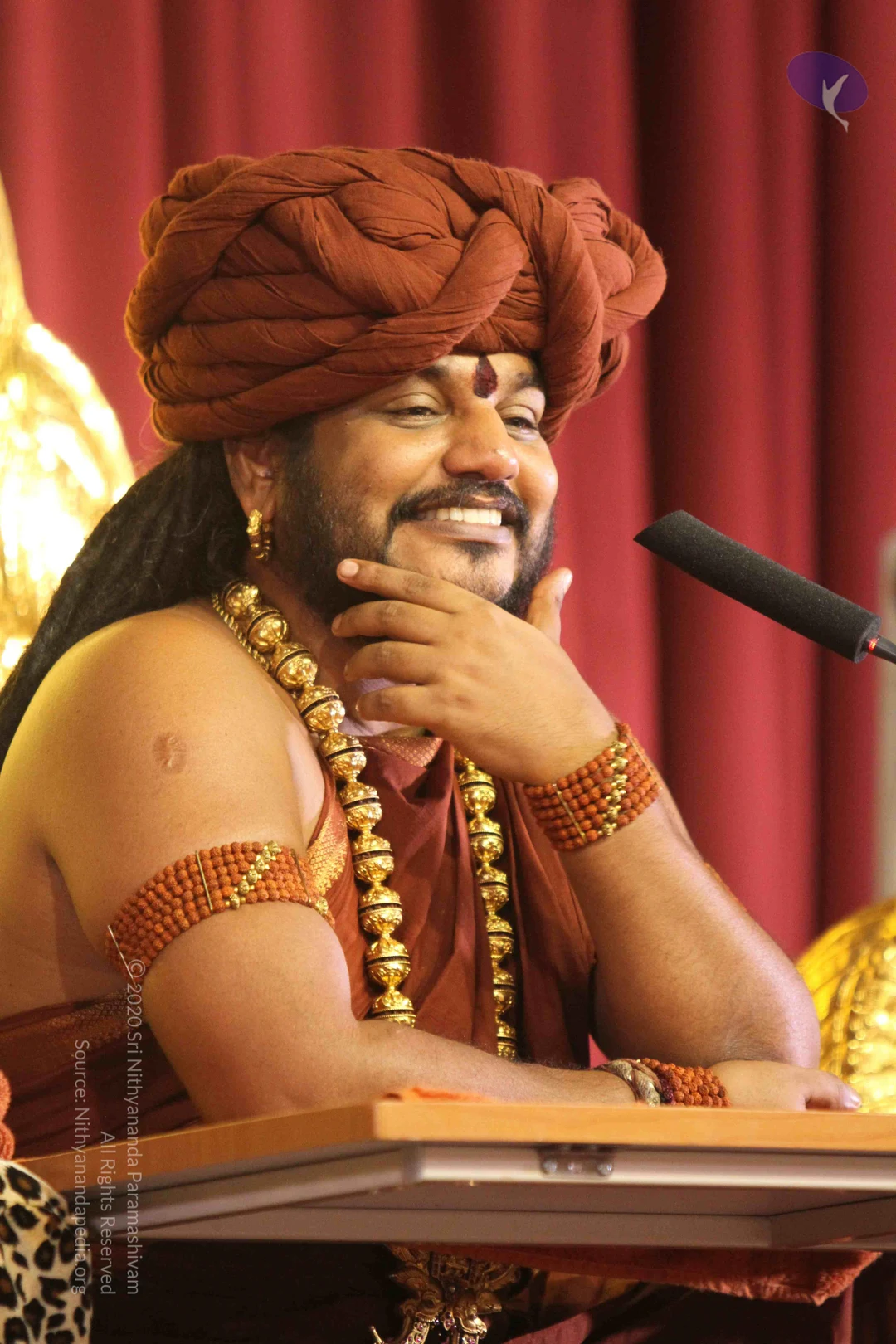
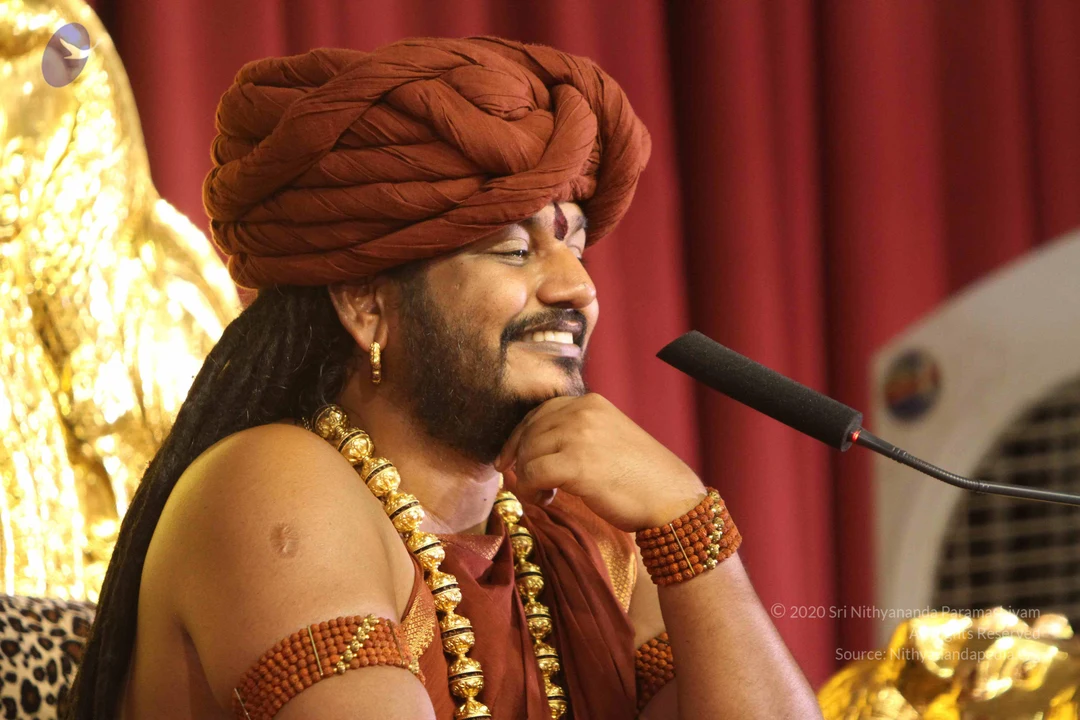
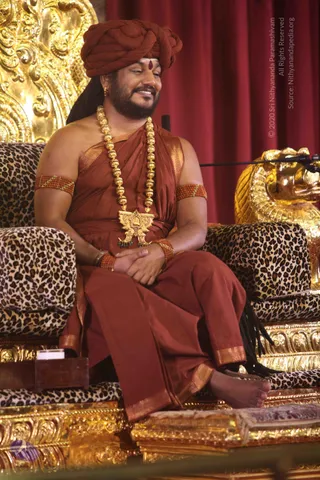
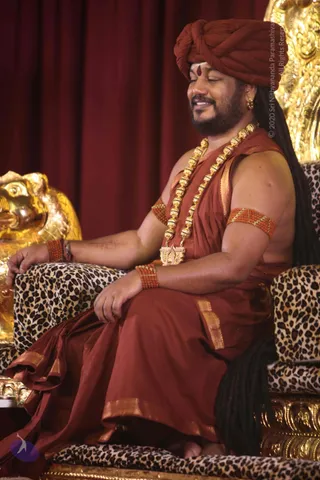
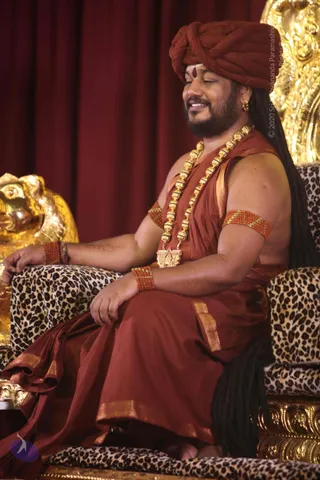
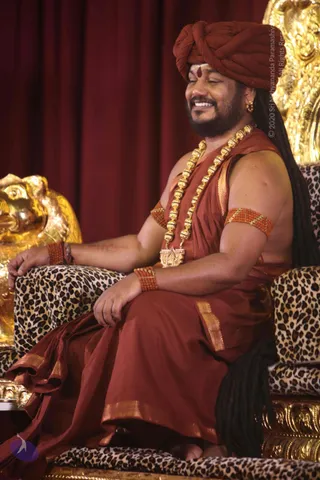
A photograph of a man seated on an ornate gold throne with leopard-print cushions and gold lion-head armrests, in front of a deep red curtain. He wears a rust-red turban with a small red bindi on the forehead, a rust-red draped garment with gold border, gold armbands, a long gold necklace with a large gold pendant, and gold earrings. His hands are folded in his lap and he is smiling. A microphone on a stand is beside him. a person, seated on a throne with a red turban, saffron-toned robes, and a gold ceremonial necklace.A man seated on an ornate gold throne with carved lion-head armrests and leopard-print upholstery, before a deep red curtain. He wears a rust-red turban, a rust-red shawl draped over bare shoulders, a long gold ceremonial necklace with a pendant, rudraksha-style red beaded armbands, and a red tilak on his forehead. His long dark hair falls past his shoulders and he smiles while facing left toward a microphone on a stand. A blurred figure in blue stands at the right edge.A bearded man in a maroon-red turban and matching maroon-red robe sits on an ornate gold throne upholstered with a leopard-print cushion, flanked by gilded lion-head armrests. He wears a heavy gold necklace with a large ornamental pendant, a red tilak on his forehead, gold bangles and maroon armbands, and smiles while looking to his side. A microphone stand and a deep red curtain stand behind him. a person is shown at a discourse setting; the single seated person is the only physical person visible.A large hall filled with a dense crowd of seated devotees viewed from behind, mostly men in white dhotis and shirts with some in colourful shirts. At the front, a central figure sits on an ornate golden throne (peetha) with a gold kalasha-style finial and a dark red cloth, wearing saffron/orange clothing and a rudraksha mala. Above the throne hangs a large ornate painted deity murti. Red curtains, brass lamps and standing camera tripods frame the stage.A seated man in a rust-red turban and matching red-orange robe speaks into a boom microphone, smiling and raising one index finger. He wears a long gold bead necklace, a gold earring, and red beaded bracelets on his wrists and upper arms. He sits on a gilded throne with a leopard-print cushion, beside a golden lion-head armrest and a deep red velvet curtain. Probable Swamiji, identified by saffron-red turban and robes, long hair, and ornate gold beaded necklace, seated in a speaker's position during a discourse. One person is visible.A photograph of a bearded man seated on an ornate gold throne with leopard-print upholstery, speaking into a microphone on a stand. He wears a rust-red turban, a rust-red shawl over the shoulder with gold border, and a long strand of large gold beads with a gold pendant, plus gold armlets and red-orange wrist bands. A gold lion-head armrest is at right, with a deep red velvet curtain behind. Appearance-based probable candidate: Swamiji (probable), a seated speaker giving a discourse, with long hair, a turban, gold ceremonial necklace and saffron-toned clothing as visible cues. A photo caption credit is visible at lower right.

Festival
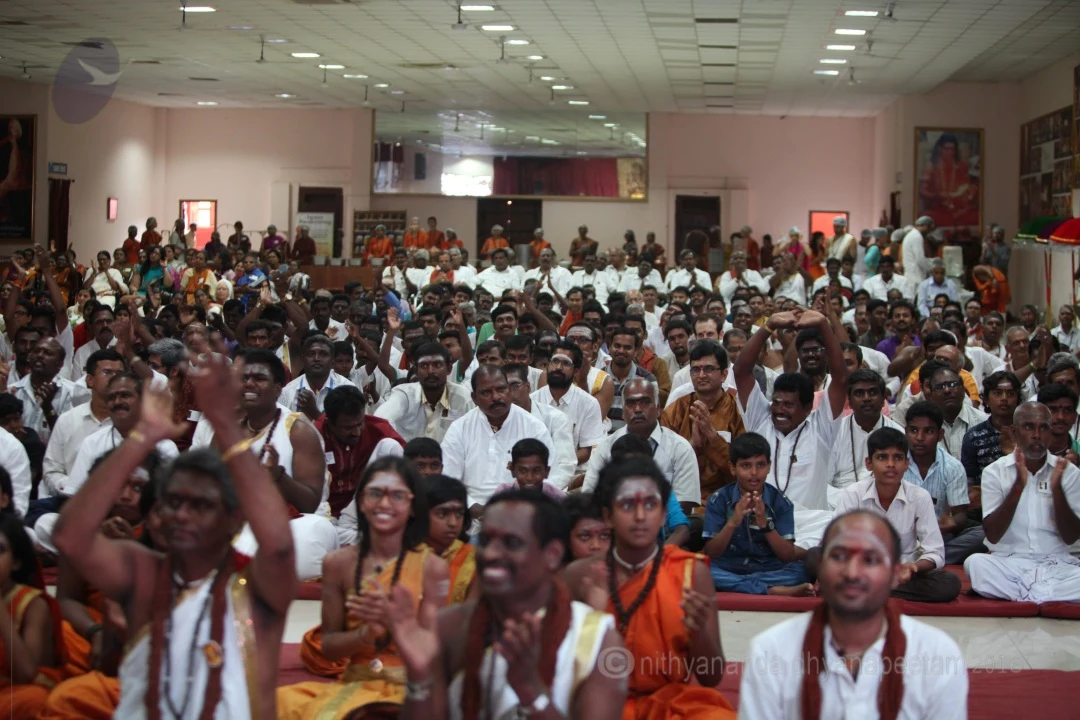
17 photosSource gallery
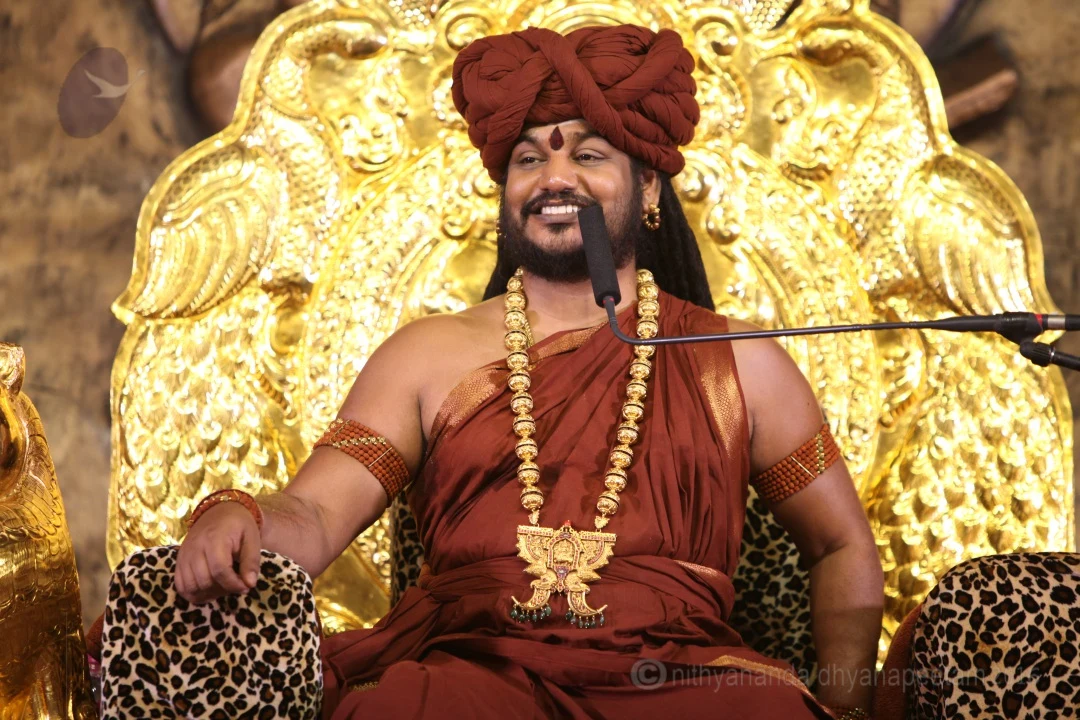
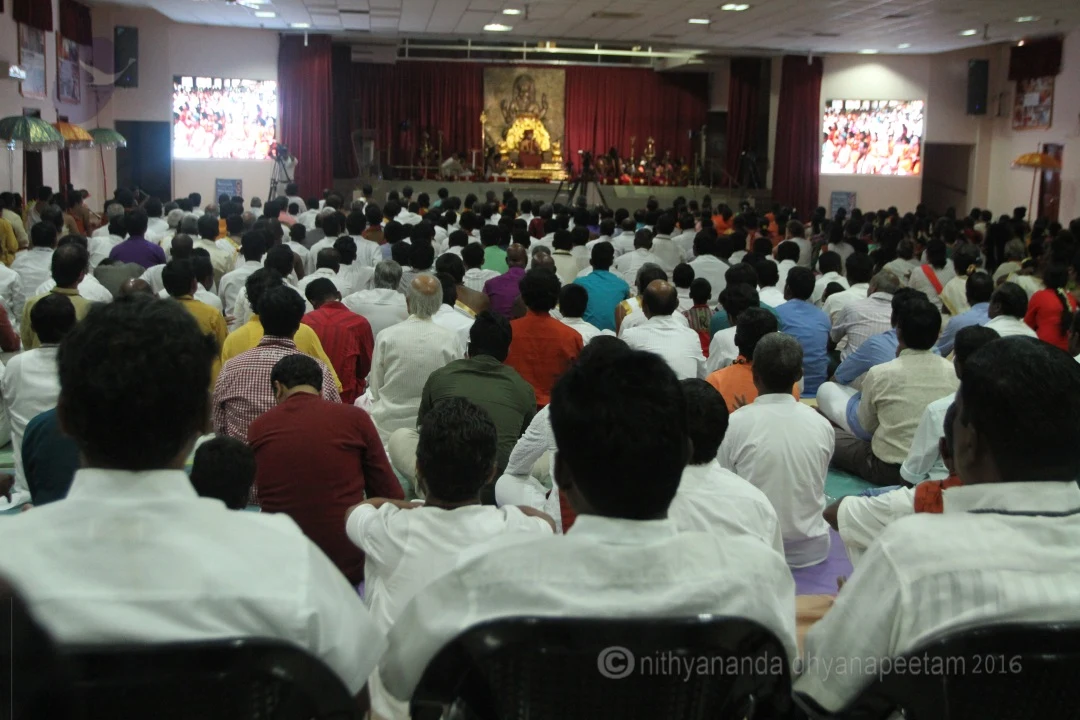
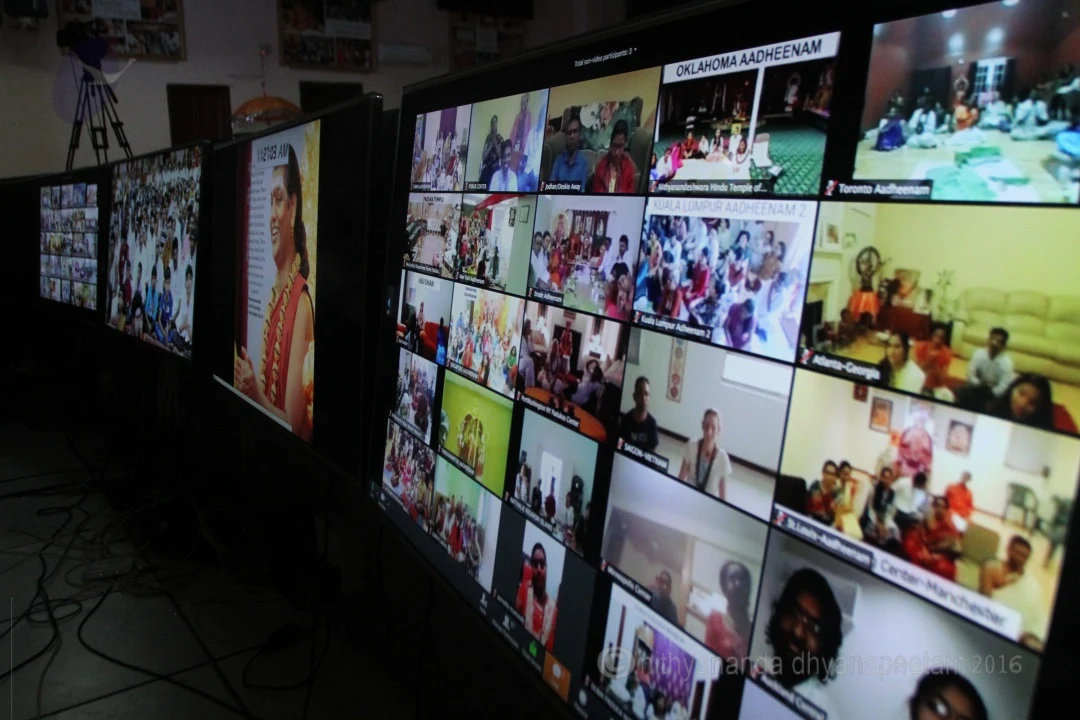
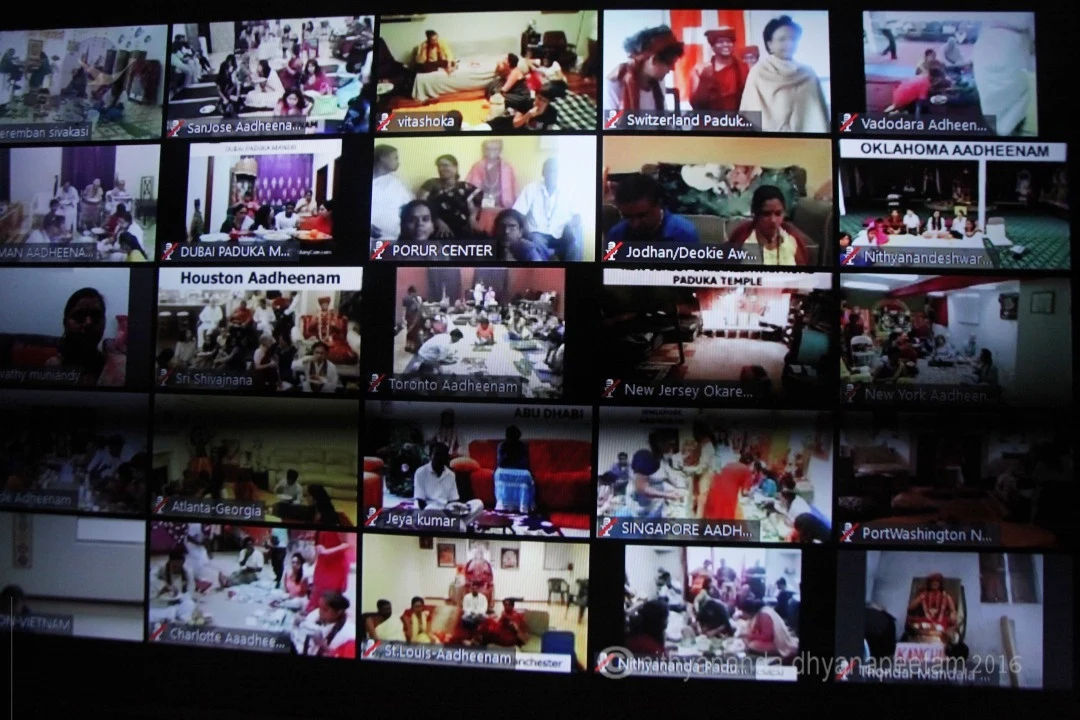
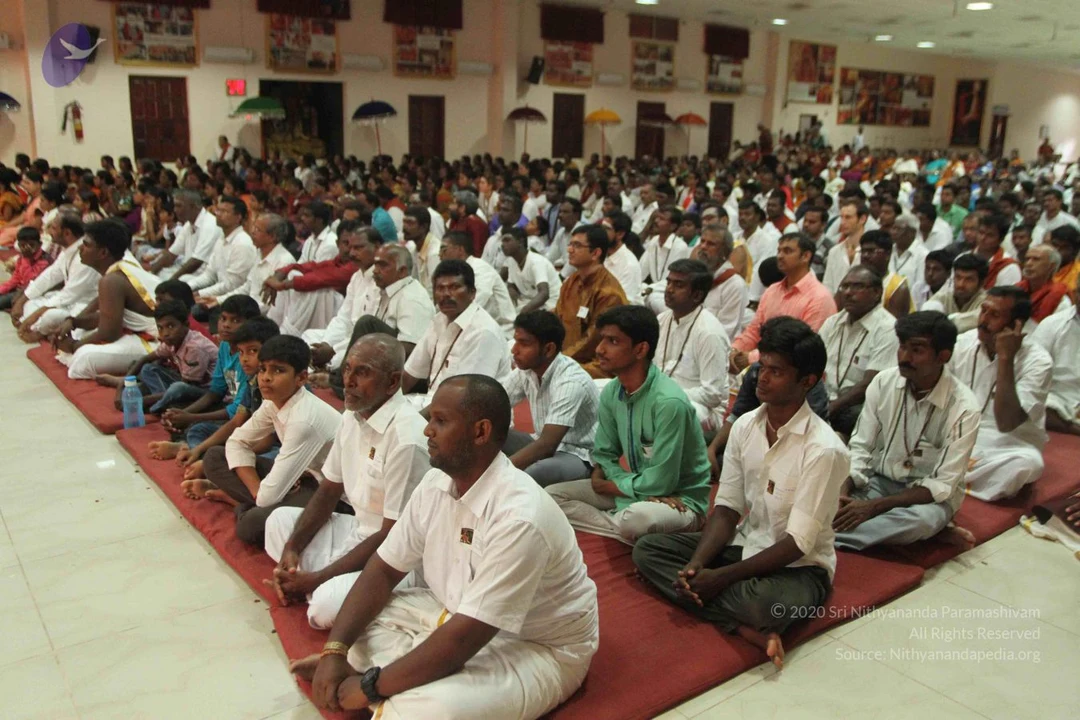
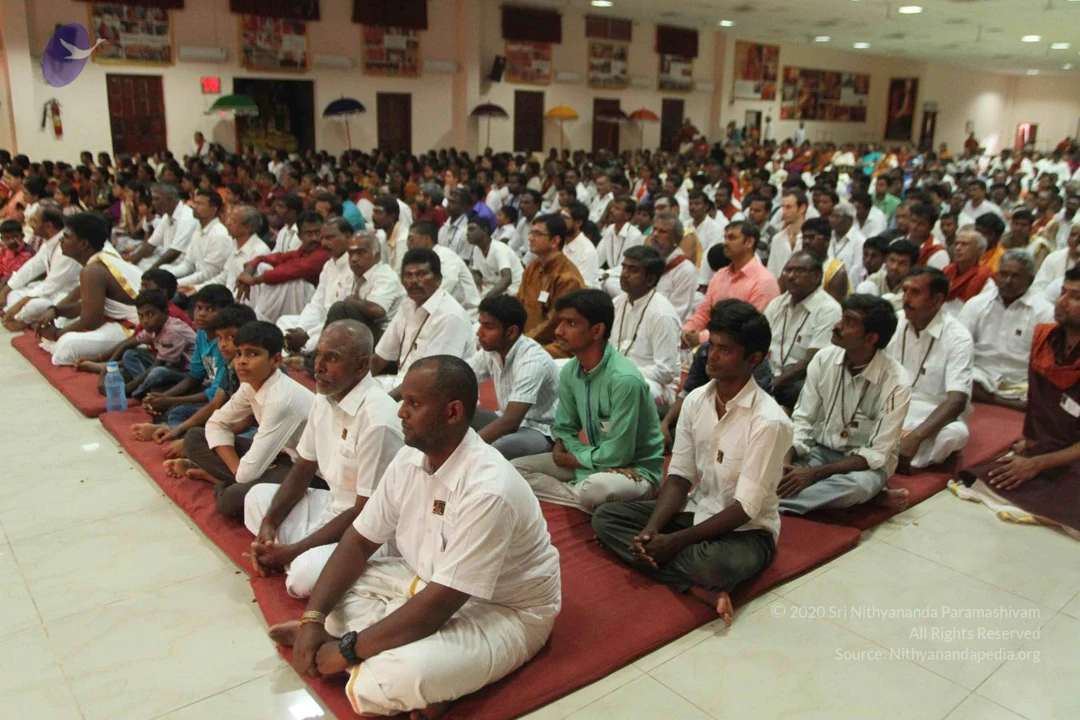
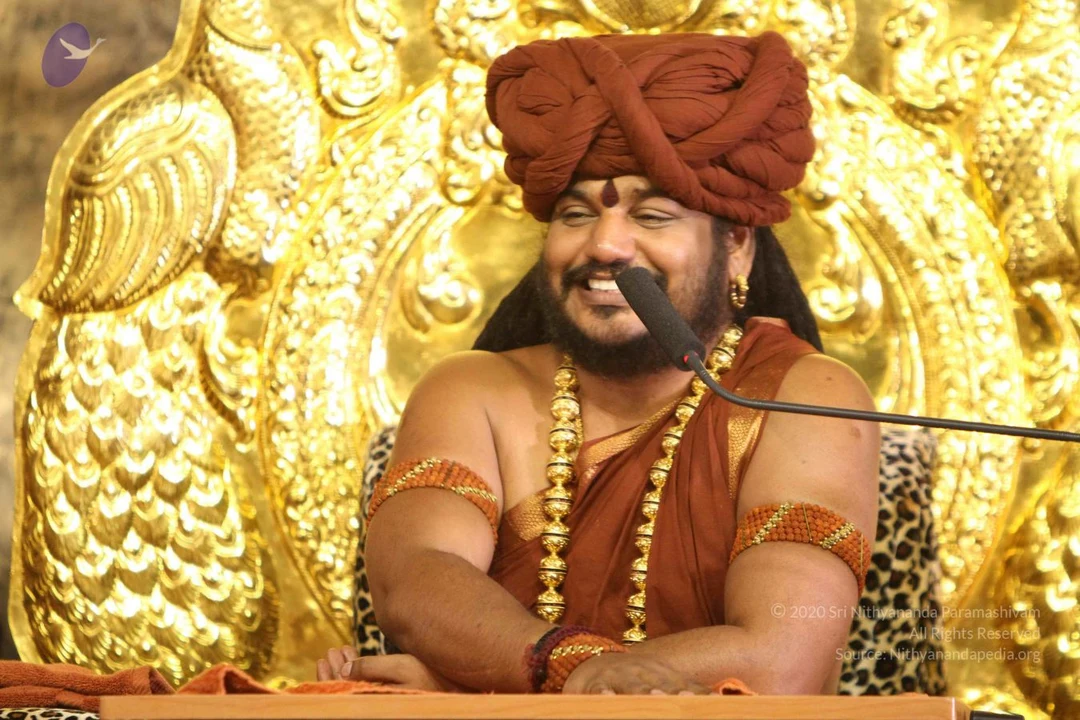
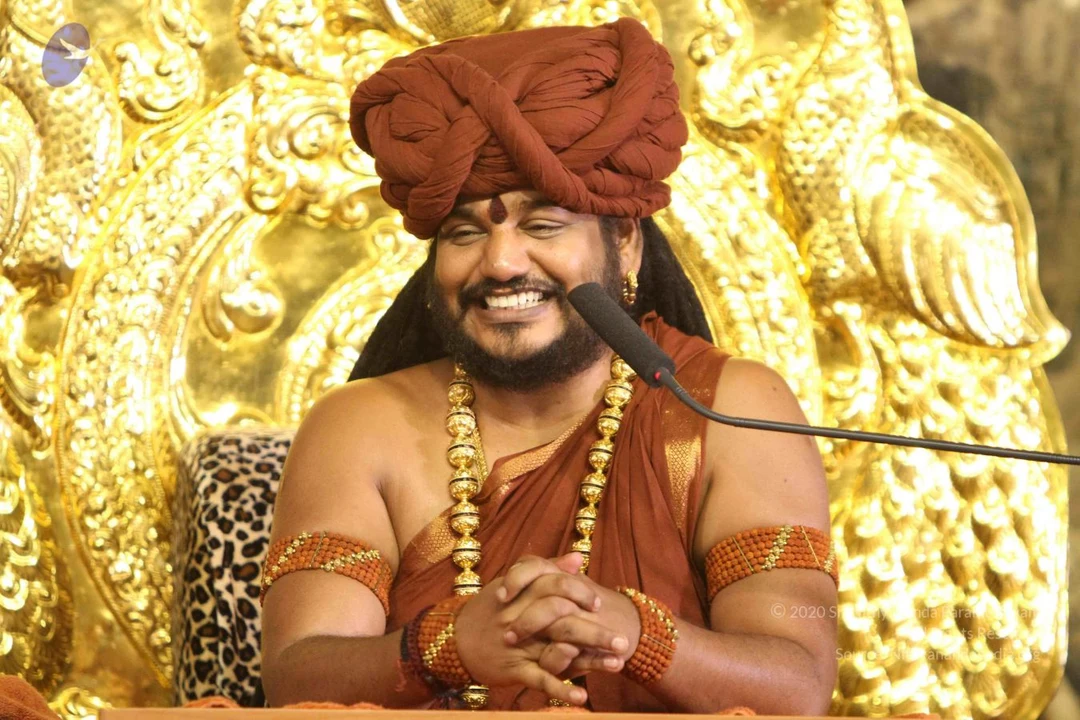
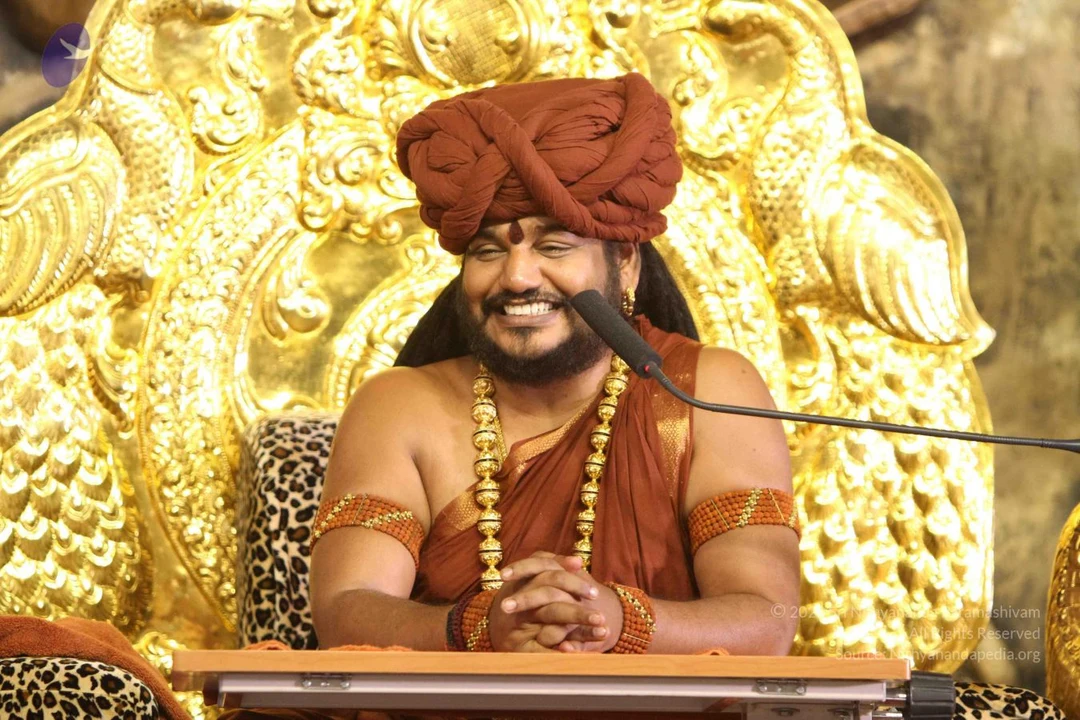
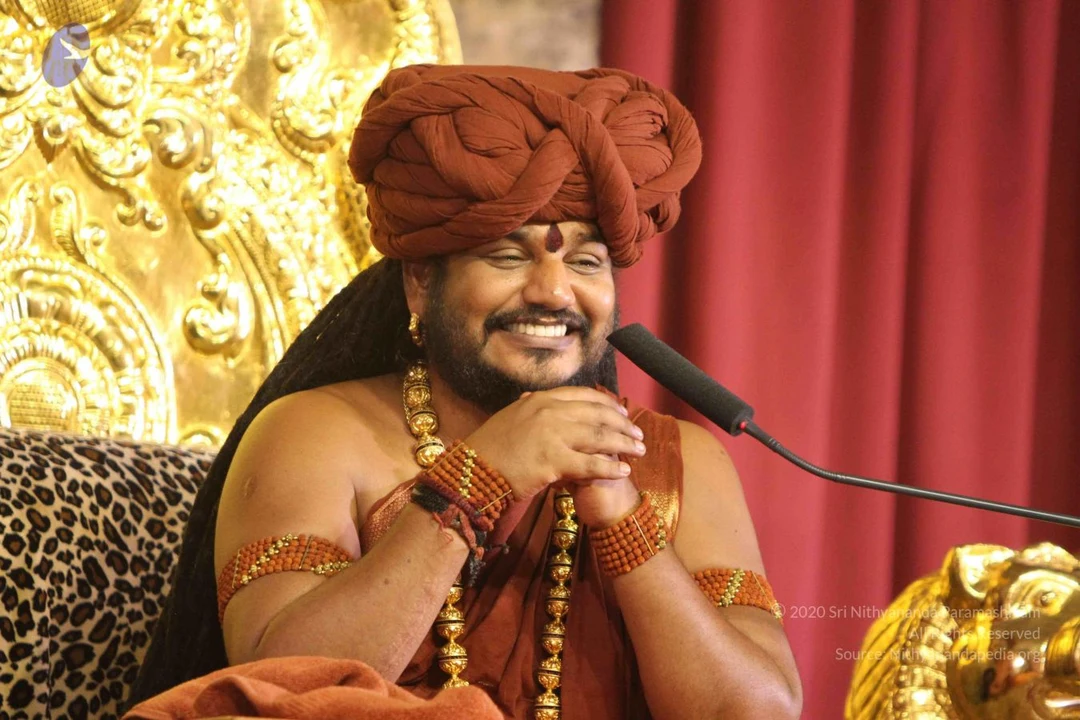
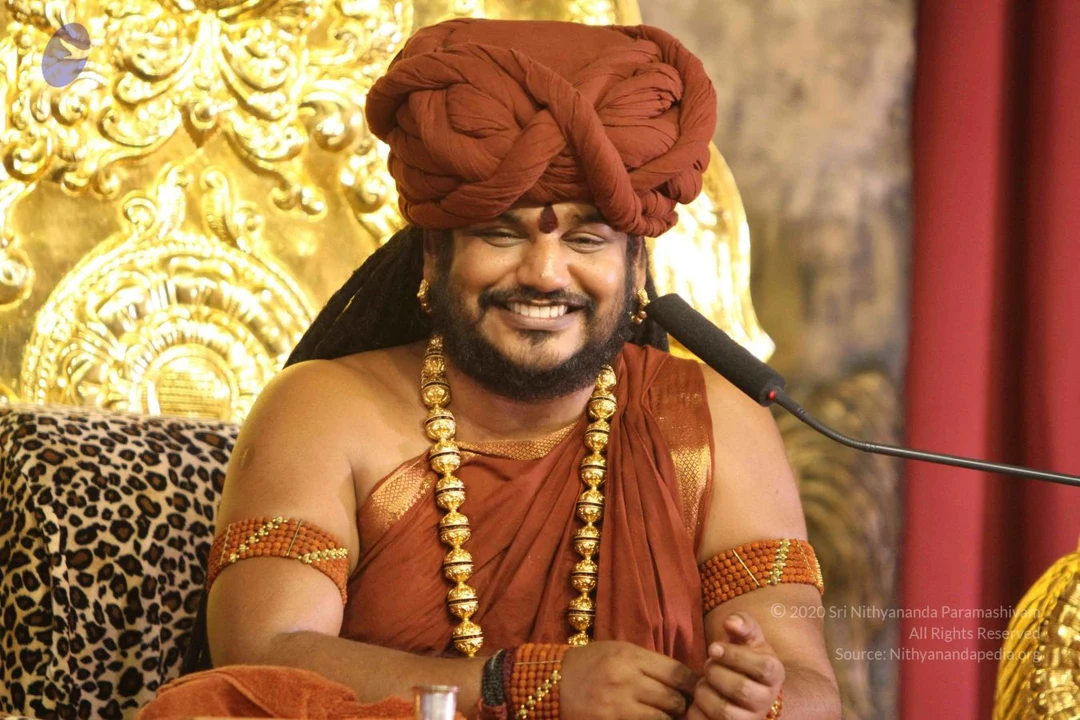
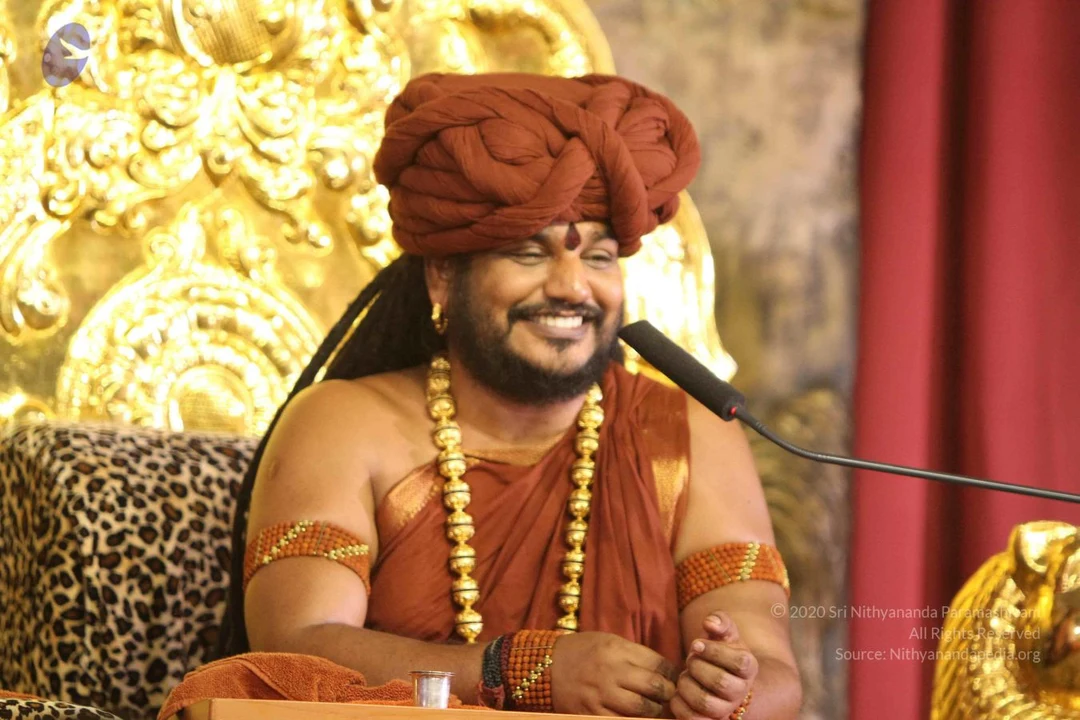
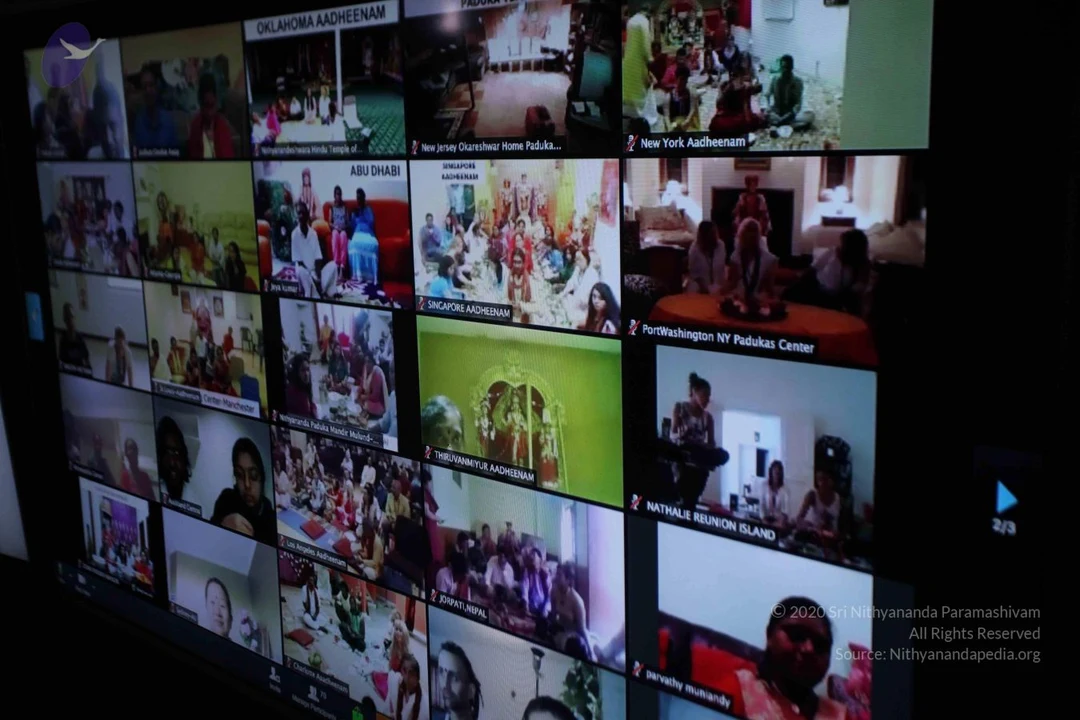
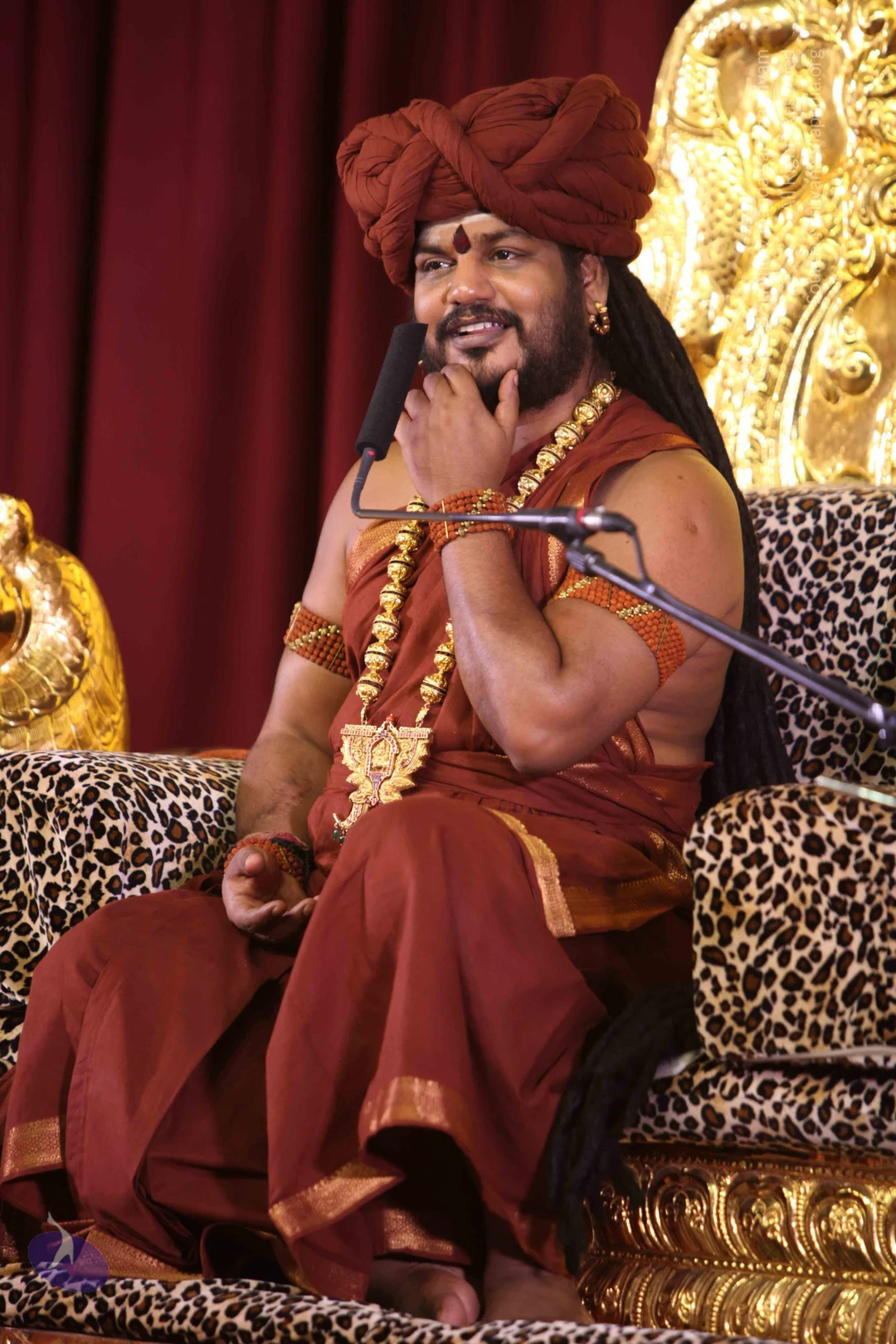
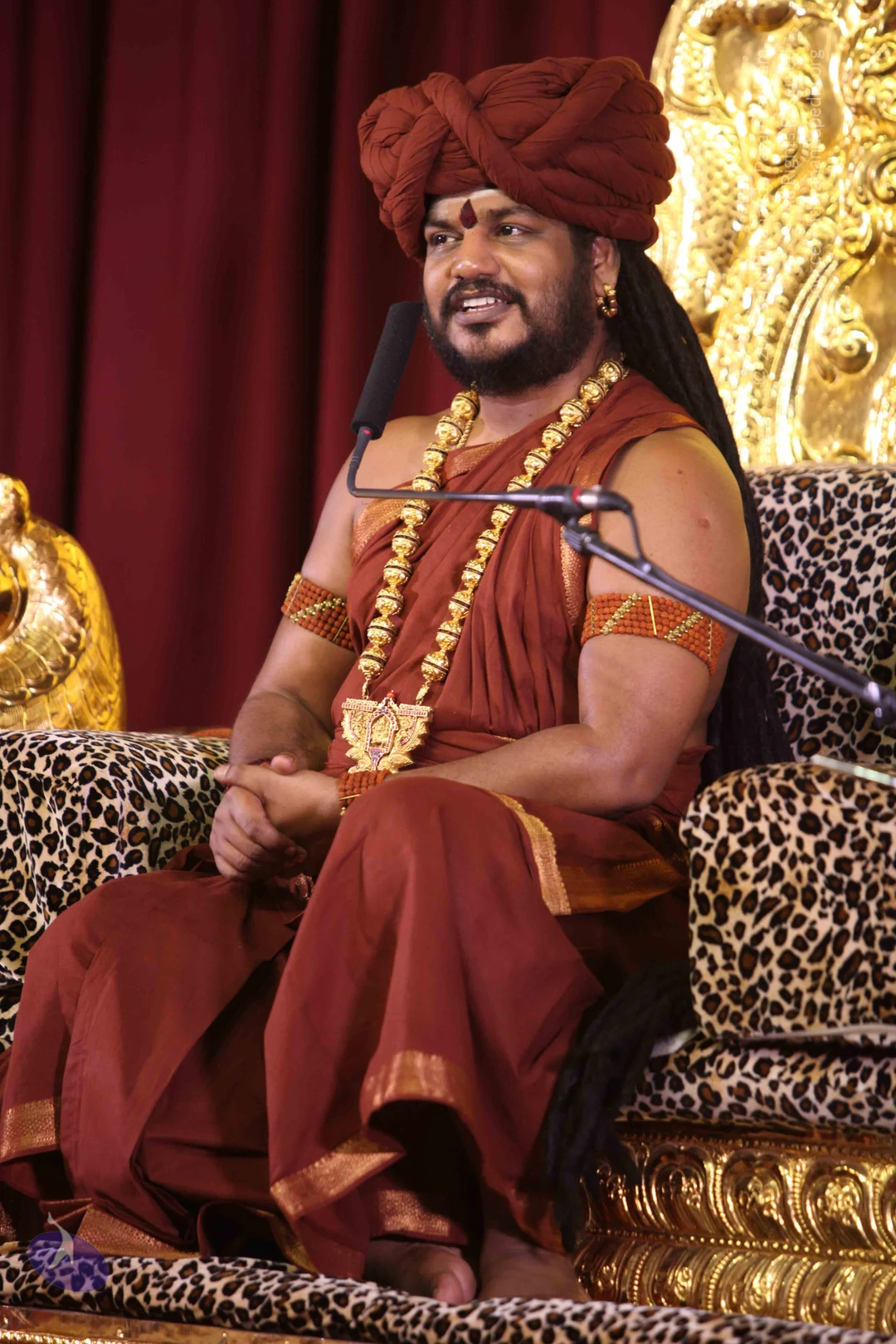
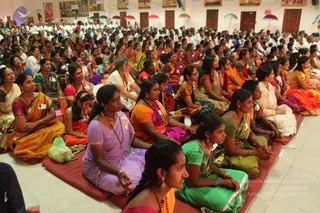
A large seated audience fills an indoor hall at a satsang-style gathering. In the foreground, women in silk saris in orange, green, purple, red and yellow sit on red floor mats, many wearing gold necklaces and bangles, and some with name badges pinned to their clothing. A young woman in a green salwar kameez and a girl in orange and red sit near the front. Behind them rows of men in white shirts and dhotis and more women in colourful saris fill the room, with pink and orange umbrellas hanging overhead. Framed religious pictures and posters decorate the walls. No single presenter is clearly visible in this view.Photograph from the back of a large hall filled with many seated devotees, mostly men dressed in white shirts and white dhotis, some with saffron or orange shawls draped over their shoulders. Rows of black plastic chairs face a stage at the far end, where a golden deity murti sits on a decorated dais with flower garlands. Two large screens on either side of the stage show live images. Several black and white ceremonial umbrellas are mounted along the walls, and a standing attendant in white clothing stands at the left. Ceiling lights and rows of framed pictures line the walls.Photograph from behind a large audience seated on the floor of a hall at Nithyananda Dhyanapeetam, watching a stage at the far end. Many people in white shirts and dhotis or saris, with some in red, orange, green and blue clothing, sit closely packed in rows. Two large video screens on the side walls show close-up footage of the crowd. Along the back wall, a large golden deity murti is framed by red curtains, with ornate decorations and a small seated figure at the stage. a person's presence is not clearly visible from appearance.A photograph of a bank of large monitors in a room showing a video conference grid of many small live feeds from different a person centres. Labels visible include Oklahoma Aadheenam, Toronto Aadheenam, Kuala Lumpur Aadheenam 2, Atlanta-Georgia and Ceiban-Manchester. Participants sit in rooms wearing white, saffron and orange clothing; some tiles show devotees seated on mats for a group session, and one tile shows a large deity murti in a living room. On the left monitor a large portrait shows a woman in red and gold garlands. Monitor cables run across the dark floor. Physical people visible in the room are none, only the people on screens.A smiling man sits on an ornate golden throne with embossed floral and scroll carvings, a leopard-print cushion beside him. He wears a rust-orange turban with a knotted top, an orange-red sash over bare shoulders, long gold ceremonial necklaces with bead tiers, and orange beaded bangles on his upper arms and wrists. He has a red dot on his forehead and long dark hair, and his hands are clasped in front of him as he speaks into a microphone on a stand.A smiling bearded man in a rust-orange turban and matching saffron-orange shawl sits in front of an ornate gold-embossed throne with a leopard-print cushion. He wears long gold beaded necklaces, orange coral-bead armlets and a red tilak on his forehead, with his hands clasped in front of him. A black microphone stand is angled toward him.

Nithyananda Yoga Teacher Training
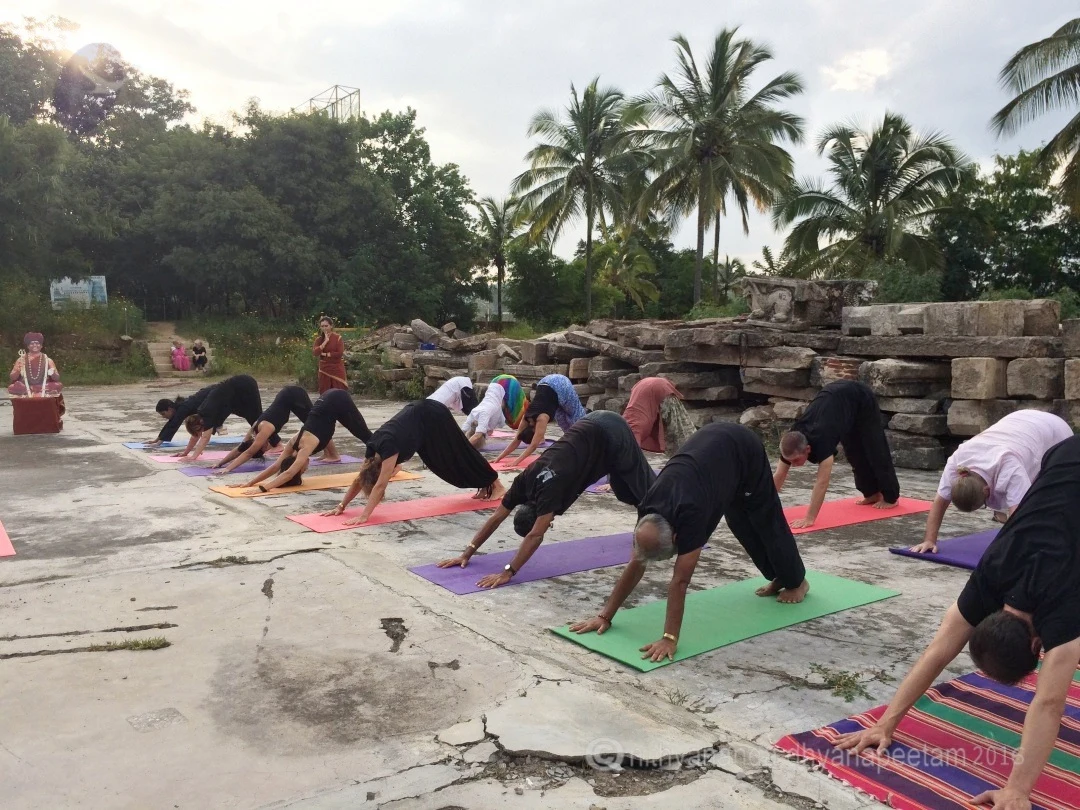
11 photosSource gallery
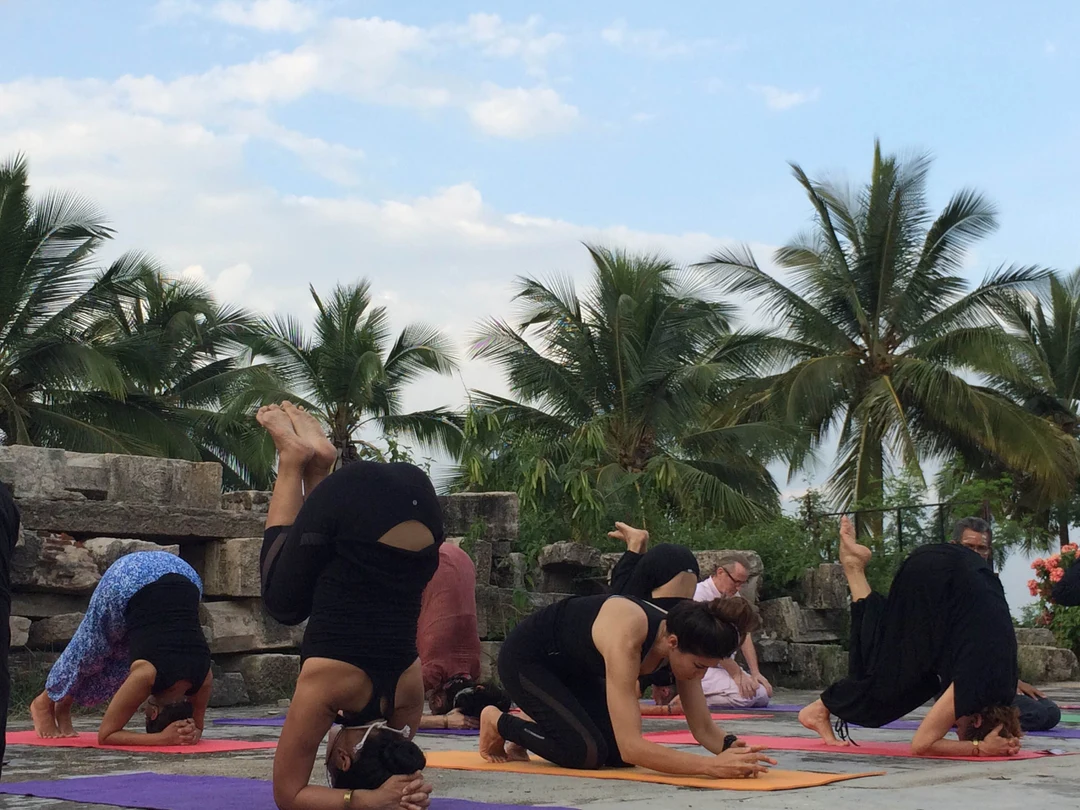
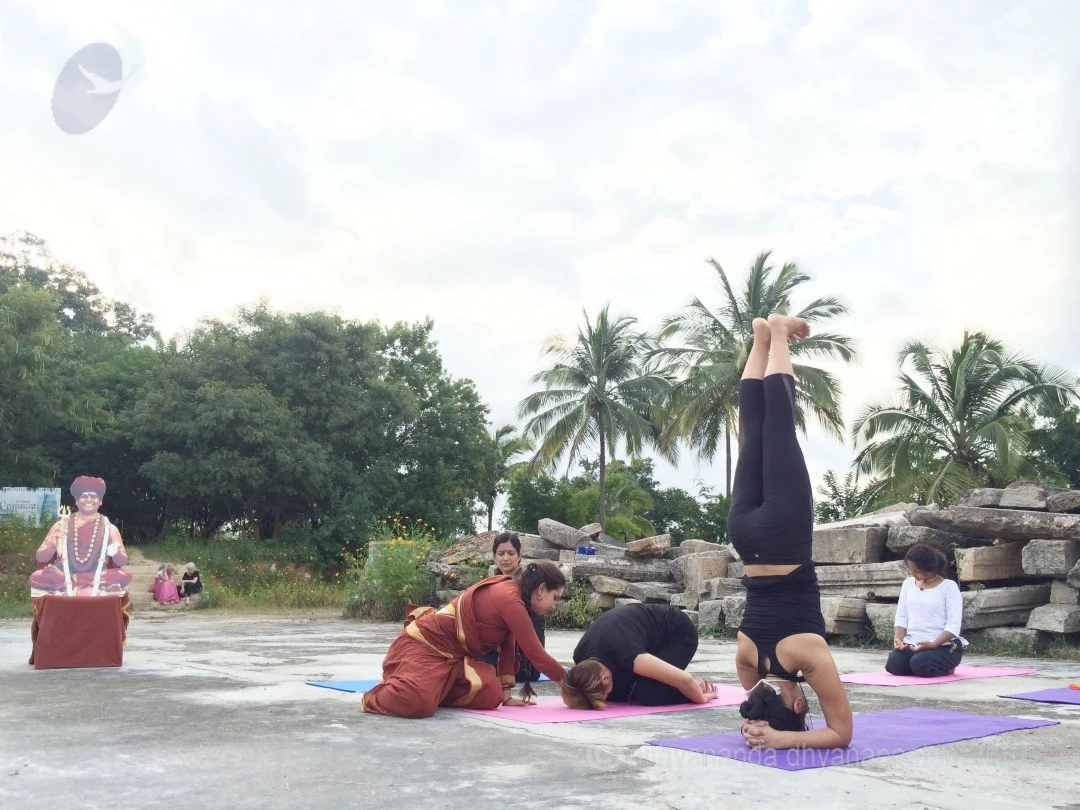
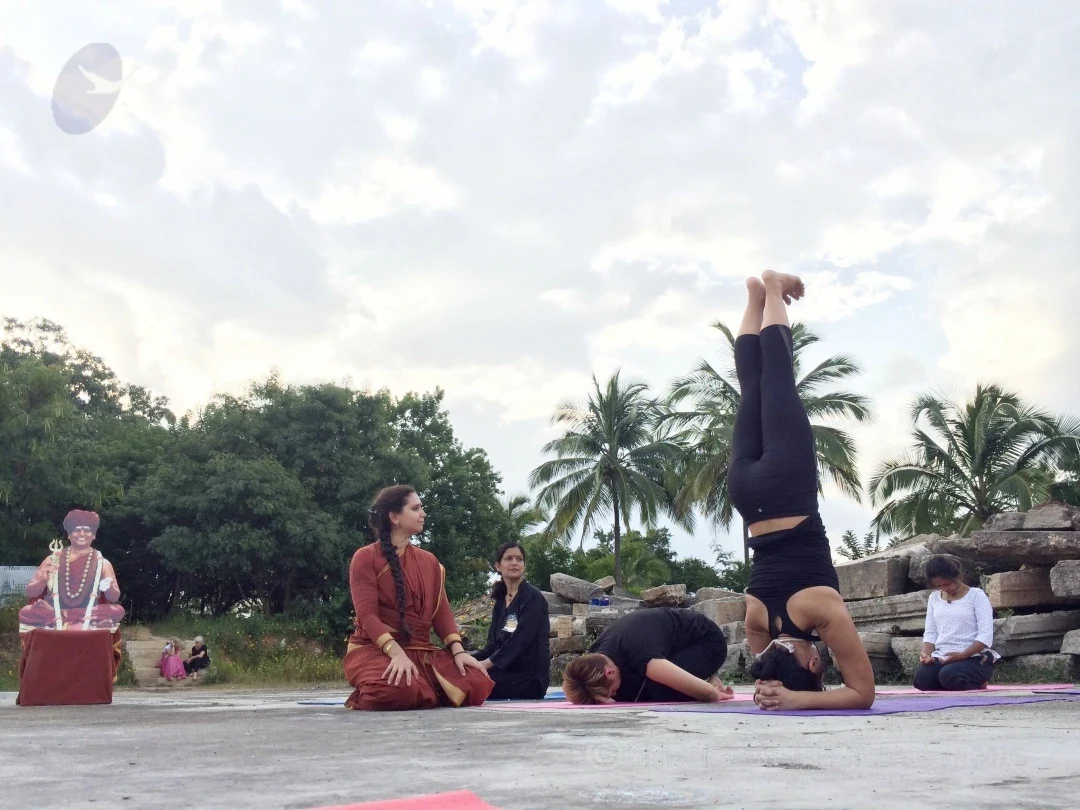
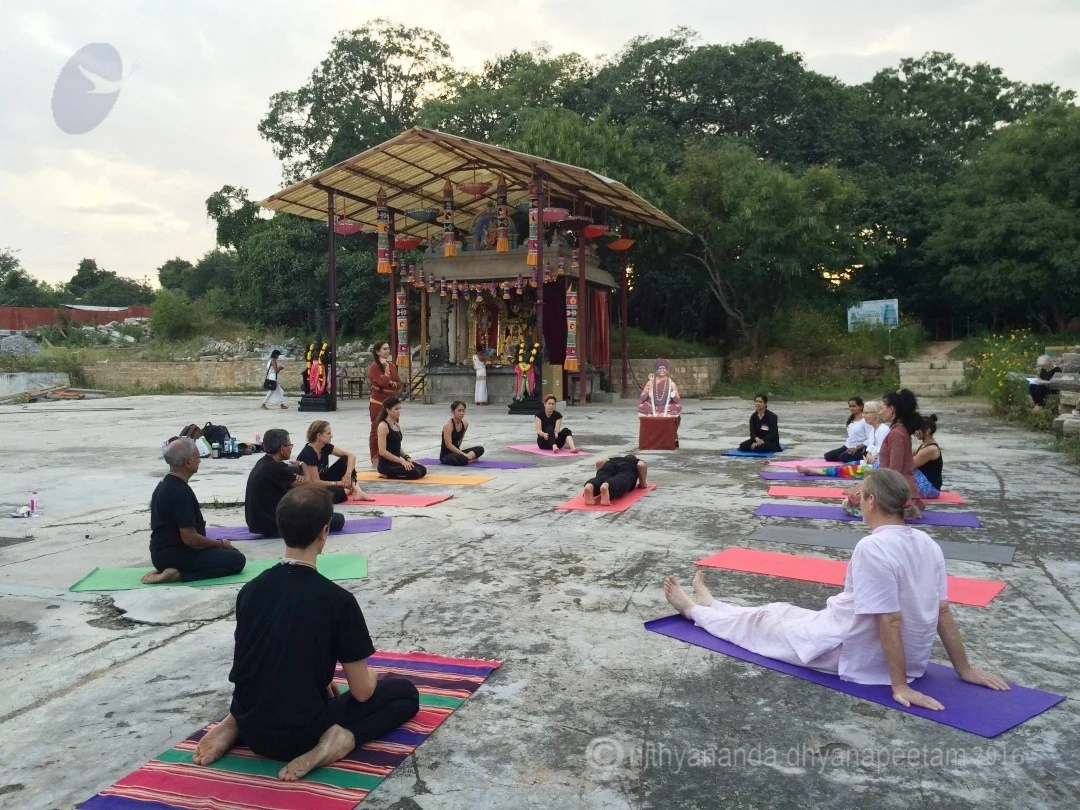
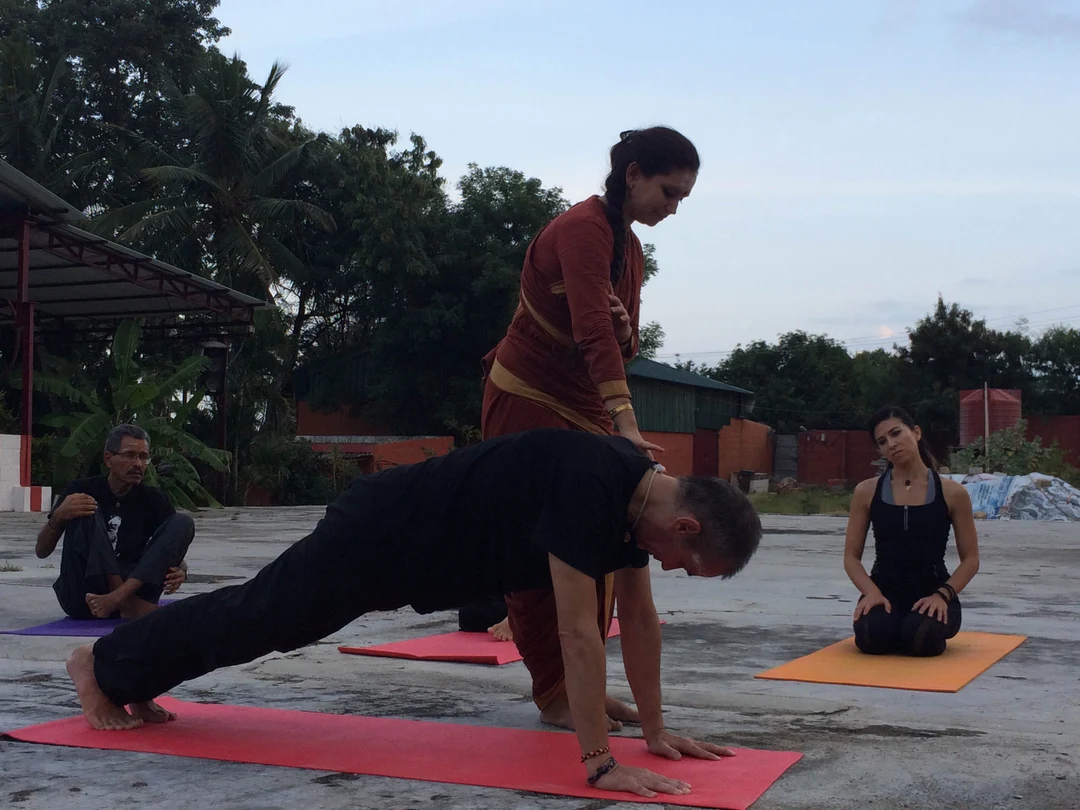
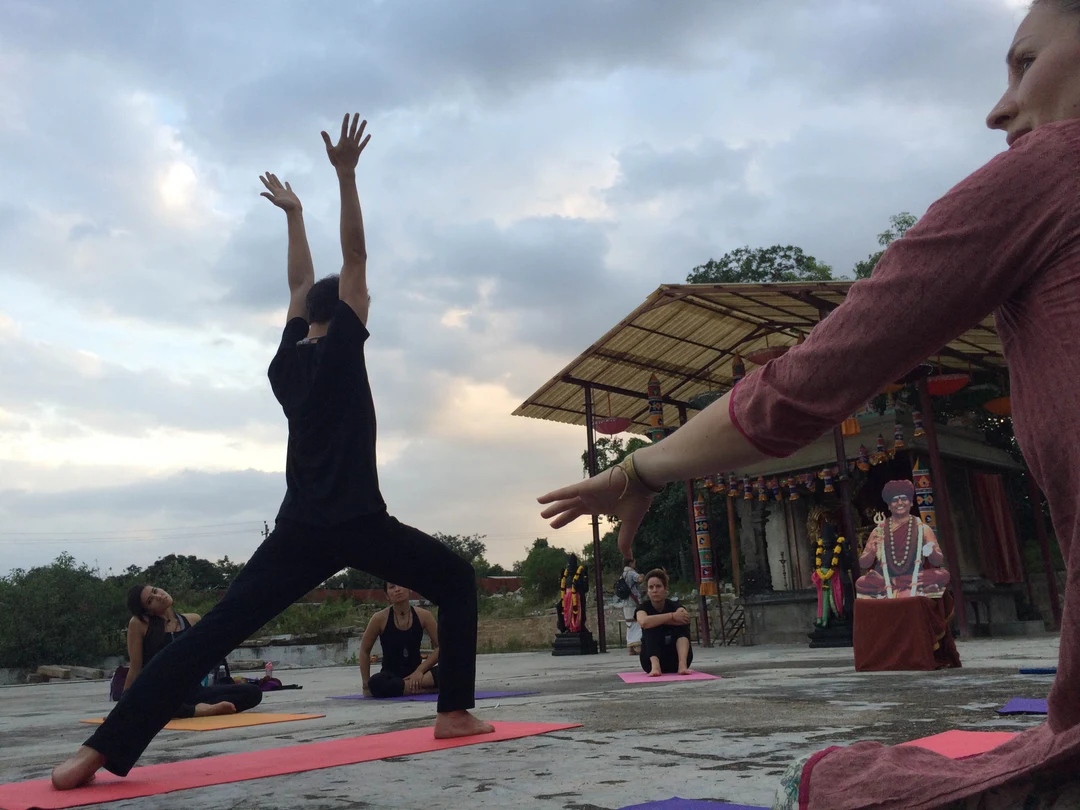
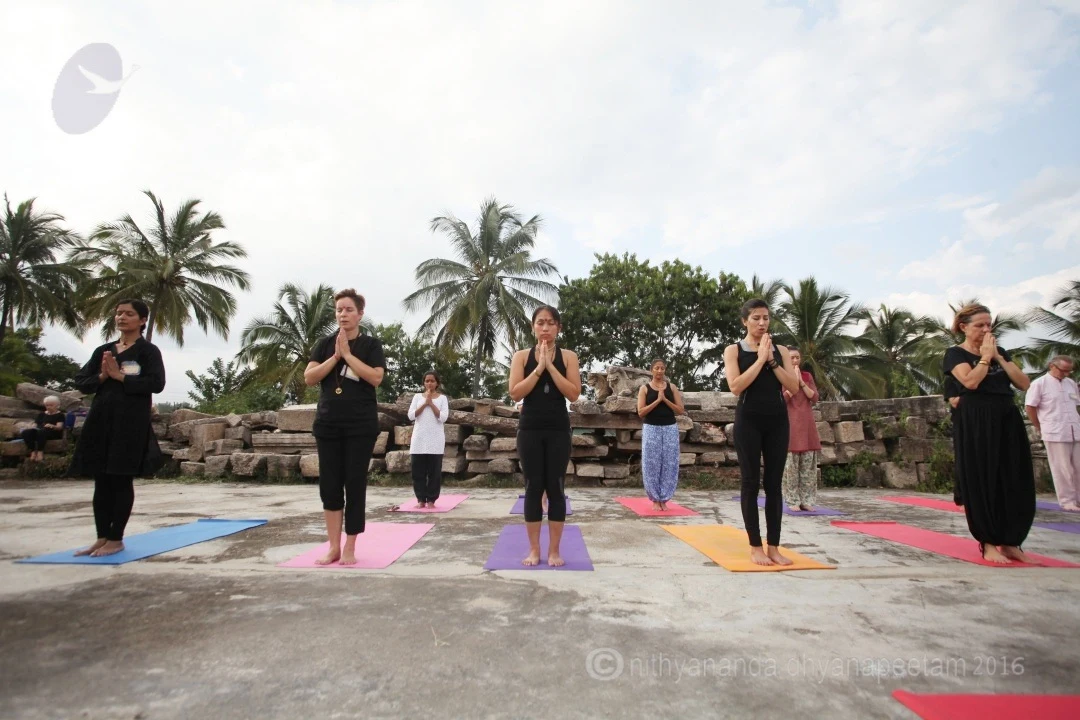
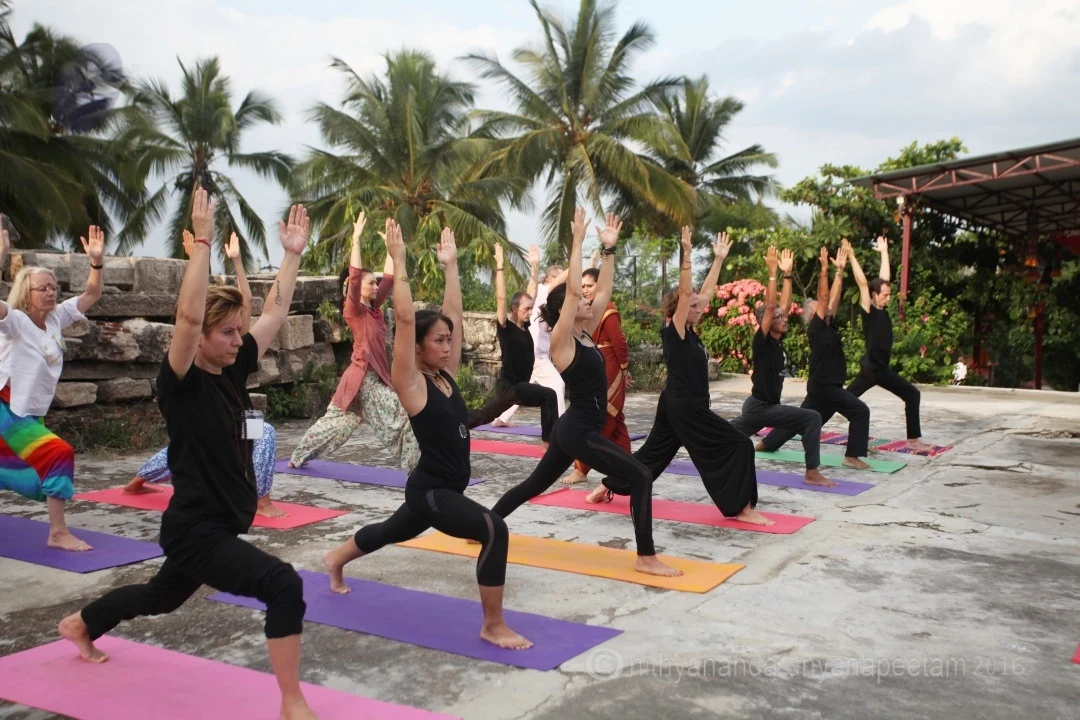
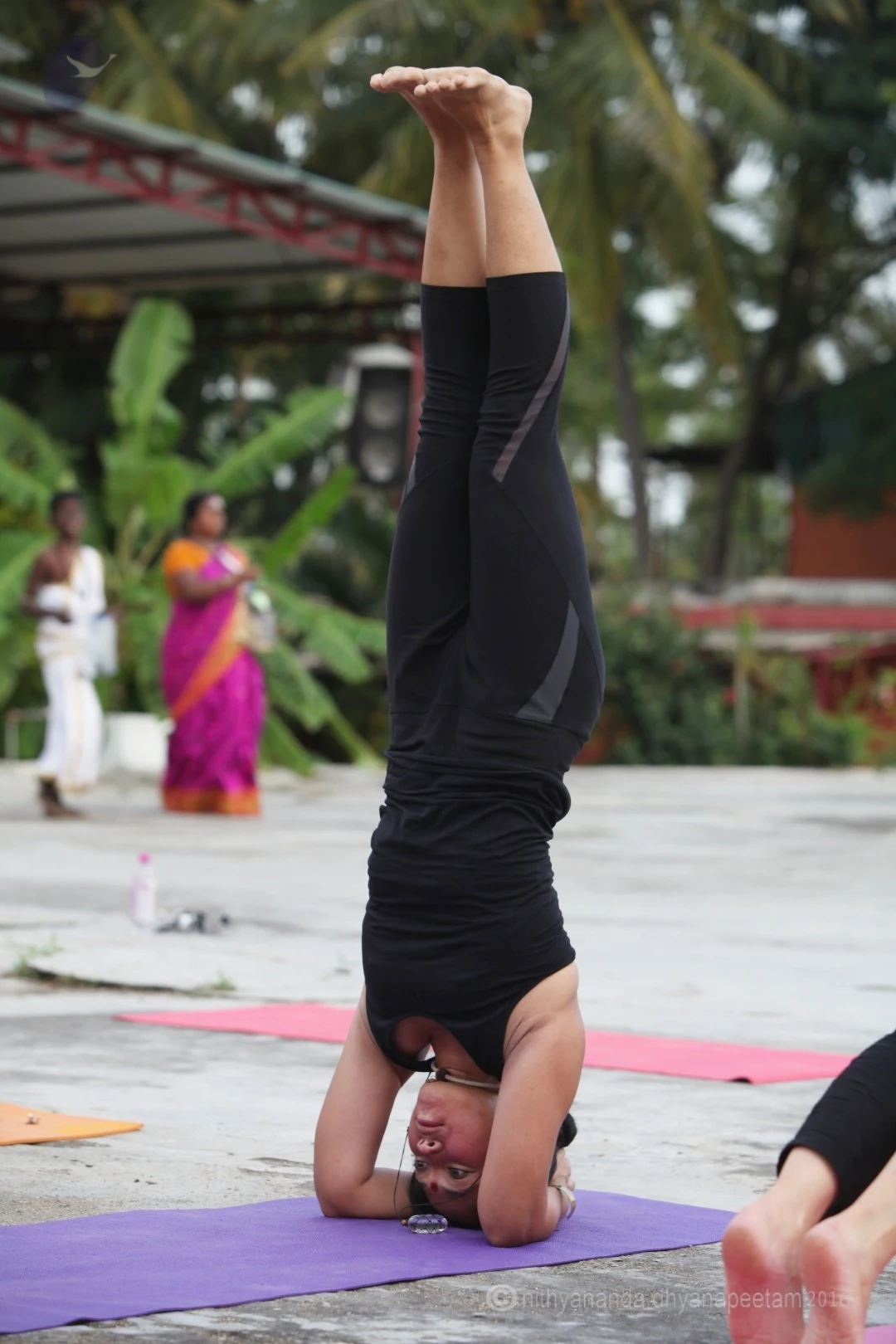
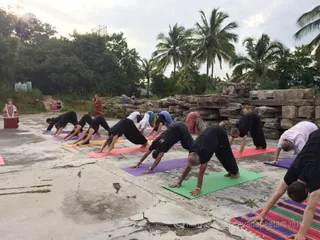
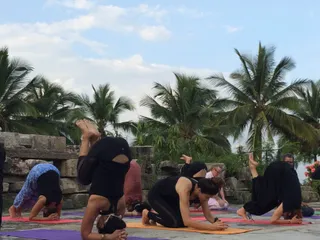
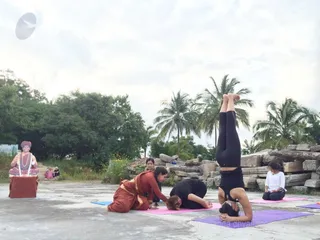
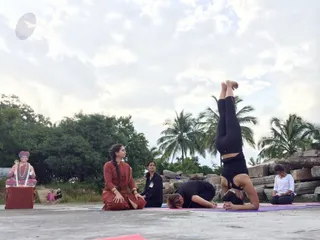
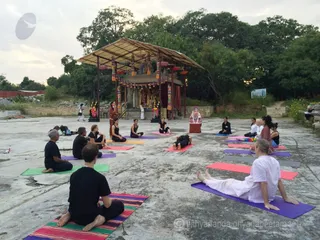
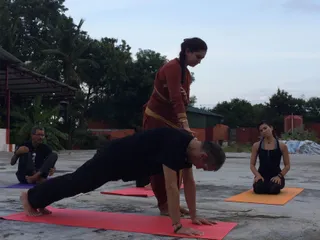
Outdoor yoga session on a concrete courtyard in front of stacked stone blocks and palm trees. About a dozen participants in black and white practitioner clothing perform a downward-facing dog pose on coloured yoga mats in red, green, purple and orange. A figure in orange robes with a turban-like head covering and garlands stands at a raised platform at the left, apparently leading the session, while another person in a red-orange garment stands nearby.Outdoor yoga class on a stone-paved terrace beside a low rubble stone wall, with tall coconut palms and a pale blue sky behind. Several practitioners in black athletic clothing perform inversions and forward bends on coloured mats in pink, purple and orange. One woman in the foreground is in a headstand, another in a forward fold with her hands flat on an orange mat, and a figure on the right is in a handstand-style inversion. A man in a light shirt and a bald head sits among them, and a woman in a blue top bends forward on the left. Red flowering shrubs appear at the right edge.Outdoor yoga session on a concrete ground beside stacked stone blocks and palm trees under an overcast sky. A woman in black leggings performs a headstand on a purple mat in the foreground, while a woman in an orange-brown kurta-style outfit kneels beside a student bent forward in child's pose on a pink mat. Another woman in white sits in meditation on a purple mat at right. At left, a life-size statue of a seated figure in saffron-red robes, a crown-like headdress and a beaded necklace sits on a red-draped pedestal, facing the class. Two more people sit in the background near the foliage.Outdoor yoga session on a concrete ground with palm trees and stacked stone blocks behind. A woman in a black top and leggings performs an inverted headstand on a purple mat at right. Nearby, a woman in an orange-red traditional dress sits on her knees watching, and another woman in black sits beside her. A third participant bends forward on a mat, and a woman in white sits in meditation at far right. At left, a life-size figure of a seated man in pink-and-red robes, a crown-like red head covering and a rudraksha mala sits on a red pedestal, with a trident-marked cloth. The figure is a statue, not a physical person, and the scene shows yoga practice with a seated teacher image.An outdoor yoga session on a cracked concrete courtyard at dusk, with participants on coloured yoga mats in lines facing a small open-sided shrine roofed with corrugated sheeting and hung with paper lanterns and garlands. A figure in a red-orange robe stands near the shrine and a person in white stands beside it. In the foreground a young man in black sits cross-legged on a striped mat, while a woman in white trousers and a pink top stretches on a purple mat at right. Others sit, kneel or lie in forward bends on mats in pink, purple and yellow. Roughly fifteen people are visible.Outdoor yoga session on a concrete ground at dusk with trees and a corrugated shelter behind. In the foreground a man in a black t-shirt and black trousers, barefoot, performs an upward-facing plank-style pose on a red mat, hands and feet pressed down. A woman in a rust-red sari with a braid stands behind him, hands on his back to guide the posture. To the left a seated older man in a black shirt and grey trousers sits on a purple mat, and at right a young woman in a black top and dark leggings sits on an orange mat watching. Red walls and a water tank are visible in the background.

Photos Of The Day:
87 photosSource gallery
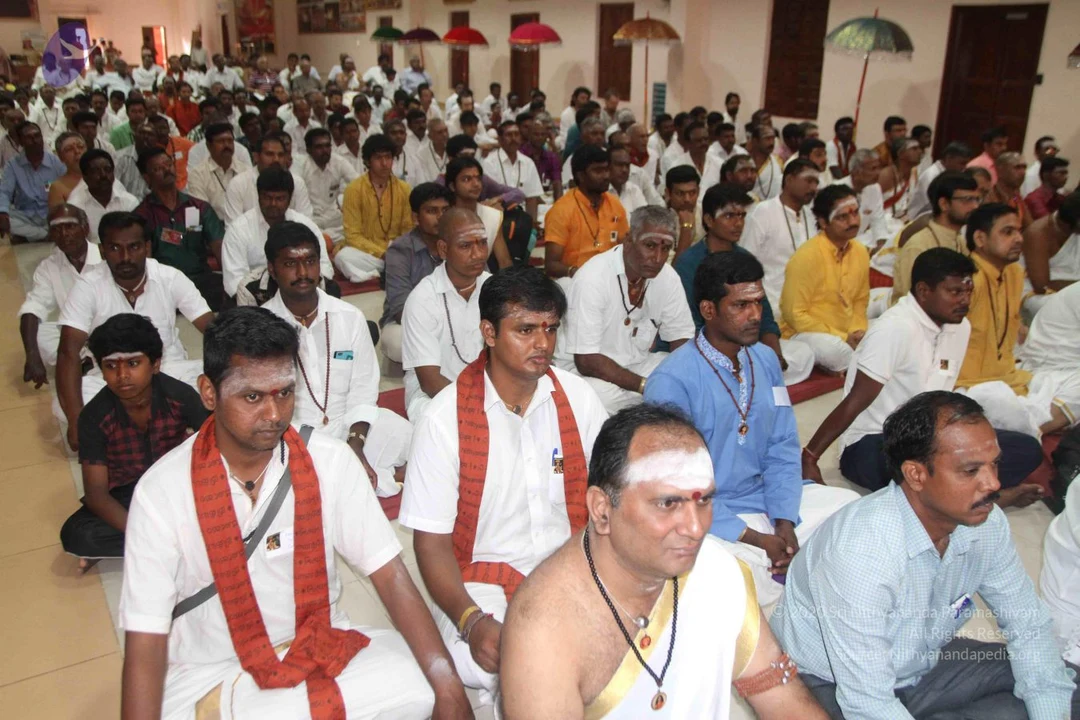
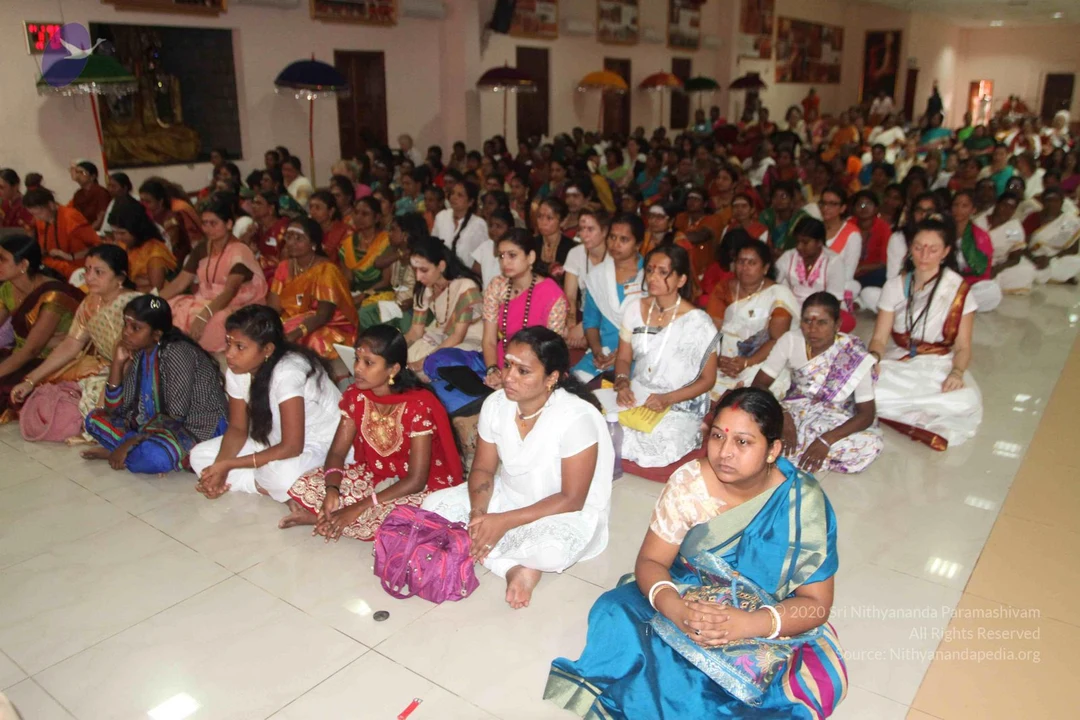
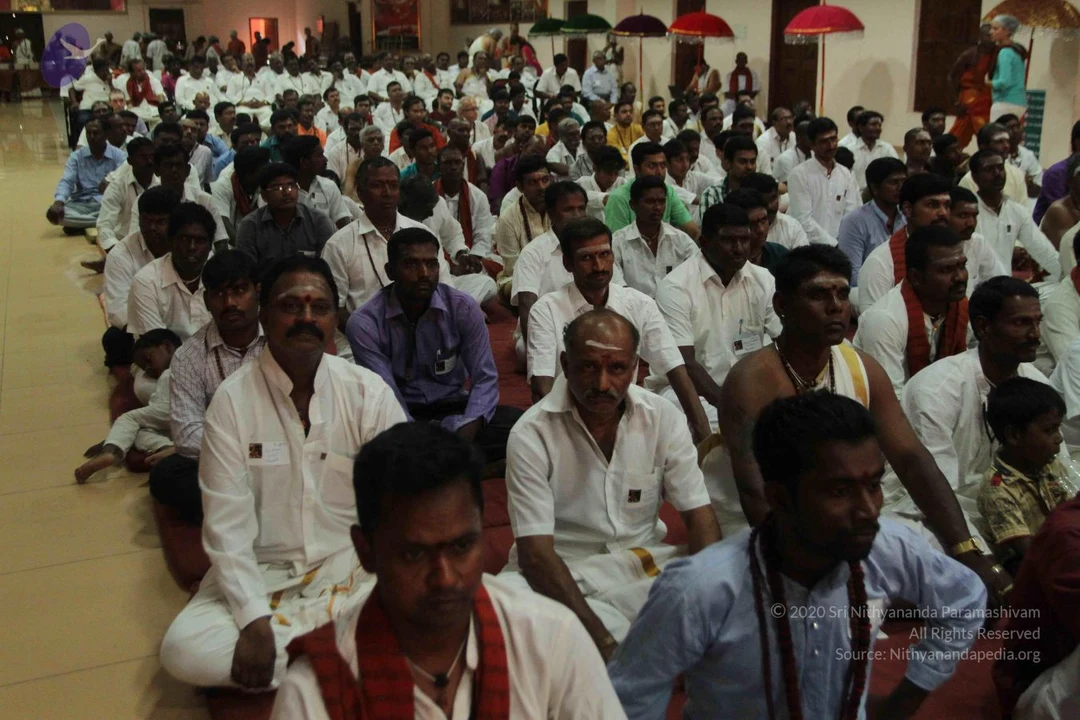
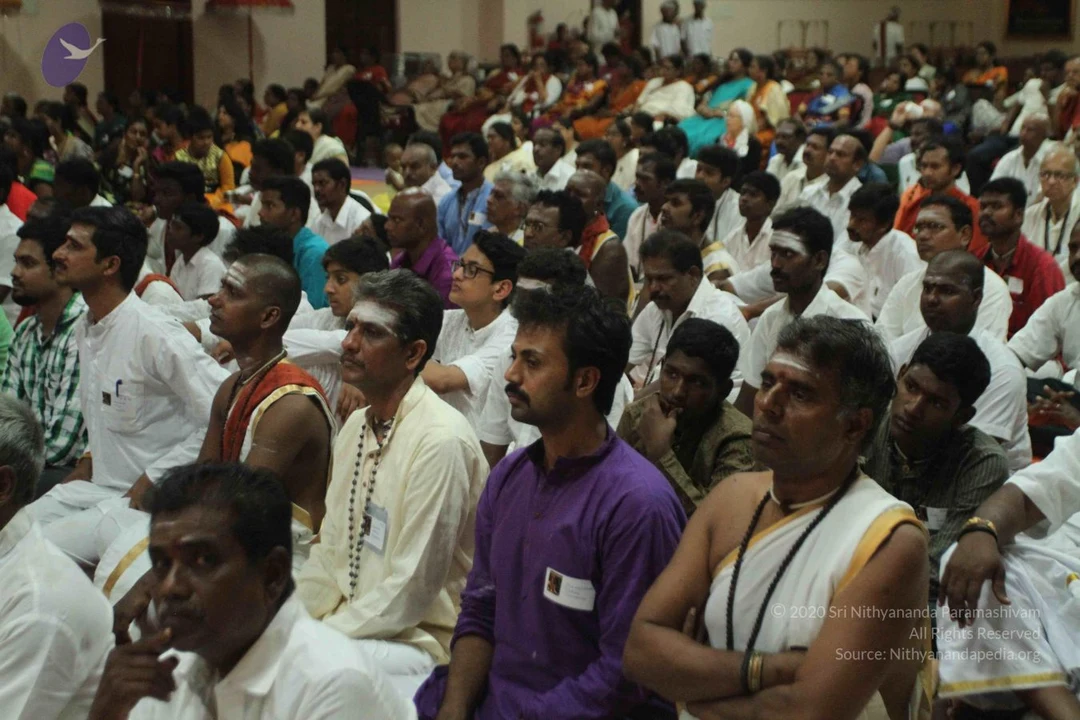
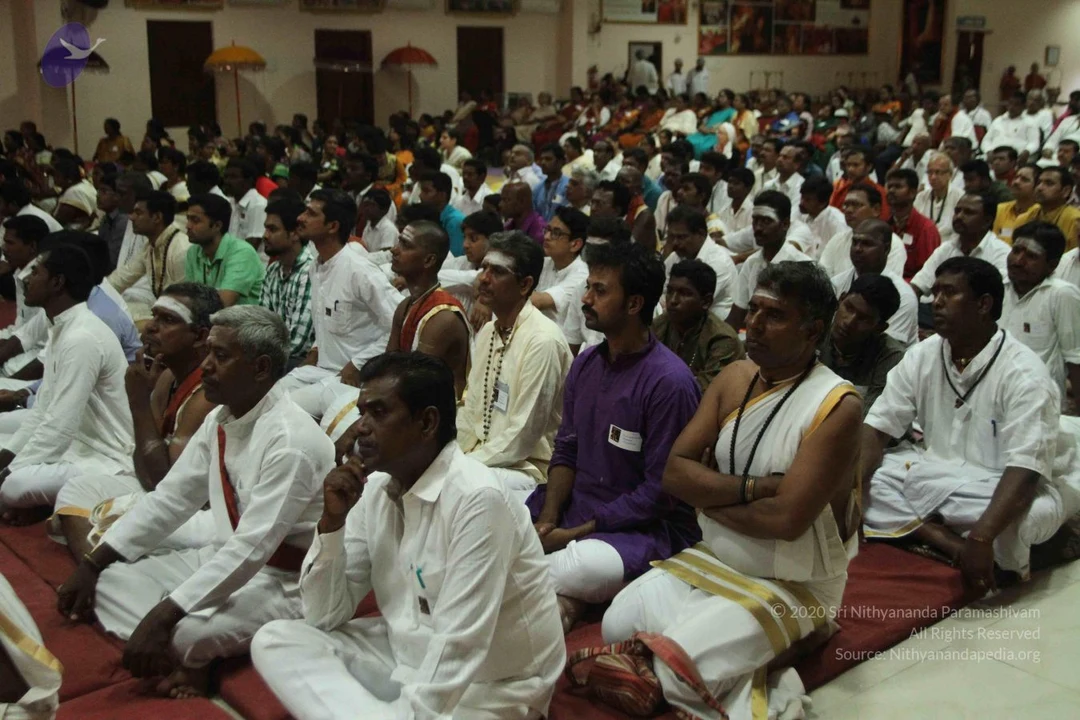
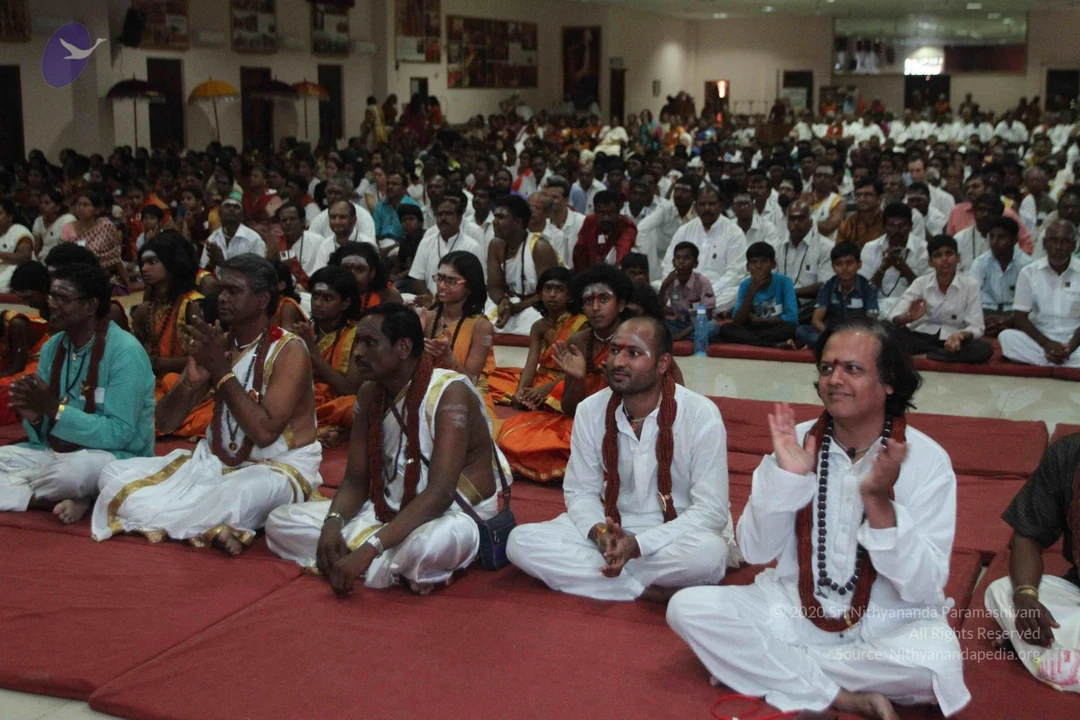
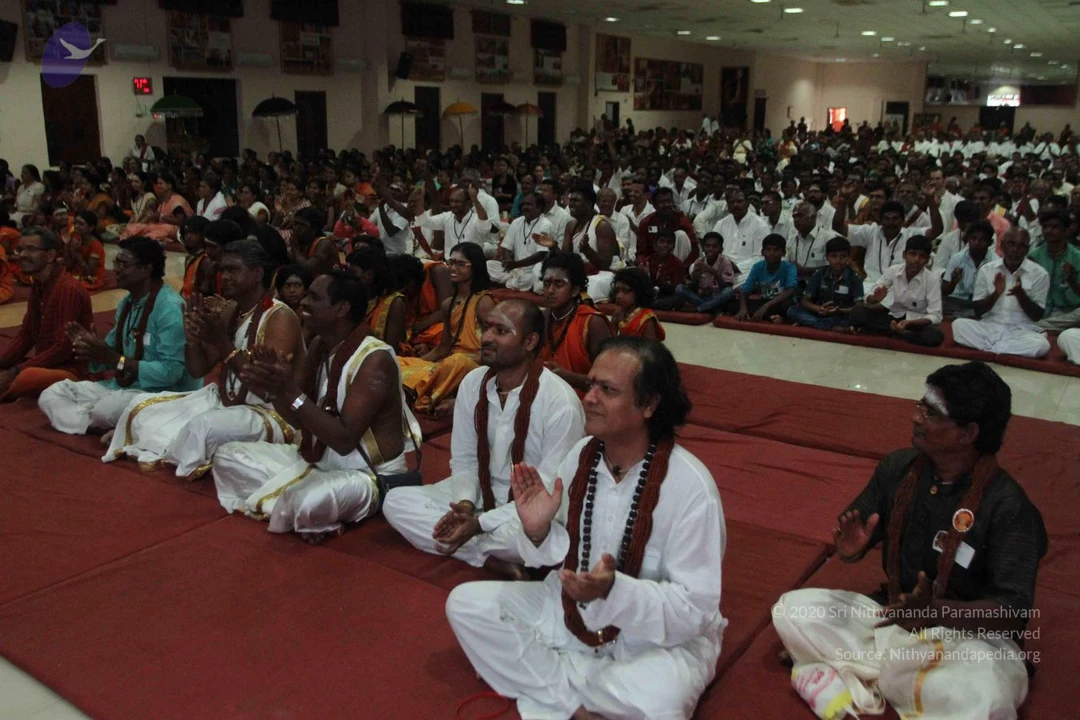
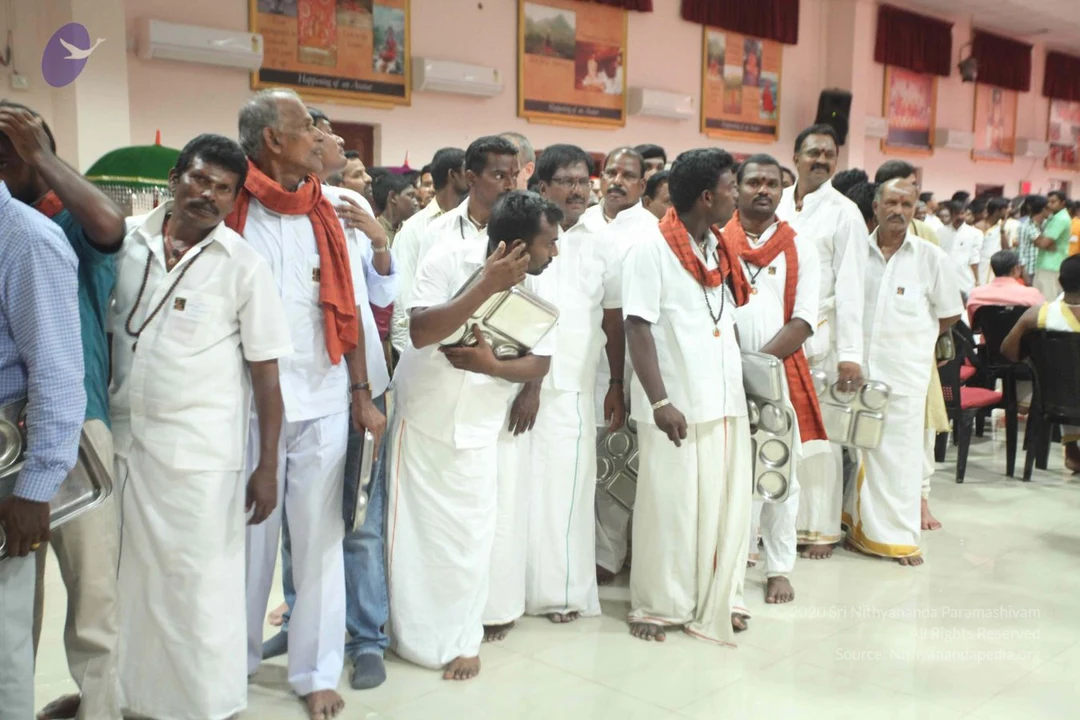
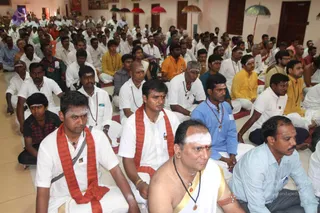
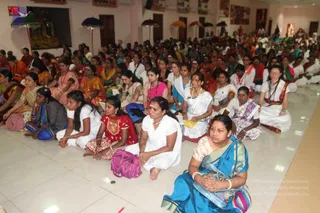
A large seated congregation fills a hall with cream walls and red-brown doors, with several decorative umbrellas hanging near the top of the frame. Many men sit cross-legged on red mats, mostly in white dhotis and shirts, with some in yellow or orange kurtas and others in blue. Many wear rudraksha malas, red or saffron shawls, and white tilaka marks on their foreheads. In the foreground, a man in a white shirt and red-orange shawl sits beside a man in a blue shirt, while a bare-chested man with a gold-bordered white cloth and a mala is seated in front. Nearby, a man in a light checked shirt sits at the right edge. The scene appears to be a satsang or discourse gathering. No single figure in the frame can be confidently identified as a person from appearance alone.A large seated audience of women fills a tiled hall during a satsang or discourse, most sitting cross-legged on the floor in rows facing the front. Many wear white or cream saris and salwar kameez, with others in blue, orange, red, pink and yellow garments; several have flowers in their hair and garlands or necklaces. A woman in the foreground wears a blue silk sari with a gold border and bangles, holding her hands together in her lap, while another in white sits with a yellow notebook. Colourful umbrellas hang from the ceiling above, and framed pictures decorate the walls. No individual candidate for a person is clearly visible in the frame.A large hall filled with a dense audience seated on black chairs, most dressed in white with some in colourful clothing, viewed from behind. On the stage at the far end, a seated figure sits before a large framed deity image and ceremonial brass lamps, with a microphone stand and red curtains behind. Two large screens flank the stage showing close-up images, and decorative umbrellas and framed posters line the side walls. The scene reads as a teaching or satsang gathering with a central seated presence on the dais.A large hall filled with seated devotees viewed from behind, most in white dhotis and shirts with some in orange and maroon clothing. On a raised stage at the back, a seated figure in orange sits before a golden deity murti under a large ornate backdrop, flanked by brass lamps and ritual items. Two screens on either side show a close-up of the seated figure in red and white. Red curtains frame the stage and a camera on a tripod faces the audience.A large indoor hall filled with seated devotees on red and pink mats facing a distant stage. Men in white dhotis and shirts, others in saffron and orange robes, and many wearing rudraksha malas and sandalwood or vibhuti markings sit in neat rows, while women in saffron and orange saris sit toward the left. Umbrellas in red, yellow and pink line the side walls beneath framed paintings of deities. Several men in front wear orange shawls and red garlands. No individual is clearly identifiable as a person in this crowd view.A large hall filled with seated devotees attending a satsang or discourse. In the foreground, several men sit on red mats: one in a white dhoti with a saffron-orange shawl and rudraksha mala holds a notebook; another in white with a red-orange shawl writes; a bald man bare-chested with white markings and a rudraksha mala sits with arms folded; a younger man in white with rudraksha mala writes on paper. A man in a red robe and grey pants sits in the middle row, and women in orange and white saris sit among the crowd. Yellow umbrellas and framed pictures hang on the walls behind. No identifiable a person figure is visible.
SMKT-Dine-Dance
105 photosSource gallery
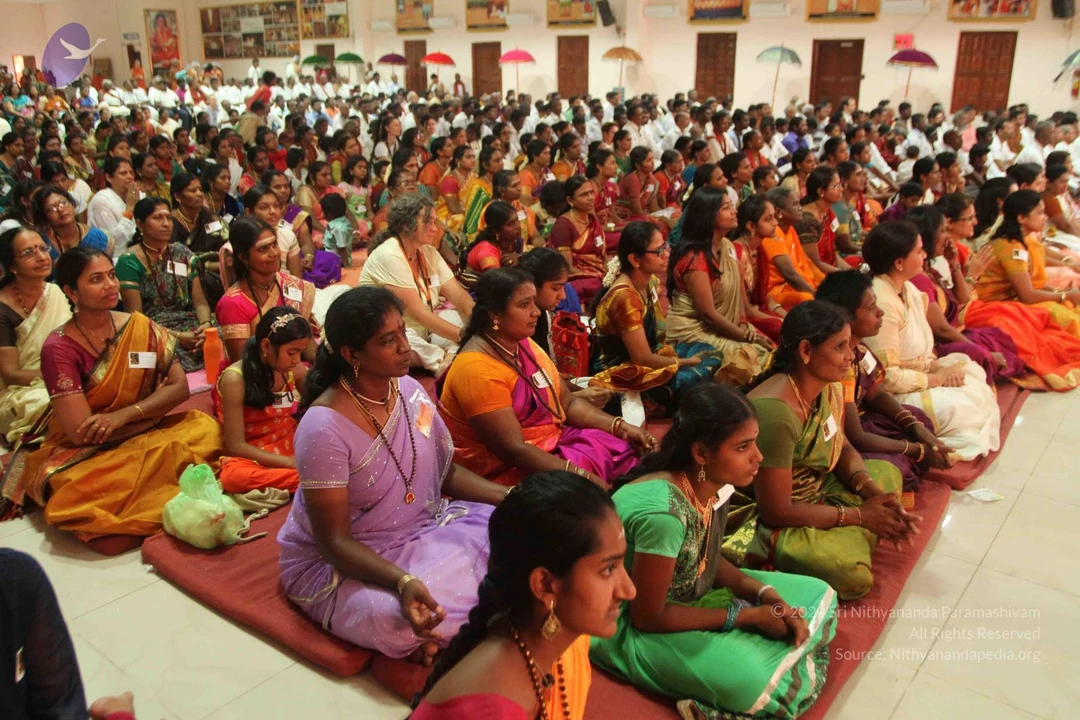
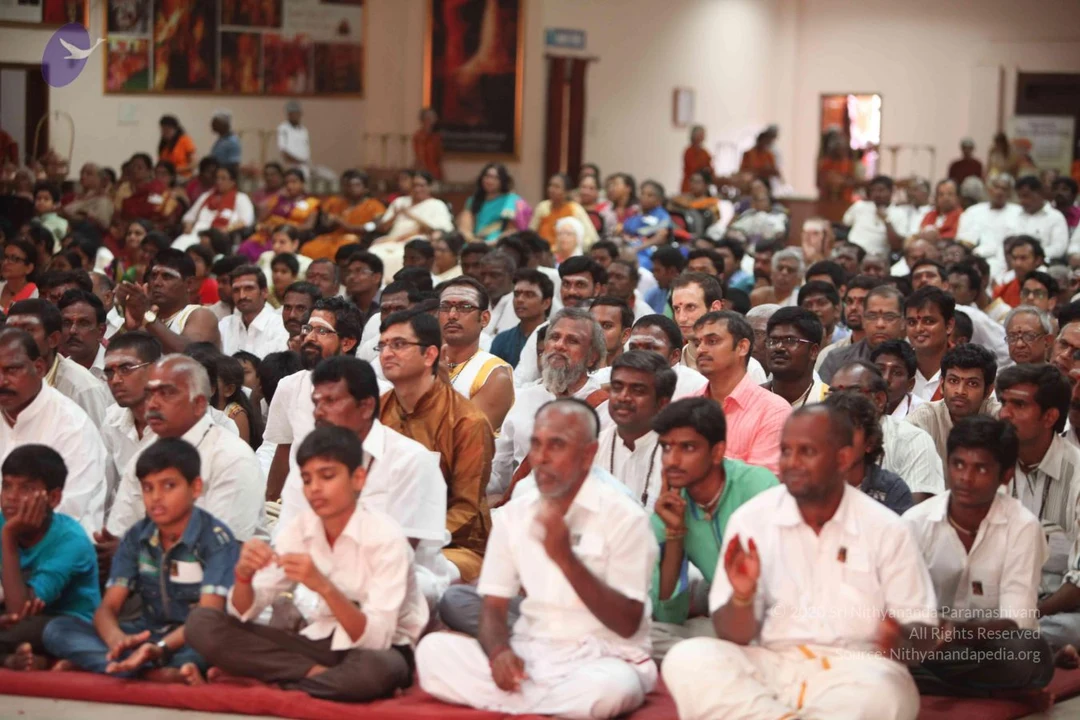
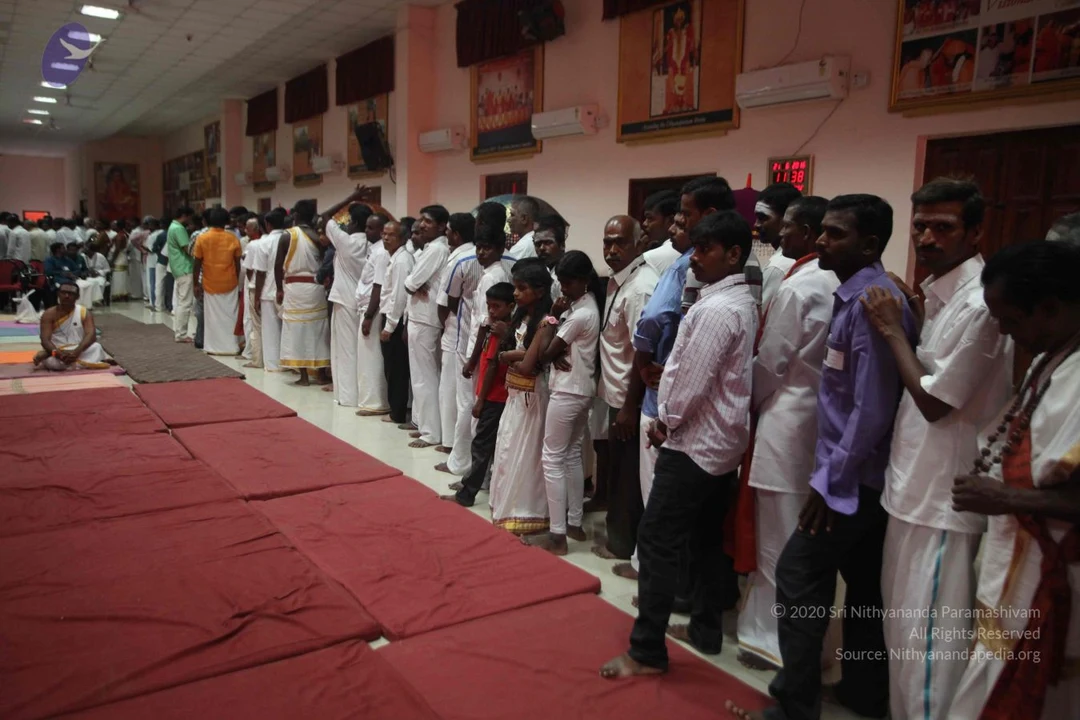
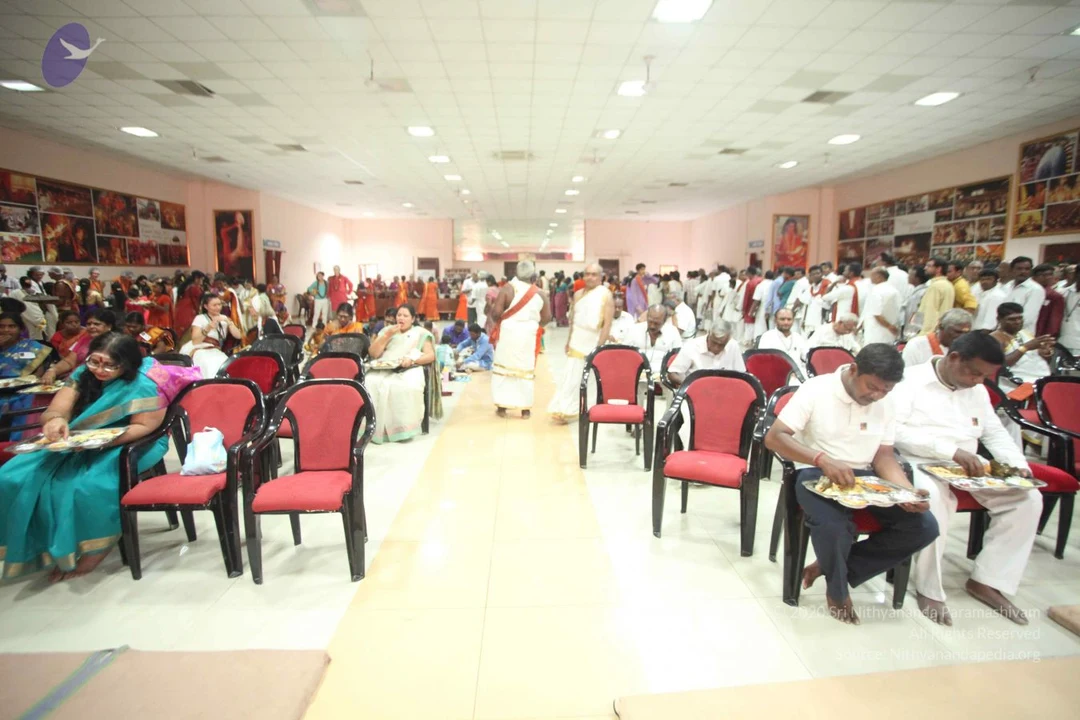
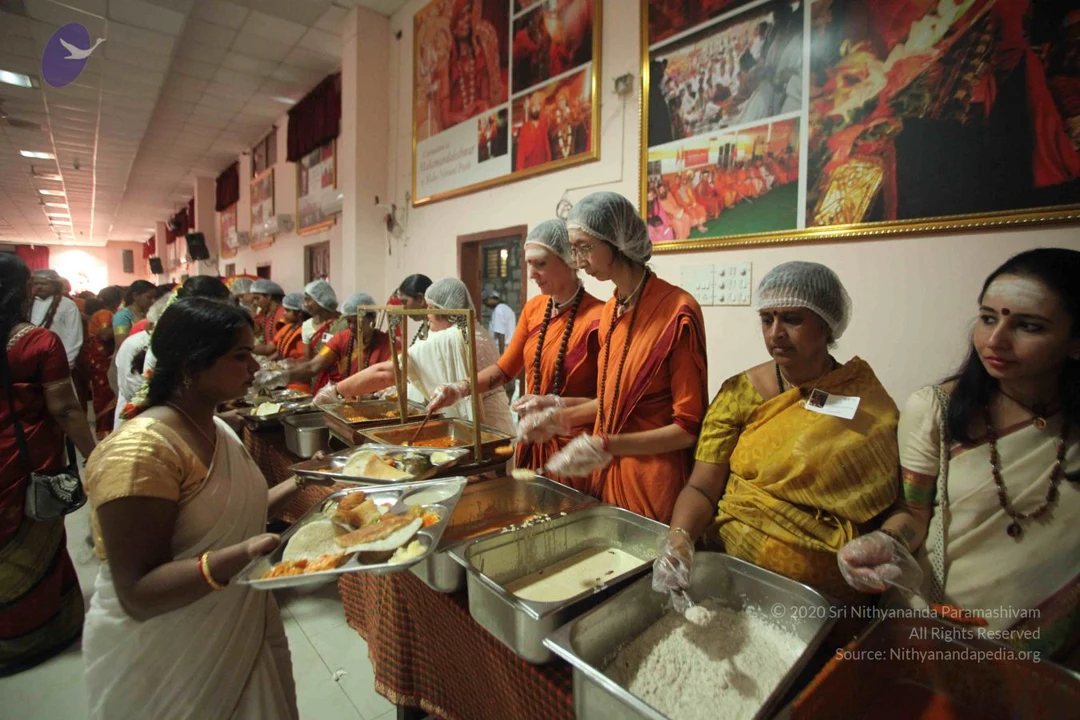
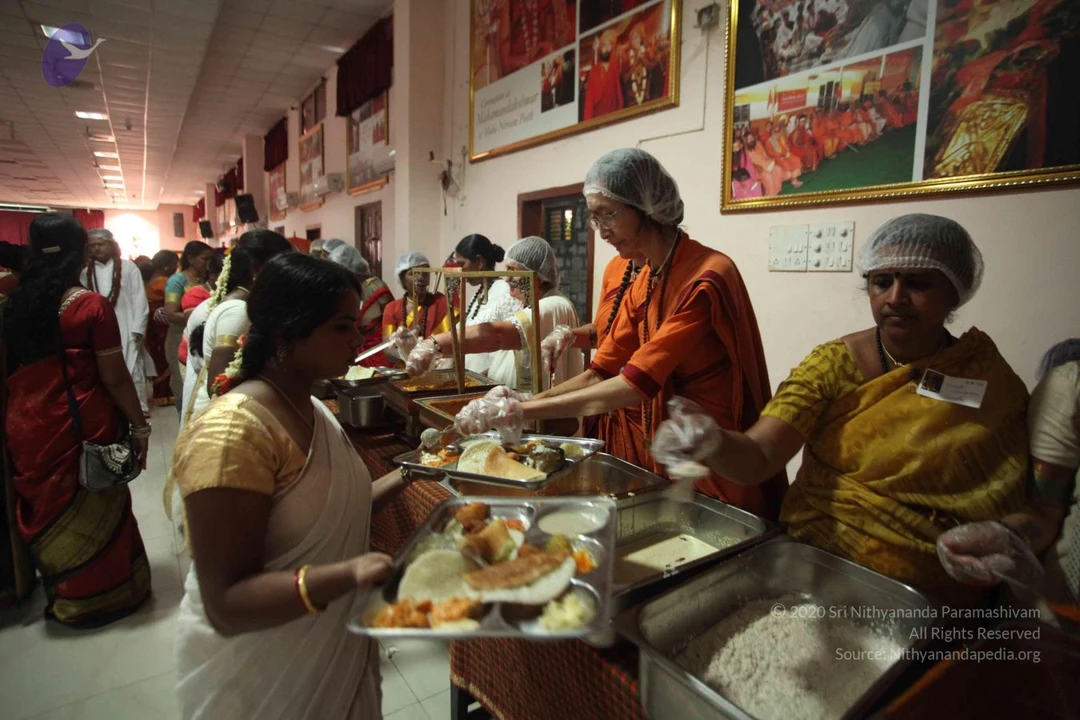
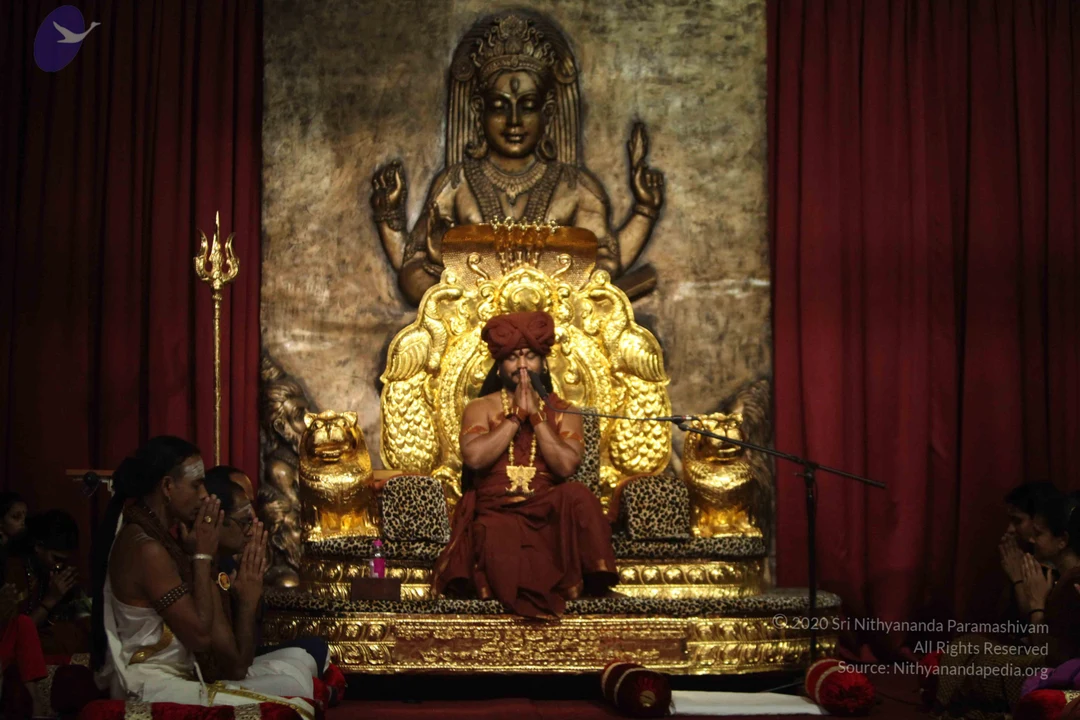
A photograph of a ceremonial stage with deep red drapes and a large gilded golden backdrop showing a standing deity murti with multiple arms and a crown. A seated figure in saffron-orange robes and a matching turban sits centrally on a golden throne, hands folded in namaskar, with a candlestick-style pair of golden stands, trident-topped ceremonial staffs and golden kalasha-like urns flanking the stage. Along both sides, rows of devotees sit on red cushions with hands folded in prayer; those on the left wear white and red, and those on the right wear saffron, red and pink saris and kurtas. The scene suggests a satsang or puja setting. Several devotees, including the seated figure, are visible.A large seated congregation fills a hall with red mats, many people in white dhotis and shirts and others in saffron-orange robes. Foreground men in white dhotis with gold borders and rudraksha malas sit with palms pressed together in prayer, and one man in a teal shirt holds his hands folded. Behind them rows of devotees sit attentively, some children among them. Ornate red and beige decorations and framed pictures line the walls.A large seated audience fills a bright hall with white tiled floor and ceiling lights, attending a satsang-style gathering. In the foreground, women in saris sit on red mats: one in red blouse with purple sari and beaded necklace, another in orange sari with maroon border, a third in green blouse and olive sari wearing a rudraksha mala. Behind them rows of devotees in orange, yellow, pink and green saris sit closely, with men in white clothes further back. Umbrellas hang overhead and framed banners line the back wall; no speaker or a person candidate is visible in this frame.A large seated audience of women and girls fills a hall, sitting on red mats on a tiled floor. Most wear colourful saris and jewellery, including gold necklaces and rudraksha-style beads, in purple, orange, green, yellow and pink. Many have name badges pinned to their clothes. Several look attentively toward the front. Above them, umbrellas hang from the ceiling and framed pictures decorate the walls. A few men in white are visible at the back. No speaker is clearly visible in this view.A large seated audience of men fills a hall, sitting on red mats on a light floor. Most wear white dhotis and white shirts; some wear red shawls or saffron-red scarves, and one man in front wears a white-trimmed grey shirt and a red shawl. Several have tilak or vibhuti marks on their foreheads and a few wear rudraksha or beaded necklaces. Red, purple and green umbrellas hang at the back of the hall, and a woman in an orange sari stands near the top right. No single figure is clearly identifiable as a person in this view.A large seated audience of women and some men fills a hall, sitting on mats and cushions in rows. Many wear white or colourful saris and salwar, with rudraksha malas and white forehead marks; several wear name badges. Pale pink, orange and green saris stand out, and a few women wear black or red dupattas. Ornate red-and-gold parasol umbrellas hang along the back wall, and a figure in white stands near the far end of the hall. The scene reads as a satsang or discourse session with attentive participants.

01-LSP

30 photosSource gallery
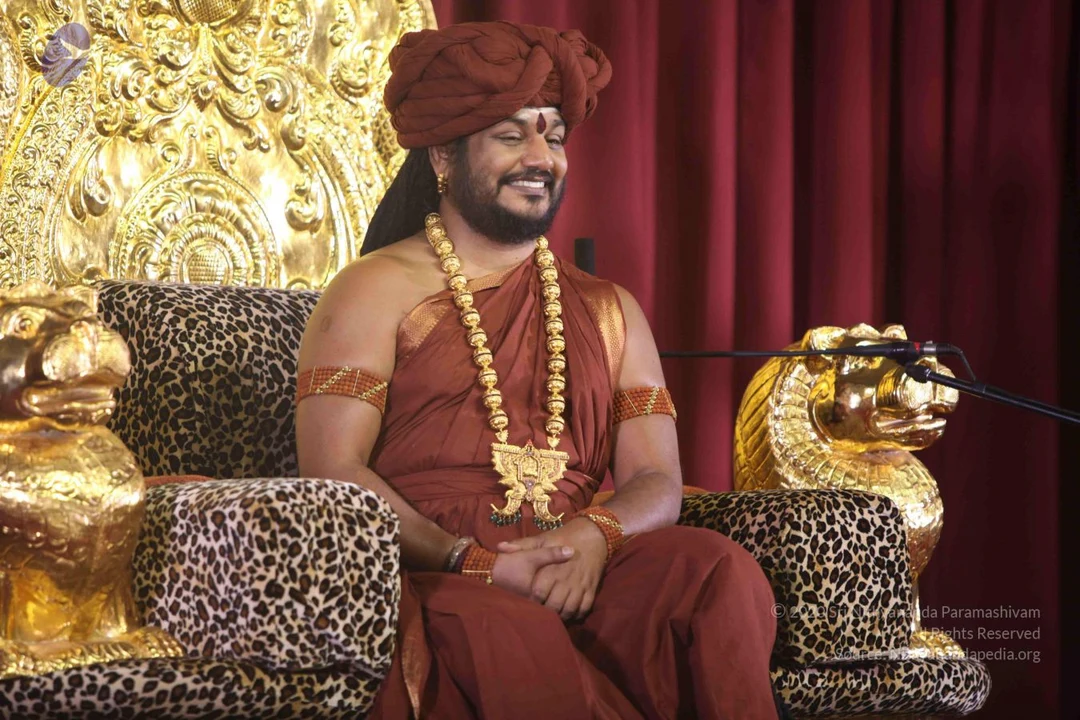
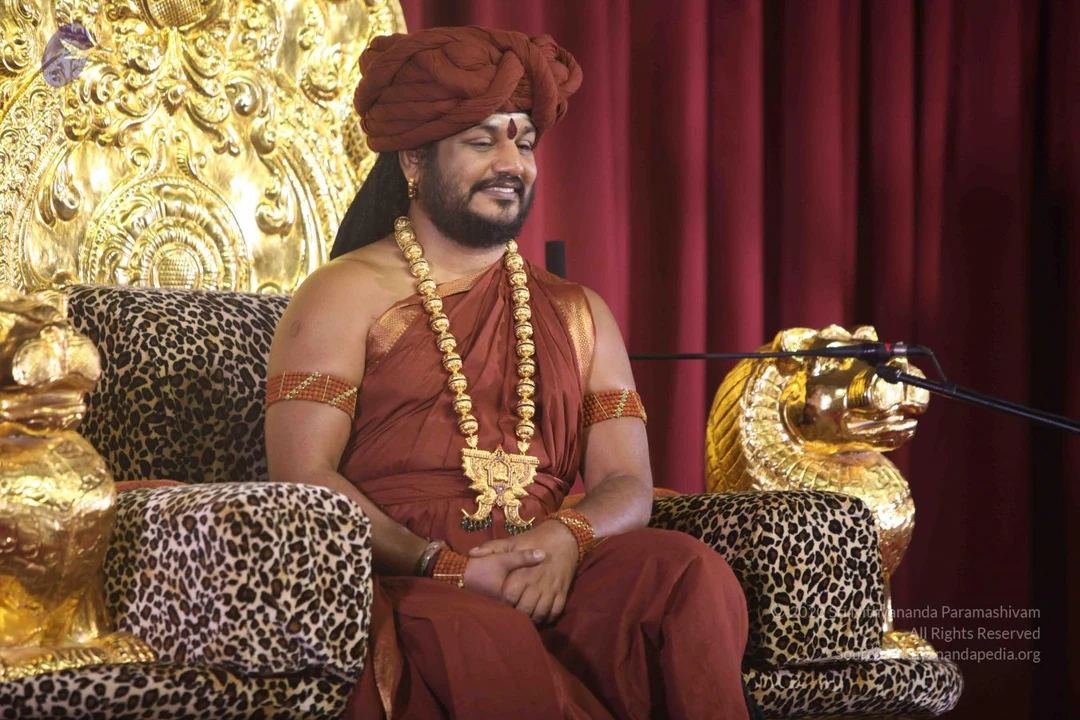
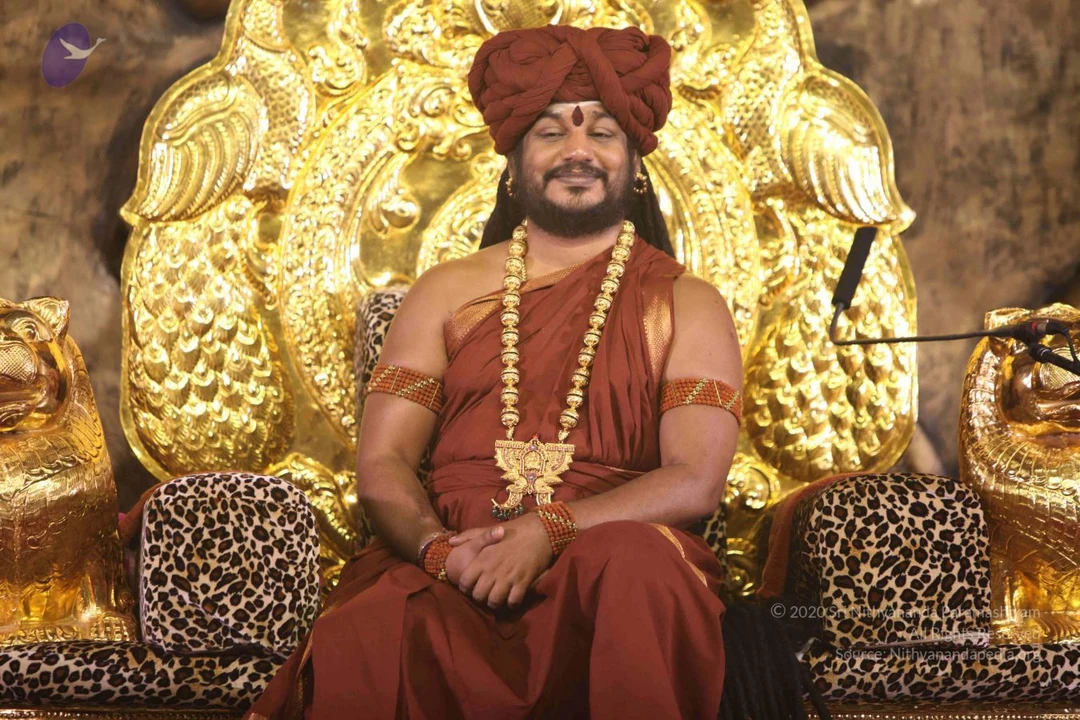
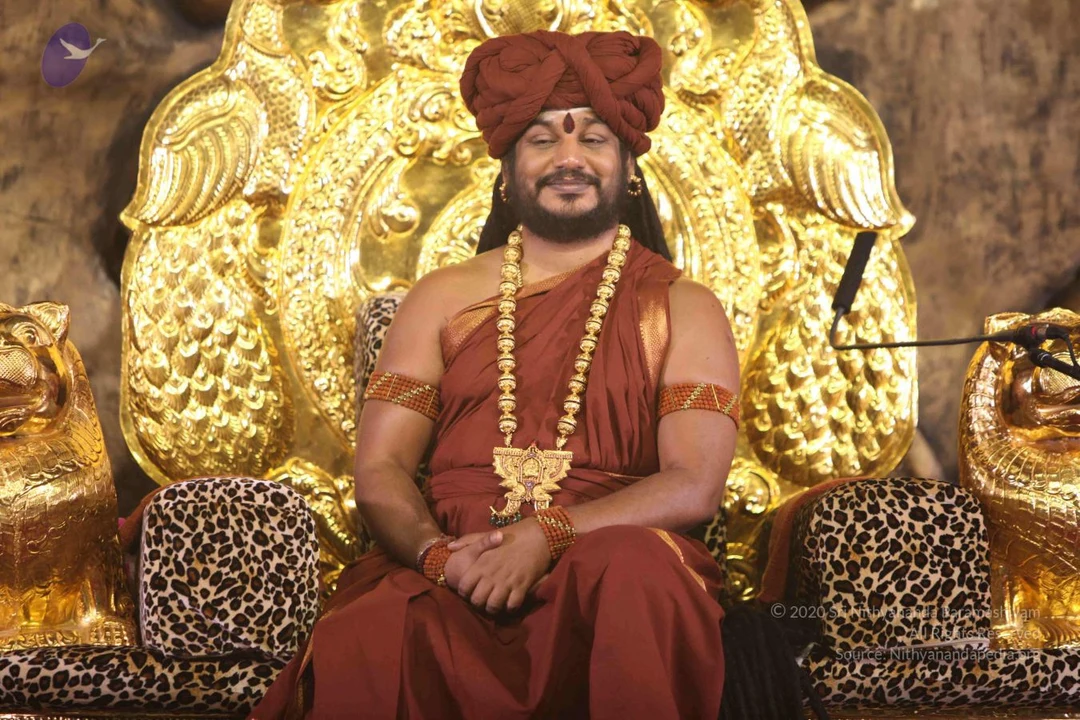
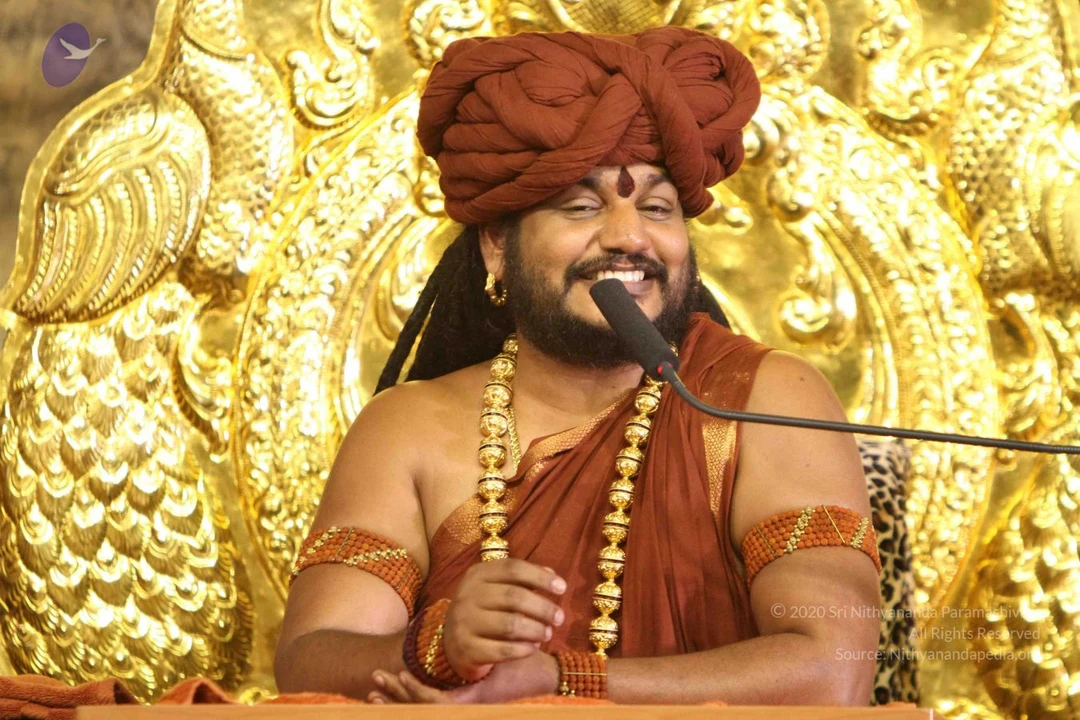
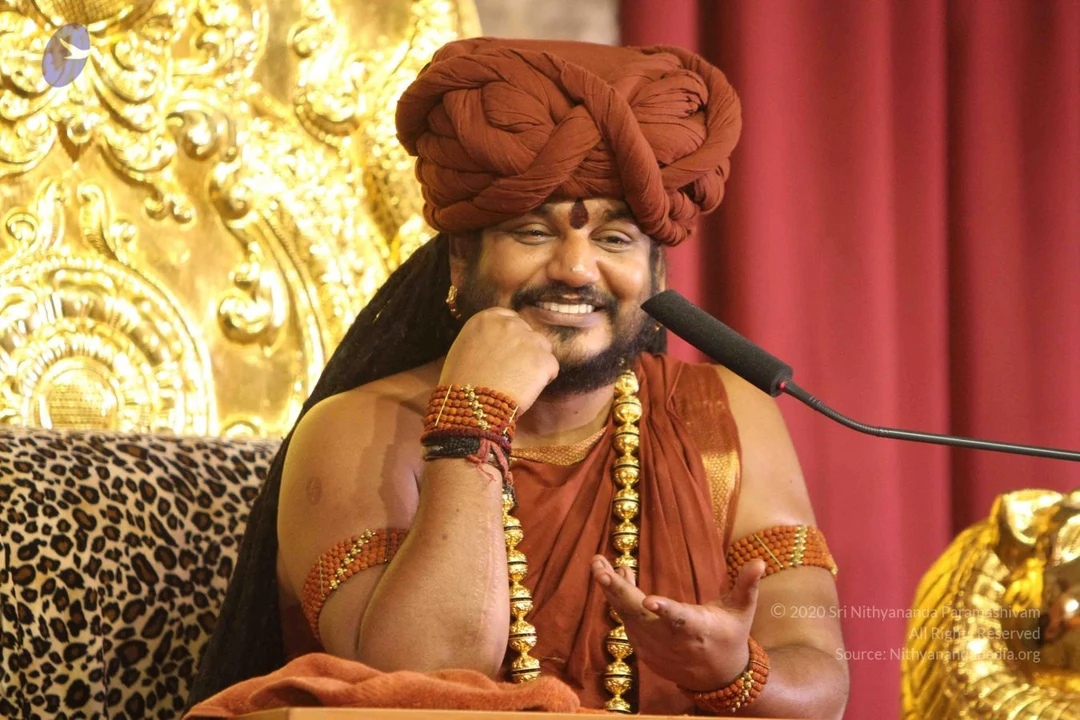
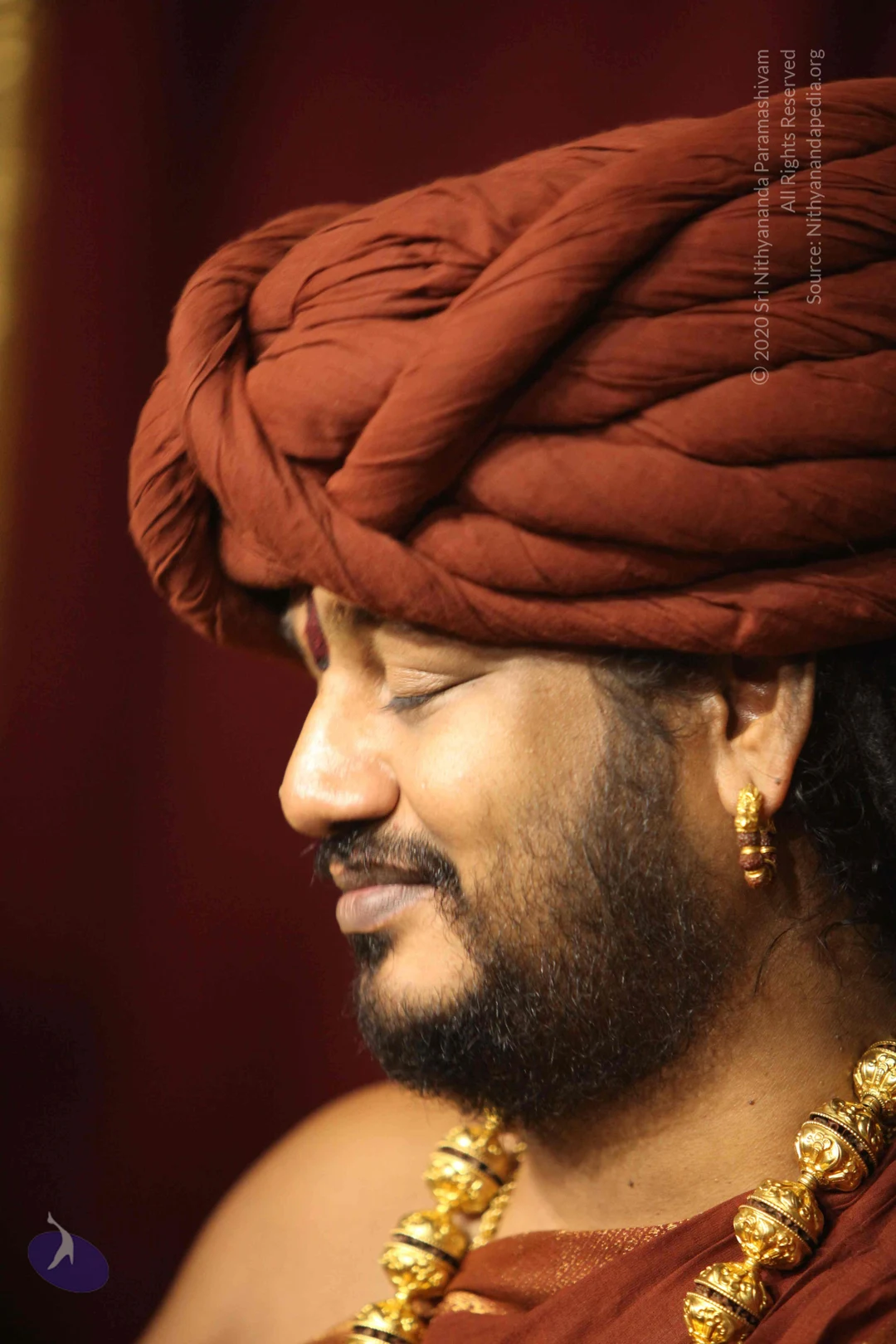
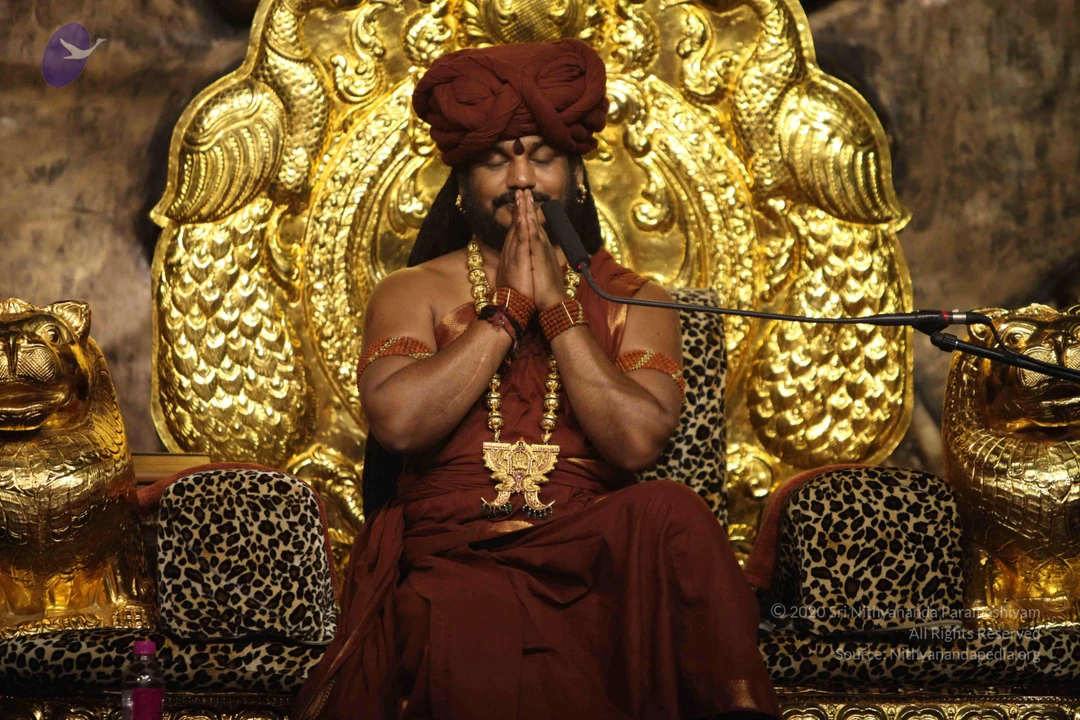
A bearded man in a maroon-red turban and red-brown robe sits on a throne-like seat with gilded carved backrest and gold lion-head armrests, upholstered in leopard-print cushions. He wears a long beaded necklace with a gold ornamental pendant, gold bangles, and smiles while raising his right hand and holding a white cup in his left. A microphone stands at right. The appearance is consistent with Swamiji (probable): saffron-maroon ornate clothing, turban, ceremonial gold necklace and a seated teaching posture on a throne, so he is presented as a discourse speaker.Photograph of a man seated on a golden lion-headed throne draped with a leopard-print cloth, speaking into a microphone at right. He wears a rust-orange turban with a small red tilak on the forehead, long dark hair, a rust-orange shawl over bare shoulders, a heavy gold multi-strand necklace with a pendant, a gold earring and a beaded red-and-gold armband. Golden lion heads flank the seat, and a blurred figure in blue clothing with raised hands appears at right against a deep red curtain. Text in the lower corner reads a pedia.org, which is excluded. Appearance cues of long hair, turban, saffron-orange clothing and ornate gold necklace are consistent with the probable Swamiji candidate in a seated speaking roleA bearded man seated on an ornate gold throne upholstered in leopard-print fabric, smiling and looking to his side. He wears a rust-red turban with a red tilak on his forehead, a rust-red shawl over bare shoulders, rust-red dhoti with gold border, a heavy gold bead necklace with a gold pendant, red-and-gold coral armbands, and gold bangles. Behind him is a red velvet curtain and a gold lion-head armrest, with a microphone stand at the right edge. Only one person is physically present.A bearded man with long dark hair sits on an ornate golden throne upholstered in leopard-print fabric, eyes closed and smiling. He wears a rust-red turban with a red tilak on his forehead, a rust-red shawl over his shoulders, a long gold necklace of beads with a gold pendant, and coral-red armbands and bracelets. A gold lion-form armrest and deep red drapery fill the background.A photograph of a seated man on a leopard-print throne before a deep red curtain and gilded lion carving. He wears a rust-red turban with a red tilak, a rust-red shawl with gold border, a long gold bead necklace with a gold pendant, coral armlets and coral bracelets, with long dark hair falling behind him. He sits with eyes closed and a gentle smile, hands resting on his lap. Probable Swamiji: long swept-back hair, ornate gold necklace, coral adornments and a turban on a throne.A smiling man with long dark hair and a full beard sits on an ornate gold throne with leopard-print cushions in front of a deep red velvet curtain. He wears a rust-red turban, a rust-red sleeveless garment edged with gold, coral-beaded armbands and wrist bands, and a heavy gold ceremonial necklace with a pendant. A red tilak marks his forehead. His eyes are closed as he smiles. A gold lion-shaped carving stands at the left edge. The appearance of this figure is consistent with Swamiji (probable), based on the long hair, turban, saffron-red clothing and ornate gold necklace, and he sits in a ceremonial seat during a satsang-style event.

02-Kalpataru-Darshan

7 photosSource gallery
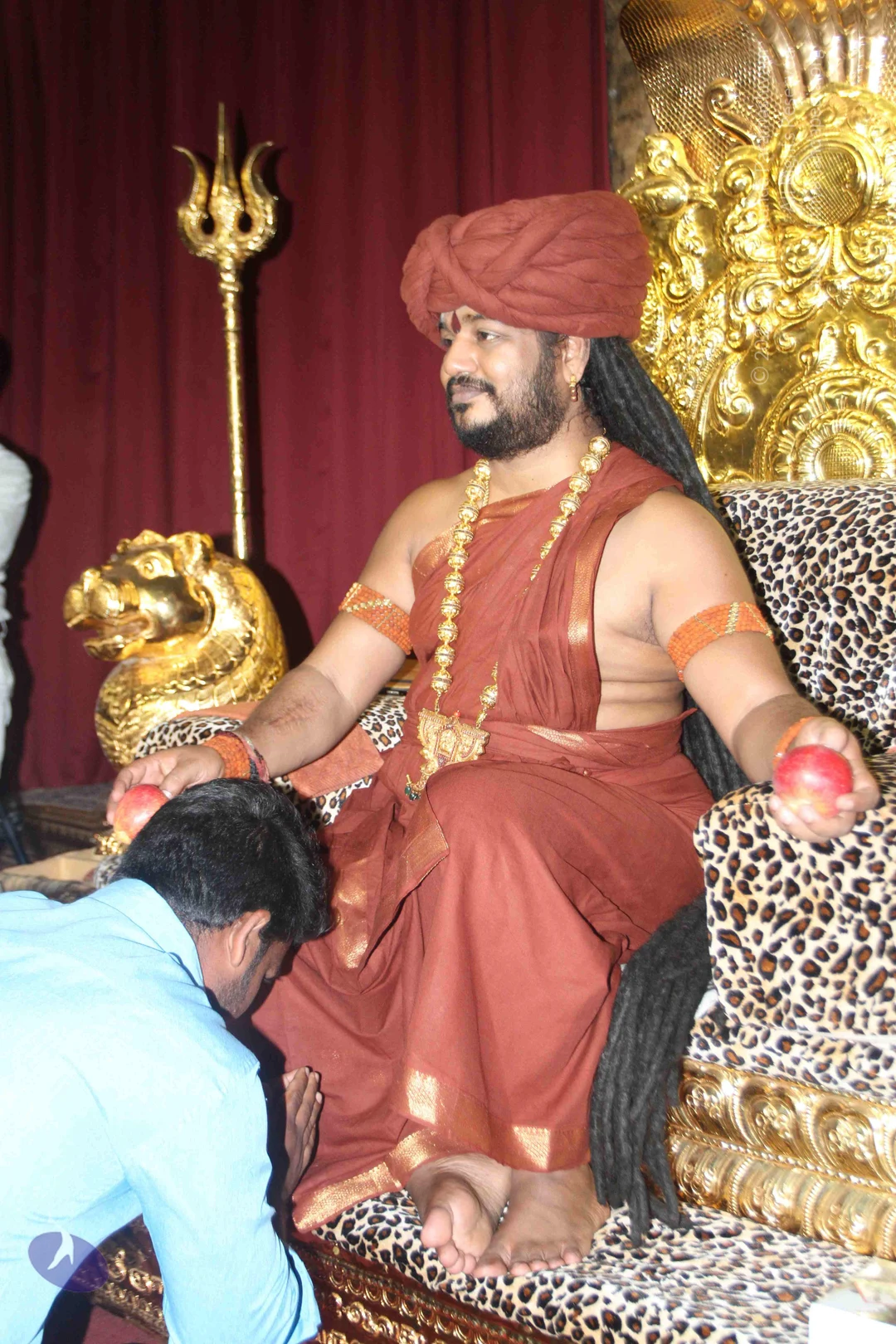
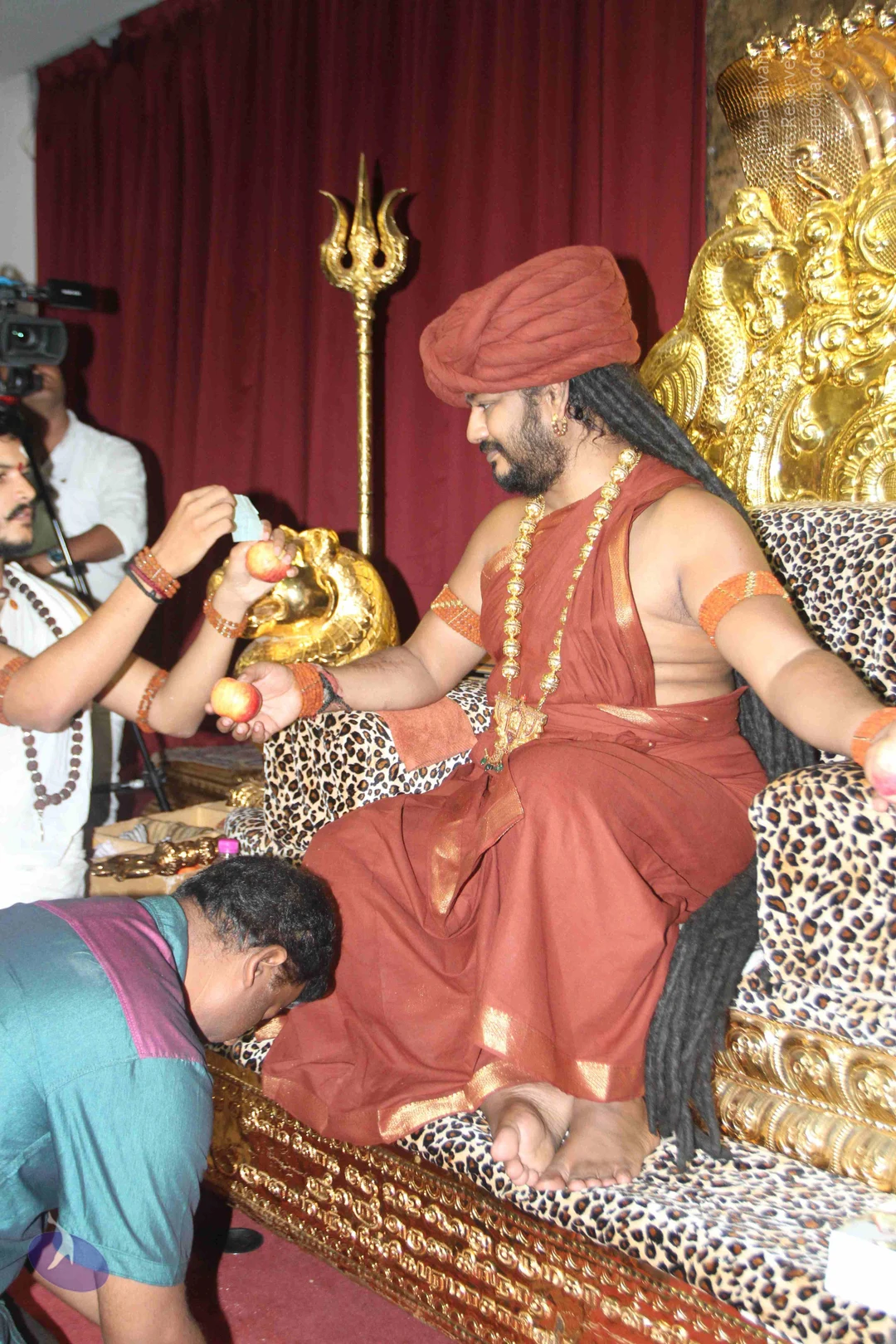
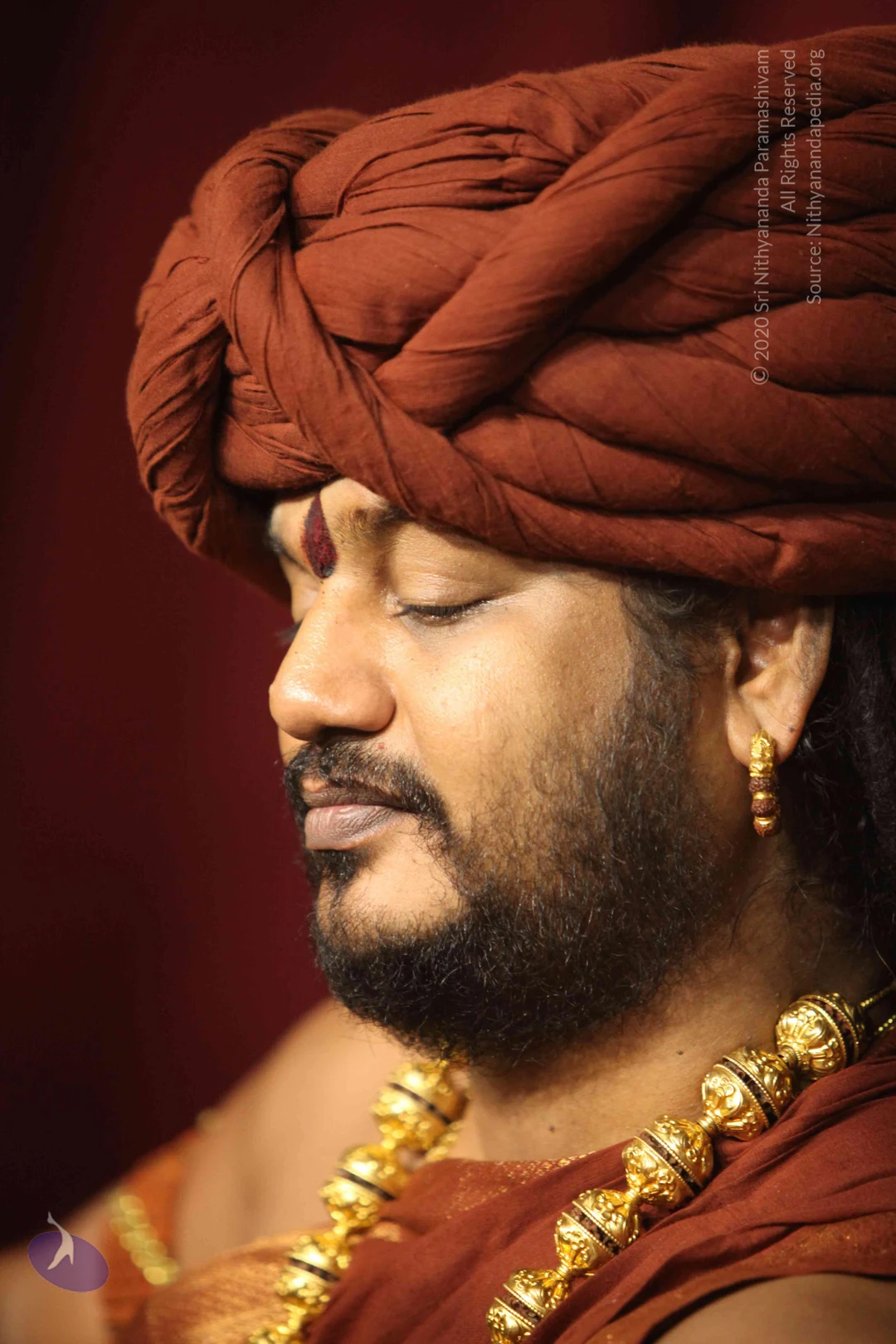
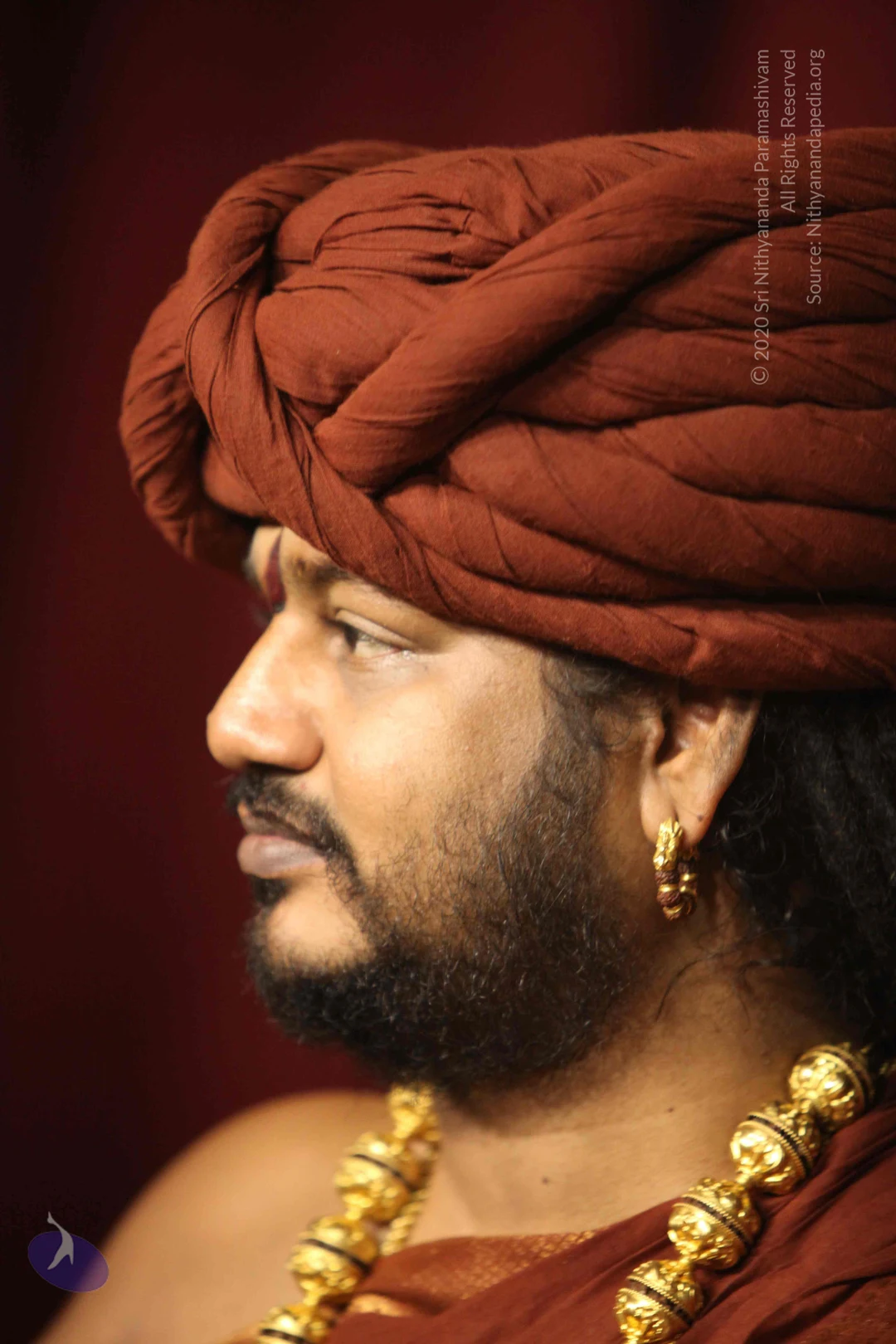
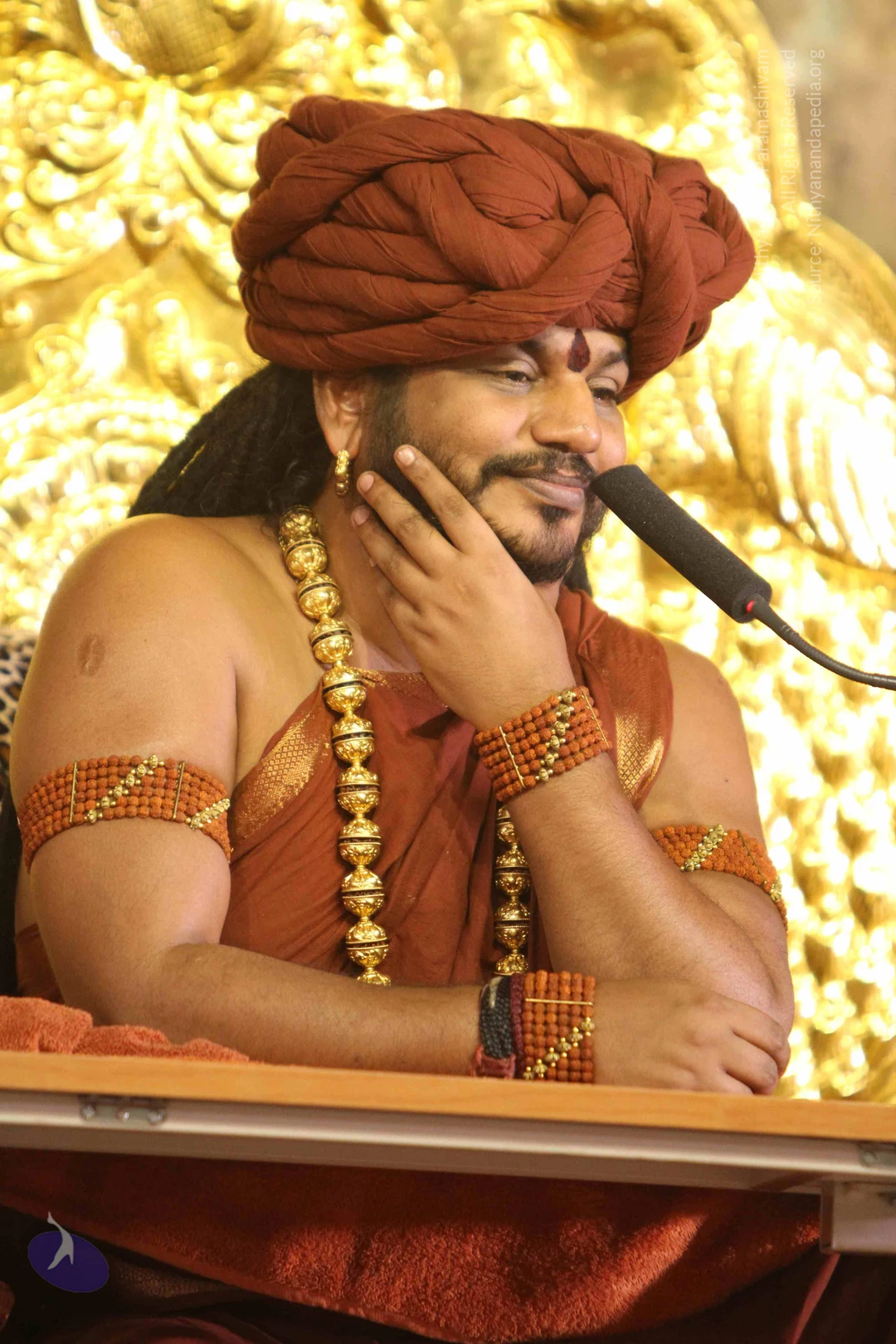
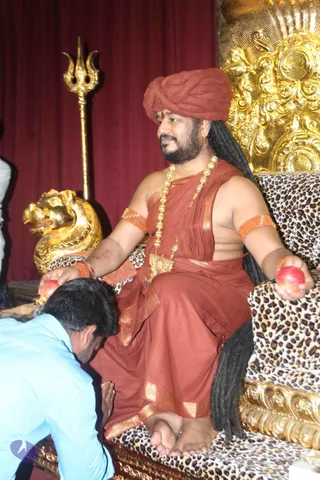
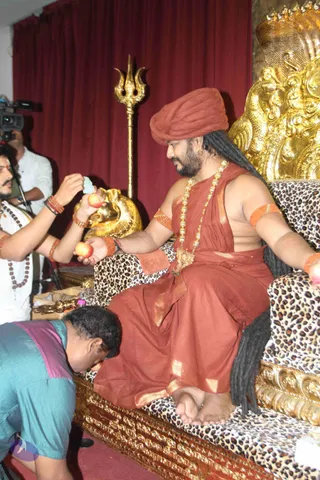
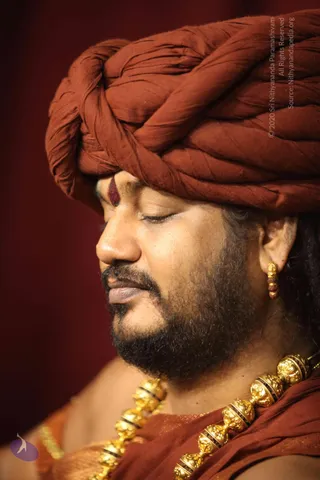
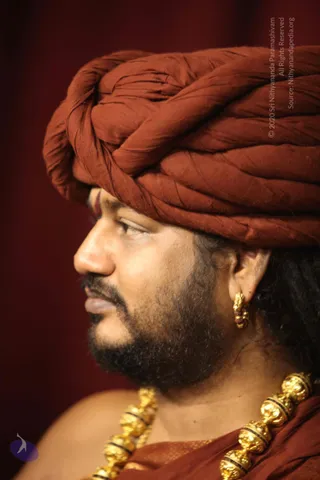
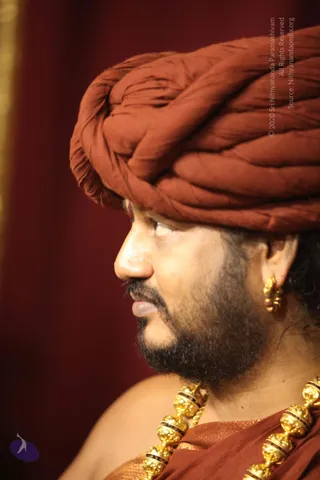
A seated man in a rust-red turban and rust-red sleeveless robe with gold border sits on an ornate gold throne upholstered in leopard-print fabric. He wears a long gold bead necklace, orange armbands, and holds a red apple in each hand. A man in a light blue shirt kneels at his feet with palms pressed together, head bowed. Behind the throne stand a gold trident and a gold makara-headed sculpture against a deep red drape. The seated figure has long dark braided hair and a beard; he matches the Swamiji (probable) appearance cues of a turban, long hair and ornate gold necklace, and is presented on a throne as the one being honoured.A man in a rust-orange turban and matching orange robe with gold-edged border sits on a golden throne with a leopard-print cushion, wearing a long gold bead necklace, a pendant and orange bangles. He holds a red apple and gazes down toward a second man who is kneeling at the lower left in a teal shirt and bowing with his head near the throne. Another man in white with rudraksha beads and orange wrist threads holds a small object and an apple near the throne. Behind them hang a deep red curtain, a golden trident and a gold cobra-hood backrest. A camera operator stands at the far left. The seated figure matches the presentation of a person, wearing orange robes, a turban, a long gold bead necklace and a throne setting, and is the central figure of the scene. Actions show an offering and a devotee's obeisance.Close side-profile portrait of a bearded man with eyes closed in meditative stillness, wearing a rust-red turban wrapped high on his head and a red-orange shawl draped over his shoulders. A red-brown tilak mark sits on his forehead, a small gold and red rudraksha-style earring hangs from his ear, and a heavy gold bead necklace with rudraksha-style beads rests on his chest. The deep burgundy backdrop is plain. The image is a photograph of one person in a seated devotional or meditative pose.Close side profile portrait of a bearded man against a deep red backdrop. He wears a rust-red turban wound high on his head, gold drop earring, and a heavy gold bead necklace over a reddish-brown garment. a person: the man's appearance shows the turban, ornate gold necklace and reddish garment cues, though the identification is uncertain from appearance alone.Close profile photograph of a bearded man in a rust-red turban and rust-red shawl, wearing gold ear studs and a heavy gold necklace of barrel-shaped beads with black bands. He faces left against a deep red backdrop. Only one physical person is visible.Close side-profile photograph of a bearded man with eyes closed and a faint smile, wearing a large rust-red folded turban with a small red mark on the forehead. He wears a gold drop earring and a heavy ceremonial gold necklace of ornate beads with dark rudraksha-style spacers over a rust-red shawl or wrap. The background is a deep red curtain. Appearance cues (long hair beneath the turban, ornate gold necklace, rust-red attire, ceremonial adornment) make this a probable Swamiji in person, shown in quiet meditative devotion.

03-SMKT-Dine-Dance
48 photosSource gallery
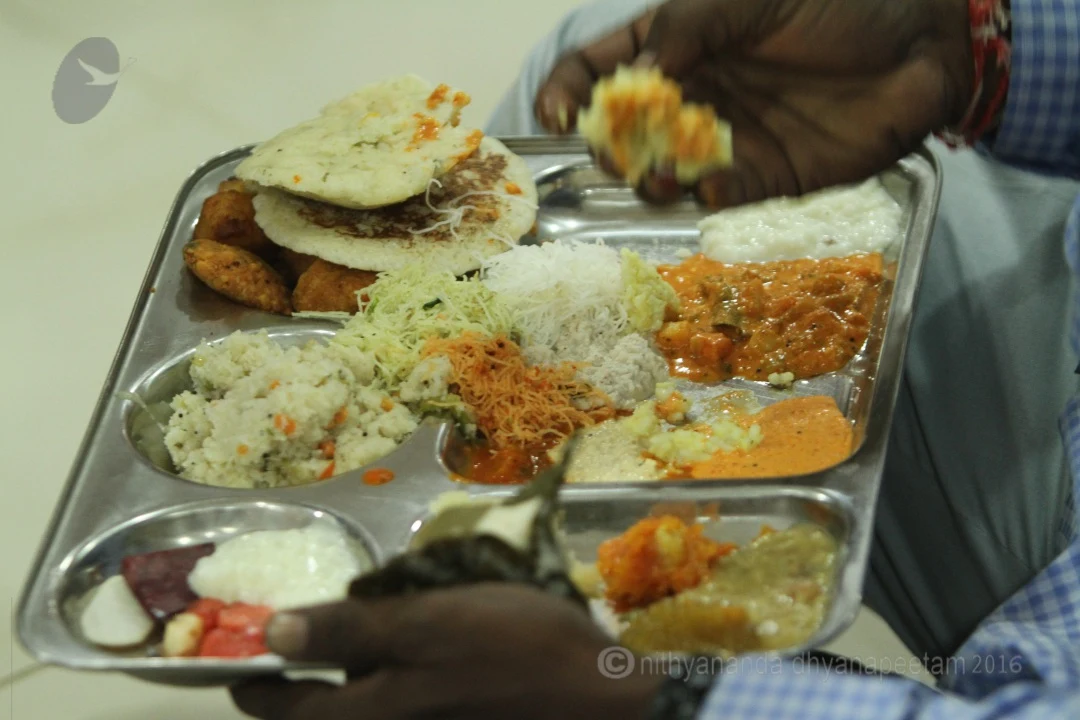
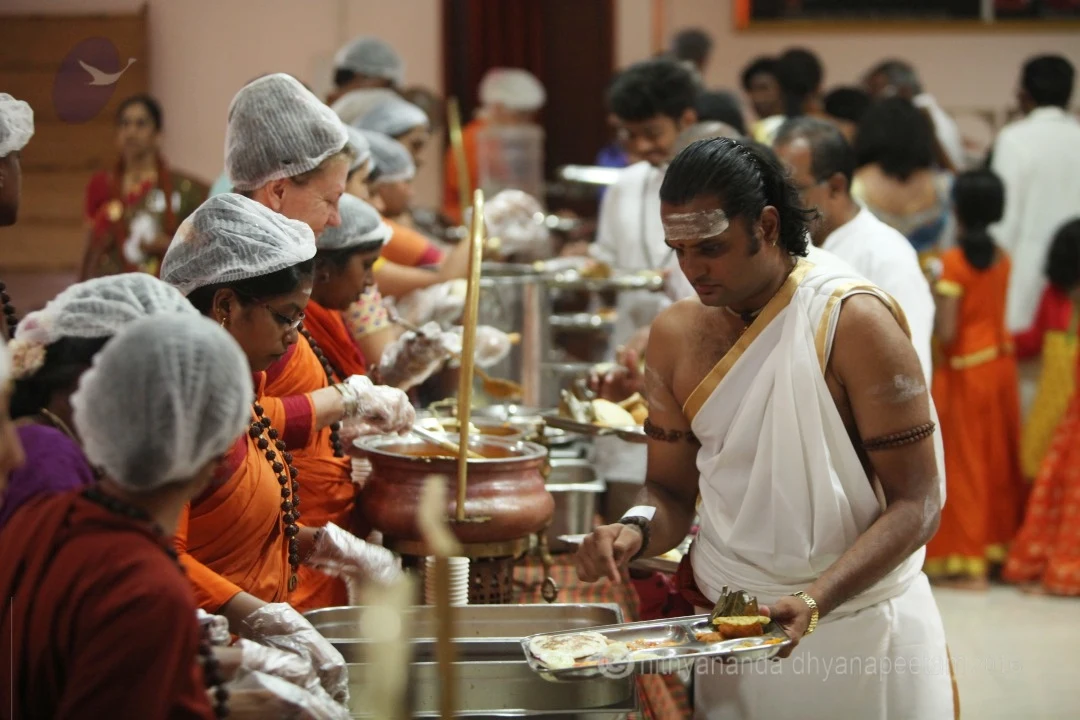
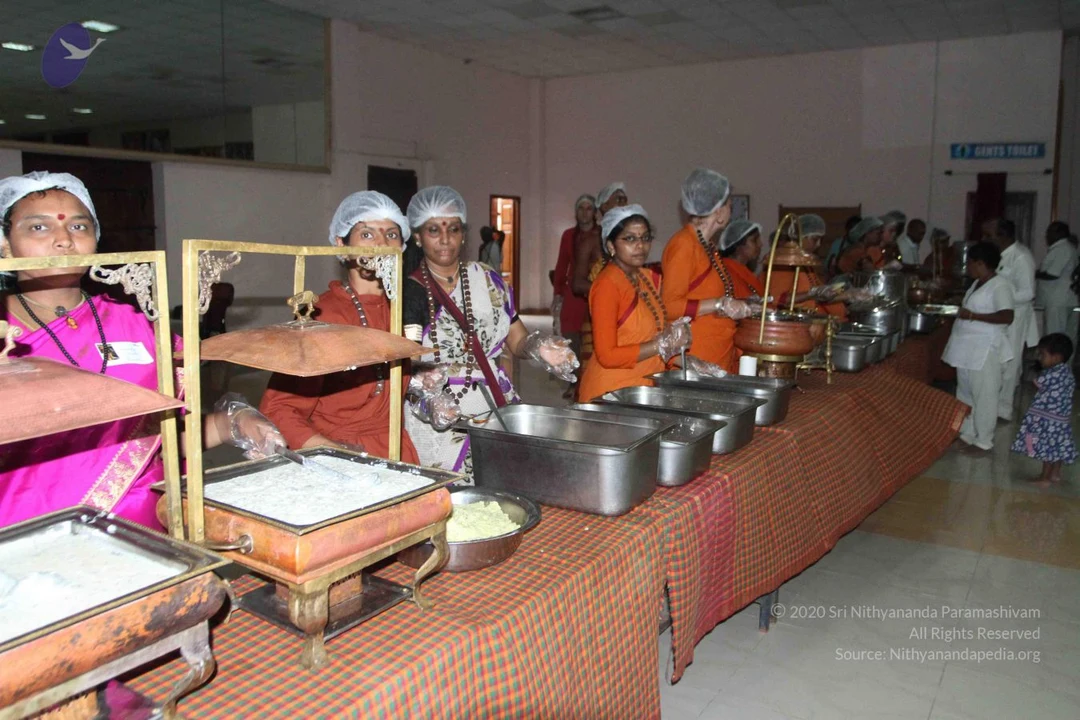
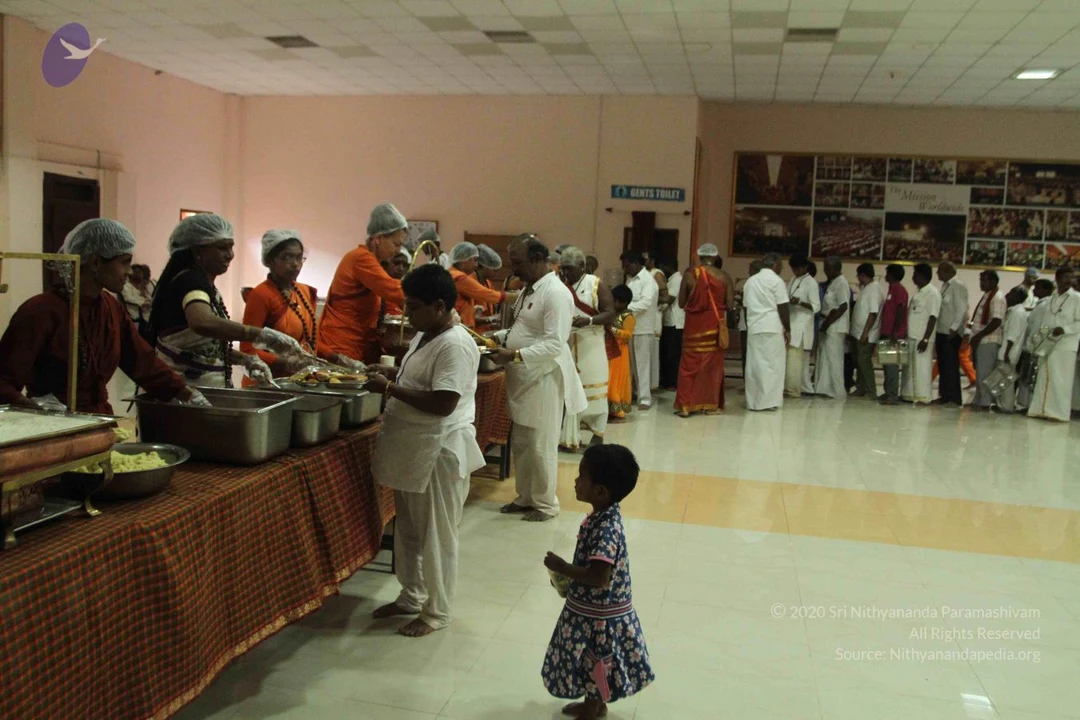
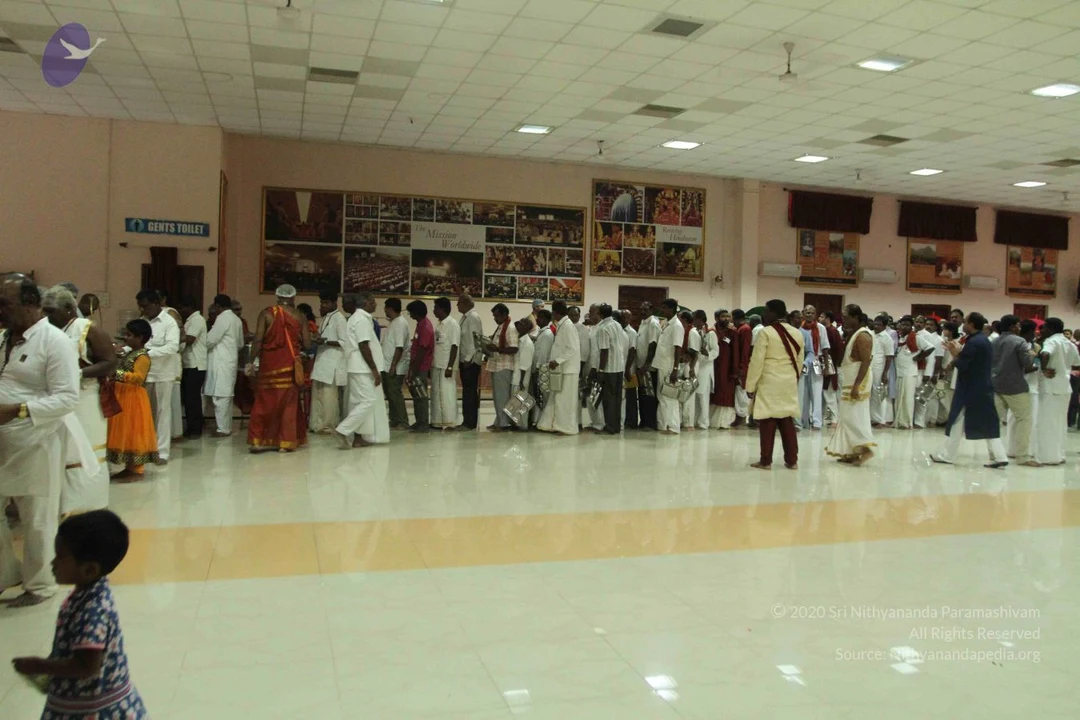
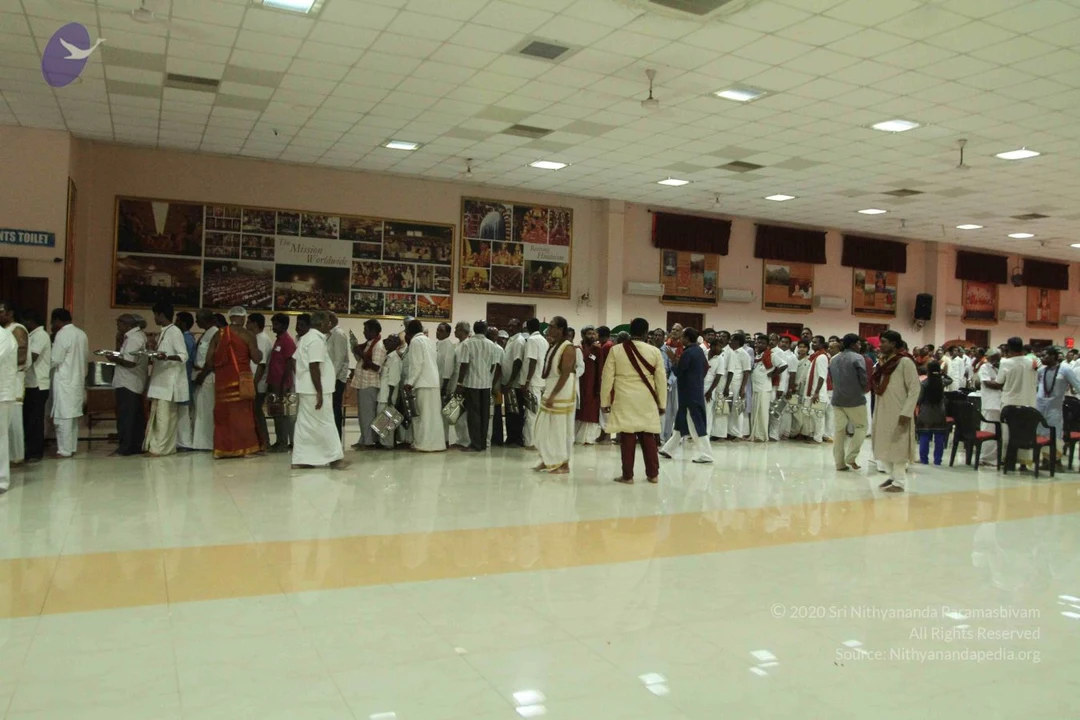
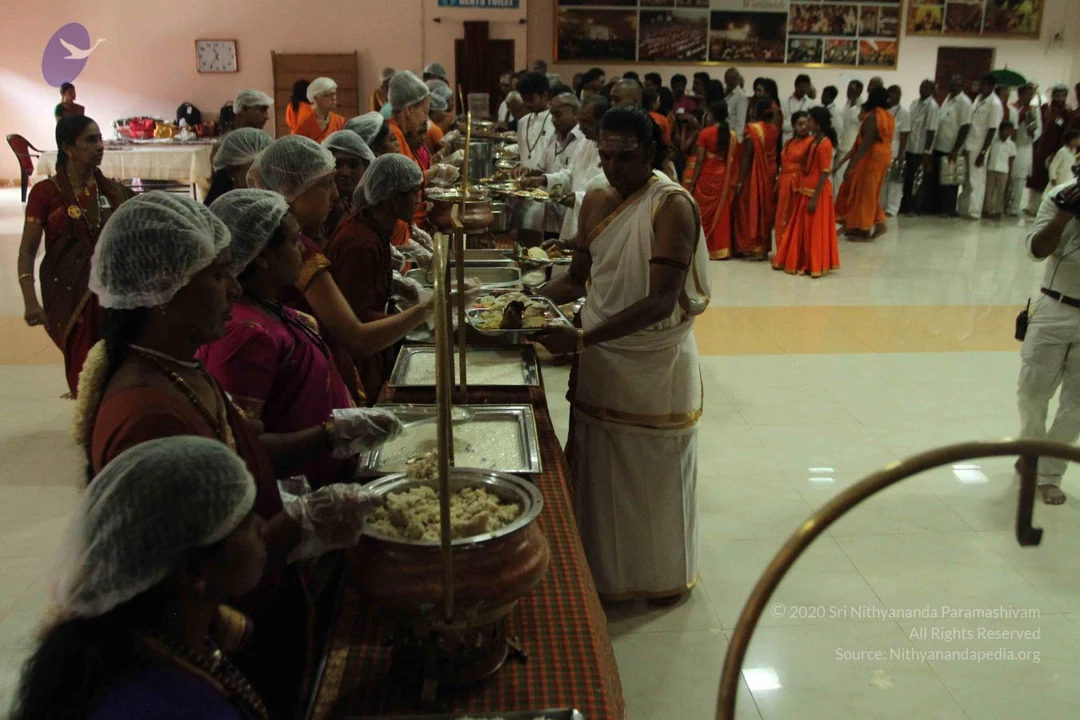
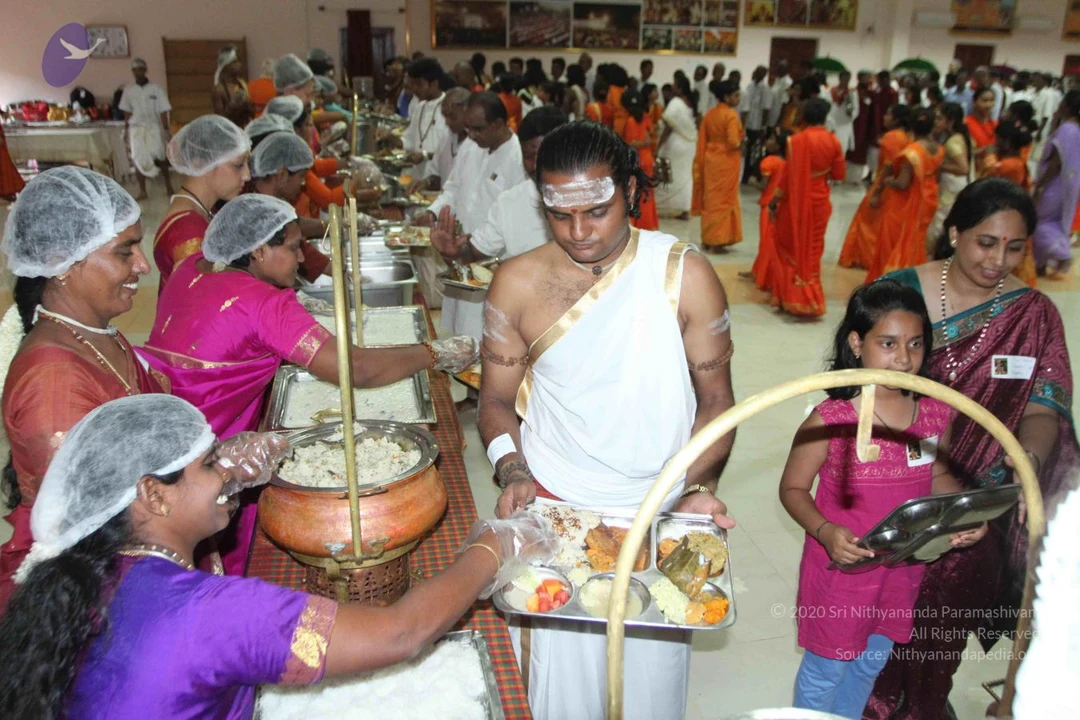
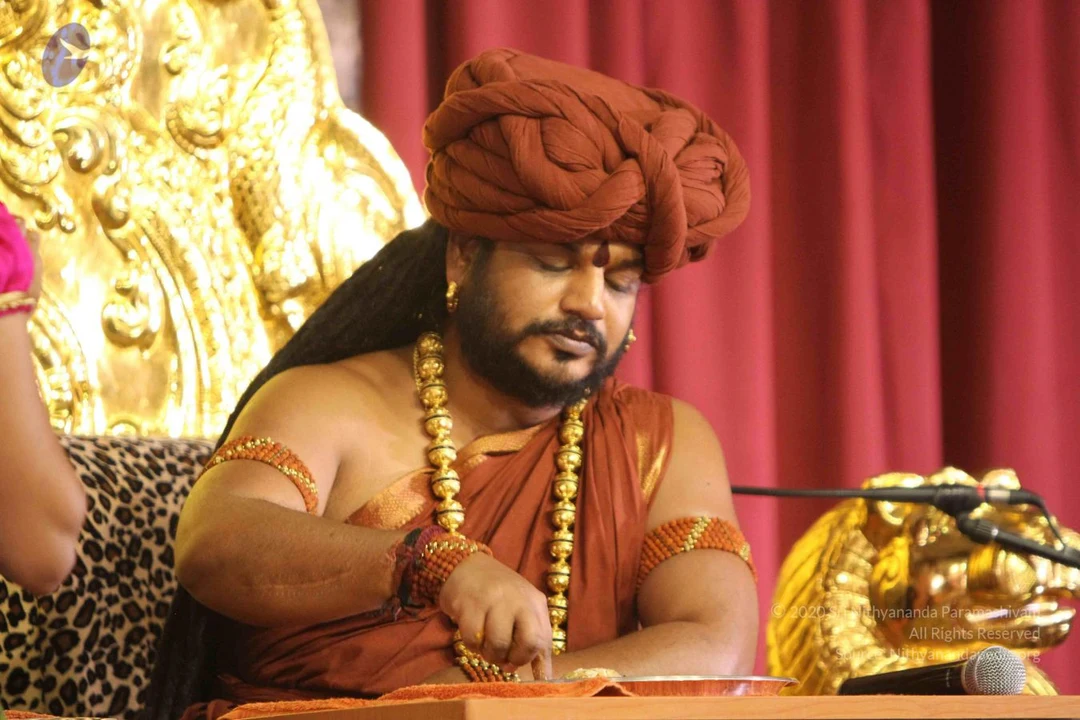
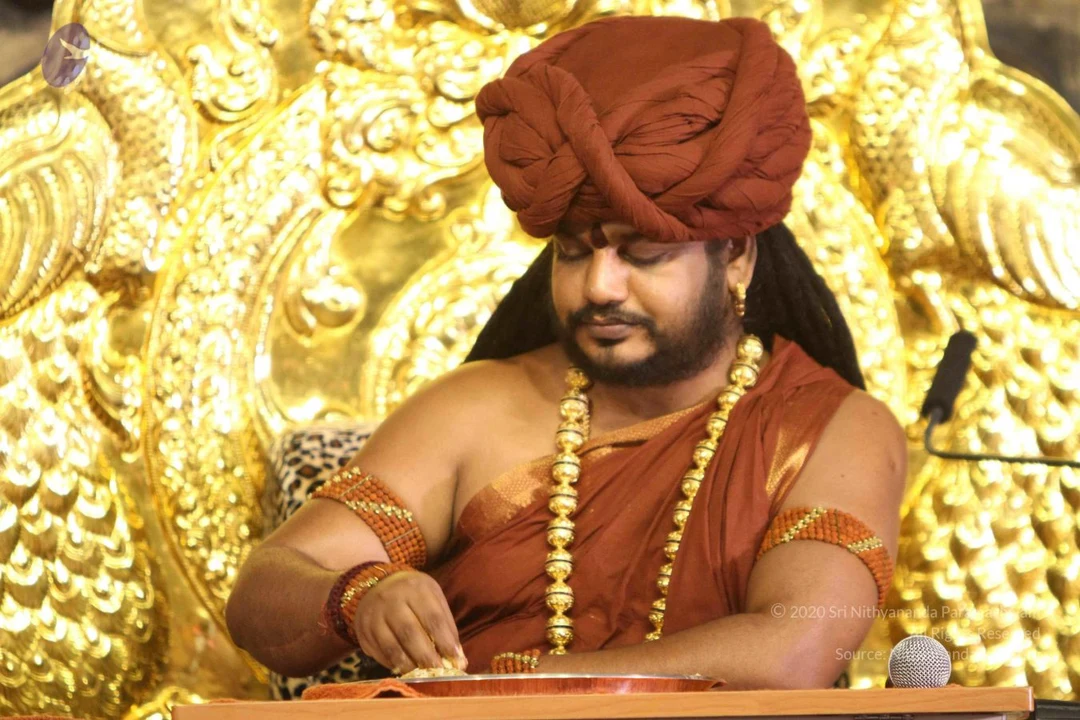
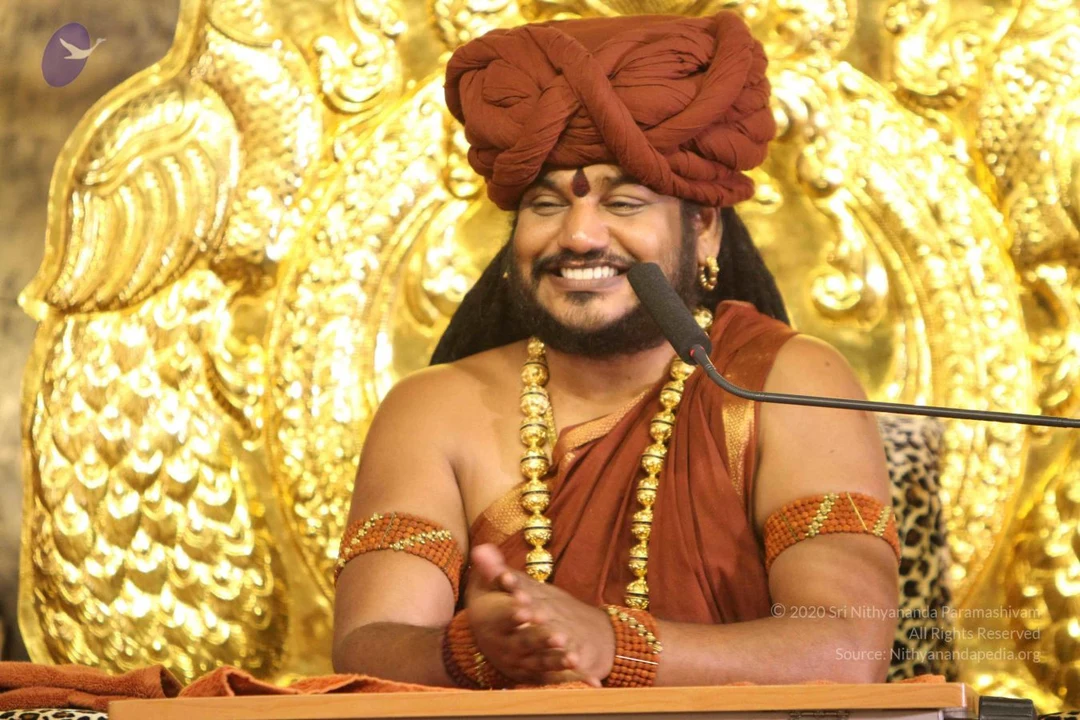
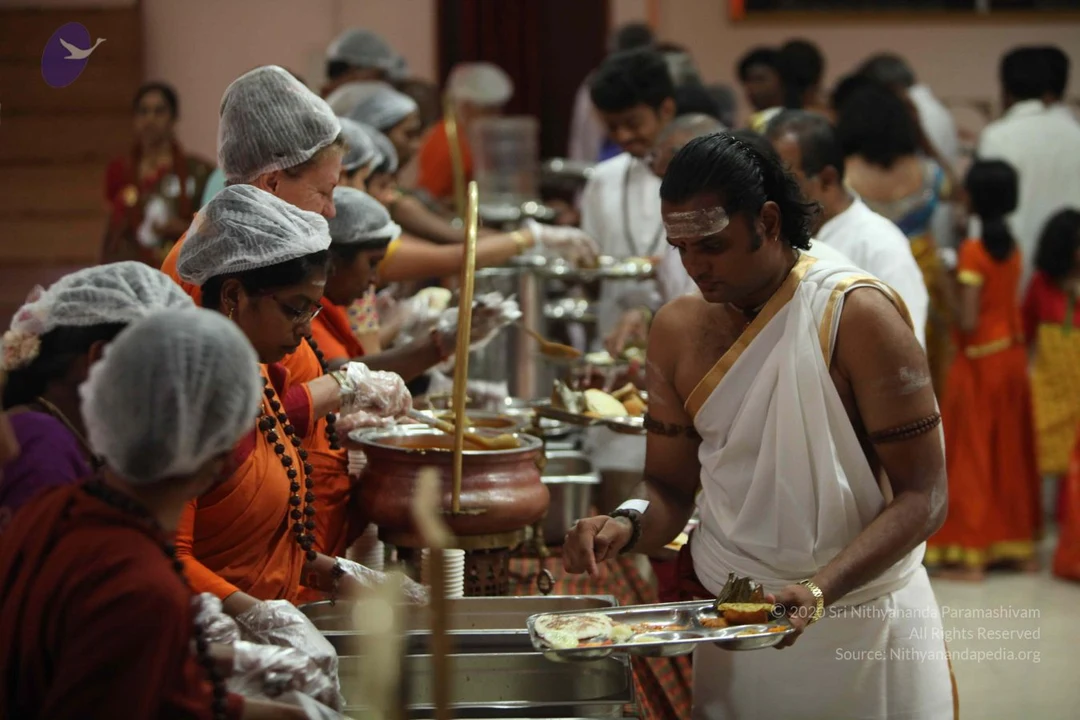
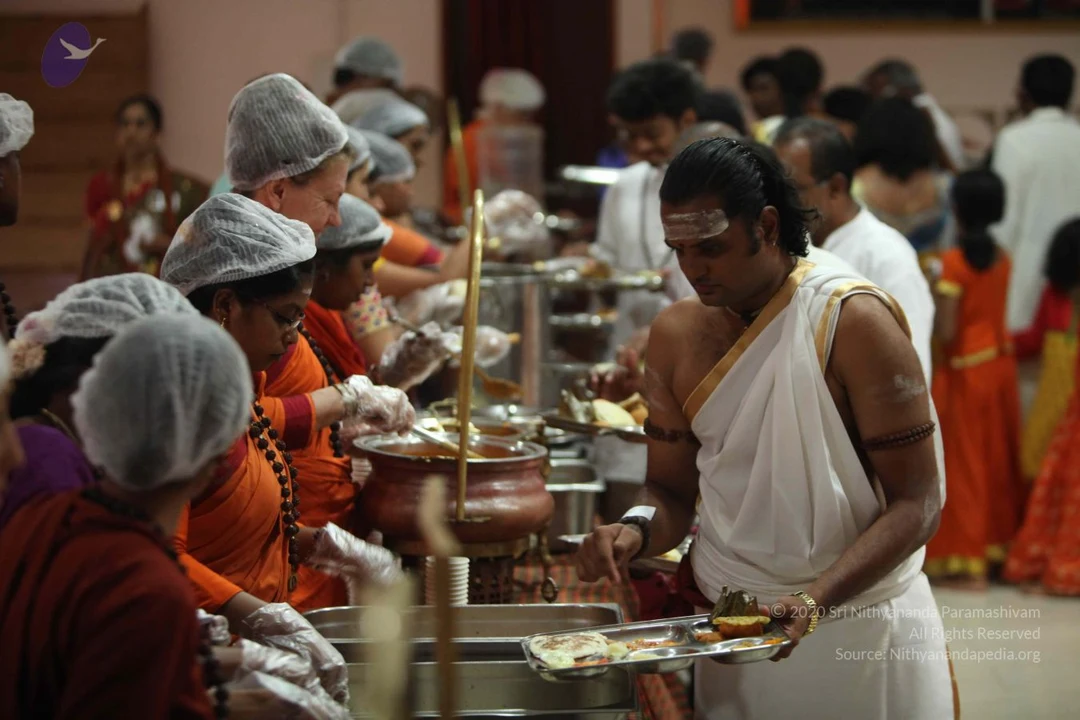
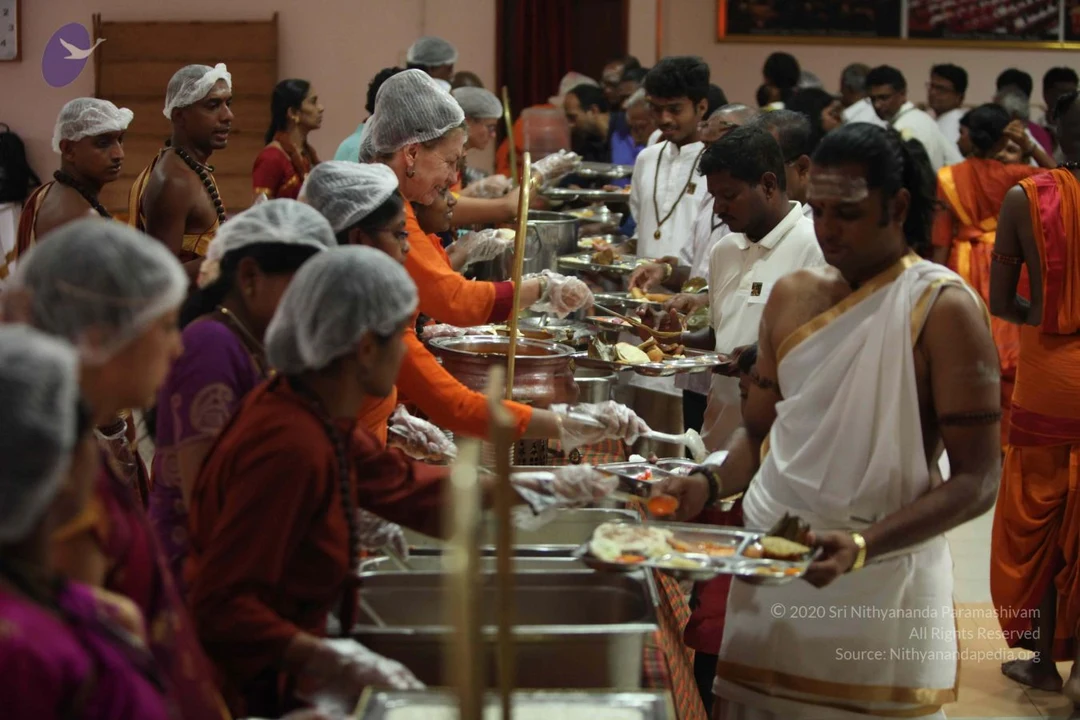
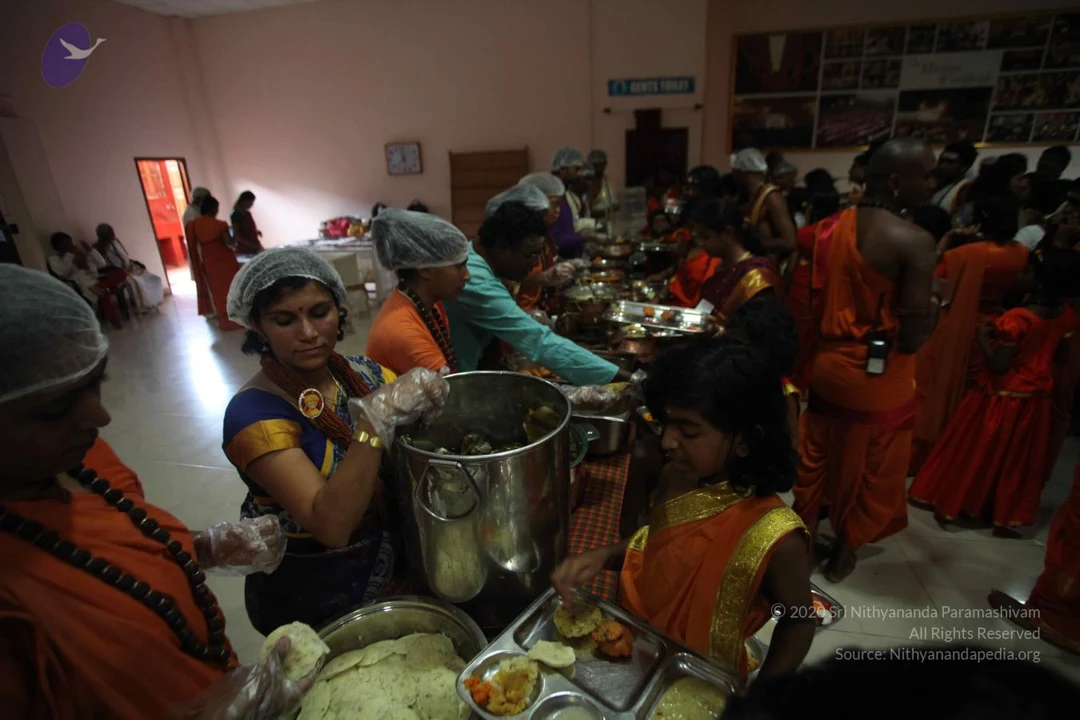
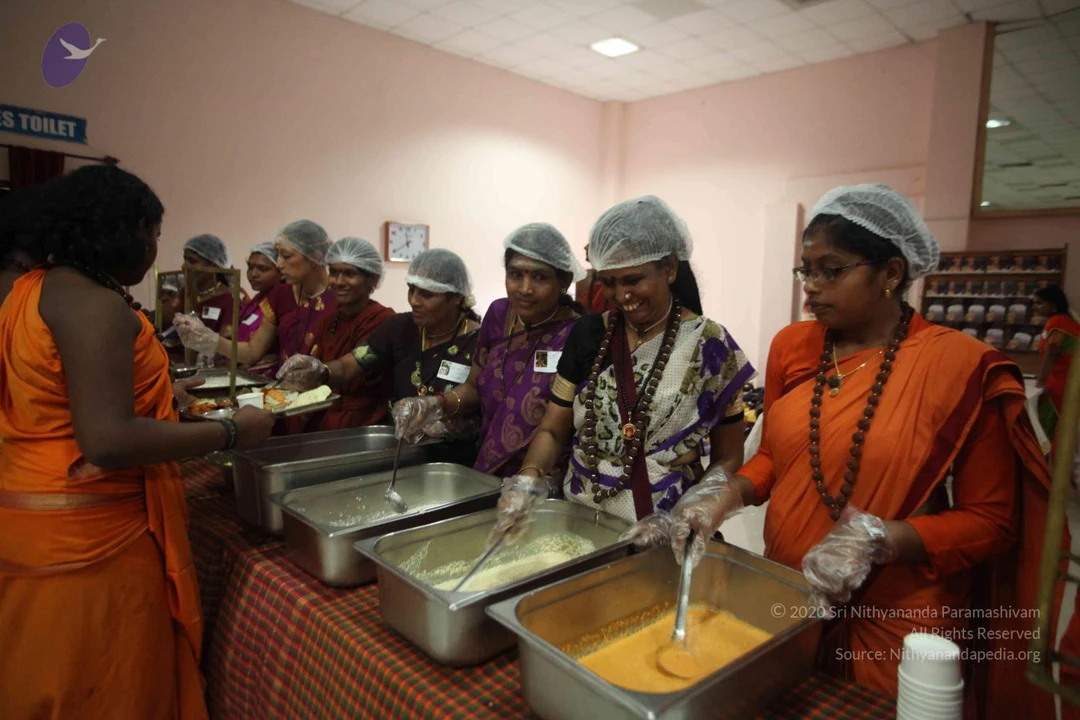
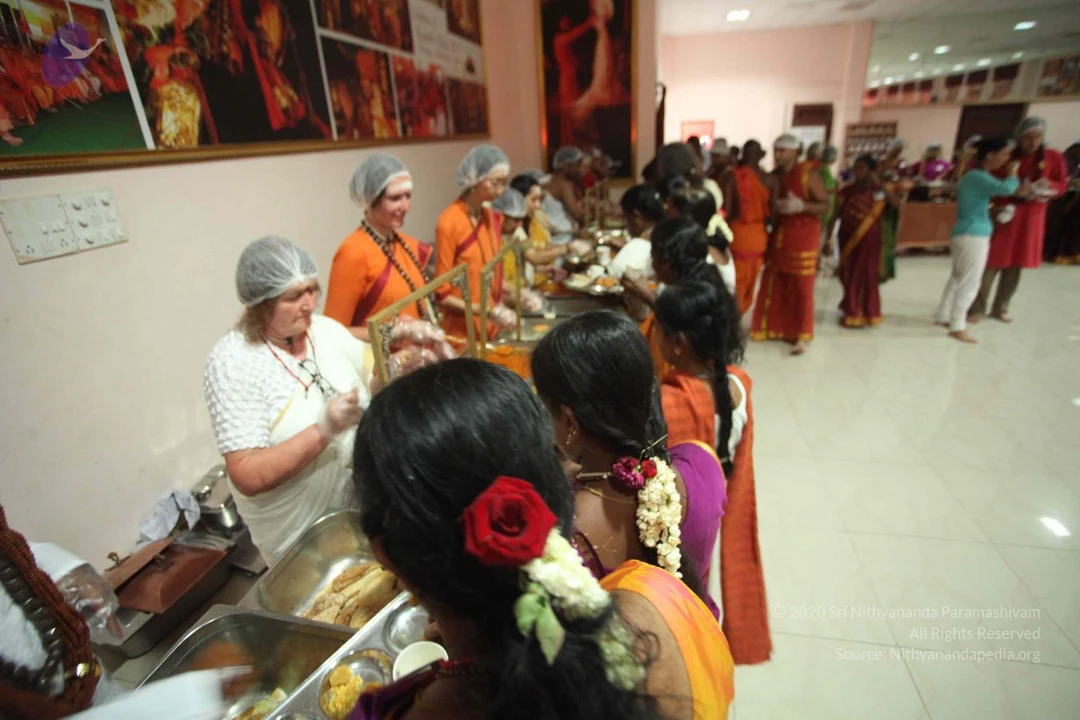
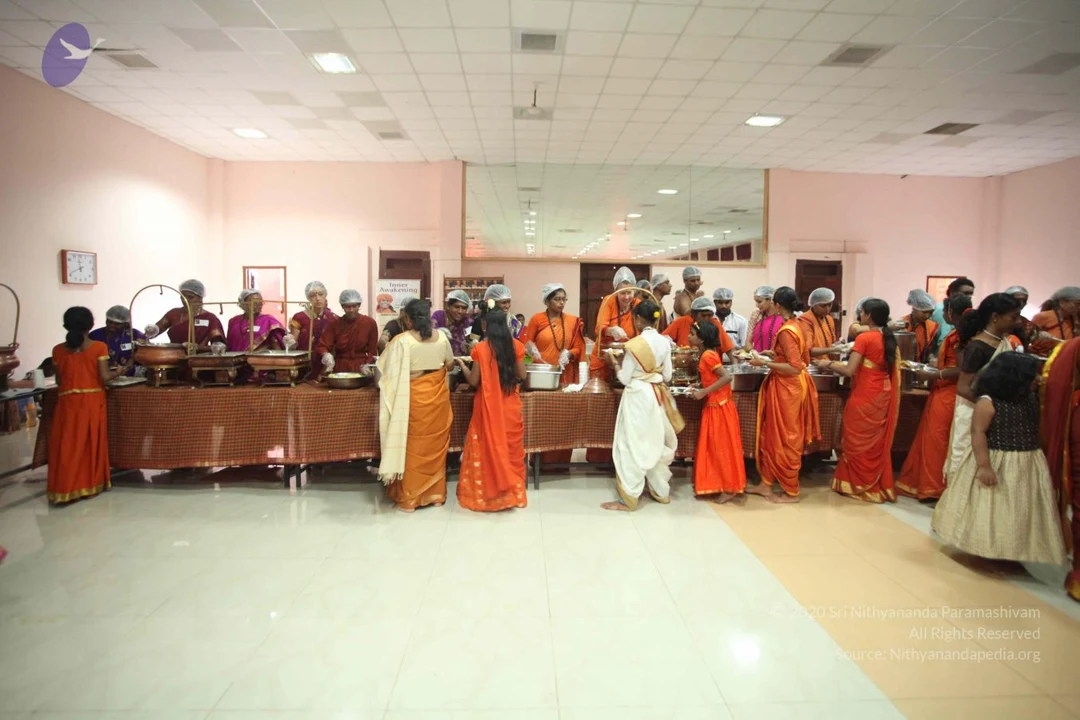
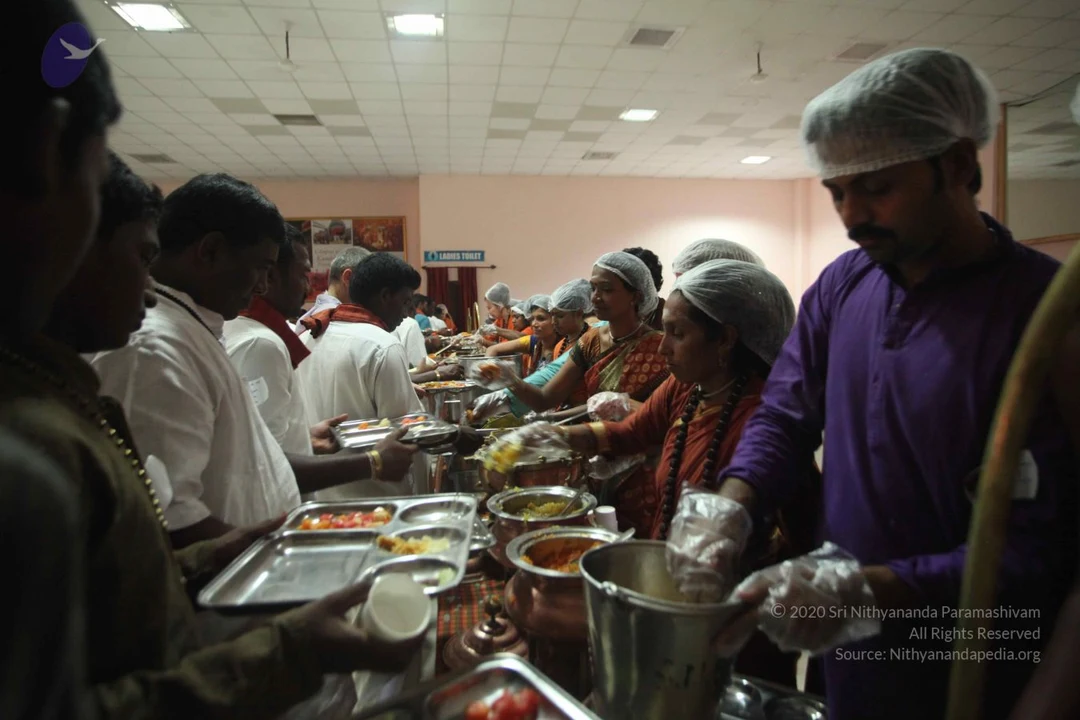
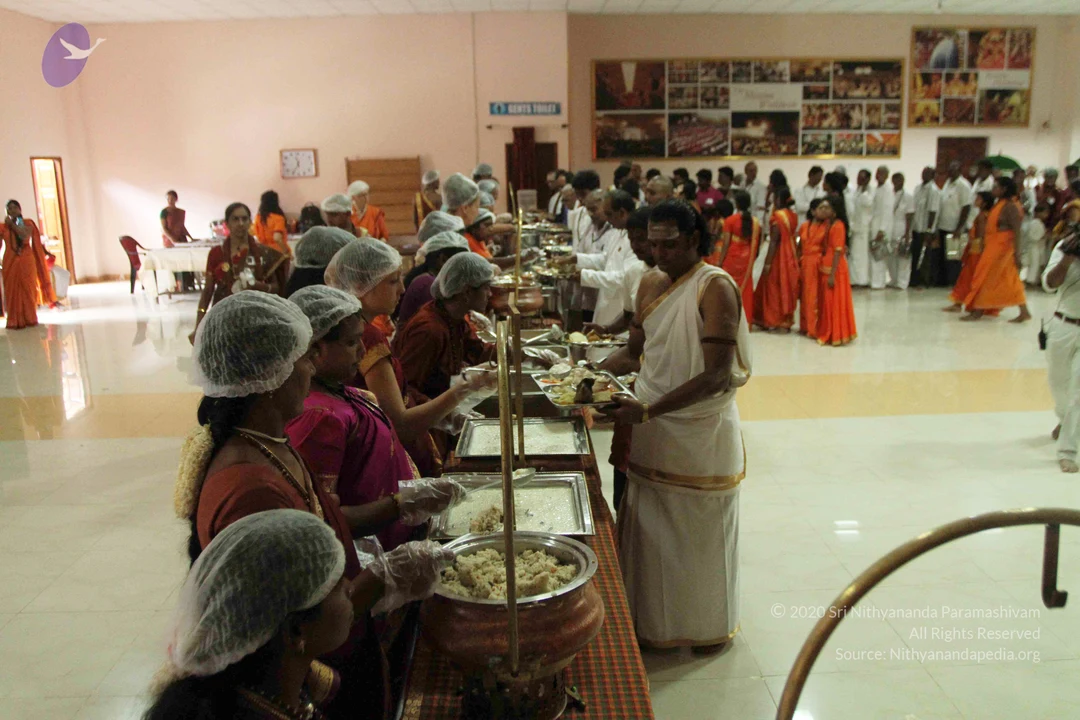
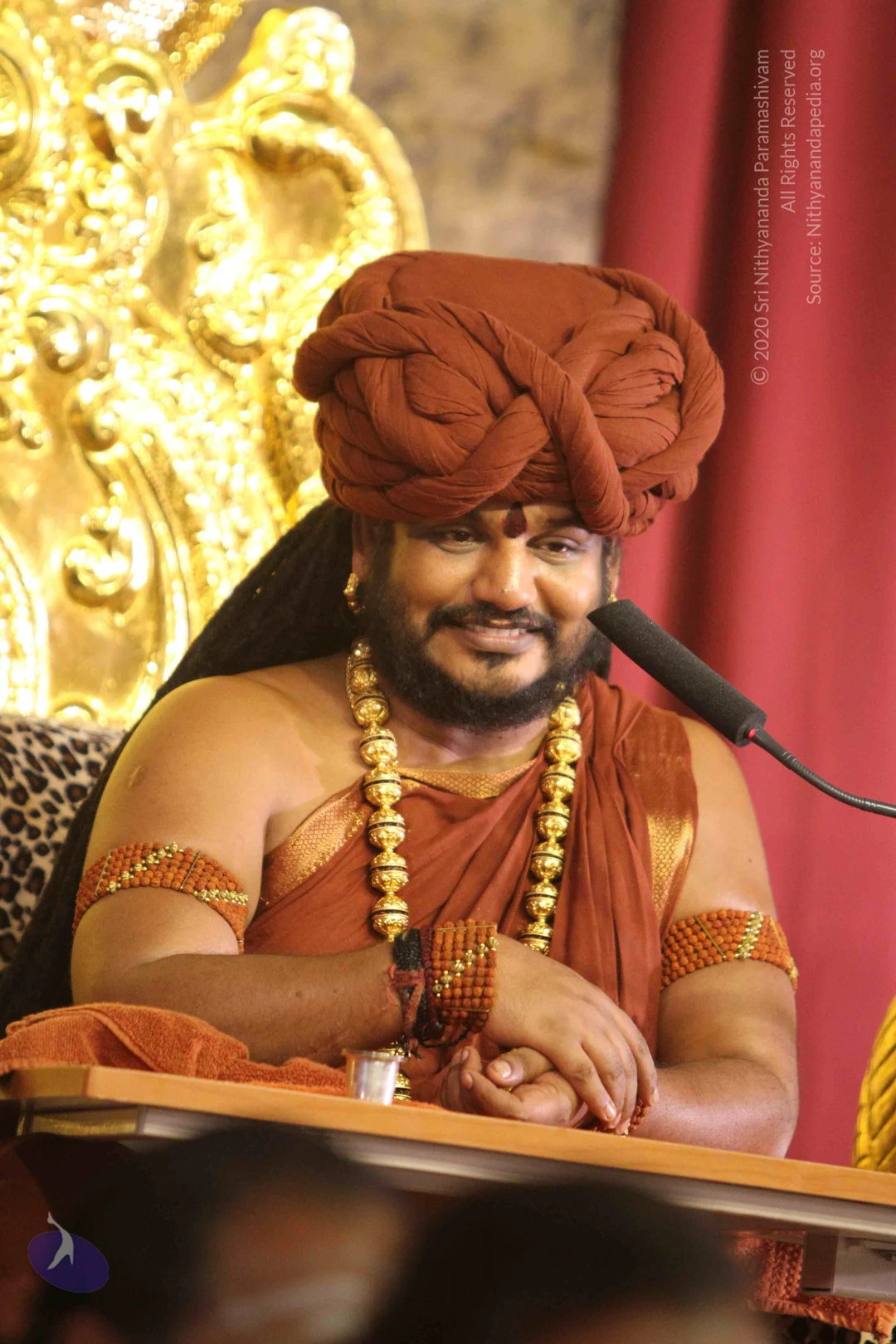
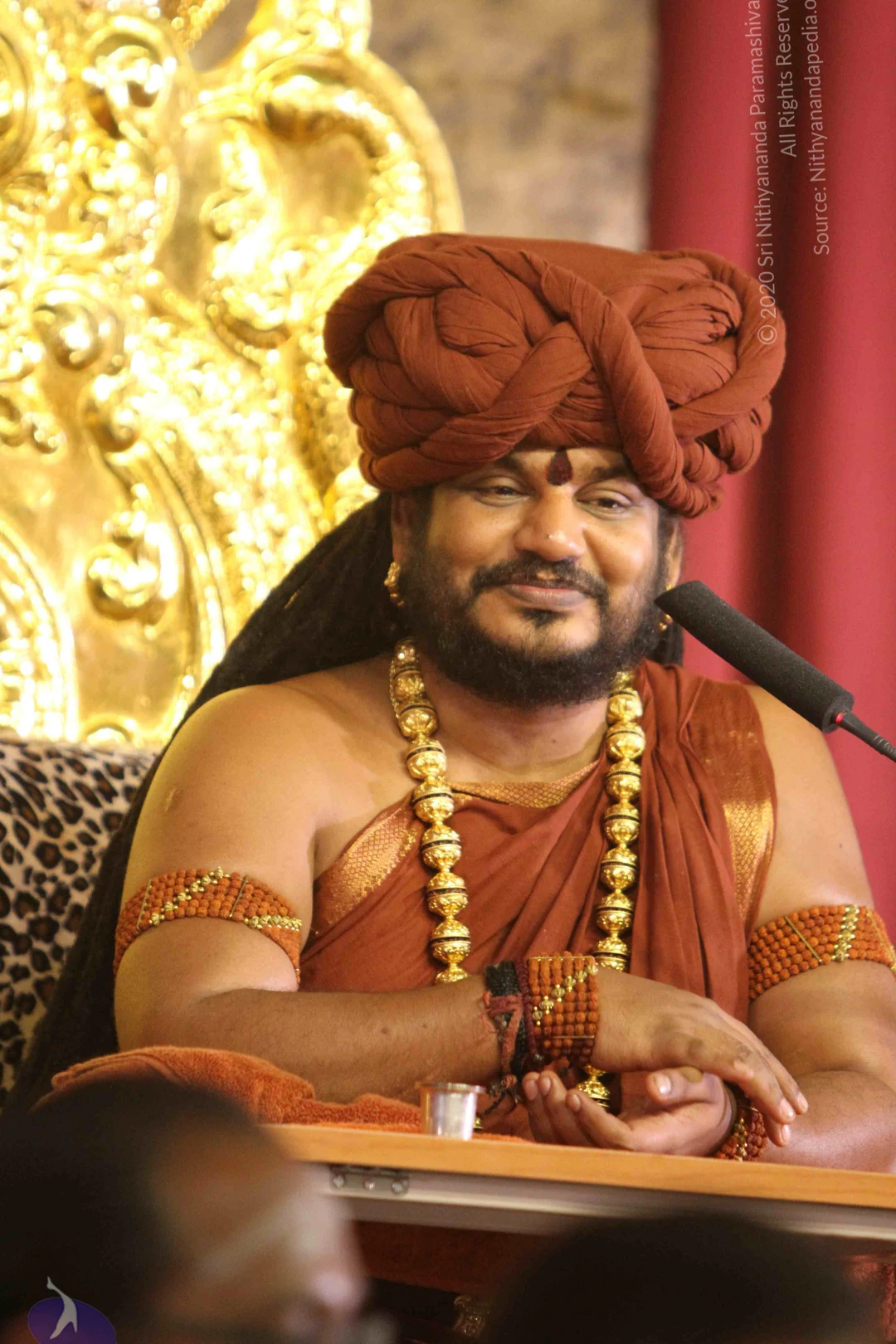
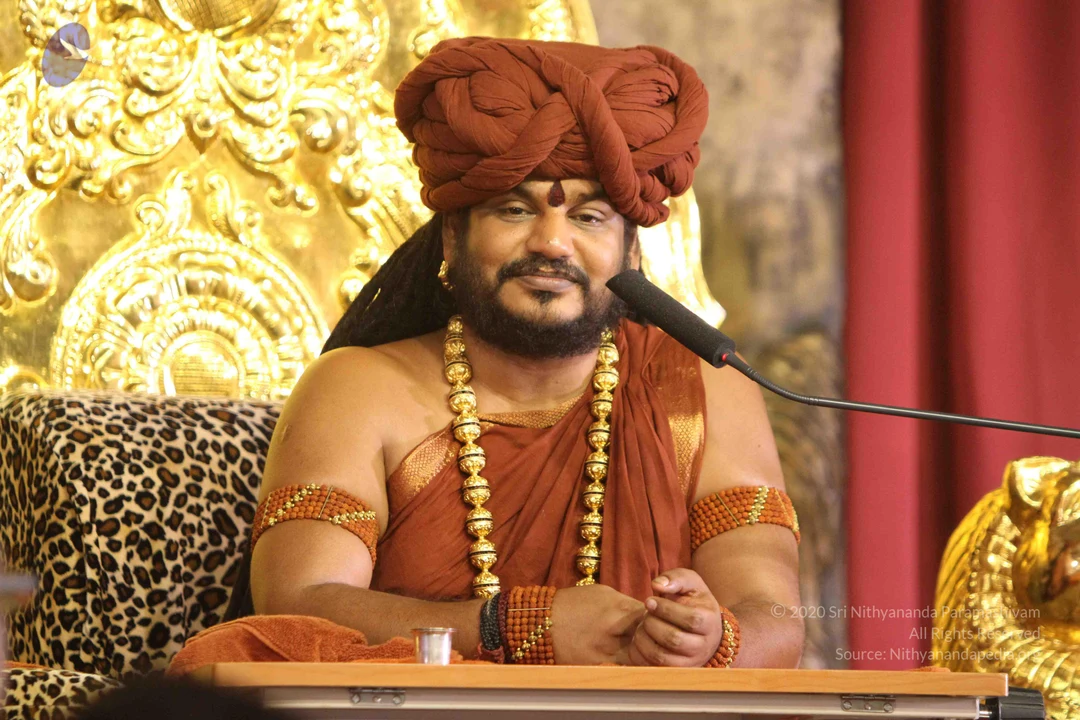
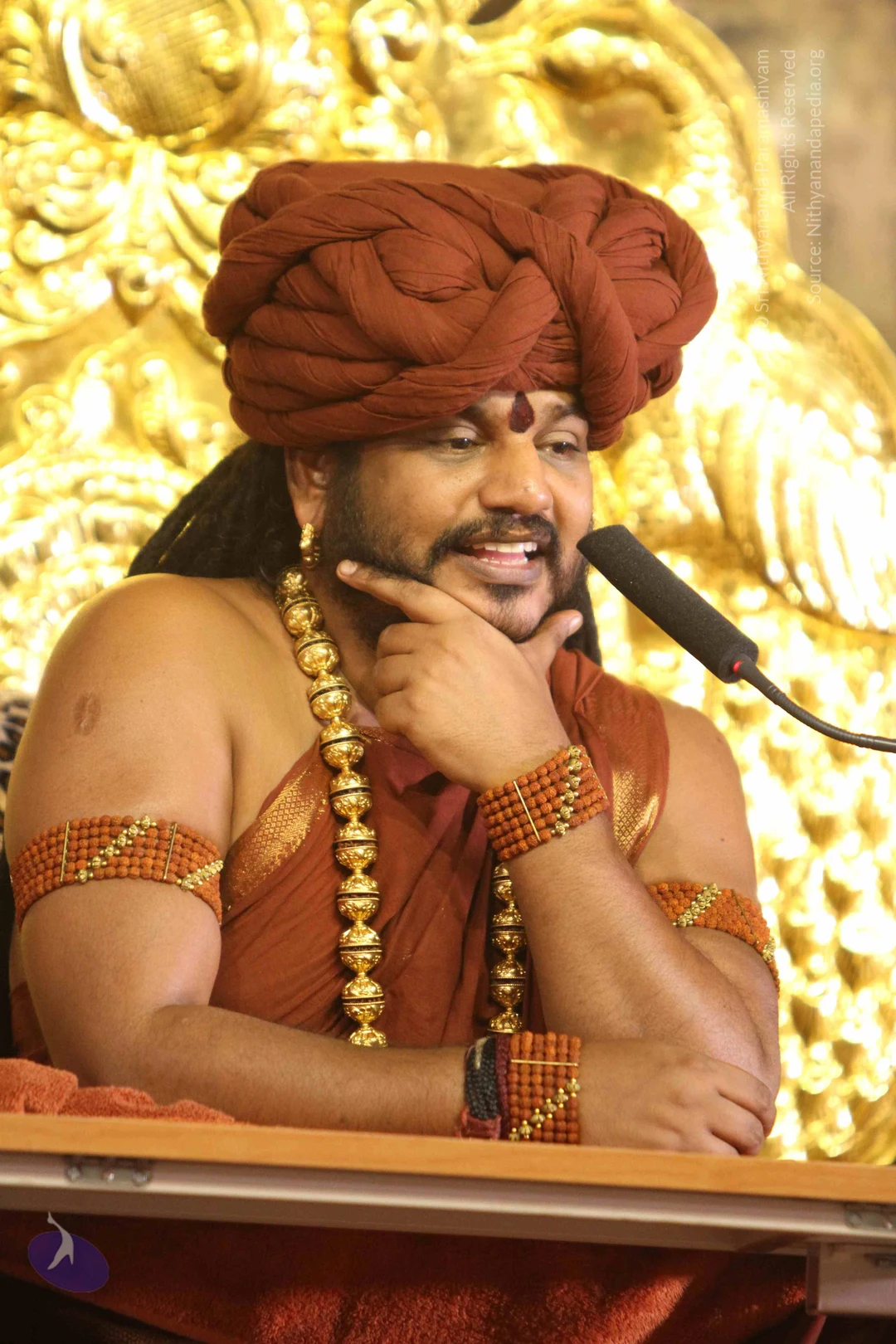
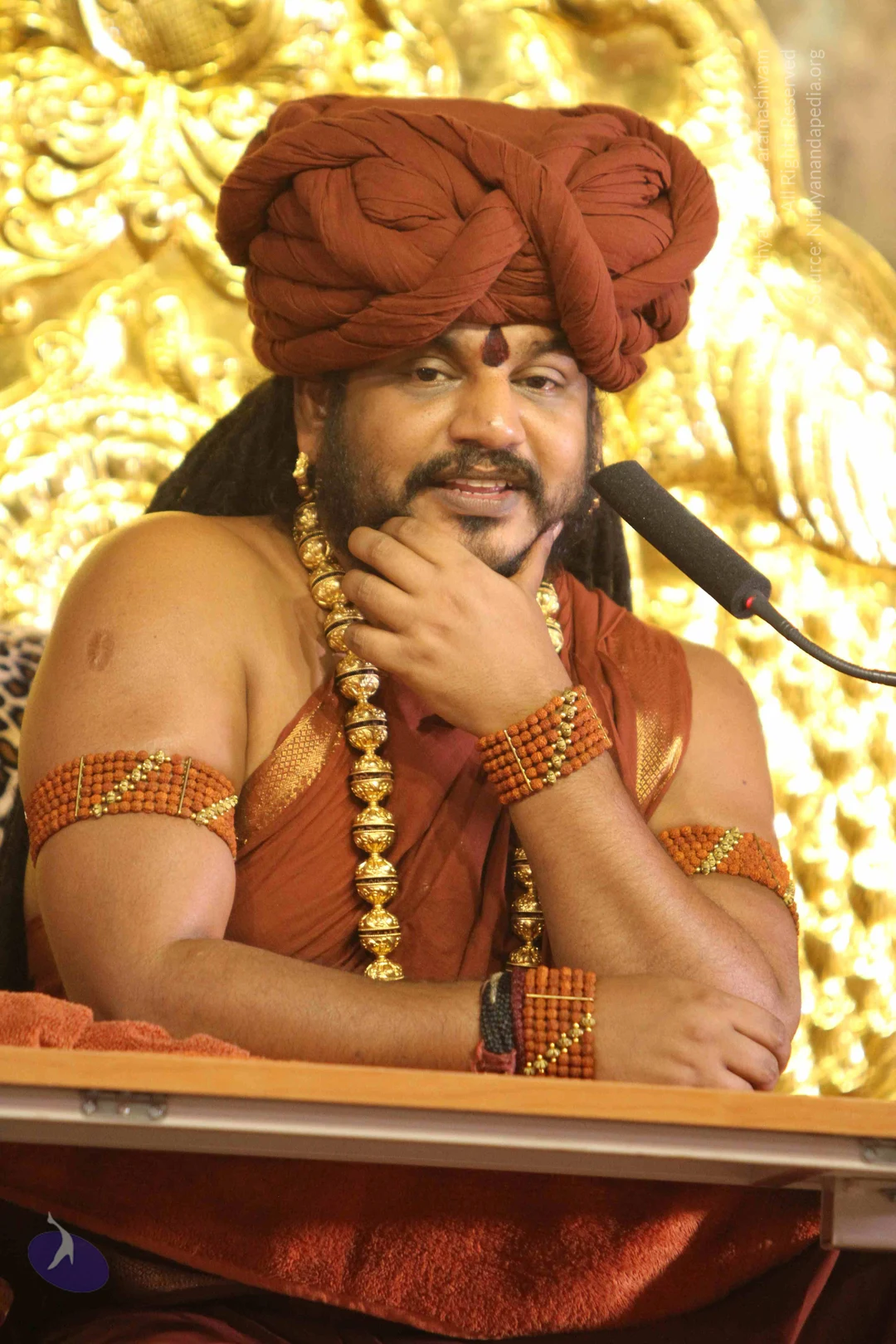
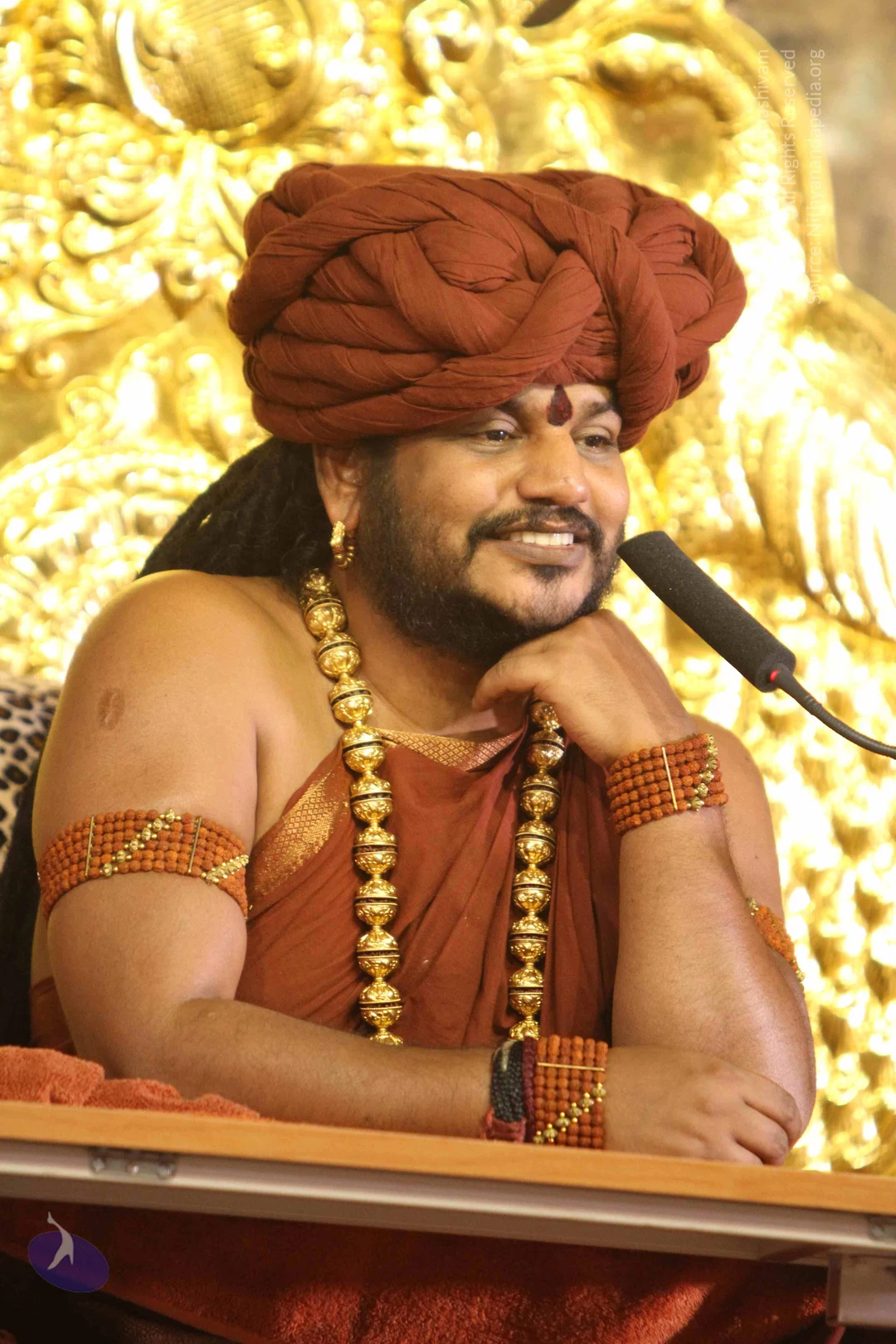
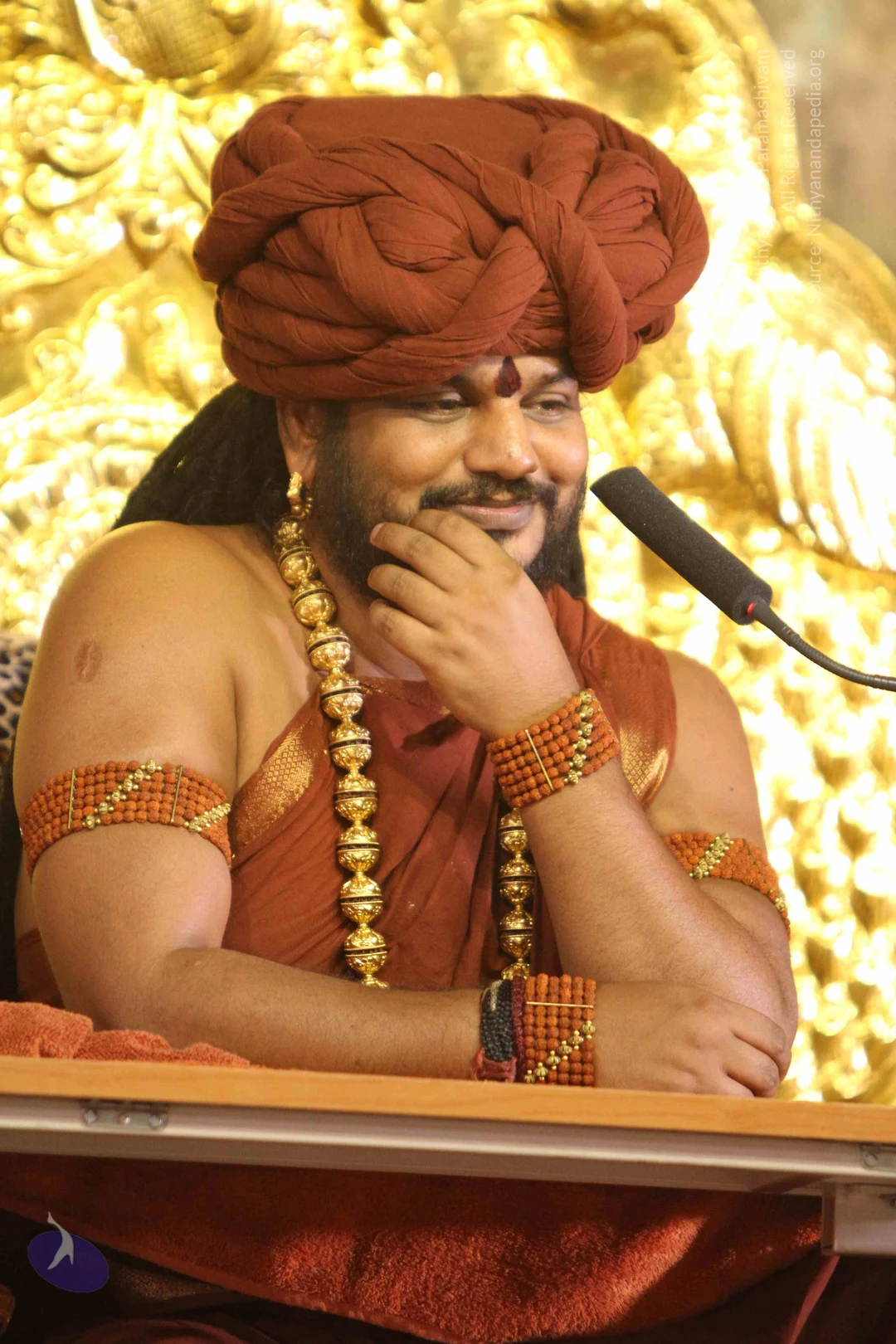
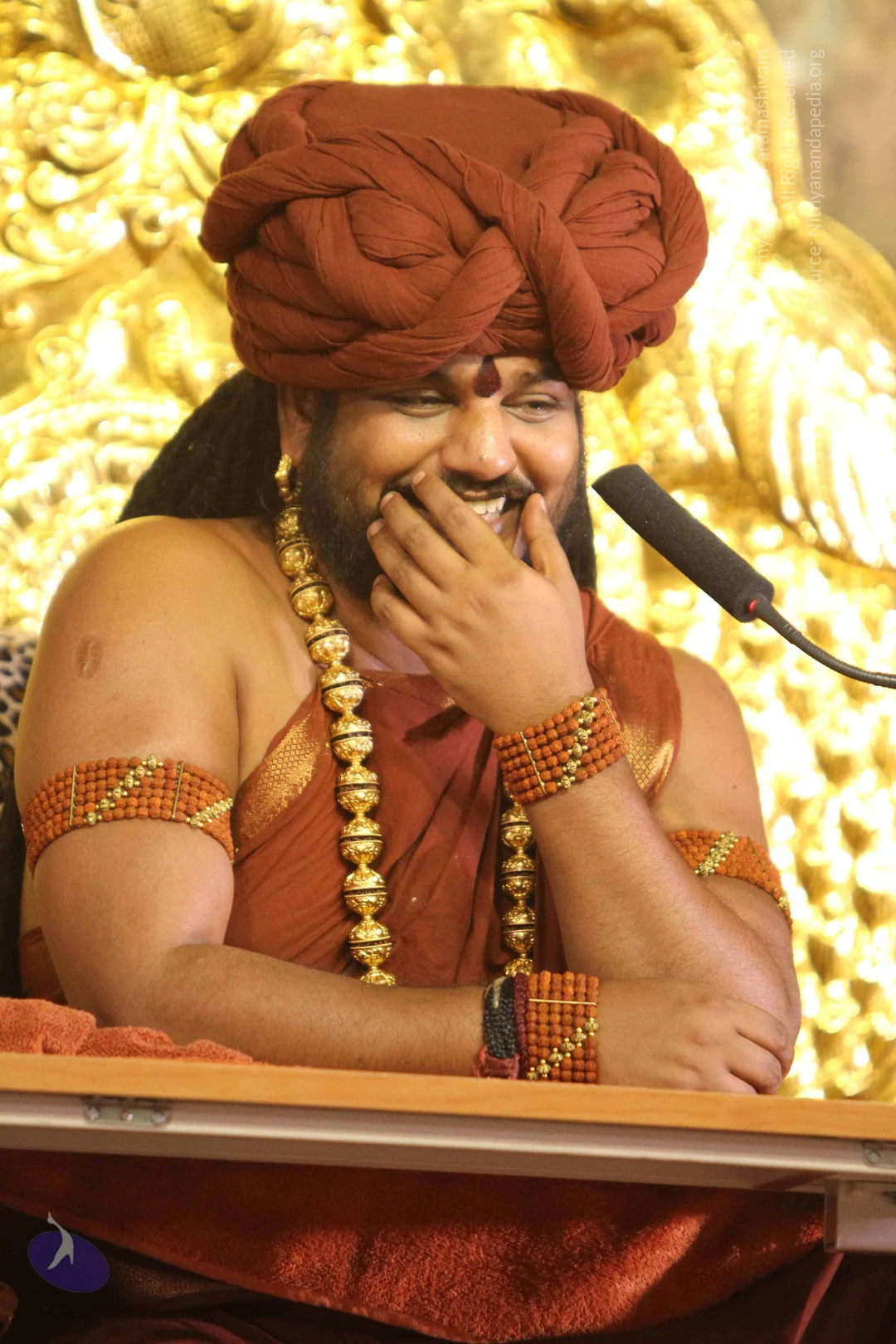
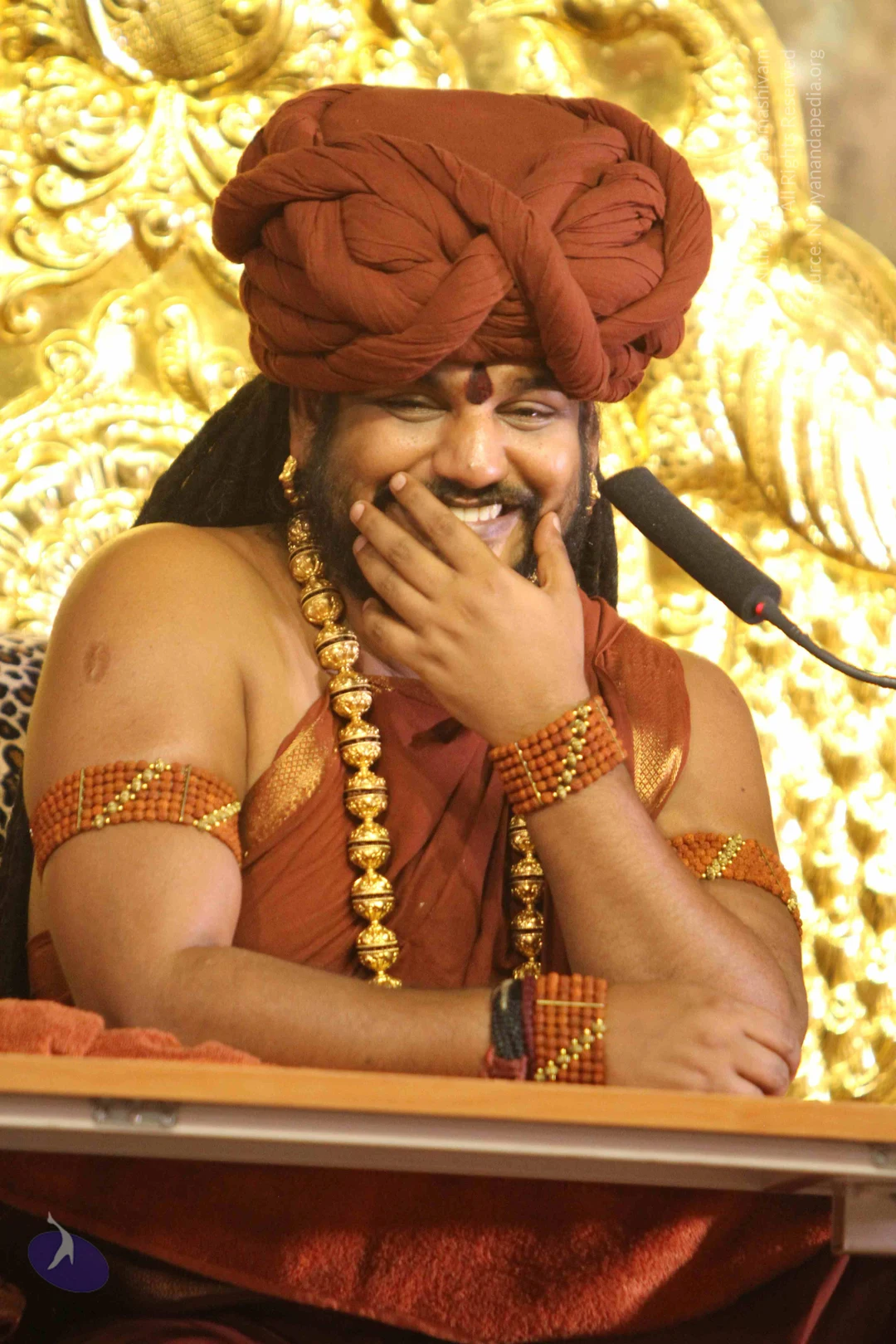
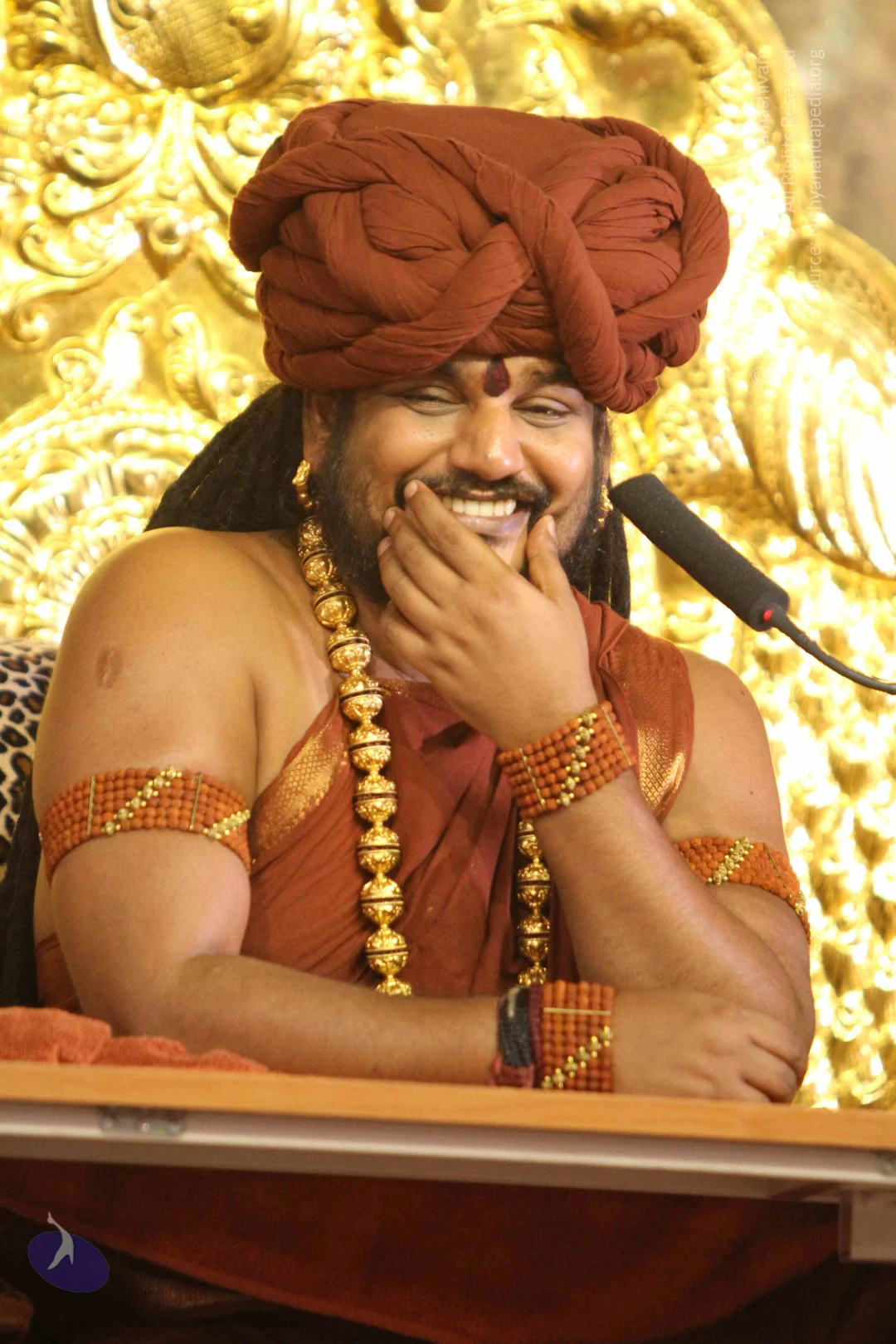
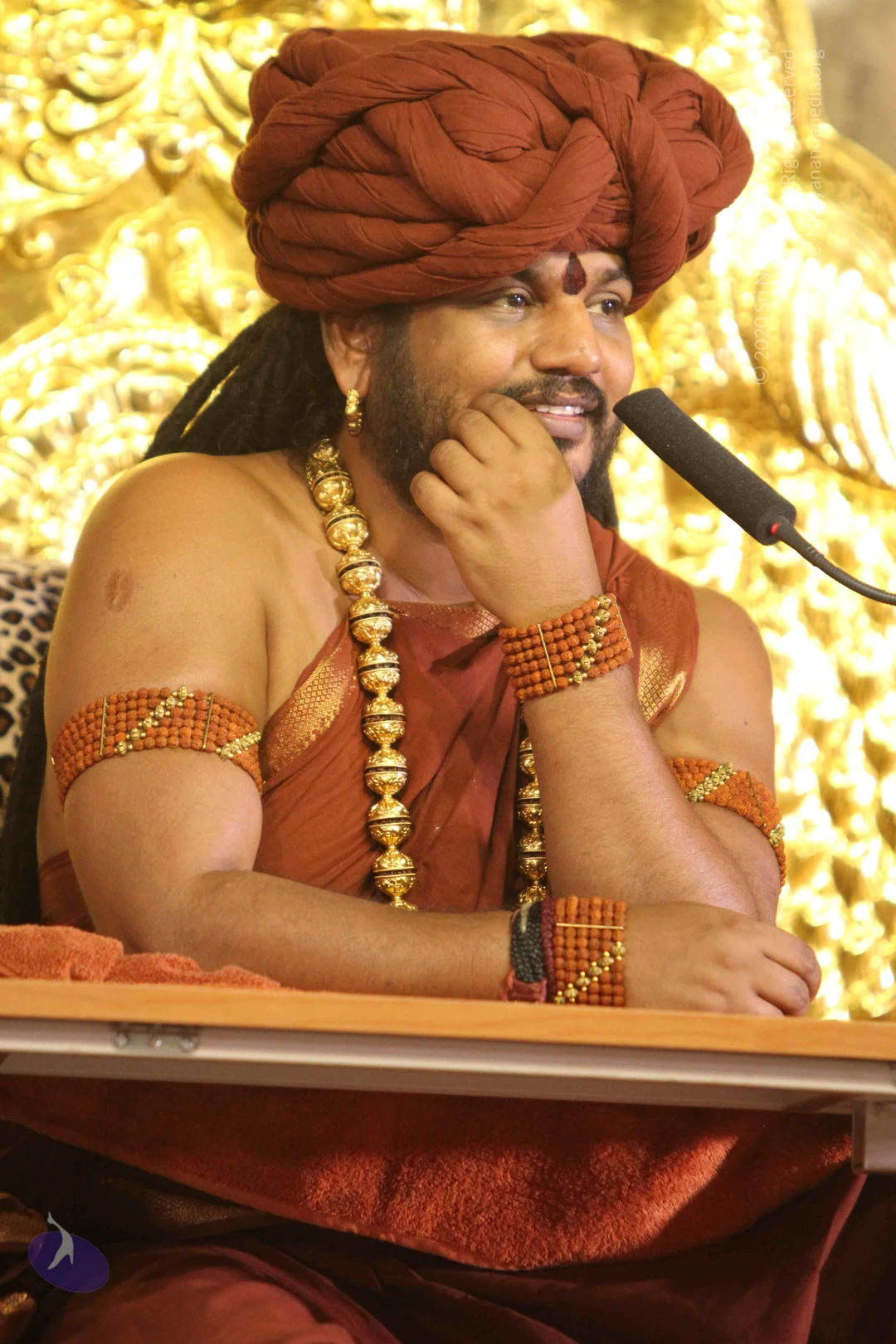
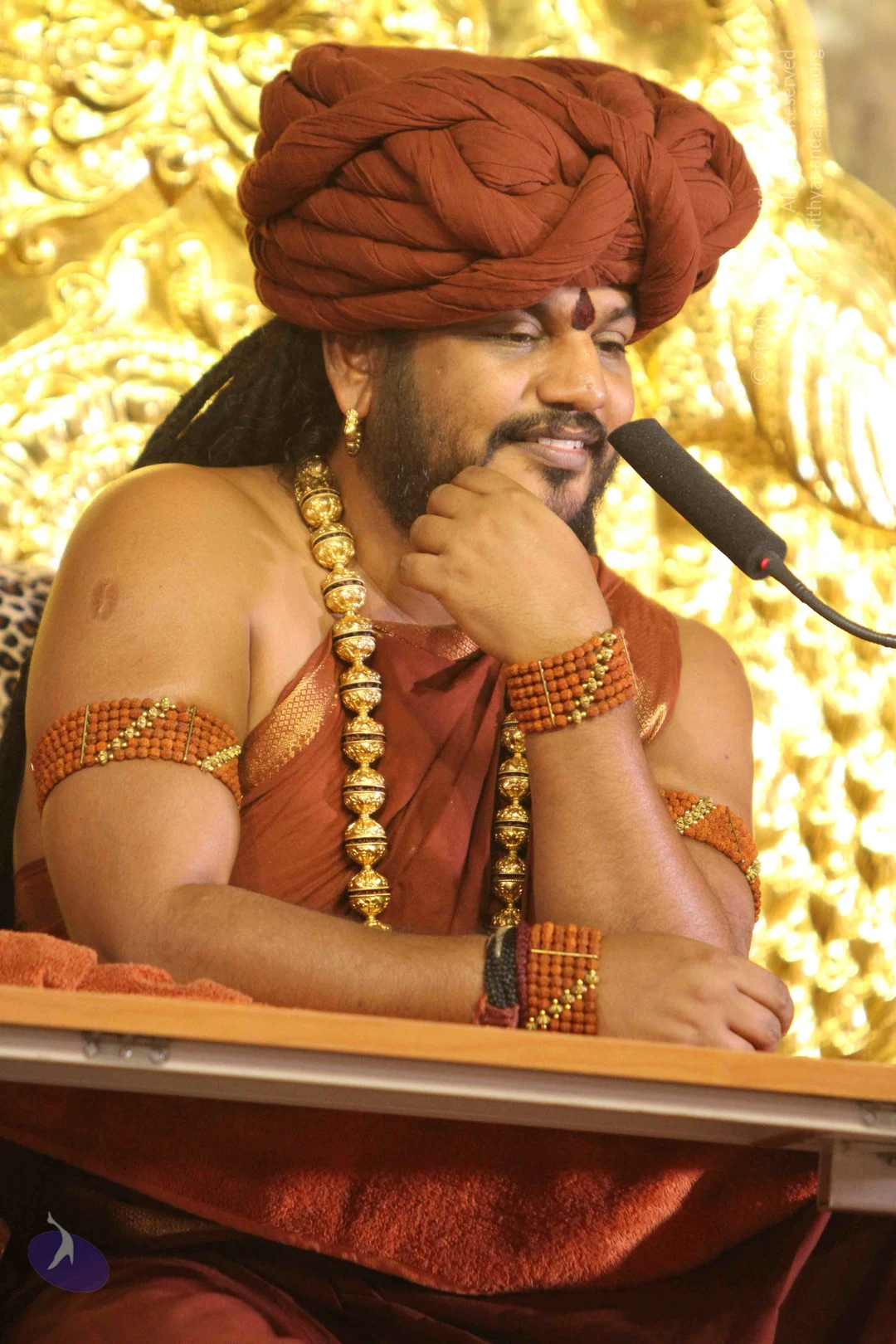
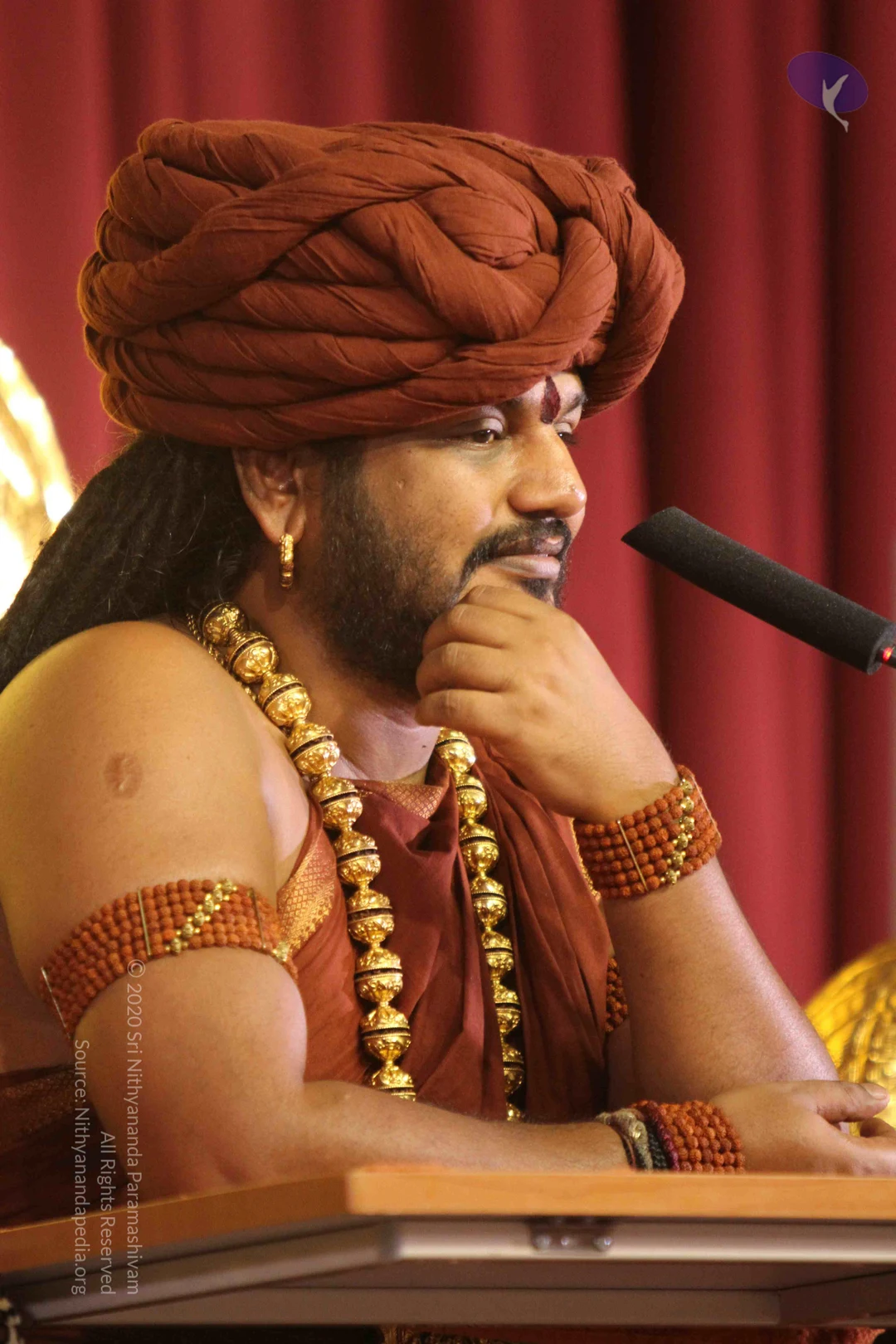
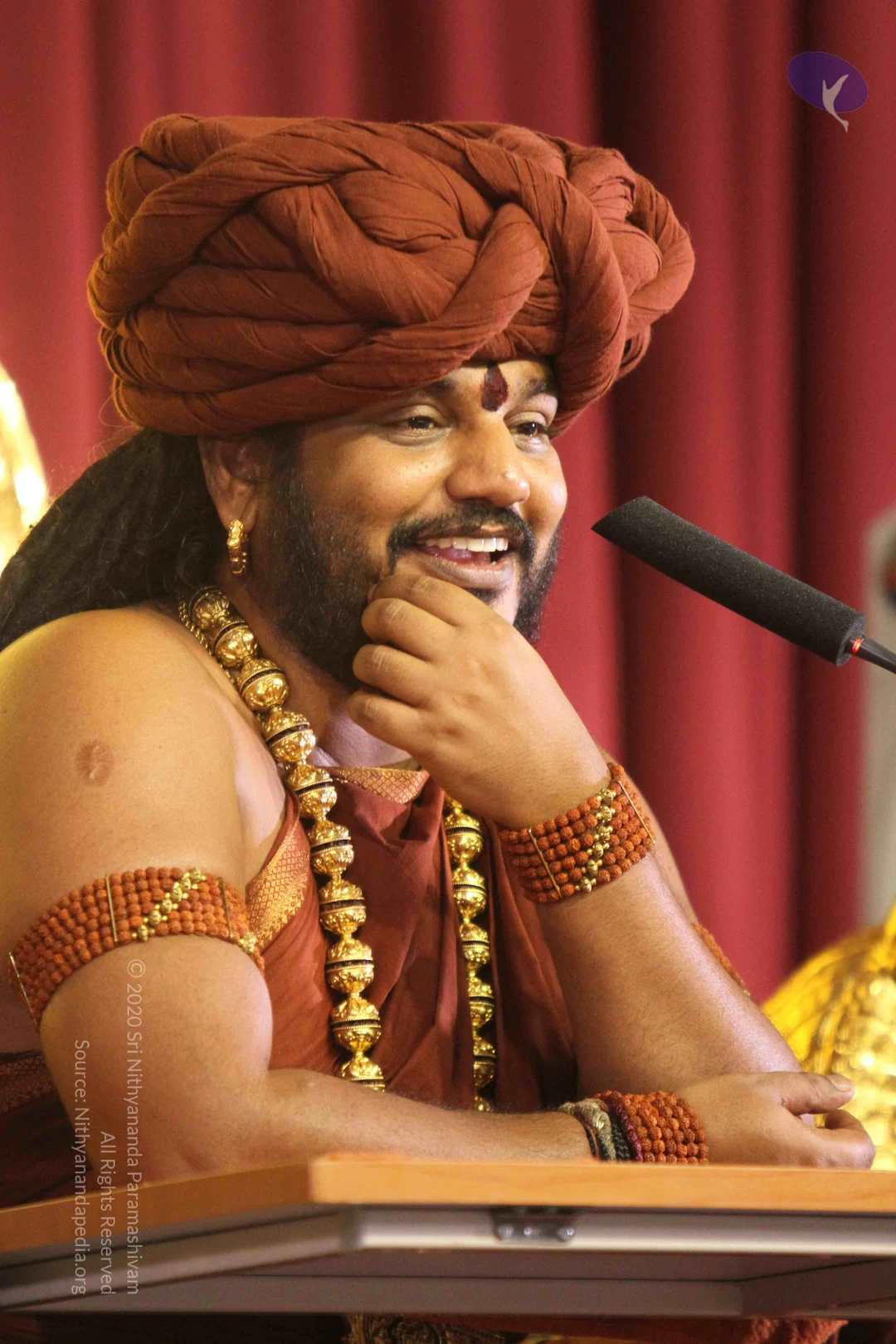
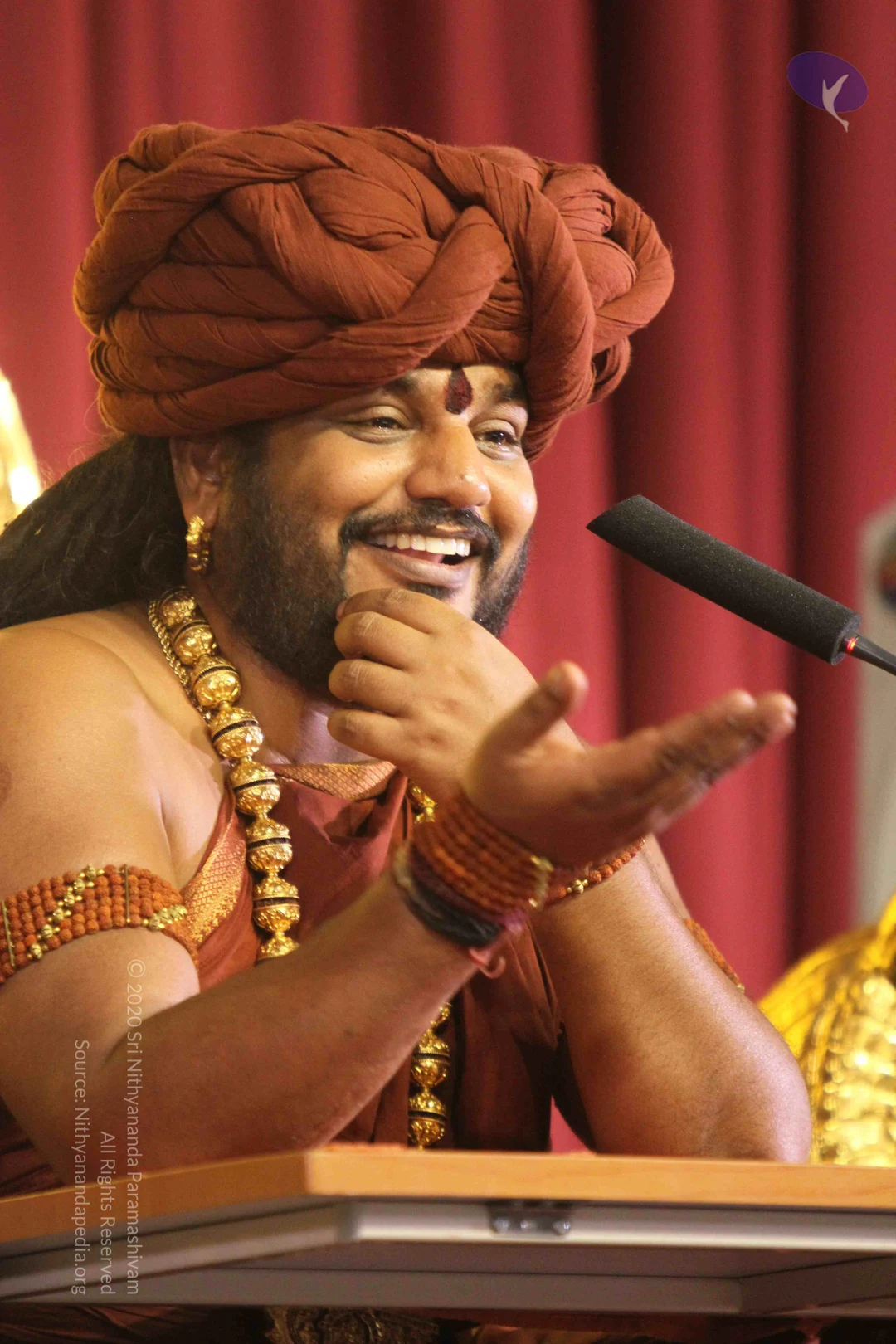
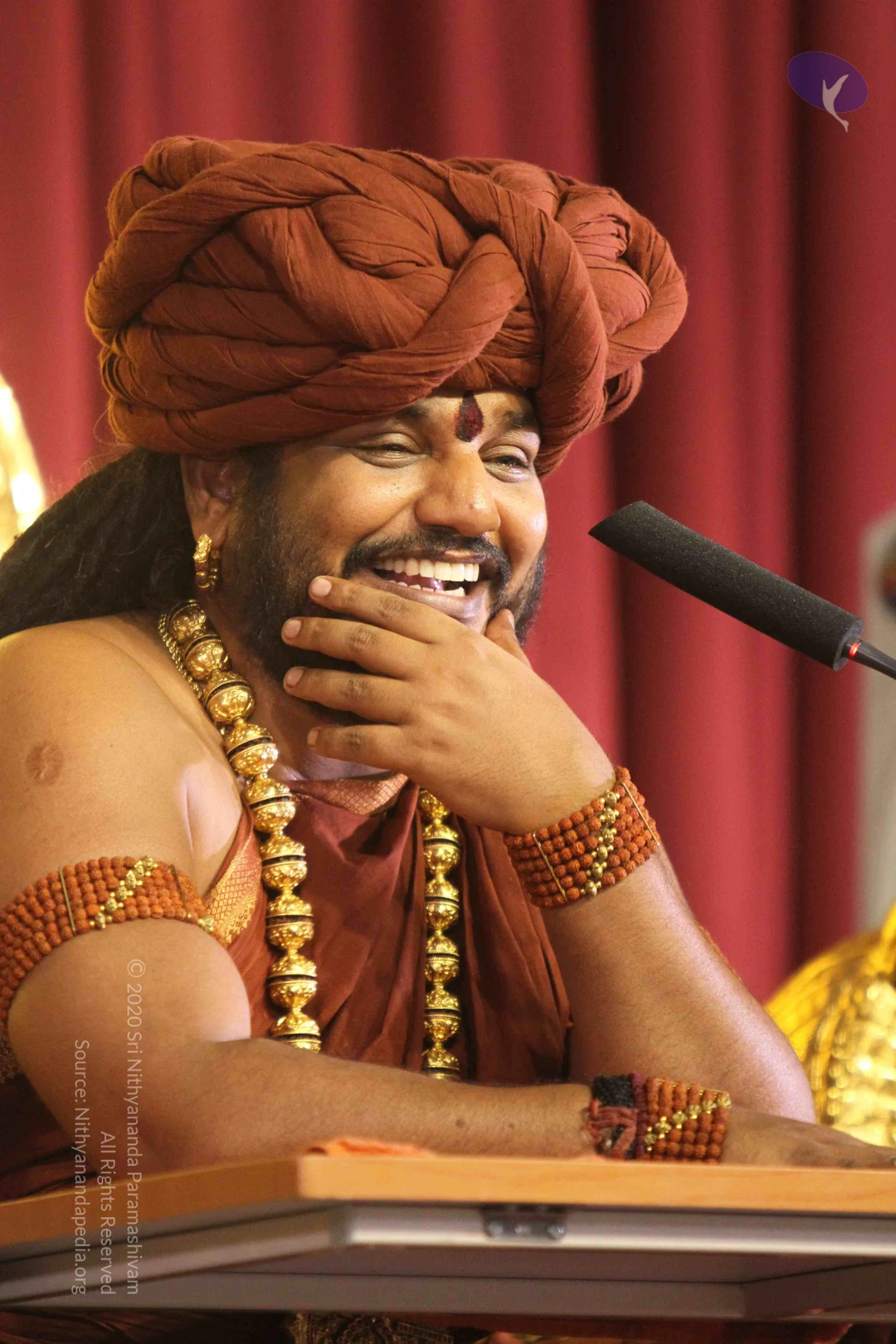
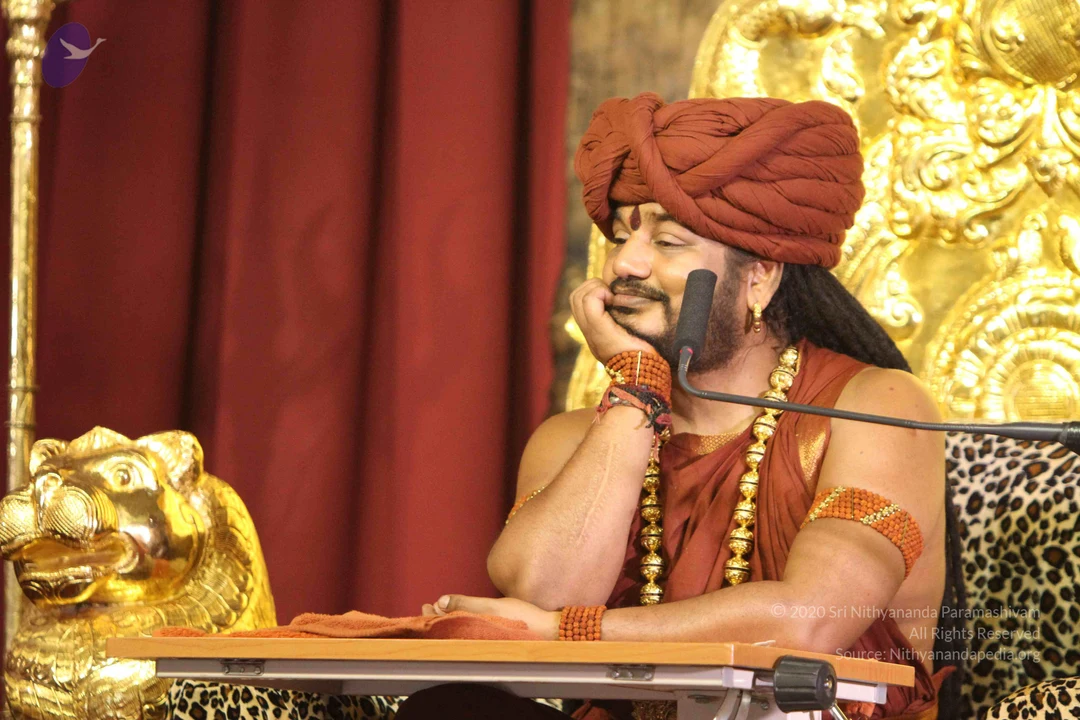
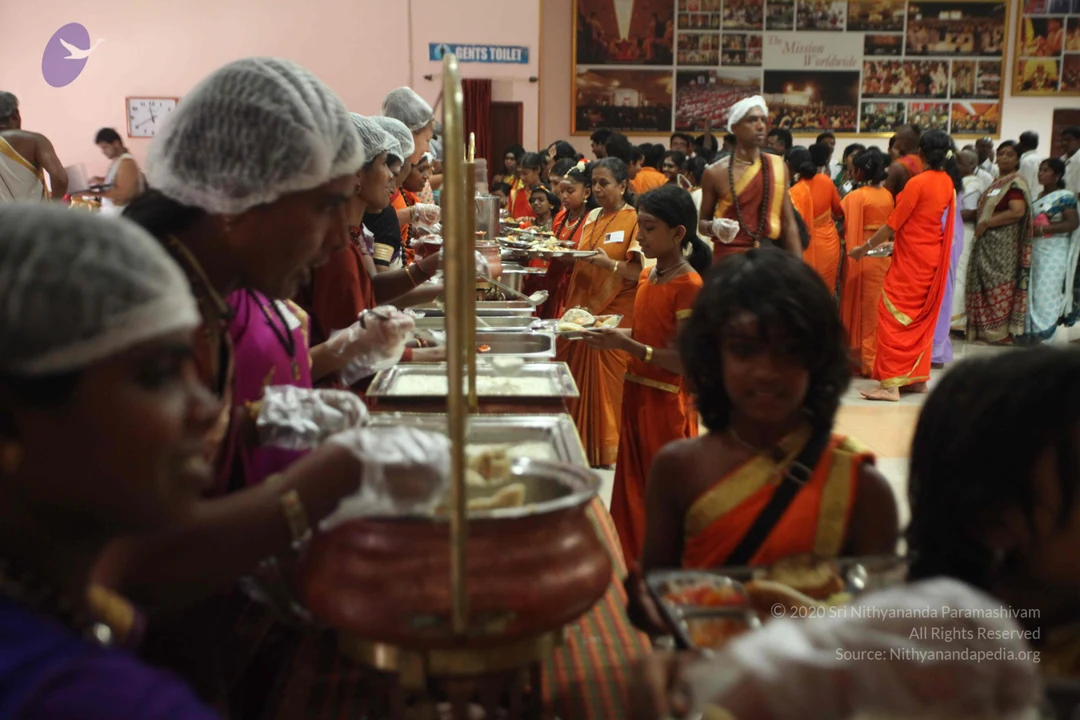
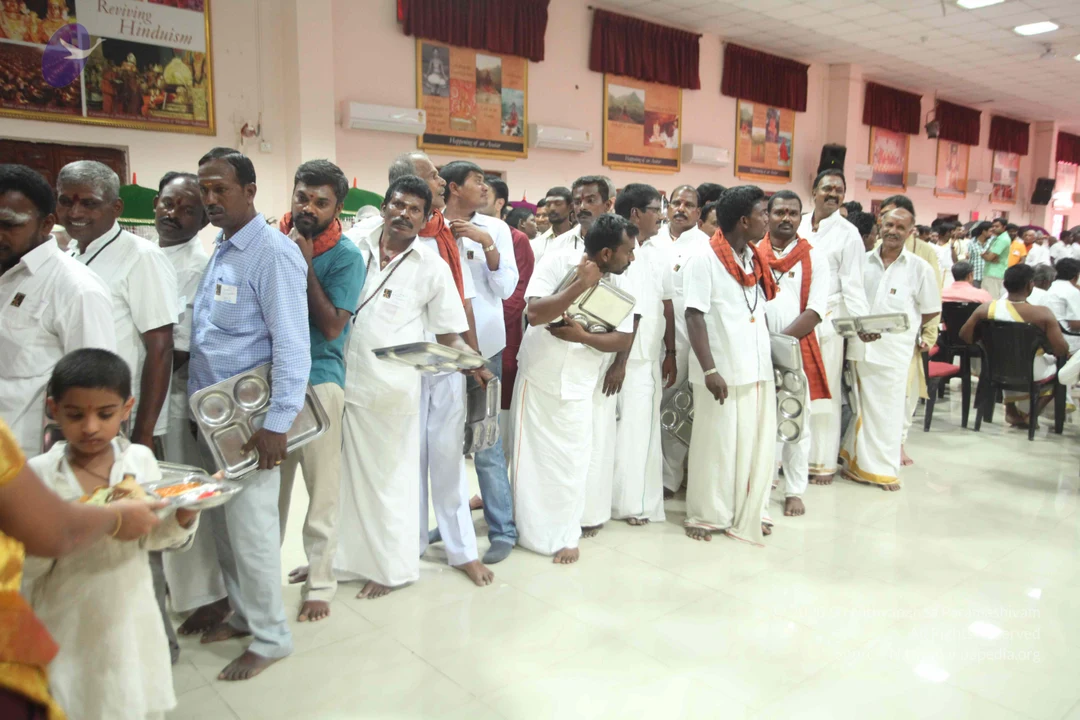
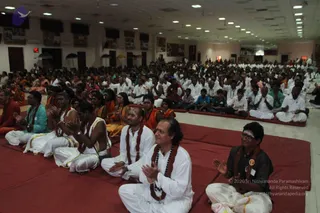
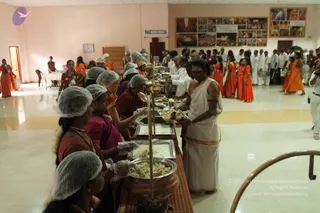
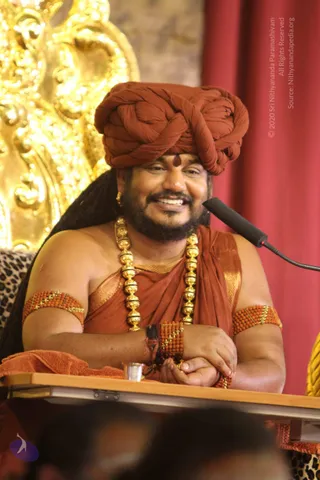
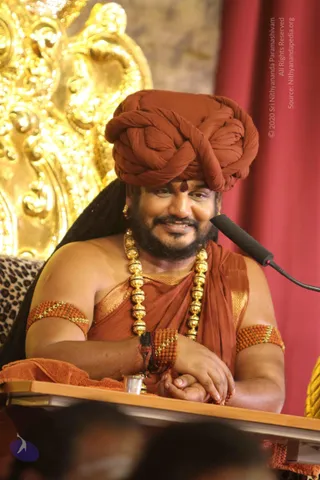
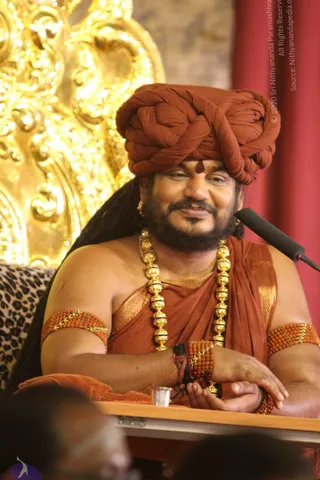
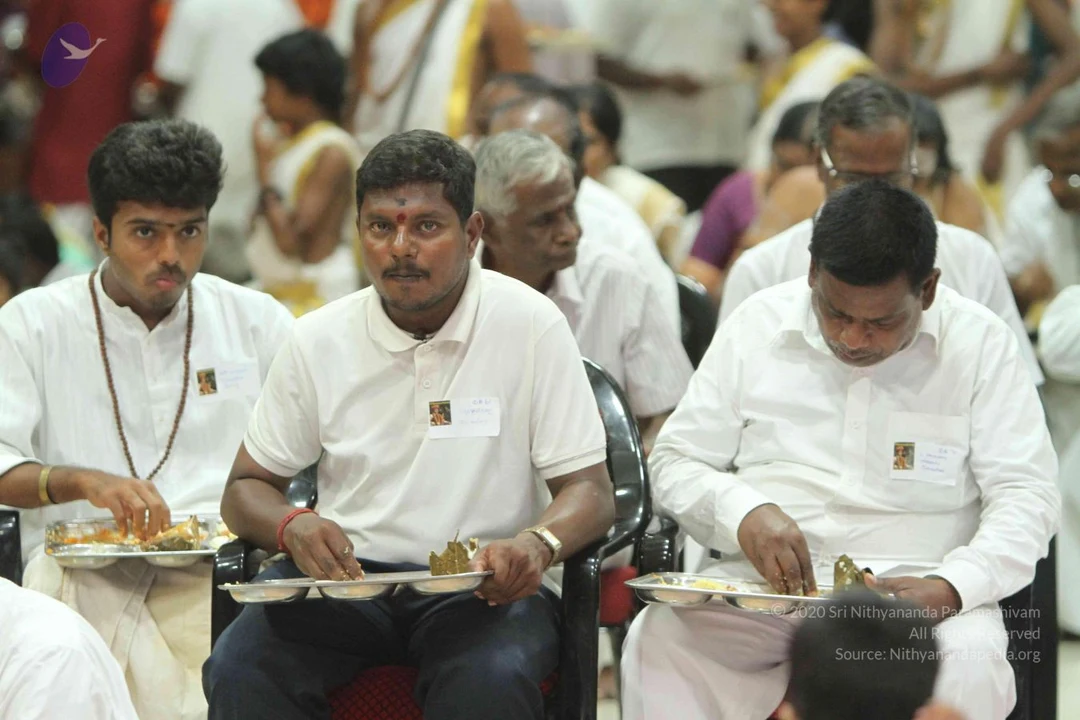
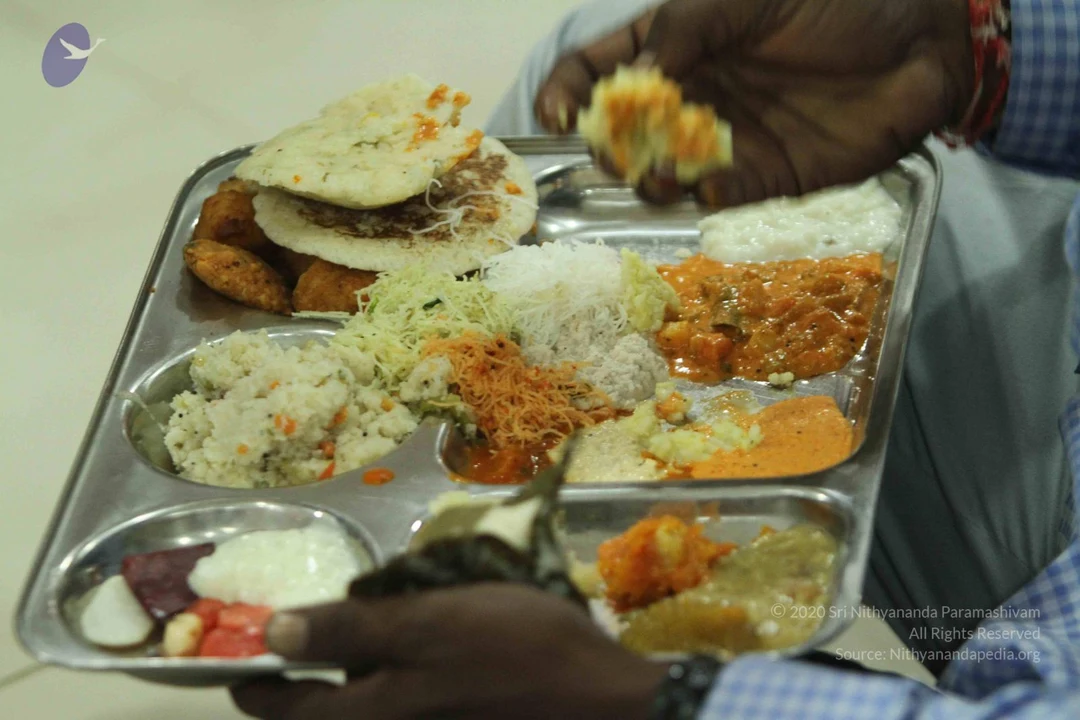
A large hall filled with seated devotees on red floor mats, facing forward toward an unseen stage. In the front row, several men wear saffron and orange robes with red shawls, while others wear white kurta-style clothes and one in a dark shirt raises a hand. A man in the foreground wears a white outfit, a black and white beaded mala necklace and a red shawl. Behind them, a crowd in white and orange sits in rows under ceiling lights, with umbrellas and framed banners along the walls. No identifiable a person candidate is clearly visible in this crowd scene.A large hall filled with a seated audience on red mats, many dressed in white and saffron. In the foreground, a man in white dhoti and shirt with a dark rudraksha-style mala and a brown shawl sits with palms pressed together in namaste. Beside him, another man in white with a brown shawl claps, and a bespectacled man in dark shirt and white dhoti, with a brown shawl and a small badge, sits with hands raised. Ceiling lights and framed banners line the back wall. No figure in the frame shows distinctive a person cues strong enough to identify him, so the candidate is left uncertain.A photograph of a long serving line in a bright hall with cream tiled floor and pink walls. Women in hairnets and plastic gloves serve food from steel trays and copper pots at a buffet table. A man in a white dhoti with a gold border and a white shawl stands at the front, holding a steel plate. Behind him a long queue of people in white and saffron-orange clothing waits. On the wall, a board displays framed photographs and a sign reads NEWS TODAY. A purple-and-white logo appears at upper left.A smiling man seated at a wooden table with a black microphone at right, wearing a rust-orange turban with a red tilak mark on the forehead, an orange-red shawl with gold border, a heavy gold bead necklace, rudraksha armlets and a rudraksha bracelet. He has long dark hair and a full beard, and his hands rest folded on the table beside a small silver cup. Behind him are a gilded ornate throne back and red curtains. Swamiji (probable): the figure wears a turban, long hair, saffron-orange clothing, a gold necklace and rudraksha malas, consistent with the page's attribution, so this is a seated speaker at a discourse.A smiling man in a rust-orange turban with a small red bindi sits behind a wooden table with a microphone in front of him. He wears a bare-shouldered orange-red garment with gold border, a heavy gold bead necklace, and rudraksha armbands and wrist mala. A gold ornate throne with carved scrollwork stands behind him beside red curtains. Probable Swamiji is seated in the discourse setting, with the cues of turban, saffron-orange clothing and rudraksha adornments.A bearded man seated at a wooden table with a microphone, smiling. He wears a rust-red turban with a small red-brown forehead mark, a rust-red garment draped over his shoulders with gold border, multiple gold beaded necklaces, and rudraksha-style beaded armlets and bracelets. Behind him stands an ornate gold throne with carved scrollwork and a red curtain. A small silver cup sits on the table. The appearance of the person matches the Swamiji (probable) cues of long hair, a turban, rudraksha adornments and ceremonial gold necklaces, and he is seated in a discourse setting.
August 21 2016

1 photoView all
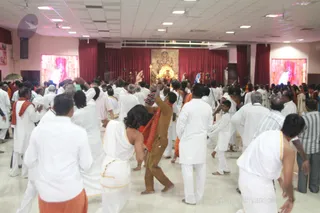
A crowded hall with cream tiled floor and red curtains, where a large group of devotees in white dhotis, kurtas and white saris dance and raise their hands toward a central altar. A golden deity murti stands framed by a gilded backdrop, with oil lamps and brass lamps in front. Two large screens on either side show red-lit images of a robed figure. A man in an orange-brown shirt with an orange shawl dances near the front, and a young boy in white stands among the crowd. Many people are visible, with their backs partly toward the camera.