Skip to content
Saturday

29 September 2012

Akashic Readings on Death - Part 3

Dated photos
562
Source pages
1
Media
3
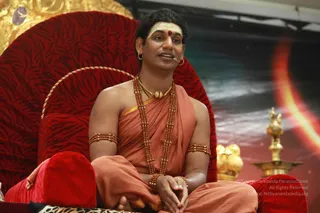
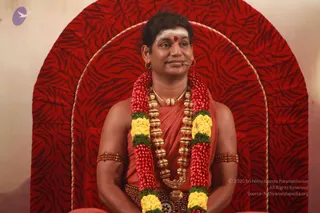
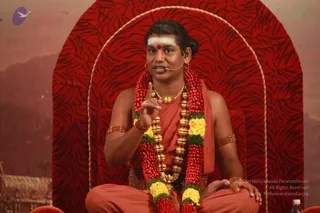
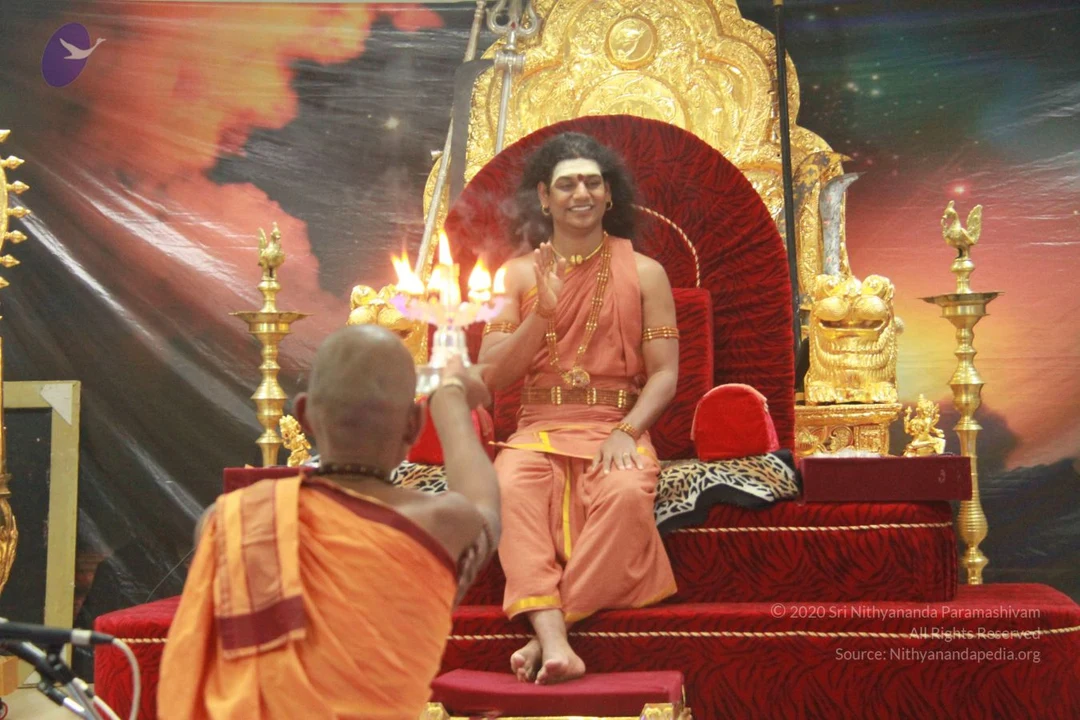
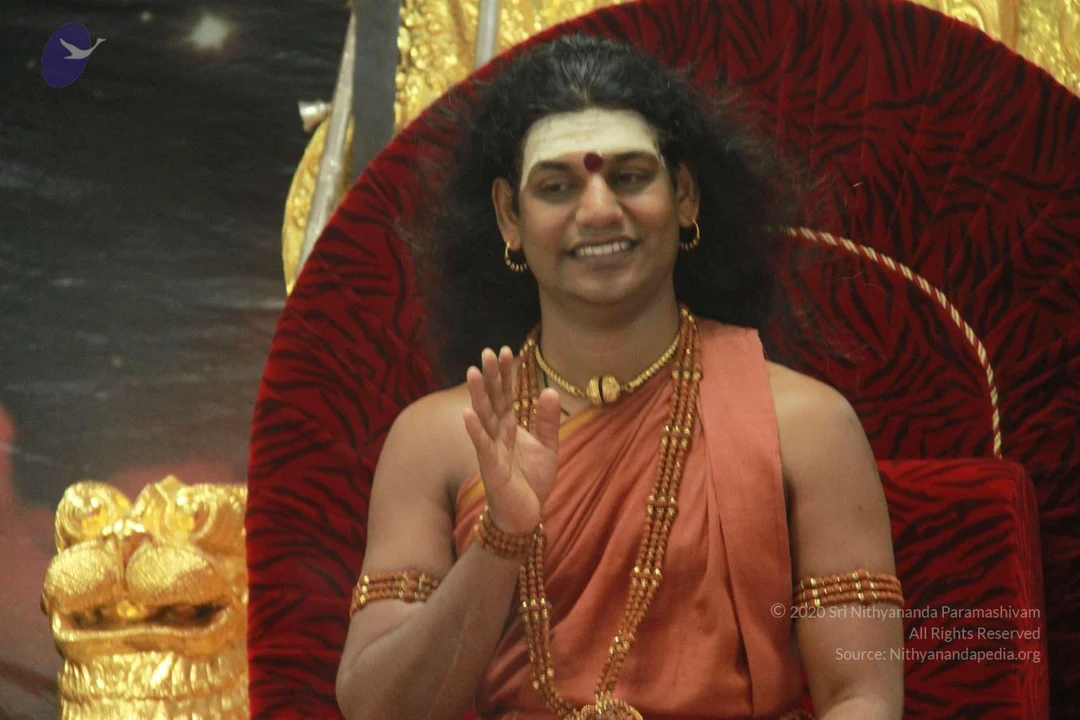
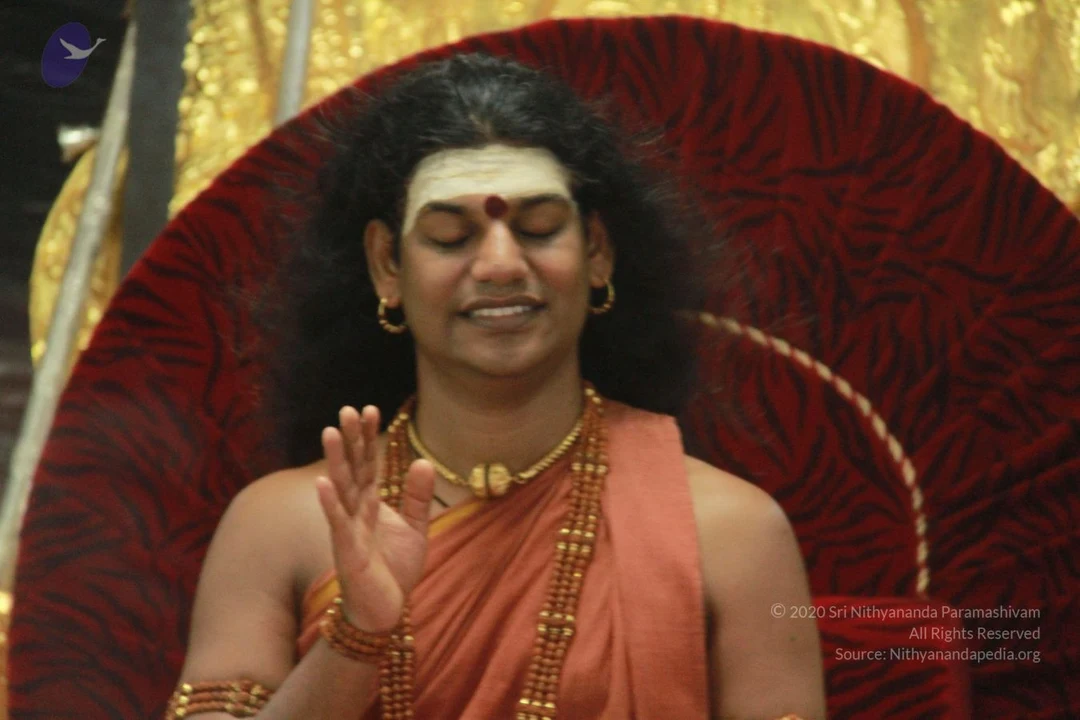
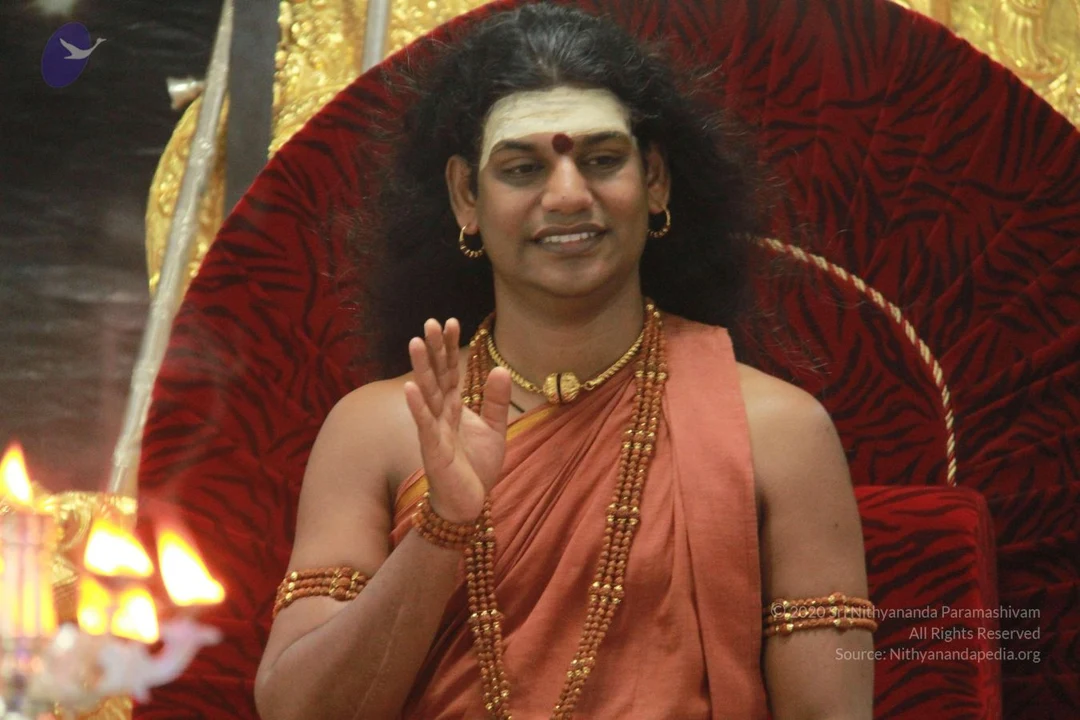
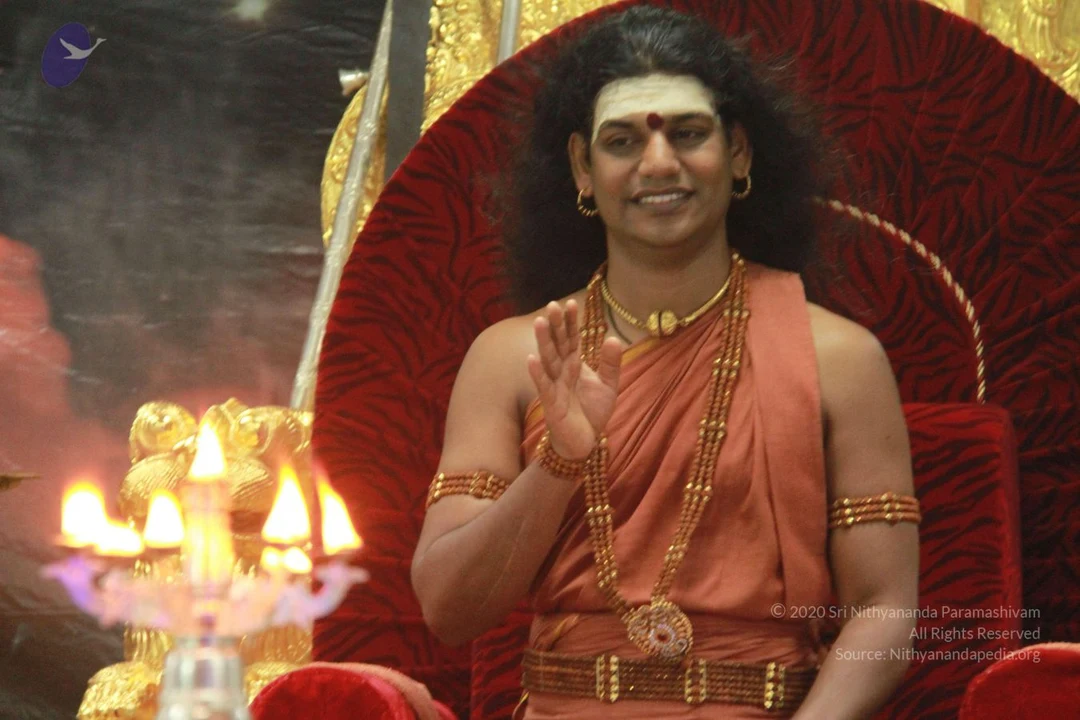
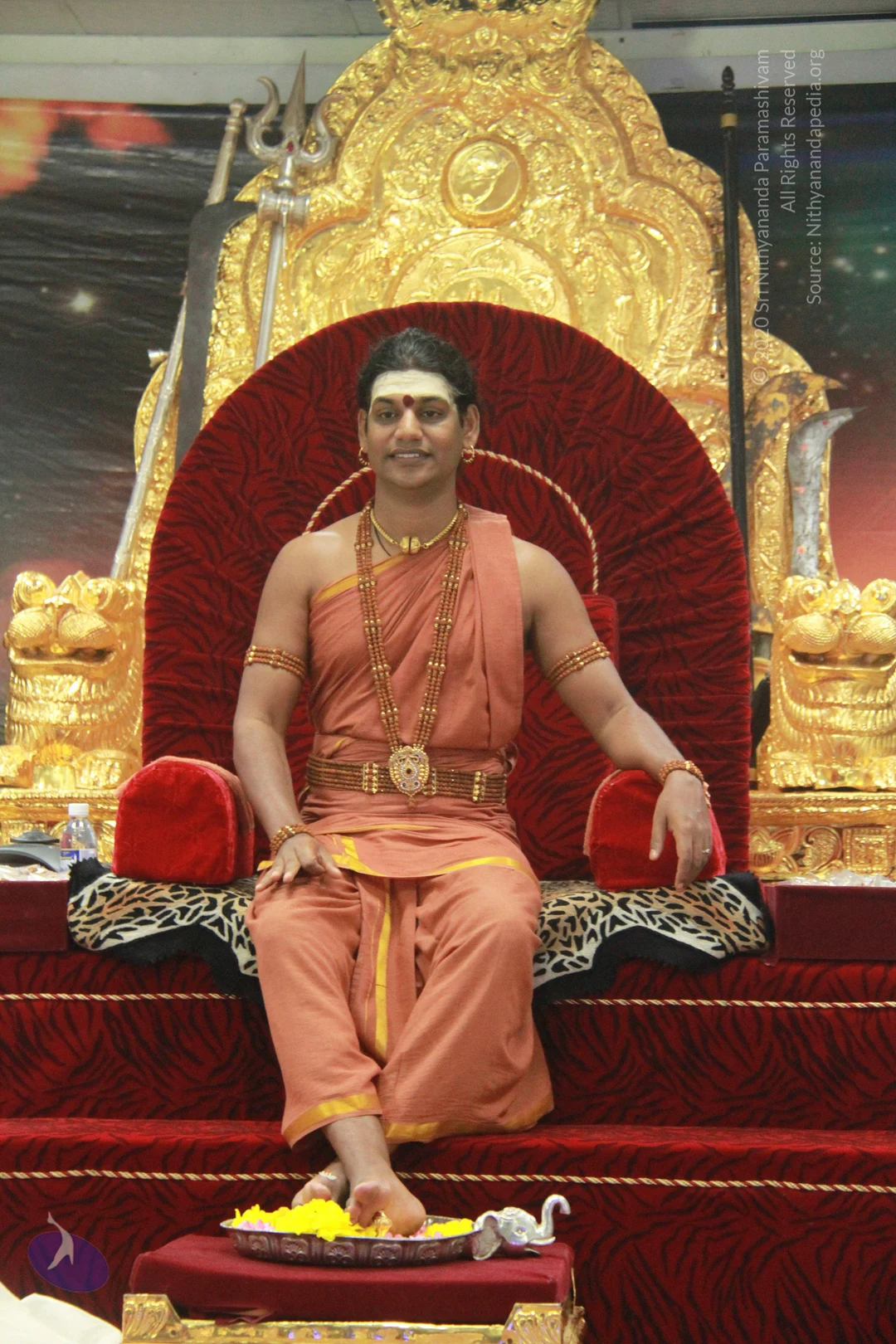
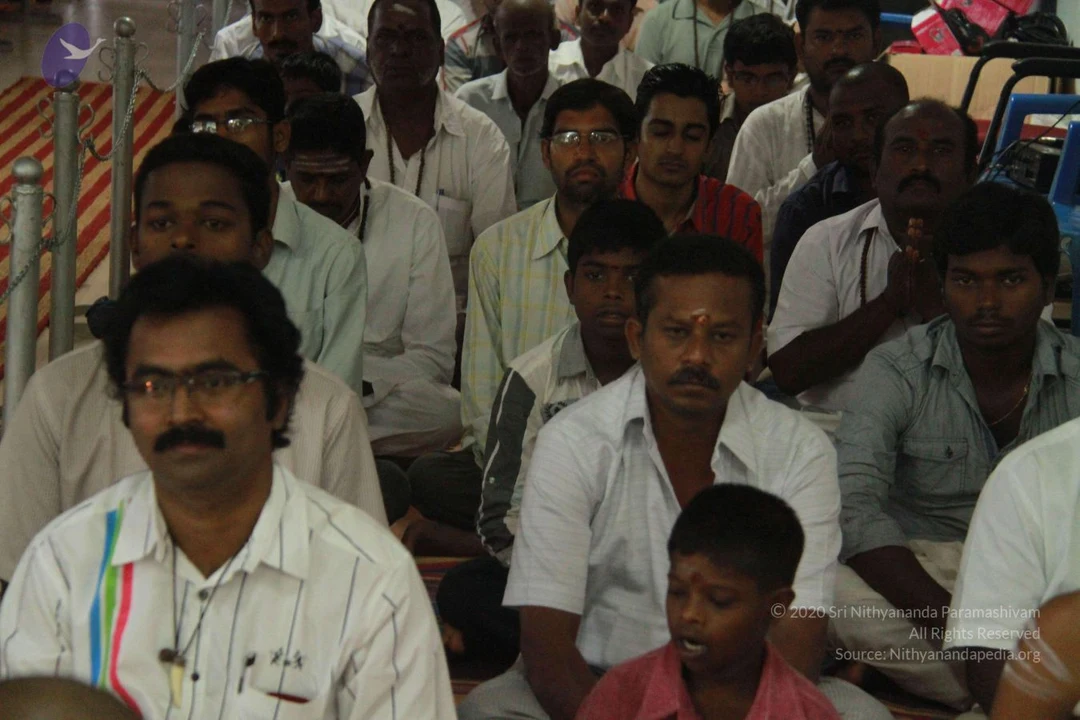
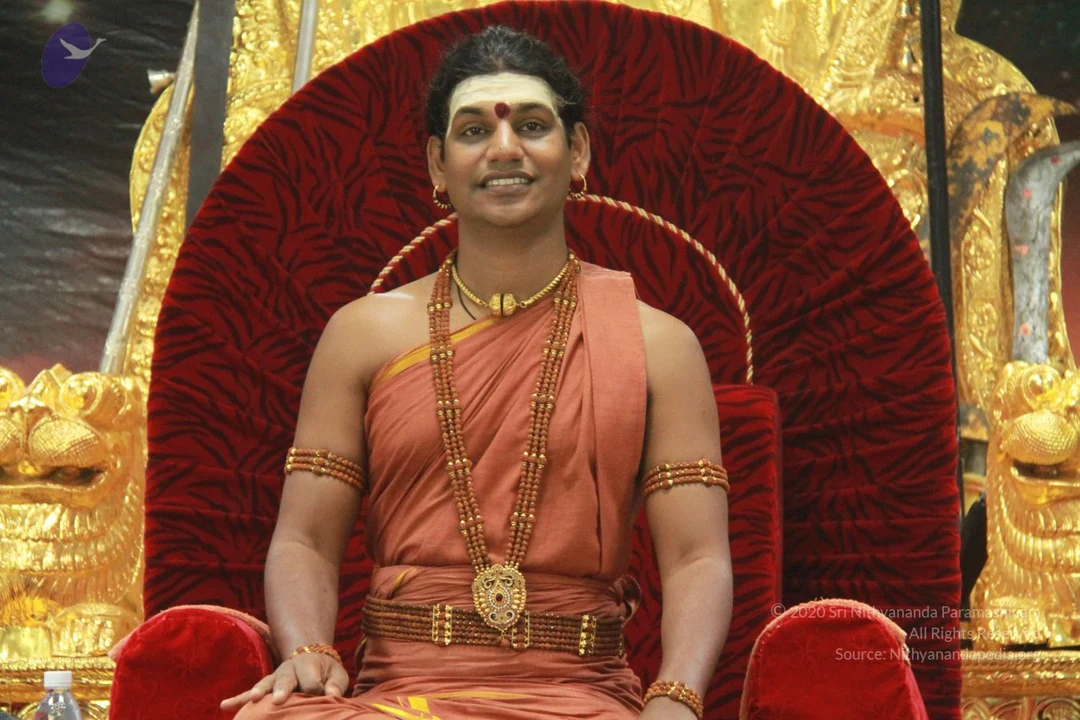
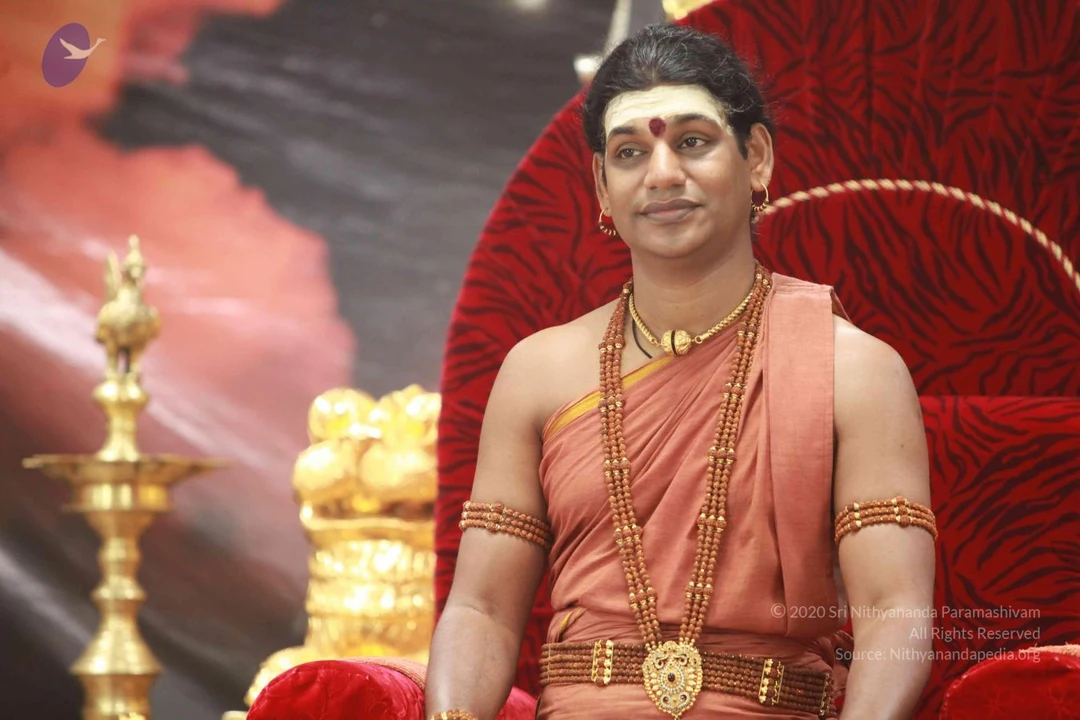
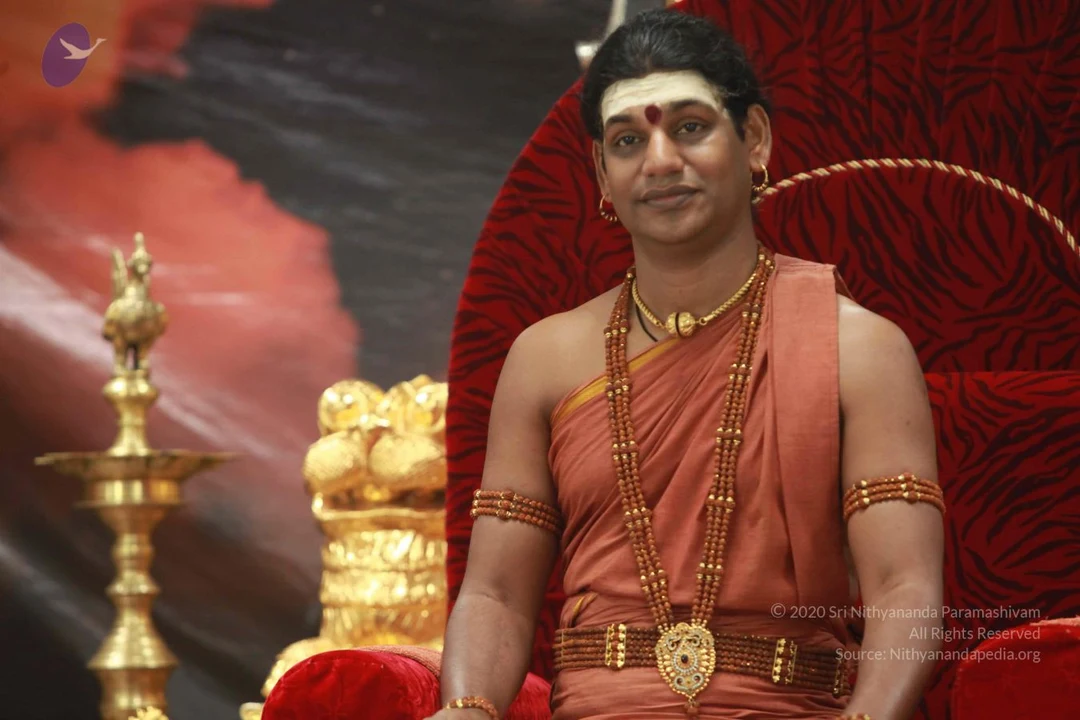
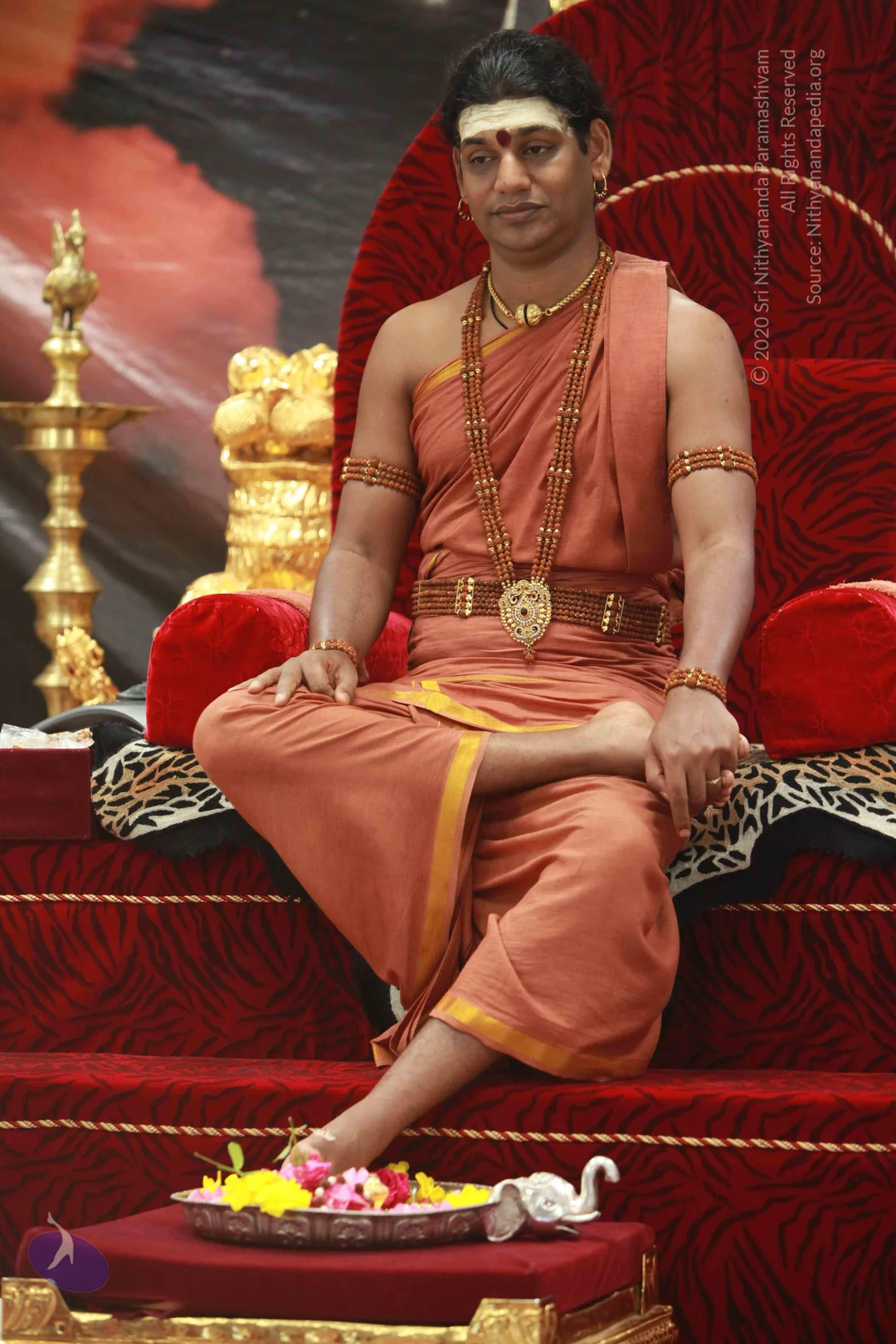
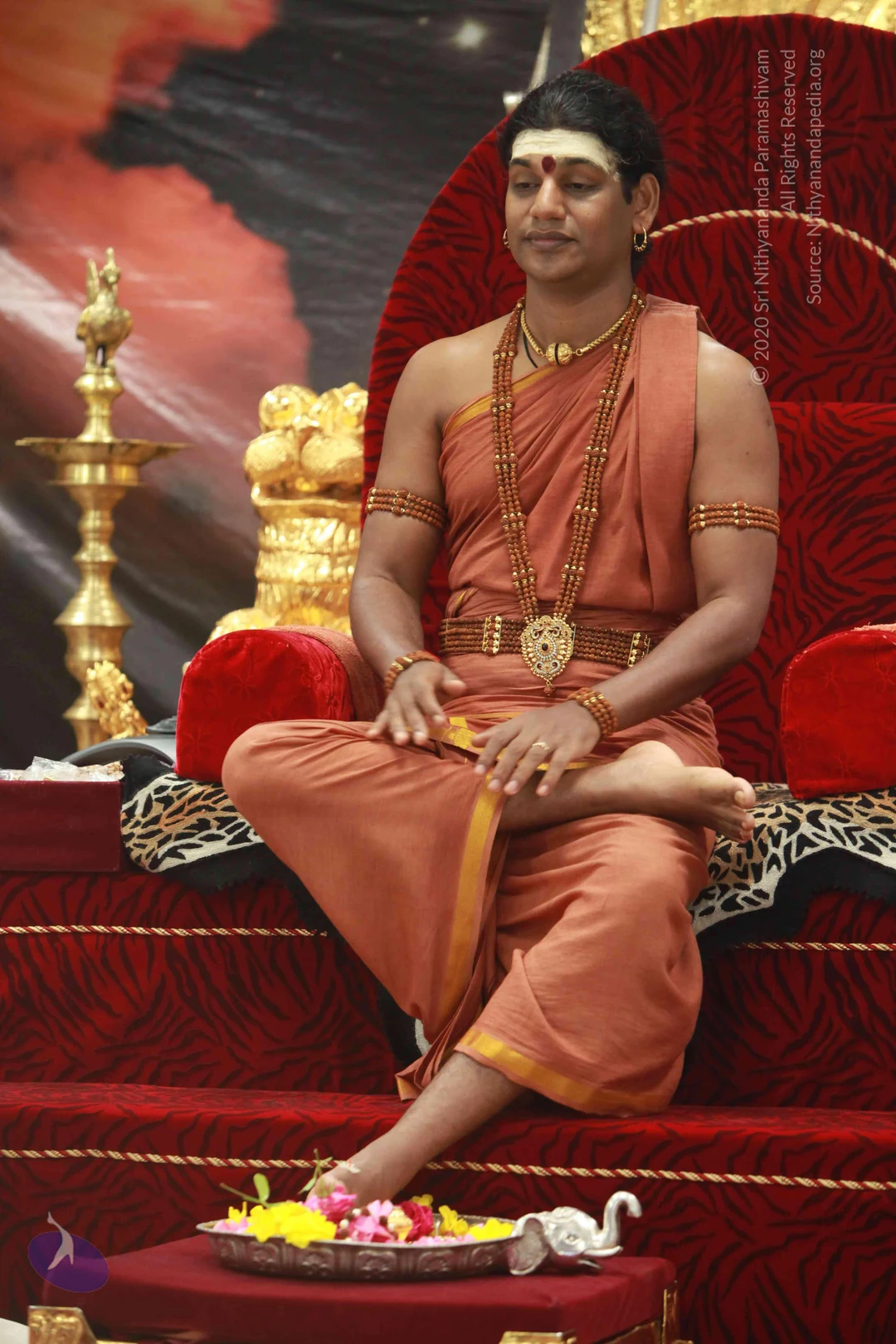
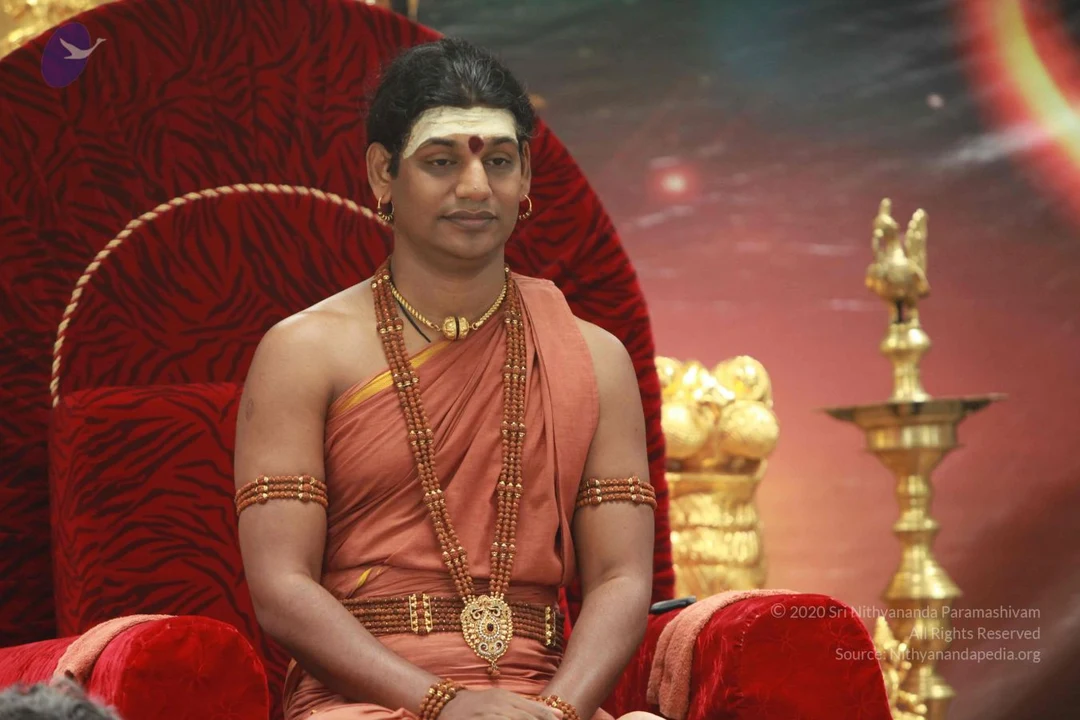
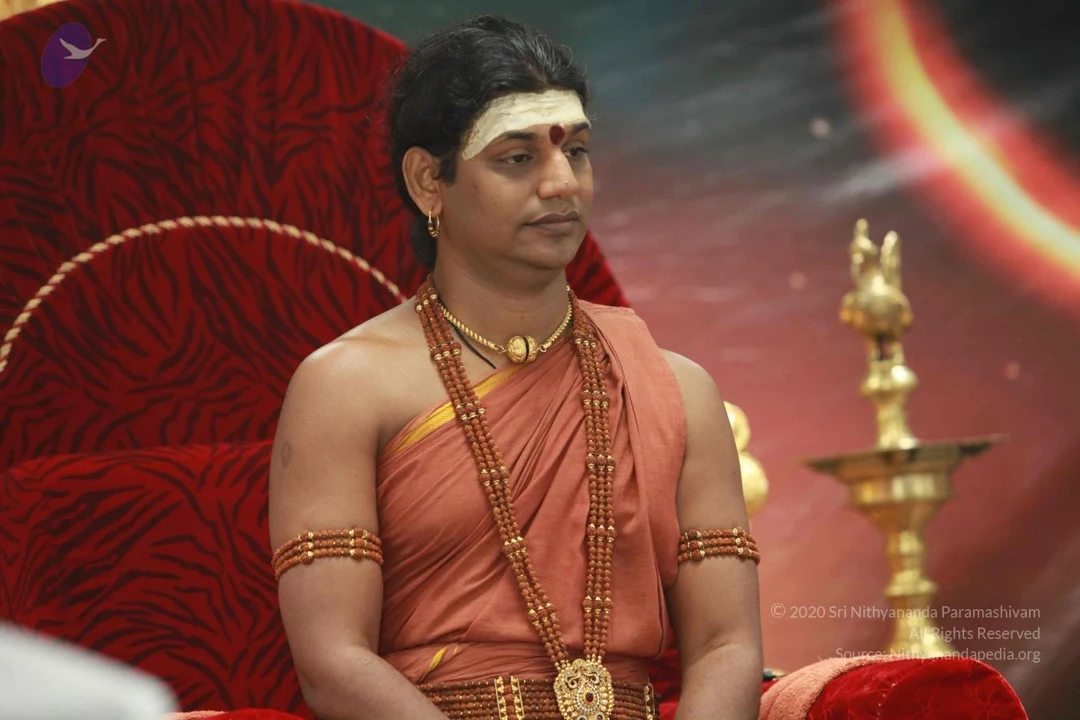
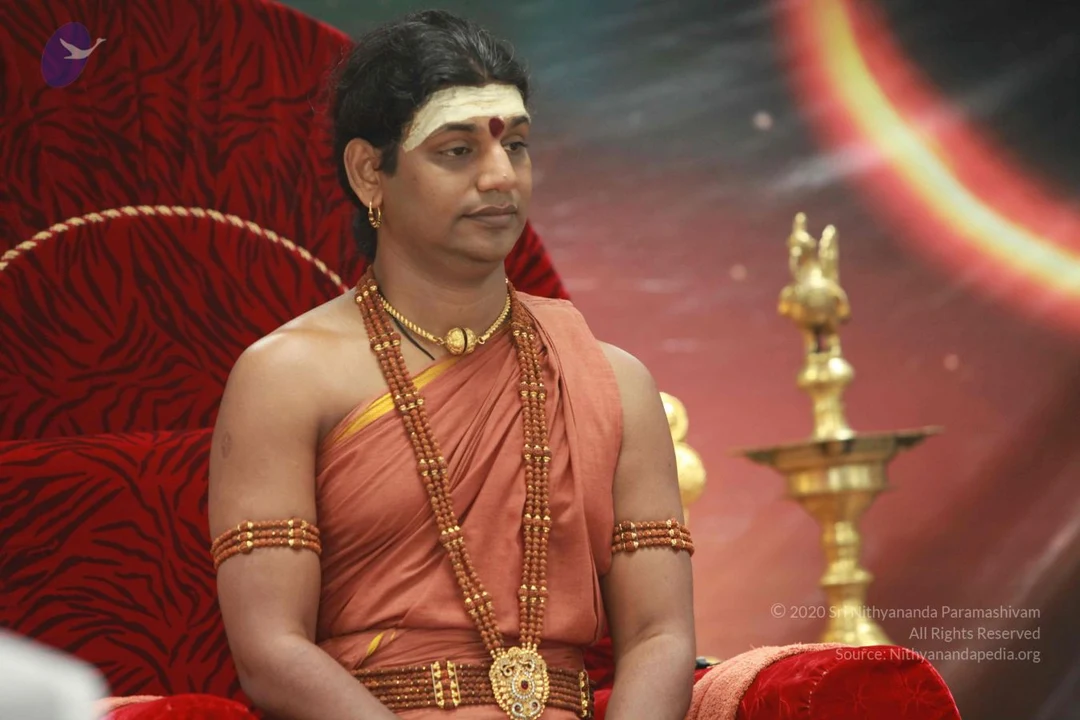
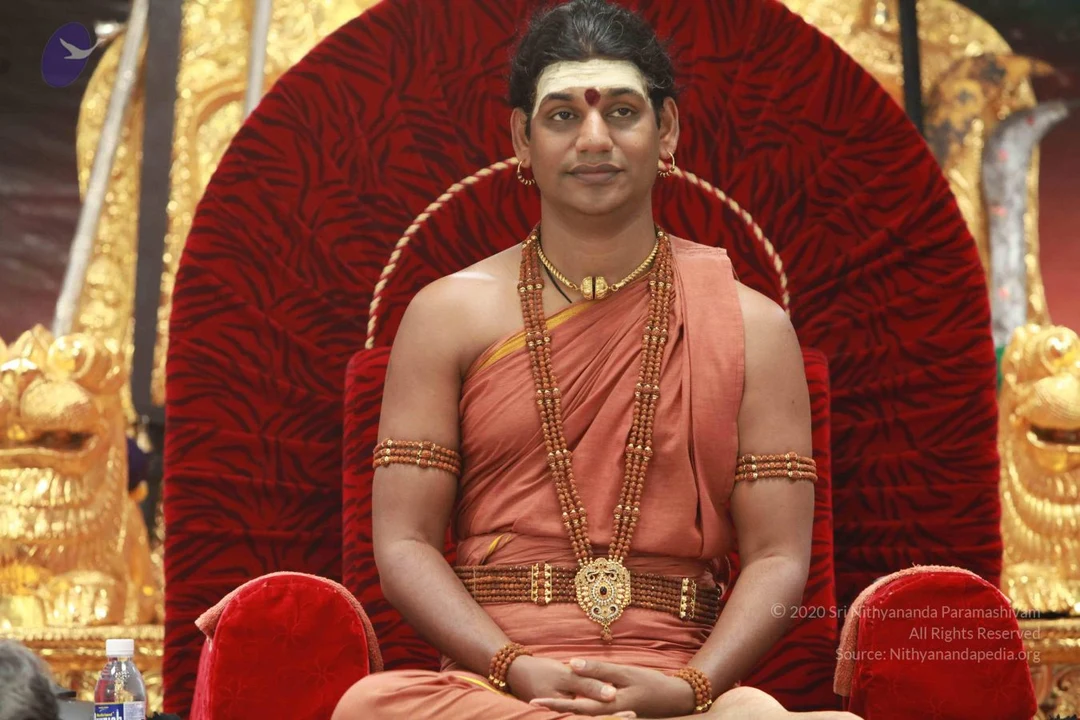
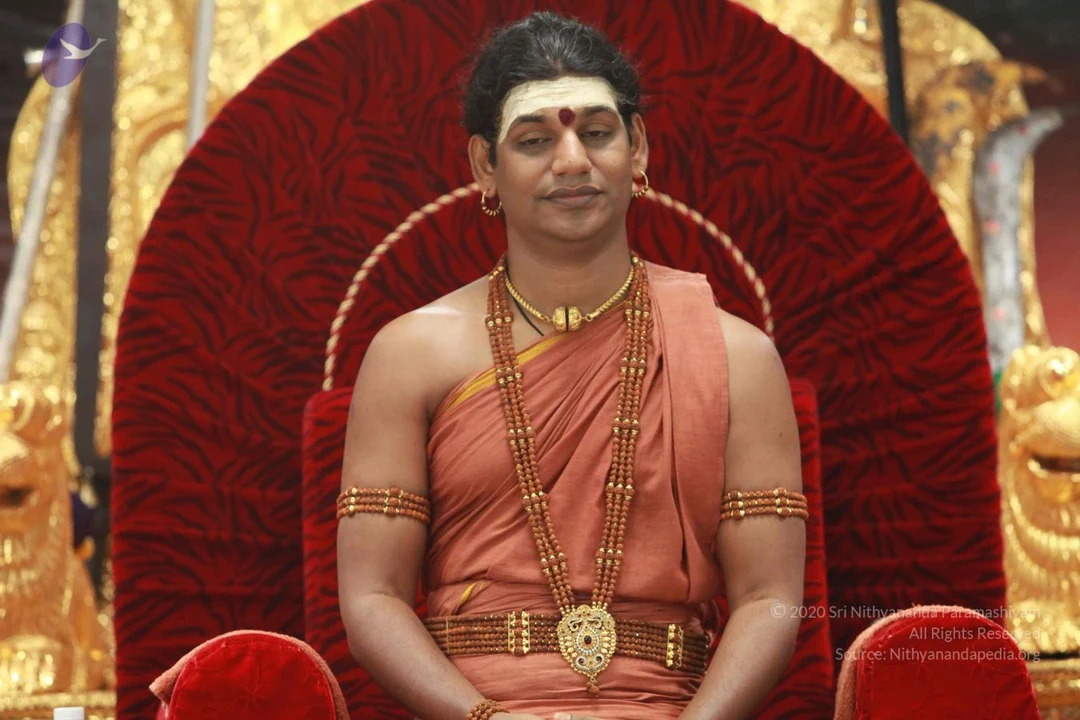
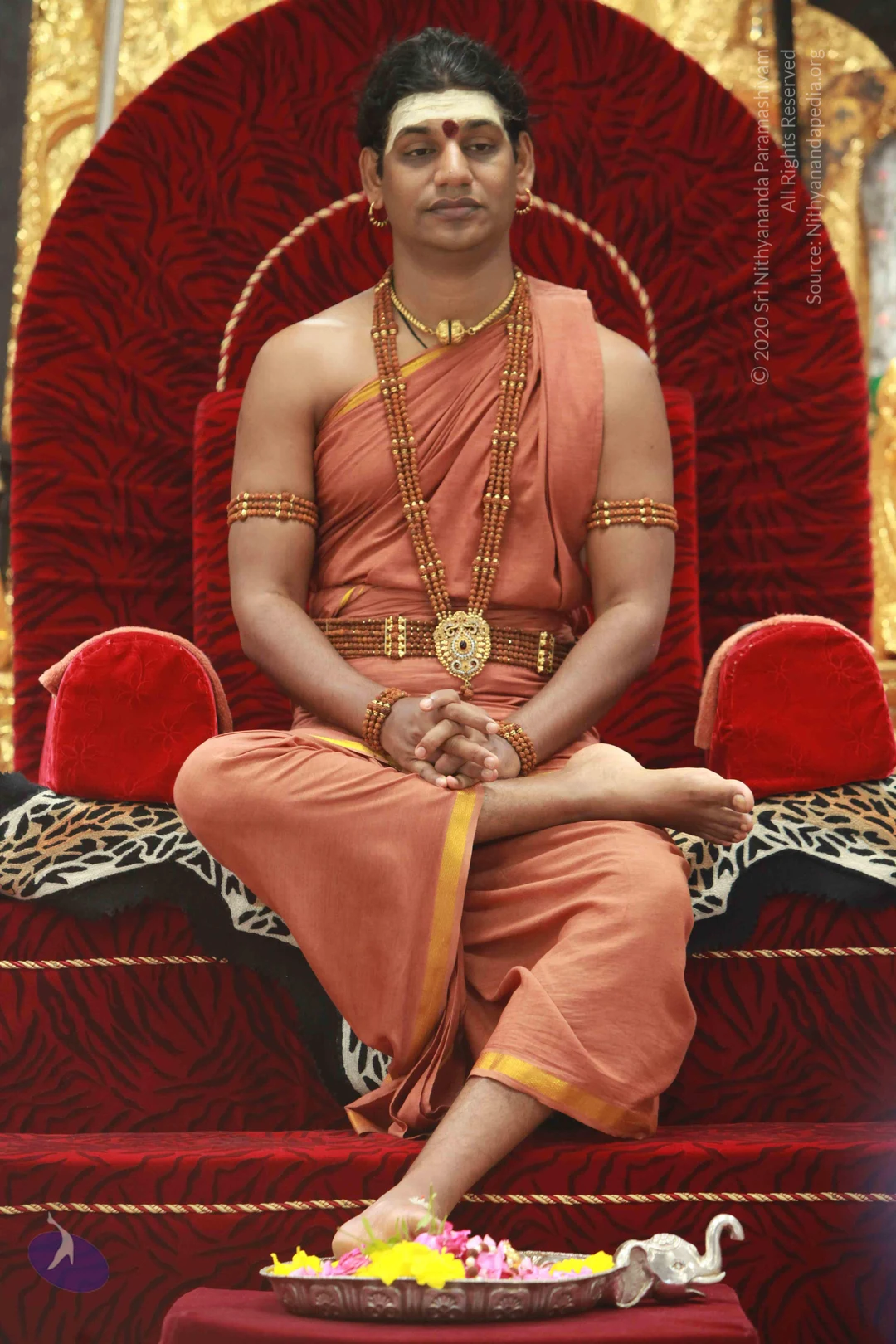
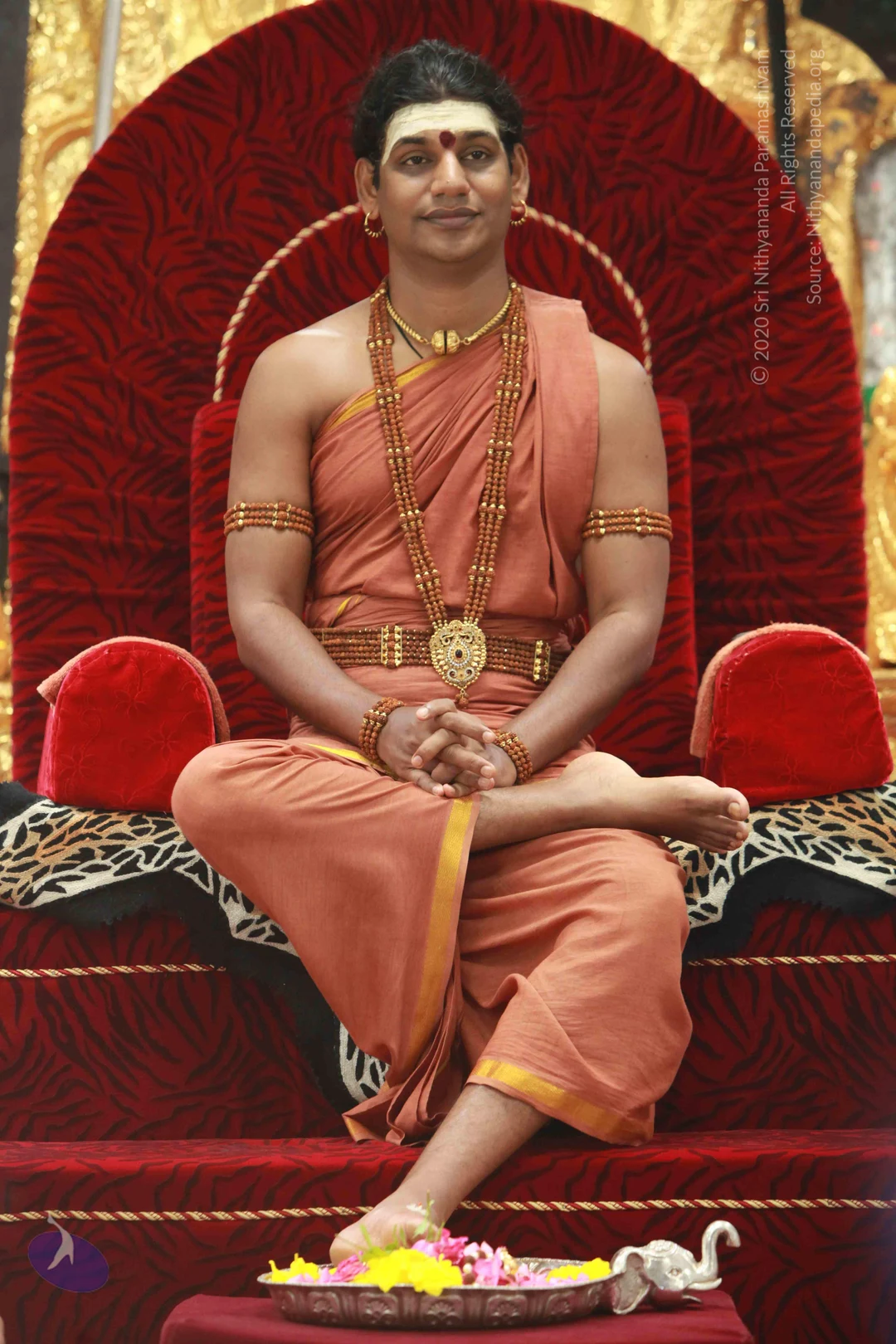
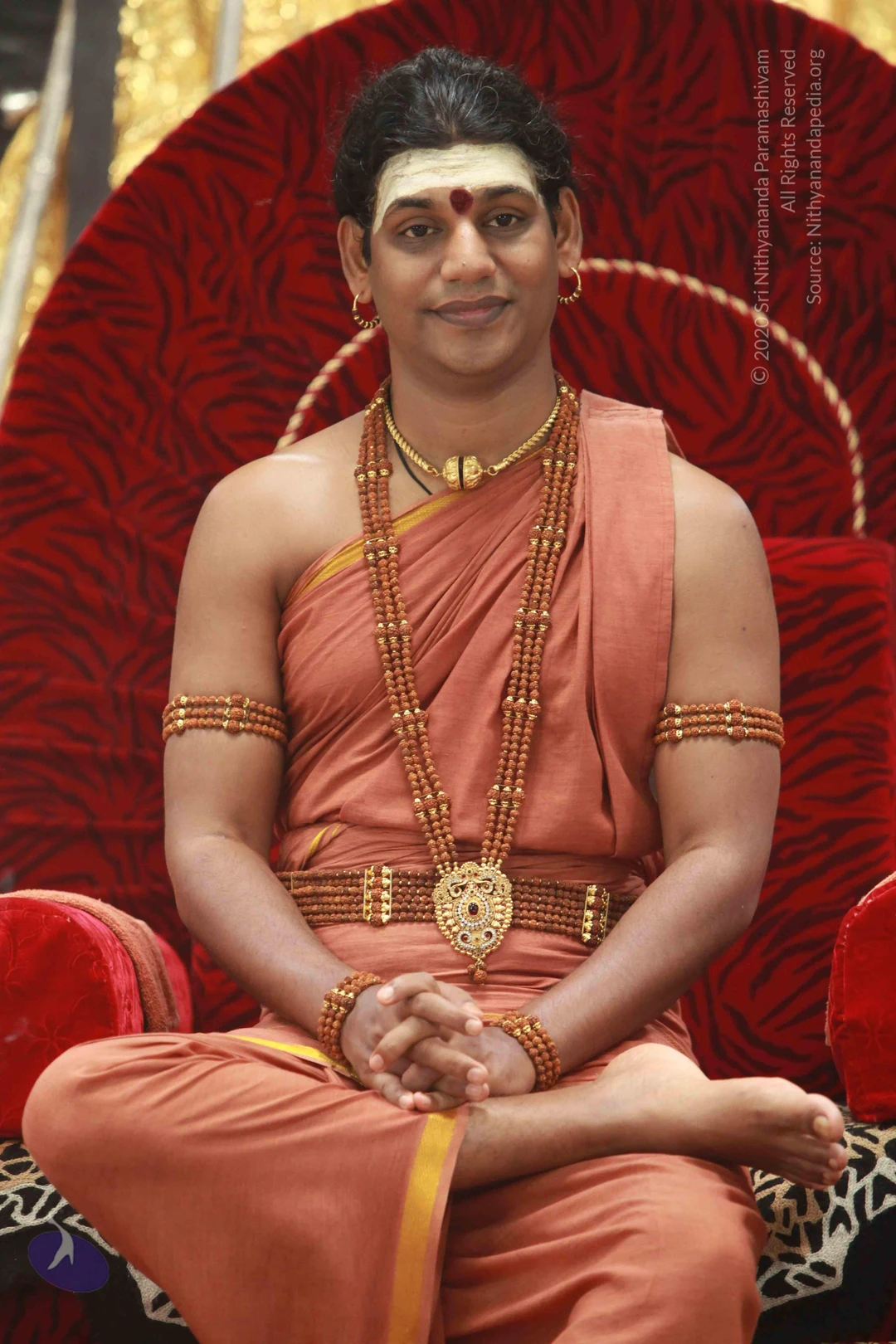
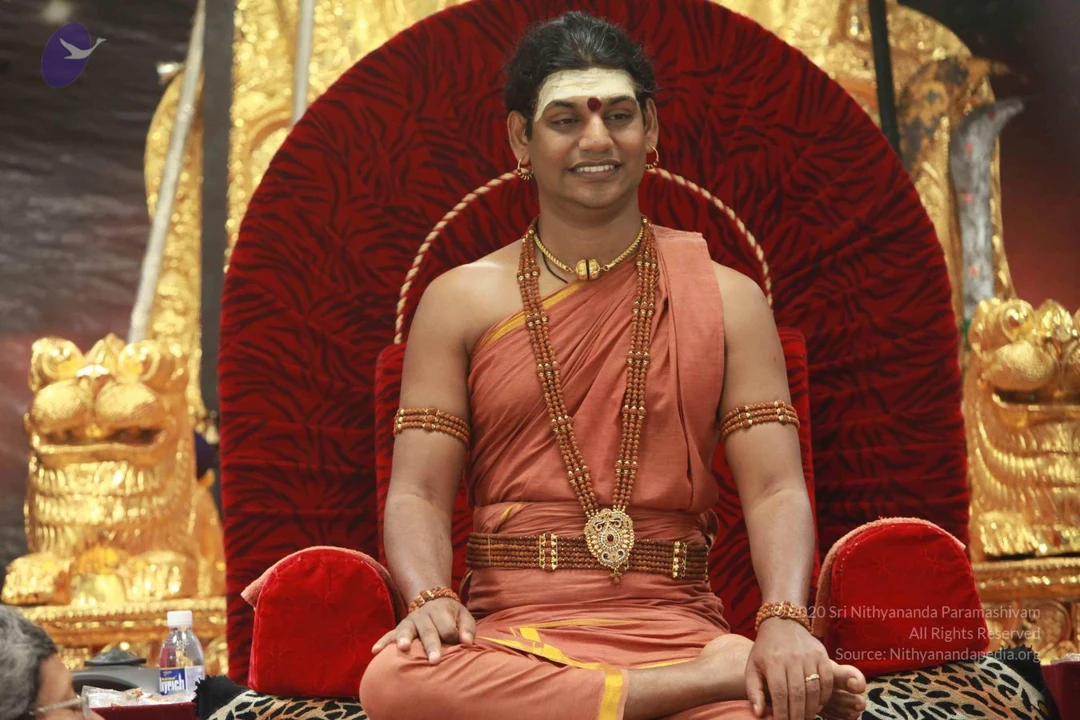
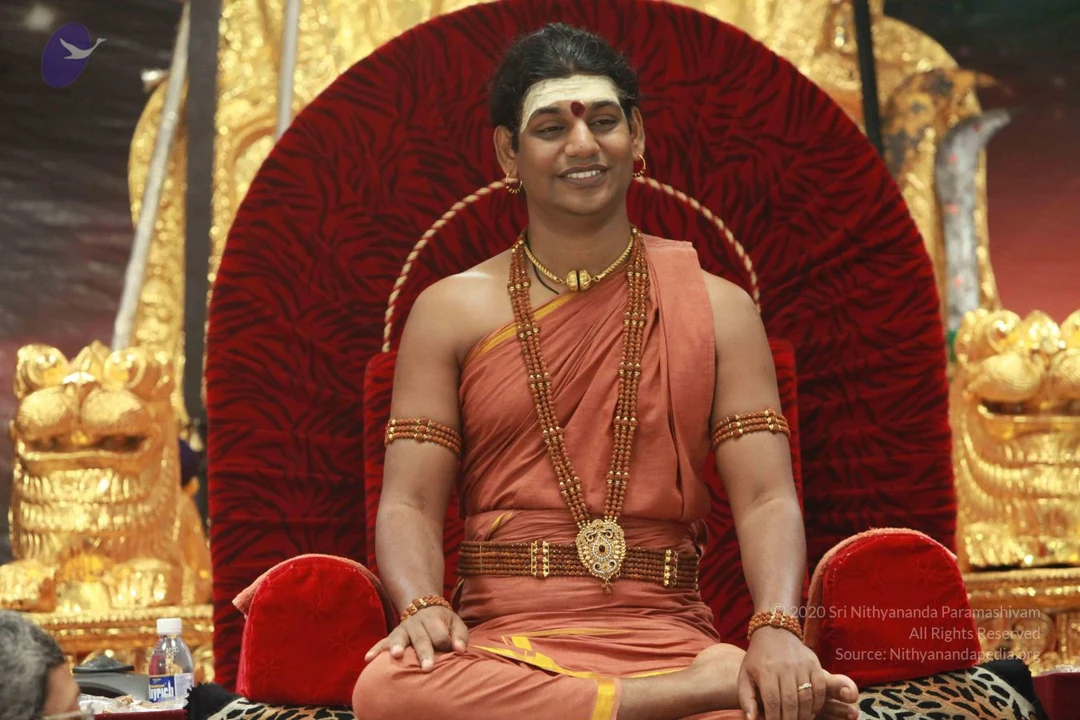
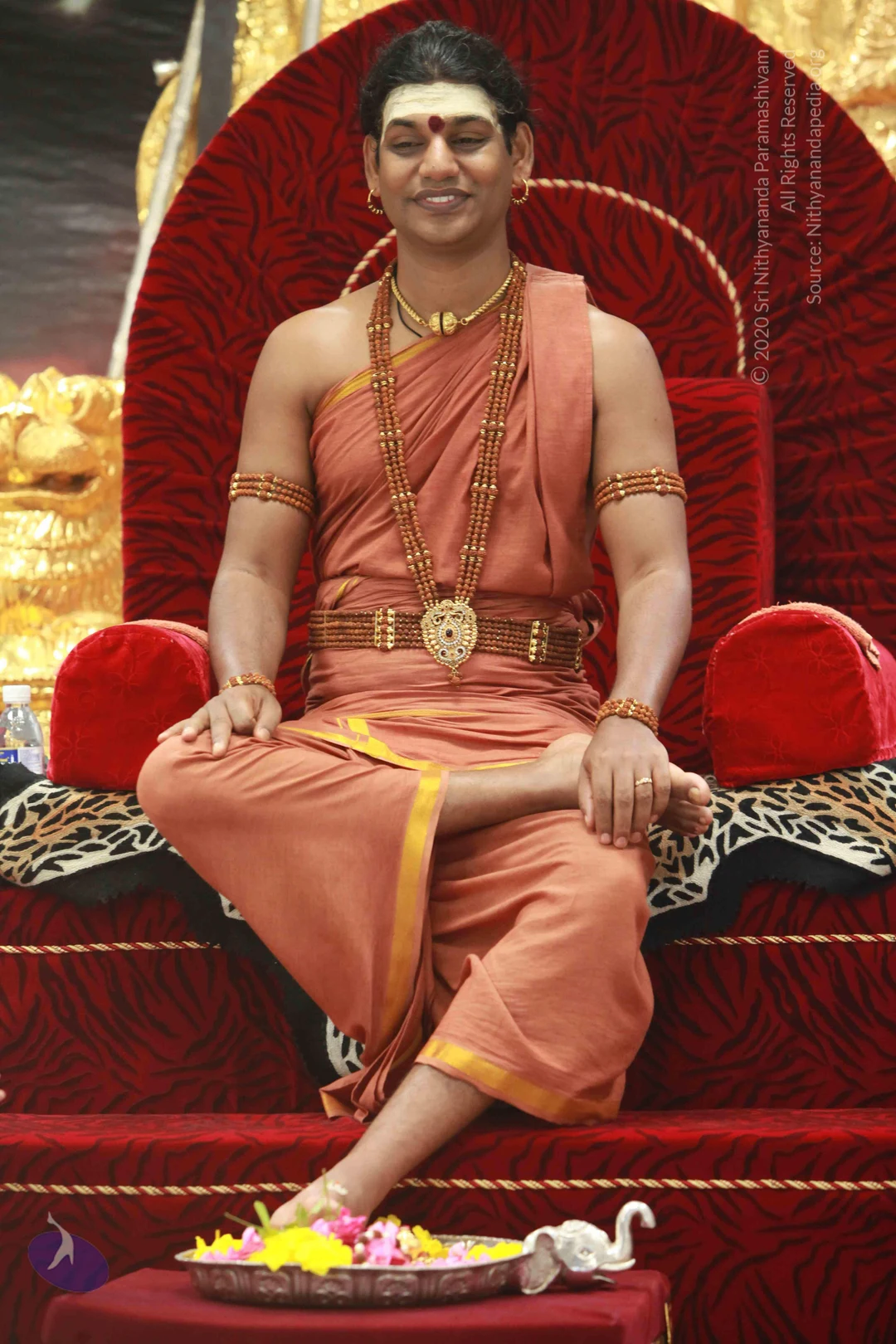
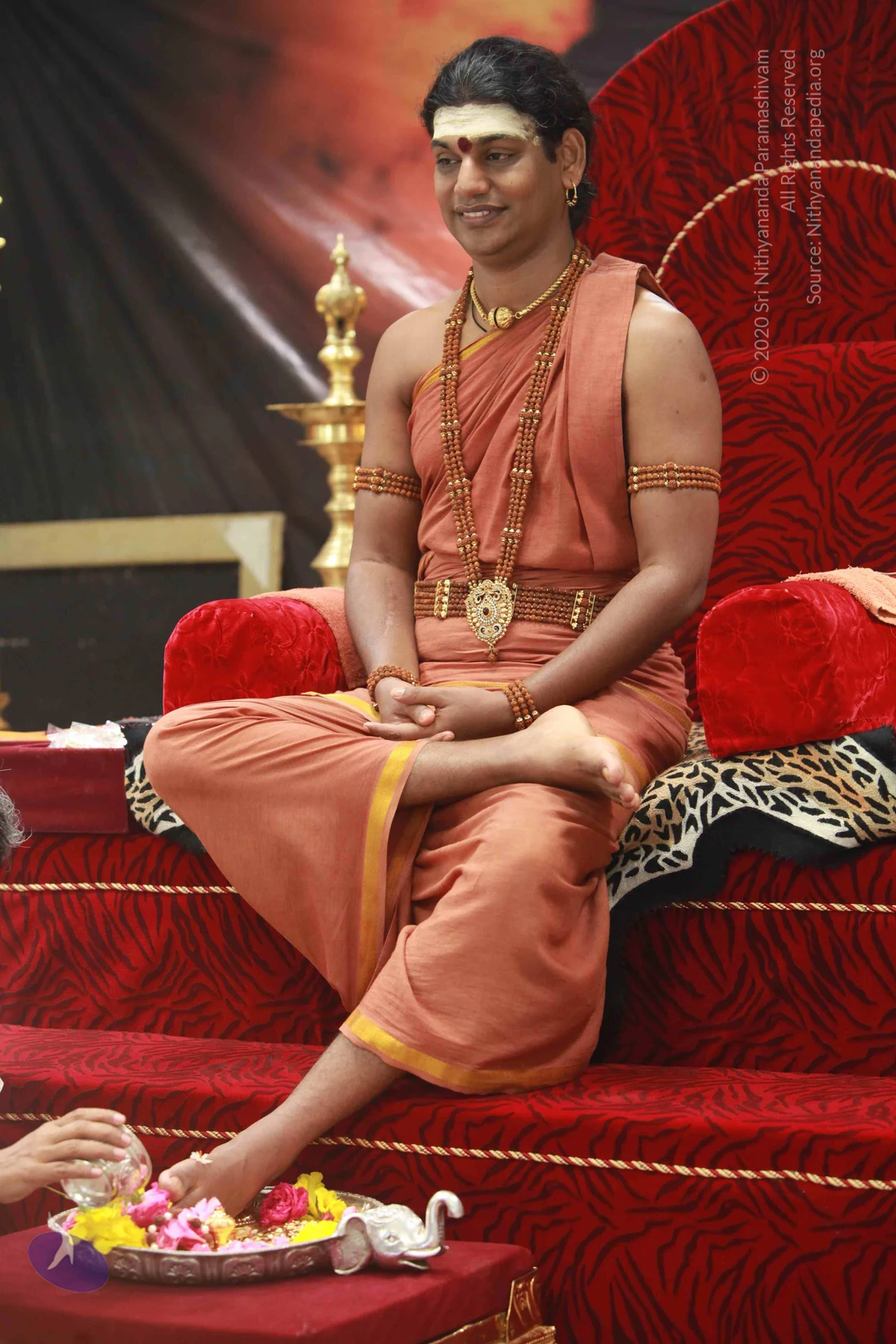
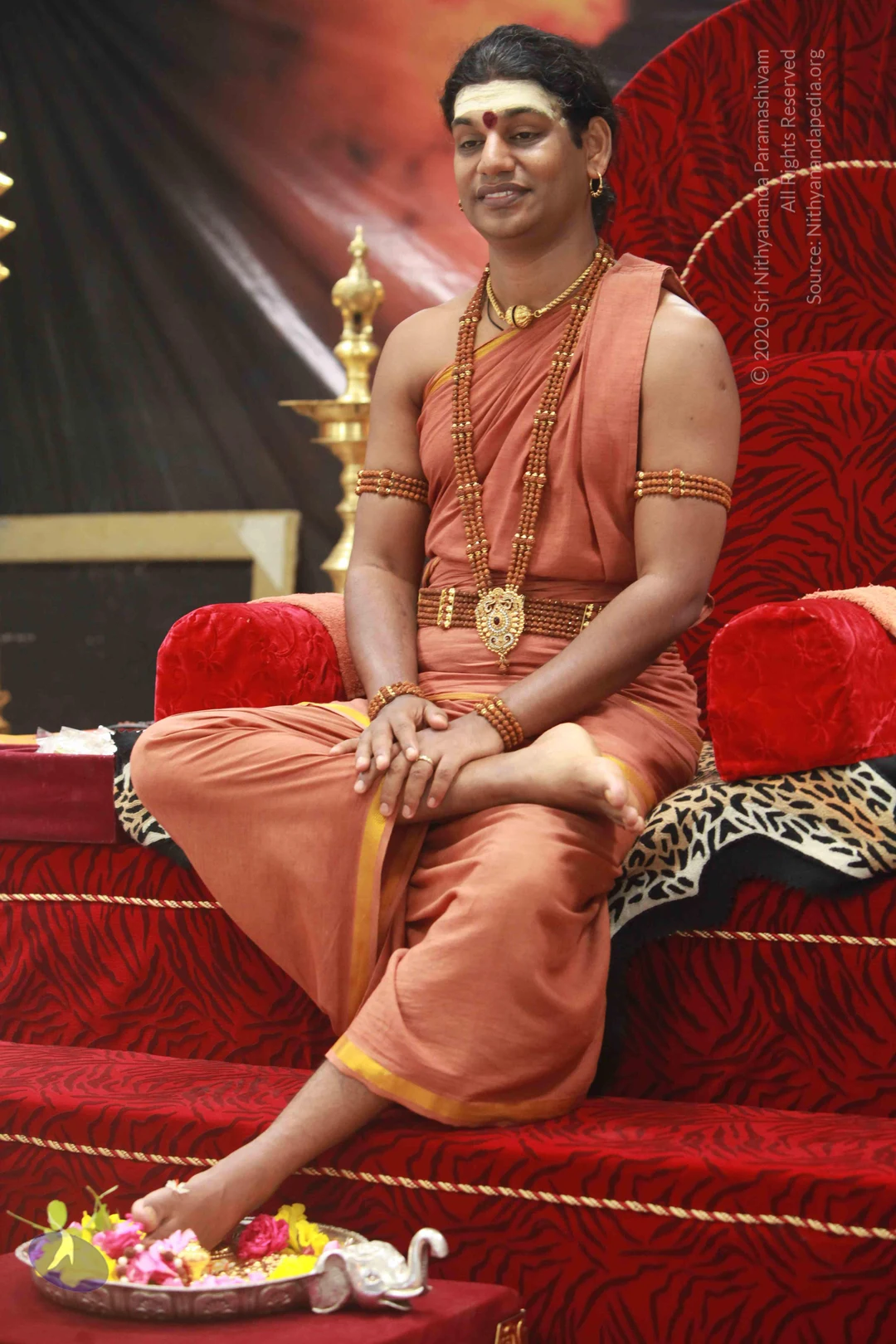
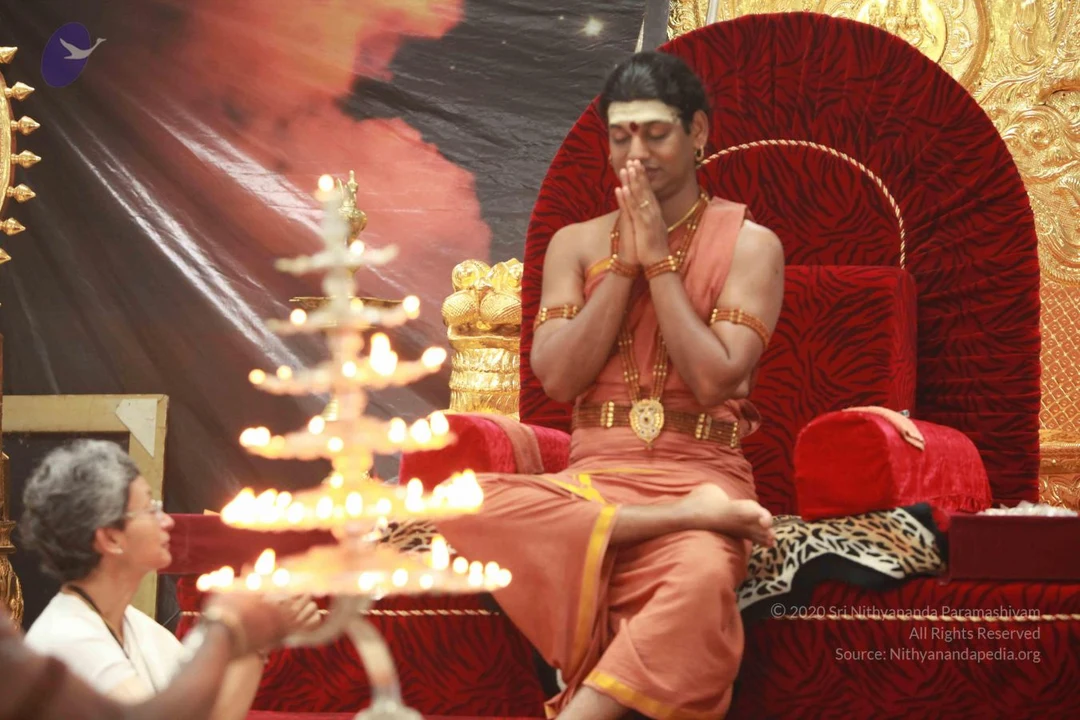
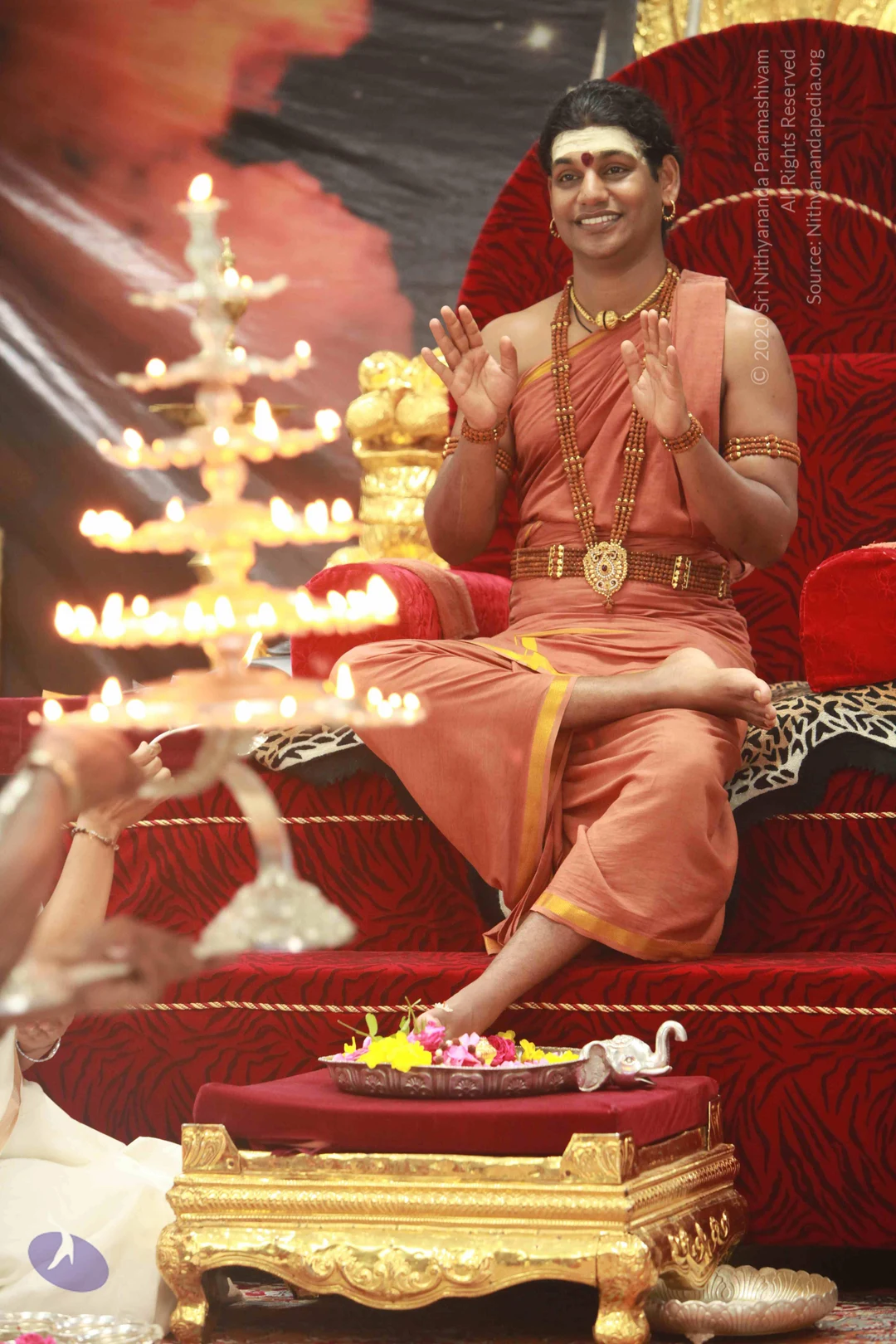
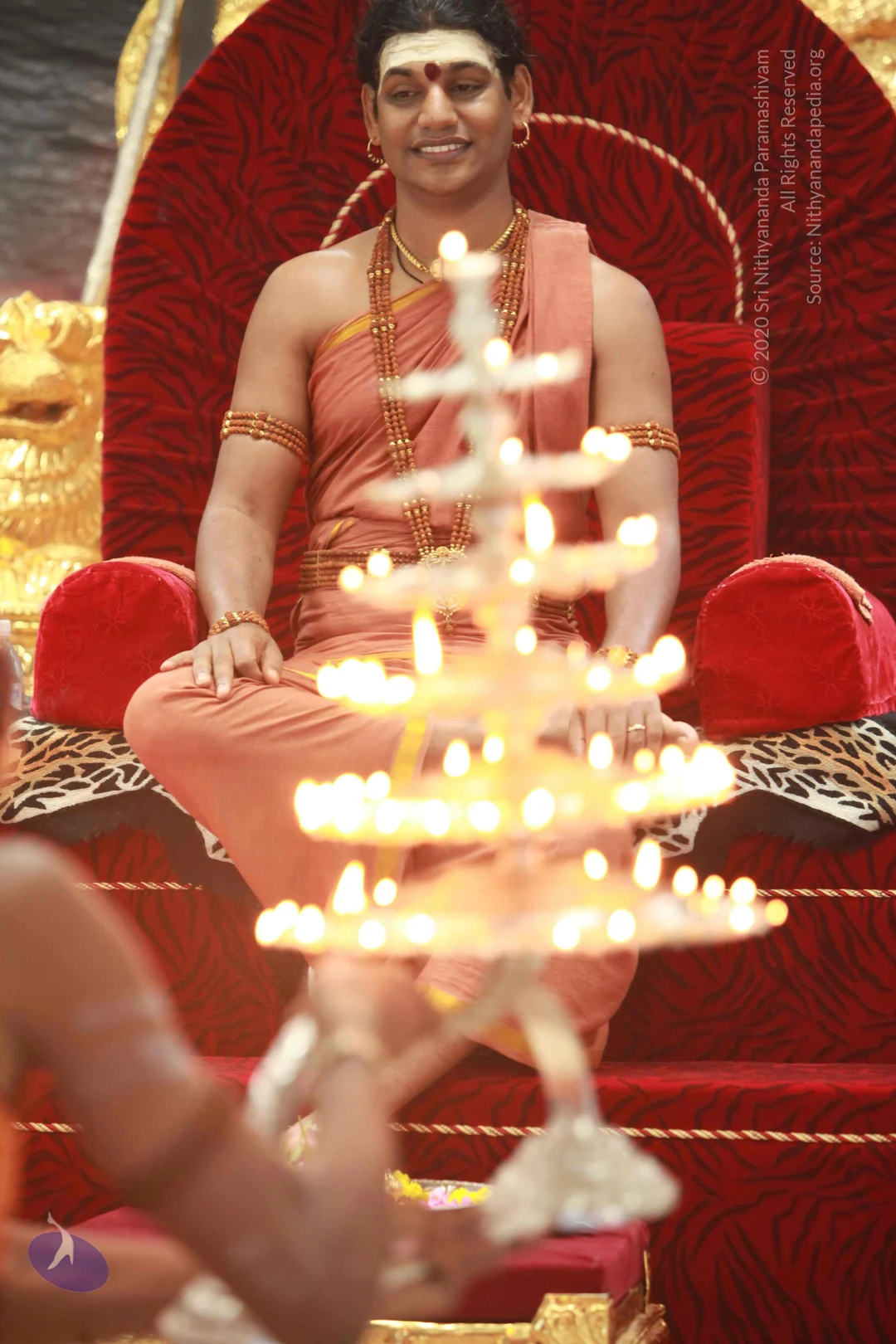
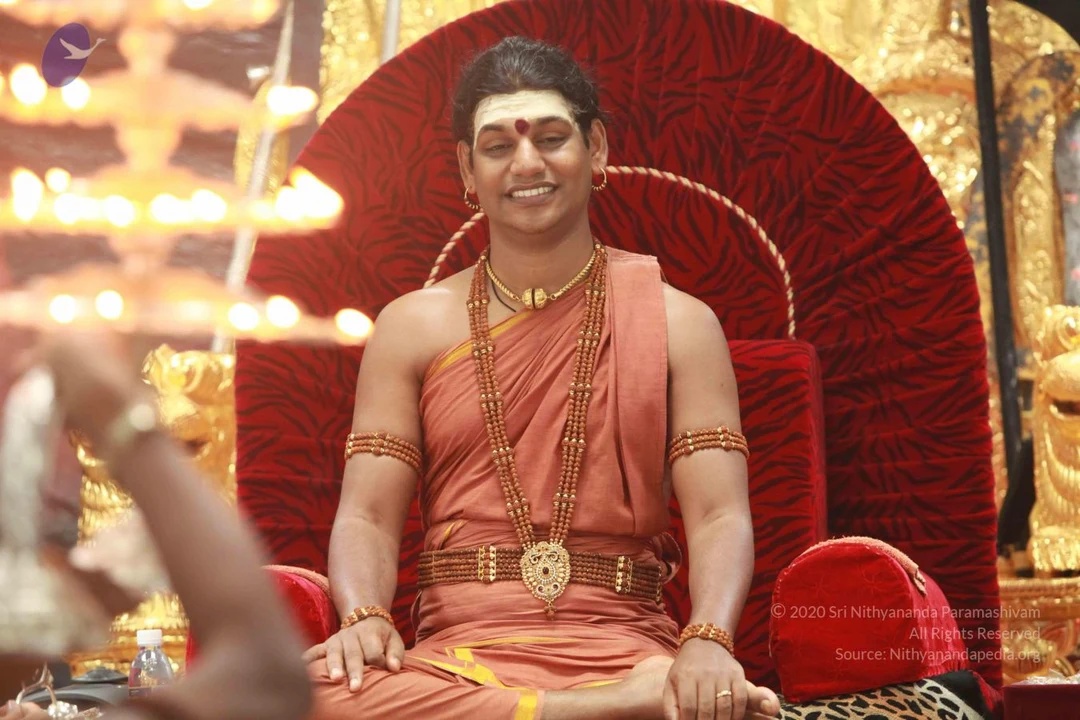
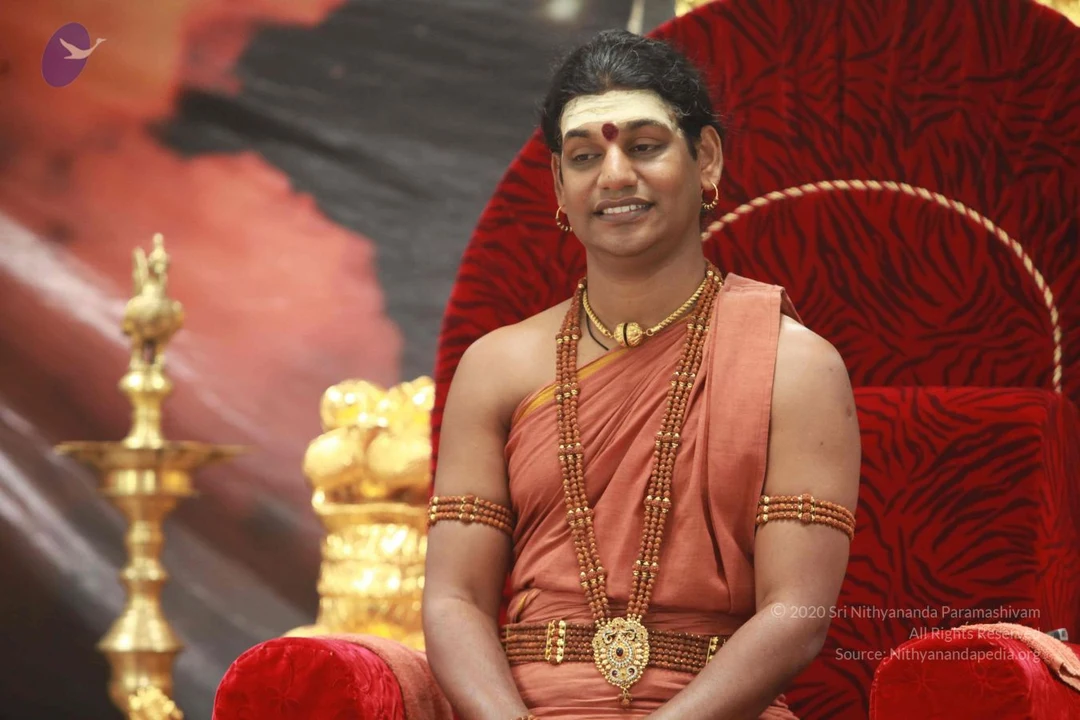
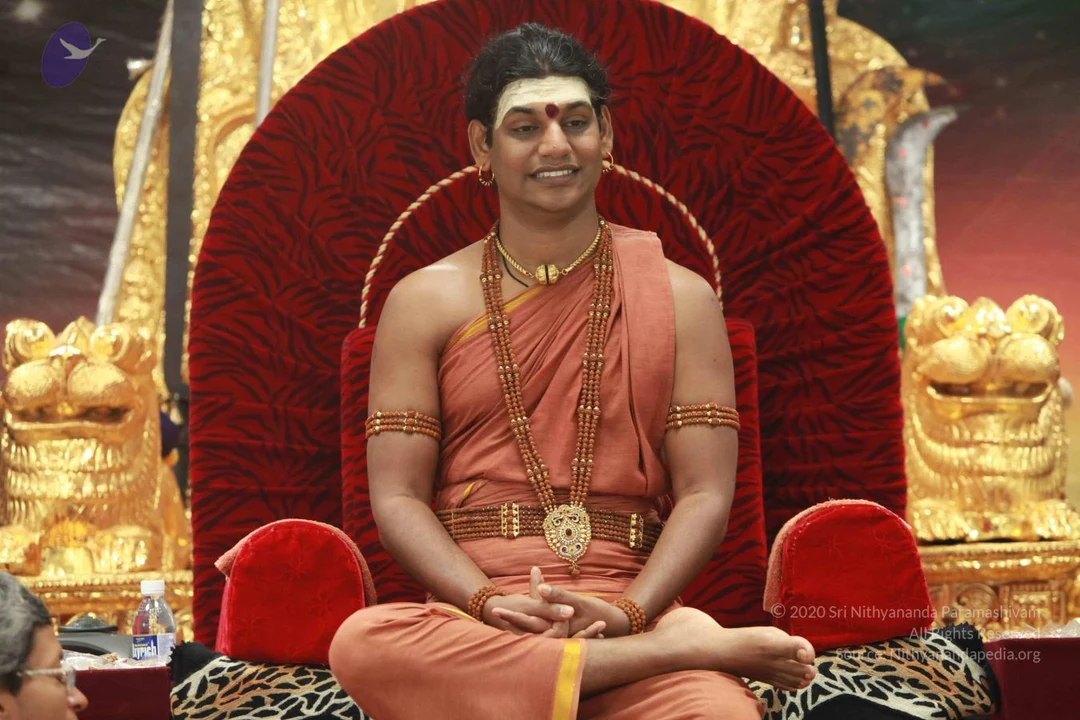
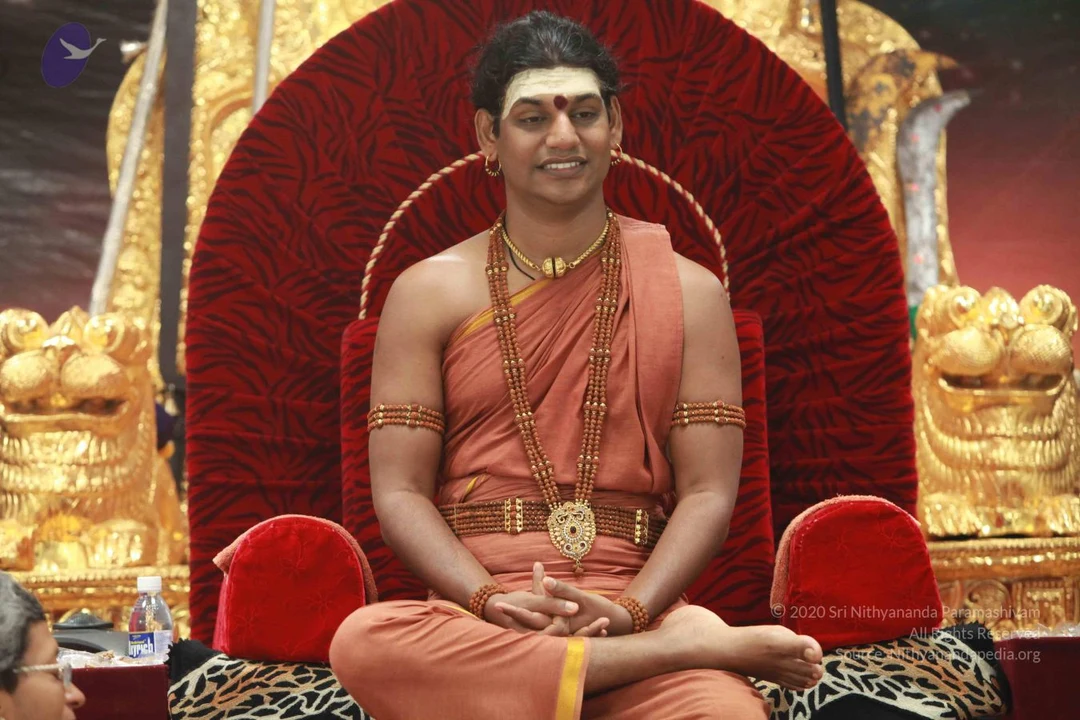
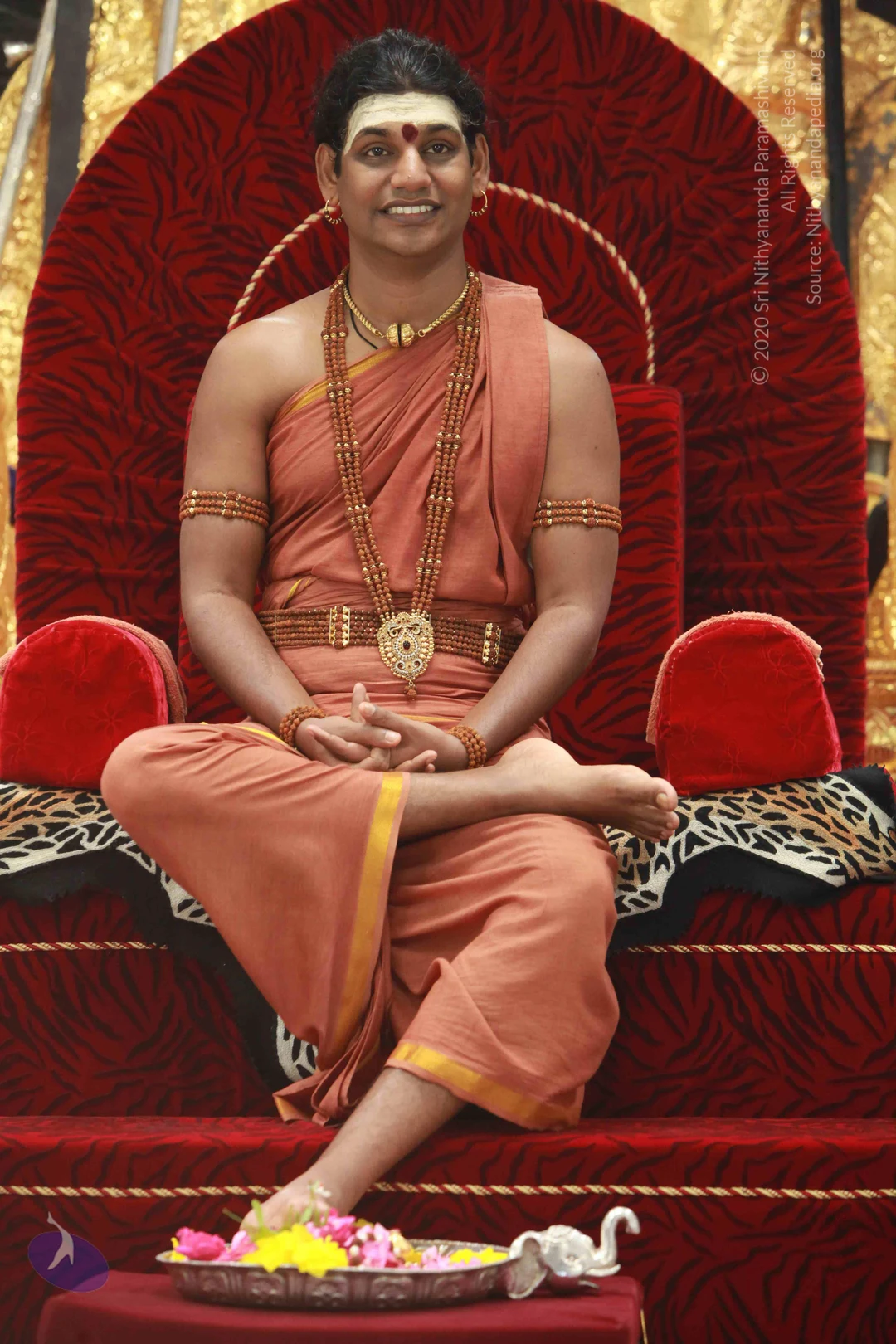
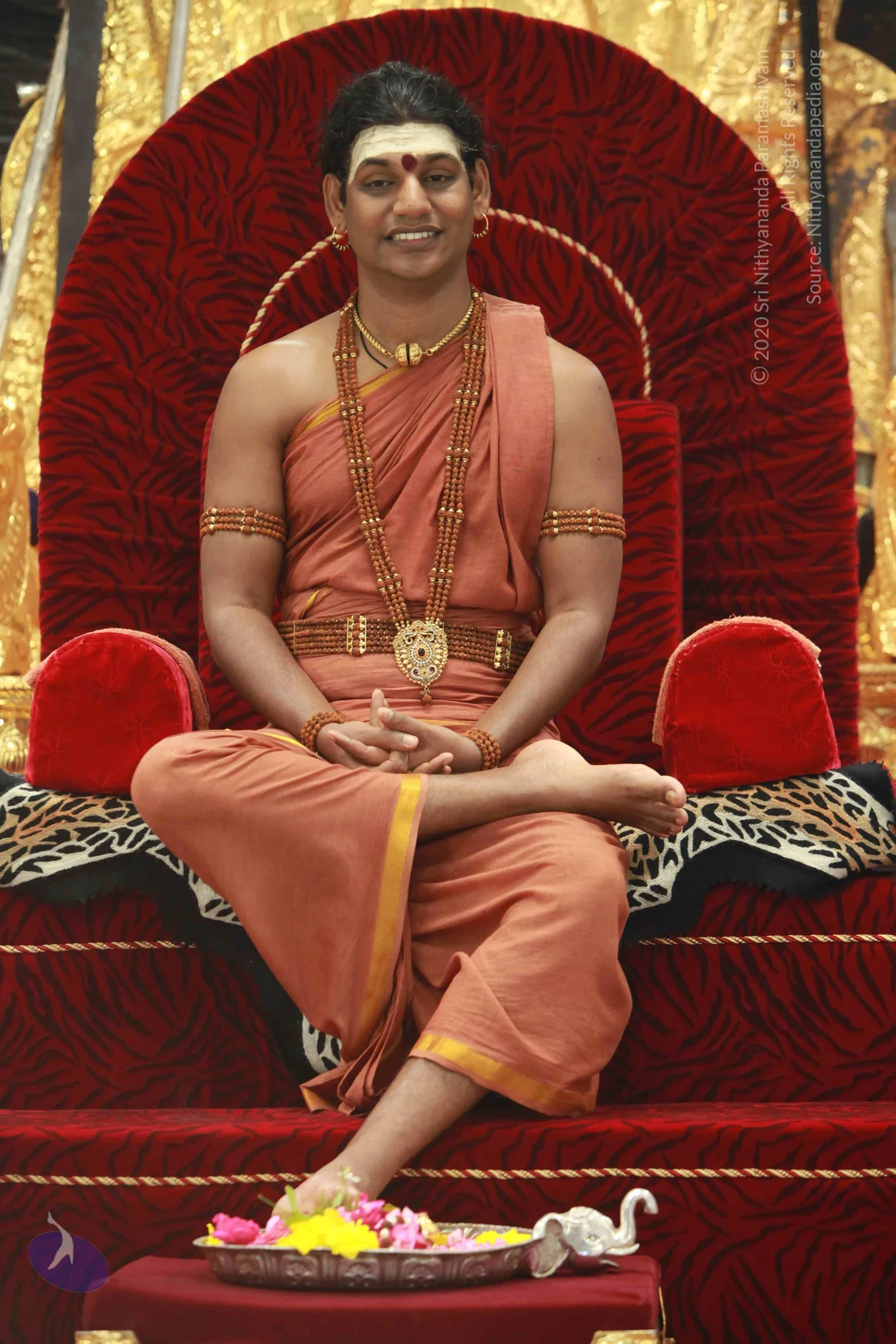
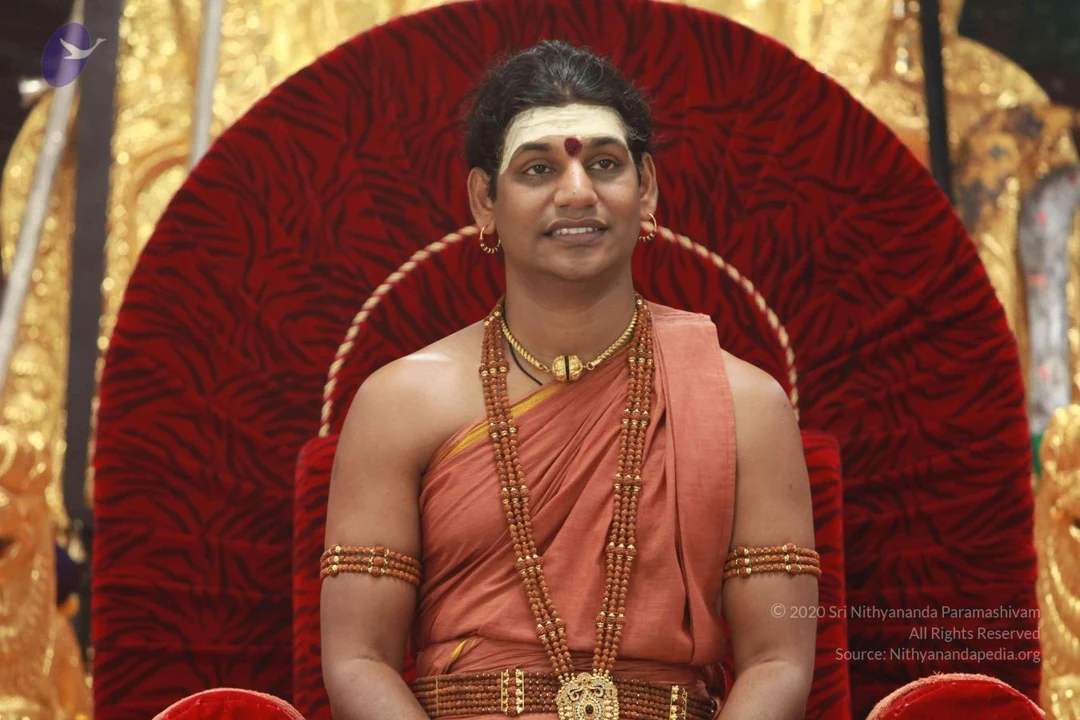
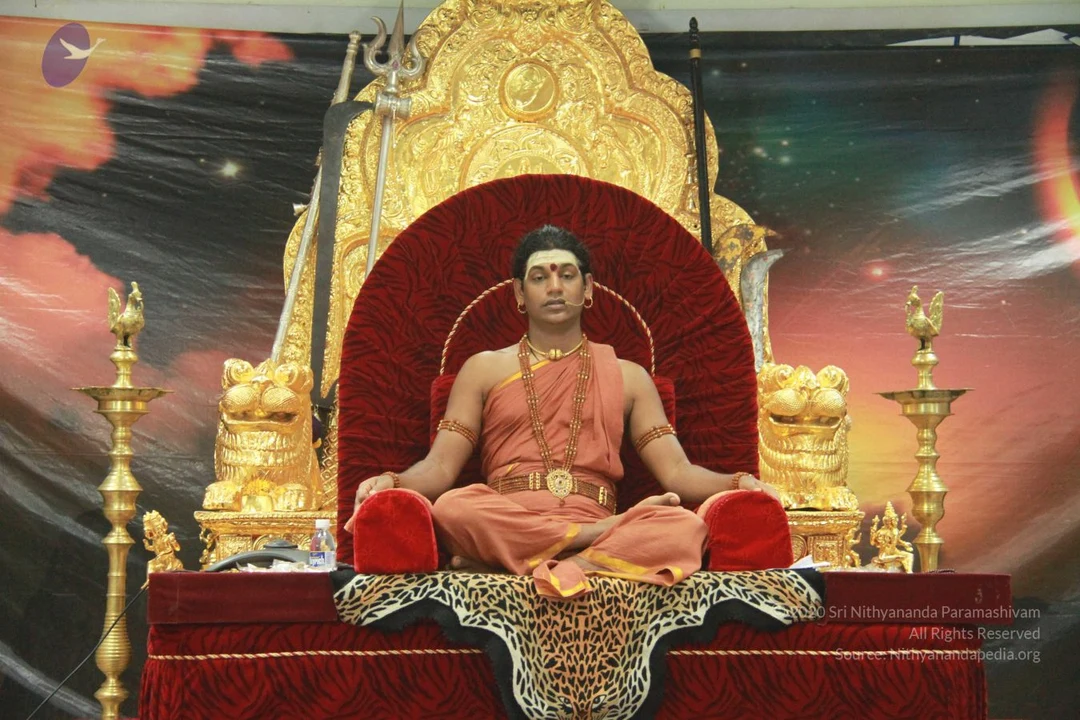
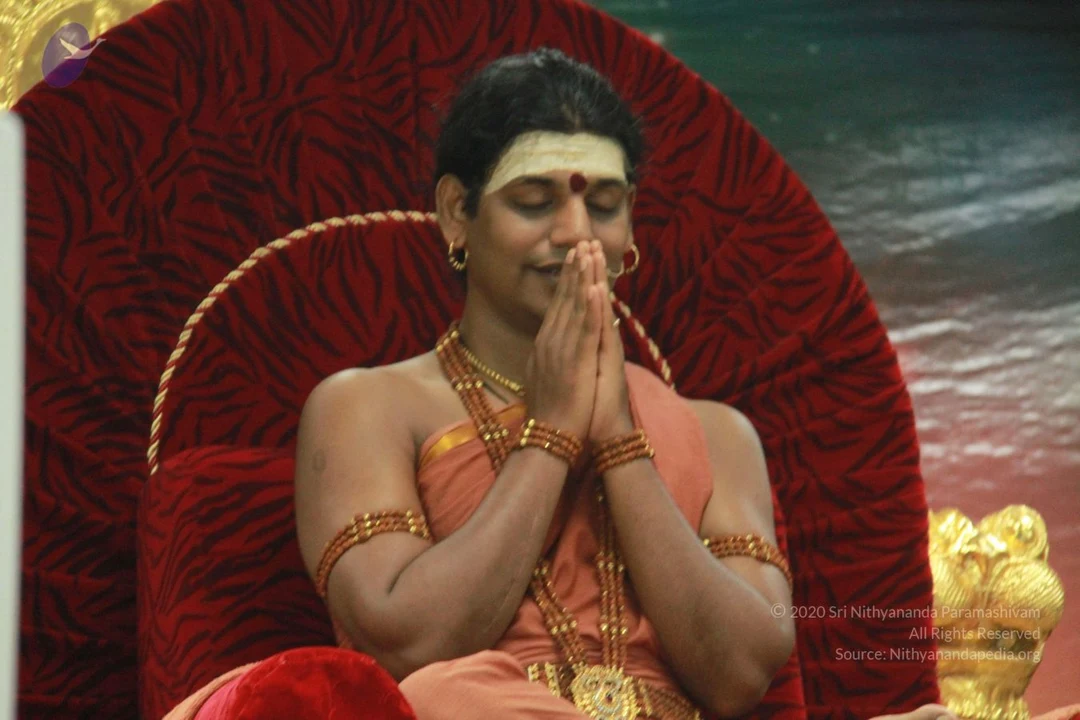
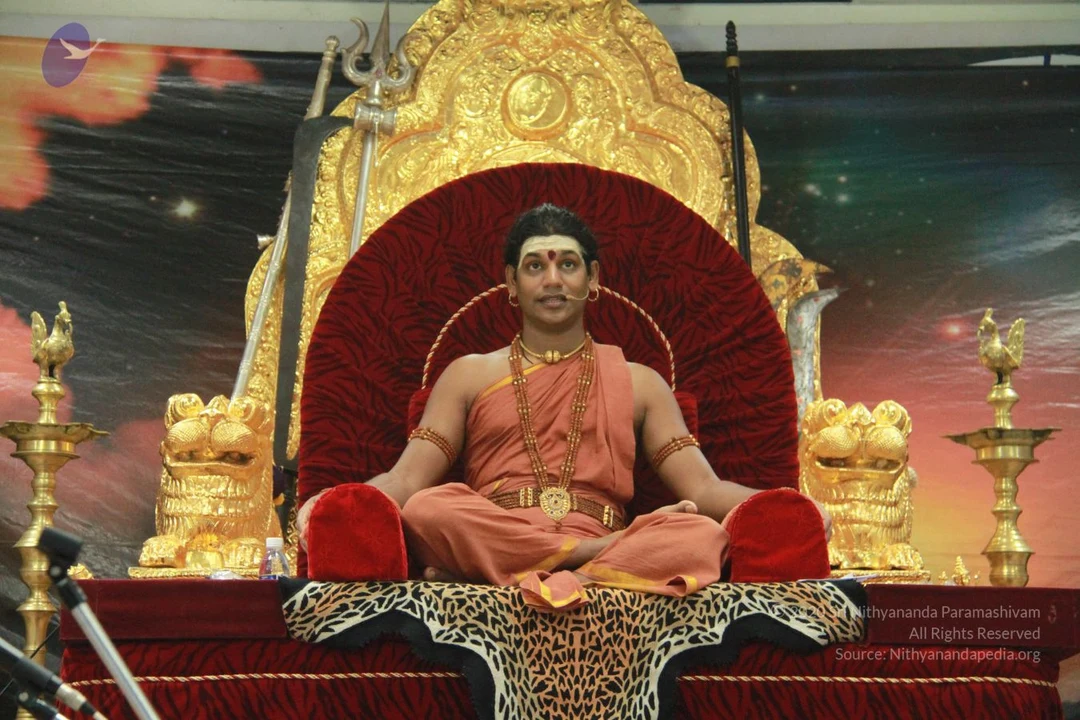
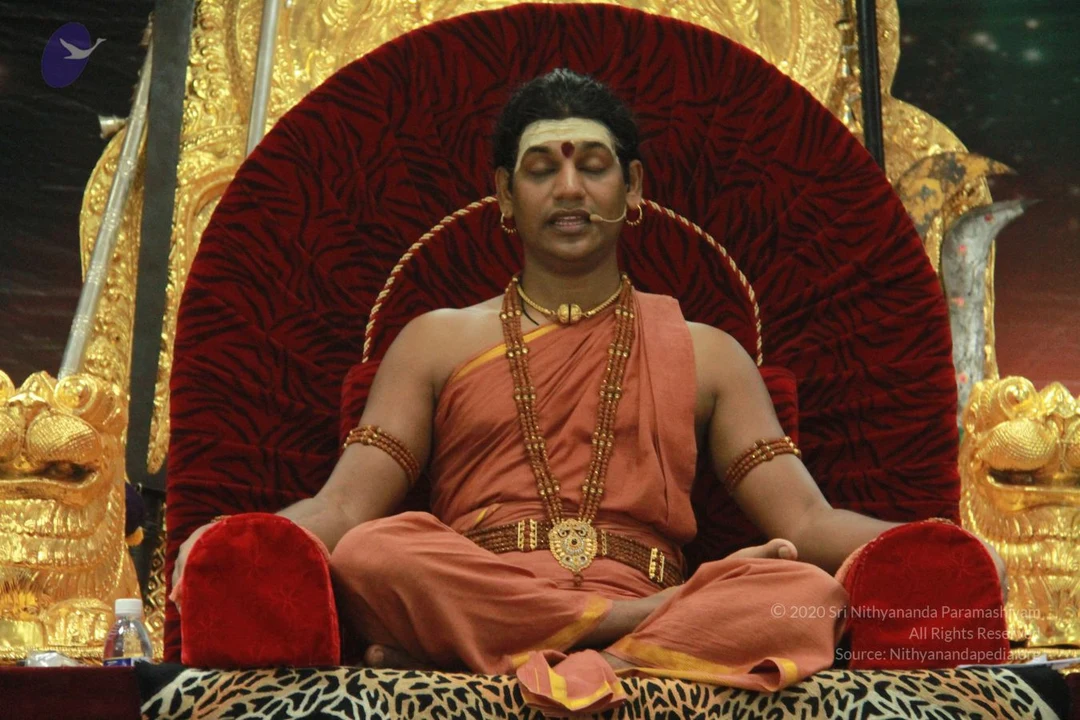
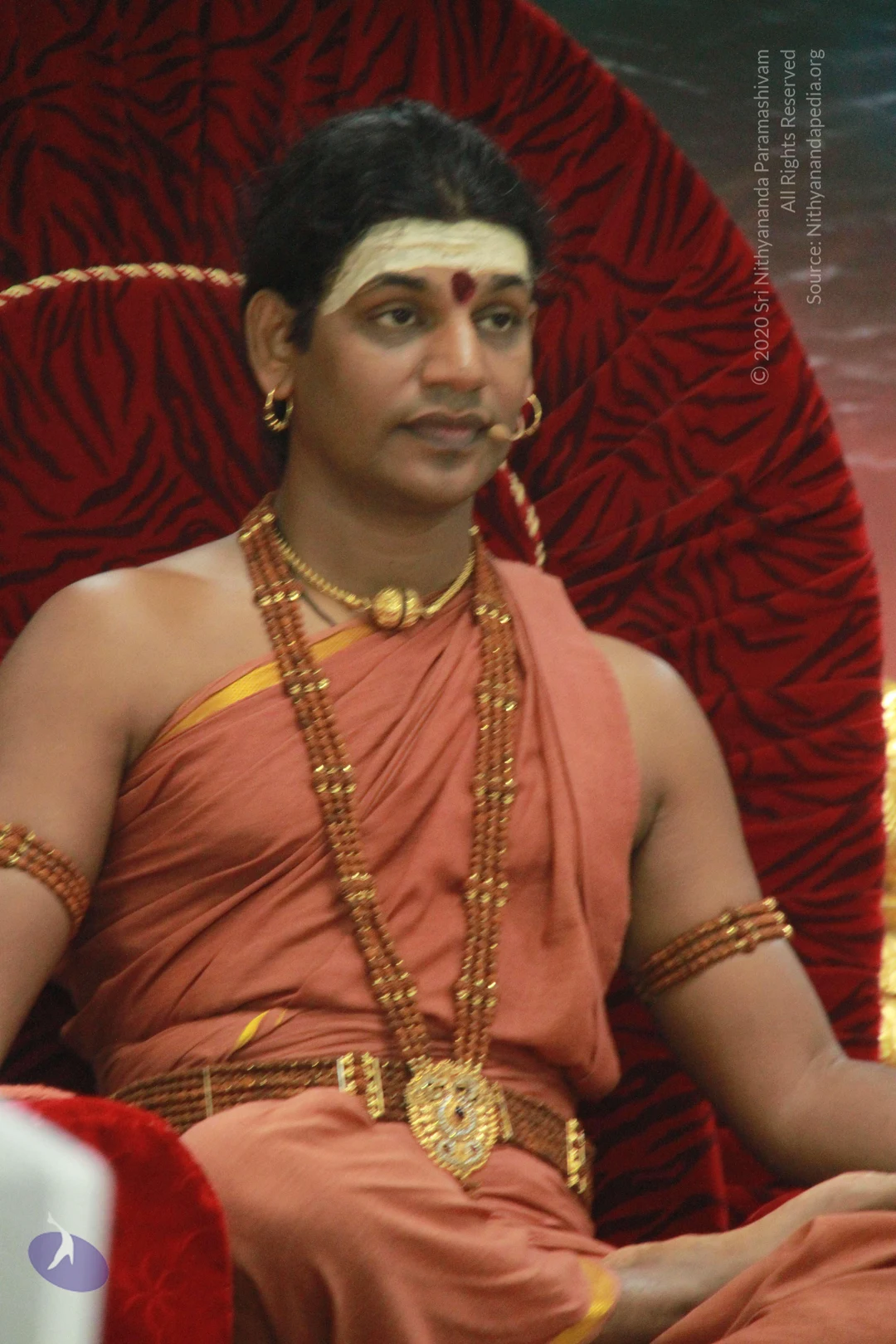
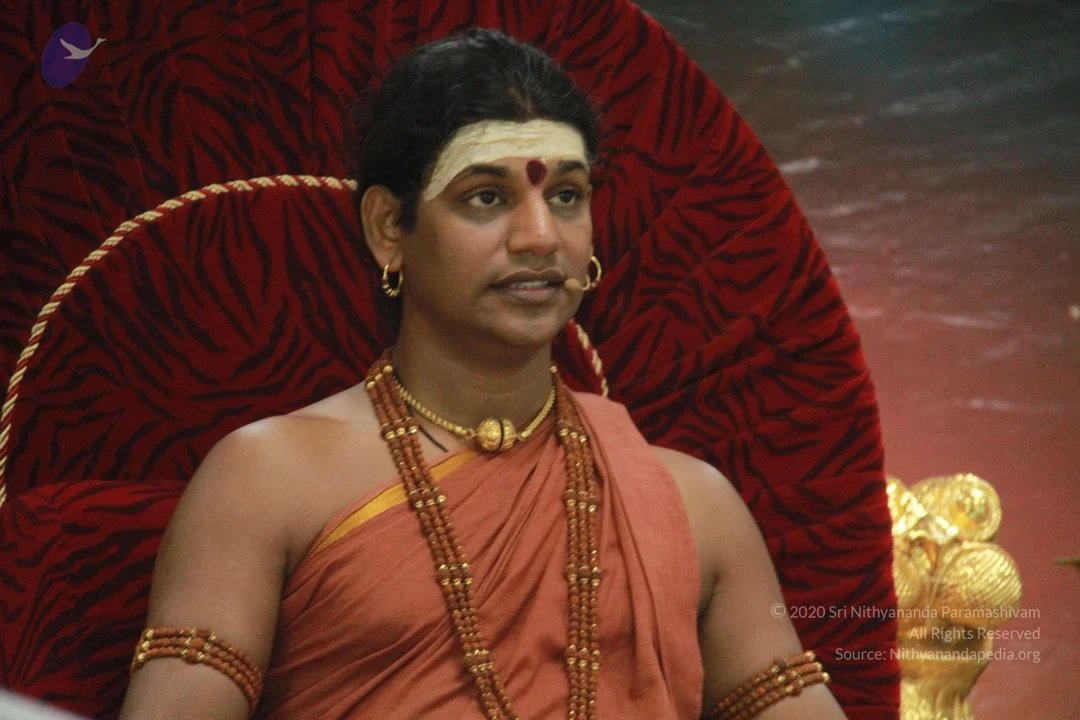
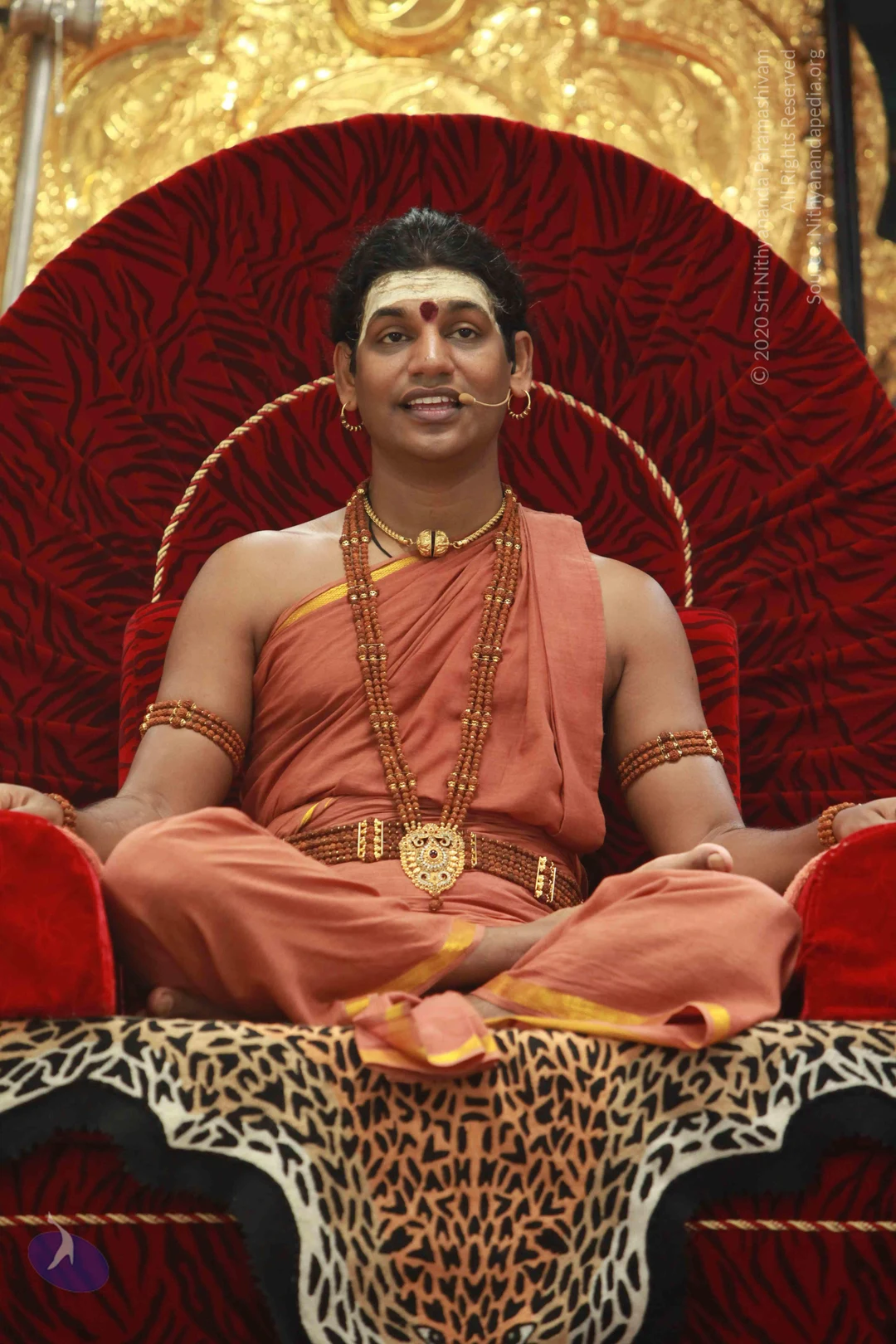
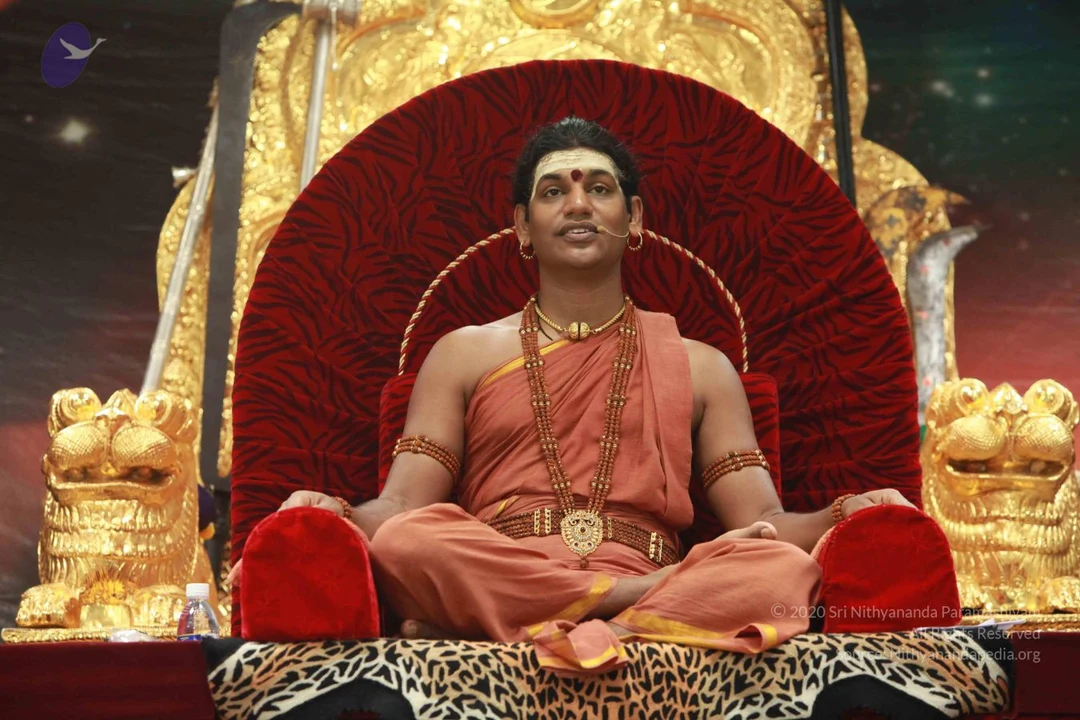
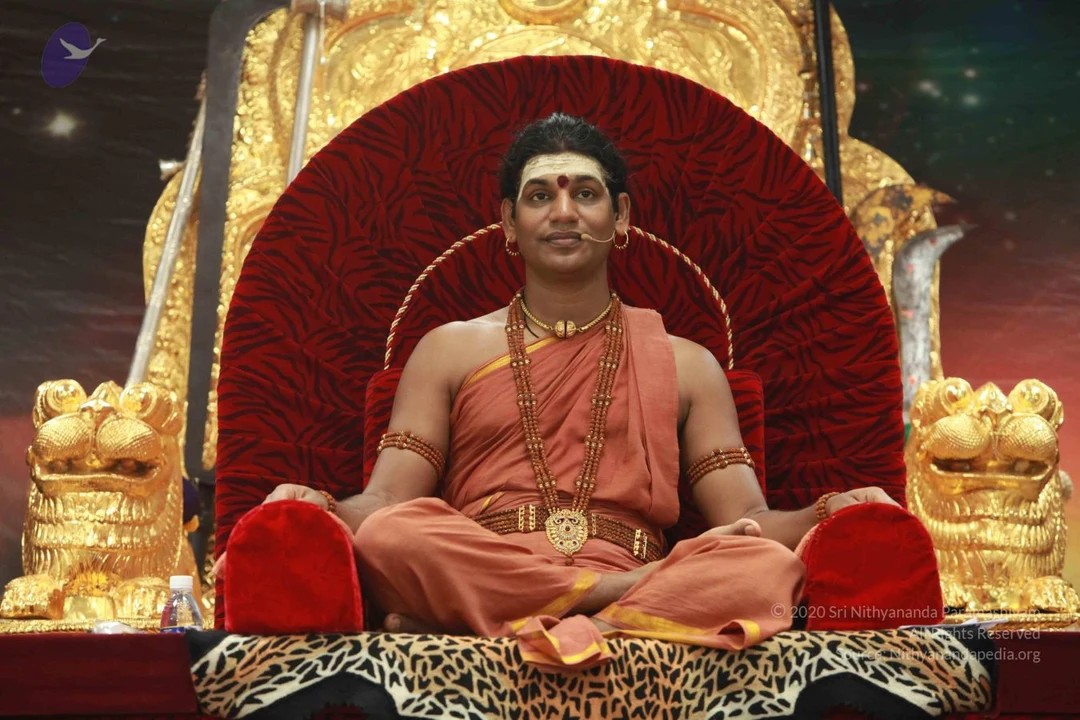
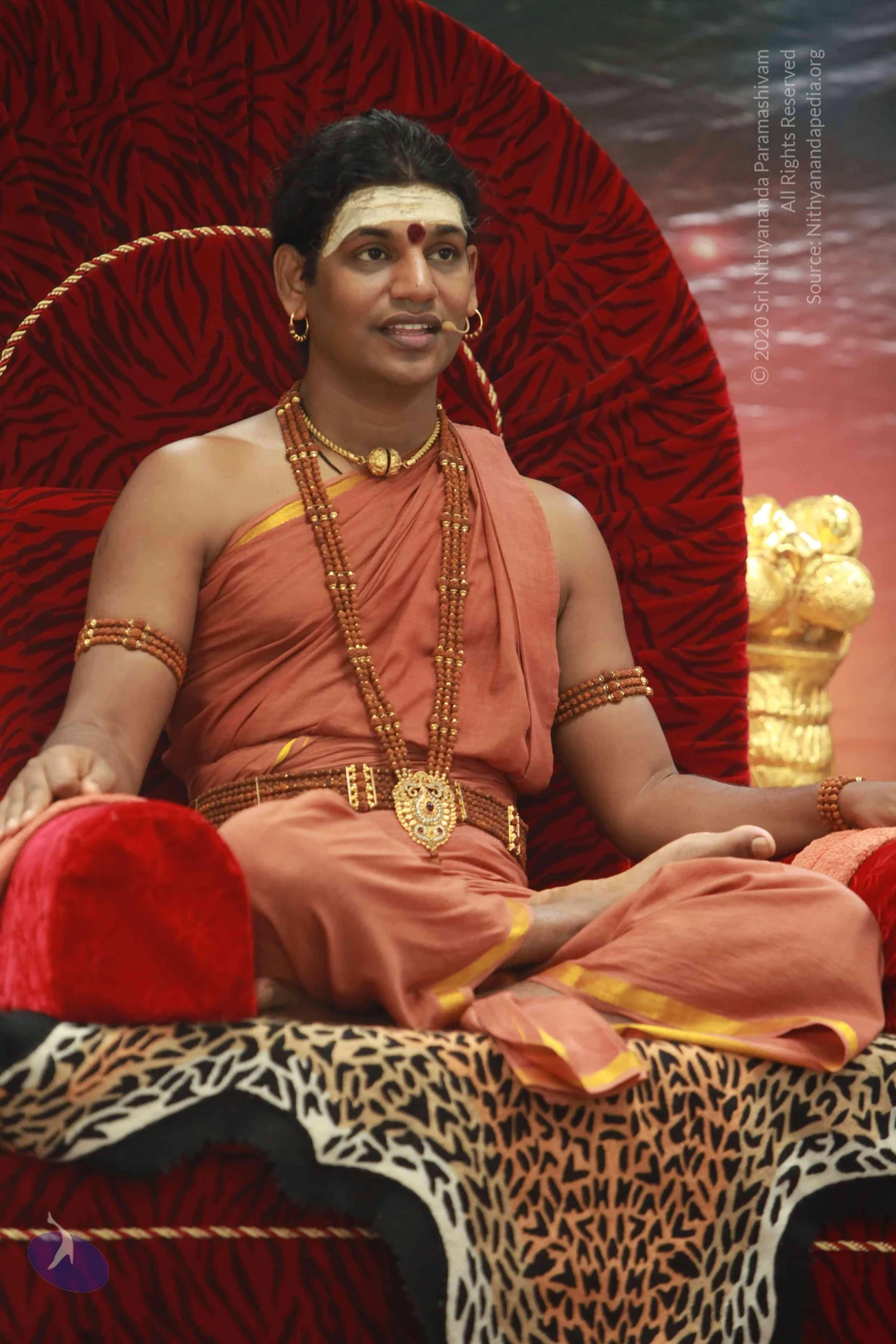
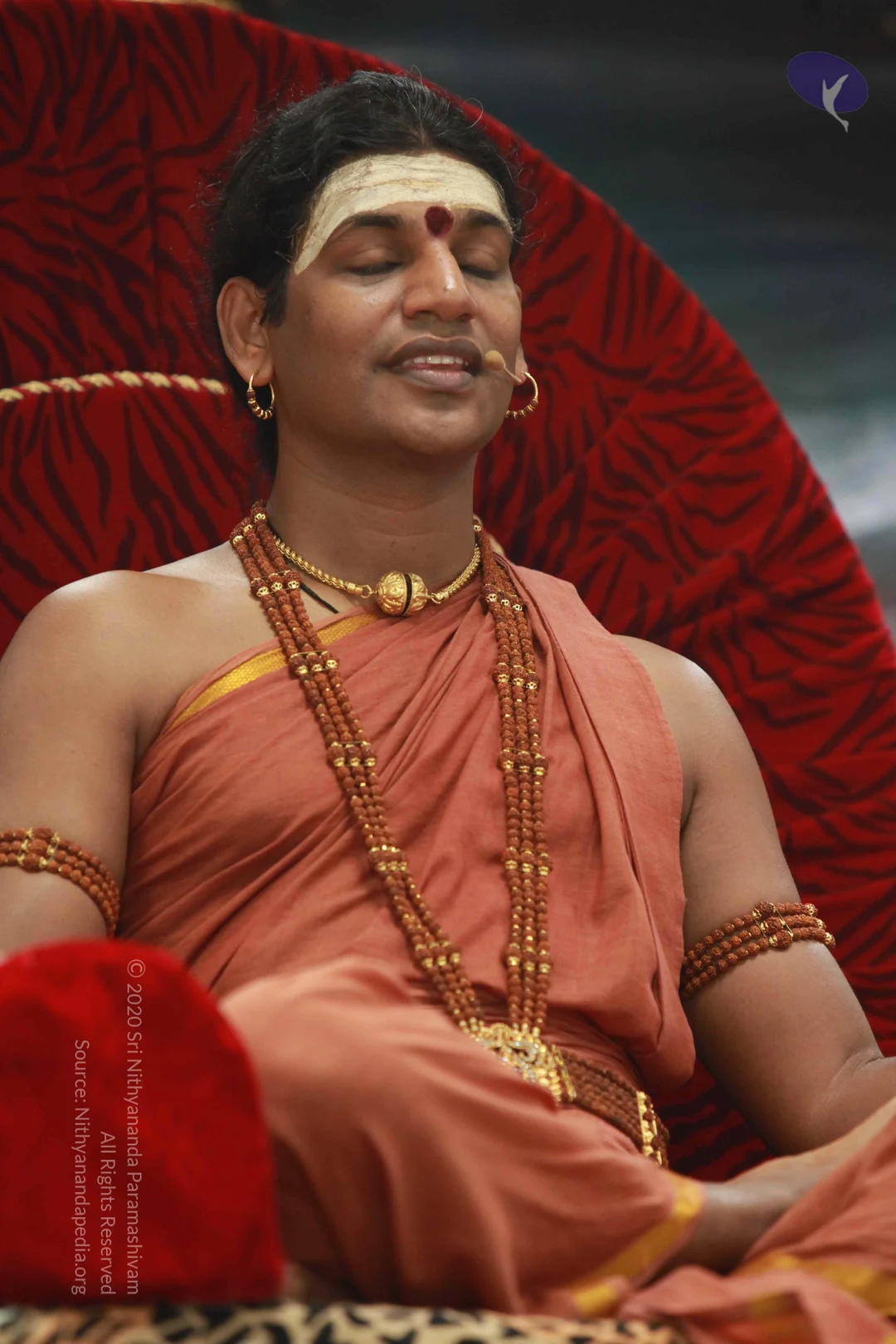
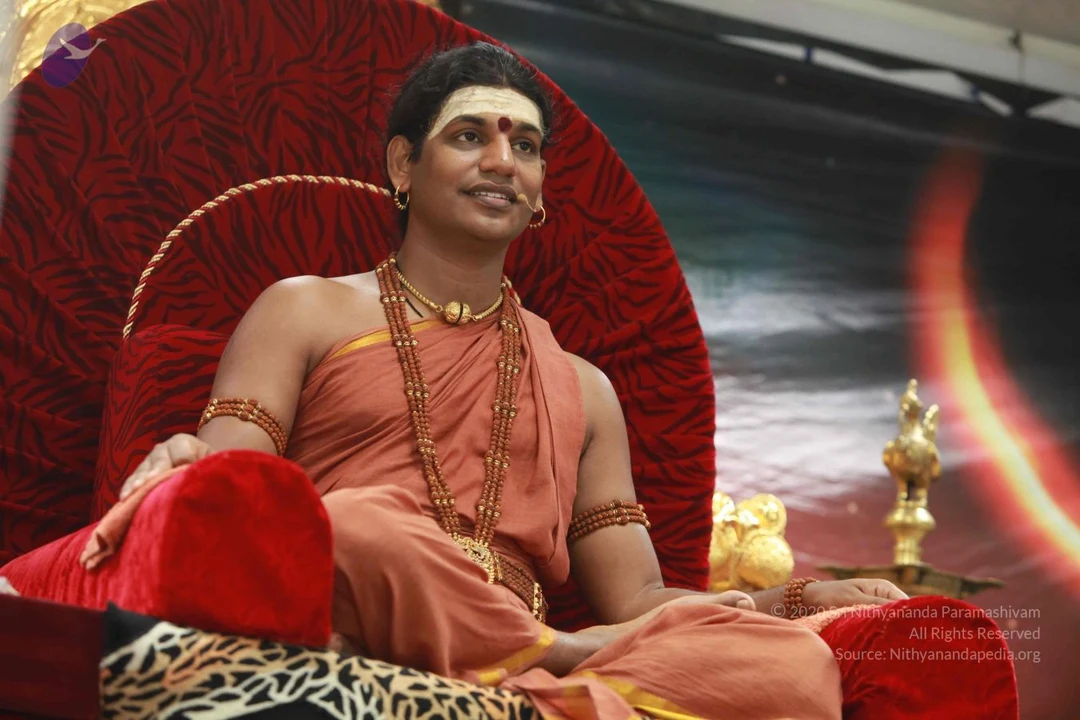
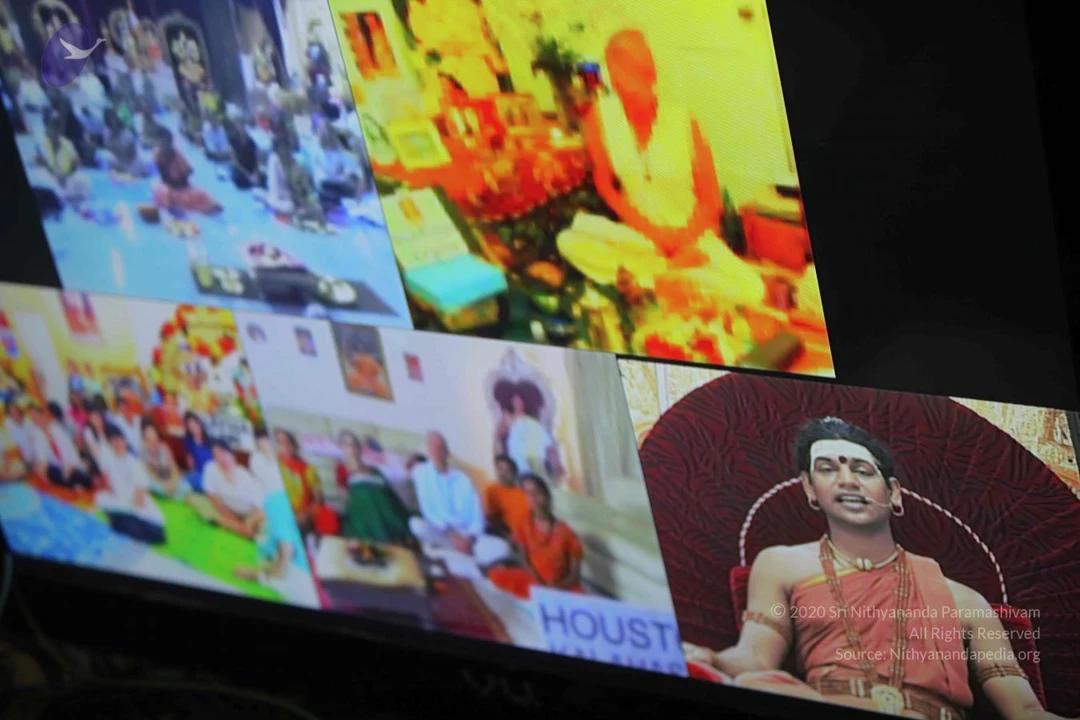
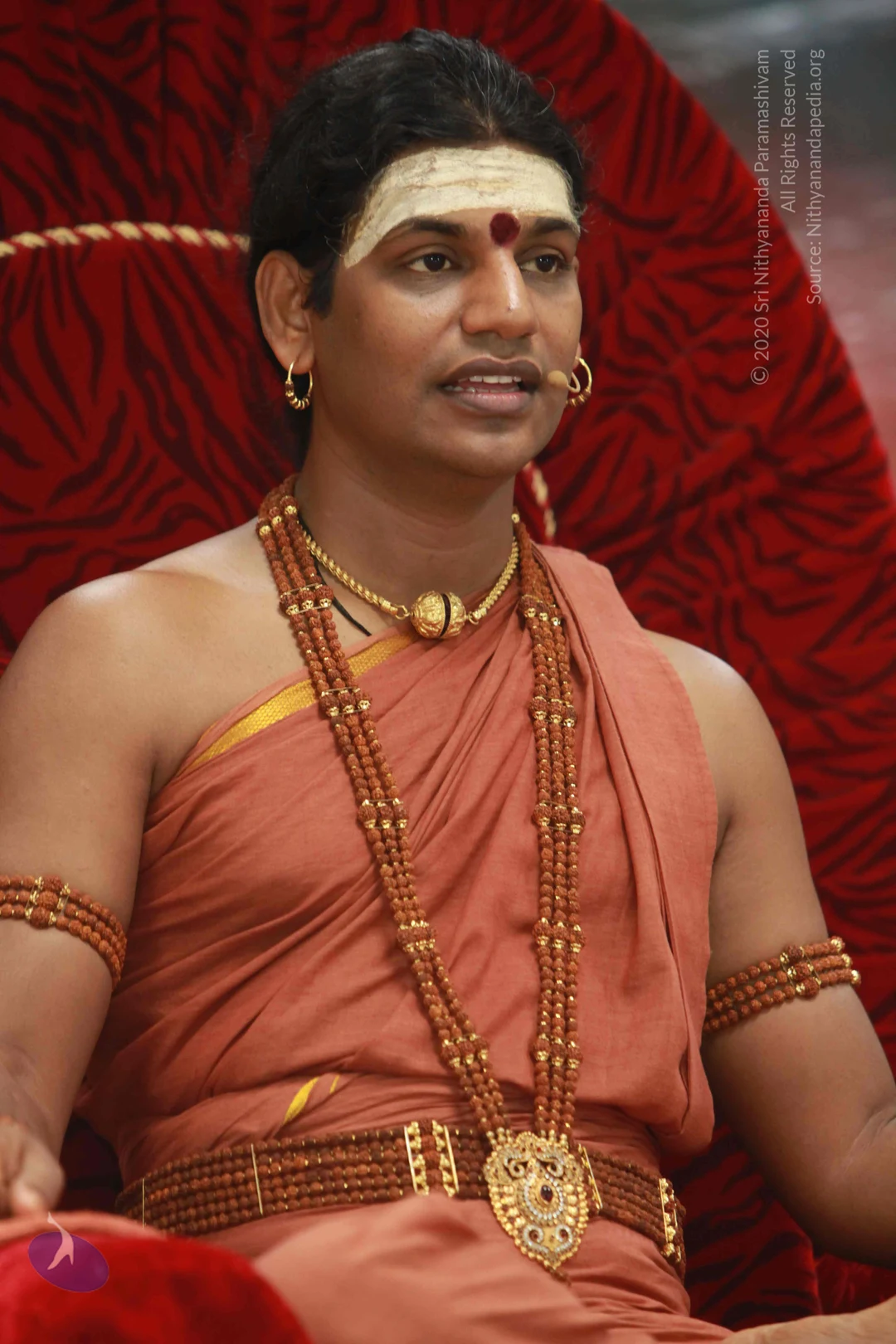
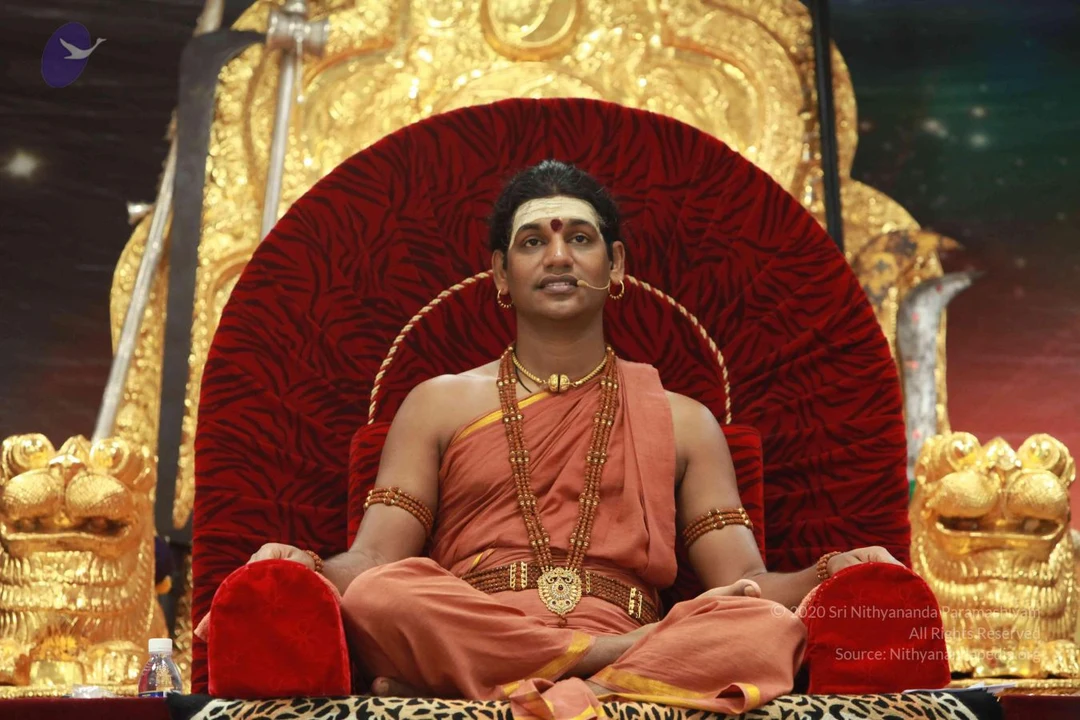
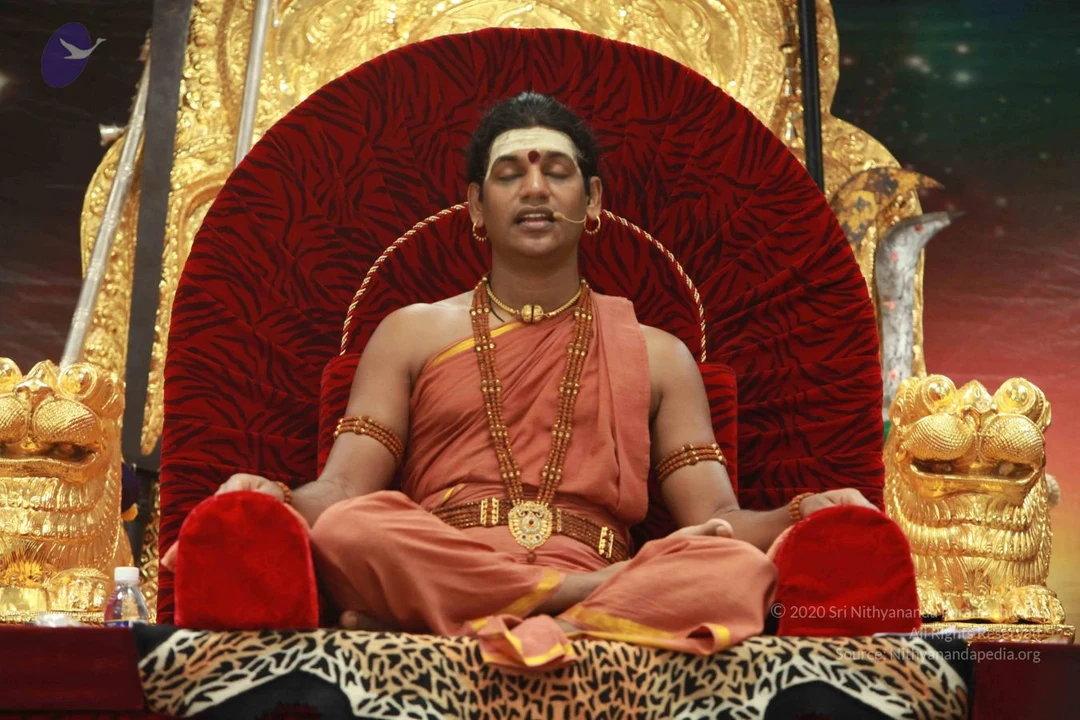
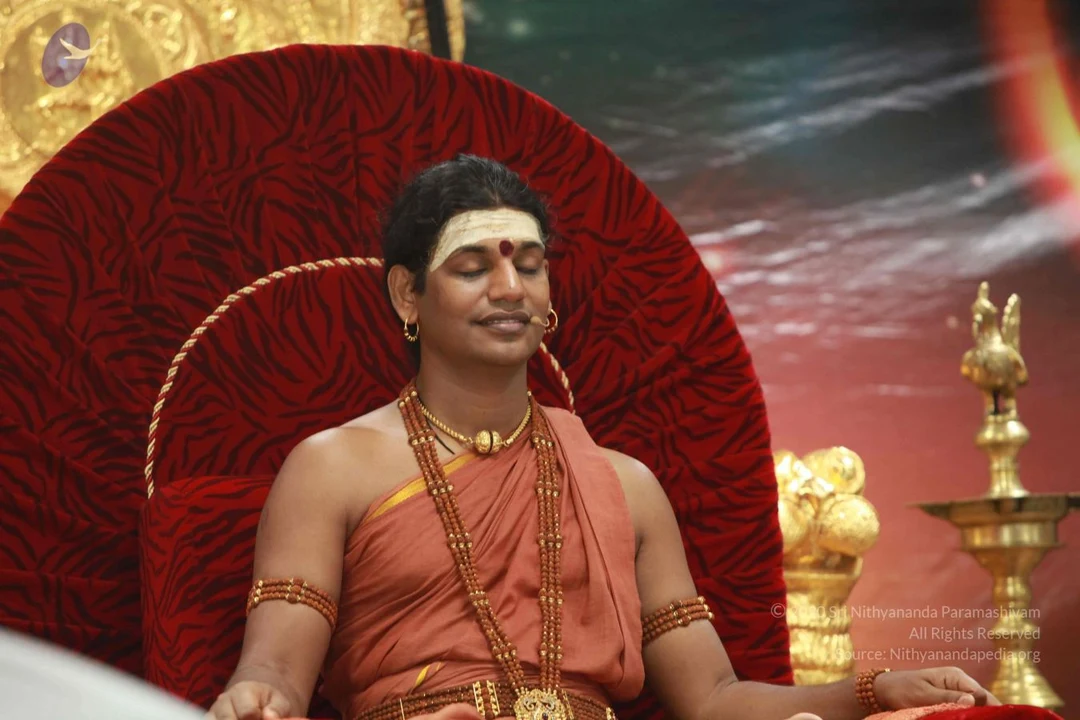
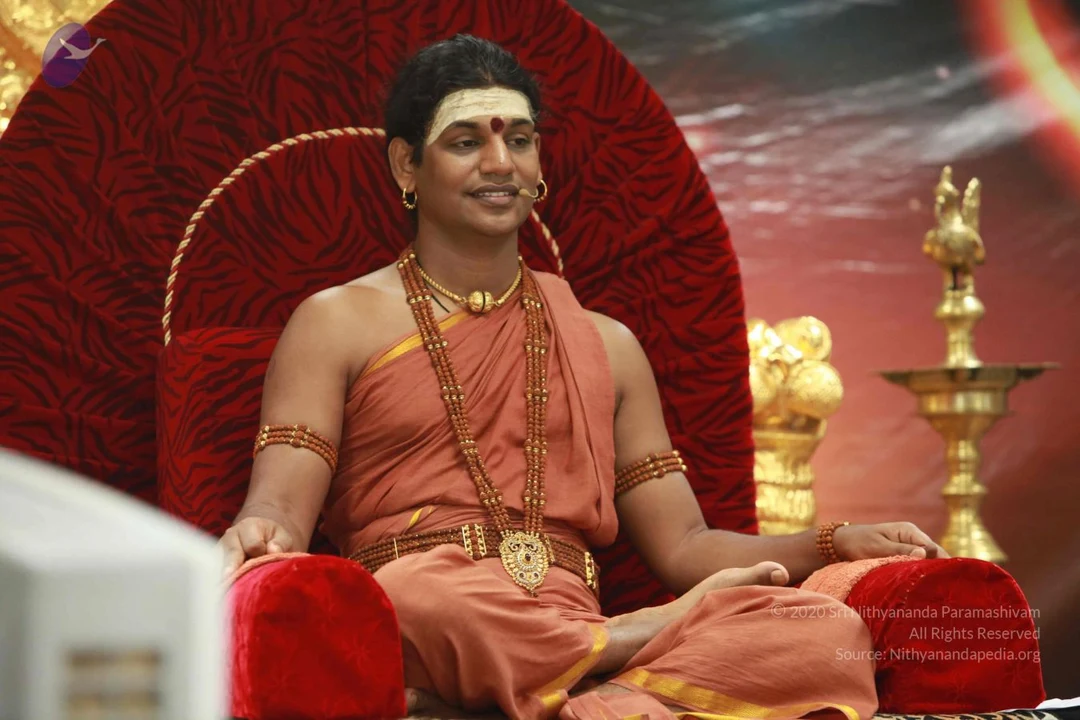
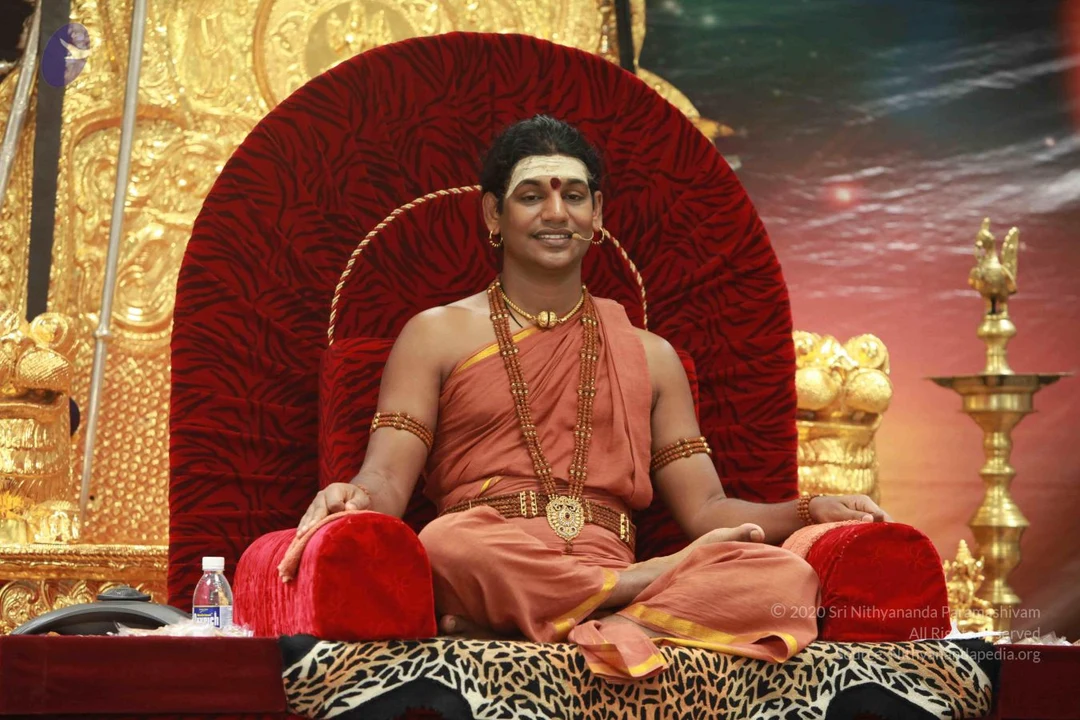
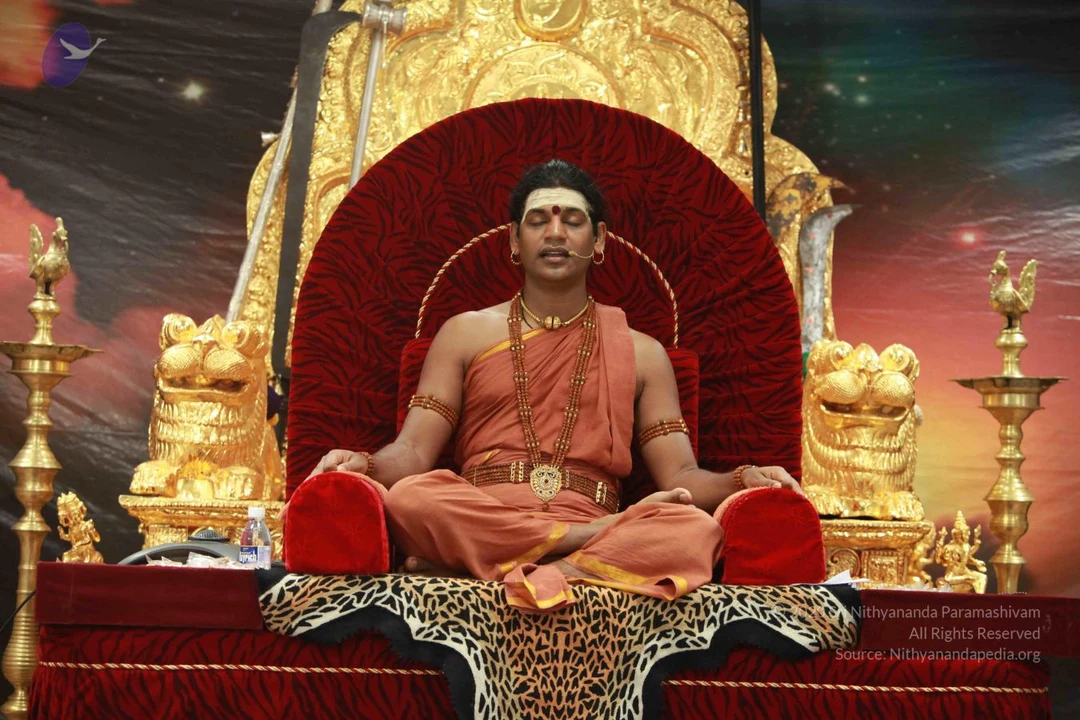
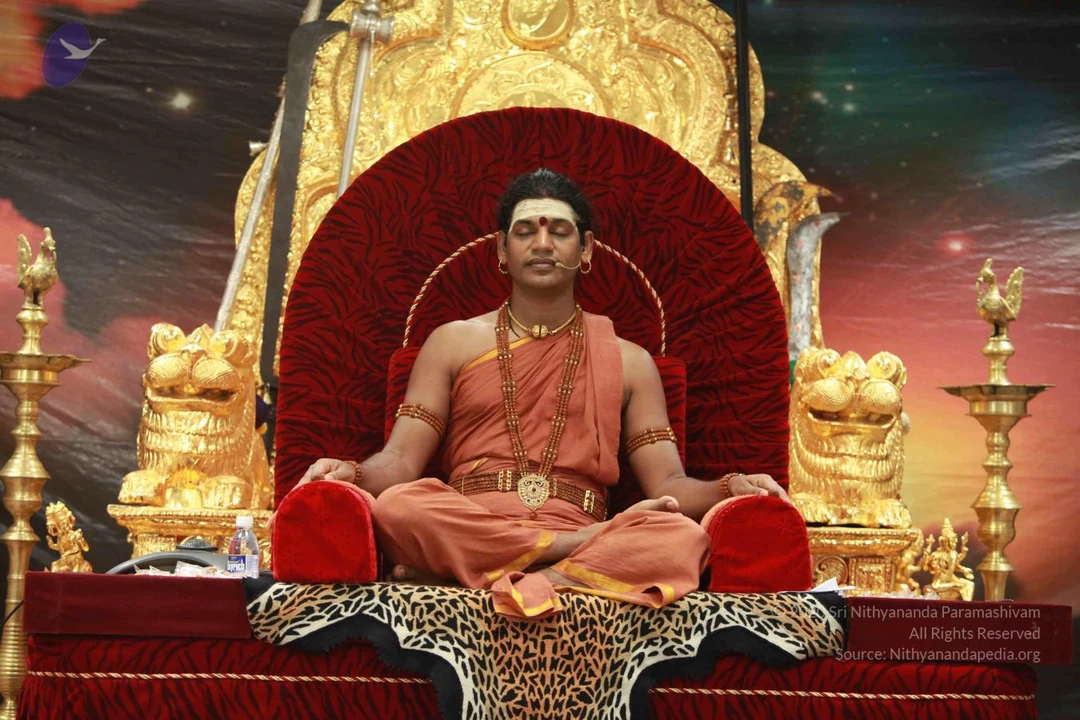
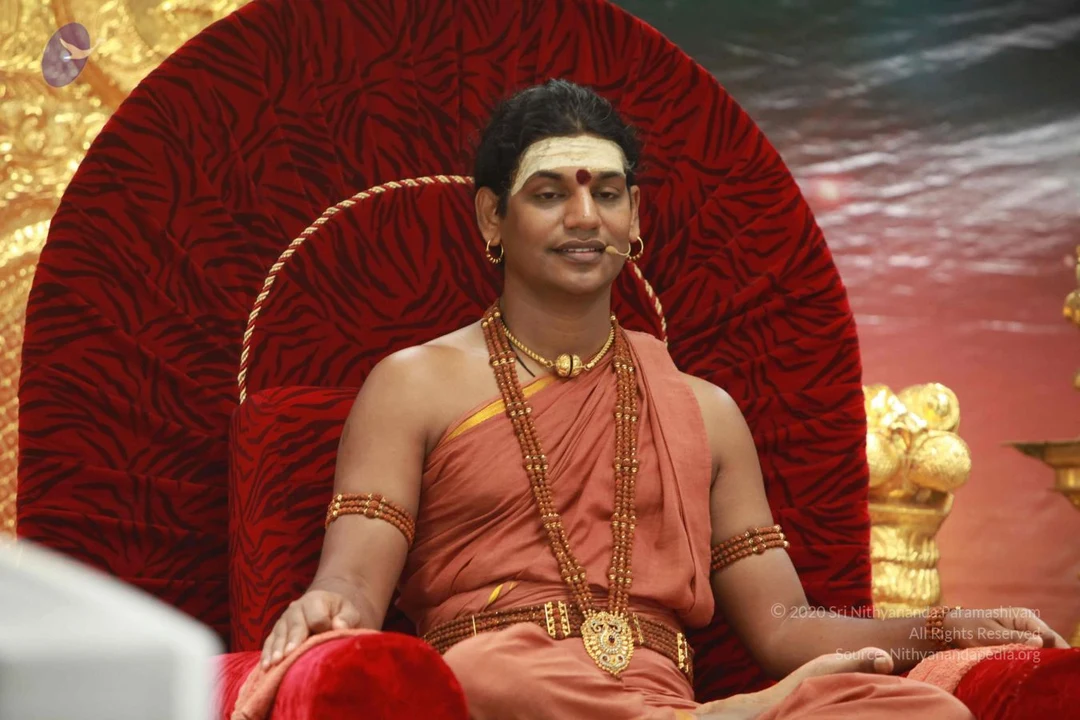
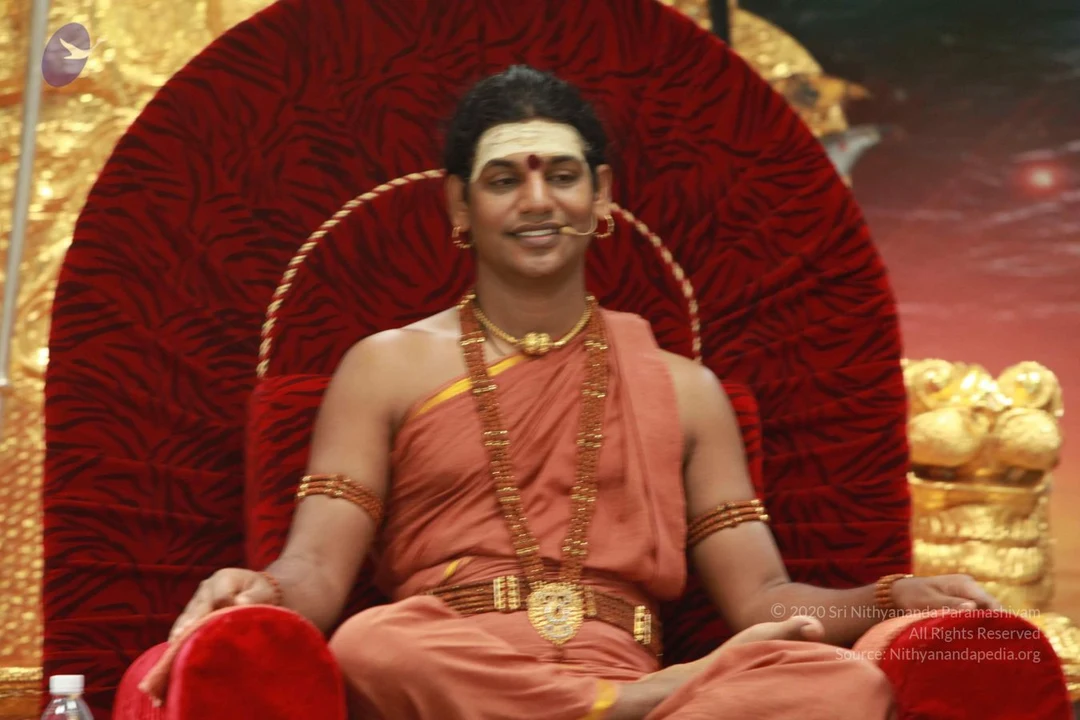
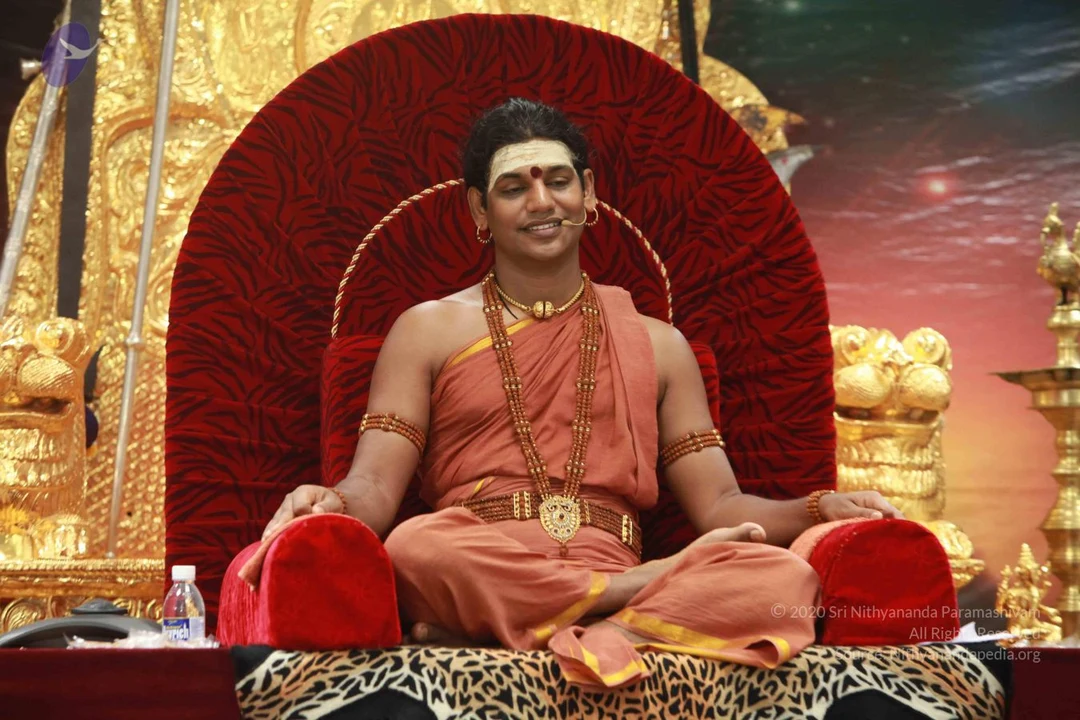
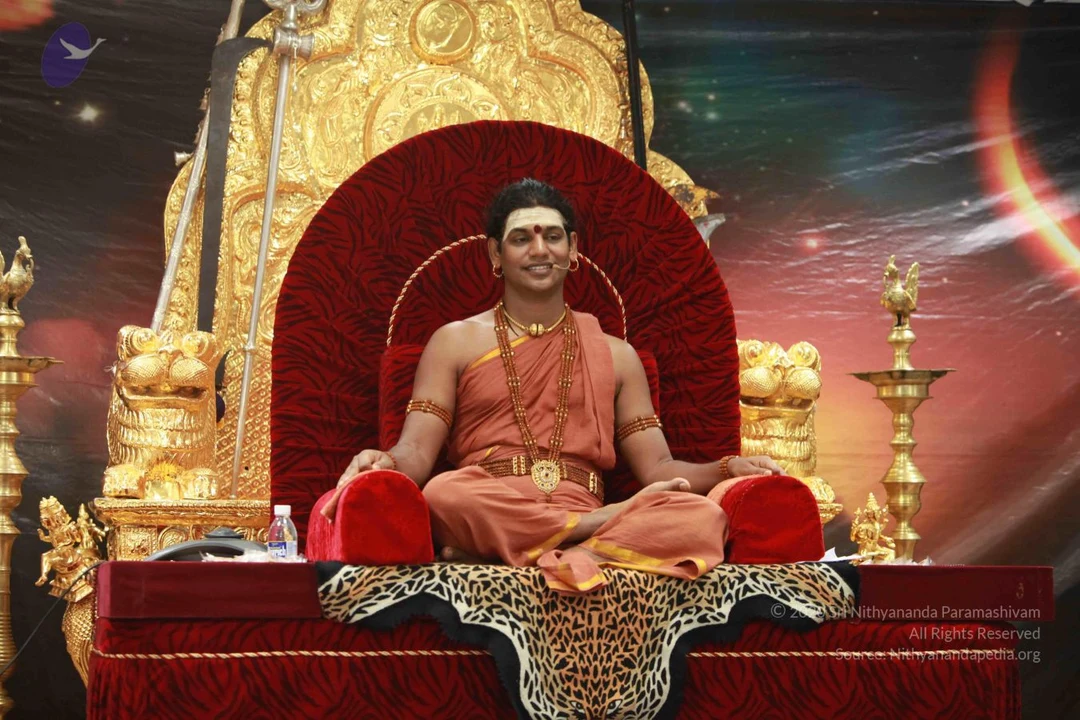
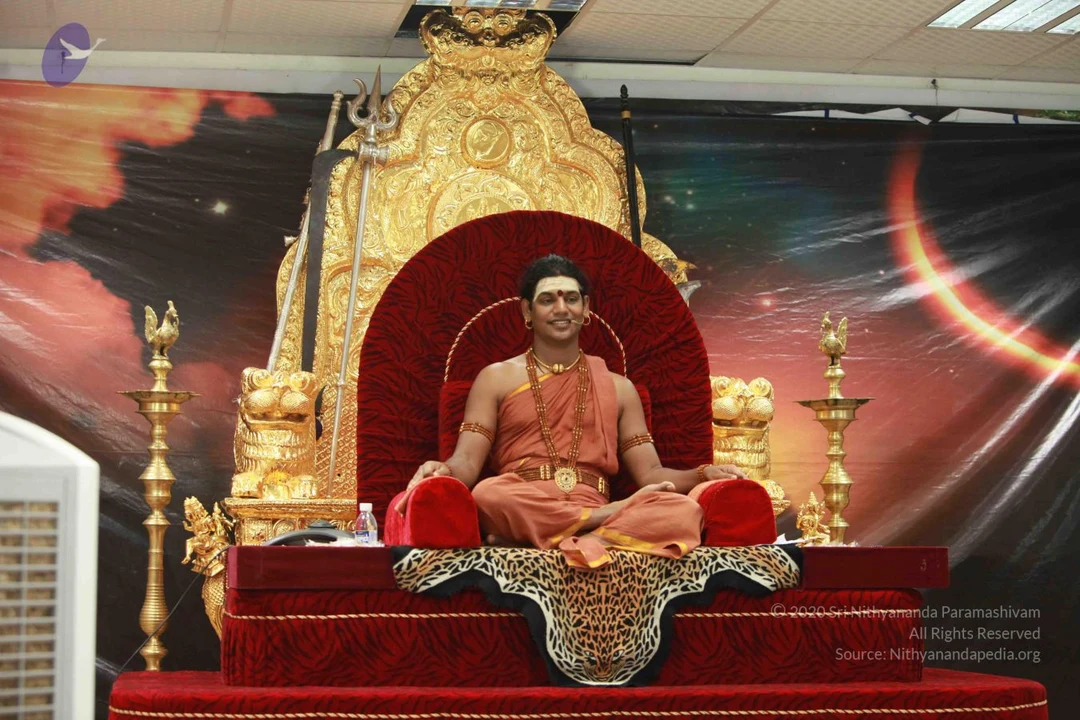
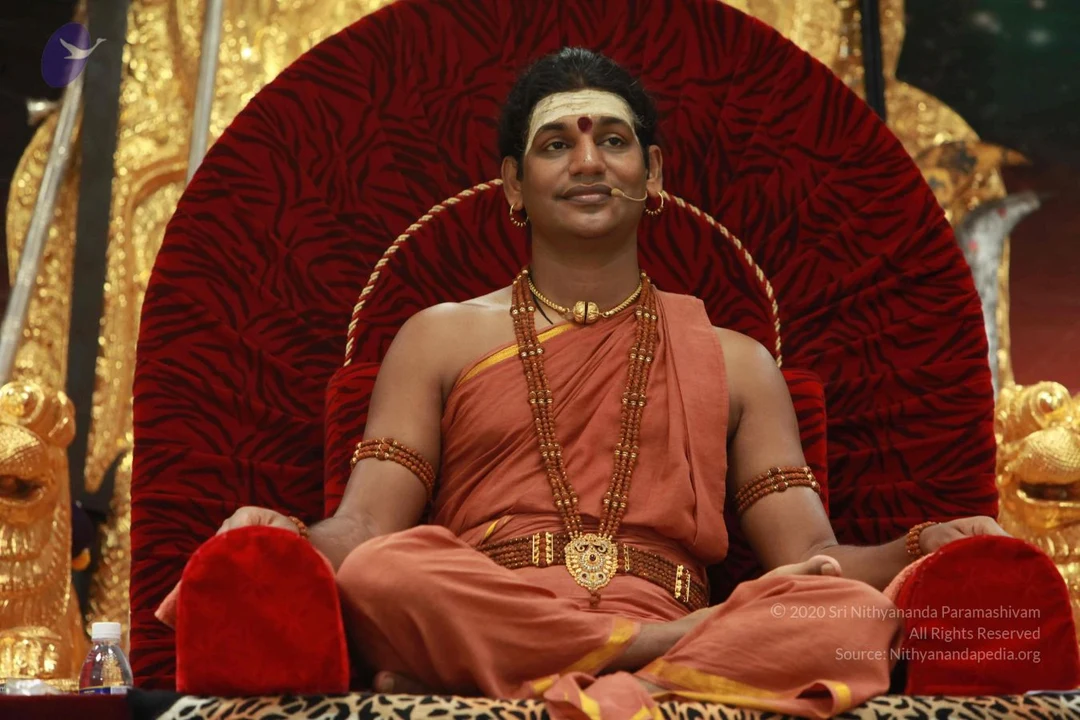
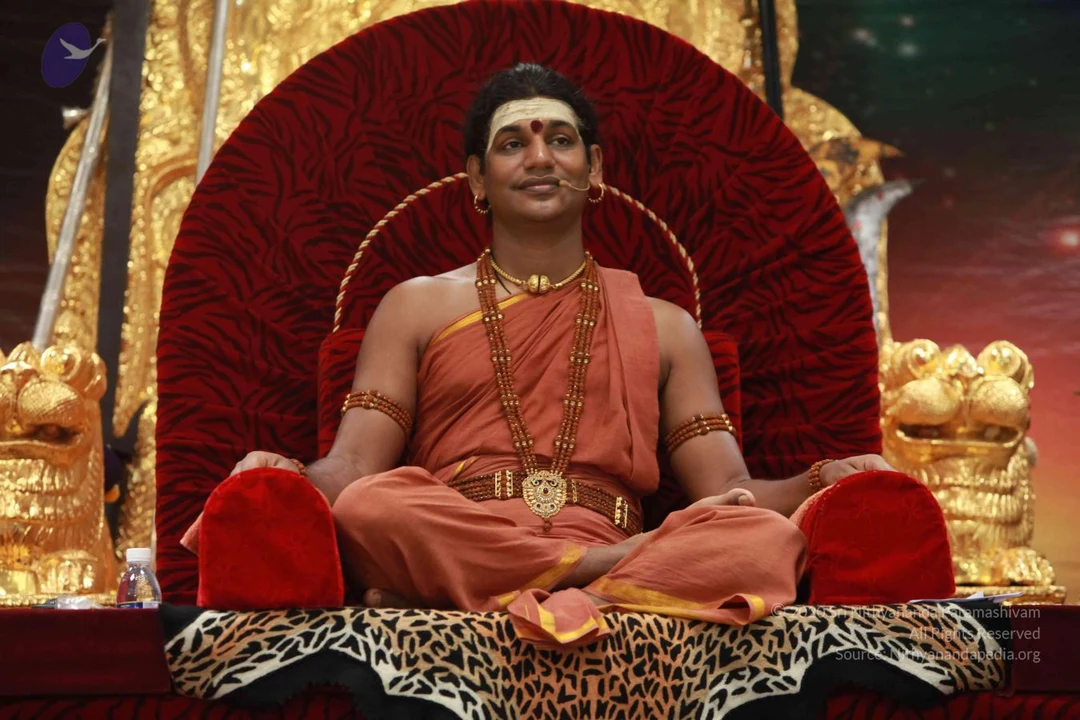
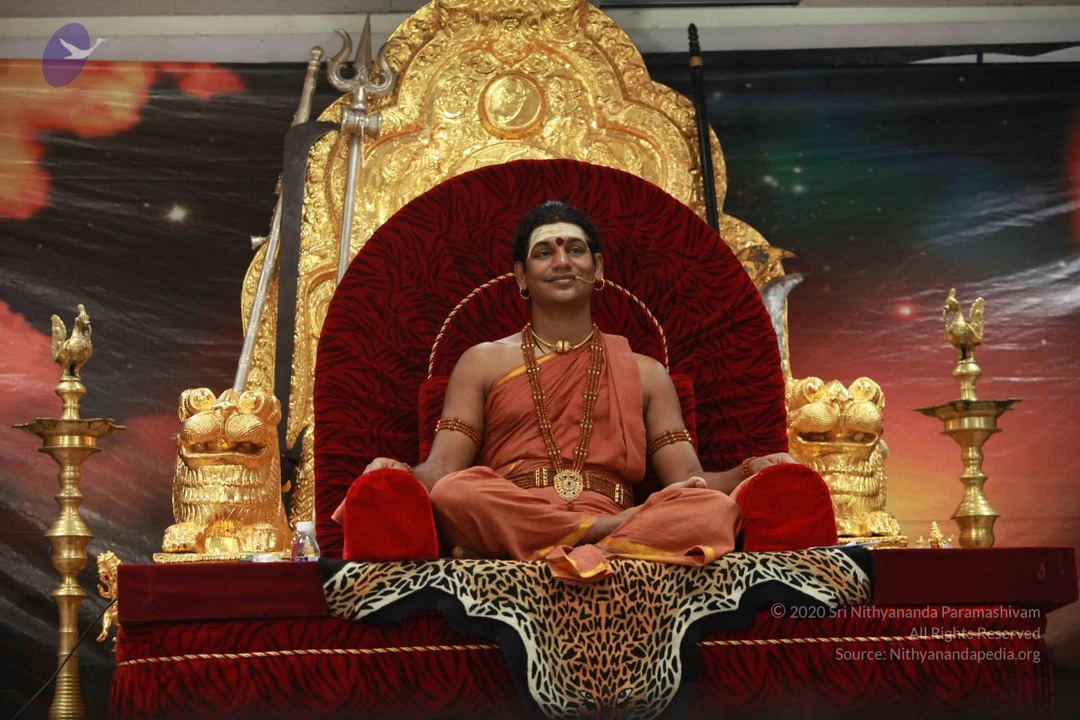
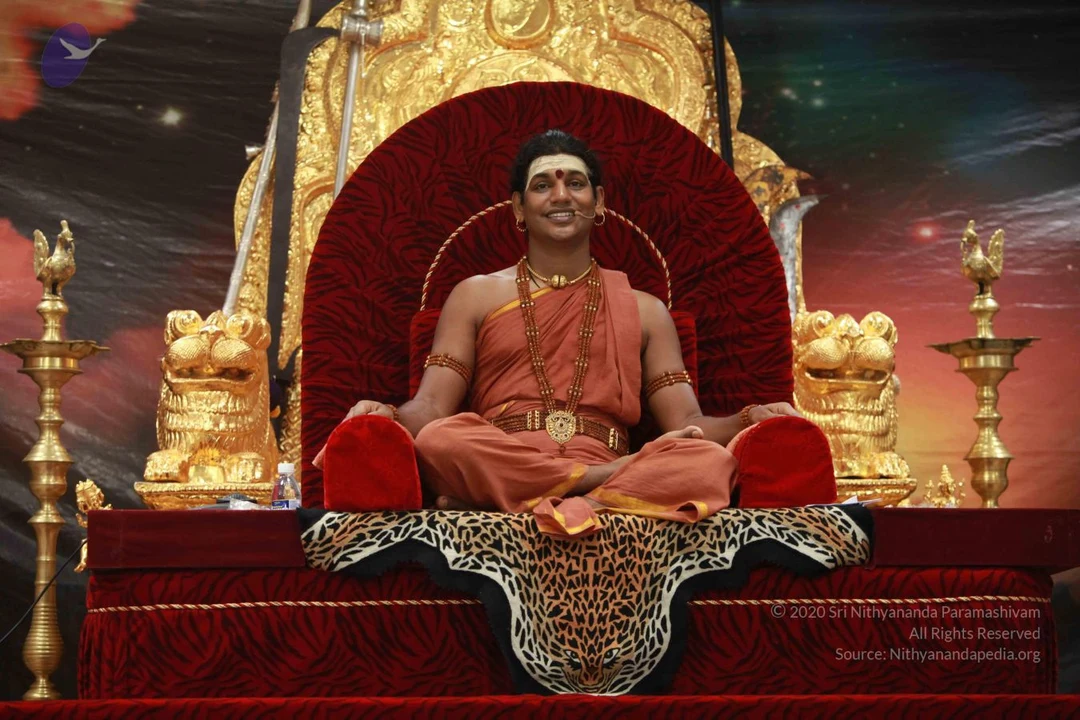
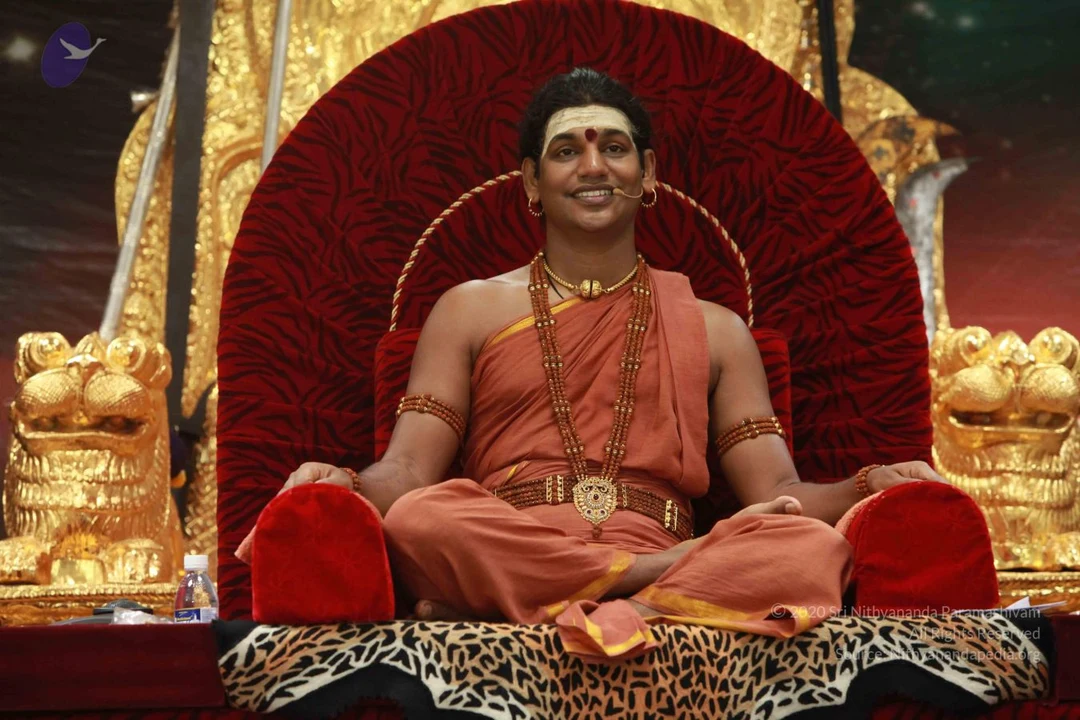
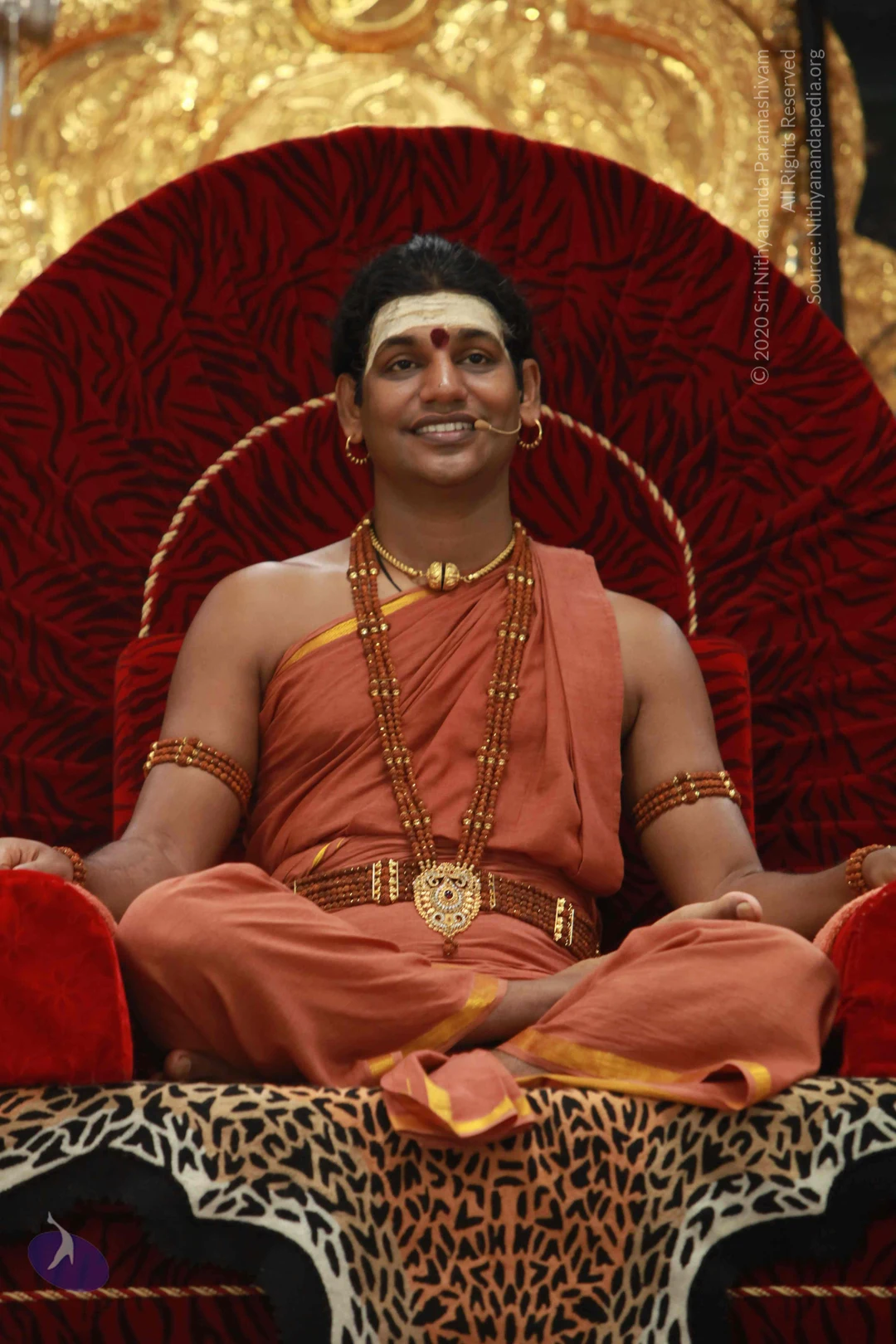
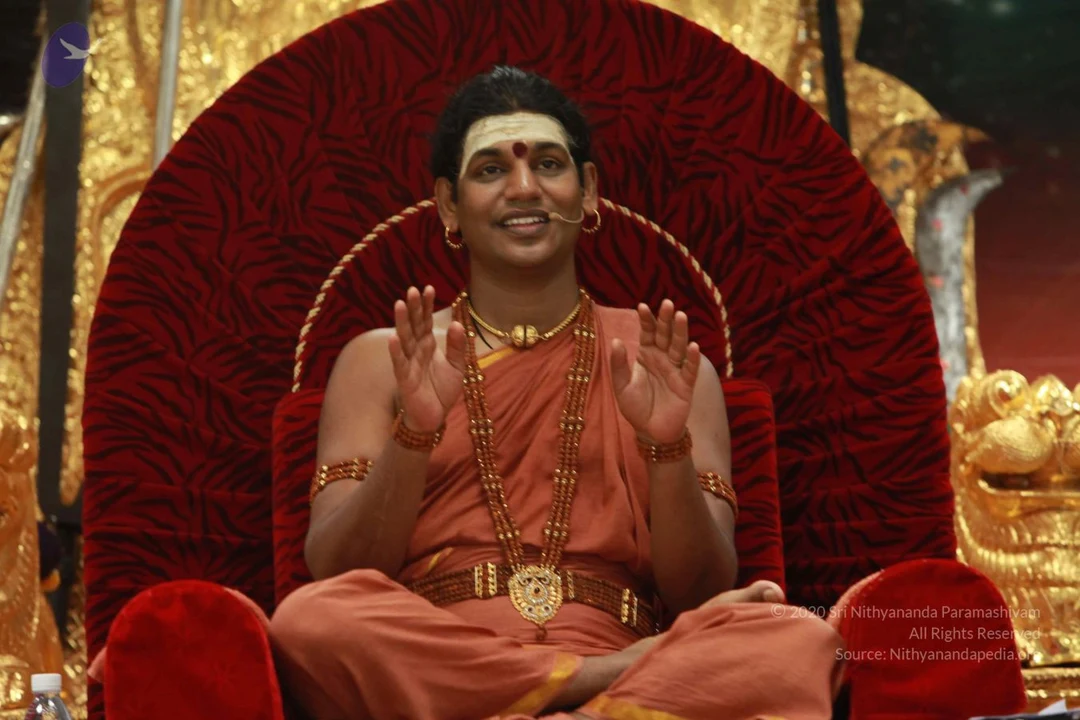
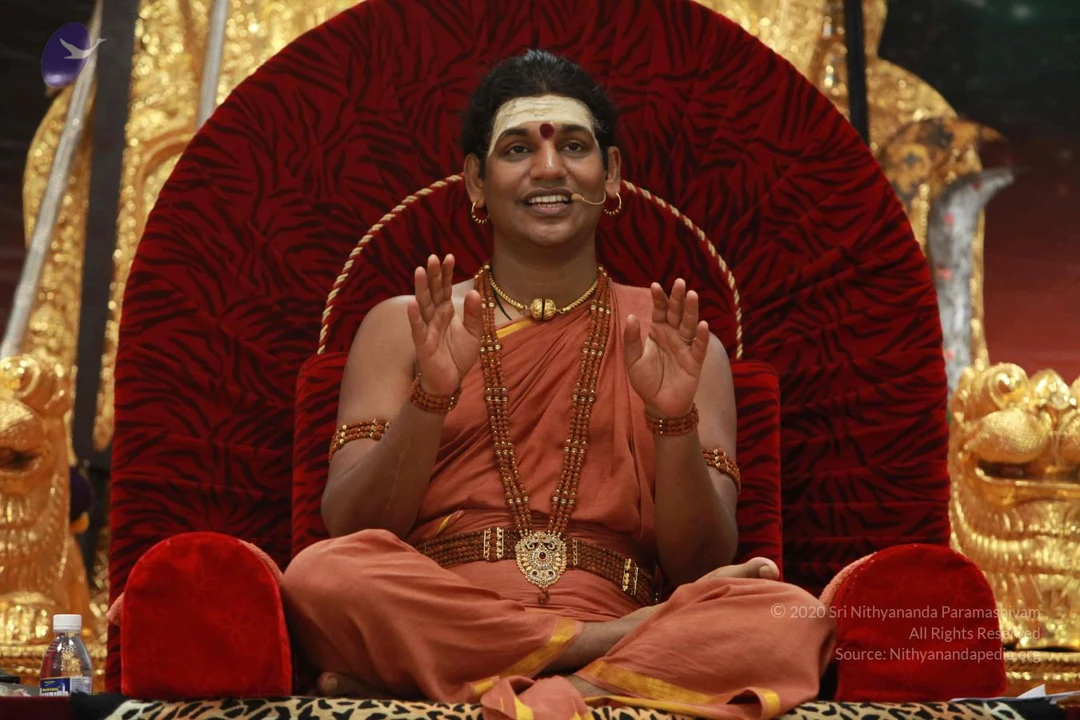
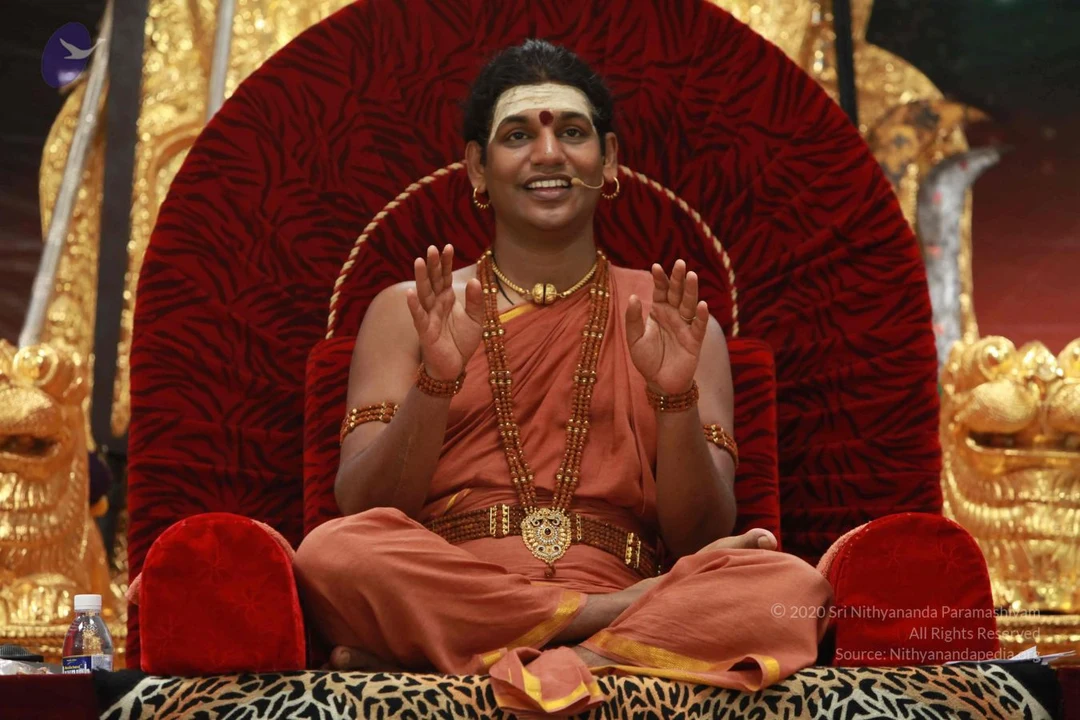
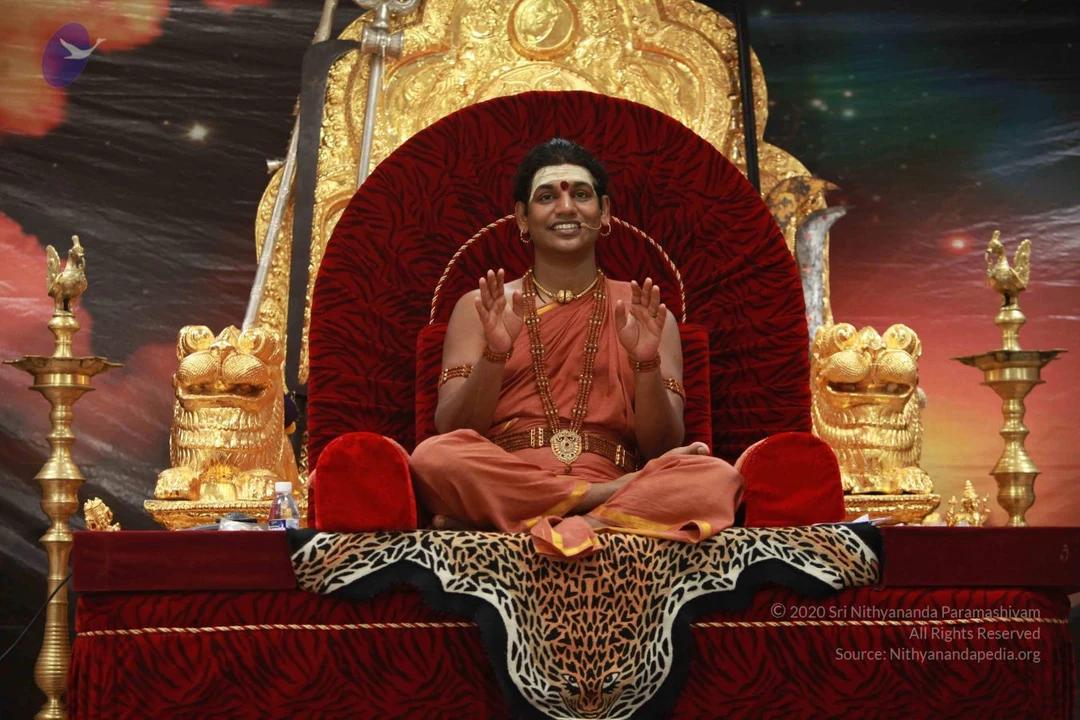
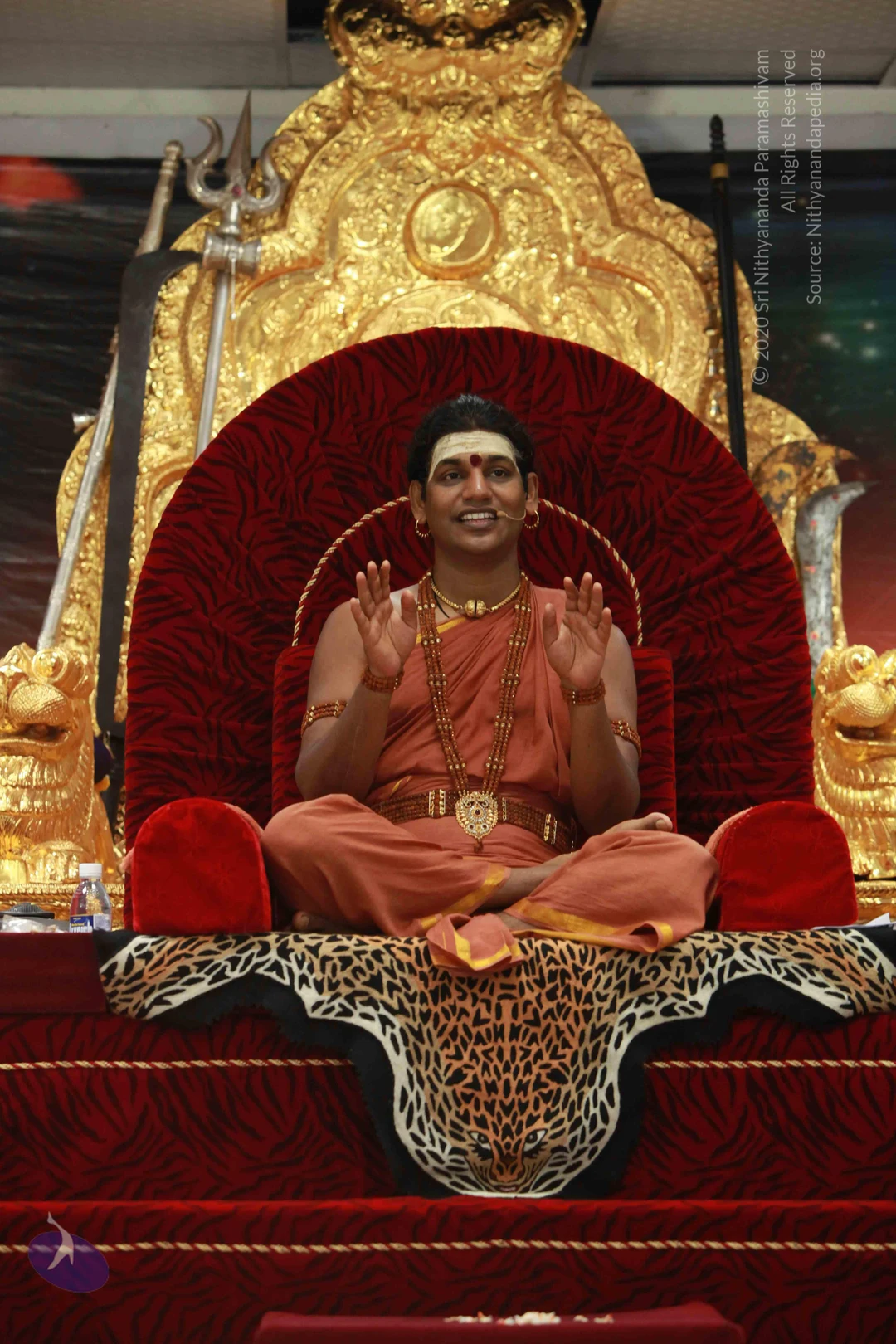
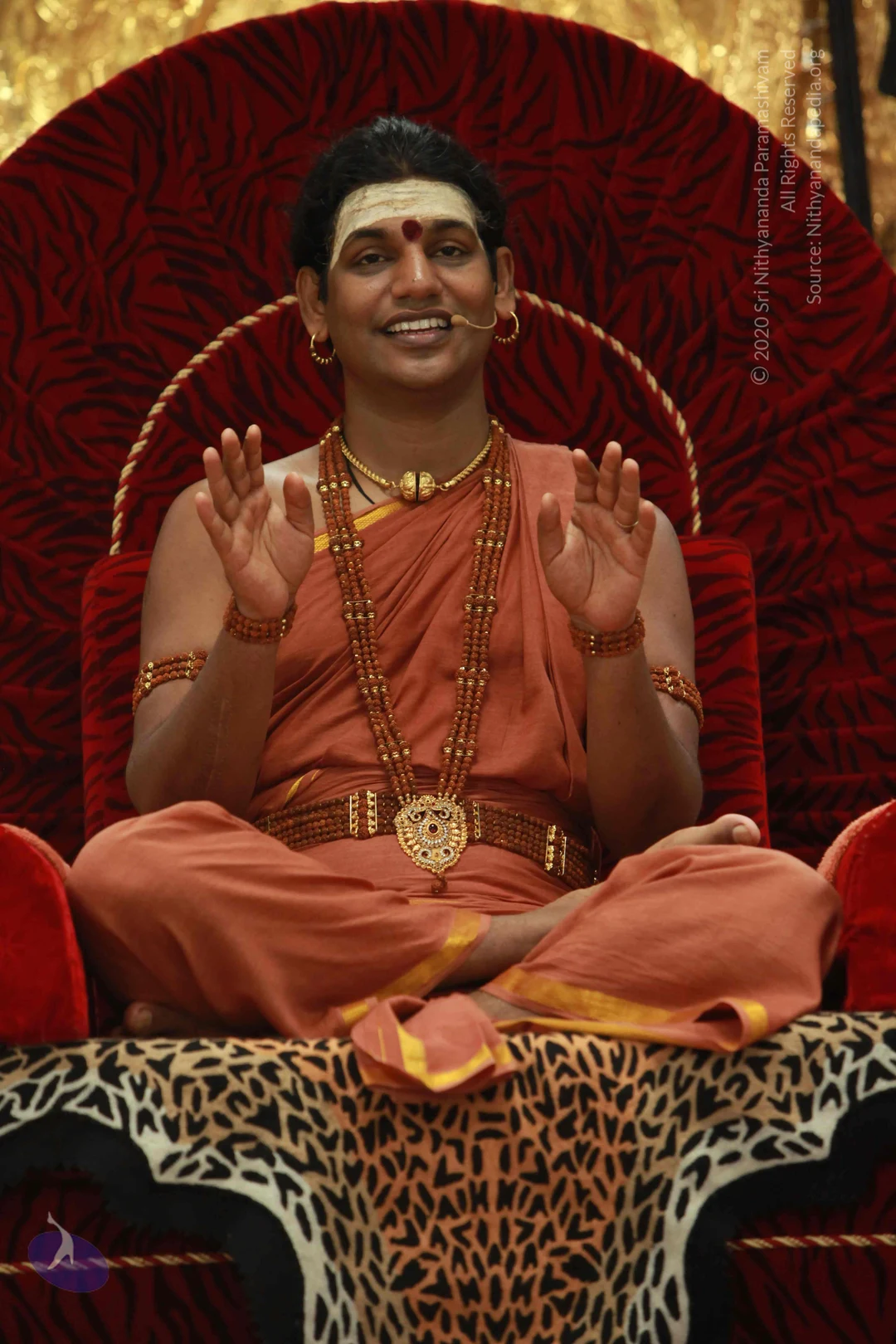
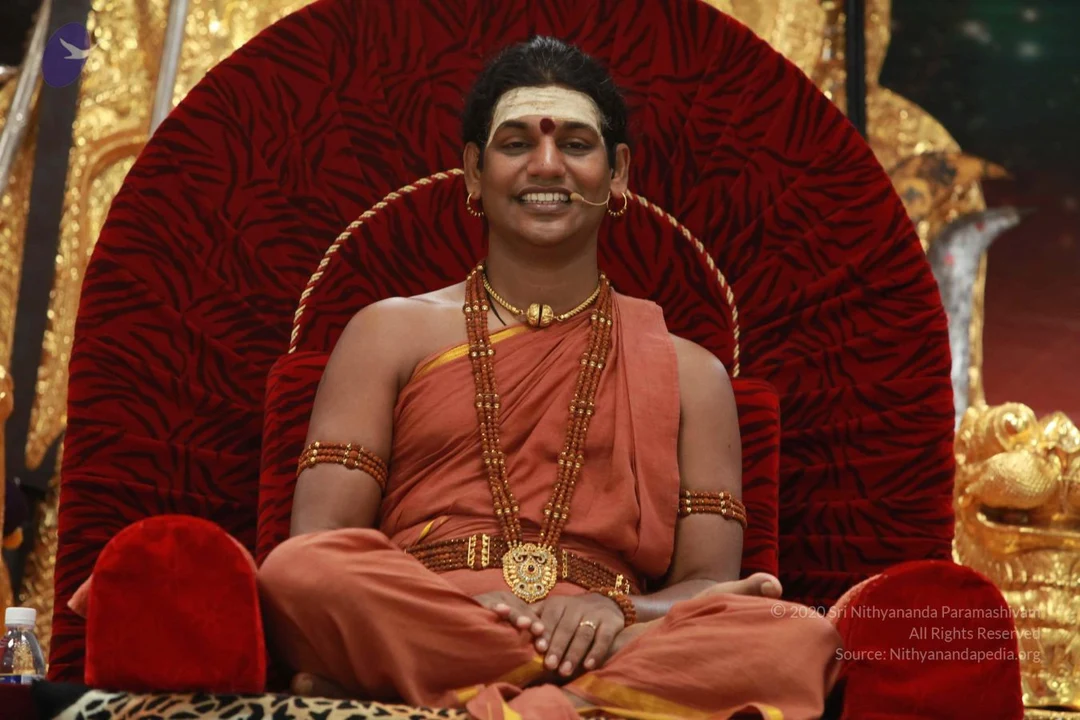
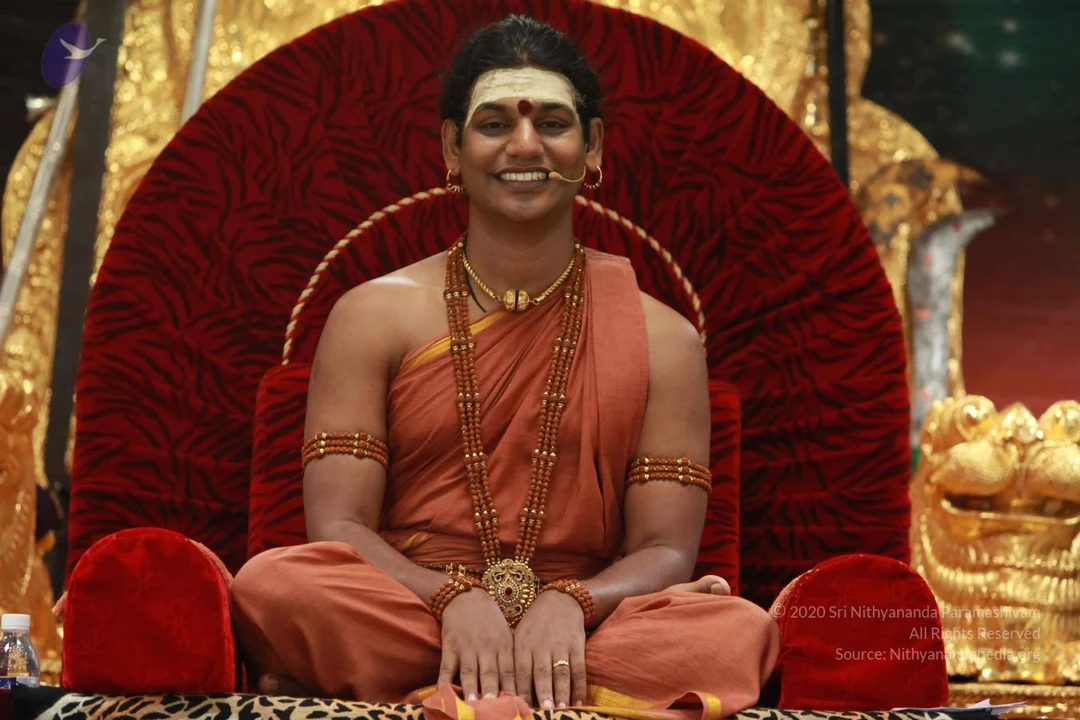
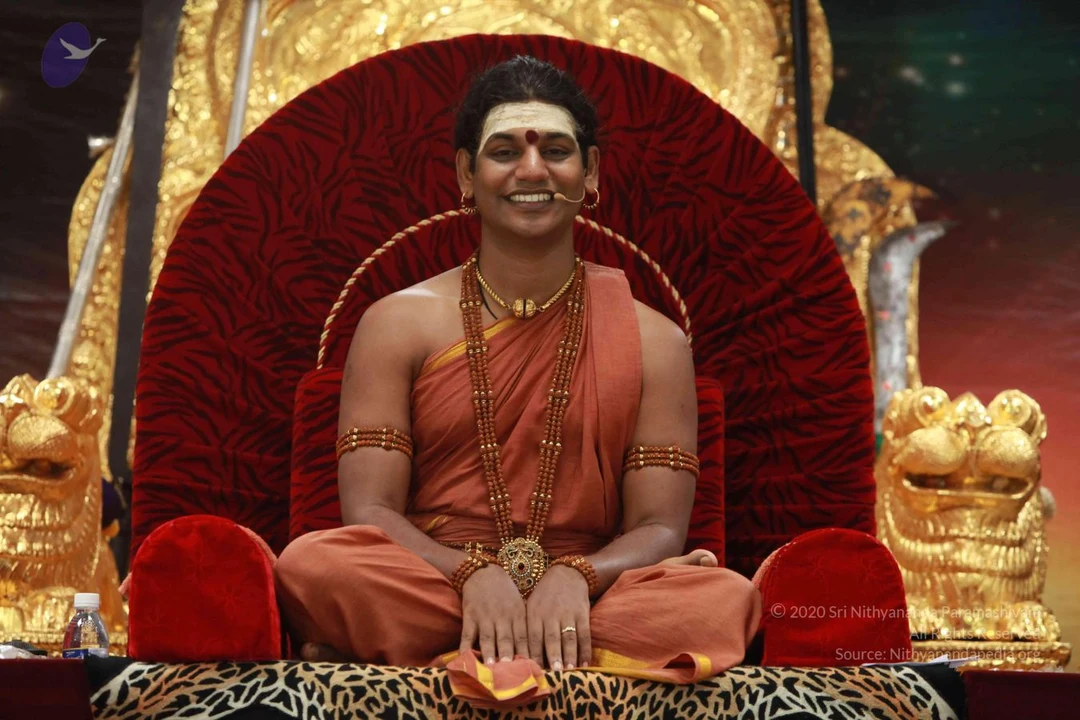
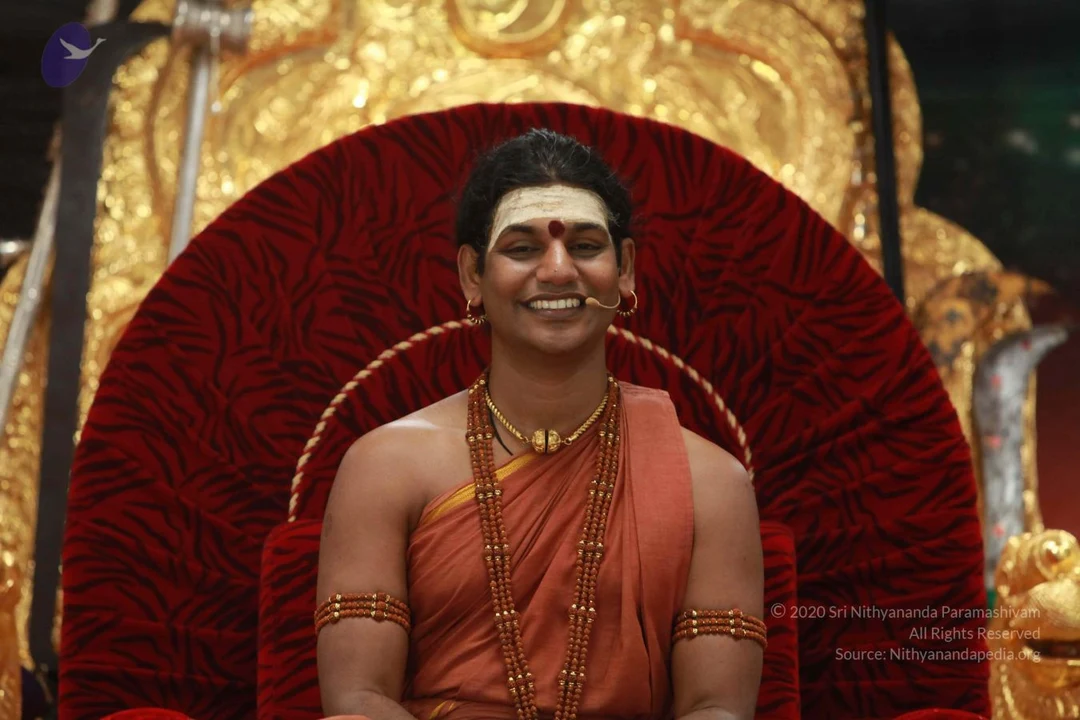
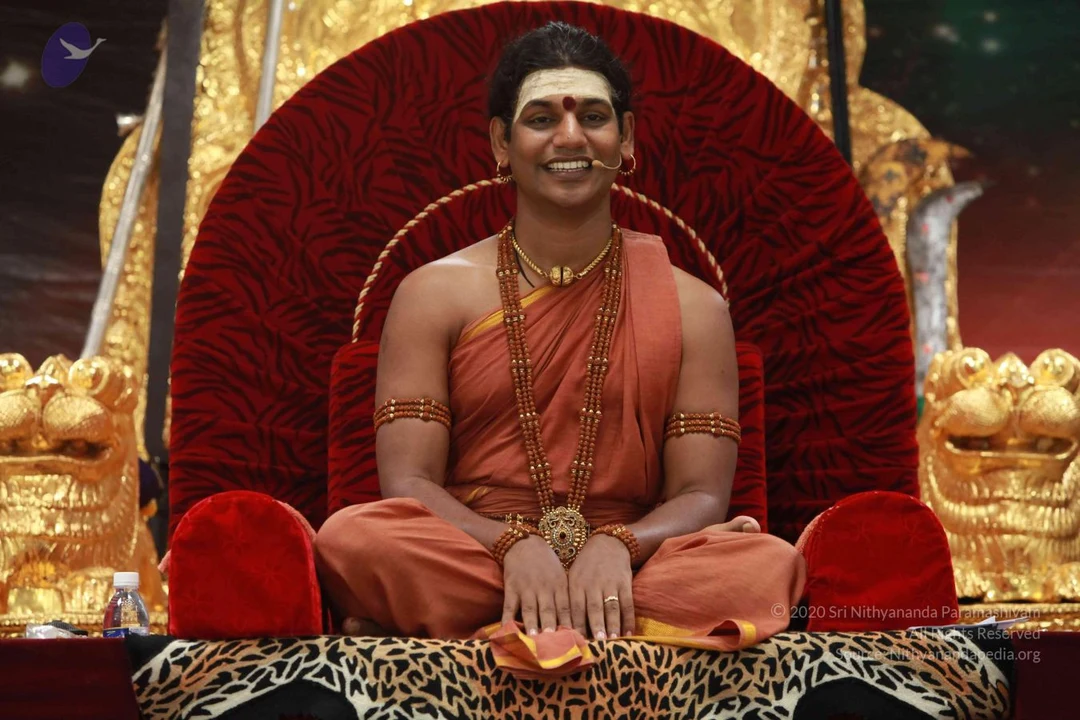
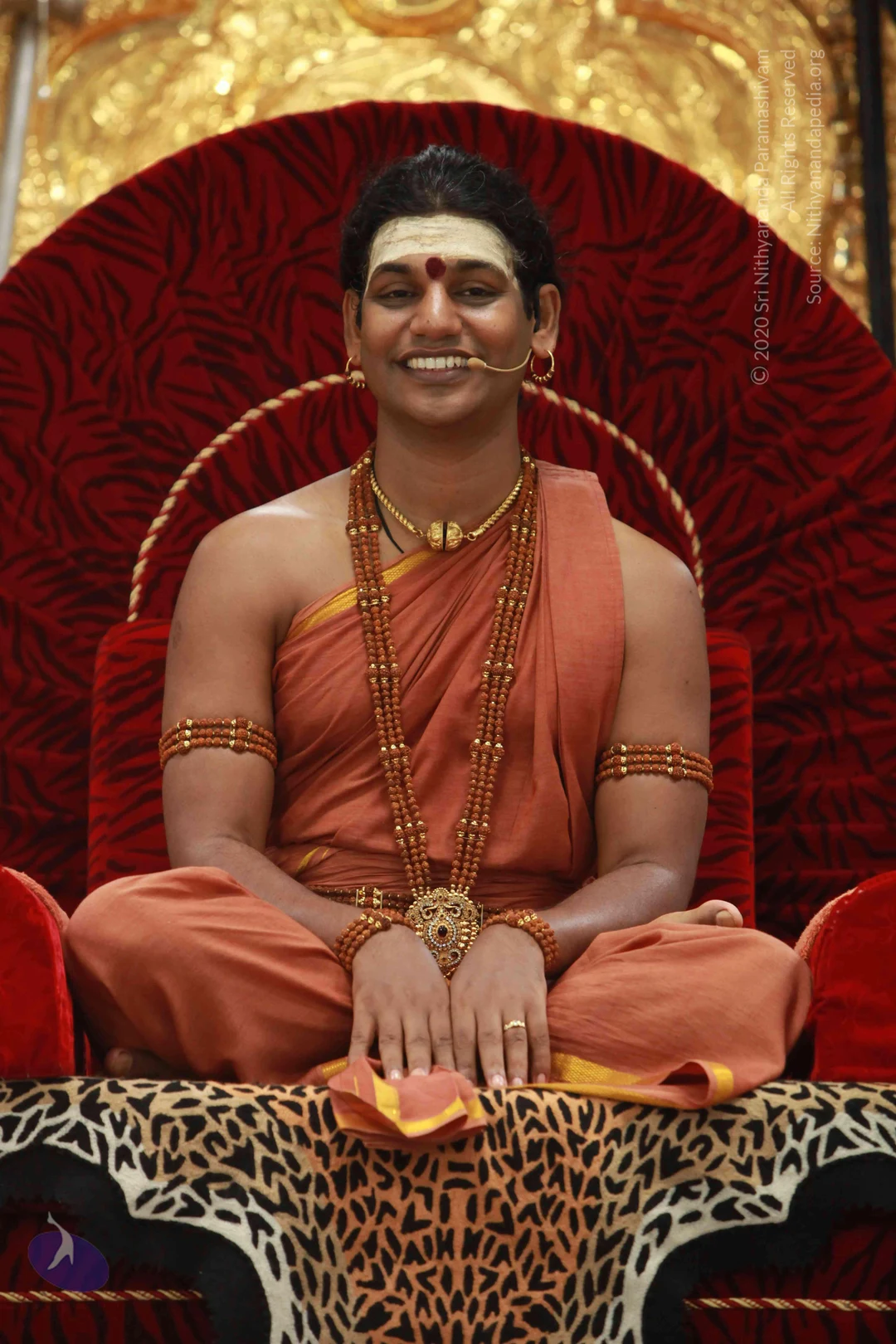
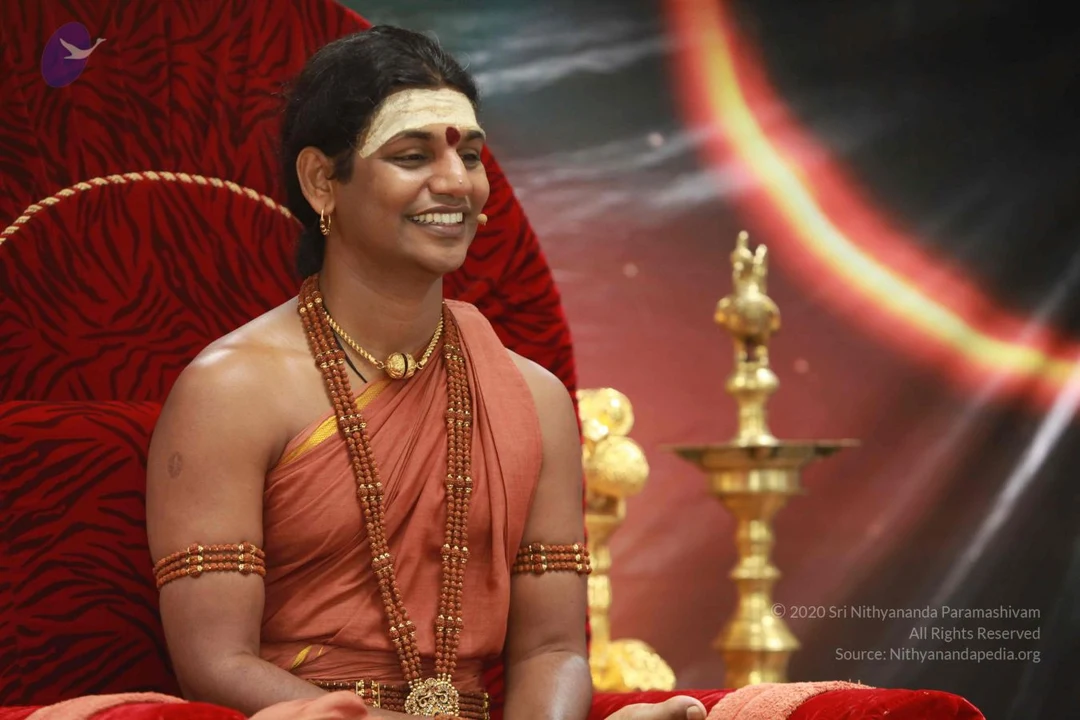
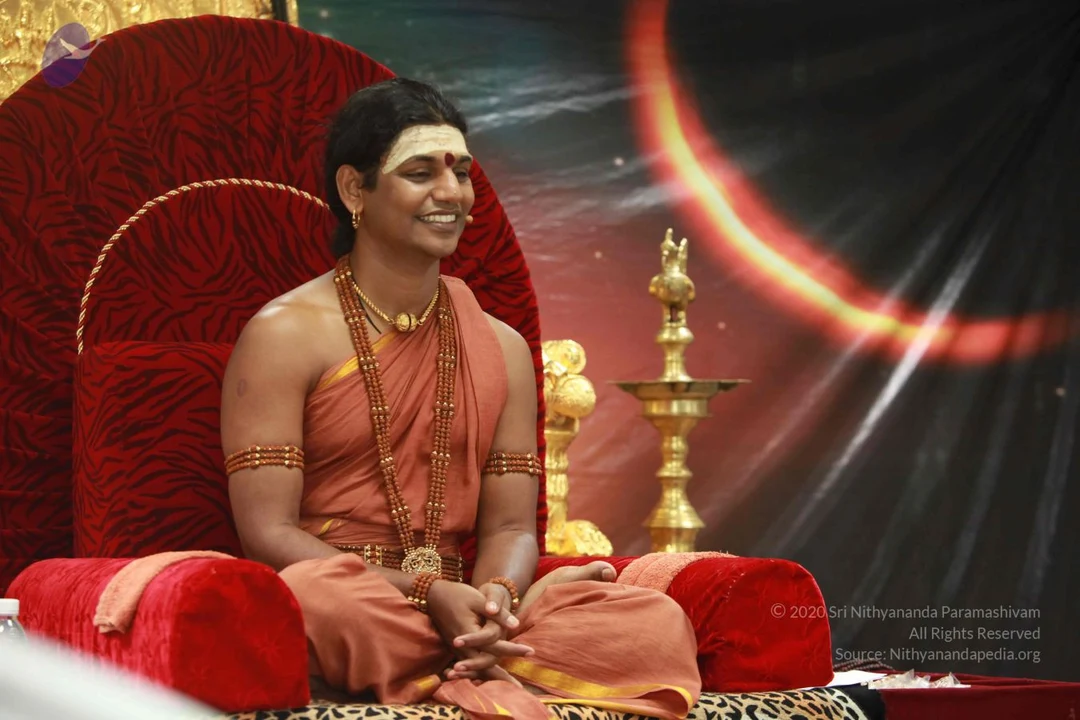
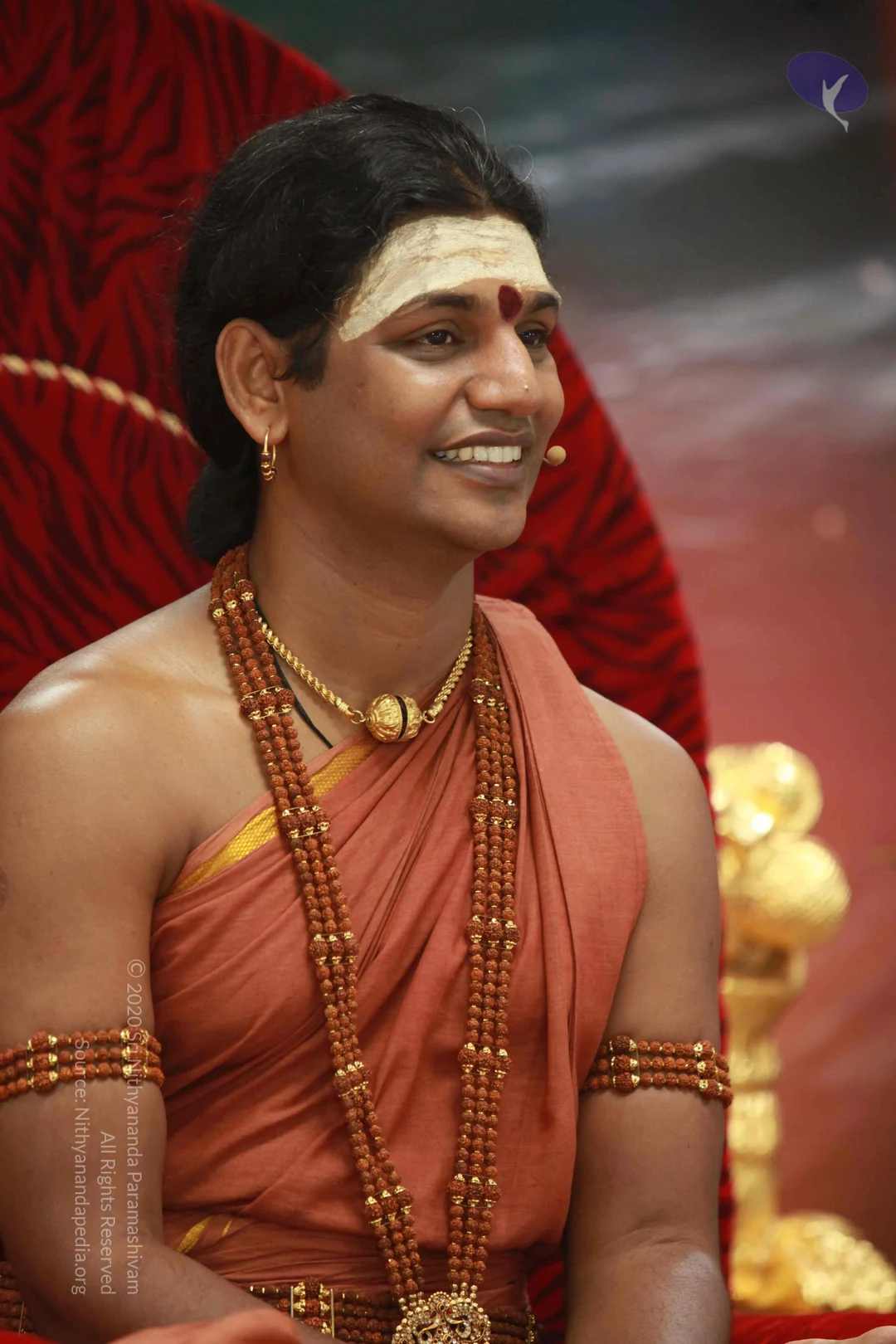
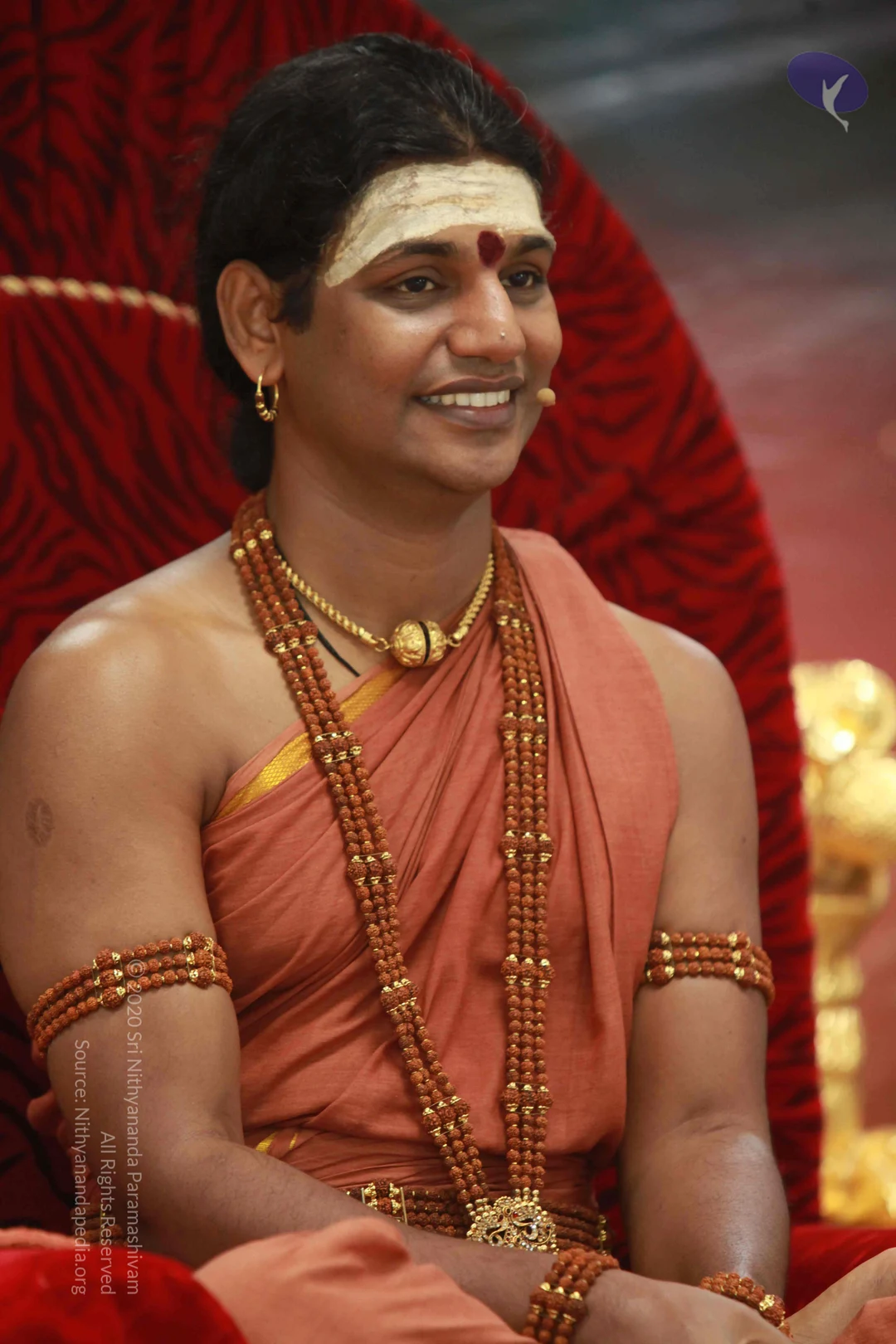
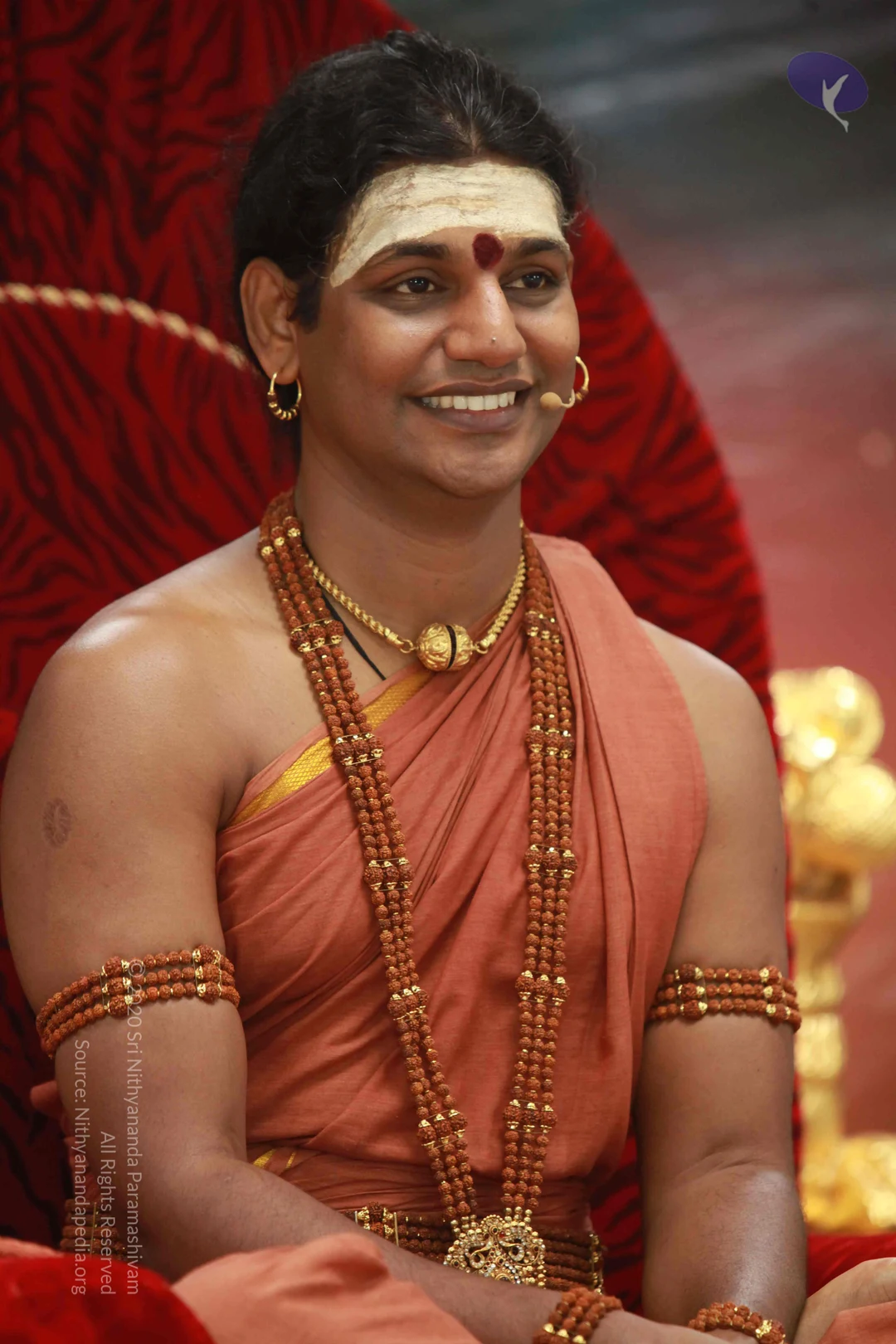
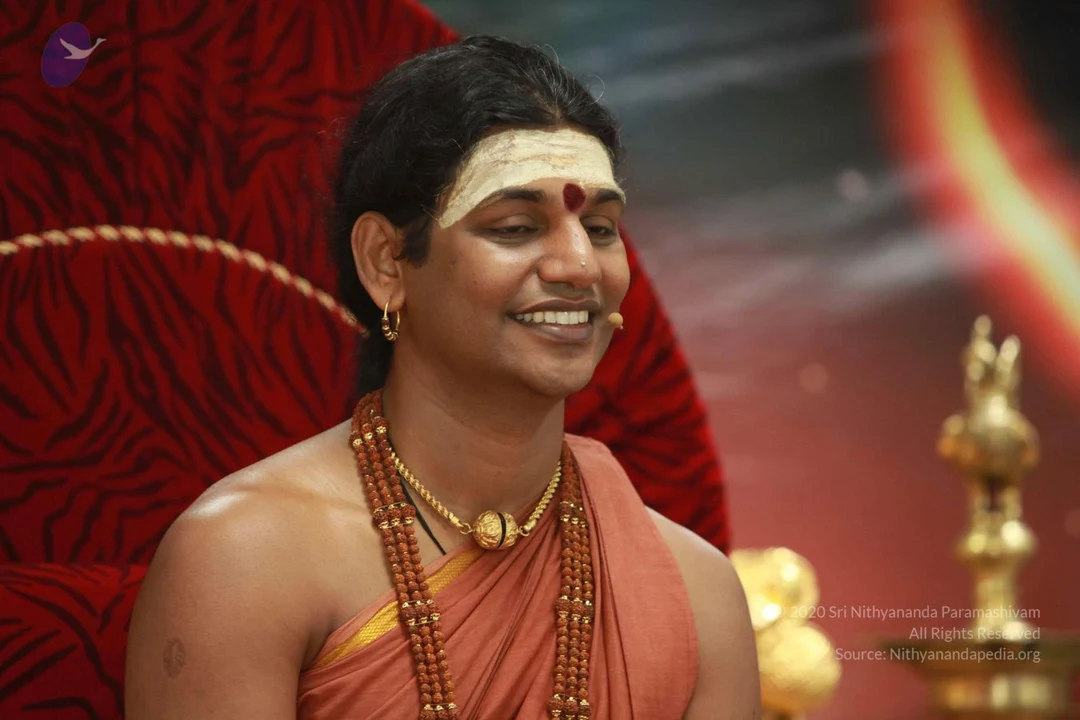
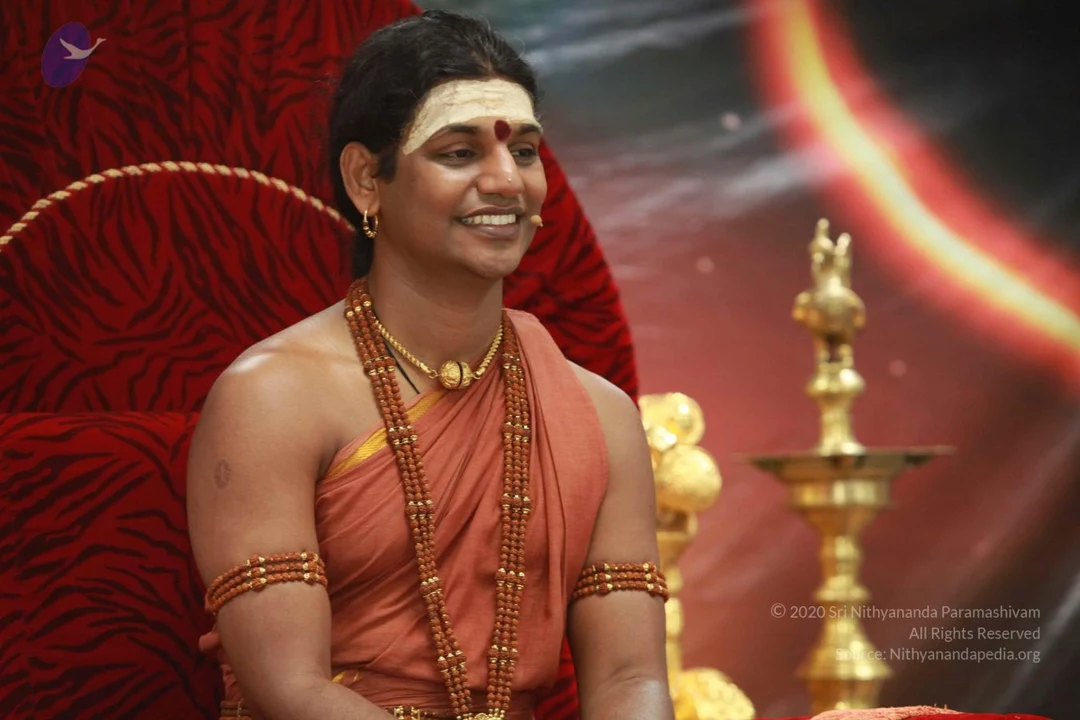
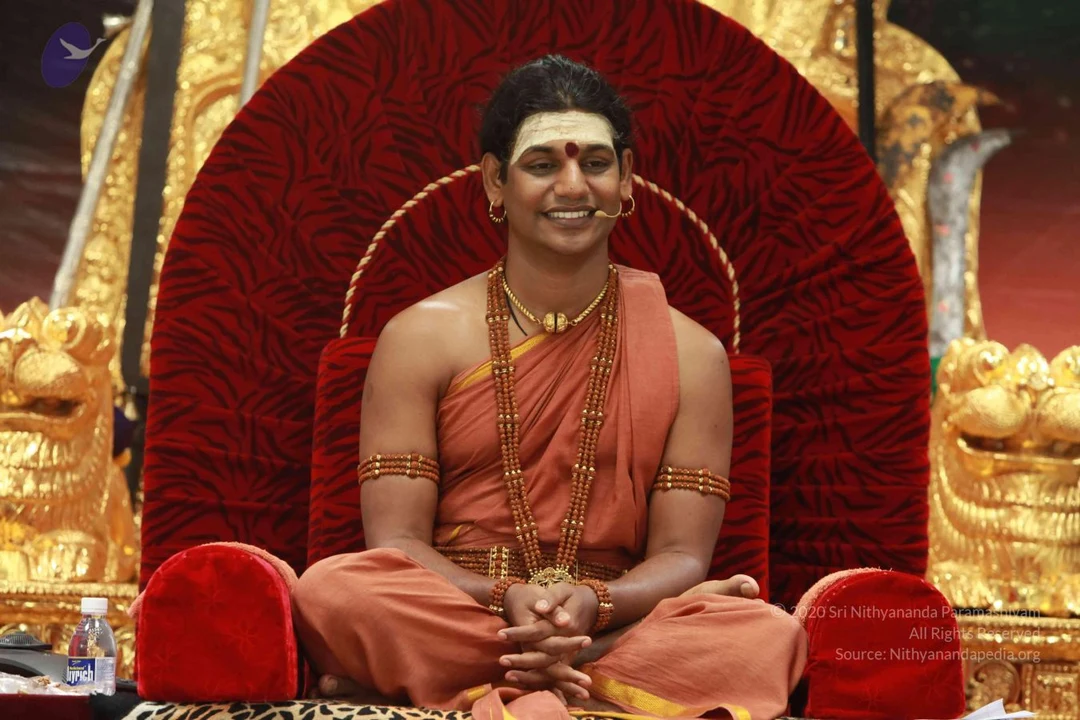
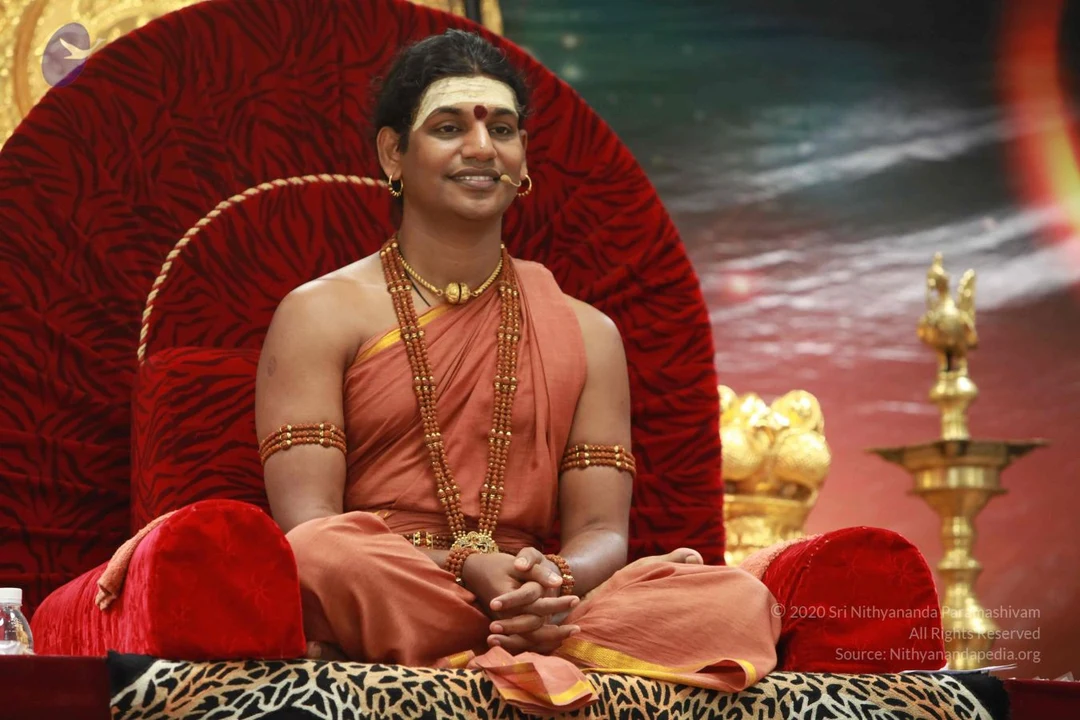
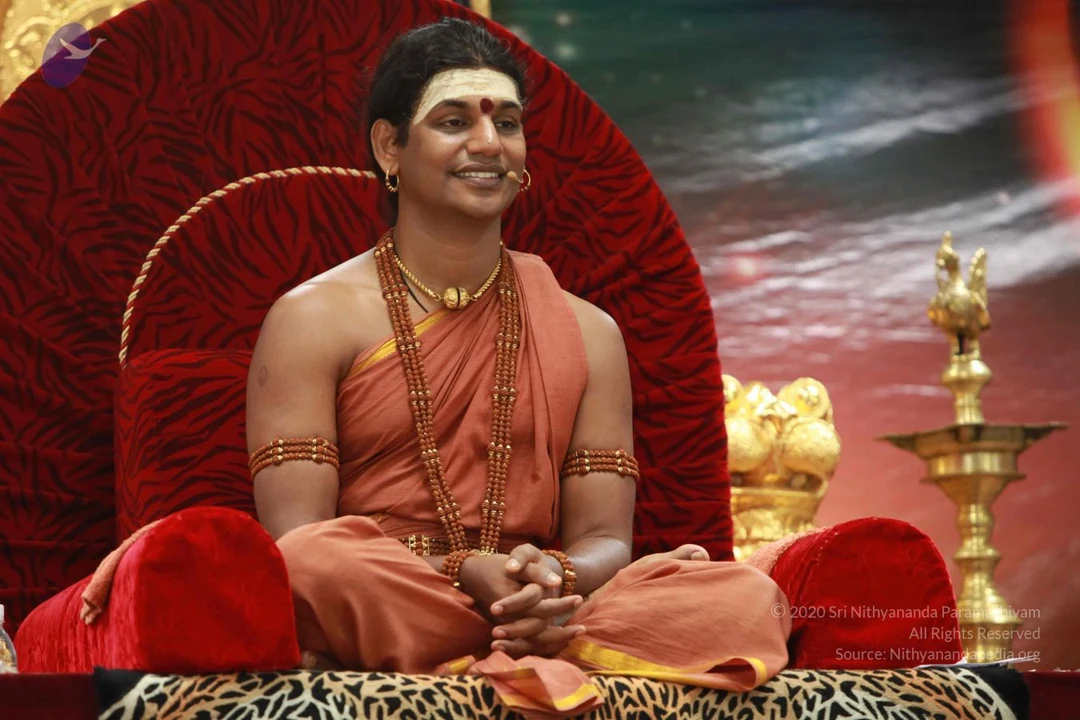
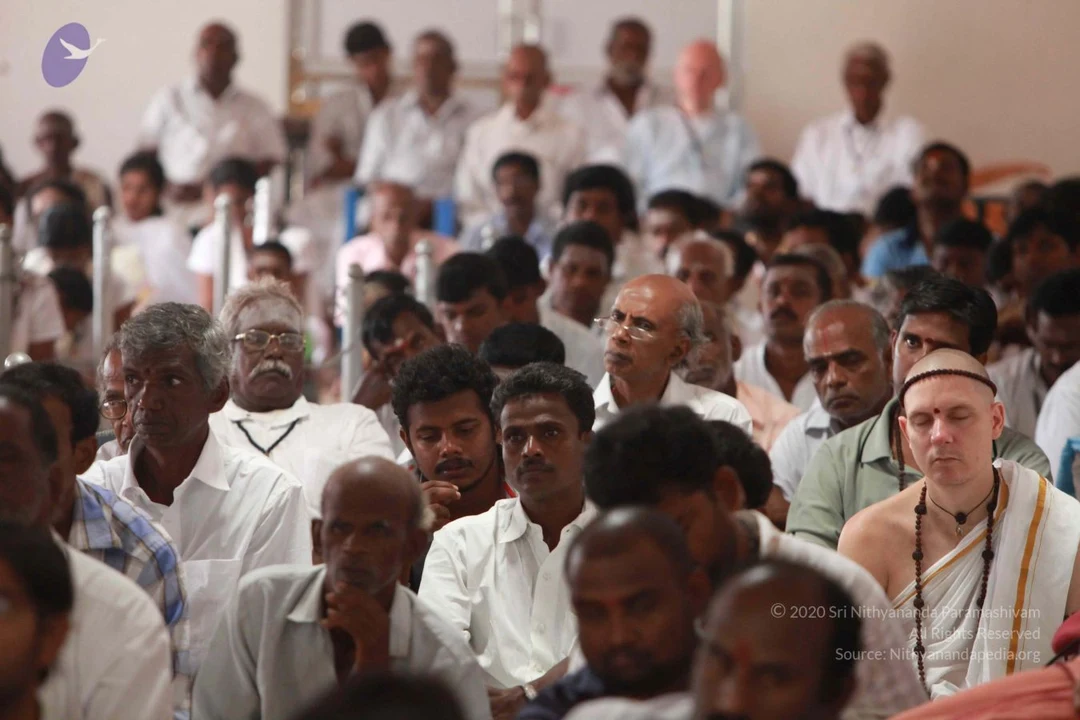
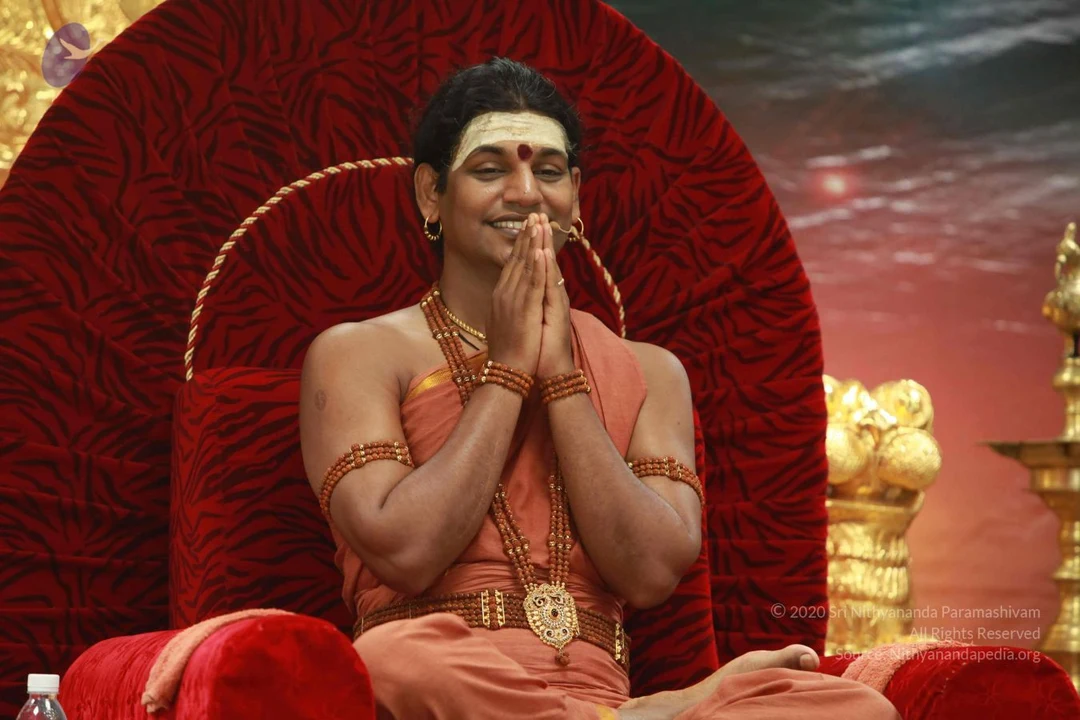
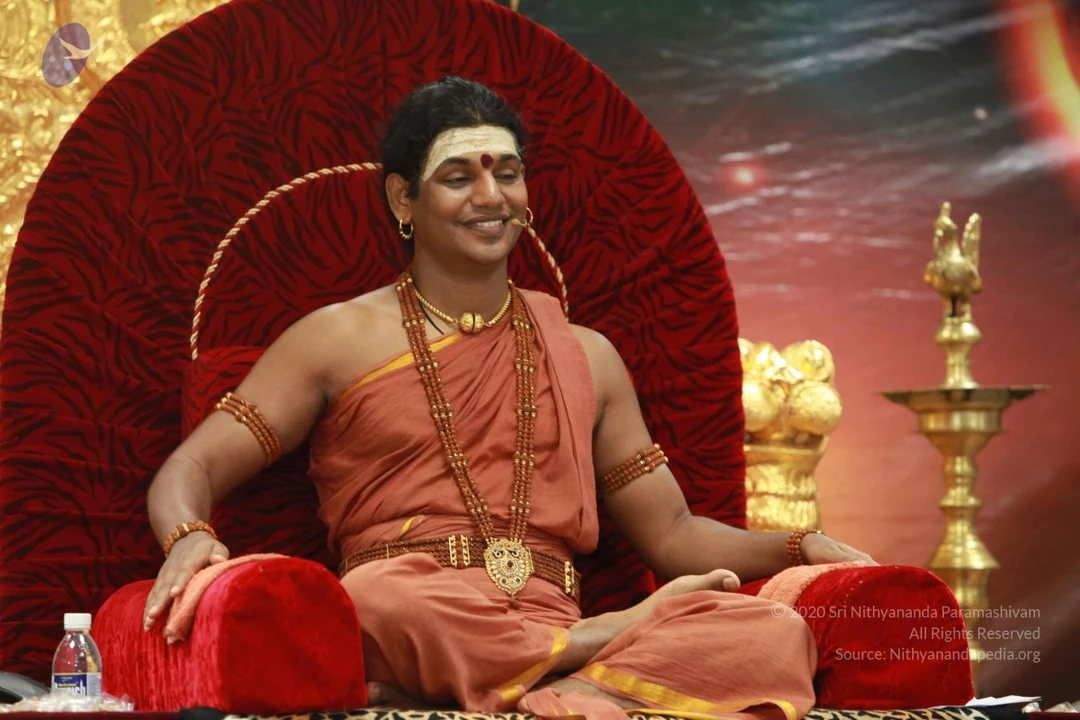
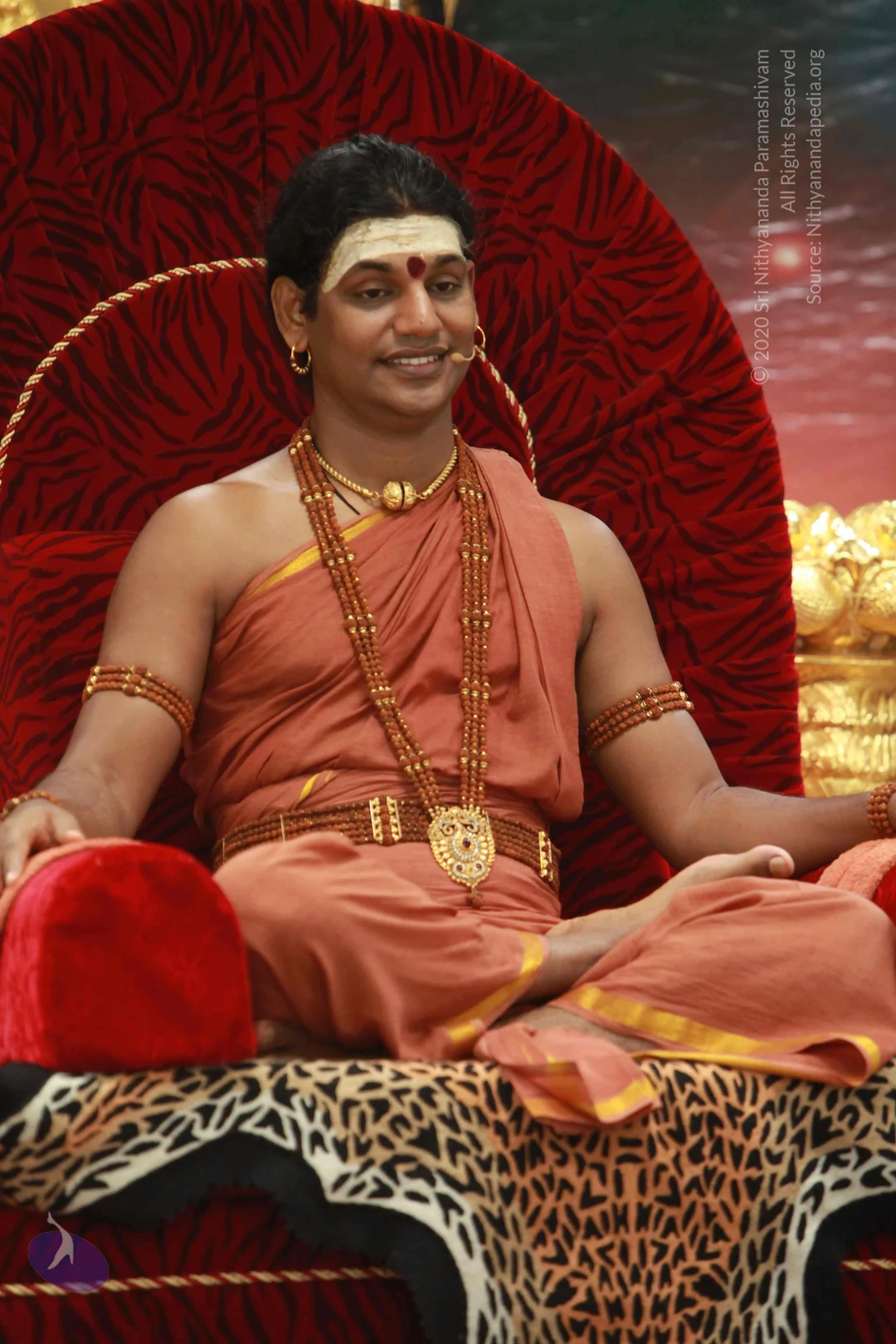
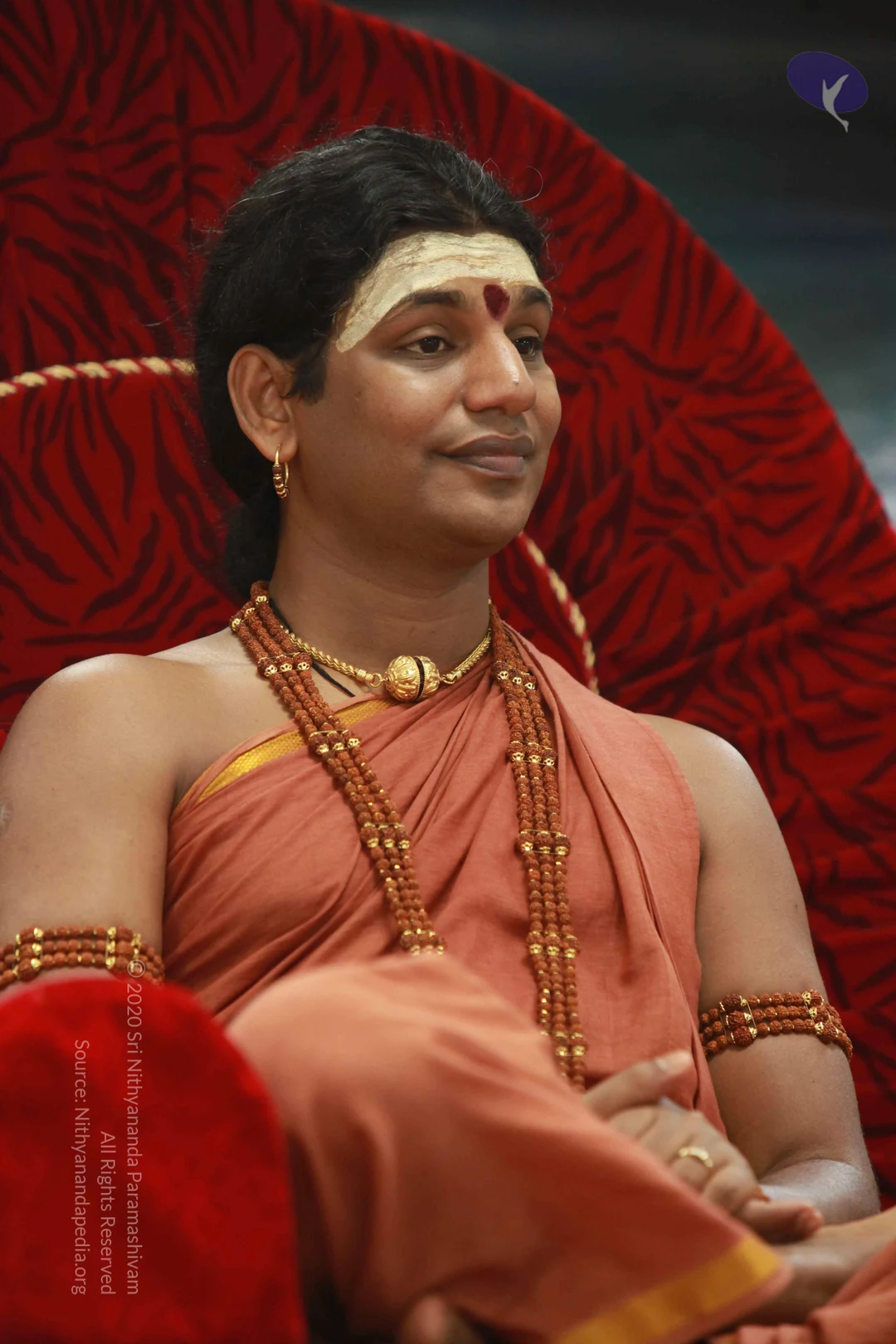
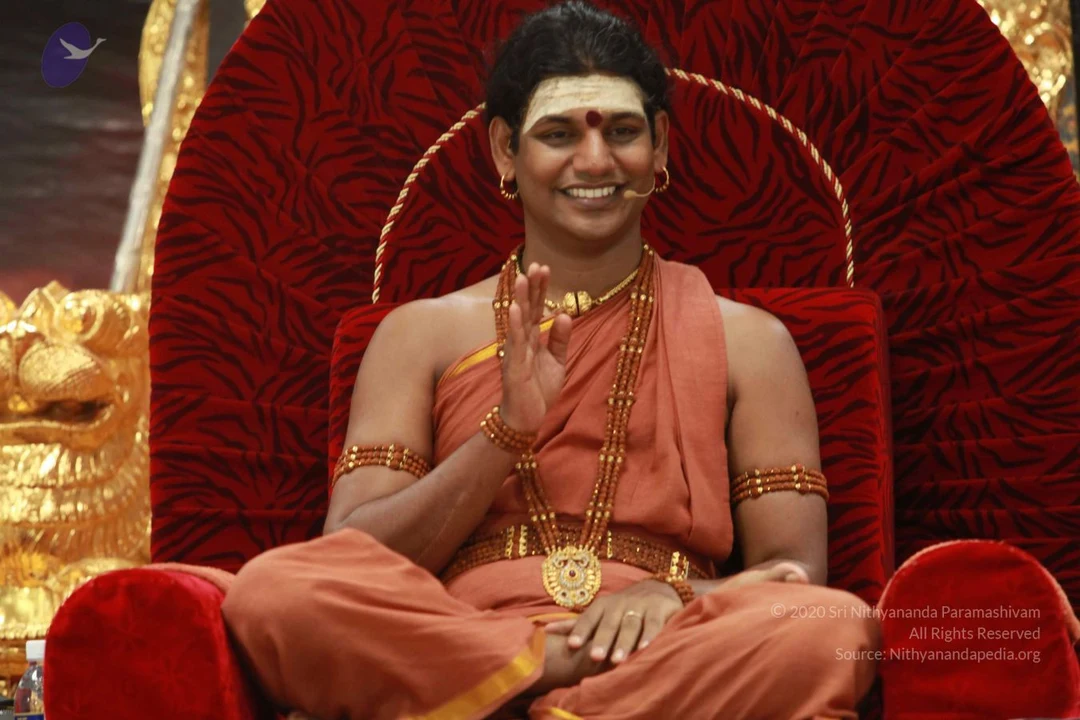
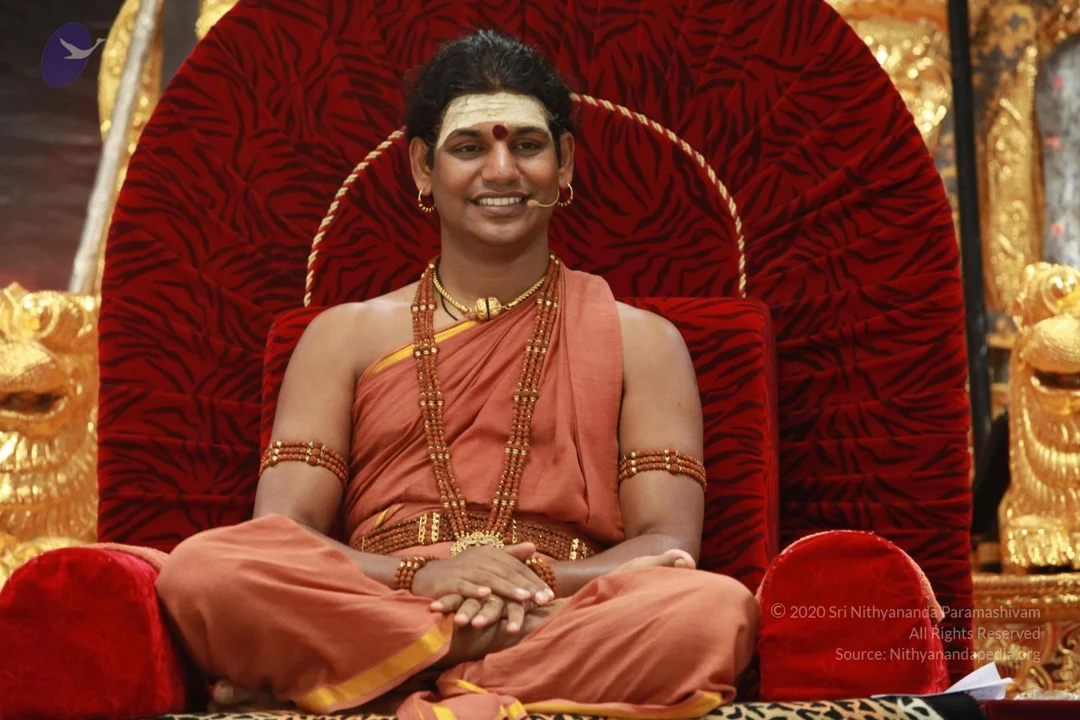
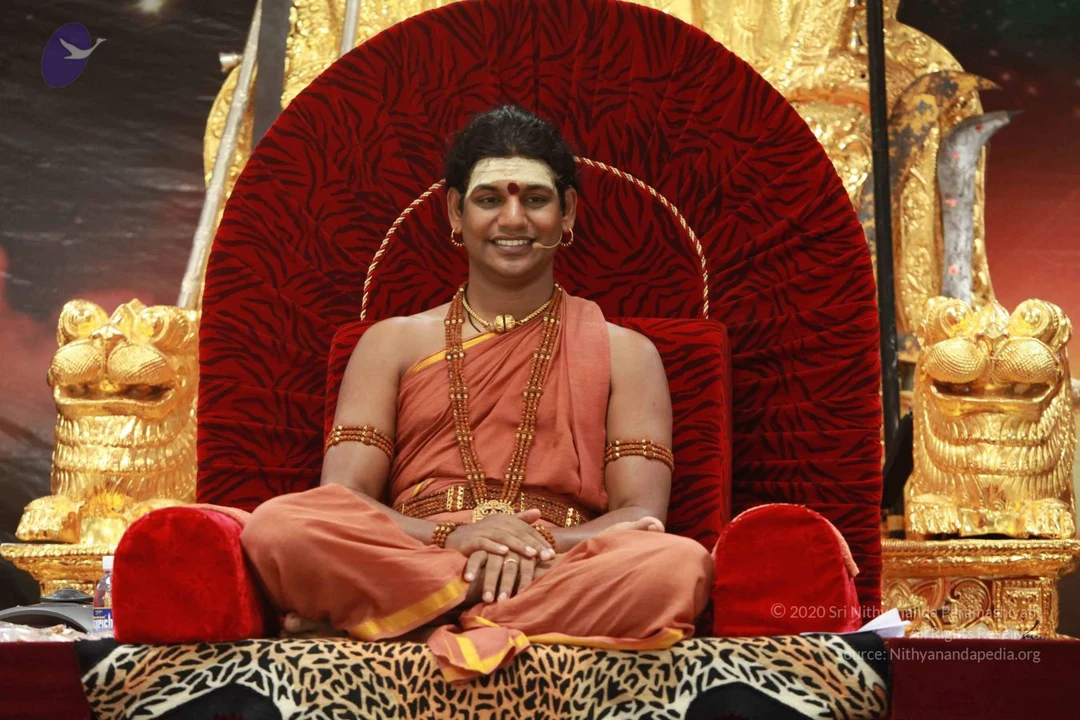
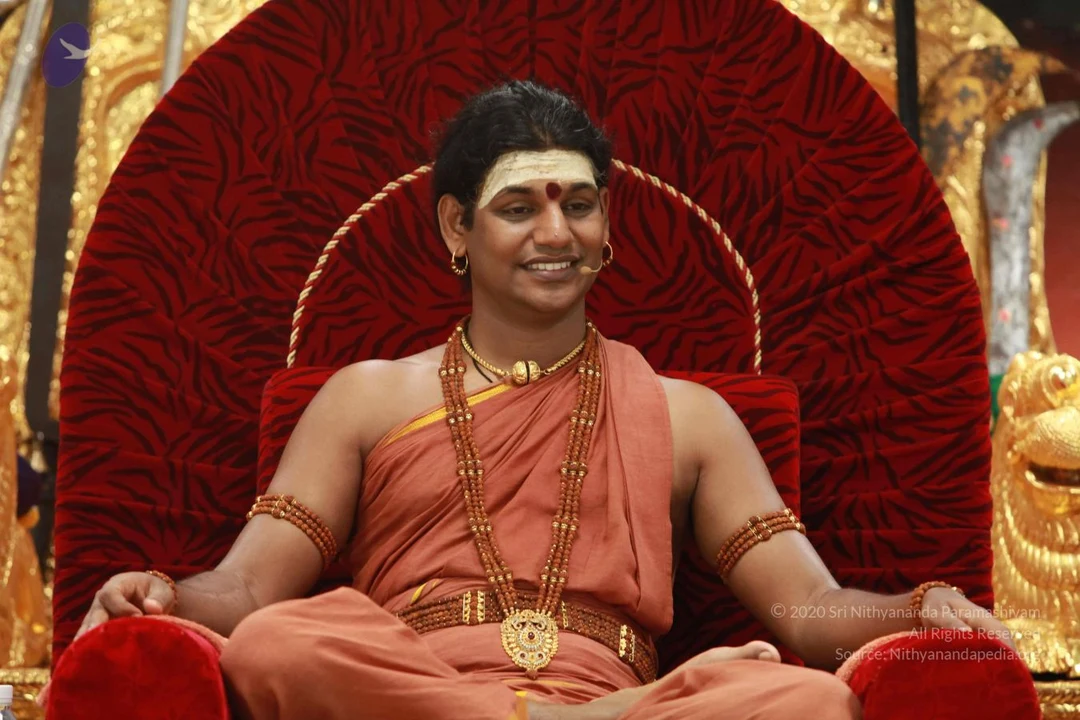
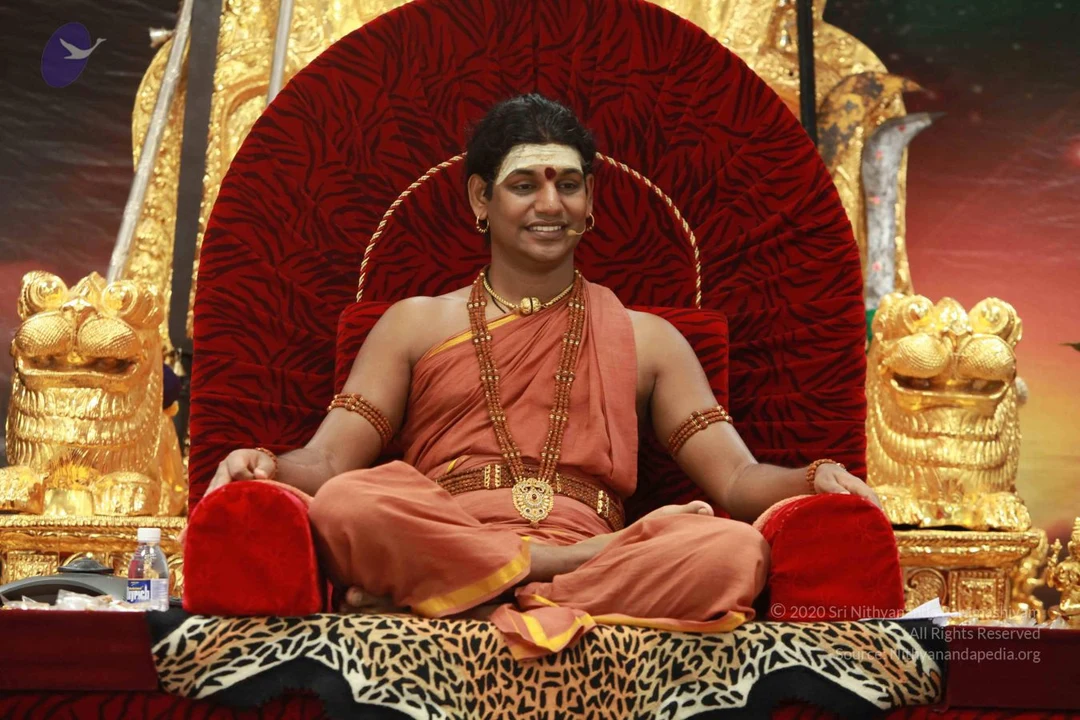
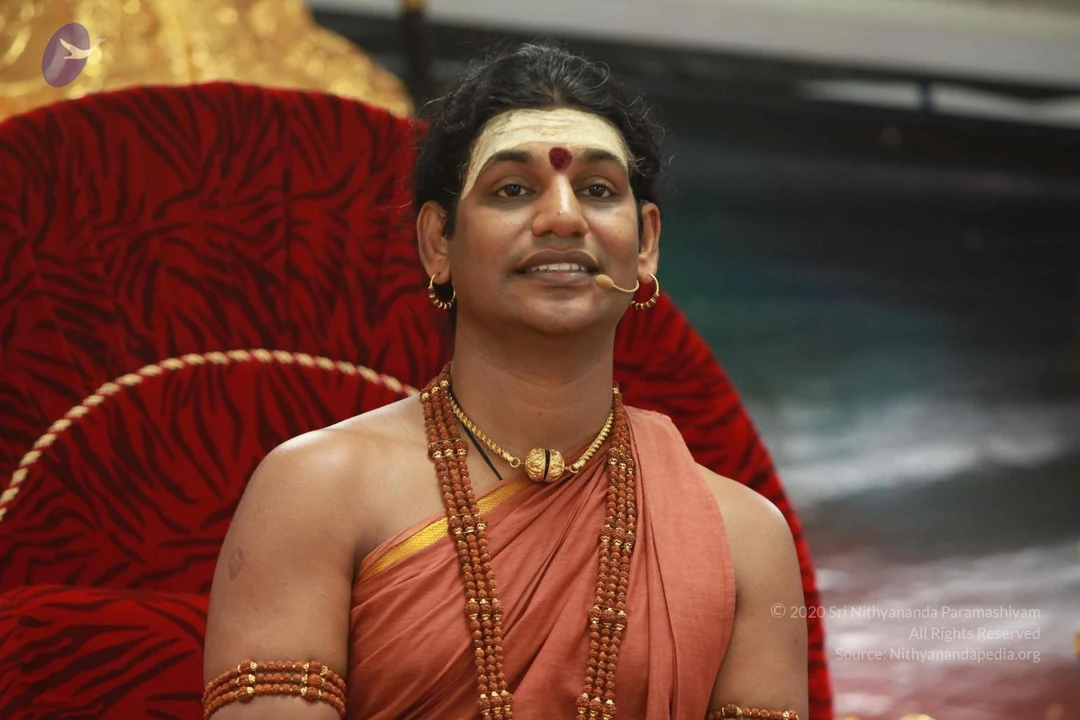
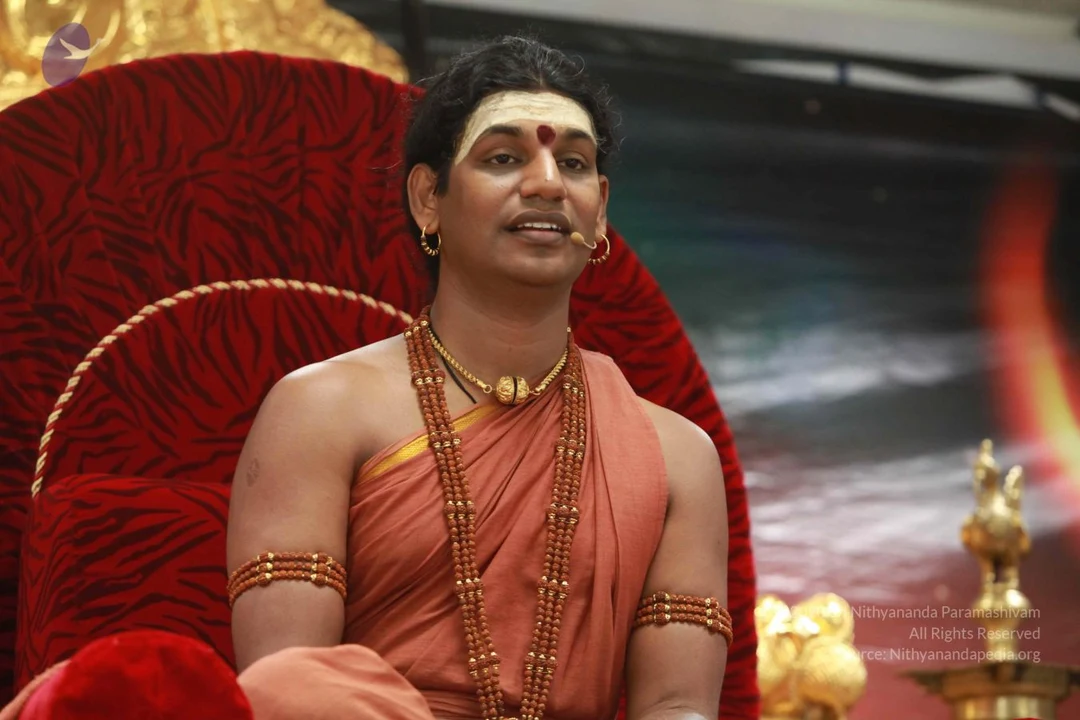
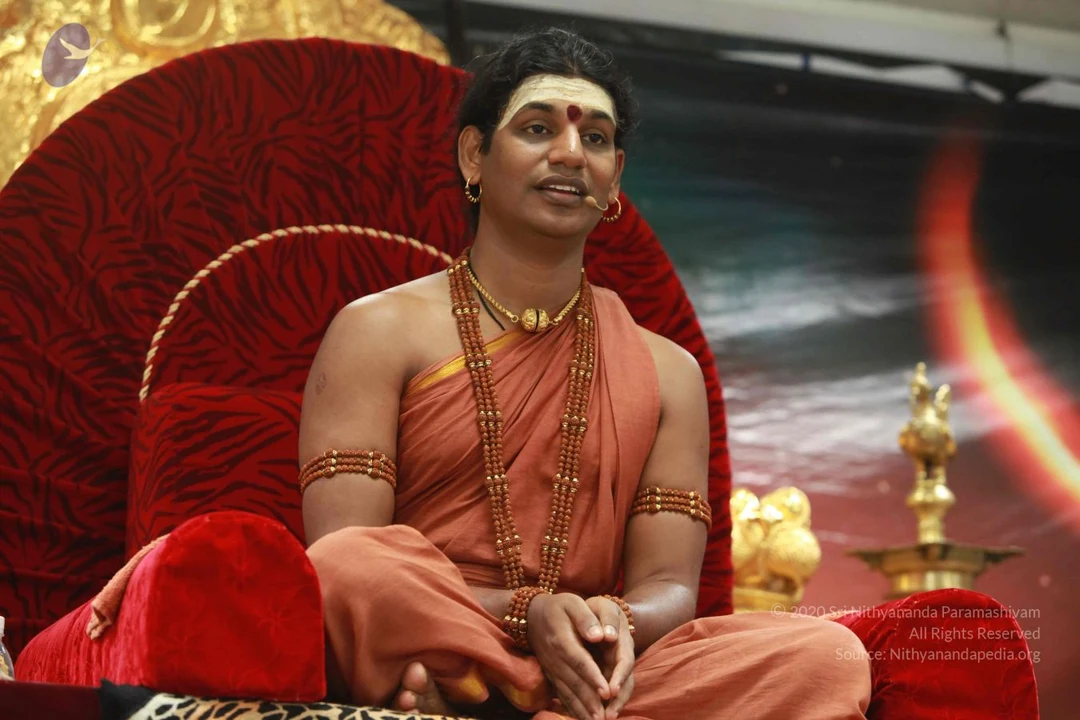
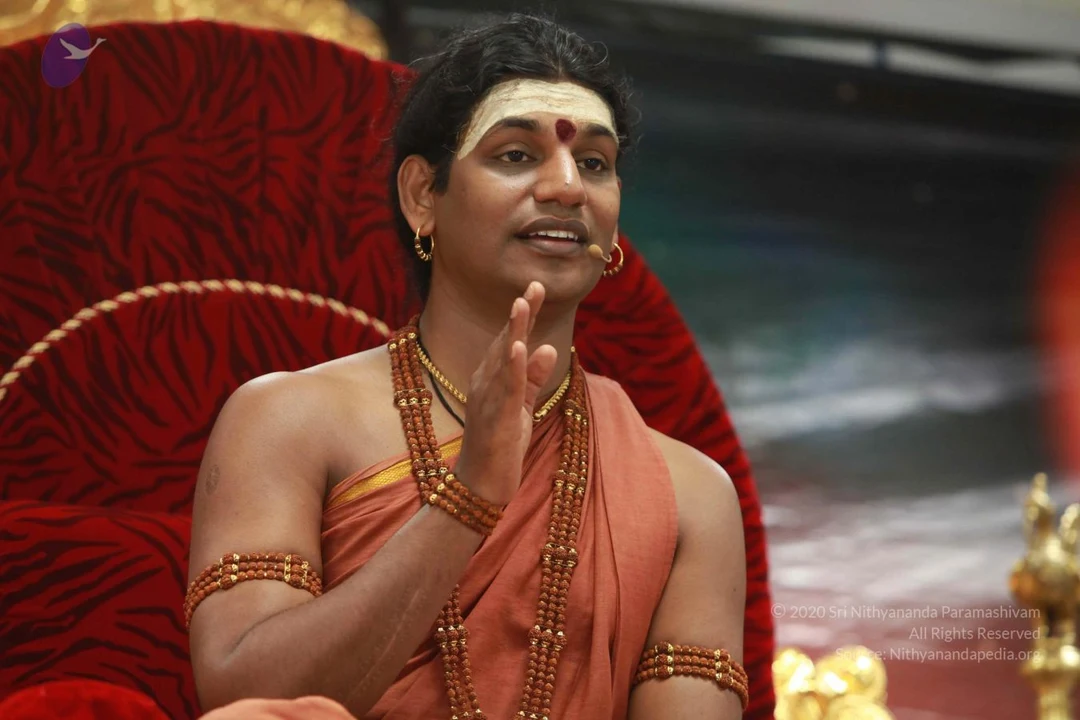
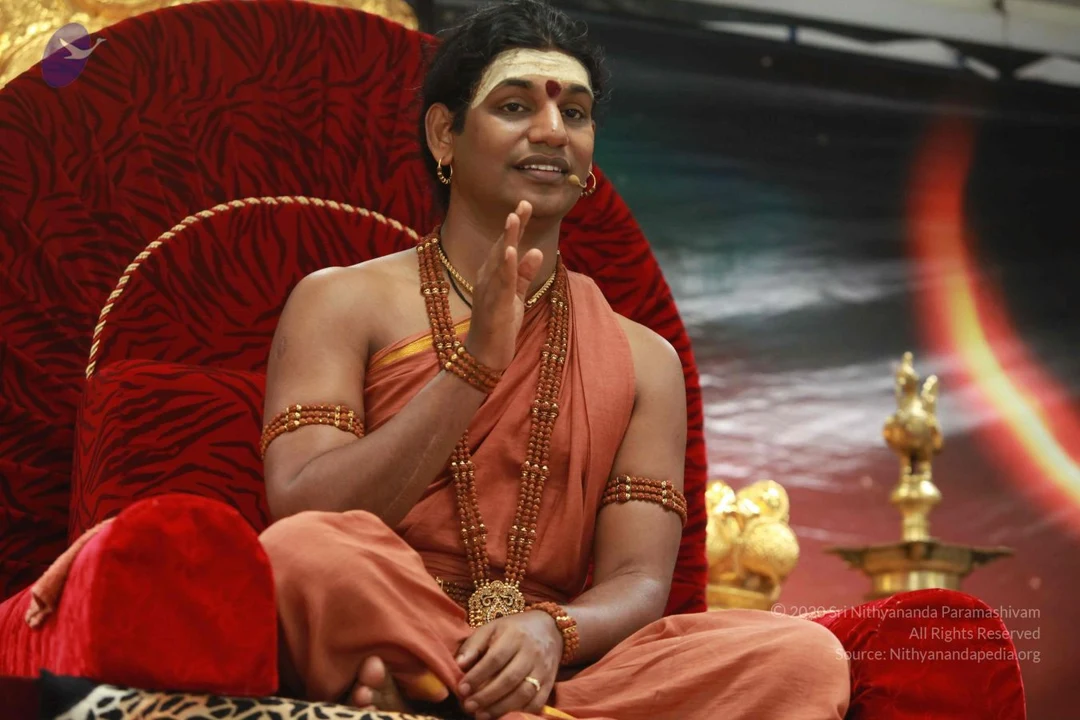
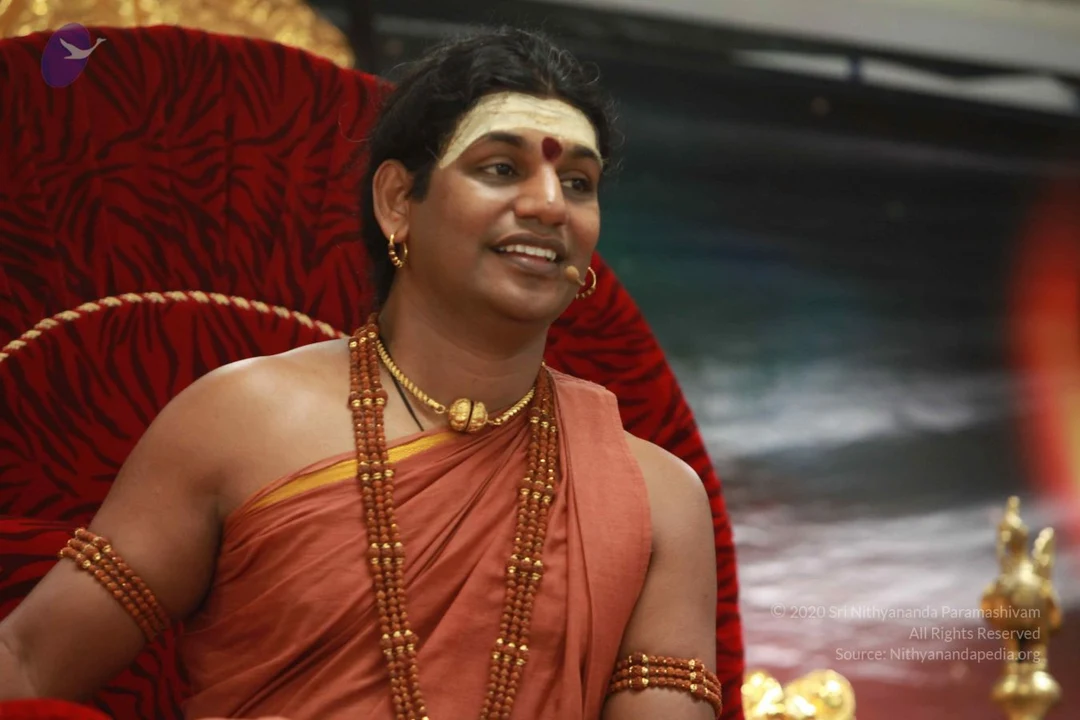
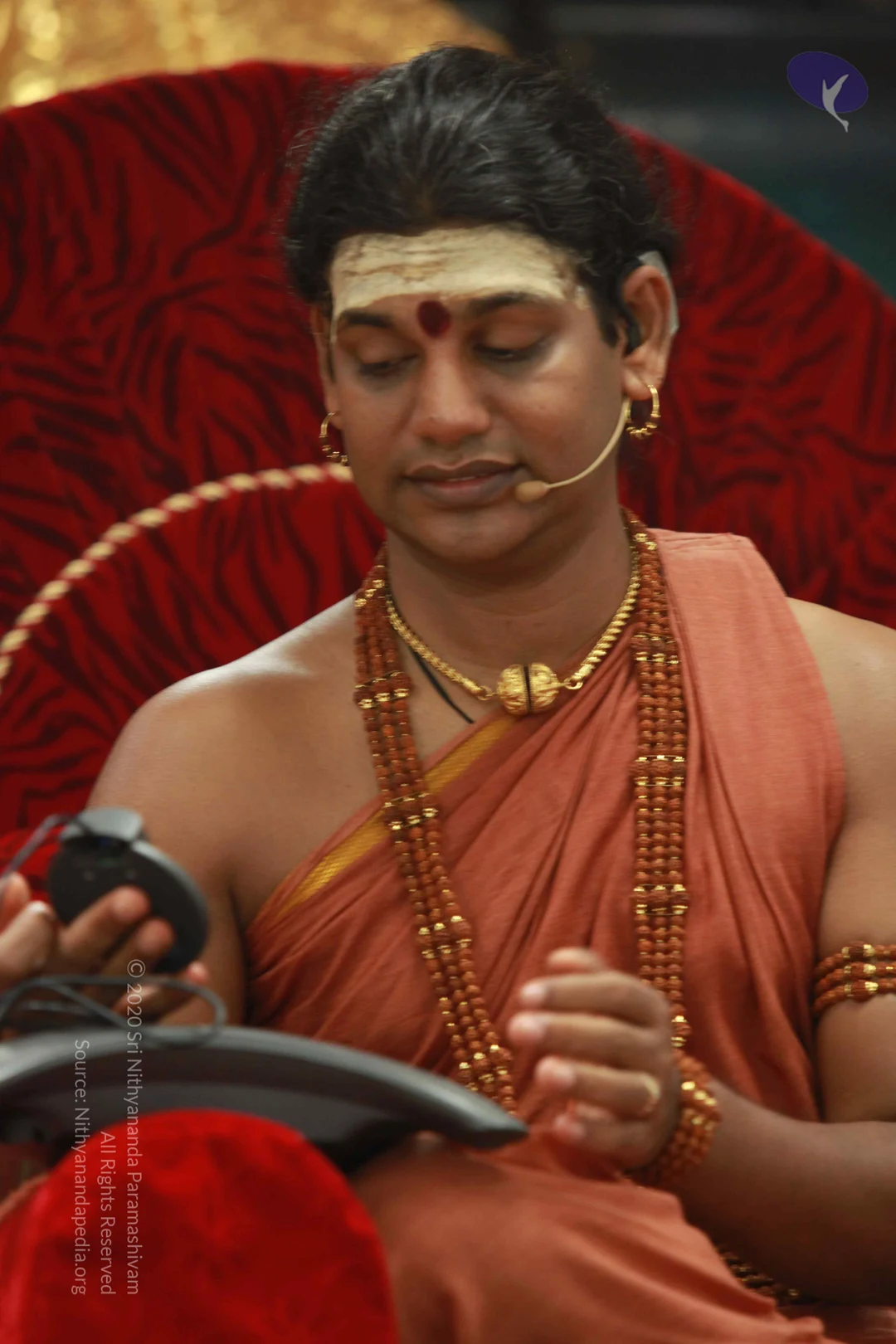
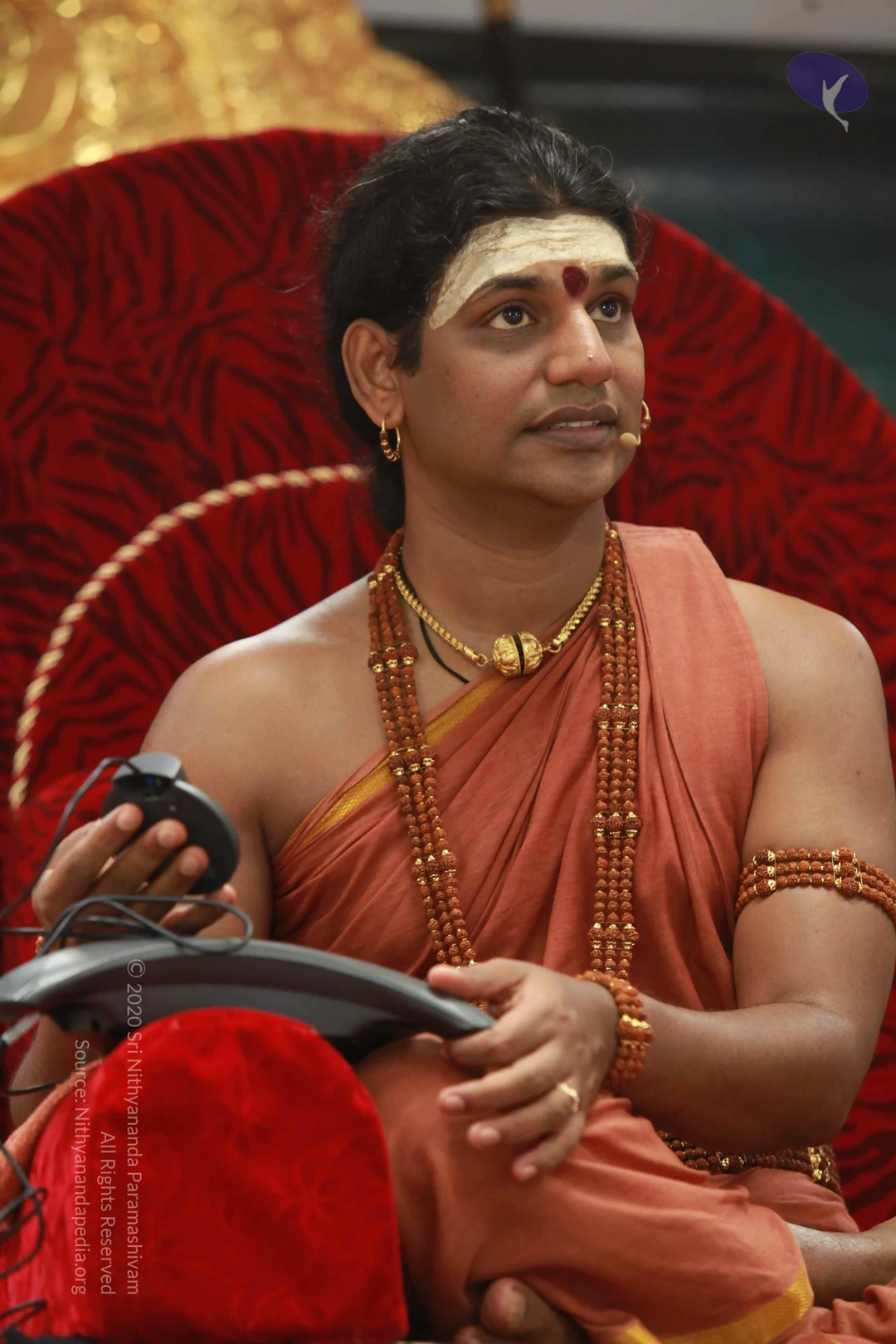
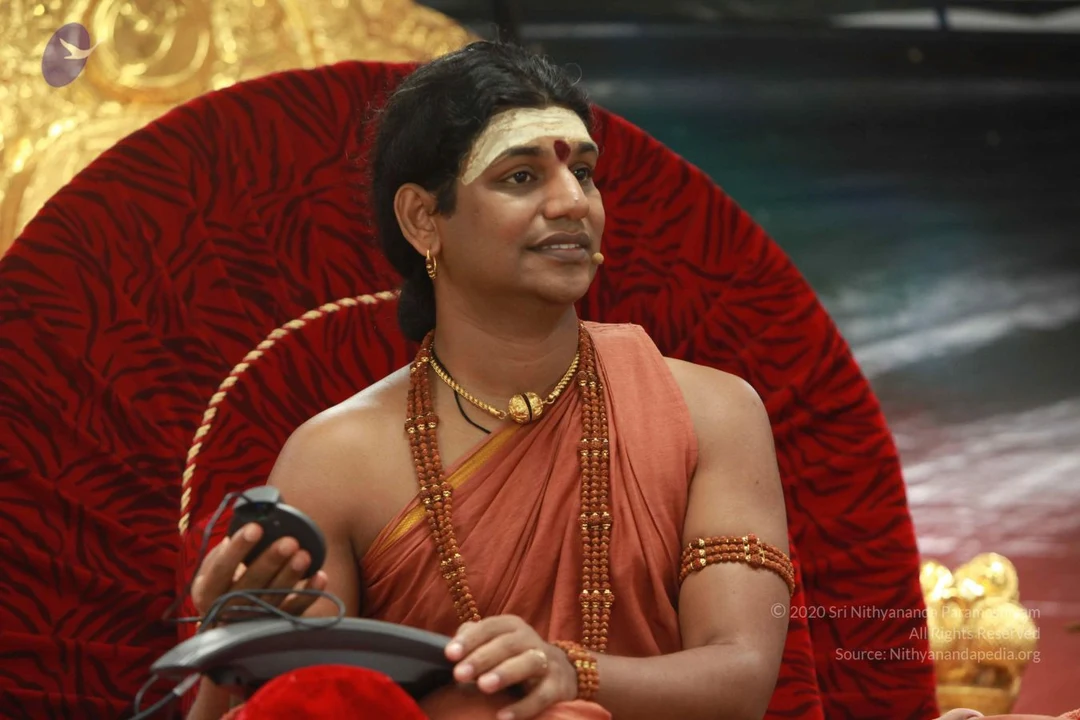
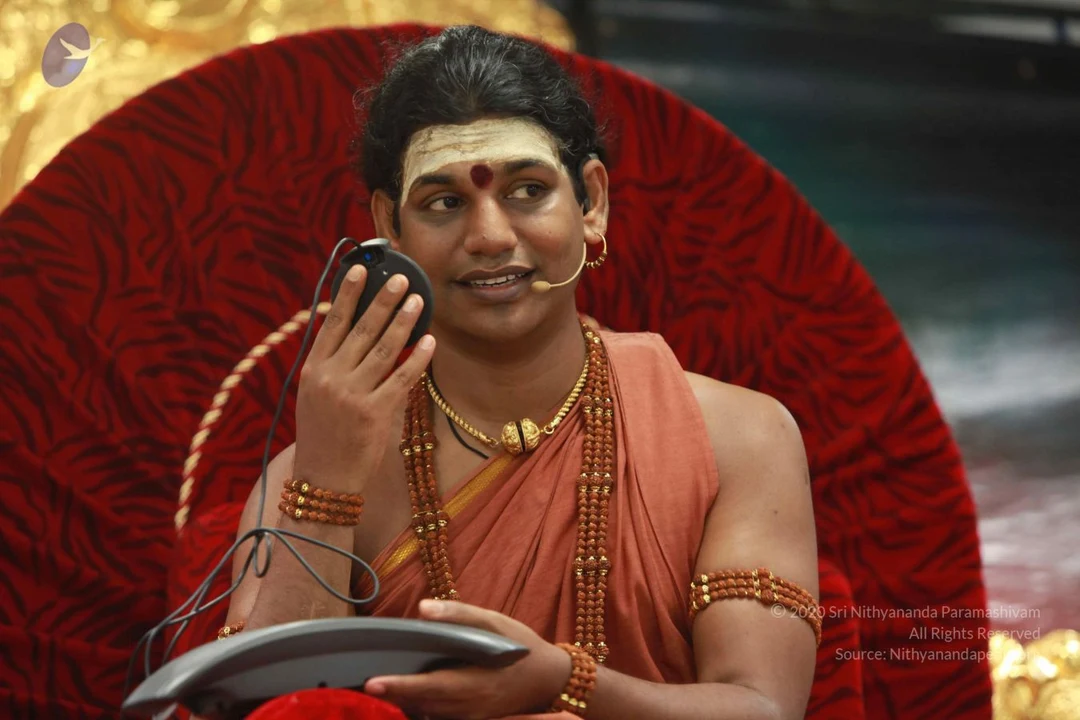
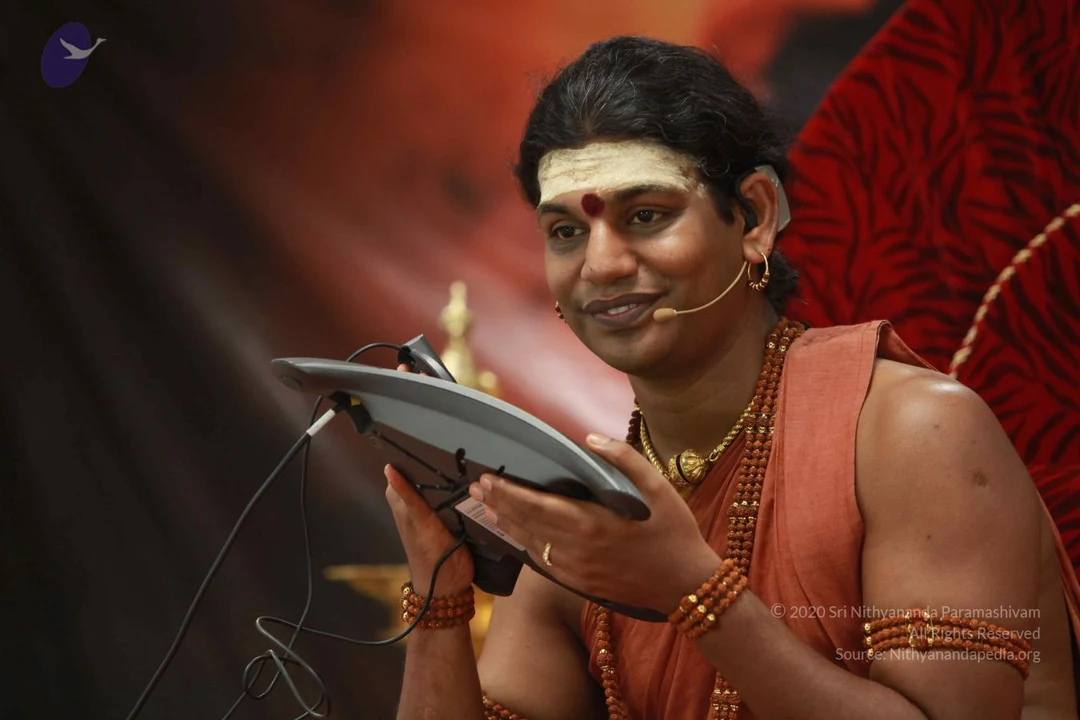
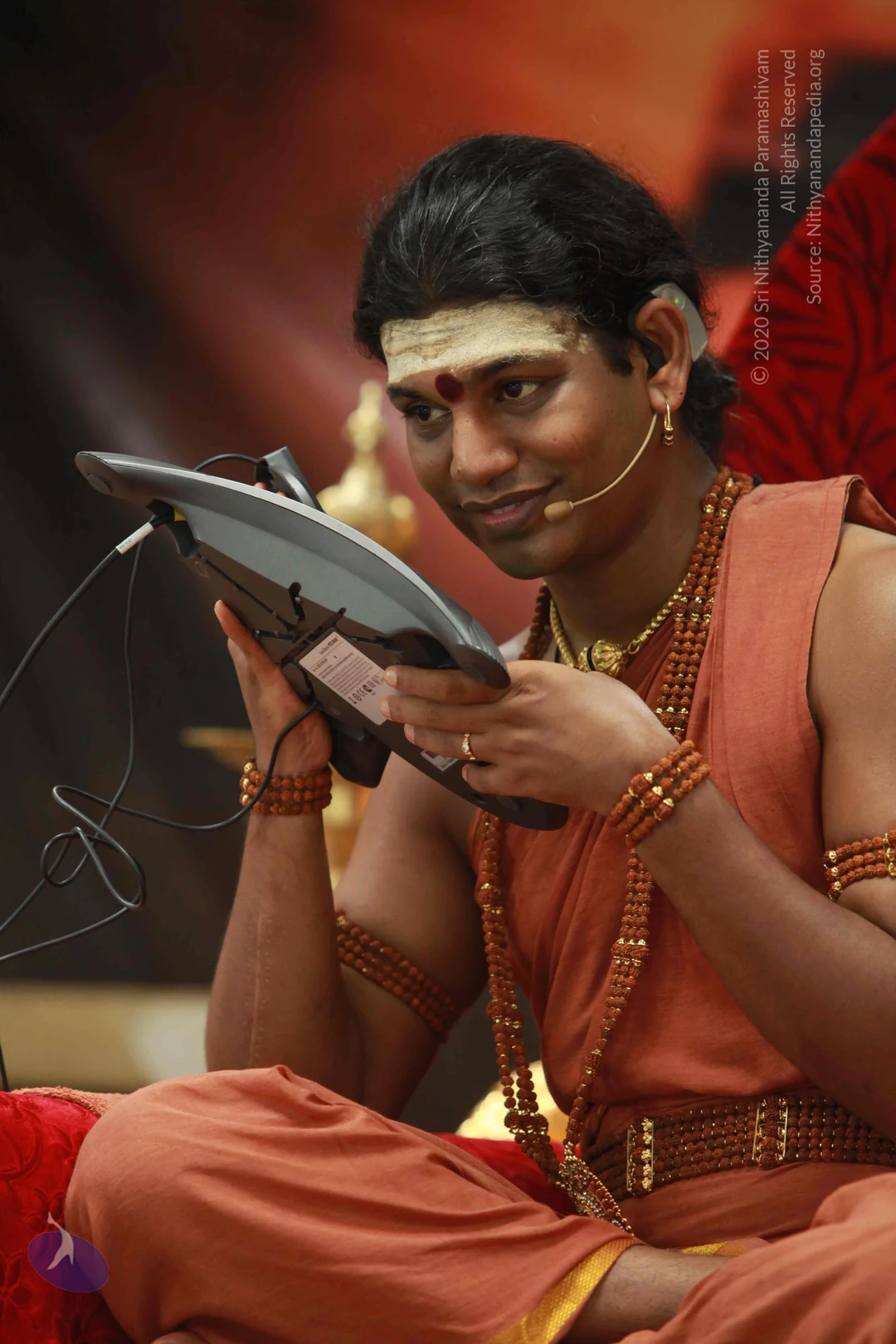
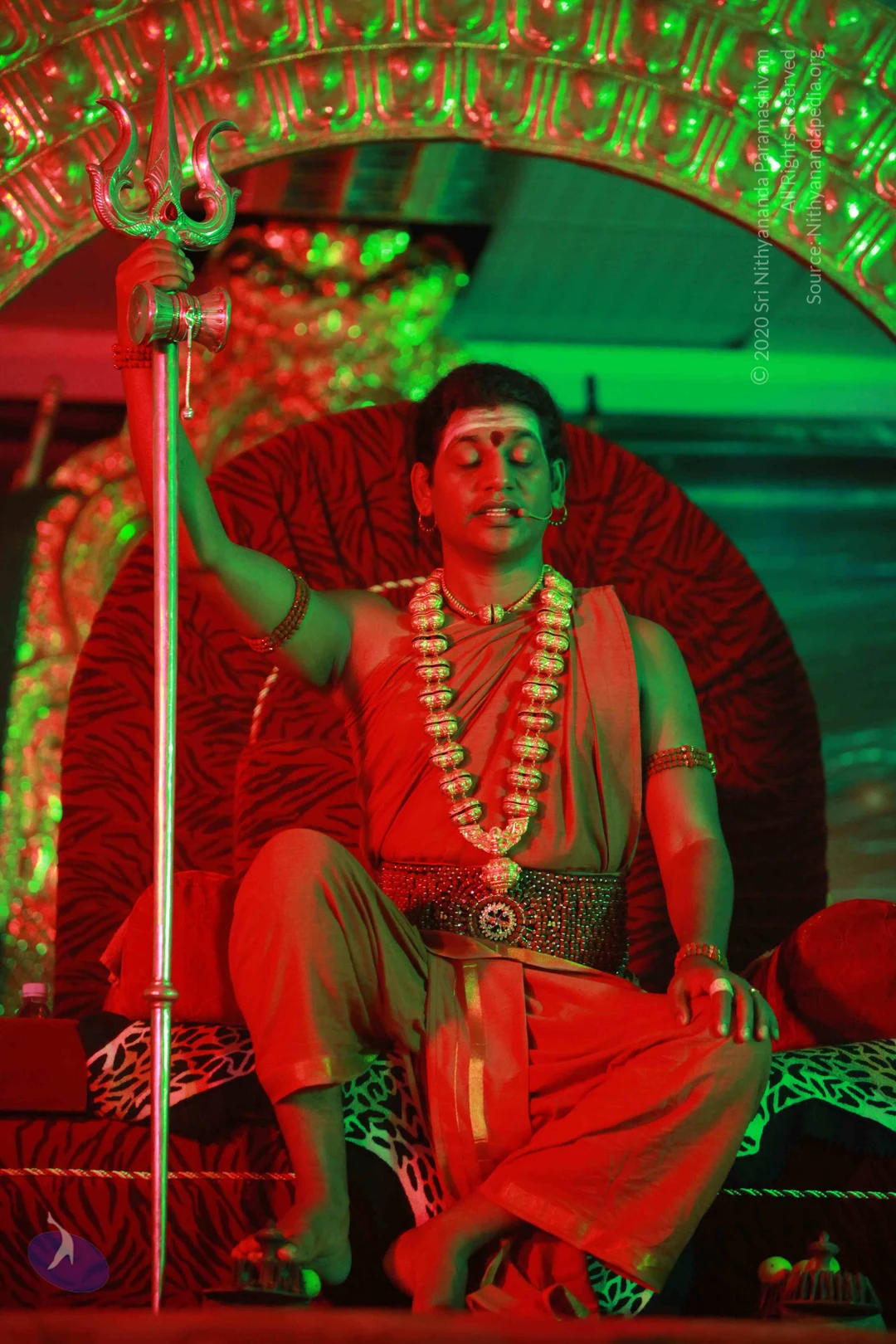
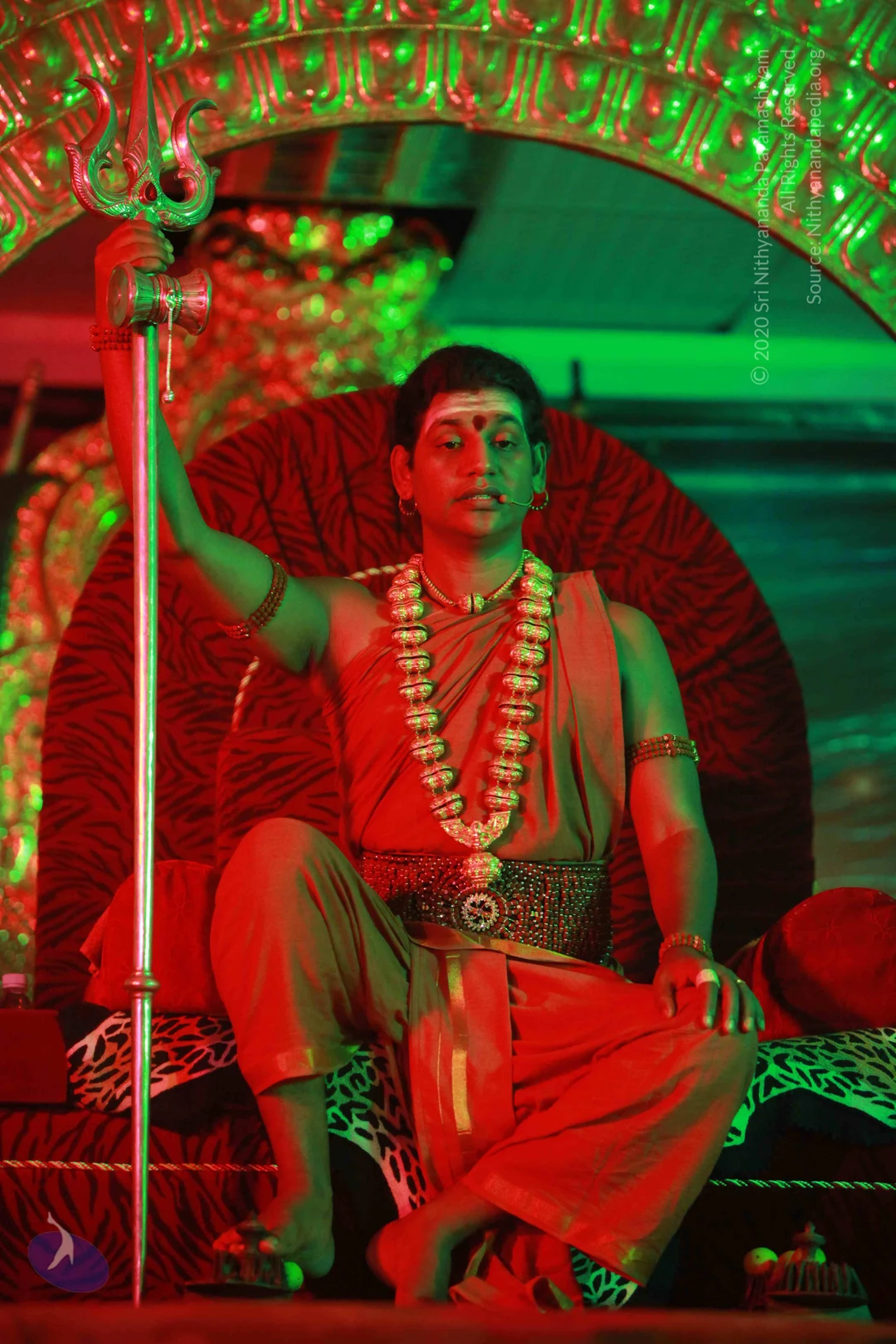
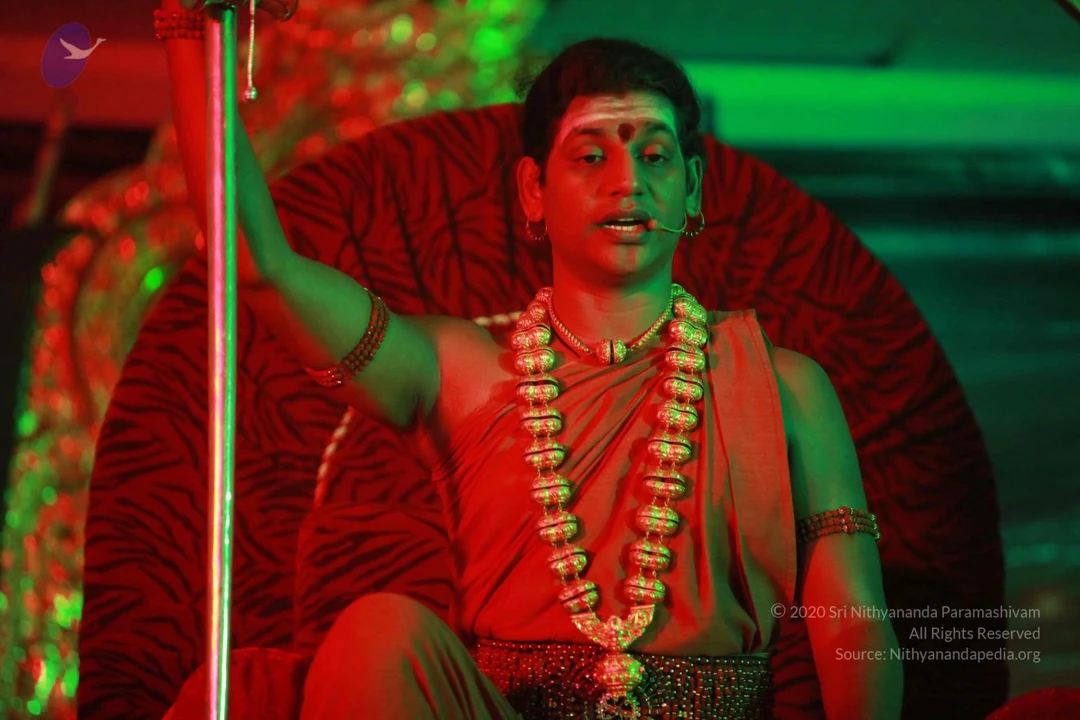
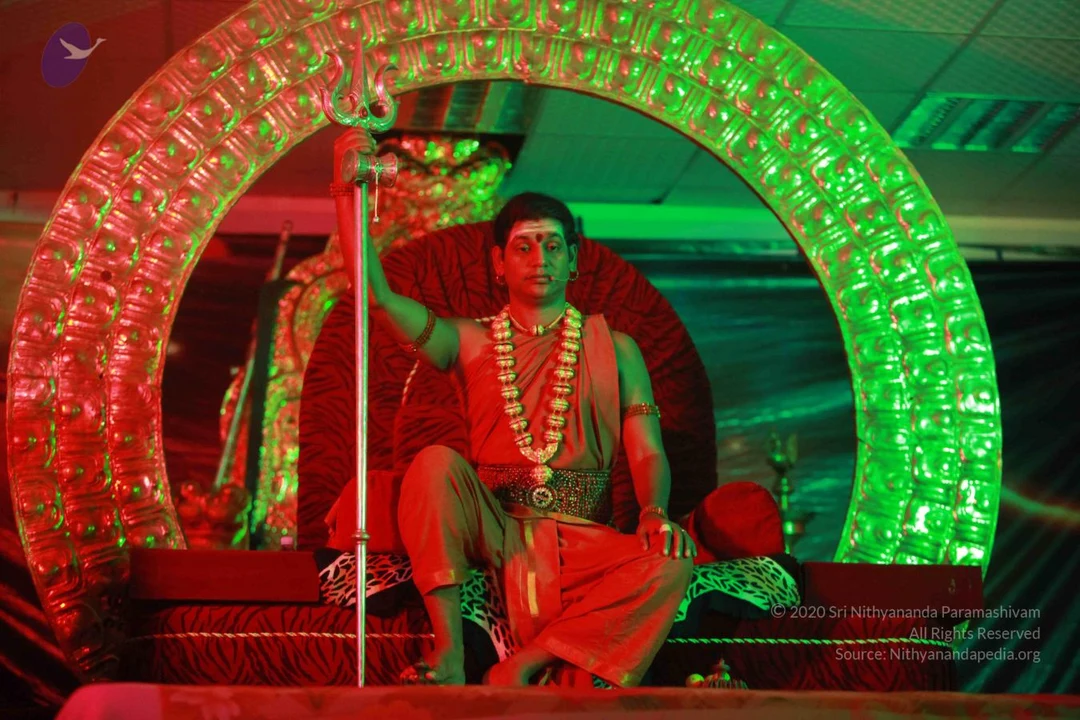
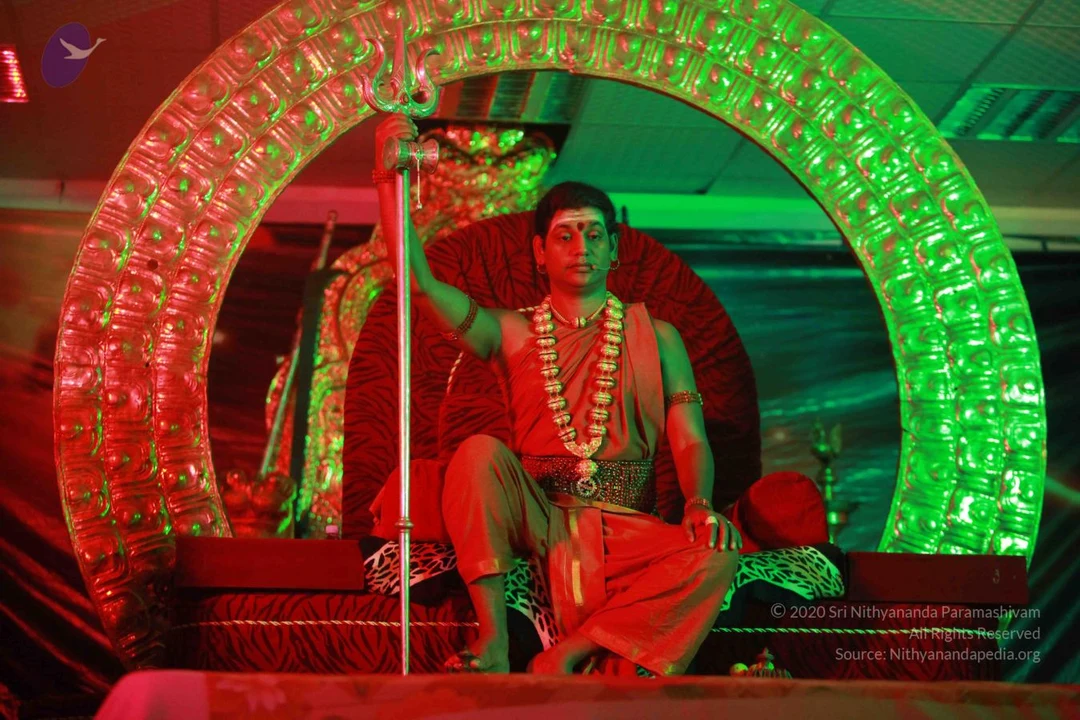
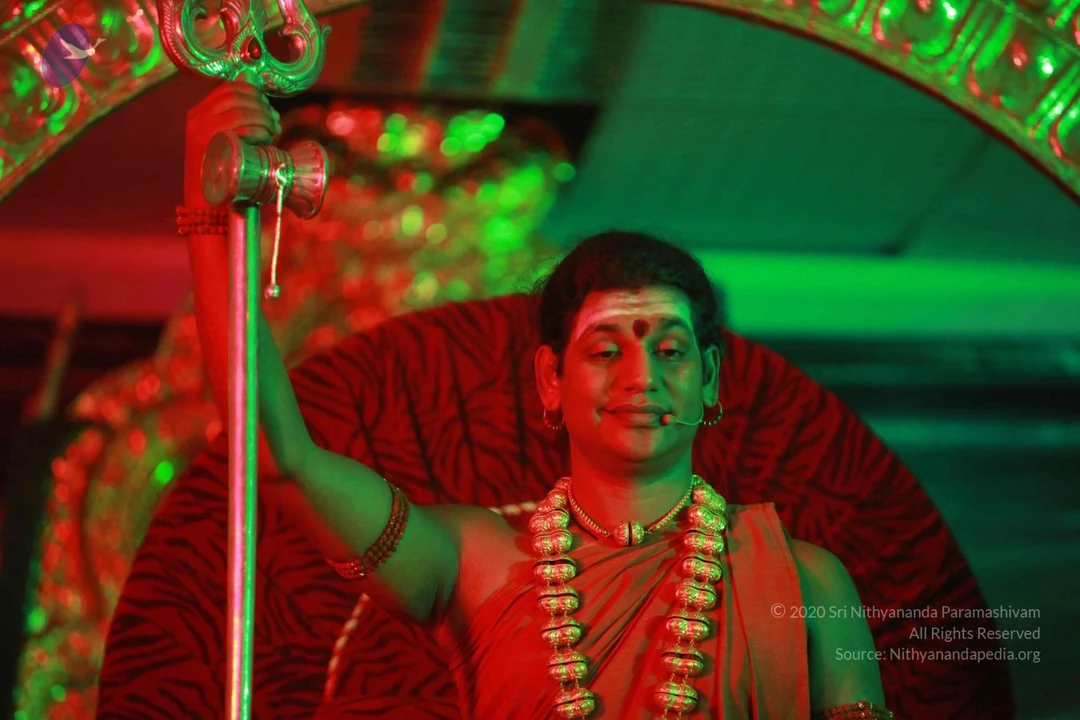
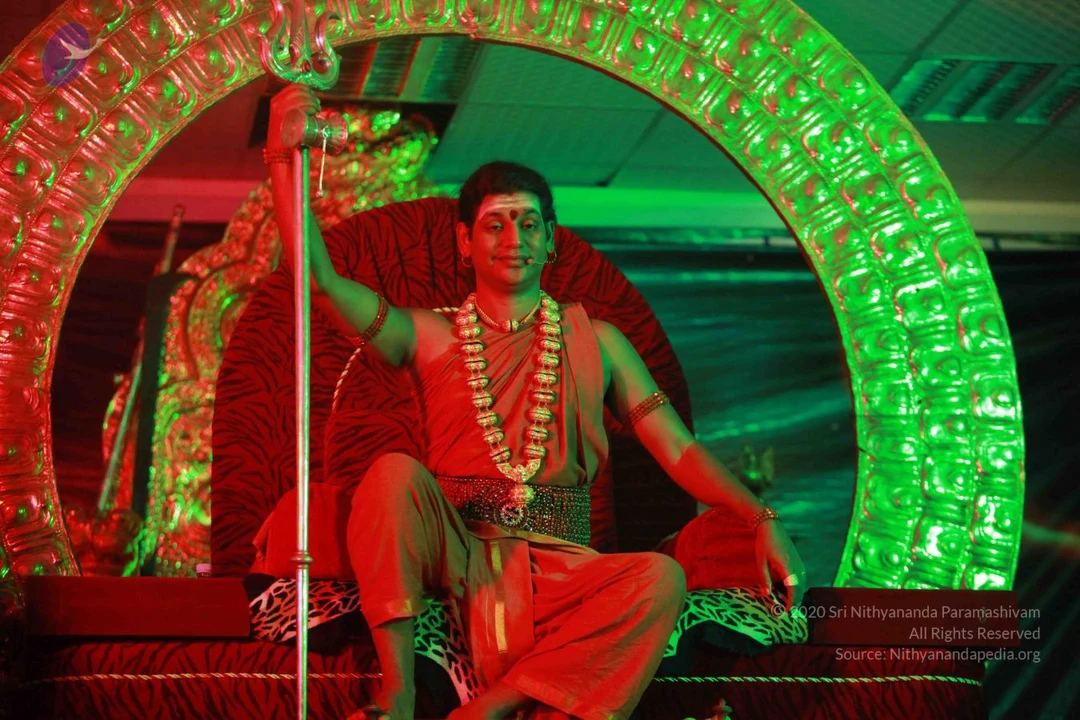
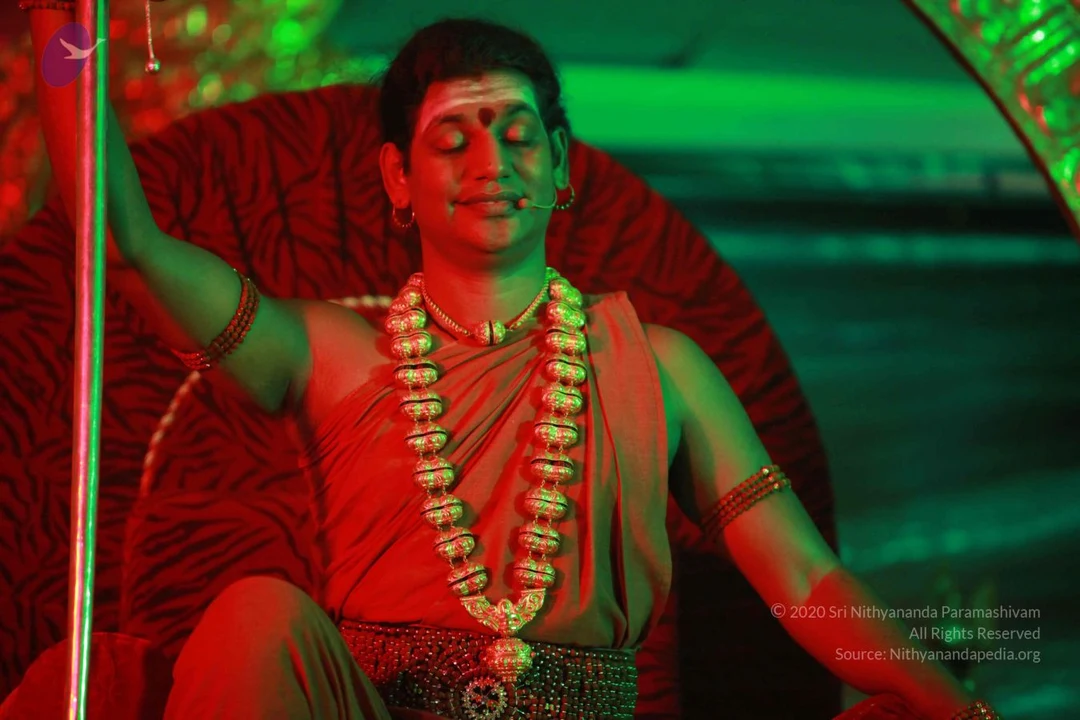
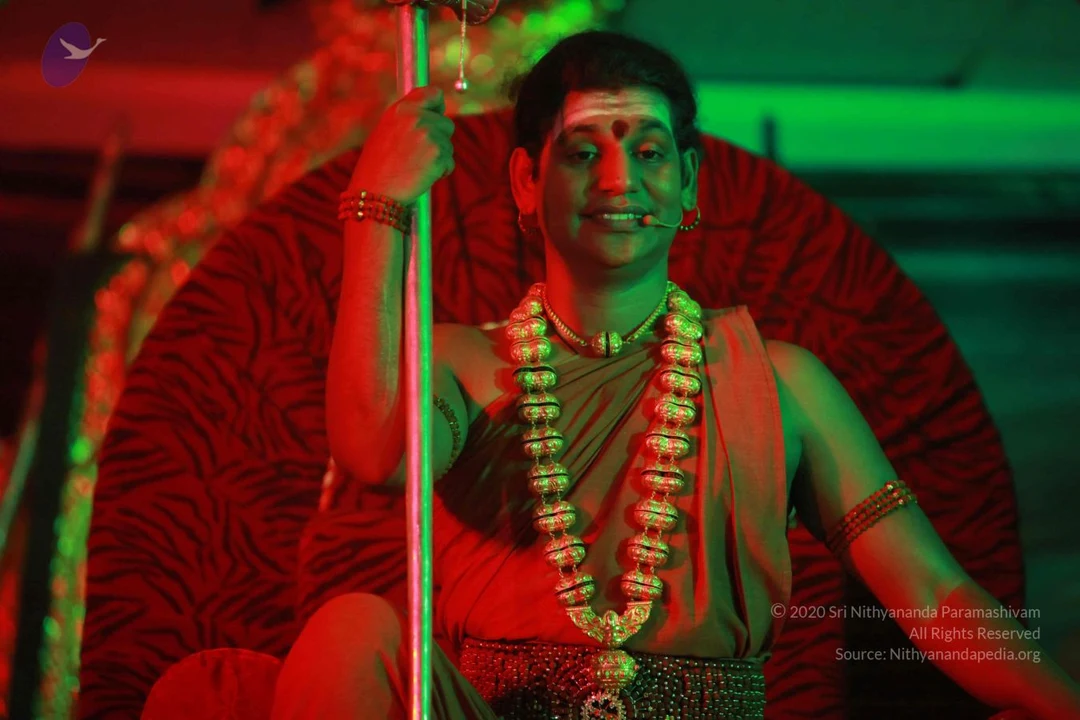
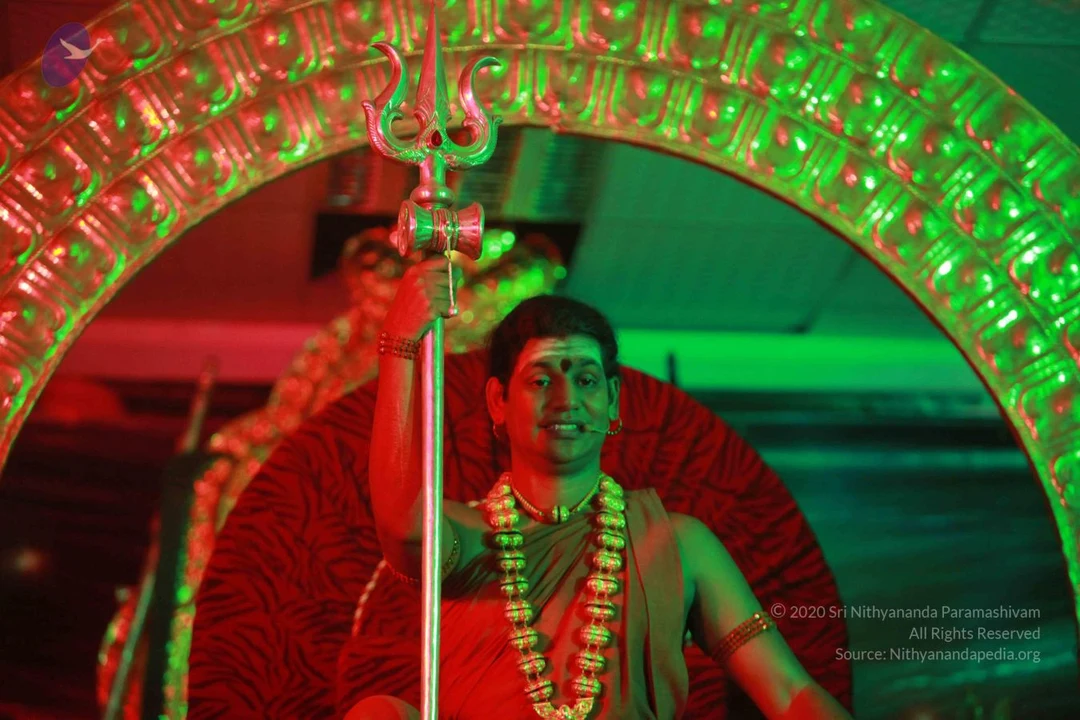
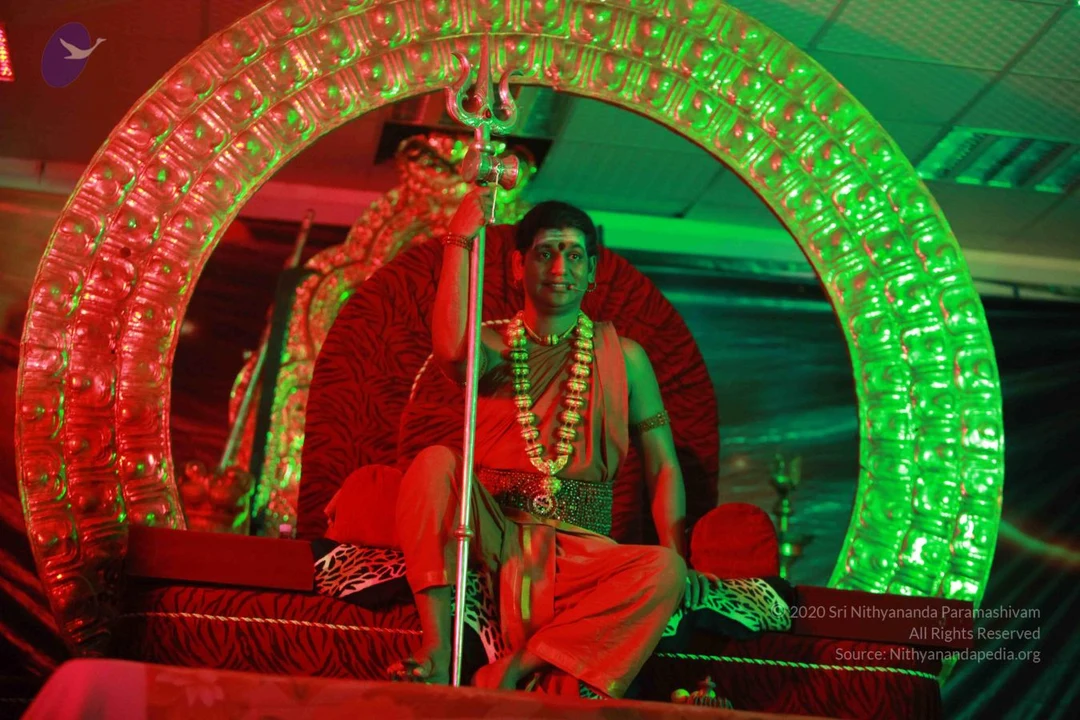
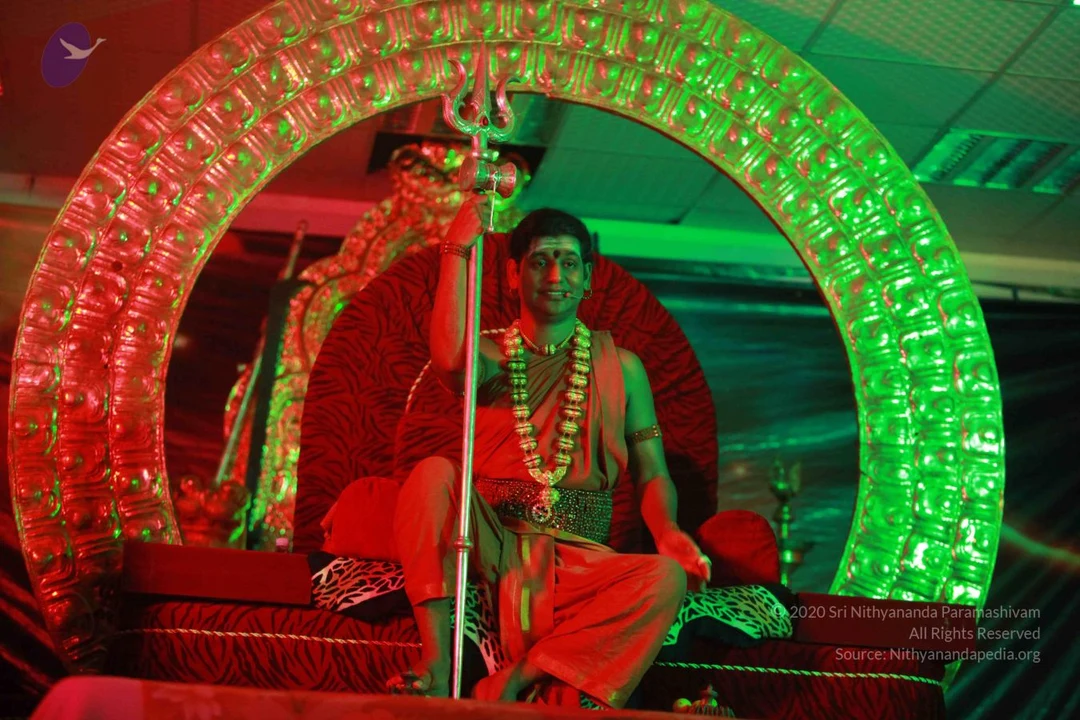
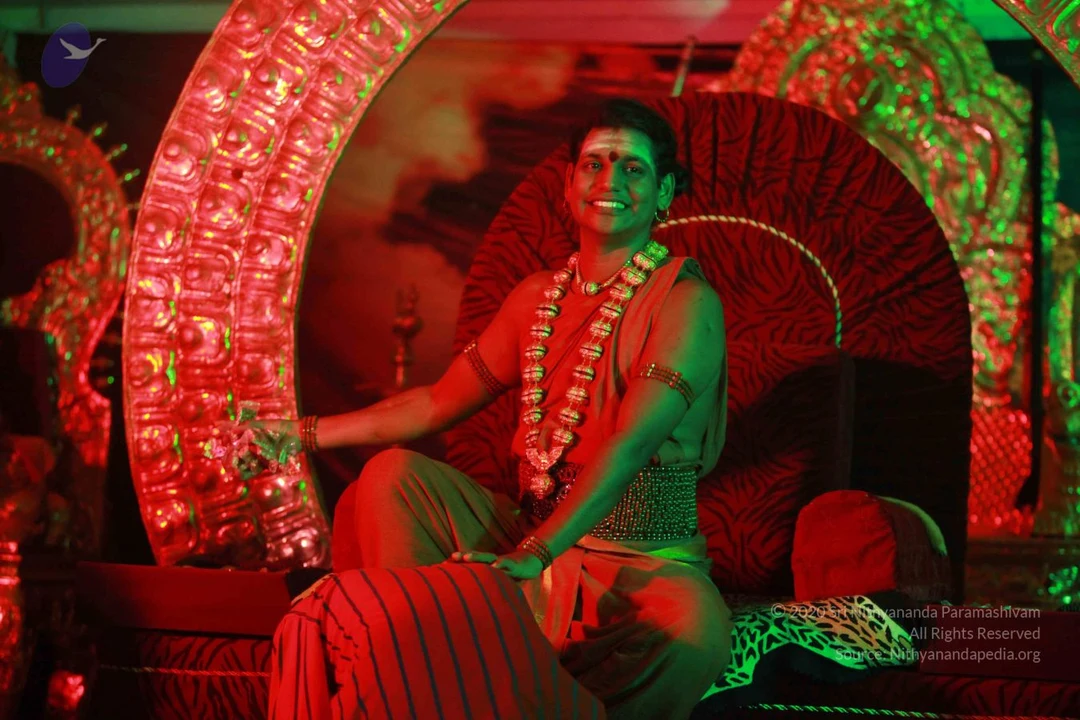
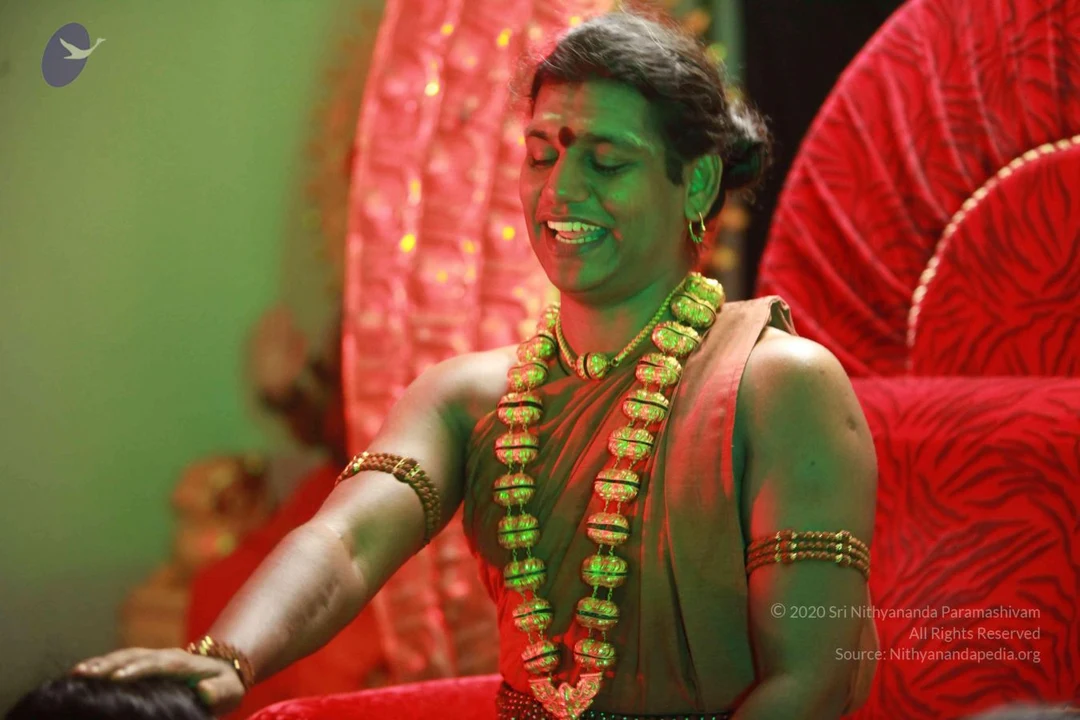
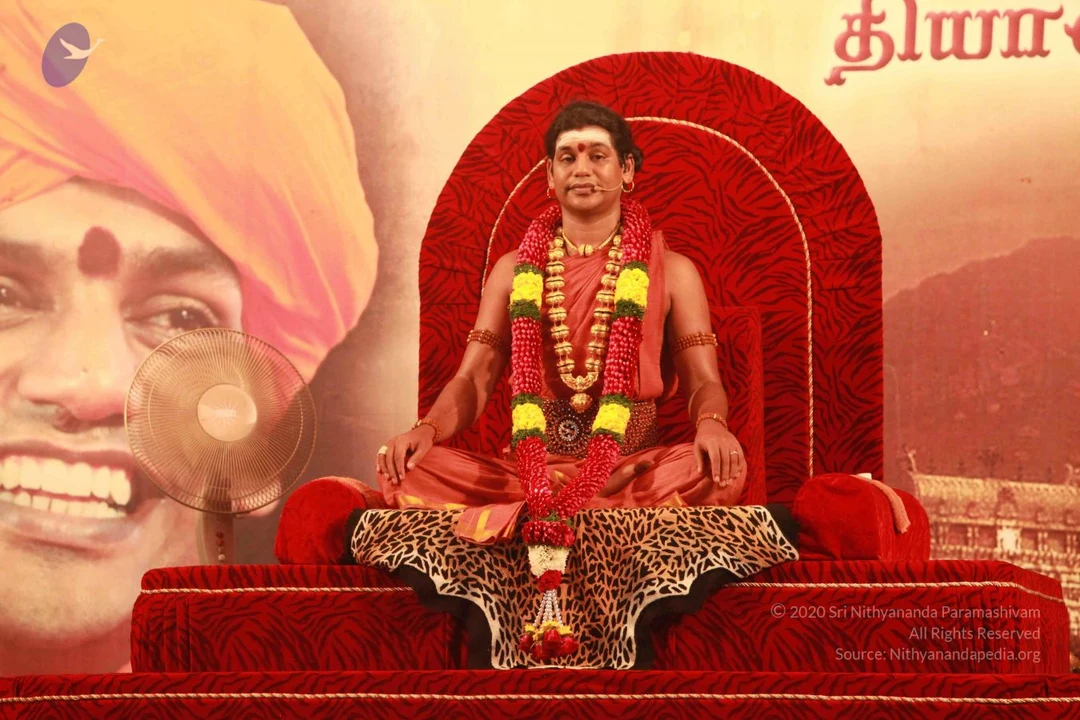
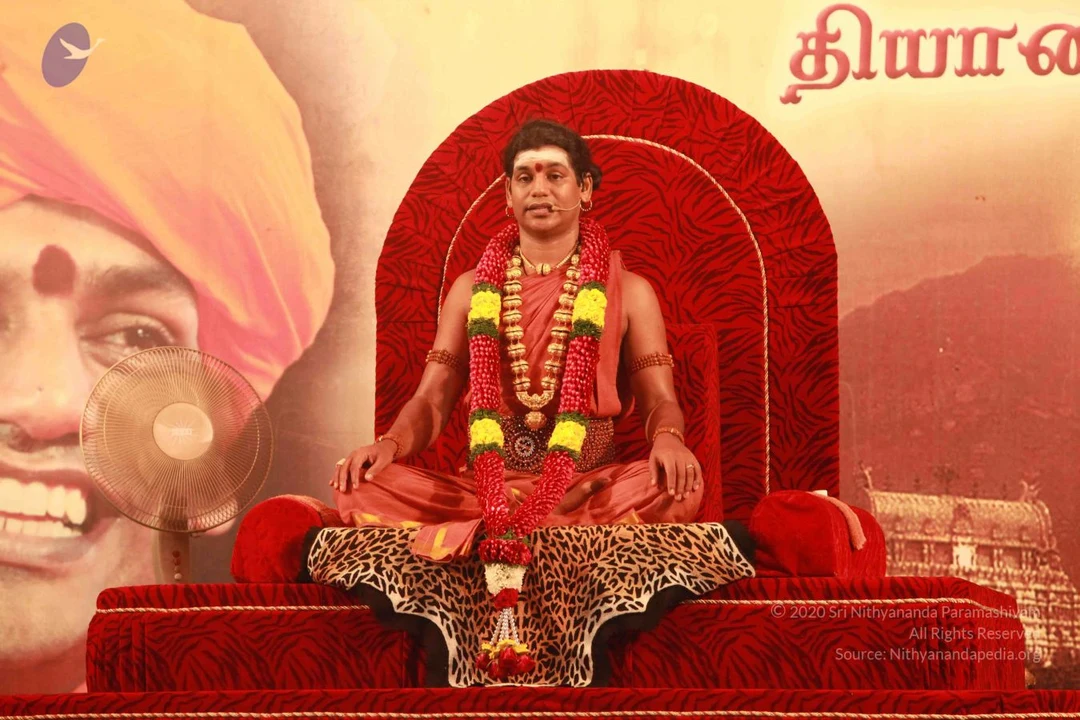
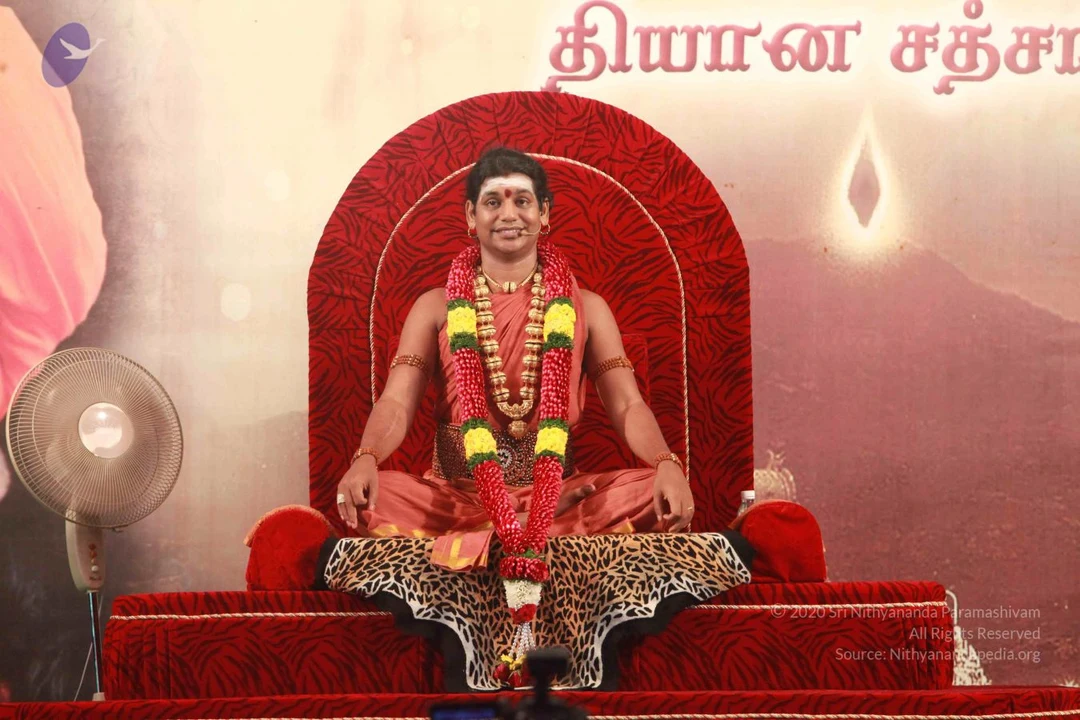
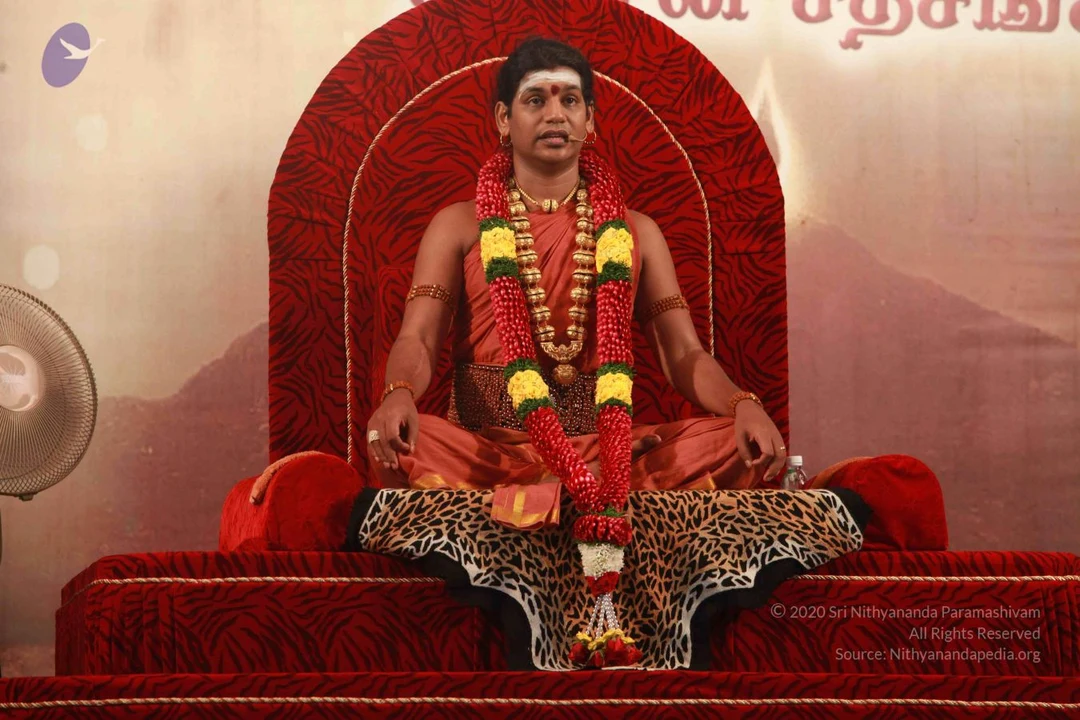
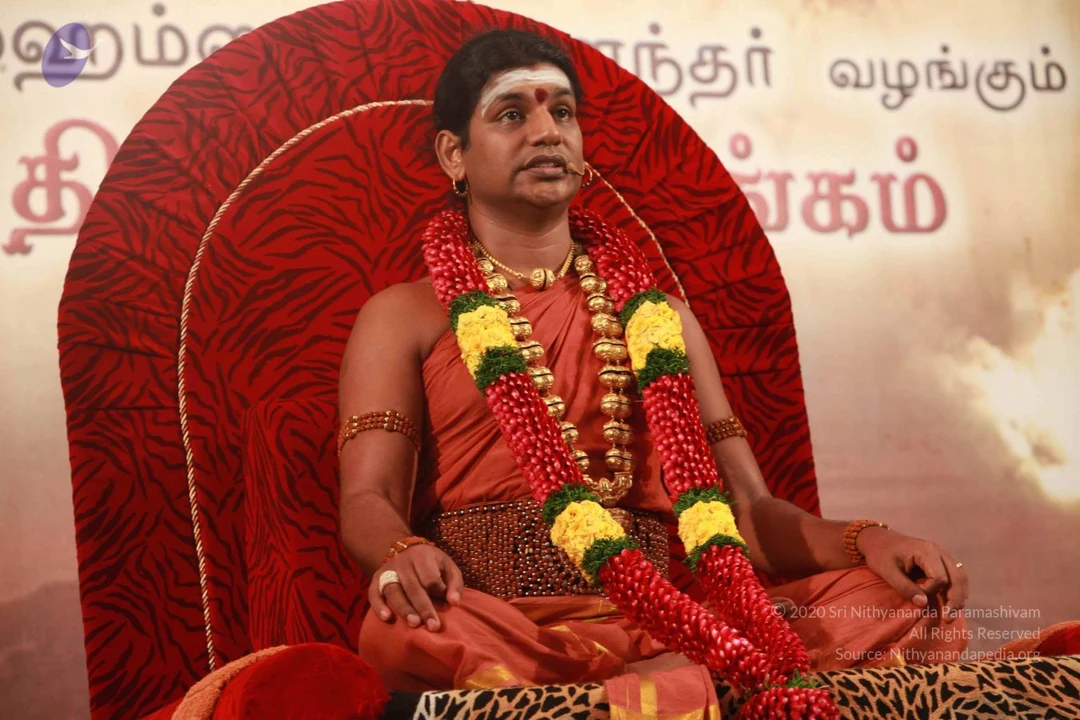
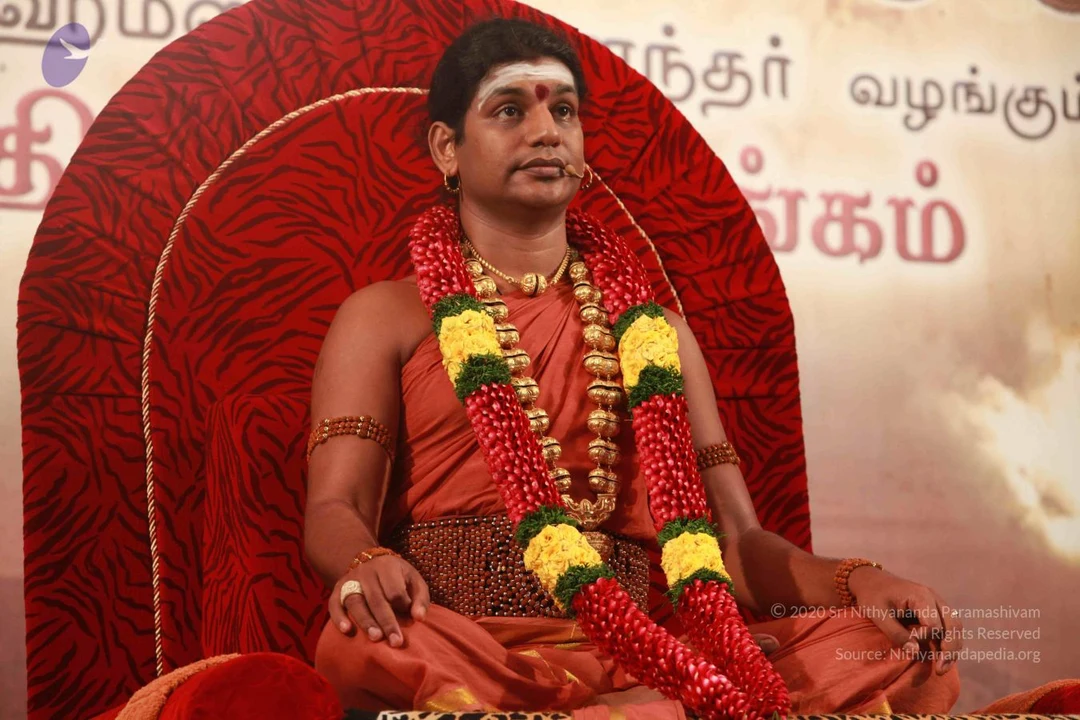
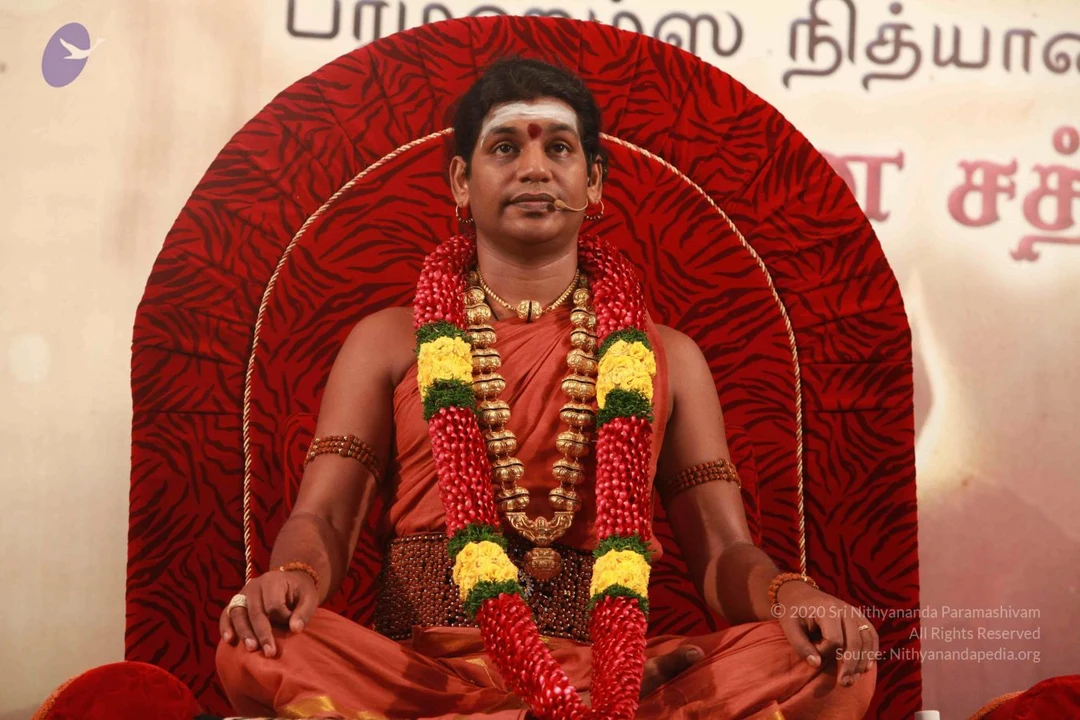
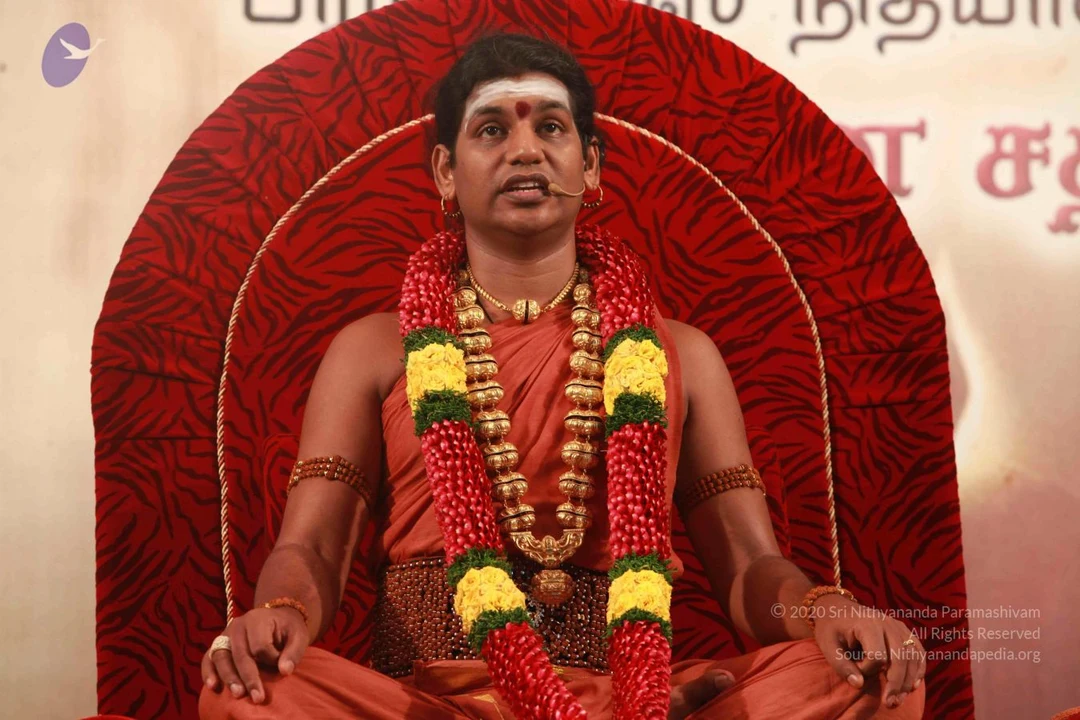
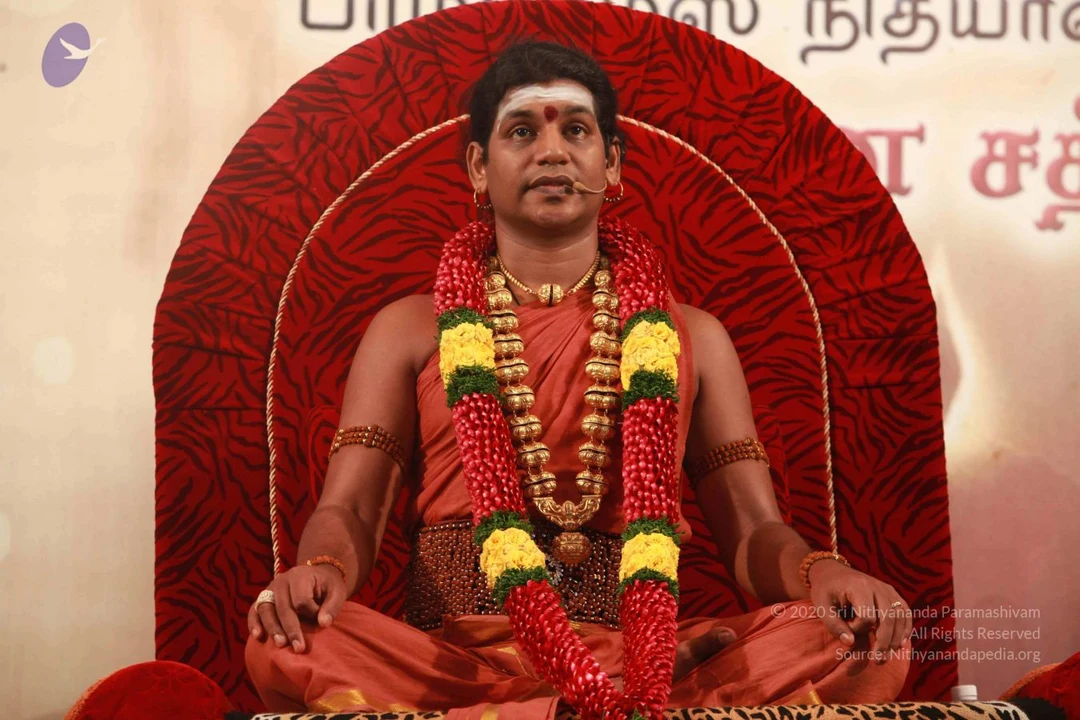
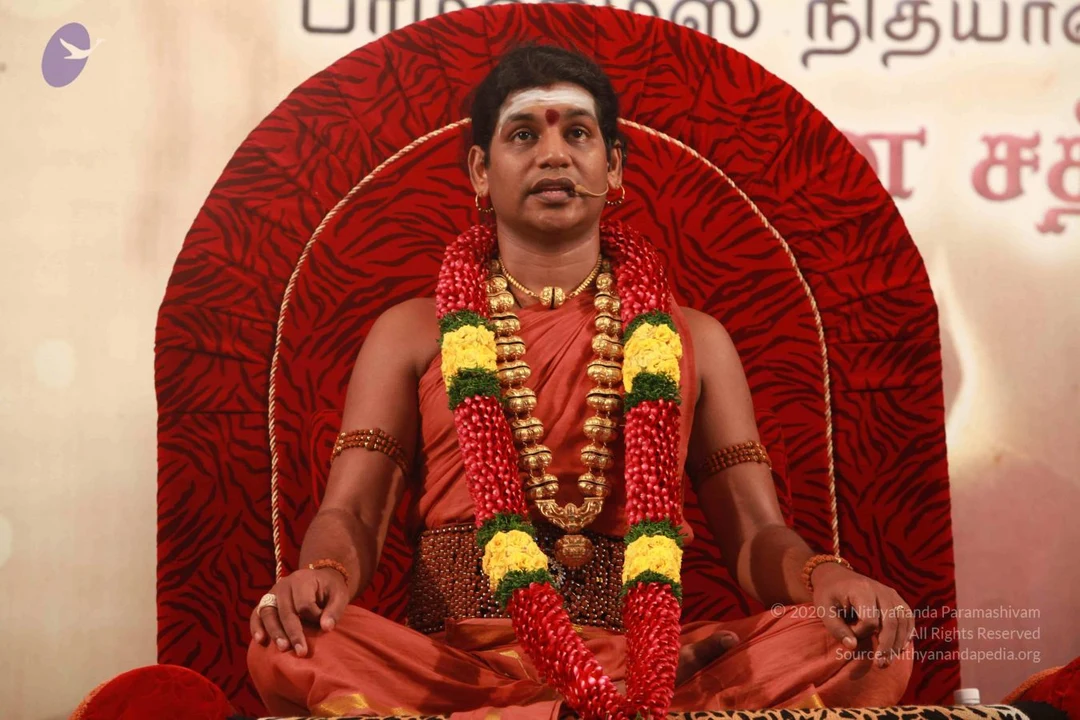
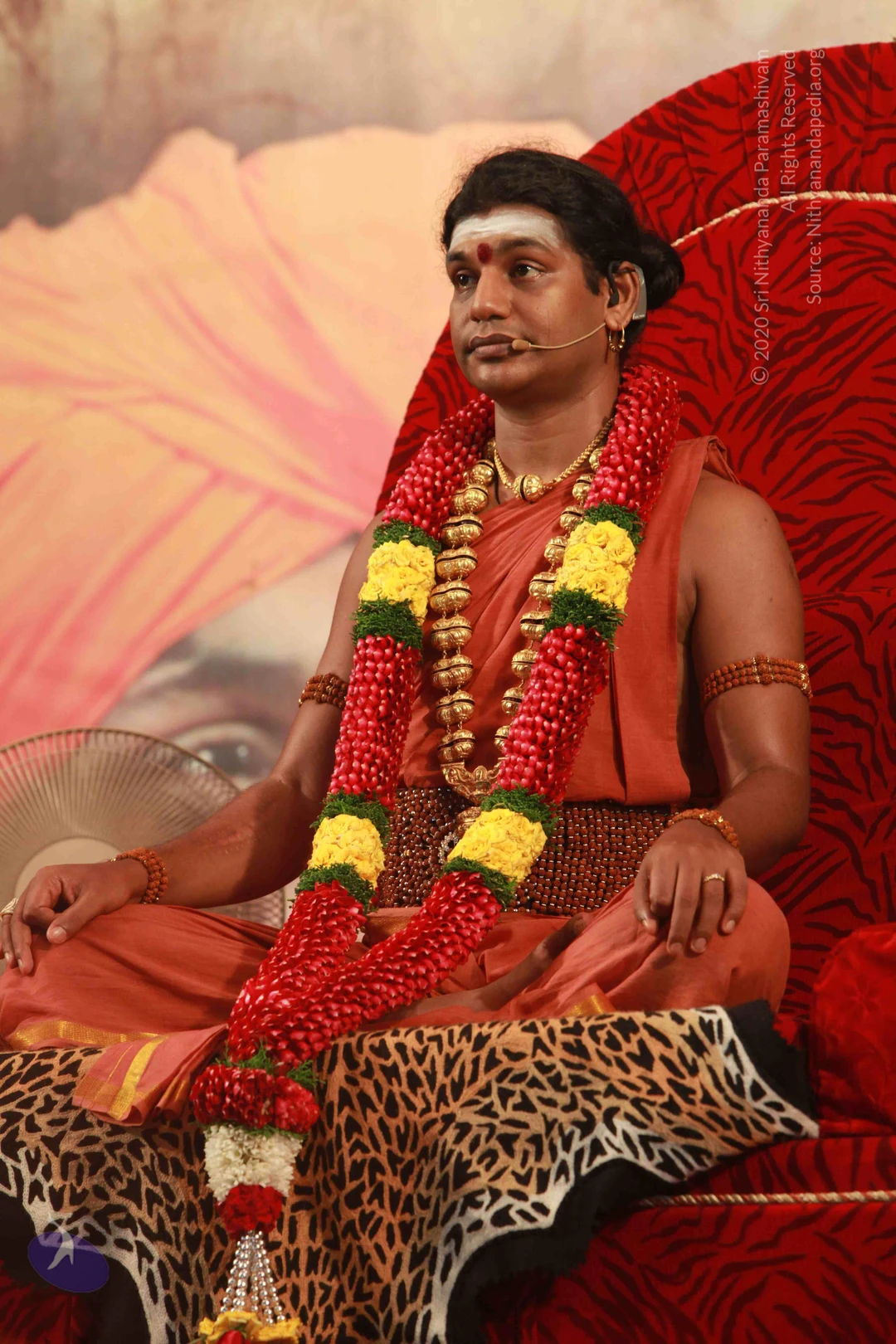
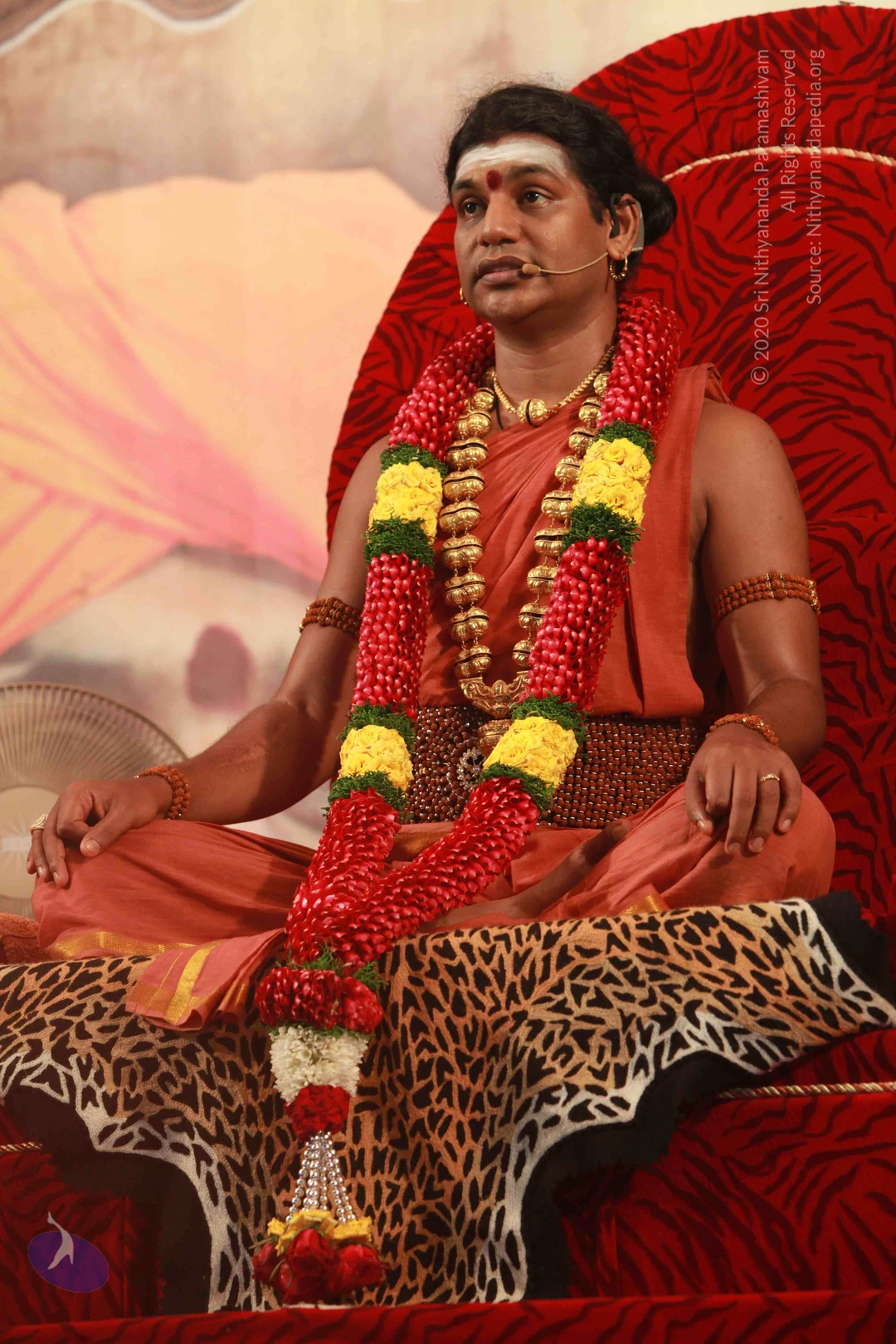
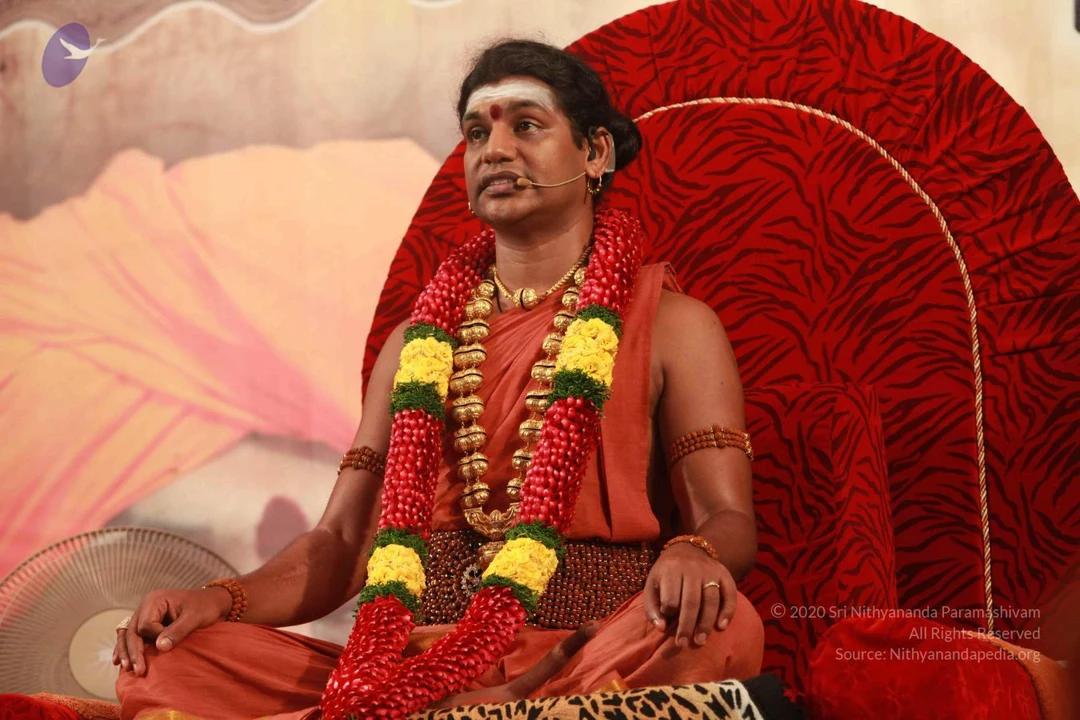
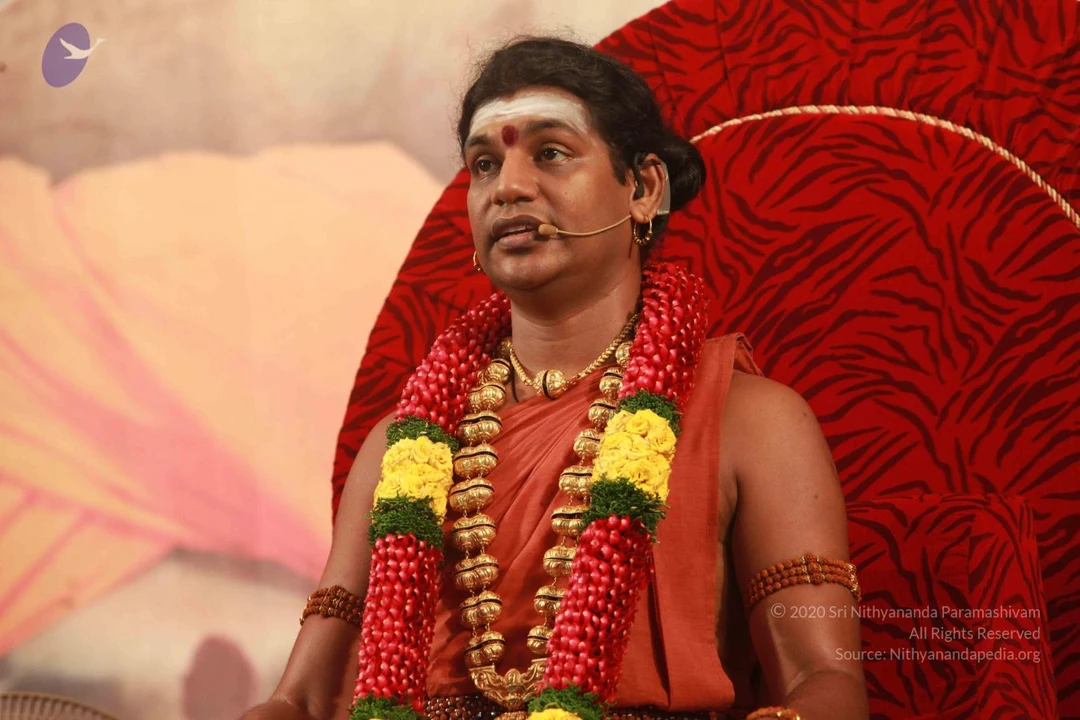
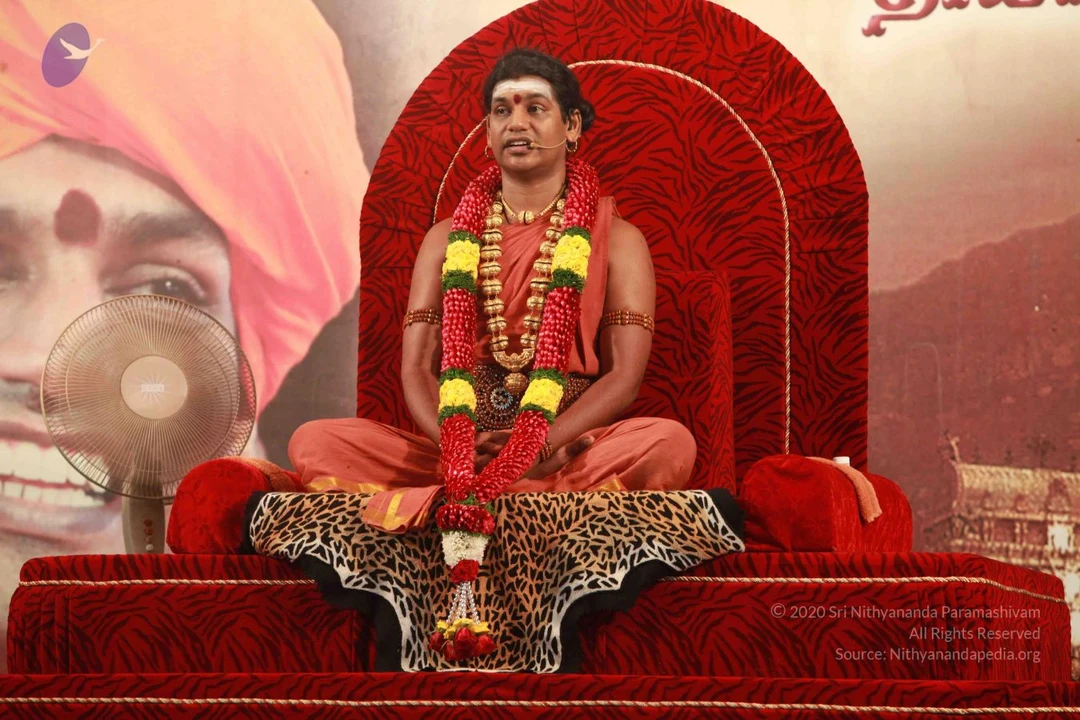
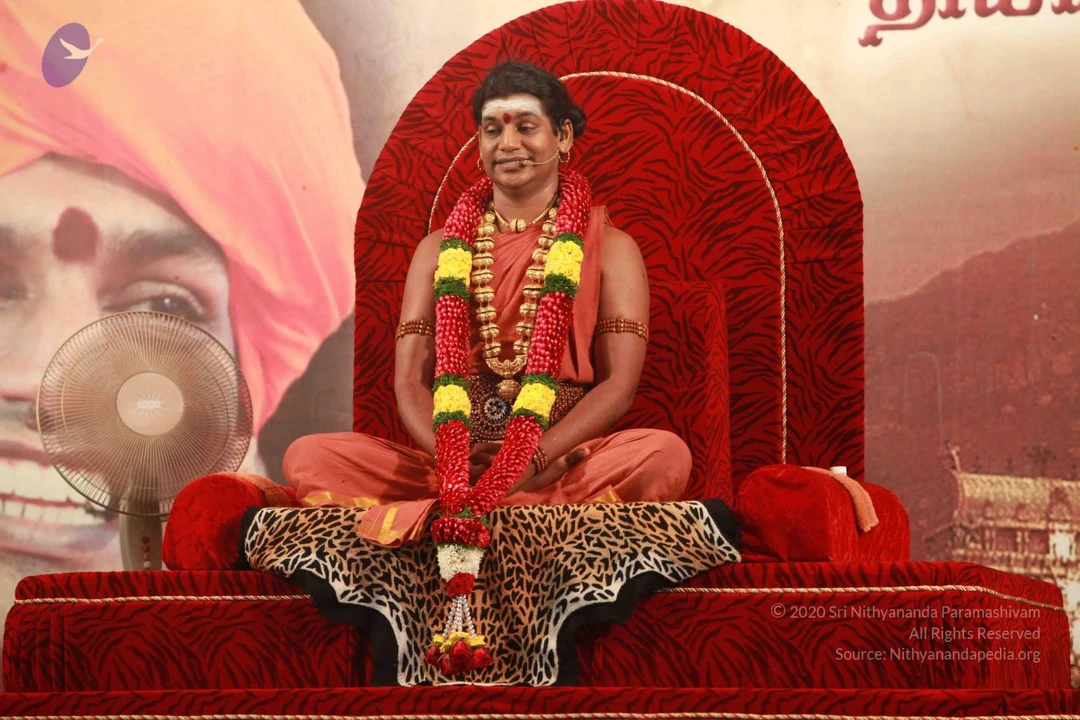
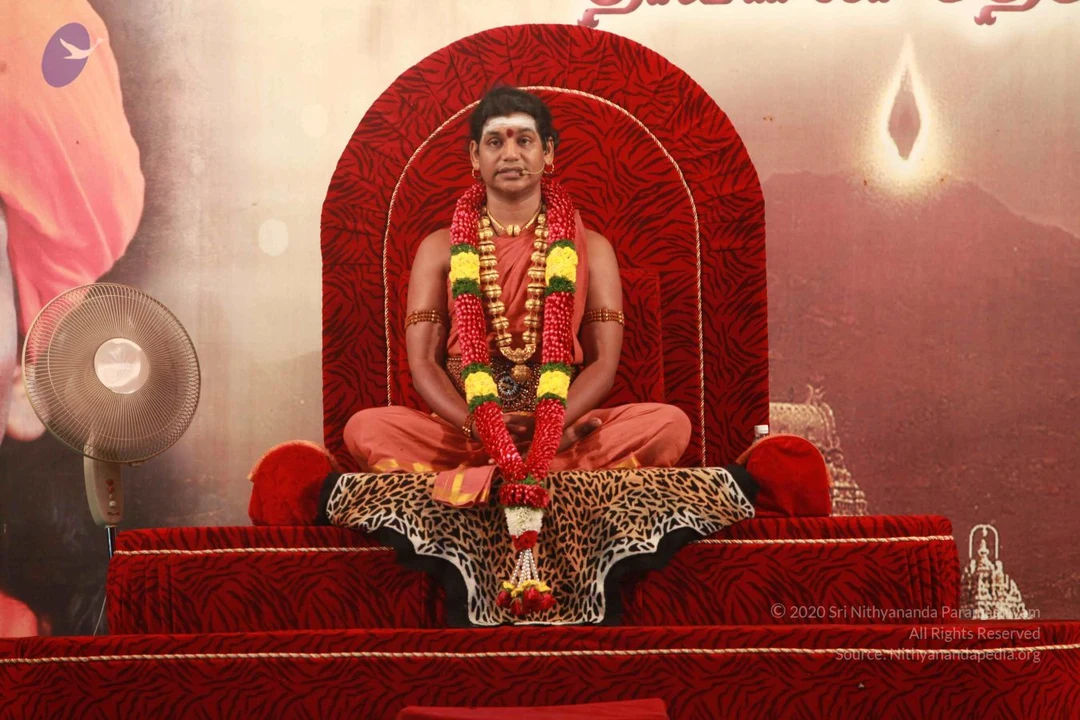
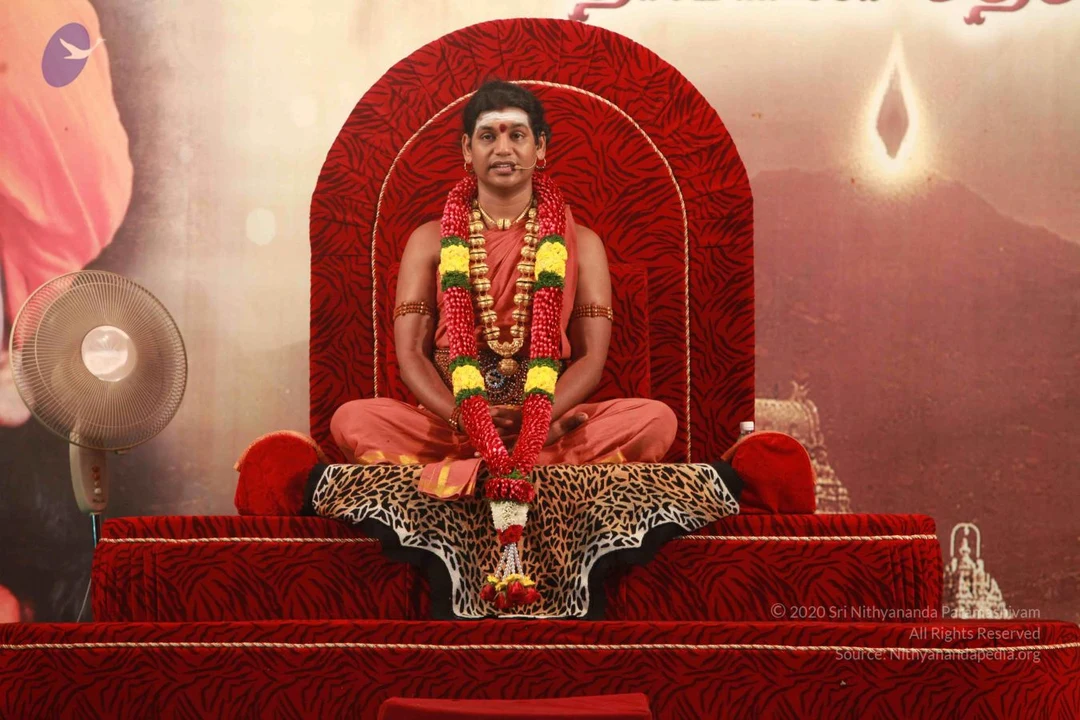
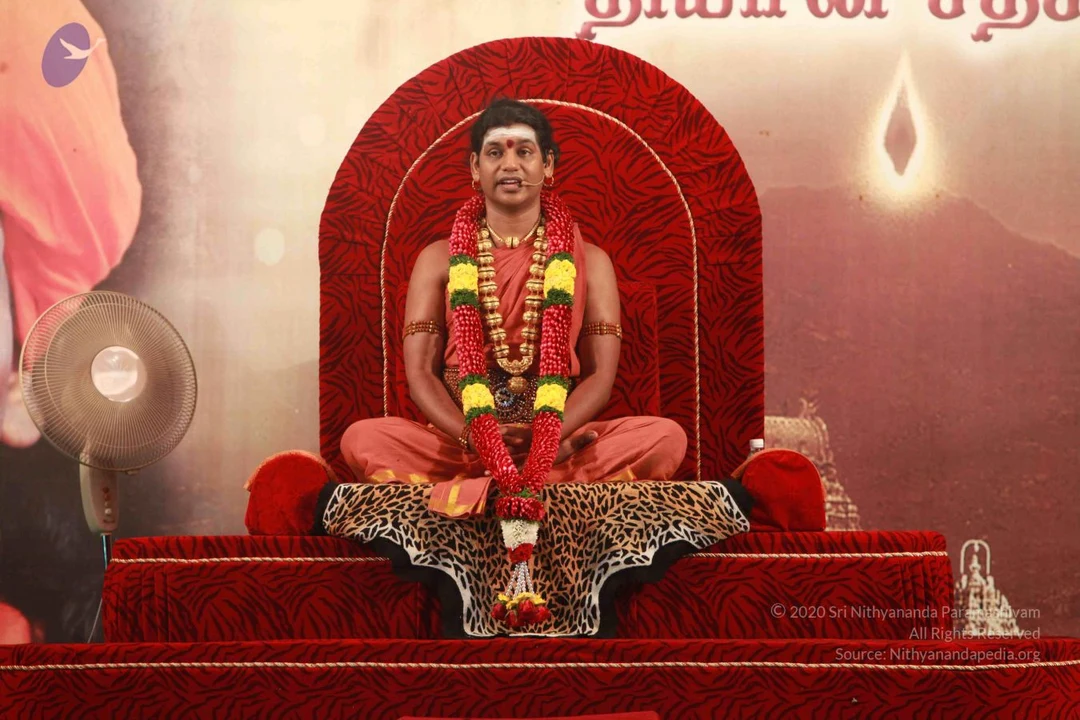
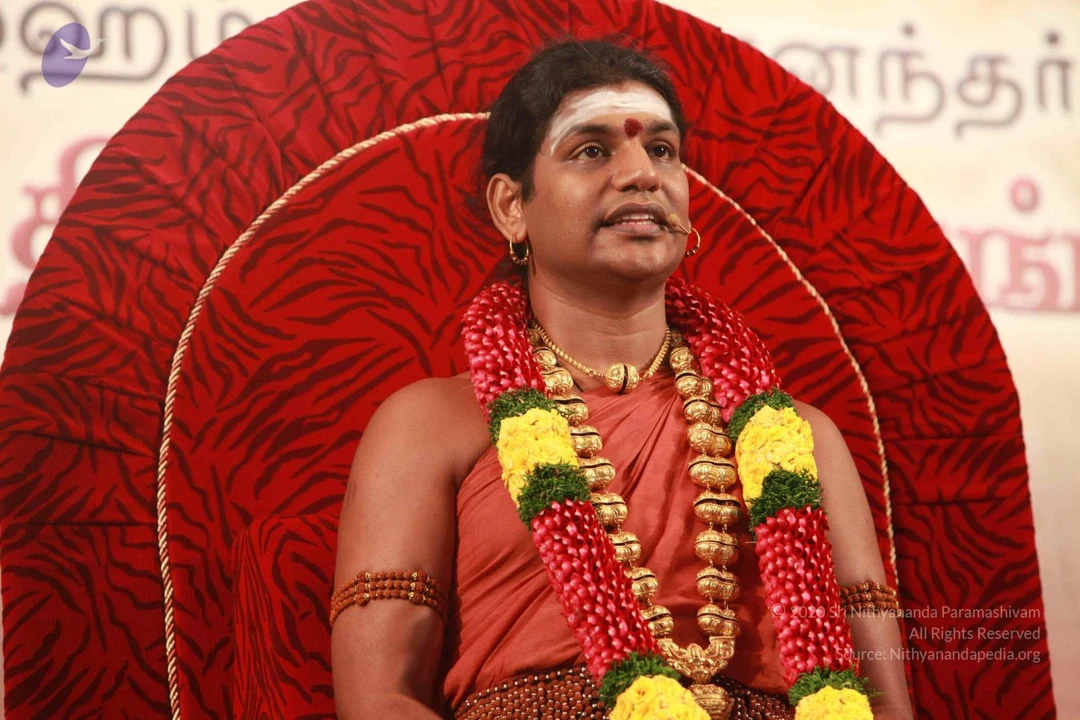
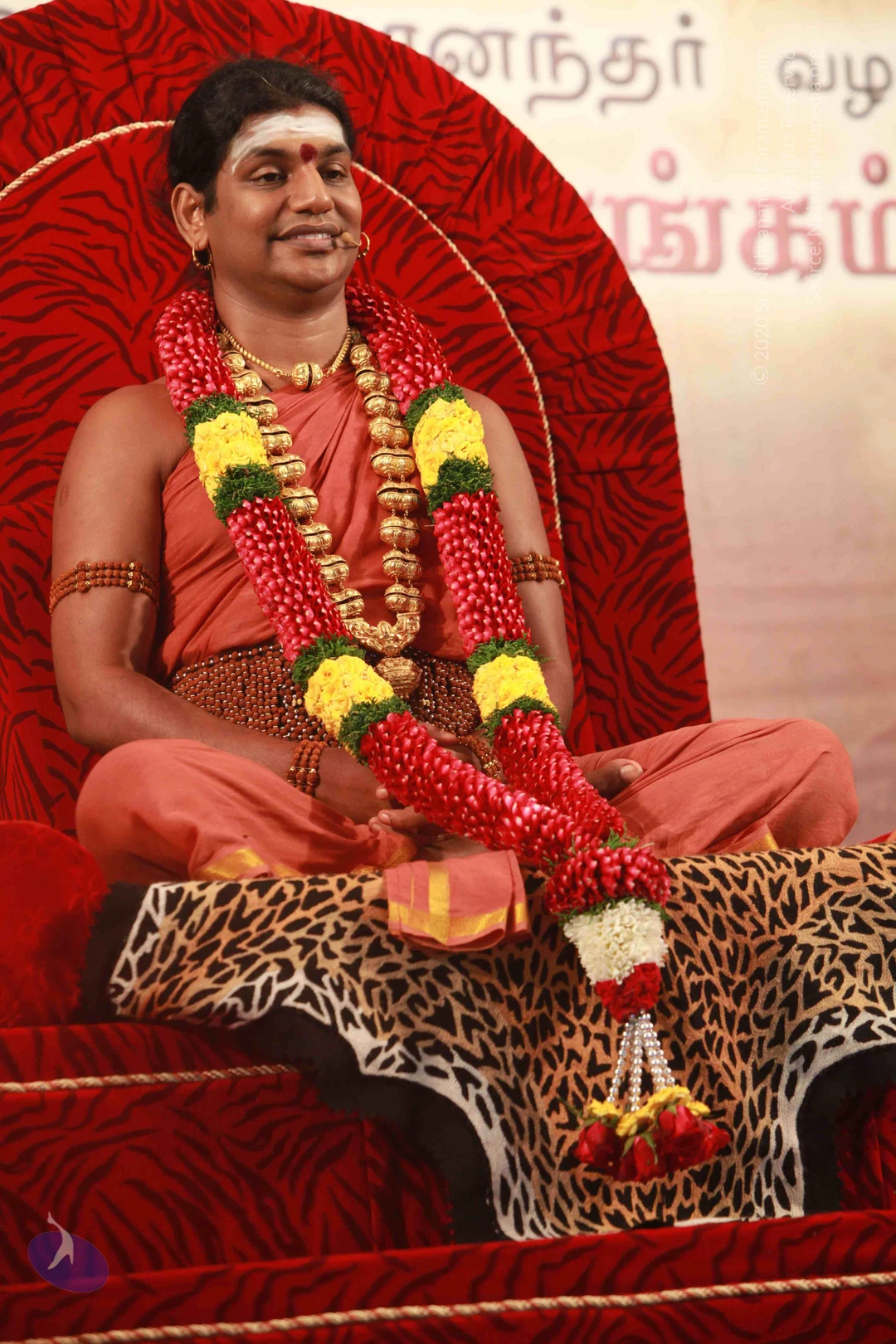
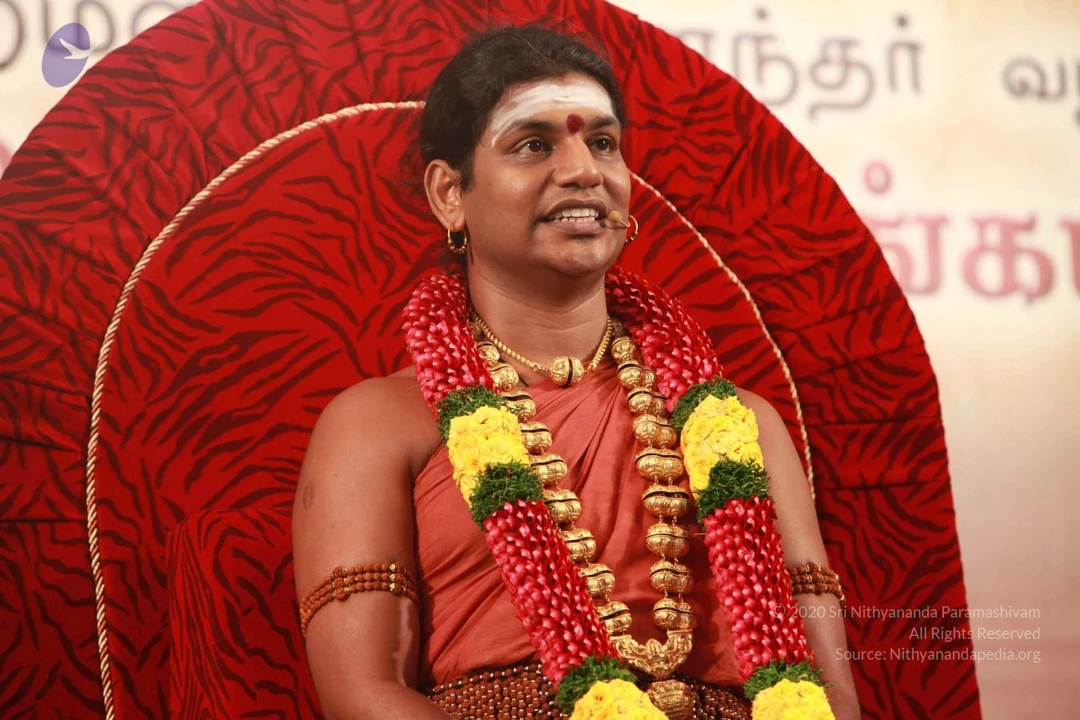
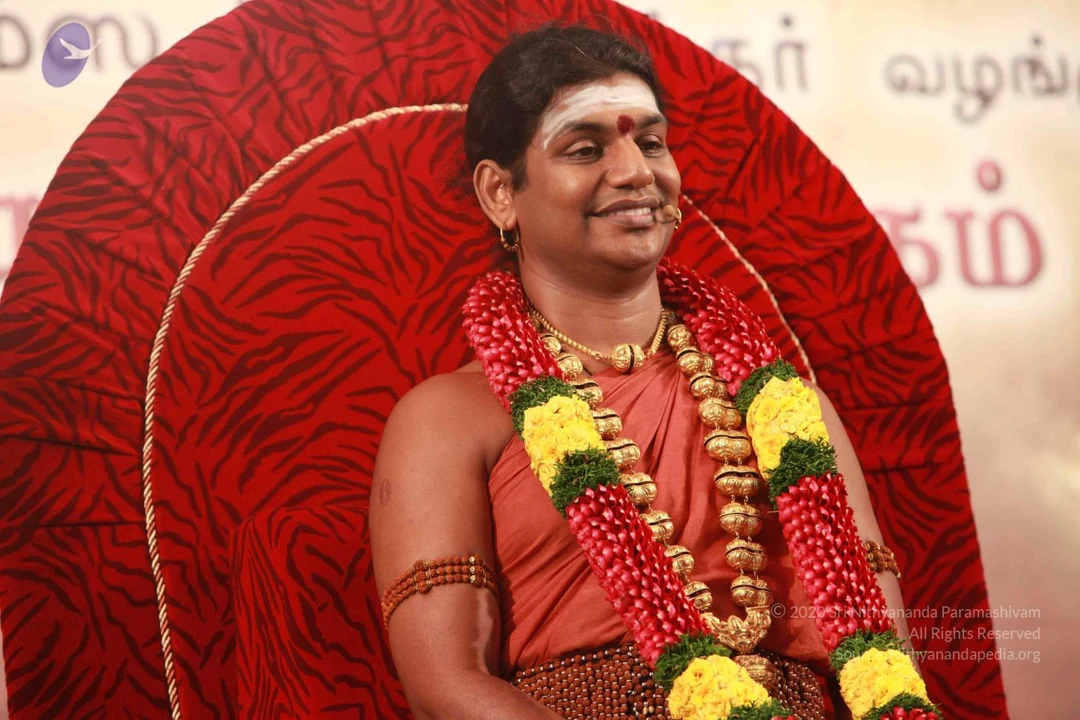
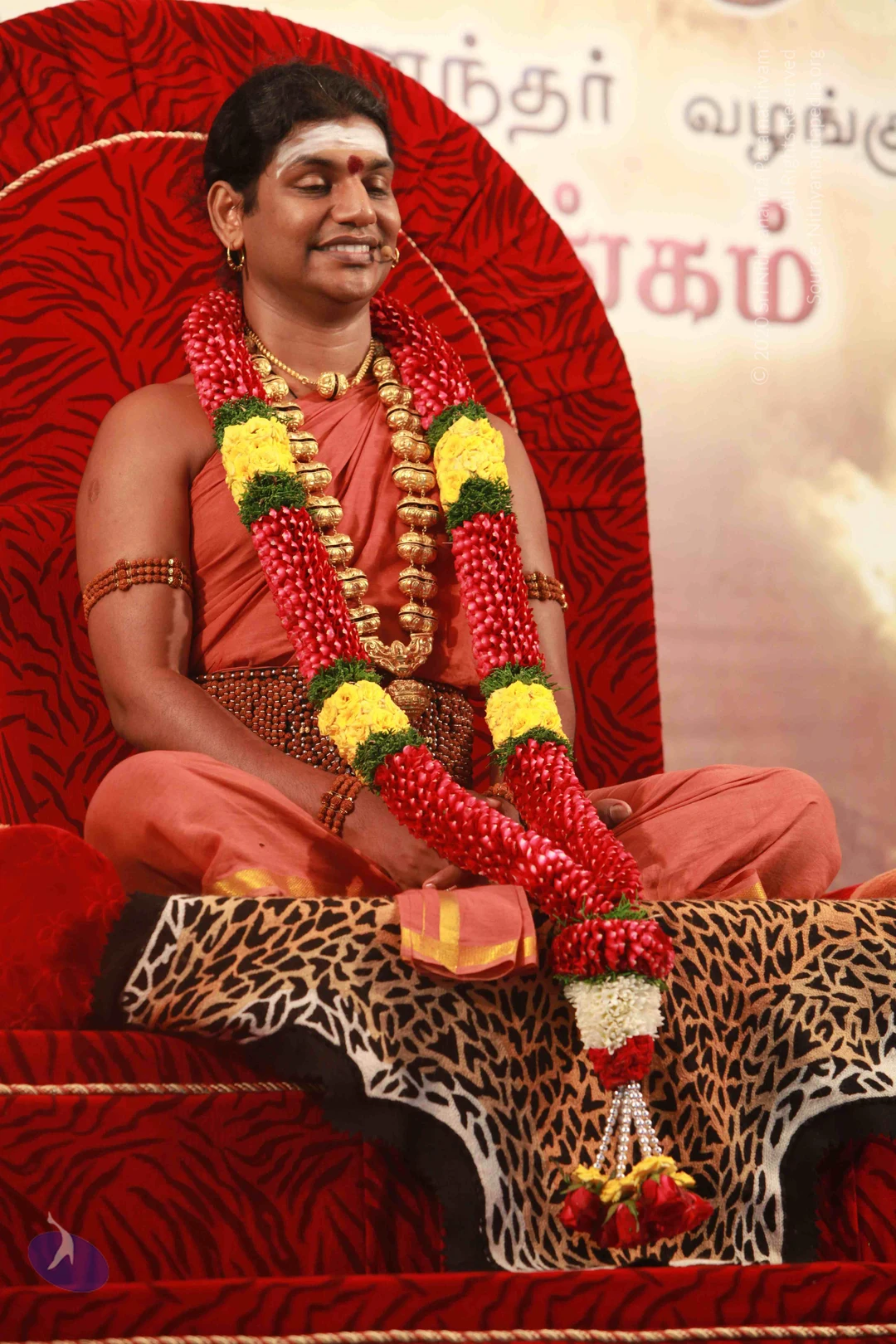
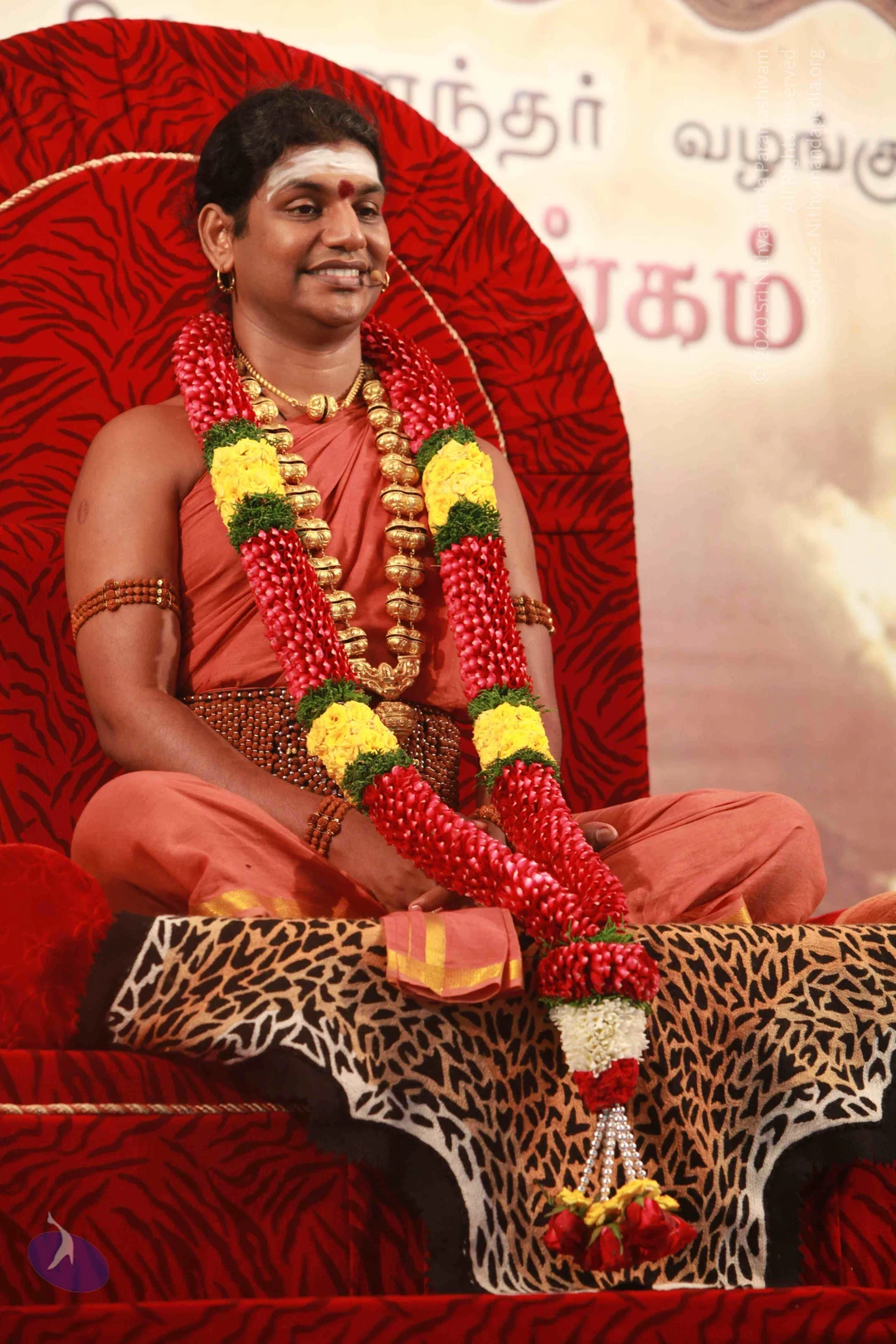
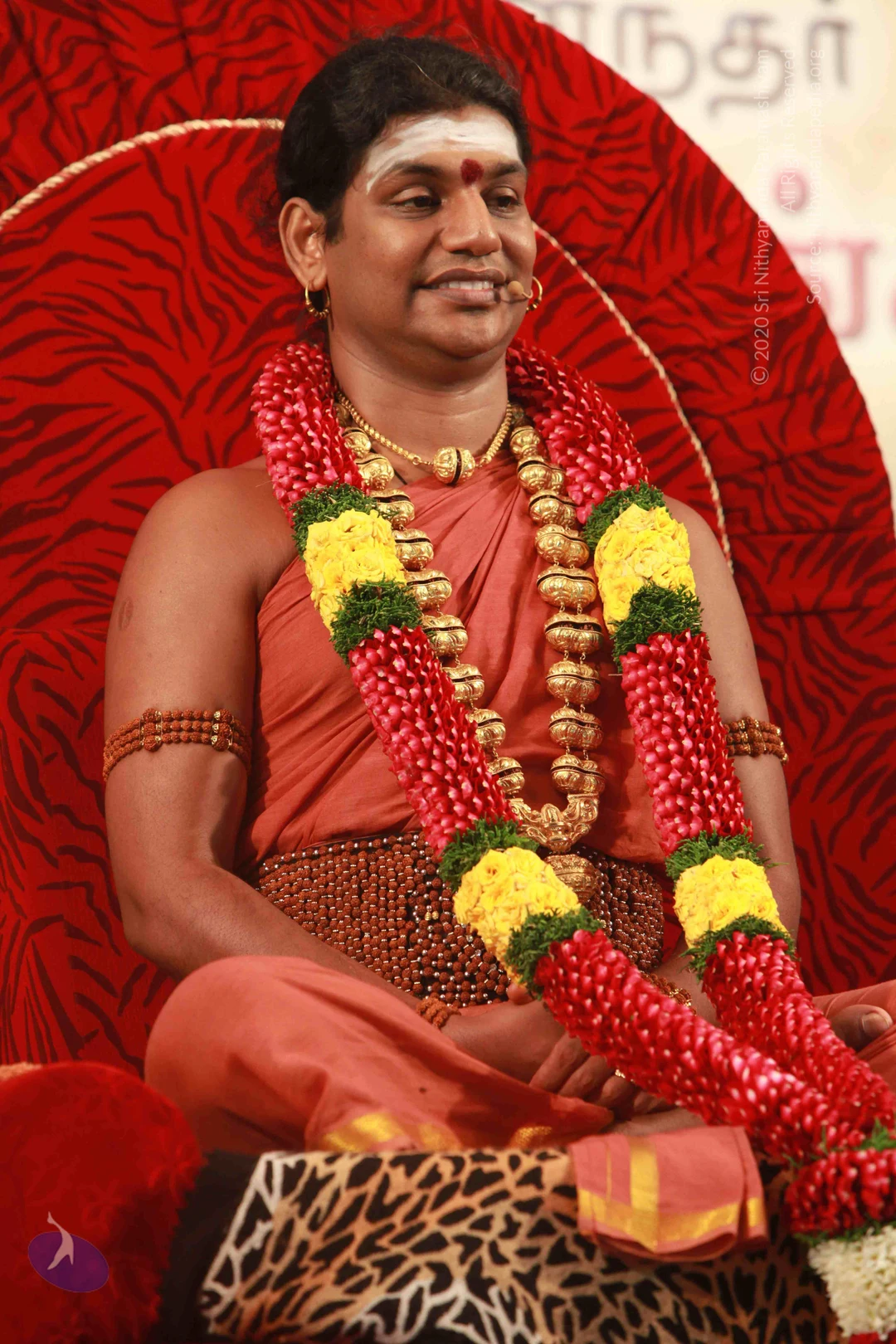
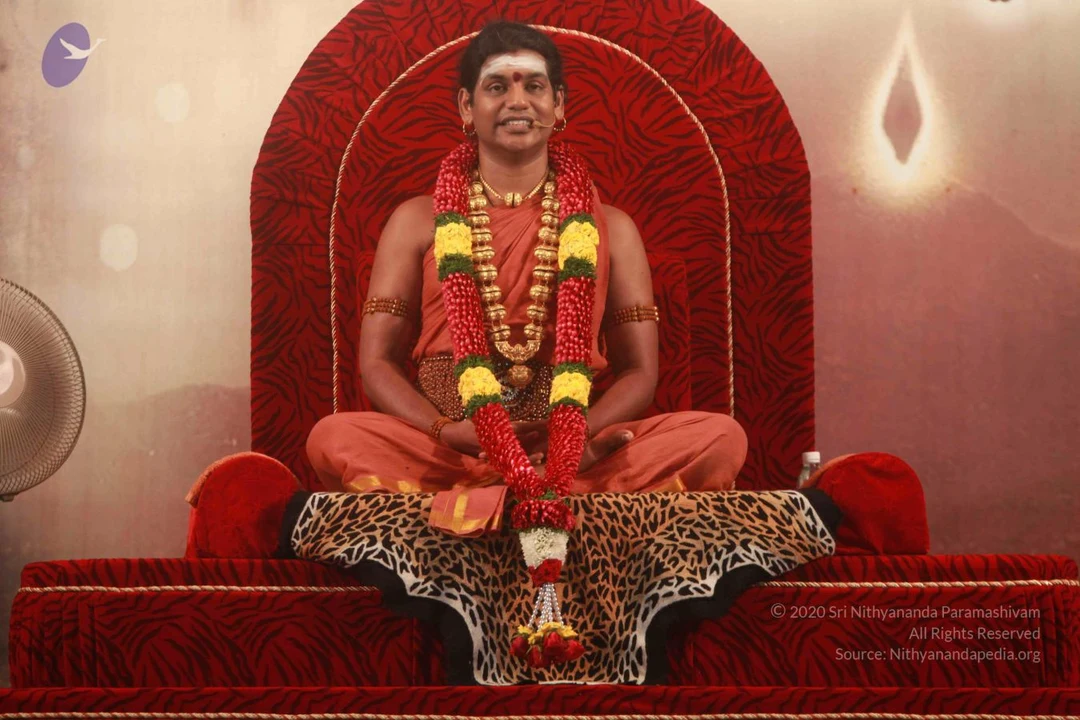
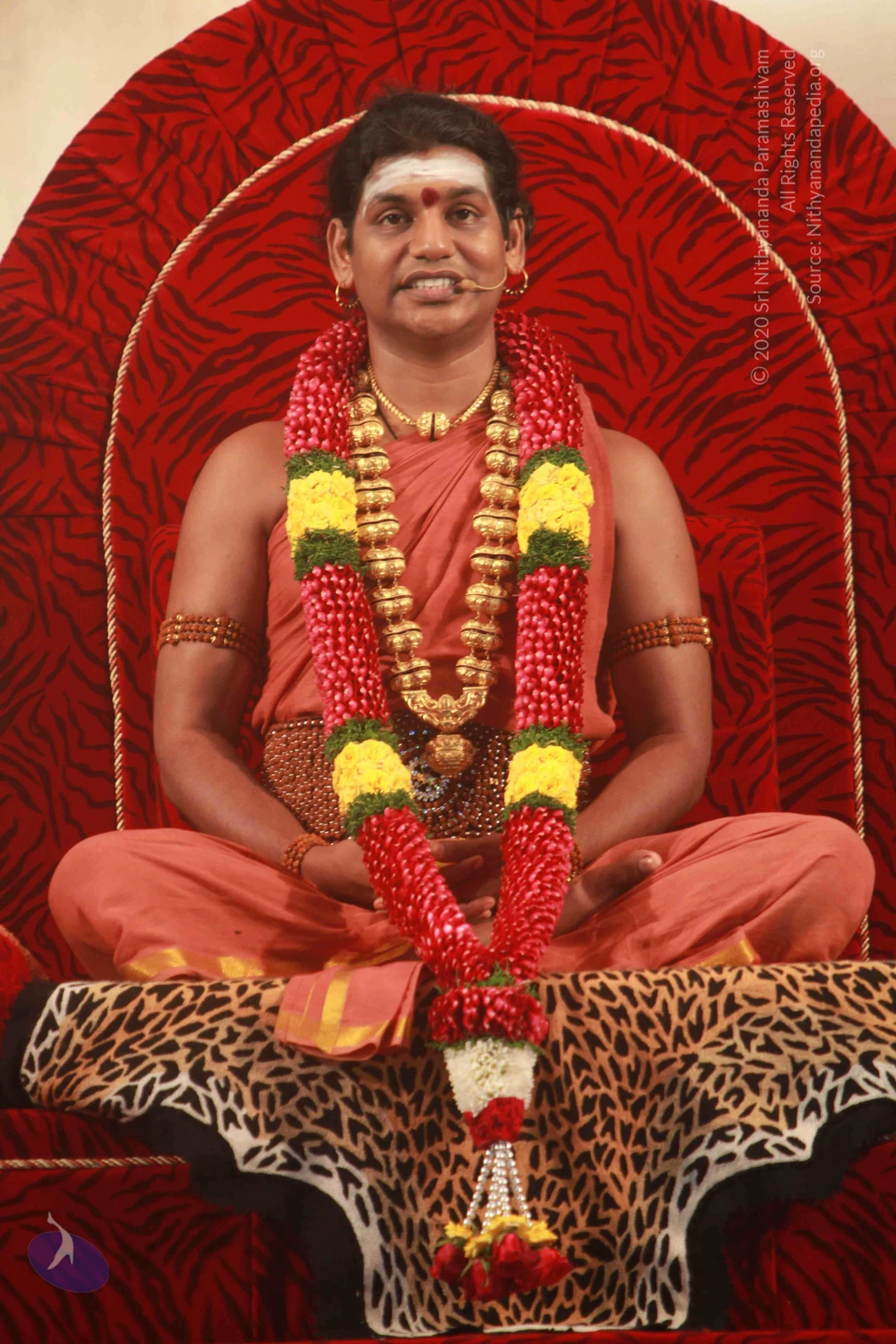
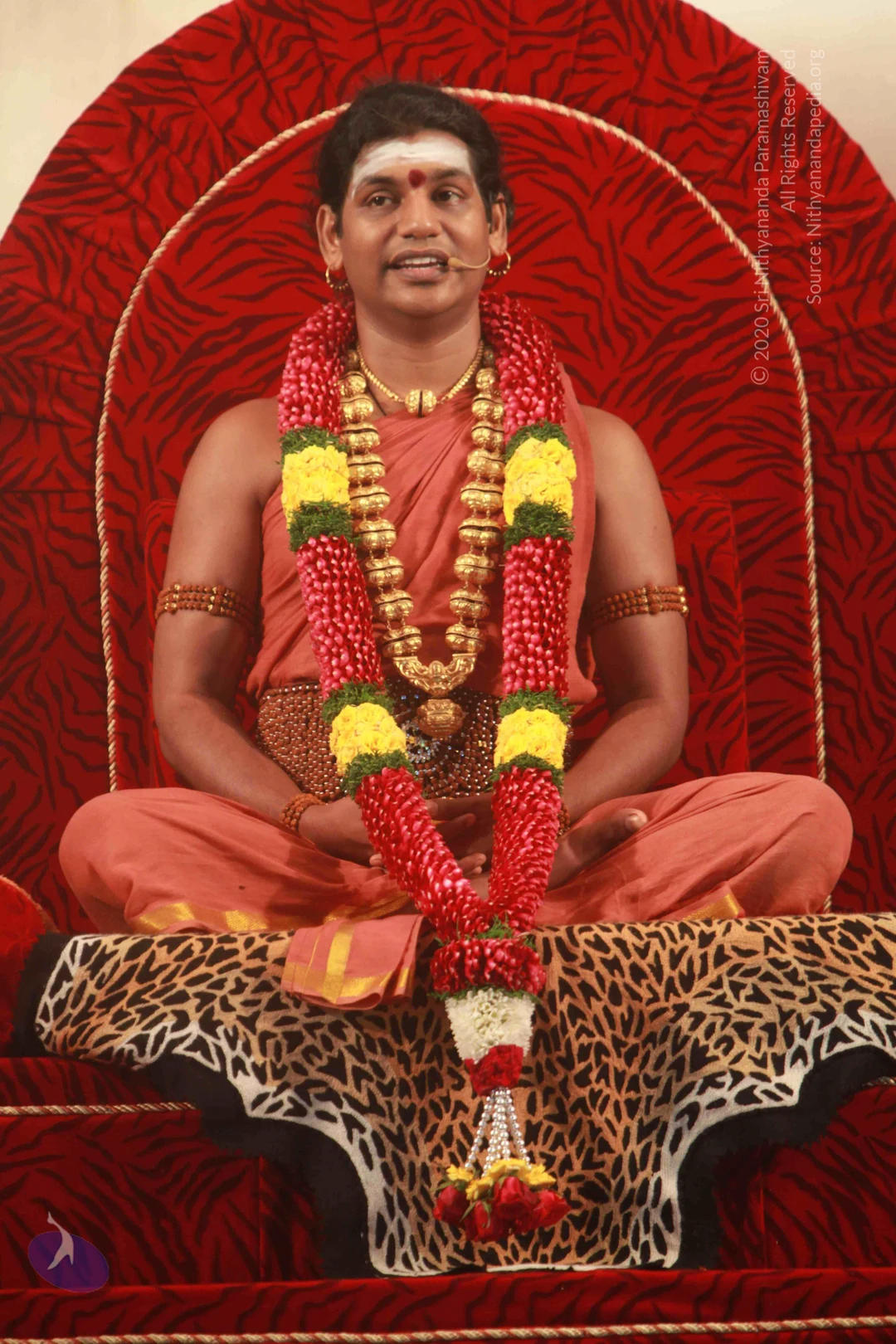
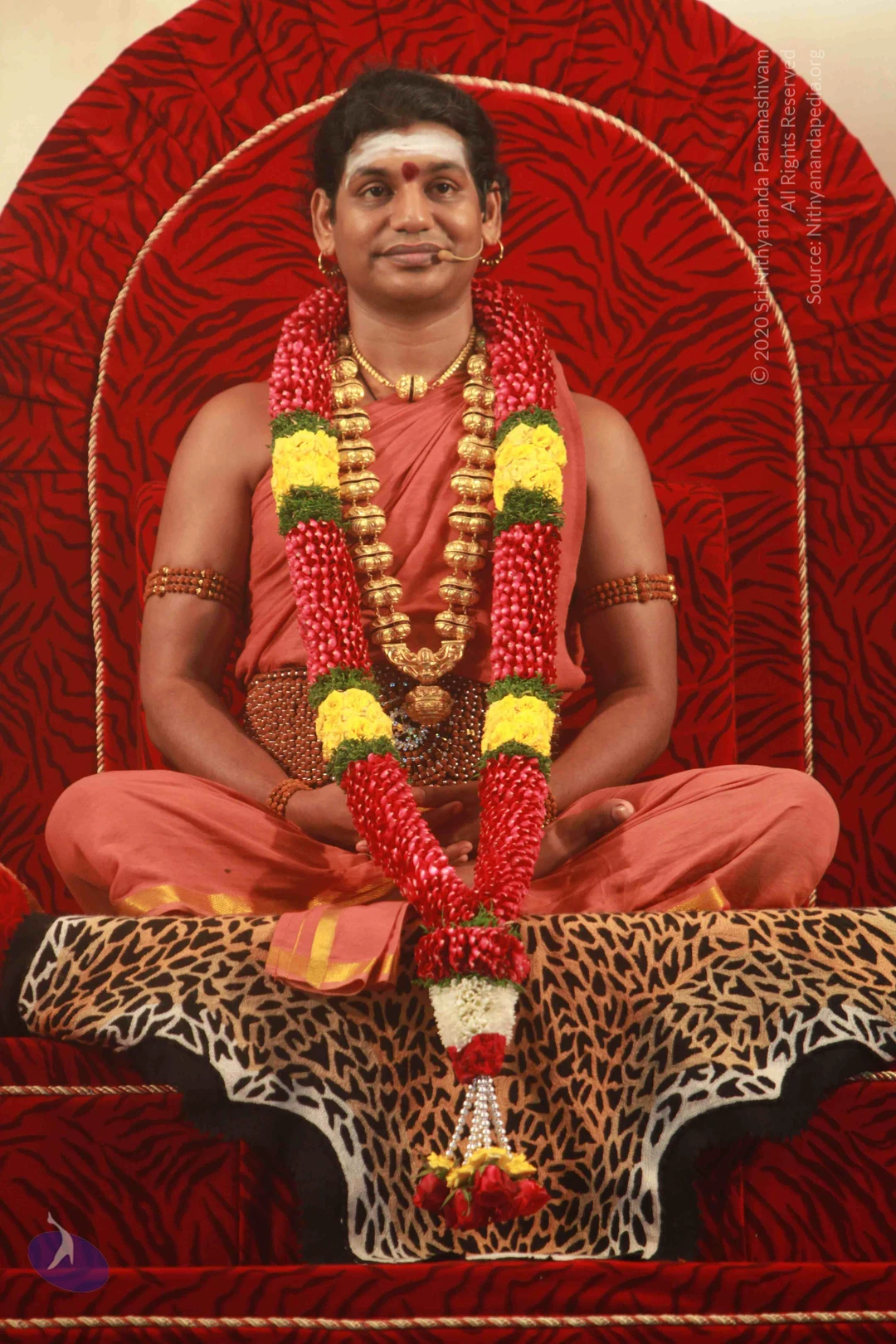
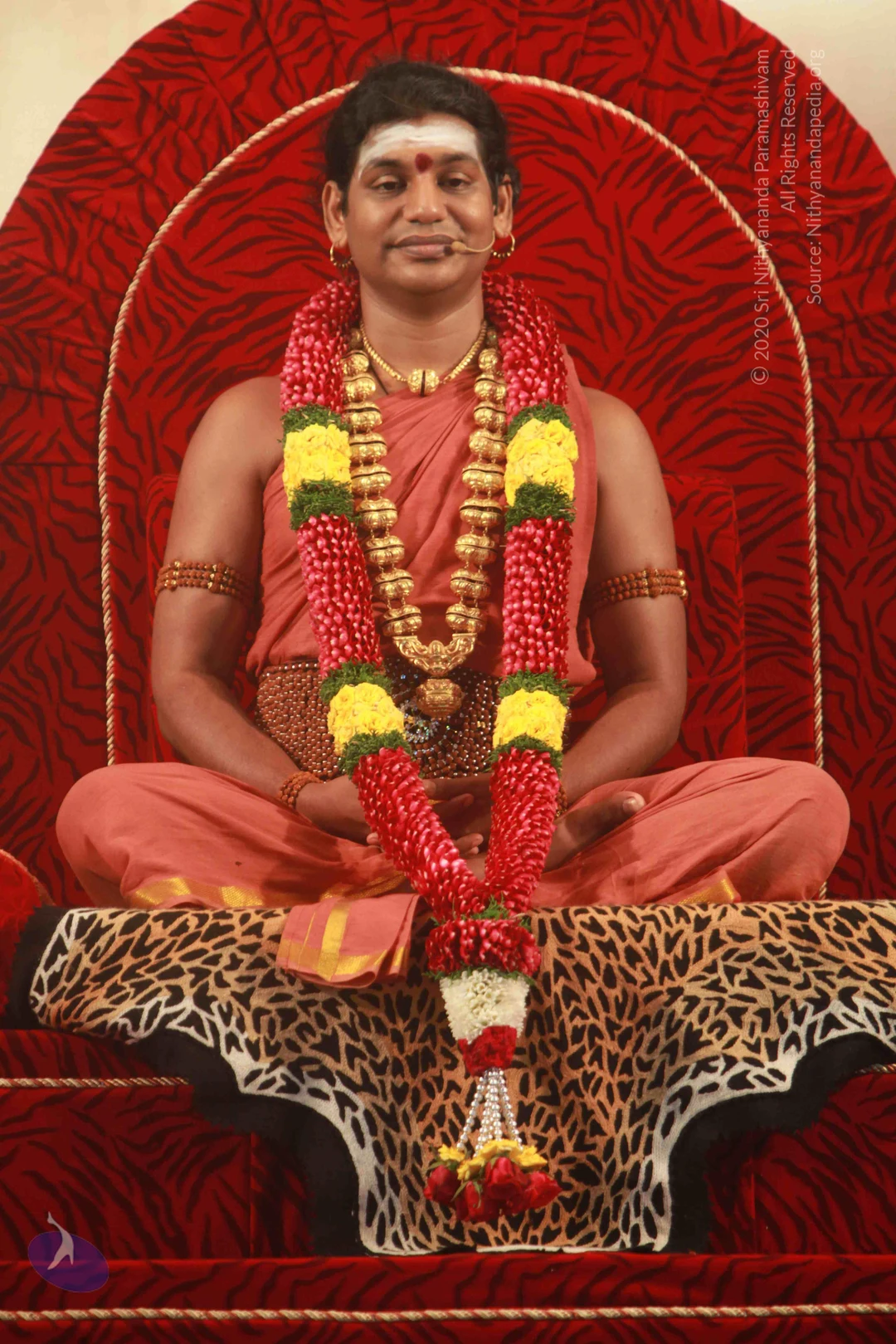
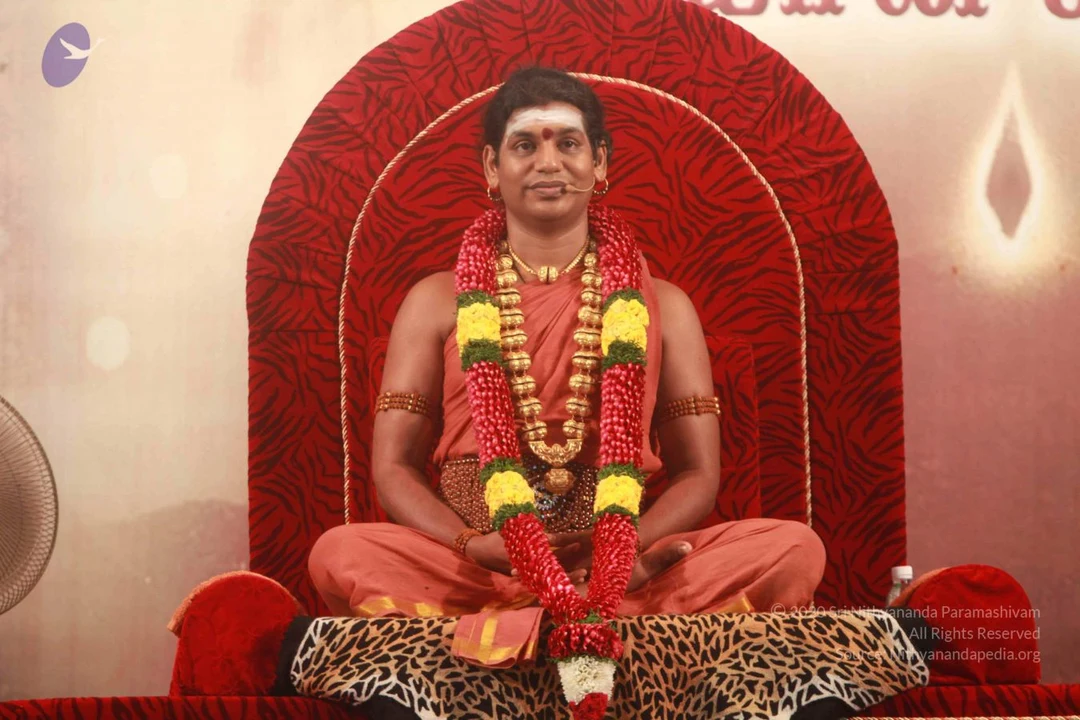
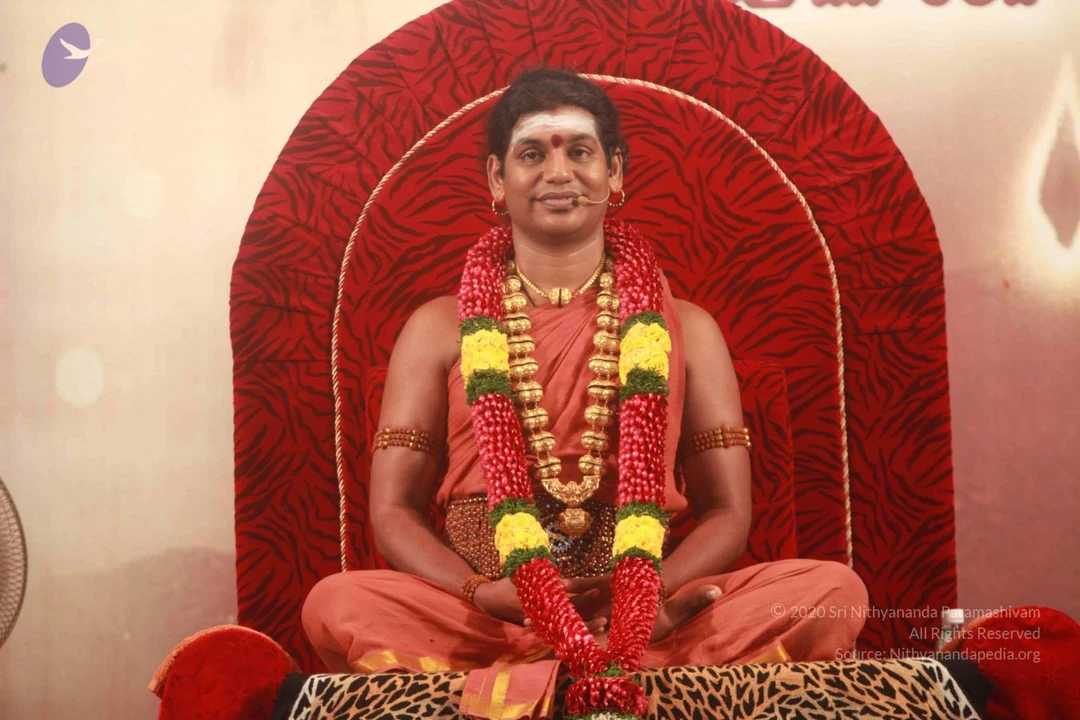
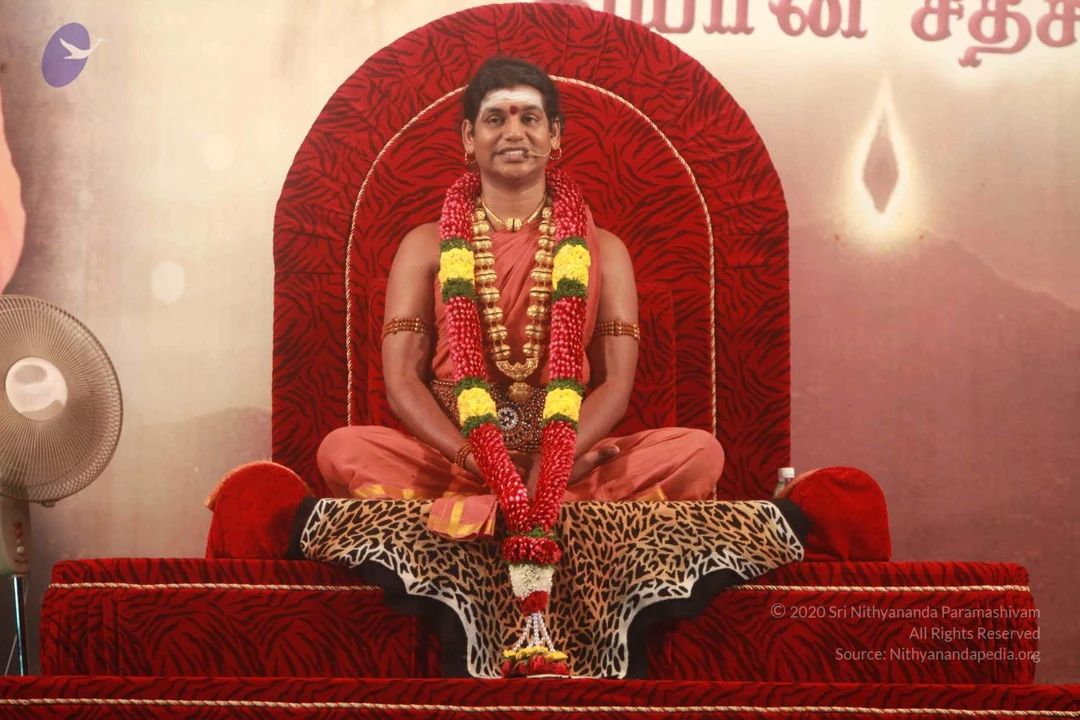
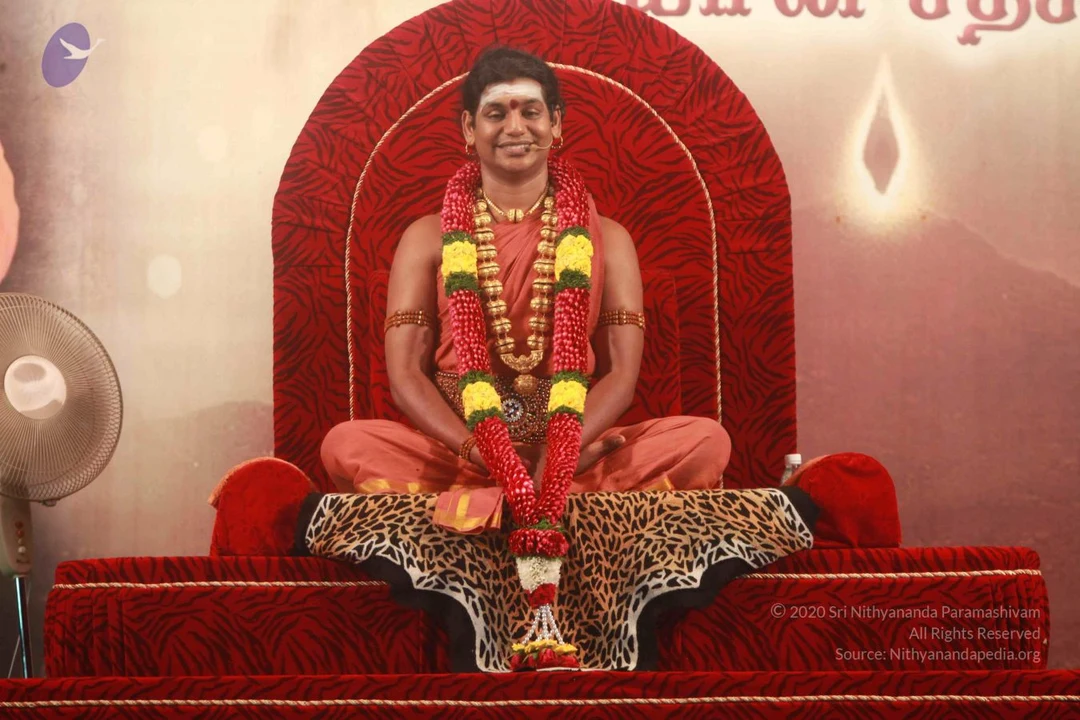
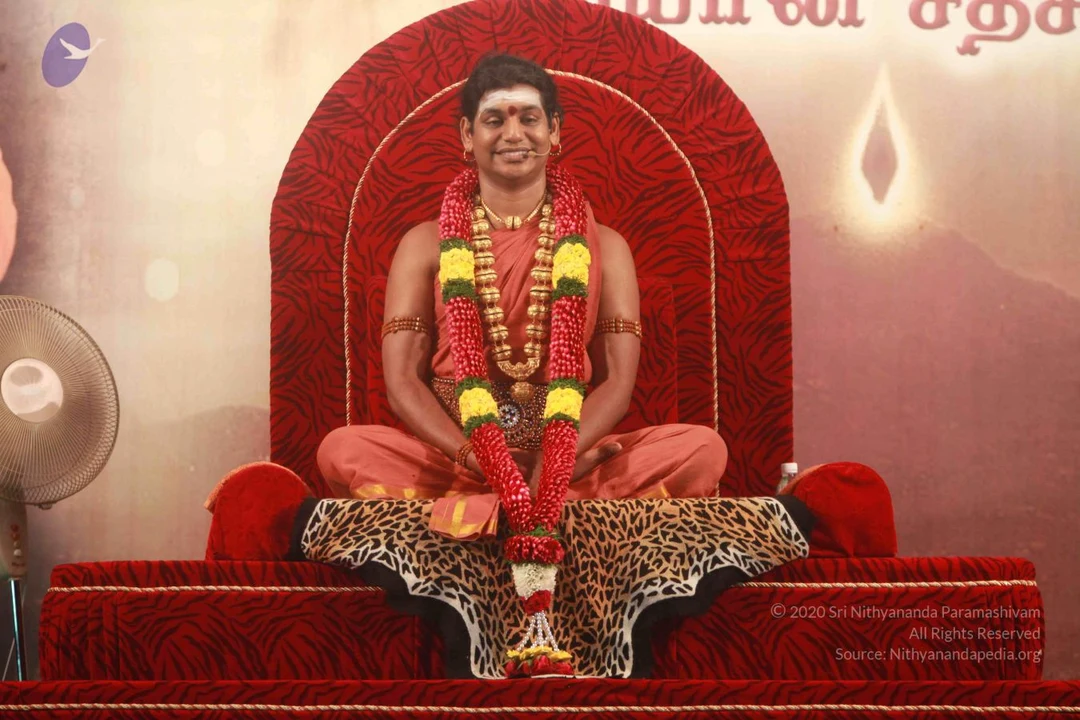
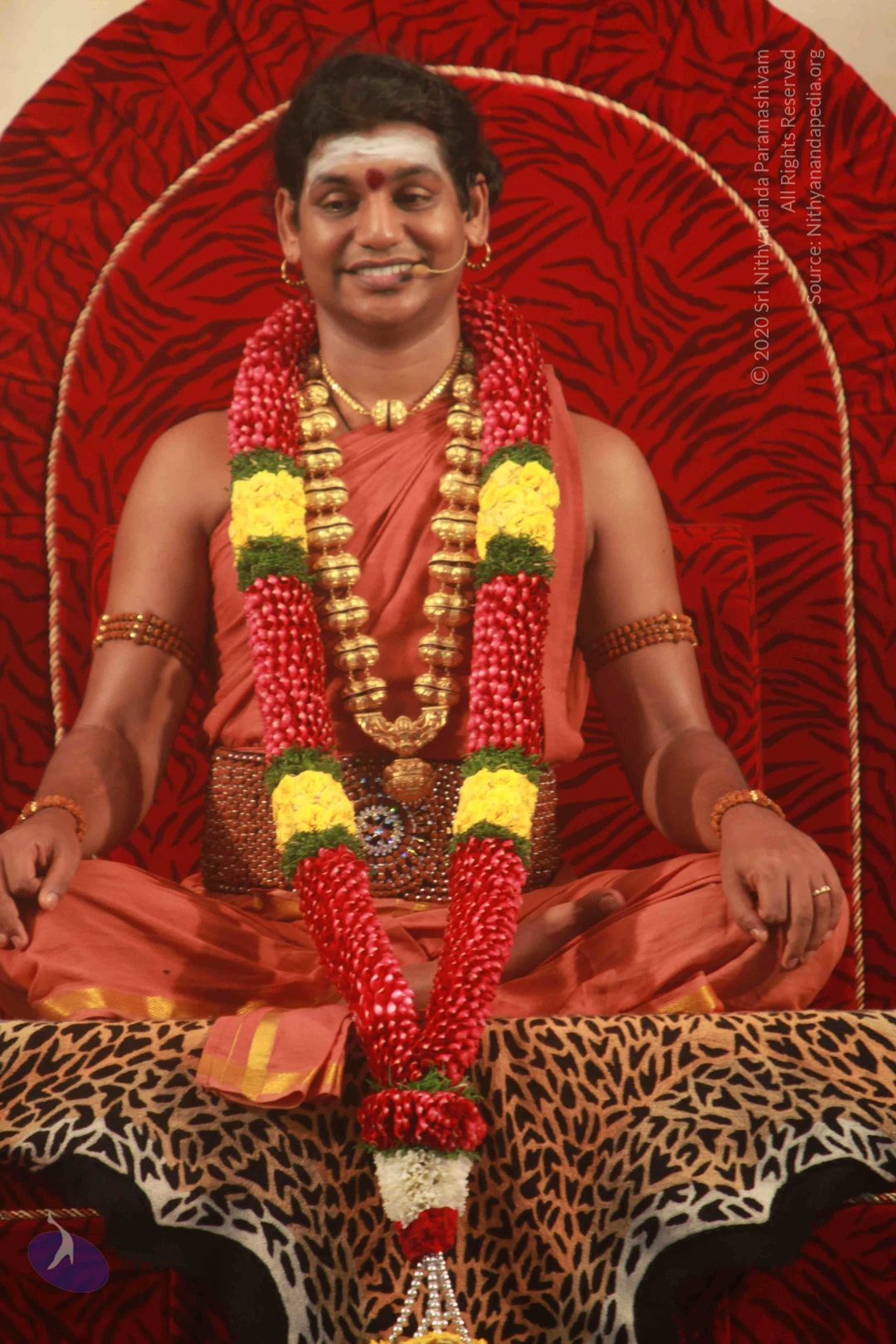
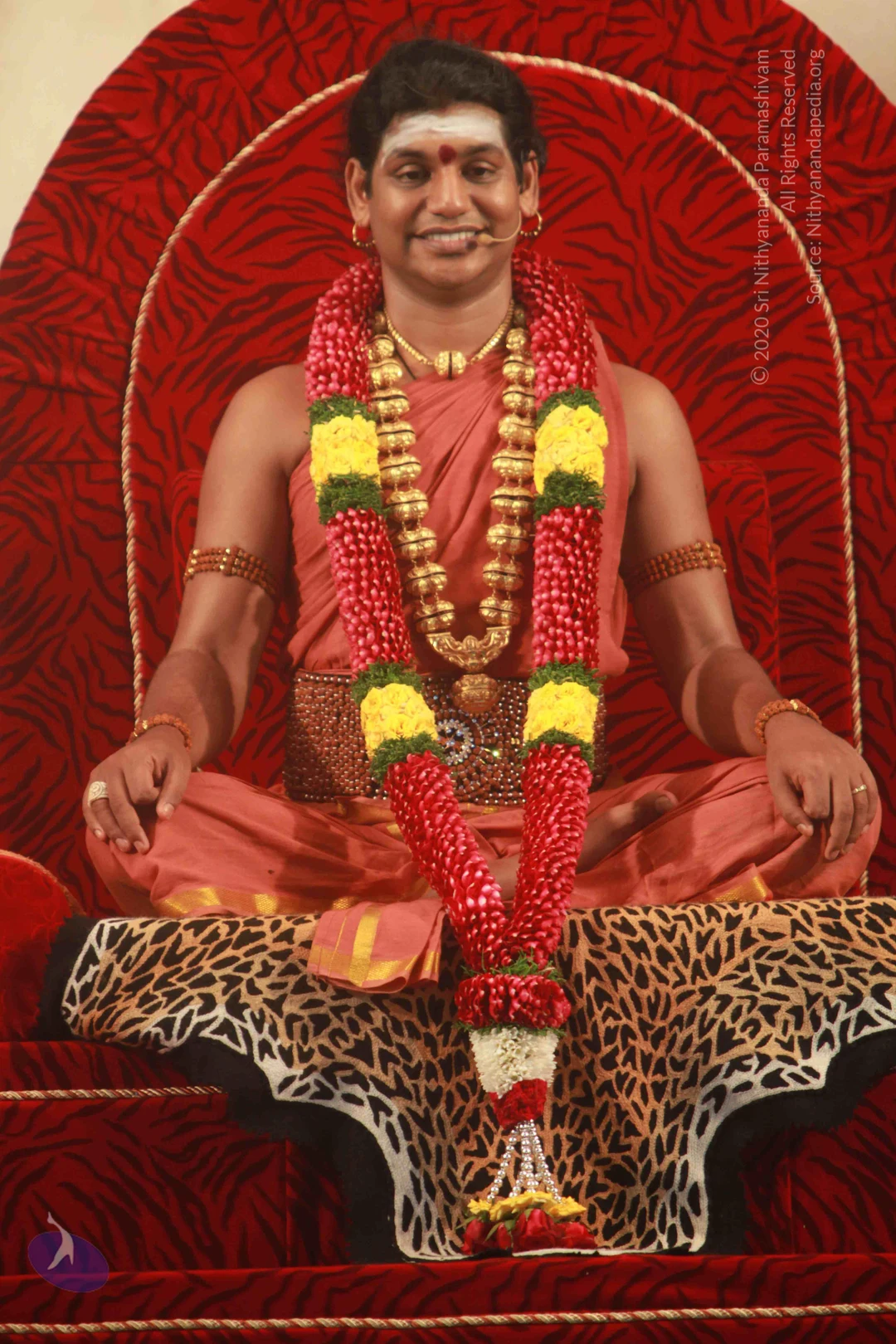
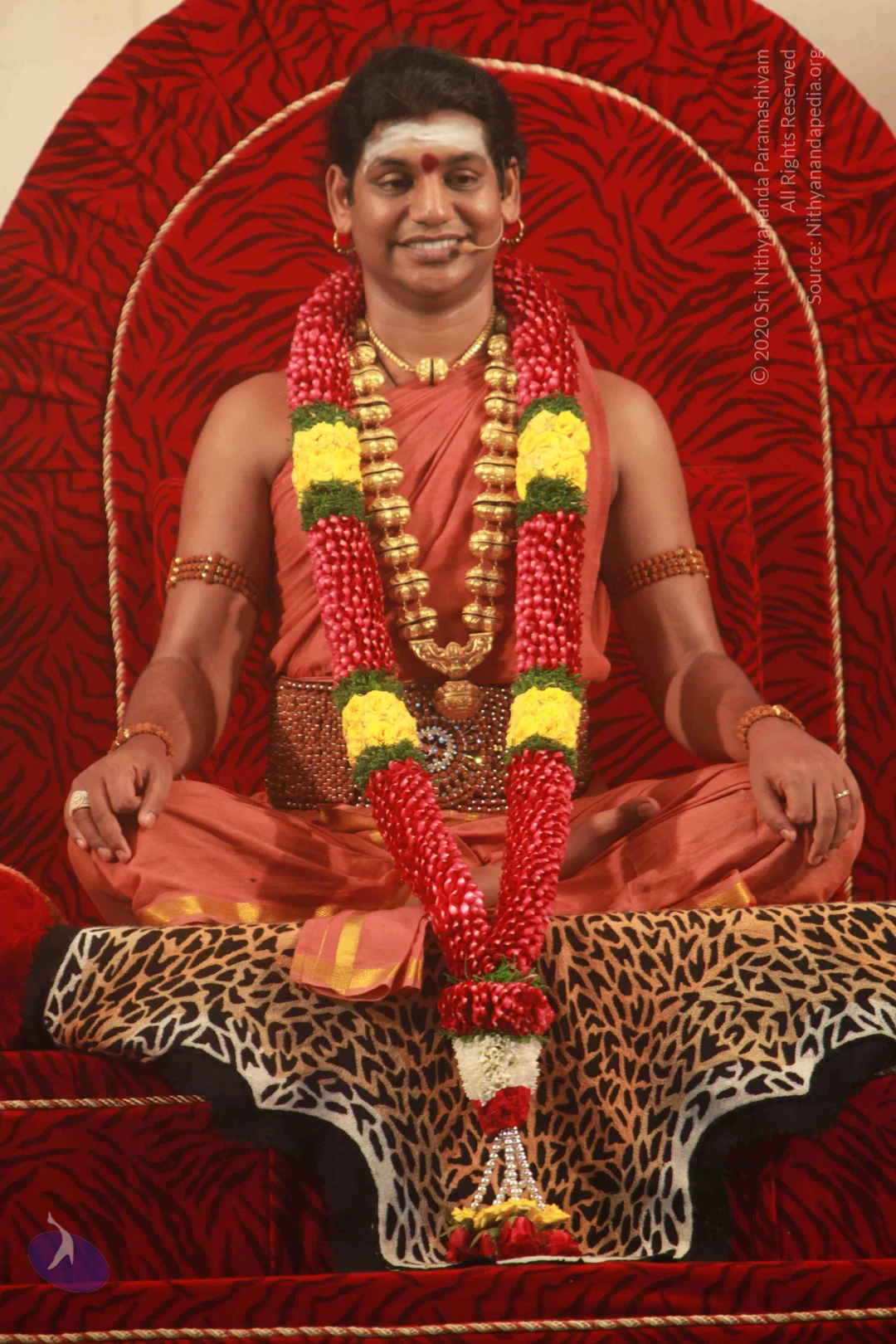
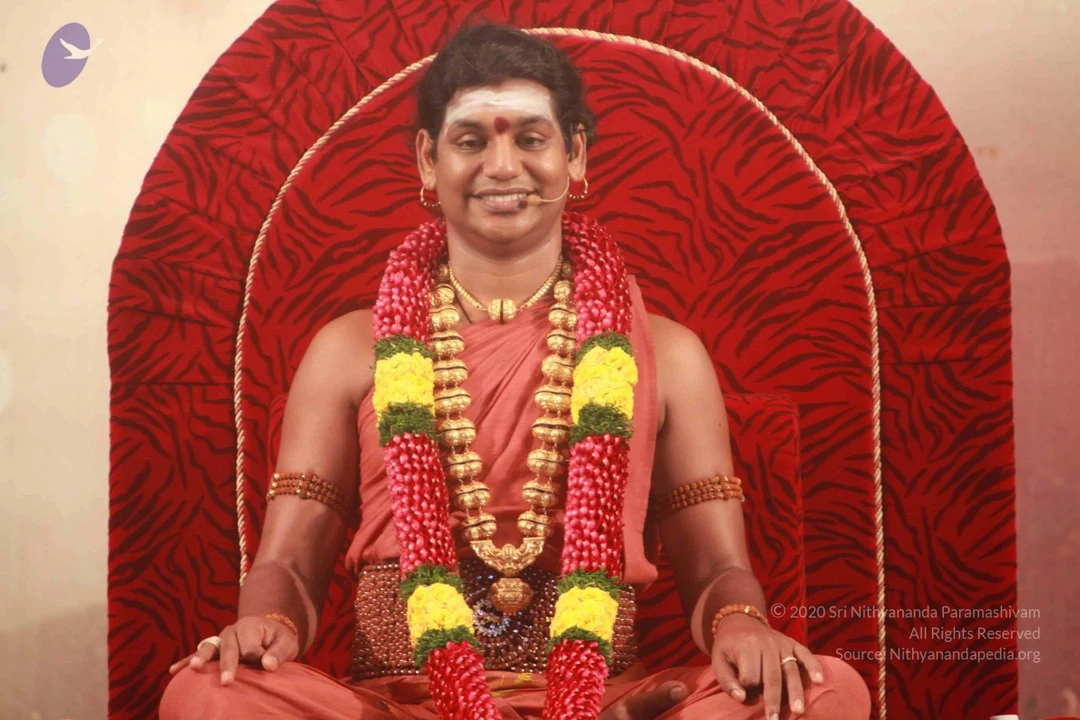
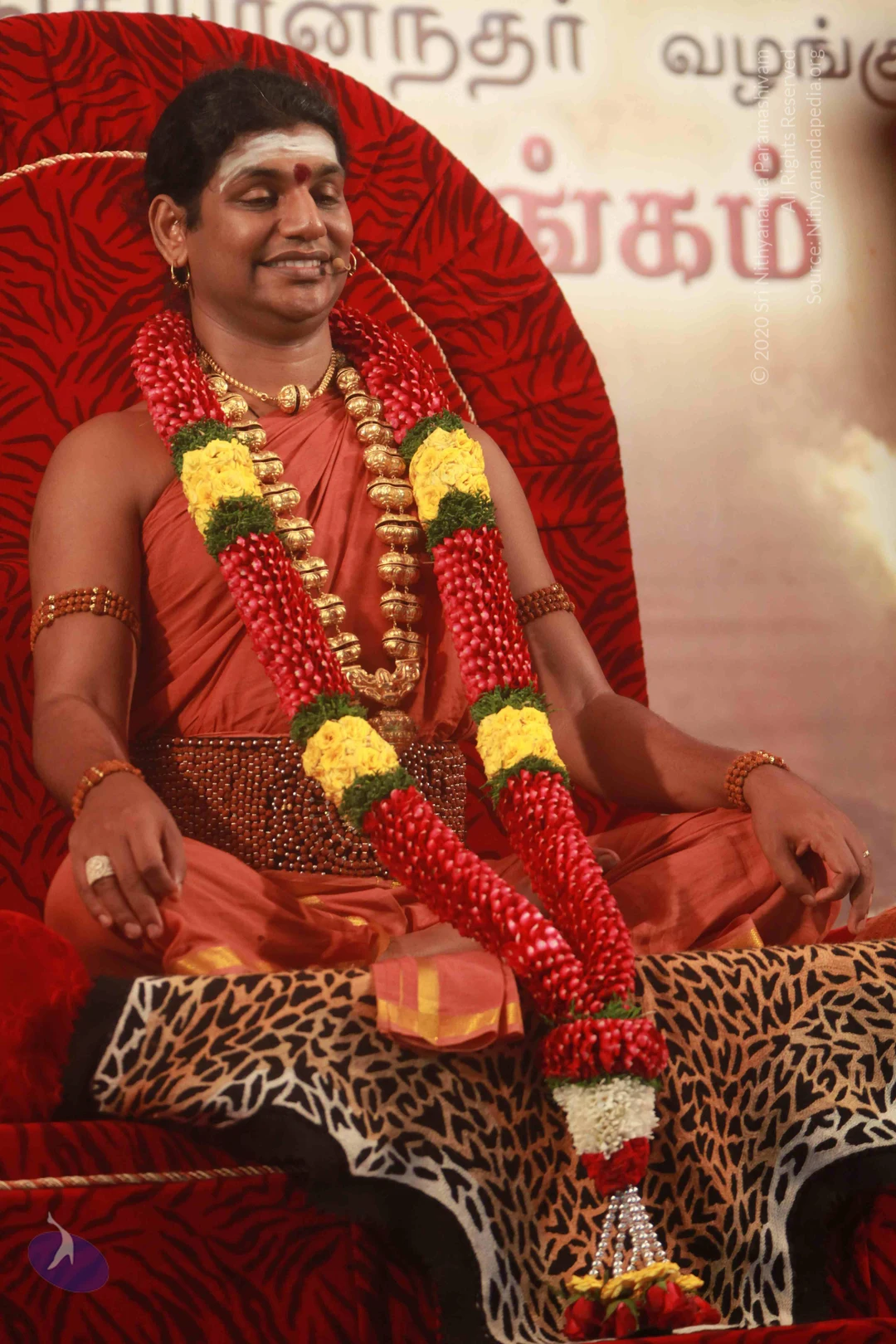
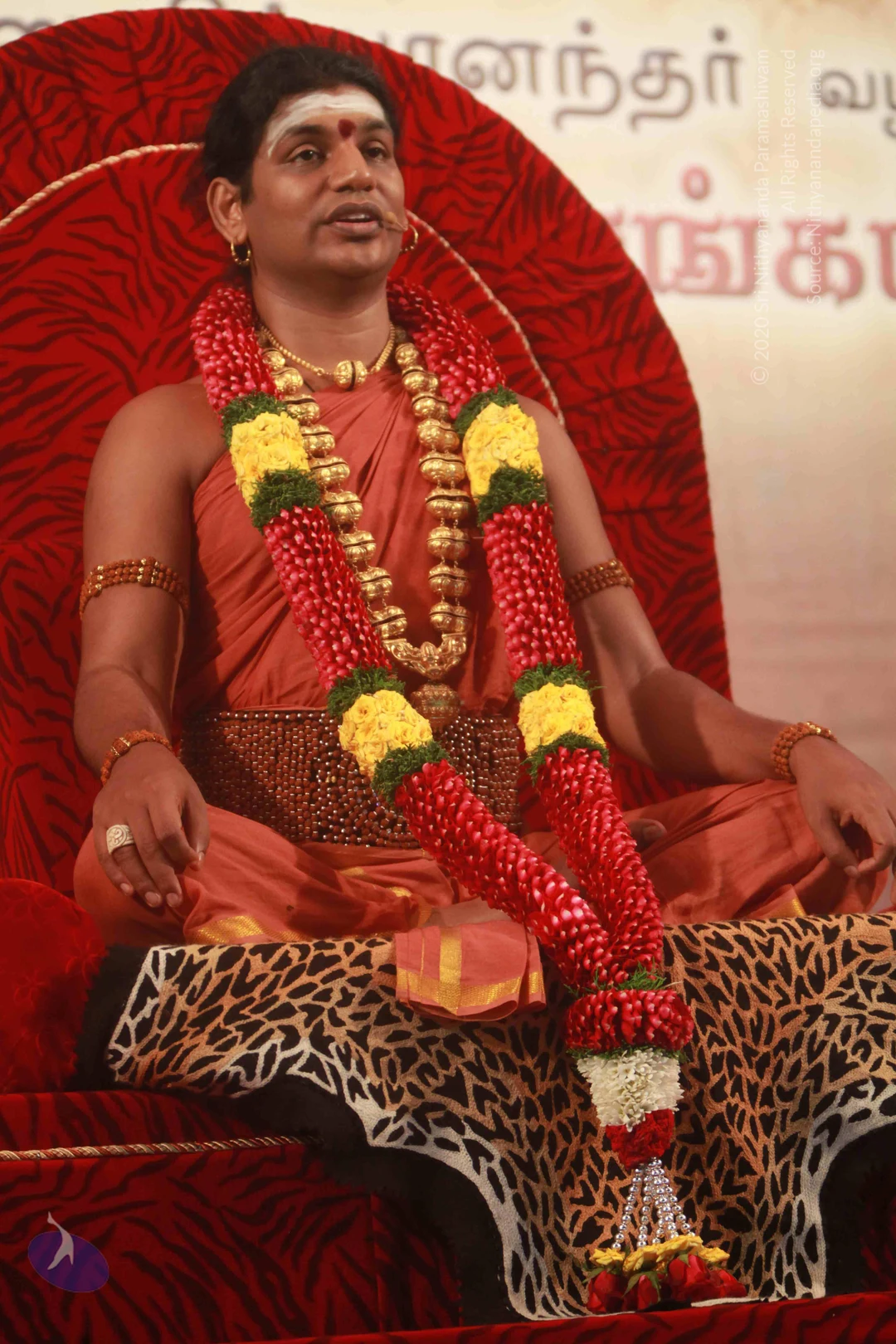
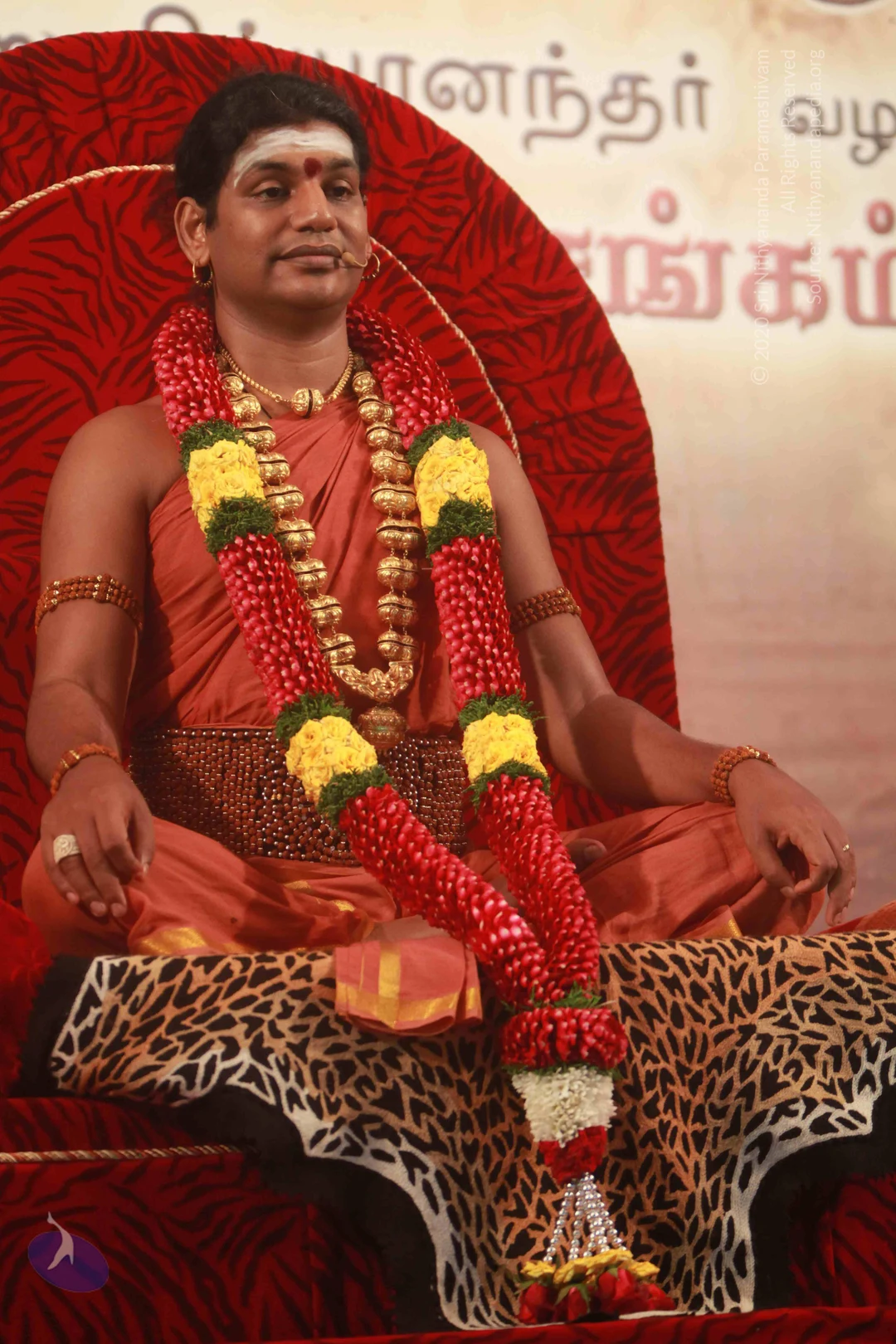
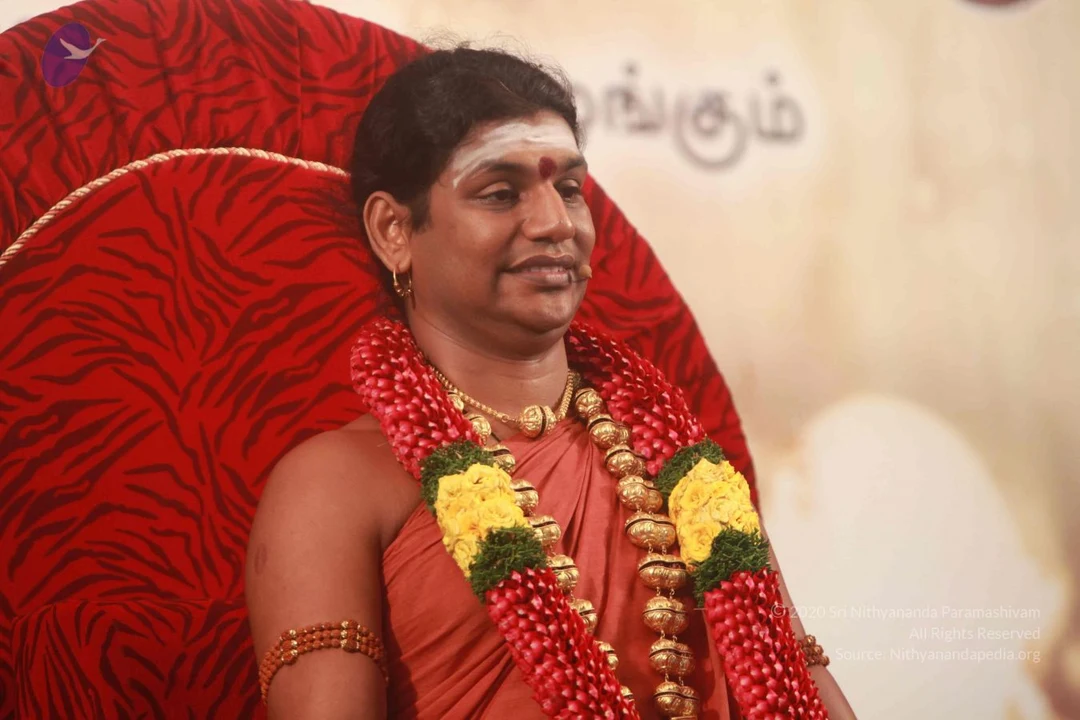
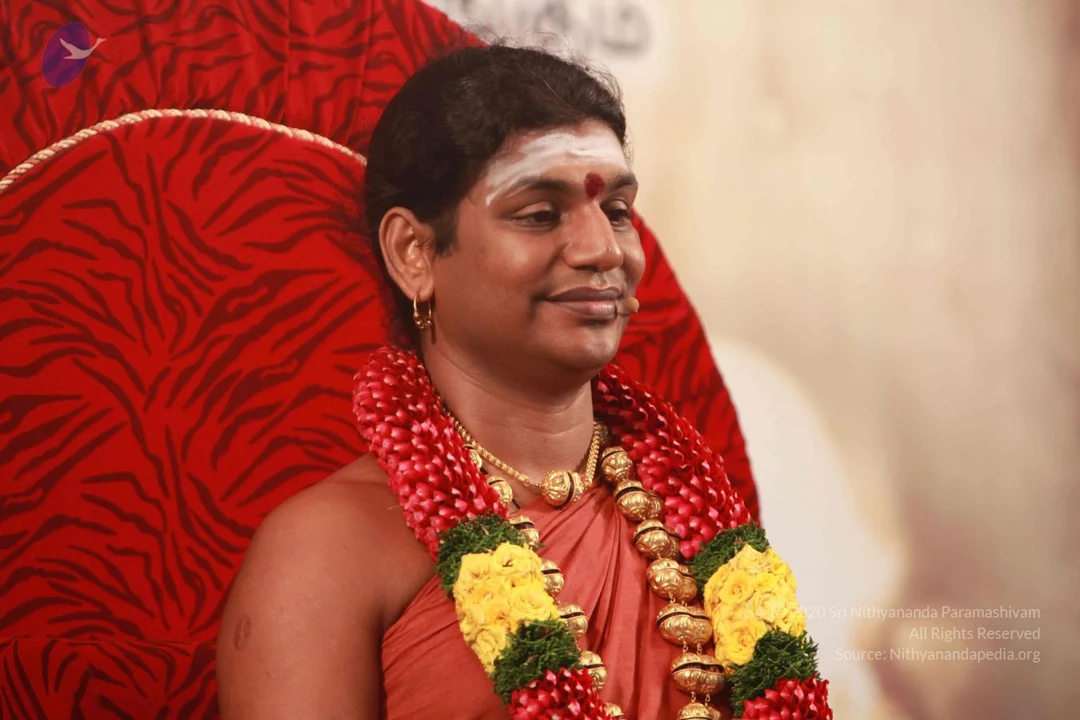
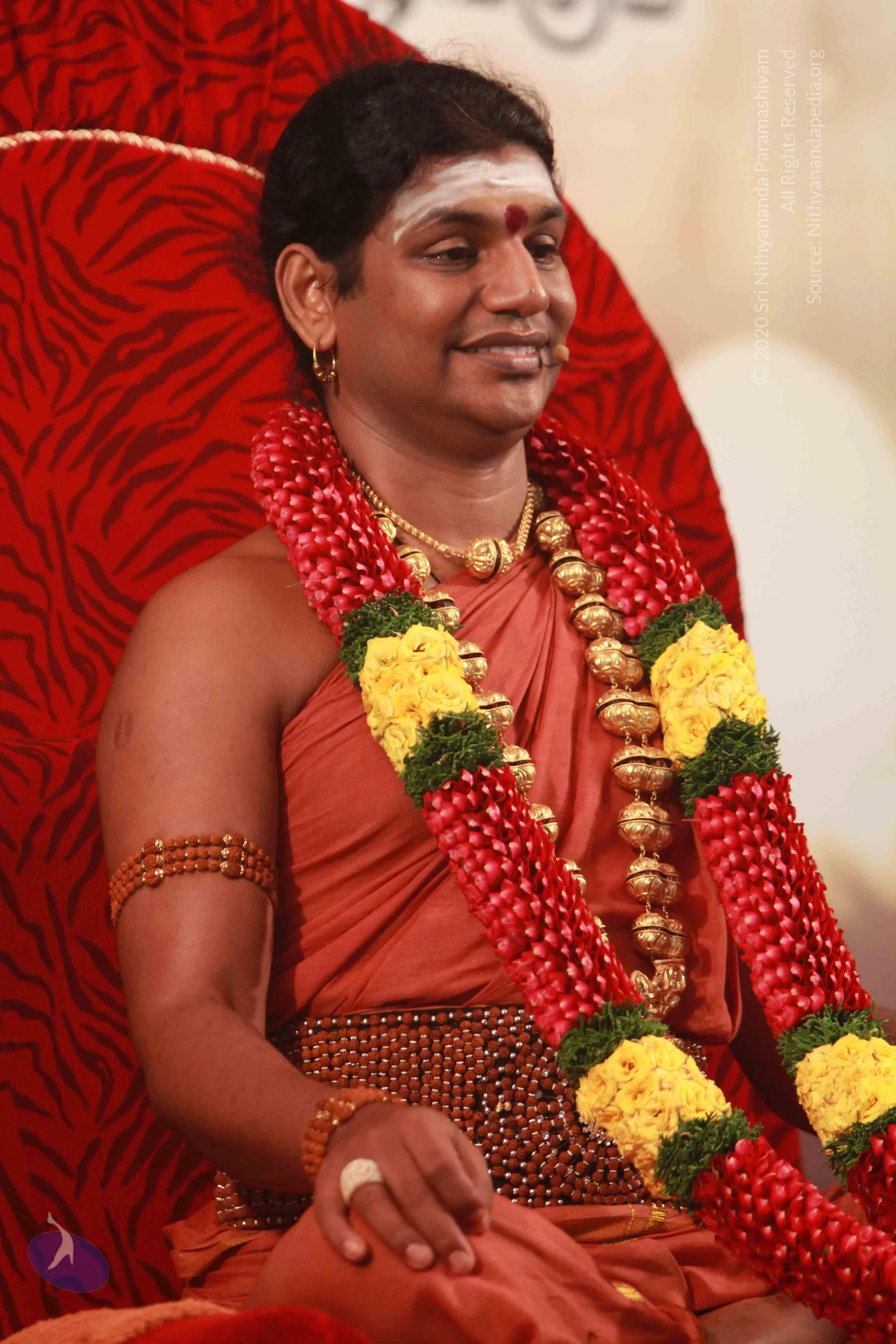
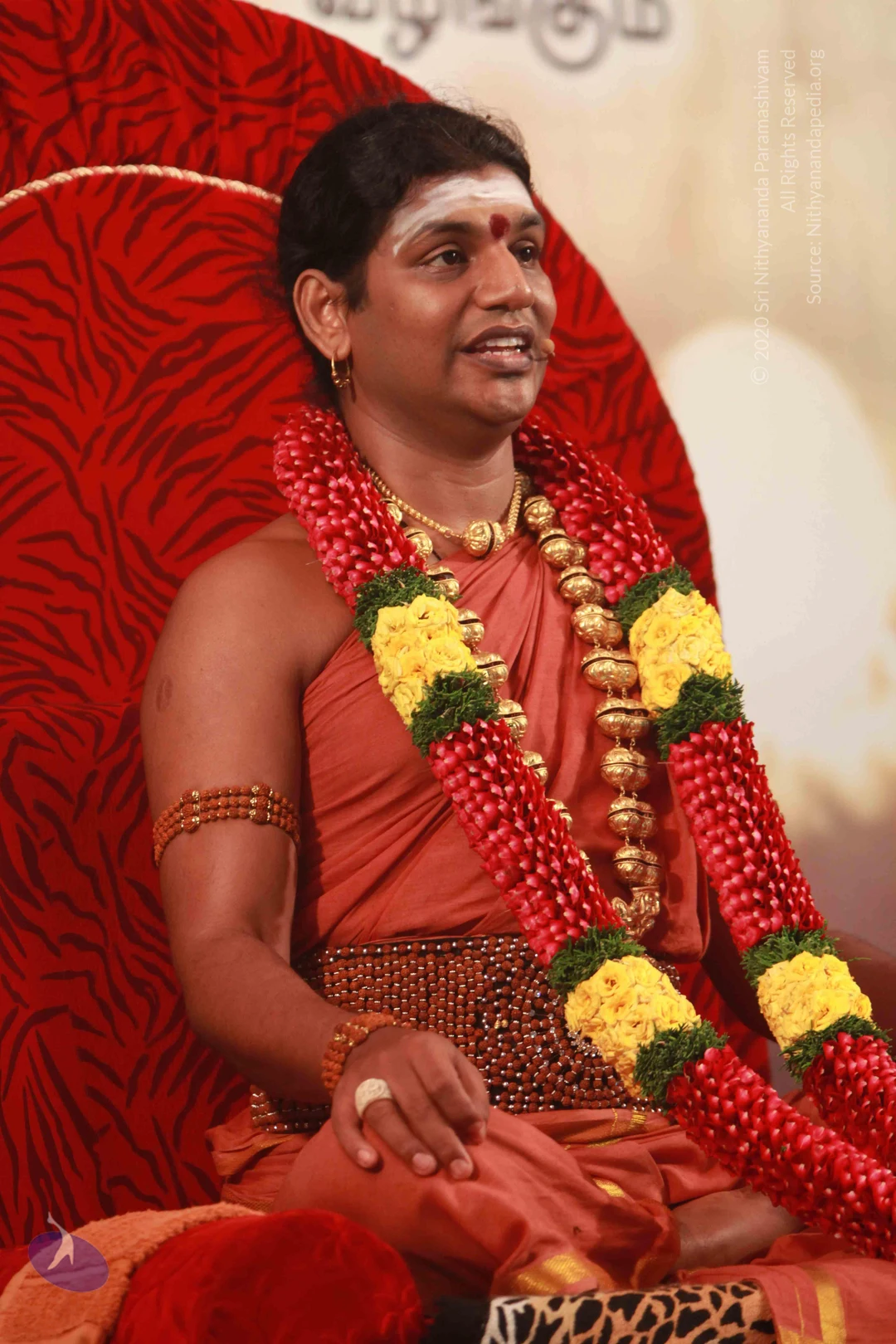
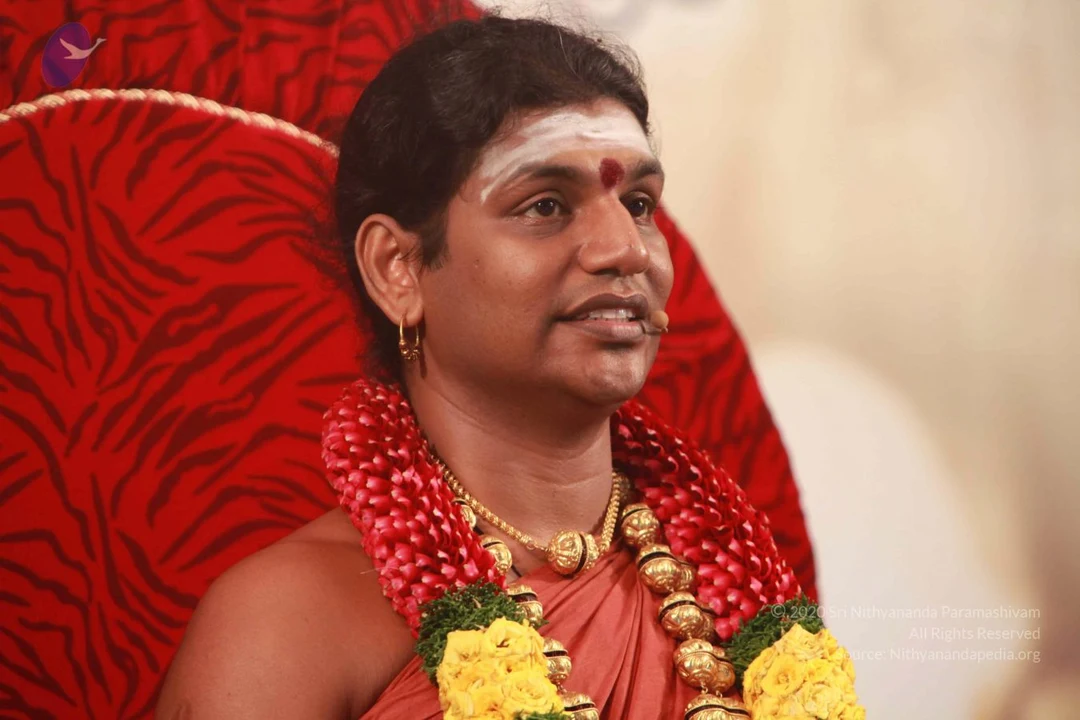
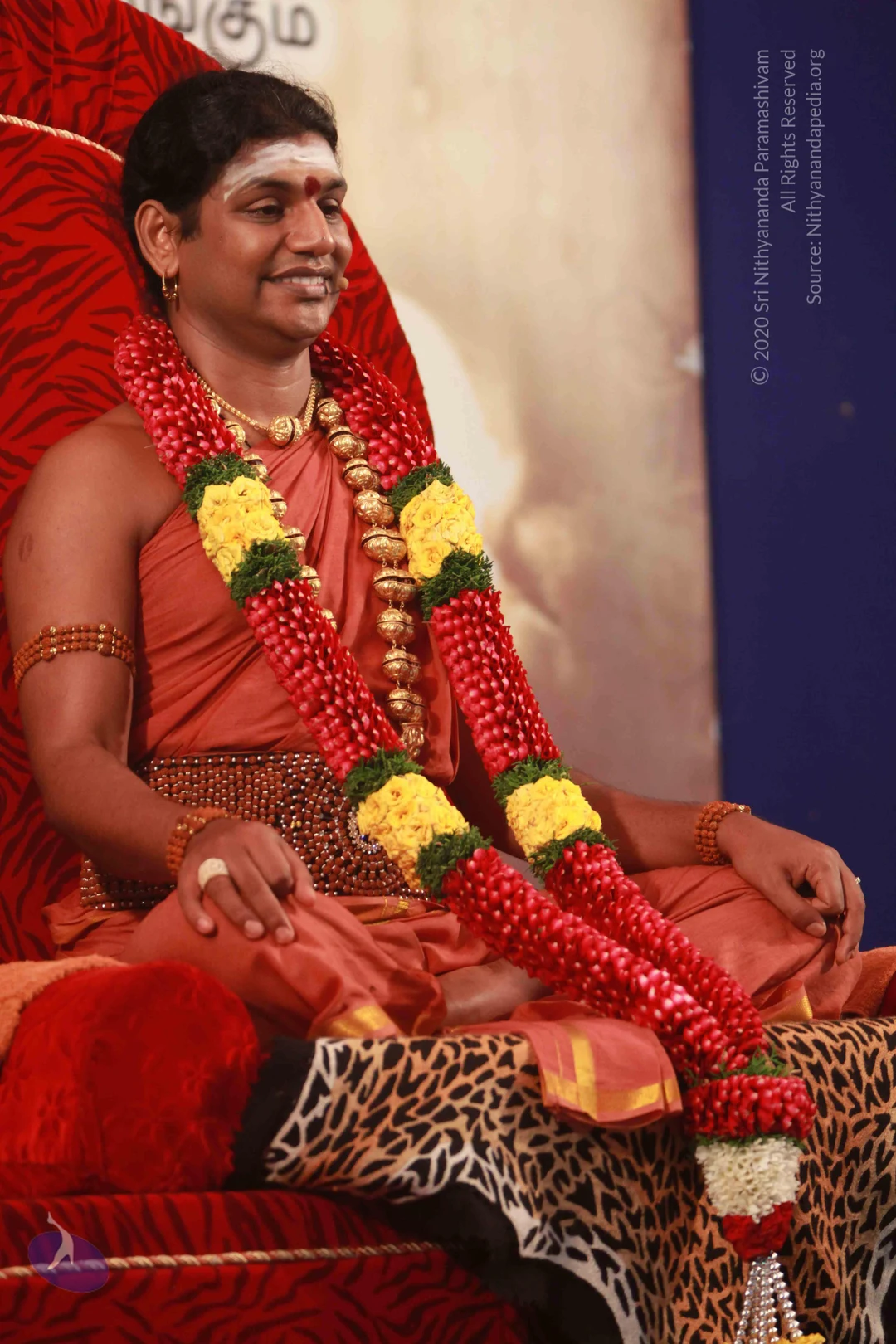
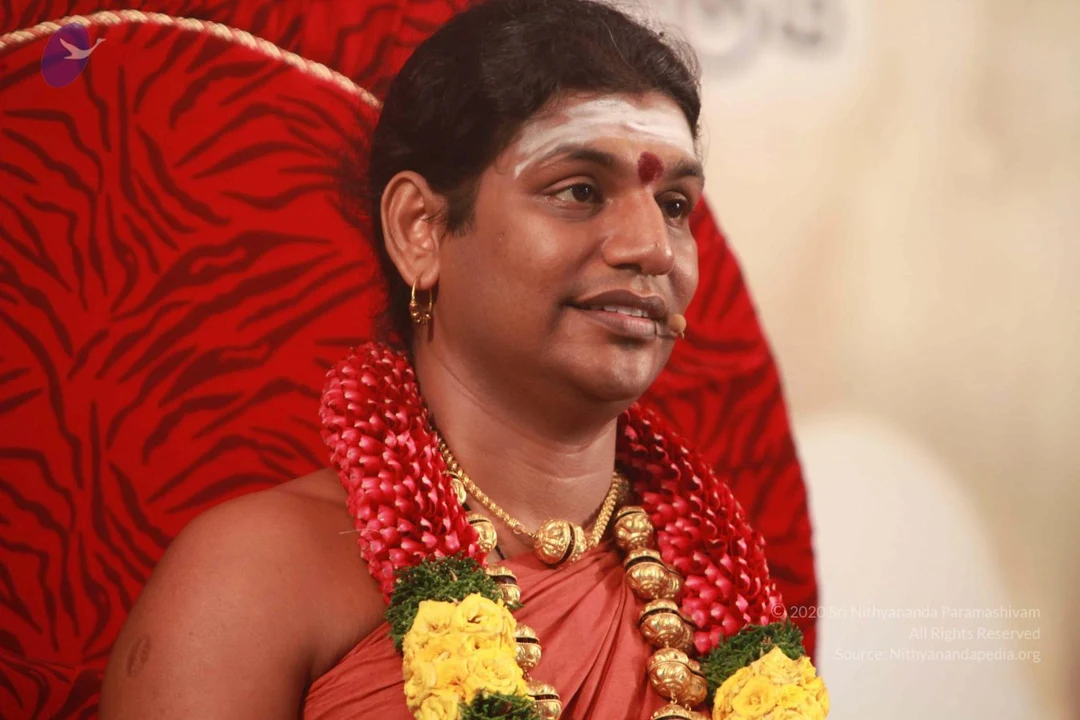
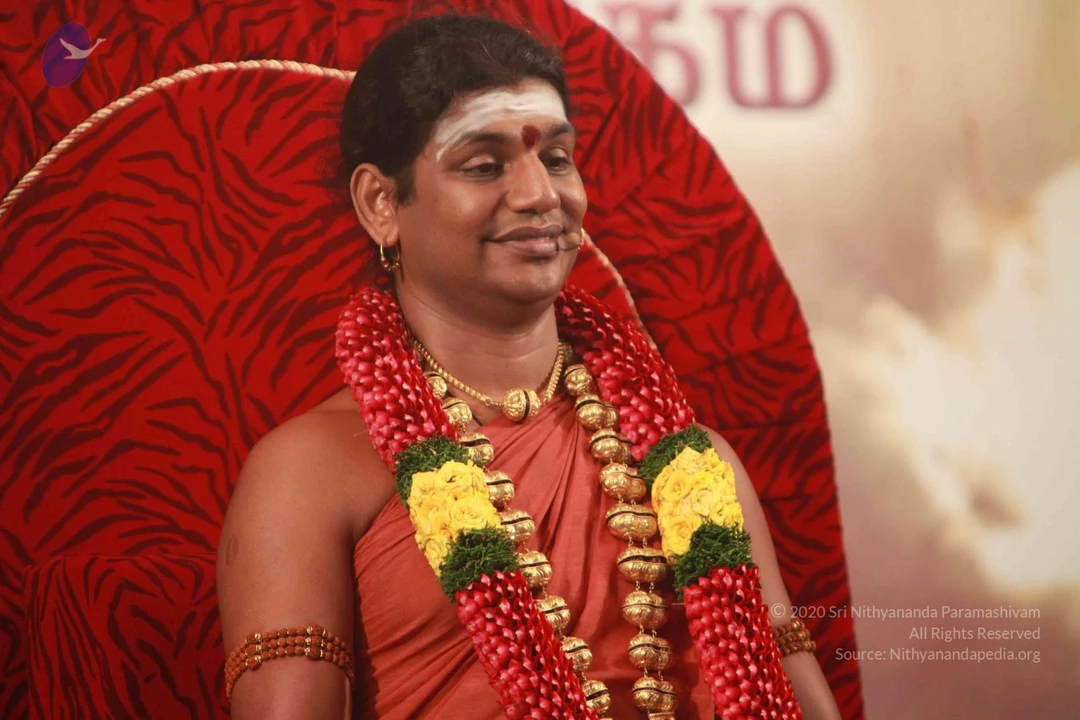
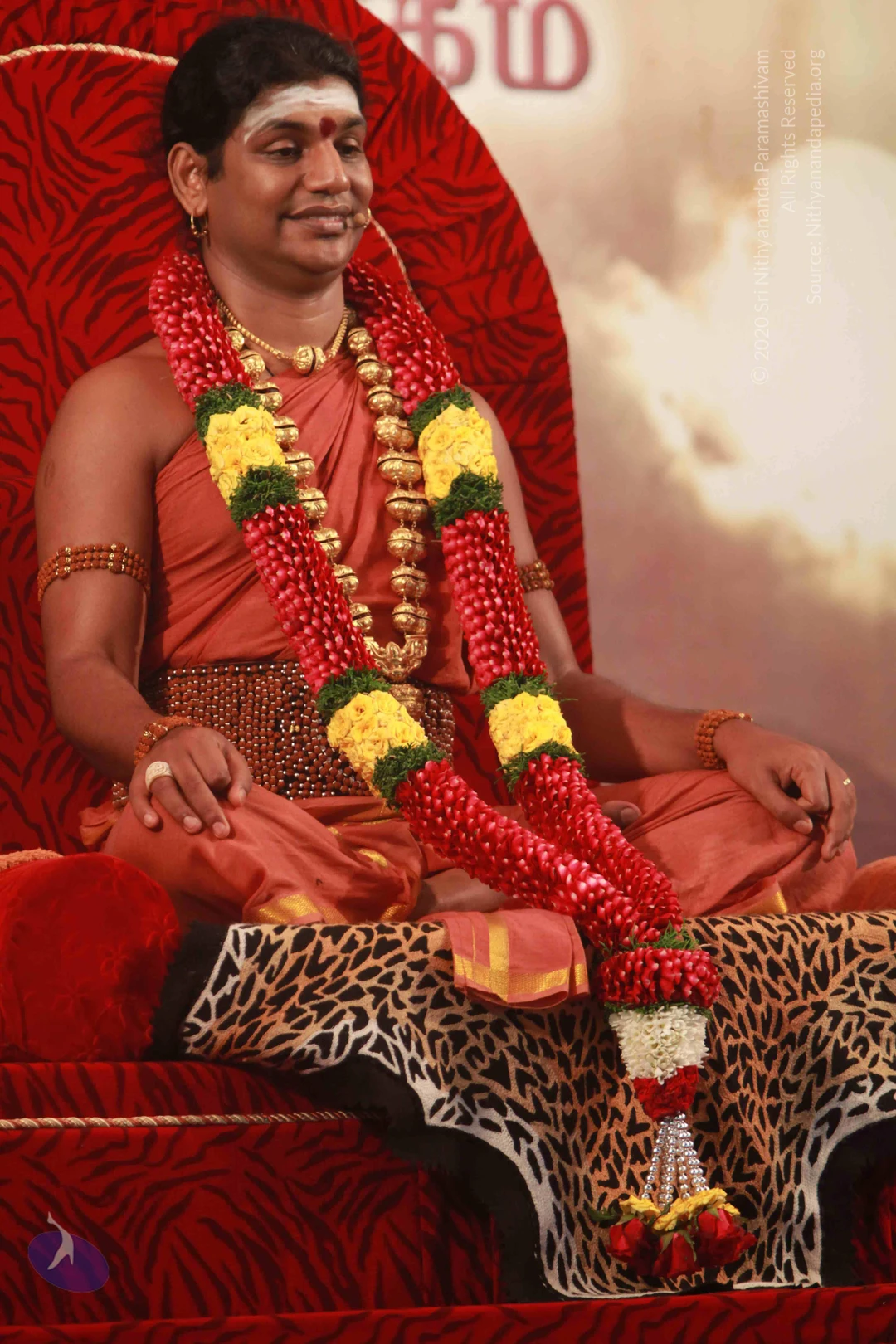
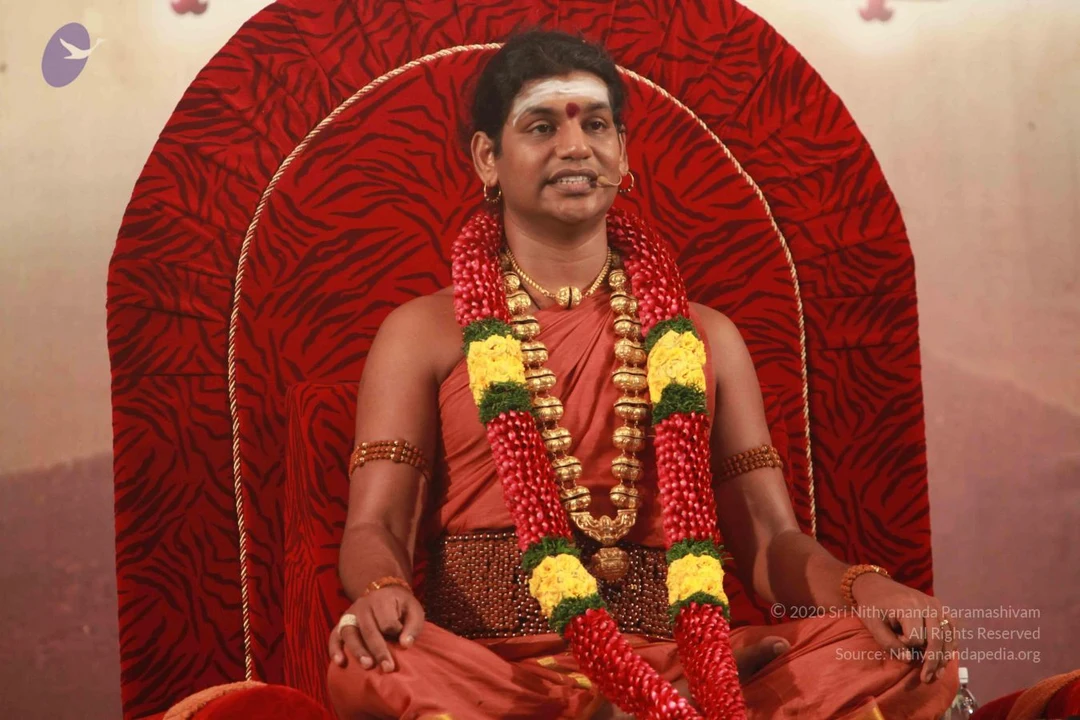
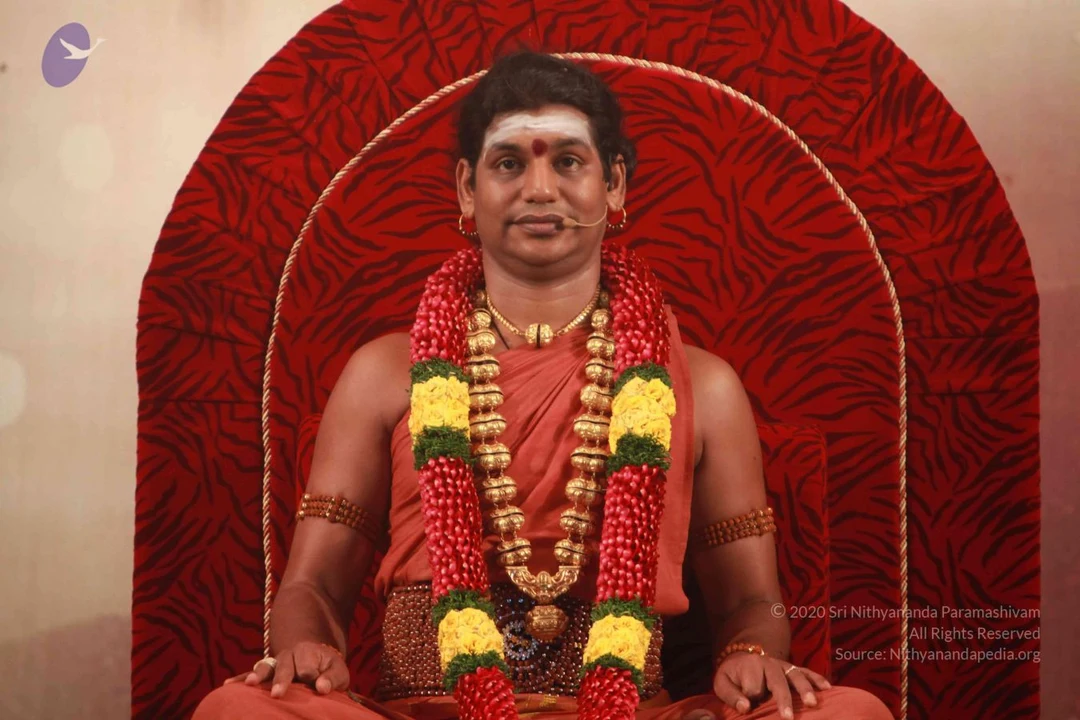
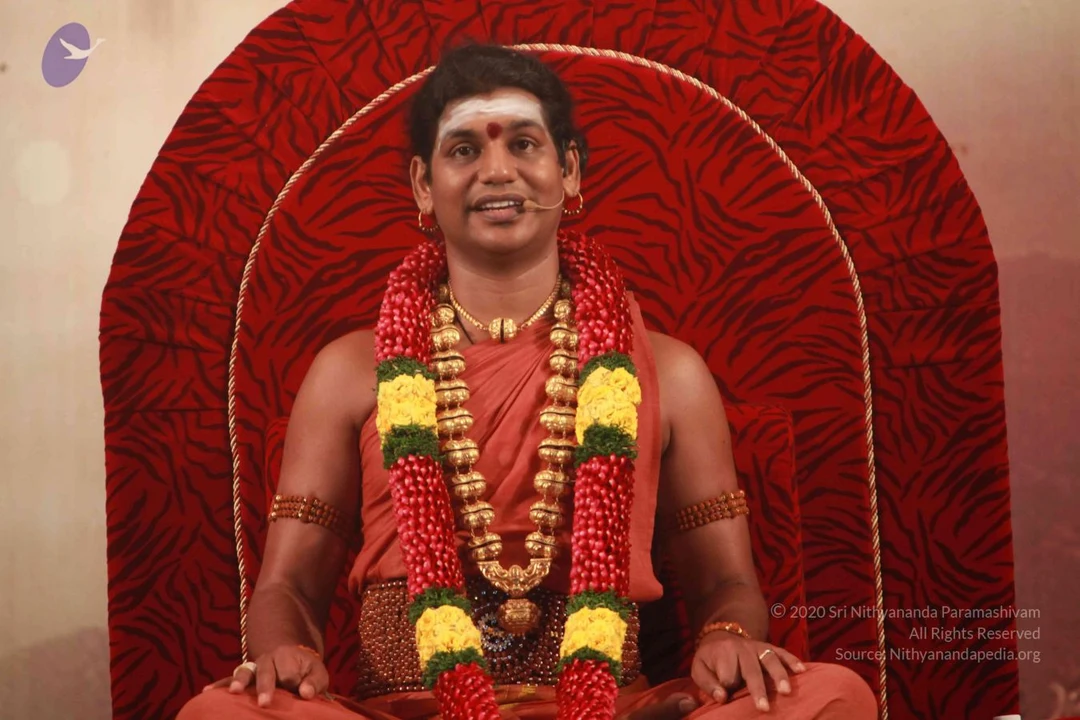
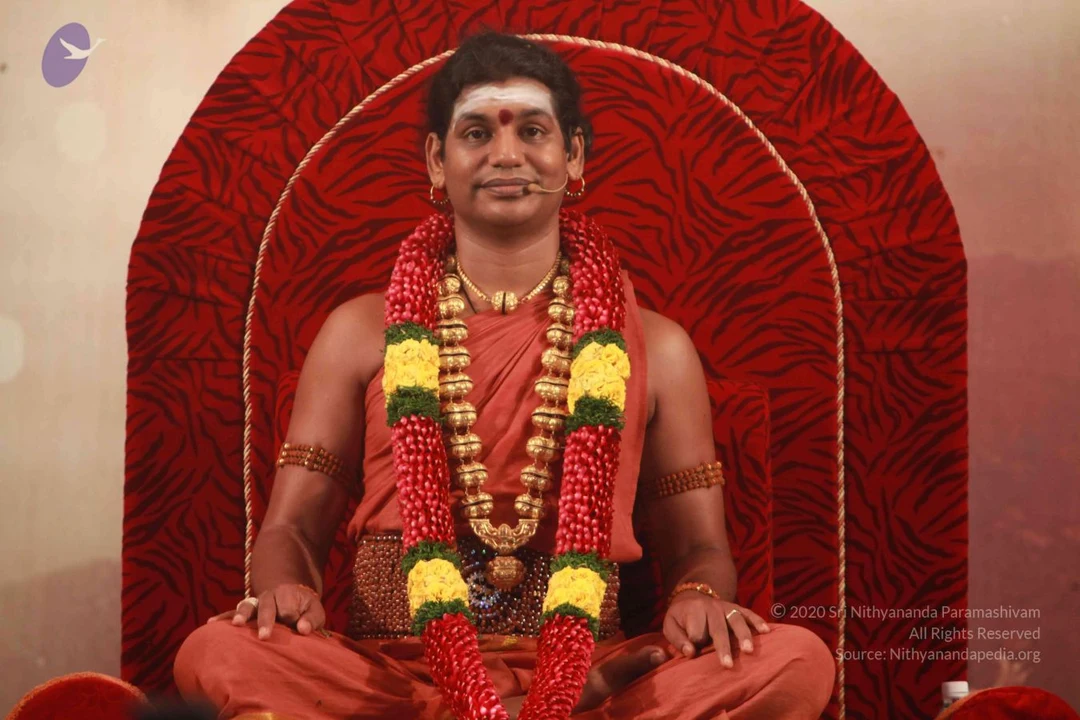
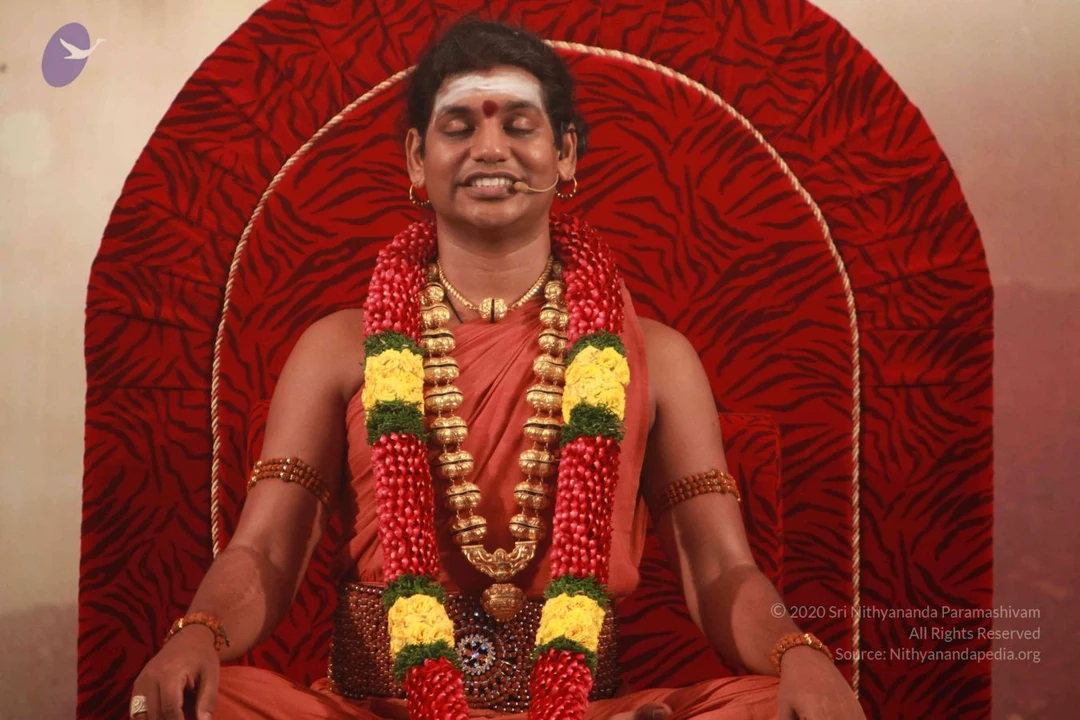
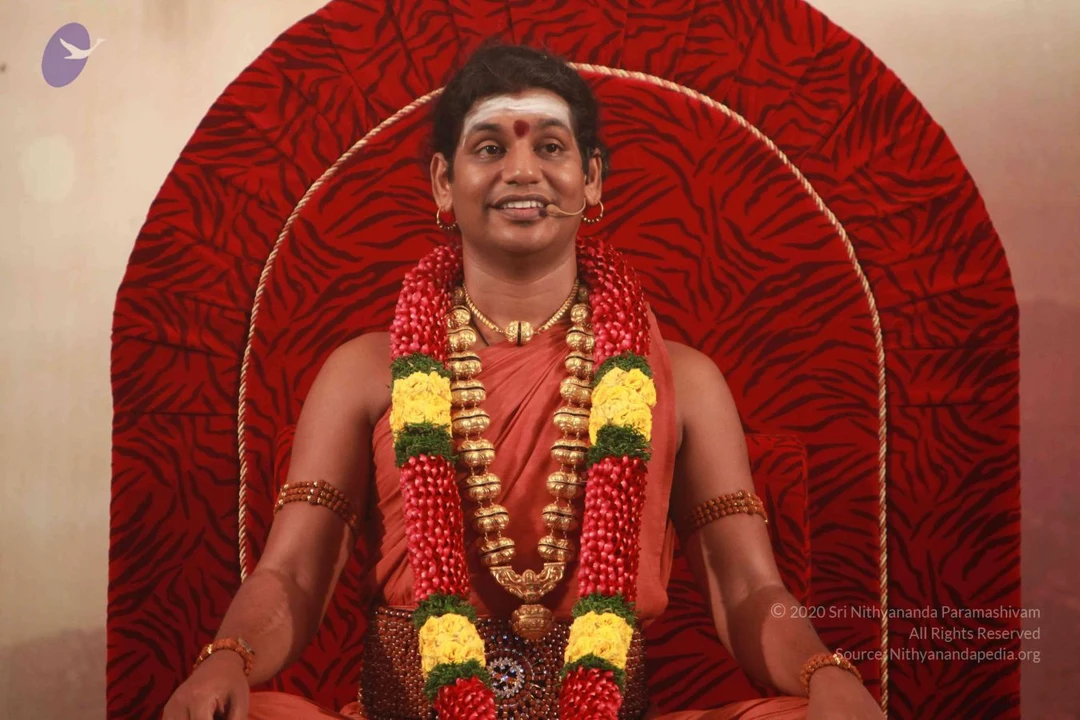
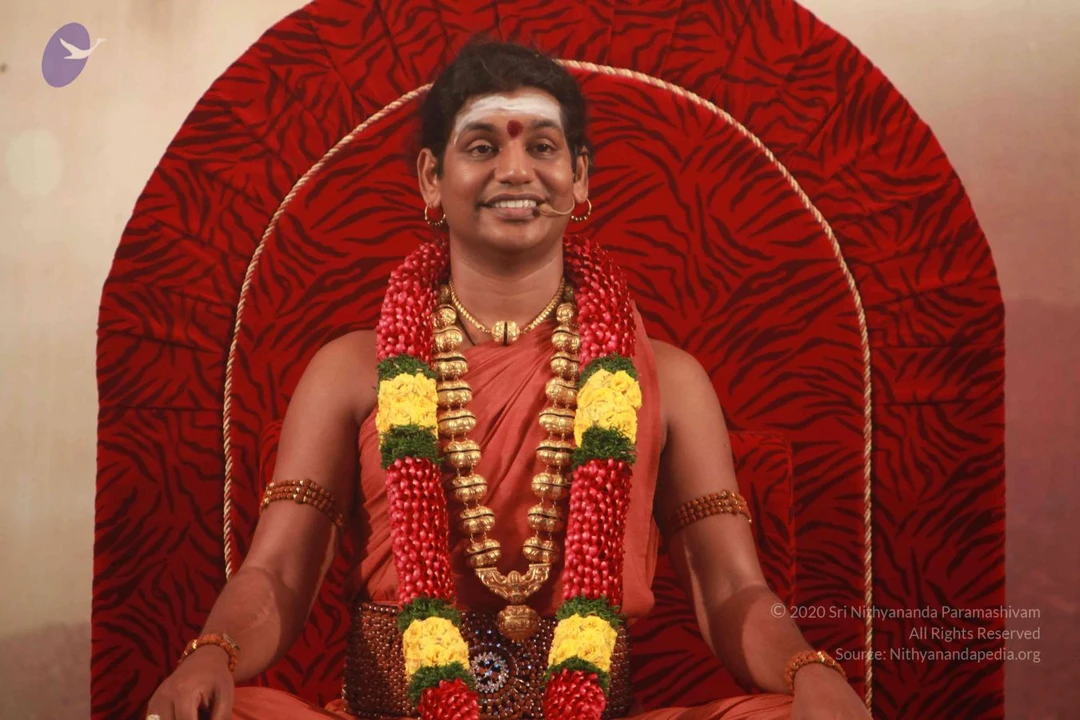
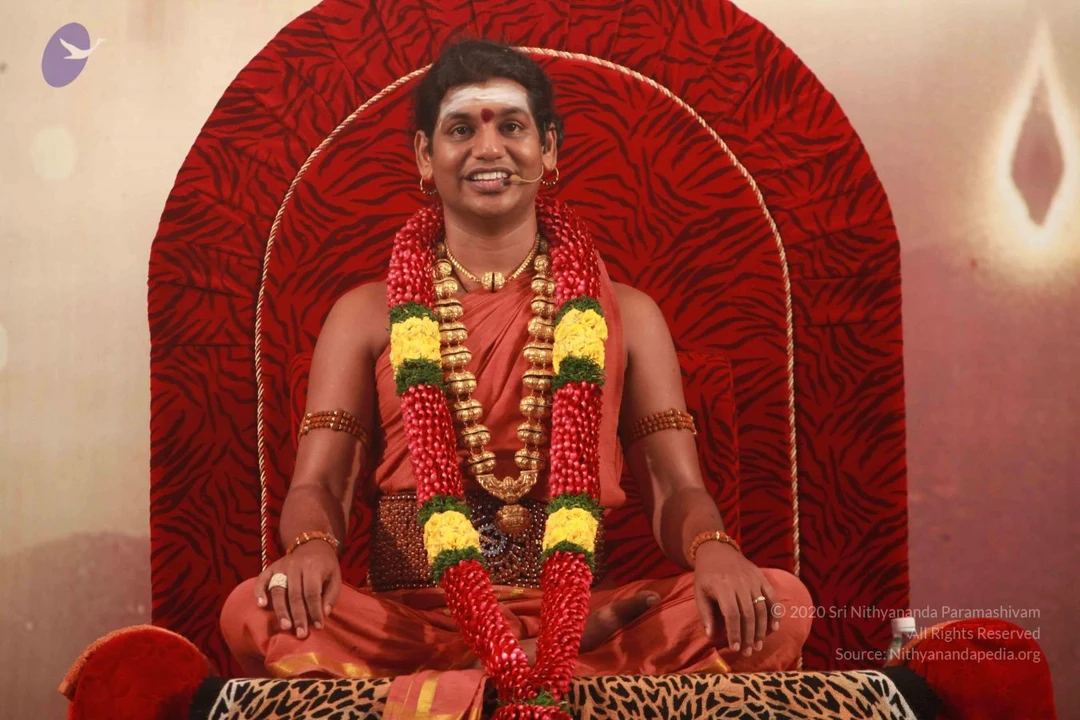
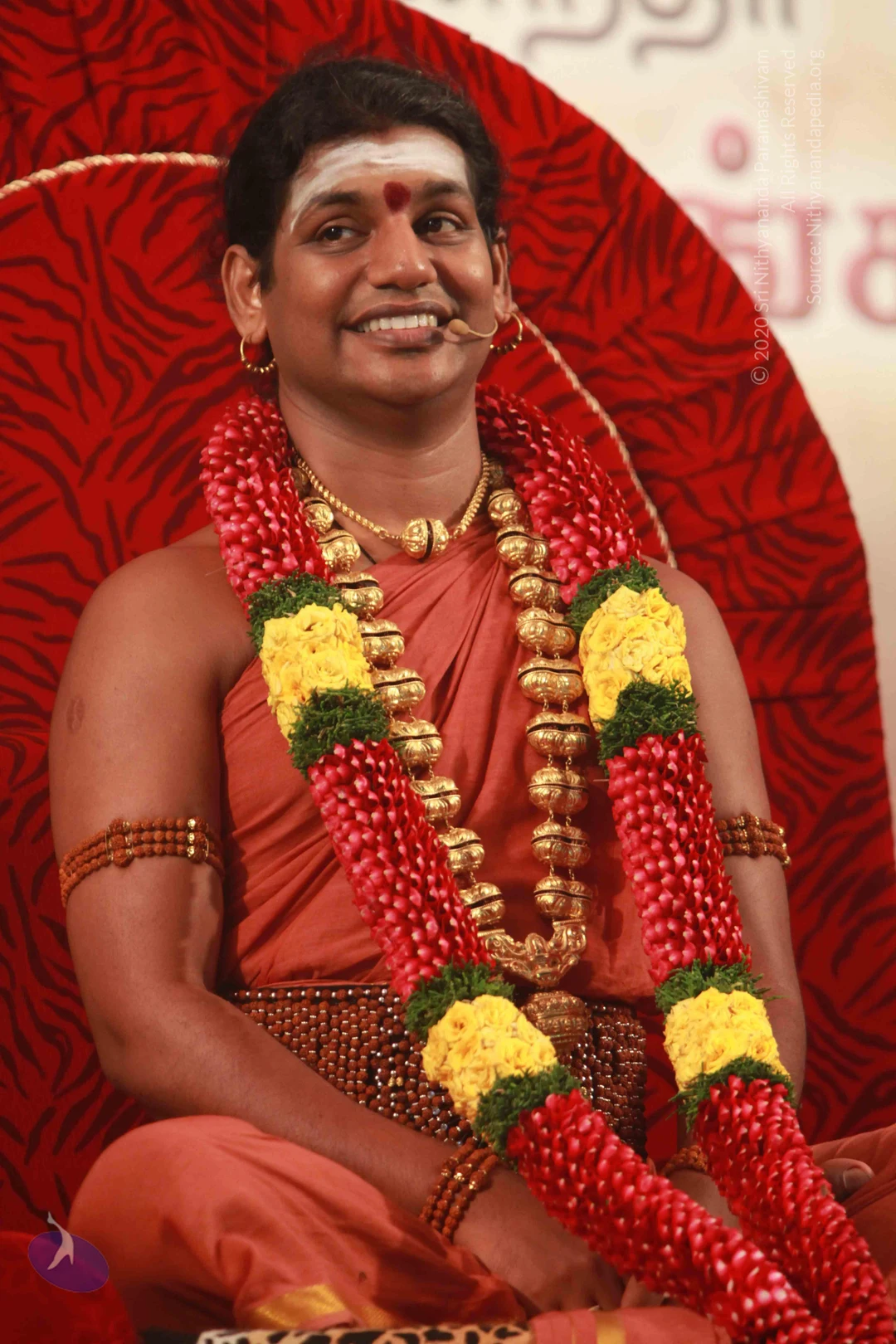
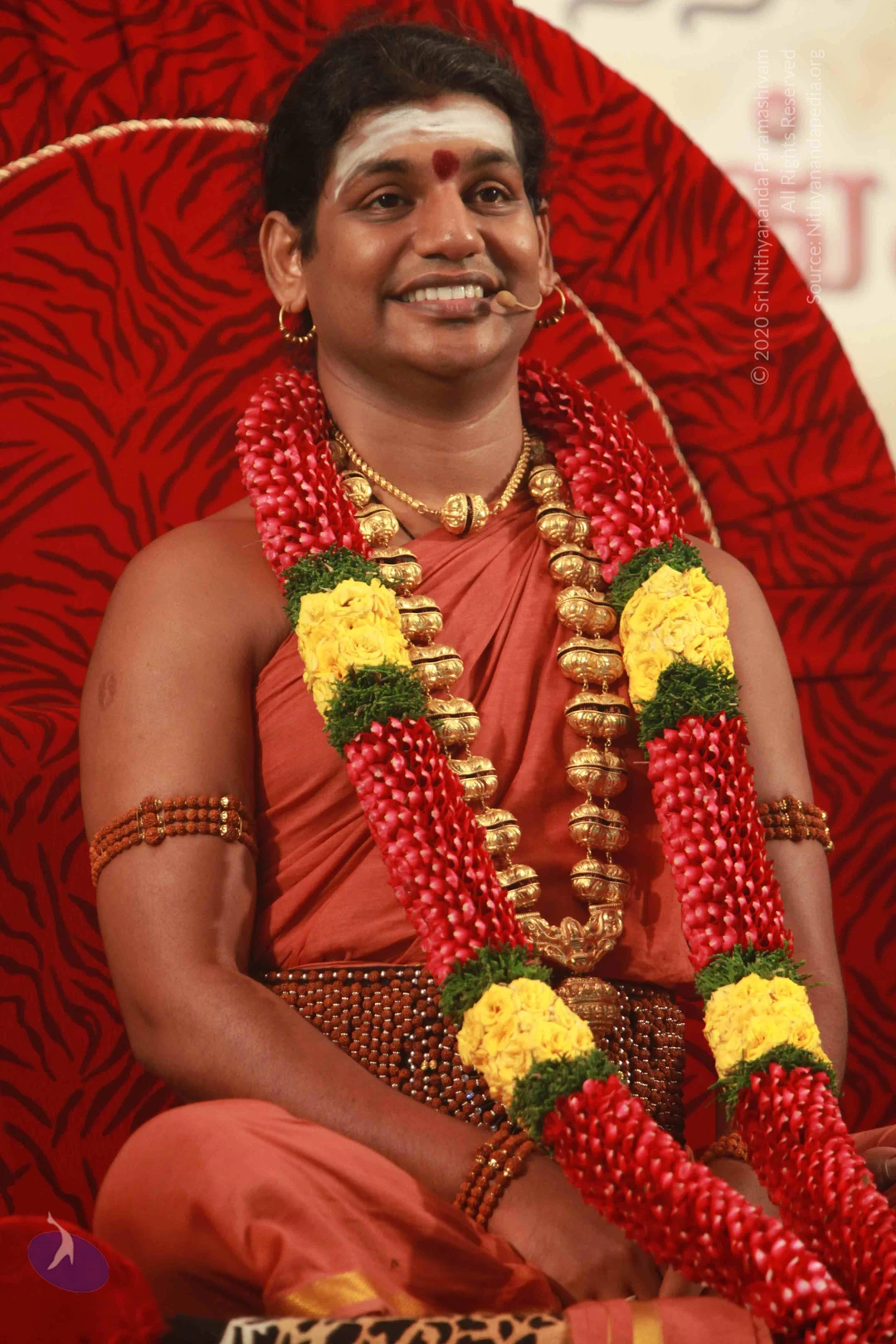
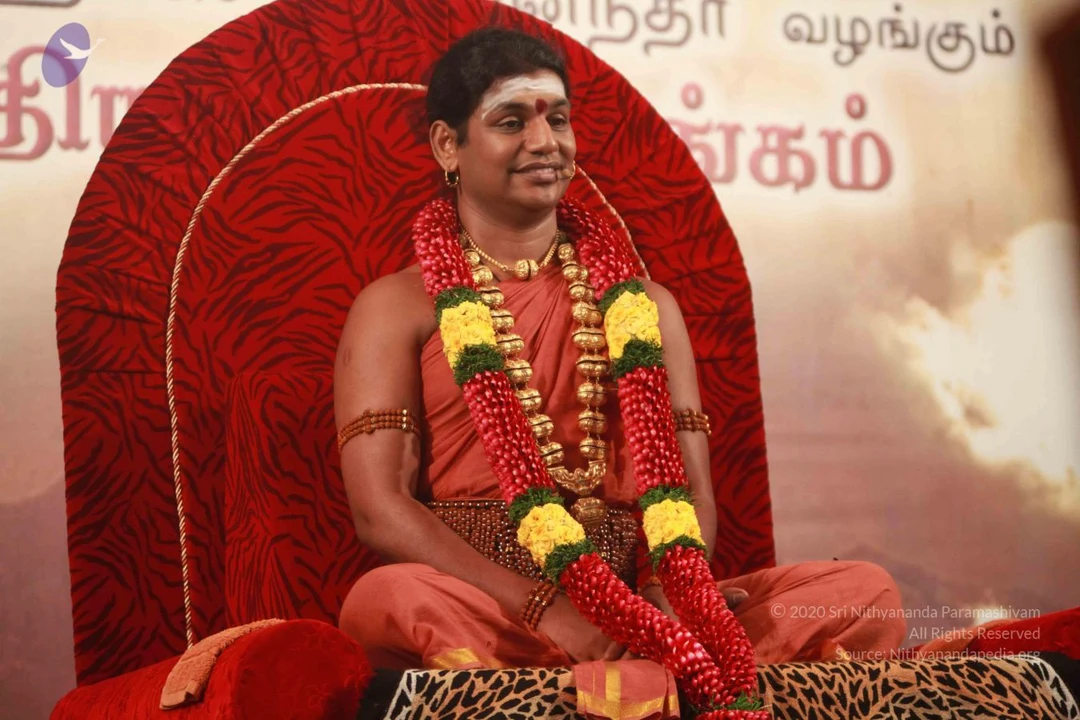
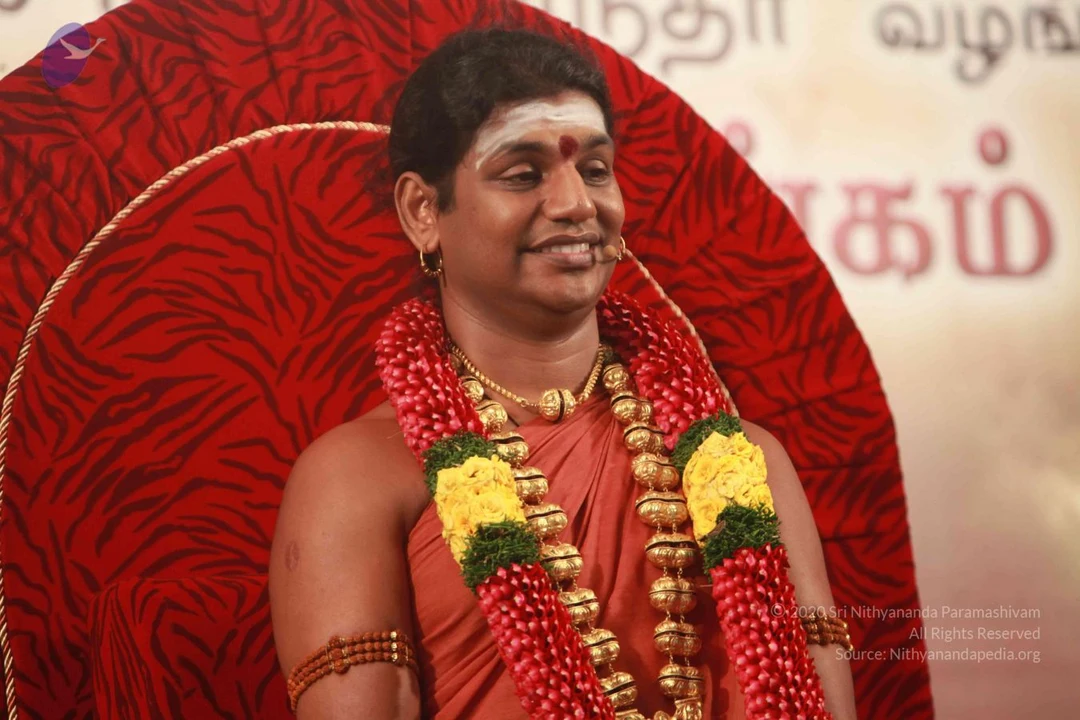
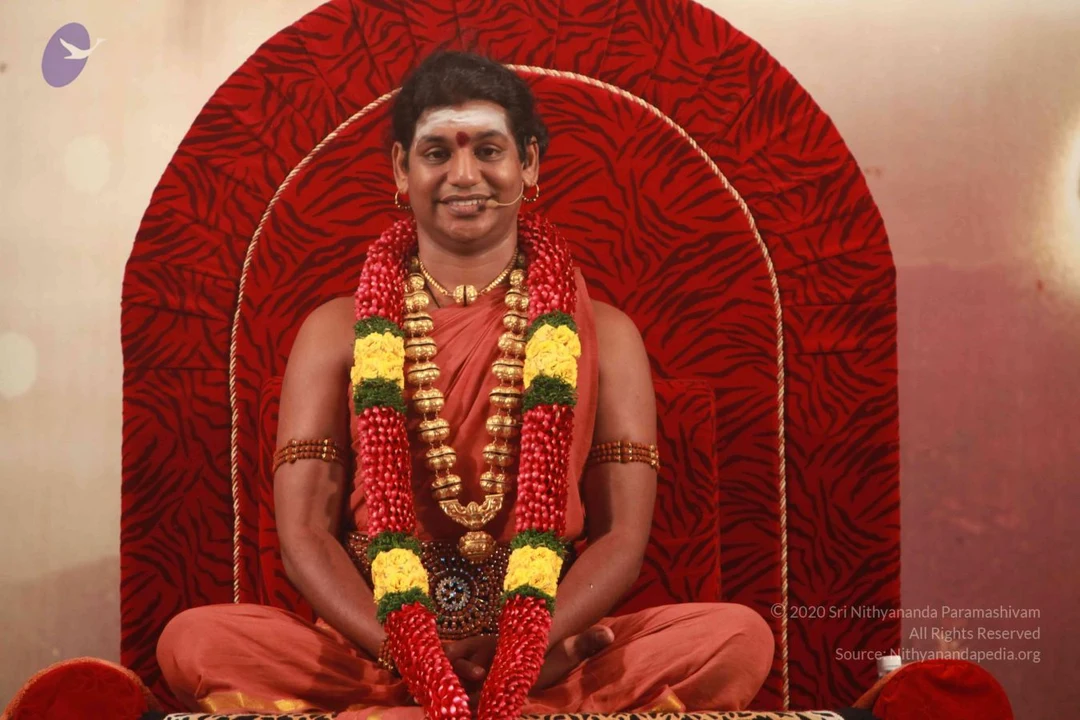
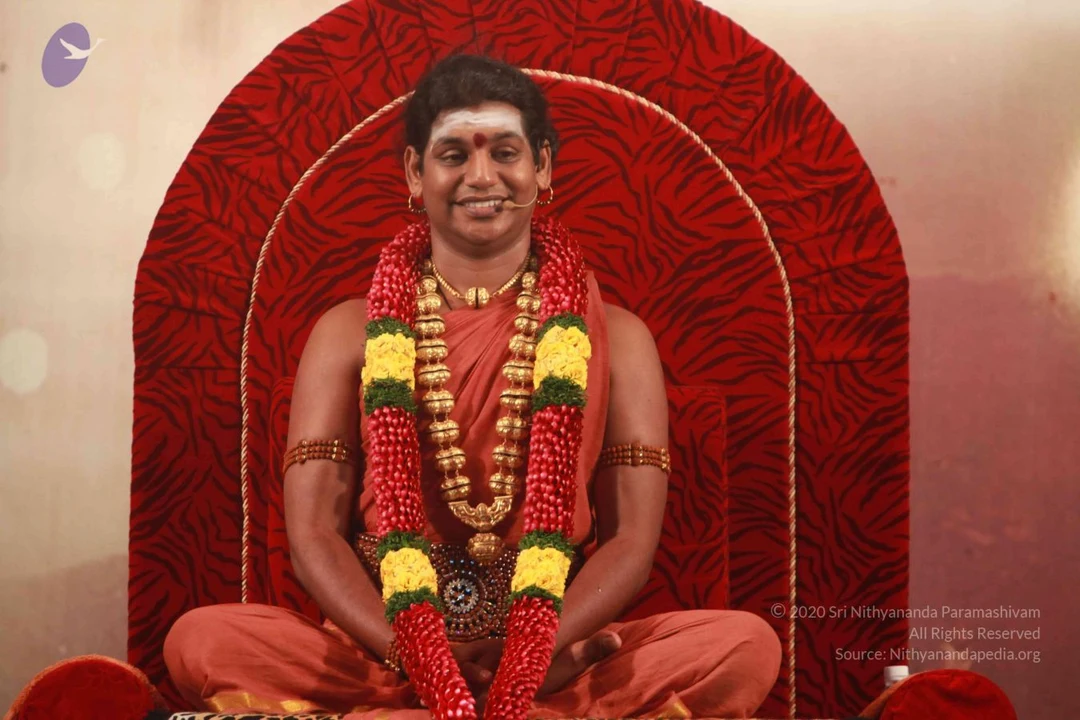
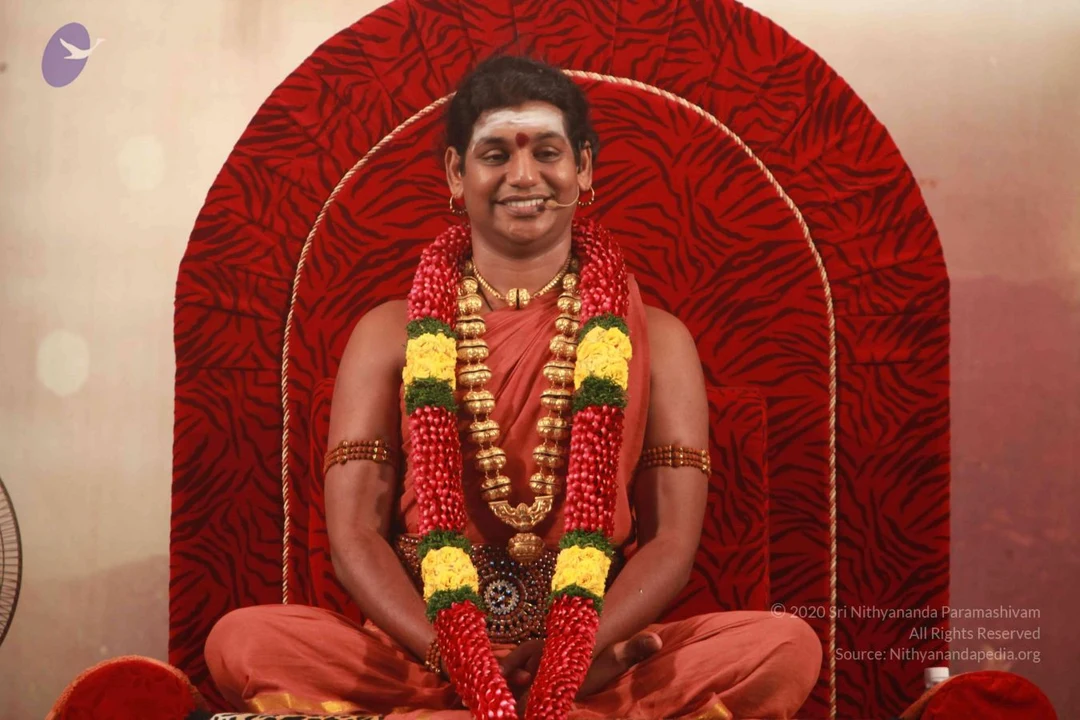
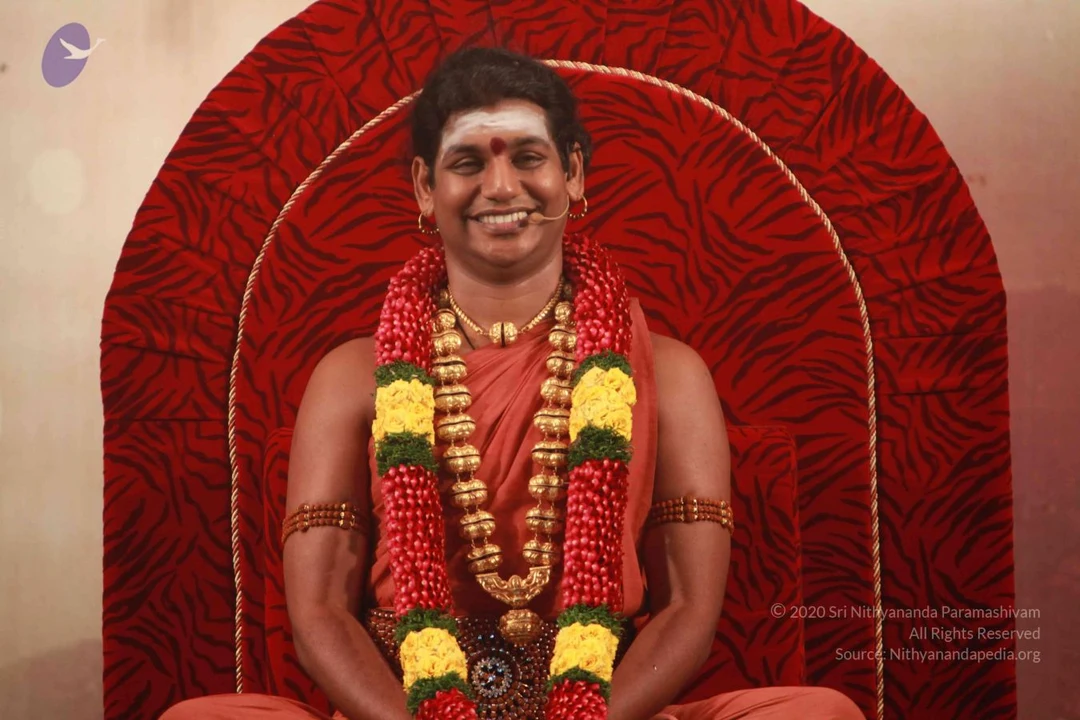
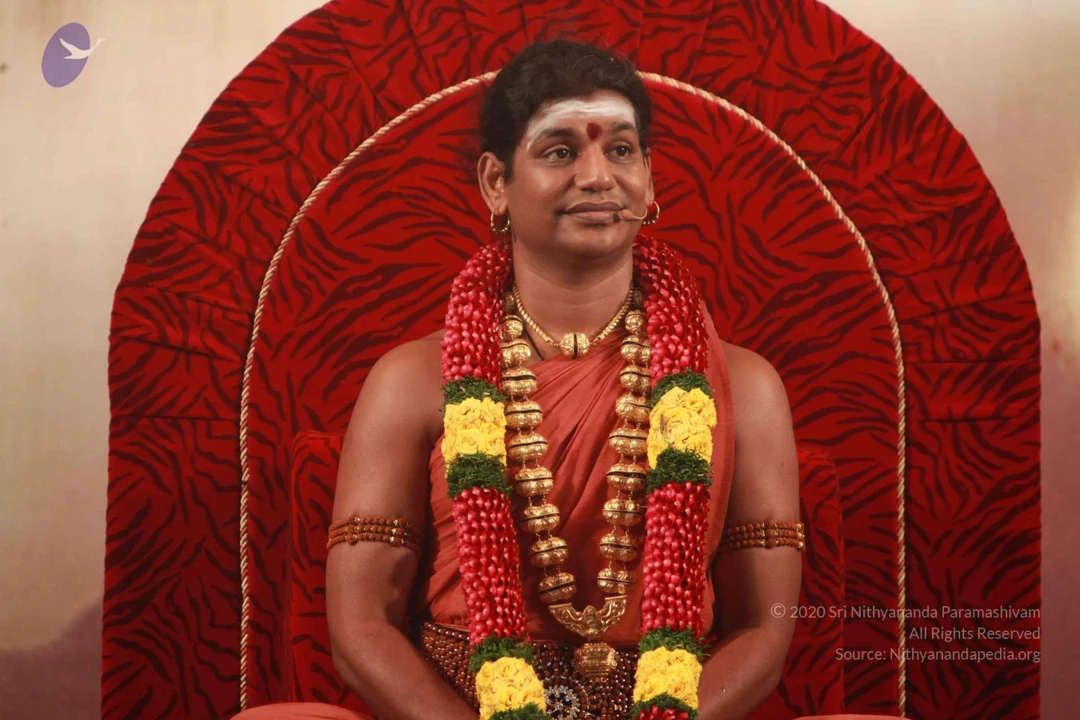
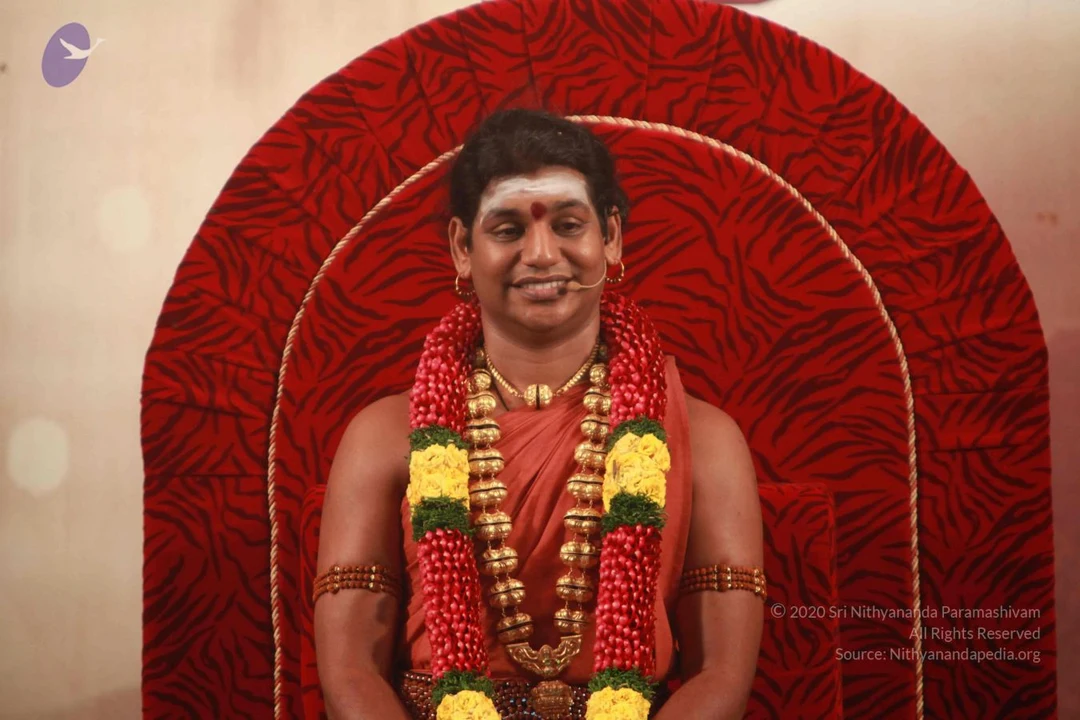
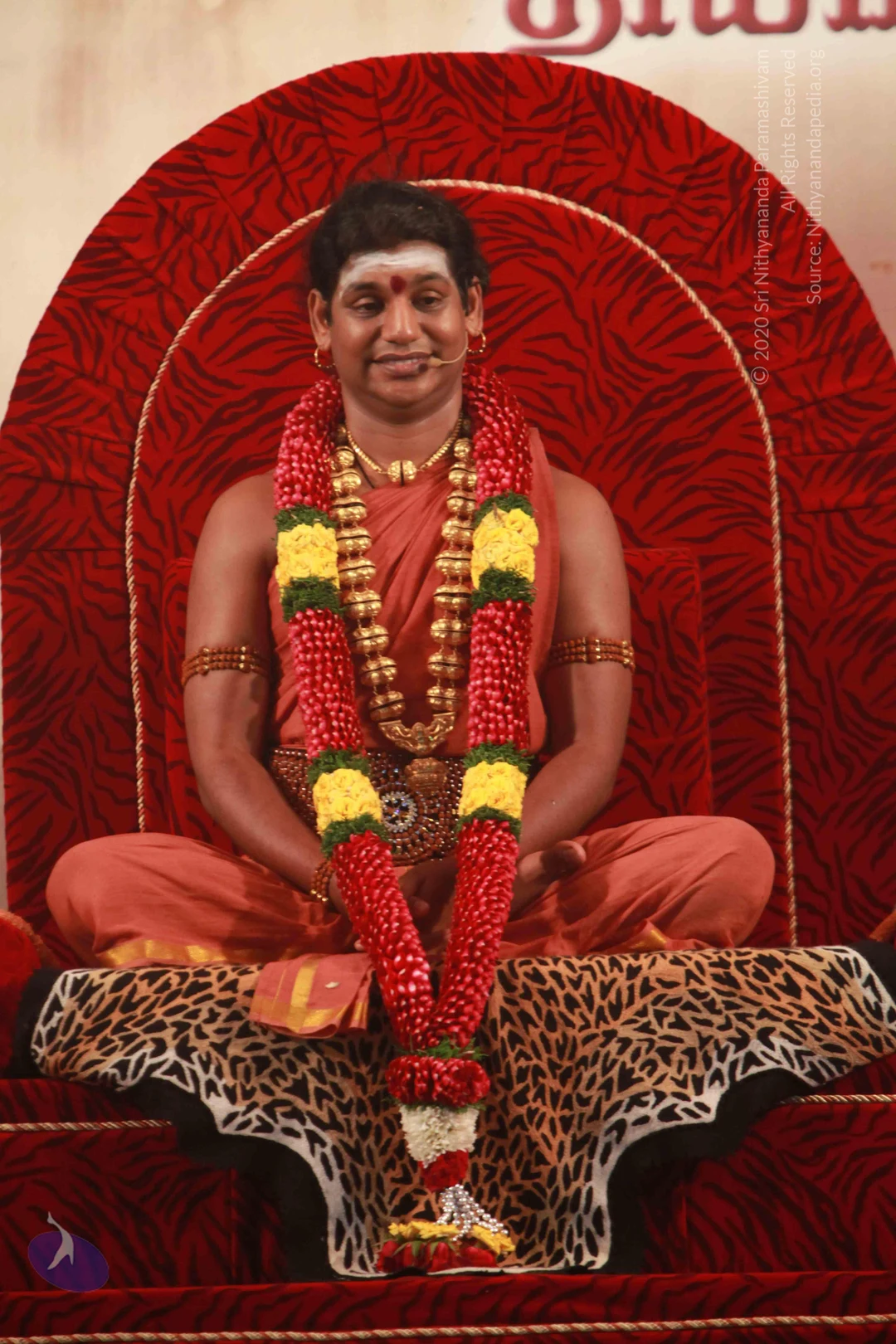
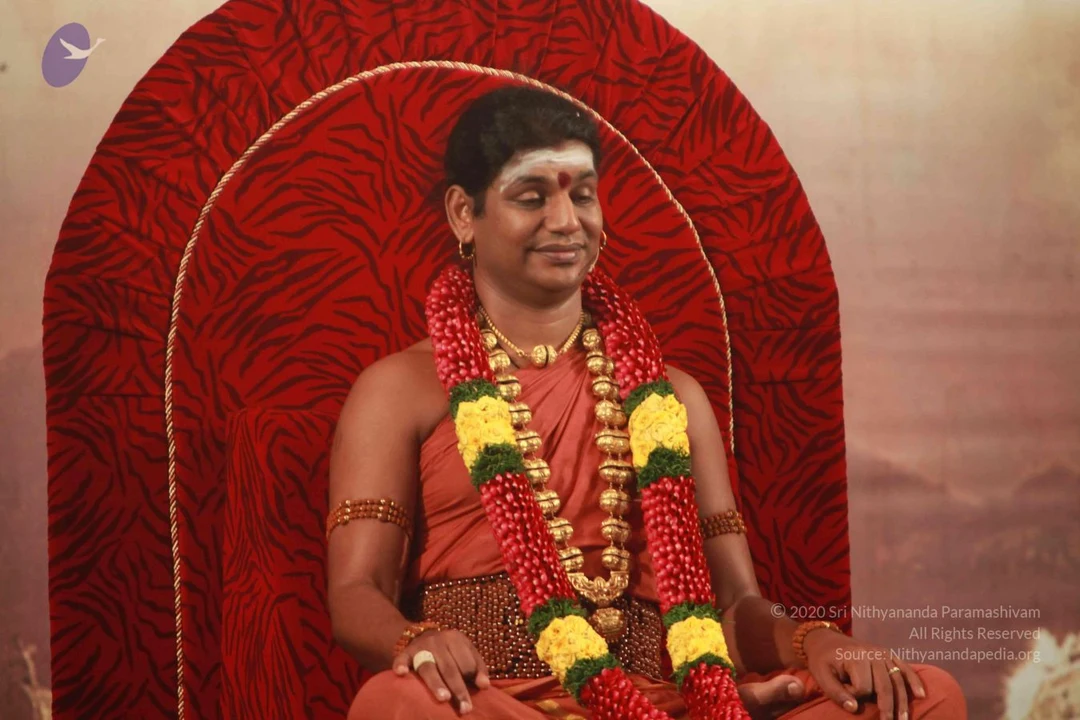
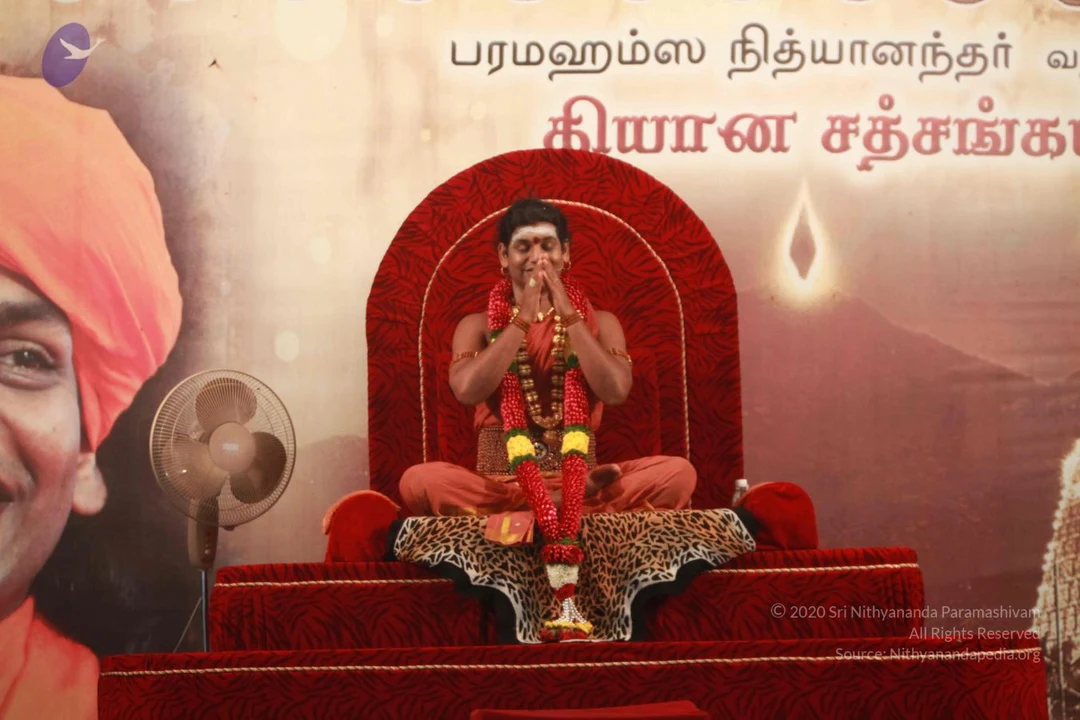
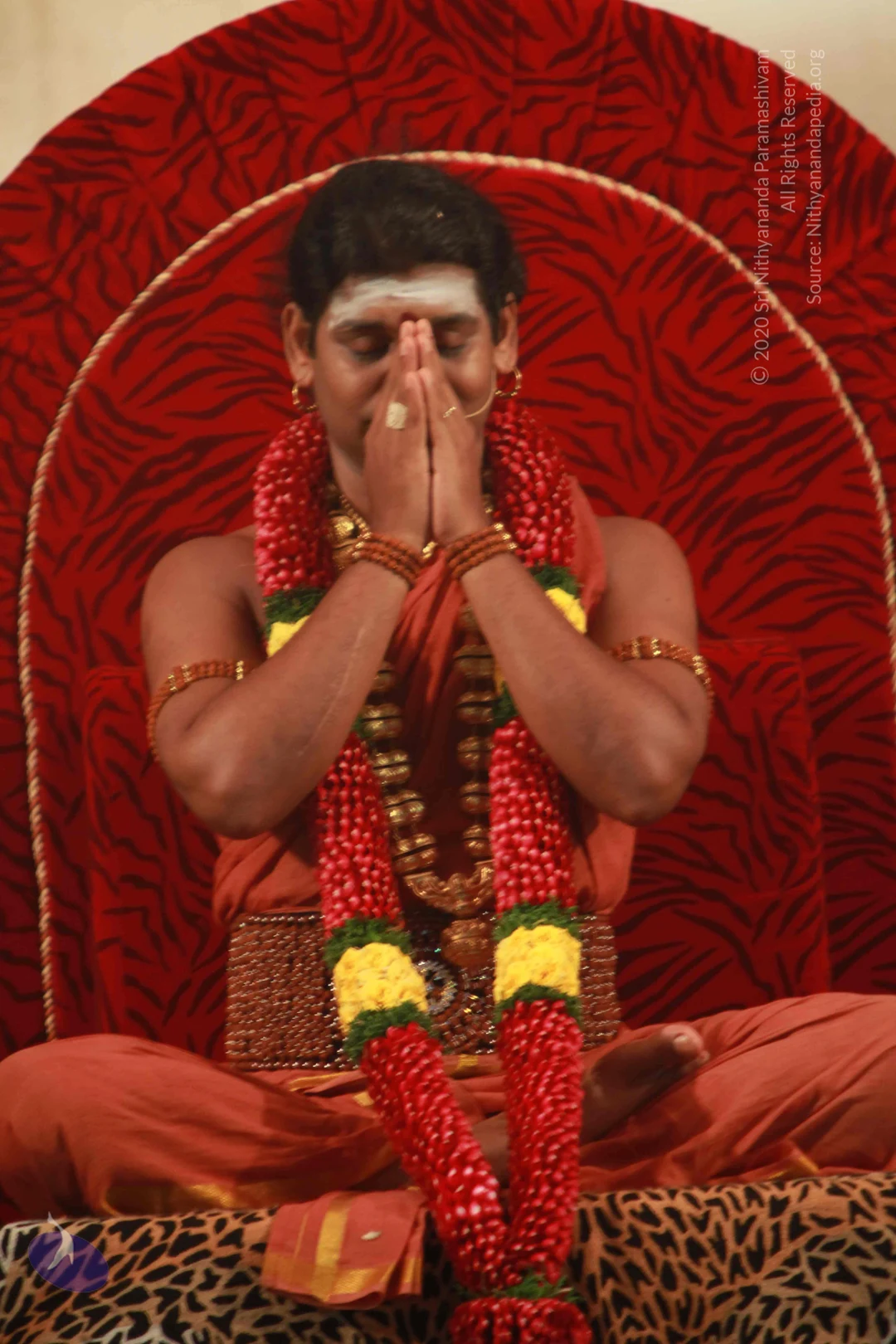
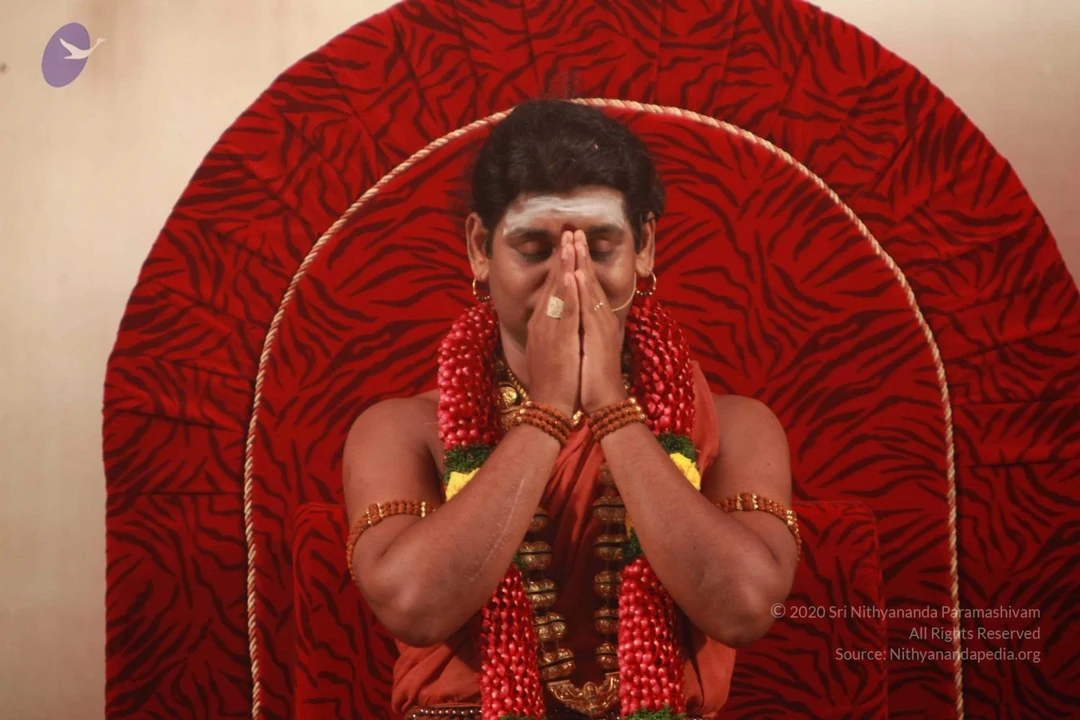
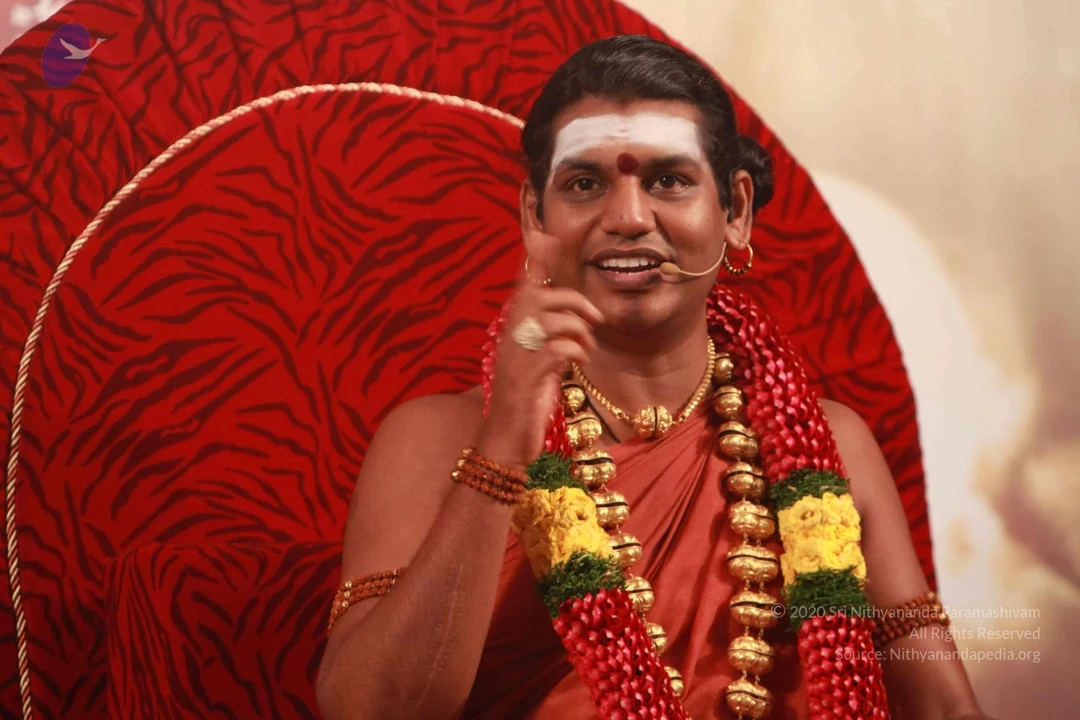
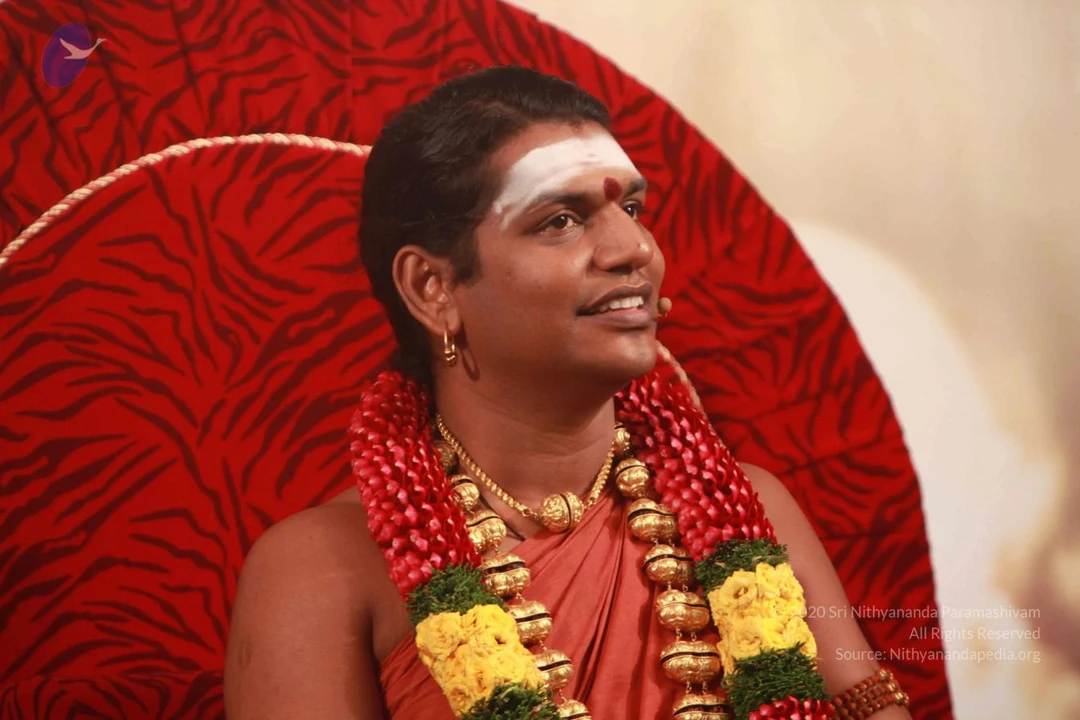
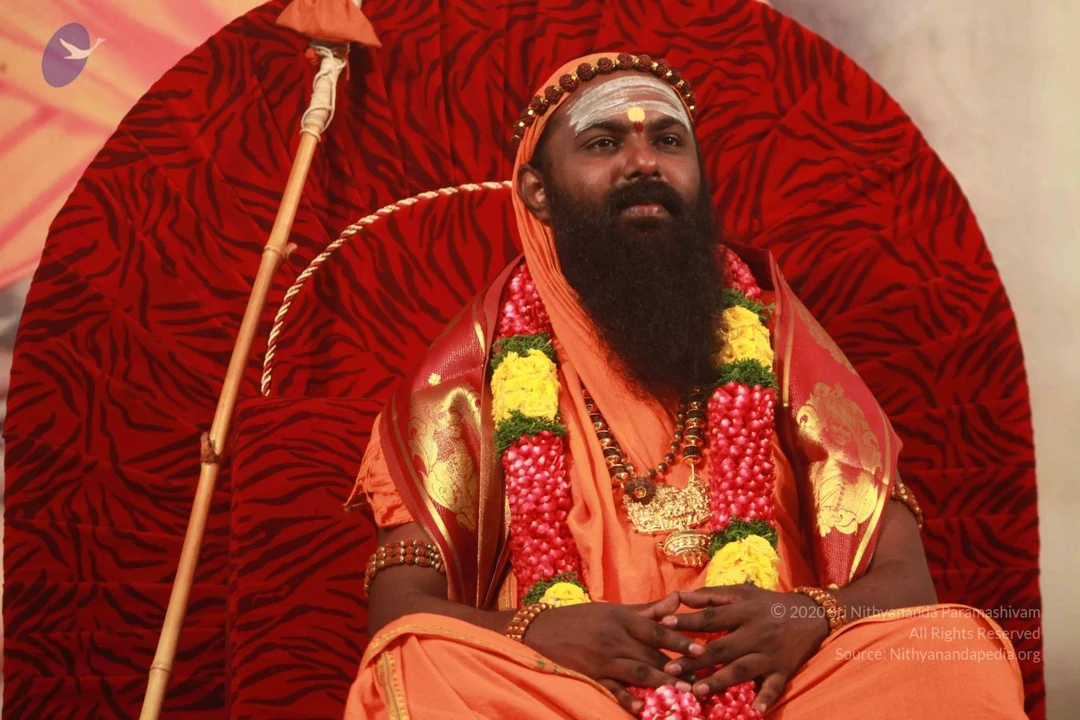
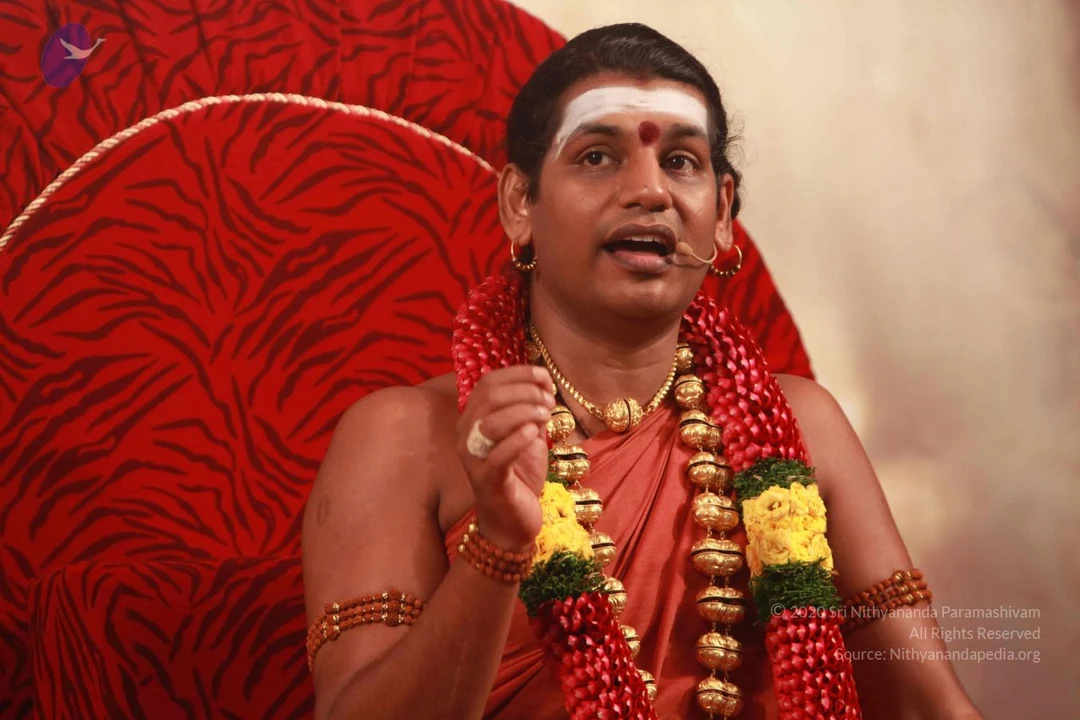
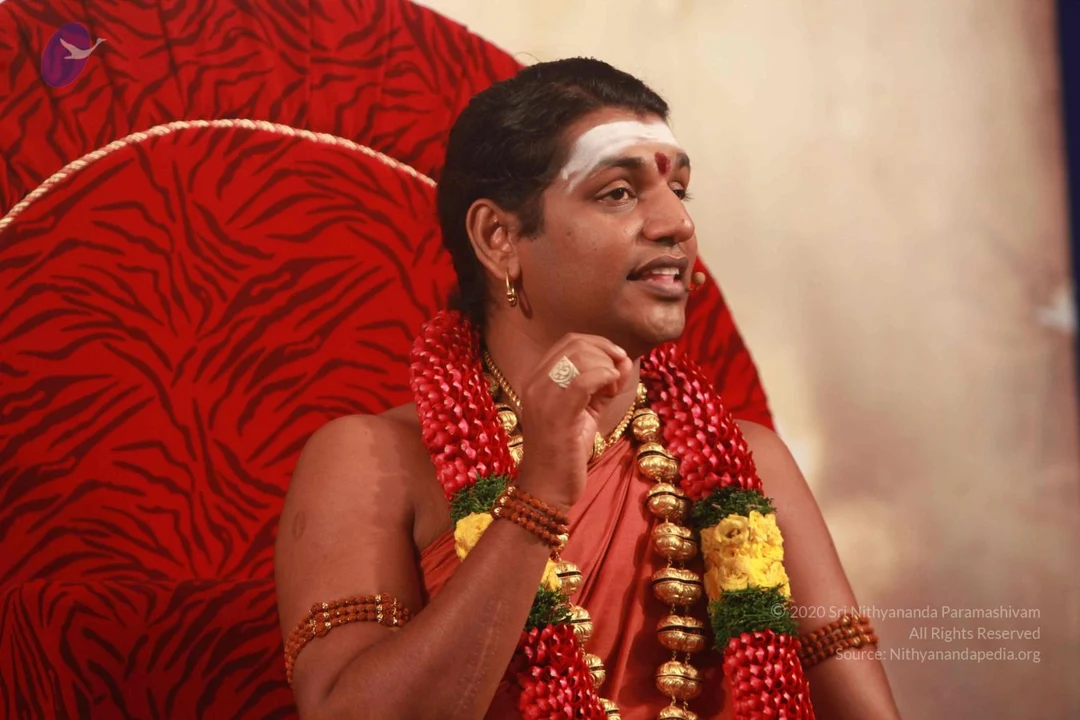
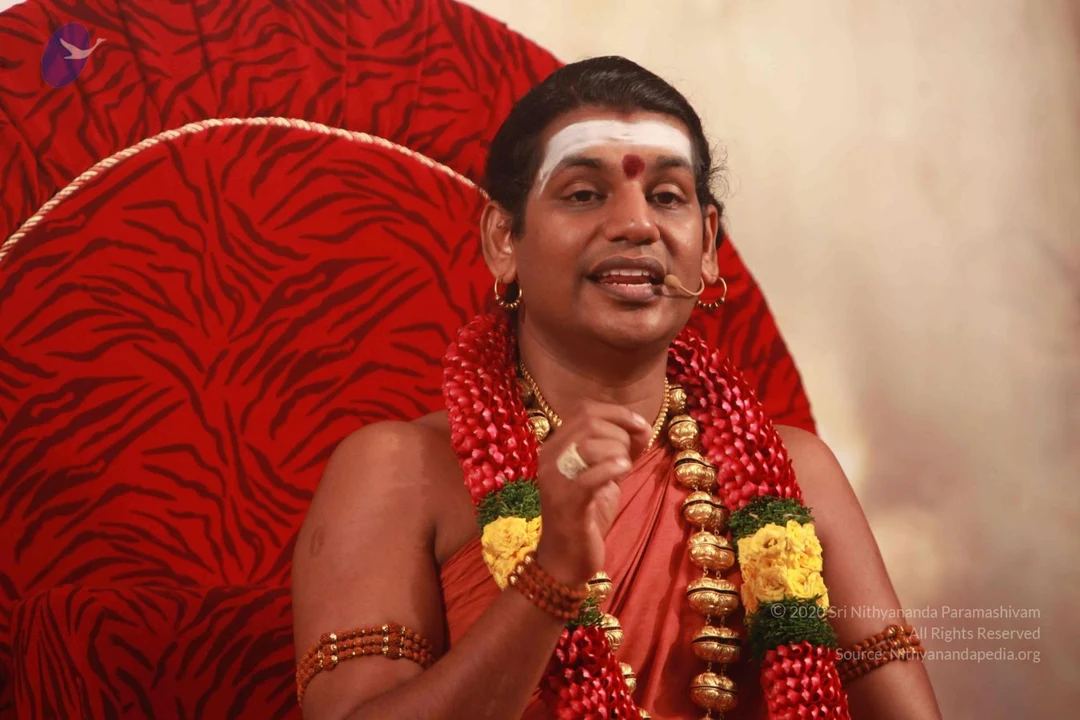
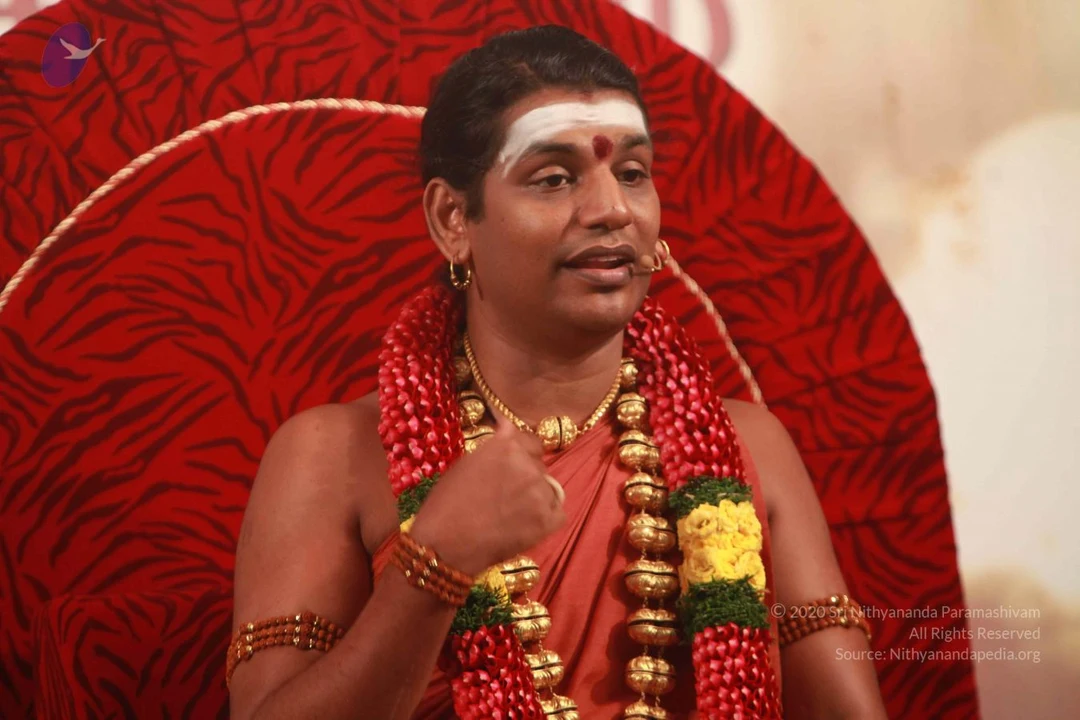
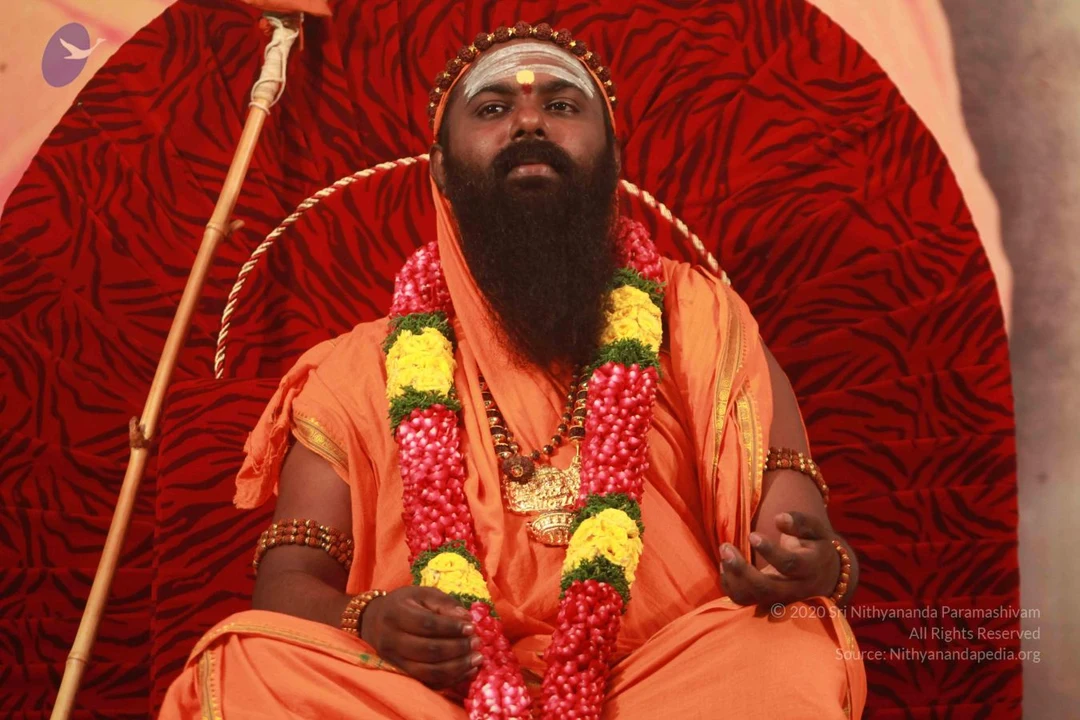
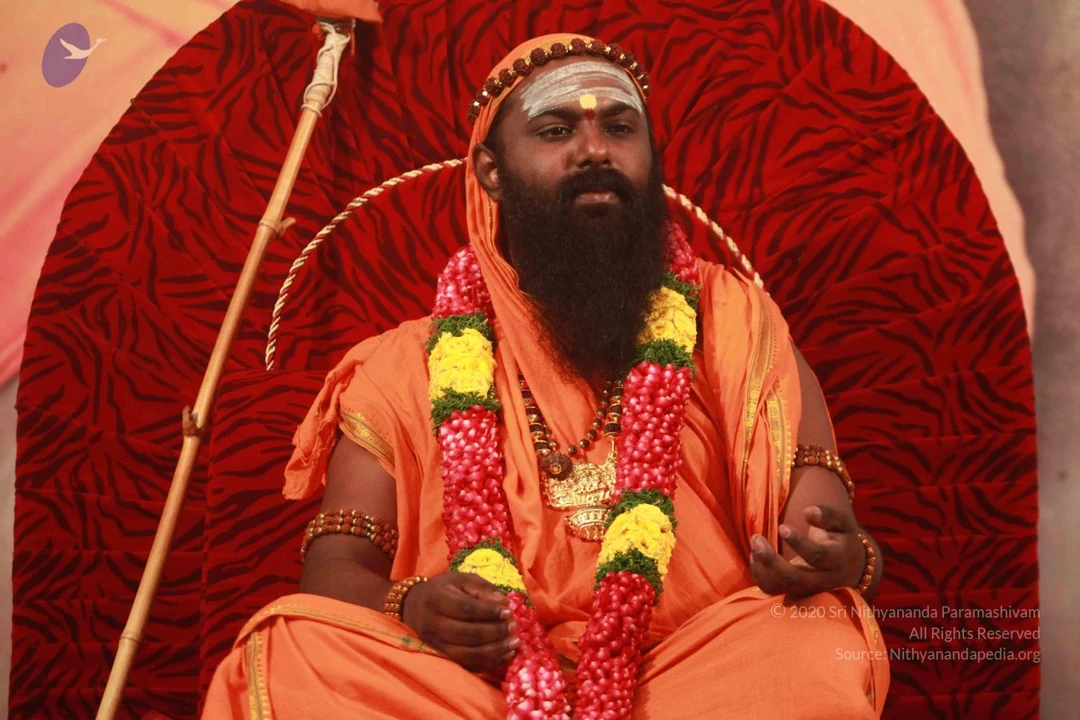
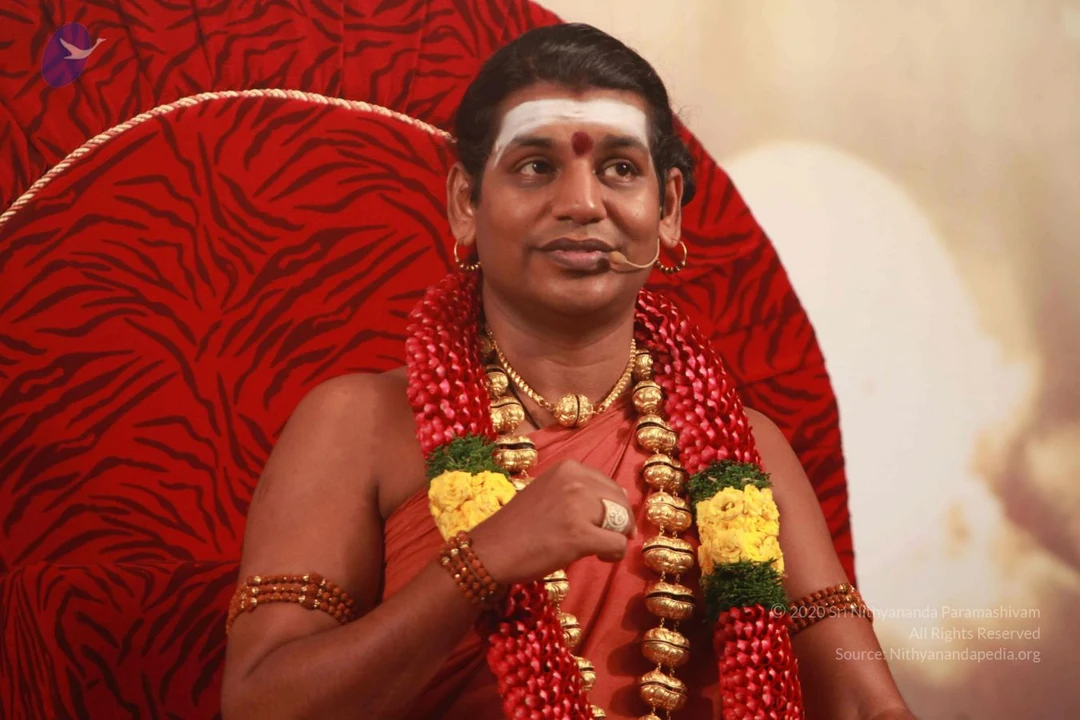
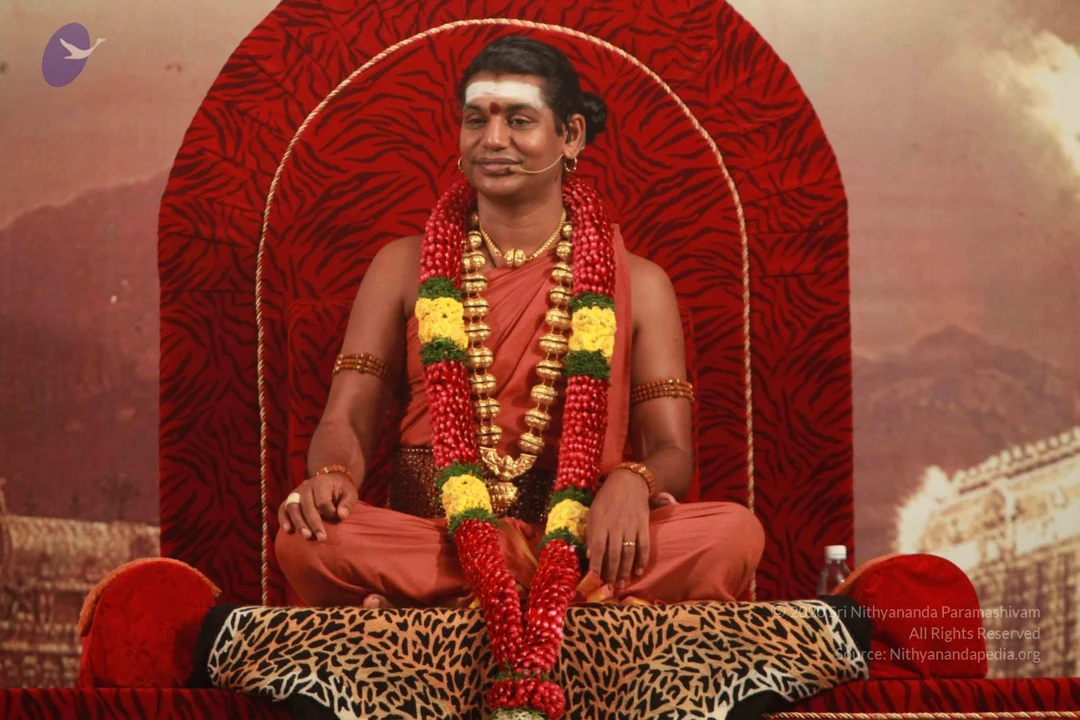
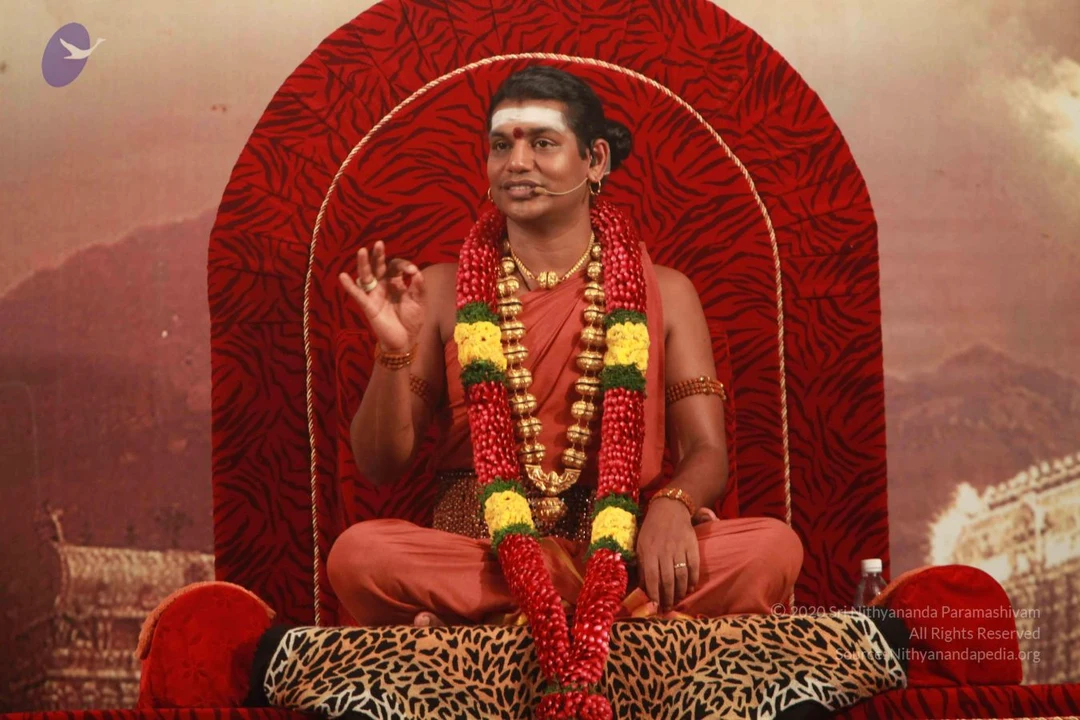
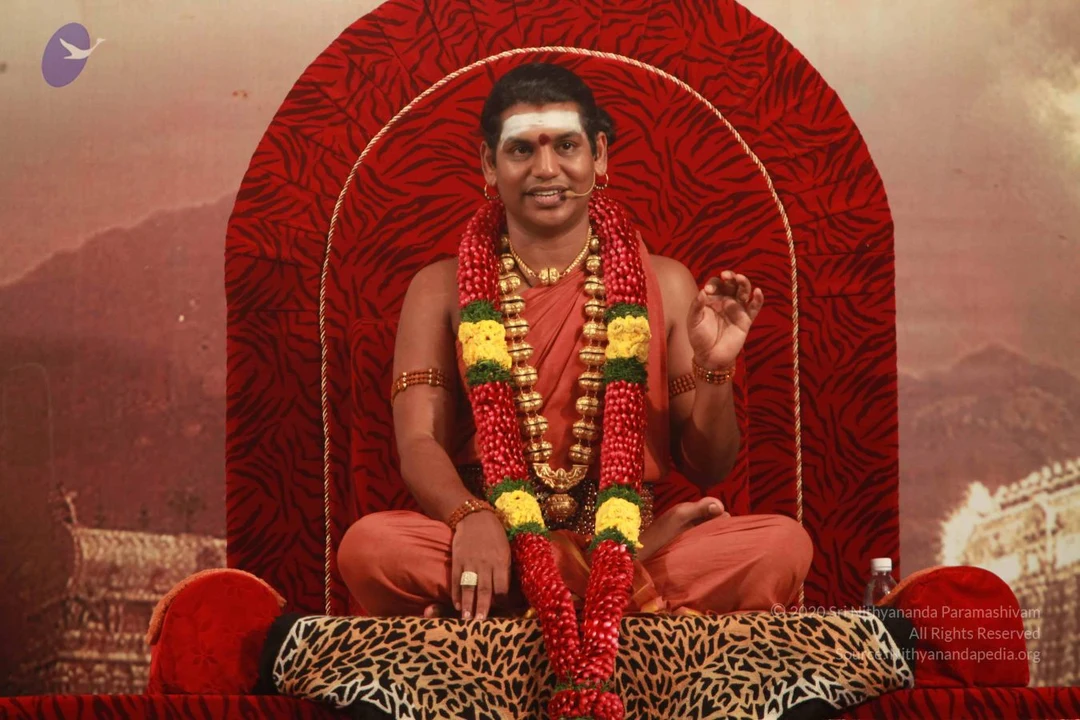
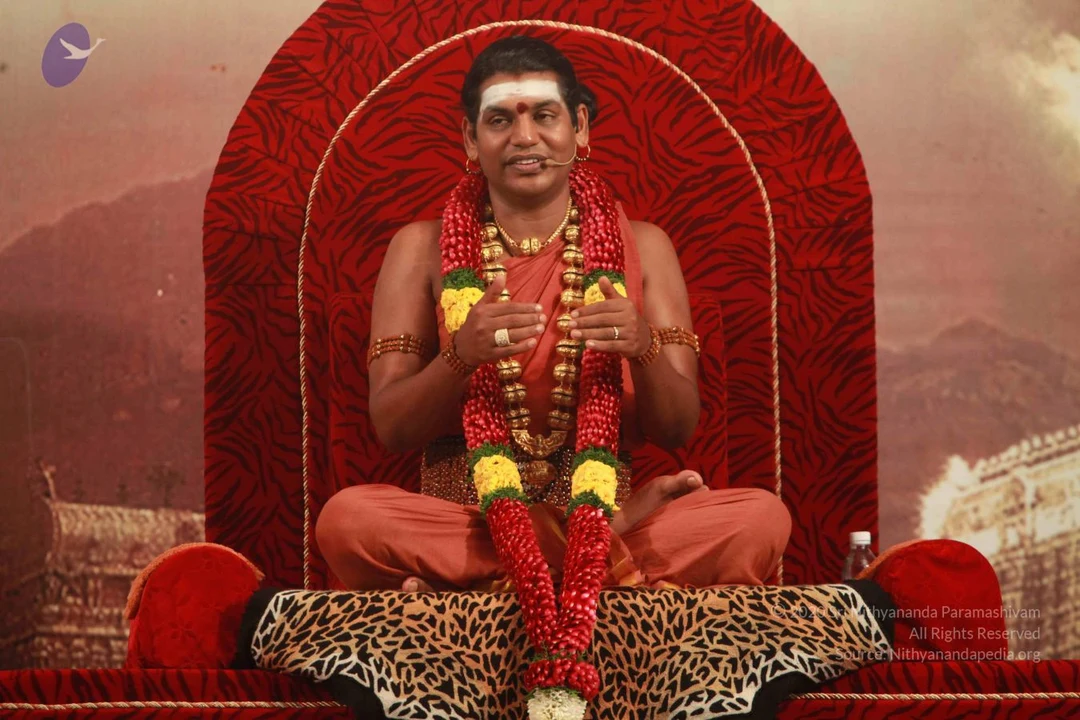
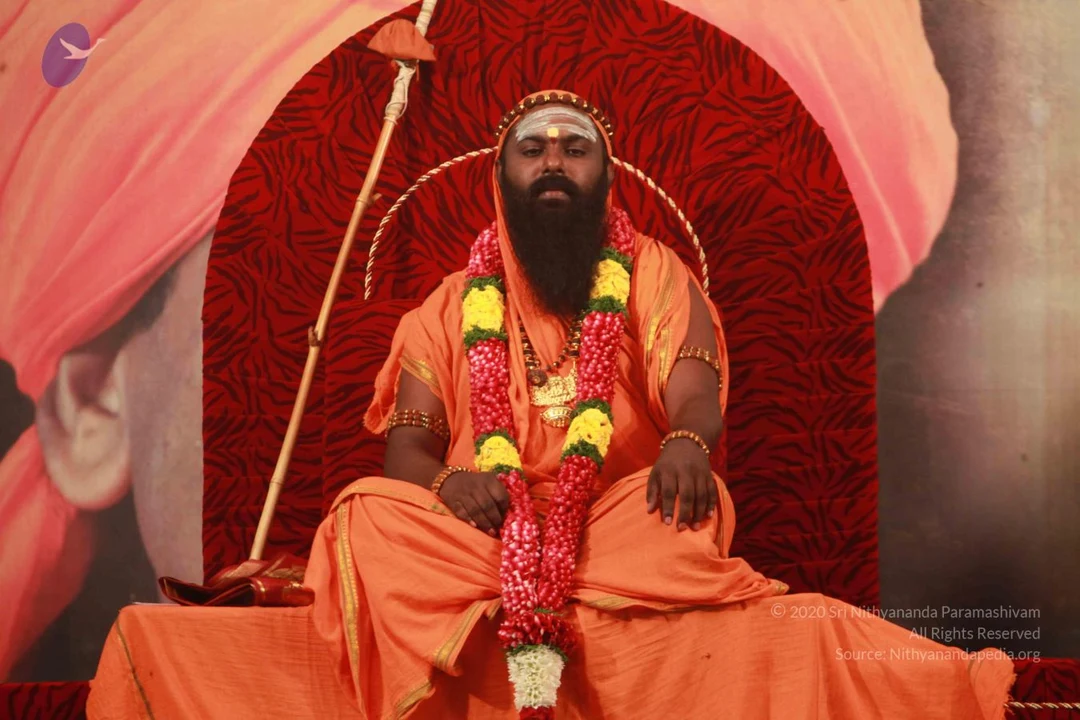
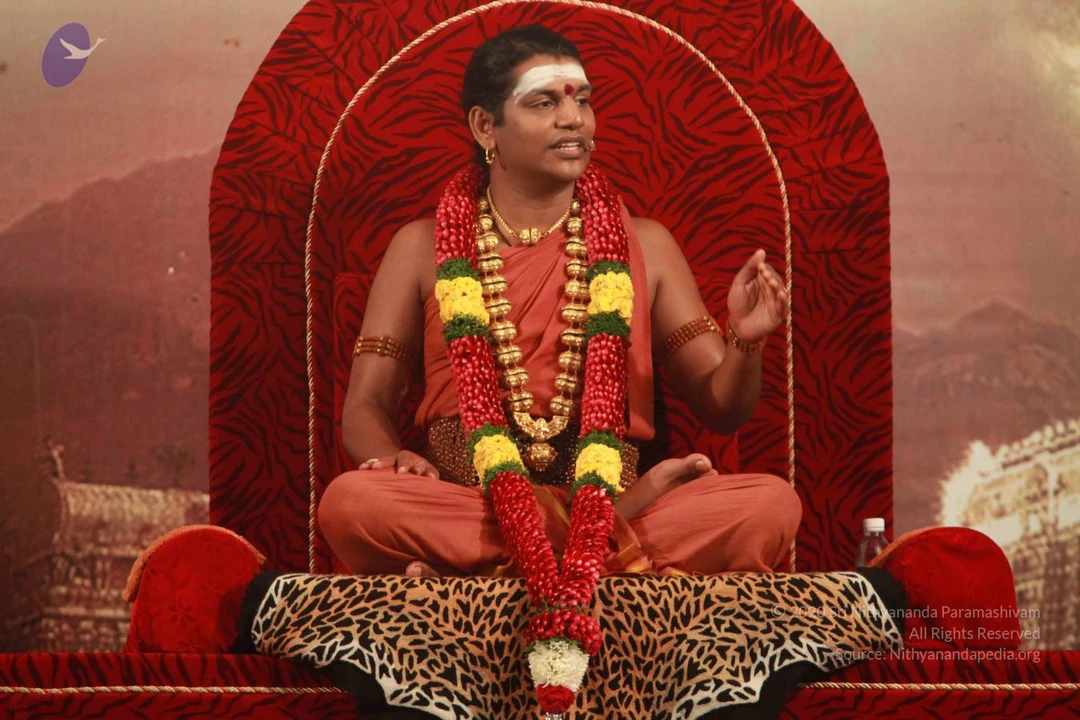
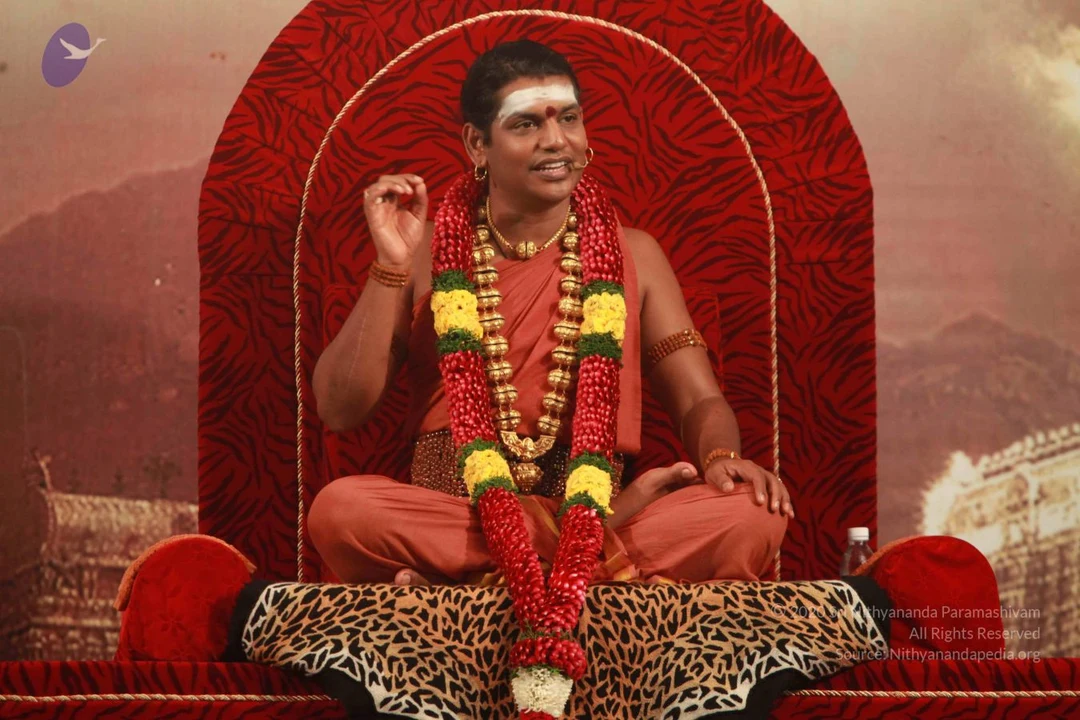
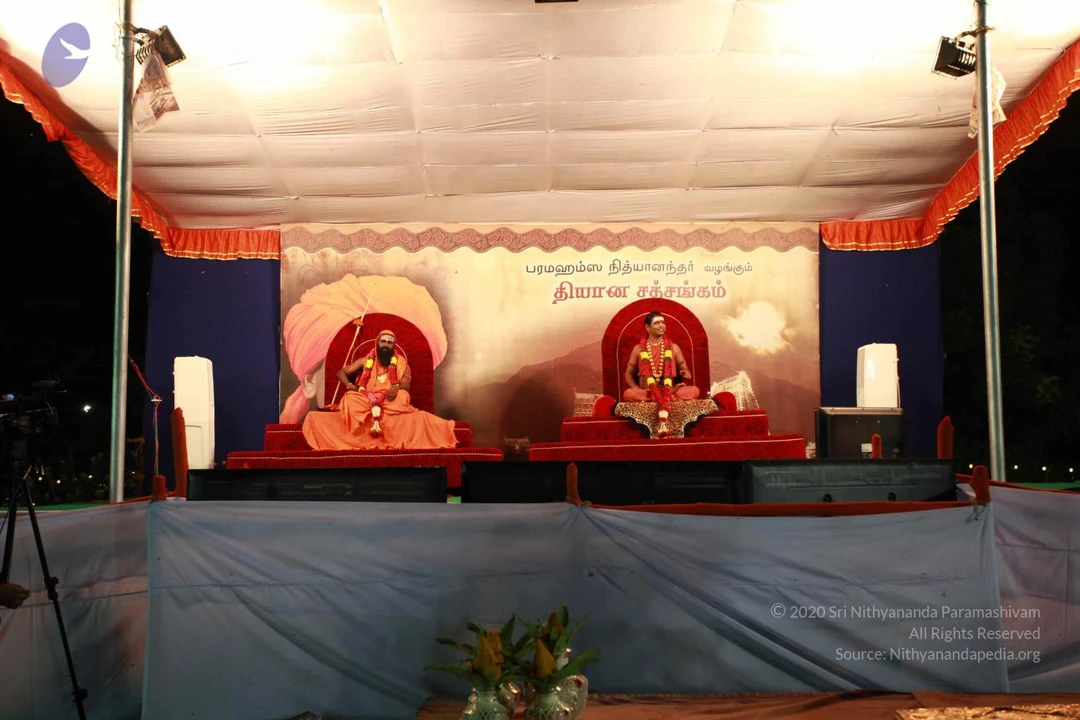
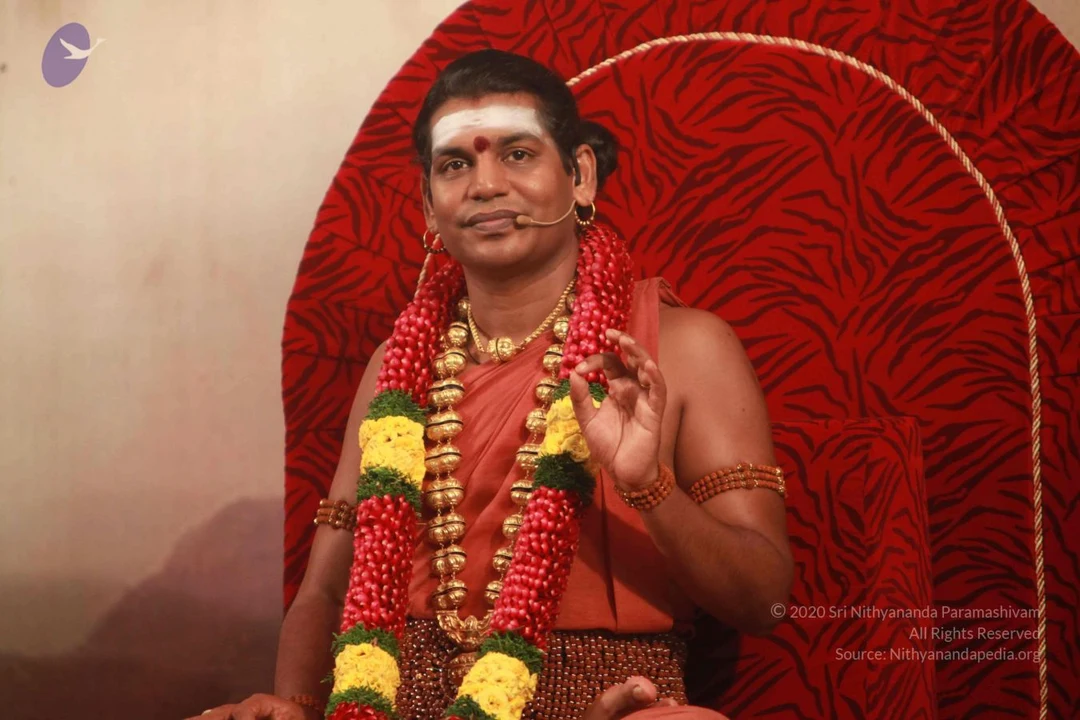
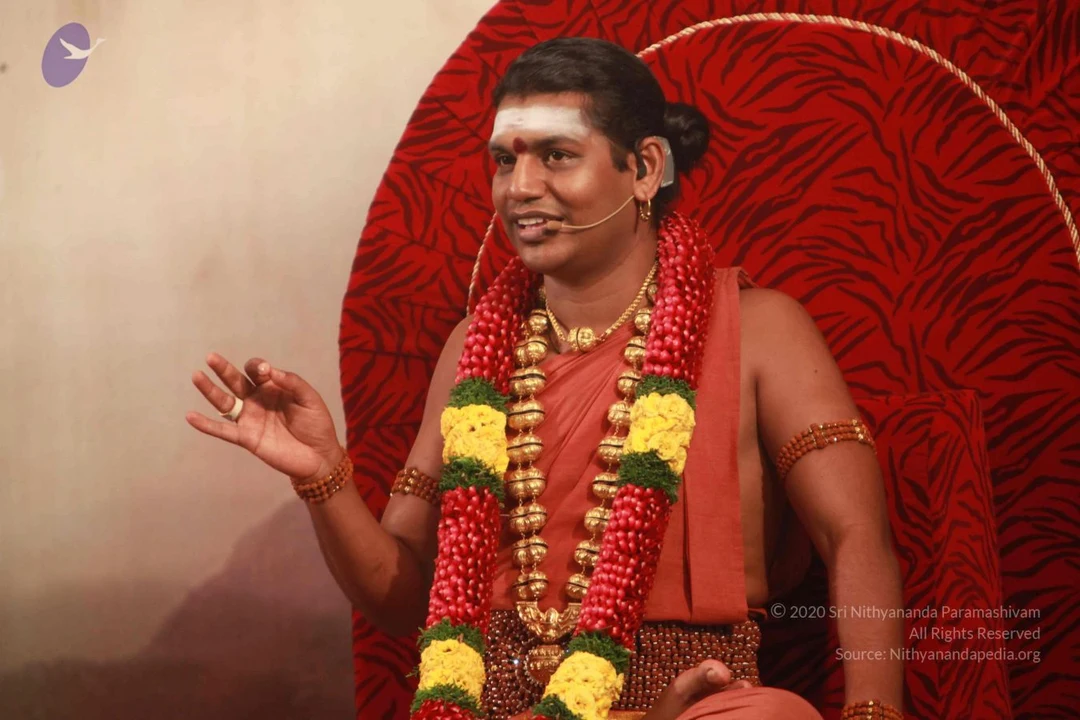
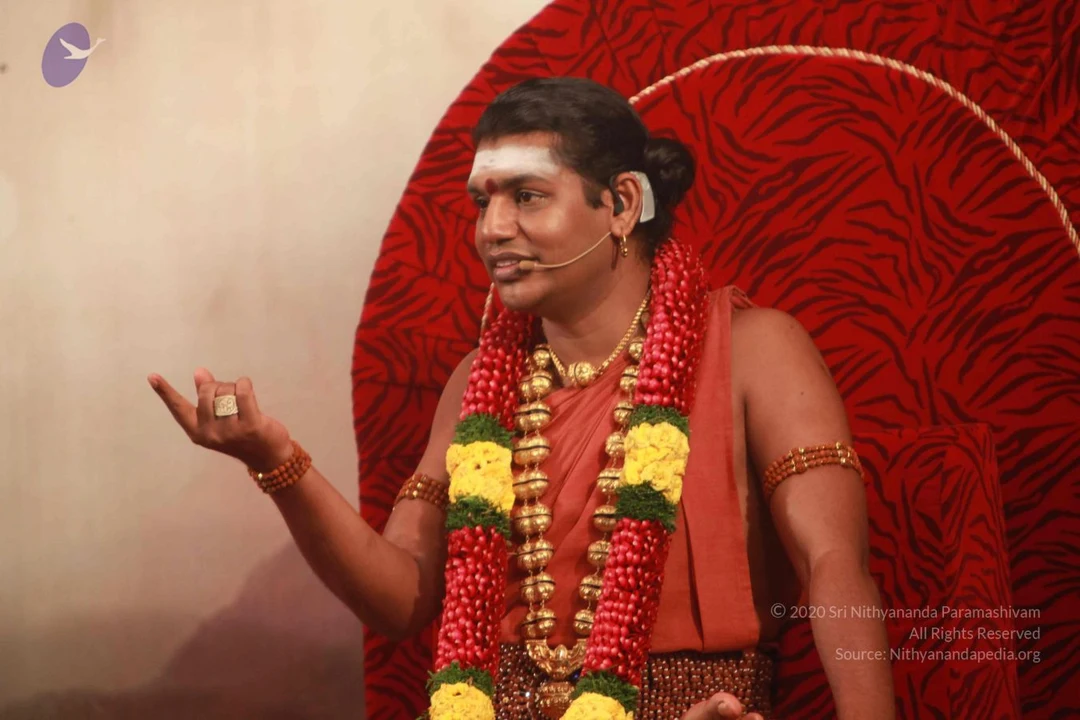
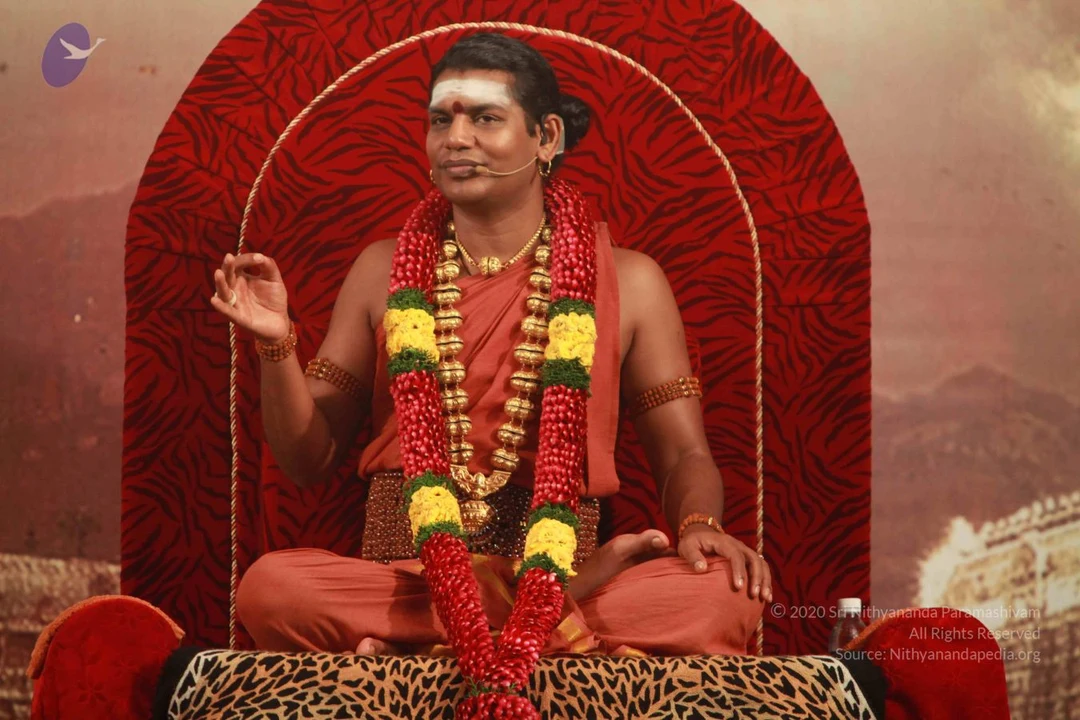
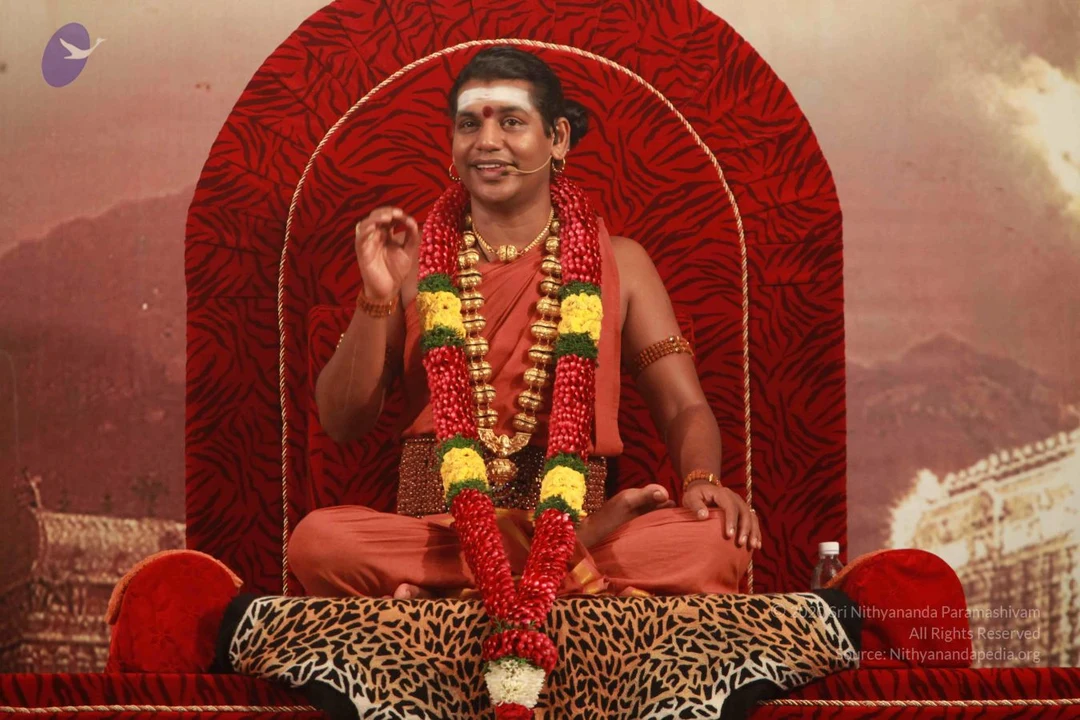
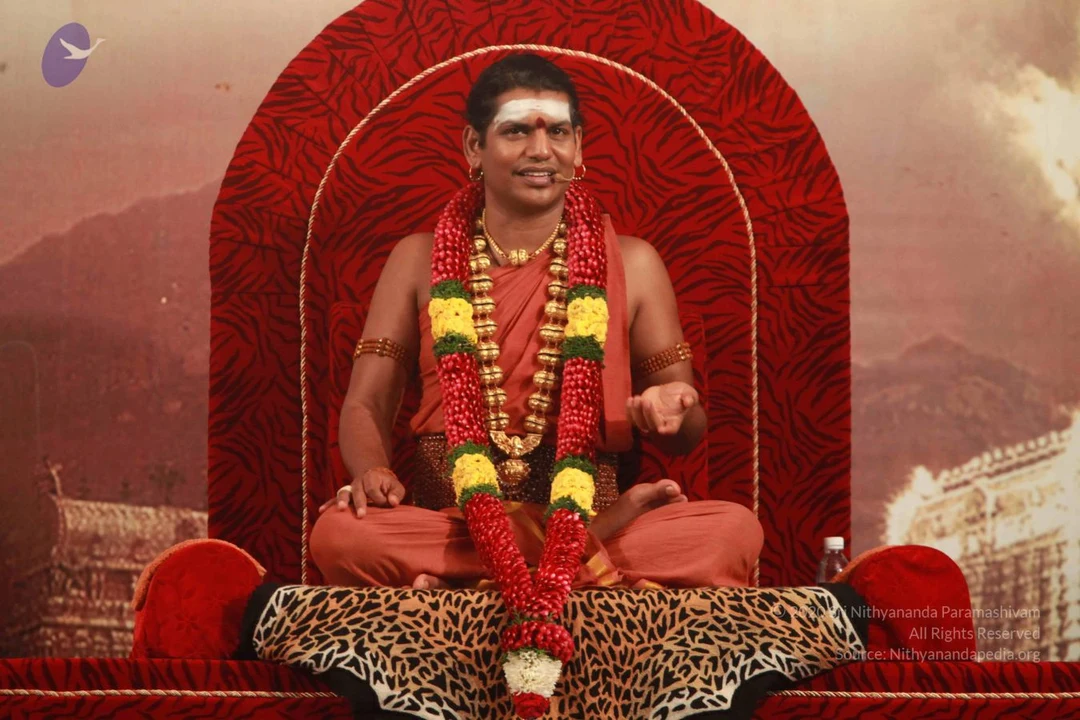
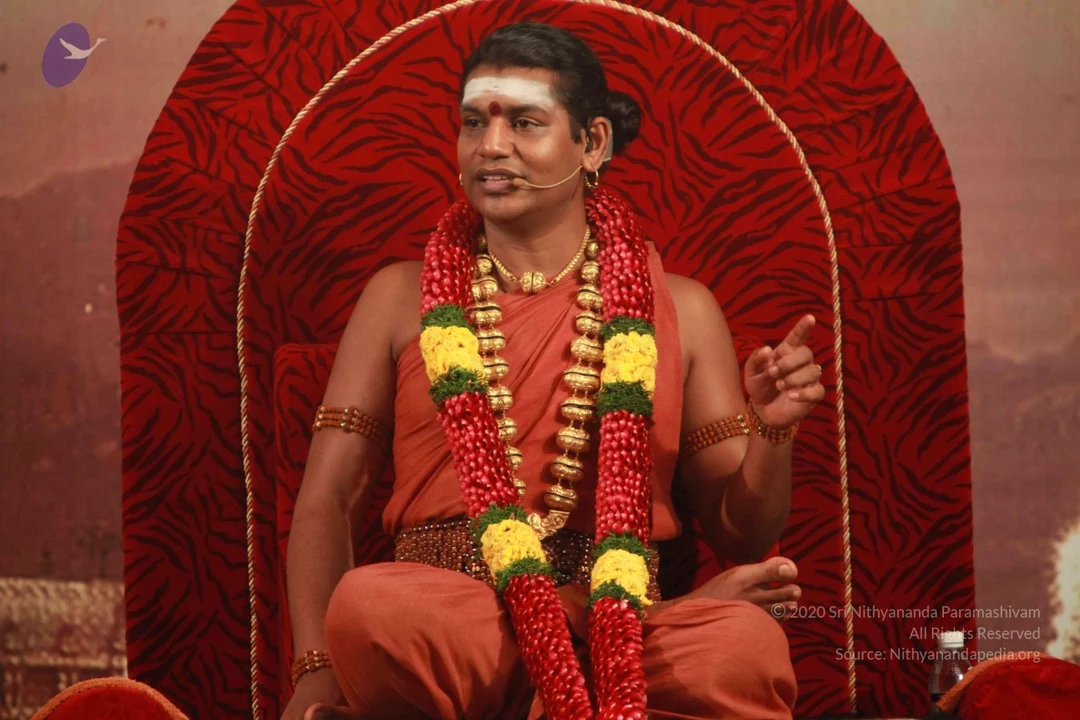
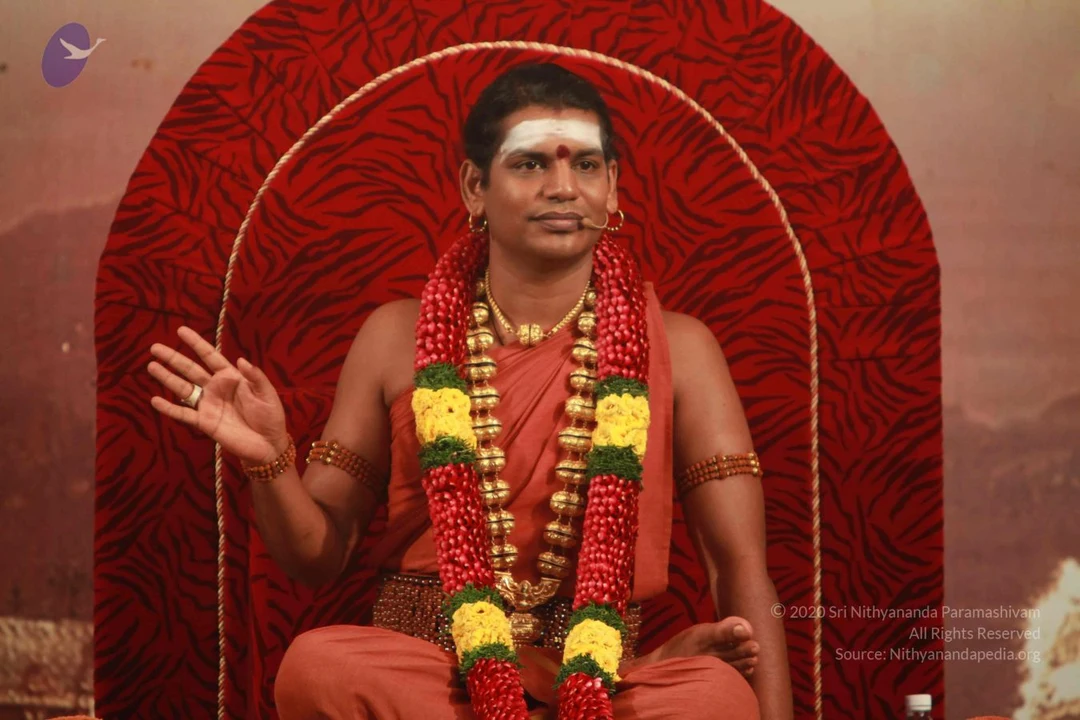
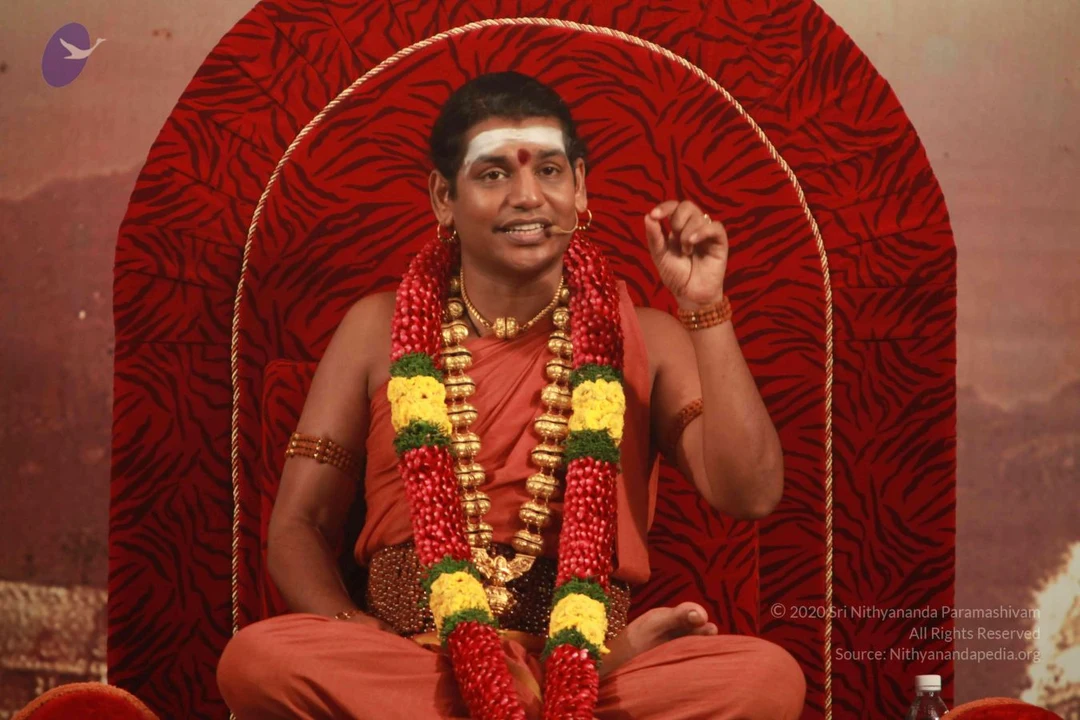
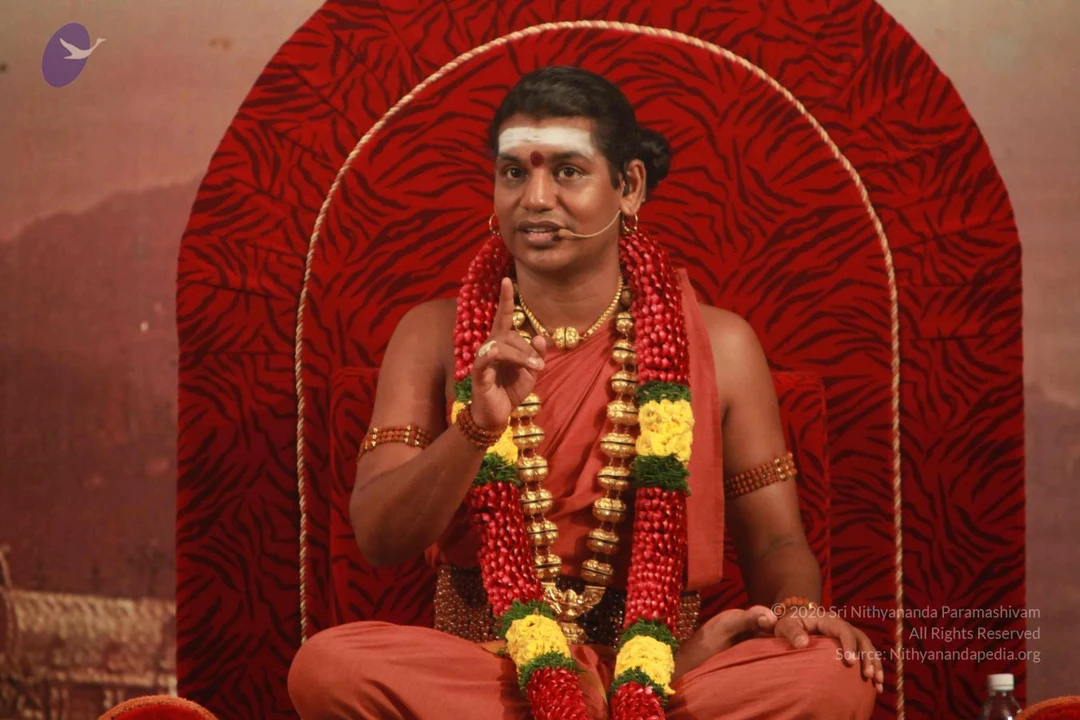
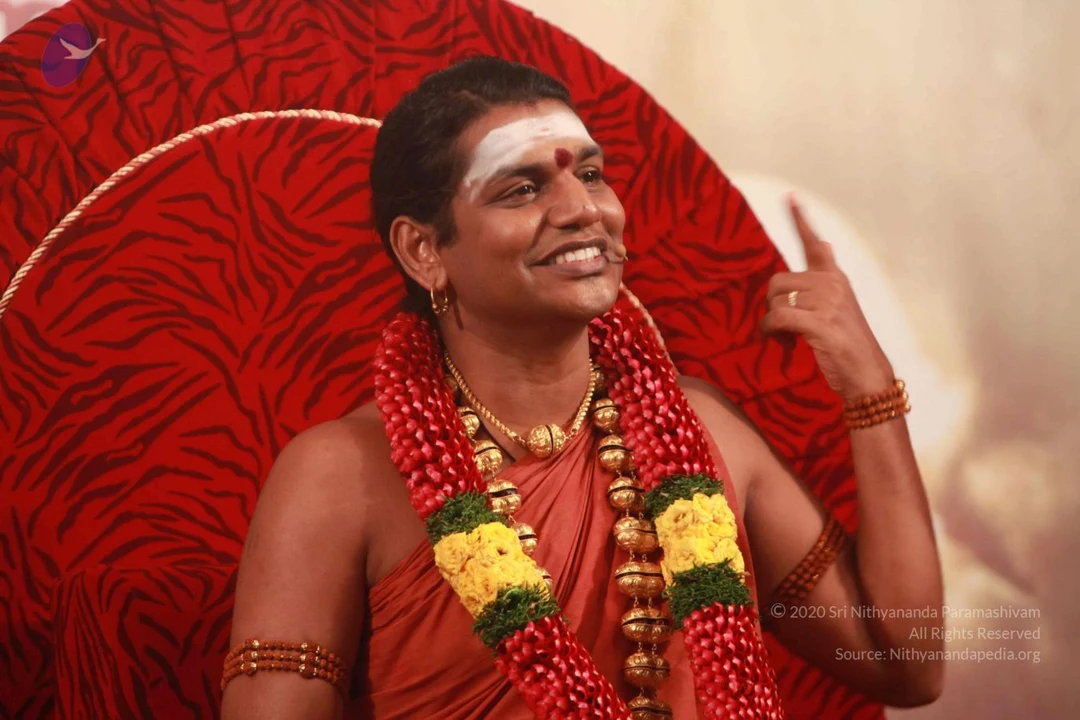
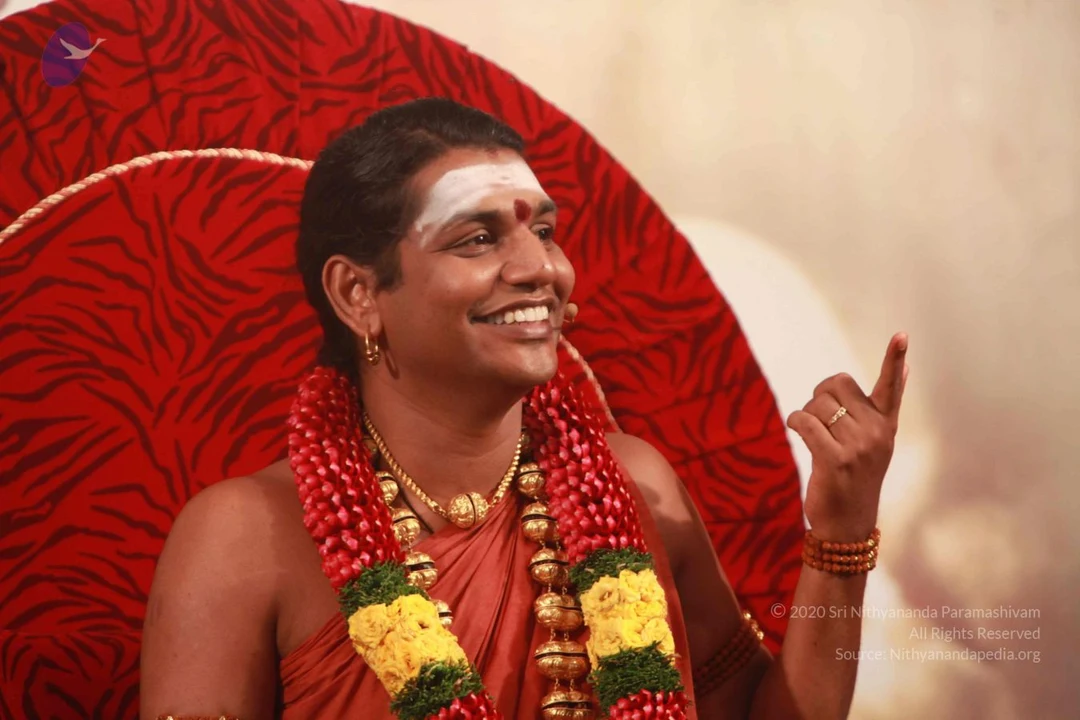
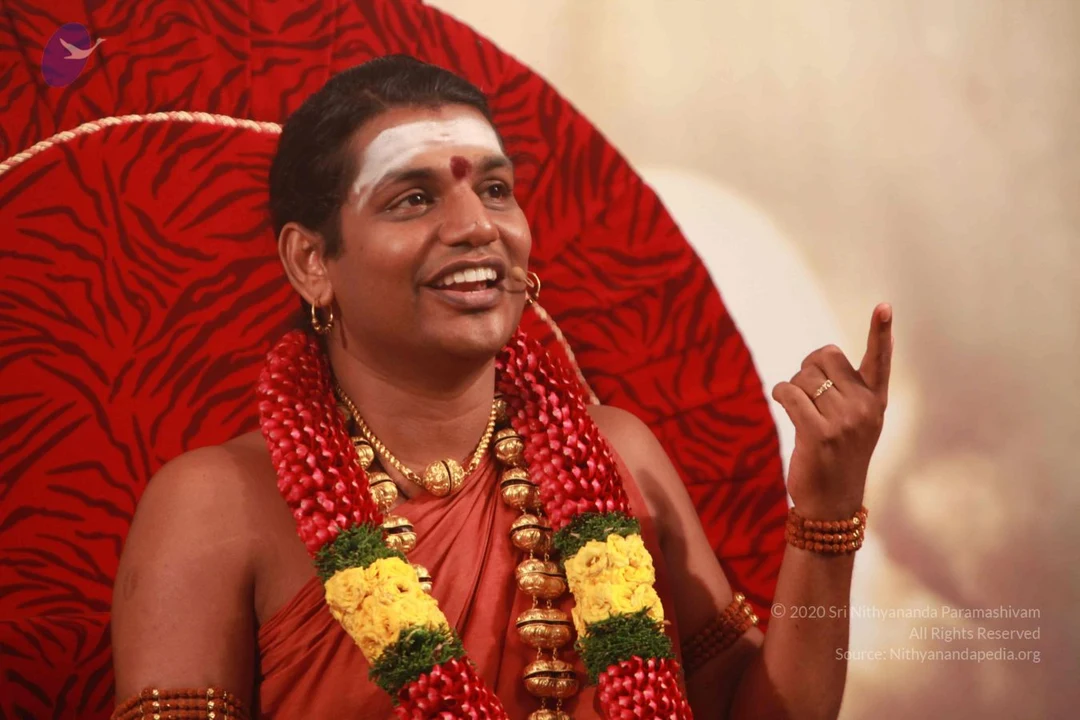
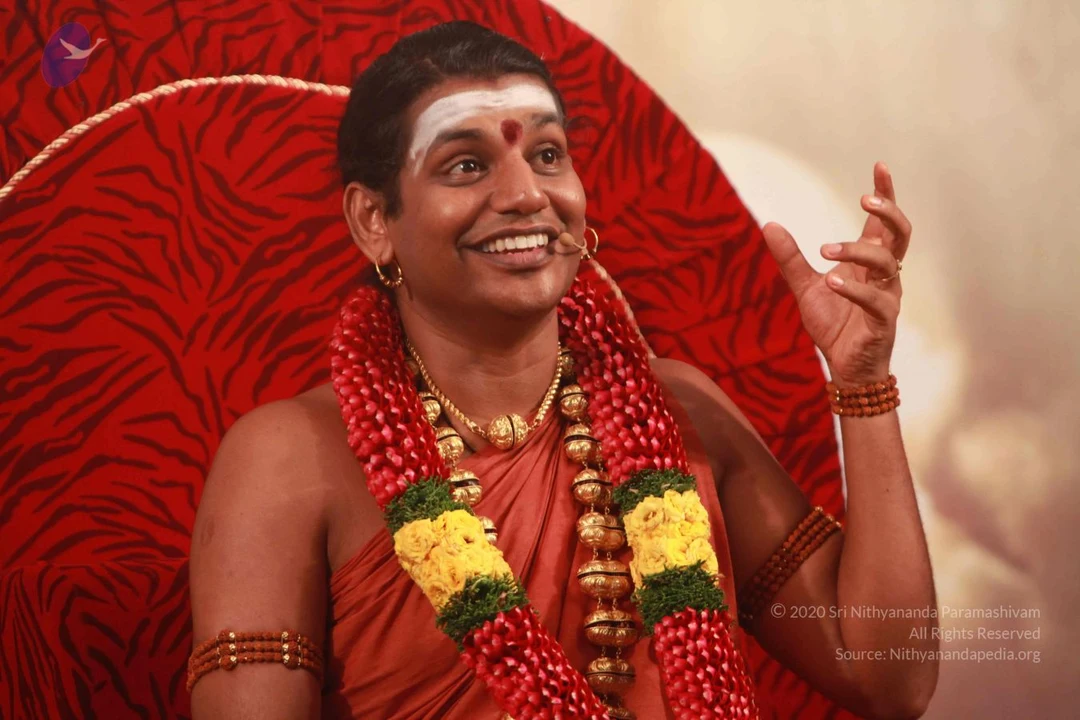
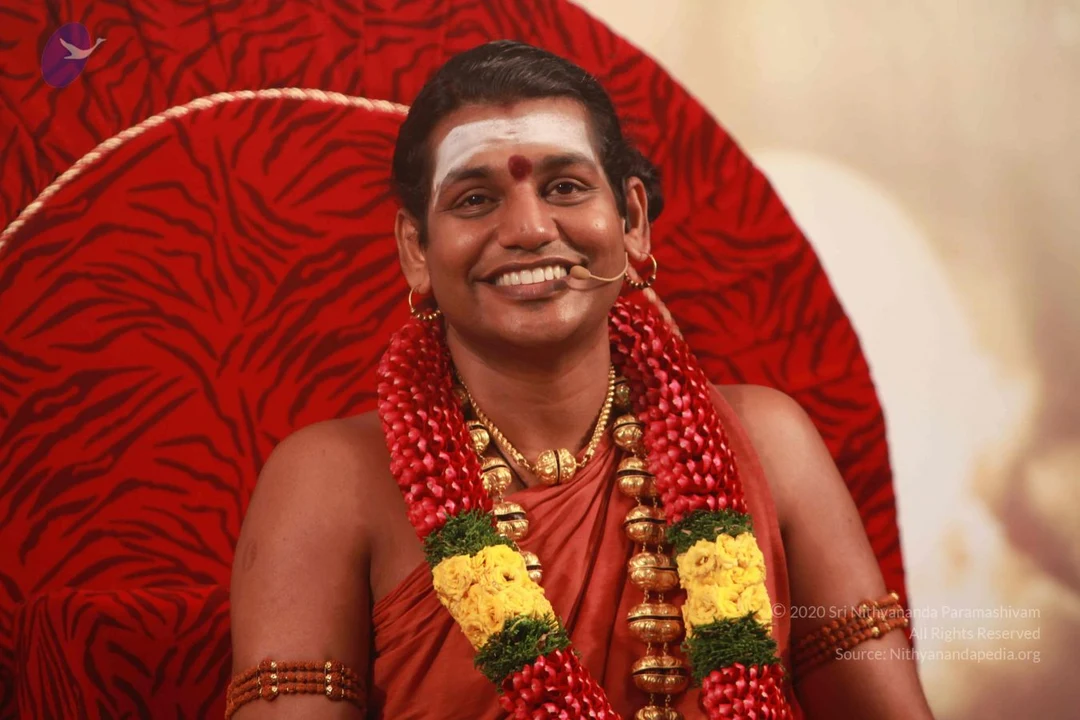
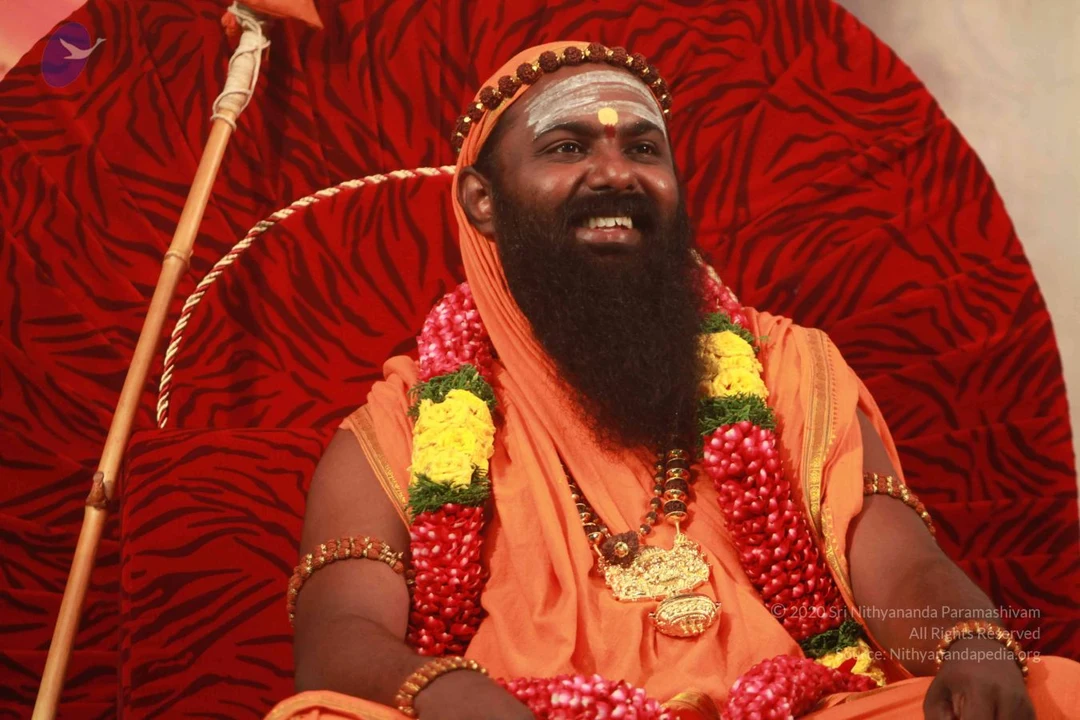
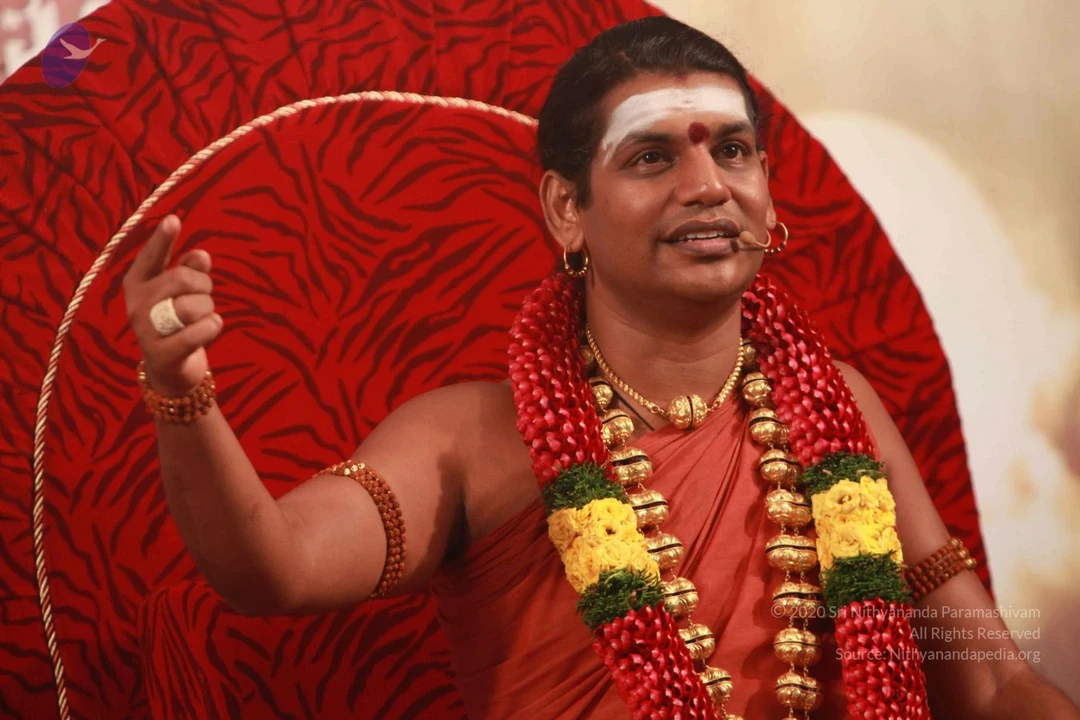
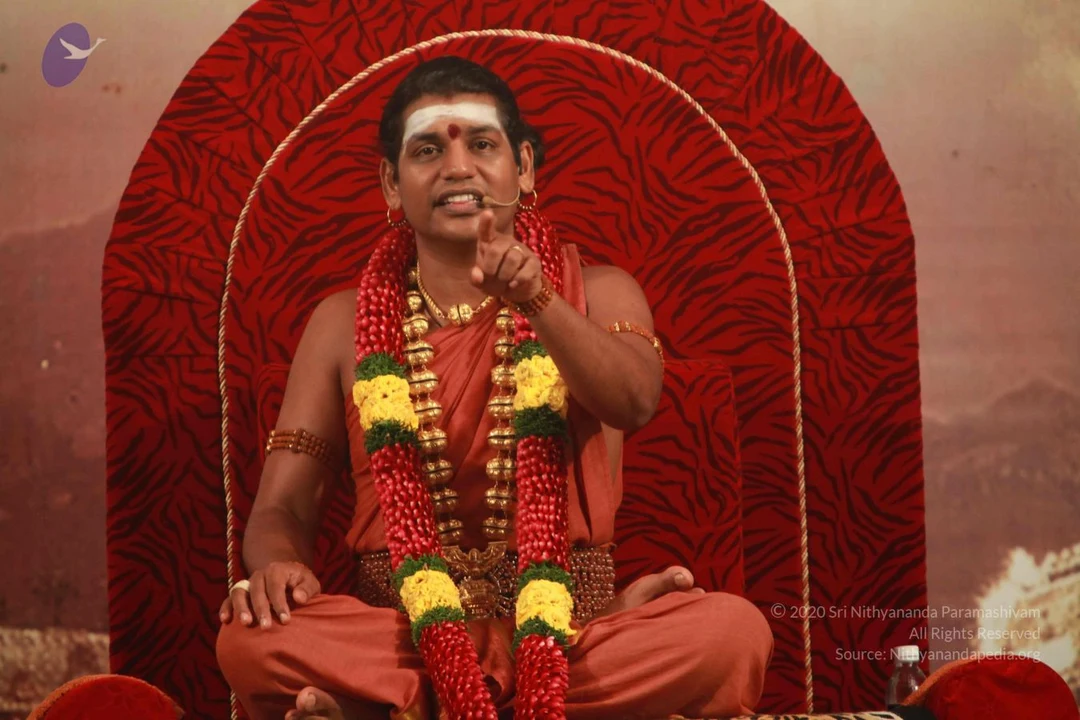
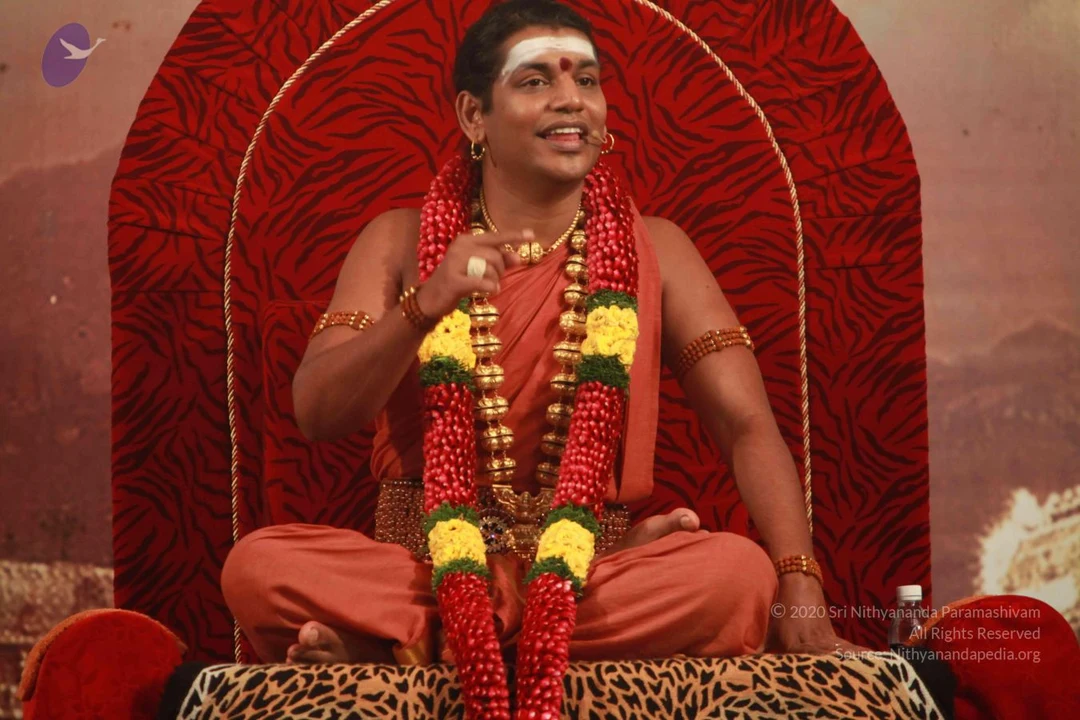
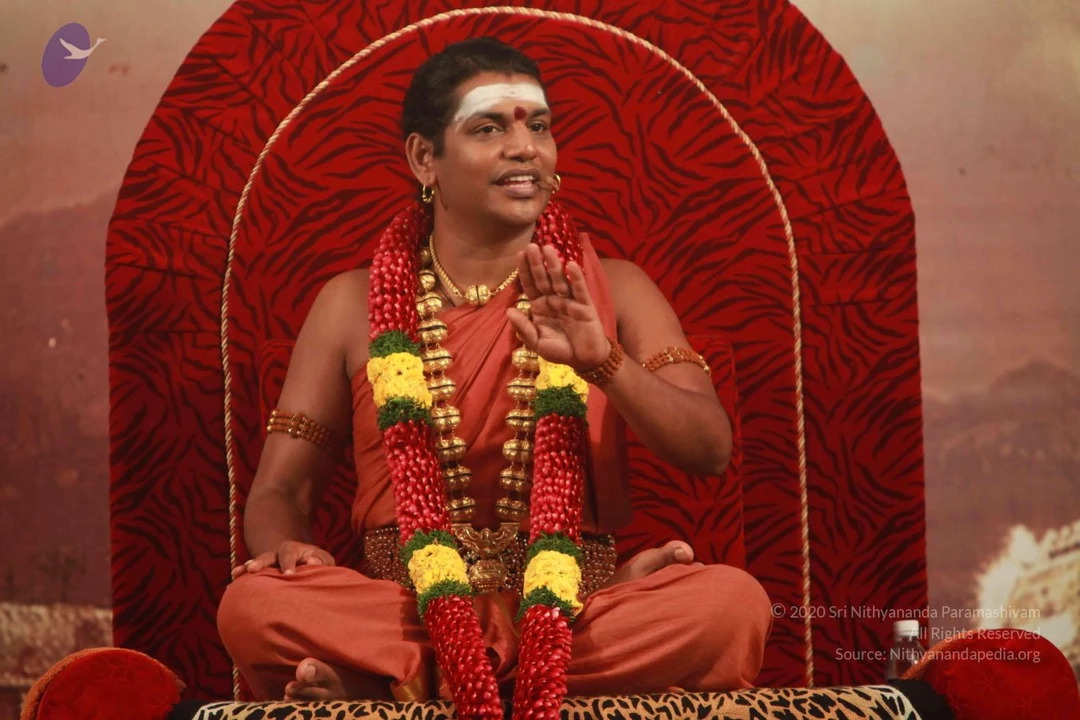
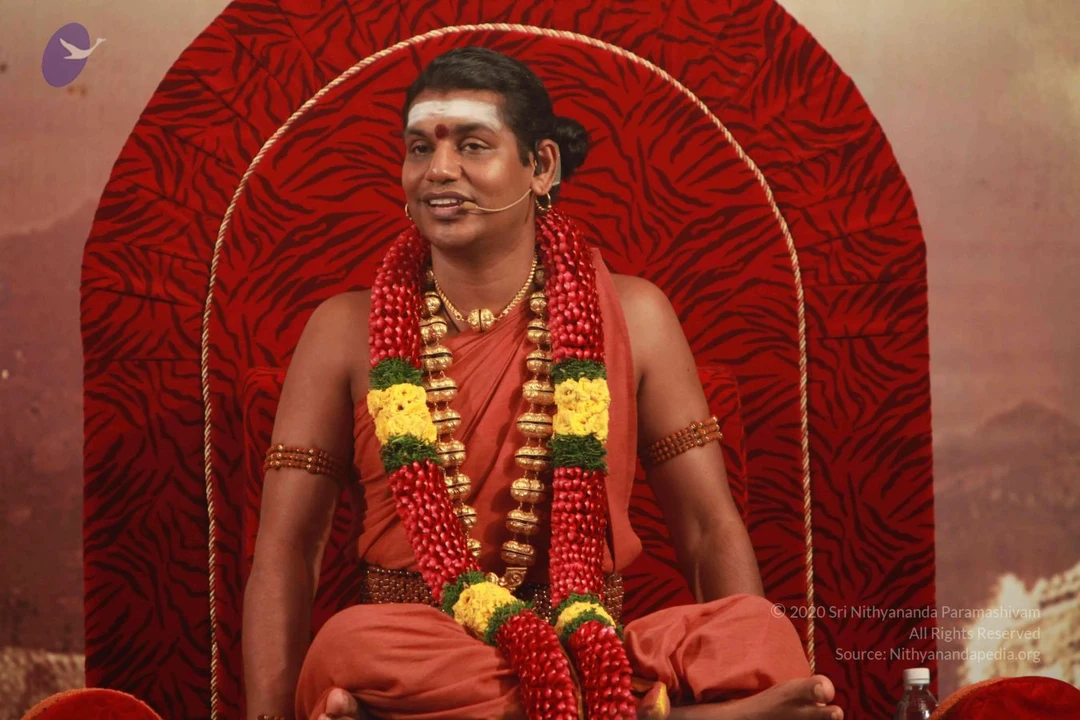
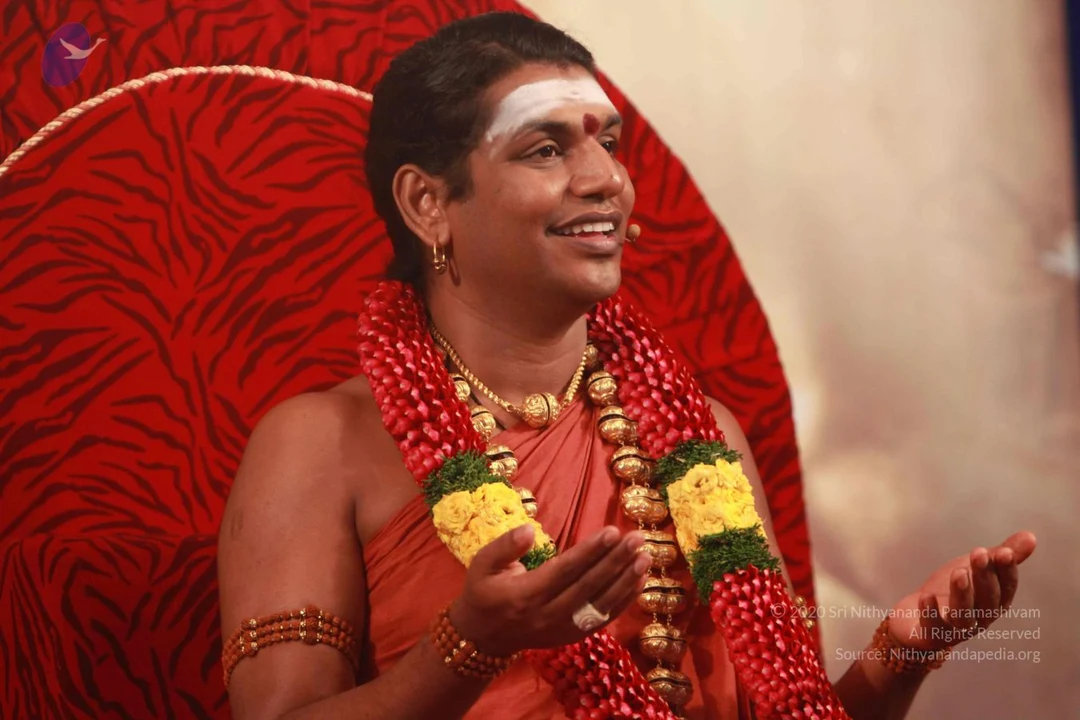
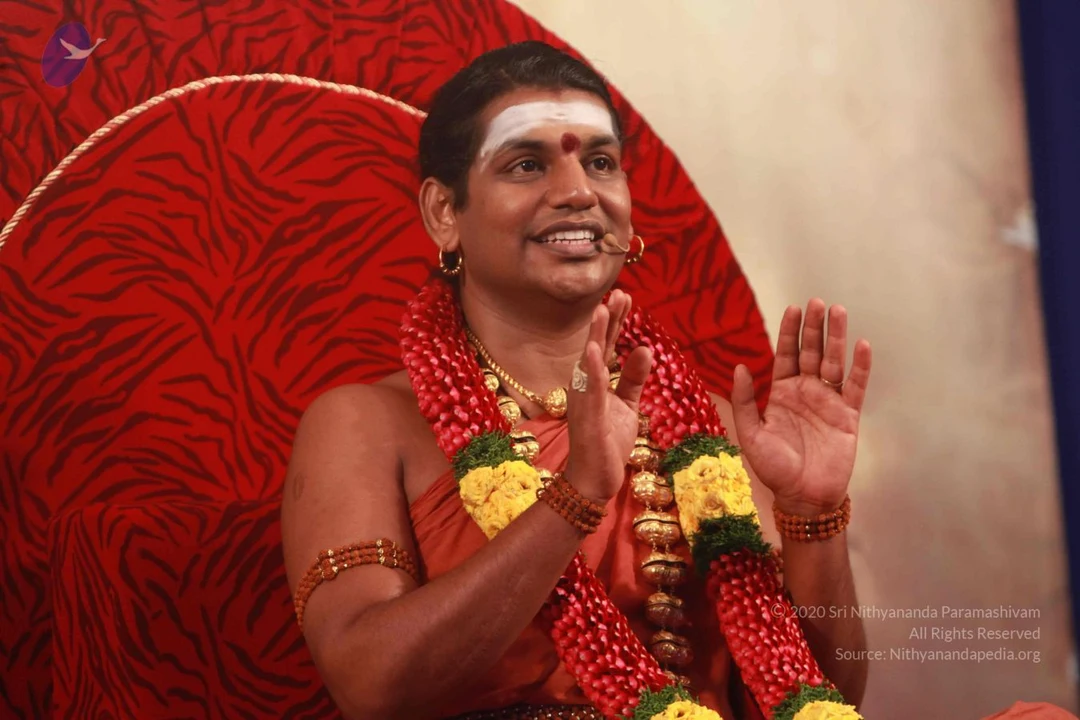
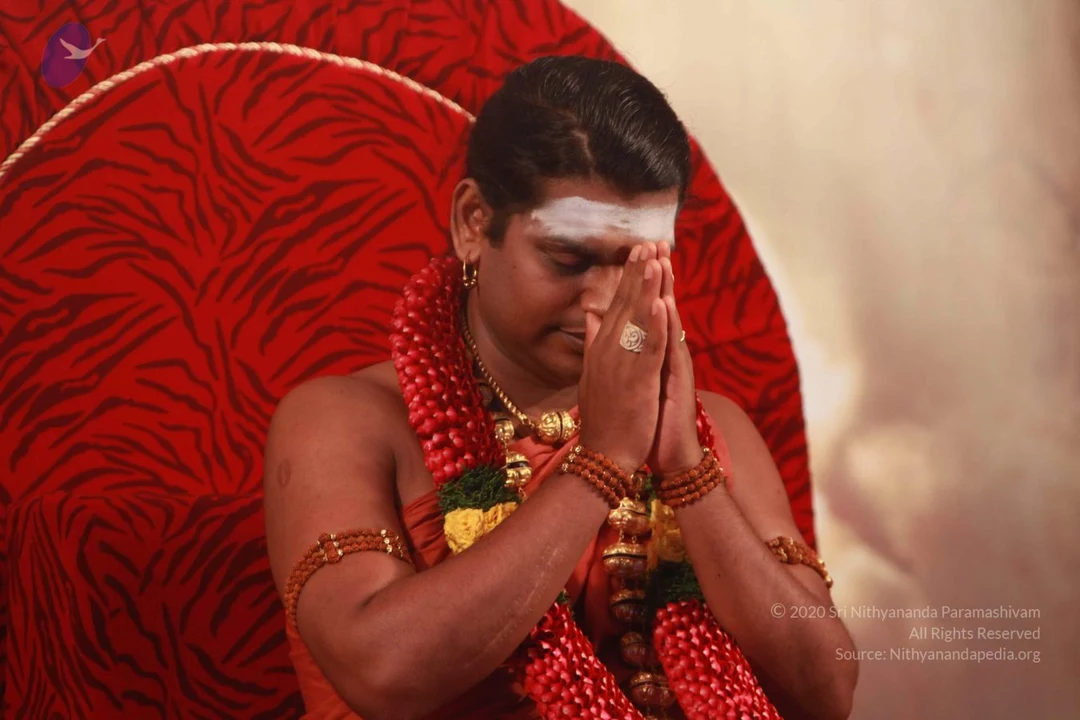
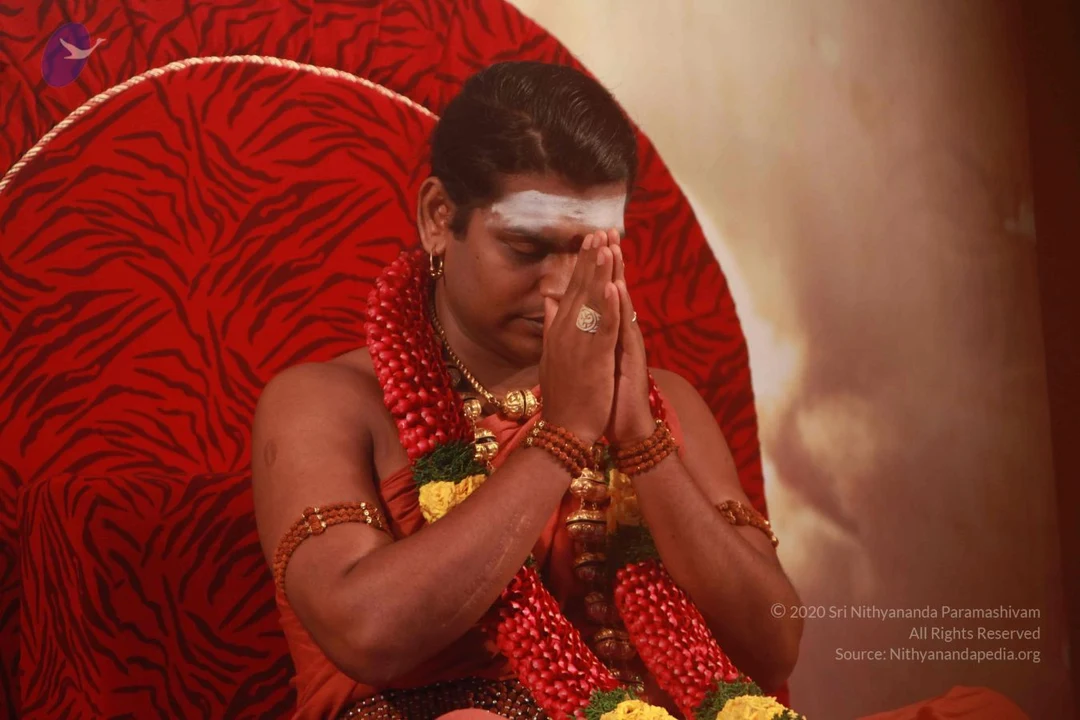
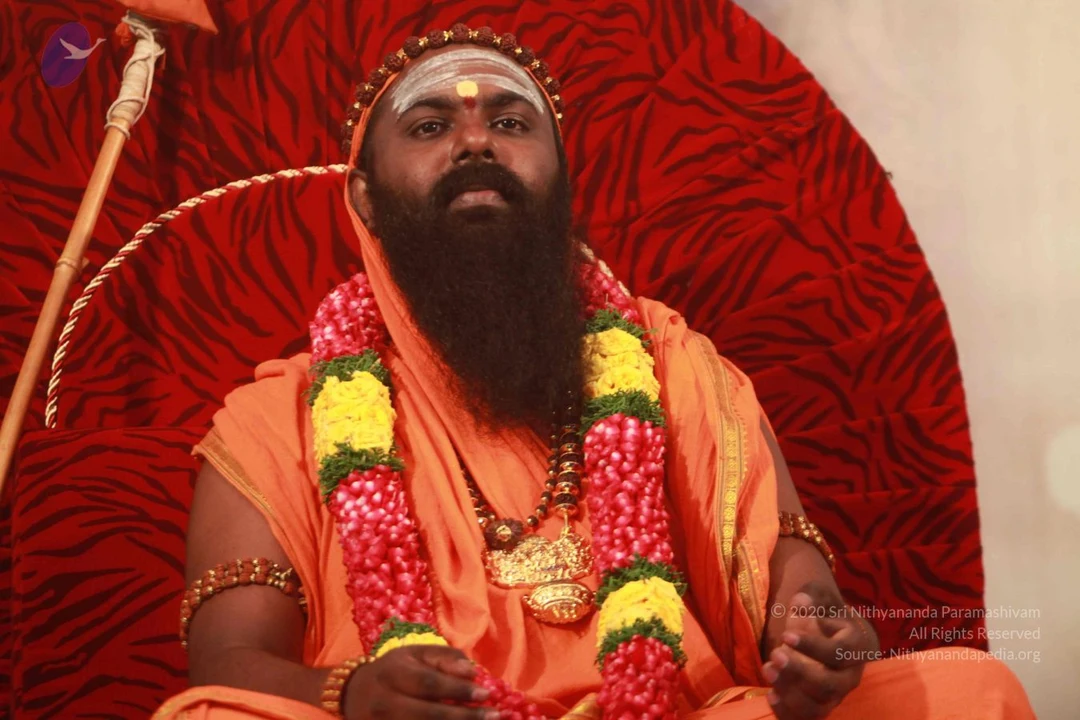
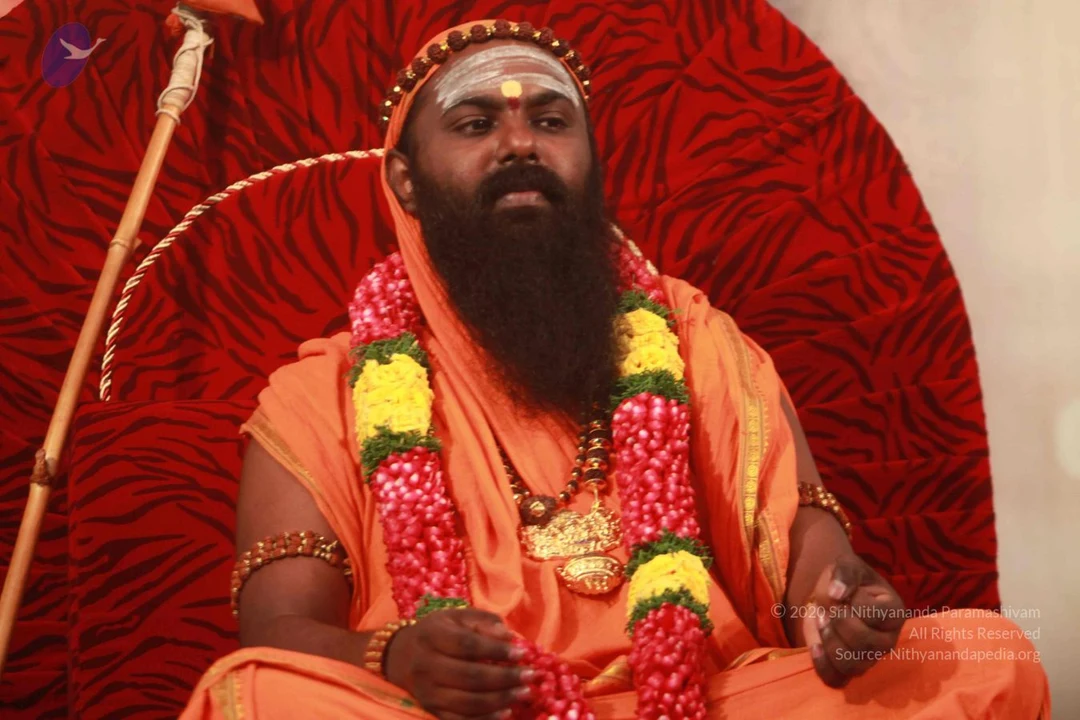
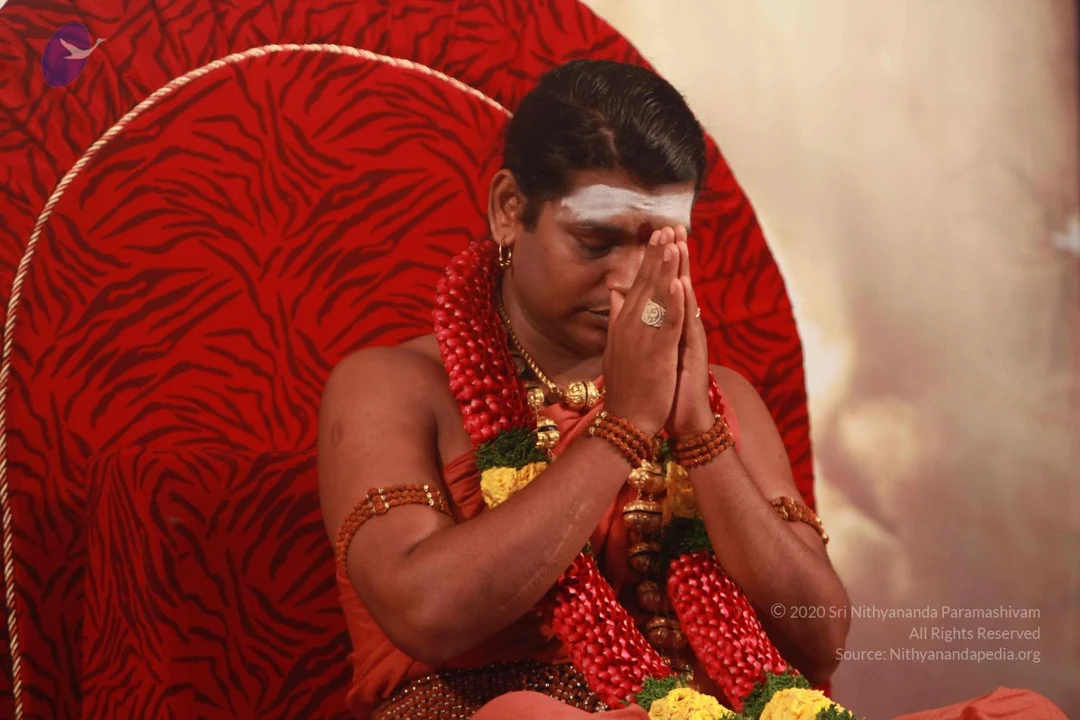
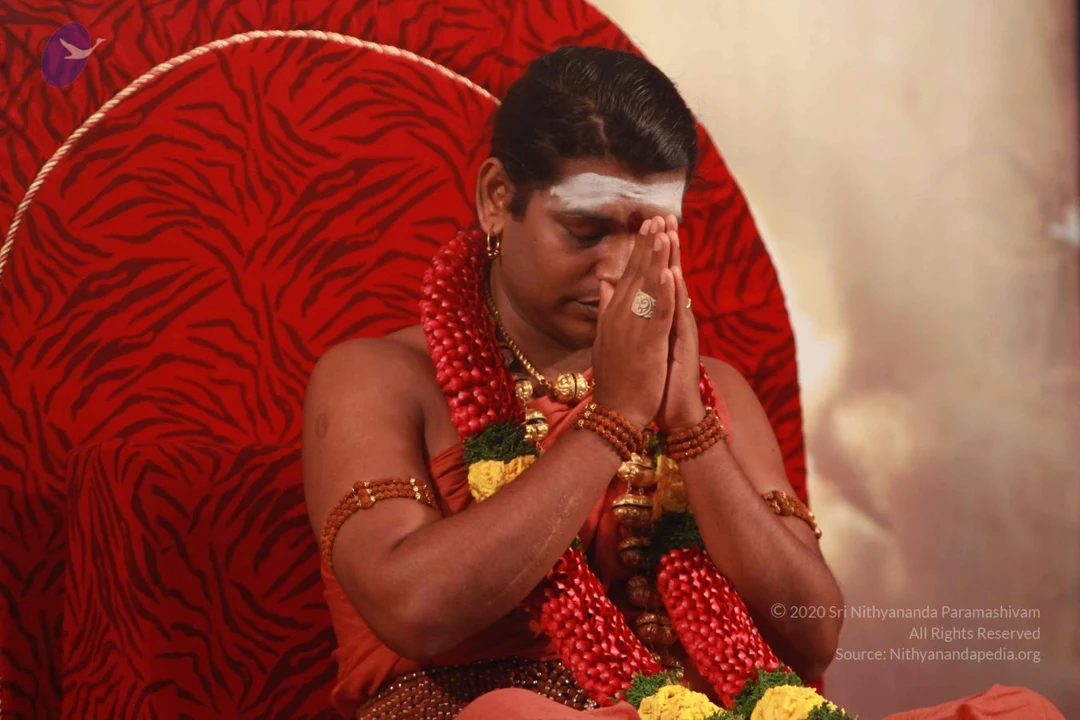
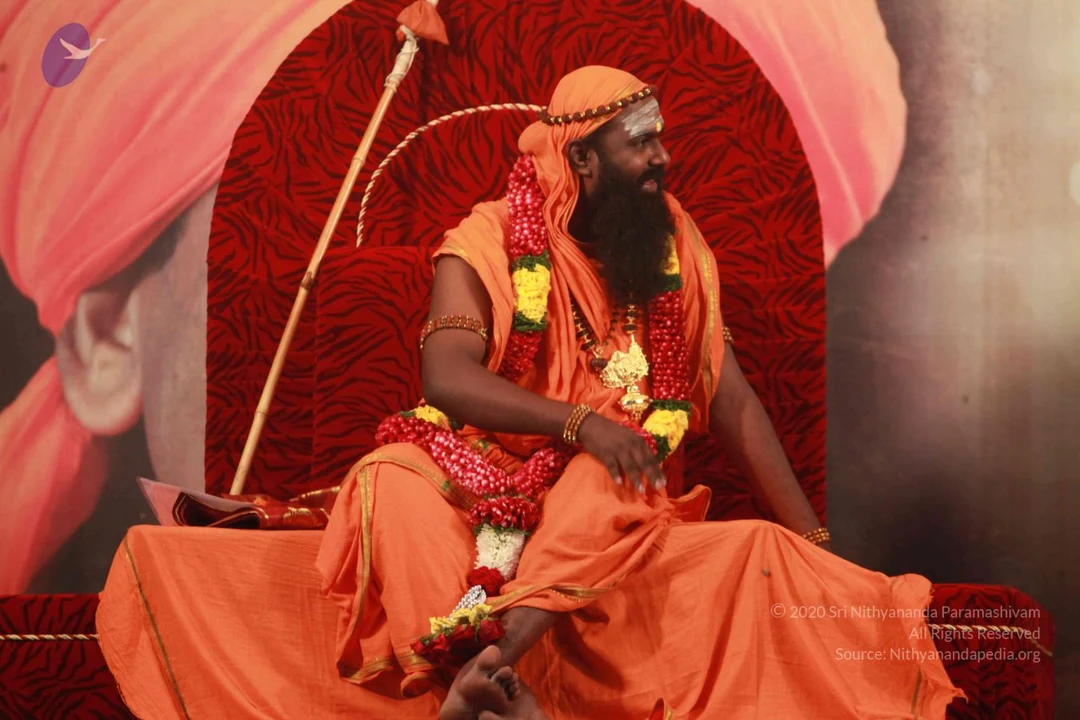
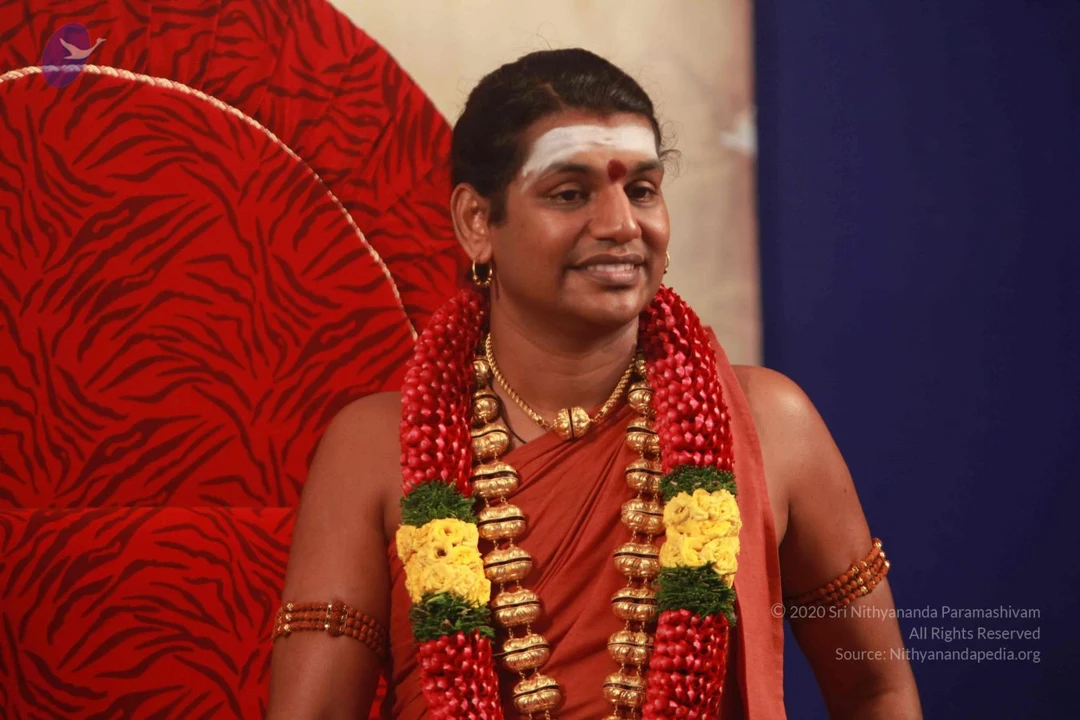
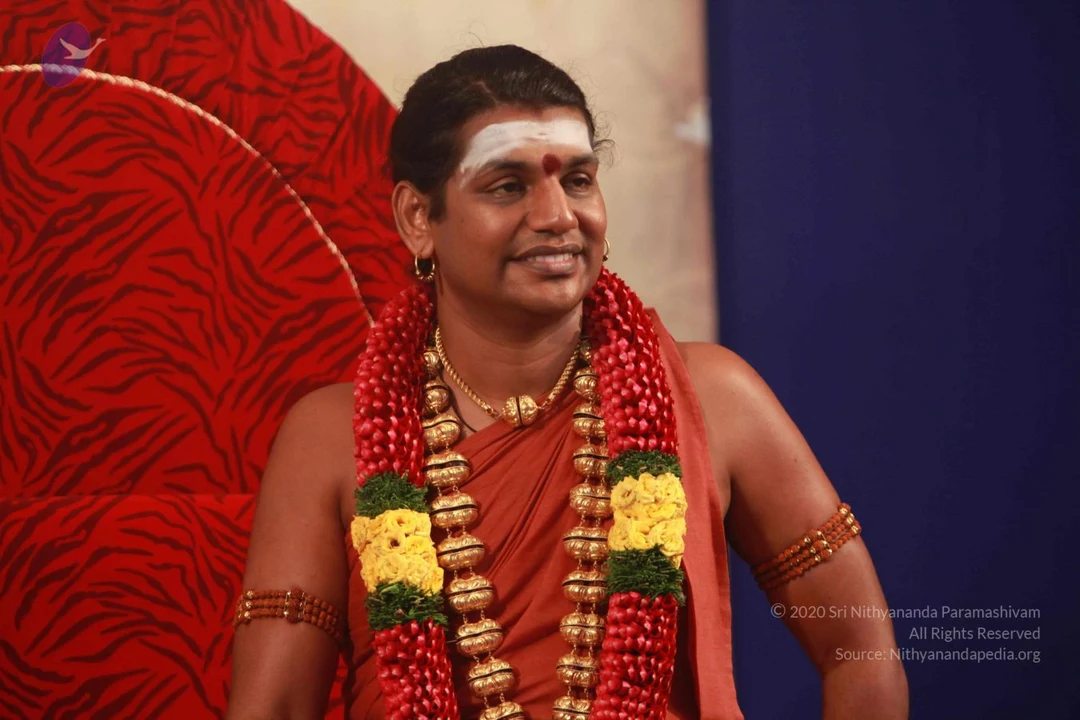
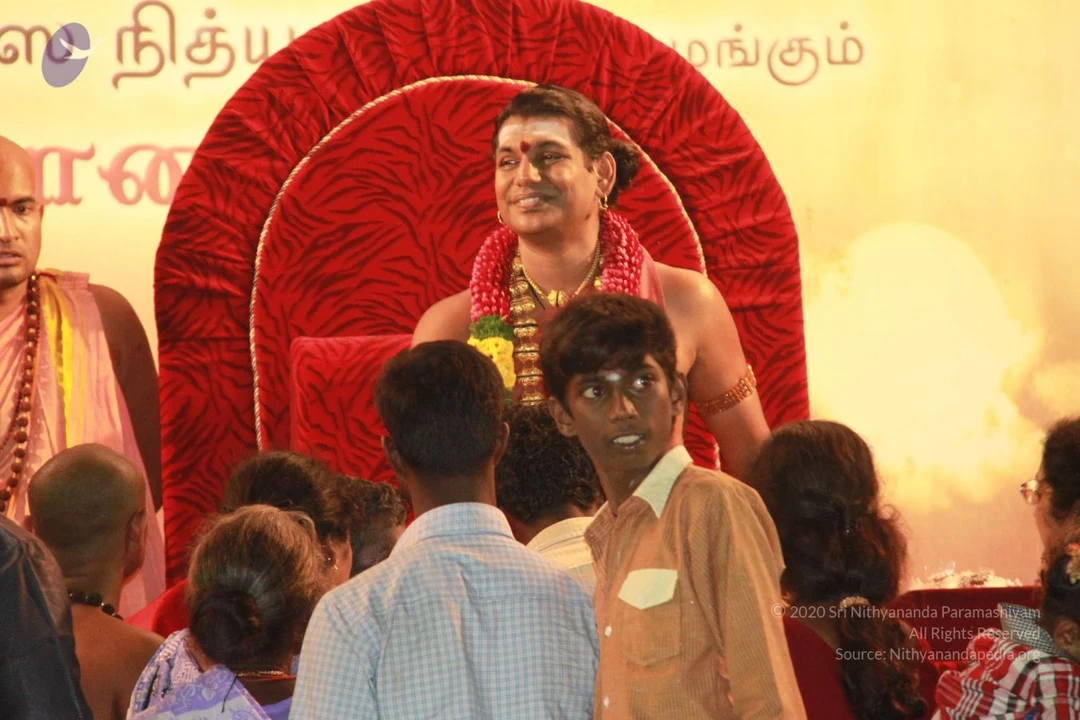
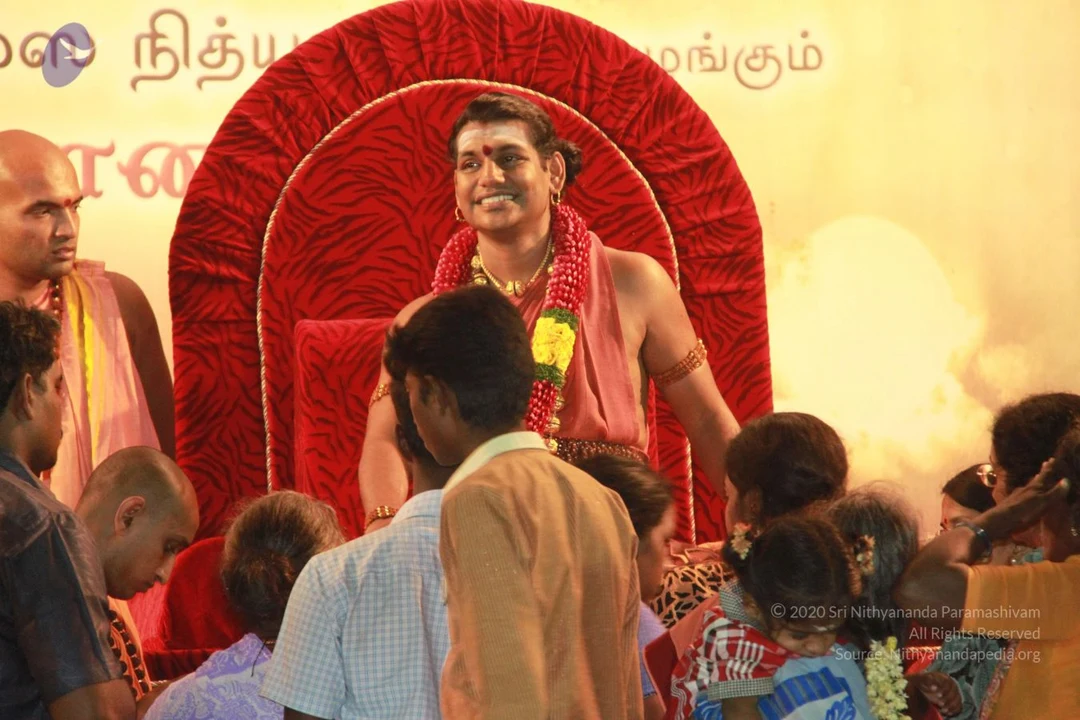
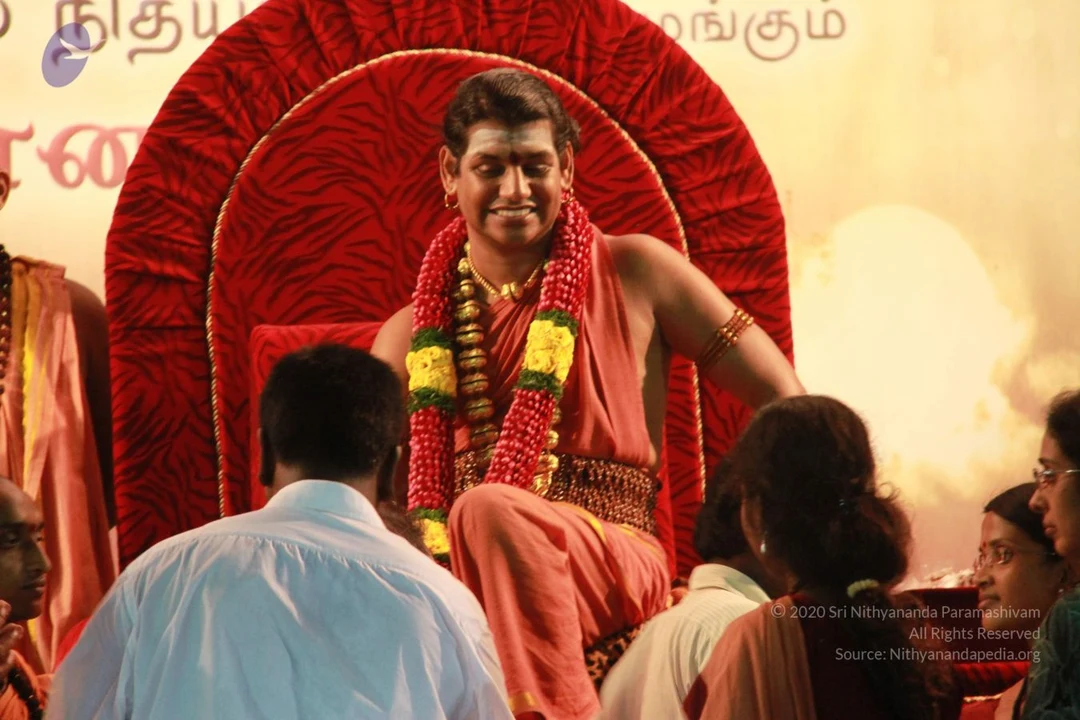
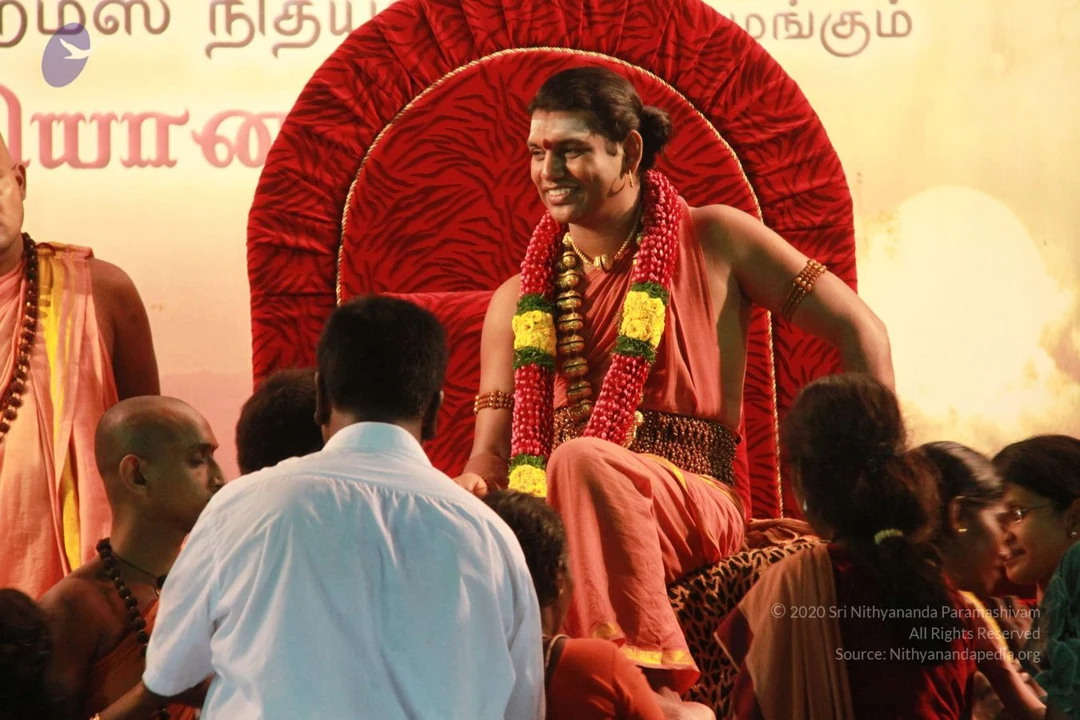
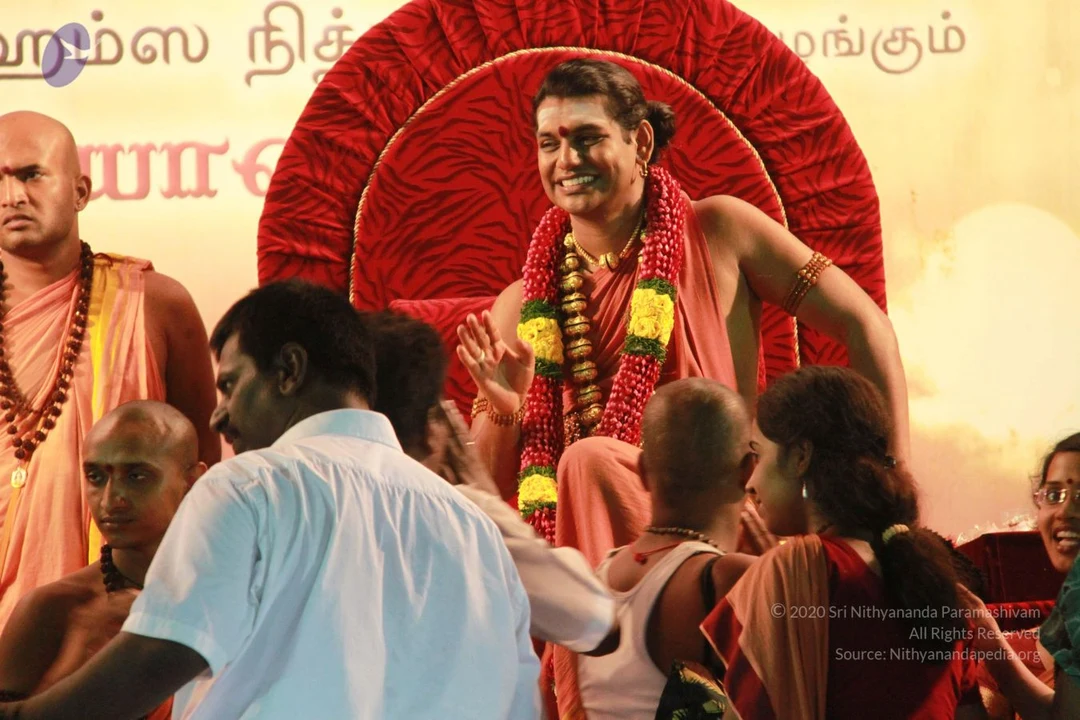
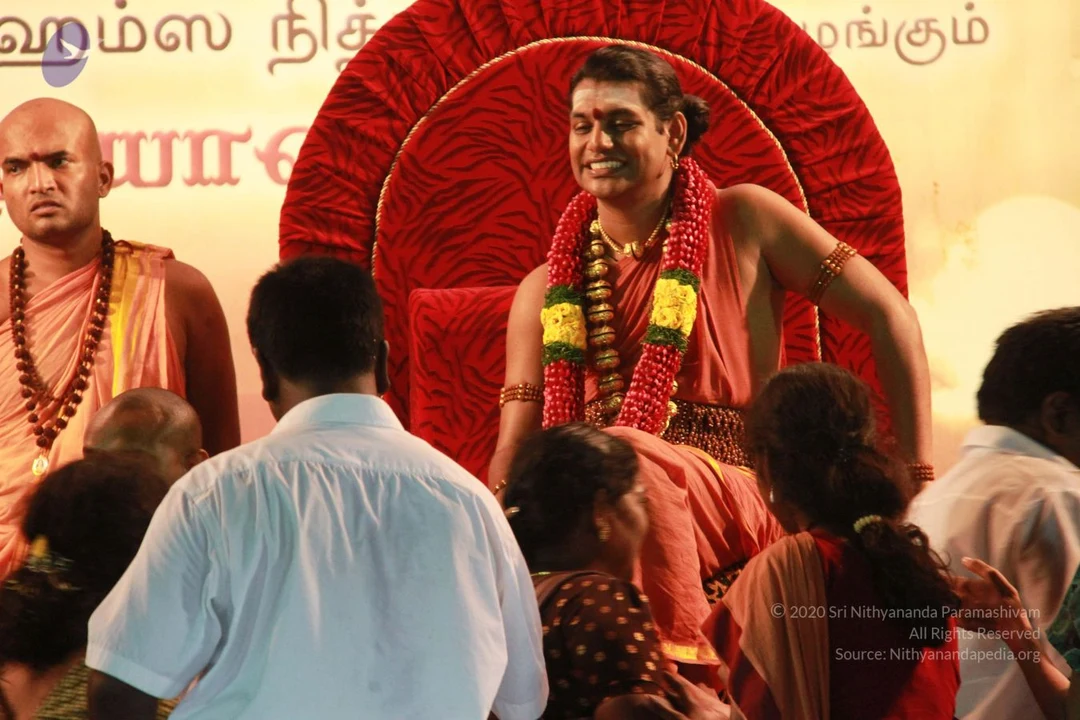
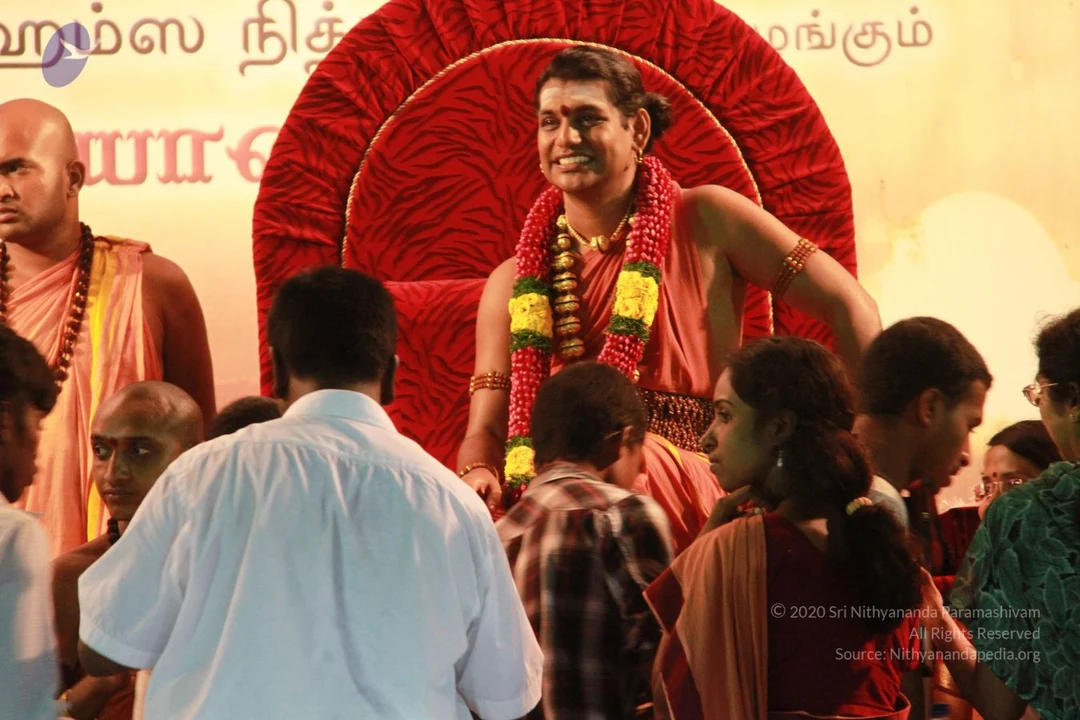
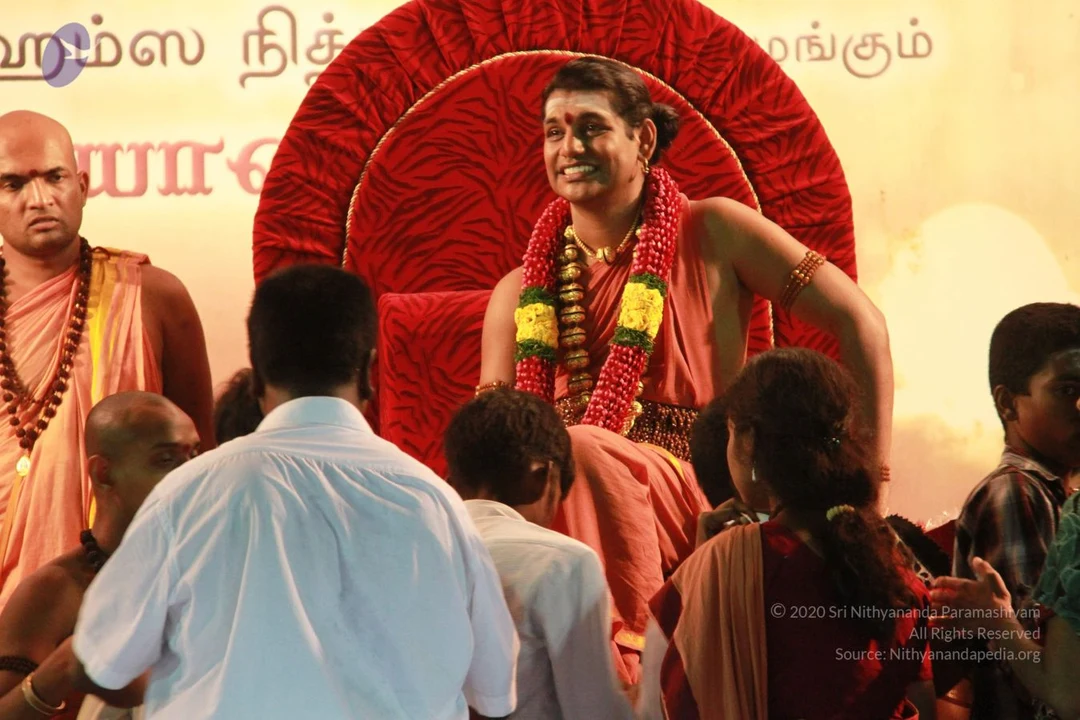
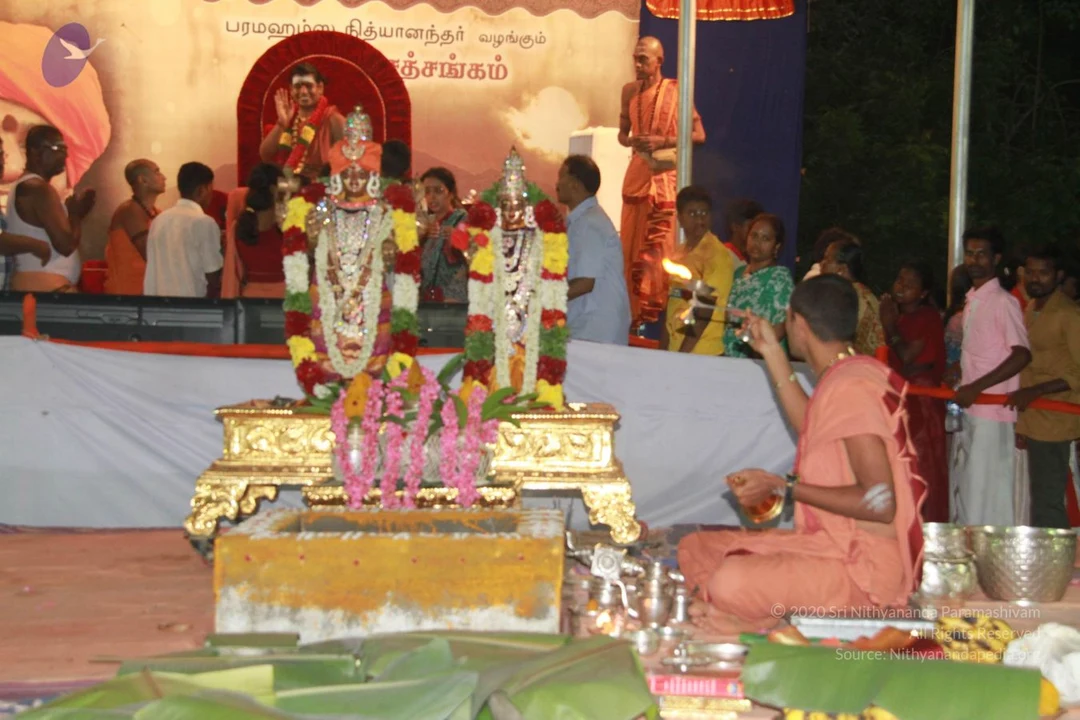
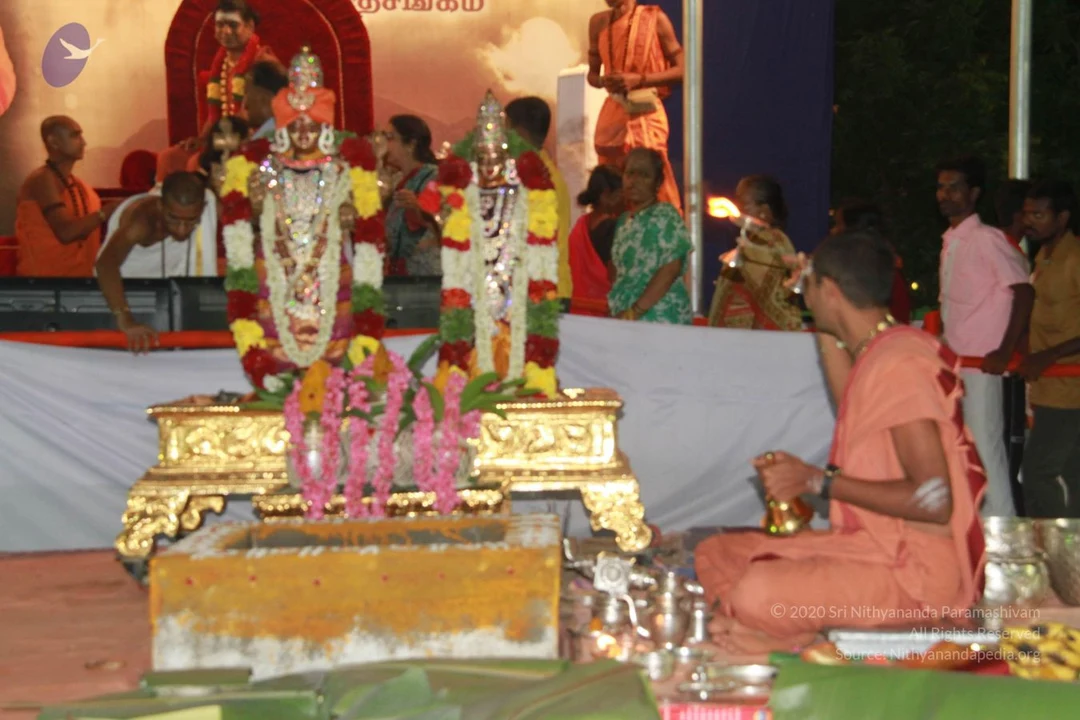
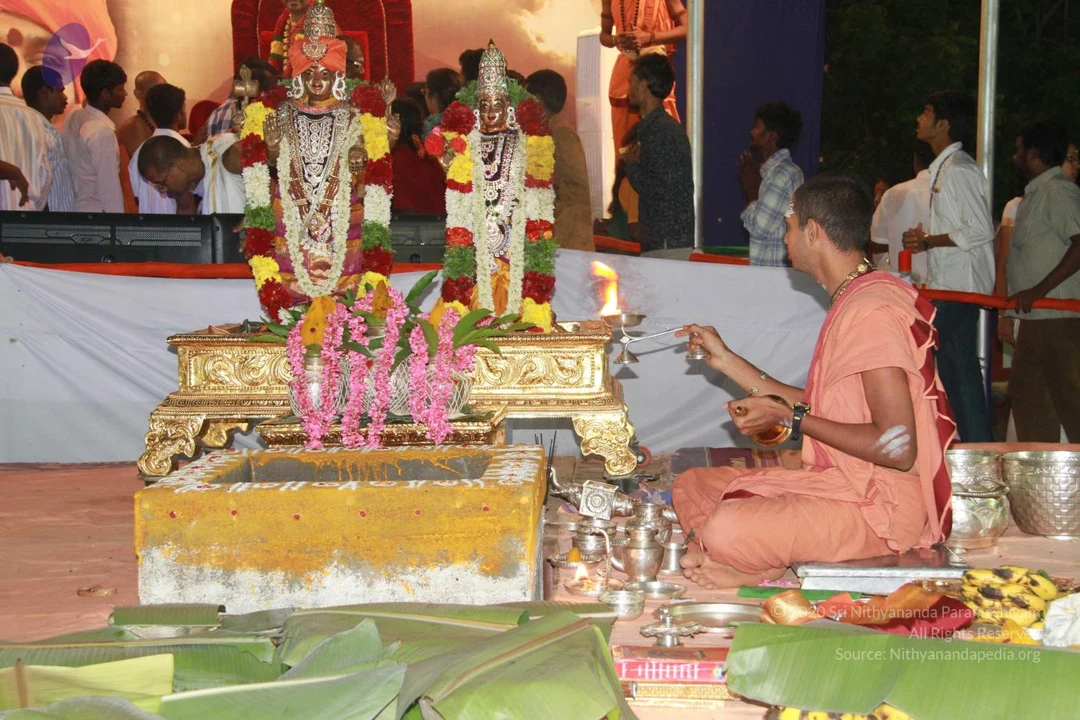
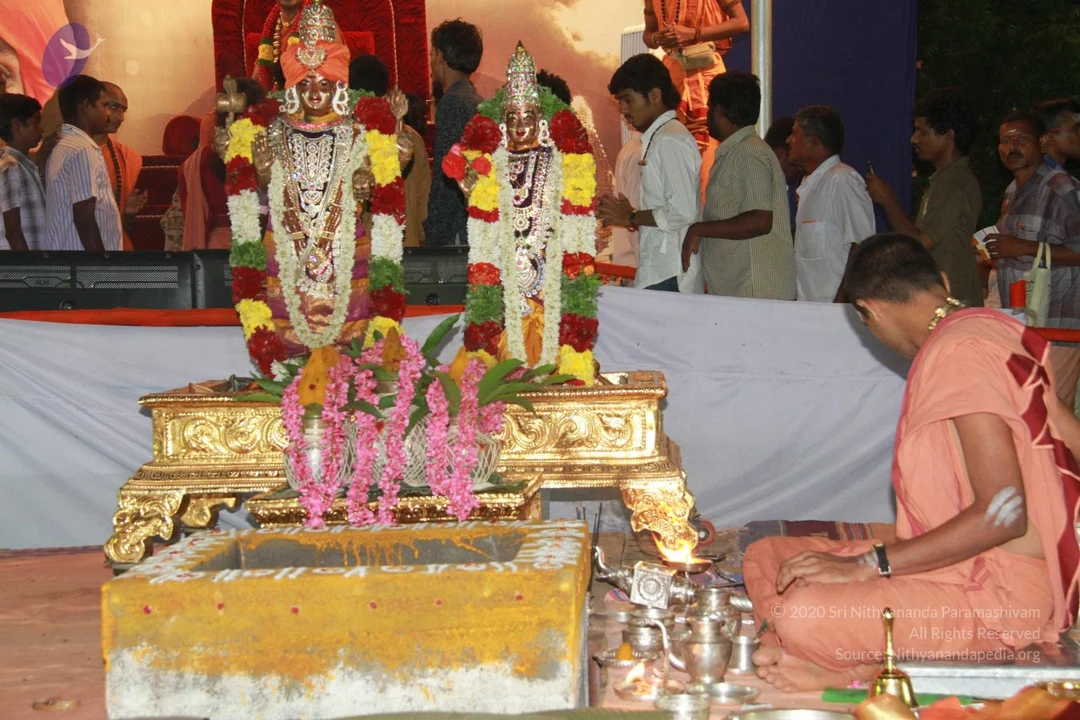
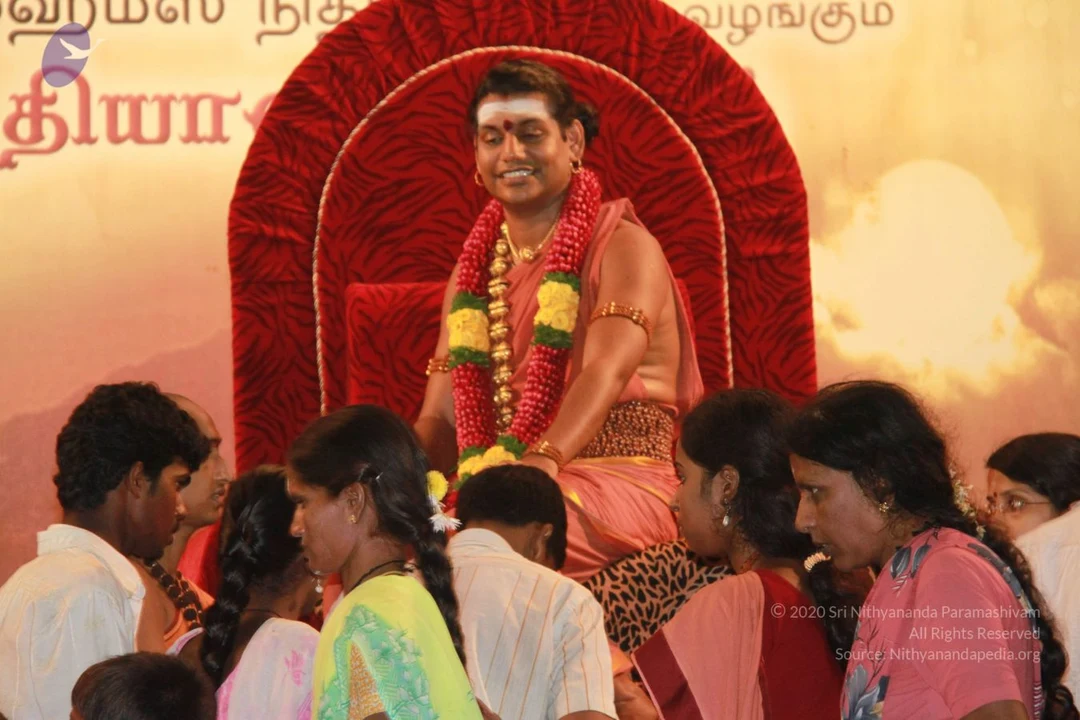
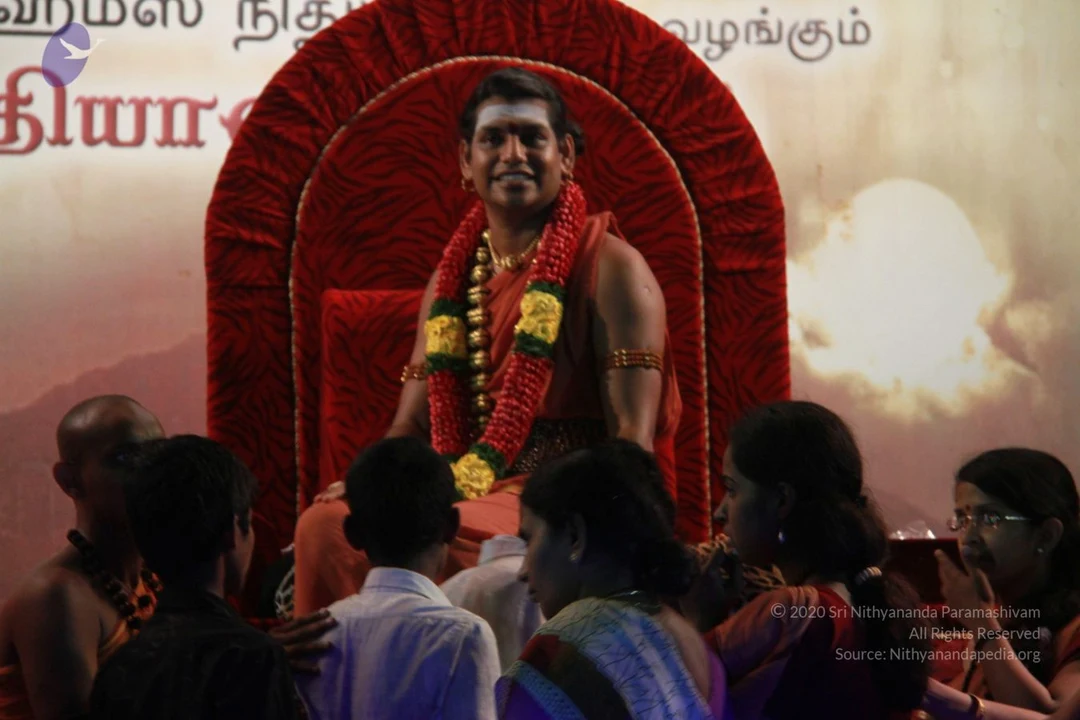
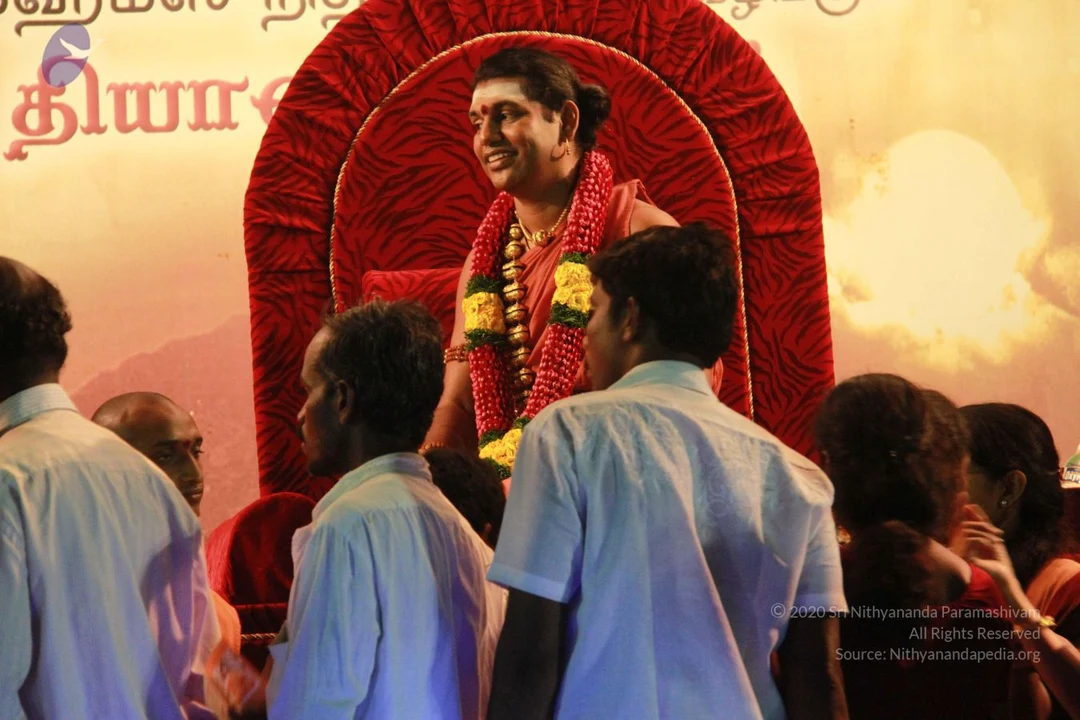
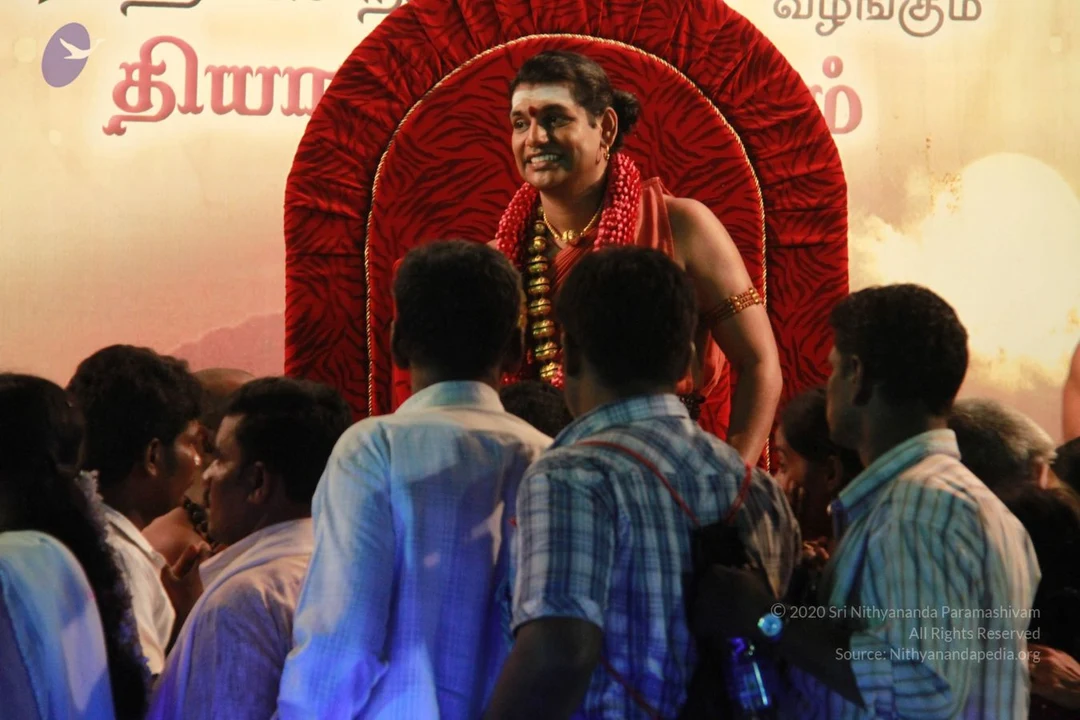
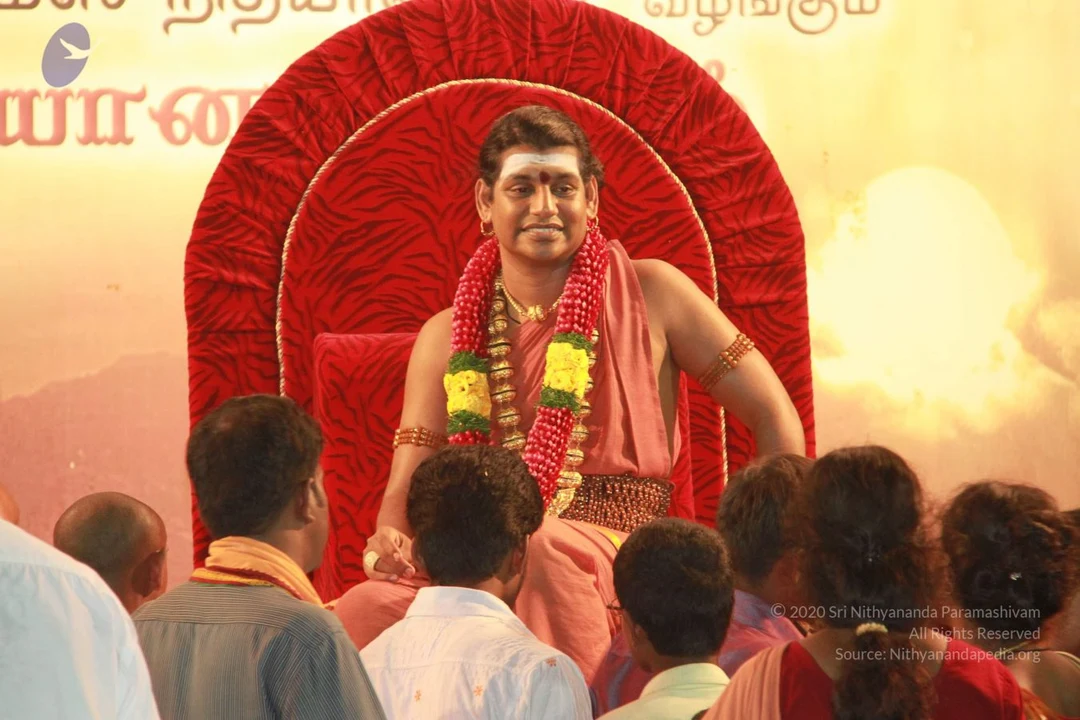
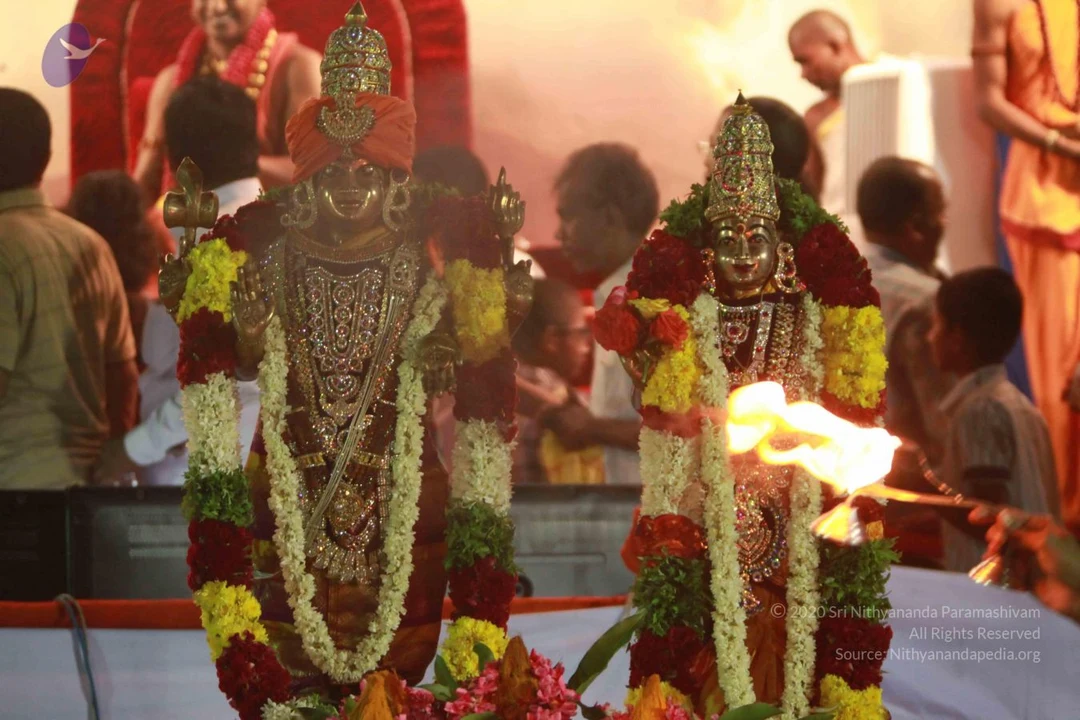
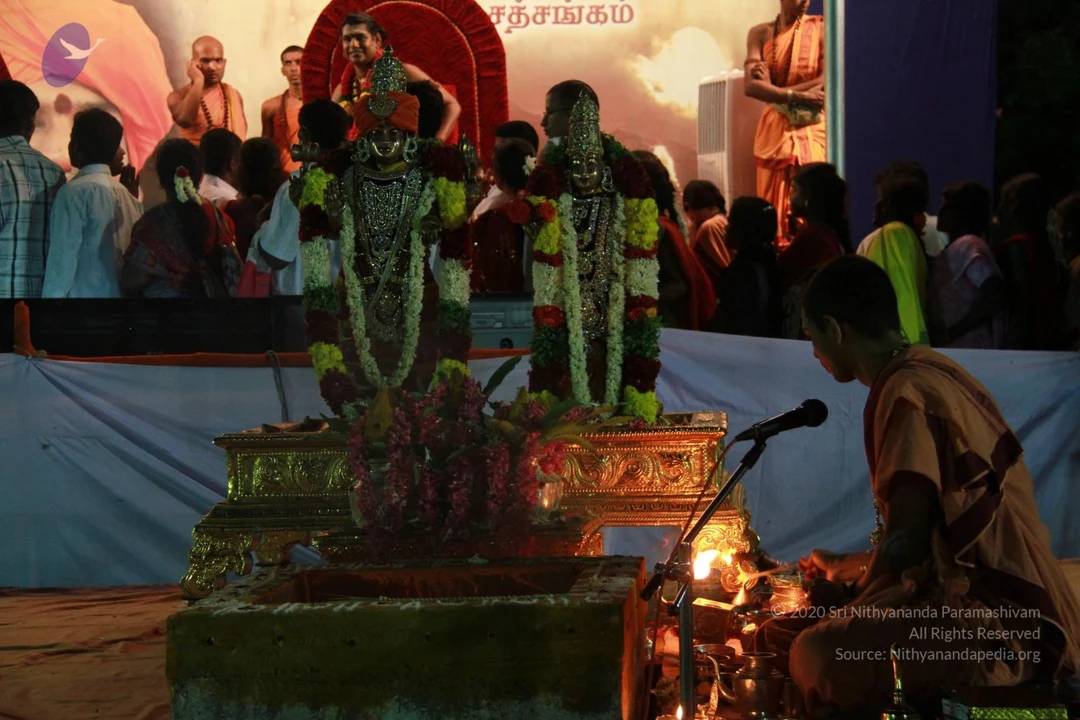
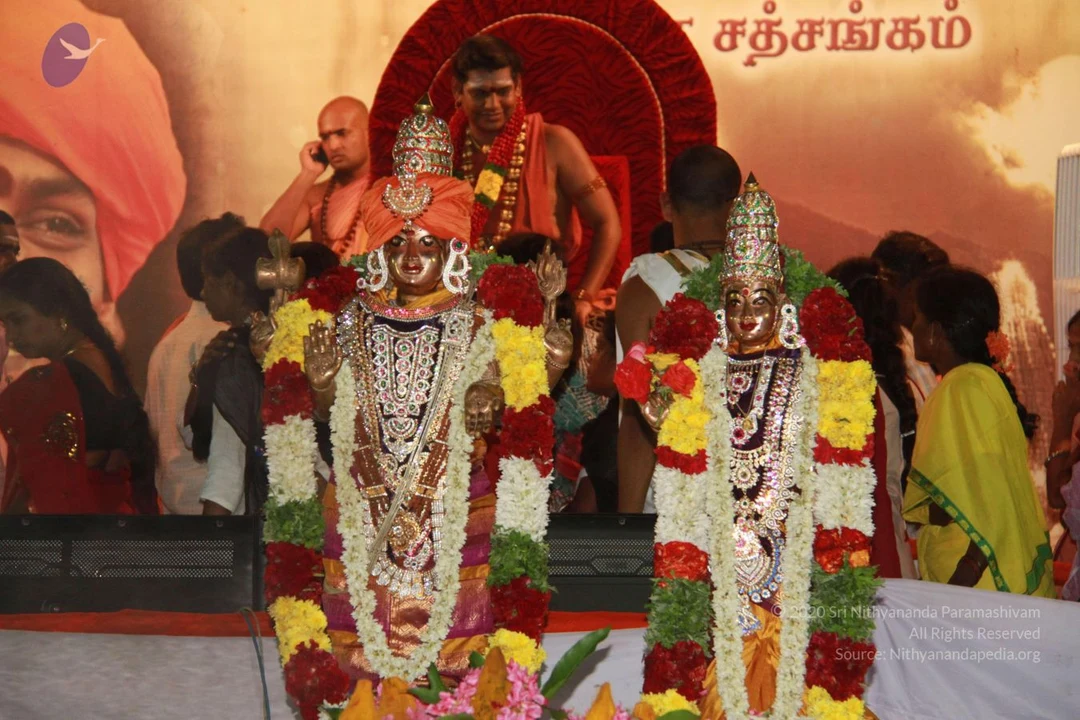
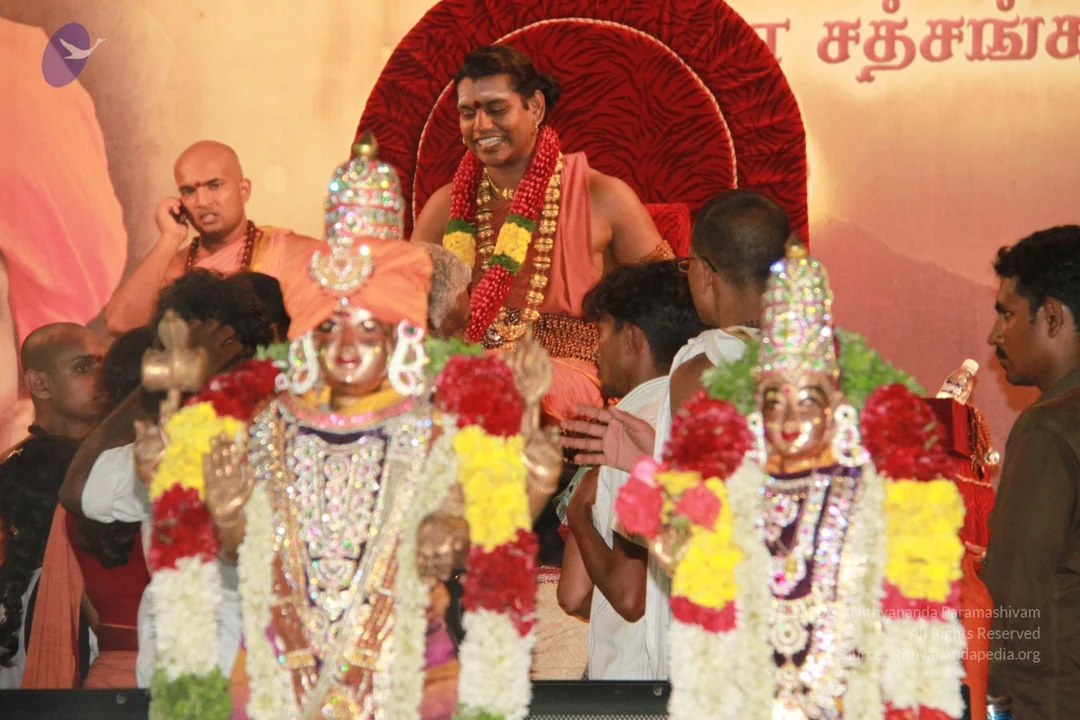
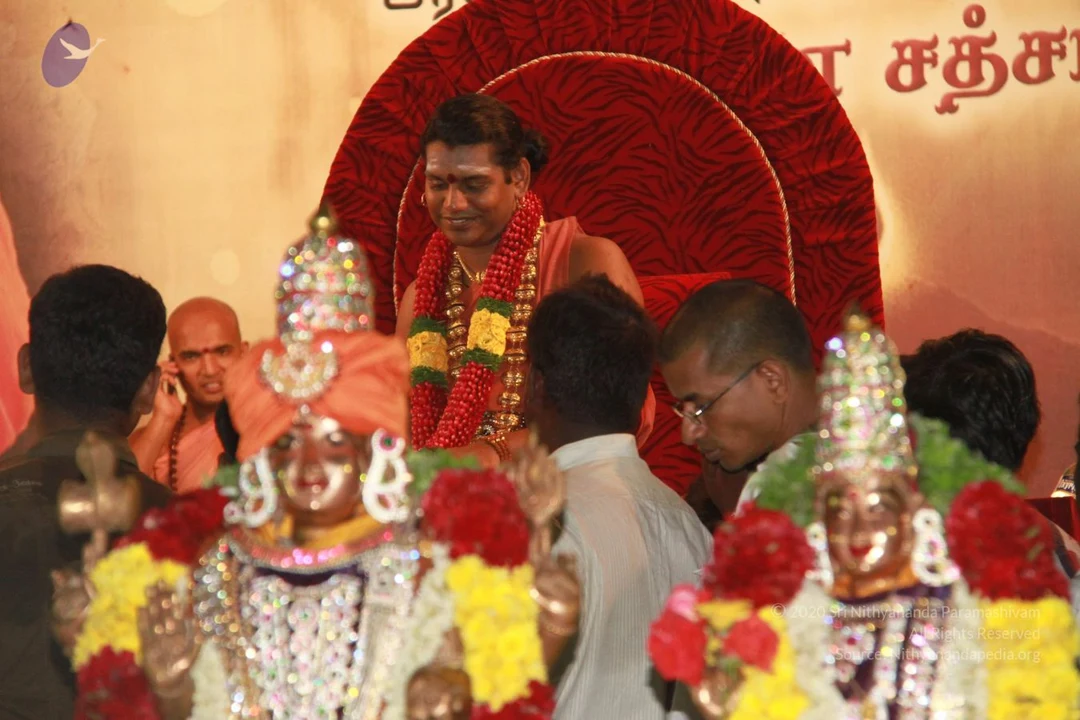
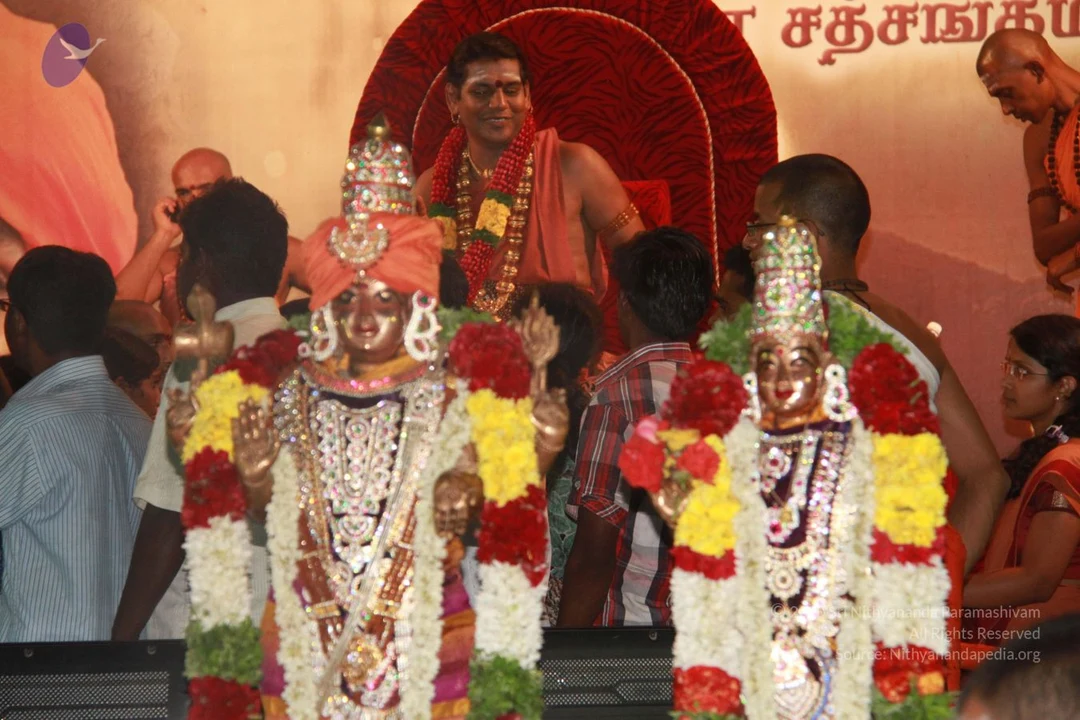
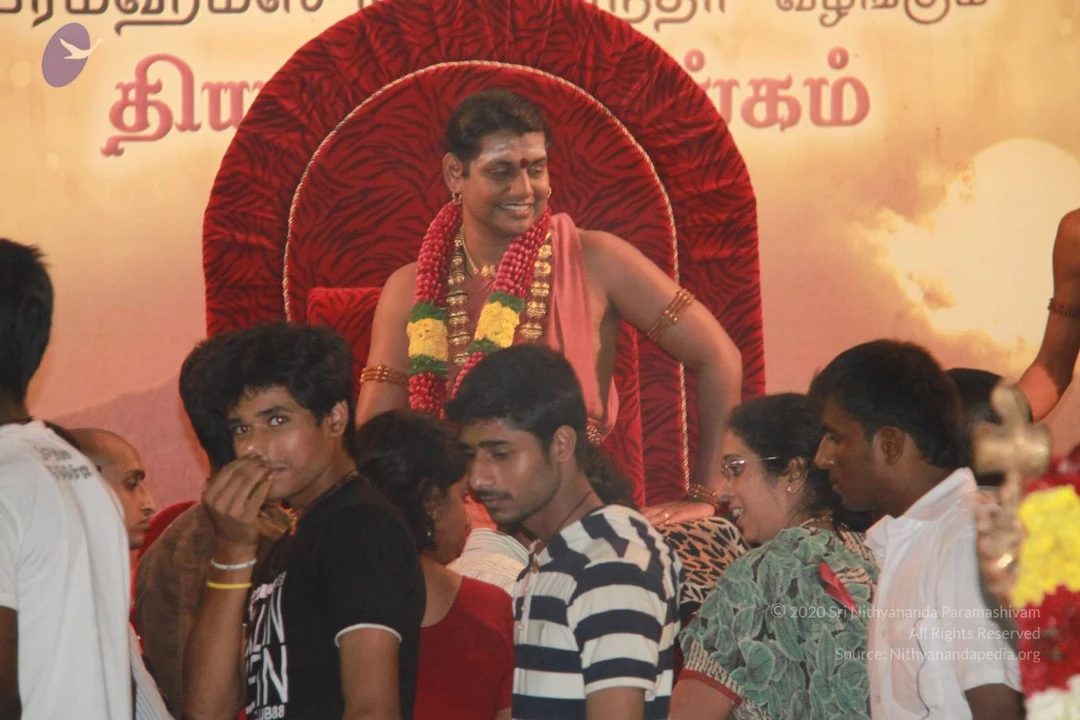
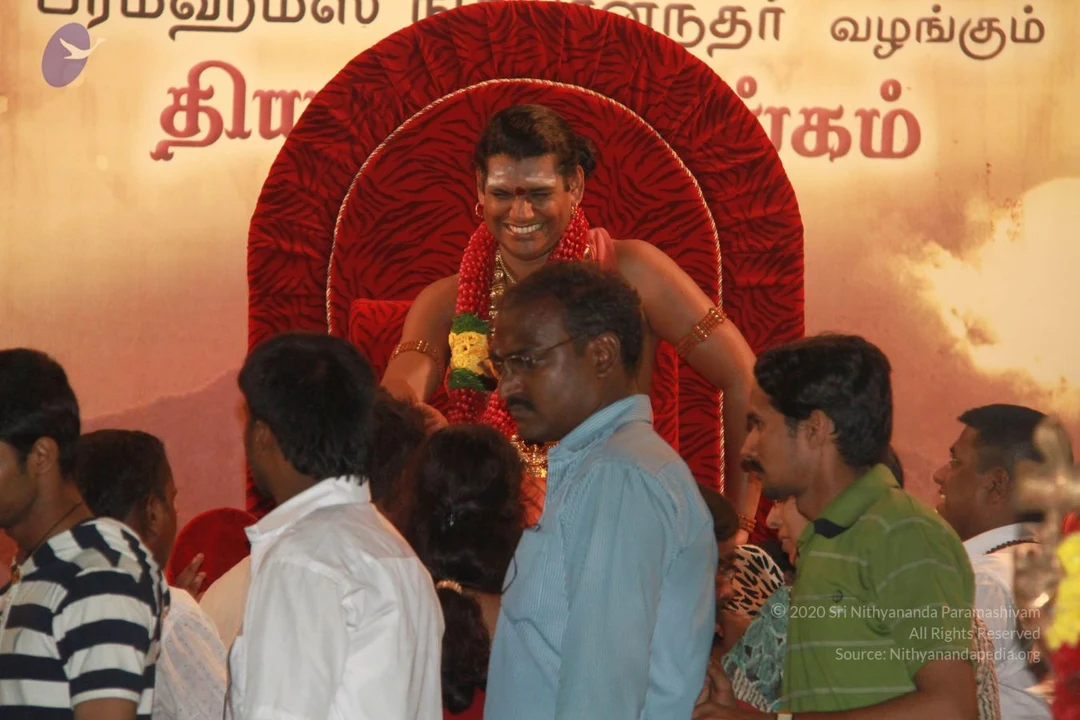
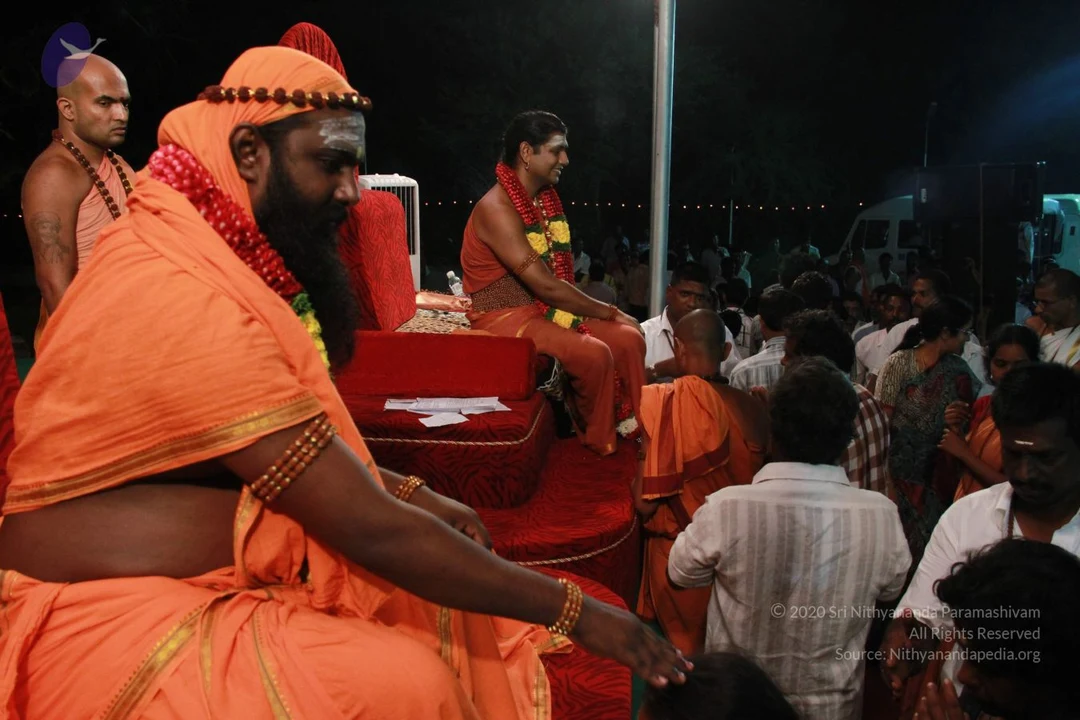
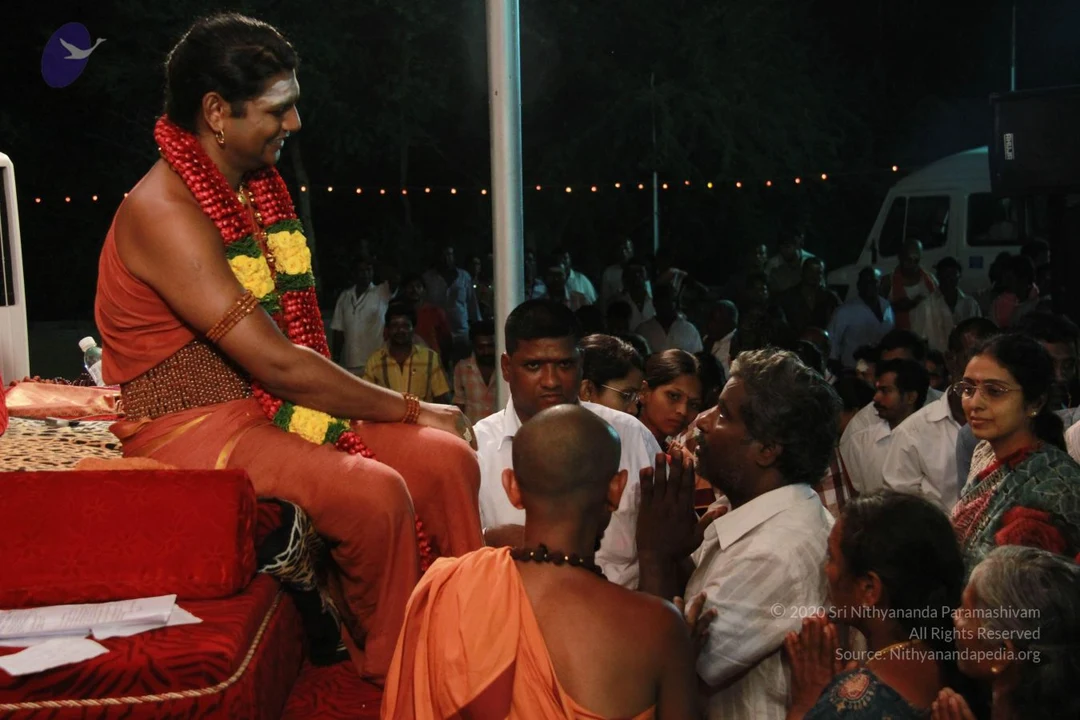
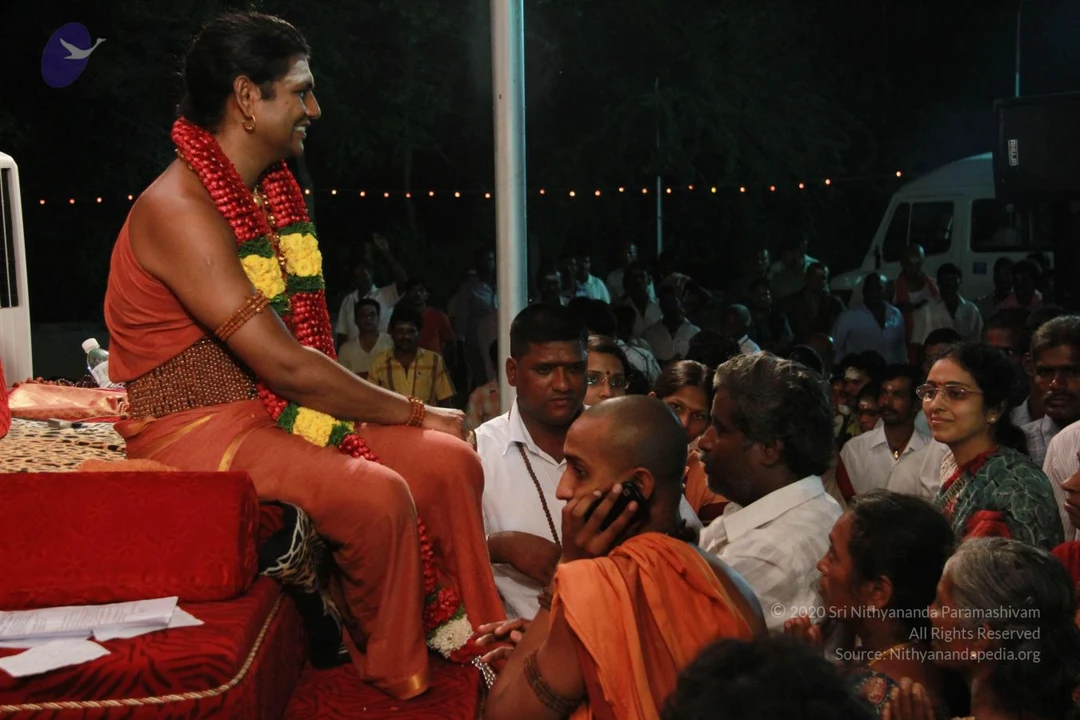
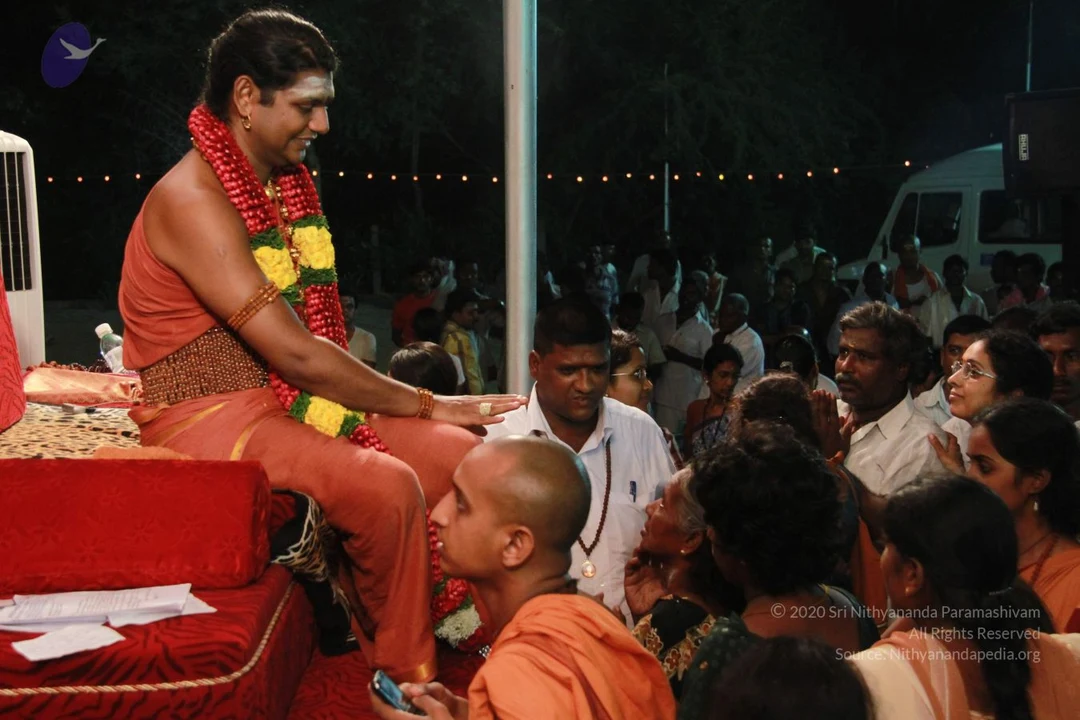
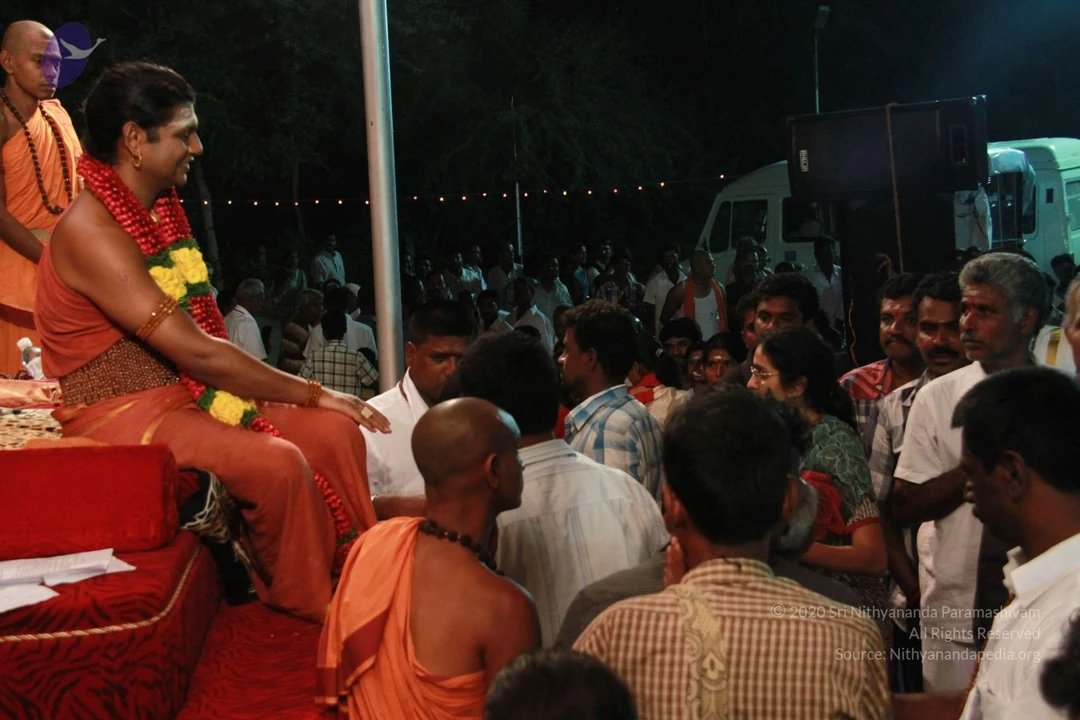
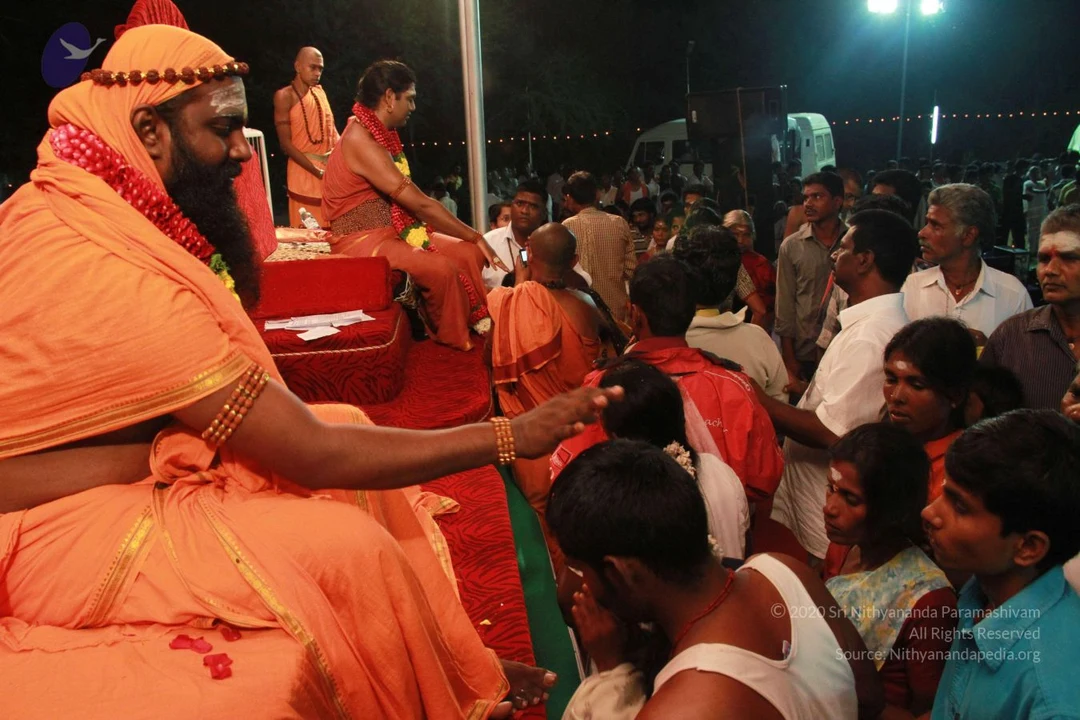
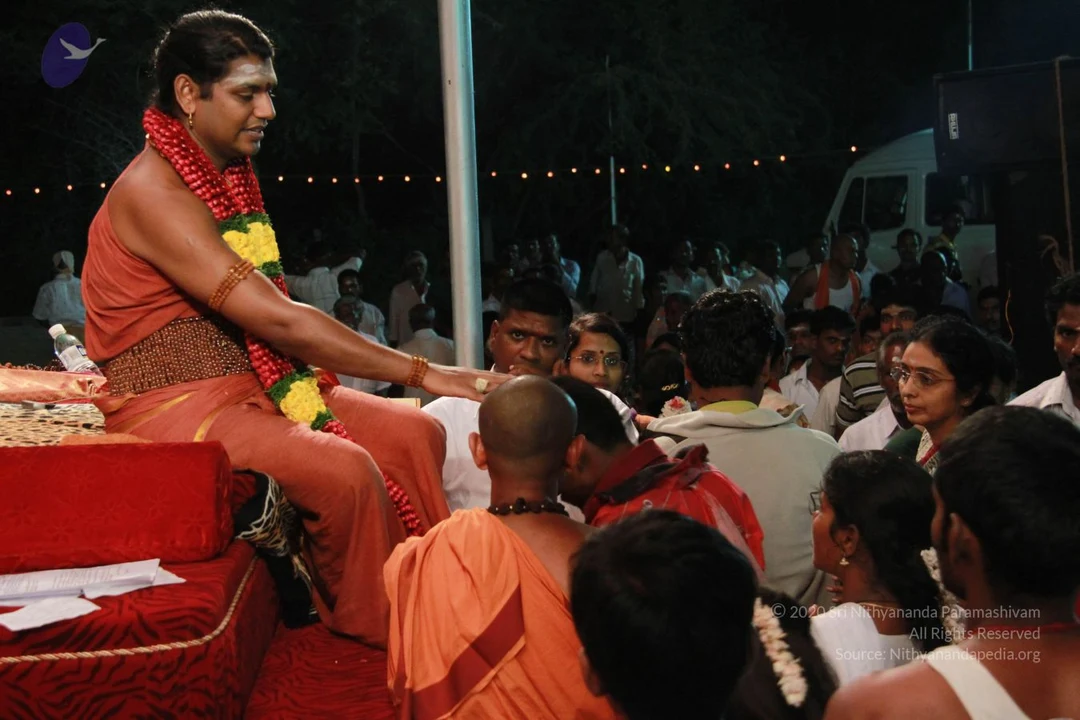
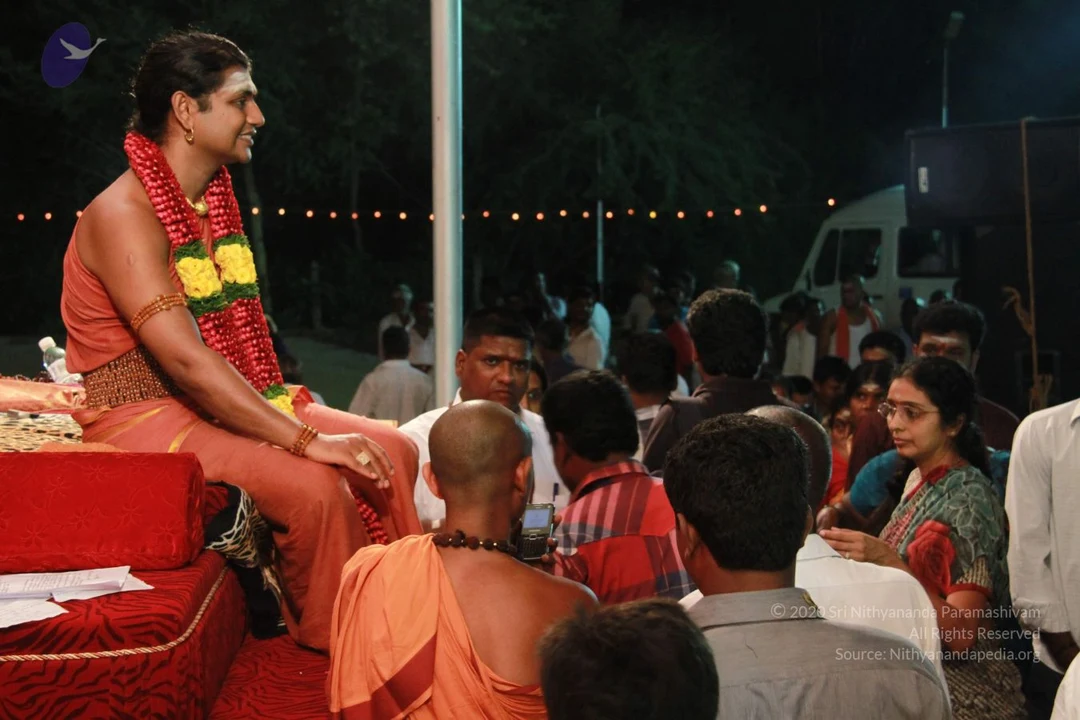
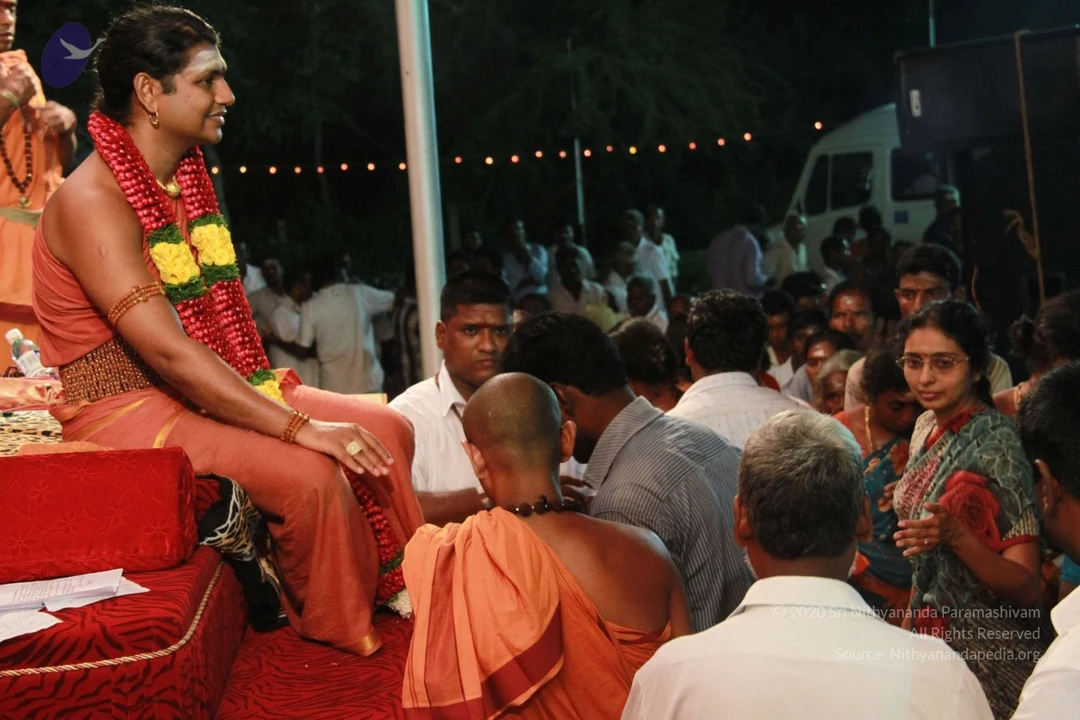
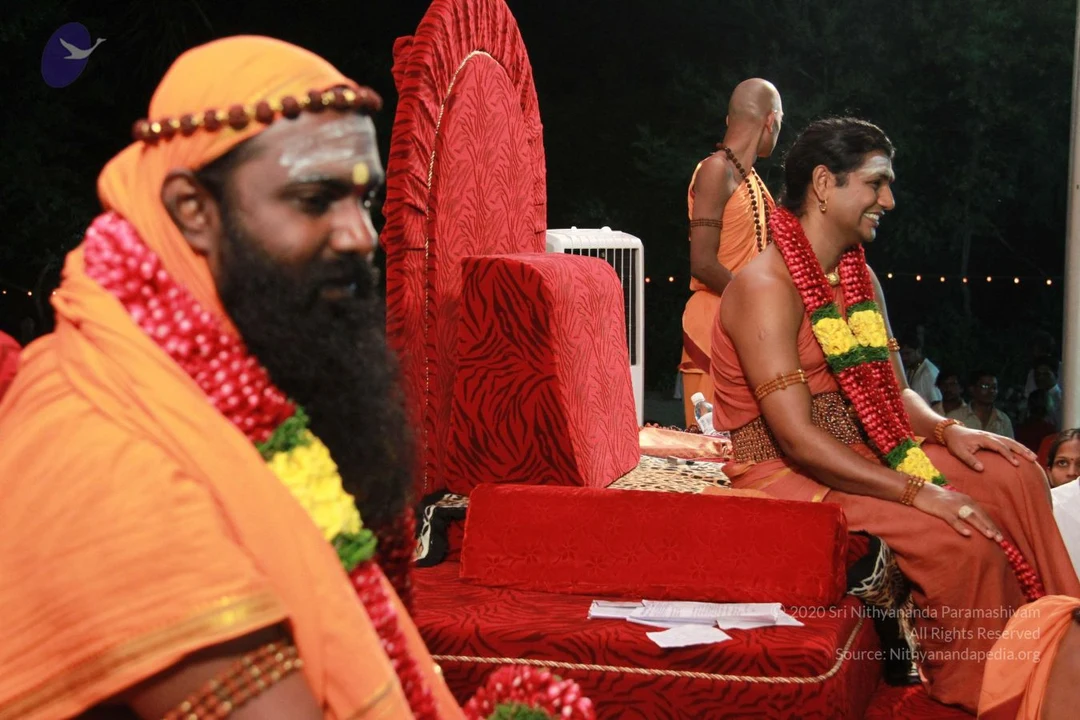
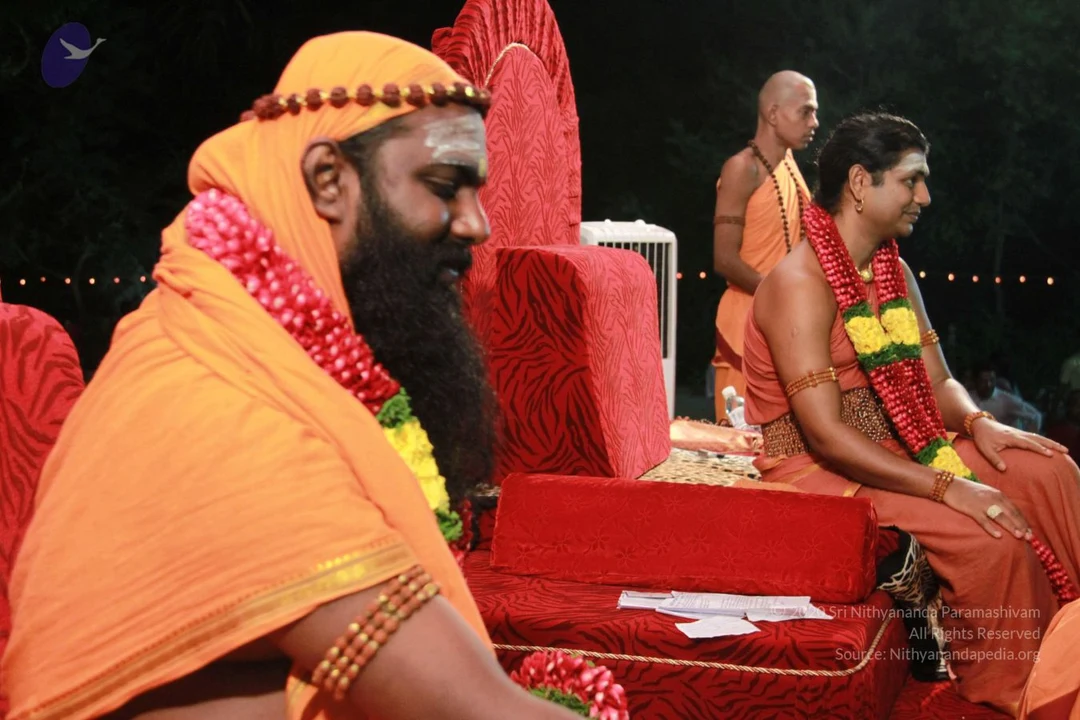
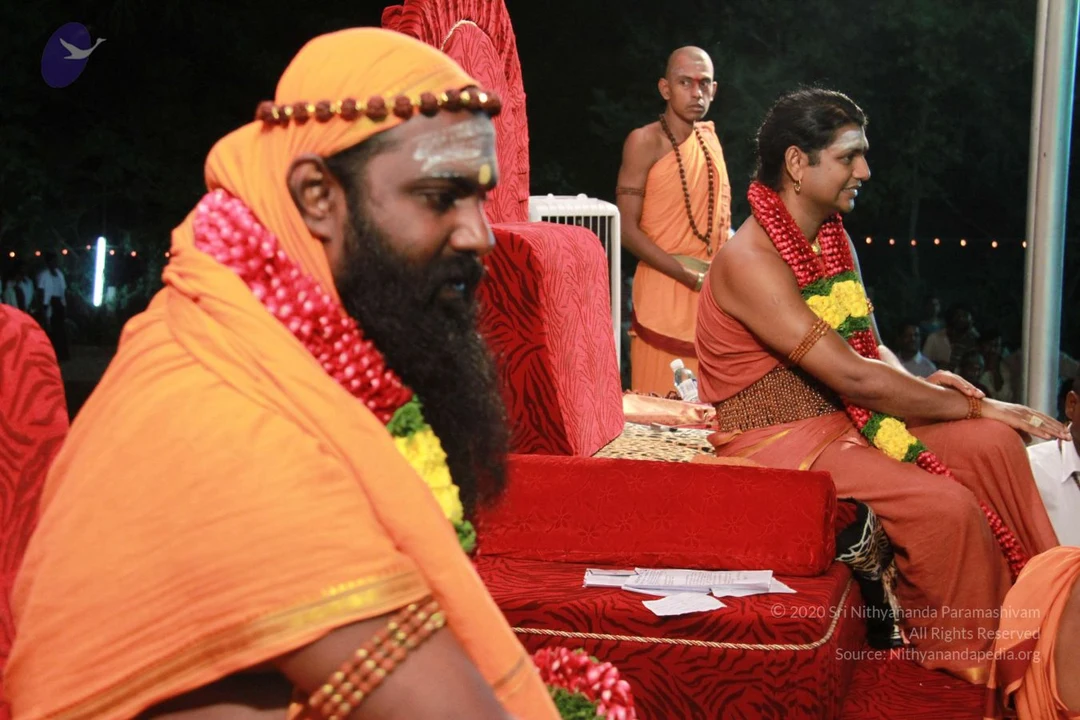
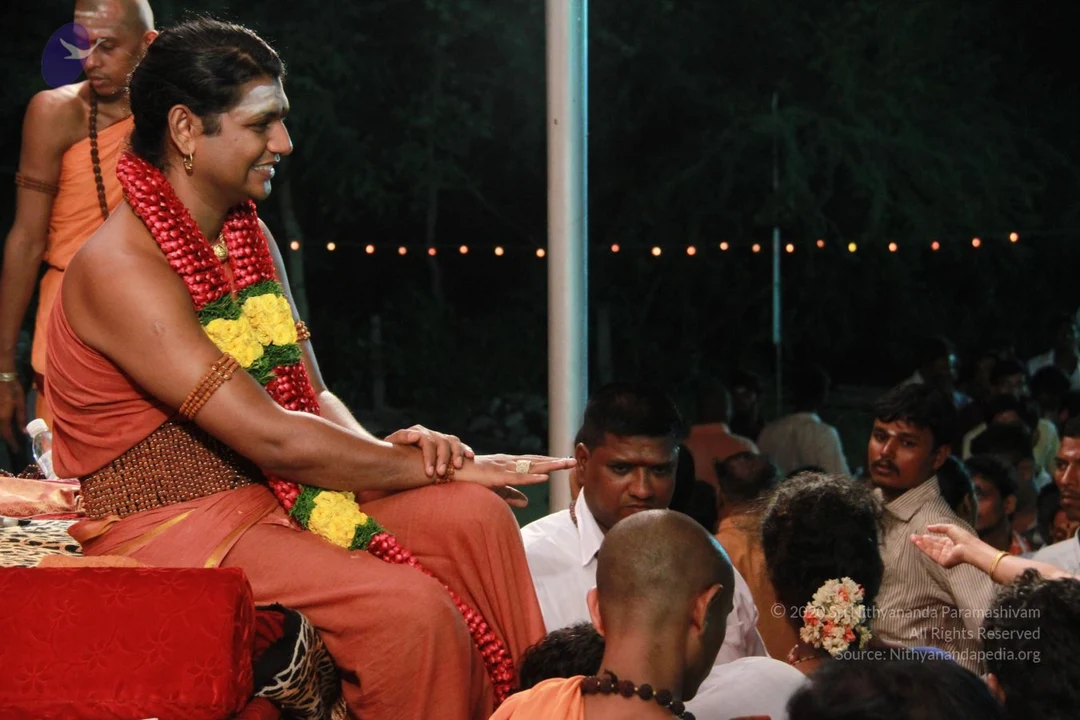
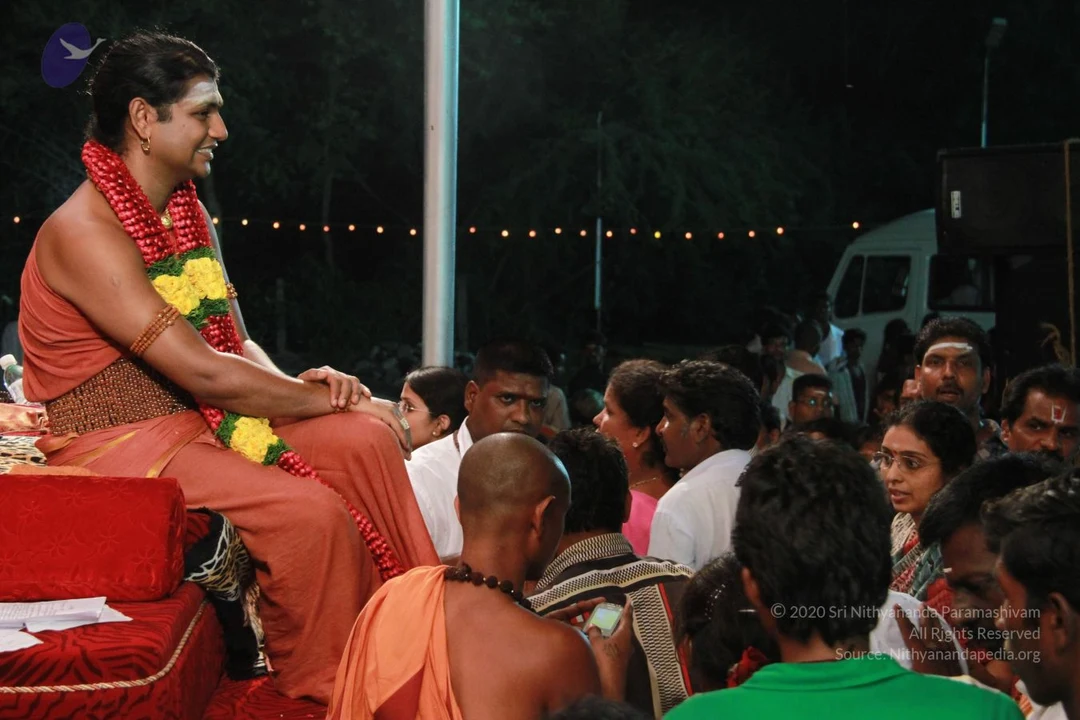
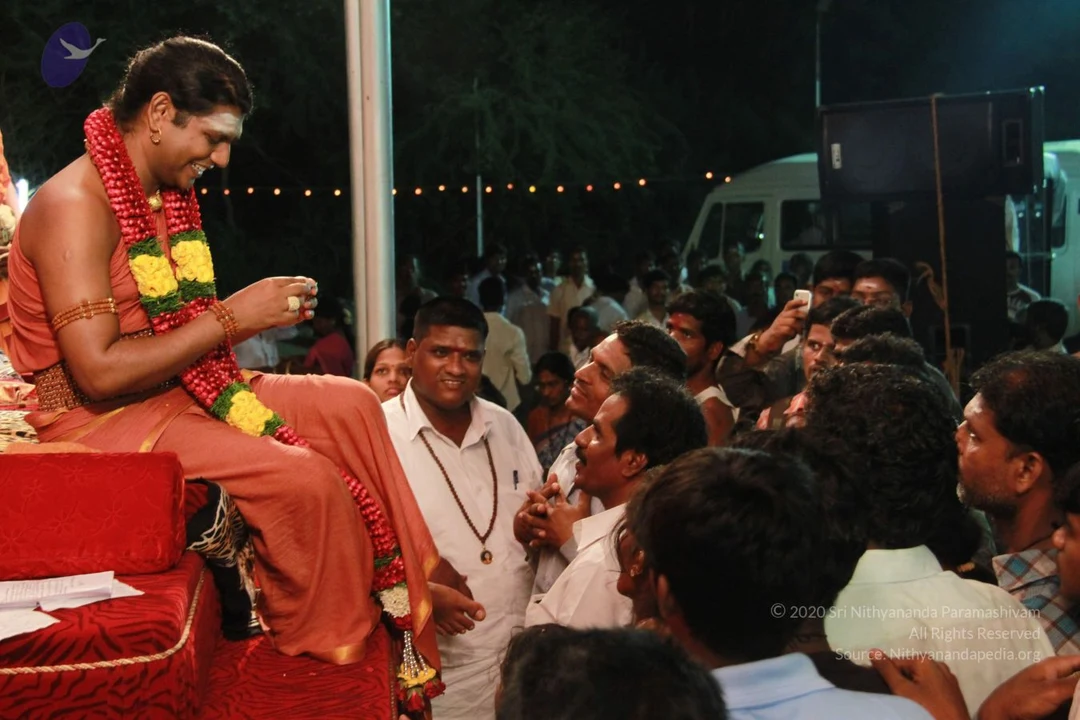
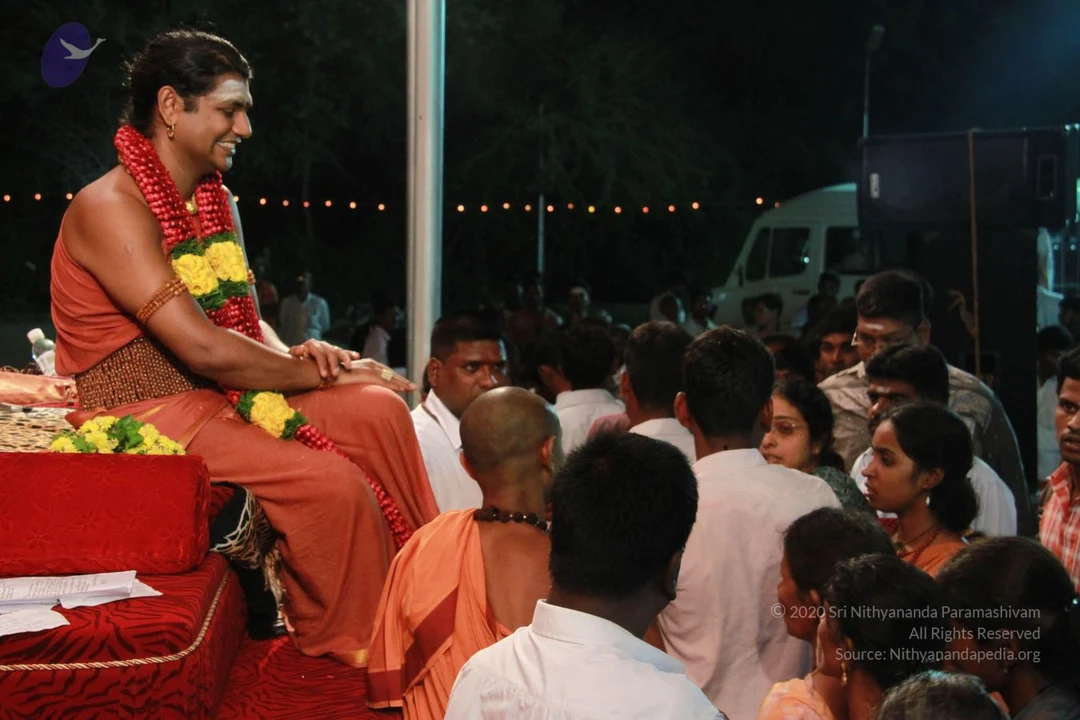
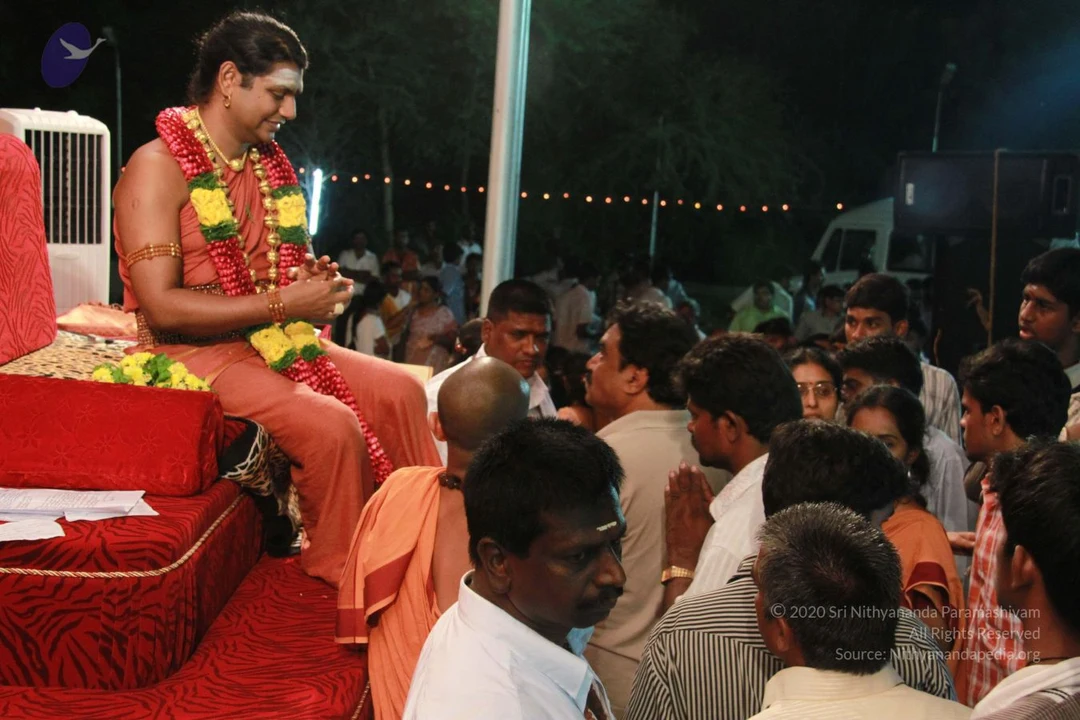
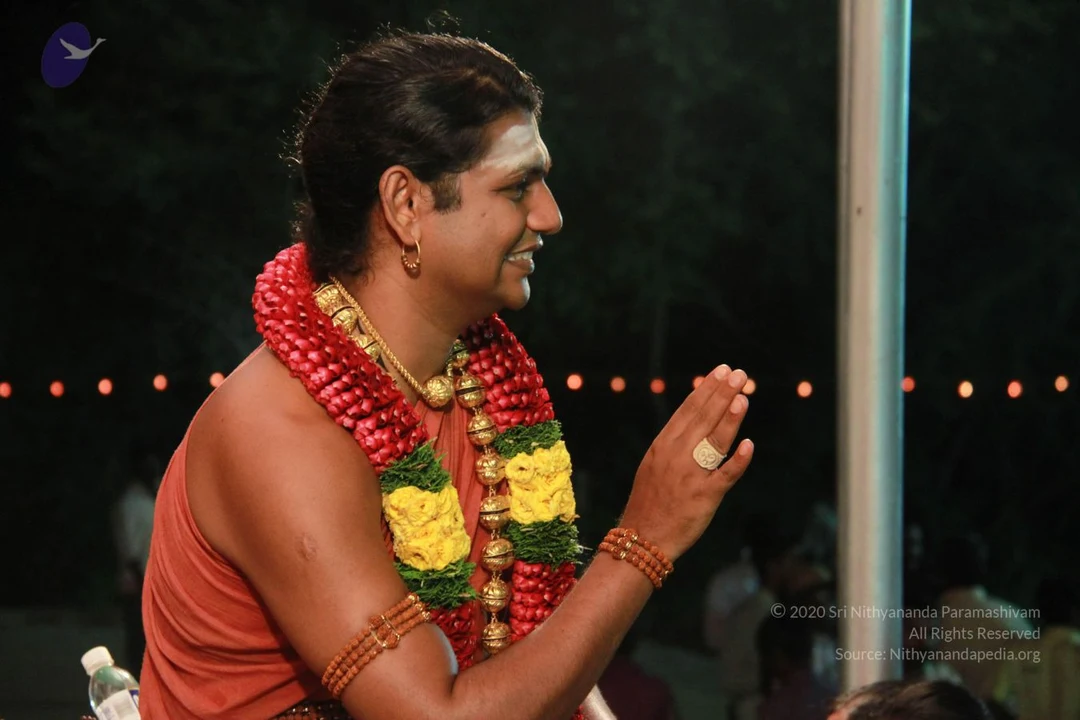
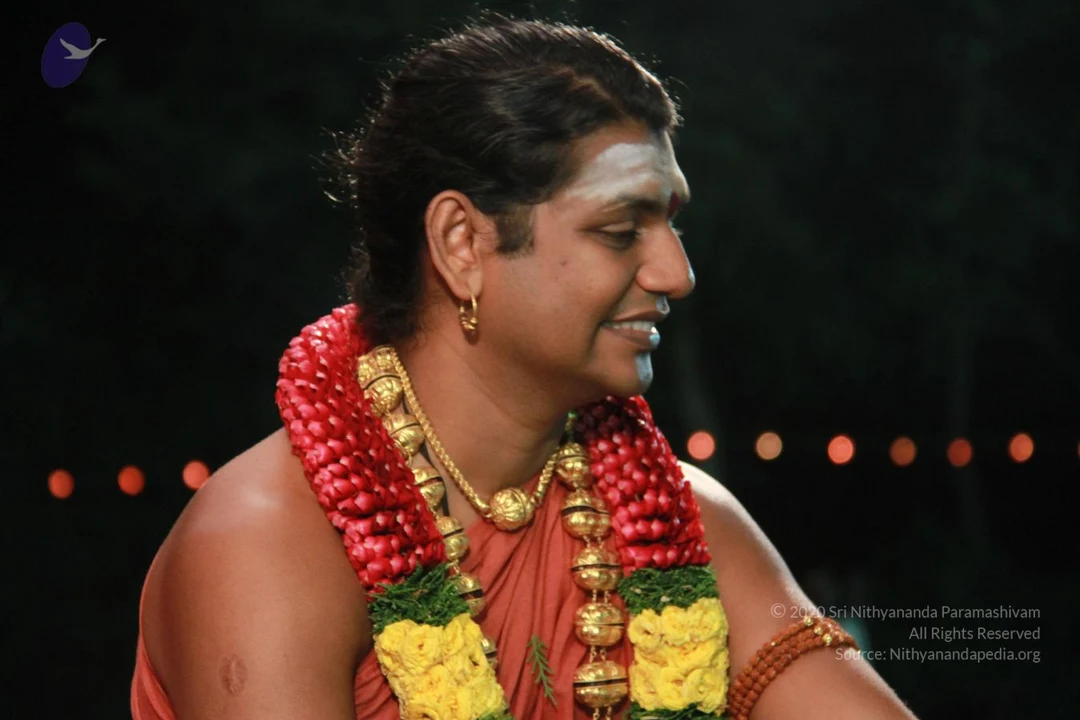
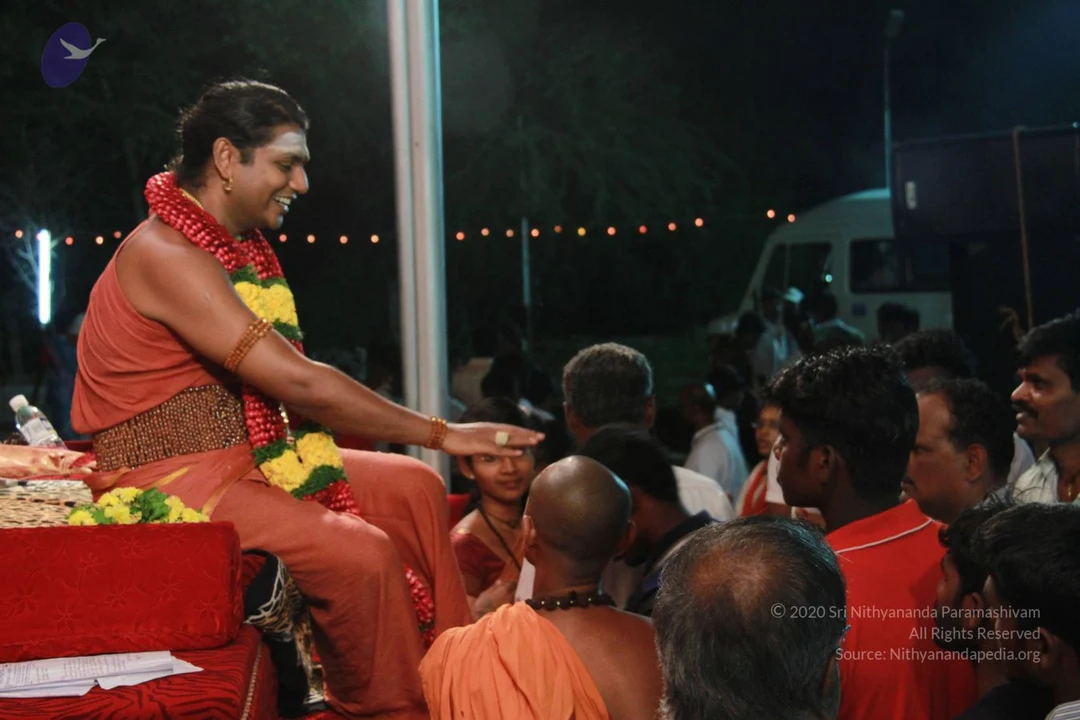
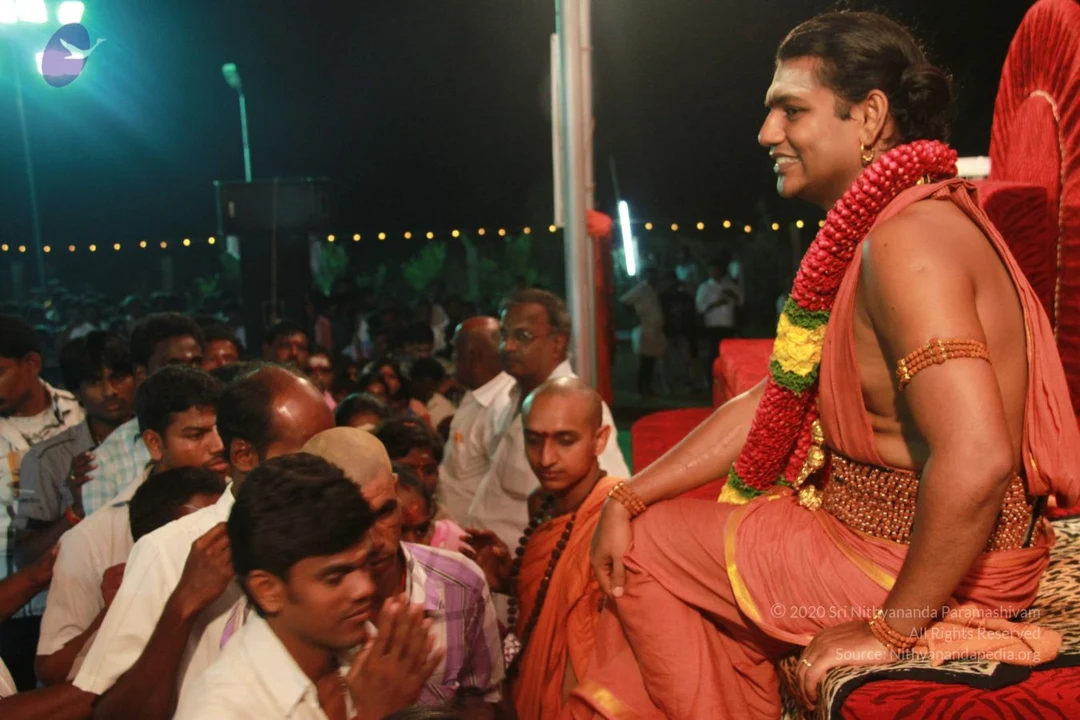
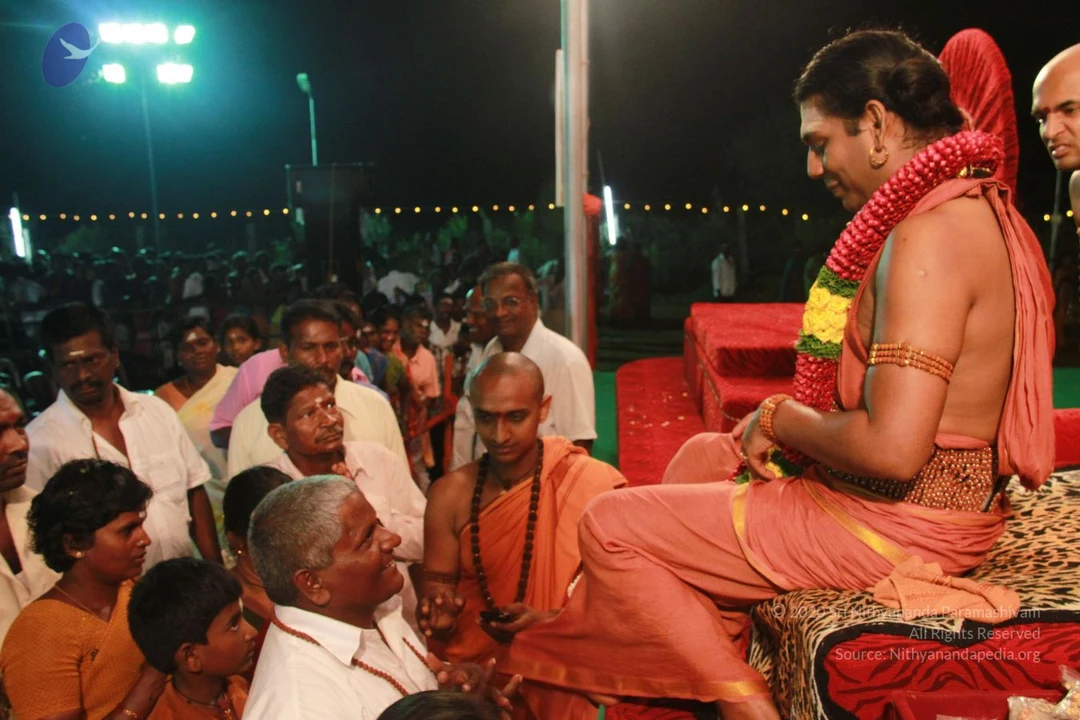
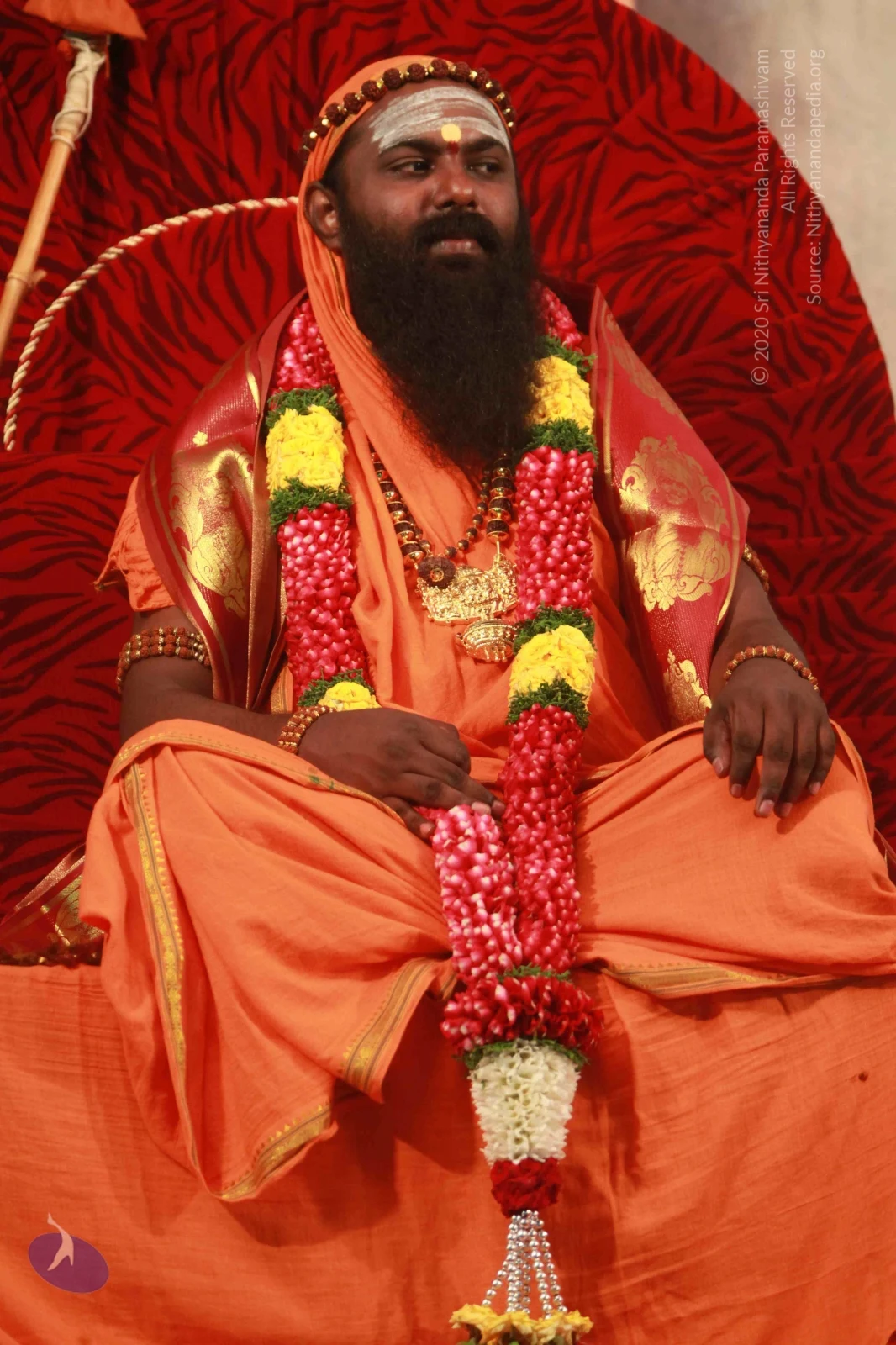
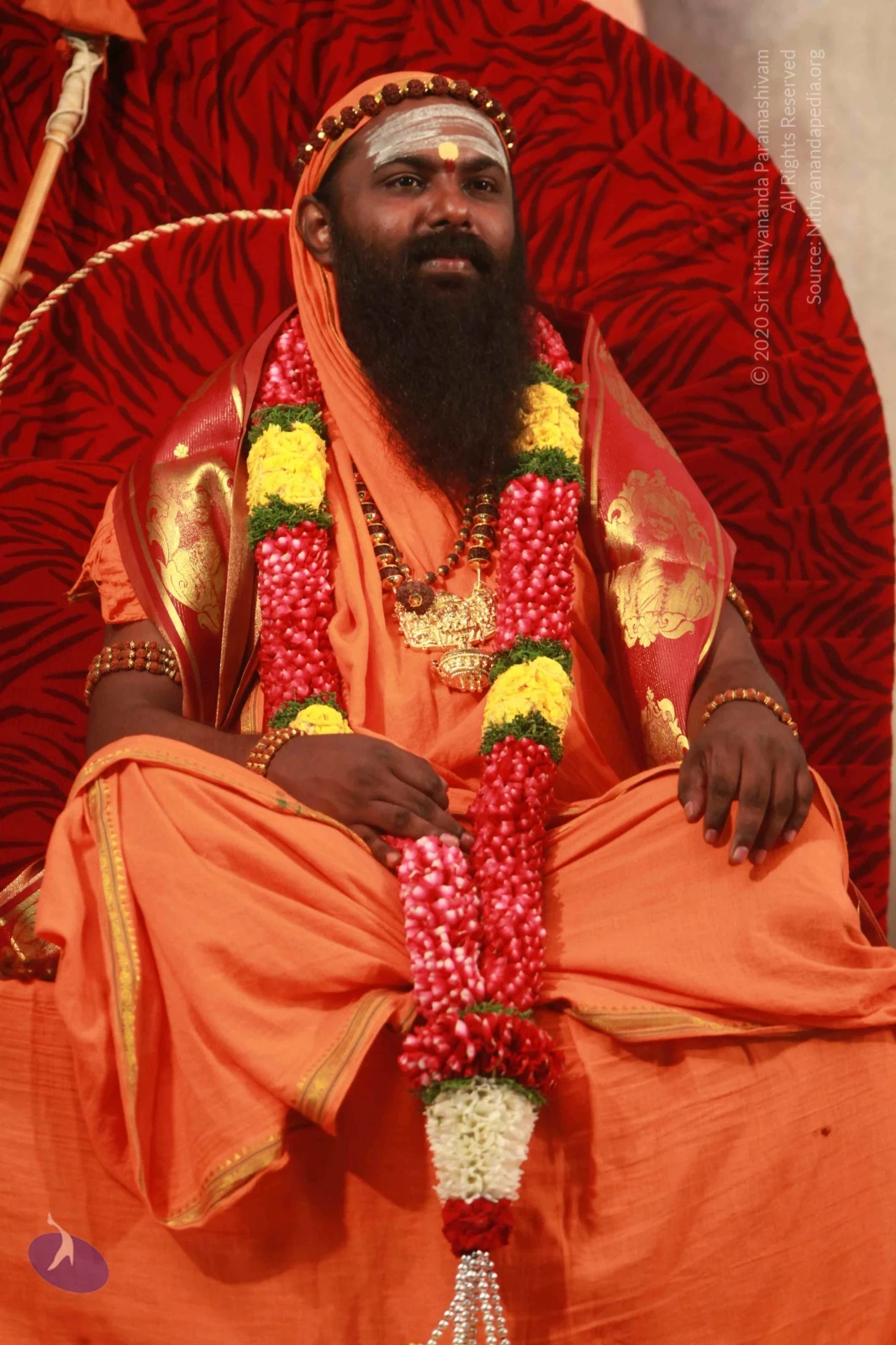
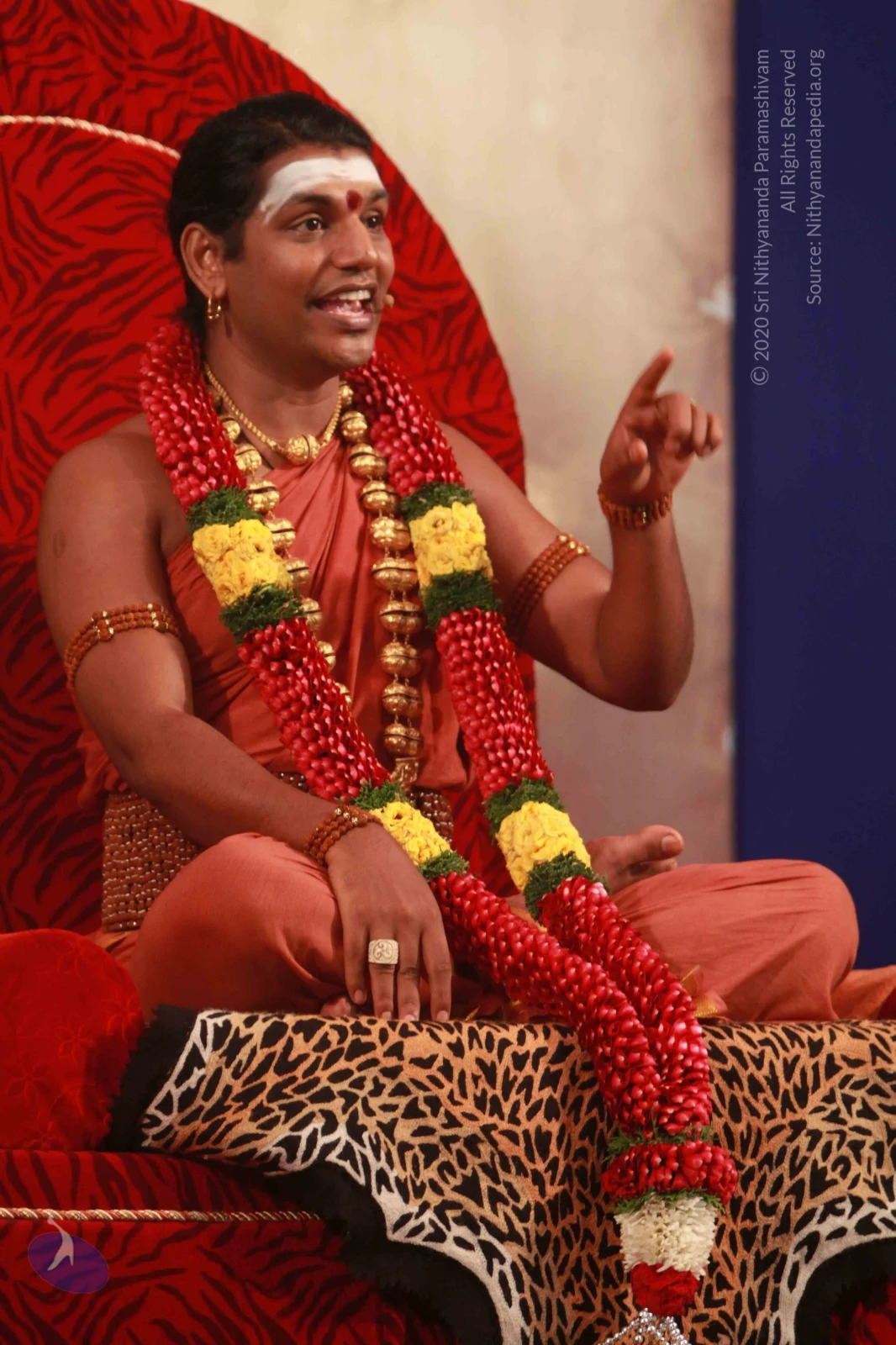
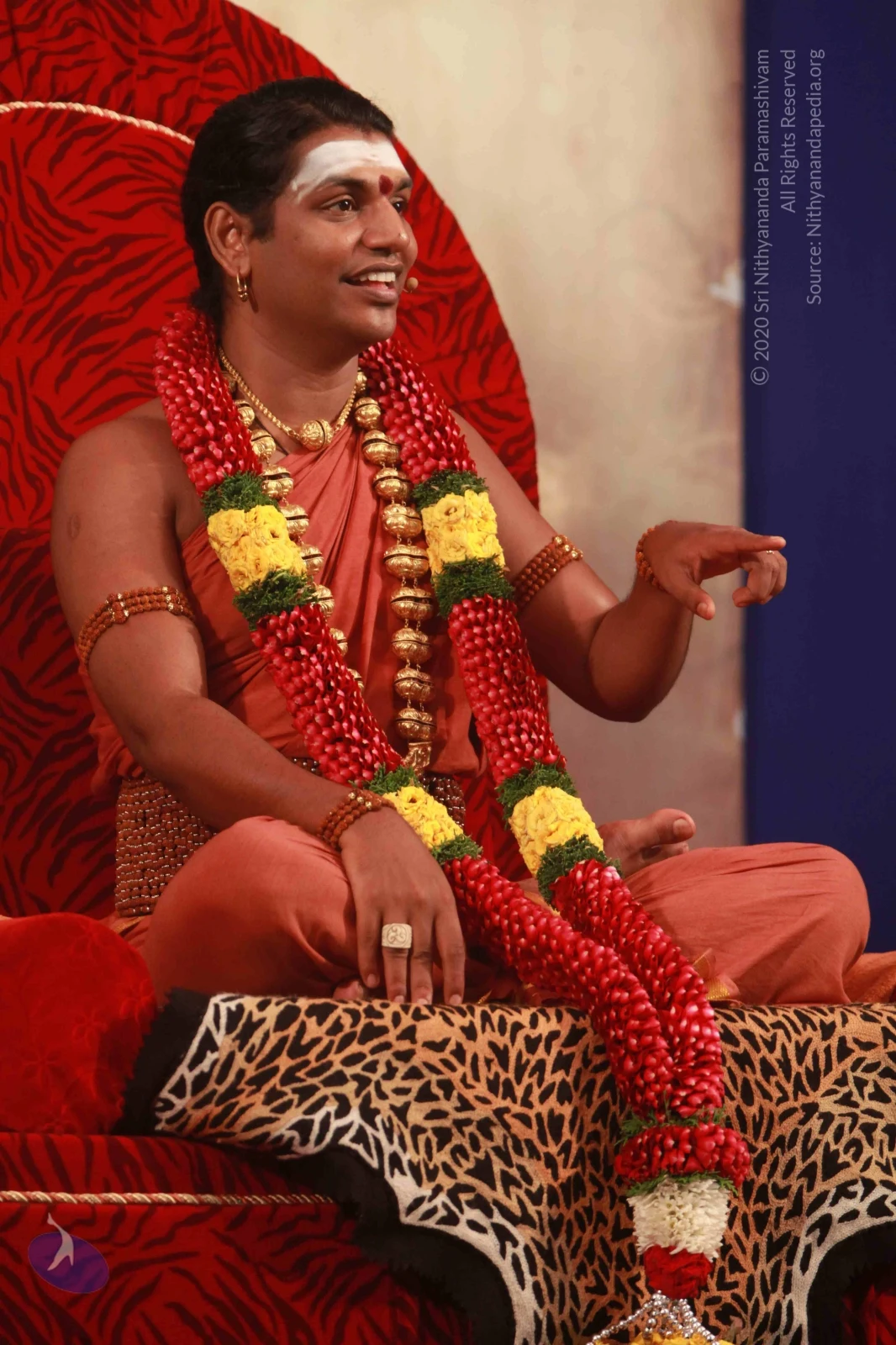
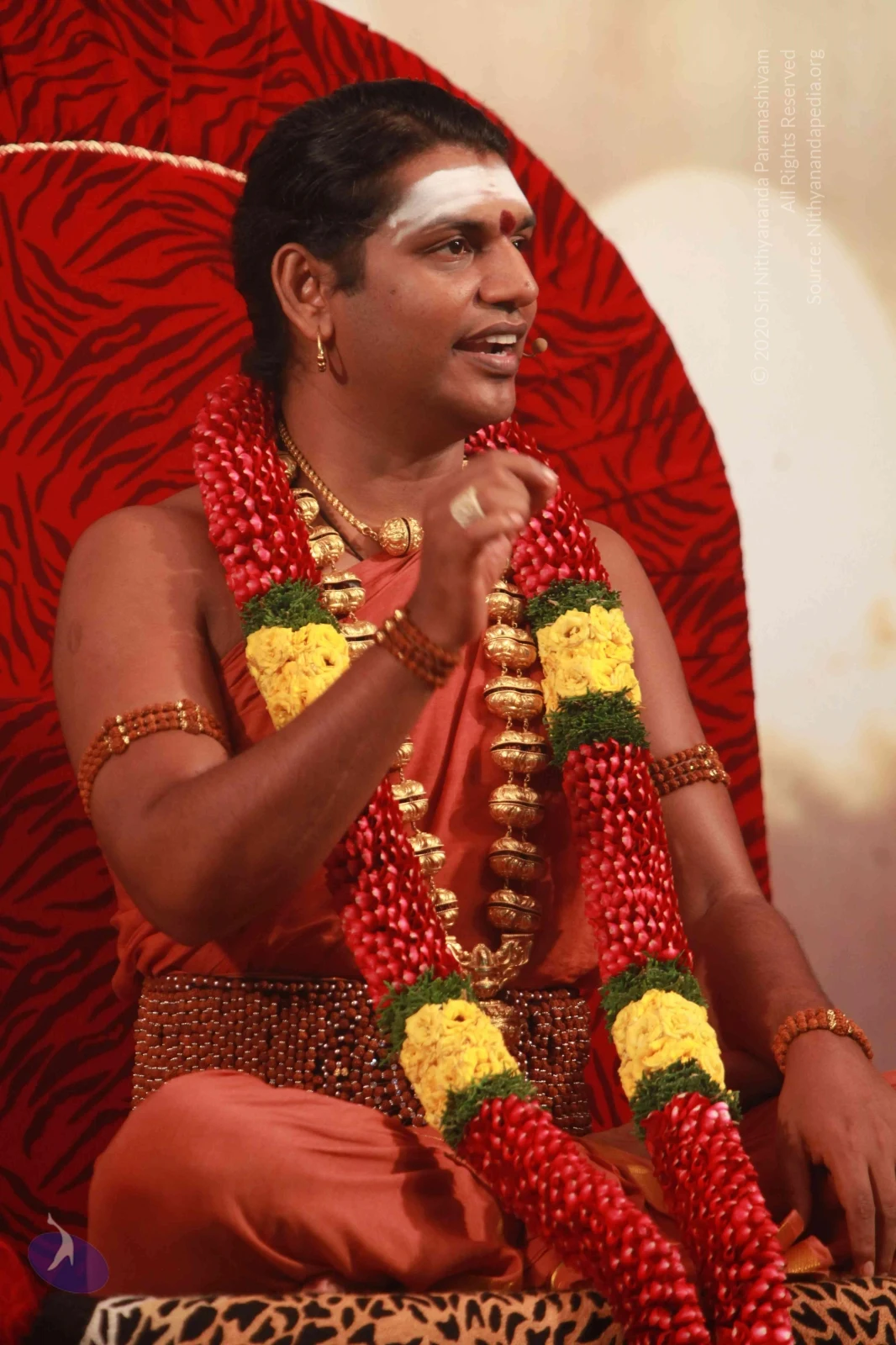
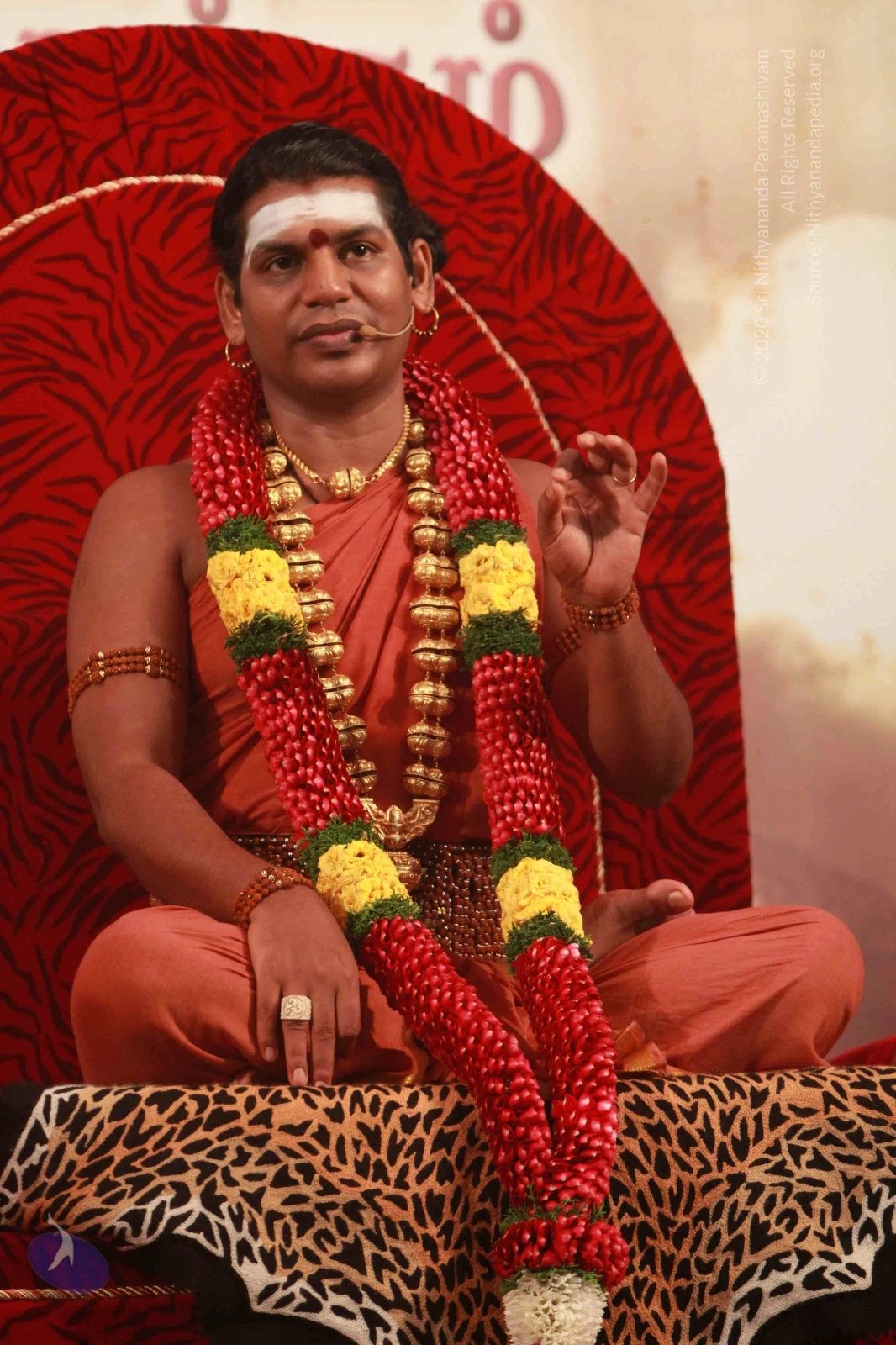
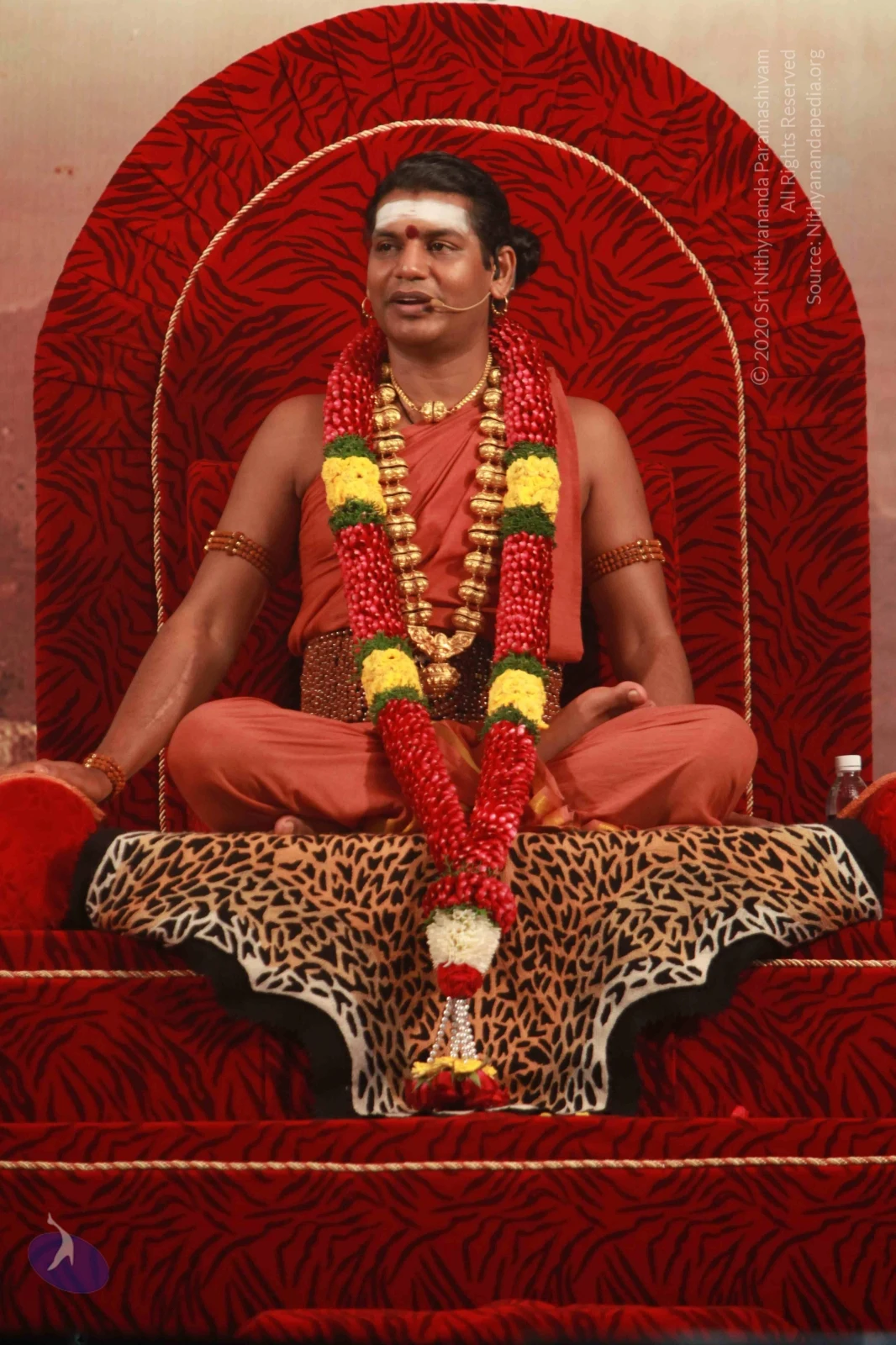
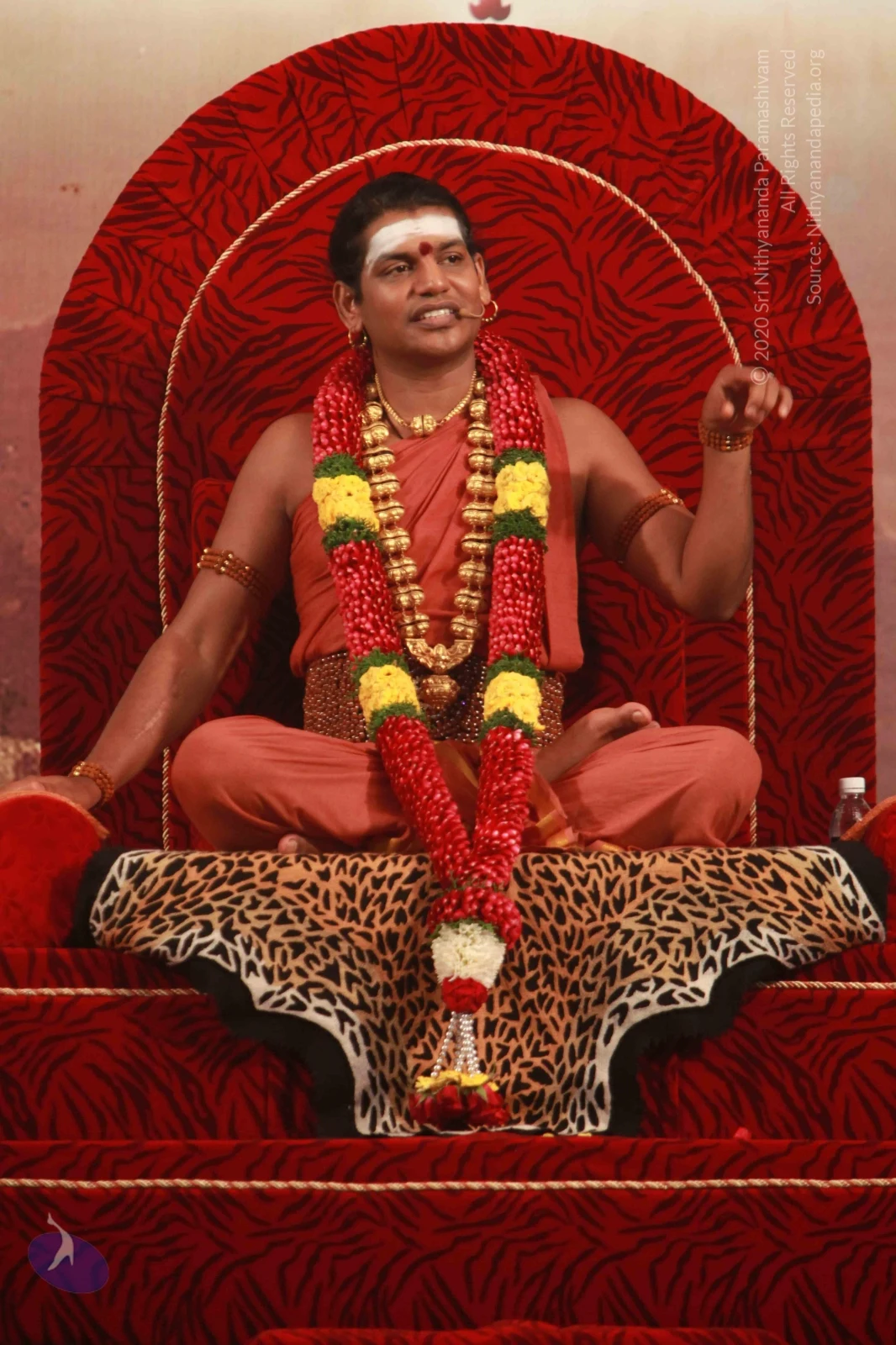
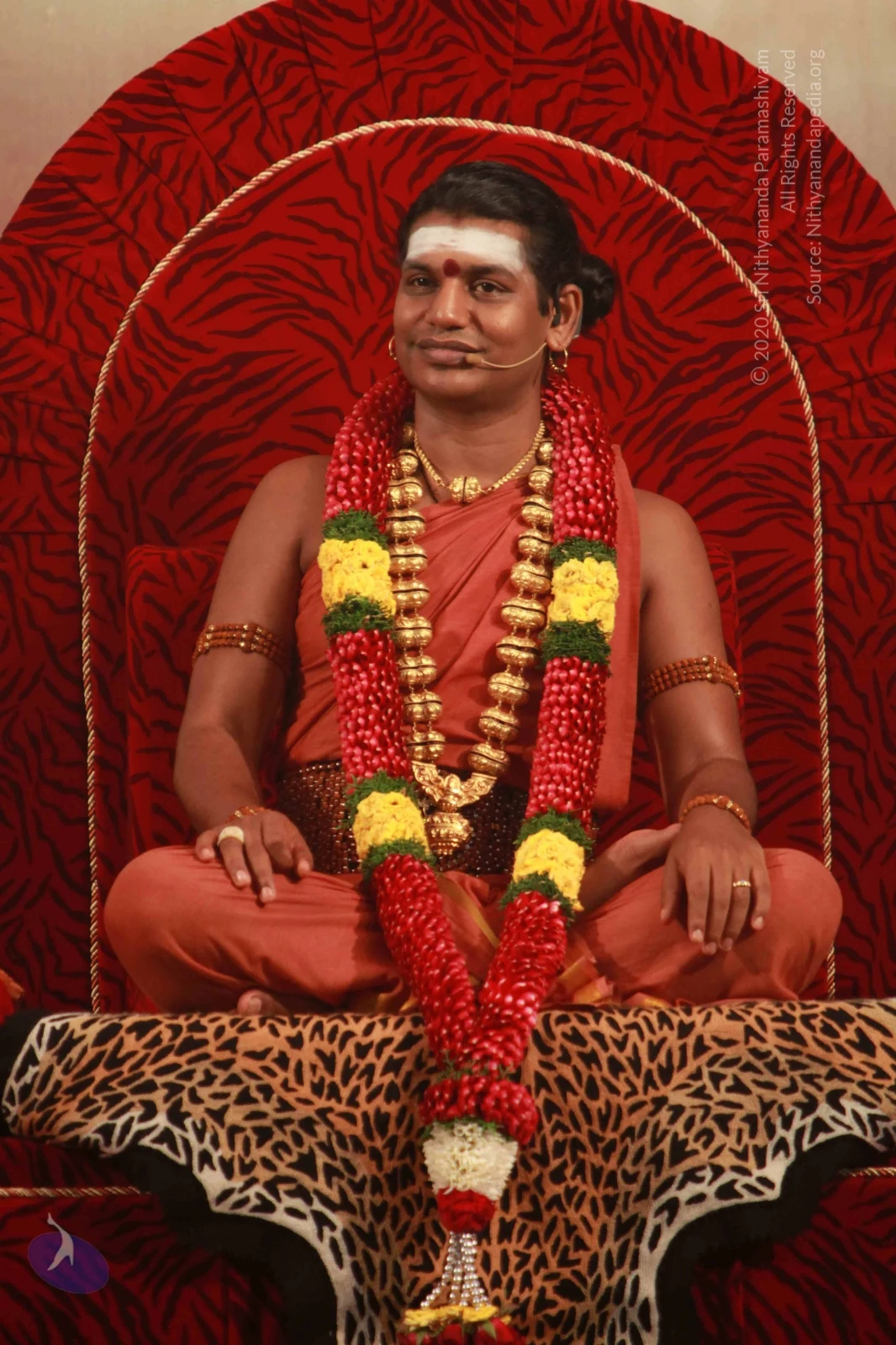
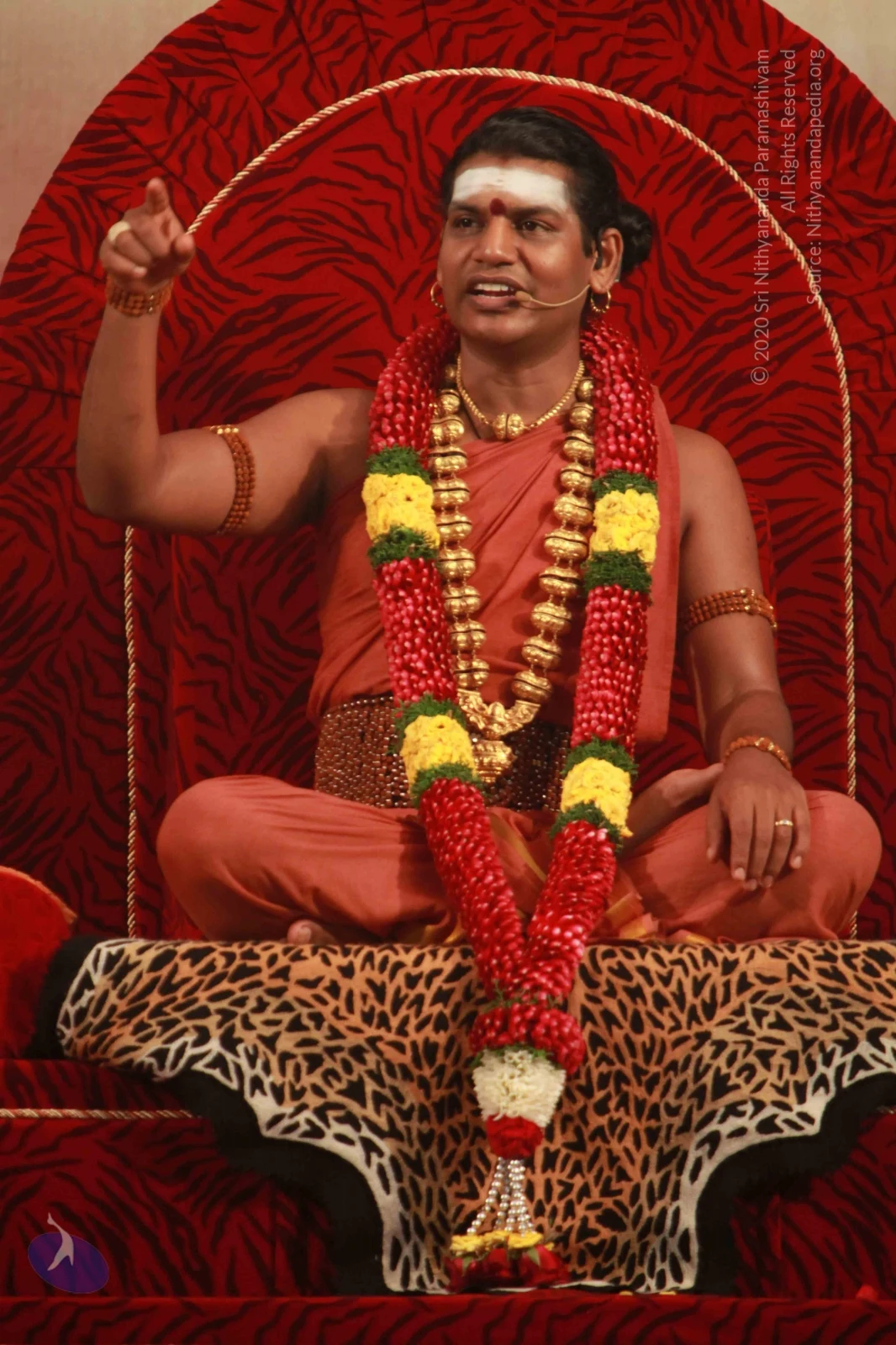
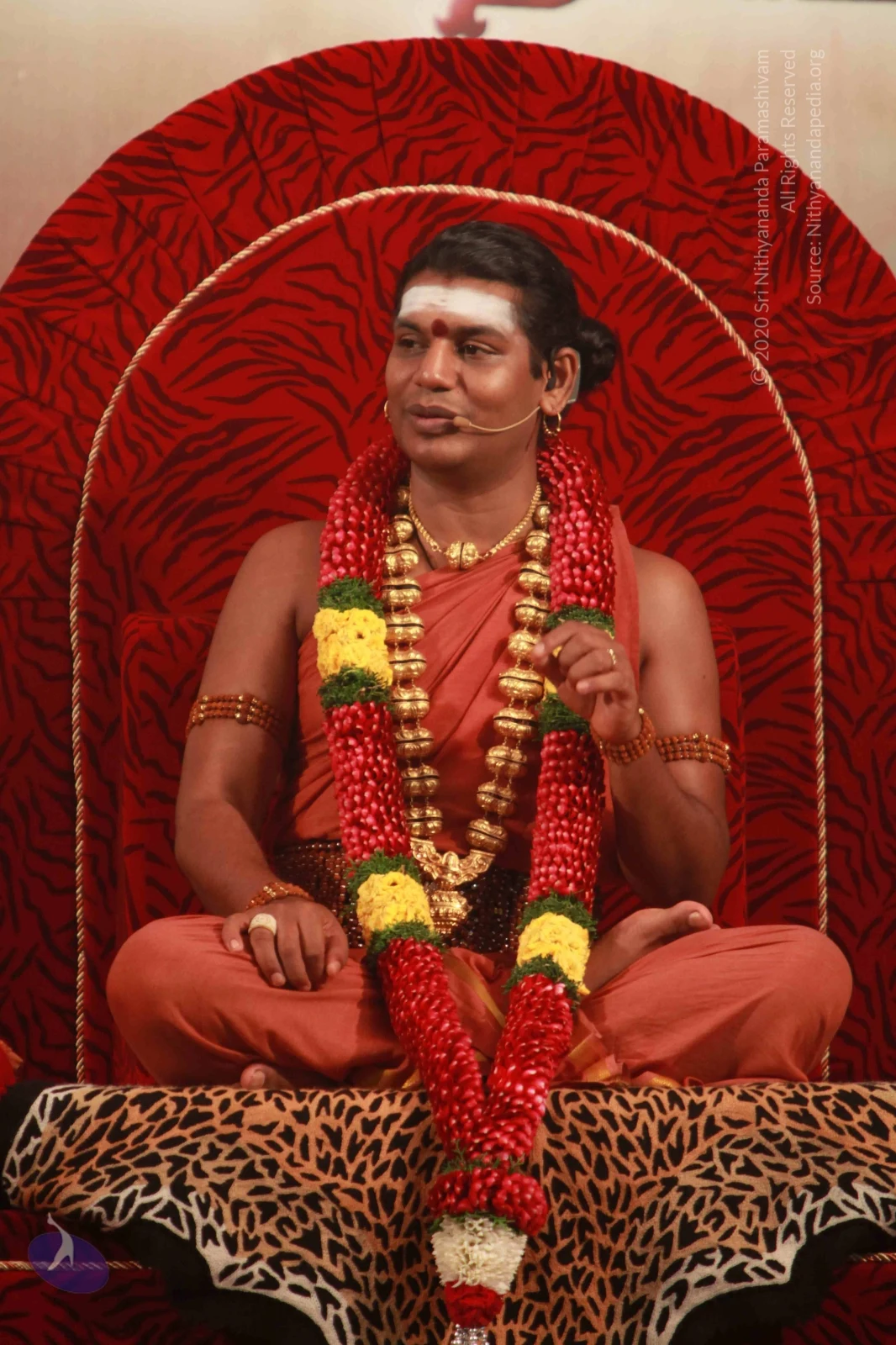
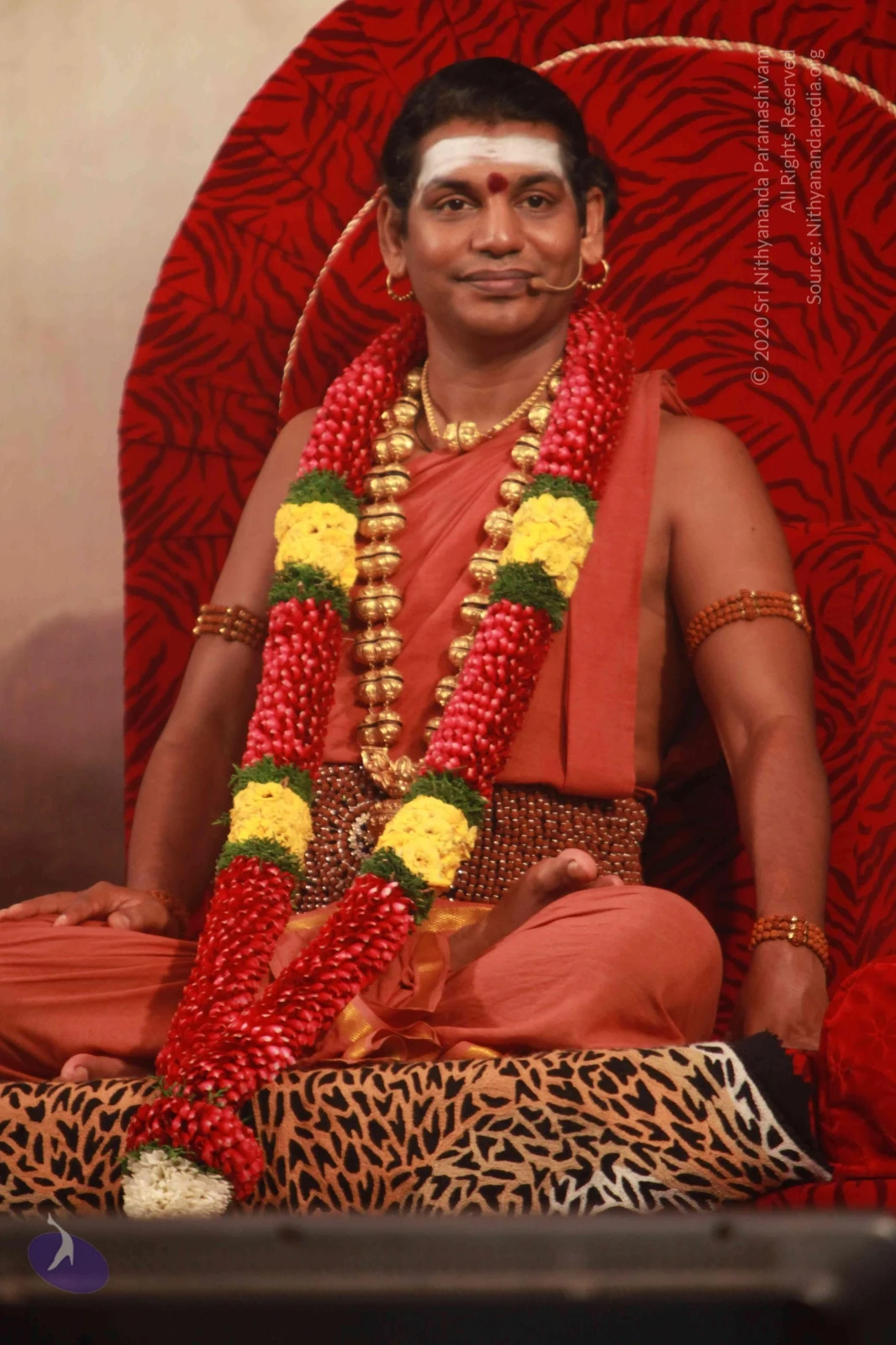
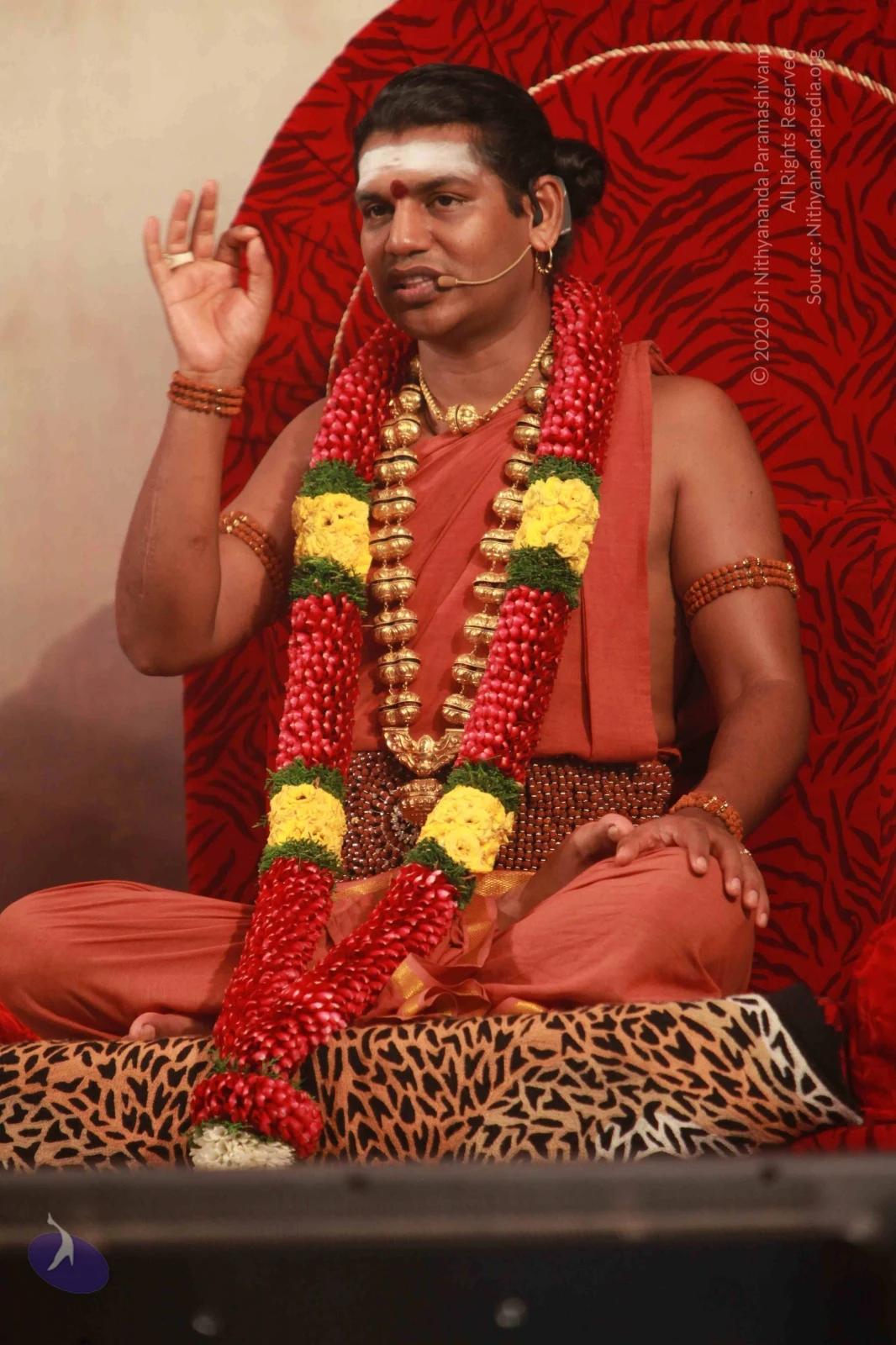
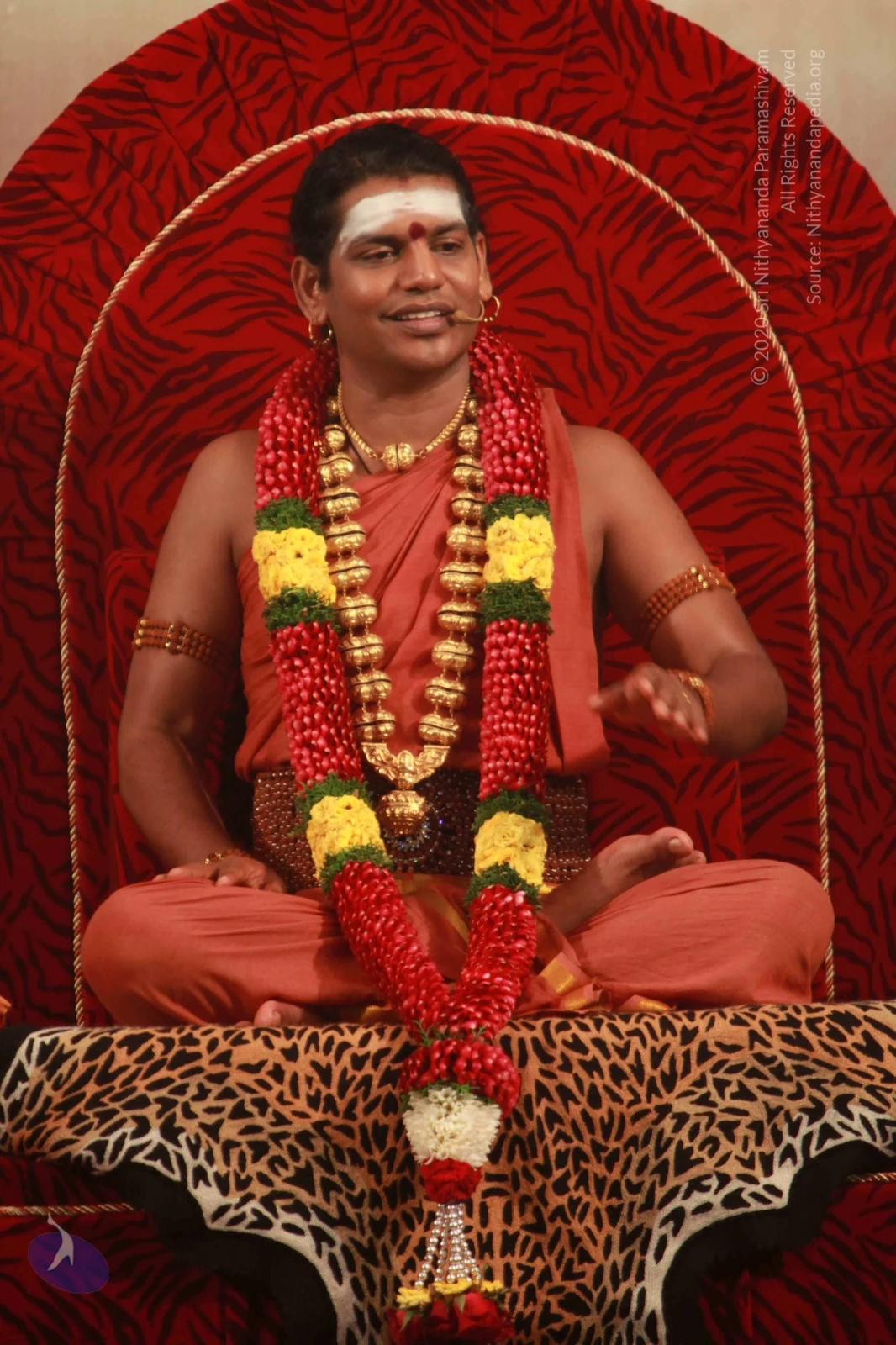
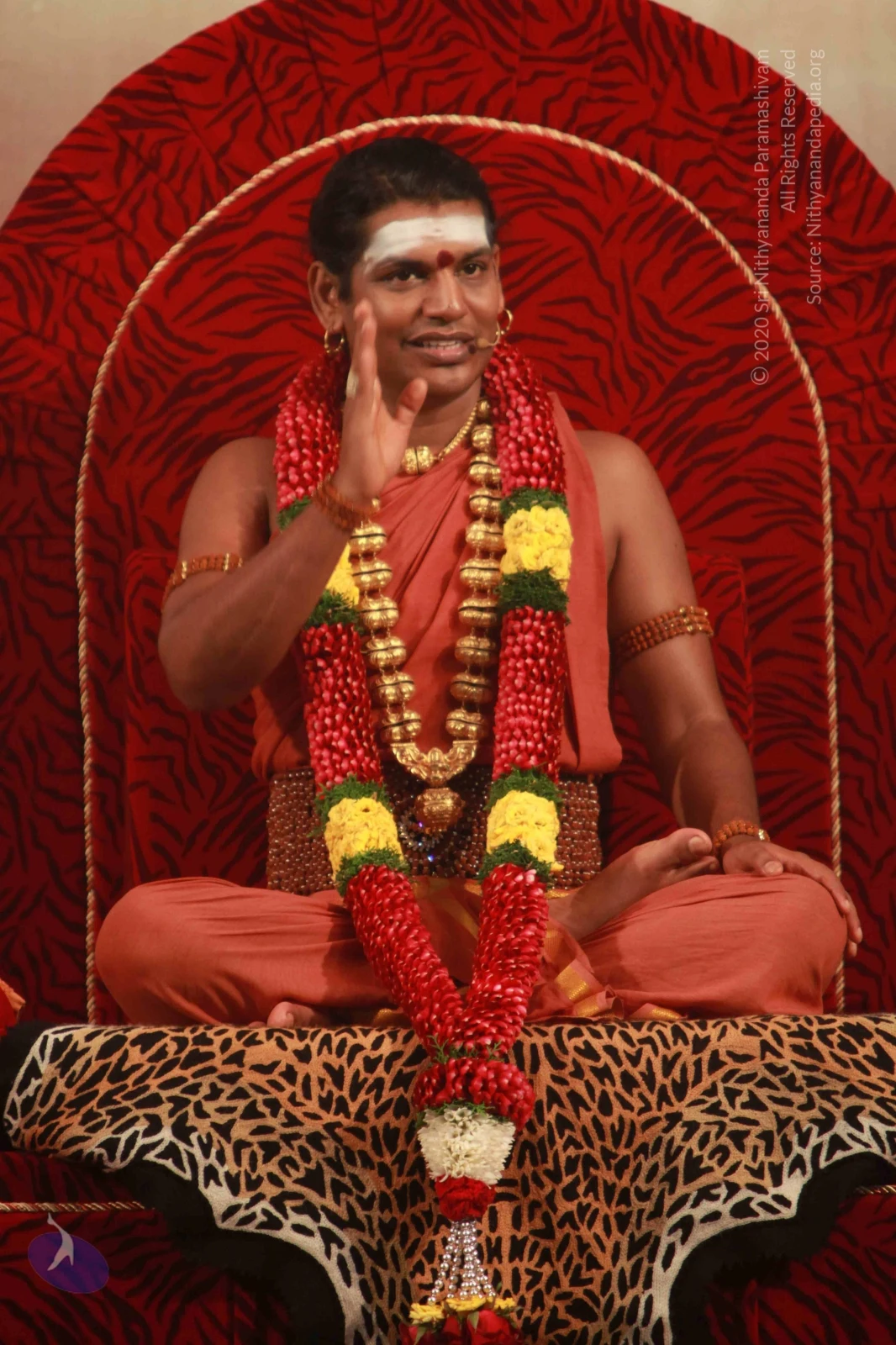
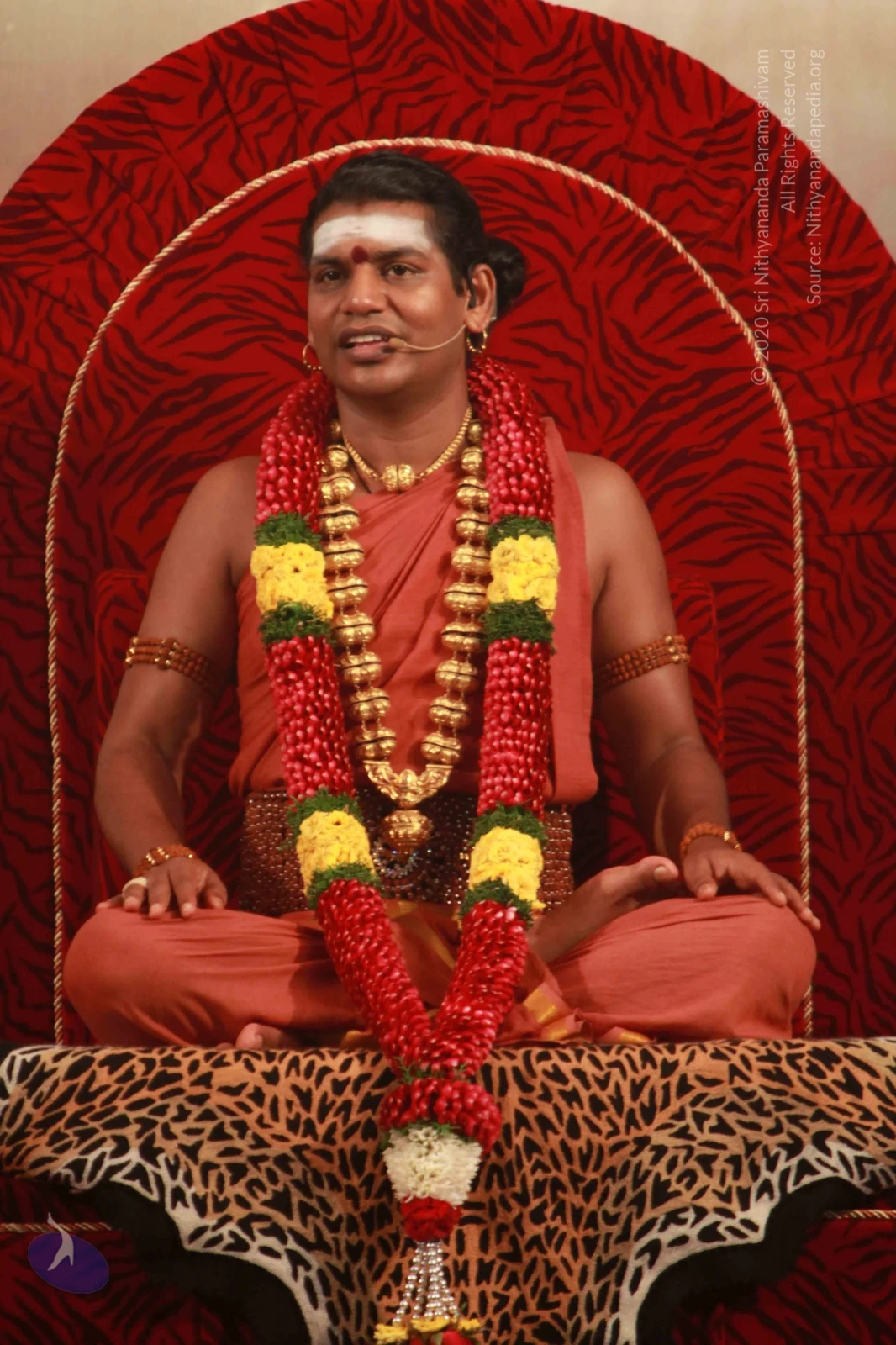
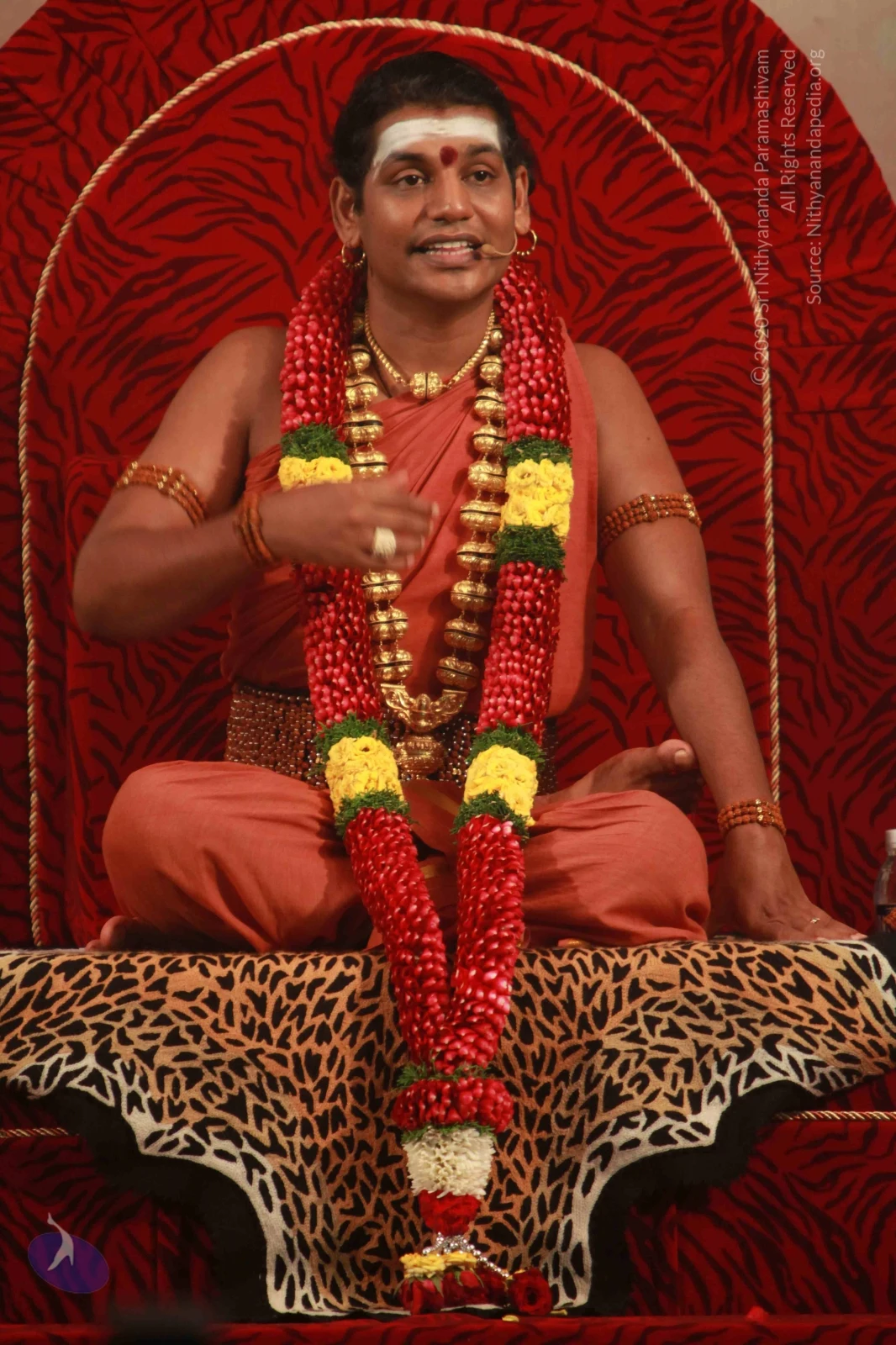
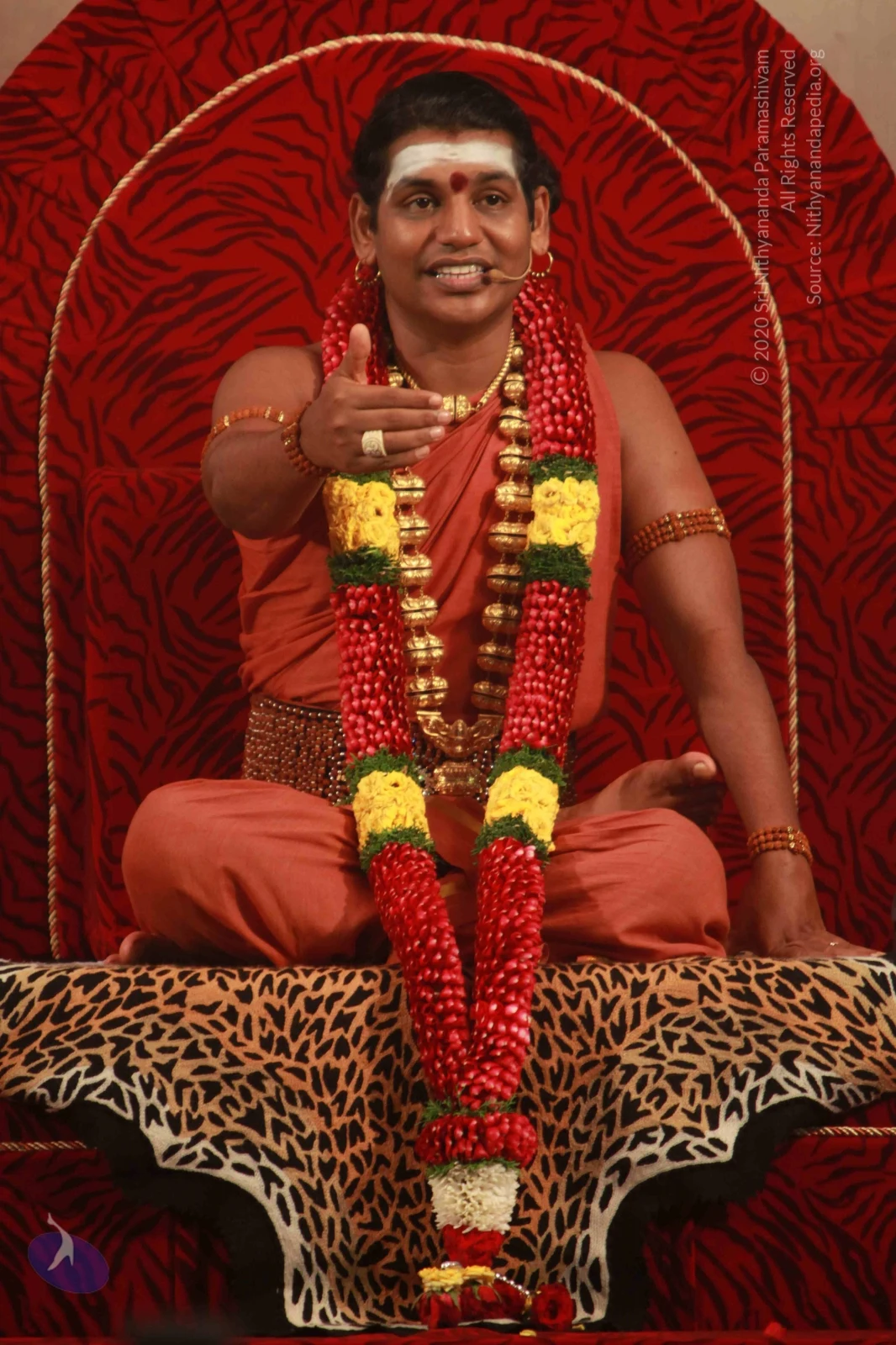
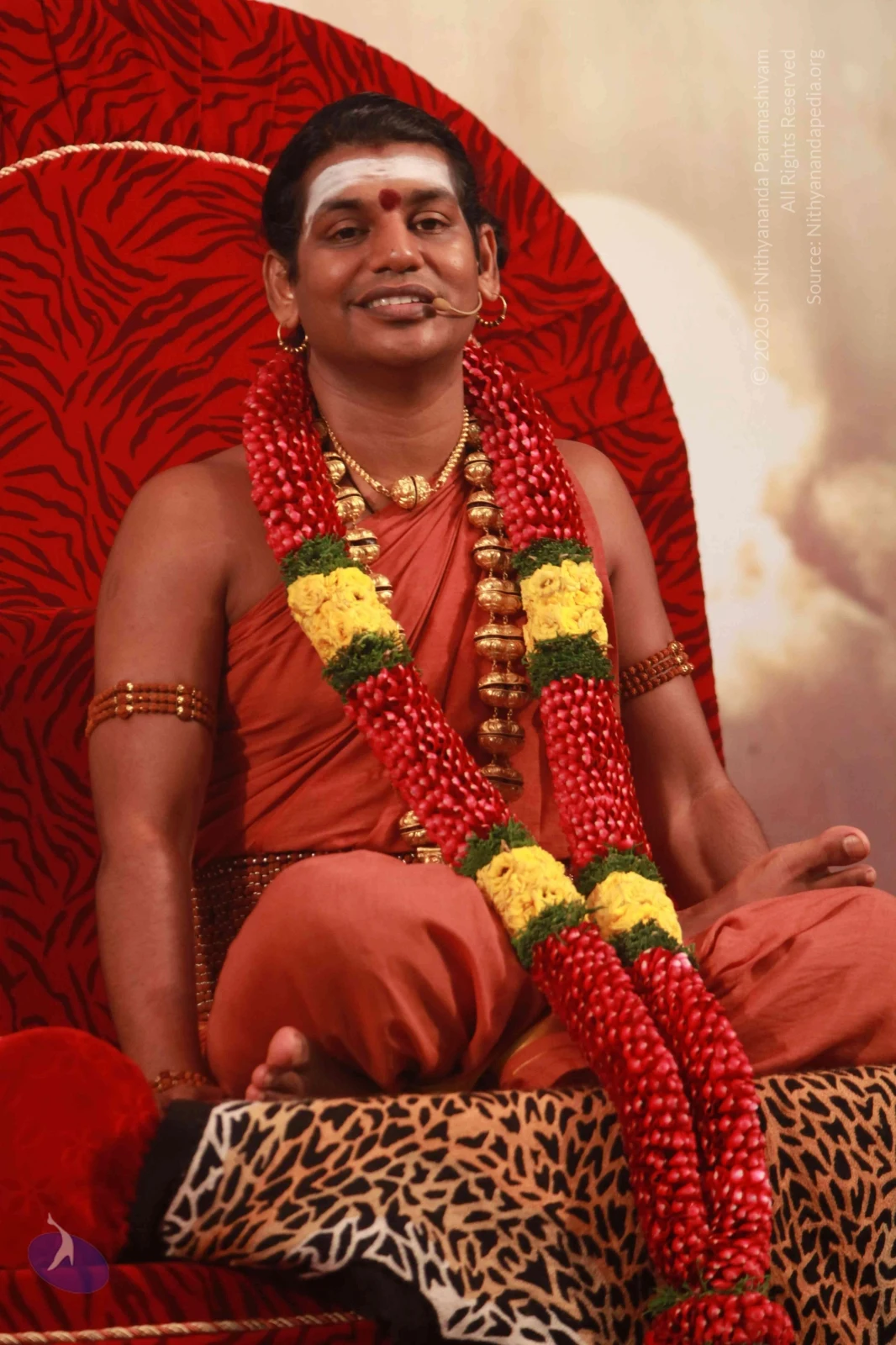
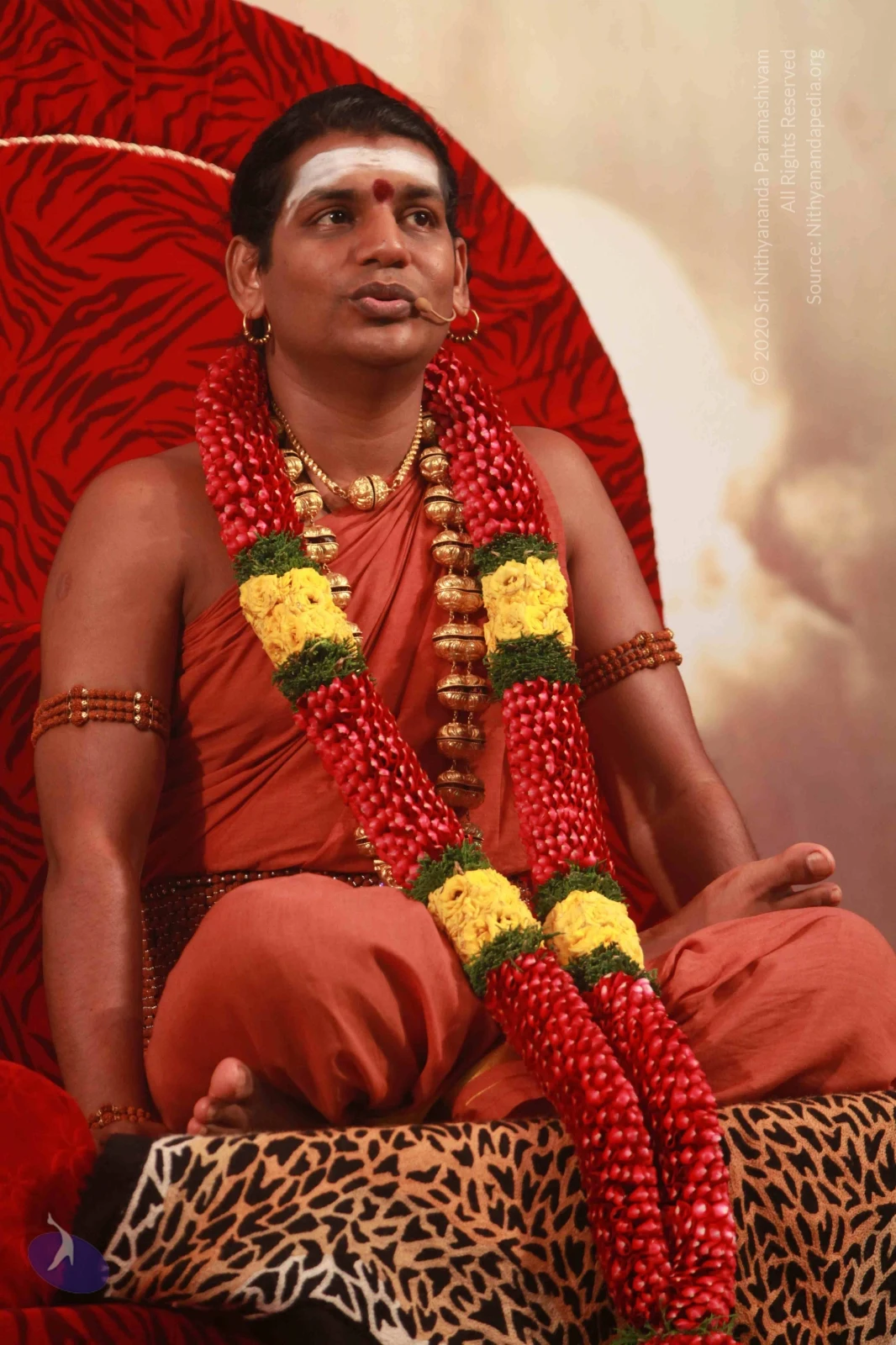
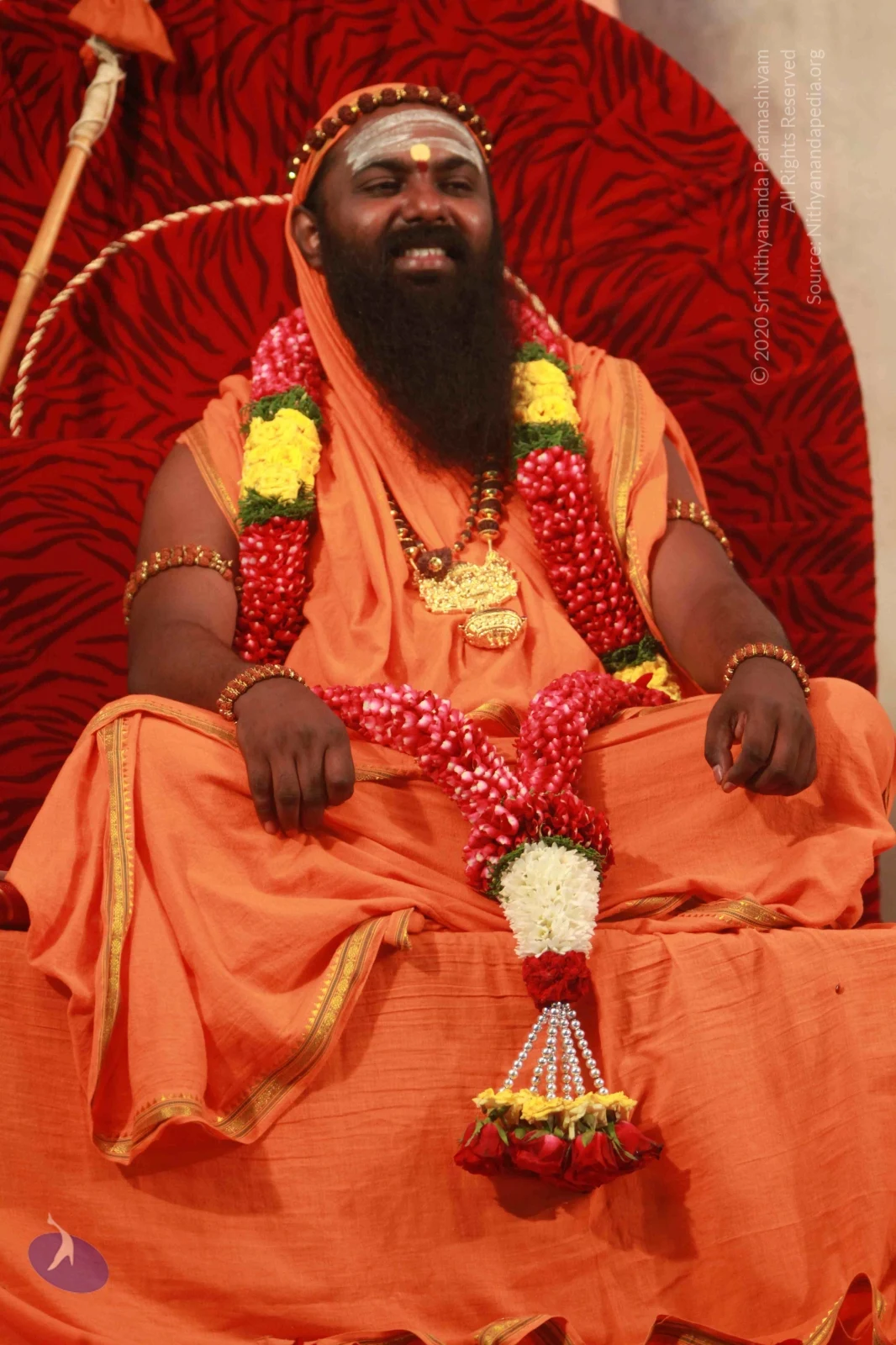
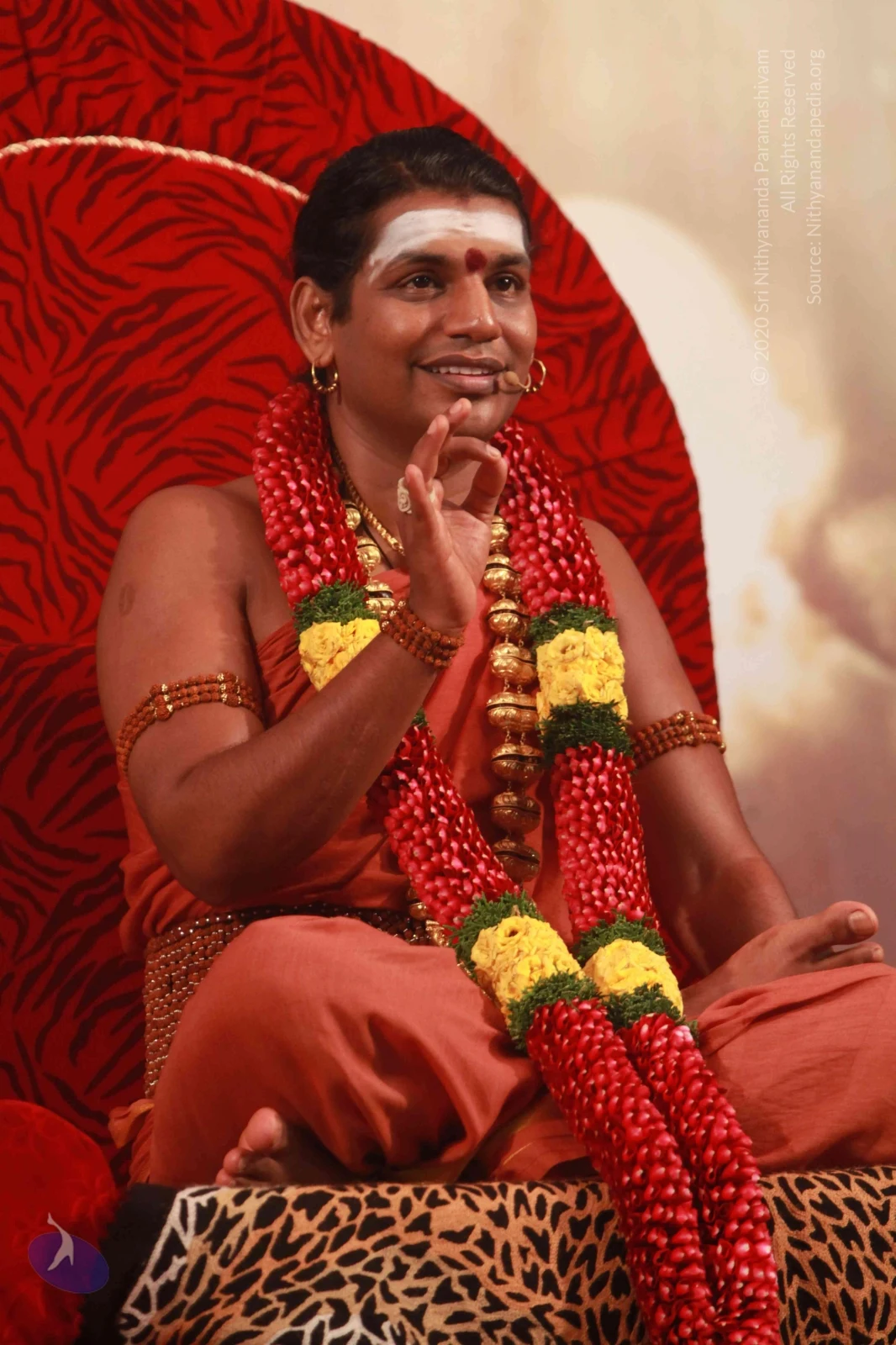
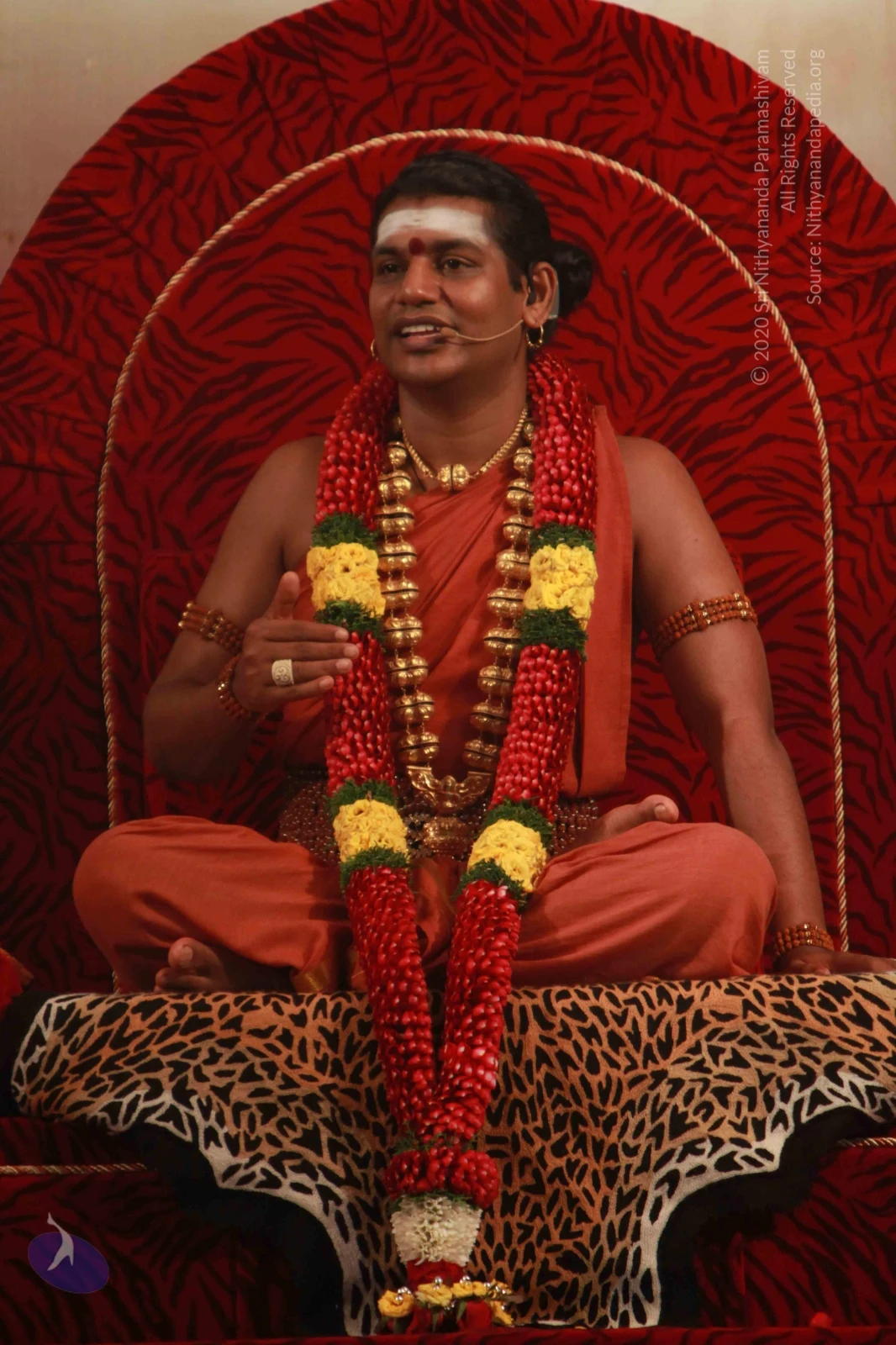
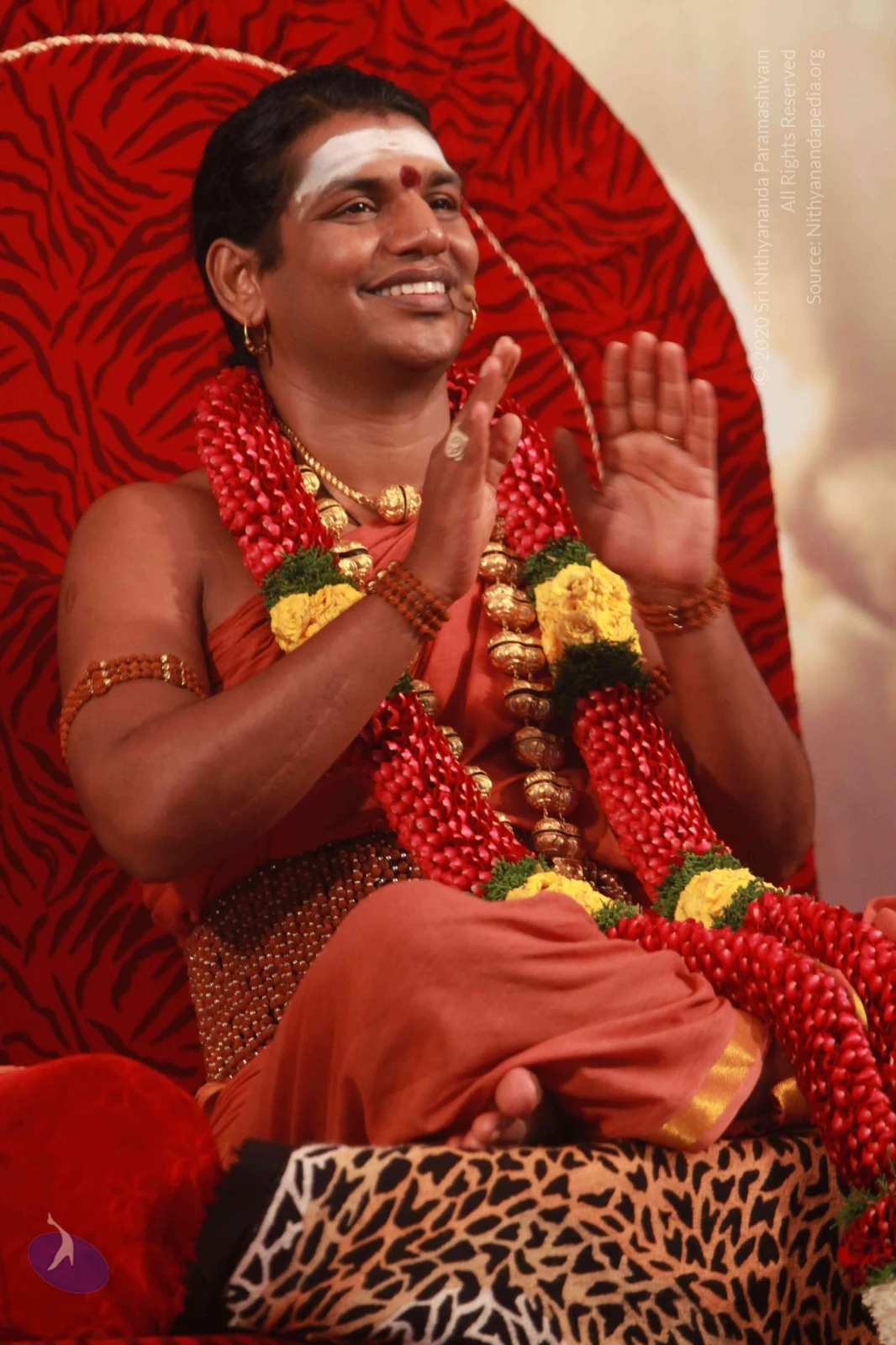
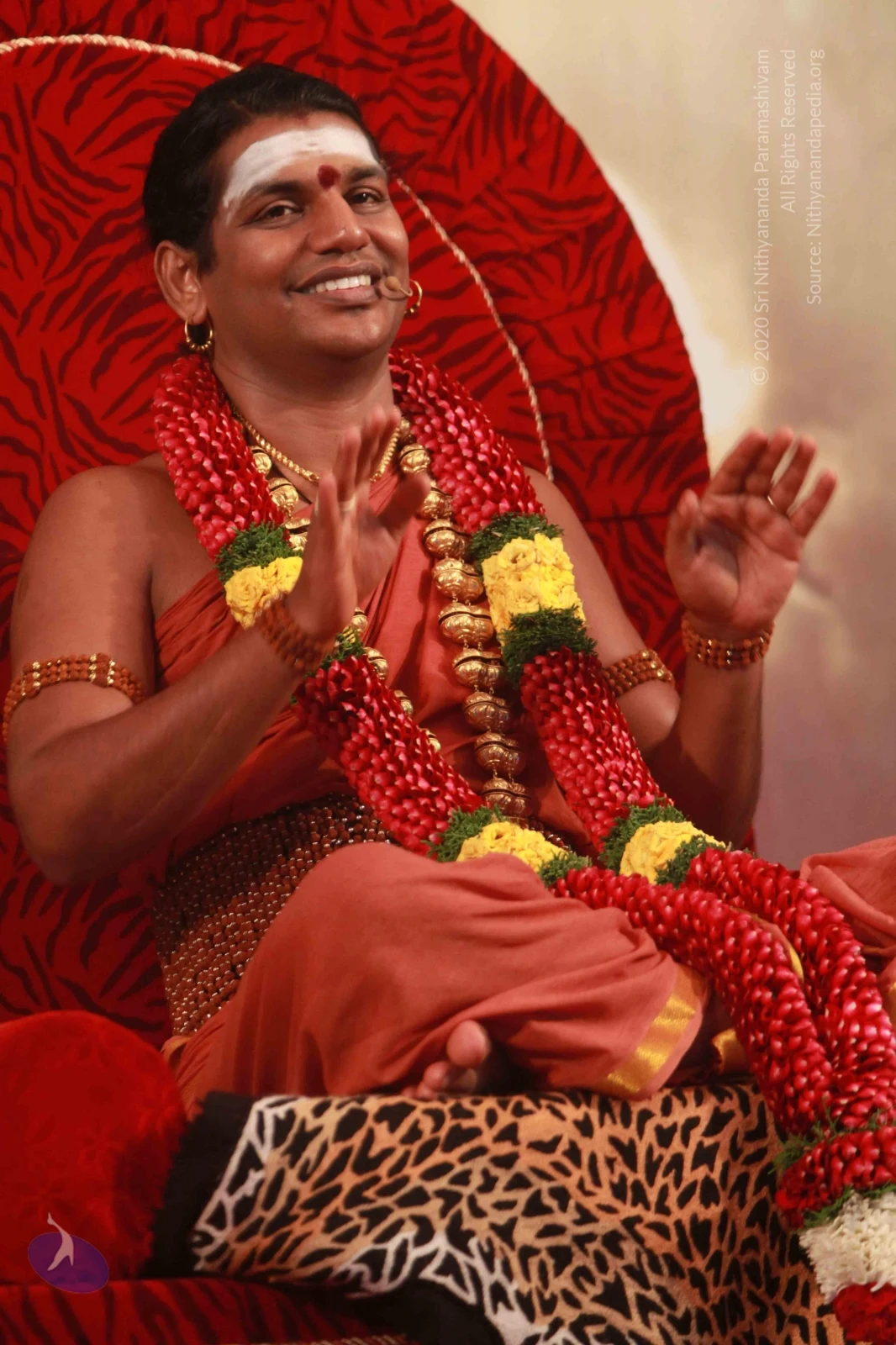
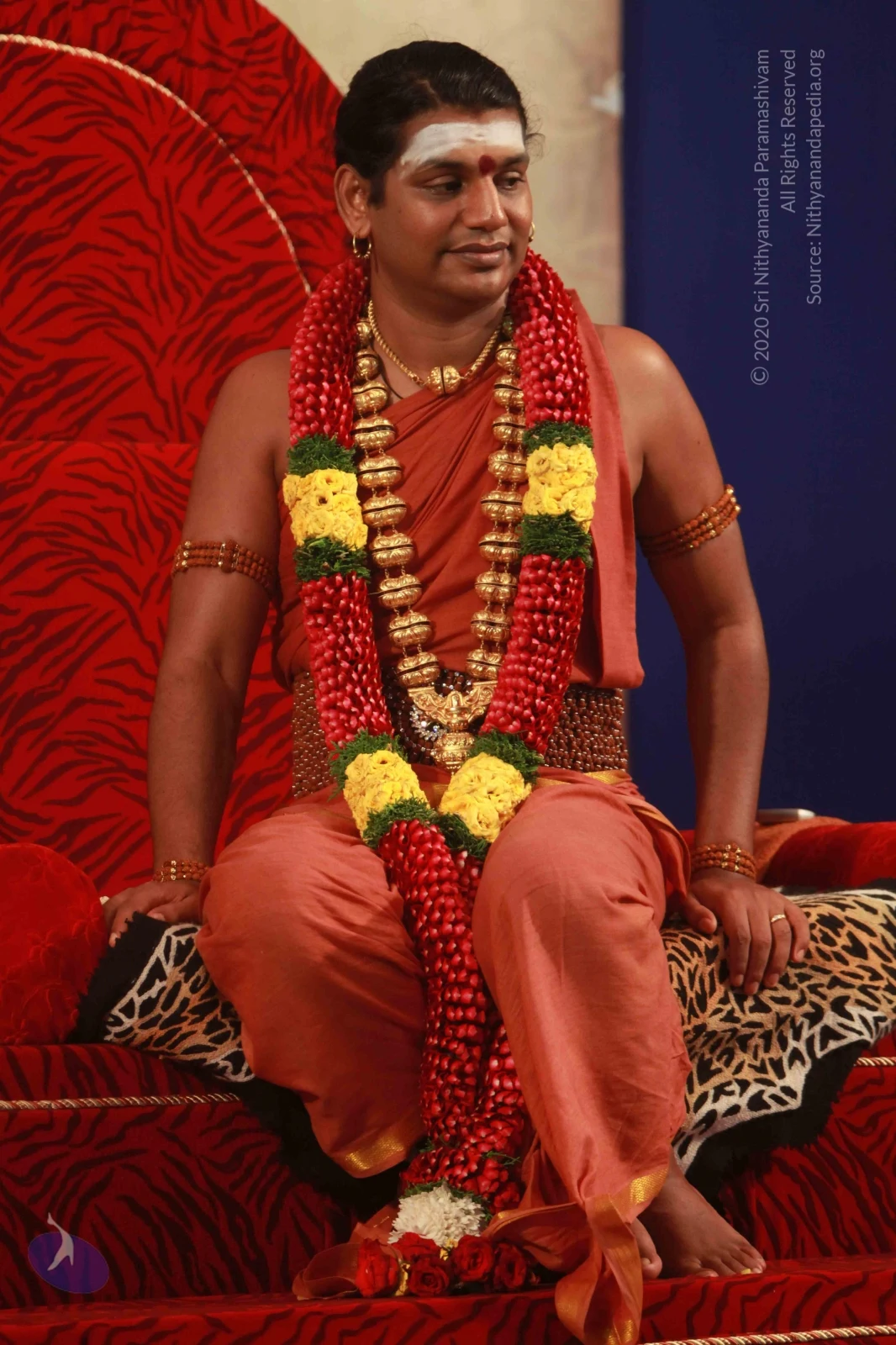
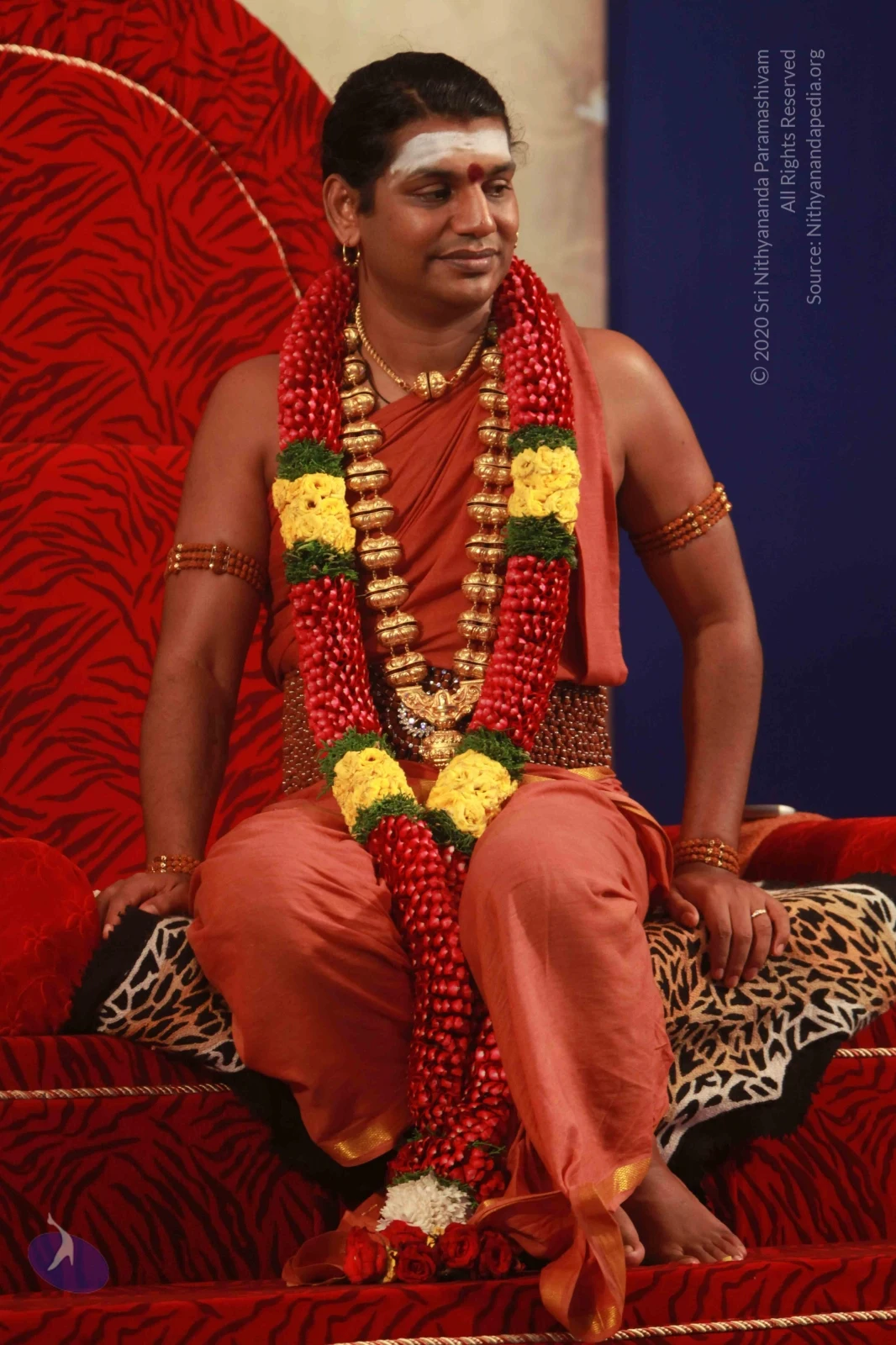
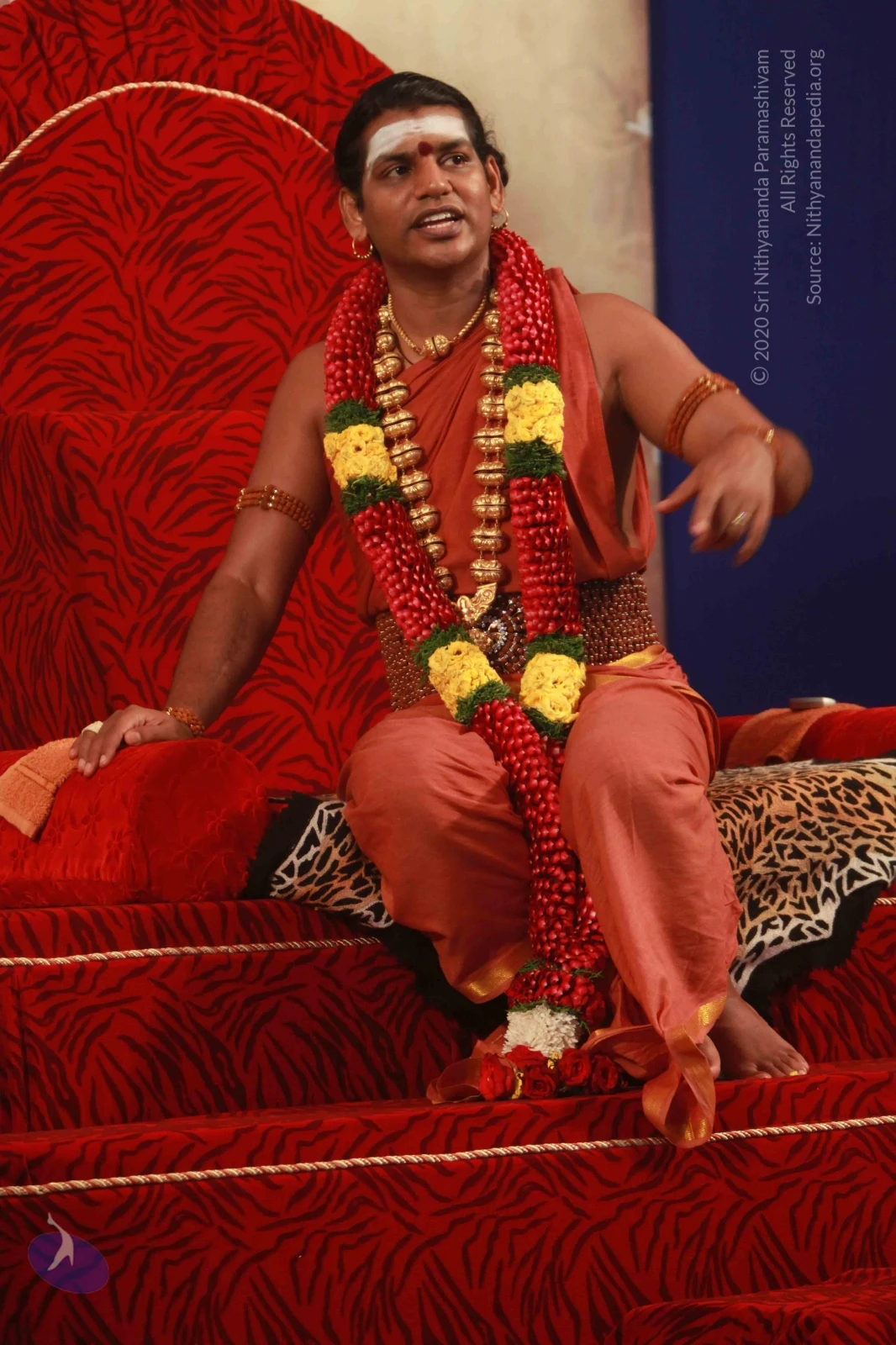
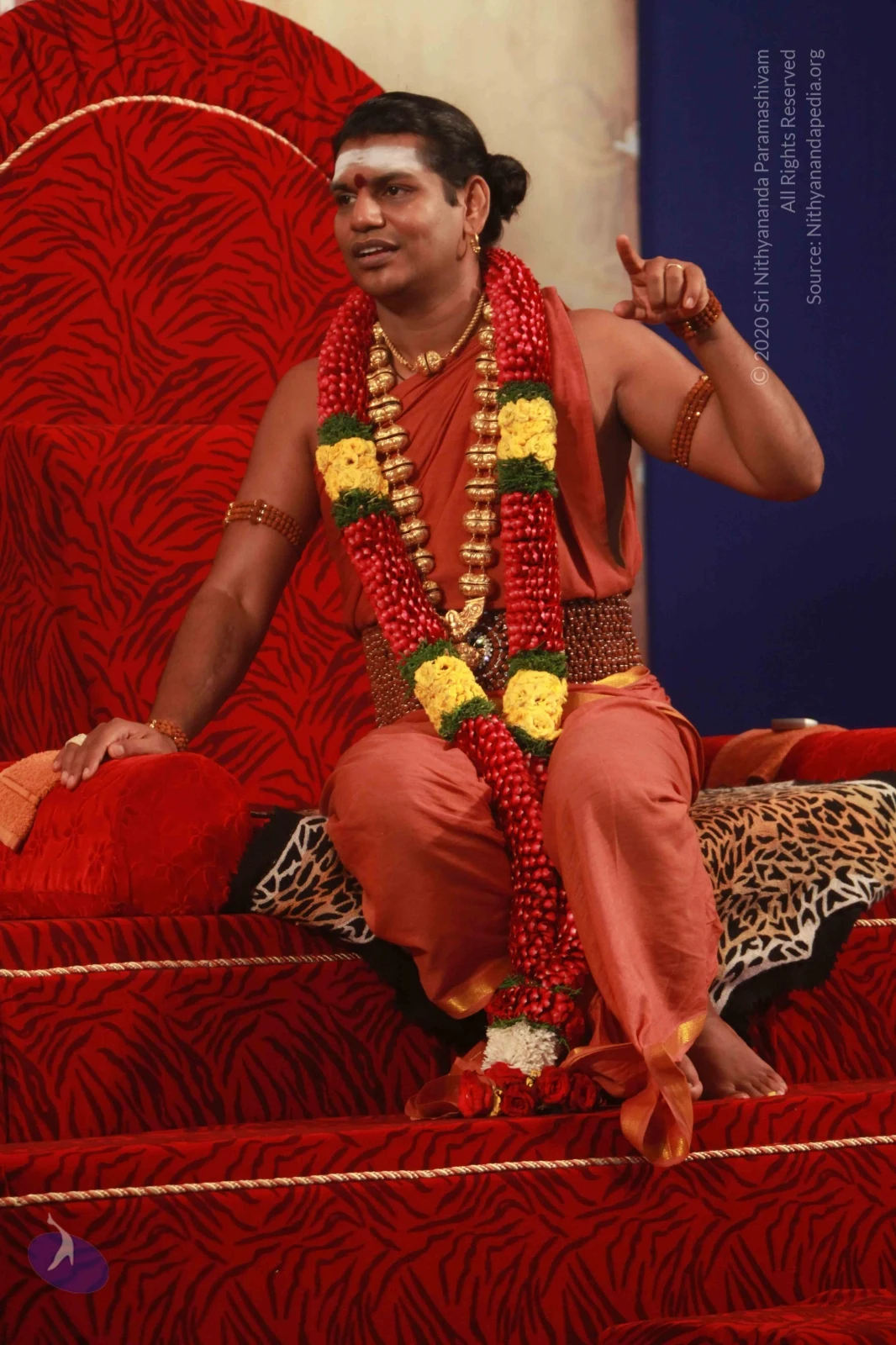
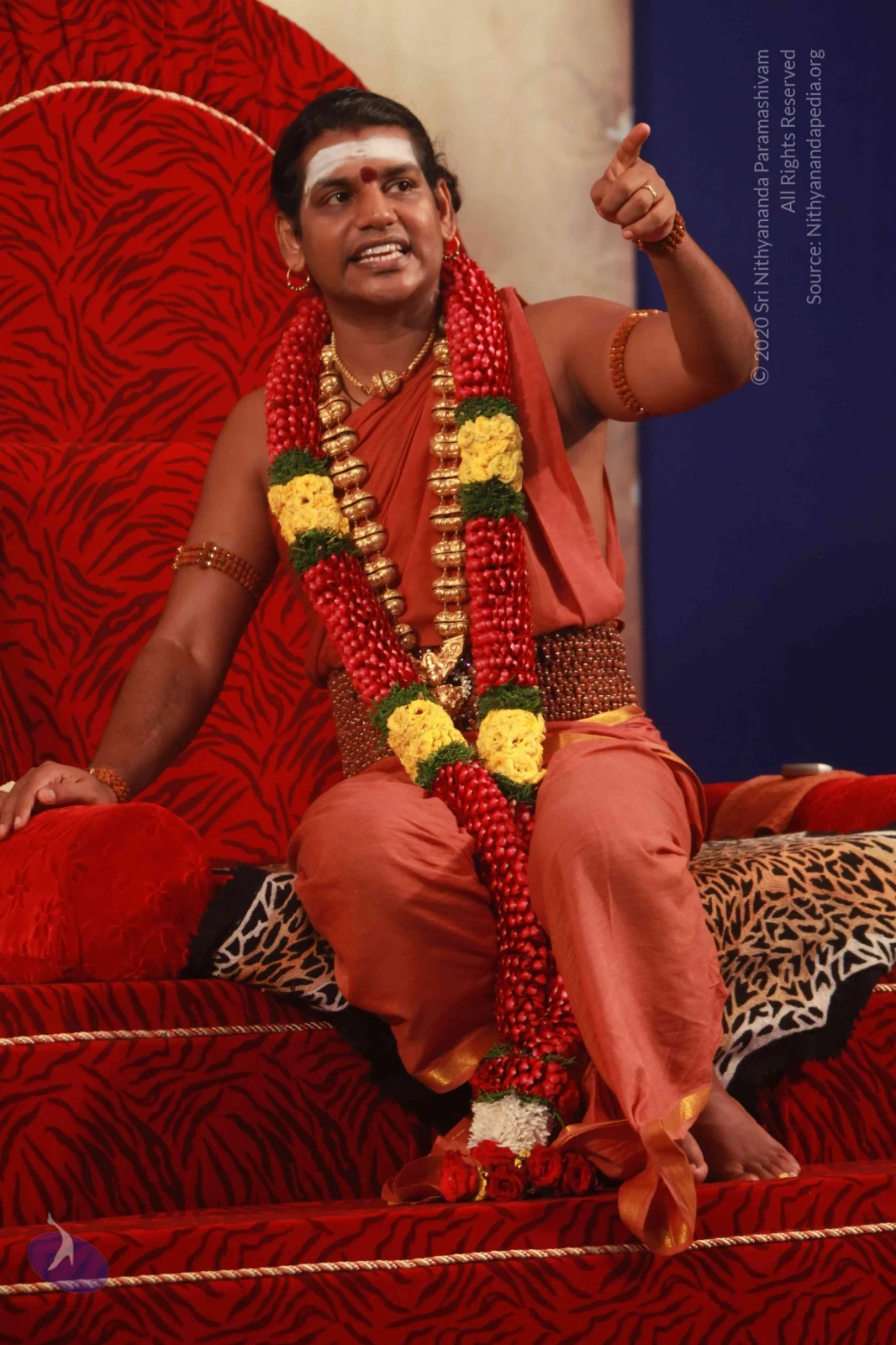
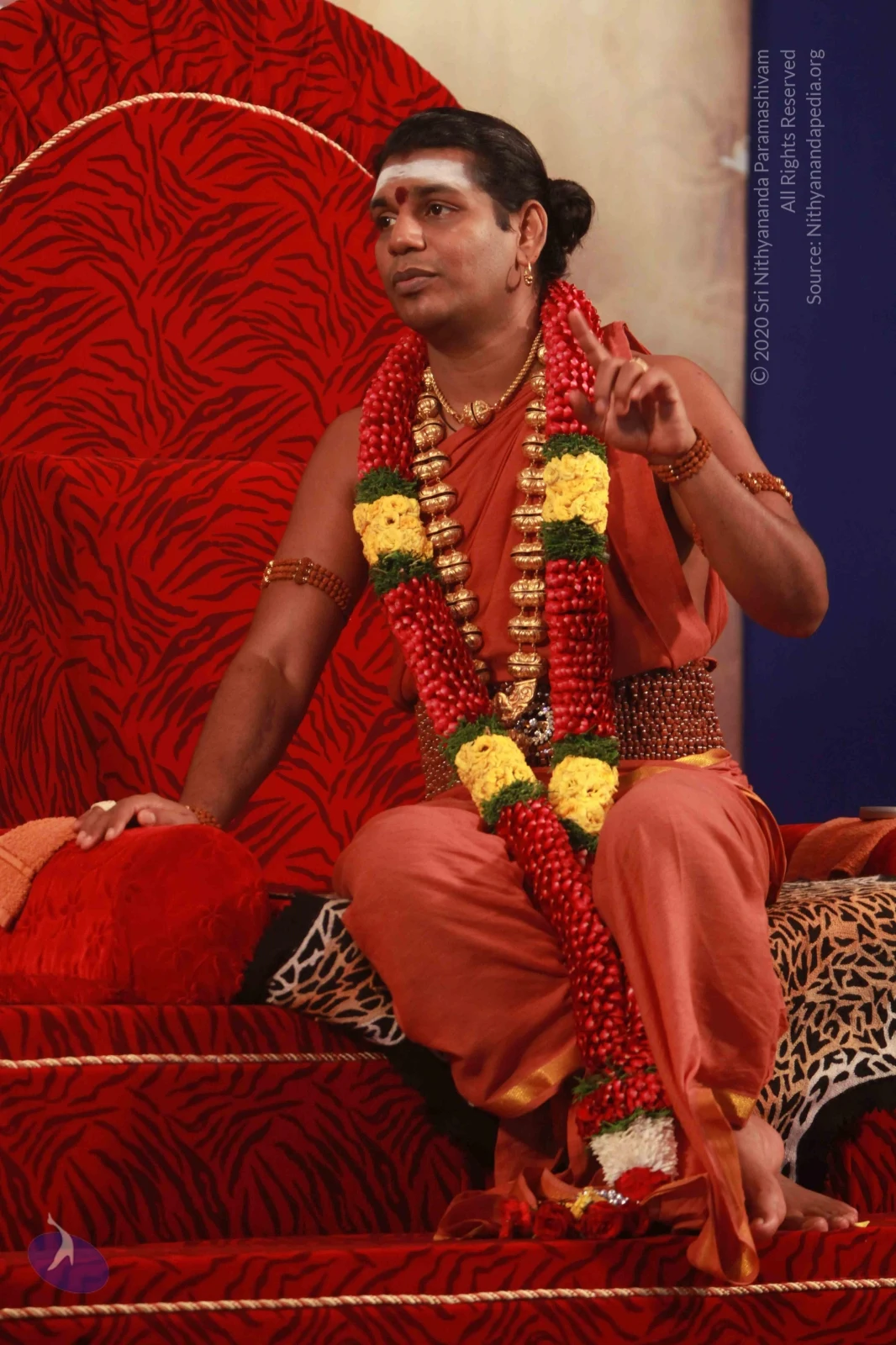
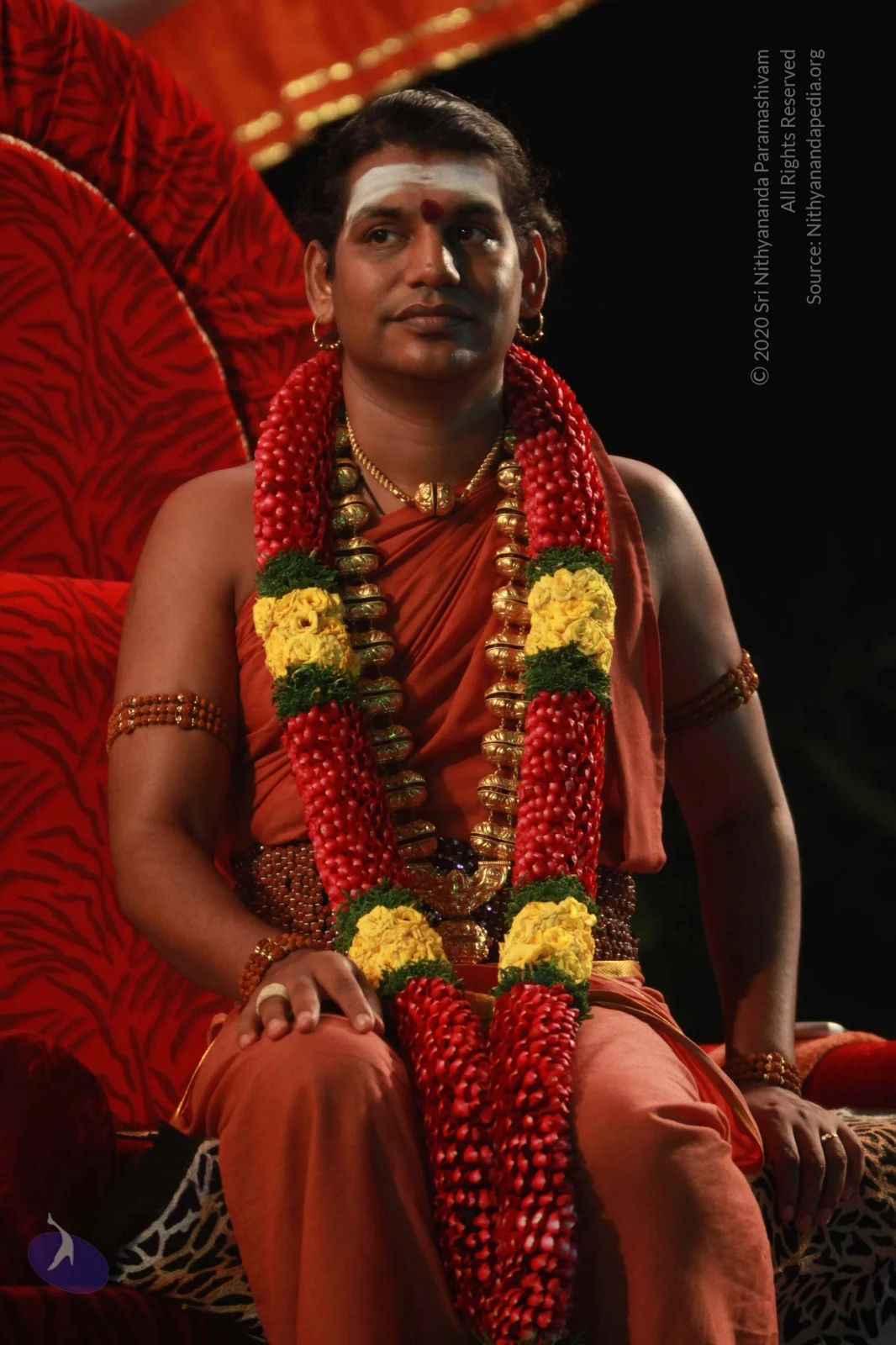
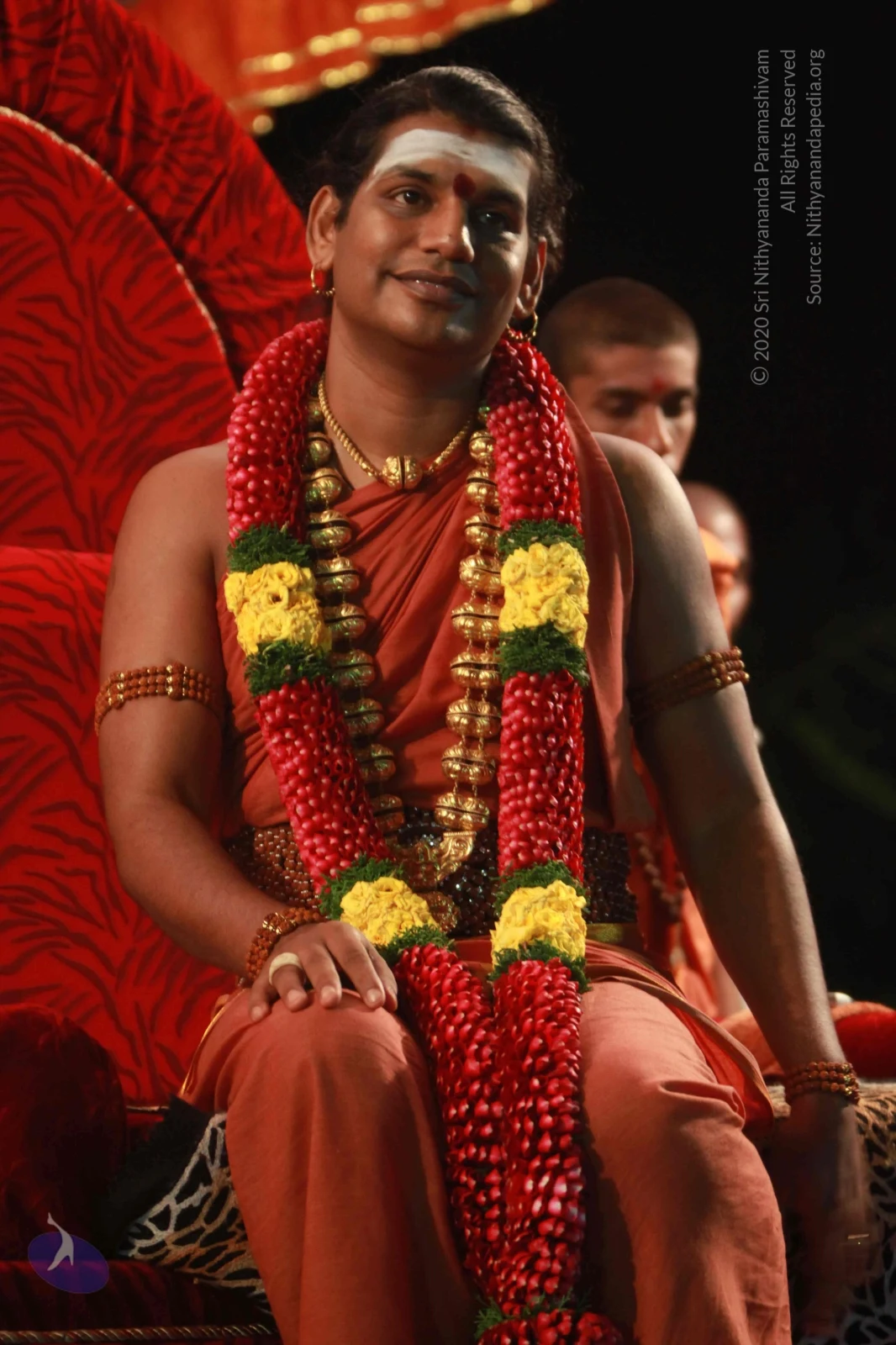
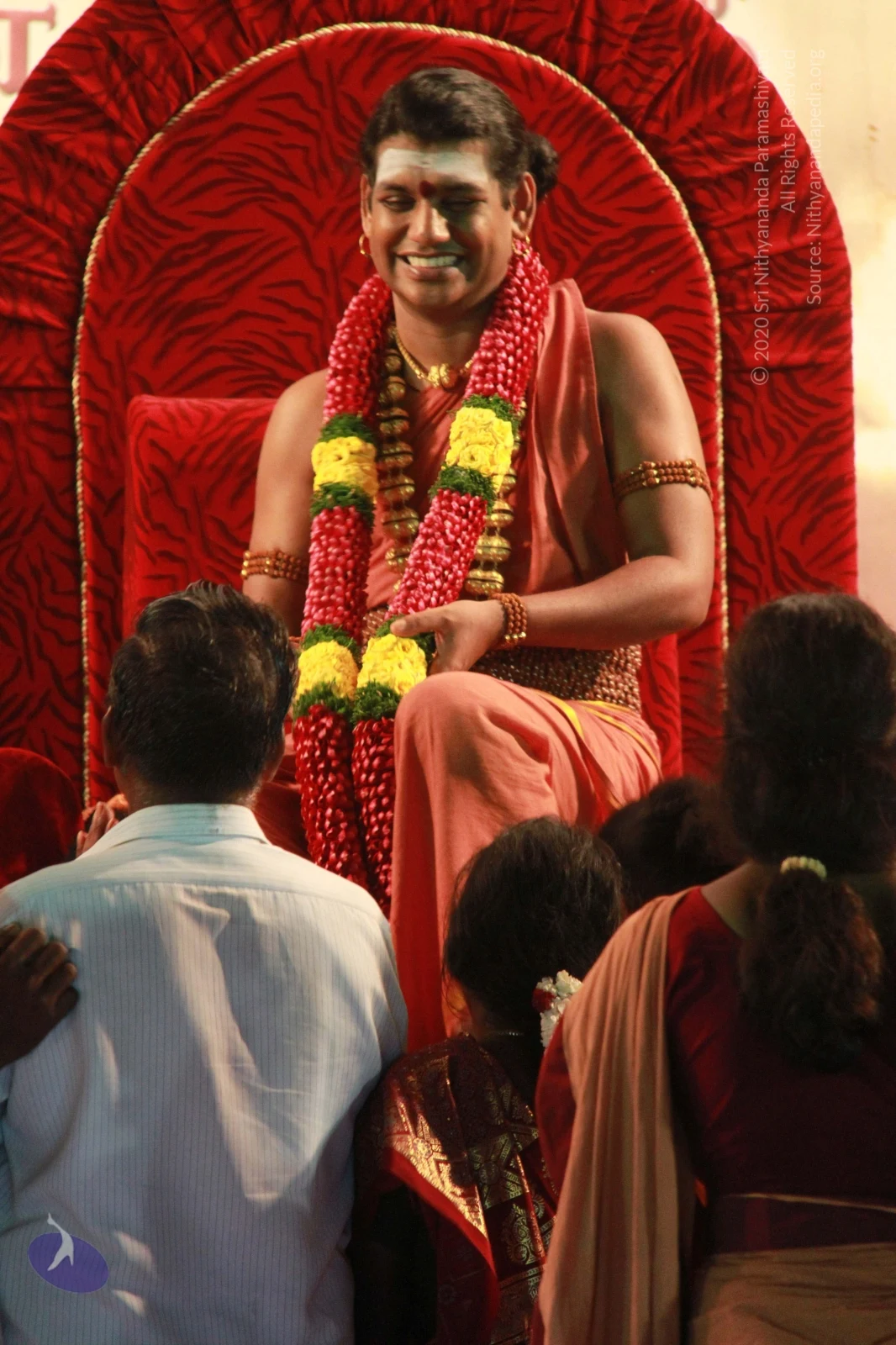
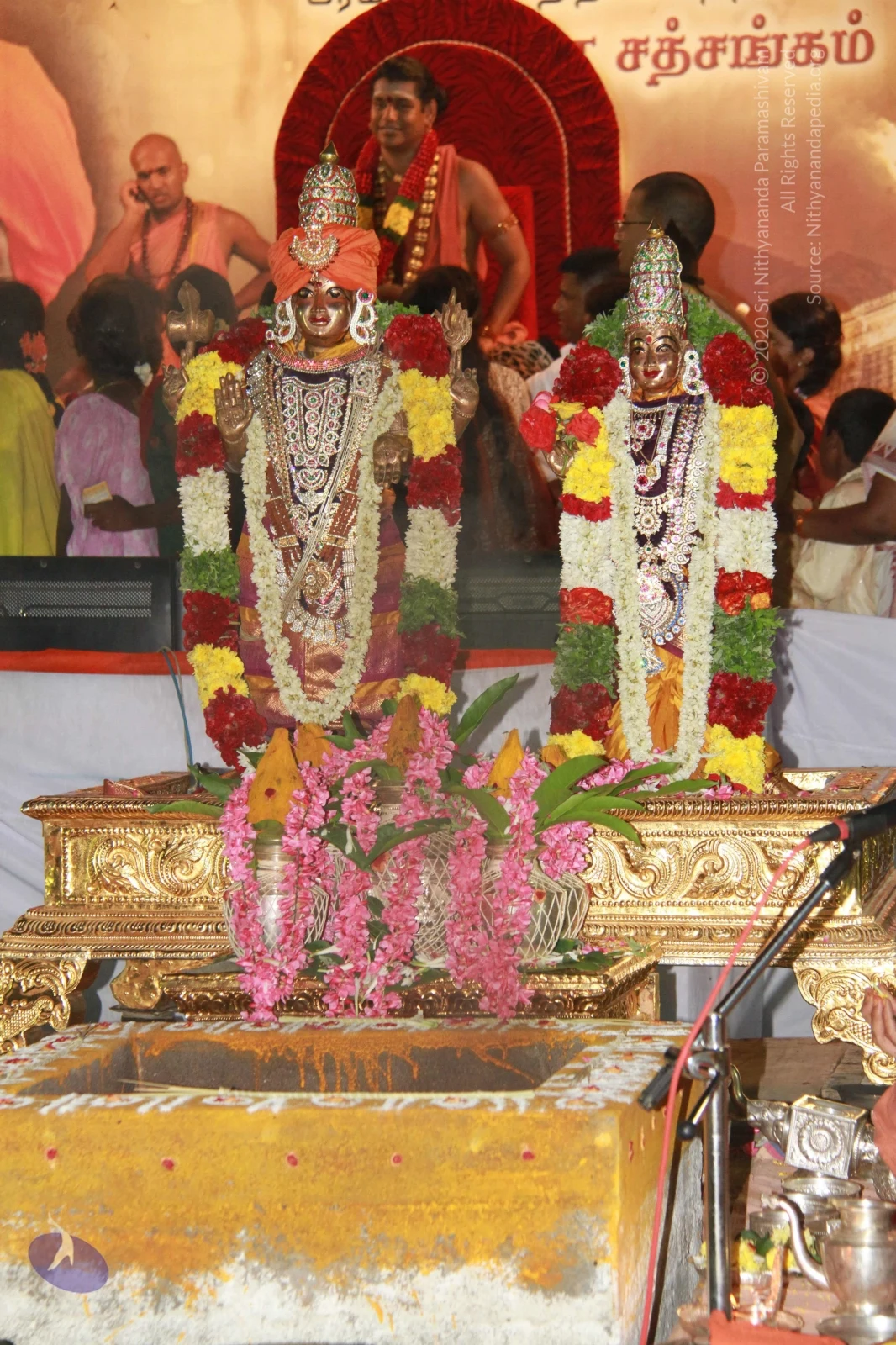
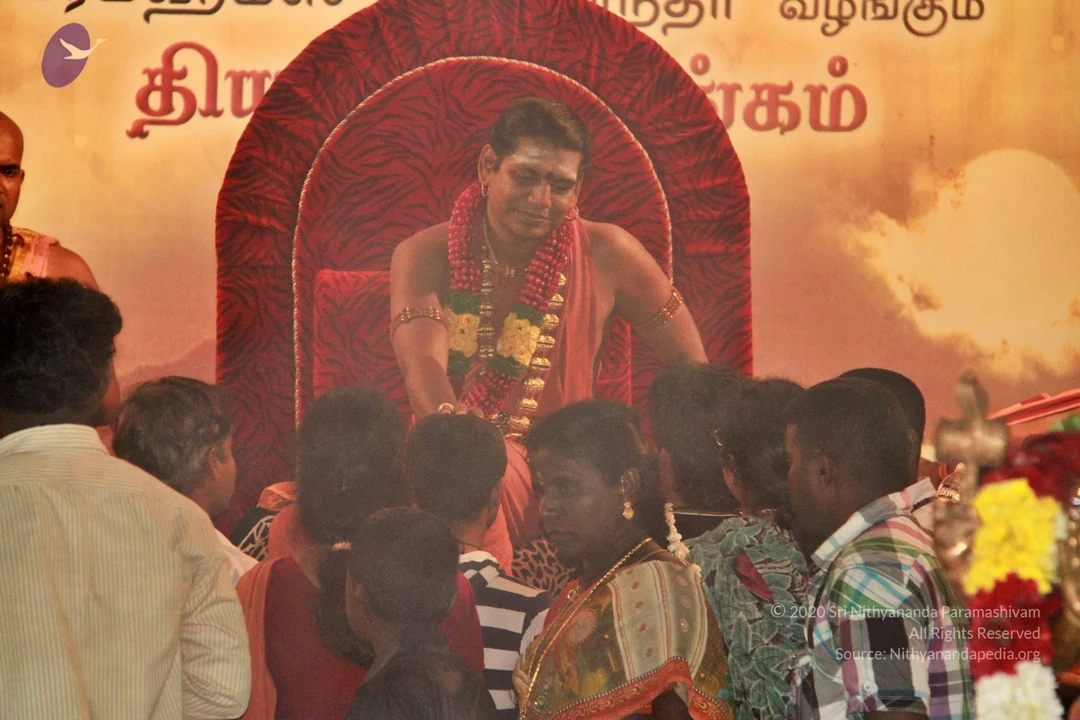
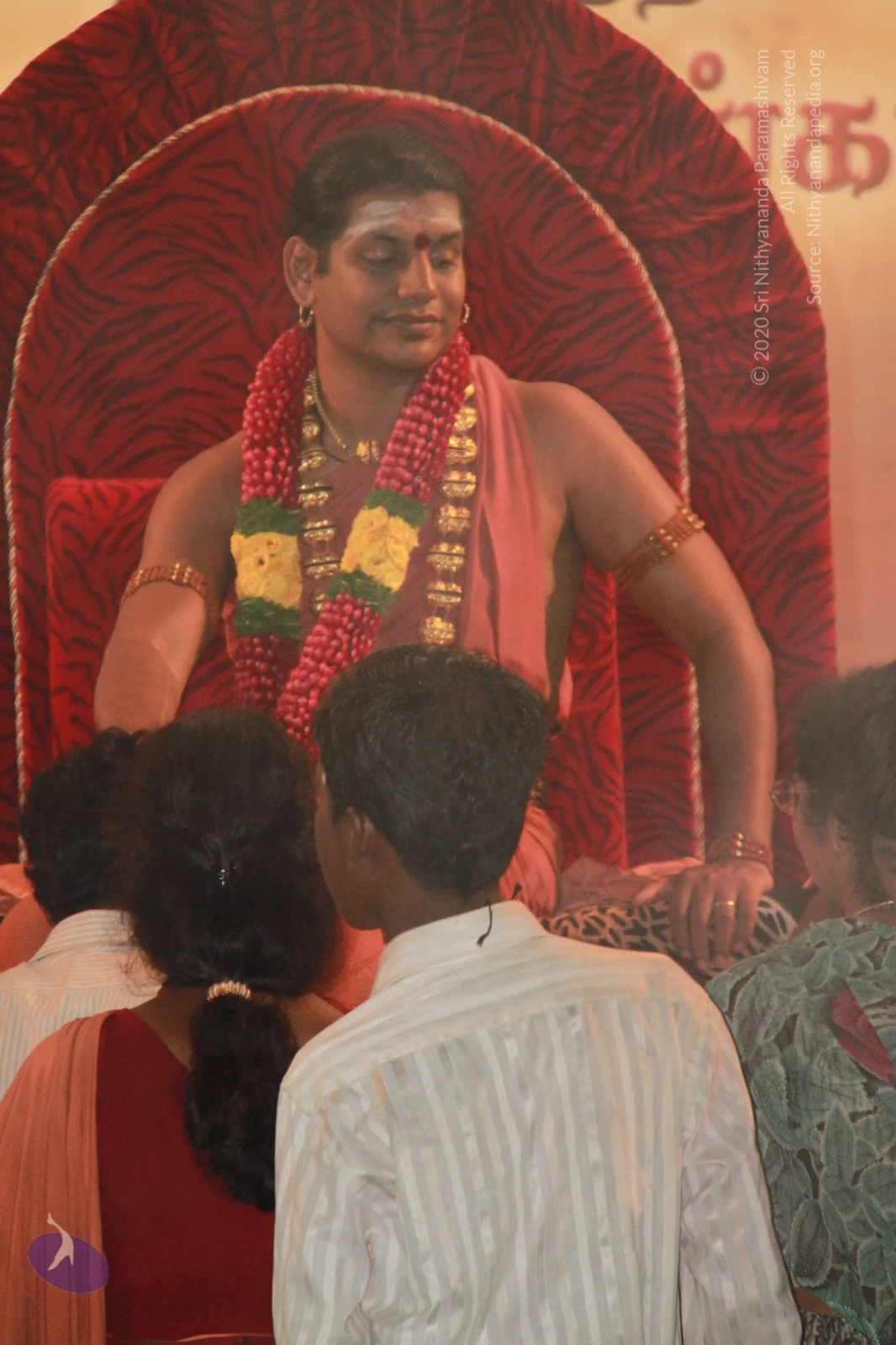
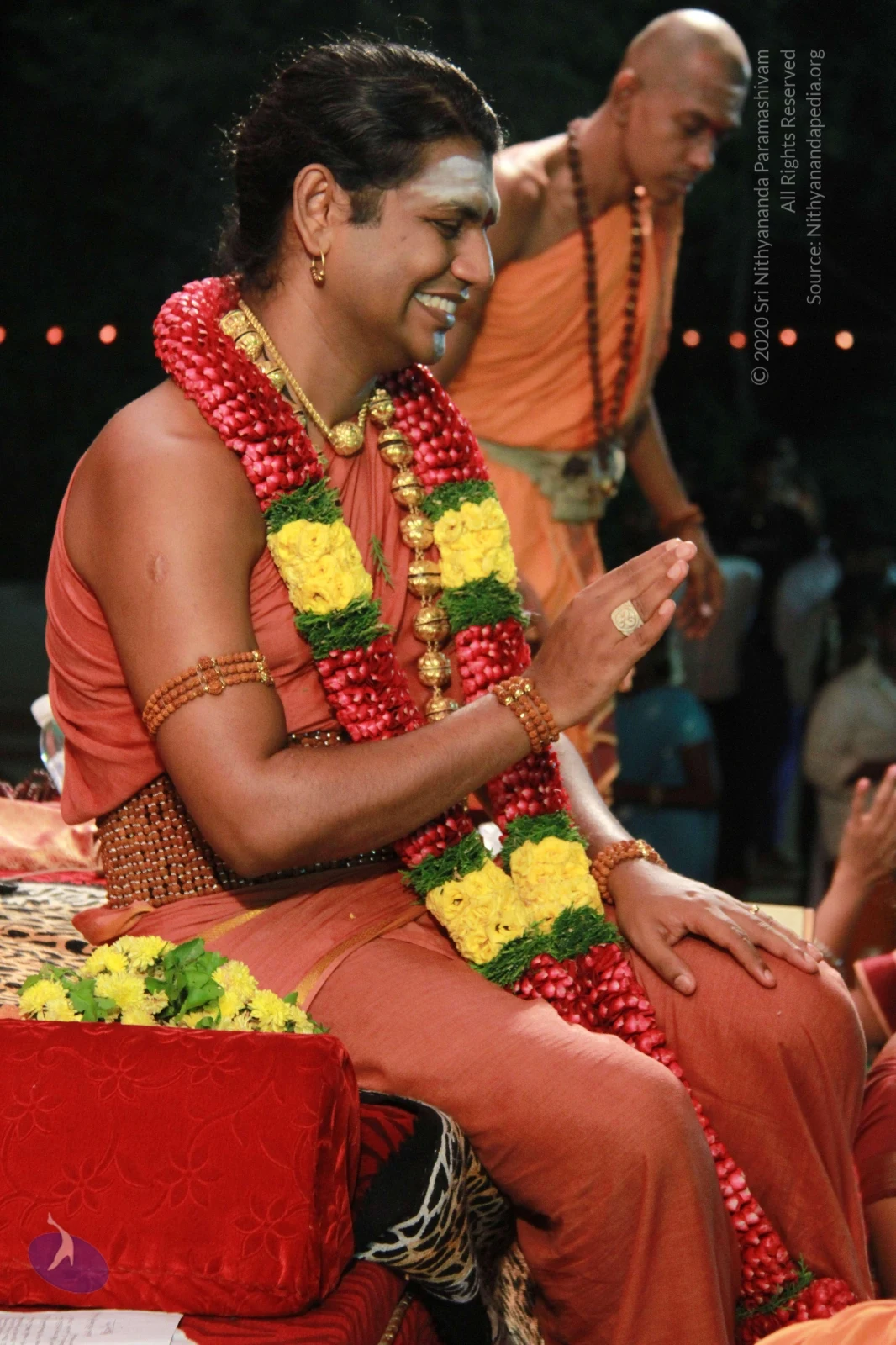
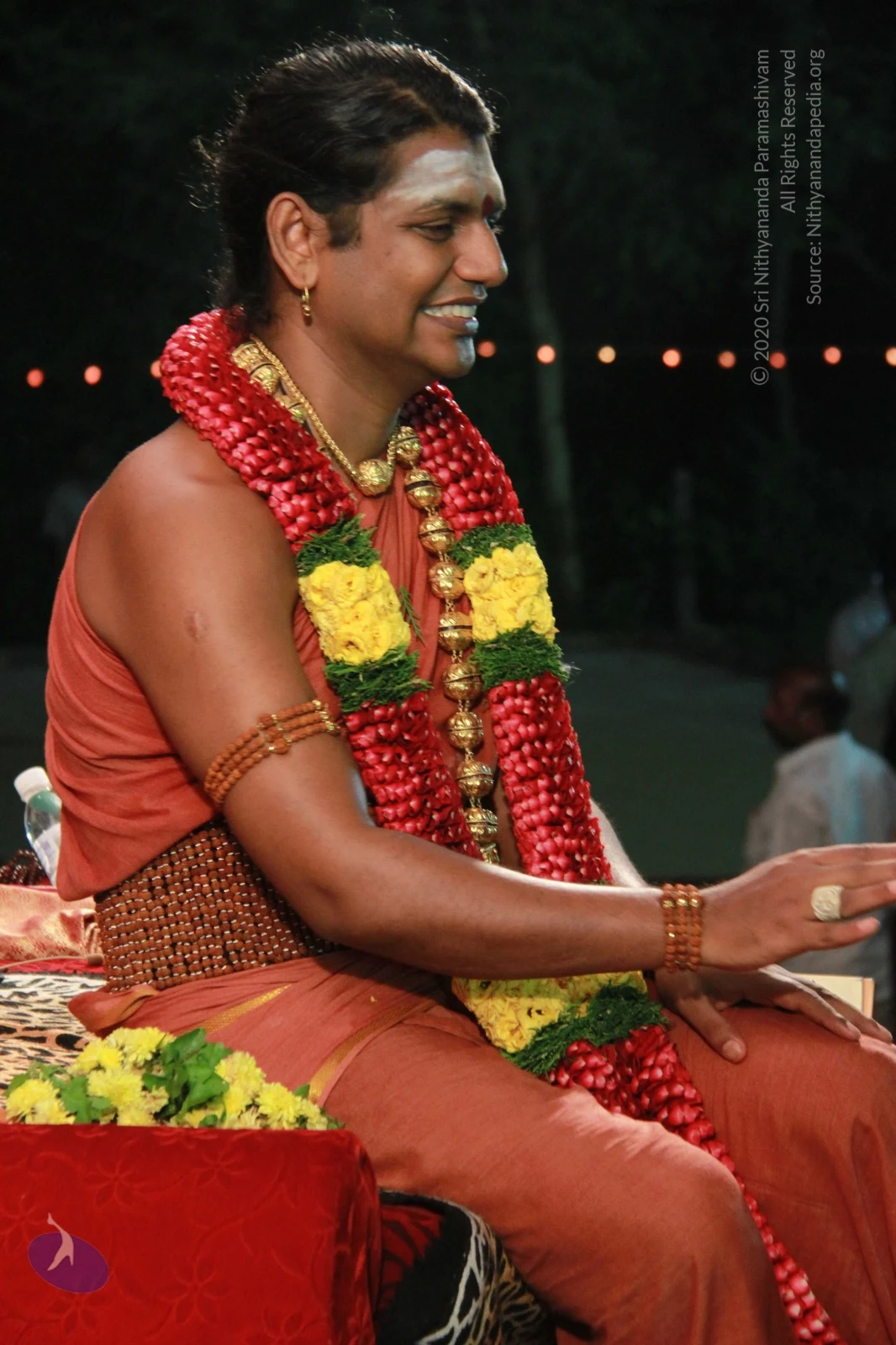
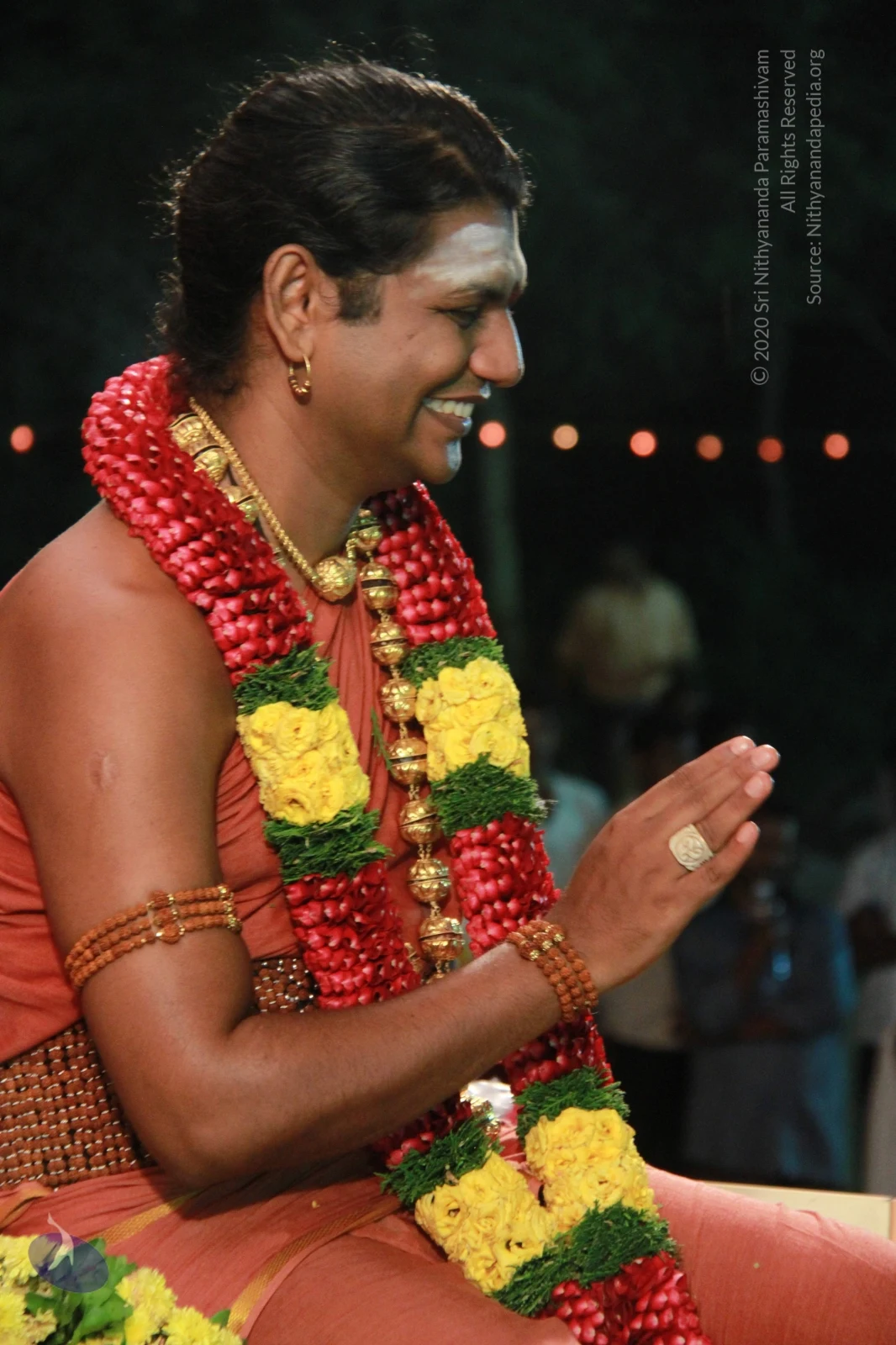
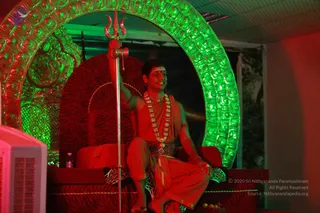
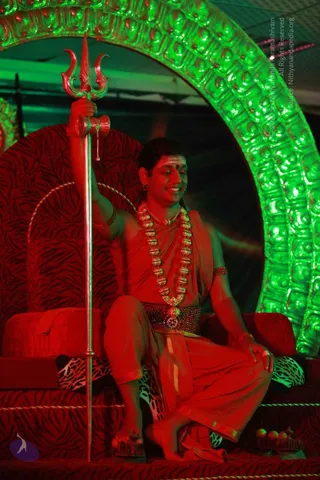
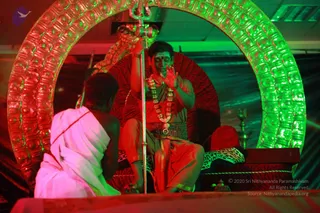
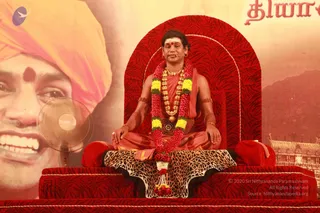
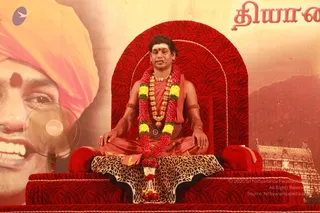
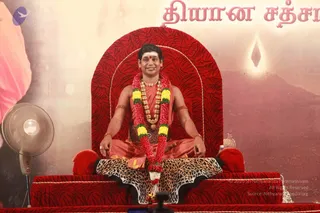
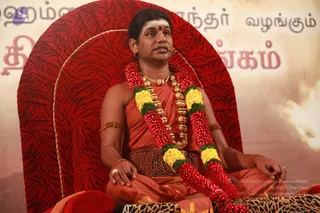
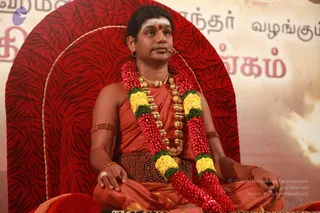
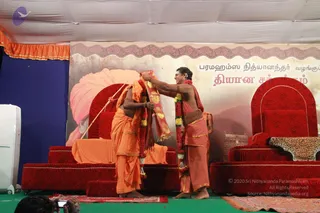
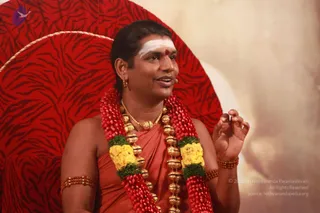
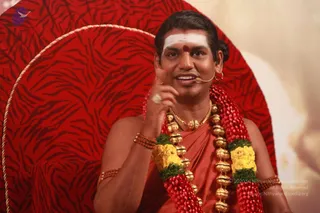
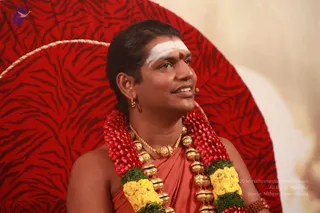
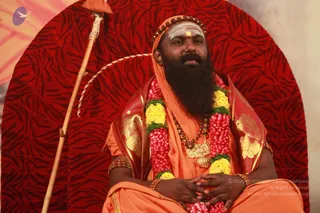
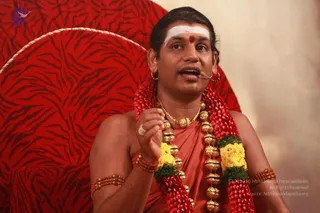
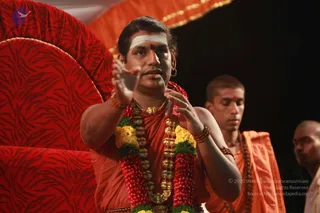
A man sits cross-legged on a red velvet throne with a red-and-black tiger-striped back and gold carved top, speaking into a headset microphone. He wears a saffron-orange draped garment, multiple strands of rudraksha beads across his chest, beaded bands on both upper arms, a gold pendant necklace, gold hoop earrings, and a white paste mark with a red bindi on his forehead. His hands rest together in his lap. Beside him stands a gold oil lamp and a gold ornament on a red cushion, with a red and gold backdrop.A man sits on a red throne with a zebra-striped upholstered back framed by a gold rope border. He wears an orange-red shawl, a thick gold necklace of ornate beads and a long red and yellow flower garland reaching his lap, plus beaded bracelets on both upper arms. He has white vibhuti marks with a red kumkum dot on his forehead, gold hoop earrings and a small clip-on microphone. He is seated centrally against a plain beige backdrop. Swamiji (probable) is the seated man in orange-red robes and a crown-less throne, shown in a formal darshan-style setting.A photograph of a seated man in saffron-orange robes on a red throne with a zebra-stripe patterned back and a rounded arch frame. He sits cross-legged, raising his right index finger while speaking into a headset microphone. He wears a long garland of red beads and yellow flowers with green leaves, a heavy gold necklace and bead bracelets. A white sandalwood band and red bindi mark his forehead, and his hair is swept back into a bun. A water bottle sits at the lower right and a faint landscape backdrop fills the background. Swamiji (probable): the long swept-back hair, saffron robes, rudraksha-style red bead garland and gold necklace match the appearance cues for this figure on the speaker's throne.

September 29 2012

Original wiki page
Contents

Title:

Akashic Readings on Death - Part 3

Description:

Reading from the Akashic Records, Paramahamsa Nithyananda reveals eternal timeless truths about Kundalini, the dormant energy stored in every living being. Once activated through initiation by an enlightened master, this energy leads to extraordinary experiences and enlightened lifestyle. The landmark date of 2012 heralds the possibility for the awakening of this energy in every human being. Nithyananda answers questions from seekers worldwide on how to nourish the flowering of Kundalini; practices to support it, signs of its occurrence, and how the master’s presence enhances it.

Link to Video:

VideoAudio

Transcript:

AKASHIC READINGS – Death (Part 3) - read through Nithyananda

29 September 2012

Namah Shivaya Namah Shivaya Namah Shivaya

Death is Guru and god, not oblivion as perceived by body centered individuals. Death is a boiling process. Whenever your engrams, desires, fear, greed, everything is boiled in the high energy, there is a possibility your desires can become reality, your fears can be conquered. You can be free from both desire and fear if you are ready courageous enough to face the process with consciousness. Understand, during the death your desires come in front of you just to make you understand the disillusionment which can be caused by their presence. Fears come in front of you make you understand they cannot frighten you anymore. But if you do not have the awareness to look into them you get deluded by them. Even while they come to reveal the truths about them, it is like mistaking a friend to be a enemy, and before even the friend expresses his friendliness, you thinking he is enemy and dealing him with a different attitude.

So when the desires and fears come in front of you during the moment of death, have patience and restful awareness to look into them. They are coming in front of you just to tell you their disillusionment and their ability that they can’t frighten you anymore. By not looking at them with a deep restful awareness, those desires are given a wrong extension of life by your unaware unconscious mind. When the desires are given a wrong extension of life, what you experience is heaven. When the fears are given the wrong extension of life, what you experience is hell. With restful awareness when you deal both of them what you experience is liberation.

Death can be a great Guru to liberate you and god to give you the ultimate. Having restful awareness in every moments of your life during the great attacks of fear and greed while you are in the body is the best way to prepare for the death, and ability to handle your fears and greeds which you may encounter while you leave the body. Moment of the leaving the body is of great importance. That moment will decide the way you are going to continue your further journey.

So prepare yourself with restful awareness, continuously being a jeevanmukta, practicing living enlightenment, being established in restful awareness, during all the chaos or the tsunamis of fear and greed attacks in your life. While you are in the body in unconscious way without having awareness, perception on death before dying or during dying can bring tremendous suffering and can bring a big damage to the conscious evolution process which is termed as nivritti in the upanishadic records. So understand moving consciously into the death process liberates you from the fear and greed. Every moment in your life when you go through the fear or greed, the small dimension of death is perceived and experienced by your restless consciousness. Bring restful awareness; you will have complete depth in handling the fear and greed with restful awareness, so it can liberate you.

As these truths are apourushya and saarvabhoumya, not dependent on any individual, including the body through which it is read out, and saarvabhoumya - universal, anybody who internalizes this truth, aligns their conscious process of cognizance based on these truths, will be liberated and will celebrate their very existence by the grace of the Kalabhairava Mahaakaala, the Cosmos itself.

QUESTIONS & ANSWERS

The first question today is from Ma Nithya Priyatmananda, who is asking, ‘Dear Kalabhairava, what are the steps of the death meditation that we need to do every night? Kindly explain.’

Every fear you accumulate, every fear makes you feel agitated, every fear which you do not want to think, remember, go through, go into all those fears consciously, neither deciding to save yourself from that fear nor having greed to achieve what you are afraid of. So without having the greed or fear, enter into the fear. Naturally the fear will lose its quality of fear when you do not carry fear or greed for the fear. Greed has its quality of greed because your greed for greed and fear about the greed. Same way the fear has the quality of fear because your fear for the fear and indirect greed towards the fear.

So when your fears are approached with fearlessness and greedlessness, the straightening out of your consciousness everyday happens. The change of consciousness from jagrat to swapna, swapna to sushupti, the waking state to dream state and dream state to the deep sleep state, happens because your awareness is not straightened out. Either the bumps of the fear or bumps of the greed responsible for your consciousness jumping from waking state to dream state or dream state to deep sleep state. If you remove all the bumps of the fear before falling asleep you will not fall asleep, you will fall into something called restful awareness which is recorded by the word turiya by the earlier mantra drashtas. So the word turiya denotes the state of falling into the restful awareness without the bumps of fear or greed. Every night remove all the bumps you created during your daytime through fear or greed. Continuous practice of removing all the bumps of fear and greed by facing them will help you to fall into the state of turiya. This is what Mahadeva calls as death process - nirbhaya dhyana.

The next question is from Sri Nithya Atmamaneeshananda. He is asking, ‘Lord Mahadeva, my pranams. It is said you have given boon that anybody dies in Kashi he gets liberated. For this reason many people live in Kashi and wait for death to happen. What is the truth? Just physical living in Kashi is enough, or something more was instructed by you to do in addition to physical living?’

As Mahadeva it is my own words - people who live and leave their body in Varanasi get liberated. Along with living and leaving there was some spiritual preparations prescribed like doing ajapajapa and constantly being aware of the 3rd eye - ajna chakra. The whole air and the atmosphere was filled with this divine instructions and the spiritual practices, and maintained by myself as Kalabhairava. Still now anybody who is not capable, who is not practicing these practices for the minimum required amount, will be moved out of the Varanasi’s boundary before they leave the body due to some reasons, out of their ignorance or by the natural forces. So anybody who lives and leaves their prana in the Varanasi boundary naturally directly is liberated and achieves enlightenment.

I Kalabhairava still maintain the sanctity of that vow and the place - physical place Varanasi. The sanctity and the vow which I gave it to the place, physically to Varanasi, does not have extinction. It does not have expiry date. As long as the planet earth exists and the physical place Varanasi exists, only the people who are practicing these 2 great truths of ajapa japa and centering themself on the 3rd eye will be able to live and leave their body in Varanasi. The very space and the place is filled with the physical vibration and the presence of me Mahadeva as Kalabhairava.

The place, physical place of Varanasi, is equivalent to the eternal incarnation body - nithya avatara shareera. How in the incarnation’s body eternally I Mahadeva reside, same way the place, physical place of Varanasi becomes the center of me-Mahadeva’s residence eternally. As Mahadeva-me reside in that very space physically, being centered, anybody who even makes the sankalpa of living and leaving their body in Varanasi or inspired, initiated to live centered on ajapa japa and being centered on the 3rdeye ajna chakra. Anybody who refuses, resists, is naturally moved out of that physical place before they leave the body, before their death. Still Kalabhairava-me directly supervising this physical act of removing the people who are unqualified out of the boundary of Varanasi and bringing the people who are qualified into the physical boundary of Varanasi personally. Still I am over-looking and looking after managing the affairs of Varanasi physically assuming the physical plane control over the whole place.

Anybody comes there with a simple open eyes will see my physical administration in Varanasi. As this questioner himself is shown the physical form of Kalabhairava in the form of a photograph inside the Kalabhairava temple he does not need to doubt the existence of Kalabhairava in physical form and administering the Kalabhairava in Varanasi as the physical place. Not just on the spiritual place, in the physical place of Varanasi Kalabhairava-me is running the administration - who should be residing inside the physical boundary and who should be asked made to vacate the physical boundary of Varanasi before they leave the body.

These are some of the sacred centers on the planet earth has a direct connection with the spiritual plane, and the laws of the cosmos is applicable still into the land of these places, the cosmic law, whoever rules and makes decisions of any man-made laws in these sacred centers. How the incarnations’ bodies can never be brought under the man-made laws, those bodies can neither be punished nor be treated under the-man made laws, neither be controlled nor be rewarded under the man-made laws. The bodies of the incarnations function based on the cosmic law can never be rewarded or disrespected, can never be treated or abused by the man-made laws. It stands above the man made laws and continues to radiate its grace beyond any man-made laws and regulations. Same way Varanasi stands beyond the man-made laws. It still functions based on the cosmic law, as Kalabhairava himself is ruling and organizing and running the whole administration even now physically.

The next question is from Suresh Kandaraj, who is asking, ‘What happens to the soul of the people who die in accident or get murdered. Is it similar to suicide?’

In accidents if the person is directly involved saying yes to his own death, it will be treated as a suicide, or if he is not directly involved saying yes to that death, it is only the situation and things which are beyond his control are saying yes to his death, it will be considered as murder. During the suicide, the remaining part of the time he has to live without body will be with a deep guilt and pain, but if it is murder he will neither carry the pain nor the guilt. He will be just given a space to rest without any suffering or the torture. He will be just waiting only with the waiting mode without any guilt or suffering. But if it is suicide he will be waiting along with a deep guilt and pain and suffering. Usually the ghosts which disturbs the human beings, rishis, gandharvas, kinnara, kimburudas, are the souls which has committed suicide not murdered. The murdered ones will have tremendous sympathy and helping tendency towards the human beings and kinnara kimburuda gandharva gandhara rishis.

So the murdered ones can be of a friendly use for human beings, but the suicide ones as they themself will not be in restful awareness will not be able to help, and anybody who connects with the suicided ones who have committed suicide will be in danger. The people who have committed suicide, those individual souls will only be playing cunning games to impart what they feel as a suffering and torture and pain towards others as their deep frustration and anger towards everything in the life, and will not be of any use or help to human beings. So Mahadeva Kalabhairava instructs all the mediums who are relating with the departed ones not to contact, relate, try to take any help with the souls which have committed suicide. But you can relate and try to receive the help and friendliness in any form any way which you know available abovesaid to the souls which are murdered.

The next question is from Dr. Sundaresan from Sri Lanka who is asking, ‘Dear Kalabhairava, namah Shivaya. When does the death happen? Is it when the heart stops or when the respiration stops or when the brain death occurs as per our medical guidelines? How can a doctor help the soul which is leaving the body?’

What you understand as clinical death has nothing to do with the death. When death happens all these symptoms which you asked happens; heart stops brain stops and all the other symptoms which you claim during the clinical death happens. Please understand if all these things are happening one by one by one, when all of them happen, when the last symptom happens, that should be the moment of death as per the normal human understanding. Among these happenings of respiration stopping, heart stopping, brain stopping, which one happens last that should be the moment of death. Even if one is still happening then the death should be not be declared. Still the person should be considered as alive. But even after all these three happens, only if the reflection discontinues to get reflected on ananda gandha, the complete death happens. The possibility of returning to that same body becomes impossible. It gets stopped. Till that happens the possibility of returning to the same reflection on the same body still exists.

So what you call as clinical death should be the happening of all the three. Which one happens last that moment should be considered as clinical death. Even if one of them are still functioning the person should not be declared as dead. Even all the three happening is not complete possibility that the soul’s reflection will not be happening on the body again. It is only the humanly impossible to make the soul again reflect on the same body. So human beings can declare that as death. Cosmically only when the reflection of the ananda gandha stops happening on the individual body he will be declared as dead, which will happen only after this three physical symptoms happen. Unless this three physical symptom happens the fourth one of the stoppage of the reflection of the ananda gandha will not happen. Sometimes even after this three, the heart stopping respiration stopping brain stopping, ananda gandha can continue to reflect on the body for days or sometime months, sometime ages, as in the case of jeevasamadhi siddhas - the siddhas who are living in the body but stopped all the movements and actions of the body voluntarily. But all practical purposes for all human purposes, all human beings can be declared as dead only when all this three happens. Even if one is yet to happen you should be waiting and should not declare the person as dead.

Let the vibrations of Mahadeva Kalabhairava bless all the bodies exist here with his initiation and liberate every body exists here from death and let all the bodies present here be freed from the death and be liberated from the death. The Kalabhairava and his presence let it radiate many things which cannot be translated as words just as a pure vibration and living silence the vibrant stillness. All the bodies seen by this body be blessed to imbibe the vibration radiated from this body and through this body, which can’t be converted into the understandable words by you all, be radiated and enter as initiation into every one of the bodies present and seen by and through this body. Namah Shivaya Namah Shivaya Namah Shivaya …..hara hara hara…… hara hara hara

Read the questions.

The next question is from Magalee Laurent who is asking, ‘Beloved Swamiji, is doing the ritual for the departed being done after death important?’

It is important as the living ones will be tormented by the unconscious memory and the living ones will project their life’s understanding and fear and greed on the departed ones. For the healing of the living ones the rituals for the death is important. Perform as long as you are free from the fear and greed projection of yours on the dead ones. When you are completely free from your fear and greed being projected on the dead ones you can stop performing those rituals.

The next question is from Vishnu from Chennai, who is asking, ‘What are all the practices and chants to be done to a person who is terminally ill to help him have a conscious death?’

Kalabhairava: Recite all the akashic records readings done by Kalabhairava, chant all these great verses continuously. That itself will make the individual choose the conscious death. So akashic readings by Kalabhairava using this body of Nithyananda is enough to make the individual decide to have conscious death.

The next question is from J. Sumathi from Chennai who is asking, ‘During our lifetime we get chances to reduce our karma. Do we get such chances of reducing karma between death and rebirth? Thank you.’

No. Between death and rebirth, either you are in highly elated mood if you go through the conscious death, you are highly depressed if you go through unconscious death. The extraordinary elation or the extraordinary depression both spaces growth does not happen. Extraordinary elation is considered as heaven. Extraordinary depression is considered as hell. Neither in hell nor in heaven the conscious exhaustion of the karmas is possible. You will not be able to exhaust the karmas neither in hell nor in heaven as the space of the possibility for the mixture of both, possibility of the mixture of the both which is bhooloka, the planet space, is required for your conscious growth. The space and the time between death and rebirth cannot be used for growing consciously. So anything needs to be done for the conscious growth needs to be done between the time of birth and death not between death and rebirth.

The next question is from an ashramite who is asking, ‘Dear Kalabhairava, scientists and researchers say Near-Death-Experience is a change in the brain chemistry and brain function and not a trip to heaven. Is Near-Death-Experience really a change in the brain chemistry?’

Trip to heaven cannot happen without changing the brain chemistry and brain function. Change of brain chemistry and brain function can happen only if the trip to heaven happens. The heaven is physical reality only as much as the world’s physical reality. In ultimate sense neither the world is physical reality nor the heaven is physical reality. Both are nothing but chemical change in brain and change in the brain function. In other way if you consider the physical reality as reality, with that comparative existence, with that comparison you can call going to the heaven, trip to heaven is also a reality. So trip to heaven, trip to planet earth, both are either chemical change in your brain or trip to both the places. So if this is reality that is also a reality. If this is illusion, from the ultimate source that is also an illusion. So trip to the heaven and change in the brain function both are one and the same. Without one the other does not happen. So do not underestimate the change in the brain function, chemistry in the brain function, as ordinarily.

The next question is, ‘Why do we remember our past when we wake up from sleep, but not when we wake up into a new life after death? Is it because we take a different body after death?’

Even after sleep you do not remember all the past. The amount of the destruction of your body is very less, but how much your body is destroyed that much of your past gets into the karana layer, the causal layer, and you do not remember. In the death the destruction of your body is more. Because of that the non-remembrance of the bio-memory is also more.

The next question is, ‘Is it possible to regain the memory of our past lives? Does one need to have a special body and nervous system to withstand such an experience?’

Only the nervous system which is prepared by the yogic practices like unclutching which is freely easily able to handle the present life bio-memories available without getting stressed tensed diseased disturbed will be able to handle the more memories of the past life.

Sakshi Pramana:

Sharing from Akashik Reading

Tags:

Akashic Records, Paramahamsa Nithyananda, eternal, truth, Kundalini, energy, living, initiation, enlightened master, extraordinary experiences, enlightened lifestyle, 2012, human being.

Photos Of The Day:

MORNING-SATSANG
SARVA-DARSHAN

AKASHIC-READINGS

DARSHAN

WEBINAR

RUDRABHISHEKAAND-RUDRA-HOMA

TAMIL-SATSANG

KALPATARU-DARSHSAN

Tamil-Satsang-Rudra-Homa-and-Rudra-Abhisekam

Photos from this day

View all 562 photos

MORNING-SATSANG
156 photosSource gallery
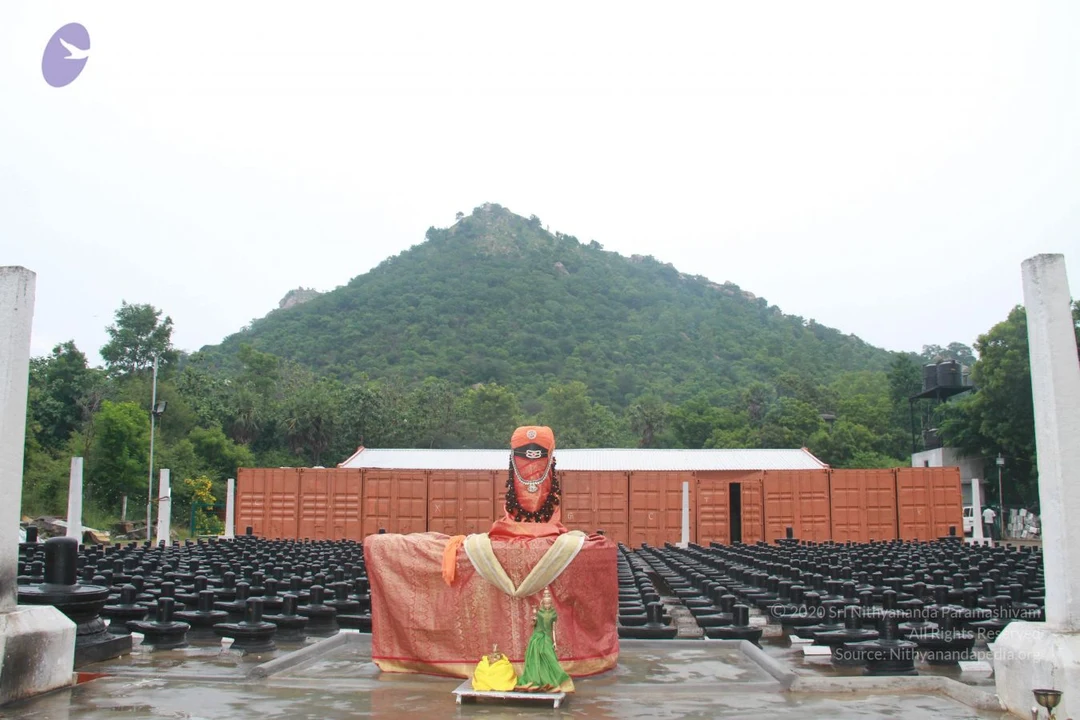
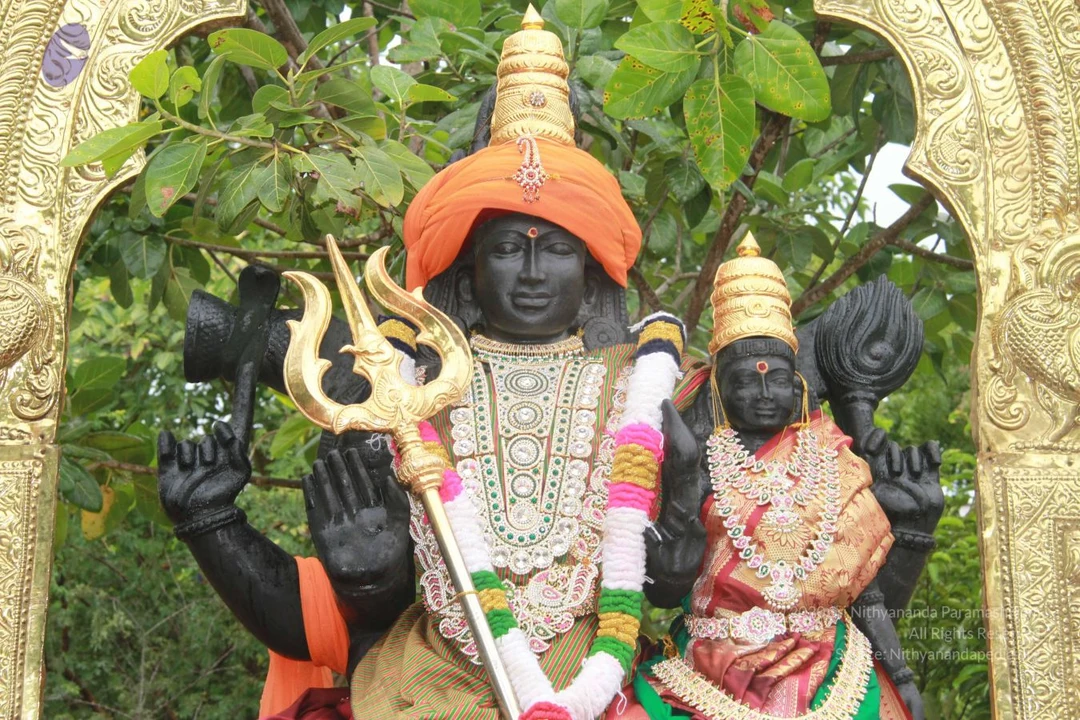
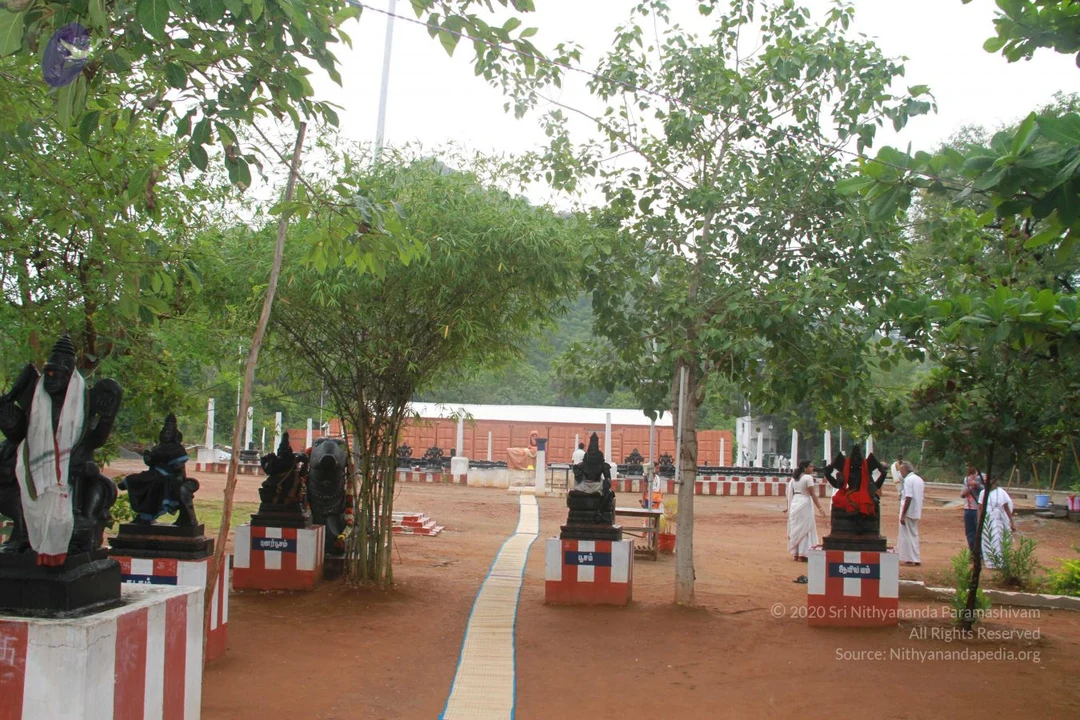
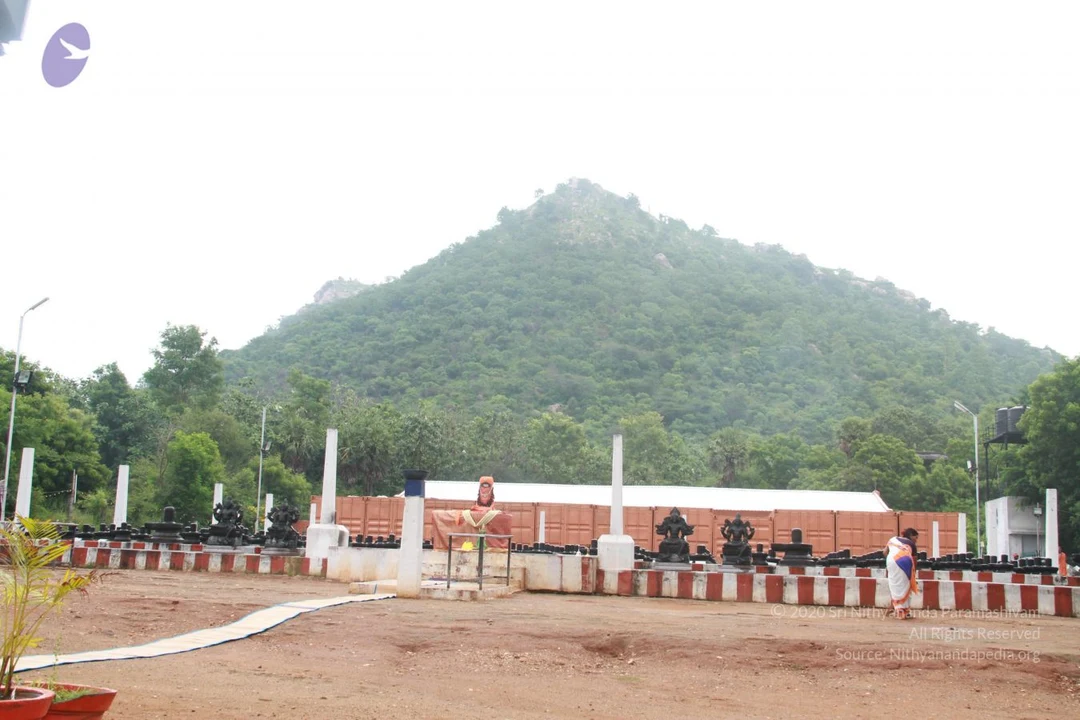
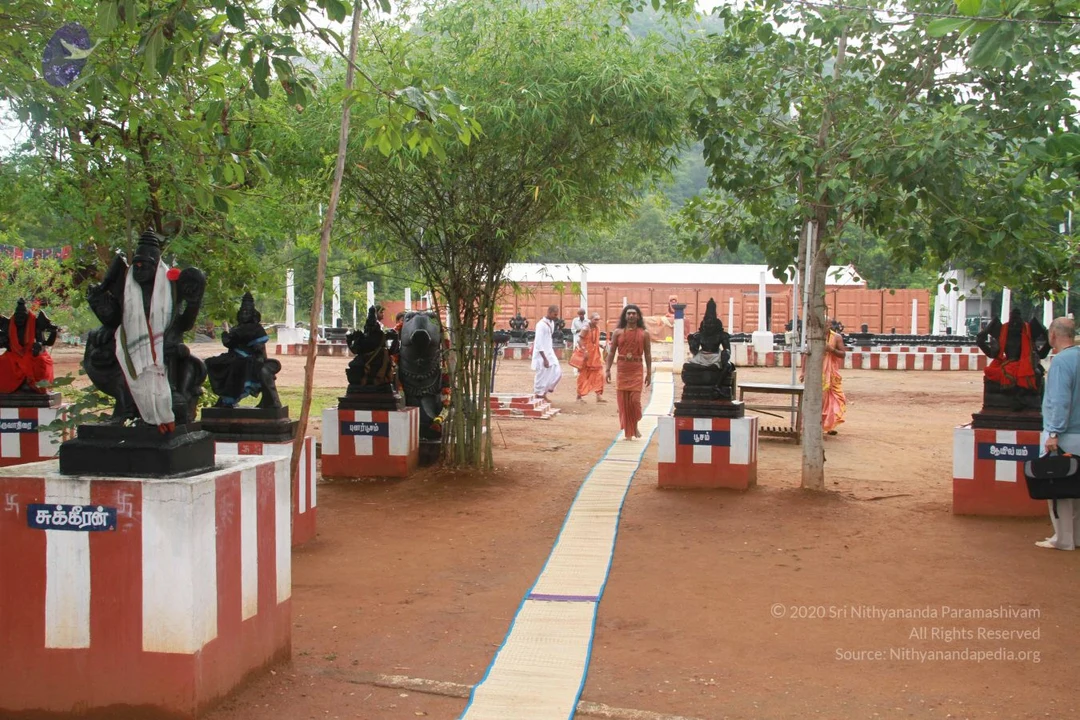
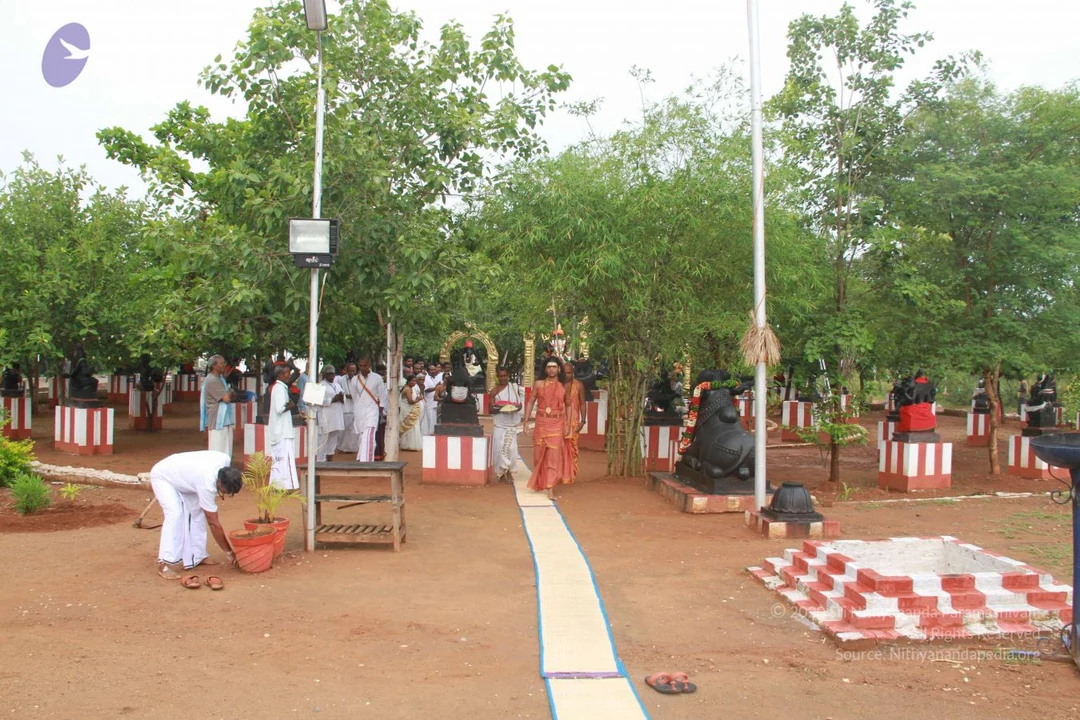
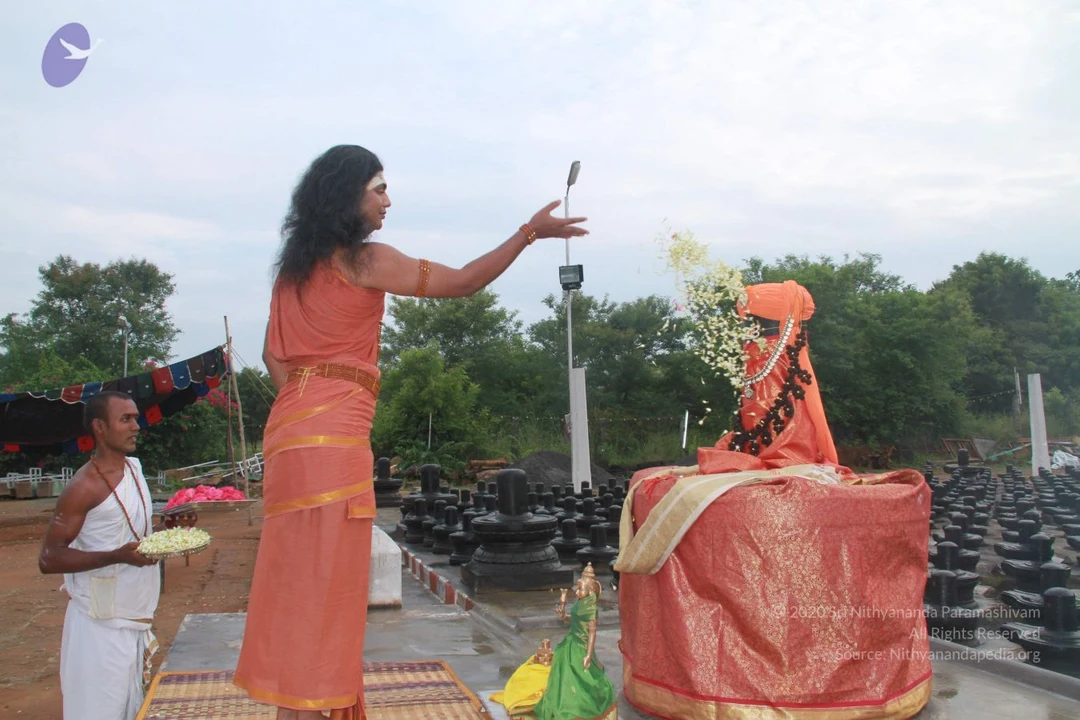
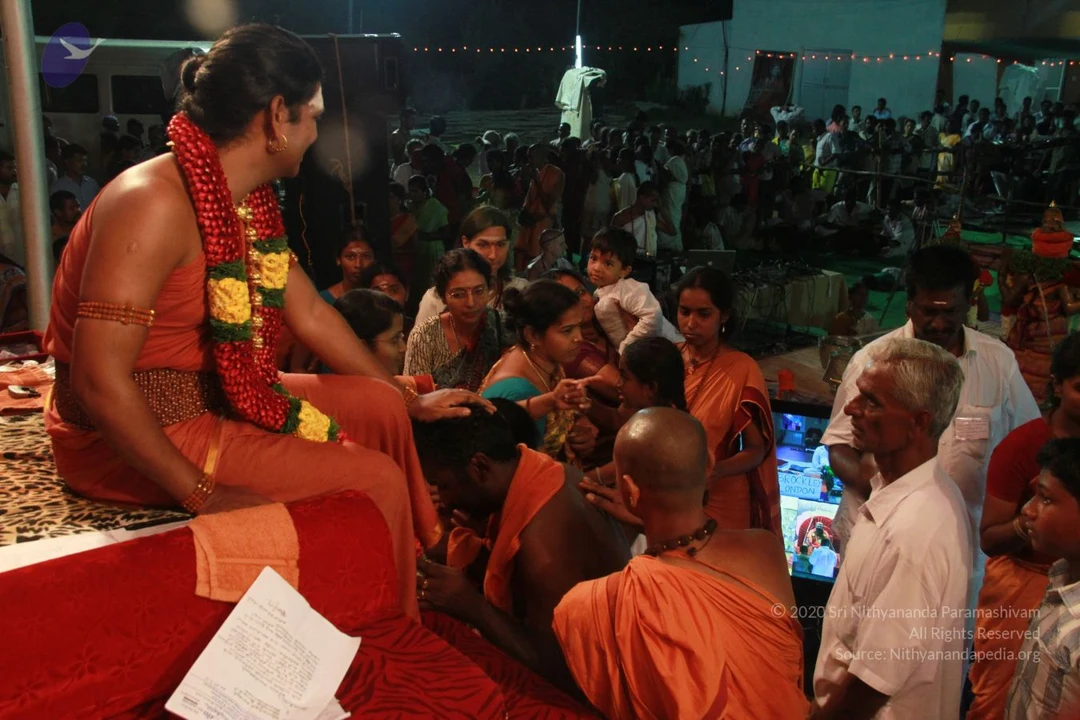
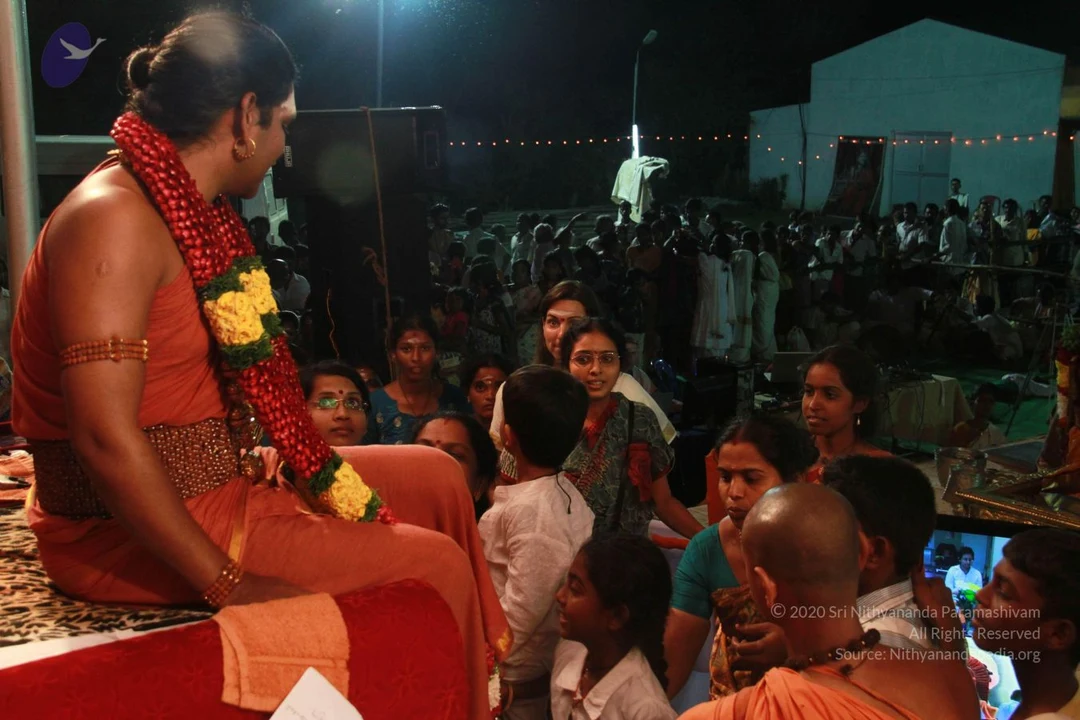
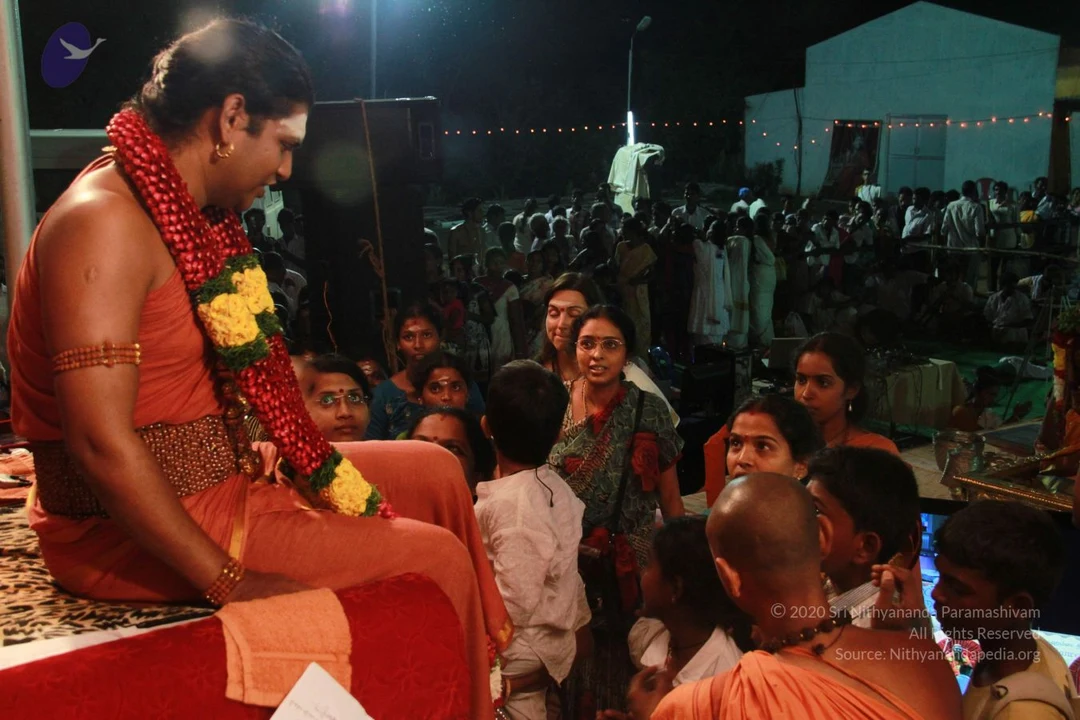
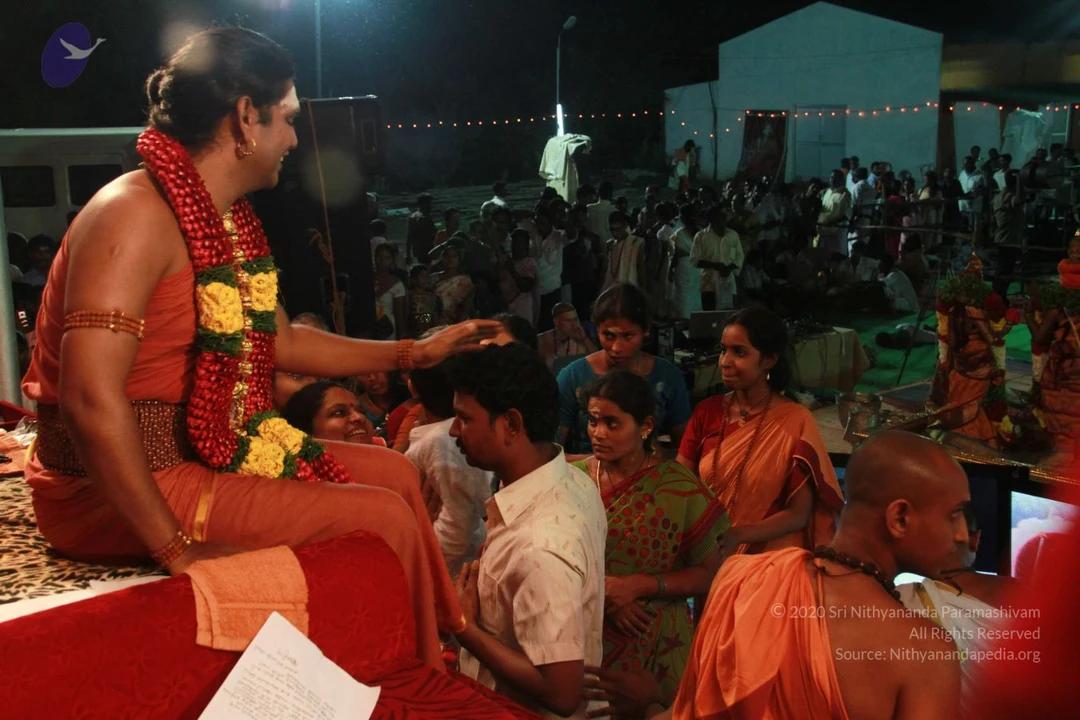
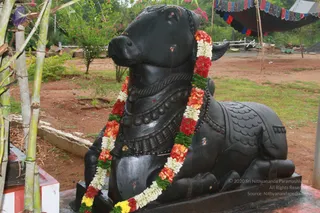
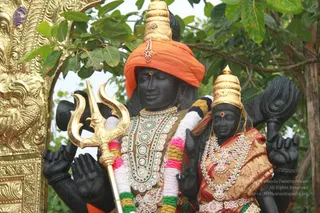
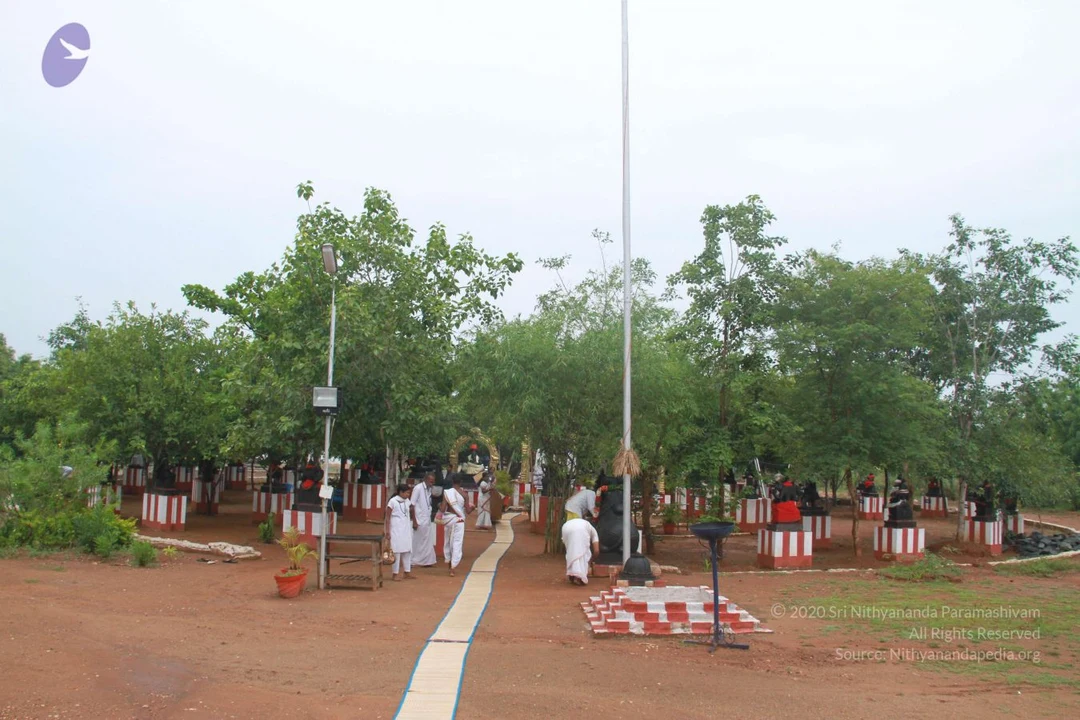
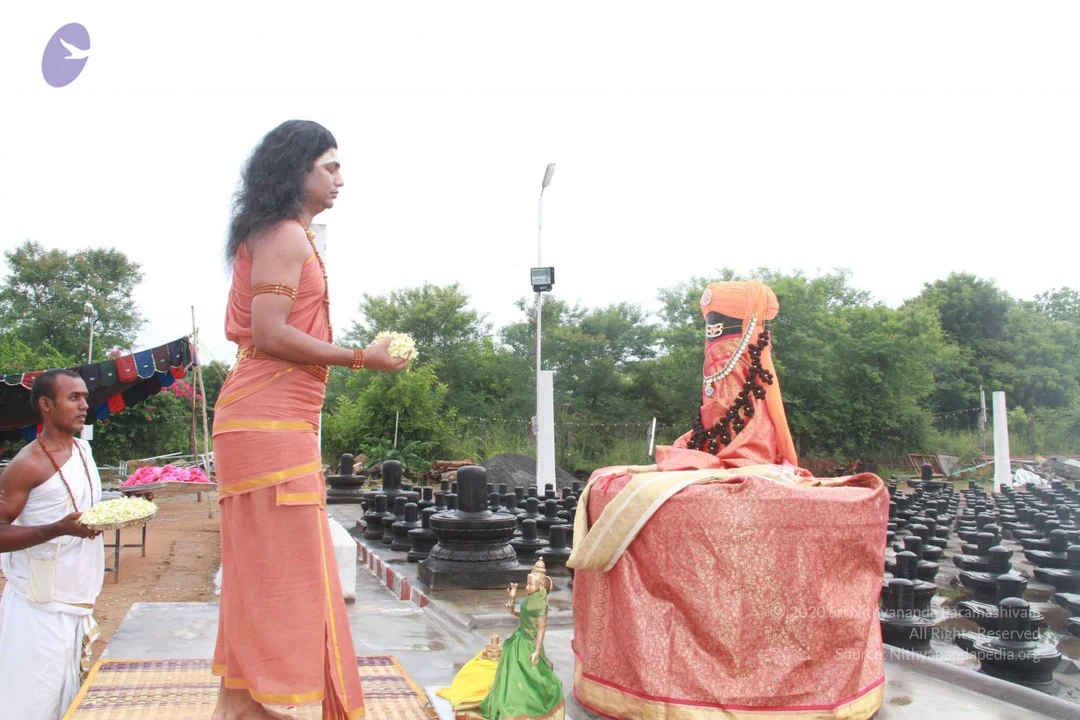
Outdoor photograph of a shaded temple grounds with an open dirt yard and a narrow white path with blue edging running through it. Rows of black lingams sit on red-and-white striped square plinths under trees. A tall white flagpole stands near the centre, with a small red-and-white patterned platform in front and a black lamp stand nearby. Several men in white dhotis and white shirts stand and bend near a large black lingam at centre, one kneeling on the platform to perform worship. Small potted plants and a wooden rack are at the left edge. Overcast sky.Outdoor photo of a large statue of a seated figure draped in a red and gold shawl with a saffron head covering, rudraksha beads at the neck and a dark cap, placed on a raised wet platform. Around it stand rows of black Shivalingams on the ground, with a row of orange-red shipping-container style structures and a green forested hill behind. A small brass plate with a yellow object and a green cloth sits at the statue's base. No physical people are visible; the figure is a statue.Close-up photograph of a young green plant with long, narrow, glossy leaves covered in water droplets. The leaves radiate from a central pale green stem, with pale midrib lines visible on each blade. The background is softly blurred in green and brown tones. No people are present.A large black stone Nandi bull sculpture sits on a dark pedestal in an outdoor ashram courtyard. It is decorated with a garland of red, orange, yellow and white flowers draped across its neck and body, and has carved bead necklaces and a bell at the throat. Behind it are green shrubs, bamboo poles, a red-earth ground and a blue and red bunting-hung canopy. No people are visible.A photograph of a forested hill rising against a pale, overcast sky. The slope is covered in dense green trees and shrubs, with exposed grey granite boulders near the rocky summit and along the ridgeline. Tall palm trees and leafy foliage fill the foreground at the bottom edge. No people, figures, ritual activity or a person are visible in the scene.A black stone deity murti stands outdoors beside a carved golden panel and green leaves. The larger figure wears an orange turban topped with a golden crown, a multi-strand jewelled necklace, and a garland of white, pink and green flowers, and holds a golden trident. Beside him stands a smaller black stone figure in a red and gold sari with a golden crown, jewelled necklaces and a red bindi, holding a lotus-like staff. Both figures are statues, not living people, and no physical person is visible.

SARVA-DARSHAN

13 photosSource gallery
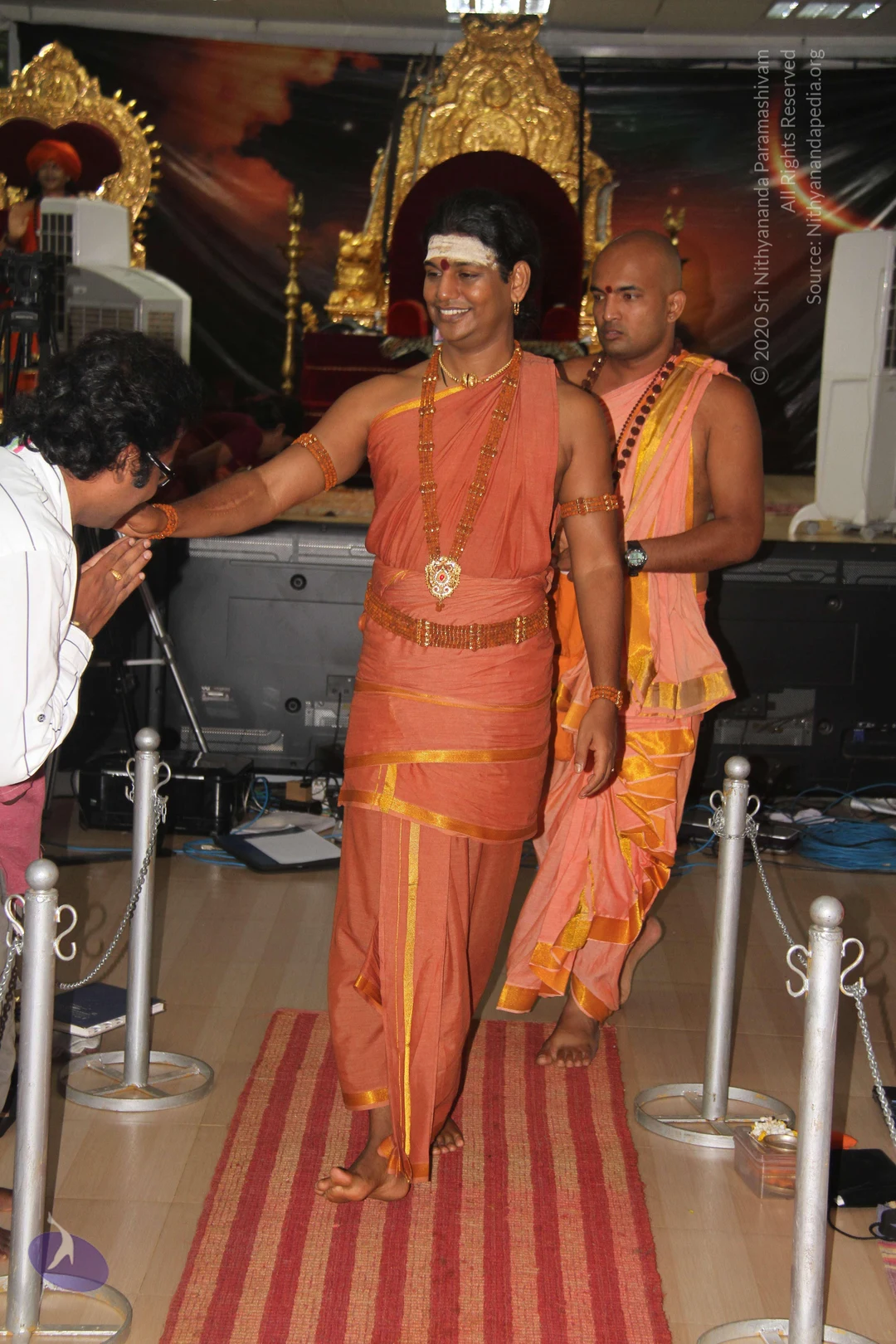
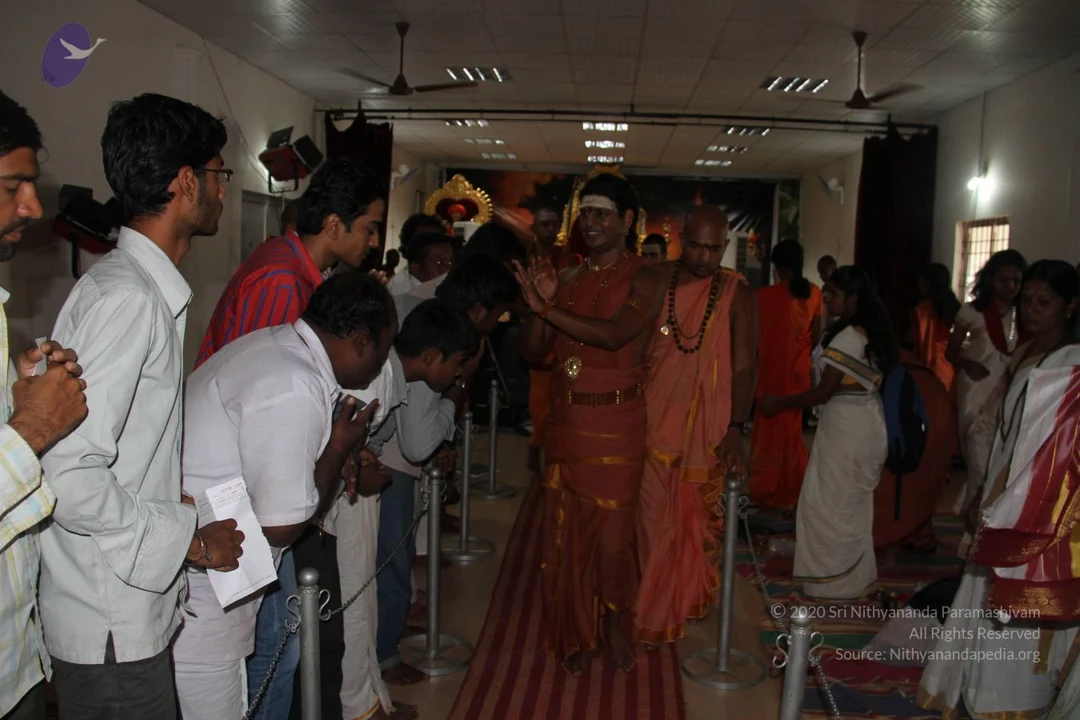
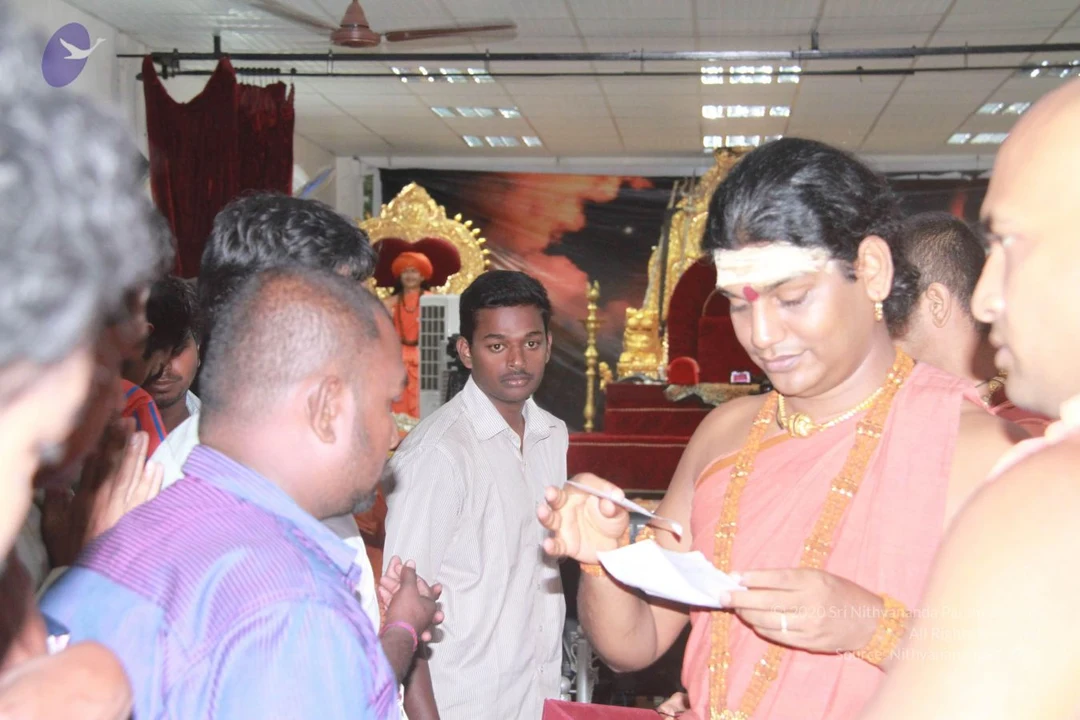
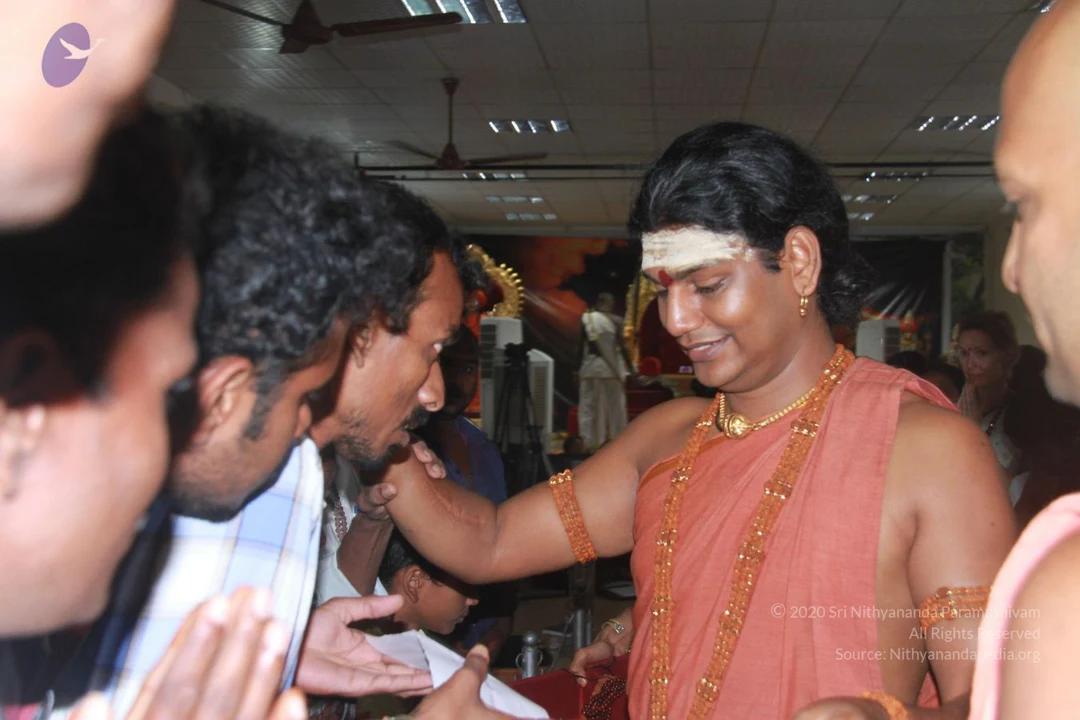
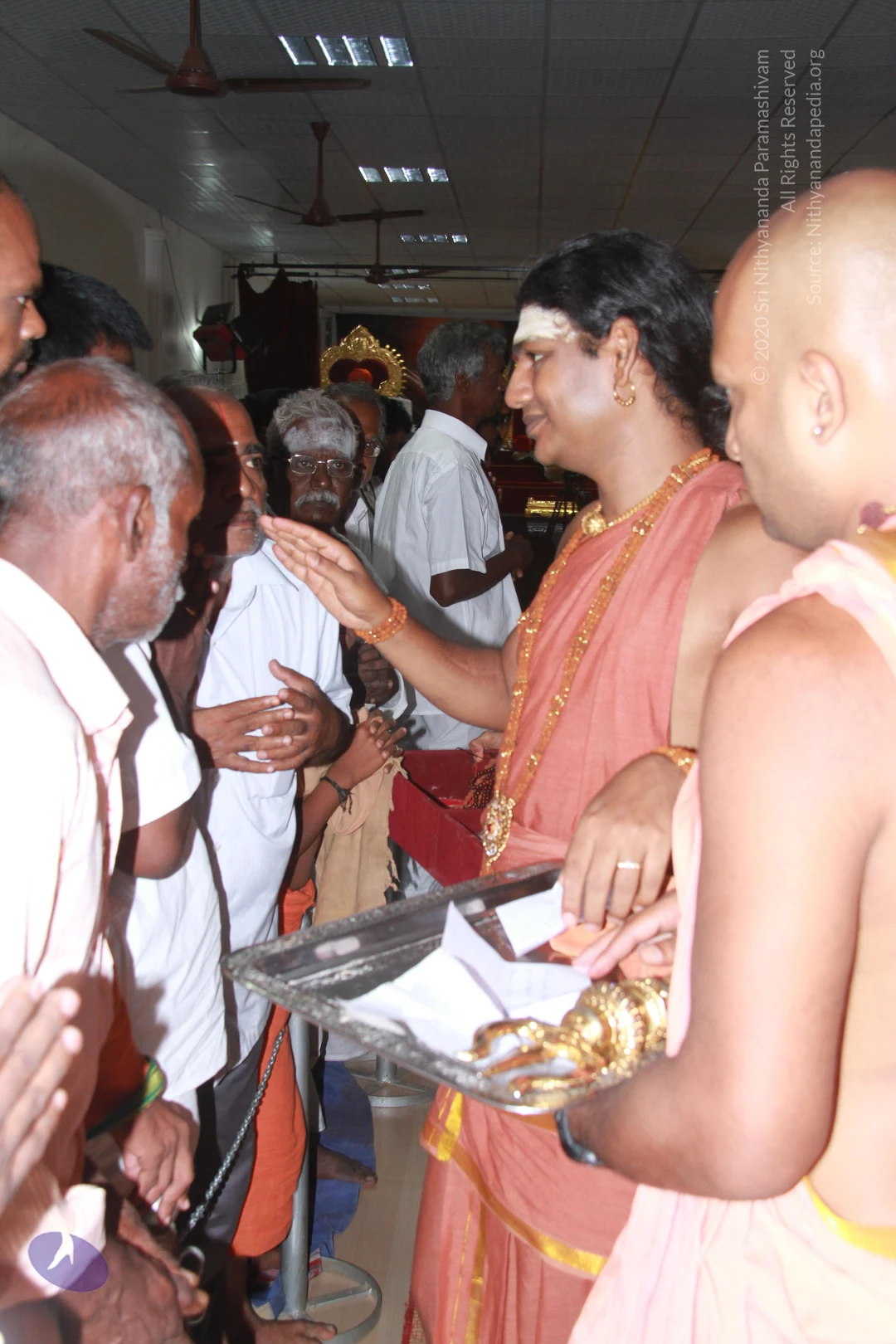
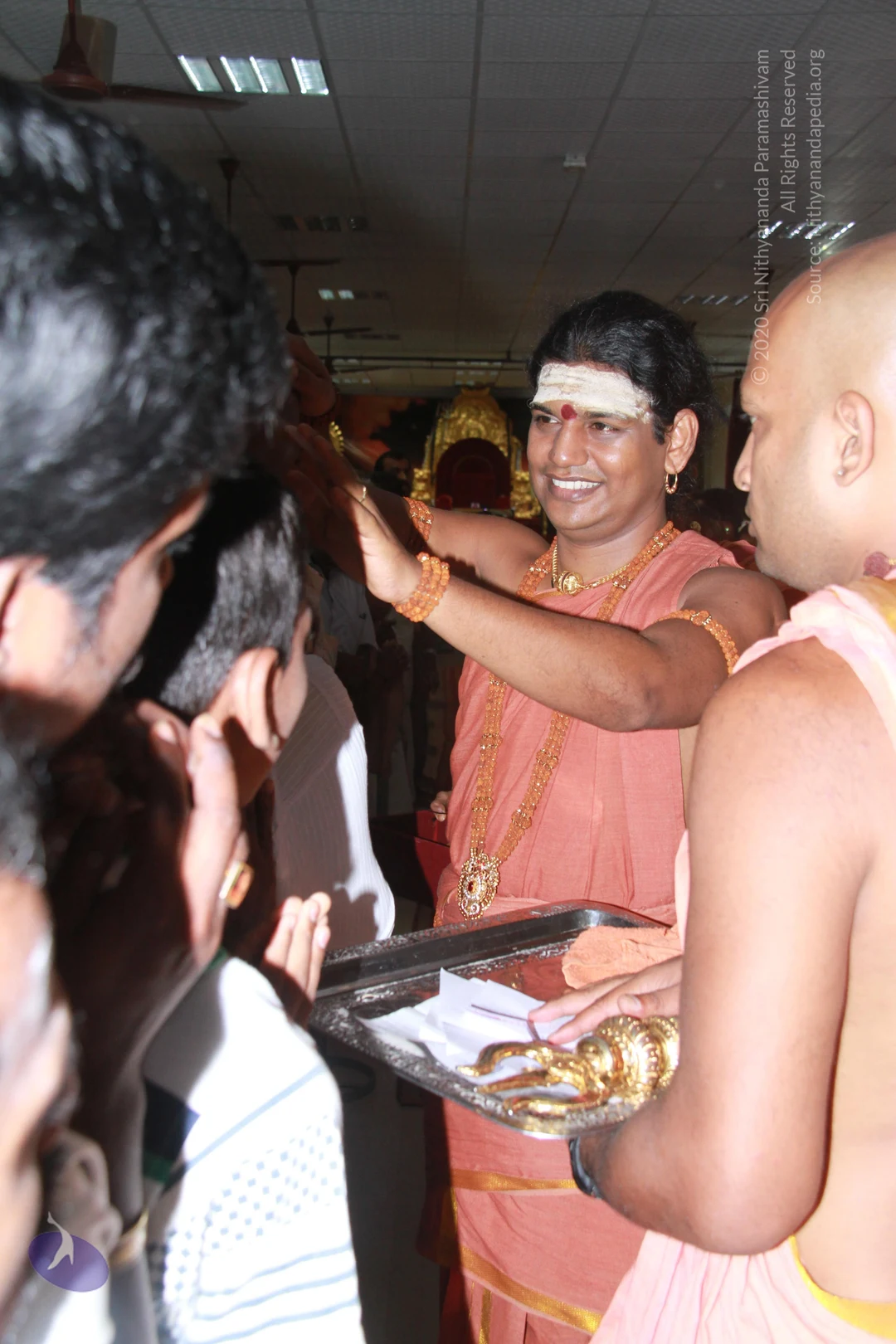
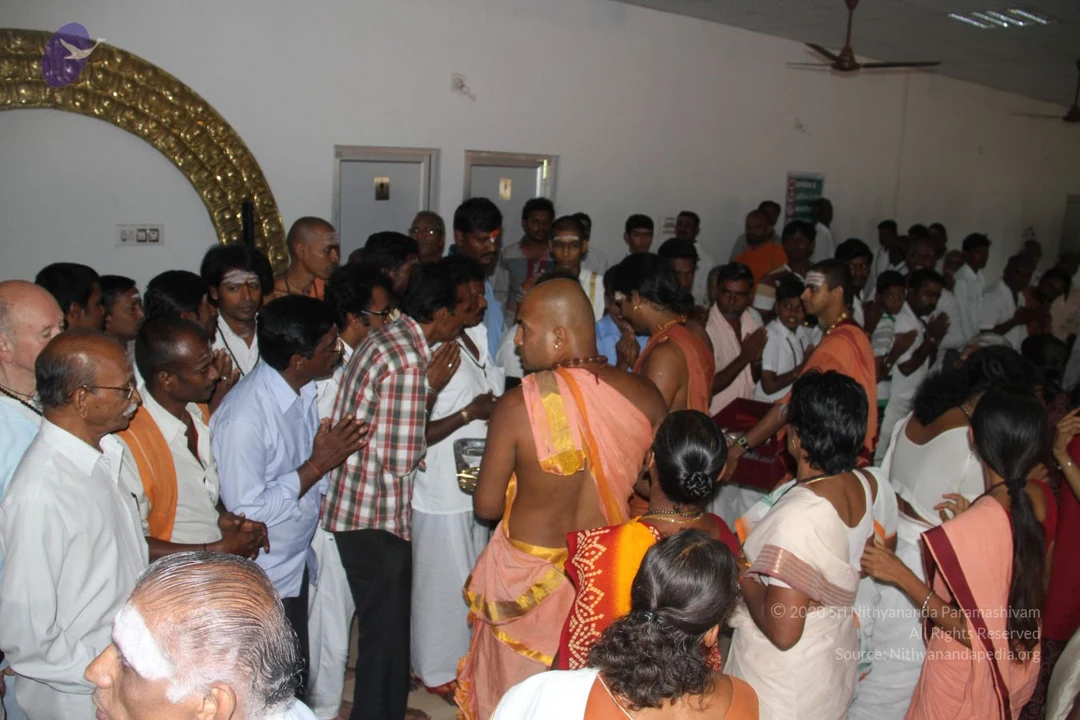
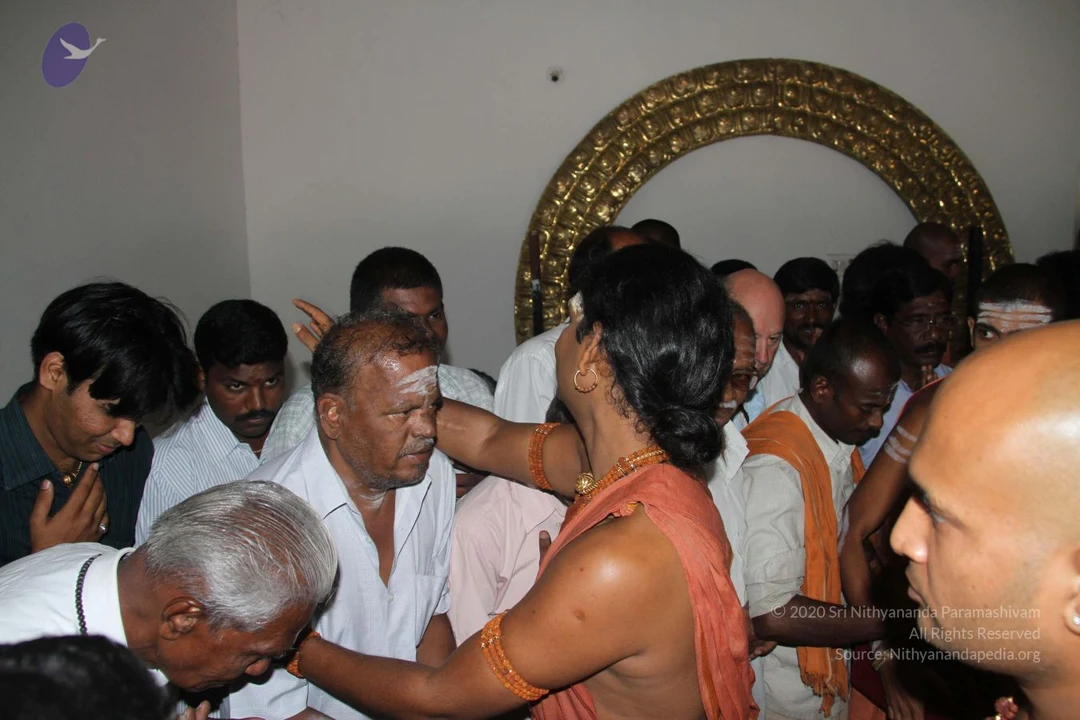
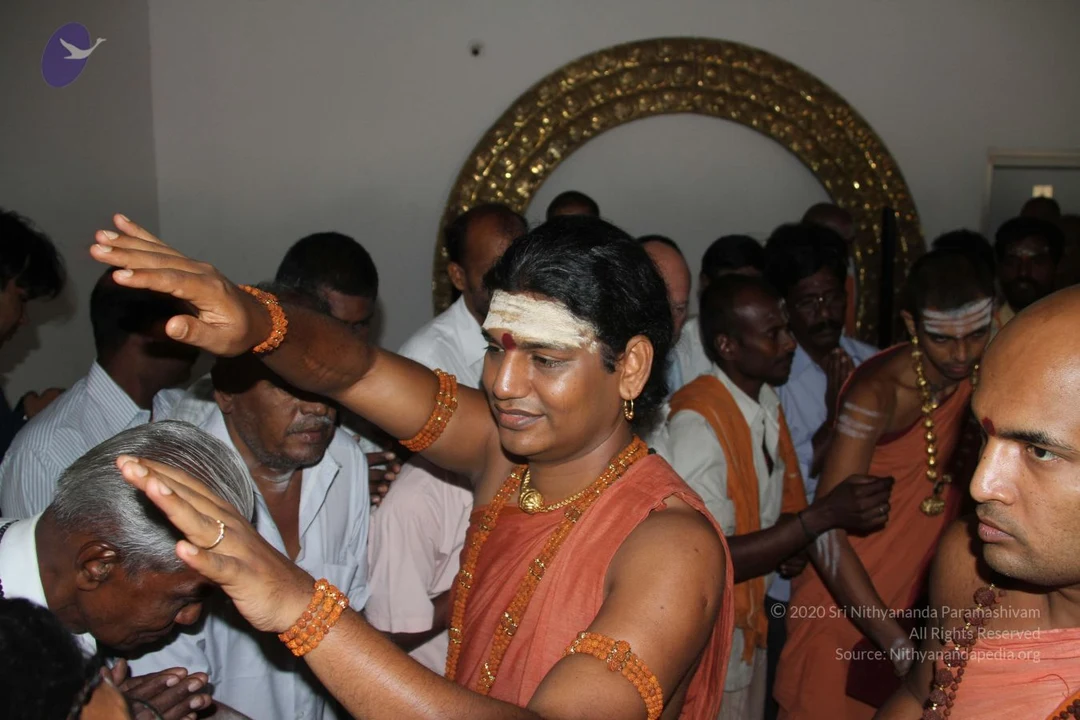
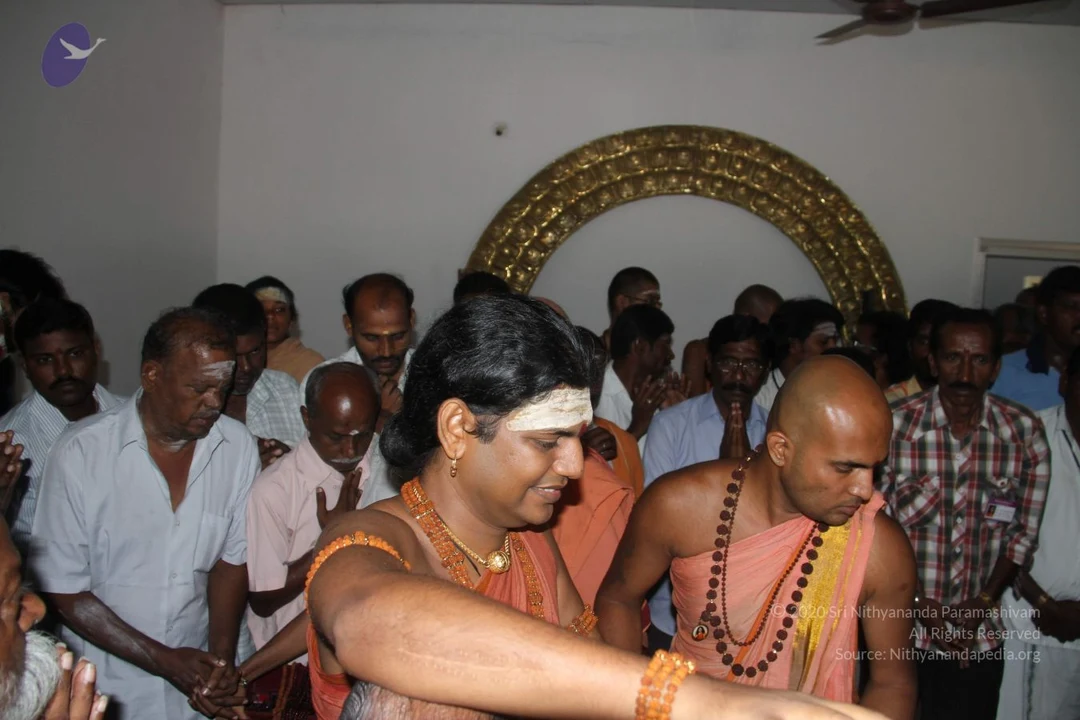
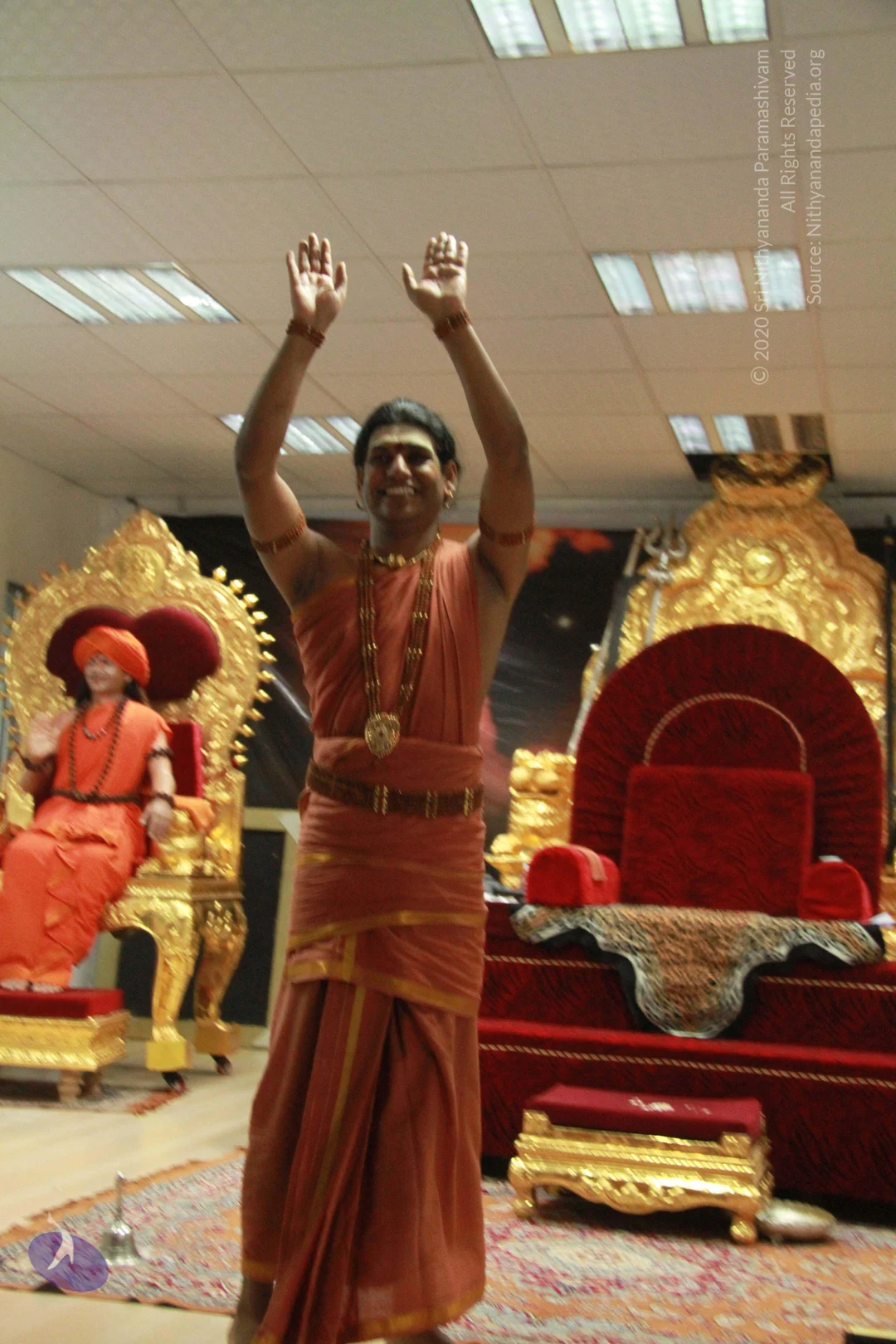
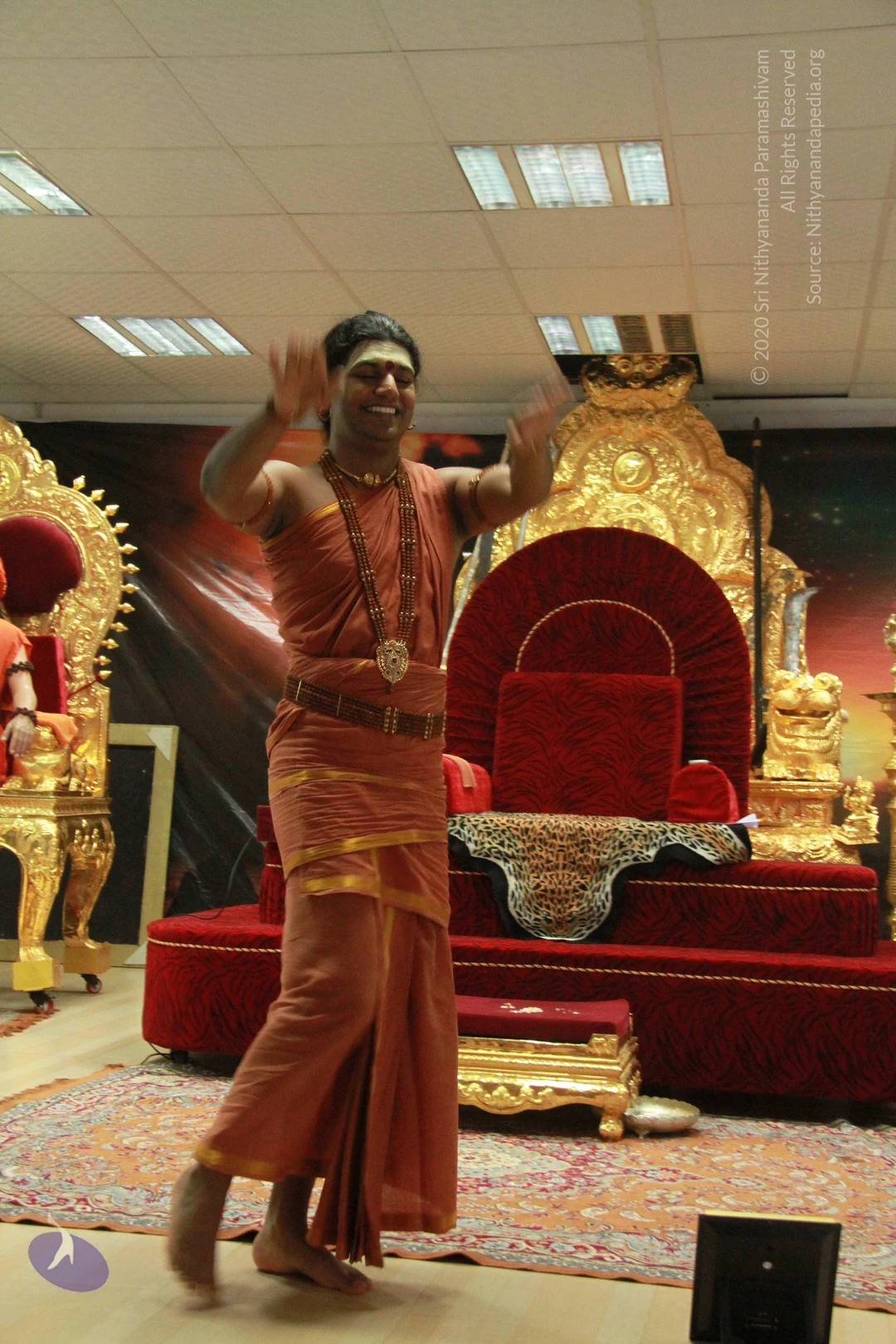
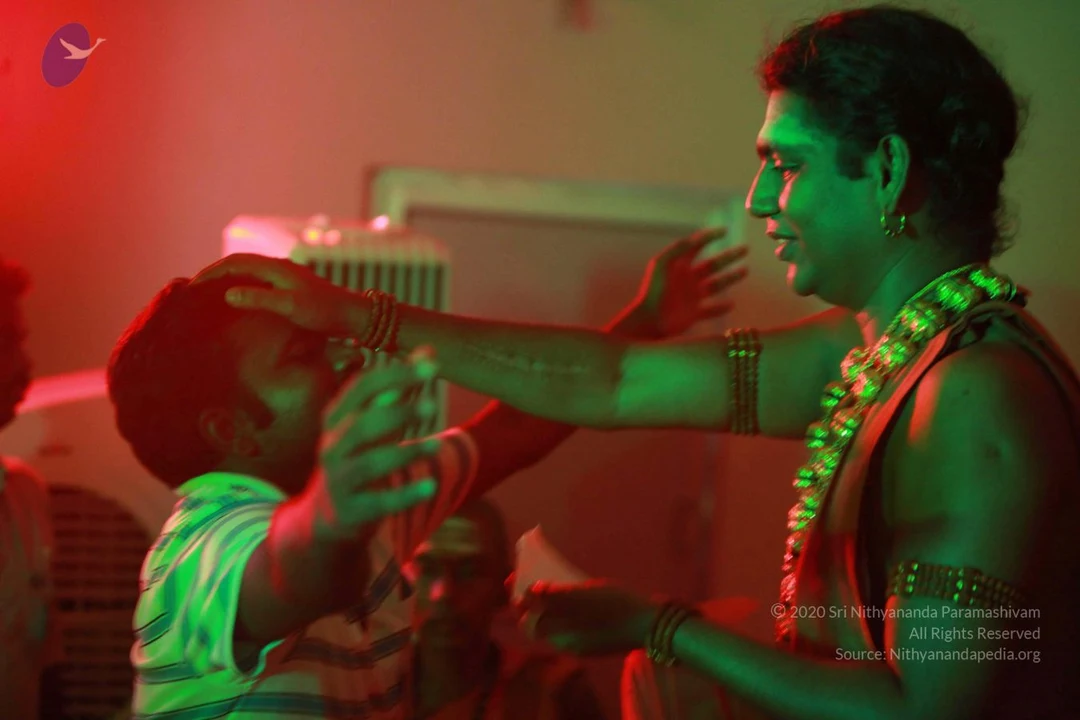
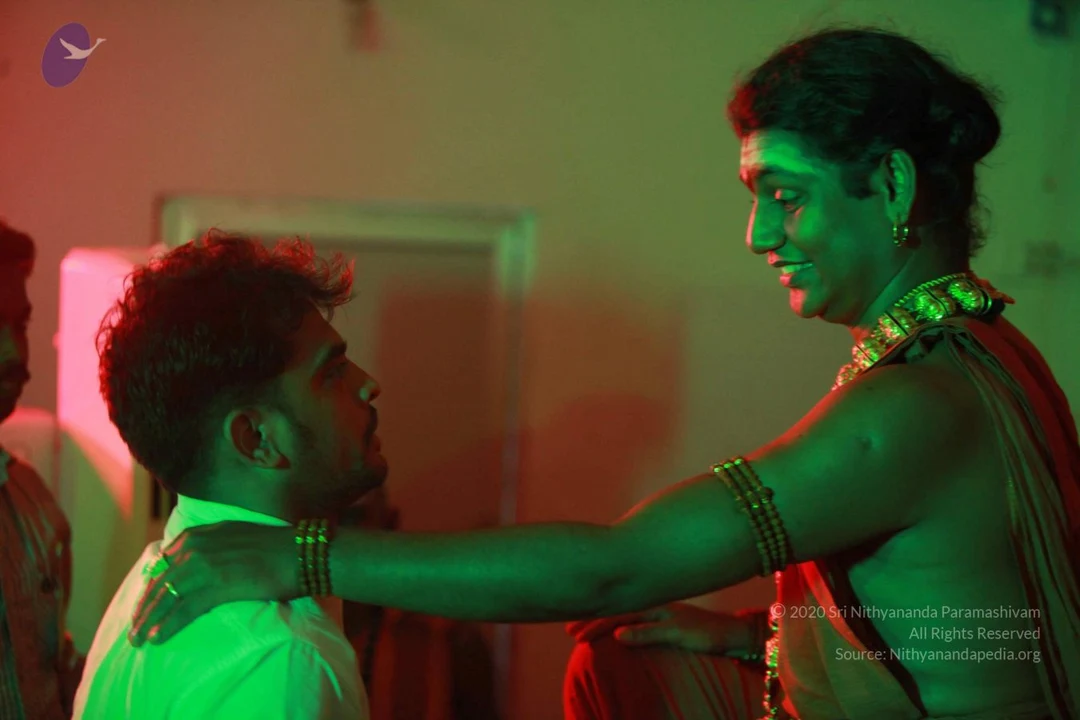
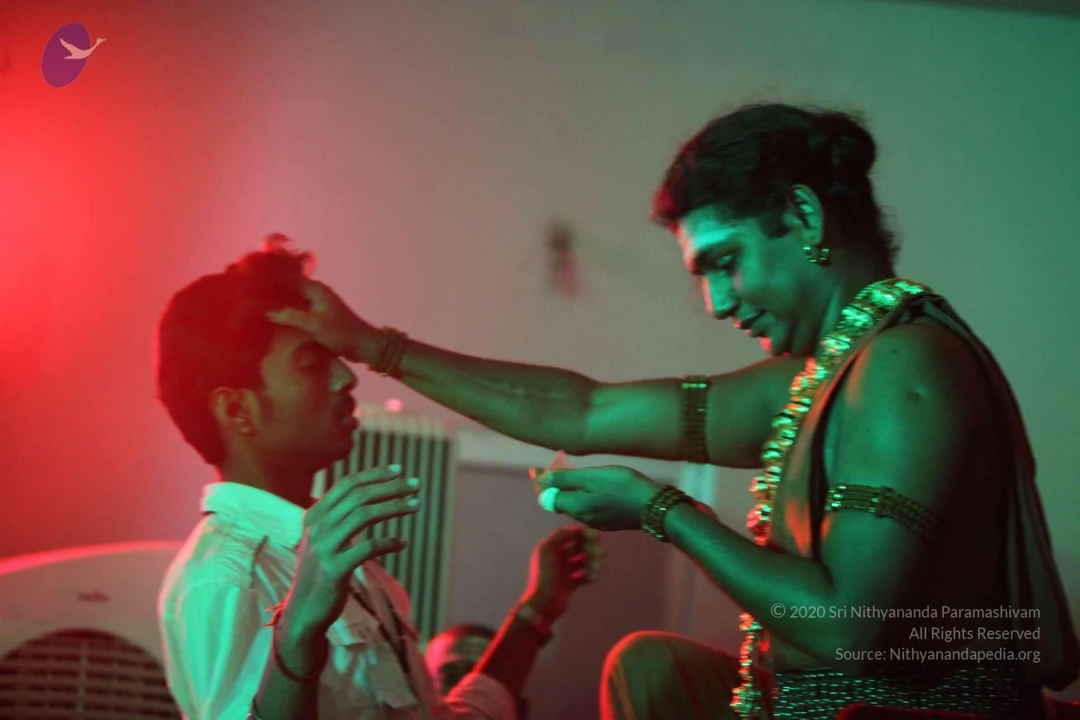
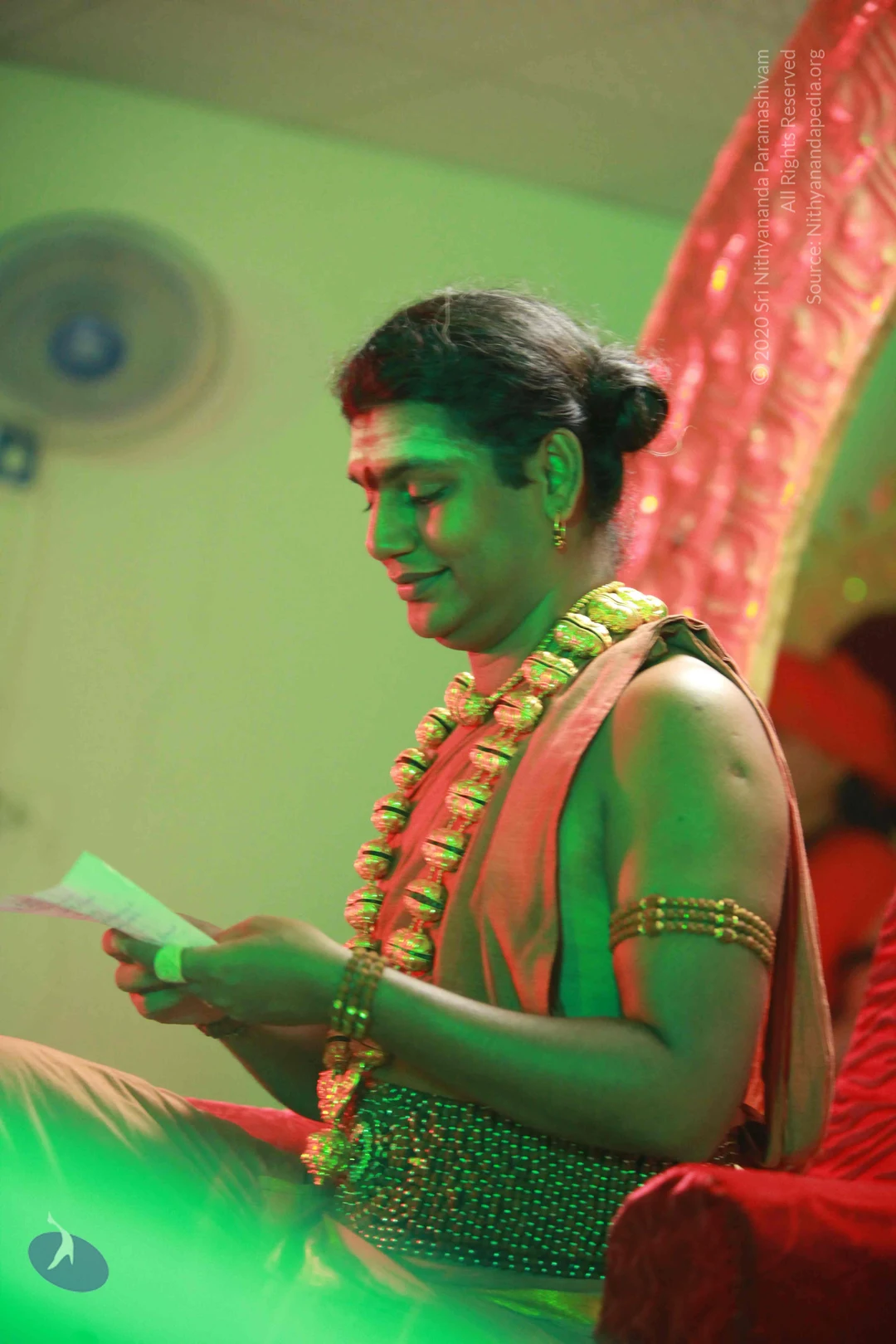
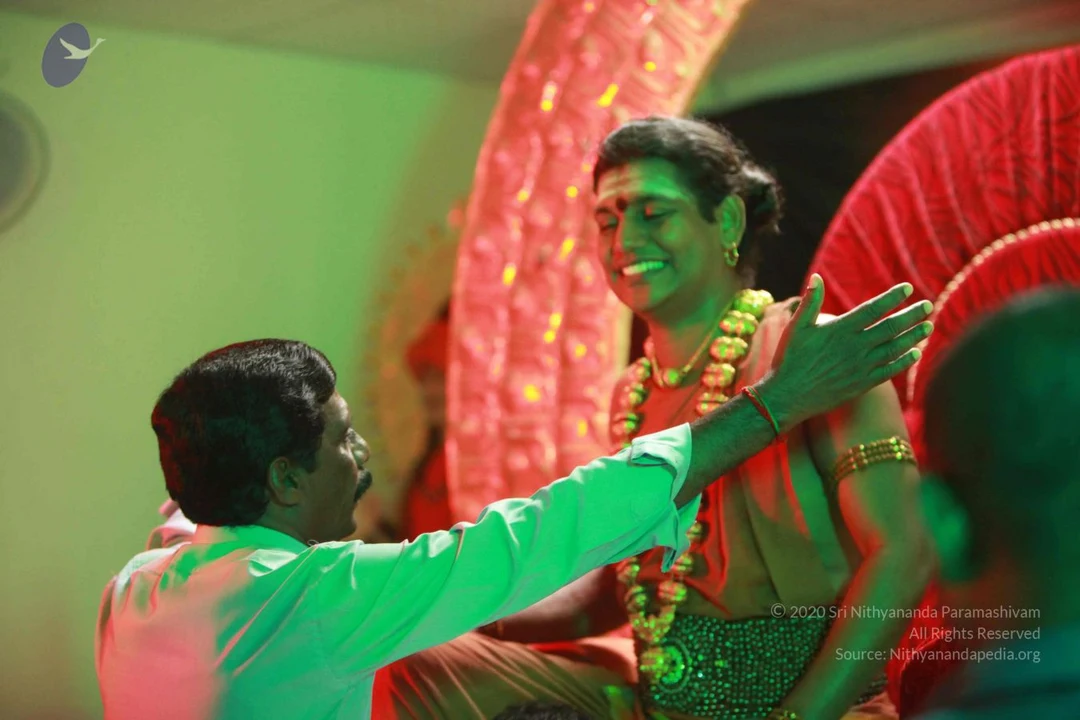
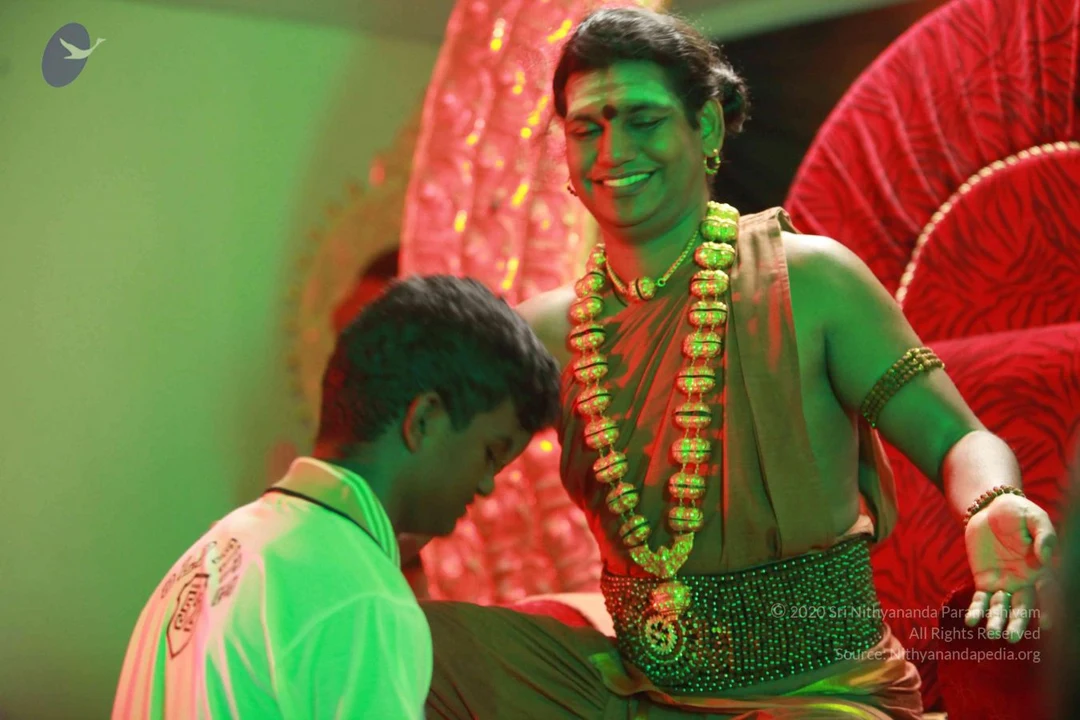
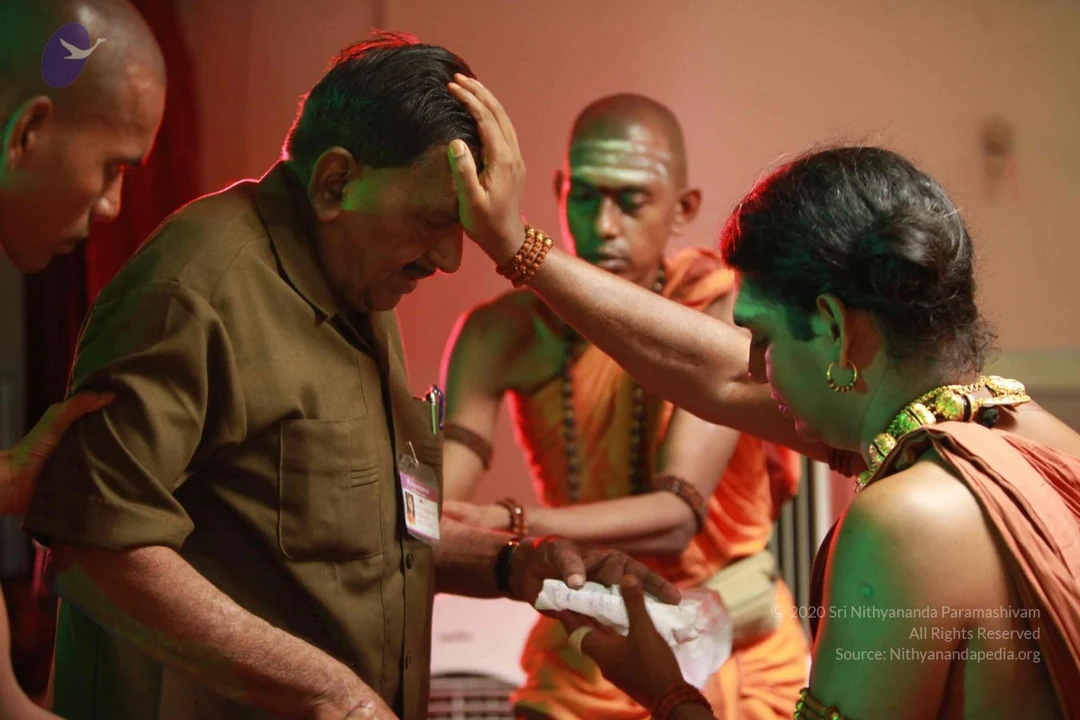
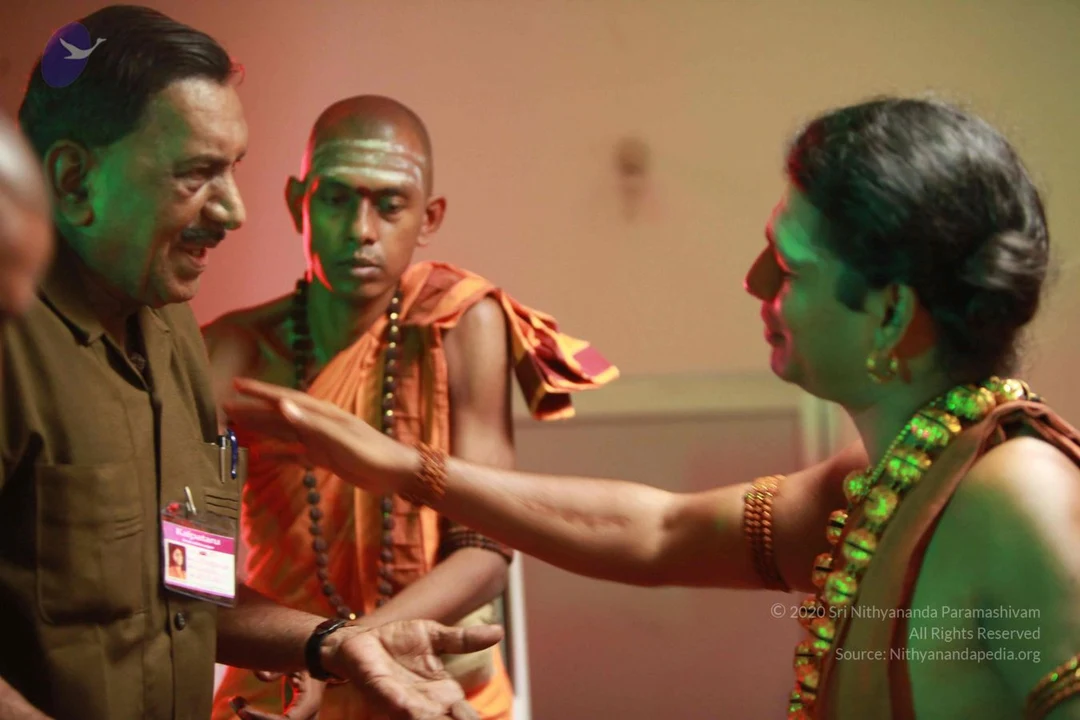
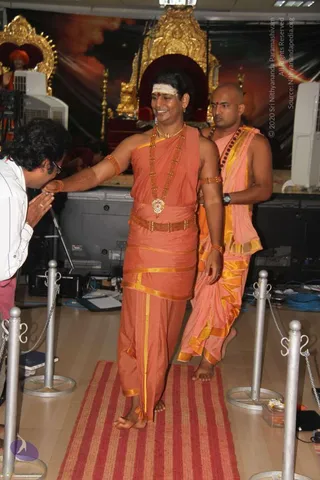
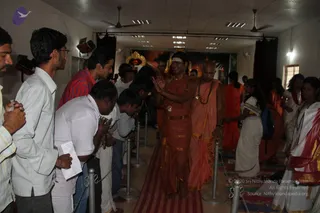
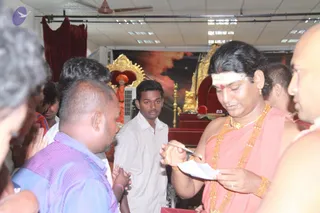
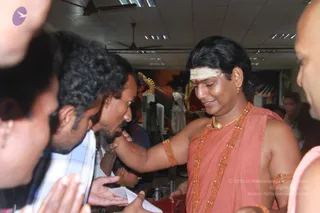
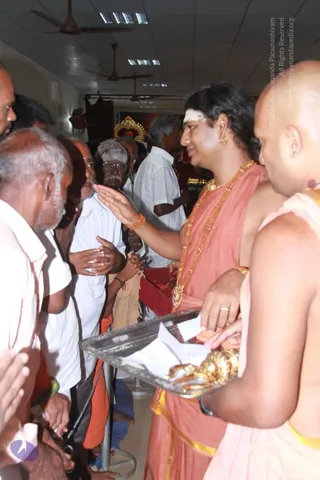
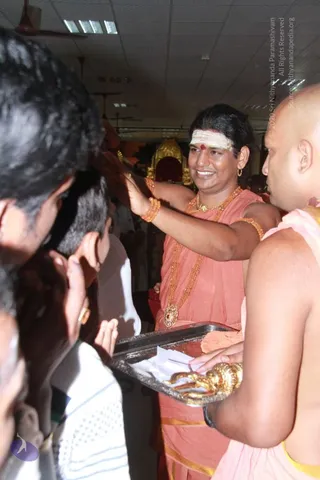
A man in a saffron-orange dhoti and matching shawl with gold border walks barefoot on a red-and-cream striped runner between silver stanchions. He wears a white forehead band with a red dot, a long rudraksha-style orange bead mala, gold necklace with a red-stoned pendant and a gold-bordered sash at the waist. A second man in matching orange robes with a rudraksha mala and wristwatch walks behind him. A man in a white shirt bows with palms joined toward the walking figure. Behind them are a gold throne with an orange-clad figure and a red-and-orange backdrop.Photograph of a devotee line inside a hall with a red carpet runner, where a man in an orange-saffron dhoti and a gold-bordered sash with a dark rudraksha-style bead necklace and a headband, with gold ornaments, walks forward and raises a hand in greeting. Beside him, a bald man in saffron robes with a long beaded mala walks in step. Standing devotees along metal stanchions with chains fold hands or bow, and women in white and red sarees and orange-clad attendants stand to the right. A gold-trimmed ceremonial canopy and an ornate golden frame appear at the far end, with ceiling fans overhead and a dark curtain backdrop. a person: the man in the orange dhoti with the headband, gold necklace and sash is the central figure receiving greetings from the line.A photograph of a crowded indoor hall with a red-and-gold throne setup in the background. In the foreground right, a man with long swept-back dark hair, a red tilak on his forehead, a gold necklace, and orange rudraksha-style beaded malas over a salmon-pink robe is writing or signing on a white sheet held in his hands. Swamiji (probable): long swept-back hair, a gold necklace, orange beaded malas and ornate pink-orange ritual clothing. Around him, devotees in shirts stand close, some with palms pressed together in greeting. A saffron-robed figure sits on a red cushioned seat near the throne in the background. A purple-and-white striped shirt and a white shirt are prominent among the crowd. A ceiling fan, fluorescent lights, a red drape and a glowing backdrop complete the setting.A photograph of a satsang-style gathering indoors under a drop ceiling with ceiling fans. A central figure with long swept-back dark hair, a white vertical forehead mark with a red bindi, gold earrings, a gold necklace, and layered orange-red beaded malas wears a salmon-orange shawl draped over the torso and an orange armband. He smiles and extends his arm toward a man in a light checked shirt who leans in with his face near the figure's arm, while other people with hands pressed together in namaskar stand around them. Behind, a large backdrop shows a golden deity-like image and a standing figure in white. Several onlookers are partially visible at the edges. Swamiji (probable): the central figure's long swept-back hair, ornate gold jewellery, and orange-red clothing with malas are consistent with the page's claim.Photograph inside an indoor hall with ceiling fans and fluorescent lights. A man with long dark hair, a white tilak across his forehead, gold earrings, a red-orange robe and layered gold and beaded necklaces stands at centre-right, extending a hand toward a line of devotees. Beside him a bald man in pale pink robes holds a silver tray with a gold object and white papers. On the left, older men in white shirts and a man in pinkish clothing press their palms together in greeting and reach forward. A gold-framed decorative shrine piece is visible in the background. Probable Swamiji appears here with distinctive long hair, ornate necklaces and saffron-toned robes, giving darshan to devotees.A smiling man in a rust-orange dhoti and shawl, with a white vibhuti band and red kumkum dot on his forehead, wears layered orange beaded malas and a gold pendant necklace. He extends his right hand to bless or touch the head of a devotee whose dark hair is visible at left. Beside him, a shaven-headed priest in a pale pink dhoti holds a silver tray with white folded papers and an ornate gold object. Behind them, a golden shrine canopy and a deity murti are visible in a hall with ceiling fans and fluorescent lights.

AKASHIC-READINGS

42 photosSource gallery
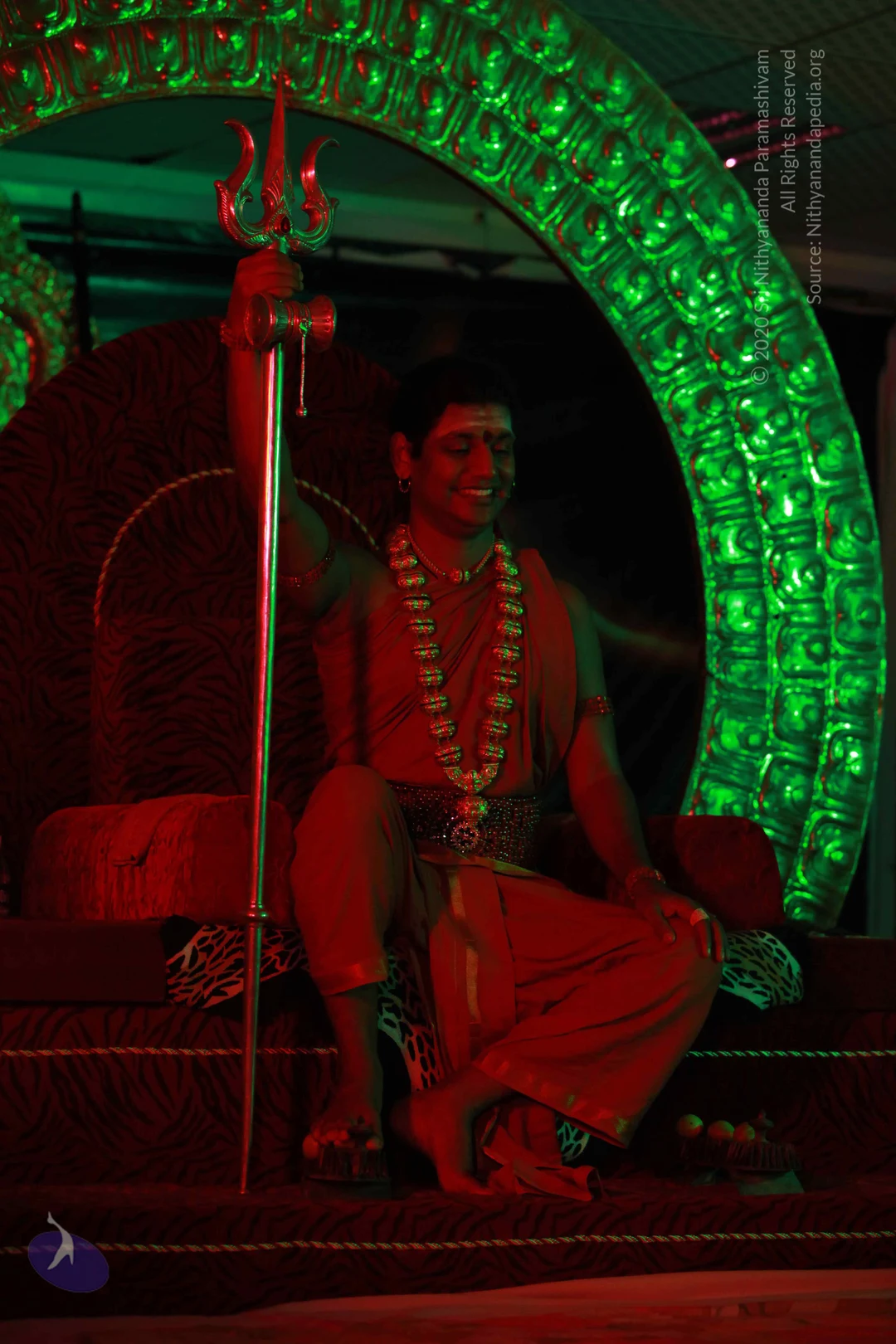
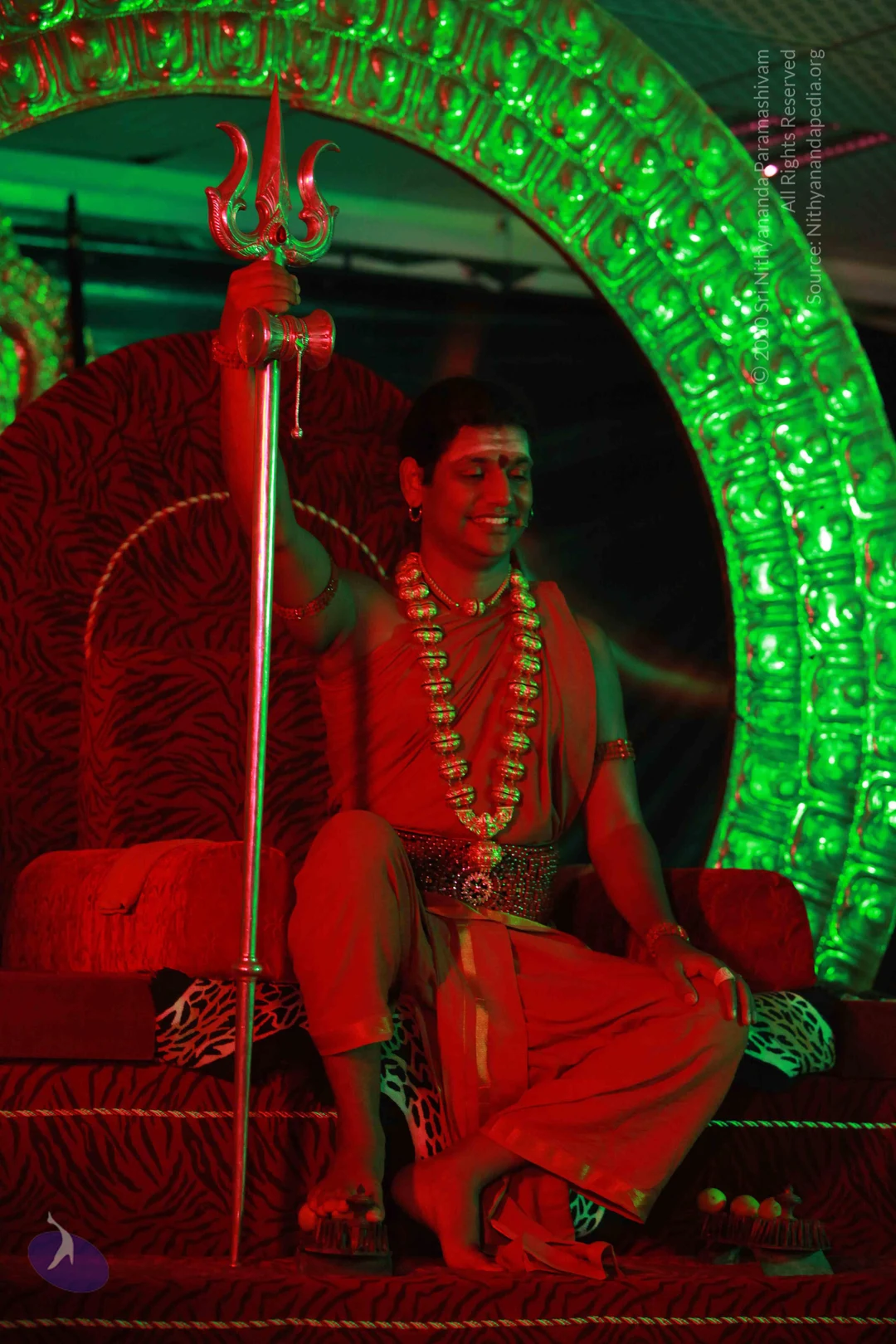
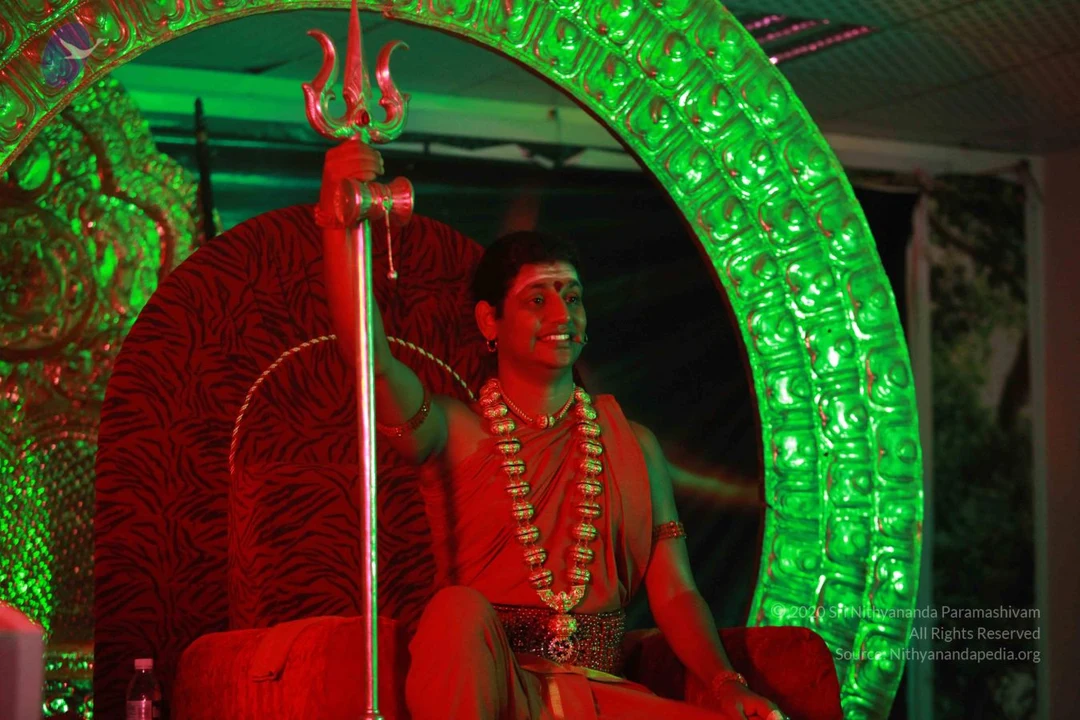
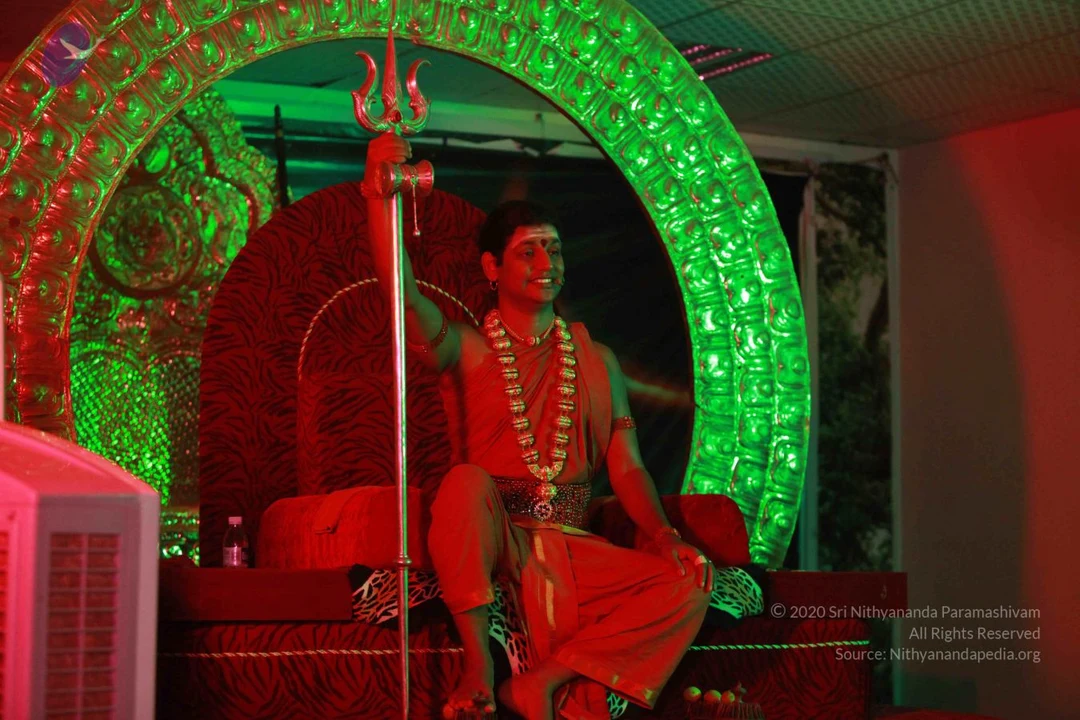
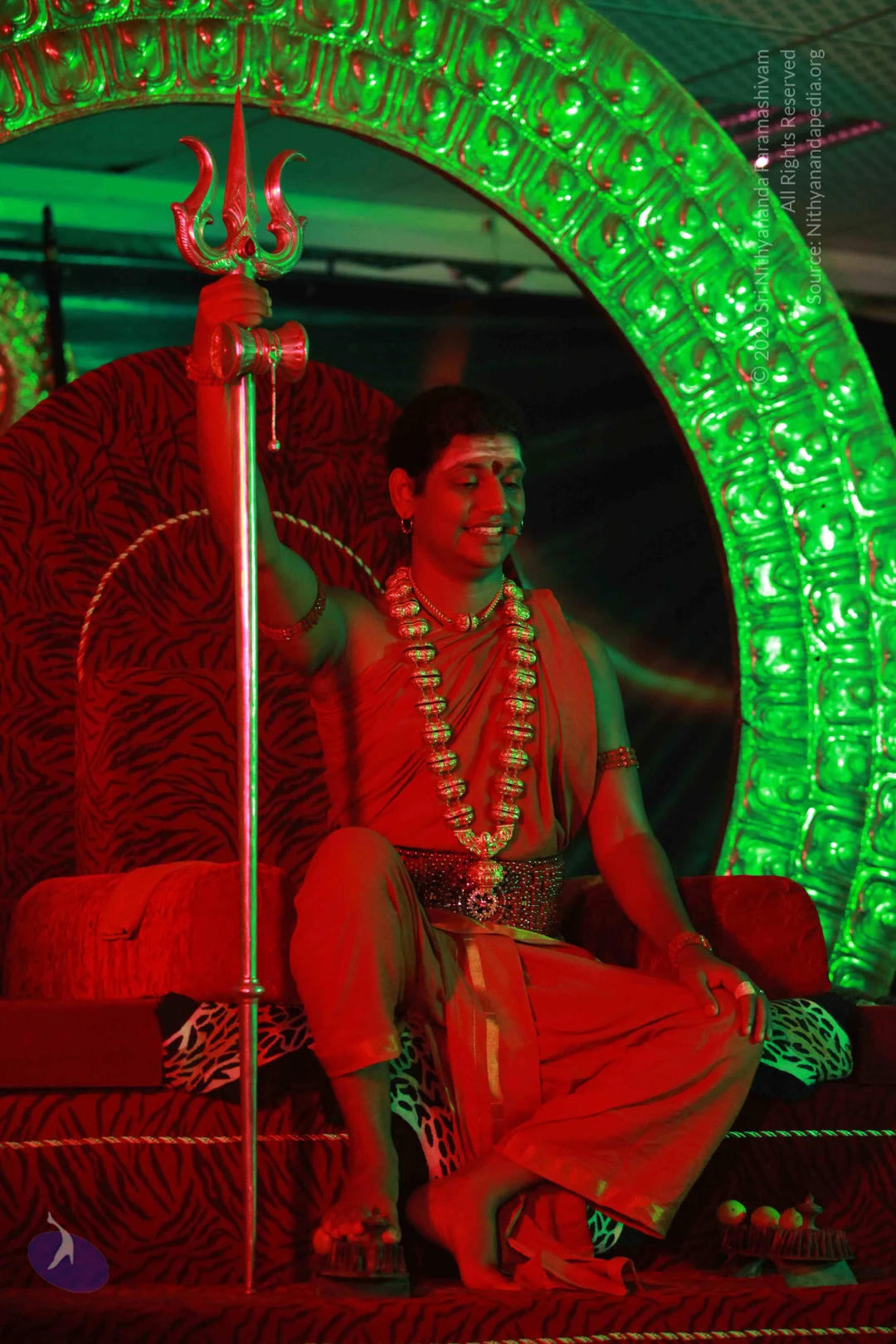
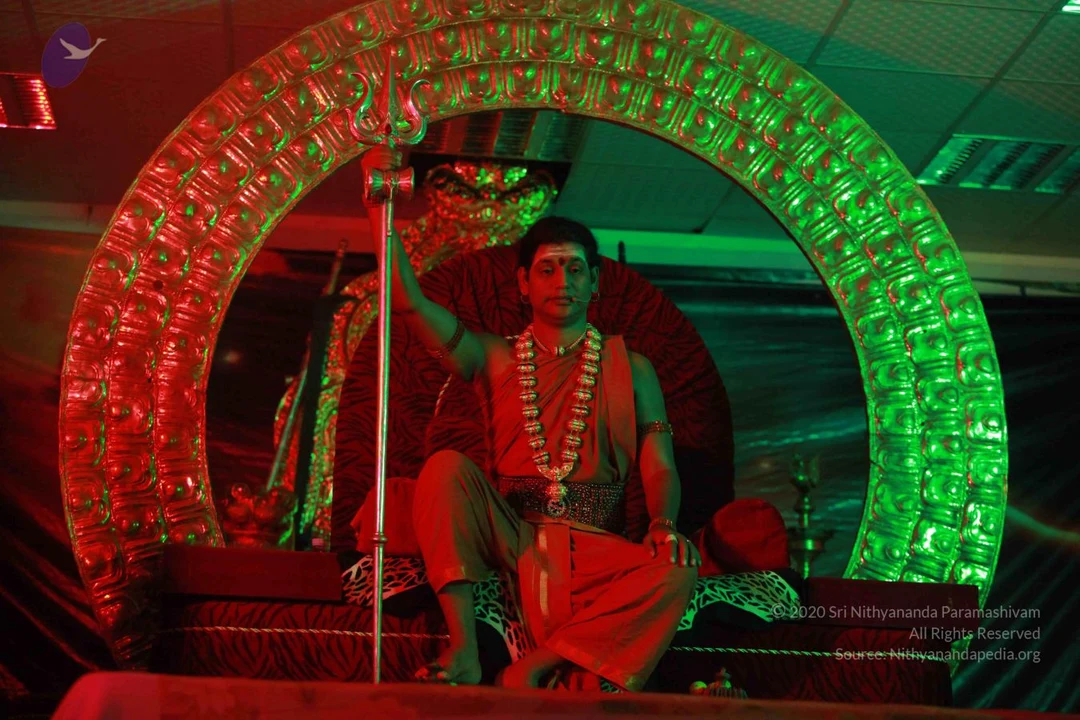
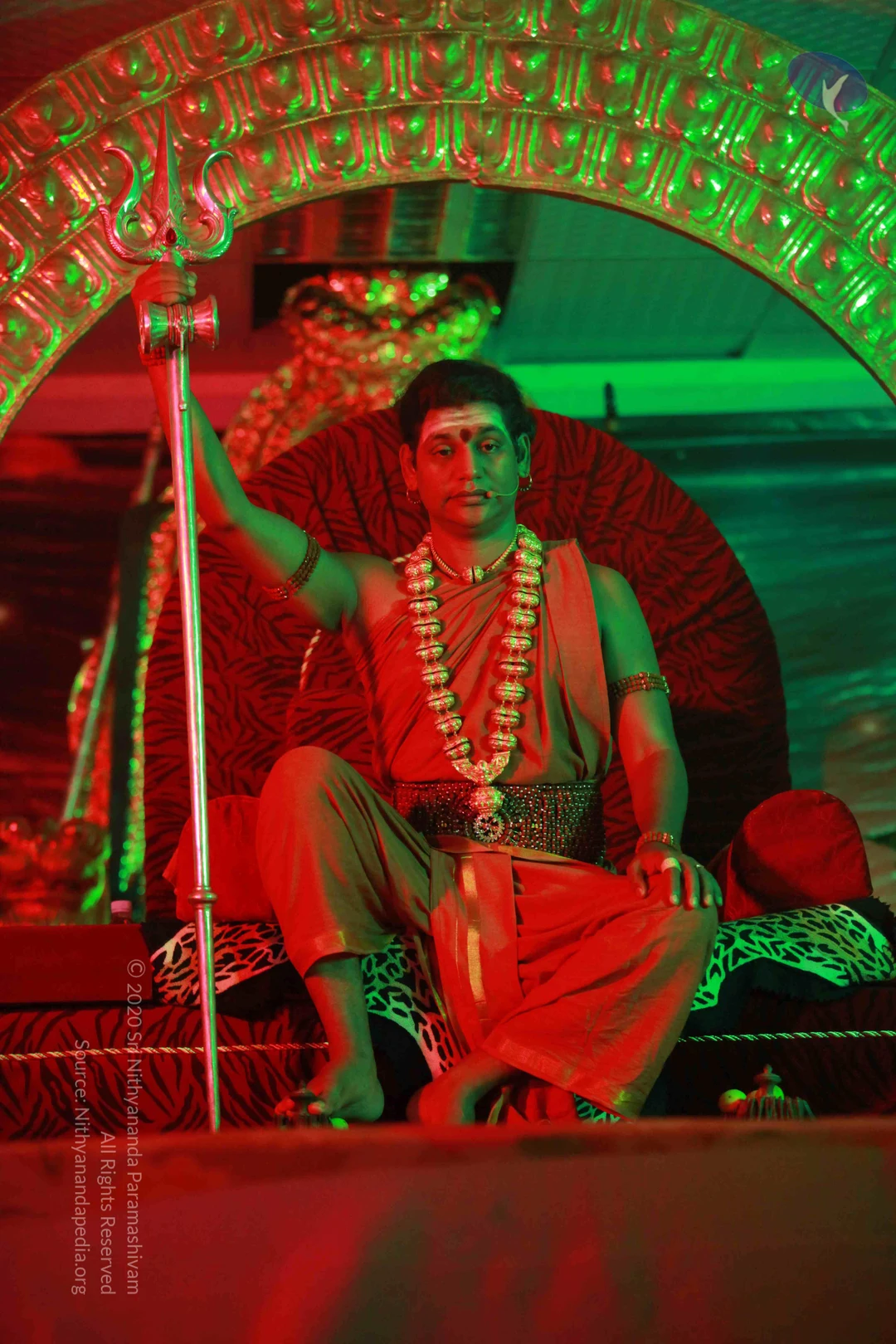
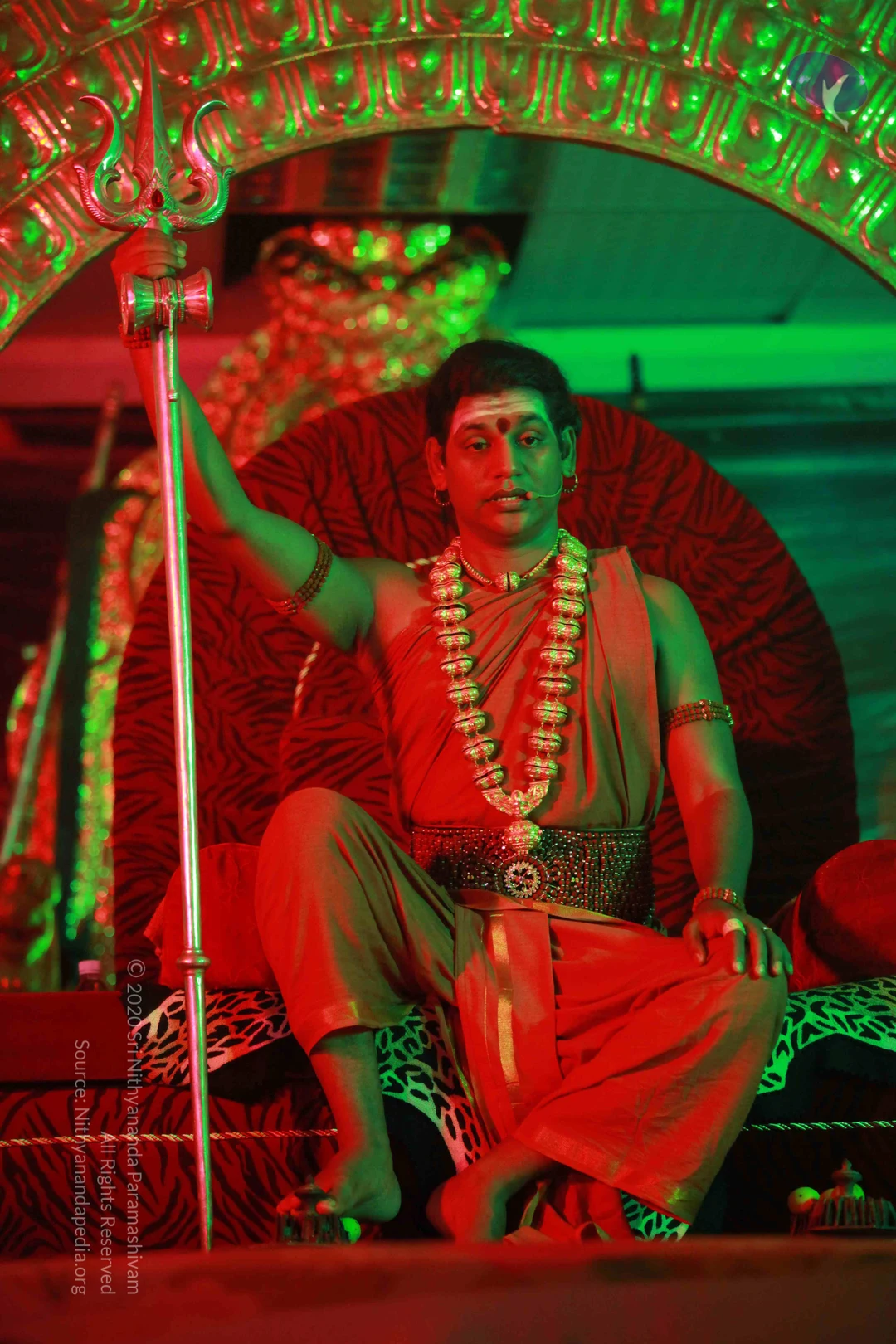
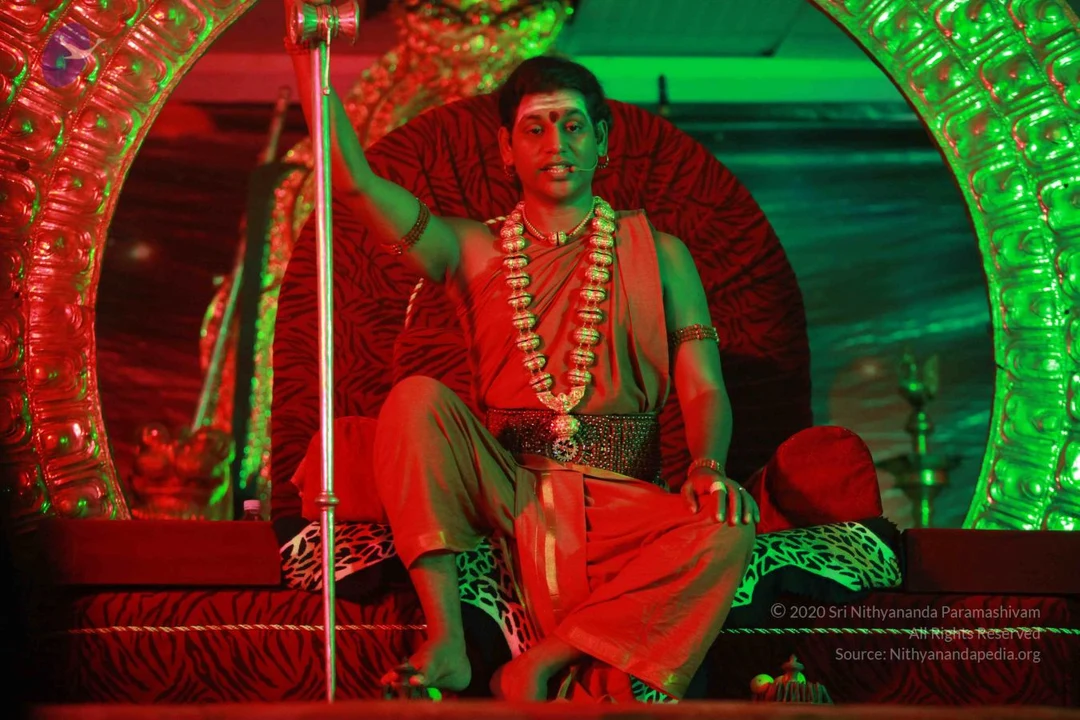
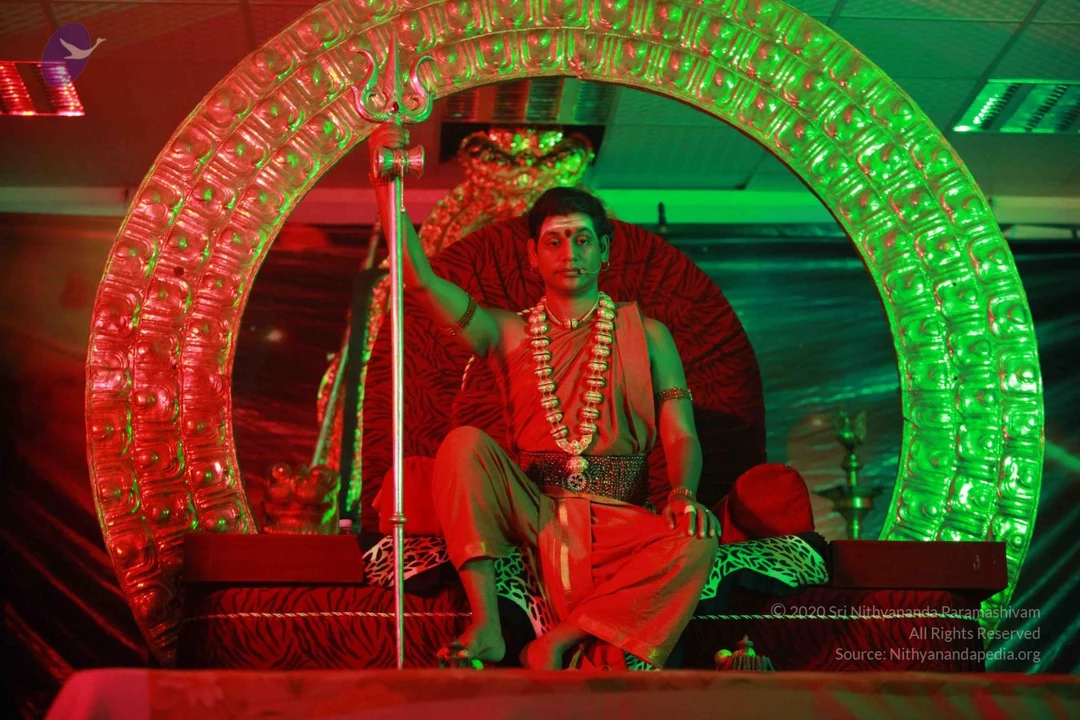
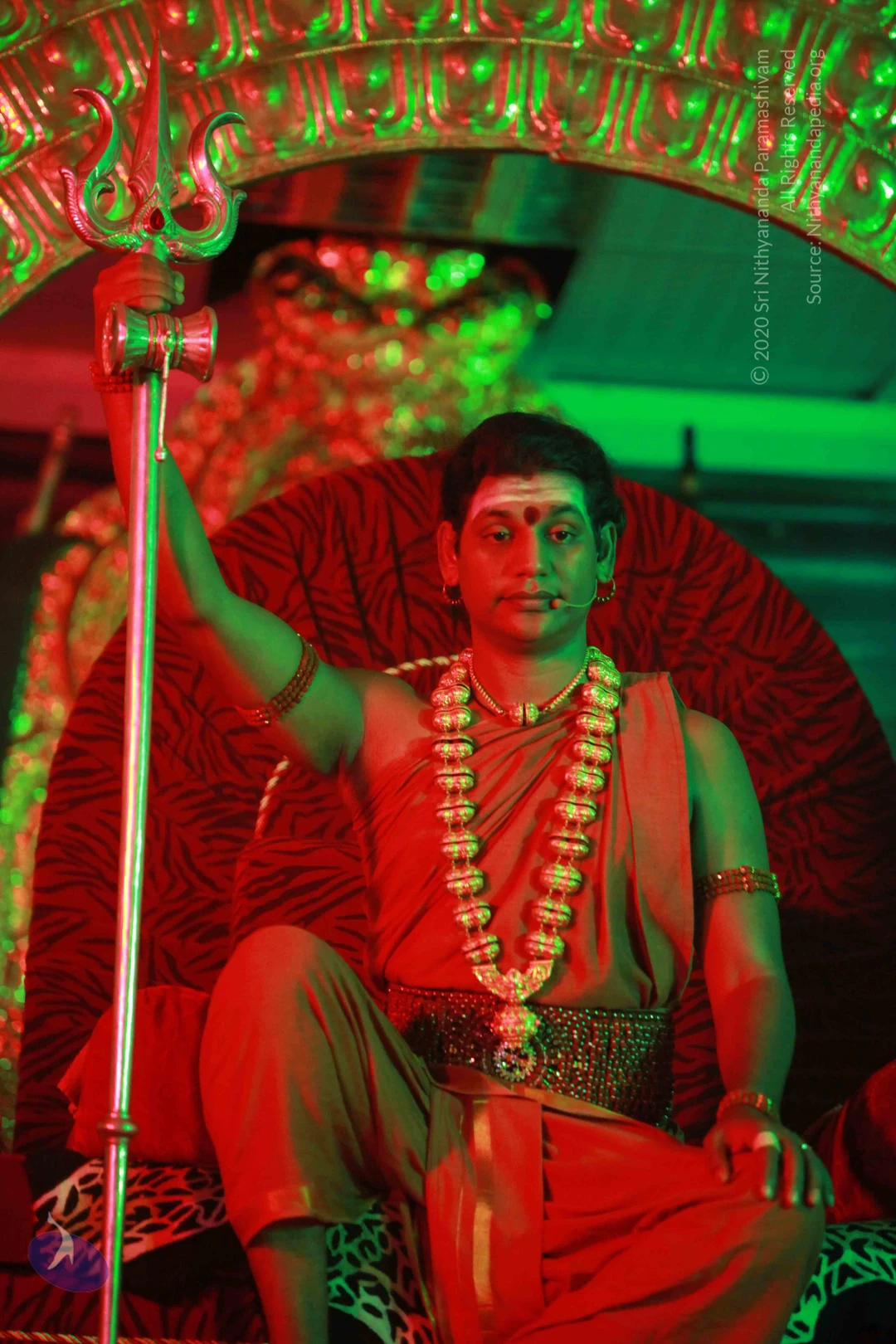
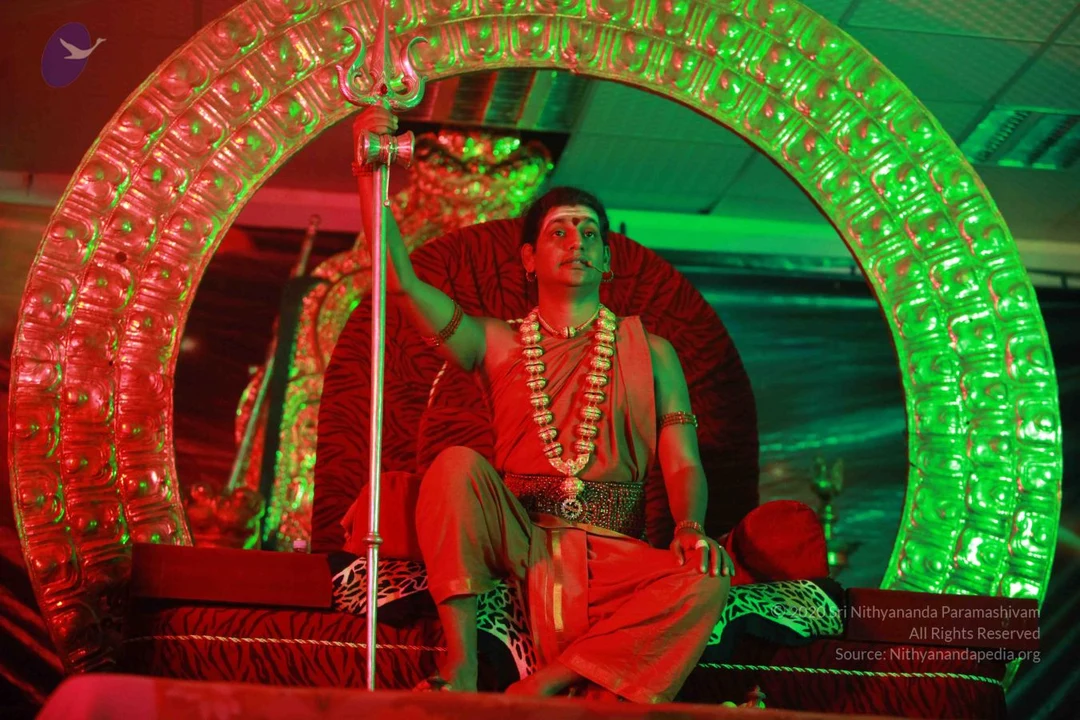
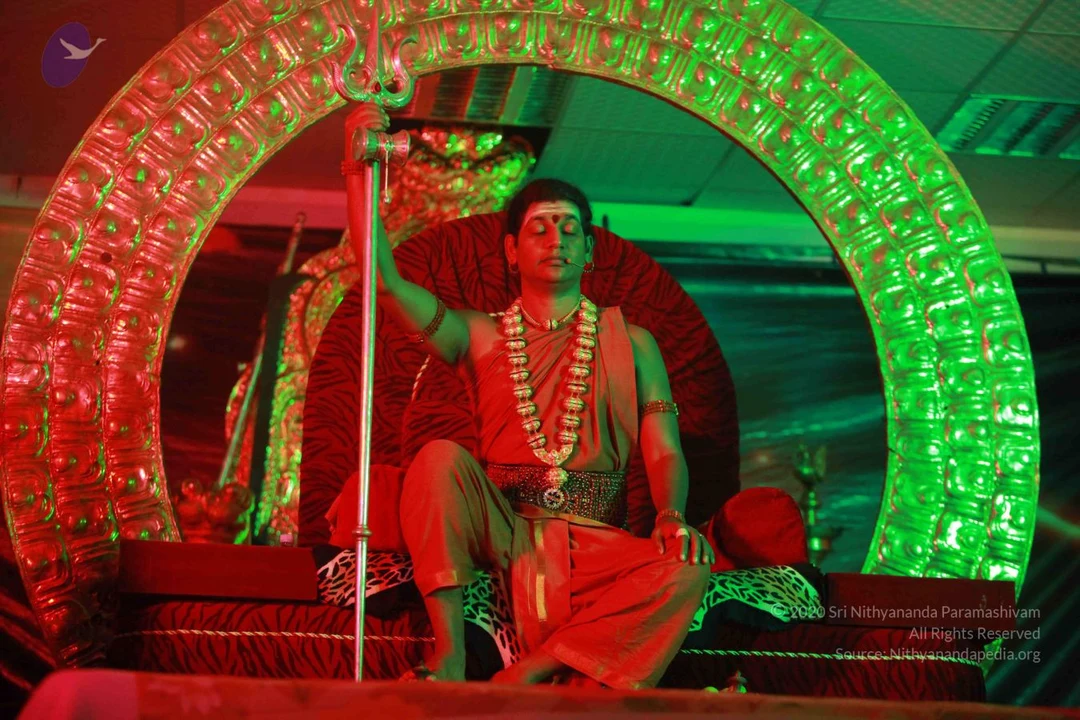
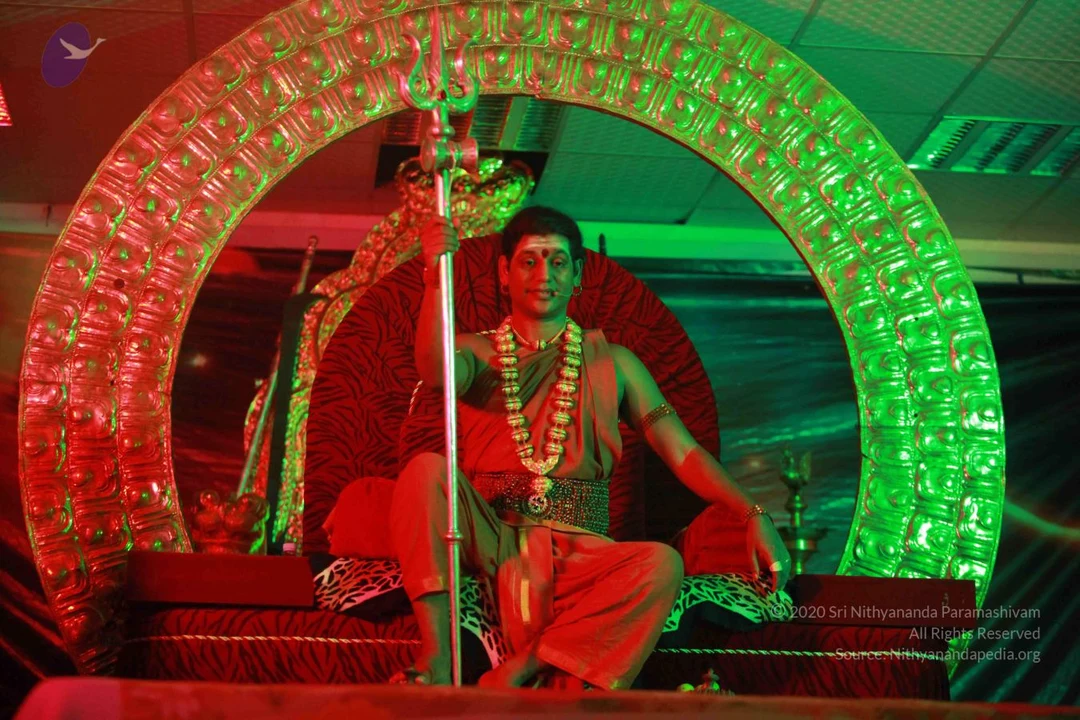
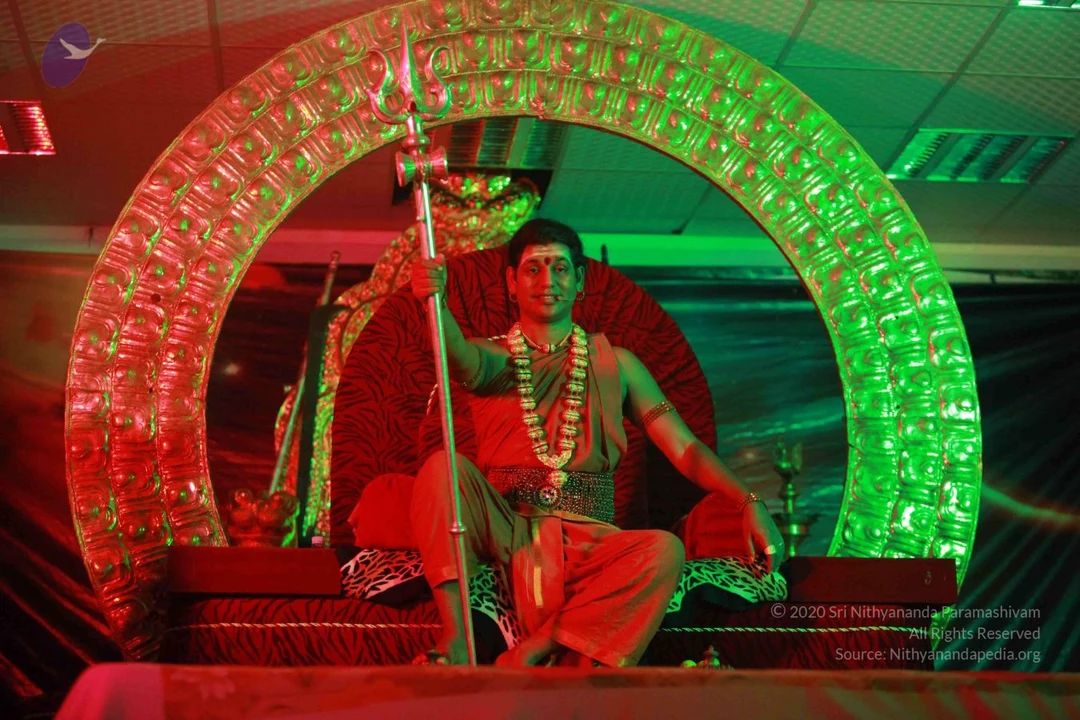
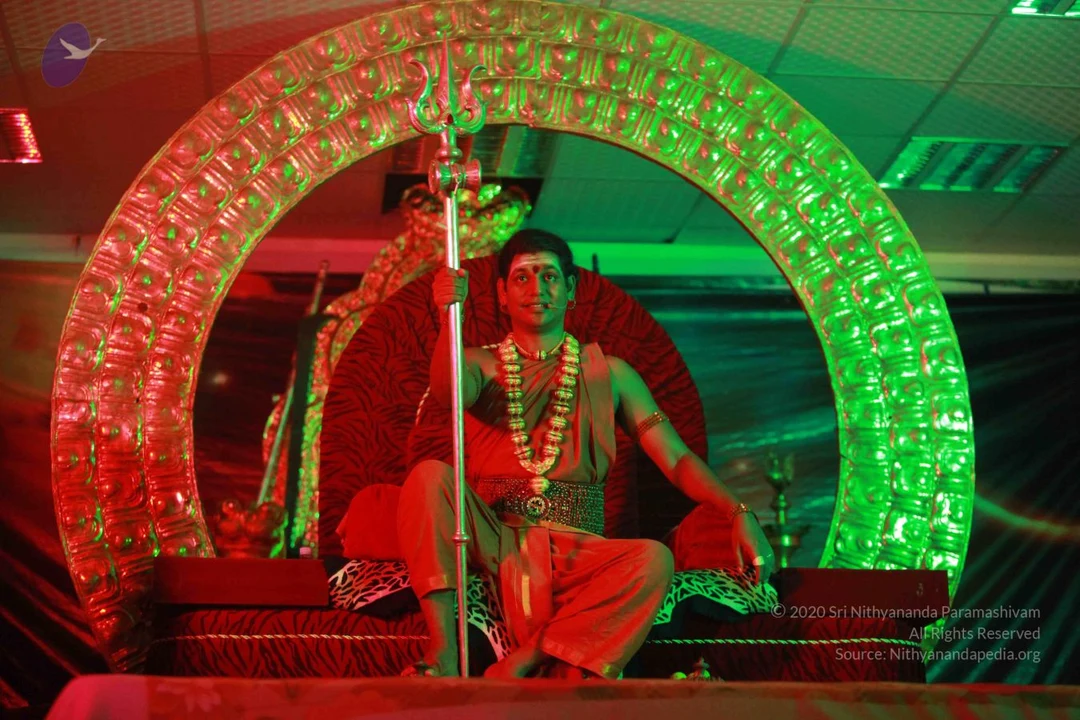
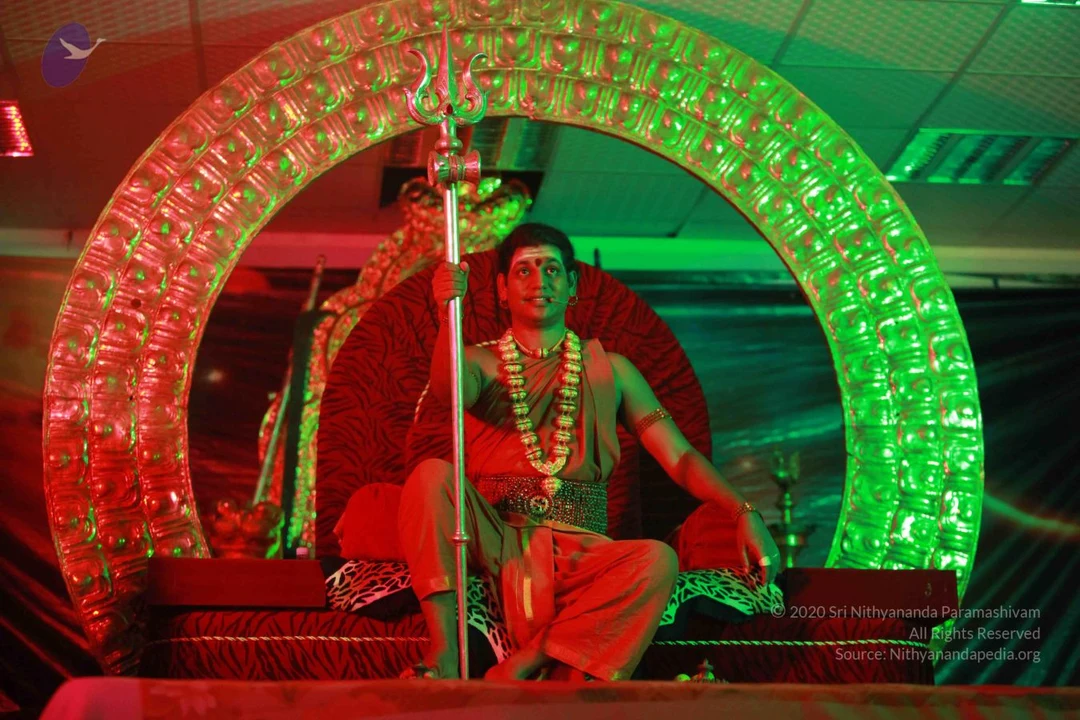
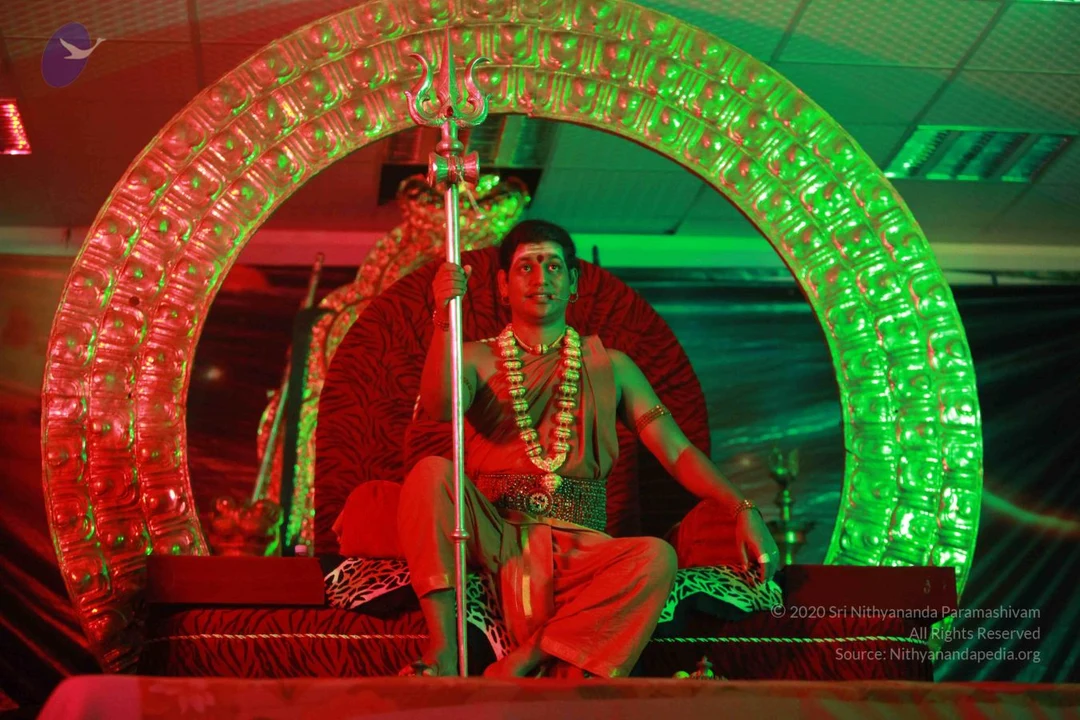
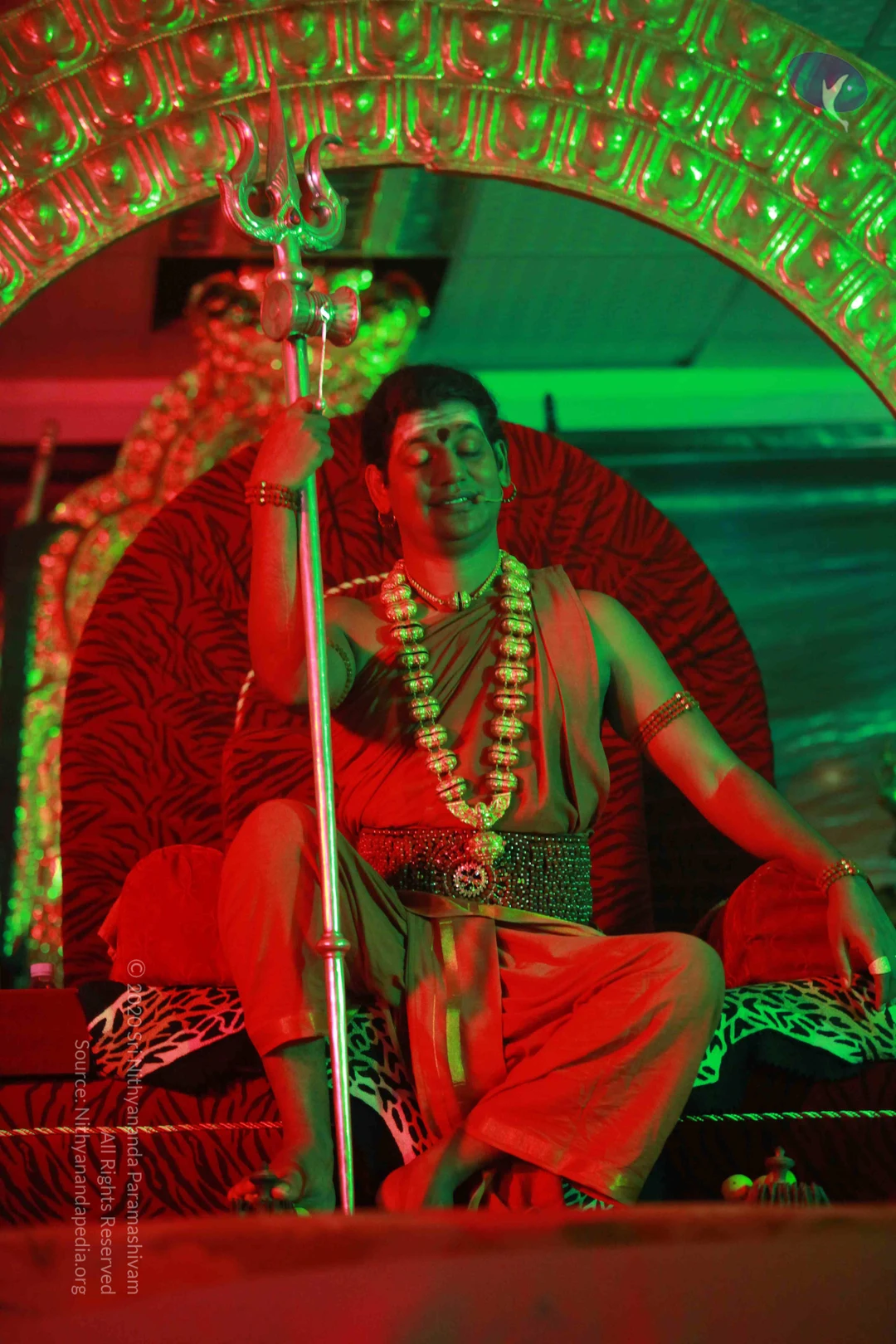
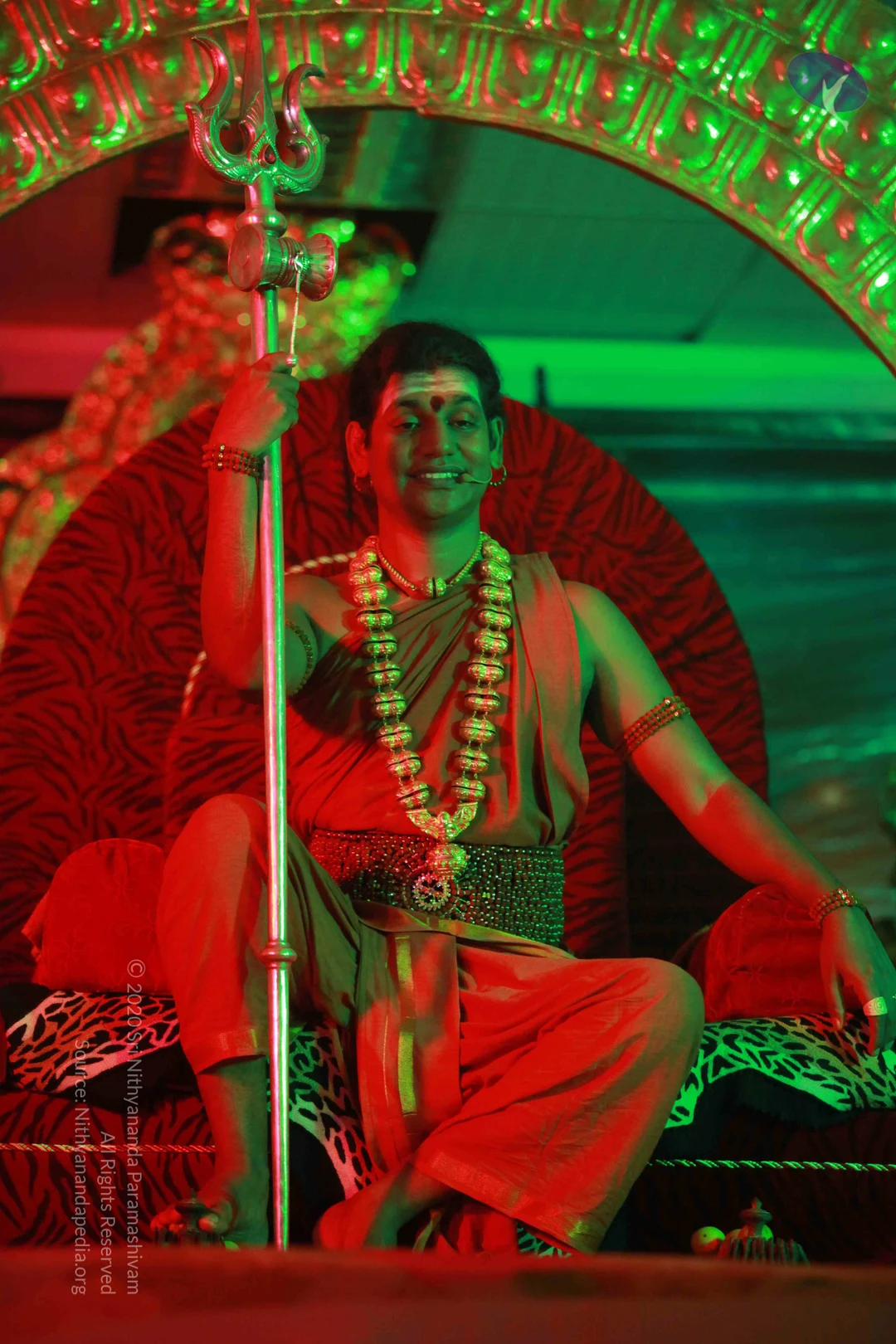
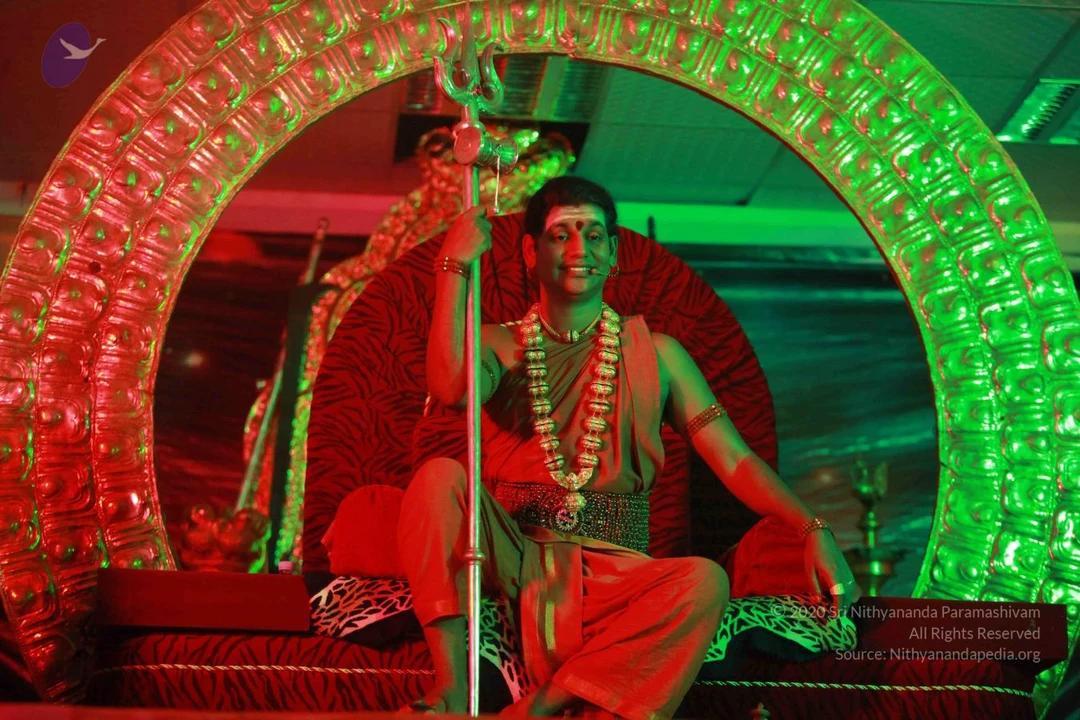
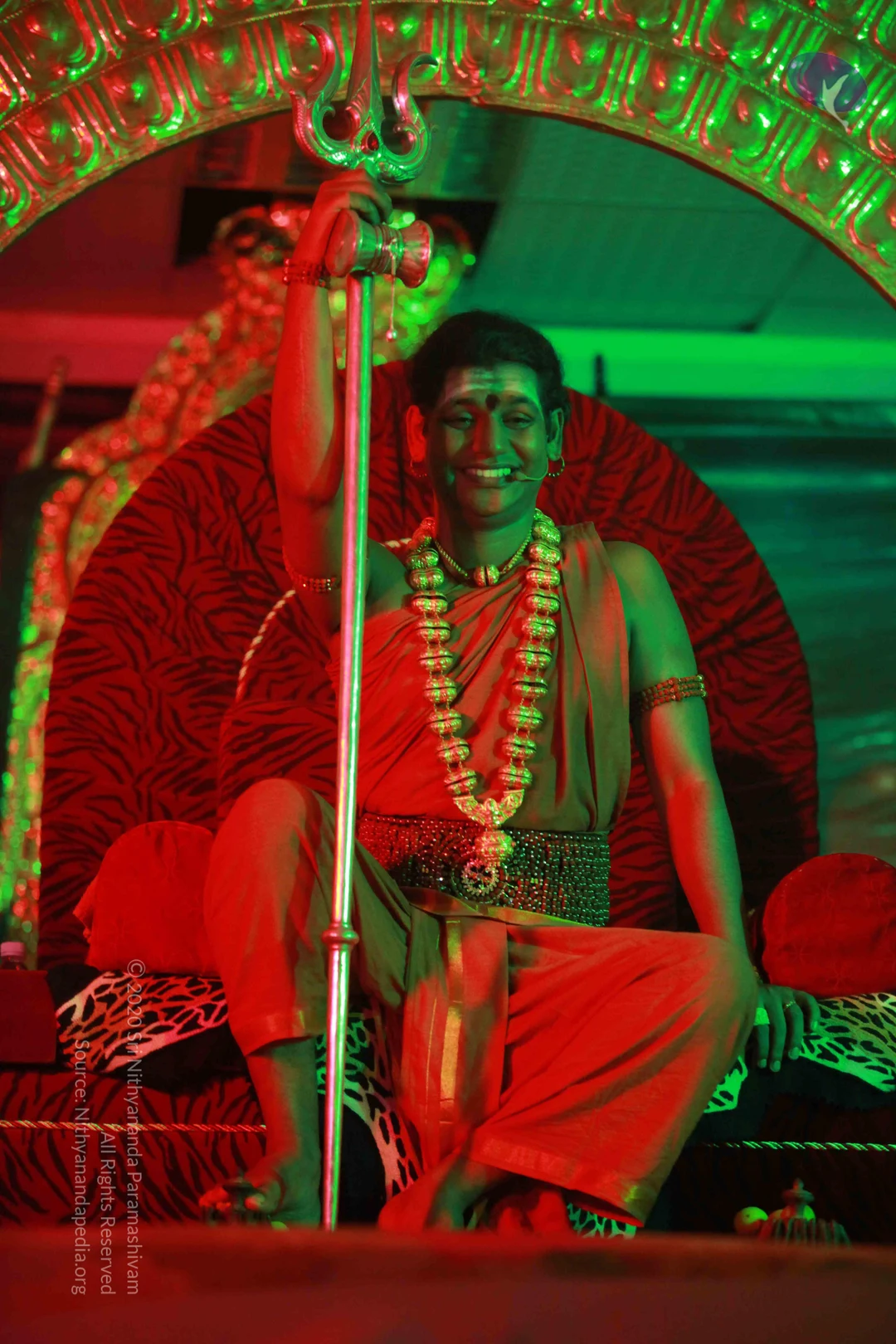
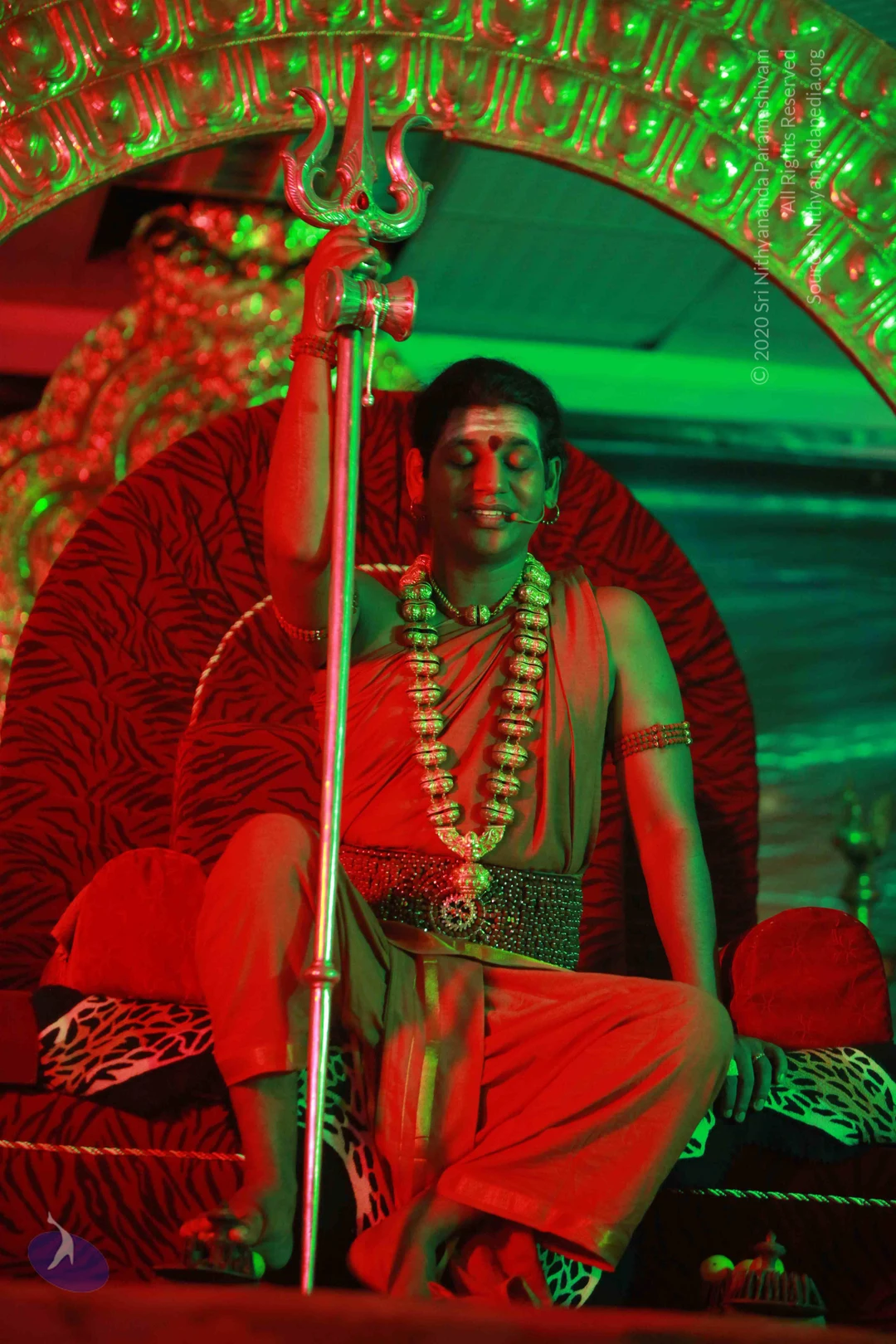
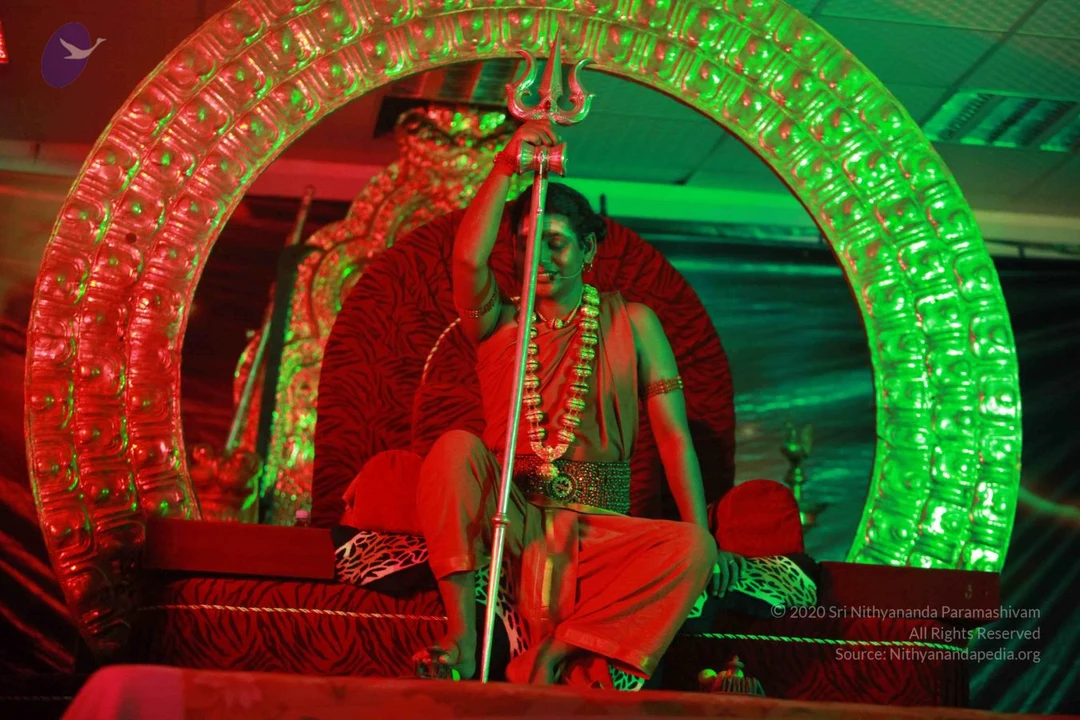
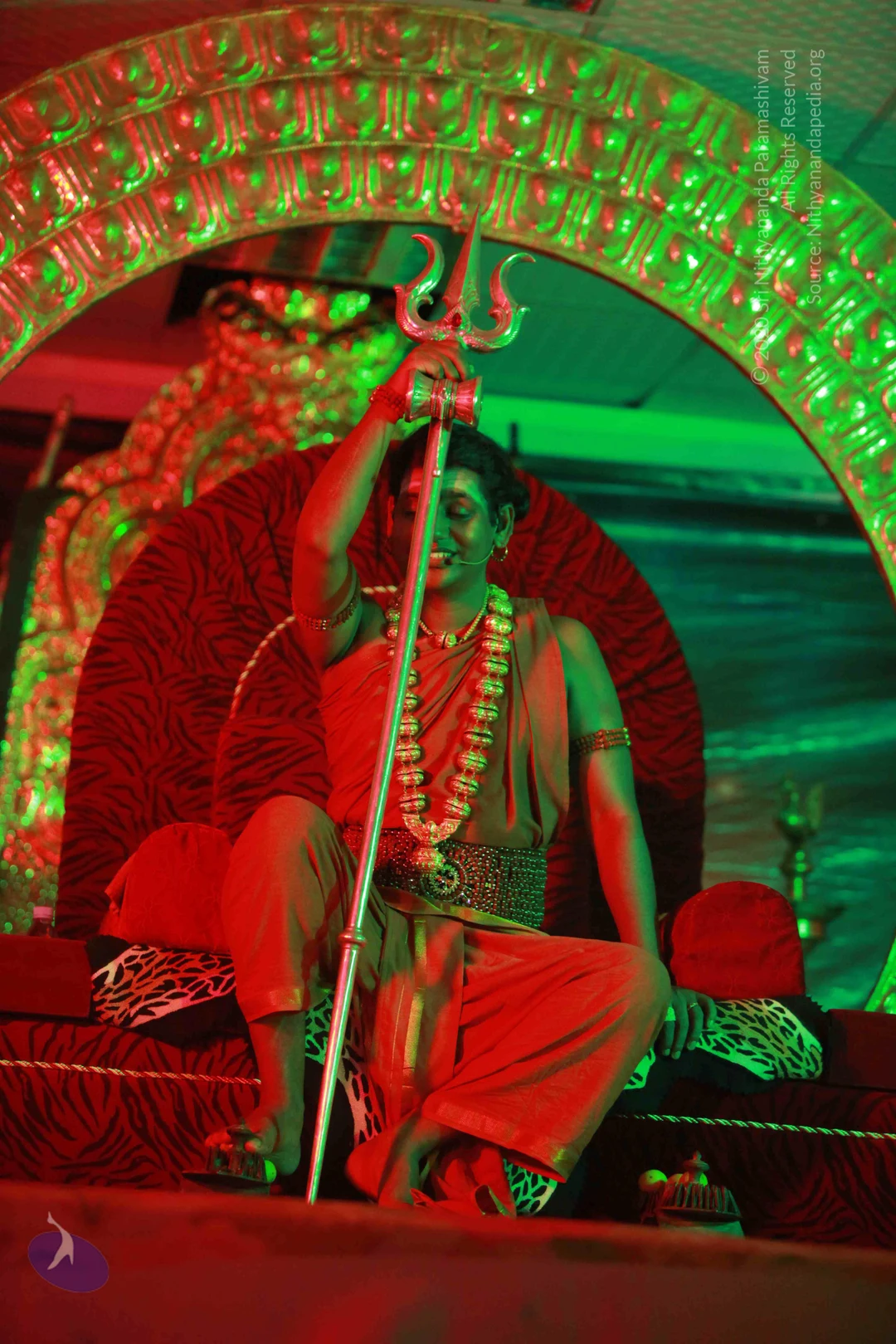
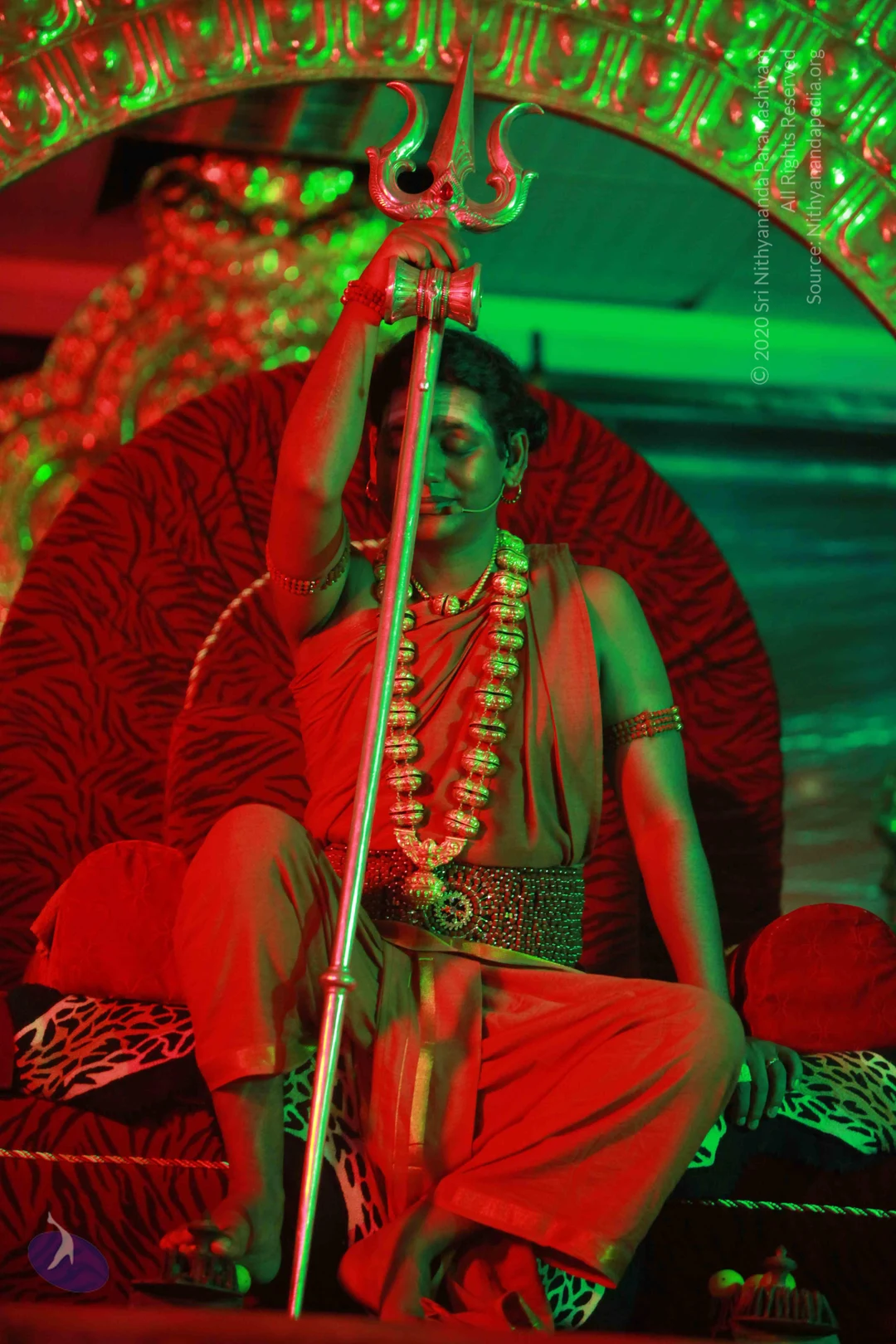
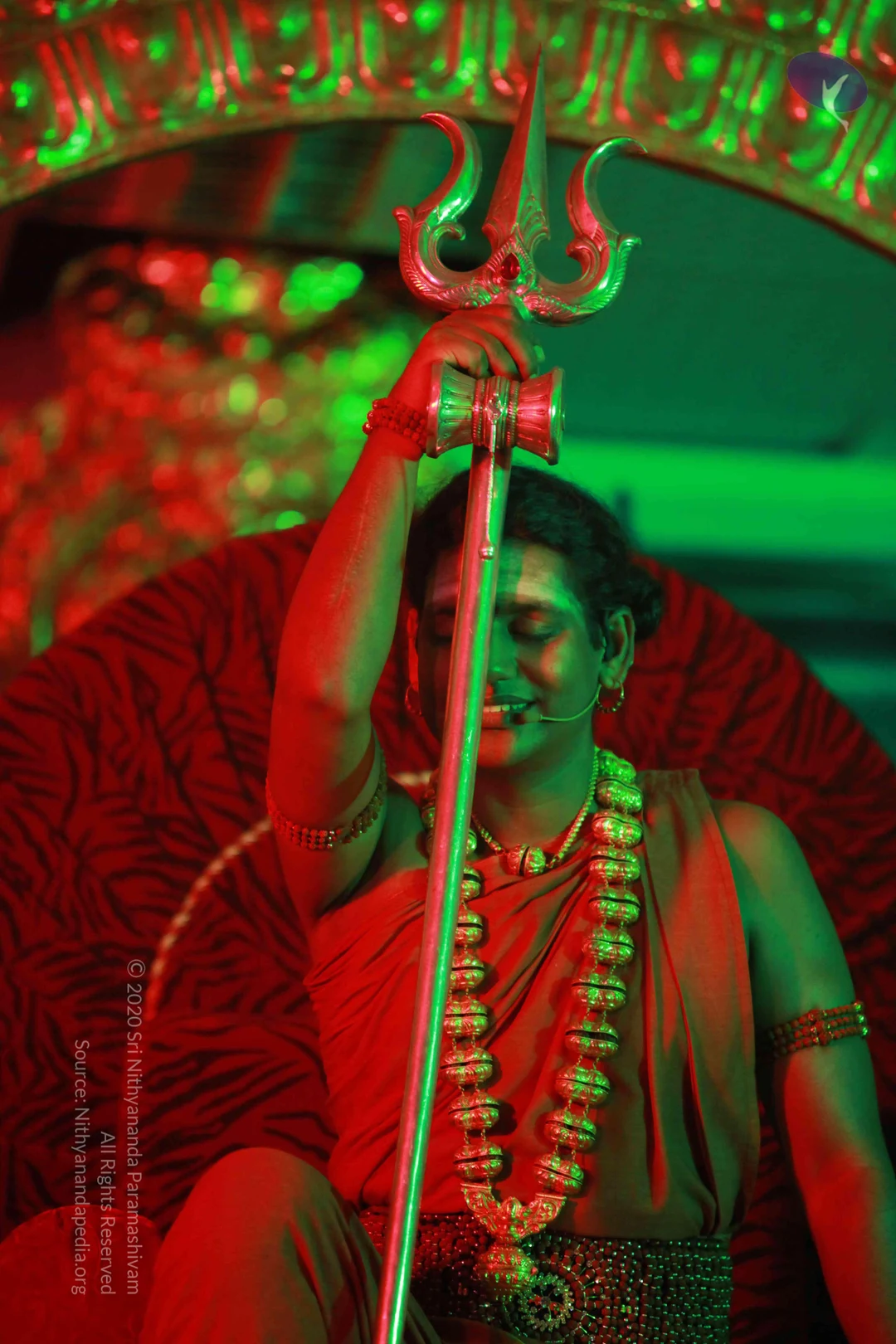
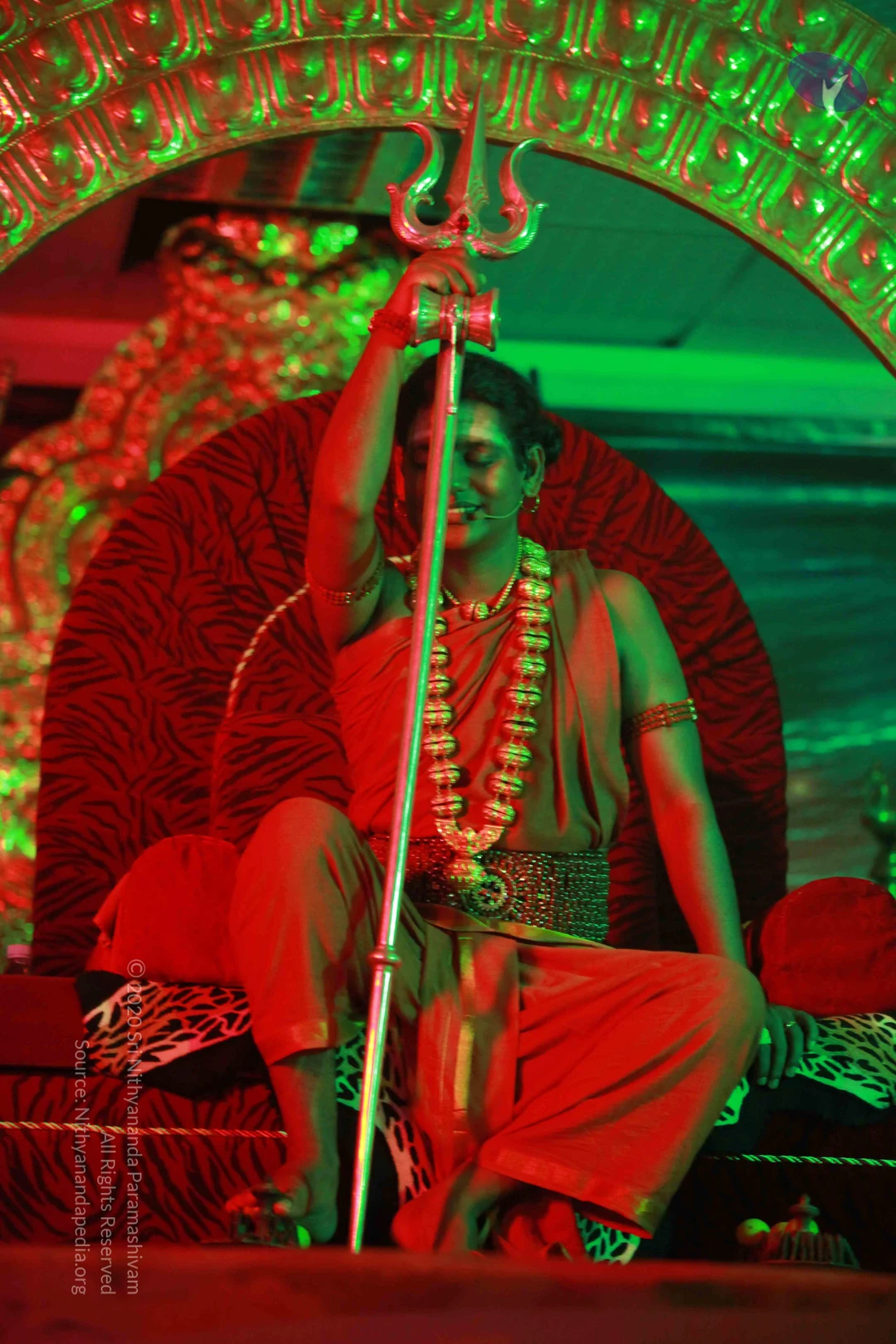
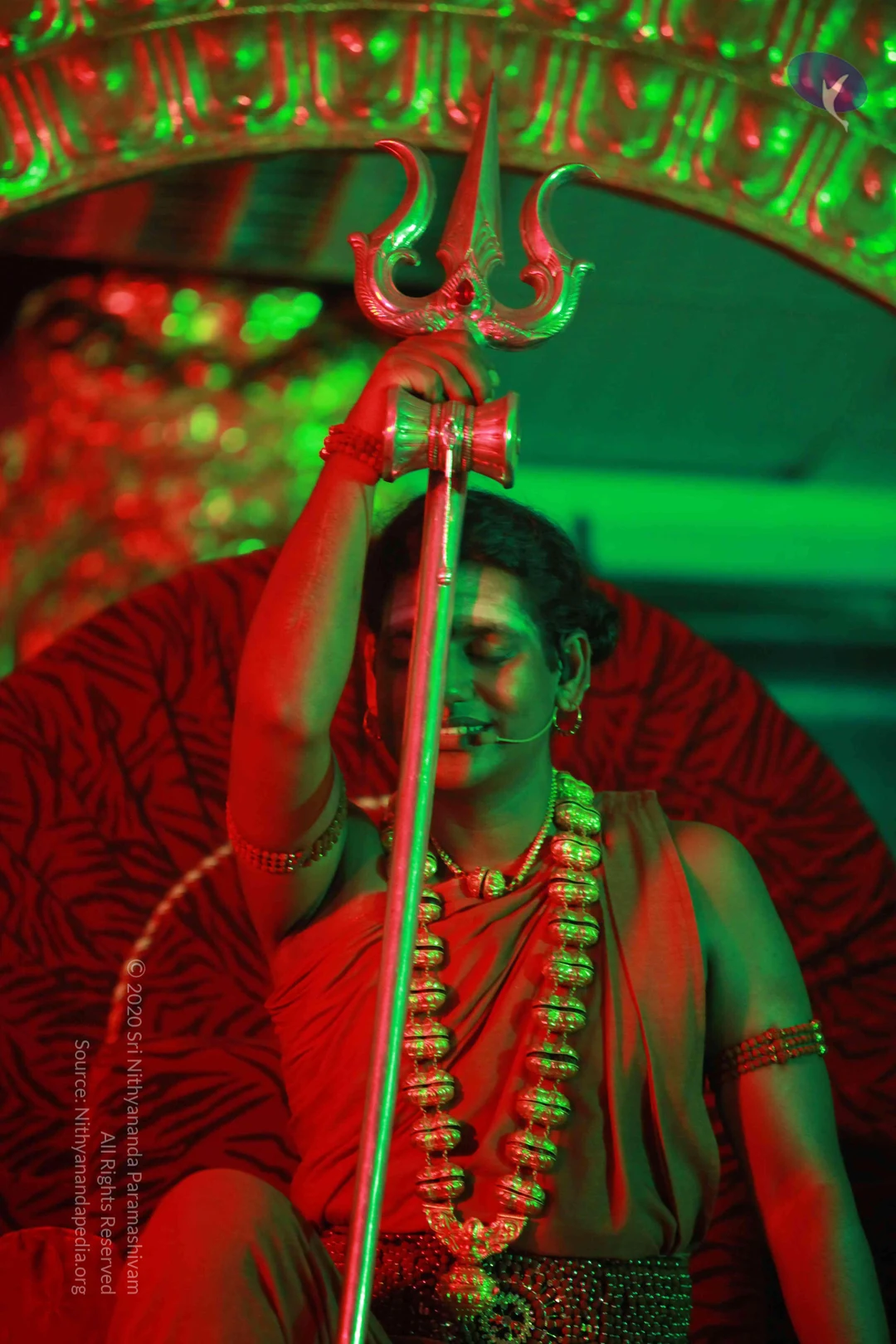
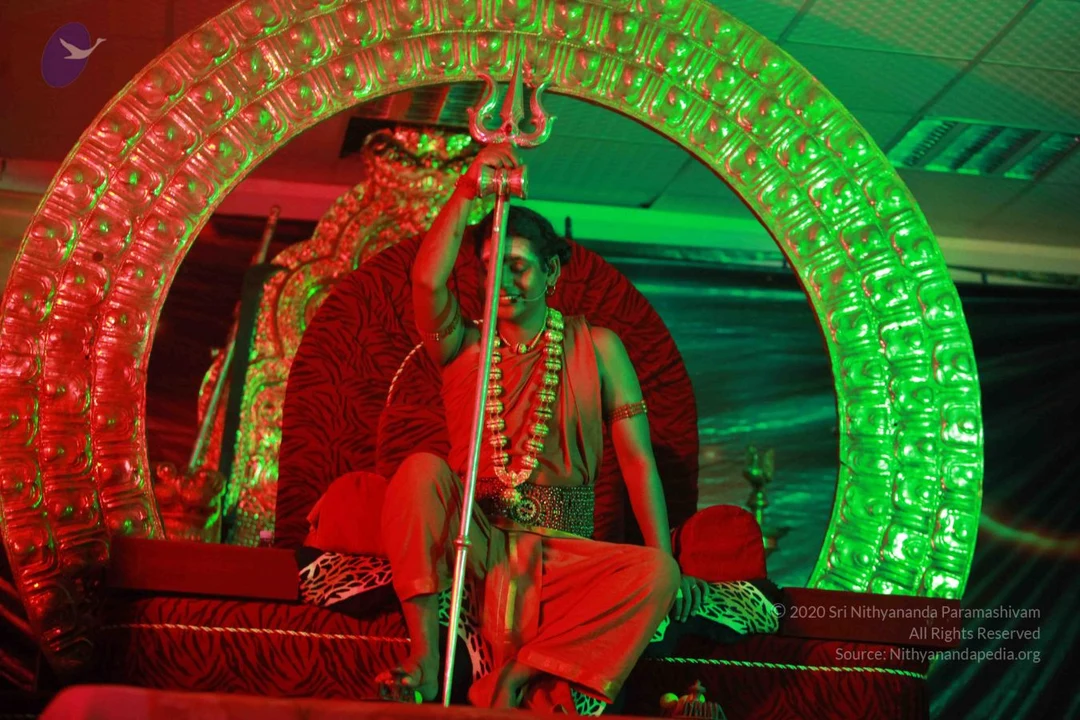
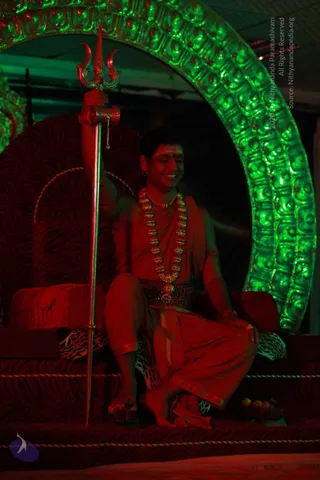
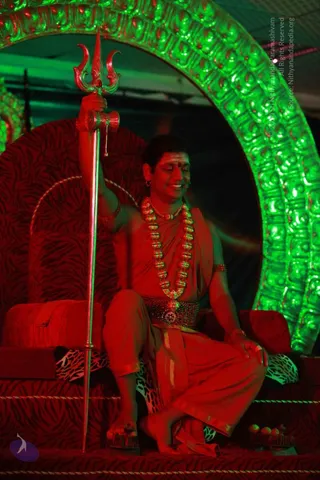
A seated man in red-orange ceremonial robes sits on an ornate red zebra-patterned throne before a large green illuminated arch, lit with red and green light. He holds a tall silver trident with a rudraksha-style tassel in his raised right hand and wears a multi-strand beaded necklace with a pendant at his chest, a jewelled waist belt, and bangles on his wrists. He smiles as he gazes ahead, and small offerings sit on a tray beside the throne steps. Swamiji (probable): long dark hair, a saffron-orange robe and ornate beaded necklace, a trident and throne, consistent with the page's reference to Swamiji at this event.A man seated on a red zebra-striped throne under red and green lighting, holding a silver trident upright in his raised right hand. He wears a red-orange draped garment, a wide ornate silver belt, a long rudraksha-style mala of beads and a gold necklace, plus bangles. Beside him on the low platform sit small offering plates with fruit. Behind him a large green illuminated arch frames the scene. The man appears to match the a person cues of ornate orange clothing, rudraksha mala and a trident-bearing throne presentation, shown as a seated figure in the ceremony.A man seated on a red tiger-striped throne with a tall red trident held upright in his raised right hand. He wears an orange-red draped garment, a long multi-strand necklace of gold-coloured beads and a matching belt, with a bindi on his forehead and a gold armband. The throne sits beneath a large green-lit arch with ornate embossed panels, under red and green stage lighting. A water bottle rests on the left edge of the frame. a person: the seated man wears a long garland, gold ornaments and a trident, a ceremonial presentation consistent with a person.A man seated on a red throne with zebra-striped upholstery and a large ornate green illuminated arch behind him, lit in red and green light. He wears saffron-orange draped clothing, a multi-strand white and orange flower garland, a beaded waist belt, and a red tilak on his forehead, and he holds a silver trident upright in his right hand. Fruit sits on the platform at his feet and a water bottle rests beside the throne. The setting appears to be an indoor satsang or darshan stage. Appearance-based identification as the a person is only a probable reading, based on the saffron clothing and trident, so the subject is marked unsure.A man seated on a red, zebra-patterned throne-like chair under red stage lighting, with a large green illuminated arch behind him. He wears a saffron-red draped garment, a belt, a long ornate necklace of beads with a gold pendant, bangles and an armlet. He holds a tall silver trident (trishul) upright in his raised right hand, and has a small vibhuti or tilak mark on his forehead. Fruit is set on a tray at the lower right beside the throne. Only one person is physically visible.A man seated on an ornate red-cushioned throne beneath a large illuminated green-and-gold arch, lit in red and green stage lighting. He wears saffron-orange clothing with a wide dark embroidered belt, a white-and-orange flower garland around his neck, and bangles on his arm. He raises a silver trident (trishul) in one hand. Behind him stands a carved deity figure and a brass oil lamp rests nearby. The throne has a zebra-patterned upholstered base. a person: the seated man is identified as a person by the saffron garments, garland and trident, presented as in person at the event.

DARSHAN

26 photosSource gallery
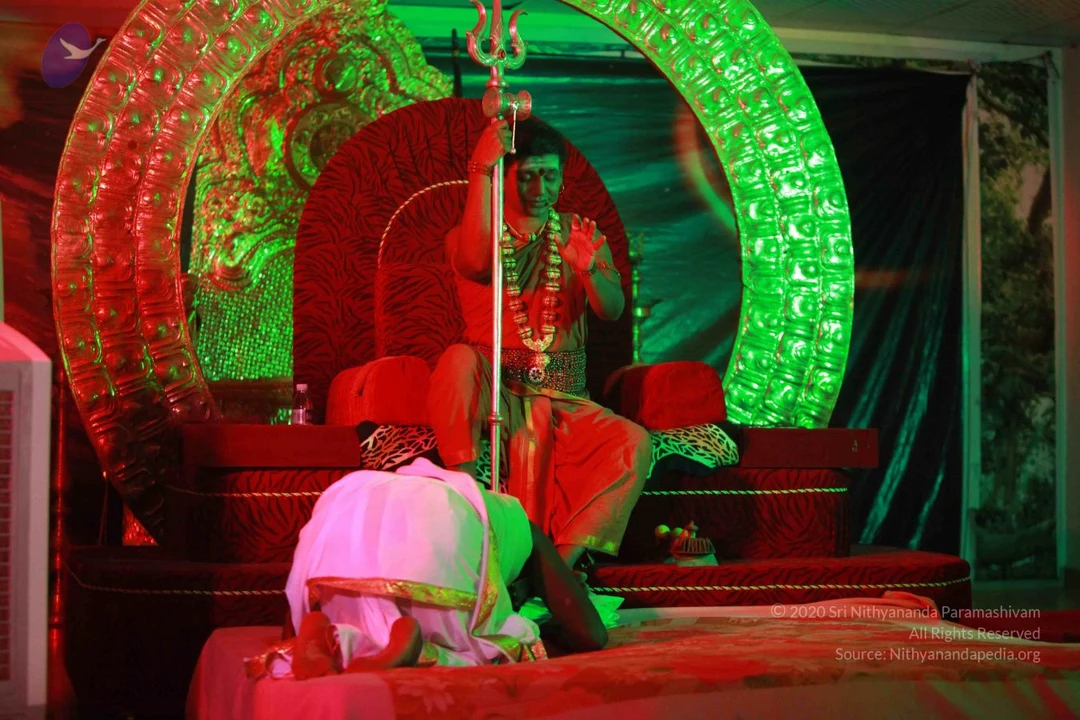
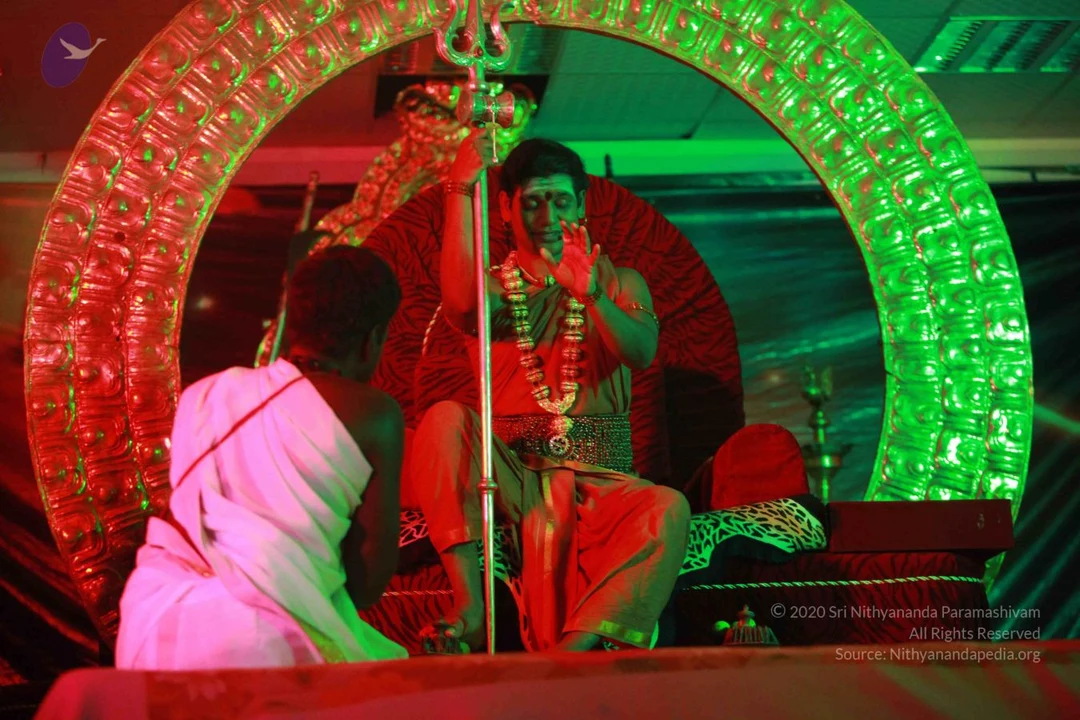
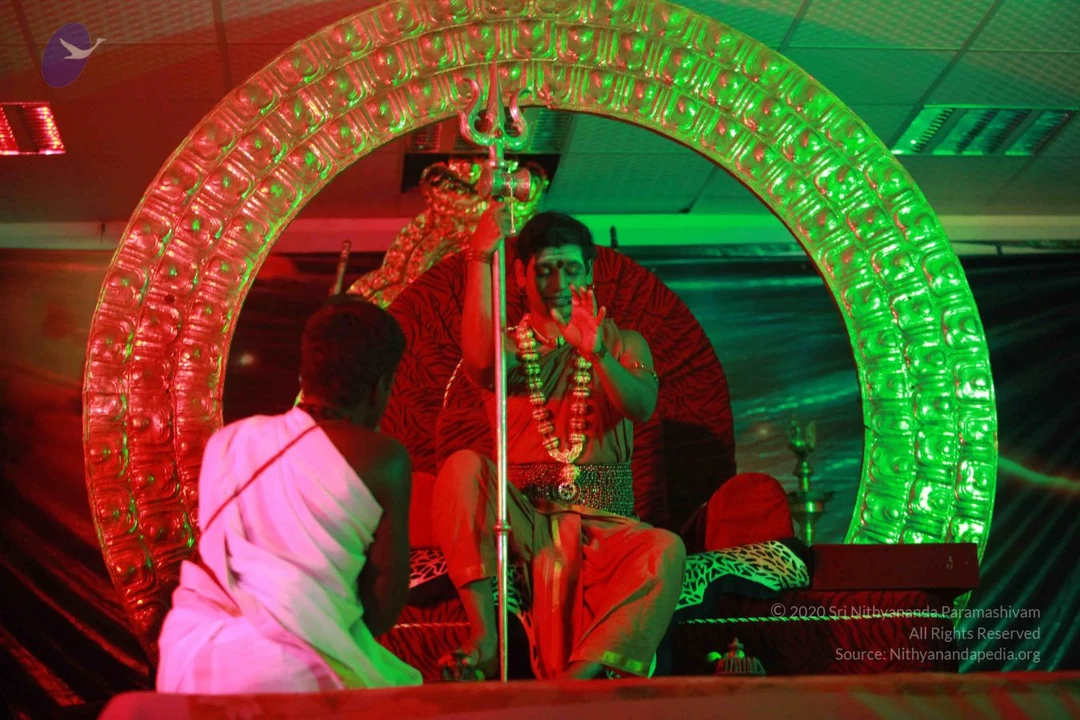
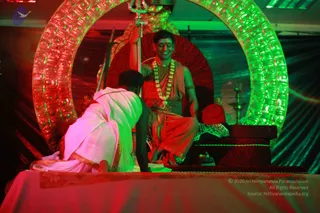
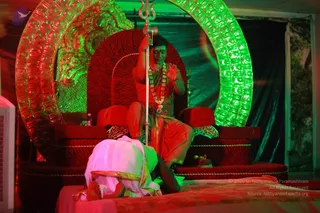
A photograph of a stage ceremony lit in red and green. A seated figure on an ornate red throne holds a trident-topped staff and wears a long garland of flowers, a saffron-orange robe with a gold-trimmed waist band, and armbands; he smiles. A kneeling attendant in white robes with a dhoti-like wrap and a red-bordered cloth bends forward at his feet. Green and red illuminated arches frame the throne, with an oil lamp and a small offering dish at the right edge. The figure's appearance matches the page's a person reference only partially, given the trident, saffron robe, and garland, so the identity is uncertain.Close low-angle photograph of a red-and-green lit stage. A person in an orange-red garment with green embroidered patterns stands behind a red zebra-striped cushioned platform with a bolster. A folded green and white cloth lies on the platform in the foreground. Two small ornate brass or gilt pots with green finials rest on the platform. The foreground is blurred red fabric.Close low-angle photo of a stage with red and green lighting. A figure in orange-red robes with gold-edged borders stands on a red tiger-striped platform, with one bare foot resting on a white cloth or paper. Ornate brass-and-red decorative objects sit on the platform, and a green-and-white patterned backdrop frames the scene. A blurred foreground edge of red fabric partly covers the lower frame, and a partial white-clad person appears at the left edge.Close low-angle photograph of a bare foot resting on a stack of folded white cloths on a red and gold patterned surface, with a red-and-orange draped garment and the edge of a white garment at left. Green and magenta stage lighting washes the scene. Behind, a small brass-toned vessel with green fruit sits on a dark red platform edged with twisted green cord. The foot appears to belong to a seated or standing figure whose face is not visible.A photograph of a staged ceremonial setting lit in red and green, with a large ornate arch framing a throne-like seat draped in red and zebra-patterned cushions. A man in an orange-red robe with a green-gold sash and a multi-strand red flower garland holds up a silver trident, his other hand raised in blessing. A devotee in white clothing with a pink-and-gold border kneels with bowed head at his feet on a red cloth-covered platform. A water bottle and small offerings sit beside the seat, and a dark curtain backdrop is visible behind.A photograph of a ceremonial stage lit in red and green, framed by a large green-and-red illuminated ring. A man seated on a red throne with a red-patterned backdrop wears saffron-orange robes, a belt, a long green-and-gold beaded garland, and bangles, and holds a trident-topped staff while raising his hands in blessing. In the foreground a devotee in a white dhoti and white shawl kneels with his back to the camera facing the seated figure.

WEBINAR

88 photosSource gallery
A seated man in an orange-saffron robe sits cross-legged on an ornate red throne upholstered with tiger-stripe fabric, draped with a leopard-print cloth. He wears a red-and-yellow garland, a long gold-coloured necklace, a rudraksha-style bead belt, gold bangles and earrings, and a red bindi. Both hands rest on his knees. Behind him a large backdrop shows an enlarged portrait of a smiling man in a saffron turban with a bindi, a sepia temple complex, and Tamil lettering. A small pedestal fan stands at left.A seated man in orange-saffron robes sits cross-legged on a tall red throne upholstered in zebra-striped red fabric, with a leopard-print cushion on the dais. He wears layered red and yellow-green flower garlands, a gold necklace, gold armbands and a red bindi, with a small microphone at his ear. Behind him a large backdrop shows a smiling portrait of a man in an orange turban with a dark forehead mark, a temple tower on the right, and a Tamil heading reading 'தியானம்'. A white pedestal fan stands at left. The scene is a stage setting with no other visible people. Appearance-based cues (orange-saffron robes, garlands, gold jewellery, throne) match the a person label, but the face is not clearly visible enough to confirm the identity, so the candidate is uncertain.A seated man in an orange-saffron robe sits cross-legged on a red tiger-striped throne with a leopard-print cloth draped over the seat. He wears a long red-and-yellow garland, a gold necklace, a rudraksha-style bead mala, gold armbands, a red bindi, and drop earrings. A white fan stands at left and a small camera rests at the bottom. Behind him a backdrop shows a lit oil lamp and a large Tamil banner reading 'தியான சத்சங்' (dhyana satsang).A man seated cross-legged on a red zebra-striped throne with a rounded arched back, wearing an orange-saffron dhoti-style garment, a gold necklace, bangles and a belt, and a long red and yellow garland. He has a white vibhuti mark with a red bindi on his forehead and a small microphone near his face, and appears to be speaking. Behind him is a backdrop with a faded mountain landscape and a red-orange tinted sky, a small fan stands at the left edge, and a water bottle sits by the throne. The throne is draped with a leopard-print cloth. The scene suggests a seated discourse before an audience.A man sits cross-legged on a red throne with a zebra-striped upholstered back, speaking as he gazes upward. He wears a rust-orange garment, a gold chain with large gold beads, red and yellow flower garlands, a gold belt-like waist band, and bangles on his wrists. A red kumkum dot and white vibhuti mark on his forehead complete his look. The backdrop is a banner with Tamil lettering. A leopard-print cloth covers the base of the seat. The person's appearance matches the presentation cues of the Swamiji candidate noted on the page: long hair pulled back, ornate gold jewellery, and an orange robe with garlands, so the identification is probable.A man seated cross-legged on a red, tiger-striped throne-style chair with an arched back, wearing an orange-red robe draped over one shoulder and a rudraksha bead belt at the waist. He wears long red and yellow flower garlands with green leaves, multi-strand gold and bead necklaces, beaded arm bands, a gold ring, a red bindi and white tripundra marks on his forehead, and a small gold earring. He gazes upward with one hand resting on his knee. Behind him is a backdrop with partial Tamil script and a red-lettered word.

RUDRABHISHEKAAND-RUDRA-HOMA

27 photosSource gallery
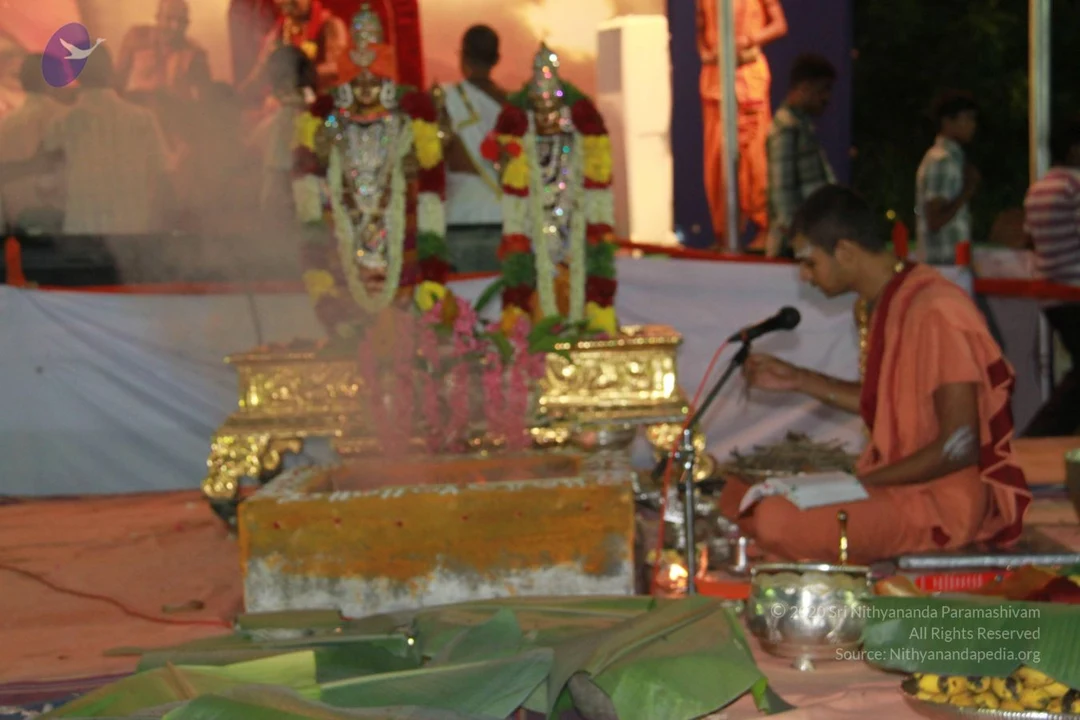
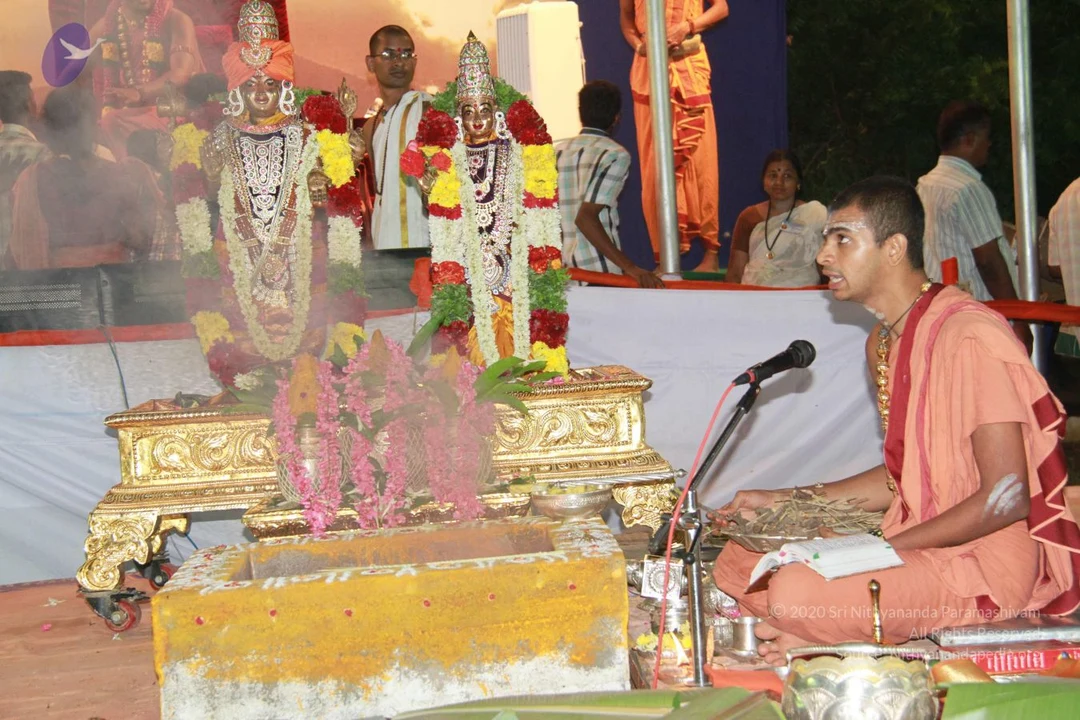
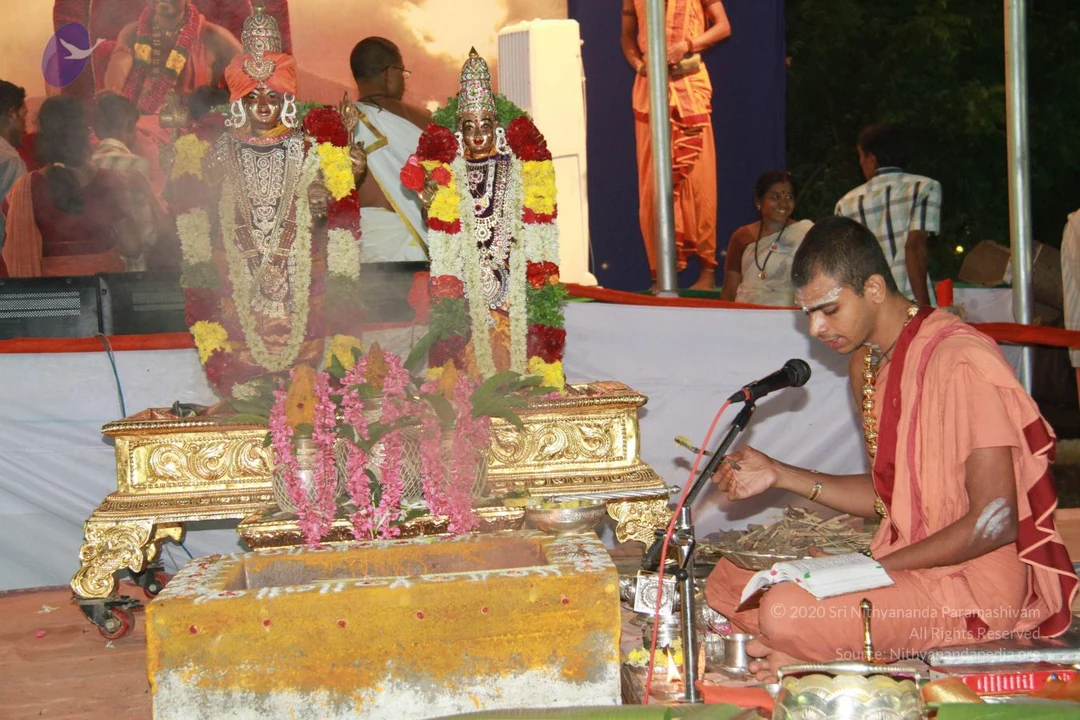
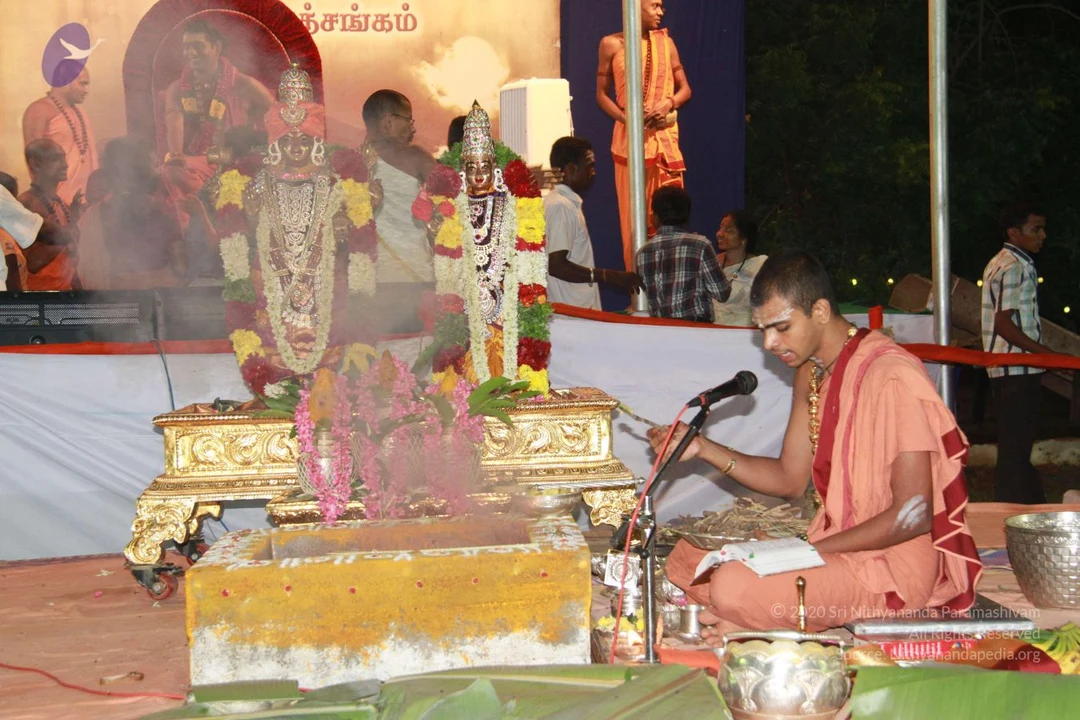
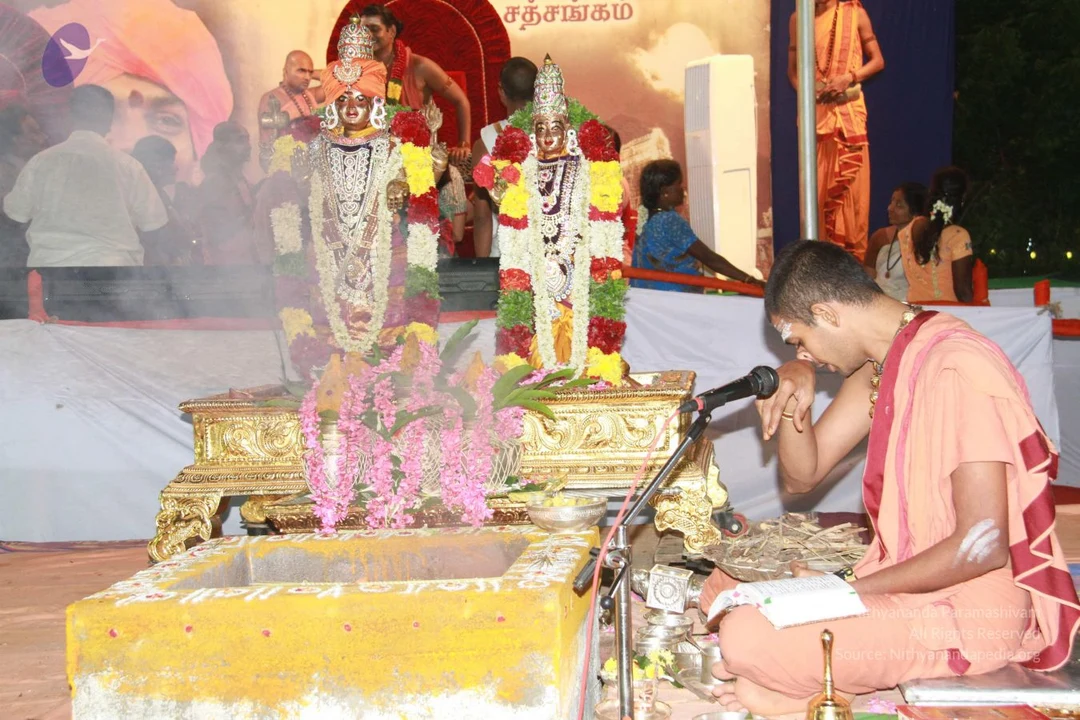
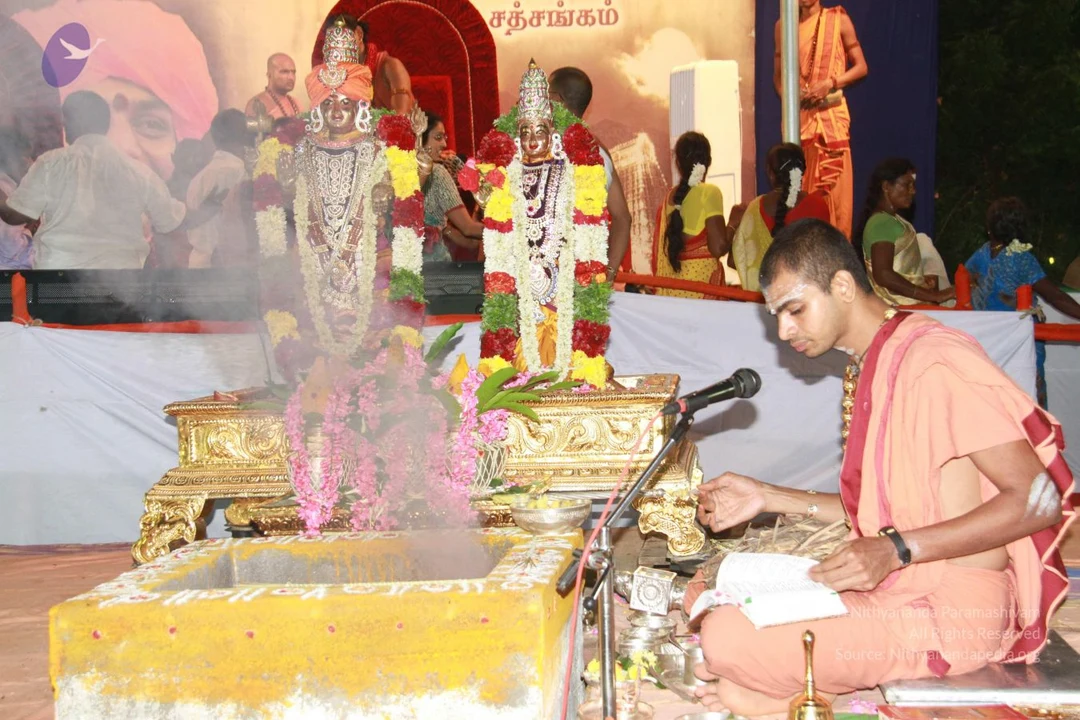
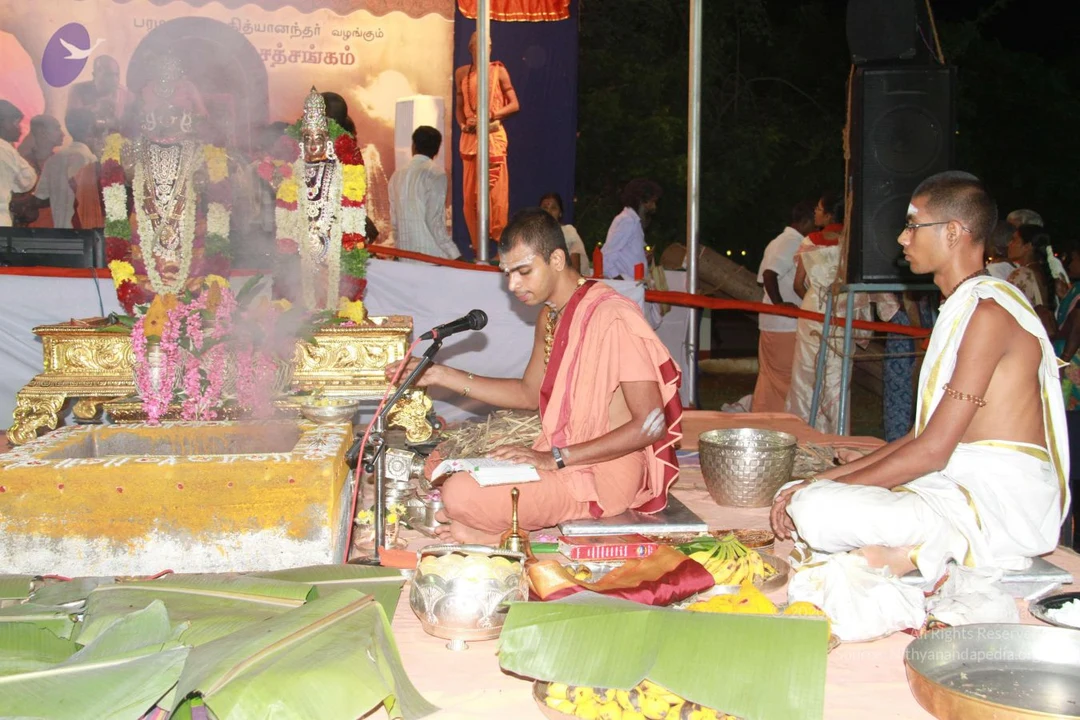
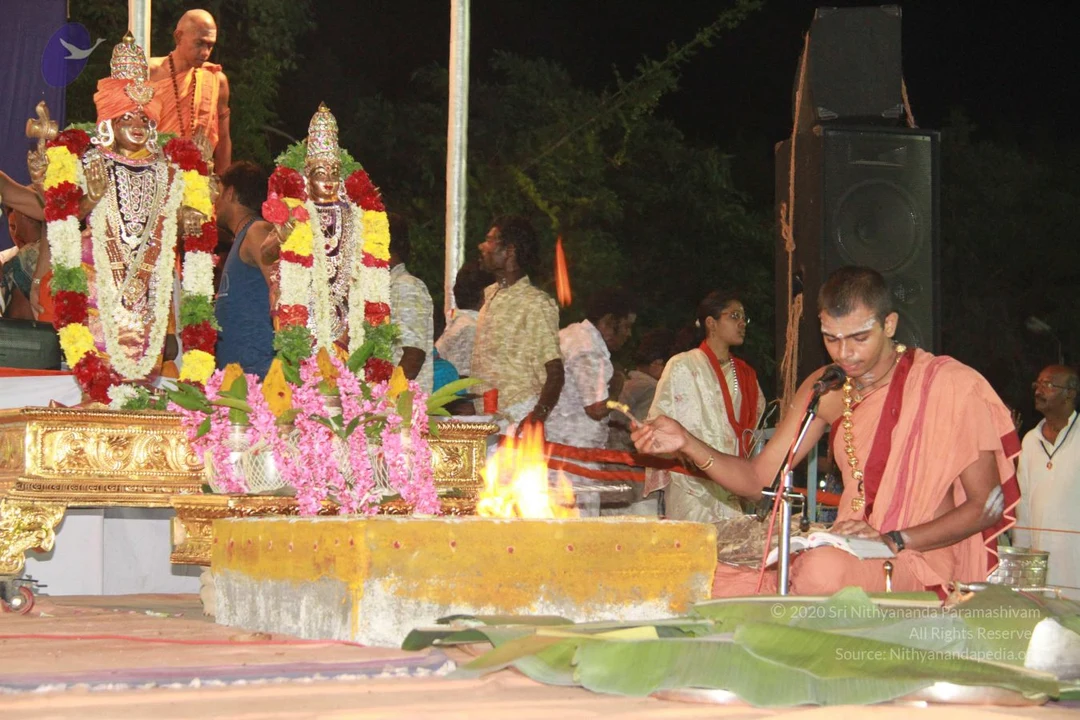
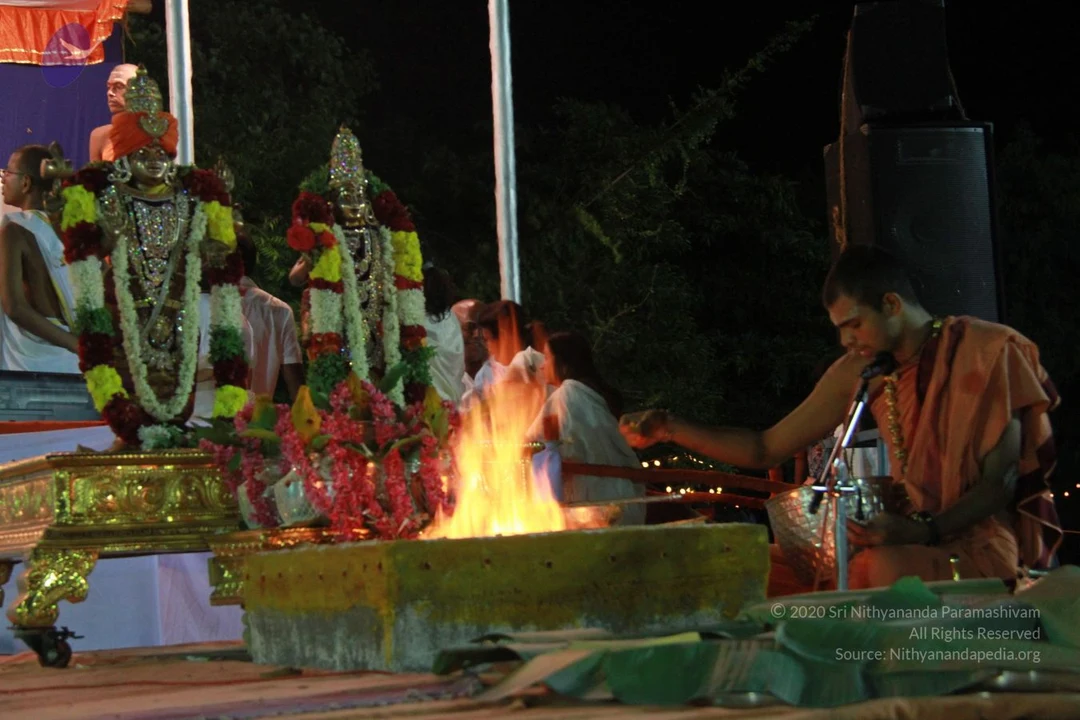
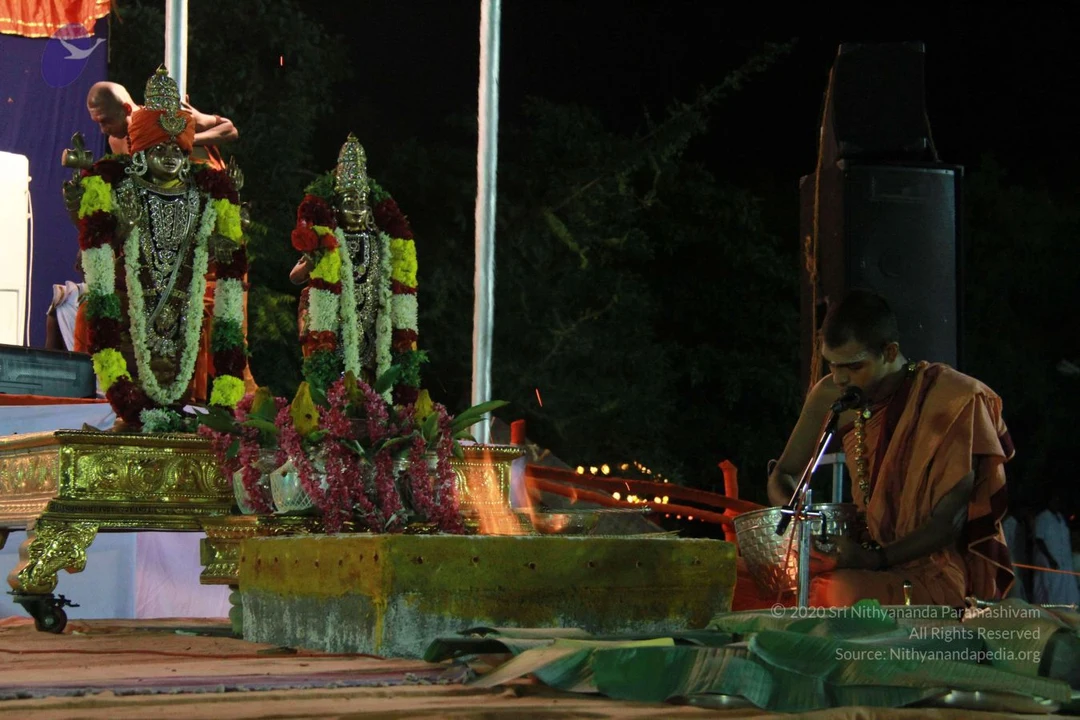
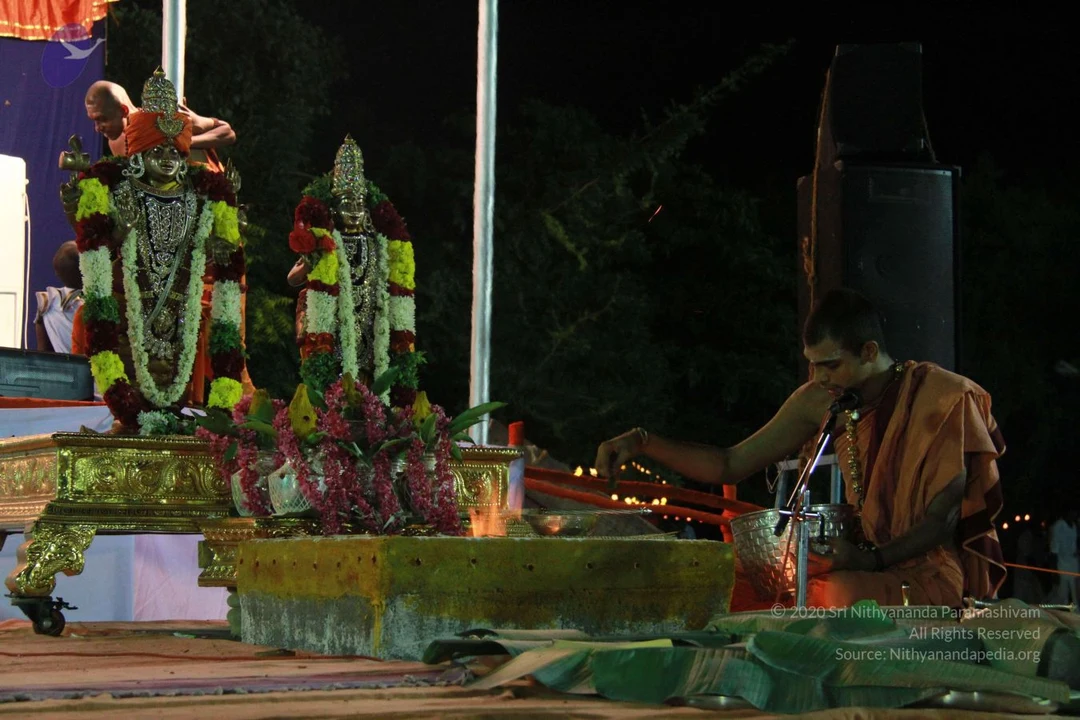
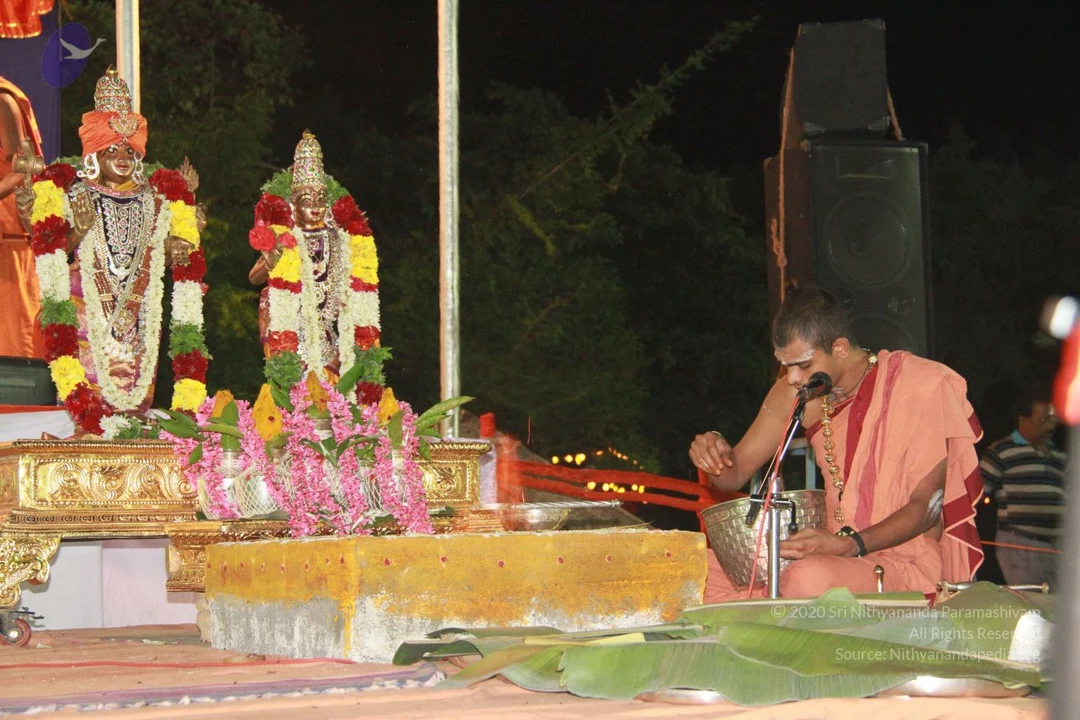
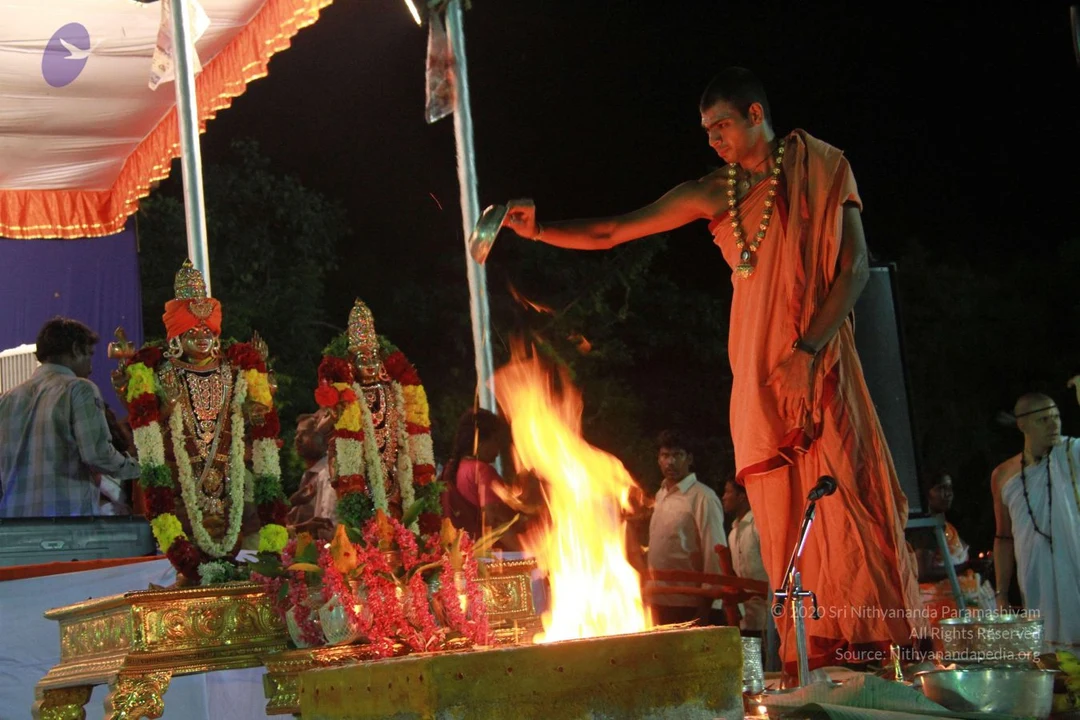
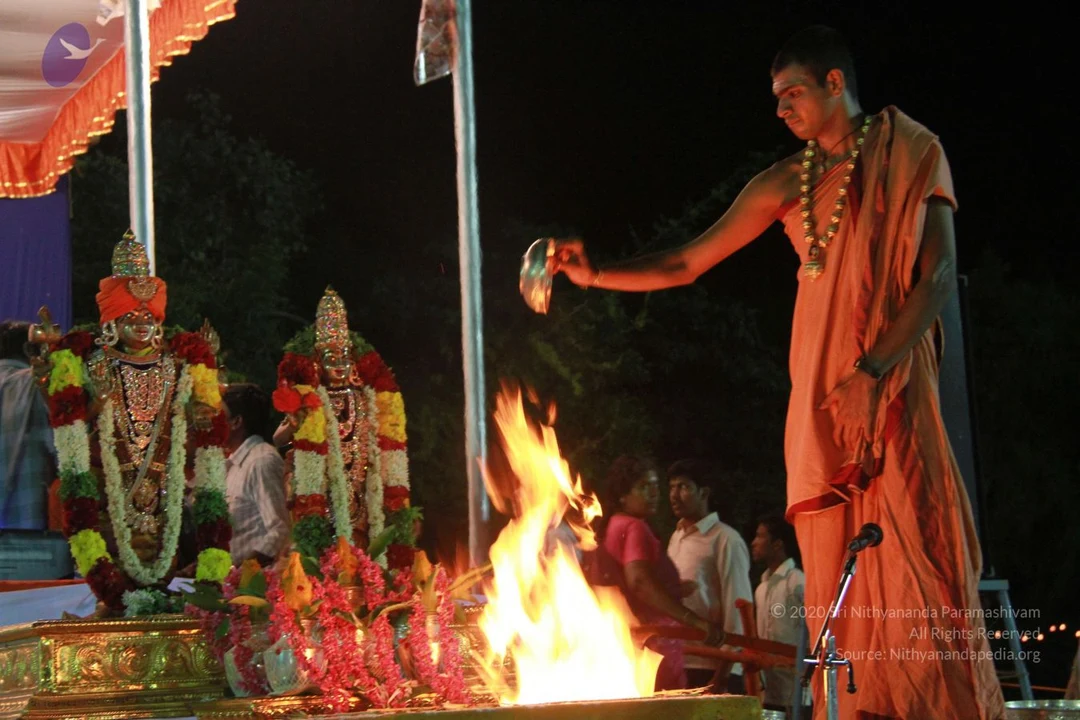
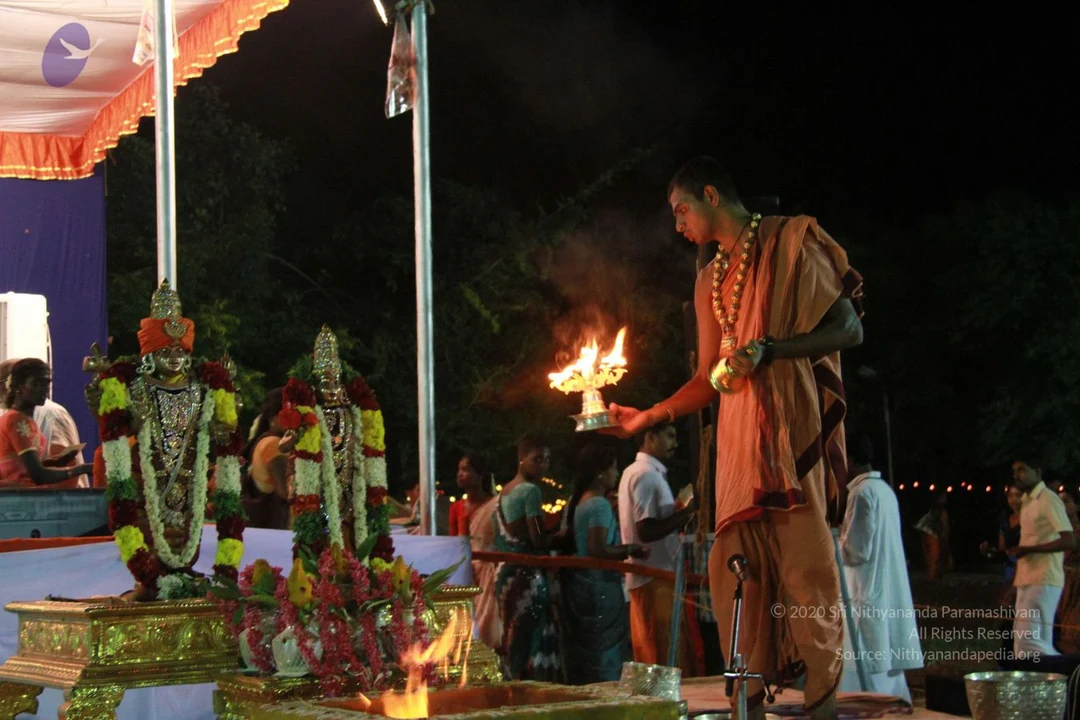
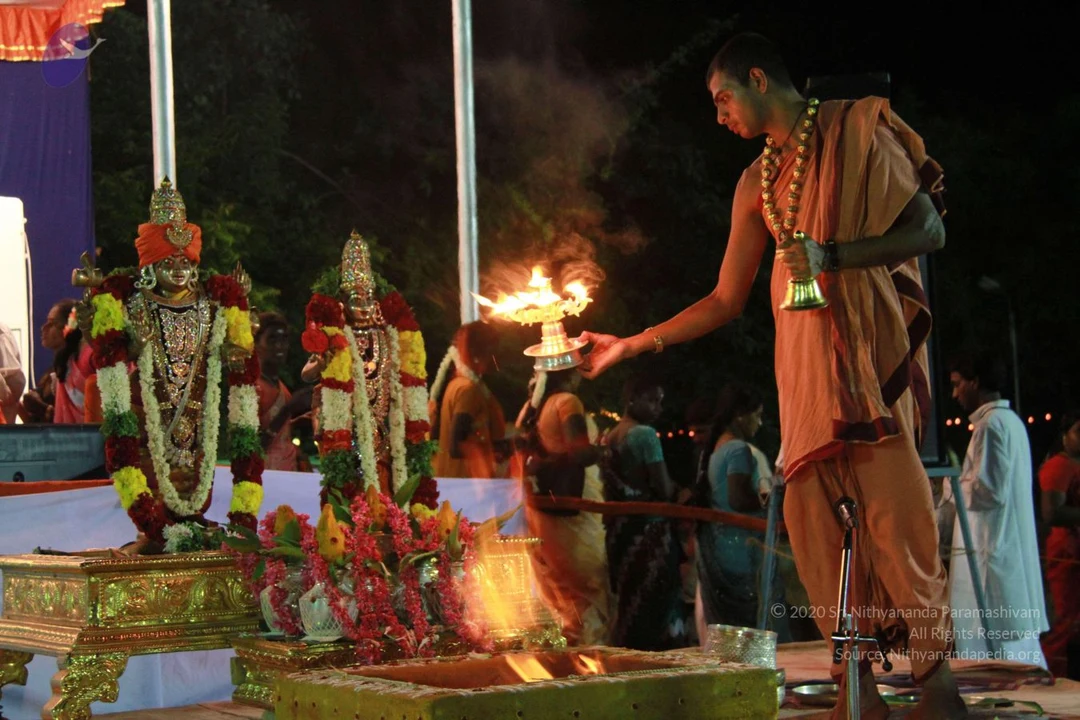
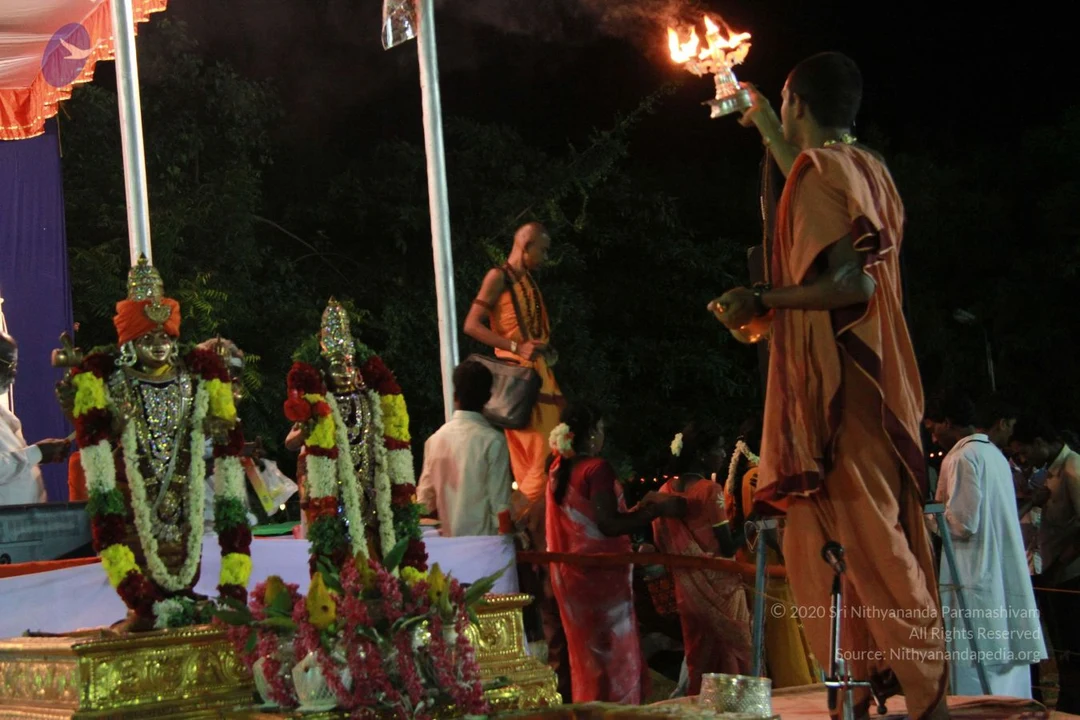
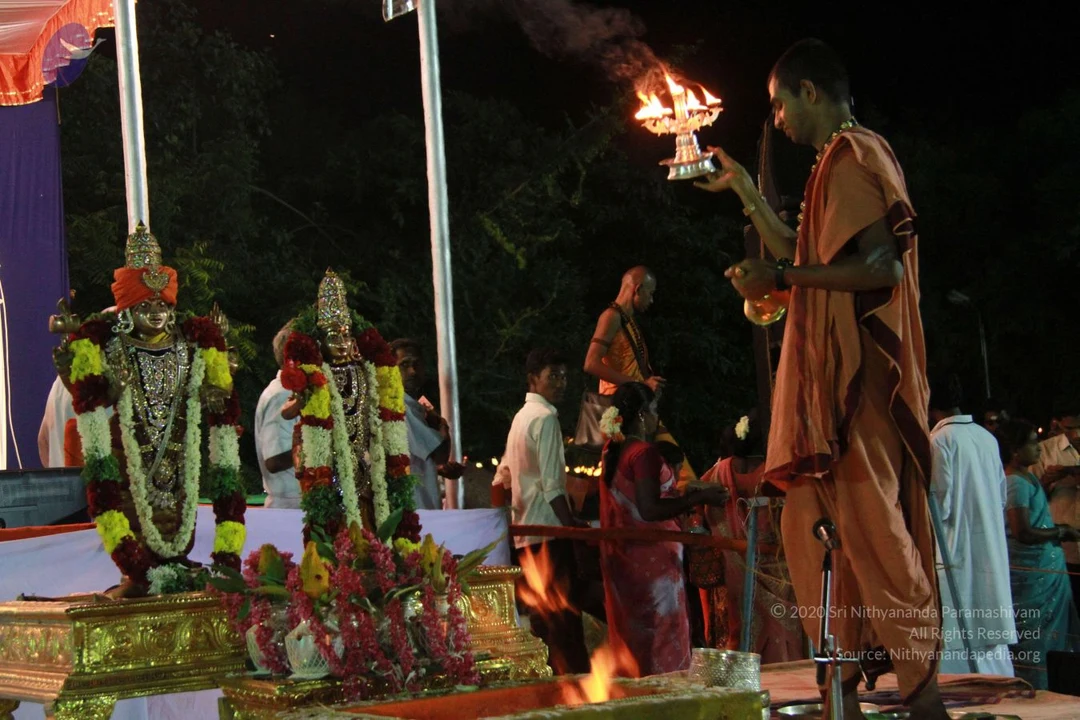
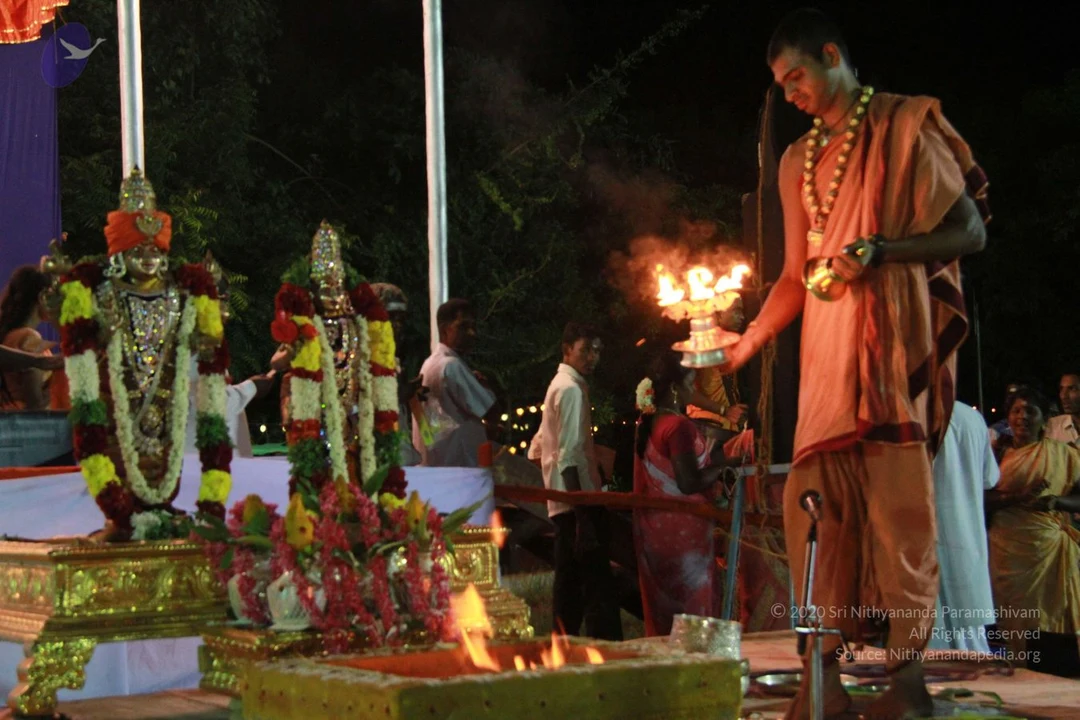
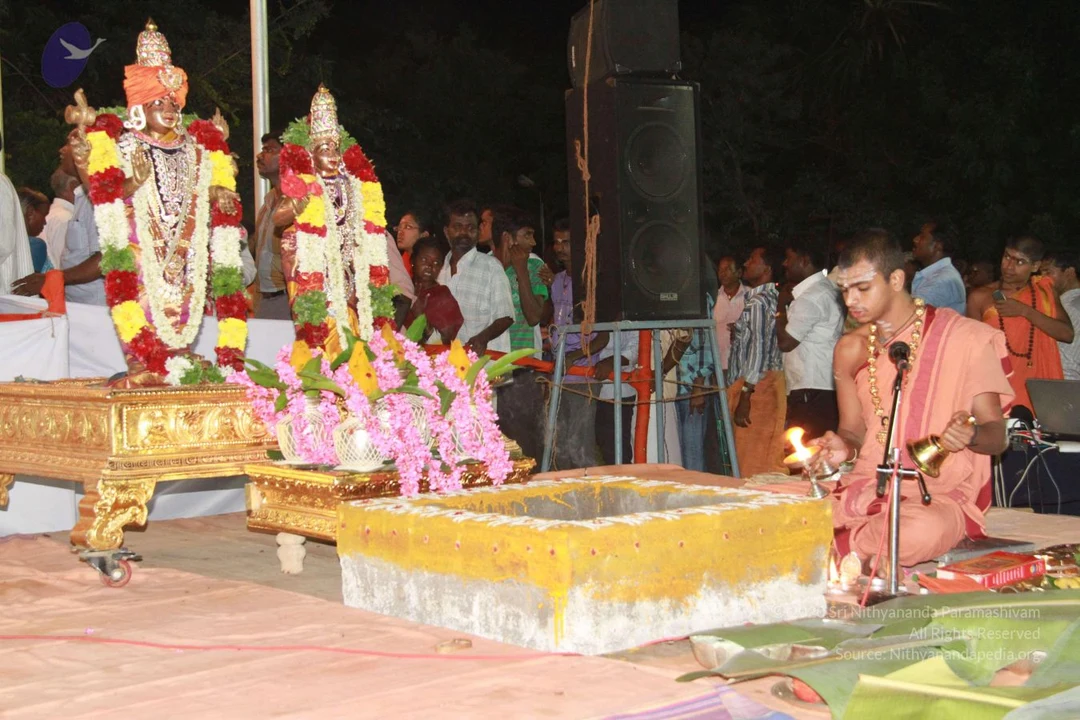
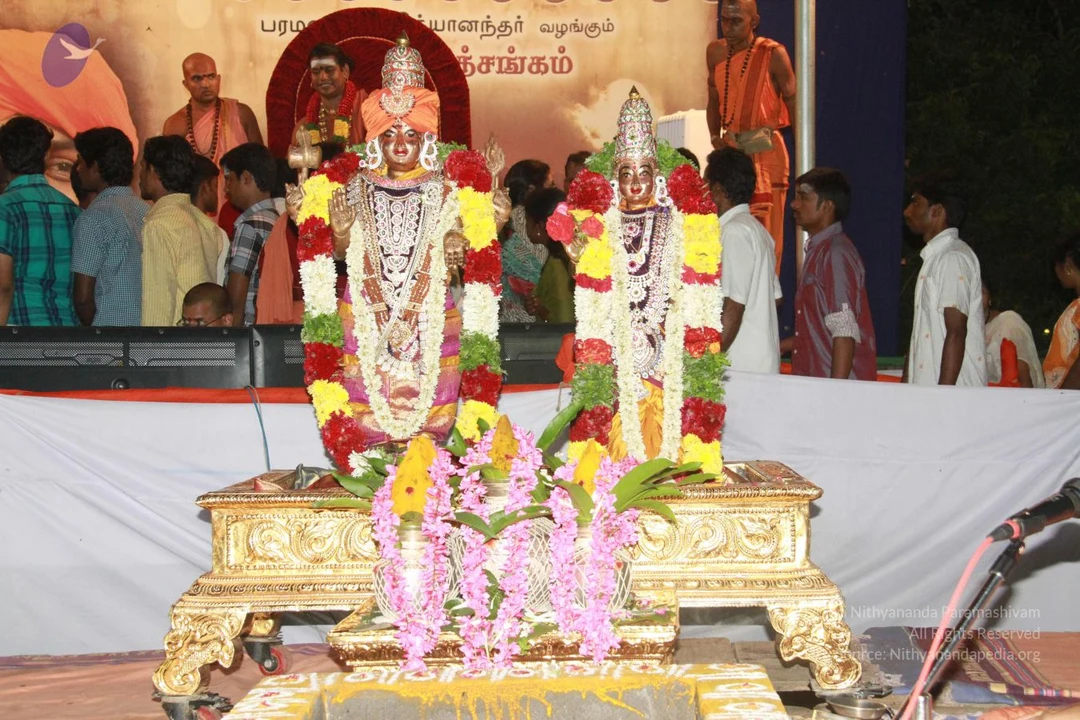
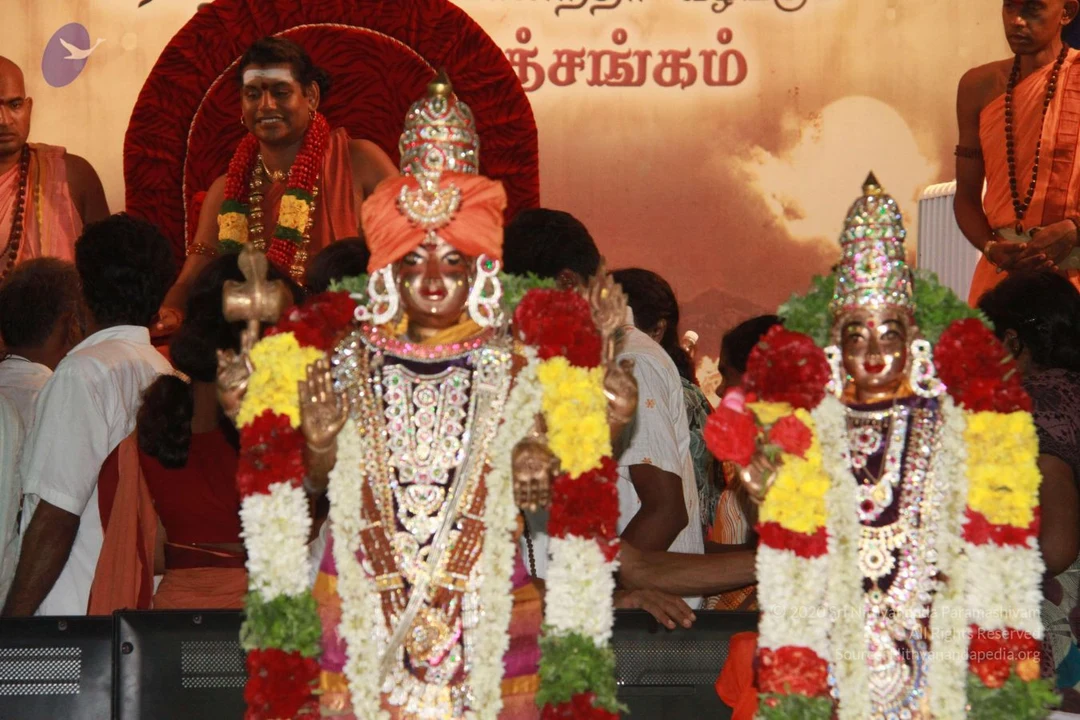
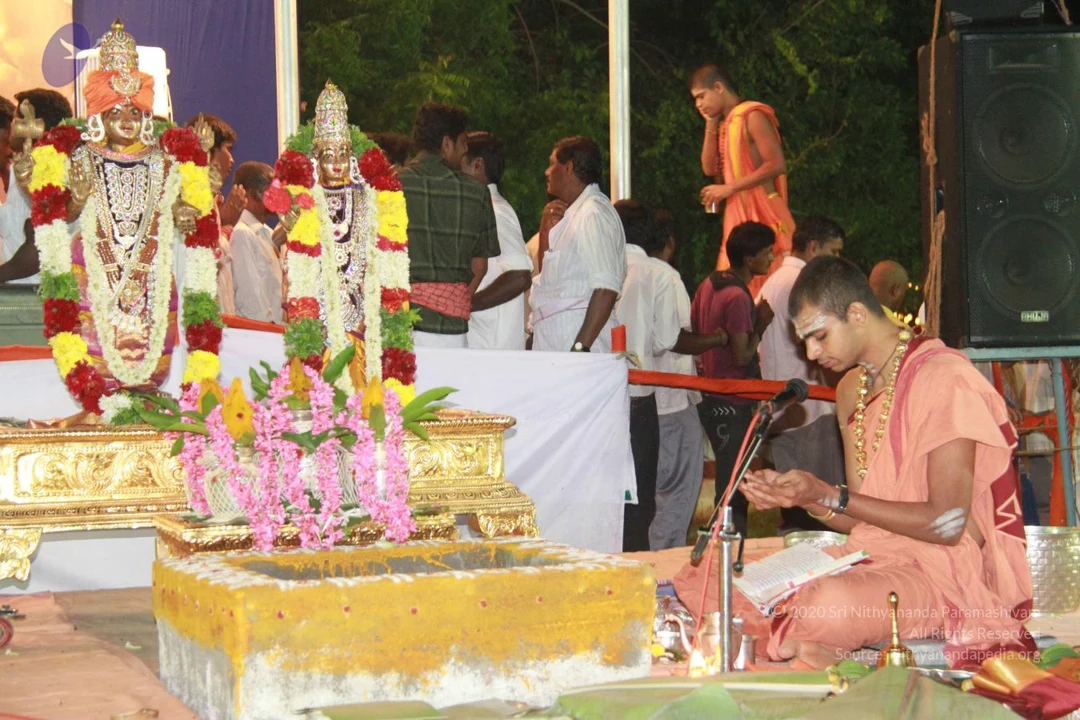
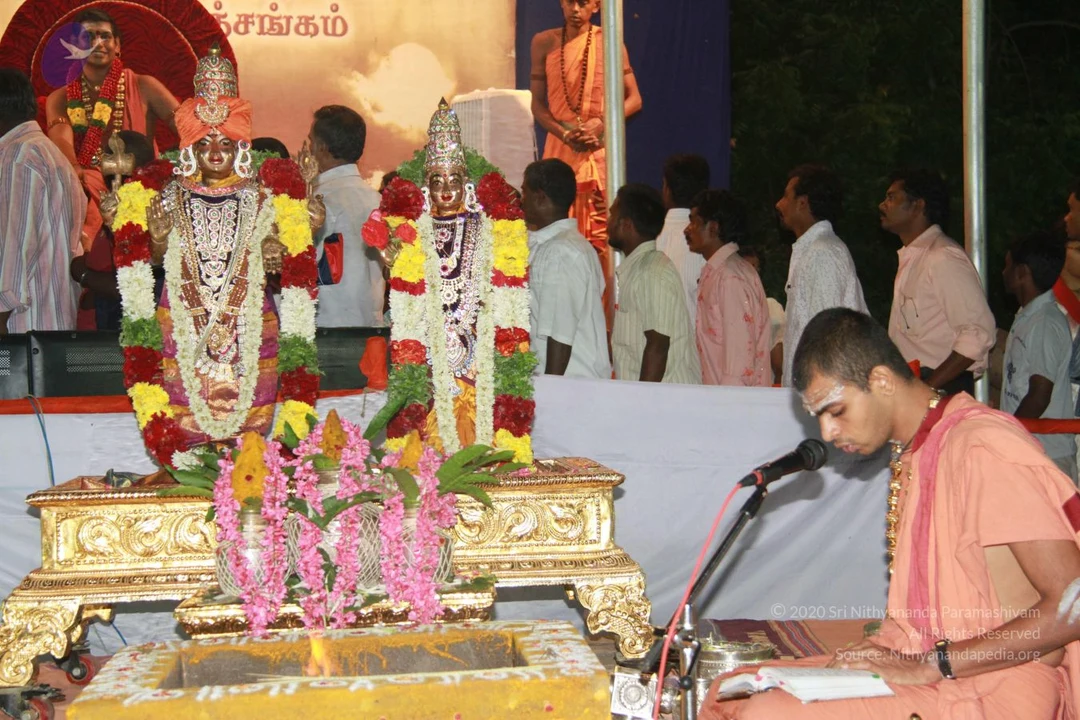
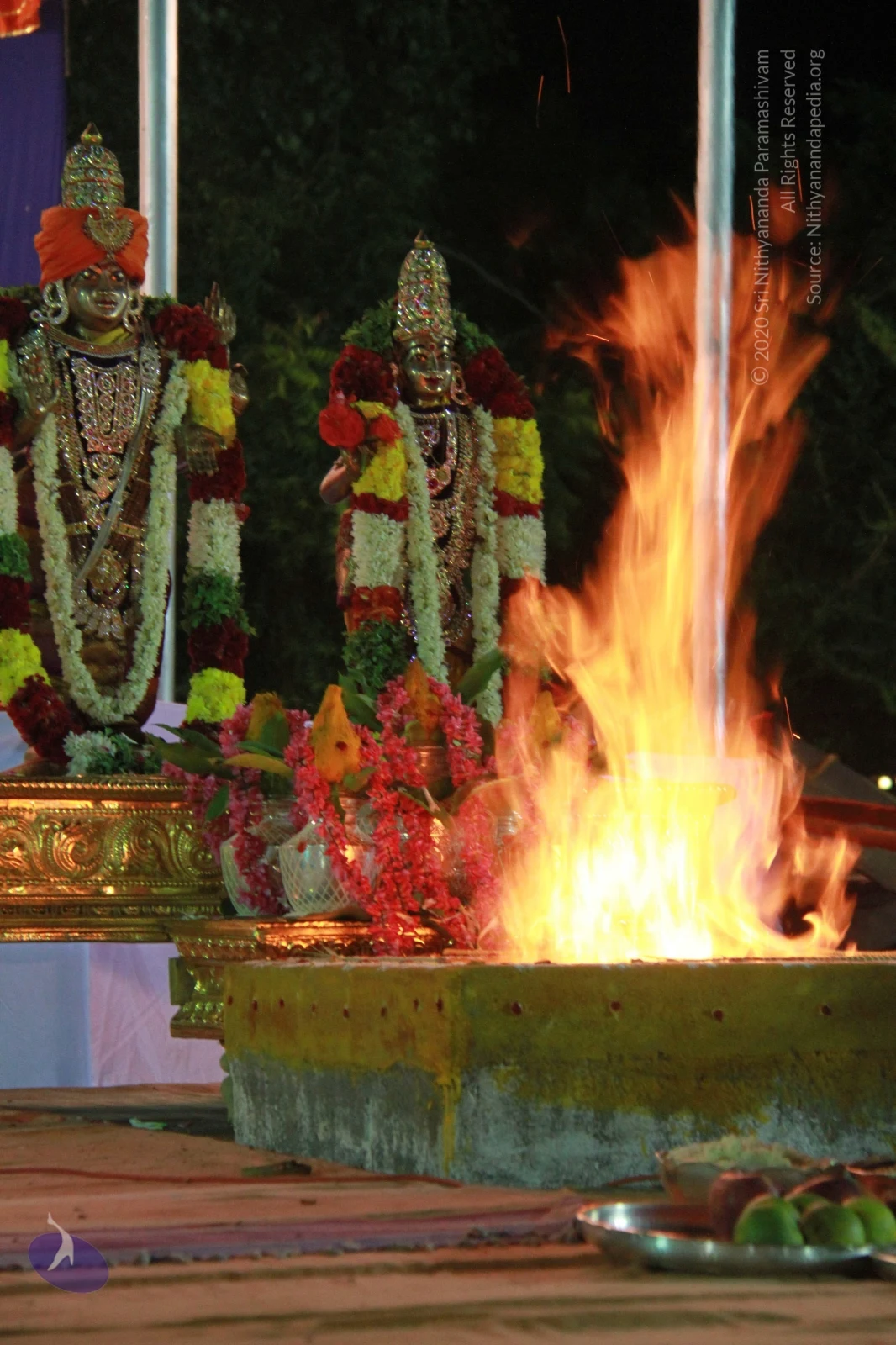
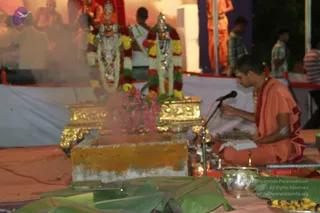
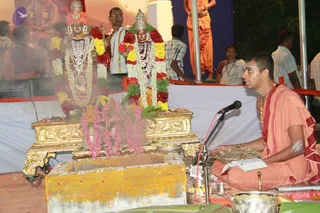
Outdoor evening ritual at a temple-style stage. Two metal deity murtis adorned with silver ornaments, garlands of yellow and red flowers and pink blossoms stand on a gilded base, with a rectangular fire pit of lit coals in front and smoke rising. A young man in saffron-orange robes with a red shawl sits cross-legged on the right, speaking into a microphone while holding ritual items and an open book. A plate of bananas and a silver vessel sit on banana leaves in the foreground. Behind, a few people in orange and white clothing stand on the stage and around the area.Outdoor evening ritual on a raised stage. Two metal deity murtis stand on a gold-edged platform, draped in white and multicoloured garlands with red and yellow flowers and a crown. Pink flower sprays and a yellow stone trough sit in front. A man in saffron-orange robes and a red shawl, with white sacred markings on his forehead and arm and a gold chain, sits cross-legged at a microphone, holding dry leaves and an open book, with brass vessels in front. Behind him a priest in white stands, and an attendant in orange stands on the right. Several onlookers, including a woman in white, watch from the side and back. Incense smoke rises near the deities.Evening outdoor ritual on a raised stage. Two ornately decorated deity murtis, one with a crown and silver adornments and one with a silver crown, stand behind a gold-and-white altar draped with red, yellow and white flower garlands. A priest in a saffron-orange dhoti and shawl with a rudraksha-style necklace sits cross-legged at a microphone, reading from an open book beside brass vessels and a plate of offerings, with sacred ash marks on his forearm. Behind them, a standing figure in orange robes and others in white and red clothing watch, with a seated woman smiling at right. The scene suggests a puja or abhishekam, with pink flowers and a yellow-painted stone base in the foreground.Outdoor evening ritual on a stage before a banner with Tamil lettering. Two metal murti figures of deities, adorned with white and multicolored garlands, stand on a gold-trimmed platform. In front, a young priest in saffron-orange robes with a red shawl, sitting cross-legged with a sacred thread and tilak, holds a book and a fragrant stick near a microphone. A brass bowl and leaves sit nearby. Behind, a standing man in orange wears a shawl, and several seated men in orange and saffron clothing appear in the banner backdrop. Spectators stand at the edges.Evening ritual at an outdoor stage with a large backdrop behind it. In the foreground a young priest in saffron-orange dhoti and shawl with a red border sits cross-legged on the floor, head bowed, reading from an open book beside a microphone, with a brass bell and a plate of leaves before him. Two ornately decorated deity murti stand on a gold-carved pedestal, dressed in silver-patterned garments and garlanded with white jasmine, marigold and red flowers, with pink flower offerings at their base. A yellow-painted yagna or abhishekam pit with floral decoration sits in front. Behind them, figures in orange and white robes stand near the stage edge, a man in orange clothing stands at right, and several devotees in saris and kurtas watch from the side.Evening outdoor puja on a stage. In the foreground a young priest with a shaved head, forehead markings and a peach-coloured dhoti and shawl sits cross-legged before a yellow-tiled homa pit, reading from an open book with a microphone at his side. Behind him stand two metal deity murti with silver ornaments, crowns and white-and-red-and-yellow flower garlands, flanked by brass vessels and a bell. Smoke rises from the fire pit, which is decorated with pink and green flowers. Behind the stage, a banner with Tamil script shows a figure in an orange turban. Several devotees in saris and an orange-robed man stand at the edges watching the ritual under a dark sky.

TAMIL-SATSANG
64 photosSource gallery
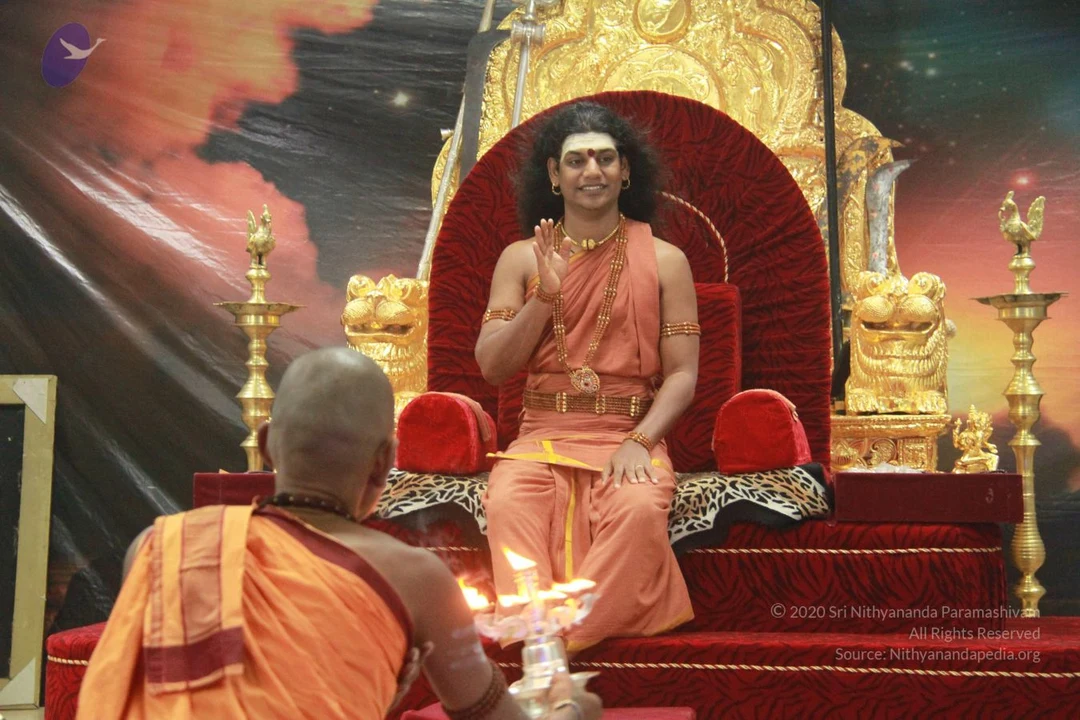
A photograph of a stage event with a red-cushioned throne-style seat on a raised platform. In the foreground, a man in saffron-orange dhoti and shawl stands with his back to the camera, while a second man in orange dhoti, bare-chested, with a rudraksha-style garland of red and yellow flowers, drapes a saffron and gold-bordered shawl over his shoulders. The second man has a broad belt and gold armlet. A decorated backdrop shows a pink turban-wearing figure, a temple and hills. A tall staff leans against the platform, and a small white cabinet stands at left. A person in the lower left holds up a phone to record.A man seated in front of a red patterned throne-like backdrop, speaking while gesturing with one raised hand. He wears an orange-saffron shawl draped over his body, multiple red and yellow flower garlands, a long gold chain with gold bead necklaces, rudraksha-style bead bracelets, a white forehead marking with a red bindi, and small gold earrings. Appearance-based label: a person, seated in a discourse setting. A small logo appears in the upper left corner, and a copyright credit appears at lower right.A man seated on a red throne upholstered with a dark red tiger-stripe pattern, speaking with a hand raised near his face and a small headset microphone at his cheek. He wears an orange-red saffron robe, a gold necklace with rudraksha-style gold beads, and a long red and yellow garland of petals and green leaves, with red rudraksha-style bead bracelets on his wrists. A white tilak and red bindi mark his forehead, and his hair is swept back. Probable Swamiji (Nithyananda, seated and speaking to an audience), with cues of saffron clothing, ornate gold necklace, garland and swept-back hair.Photograph of a man seated in front of a large red throne-style backrest with a red zebra-stripe pattern, speaking or smiling with his gaze turned to the side. He wears an orange-red garment over the body, a thick necklace of red flower garlands with yellow marigold and green leaf accents, a gold ceremonial necklace with large gold beads, a rudraksha-style bead bracelet, and a small gold stud earring. His forehead bears a white vibhuti band with a red kumkum dot, and a small microphone is clipped near his face. The background is pale cream. a person: the candidate shows a distinctive gold necklace, layered garlands, rudraksha beads and an orange garment seated on a throne, so the identification is tentative.A seated man in saffron-orange robes sits on a red tiger-stripe velvet throne with an arched backdrop. He wears a rudraksha mala on his head, a white and yellow tilak on his forehead, layered garlands of pink and yellow flowers with green leaves, a gold ceremonial necklace with a pendant, and a red and gold shawl. He holds a staff with a red and white flag on his left, with his hands folded in his lap. The image is a photo of one person.A man seated in front of a red throne upholstered in red fabric with a dark red tiger-stripe pattern, speaking into a headset microphone while gesturing with his right hand. He wears an orange-saffron cloth, a white vertical tilak with a red dot on the forehead, a red and yellow flower garland with a long gold bead-and-bell mala, a gold necklace, gold hoop earrings and beaded red-brown bands on his upper arms. The a person label applies here: he has a swept-back dark hairstyle and ornate gold ceremonial jewellery alongside saffron clothing, consistent with a discourse on stage.

KALPATARU-DARSHSAN
84 photosSource gallery
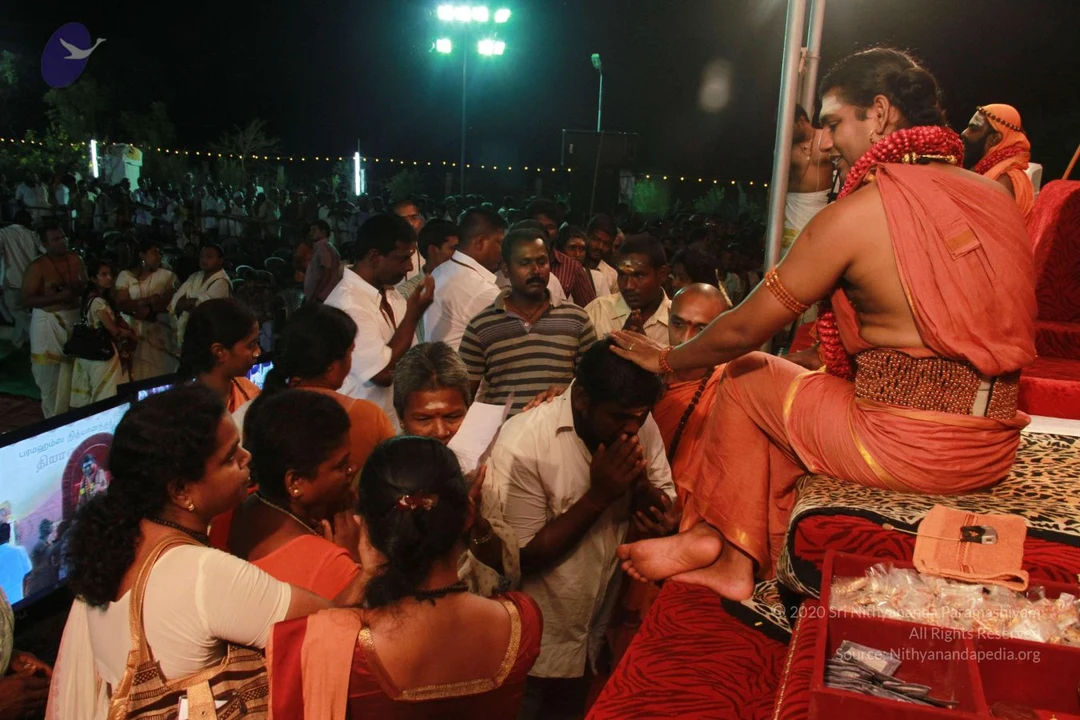
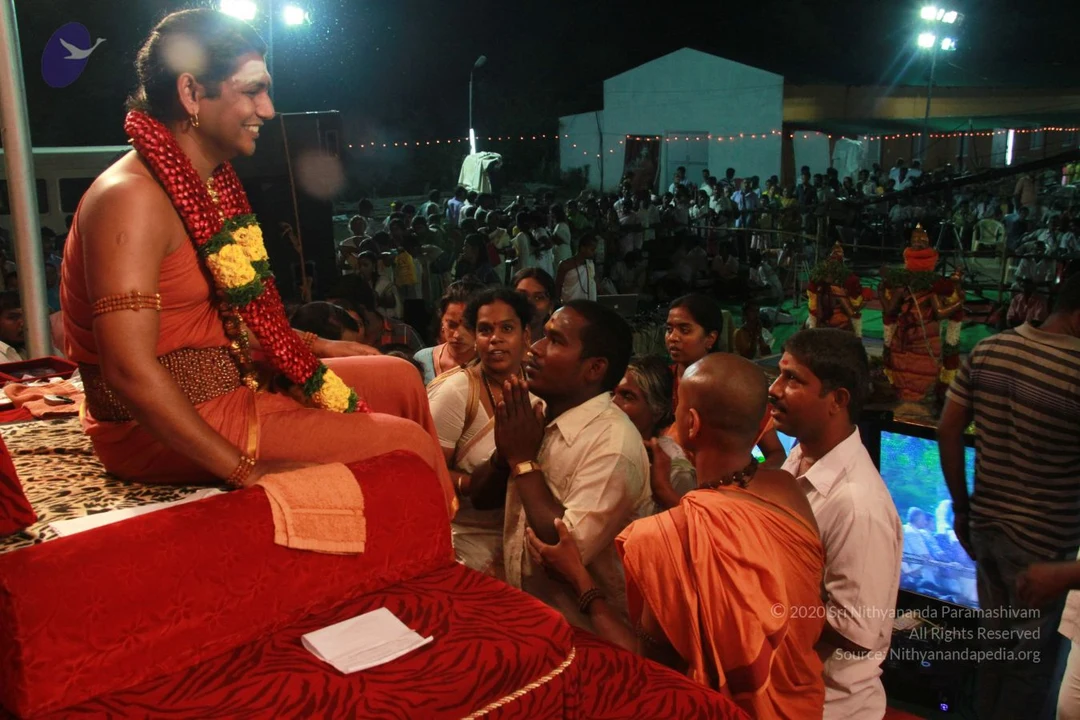
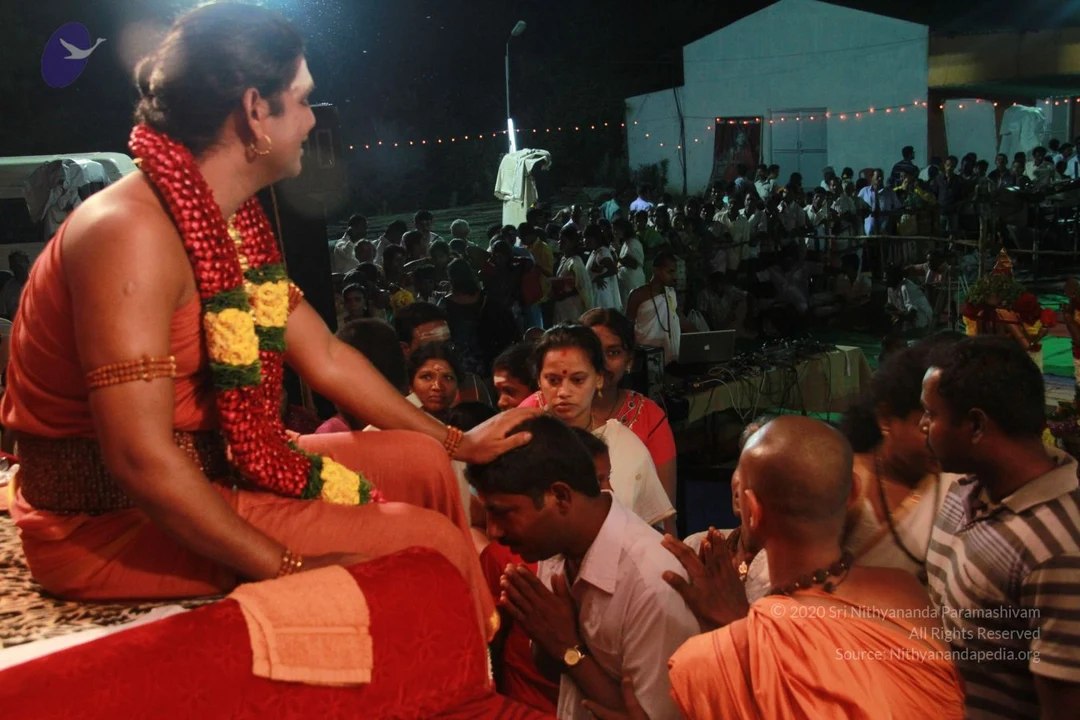
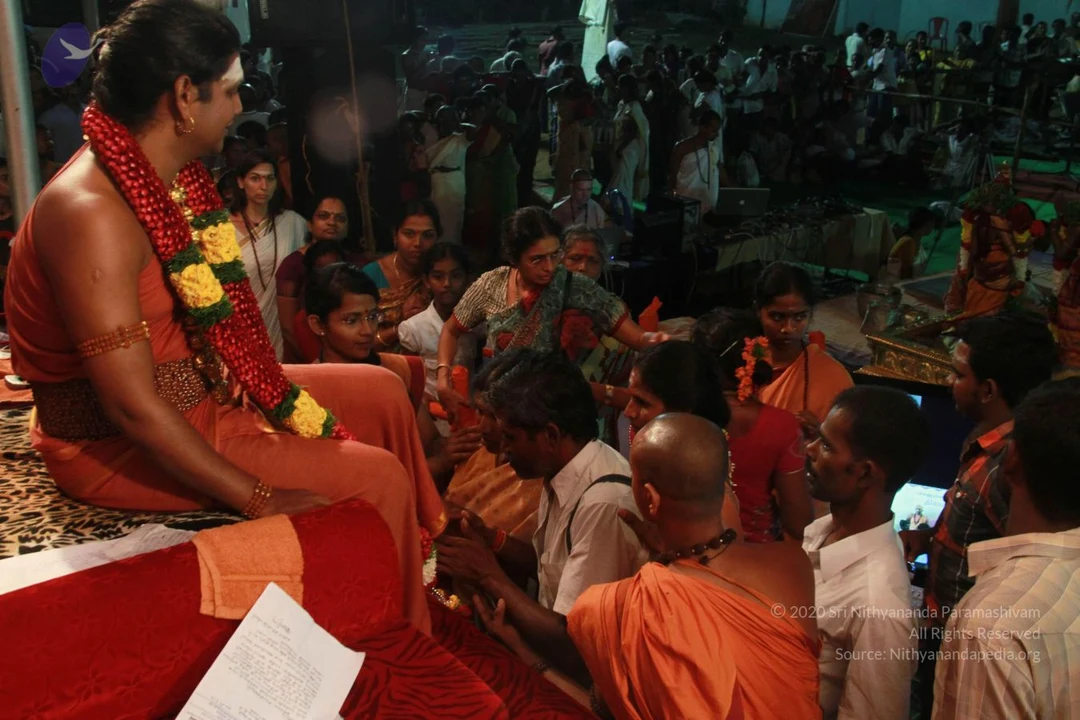
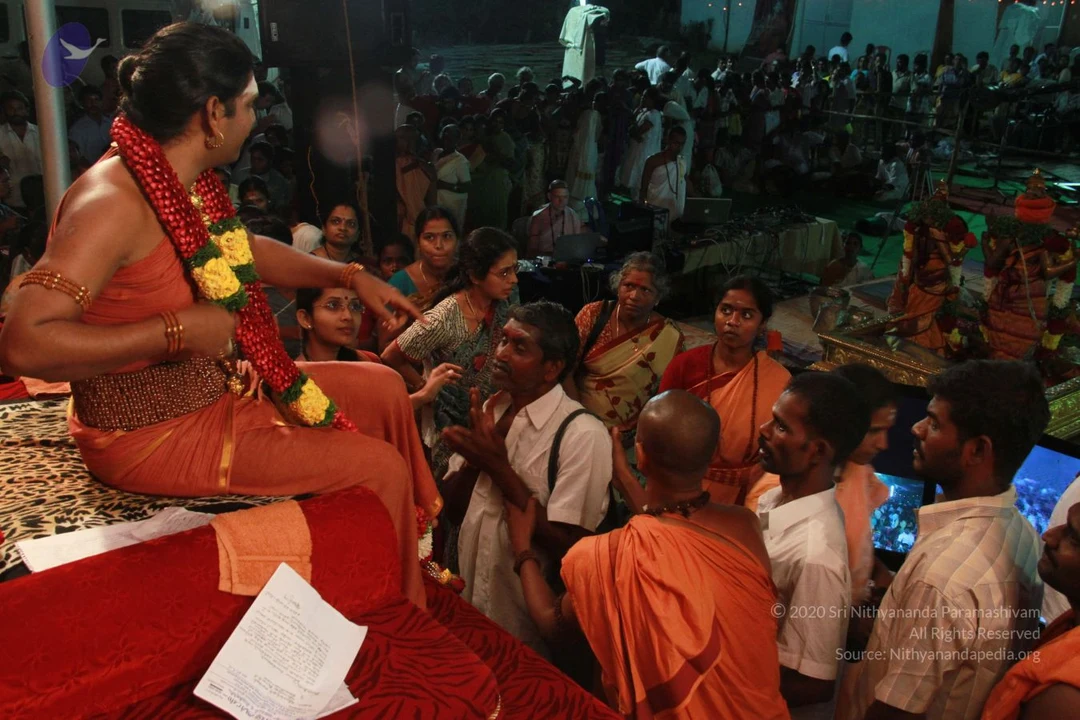
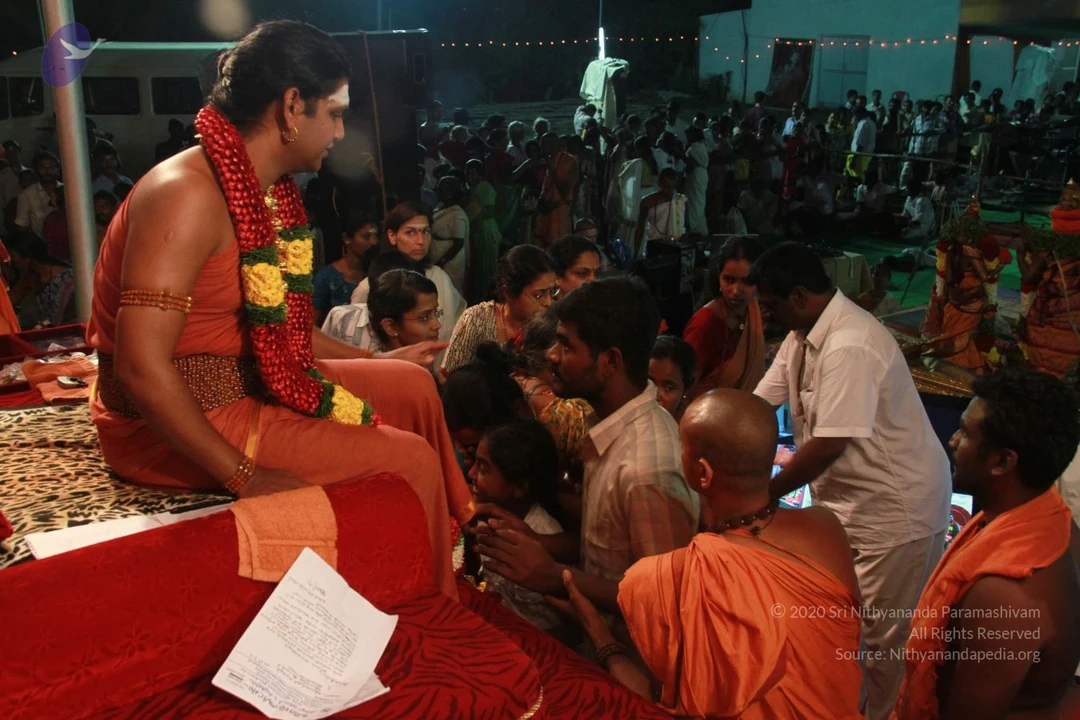
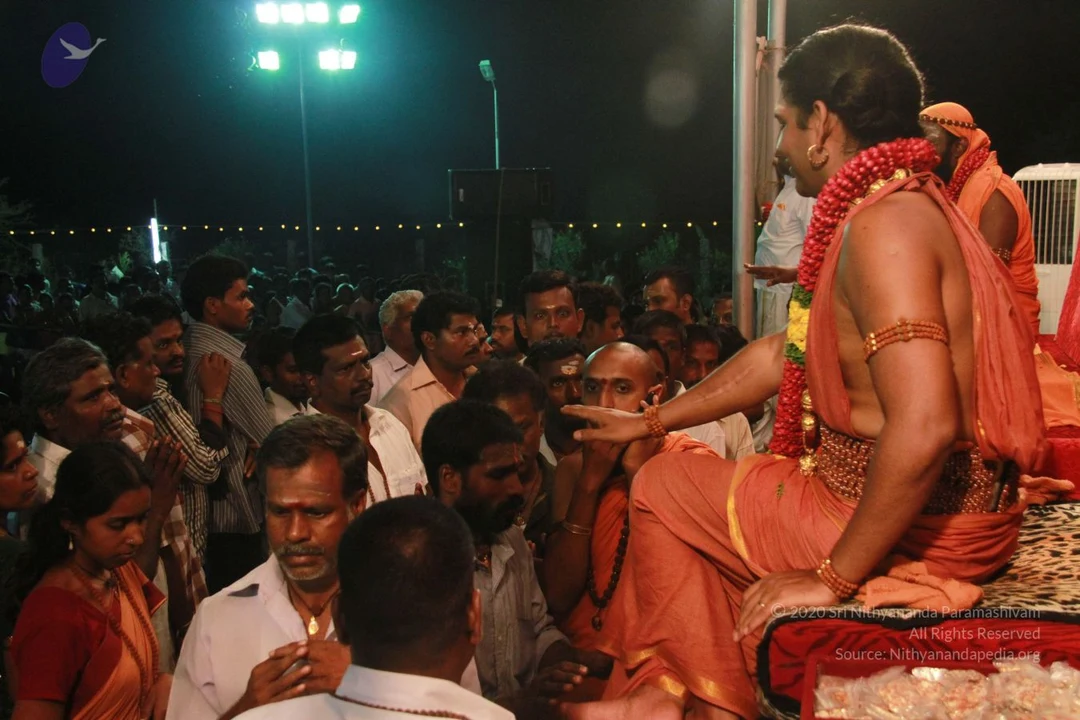
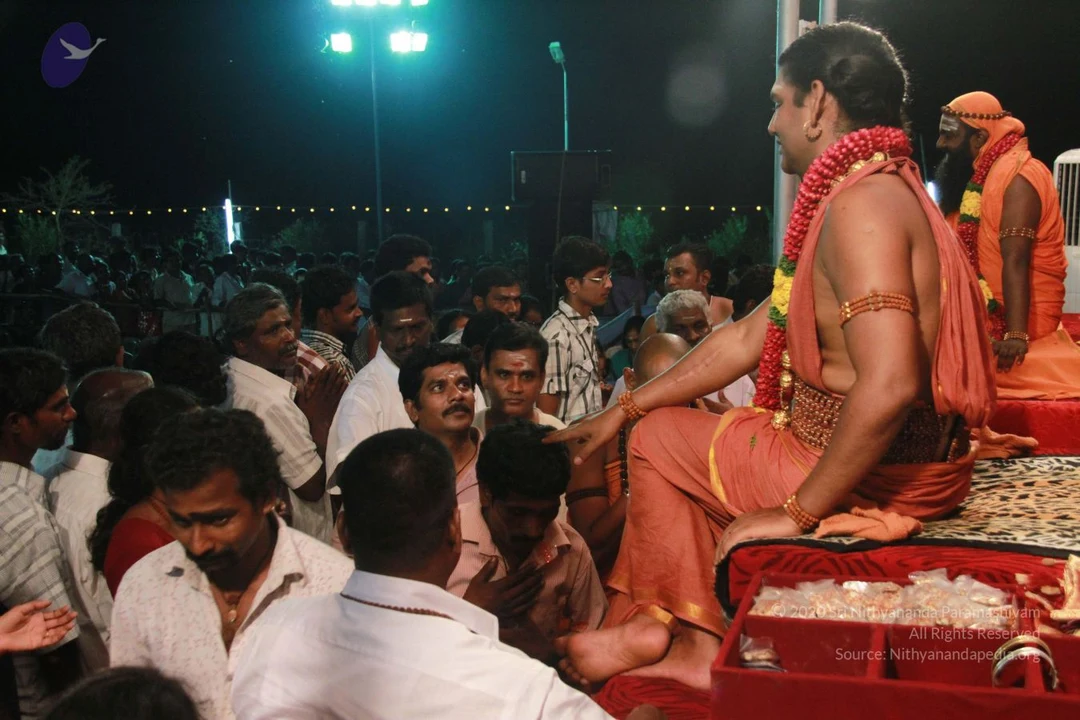
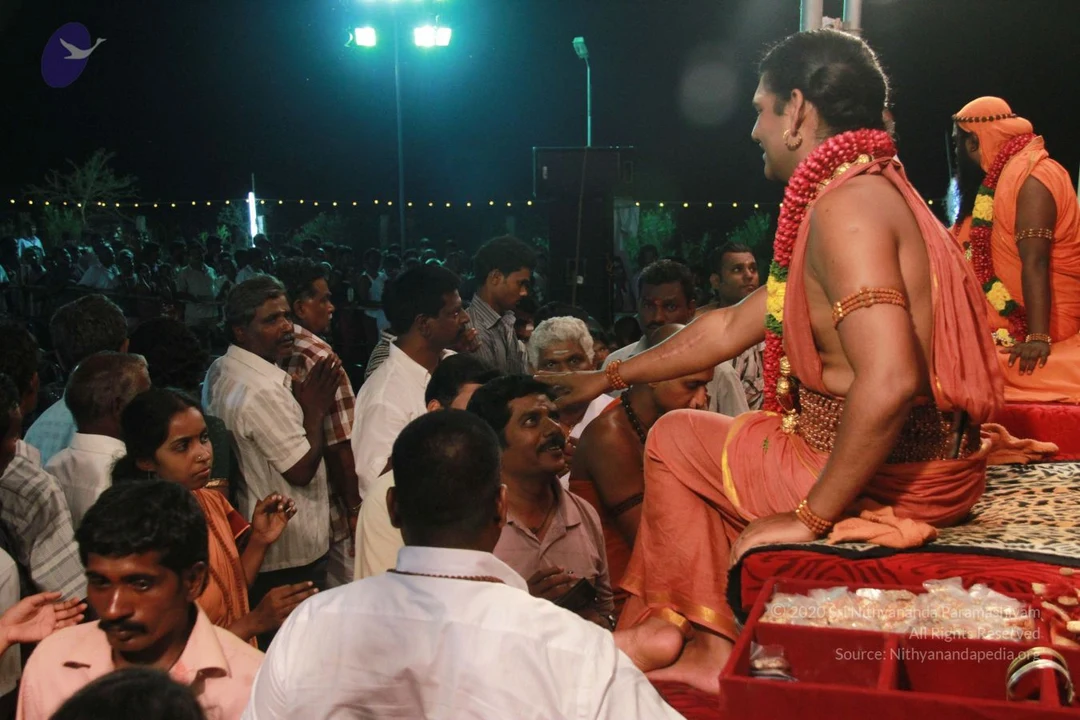
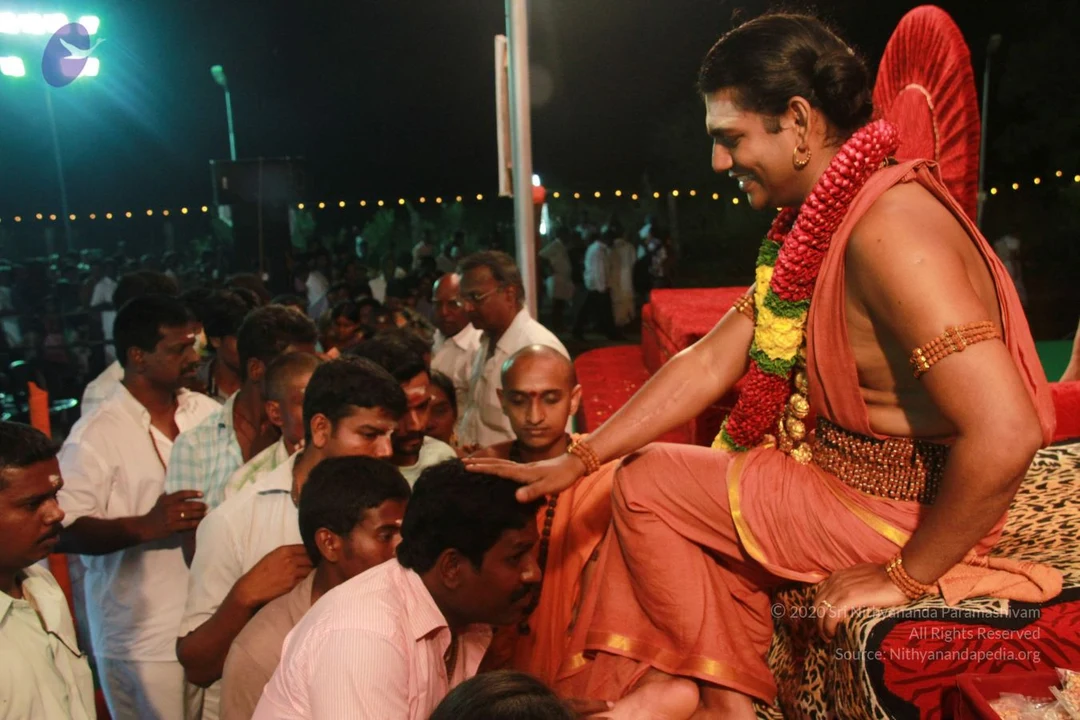
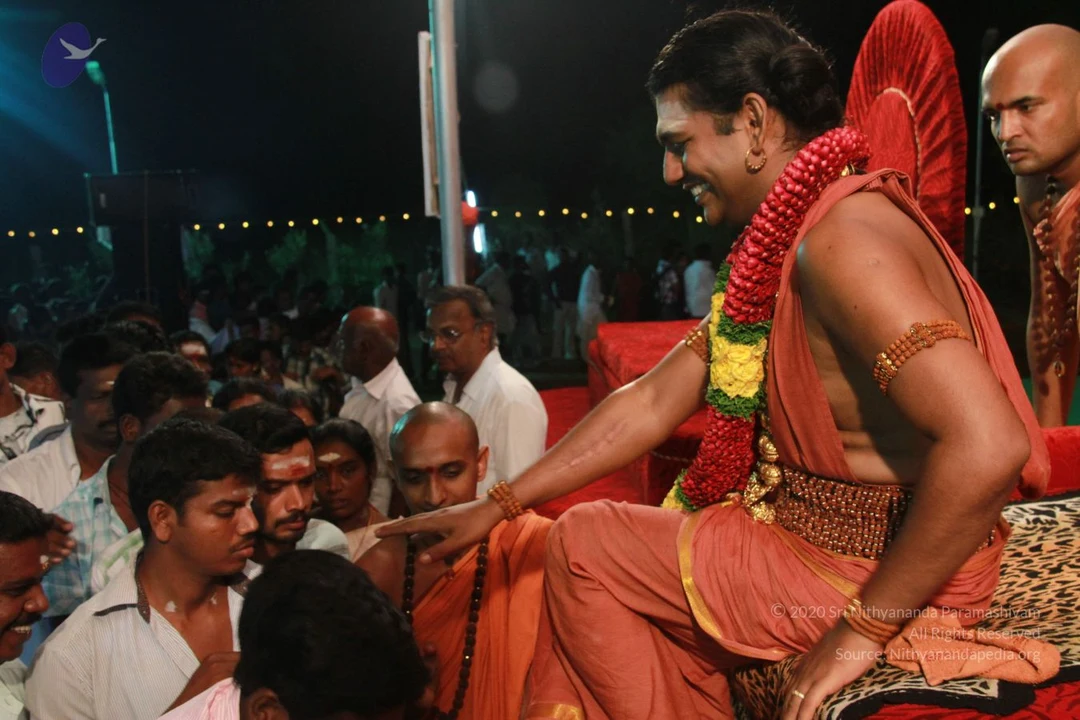
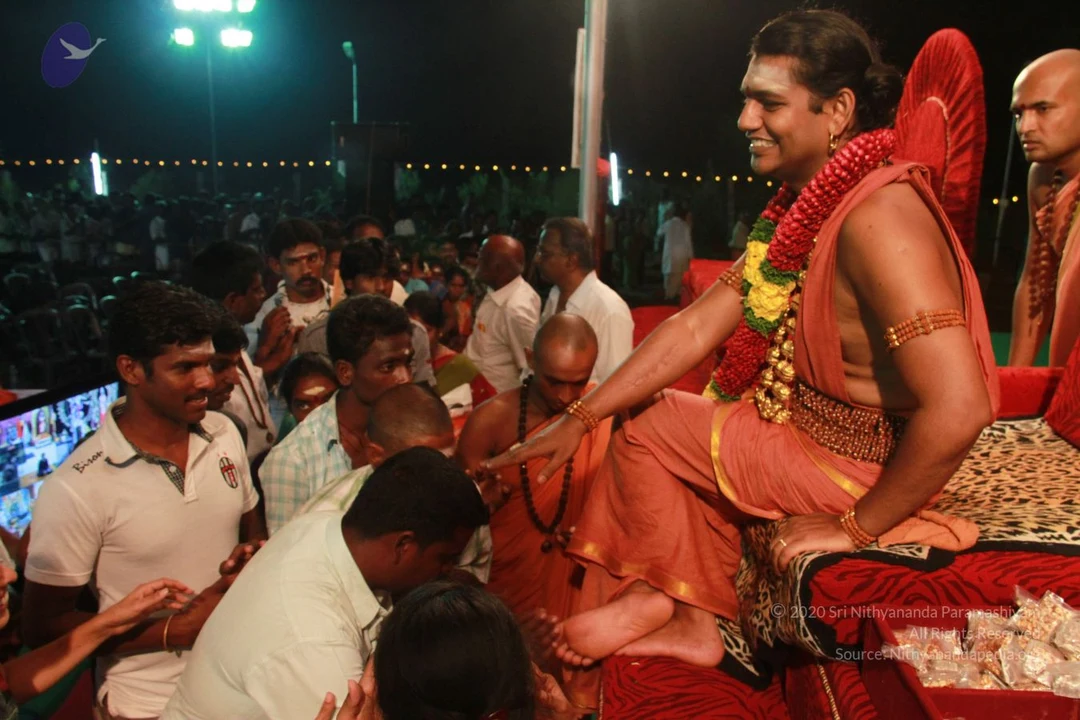
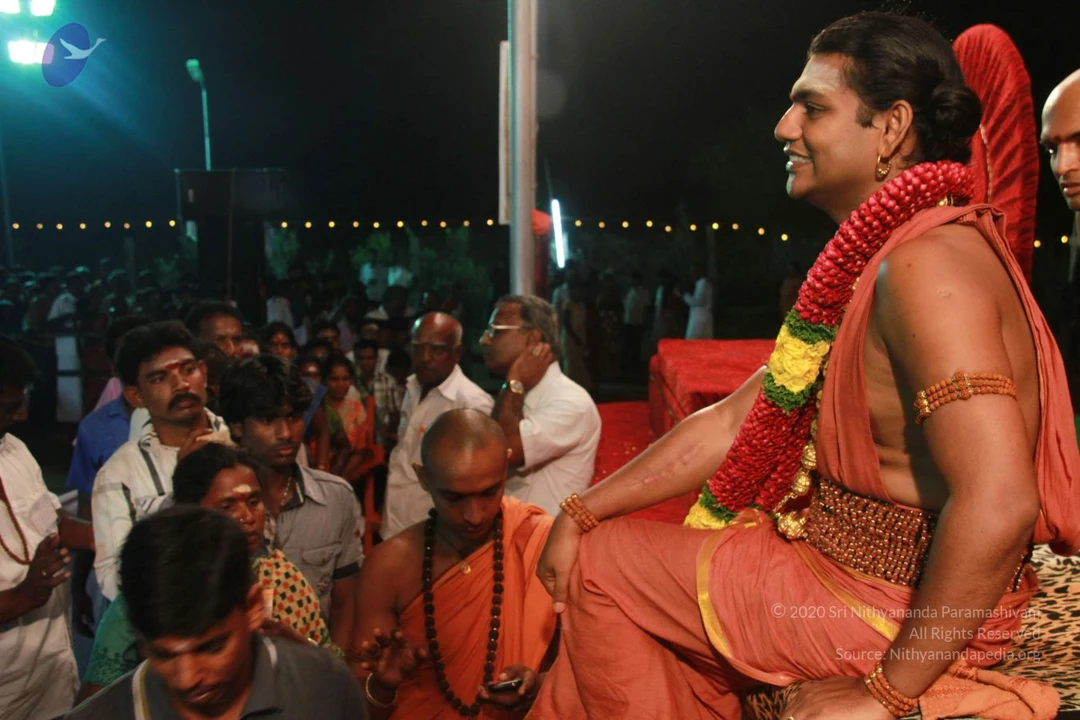
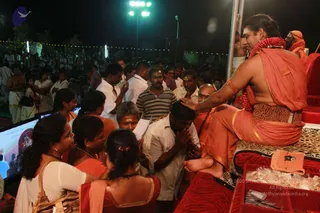
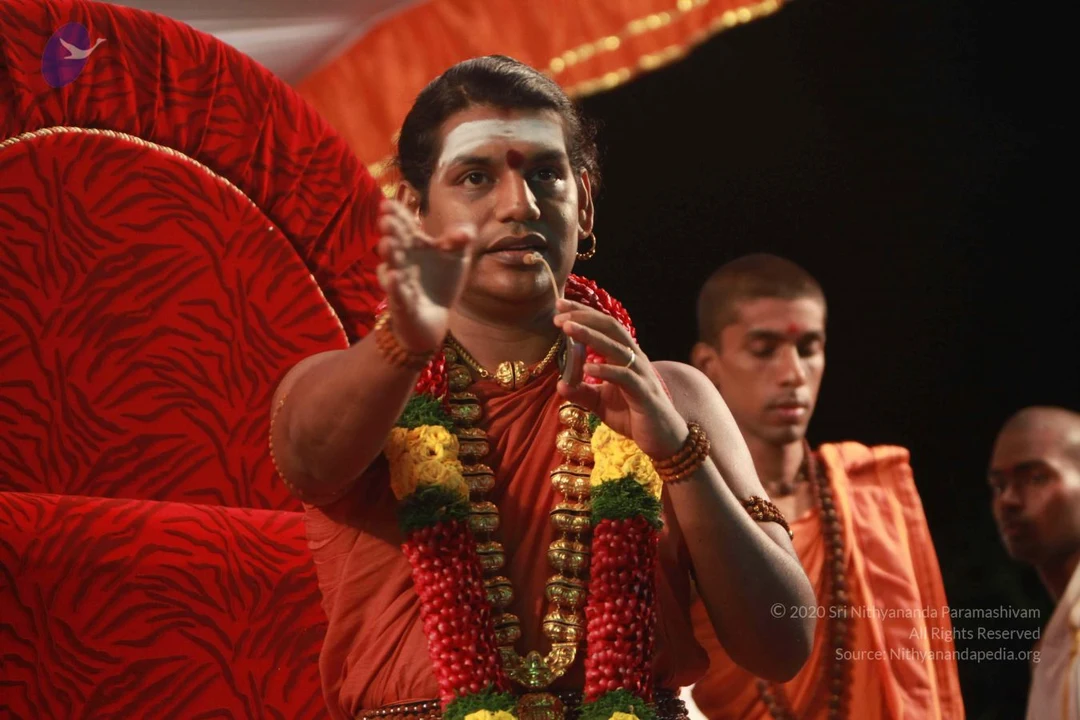
A man in saffron-orange robes stands before a red tiger-striped throne draped in red fabric with an orange canopy above. He wears a large multi-strand garland of red beads and yellow flowers with green leaves, a gold ornate necklace, bangles and a rudraksha-style mala, and has white and red forehead markings. He raises both hands in an animated gesture while speaking. Behind him to the right, a younger man in orange robes with a rudraksha mala and shaved head looks down, and a bald man in white stands at the far right edge. Dark background. Appearance-based candidate: a person, seated in front of the throne with his hands gesturing in discourse, distinguished by the garland, gold ornaments, orange robes and rudraksha mala.Night outdoor event with a crowd of devotees behind a raised red-cushioned platform. A bare-chested man with long swept-back dark hair, wearing an orange-saffron dhoti and shawl, a long red rudraksha-style mala and a beaded belt, sits on the platform and places his hand on the head of a kneeling man in a white shirt who has his palms pressed together. Women in orange and red saris and white clothing watch from the front-left, and a television screen showing a deity image sits at the left edge. Strings of lights and a stage lamp illuminate the scene, and a red tray holds small packets in the lower right.Night-time photograph of an outdoor satsang on a raised red-draped platform with a red-and-zebra-patterned cushion. A bare-shouldered figure with swept-back hair and a long red and yellow flower-and-bead garland sits cross-legged, wearing an orange cloth, a gold-beaded belt and gold armlets, smiling toward the audience. Seated devotees kneel before the platform; a woman in white with gold jewellery, a man in white shirt with folded hands, and a bald saffron-robed sannyasi with a mala sit close by. Behind them a crowd fills the grounds under string lights, with a small deity murti and decorated figures on a side stage and a monitor showing a screen image. Swamiji (probable): the seated figure has long swept-back hair, a red garland, orange clothing and gold ornaments.Night outdoor darshan with a long-haired figure seated on a raised cushioned platform, wearing an orange-red garment, a red and yellow marigold garland, a gold armlet and gold earring. He rests his right hand on the head of a kneeling devotee in a white shirt with folded hands. Around them a large crowd stands and sits, including a woman in a red top, men in white shirts and an orange-robed sannyasi with a shaved head. Strings of lights hang over a white tent structure, and a decorated altar with flowers and a laptop sits at right. The figure's appearance matches the page's Swamiji cues (swept-back hair, saffron-orange robes, ornate garland), so this is a probable Swamiji in person.A large crowd gathers in an open hall during a darshan-style gathering. On the left, a man with long swept-back hair, wearing a red and yellow marigold garland, saffron-orange cloth and gold bangles, sits on a red and leopard-print seat, facing right. Devotees in saffron and white kneel and sit before him, including a shaved-headed man in orange robes and rudraksha beads in the foreground, and women in saffron, red and sari-style clothing. A woman in a green-and-gold sari bends forward toward him. Behind them, many people stand and sit, and a deity murti with floral decorations is visible on an altar at the right. Sheets of paper lie on the red cloth at lower left.Photograph of an outdoor evening satsang where a man with long dark hair, wearing an orange draped garment, a red and yellow flower garland, gold bangles and a beaded gold belt, sits on a red and leopard-print platform speaking to a crowd. Around him, several devotees in saffron and orange clothing and a bald man in an orange robe with a rudraksha-style mala listen closely; a man in a white shirt gestures toward the platform. Behind them a large crowd stands and sits under a tent, and on the right a decorated altar holds garlanded deity murtis with flower garlands and a kalasha-like arrangement. Papers lie on the red cloth in the foreground. A large white figure stands above the crowd in the background.