Skip to content
Friday

28 September 2012

AKASHIC READINGS - DEATH (PART 2)

Dated photos
233
Source pages
1
Media
2
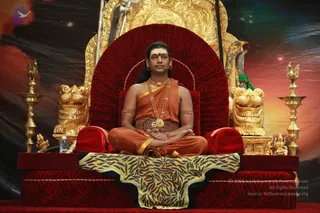
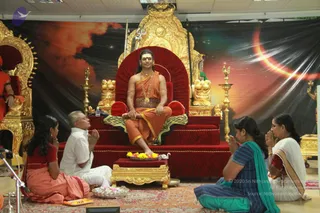
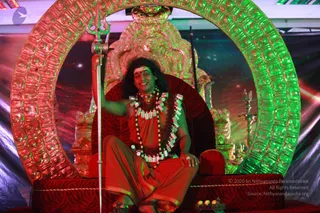
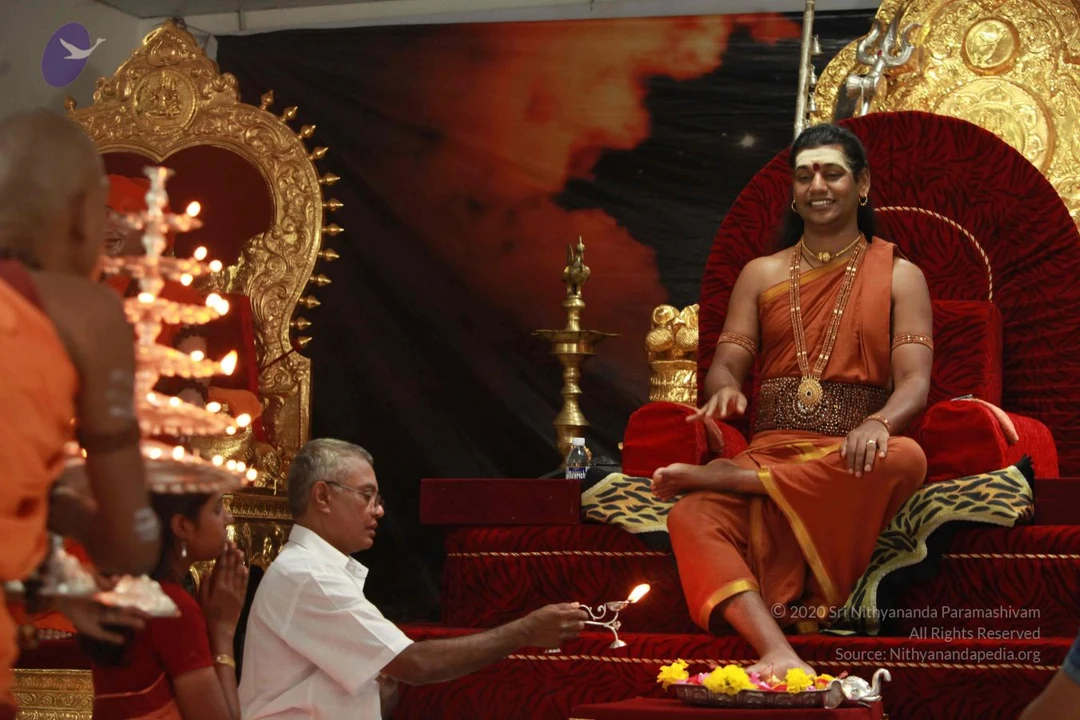
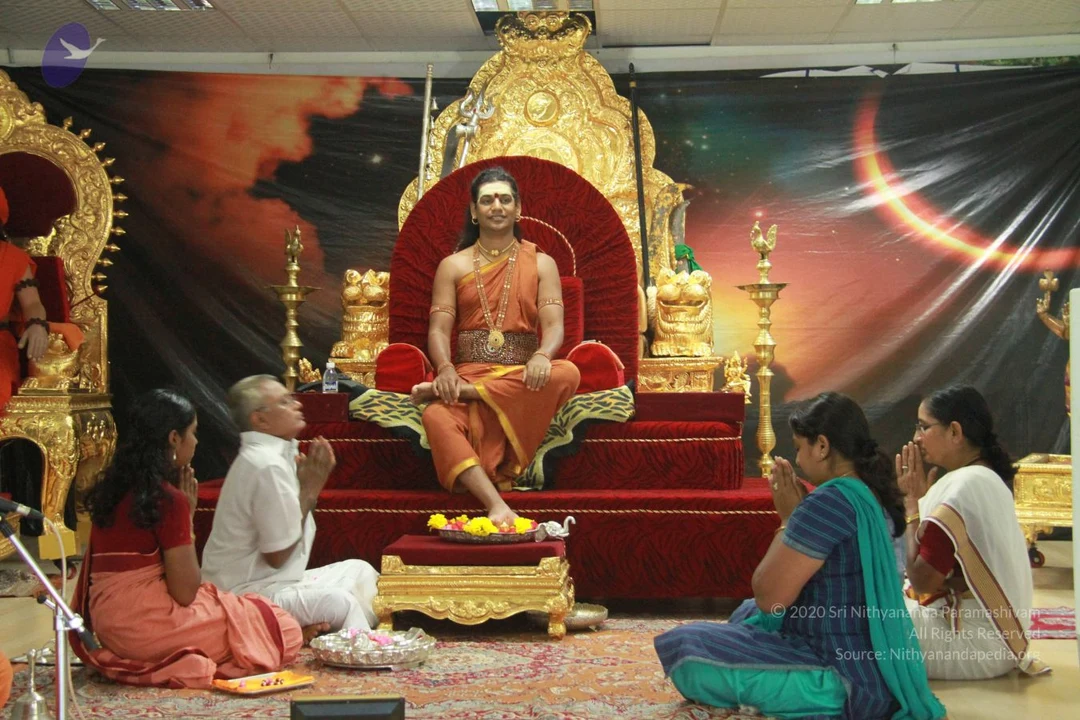
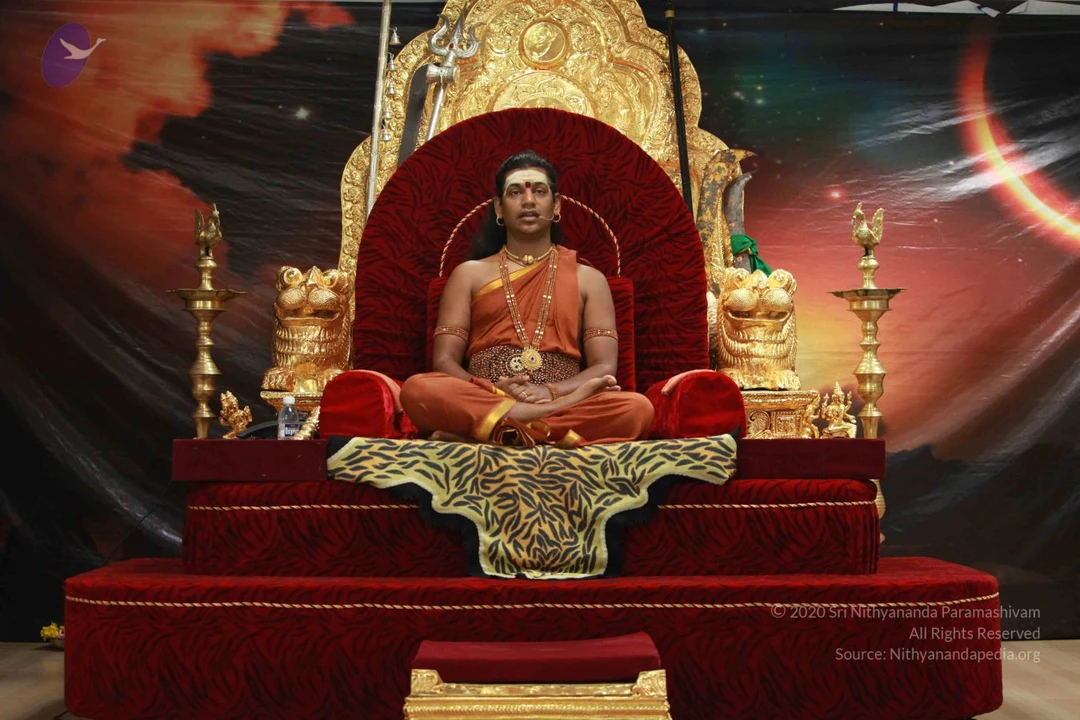
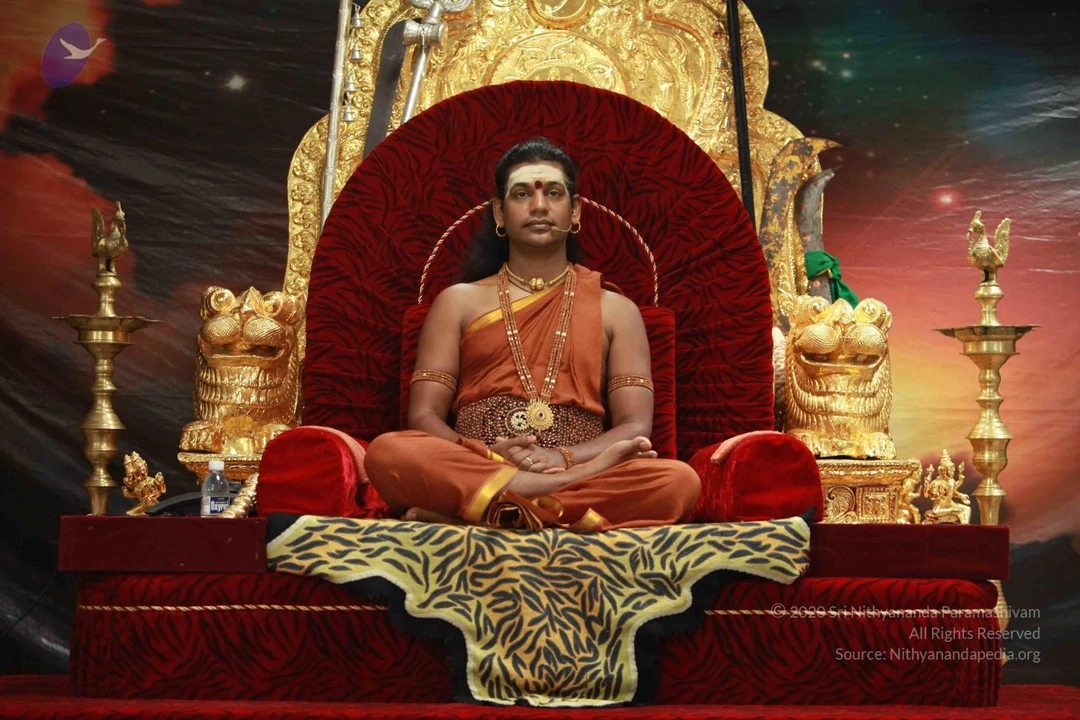
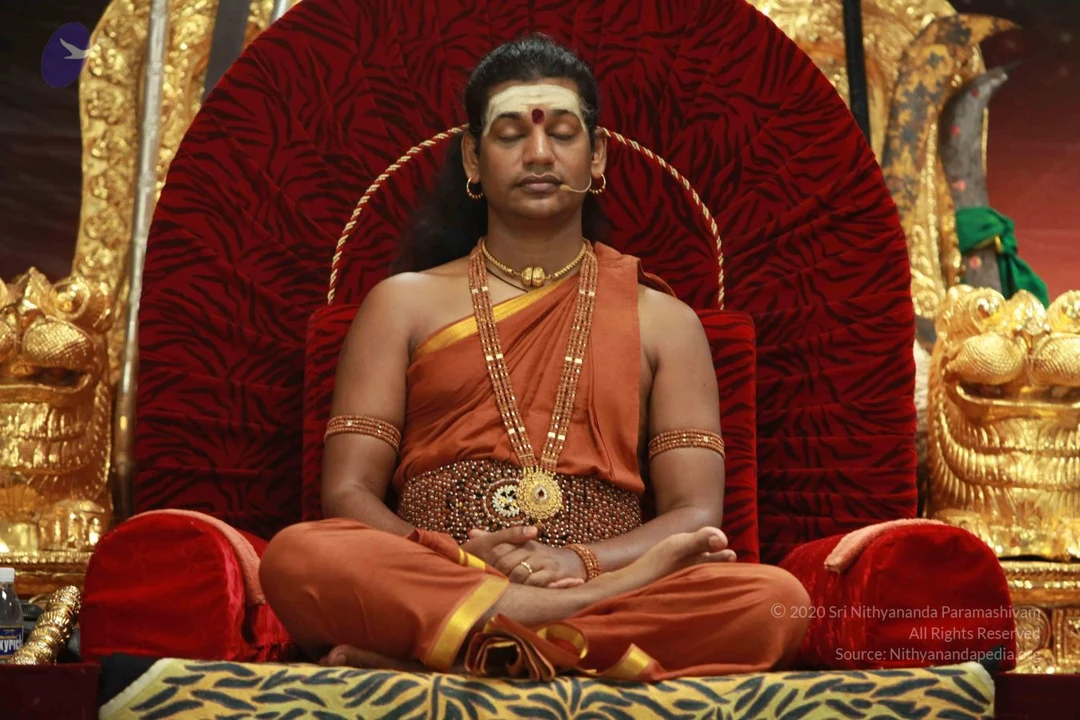
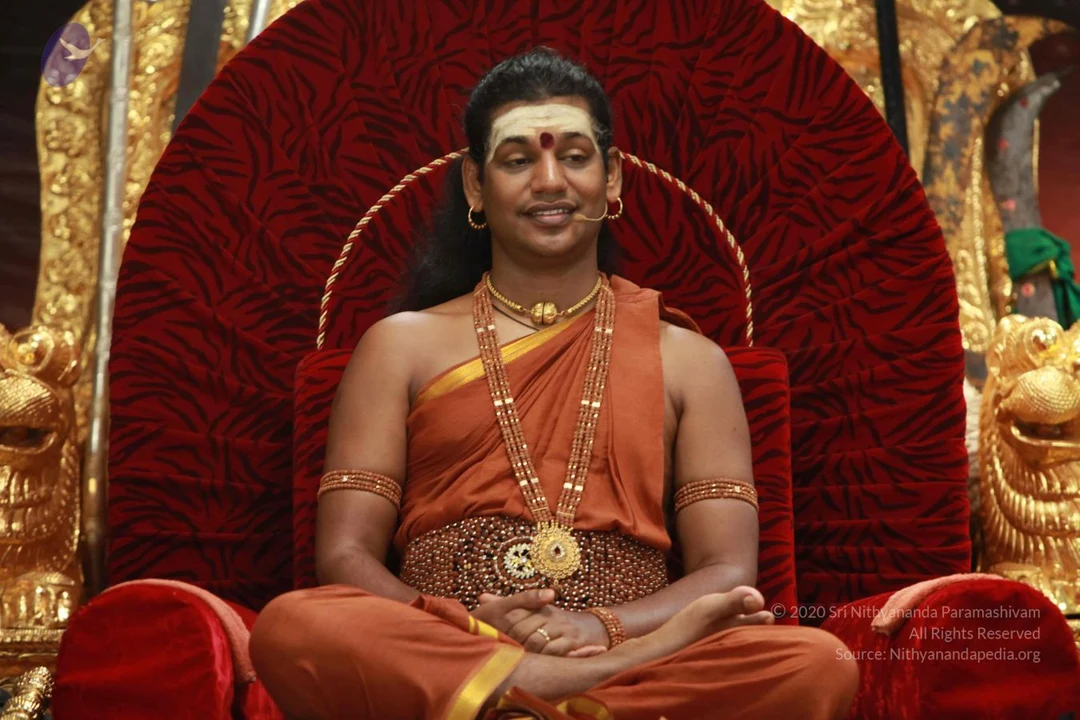
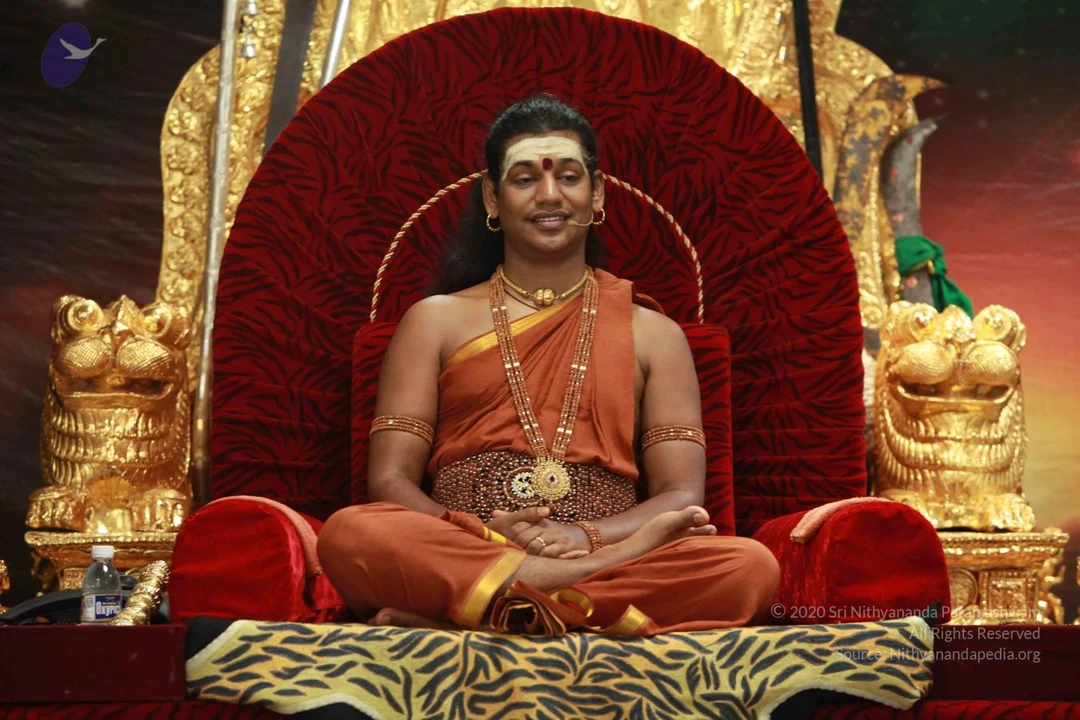
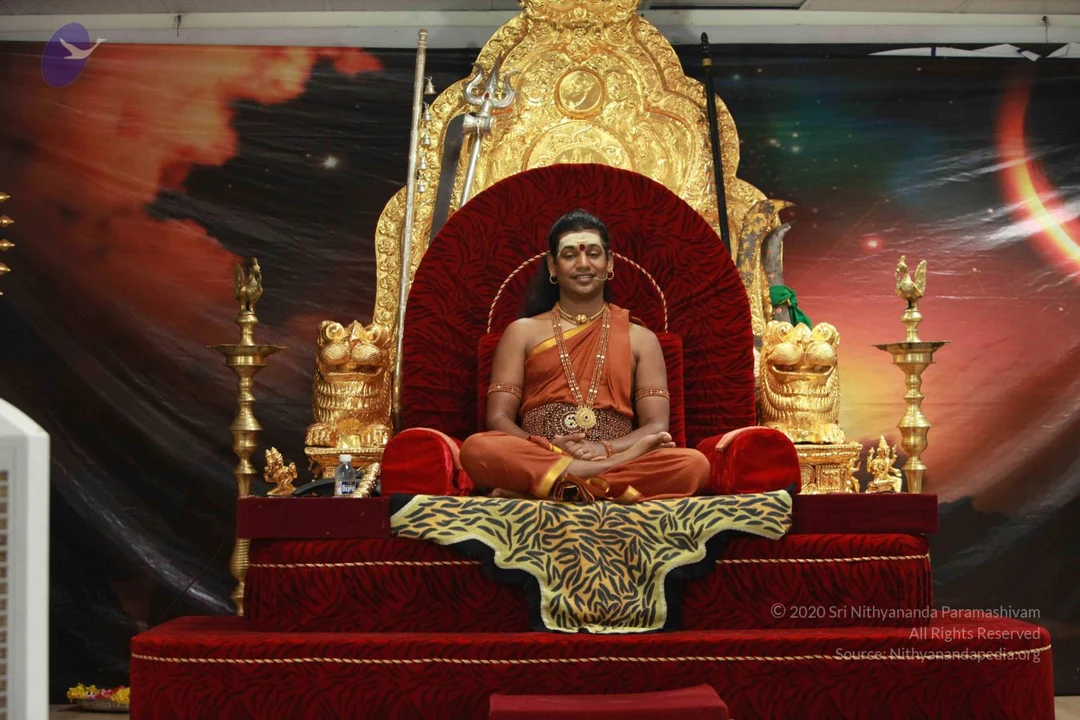
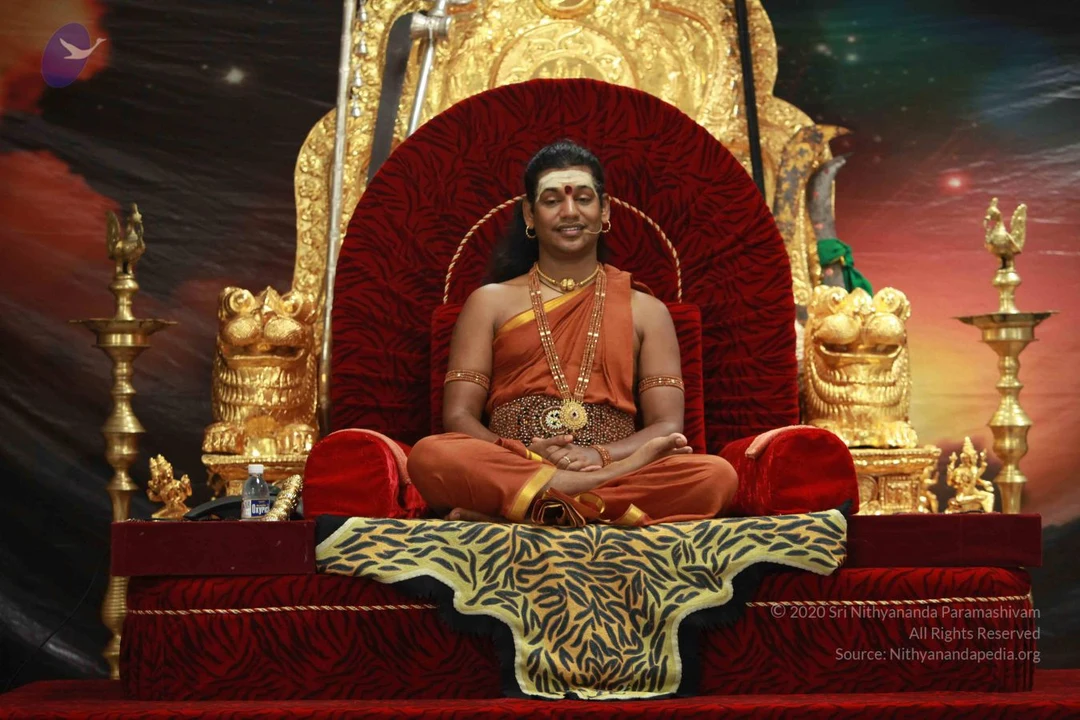
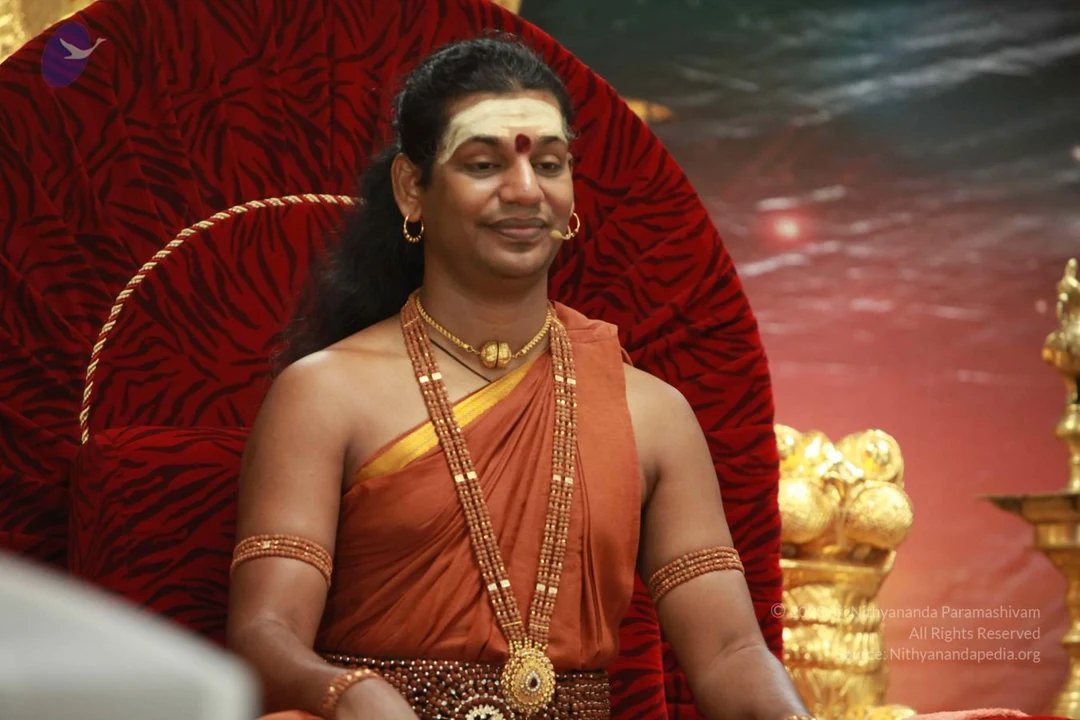
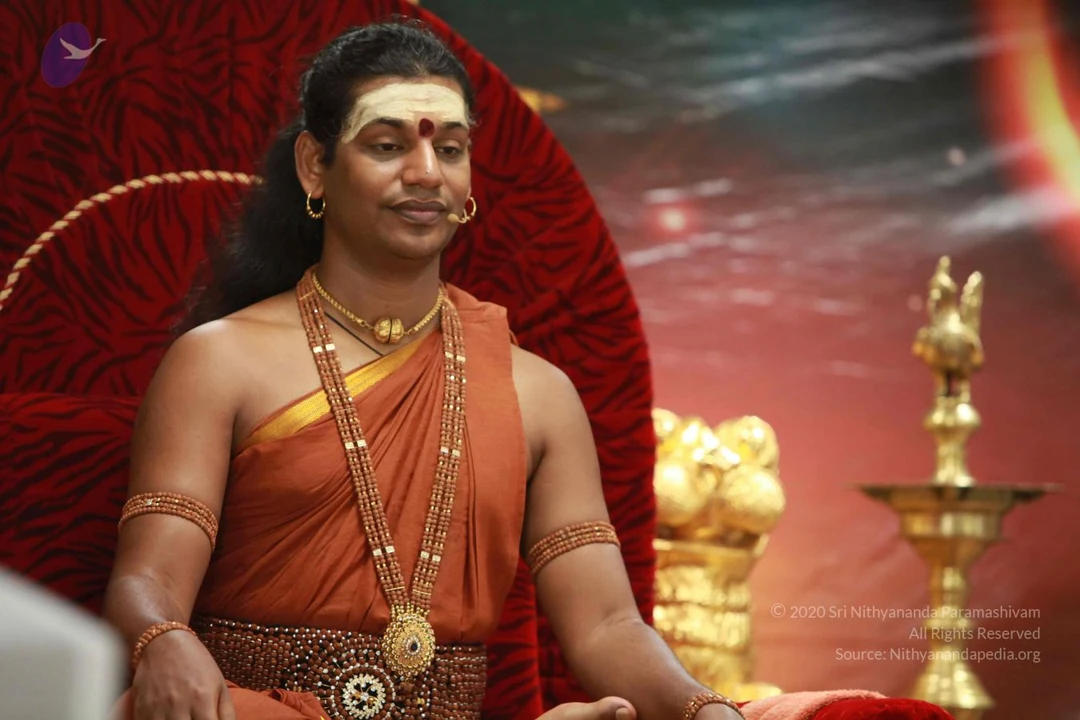
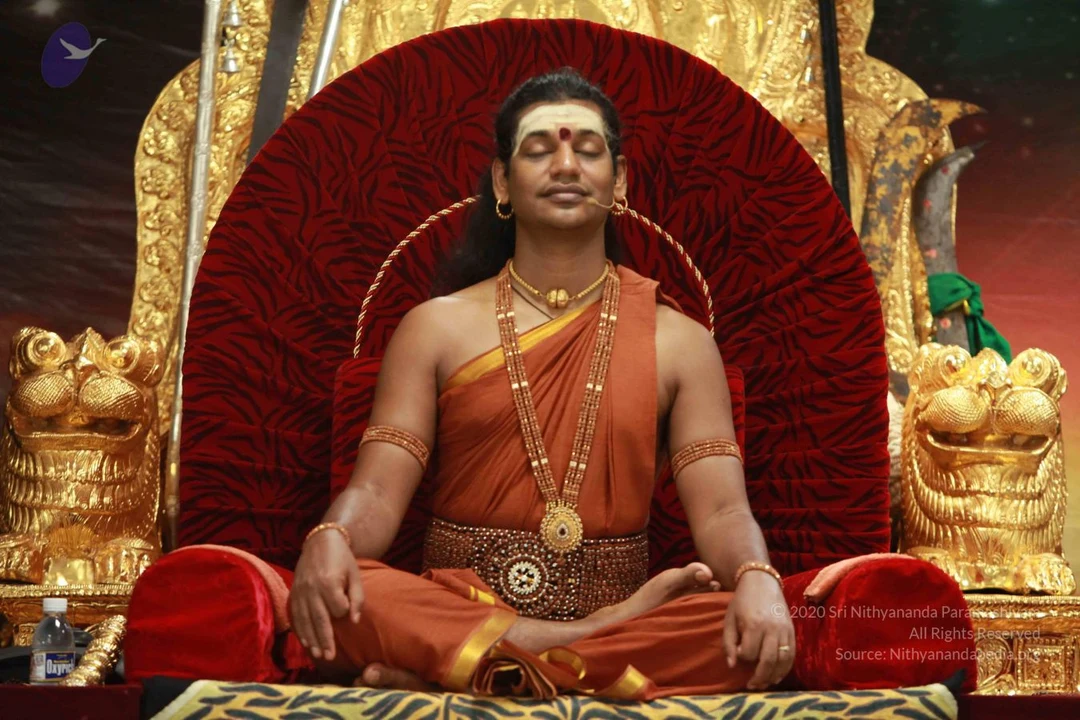
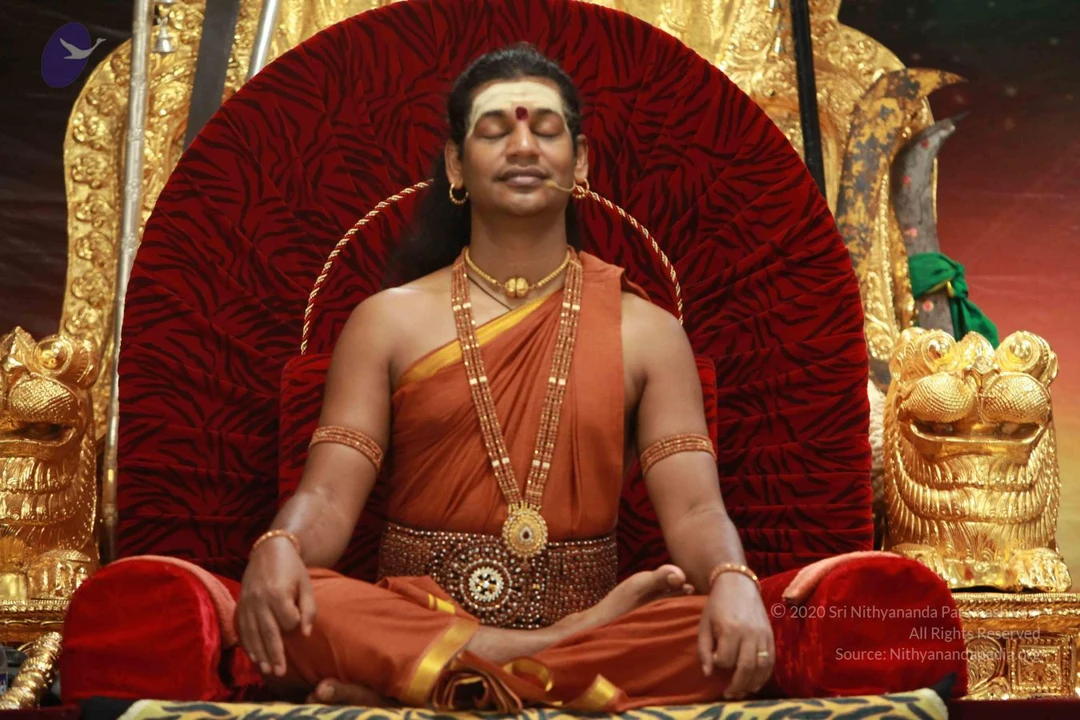
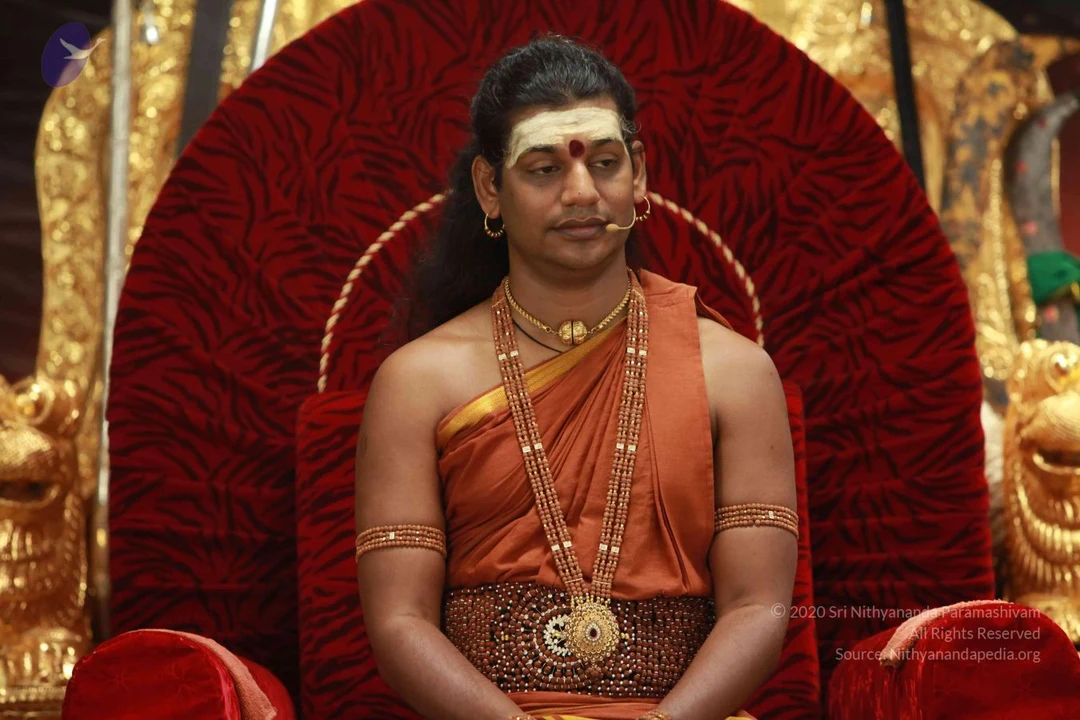
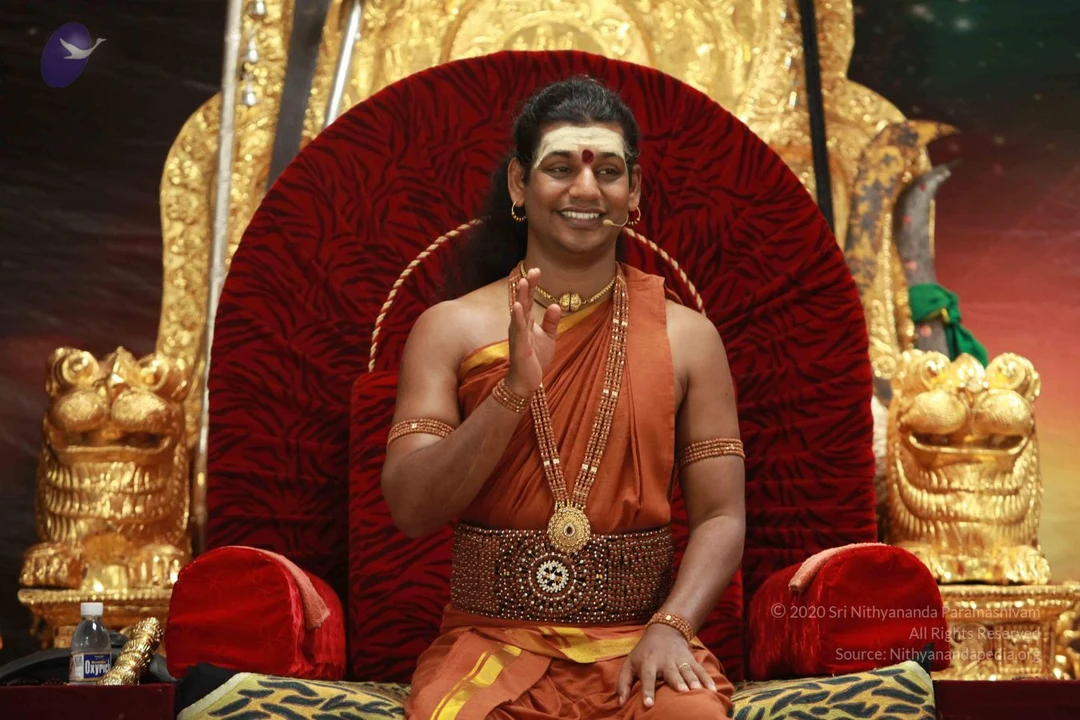
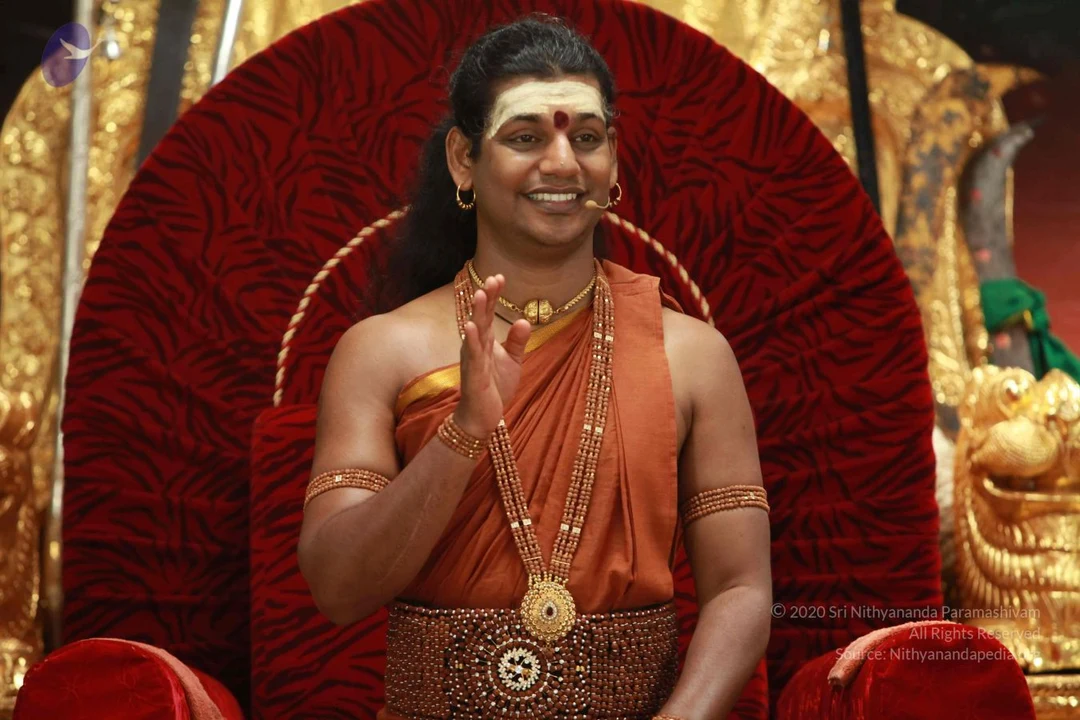
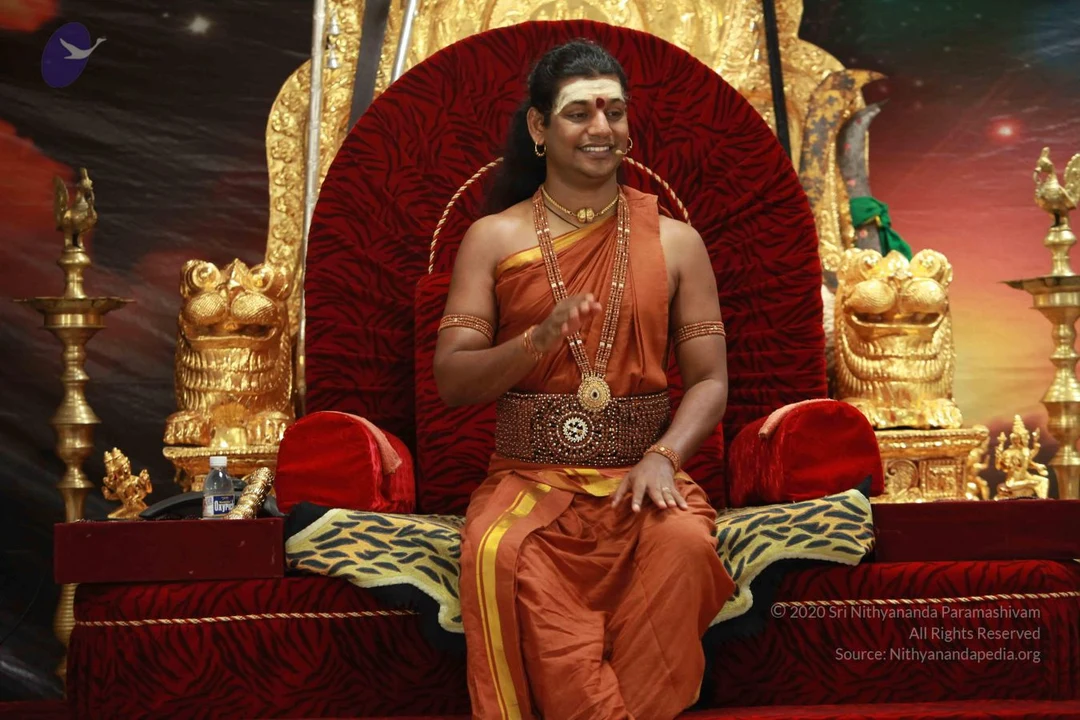
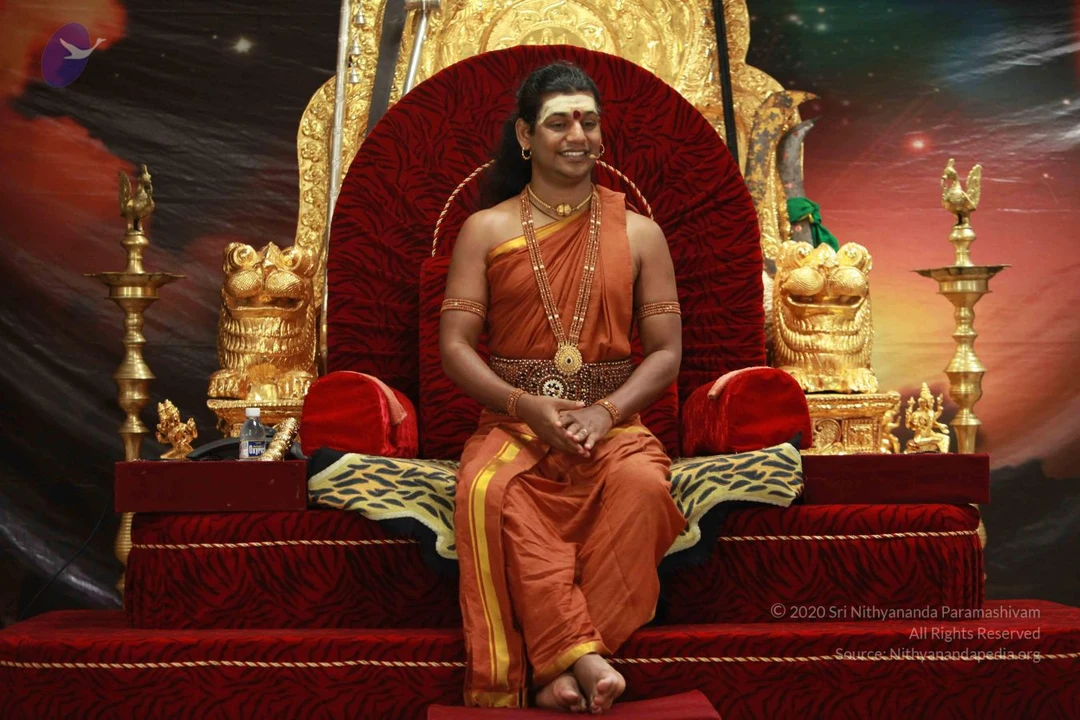
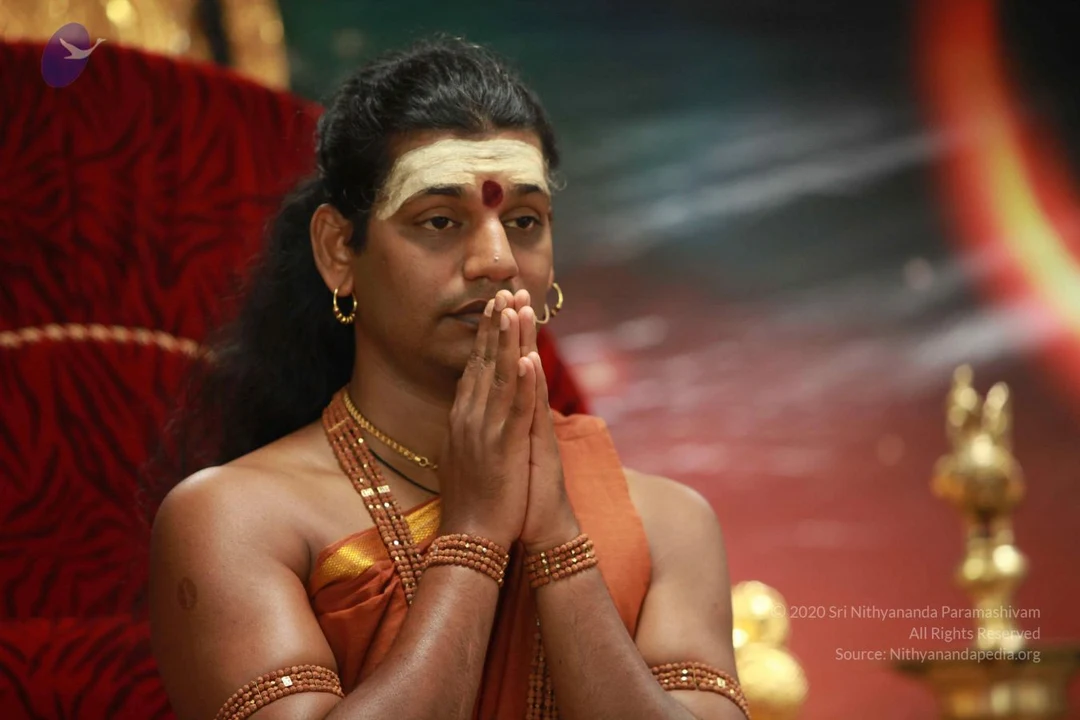
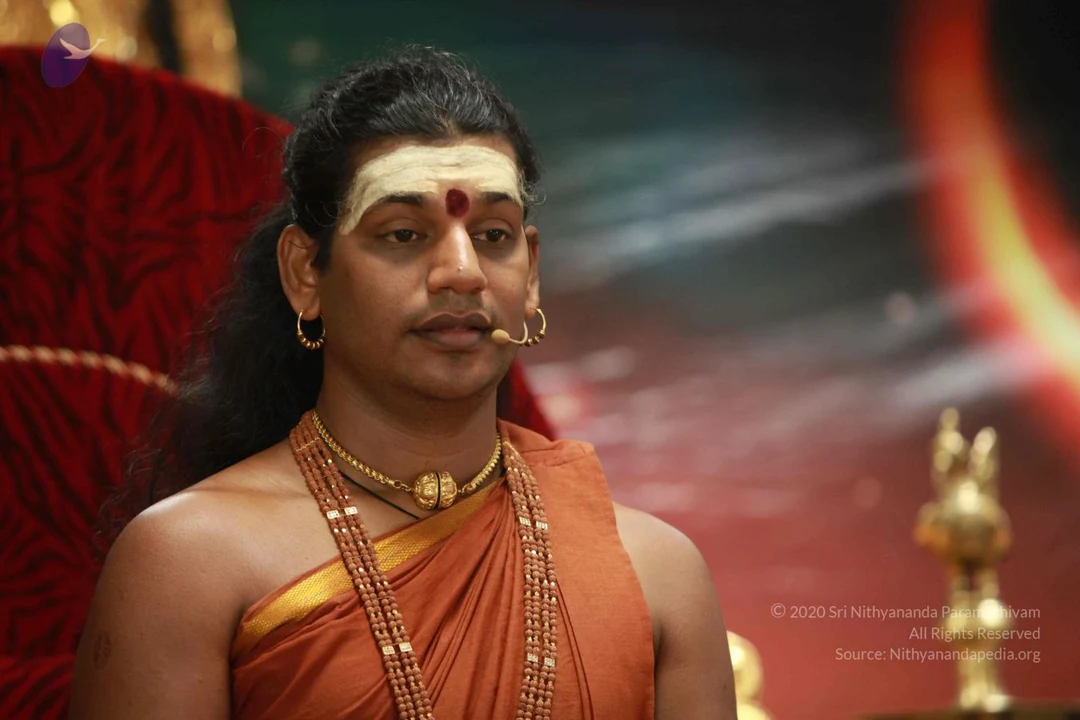
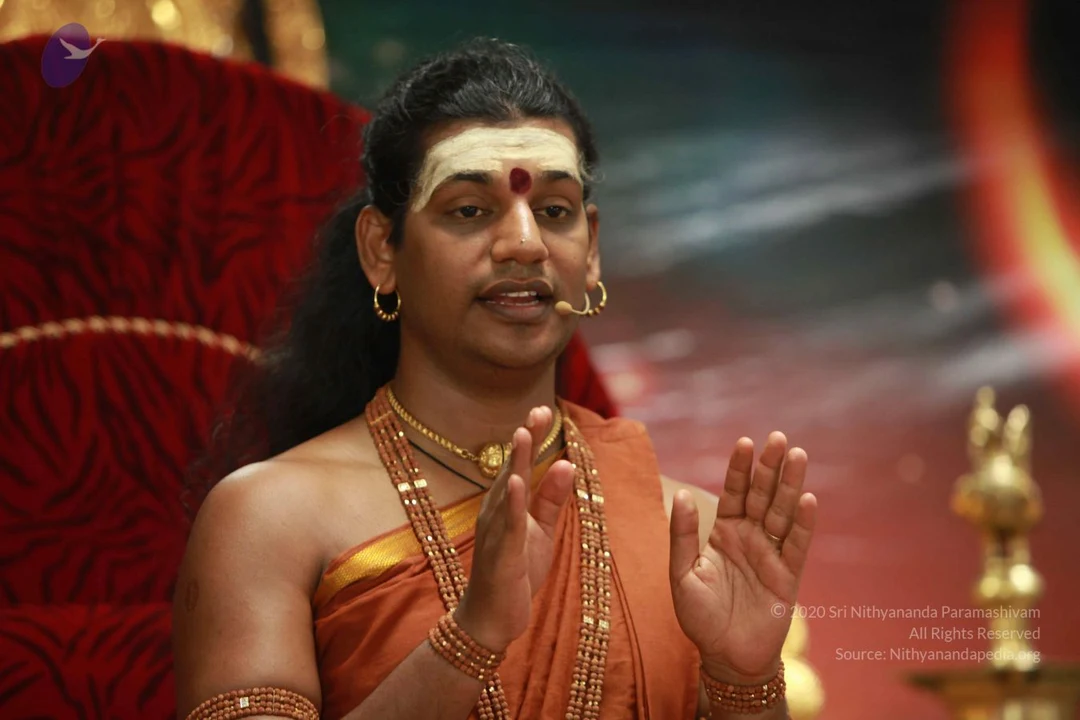
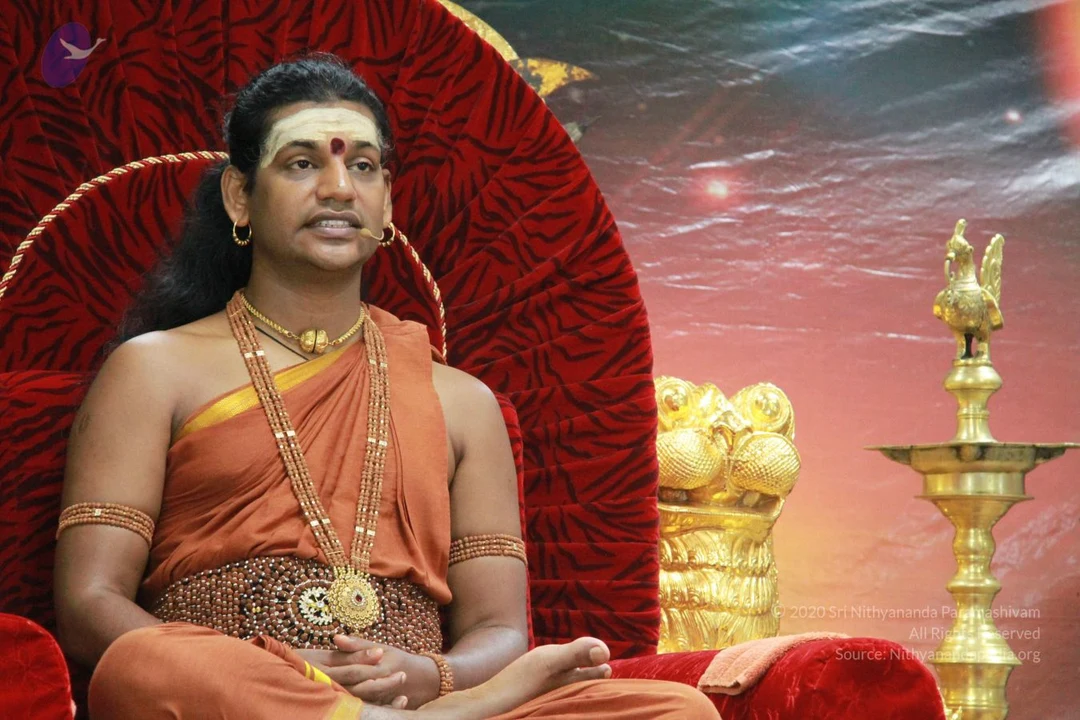
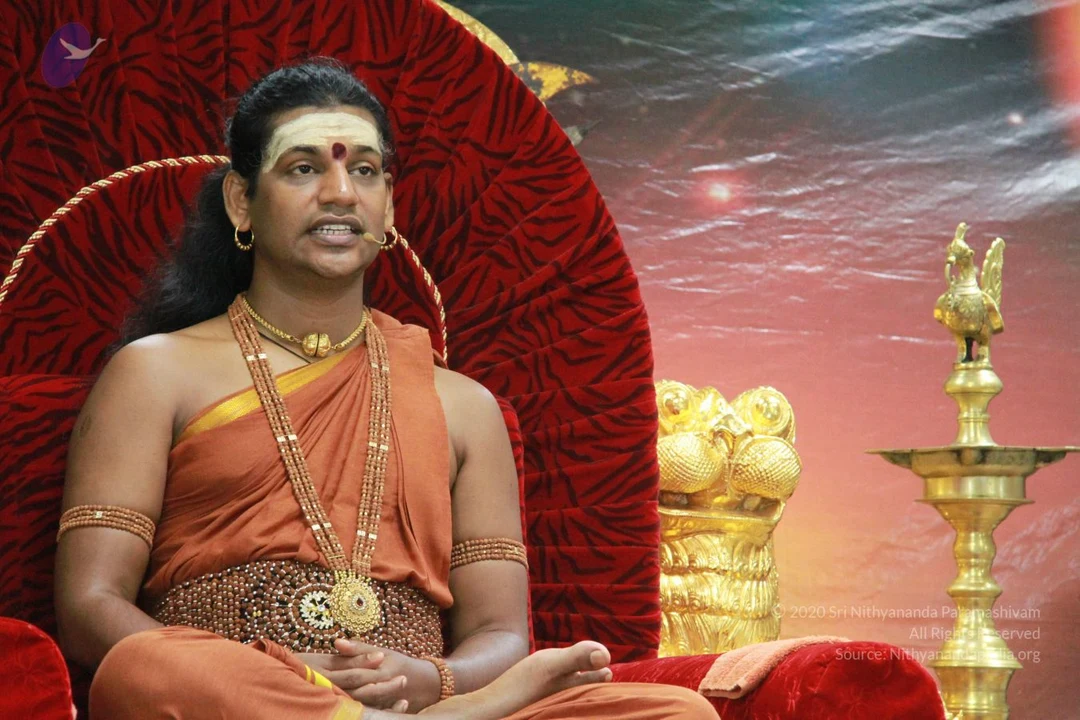
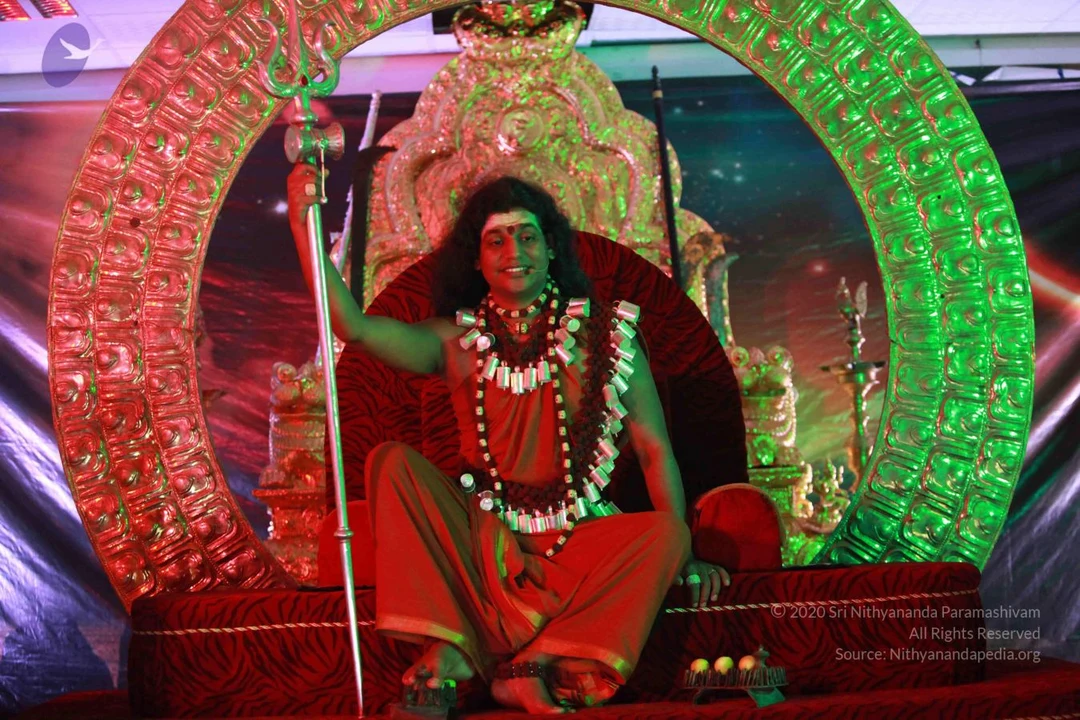
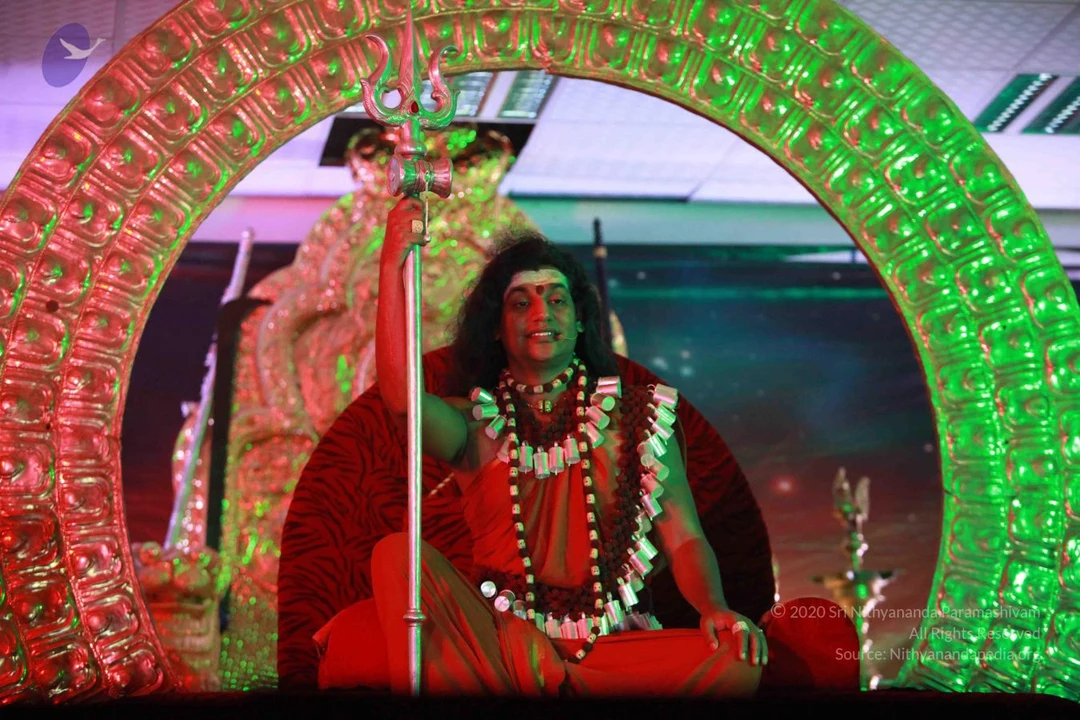
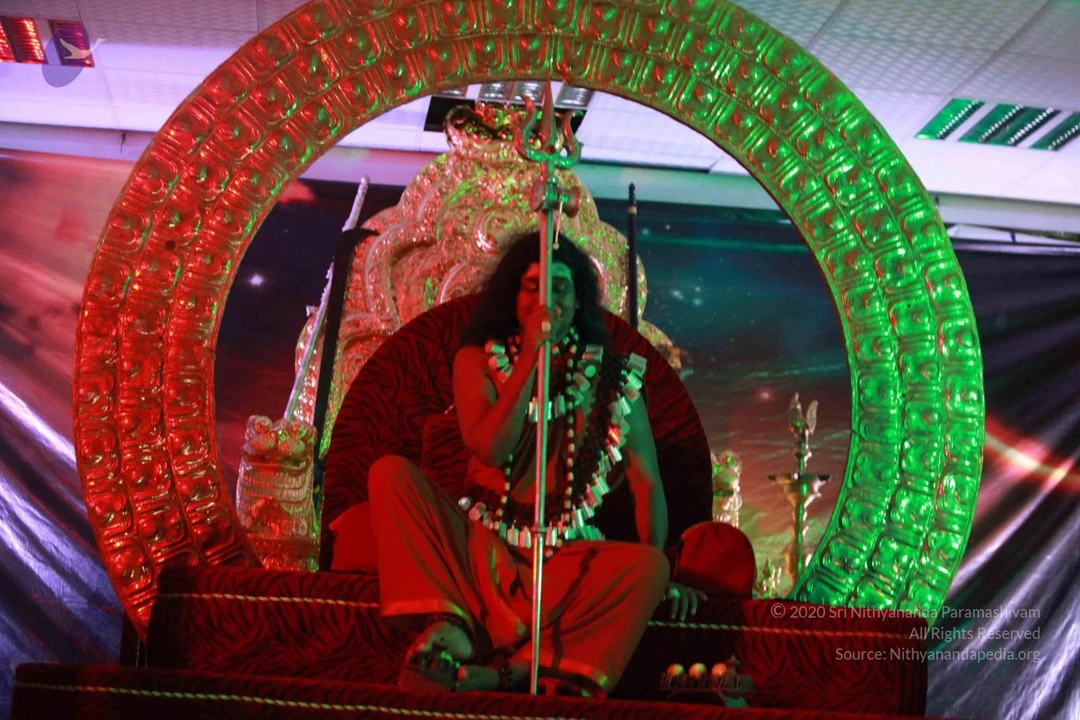
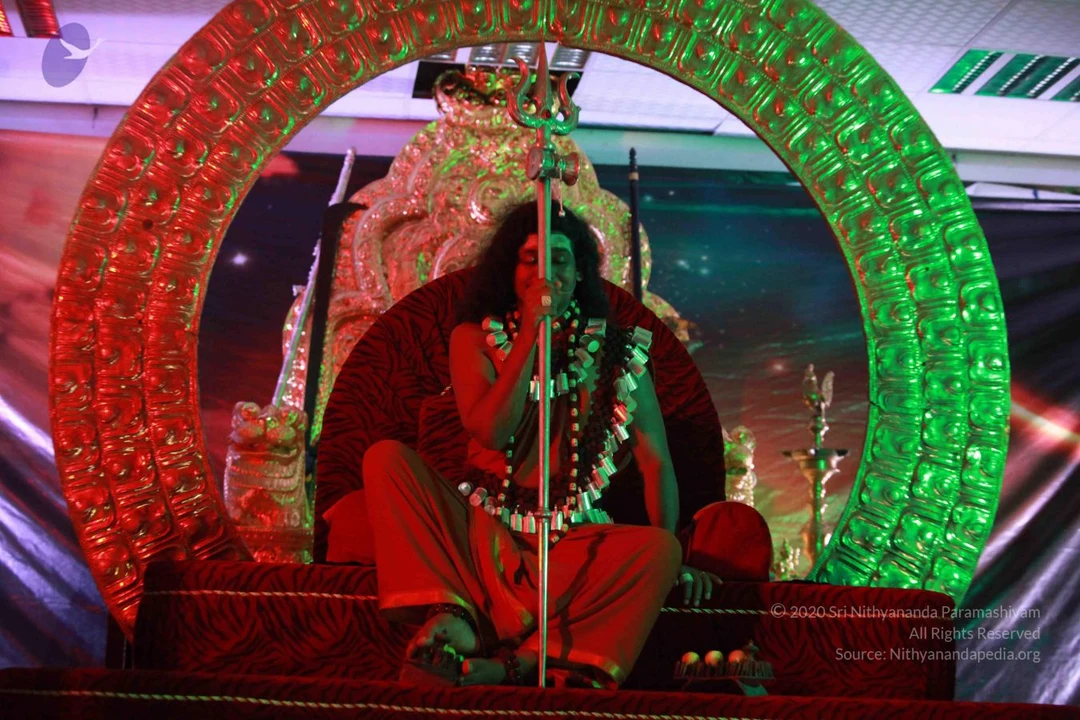
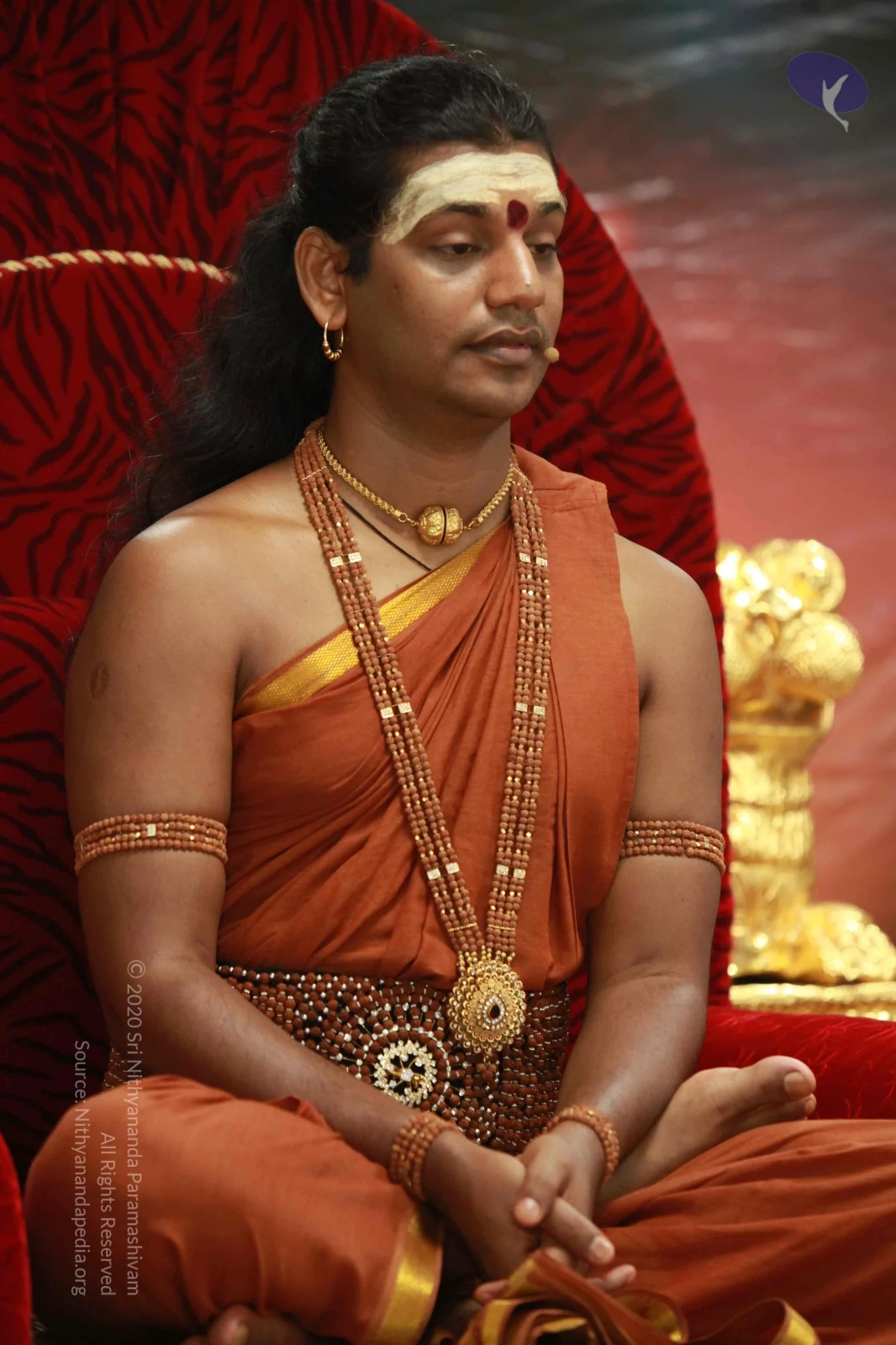
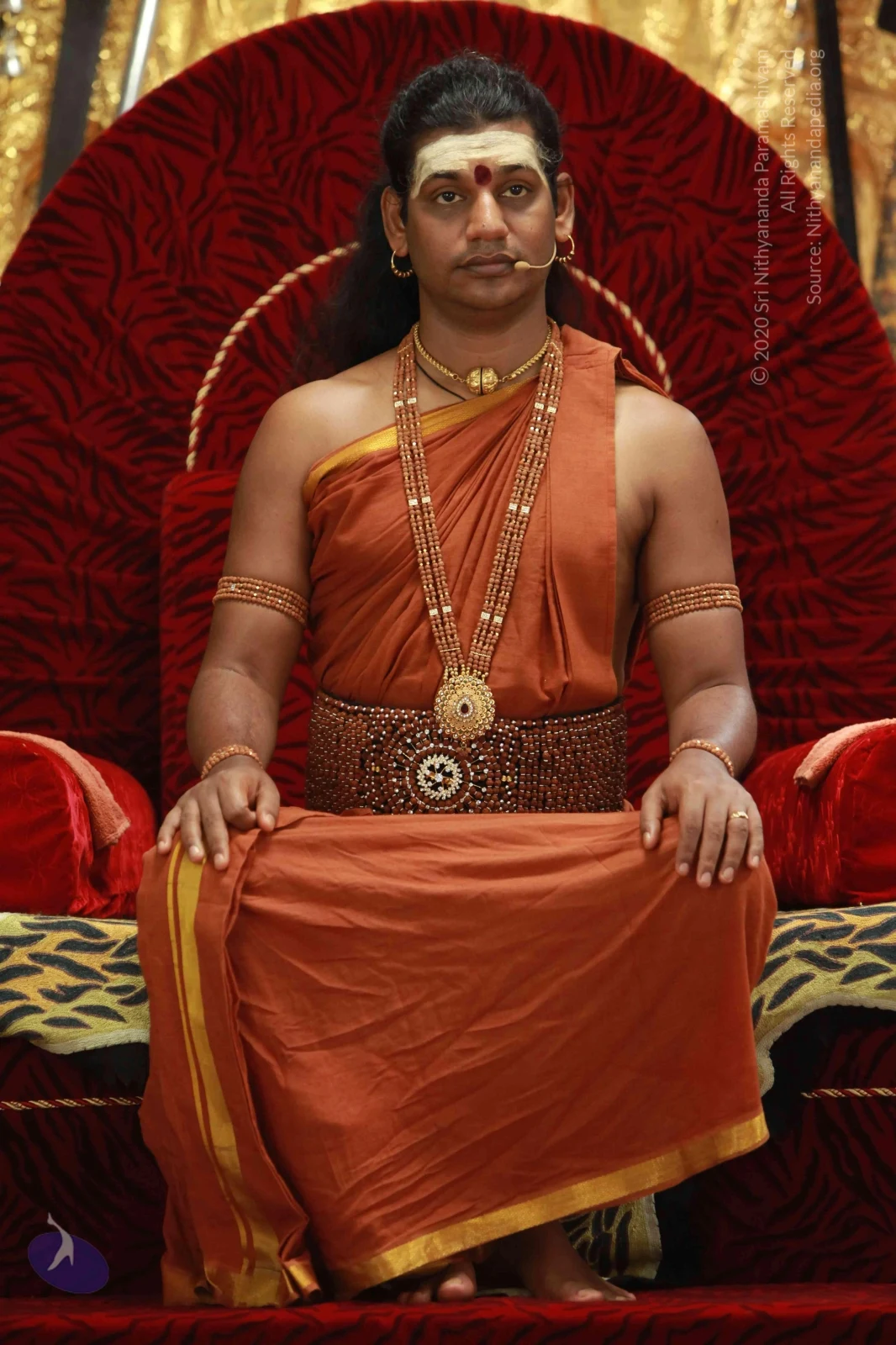
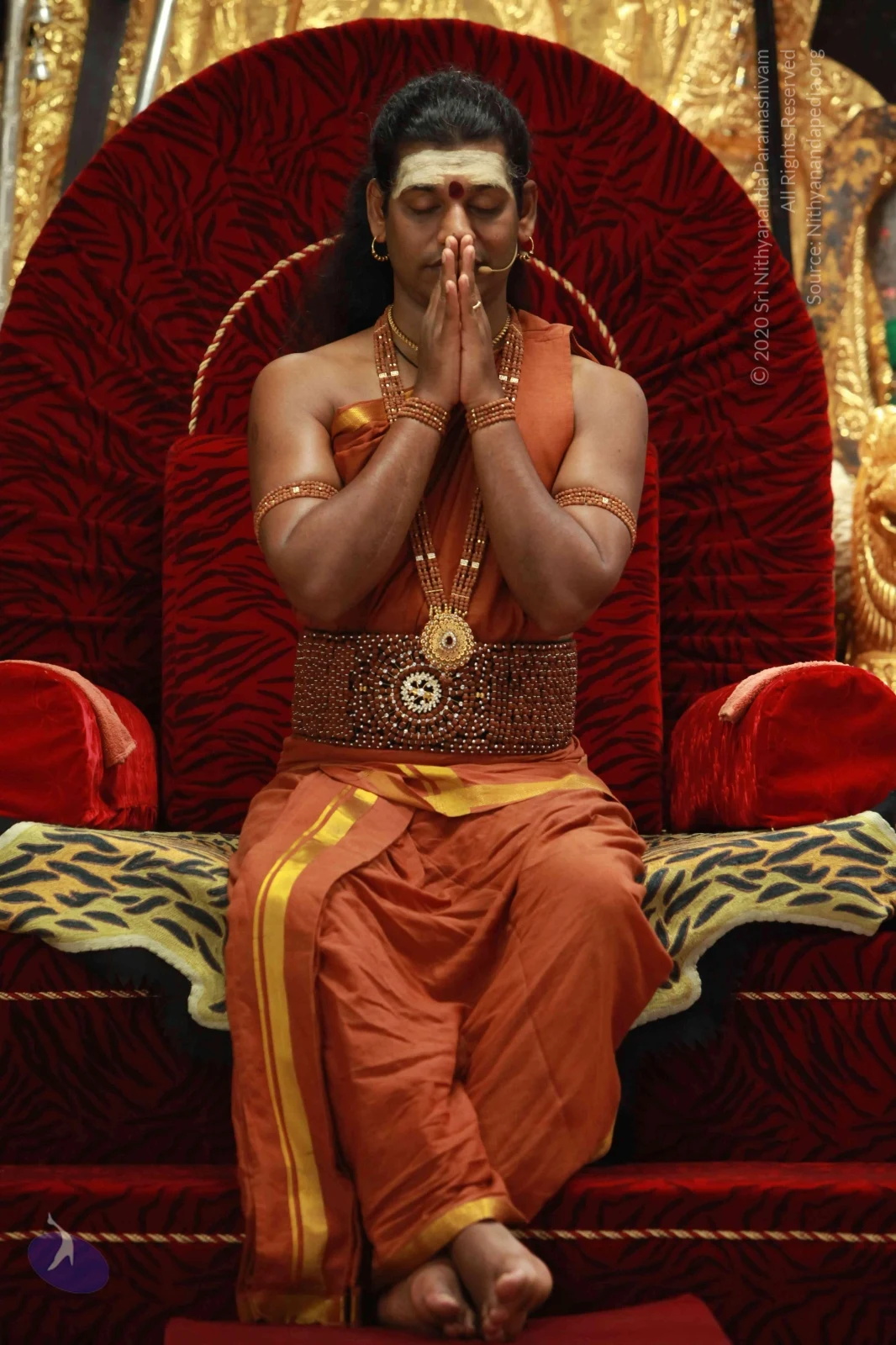
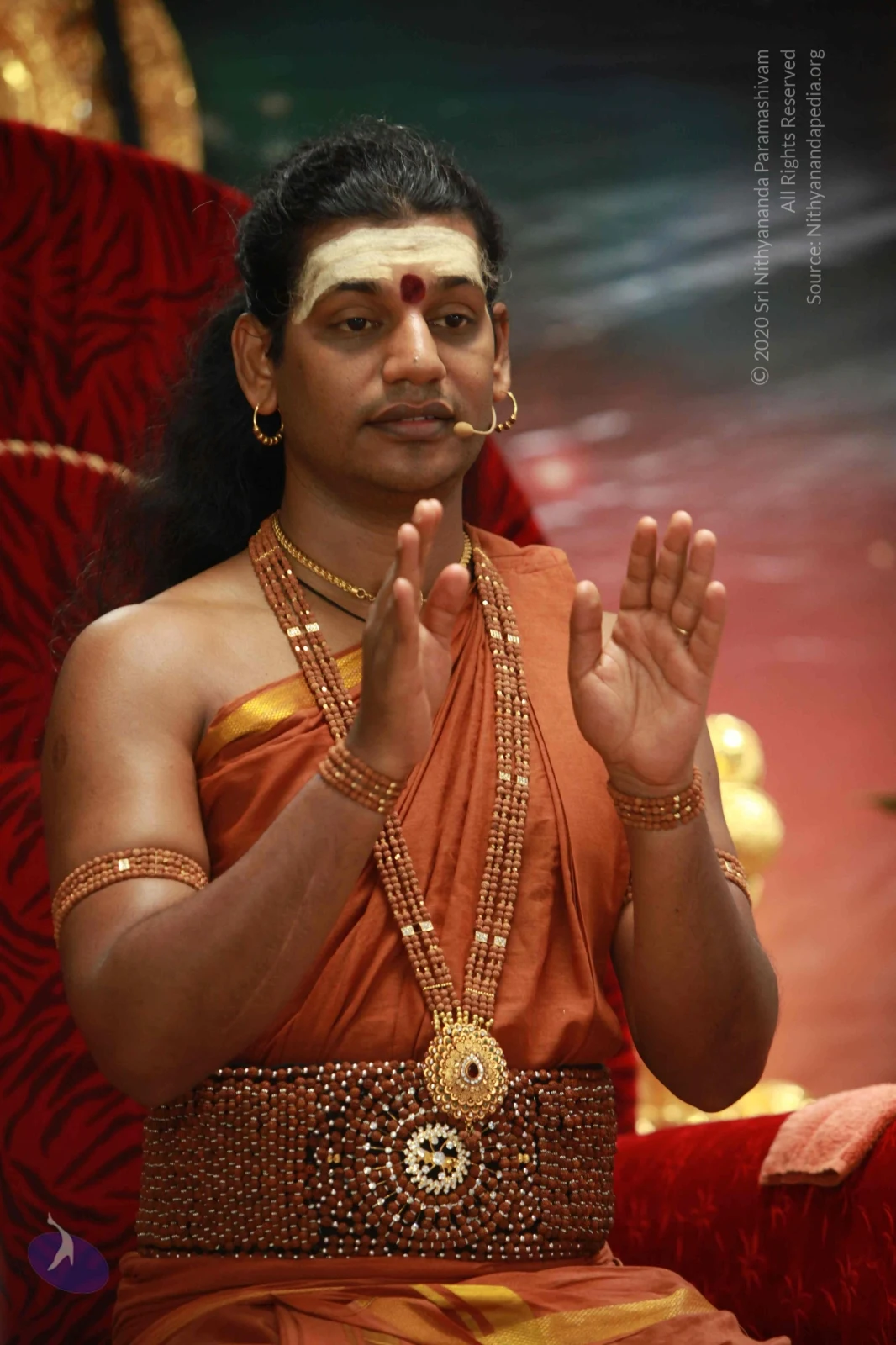
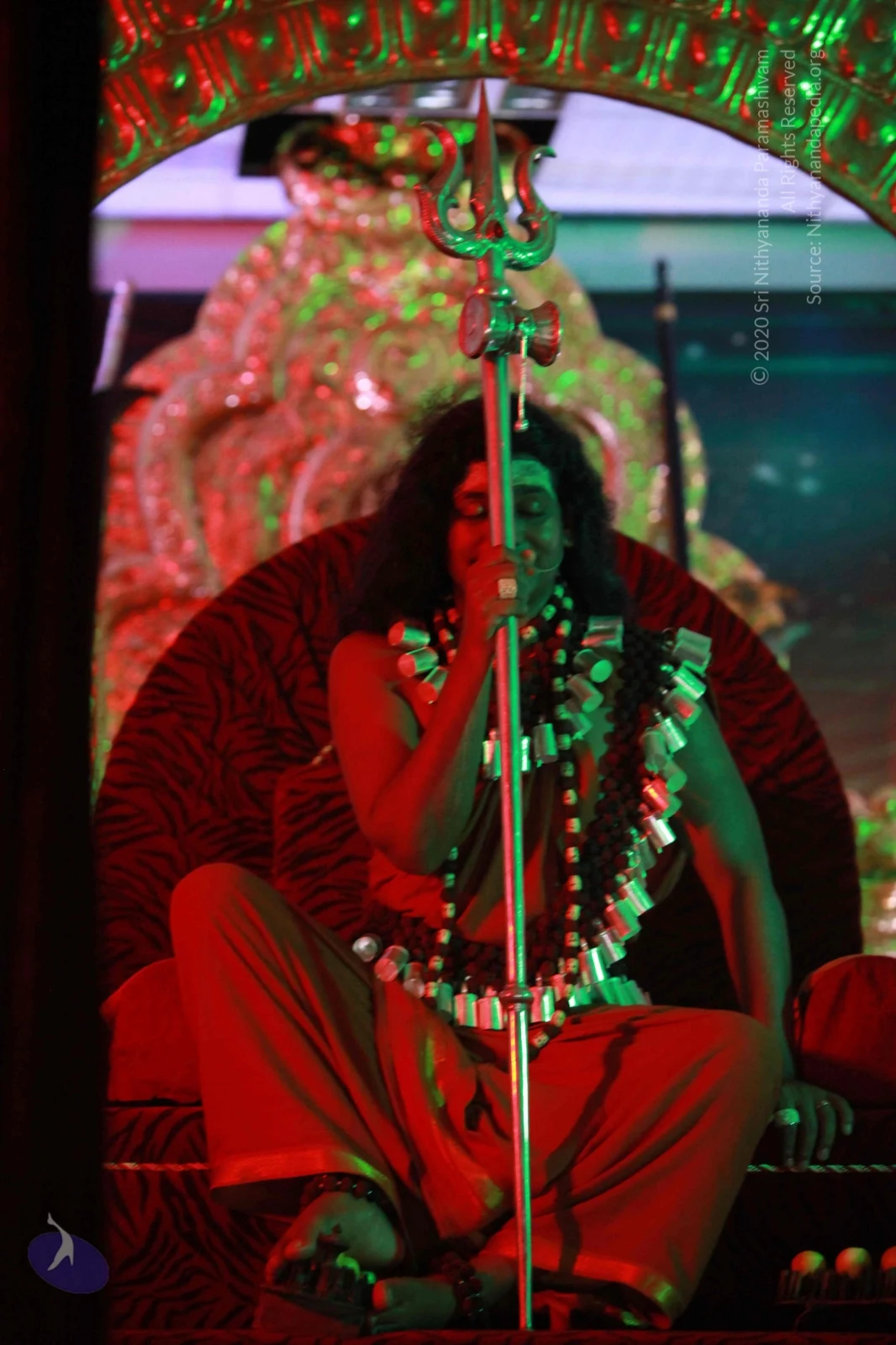
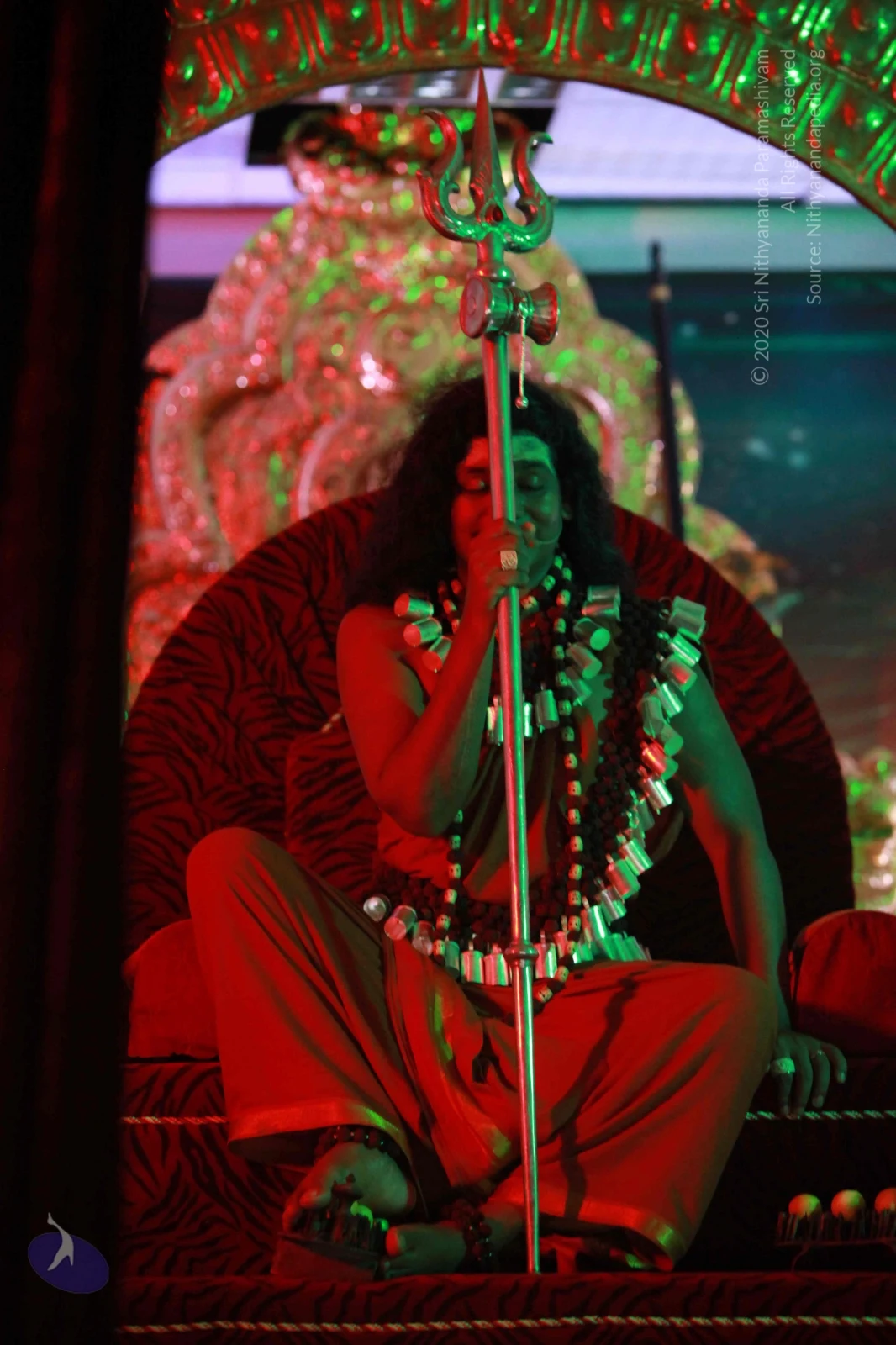
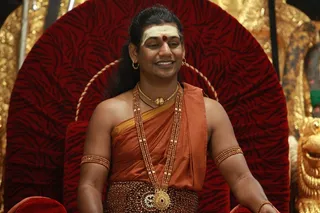
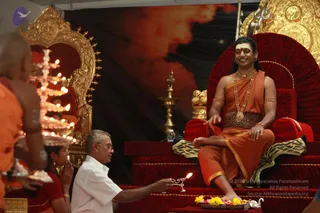
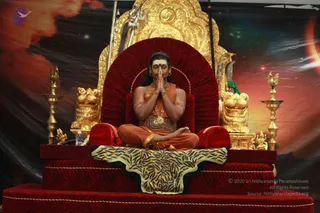
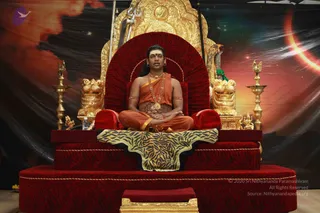
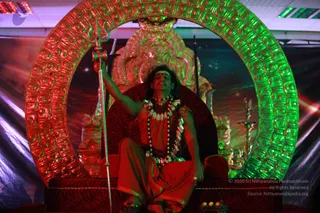
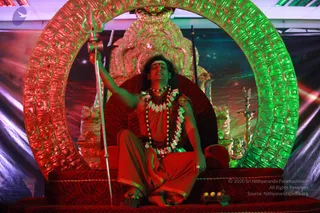
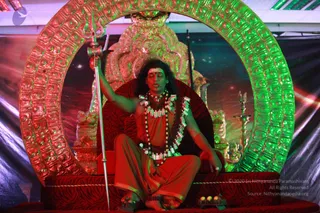
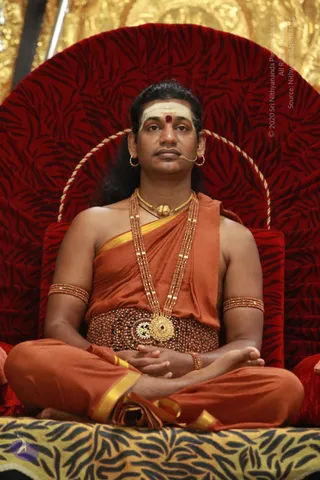
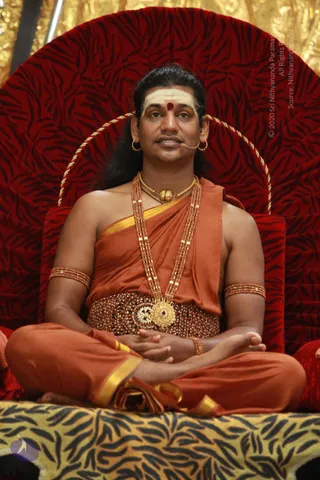
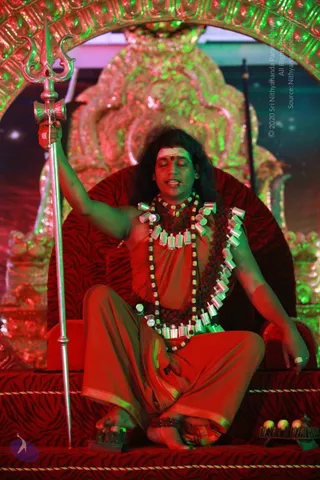
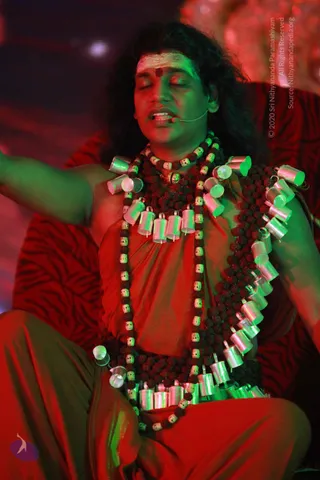
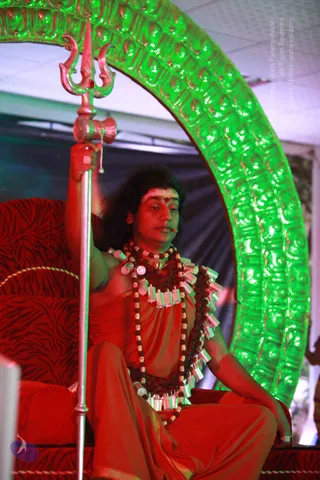
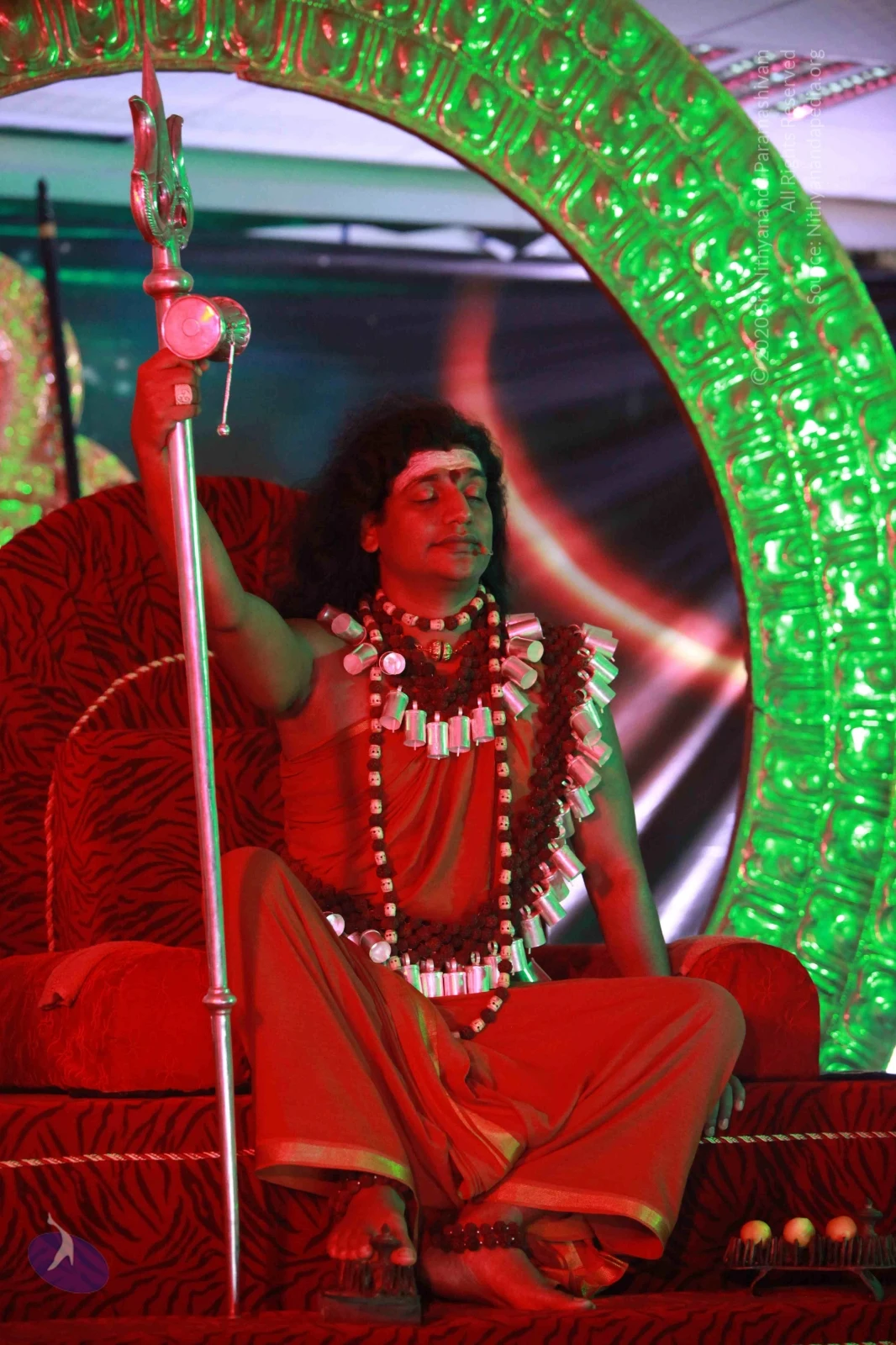
A seated man in saffron-orange robes sits cross-legged in meditation posture on an ornate red velvet throne with a gold-carved back and gold lion-head armrests. He wears a rudraksha mala, a heavy gold necklace, gold armbands, a gold belt buckle with a rudraksha-bead belt, and a white tripundra with a red dot on his forehead. Flanking the throne are tall brass oil lamps and a small golden figure, with a tiger-striped cloth draped over the platform. The backdrop shows a dark red and orange cosmic design. A probable Swamiji is shown; the saffron clothing, long swept-back hair, rudraksha mala and ceremonial gold necklace match the appearance of a seated teacher, though the image is small. The photo is part of a satsang setting.A photograph of a seated man on a red velvet throne with ornate gold carved backrest and gold lion-shaped armrests, against a dark backdrop with orange and red clouds and a glowing crescent. He wears an orange-saffron garment, a rudraksha mala and a gold necklace, gold armlets, a gold belt and vibhuti marks on his forehead, and his hands rest in his lap. Long swept-back hair and ceremonial gold ornaments match the a person presence. In front, a gold footstool holds a plate of flowers and fruit. Four people sit on the floor with palms pressed together in anjali: a woman in a red top and orange dupatta on the left, an elderly man in white clothes, and two women on the right, one in a blue-striped sari with green shawl and one in a white sari with red border. Brass oil lamps stand on both sides, and a gold throne is partly visible at the left edge. a person is seated on the throne during satsang.A man seated cross-legged on a red throne with tiger-stripe upholstery, smiling and holding a silver trident upright with his right hand. He wears an orange-red garment, a dark rudraksha mala with white beaded strands, and a red bindi-like tilak on his forehead. Behind him stands an ornate gold kalasha-shaped structure framed by a large green and gold circular arch, with a red and dark backdrop. Small offerings of fruit sit on a tray at the bottom right. Probable Swamiji by visible cues of long swept-back hair, rudraksha mala and orange-red clothing, seated on a throne. One person is visible.

September 28 2012

Original wiki page
Contents

Title:

AKASHIC READINGS - DEATH (PART 2)

Description:

In today’s morning satsang, Paramahamsa Nithyananda (Swamiji) reads the Akashic Records o the subject of Death. Death is evolution. When we have many deaths of the mind within the same body, we evolve into enlightenment. When we have many bodily deaths with the same mind, we are moving backward on the evolutionary scale, and falling into endarkenment. Death is our doorway to liberation.

Link to Video:

VideoAudio

Transcript:

AKASHIC READINGS – Death (Part 2) - read through Nithyananda

28 September 2012

Death is not end or extinction, extinction of existence. It is just climate change on your body and mind. Whenever many deaths of mind happens in same body, it is spiritual evolution. If many bodies die in the same mind, it is unconsciousness, spiritual endarkenment. If more minds die in same body you are spiritually growing, evolving. If more bodies die in same mind you are spiritually going down, destroying yourself. Again and again and again bodies die, minds die. Blessed are those in whom many minds die in one body. Continuously allow minds to be dying. Let your mind, even if you think in a best space, allow it to die, allow it for transformation. Allowing the mind to die every time in the same body leads you to the highest liberation and celebration.

The concept of money, possession, ownership, is the side effect of inability to accept the death of the body. The feeling of ‘your son is your extension’ is also the inability to accept the extinction of body. When you are ready to accept the extinction of the body, the part of you which does not die goes through a powerful transformation, and liberates itself from the dying component of you, which is the body. Through this way it achieves a space where there is no extinction where there is no death.

Death is the most powerful mechanism, either to get enlightened or to get yourself drowned in deeper and deeper unconsciousness. Every day when you fall asleep it is equivalent to death, when you wake up it is equivalent to birth. From the deep sleep if you come to the dreaming state it is unconscious birth. From the deep sleep if you come directly to the waking state it is conscious birth. Every day you go through birth and death. How you behave with this birth and death which is happening everyday is going to decide how you are going to behave with the birth and death which is going to happen with your body, because everyday birth and death is nothing but the direct glimpse of the long big birth and big death, which is only has a difference in time, but not in space or the place. Your everyday birth and death and every-life birth and death happens in same space and place. Only time difference between one birth and the other birth, the time difference between birth-death of one and the birth-death of the other is different.

There are some files which is not able to completely be revealed just by verbalization. Even after reading, verbalization, still those files remain having some material without being completely revealed. Those stuff, those material, can be transmitted only by initiation. Because those akashic records cannot get into the realm of verbalization, they are not able to be translated into words. They just continue to remain as vibrations.

When your mind dies in the same body and becomes a new mind, cosmos enters into you. When your body dies in the same mind, takes a new body, you enter into the cosmos. When cosmos enters you it is liberation, when you enter into the cosmos it is death. The part feels as part, the moment it wants to be part; part only should be blamed not the Whole, because part only continues to hold on to the thought to be part. Whole is not holding on to the thought. Even though the thought might have happened on the Whole also, only when you hold on to the thought you remain as part. So the feeling of separation, who created, why created, is not the really focus of your vengeance or action. Your focus should be on who is holding on to that feeling of separation, not who created, why it got created. Who holds on to it, gives life to it. The feeling of separation, because the part only is holding on to it, it is giving life to it. So your action and intensity to act upon should be directed to the center who is holding on to that feeling that you are separate from the Whole, you are part not the Whole.

Questions and Answers

The first question is from Janani. She is asking, ‘Dear Swamiji, if one has taken an unconscious birth, how can he take a conscious death?’

That is what is life. Life gives you the possibility to move from Unconsciousness to Consciousness and Consciousness to Superconsciousness. If you take unconscious birth you can move to conscious death. If you have taken conscious birth you can move towards superconscious death which is enlightenment itself, and even if you take unconscious birth you can directly jump into superconscious death also, and same way even if you have taken conscious birth you can get back to Unconscious death if you decide strongly.

Usually the conscious birth being does not want to get in, will not get in to the Unconscious; but life gives you the possibility of everything. All possibilities are given to you, are provided to you. So understand the possibility exists in life, that is why it is called life. Every time when you are living, the possibility for all the dimensions are open to you, available to you and waiting for you.

The next question is from Mary Bernard: ‘Nithyanandam Swamiji! You have already spoken on the destructiveness of suicide. Some states and countries allow patients who are suffering with terminal illness to practice assisted death. It is strictly regulated. Usually the family gathers around the patient and some kind of painless lethal injection is given as per the patient’s wishes and instruction. Could you comment on this?’

Cosmos does not agree this mercy killing. As Mahadeva already read out, it will be considered either suicide or murder. If the patient agrees it will be considered as suicide, the patient does not agree it will be considered as murder. But all the people who help and make this happen will be treated for murder in the cosmic law.

The next question is from Sudarshini Madan: ‘Dear Swamiji, why there is so much of fear of death? How did the relationships emerge to be an important thing in our life?’

Anything you don’t understand, don’t want to understand, does not have the brain capacity to understand, fear surrounds it. Unknown is always fear for any living being. Now understand, Mahadeva himself the source of the creation, the source of the existence, source of the eternity is revealing these great truths. Again and again and again listen to these great truths, chant these great truths. This will liberate you from the fear. When your cognizance is based on these great truths, cosmic secrets, you will be free from the fear.

The fear is nothing but the projection of negativity on the future possibility. It is not necessary you need to continuously project negativity or positivity on the future possibility. Simply seeing the future possibility without projecting negativity or positivity on to it, is living prarabdha. So the fear comes into your system only when you project your fear, your negativity, on the future possibilities. Negativities, the negative ideas, does not need to be projected on the future possibility.

Relationships gives you the feeling it is very important in the life, because through every relationship you try to have extended life. While you are living, whatever your body and mind cannot do for your interest and pleasure, you try to fulfill through the body and minds of your relationships, and same way, whatever they cannot fulfill through their body and mind, they are trying to fulfill through your body and mind. So mutually each other helping to fulfill the other’s interest through body and mind of each other’s is relationships. If both of you understand the interests of each other and ready to support each other’s fulfillment, it is called successful relationship. There comes love compassion sacrifice and spiritual growth. But if both of them are not understanding the real agendas of others, interests of others, continue the relationship maybe because one person is has hidden interest, hidden agendas which he does not want to reveal it to the other or which he himself is not aware, when this kind of situations arise relationship breaks or relationships continue to exist with being exploited, with exploitation.

These kind of relationships lead to the worst grave sin of keeping the other person as slave. Whenever the slavery happens cosmos strongly condemns it. So no slavery is allowed in the cosmos. Cosmos is strictly against slavery because slavery is equivalent to the murder of partial time. In slavery even if the other person has their body and mind, it is equivalent to they are killed, they are murdered, because that body and mind is not useful to that person anymore. So relationship with a open mutual interest should be encouraged, and it supports both the beings to evolve towards the fulfillment, and finally the understanding - how many bodies and minds you may use to fulfill your interest, that your interests are not going to lead you to your restful awareness. So that understanding may help you to renounce all the interests and even your own body and mind and settle down in restful awareness. So this understanding will naturally be leading you towards enlightenment.

Going smoothly towards that understanding will be happening through the right understanding relationships. The relationships with the mood of exploiting other person, with the hidden agenda without you revealing it to the other person about your interest or you yourself may not knowing it by yourself, will lead to more and more destruction depression. If the relationships continues it will be the sin of slavery, if it breaks it will be giving you great devoid depression feeling of emptiness. So the science of relationship is trying to have more body and minds to fulfill your interests and trying to give the other person also your body and mind to fulfill his interest. As long as it is mutual it is with a deep understanding it should be encouraged supported and blessed.

Relationships with deep understanding with each other is equivalent to the conscious birth. Relationships without mutual understanding but still not broken is equivalent to unconscious life. Relationships without mutual understanding broken is equivalent to death. All unconscious life will be afraid of death and end in death. Same way all relationships which doesnot have mutual understanding will constantly have fear of being broken. Finally it will break and bring tremendous suffering to both the persons who are involved in it.

The next question is from Mary Bernard: ‘Swamiji has said that departed souls take rebirth very shortly after death. Many mediums can see or talk to the deceased many years following a person’s death. The departed person can give information to the living that the living would have no way of knowing, or ghosts are seen generations after the death of that person. Does the soul somehow split, part of it moving on and part of it remaining as a part of the personality of the departed?’

Only souls which are murdered or committed suicide remains without taking another body till their natural time of their death. For example if somebody has to live for 60 years, he commits suicide or get killed gets killed at the age of 20, the remaining number of years he remains with taking the other body. Other than that nobody, no soul, remains without taking another one body. Sometime because of your deep imagination, you yourself project their souls out of your imagination and talk to them. Your unconsciousness supports and acts as that soul. It is the informations from your own unconsciousness, not from that soul. That soul has gone, disappeared once for all and carrying on with his life. You may be projecting it out of your unconscious informations while your unconscious supports the projection and the whole reading, talking, all the incidents related to it. It is like you using your own hand, caressing you or beating yourself. It is your own extension.

The next question is from Thyagarajan: ‘Dear Swamiji, what should one do to leave the body without pain and in graceful way?’

Every night when you fall asleep, again and again and again, do death process meditation, nirbhaya dhyana. So when you do the nirbhaya dhyana, facing all the fears, death process, it will clear your inner space. Naturally you will enter into painless death and deathless space.

The next question is from Rani from Bangalore: ‘Why does the consciousness keep moving from one body to another, as with its next birth it forgets its prarabdha, and has to waste more time knowing it or not knowing it at all? It does not even realize that it is choosing to move away from the Source. How does the Source support it at the time of death?’

As Mahadeva revealed, Source neither supports nor disturbs. It is the part which continues to keep the idea it is separate, alive, by its own existence. Source feels compassionate towards the suffering of the part and tries to remind the part in the form of Guru, but unfortunately if the part is too attached to the idea it is a part, it not only does not want to listen to the Source when it comes in the form of the Guru, and blames the Guru is lying about the reality.

The next question is from Dr. Sita from Chennai: ‘Dear Swamiji, how does one understand death to be a continuity? Does one take the new journey of birth from the place where he lived in terms of a spiritual level?’

There is no new journey - spiritual economical social educational; in all the levels of Saraswatya, Lakshmitva and Durgatva, the Kalitva, in all levels the soul starts where it stopped in the time of death. So there is not even a stopping and starting. It is just letting the new body to mature. Till the new body grows and matures, the soul rests. The moment the new body grows and matures it starts expressing its journeys, qualities, the way you live or leave the wealth, education and mental setup.

The next question is from Uma Sundar from Chennai: ‘Swamiji, it is said that when you live fully in the moment throughout your life, death when it comes is but another event gracefully accepted. What is living in the moment according to Kalabhairava?’

Living in the moment means enjoying the totality of past present future. Living in the moment is not excluding the past and future. It is including, enjoying the impact of the past into the present and enjoying the possibilities of the future into the present. It is not that always past pushes you into the present. It is future pulls you into the present. That is why before even the happening happens you are in the mood which is going to happen. So it is future’s influence which is more on your present than the past influence. Past directly influences the future and through the future indirectly influences the present. Accepting all the 3 influences on the present and enjoying present is the base material of time.

Past is the ghost, future is the projection of the ghost. Ghost and the projection of the ghost, both of them are projected on the material called present. That is present moment. Accepting the ghost of the past and projection of the ghost of the future, projection of the ghost of the past, which is future, in the present, including the material called present out of which all the three are living, are enjoying, accepting all the three’s influence over the present moment is living in the present moment. The great acceptance will make you live the present moment and experience restful awareness.

The next question is from Devaki from Hyderabad. She is asking, ‘Dear Swamiji, what are the practices which can help the consciousness to leave the mortal body at will?’

Continuously if you watch your breath and know how the breath goes inside the body and mixes into your blood, spreads all over the body through your nervous system as energy which is strengthens the existence and reflection of life in your body, you will know when to stop the life supporting the individual life in your body; the prana supporting the reflection and life in your body.

The next question is from Suma from Hyderabad. She is asking, ‘What is conscious death or graceful exit, and what is the exact lifestyle one needs to live in his lifetime to have a conscious death?’

Graceful exit means without any pain without any resentment leaving the body with a deep fulfillment, and deciding further whether to create another one body or once for all get enlightened and be liberated from the body and minds. The graceful exit naturally does not have any hangover and gives you the complete choice and possibility of next body or enlightenment. If you decide to assume the next body you are Incarnation, if you decide to be in the space of enlightenment you are God. So both choices are between you, within you. Both are made available for you. The lifestyle you need to live for the graceful exit is learn gracefully to exit in your life any moment which brings anything to you, whether you perceive that as good or bad, know how to gracefully exit without any hangover; move gracefully ahead of everything. Gracefully moving ahead, whether it is pain or pleasure, joy or life or death; whatever it is, move gracefully ahead.

Photos From The Day:
Tags:

Paramahamsa Nithyananda, Akashic Records, Death, evolution, mind, body, enlightenment, doorway, liberation.

Photos Of The Day:

TEMPLE
PADA-POOJA
NITHYA-SATSANG
SARVA-DARSHAN

ANNA-DAAN

AKASHIC-READING

1-Morning-Satsang

2-Annadhan

3-Akashik-Reading

Photos from this day

View all 233 photos

Photos From The Day:

3 photosSource gallery
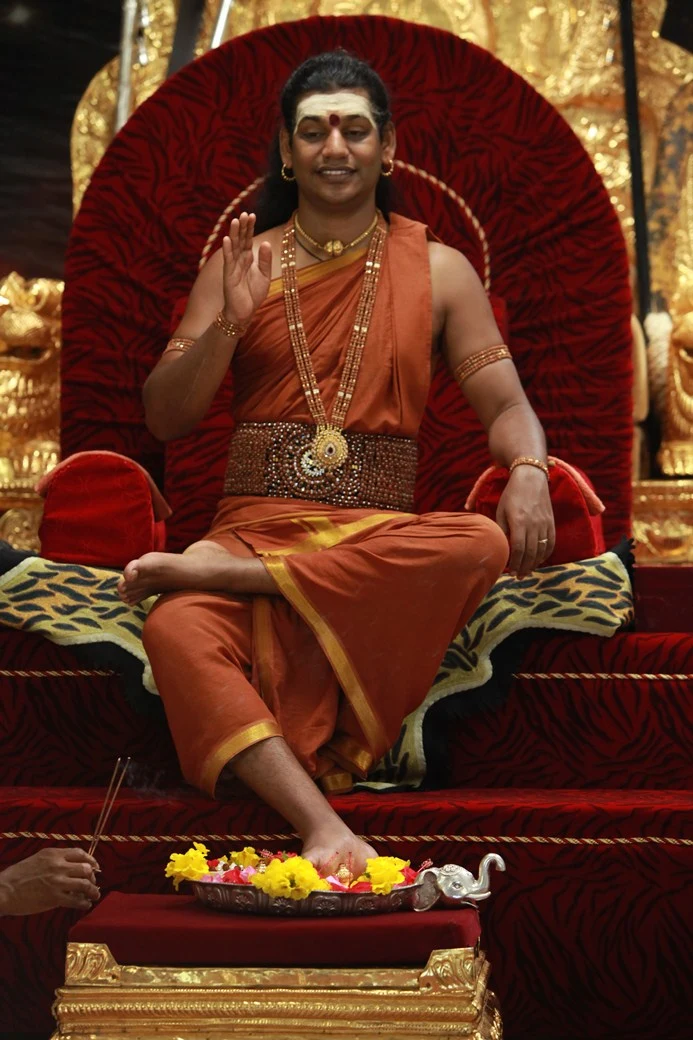
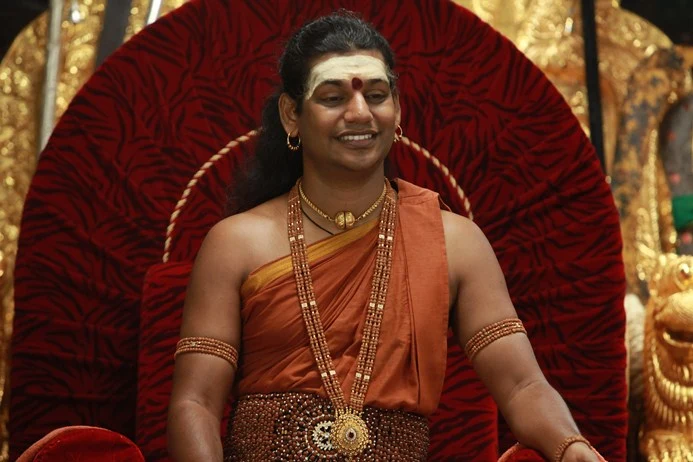
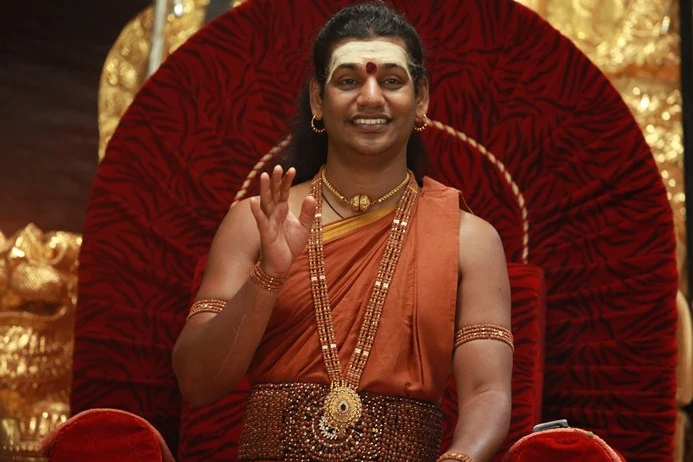
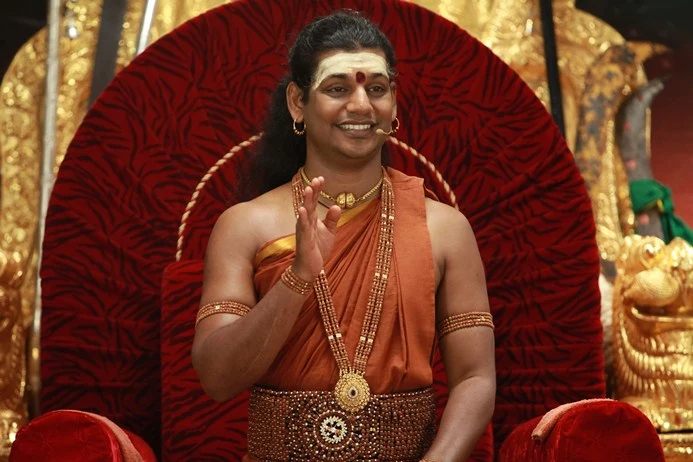
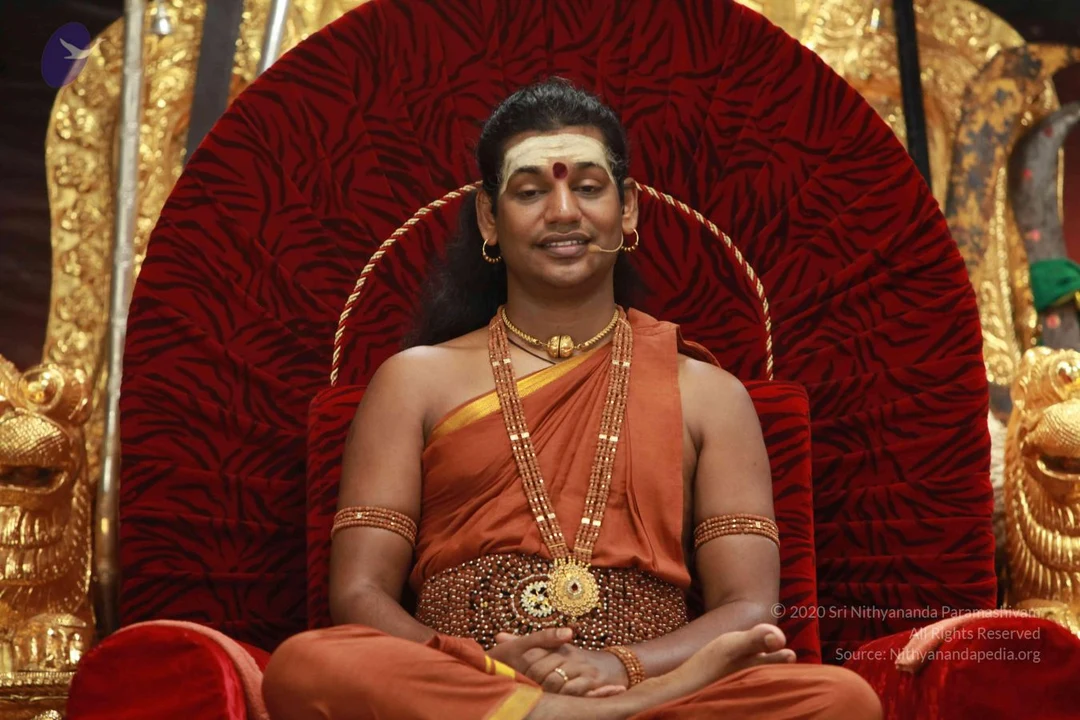
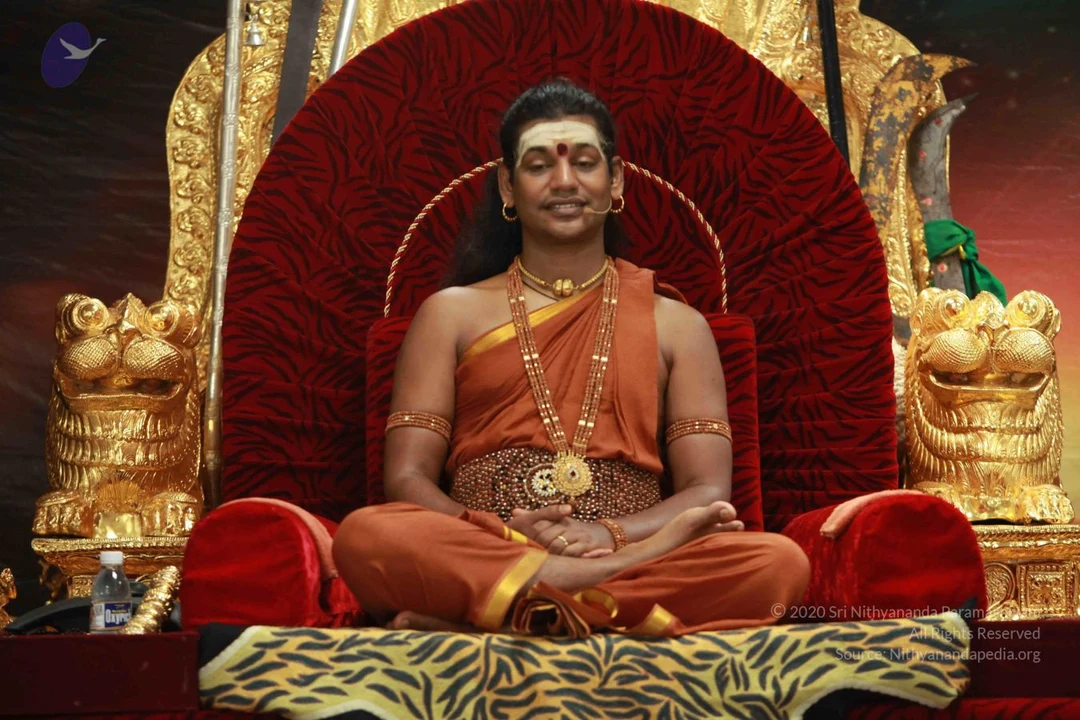
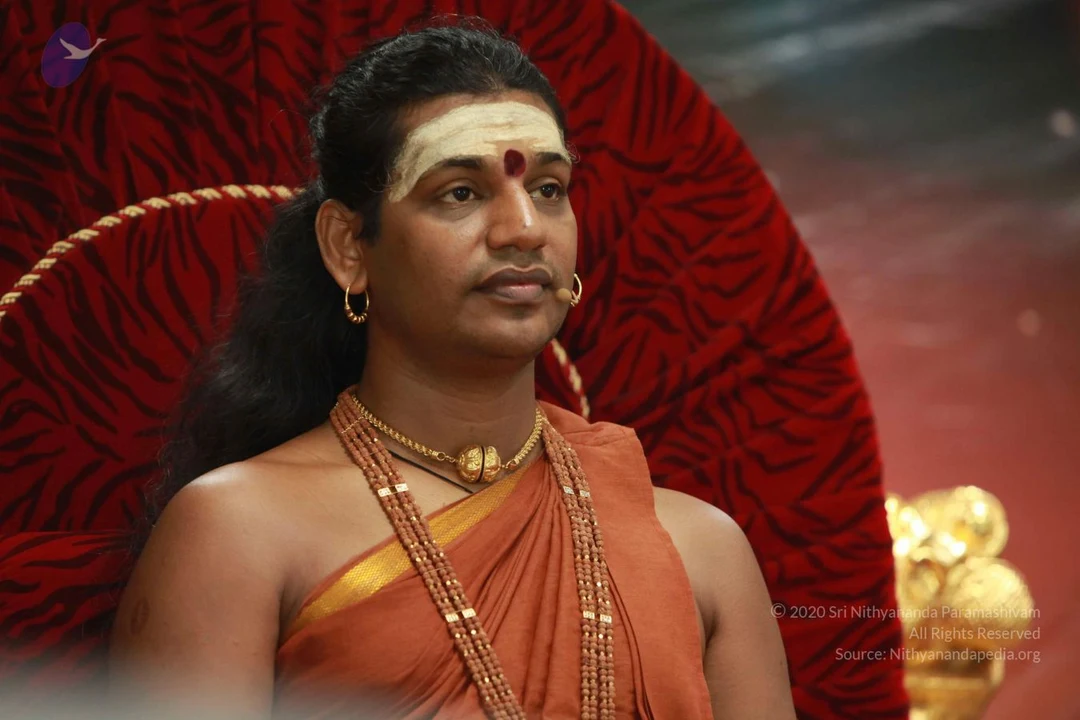
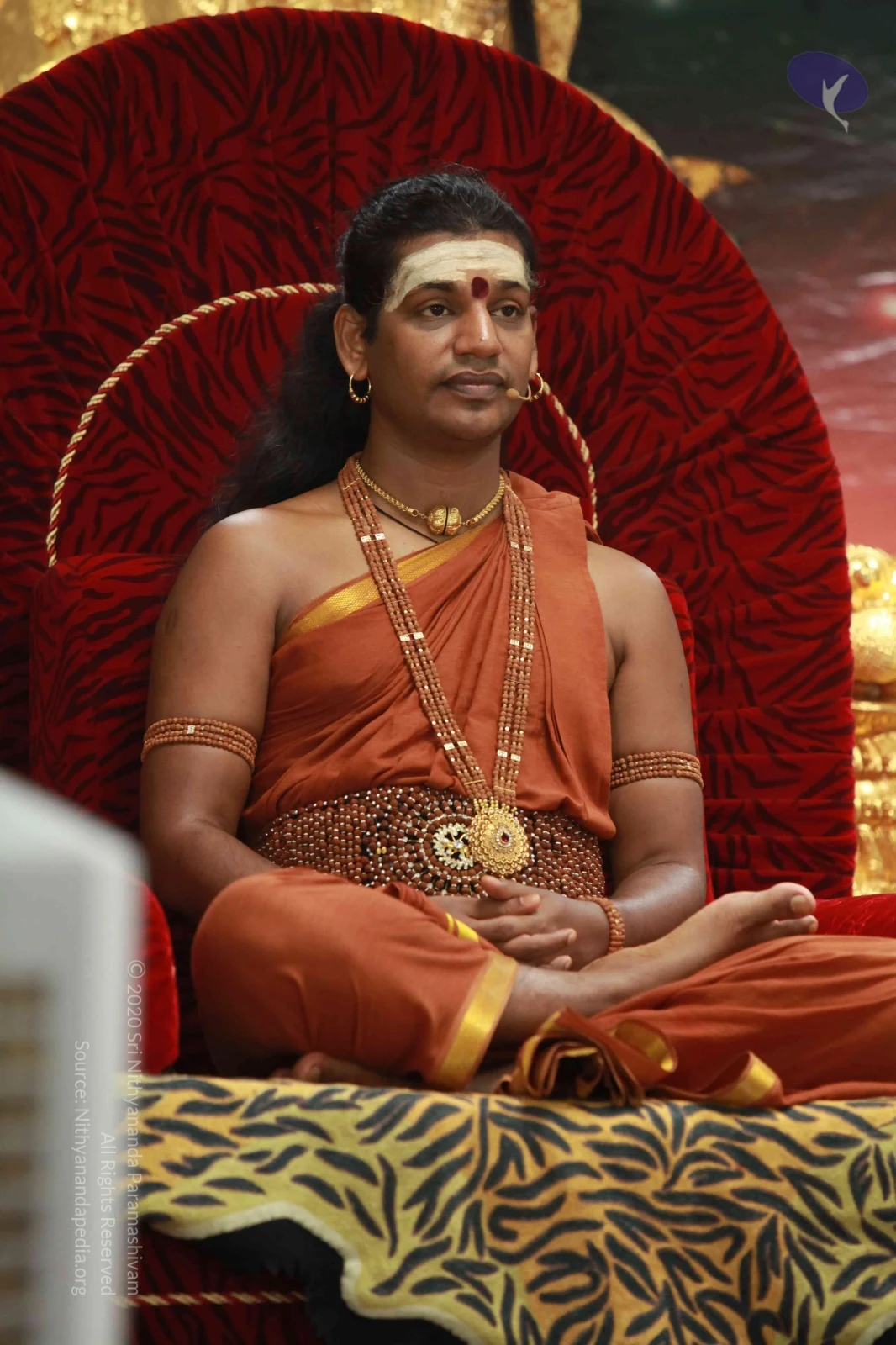
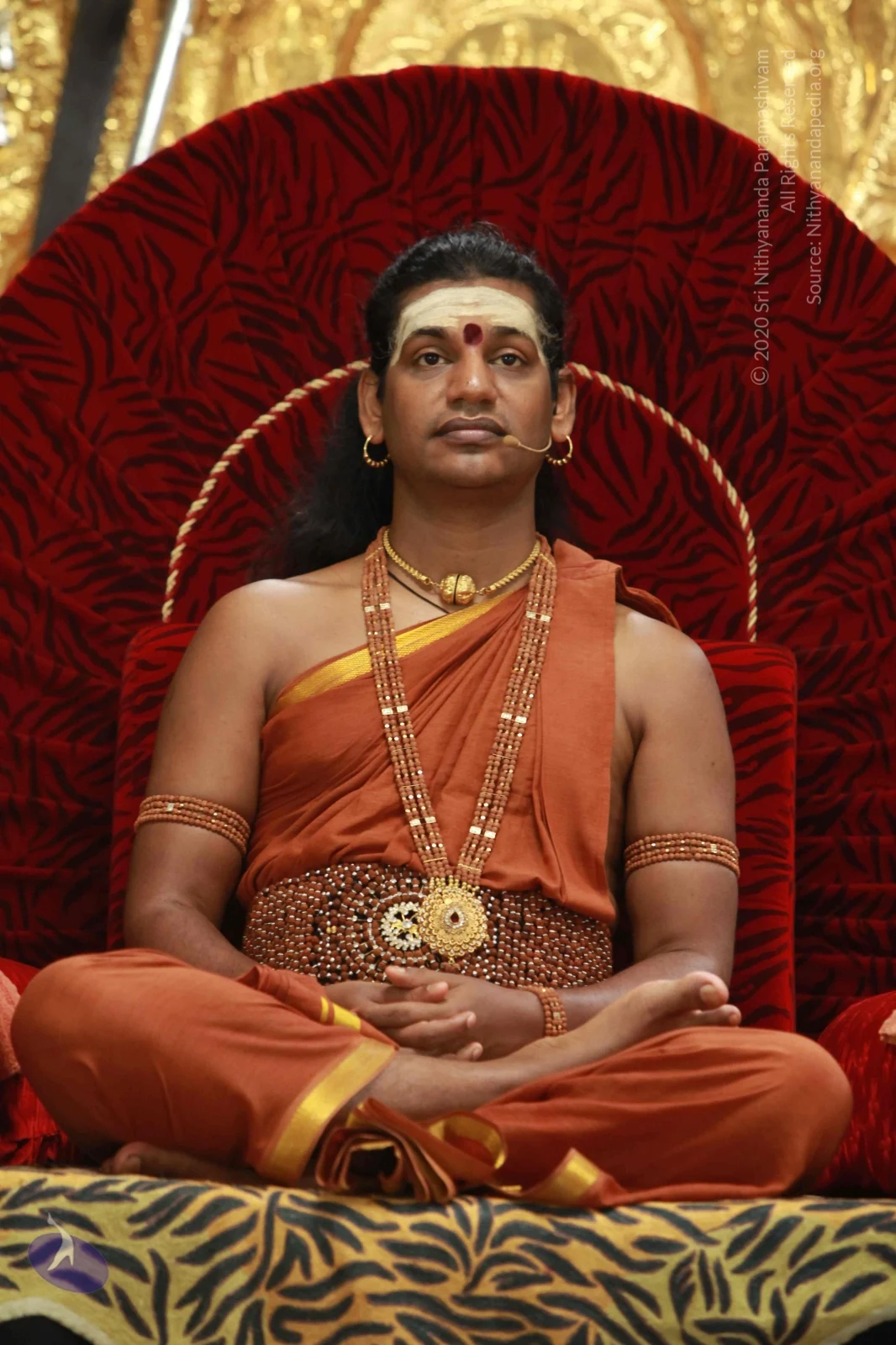
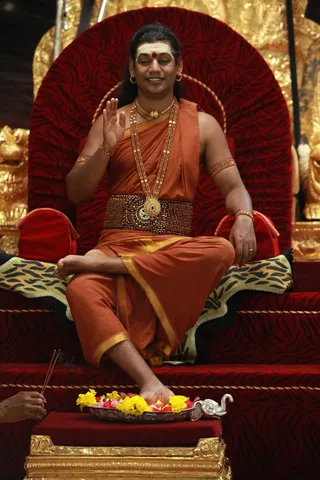
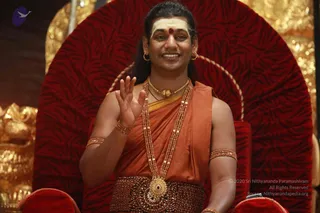
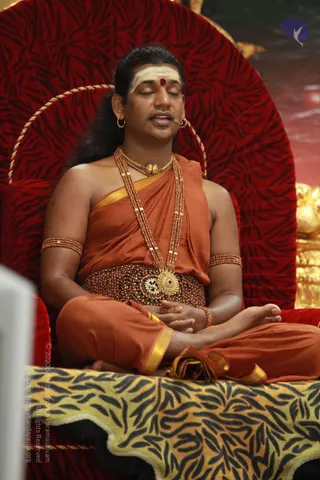
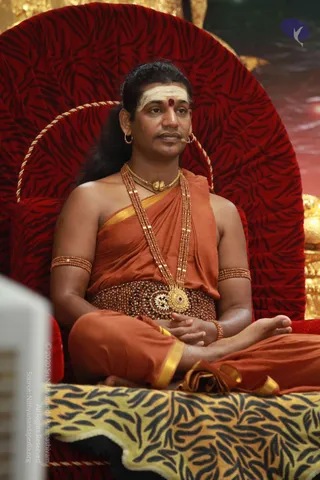
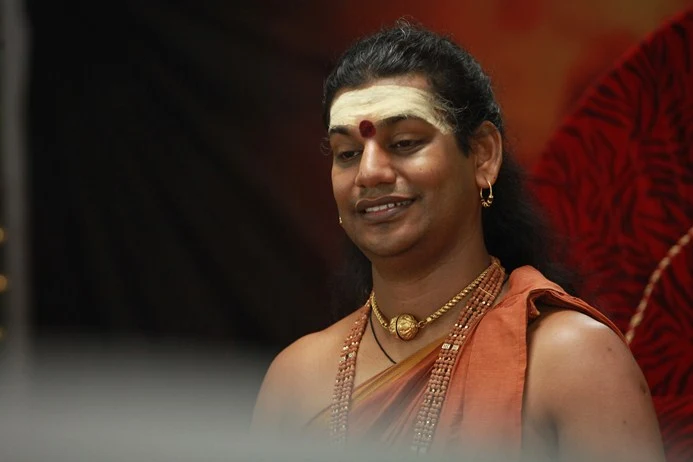
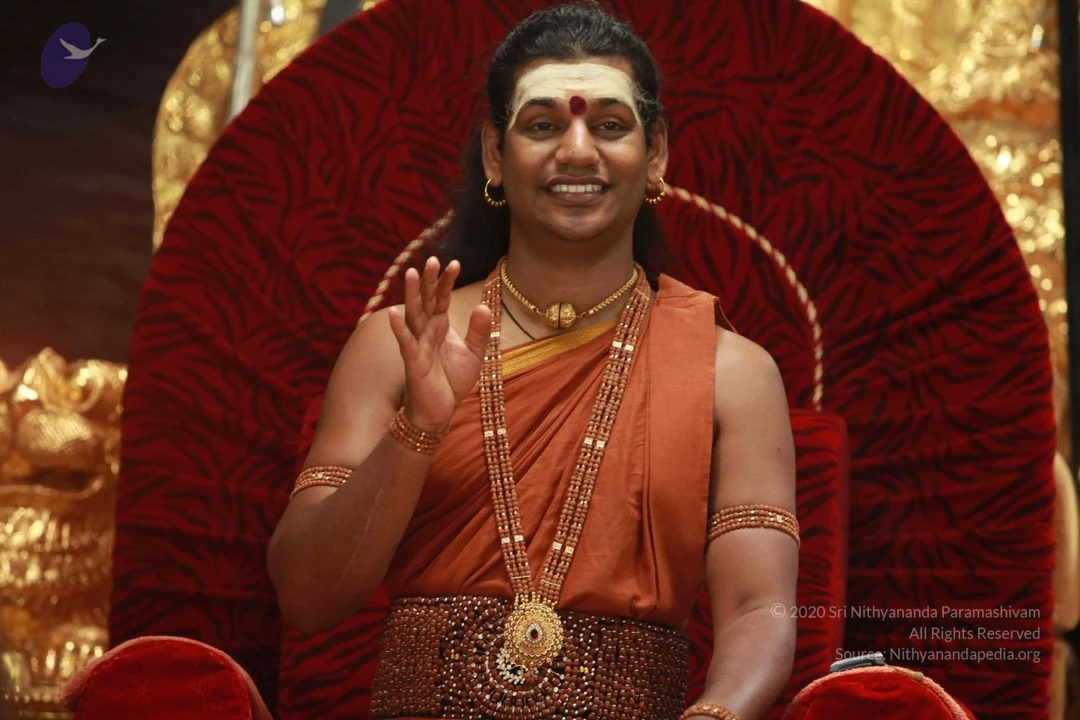
Photograph of a smiling man in close-up, seated against a dark background with a red patterned fabric at right. He wears a white tilak with a red dot on his forehead, a gold pendant on a gold chain, beaded rudraksha-style necklaces, and a saffron-orange shawl over his bare shoulders. A small gold earring is visible. Swamiji (probable) is shown in person, with long dark hair swept back and ornate saffron clothing with rudraksha malas and a ceremonial gold necklace as the qualifying appearance cues.A man sits cross-legged on a red velvet throne with tiger-striped cushions, raising his right hand in blessing. He wears an orange-saffron dhoti and shawl with gold borders, a wide jewelled gold-and-red belt, long beaded gold necklaces, gold armlets and bangles, and a white vibhuti forehead mark with a red kumkum dot. Before him on a gold-trimmed pedestal stands a silver tray of yellow and red flowers beside a silver elephant figurine, and a person's hand holds incense sticks at the left edge. Golden deity statues fill the background. a person seated in a throne, with saffron clothing, rudraksha-style beaded mala and ornate gold ornaments, in a satsang setting.A smiling man seated on an ornate red velvet throne with black zebra-stripe pattern and gold carved side panels, with a golden lion figure at the right edge. He wears an orange-saffron shawl draped over the shoulder and a bare chest adorned with multiple strands of beaded gold-coloured necklaces, a large ornate gold pendant, gold bangles on the upper arms and wrists, and a jewelled gold belt. He has a white vertical tilak with a red dot on the forehead and gold hoop earrings, with long dark hair swept back. a person seated in a throne setting, with ceremonial gold and orange cues.

TEMPLE

13 photosSource gallery
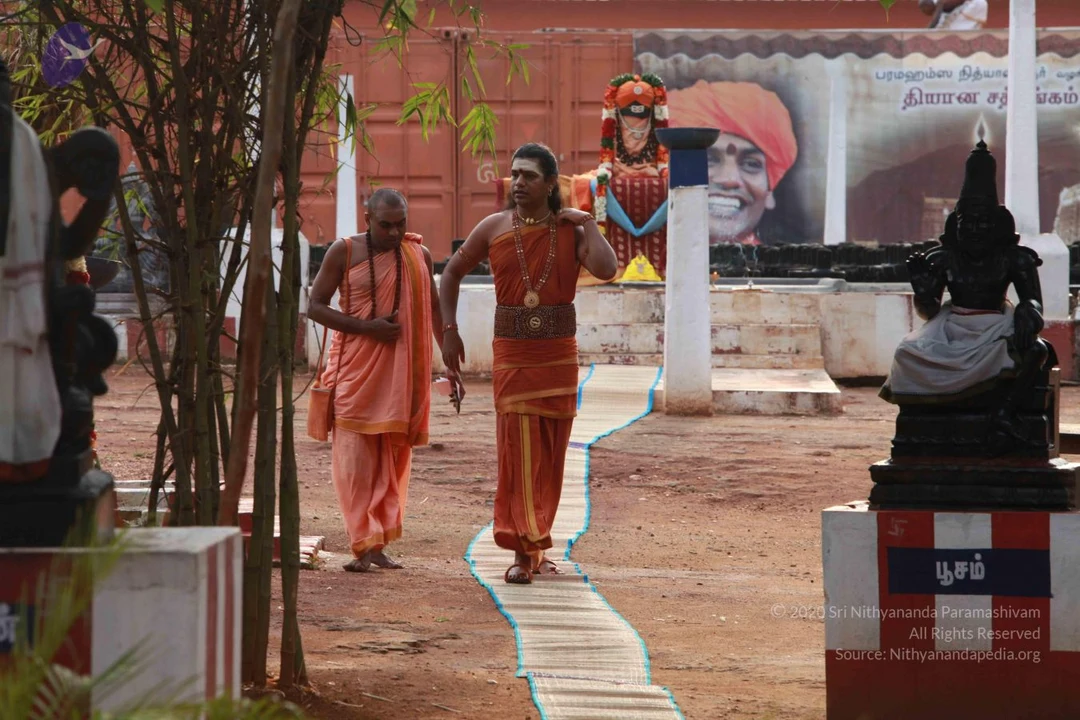
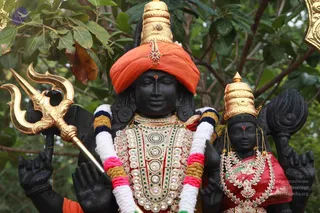
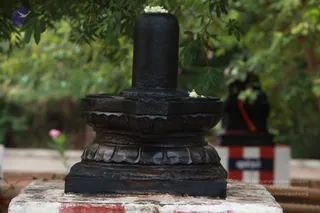
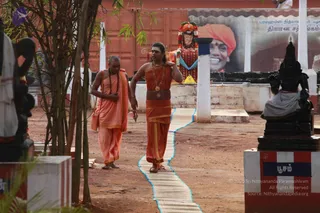
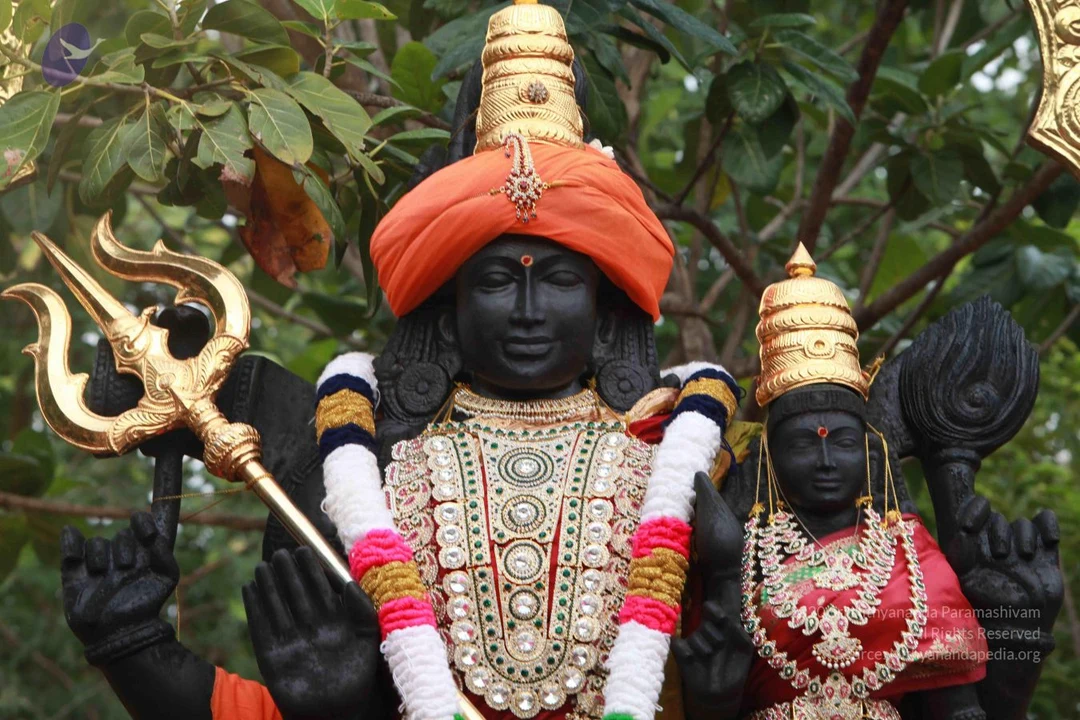
Outdoor photograph of a pair of black stone deity murti standing before green leafy trees. The larger figure wears an orange turban topped by a gold crown, a red tilak mark on the forehead, a richly embellished gold and jewelled garland-style chest ornament, and white and pink flower garlands with yellow ribbons. It holds a golden trident. The smaller figure beside it wears a gold crown, a red sari and layered jewelled necklaces, and holds a long-handled ceremonial object. Golden decorative elements frame the upper edges. No physical people are visible.A white chalk or powder kolam drawn directly on a reddish-brown earthen ground scattered with small pebbles. The geometric floral design has eight pointed petal-like loops radiating from a central point, with thin white lines forming interlocking curves. No people, deities or ritual objects are visible. A faint purple logo appears in the upper left corner.A black stone Shiva lingam on a layered yoni-style pedestal stands outdoors among green leaves. White flower garlands rest on top of the lingam and beside its base. Behind it, a second dark lingam with a red cloth band sits on a red and white striped plinth against blurred green foliage. No people are visible.A sunlit tree canopy with green compound leaves and slender branches. The low sun glows through the foliage at centre, producing lens flare and a faint rainbow-coloured arc on the right. No people, deities or ritual objects are visible.Sunlight breaks through green tree foliage at the upper right, creating a bright sun flare and lens glare that washes across the centre of the frame. Bamboo-like leafy shrubs fill the left side, with a rocky hill silhouetted in hazy sky behind them. In the lower centre, a brown sign board stands beside a white corrugated roof, and a small figure is faintly visible at the edge of the roof line. No ritual, discourse or person is clearly featured; the scene is an outdoor landscape at sunrise or sunset.Outdoor photo of two men in saffron-orange robes walking along a white mat with blue edging over reddish-brown earth. The foreground man in the centre wears an orange dhoti with a rudraksha mala, a wide studded waist belt and a gold pendant, with long swept-back hair. Beside him, a shaven-headed man in a lighter orange wrap carries a small cloth bag. A large banner behind shows a smiling man in an orange turban with the Tamil text for Dhyana Satsangam. A dark stone deity murti sits on the right and a red-and-white pillar with a Pusam sign is at lower right. A white shrine with a garlanded orange-clad figure stands at the back.

PADA-POOJA

6 photosSource gallery
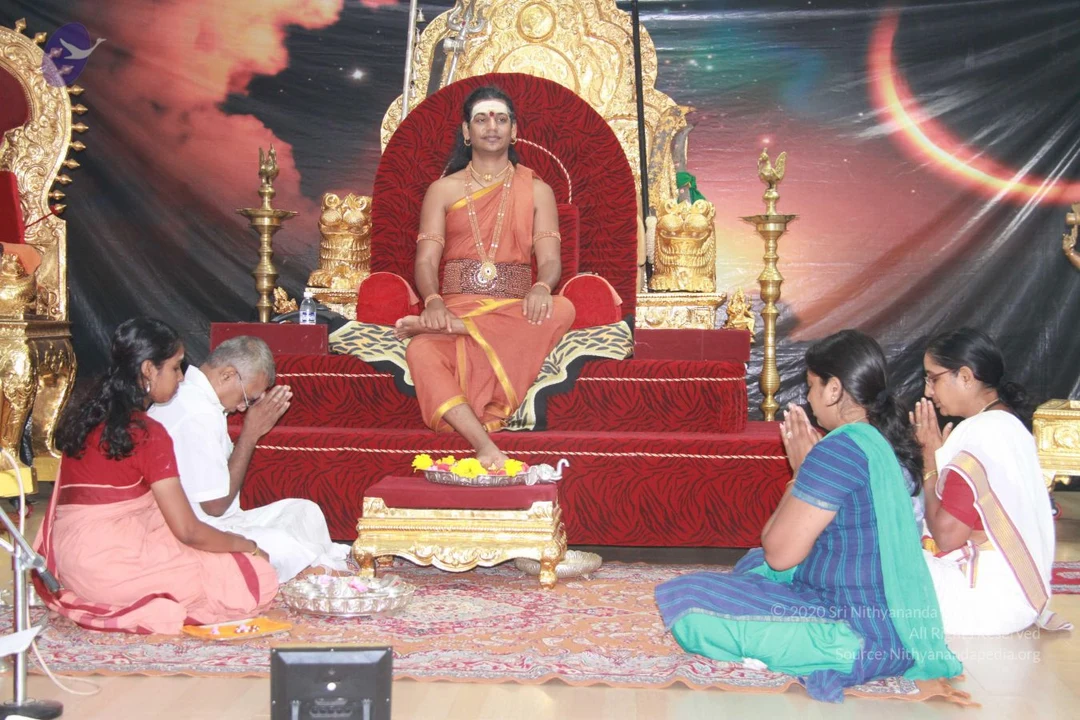
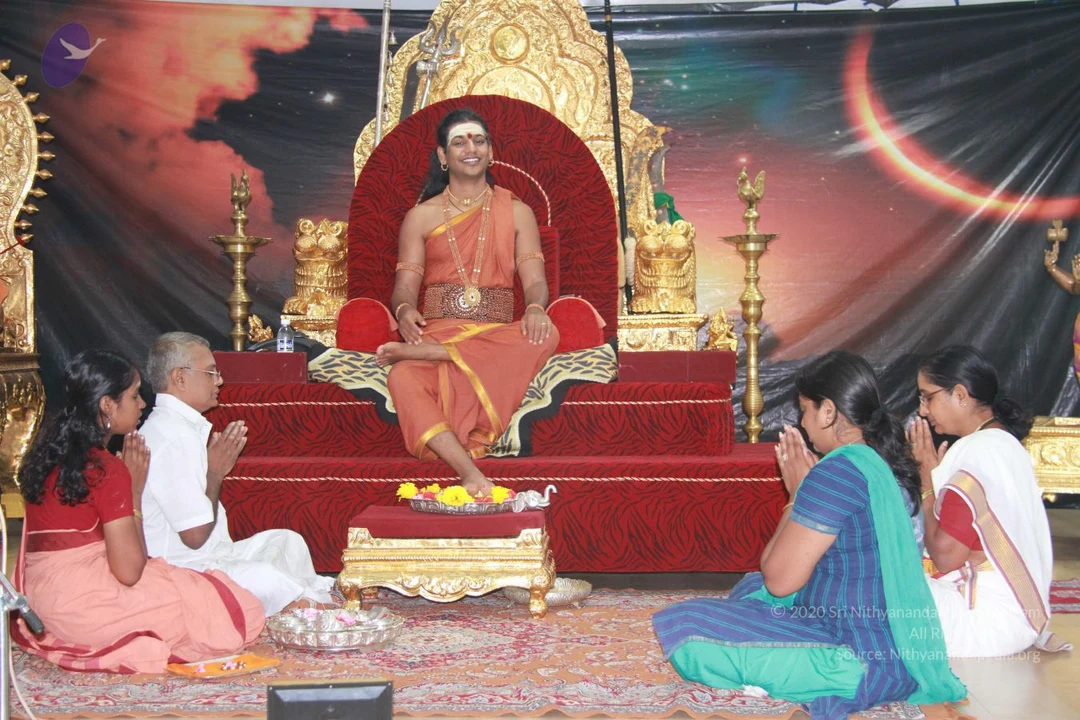
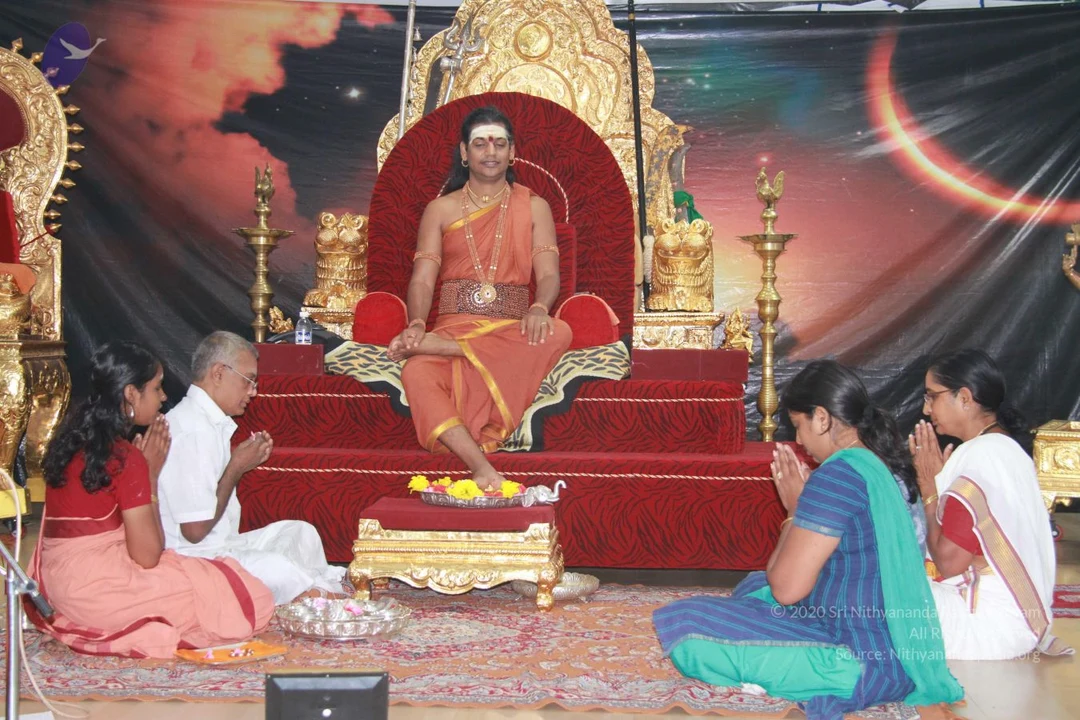
A photograph of a smiling man seated on a red throne with a tall curved red velvet backrest patterned in black, flanked by gold ornamental carving. He wears an orange-saffron cloth draped over one shoulder, a white tilak with a red bindi on his forehead, gold hoop earrings, a gold necklace, multiple strands of beaded rudraksha-style malas, gold armlets and a jewelled belt. His right hand is raised in a blessing gesture. The chair is trimmed with red cushions. The appearance matches the probable Swamiji cues of long swept-back hair, saffron clothing, malas and ceremonial gold jewellery, and the page states he is present at this event.A seated figure in a red velvet throne with gold carved backrest, wearing orange saffron robes, a gold-coloured waist belt, gold chains and a rudraksha-style mala, with a red tilak on the forehead and long swept-back hair, smiles while a man in a white shirt and glasses kneels below offering a small oil lamp. Behind them stands a golden backdrop with an orange and black cloth, a brass lamp, and a tray of flowers and petals at the front. At left, a robed figure in orange and a girl in red hold tiers of lit oil lamps. a person seated on the throne with saffron robes, rudraksha mala and gold necklaces, receiving lamp offerings during a satsang-style arati setting.A photograph of a seated man on a red velvet throne with ornate gold carved backrest and gold lion-shaped armrests, against a dark backdrop with orange and red clouds and a glowing crescent. He wears an orange-saffron garment, a rudraksha mala and a gold necklace, gold armlets, a gold belt and vibhuti marks on his forehead, and his hands rest in his lap. Long swept-back hair and ceremonial gold ornaments match the a person presence. In front, a gold footstool holds a plate of flowers and fruit. Four people sit on the floor with palms pressed together in anjali: a woman in a red top and orange dupatta on the left, an elderly man in white clothes, and two women on the right, one in a blue-striped sari with green shawl and one in a white sari with red border. Brass oil lamps stand on both sides, and a gold throne is partly visible at the left edge. a person is seated on the throne during satsang.A seated man in saffron-orange robes and a rudraksha mala with a large pendant sits on an ornate red and gold throne against a dark backdrop with a glowing crescent motif. Gold oil lamps flank the throne and a red-cushioned footstool holds a tray of yellow flowers. Four devotees sit on a patterned carpet before him with hands folded in prayer: a woman in a red blouse and pink sari at left, an older man in white at left-centre, and two women at right, one in a blue striped sari with green border and one in a white sari with red border. A microphone stand and a small monitor appear in the foreground. a person is seated on the throne, identified by the saffron robes, rudraksha mala and pendant, and the satsang setting.A photograph of a seated figure on a red-cushioned golden throne in a satsang hall, with a dark backdrop showing a red crescent moon and clouds. The central figure wears a saffron-orange garment with an orange shawl, a rudraksha-style beaded mala and a large ceremonial pendant, plus a white tilak on the forehead, and sits cross-legged with hands resting on the lap. The figure matches the appearance of Swamiji (probable), with long swept-back hair, ornate gold necklaces and saffron clothing. Four devotees sit on the carpet before the throne with palms pressed together: a woman in a red top and pink skirt, a man in white with glasses, a woman in a blue-striped sari with green border, and a woman in a white sari with red blouse. A brass lamp and a tray of marigold flowers sit on a low golden table in front of the throne, with more brass lamps flanking the dais.A seated figure in an orange-saffron robe with a gold-and-red waist sash sits cross-legged on a red velvet throne with carved gold armrests and a golden lion-form base, bare feet resting on the red platform. He wears a rudraksha mala and ceremonial gold necklace, a white vibhuti tilak on his forehead, and gold armlets. In front of the throne, a silver plate holds yellow flowers and a brass pedestal sits on a patterned carpet. Four devotees sit on the carpet with palms pressed together in anjali: a woman in a red top and pink skirt, a man in white with glasses, a woman in a blue-striped top and green skirt, and a woman in a white sari with a red-gold border. Tall brass lamps flank the throne against a backdrop of red and black clouds and a crescent moon, with a gold trident visible above.

NITHYA-SATSANG
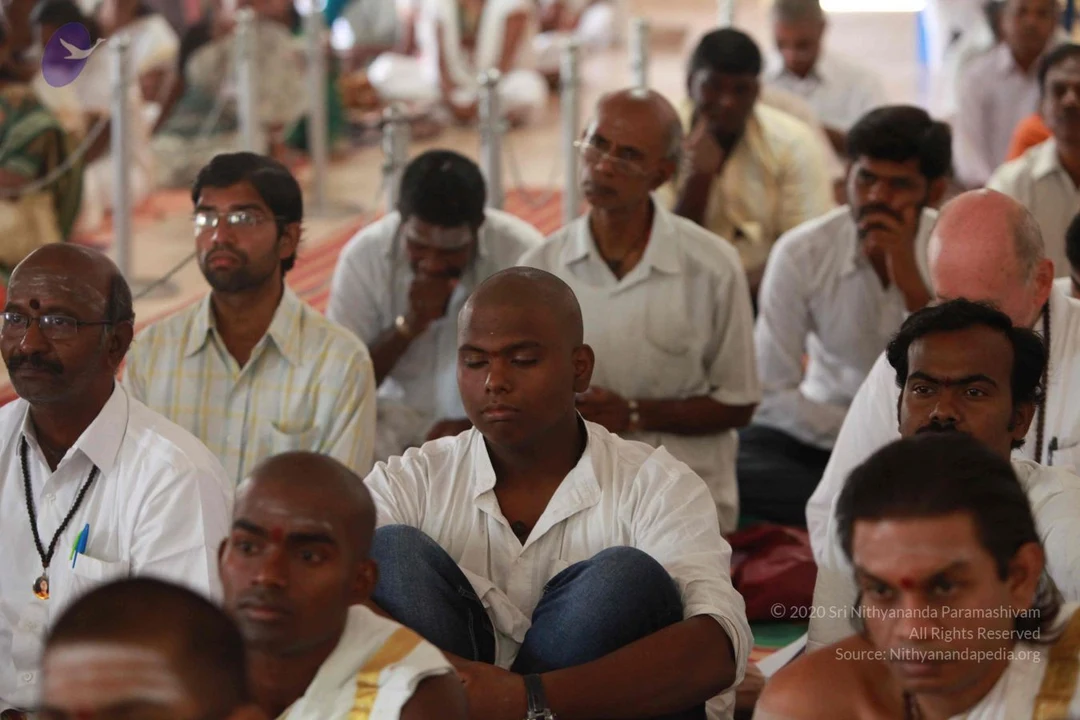
42 photosSource gallery
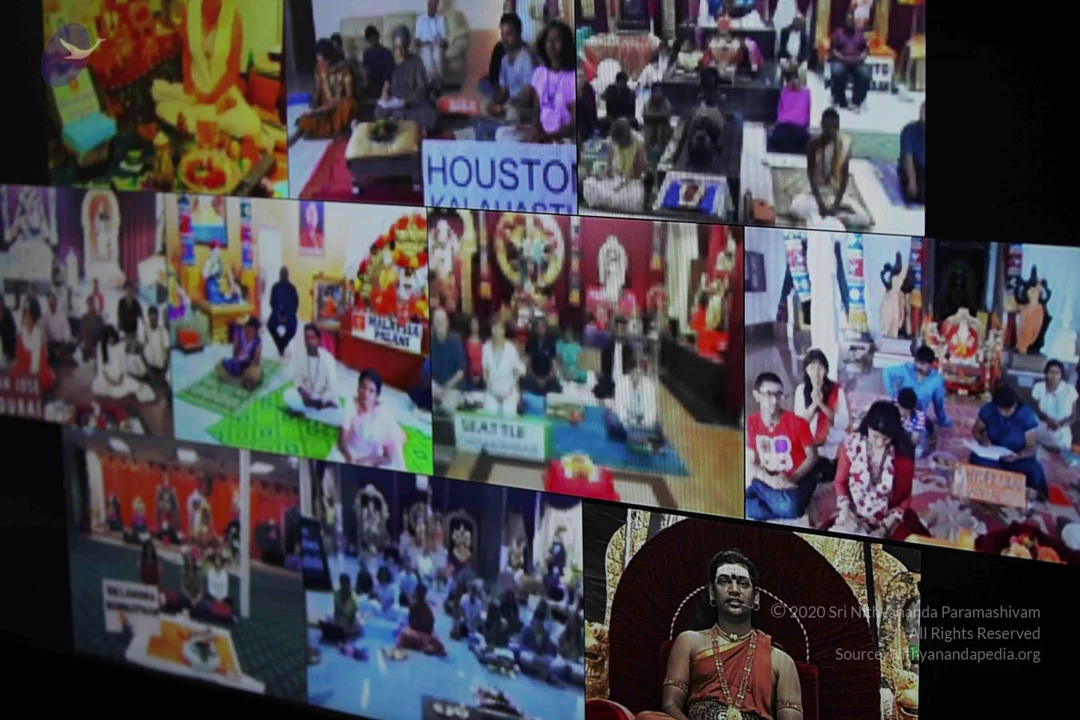
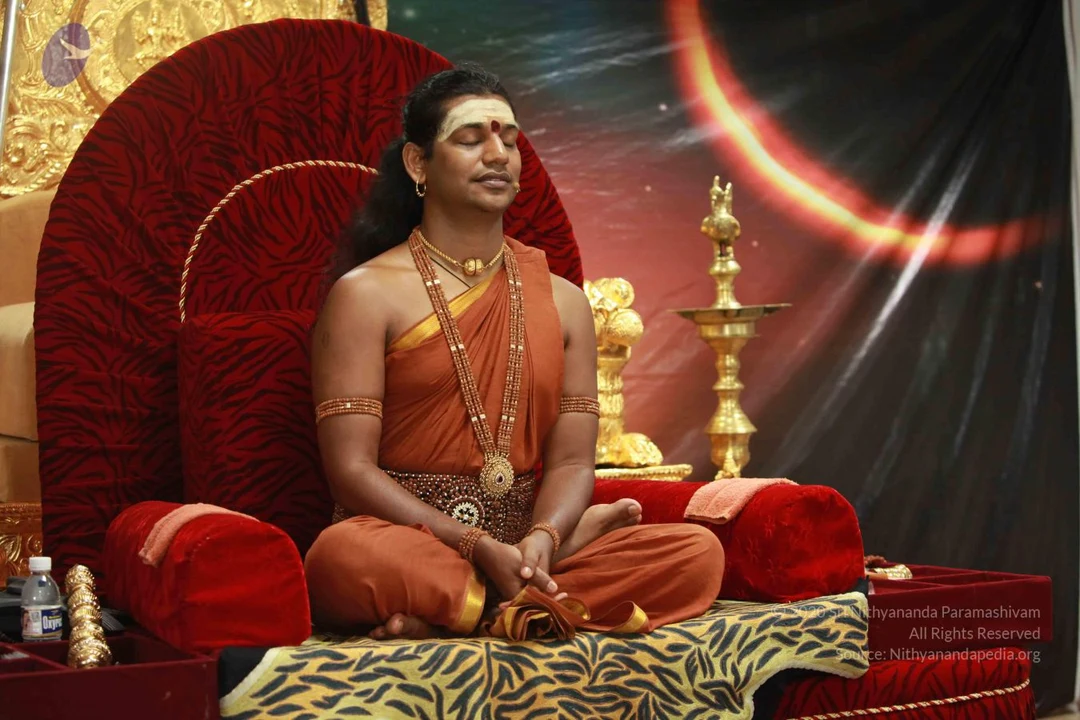
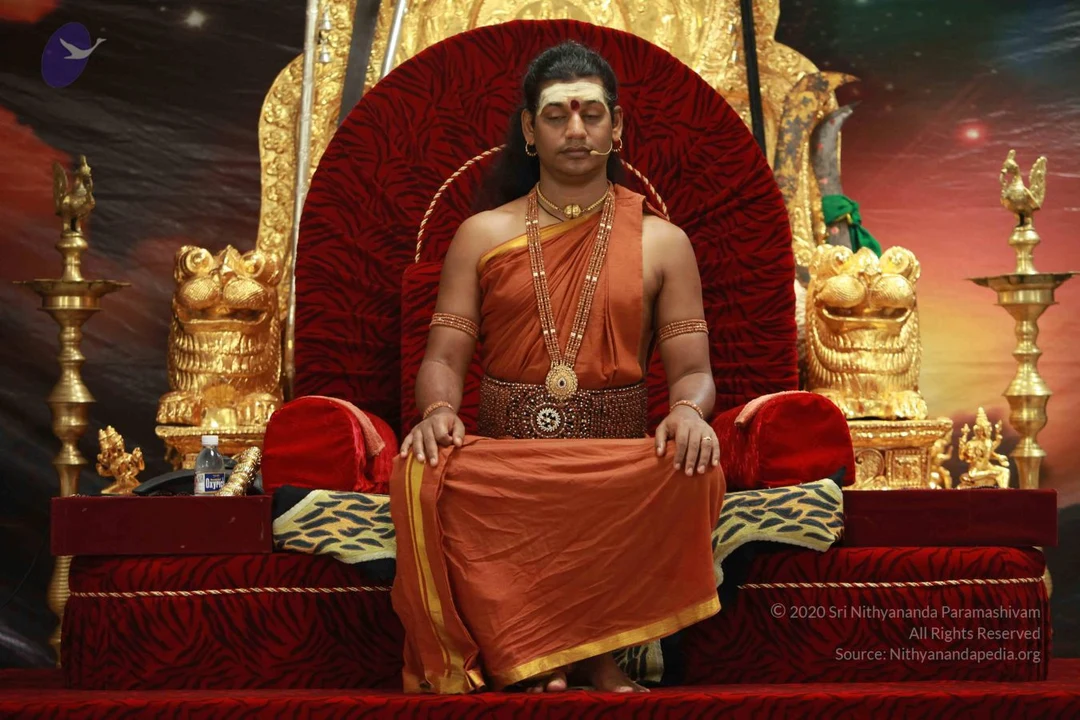
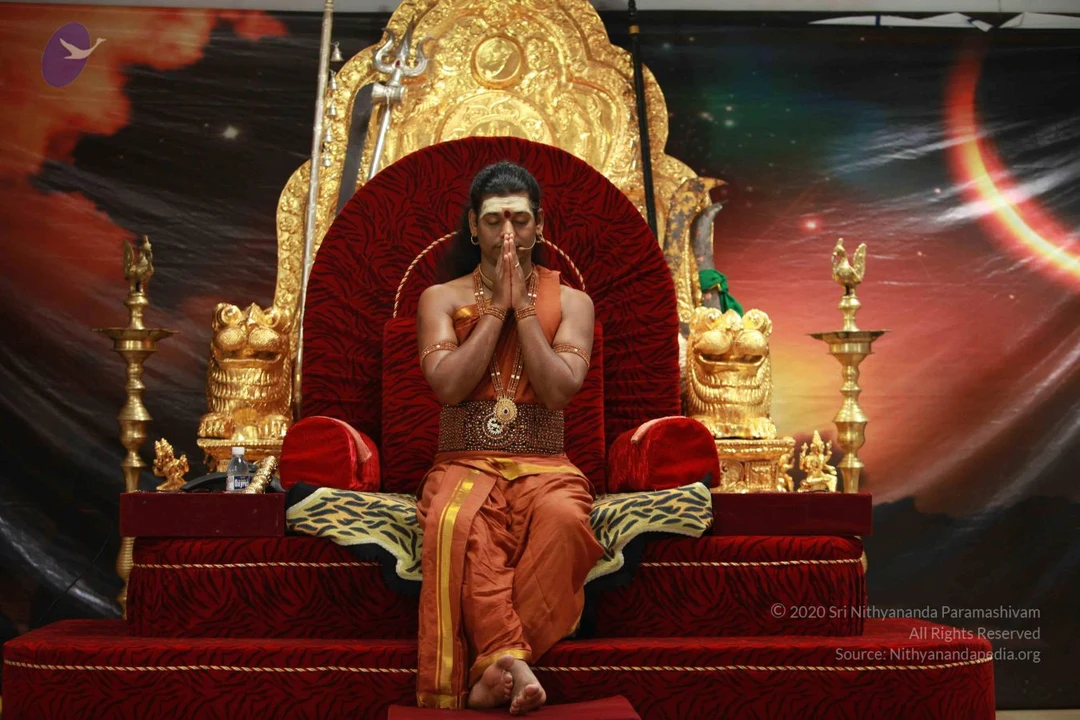
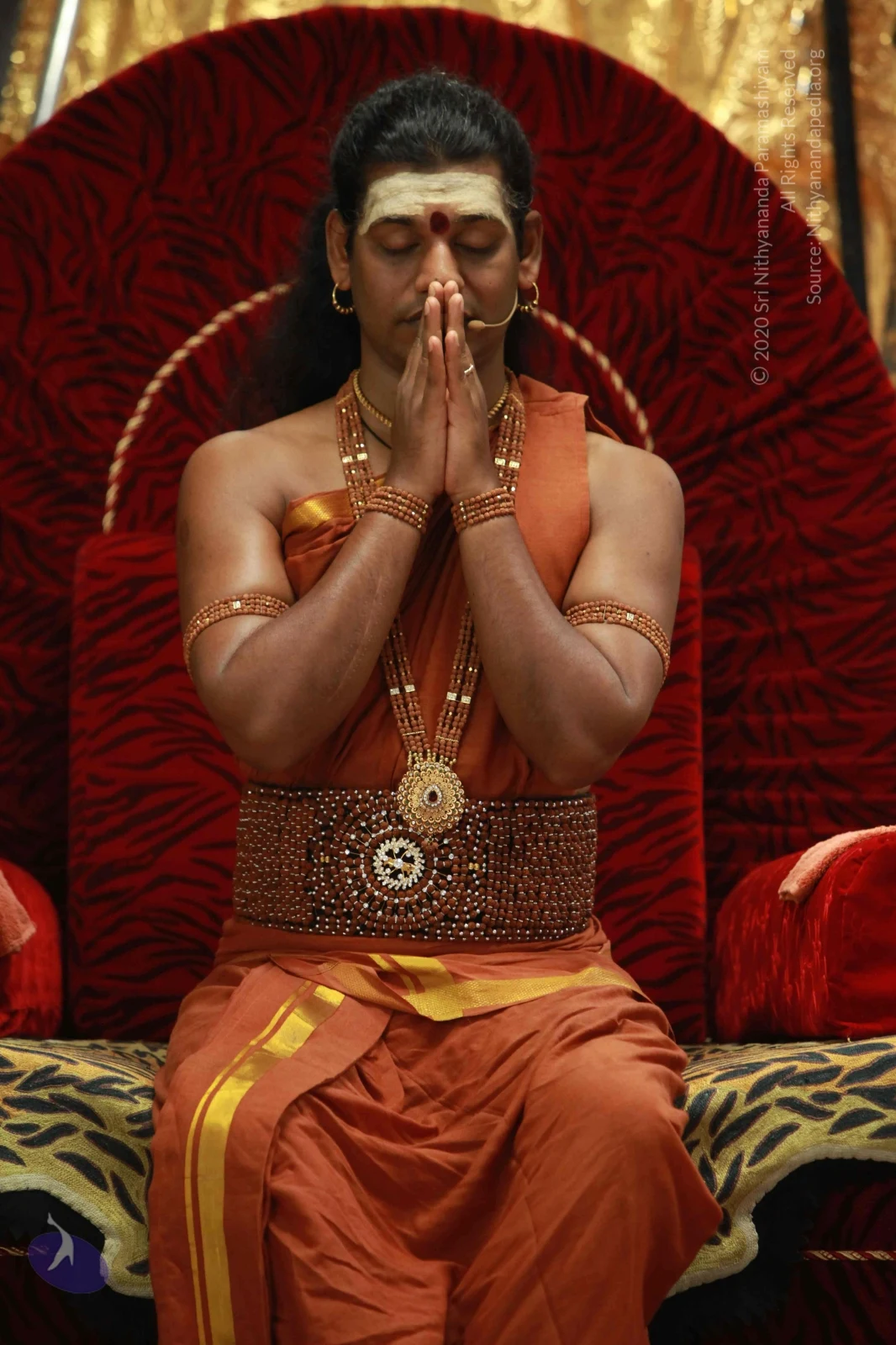
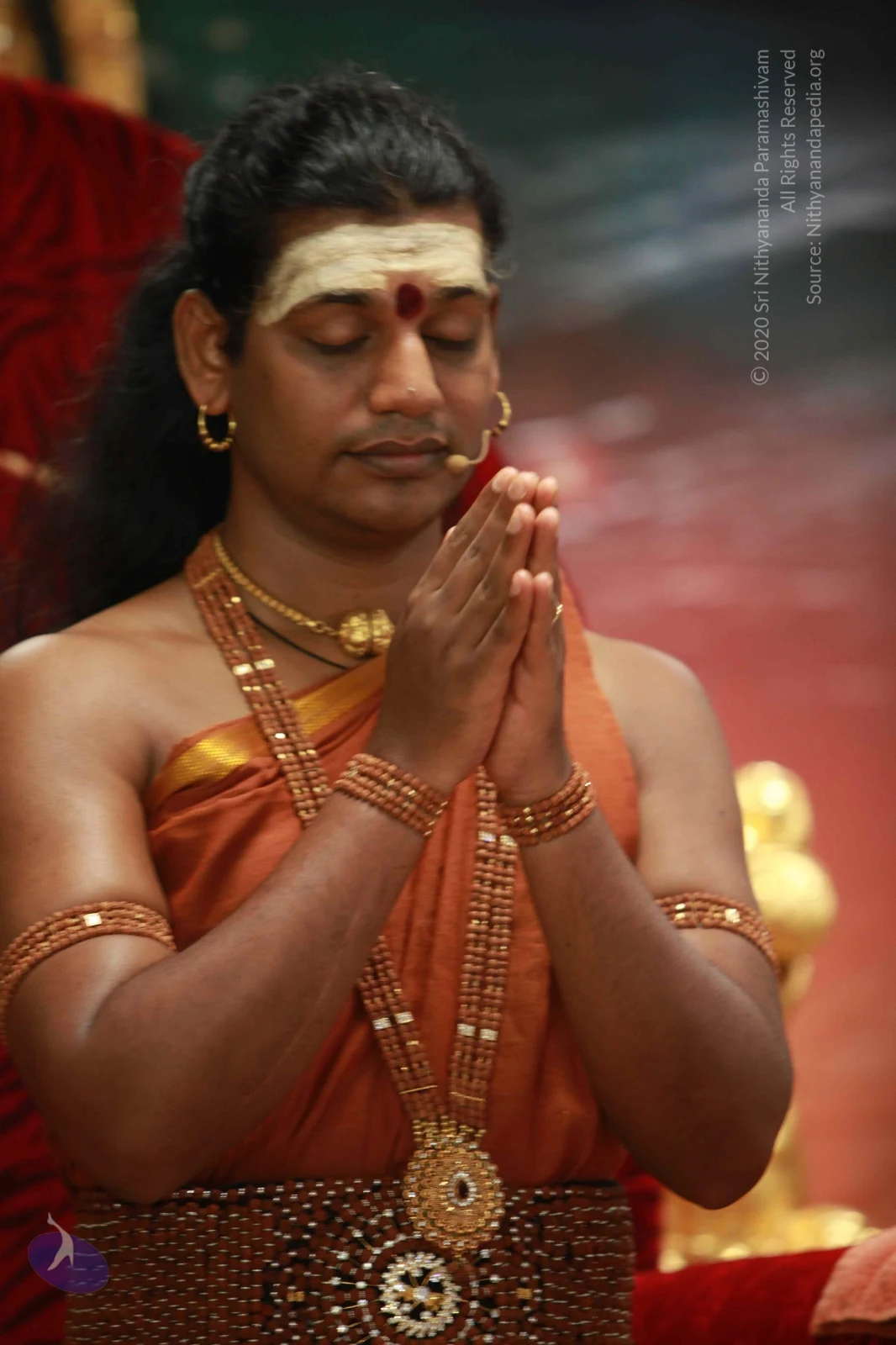
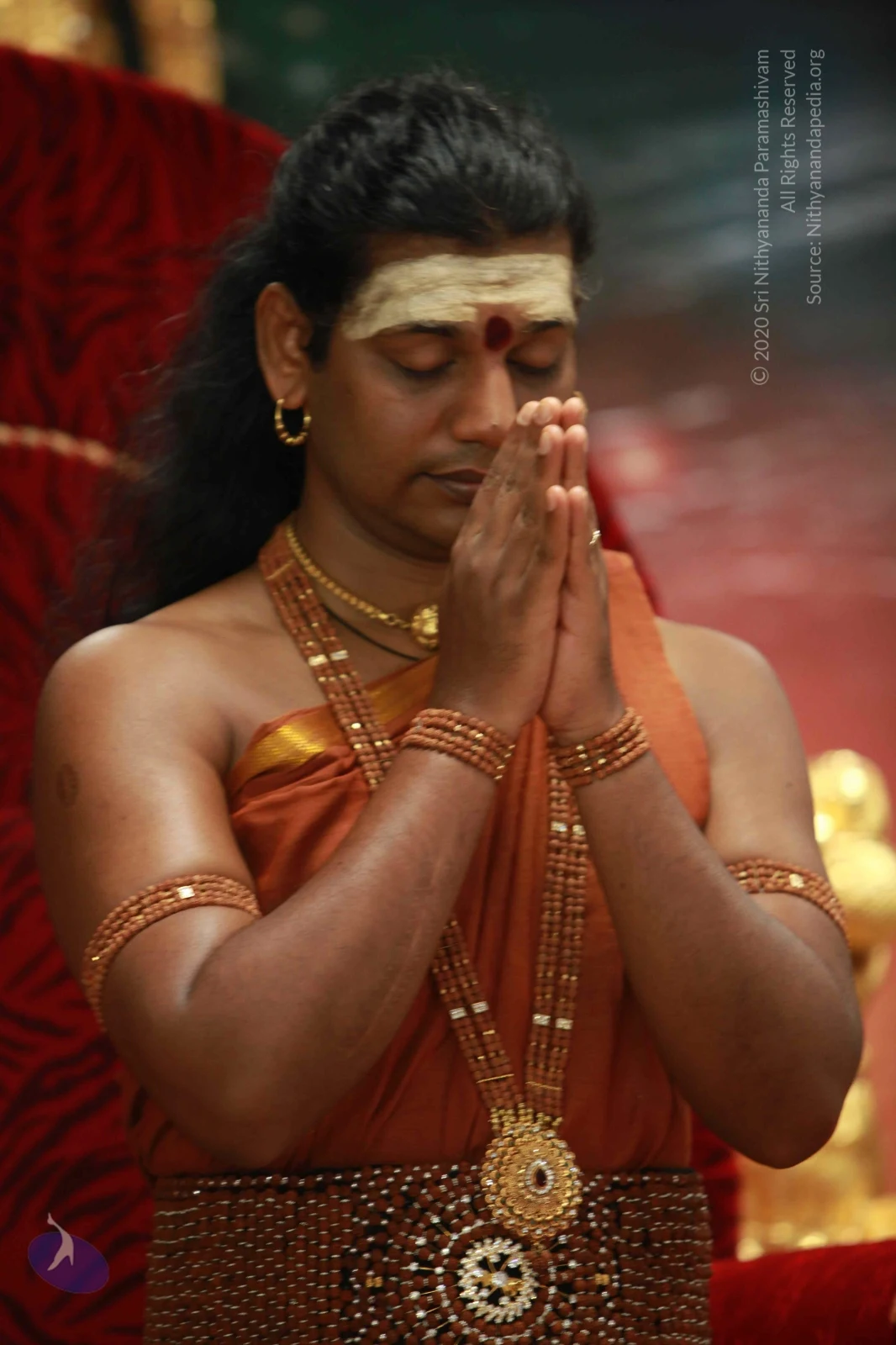
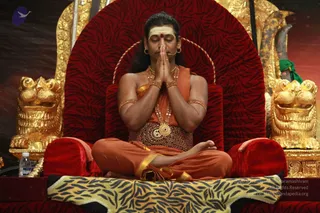
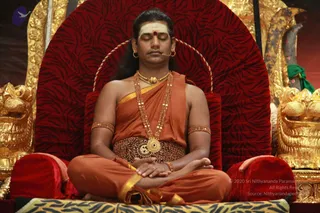
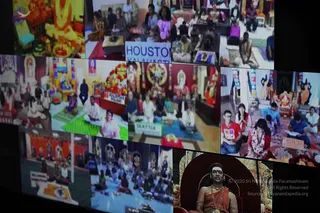
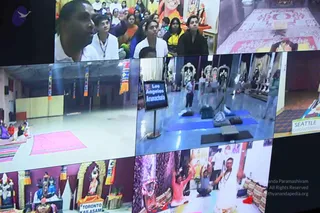
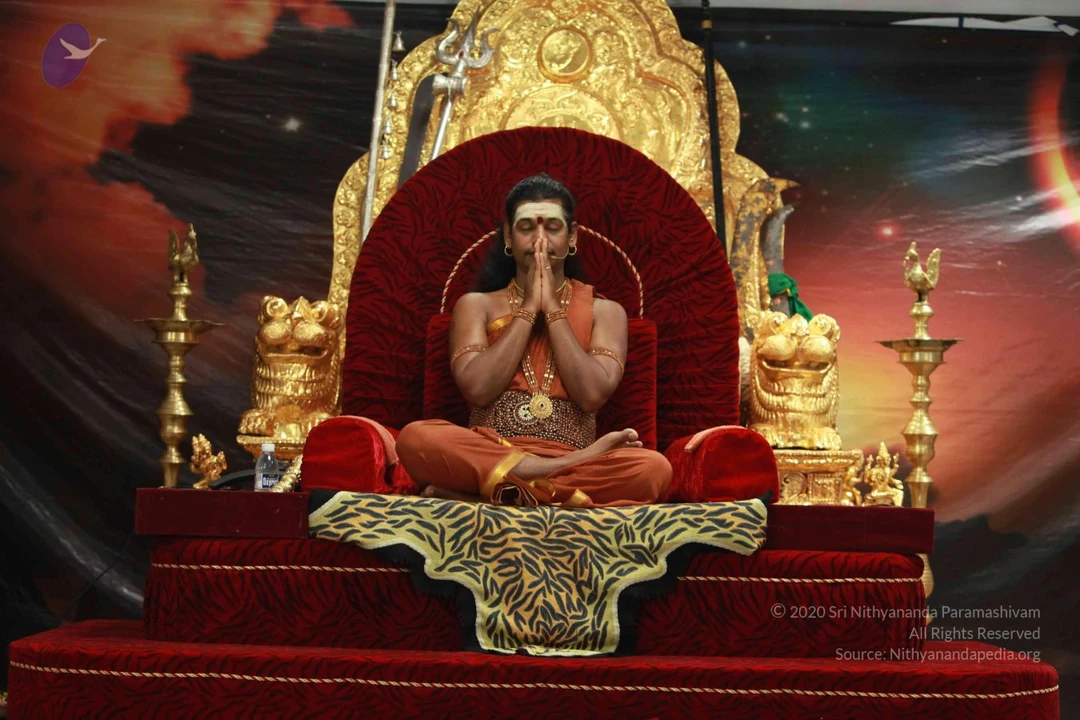
A seated man in an ornate golden-and-red throne setting performs a namaste gesture with eyes closed. He wears an orange dhoti and orange upper cloth, a gold-toned beaded necklace, bangles, and a tilak on his forehead, with long hair swept back. He sits cross-legged on a red velvet throne with a tiger-striped cloth draped over the platform. Gold lion figures flank the throne, with brass oil lamps on either side, a golden trident and crescent motif above, and a dark backdrop with orange and red cosmic imagery. Appearance-based label: Swamiji (probable), seated in satsang on a throne with clear cues of long swept-back hair, orange ceremonial clothing, a rudraksha-style mala and ceremonial gold necklace.A man sits cross-legged on a red velvet throne with a tiger-striped back and golden lion-head armrests, eyes closed and palms pressed together in namaskar. He wears orange saffron robes, a wide gold-and-jewelled waist belt, a gold chain with a large pendant, layered beaded necklaces, gold armlets and bangles, and a gold earring. A white vibhuti tripundra and red kumkum mark decorate his forehead, and his hair is long and swept back. A tiger-print cloth covers the dais and a plastic water bottle sits at the left edge. The setting suggests a stage satsang. Swamiji (probable) is seated in the centre, identified by long swept-back hair, saffron robes, rudraksha-style beaded necklaces and a gold ceremonial waist belt.A seated man in saffron-orange robes sits cross-legged on an ornate red velvet throne with gold lion-headed armrests, eyes closed in meditation with hands resting in his lap. He wears a gold-toned necklace, multiple rudraksha-style beaded malas across his chest, a beaded waist belt, gold armlets, and a white vibhuti band with a red kumkum dot on his forehead. Behind him is a large red tiger-striped backrest with gold trim. The scene is a formal satsang or meditation setting. A small circular logo appears in the upper left corner.A seated man in orange and saffron ceremonial clothing sits cross-legged on an ornate red velvet throne with a gold-carved backrest and gold lion figures at its sides. He wears a rudraksha mala and a gold necklace, a red tilak on his forehead, and gold armlets. His hands rest in a meditation mudra. Brass oil lamps stand on either side, and a water bottle sits near the base. A zebra-striped cloth drapes the platform. Behind him is a painted backdrop of a red sky with a glowing eclipse-like crescent. A trident is mounted above the throne.A seated man in saffron-orange robes sits cross-legged in meditation posture on an ornate red velvet throne with a gold-carved back and gold lion-head armrests. He wears a rudraksha mala, a heavy gold necklace, gold armbands, a gold belt buckle with a rudraksha-bead belt, and a white tripundra with a red dot on his forehead. Flanking the throne are tall brass oil lamps and a small golden figure, with a tiger-striped cloth draped over the platform. The backdrop shows a dark red and orange cosmic design. A probable Swamiji is shown; the saffron clothing, long swept-back hair, rudraksha mala and ceremonial gold necklace match the appearance of a seated teacher, though the image is small. The photo is part of a satsang setting.A large display screen shows a grid of video-conference feeds of satsang groups seated in ashram-style rooms. Several panels show groups sitting on mats and cushions in front of shrines, deity murtis and framed images, with flower garlands and offerings. A sign reading HOUSTON KALAHASTI appears in one panel, and a sign reading SEATTLE in another. In the bottom right panel, a man in an orange robe with rudraksha malas and gold necklaces sits on a red-canopied throne, speaking into a microphone, appearing to be the presenter of the broadcast. Participants in the other panels wear white, red and colourful clothes.

SARVA-DARSHAN

11 photosSource gallery
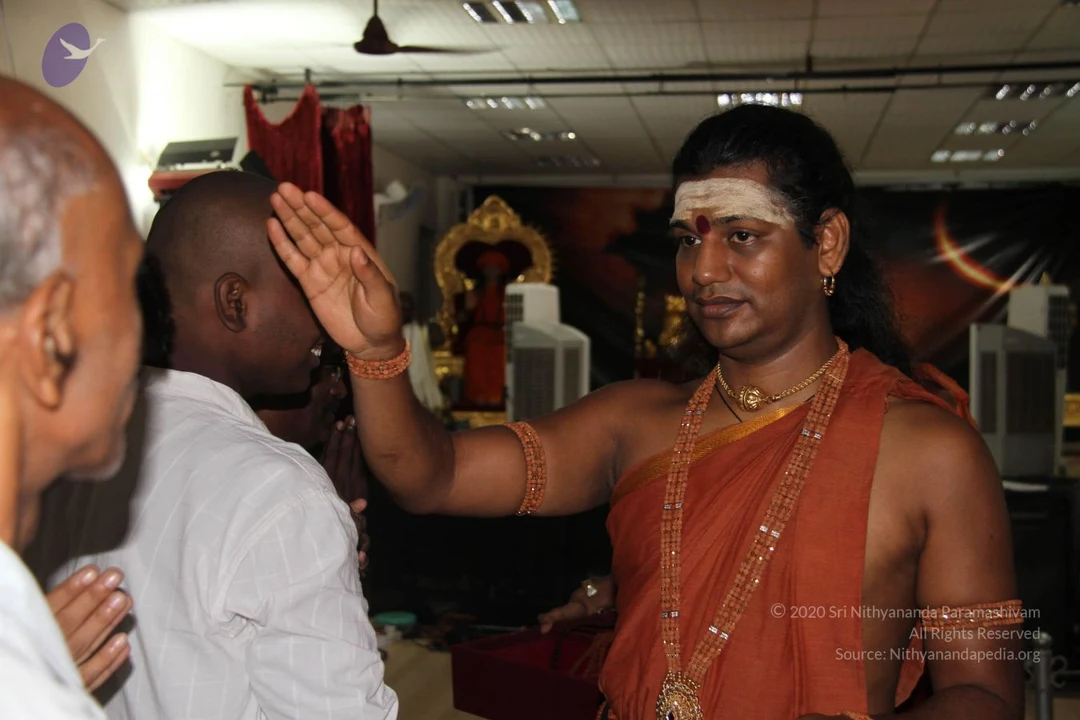
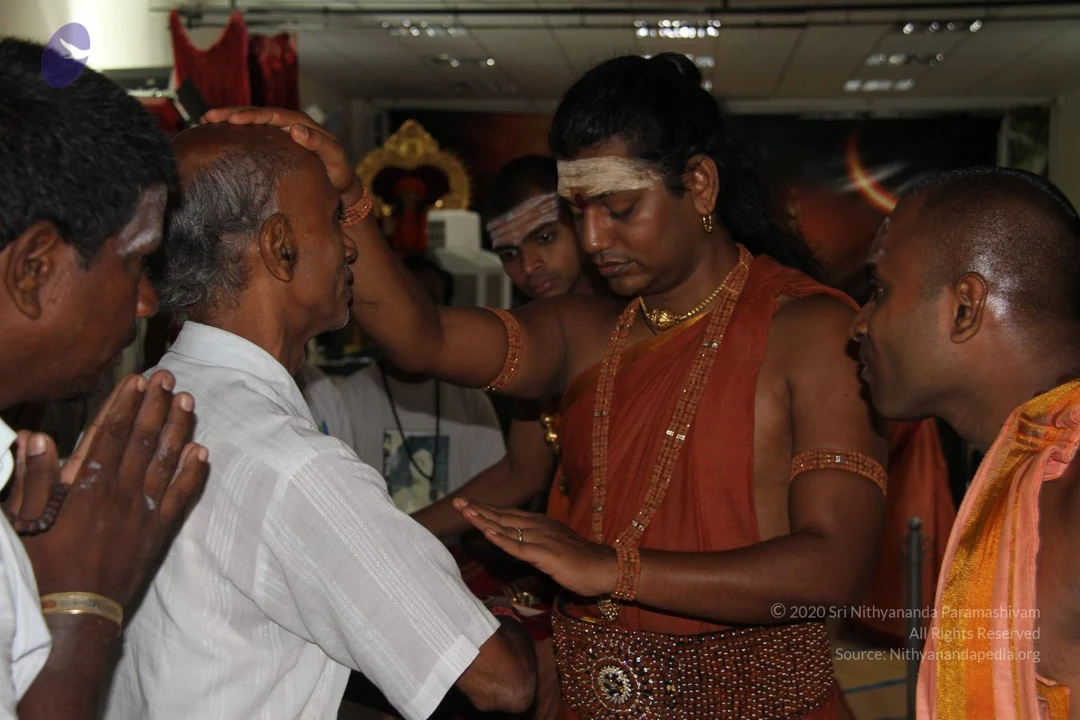
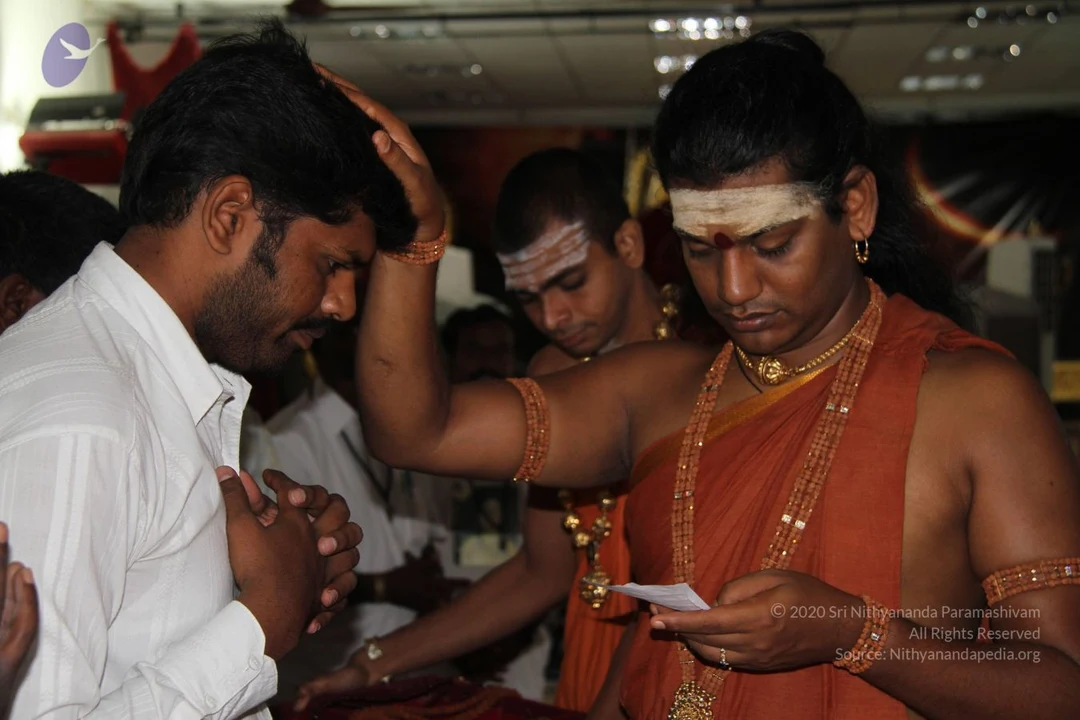
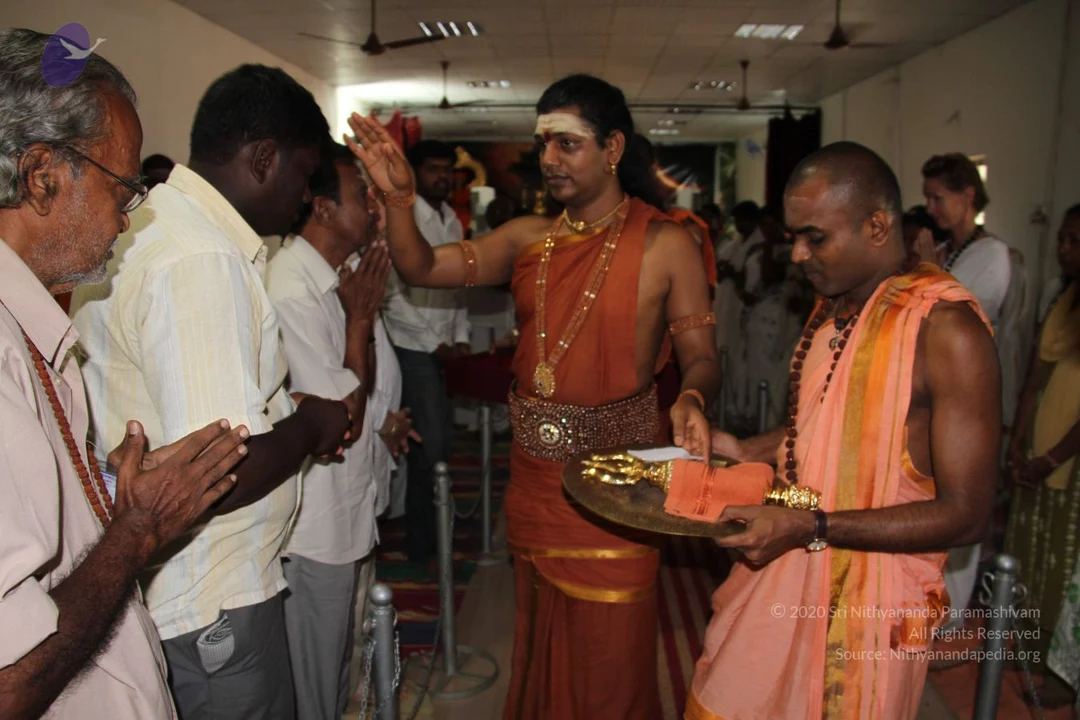
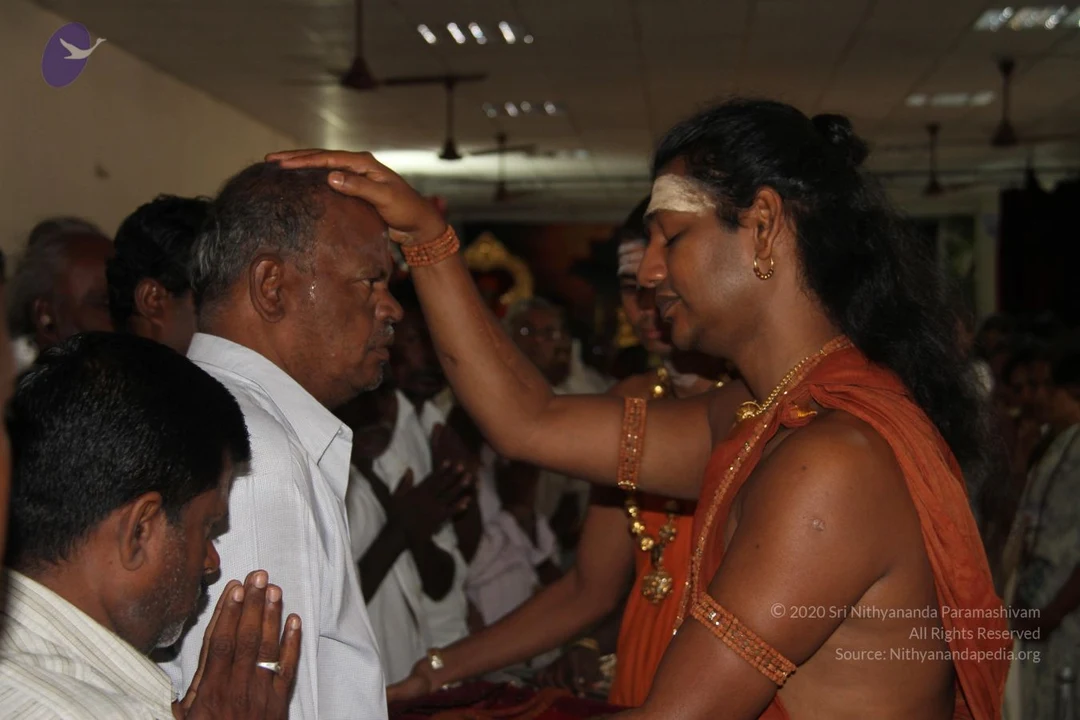
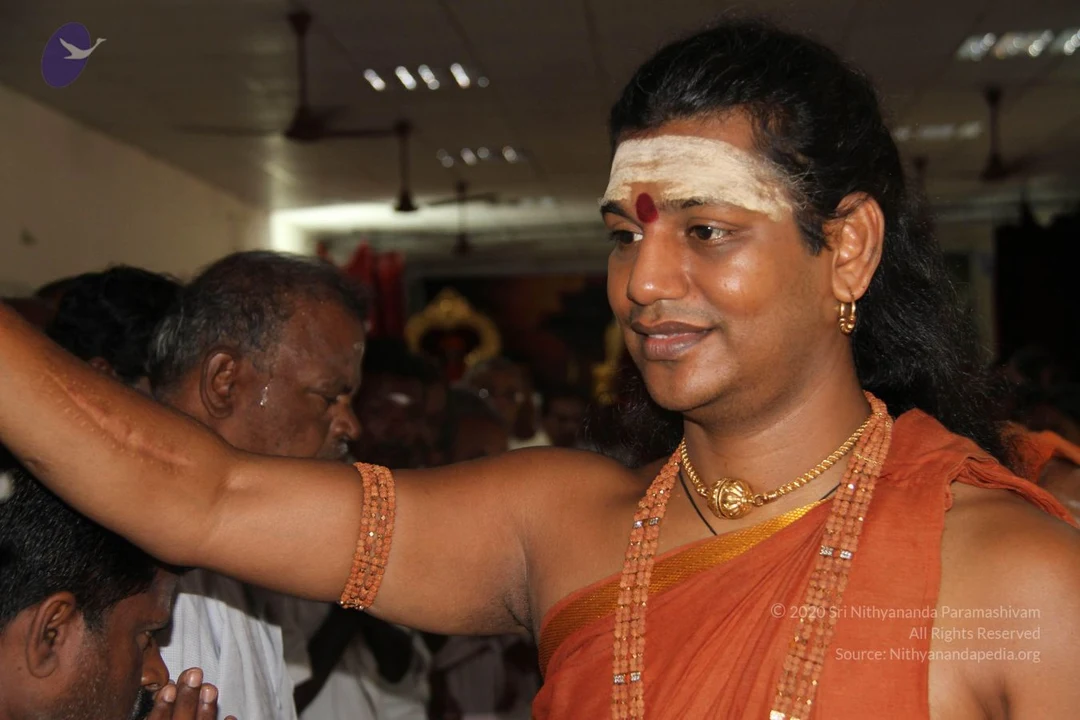
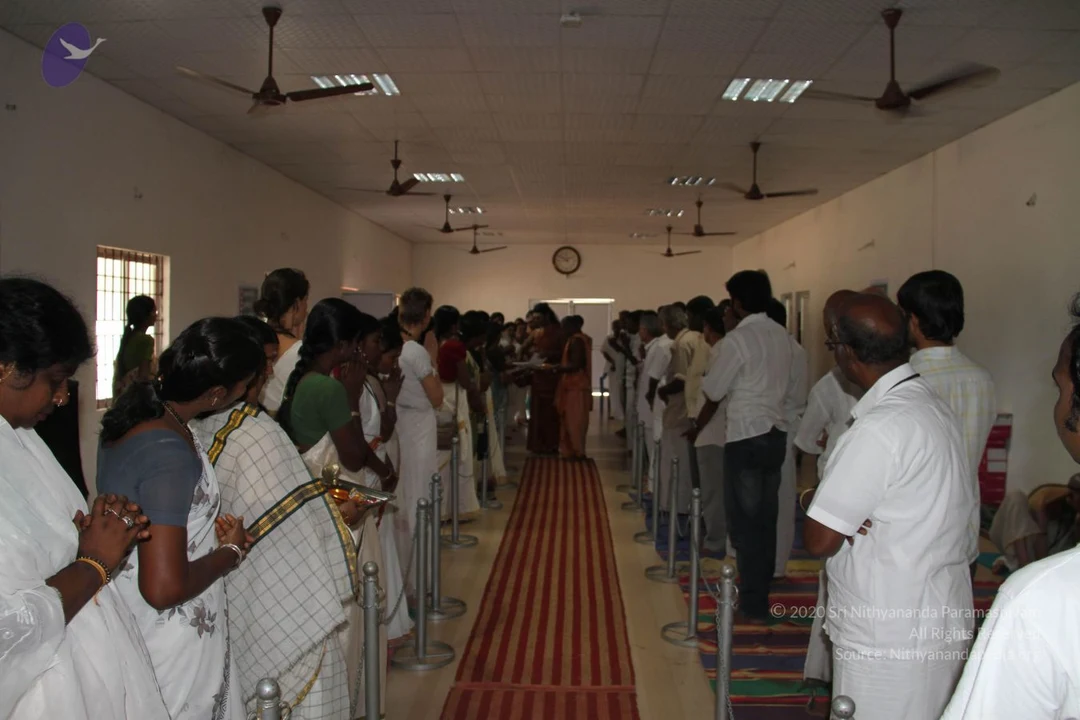
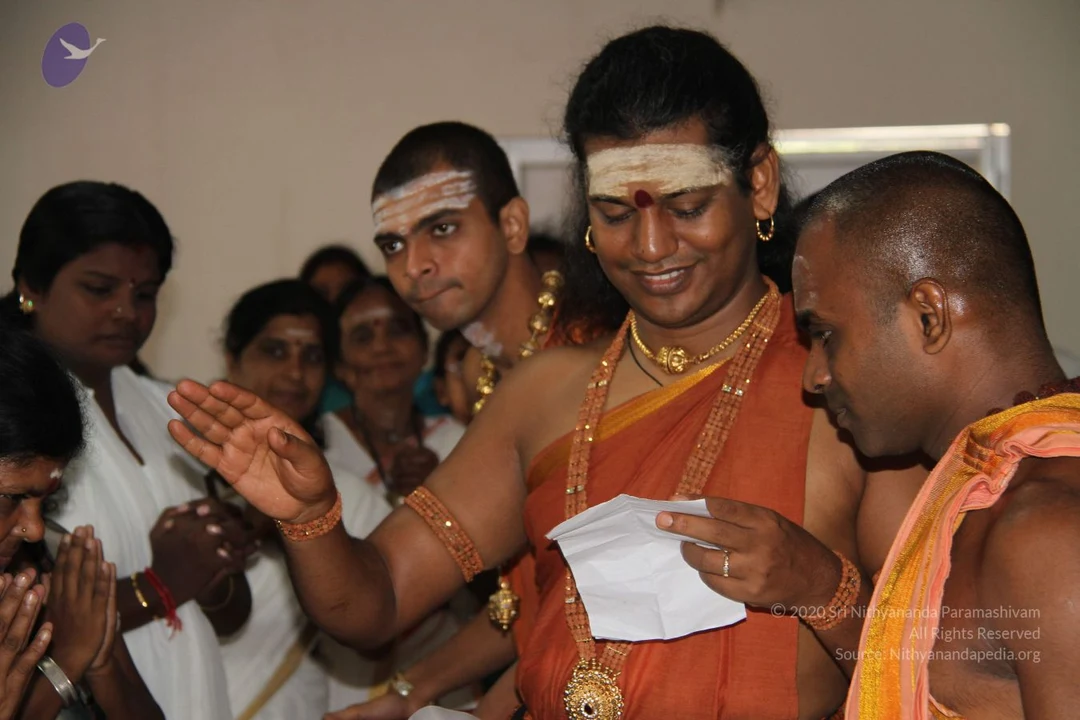
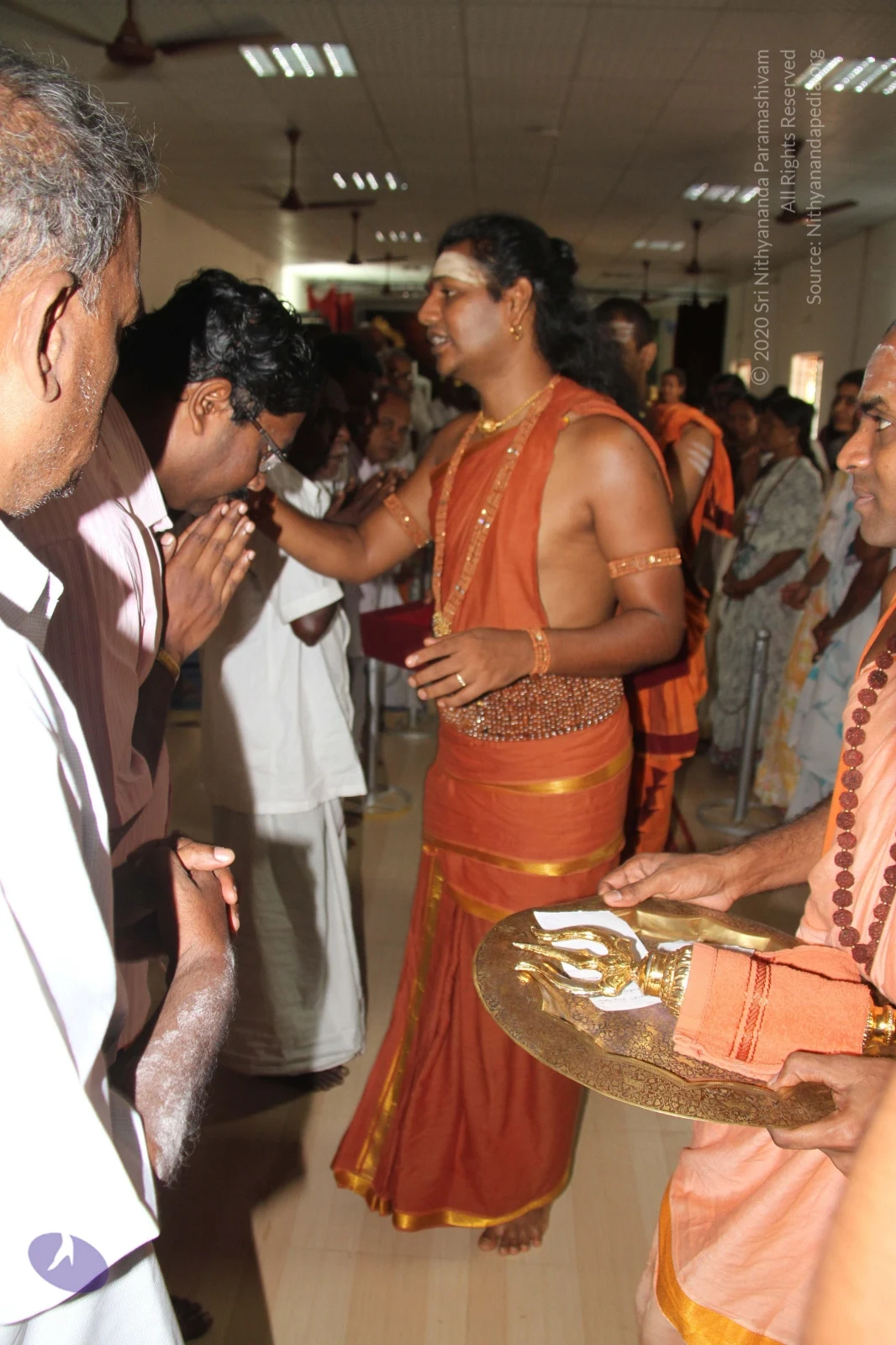
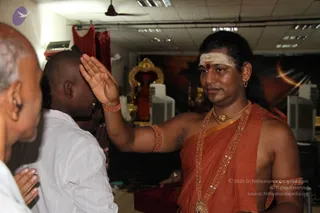
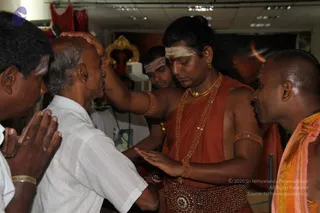
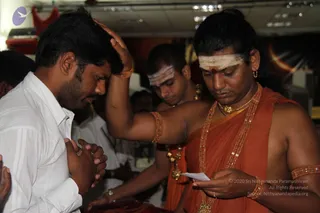
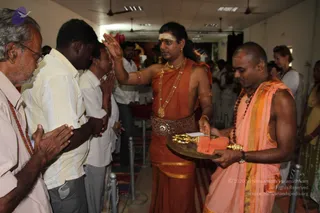
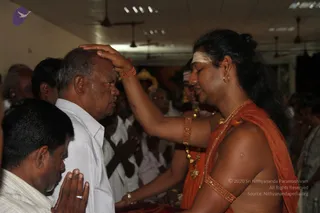
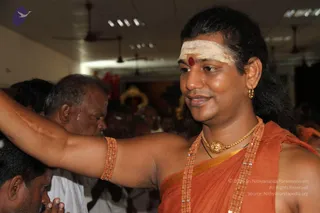
A photograph of a devotional blessing indoors. A man with long swept-back dark hair, white vibhuti band with a red kumkum dot on the forehead, gold earrings and necklace, a rudraksha mala and an orange-saffron shawl over his bare shoulders raises his right hand in a blessing gesture toward a bald man in a white shirt whose head is bowed. Probable Swamiji (probable): the long swept-back hair, saffron shawl, rudraksha malas and ceremonial gold necklace match the page's description of him giving blessings. Another man stands at the left edge with hands folded in namaste. Behind them is a golden framed shrine niche holding a saffron-clad figure, with rows of cabinets and a red fabric backdrop.A photograph of a ritual blessing indoors. A man in an orange-red saffron robe, bare-shouldered, with a white horizontal vibhuti band across his forehead, long dark hair swept back, rudraksha malas and gold necklaces, and a beaded belt, places his hand on the head of an elderly bald man in a white shirt who stands with his hands joined in namaste. Other men in orange and white stand nearby, one wearing a white tilak band, and a man on the left with white forehead markings also joins his hands. Behind them is a framed deity image with a gold arch and a red-lit backdrop. The orange-robed man appears to be a probable Swamiji by appearance, given his long swept-back hair, saffron clothing and rudraksha adornments, while the elderly man receives the blessing as a devotee. Seven people are visible.A photograph of a ceremonial blessing in an indoor hall. A man in an orange saffron garment with a white forehead band, red bindi, gold necklace, rudraksha malas and orange armlets stands at right, holding a folded white paper while looking down. He wears a gold and red ornament and his hair is tied up. Beside him a second man in orange-and-white ritual dress with a shaved head and tripundra marks stands behind. At left a man in a white shirt with folded hands and bowed head receives the blessing as an orange-clad figure places a hand on his head. Other people in white stand in the background.A photograph of a hall corridor with ceiling fans where a man in an orange-saffron dhoti and shawl, with a white-and-red vertical tilak on his forehead, long dark hair, gold necklaces, beaded bracelets and a jewelled belt, raises his right hand in blessing toward devotees. Several devotees in white shirts and light clothes stand with palms pressed together in namaskar, one wearing a rudraksha mala. On the right, a shaven-headed attendant in orange robes and rudraksha beads holds a brass tray with a golden trident-like ritual object and an orange cloth. Onlookers stand behind a metal barrier, and red and gold decorations are visible in the background.A photograph of a ceremonial blessing in an indoor hall with ceiling fans and fluorescent lights. A bare-chested figure in saffron-orange cloth with a gold necklace and beaded bracelets stands on the right, a white vibhuti mark on the forehead, placing a hand on the head of an older man in a white shirt whose eyes are closed. Devotees in white stand with palms joined behind, and a man in a striped shirt in the lower left also holds his hands in anjali. The figure's cues (long dark hair, saffron cloth, gold ornaments, bracelets) are distinctive, so this is a person giving a blessing to a devotee.Indoor photograph of a man with long swept-back dark hair, a white vertical tilak and red bindi on his forehead, gold hoop earring, gold necklace, and rudraksha malas, wearing an orange-saffron shawl. He smiles and looks to the side. Beside him, another man in a white shirt with a pale forehead mark raises his arm toward him, and a figure with folded hands is at lower left. Background shows ceiling fans, fluorescent lights and a crowd. Distinctive saffron clothing, long hair and rudraksha cues suggest a person in person, though the appearance is only partly confirmable.

ANNA-DAAN

18 photosSource gallery
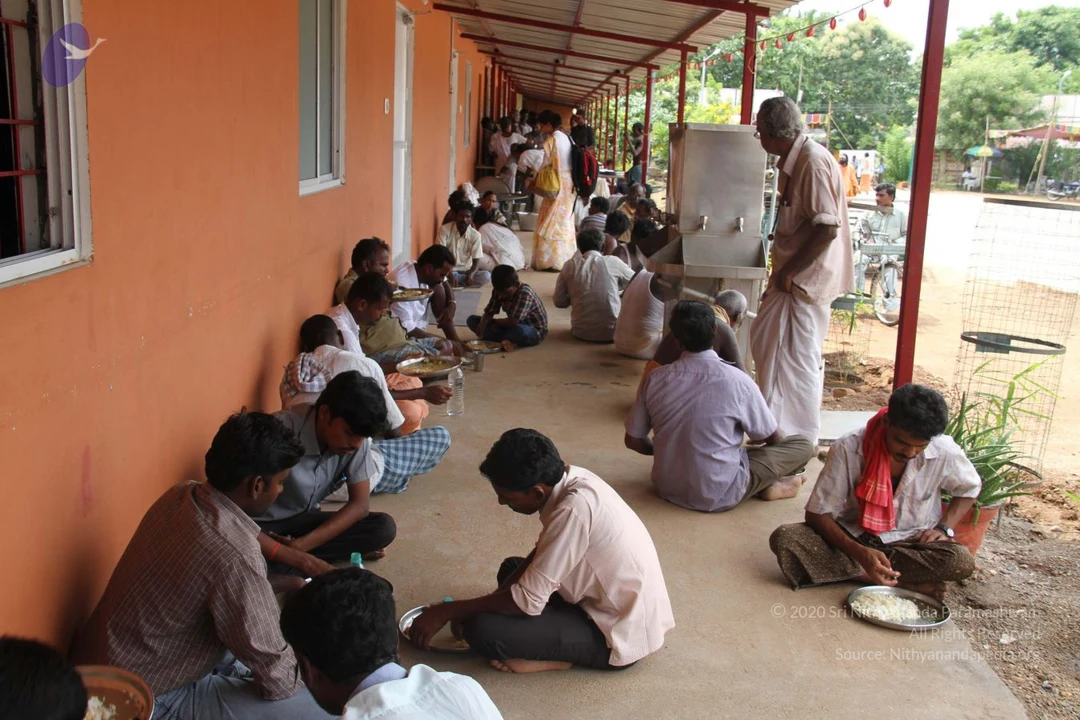
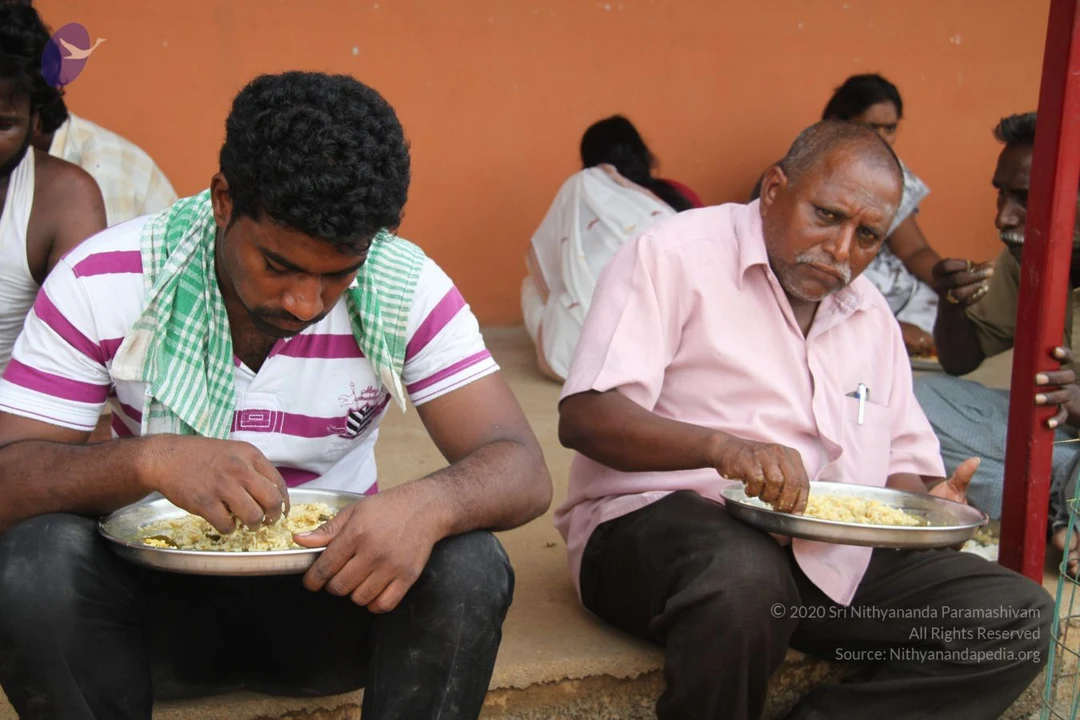
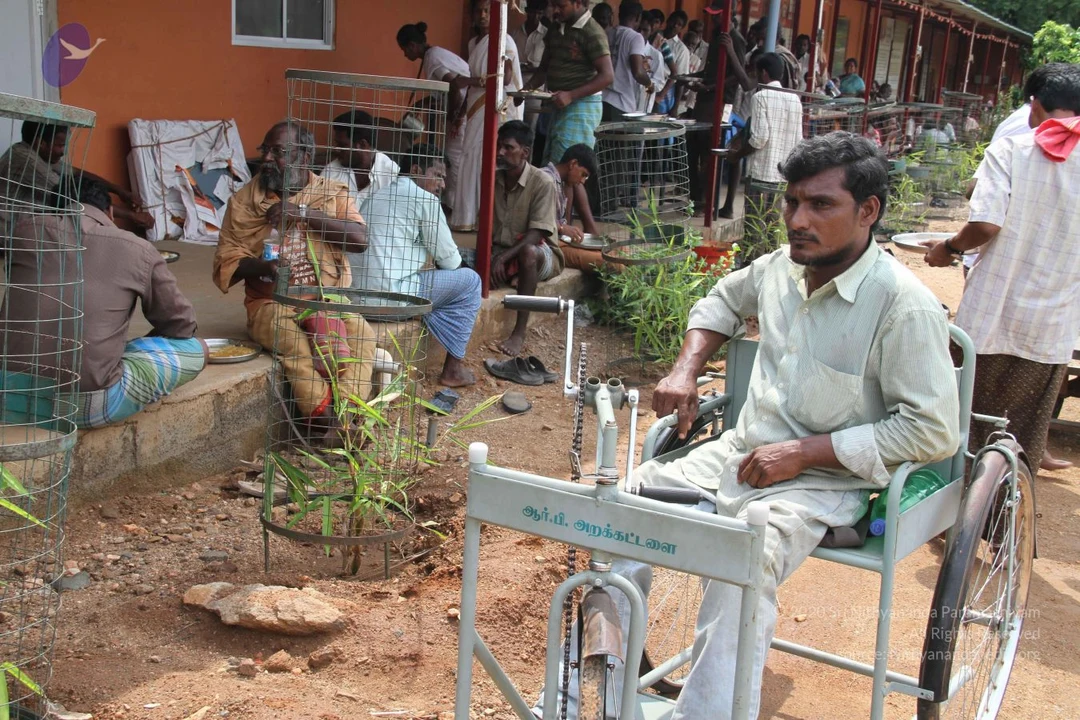
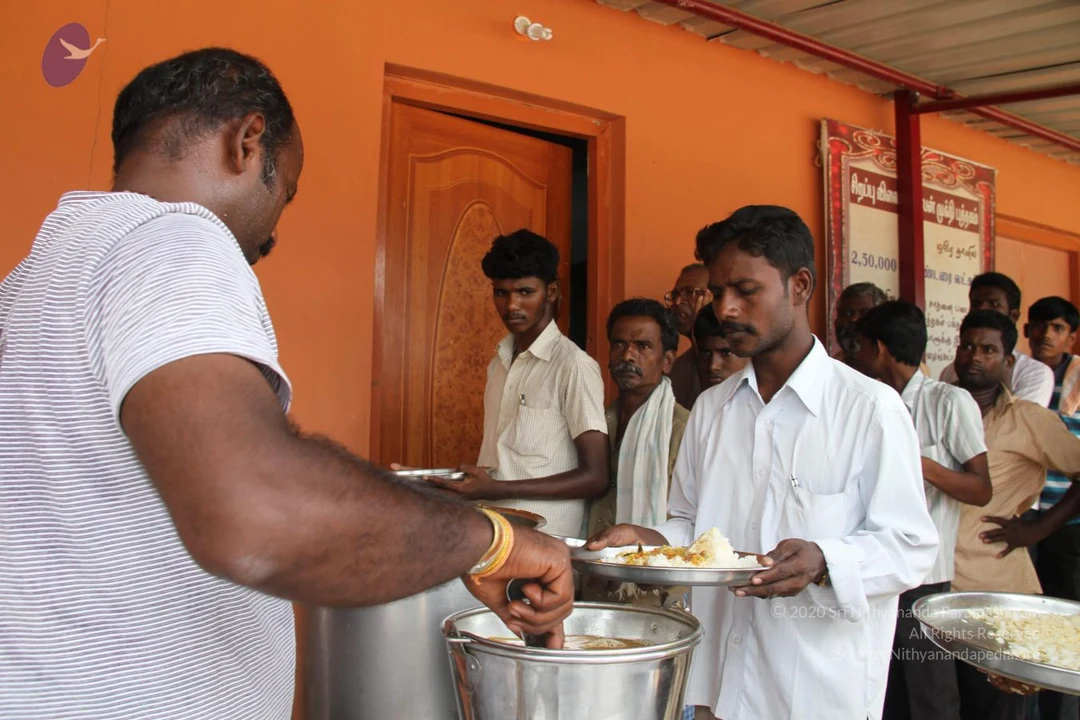
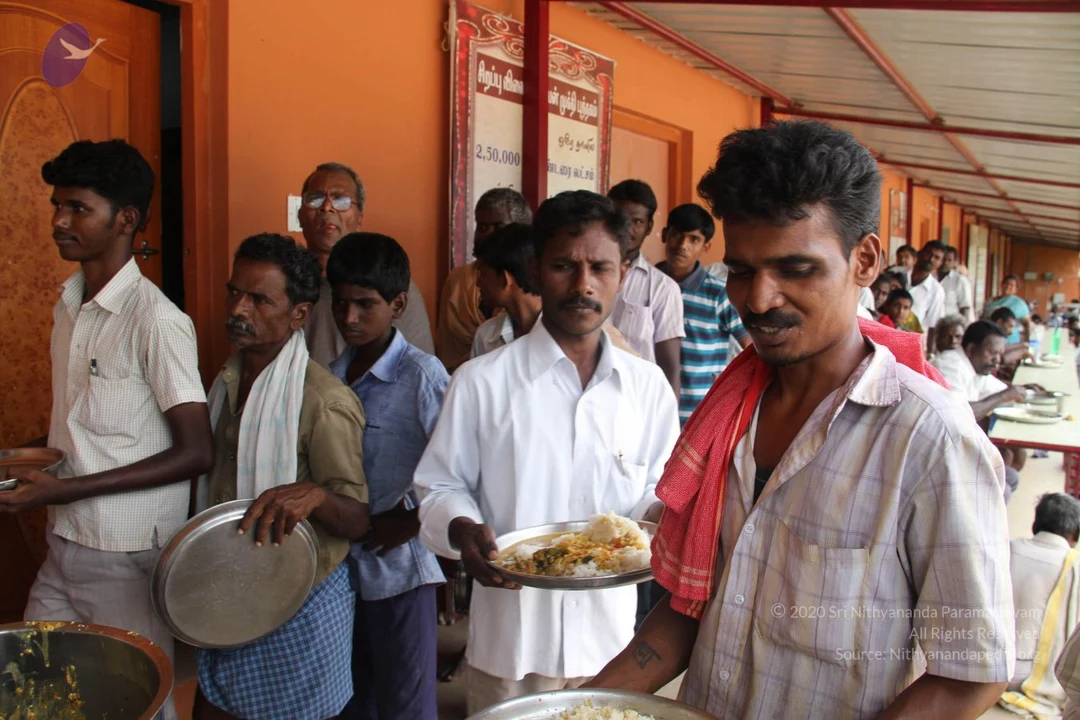
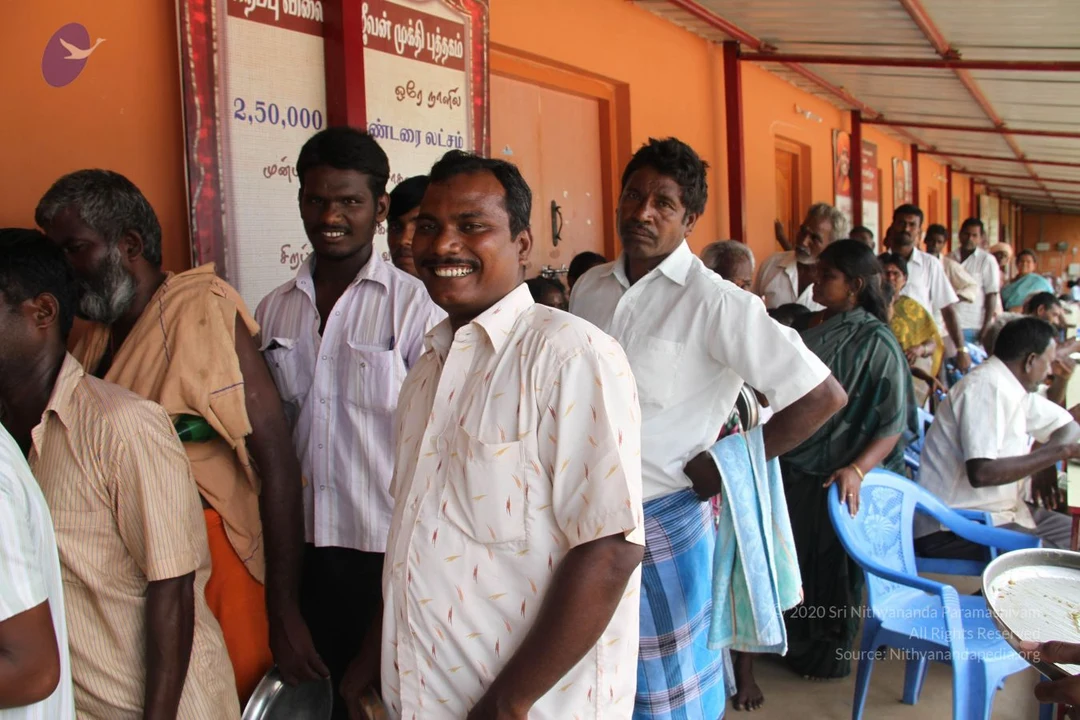
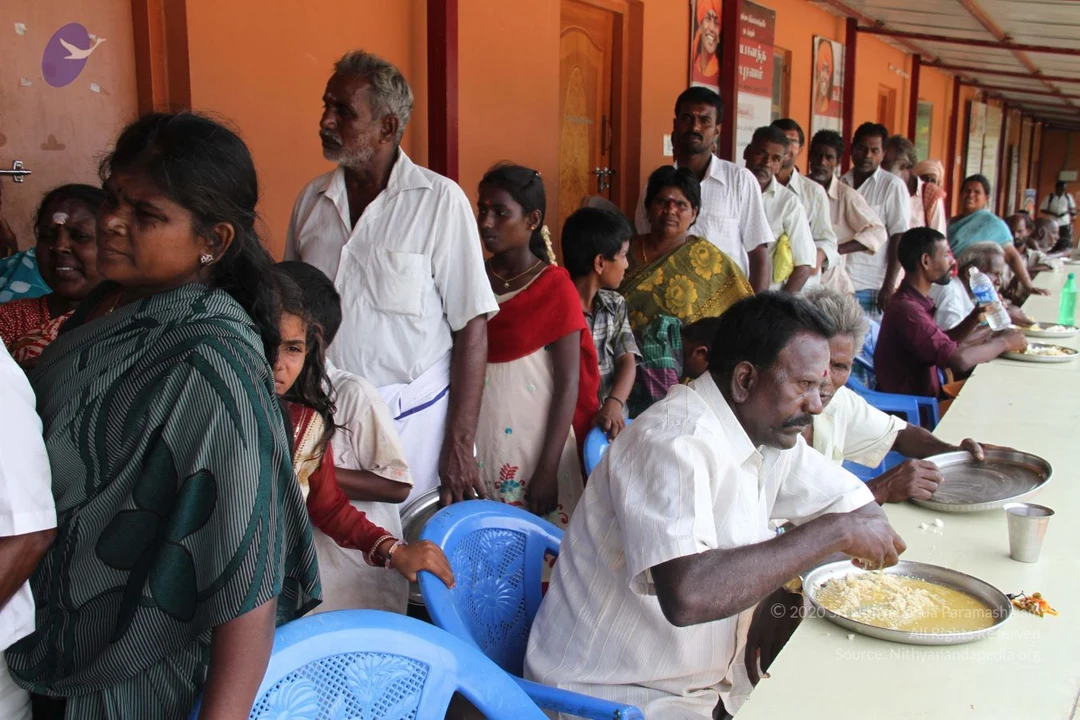
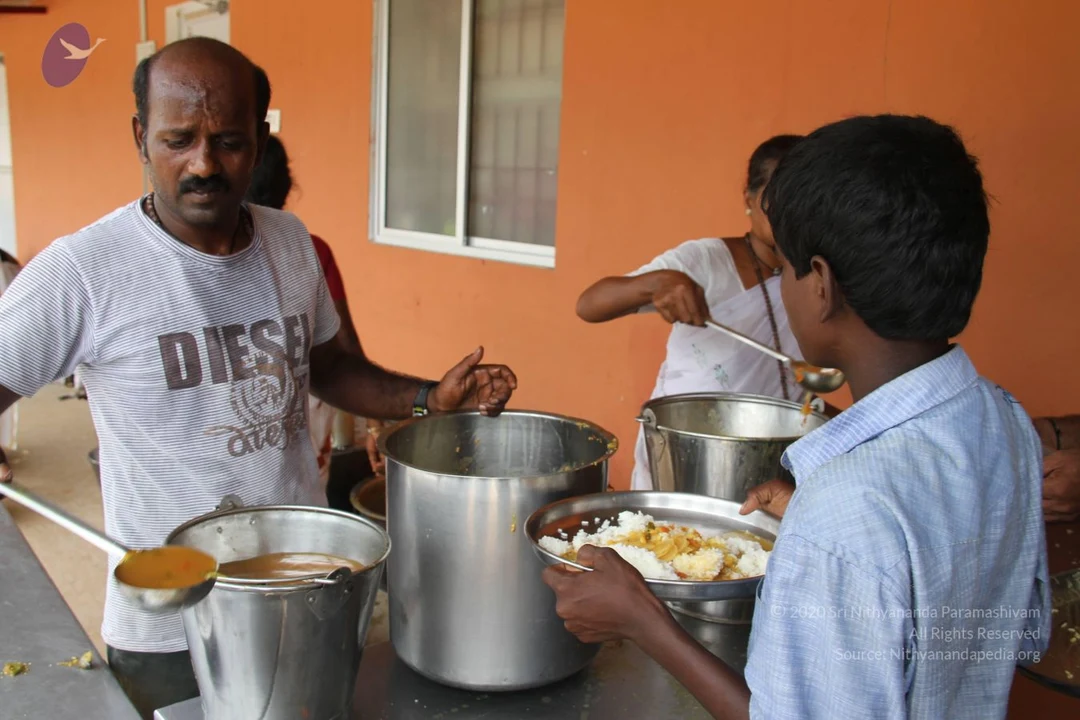
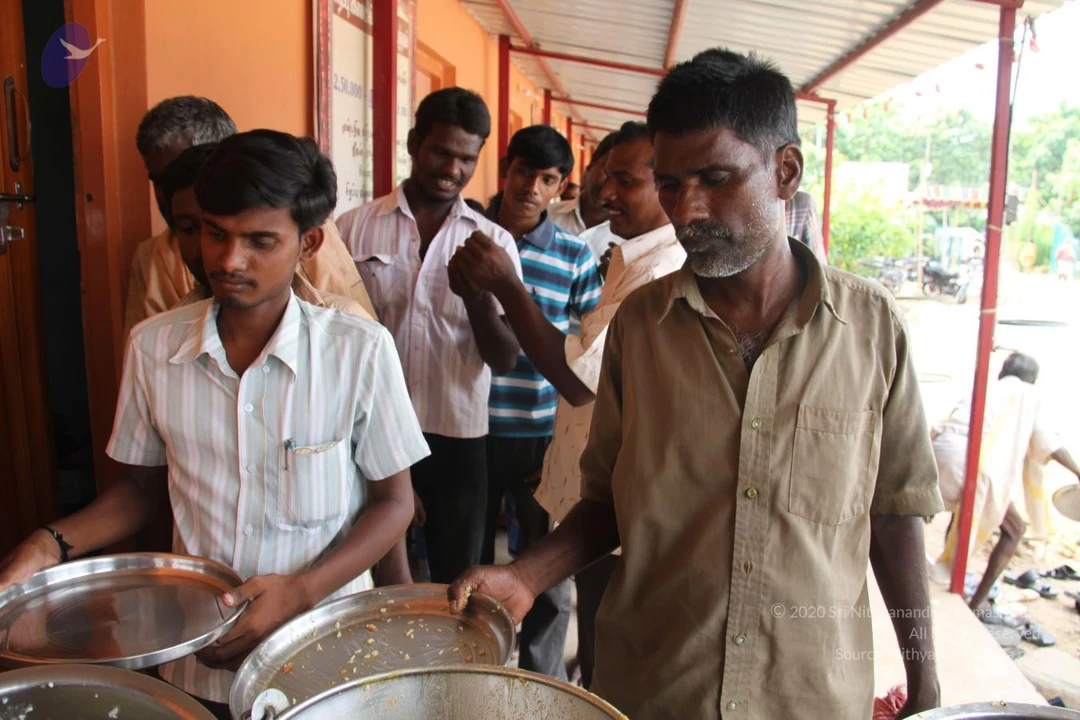
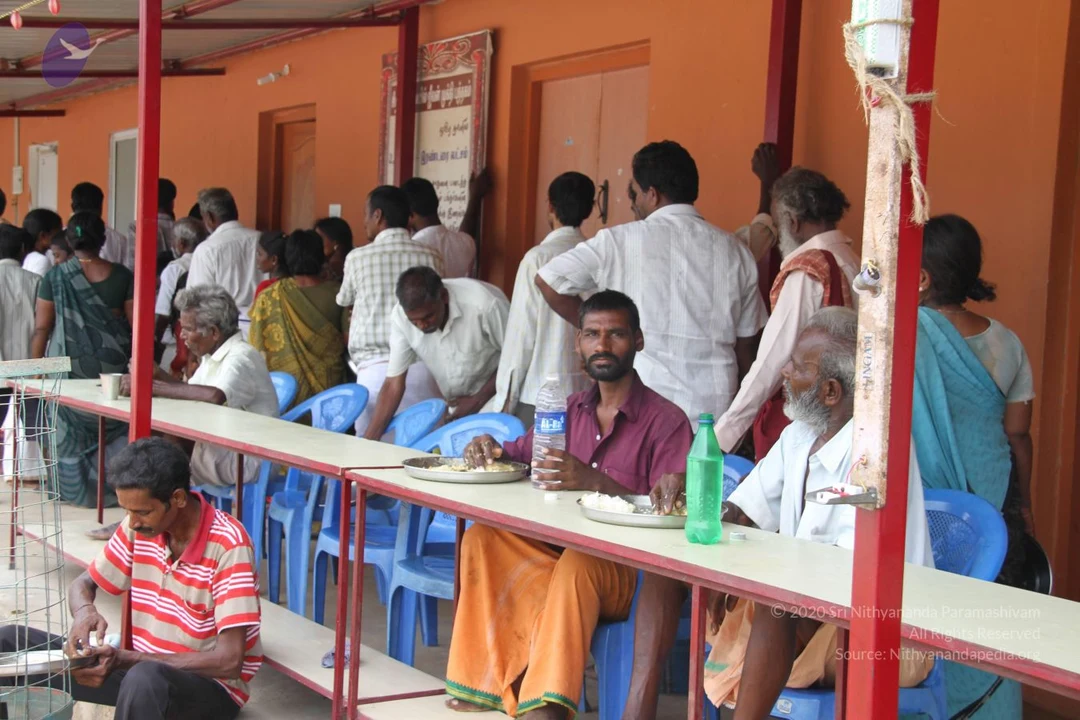
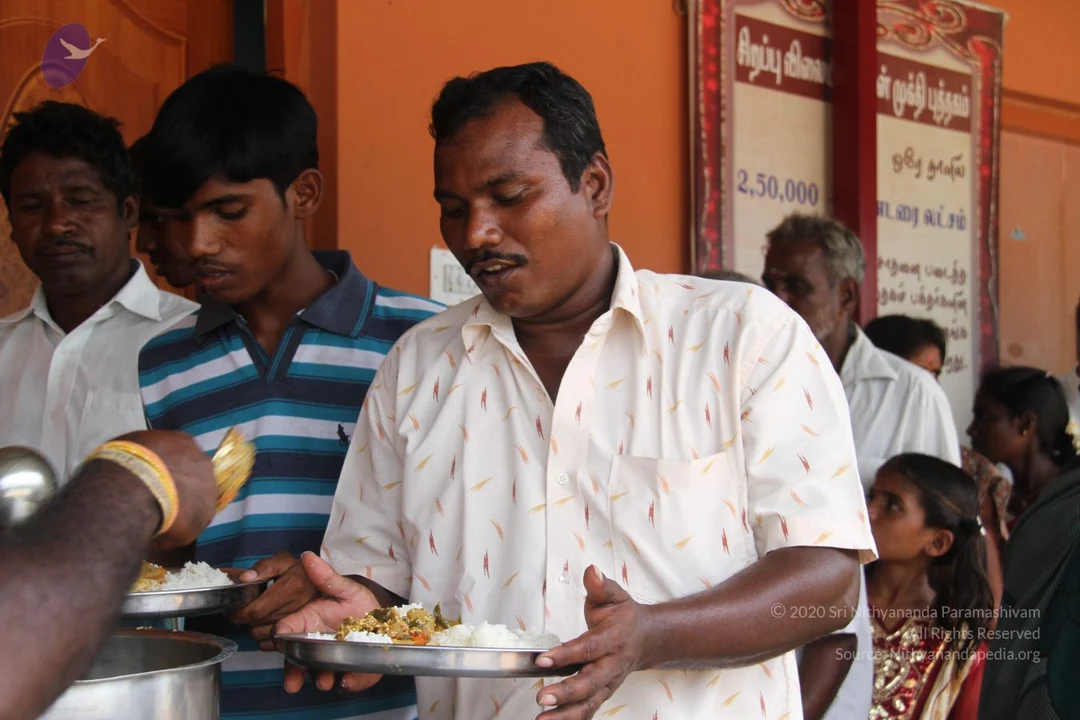
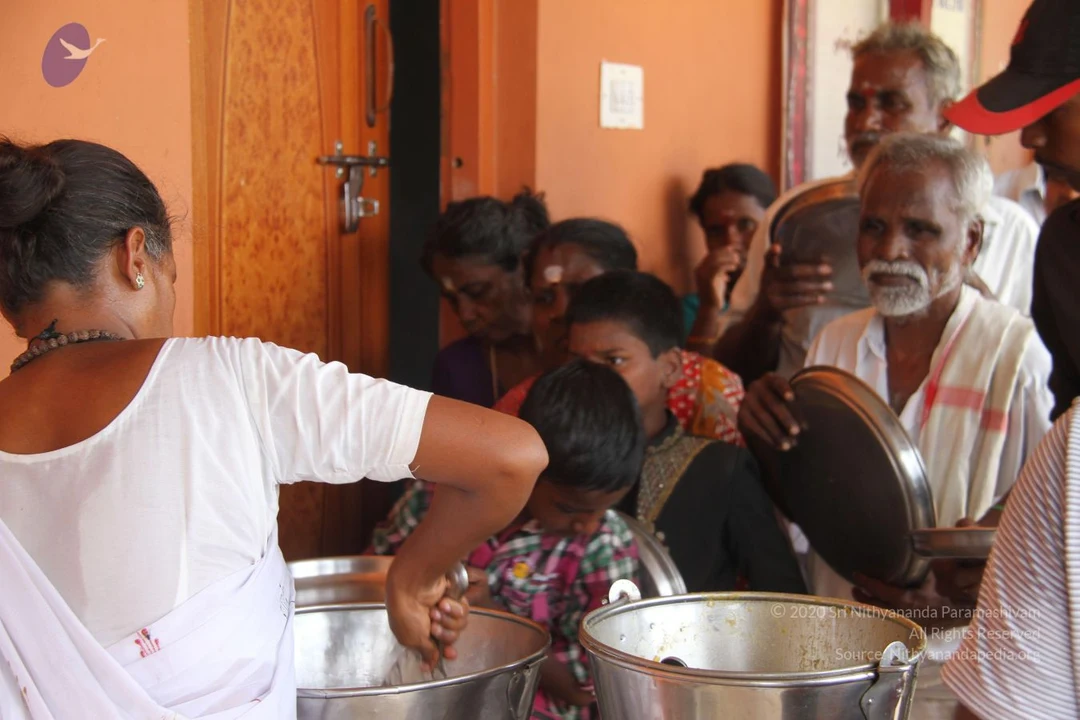
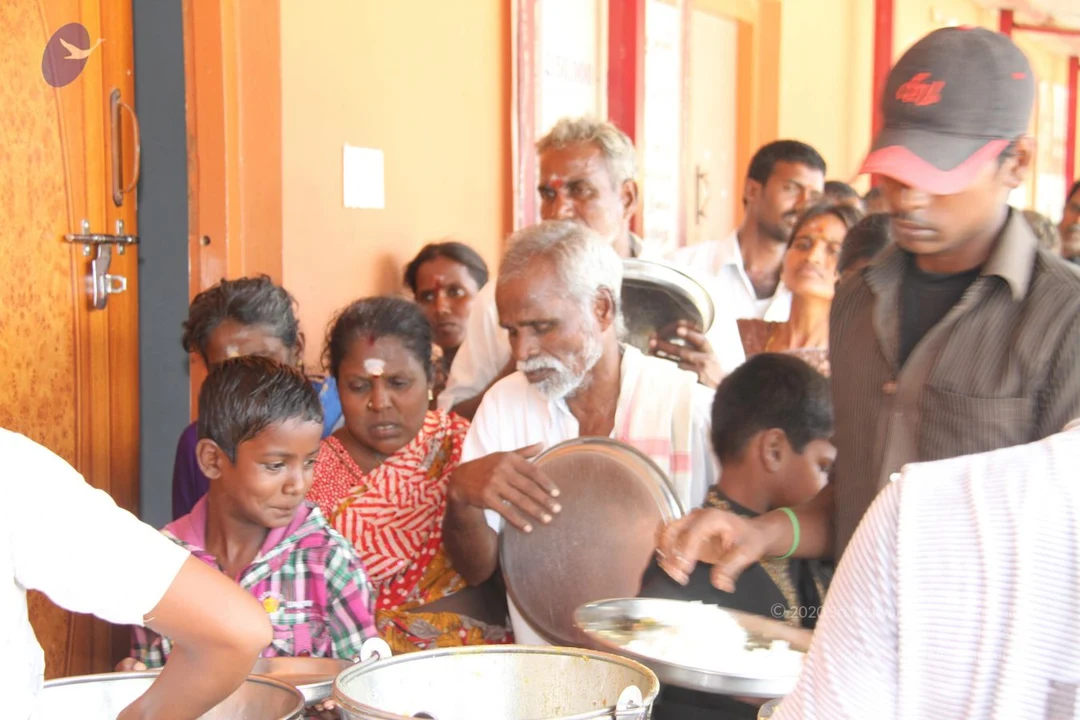
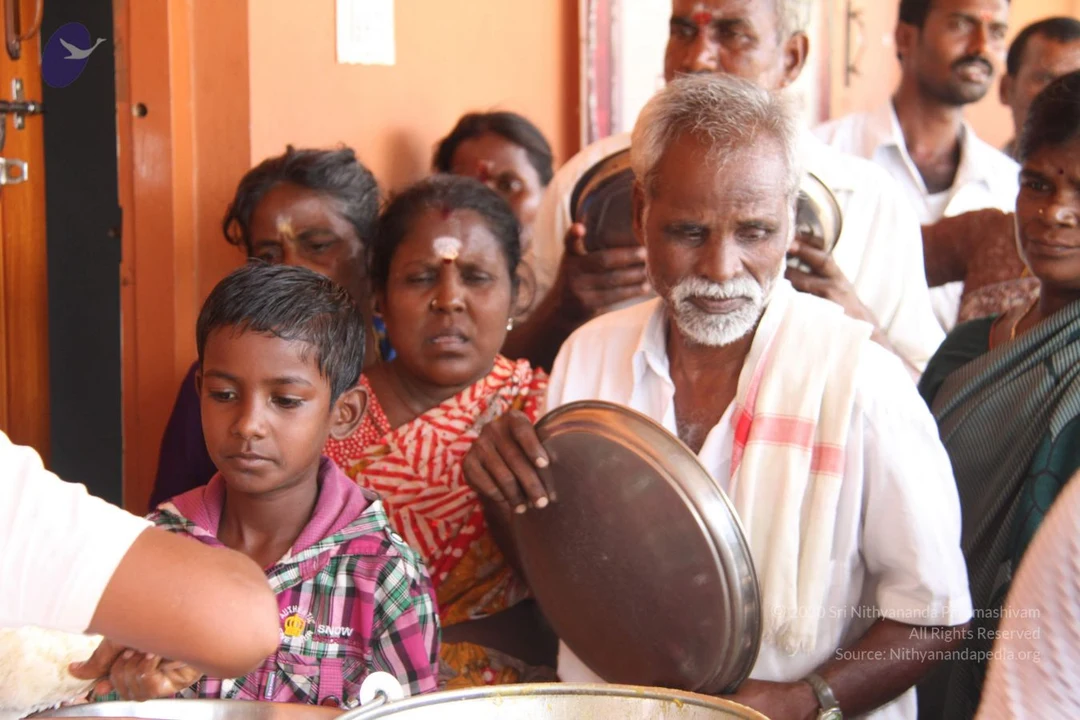
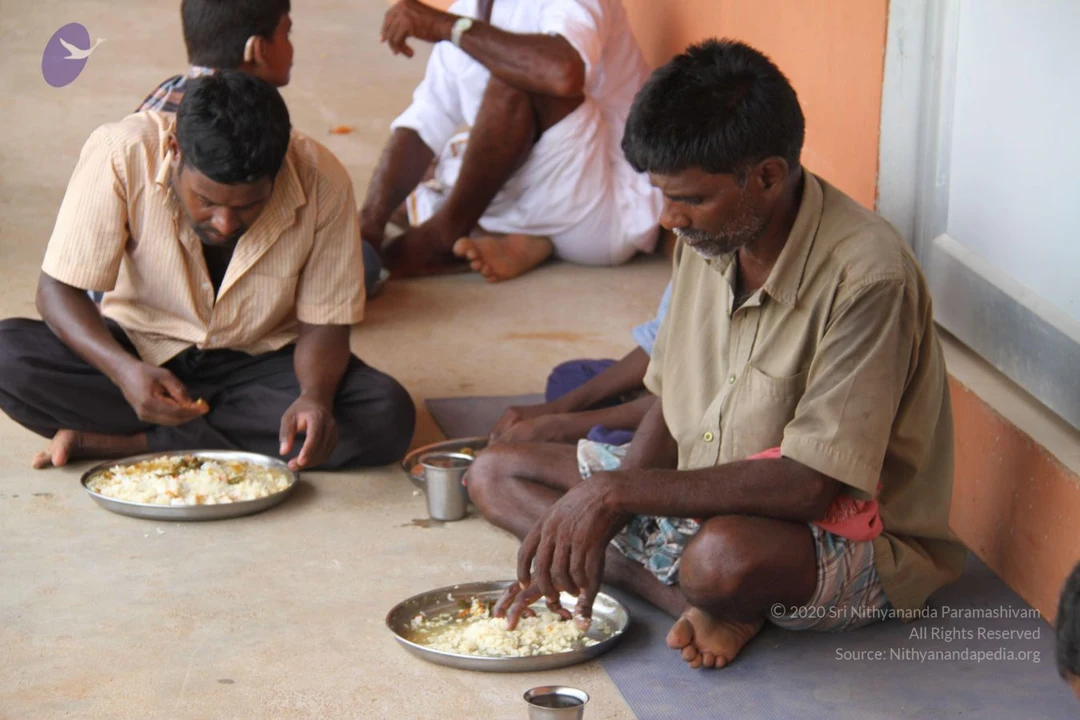
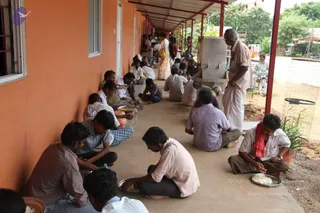
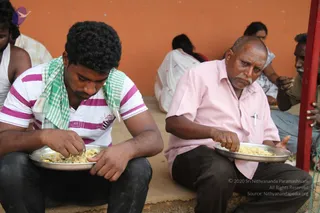
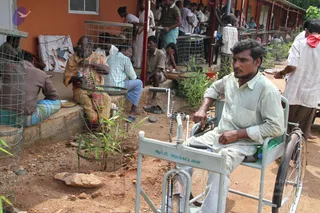
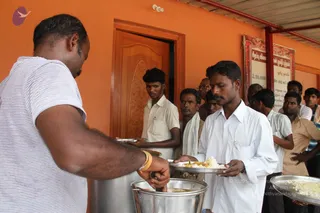
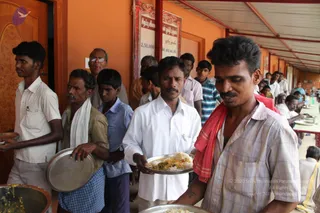
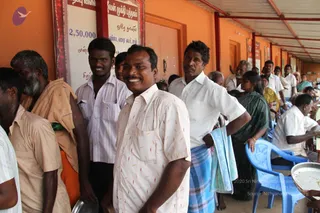
A long covered veranda with orange-washed walls and red metal pillars shows many men seated on the concrete floor eating from metal plates and bowls, an annadan-style meal. Most wear shirts and dhotis or trousers in muted colours, and a few wear red towels or checked shirts. A tall stainless-steel water dispenser stands at the centre, beside an older man in a light shirt and white dhoti who stands and watches. Behind them a woman in a yellow sari and a few other people move along the veranda, and string lights hang overhead. Trees and a few people are visible outdoors.A photograph of men seated on a concrete step eating rice from stainless steel plates, in front of an orange-painted wall with a red metal pillar at right. In the foreground, a young man in a white and magenta striped polo shirt with a green and white checked cloth draped over his shoulders eats with his right hand while looking down. Beside him, an older man with a bald head, grey moustache and a pink collared shirt with a pen in the pocket eats from his plate with his fingers. Other people sit behind them in white clothes, partly visible. The scene resembles an annadan meal service. No one in the image is clearly identifiable as a person.Outdoor photo at a charitable feeding area with an orange-painted building behind. In the foreground a man sits in a wheelchair with a pair of hand-crank pedals attached to the front frame, a chain and sprocket visible beneath, wearing a pale collared shirt and light trousers. Behind him several men and an elderly man in a saffron-and-white cloth sit on a low concrete ledge eating from metal plates. Standing figures in white dhotis and shirts move among wire-mesh cages and potted plants on reddish earth. The wheelchair pedal frame bears Tamil lettering.A photograph of a free meal distribution at an orange-walled building with a wooden door and a corrugated roof. In the foreground, a man in a grey-and-white striped shirt ladles food from a large steel pot into a metal plate. Beside him, a young man in a white shirt holds a steel plate of rice and curry. Behind them, a queue of men stands waiting, some wearing white shirts, one older man with a white cloth over his shoulder. A painted board on the wall shows printed Tamil text and amounts. No a person candidate is visible.A photograph of a communal meal line at an orange-walled hall with a corrugated roof. Several men queue holding steel plates of rice and curry; a man in a white shirt and white dhoti carries a plate of rice with vegetables, while a man in a checked shirt with a red cloth over his shoulder carries a plate in the foreground. Others in shirts and lungis stand in line, and a row of seated diners and long tables stretches down the right. A printed sign on the orange wall lists amounts, including 2,30,000. No a person candidate is visible.A photograph of a long line of men and women waiting along an orange-walled covered corridor, apparently for a meal service. In the foreground a smiling man in a light cream shirt with a small pattern stands with a steel plate in hand. Beside him a man in a white shirt and blue-and-white checked lungi holds a blue towel over his arm. Behind them a woman in a dark green sari sits on a blue plastic chair, and seated diners are visible at the right. On the left, a bearded man in a tan shirt and an orange cloth stands in line. A large red-bordered board on the wall displays Tamil text and figures, and a steel tray is visible at the lower right.

AKASHIC-READING
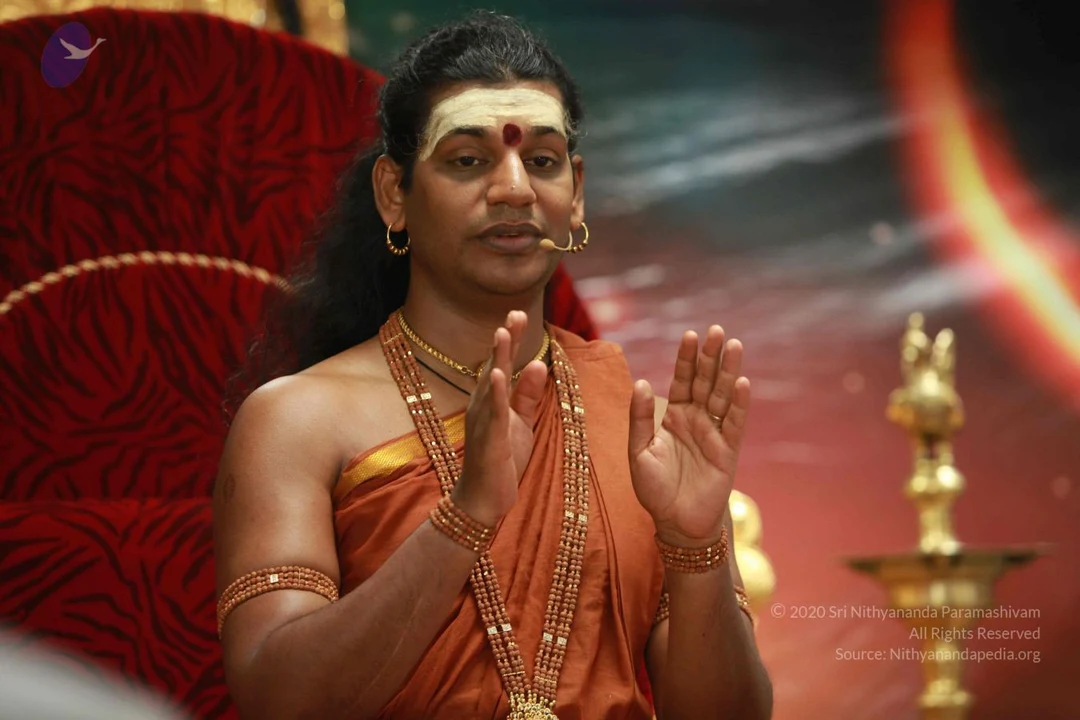
61 photosSource gallery
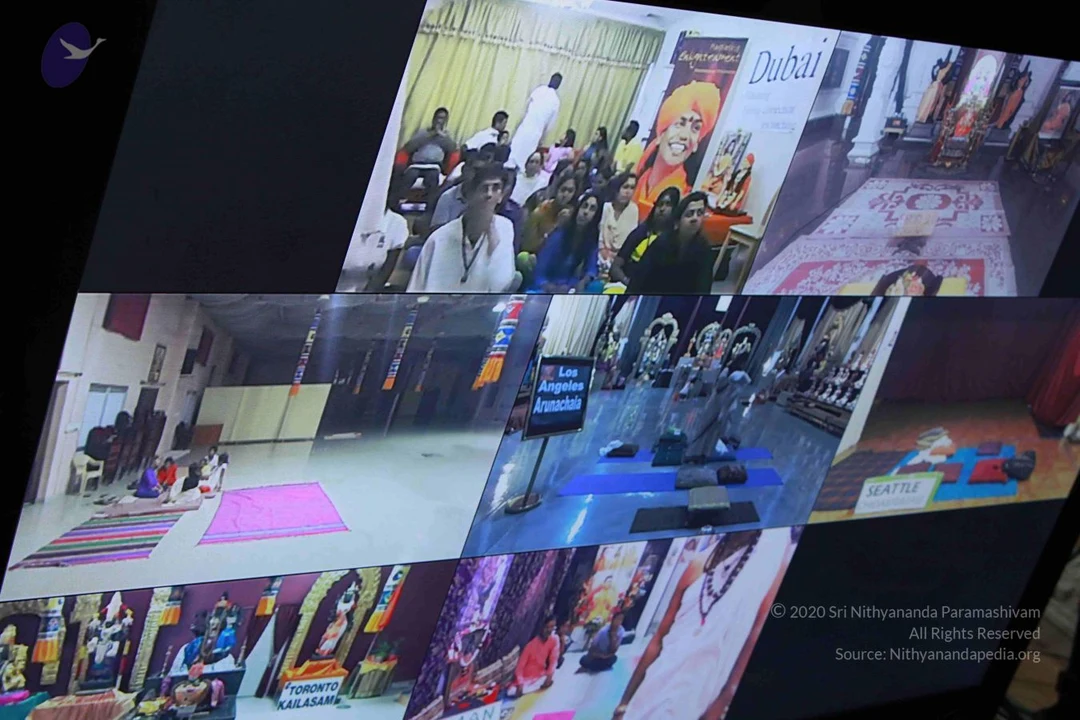
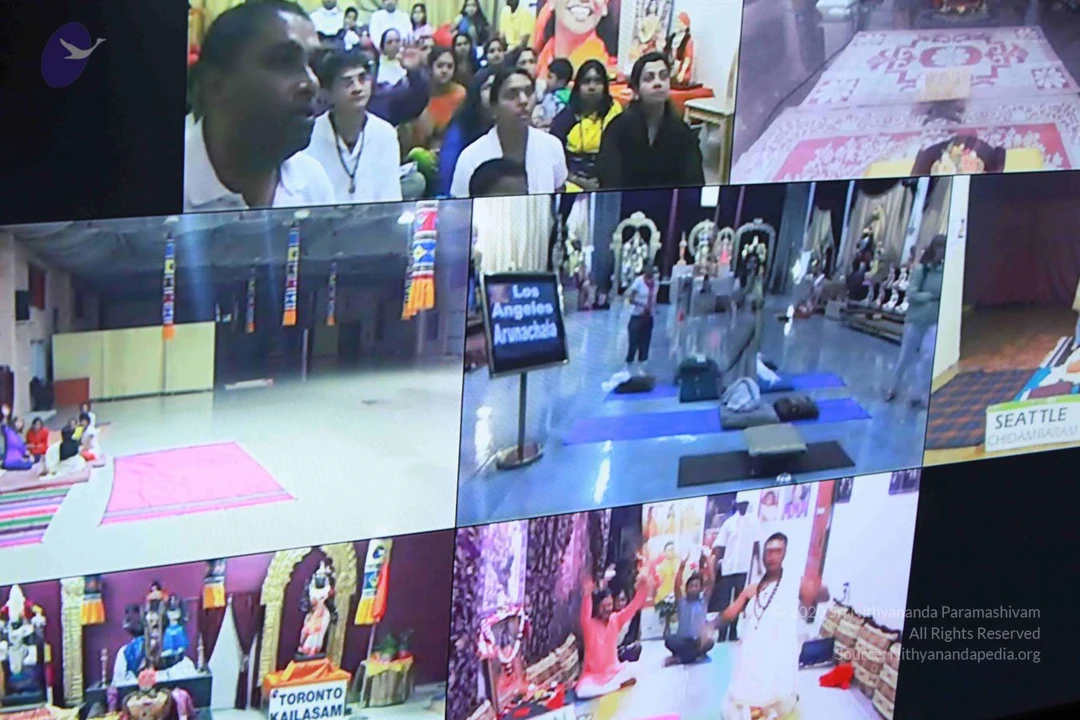
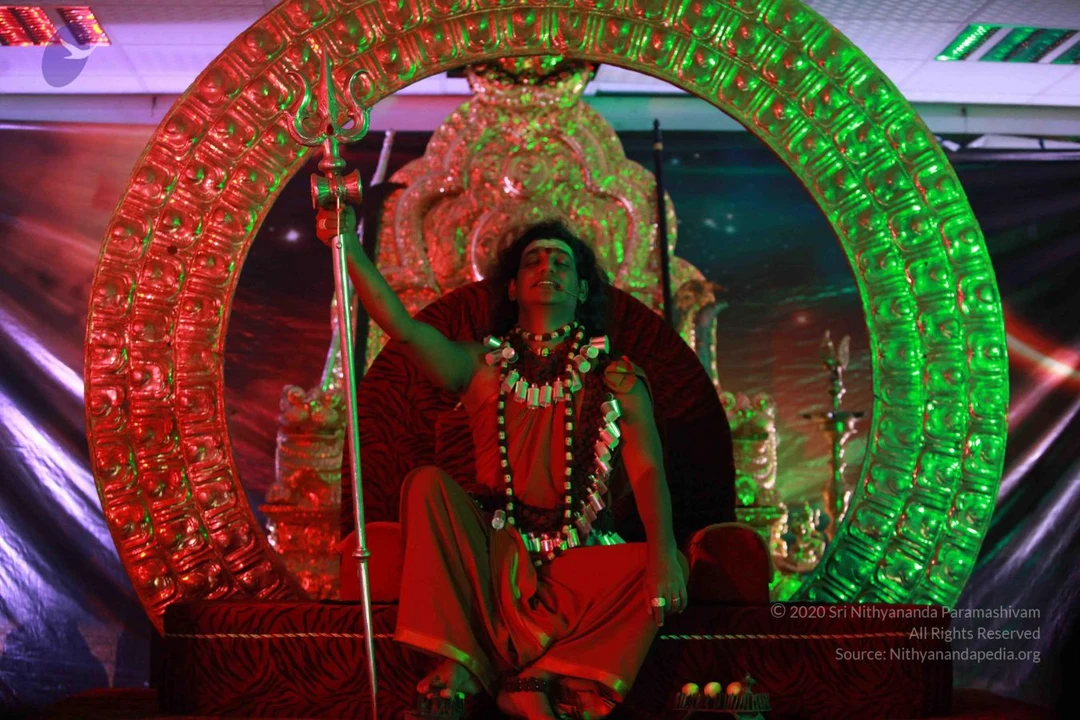
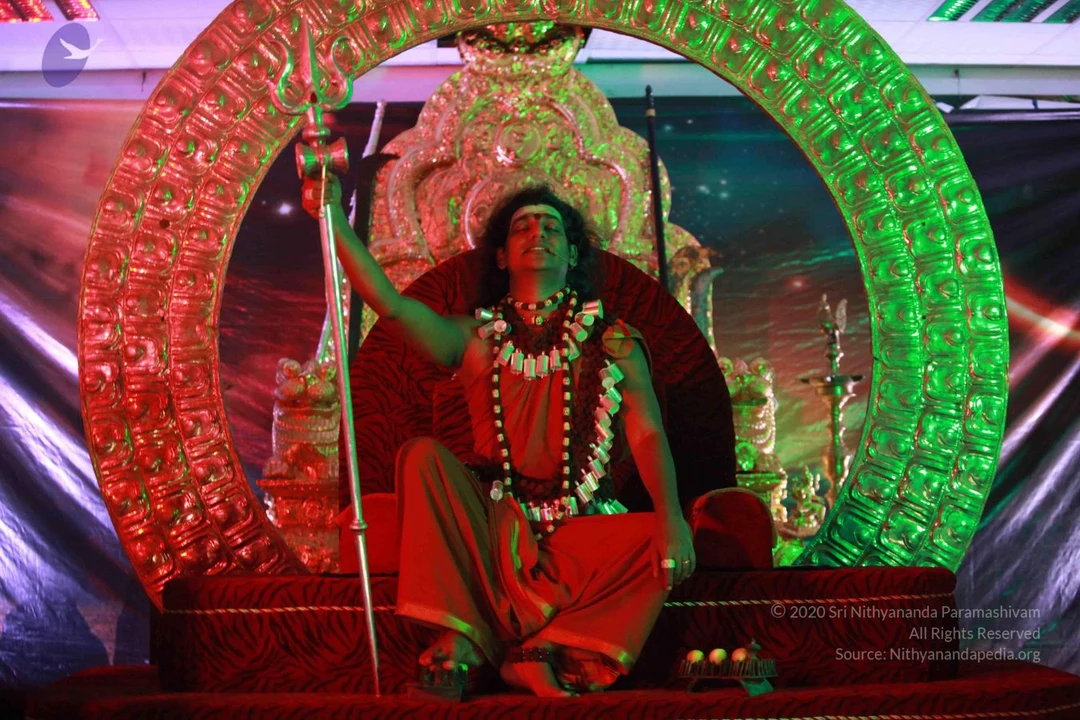
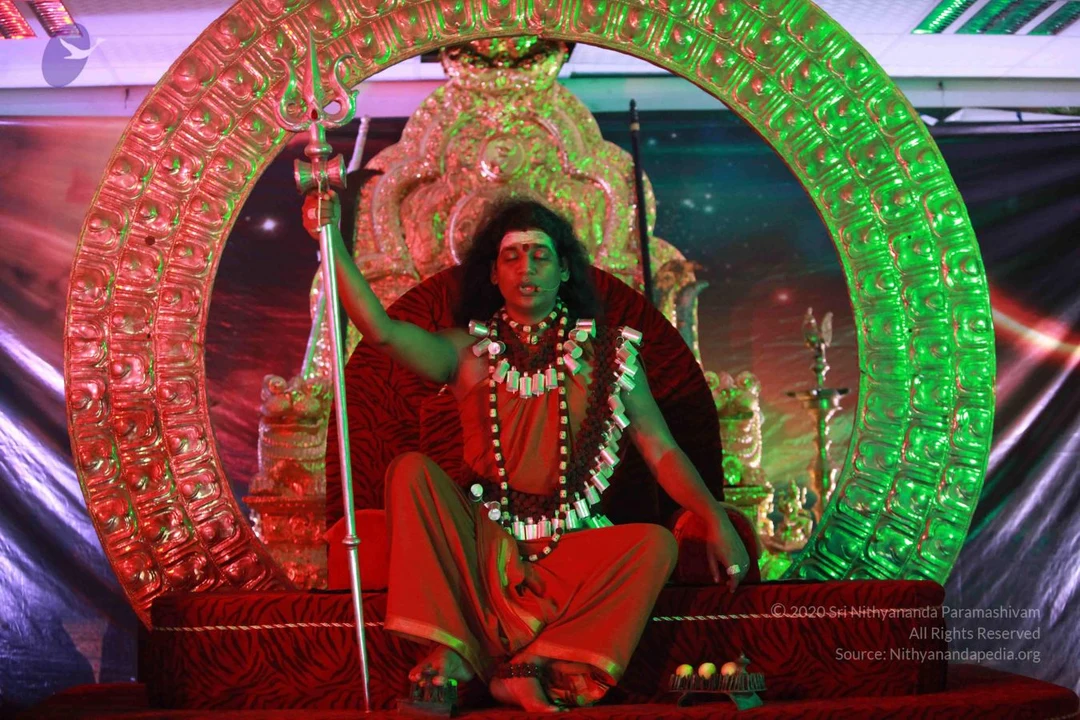
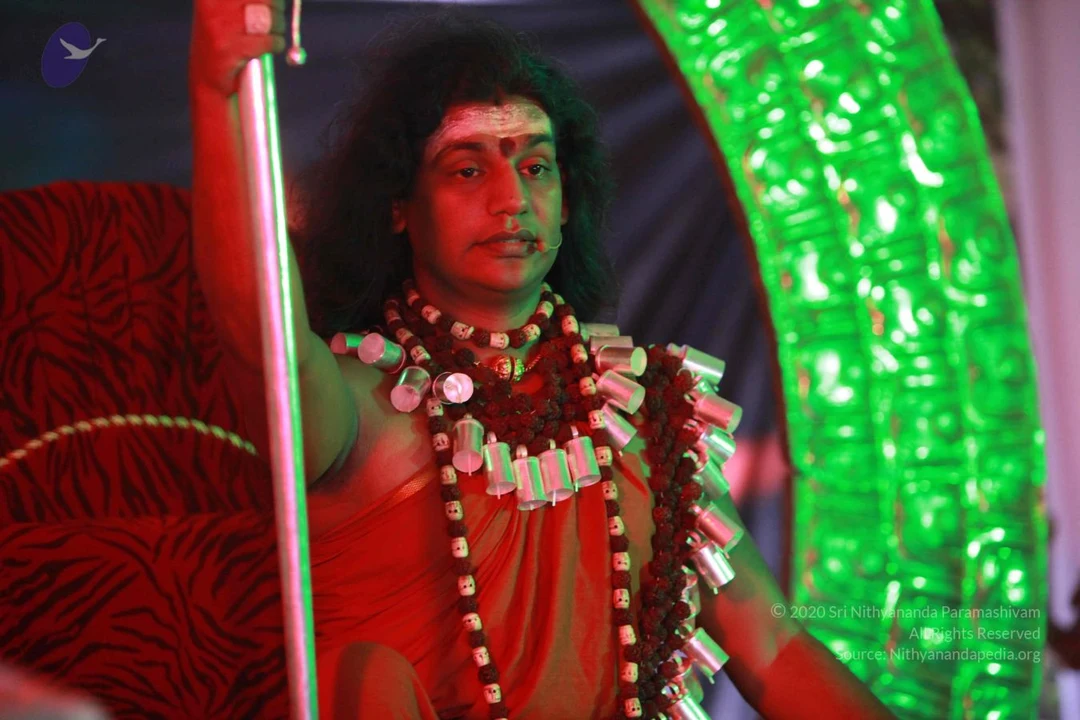
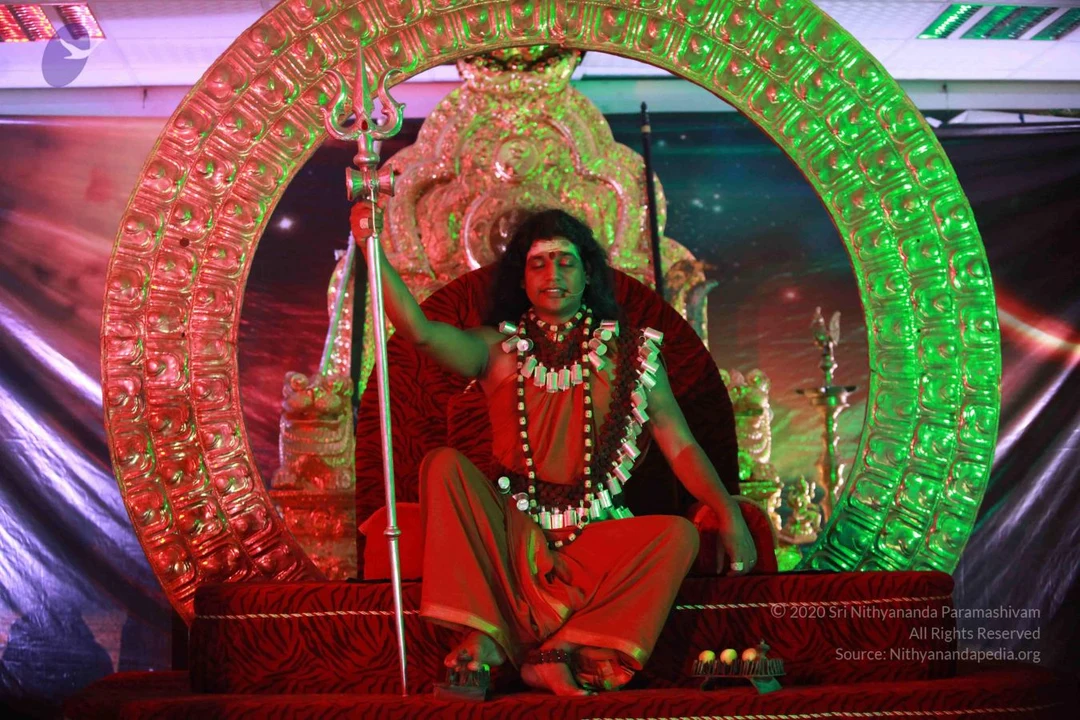
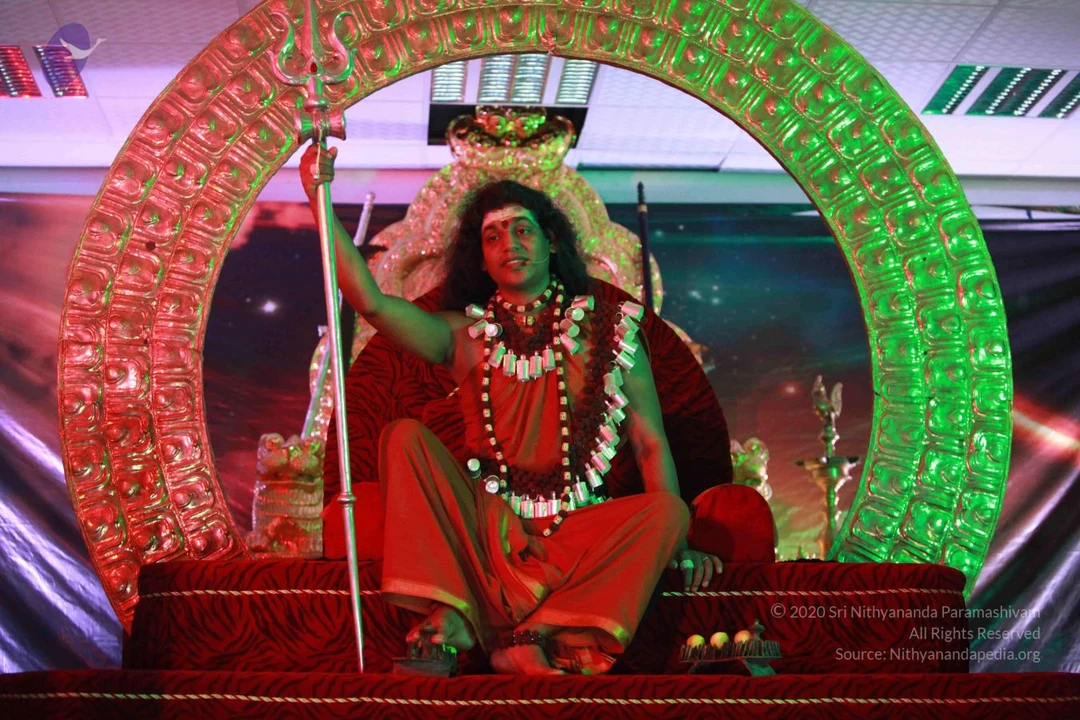
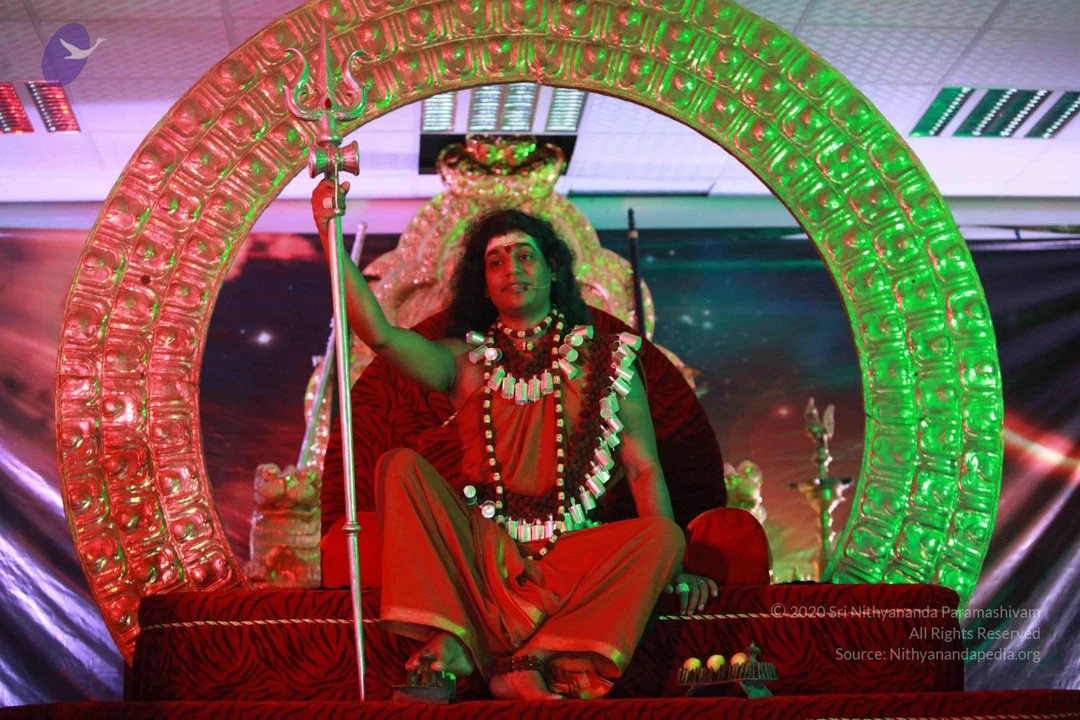
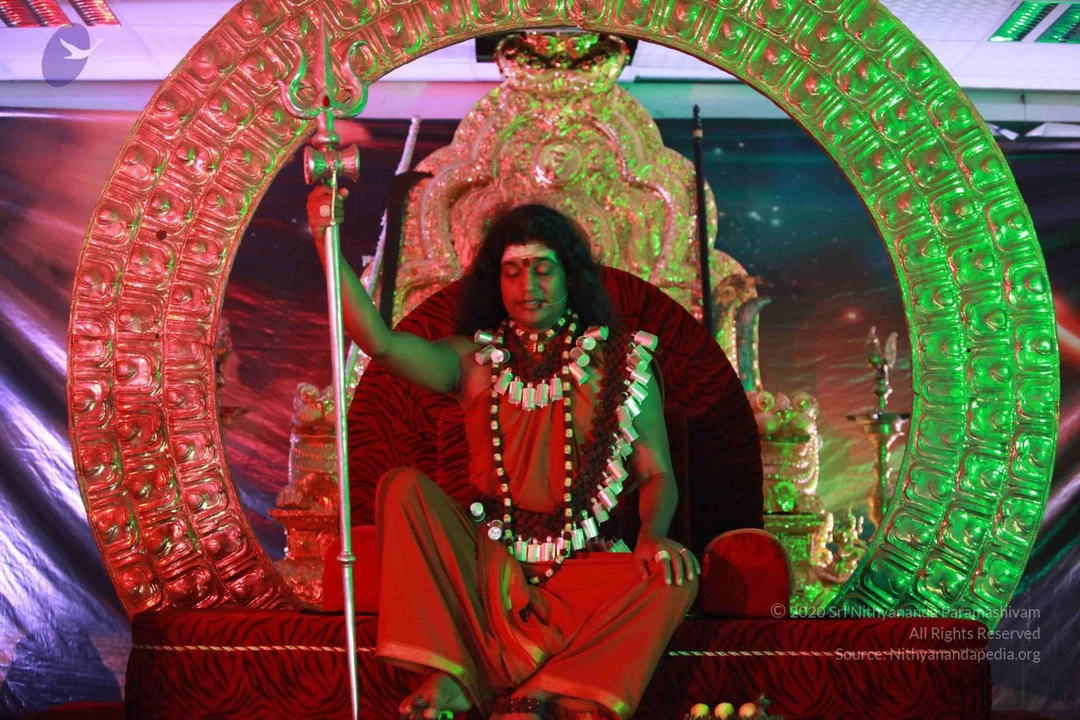
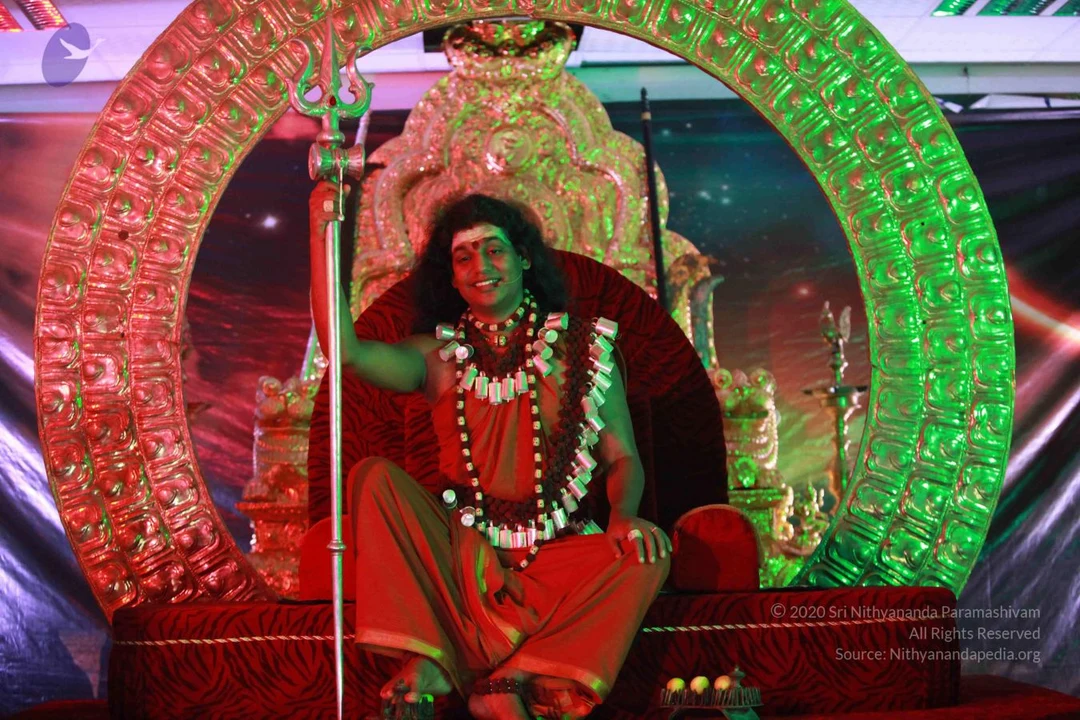
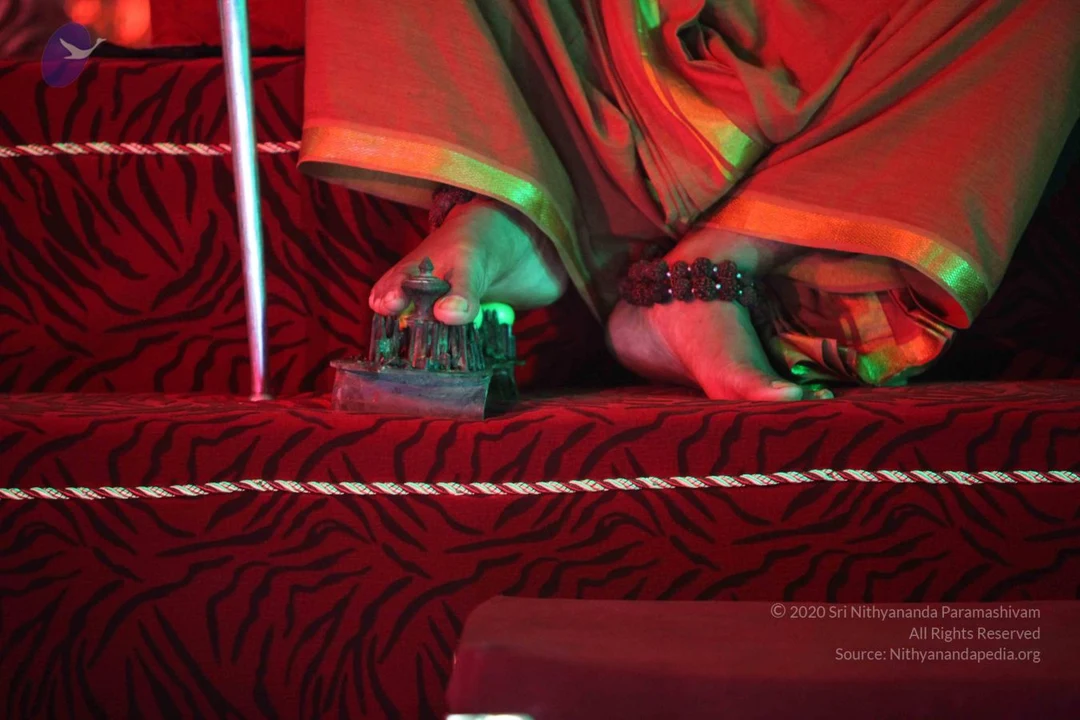
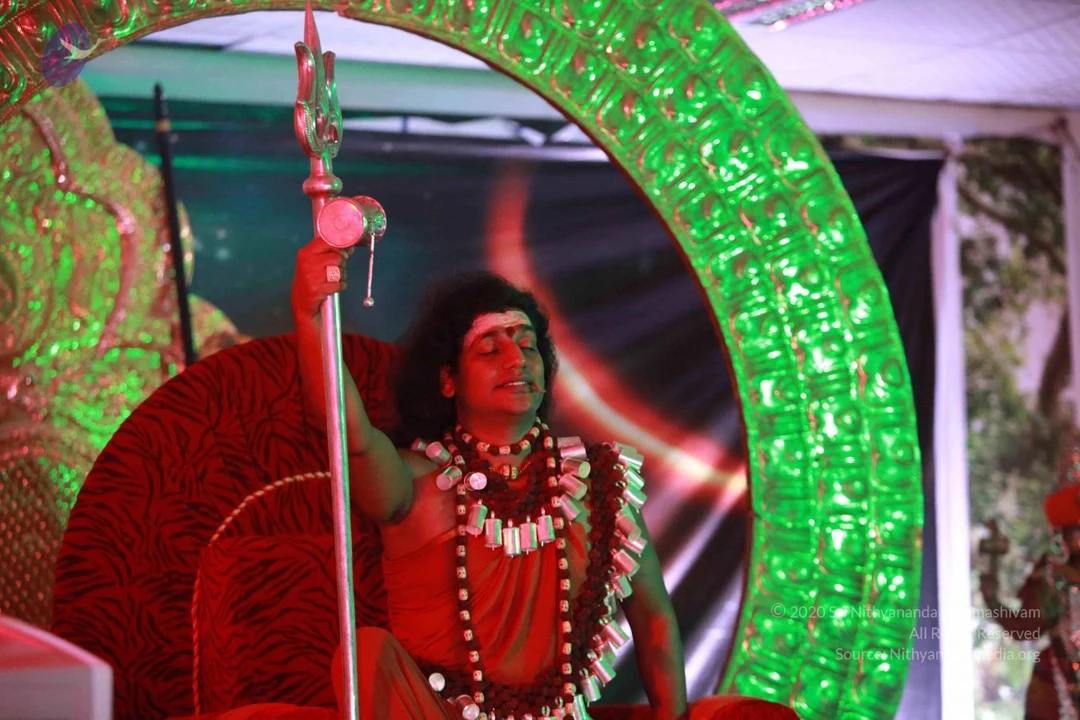
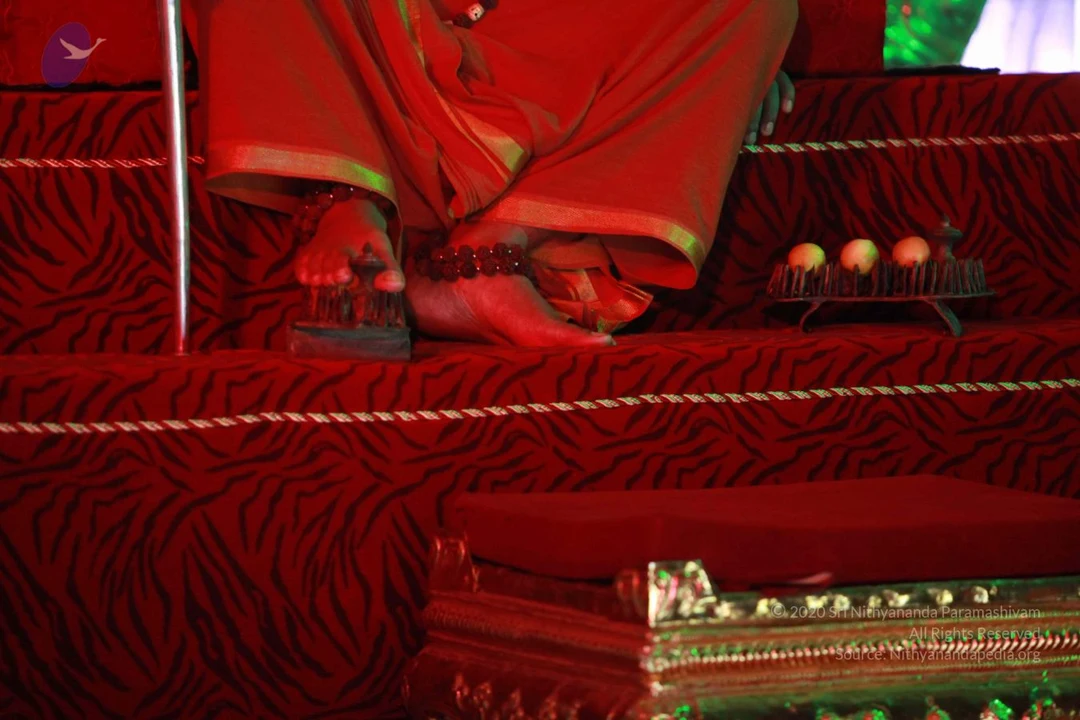
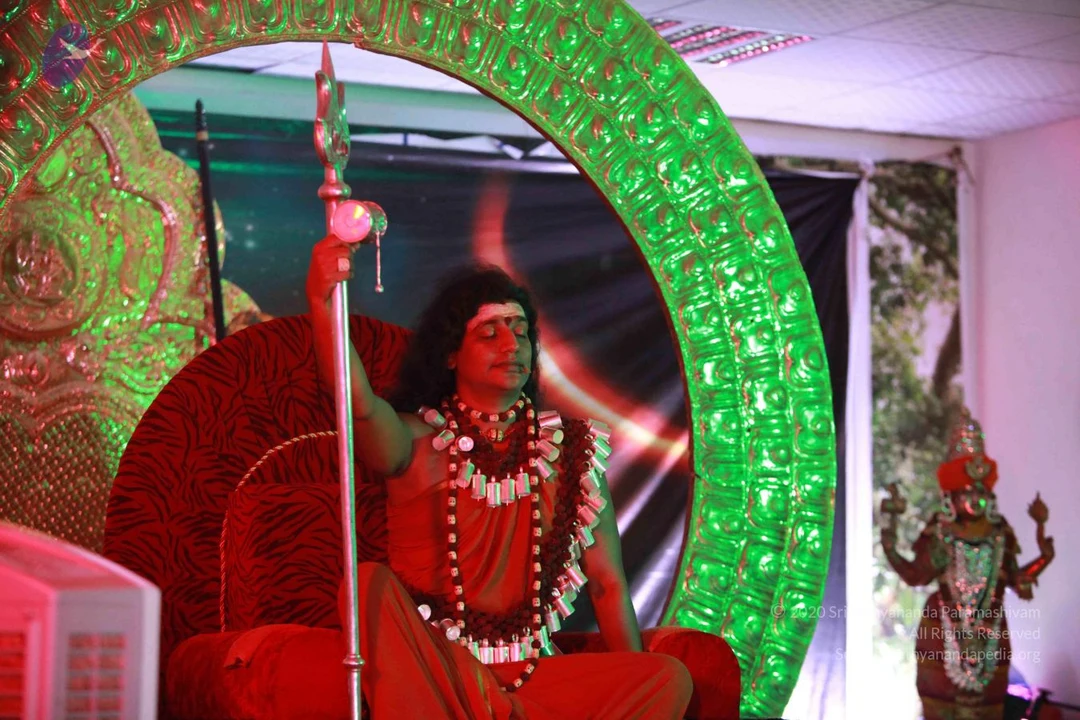
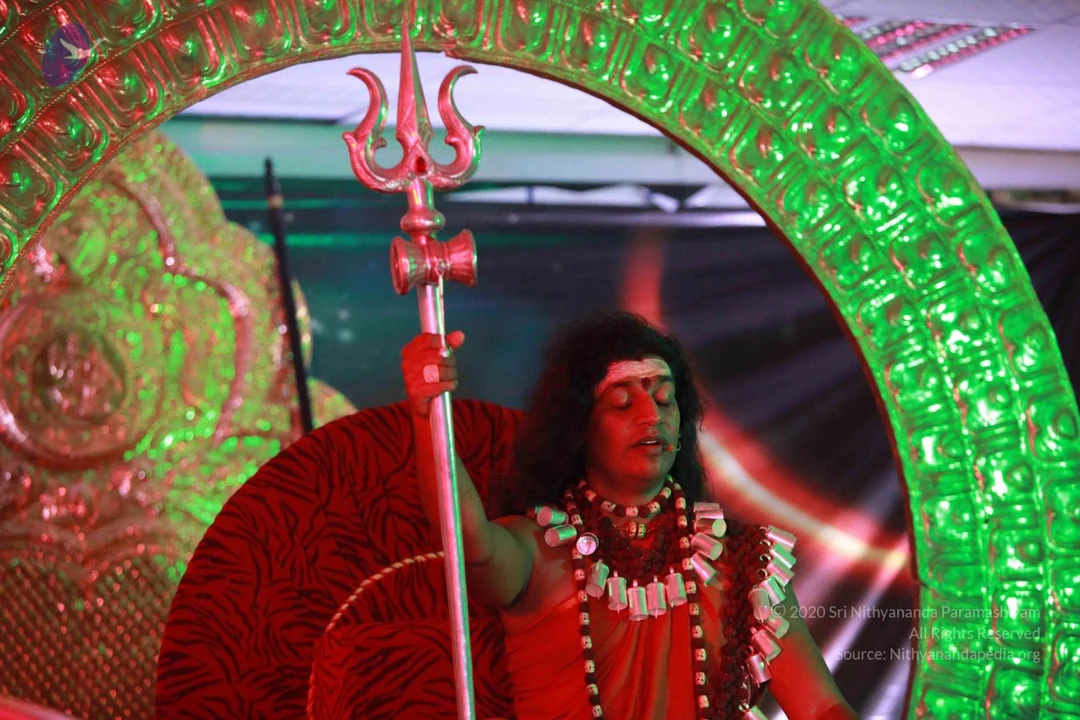
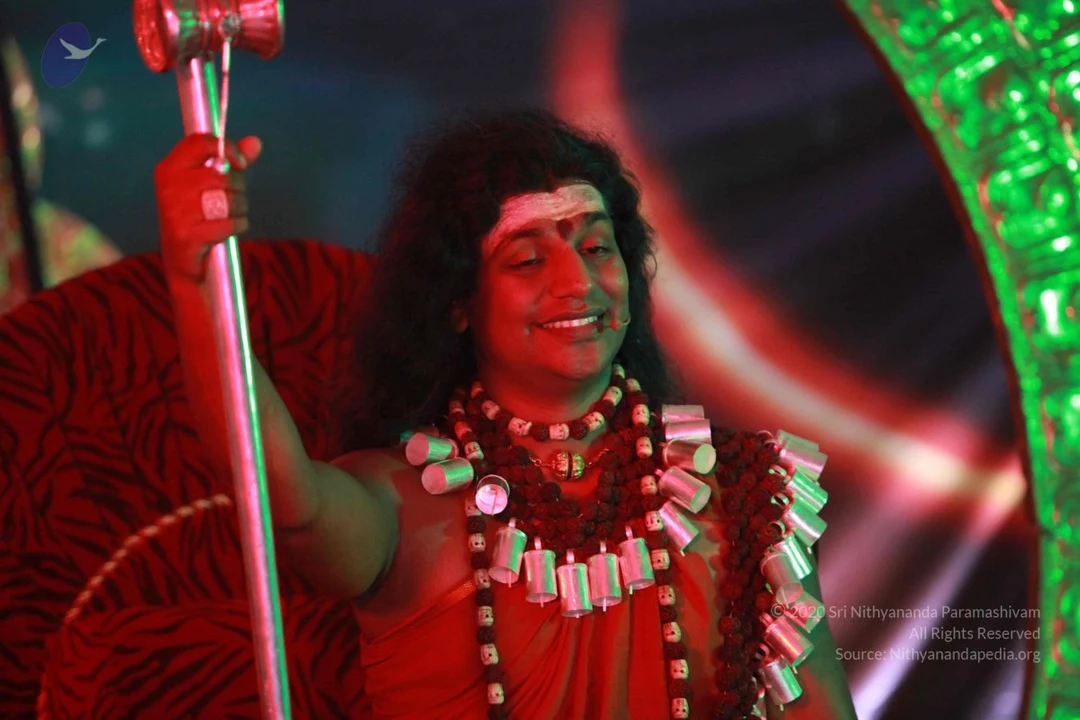
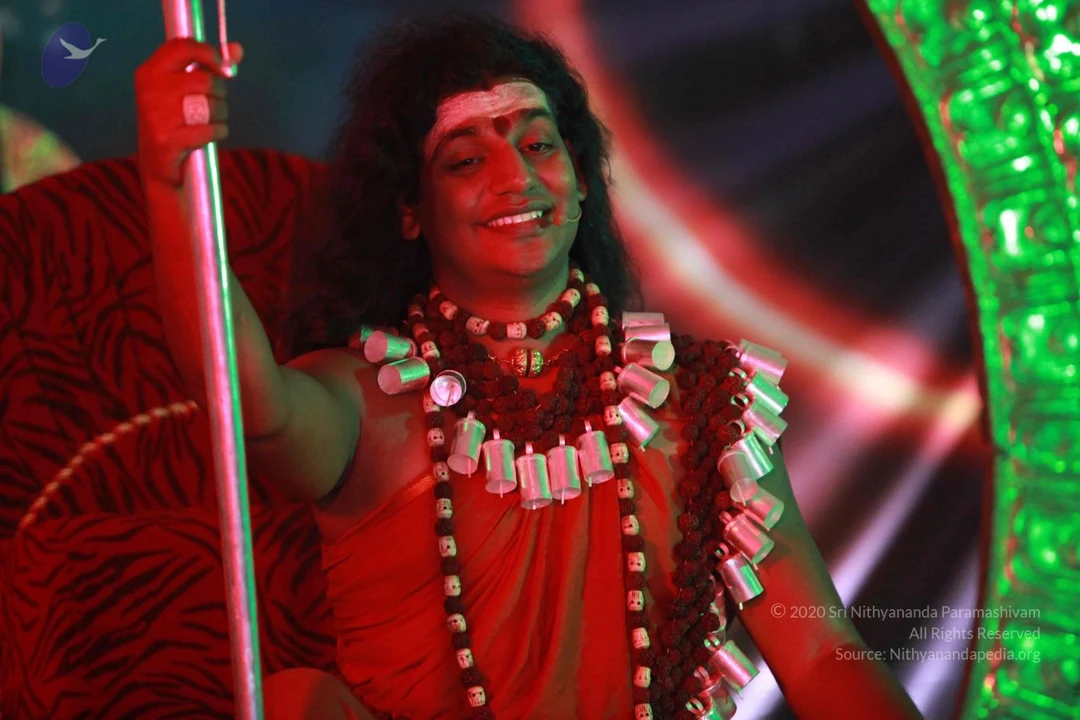
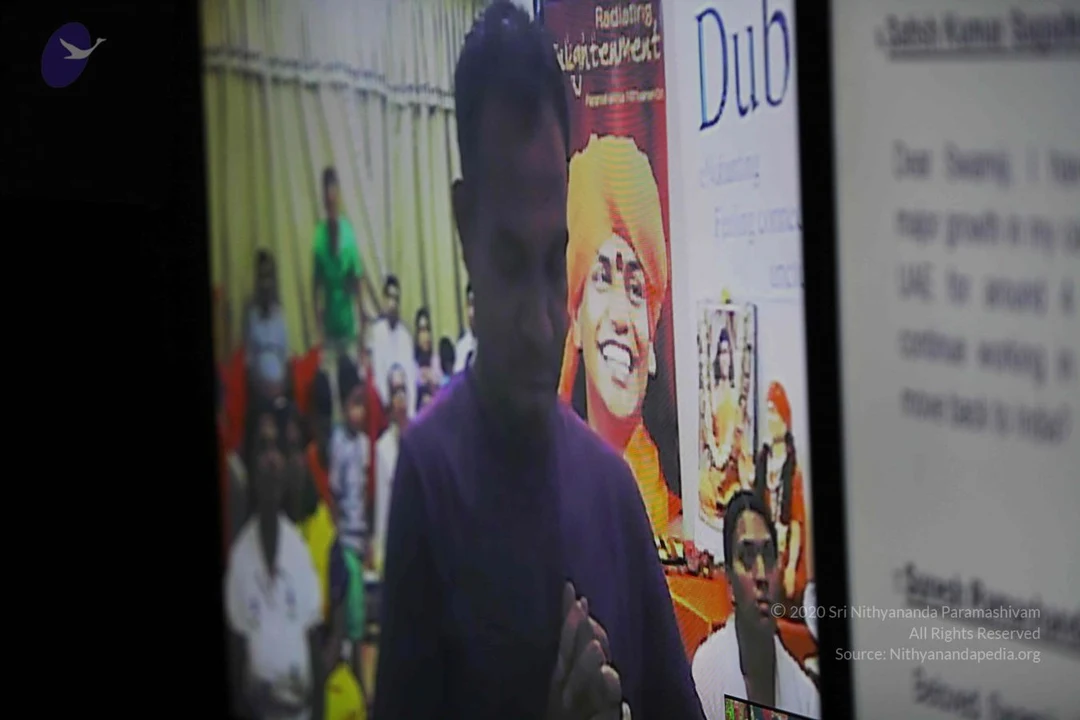
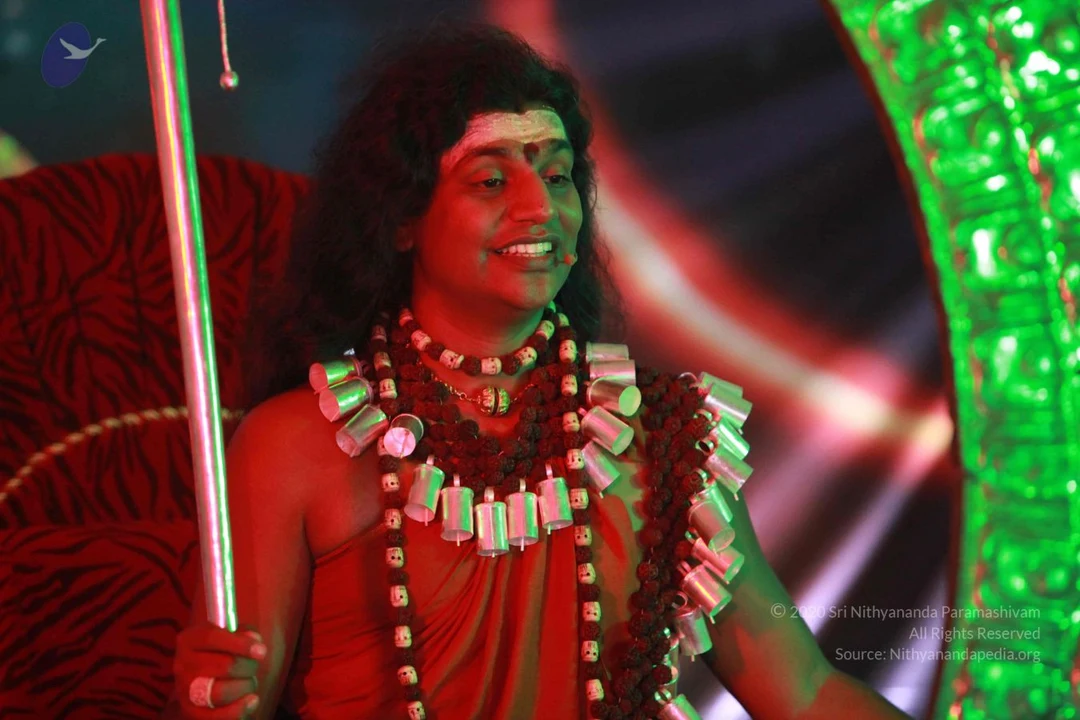
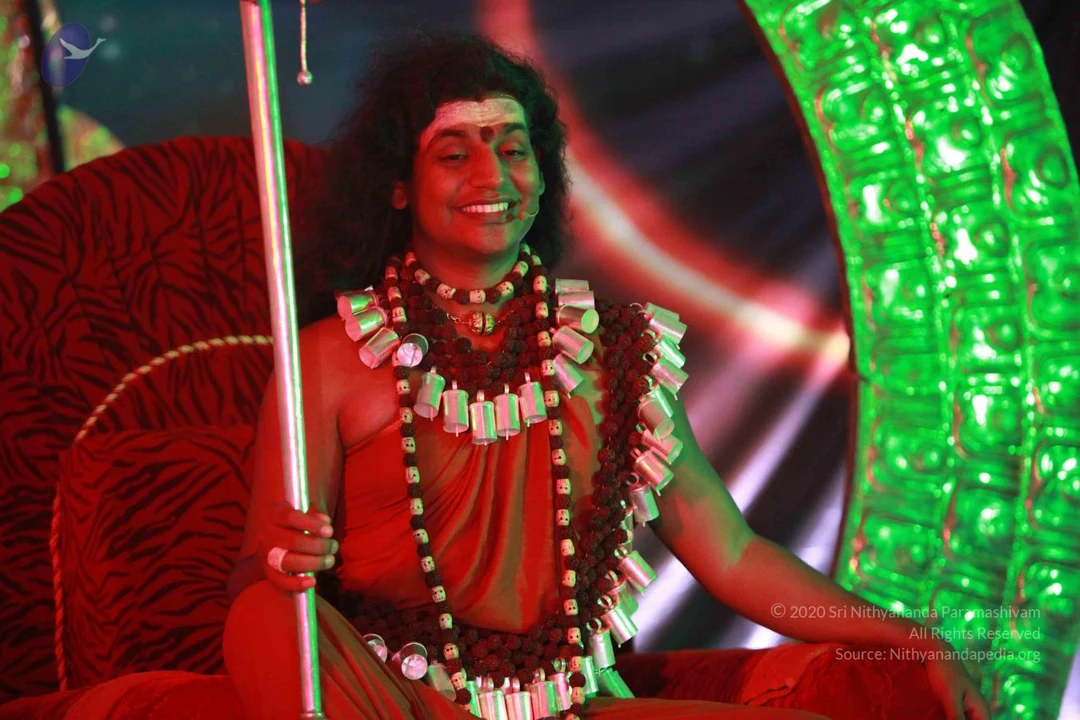
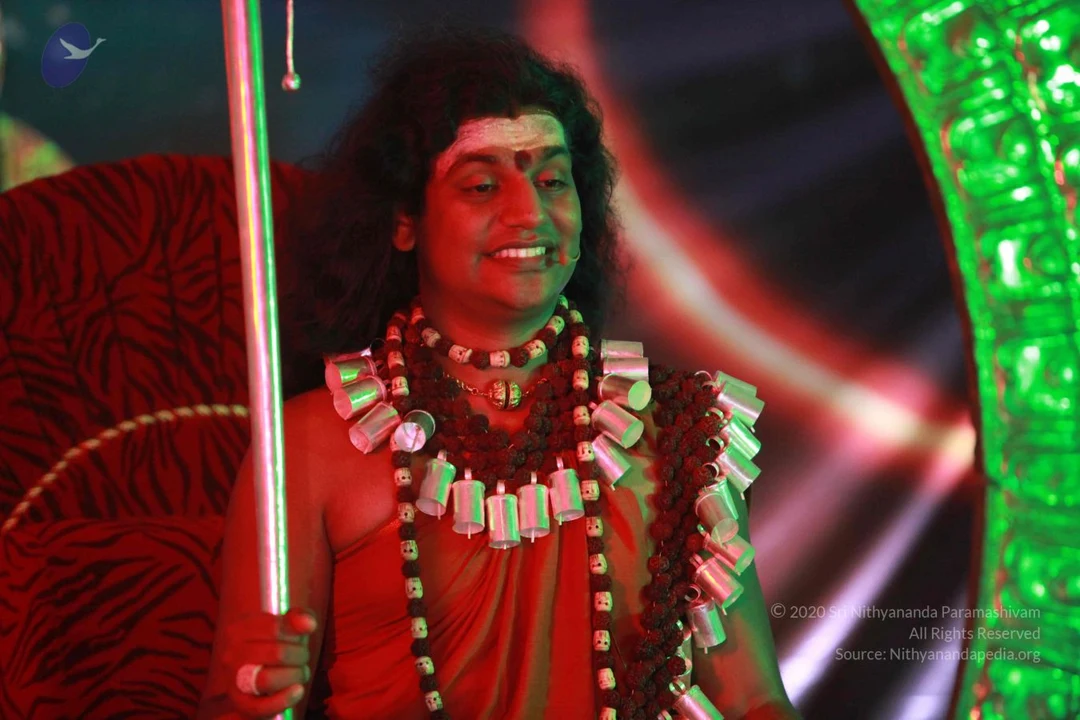
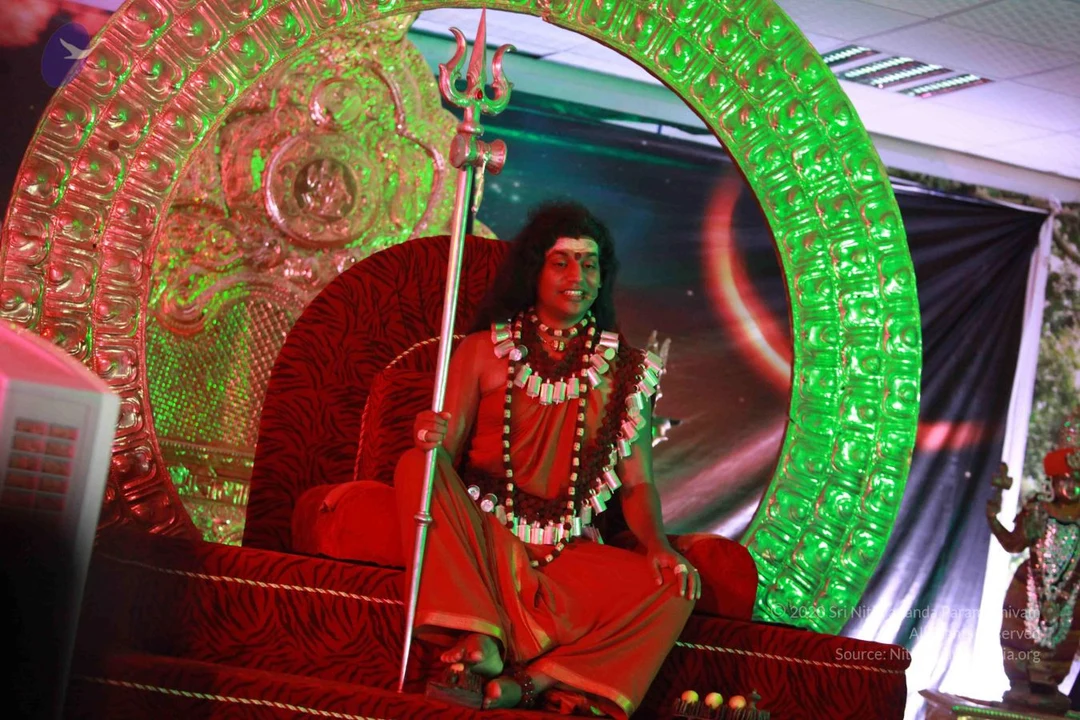
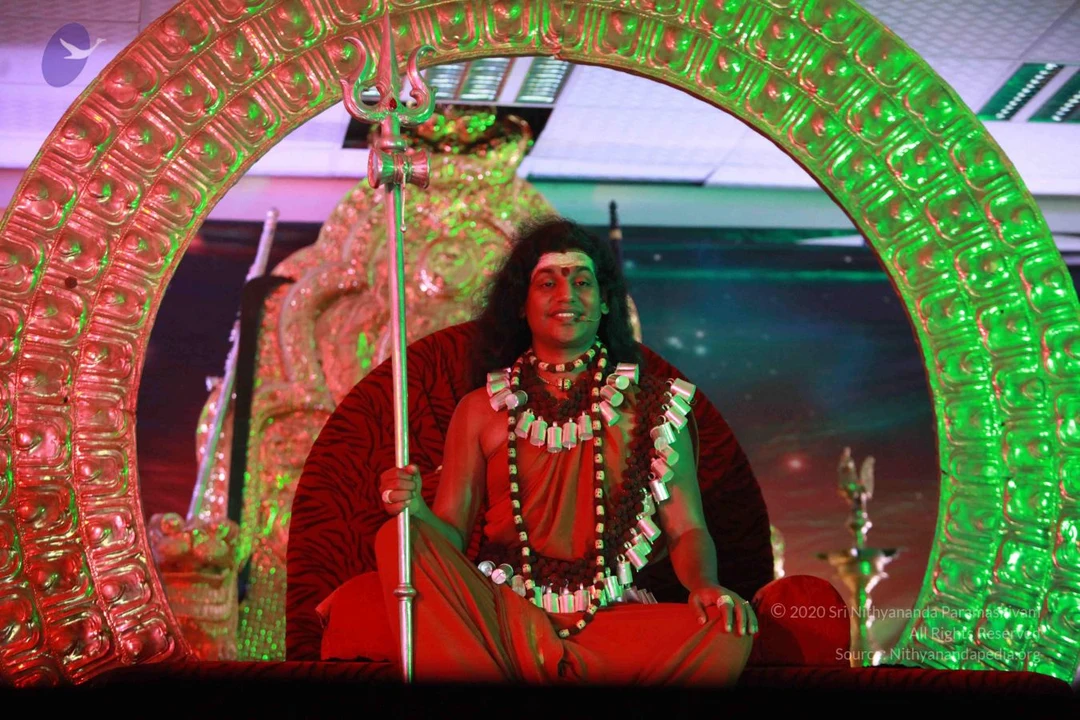
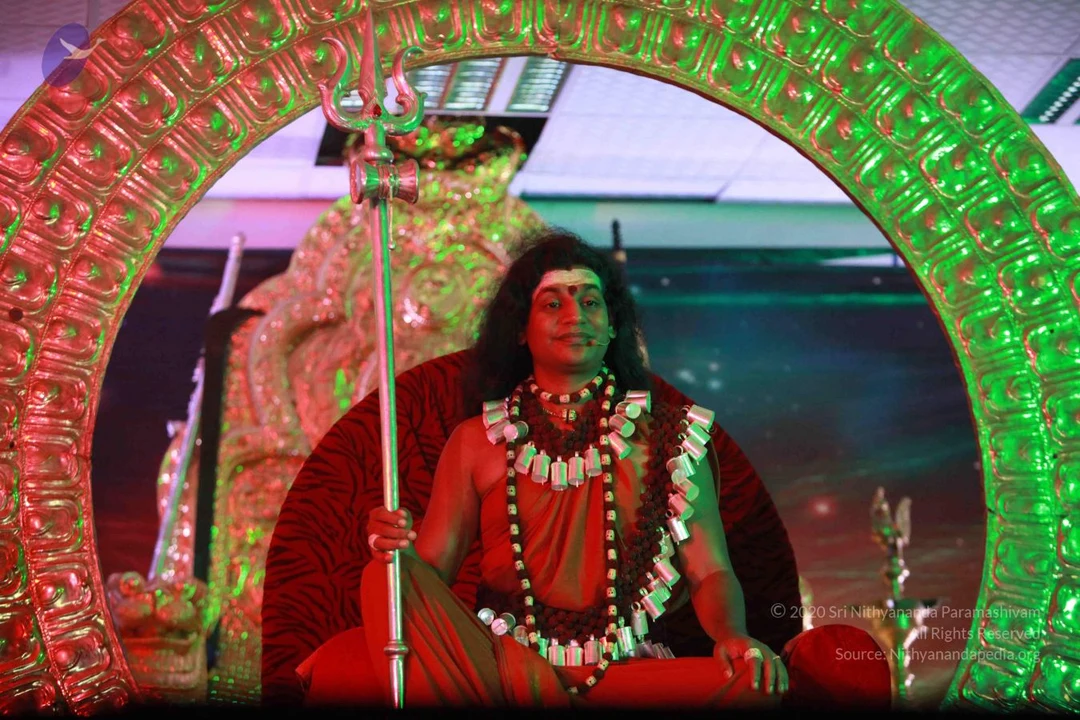
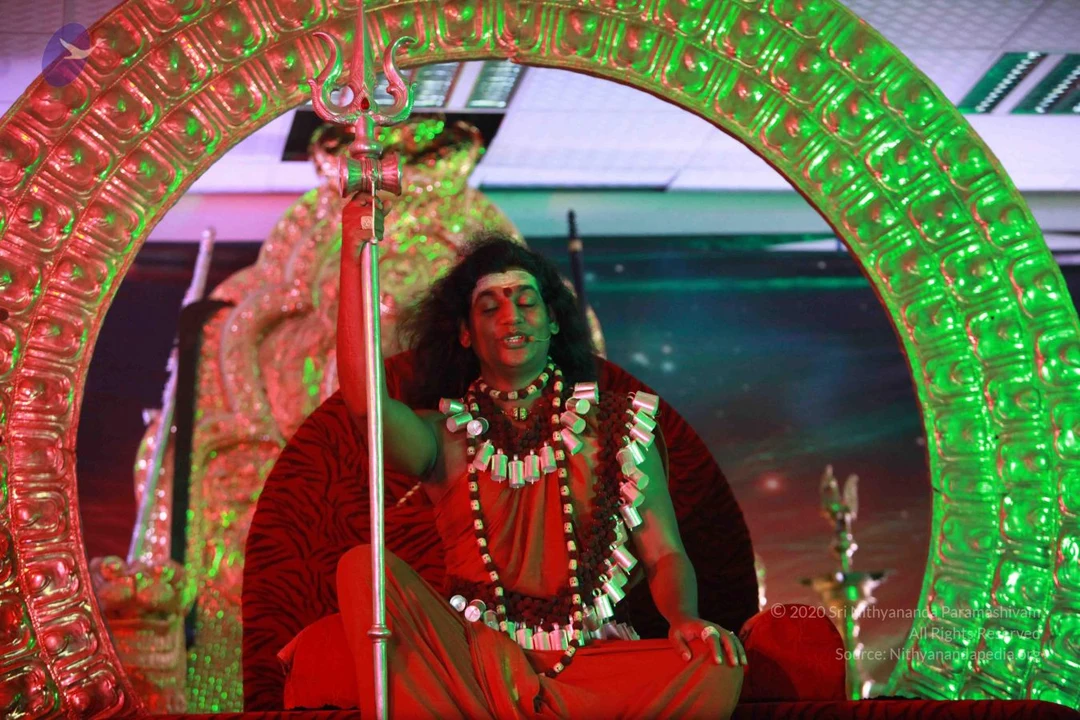
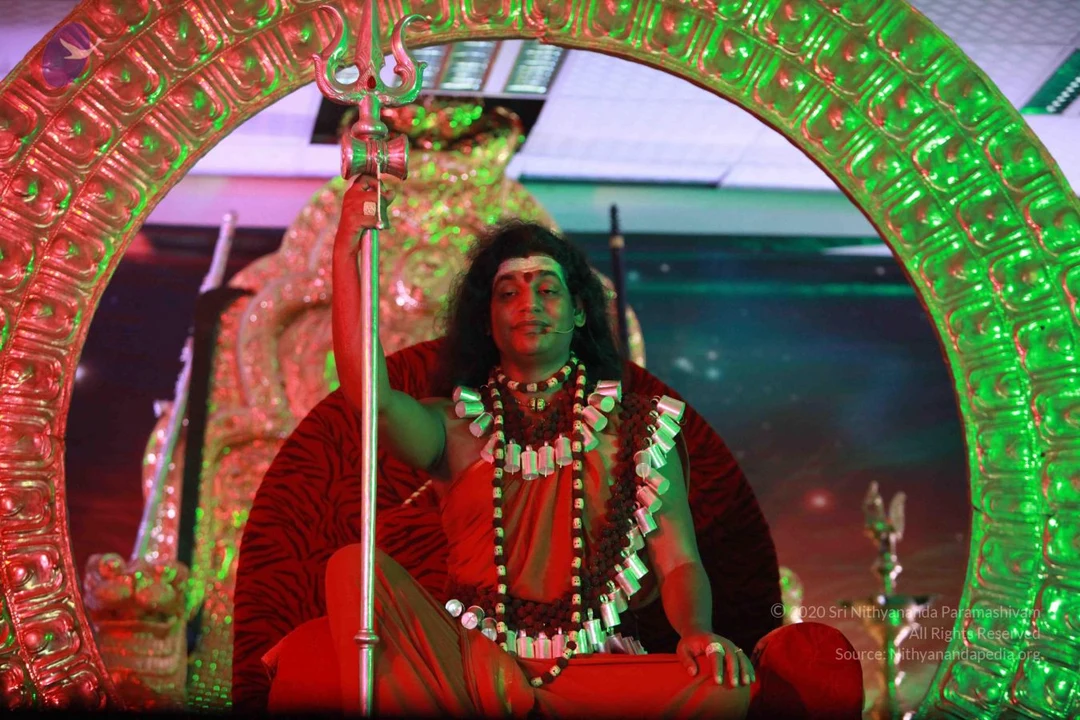
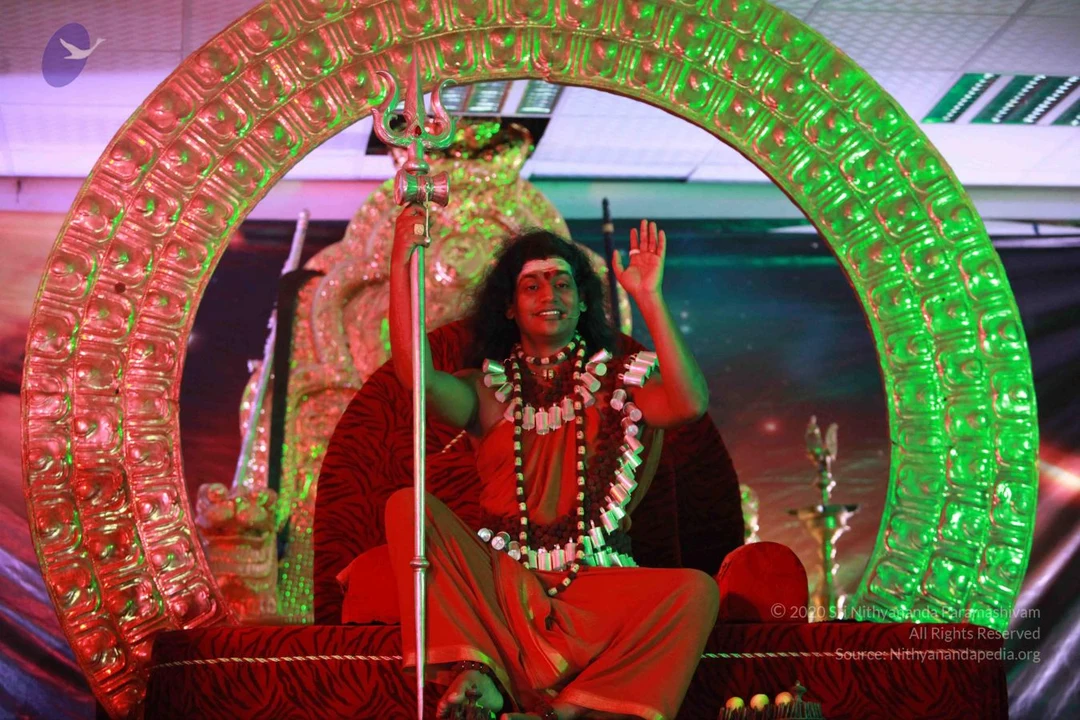
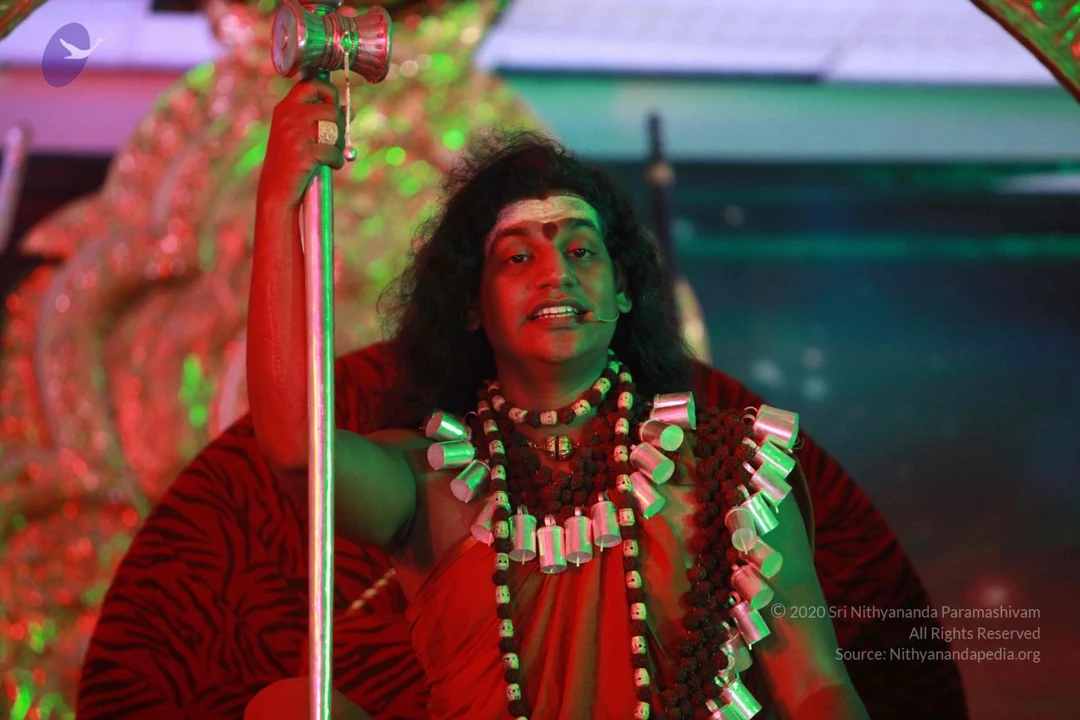
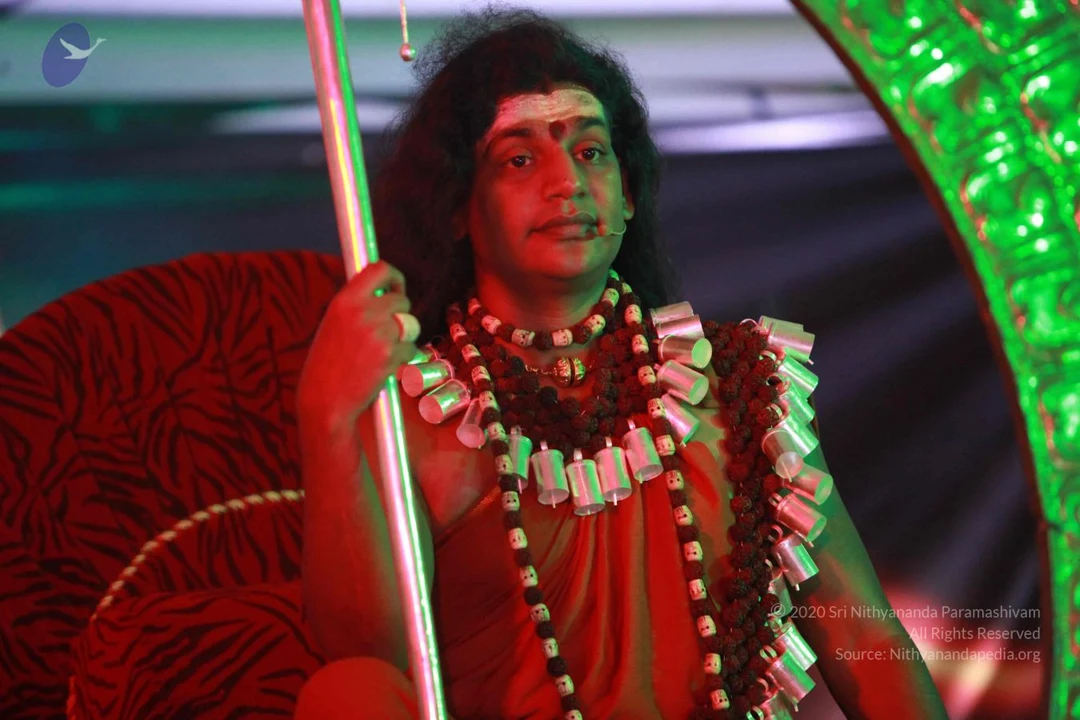
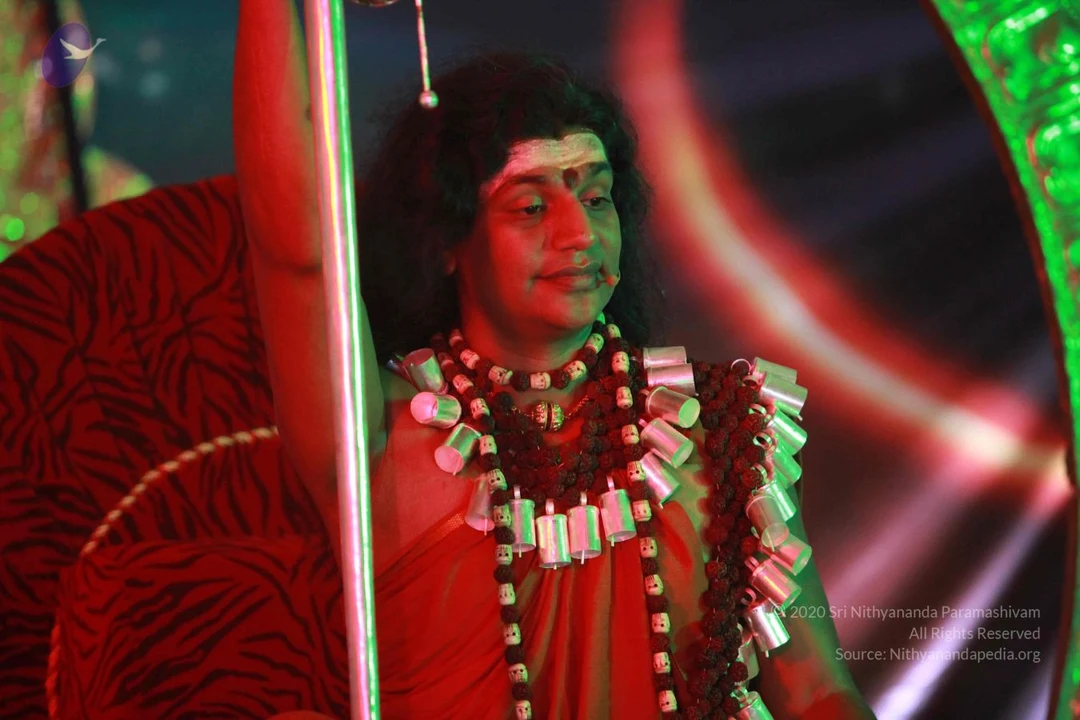
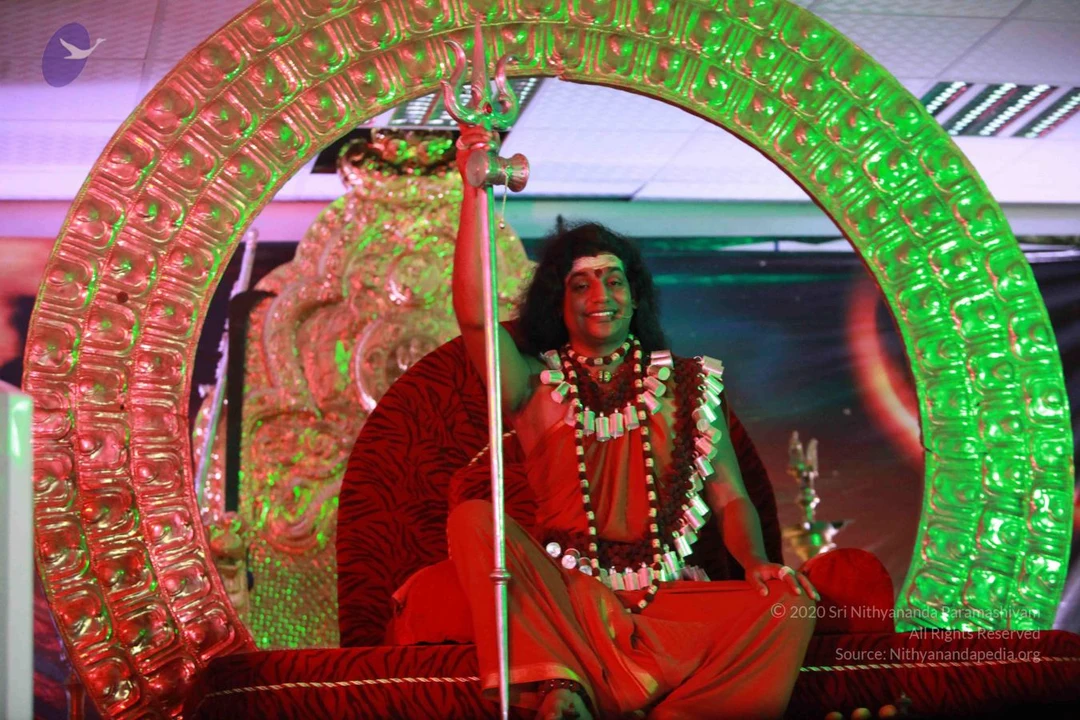
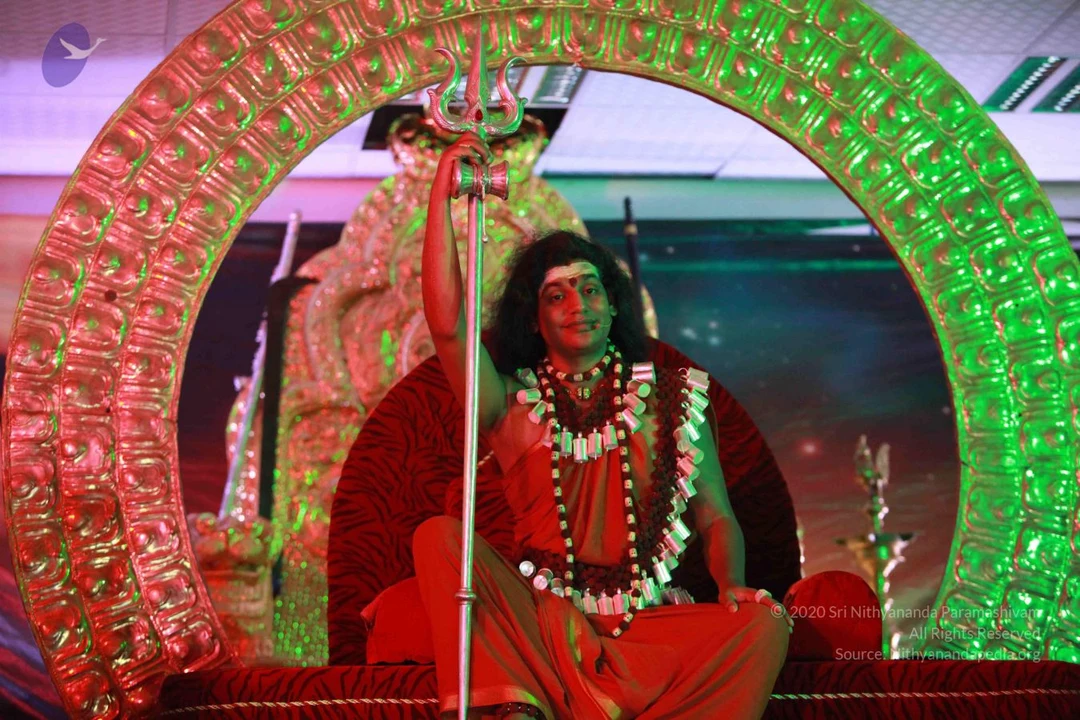
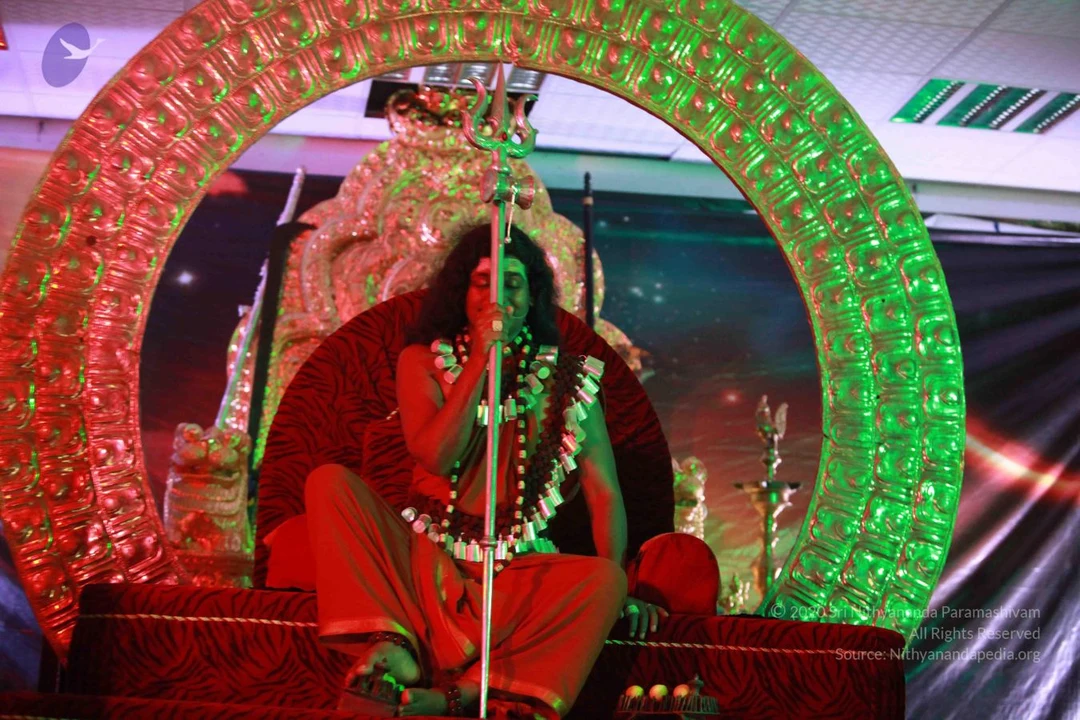
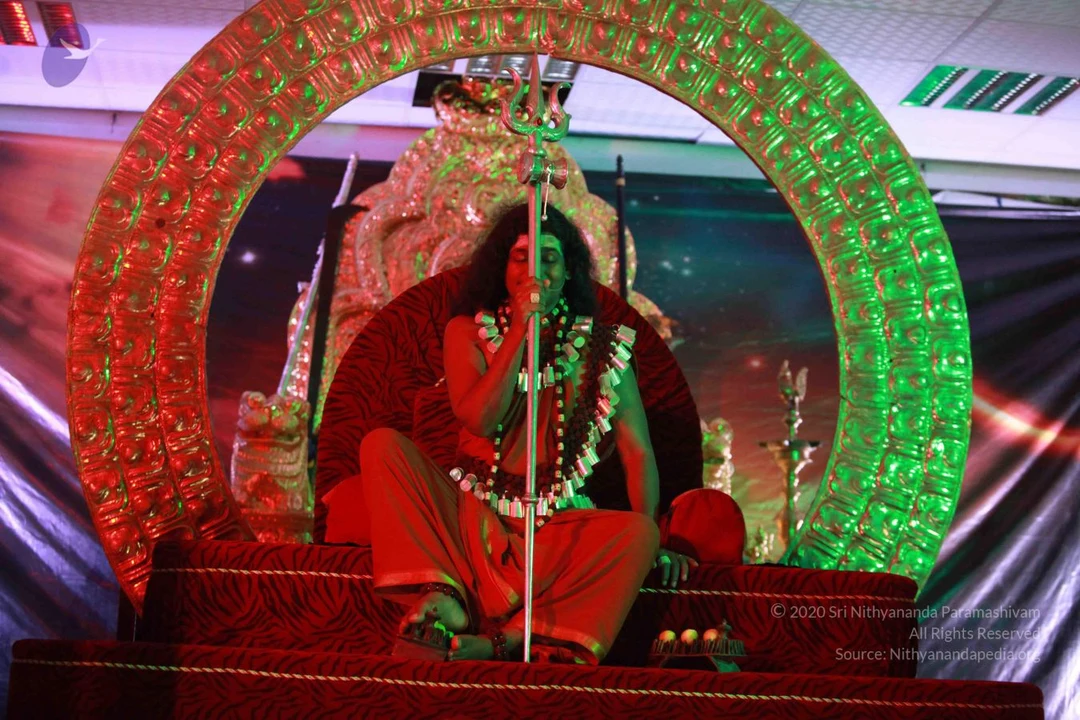
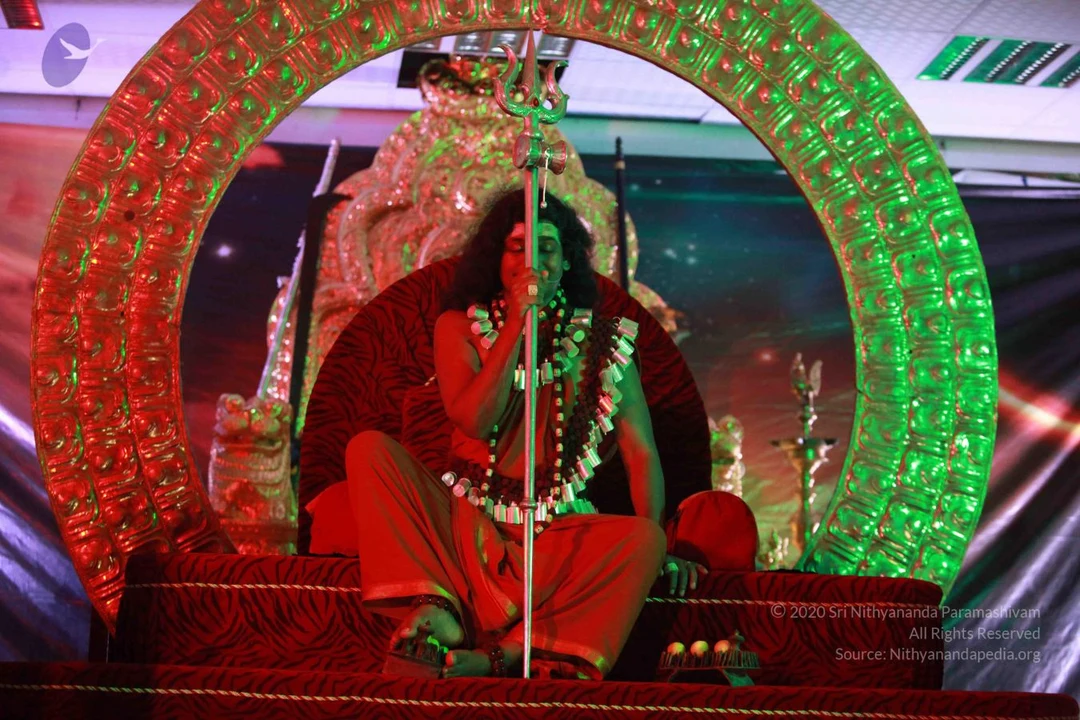
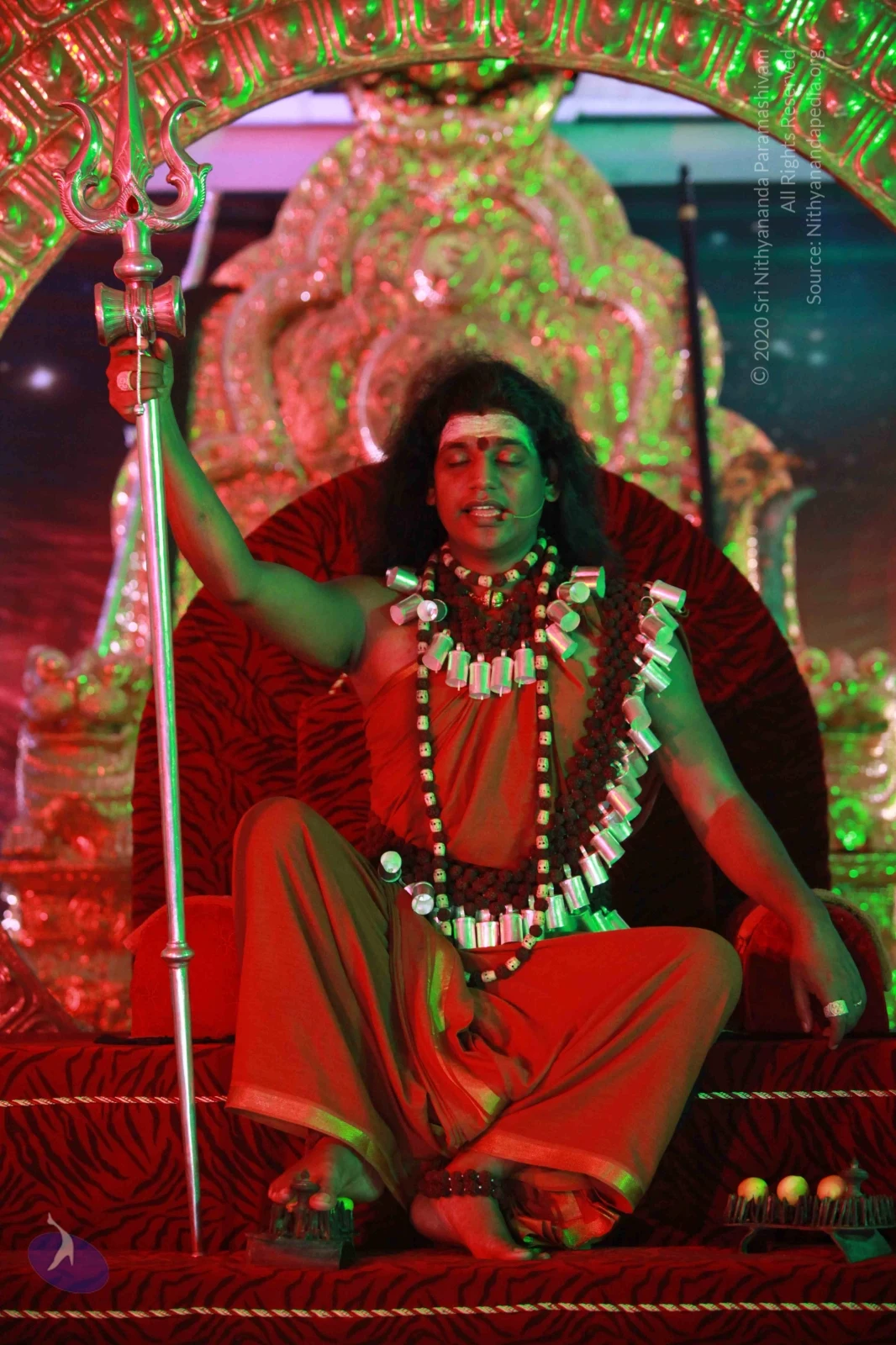
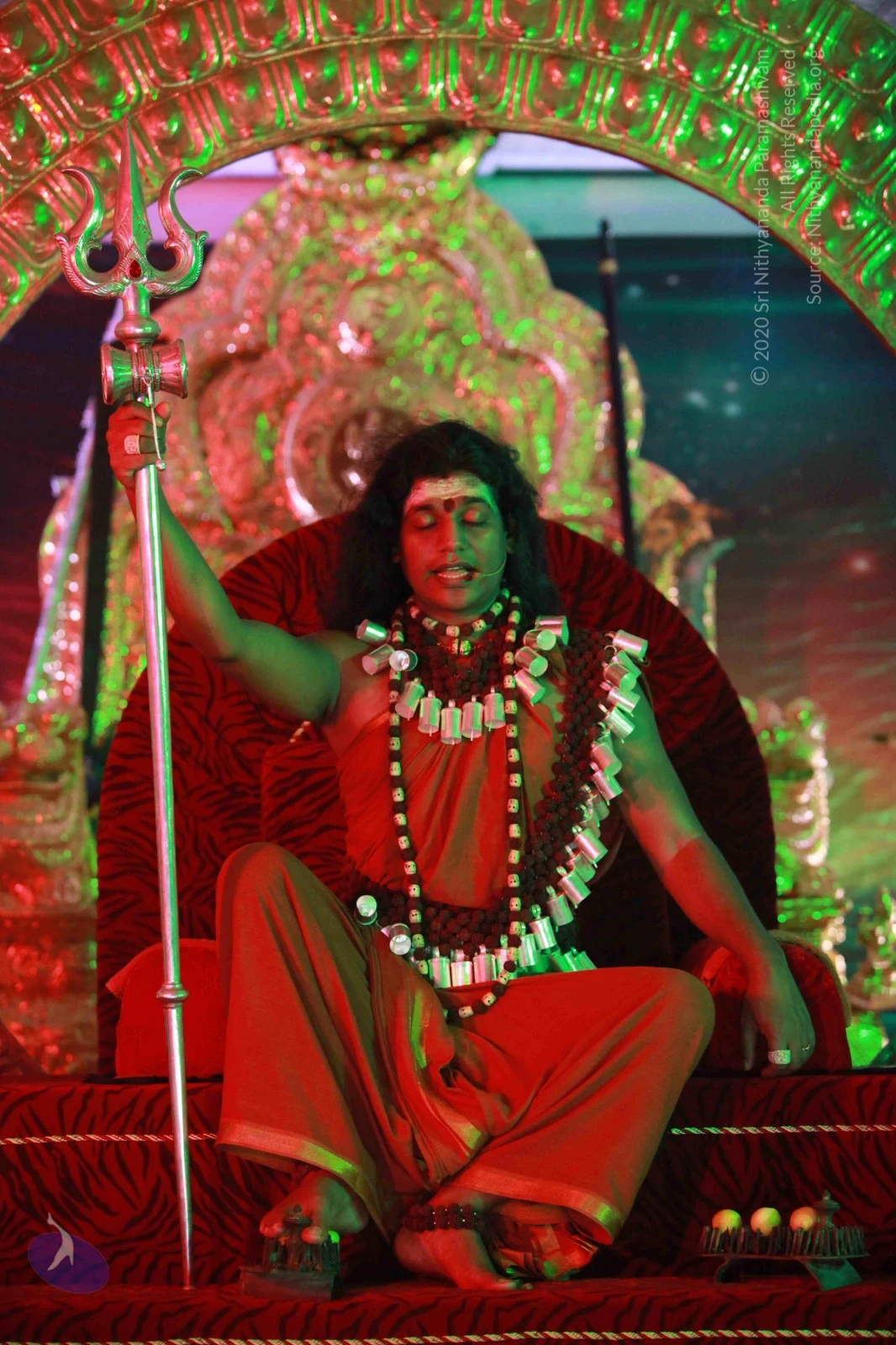
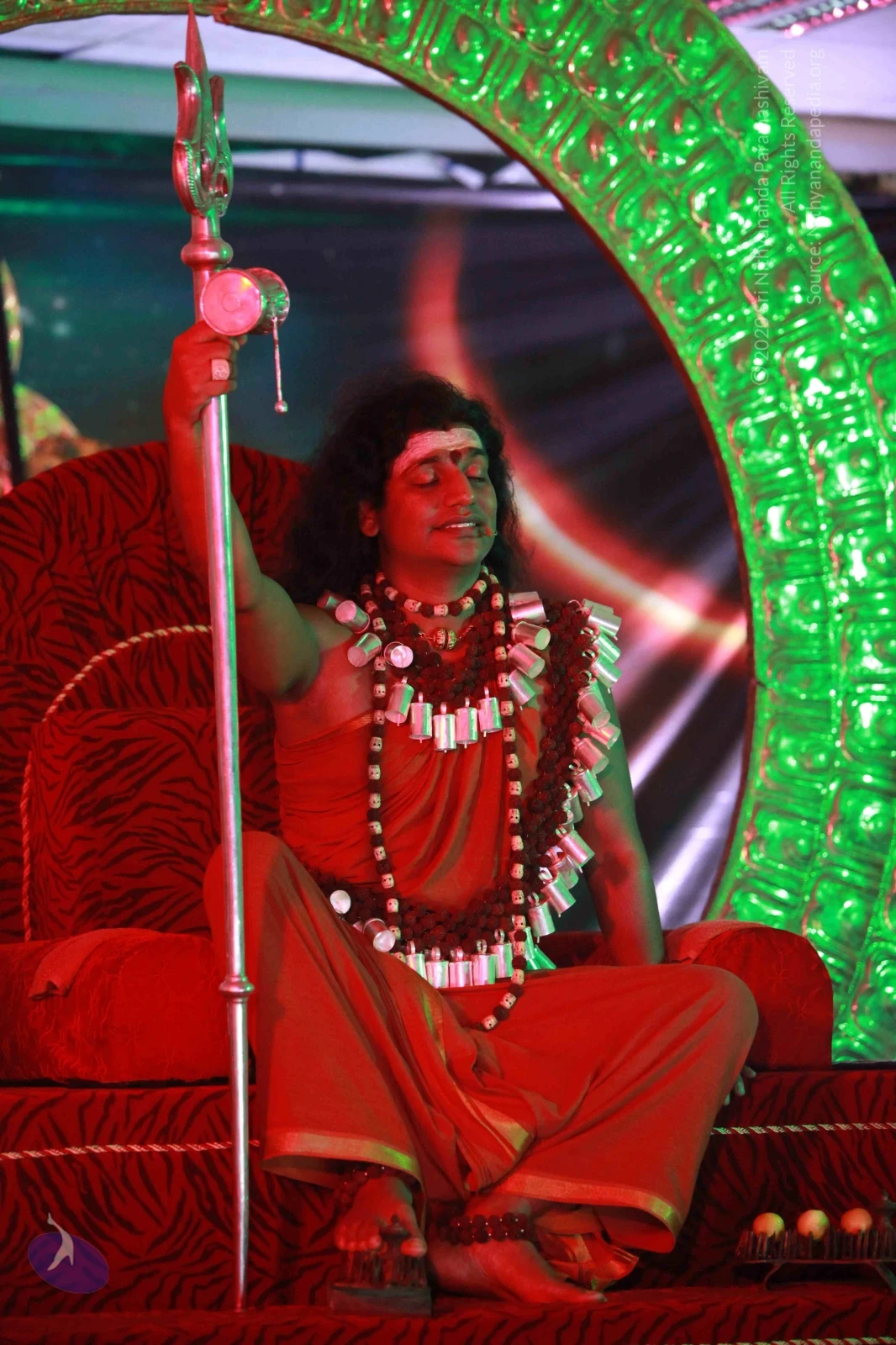
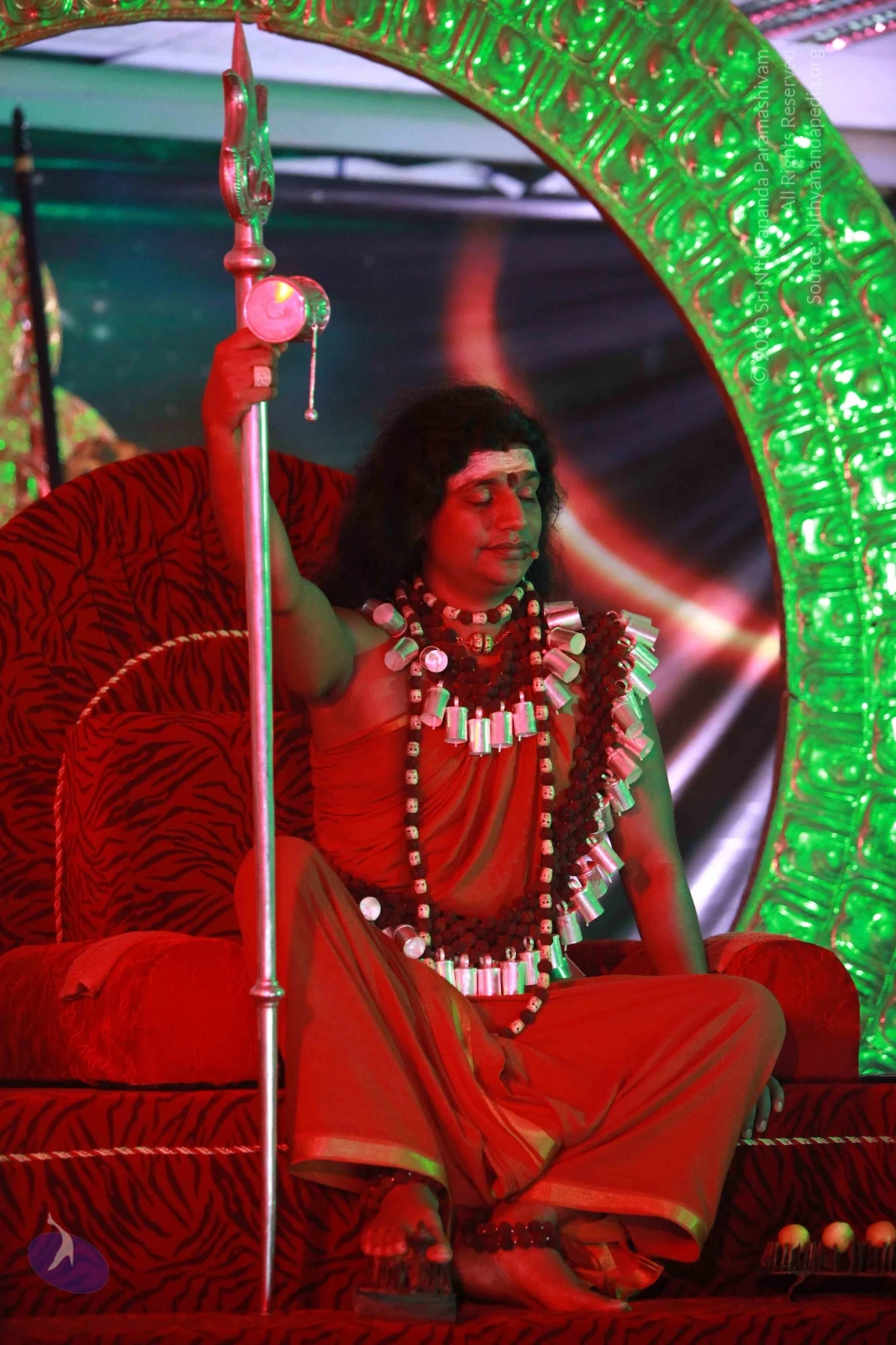
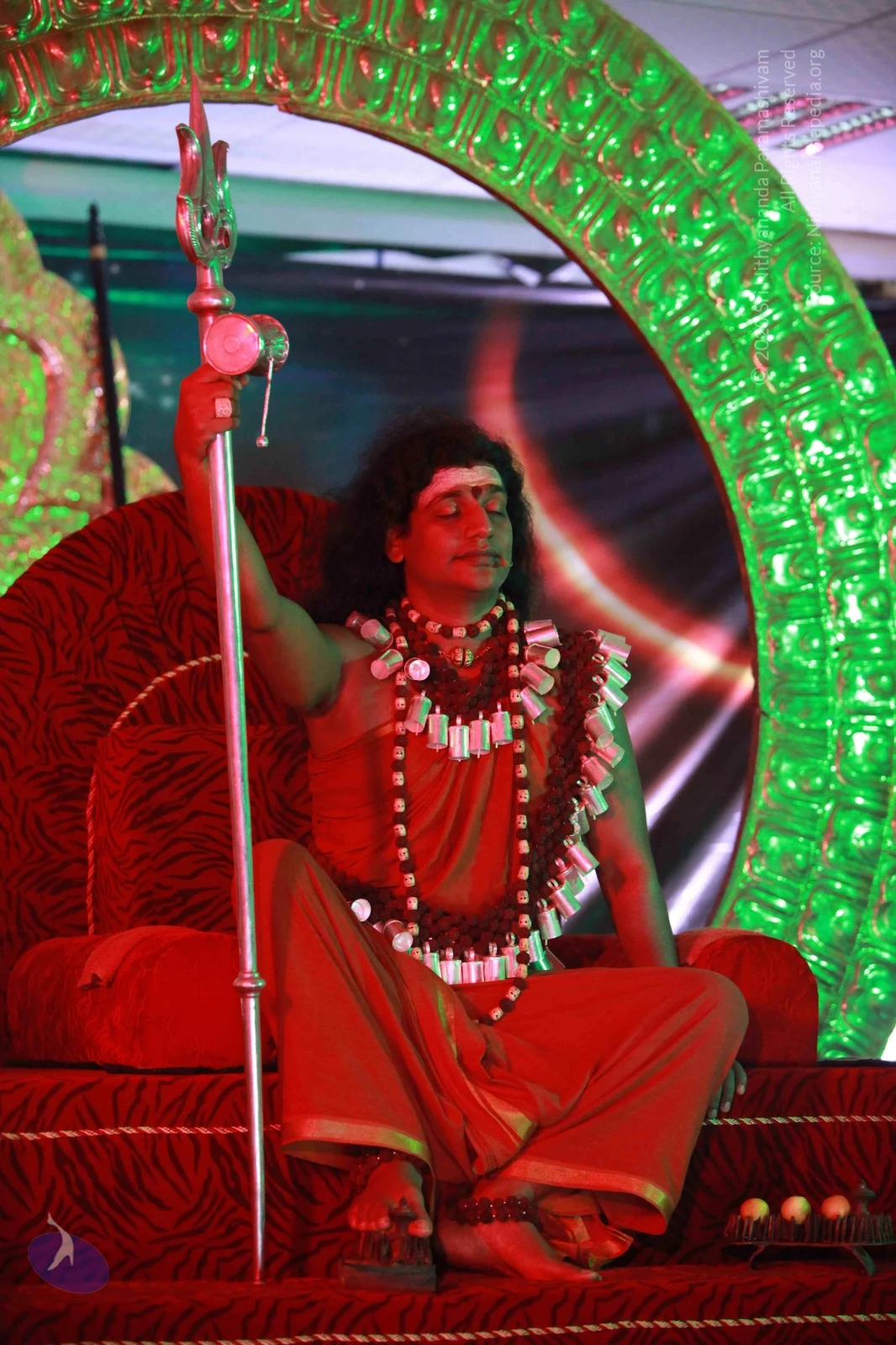
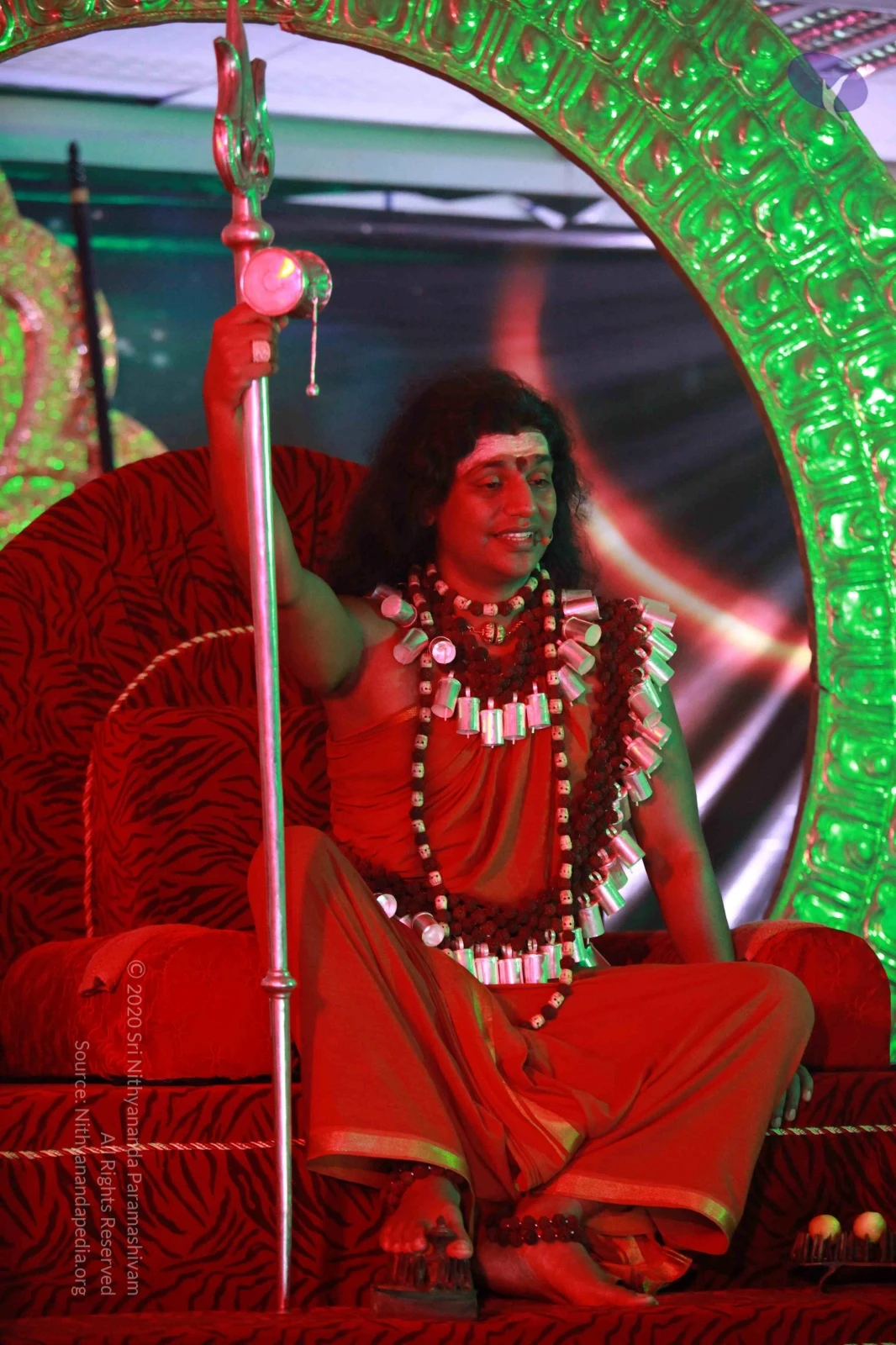
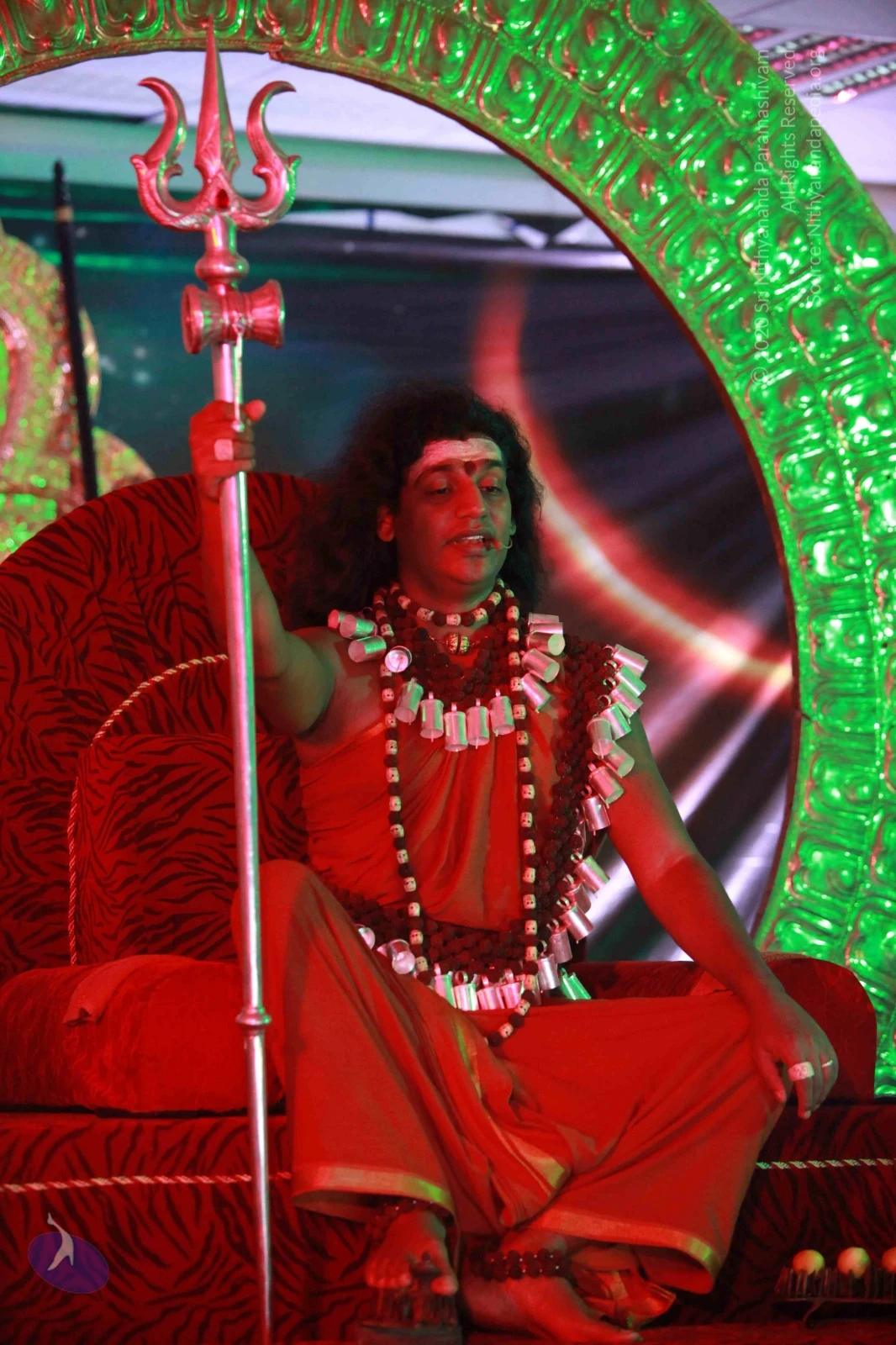
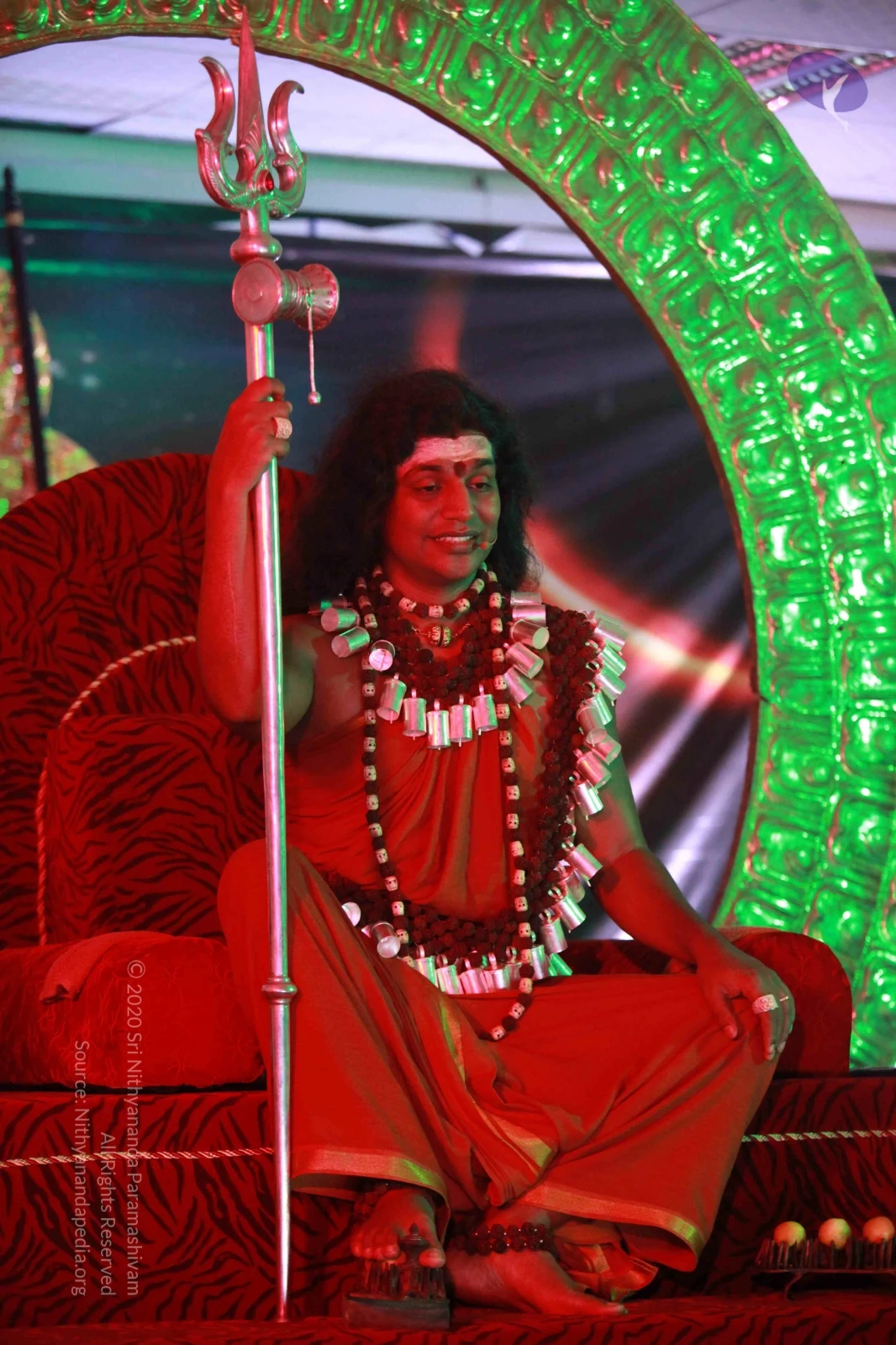
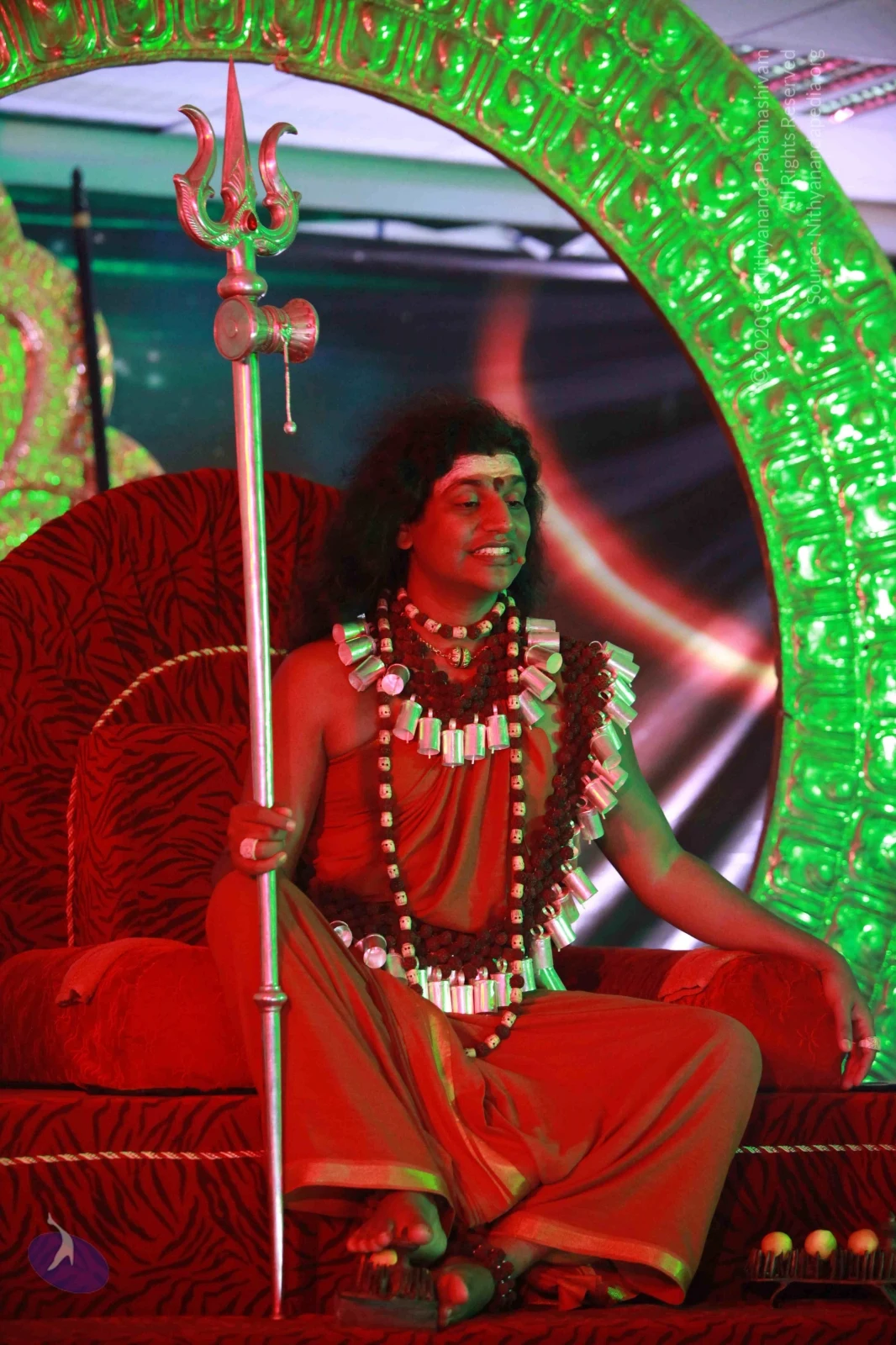
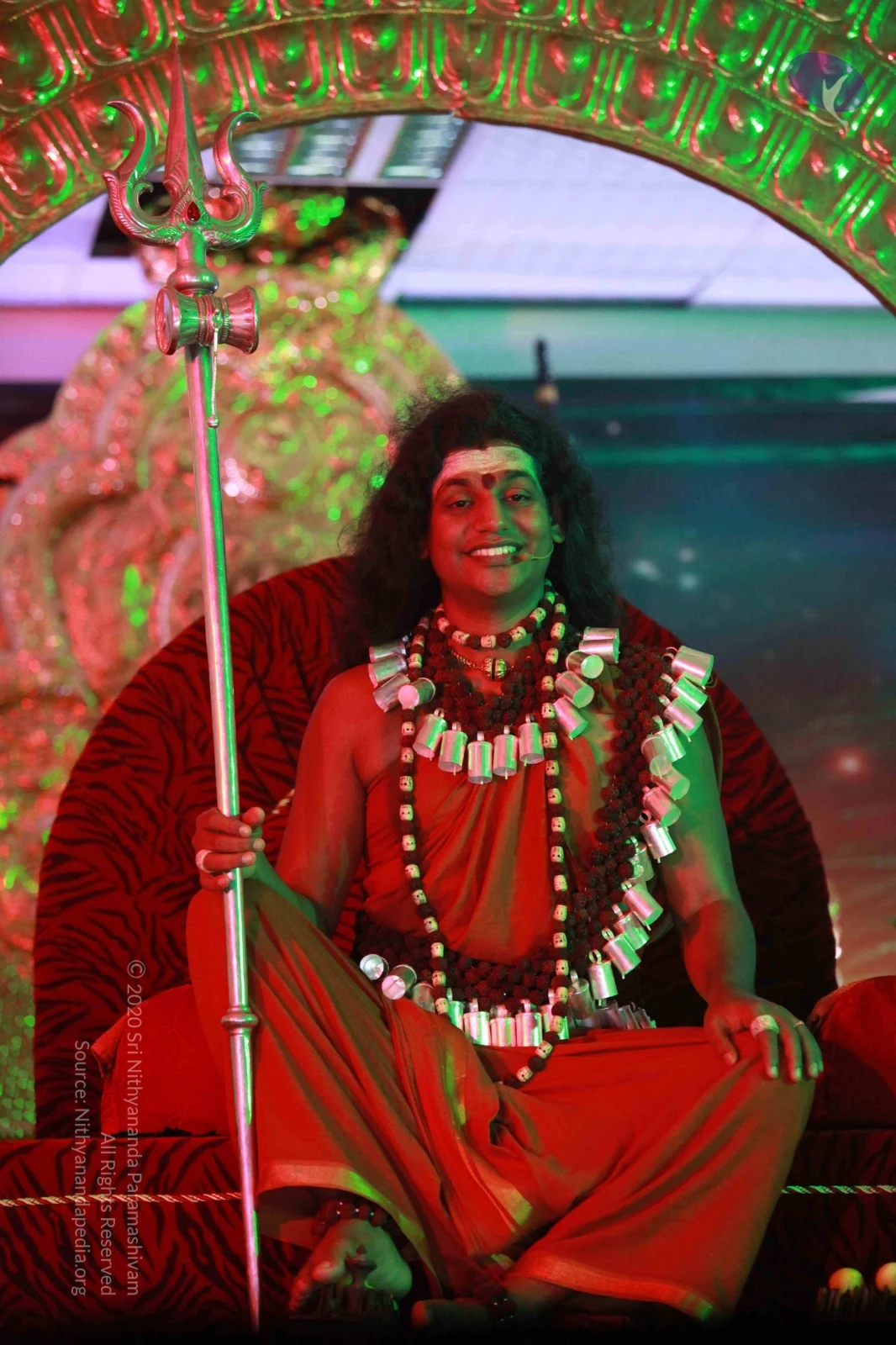
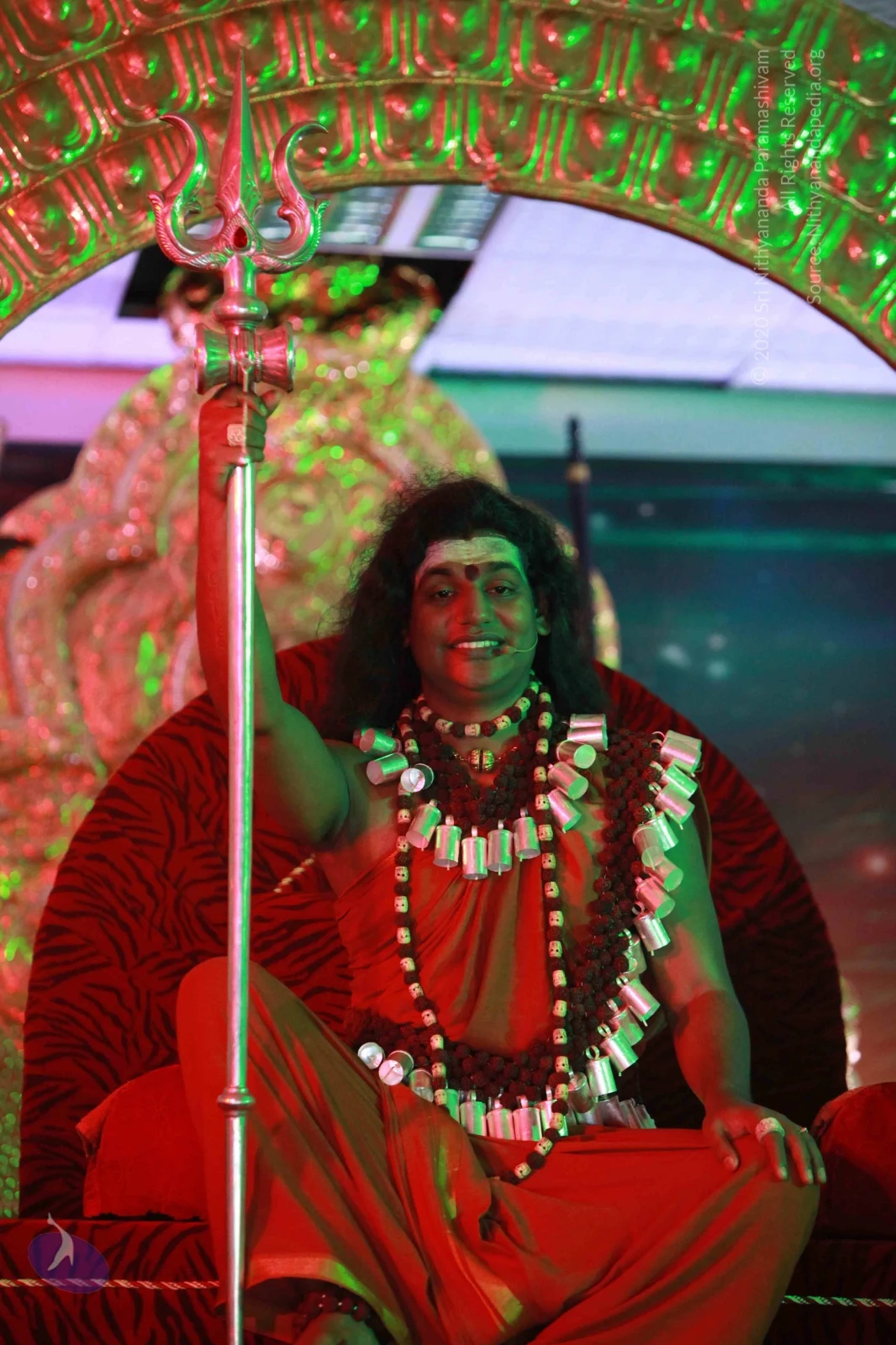
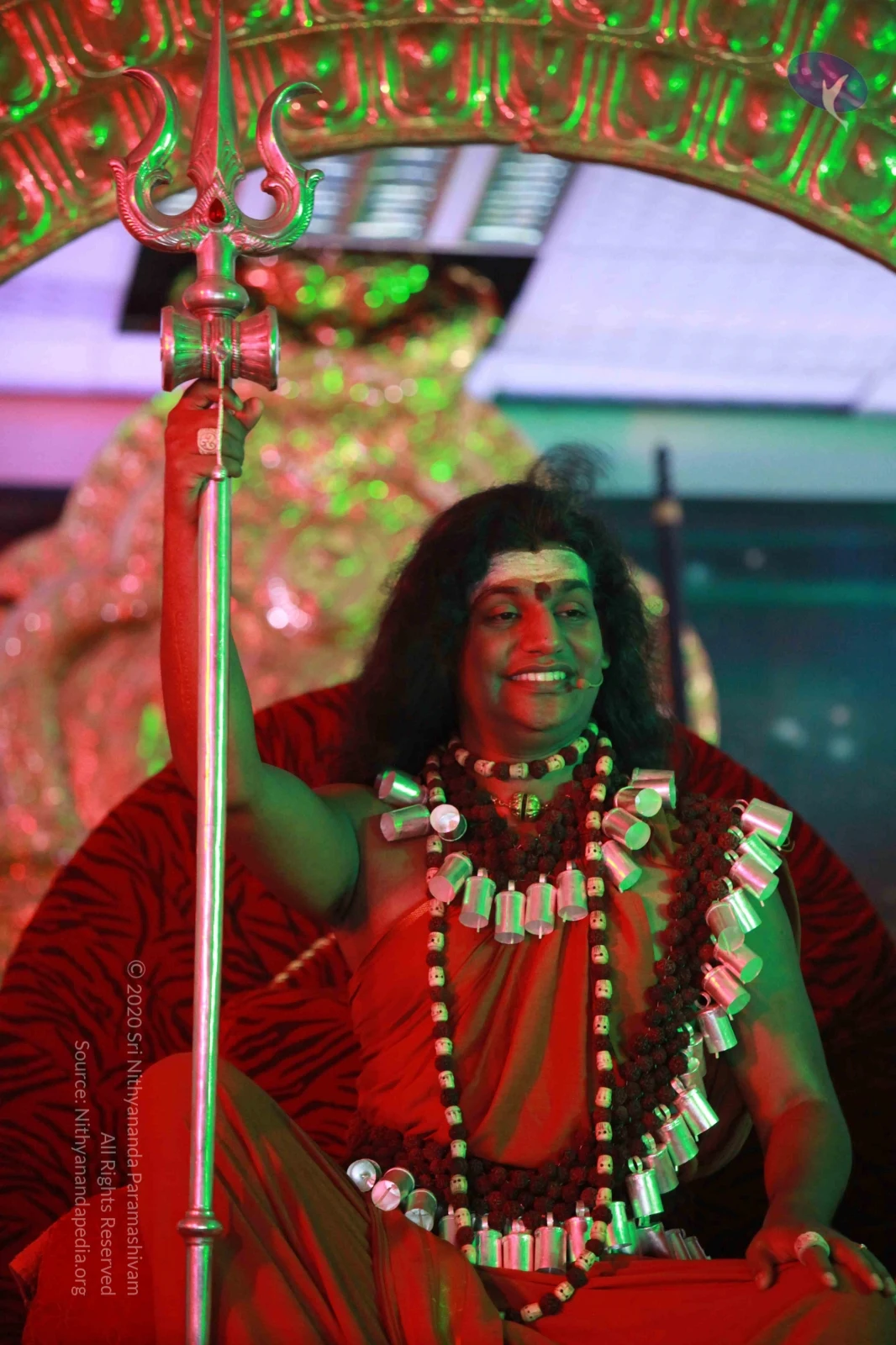
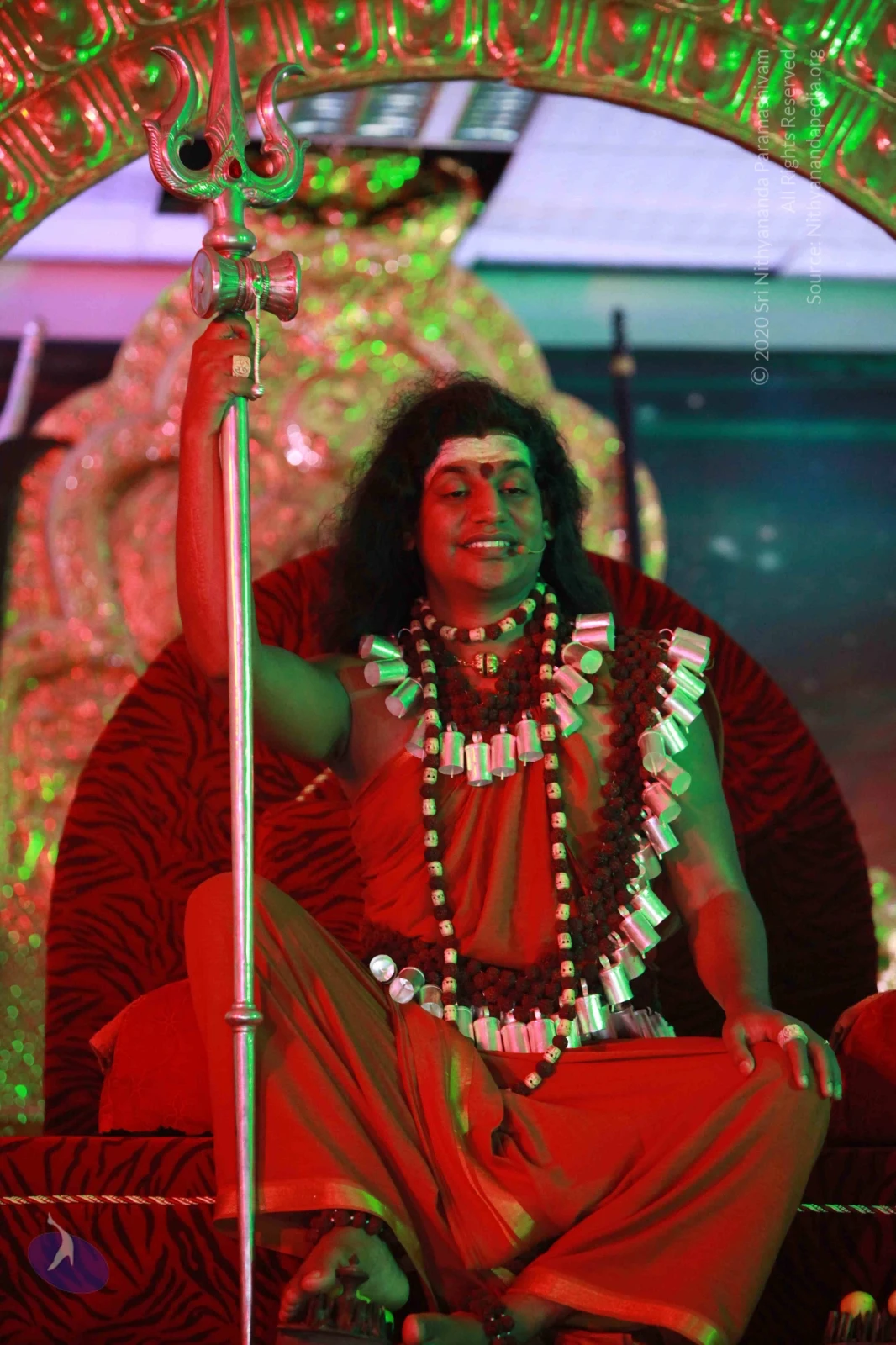
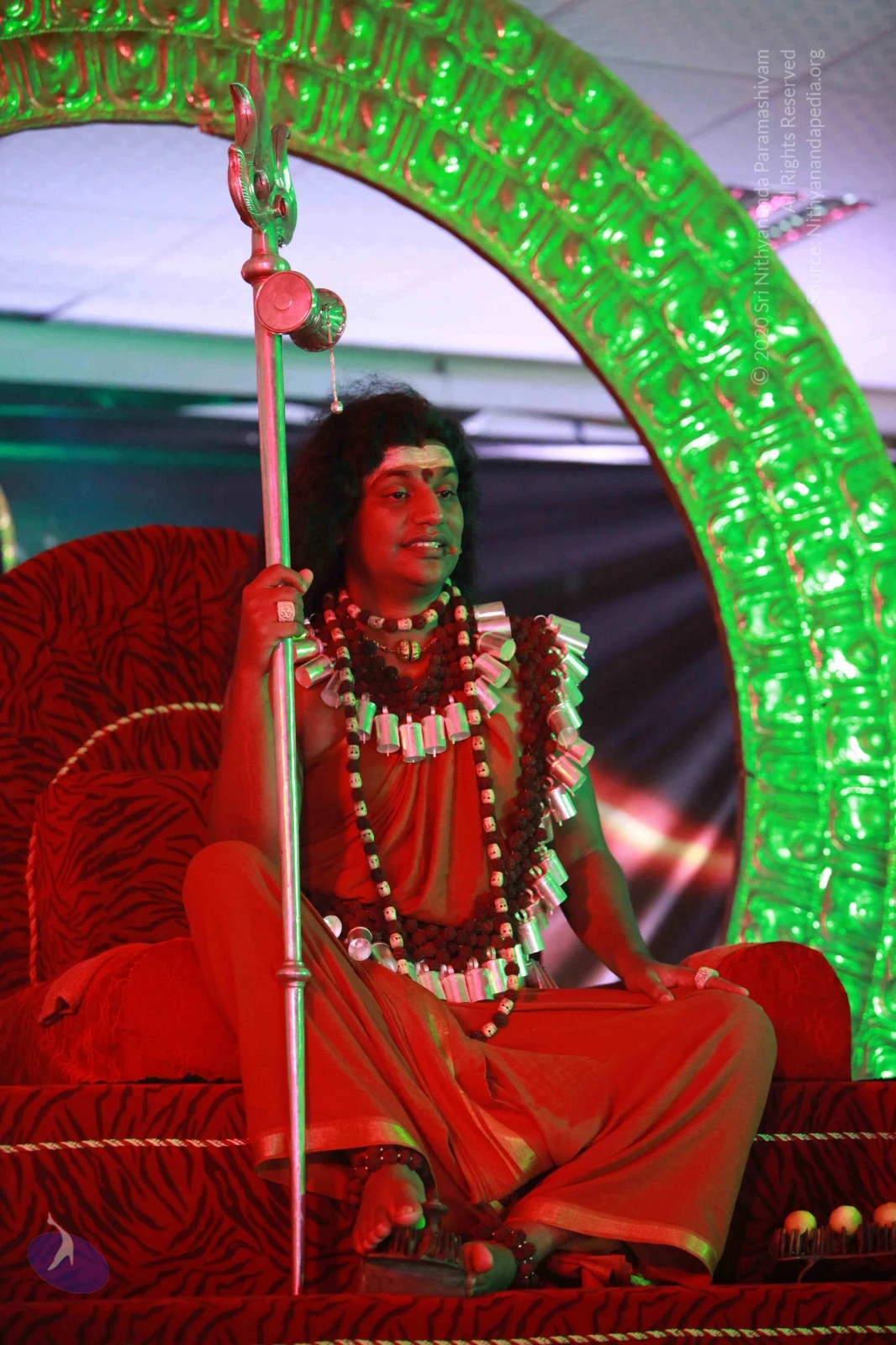
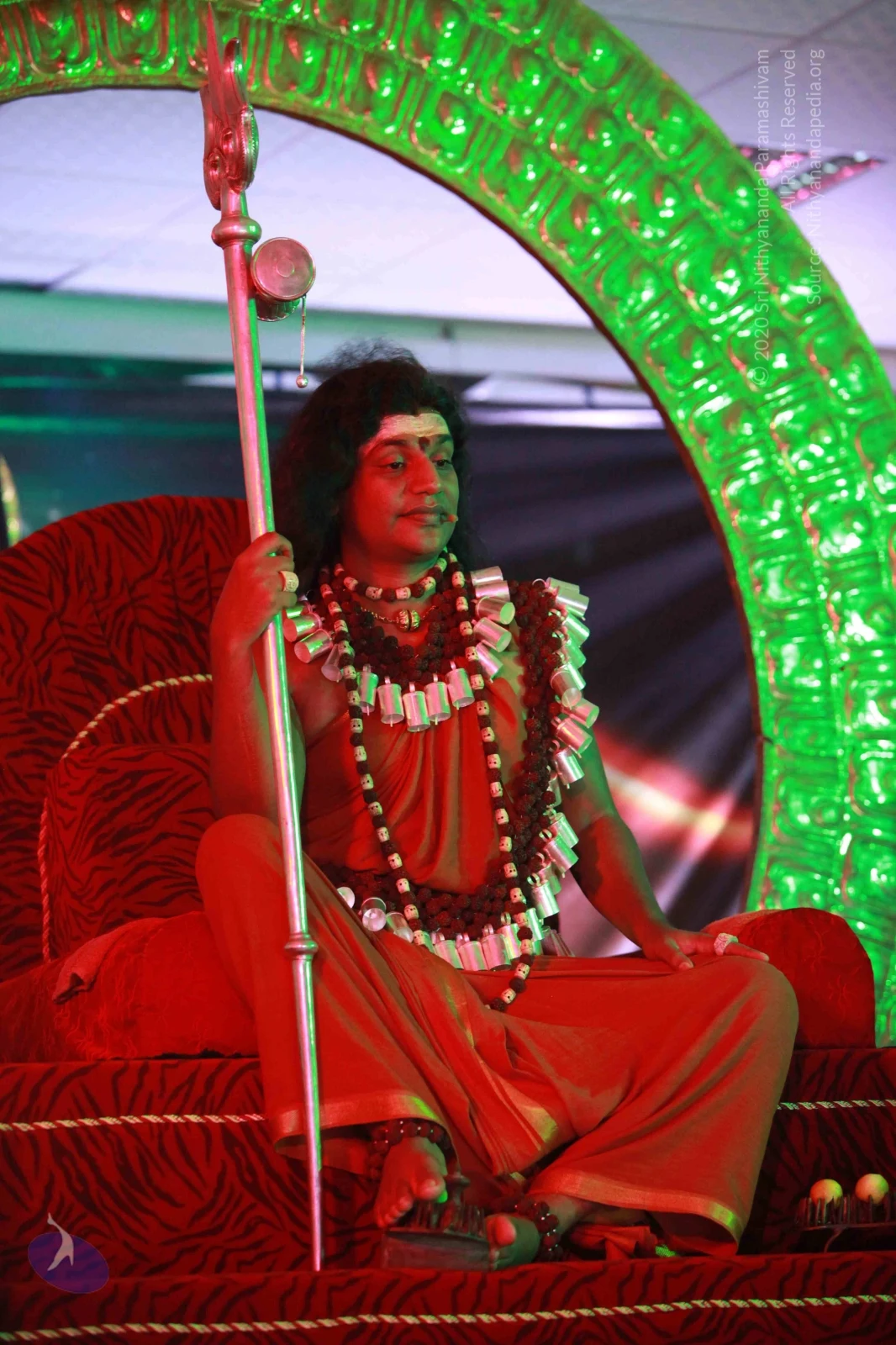
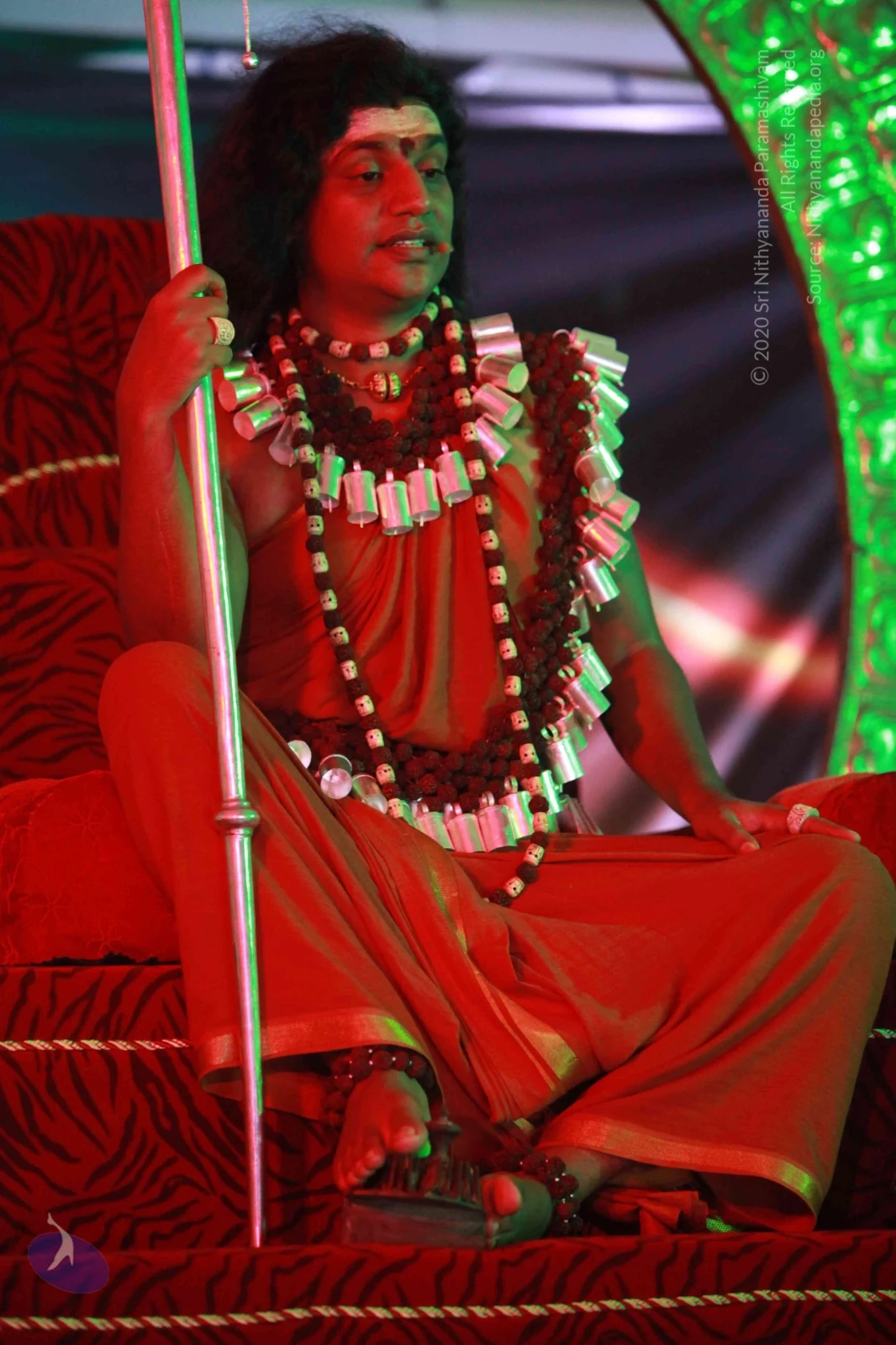
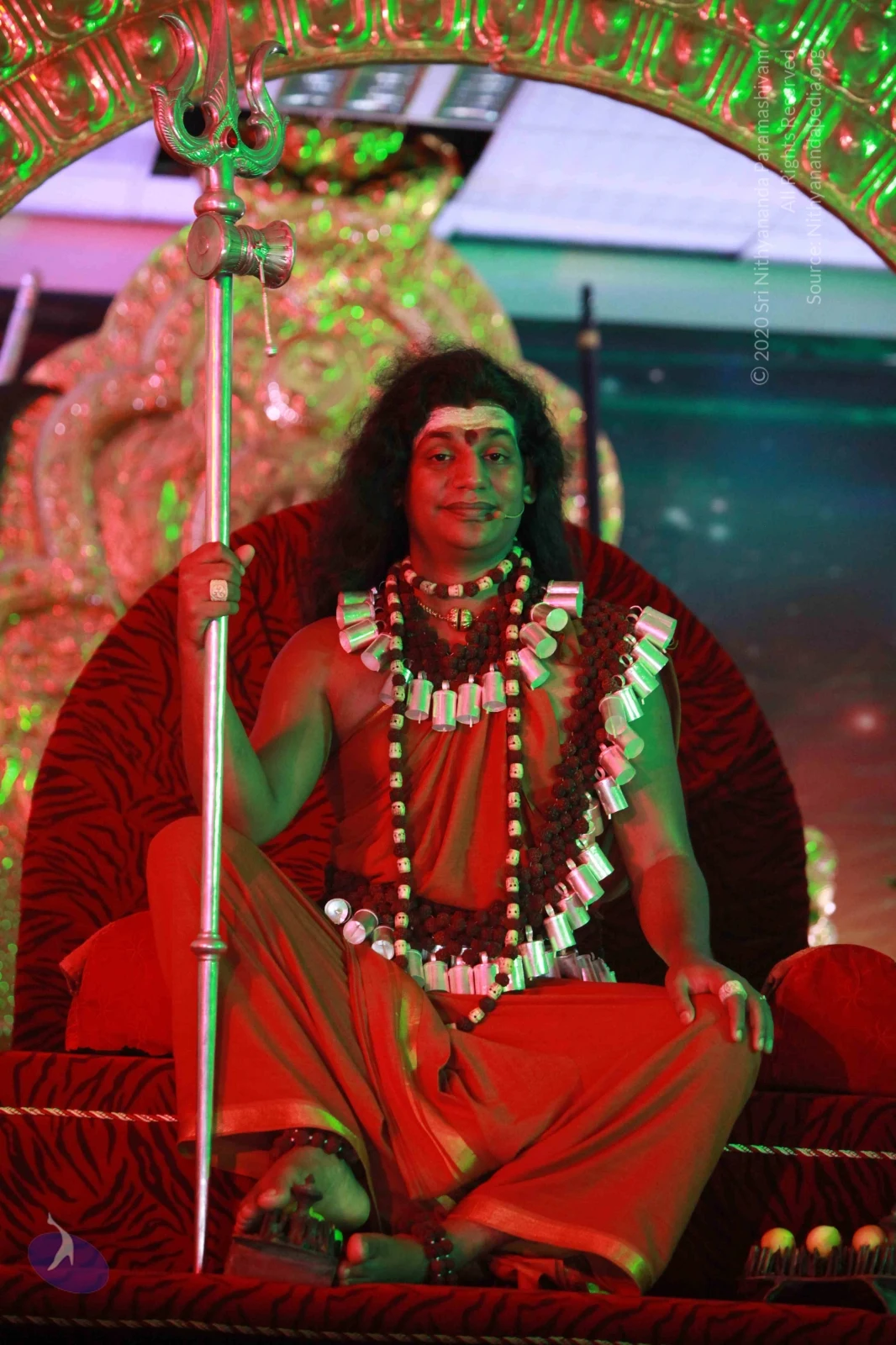
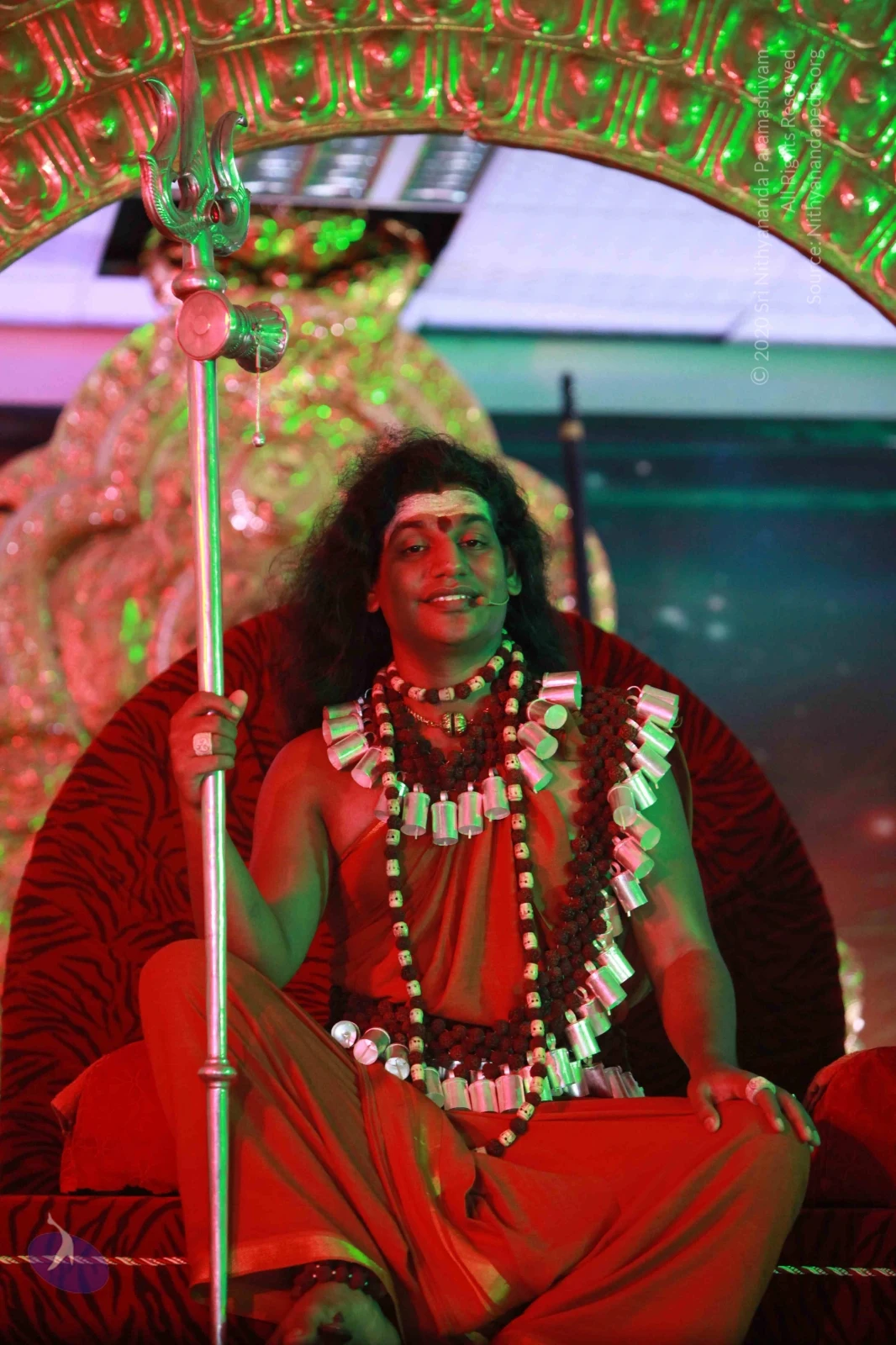
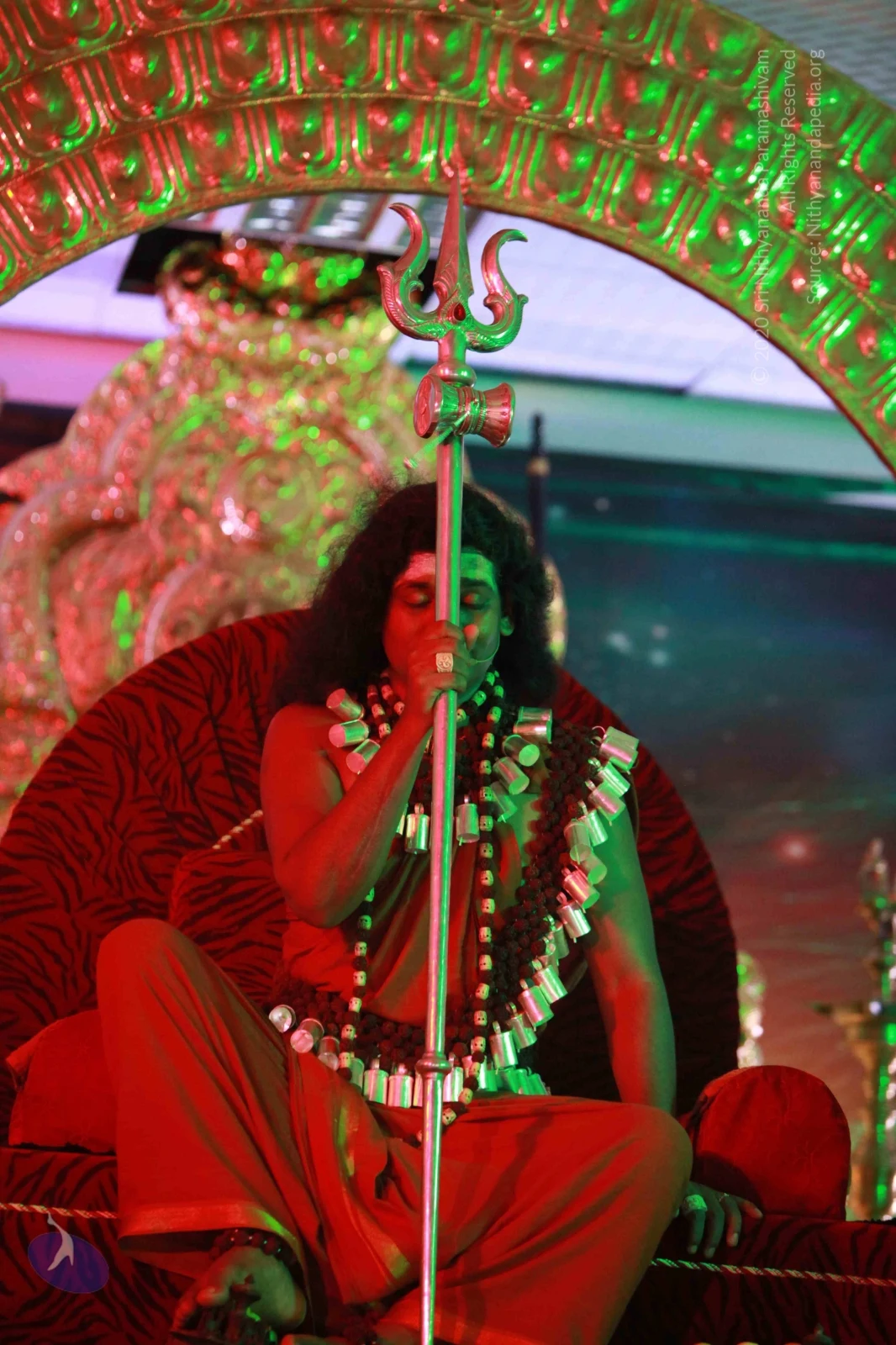
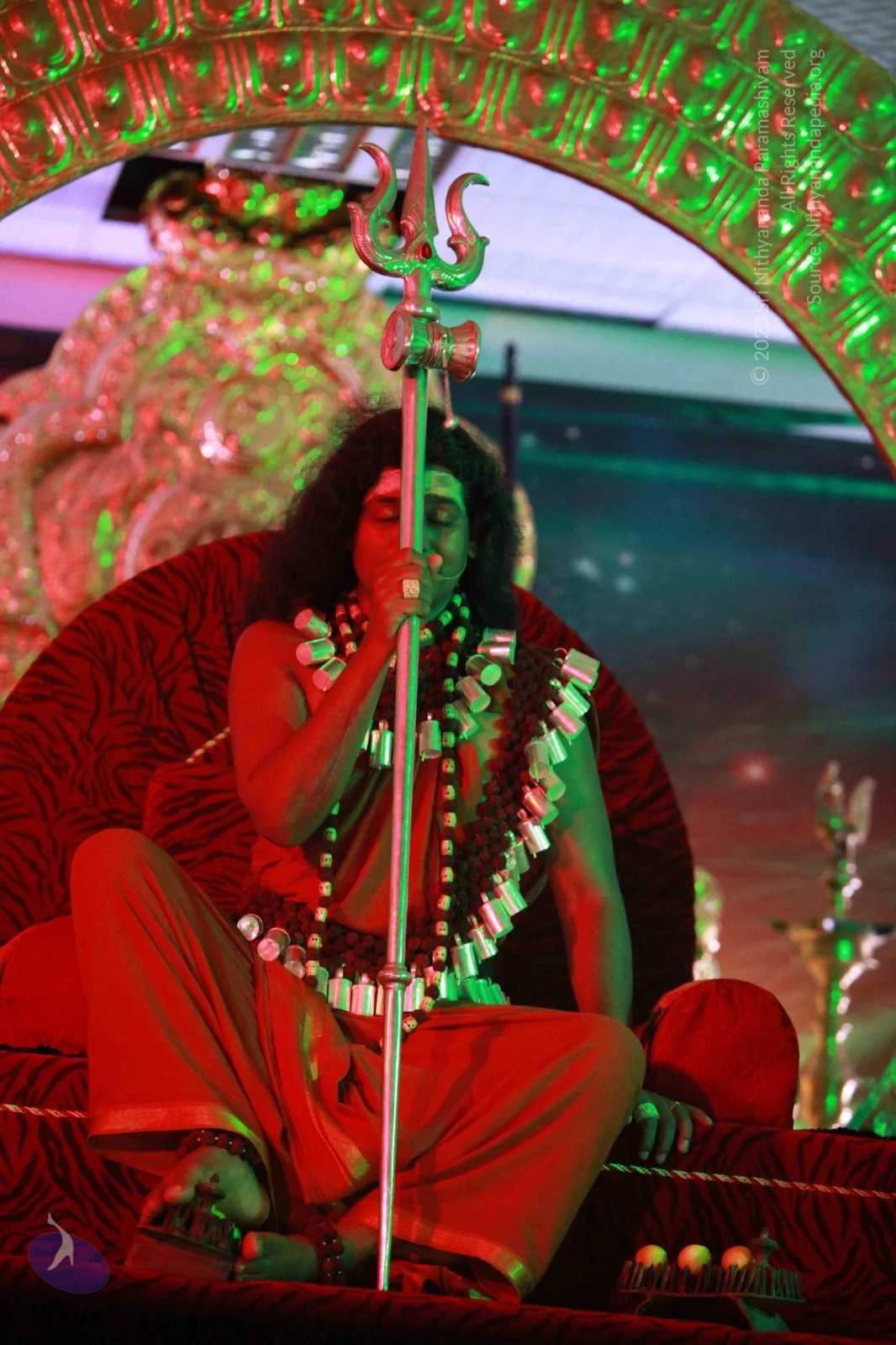
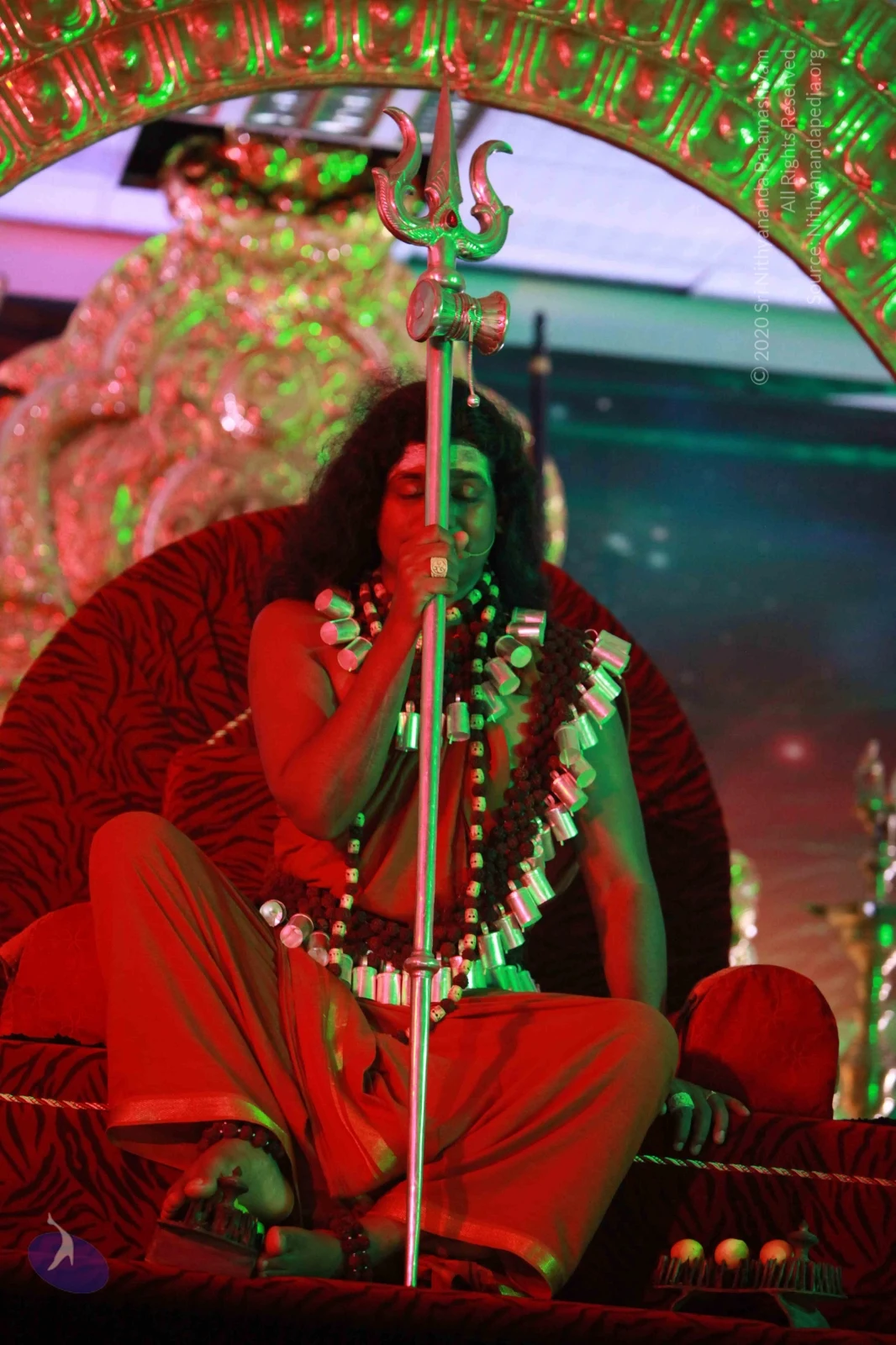
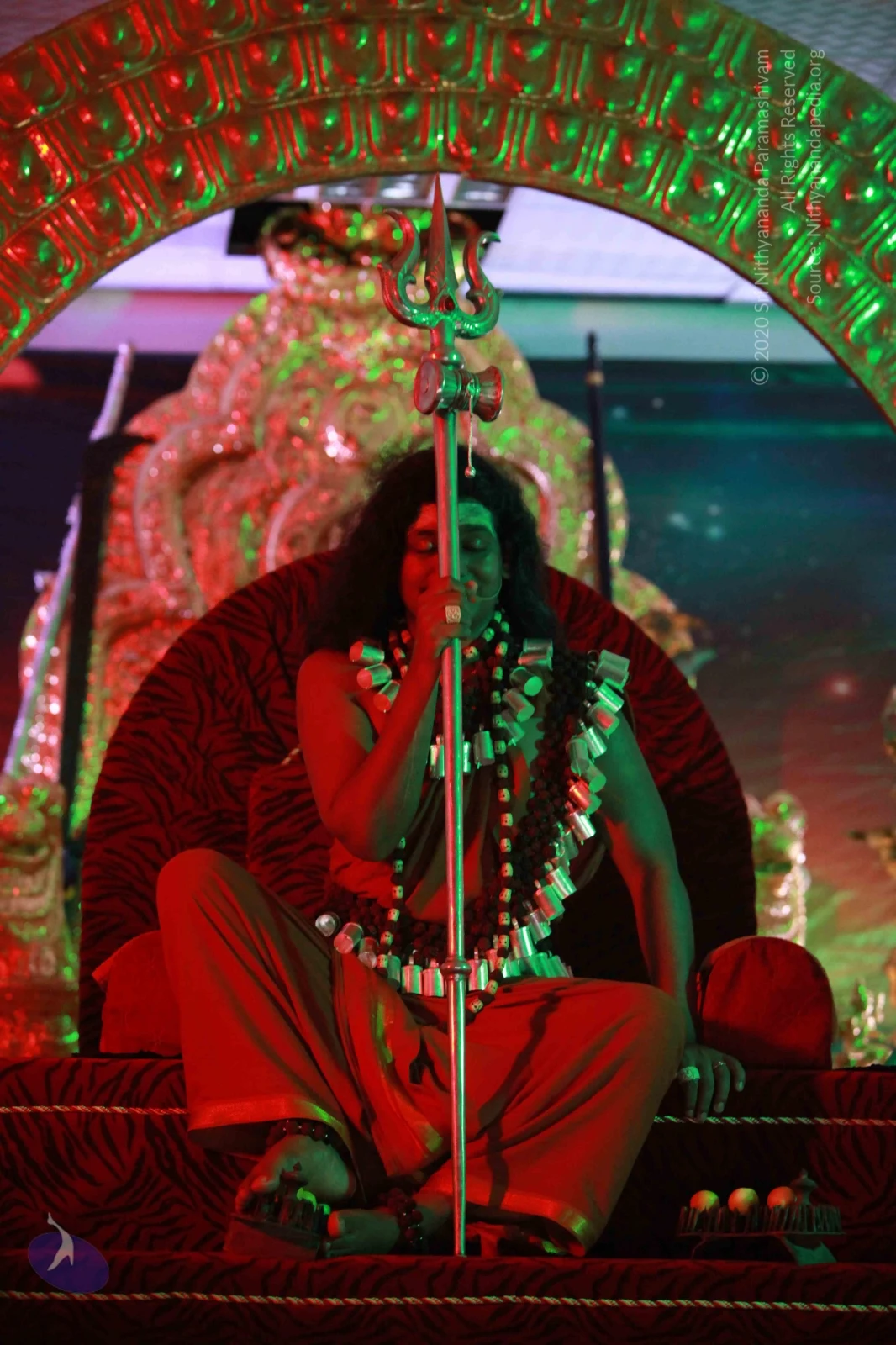
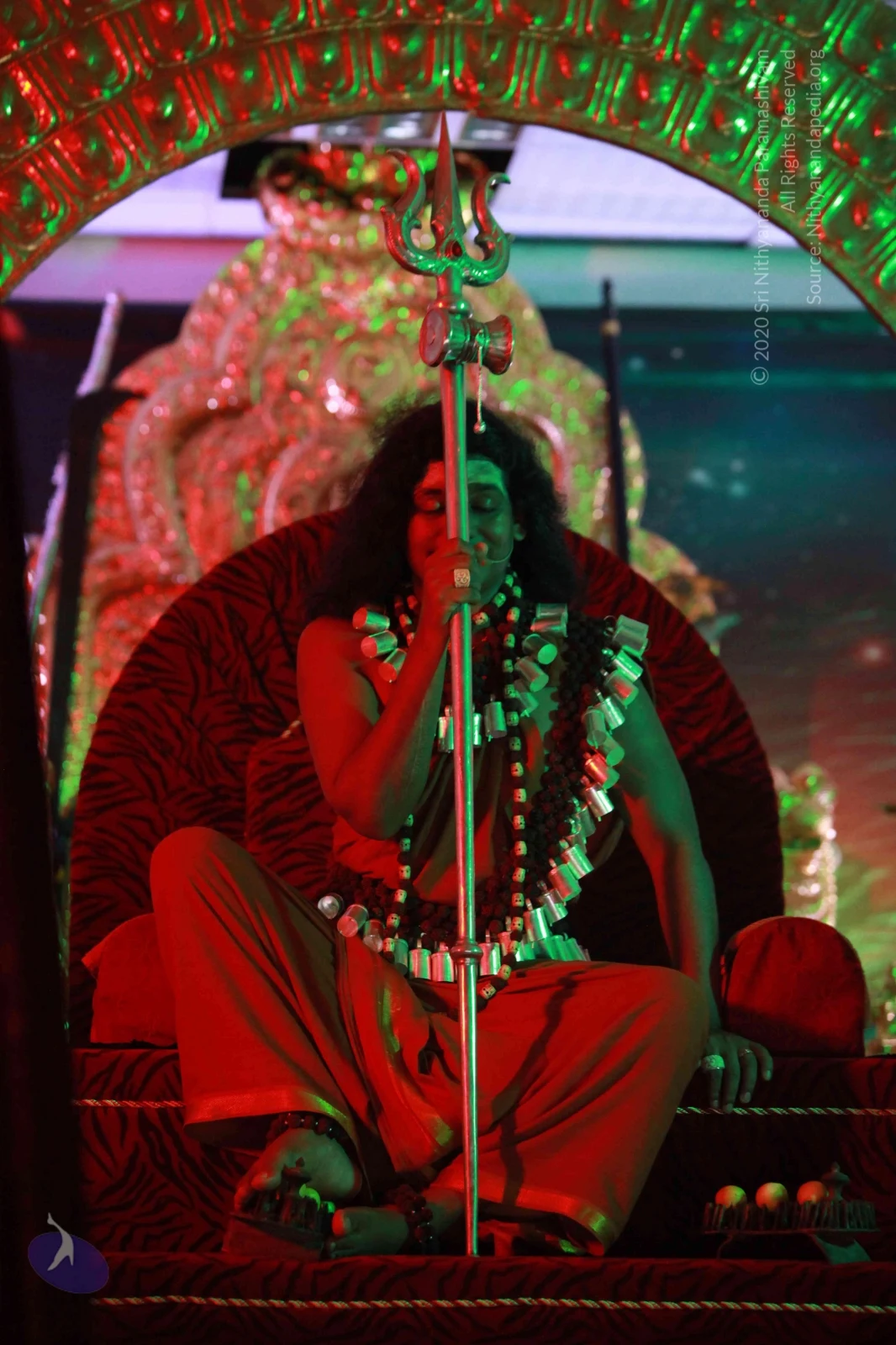
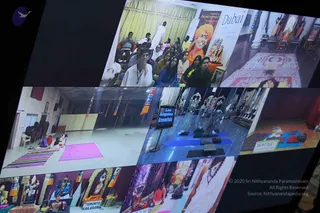
A multi-panel screen collage of remote satsang sites, shown on a dark display, with a faint logo at the upper left. Top left: a seated audience in white and coloured clothing, a standing man in white, and a banner with a portrait of a smiling figure in orange and a Dubai label. Top right: a shrine room with deity murtis and a pink patterned floor cloth. Middle left: a hall with a pink mat and seated participants. Middle centre: a room with a sign reading Los Angeles Arunachala beside a seated figure on a blue mat. Middle right: a mat marked Seattle. Bottom left: a shrine with deity murtis and a sign reading Toronto Kailasam. Bottom right: seated figures in orange and red near a deity display.A multi-screen video wall showing a live satsang linked across several centres. Top-left, a man in a white shirt speaks with a group of seated devotees behind him, some in white and orange. Top-right, a room with pink and red floor mats and a shrine. Middle, a hall with hanging colourful banners, several people seated on the floor on mats. Centre panel, a sign reads "Los Angeles Arunachala" beside blue yoga mats, with a couple of people standing and seated. Right panel, a sign reads "Seattle Chidambaram" near a patterned mat. Bottom-left, a sign reads "Toronto Kailasam" in front of deity murtis and a shrine. Bottom-right, people in orange and white clothing perform raised-arm poses on mats beside a shrine with deity images. a person is not clearly visible in any panel.A figure seated on an ornate red throne with a tiger-striped cushion, raising a silver trident in the right hand. He wears a saffron-orange dhoti-style garment with a red shawl, layered rudraksha and bead malas, and a white forehead marking. Behind him a large gilded circular arch glows red and green under stage lighting, with a golden ornate throne backdrop and a dark starry backdrop.A photograph of a seated figure on a red cushioned throne-like seat, framed by a large ornate green-and-gold circular arch lit in red and green light. The figure wears saffron-orange robes, a red-and-white beaded necklace and a rudraksha-style mala, and raises a long silver trident in one hand while the other rests on the knee. Behind is an ornate gilded backdrop with a red-and-green lit pedestal and a small oil lamp at the base. The figure is an appearance-based probable Swamiji candidate with long dark hair, a crown-like ornament, saffron clothing and rudraksha malas, seated in a ceremonial setting. Only one physical person is visible.A seated man in orange-red robes sits cross-legged on a red-and-black tiger-striped throne before a large ornate golden circular frame glowing green and red. He holds a long silver trident upright in his right hand, eyes closed, mouth open as if speaking or chanting. He wears layered rudraksha and bead malas with white and green beaded ornaments, a tilak on his forehead, and has long dark hair. Two small brass oil lamps sit on the dais in front, and a golden ornate backdrop with a deity-like sculpture stands behind. Swamiji (probable): long swept-back hair, orange-red ceremonial clothing, rudraksha malas and ornate beaded necklaces, seated on a throne holding a trident, matching the page's Swamiji at this event.Close photo of a seated figure's bare feet and lower legs on a red tiger-striped cloth-covered platform under red and green lighting. The figure wears a red garment with gold-green borders and a dark red rudraksha mala around one ankle. A small green-lit object, possibly a lamp or ritual item, sits beside the feet near a thin metal pole. Only the feet and lower legs are visible, so no face or full body is shown.

1-Morning-Satsang
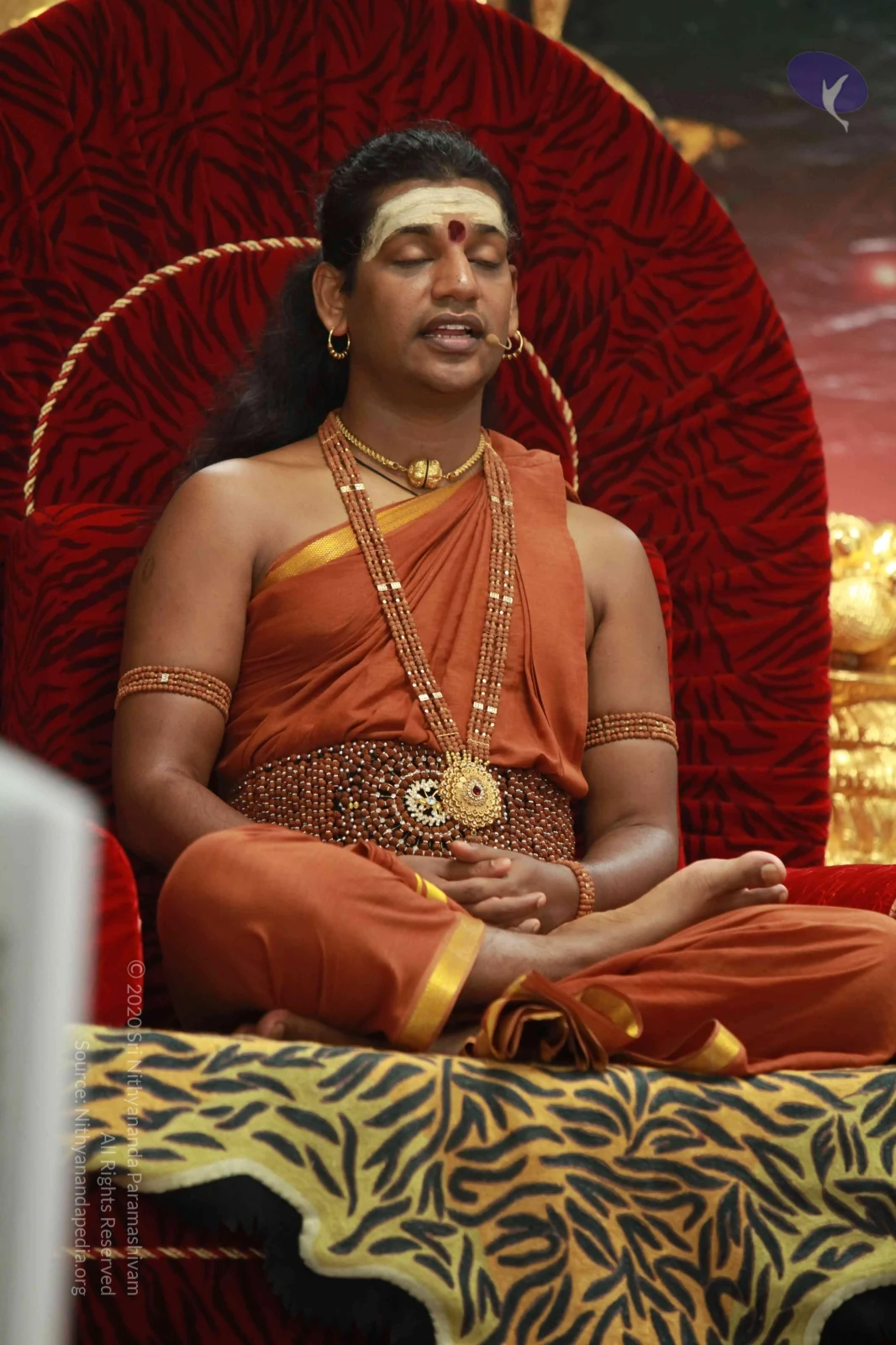
27 photosSource gallery
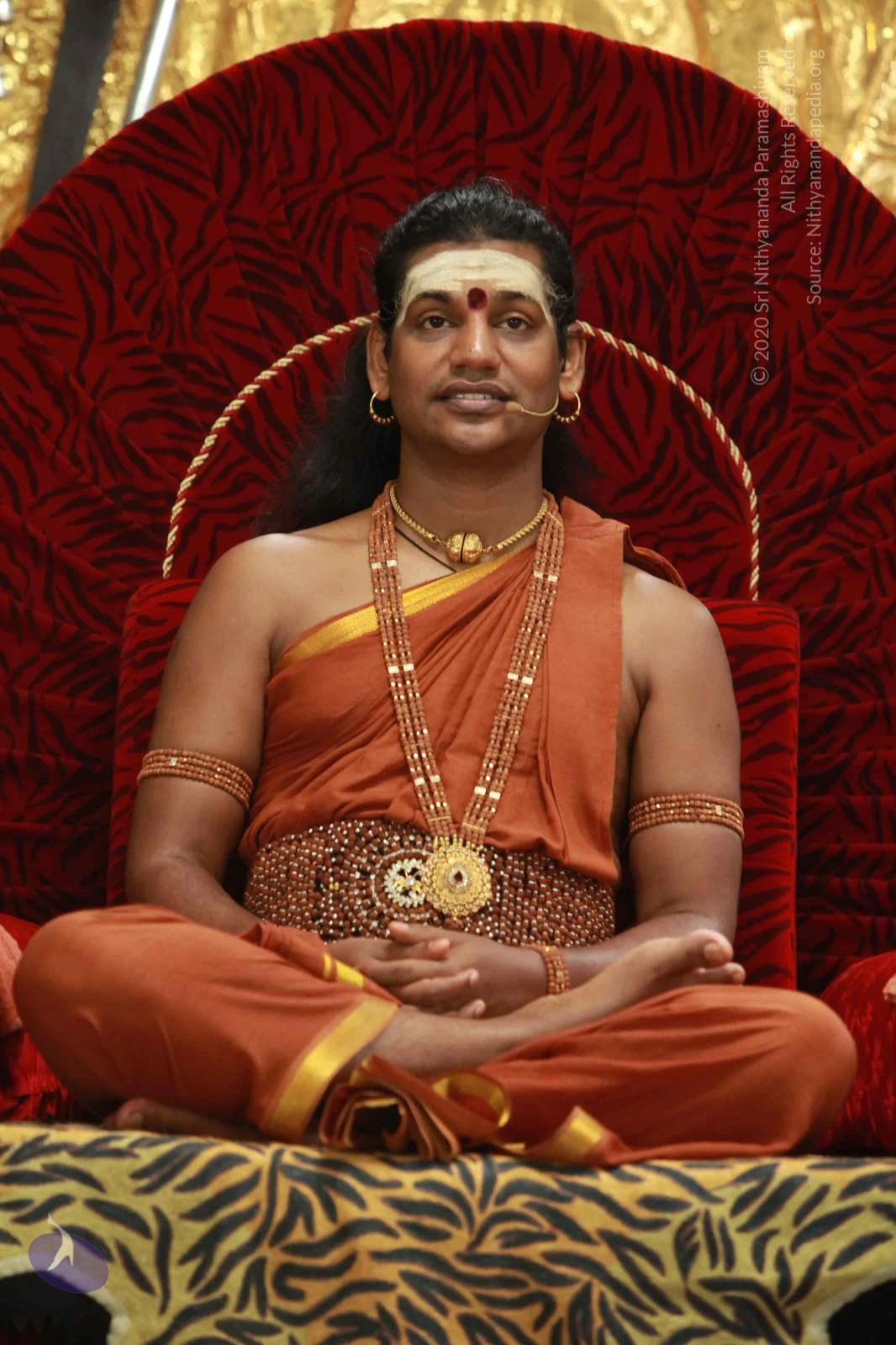
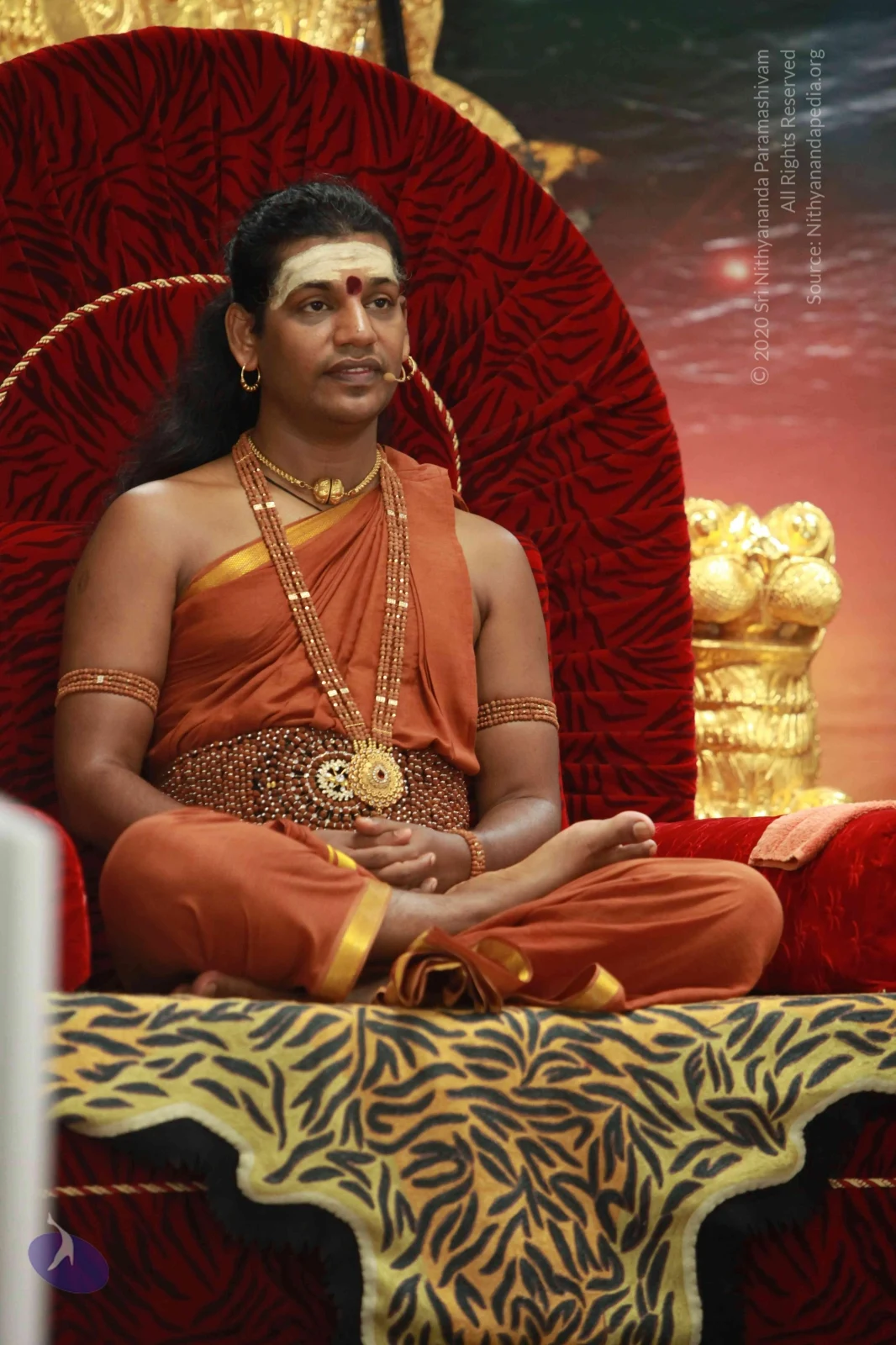
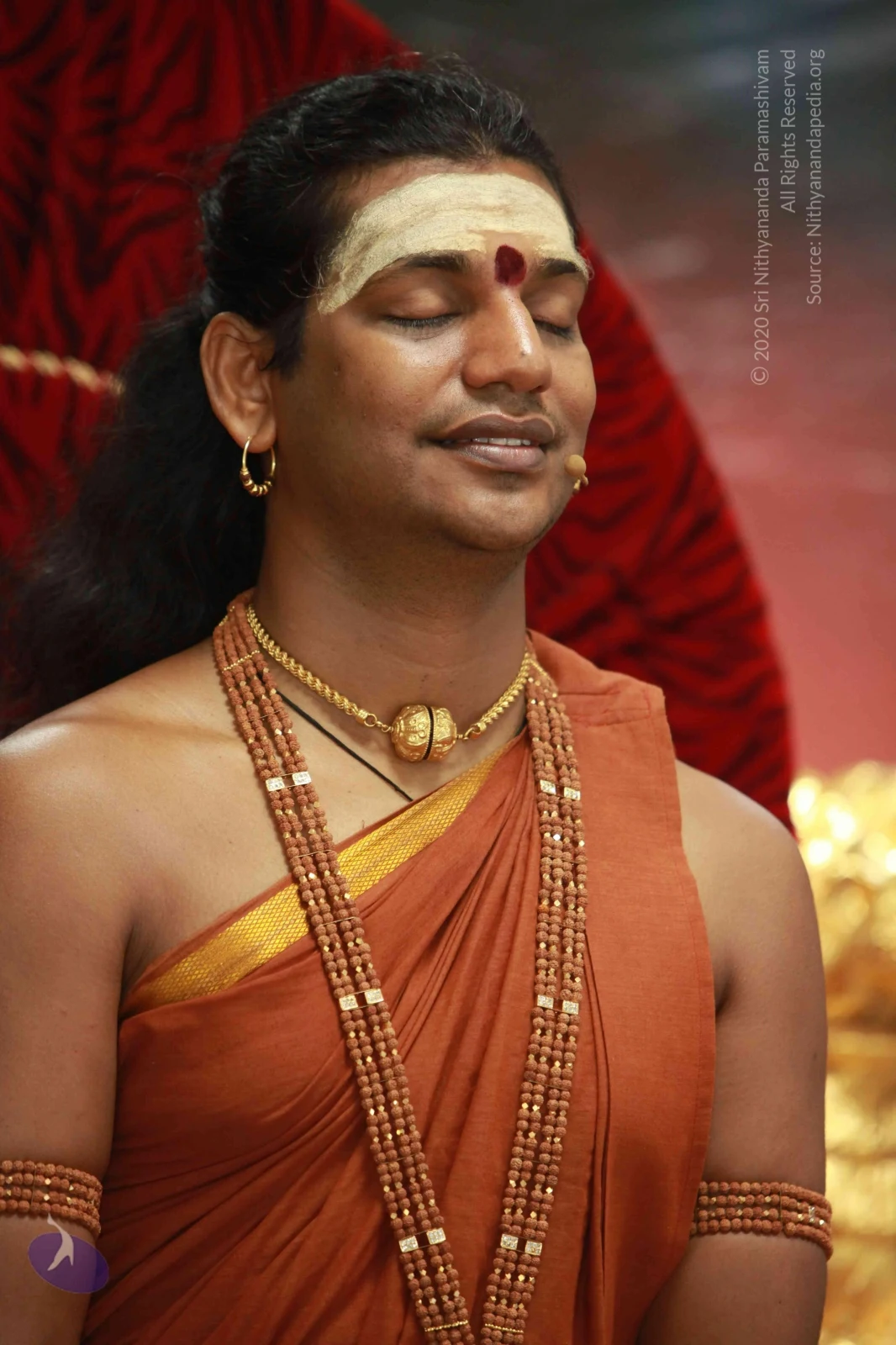
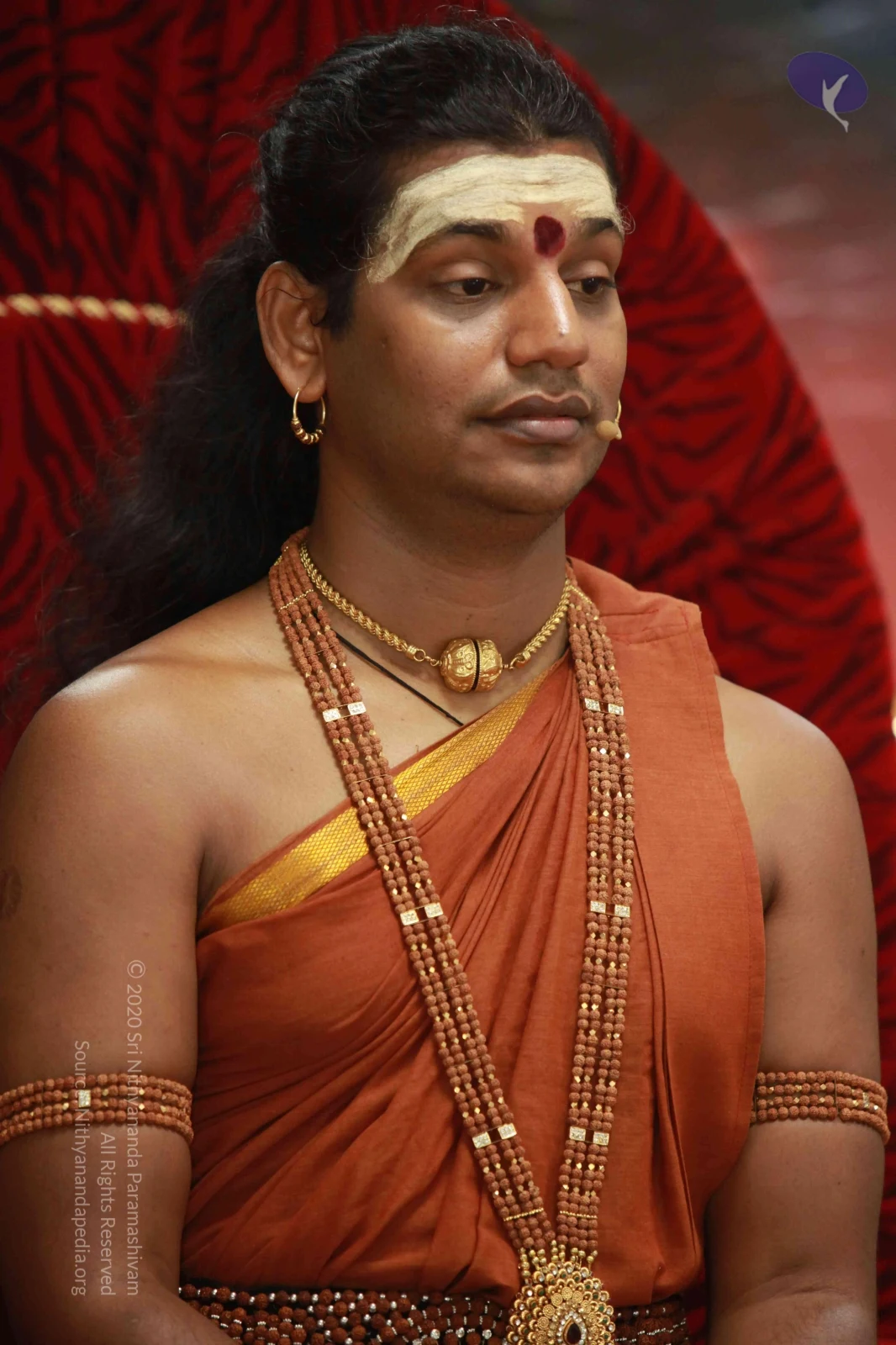
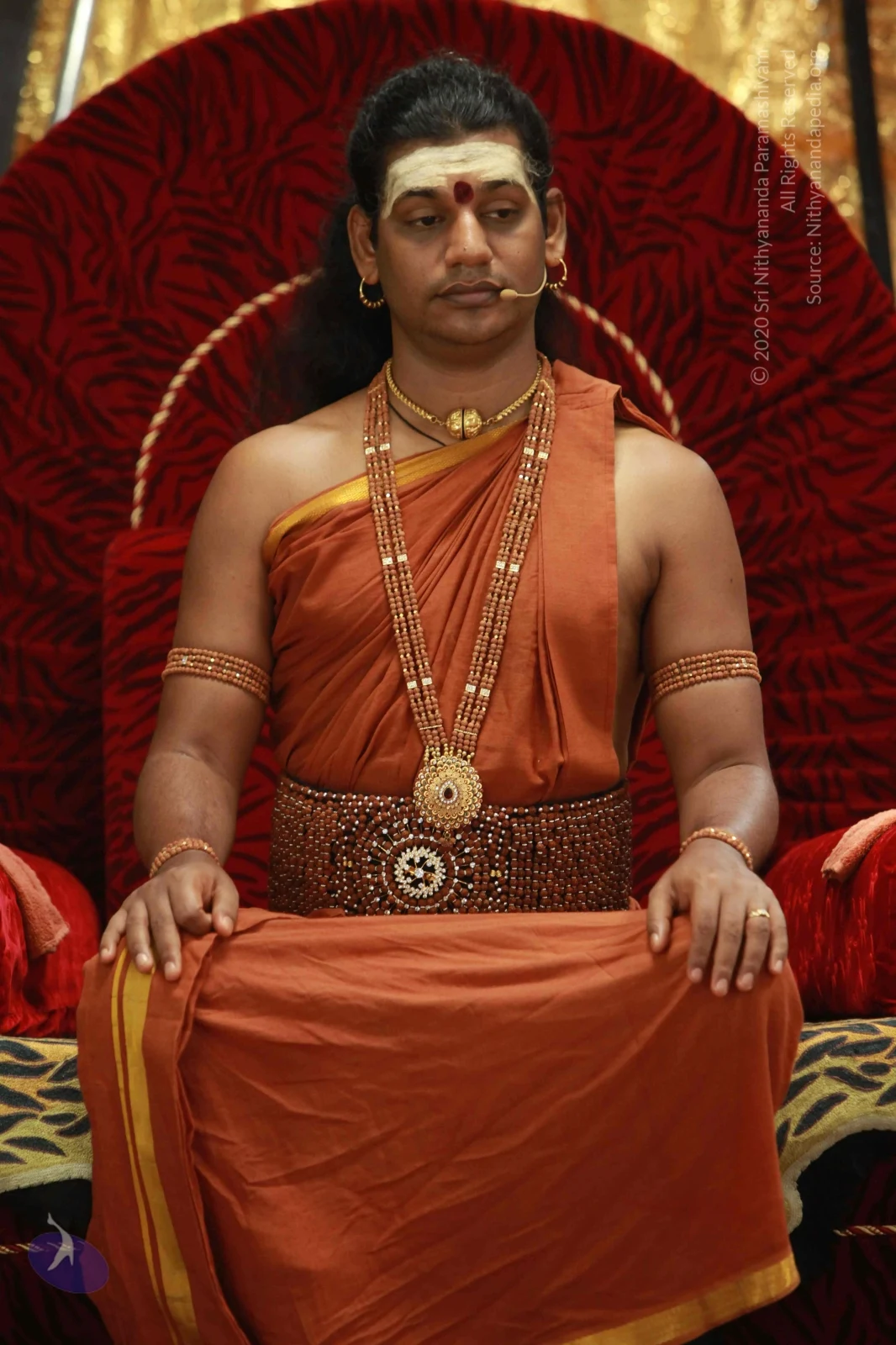
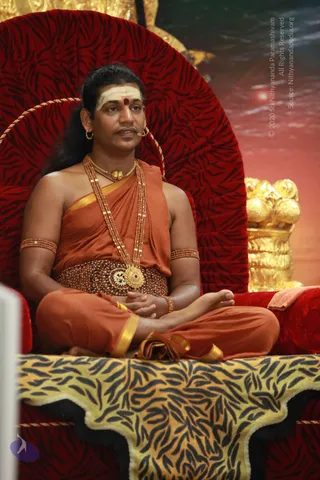
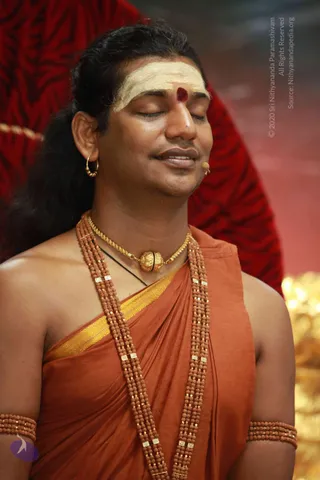
A seated man in orange-saffron robes sits cross-legged on a red velvet throne with a tiger-stripe pattern and a gold-embroidered cushion, eyes closed as if in meditation while speaking. He wears a white sandalwood tilak with a red bindi on his forehead, gold earrings, a gold pendant necklace, multiple tiers of rudraksha beads across his chest, a beaded waist belt and beaded armlets. A small clip microphone is attached near his ear. The gilded decorations of the throne are visible at the right edge.A man seated cross-legged on a red throne with a tiger-striped velvet back and a leopard-print cloth draped over the seat, facing slightly to the side with hands resting in his lap. He wears saffron-orange robes with a gold border, a dense multi-strand rudraksha mala across the chest, a beaded waist girdle with a gold medallion, beaded armlets, a gold necklace, gold hoop earrings, and a headset microphone. A white vertical tilak with a red dot marks his forehead. Swamiji (probable): long swept-back hair, saffron robes, rudraksha malas and ceremonial gold ornaments on a throne, consistent with a satsang setting. Gold decorations are visible at the edges of the frame.A seated man in padmasana on a red velvet throne with a black tiger-stripe pattern and gold rope trim, before a gold-embossed backdrop. He wears saffron-orange robes with a gold border, layered rudraksha malas, a rudraksha belt, arm bands, a gold pendant and gold hoop earrings. A white vibhuti line with a red kumkum dot marks his forehead, and a small microphone is clipped near his mouth. His hands rest in his lap. Swamiji (probable) is shown in appearance-based cues: long swept-back hair, saffron ornate clothing and rudraksha malas.A man sits cross-legged on a red velvet throne with a tiger-stripe pattern and a gold-rope border, with a gold-fabric backdrop behind him. He wears an orange-saffron cloth draped over one shoulder with a gold border, long rudraksha mala necklaces, a gold pendant on a gold chain, a beaded waist belt, and beaded armbands. A white sandalwood stripe and red bindi mark his forehead, and he wears a small headset microphone. His hands rest in his lap in a meditation mudra, and a leopard-print cushion lies beneath him. Appearance-based cues including the long swept-back hair, saffron clothing, rudraksha malas and ceremonial gold ornaments suggest Swamiji (probable), seated in discourse.A man with long dark hair sits cross-legged on a red velvet throne with a tiger-striped back and a leopard-print cloth draped over the seat. He wears an orange-saffron unstitched garment with gold border, a multi-strand rudraksha mala with a gold pendant, a beaded waist belt, beaded armlets and a gold choker, with a white tilak and red bindi on his forehead and a small headset microphone. Behind him stands a large gold ornate structure with a golden backdrop. He is seated in meditation-like posture while speaking. a person, seated in a satsang setting.Close photo of a man with eyes closed and a faint smile, wearing an orange saffron-toned sannyasi wrap with a gold-bordered edge. He has long dark hair swept back, a white sandalwood band across the forehead with a red kumkum dot, gold hoop earrings, a gold necklace with a round gold pendant, multi-strand rudraksha malas, and rudraksha armbands. A small clip-on microphone is visible near his cheek. Behind him is a red patterned cloth. Probable Swamiji (Paramahamsa Nithyananda) by appearance: long swept-back hair, saffron clothing, rudraksha malas and ceremonial gold necklace, seated during a satsang setting.

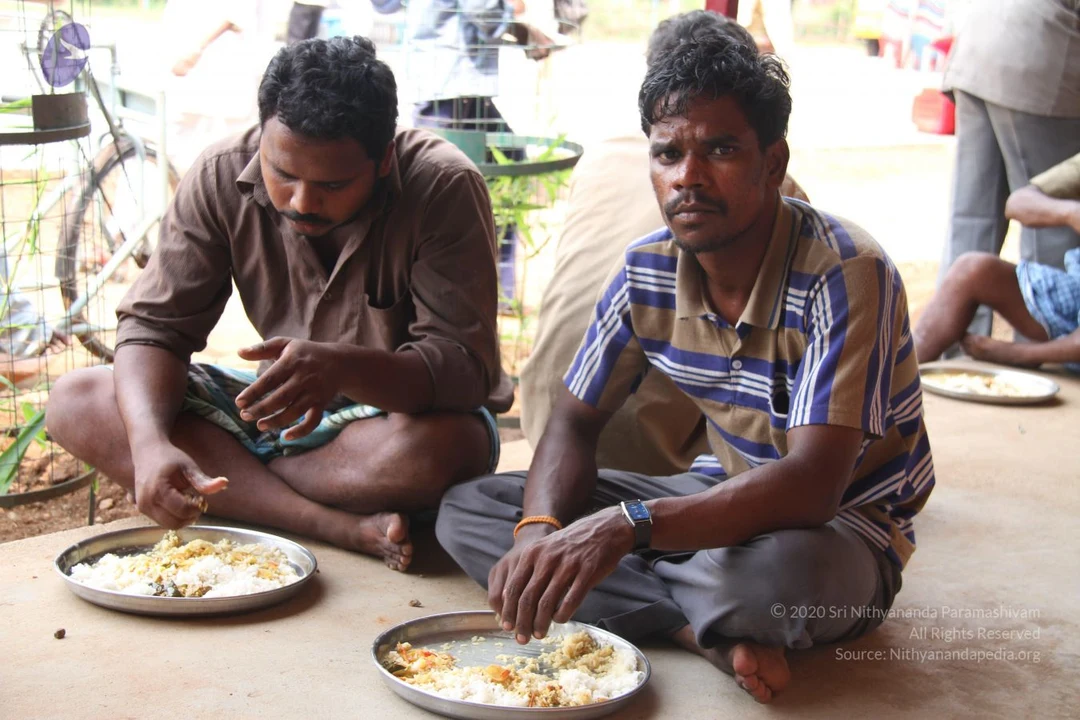
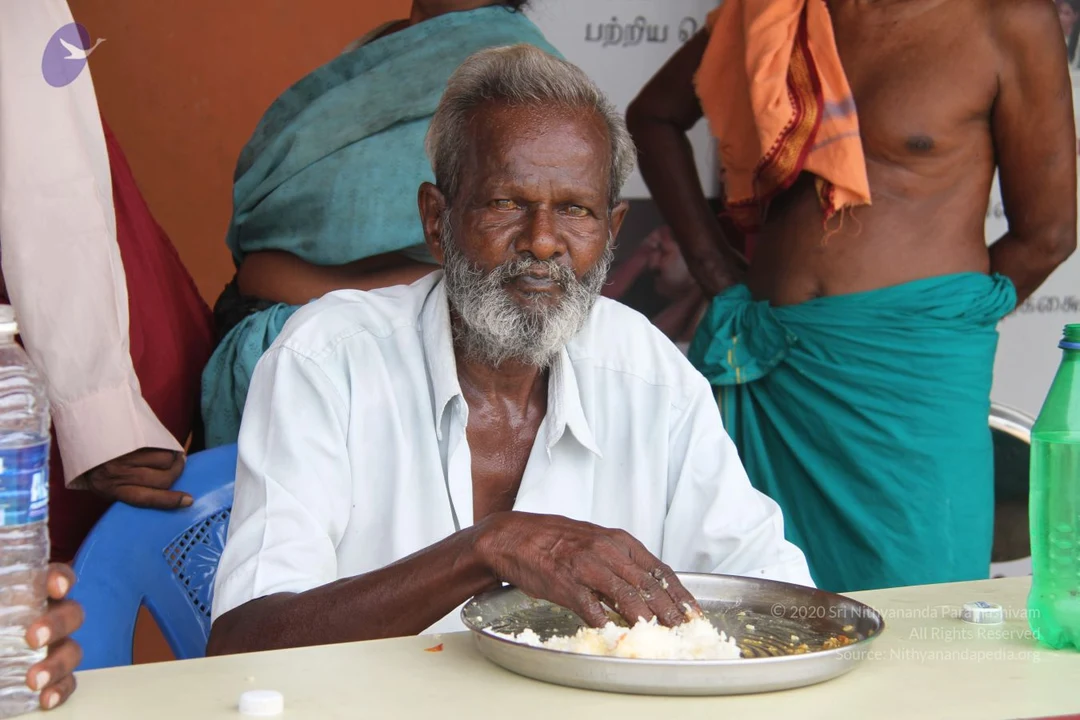
2-Annadhan
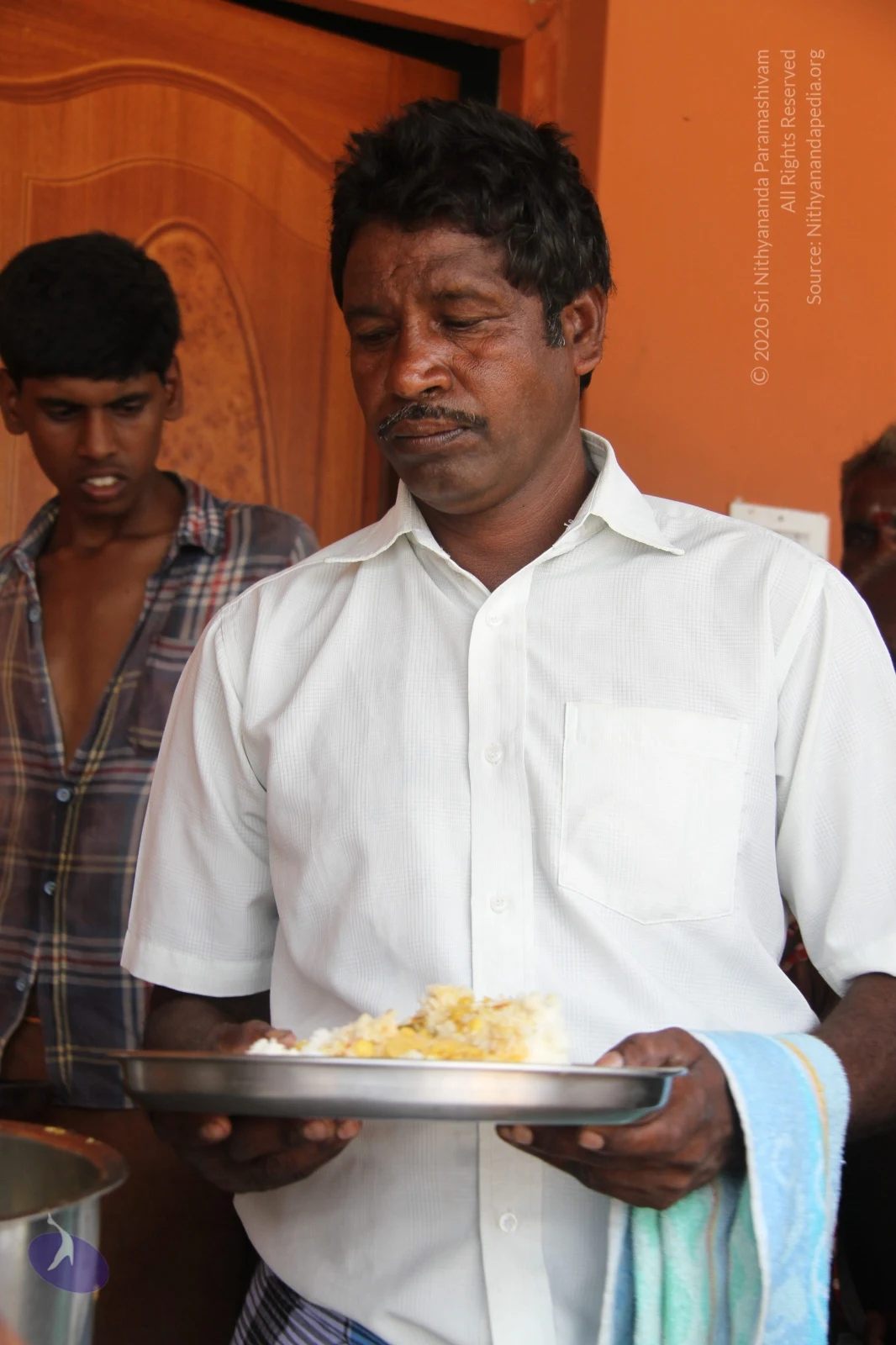
2 photosSource gallery
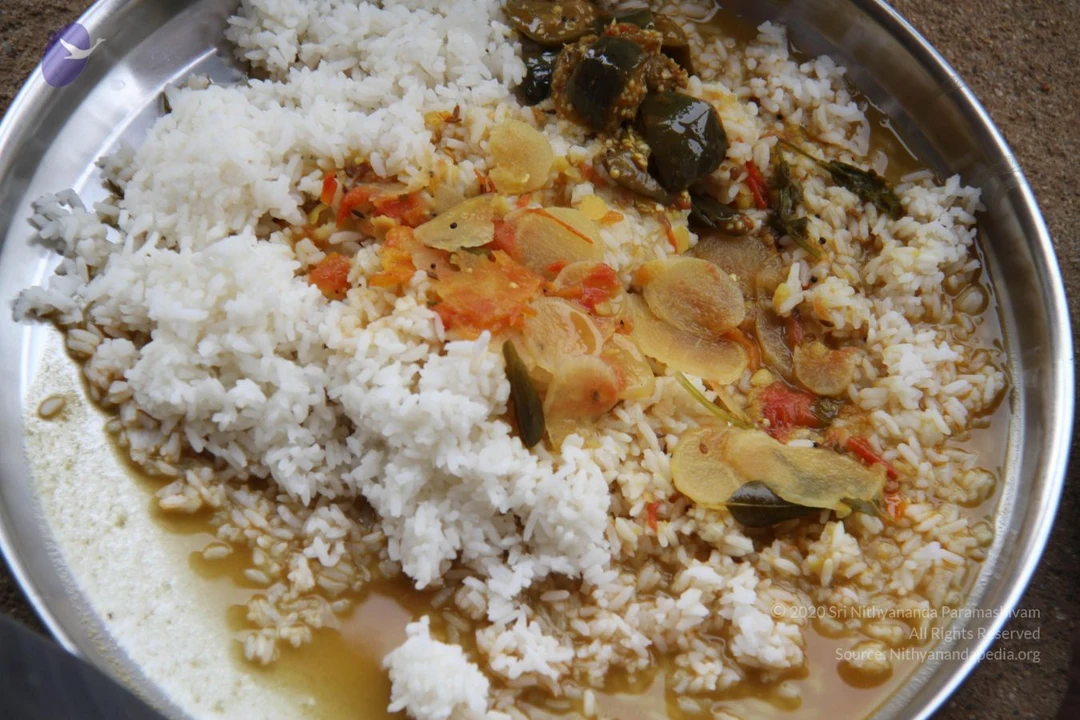
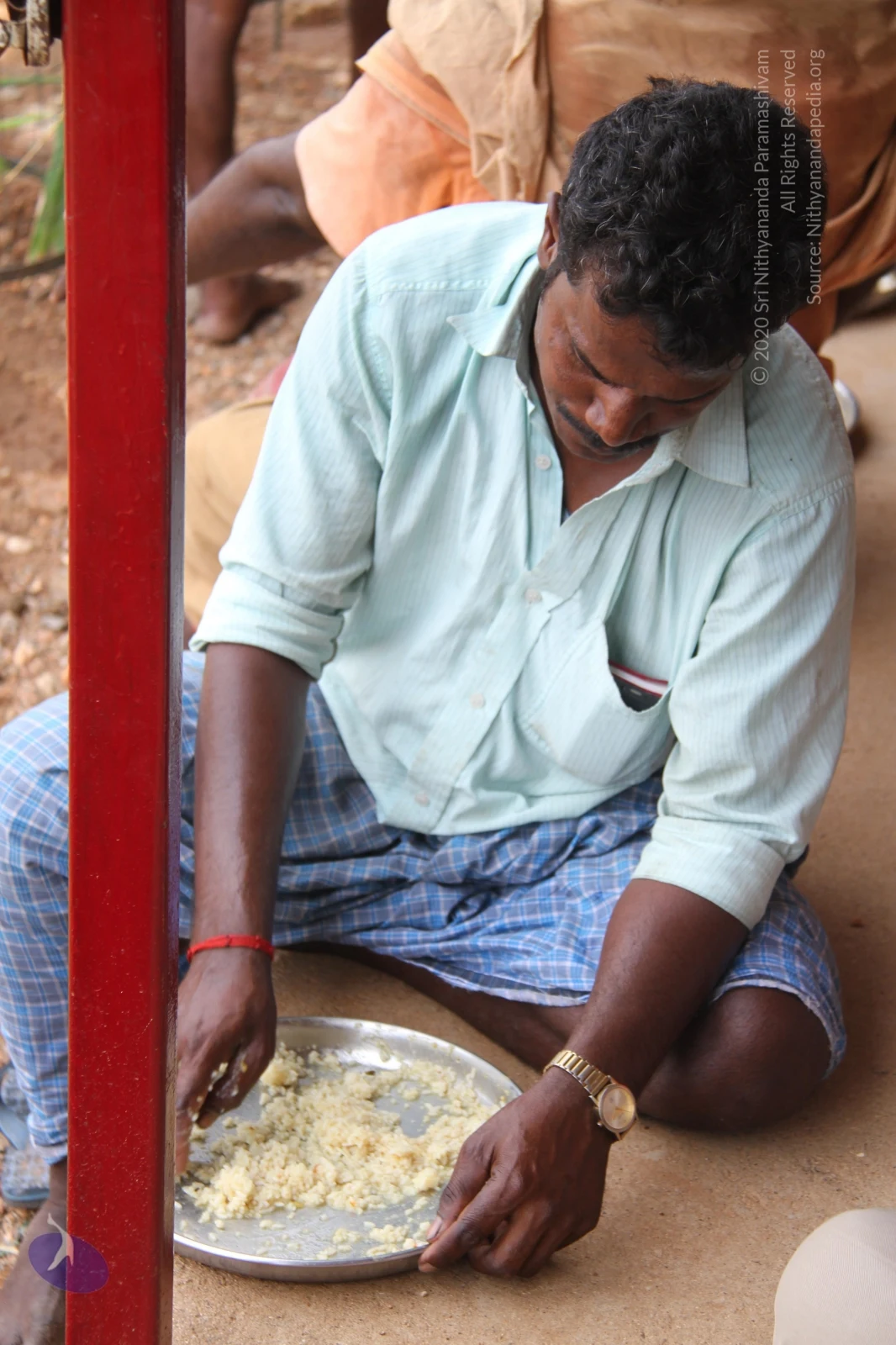
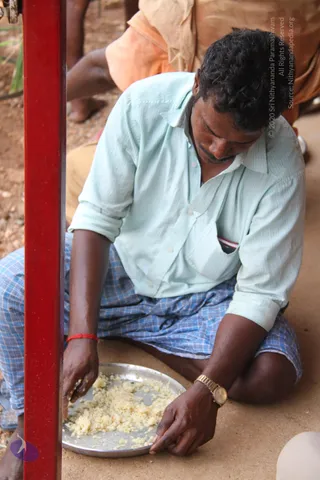
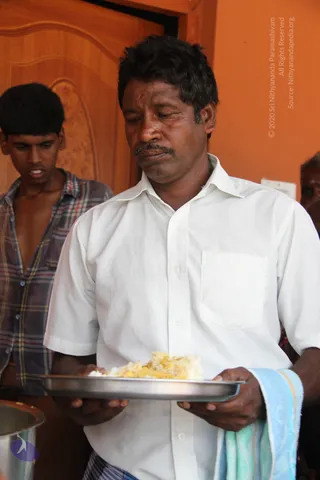
A man in a pale mint-green collared shirt and blue-and-white checked lungi sits cross-legged on bare ground beside a red pillar, leaning forward to pick through a pile of cooked grain on a round steel plate. He wears a gold-toned wristwatch and a red thread bracelet on his left wrist. Another person in orange cloth sits partly visible behind him. The scene suggests food being prepared or served during an annadan-style meal, though no ritual is clearly shown.A man in a white short-sleeved collared shirt and a light blue towel draped over his shoulder carries a stainless steel tray of cooked rice mixed with yellow pieces. He stands in front of an orange-painted wall and a wooden door. Behind him to the left a young man in a plaid shirt looks on, and a partly visible person appears at the right edge. The setting suggests food distribution such as annadan. No one visible is identifiable as a person.

3-Akashik-Reading
50 photosSource gallery
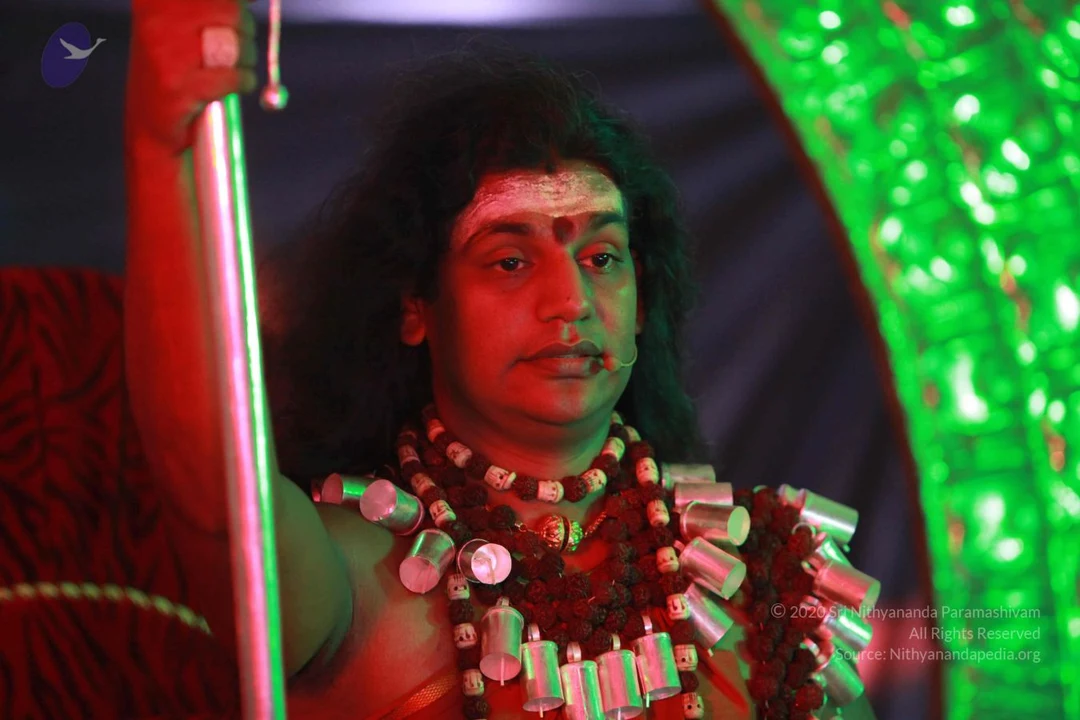
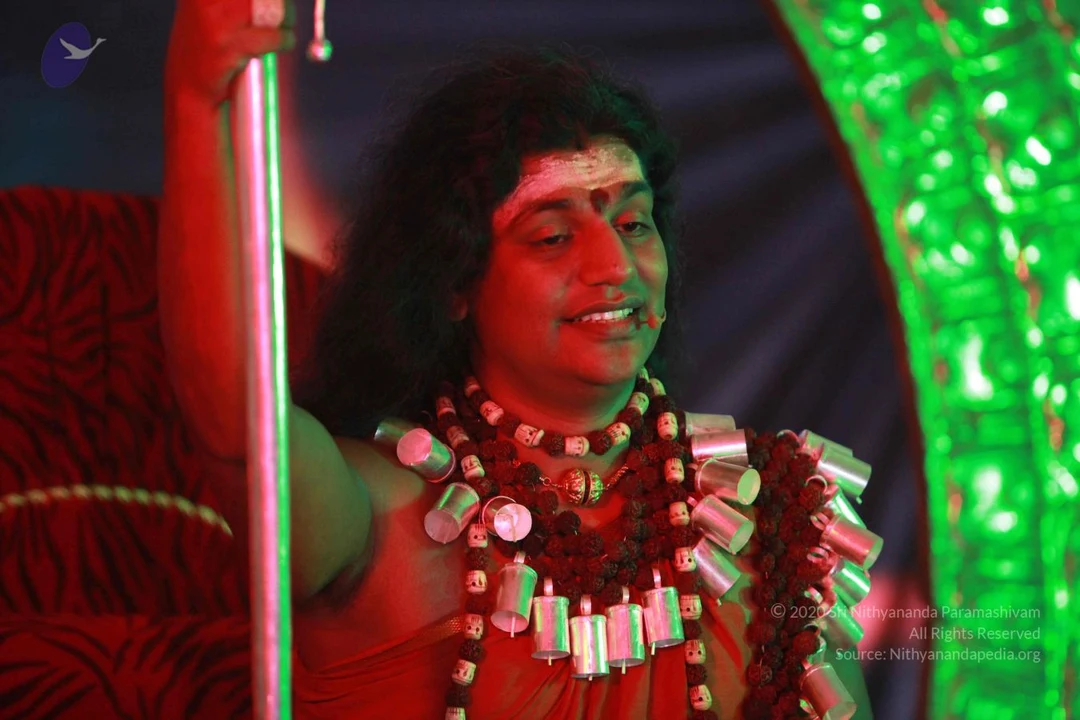
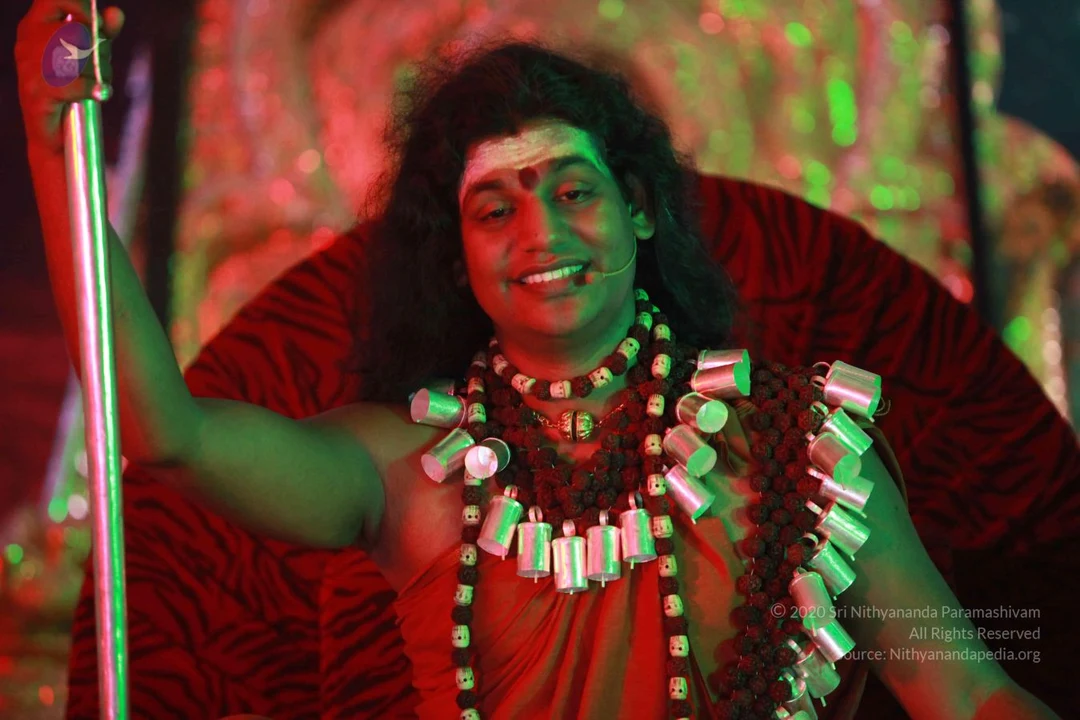
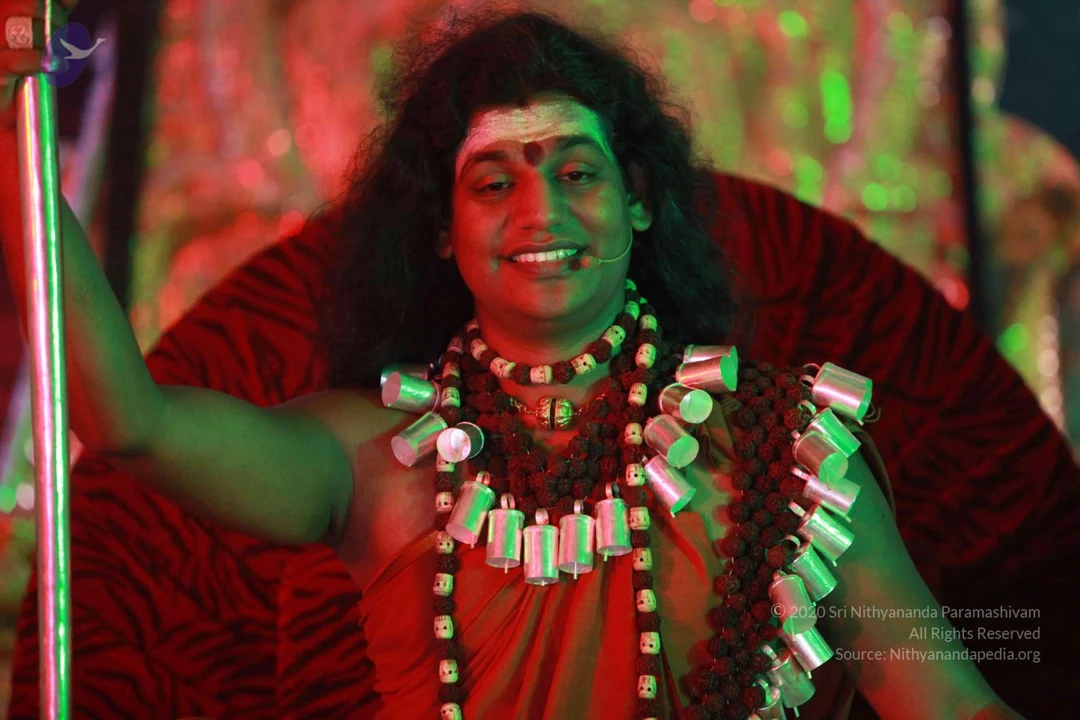
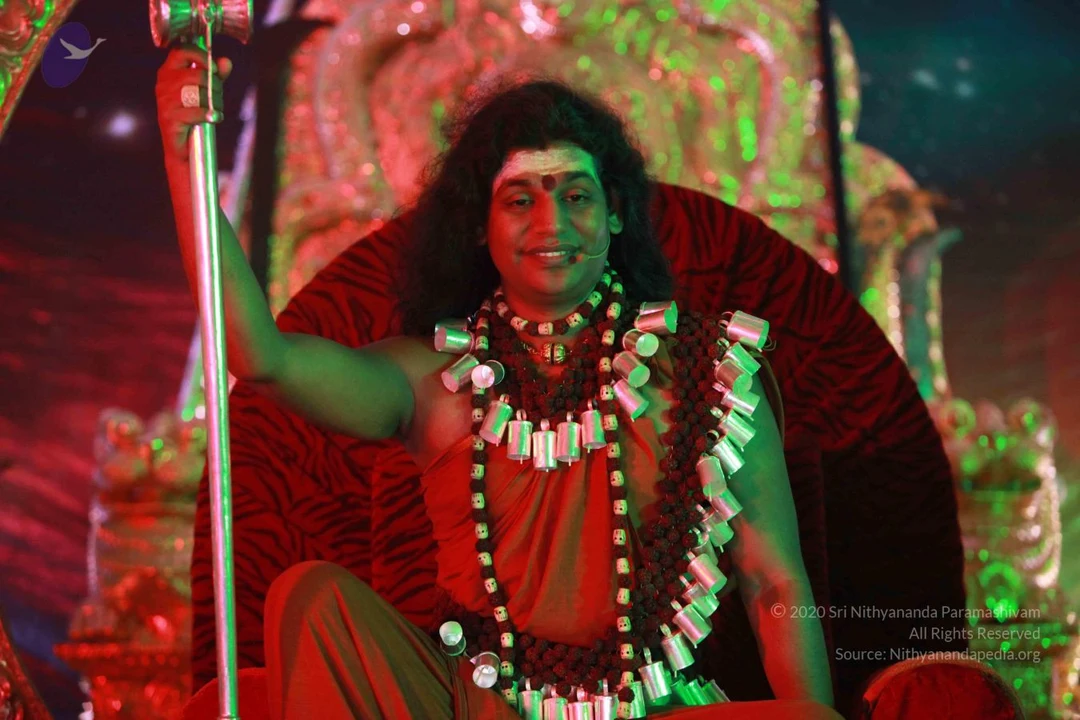
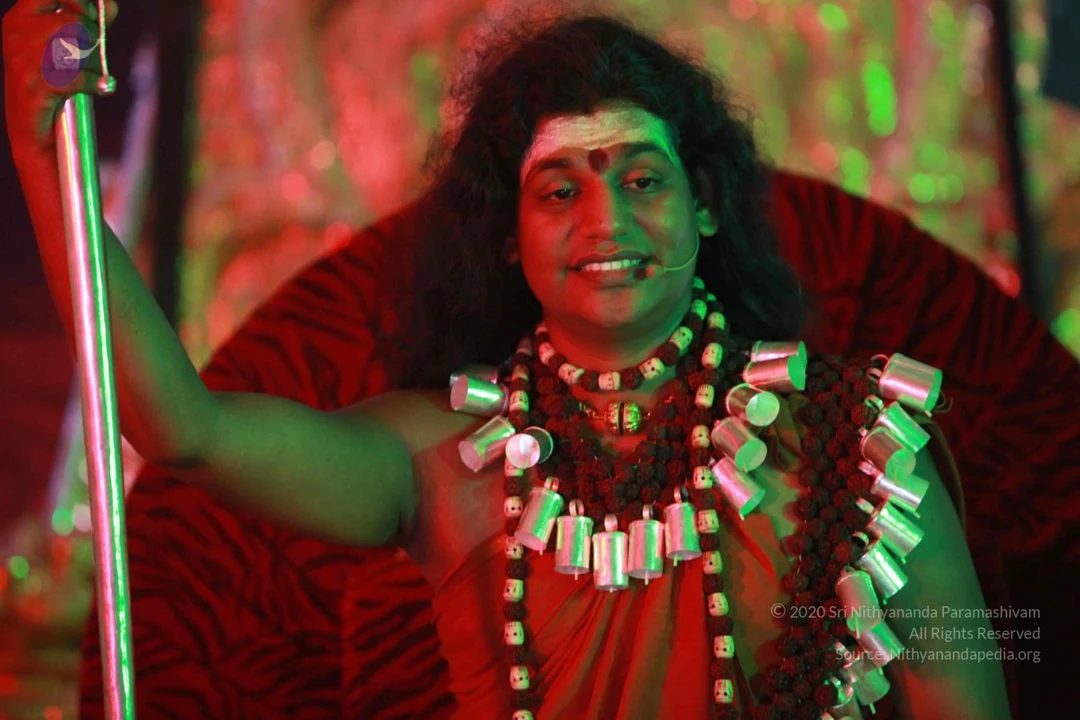
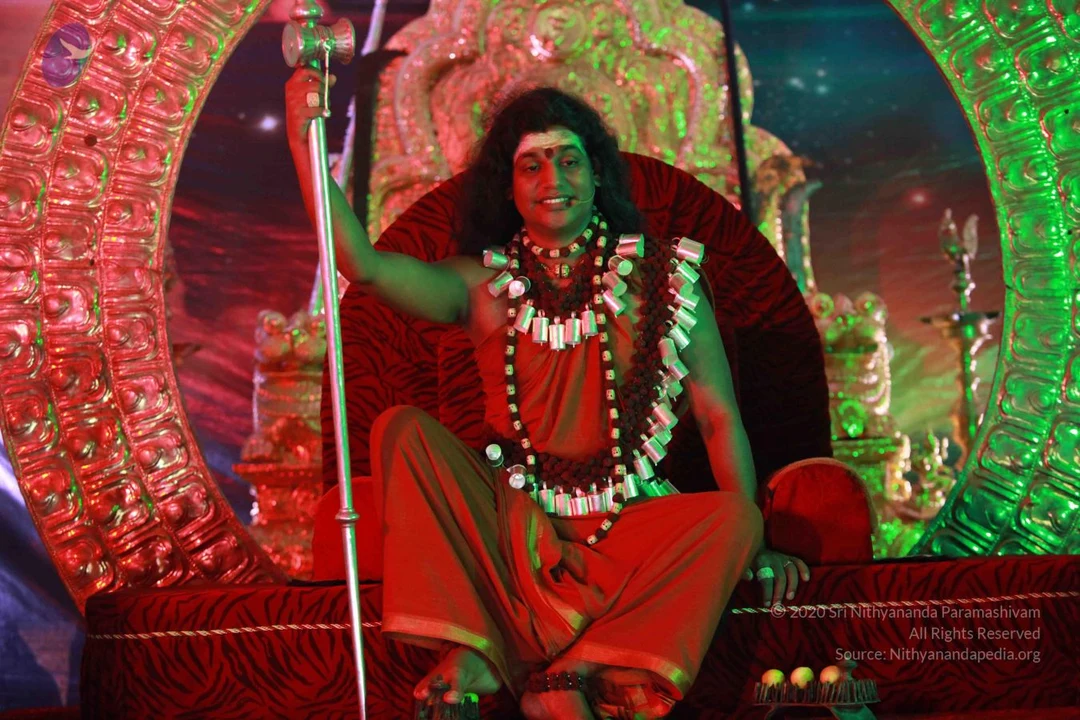
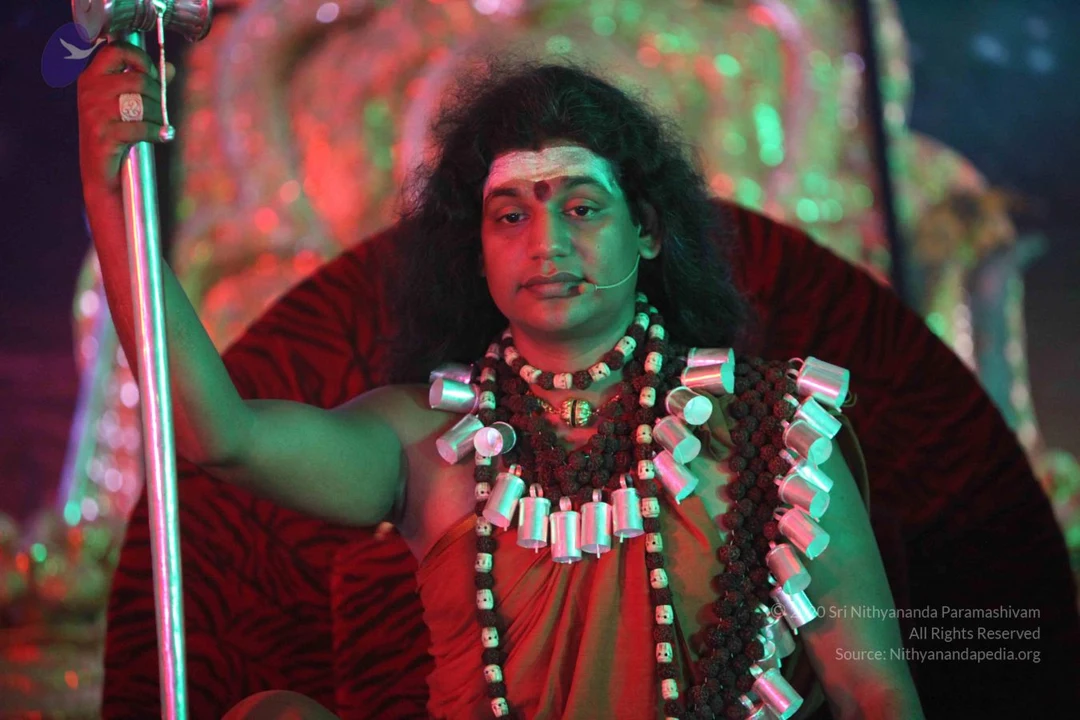
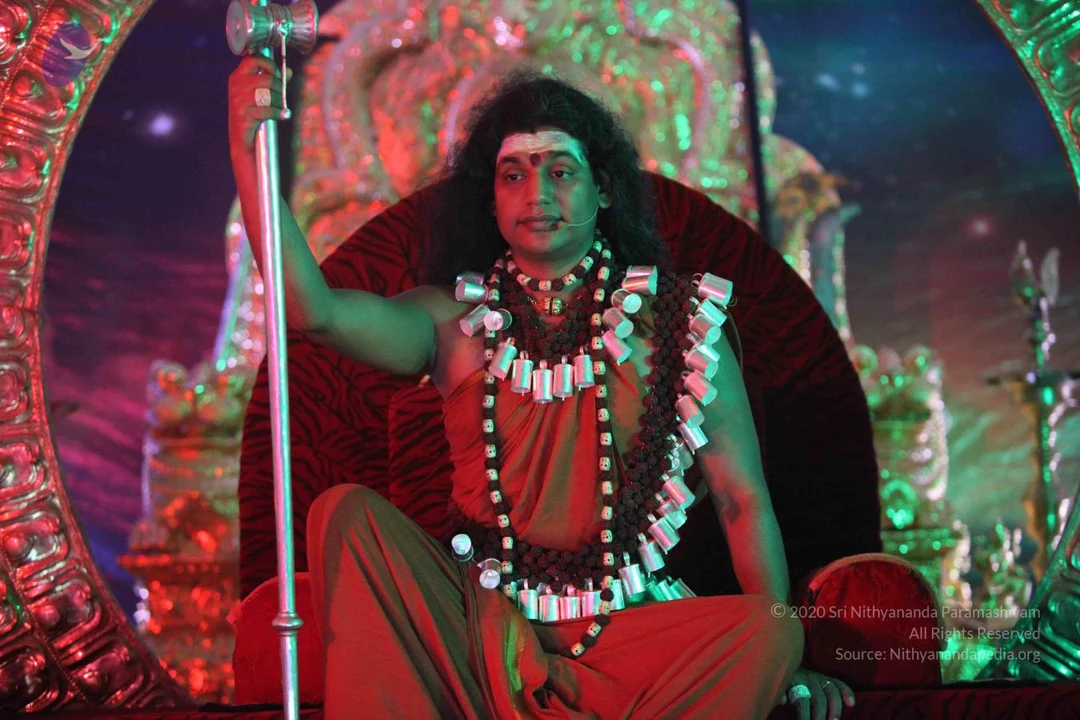
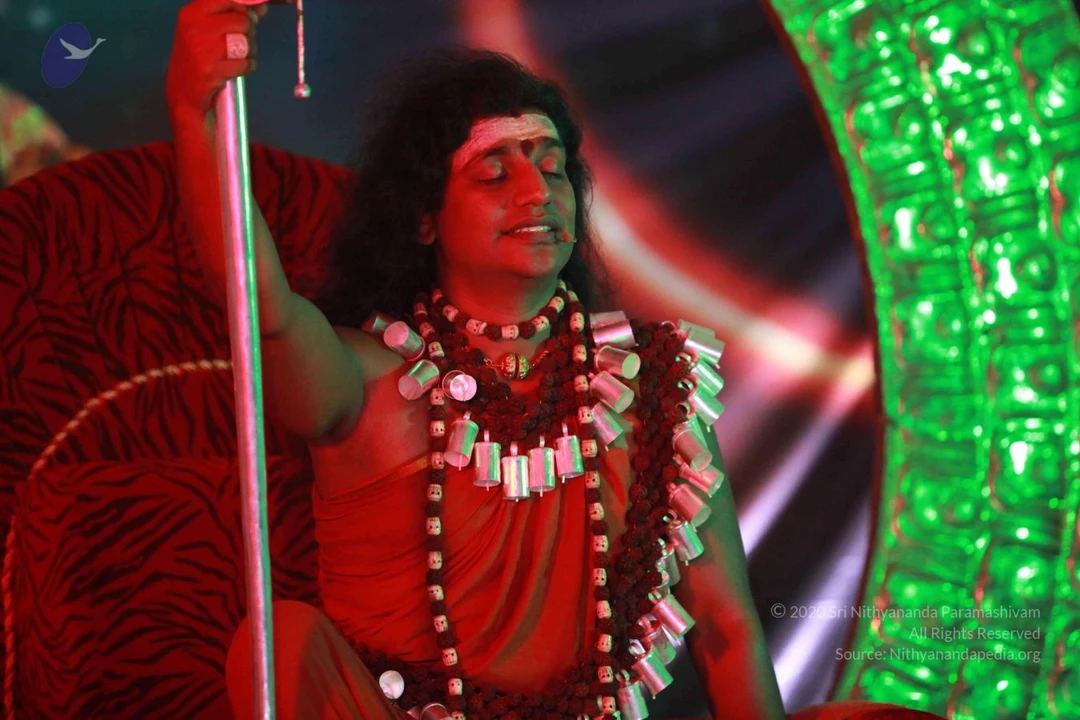
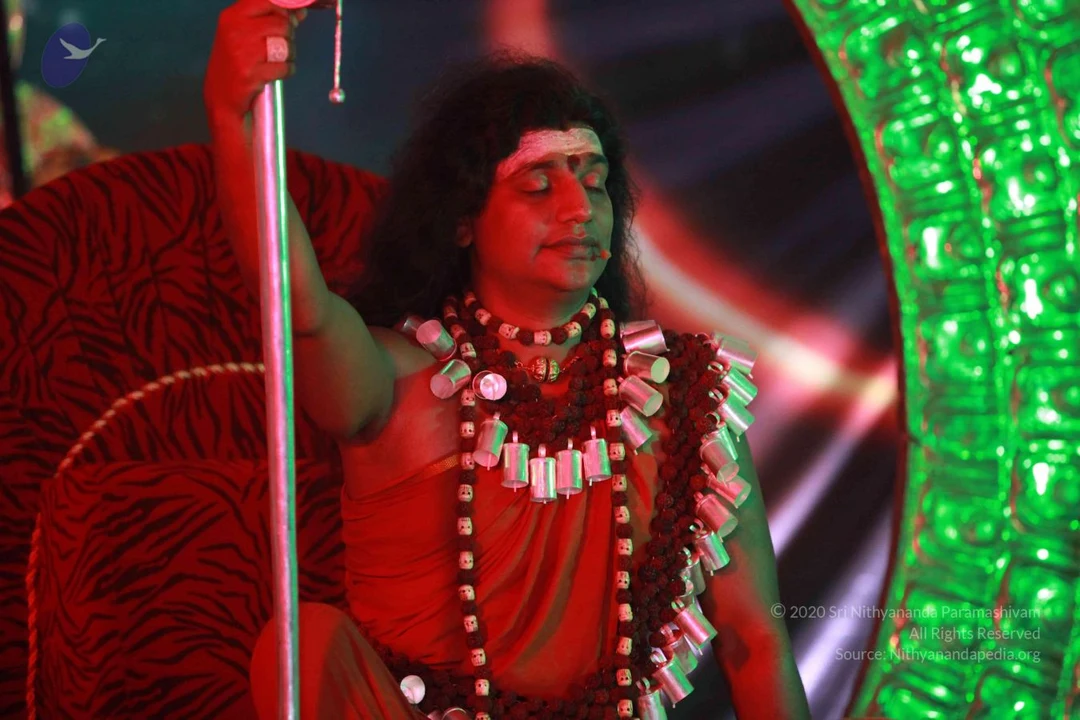
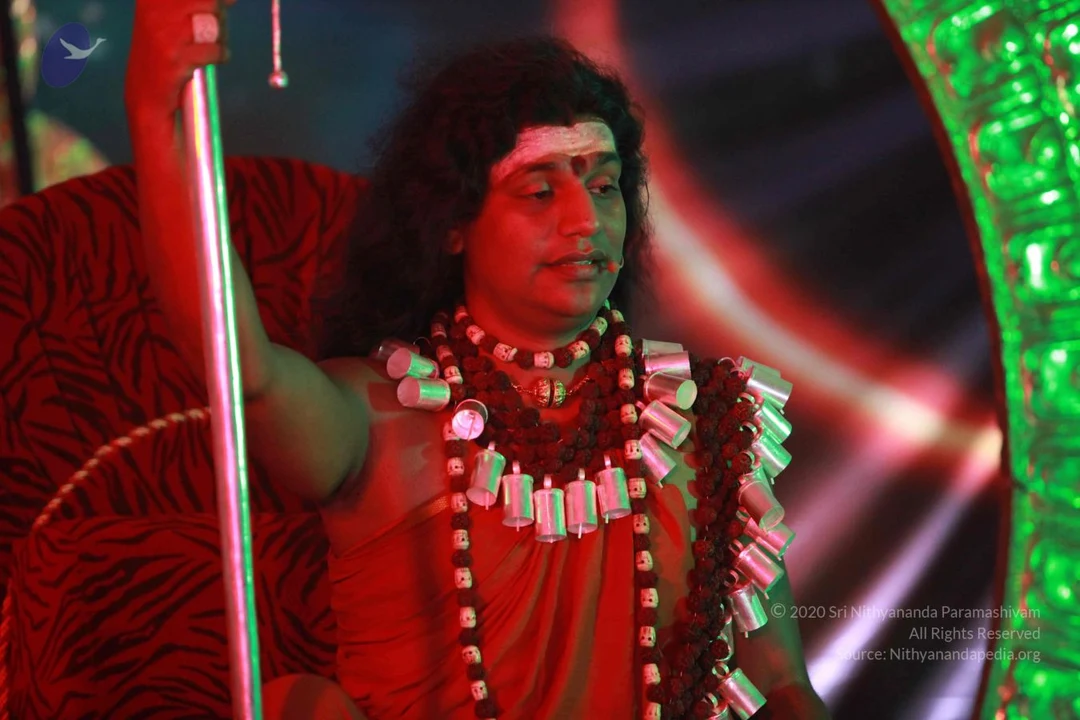
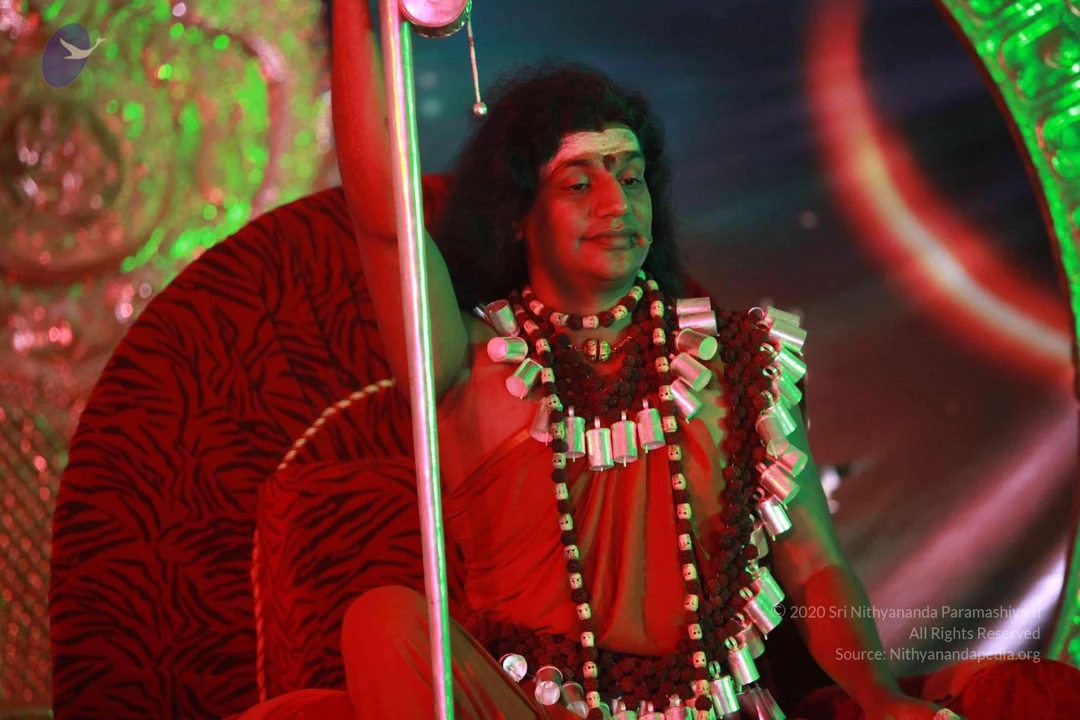
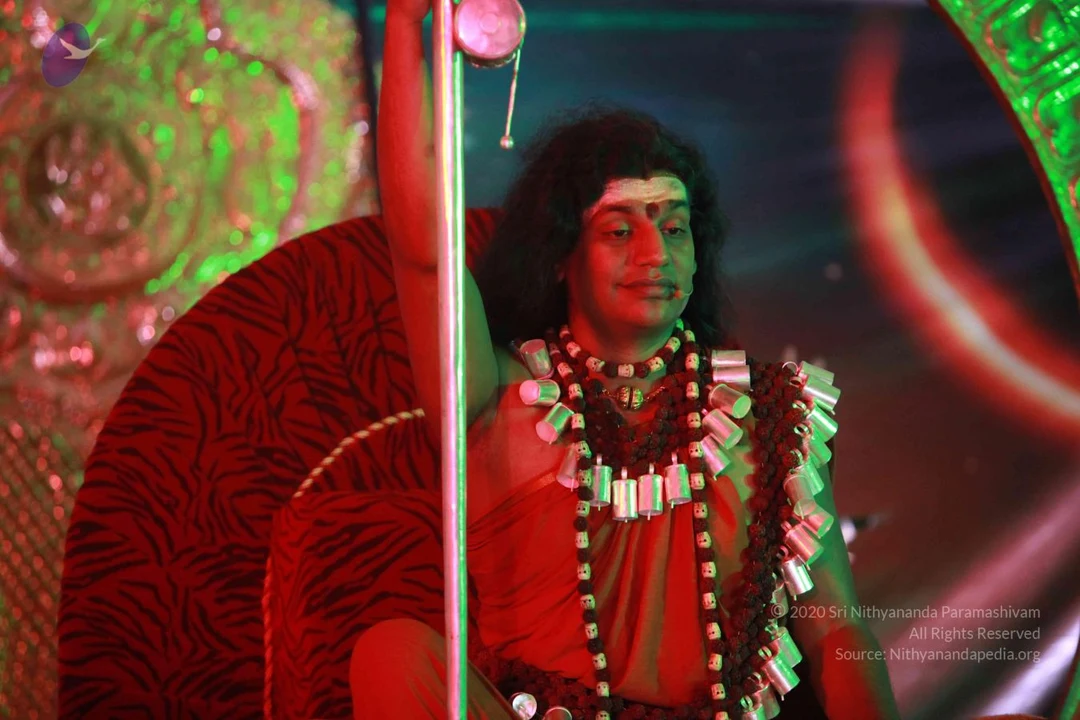
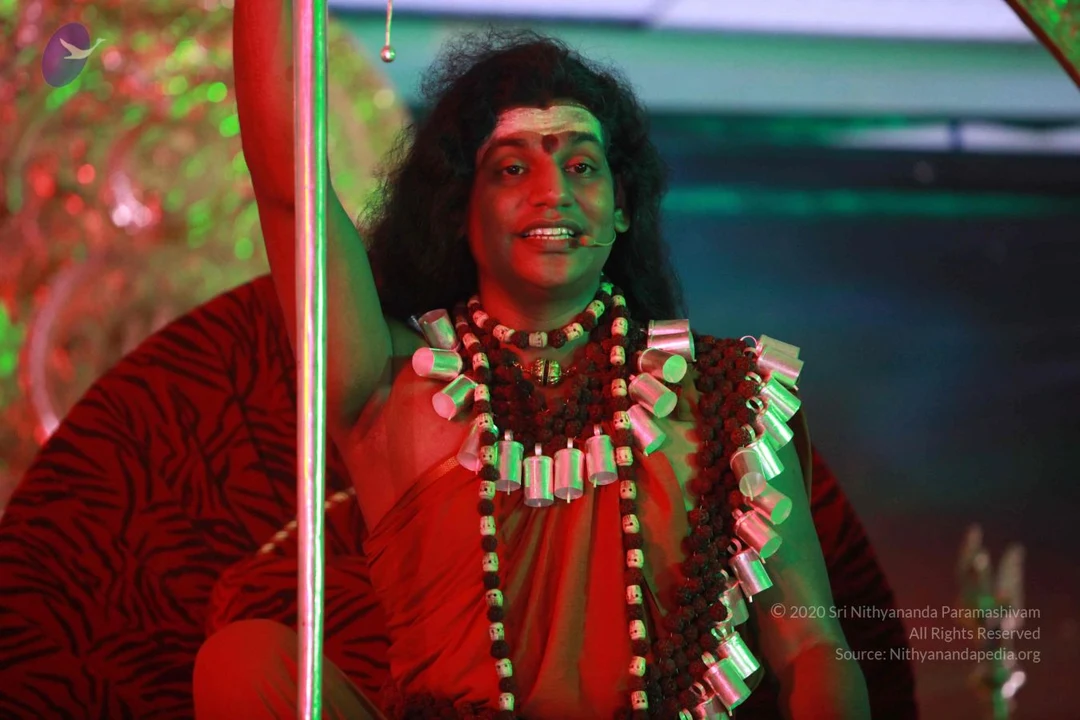
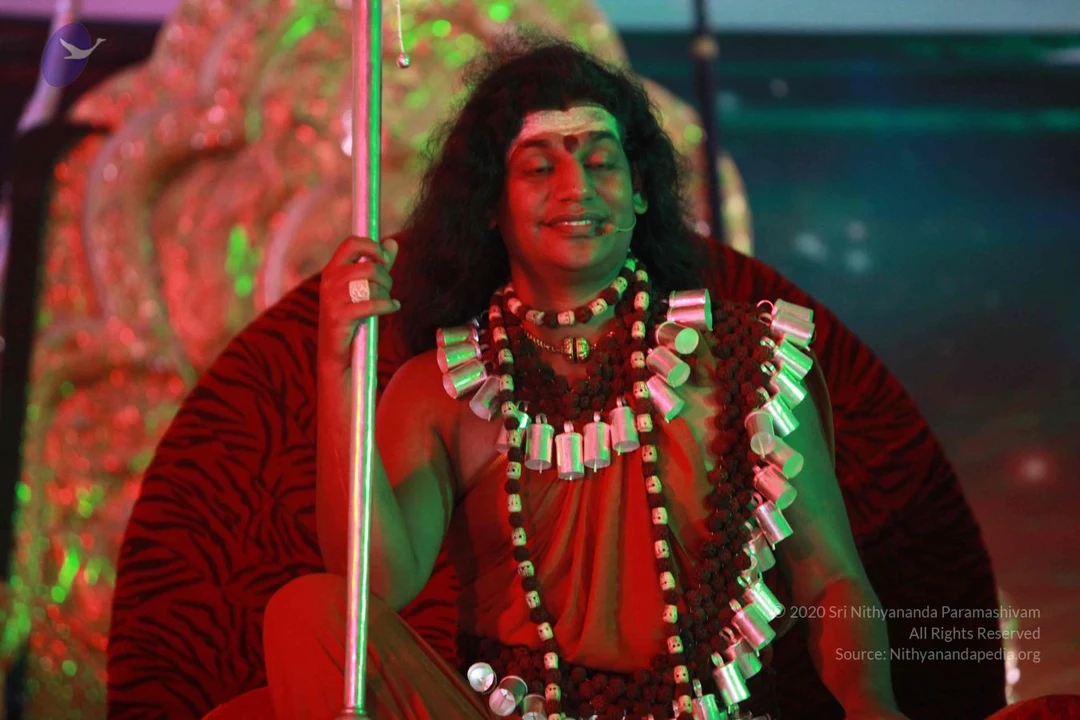
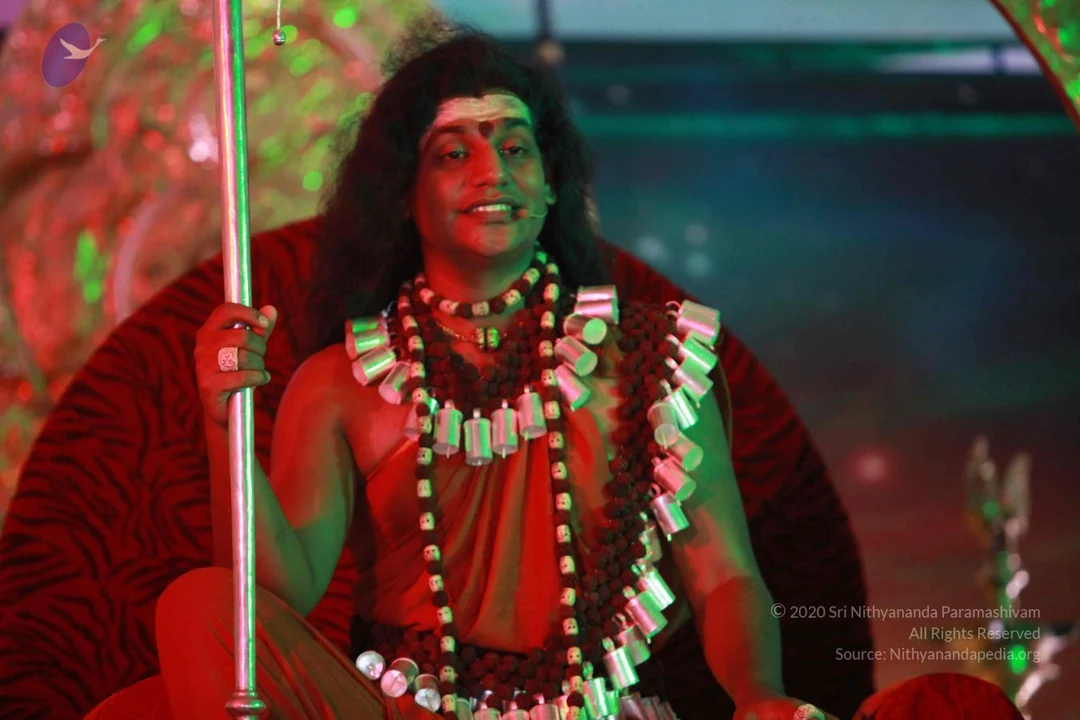
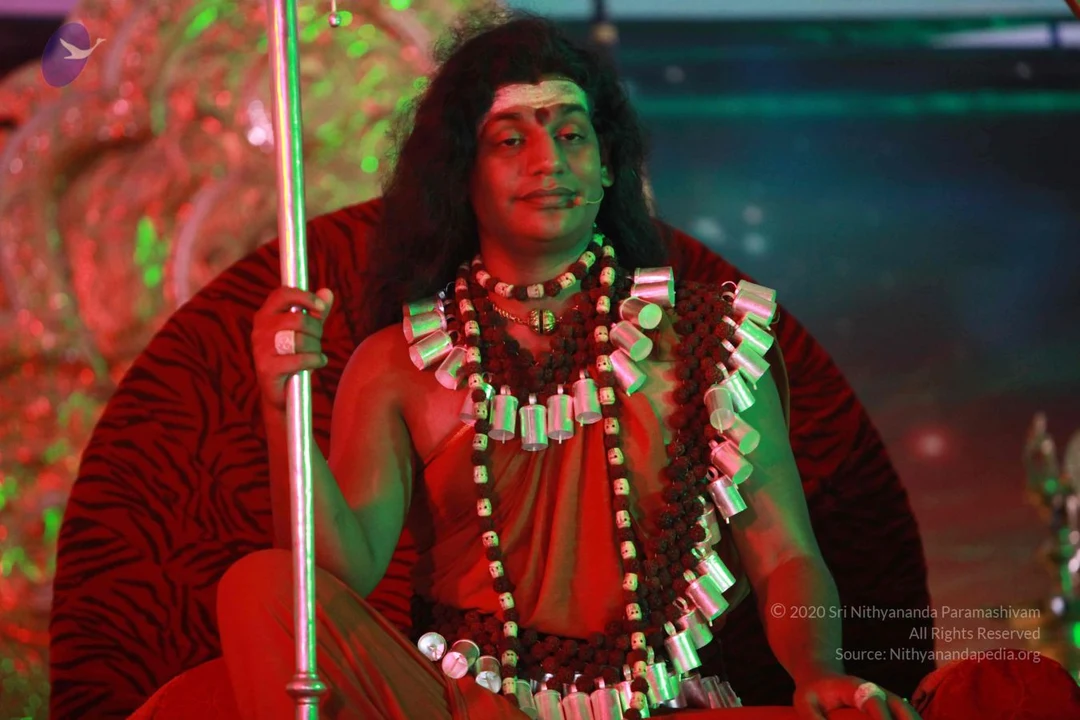
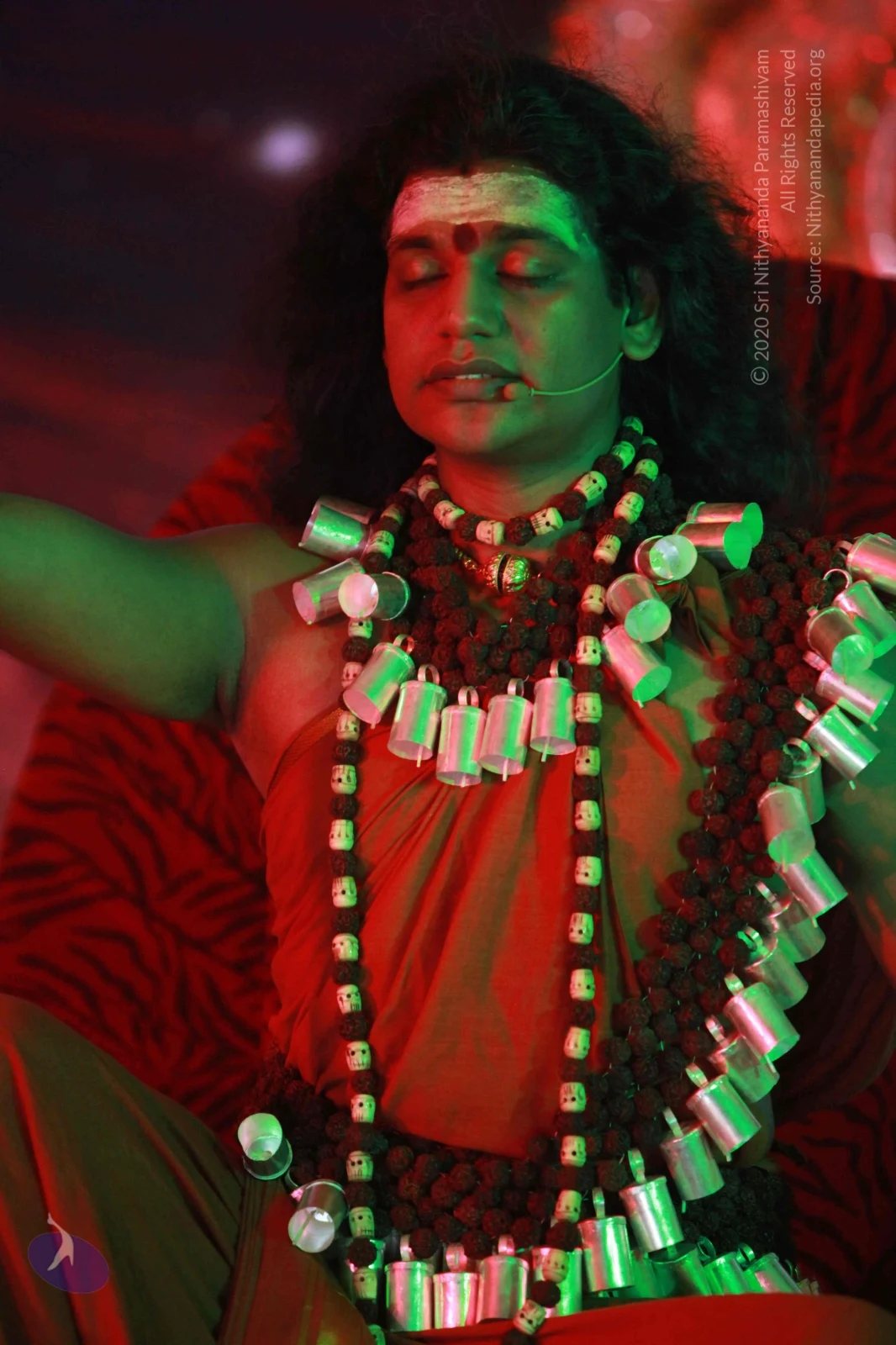
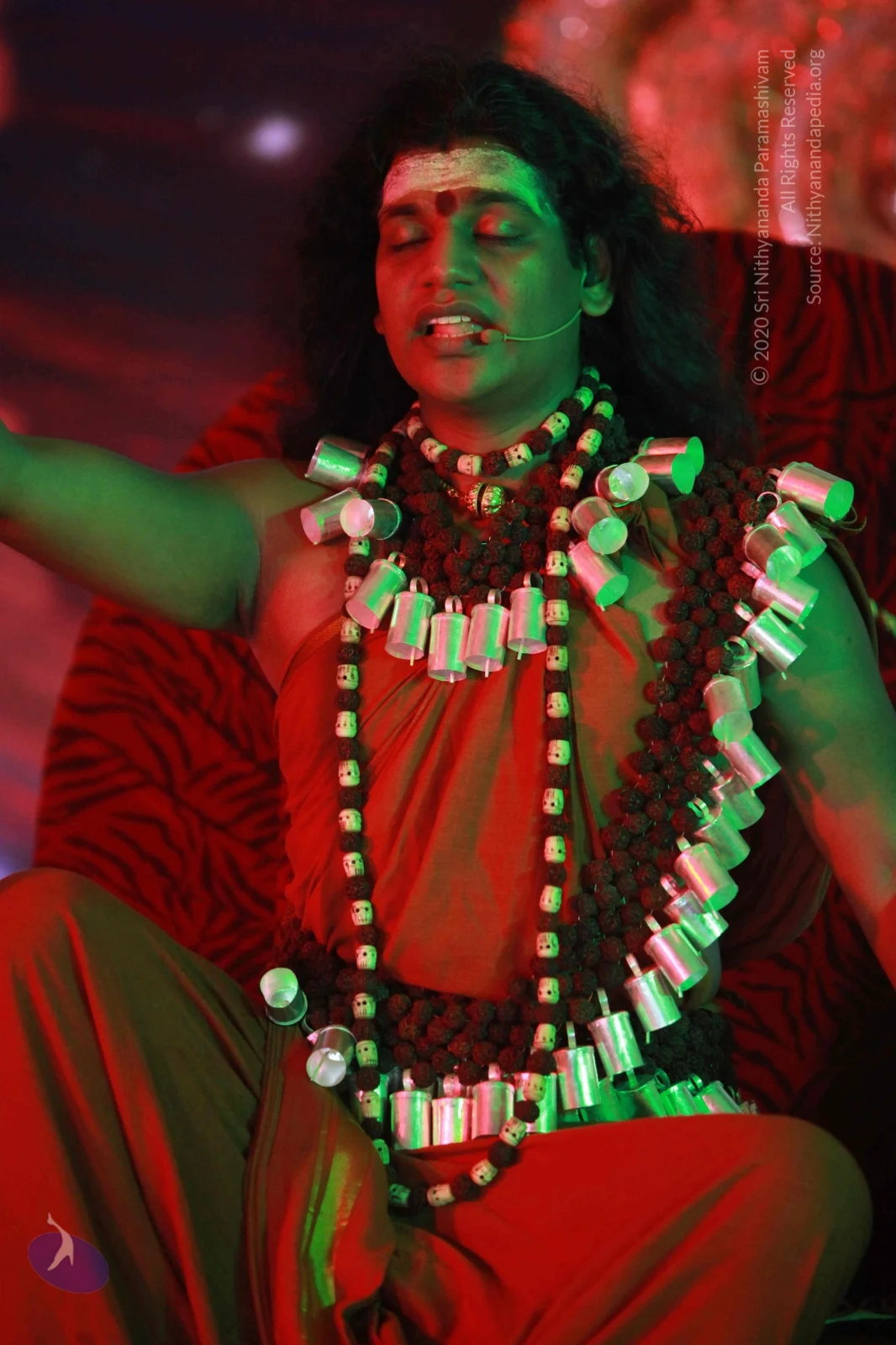
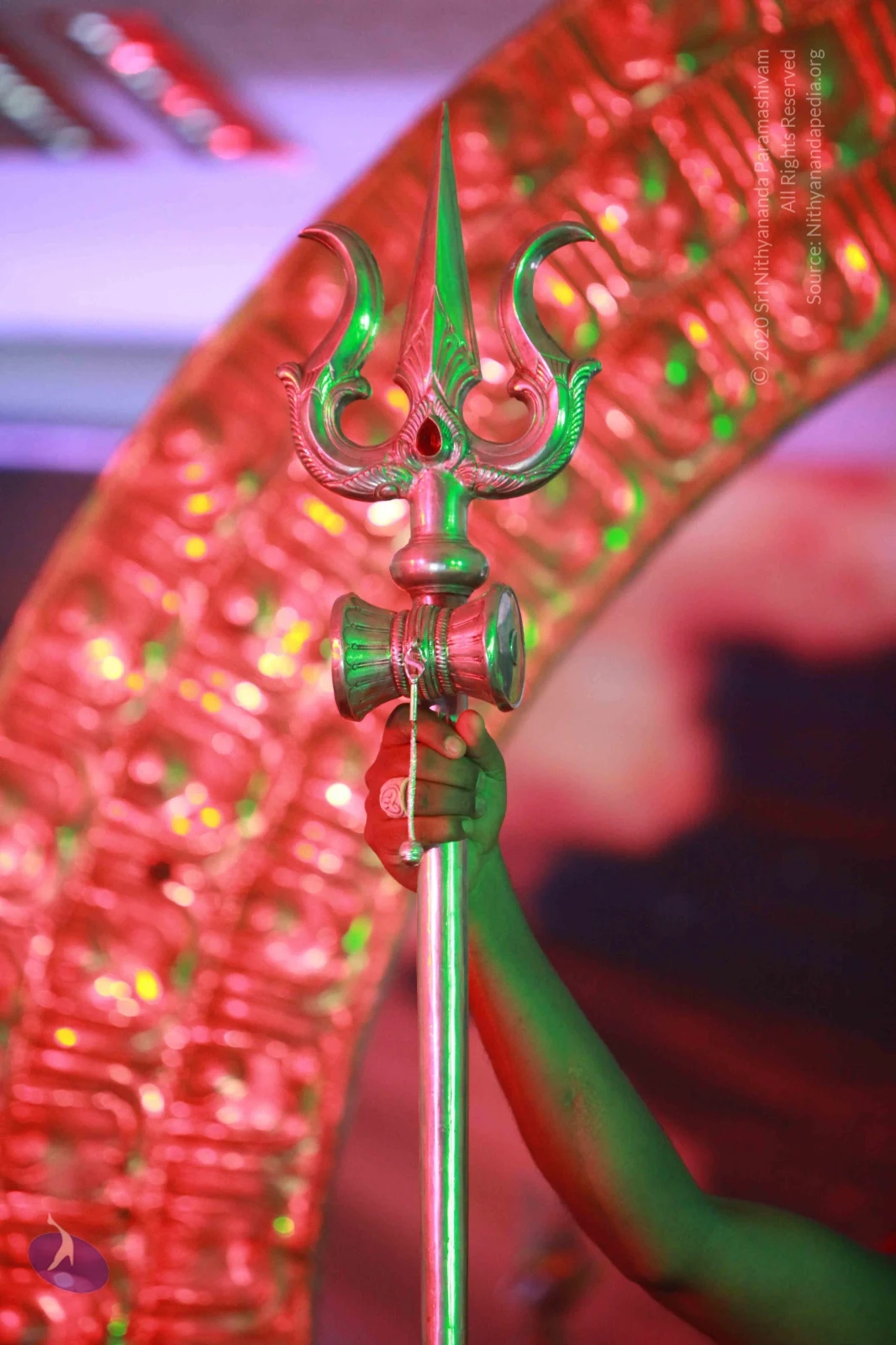
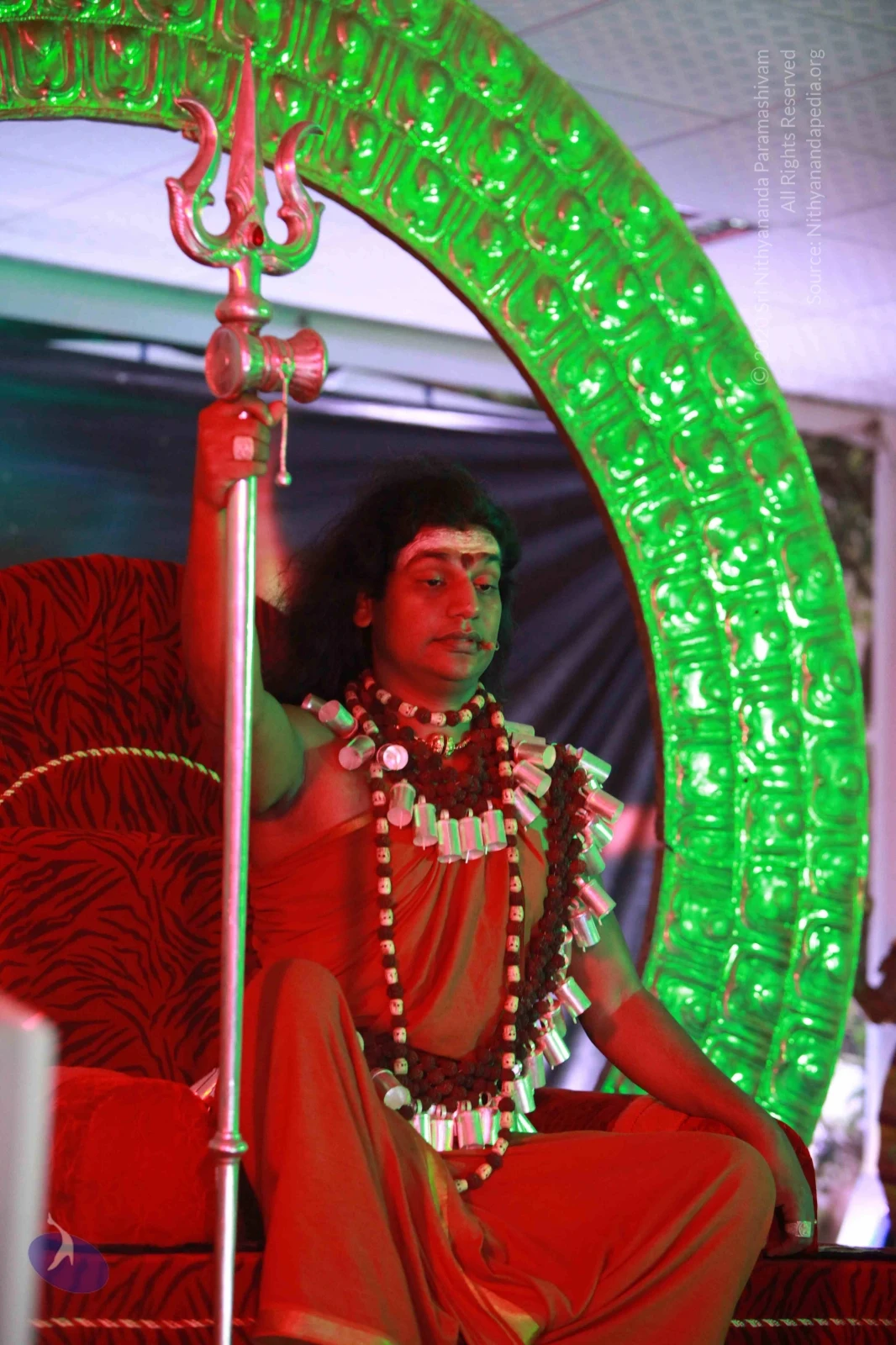
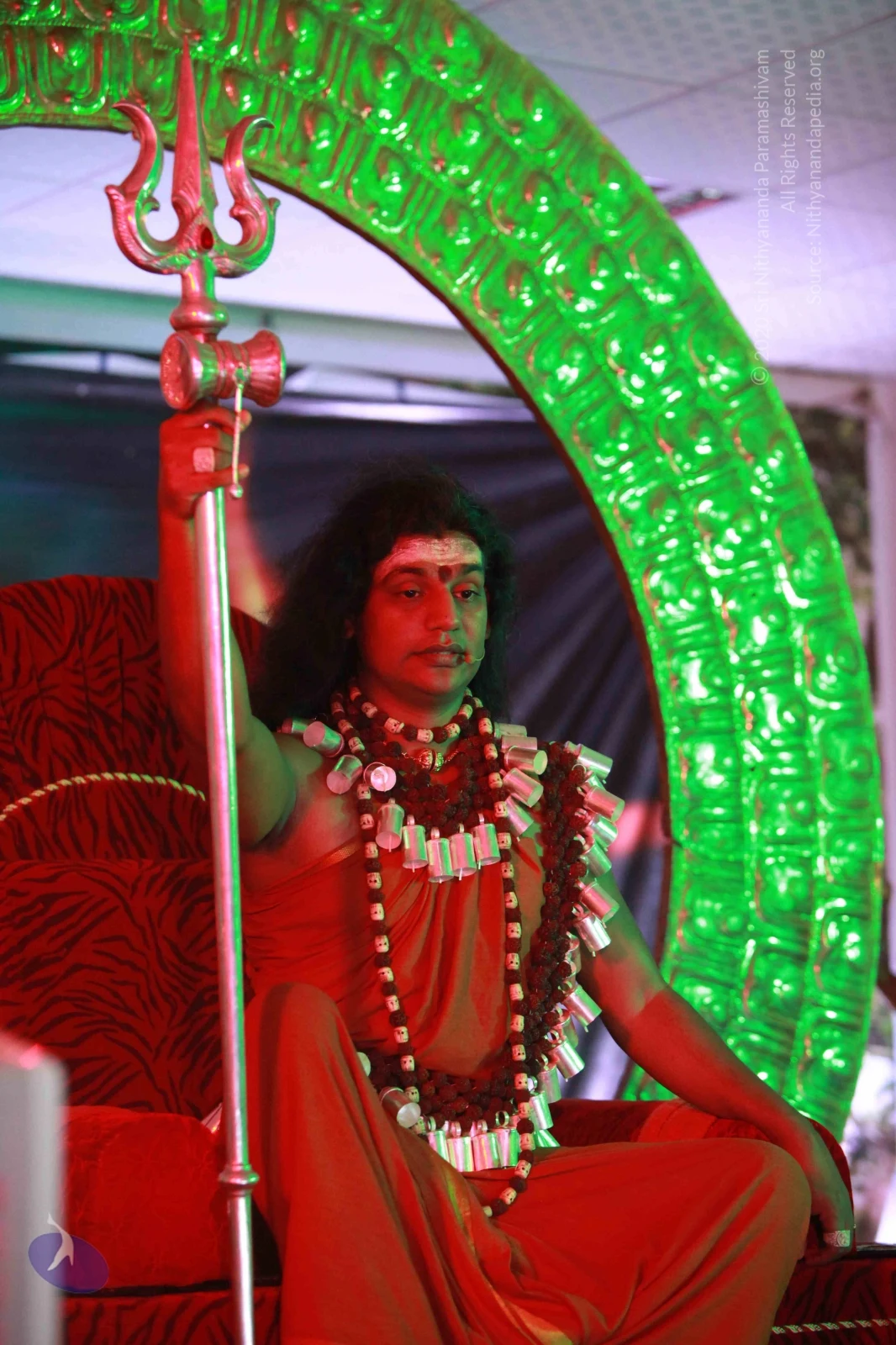
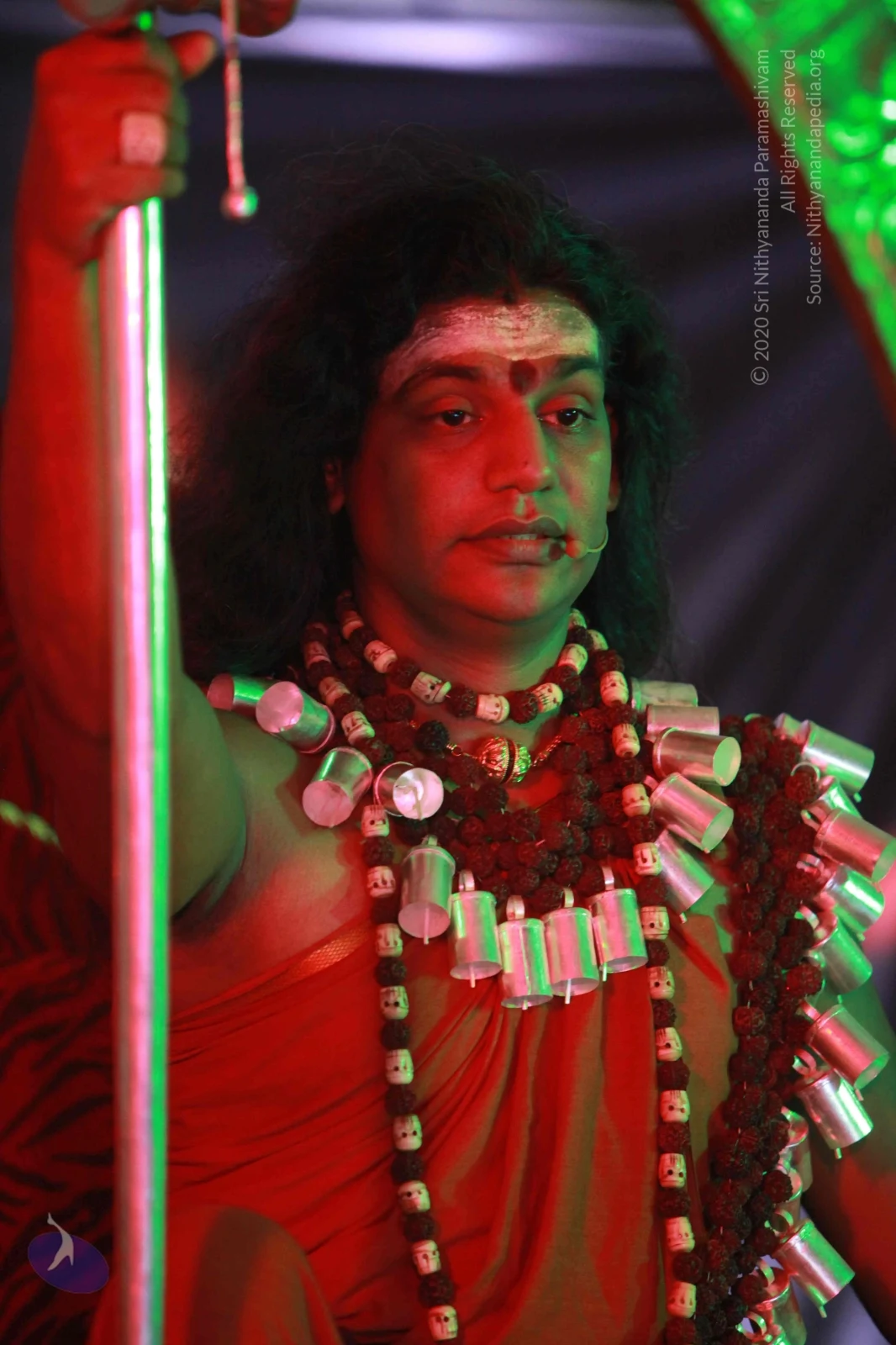
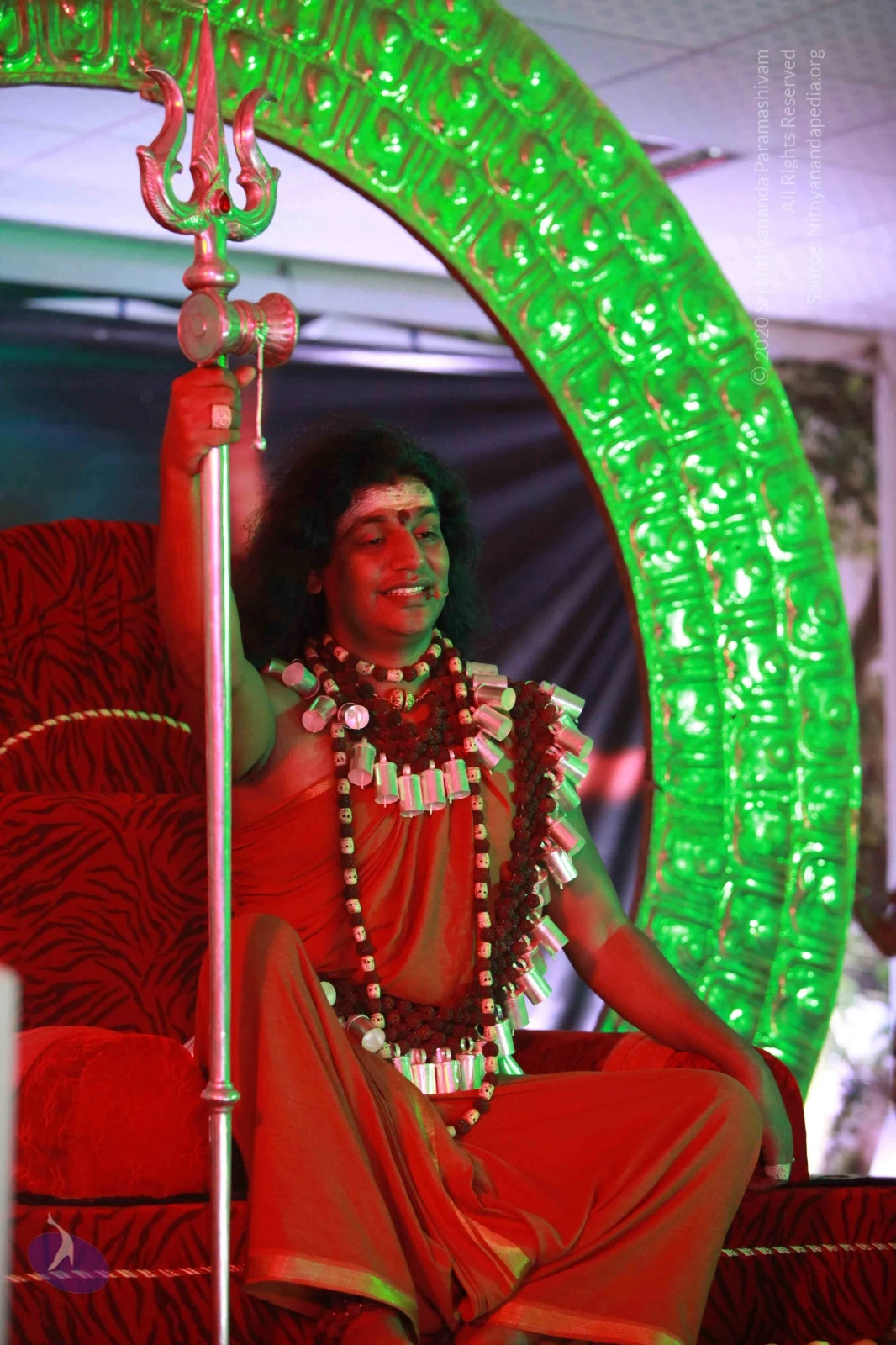
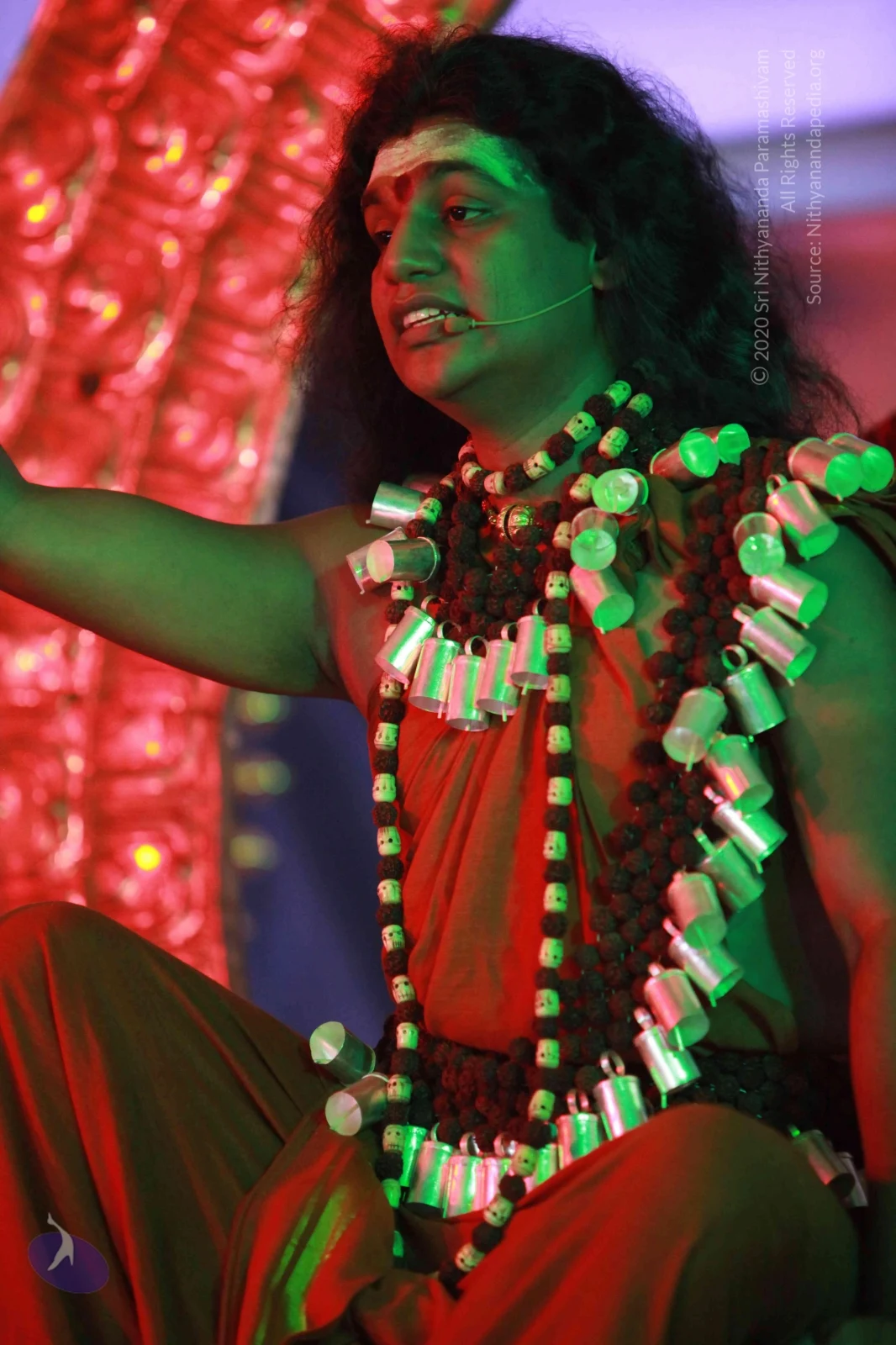
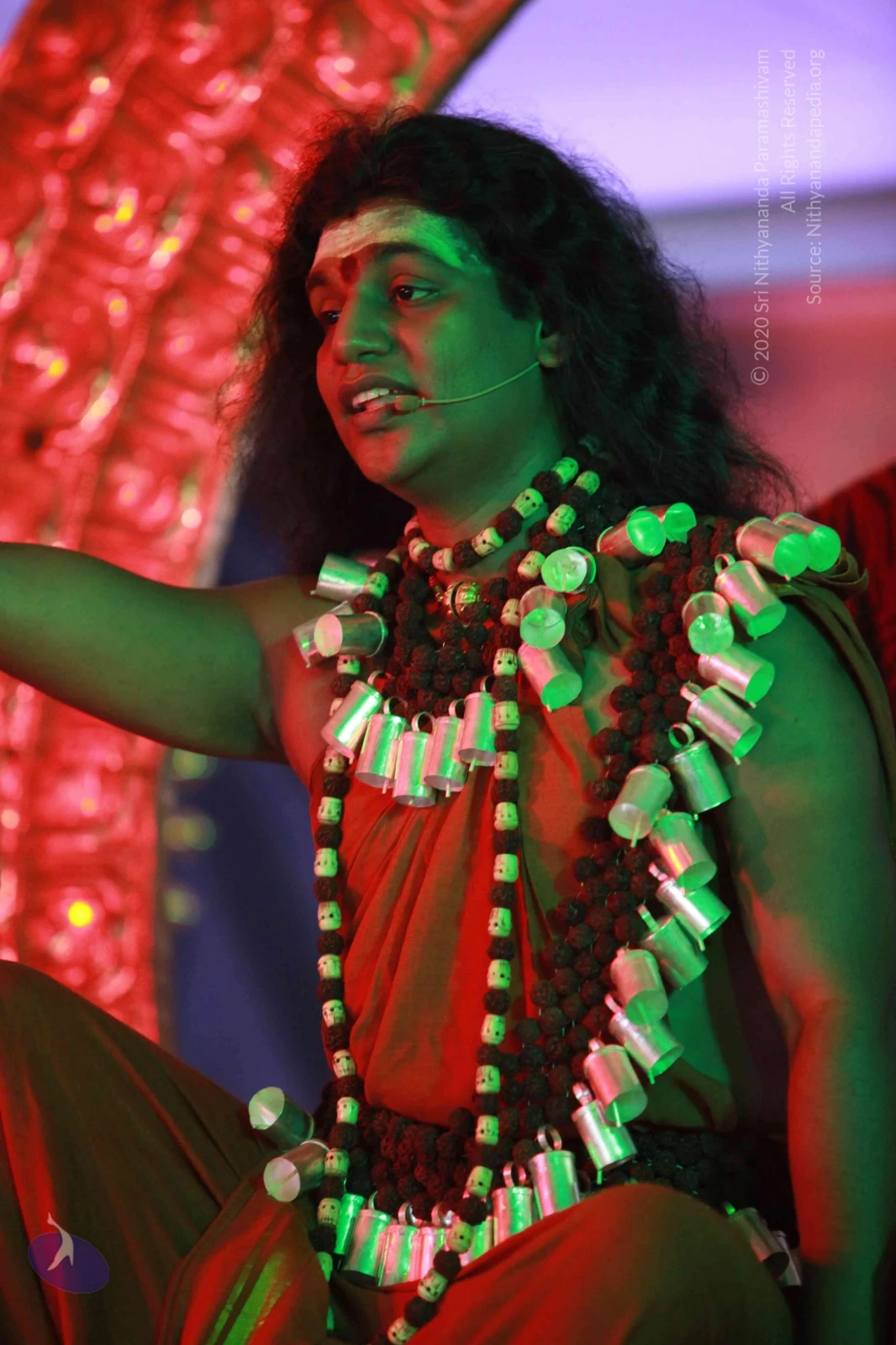
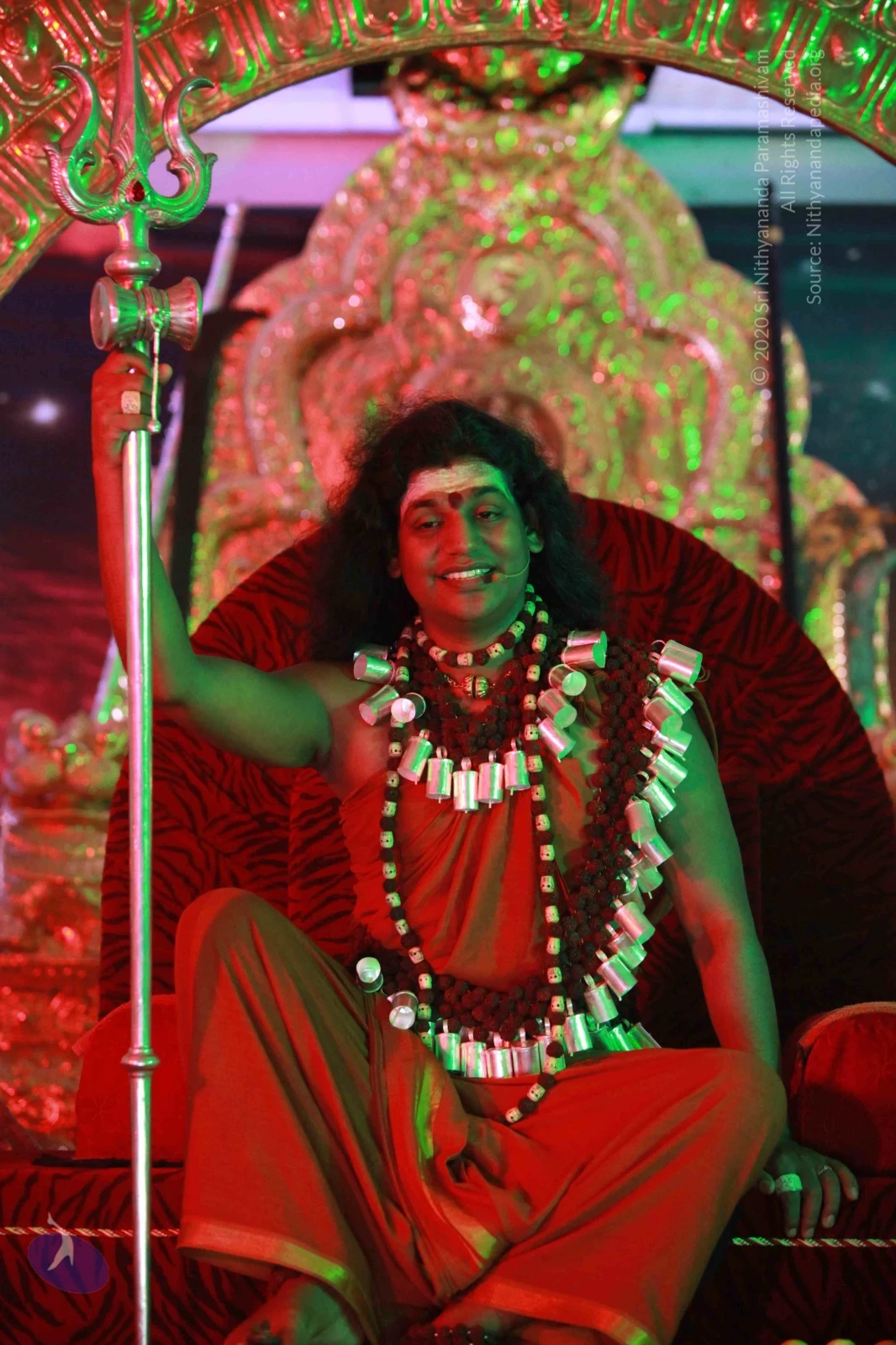
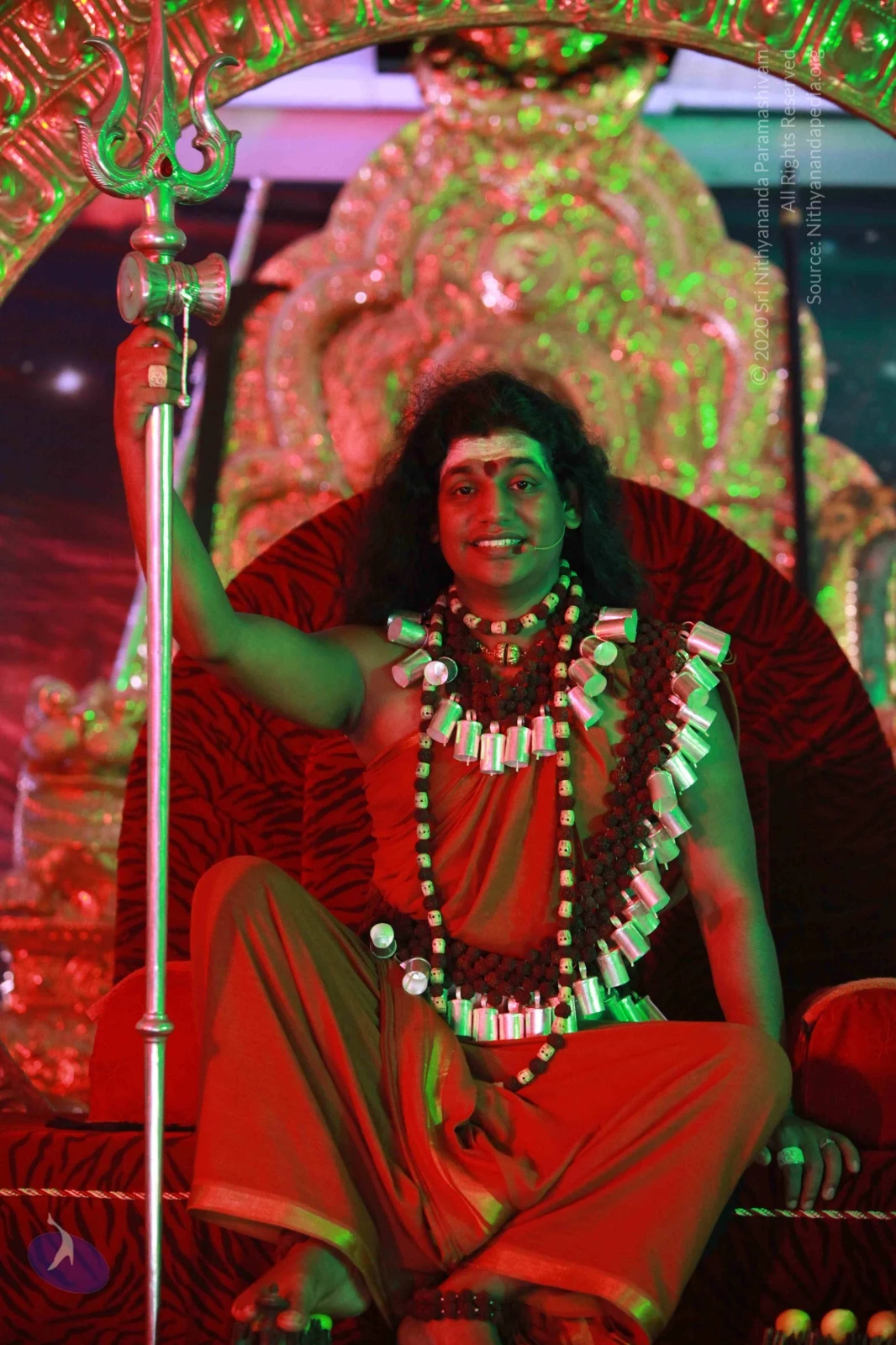
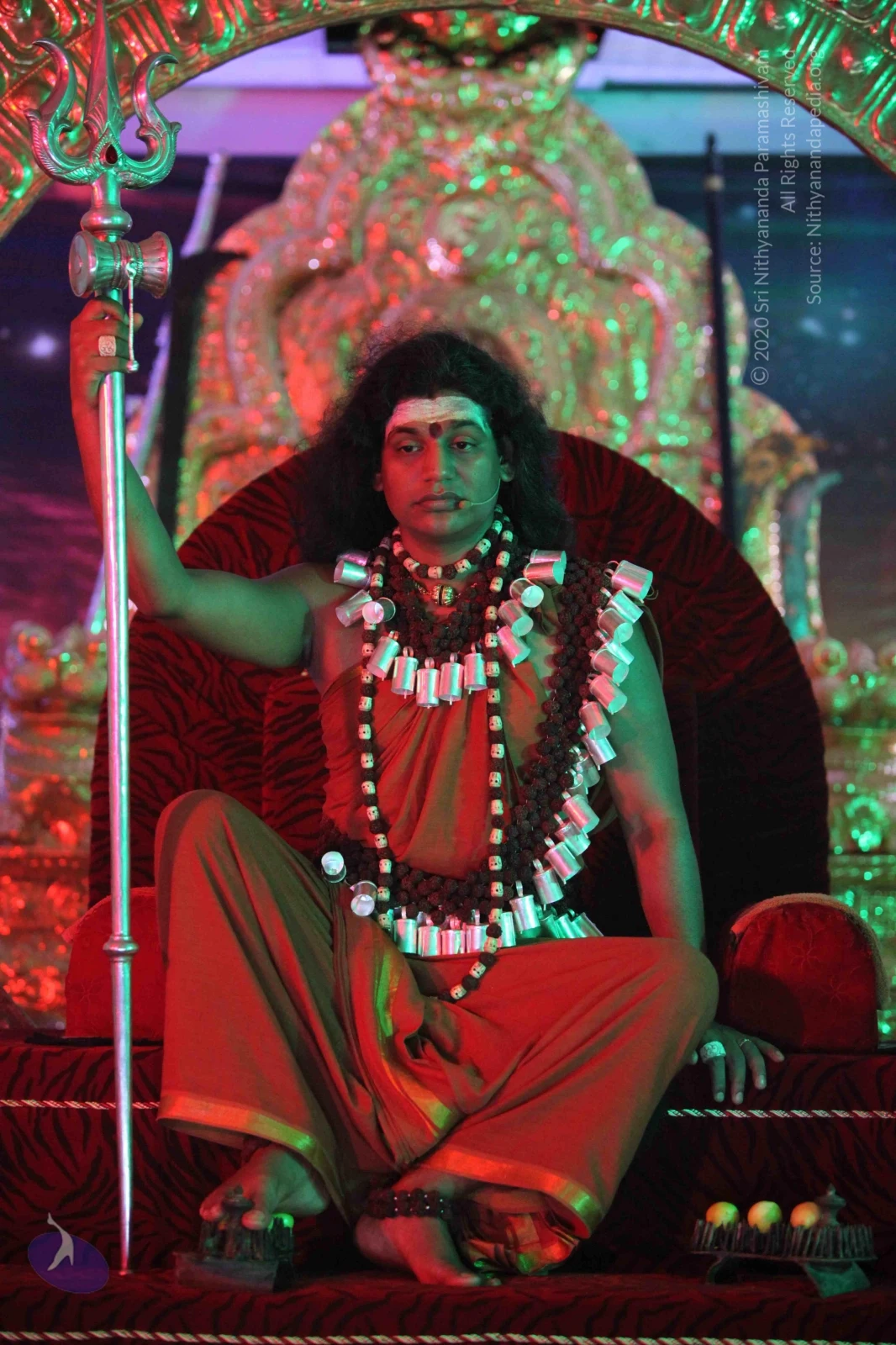
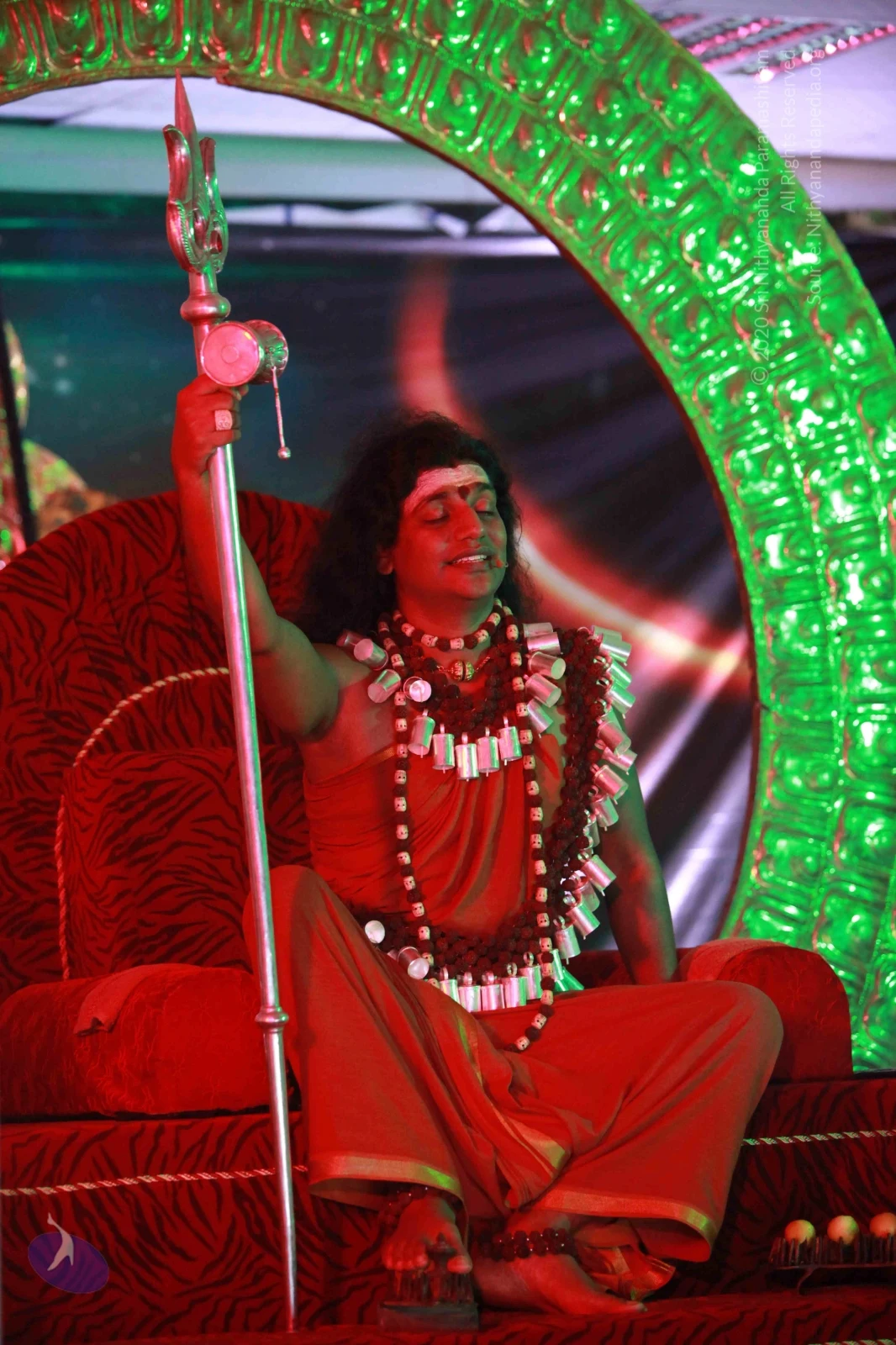
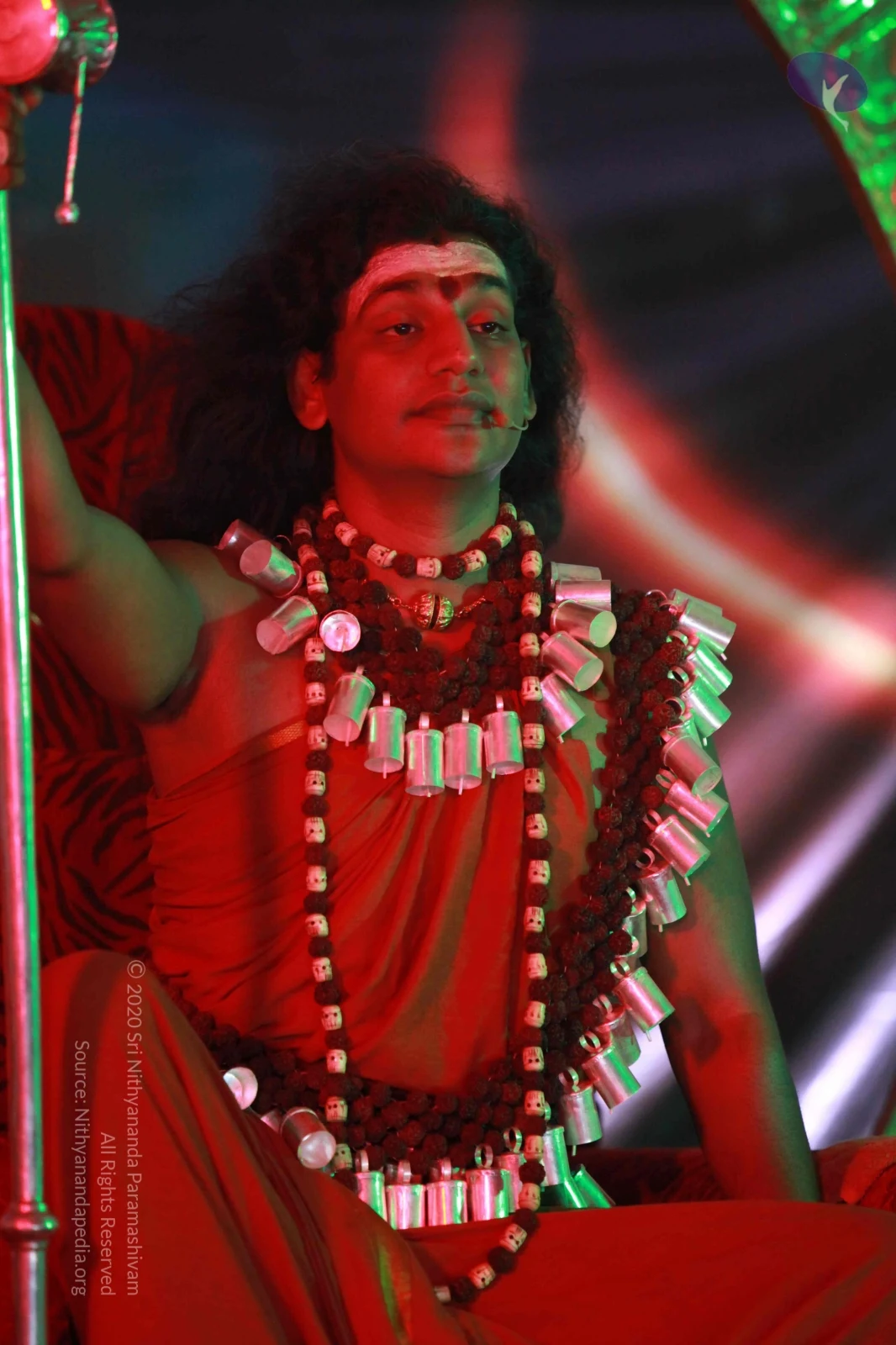
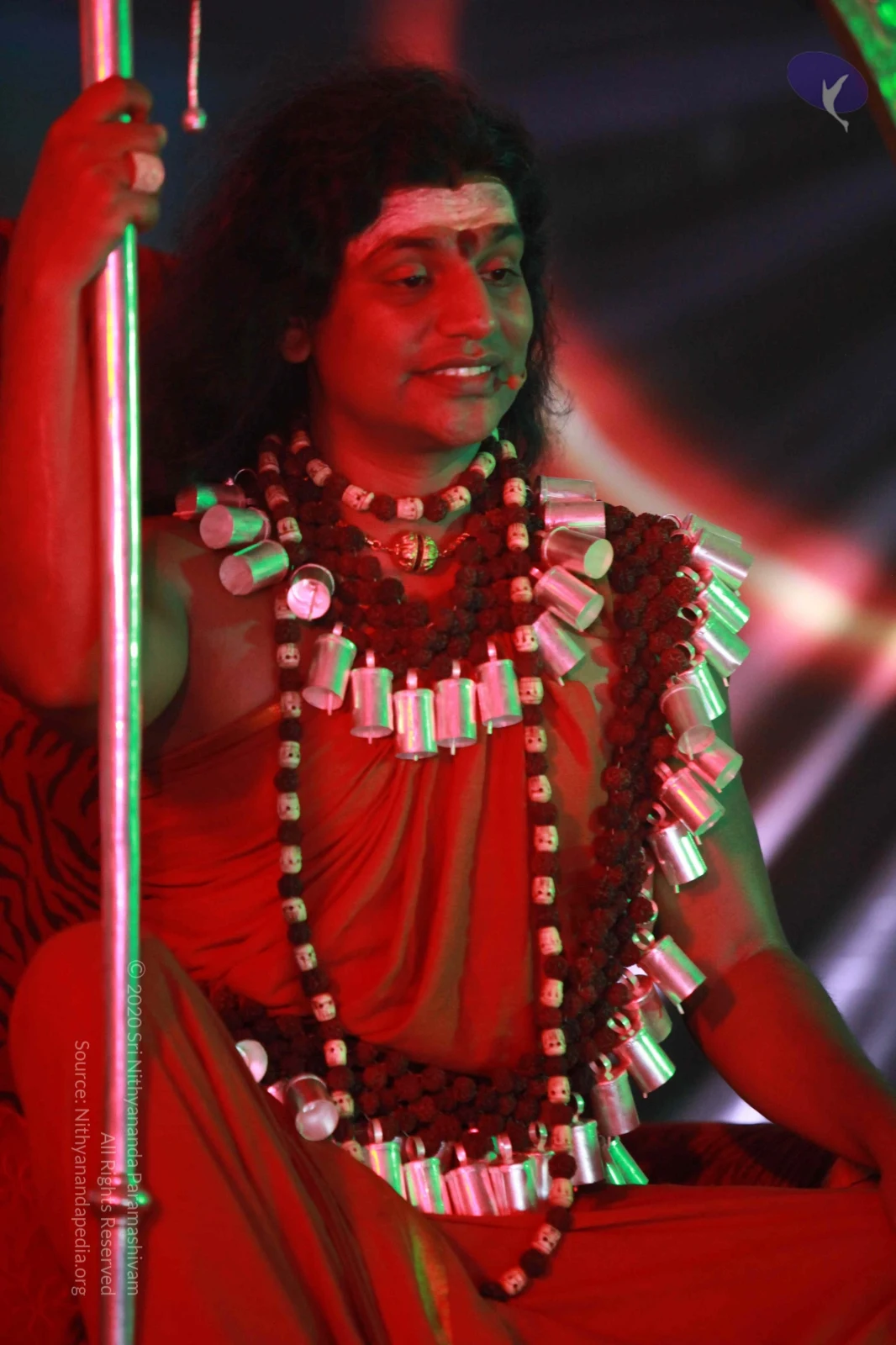
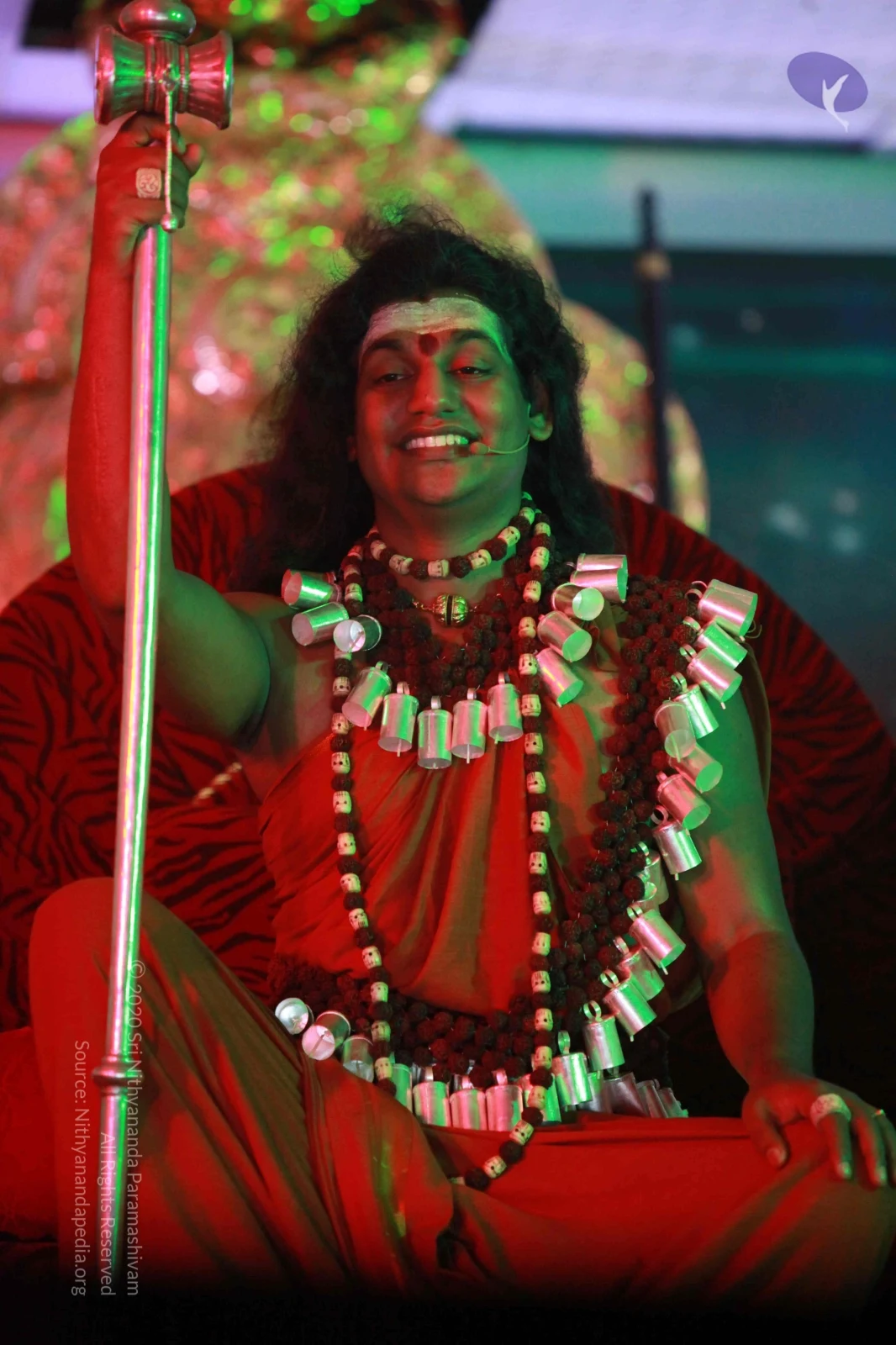
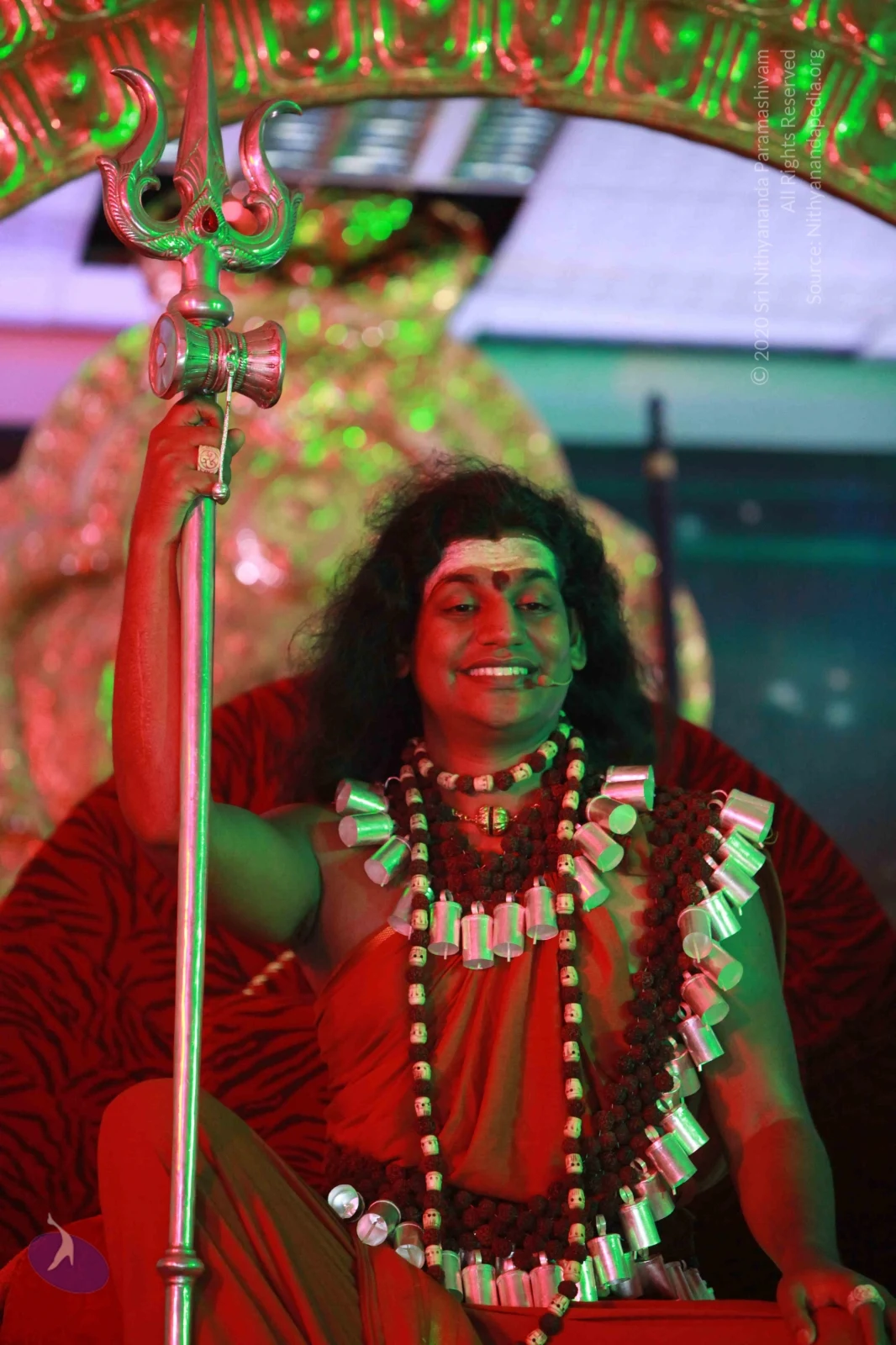
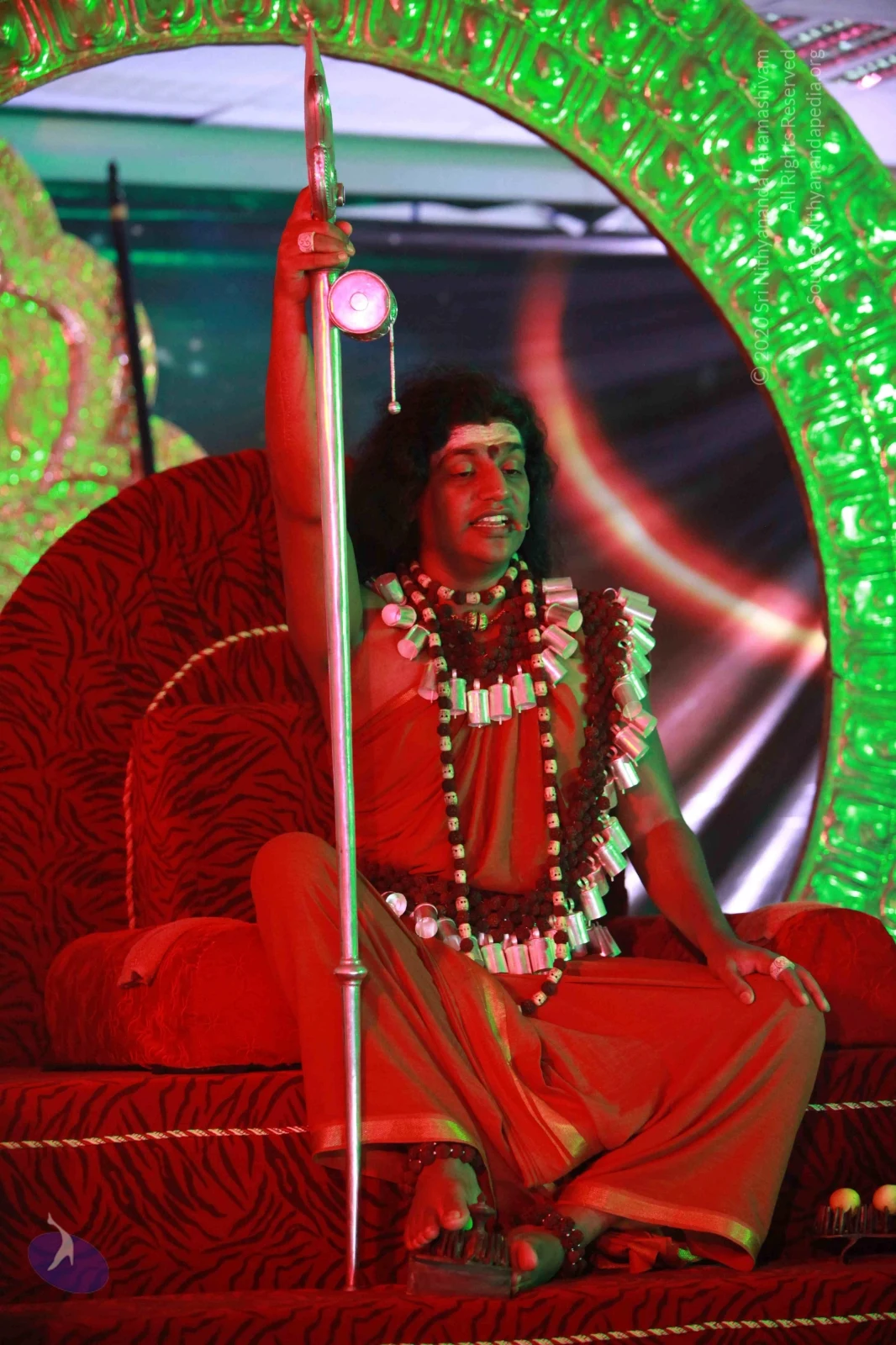
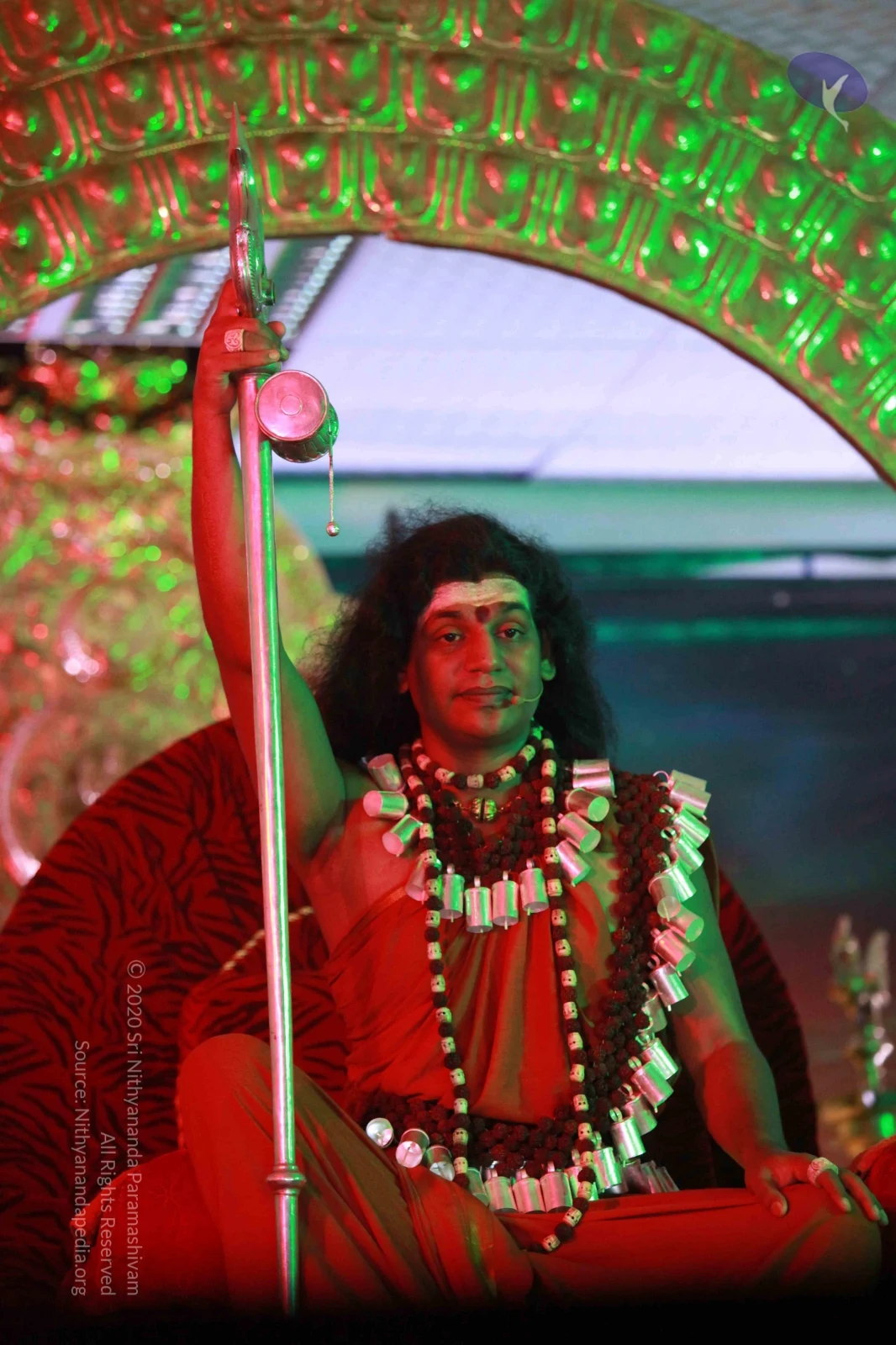
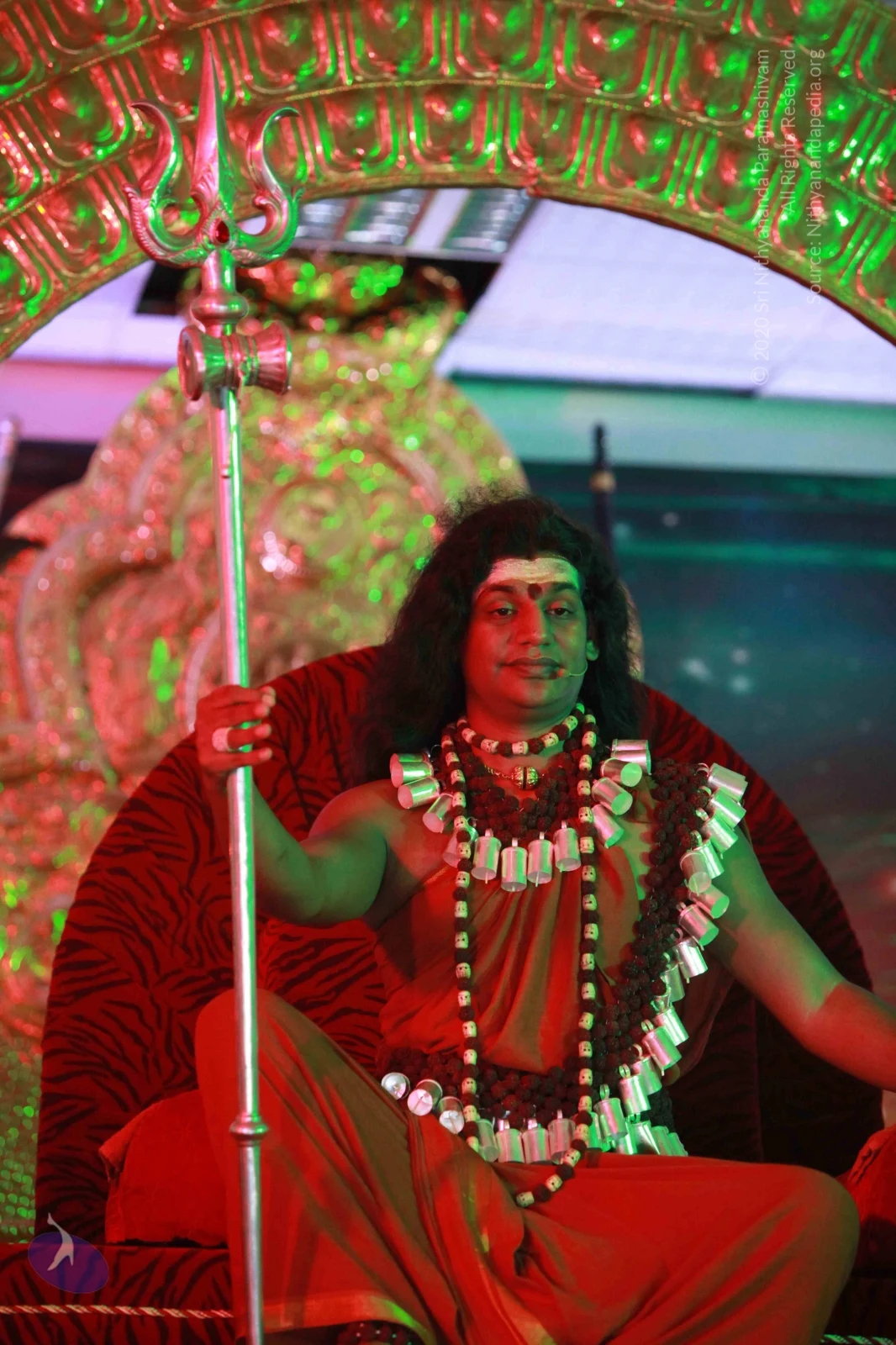
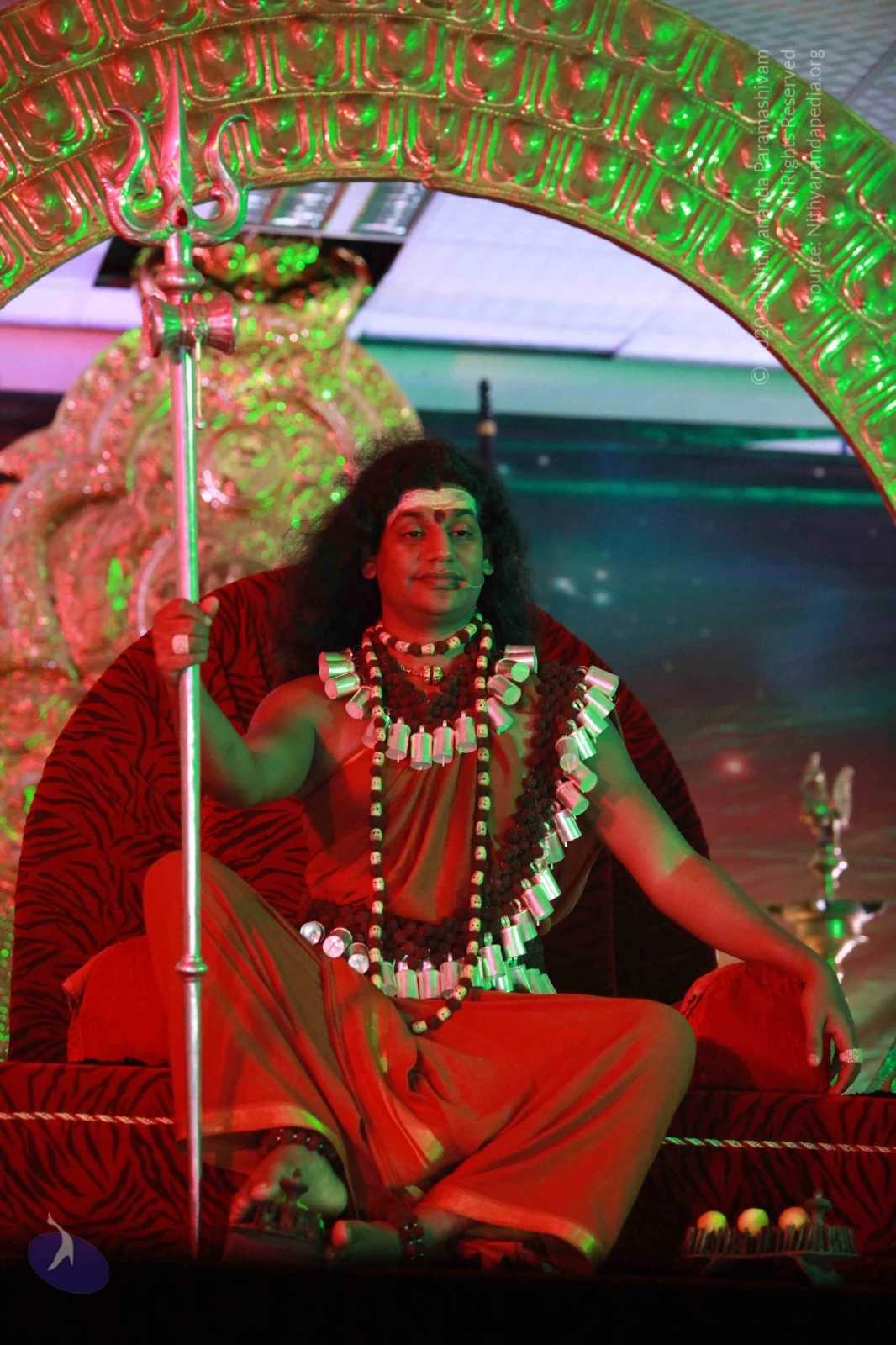
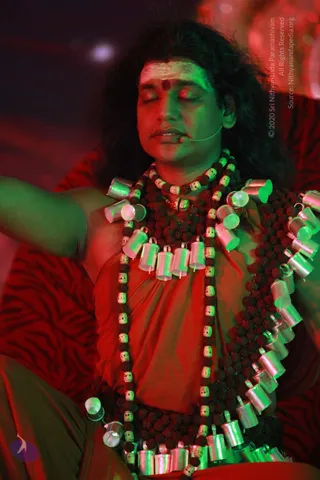
Swamiji (probable) seated cross-legged on a red throne with a red tiger-stripe cushion, eyes closed, speaking into a headset microphone. He wears long swept-back dark hair, a vertical tilak and red bindi, an orange-red wrap and draped garment, multiple rudraksha malas and silver bead necklaces, and raises a silver trident with his right hand. Behind him an ornate red-and-green illuminated arch and carved backdrop glow under coloured stage lights. Brass cup-like offerings with fruit sit on the platform at lower right.A photograph of a man with long dark hair seated with eyes closed, wearing a saffron-orange garment and layered rudraksha malas with metallic bell-like cylinders strung across his chest and shoulders. He has a white vibhuti band and red bindi on his forehead and wears a small headset microphone. His bare arm is extended to the left against a red and black patterned backdrop with green and red stage lighting. Swamiji (probable): the long hair, saffron clothing, and rudraksha malas match the page's reference to Paramahamsa Nithyananda giving a satsang, so he is marked as a probable in-person candidate.A seated man with long, dark, wavy hair, eyes closed and mouth open mid-speech, wearing a headset microphone. He is dressed in red-orange draped garments and wears layered rudraksha malas with white bead spacers and small silver-toned cylindrical pendants draped across his chest, shoulders and waist. A red tilak and white forehead markings are visible, and his left arm is extended outward. Behind him is a red patterned fabric with dark stripes, under red and green stage lighting. One physical person is visible.Close-up photo of a silver trident (trishula) held upright by a hand at its shaft, its three tines curved with a red gem set at the centre and a small cord tied near the grip. The background is a red sequined, arched backdrop lit with green and pink tones. Only a forearm and hand are visible, and no face or full figure appears. The trident is a Shiva symbol, and no person is identifiable.A seated man in an orange-red robe and layered rudraksha malas with silver bead ornaments sits on a red zebra-striped chair beneath an arched green illuminated frame. He holds a silver trident upright in his right hand and has a vertical tilak on his forehead with long dark hair. The scene is lit with red and green stage lighting.A man seated on a red and black zebra-striped throne in front of a large green illuminated arch. He wears orange robes, long rudraksha mala necklaces with silver bell-shaped ornaments, and a white-and-red tilak on his forehead. He holds a silver trident aloft in his right hand. The setting is a stage or satsang hall with red stage lighting and a small lapel microphone visible. Appearance-based cues (long swept-back hair, saffron clothing, rudraksha malas, trident and throne) suggest a person presence, though his face is not clearly identifiable here.