Skip to content
Monday

23 July 2012

Supreme Pontiff of Hinduism HDH Bhagavan Sri Nithyananda Paramashivam

Dated photos
409
Source pages
1
Media
3
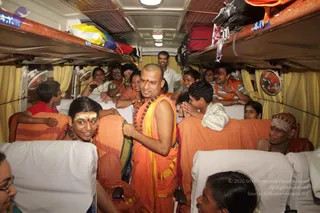
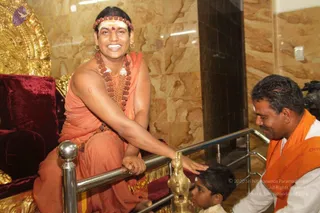
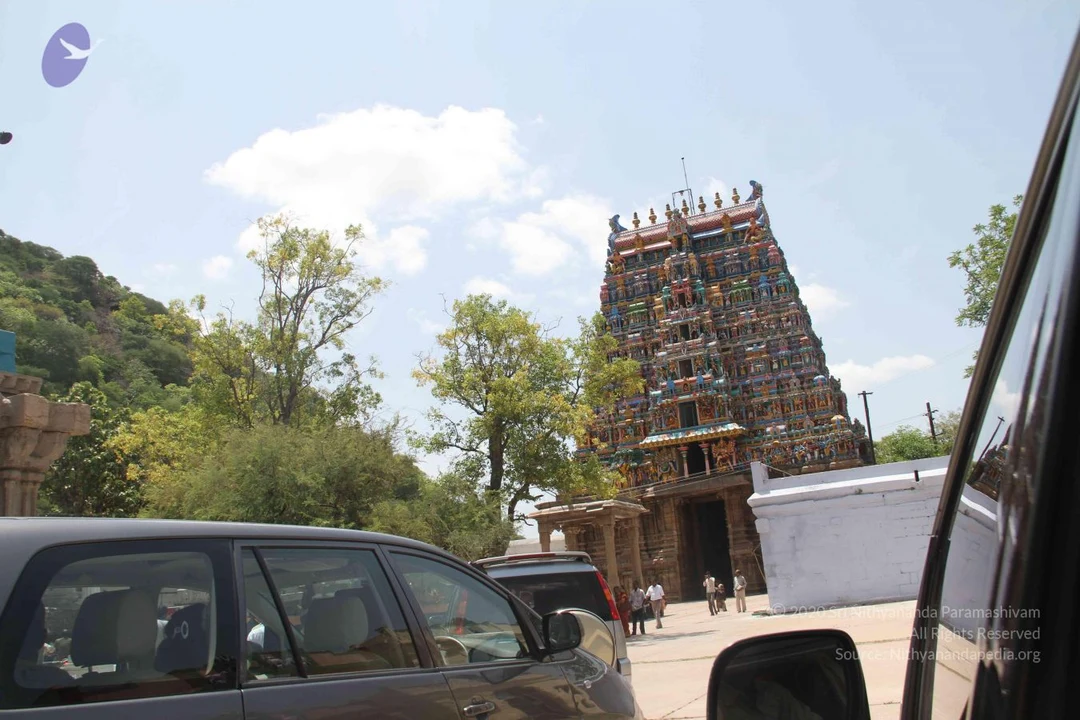
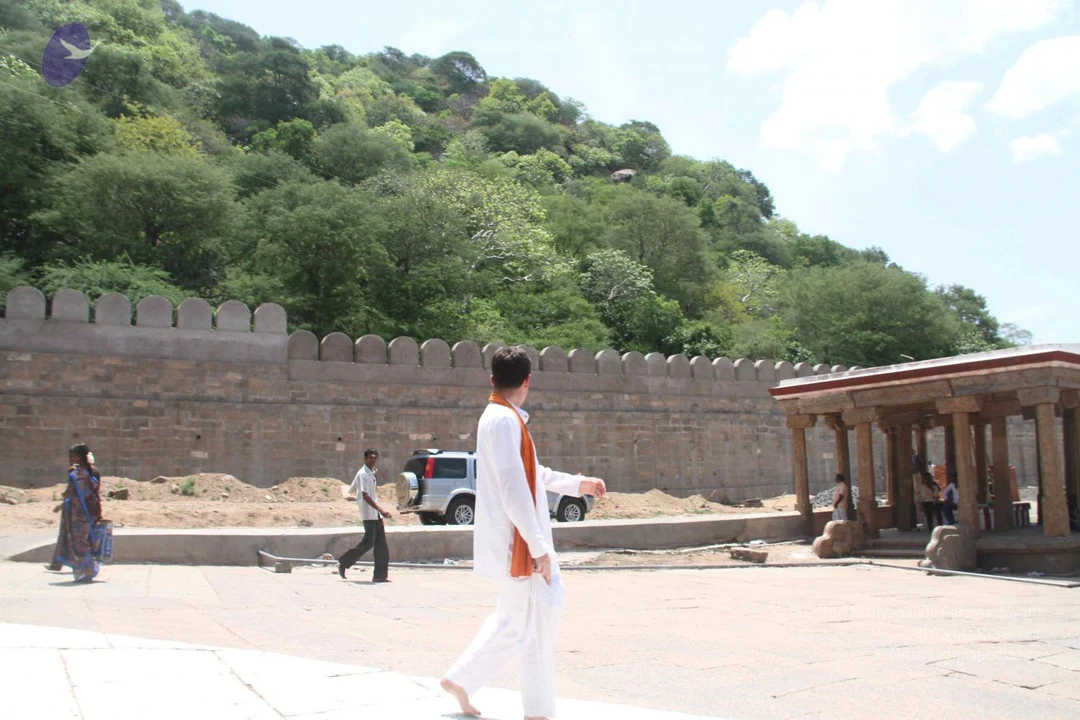
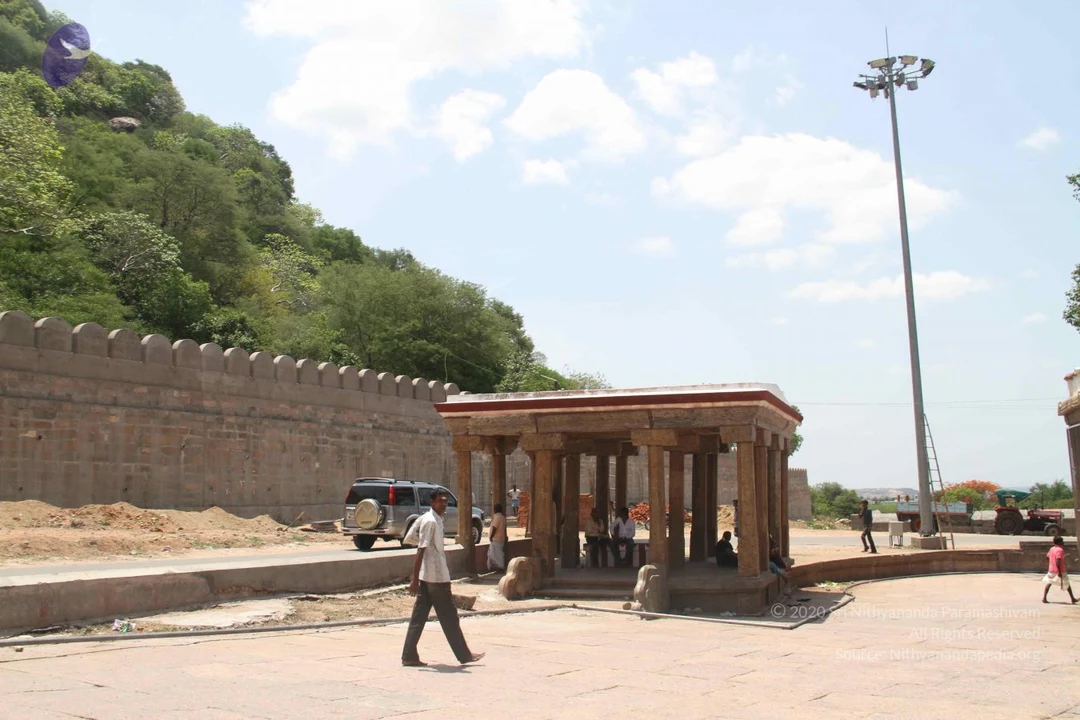
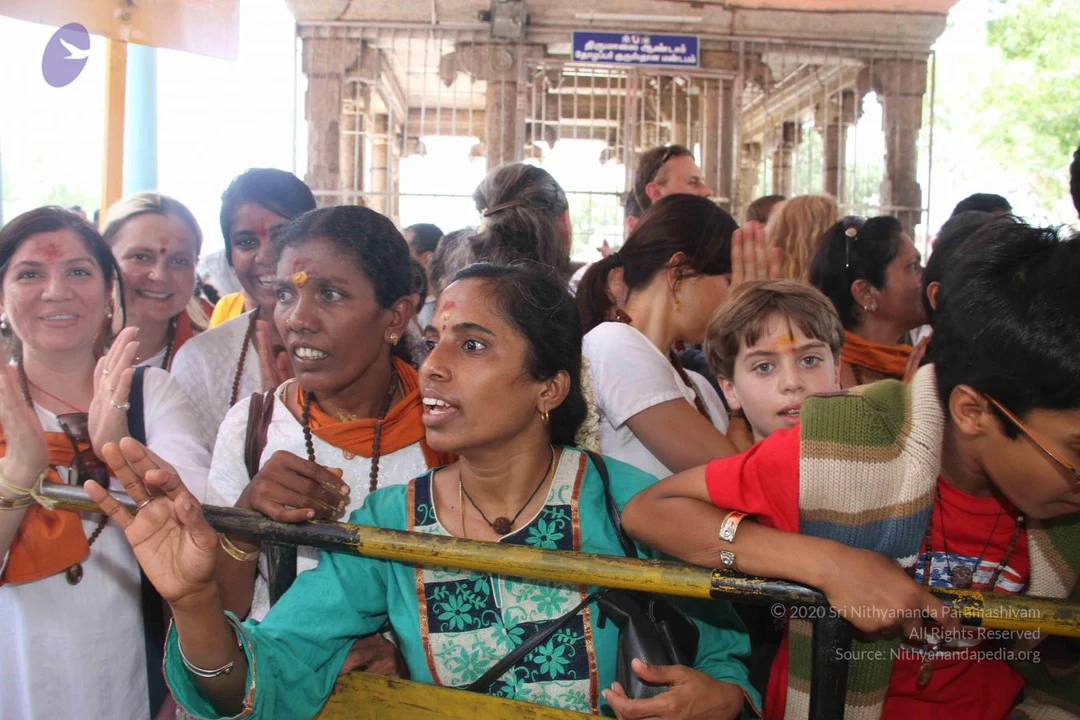
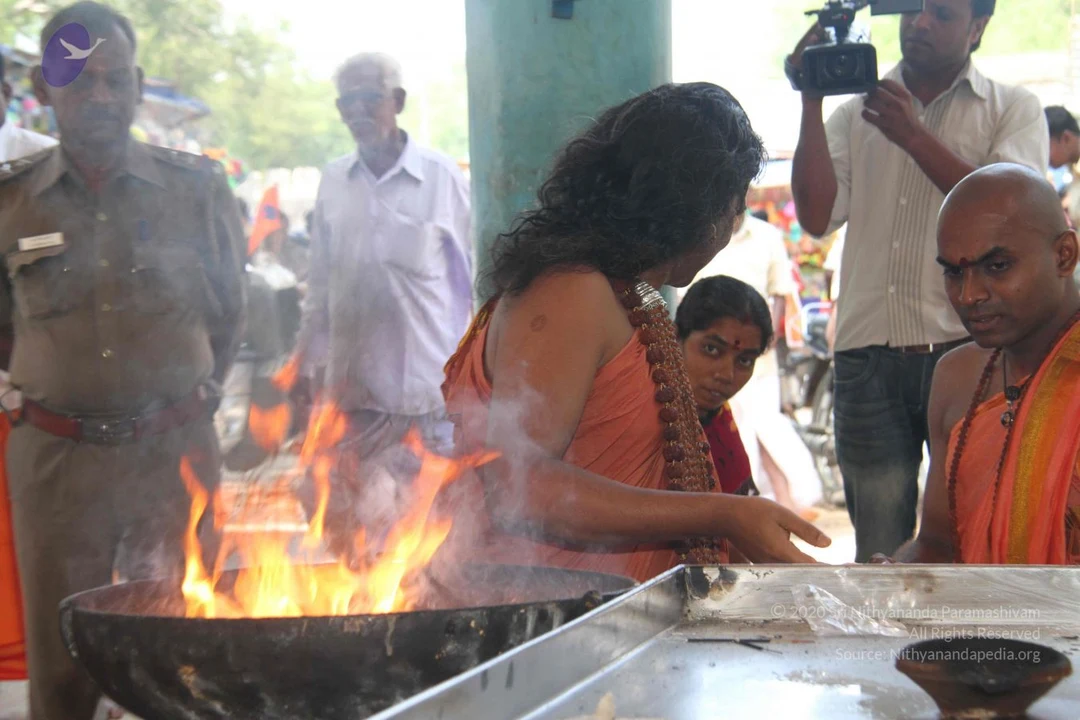
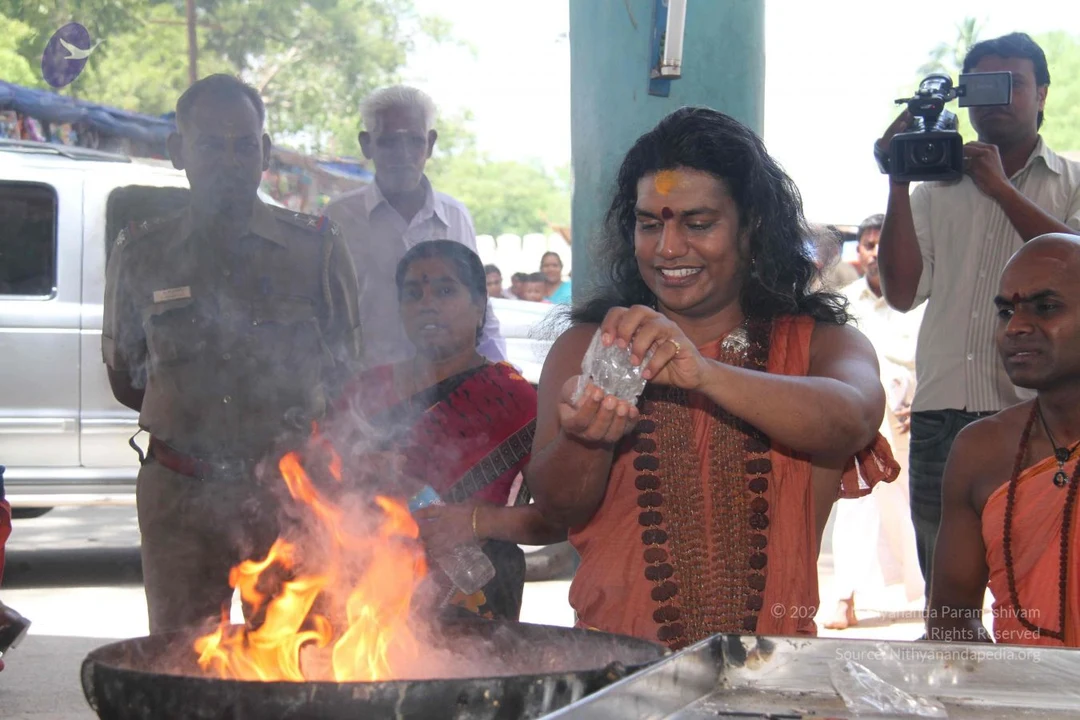
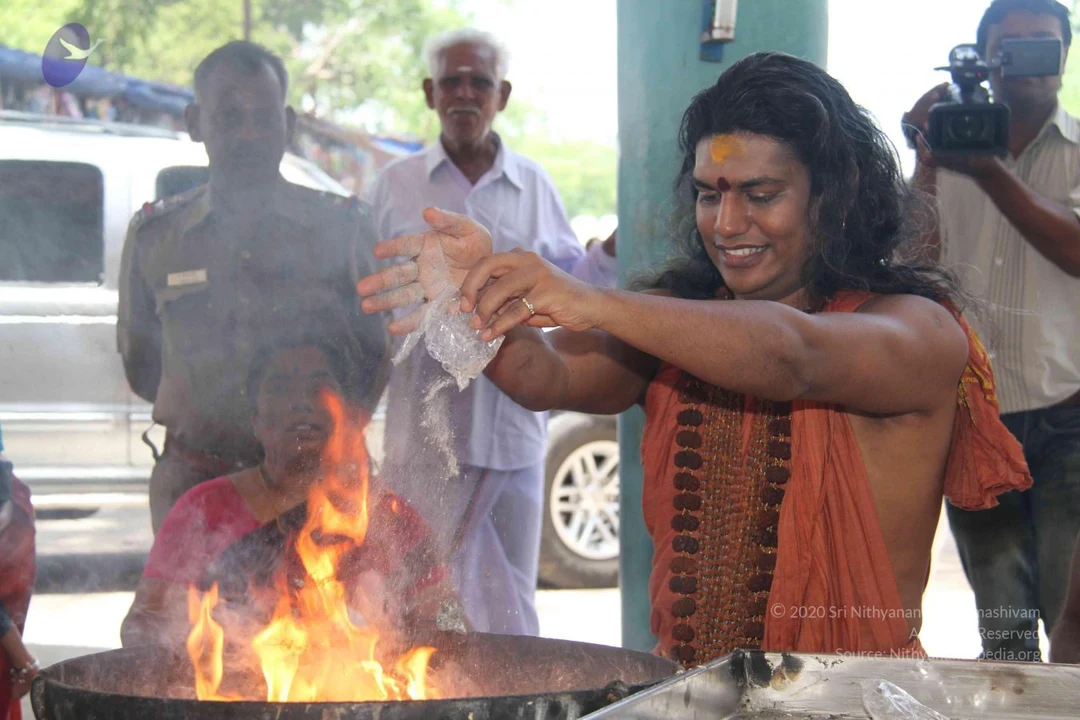
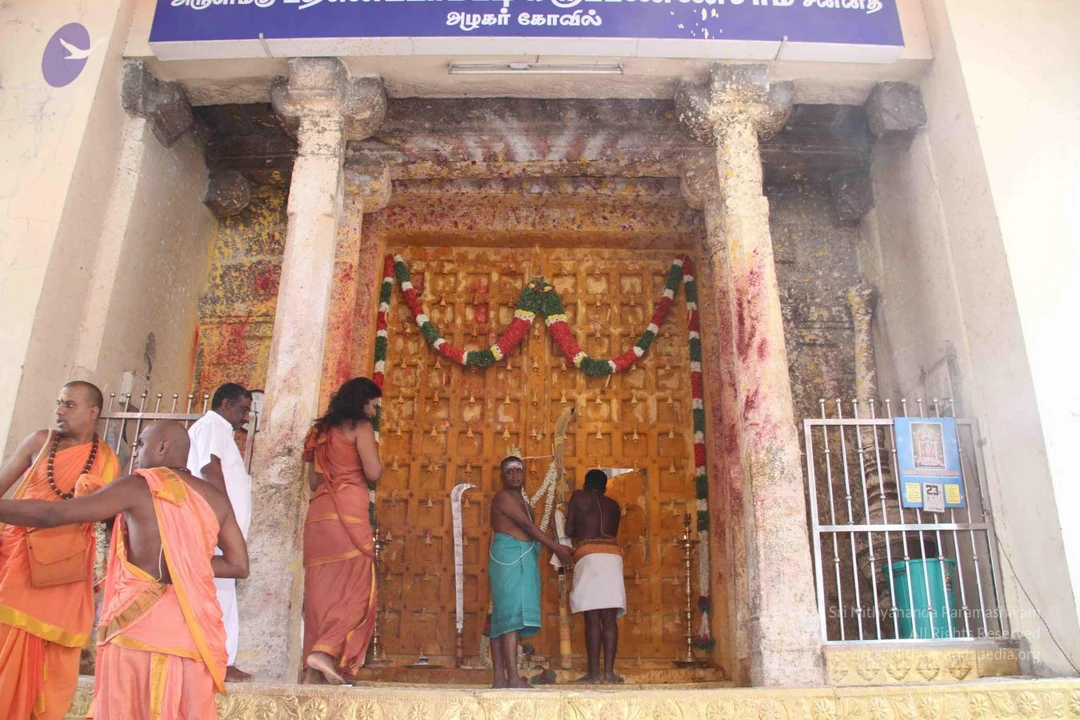
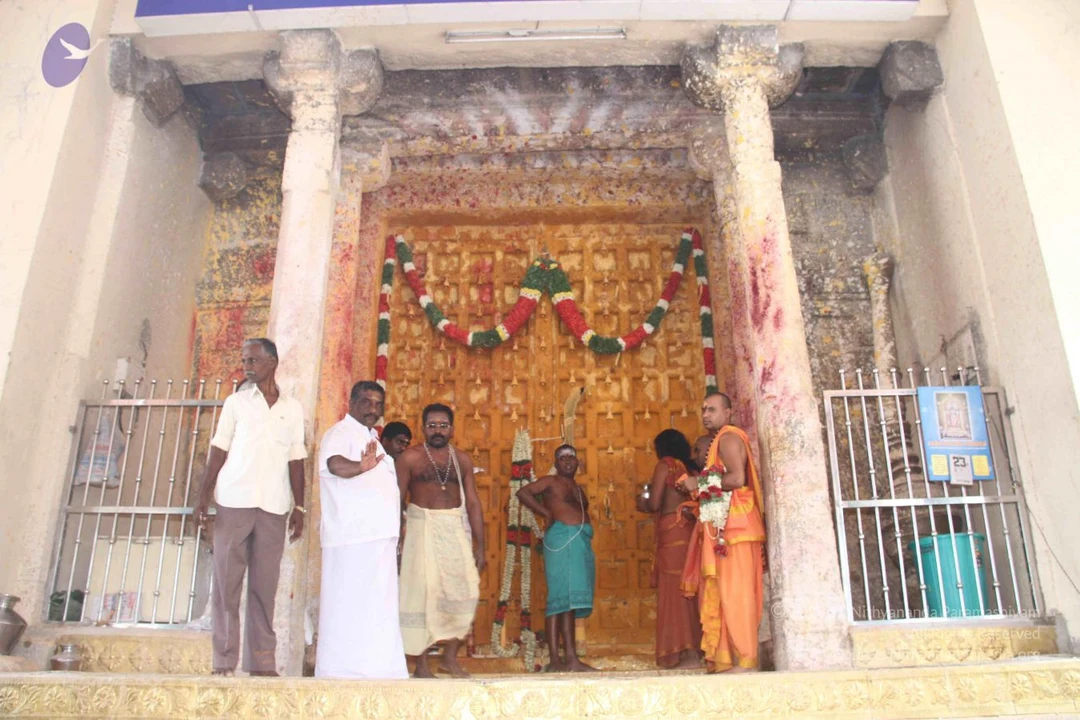
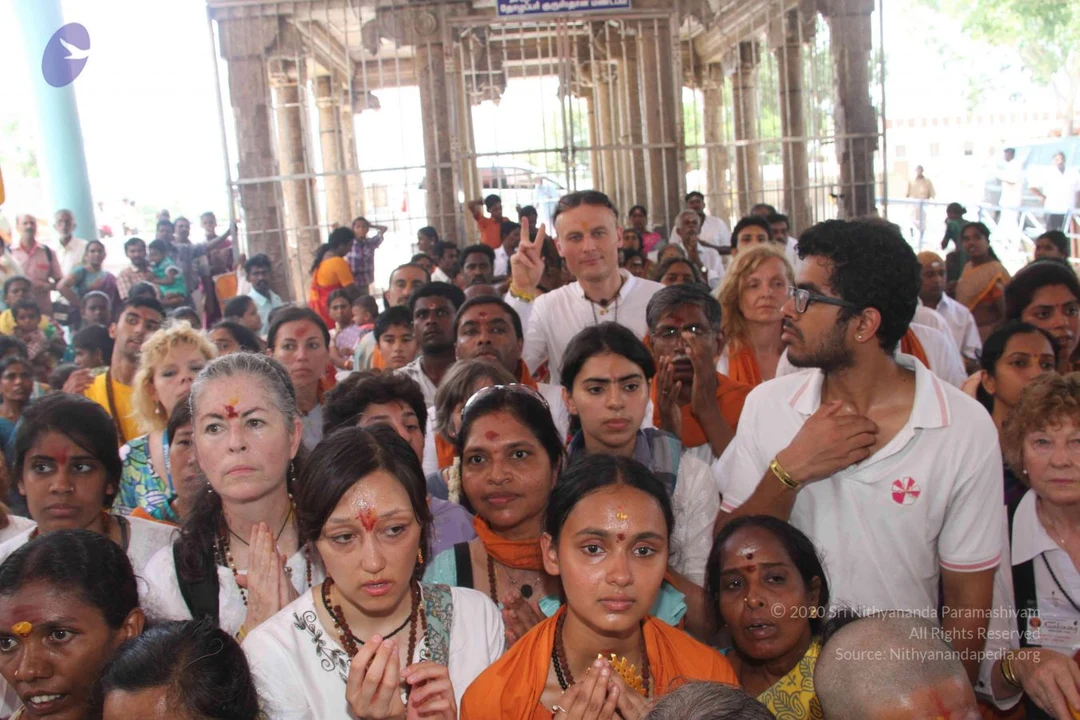
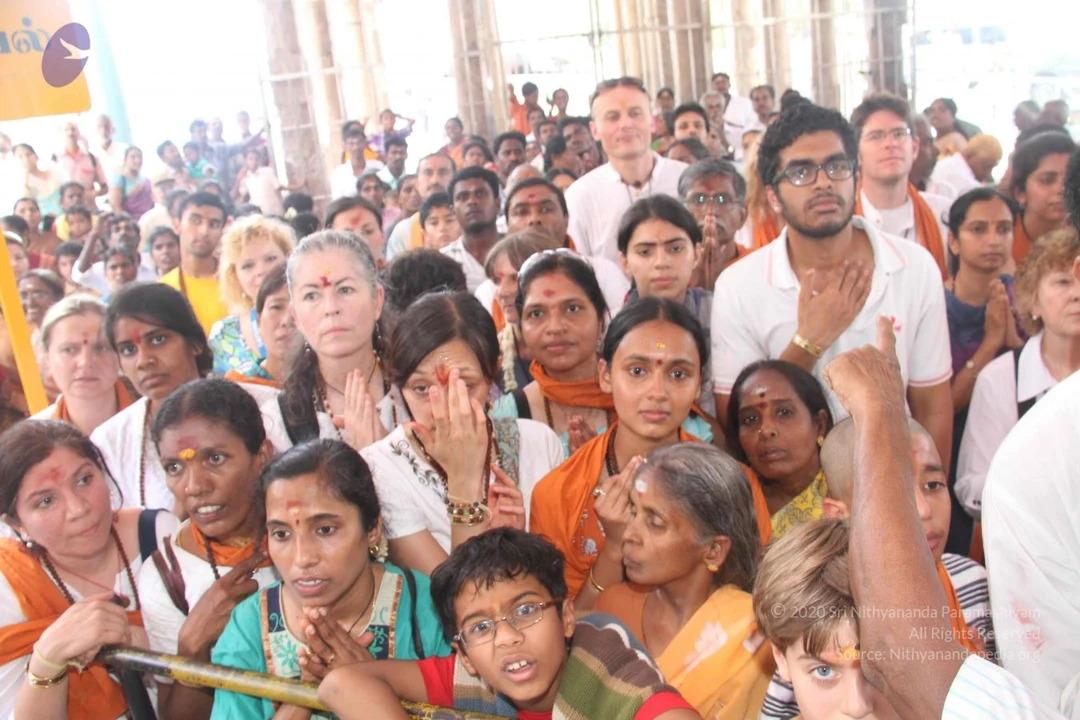
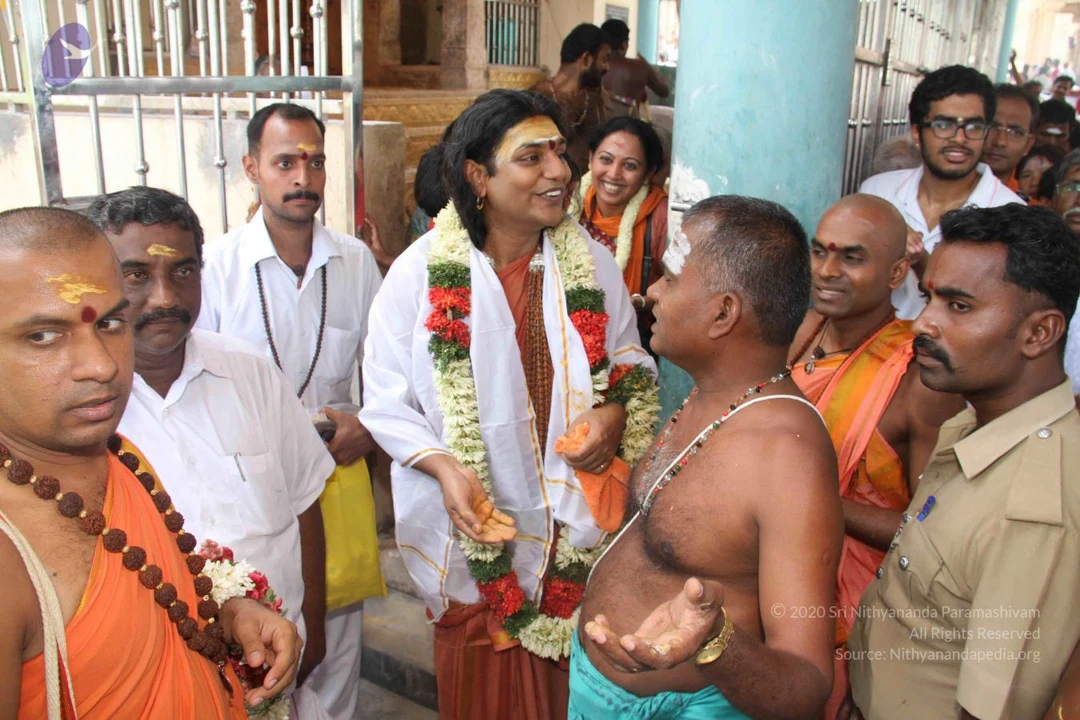
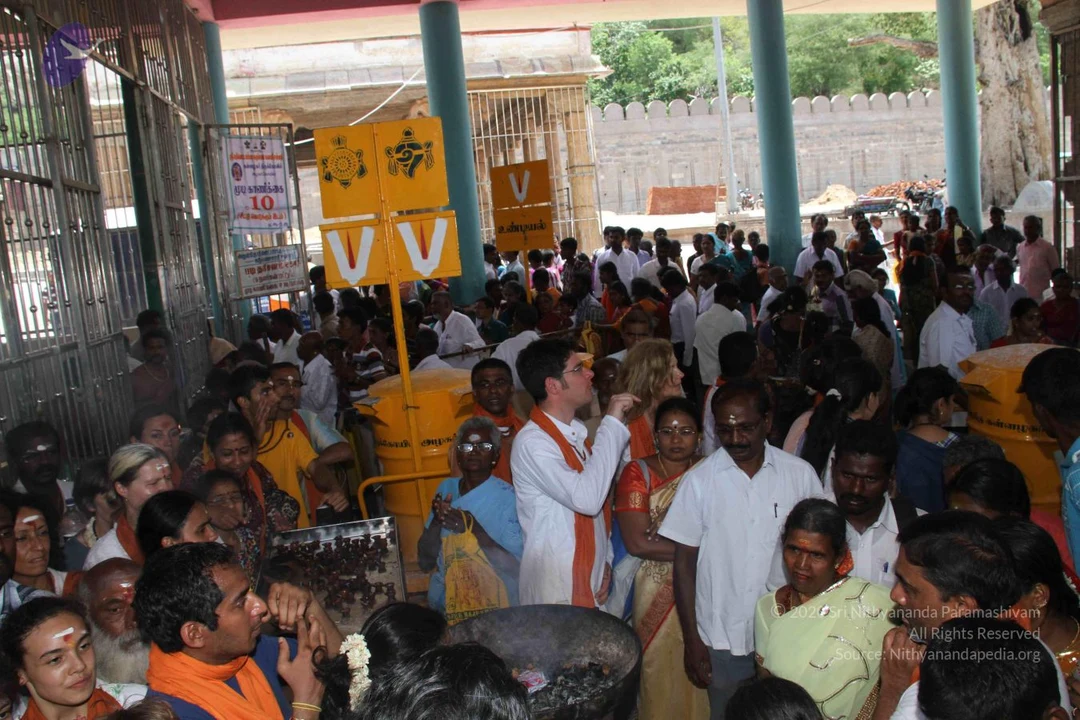
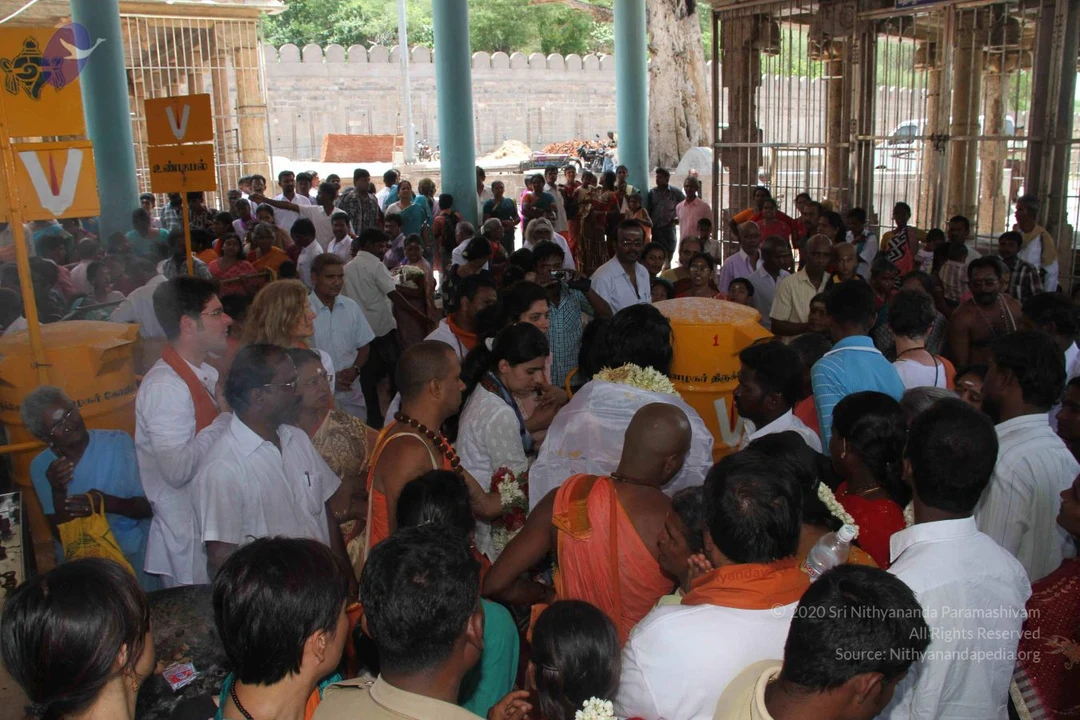
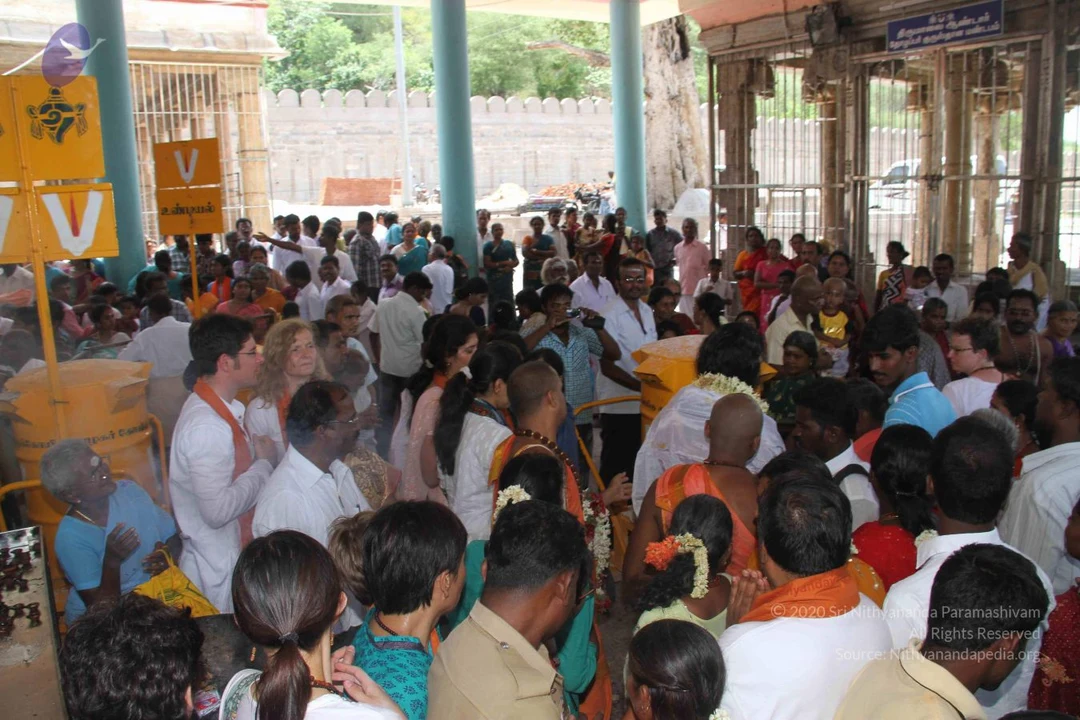
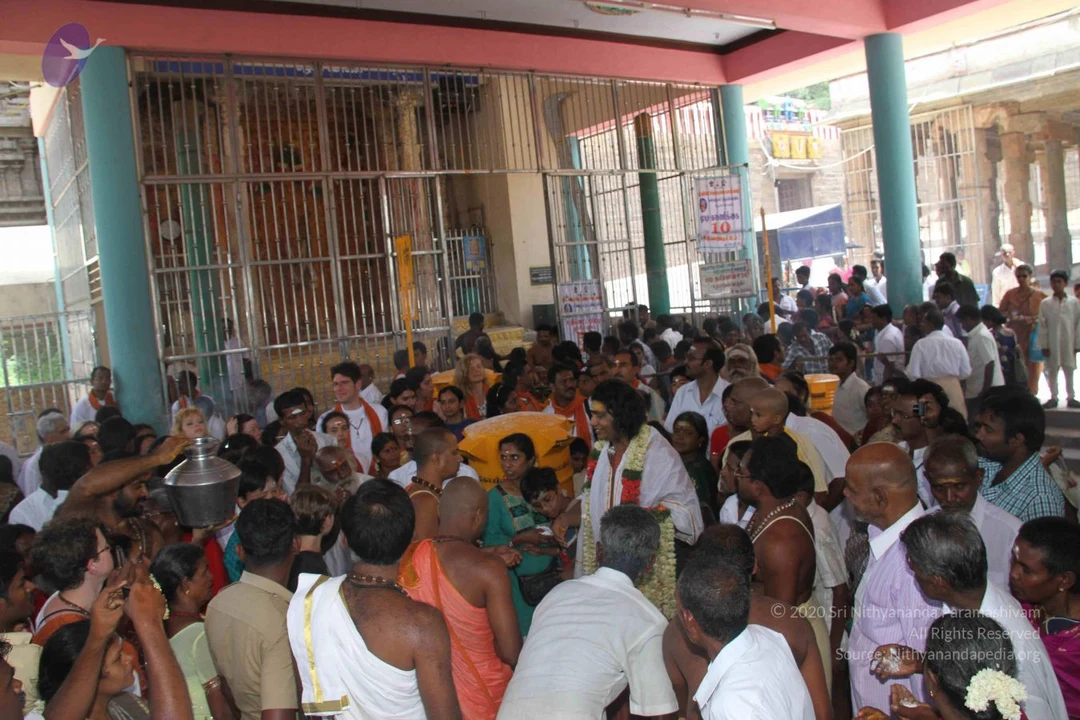
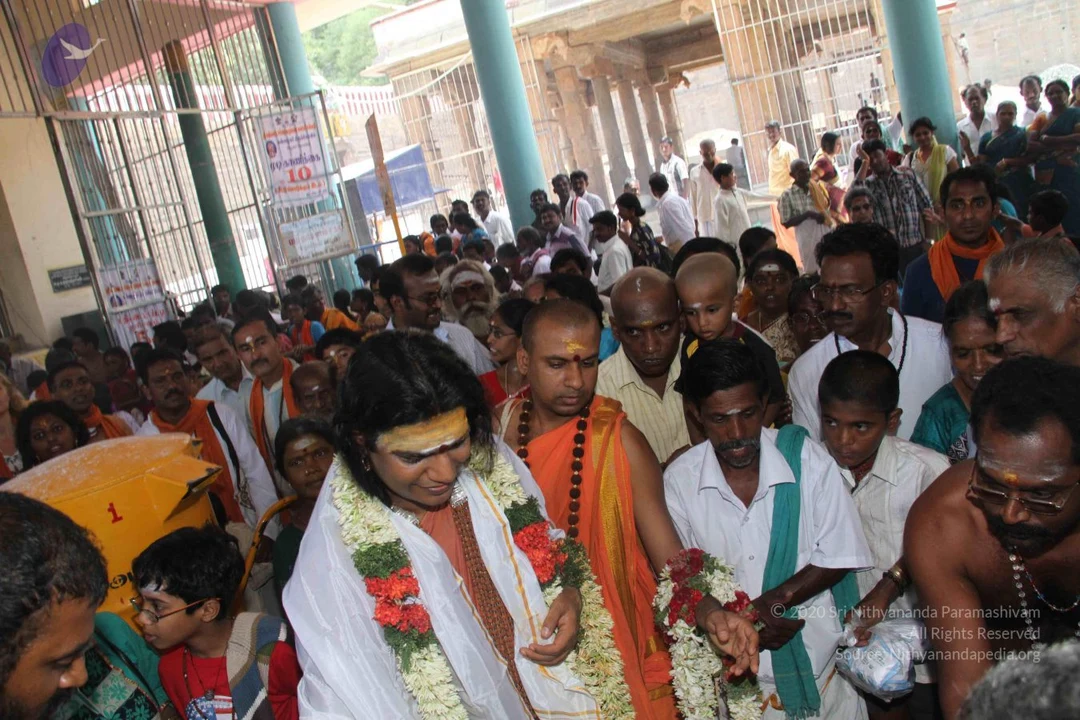
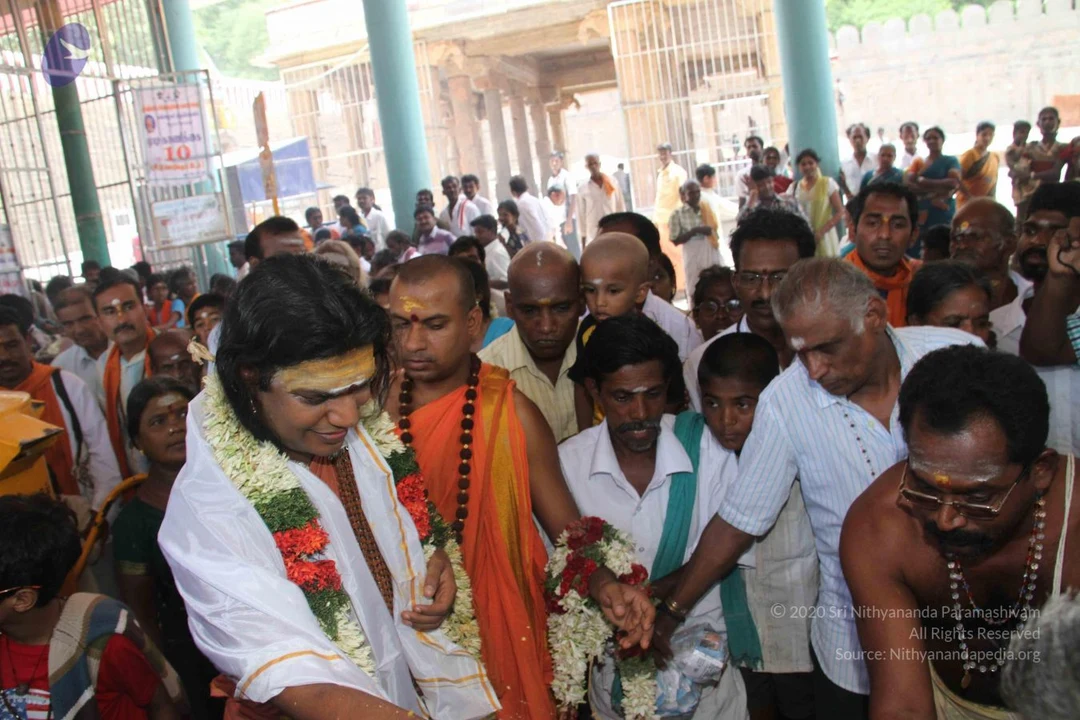
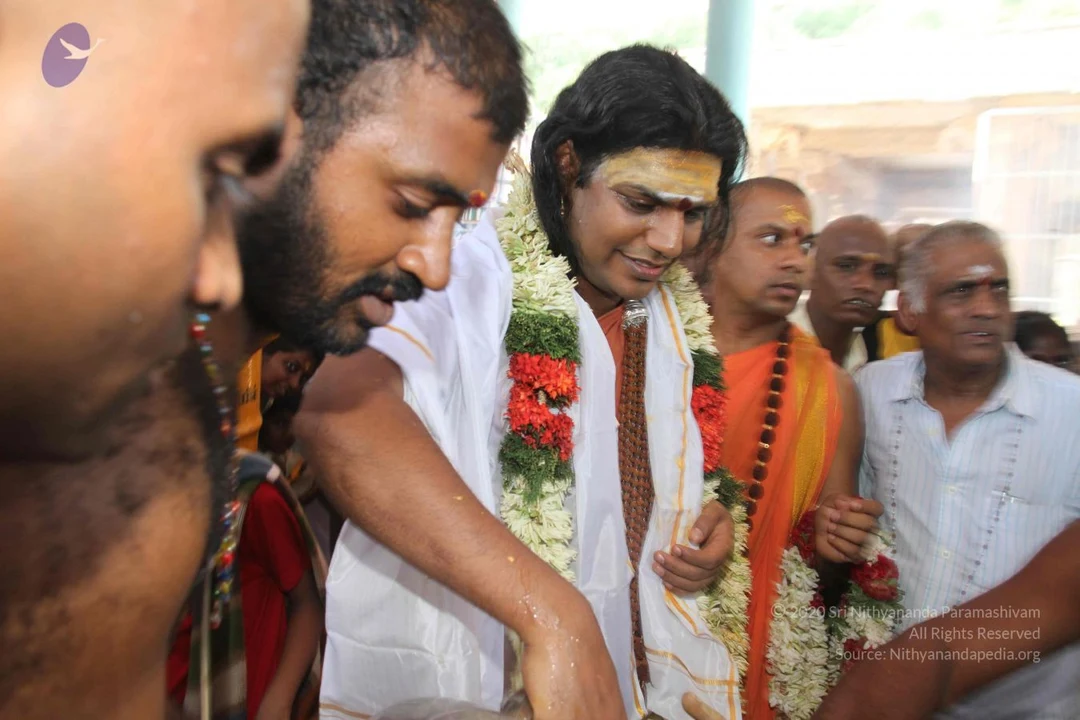
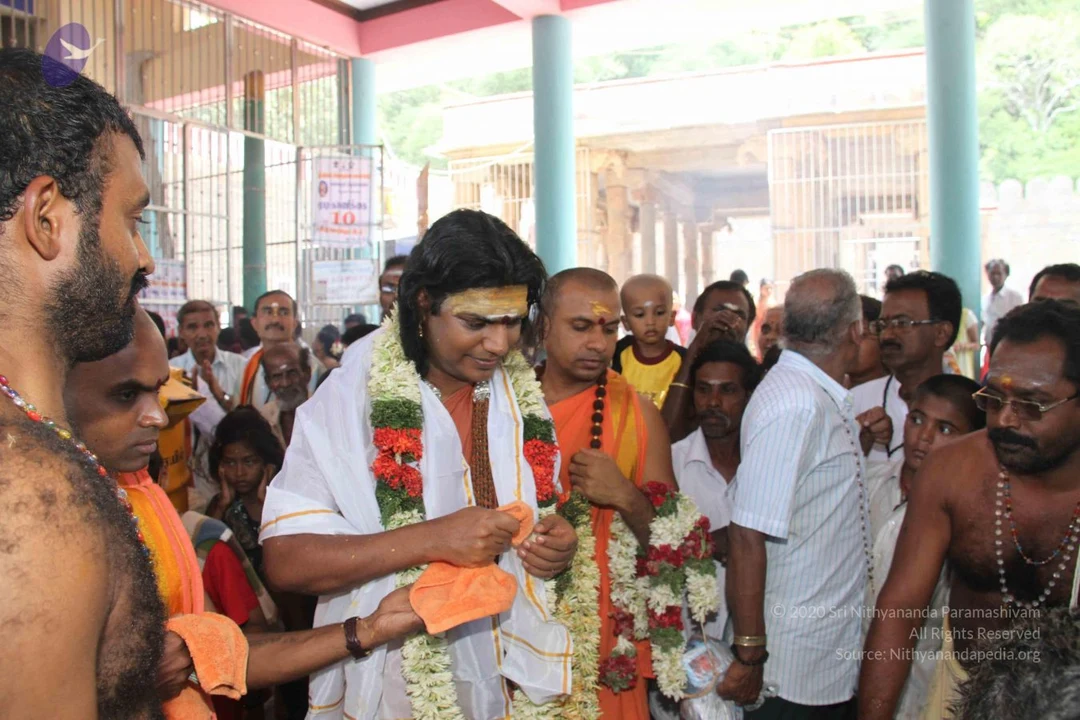
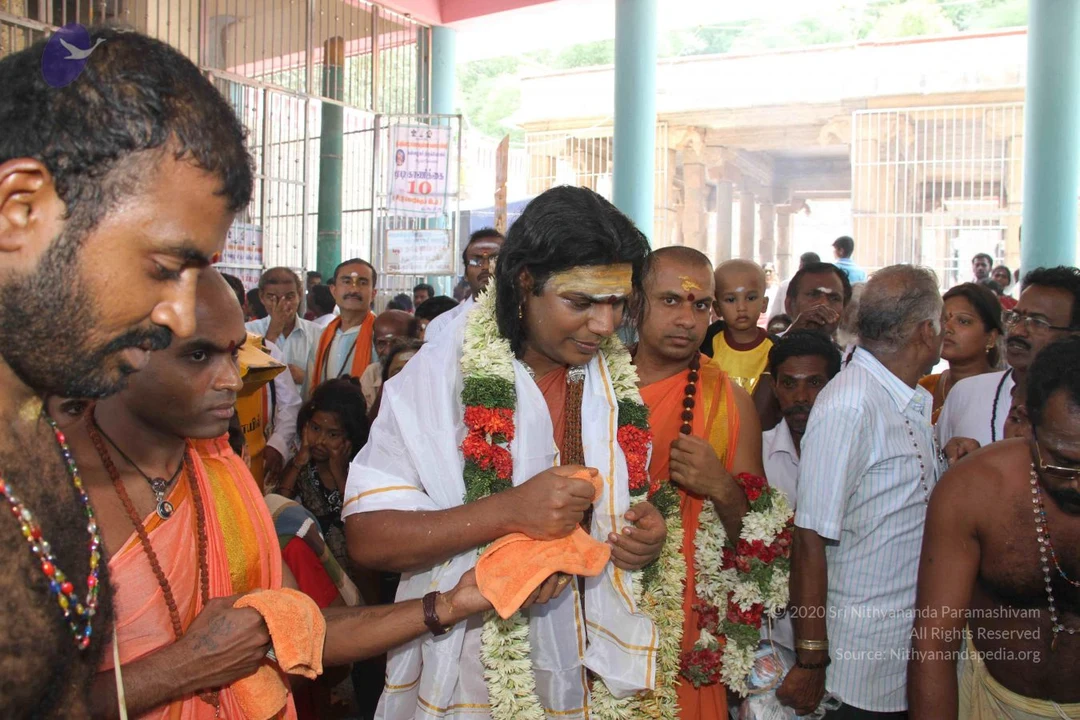
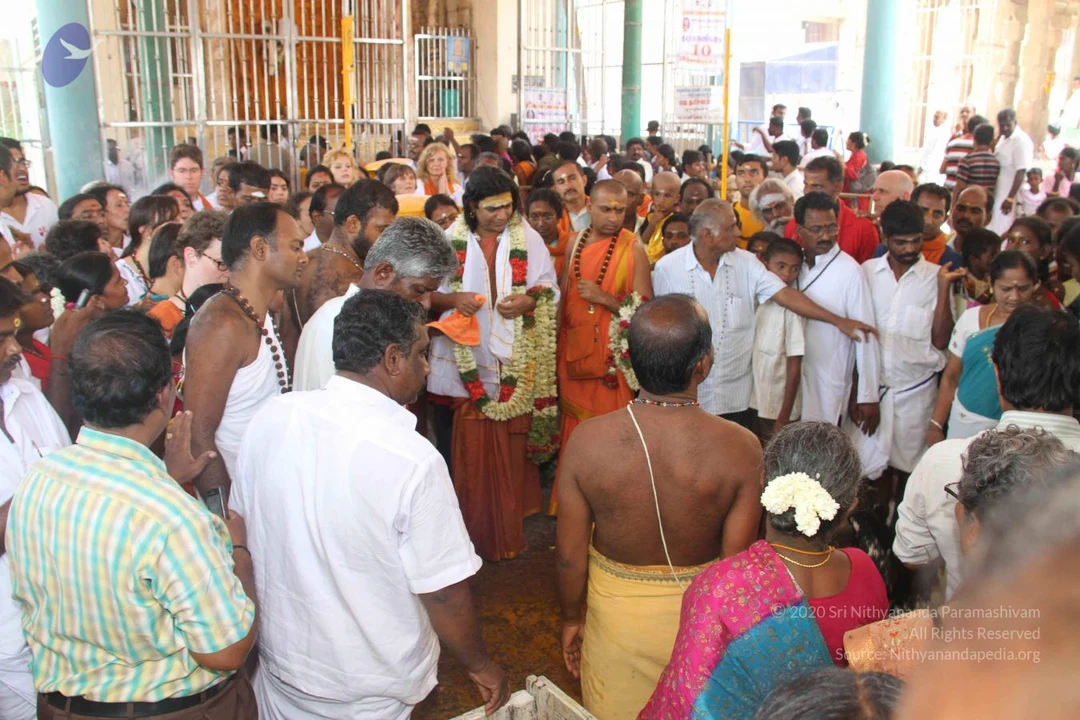
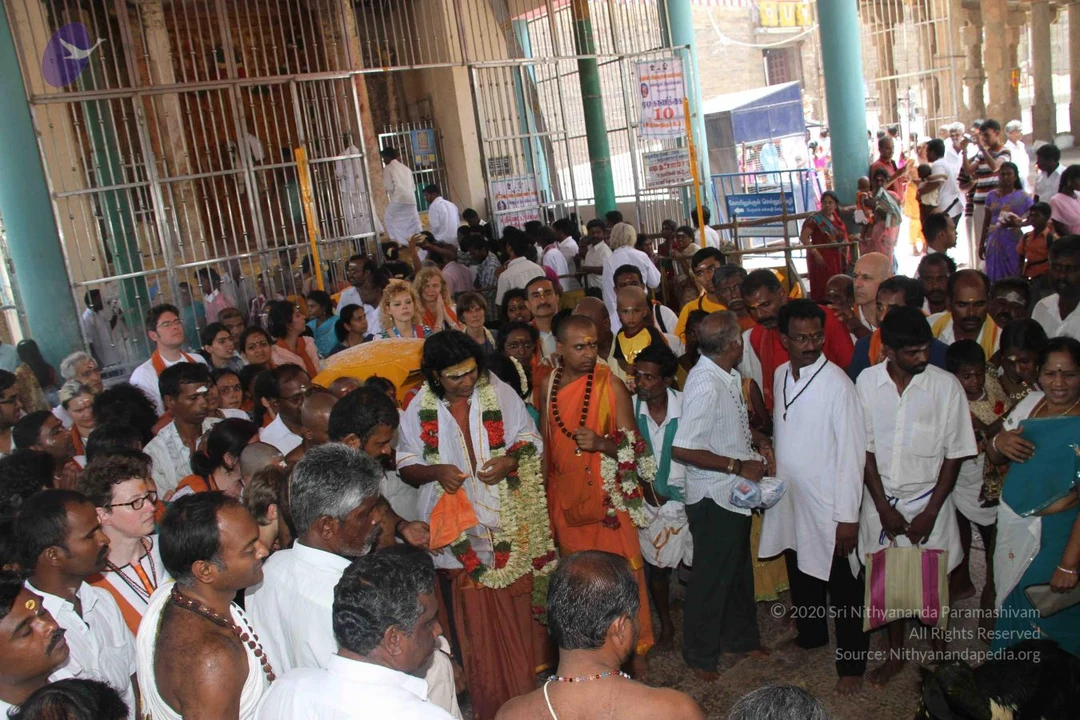
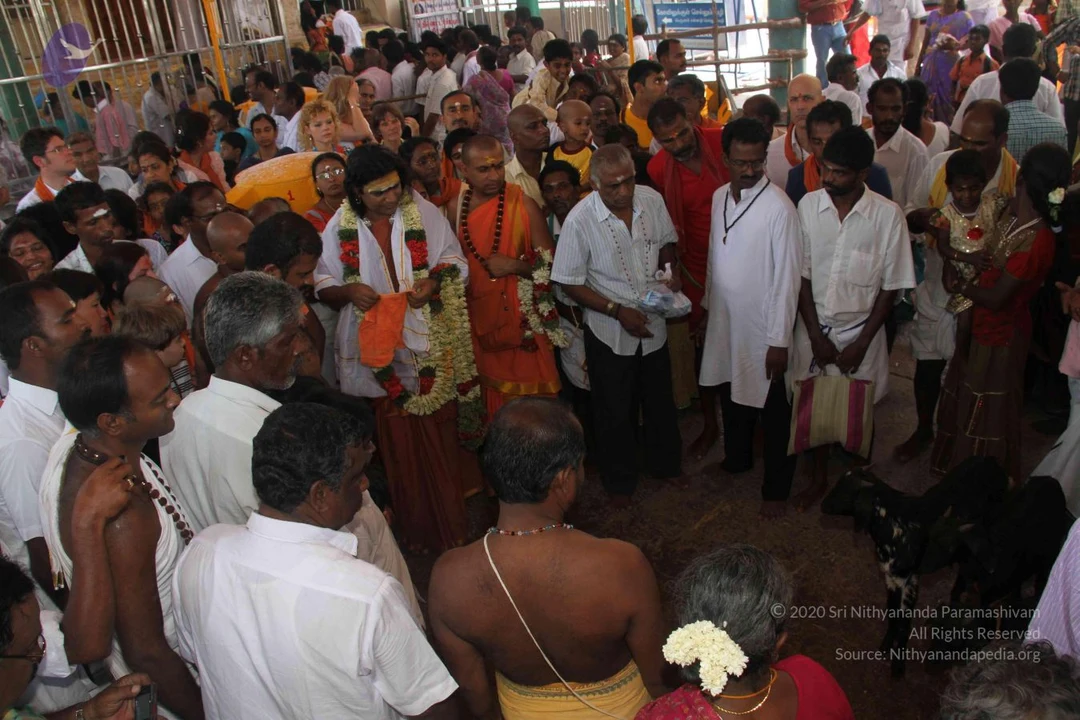
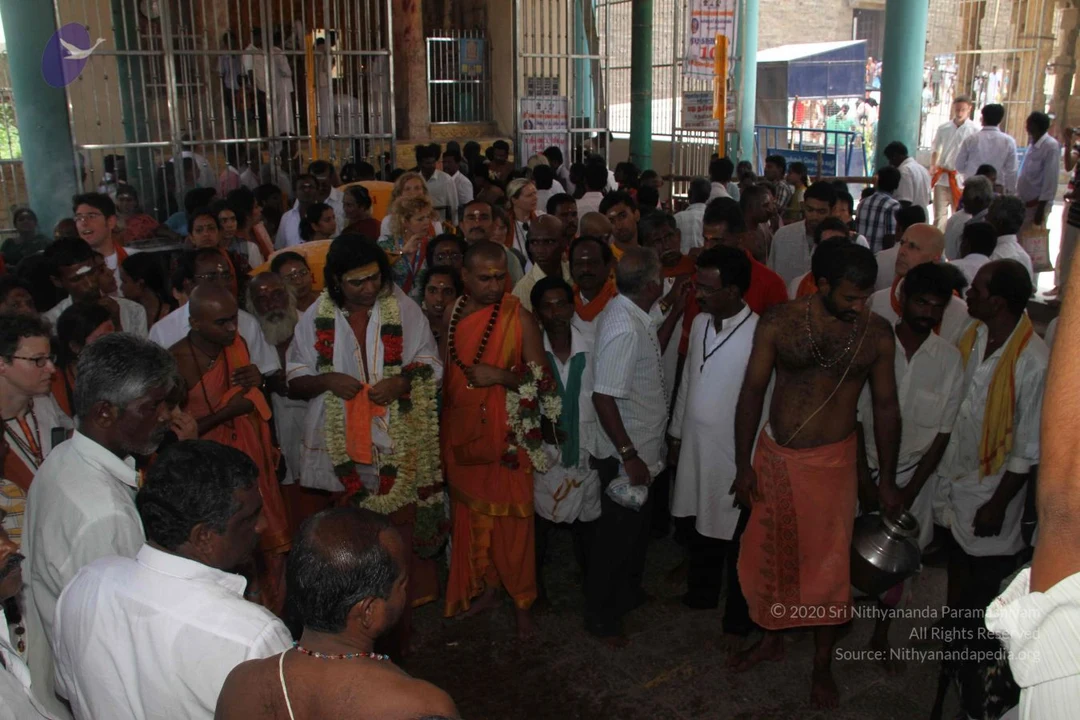
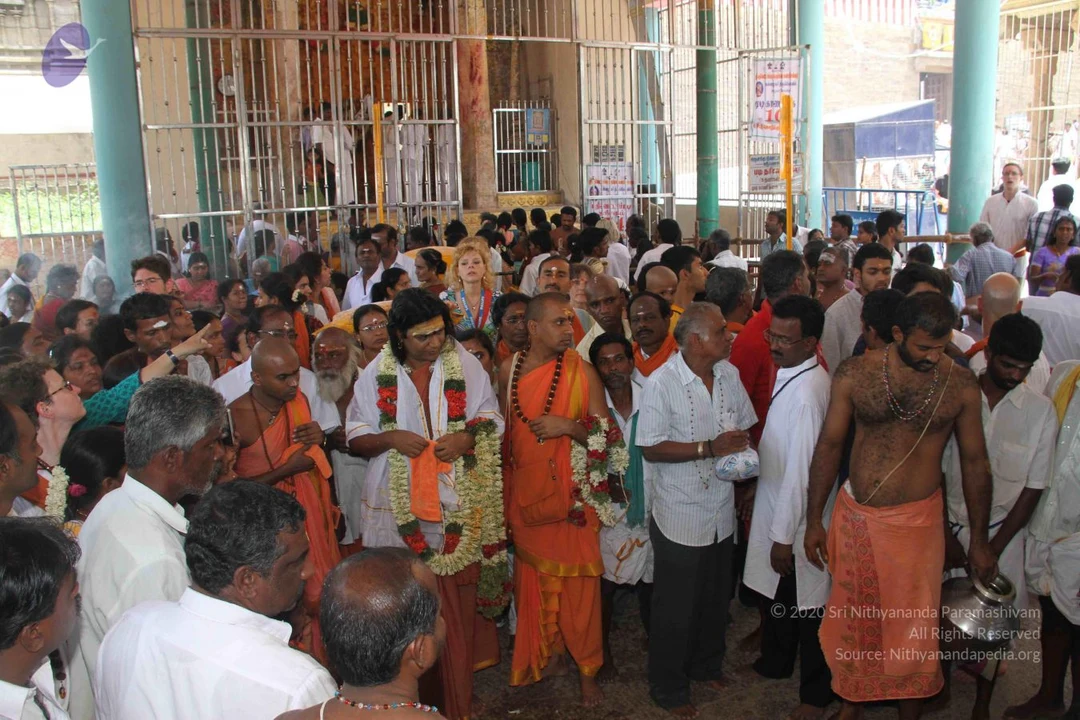
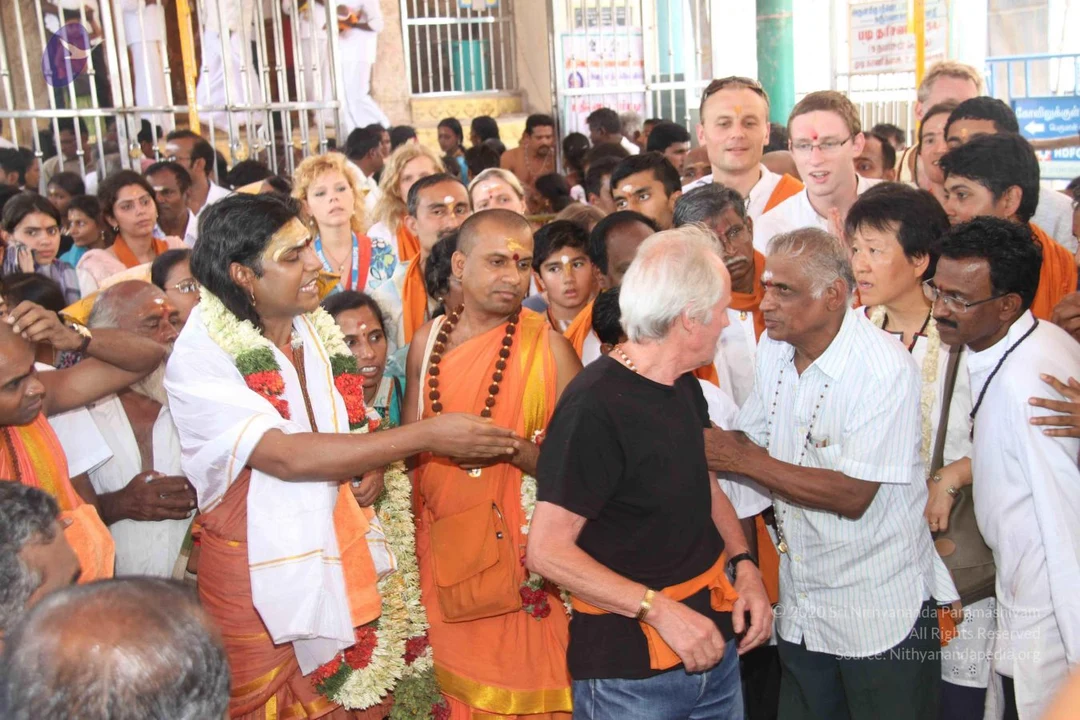
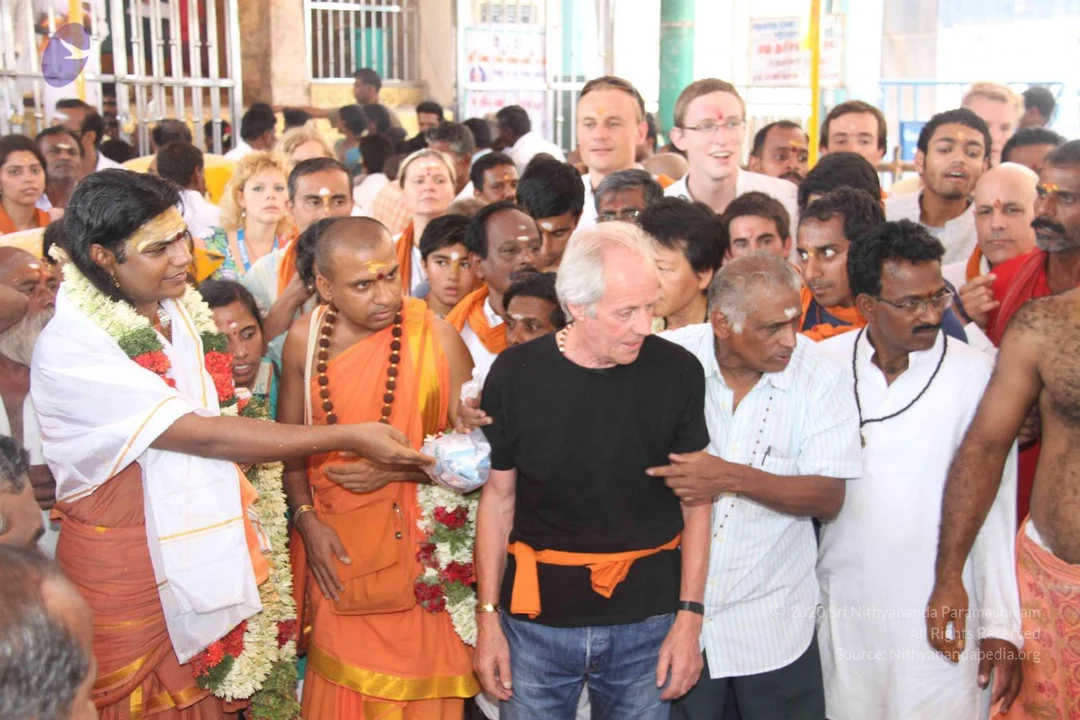
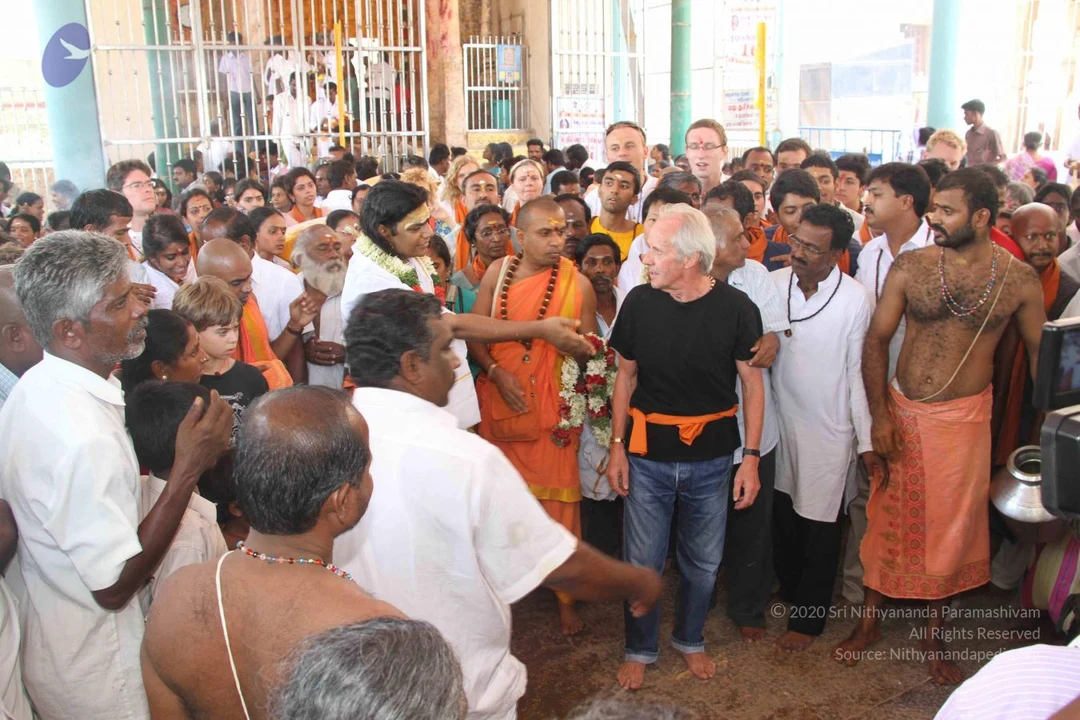
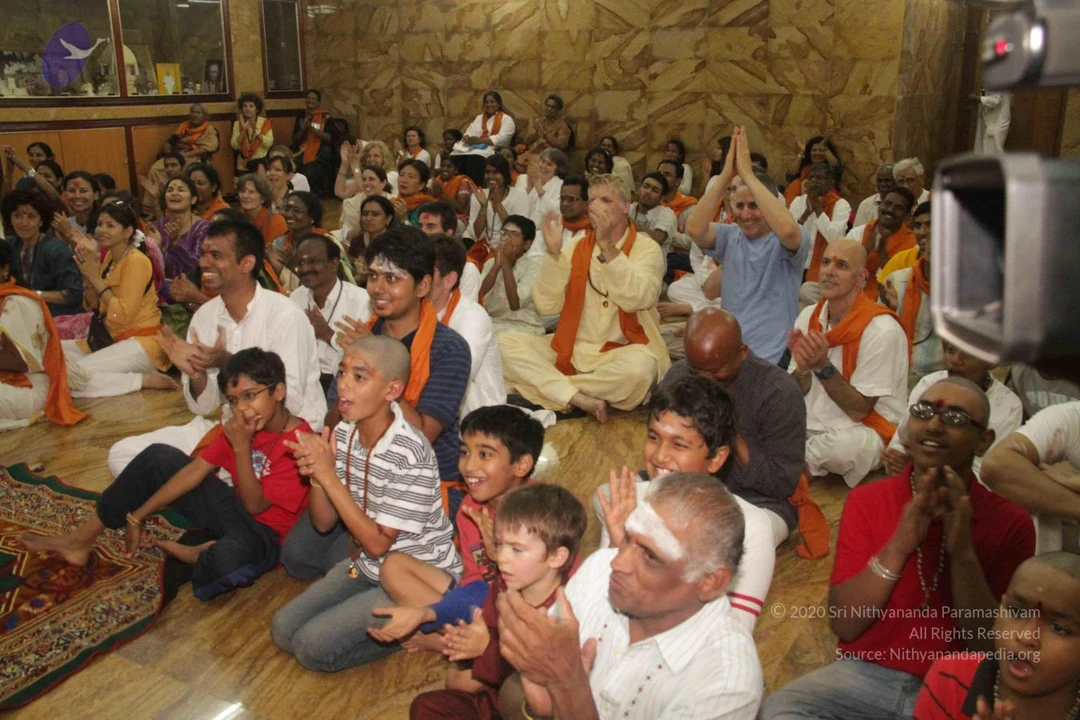
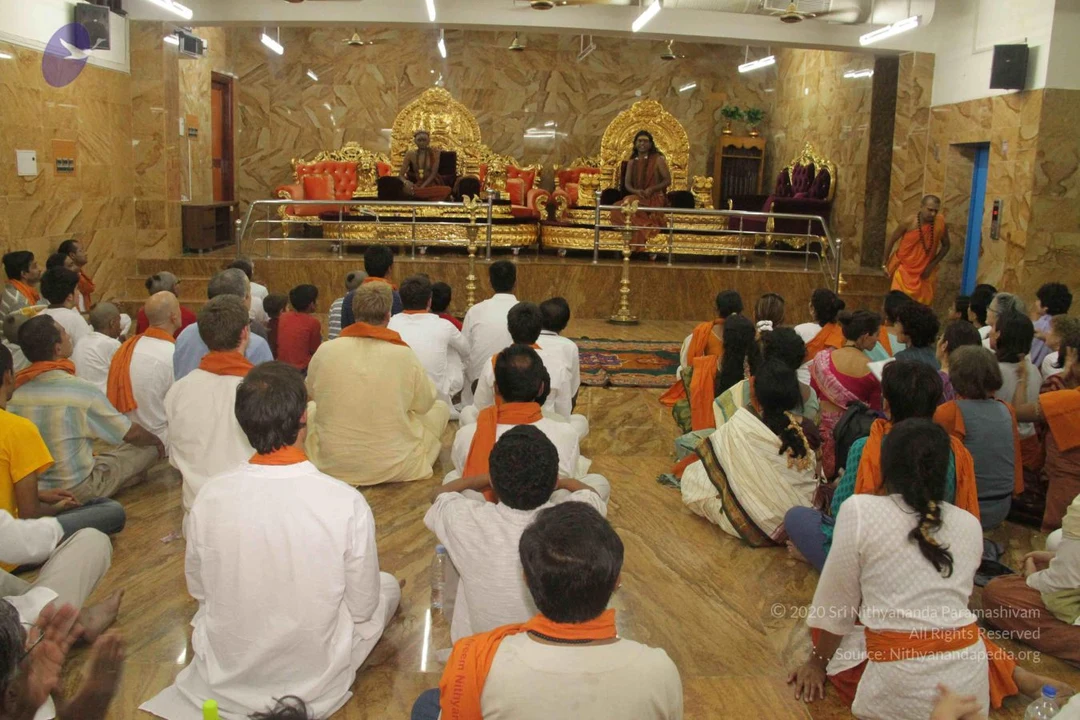
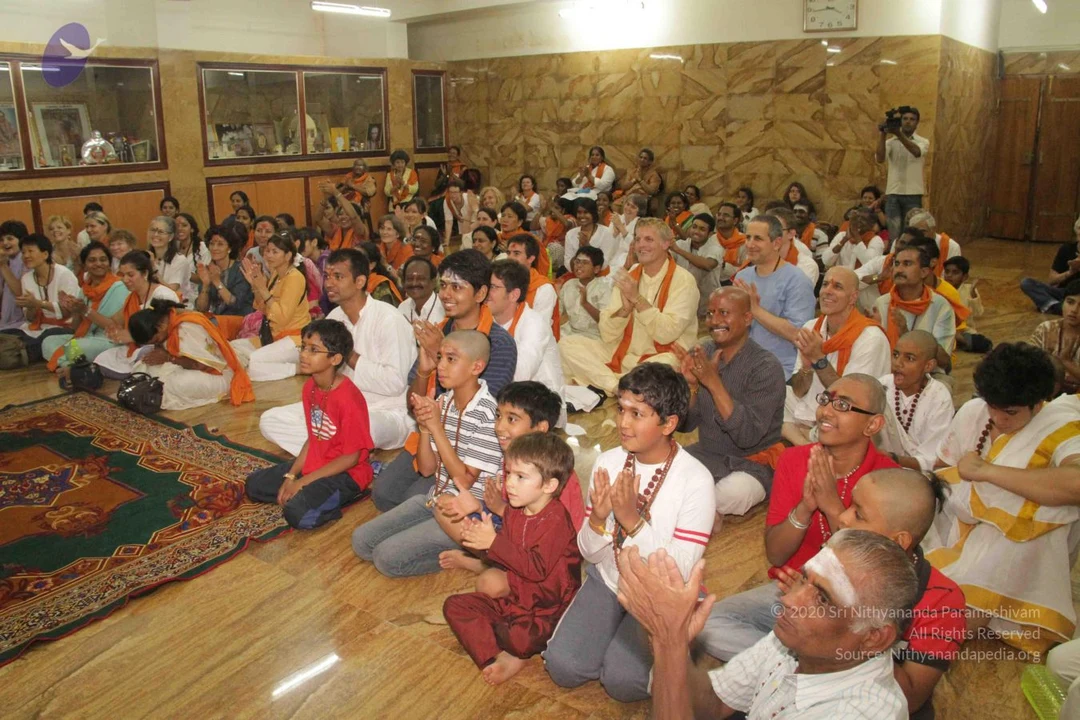
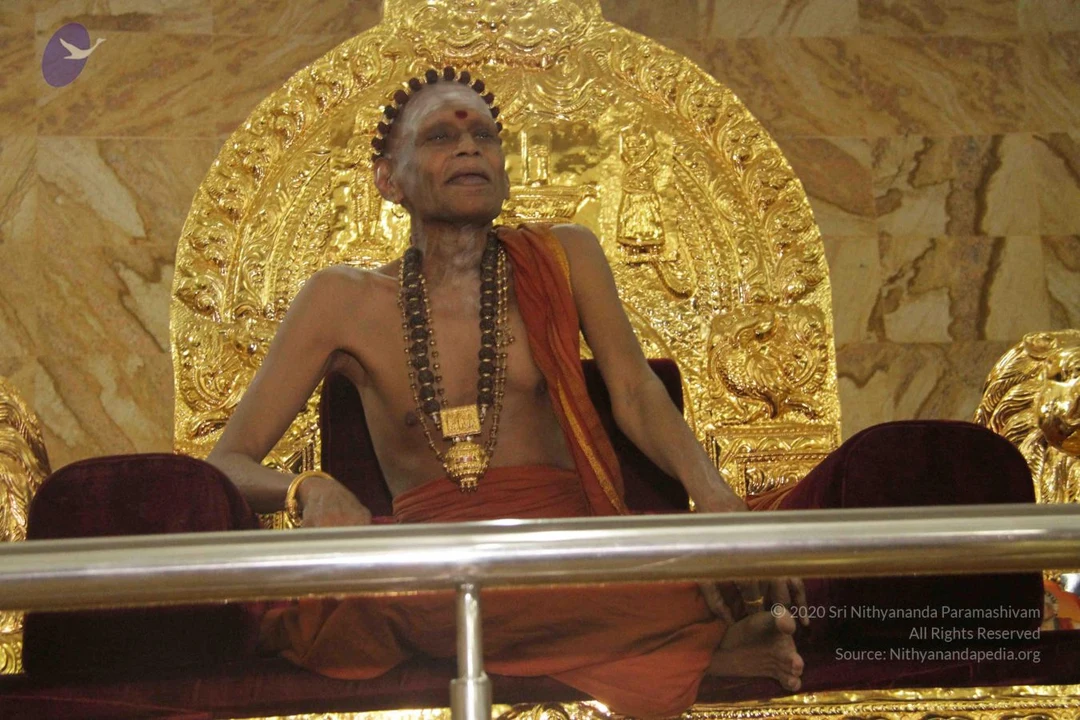
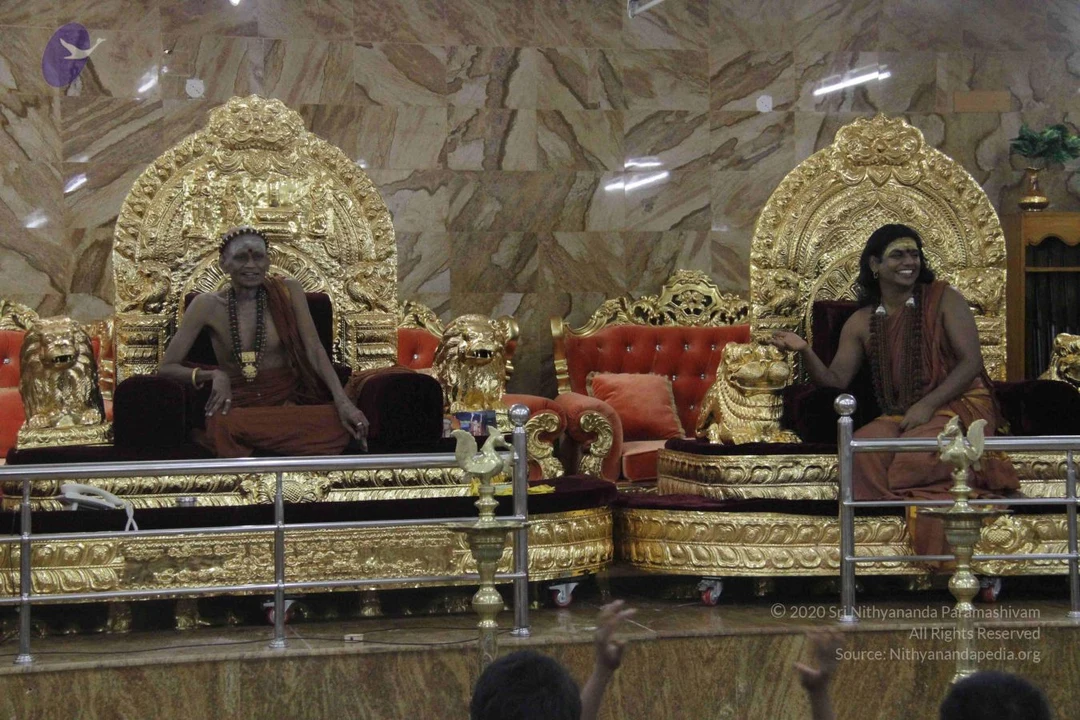
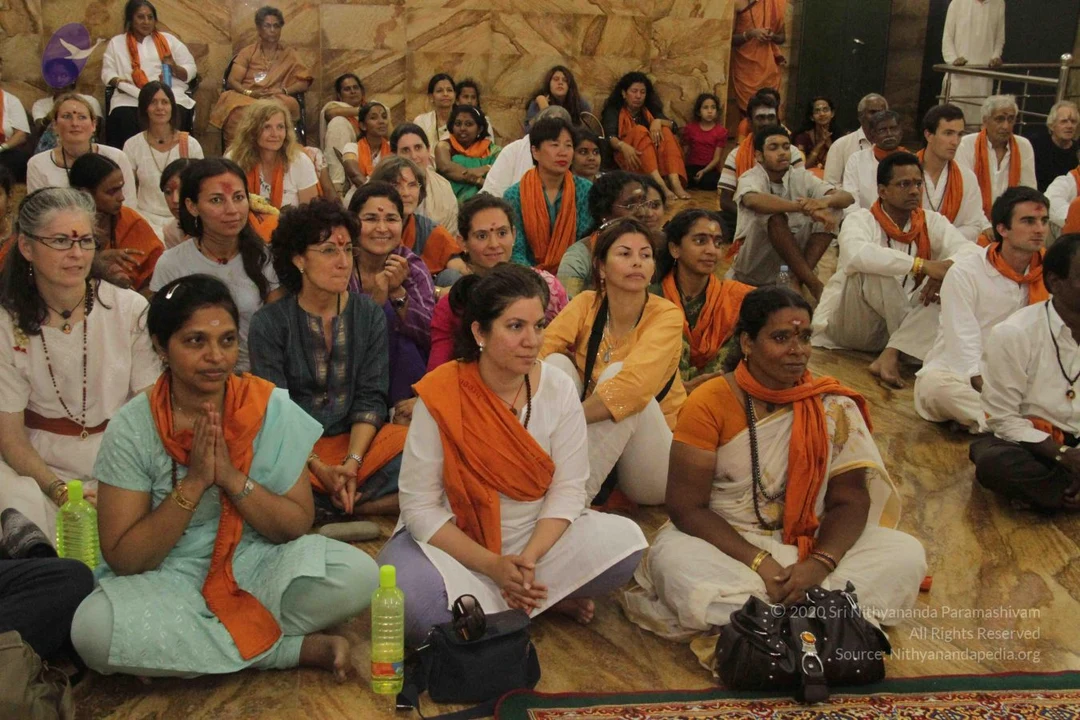
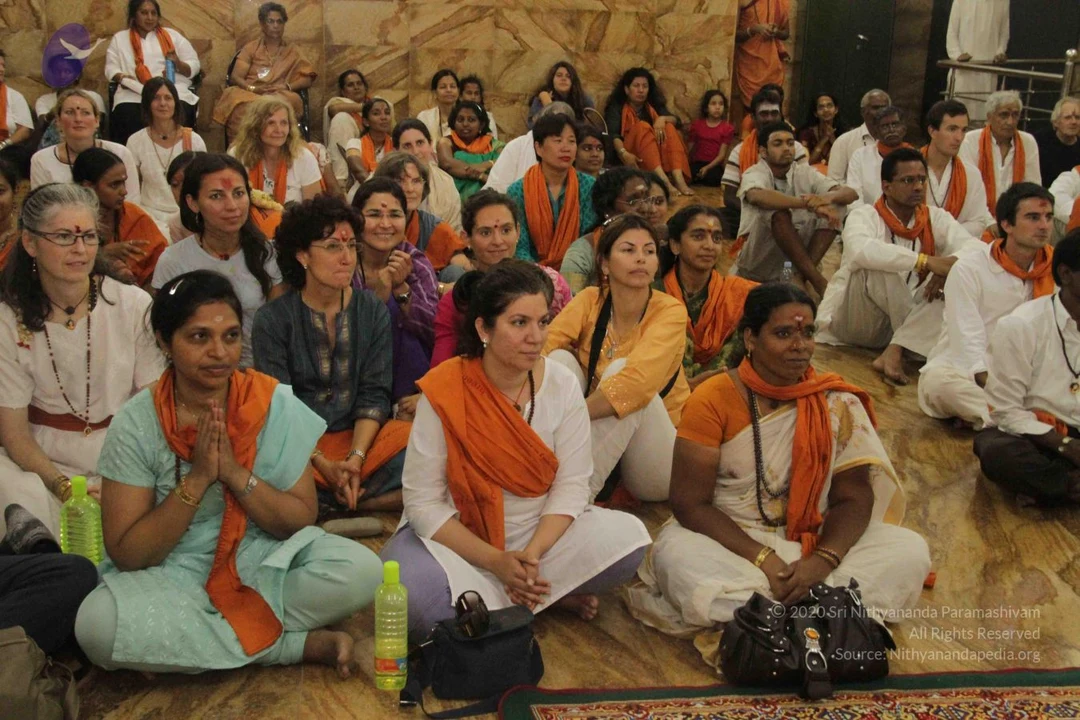
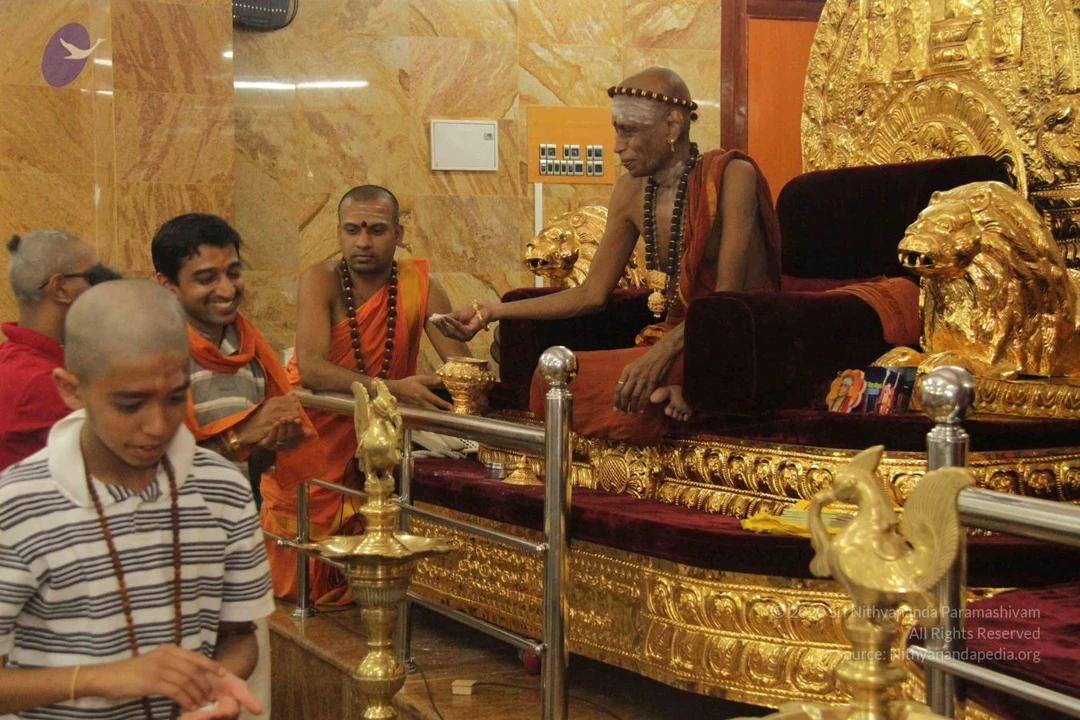
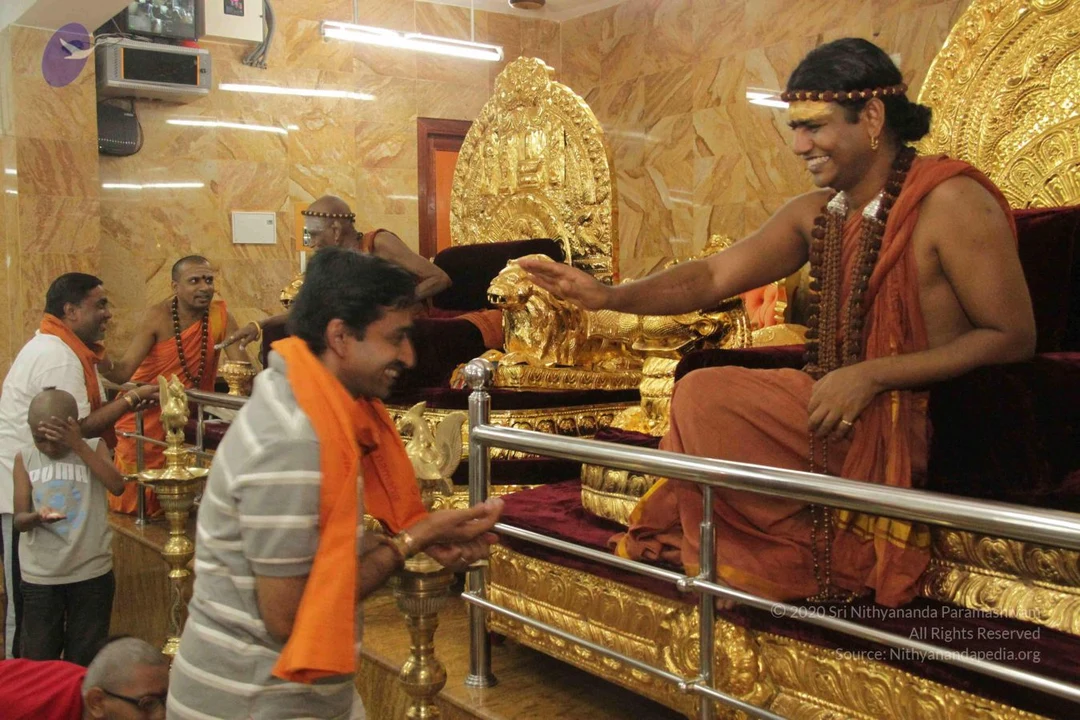
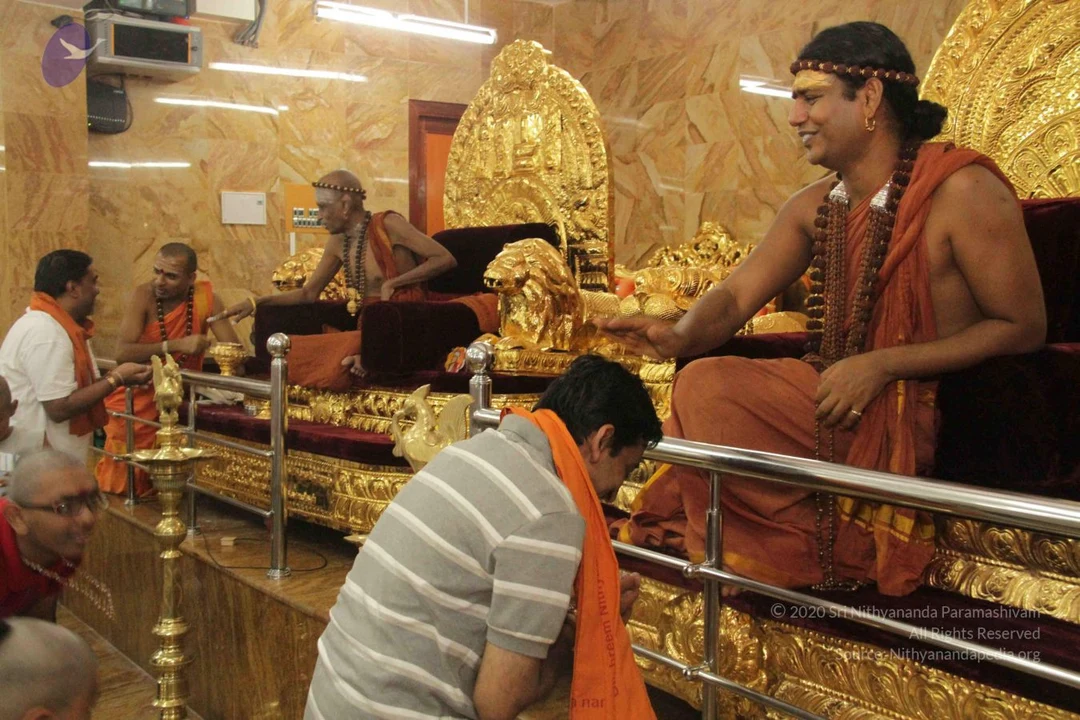
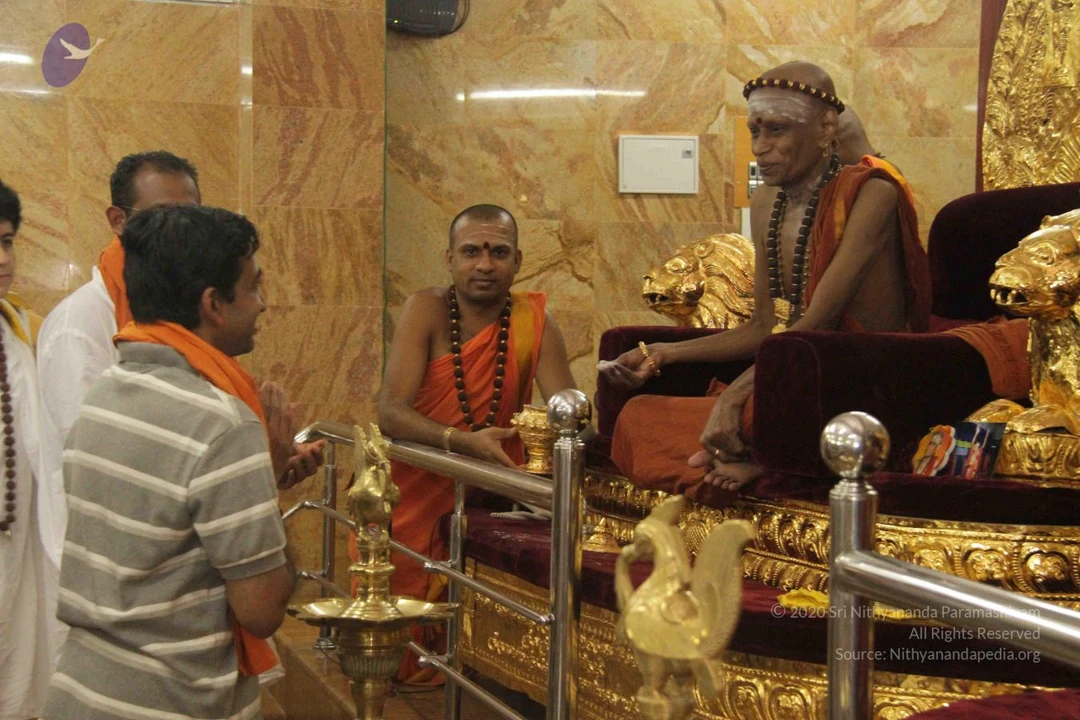
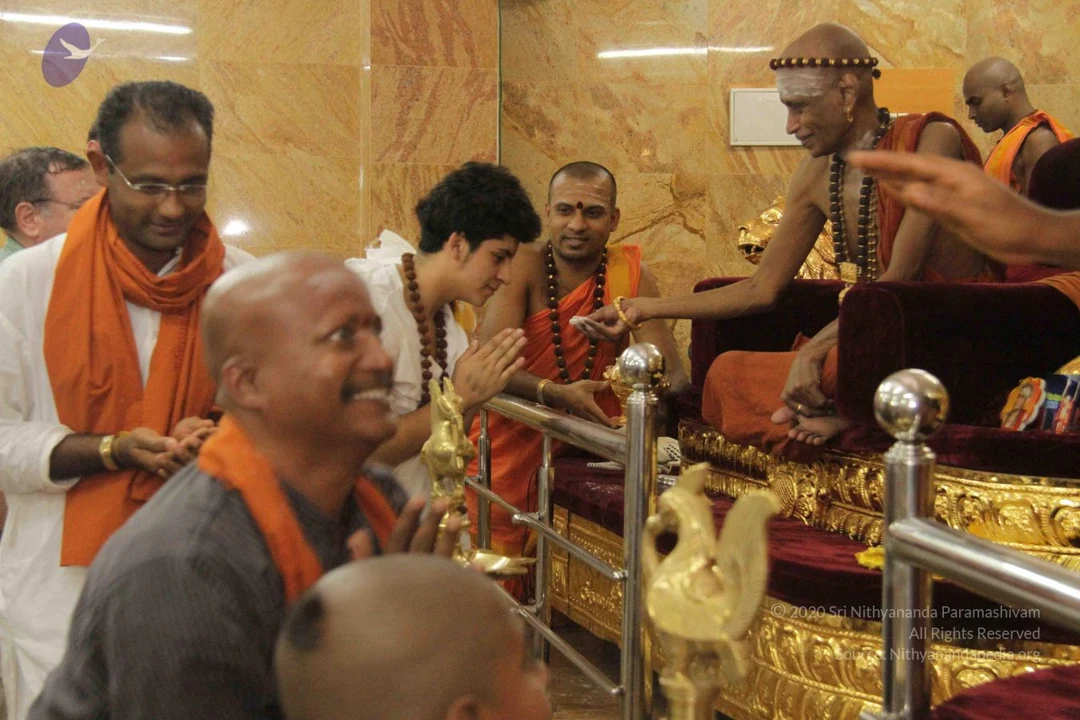
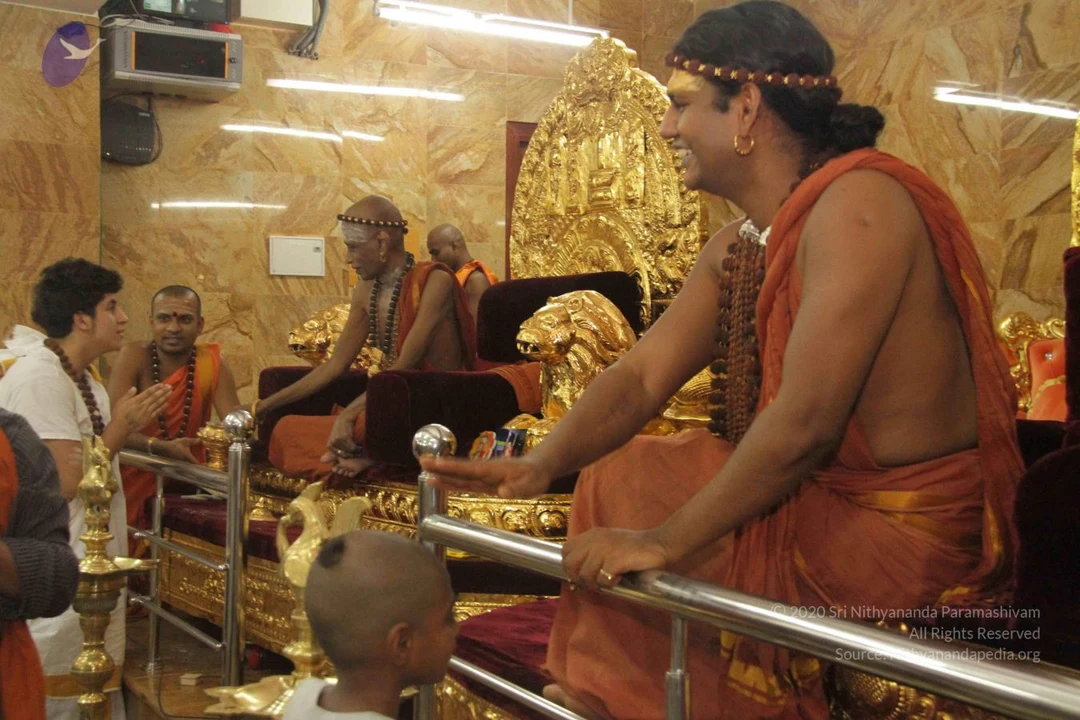
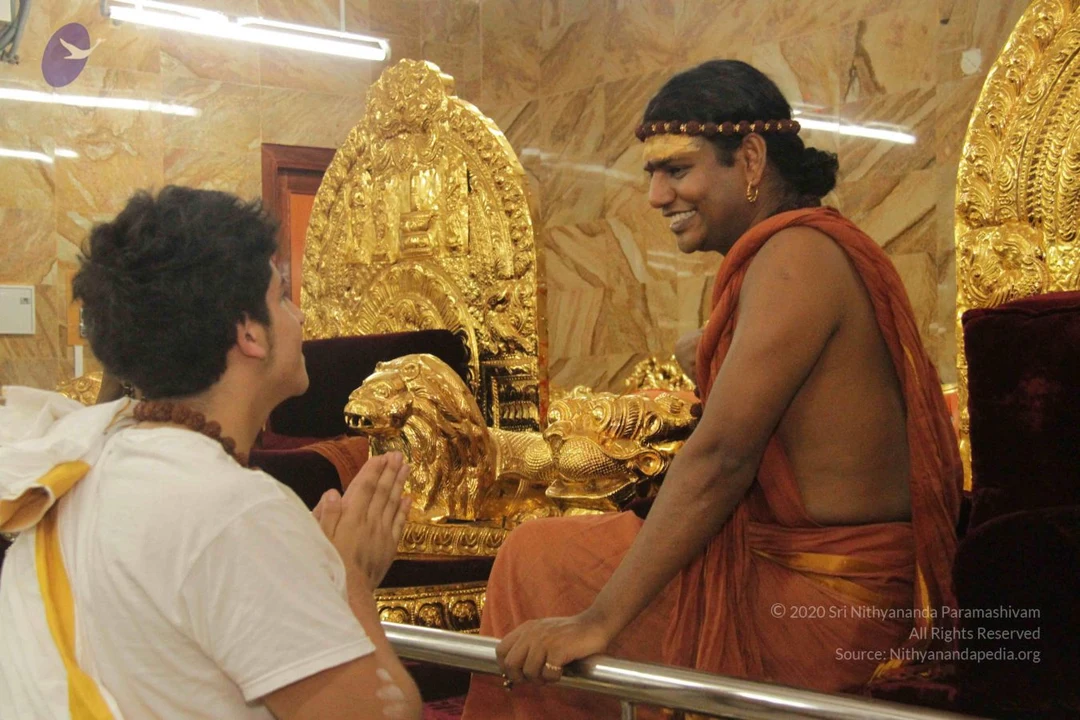
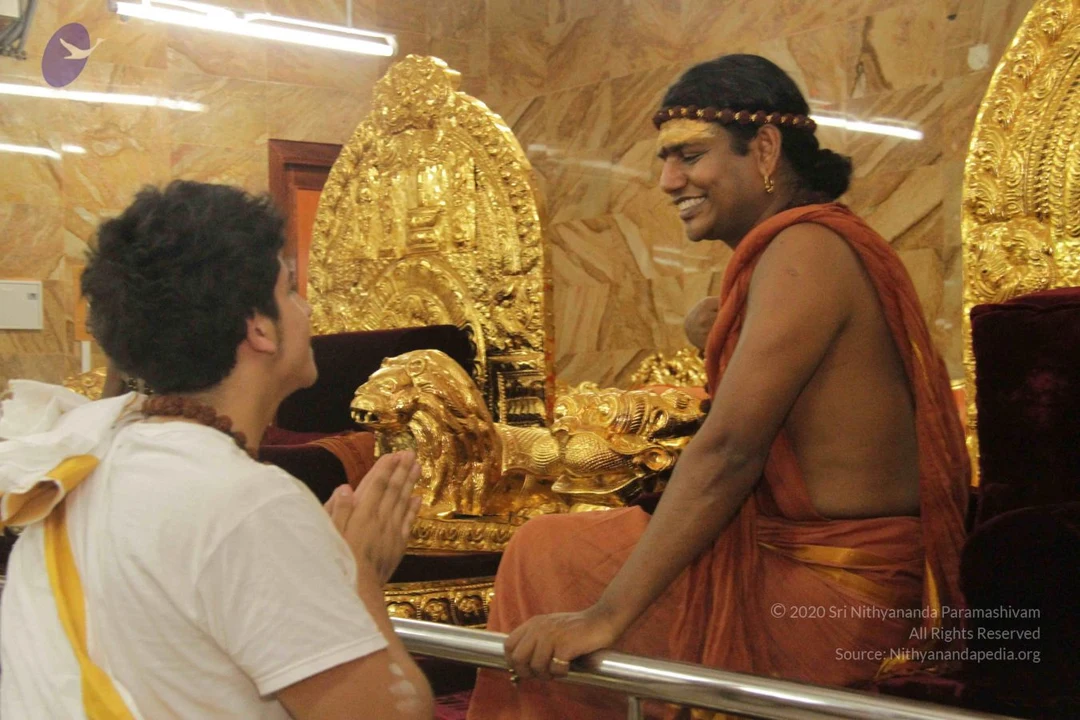
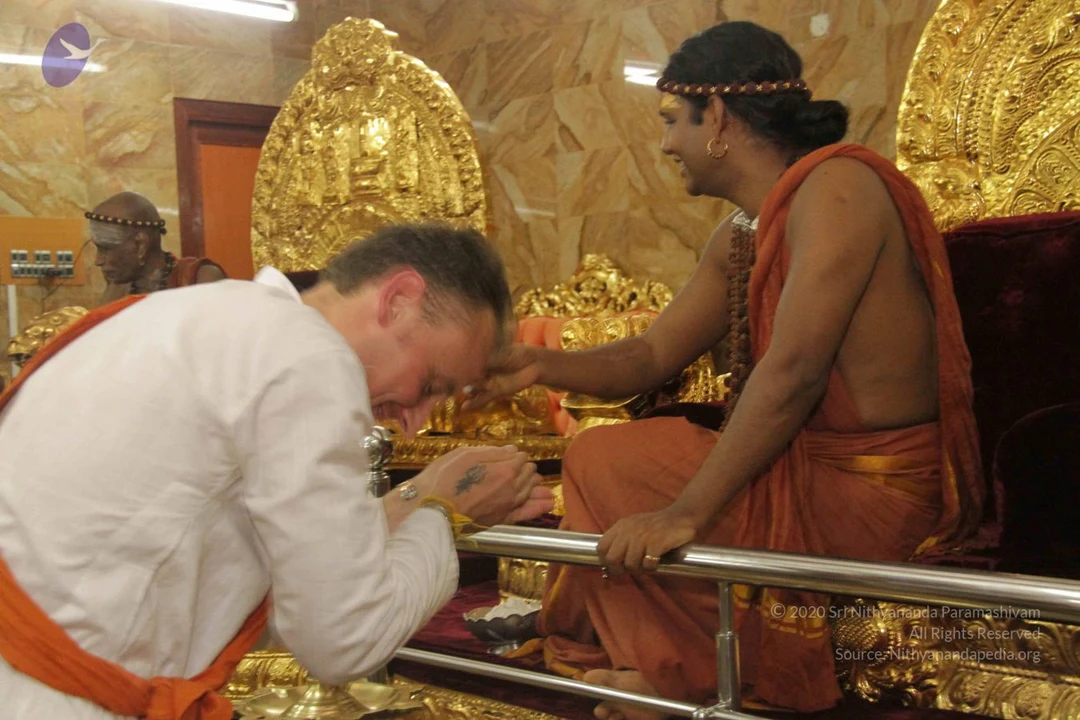
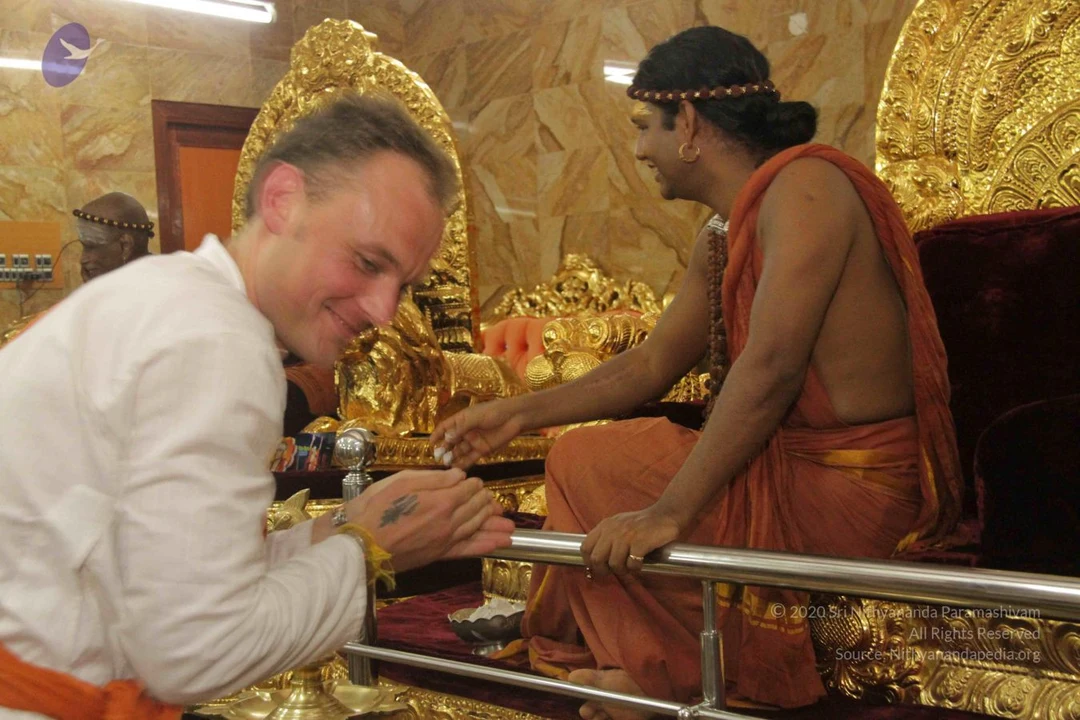
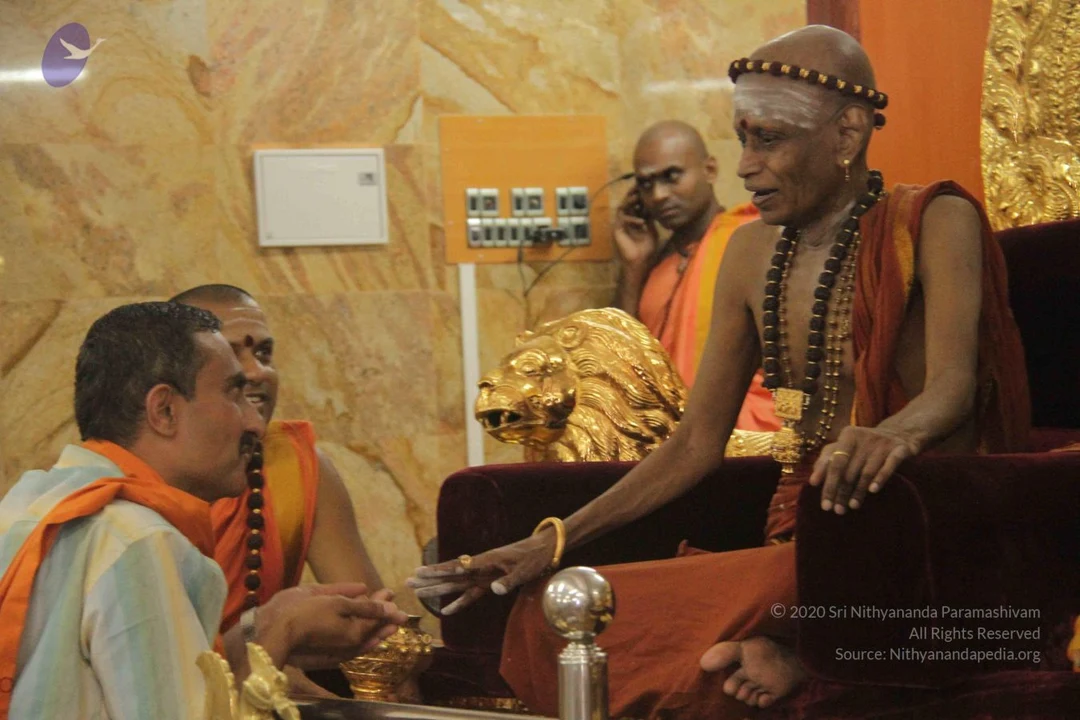
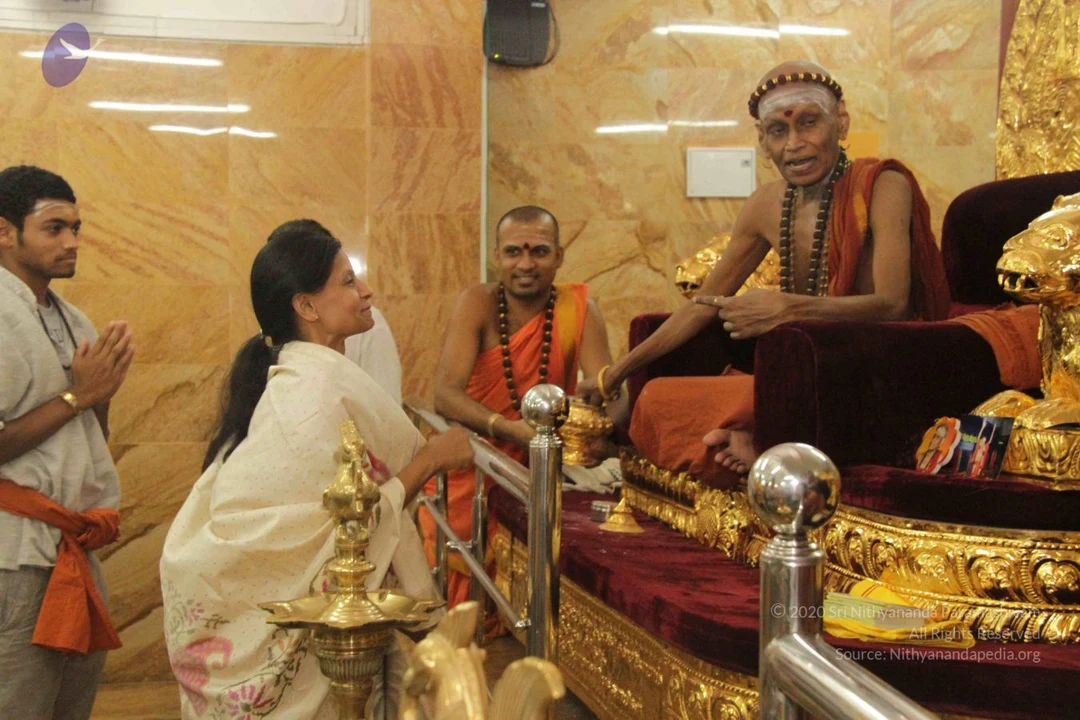
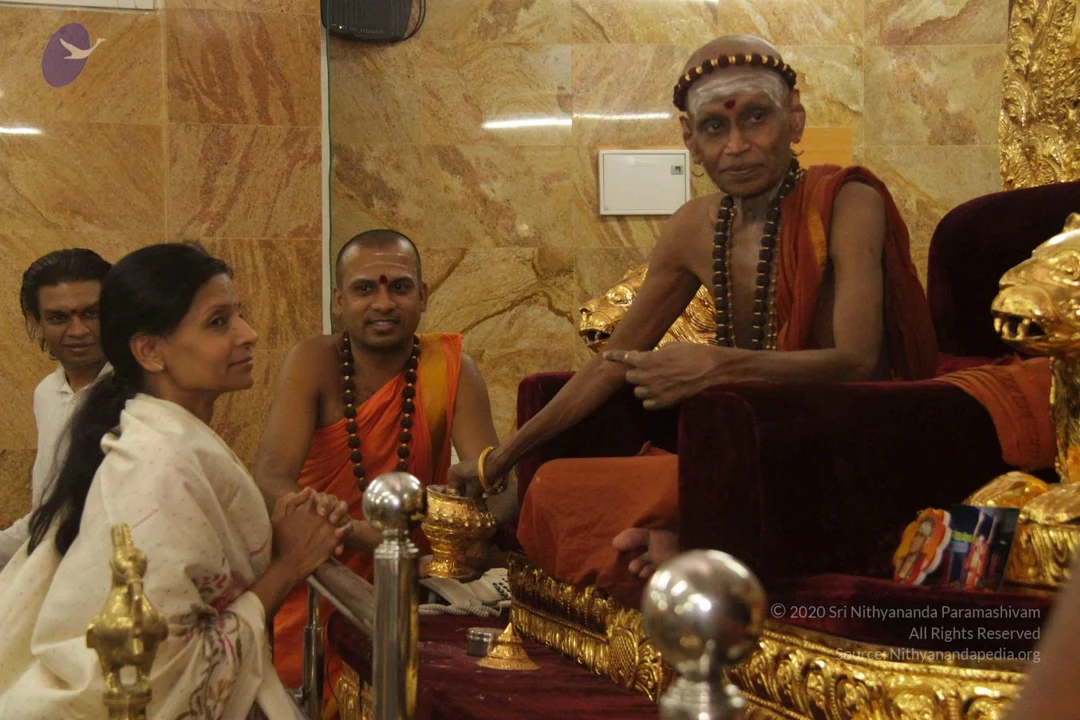
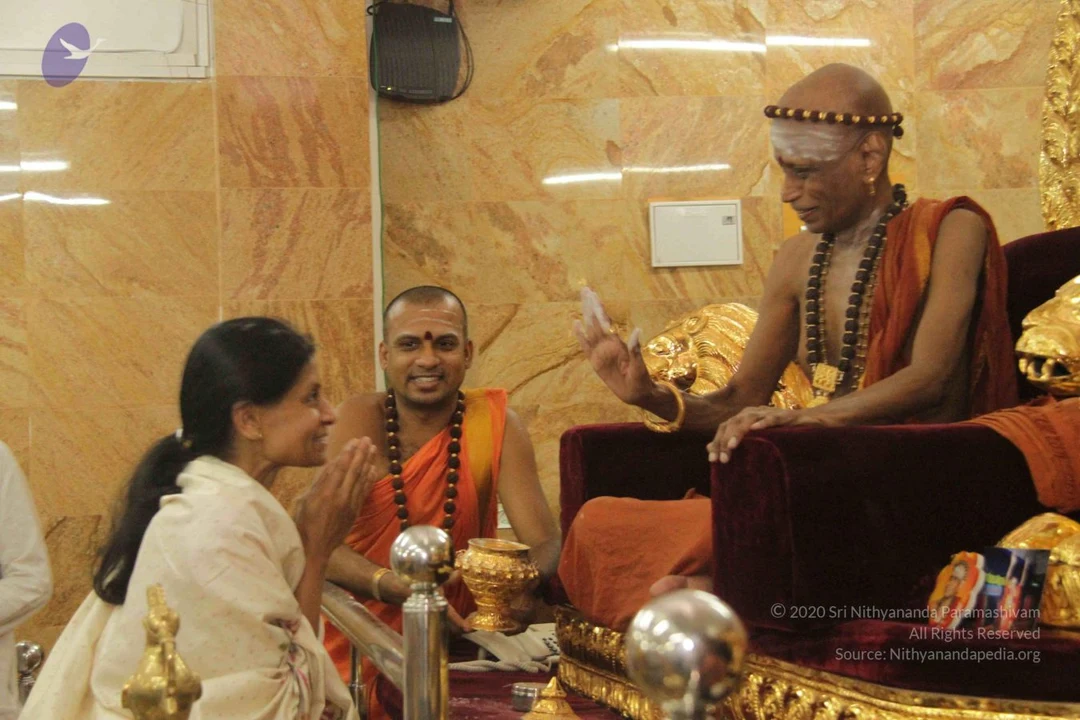
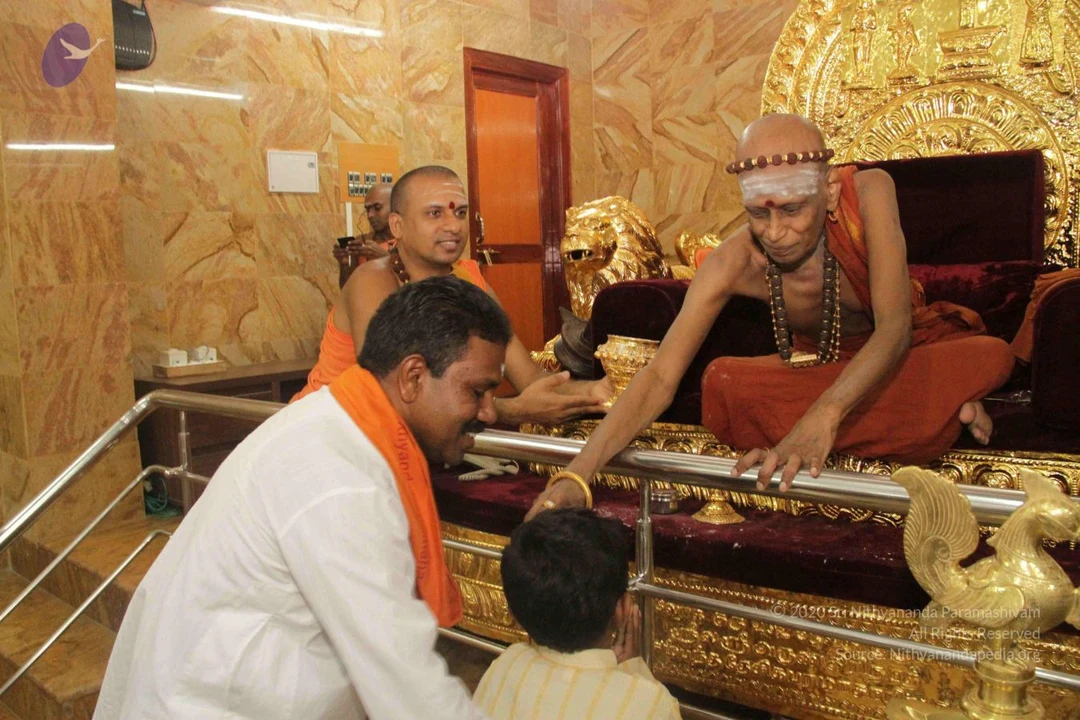
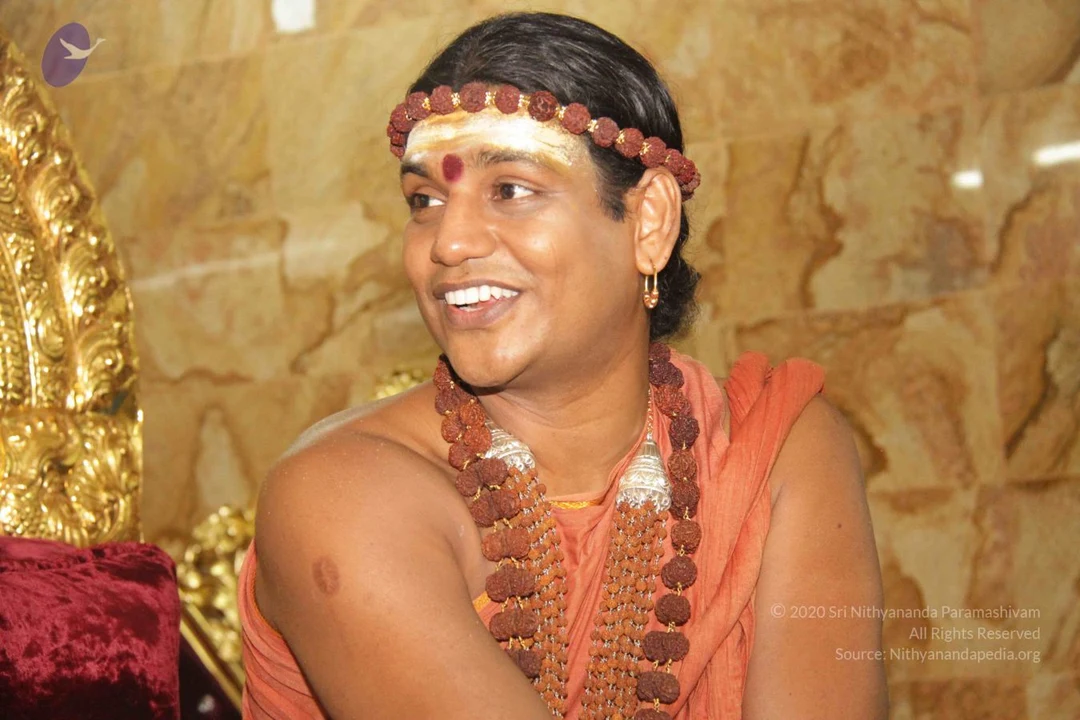
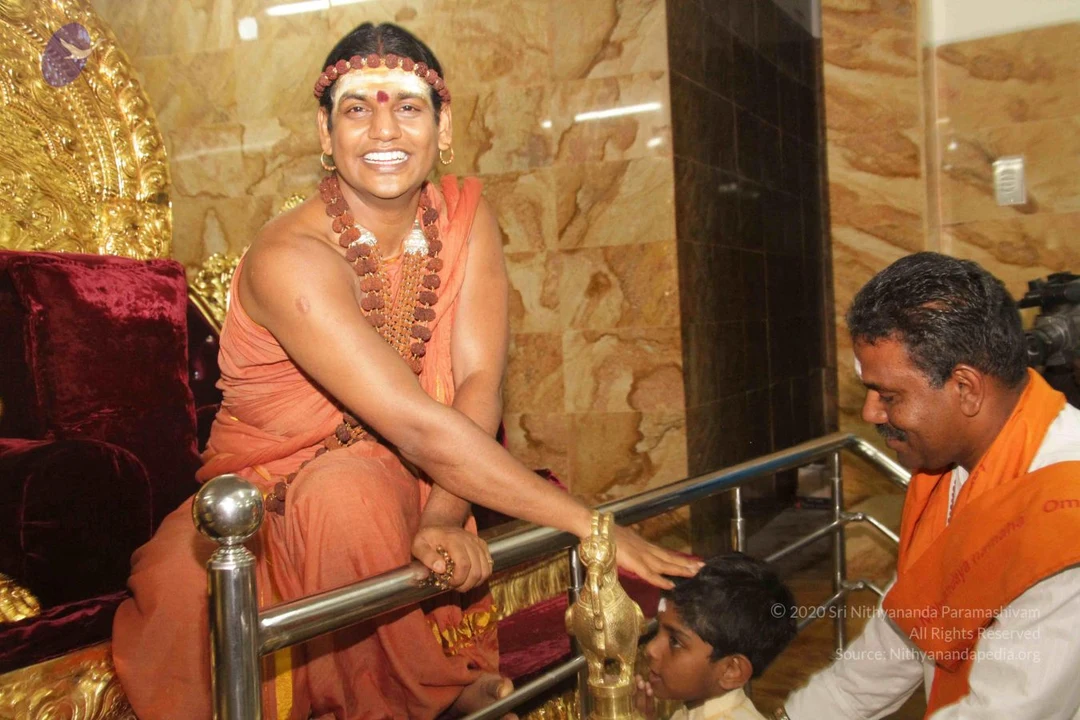
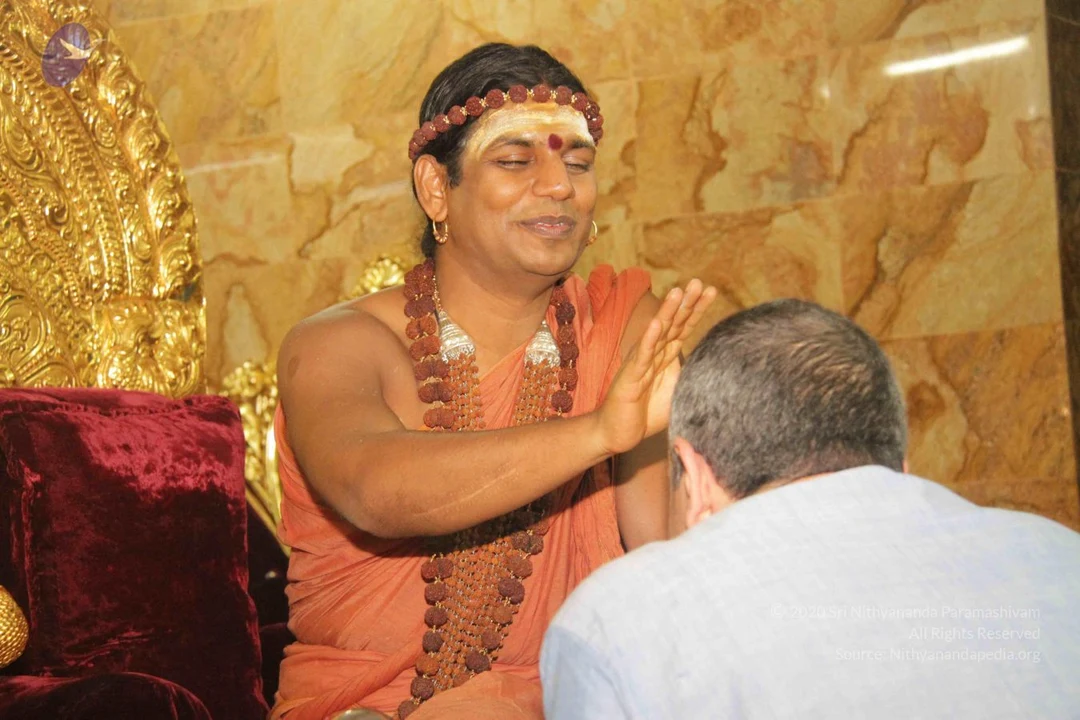
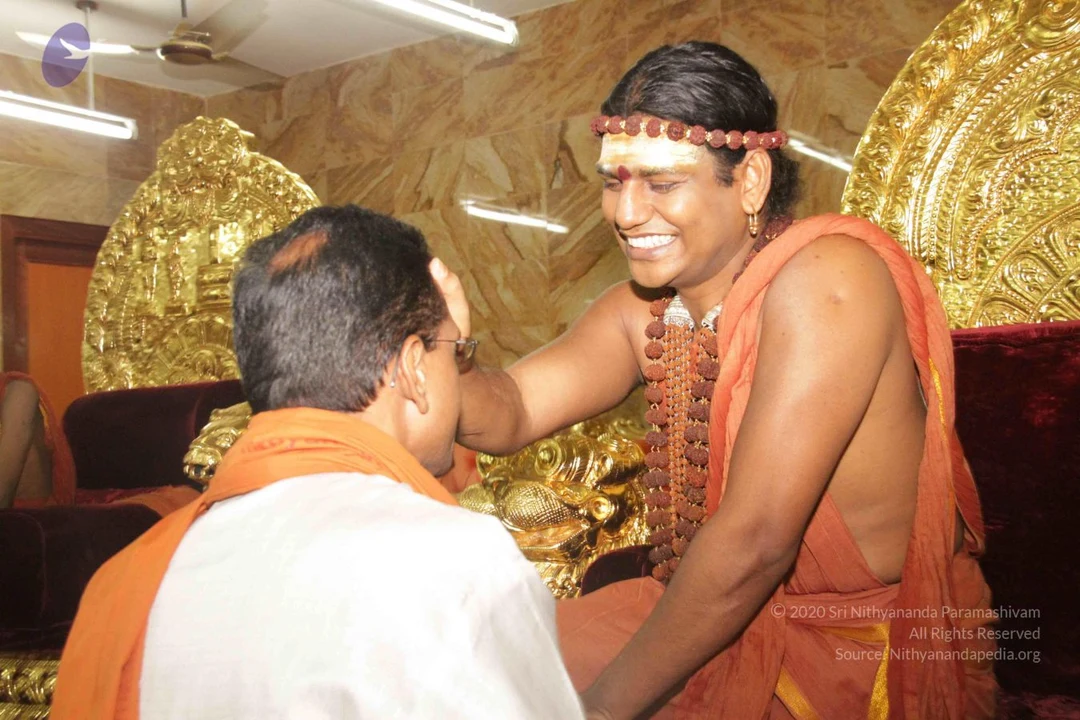
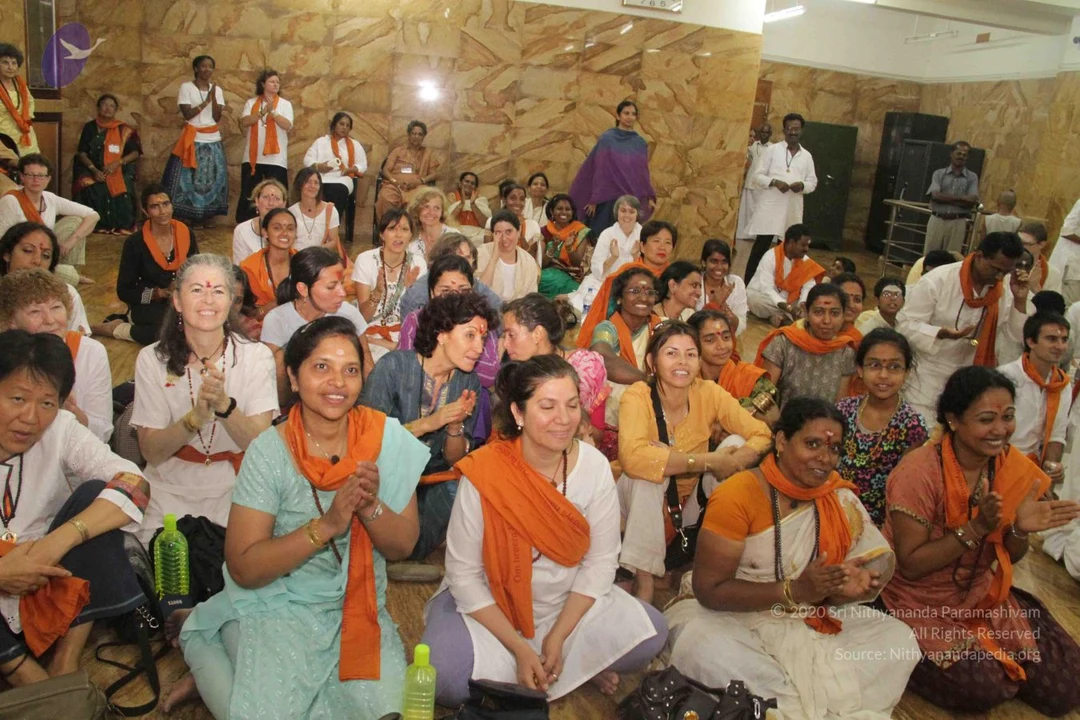
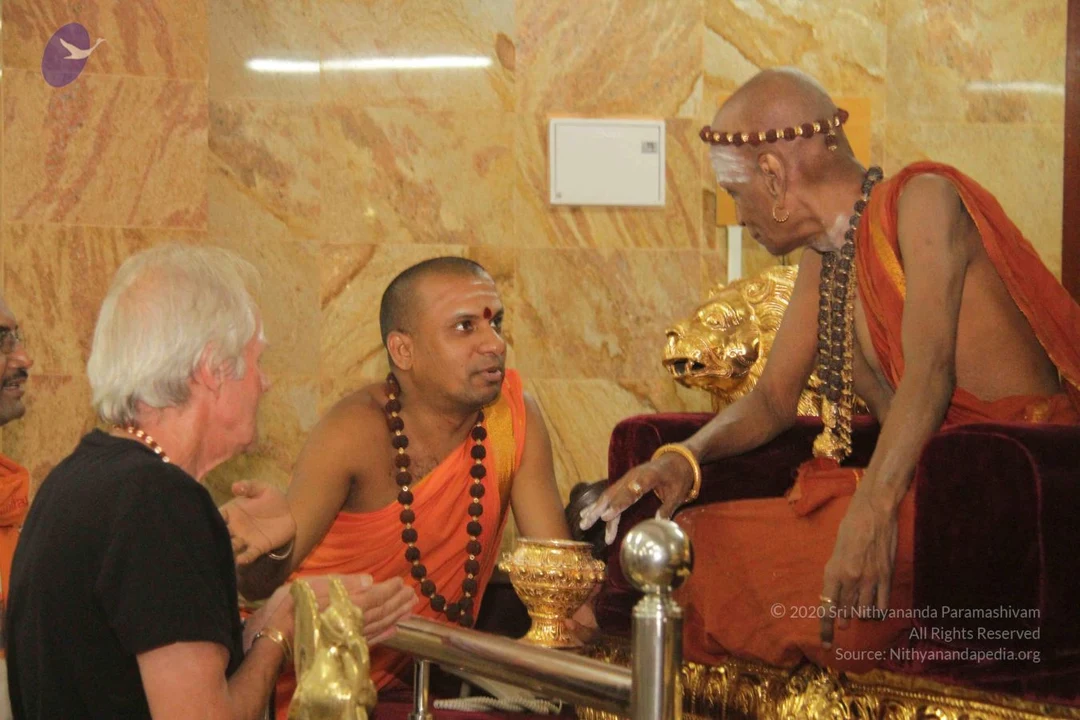
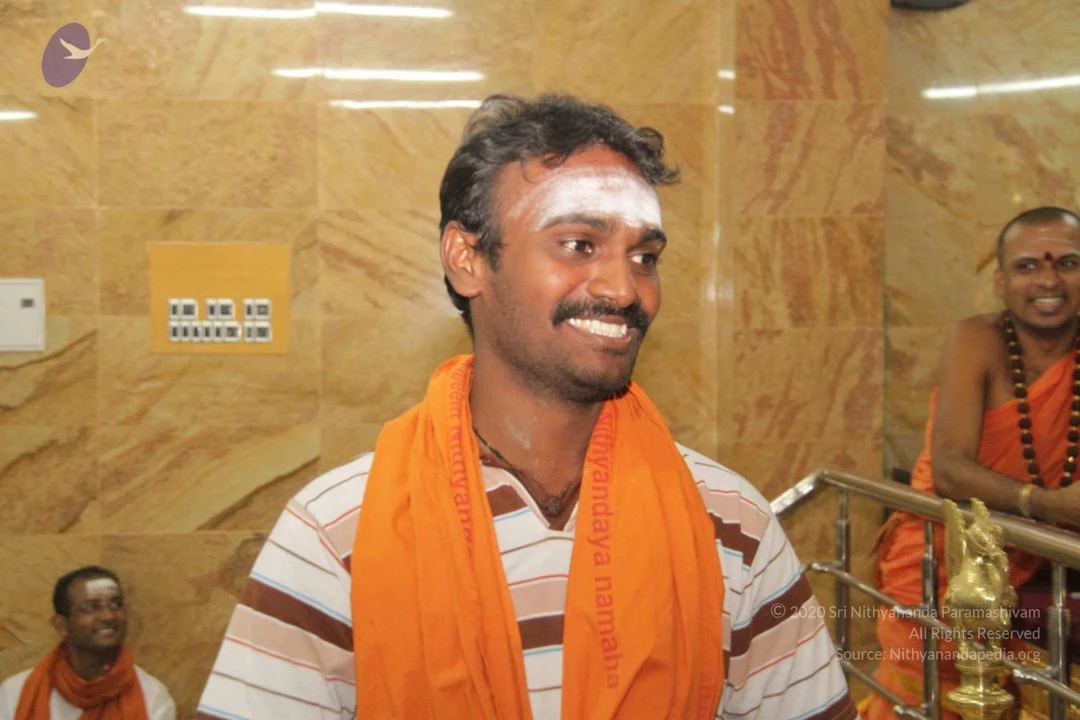
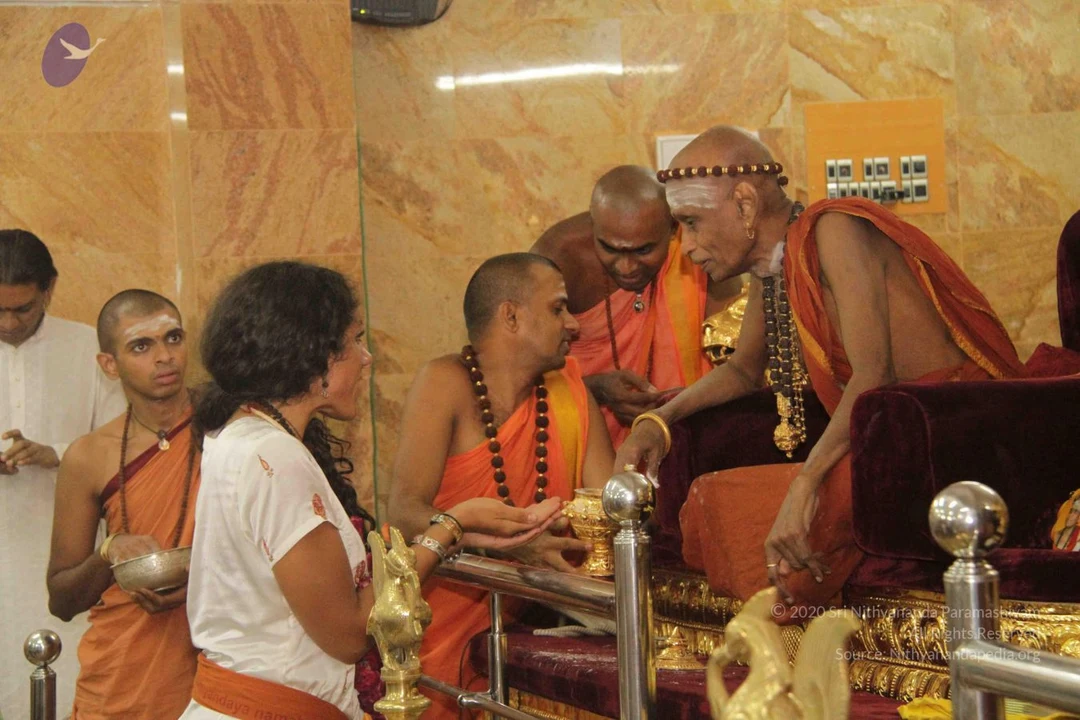
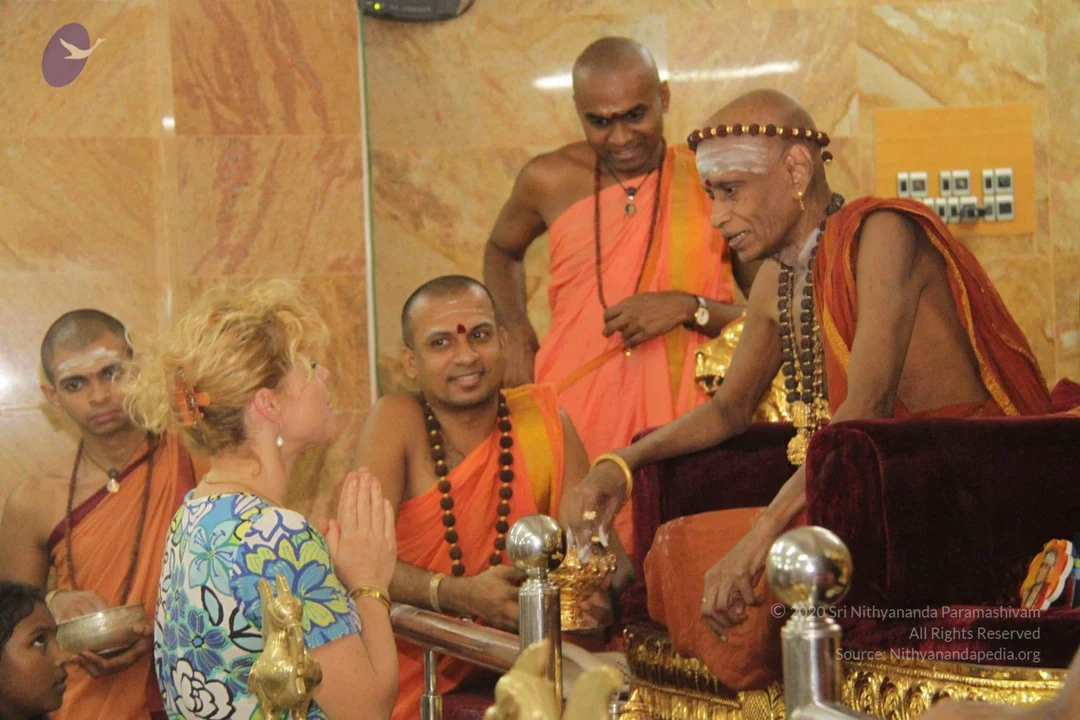
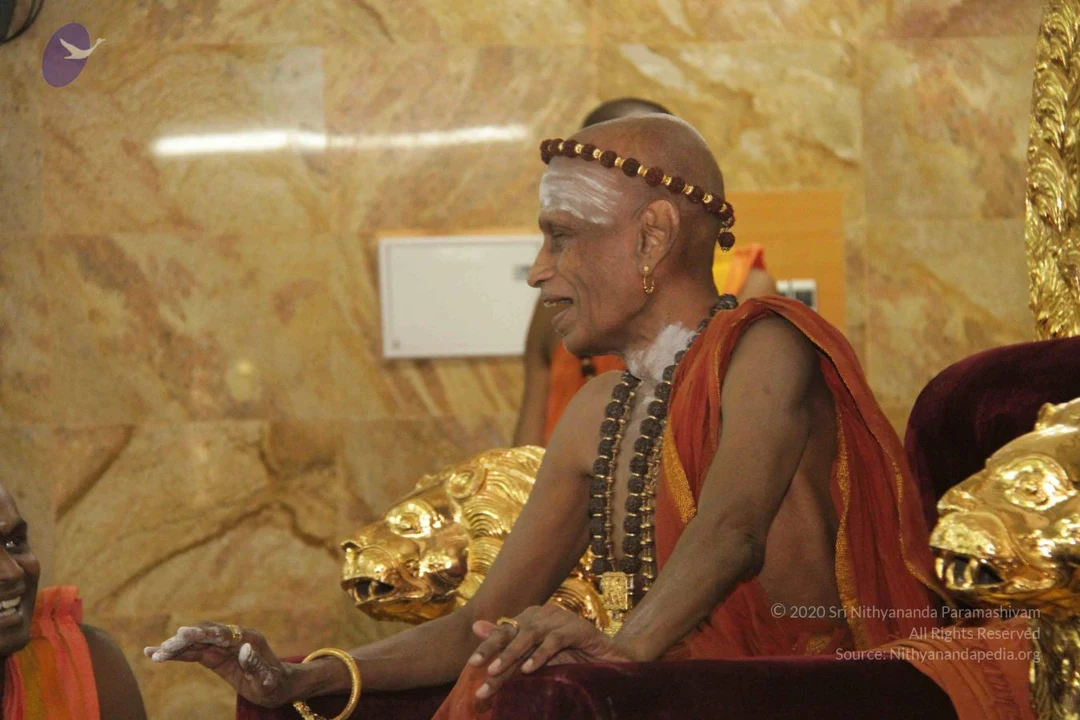
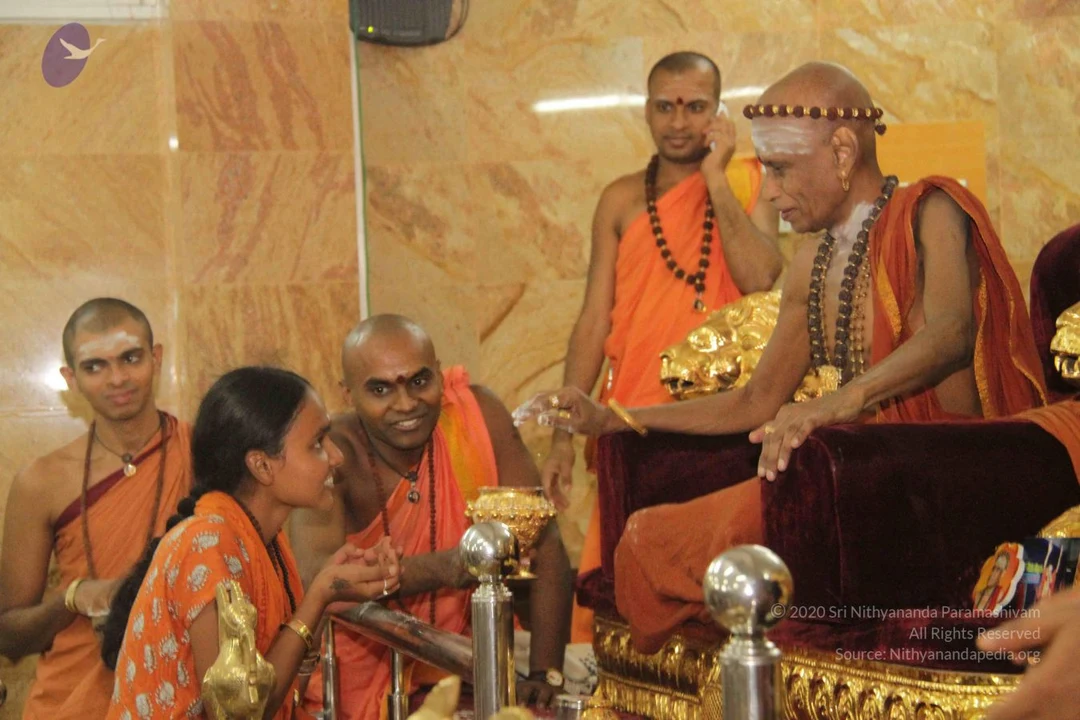
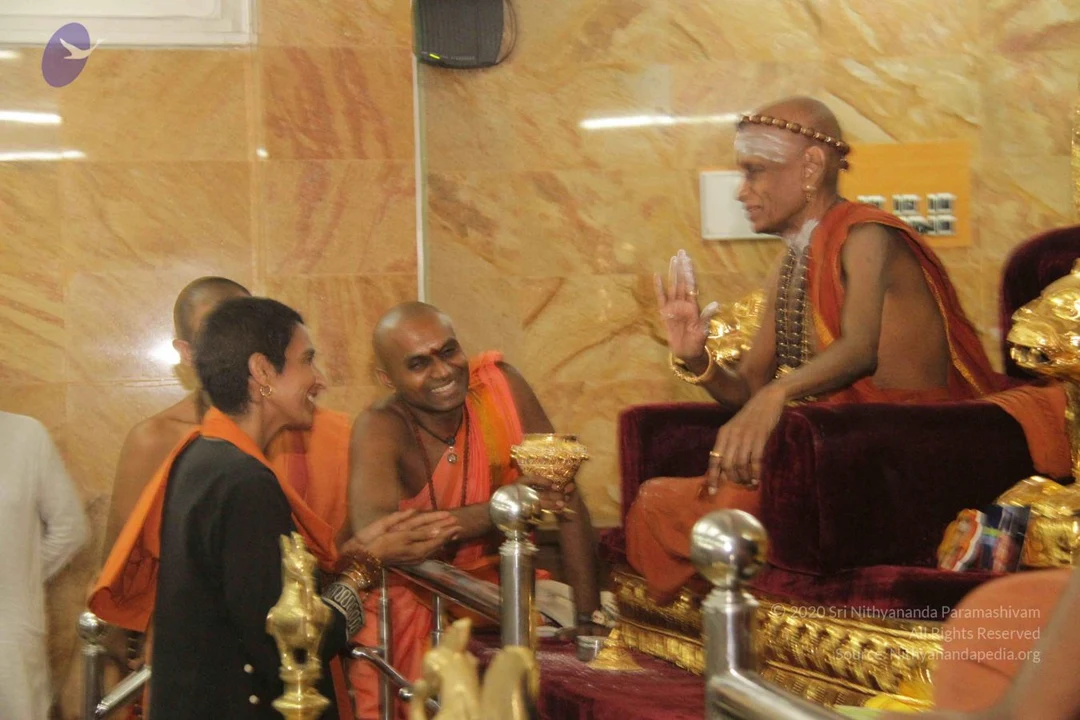
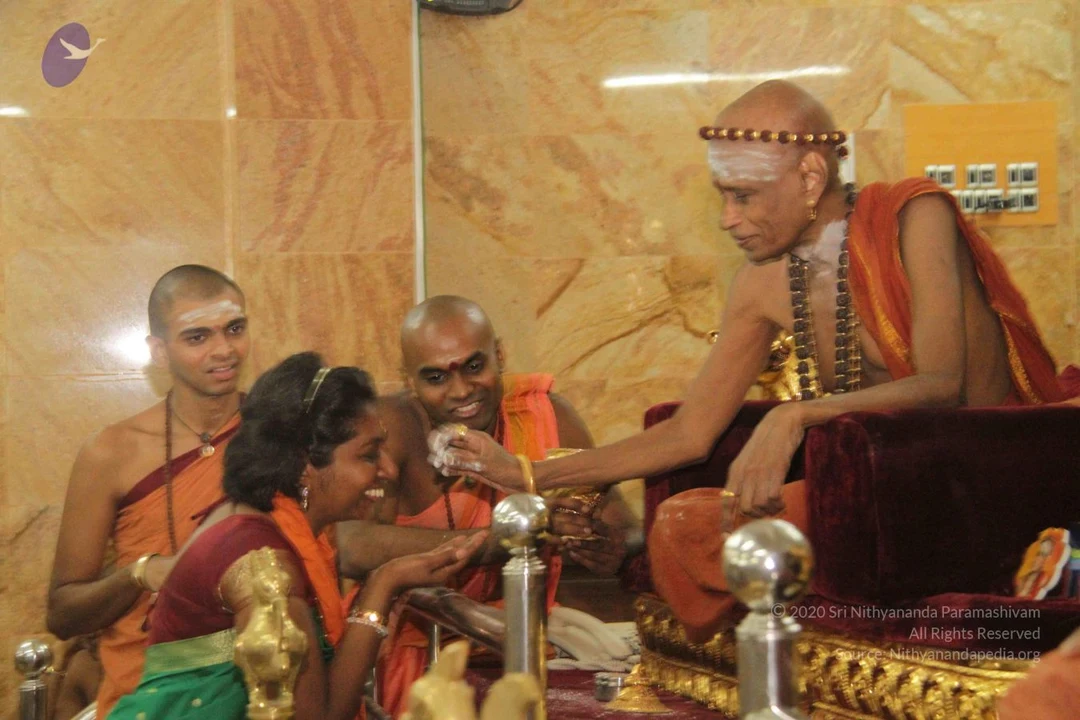
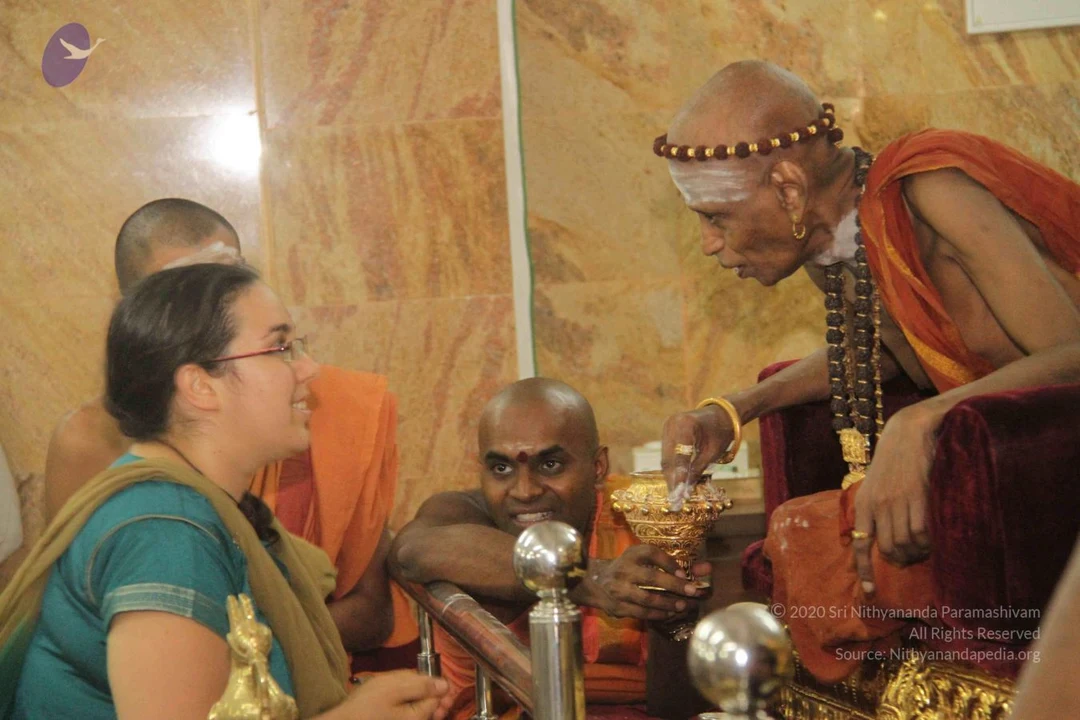
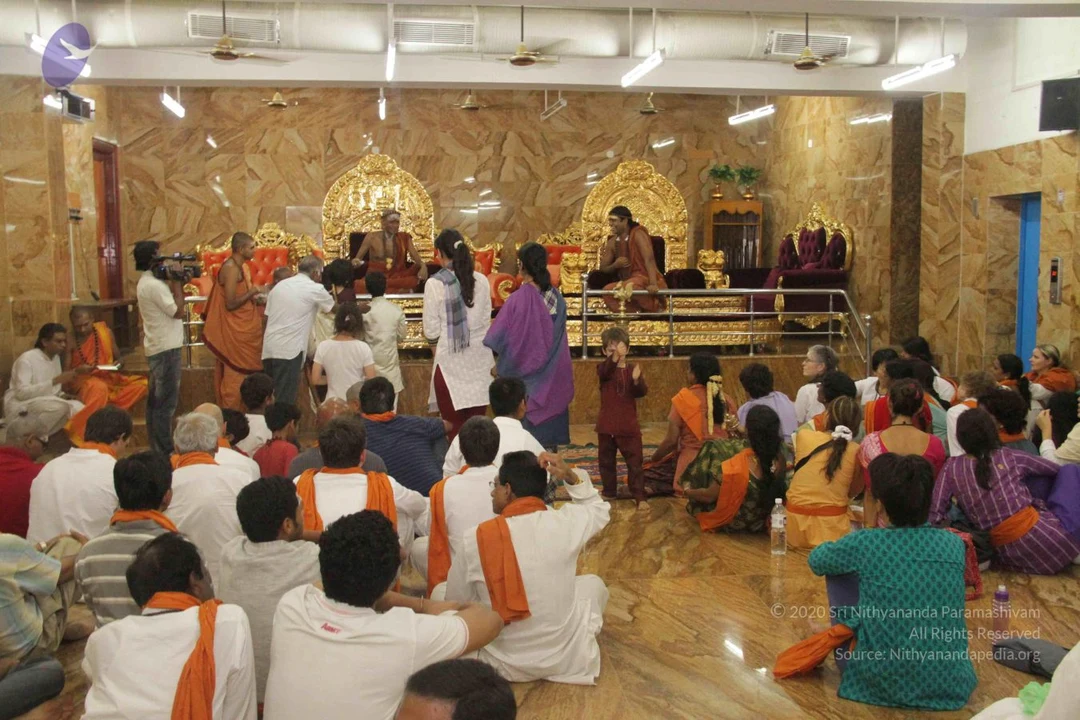
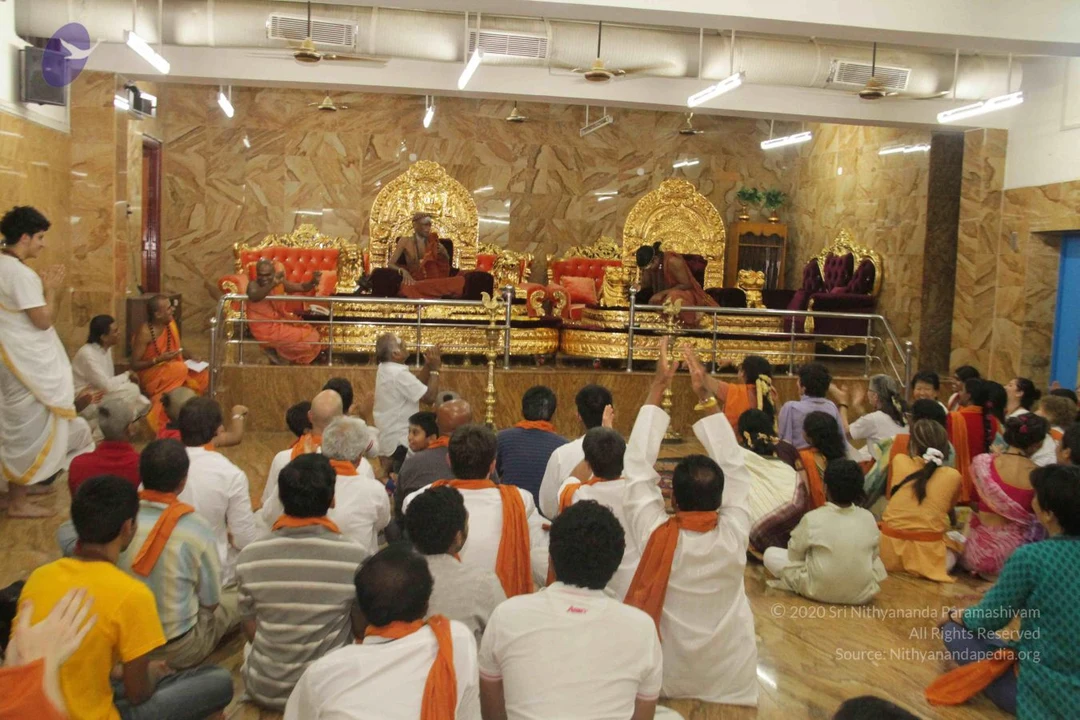
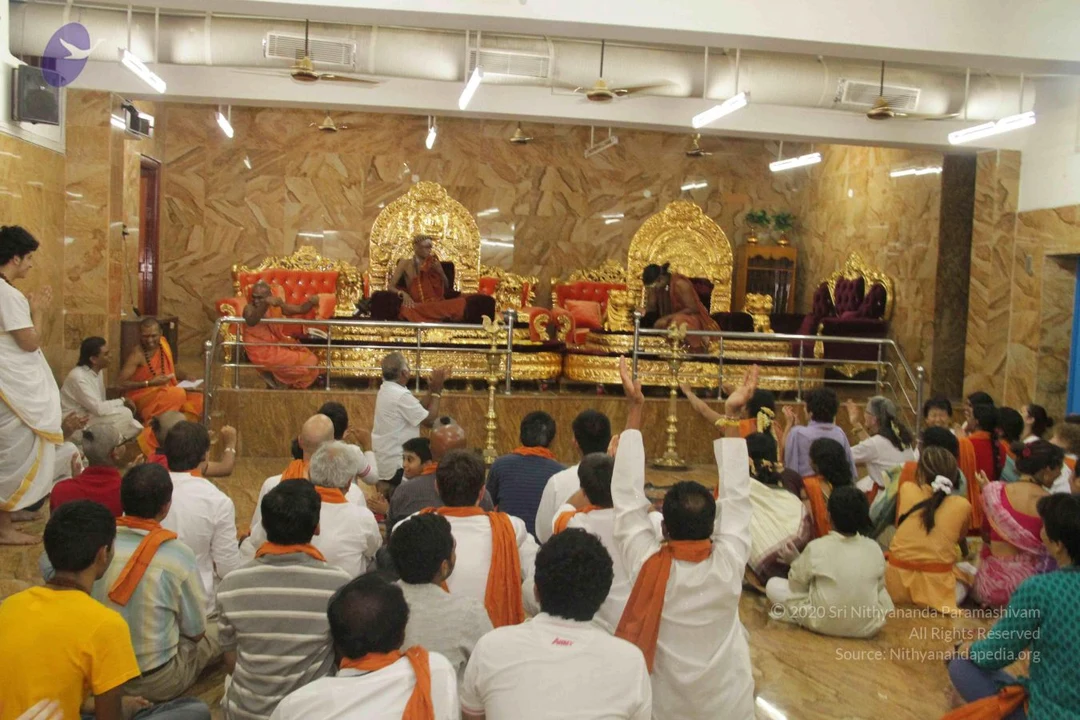
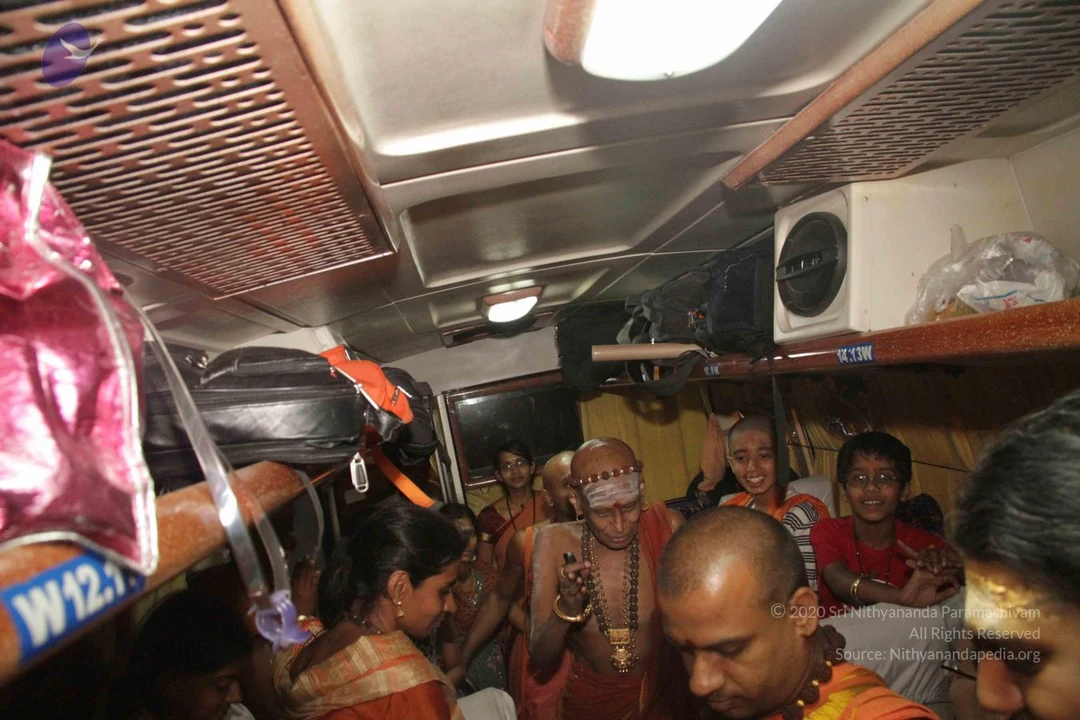
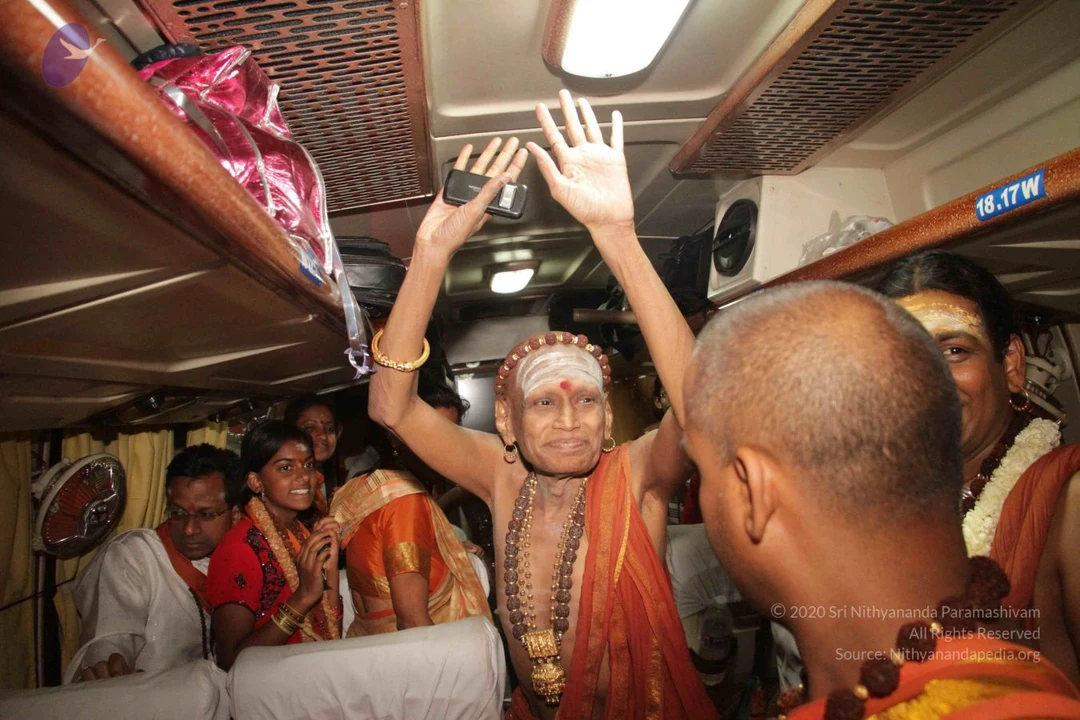
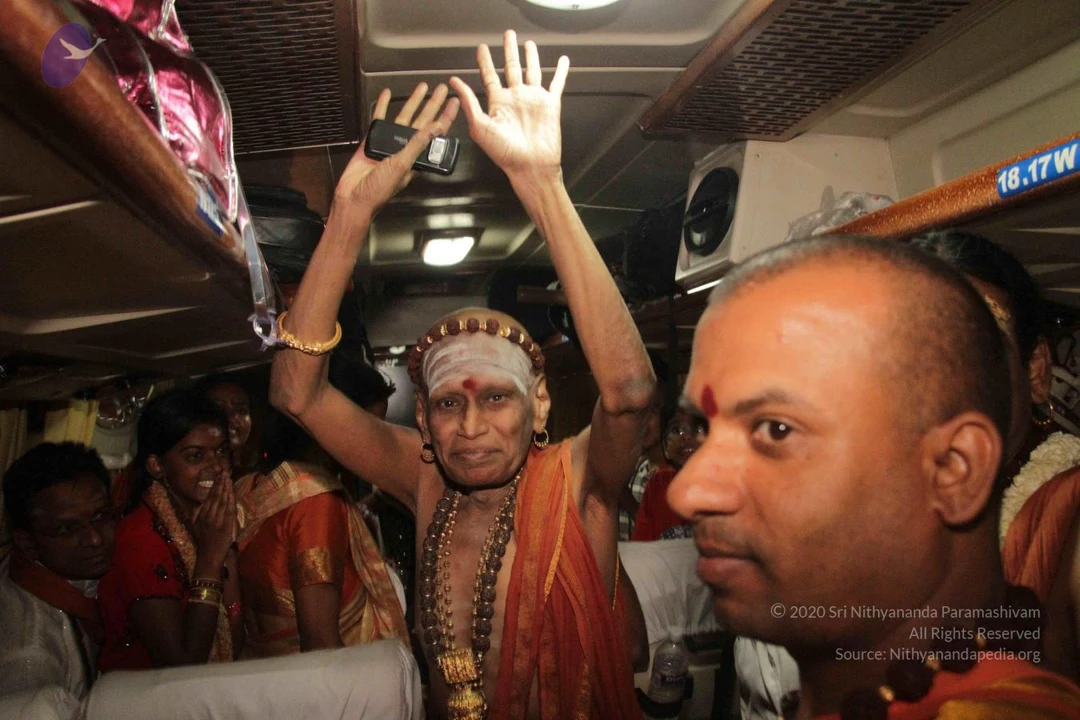
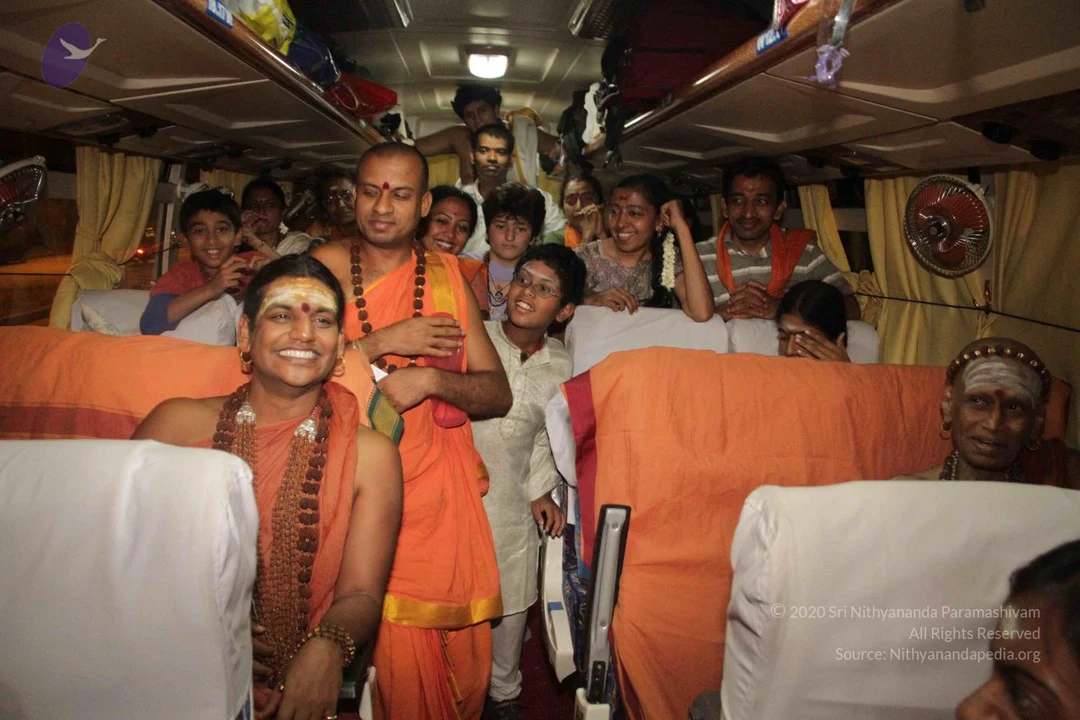
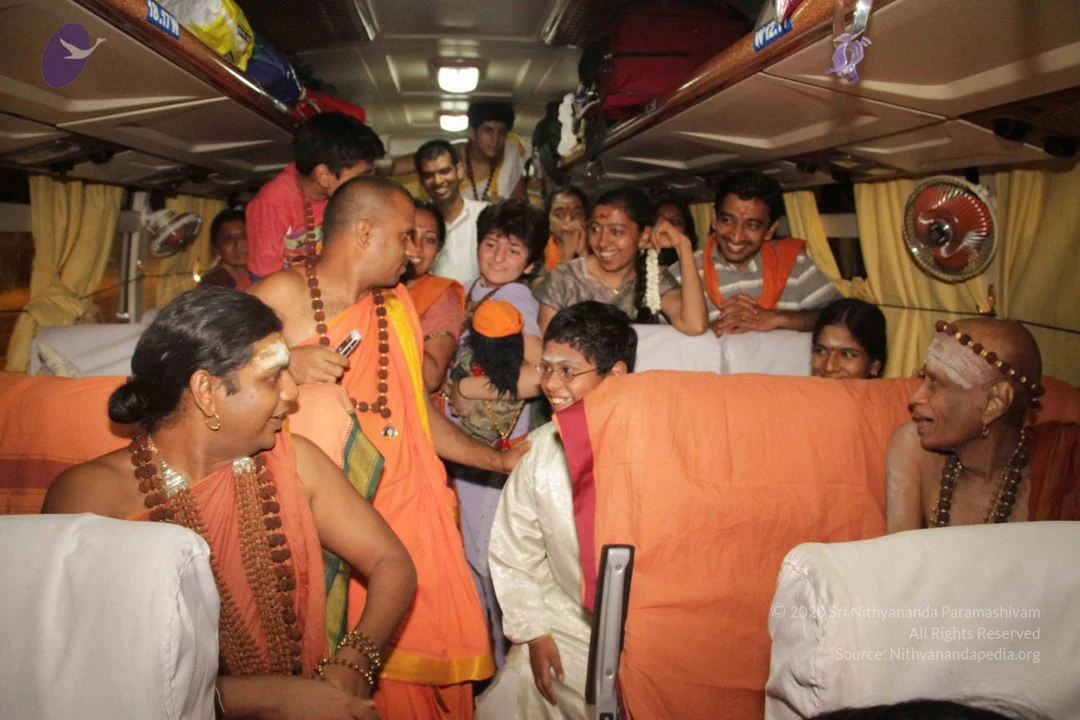
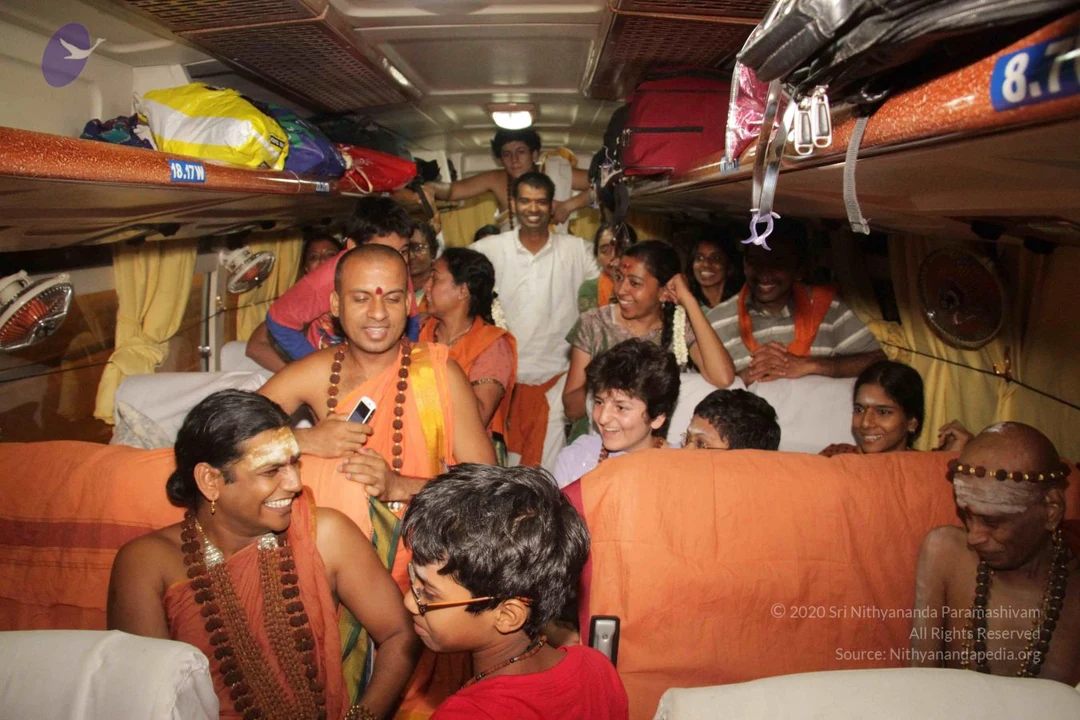
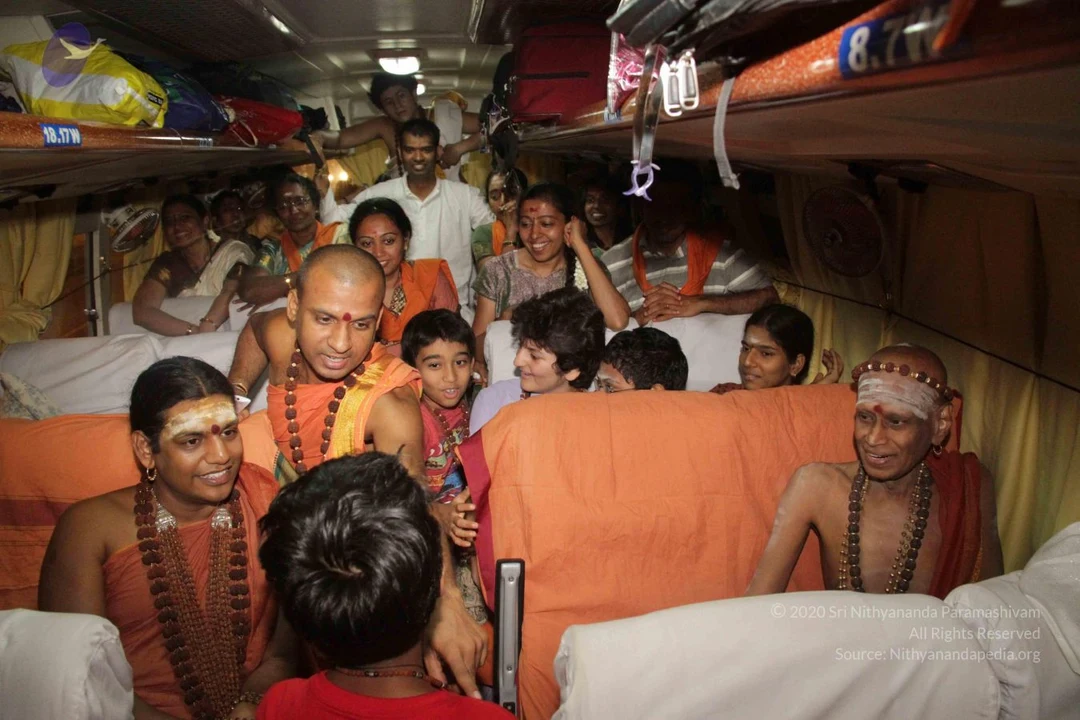
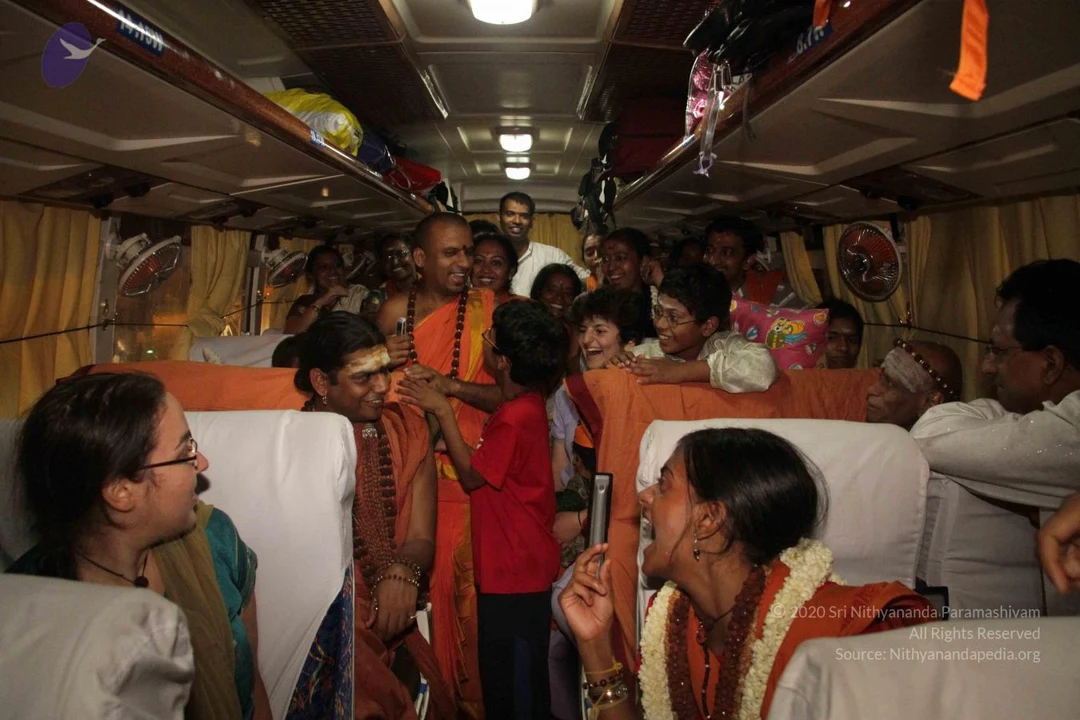
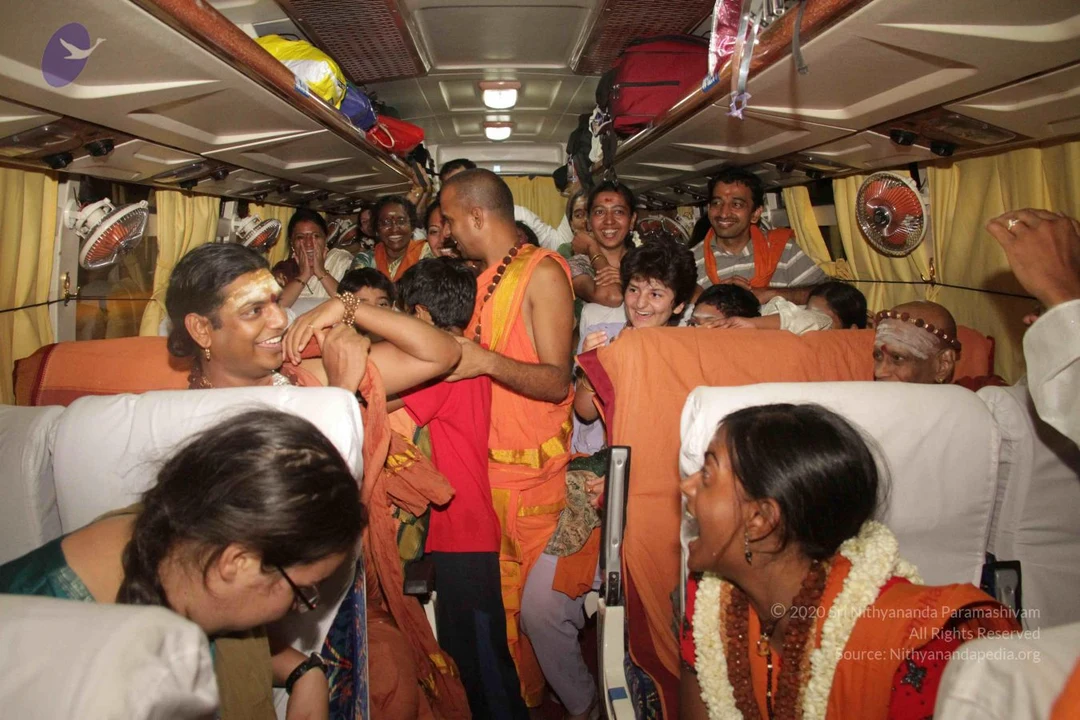
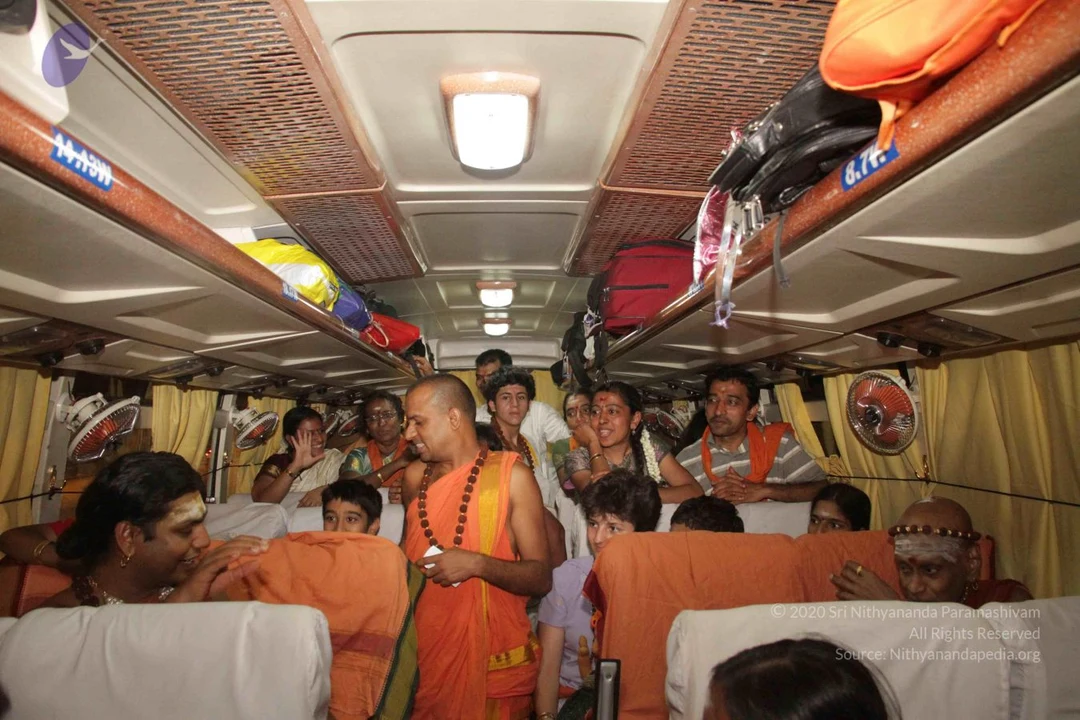
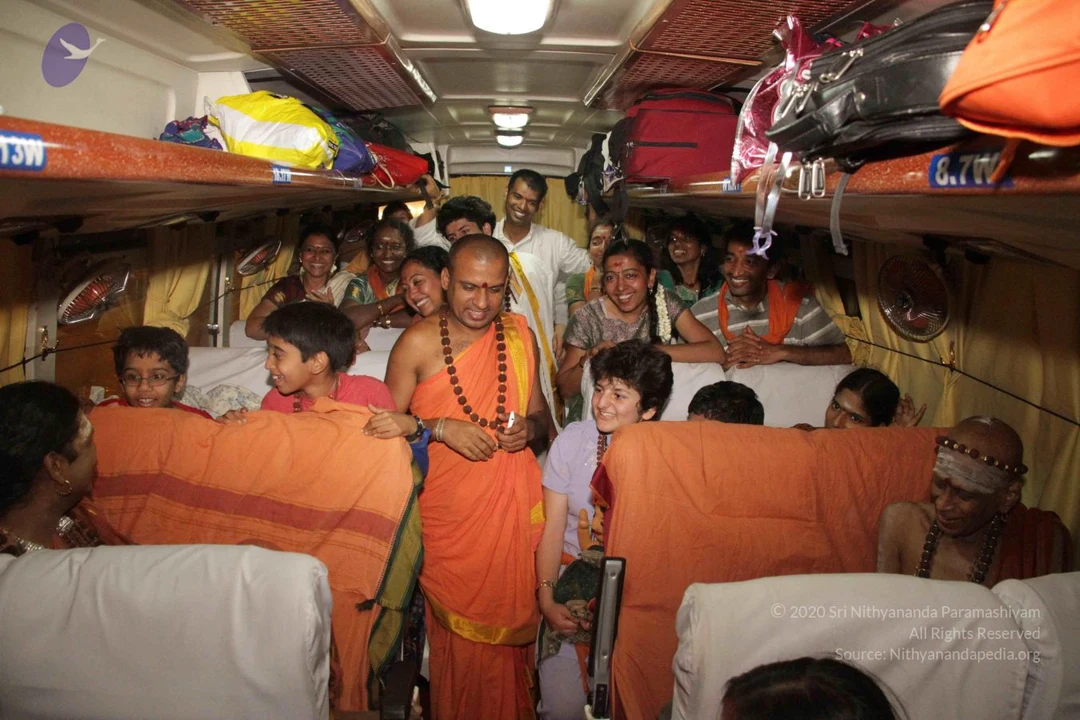
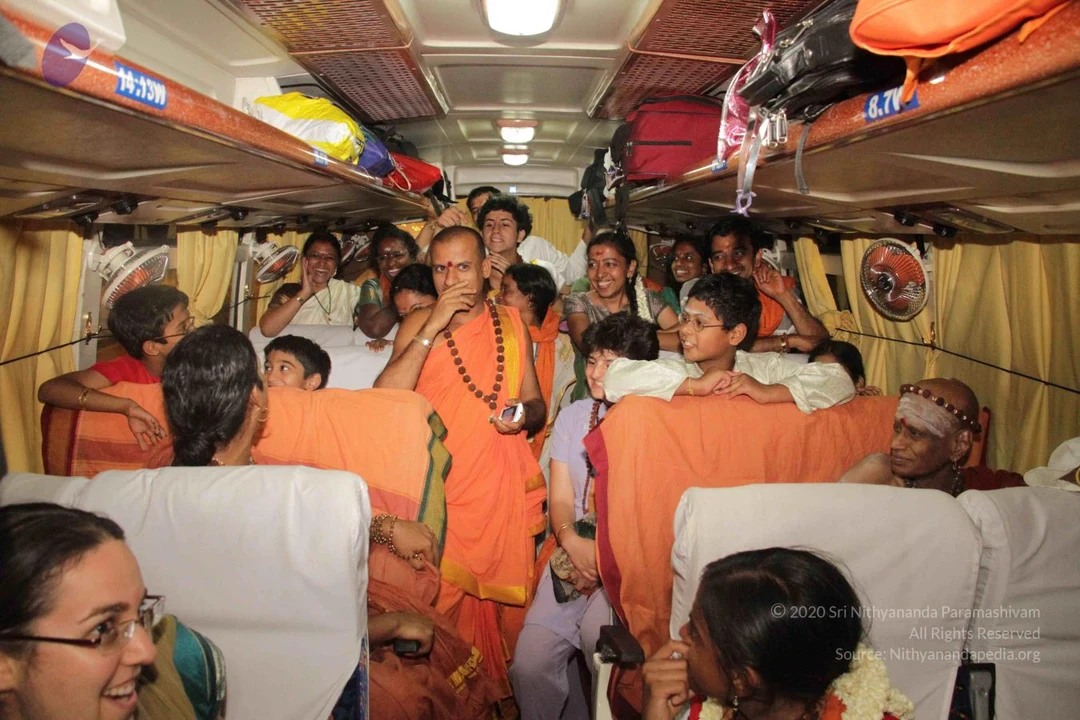
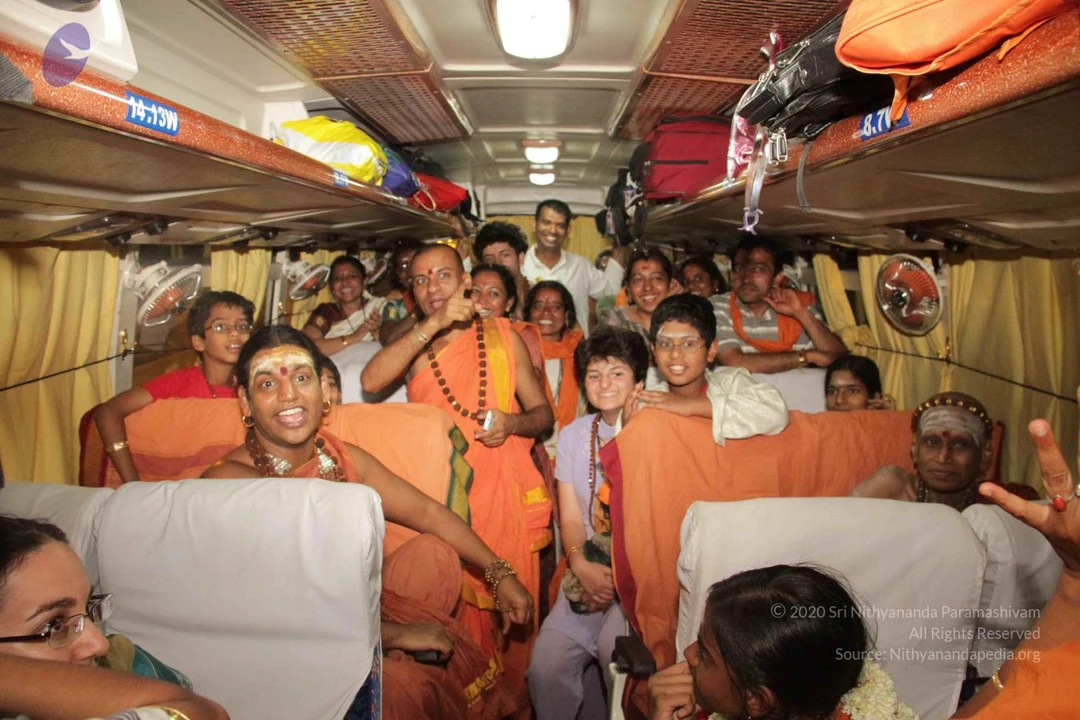
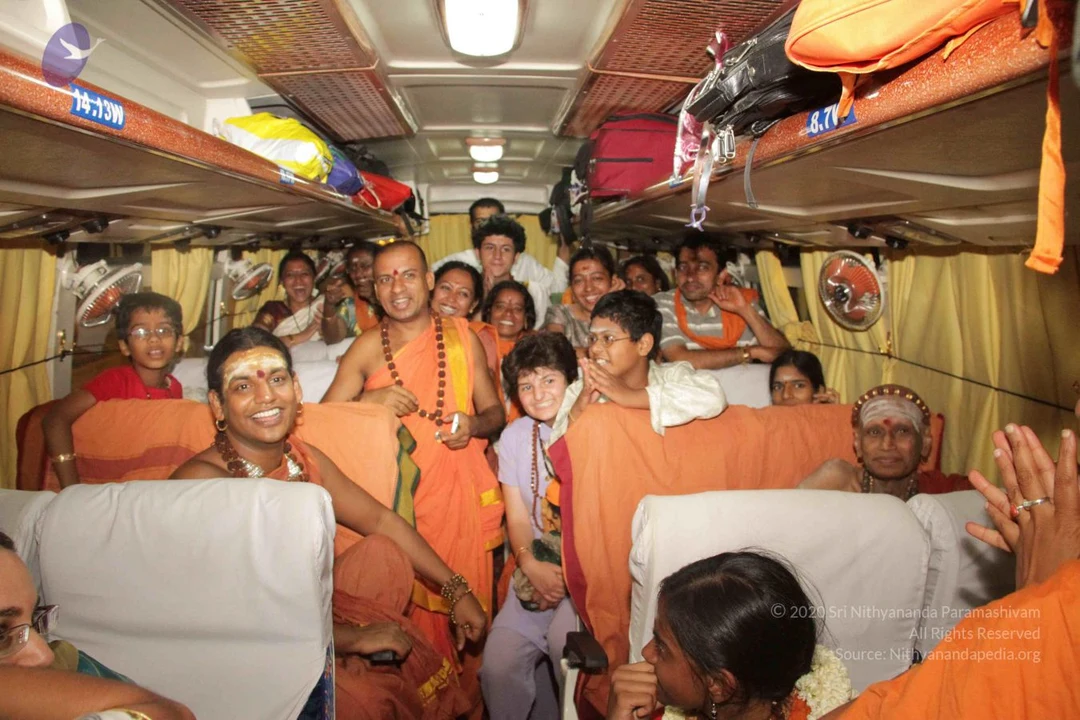
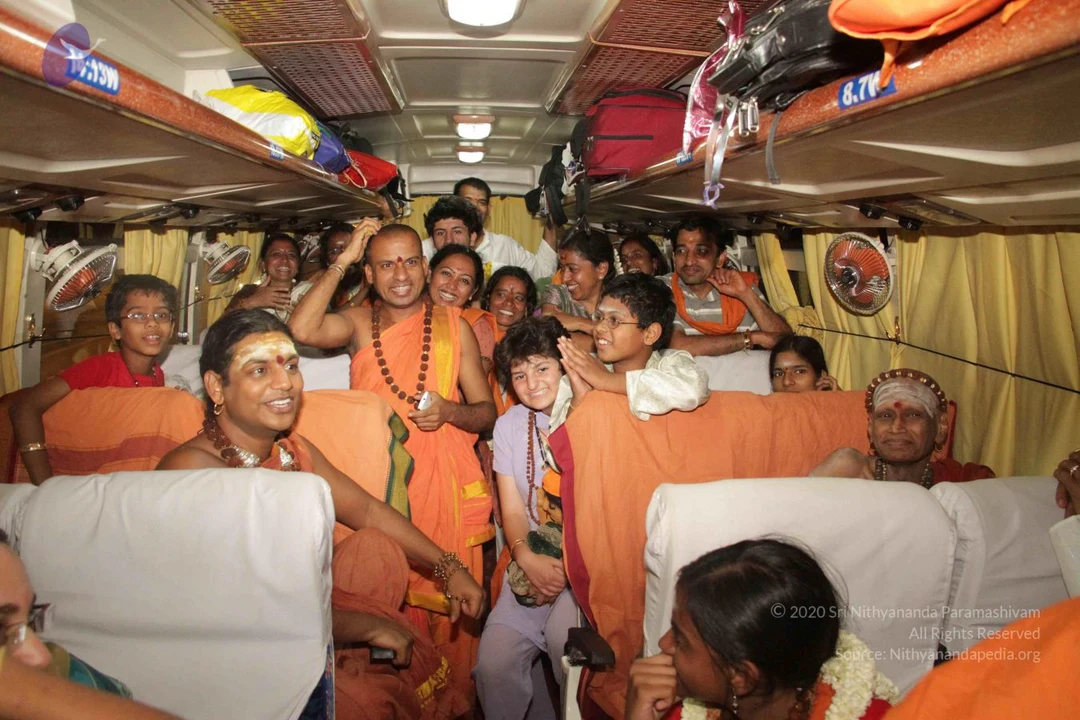
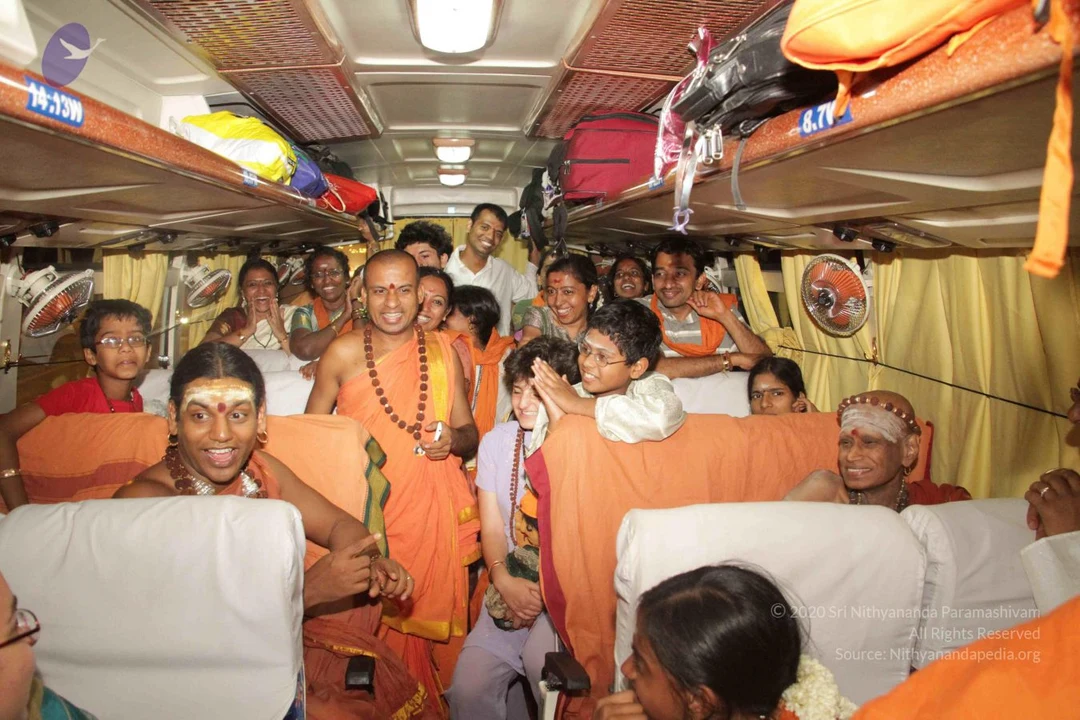
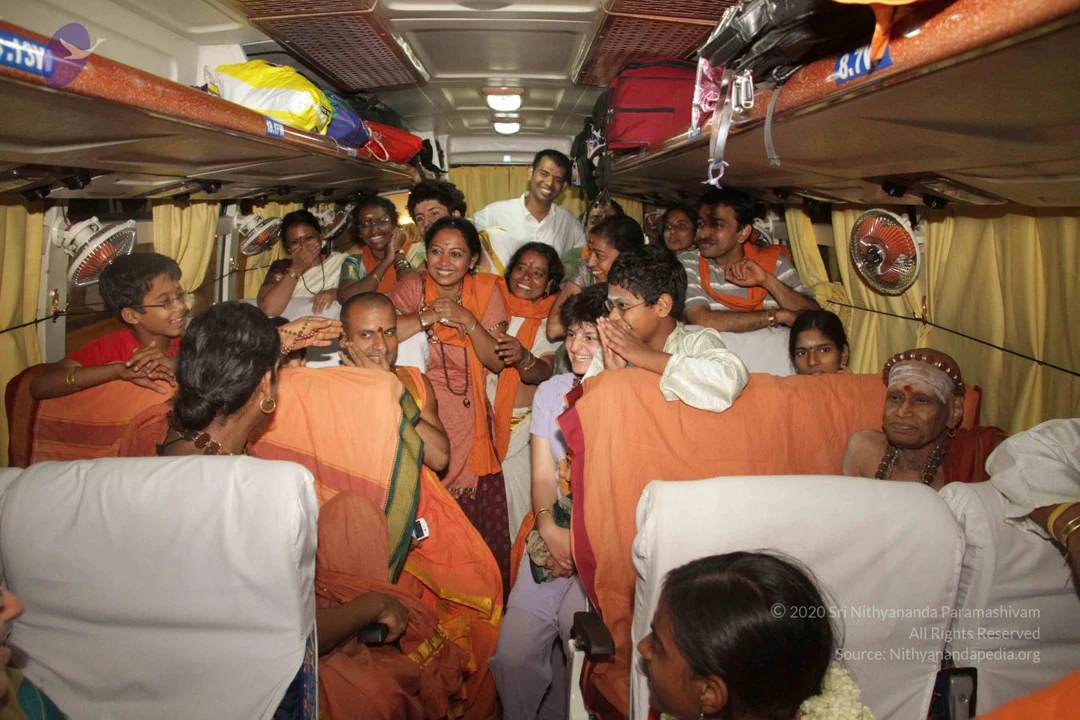
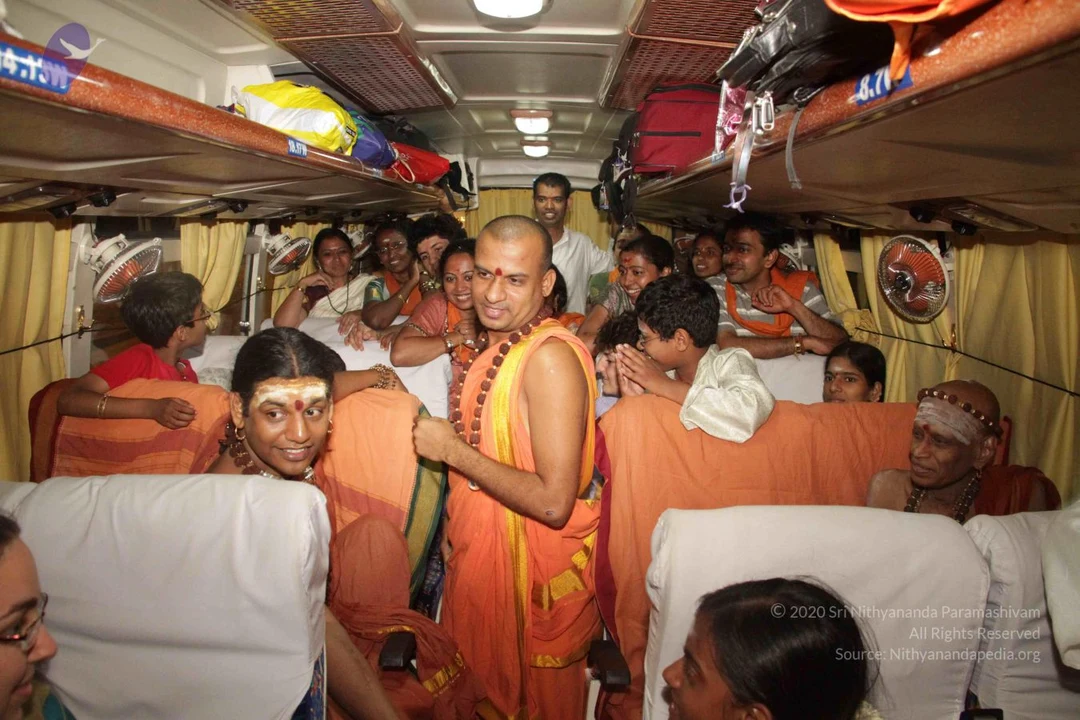
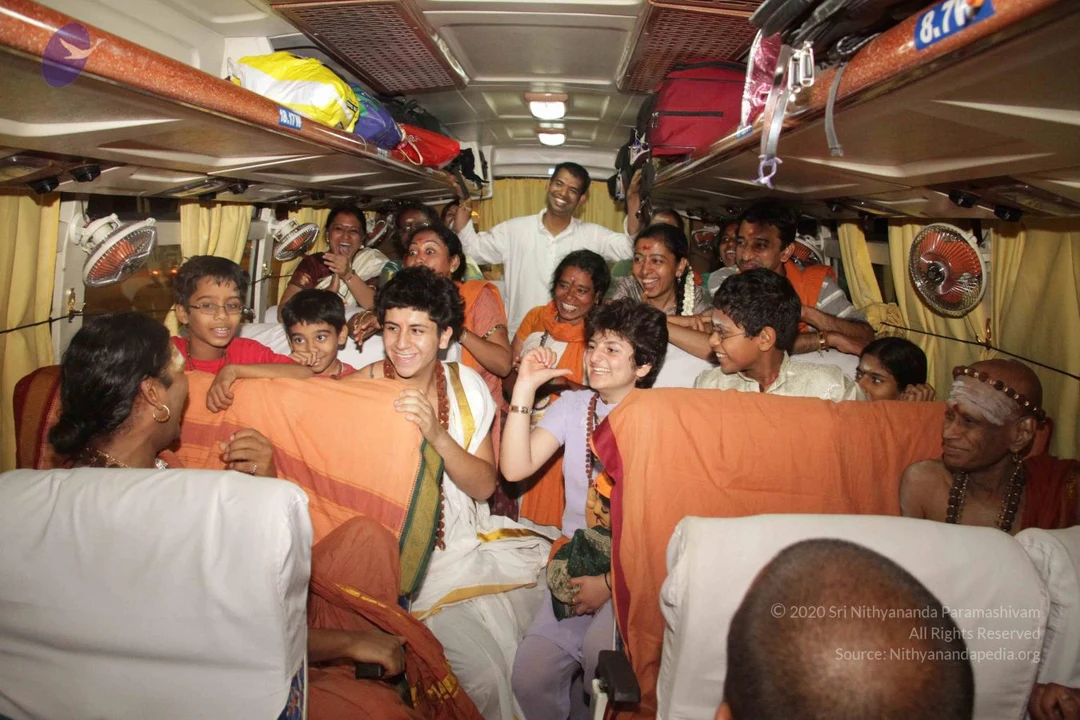
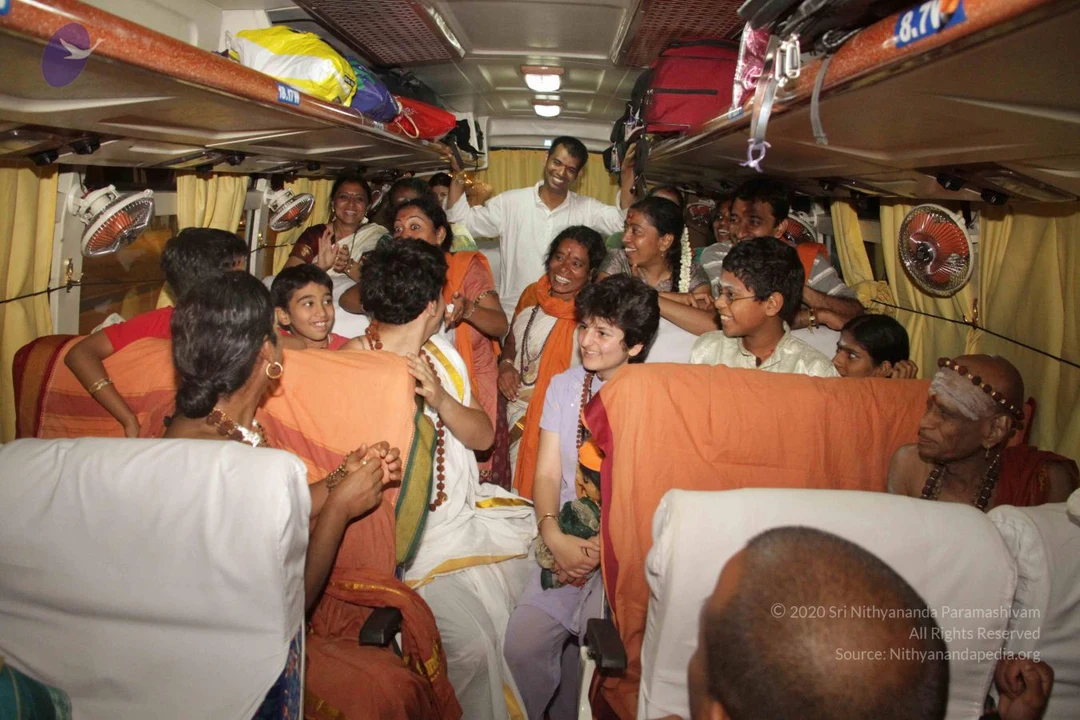
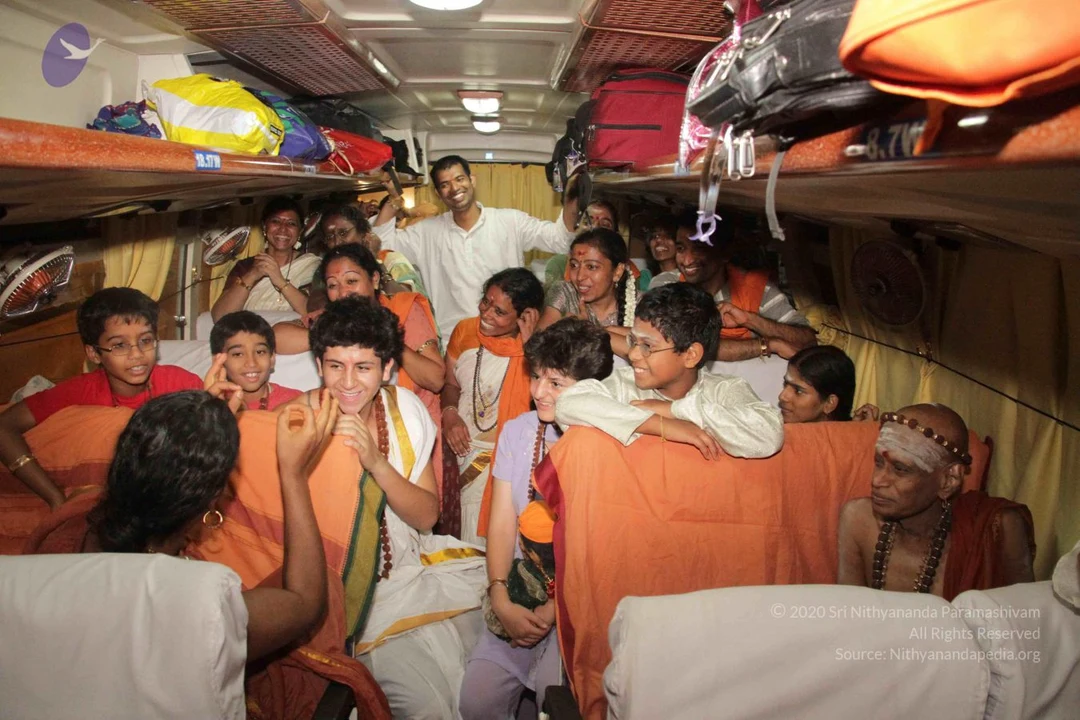
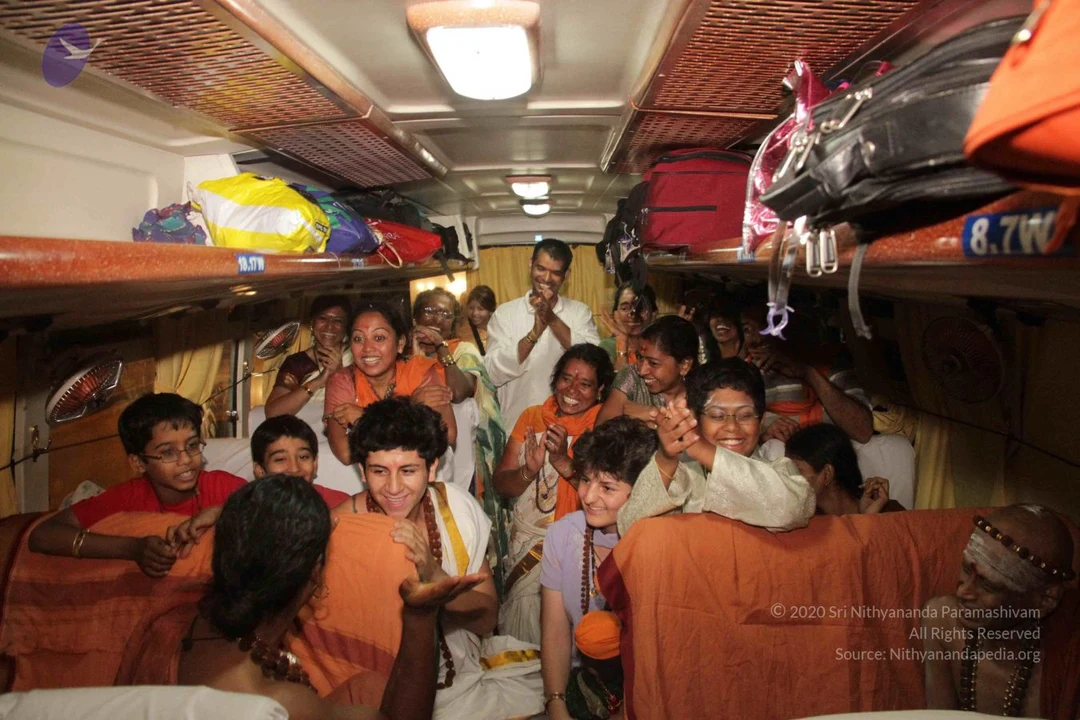
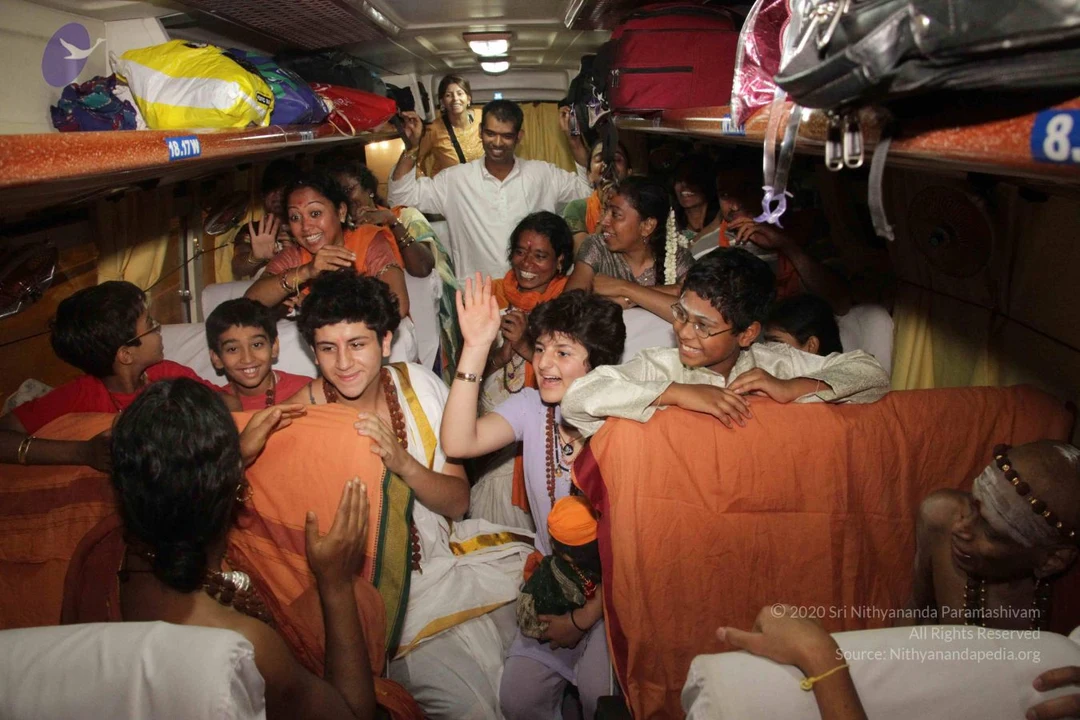
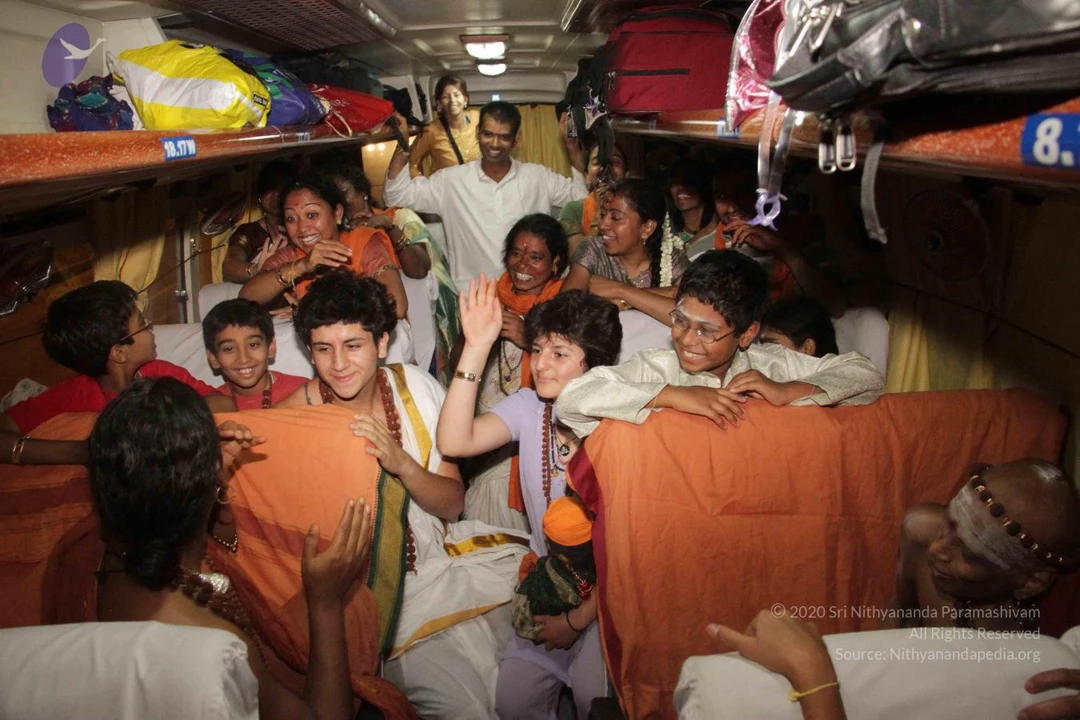
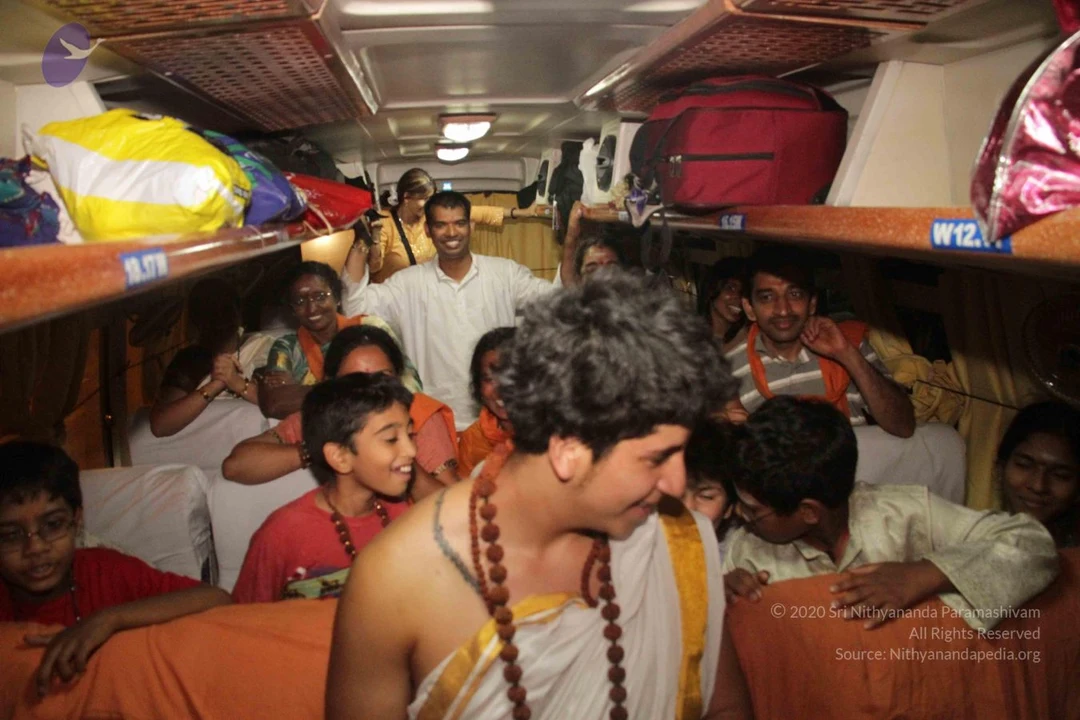
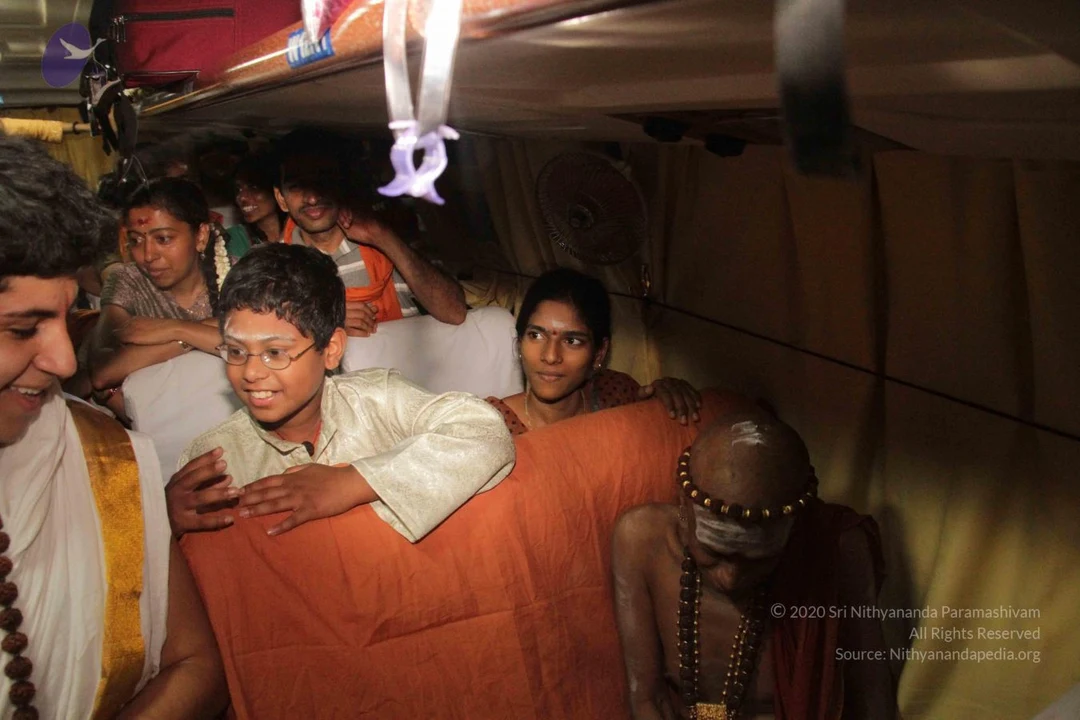
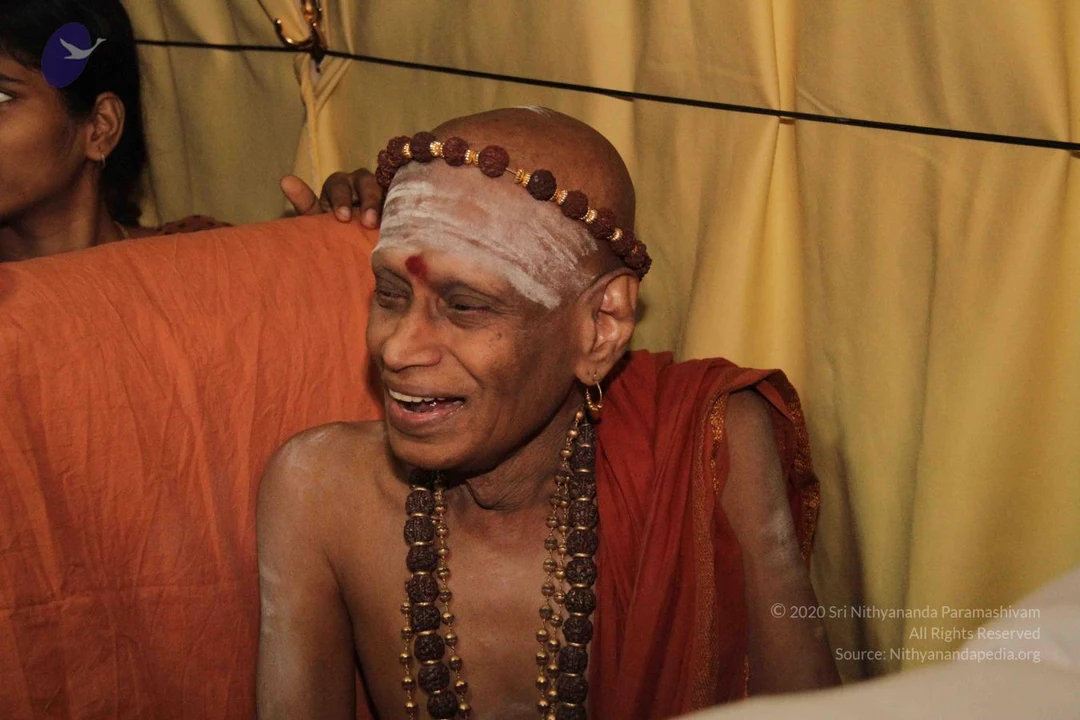
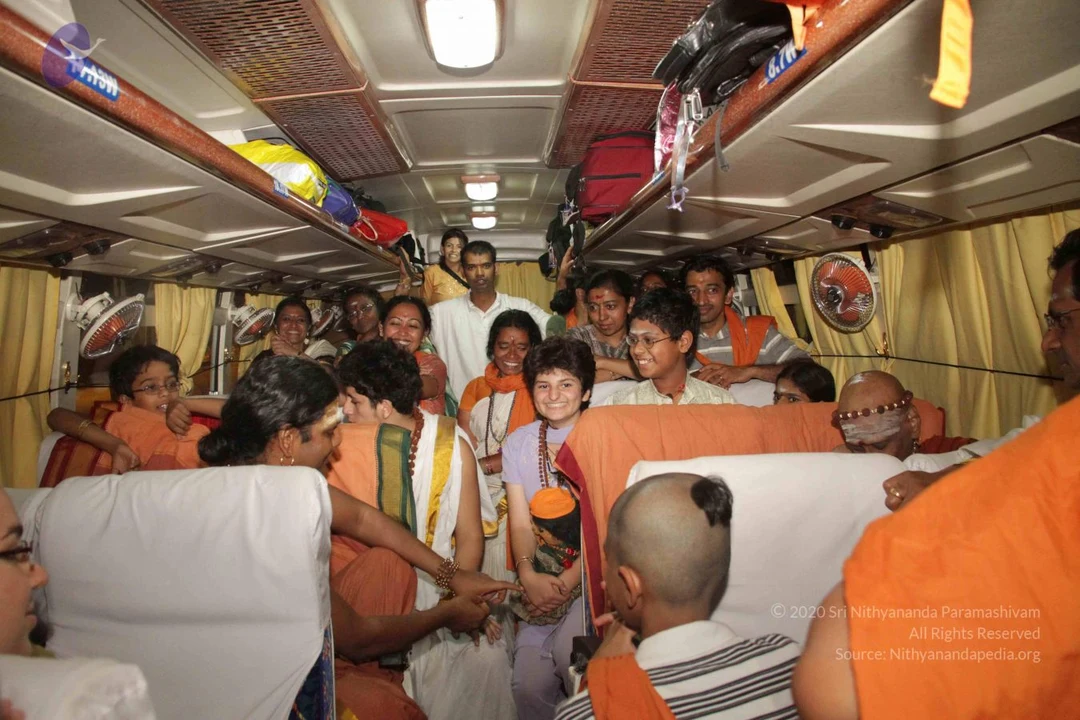
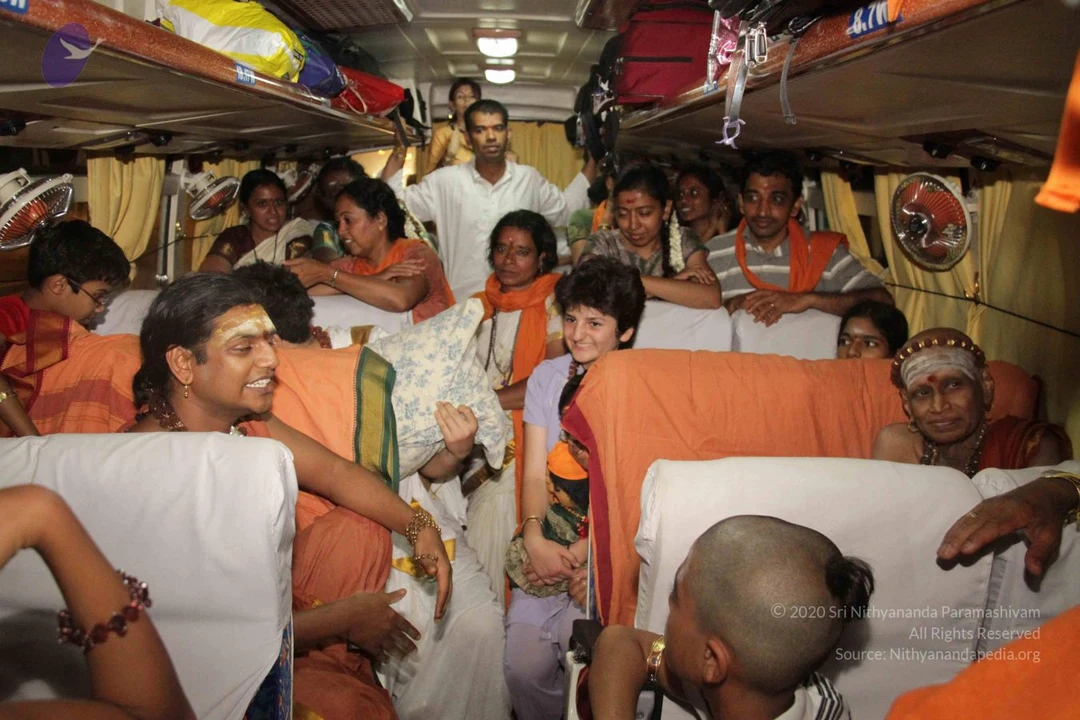
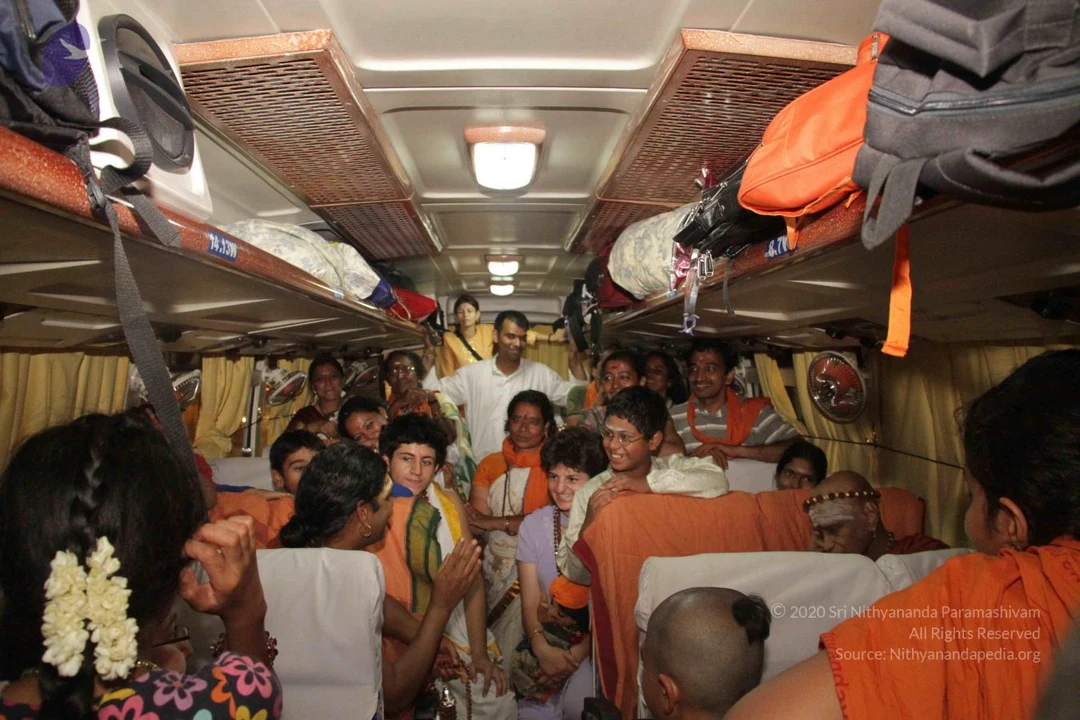
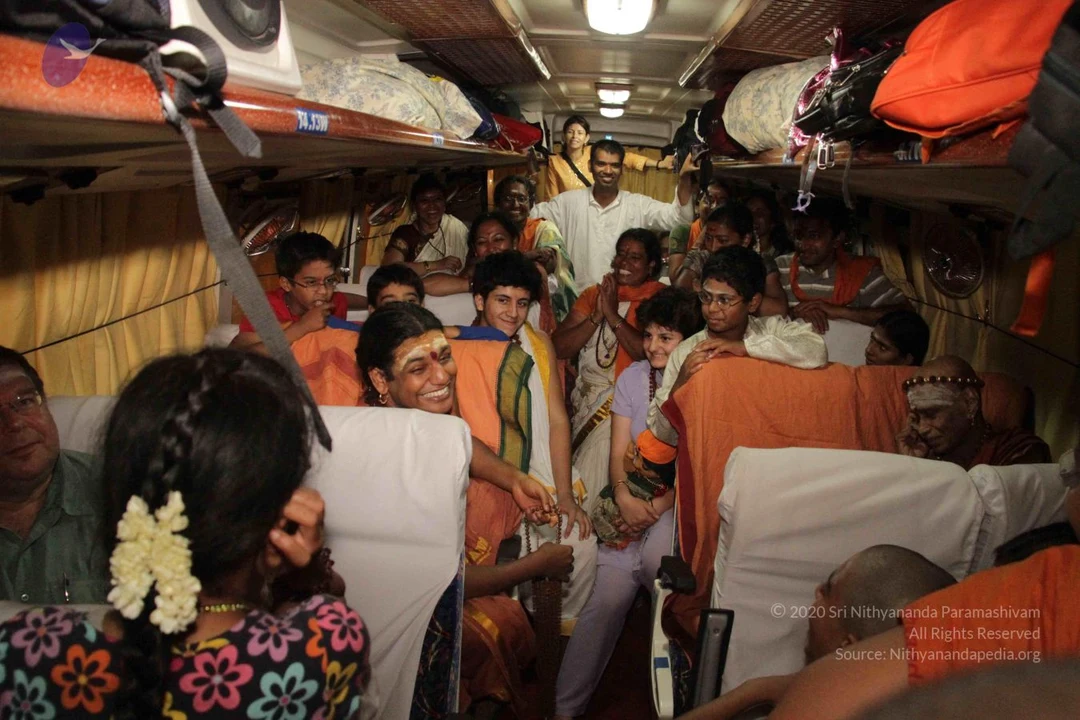
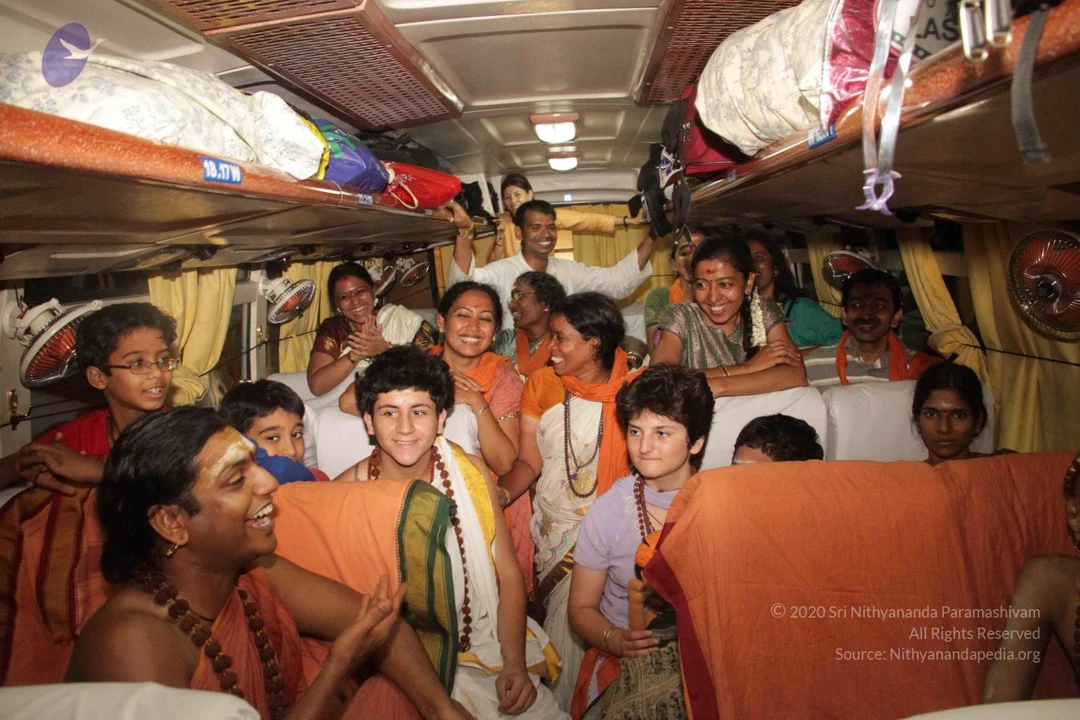
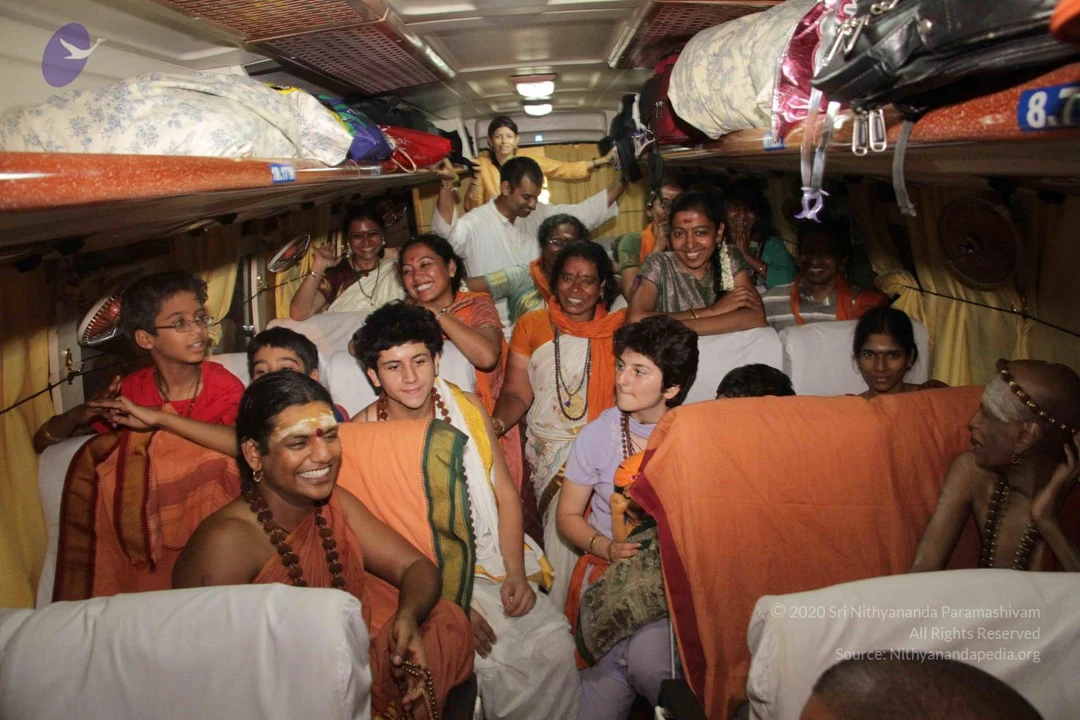
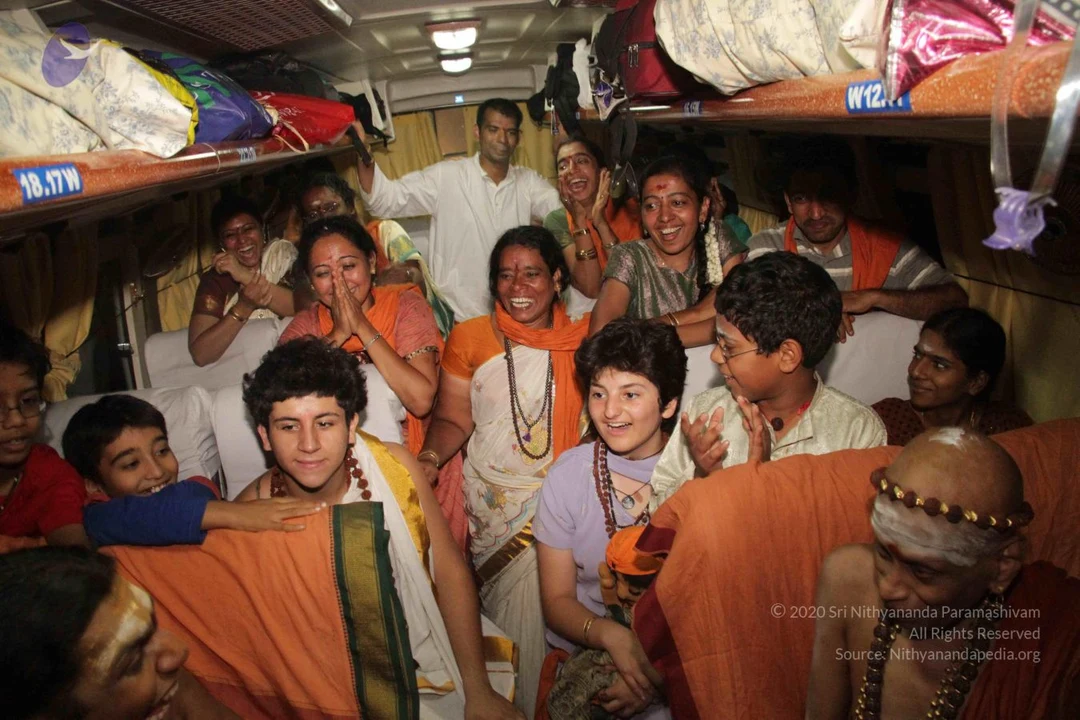
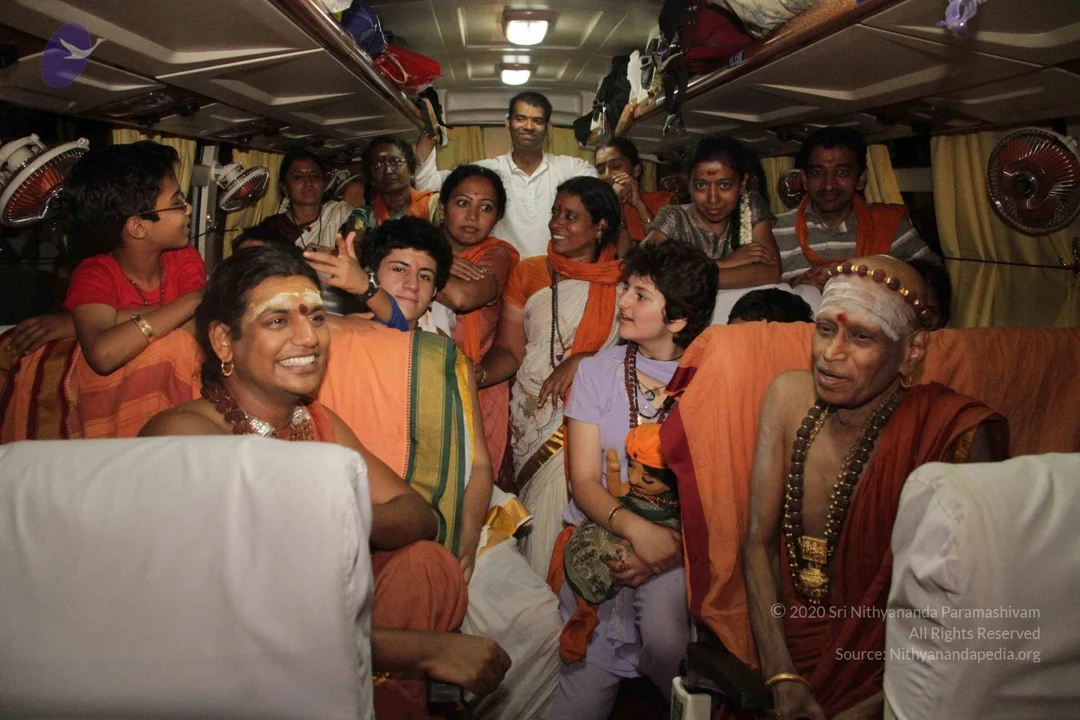
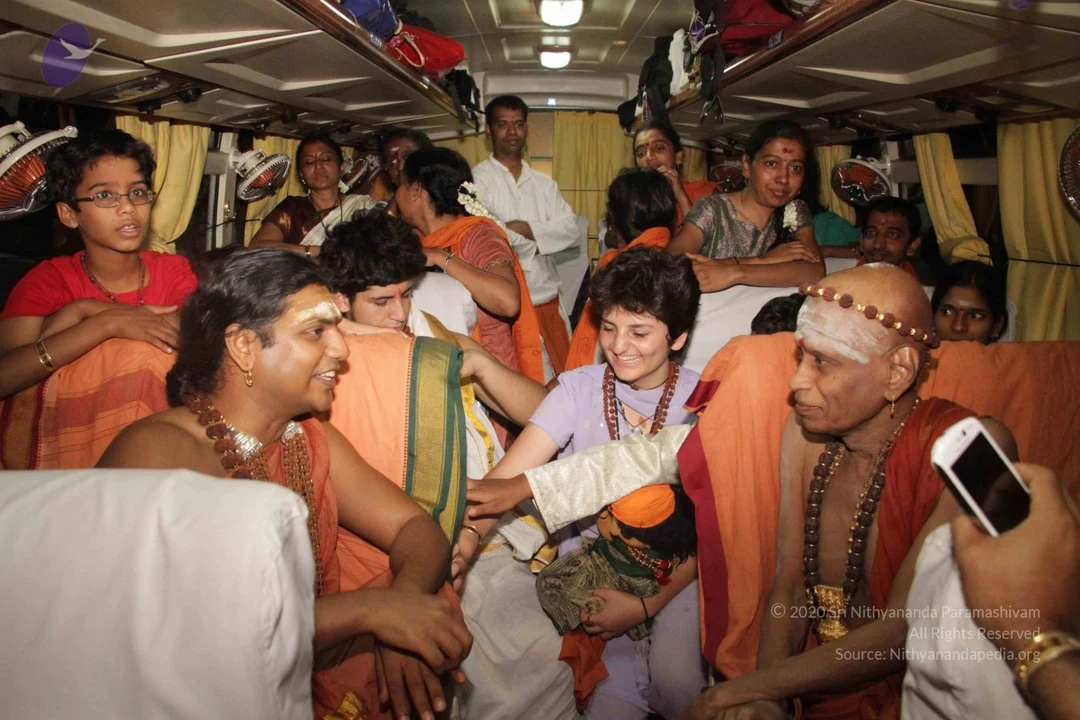
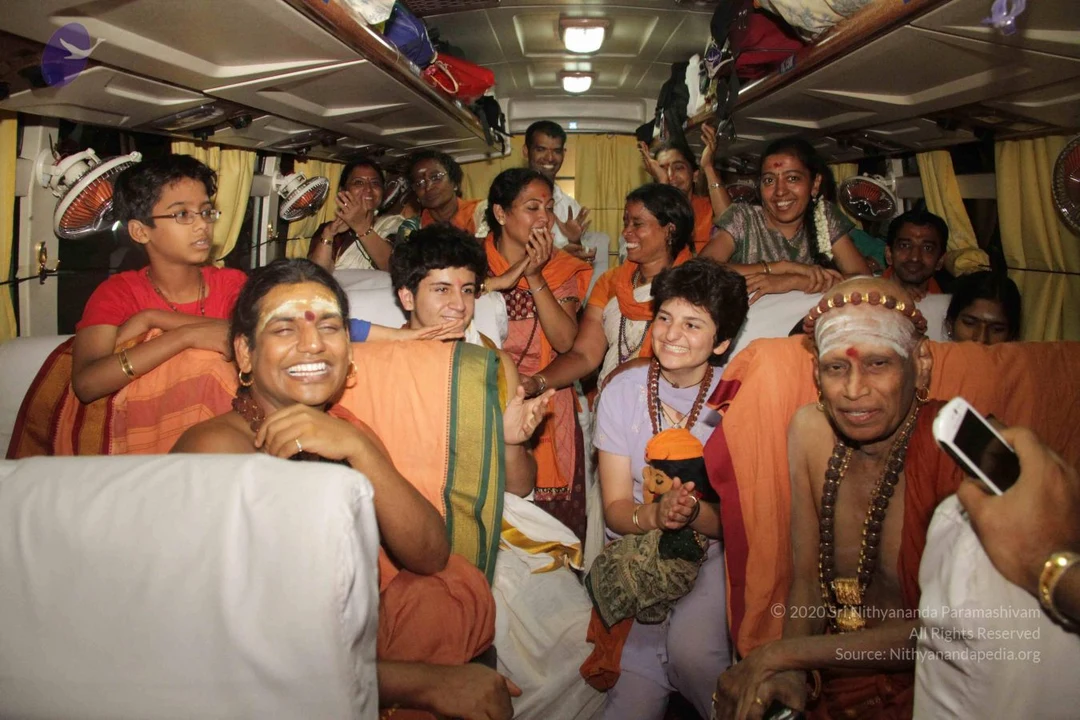
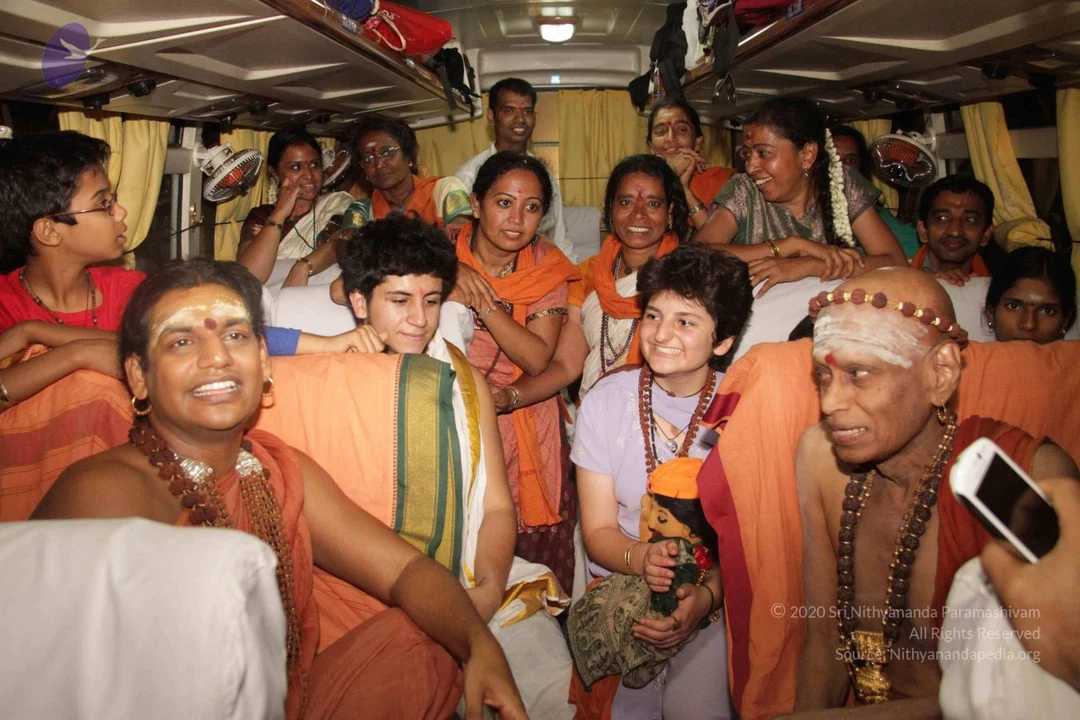
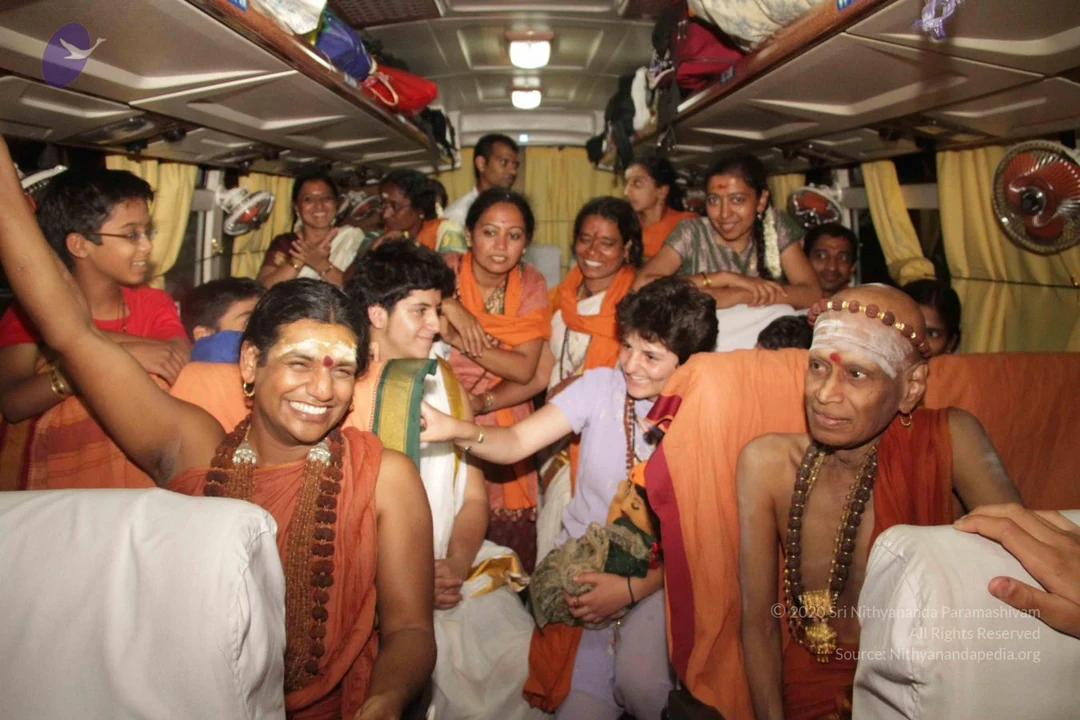
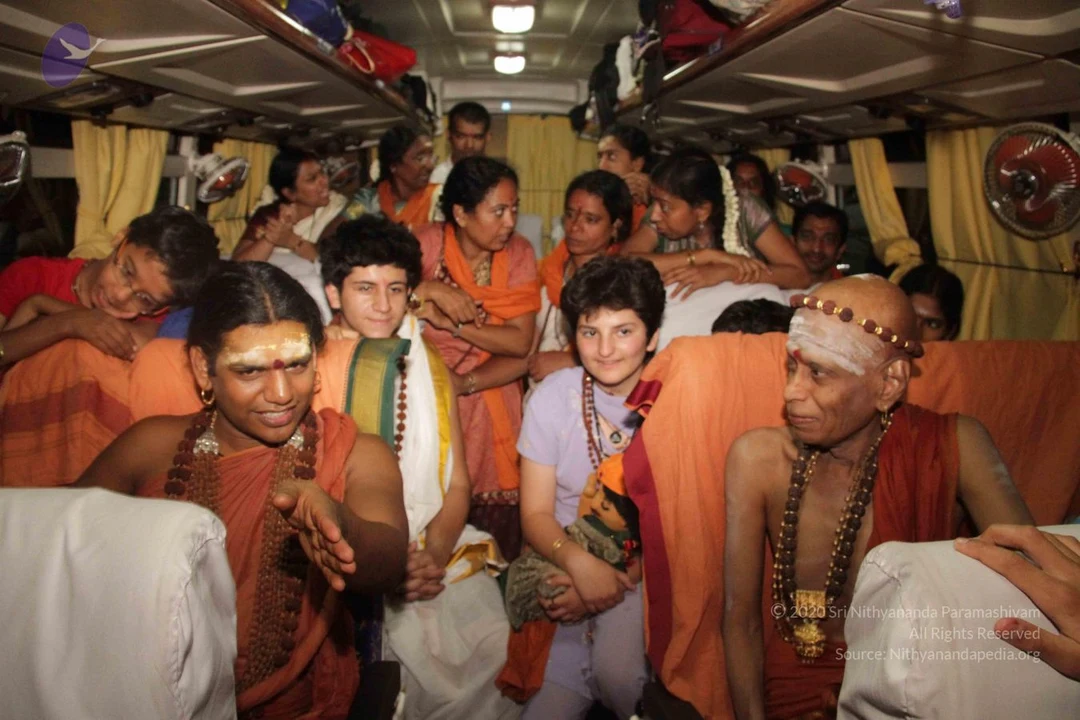
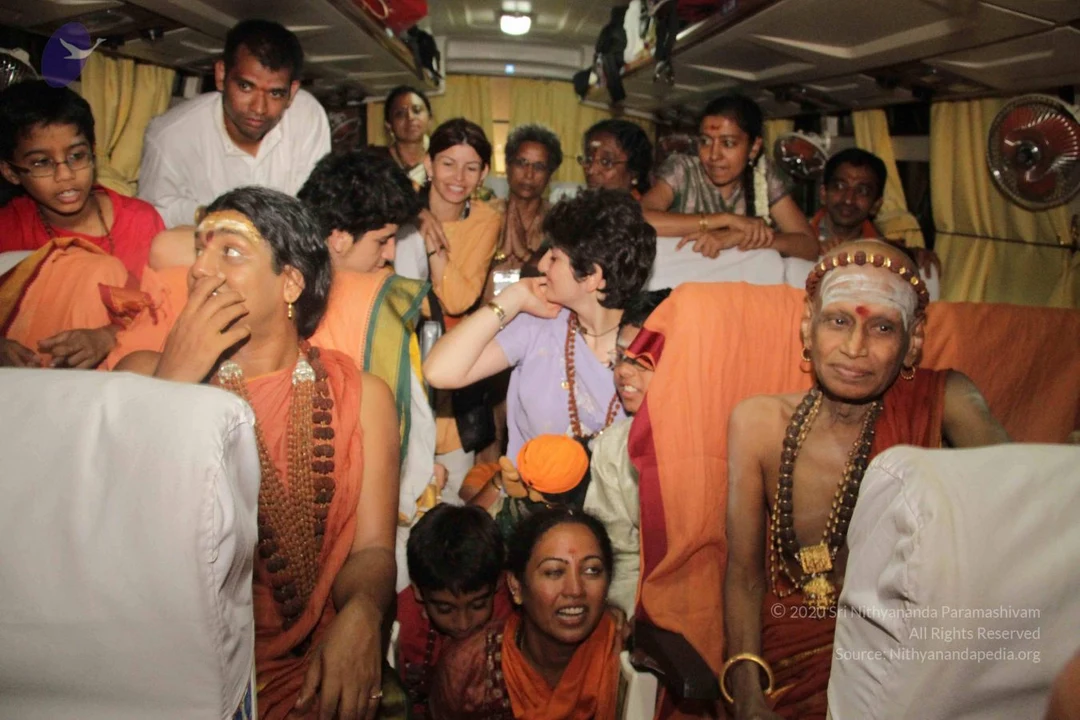
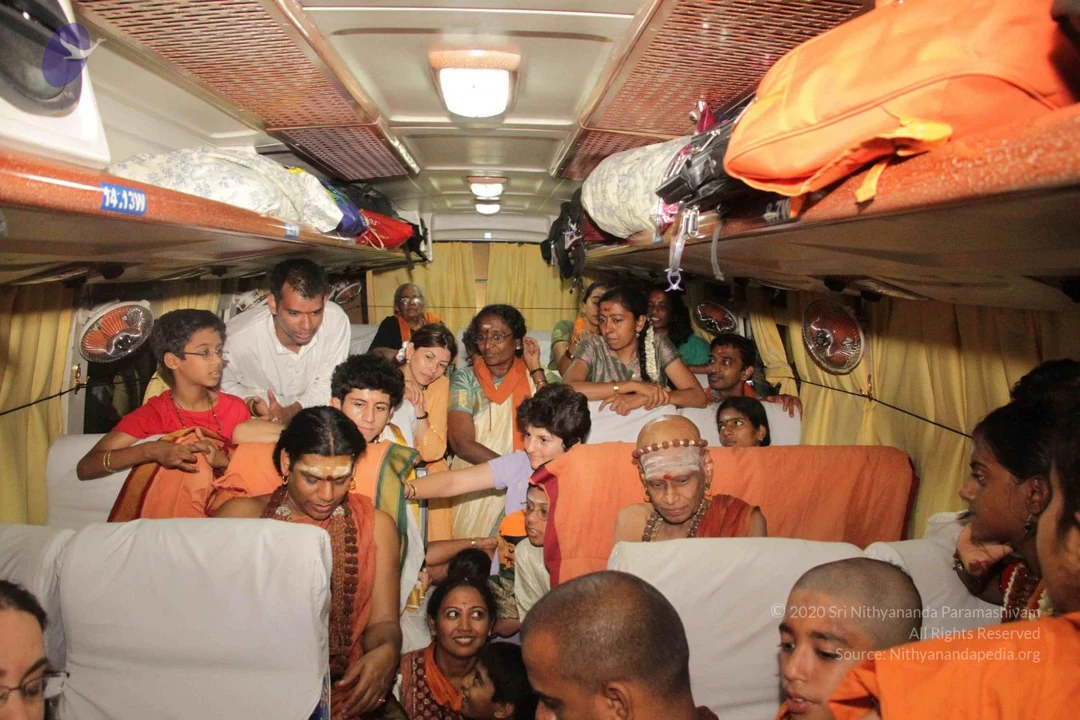
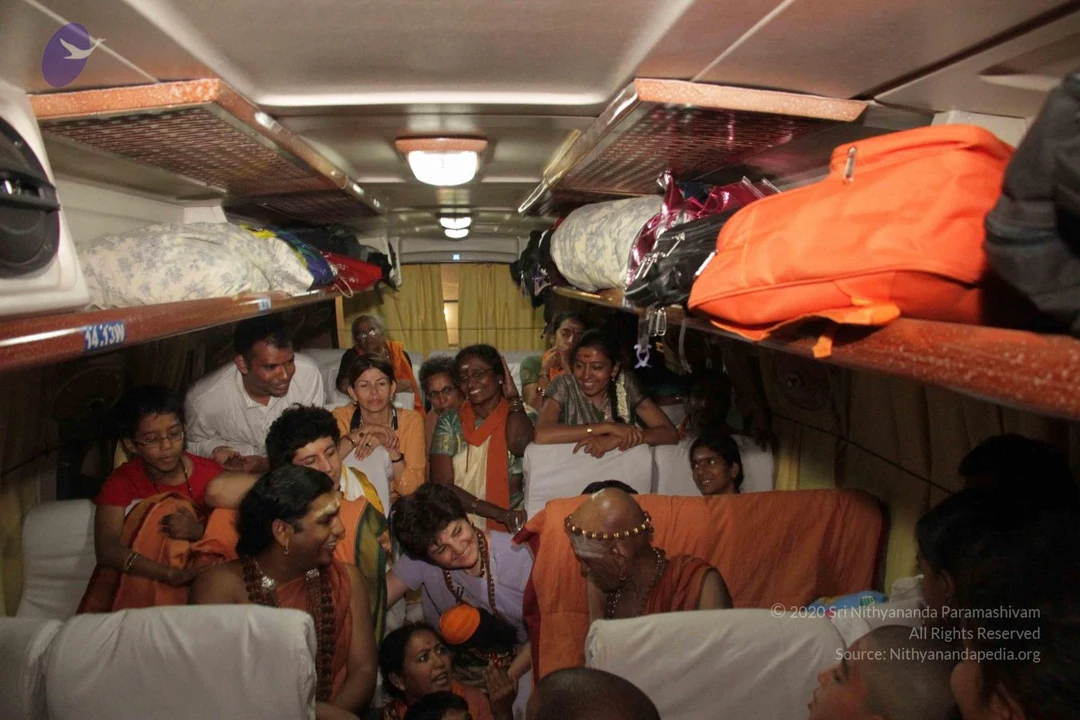
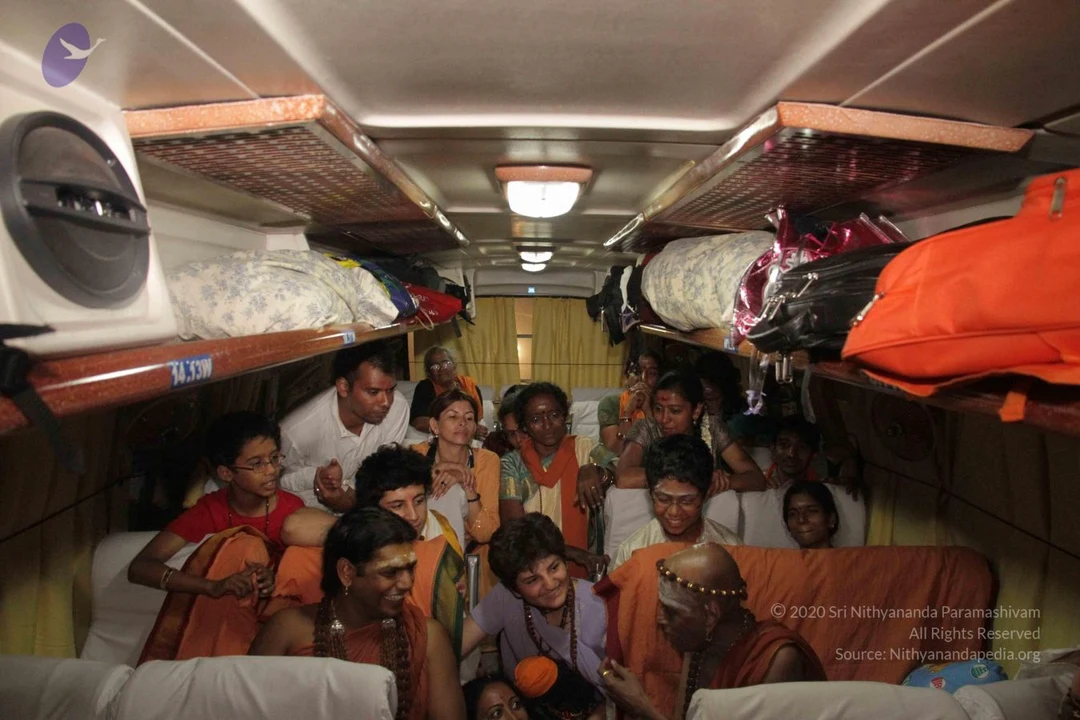
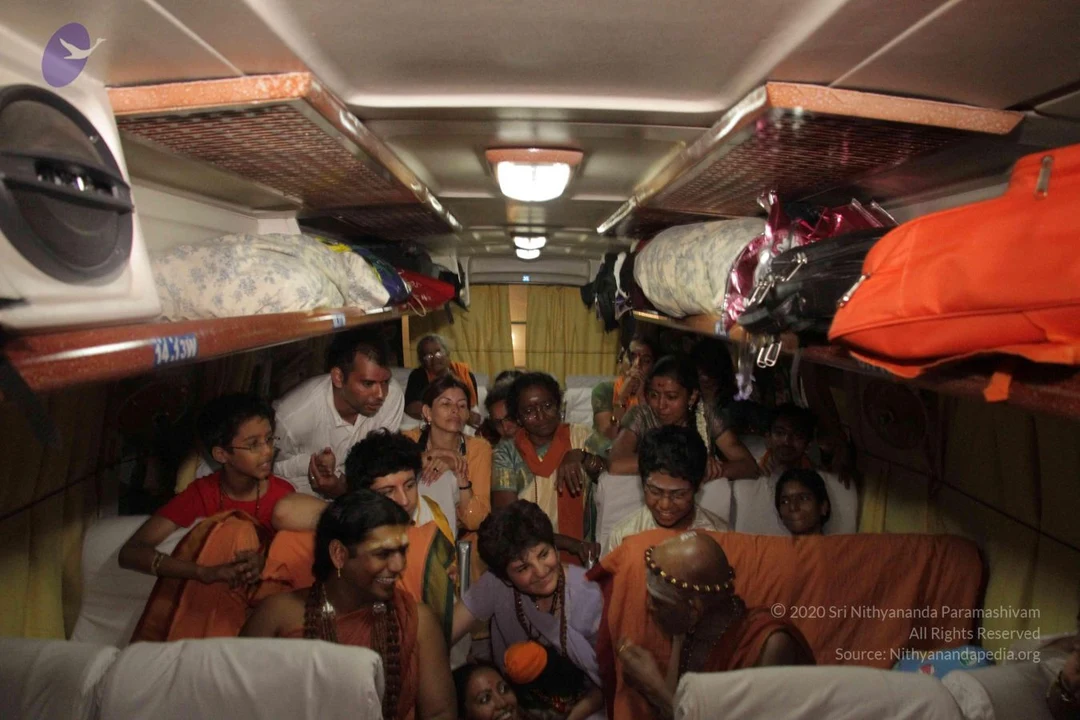
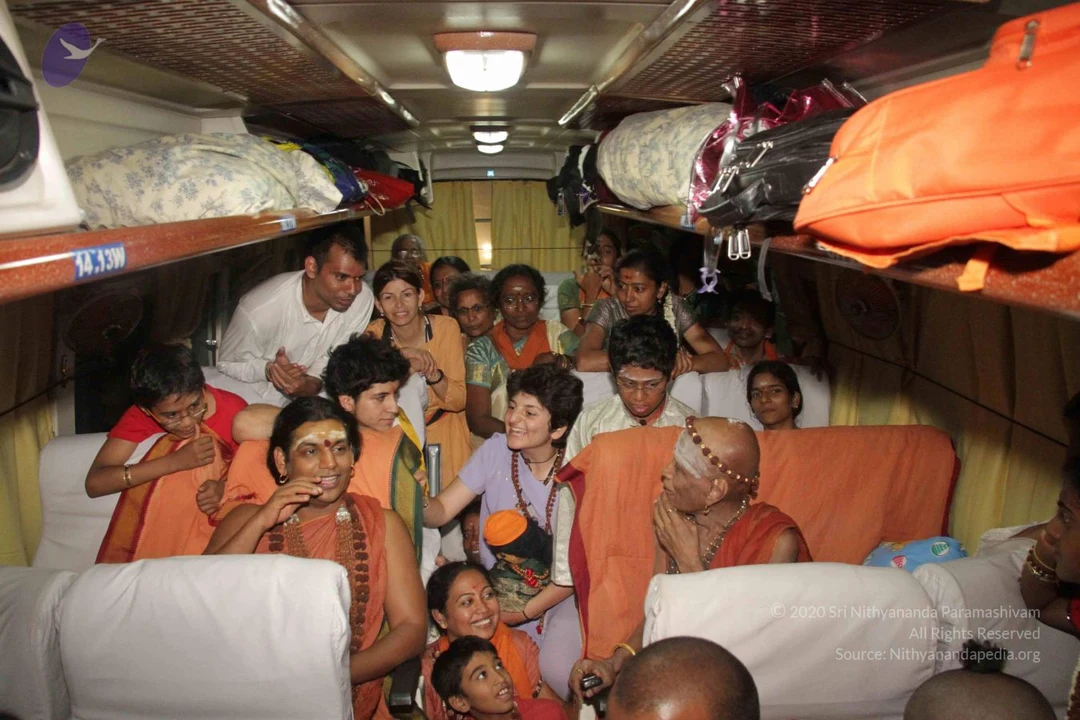
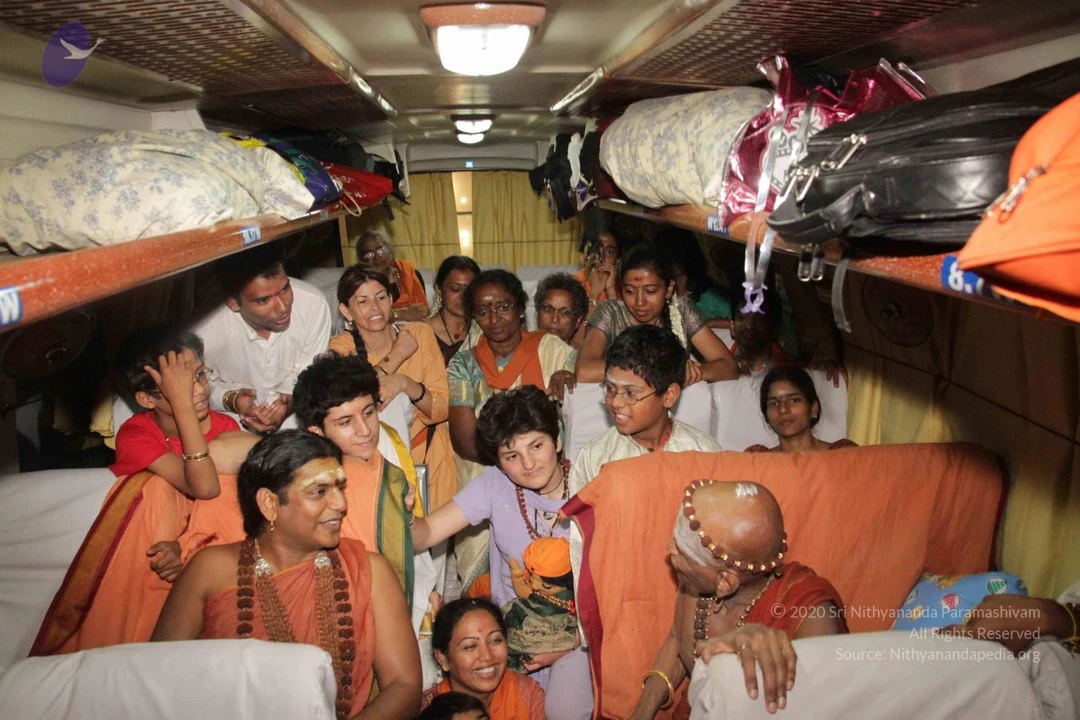
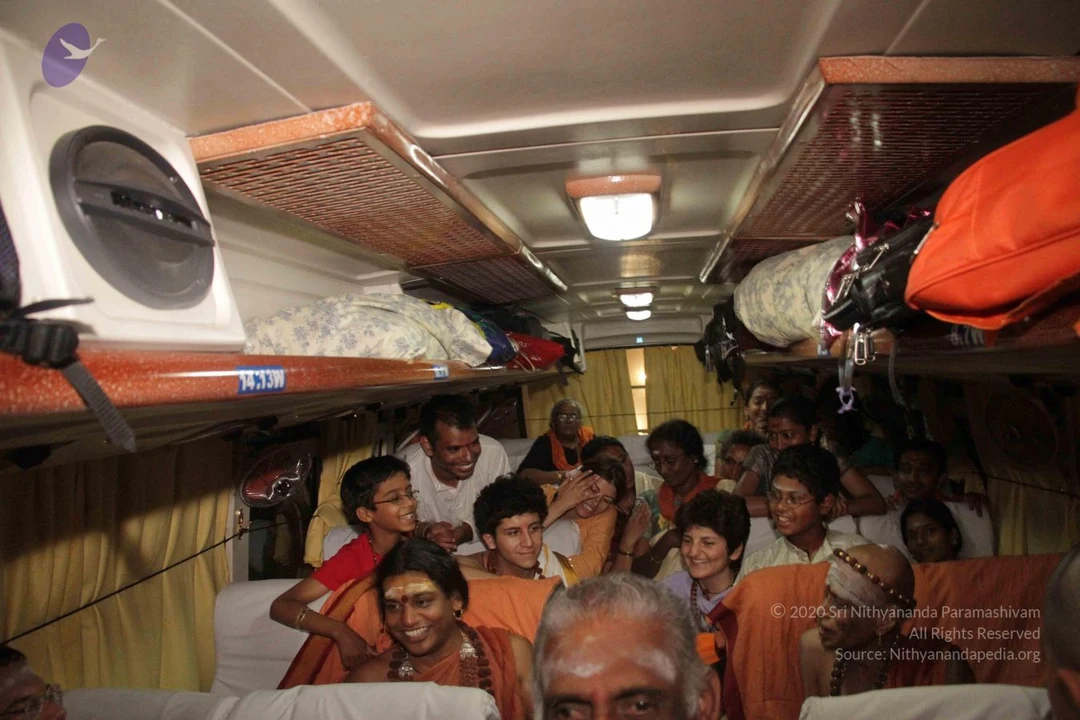
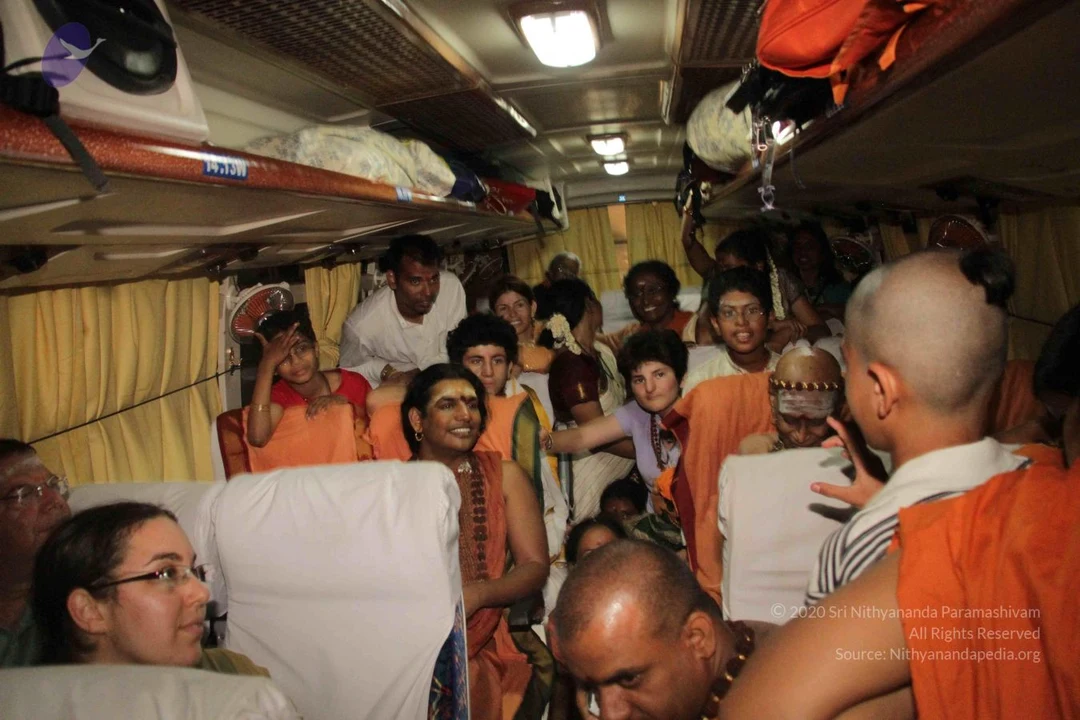
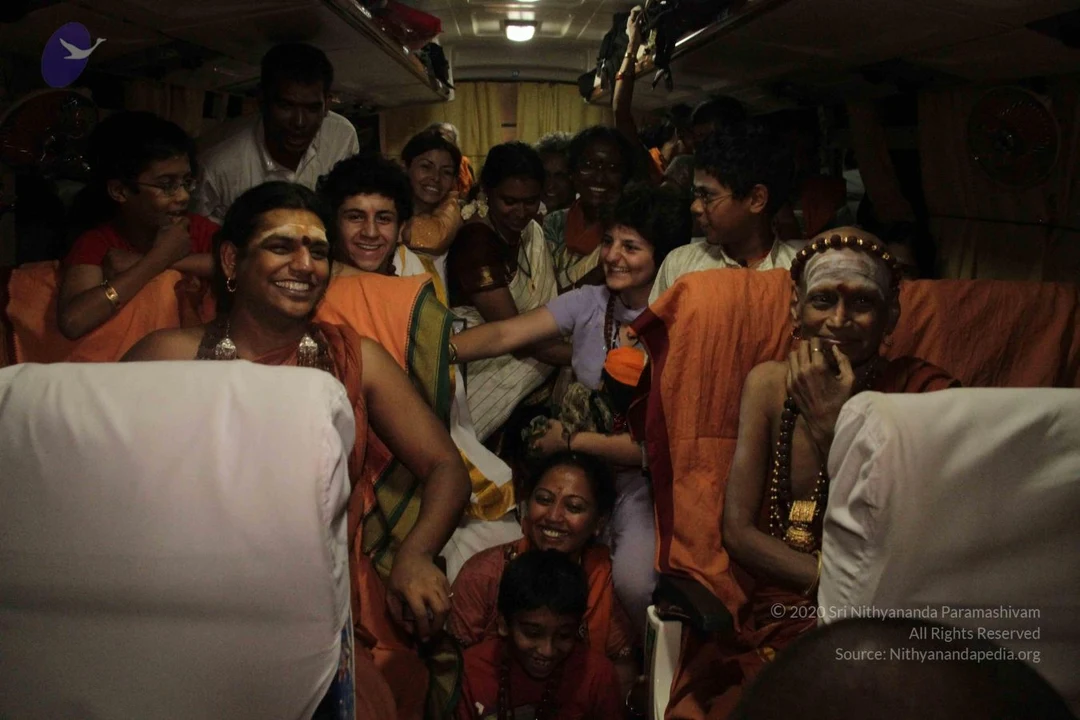
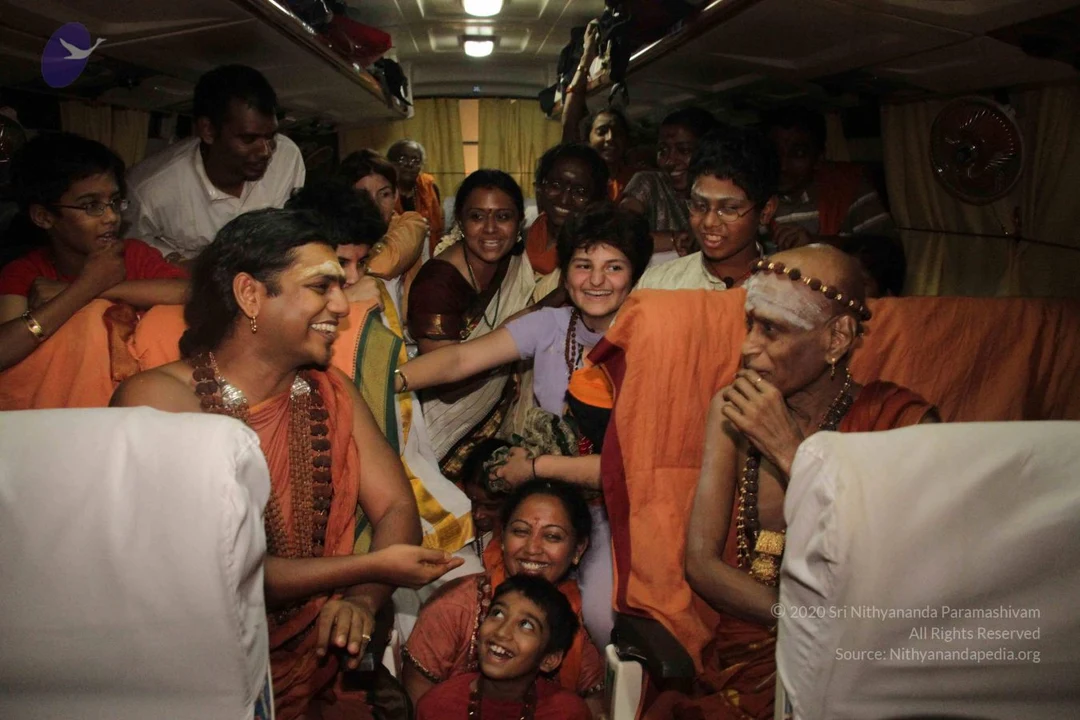
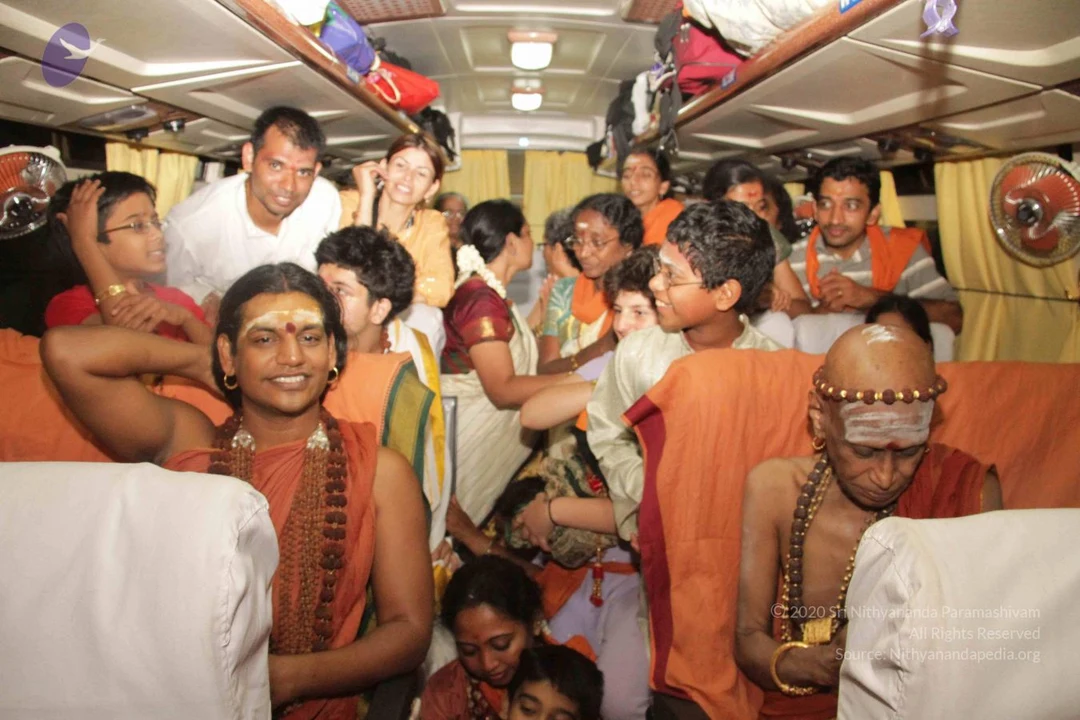
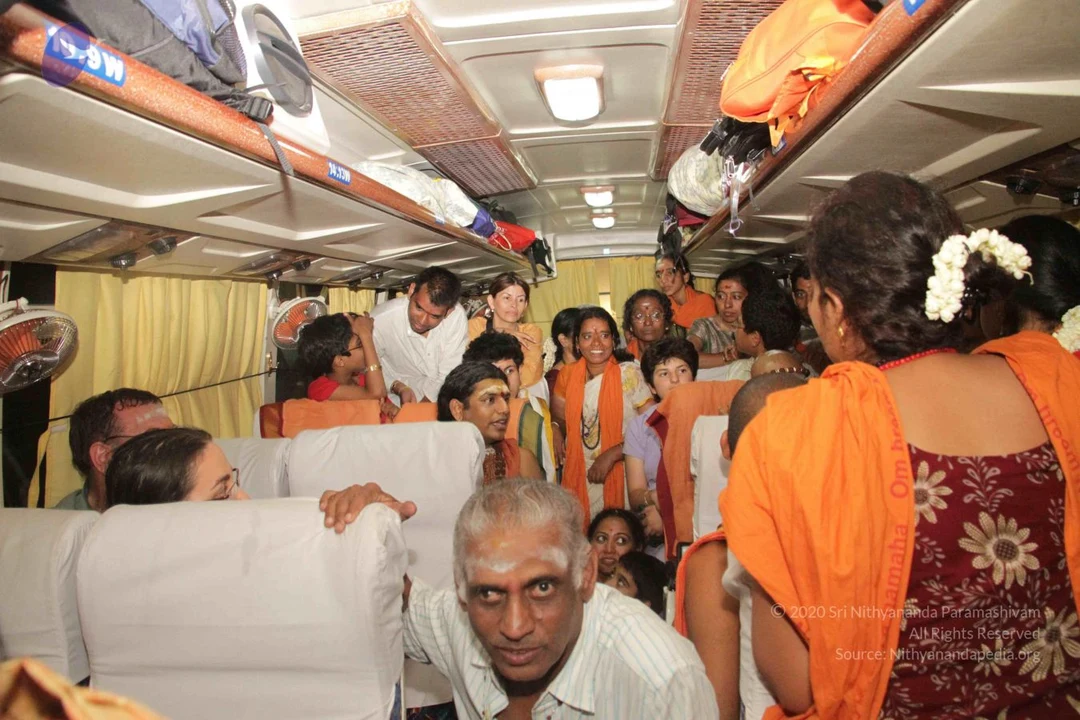
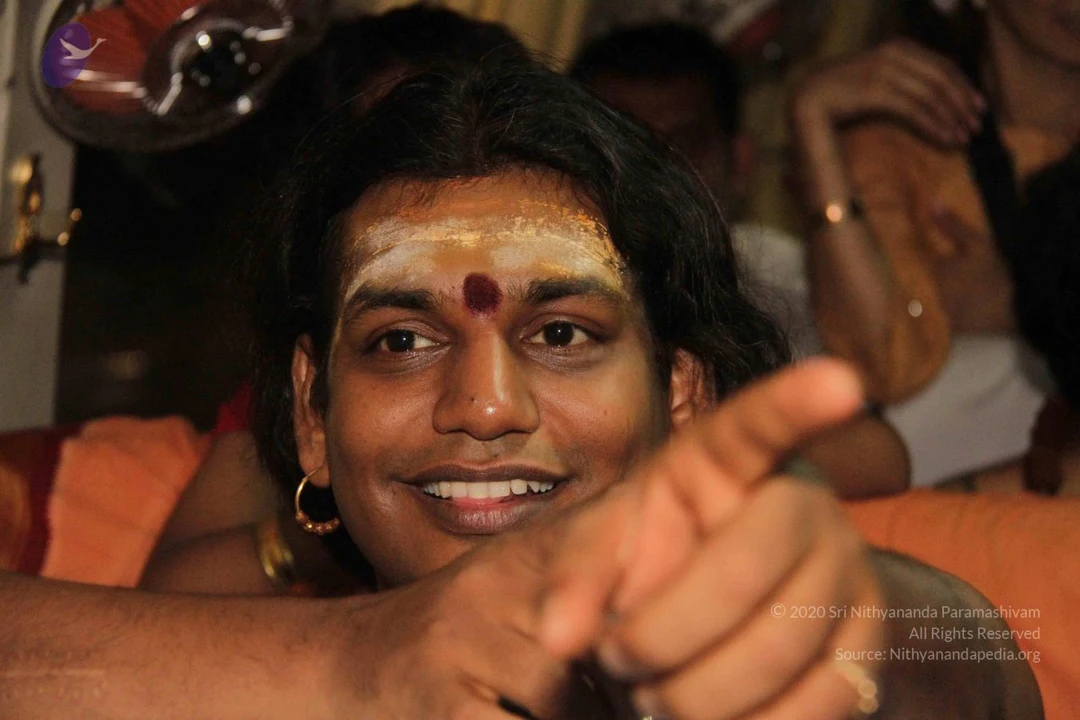
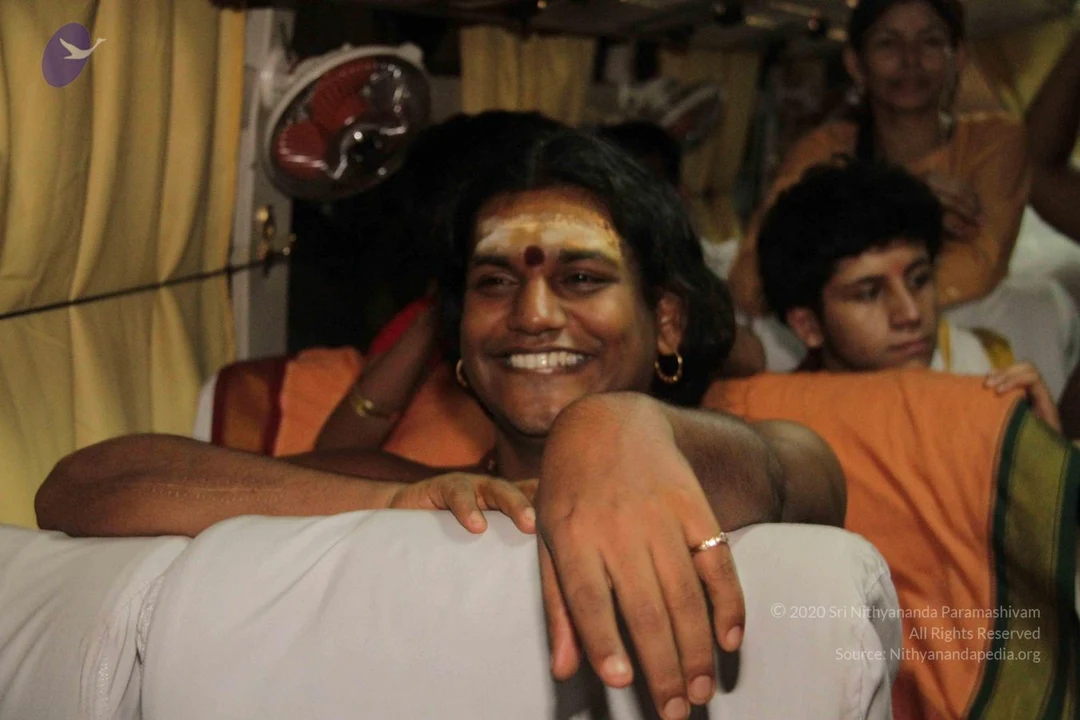
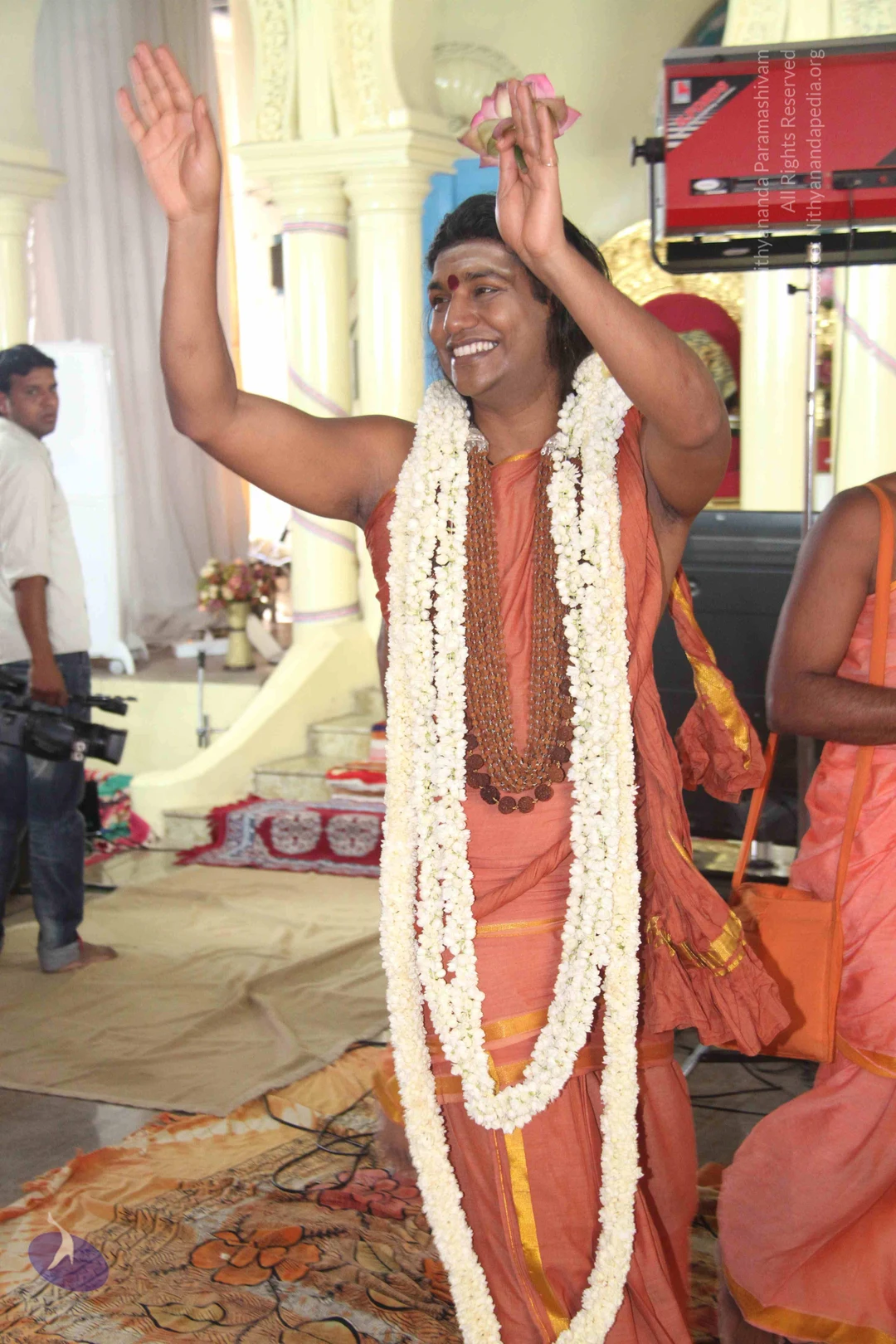
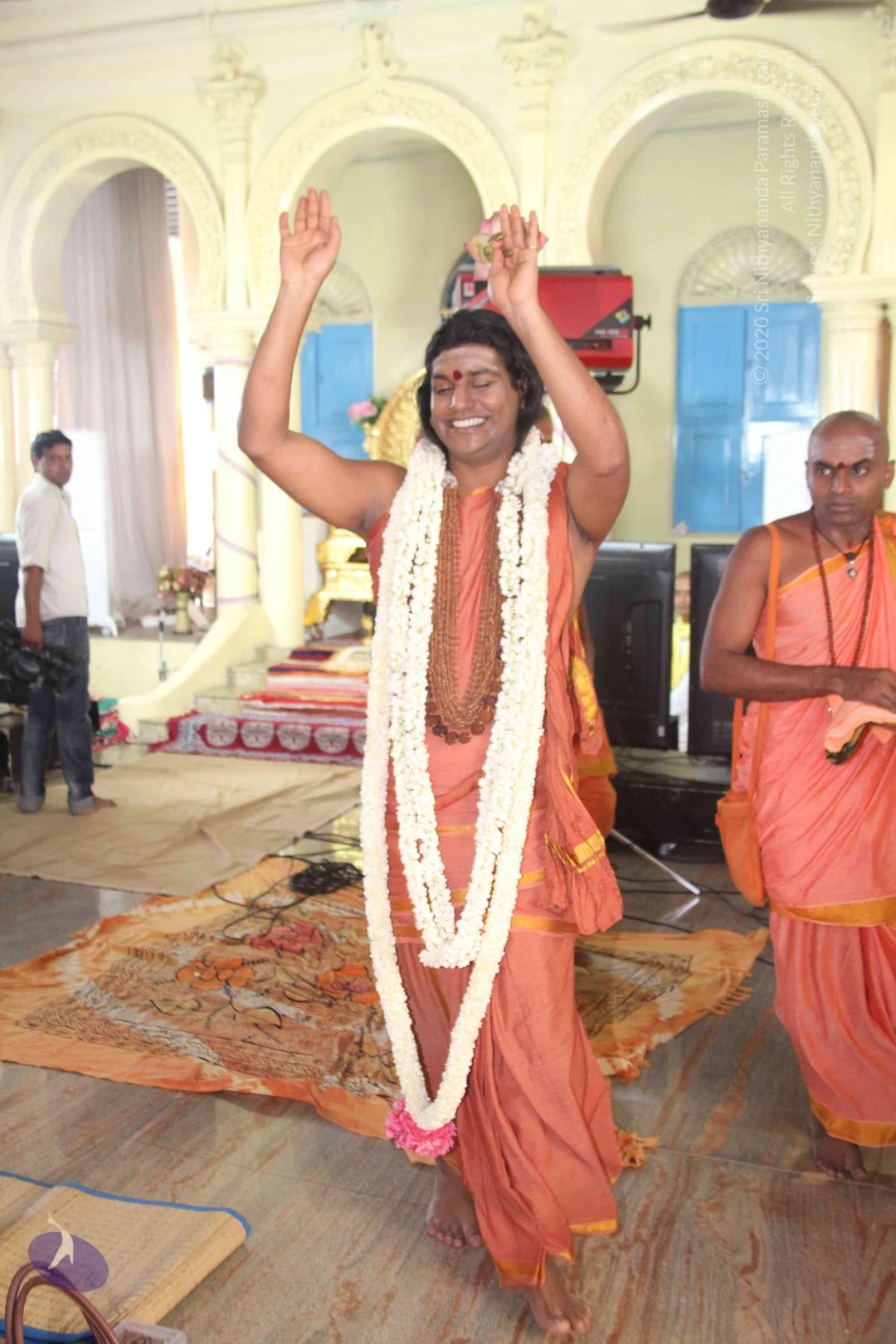
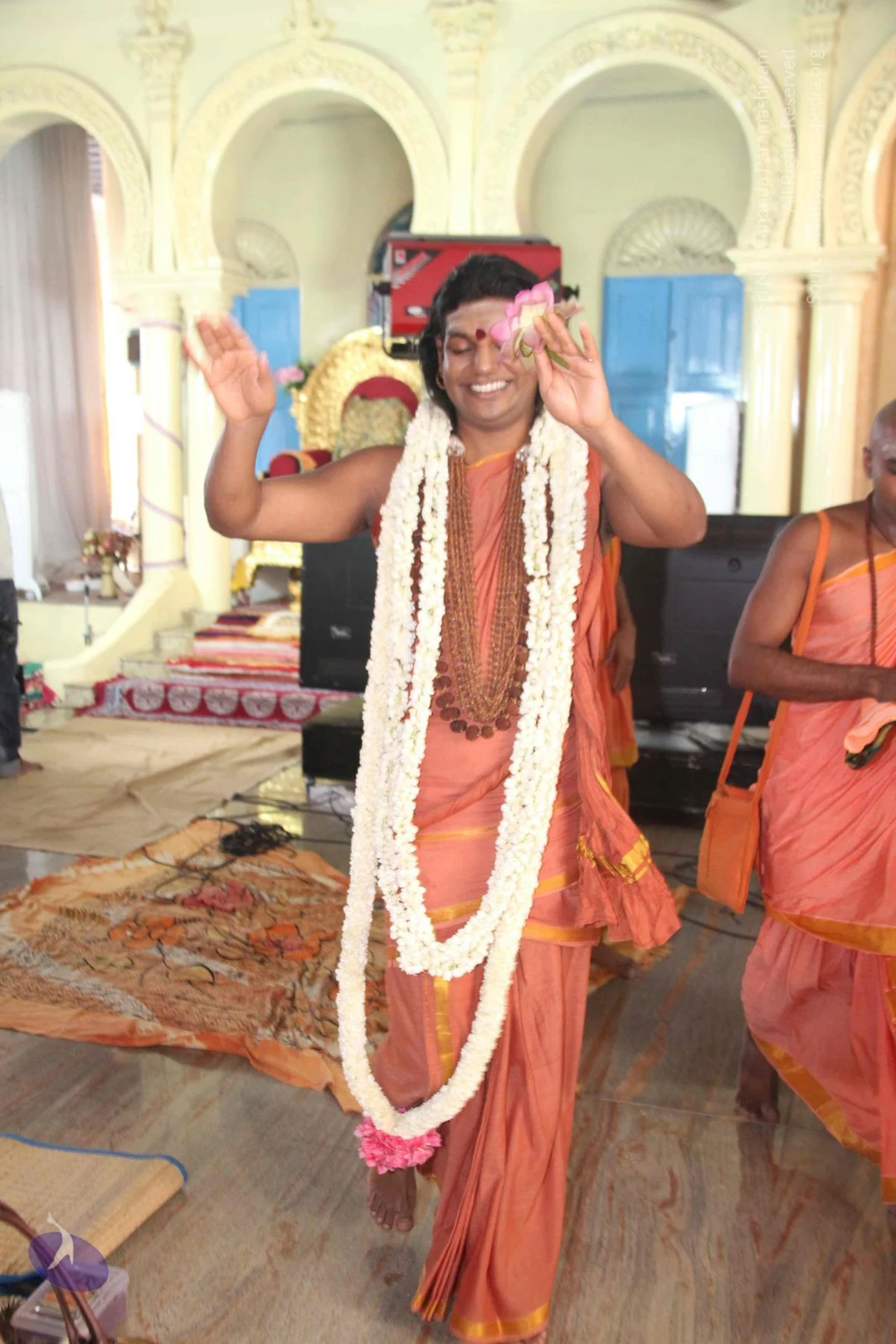
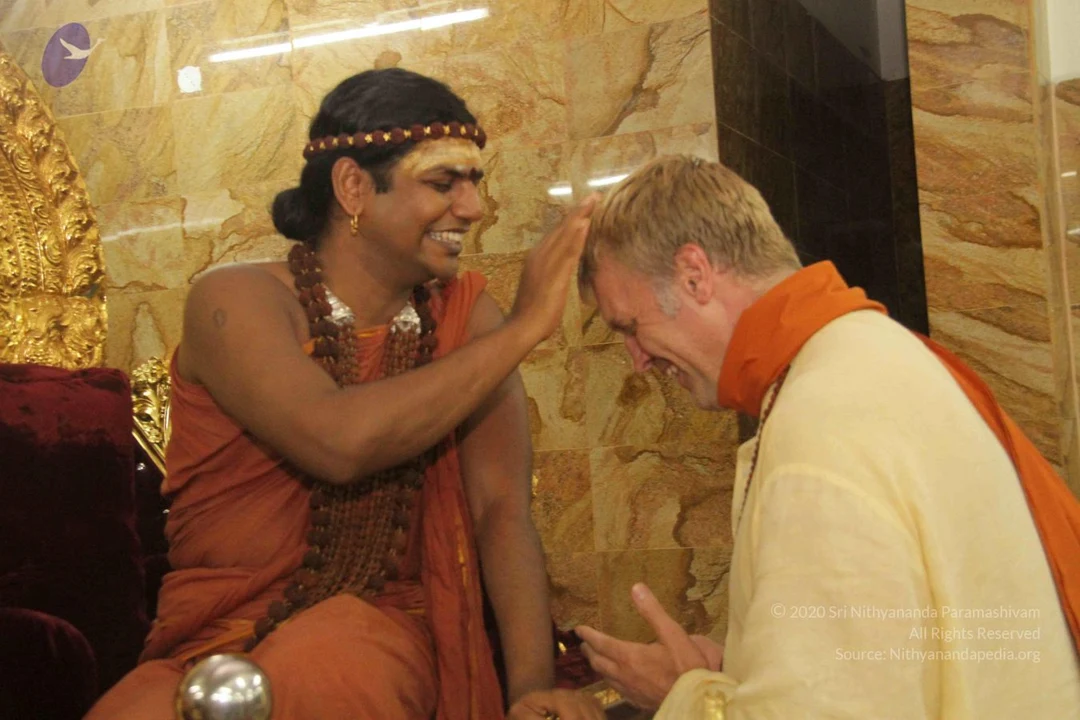
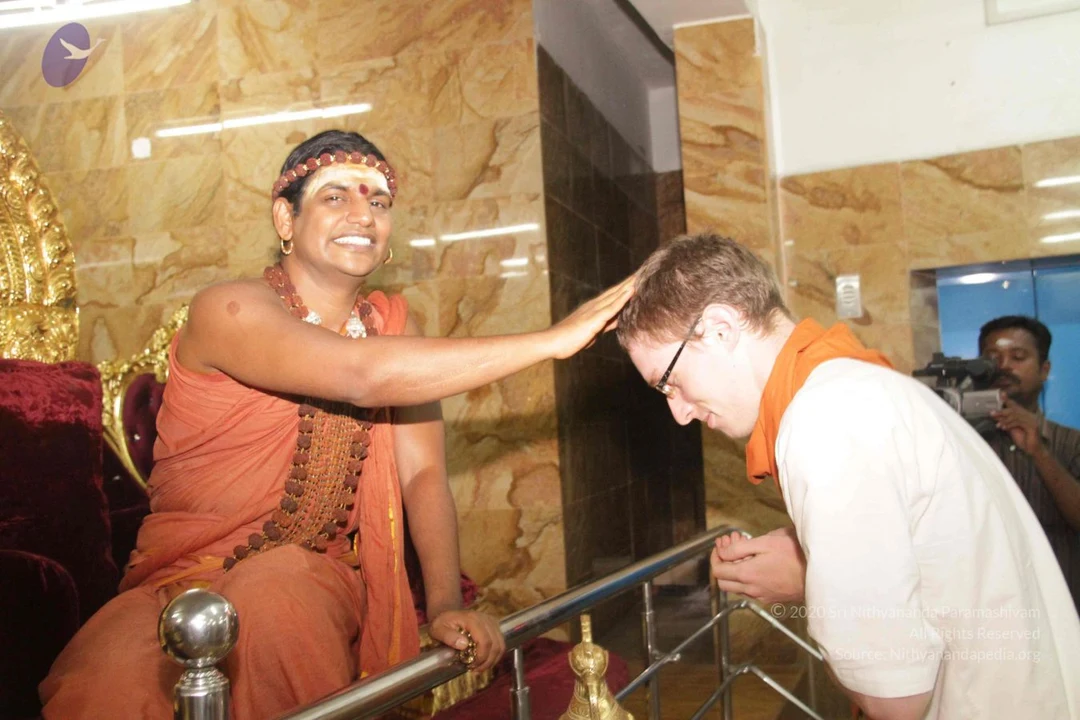
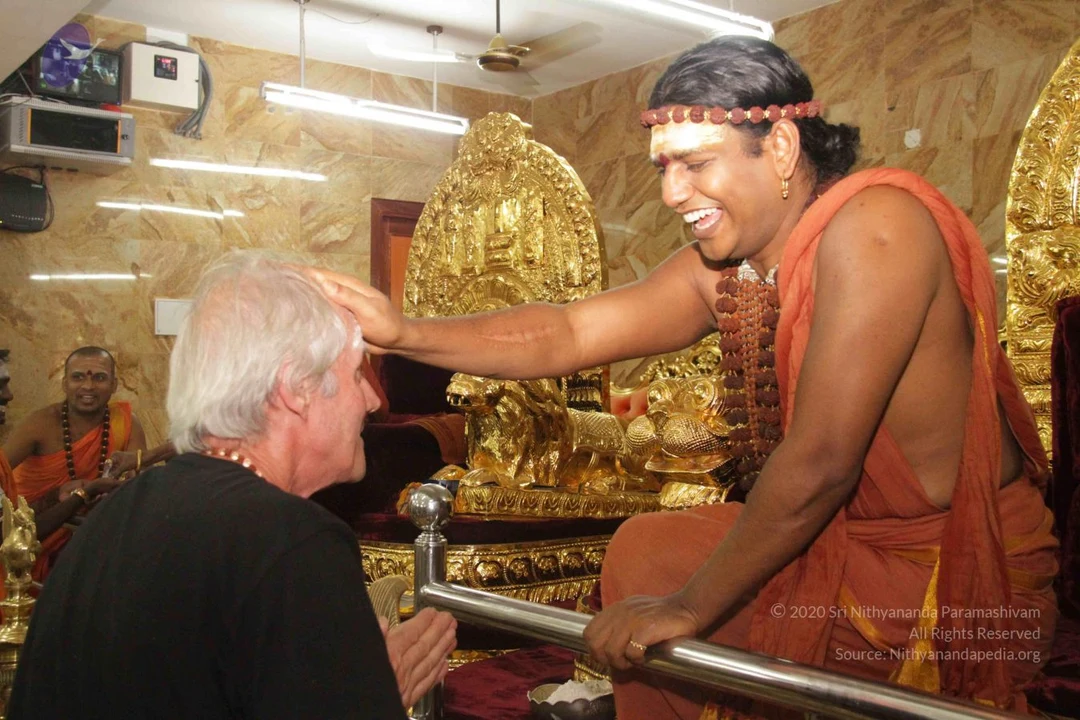
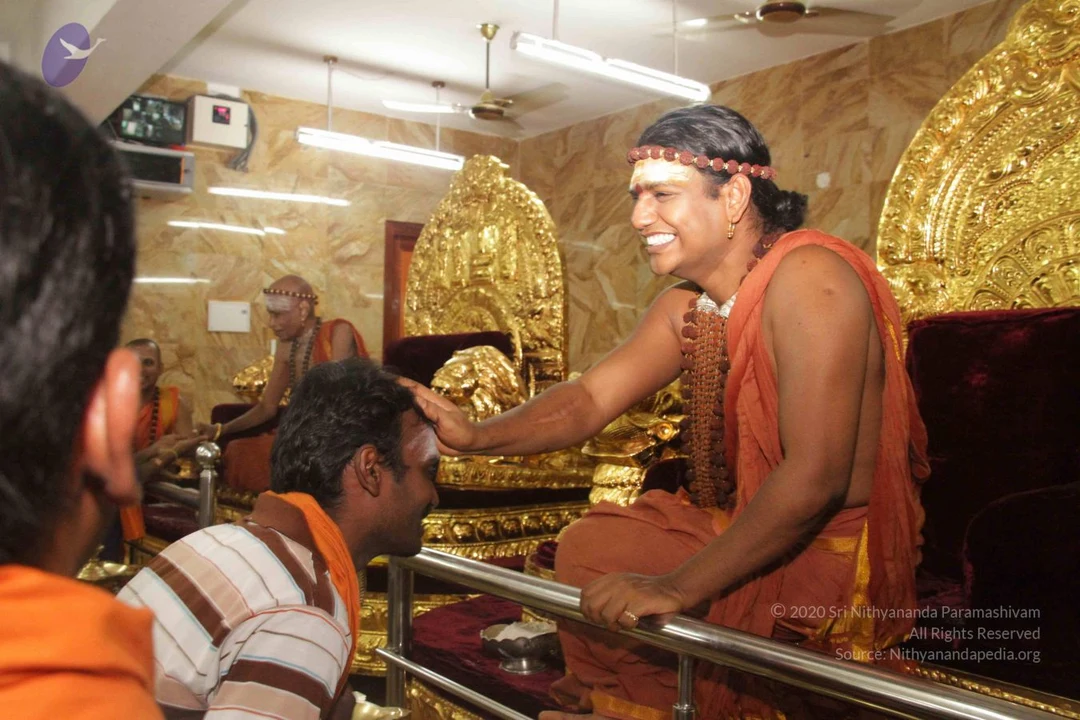
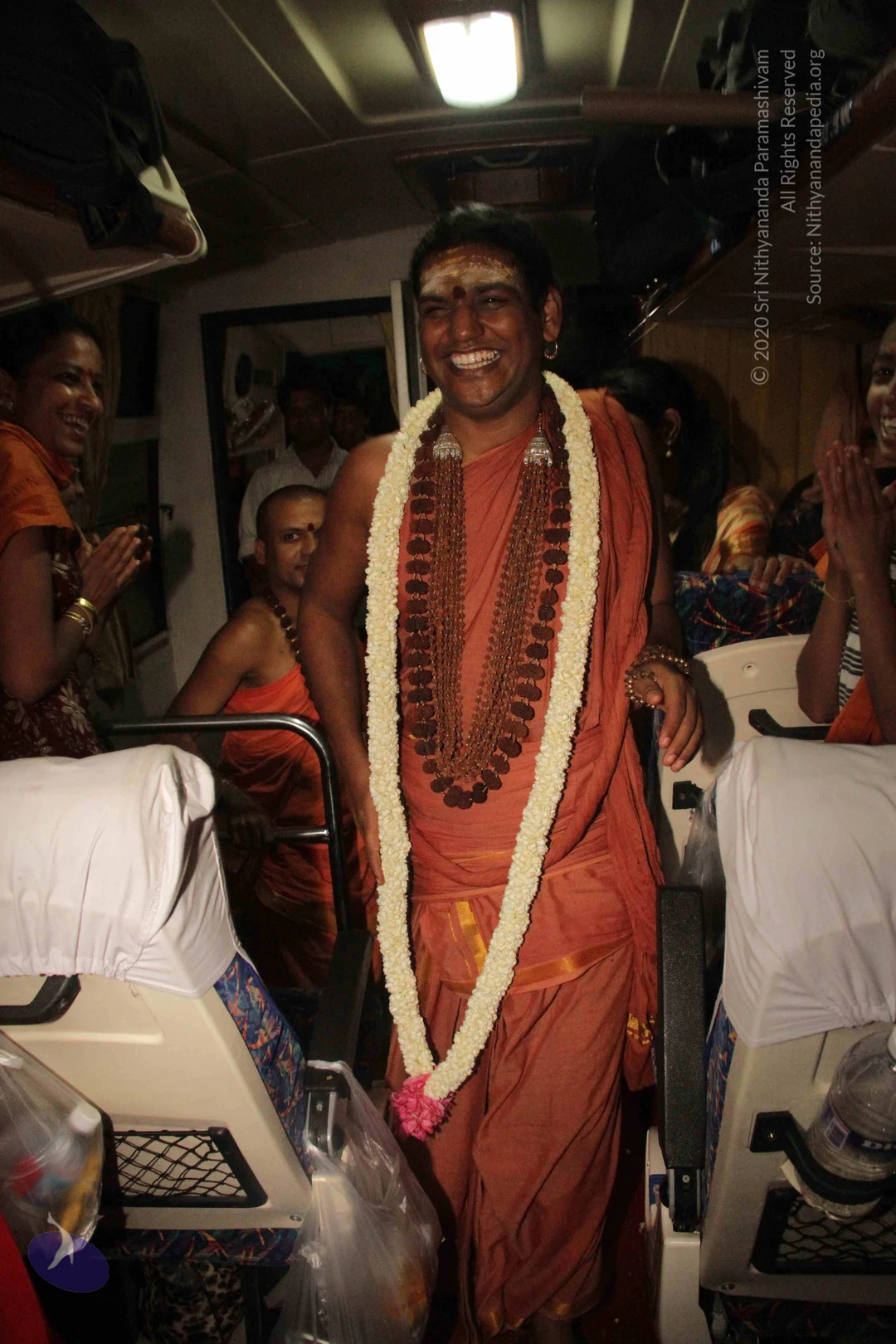
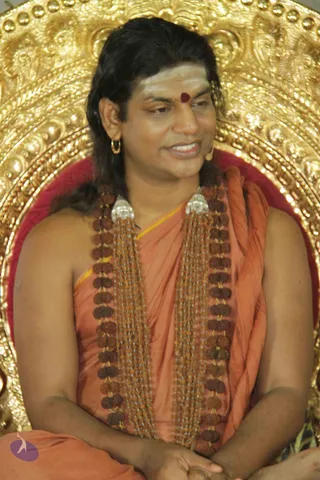
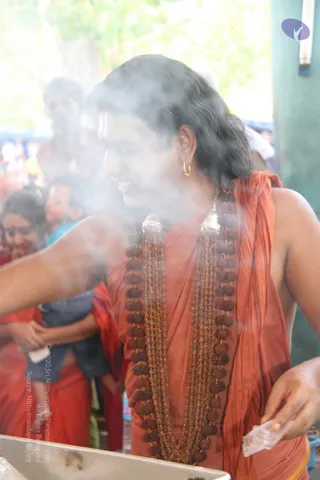
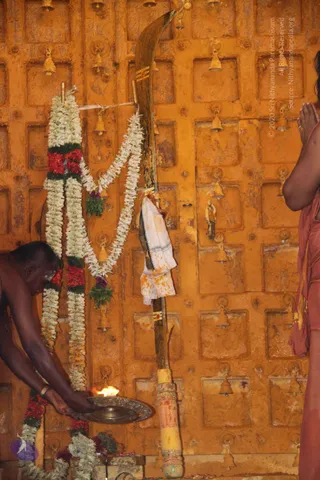
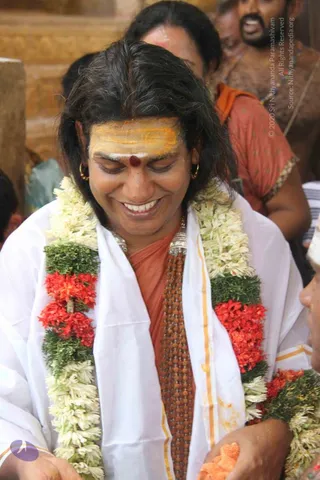
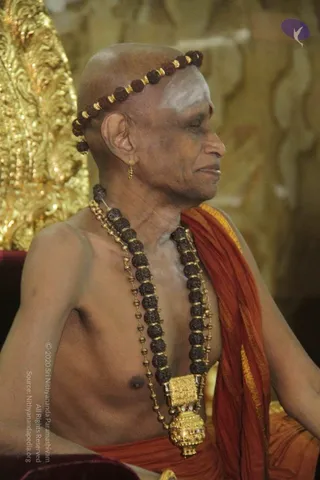
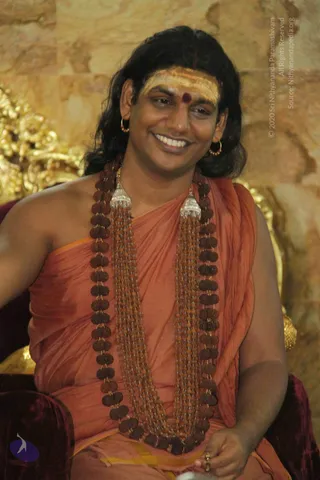
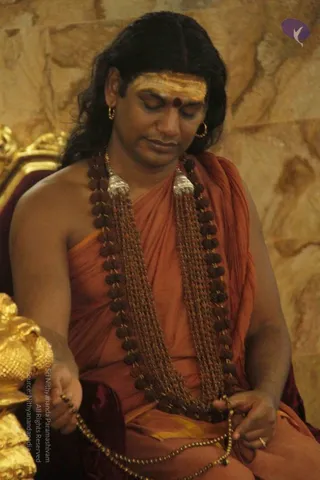
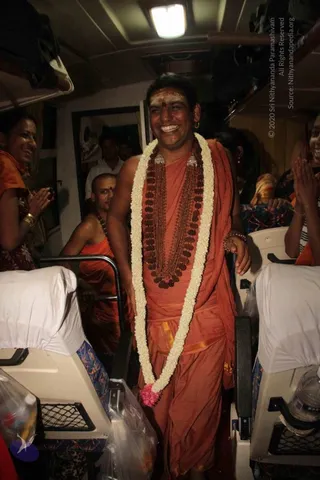
Photo taken inside a crowded sleeper bus with overhead luggage racks, yellow curtains and ceiling fans. A bald man in a saffron-orange robe and a multi-strand rudraksha mala with a red bindi stands in the centre, smiling, while surrounded by devotees in orange and saffron clothing. Several women and young men press close, and a younger man in orange with white sacred markings on his forehead sits in the foreground. A bald elderly man in orange with a white forehead band and rudraksha beads sits at right, and a child with hands folded stands at right of centre. Overhead bags are visible in the racks above.A photograph of a barefoot man in white kurta and white trousers walking across a pale stone plaza, with an orange saffron cloth draped over his shoulder and held at his side. Behind him stands a tall fortified stone wall with crenellated battlements, backed by a steep hillside of dense green trees. To the right is an open-sided stone pavilion with carved pillars and a red-trimmed roof, where a few people stand. Other people walk in the background: a woman in a patterned sari carrying a bag on the left, and a man in a light shirt and dark trousers near the centre. A silver SUV is parked beside a dirt mound along the wall.A photograph of a smiling figure seated on an ornate gold-and-red velvet throne against a polished beige marble wall. The seated figure wears a saffron-orange draped cloth, a long rudraksha mala with a gold ornamental necklace, a red flower-and-bead headband and a red bindi with white tilak. He rests one hand on a brass-and-steel railing and touches the head of a young boy in a white shirt who stands beside the throne. To the right a man in an orange shawl with white garment smiles, and a camera operator's equipment is visible at the edge. The scene is a satsang-style darshan setting.

July 23 2012

Original wiki page
Contents

Title:

Supreme Pontiff of Hinduism HDH Bhagavan Sri Nithyananda Paramashivam

Description:

TALKS FROM MORNING SATSANG ON JULY 23 2012 IN MADURAI, INDIA Bhagavad Gita (Song of God) is a timeless treatise on the essence of living enlightenment. The Gita was imparted by the enlightened Hindu incarnation Sri Krishna to the warrior-prince Arjuna over 5000 years ago. Amazingly, the spiritual wisdom and life solutions offered in the Gita are so universal and current that even today it is used as a personal transformation guide. In today's talk on Bhagavad Gita, Chapter 5, Verse 17, Paramahamsa Nithyananda (Swamiji) discusses the experience of liberation from our attachments. The objects and habits we cling to serve a purpose for us; we find them useful in some way. Once we evolve beyond our need for them, our addiction to them drops away. The more of life we find useless, the greater our freedom. When we have no use for anything we can make all our choices without the bondage of desire.

Link to Video:

VideoAudio

Transcript:

Do you feel life is useless?

Discourse by Paramahamsa Nithyananda

July 23, 2012

Bhagavad Gita, 5th Chapter – Sanyasa Yoga, 17th Verse

Tad-buddhayas –tad-aatmaanaha tan-nishtahas-tat-paraayanaaha l

Gacchanthya-purnaavruttim jnaana-nirdhoota-kalmshaaha ll

Beautiful verse! I will do the live translation.

Tad-buddhayas –tad-aatmaanaha tan-nishtahas-tat-paraayanaaha l

Gacchanthya-purnaavruttim jnaana-nirdhoota-kalmshaaha ll

Tad-buddhayas: Who are established in the intelligence! See, establishing yourself on intelligence! One of the biggest problem human beings face – They again and again tell you “I understand what is right and what is wrong. But I forget and do my own things”. This is the one statement I hear from everybody every day. “I understand what is right, what is wrong. But when it comes to action, I do my own things as per the old pattern”.

We need to understand, you are not born with the patterns with which you are working. When you are not born with them, you can change them. Please understand, when you are not born with certain pattern, it means it is created in you. Anything created can be changed. Now you can destroy the old one and create the new pattern. But constantly, for years and years and years, you go on cribbing “No. I know what is right, what is wrong. But I cannot do, I cannot look, I cannot see, I cannot change”.

Tad-buddhayas means established in buddhi. Means knowing clearly, anything I created I can destroy and recreate the new one.

I have seen two types of people. People who create the cribbing pattern “Oh. I know what is right or wrong. But when I act, I act the way my patterns are”.

There is other group who thinks “Let me try little, little”.

This group which cribs is in the level of cribbing even for next two years. What two years, even for twenty years they will not be doing anything other than cribbing!

But this group which tries comes out of the old pattern, may be in 2 or 3 months, because every time you think “I cannot, I cannot, I cannot” you are giving strength to your ignorance. Every time you think “I can, I can, I can” you are giving strength to your buddhi. Every time you think “It’s Okay. What is the need for transformation, with so much of struggle?” you give strength to your Tamas.

Giving strength to your intelligence, Tad-buddhayas – establishing yourself in intelligence means, every step trying to change you one inch; trying to transform you just one inch extra; inch by inch trying to transform you.

Tad-buddhayas –tad-aatmaanas tan-nishtahas-tat-paraayanaaha: Establishing yourself in intelligence

tad-aatmaanas : Second word: Establishing yourself in the truth that you are Atman, the soul, consciousness. I tell you, the moment you remember you are consciousness, the moment you remember you are the atman, you are the pure soul, millions and millions of patterns becomes useless for you.

I tell you, if you want to cross any pattern, it should become useless to you. You will never be able to cross by fighting. No! I tell you, you can never quit smoking by fighting with that pattern. You can never quit drinking by fighting with that pattern. You may be drinking to escape from something. You may be smoking to prove yourself as something or somebody; may be smoking makes you feel good about you. May be drinking makes you forget something about you.

Only when the utility disappears, addiction can disappear. Without alcohol if you are able to divert yourself from your sufferings, just by meditation or some other activity, then alcohol may be useless in your life. Only when it becomes useless, you will be able to come out of that pattern.

Same way smoking, without smoking, if you are able to give the same feeling towards yourself that you are something which smoking gives, then smoking becomes useless to you. Only when things become useless to you, you can walk out of those patterns.

When you remember you are the atman, soul, there are millions of patterns in your life becomes useless, just useless! You do not need them anymore.

I should tell you from my experience. Once in Canada, one of my devotee, he forced me to come to a Mall and I have never seen a Mall before that. I think in Toronto only. He wanted to show a Mall. I said “What is Mall?” He said “Everything from clothes to computers, books, coffee, watches, everything will be available Swamiji”. I said “What am I going to do?” He said “No, no, no, please come Swamiji. You may like something, something may be useful. We can pick-up”. I said “Shopping!. I never did shopping in my life”. I said “No, I have nothing to buy. Whatever I want, few things which I use, thousands of people buy that for me from around the world and pour. The moment they see I use this hankie, do you know how many thousands of these hankies I get every year? Not hundreds, thousands! If I use everyday ten, if I never touch again, if I don’t touch this hankie second time, even then I will have enough supply for next five years and the moment they see I use this mike you don’t know how many of mikes I get, receive as gift. The moment they see that I use this cloth, tiger screen printed, you don’t know how many meters I get!” I told him “I don’t need to shop. Whatever few things, I use very less things. But whatever things I use, people pour on me”.

But he was a devotee. He was not ready to listen. He said “No, no, no. Swamiji, please come, please come. I just wanted to take you and show you, get something for you”. I said “All right!” We went. Almost two and a half hours he showed me. Two and a half hours I spent in that mall. It’s one of the largest mall I think. It is just next to Swami Narayan Temple. In Toronto, there is a huge Swami Narayan Temple and after two and a half hours when I came out, I was just filled in ecstasy. It’s such a personal experience, but I can share with you.

See actually when I entered, I told myself “Hey, whatever you want you pick-up. No problem”. I entered in a very casual playful mood. I told the devotee also “Don’t worry. Whatever I want I will surely pick-up”. After two and a half hours, going through the whole thing, when I came out, I tell you, not even one object seems to be useful in my life. It’s a honest experience, I am sharing with you. Went around and came out. See, I am not trying to tell you this to teach renunciation for you. I am not saying you should also be like this. No! I am not using this situation to teach you some serious concept. I am telling you exactly the lightness of the whole situation. Please understand, I entered very light way, very playfully, very relaxed way. He is a close disciple who is begging me to pick-up something. Literally asking as a boon “Please pick-up something! I will be happy to give you that”. Going around and coming back with that same light mood. Please understand, if I am in the form of Kala Bhairava or giving Kala Bhairava Darshan or Kala Bhairava Swaroopa, then I don’t need anything. That is perfect. Kala Bhairava does not need anything. But, even in an ordinary playful down-to-earth mood, when the mind does not want anything, understand, whole world becomes useless to you.

The moment you remember you are pure consciousness, even playfully, even in a ordinary way, whole world becomes useless to you. Please understand millions of things will become useless to you. Only when things become useless to you, you will be able to walk out of the patterns created by those things.

When I came out I told the devotee “Do you know how happy I feel to live with this body and mind? The body which does not ask anything anytime and never gives any pain even if you fall from the horse and the mind even casually, playfully, does not feel any requirement of anything, Just feels, the whole thing is useless!”

I tell you, when you establish yourself in Atman, the concept, the idea, you are consciousness; I tell you, you don’t even need to make this as an experience. Even remembering that you are consciousness can make millions of things useless in your life. Making millions of things useless in your life makes you more and more blissful.

More and more things become useless in your life, more and more you become blissful. More and more you become joyful. More and more people become useless in your life; more and more you become free. When more and more life itself becomes useless in your life; more and more you are getting enlightened. I tell you, more and more people, life becomes useless to you, more and more you are getting liberated. tad-aatmaanaha - means contemplating the concept- you are consciousness.

Next - tan-nishtahas - means established in the supreme! Please understand, established in the understanding you are consciousness! tat-paraayanaaha - who have surrendered themselves to this great truth. When you are in Tad-buddhi, tad-aatmaanaha, tan-nishtahas and tat-paraayanaaha, you are liberated from the all clutches! jnaana-nirdhoota-kalmshaaha: You are liberated from all patterns and free from illusions! You are liberated from all patterns and free from illusions!

Tad-buddhayas –tad-aatmaanaha tan-nishtahas-tat-paraayanaaha l

Gacchanthya-purnaavruttim jnaana-nirdhoota-kalmshaaha ll

Beautiful word a-purnaavruttim - You don’t come back. You don’t come down. When Bhagavan says you don’t come down, it does not mean only about the next birth. Even the next day morning waking up, you will not be the same person. Establish yourself continuously into the ultimate; you will be a new being!

Sakshi Pramana:

Sharing from Inner Awakening

Tags:

Bhagavad Gita, Paramahamsa Nithyananda, experience, liberation, attachment, evolve,need, addiction, life, freedom, choice, desire.

Photos Of The Day:

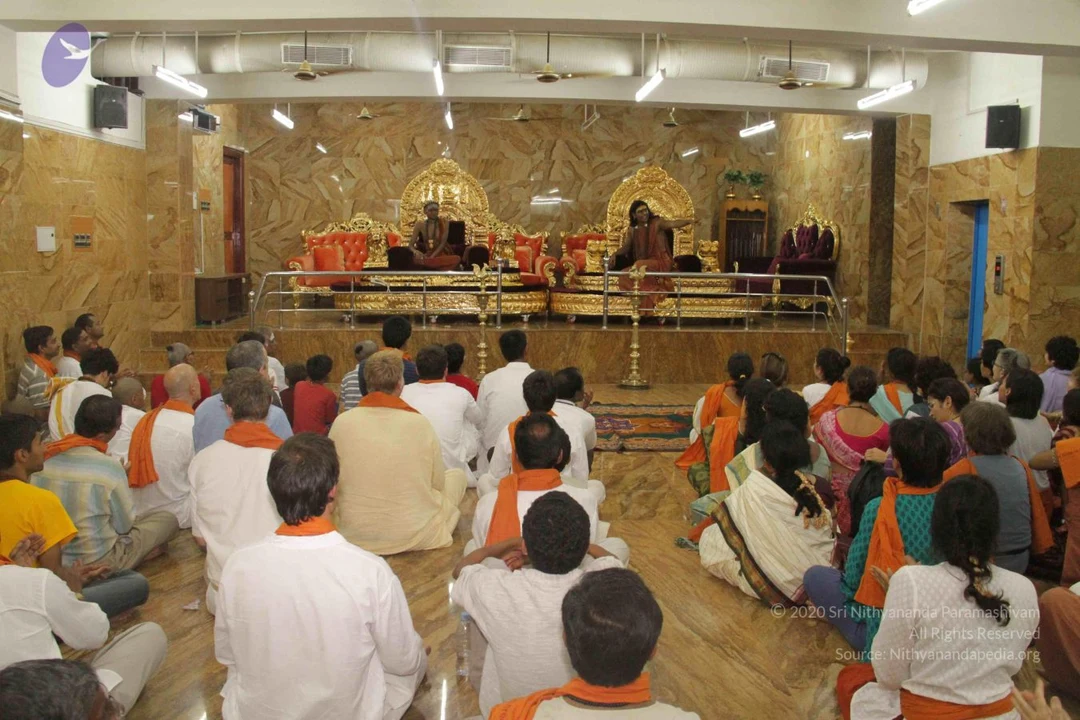
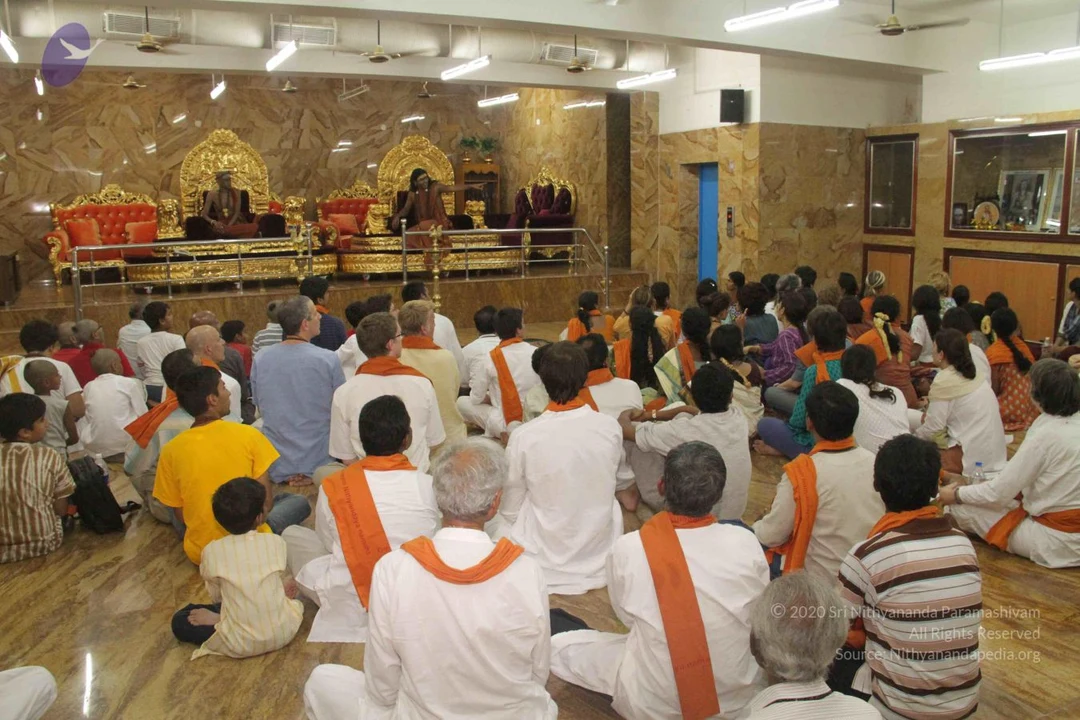
Morning Satsang
IA-Karupar-Temple-Visit

IA-Blessings-from-Swamiji-Sannithanam

IA-Travel-to-Thiruvannamalai

Thiruvannamalai

Photos Of The Day:

Morning-Satsang

IA-Karupar-Temple-Visit

Blessing-From-Swamiji-Sannithanam

IA-Travel-to-Thiruvannnamalai

Thiruvannamalai

Photos from this day

View all 409 photos

Morning Satsang
26 photosSource gallery
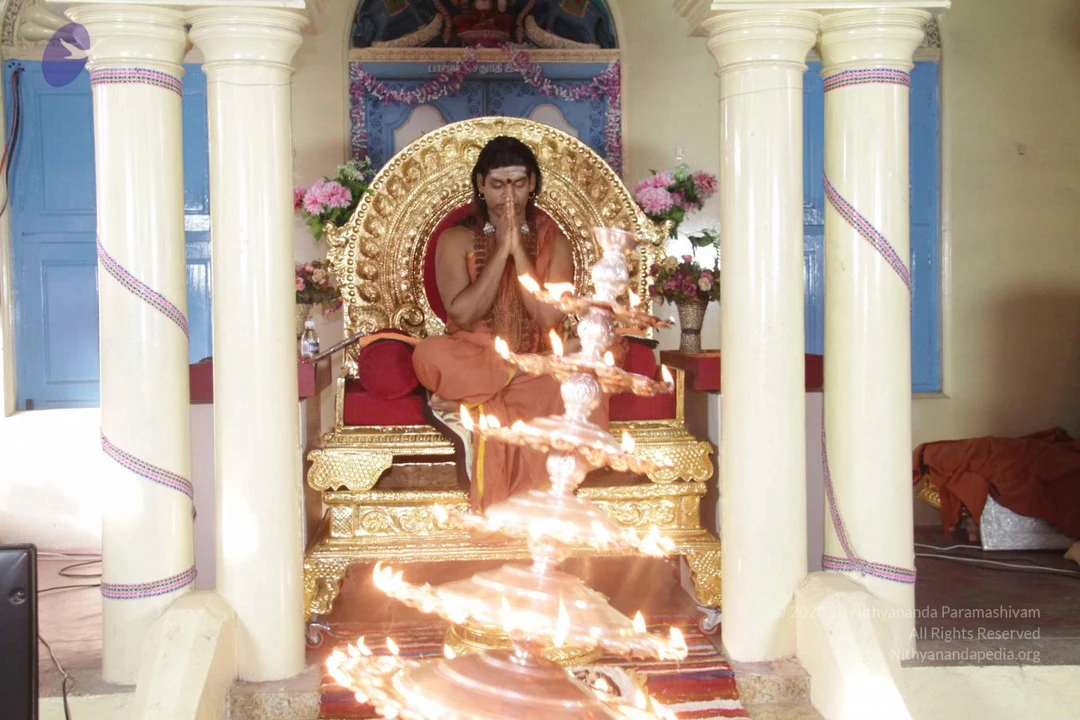
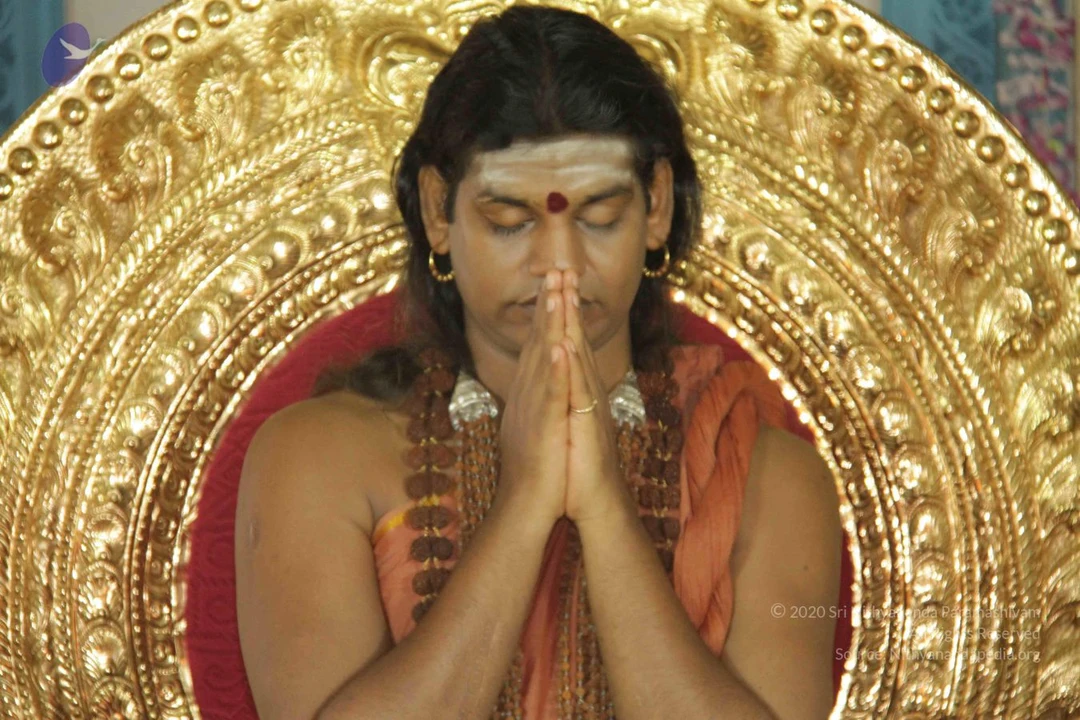
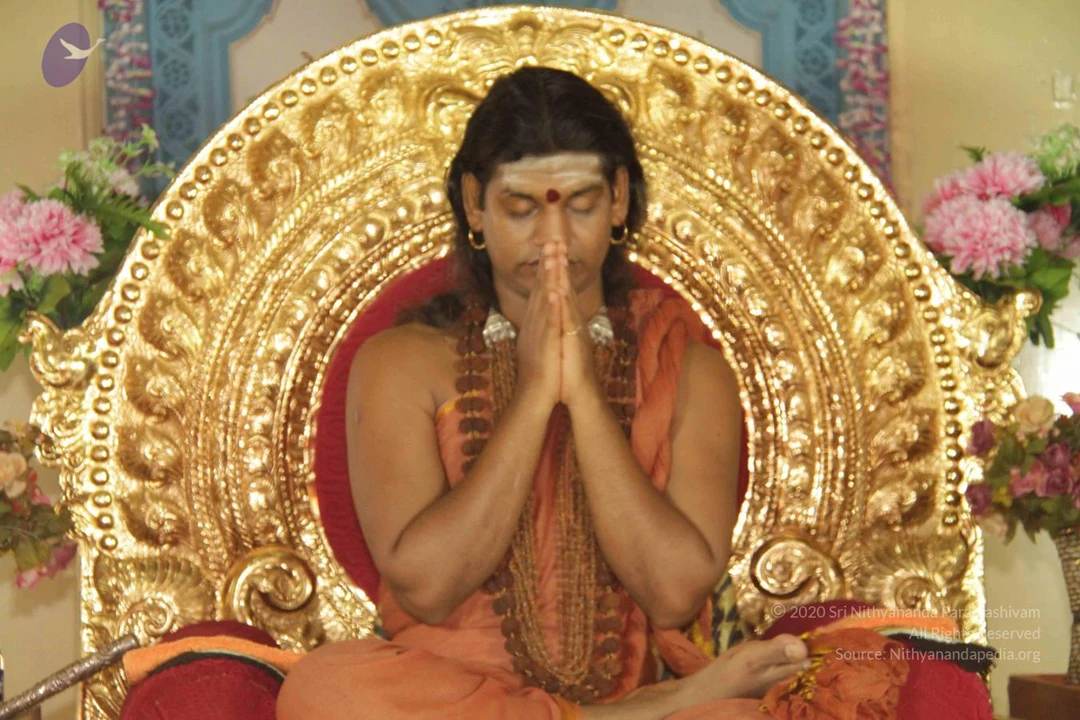
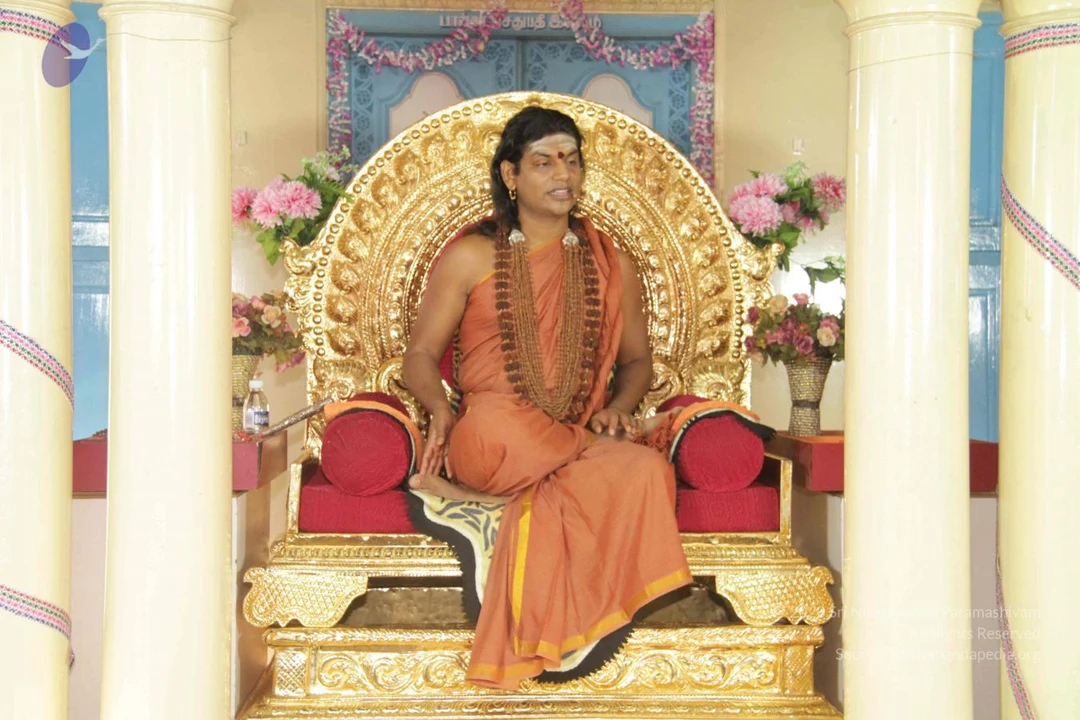
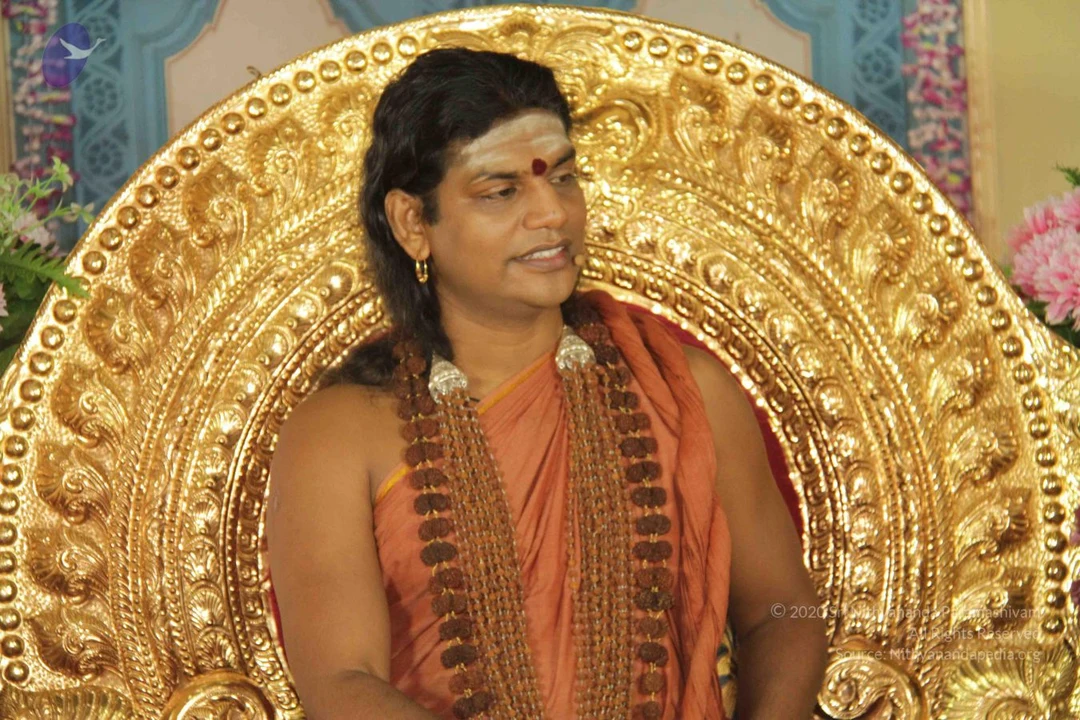
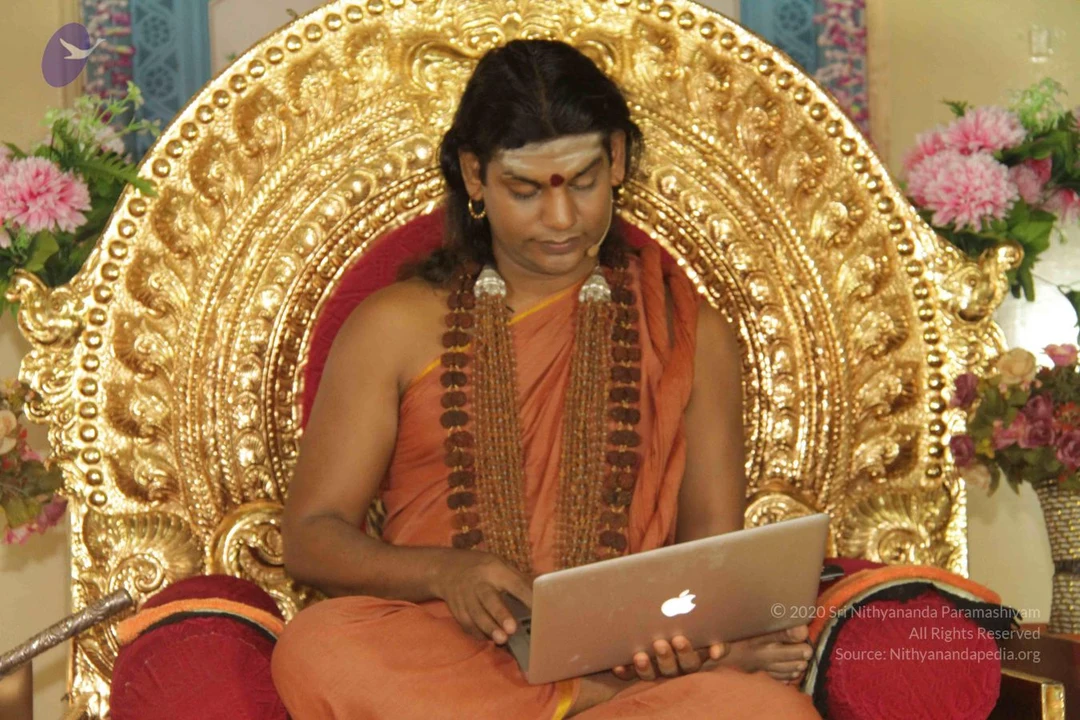
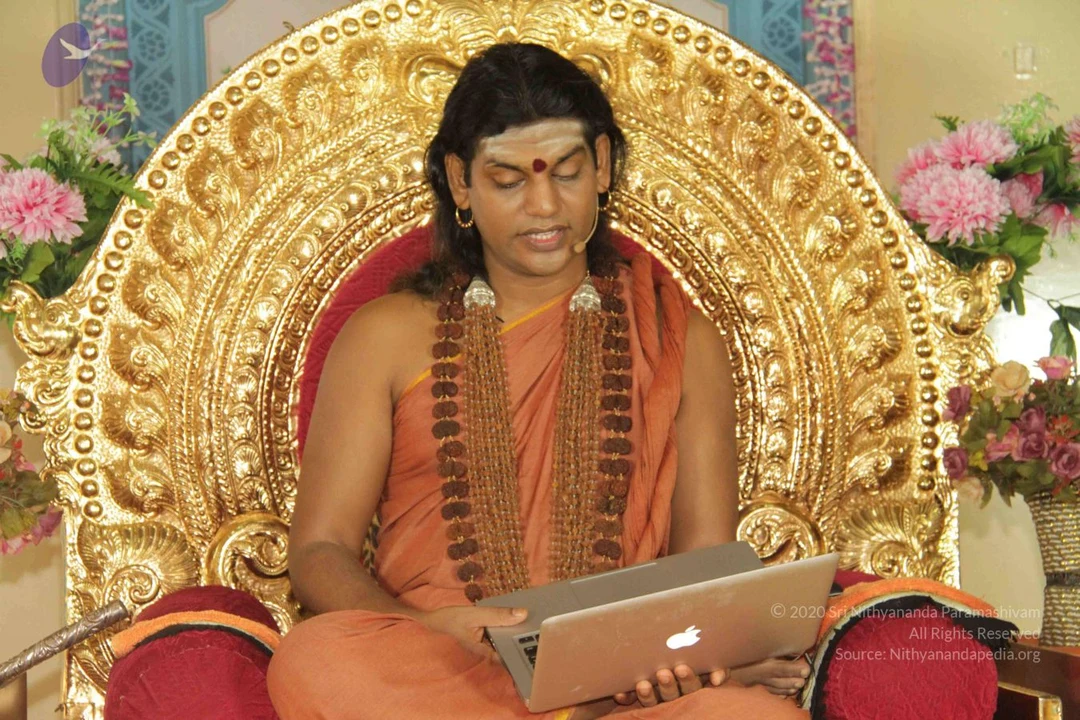
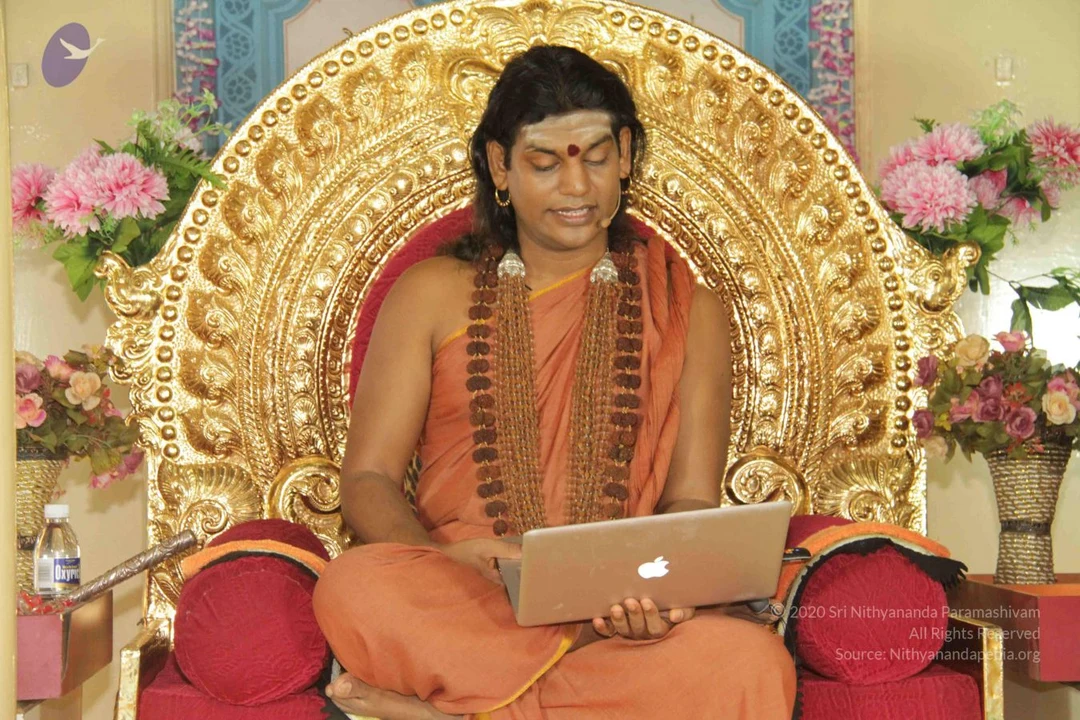
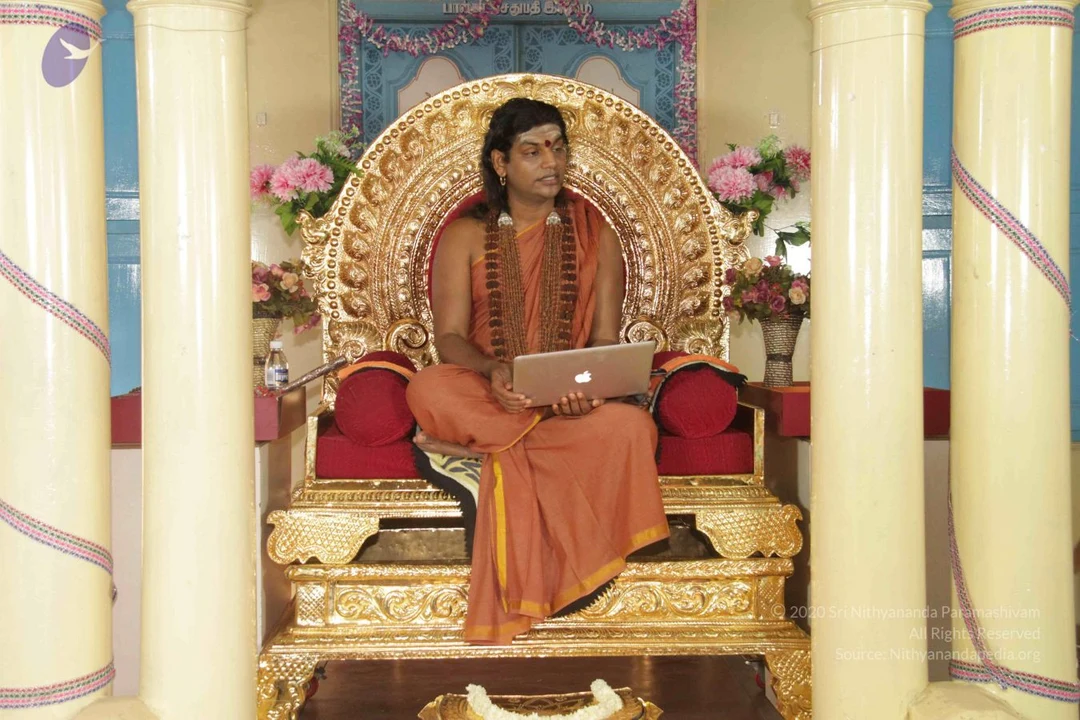
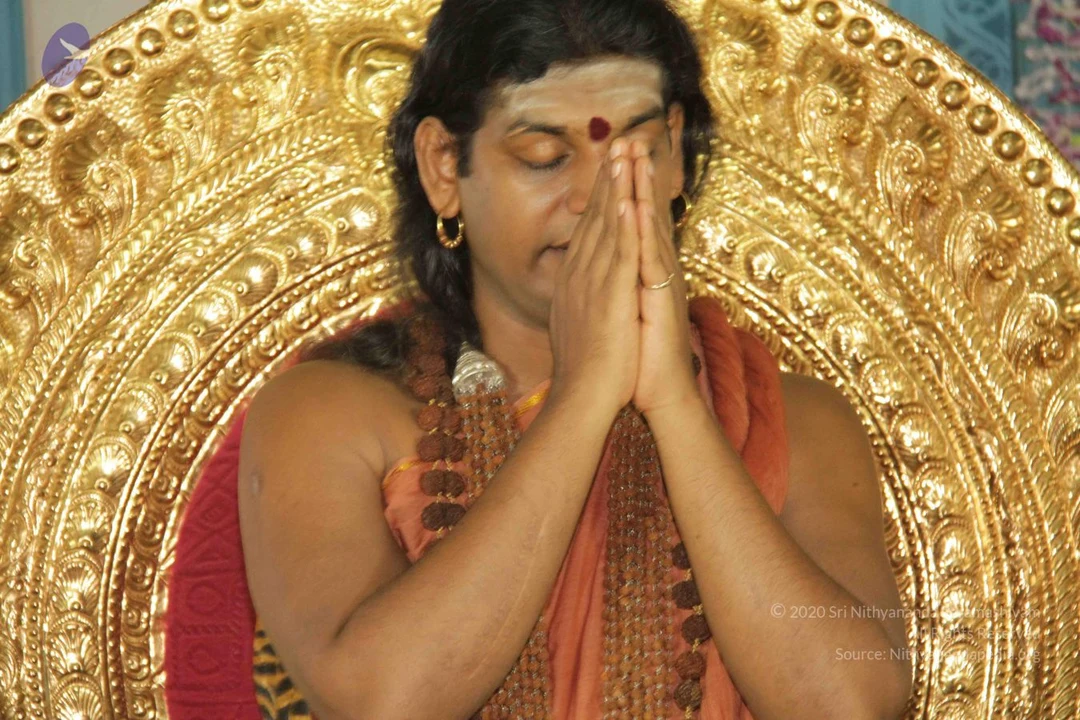
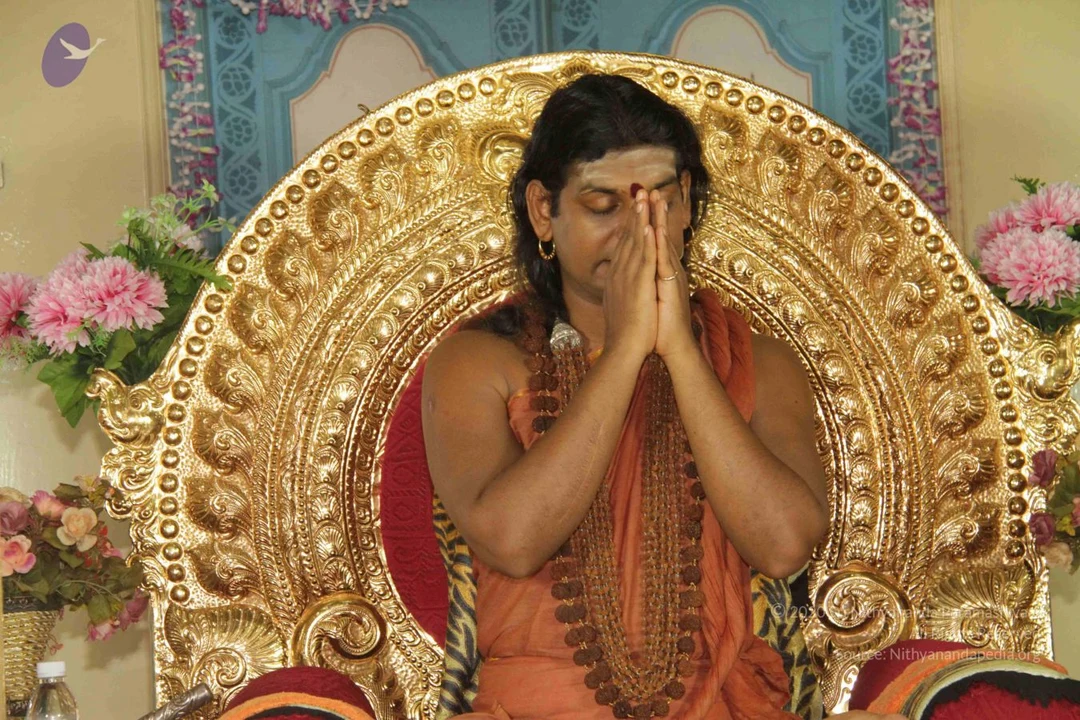
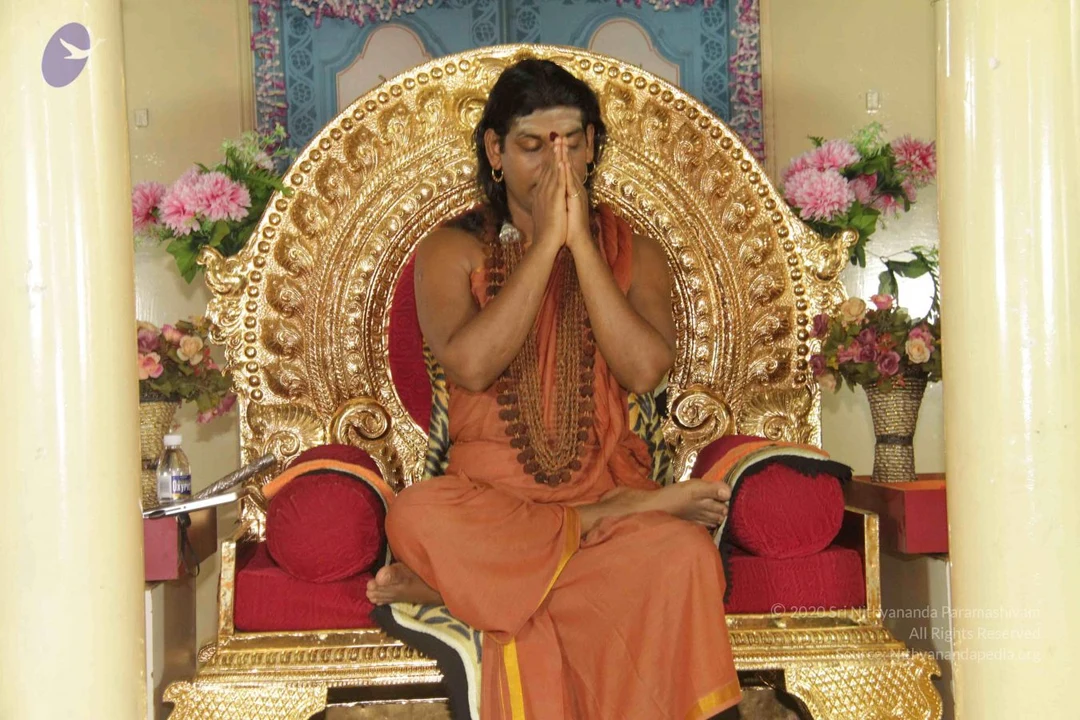
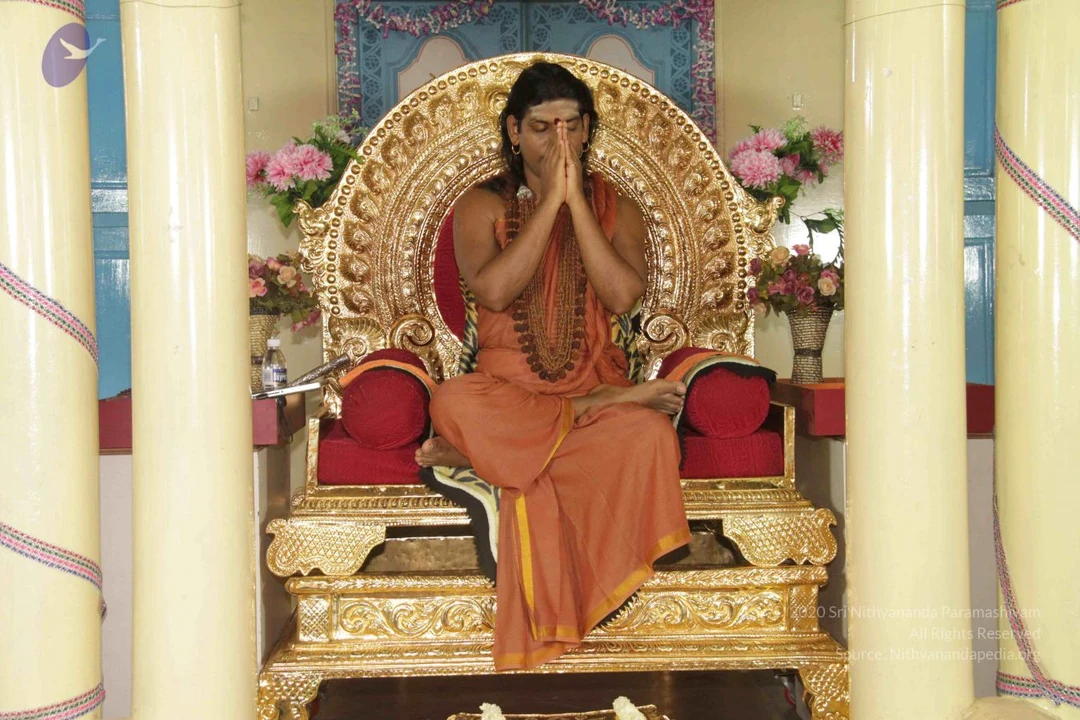
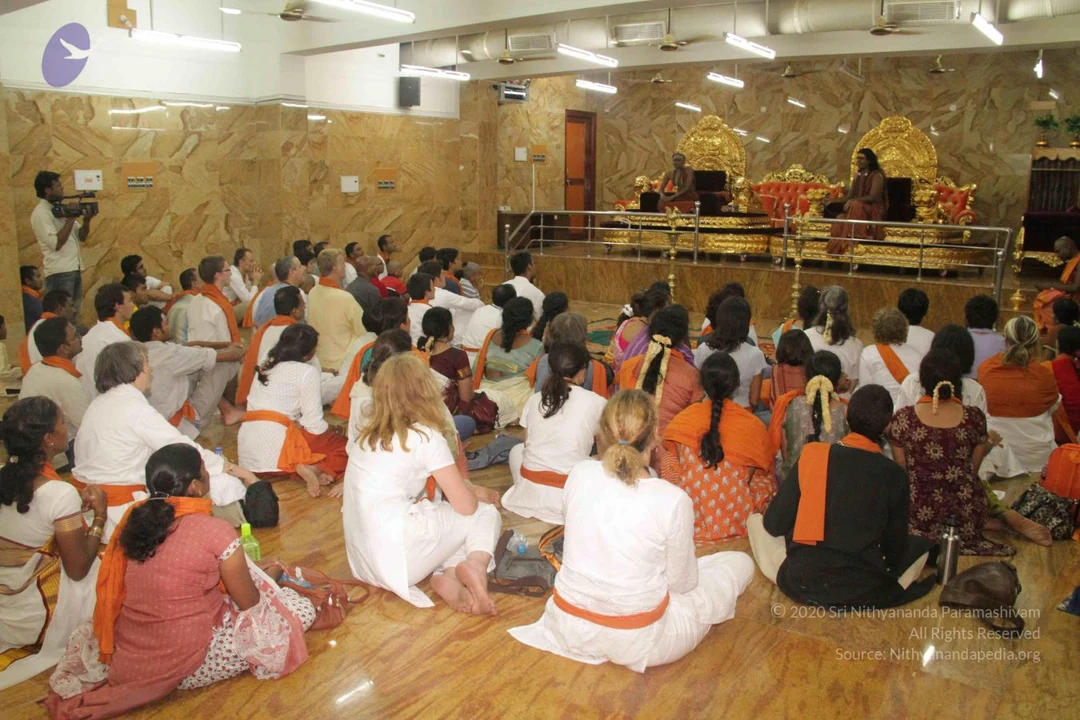
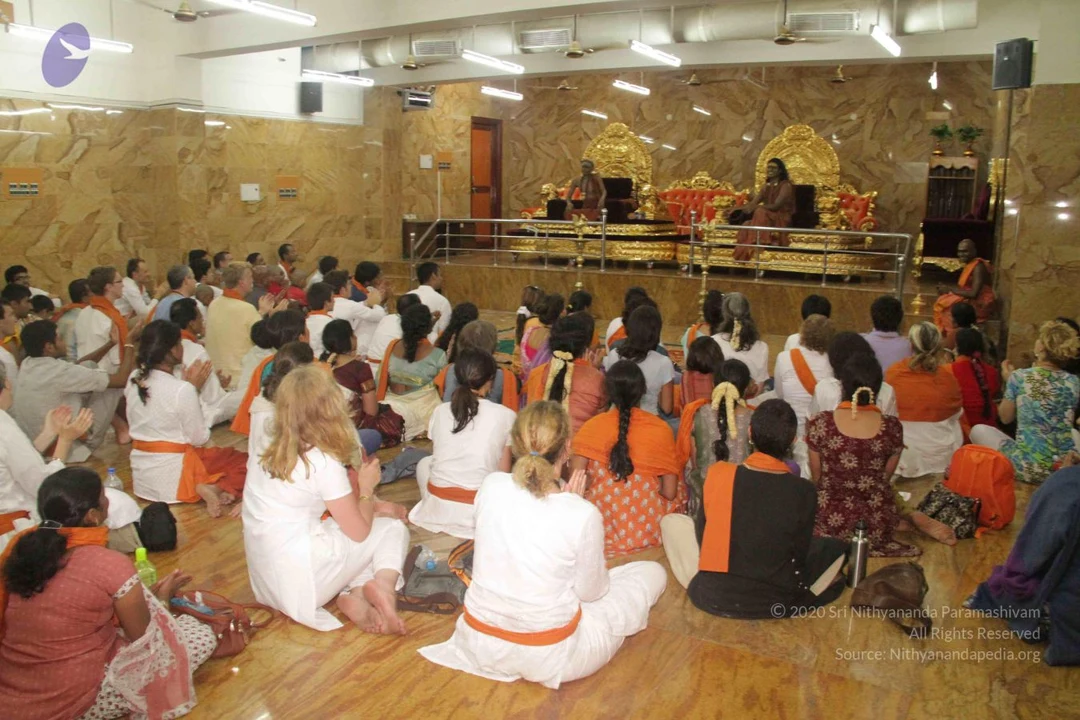
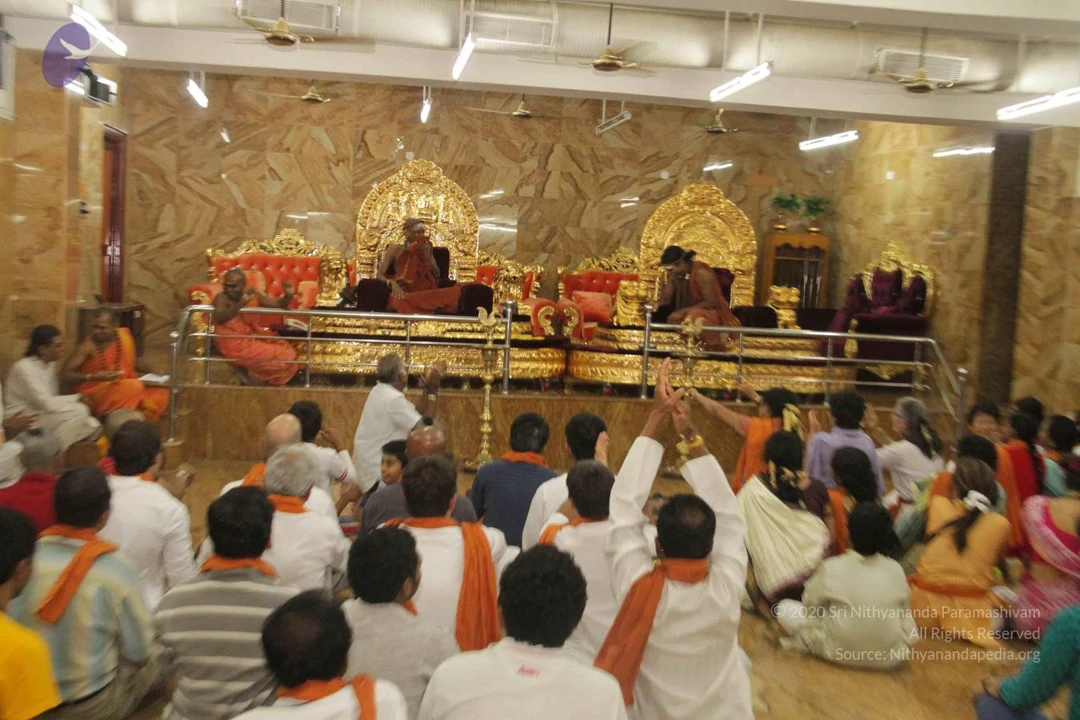
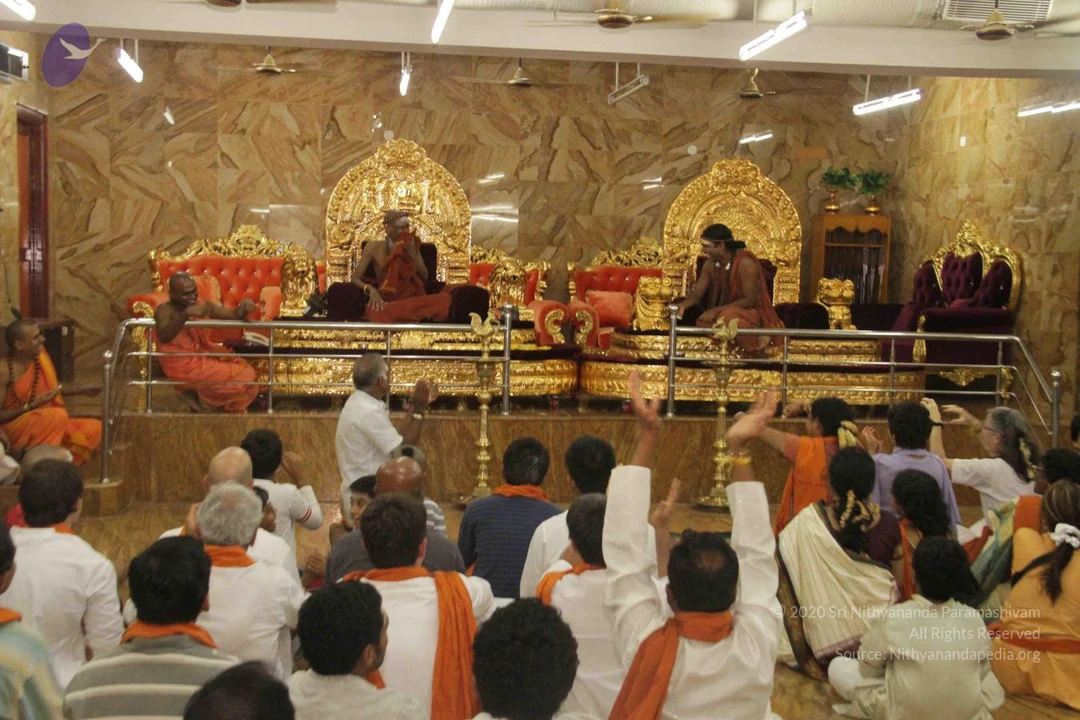
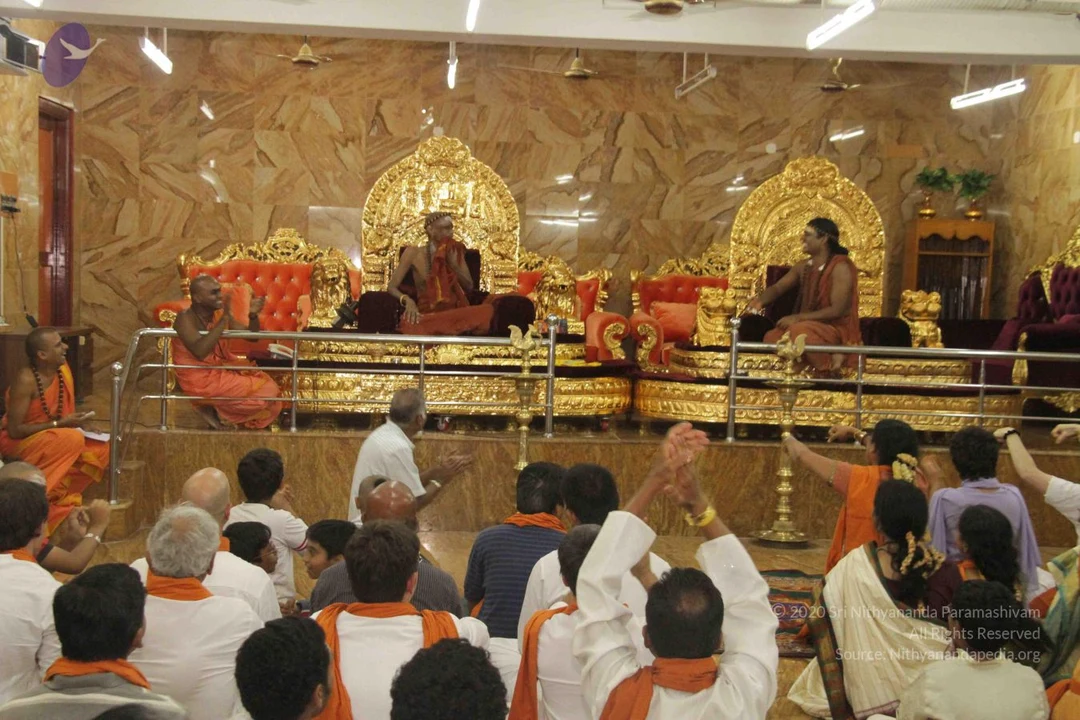
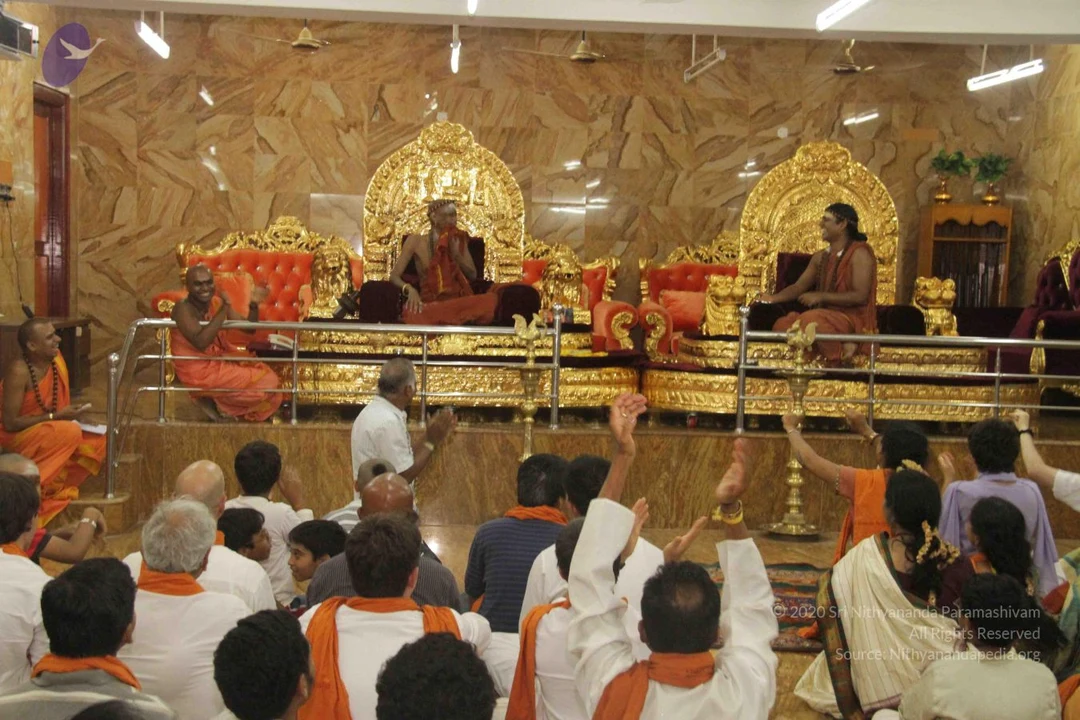
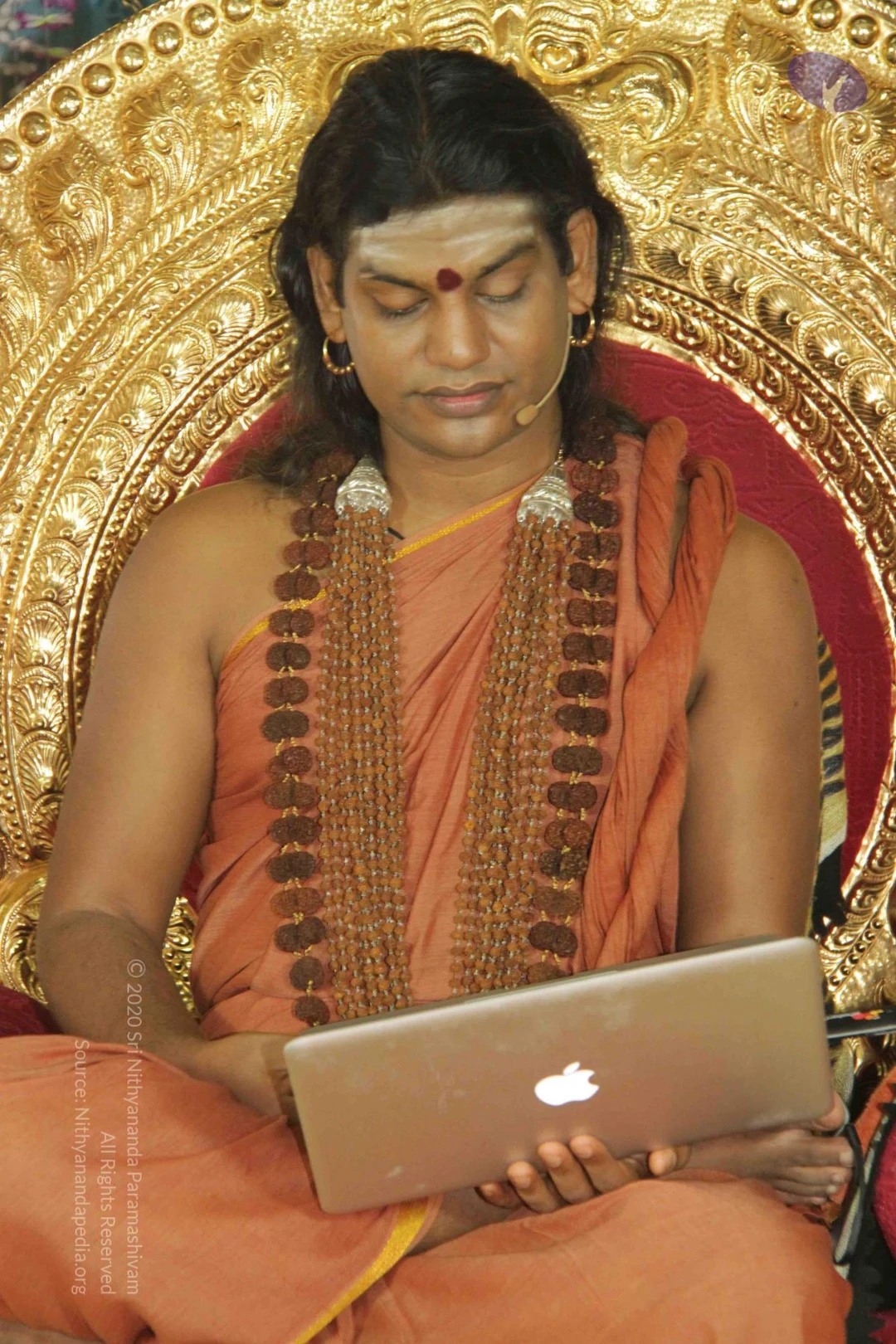
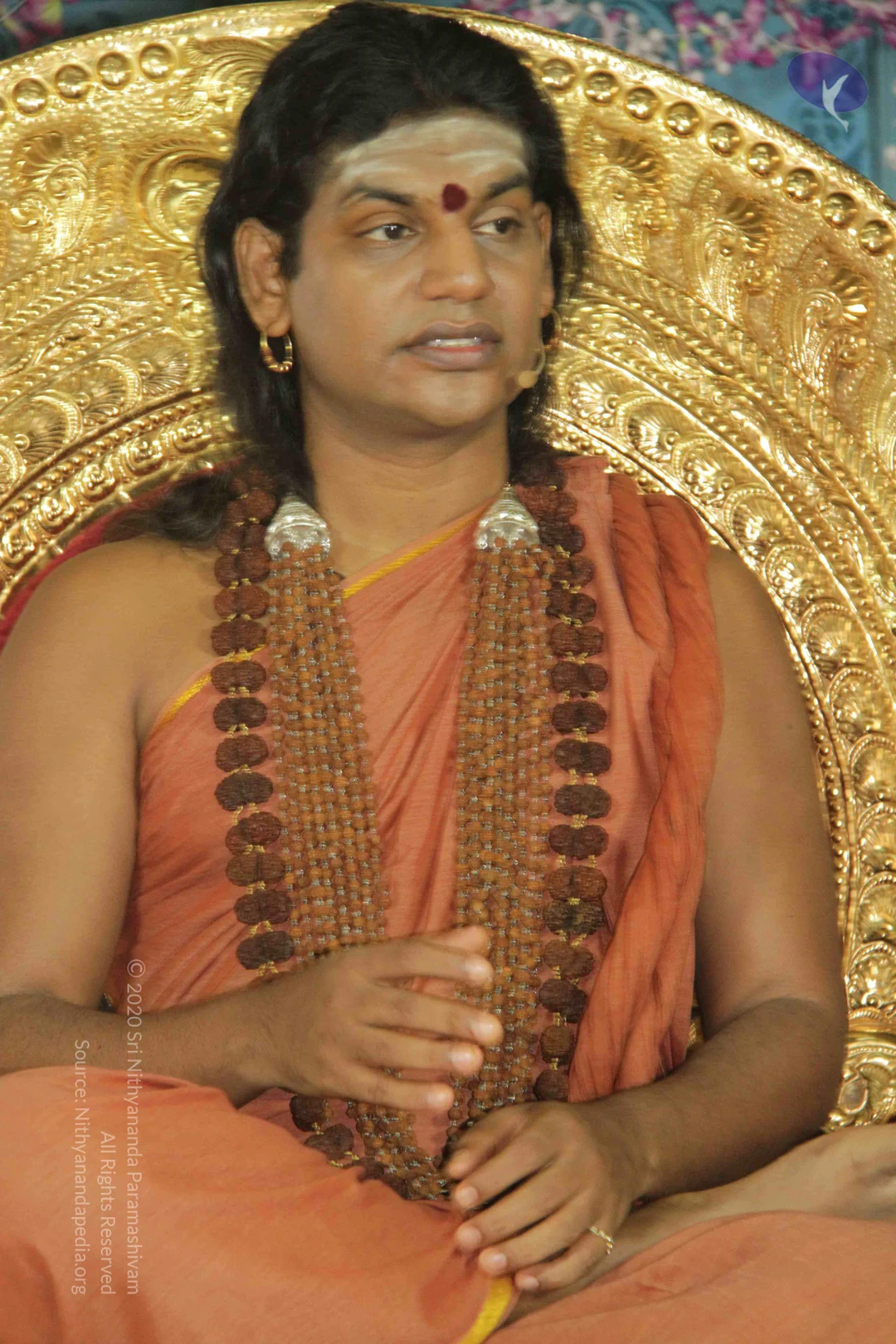
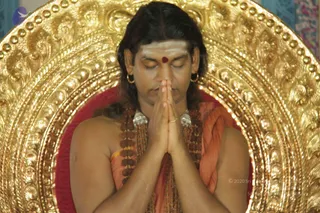
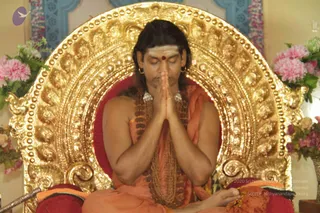
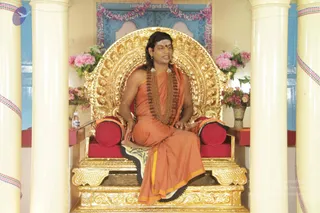
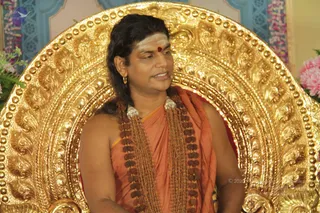
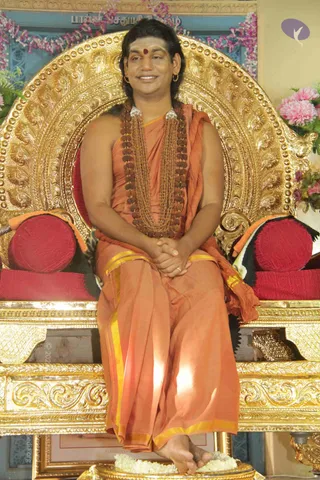
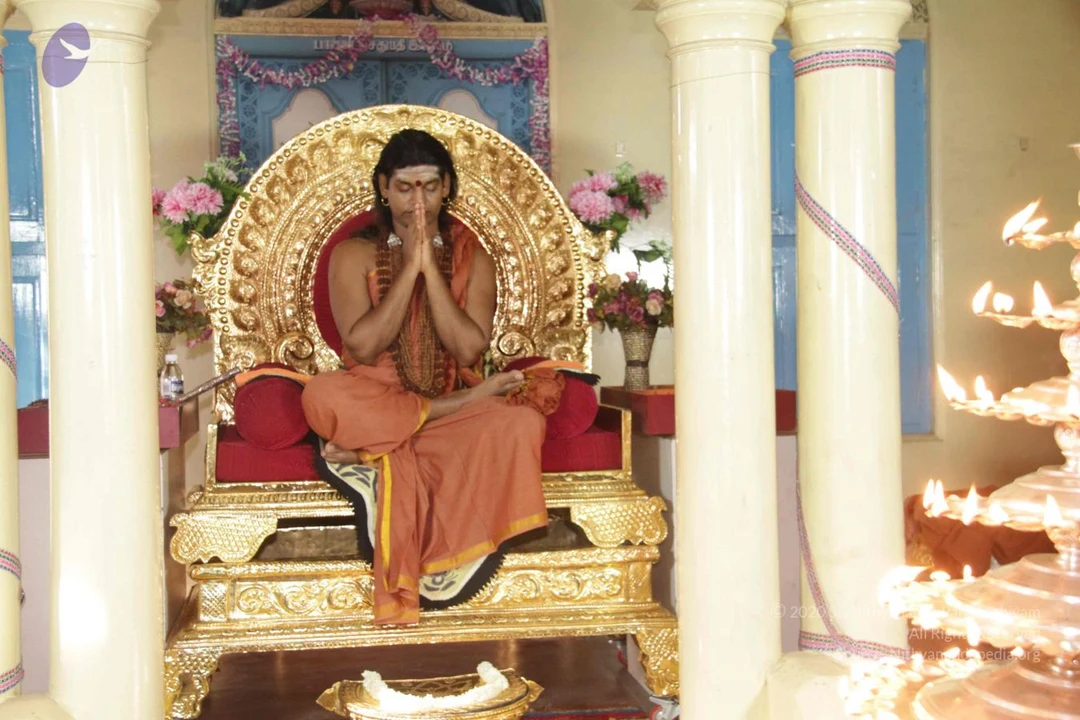
A seated man with long swept-back dark hair sits on an ornate gold throne with a red cushion, palms pressed together in namaste and eyes closed. He wears an orange saffron wrap, a red-and-orange shawl draped over his shoulders, and a beaded rudraksha-style mala with a gold necklace, with a red tilak on his forehead. Pink and white flowers decorate the throne and a blue framed doorway behind him, and a tiered brass oil lamp burns on the right with several flames lit. White pillars frame the hall and a small offering tray with white flowers rests at the bottom. Probable Swamiji (Paramahamsa Nithyananda) is seated in satsang-style posture, the appearance cues matching his long hair, saffron clothing, and mala.A seated man with short dark hair and a tilak on his forehead sits on an ornate gold throne with a red cushion, palms pressed together in namaskar. He wears an orange-saffron cloth draped over his body. In front of the throne, a tall multi-tiered silver lamp stand holds many lit oil lamps, with flames rising in a line down to the floor. Pink and white flowers are arranged in vases beside the throne, a flower garland hangs across the arched blue niche above, and cream pillars frame the room.A man sits in a gilded ornate throne with a large golden circular backrest and a red cushion, eyes closed, palms pressed together in namaste. He wears a white vertical tilak on his forehead with a red kumkum bindi, small gold hoop earrings, a rudraksha mala, and an orange-saffron shawl over bare shoulders.A man seated in a large ornate gold throne with a red cushioned seat, eyes closed and palms pressed together in namaskar. He wears an orange-saffron cloth over bare shoulders, a long brown rudraksha mala with a gold ornament, gold hoop earrings, a white tripundra with a red bindi on his forehead, and long dark hair swept back. Pink and white flowers decorate both sides of the throne against a blue and white backdrop.A seated man in saffron-orange robes sits on an ornate gold throne with a tall, scalloped backrest and red cushions, speaking as if addressing an audience. He wears a long rudraksha mala and a gold necklace, with a small red-and-white tilak on his forehead. Behind him, pink and white flowers and garlands decorate a blue-framed doorway with a Tamil-script plaque above. Cream columns with pink and blue ribbon bands frame the stage, with a water bottle and flower vases on the side ledges. Appearance-based identification: a person, seated on the throne as the speaker at a satsang discourse.A man sits on an ornate gold throne with a large carved gold halo-shaped back, speaking while looking to his right. He wears an orange-saffron cloth draped over his bare shoulders, multiple rudraksha mala strands and a ceremonial silver-toned necklace, with gold earrings. He has a white vibhuti marking on his forehead and a red kumkum dot between his brows, with long swept-back dark hair. Pink flowers and light blue draped fabric appear in the background. a person seated in a throne at a satsang setting; one person is visible.

IA-Karupar-Temple-Visit
94 photosSource gallery
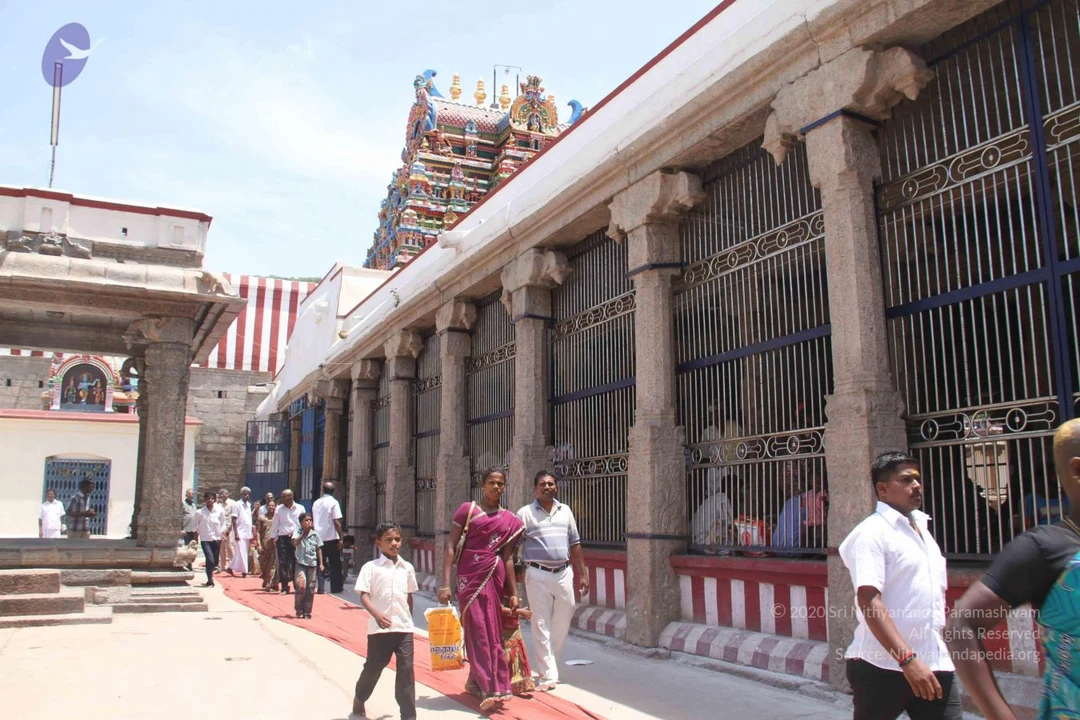
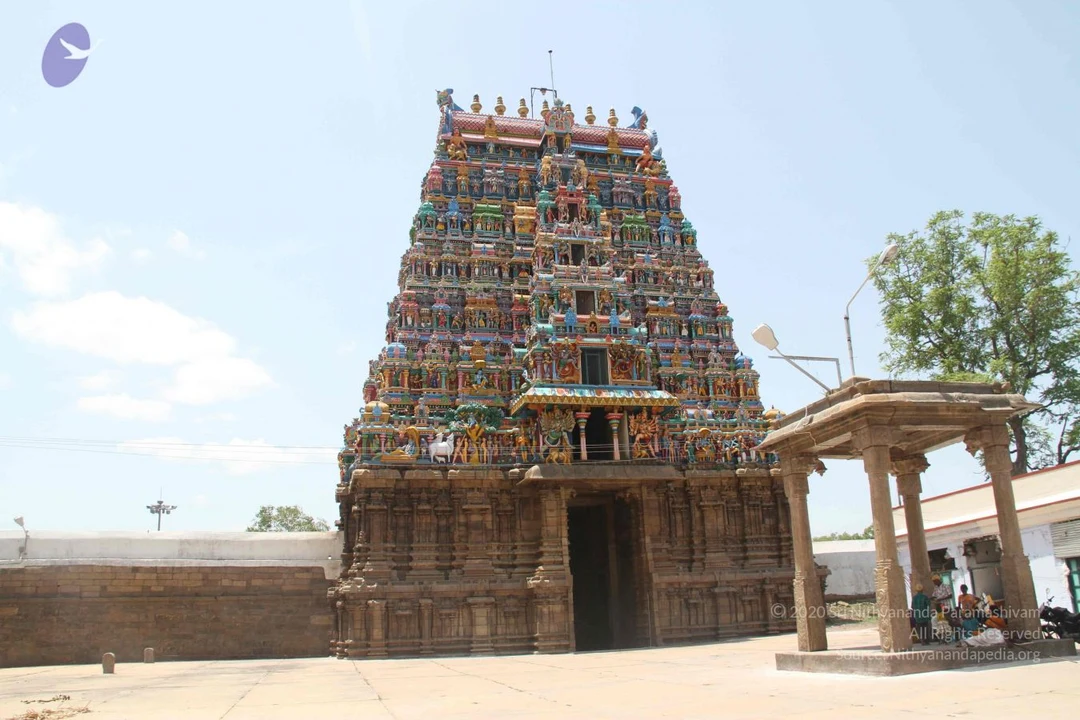
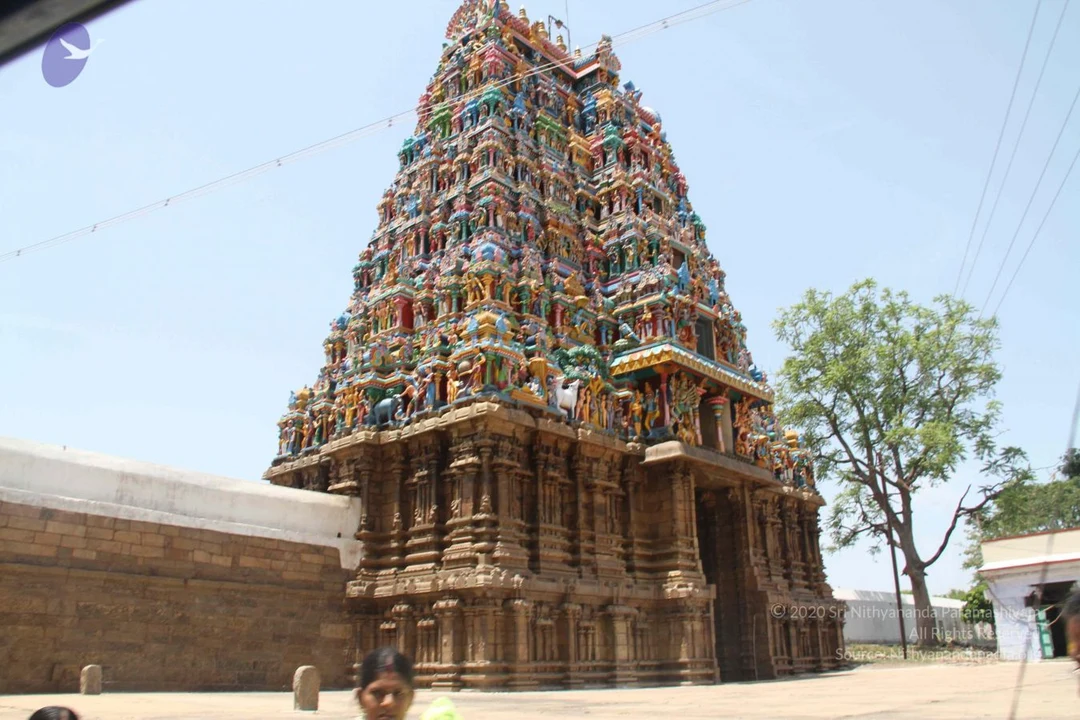
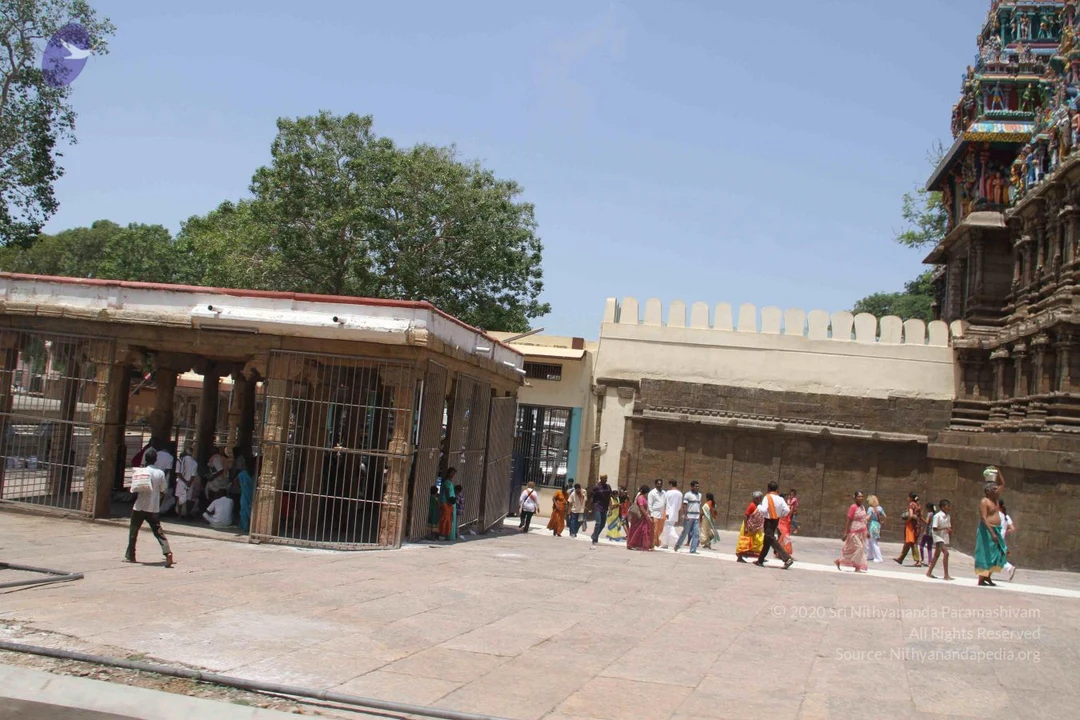
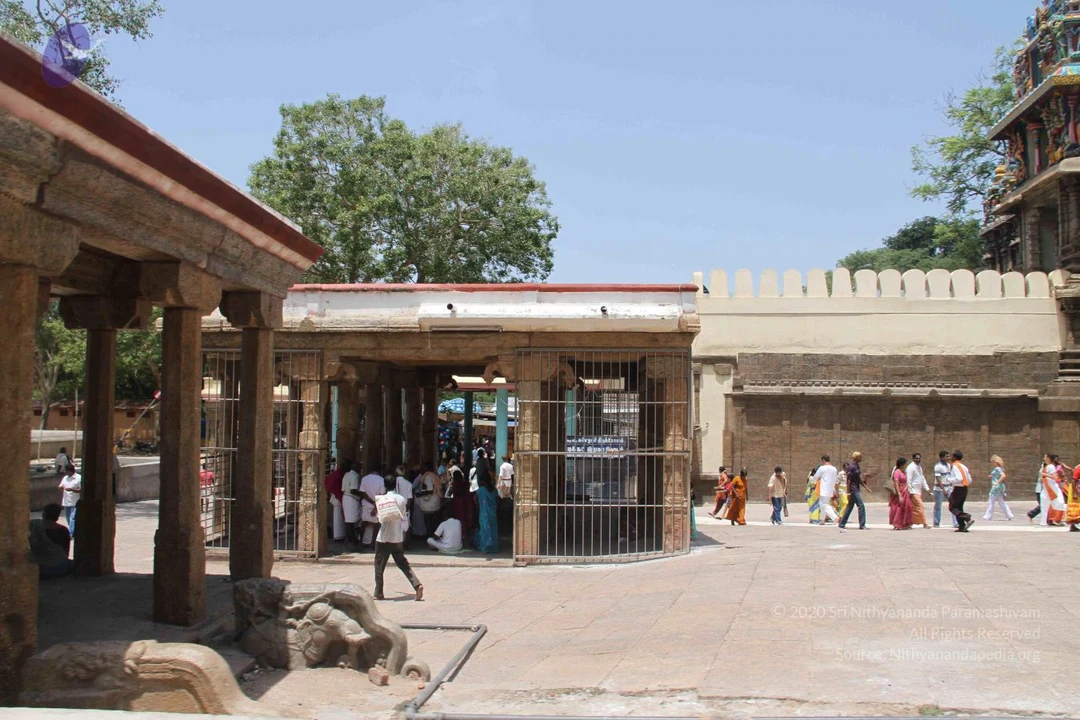
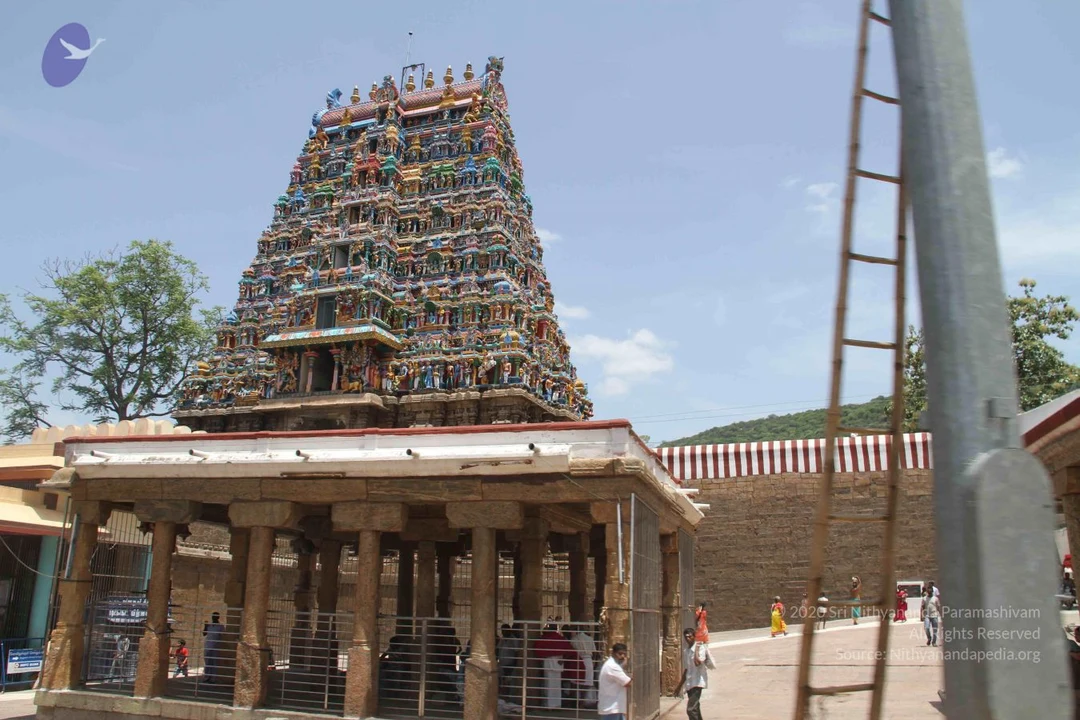
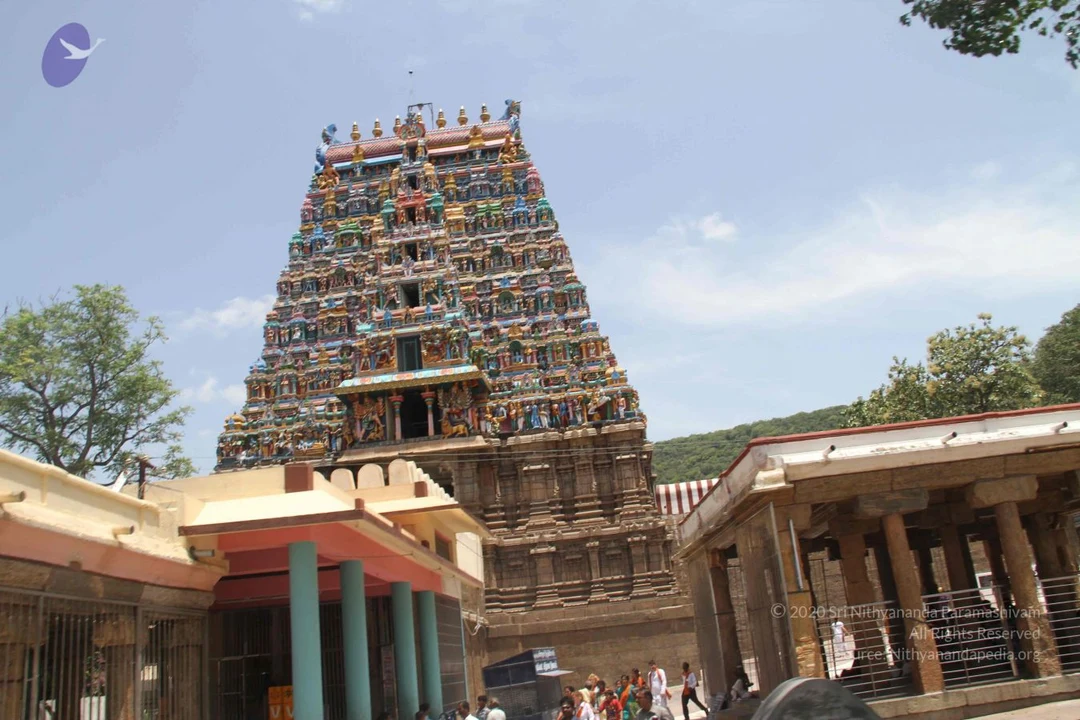
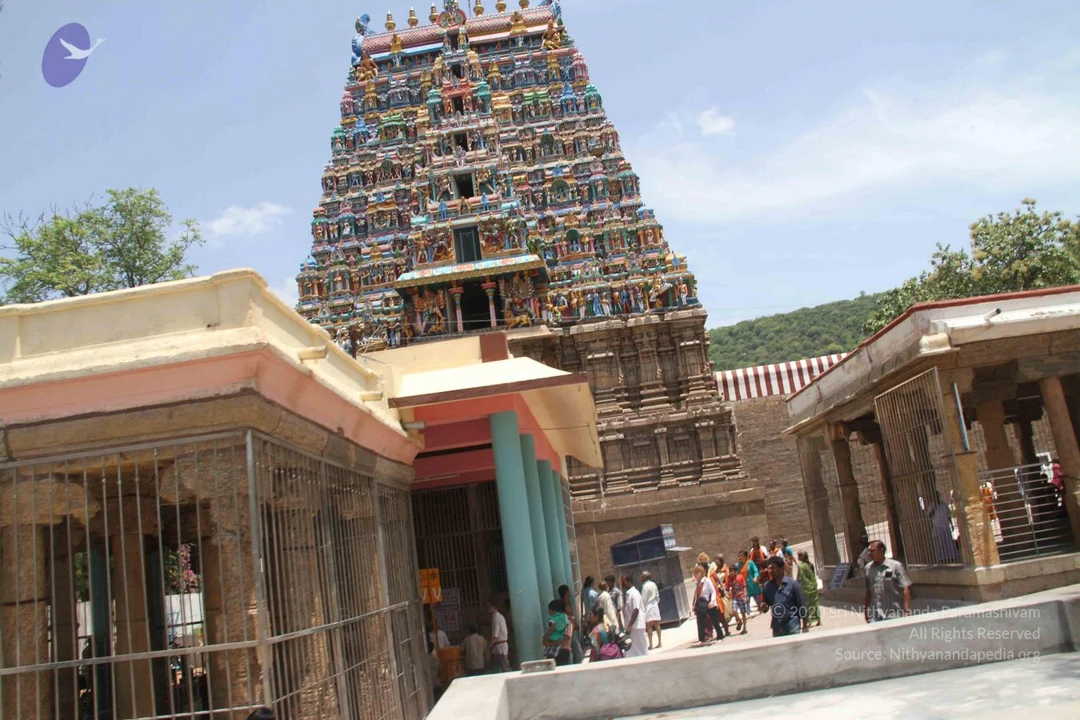
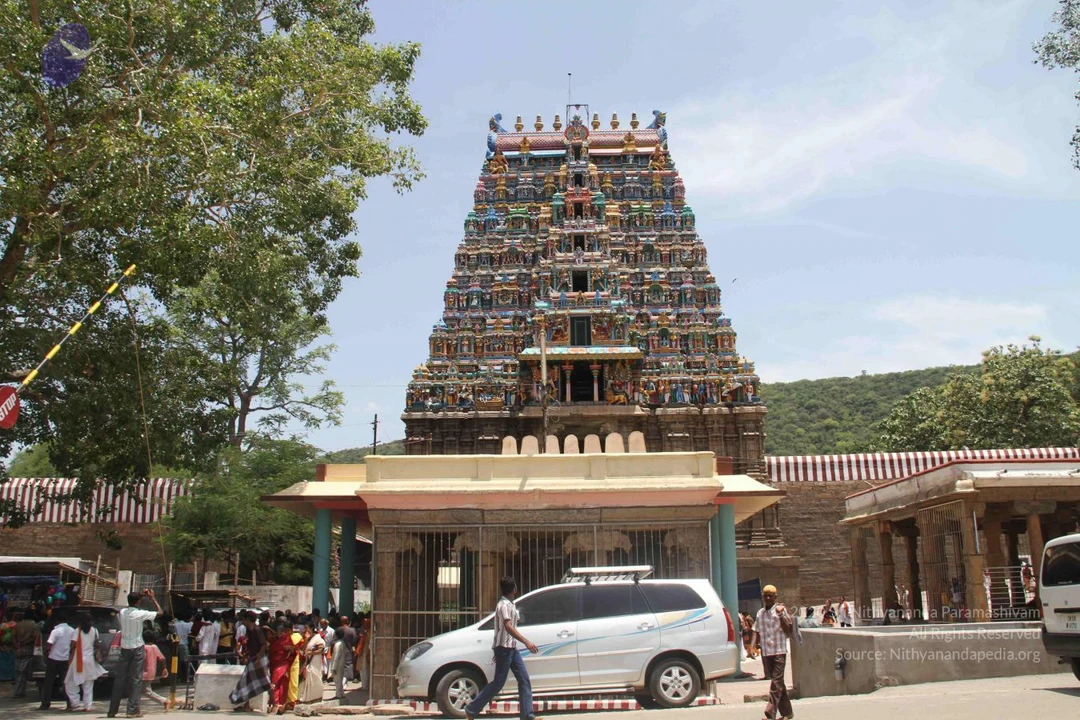
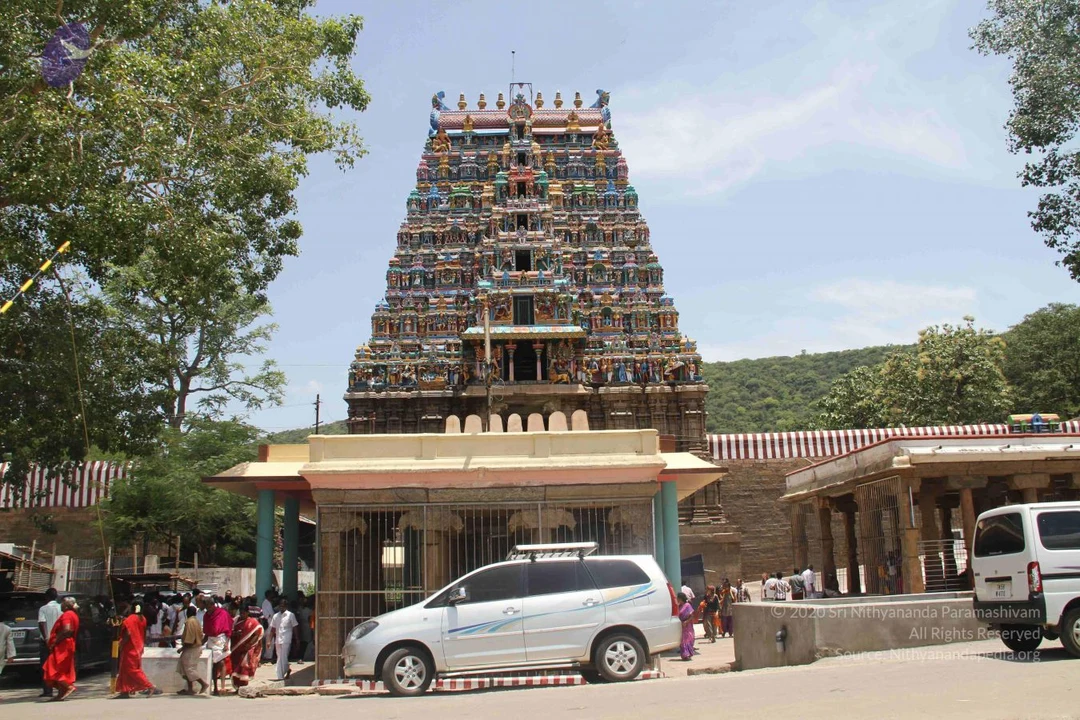
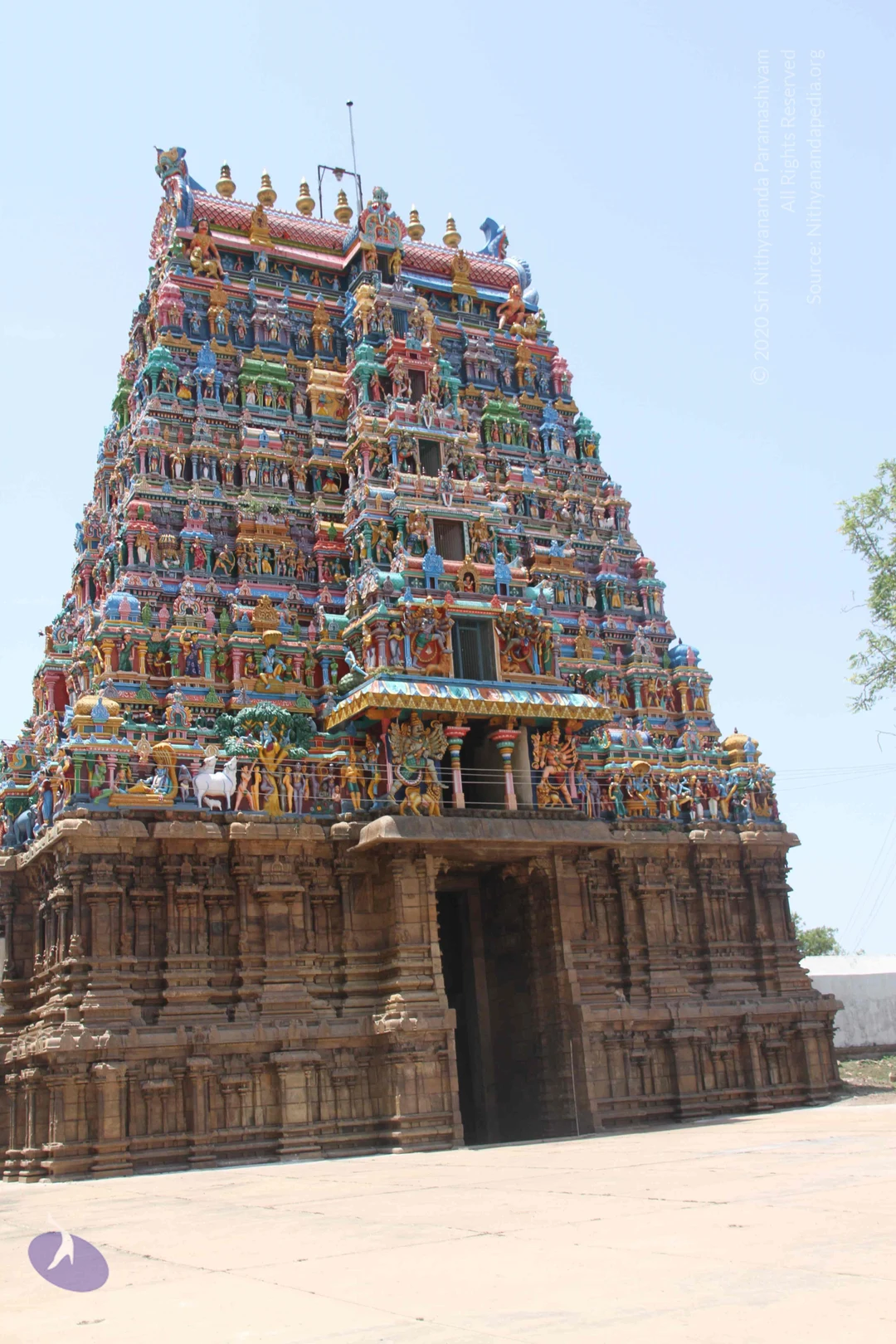
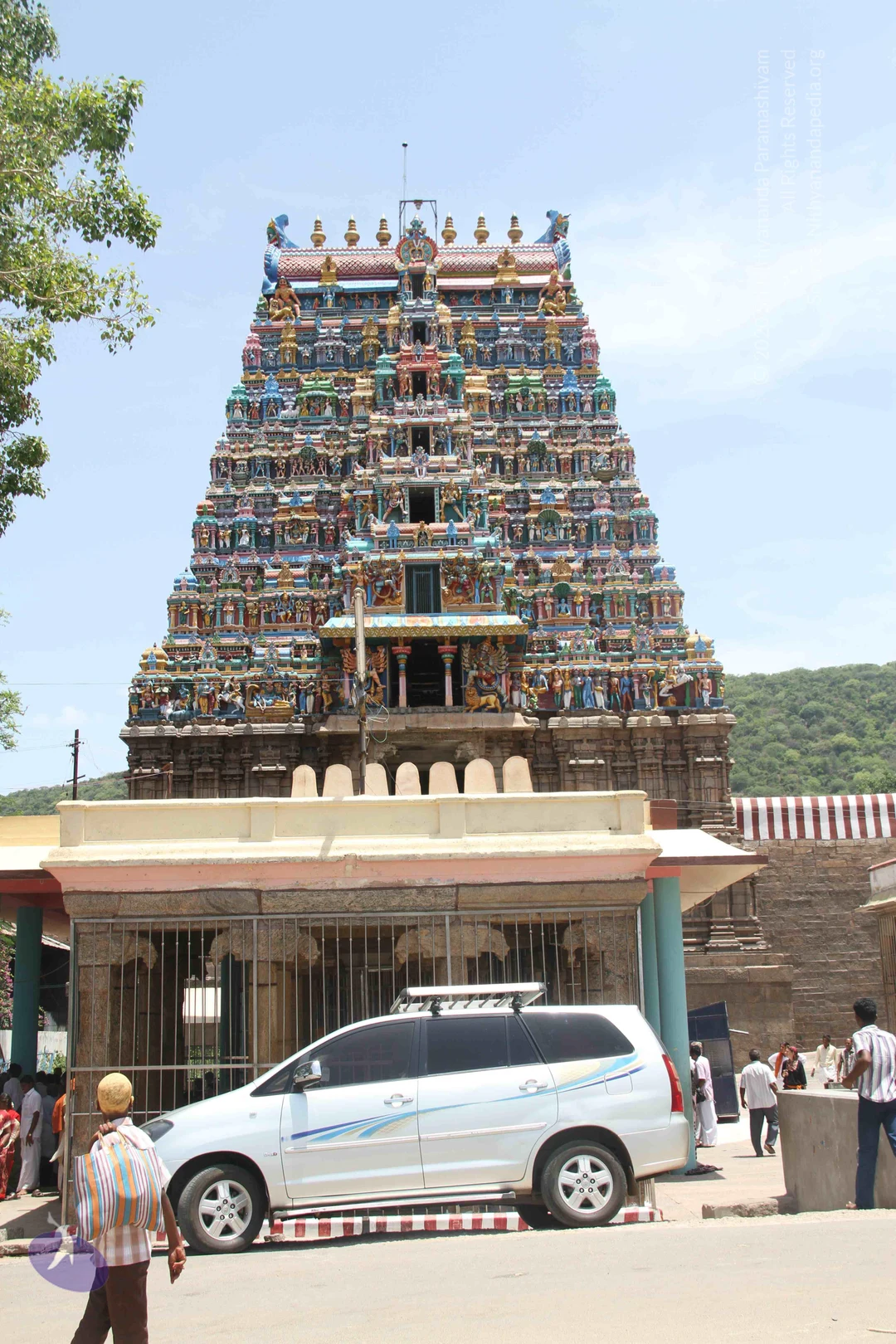
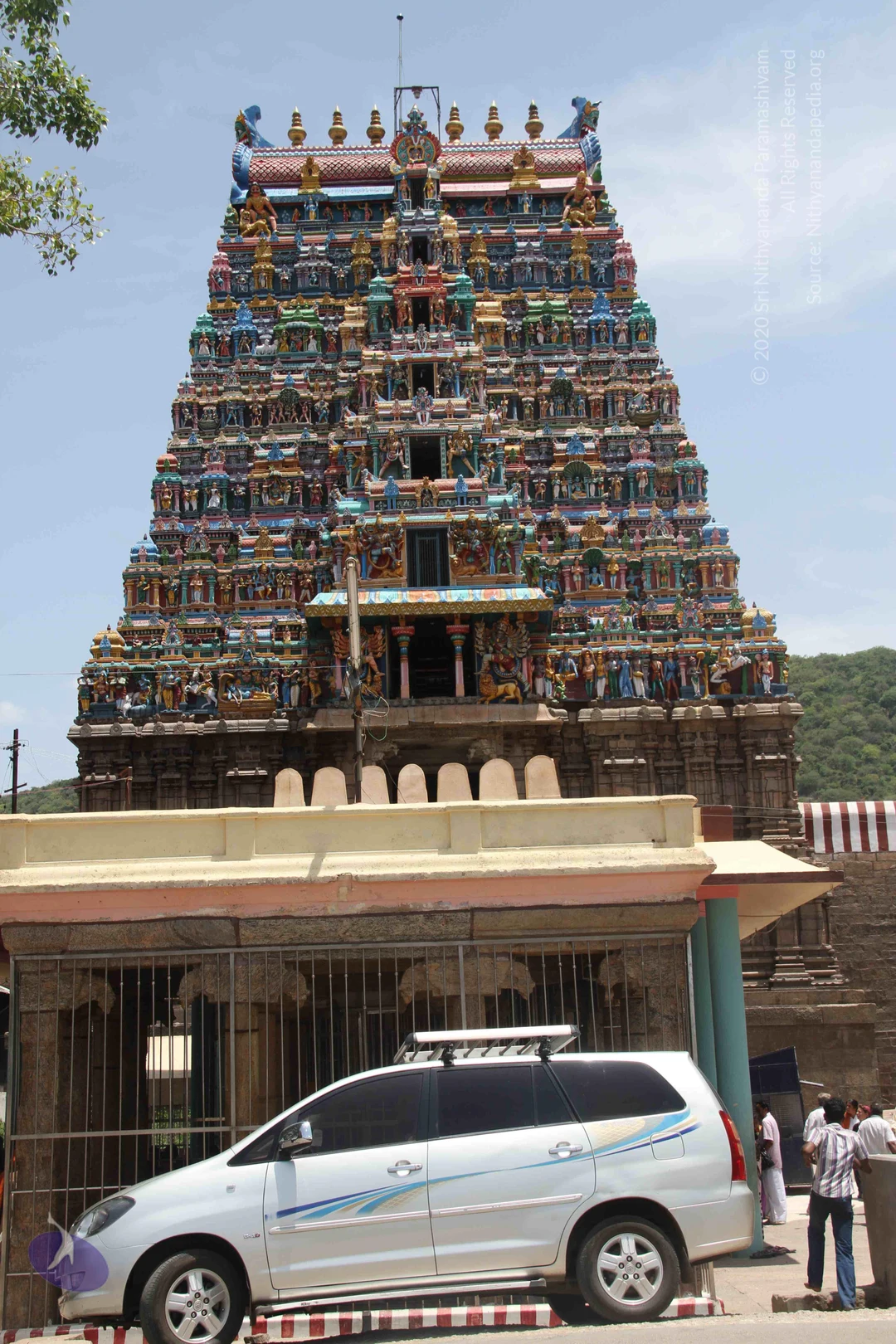
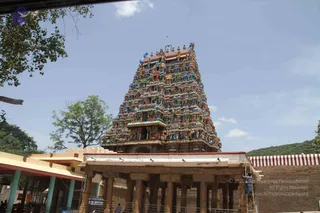
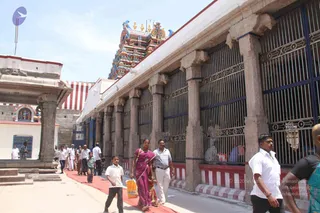
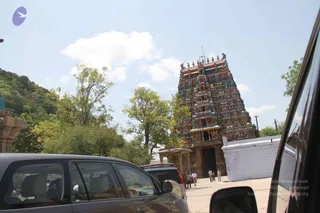
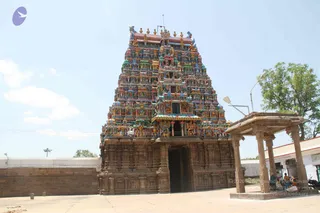
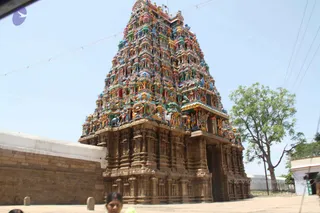
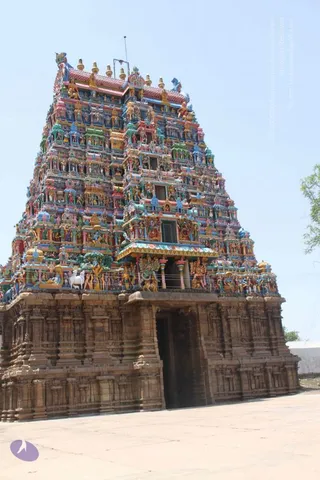
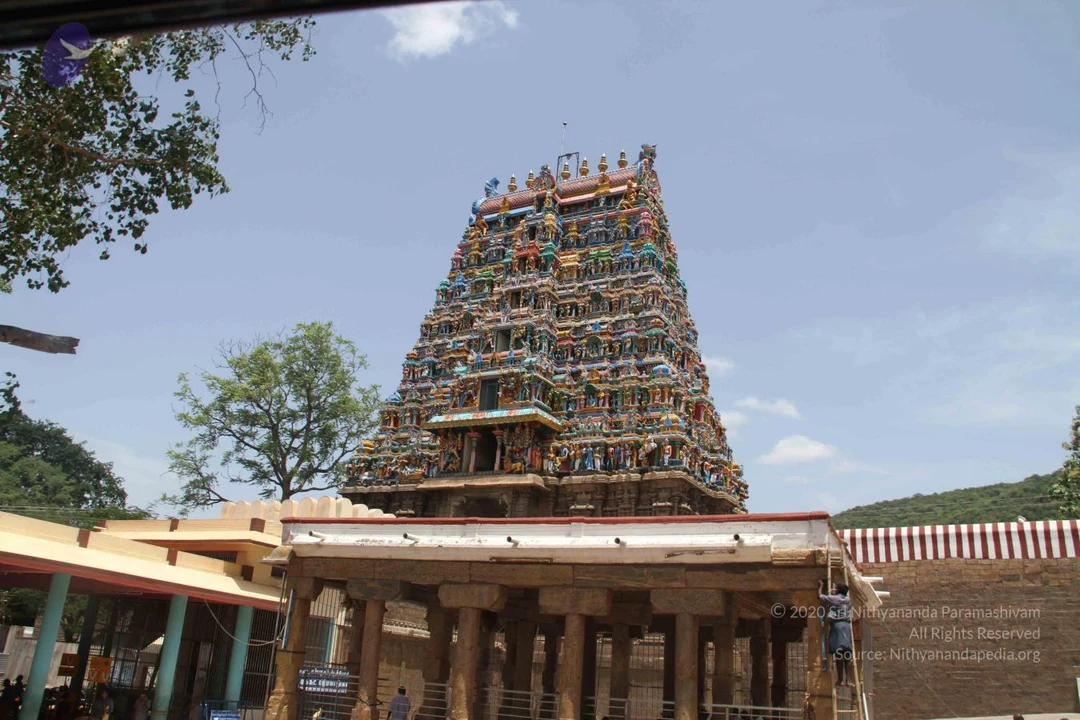
Photograph of a richly painted South Indian Hindu temple gopuram, a tiered tower covered in multicoloured sculpted figures of deities and mythic beings in red, yellow, green and blue. In the foreground, a low stone-pillared mandapam with a flat roof stands before the tower, and a worker in a grey shirt stands on a ladder against its pillars. A stone boundary wall with a red-and-white striped awning is at right, and trees and a hill appear under a pale sky. No a person candidate is visible. Small figures in the far left corner are too distant to count clearly.A sunlit exterior of a South Indian temple complex with a granite pillared mandapa in the foreground and a colourful multi-tiered gopuram tower with painted sculpted figures rising above. Several people stand and walk near the stone pillars, including a man in a white shirt and dark trousers at right and a few devotees in white and pastel clothes near the entrance. A motorbike is parked at the base of the pillars and a white car is partly visible at left. Long iron-barred windows line the white-walled hall at right, with a red and white striped wall beyond. No clearly identifiable person in saffron or ornate ceremonial dress is visible, so no a person candidate is present.Daytime photo of a South Indian temple courtyard with a red carpet runner on pale stone paving. Walking along it are a woman in a magenta sari carrying a yellow plastic bag, a man in a grey shirt and white trousers, a young boy in a white shirt and a smaller child, and a man in a white shirt on the right. Behind them runs a row of stone pillars with iron grille gates, and a colourful multi-tiered gopuram tower with painted deities rises above the roofline under a pale sky. Several people in white dhotis and shirts stand further back on the left, near a white-washed shrine wall.A photograph taken from a vehicle window of a colourful South Indian gopuram, the tiered temple tower covered in painted sculptures of deities and figures in red, blue, green and yellow. Two cars are parked in the foreground, one dark grey and one silver. In front of the gateway, a few people walk across a pale paved courtyard toward the temple entrance, and a whitewashed wall stands beside the tower. Green trees and a wooded hillside rise on the left under a pale blue sky with scattered clouds.A brightly painted Hindu temple gopuram, a tiered tower covered in colourful sculpted deities and figures in red, green, yellow, blue and white, rises above a stone-walled temple entrance. A small stone pavilion with pillars stands at right beside a tree, and a few people are visible near the lower right corner. Pale sky and a flat paved courtyard frame the scene.A tall, multi-tiered gopuram of a South Indian temple dominates the frame, its tower densely covered with painted stucco figures of deities, animals and mythic beings in red, blue, green, yellow and white. The lower stone base is carved with pilasters and niches. A green tree stands at right beside a white-walled building under a clear pale sky, with a low brick wall at left. In the foreground at bottom left, a partially visible child with dark hair stands near the gate, and a small hand or person edge appears at the bottom. Overall the scene is a daytime temple exterior.

IA-Blessings-from-Swamiji-Sannithanam

137 photosSource gallery
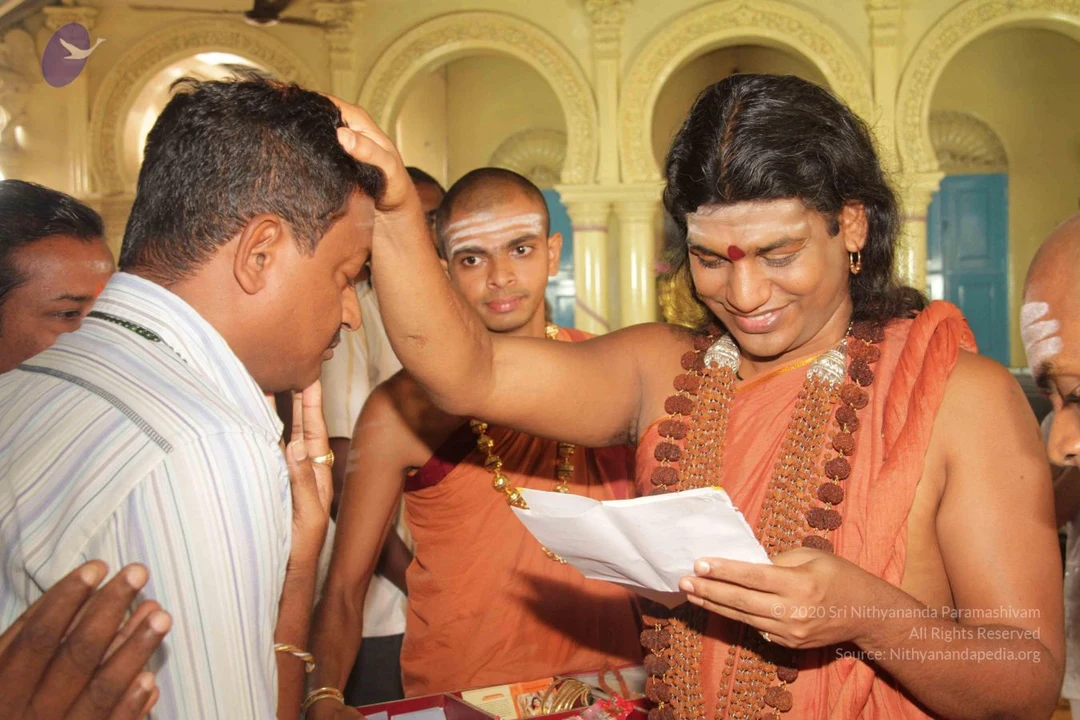
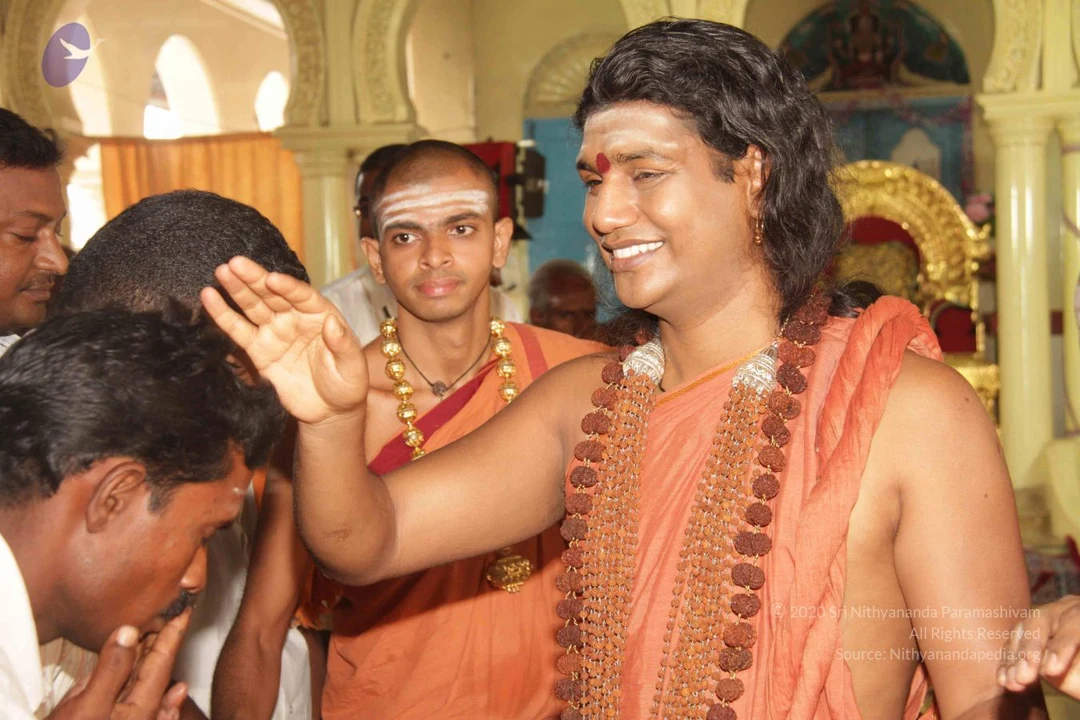
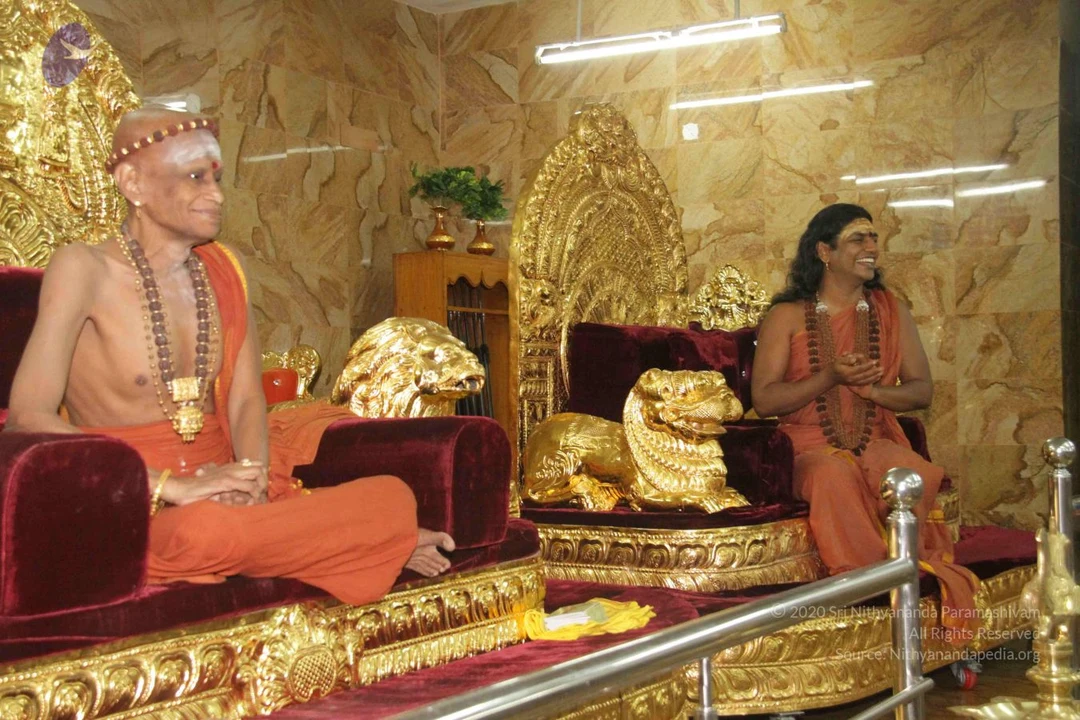
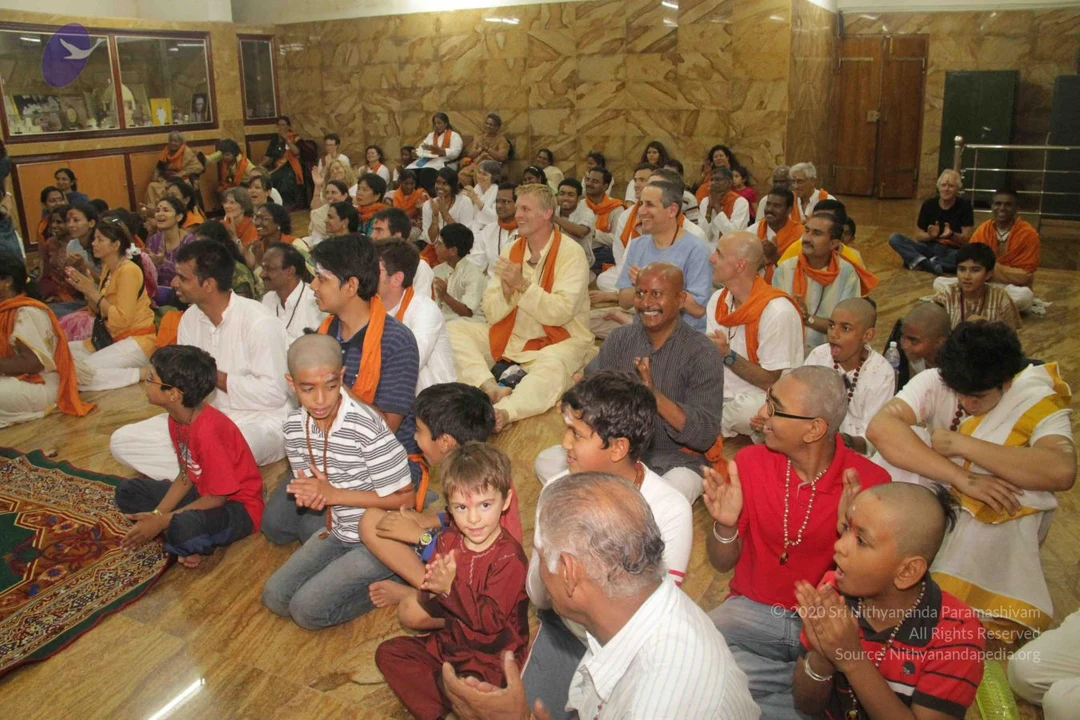
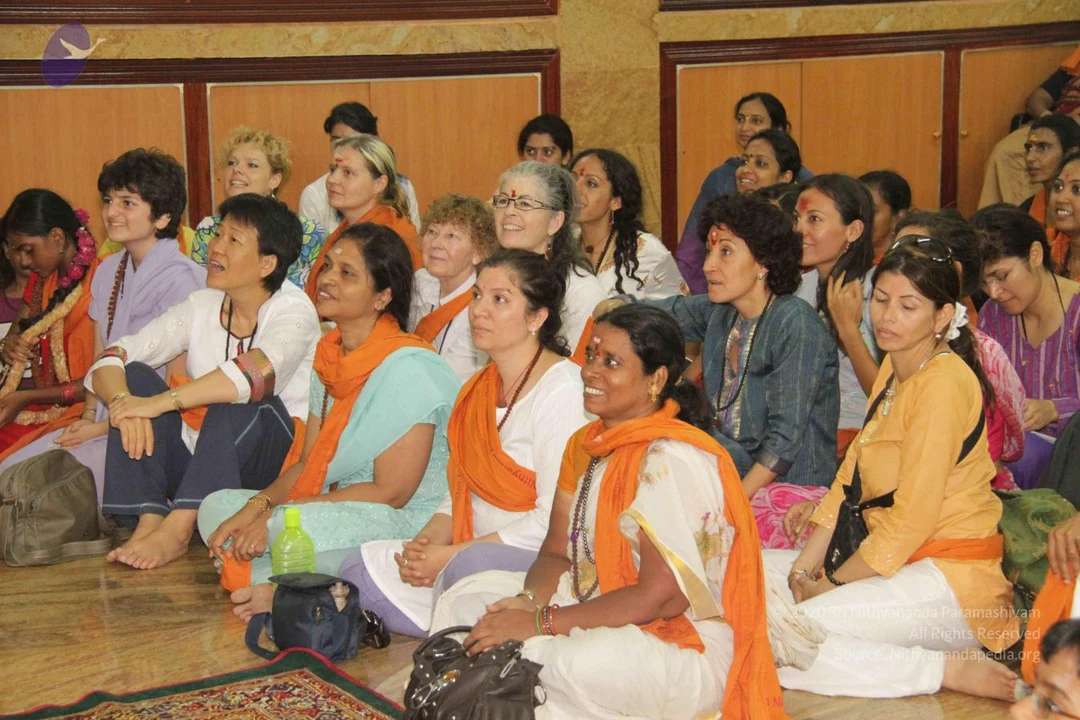
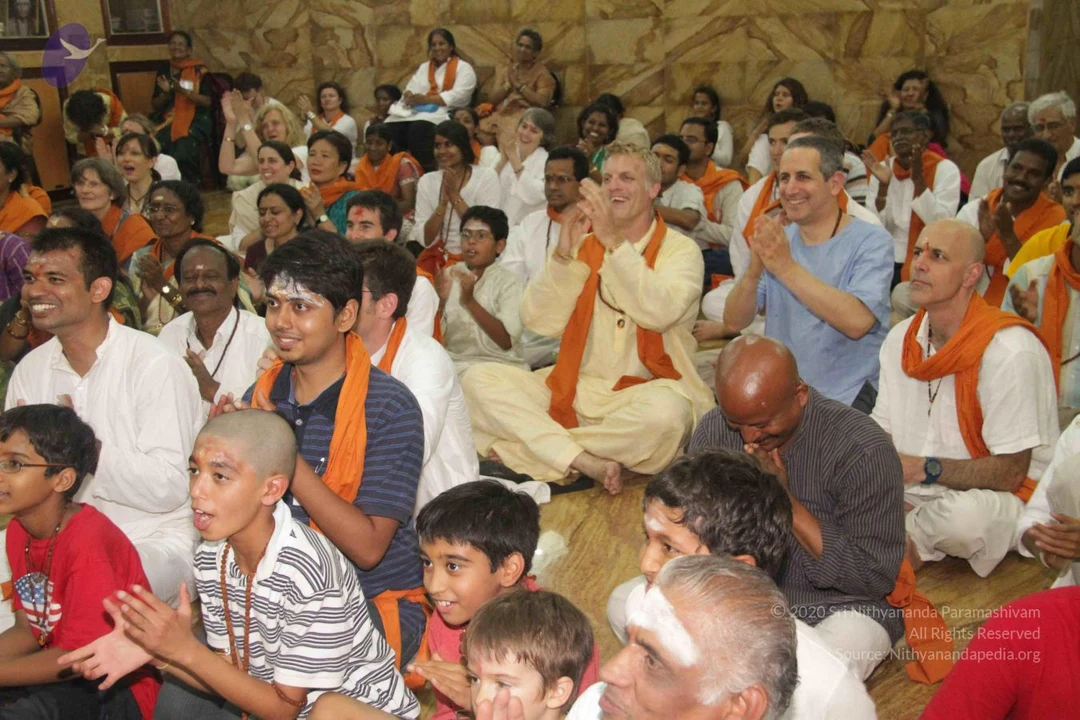
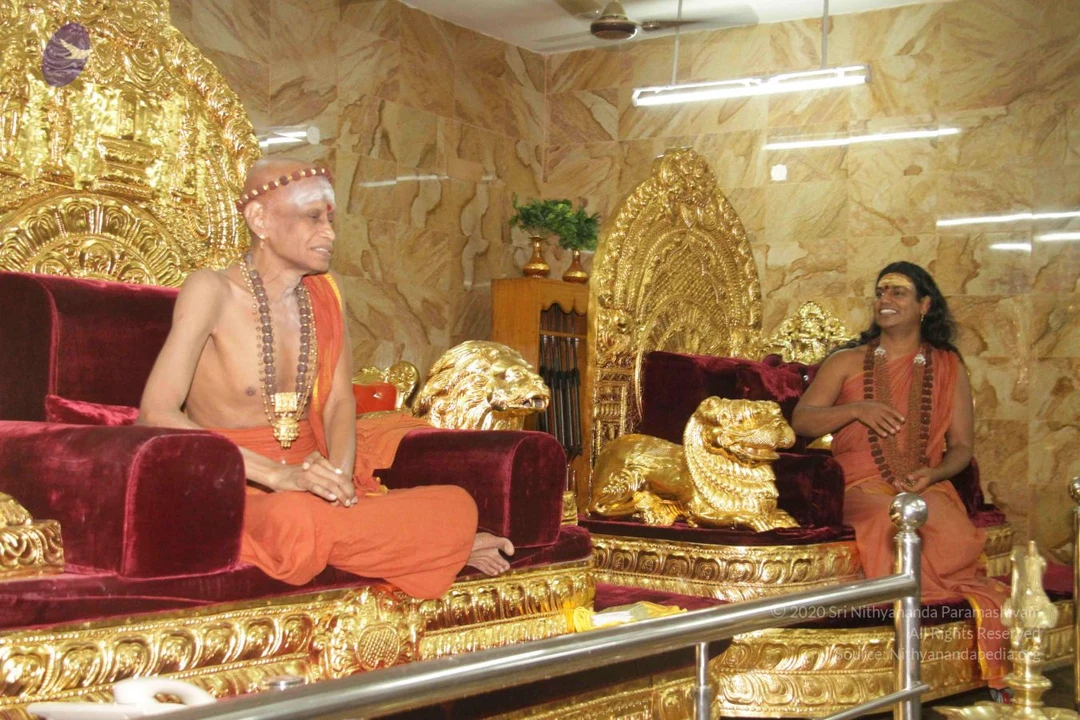
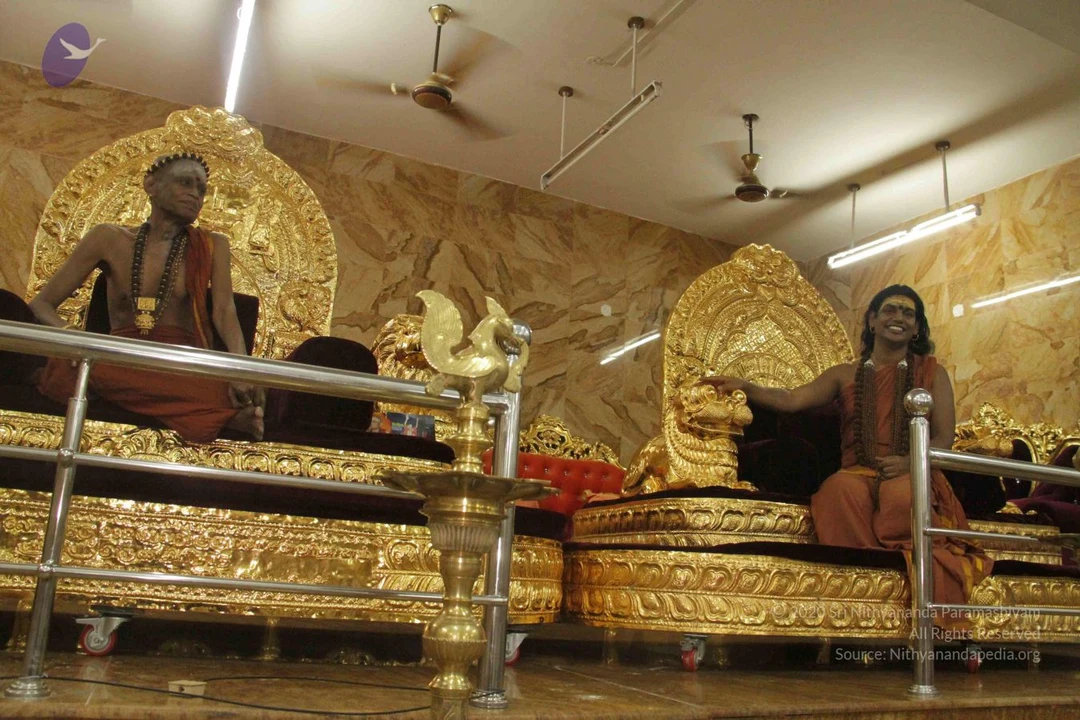
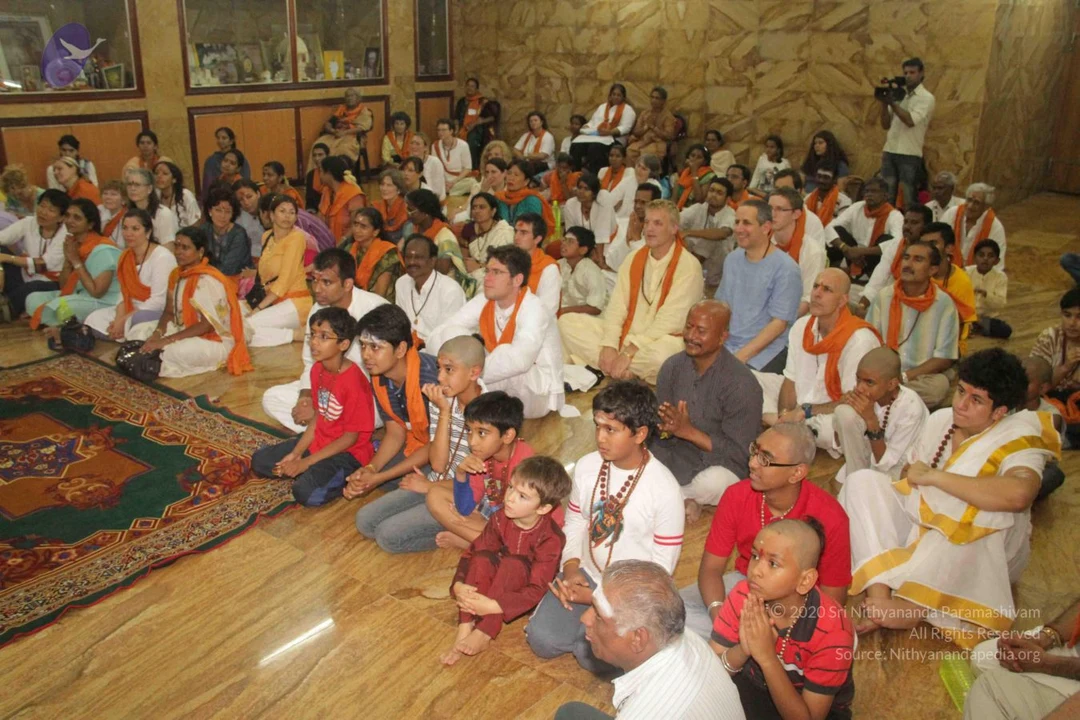
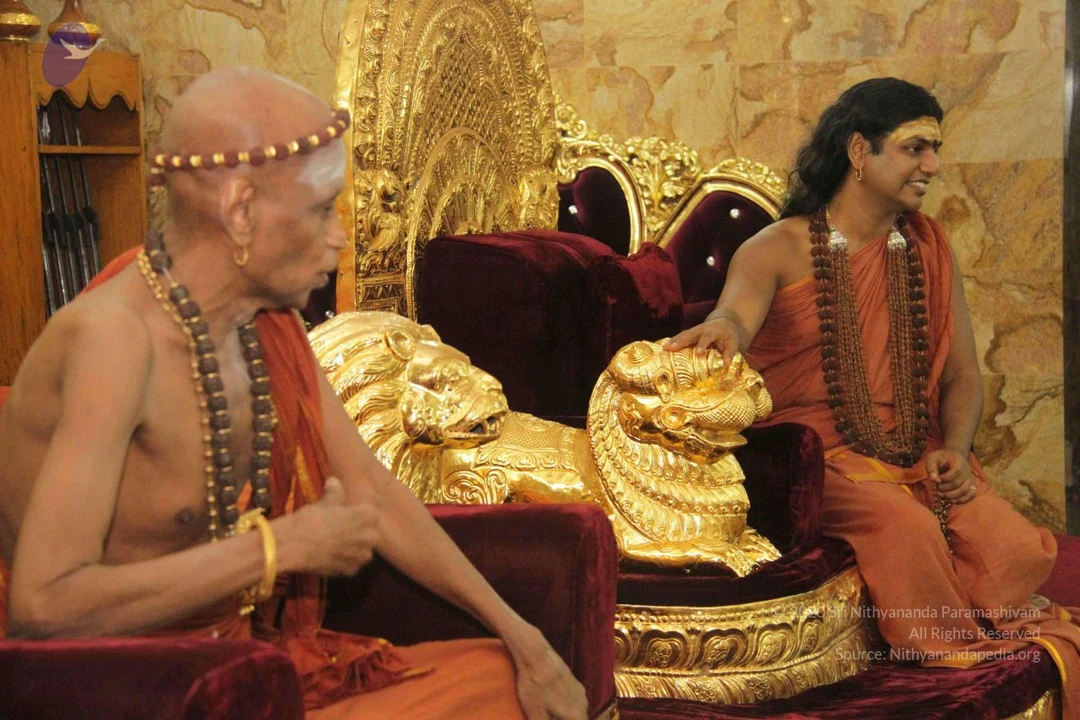
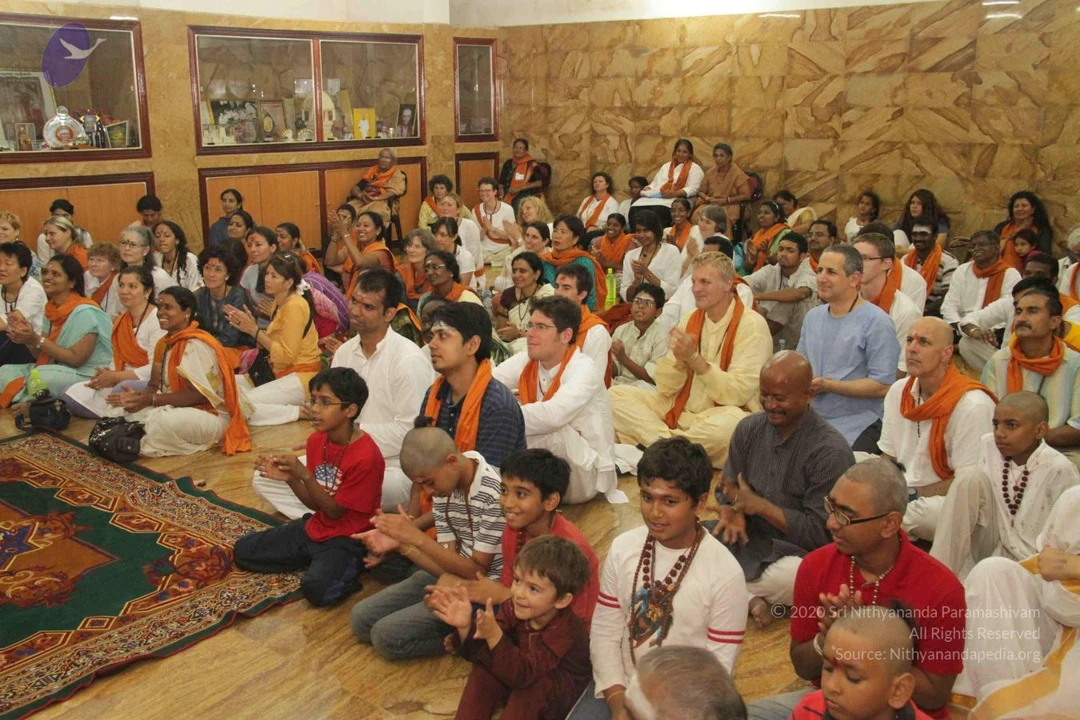
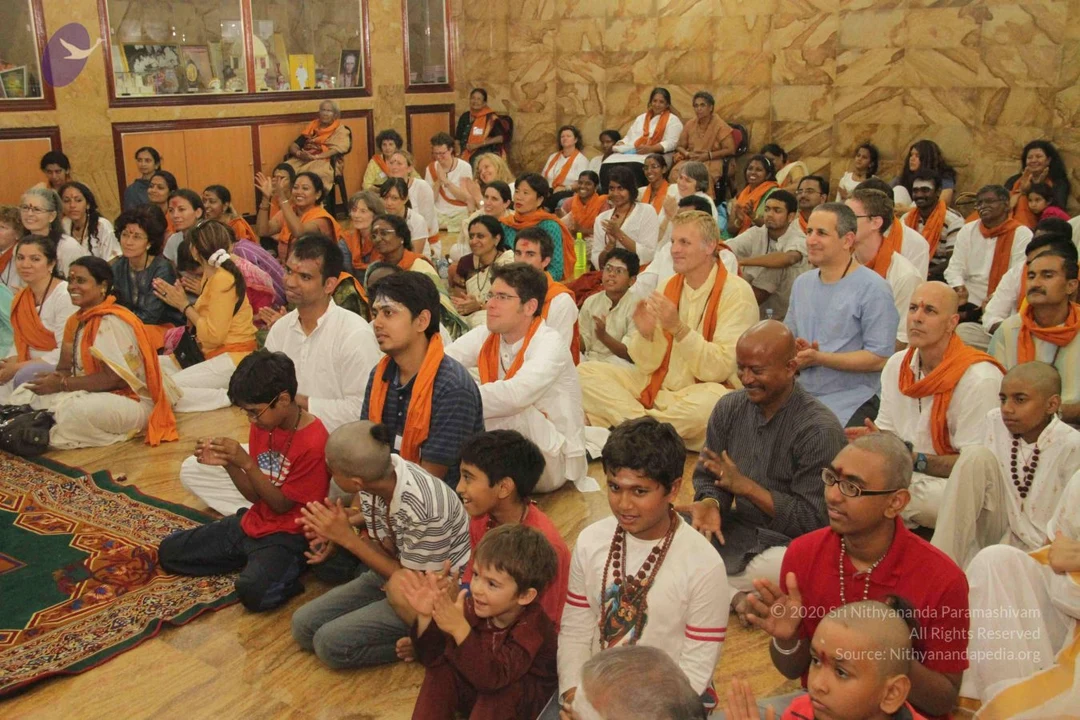
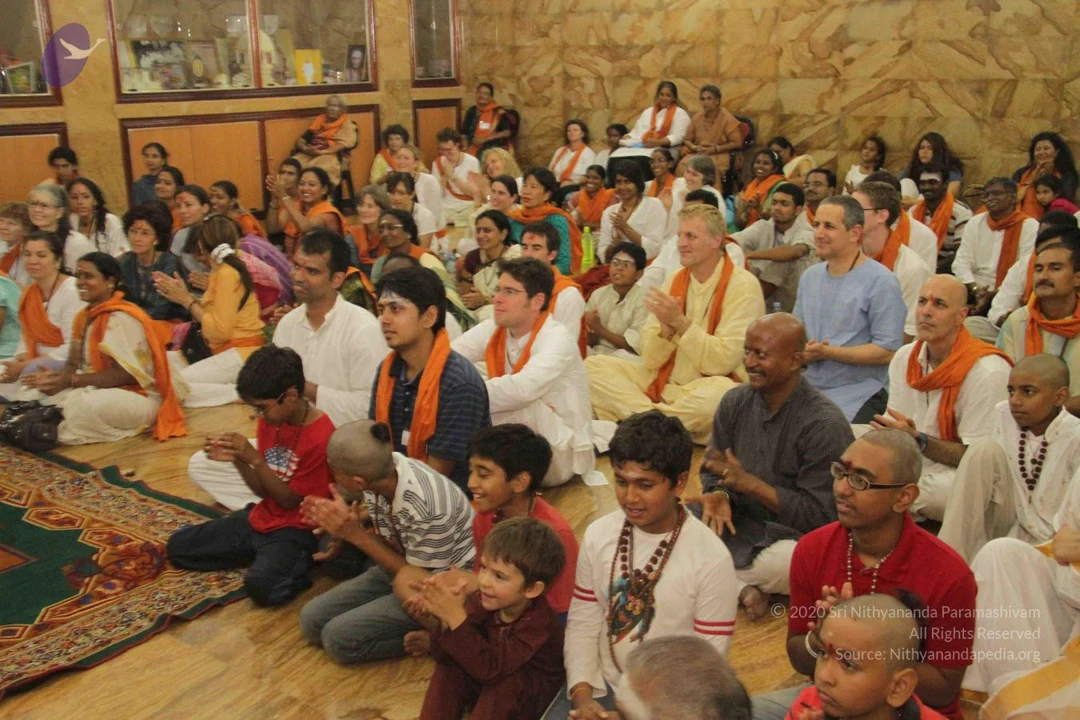
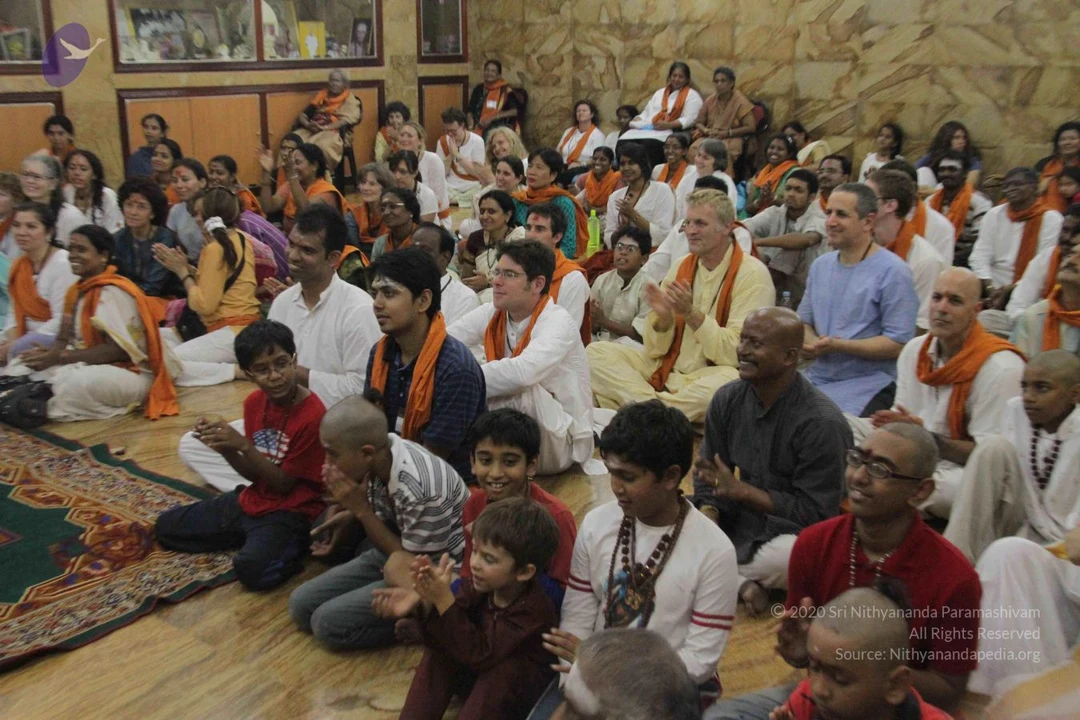
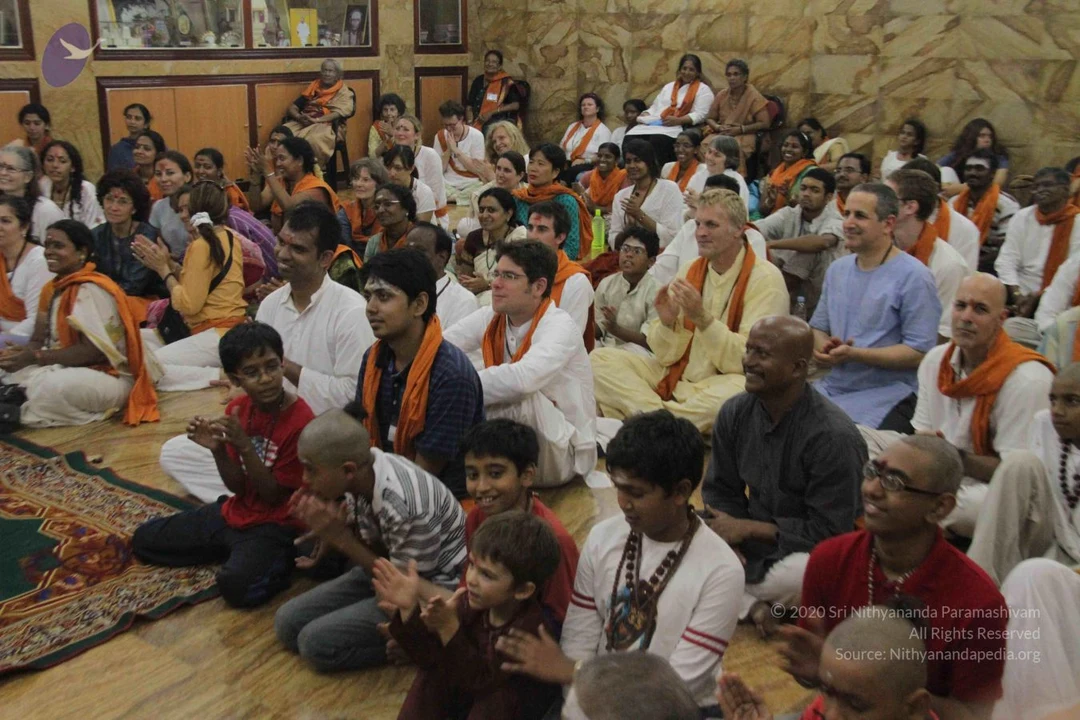
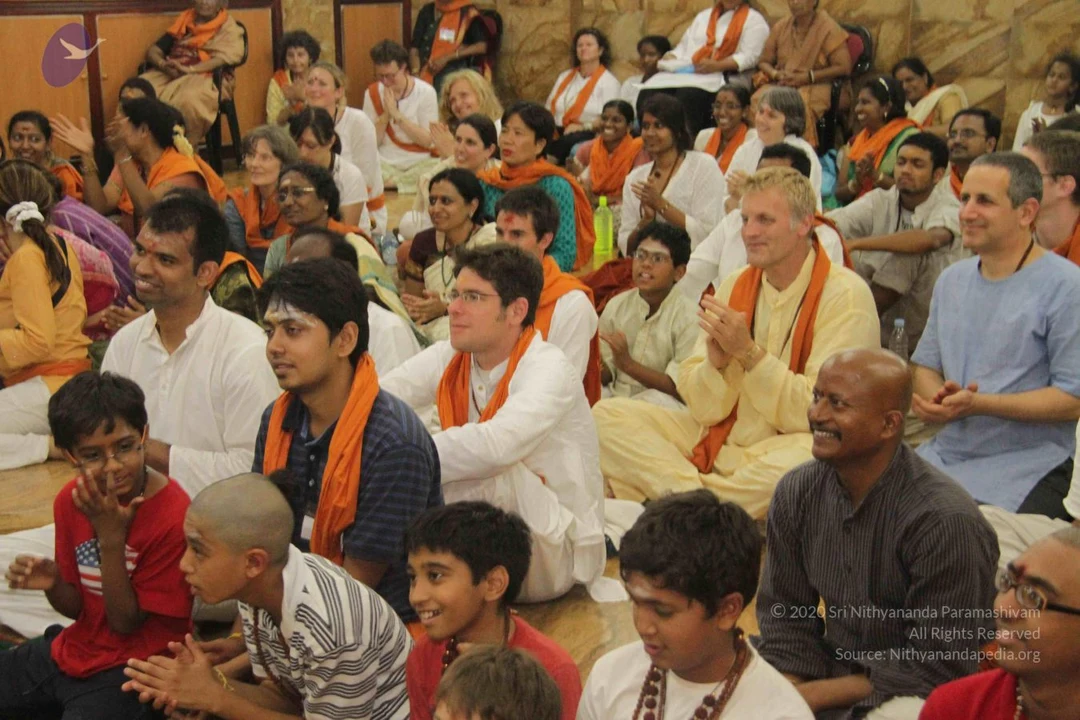
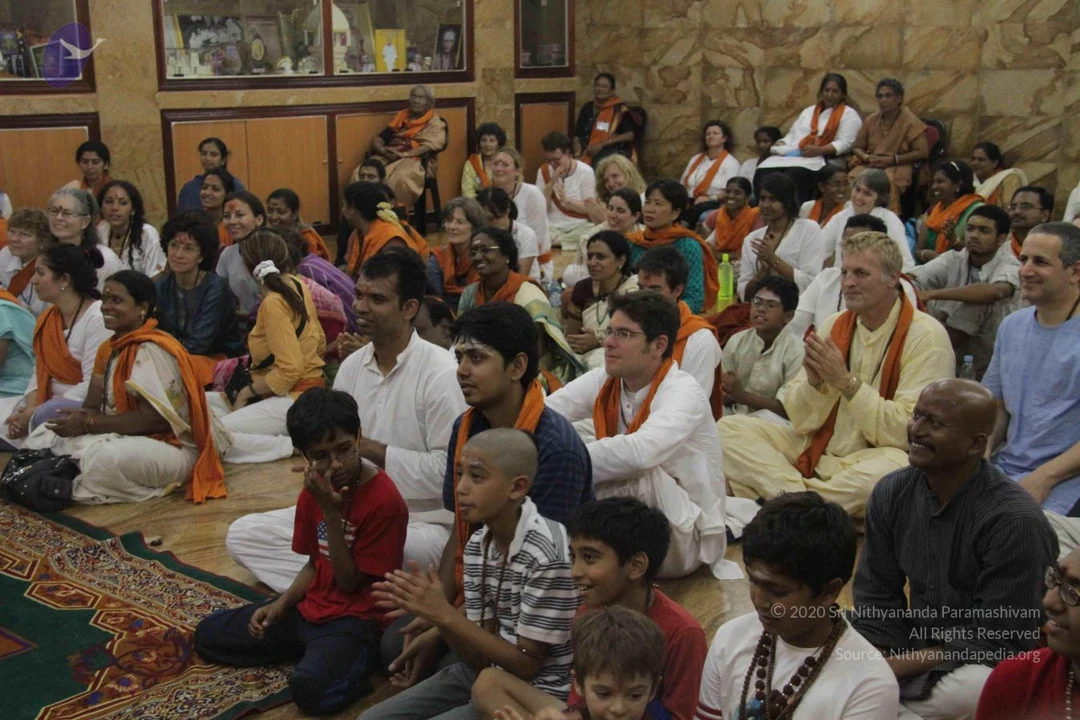
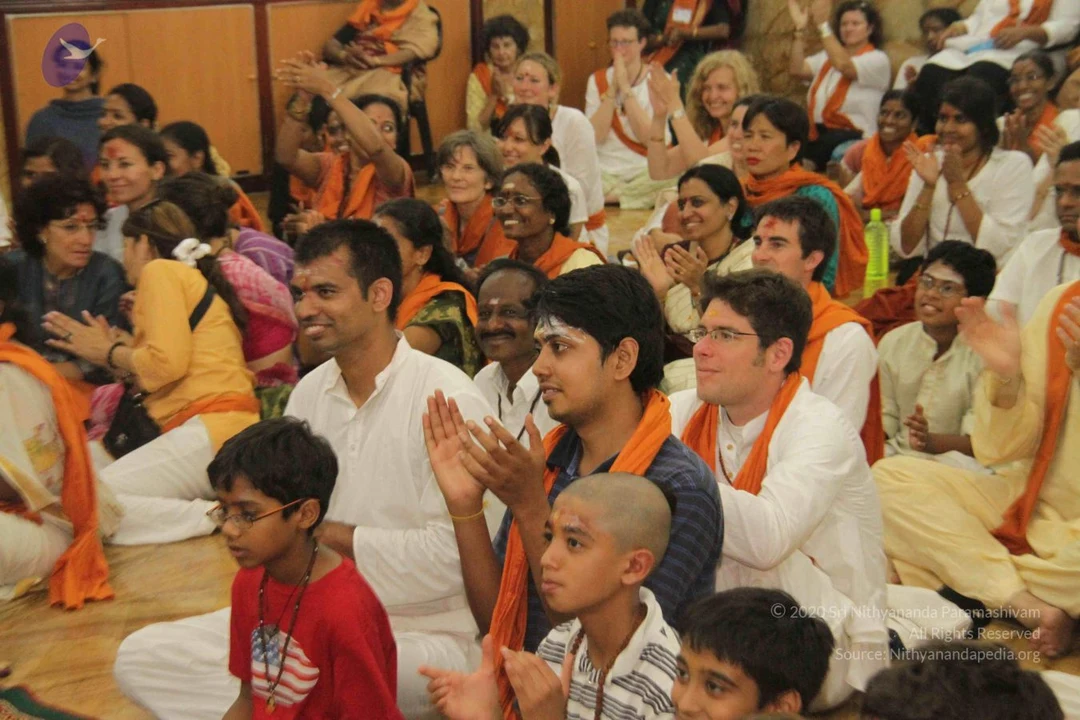
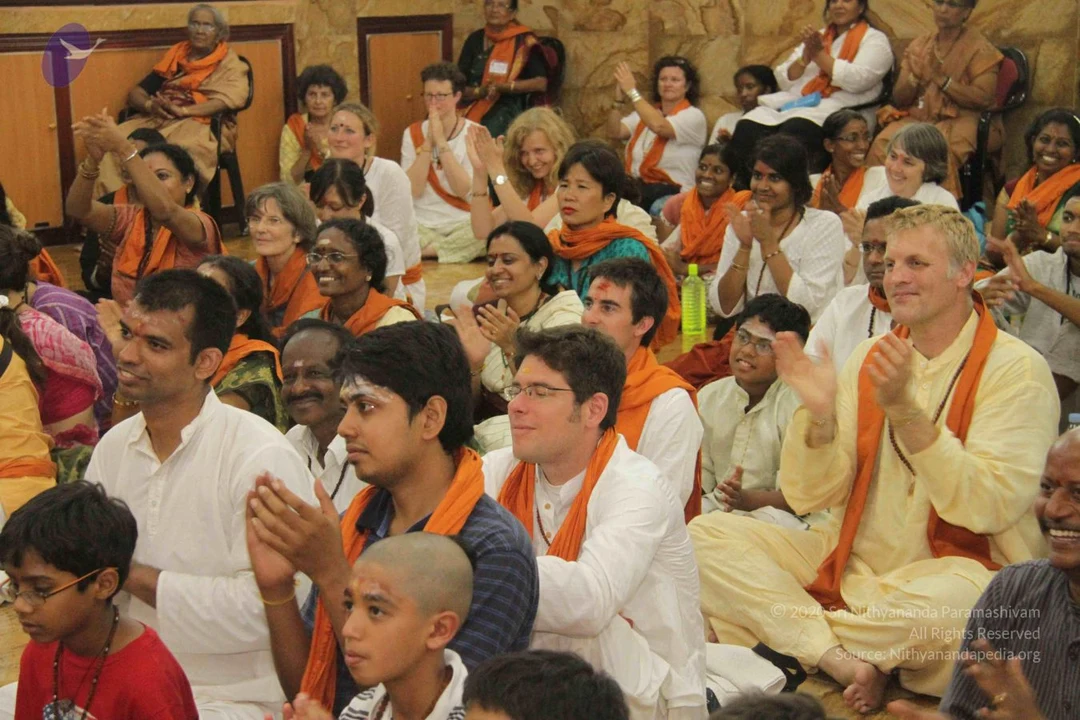
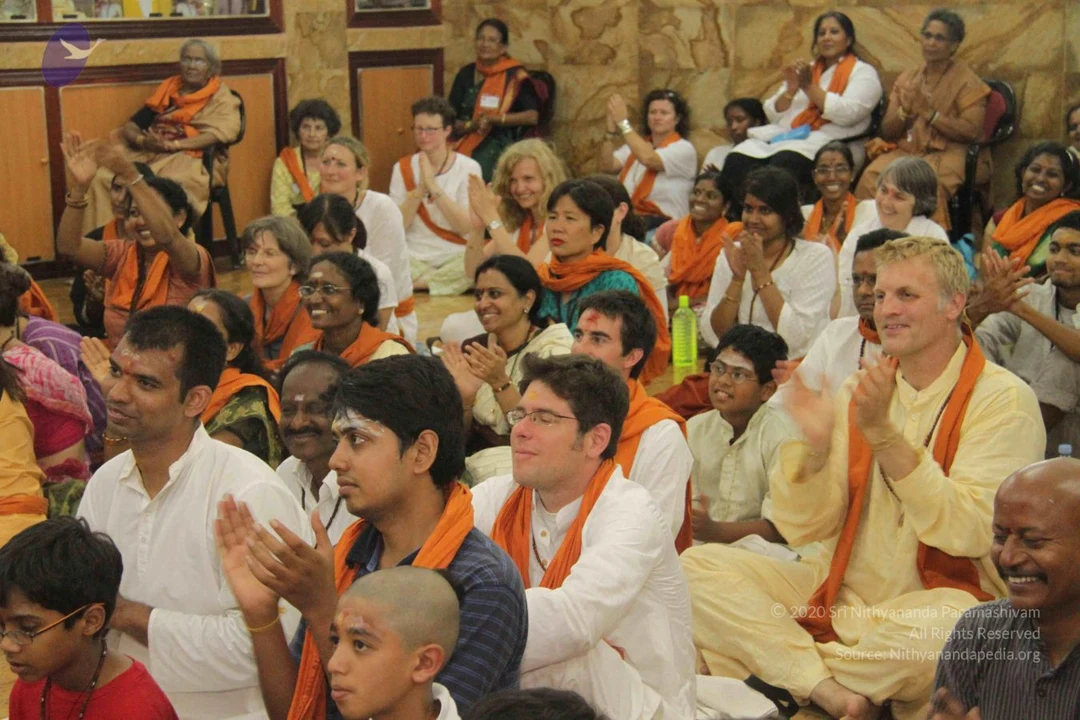
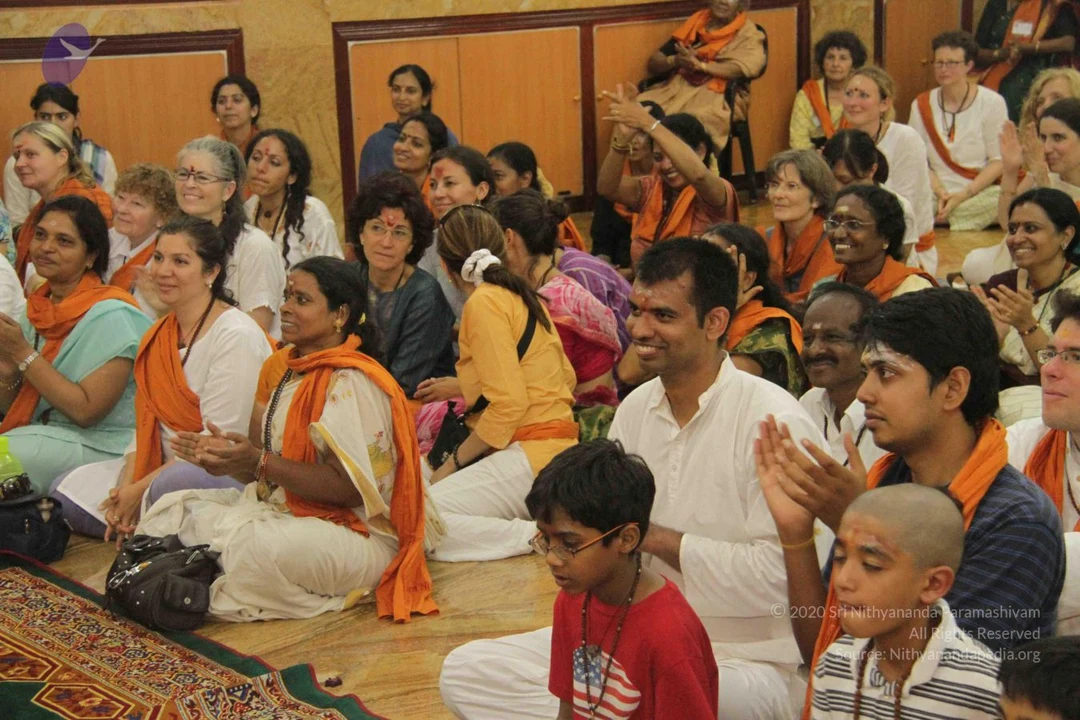
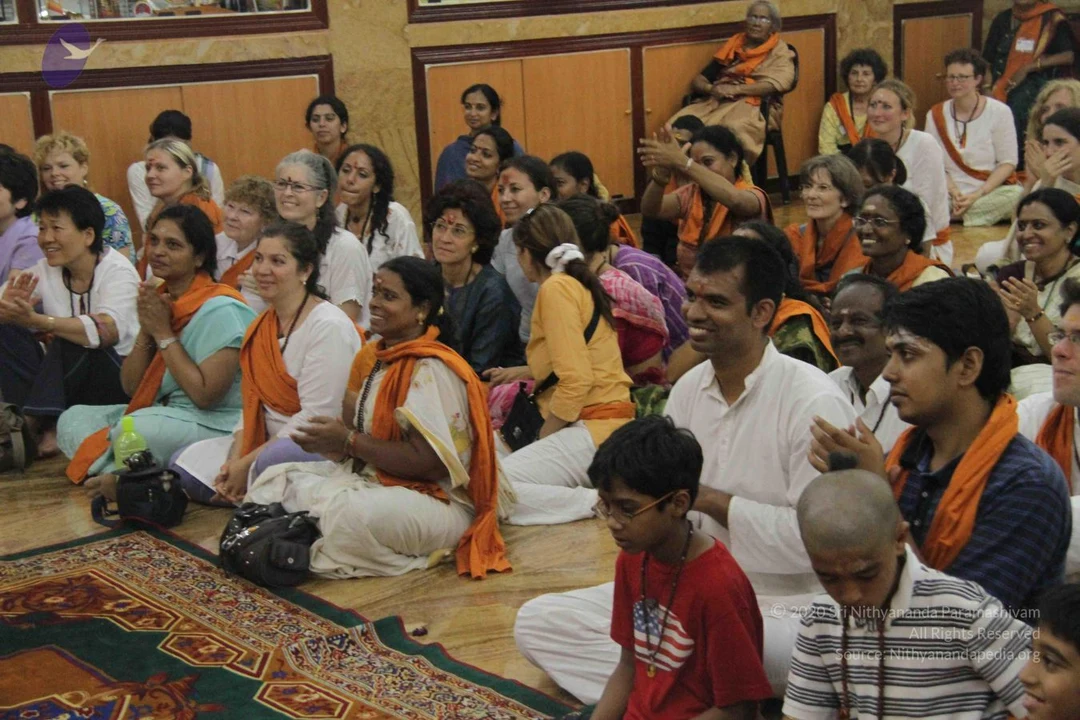
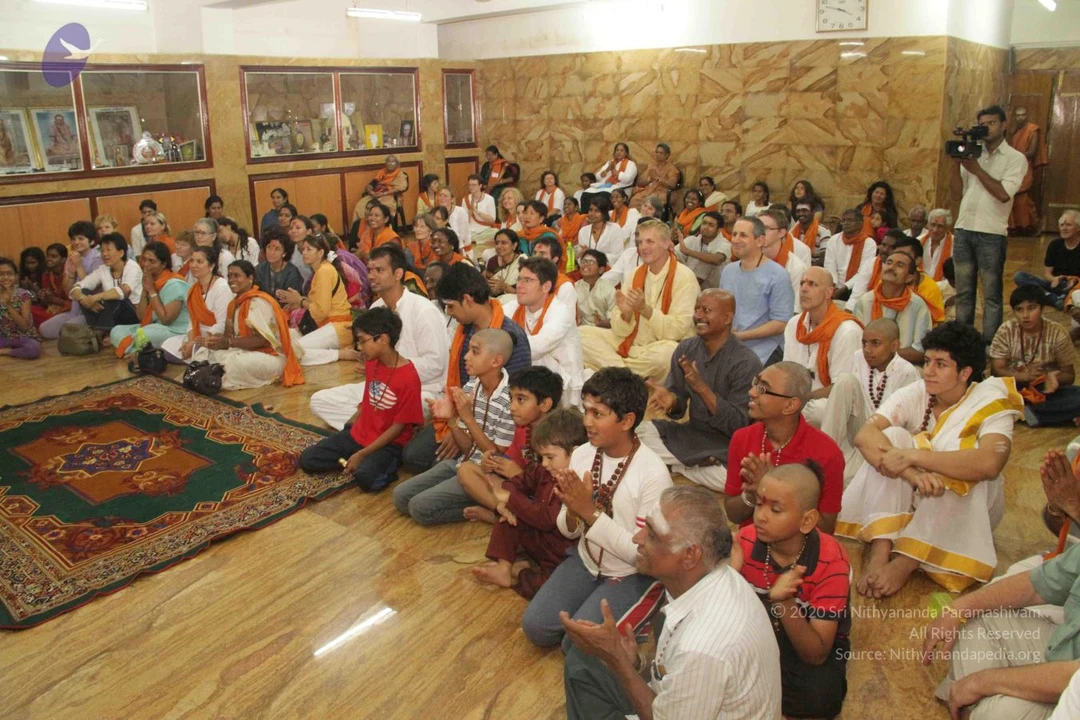
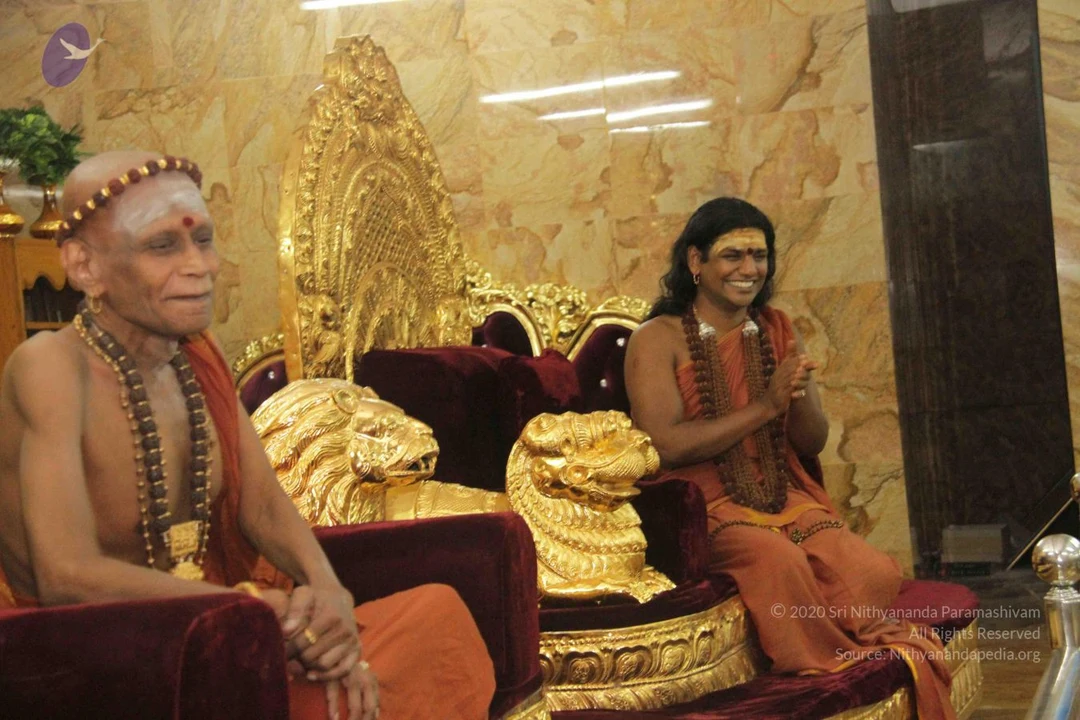
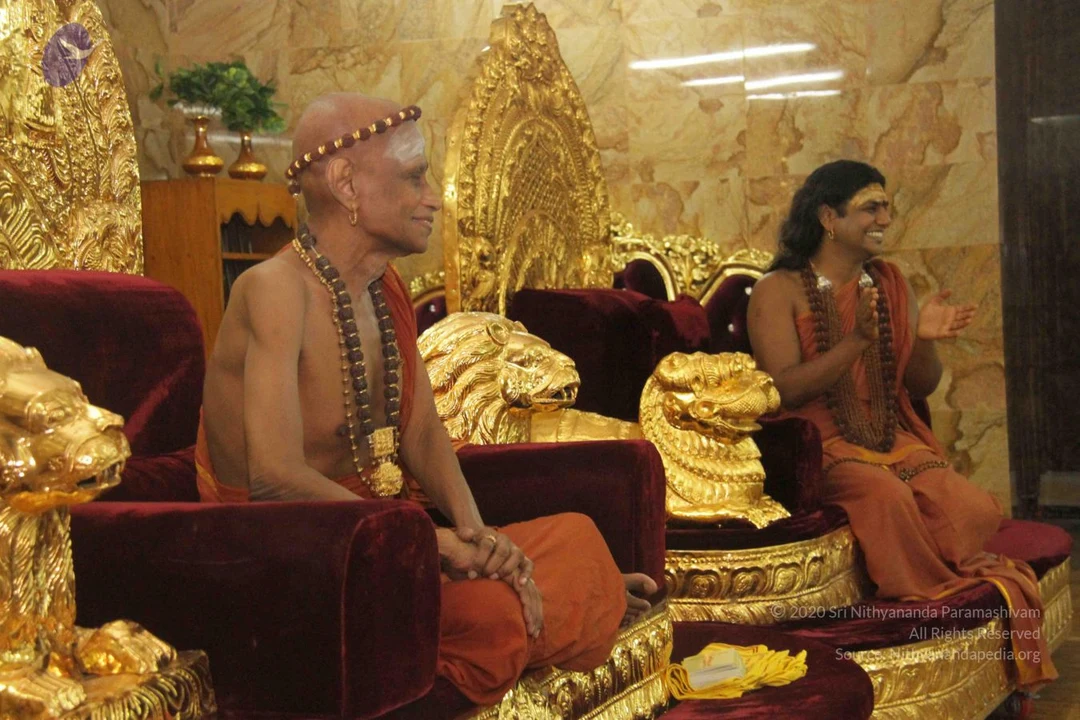
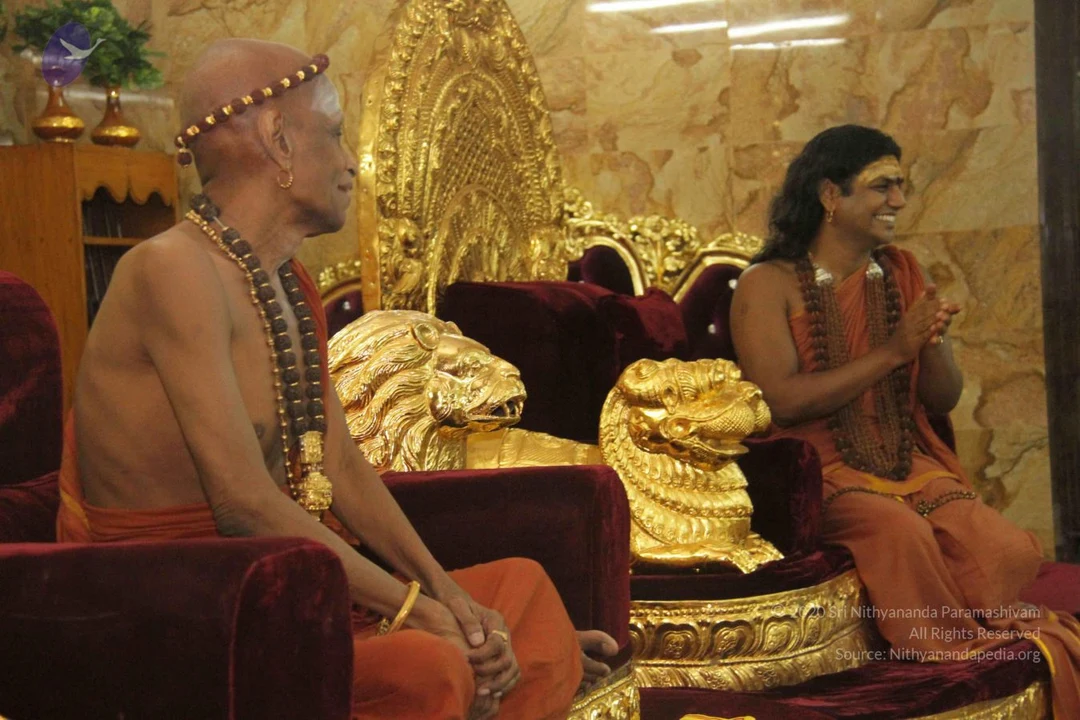
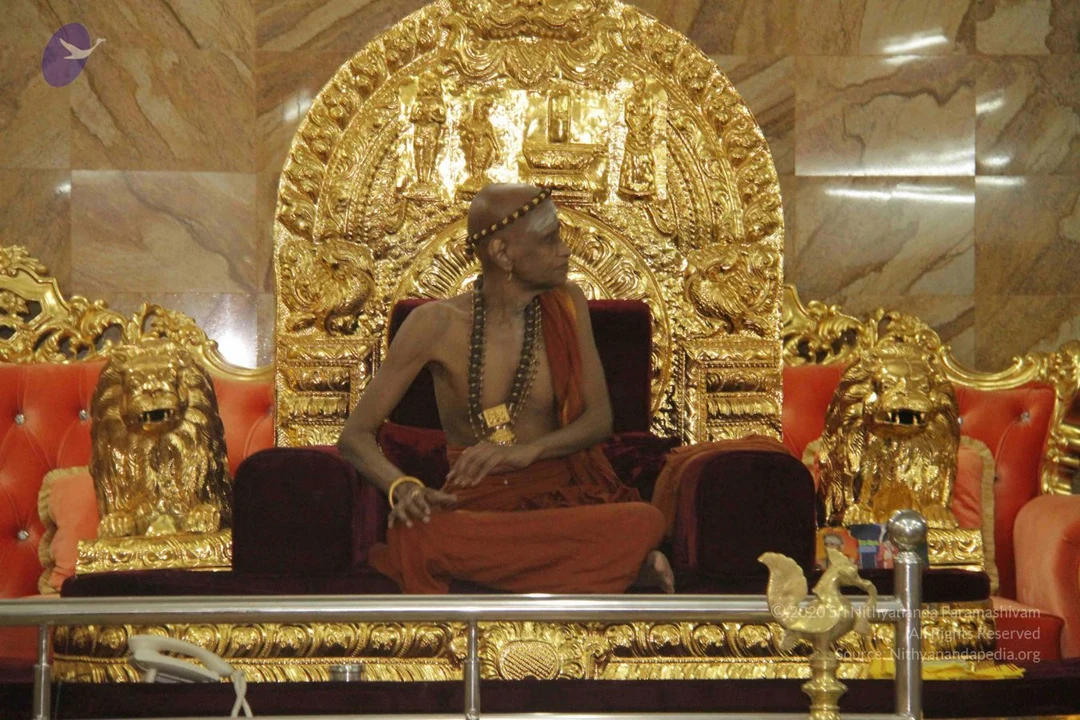
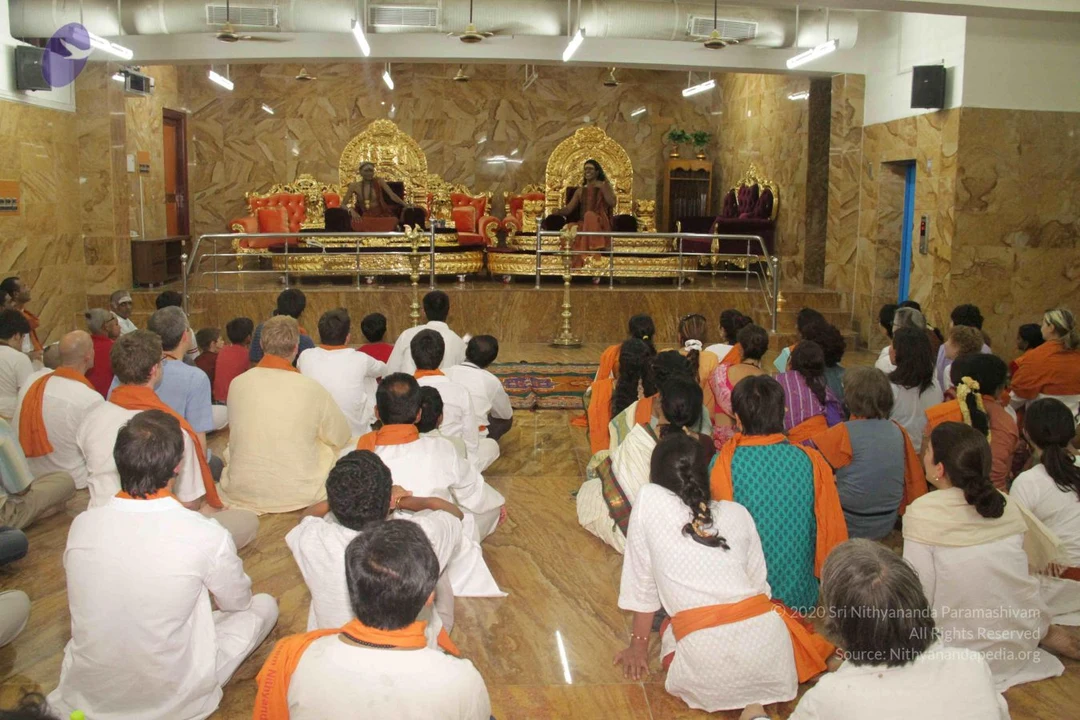
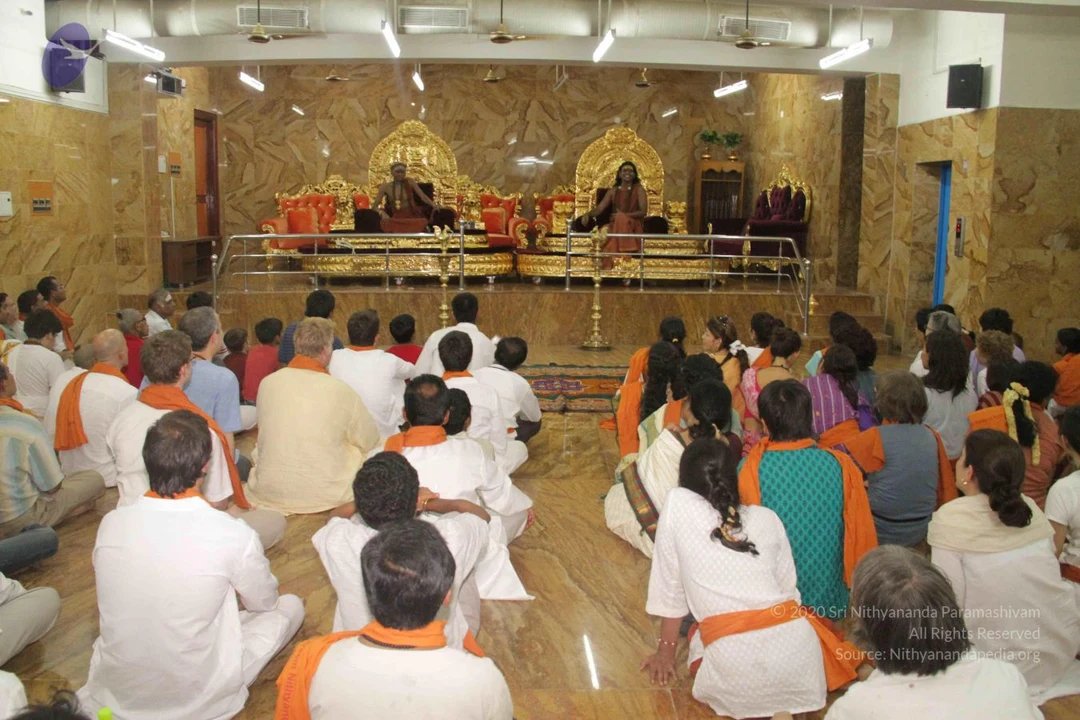
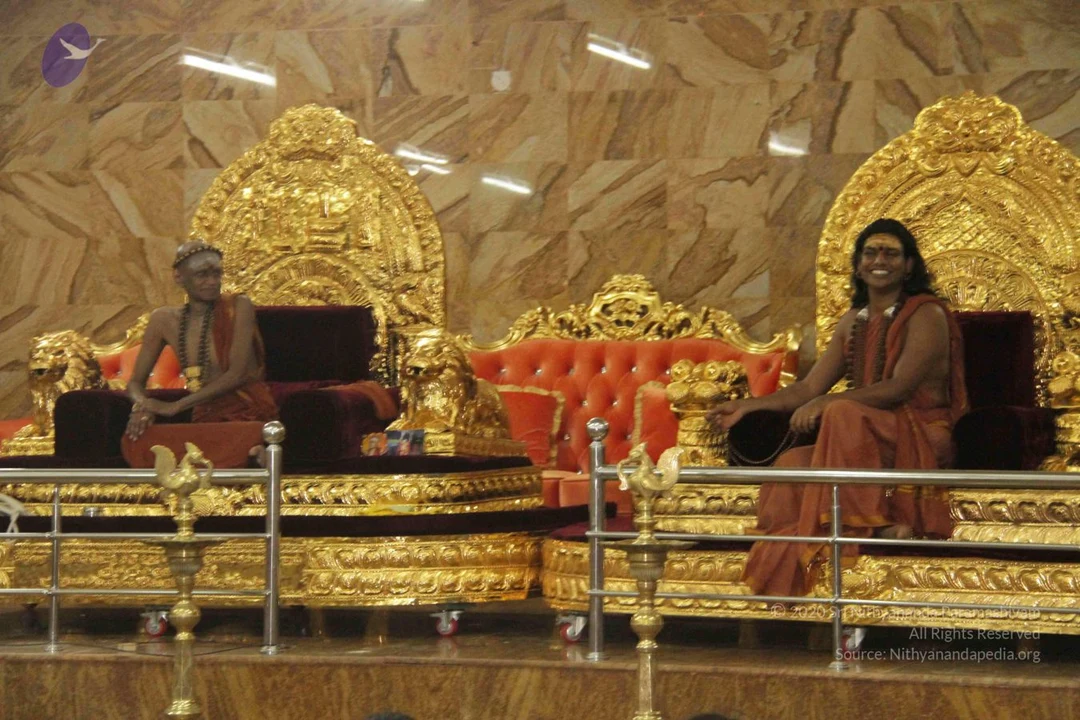
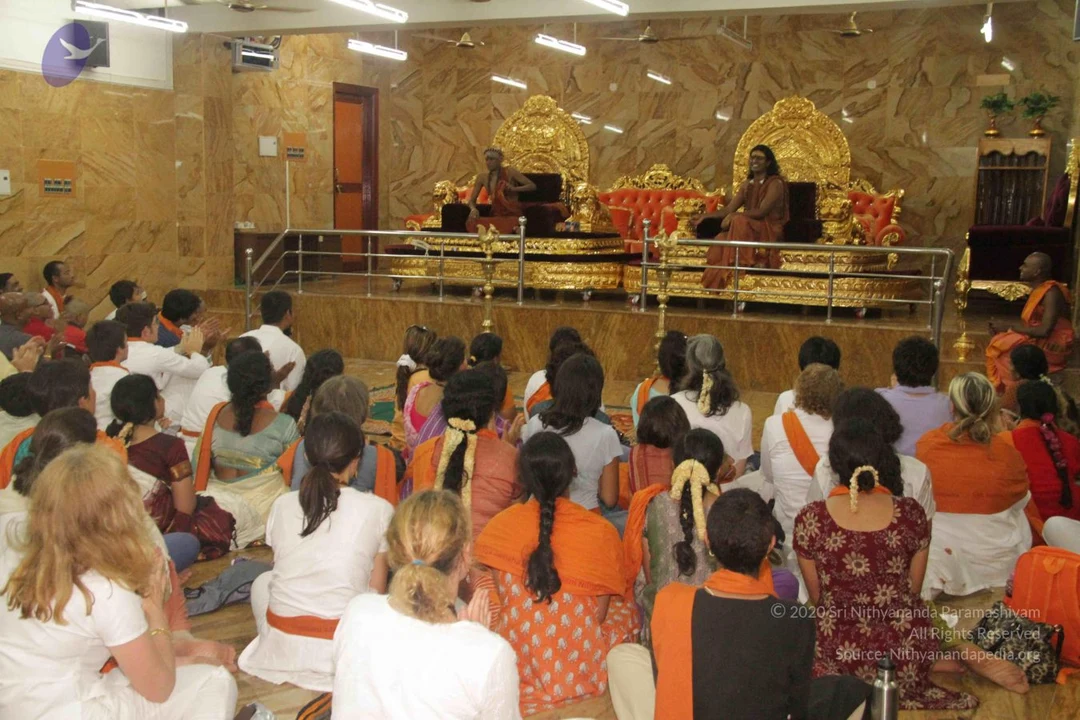
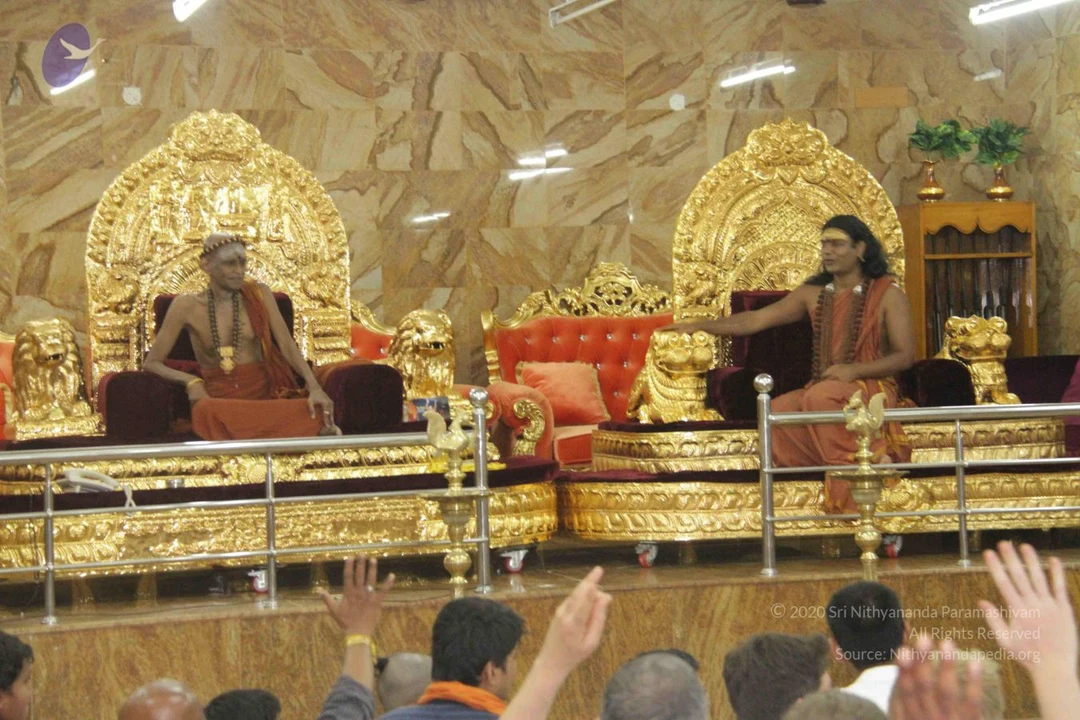
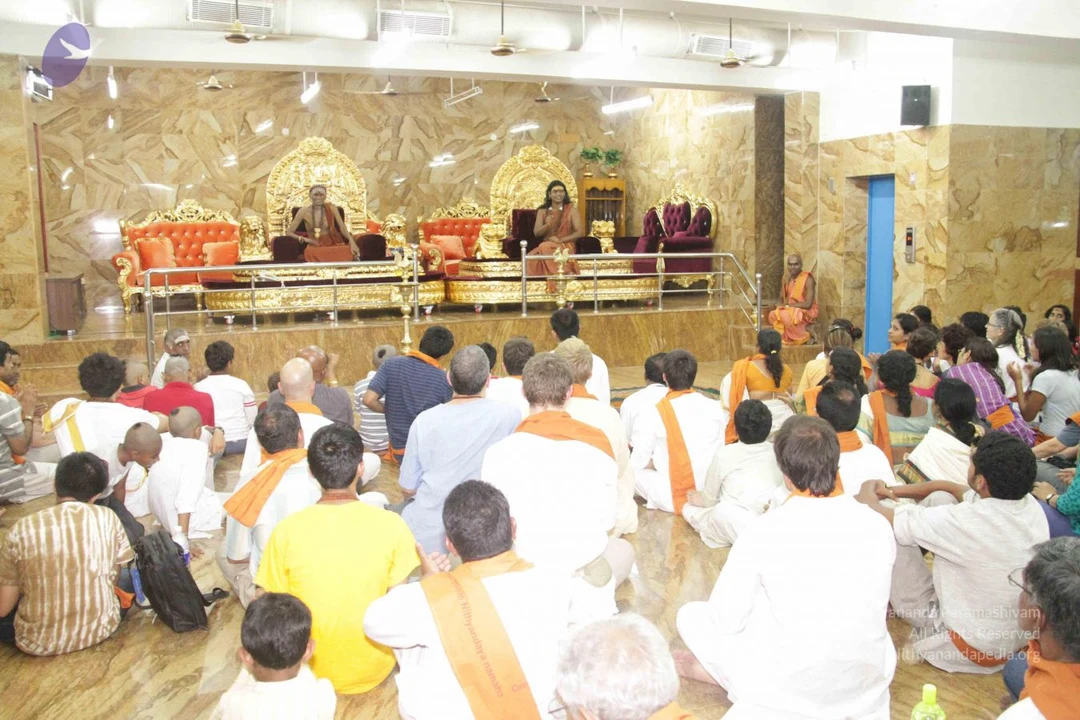
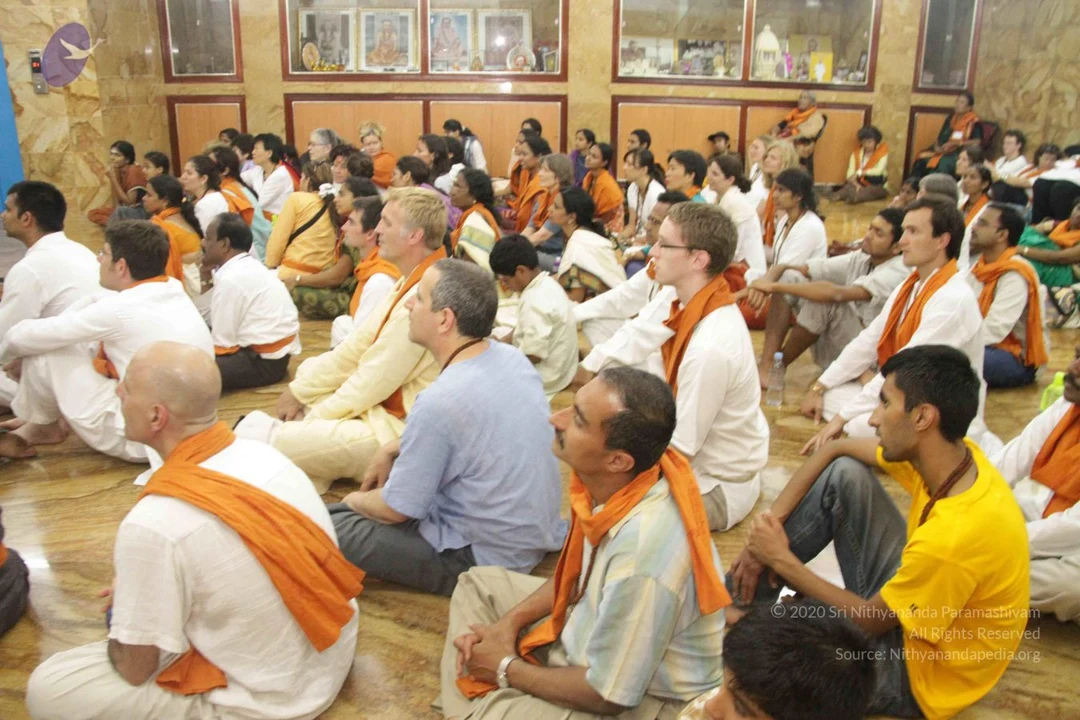
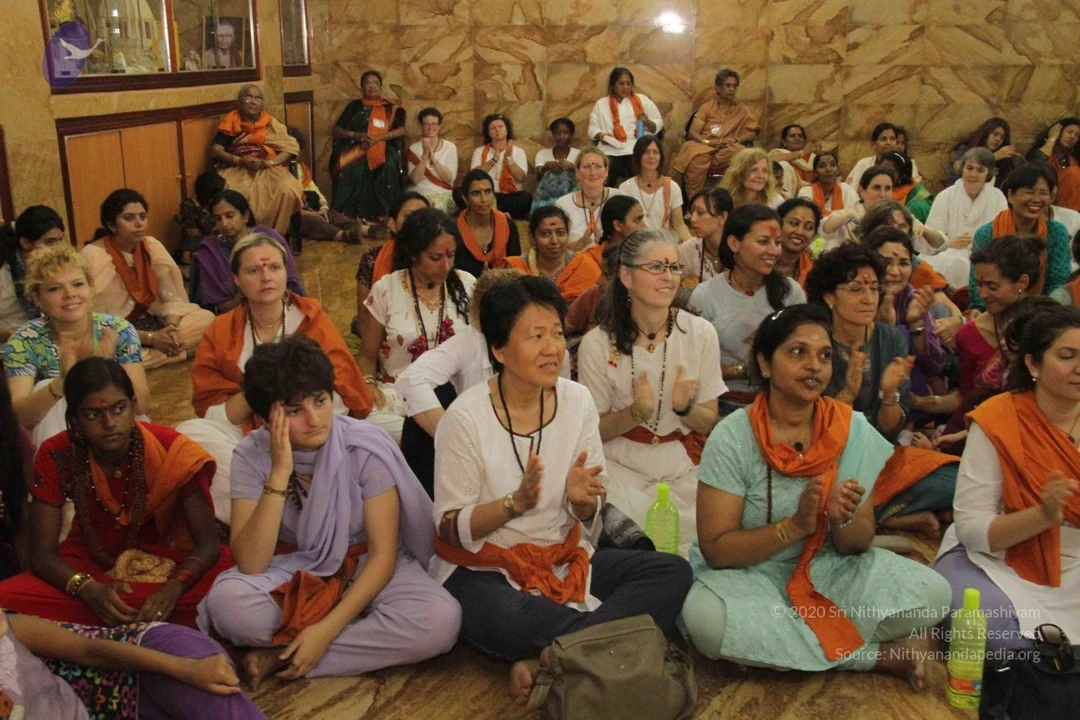
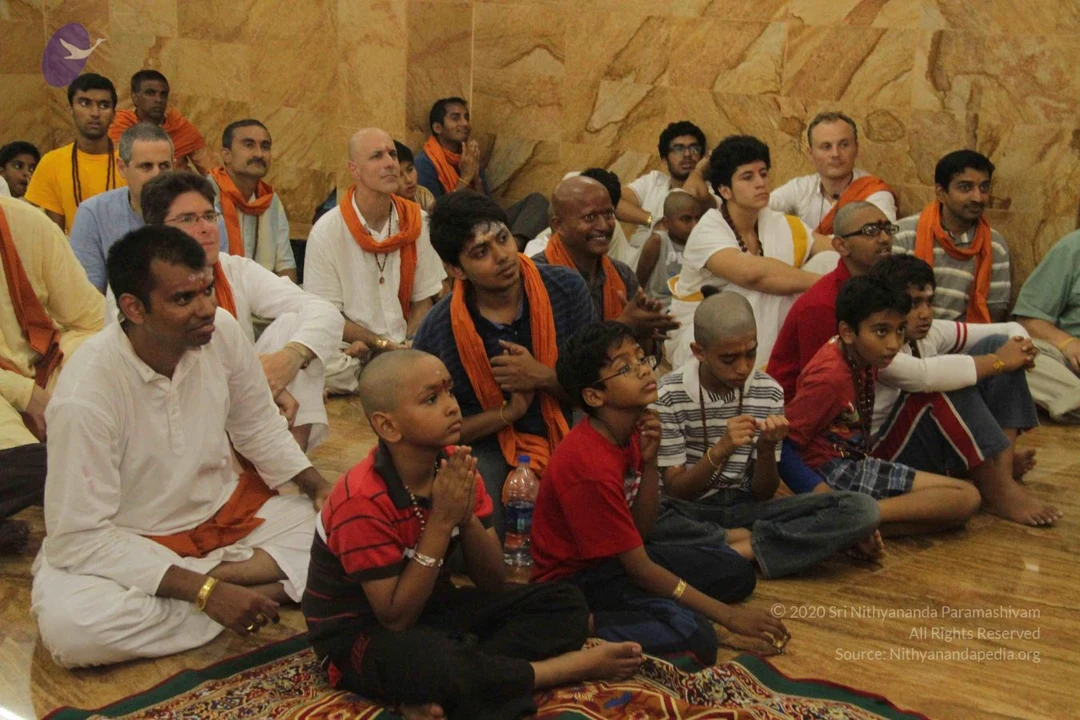
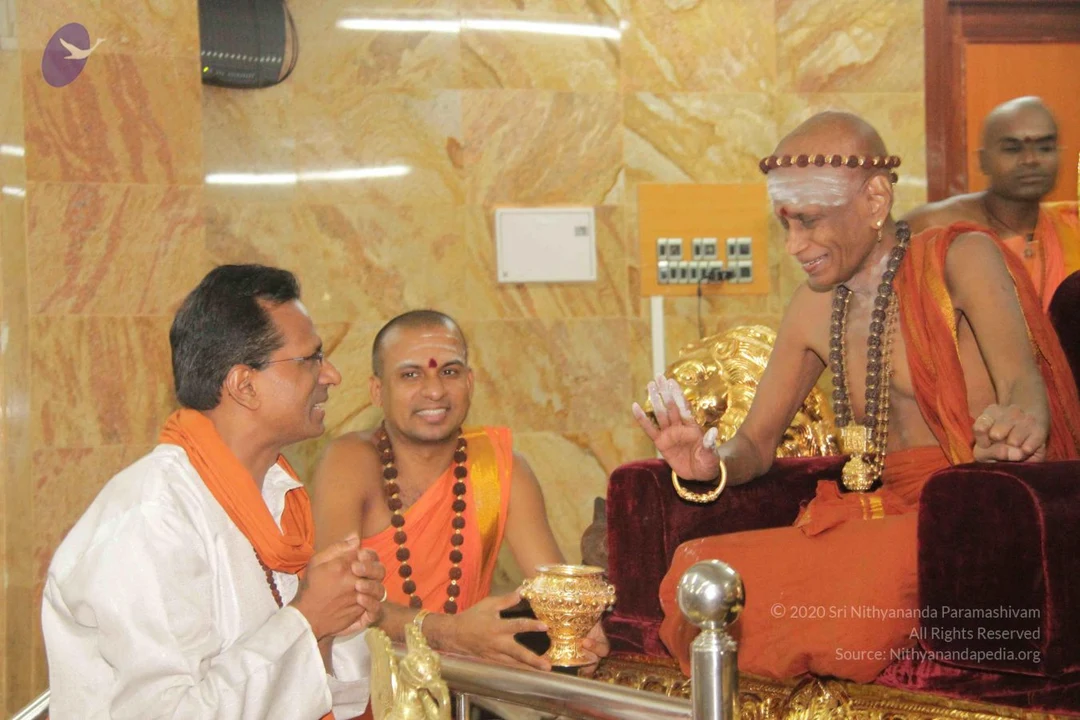
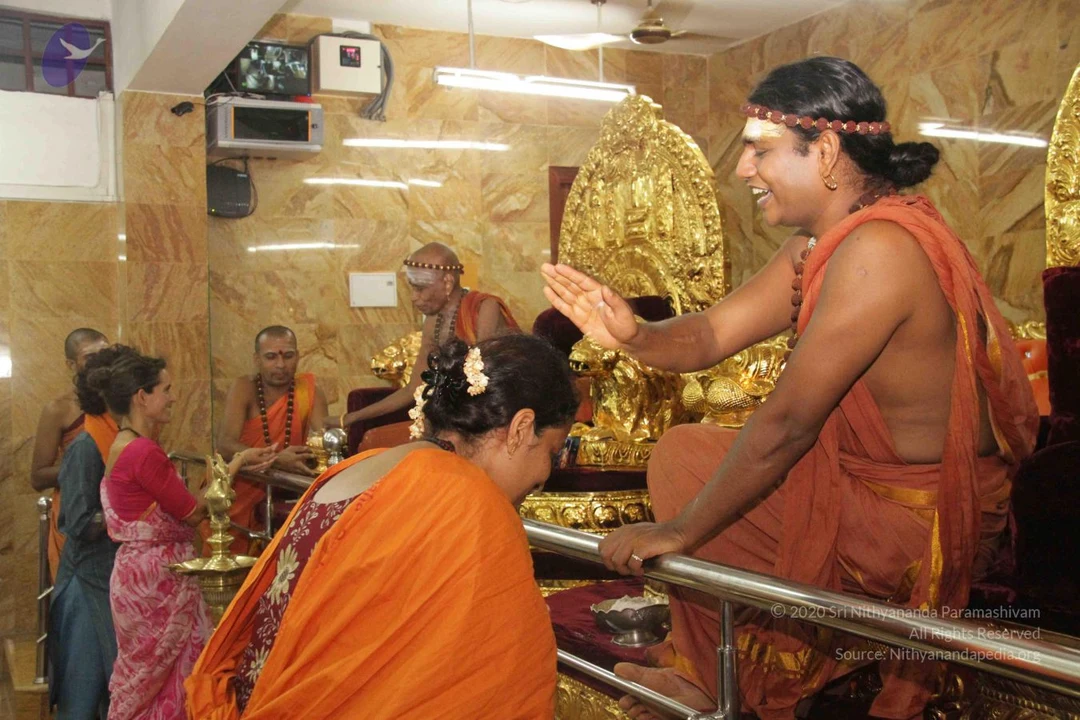
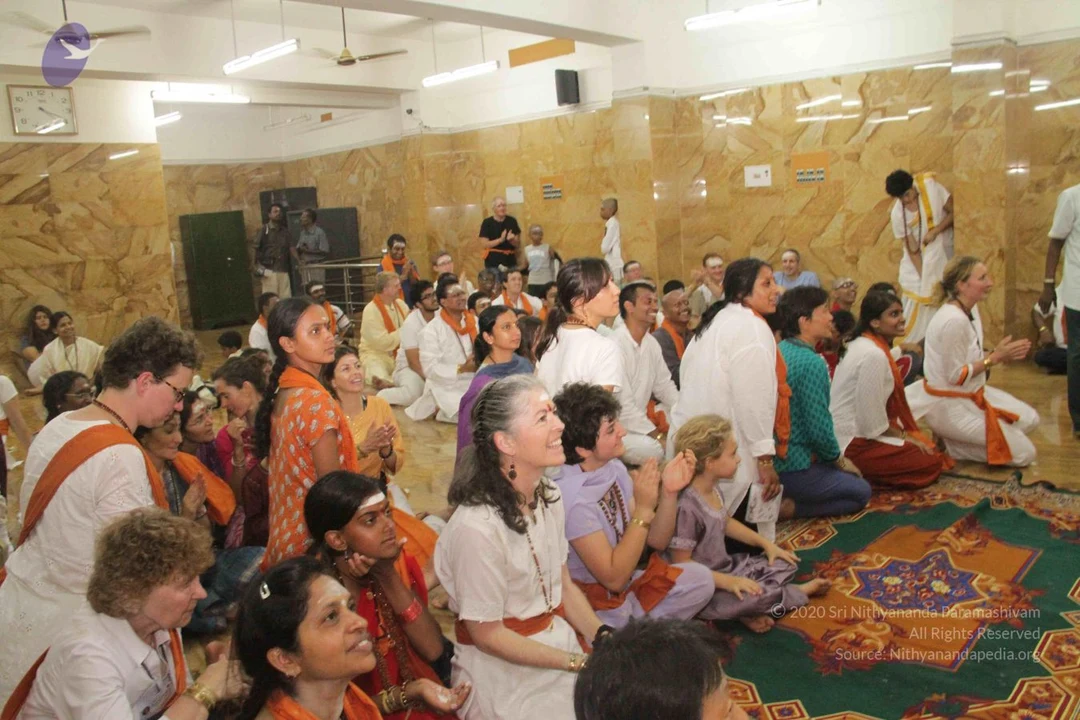
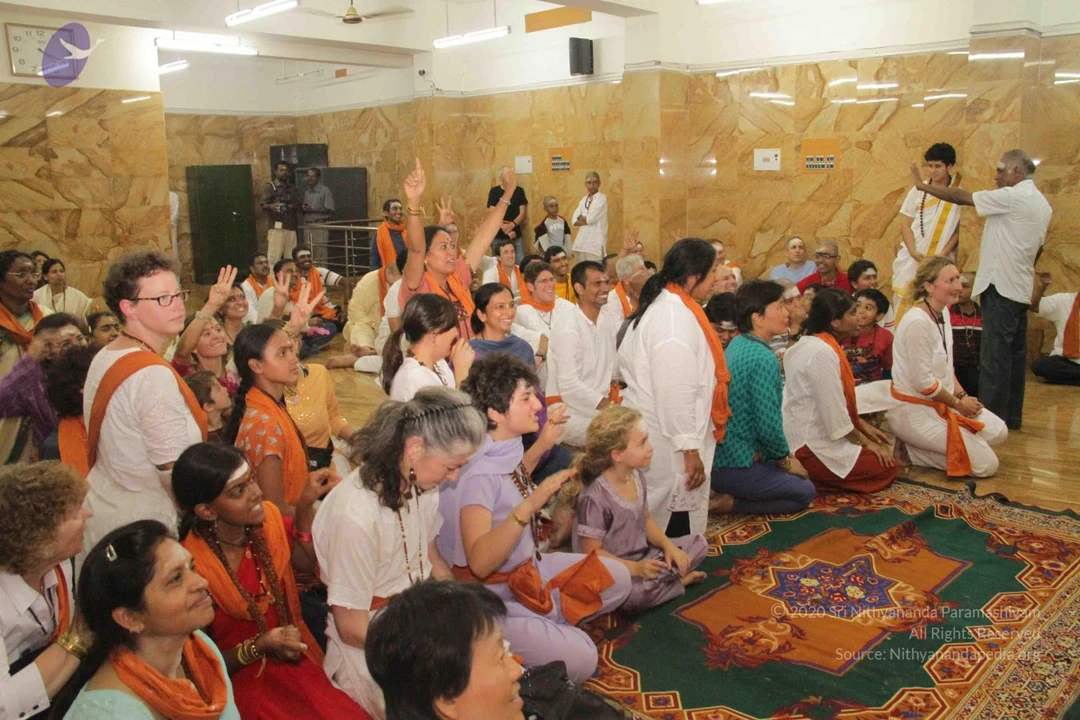
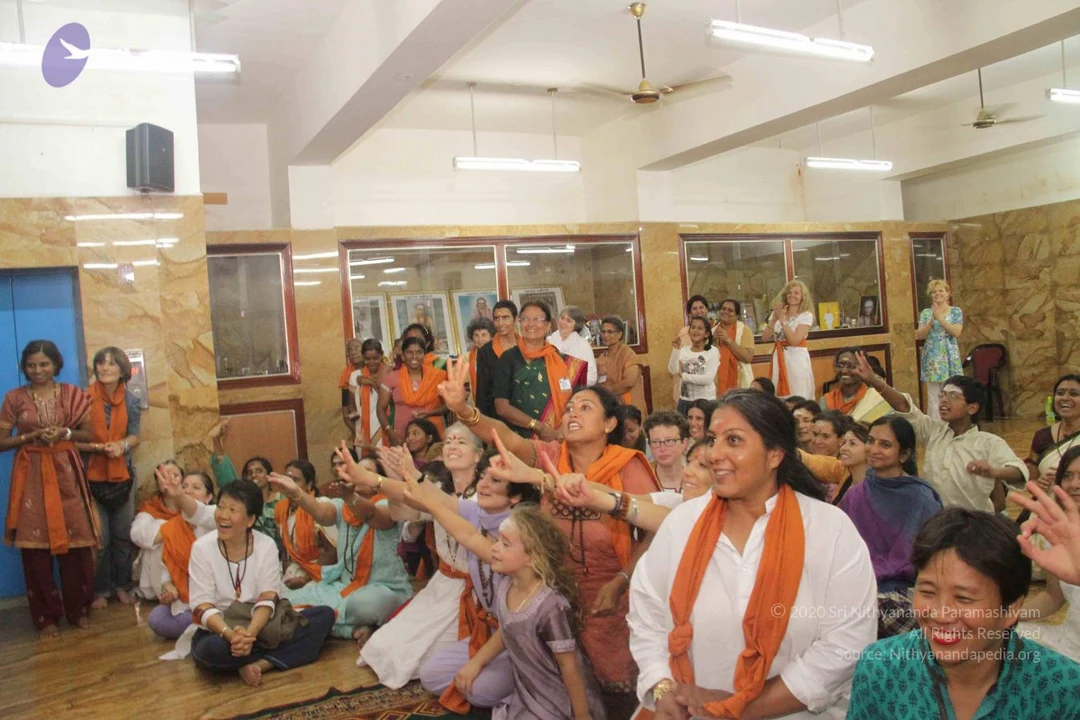
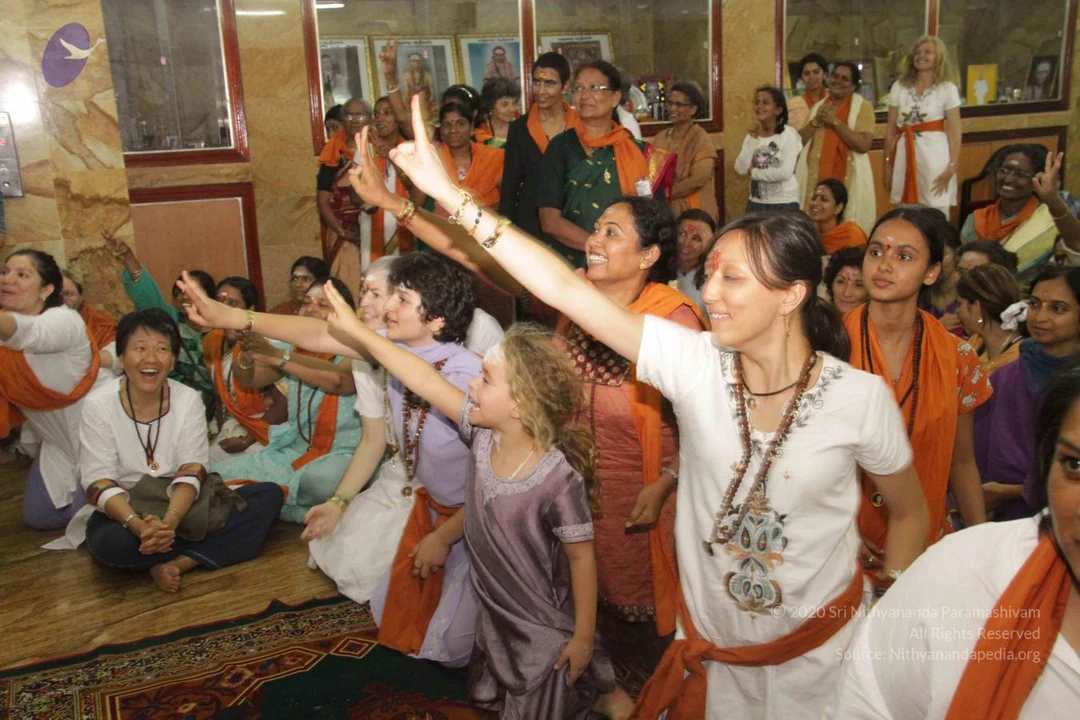
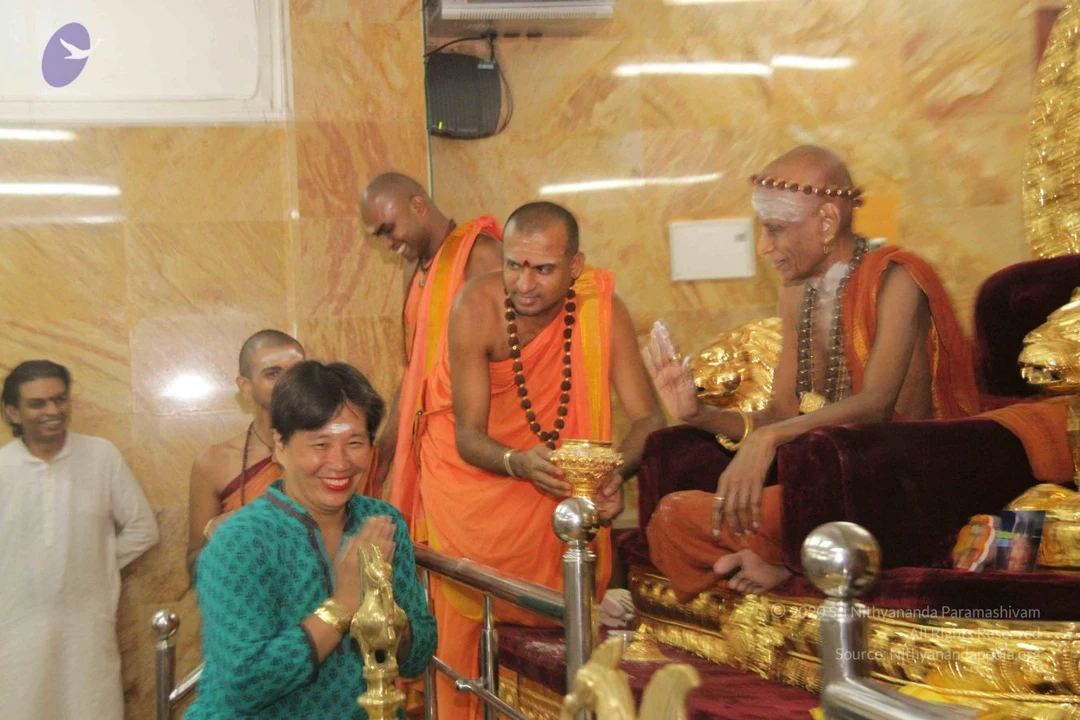
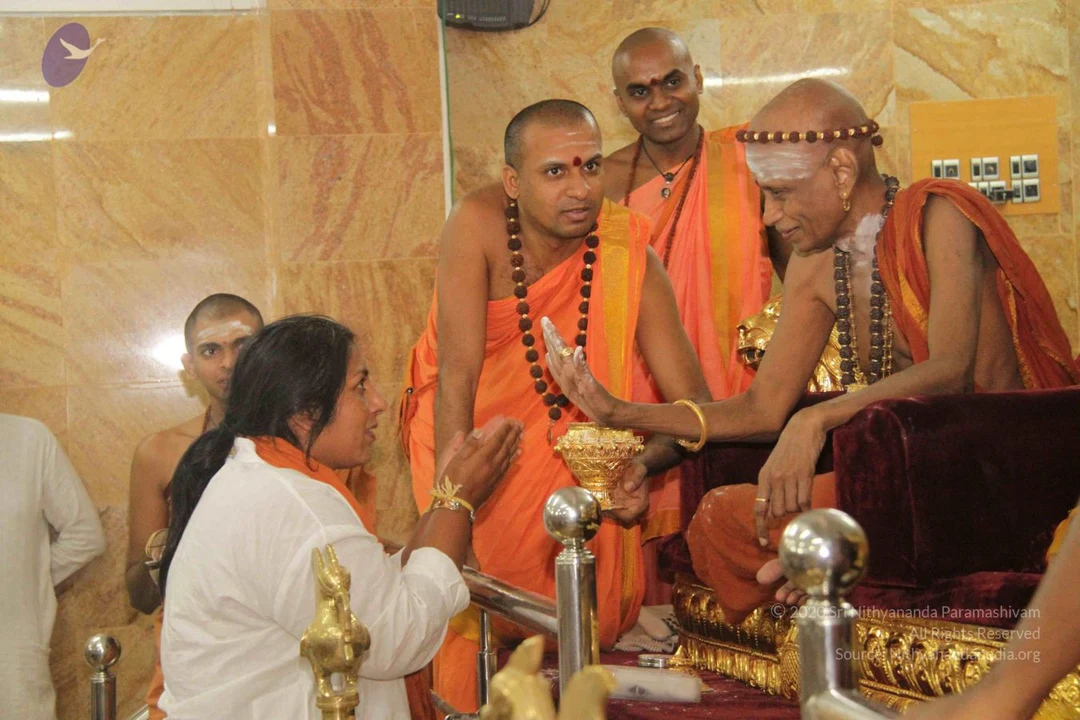
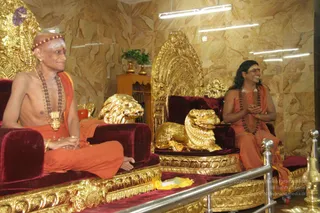
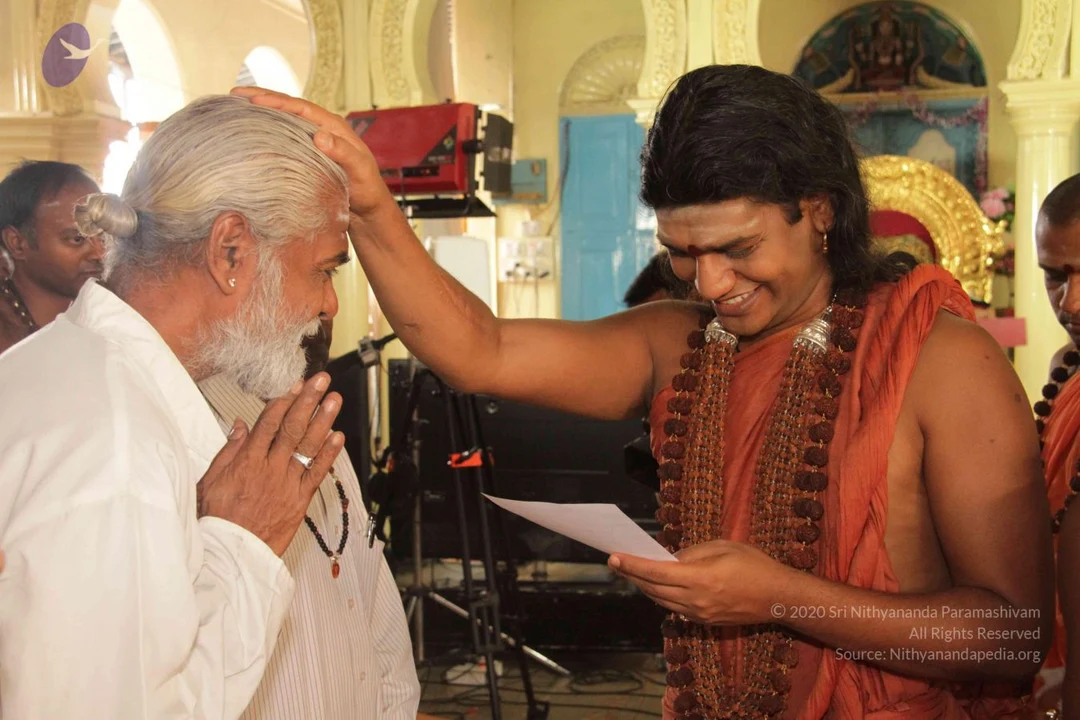
Two men sit on ornate gold-and-maroon velvet thrones with carved golden lion-form armrests in a marble-walled hall with a gold arched backdrop. The man on the left is bald with a white tilak, a red headband, a rudraksha mala and a gold pendant, wearing saffron/orange robes and seated cross-legged with hands clasped. The man on the right has long swept-back dark hair, rudraksha malas and ornate ceremonial necklaces, wearing saffron/orange robes, with palms pressed together and a broad smile. A small potted plant and brass vessels sit on a wooden cabinet behind them, and a metal railing with a yellow cloth lies in the foreground. The right man shows the distinctive long hair and multiple rudraksha and gold cues, so this is a probable appearance-based candidate for Swamiji in person, while the left figure is a seated priest or sannyasi.A large seated congregation in a marble-walled hall, apparently a satsang, with devotees in orange shawls and white clothes sitting on the floor and clapping. Several shaved-headed men and children wear rudraksha malas. A man in cream kurta with an orange shawl sits near the centre, a man in a blue shirt sits behind him, and a child in maroon kurta sits in front. A small patterned rug lies at left. No clear a person candidate is visible among the seated devotees, so the figure is uncertain and the description uses roles only.A seated satsang gathering in a marble-walled hall with a patterned rug at left. Many devotees sit on the floor in white, orange and red clothing, several with orange shawls and rudraksha malas. A bald man in a red shirt and beaded mala sits with palms pressed together in namaskar near the center. A young boy in a red tunic claps at front center, and a man in a light cream kurta with an orange shawl sits among others with hands raised in clapping. Many people are visible, including partially seen figures along the edges and at the back.A photograph of a seated audience at a satsang hall, with many women sitting on a wooden floor, most wearing orange or saffron shawls and dupattas over white, blue, teal and yellow kurtas and salwar. Several wear rudraksha or bead malas, and some have red bindis and vermilion marks. A woman in front, in a white sari with an orange shawl, smiles toward the front. Woven rugs lie on the floor, with bags and a water bottle beside them. The speaker is not visible in the frame.A seated satsang audience in a hall with beige marble-patterned walls. Many people wear white kurta or dhoti clothing and orange shawls, and several have white or ash forehead marks. In the centre, a fair-haired man in cream kurta and orange shawl claps with hands raised, beside a man in a light blue shirt clapping and a bald man in a grey striped shirt with palms joined. Children sit in front, including a boy in a red shirt and a boy in a striped shirt, with some clapping. Overall the group appears joyful and engaged. No identifiable a person figure is clearly visible.Indoor satsang scene with a large seated congregation clapping and pressing palms together, many wearing white clothes and orange or saffron shawls. A video camera on the right films the gathering. Front row includes children in casual shirts, a man with a white tilak on his forehead in a white shirt, and a bald man in a red shirt with a rudraksha mala. The walls are patterned marble-like stone and a patterned rug lies at the lower left. A man in a cream robe with an orange shawl sits near the centre, his hands folded in front of him, though no identity can be established from appearance alone.

IA-Travel-to-Thiruvannamalai

70 photosSource gallery
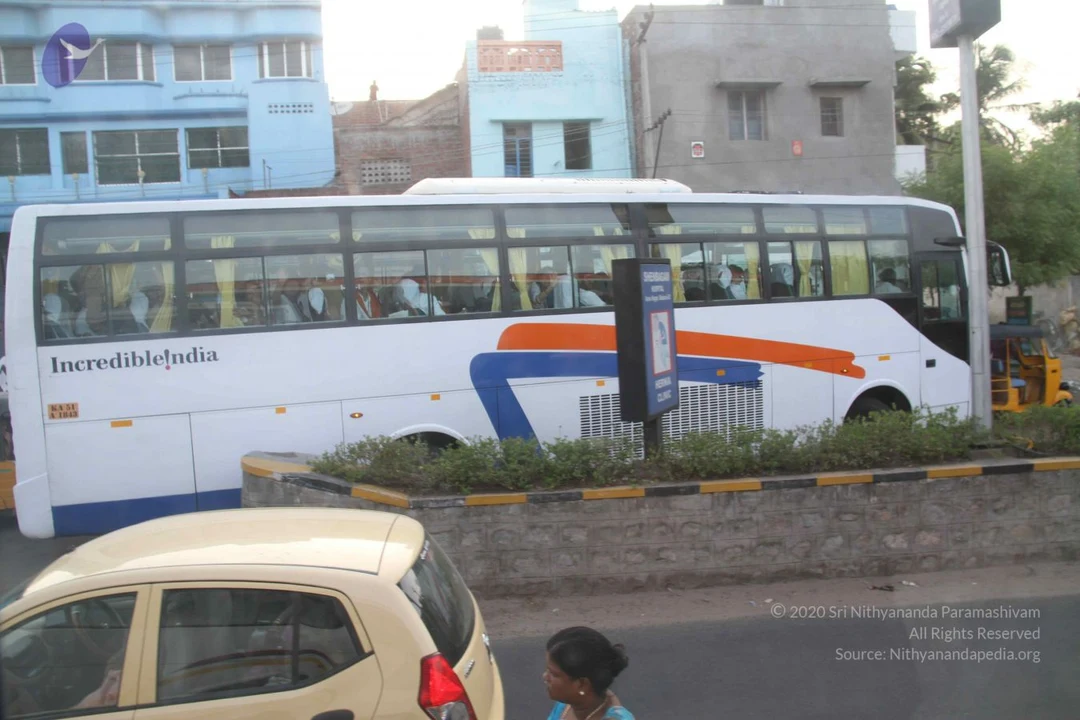
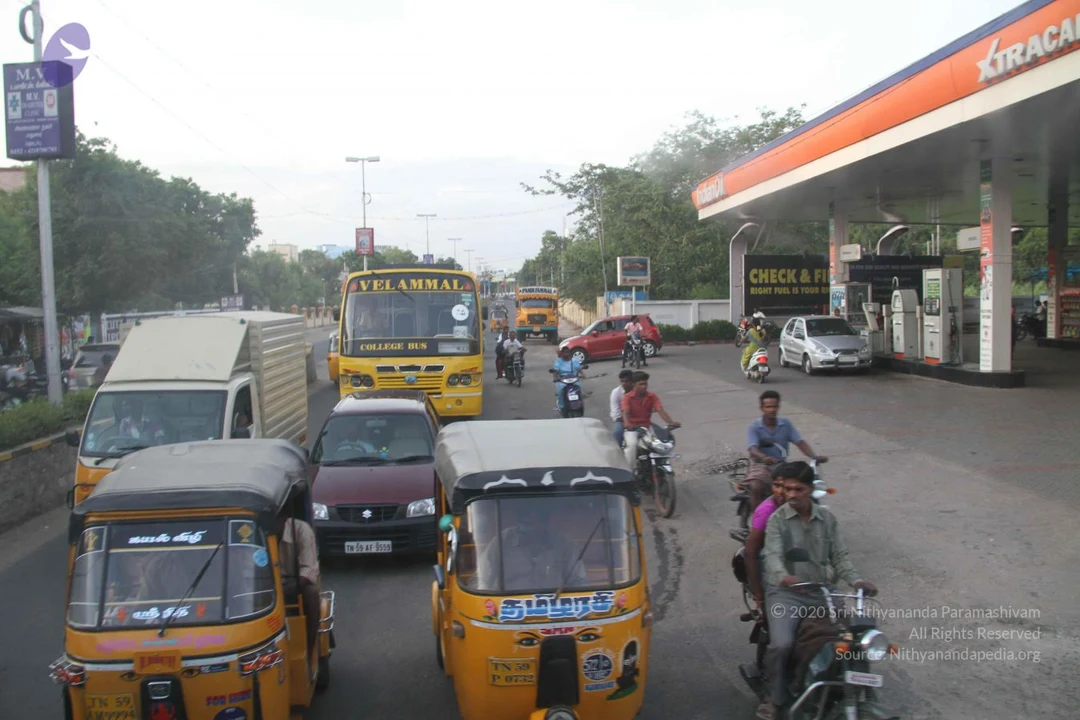
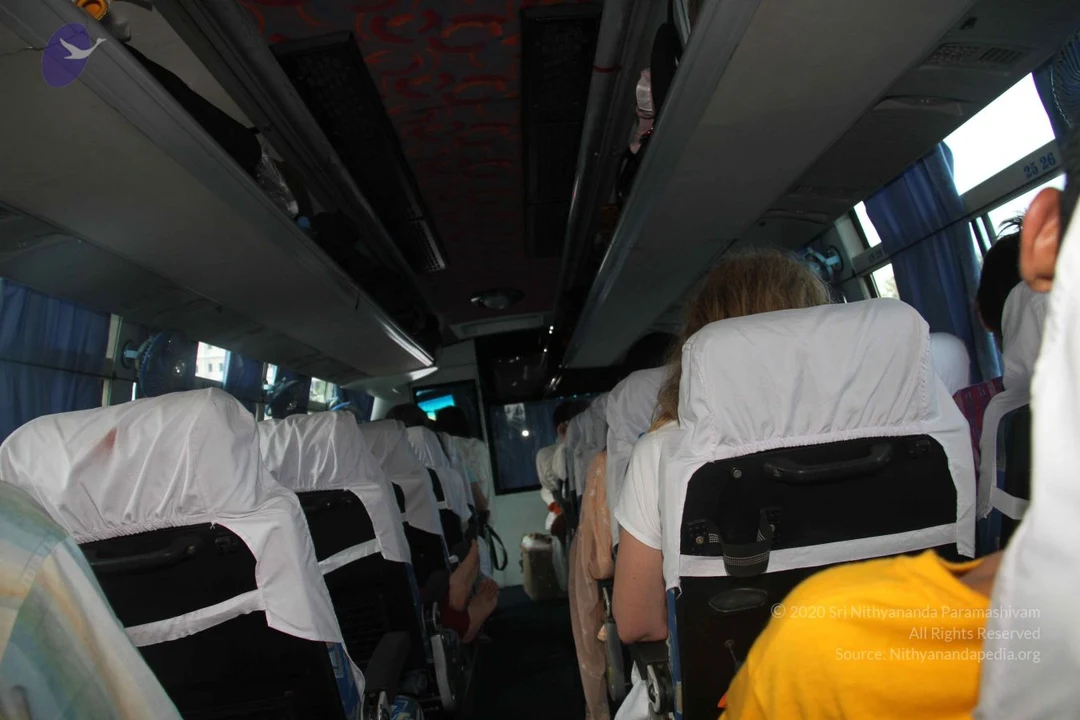
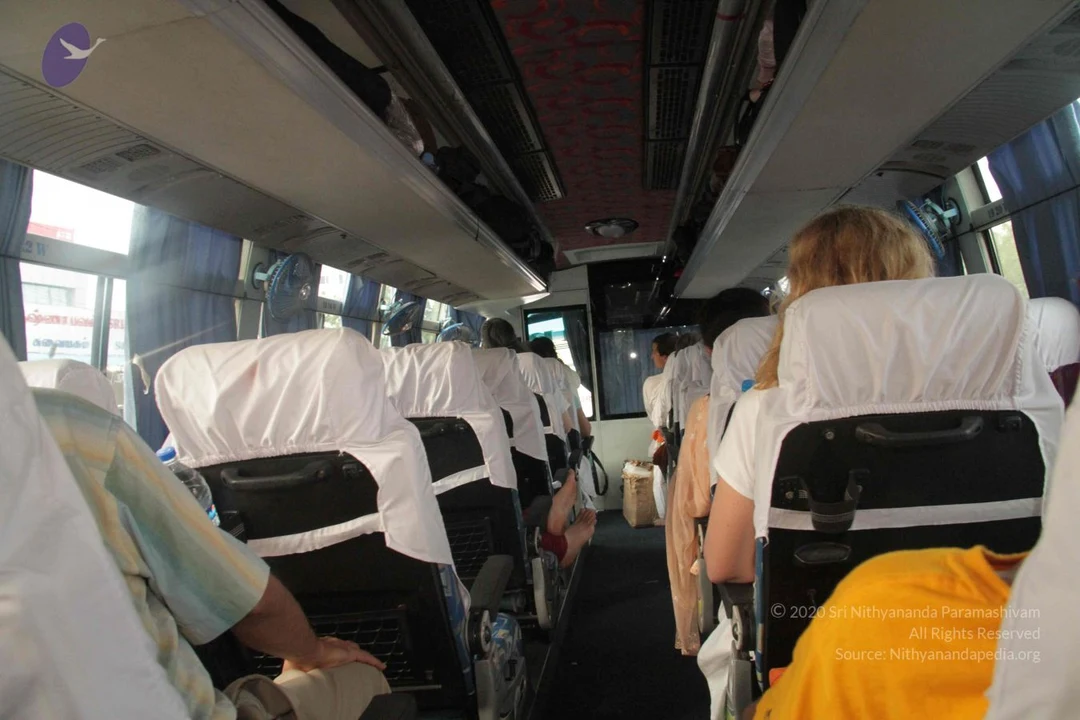
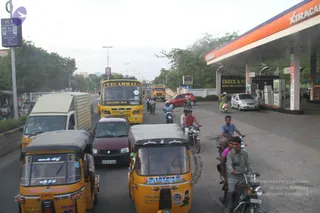
Street scene in a city where a white coach bus with orange and blue stripes and the words "Incredible India" on its side is parked beside a low stone planter with shrubs. Passenger windows show several seated people with white head coverings. In the foreground a cream-coloured hatchback car is partly visible, and a woman in a blue top walks past along the roadside. Behind them stand blue and pale buildings and a palm tree.A busy urban road in India viewed from a moving vehicle, with yellow autorickshaws in the foreground and a yellow Velammal College Bus in the traffic. A red car, a maroon hatchback and a white car queue behind a white box truck. Motorcycle riders in shirts and dhotis weave between vehicles, and a man in a red shirt rides with a passenger wearing pink. On the right is an Indian Oil petrol station with an orange canopy, a sign reading CHECK & FILL, and pumps. Trees and a clear sky complete the street scene.Interior of a coach bus with rows of seats covered in white headrest covers and black seat backs with white trim. Passengers sit in the seats, including a person in a white t-shirt with long light hair in the foreground and a person in a yellow shirt at the lower right. Blue curtains line the windows, and overhead luggage racks and ceiling vents are visible. No a person candidate is visible in this bus interior.Interior of a coach bus with rows of black seats fitted with white seat covers, viewed from the rear aisle. Several seated passengers are visible, including a person in a light yellow-and-white striped shirt at left, a person with long blonde hair in a white top at right, and a partly visible person in orange robes at lower right. Luggage is stored in overhead racks and a basket sits in the aisle. Blue curtains frame the windows and small fans are mounted near the ceiling.Interior of a coach bus with blue curtains, overhead luggage racks, and rotating ceiling fans. Several devotees sit in rows of white-covered seats, mostly seen from behind; one woman in the foreground wears a white top and a long braid with a garland-like strand. A travel bag sits in the aisle and a water bottle rests on a seat. Bright window light shows a street outside.A clear blue evening sky with a thin white crescent moon small near the centre-left of the frame. A single diagonal power line runs across the lower right corner. No people, deities or ritual objects are visible.

Thiruvannamalai

21 photosSource gallery
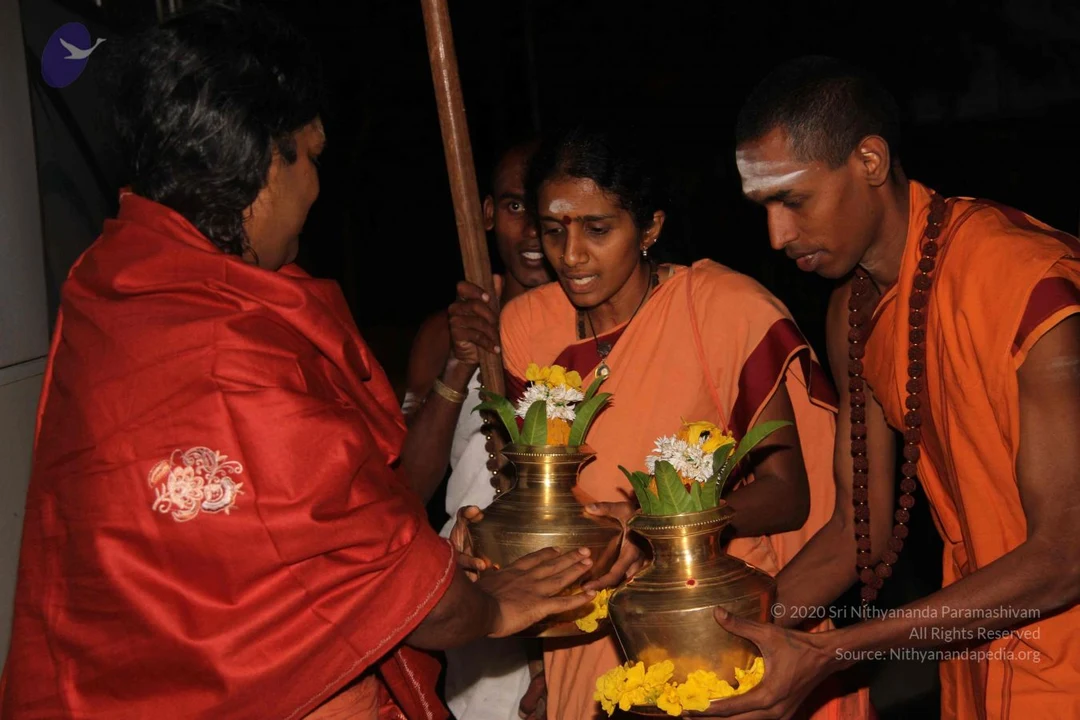
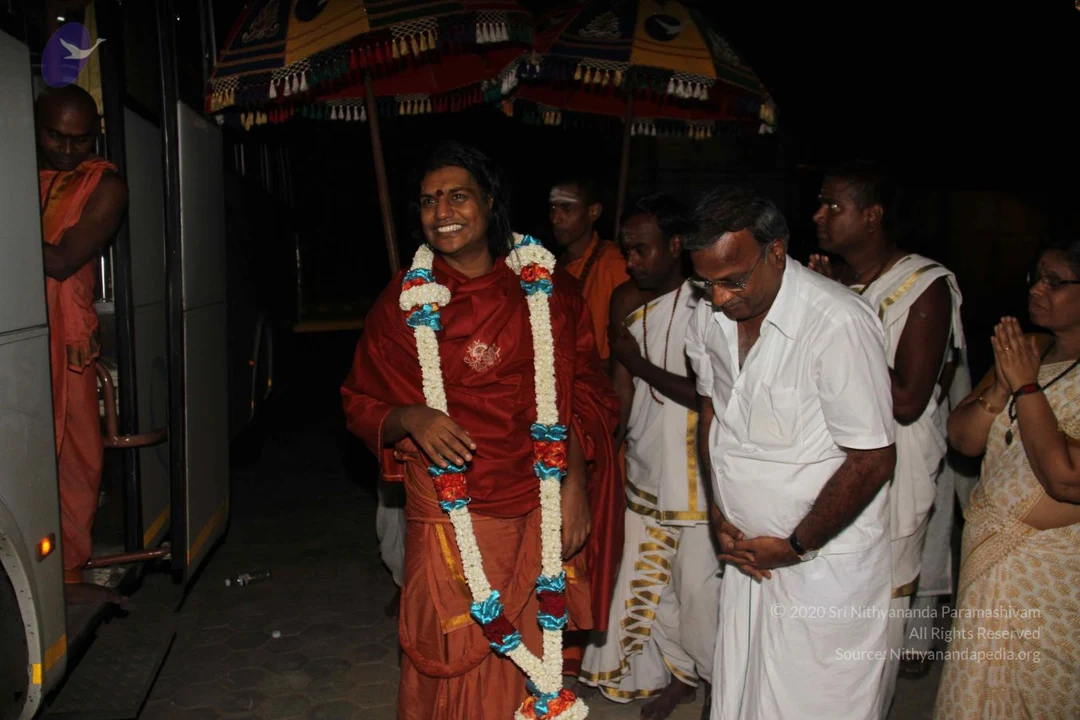
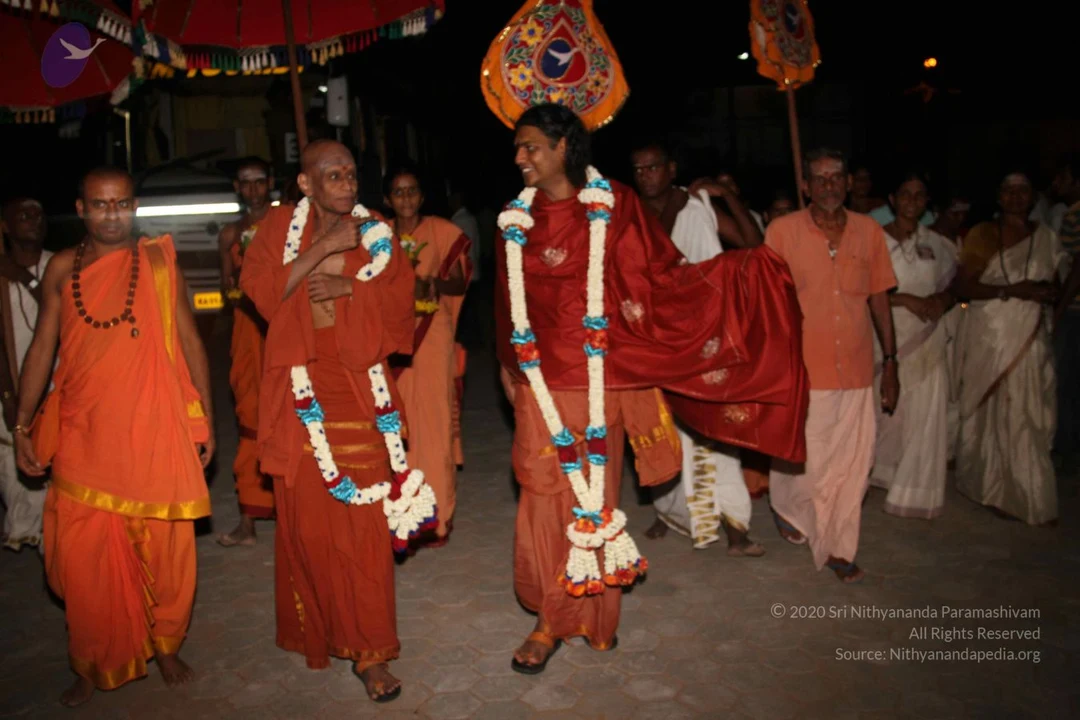
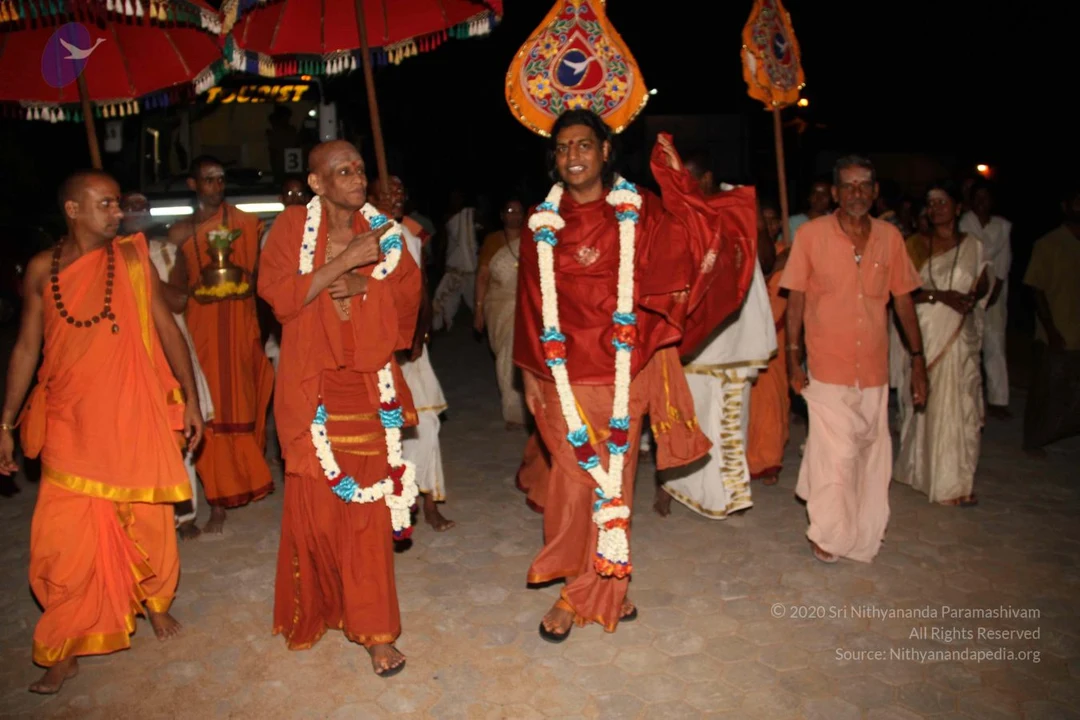
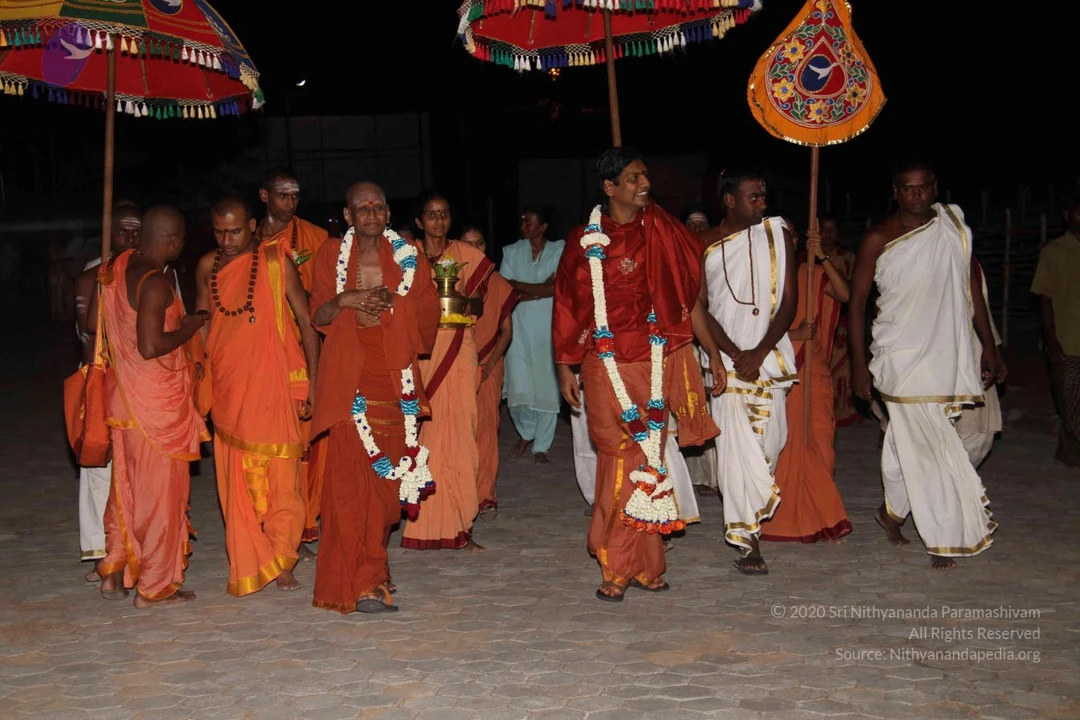
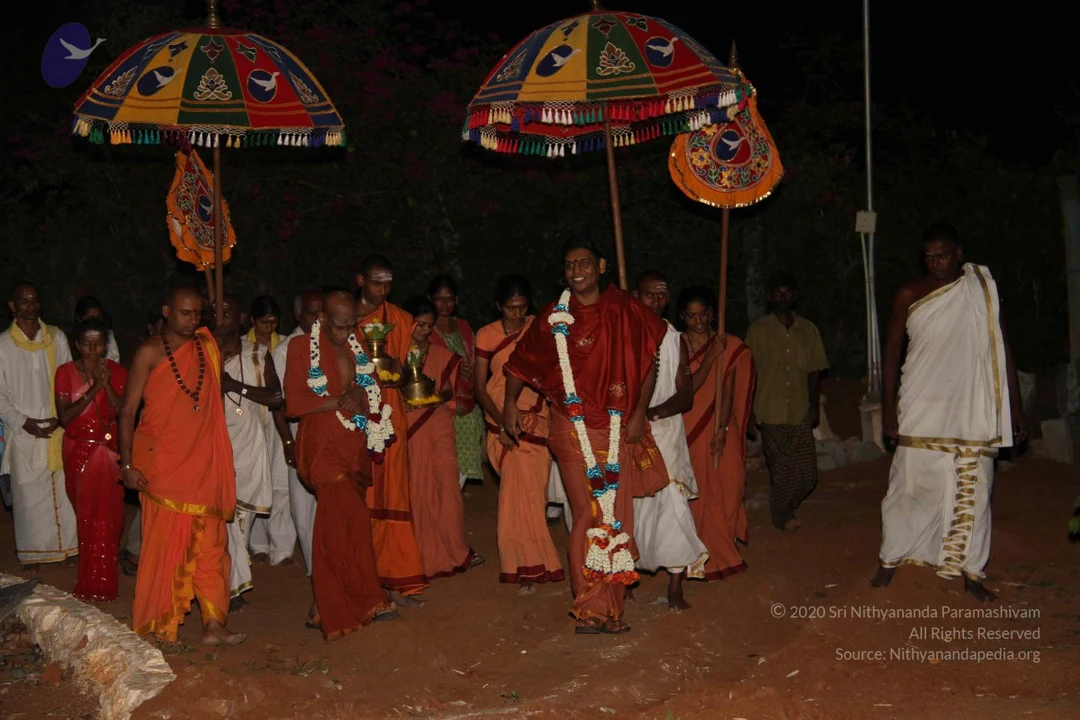
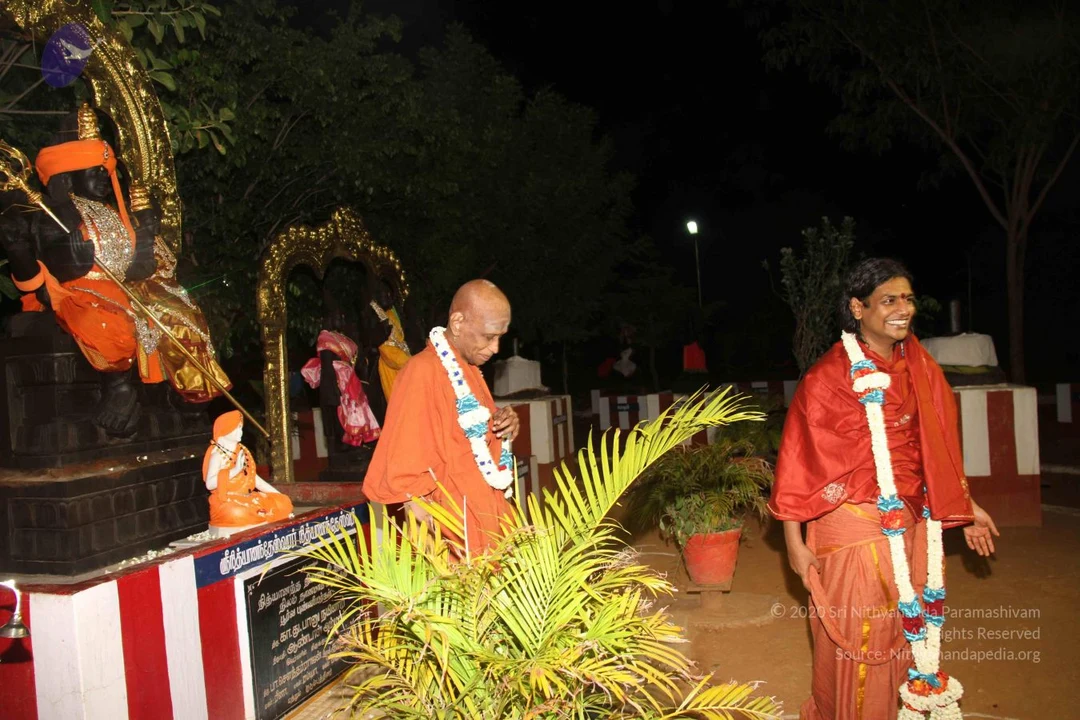
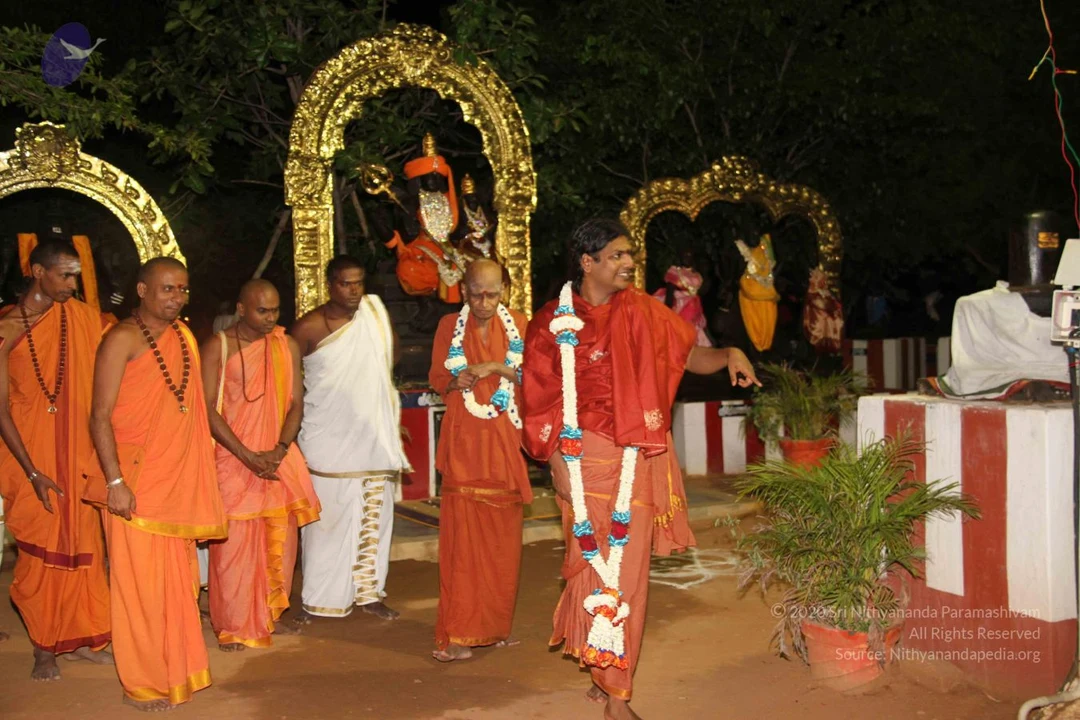
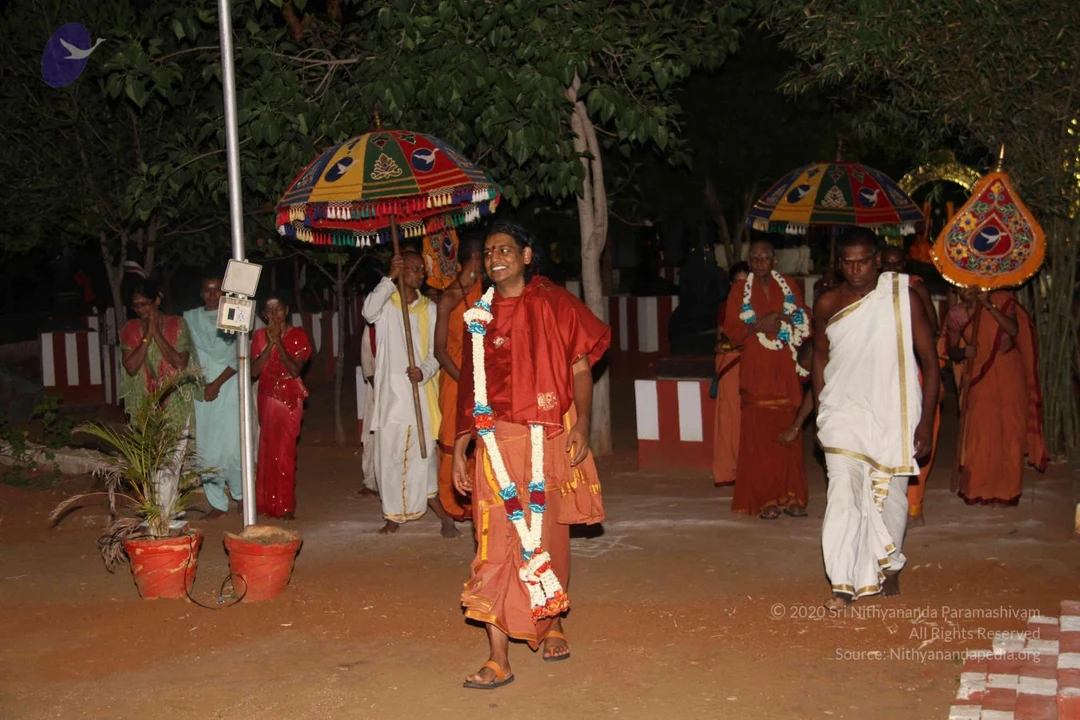
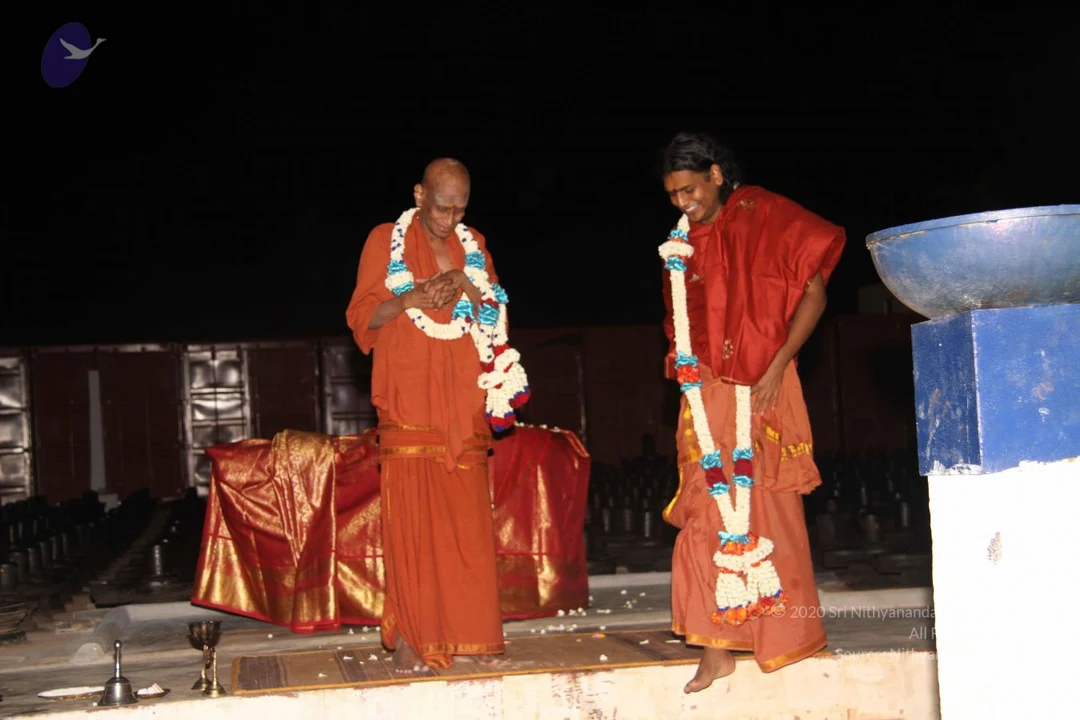
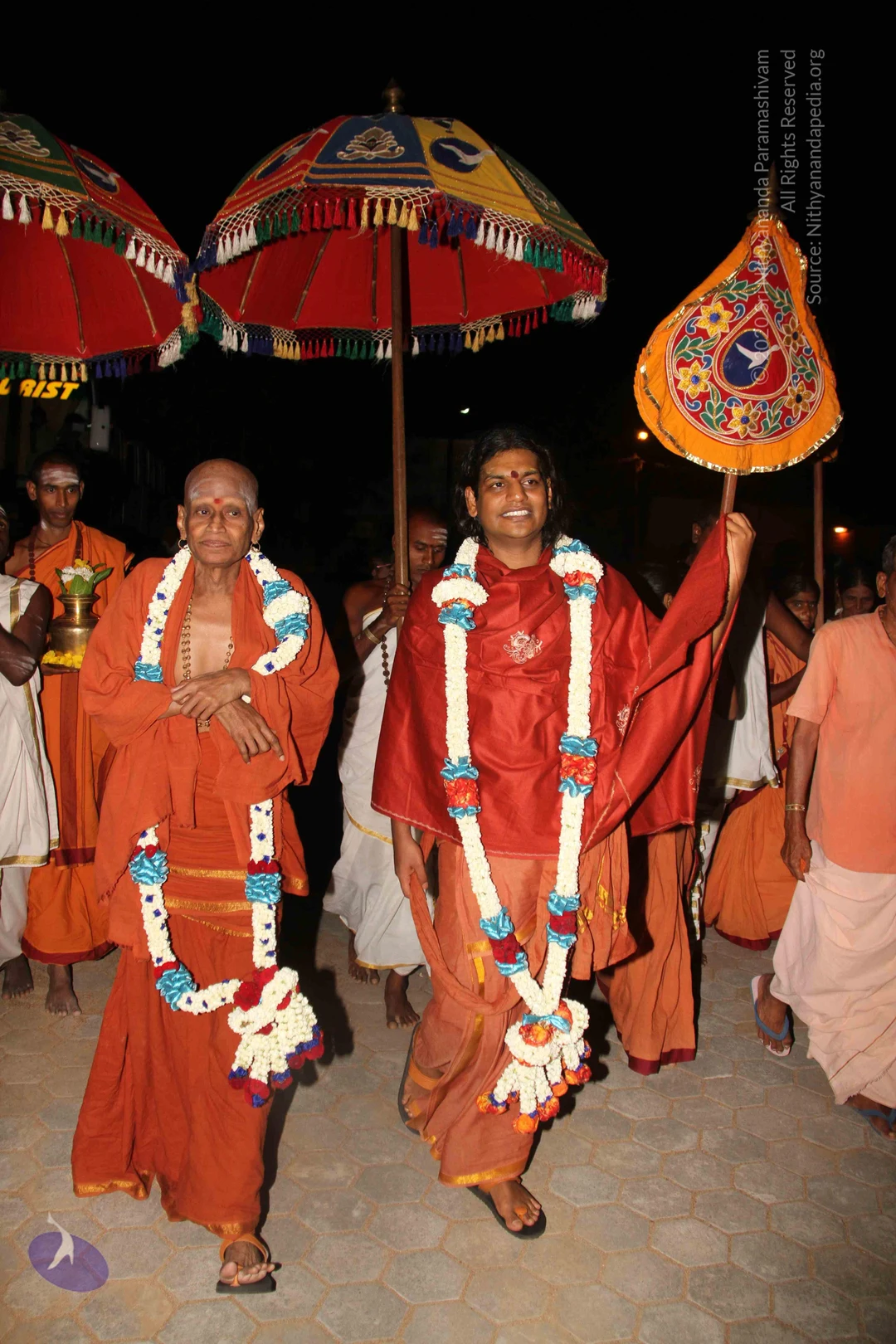
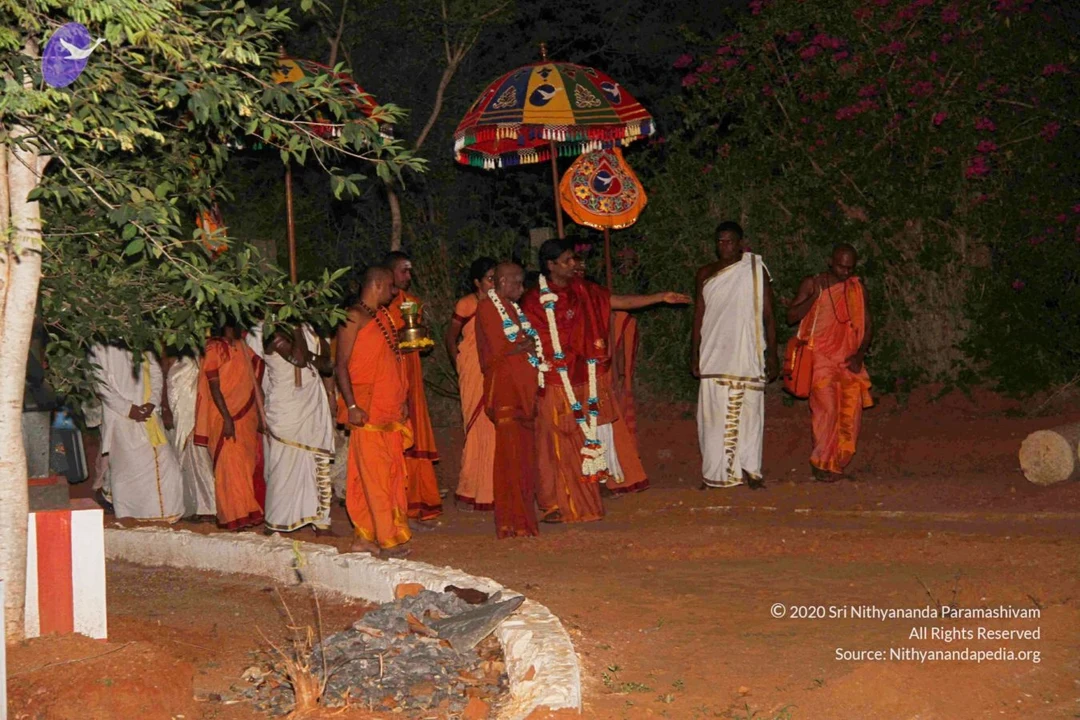
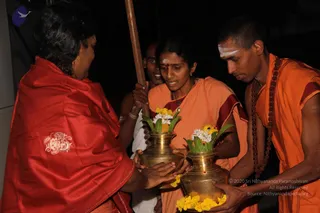
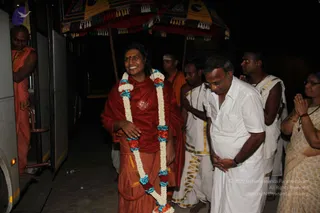
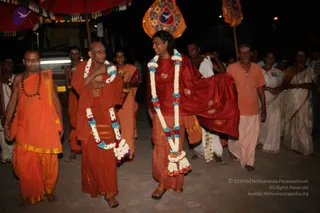
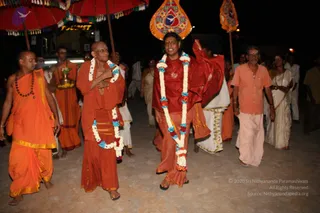
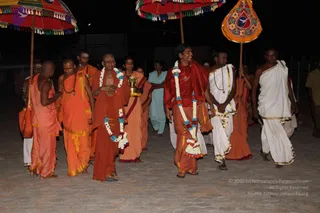
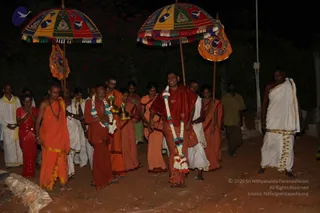
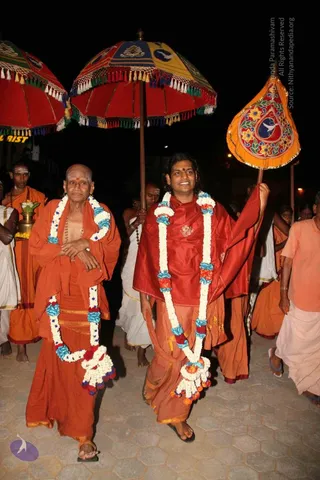
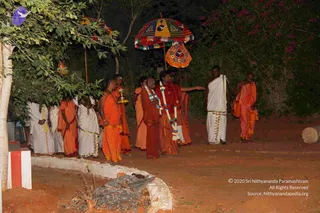
A night-time photograph of a ritual exchange at a temple or ashram. On the left, a woman in a red shawl with an embroidered floral motif holds a wooden staff and reaches toward two brass kalasha pots decorated with yellow and white flowers and green leaves. A woman in an orange sari with a red border, a red bindi and a vibhuti mark holds one pot. On the right, a young man in orange robes with a white tilak, wearing a rudraksha mala, holds the second pot. Another person in white stands behind, and yellow marigold petals lie on the ground.Night-time photograph outside a bus door. A long-haired person in a deep red shawl over orange-brown robes smiles, wearing a white and blue-and-red garland and a red forehead mark, walking beside a row of attendants. Behind them, several people in orange and white traditional dhotis with gold borders walk under a multicoloured fringed umbrella. A man in a white shirt and white dhoti stands with hands folded, and a woman in a pale yellow sari presses her palms together. Fabric-covered parasols and a bus step appear at left.Night procession on a paved street with red and orange canopy umbrellas overhead and a saffron-and-gold banner at top right. Several robed men in saffron and orange walk together. The central figure wears a red-orange robe, a long red shawl draped over one shoulder, and a white and multicoloured flower garland, and smiles toward a shaved-headed companion in orange robes and a white and blue garland. Behind them, devotees in white dhotis, cream sarees and orange clothing follow along the route. Several people are visible, with one more partly seen at the left edge.Night procession on a paved street with red umbrellas overhead and an orange ceremonial banner with a bird emblem. A man with long dark hair, wearing a red-orange robe and a white-and-blue flower garland, walks centrally, one arm raised in a gesture of greeting. Beside him a bald saffron-robed priest with a white-and-blue garland holds one hand to his chest. Other saffron-clad men and white-clad devotees follow, with an elderly man in an orange shirt and women in white saris at right. Lights from a bus behind the crowd illuminate the scene. Swamiji (probable) is the centrally placed man with long swept-back hair and red-orange robes in the procession.Night procession on a paved open ground with several robed figures walking under decorated umbrellas. In the centre a bald older man in saffron-orange robes wears a white and blue flower garland and holds his hands together in a greeting gesture; a brass vessel with a flower sits near him. Beside him a man in a red-orange garment with a red shawl and a white garland walks smiling. Other participants wear orange and saffron robes, a rudraksha mala and tilak, and white dhotis with gold borders. Two red and multicoloured umbrellas and an orange umbrella with a floral emblem are carried overhead. Dark background with some onlookers at the edges.A night procession on a red earth path, lit dimly. Two large multicoloured umbrellas with tasselled edges and bird motifs are held above a central figure in a red-orange robe and long white flower garland, who smiles and walks forward. Around him, people in saffron and orange robes, white dhotis, and red and orange saris carry brass vessels and offerings. A man in white dhoti with gold border stands at the right, and a man in green shirt and dark sarong stands behind. Several people wear white vibhuti marks on their foreheads. Trees form the dark background. No candidate's appearance is distinctive enough to confirm the a person identity, so the central figure is described by role only.

Morning-Satsang

14 photosSource gallery
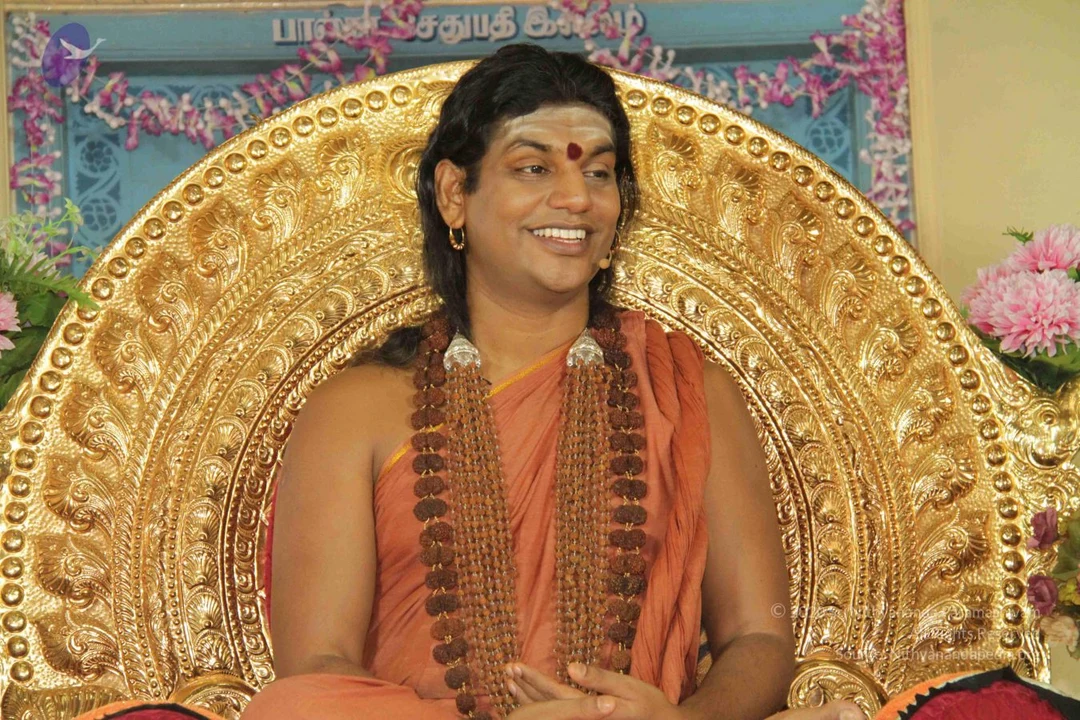
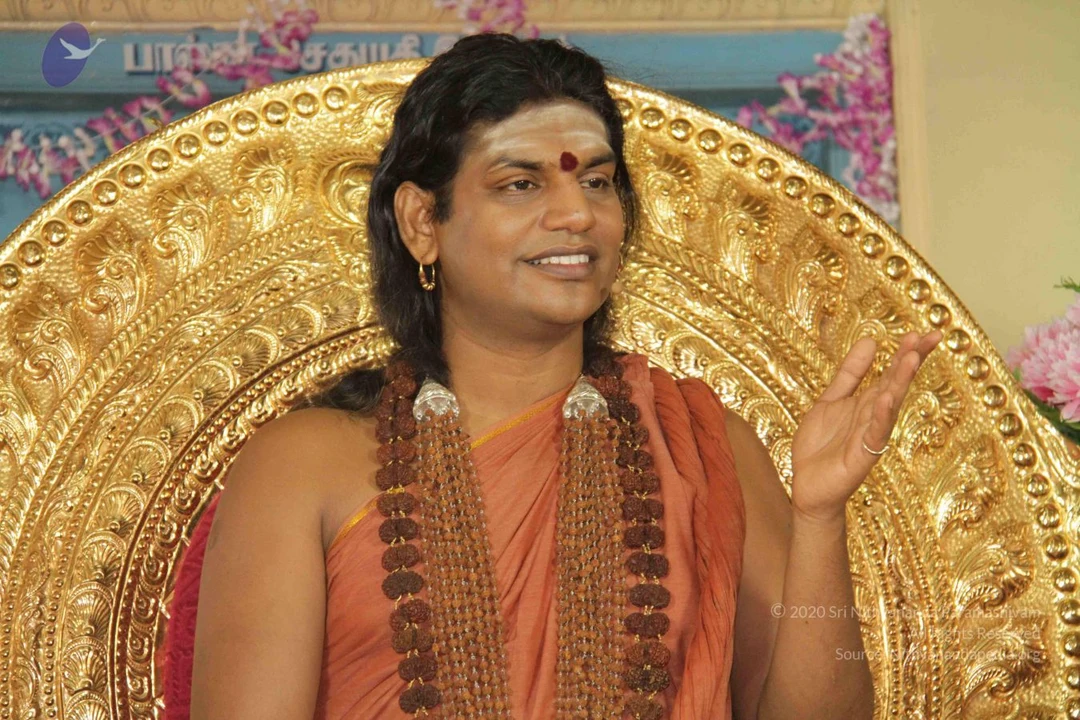
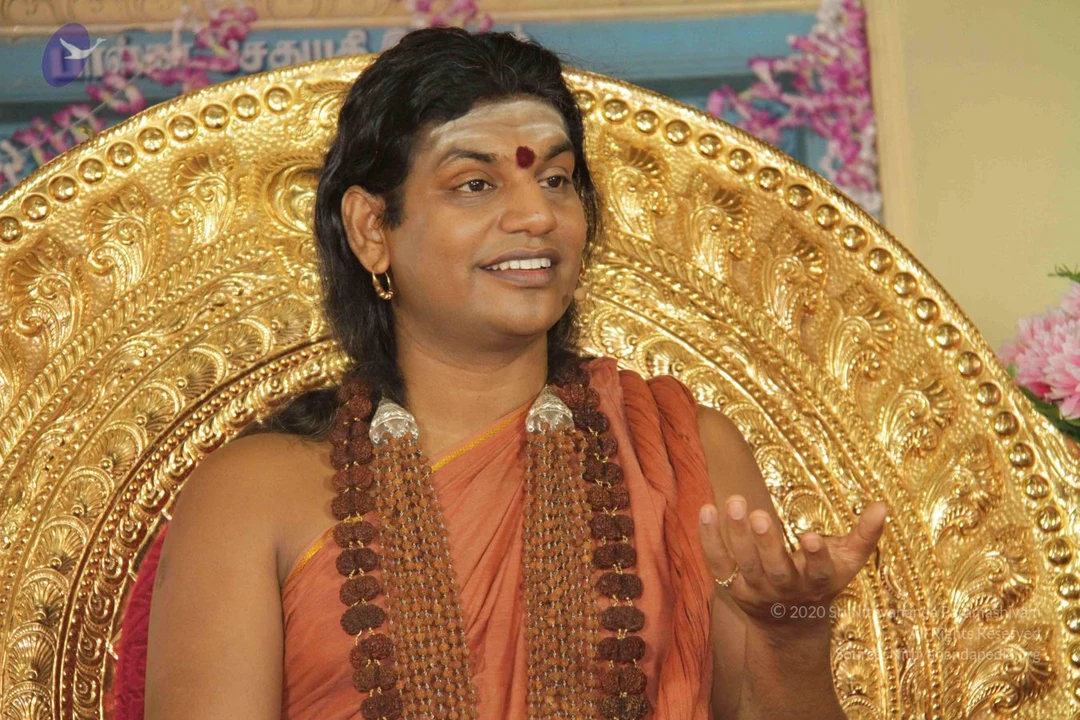
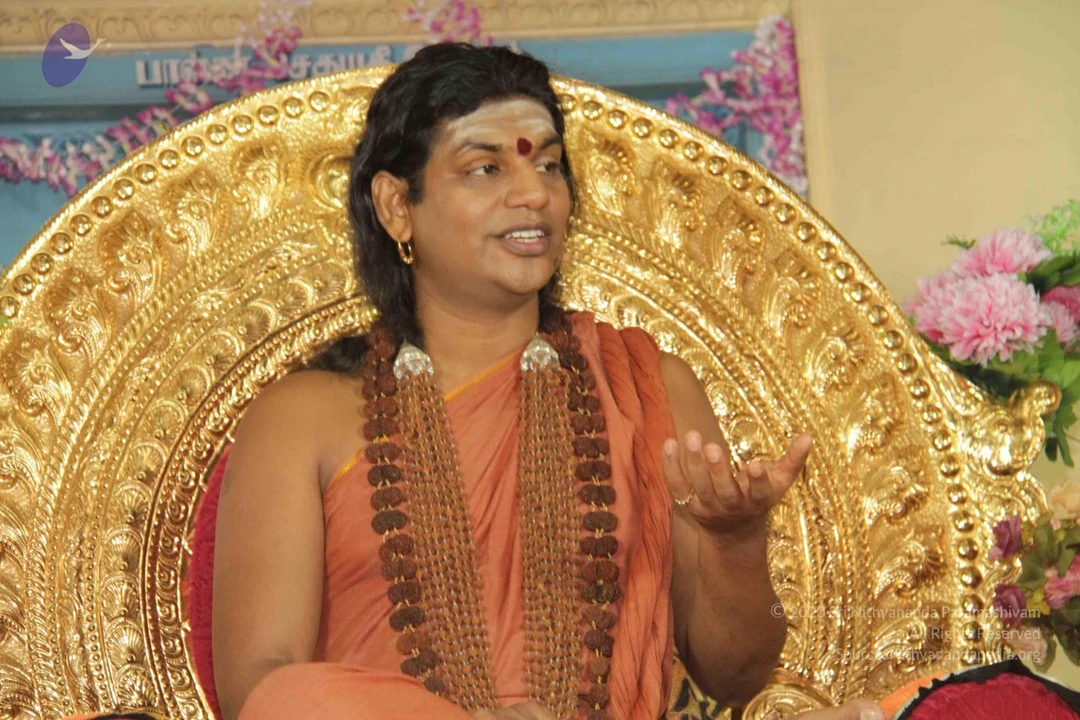
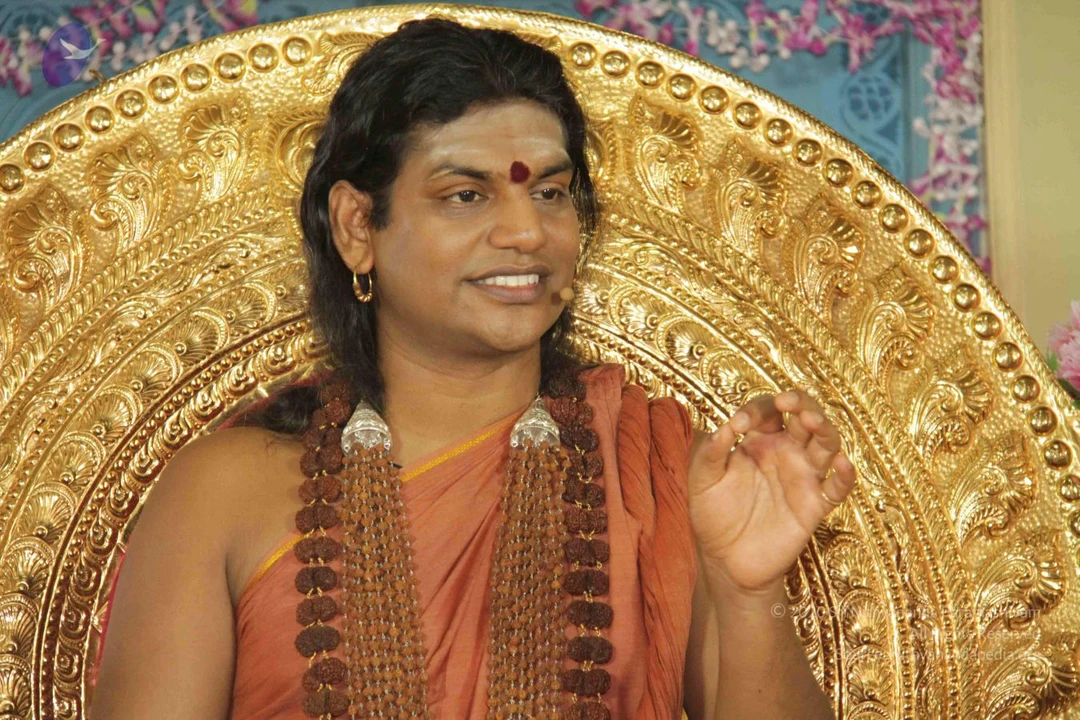
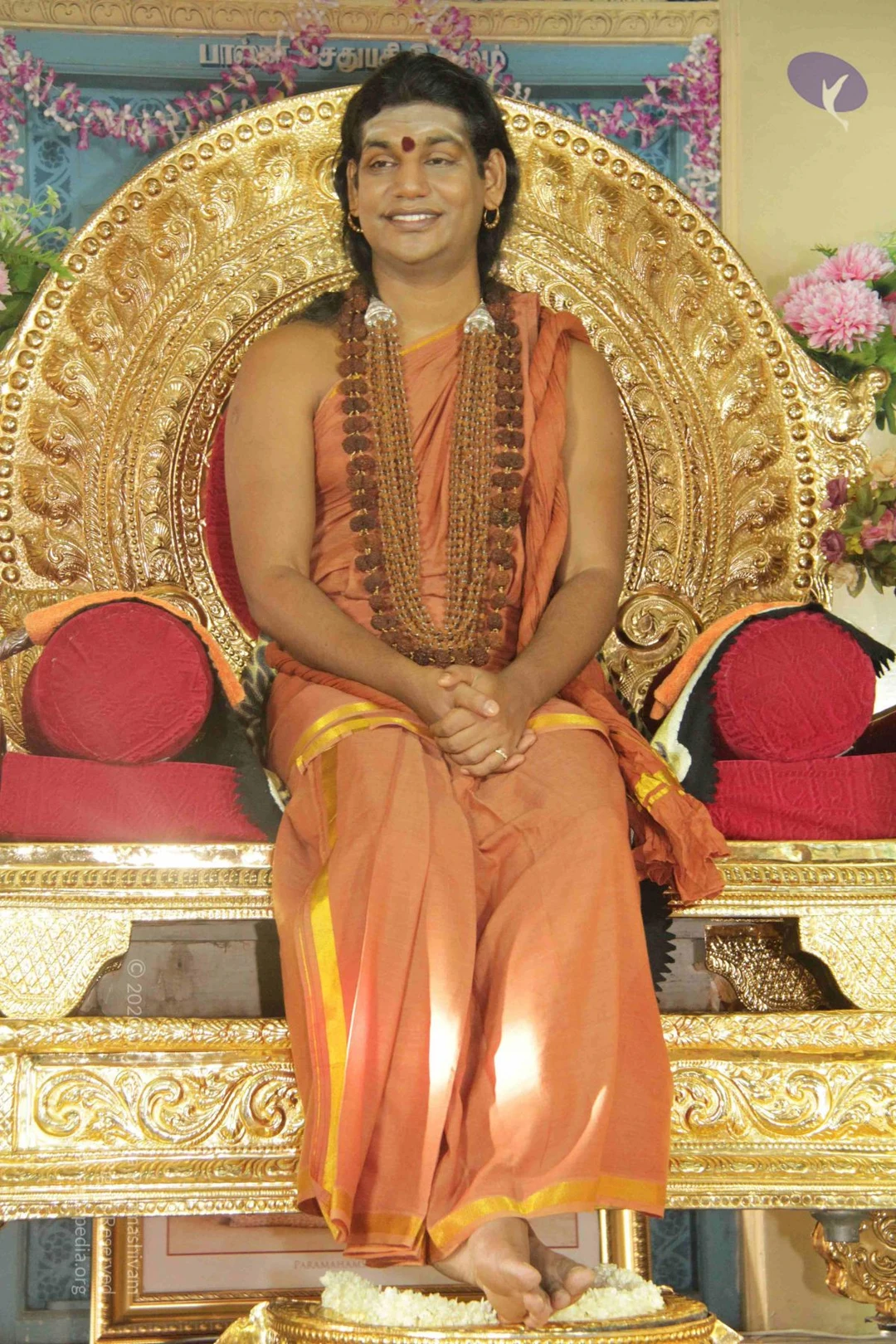
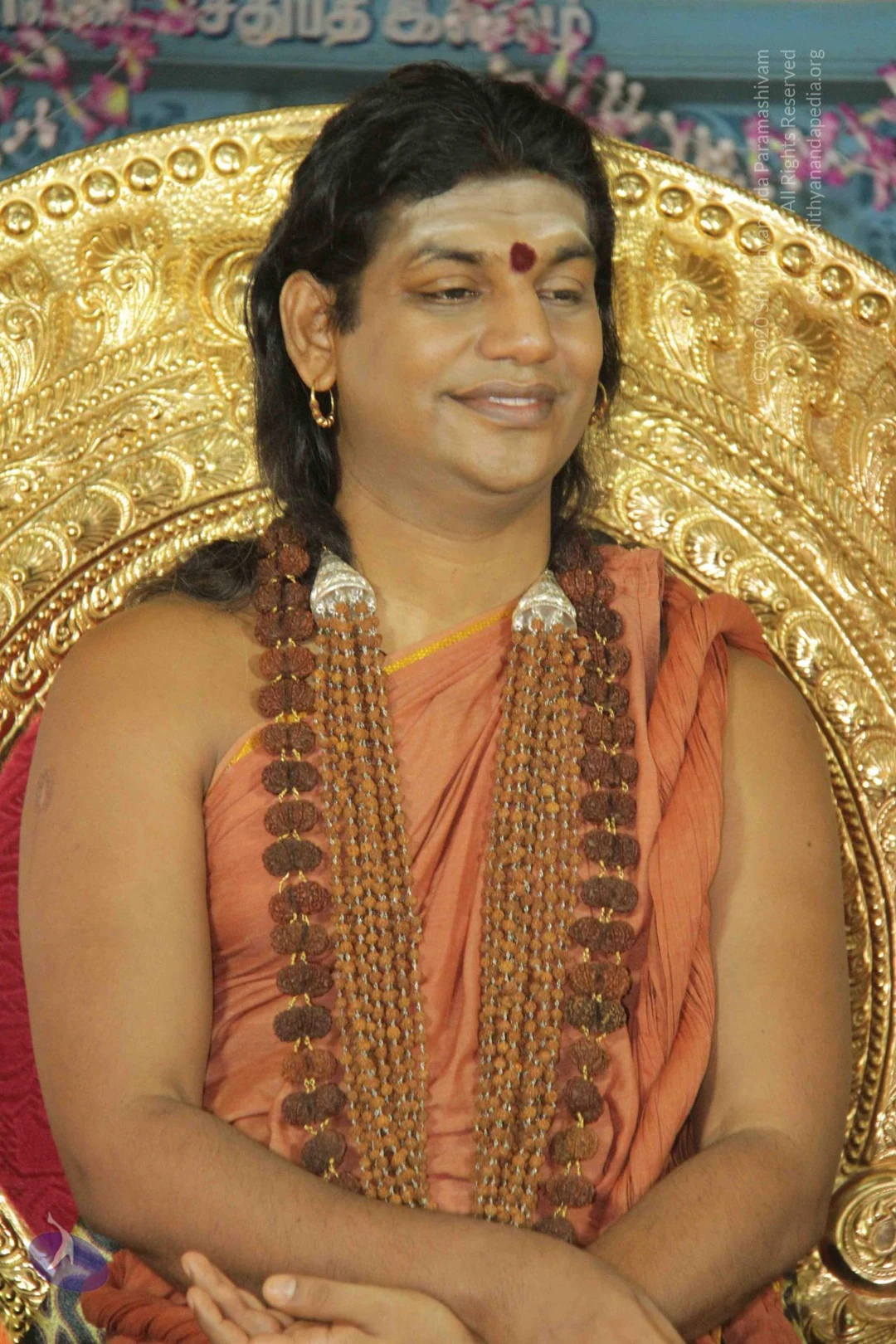
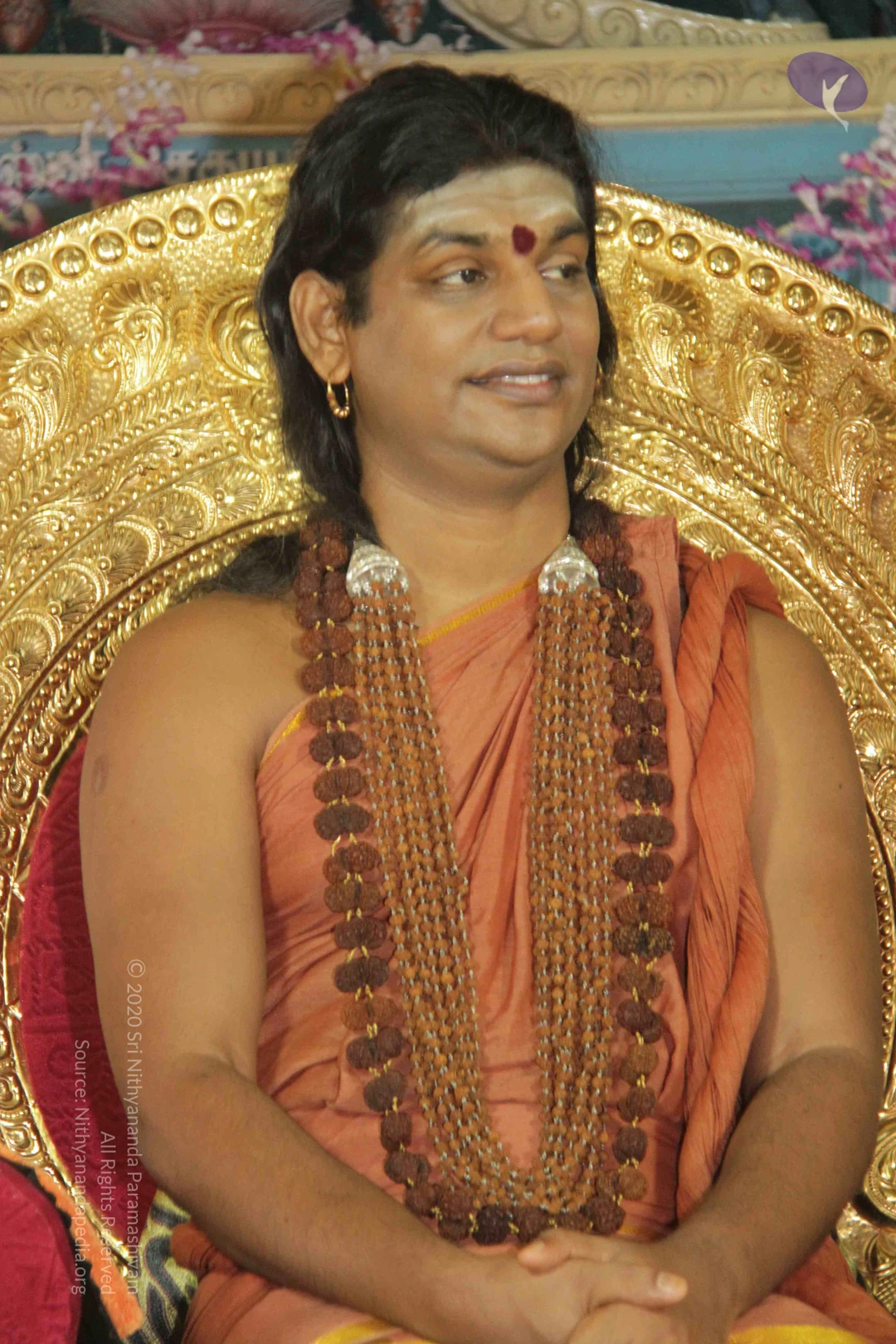
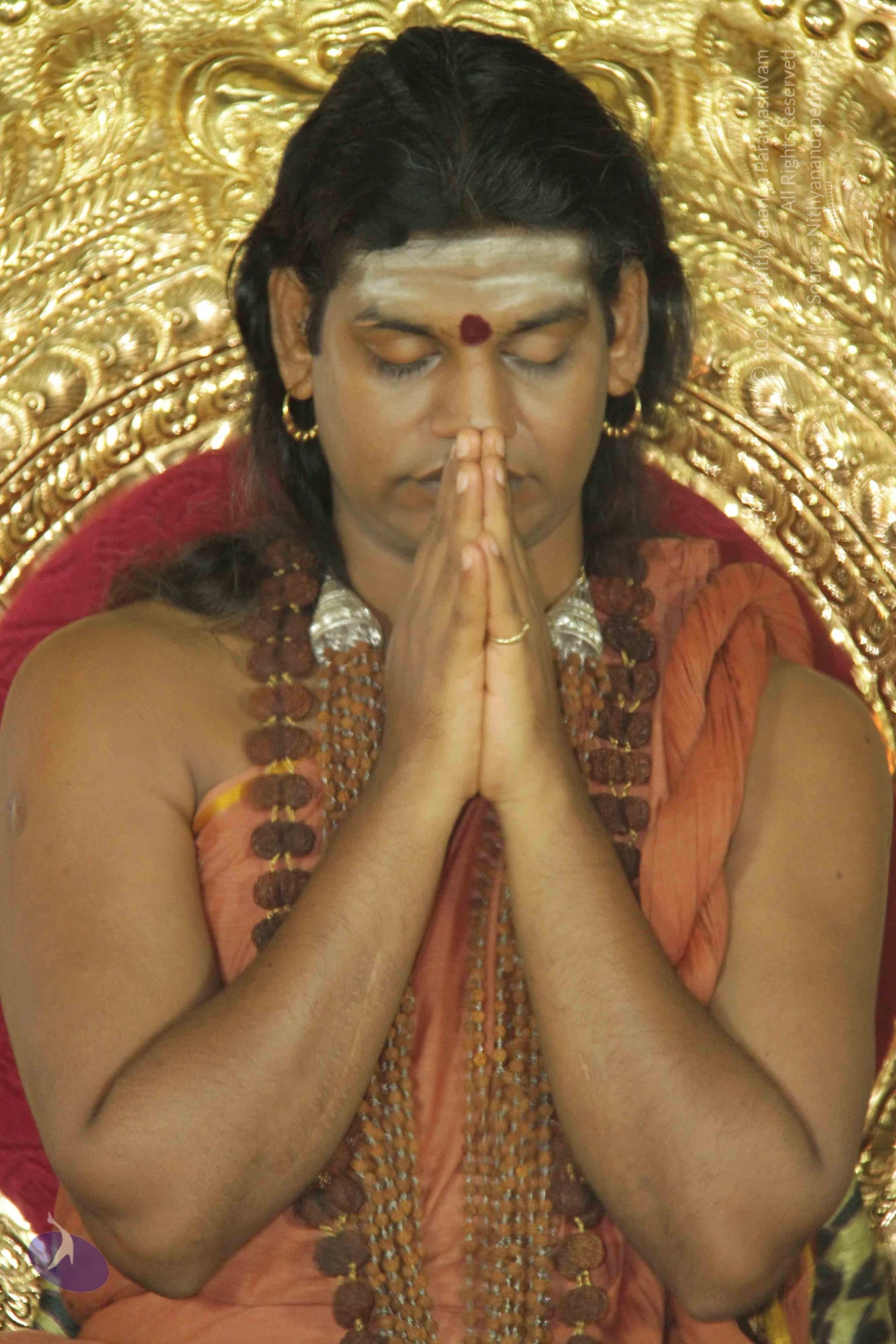
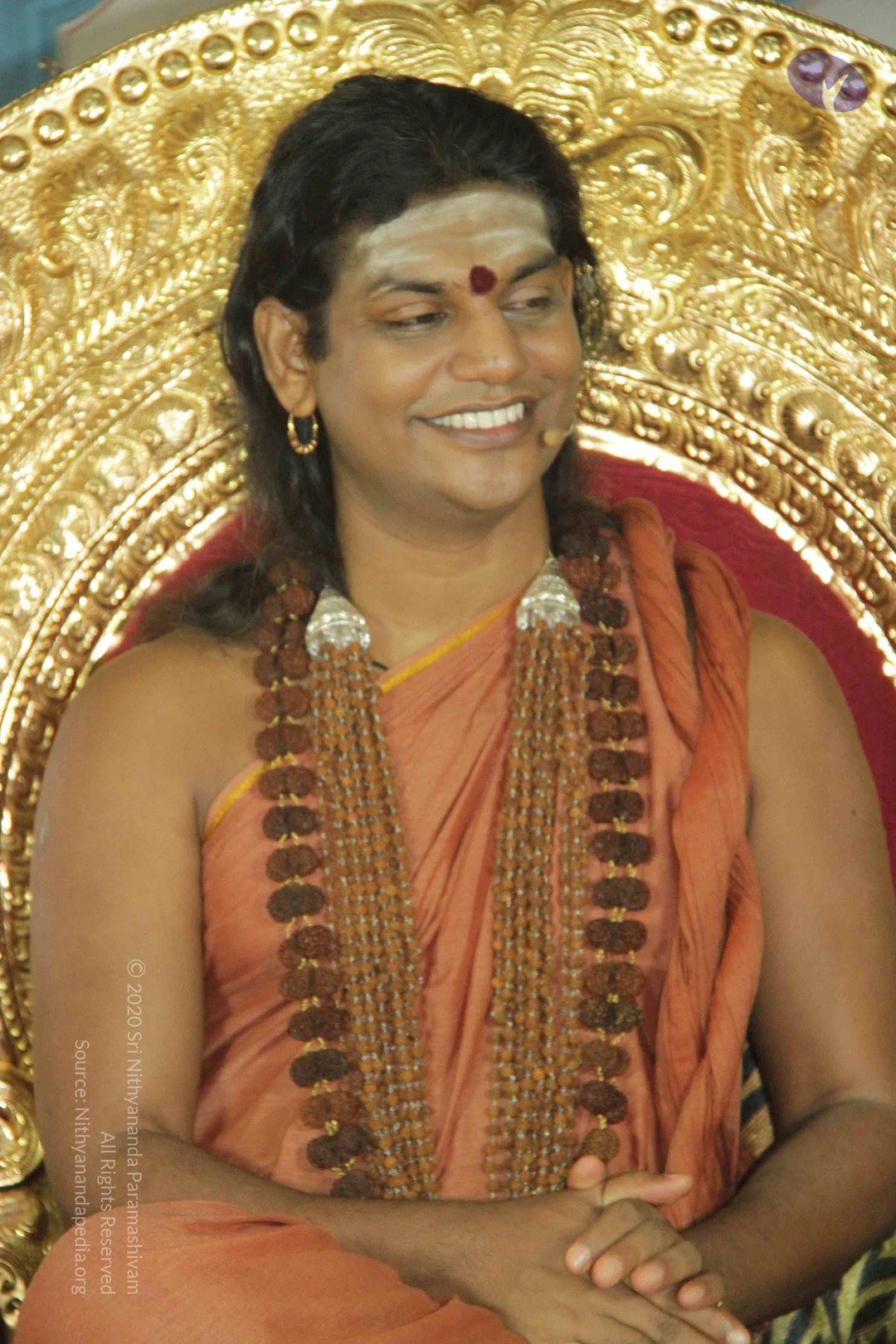
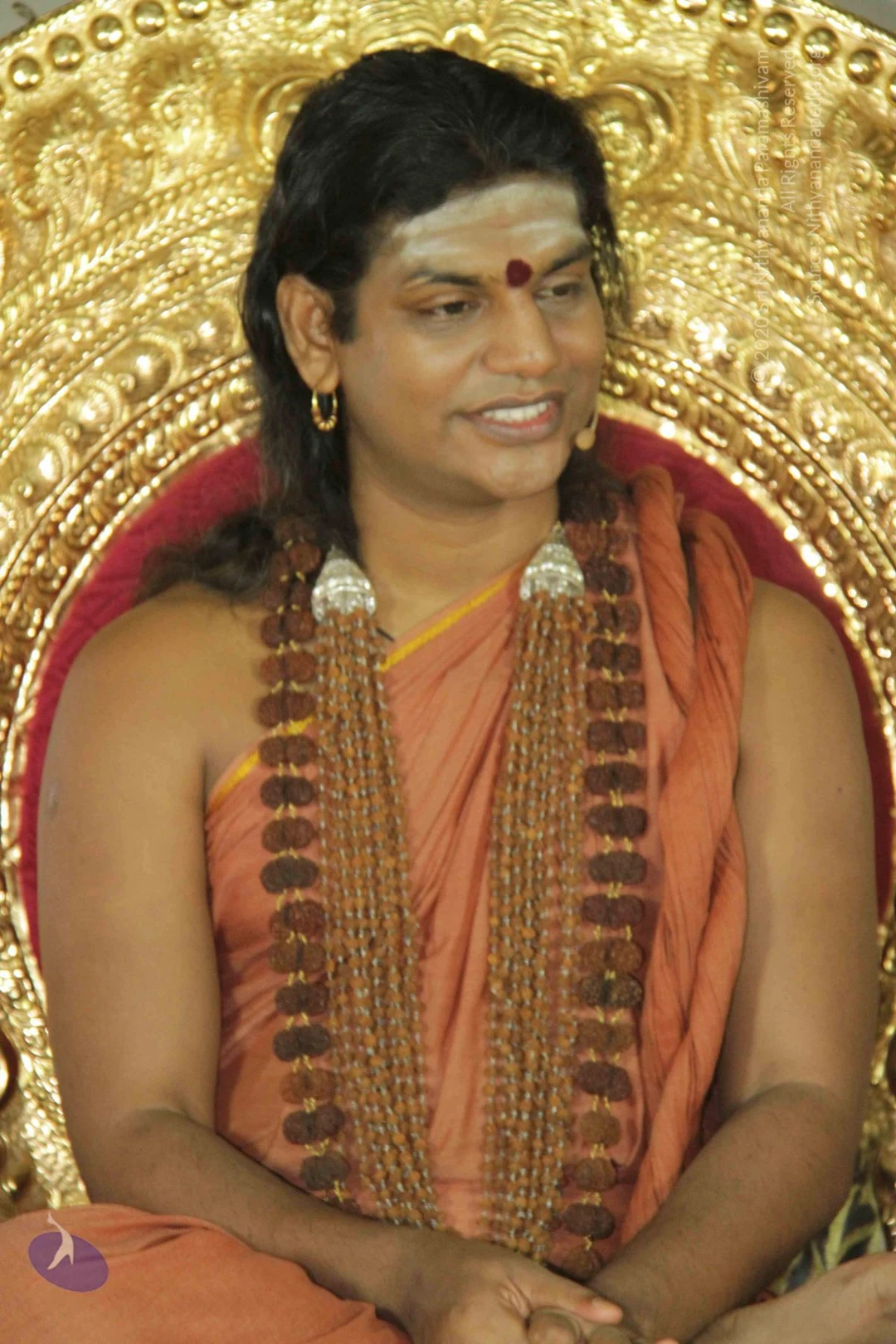
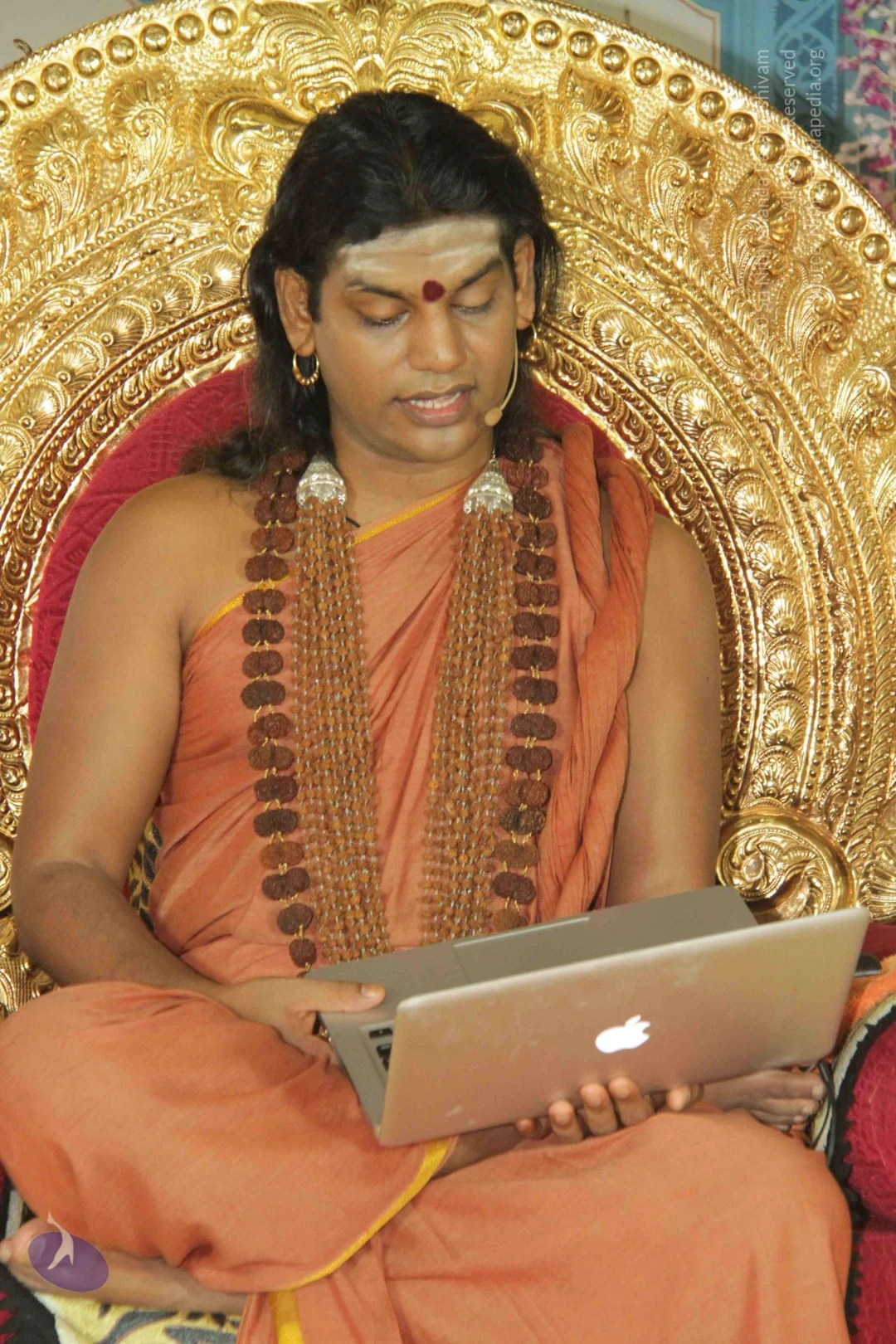
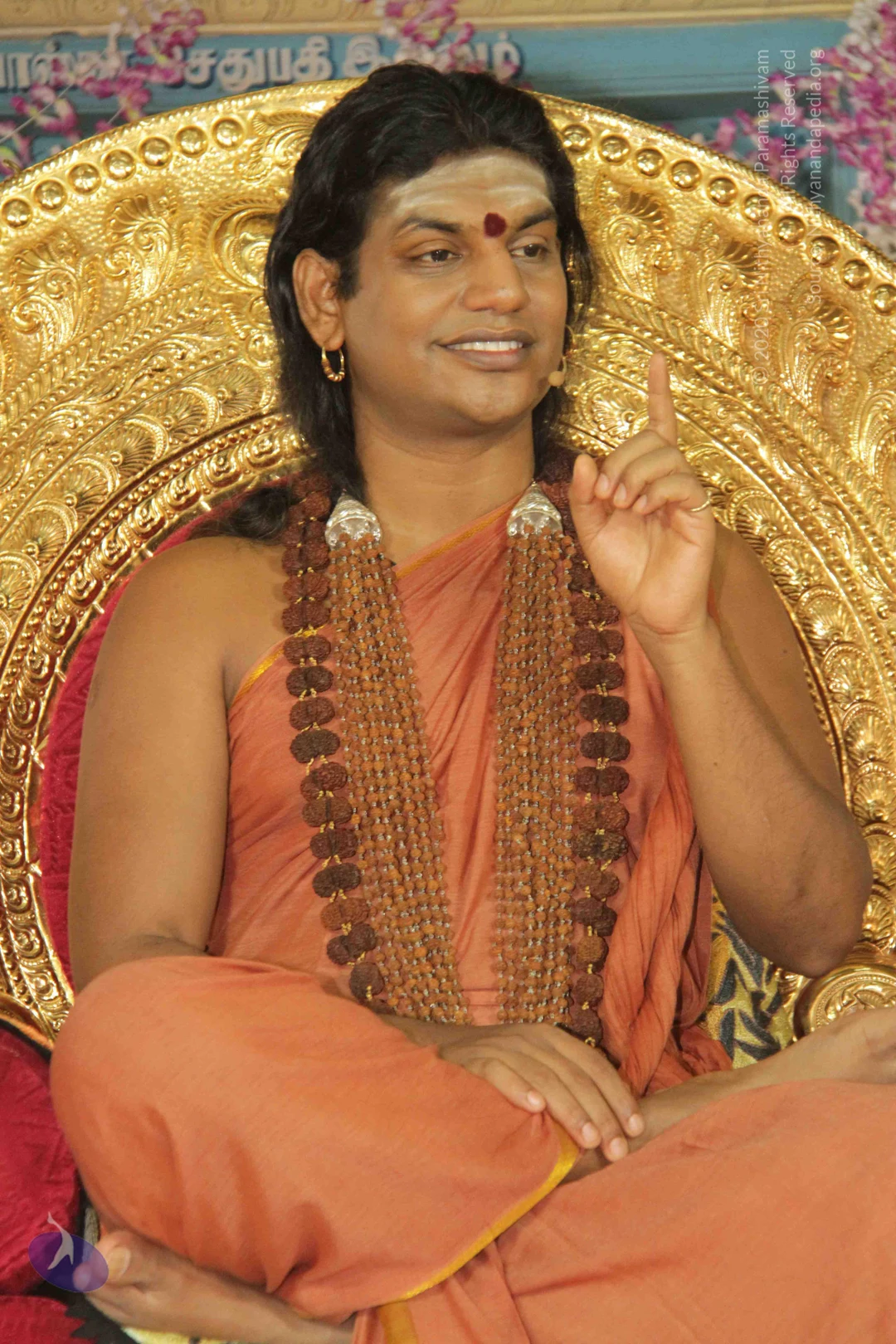
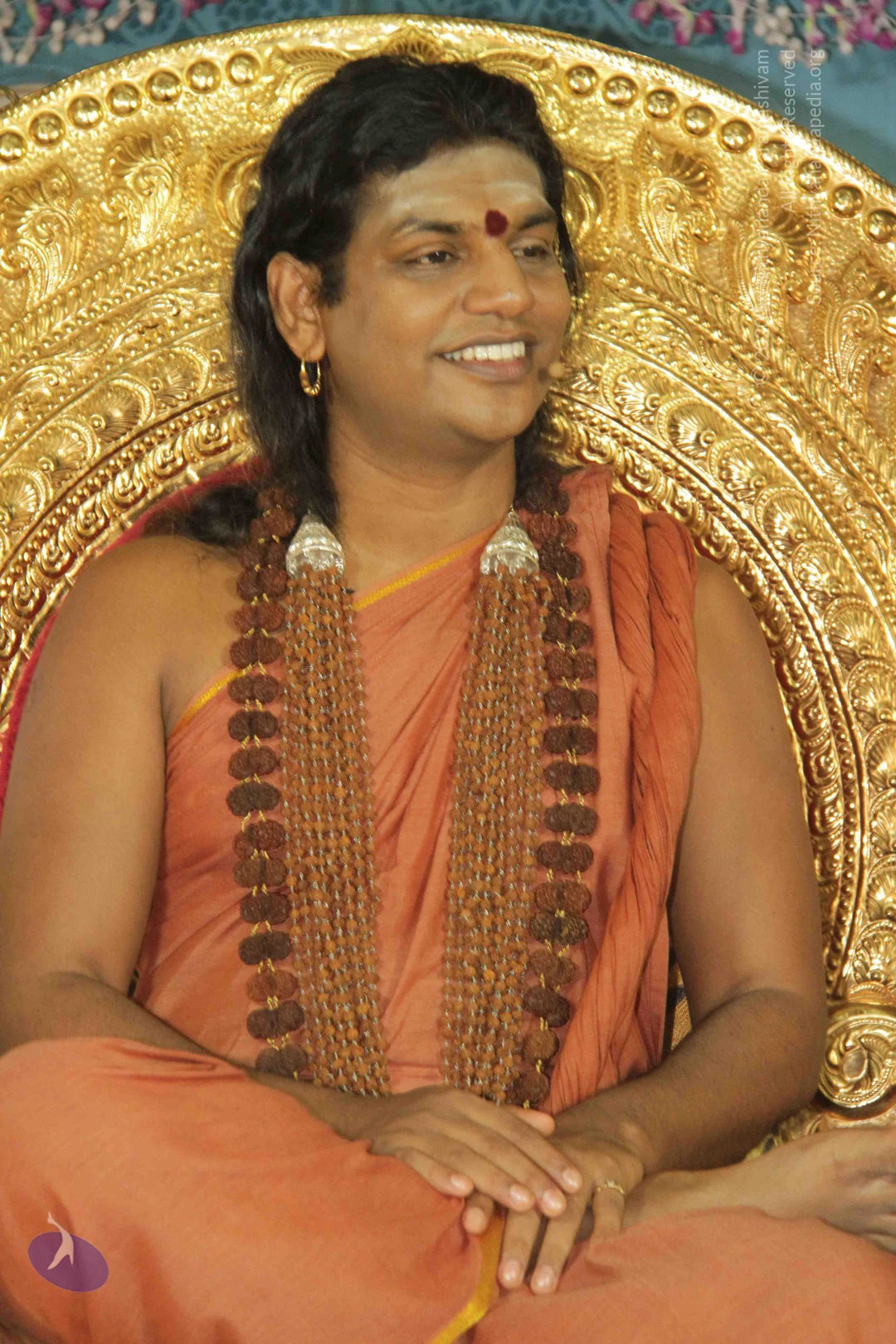
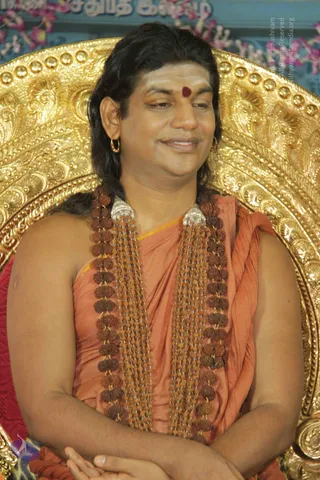
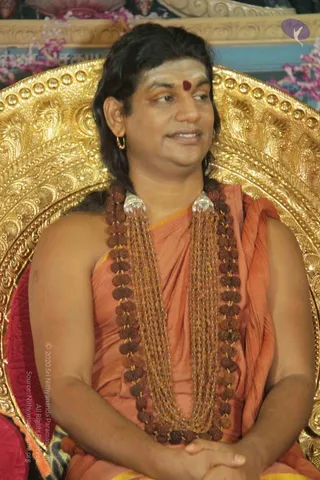
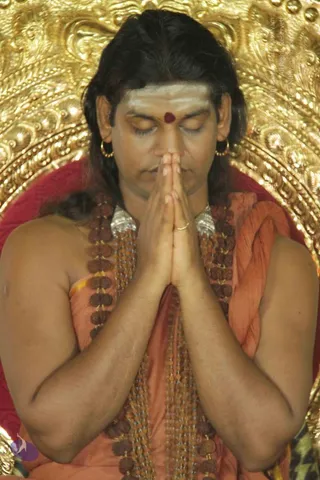
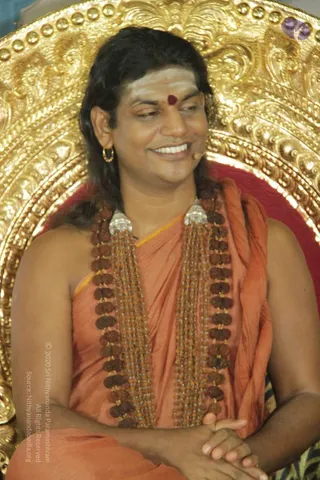
A seated man on an ornate gold throne with red cushions, flowers and pink blooms behind him. He wears saffron-orange robes with a gold border, multiple strands of rudraksha beads and a ceremonial necklace, and a red bindi on his forehead. His hands are clasped in his lap and his feet rest on white flower petals. a person, seated in a throne with saffron robes and rudraksha malas, appears to be presiding over the satsang. A Tamil-script banner is visible above.Probable Swamiji seated in an ornate gold throne-style chair against a backdrop with pink floral decoration and Tamil script. He wears an orange-saffron shawl draped over the shoulders, multiple rudraksha mala necklaces with silver caps, small hoop earrings, and a red tilak on the forehead. His long dark hair is swept back and his hands are folded in his lap as he smiles softly. Only one person is visible.A man with long dark hair sits on an ornate gold throne with carved floral and scrollwork, against a backdrop of pink flowers and painted blue panels. He wears an orange-saffron shawl draped over the body, multiple strands of rudraksha beads with silver clasps forming a long mala, and a red bindi on his forehead. His hands are folded in his lap and he gazes to the side with a slight smile.Close-up photo of a man seated before an ornate gold repoussé backdrop, eyes closed and palms pressed together in anjali mudra at his chest. He has long dark hair swept back, a white vertical forehead mark with a red bindi, small gold hoop earrings, and wears an orange-saffron garment over bare shoulders with a red cloth behind him. Multiple rudraksha mala strands and a silver ceremonial pendant hang at his neck. Probable Swamiji by appearance: long swept-back hair, saffron clothing and rudraksha malas, shown in a devotional seated pose in the Madurai satsang setting.A smiling man with long dark hair sits on an ornate gold throne with a red cushion. He wears an orange-saffron shawl over bare shoulders, multiple long rudraksha mala necklaces with silver caps, a small gold hoop earring, white horizontal tilak stripes and a red bindi. He has his hands clasped in his lap and a small clip-on microphone near his face. Probable Swamiji by appearance cues: long hair, saffron shawl, rudraksha malas and ornate gold throne.A seated man in orange saffron robes sits on an ornate gilded throne with a red cushioned backrest and intricate golden repoussé carving. He has long dark hair swept back, a white horizontal tilak with a red dot on his forehead, and small gold hoop earrings. Multiple strands of rudraksha beads with silver caps hang across his chest, and a small lapel microphone is clipped near his face. His hands rest folded in his lap as he speaks with a slight smile, appearing to address an audience. Probable Swamiji in appearance, given the saffron robes, long hair, rudraksha malas and gilded throne, seated as a discourse speaker.

IA-Karupar-Temple-Visit
18 photosSource gallery
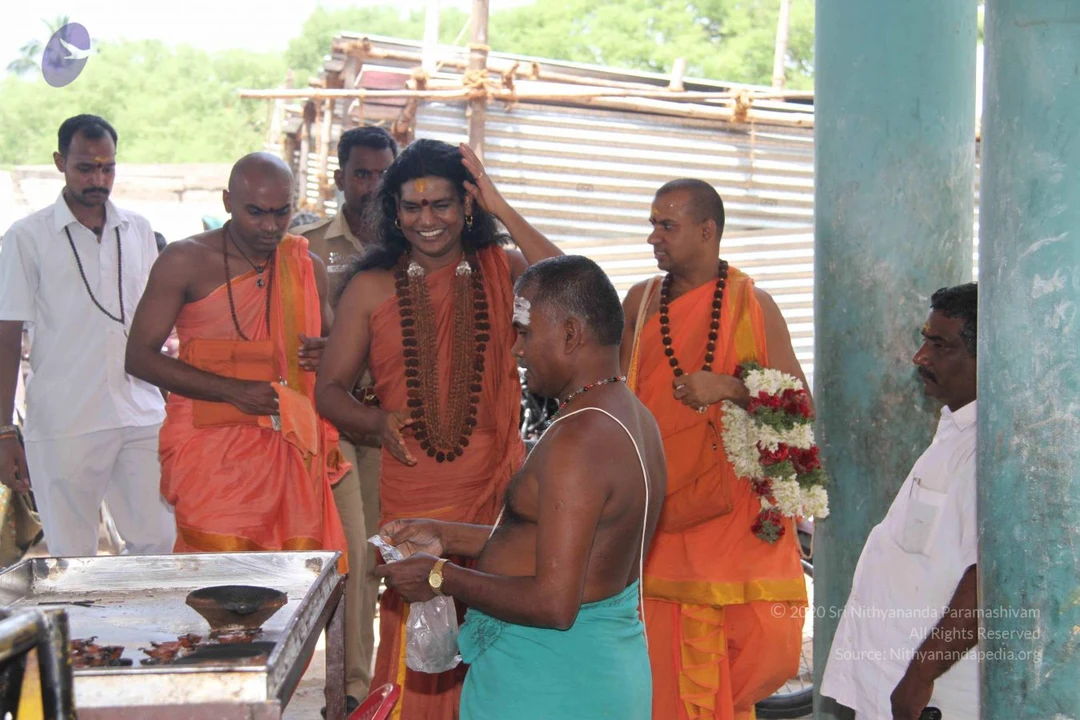
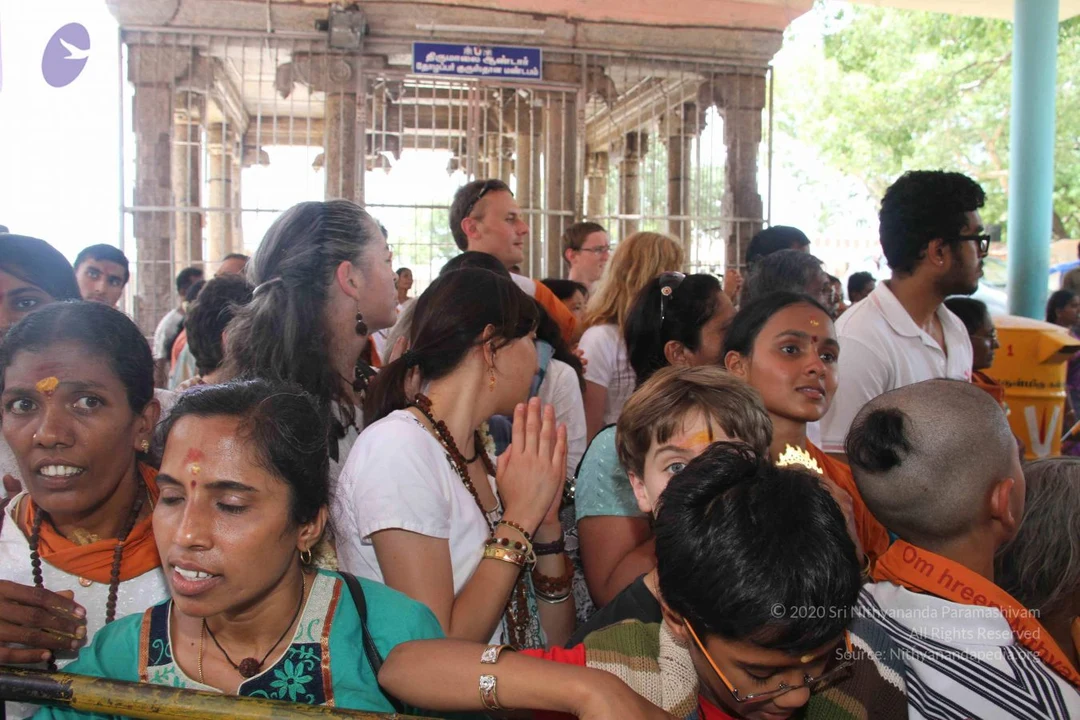
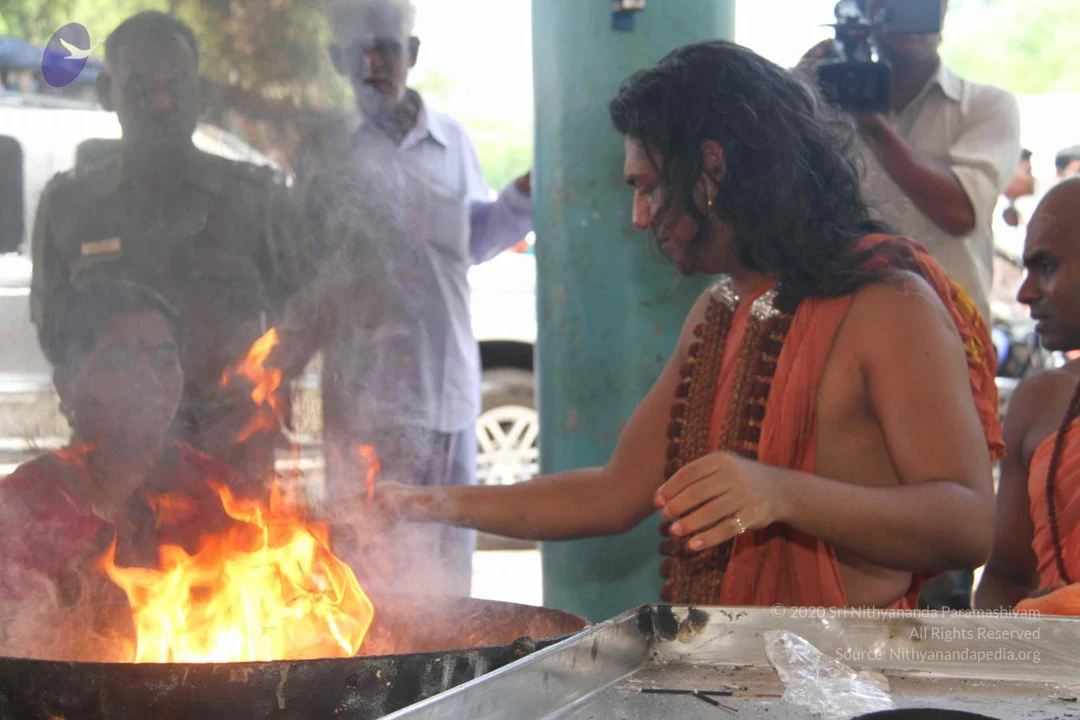
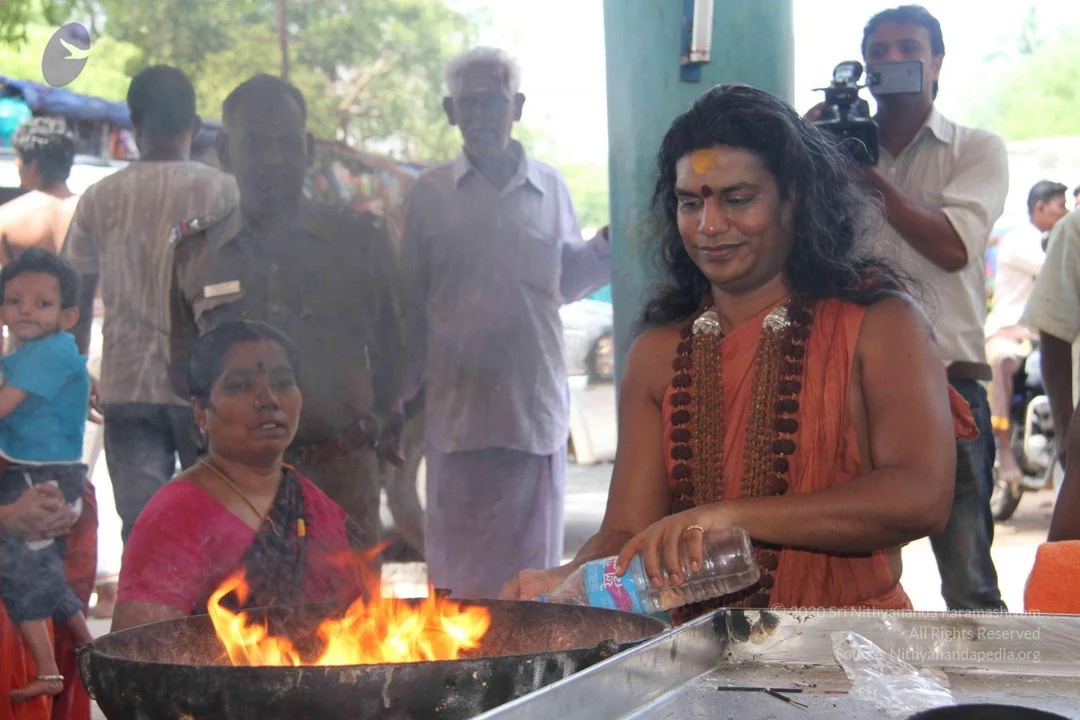
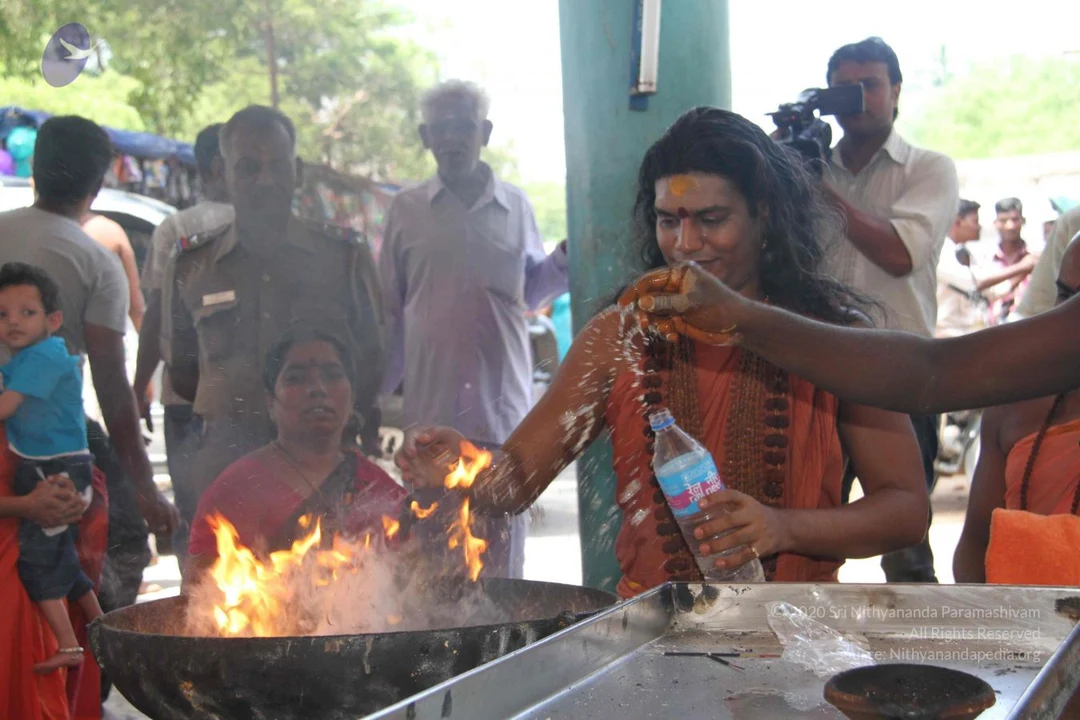
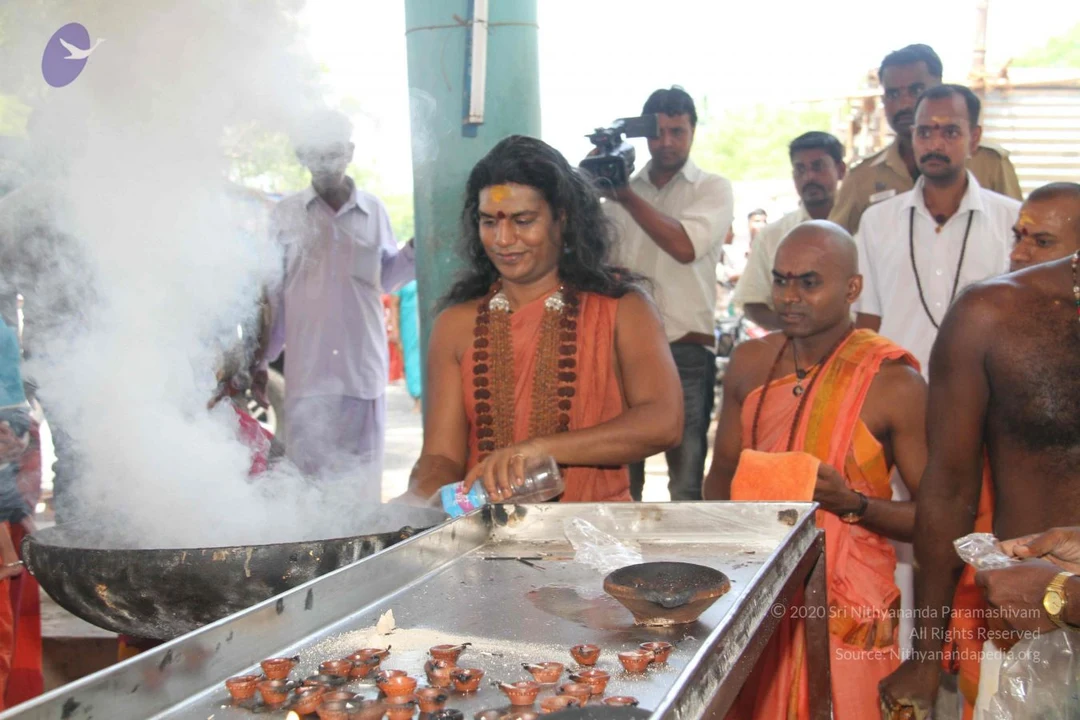
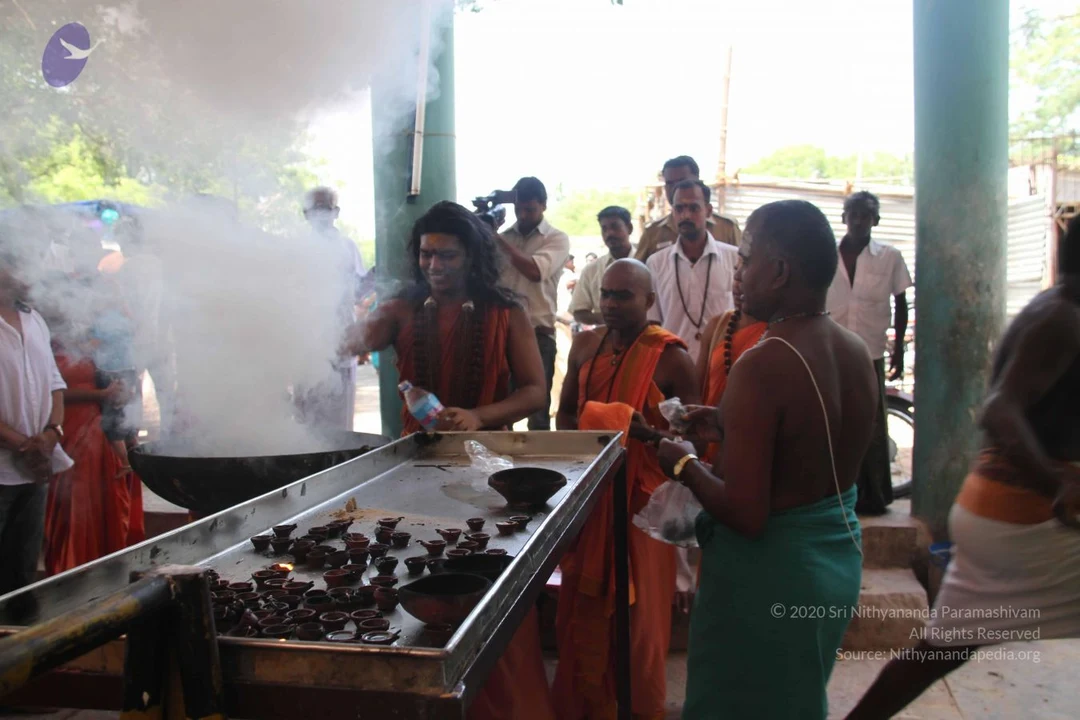
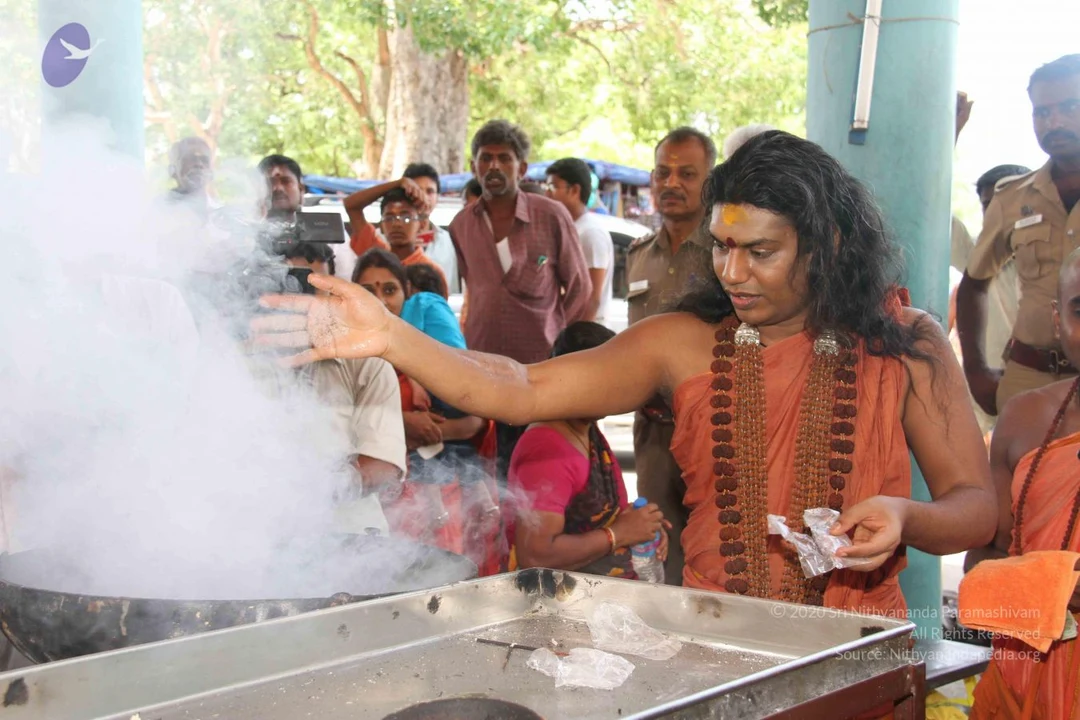
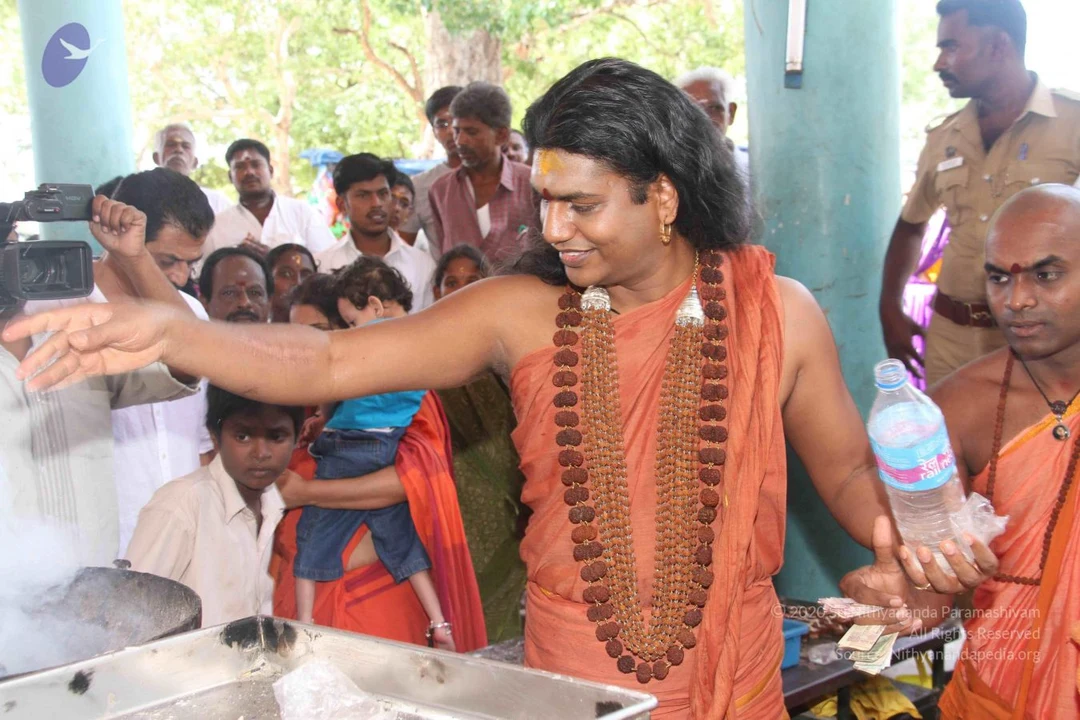
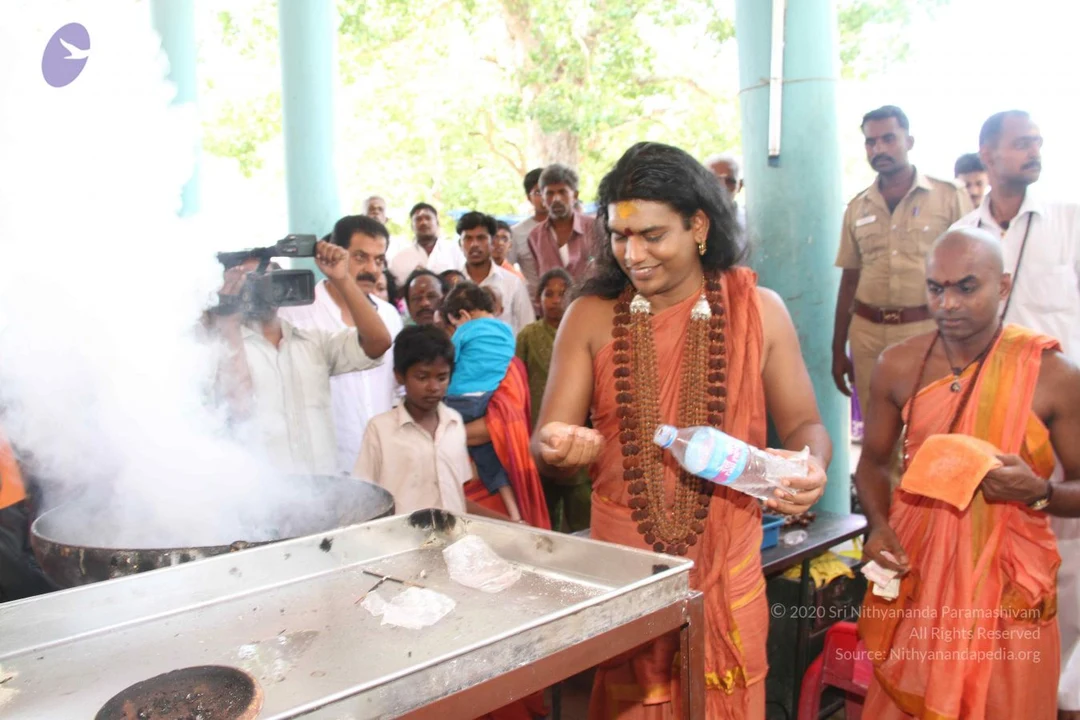
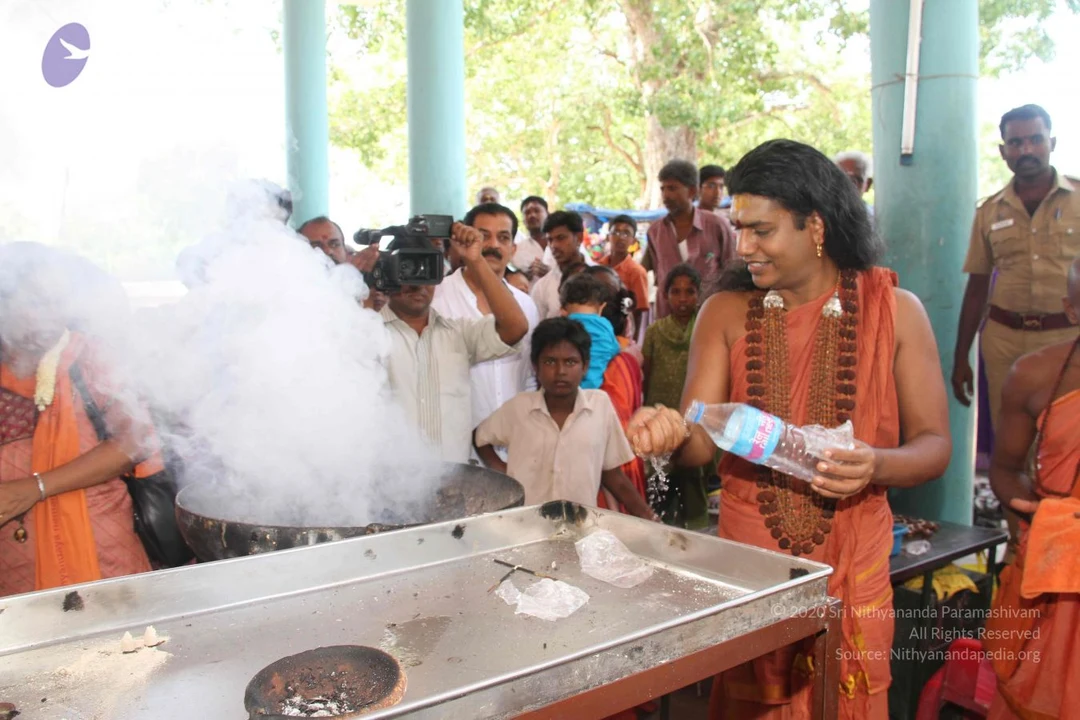
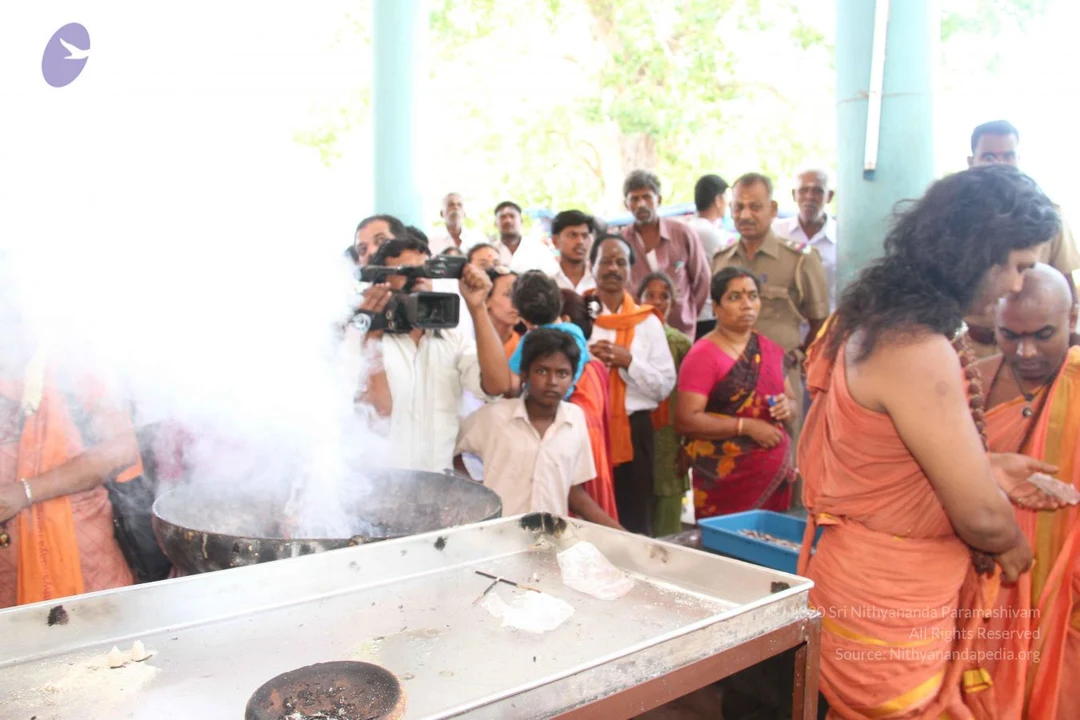
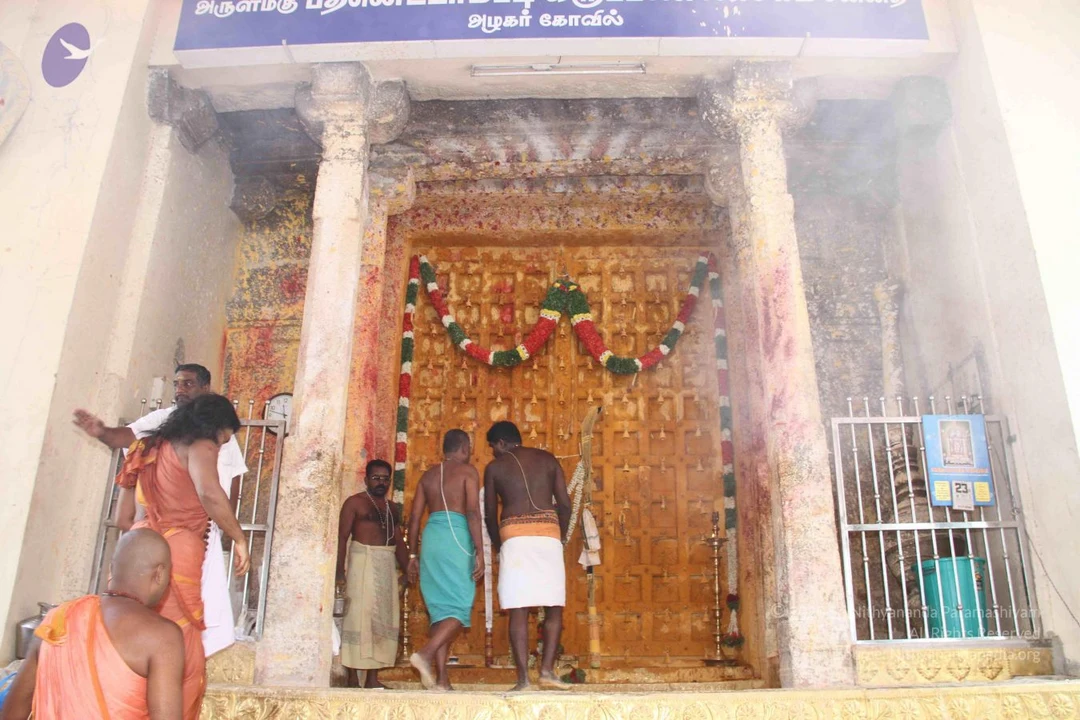
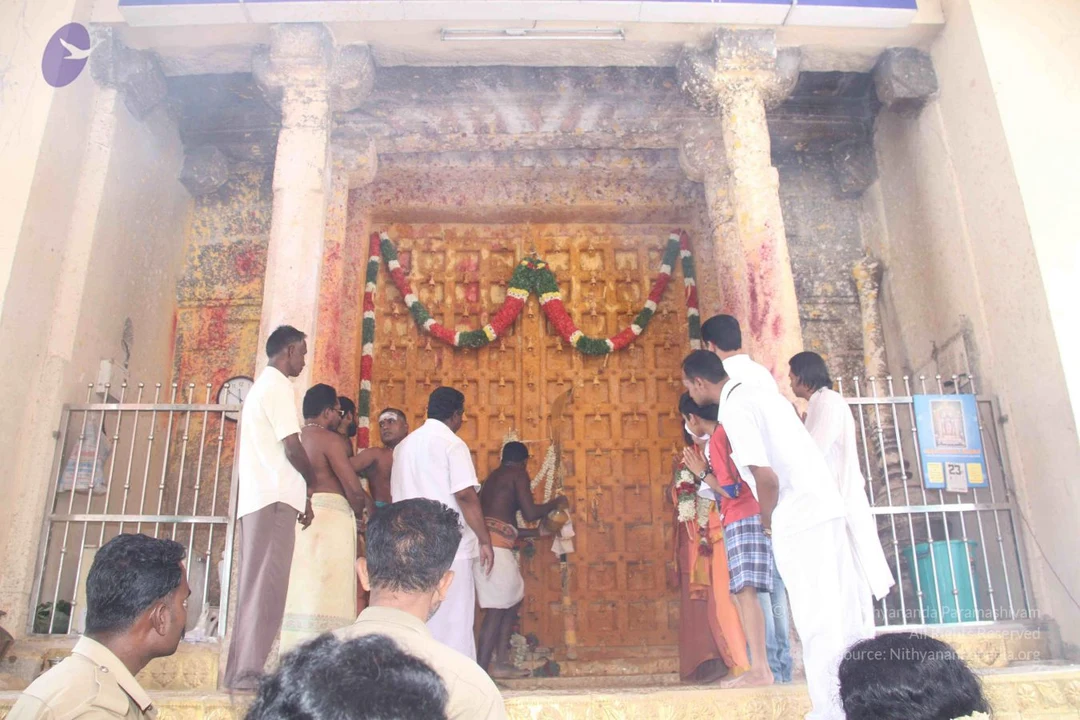
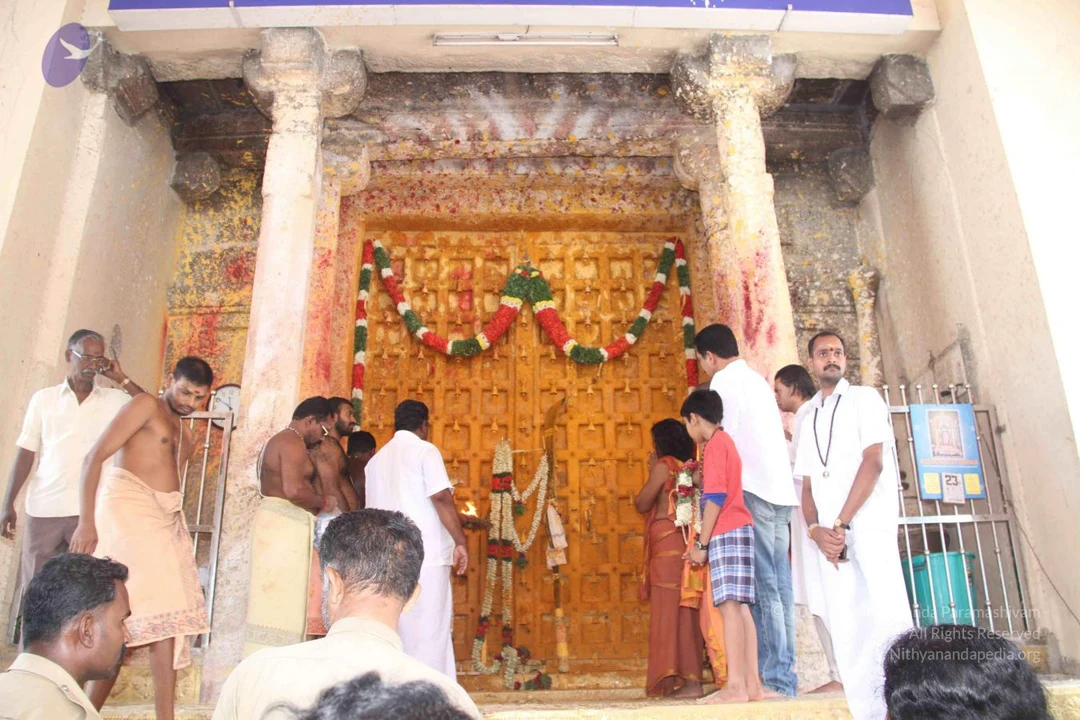
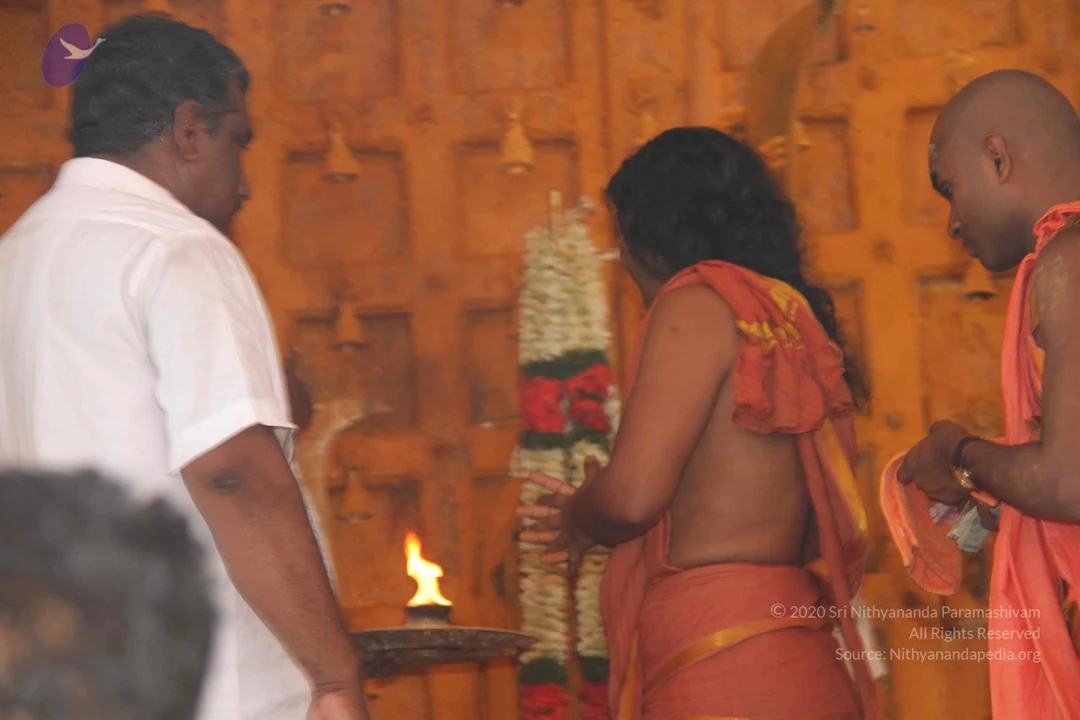
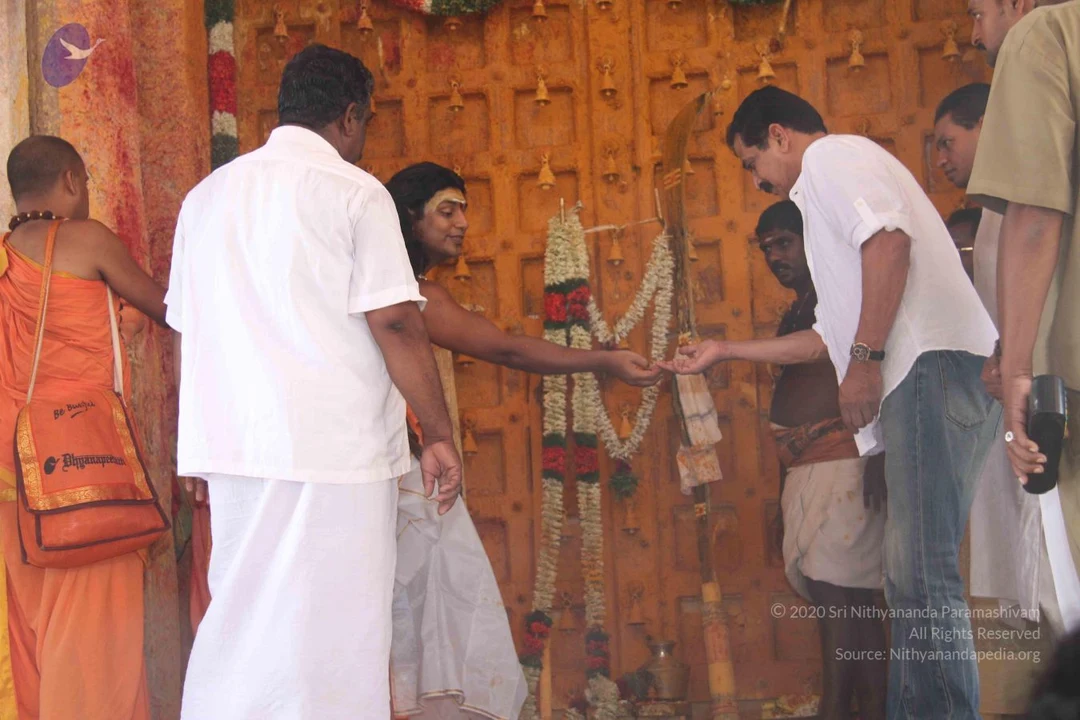
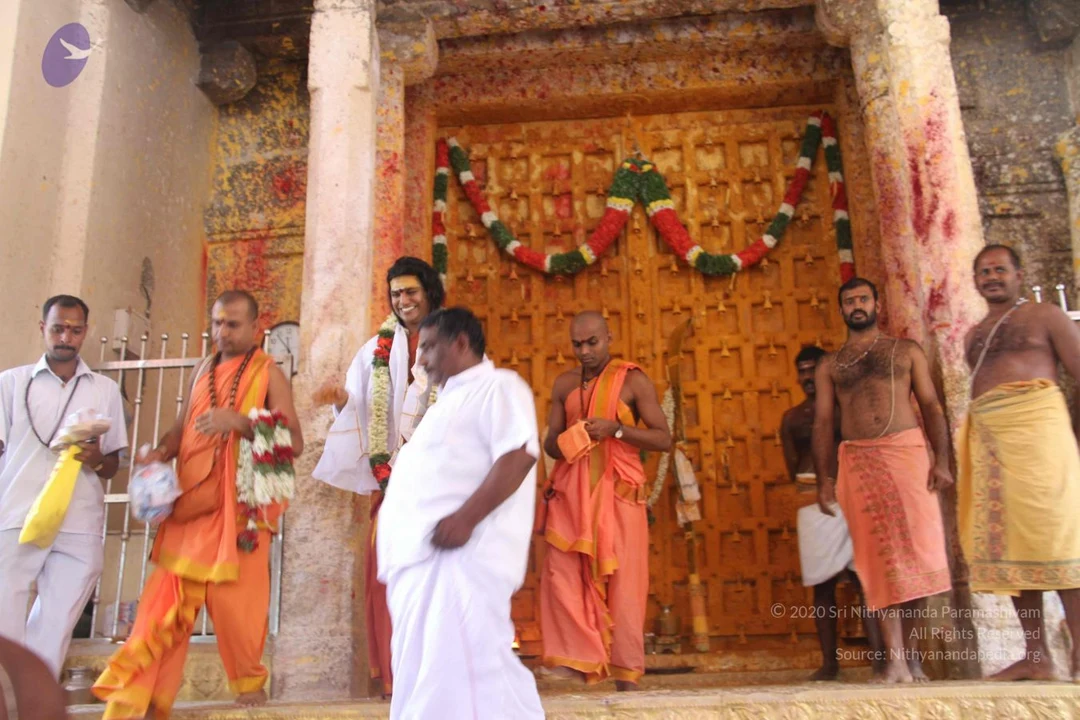
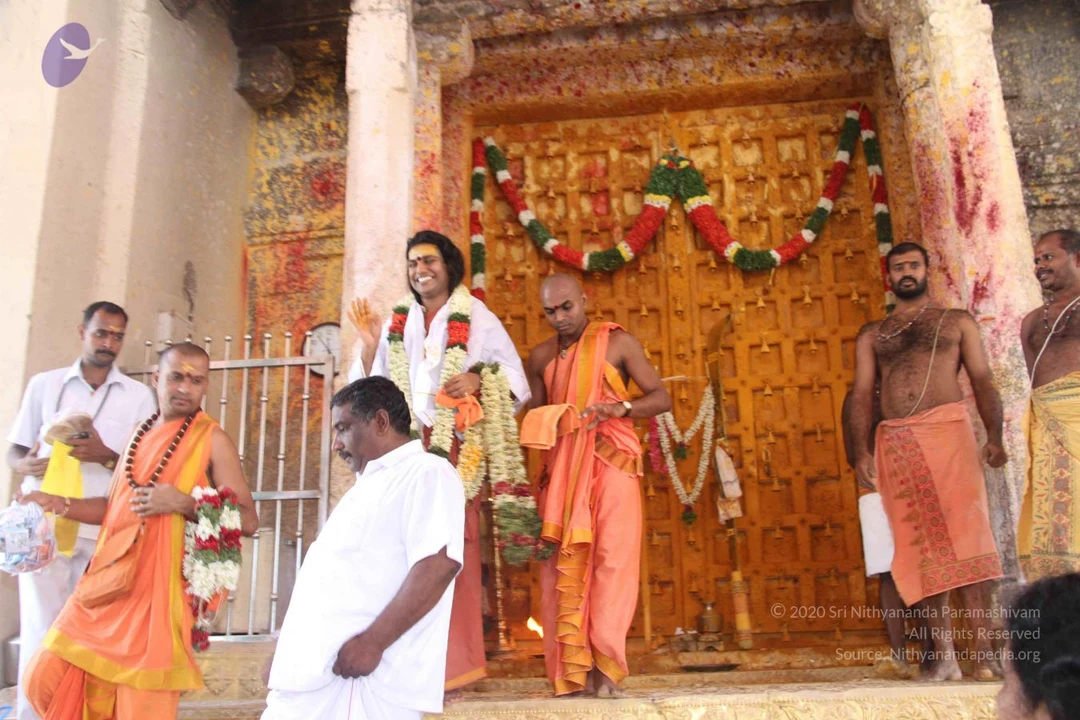
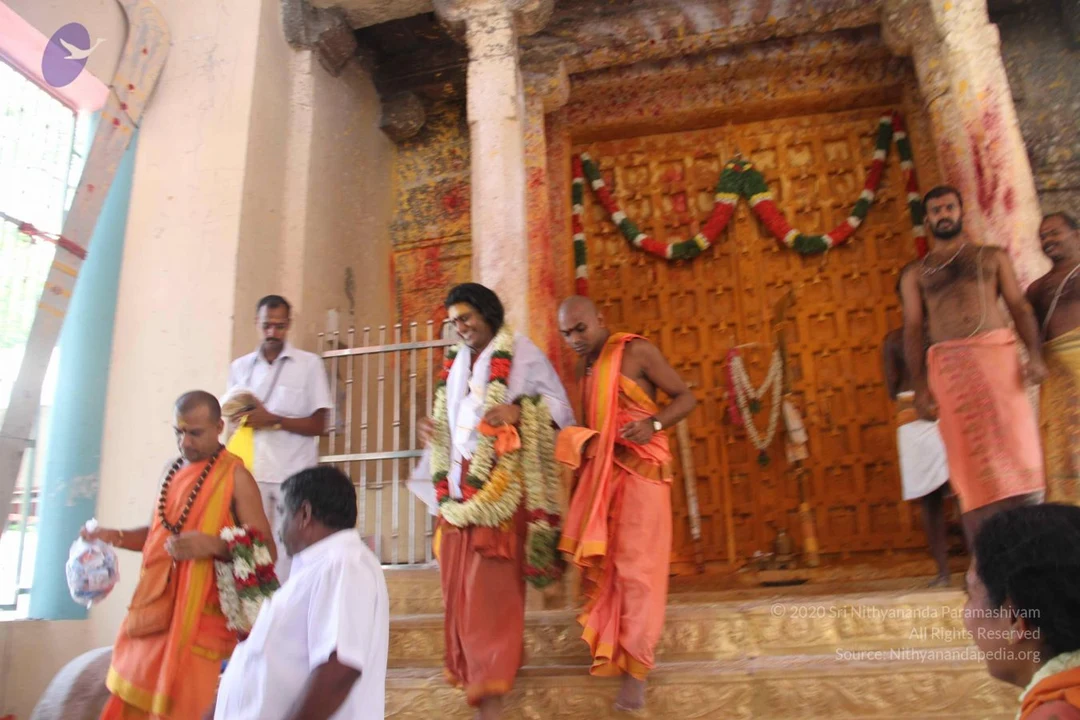
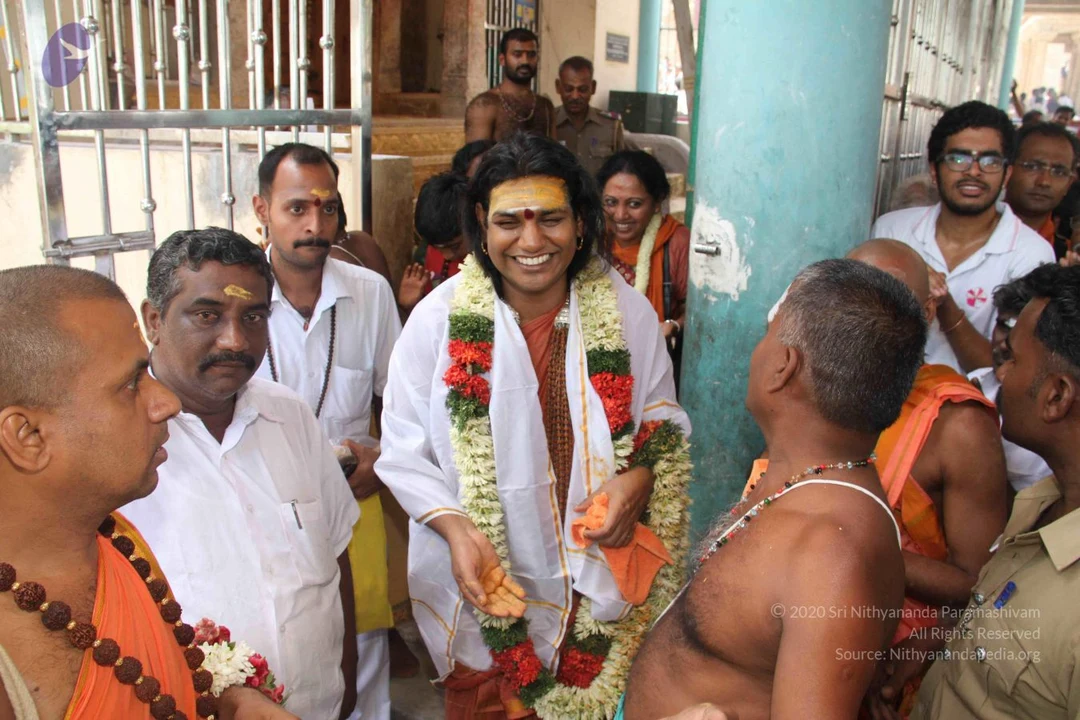
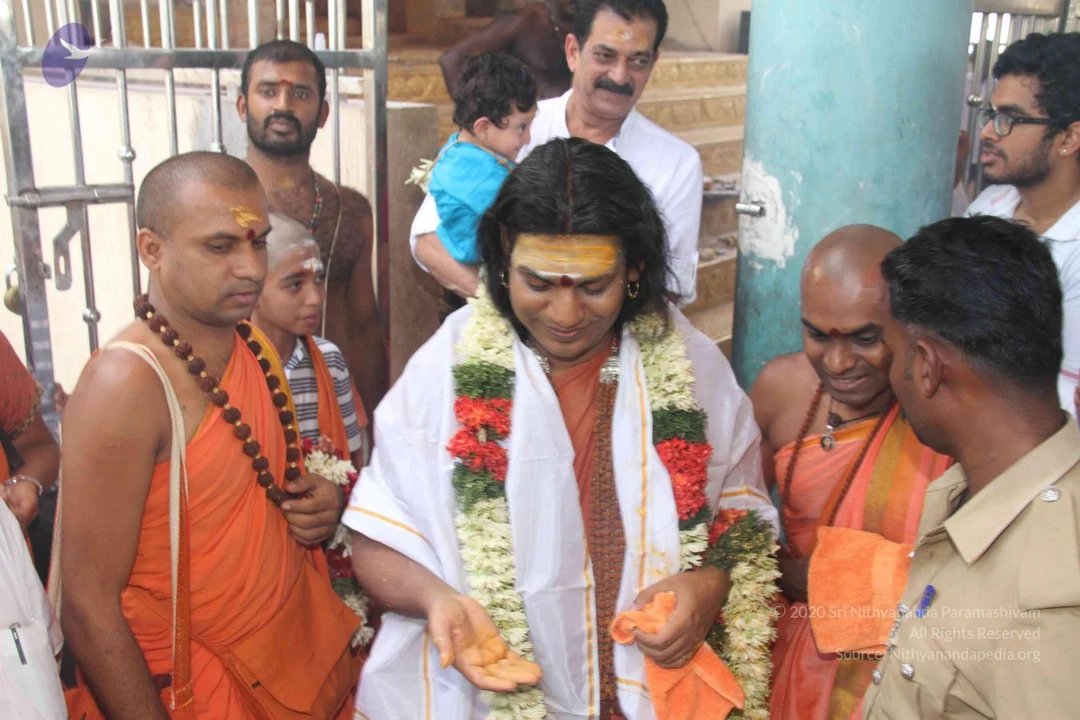
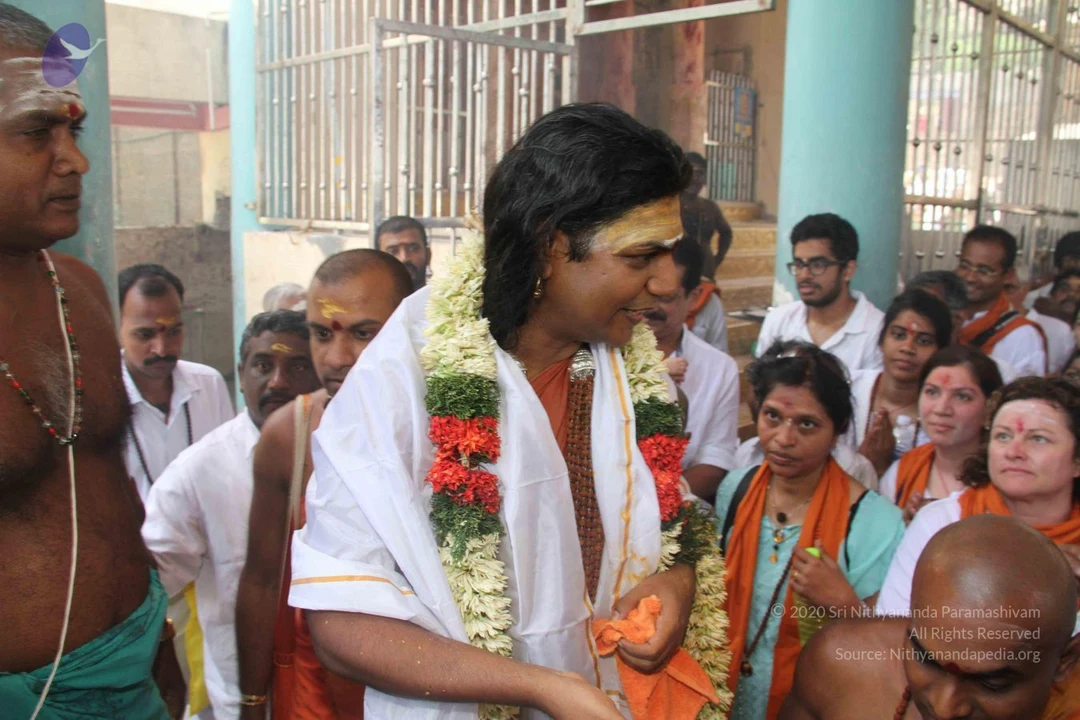
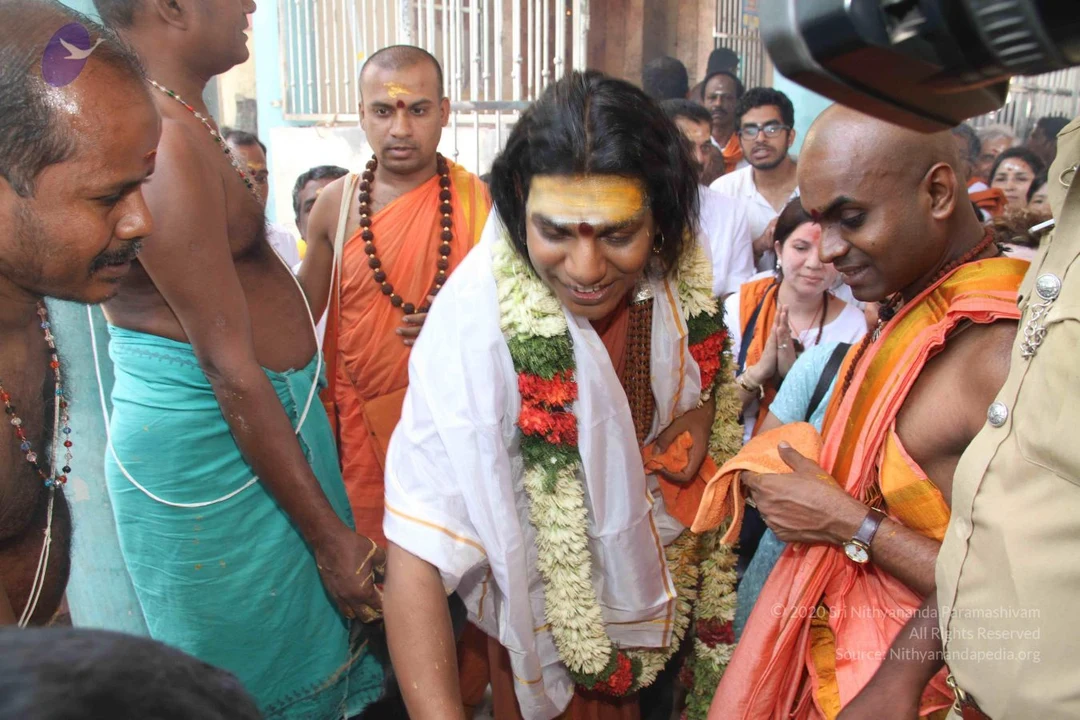
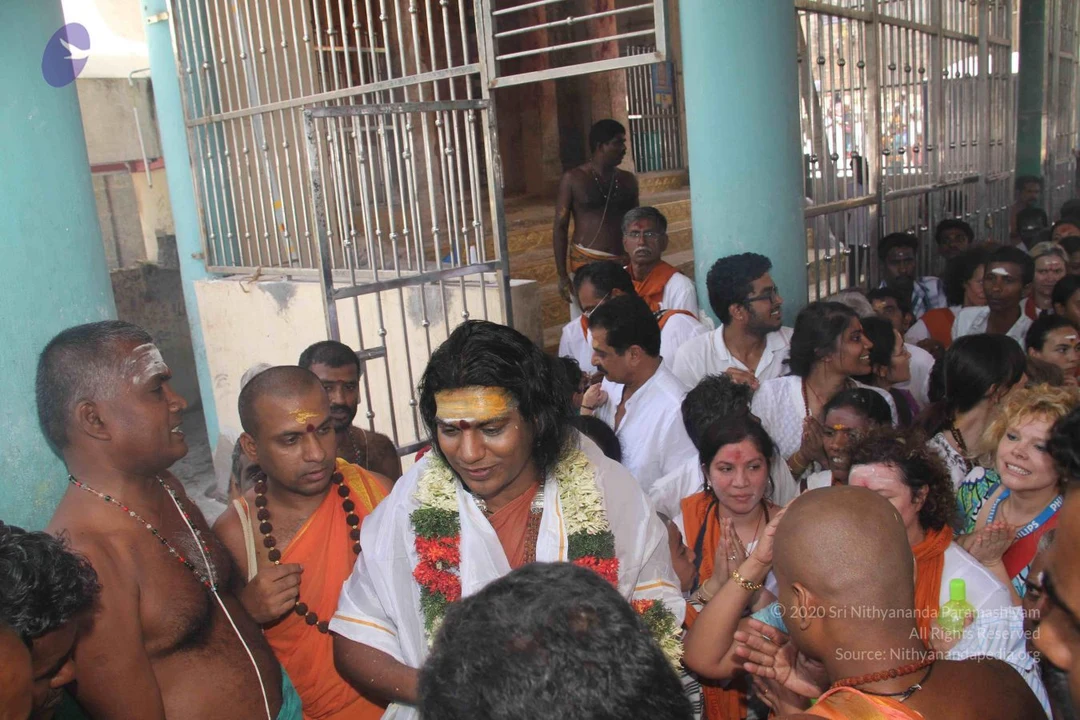
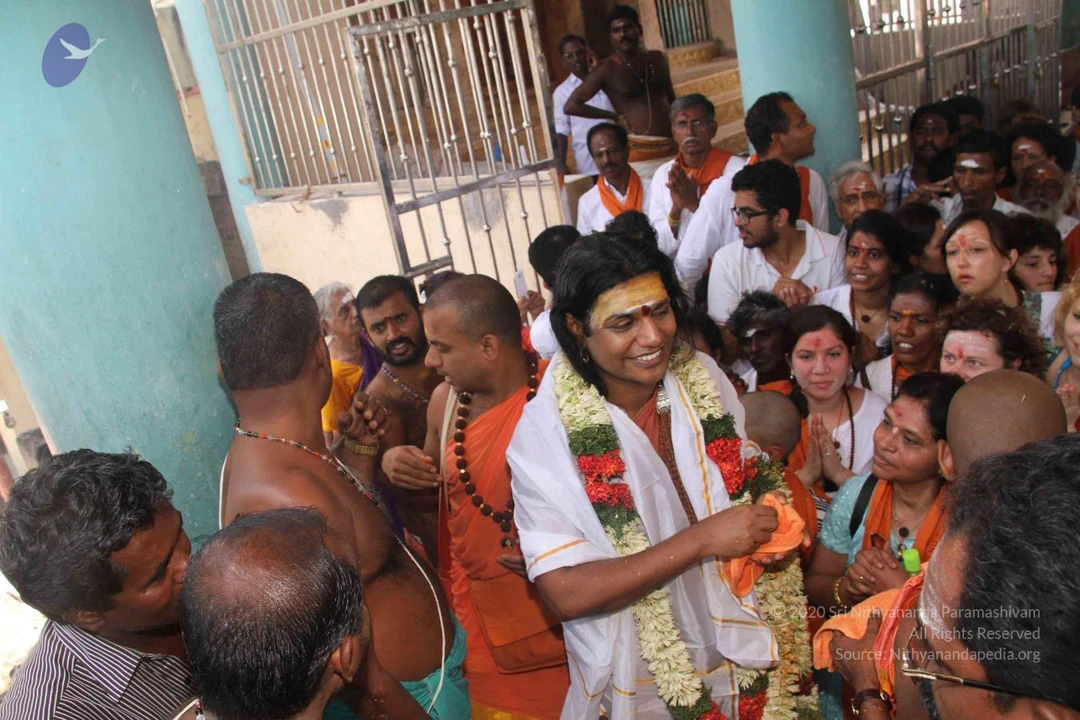
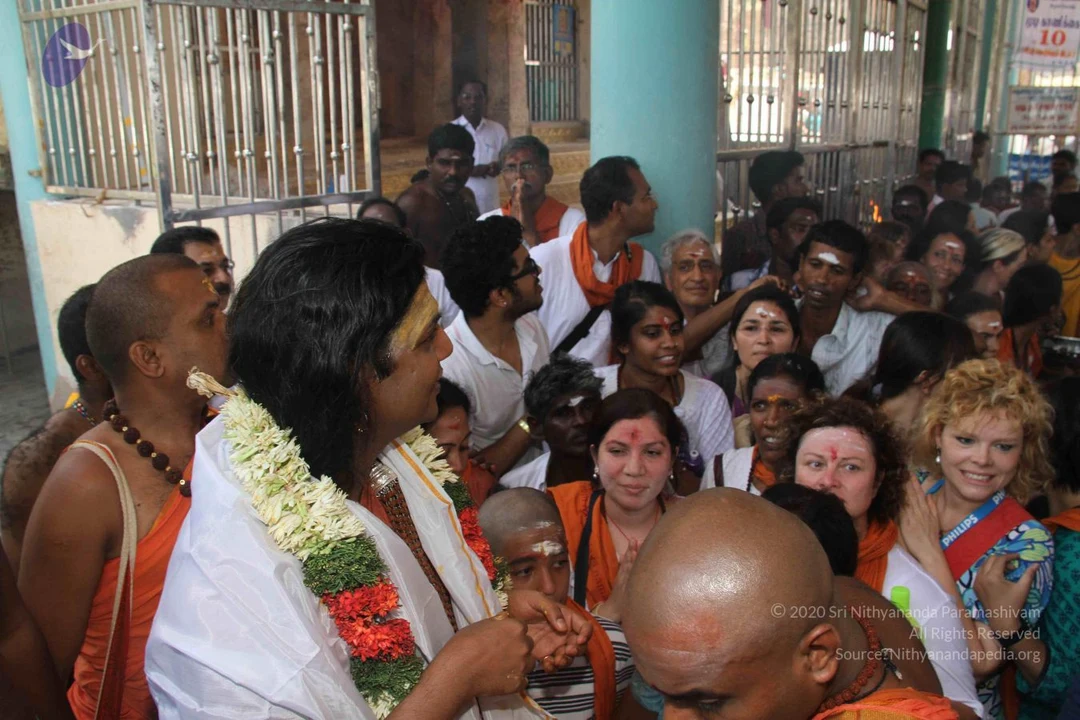
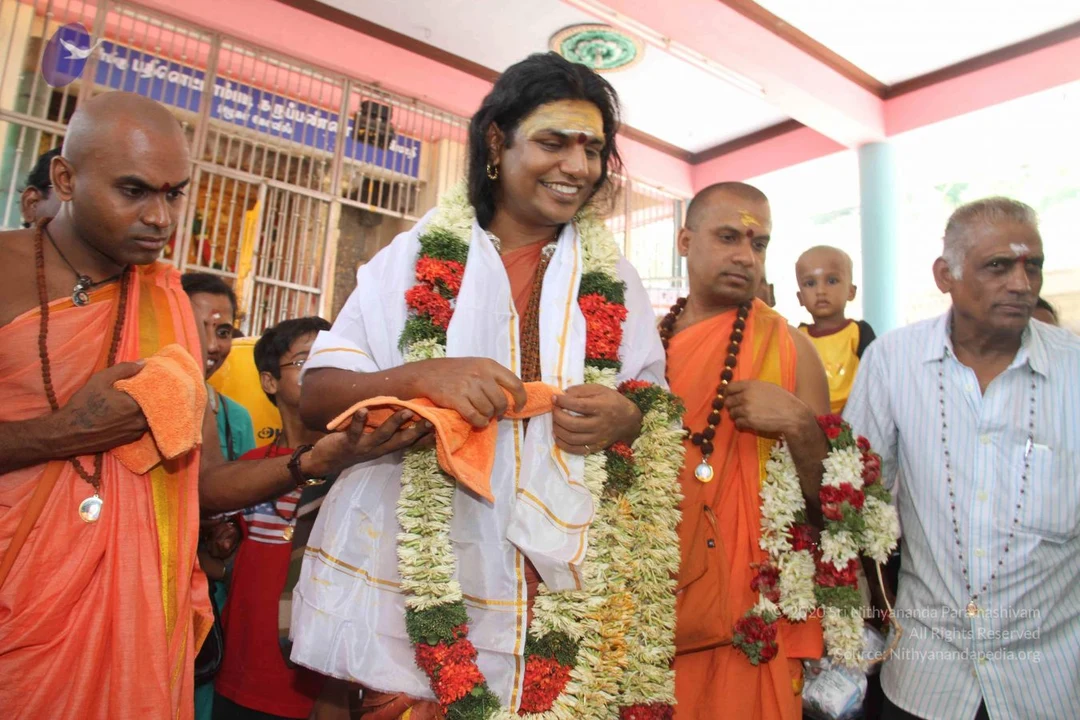
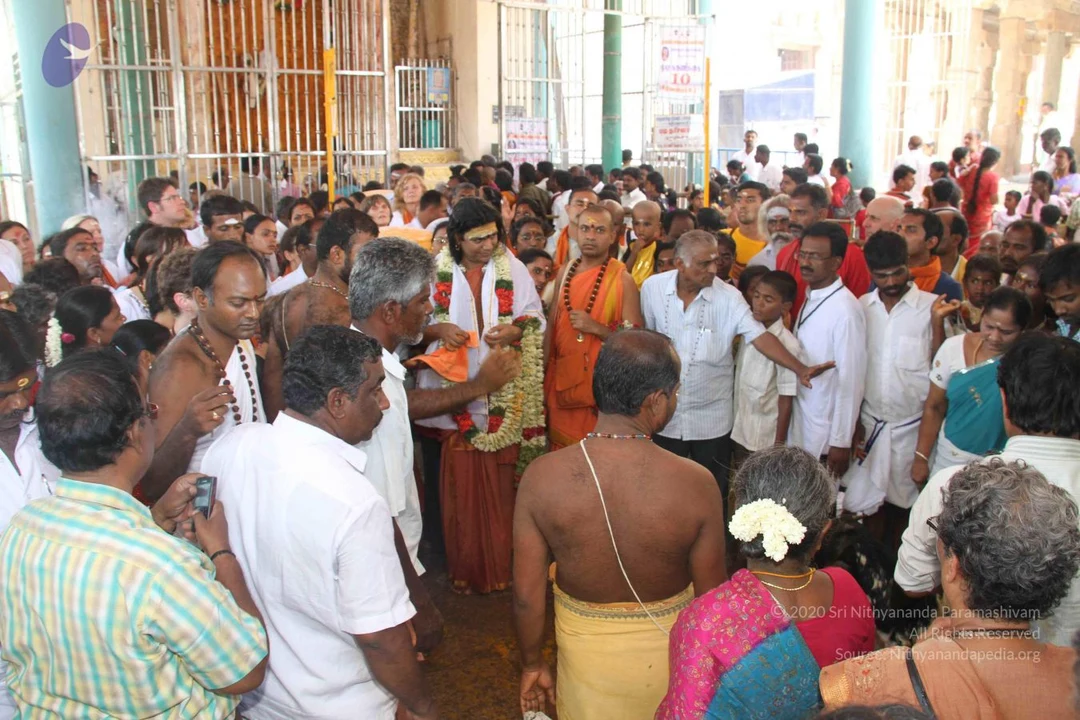
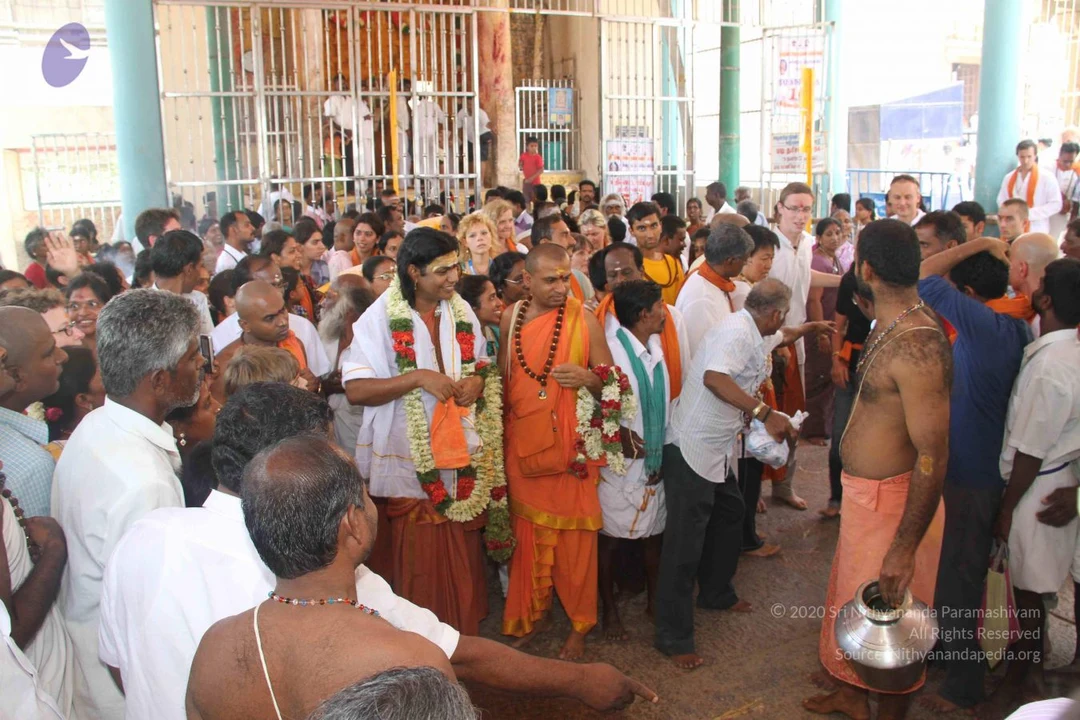
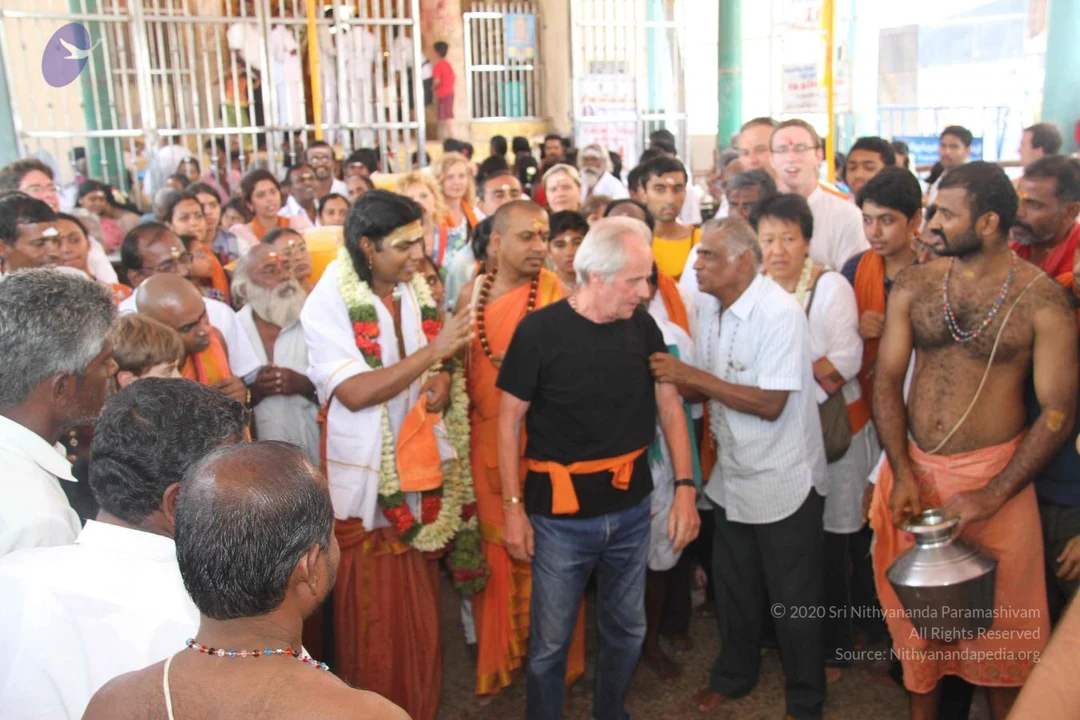
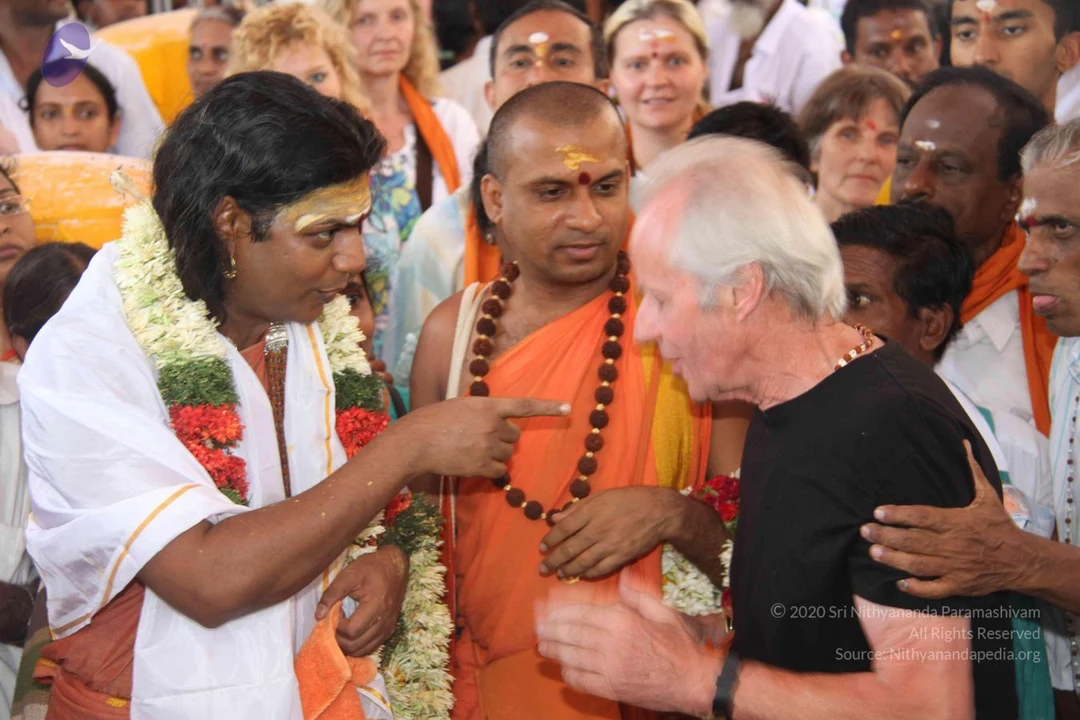
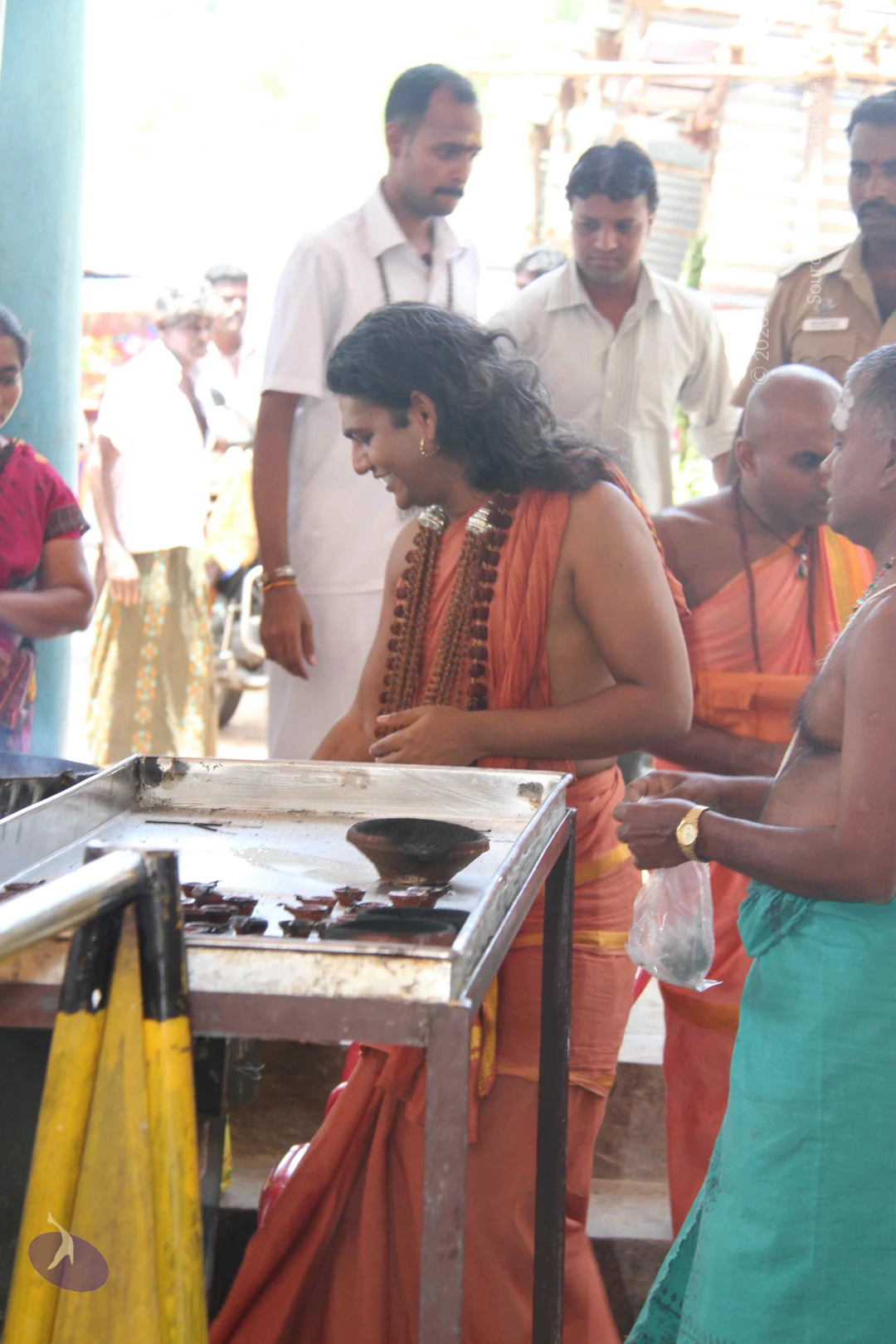
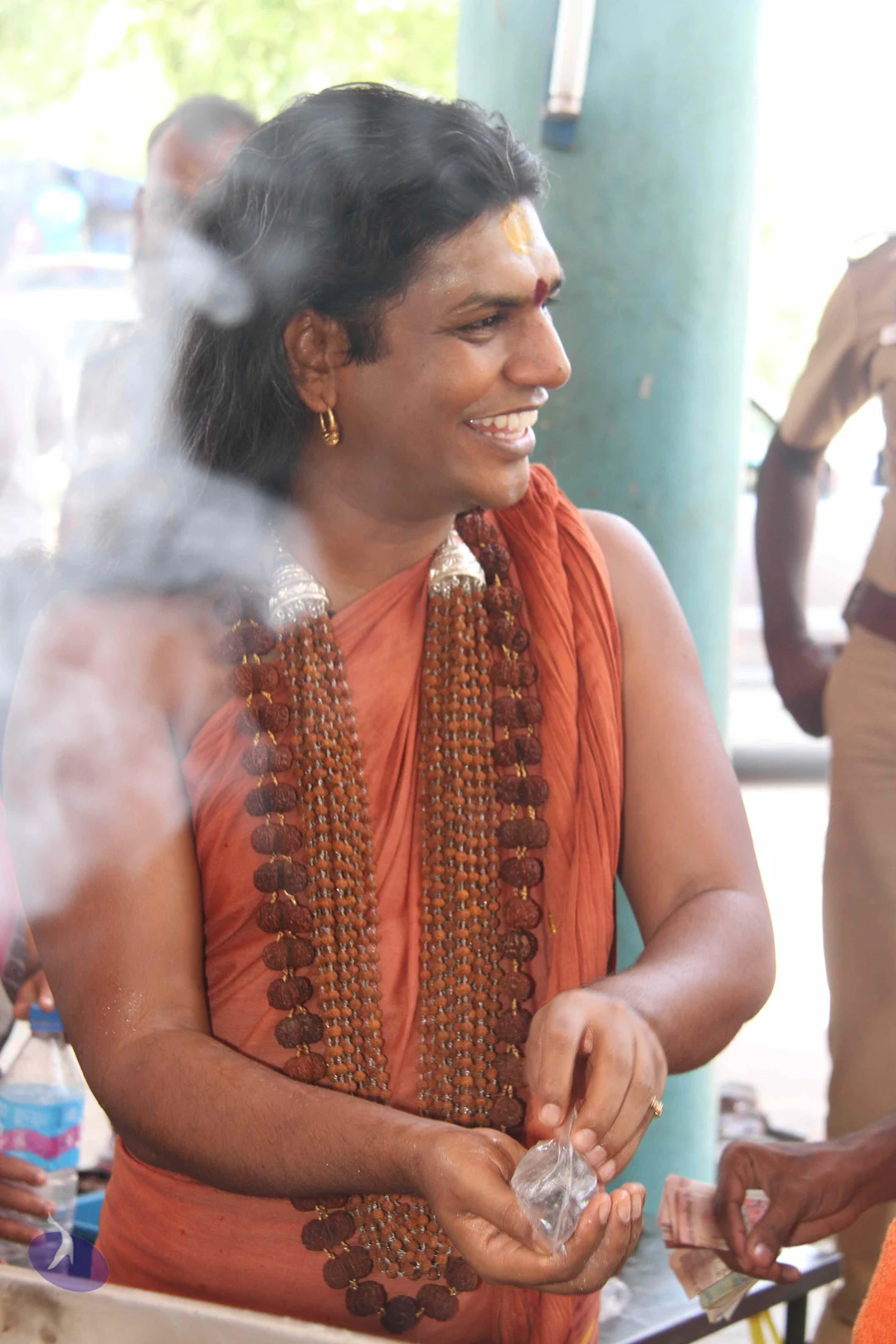
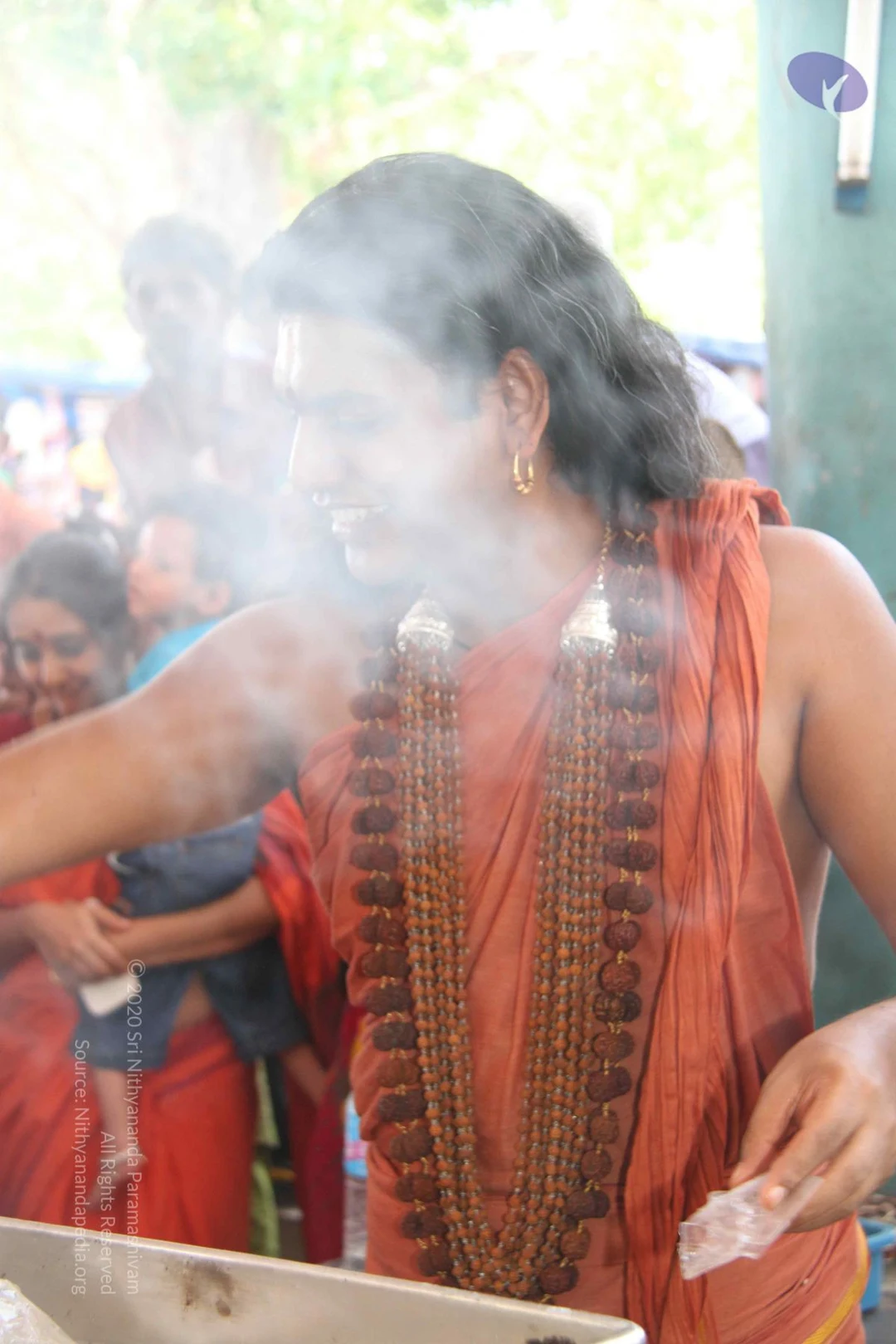
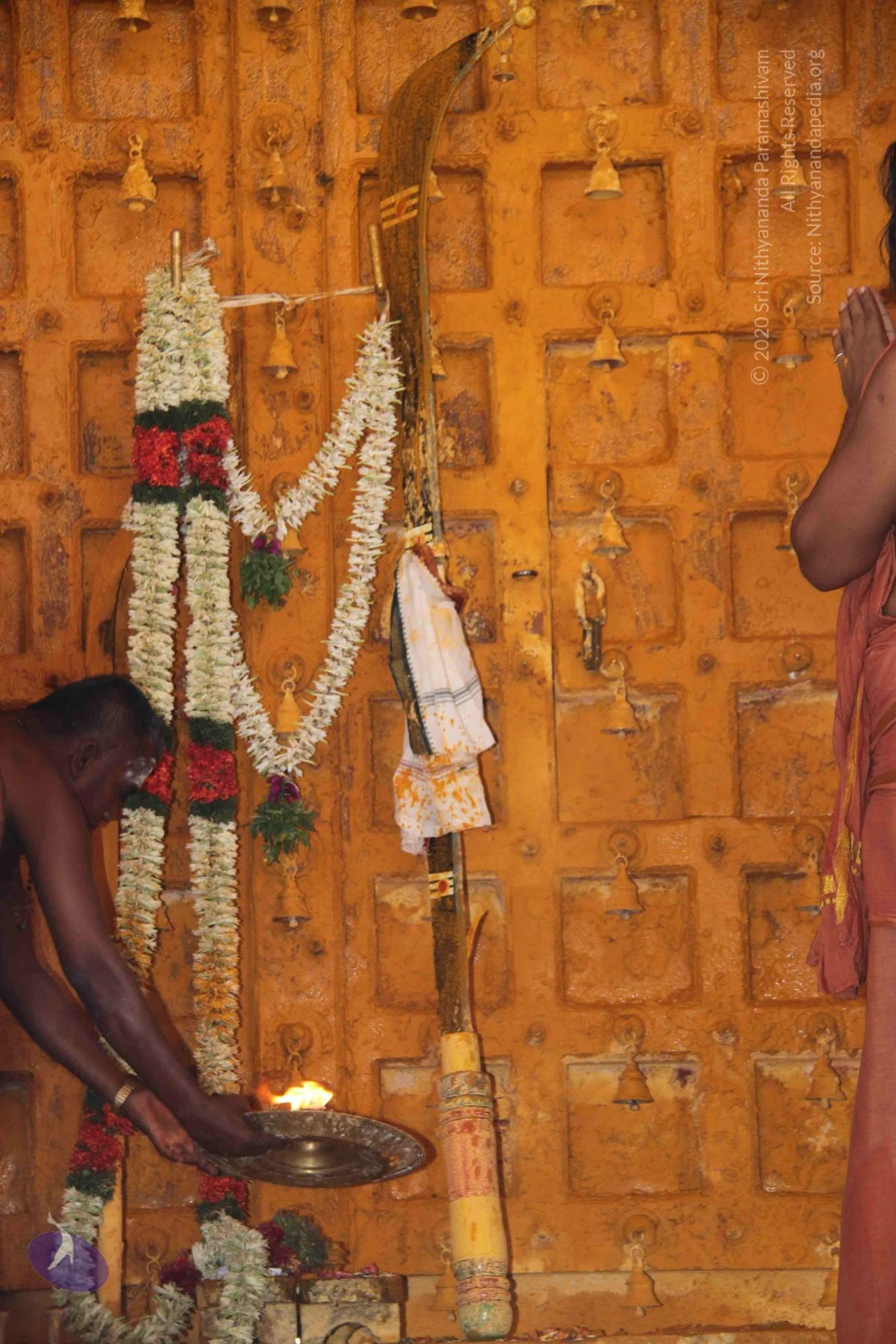
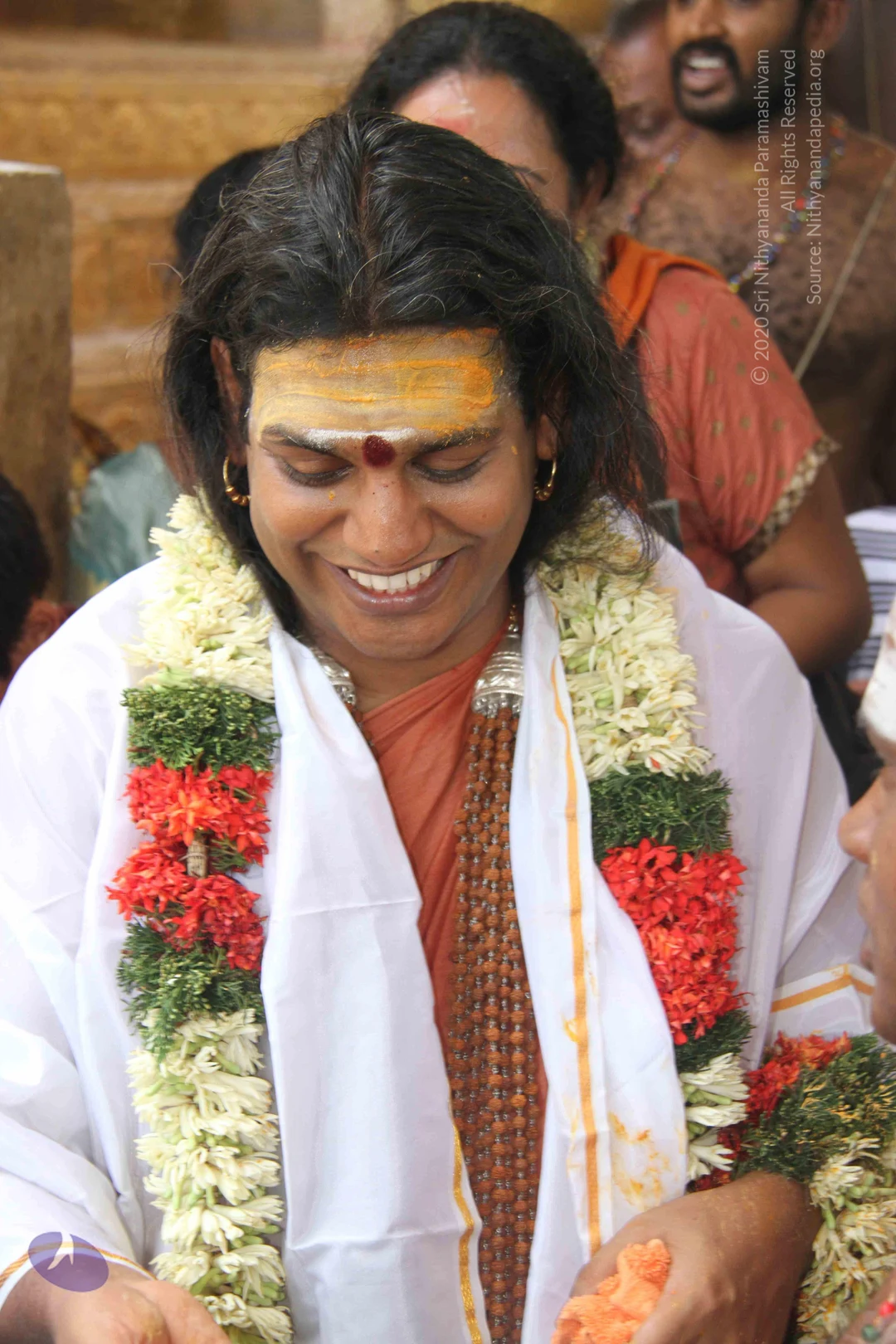
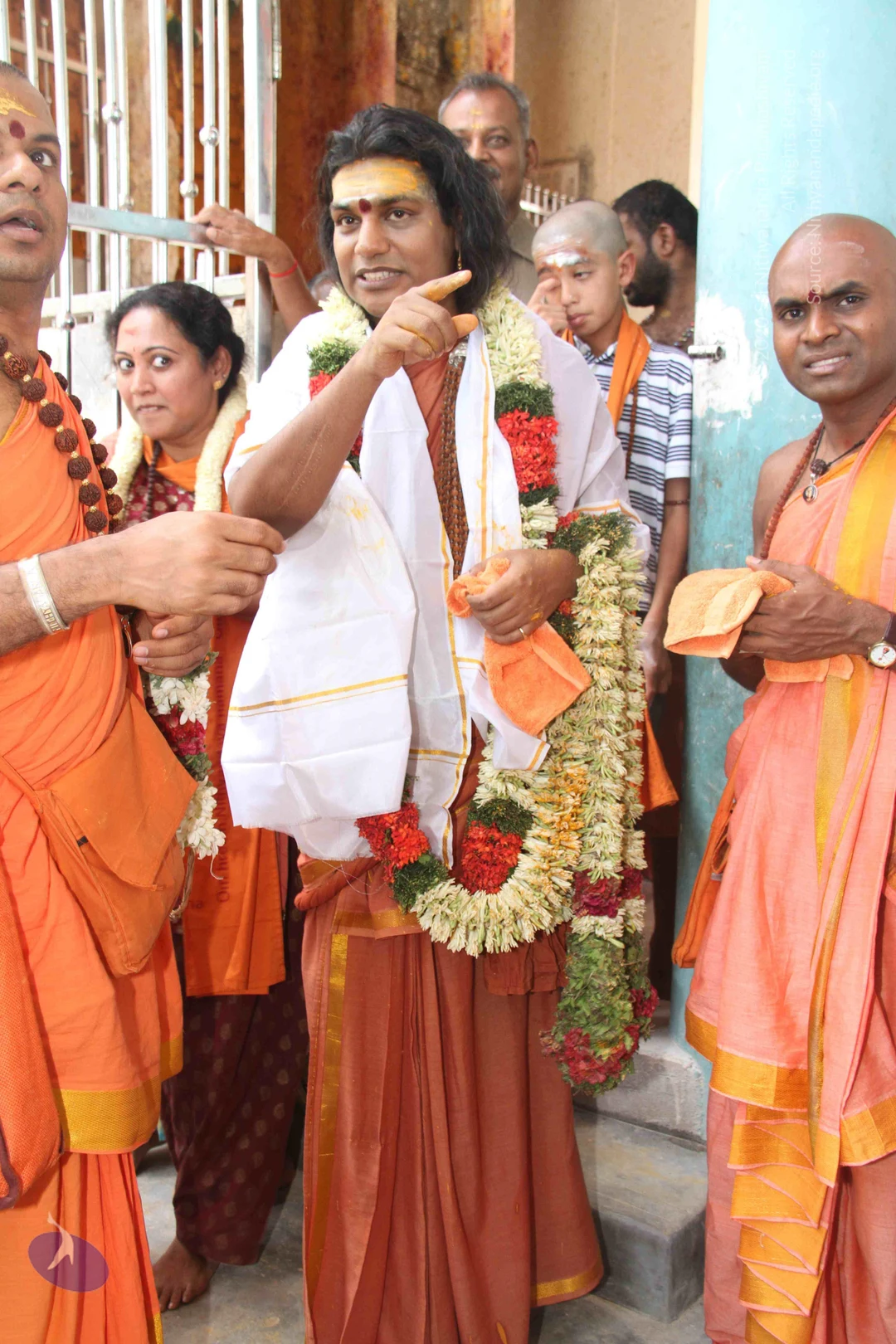
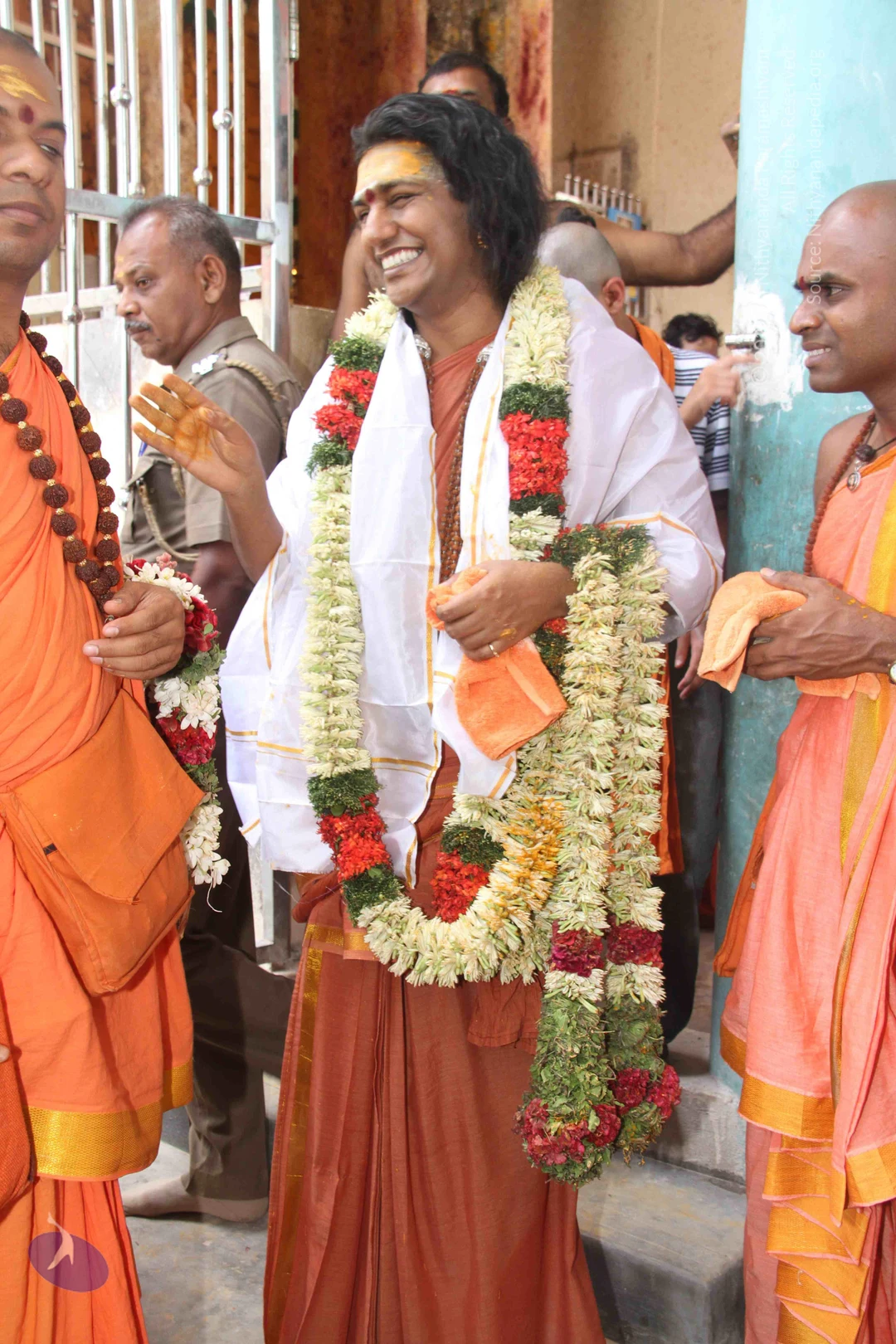
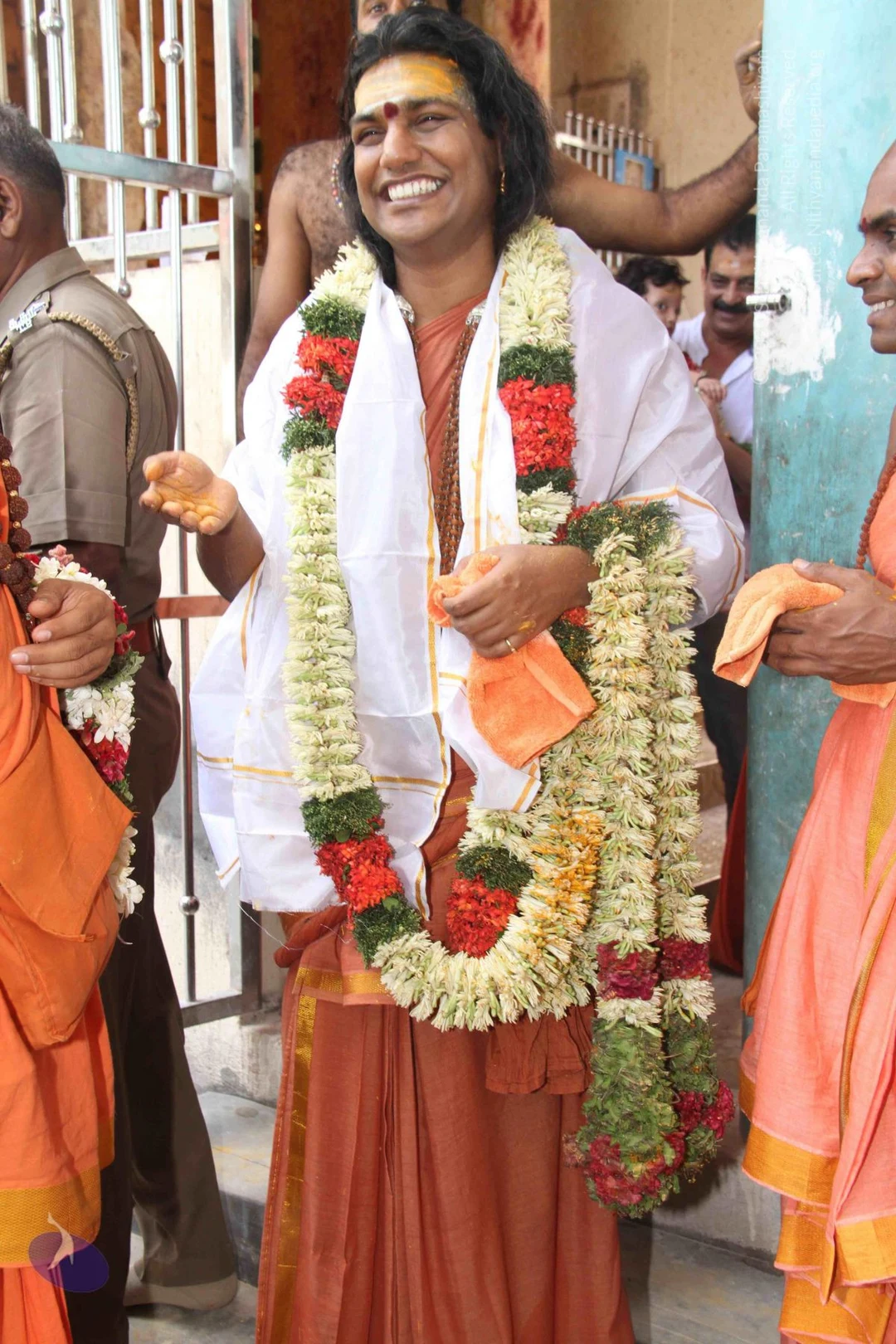
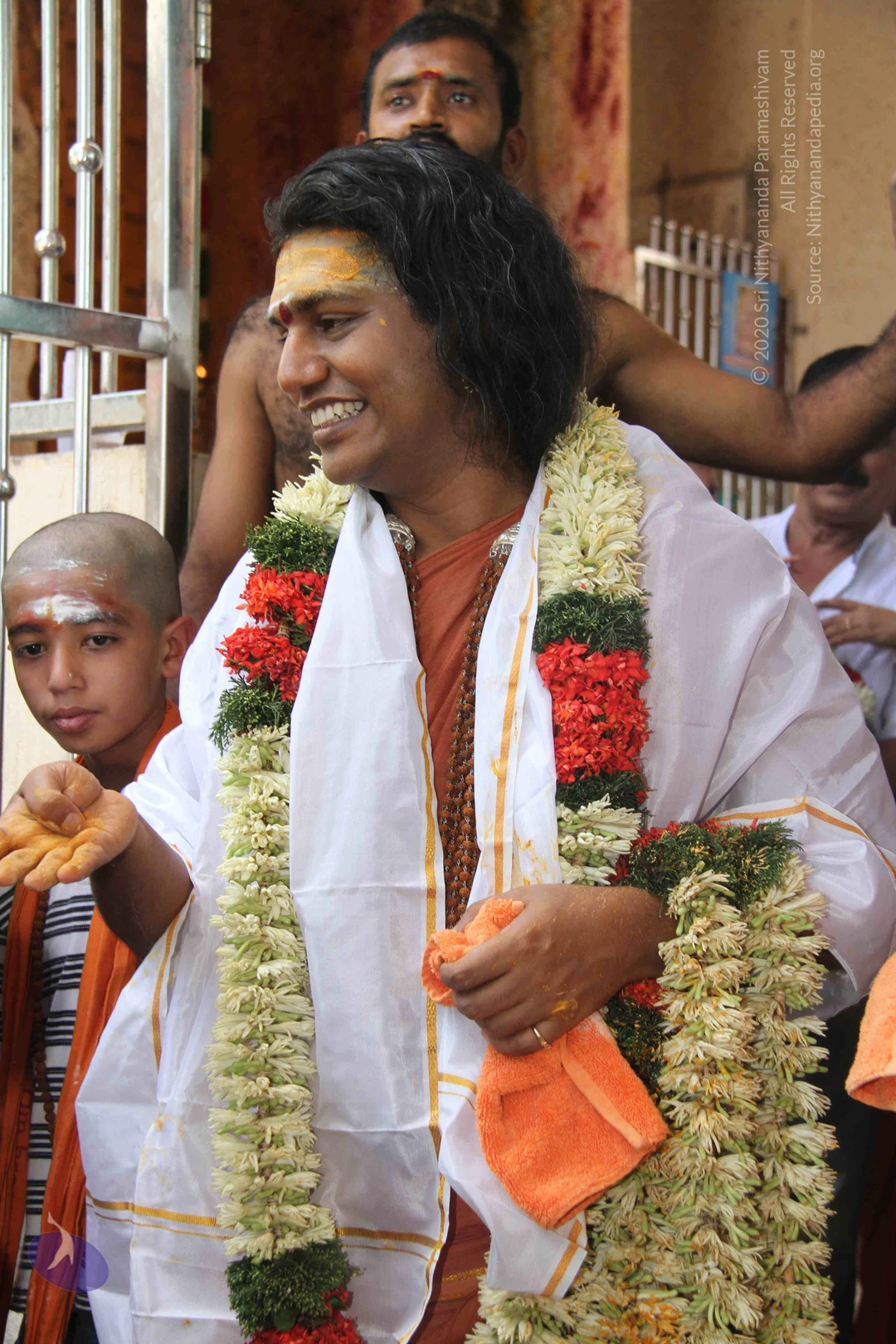
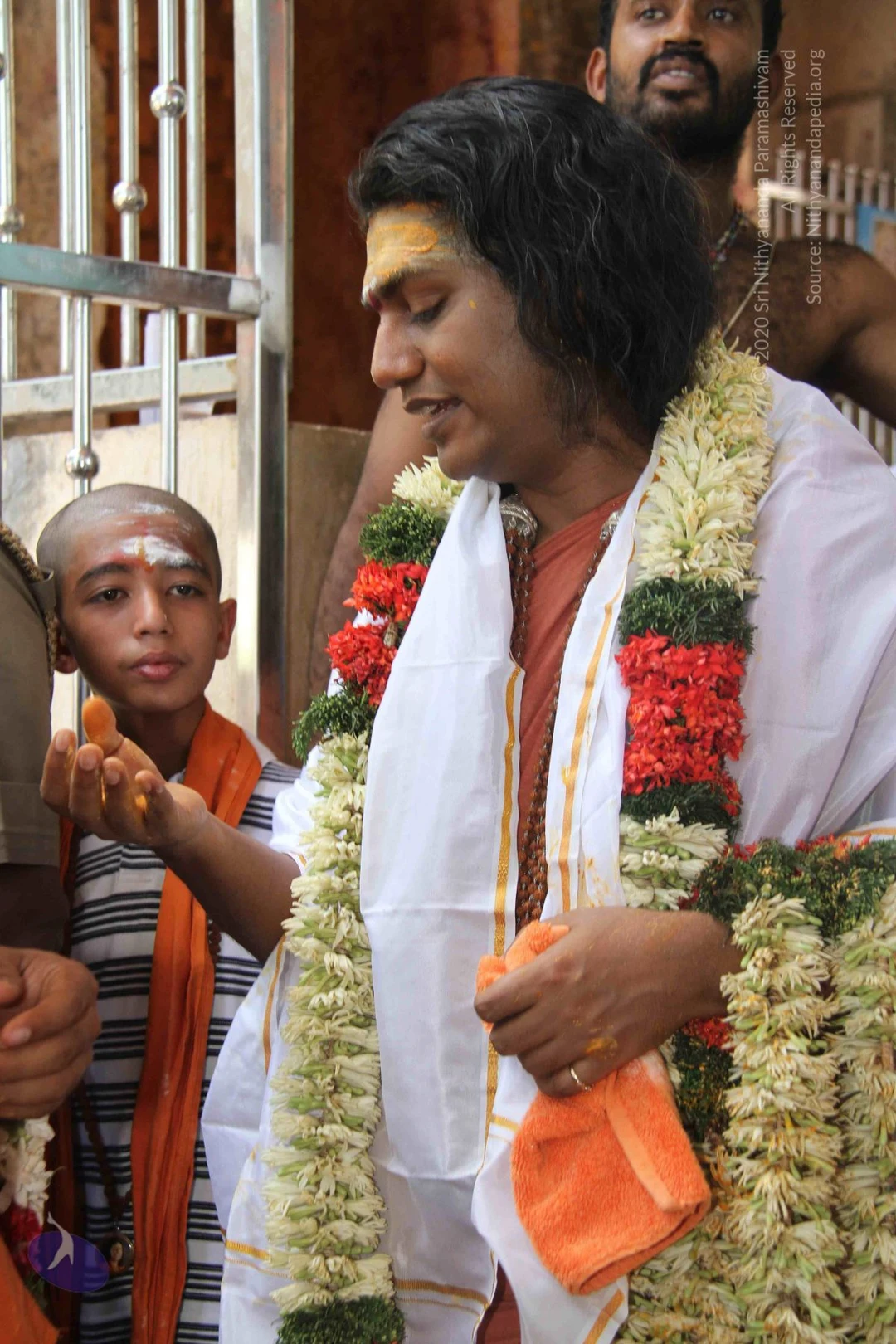
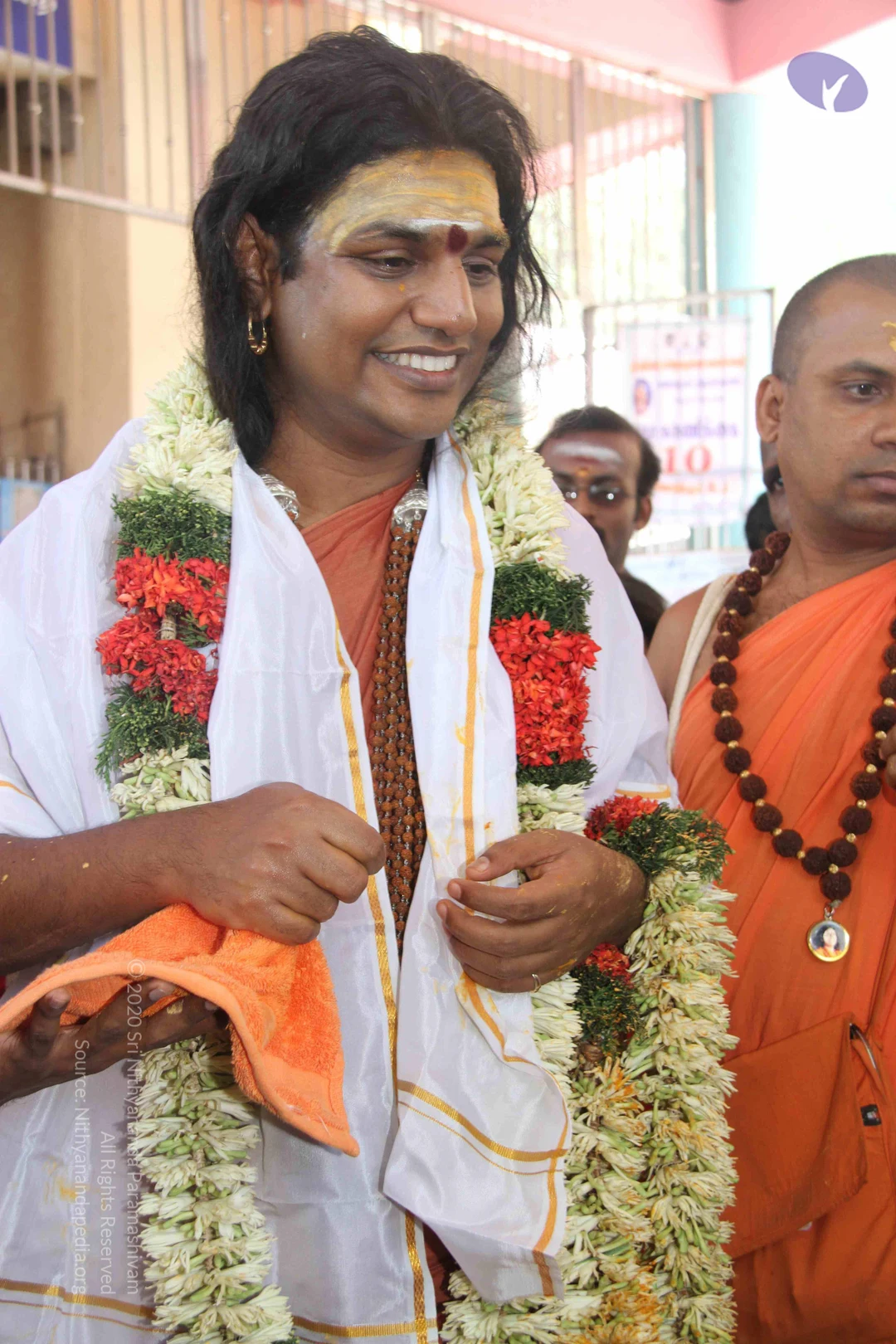
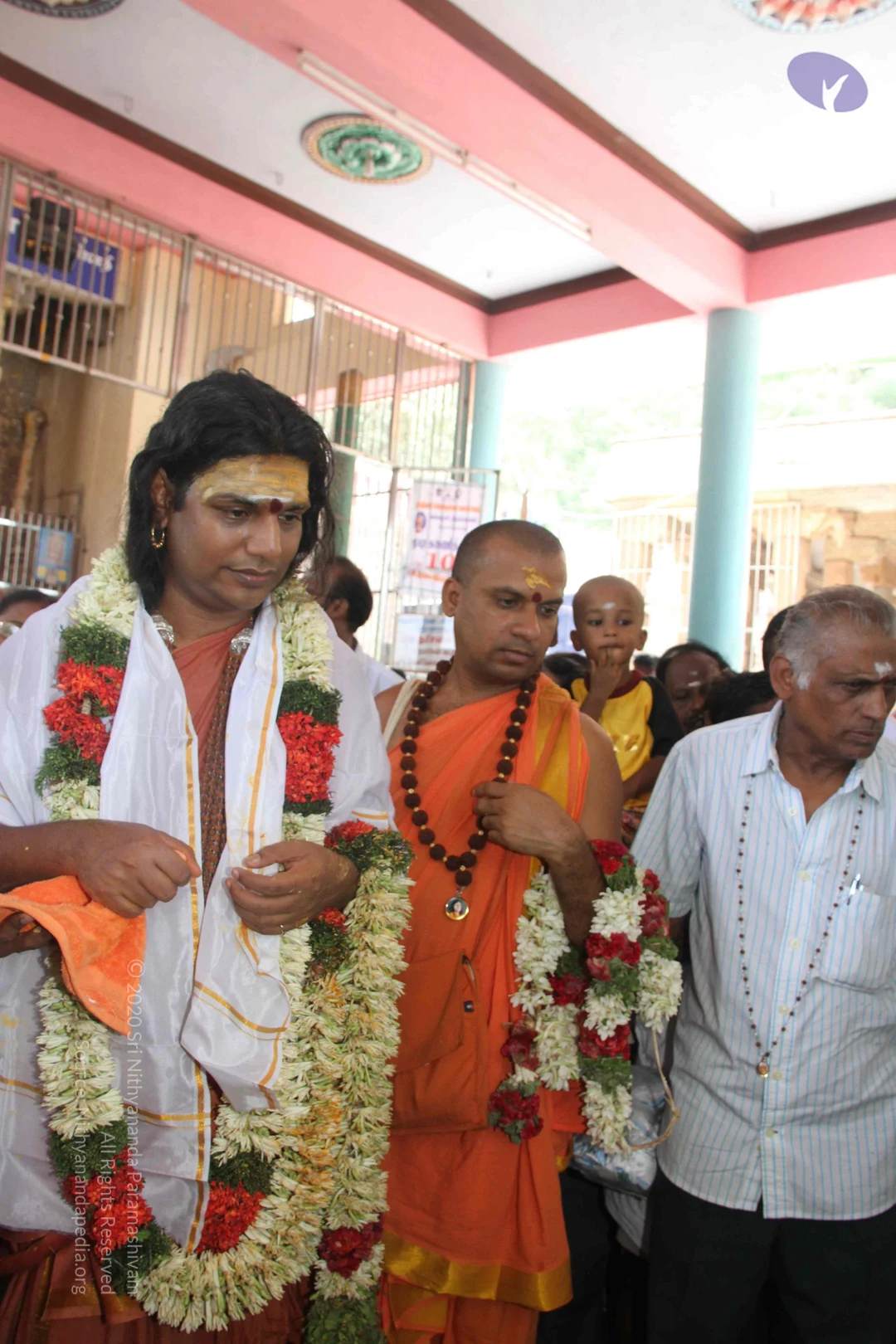
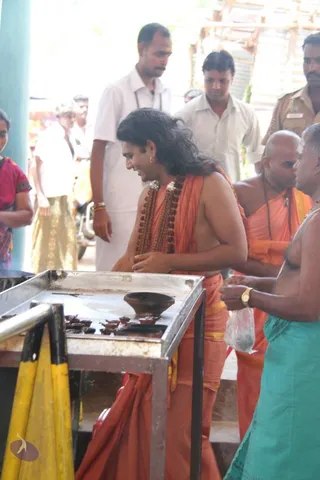
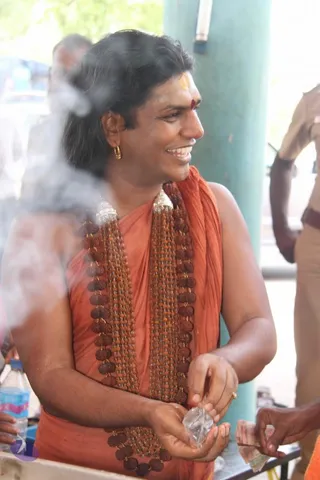
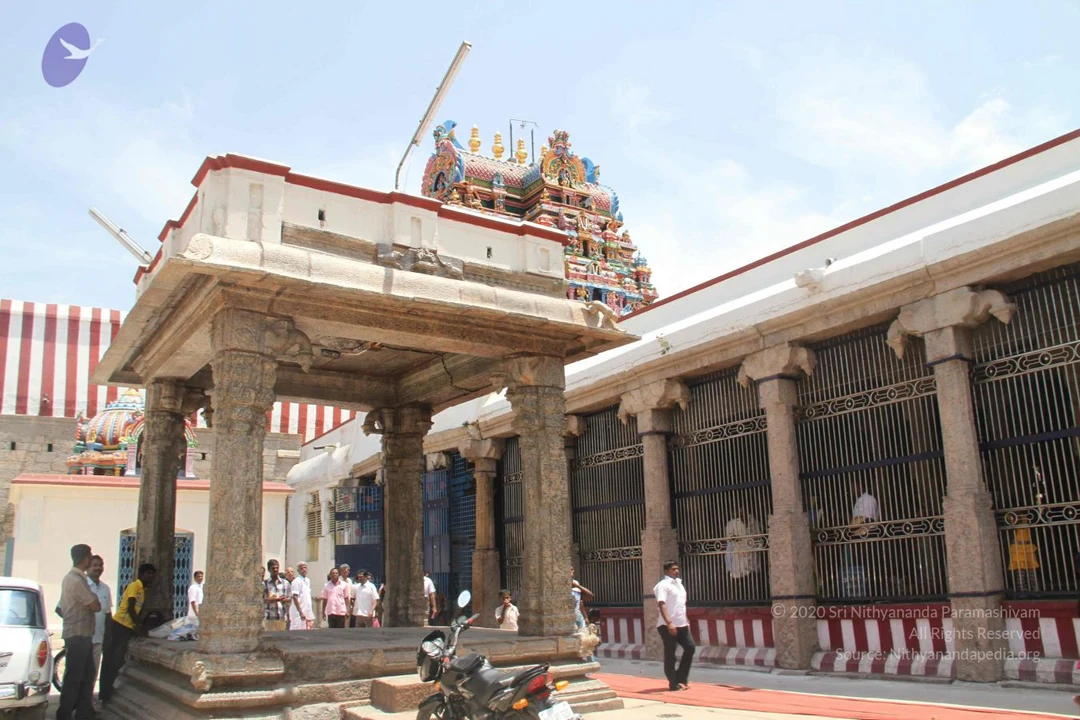
A colourful multi-tiered gopuram, the ornate entrance tower of a South Indian temple, rises against a pale blue sky. Its upper levels are densely covered with painted stucco sculptures of deities, figures and animals in red, blue, green, yellow and white. The stone base below has a dark recessed doorway with plain brown carved pillars. A bare paved courtyard in the foreground is empty of people. No physical people or identifiable a person figure are visible.A photograph of a long-haired man in an orange-saffron dhoti and shawl, wearing layered rudraksha malas and a gold-toned necklace, bending over a stainless steel stand to tend a row of small clay oil lamps with a dark clay bowl placed among them. Behind him a bare-chested priest in orange cloth and a man in a white shirt and white dhoti watch, a uniformed police officer stands at the right edge, and a woman in a pink sari stands at the left. A man in a turquoise garment holds a plastic bag of offerings at the right foreground. Yellow barrier poles stand in the lower left. Attendees are arranged around an outdoor ritual setting with corrugated metal behind.A smiling man with long swept-back dark hair stands outdoors beside a teal pillar, wearing an orange-saffron shawl draped over his shoulder and bare-shouldered, with multiple strands of rudraksha malas and silver-capped ceremonial necklaces across his chest. He has a red and orange tilak on his forehead and a small gold hoop earring, and holds a small clear plastic packet in his hand while another hand offers cash notes at the edge of the frame. Smoke or incense drifts across the left side of the image. A uniformed police officer in khaki stands at the right edge, and a water bottle is visible at lower left.Photograph of a person in an orange-red saffron cloth draped over the shoulders, wearing multiple long rudraksha mala necklaces with silver caps and a gold hoop earring, with a vertical tilak on the forehead and long dark hair swept back. Smoke or incense drifts across the face and chest as the person stands near a metal tray at the front of a crowd. Behind, several devotees and a person in a blue top stand in the background, and a green pillar and foliage frame the right side. The a person appearance cues are the long swept hair, saffron cloth and rudraksha malas, presented as the central figure in an incense-offering setting.Photo inside a temple shrine with an ochre-orange wall covered in small square recesses and hanging brass bells. A large curved sword-like ceremonial blade with a tilak mark hangs on the wall, draped with a white cloth stained orange, and is decorated with white and red-green flower garlands. A bare-chested priest in a white cloth bends forward at the lower left, holding a brass plate with a flame in front of the blade, as a worship offering. On the right edge, a person in a rust-red garment stands with palms pressed together in namaskar. The scene looks like a puja or aarti at a shrine.A photograph of a smiling man with long dark hair and eyes lowered, wearing a white dhoti-style cloth over an orange-brown garment and a rudraksha mala. He has yellow and white sacred markings on his forehead with a red kumkum dot, and gold hoop earrings. He wears a thick garland of white jasmine, red flowers and green leaves, and holds an orange offering in one hand. Behind him stand other people, including a person in an orange-pink top and a bare-chested man with beaded necklaces, at what appears to be a temple setting.

Blessing-From-Swamiji-Sannithanam

16 photosSource gallery
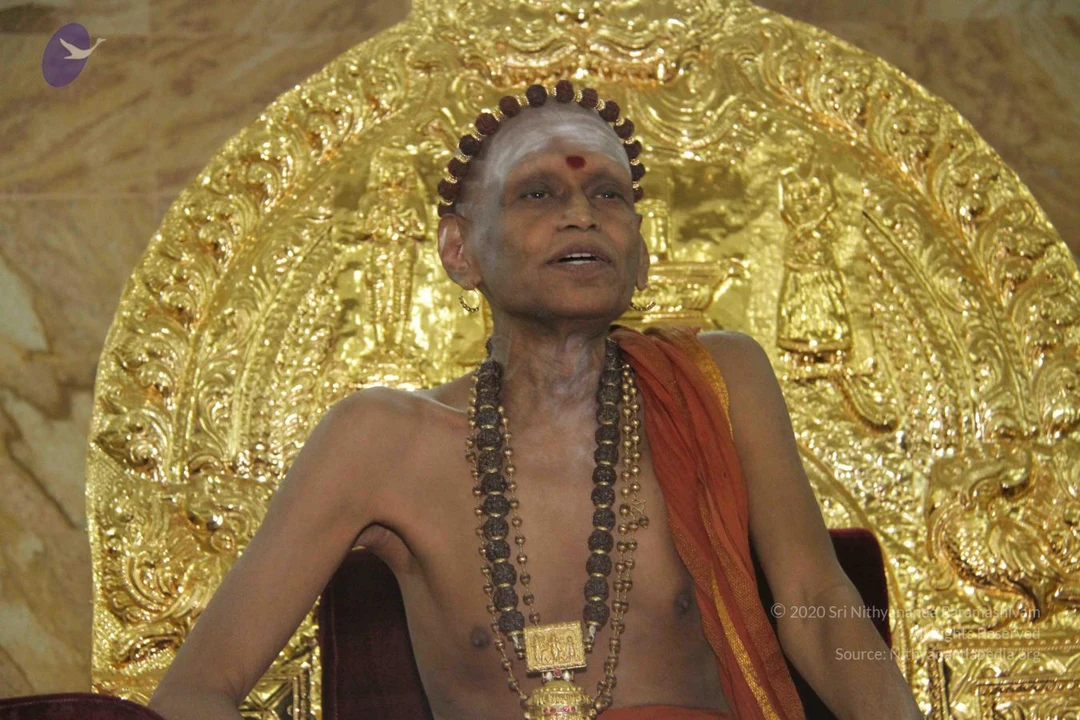
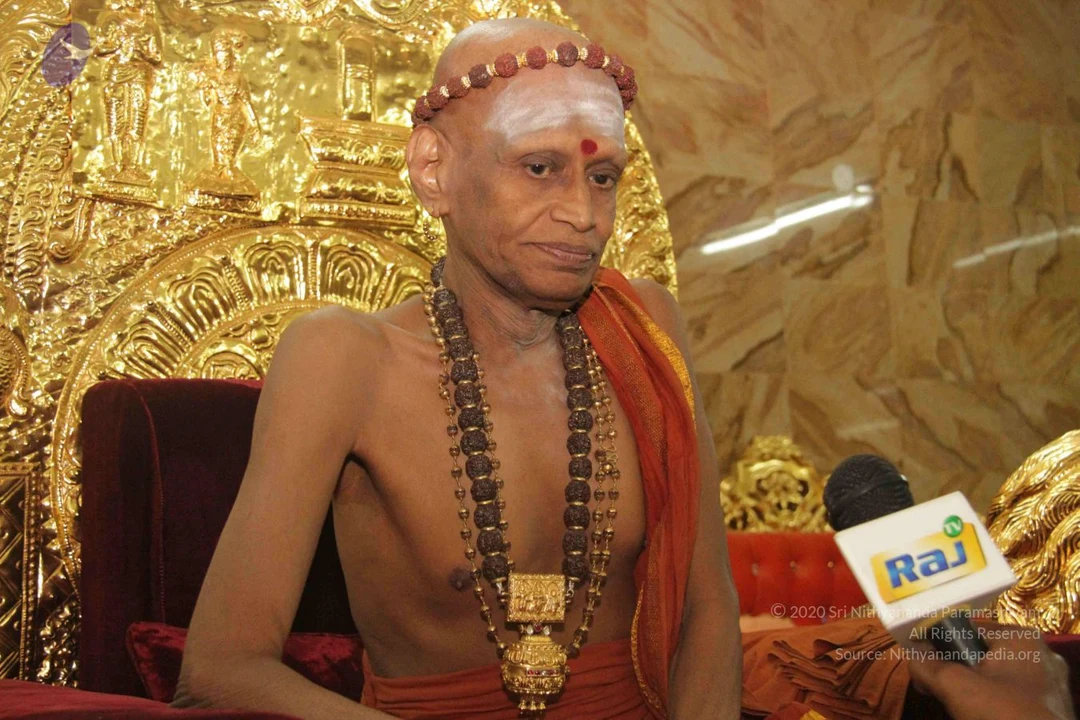
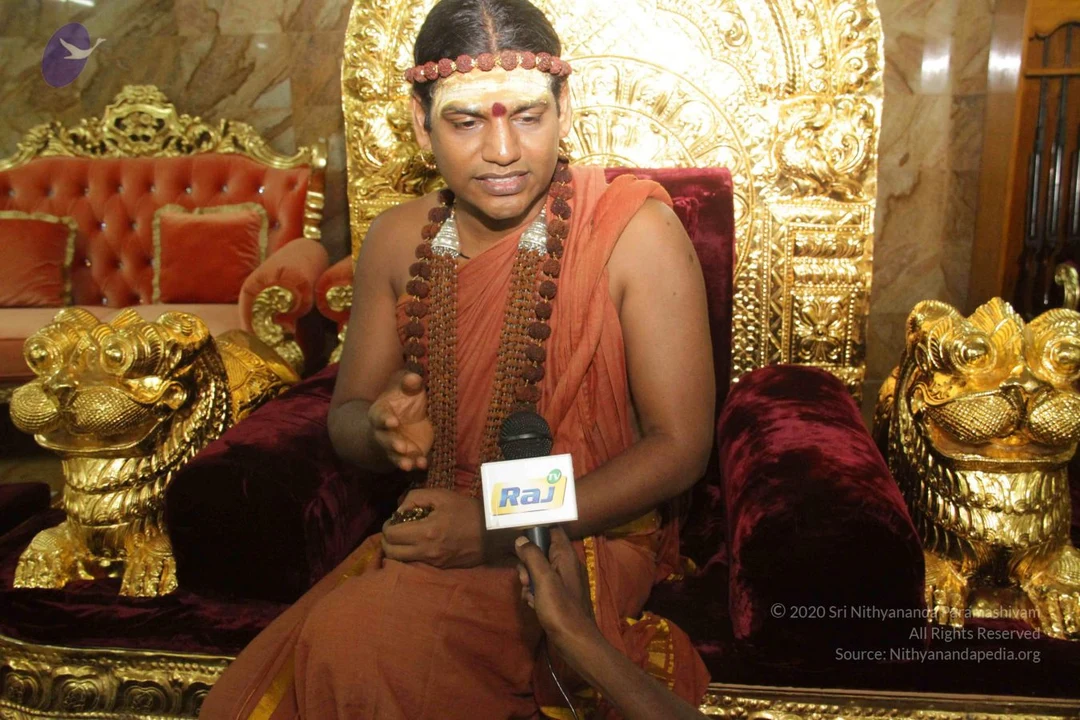
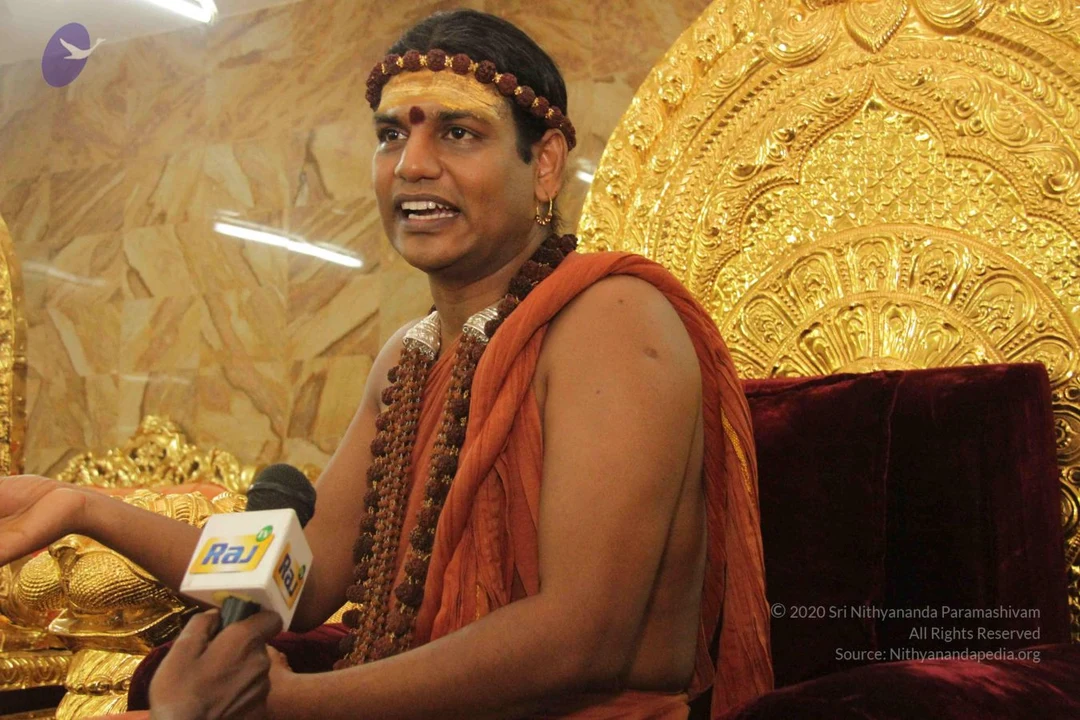
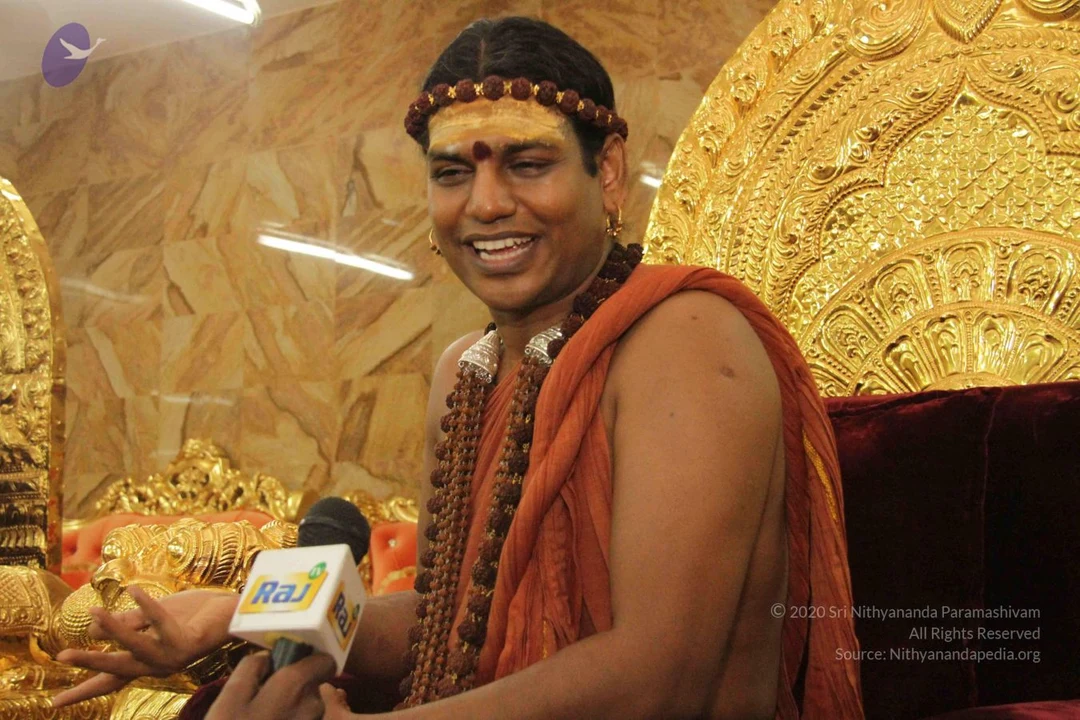
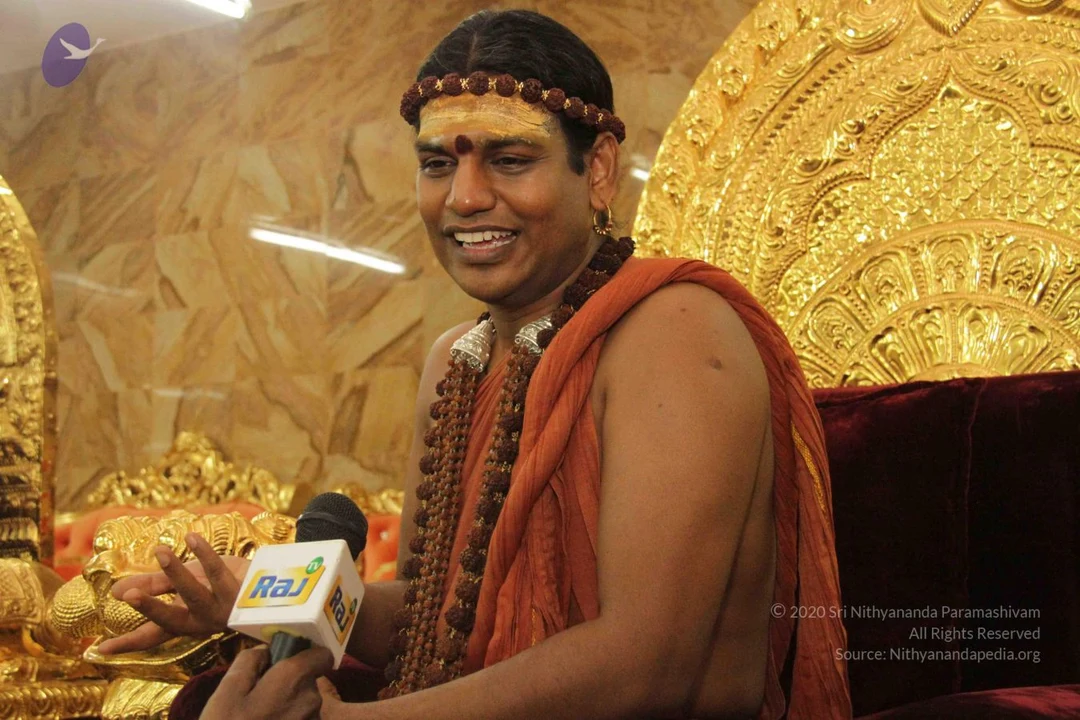
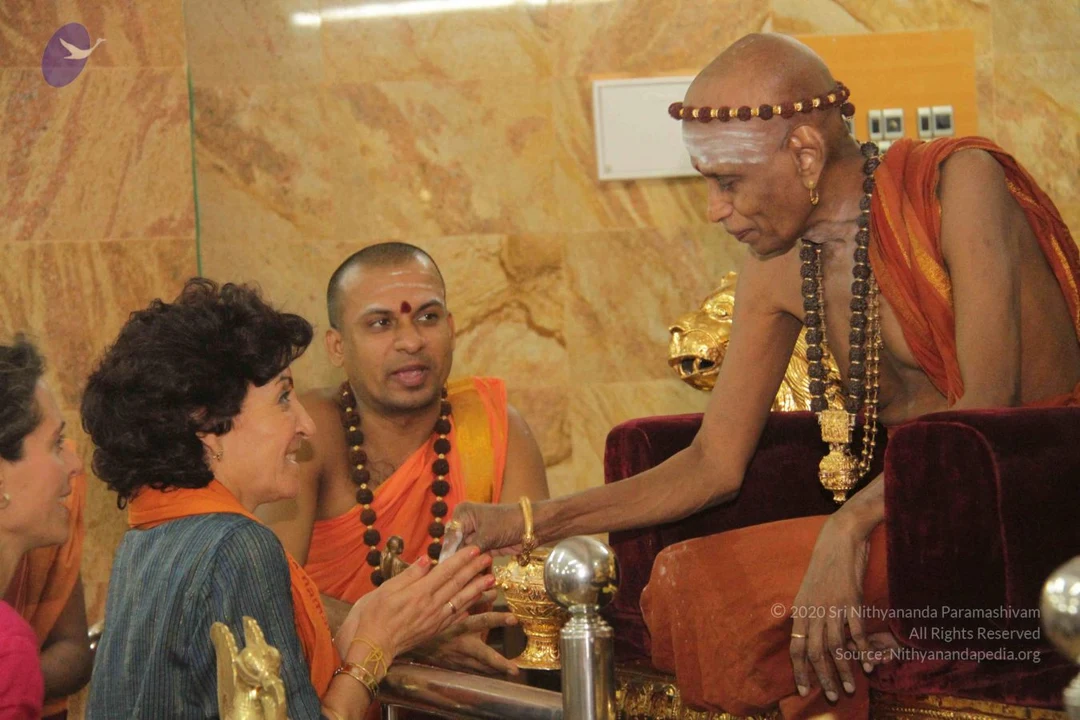
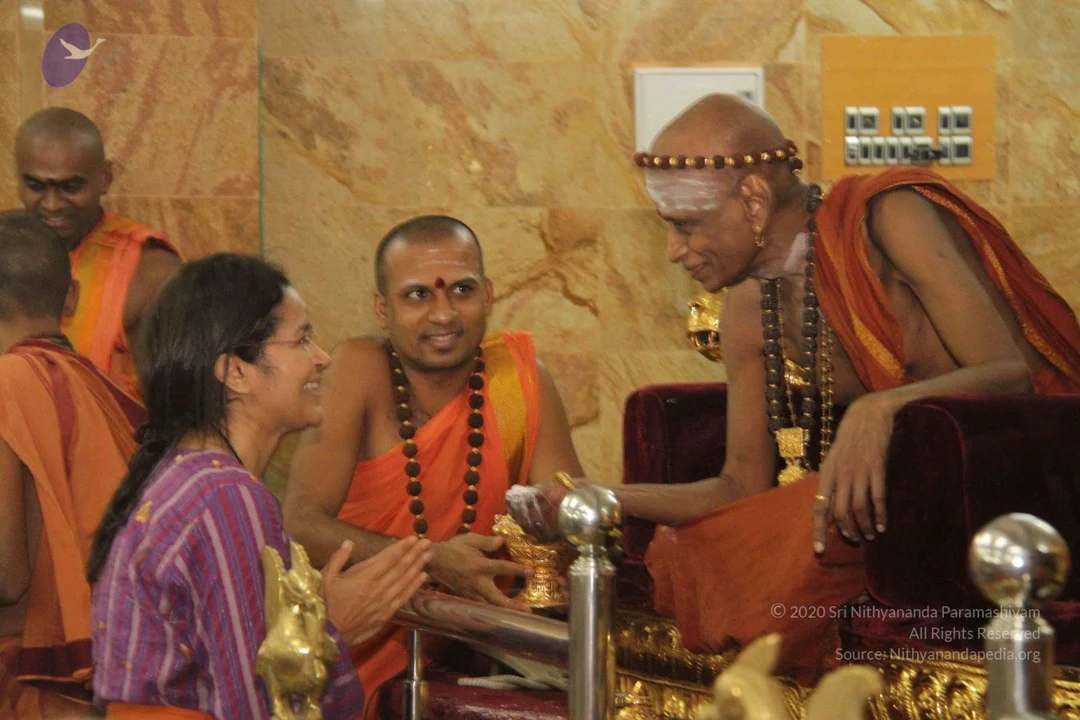
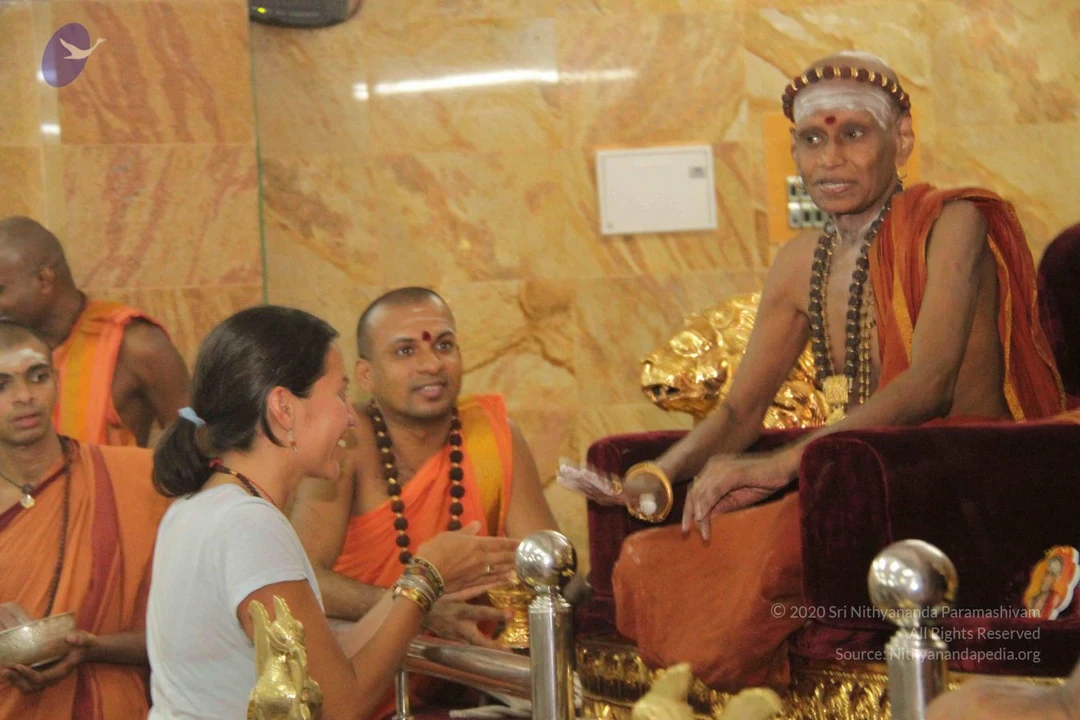
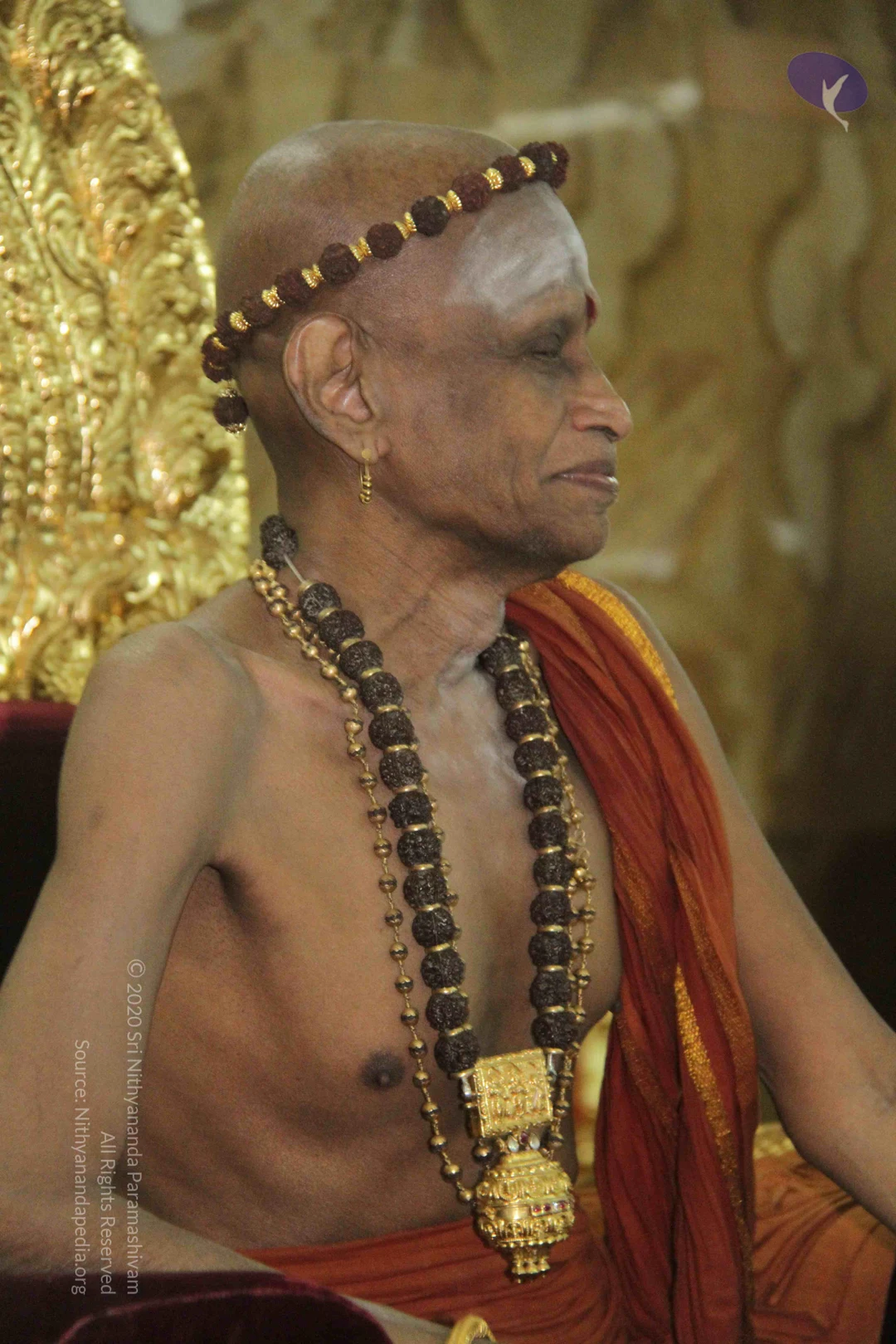
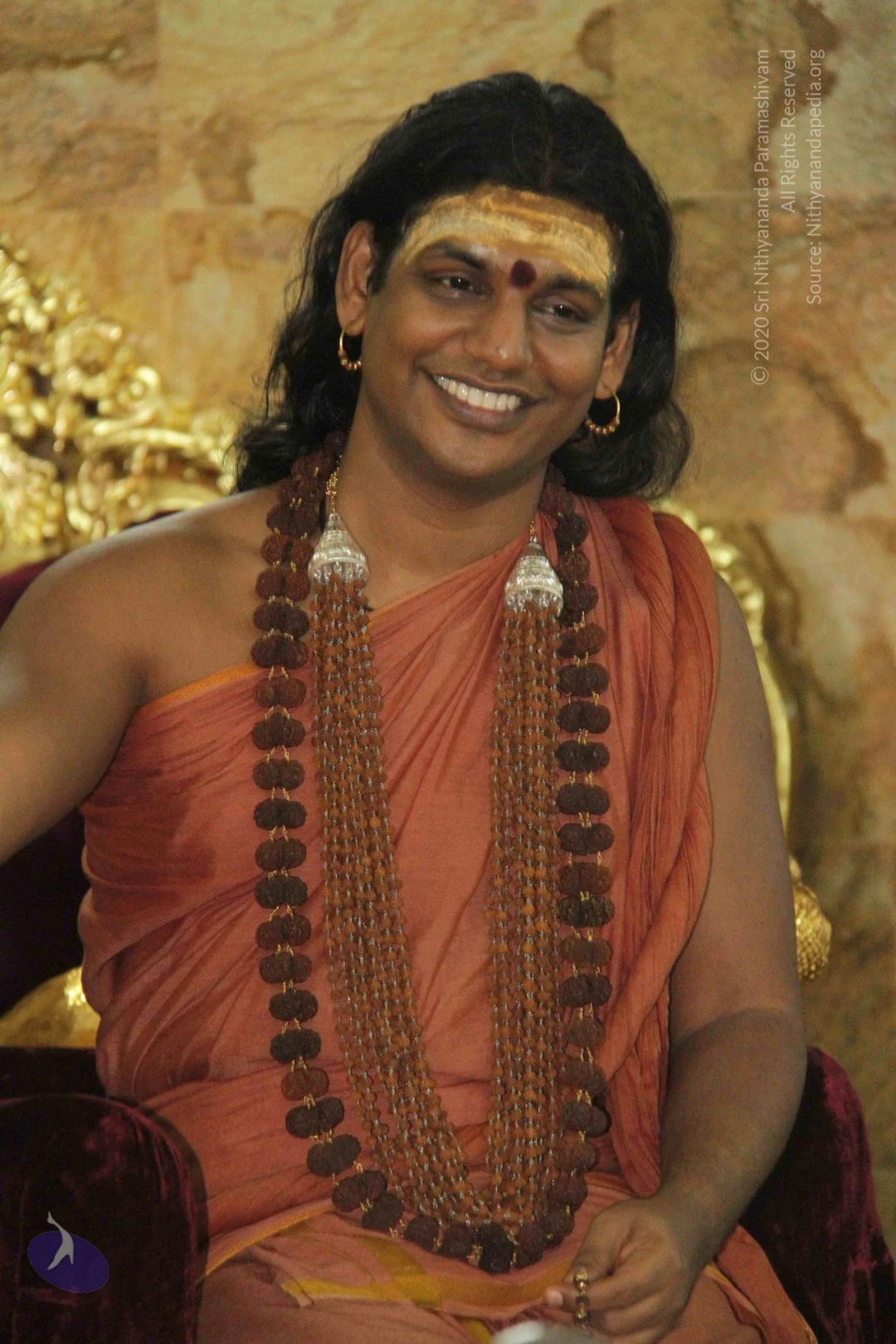
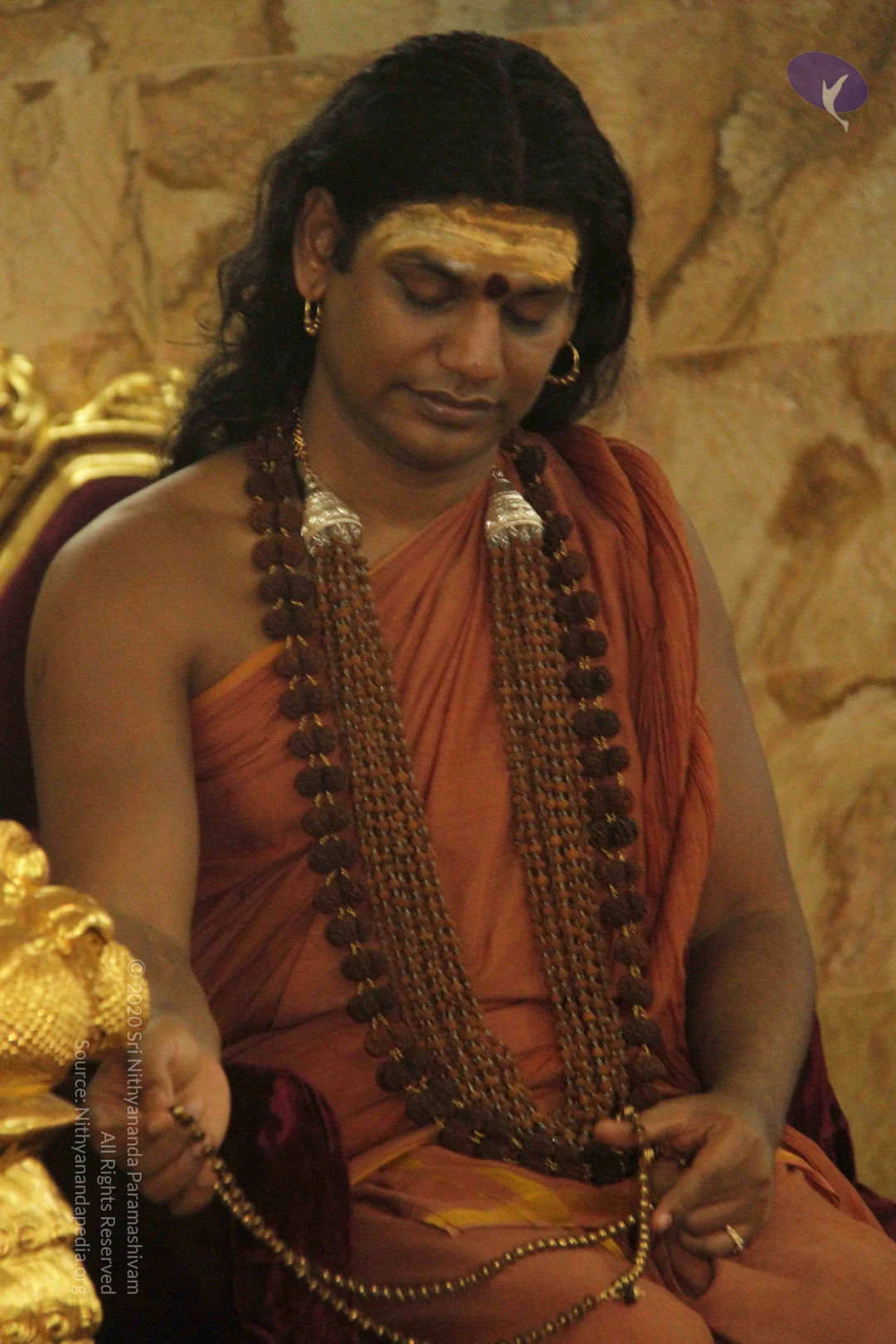
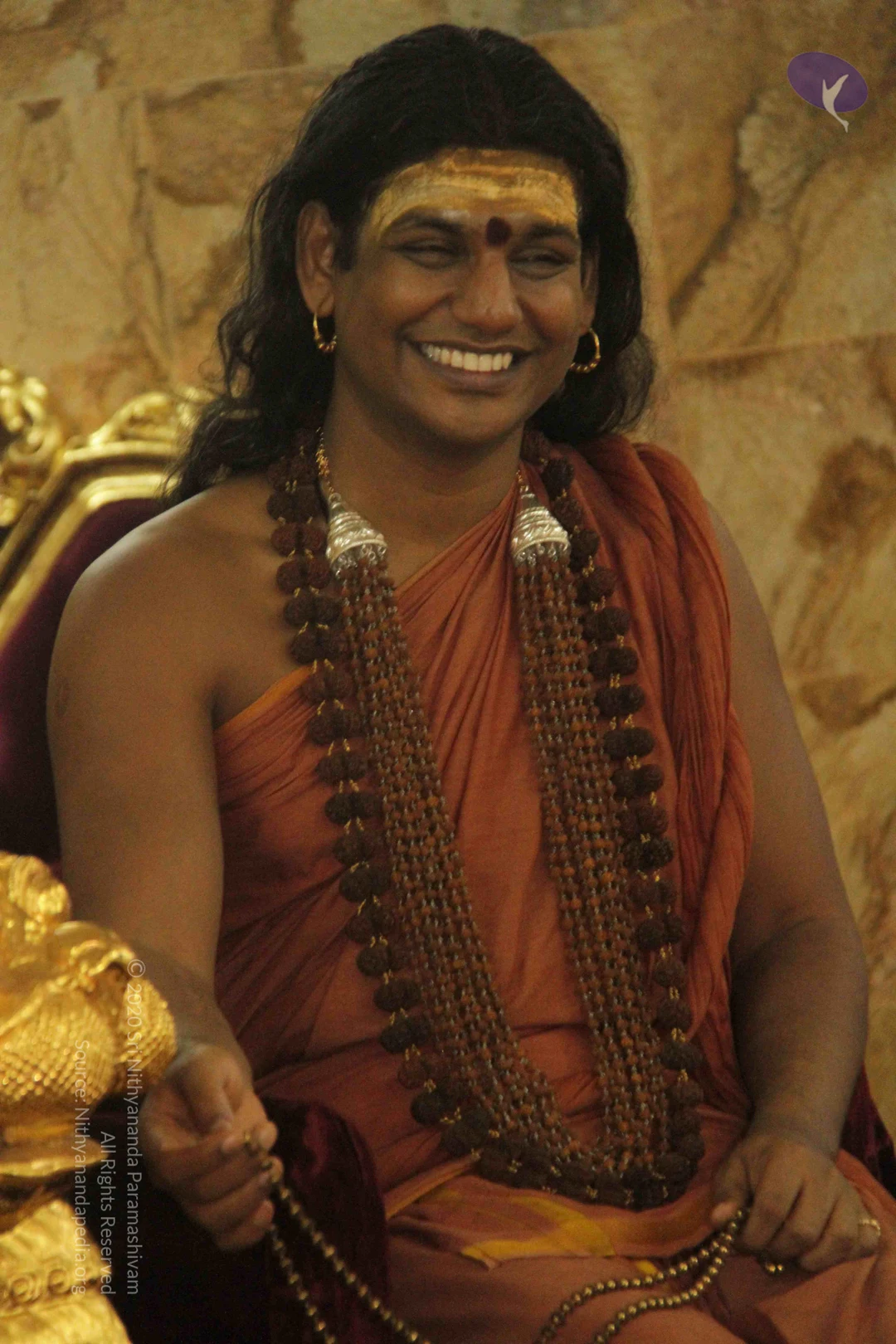
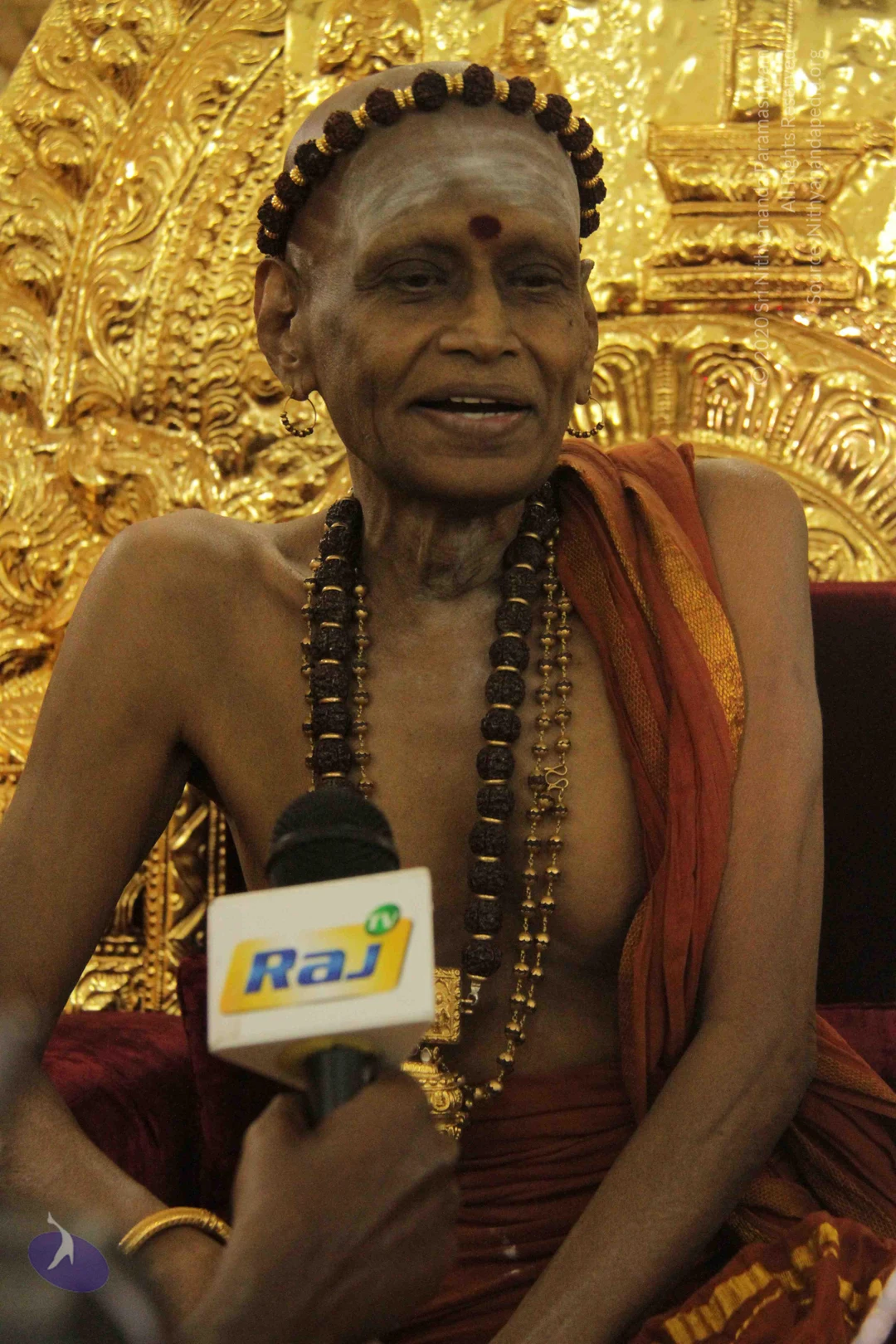
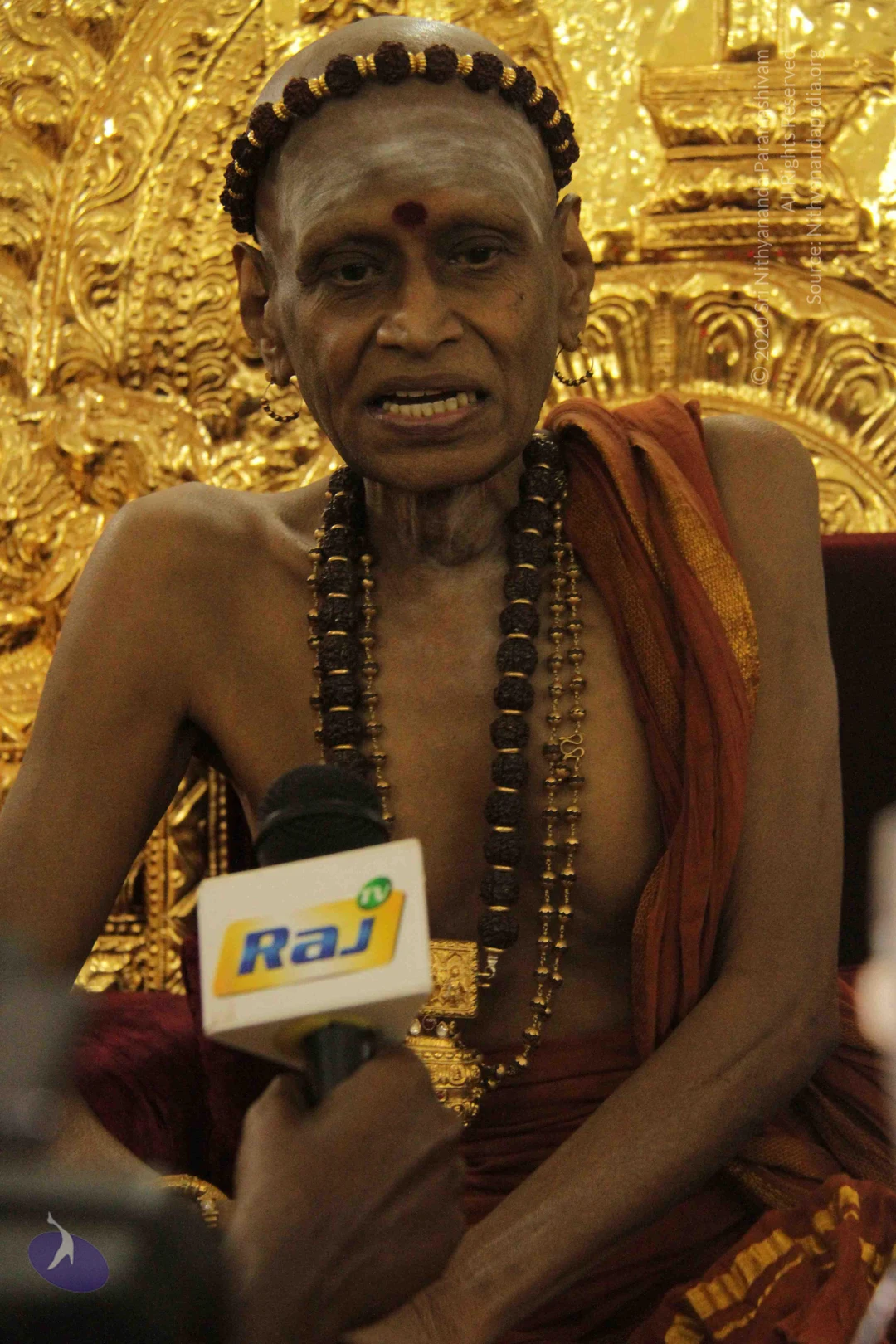
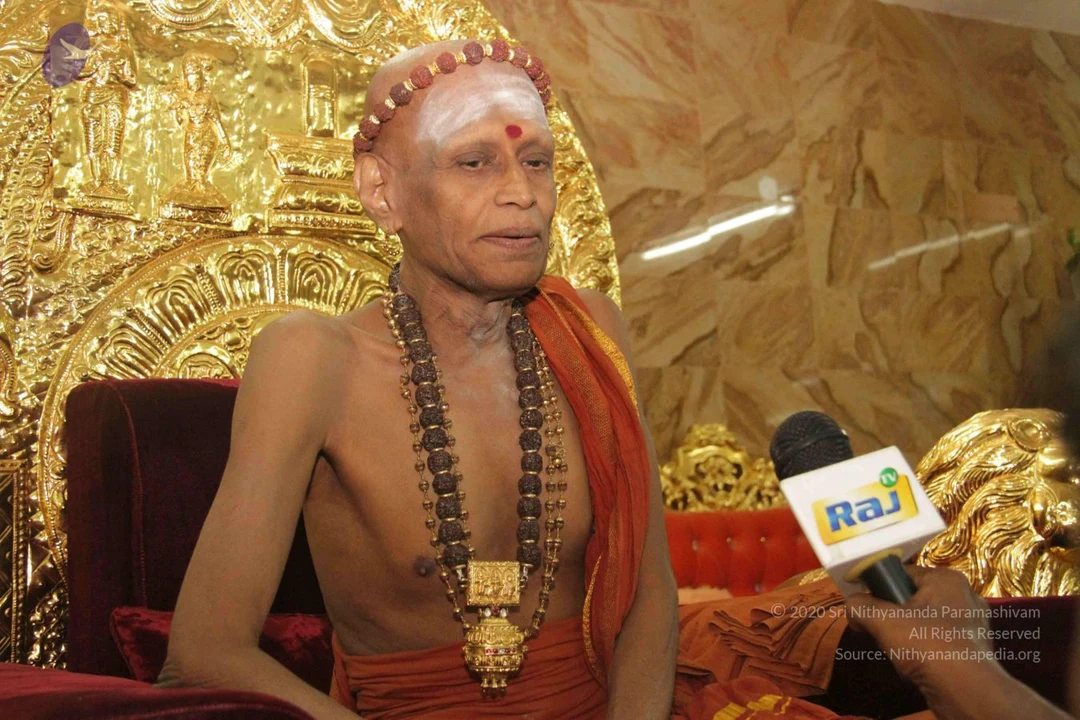
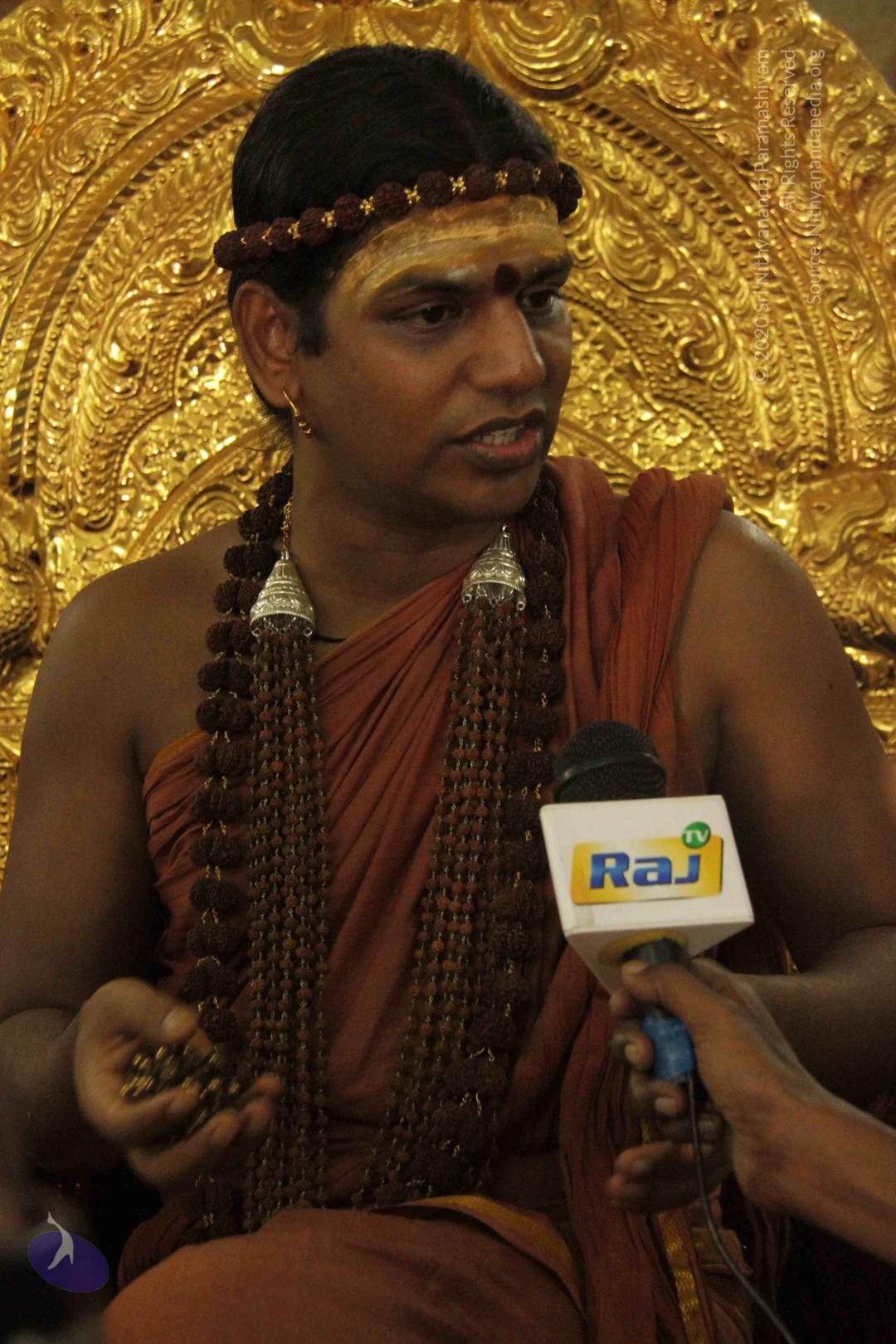
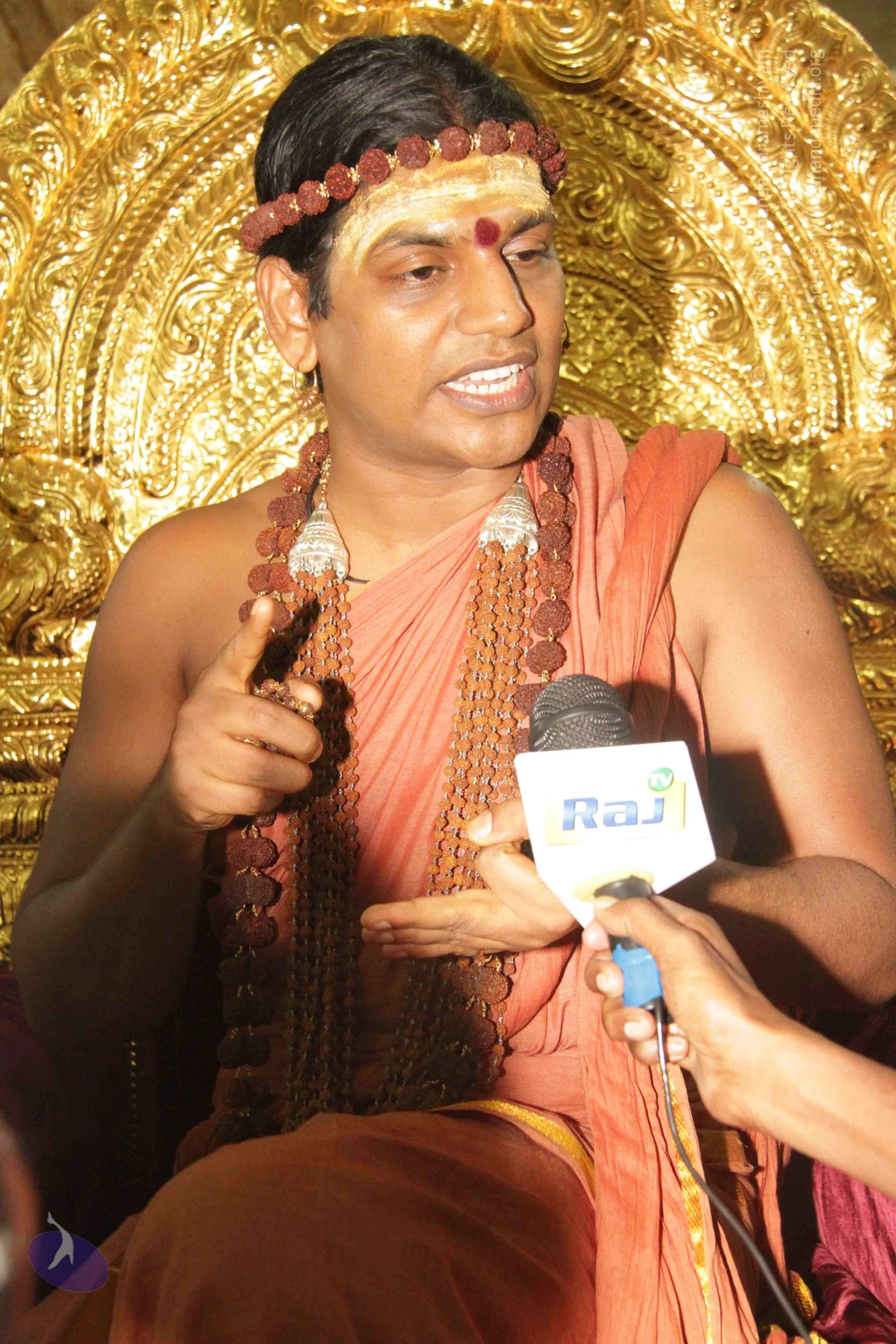
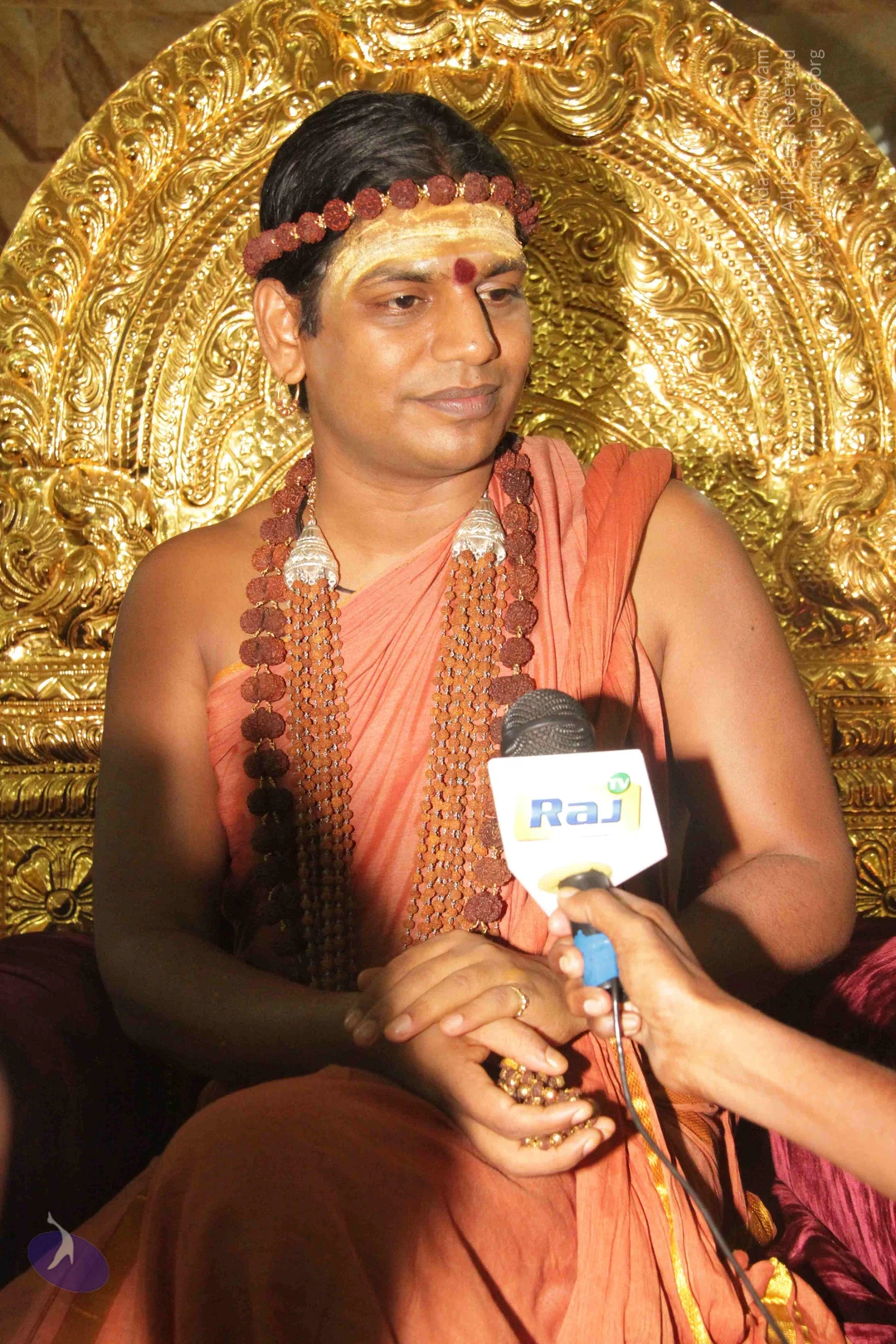
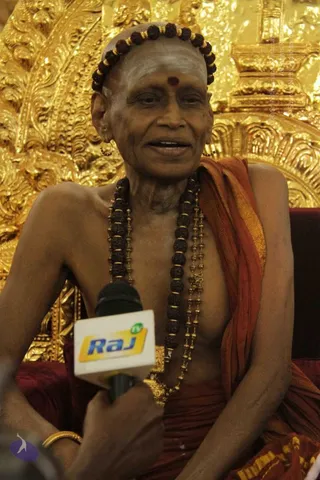
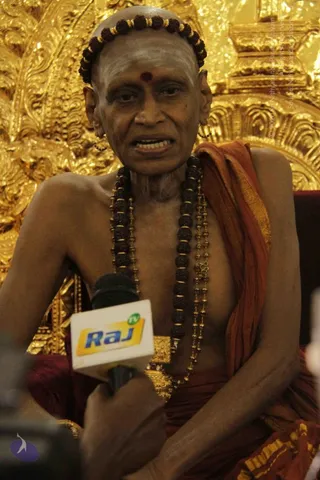
Side-profile photograph of a shaved-headed man seated on a gold-carved throne against a golden-brown wall. He is bare-chested, wearing an orange-red shawl with gold border draped over his left shoulder, a headband of rudraksha beads with gold spacers, and a long double rudraksha mala with a large gold ornamental pendant on the chest. White vibhuti marks cover the forehead with a red kumkum dot, and he wears a small gold earring. The scene appears to be a satsang discourse setting.Photograph of a smiling man with long dark hair seated on a plush burgundy velvet chair in front of a golden carved backdrop and a stone wall. He wears an orange-saffron shawl draped over one shoulder and multiple strands of rudraksha beads with ornate silver-capped tassels, a horizontal white-and-yellow sacred marking on his forehead with a red bindi, and small gold hoop earrings. Appearance-based candidate (probable) for the a person figure in a seated satsang or discourse setting; the printed page indicates a morning satsang talk. Single physical person visible.A seated man with long, swept-back dark hair, a white and yellow vertical tilak with a red bindi on his forehead, and gold hoop earrings, wears an orange-saffron shawl draped over a bare shoulder and multiple tiers of rudraksha malas with silver caps across his chest. He sits with eyes closed, holding a gold beaded mala in his hands, while a gold ornate throne-like chair and a gold object appear at the left edge against a warm stone wall.A smiling man with long dark hair sits on a gold-and-maroon throne before a textured stone wall. He wears a saffron-orange shawl draped over one shoulder, multiple strands of rudraksha mala beads with silver ornaments, small gold hoop earrings, a yellow-gold tilak across the forehead with a red bindi, and holds a mala in his hands. Swamiji (probable) based on long swept-back hair, saffron shawl, rudraksha malas and ceremonial ornaments, seated as a teacher. A gold ornamental armrest is visible at the left edge.A photograph of a shaved-headed, bare-chested elderly man seated before an ornate gold-leaf backdrop, speaking into a microphone held by an unseen person. He wears a rudraksha mala crown across his head, long rudraksha and gold-bead necklaces, gold earrings, a red bindi and white tilak, and an orange-red shawl over his shoulder and waist. A gold bangle is visible on the wrist of the hand holding the Raj TV microphone. The a person candidate has distinctive rudraksha and gold adornments with an orange shawl, but the appearance cues are not strong enough to confirm identity, so this is marked unsure and described by role as a seated speaker at a satsang.A photograph of a bald, shaved-headed man seated before an ornate gold-leaf backdrop, speaking into a microphone held by another person's hand at lower left. He wears a rudraksha mala headband, a red bindi, a double rudraksha and gold-bead mala necklace, gold earrings, and an orange-red shawl over a bare chest. A logo reading Raj TV is printed on the microphone flag.

IA-Travel-to-Thiruvannnamalai

9 photosSource gallery
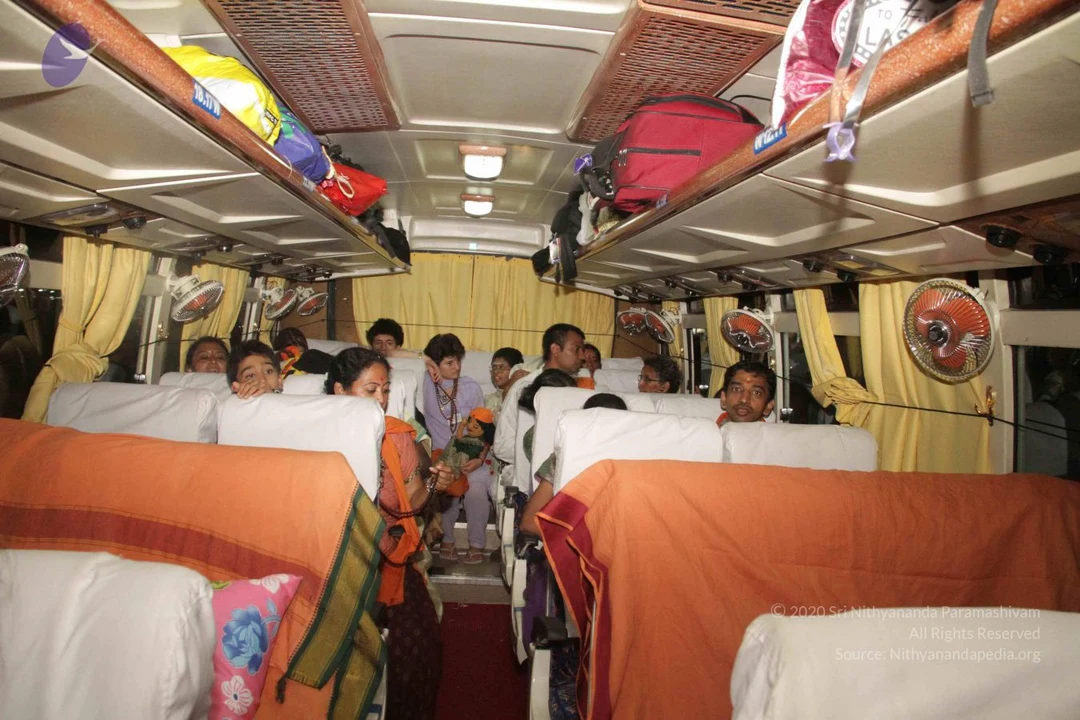
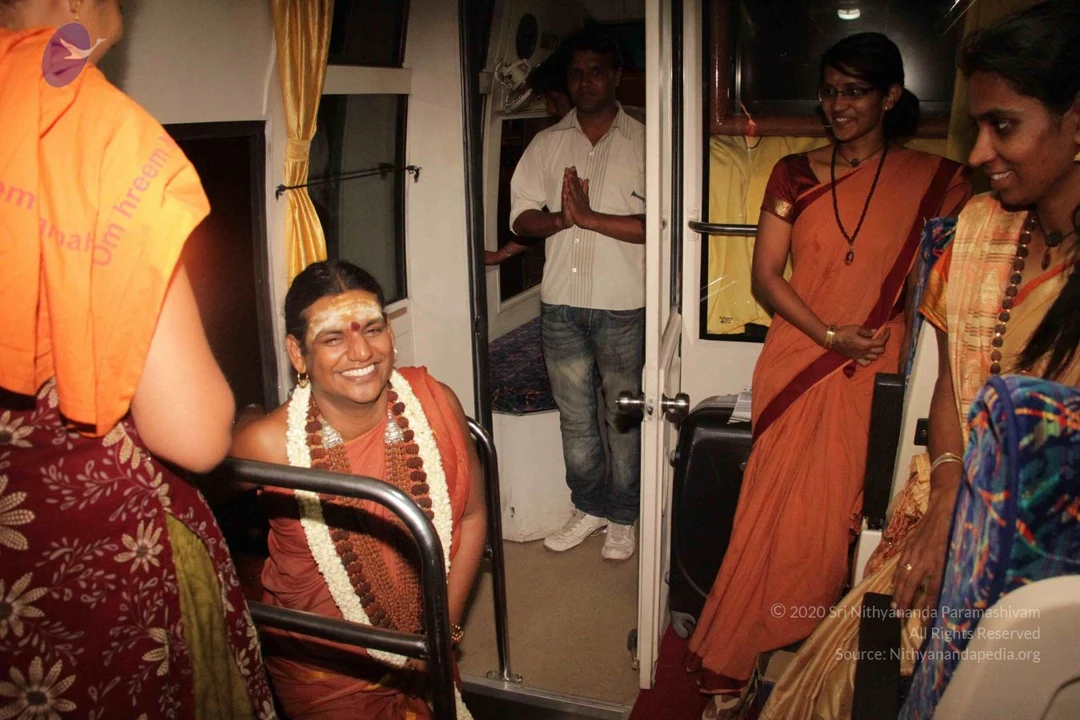
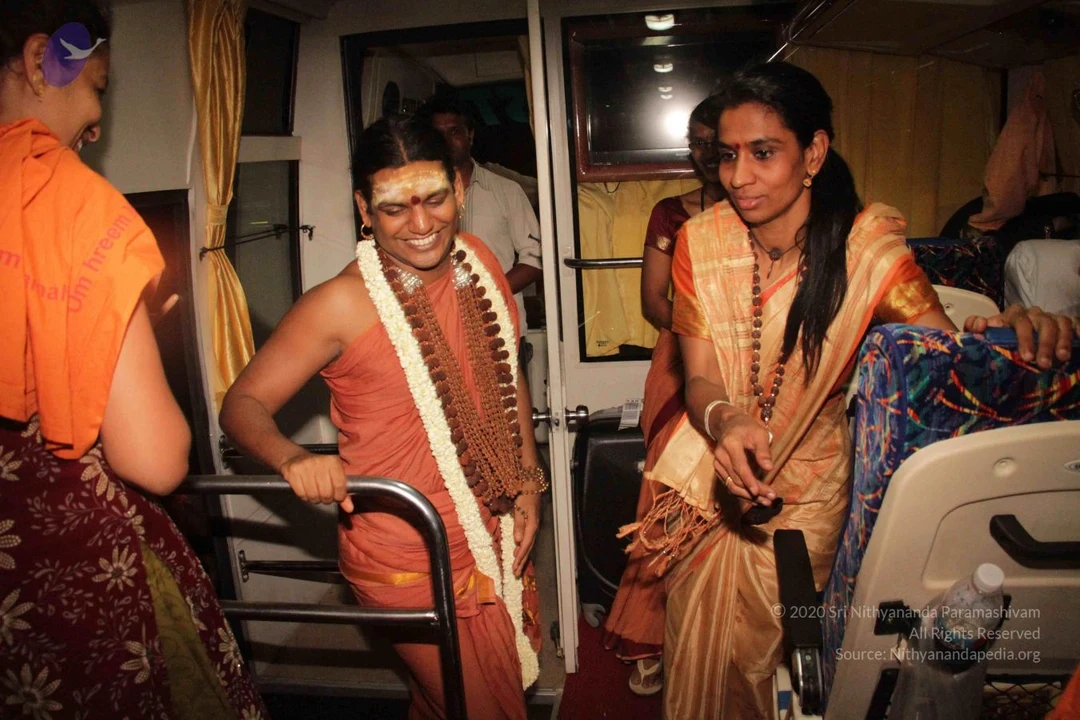
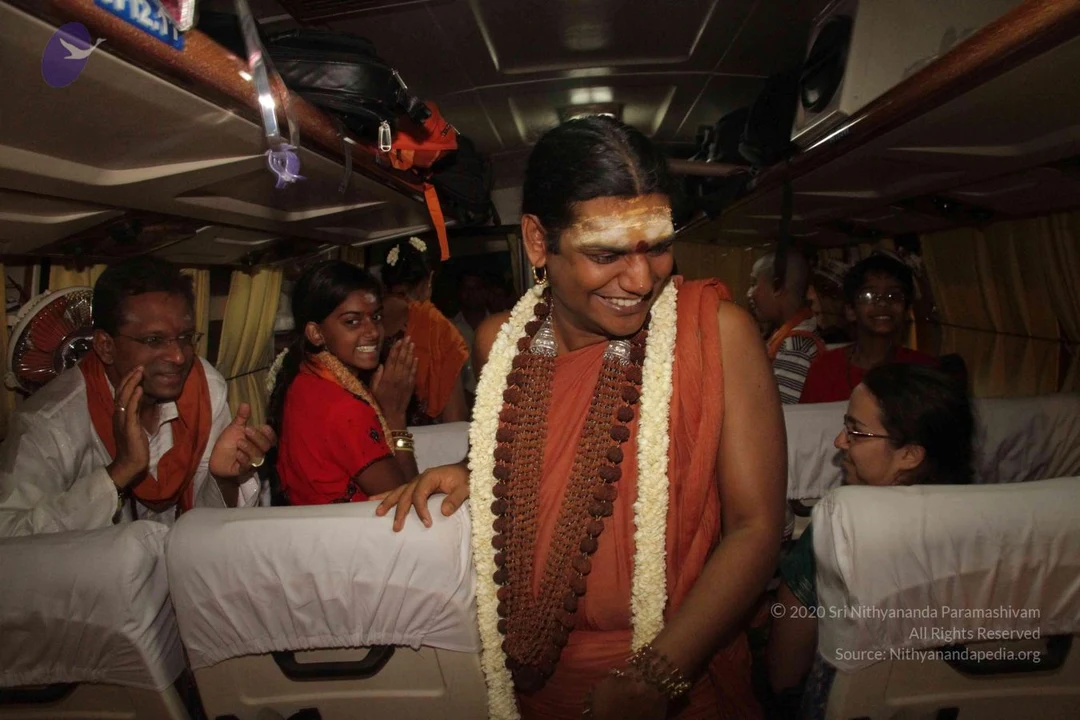
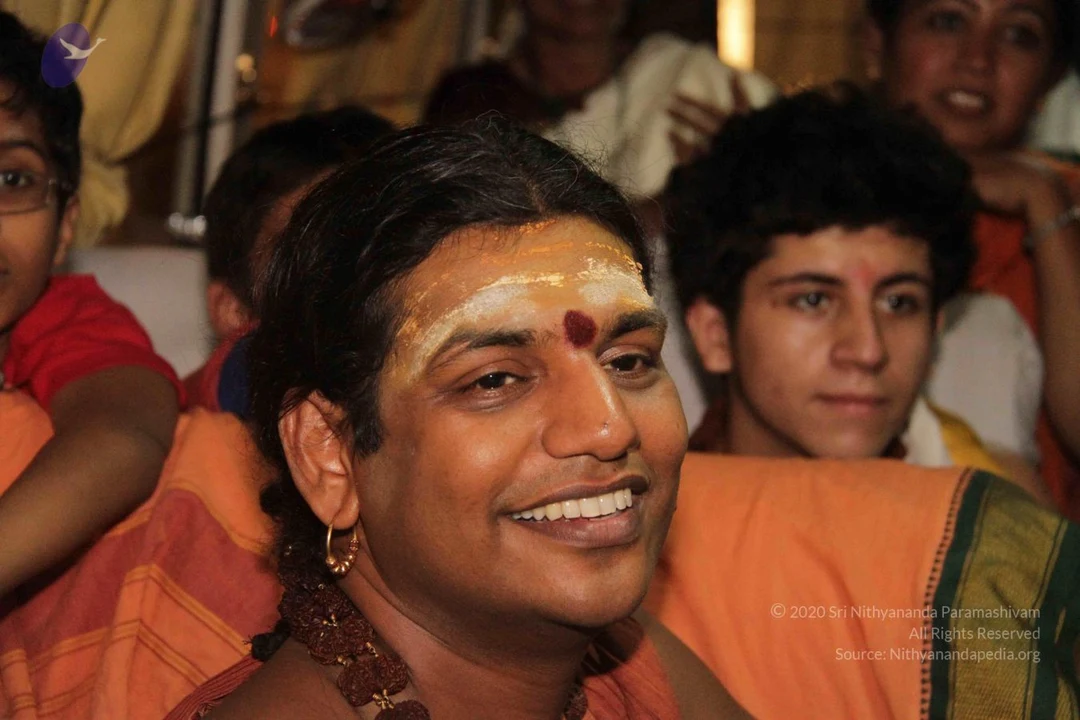
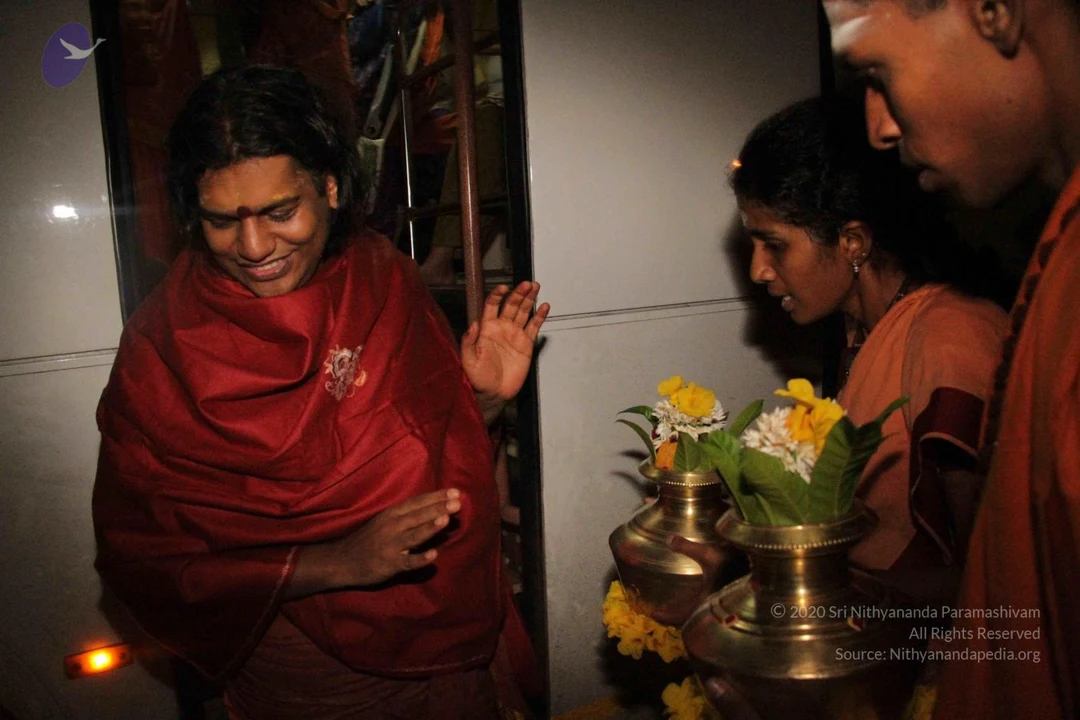
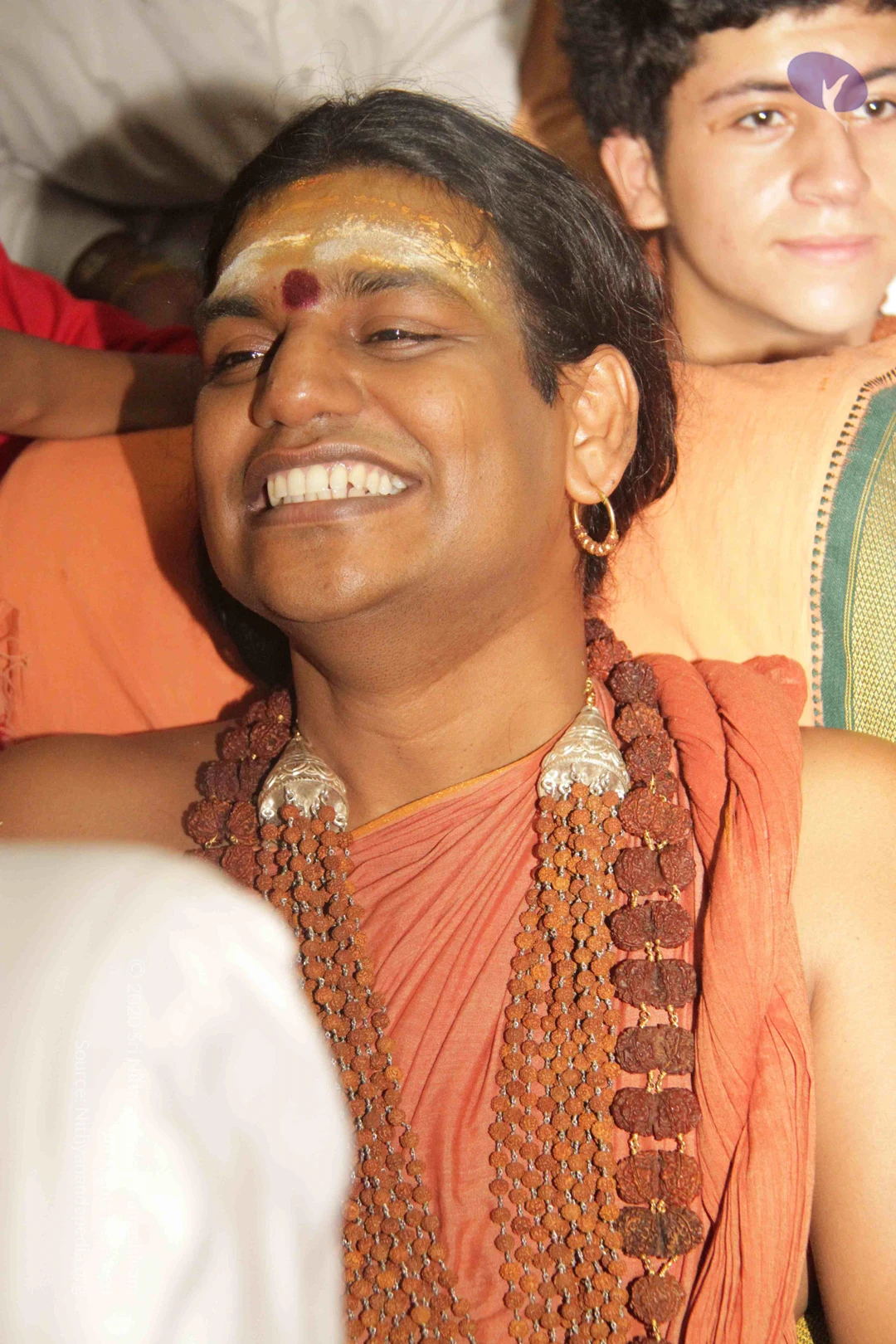
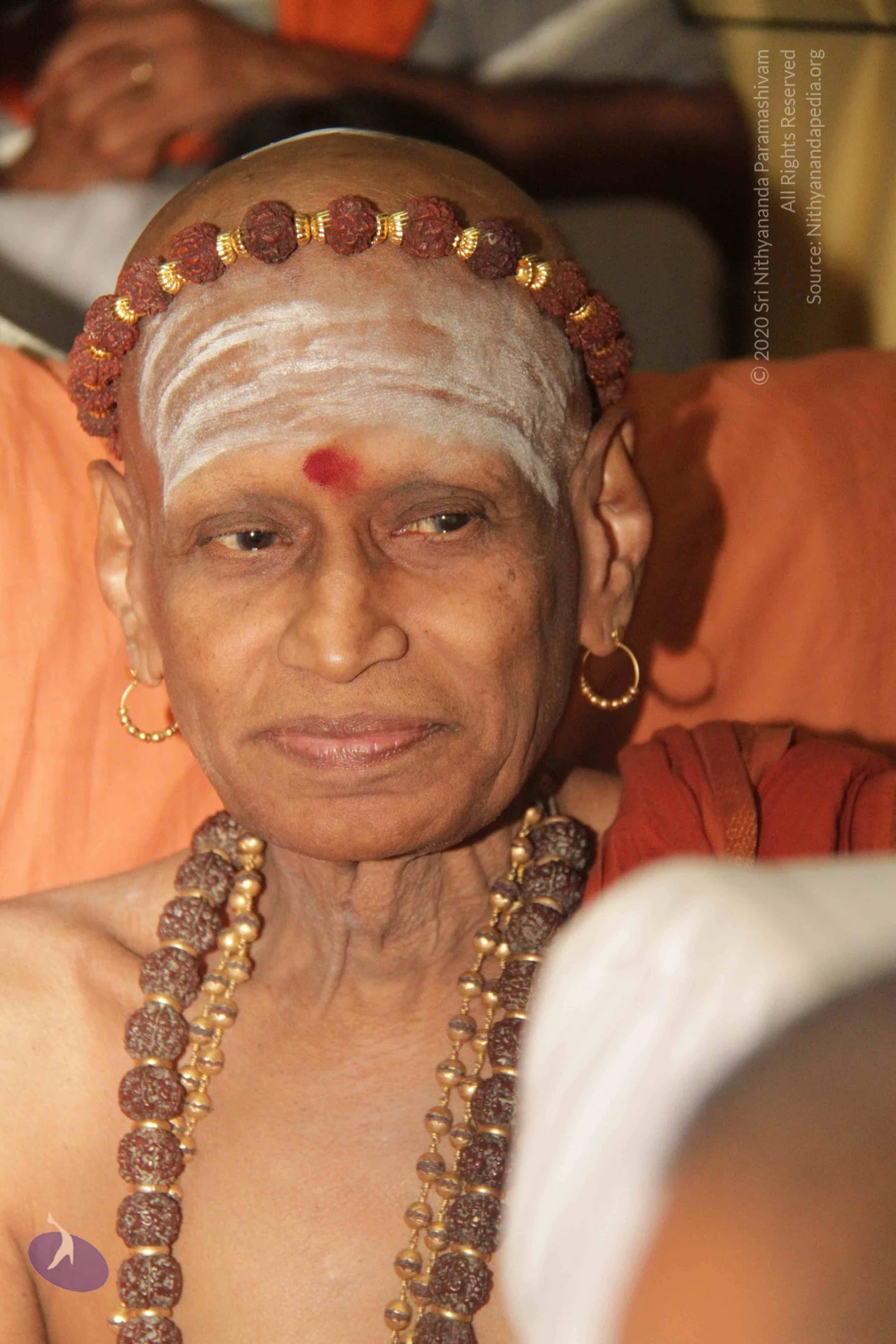
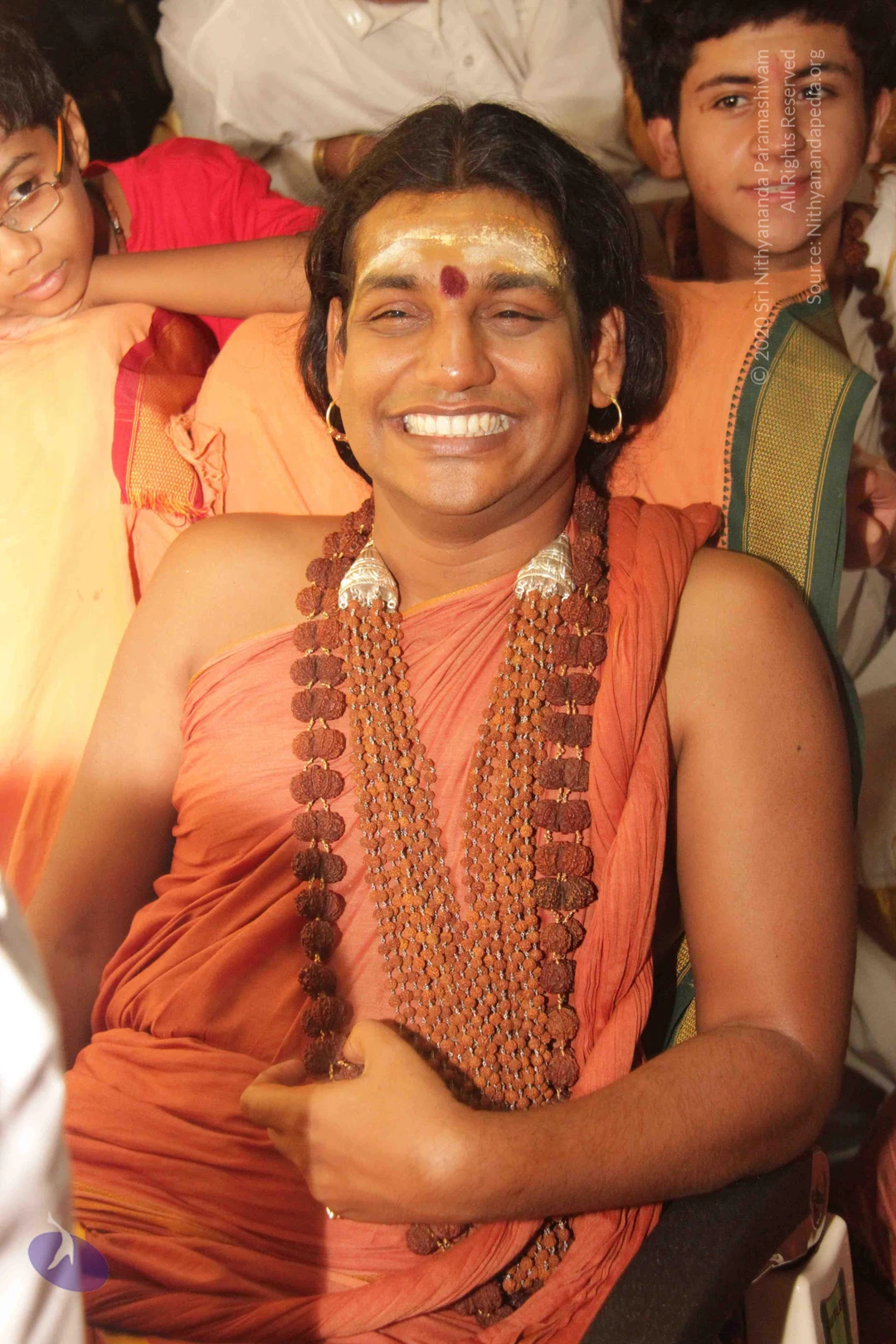
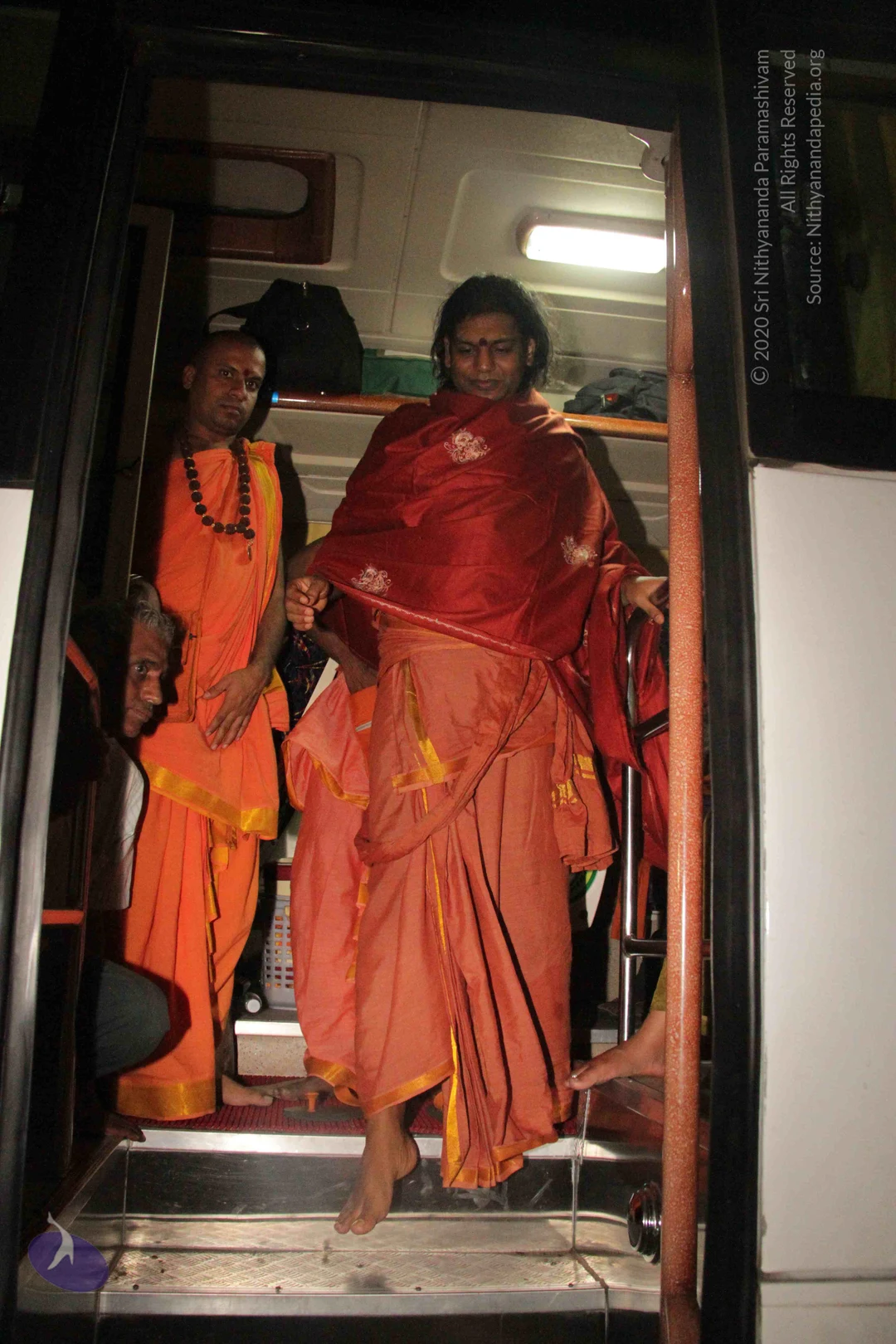
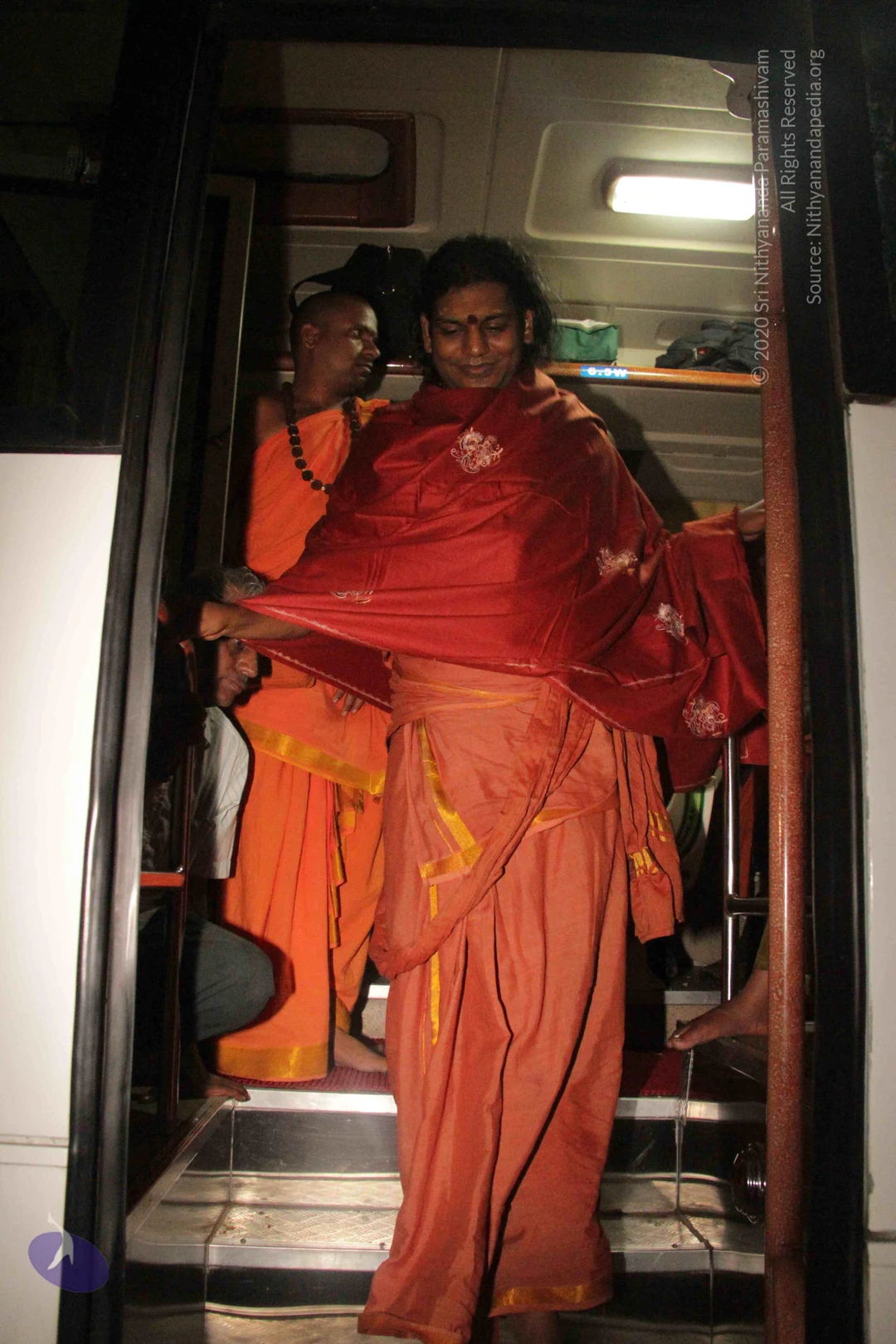
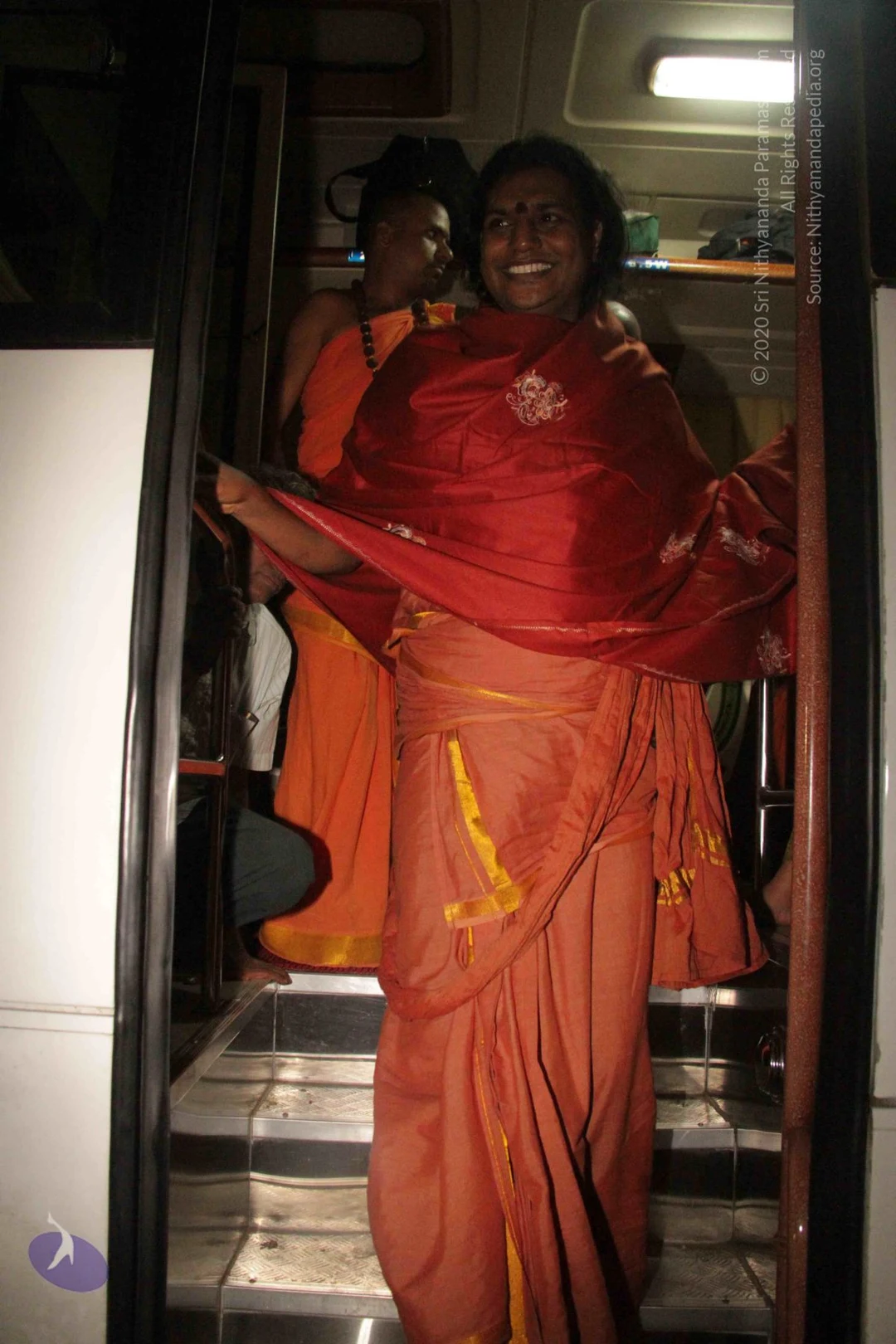
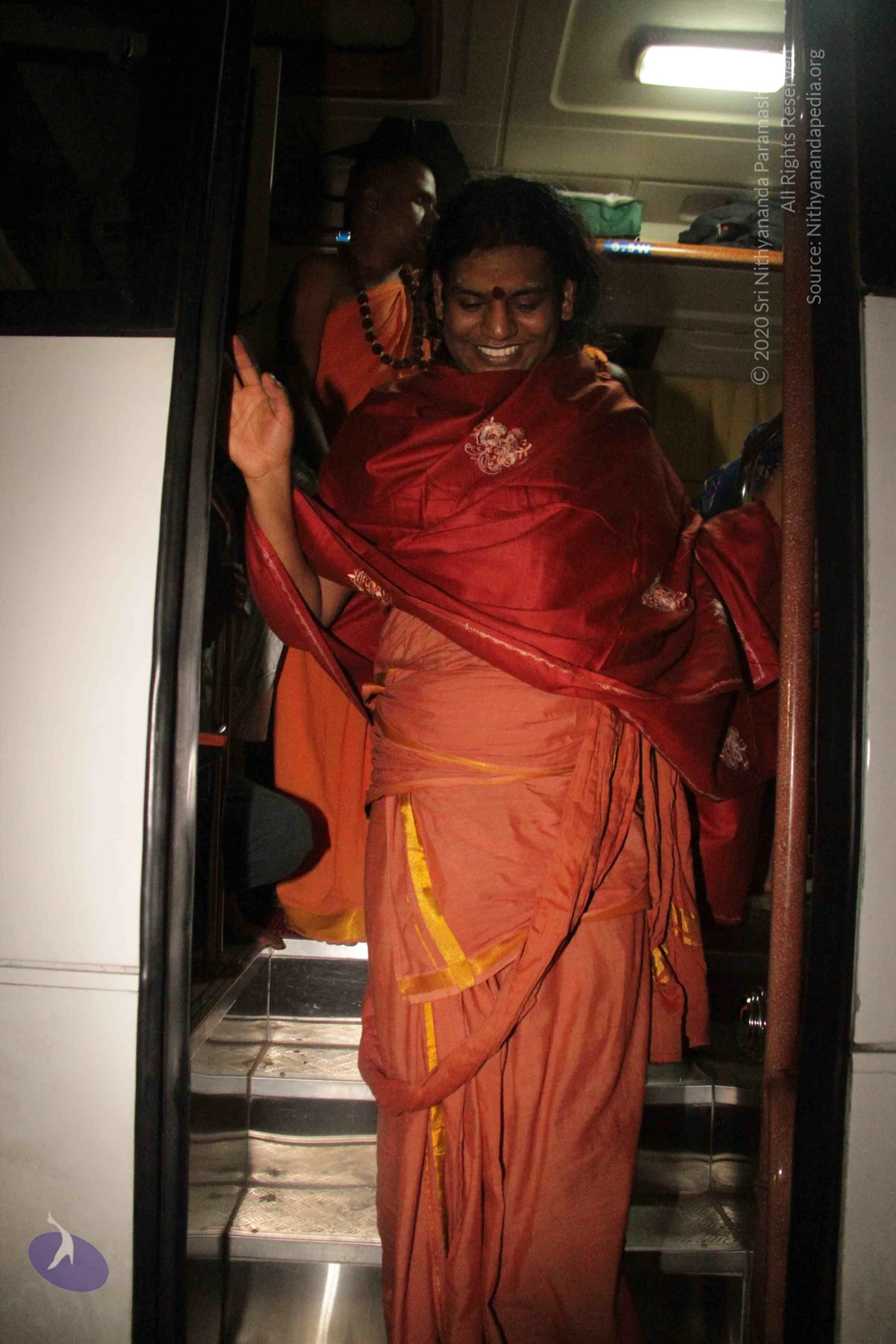
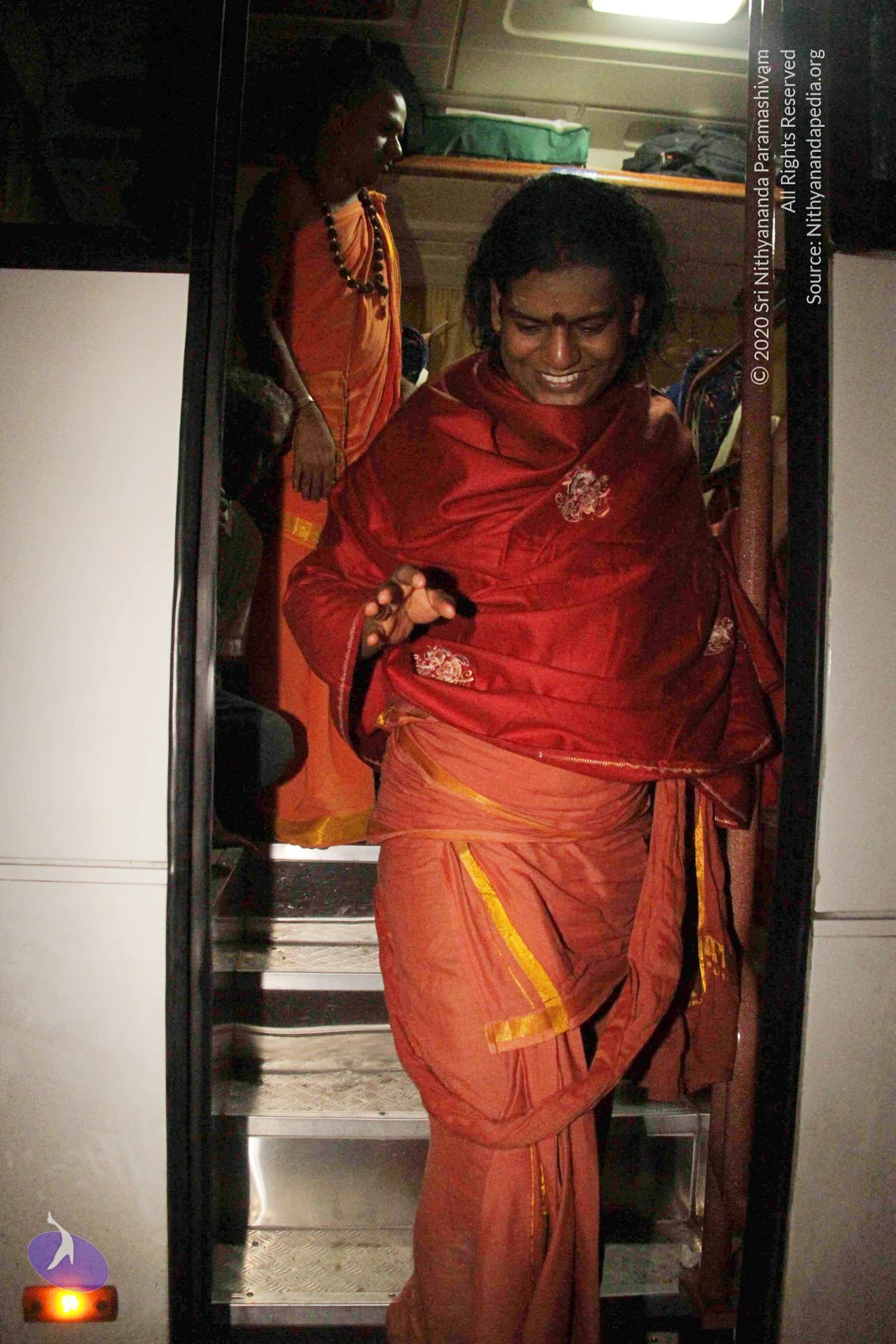
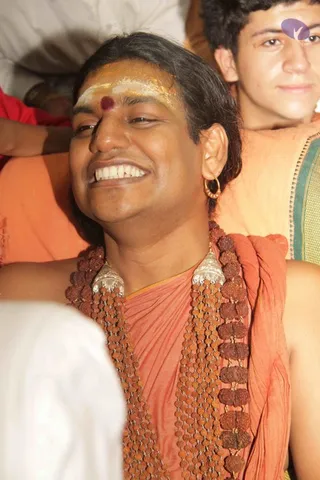
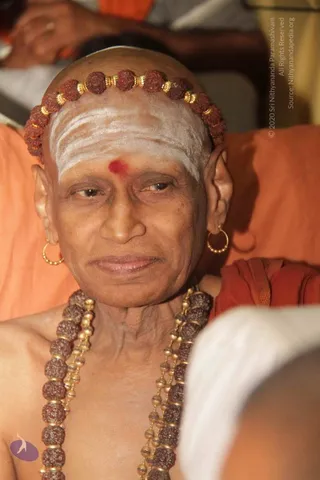
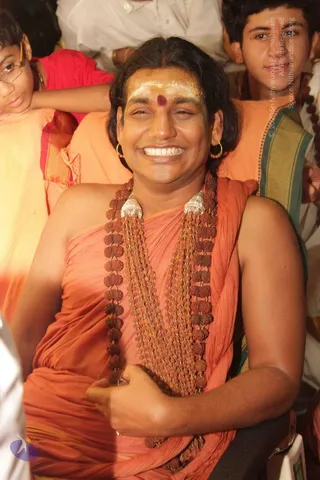
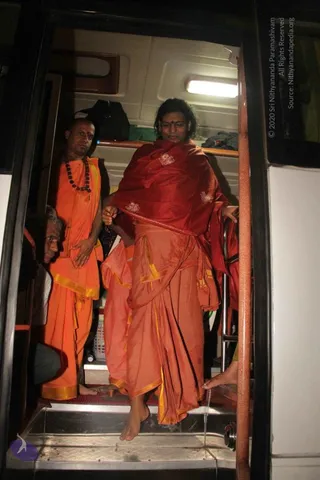
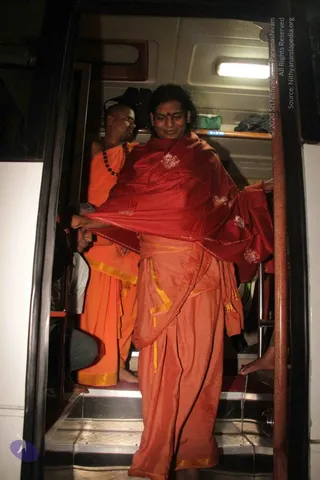
Indoor photo inside a bus interior with overhead luggage racks and white-covered seats. A smiling man in saffron-orange robes stands centre, wearing a long white jasmine garland with a pink flower tassel, multiple strands of rudraksha beads on his chest, and white-and-red tilak marks on his forehead. Women on the left and right press their palms together in greeting, and a shaved-headed man in orange robes sits behind him. A few other passengers are visible at the back. a person: the man in the centre fits the page's description with rudraksha malas and saffron robes; the cues are present but his face is not used for identification.Close-up photograph of a smiling man with shoulder-length swept-back dark hair, a gold hoop earring, a red bindi and white-and-yellow tilak on his forehead, wearing long layered rudraksha malas with silver ornaments and an orange-saffron shawl. Behind him a young man with curly hair looks on, and an orange cushion and a red garment are visible at the edges.Close-up photograph of a shaved-headed man seated against an orange cushion, wearing a rudraksha mala crown with gold spacers across his head, a white horizontal tilak with a red bindi, gold hoop earrings, and a long rudraksha and gold bead mala draped over his bare chest. He wears orange-red cloth at the shoulder. A blurred white garment appears in the lower right foreground. One person is visible.Close photo of a smiling man with shoulder-length dark hair, white and orange tilak on the forehead with a red bindi, gold earrings, and multiple strands of brown rudraksha beads with silver caps. He wears a saffron-orange shawl draped over one shoulder and holds his arm across his lap. Behind him, people in orange and red garments sit close together at an event. a person, seated in person.A photograph taken inside a bus doorway at night, looking out from the vehicle interior. A man with long dark hair and a red bindi, wearing a red shawl with embroidered motifs over orange-saffron dhoti-style cloth with gold borders, steps down from the bus while holding a handrail and being steadied by an attendant. Behind him stands a shaved-headed man in orange cloth with gold border and a dark rudraksha mala, and an older man with grey hair sits to the left. Overhead bags and a fluorescent light are visible inside the bus.Photograph taken at the doorway of a vehicle, looking up through the open door as a man in a red-orange shawl stepping down onto a metal step. He wears a saffron-orange dhoti with a gold border and a deep red shawl embroidered with small floral motifs, and has a red tilak on his forehead and long dark hair swept back. Behind him stands a shaven-headed man in orange robes with a dark rudraksha mala, and a partly visible person in grey clothing is at the left edge near the door. The interior ceiling light and bags are visible inside the vehicle.
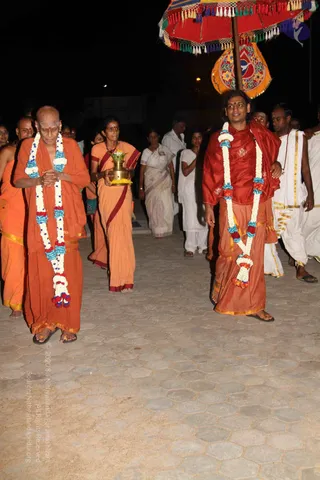
Thiruvannamalai

4 photosSource gallery
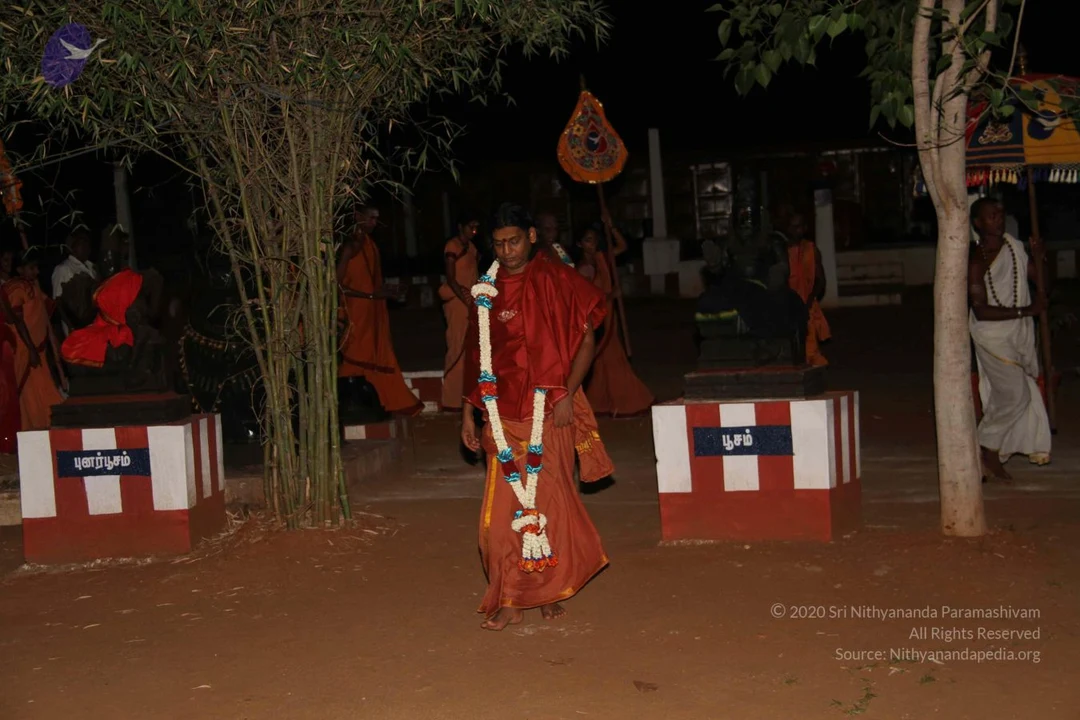
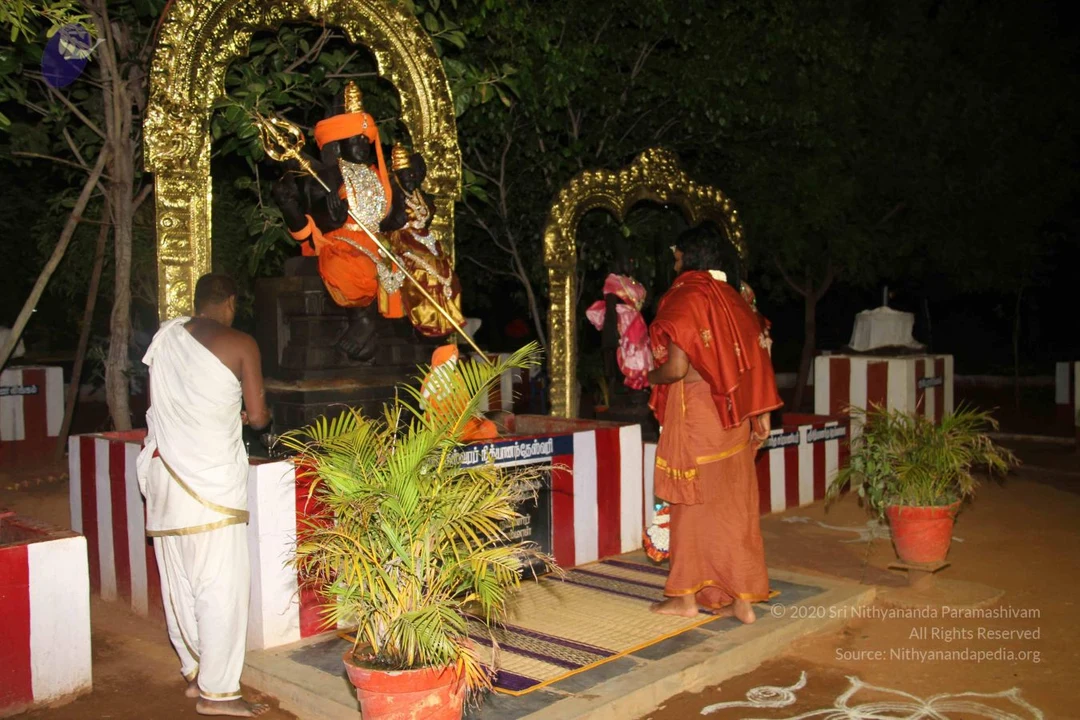
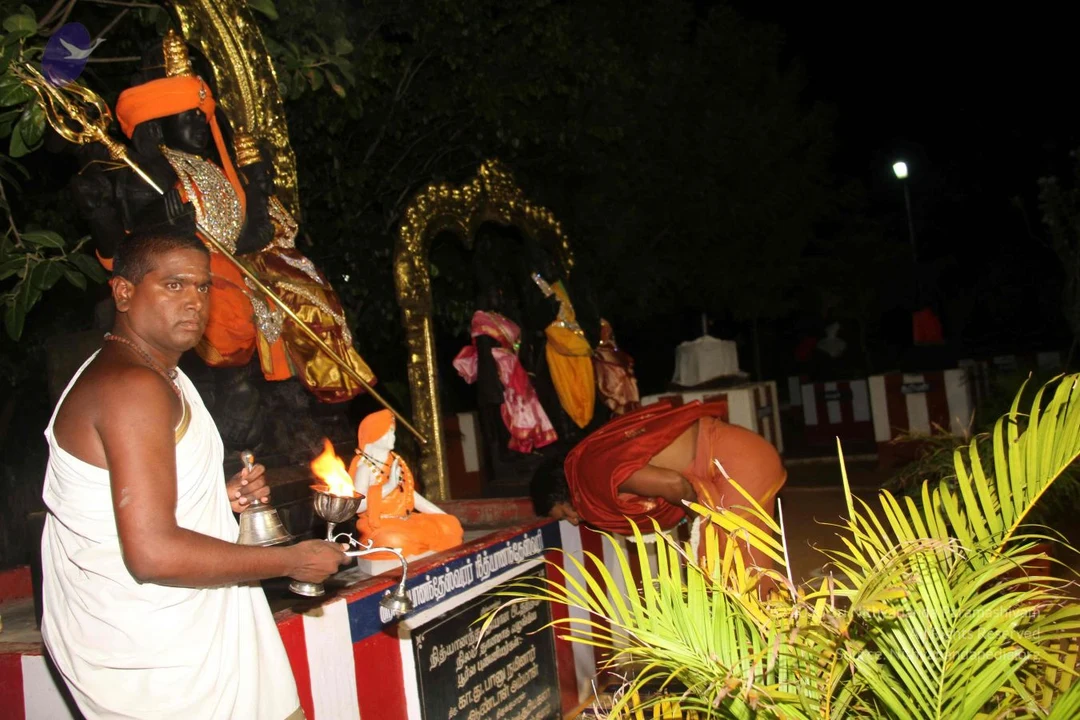
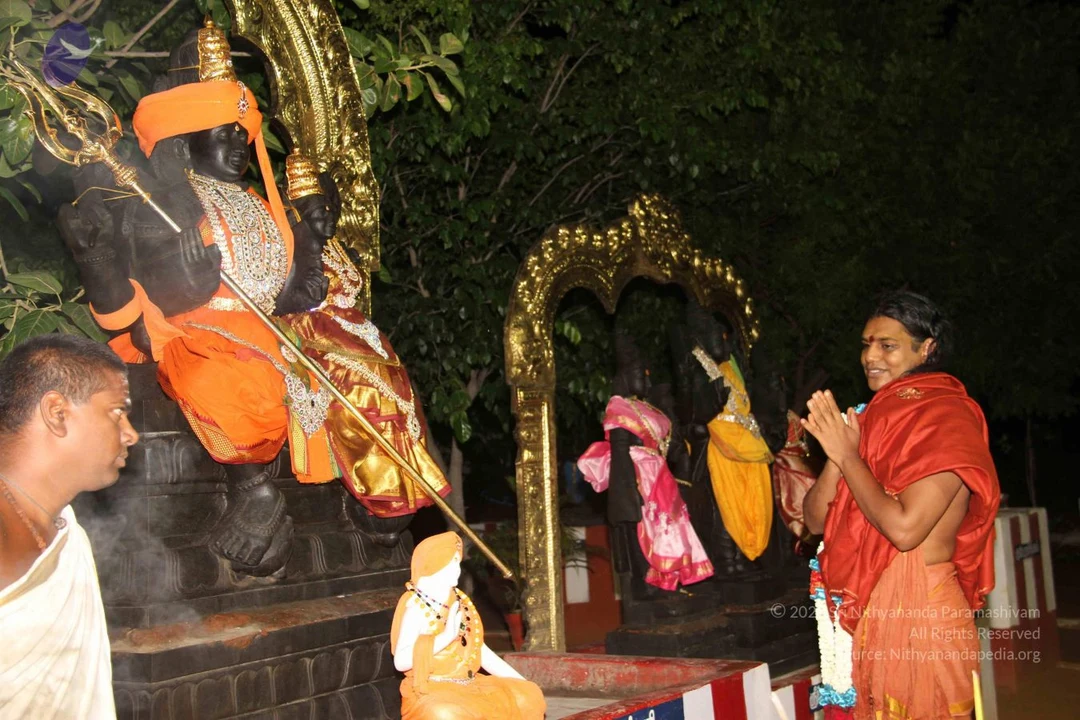
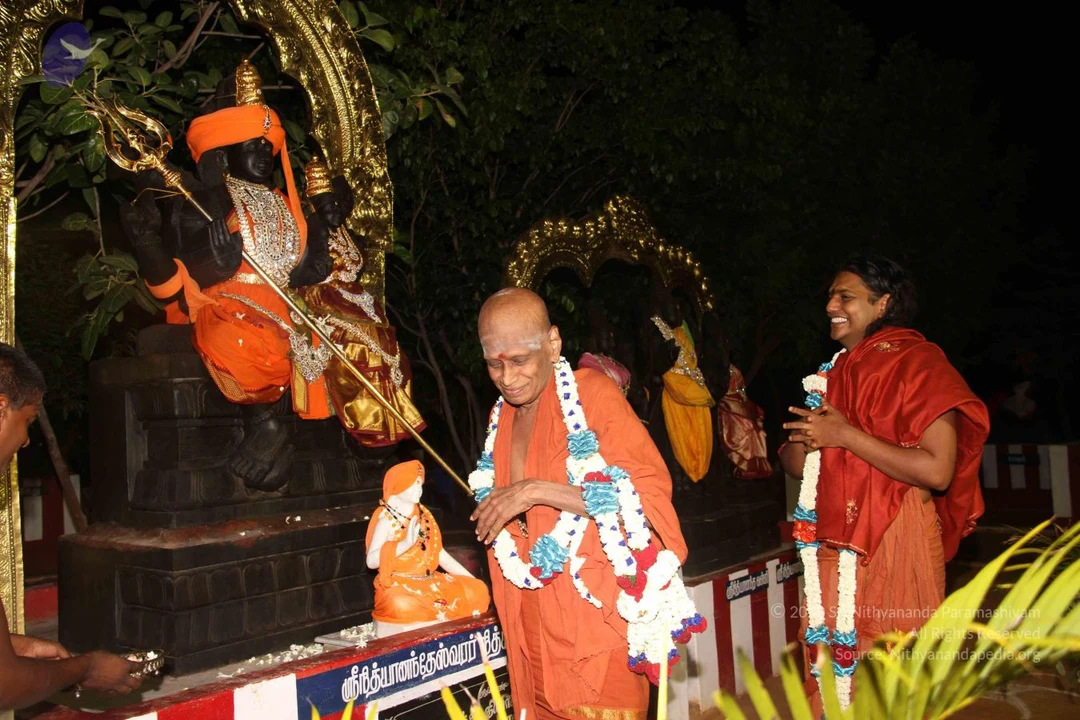
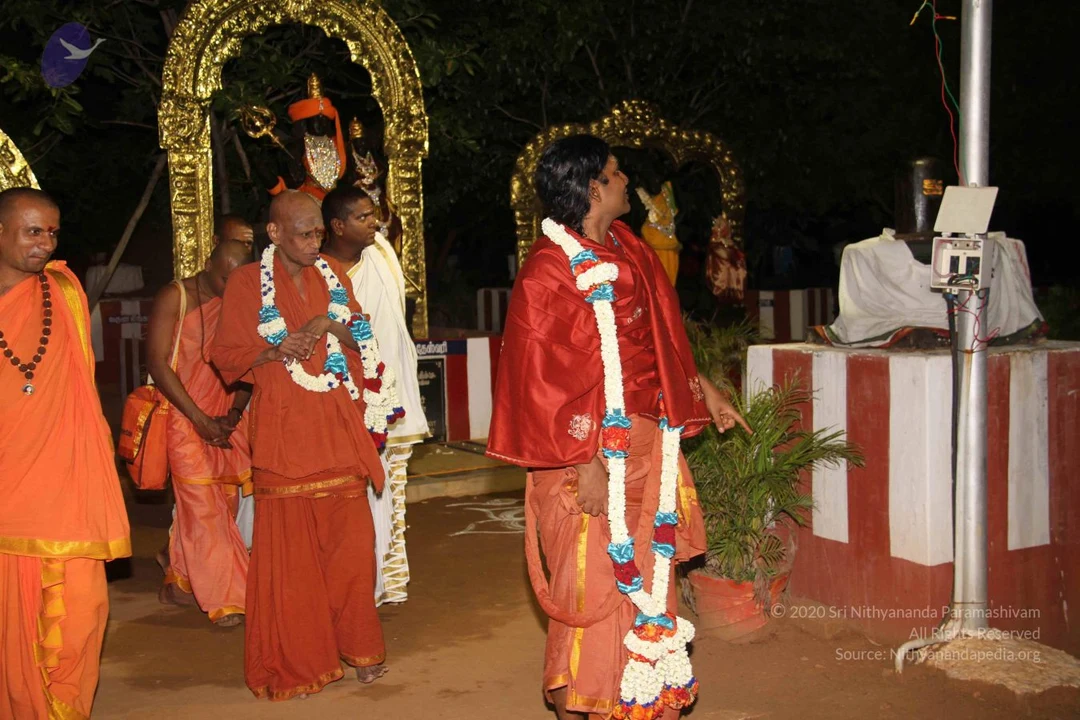
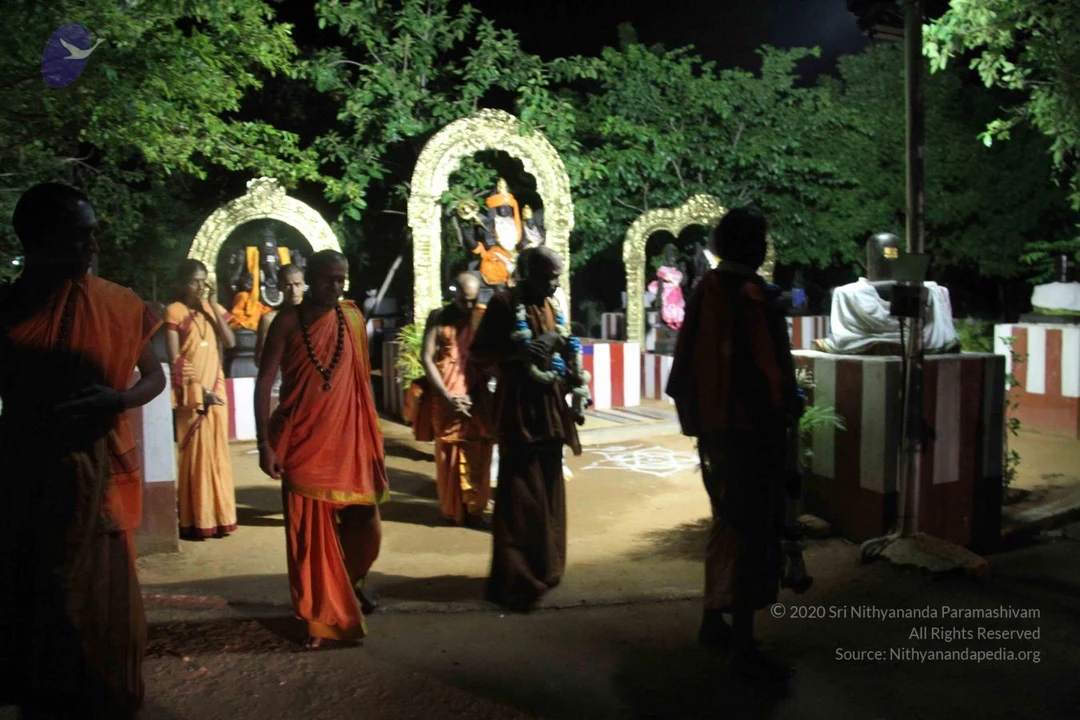
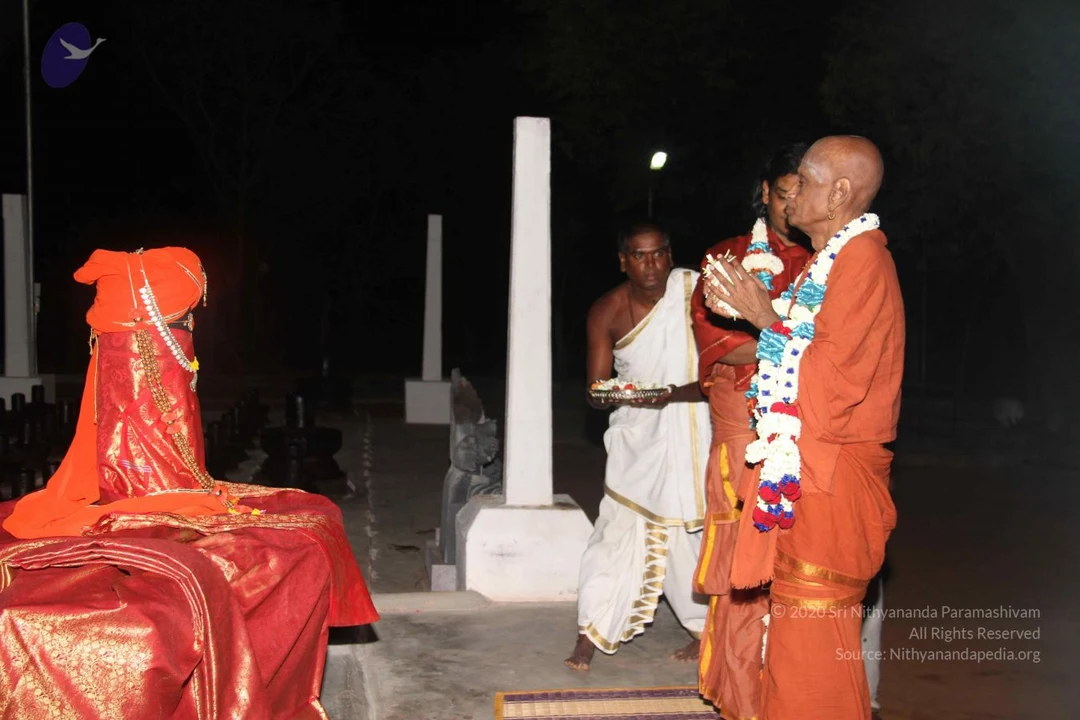
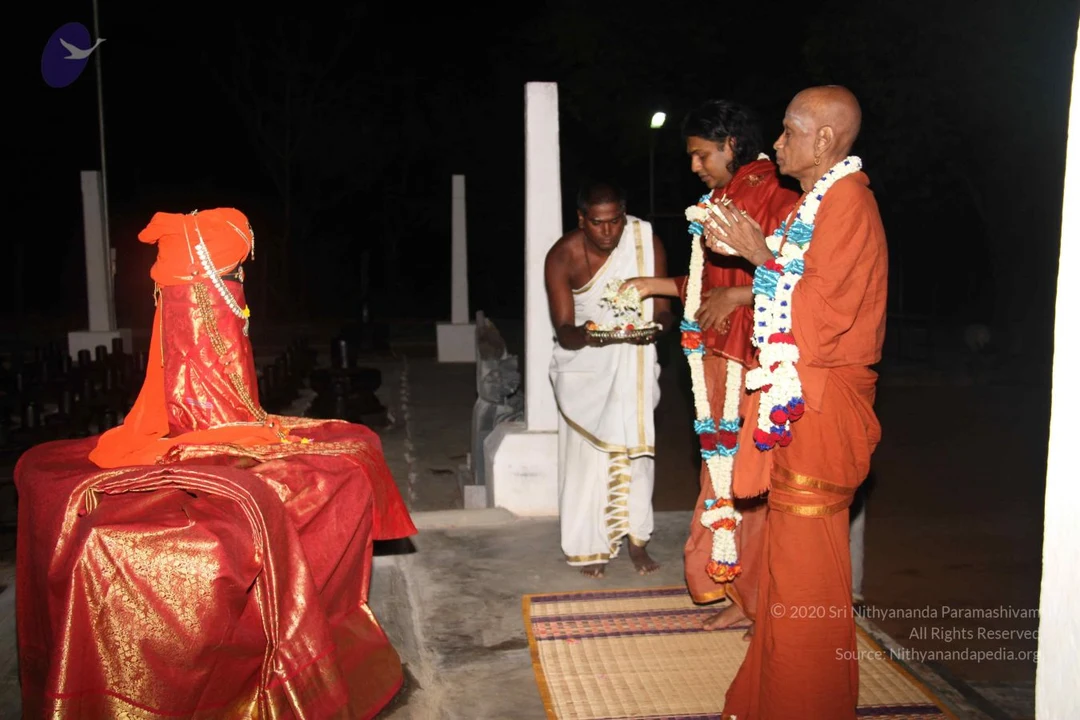
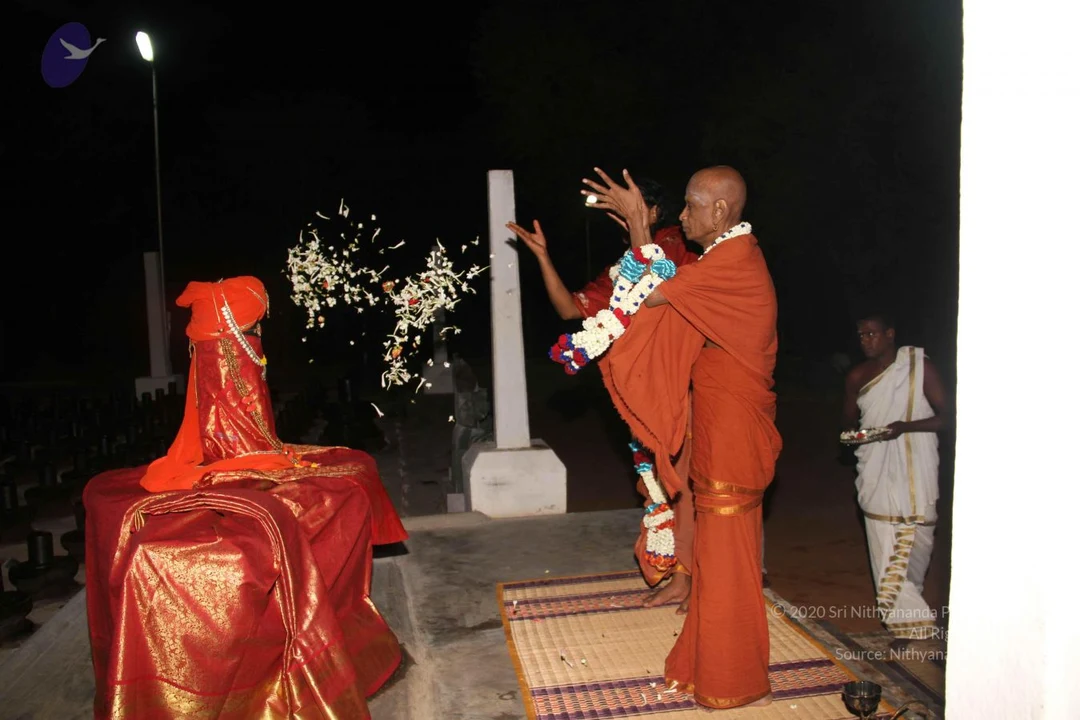
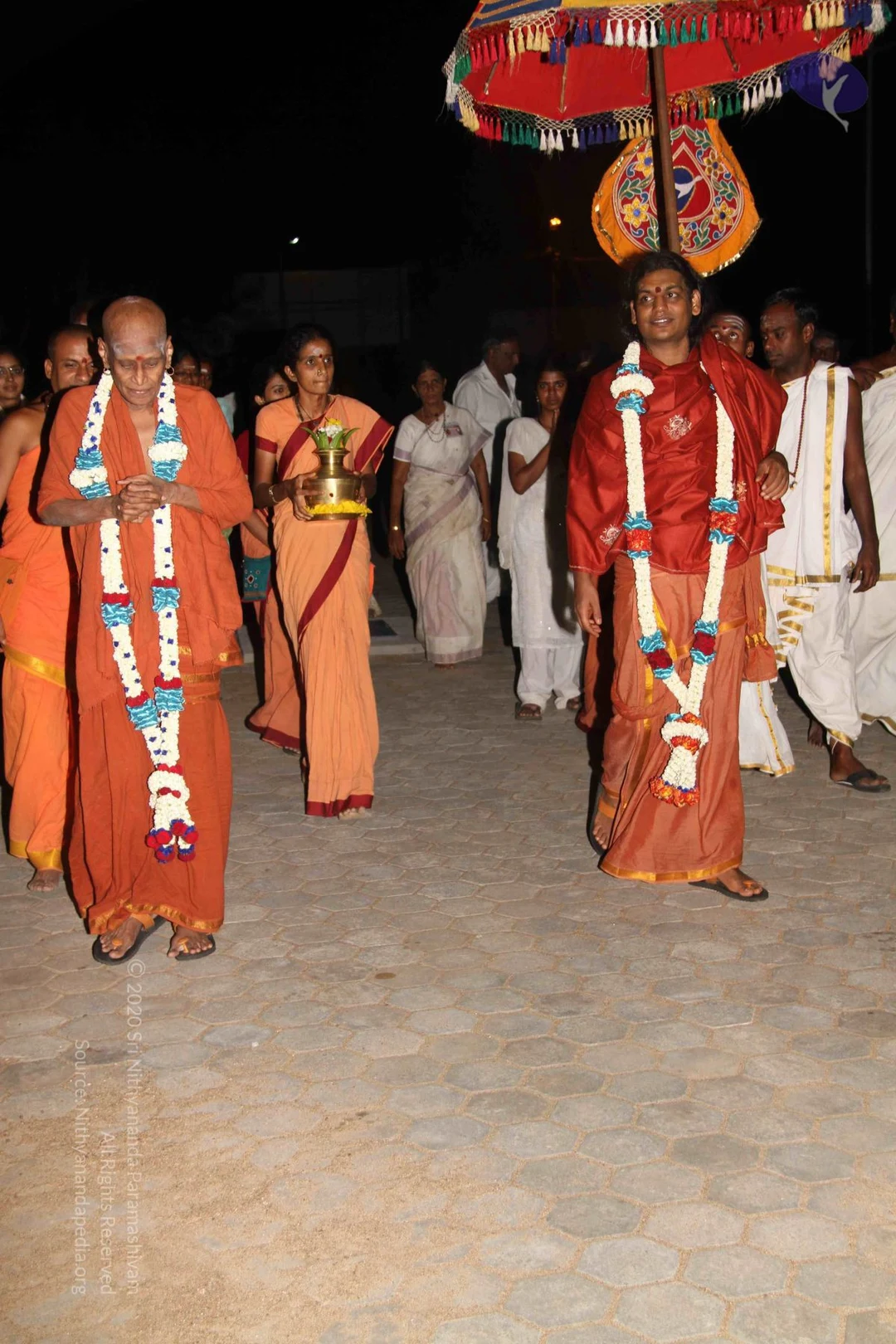
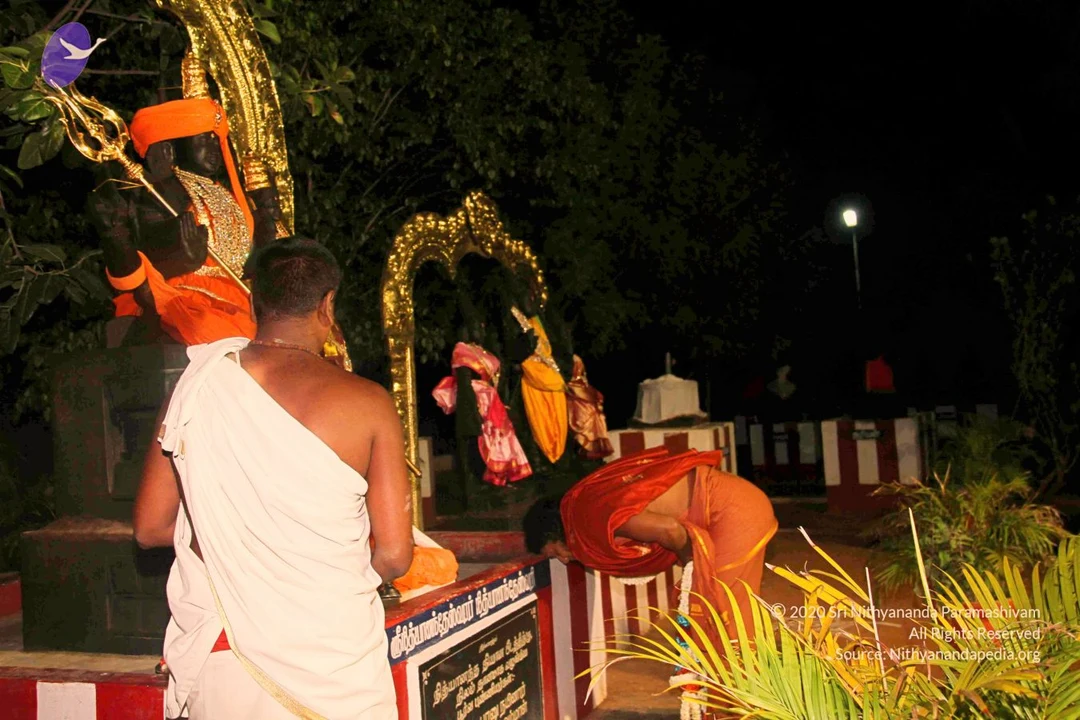
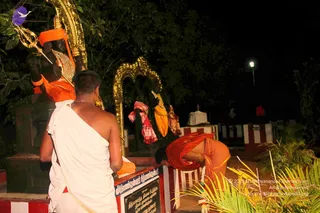
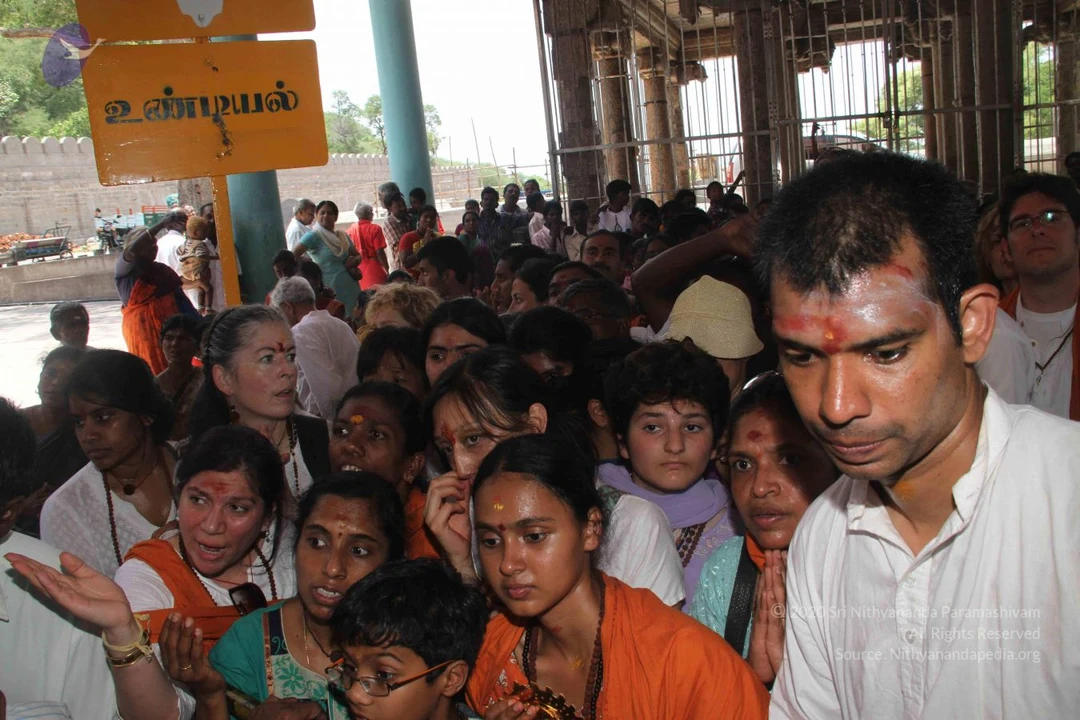
A night procession on a paved path with two saffron-robed figures leading. On the left, an older shaven-headed sannyasi in orange robes and a long white-and-blue flower garland walks beside a younger man in a red shawl and orange dhoti, wearing a red-and-white garland and a red tilak, holding up a yellow-and-orange embroidered umbrella. Behind them, red and multicoloured ceremonial umbrellas with tassels are raised, and more orange-clad attendants, a man in white with a brass kalasha pot, and devotees follow. Lit street lamps appear in the dark background. a person: the younger man in the red shawl with long swept-back hair and a garland is a candidate, with a red shawl and ceremonial garland as cues; the appearance is not conclusive.Night procession on a paved hexagonal-tile courtyard. A bald elderly priest in orange robes with hands folded in prayer and a white-and-blue garland walks at left. At centre-right, a young man in red-orange silk top and orange dhoti with gold border, wearing a similar garland and red bindi, walks under a large red and orange ceremonial umbrella with tassels. Behind, a woman in orange sari carries a brass kalasha with flowers, and devotees in white dhotis and white saris follow. a person cues: the young man under the umbrella has swept-back long hair and ceremonial garland, though identity is uncertain. Lit by evening lamps with a dark background.Night procession on a dirt path beside green foliage and pink flowering bougainvillea. Under a multicolored umbrella, a shaved-headed man in an orange-saffron garment and a red-maroon cloth wears a long white and orange garland, with another garland of white flowers also worn by a man beside him. Other saffron-robed figures and men in white dhotis walk alongside, one holding a brass kalasha-style vessel, another an orange umbrella overhead. Stones and a white-and-red painted border line the path.Night-time photo of an outdoor shrine with a dark stone deity murti holding a trident, draped in orange cloth and a gold necklace, beside a golden arched frame. In the foreground, a man in a white dhoti with bare upper body stands with his back to the camera, while a second person in an orange-saffron robe bends forward with head covered at the lower right, near a black plaque with Tamil lettering. Hanging pink, yellow and maroon cloths decorate a nearby arch, and palm fronds and dense foliage surround the scene under a street lamp.