Skip to content
Wednesday

23 July 2014

Fear of Death is Stupidity

Dated photos
365
Source pages
1
Media
4
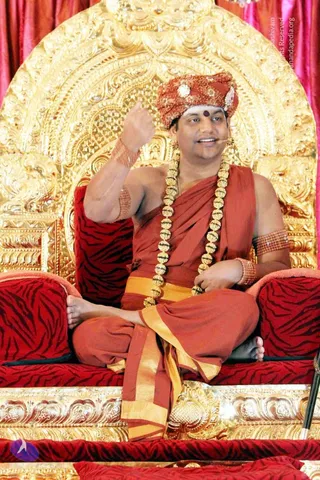
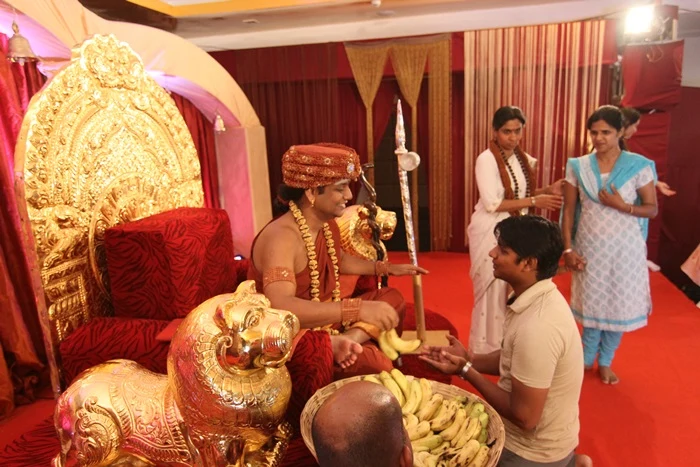
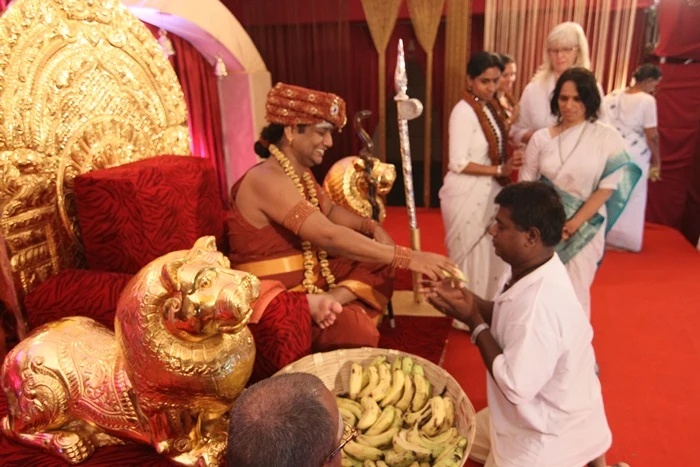
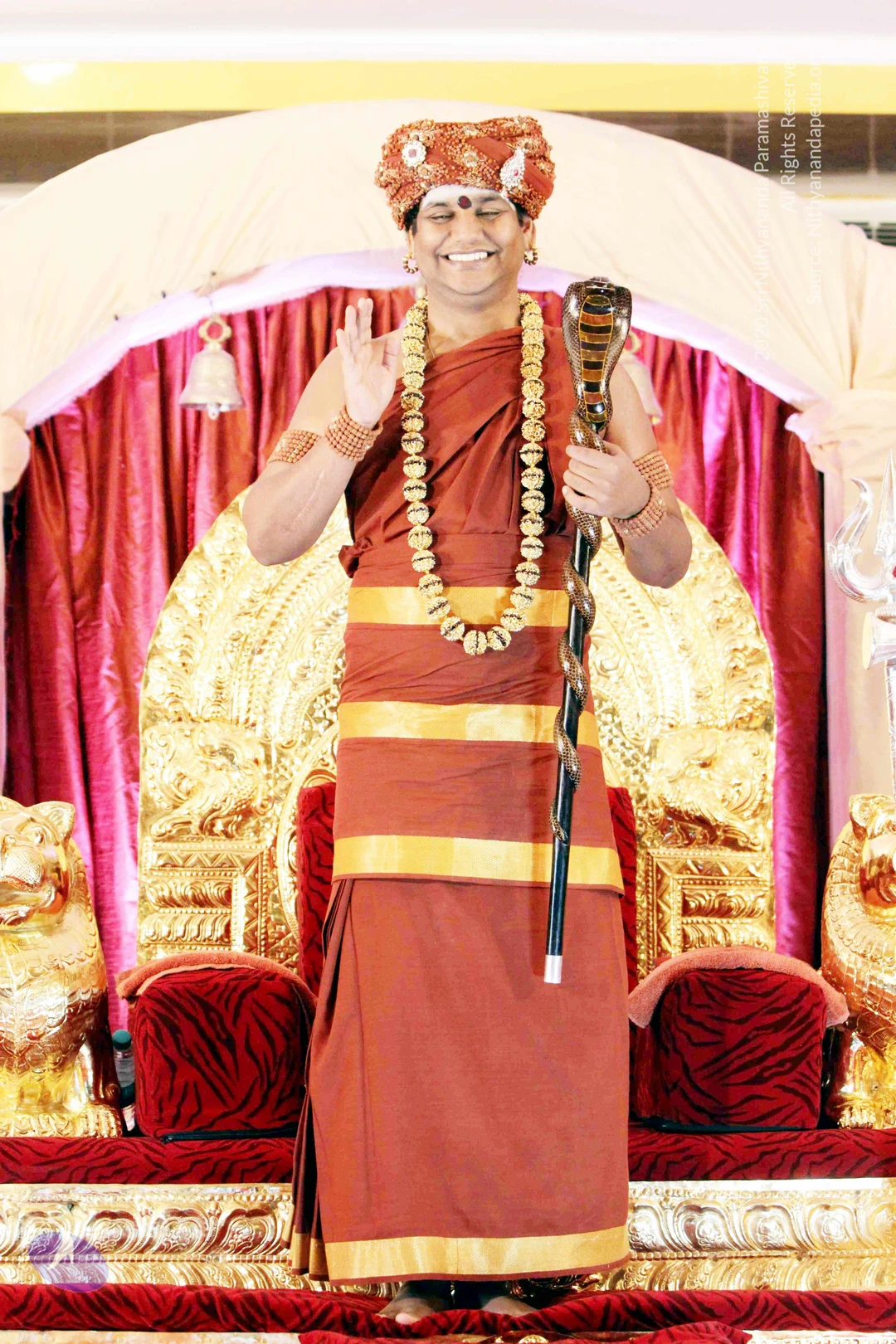
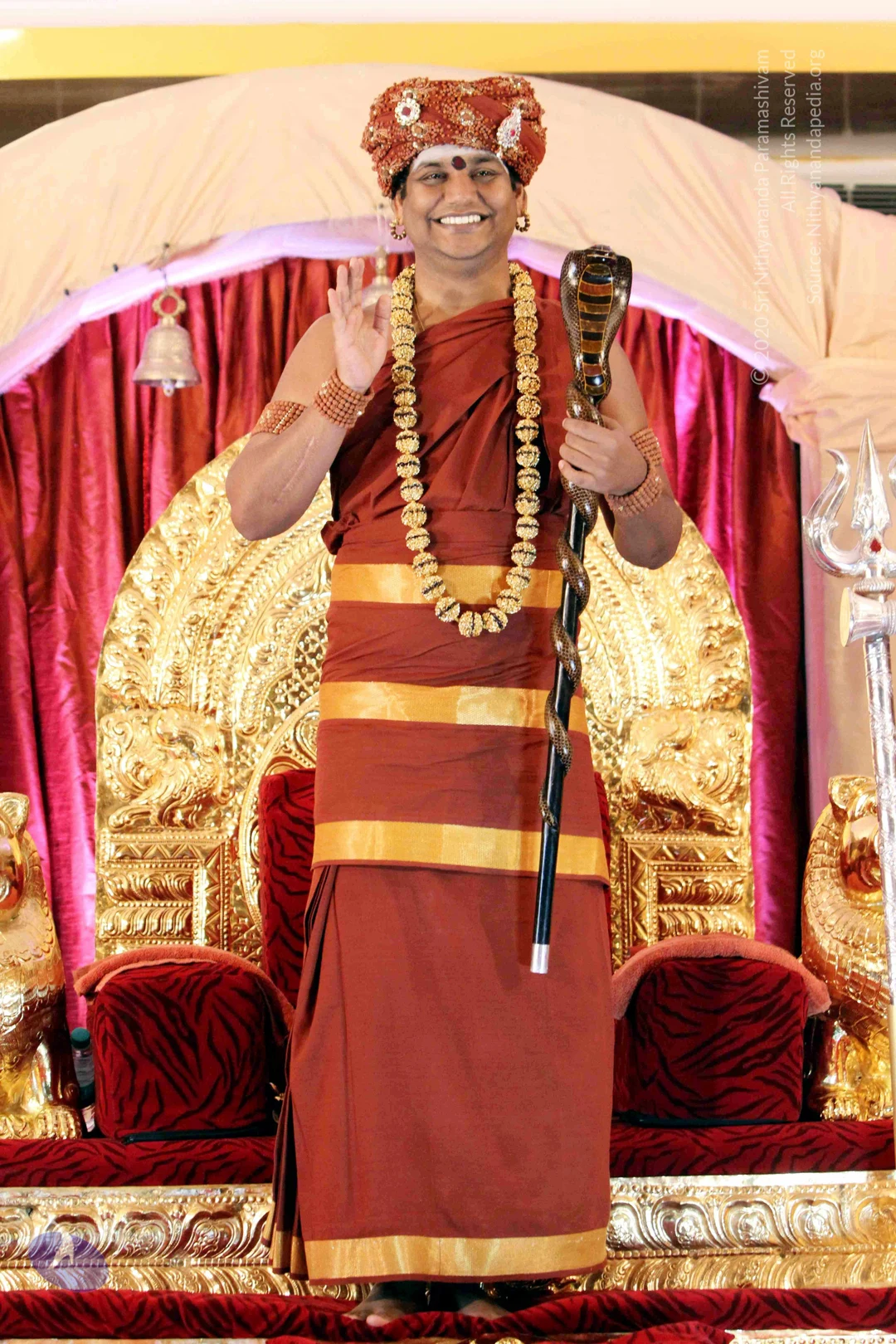
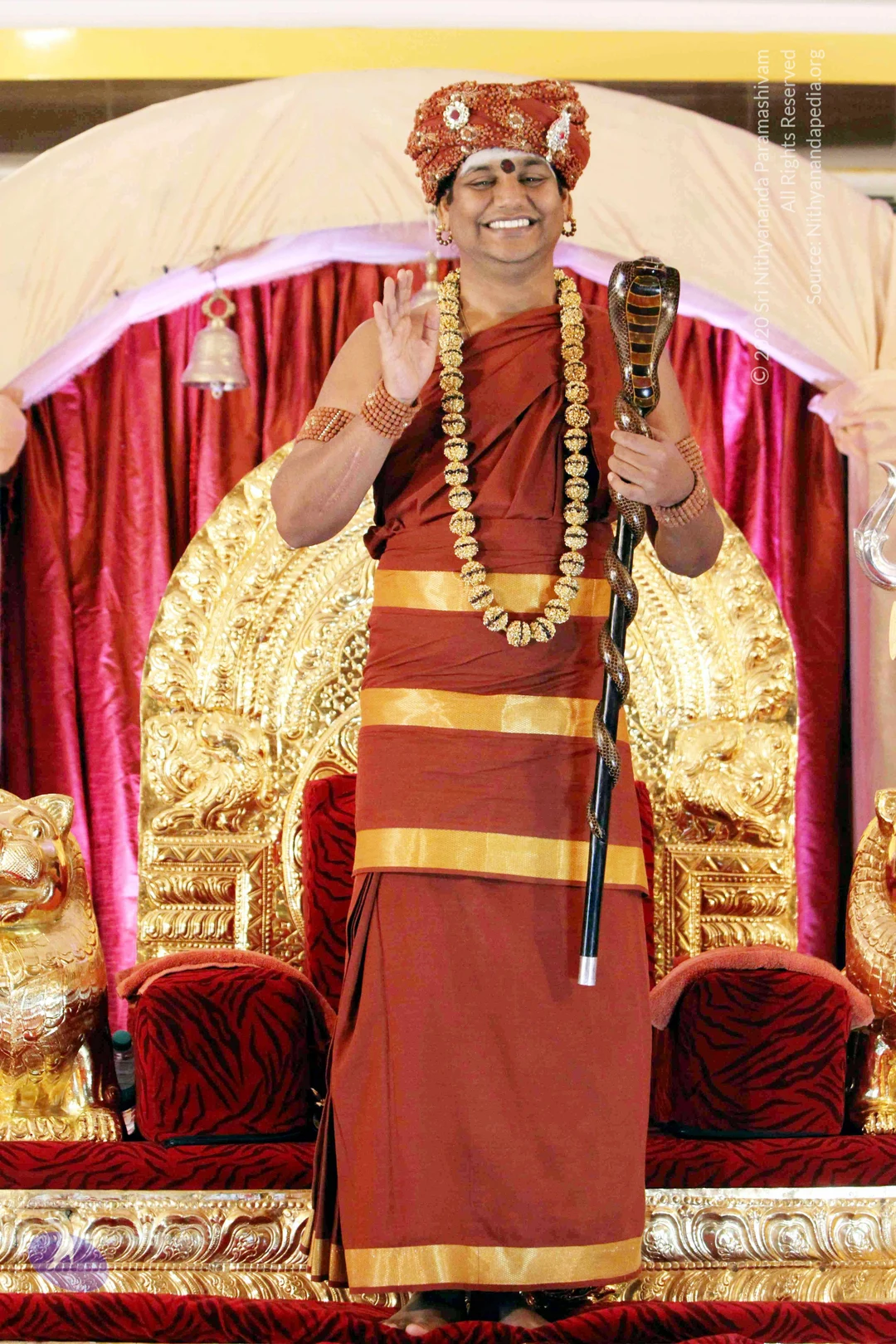
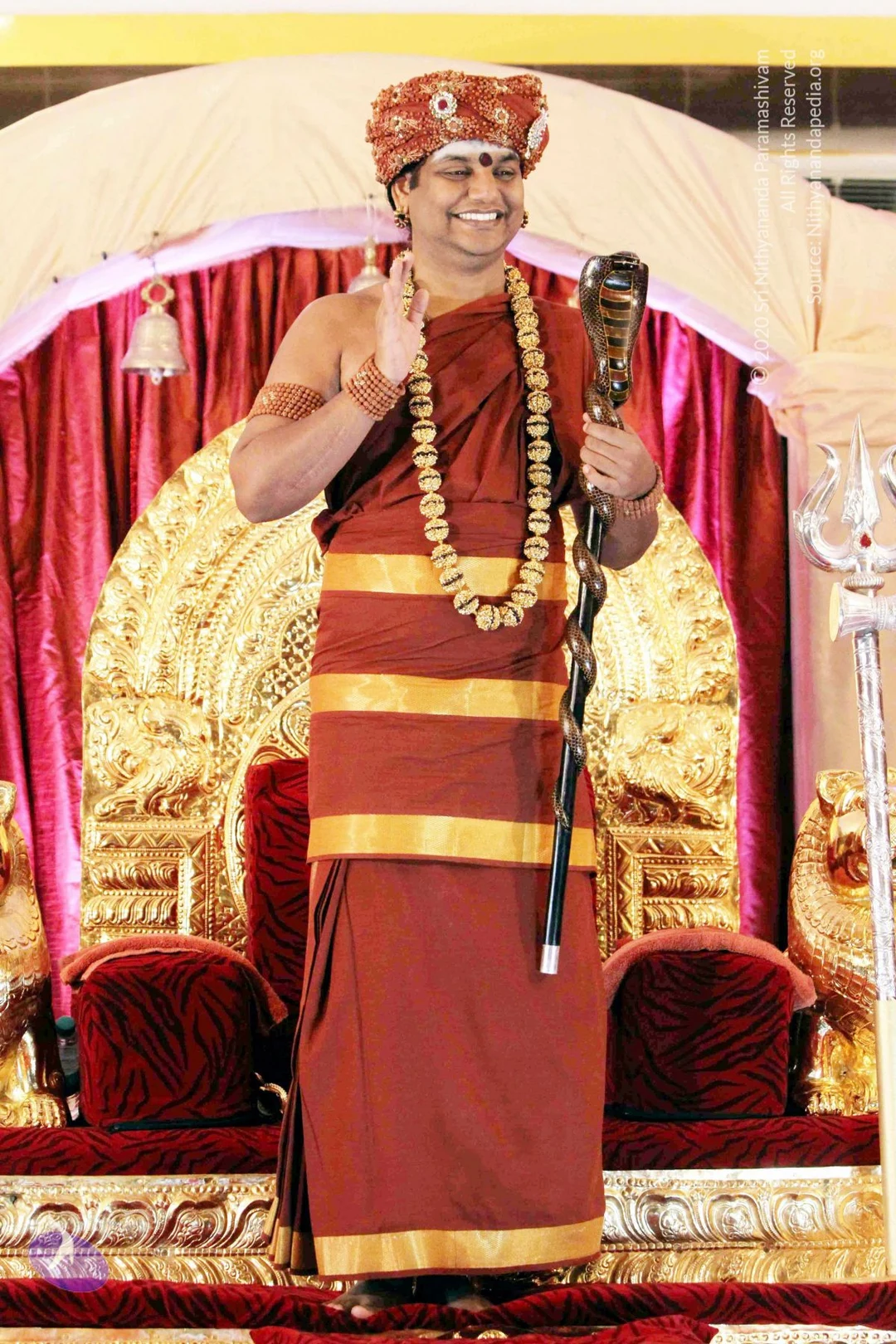
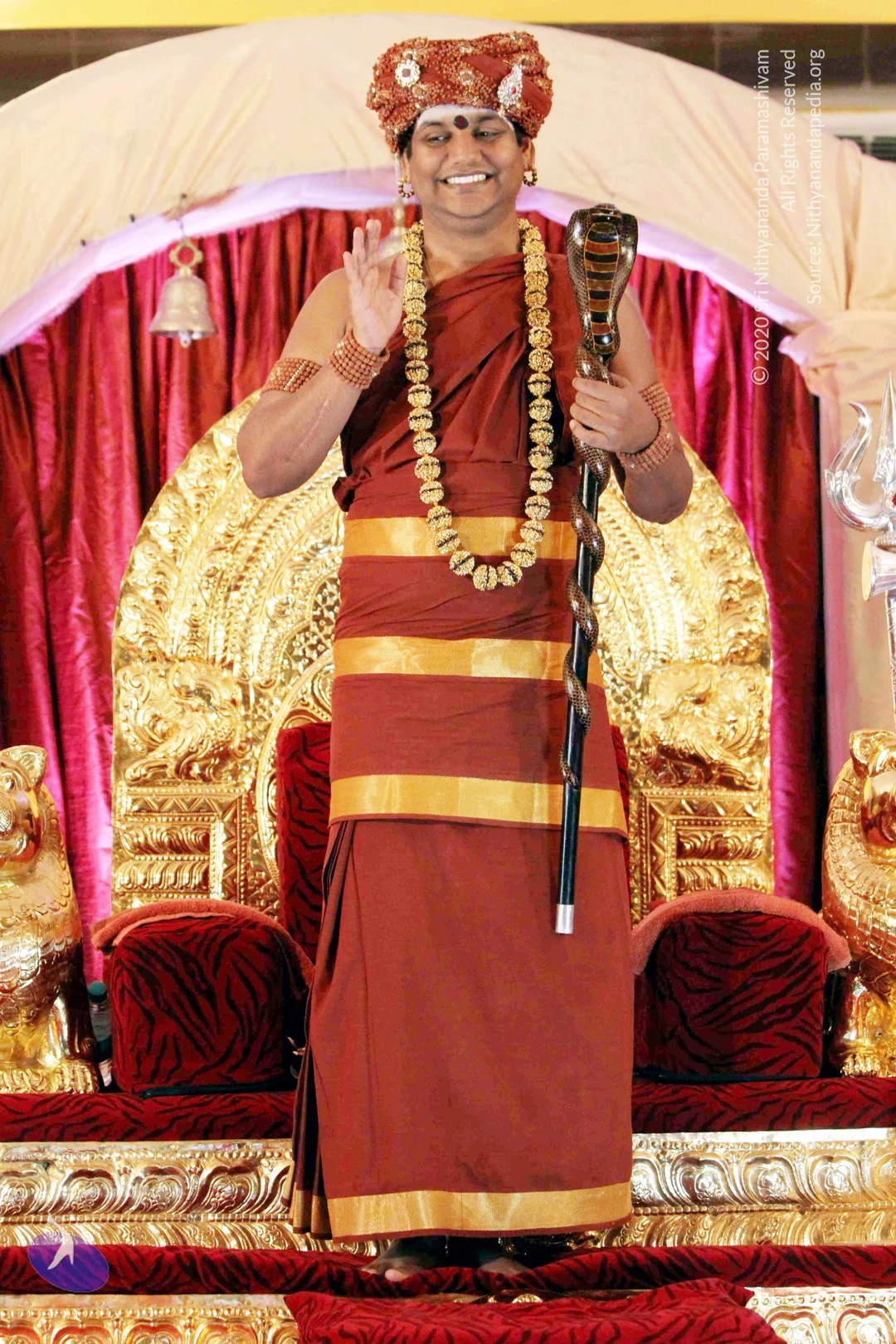
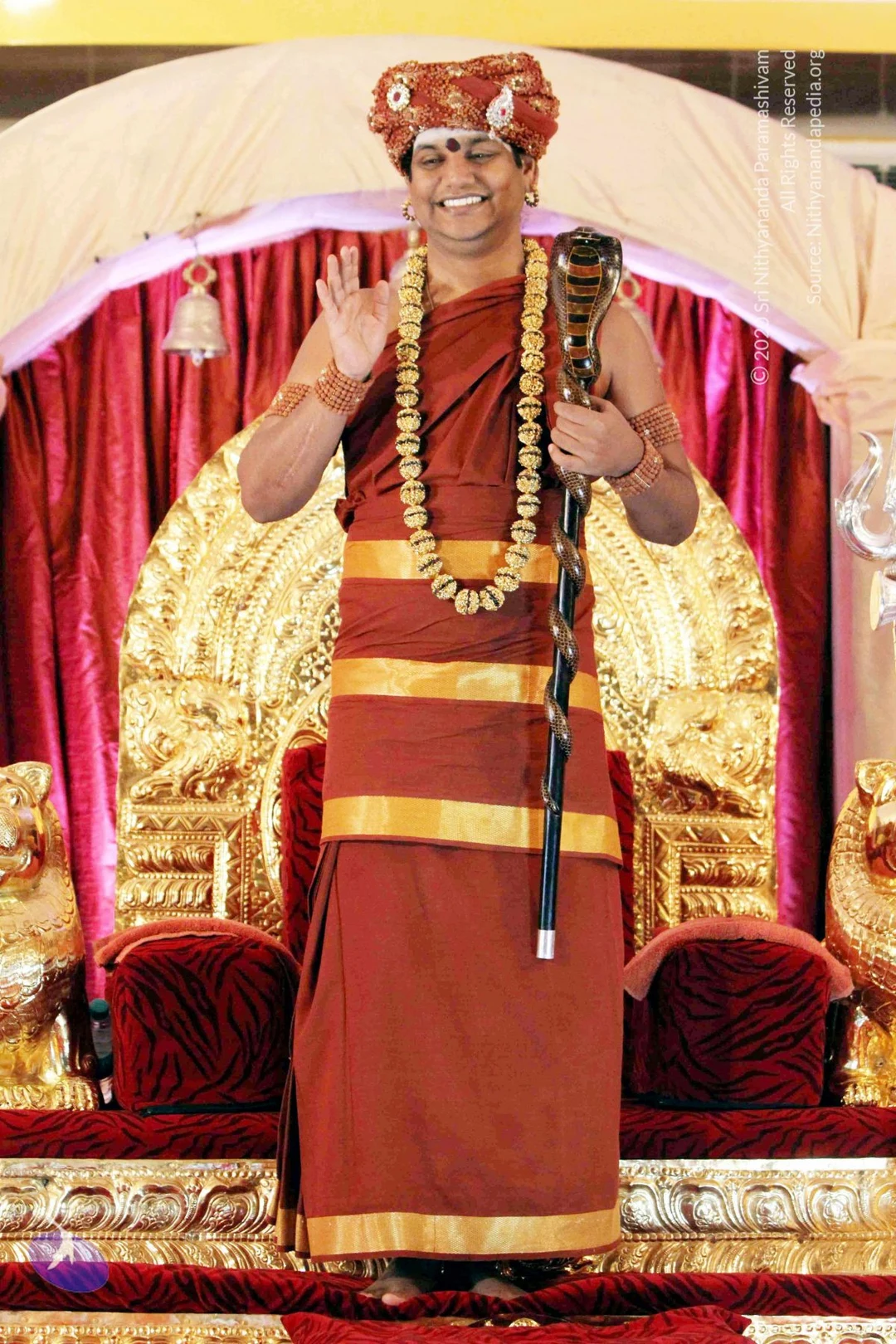
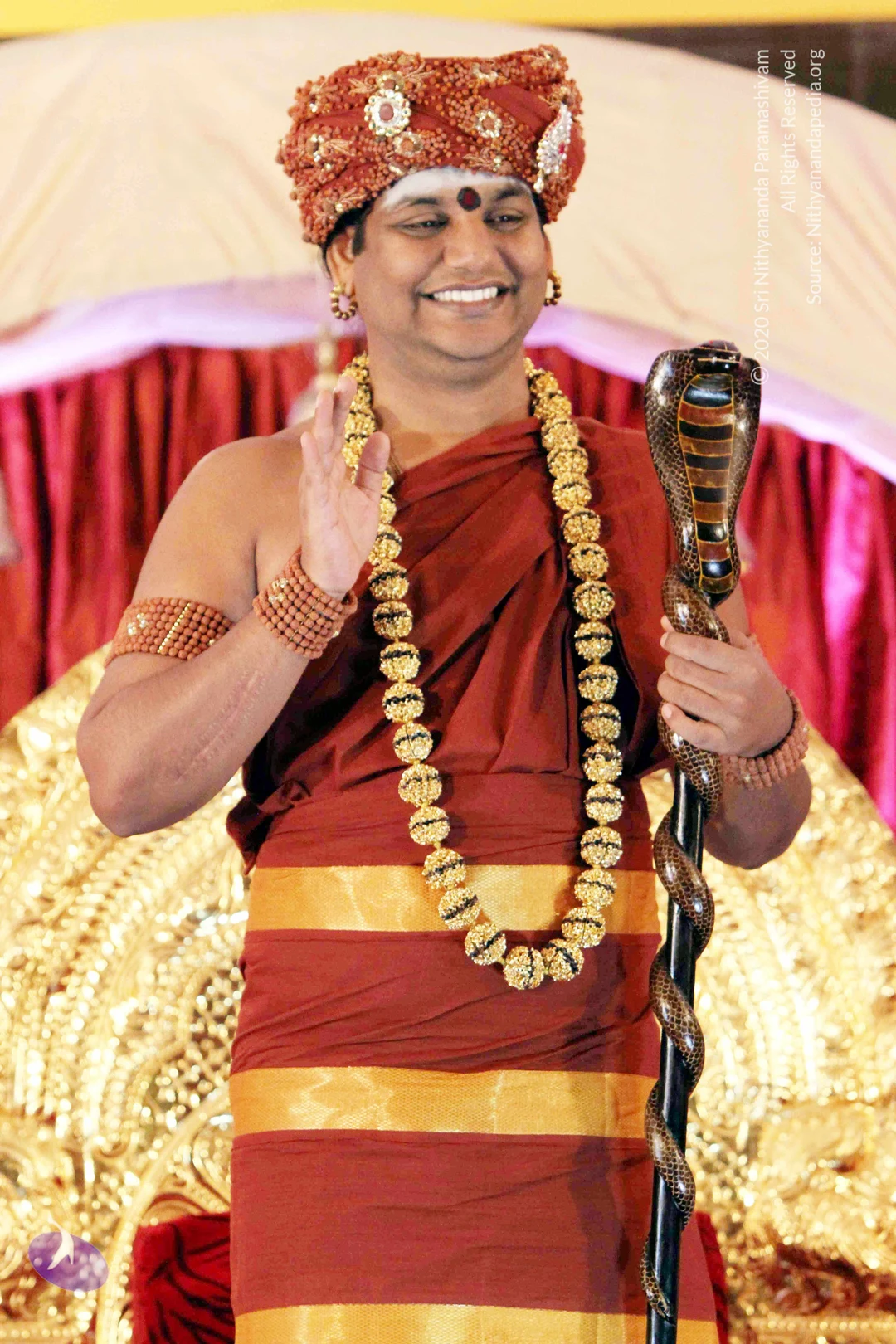
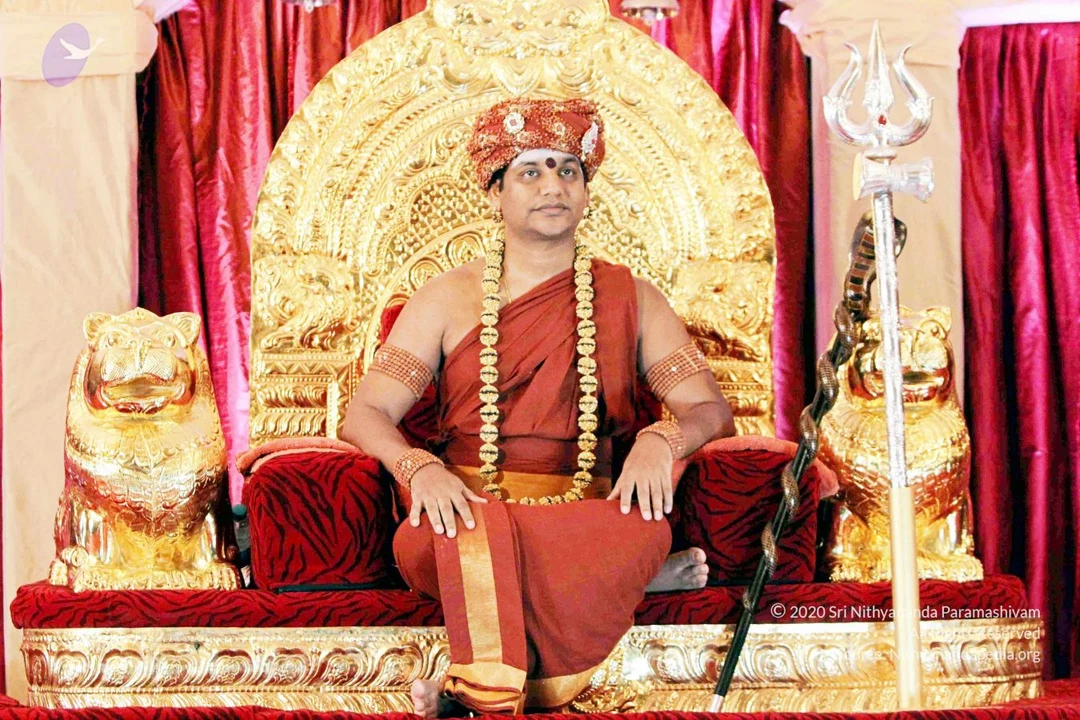
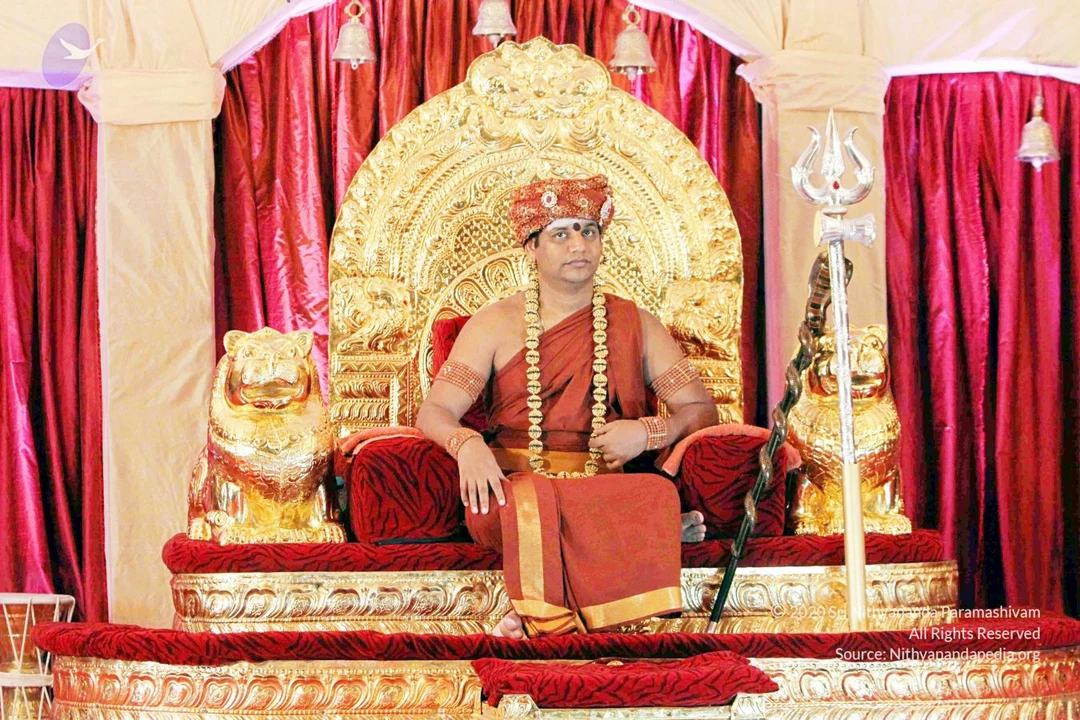
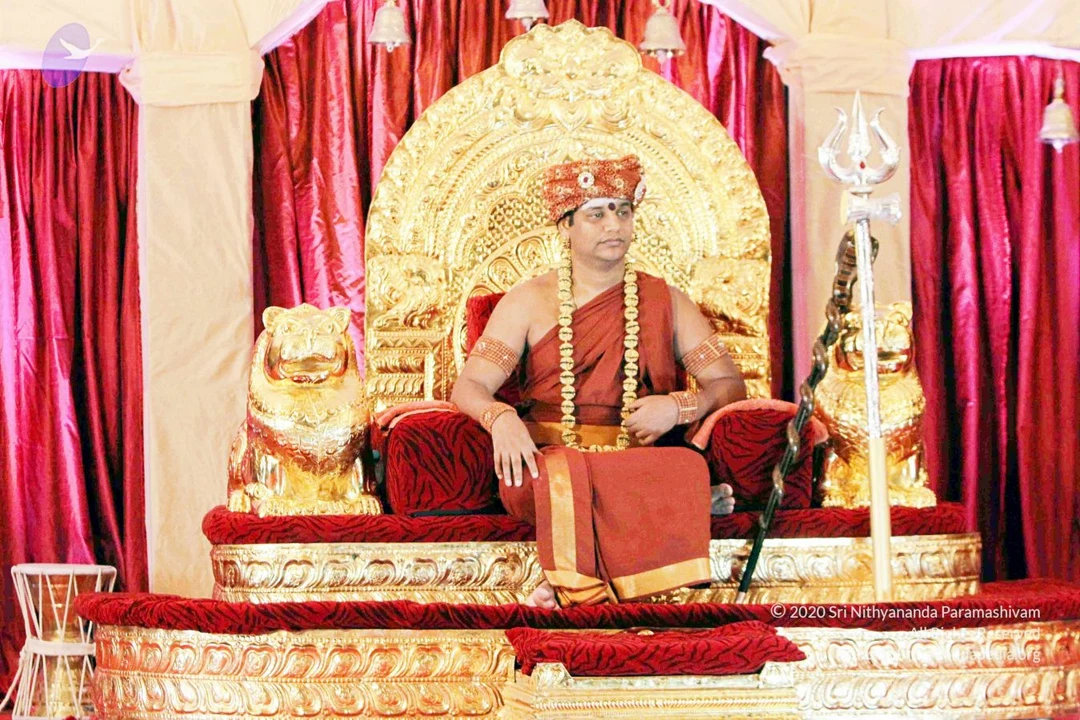
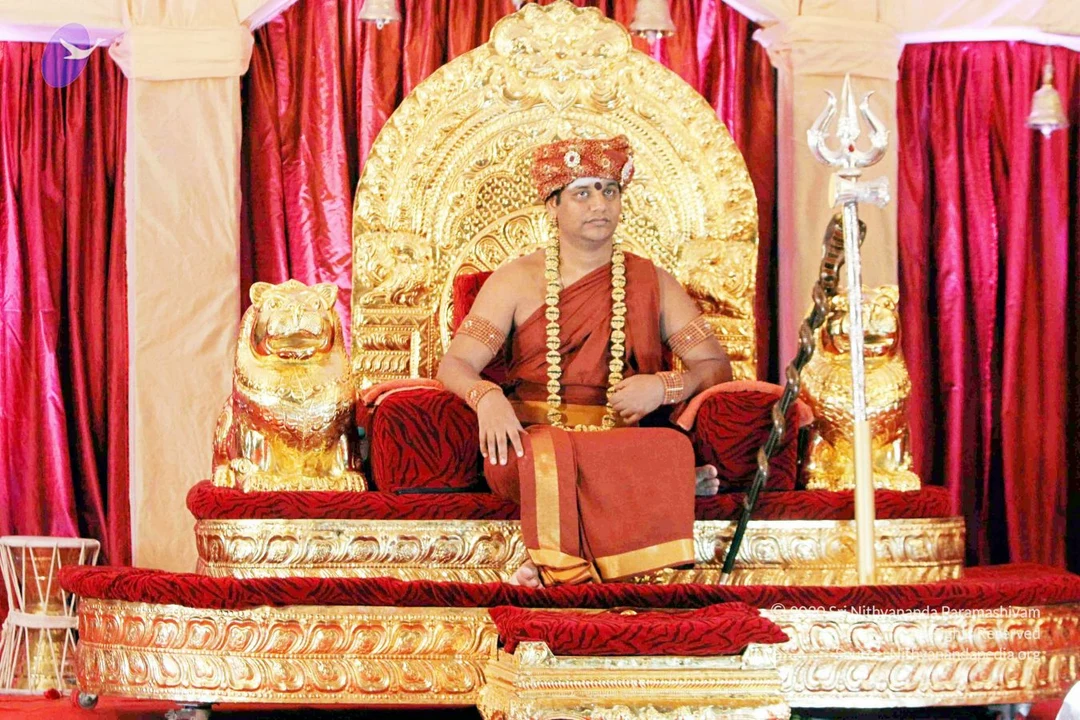
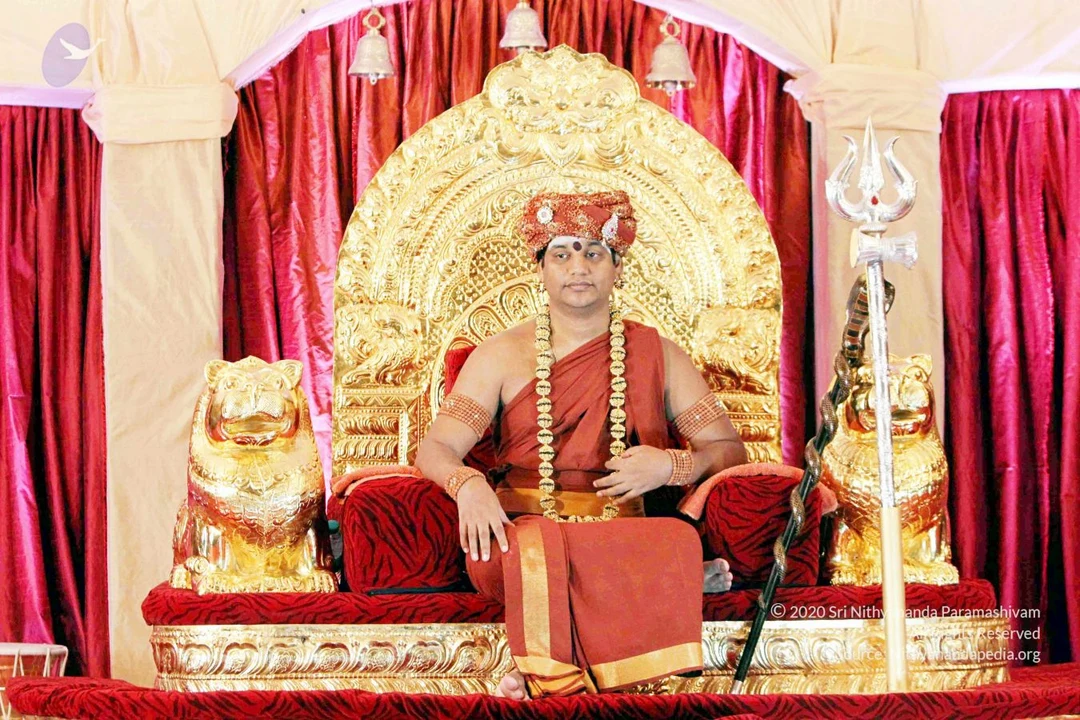
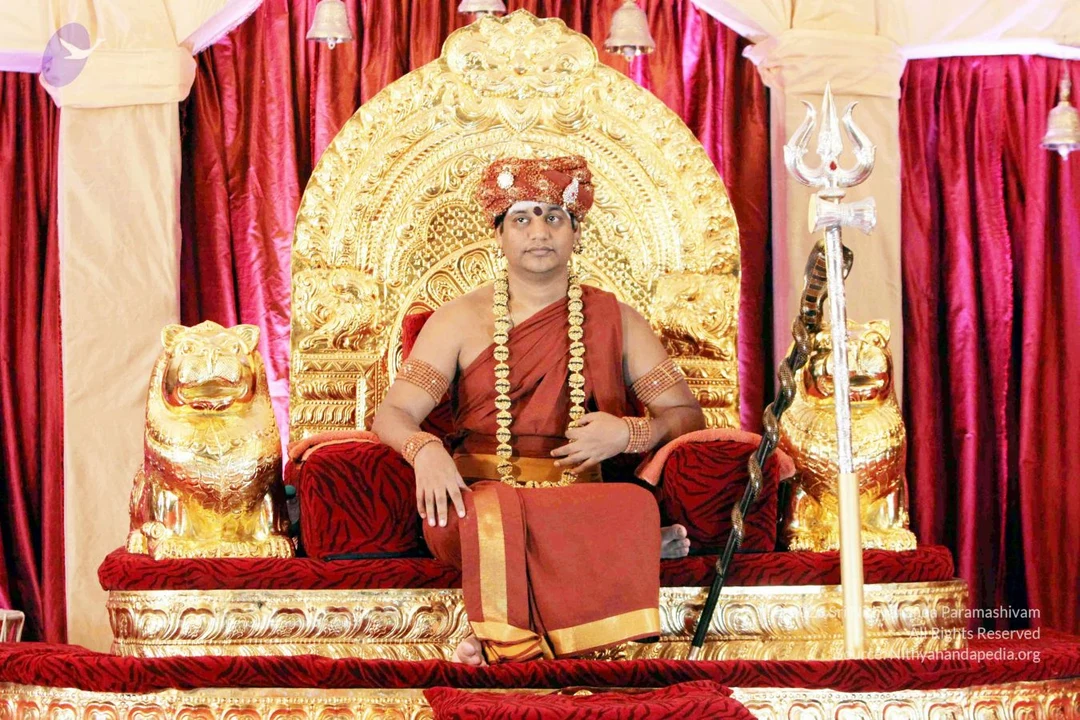
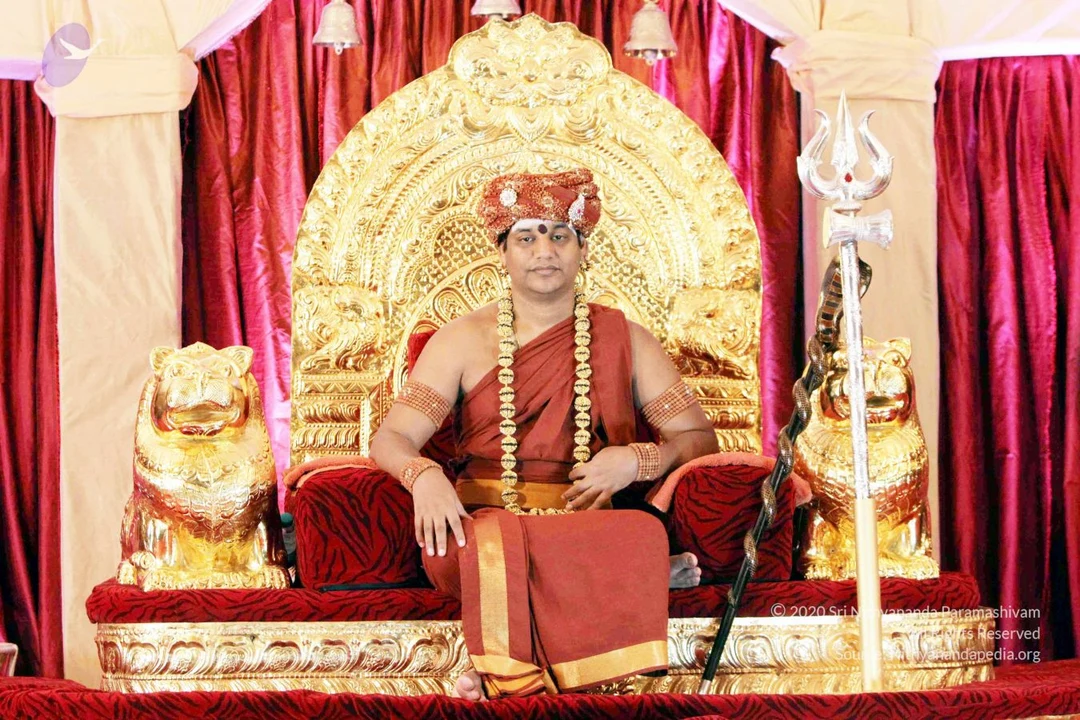
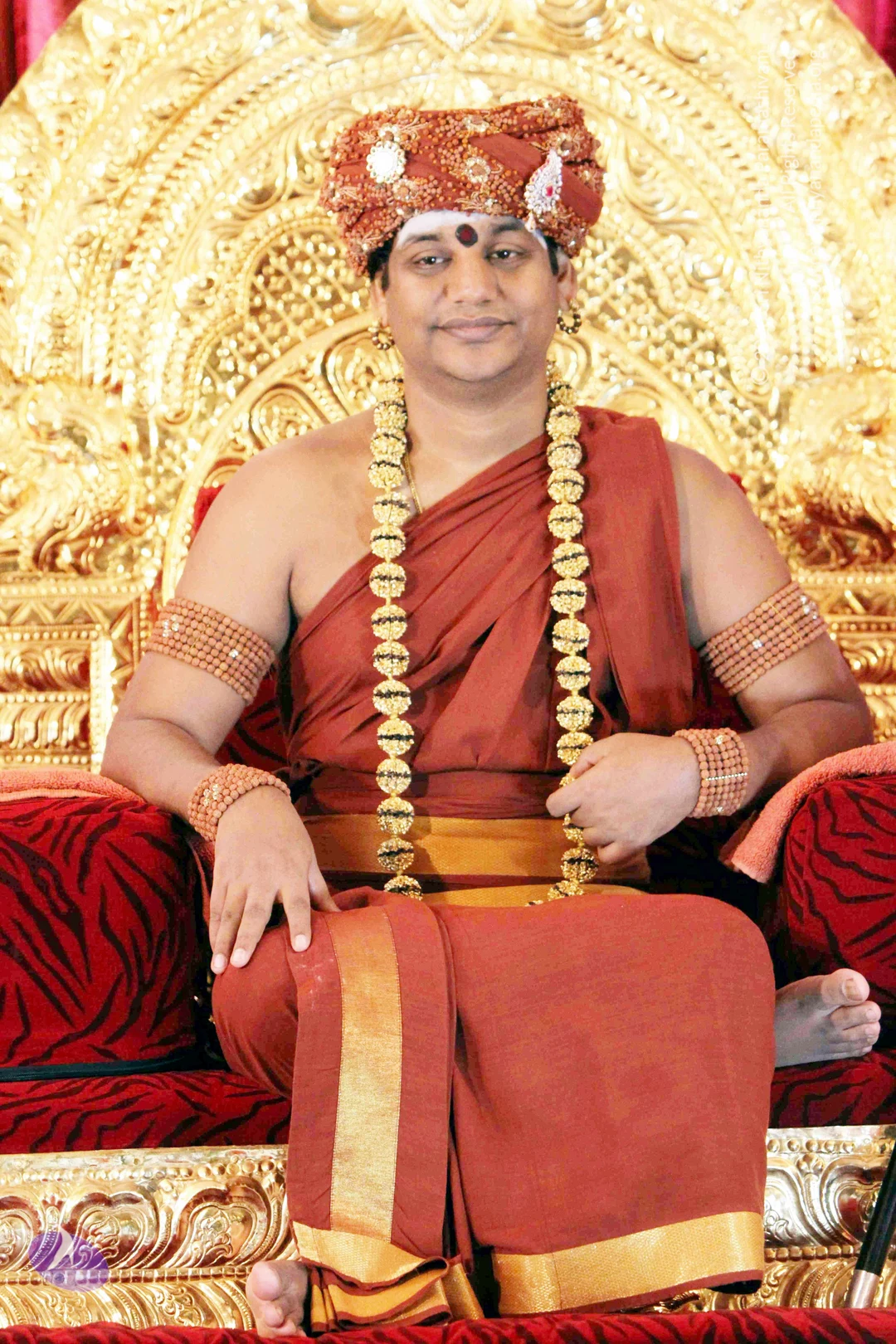
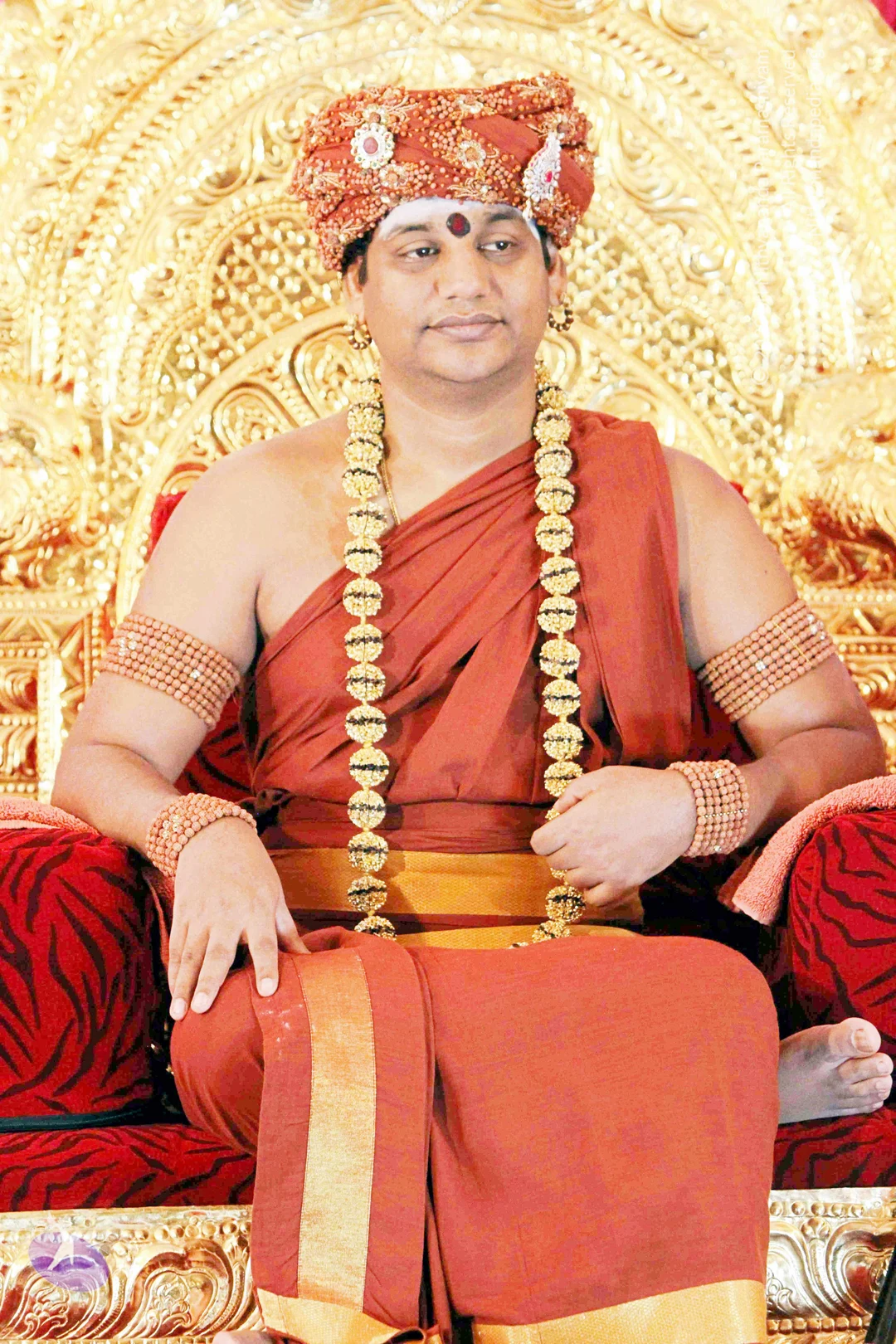
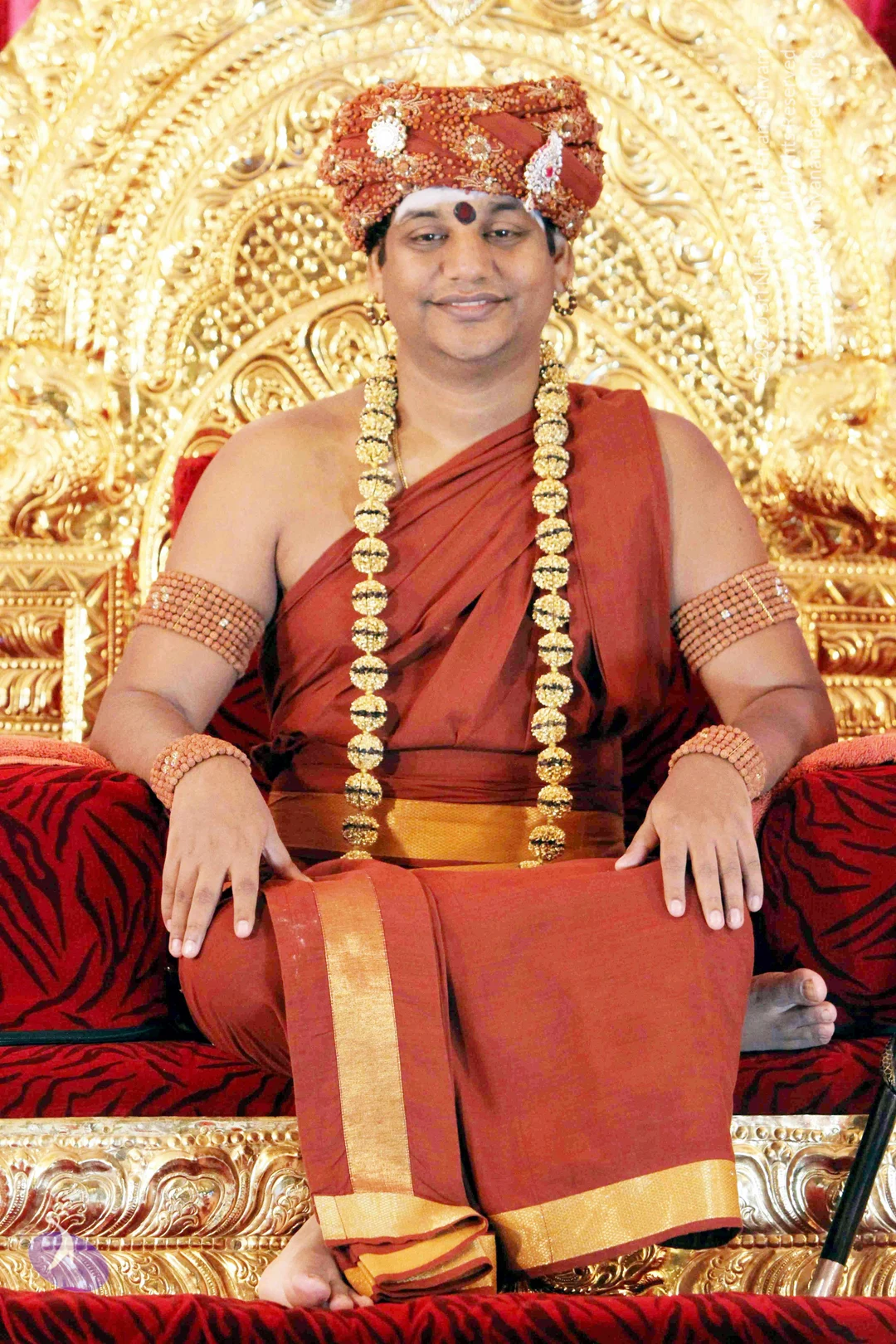
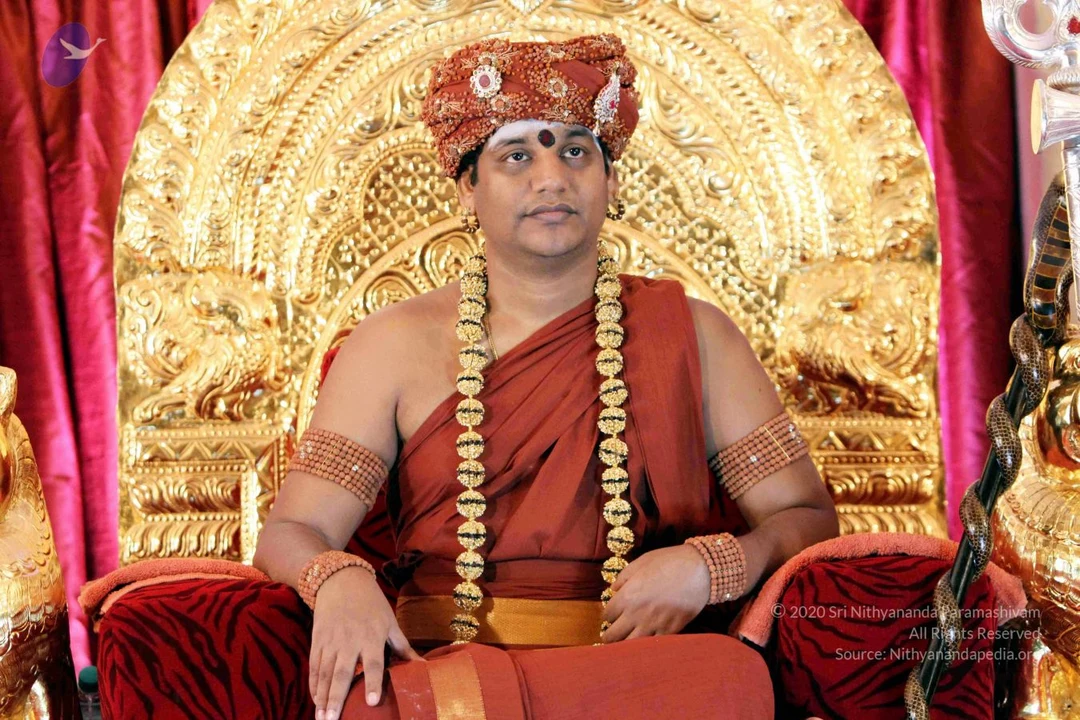
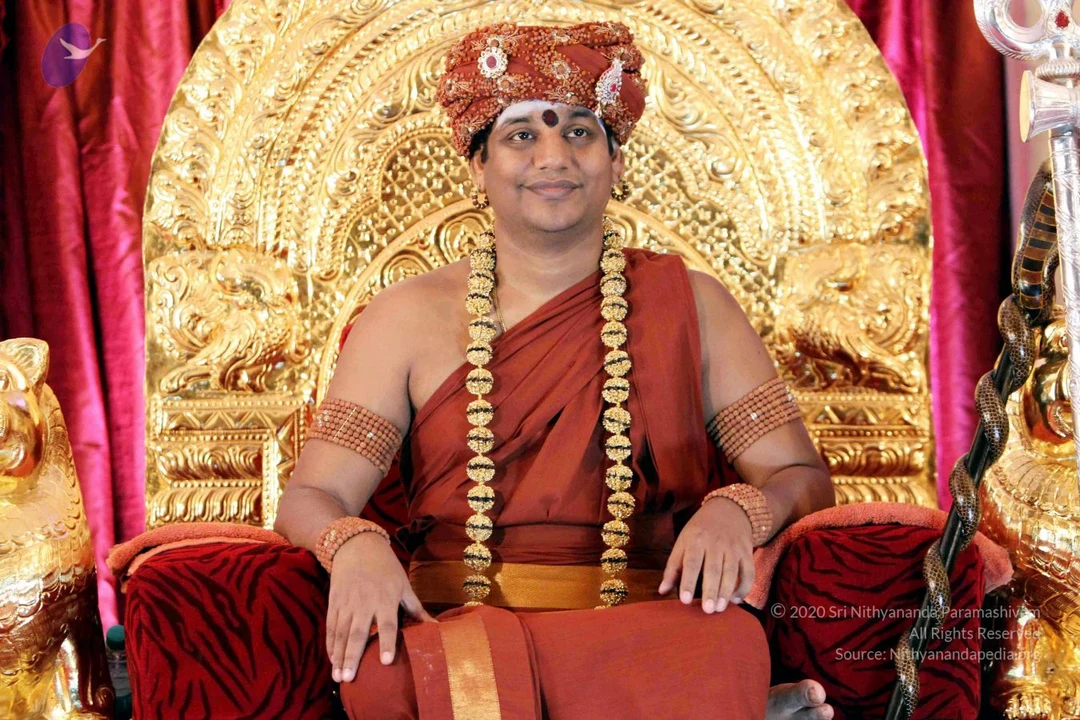
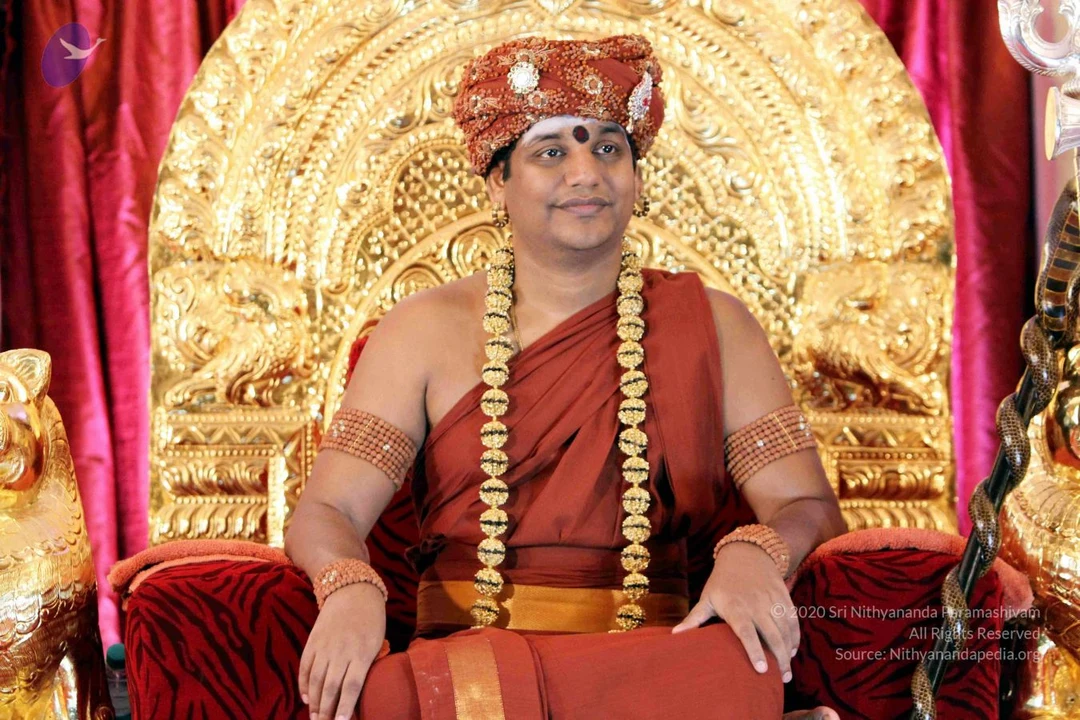
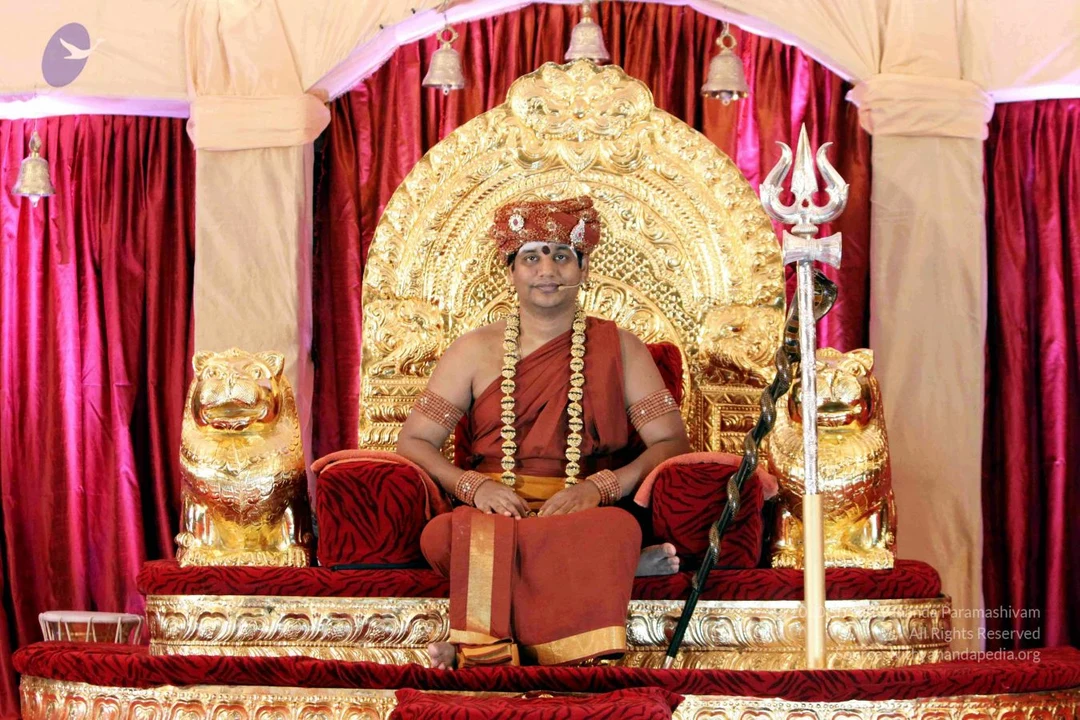
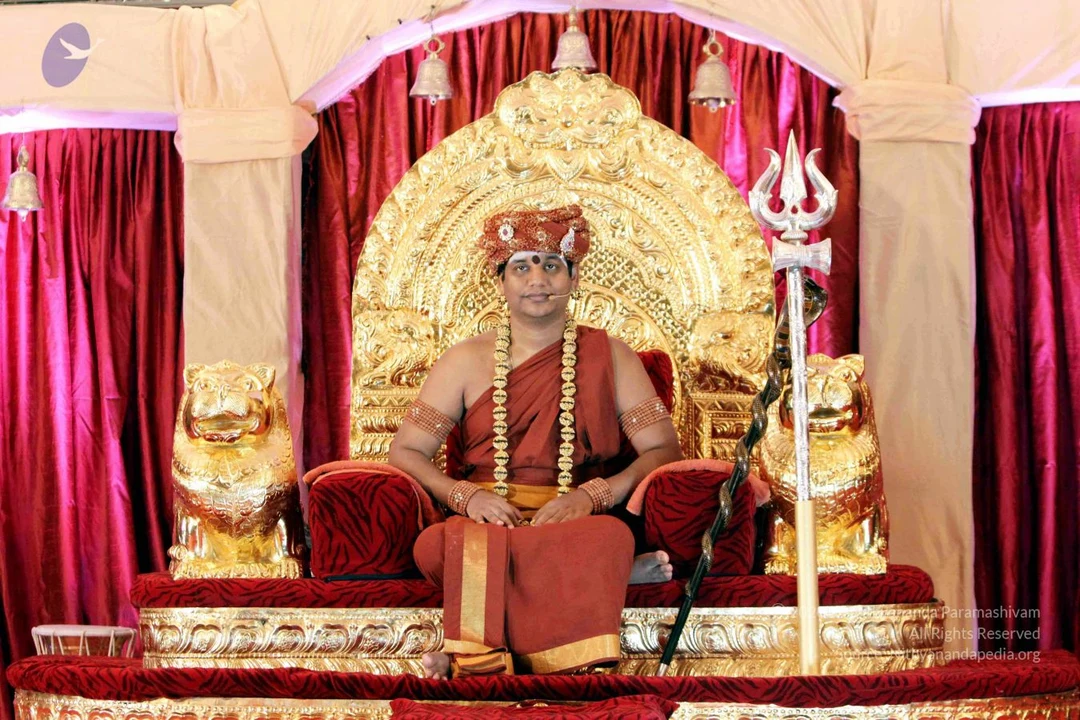
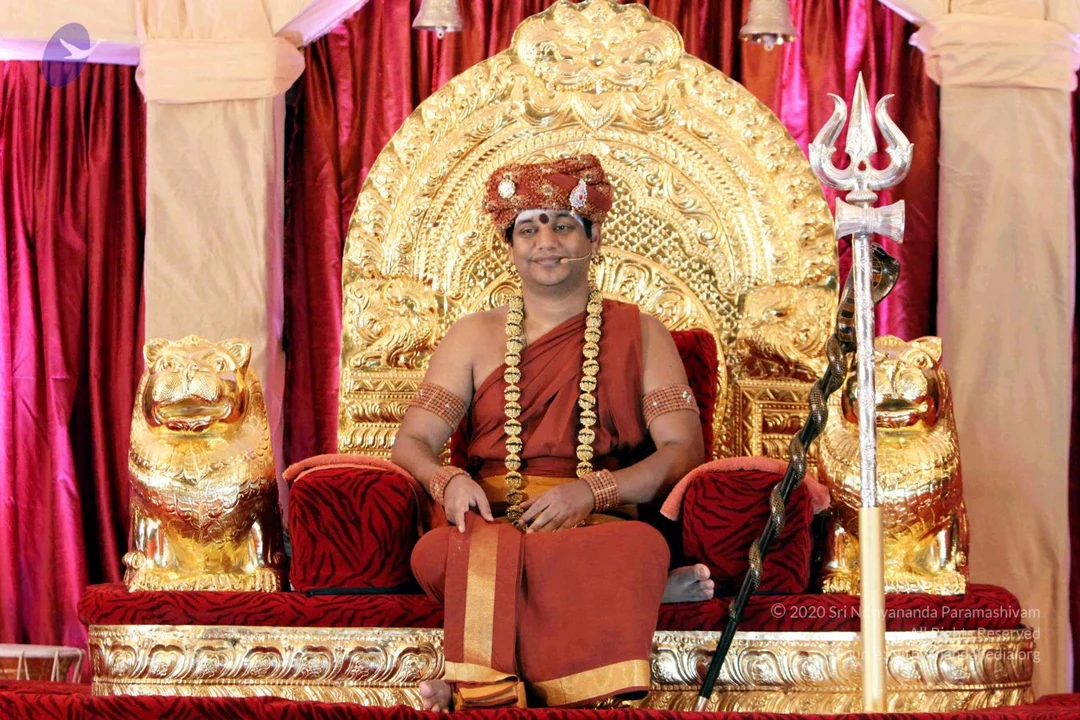
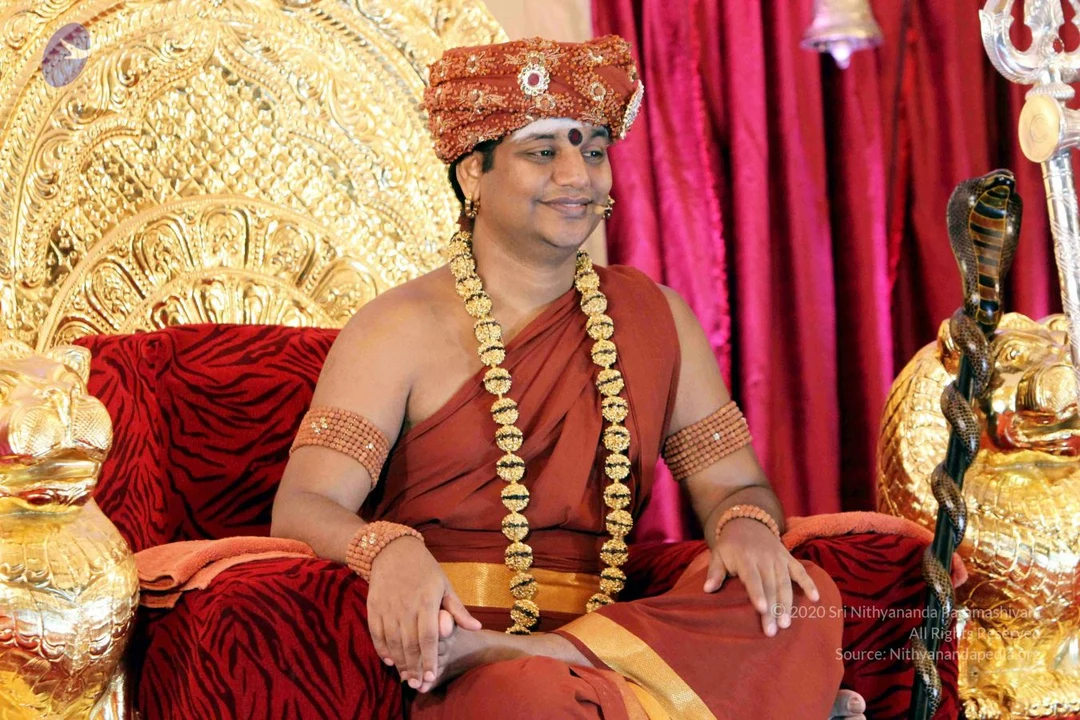
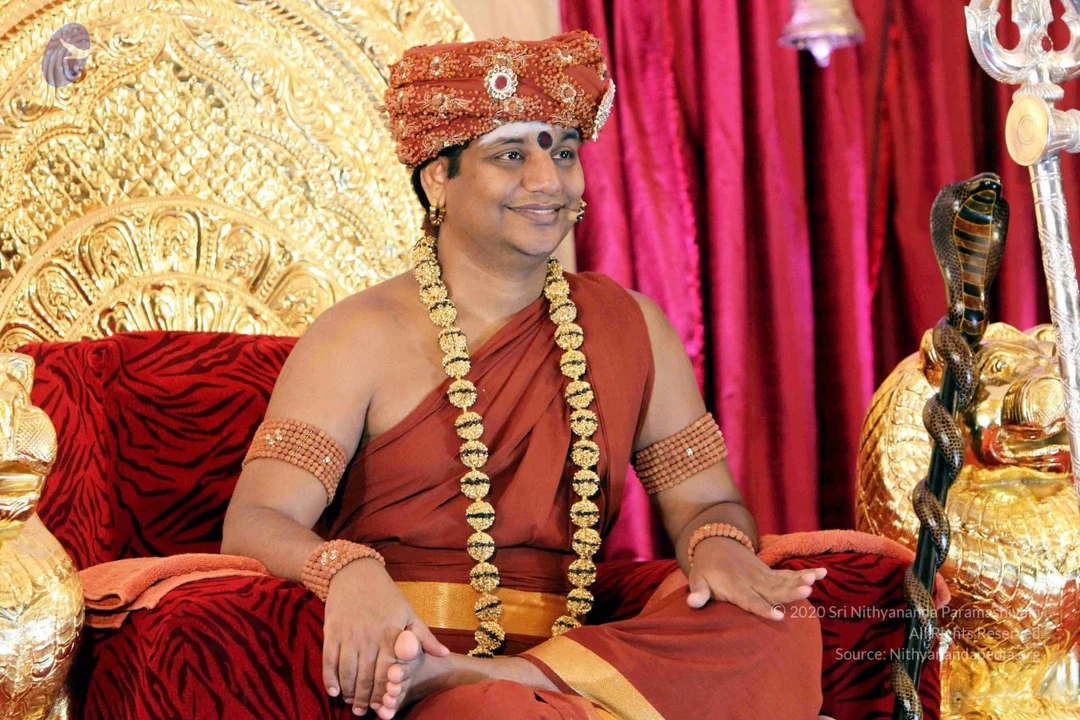
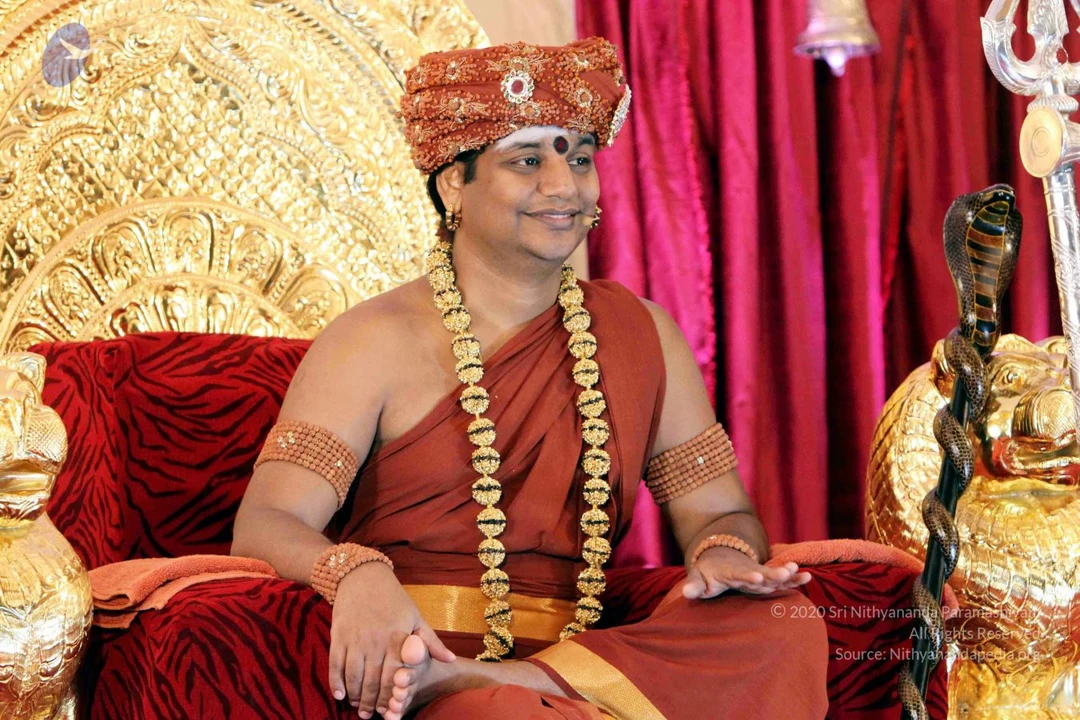
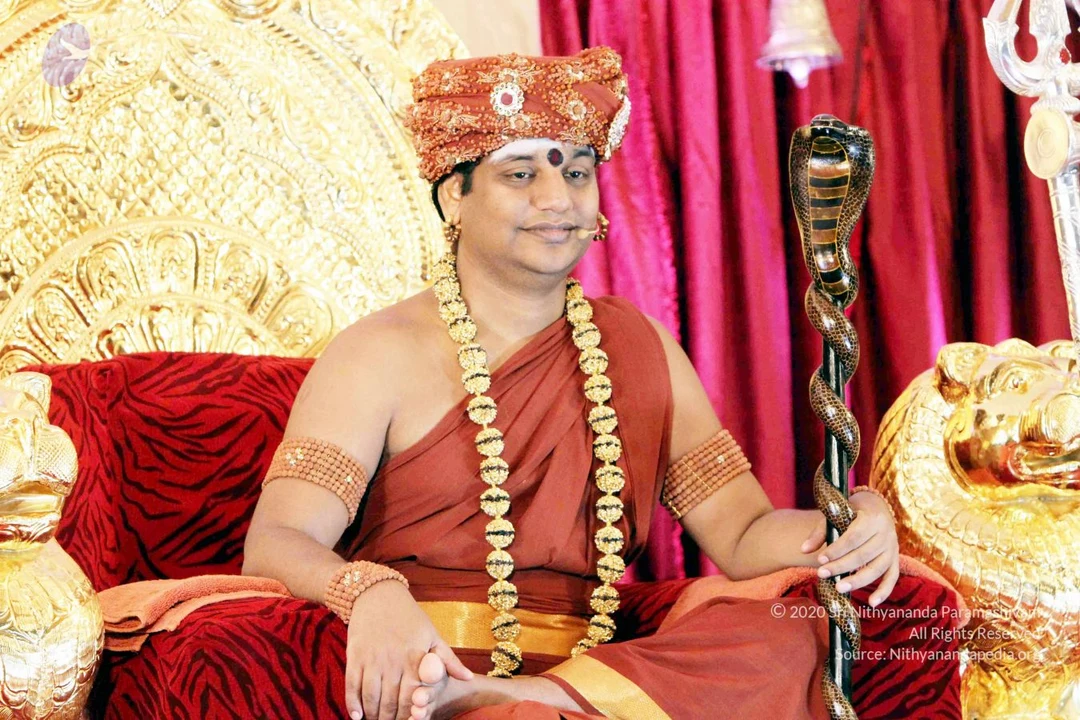
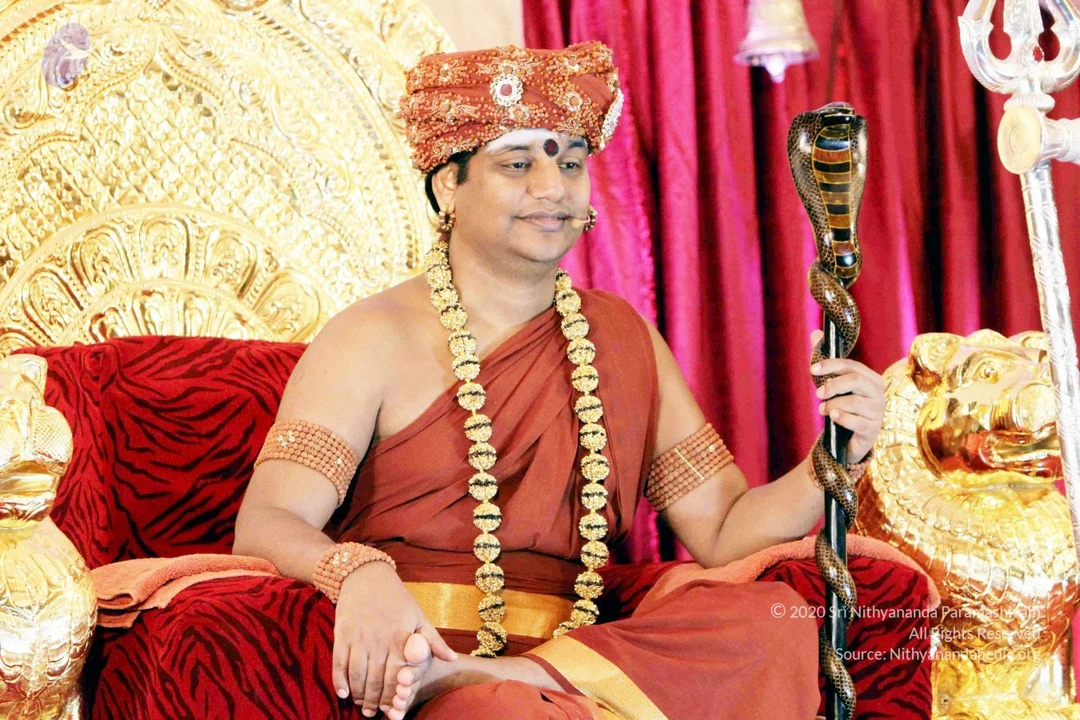
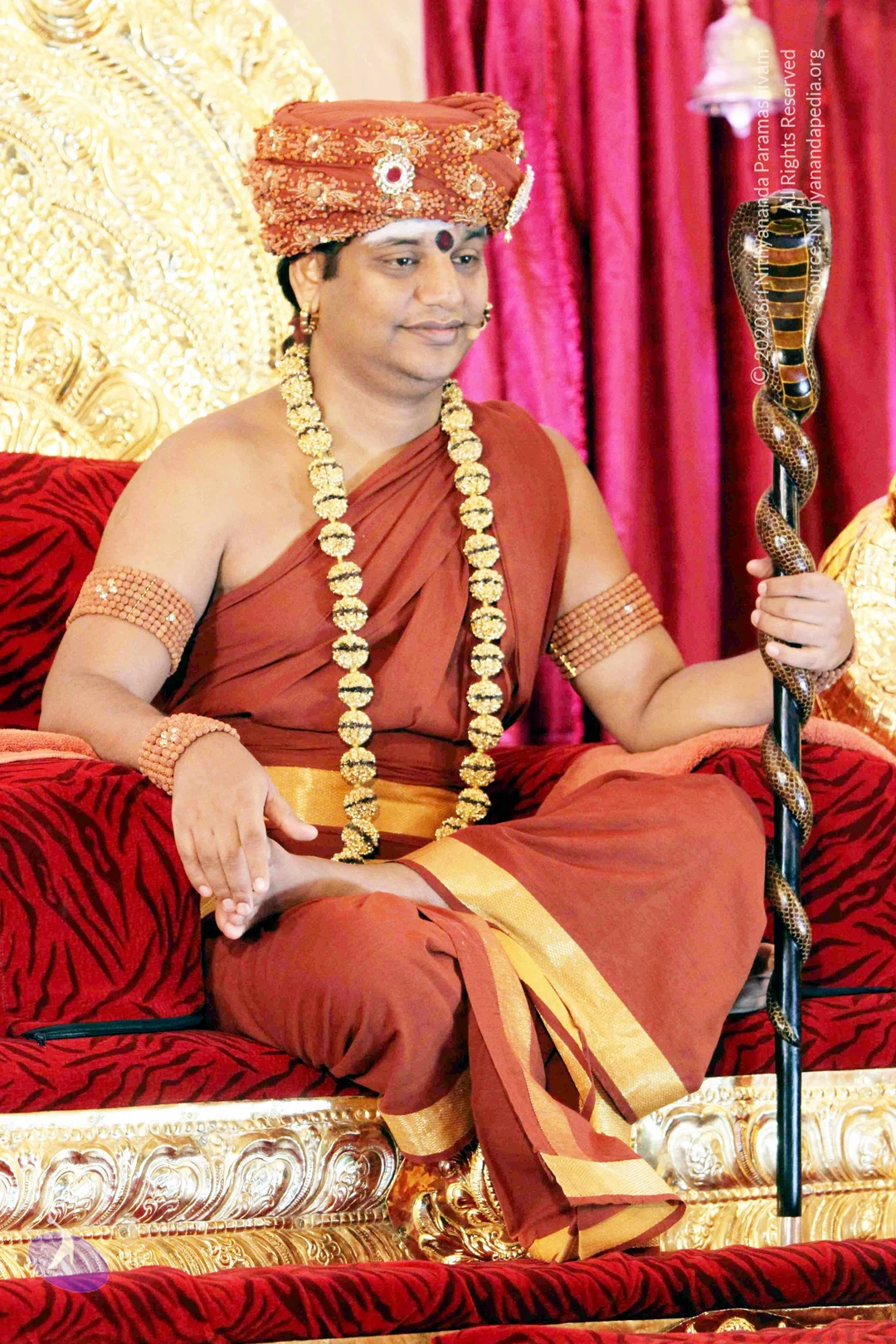
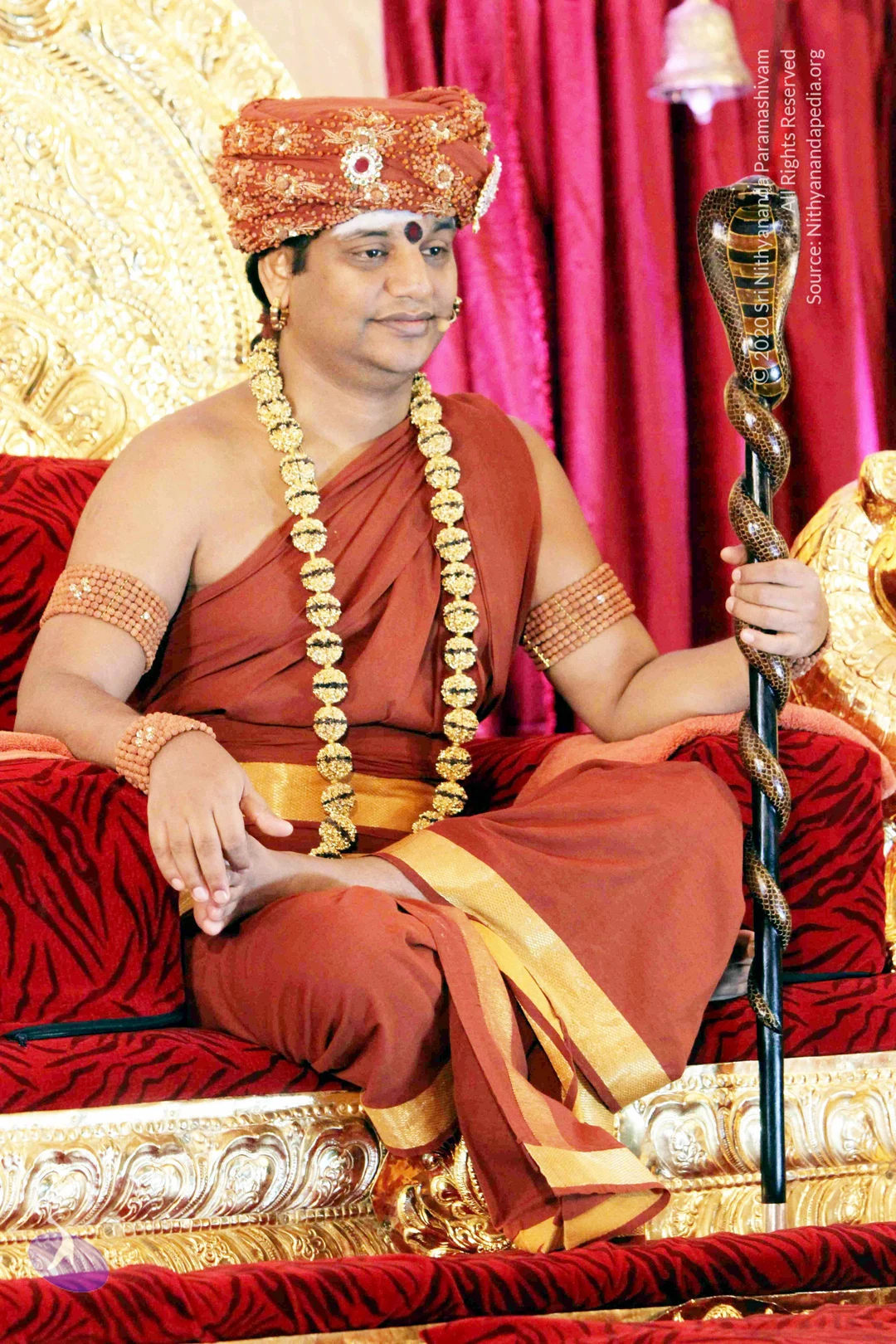
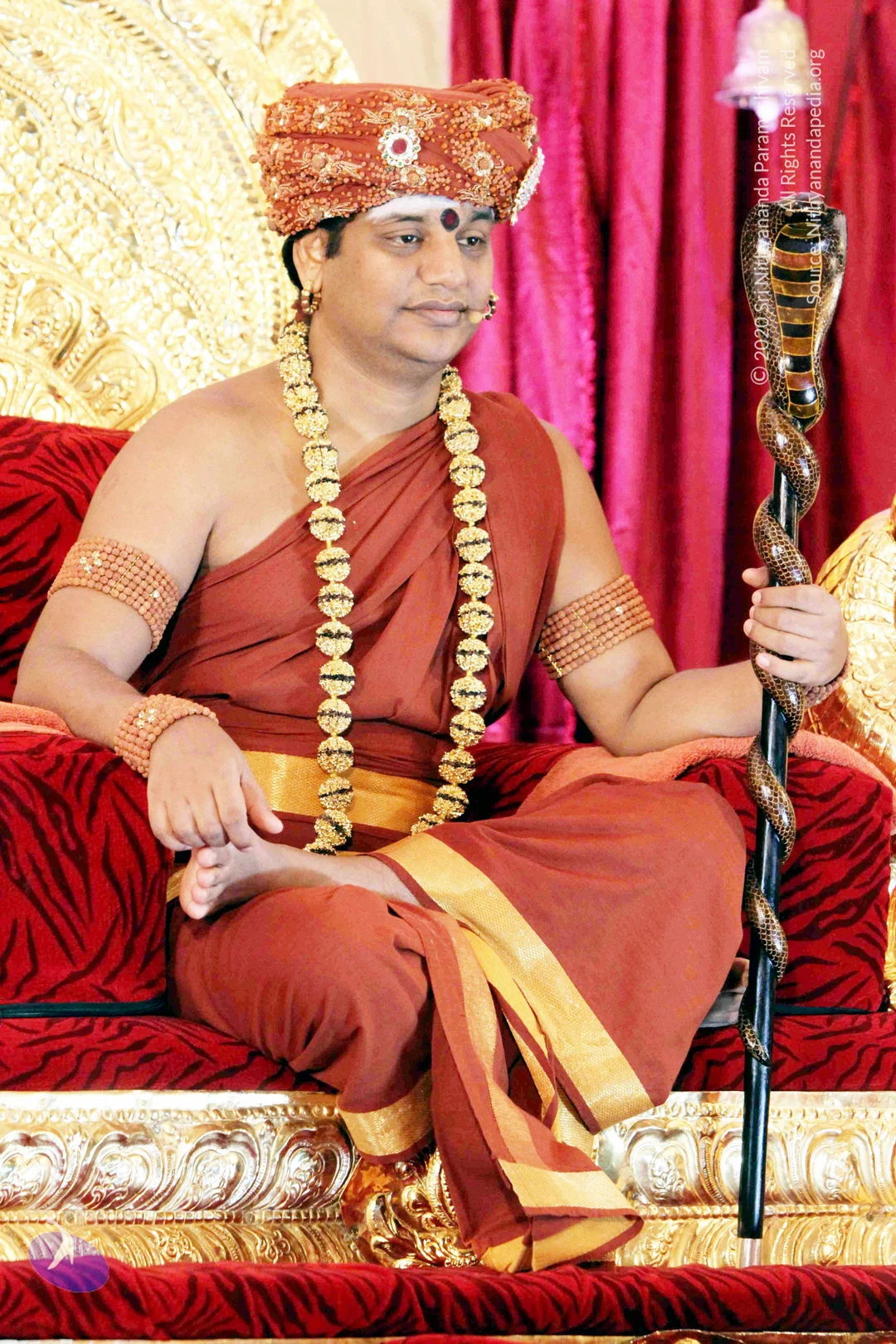
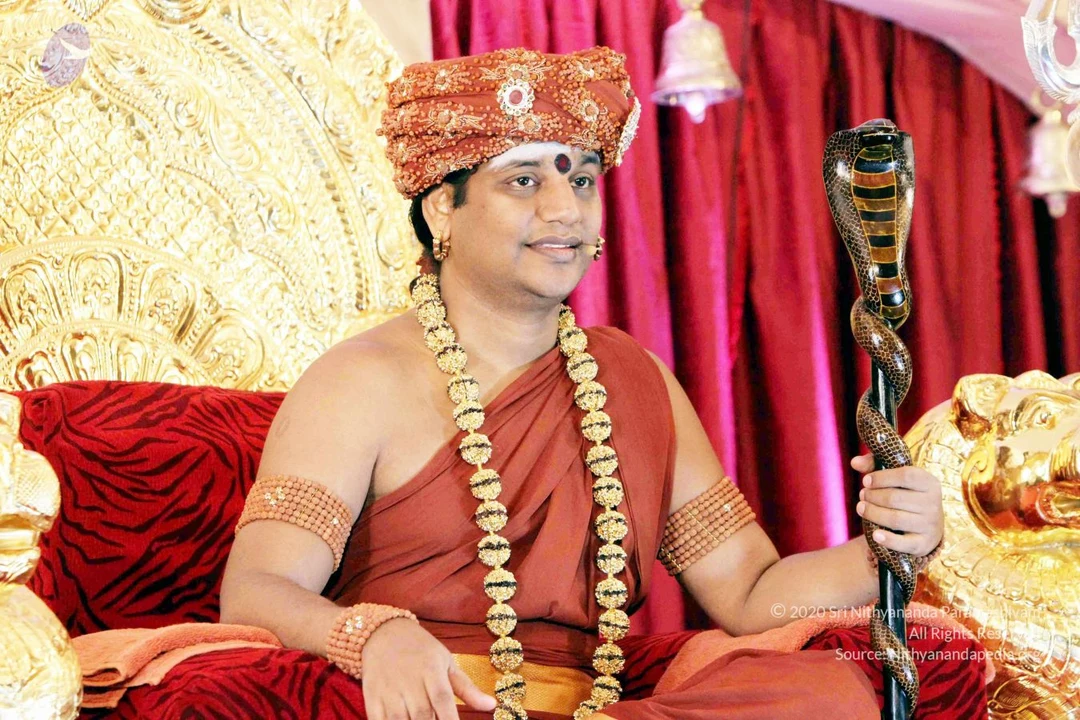
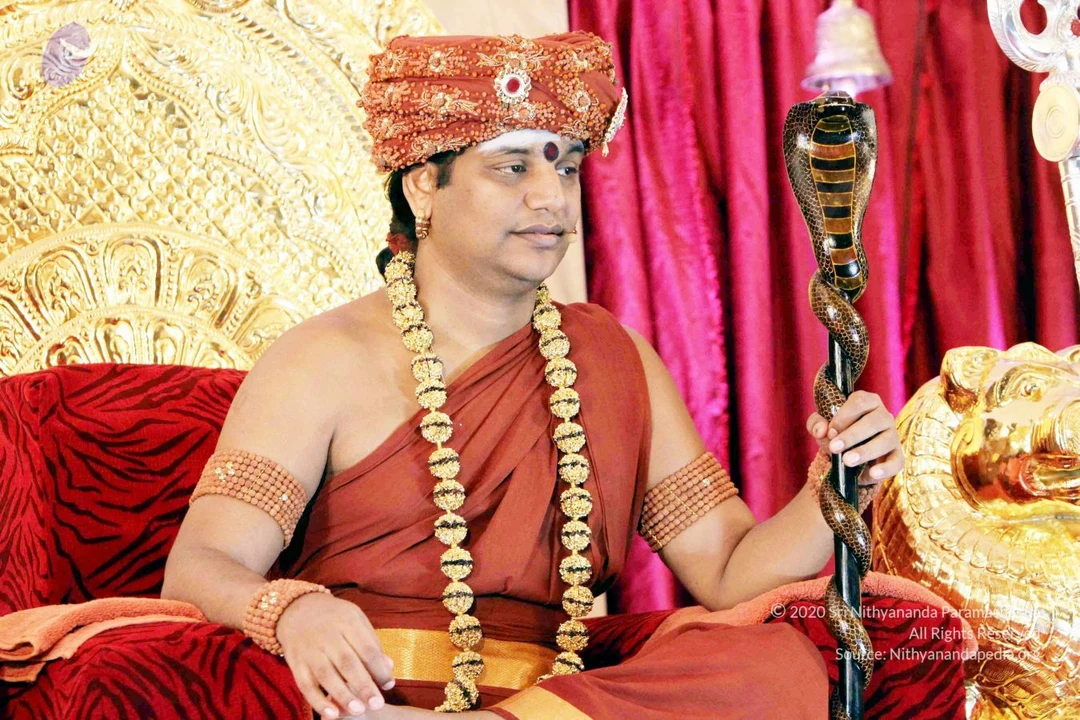
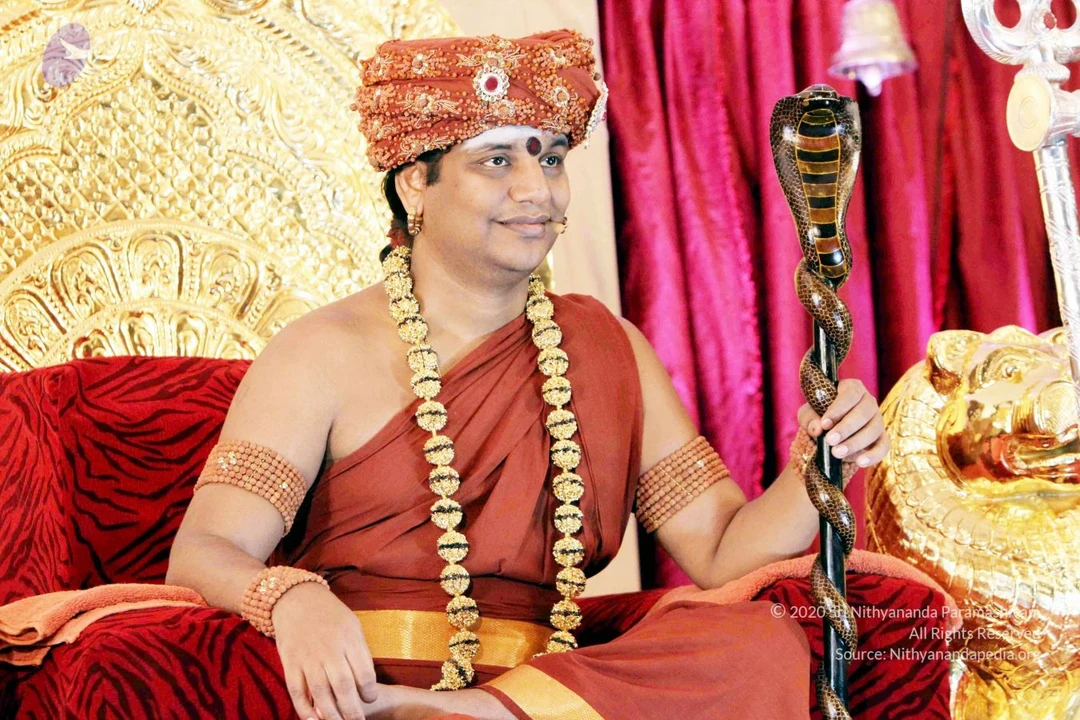
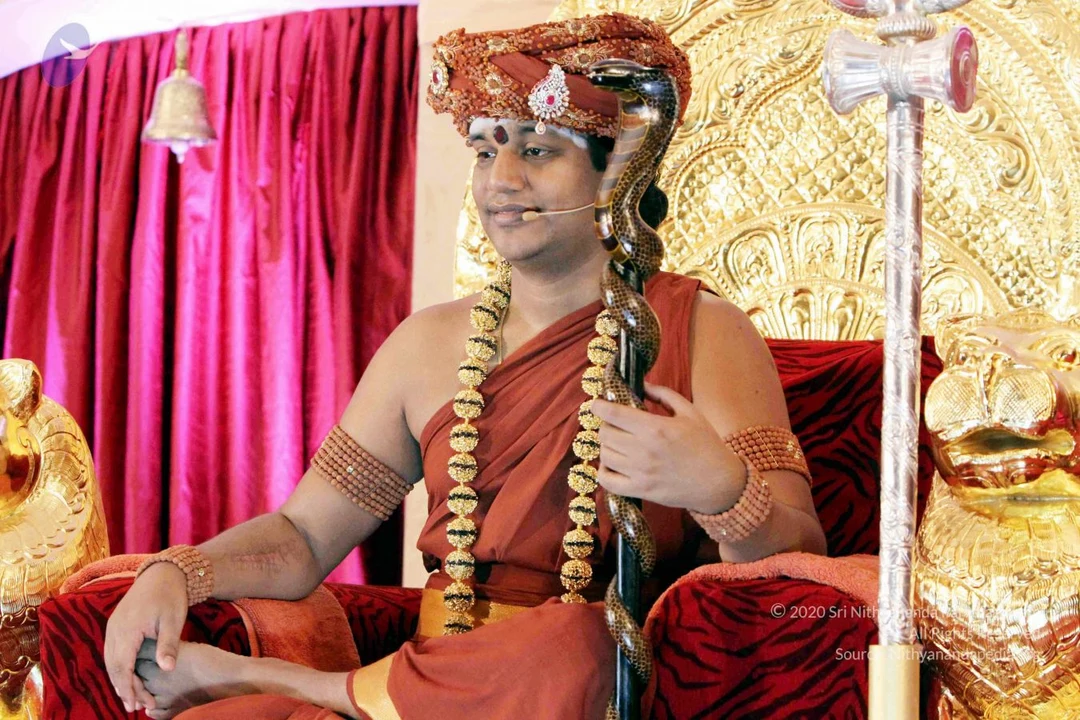
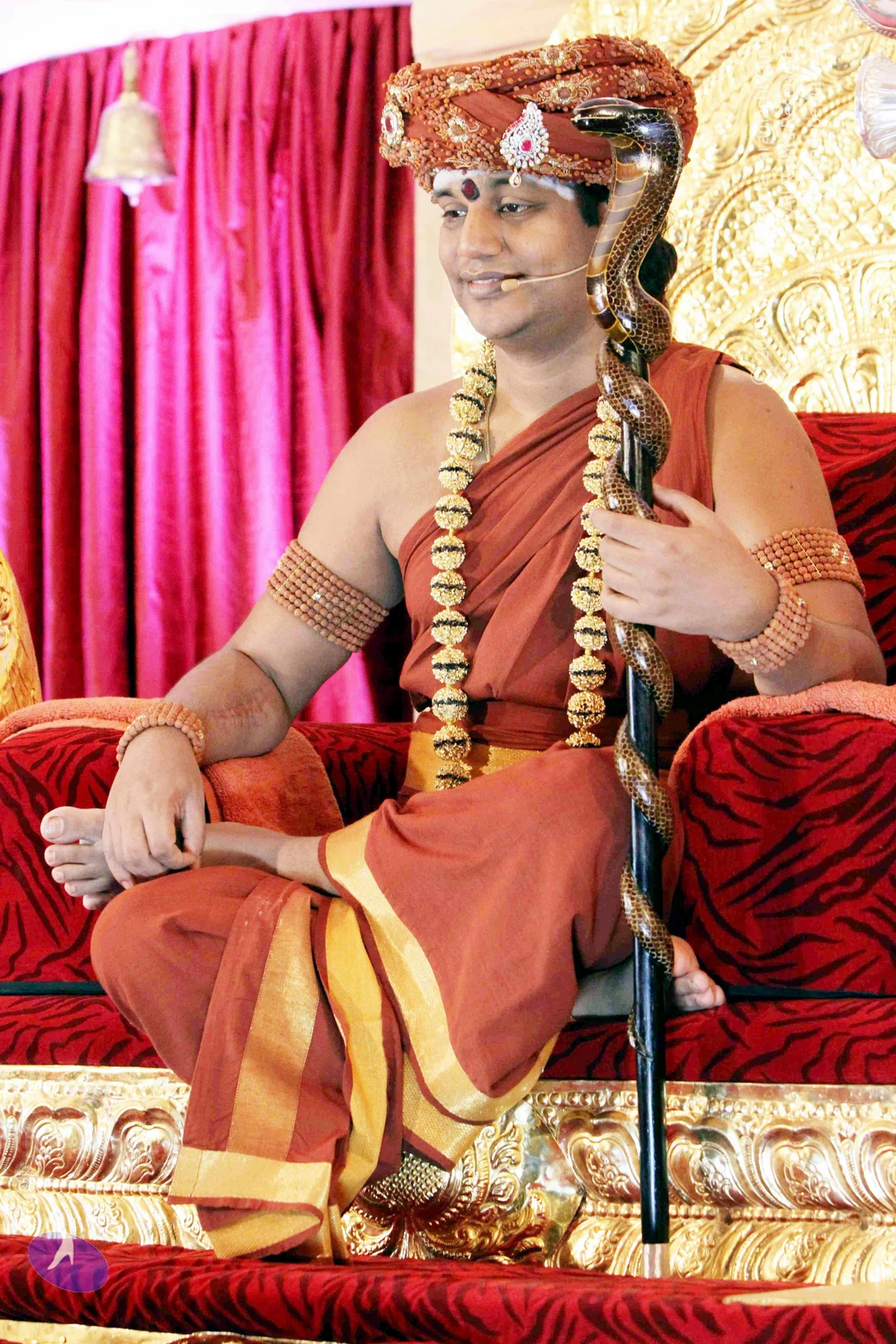
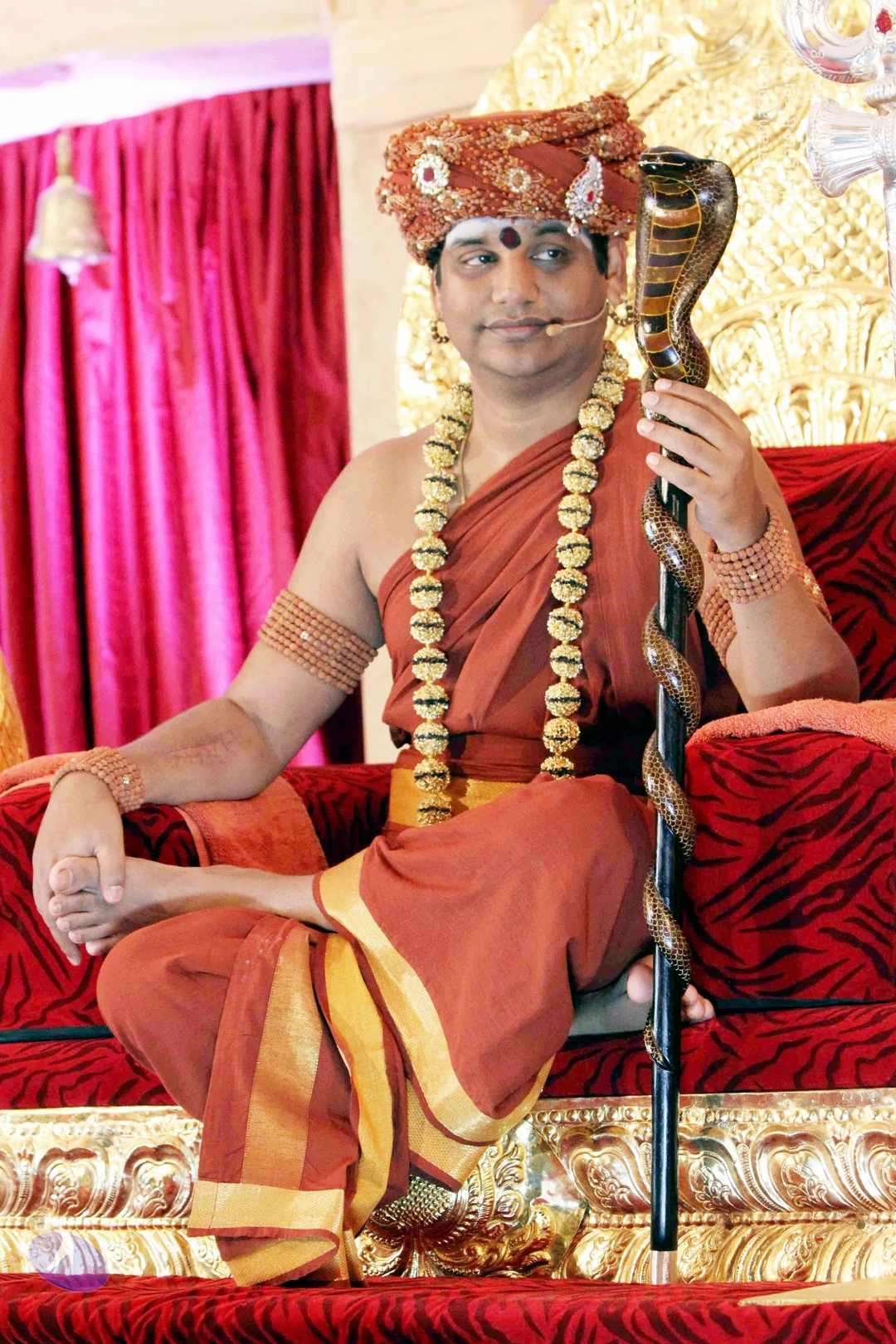
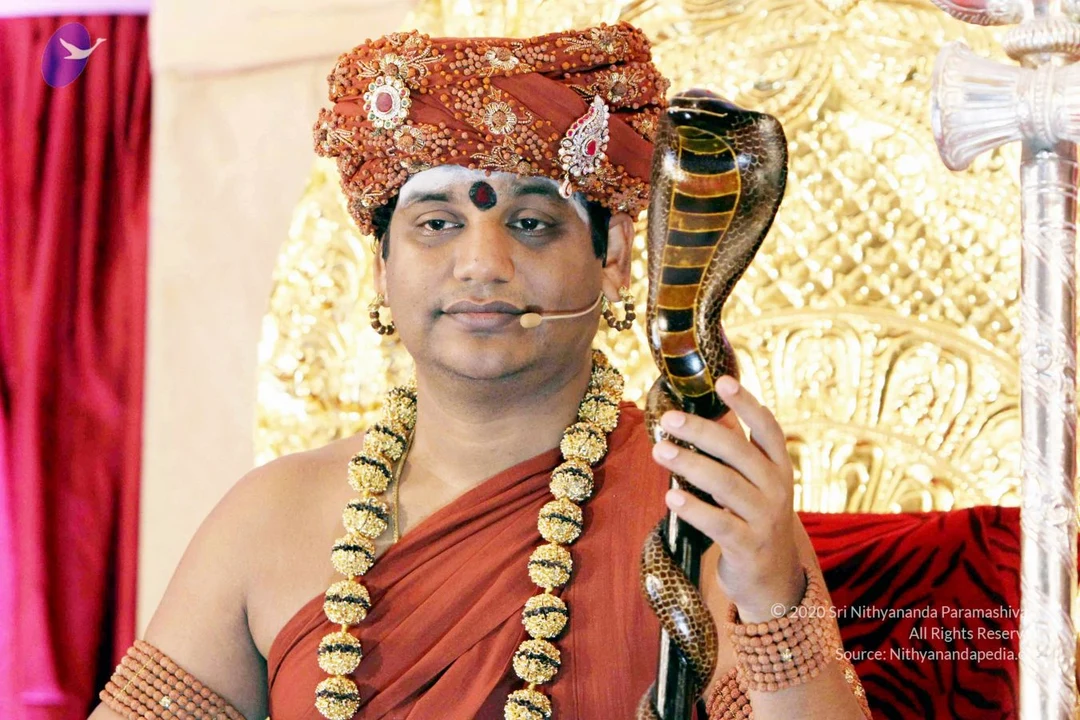
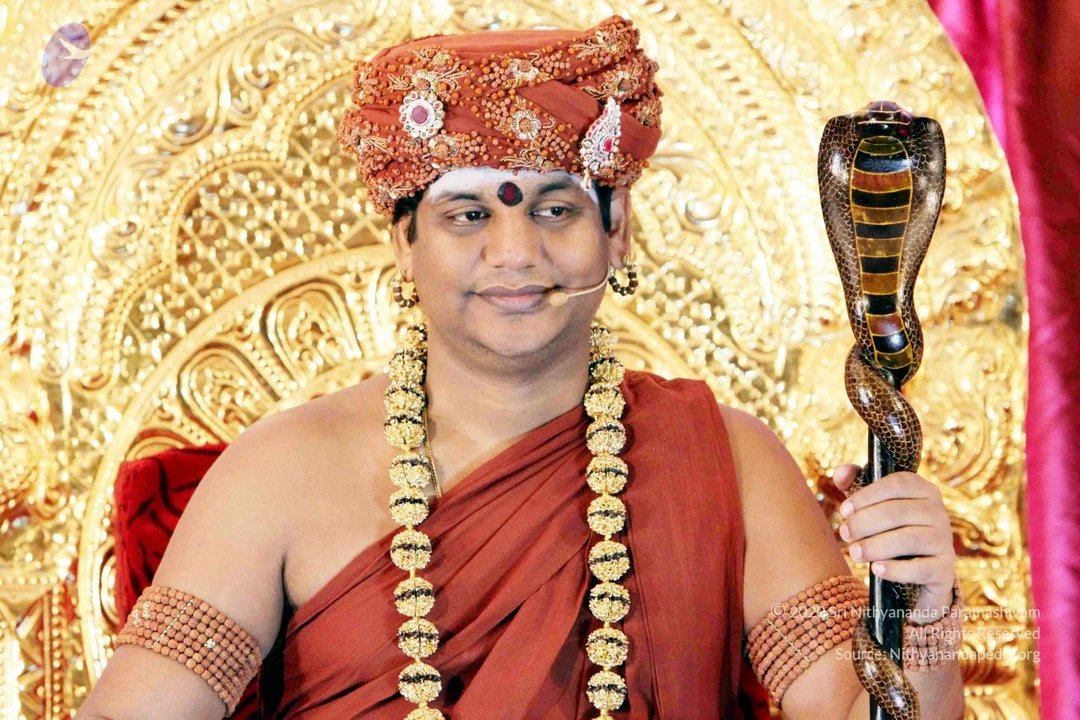
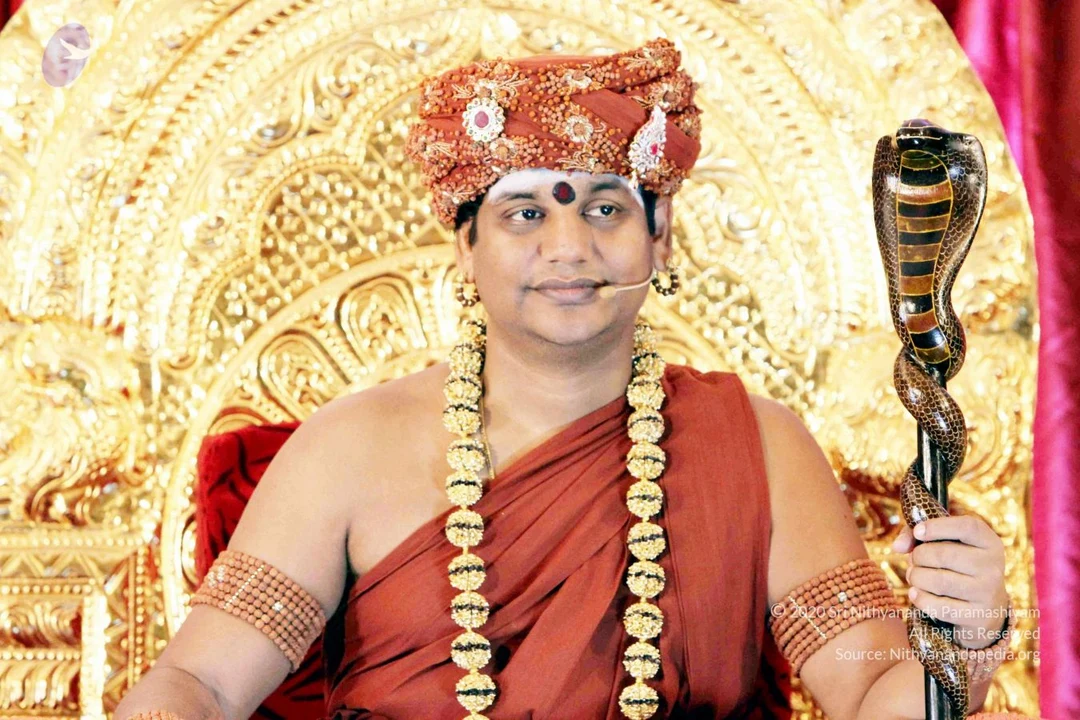
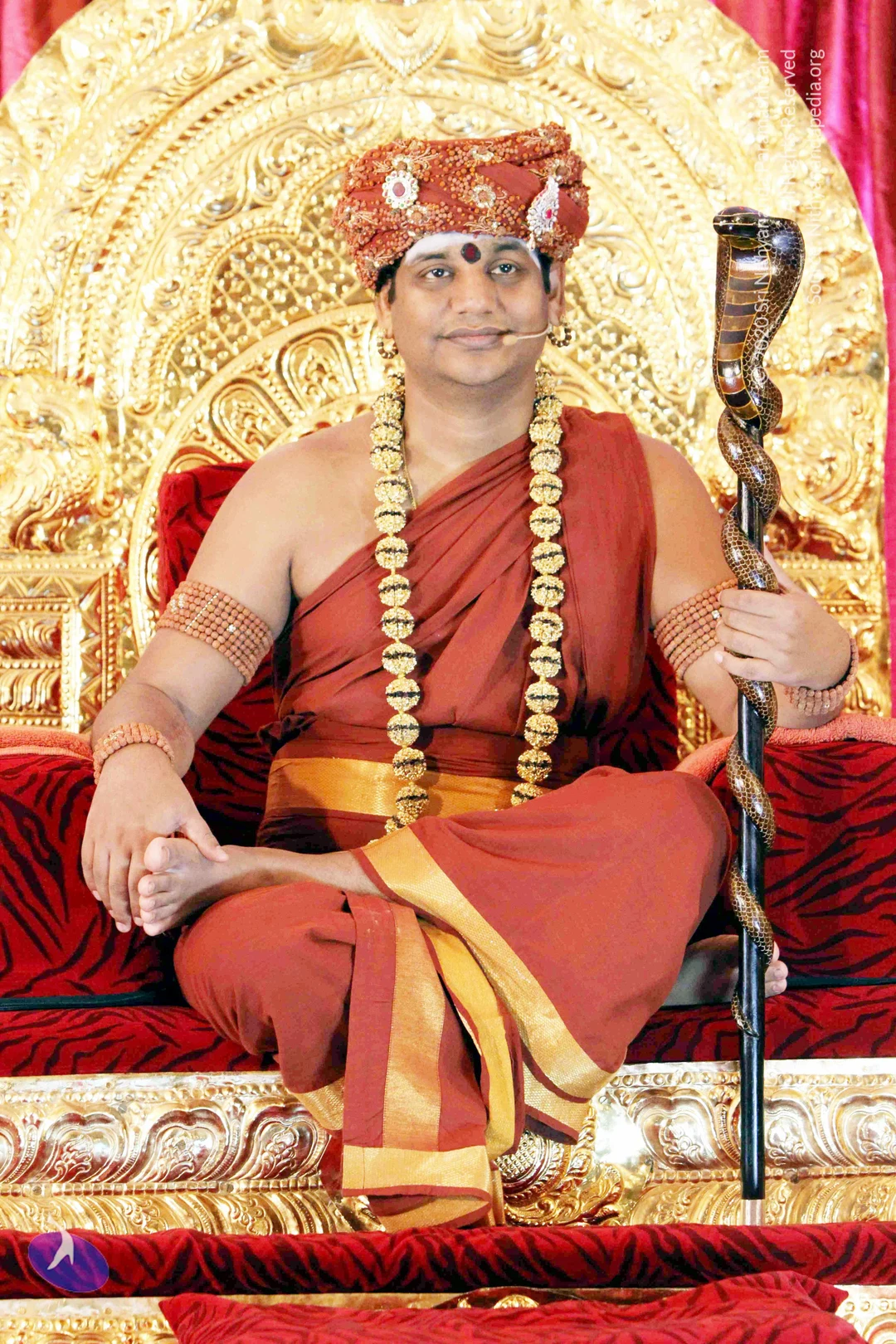
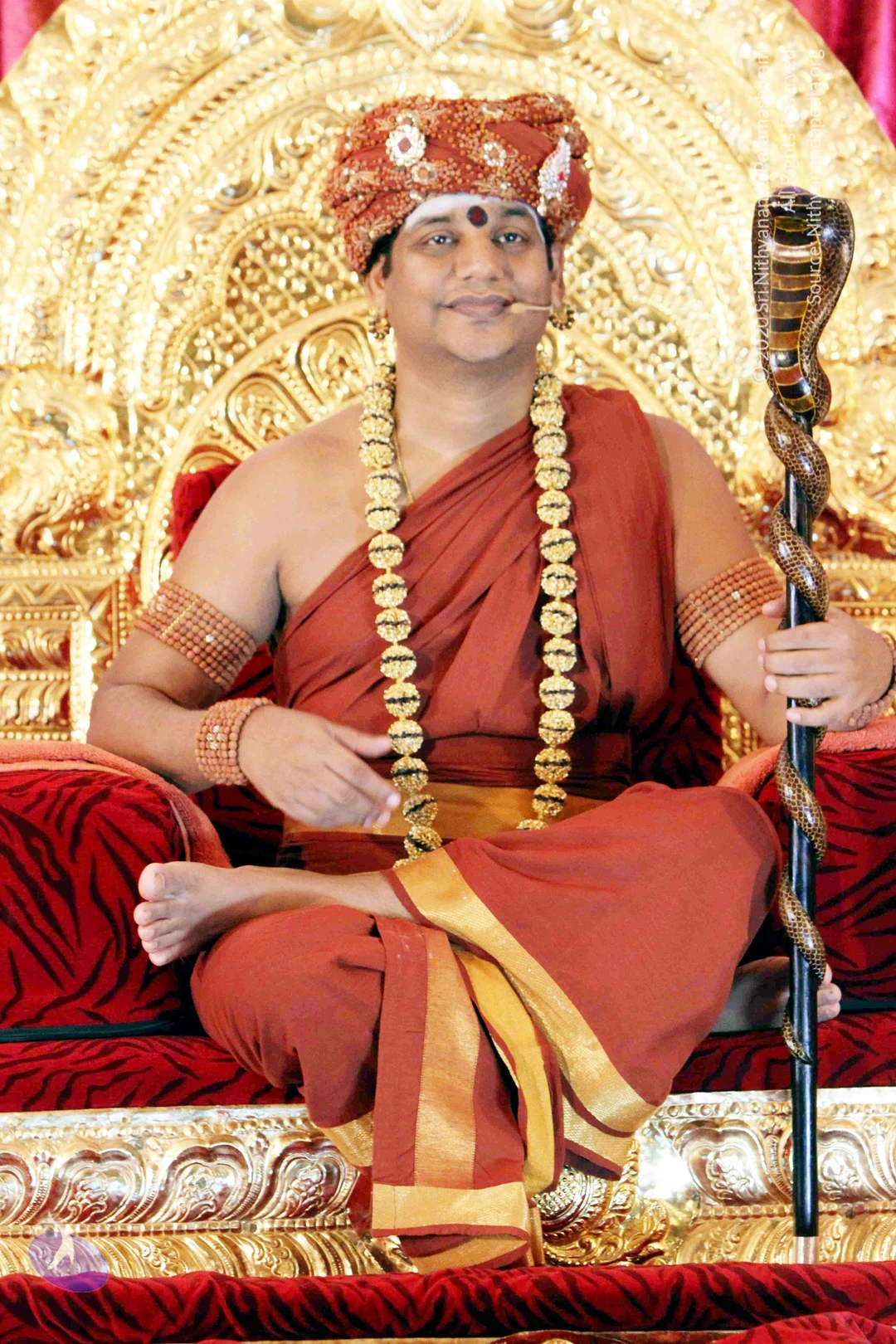
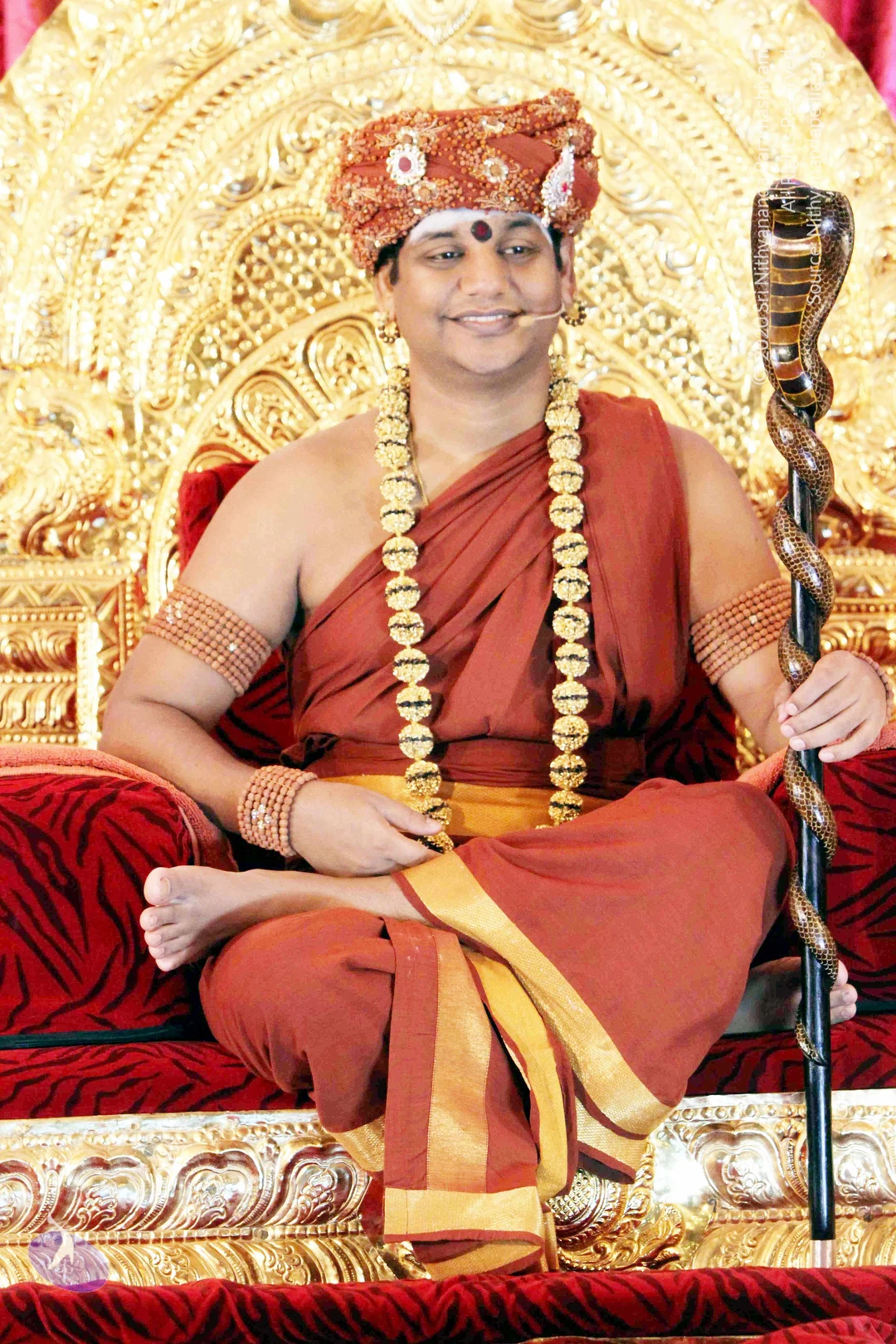
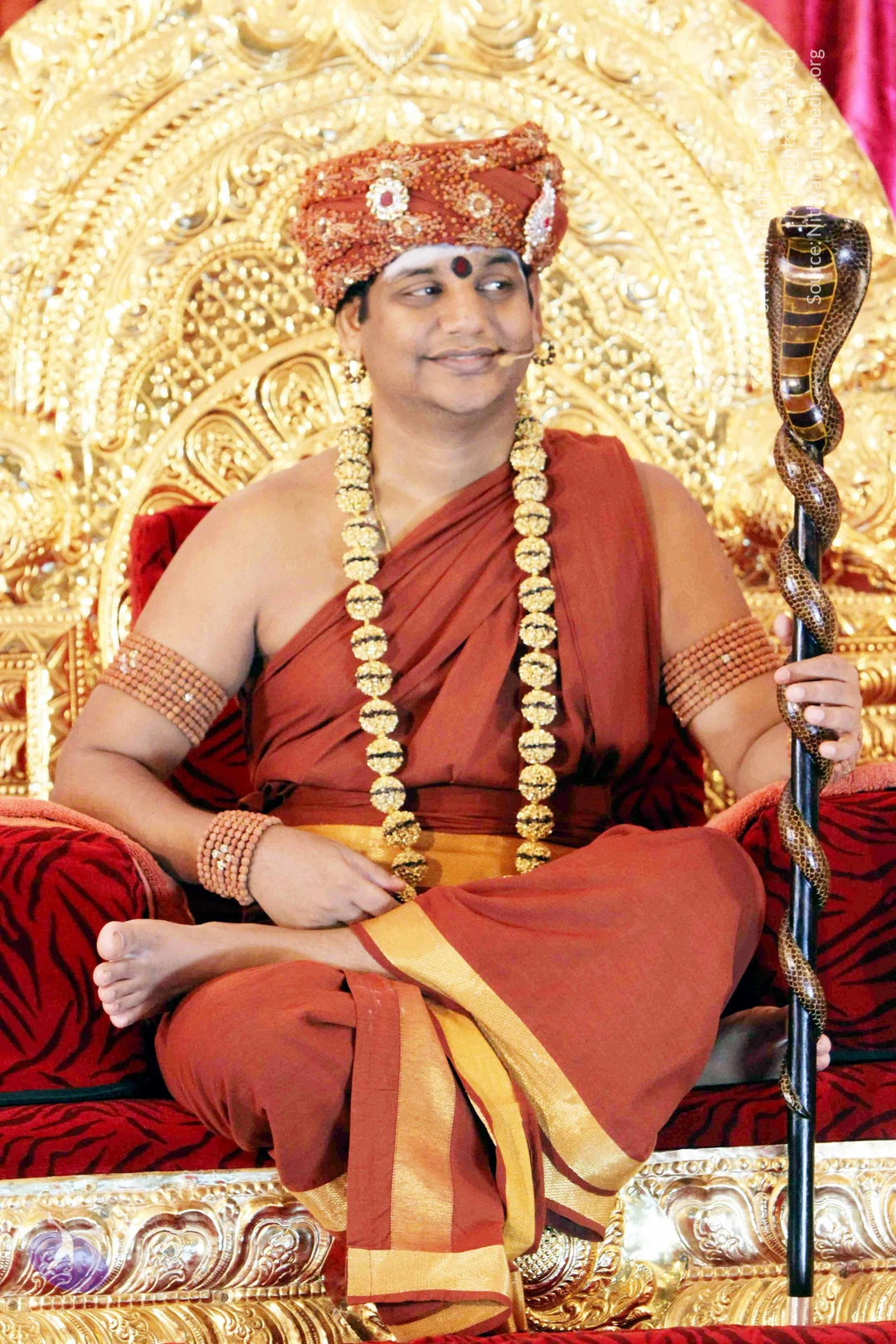
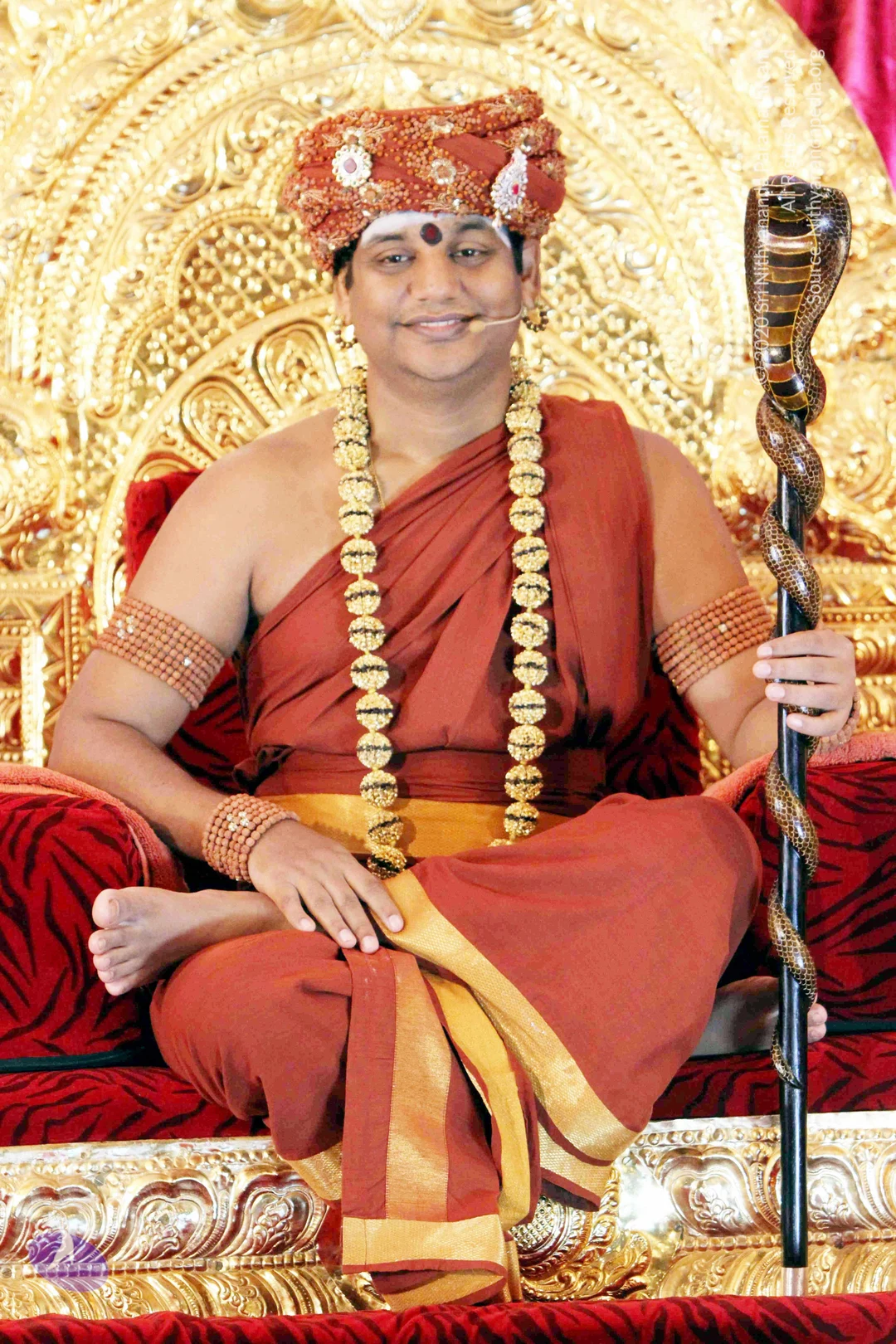
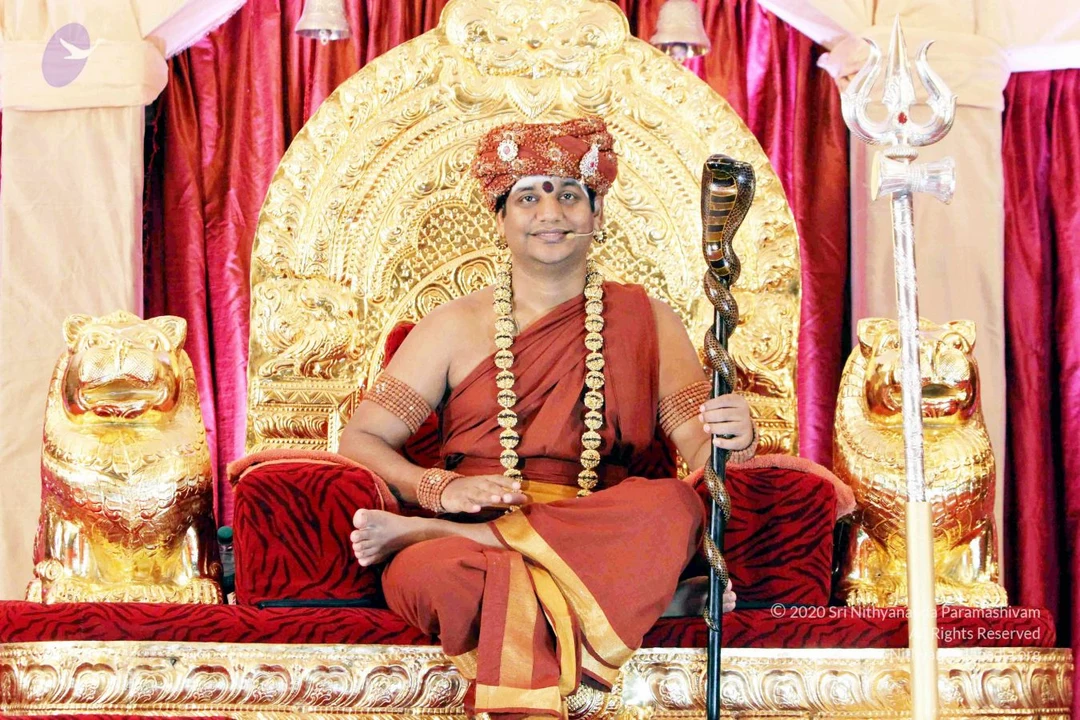
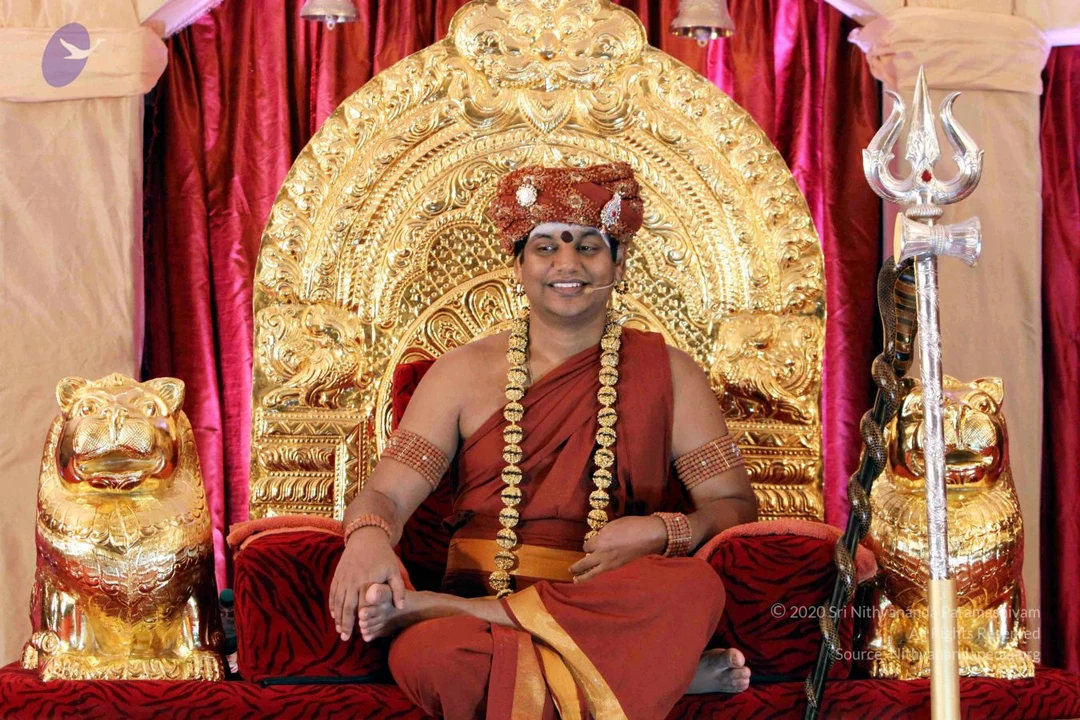
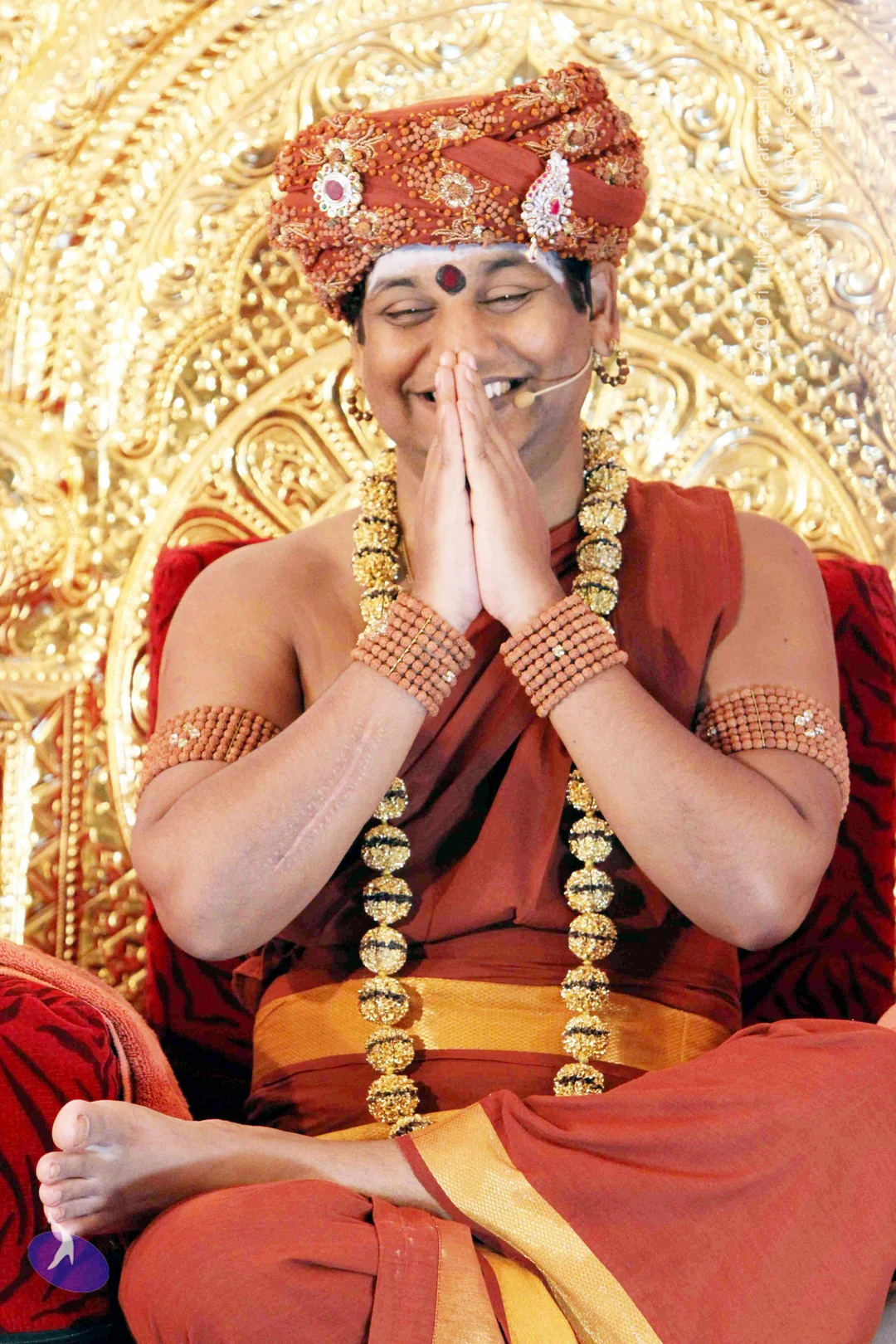
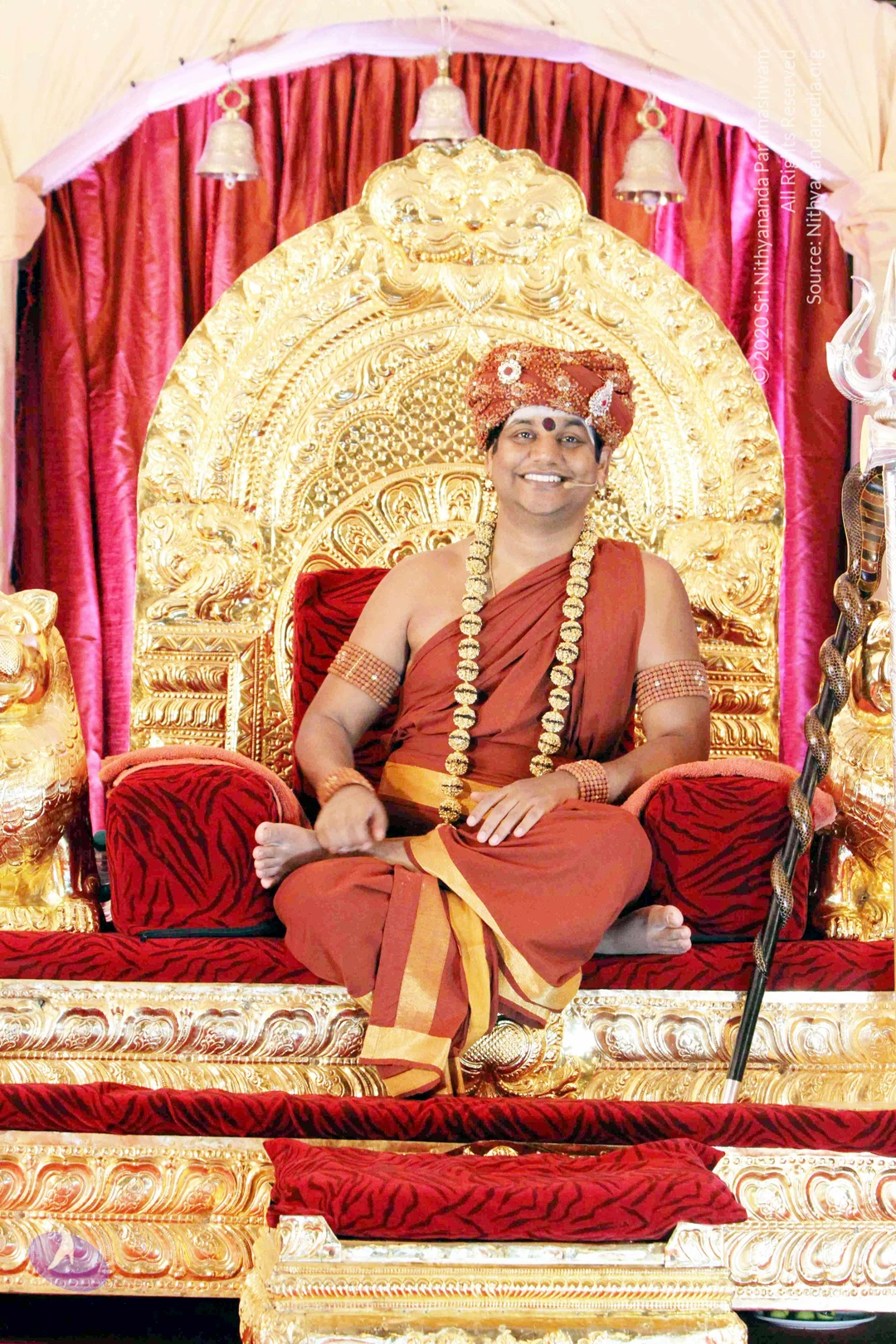
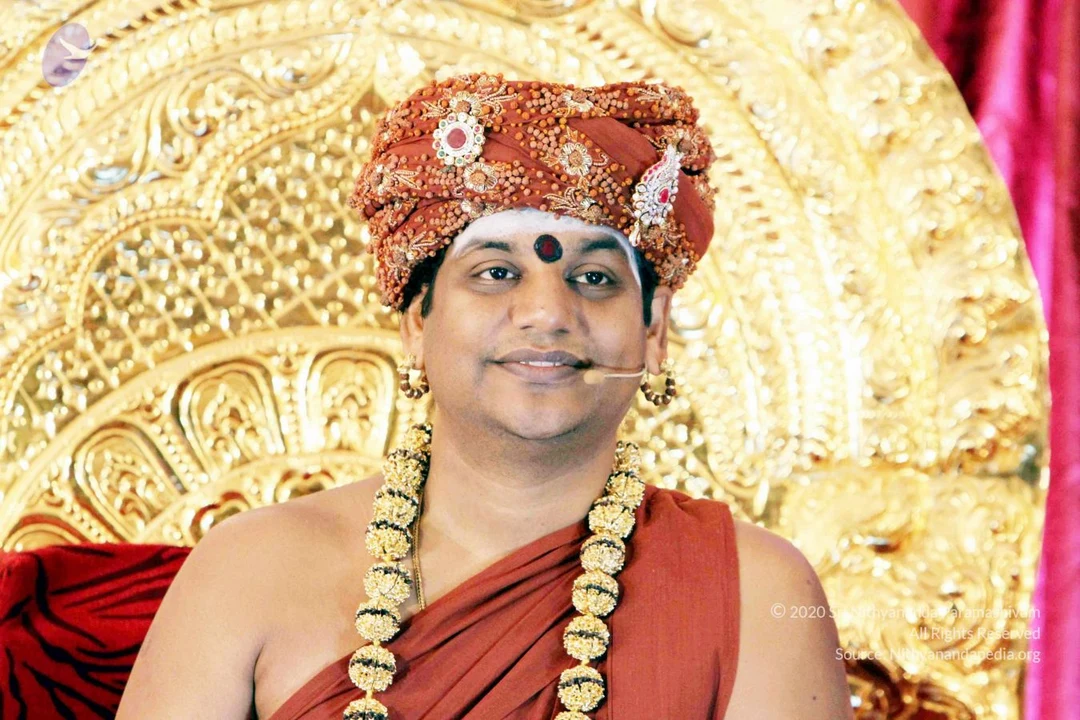
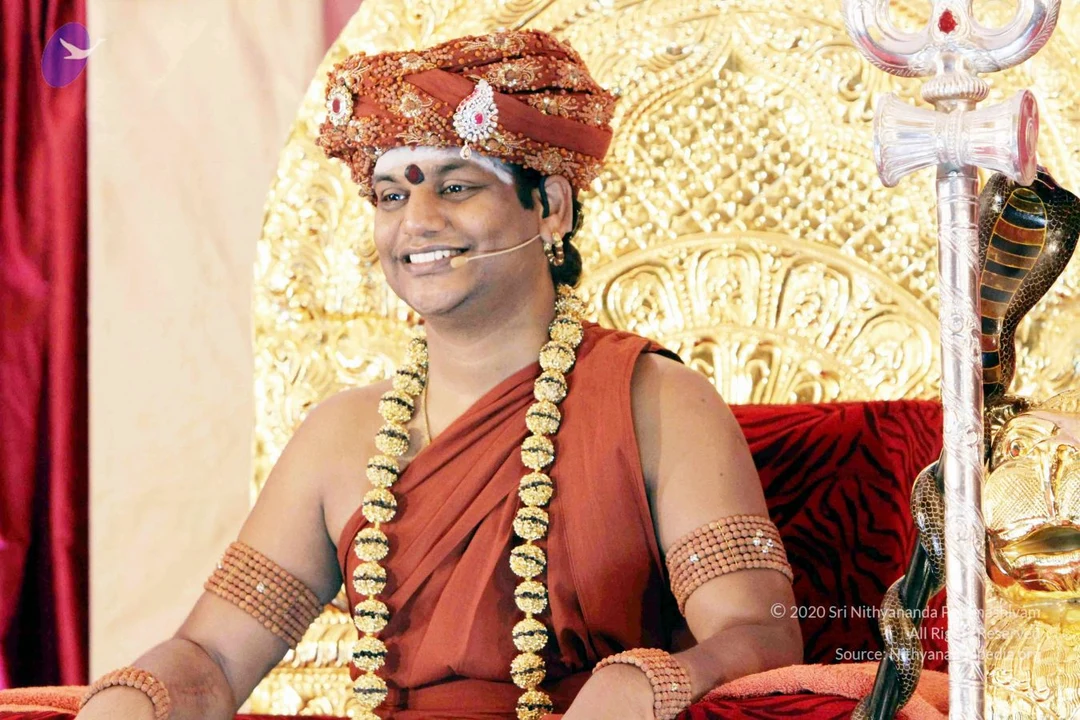
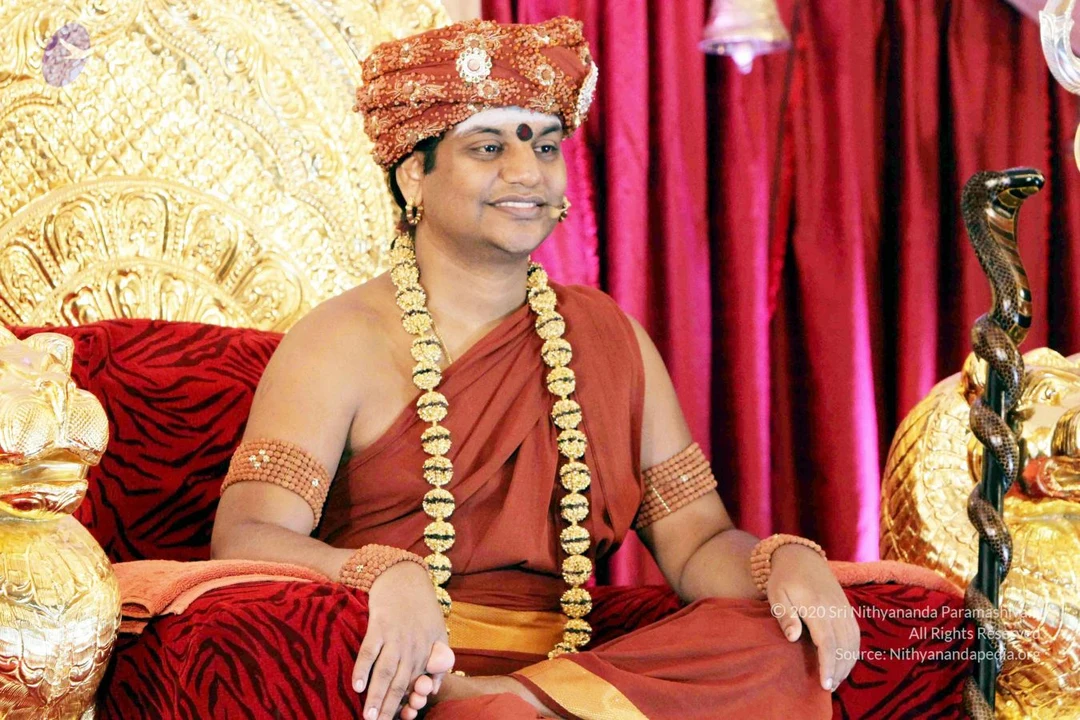
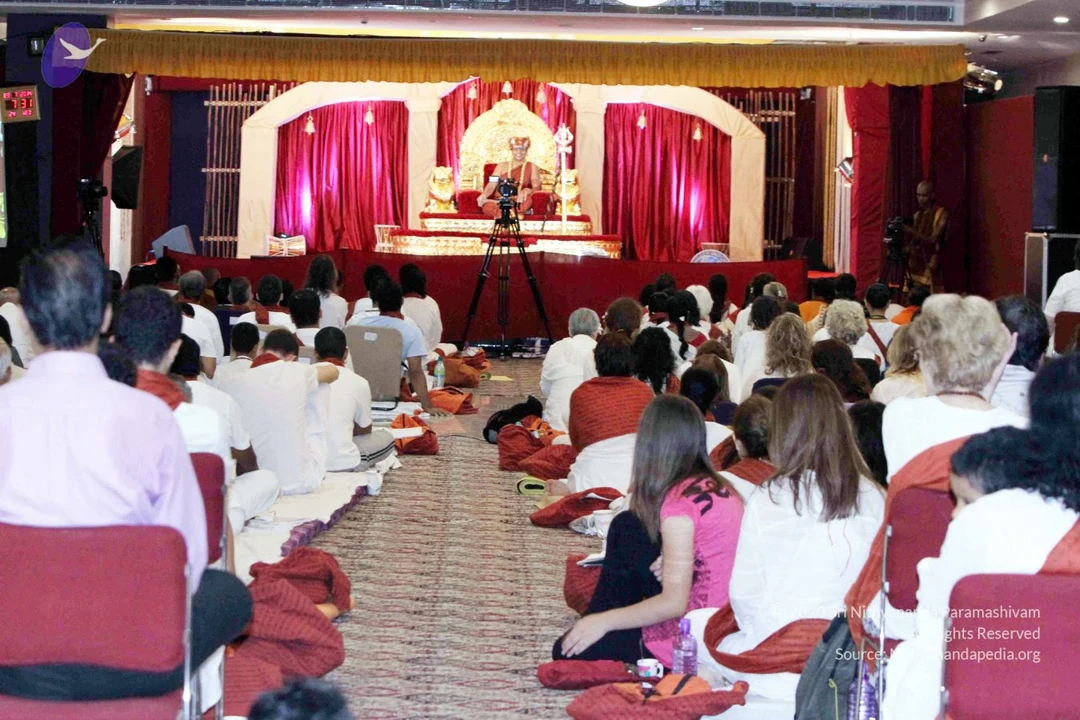
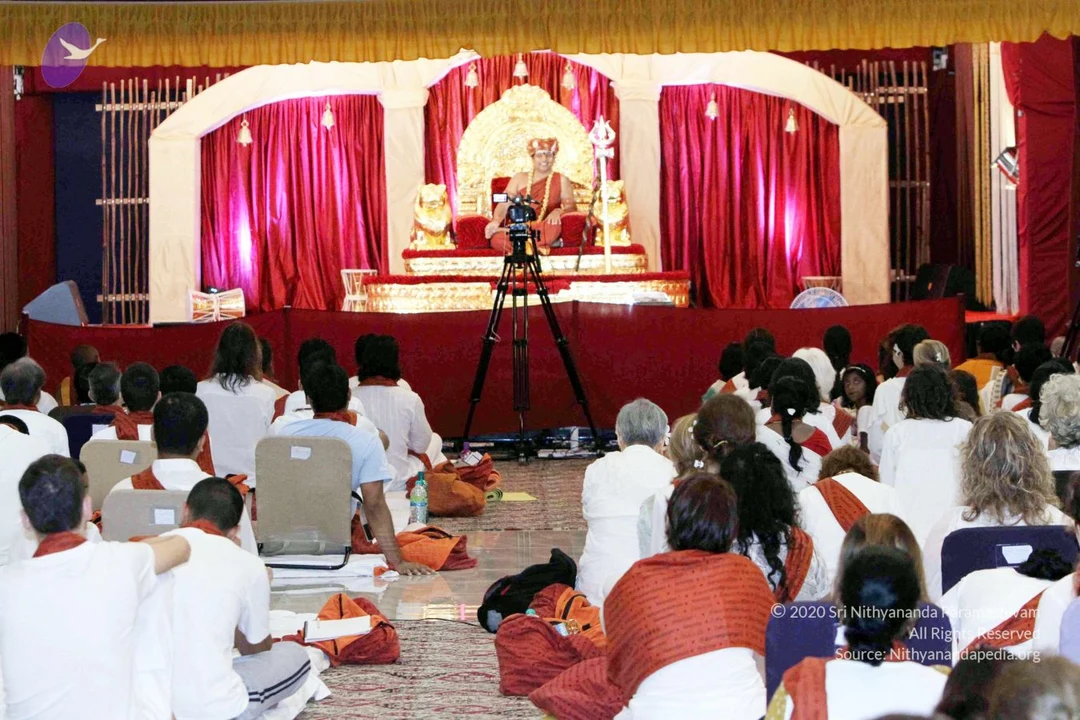
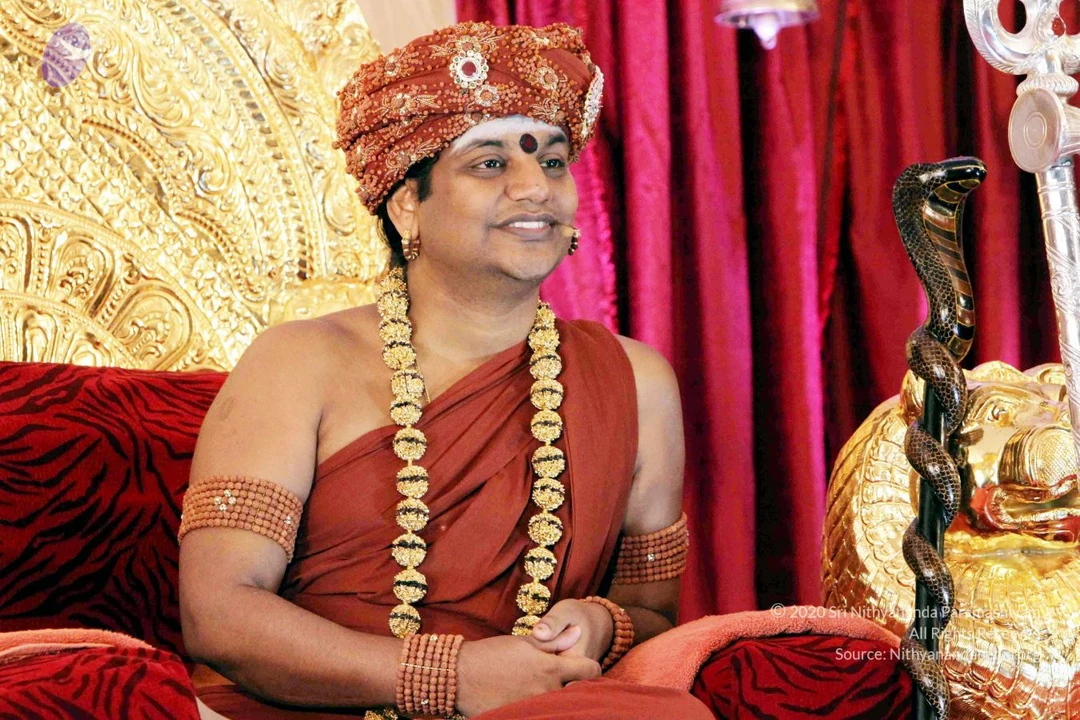
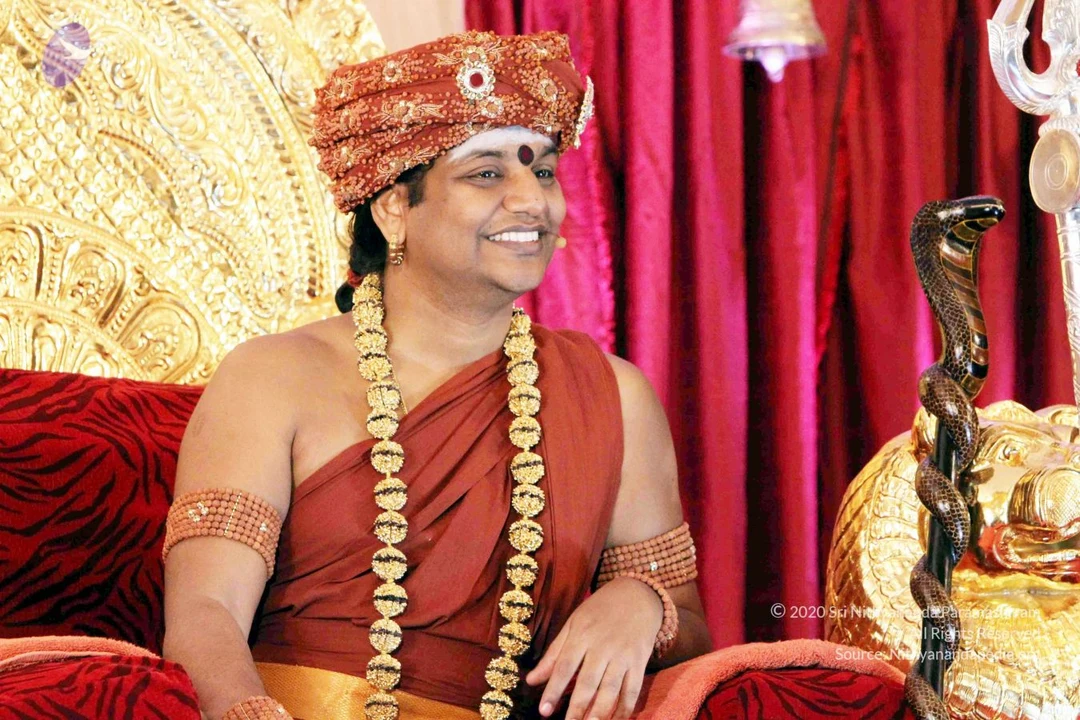
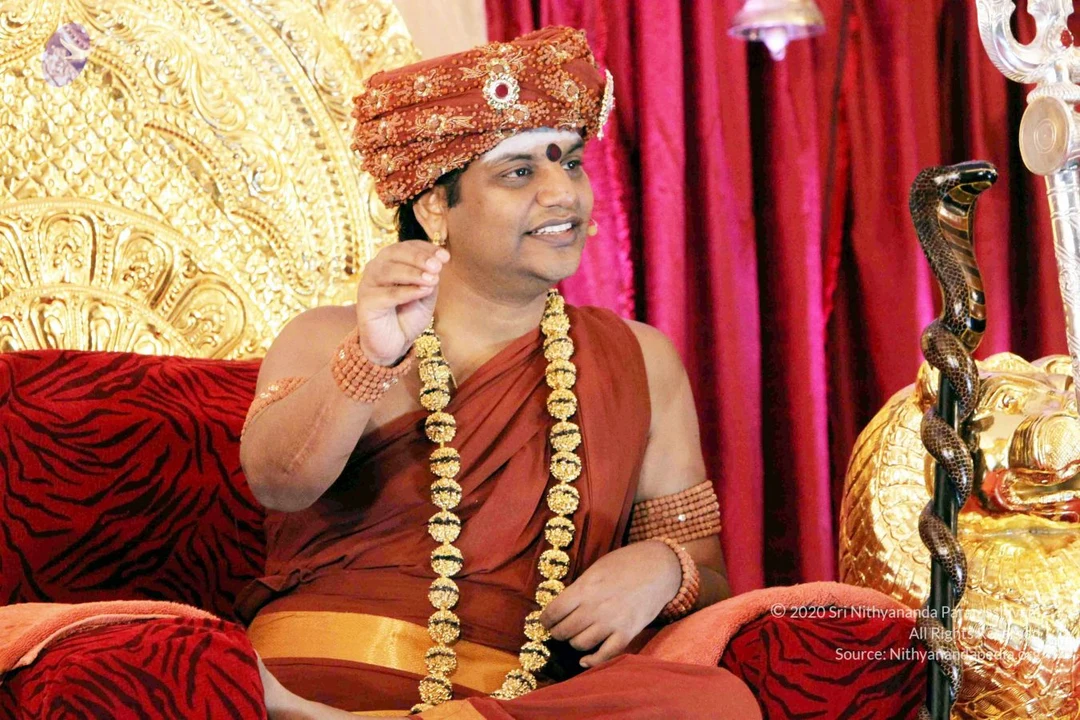
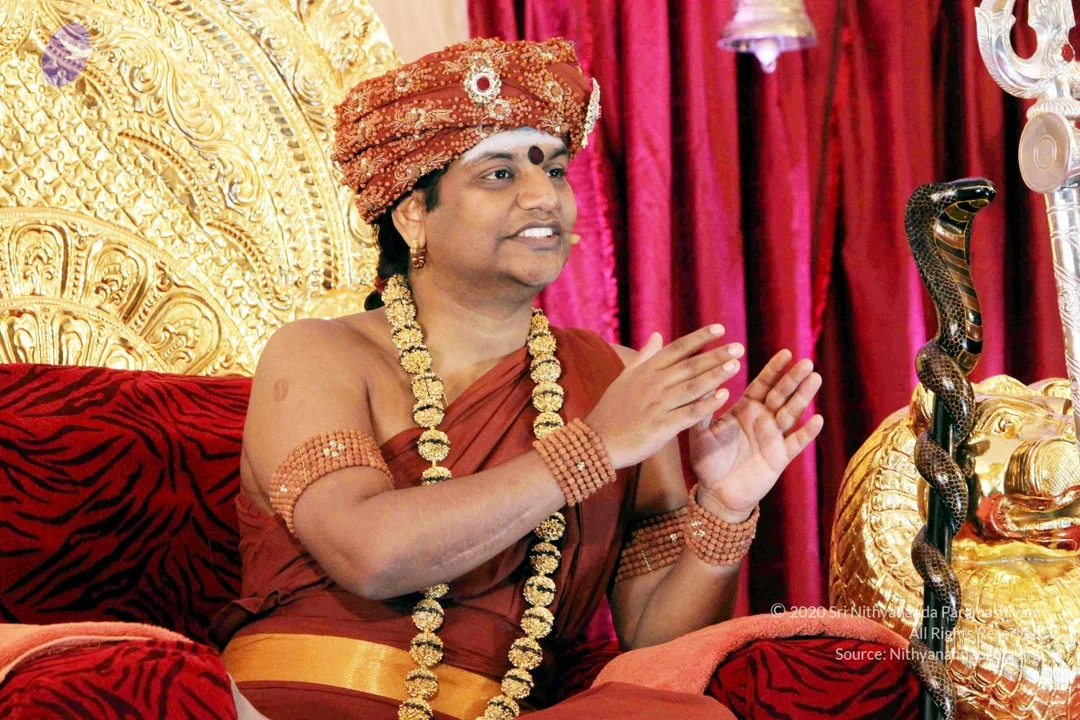
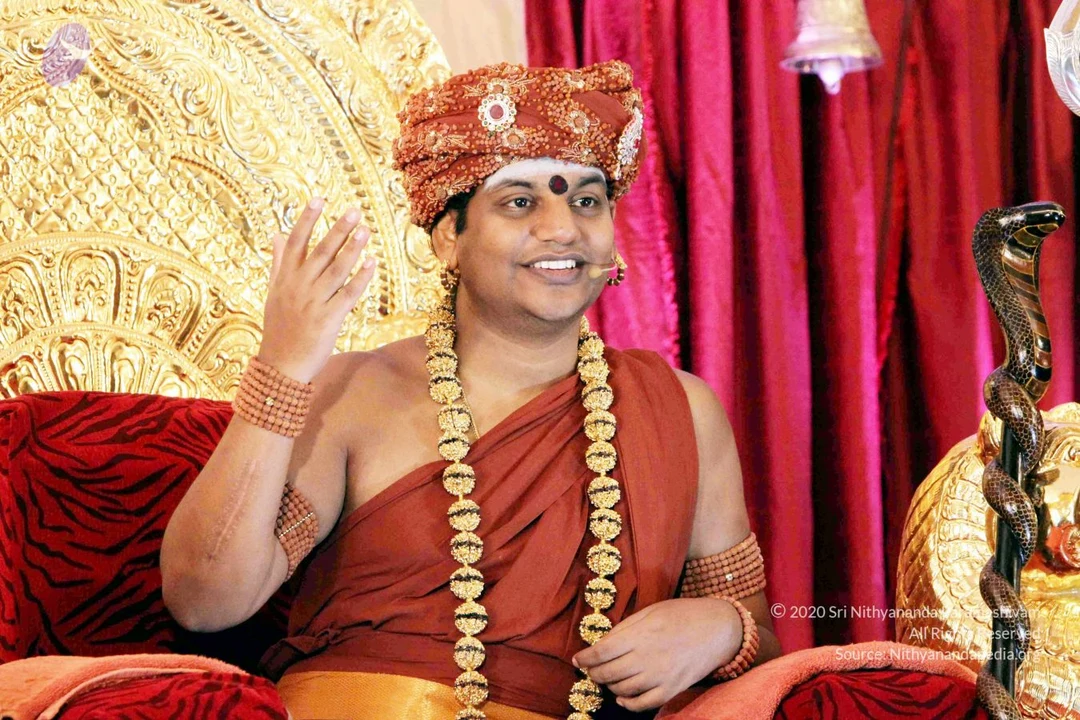
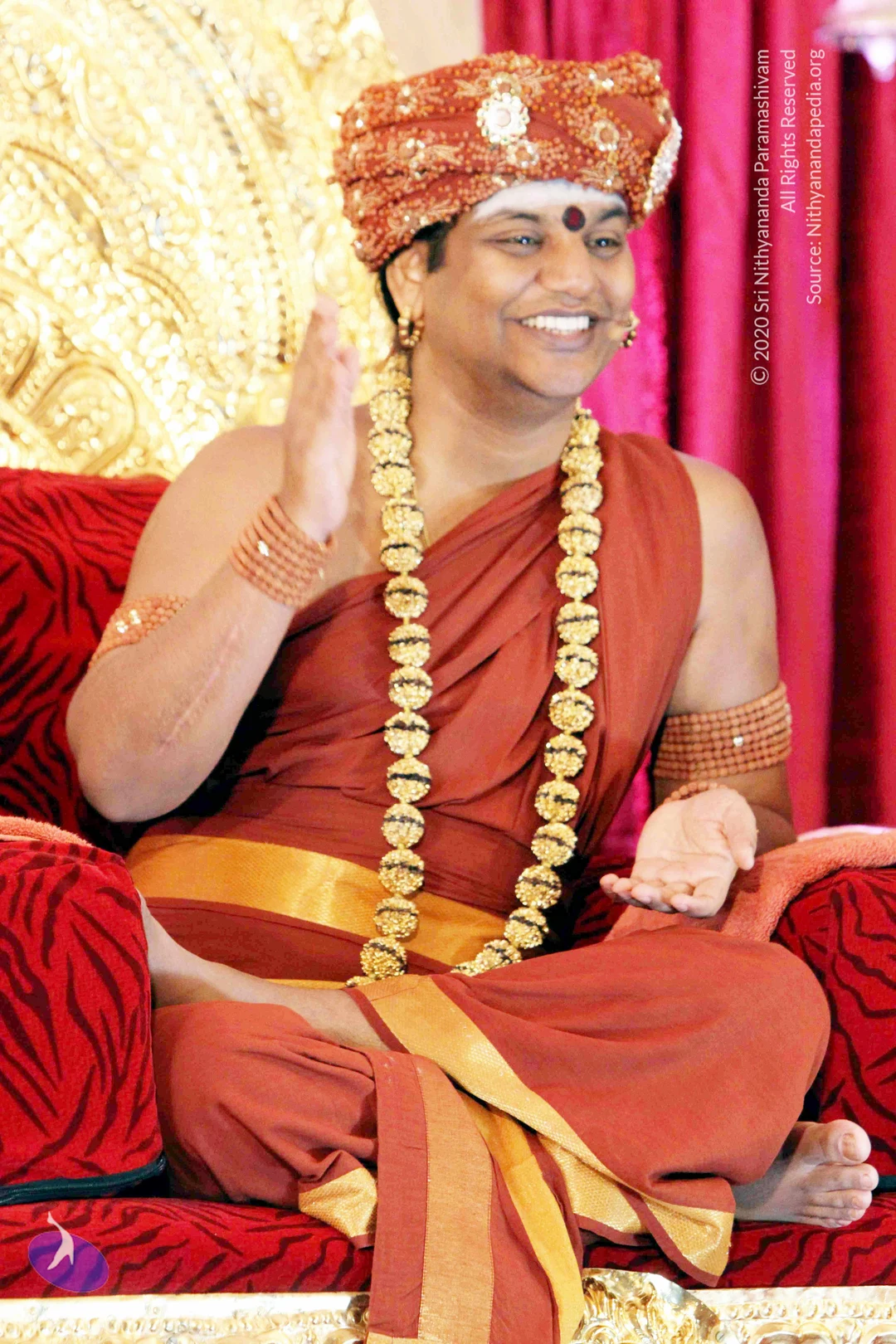
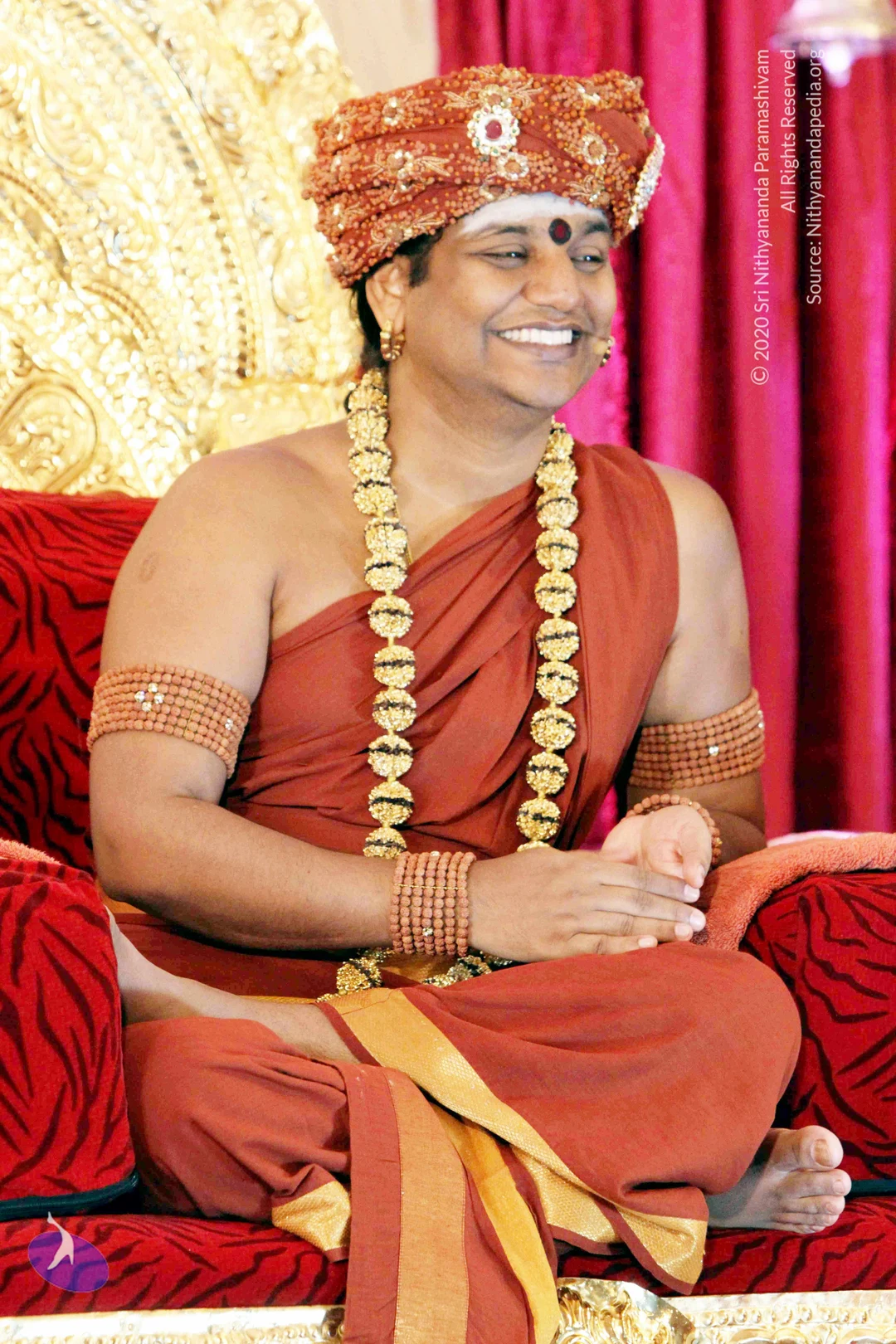
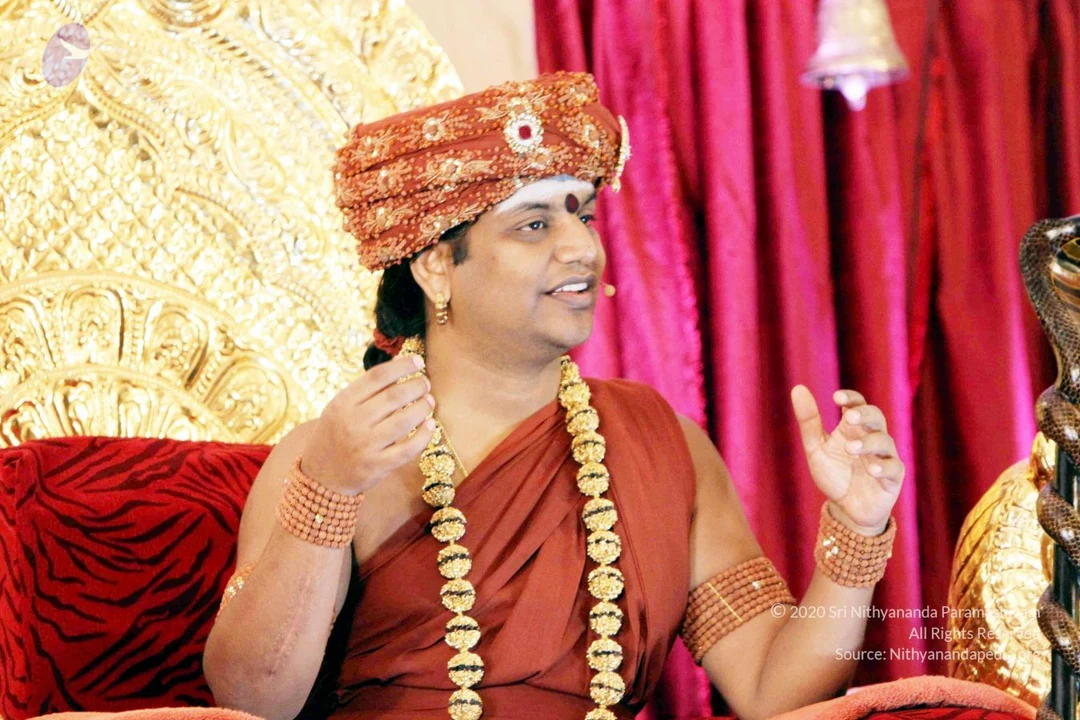
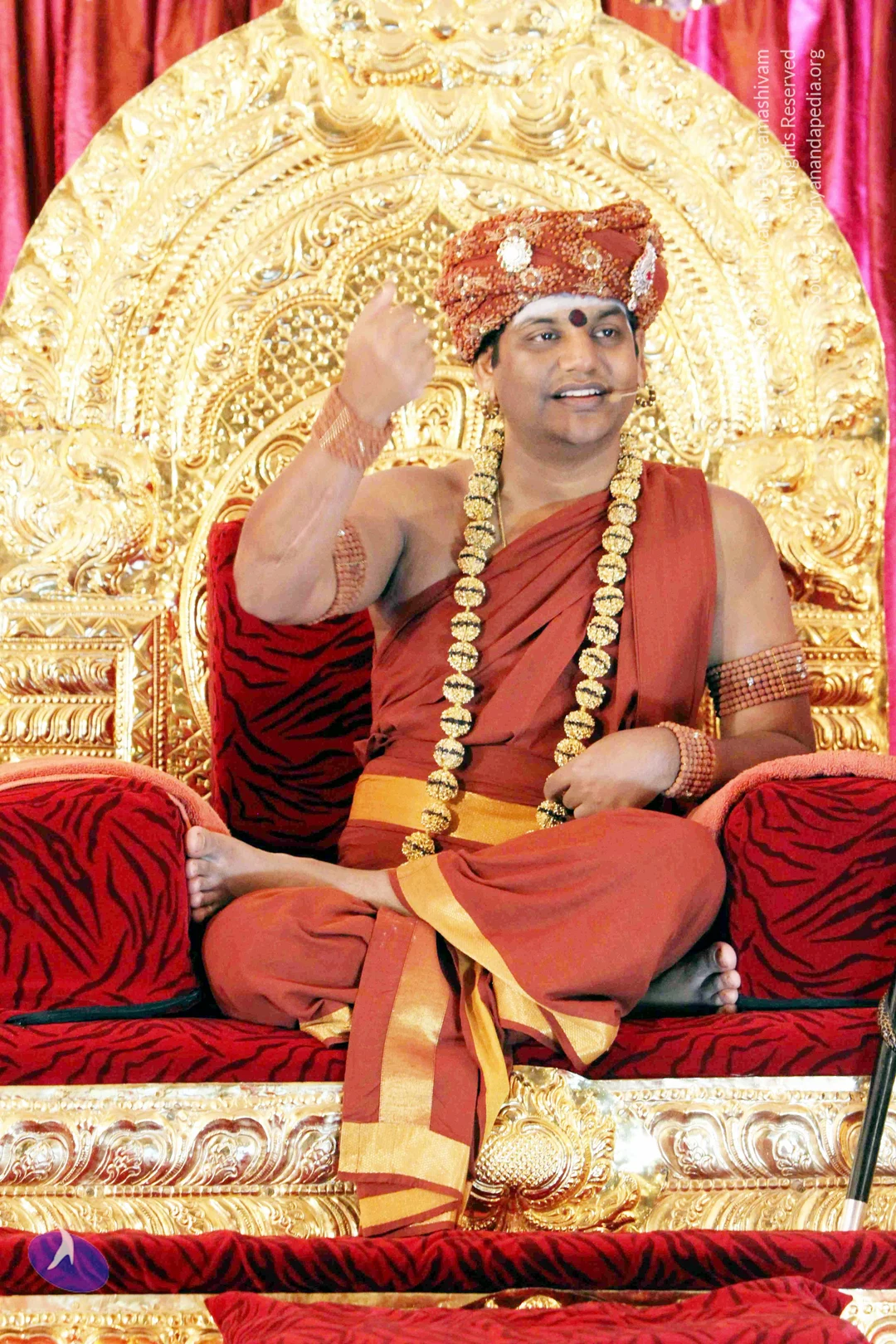
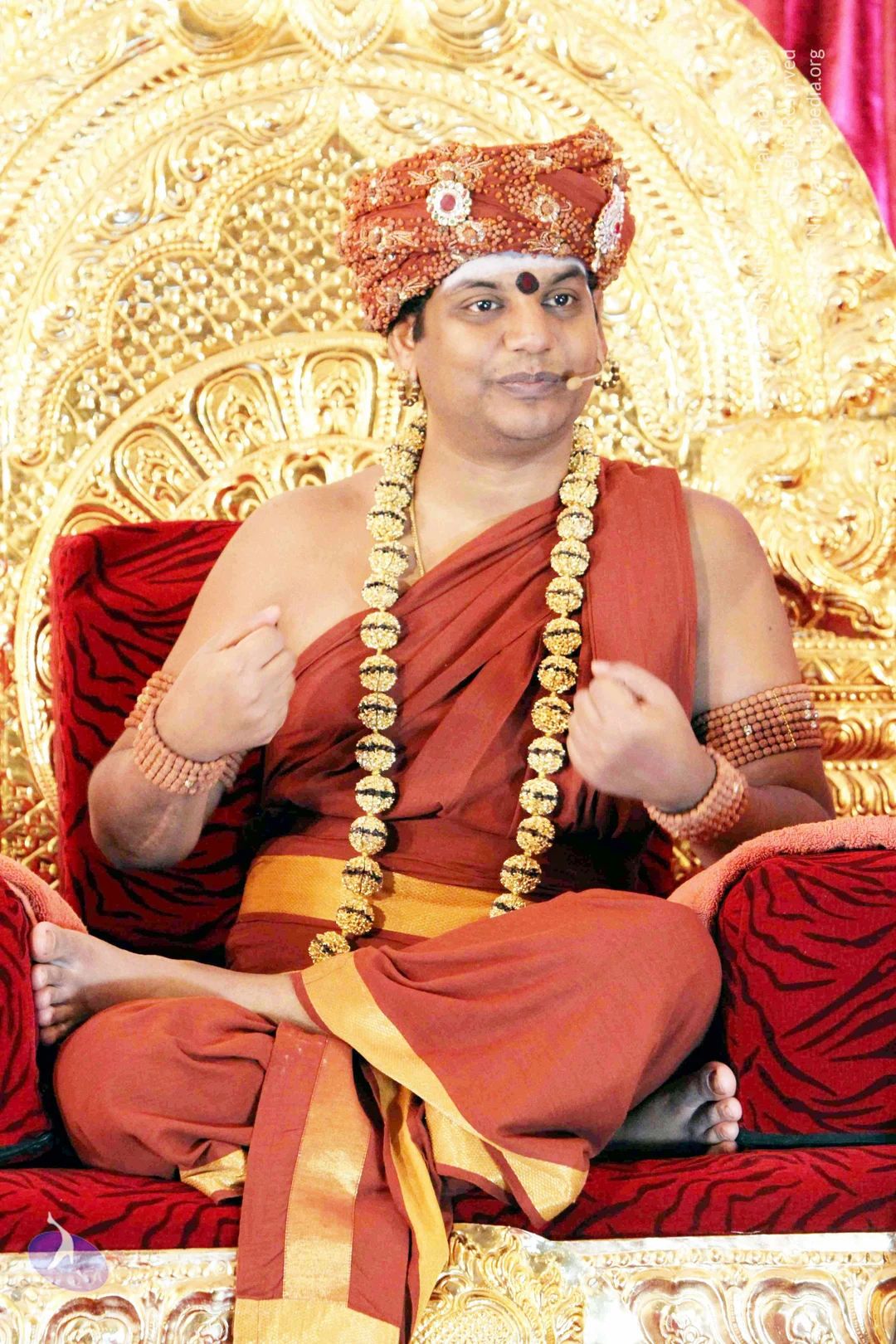
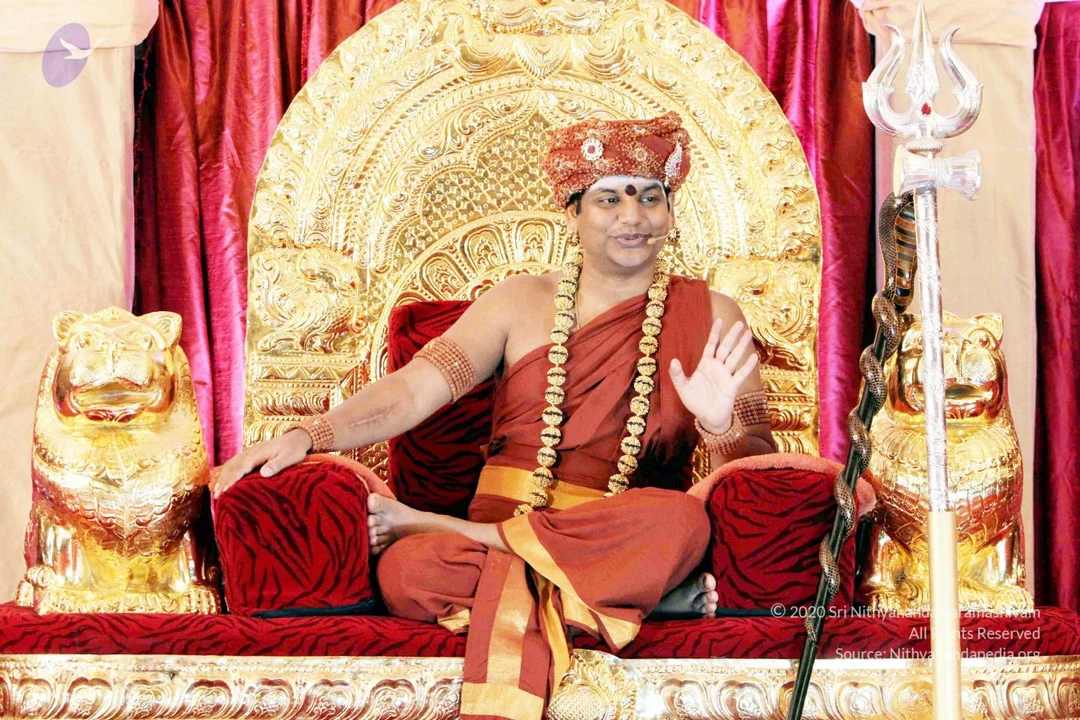
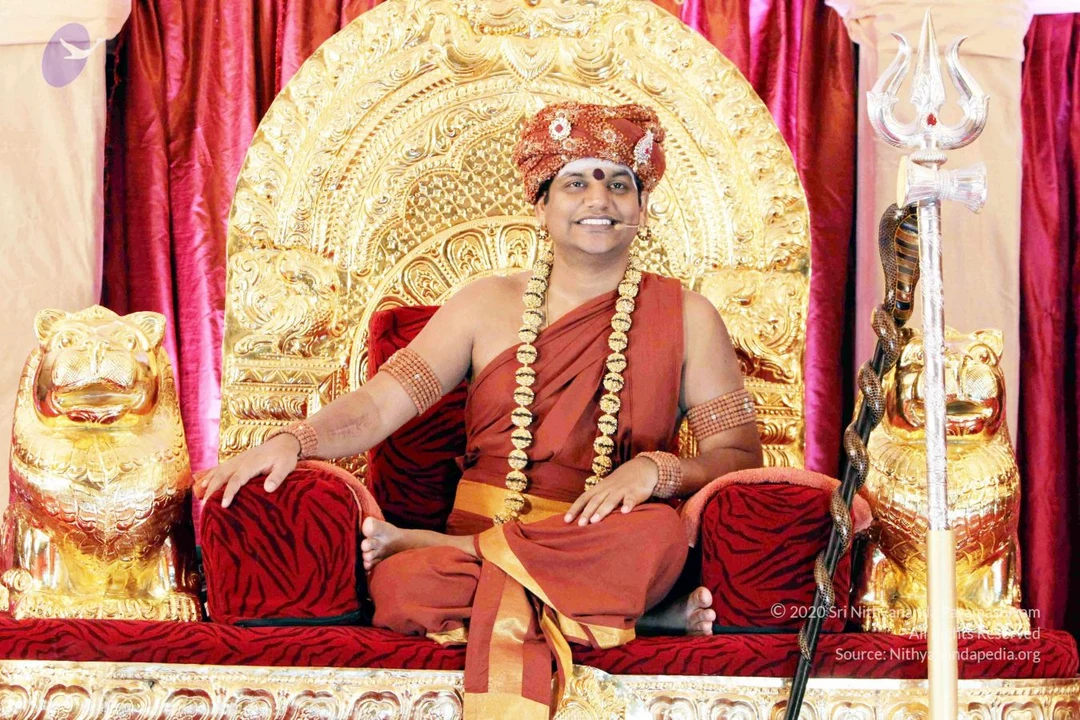
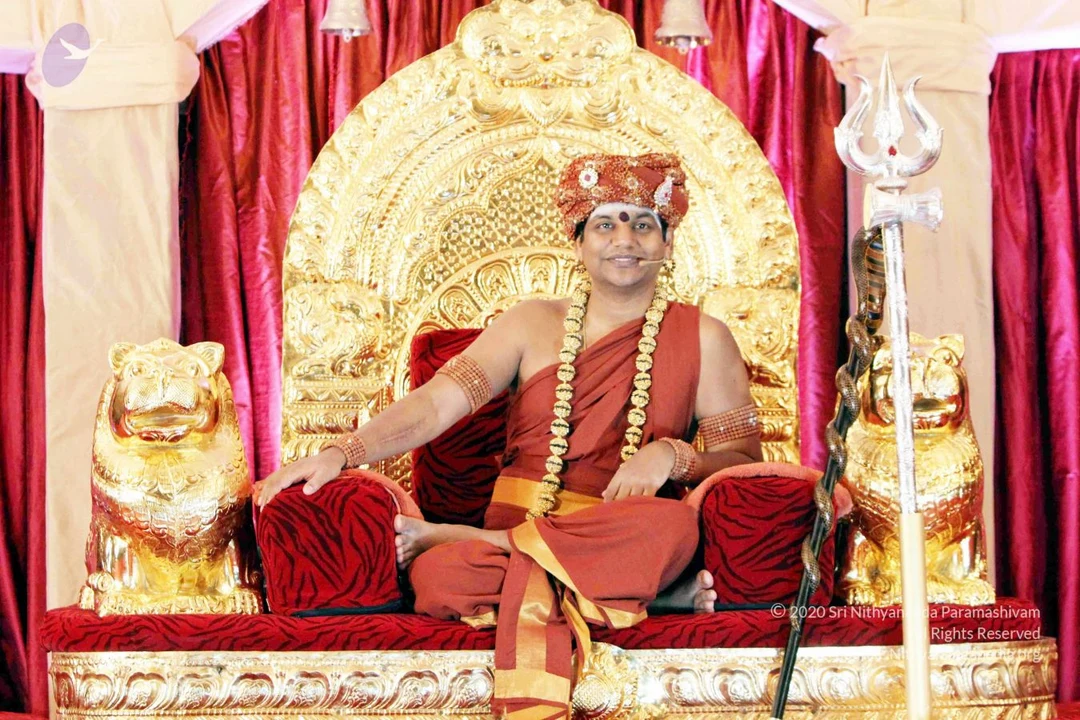
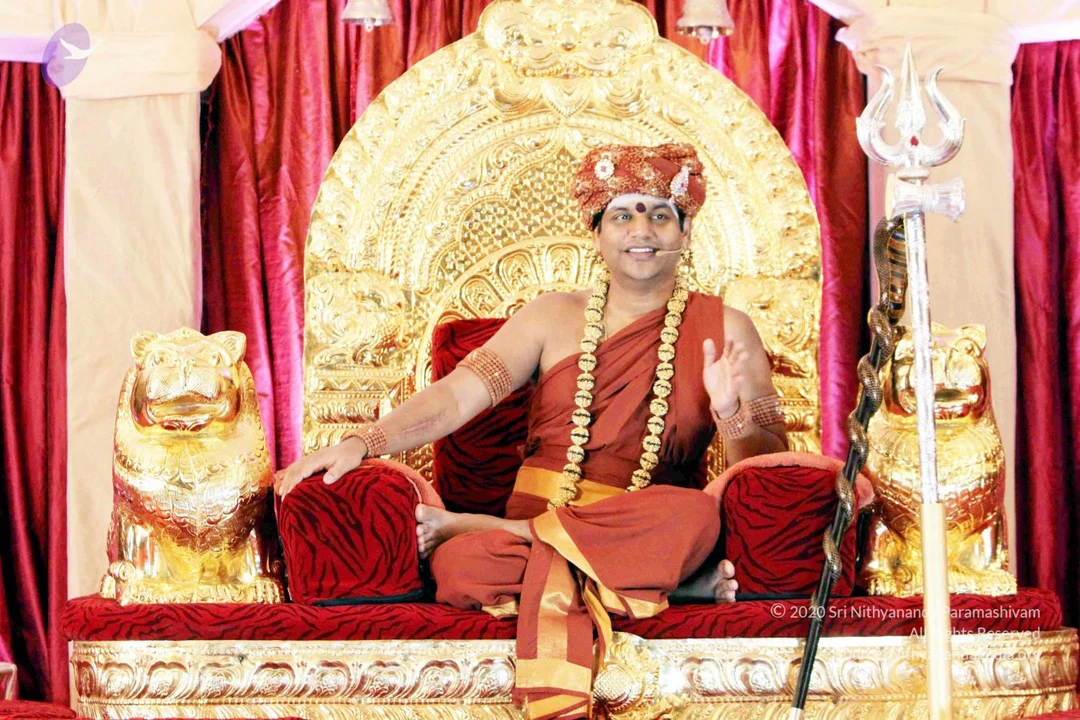
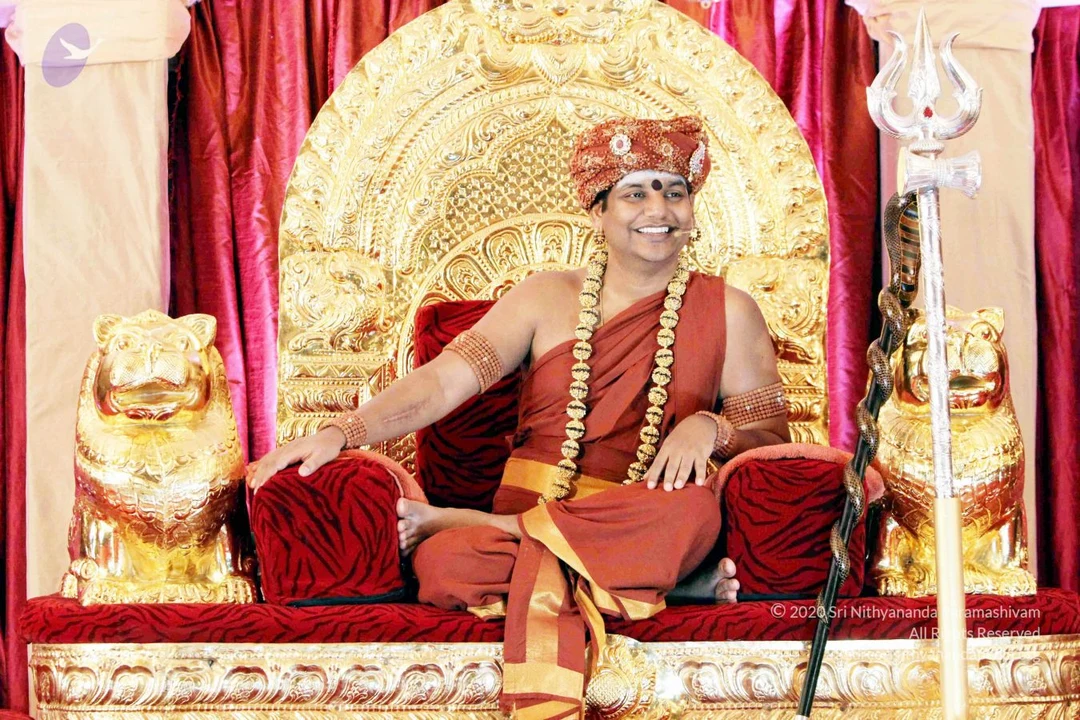
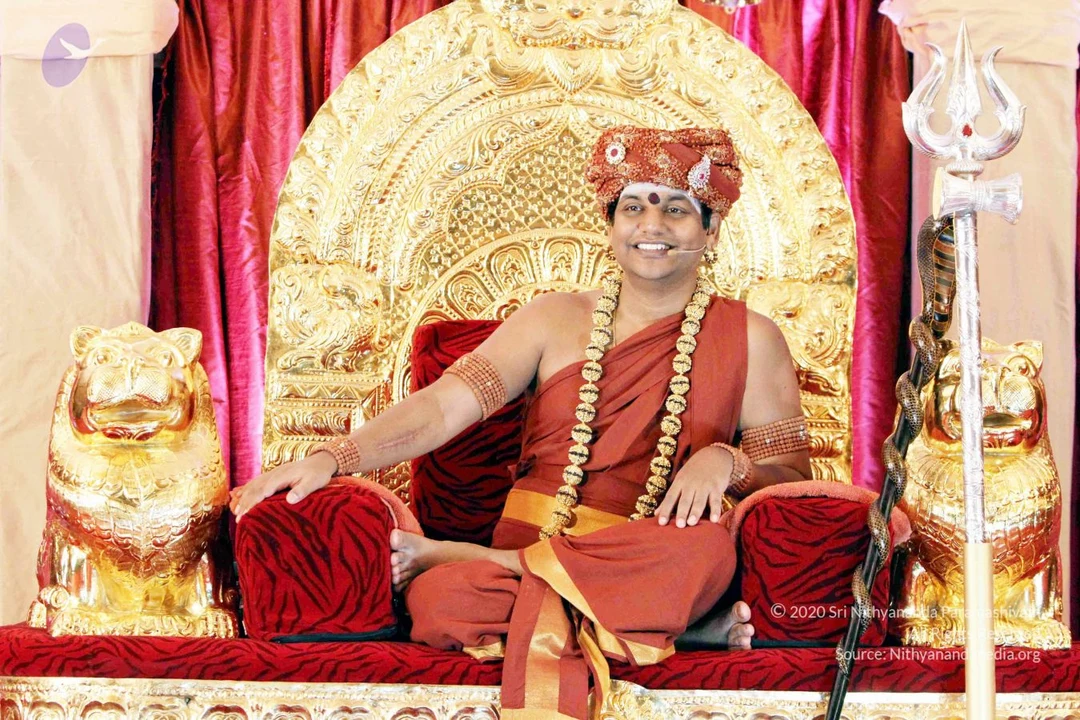
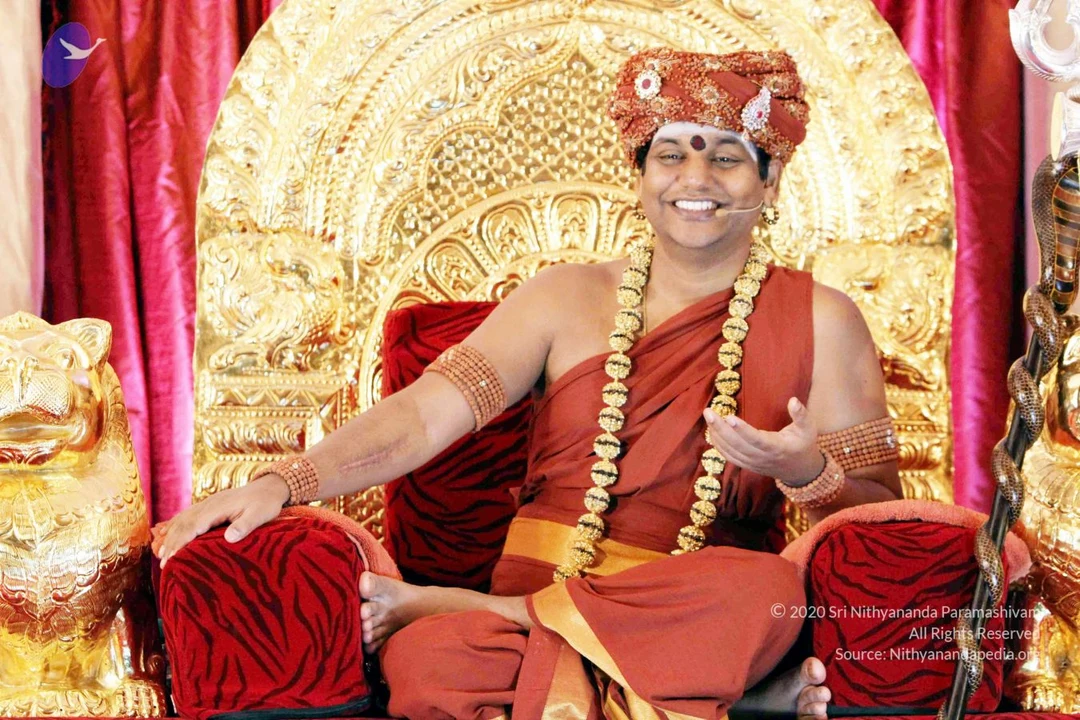
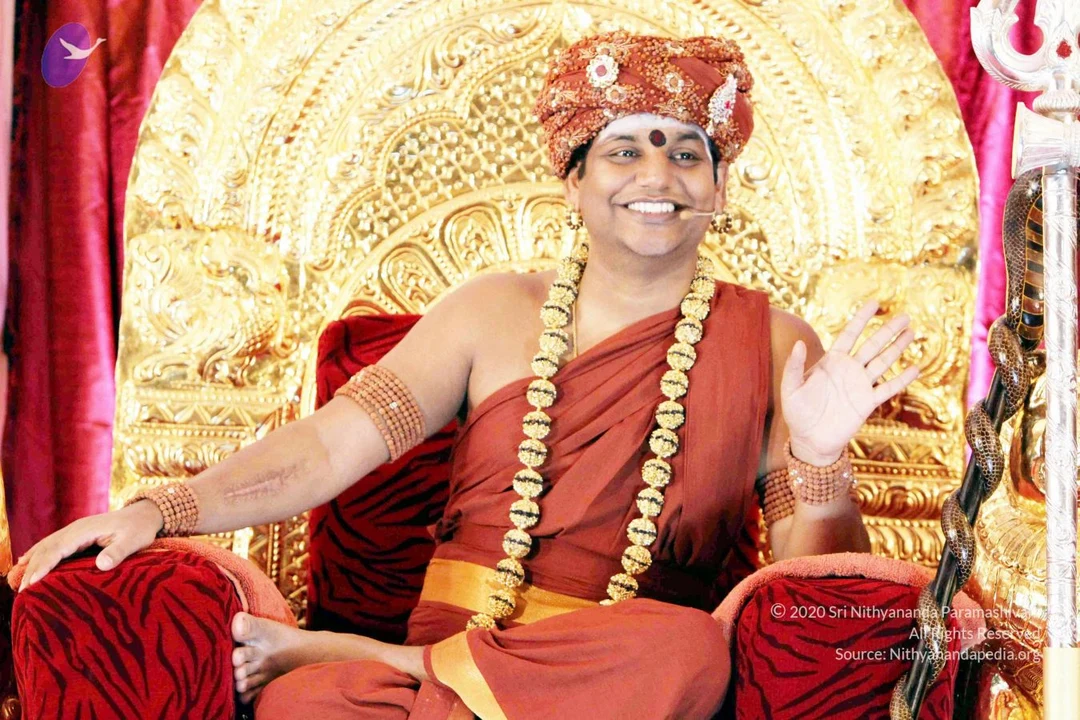
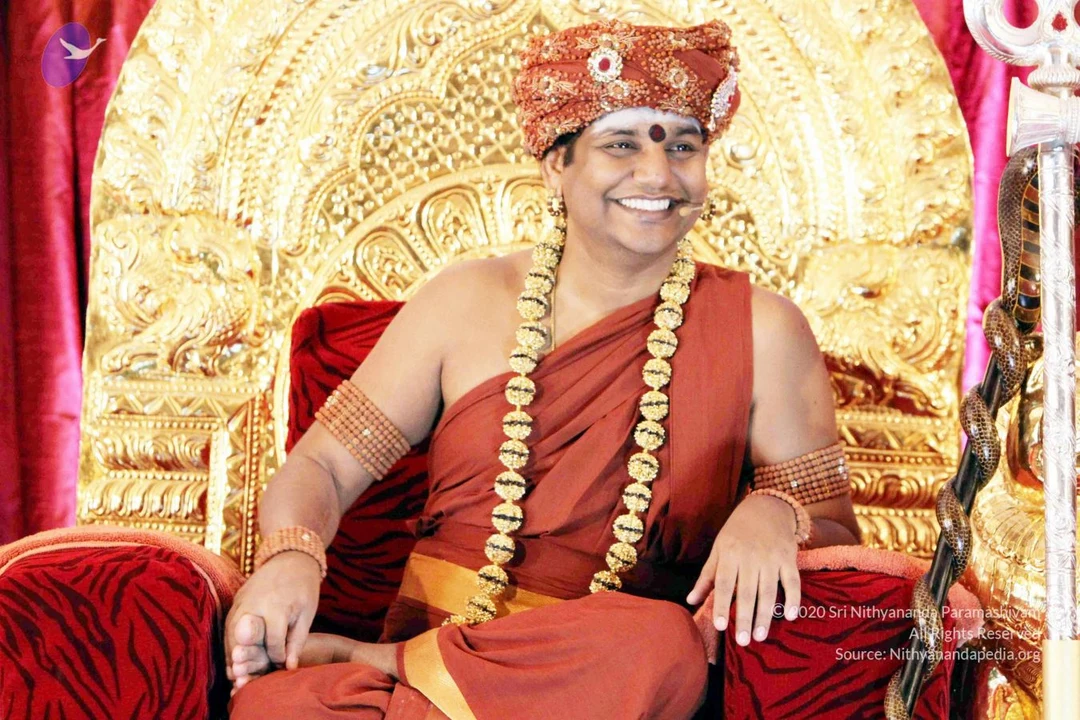
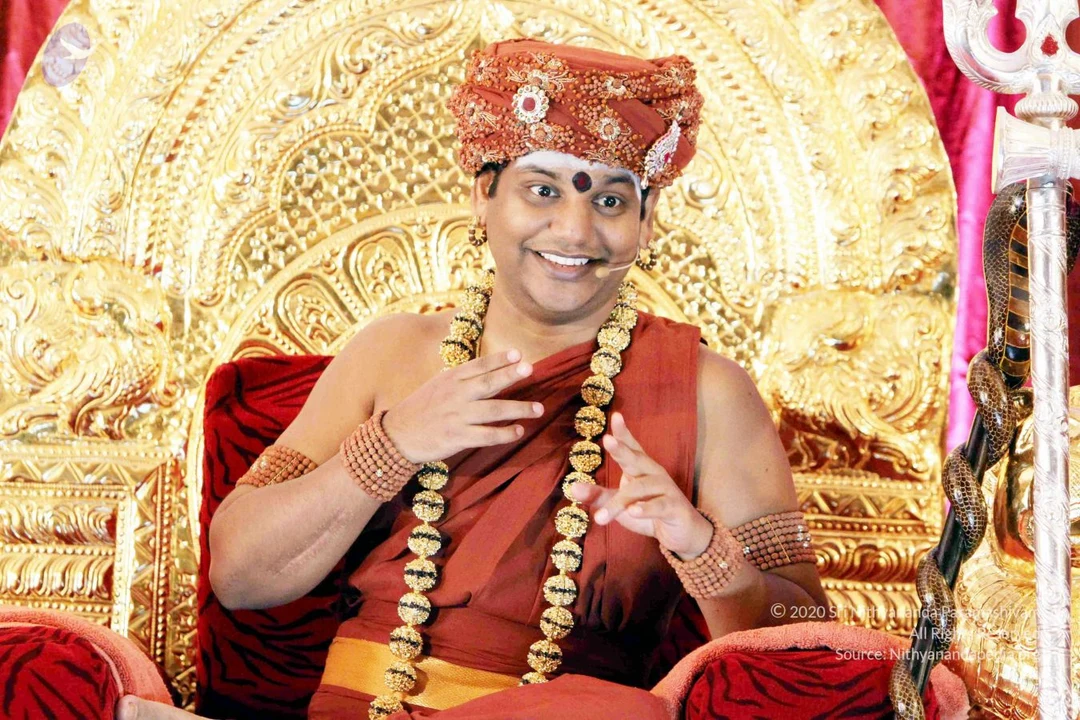
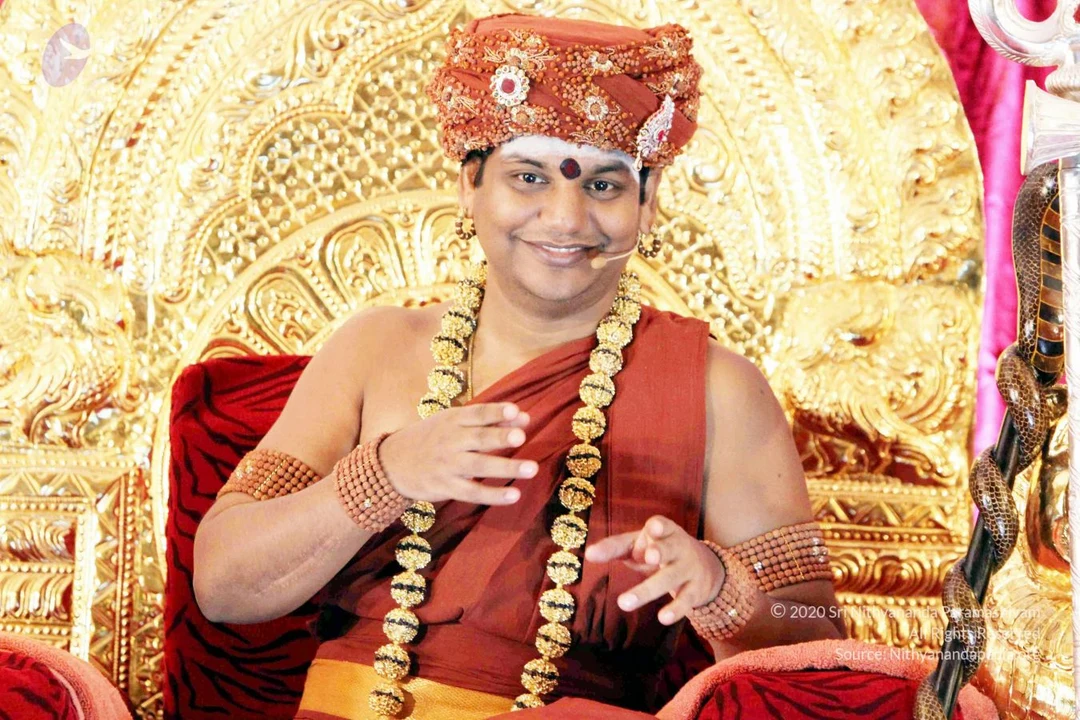
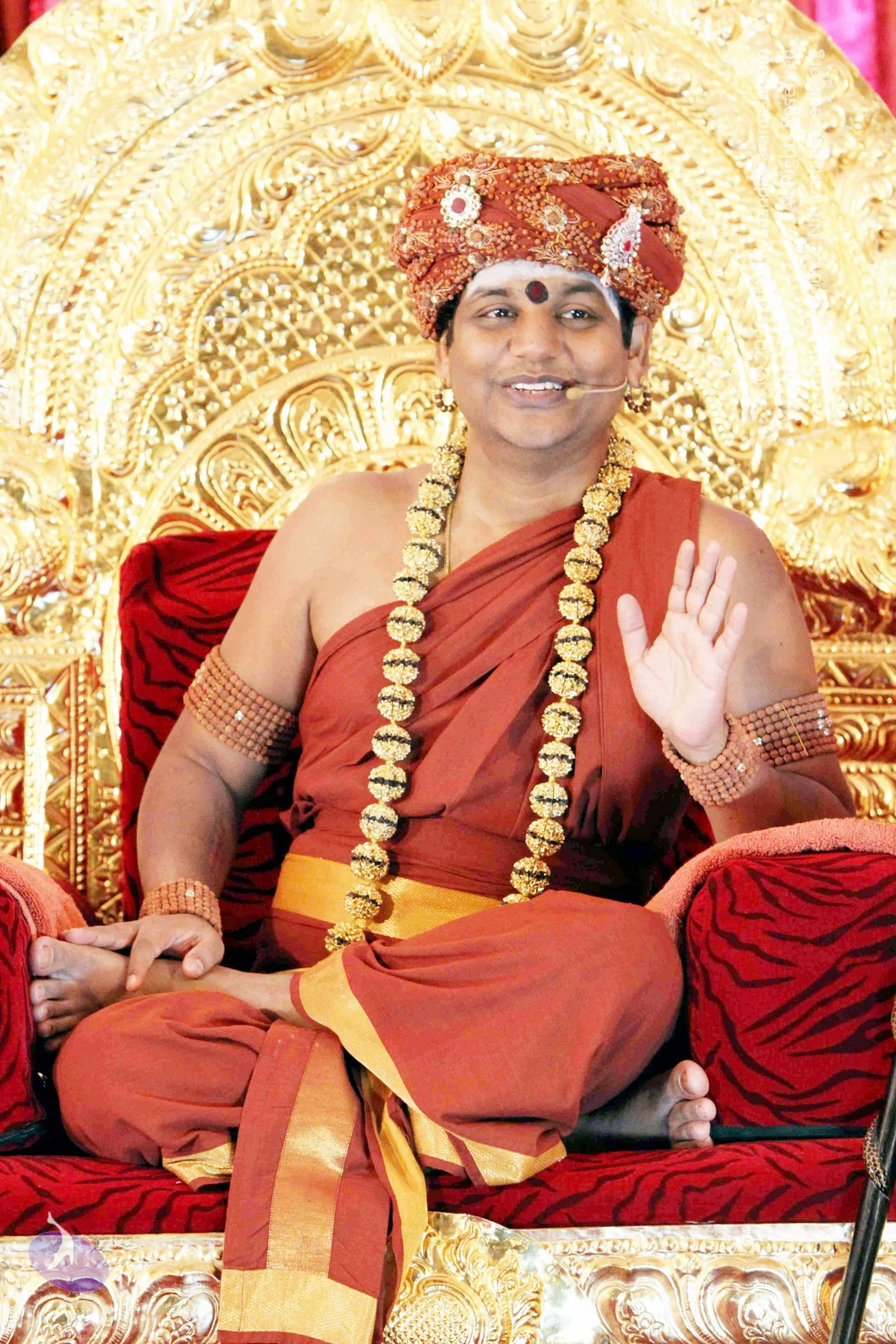
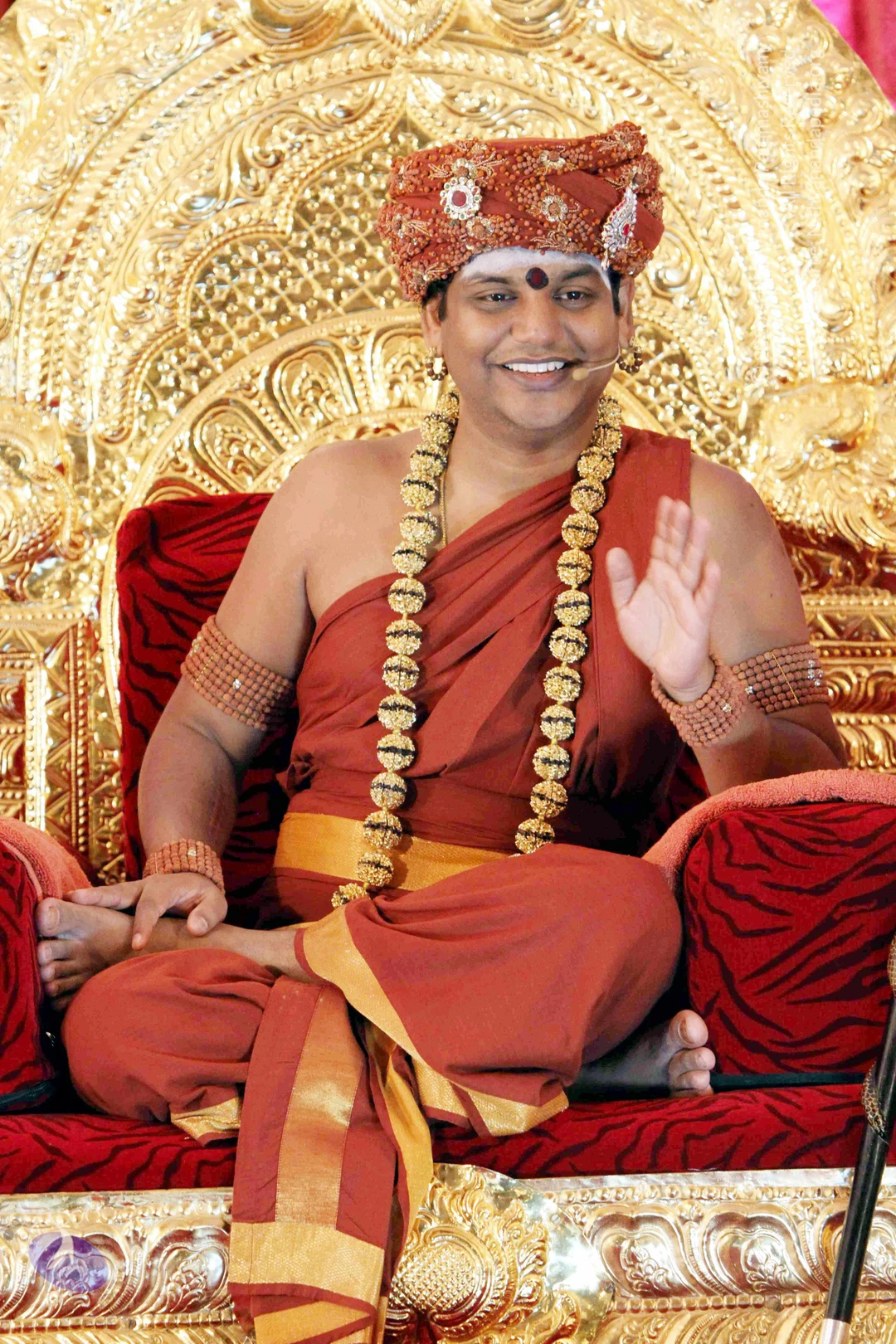
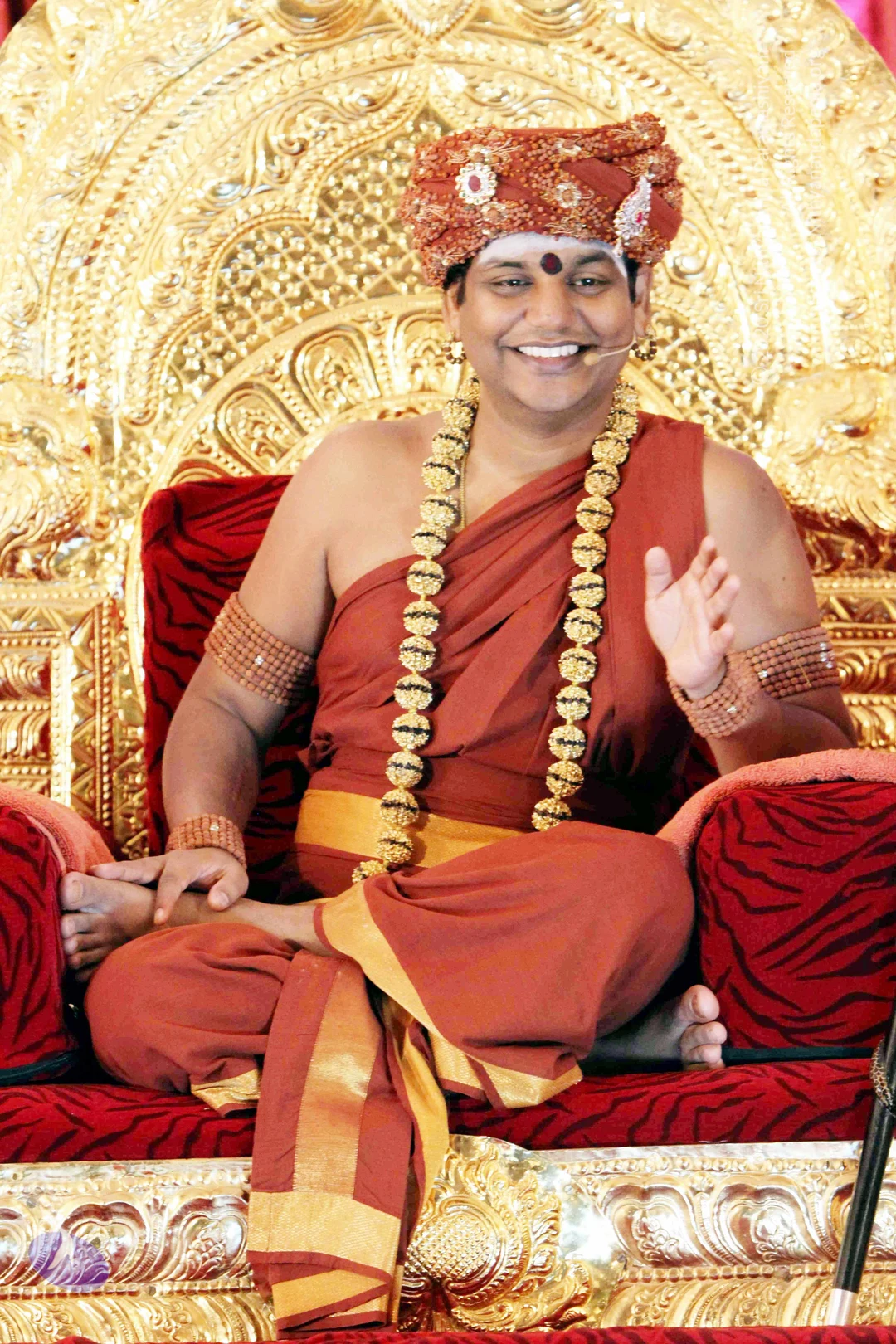
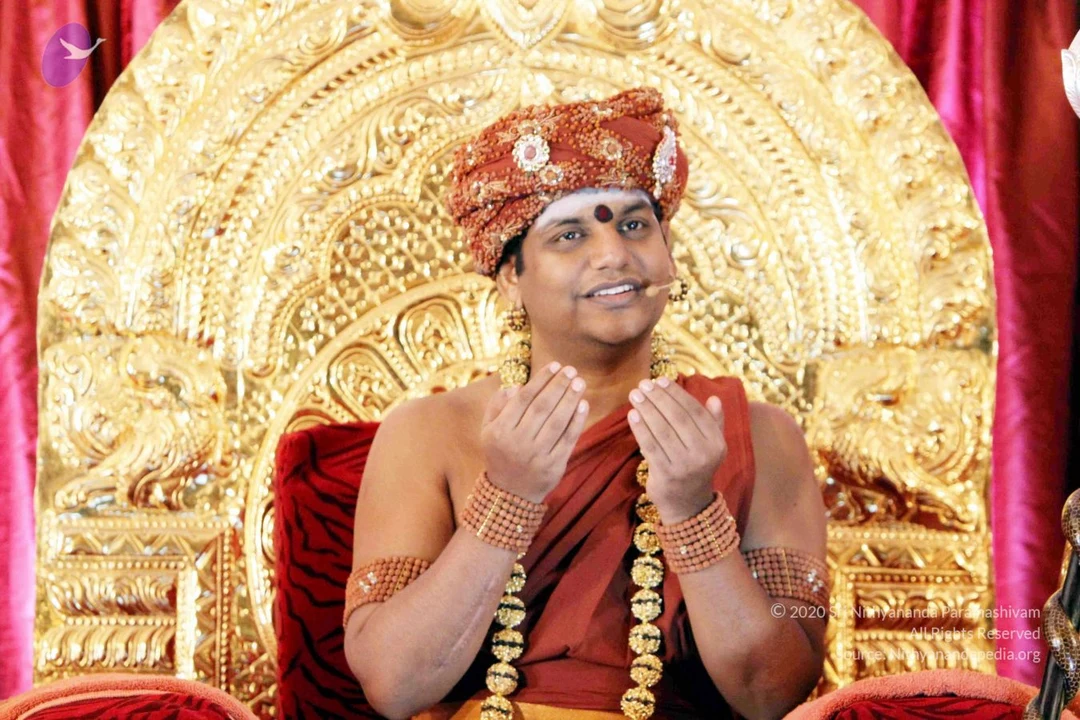
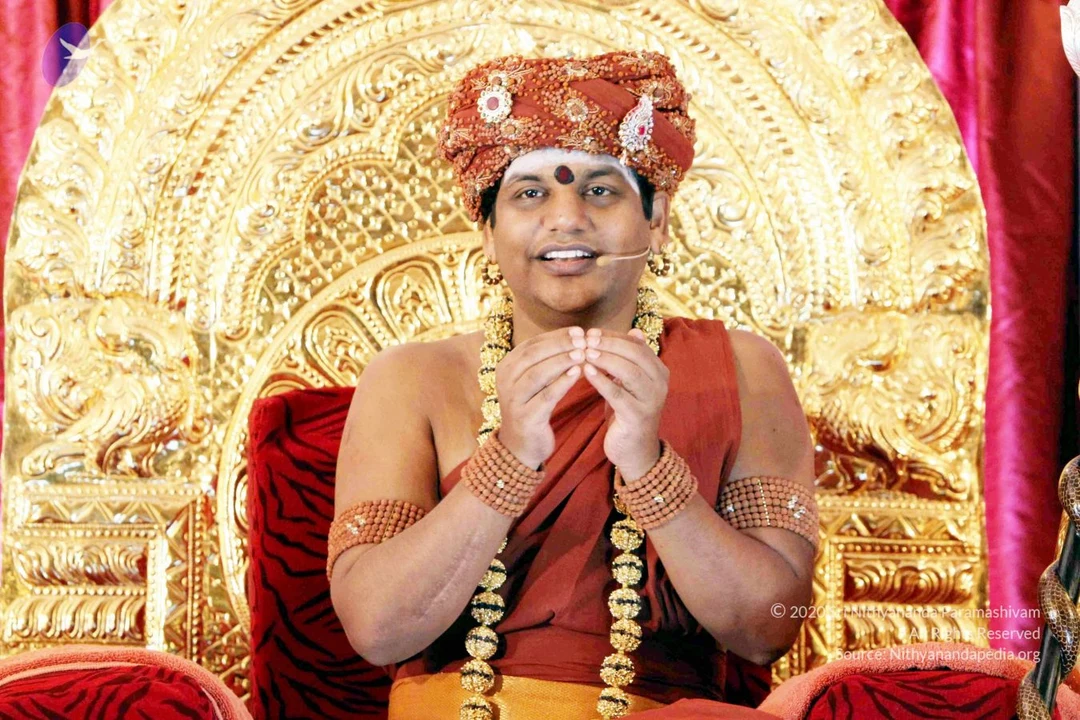
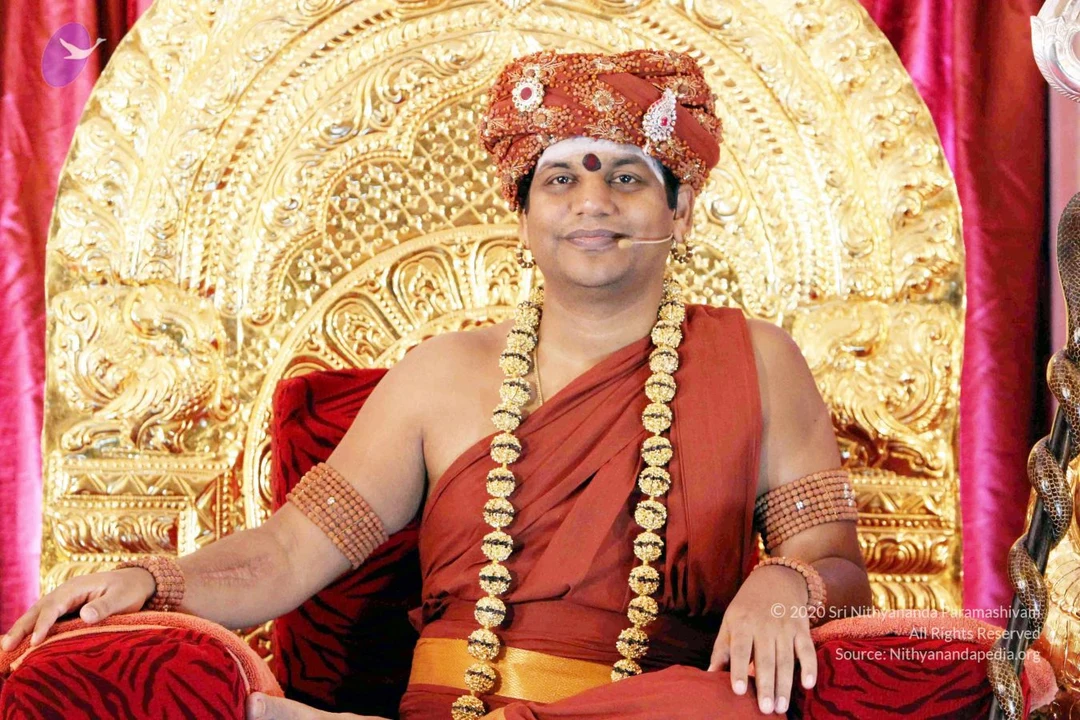
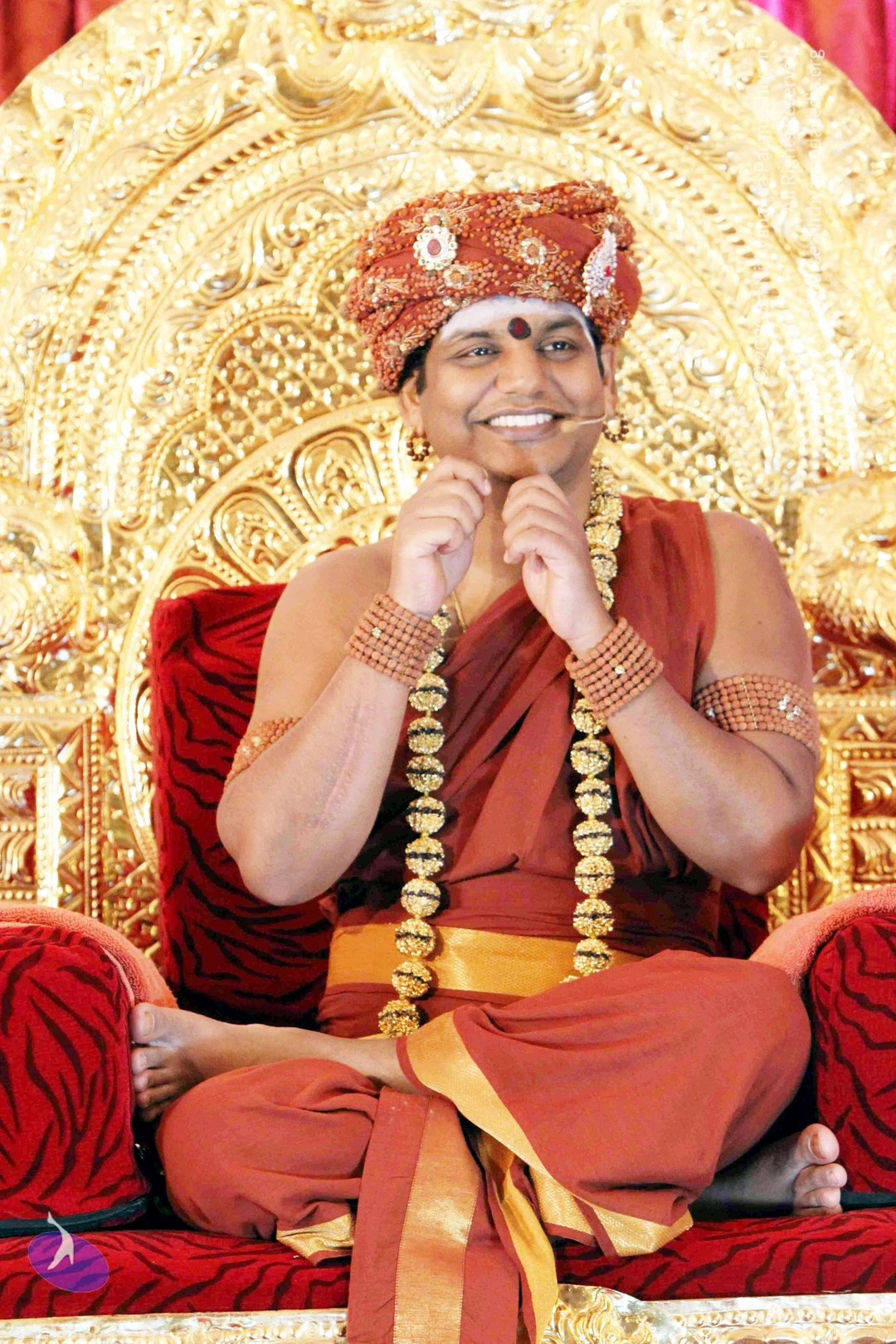
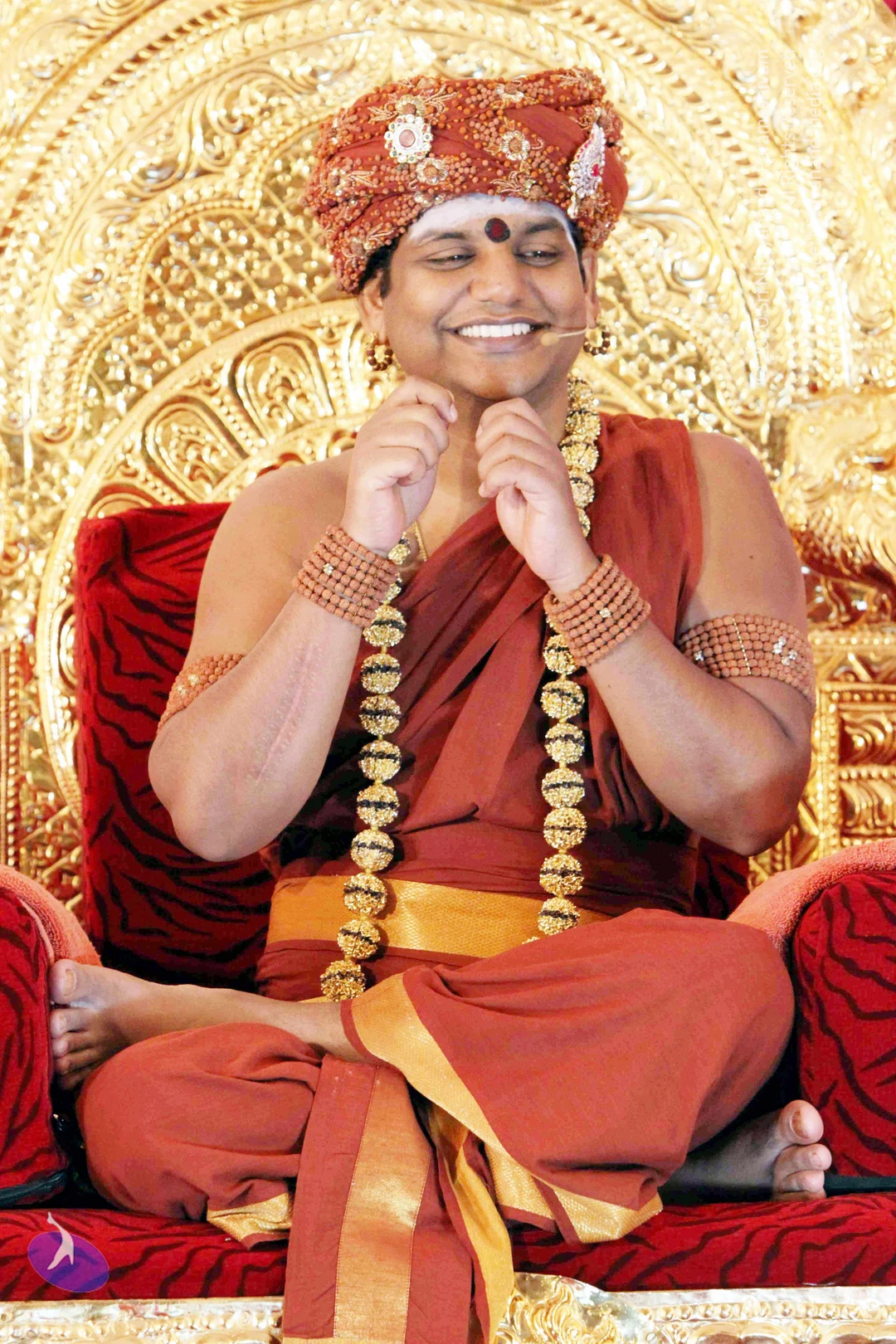
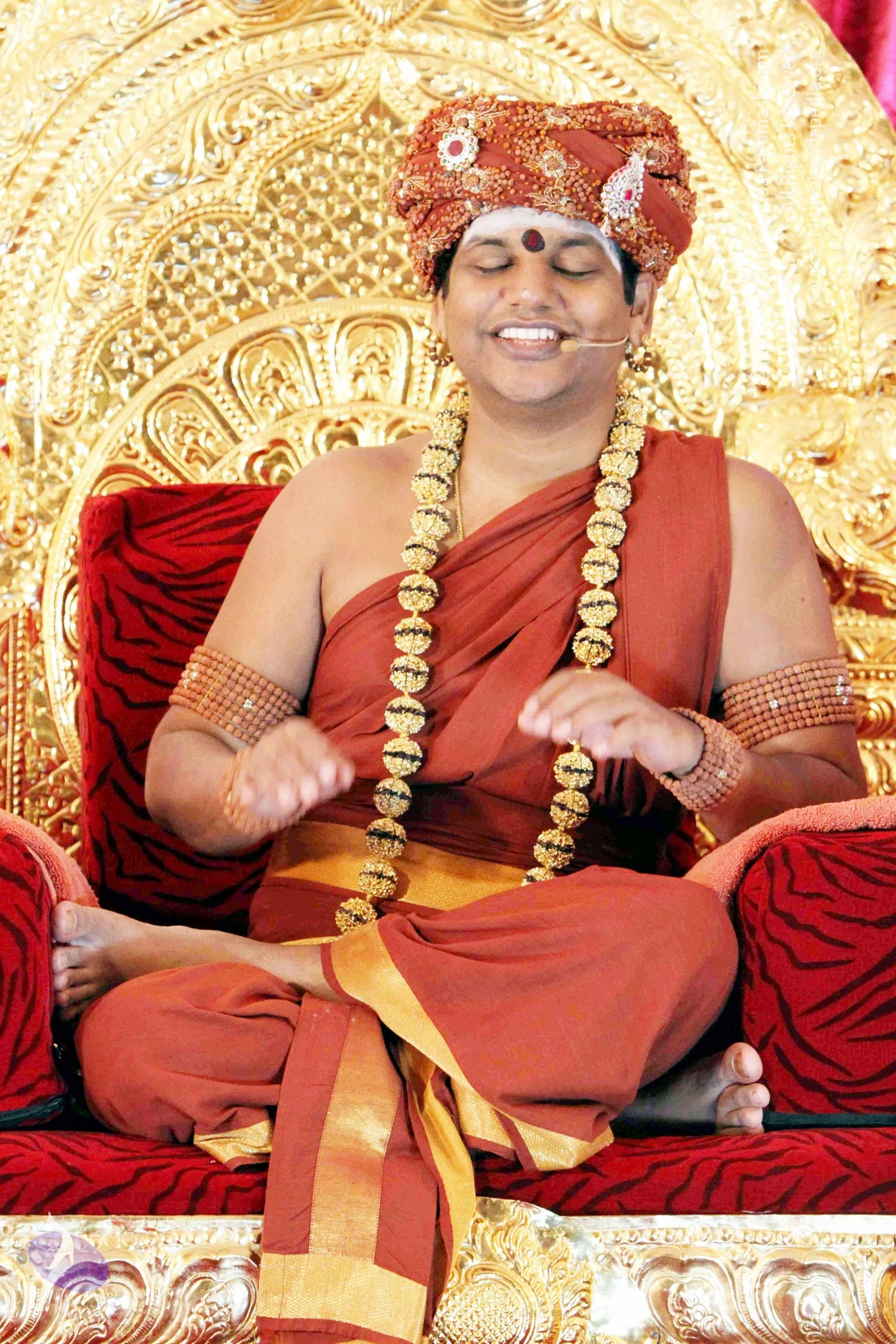
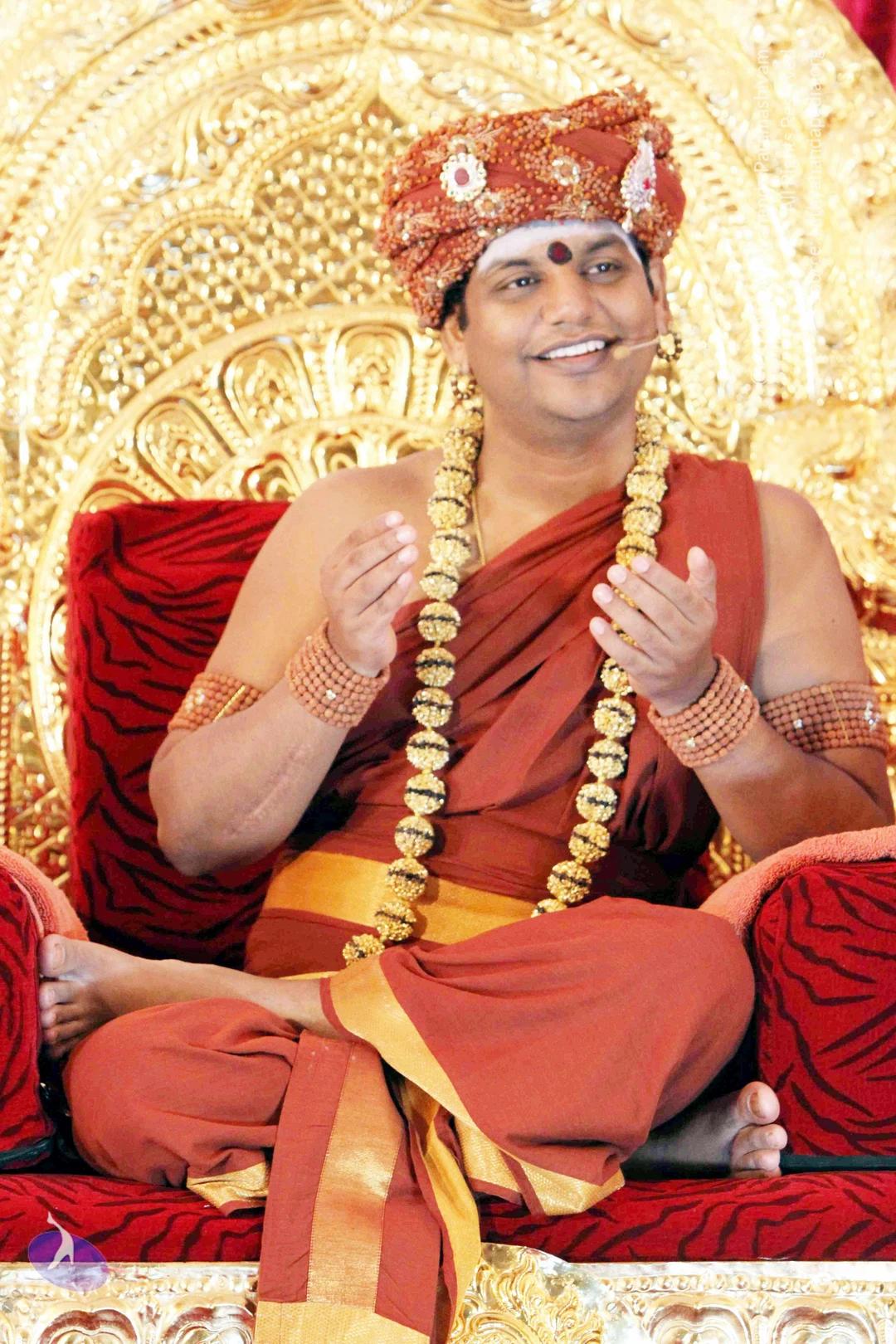
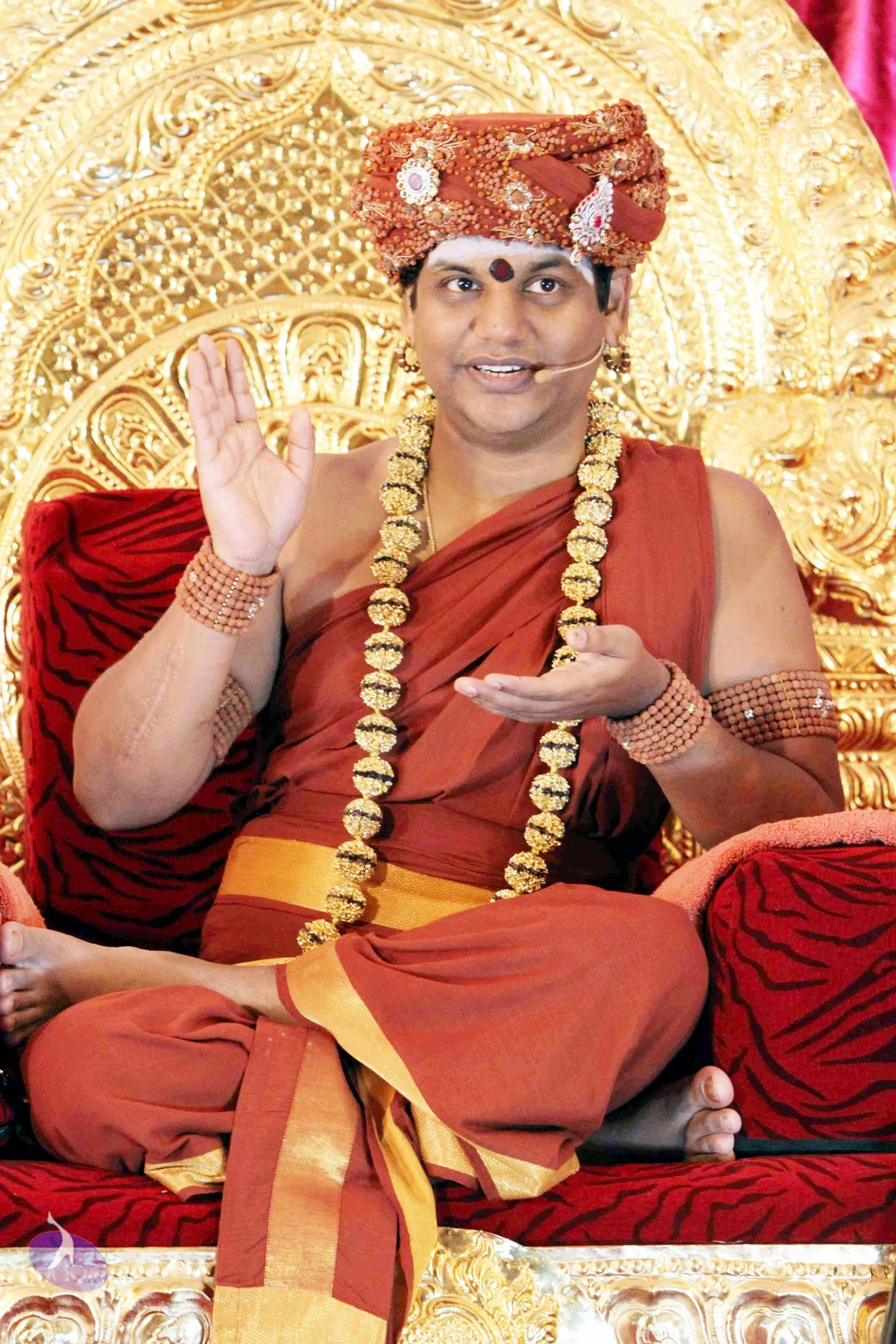
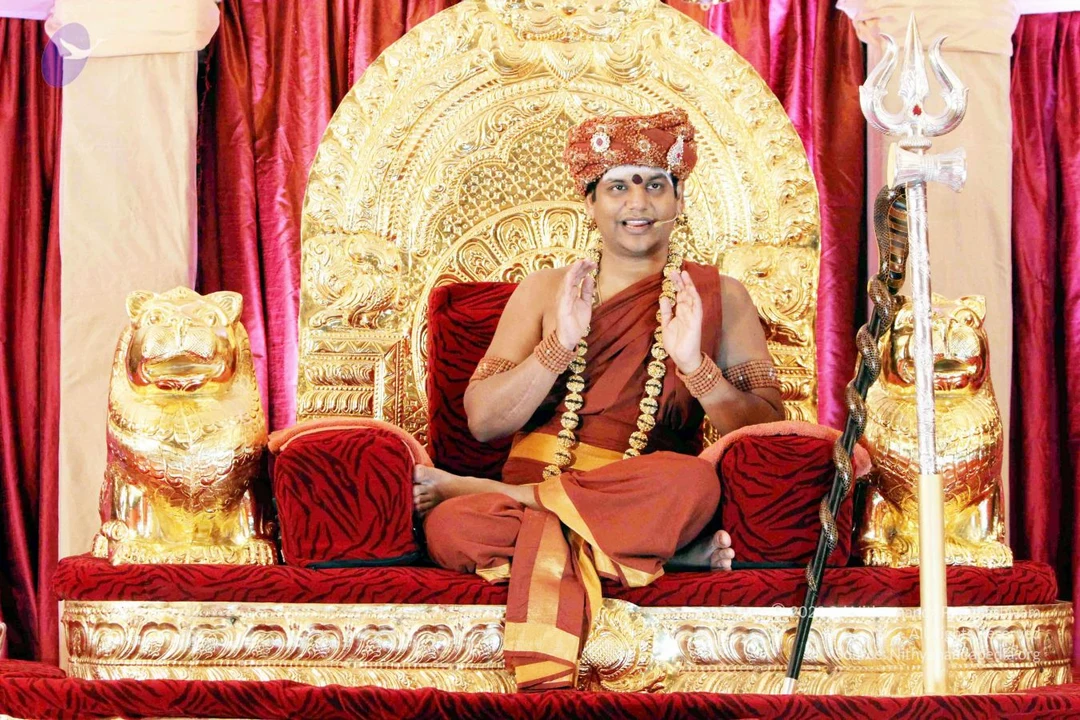
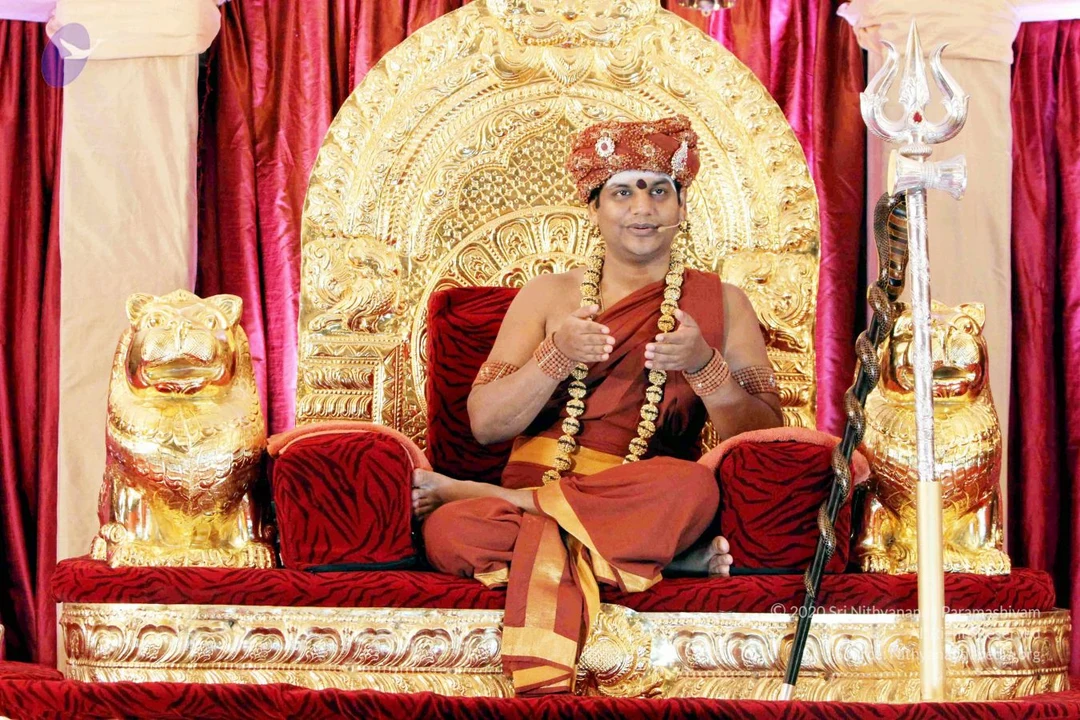
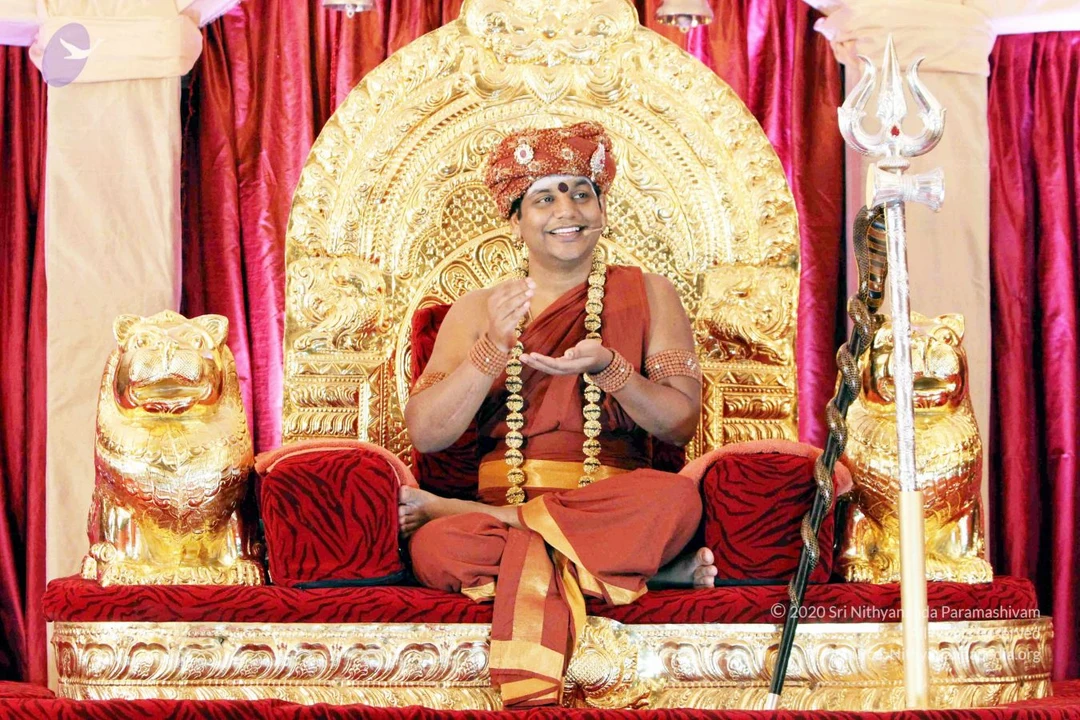
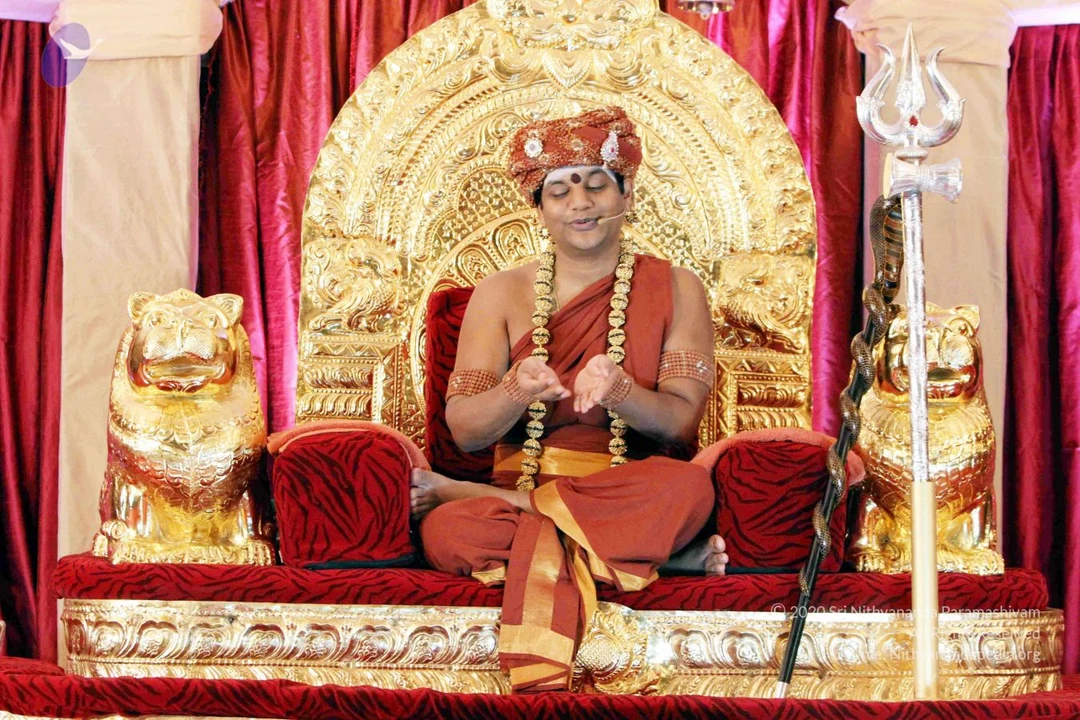
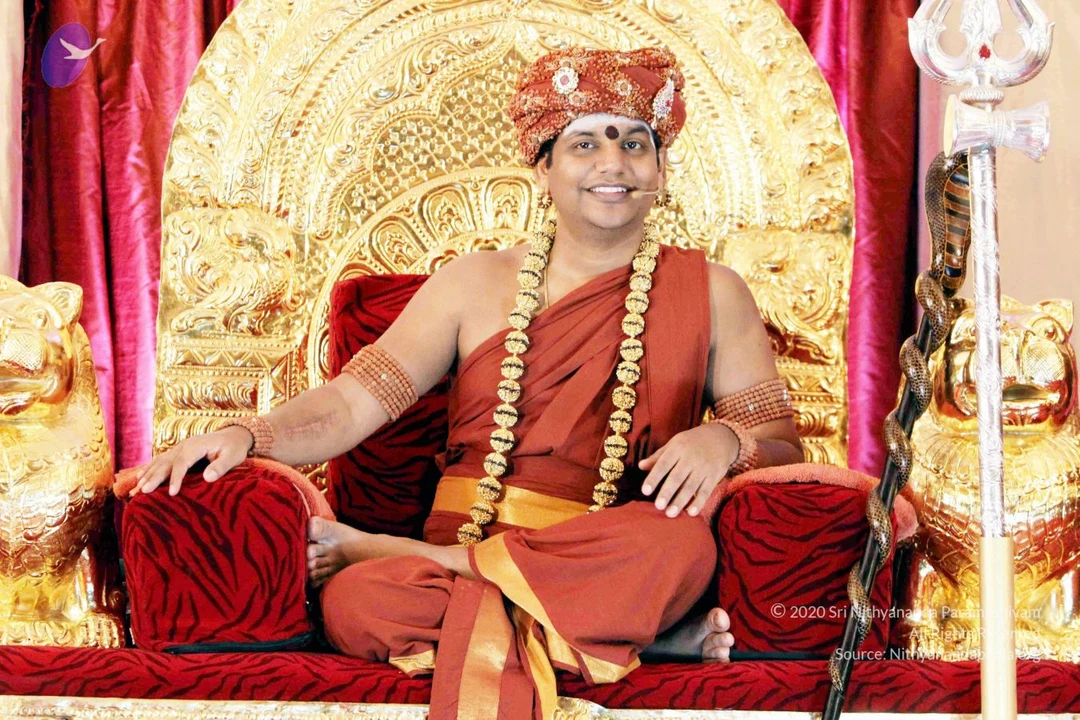
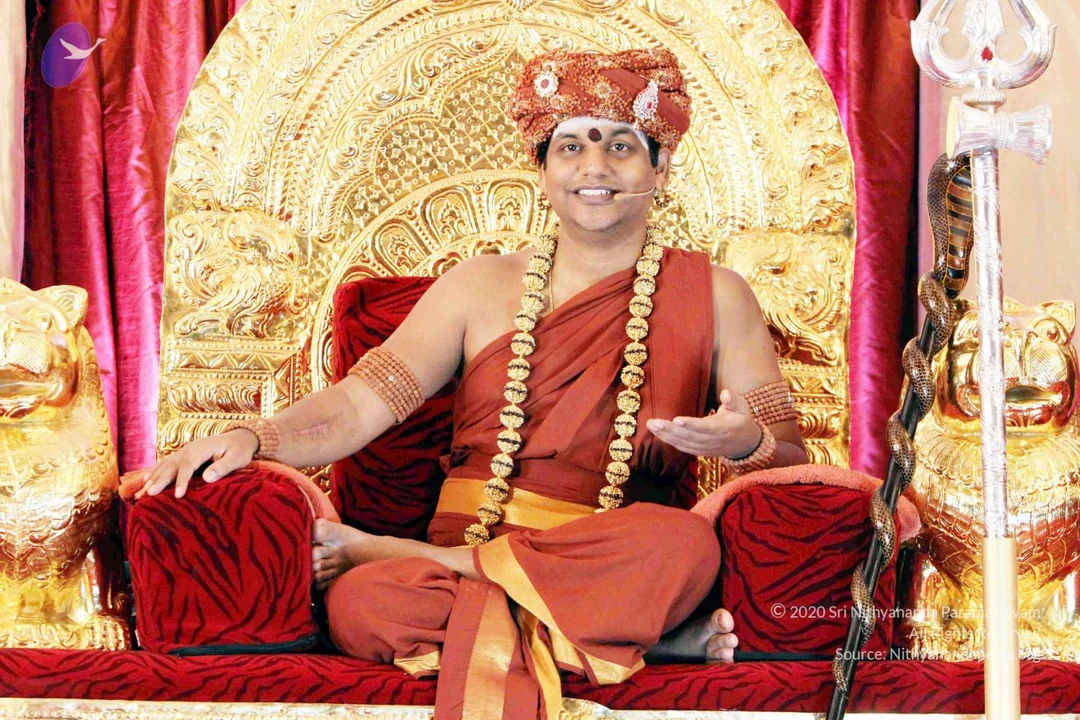
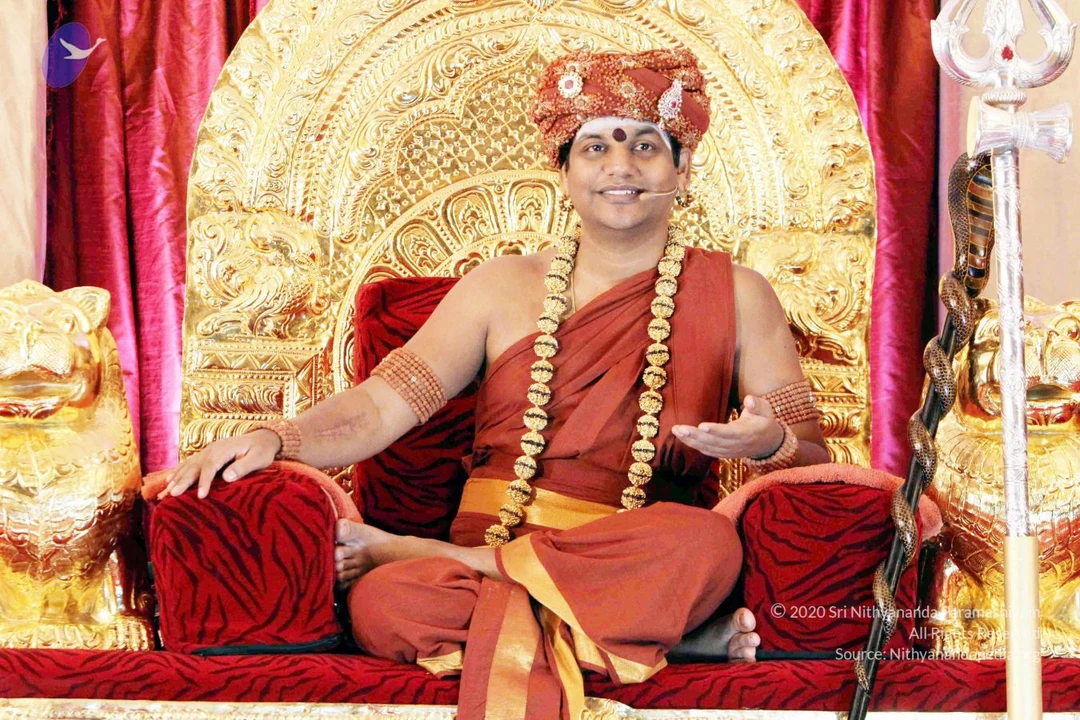
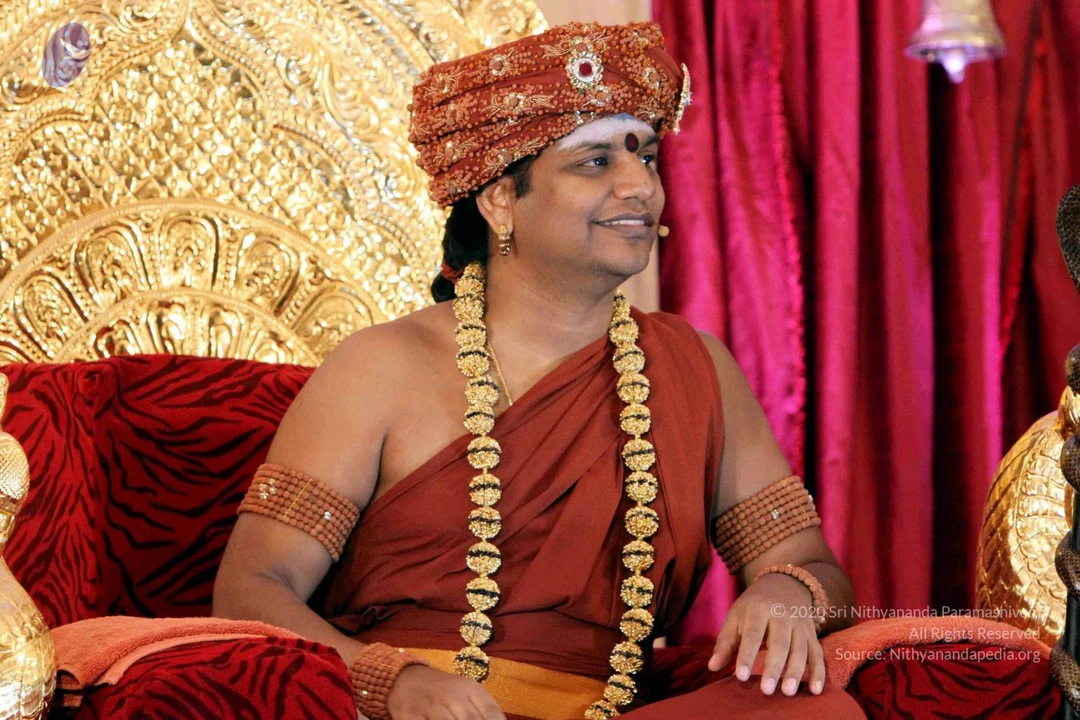
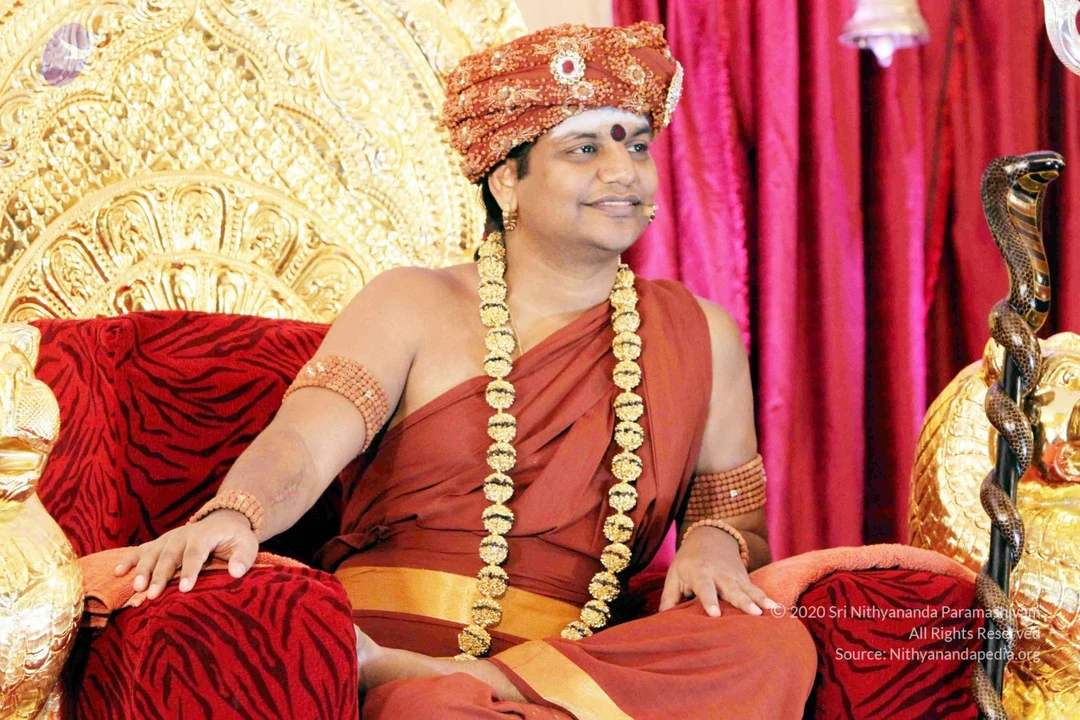
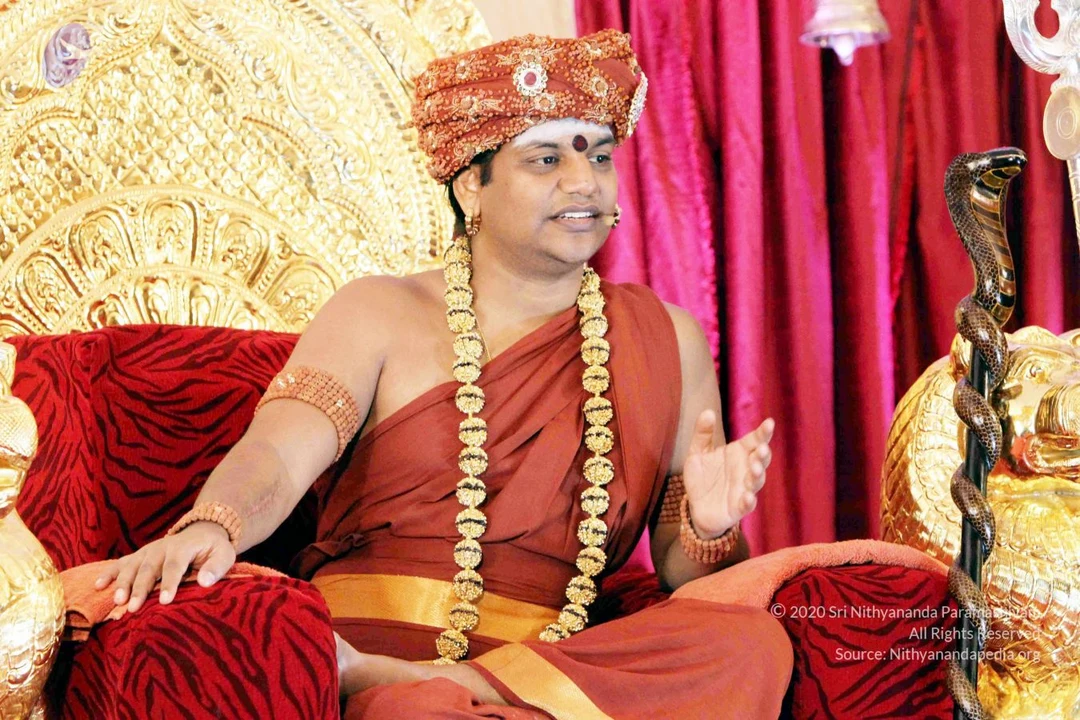
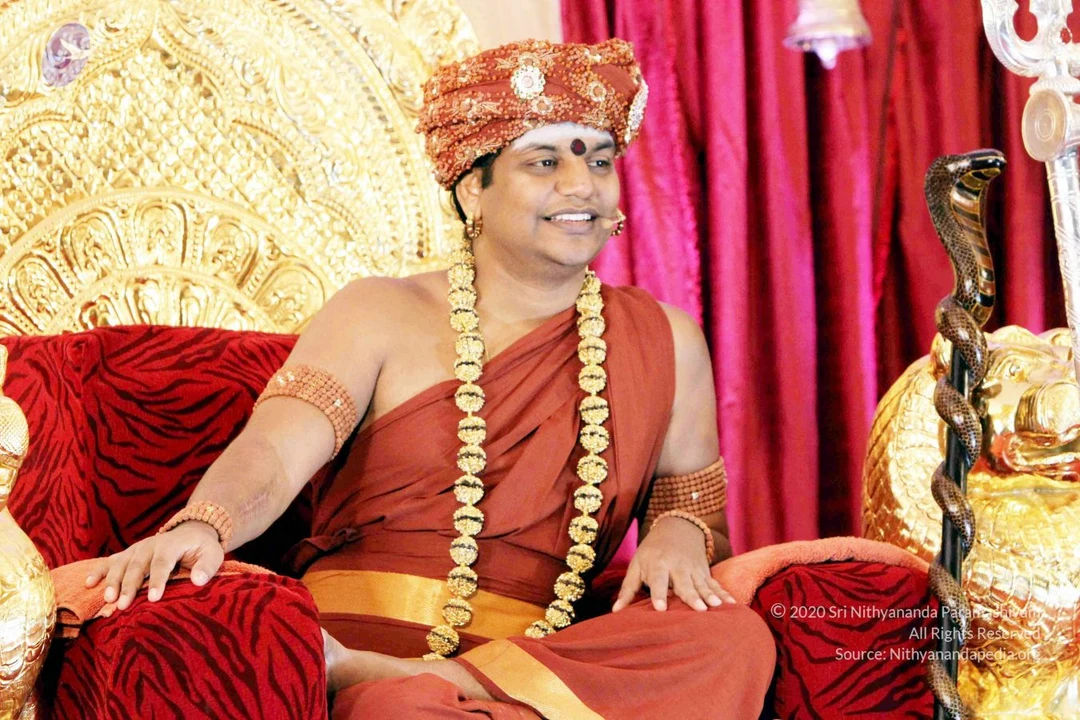
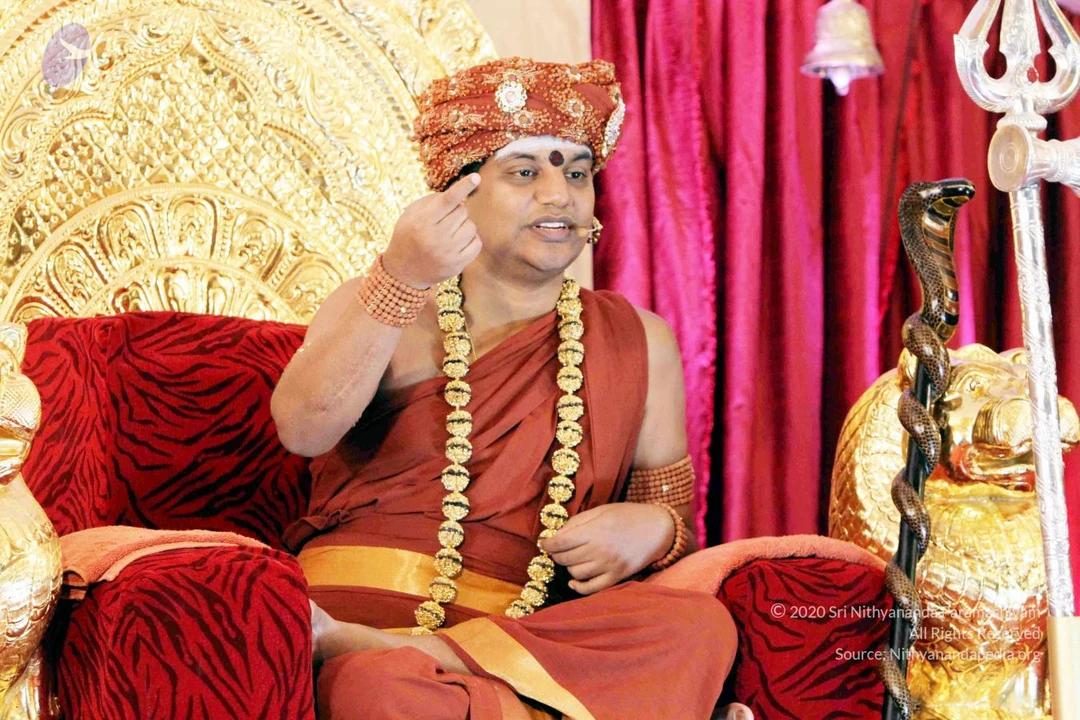
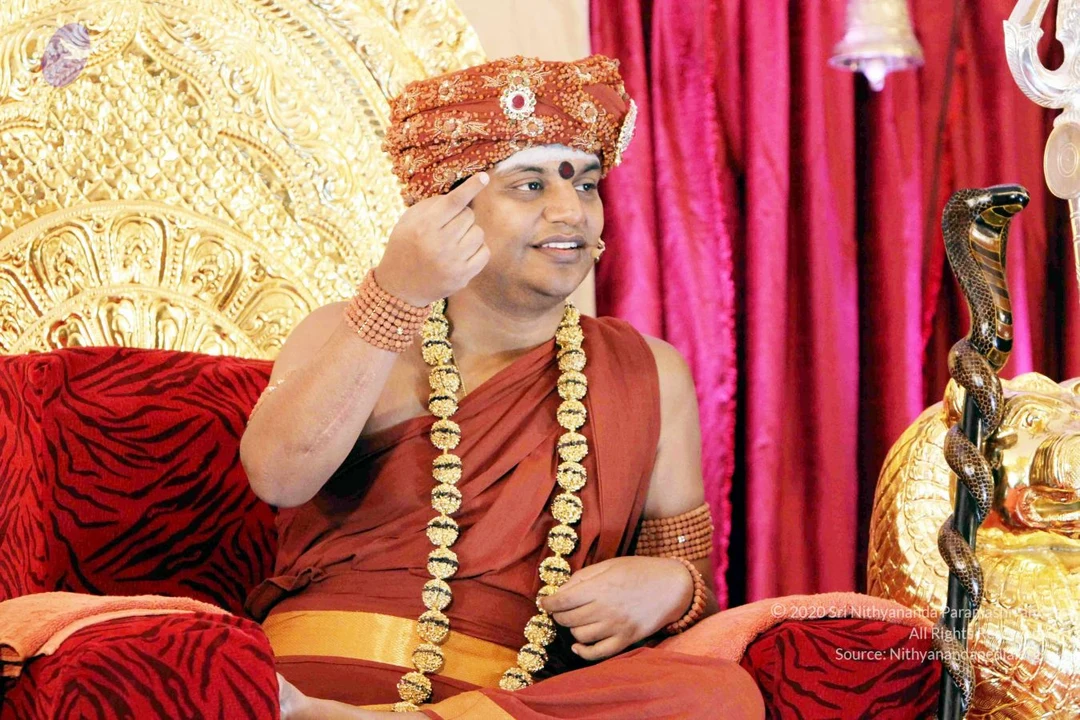
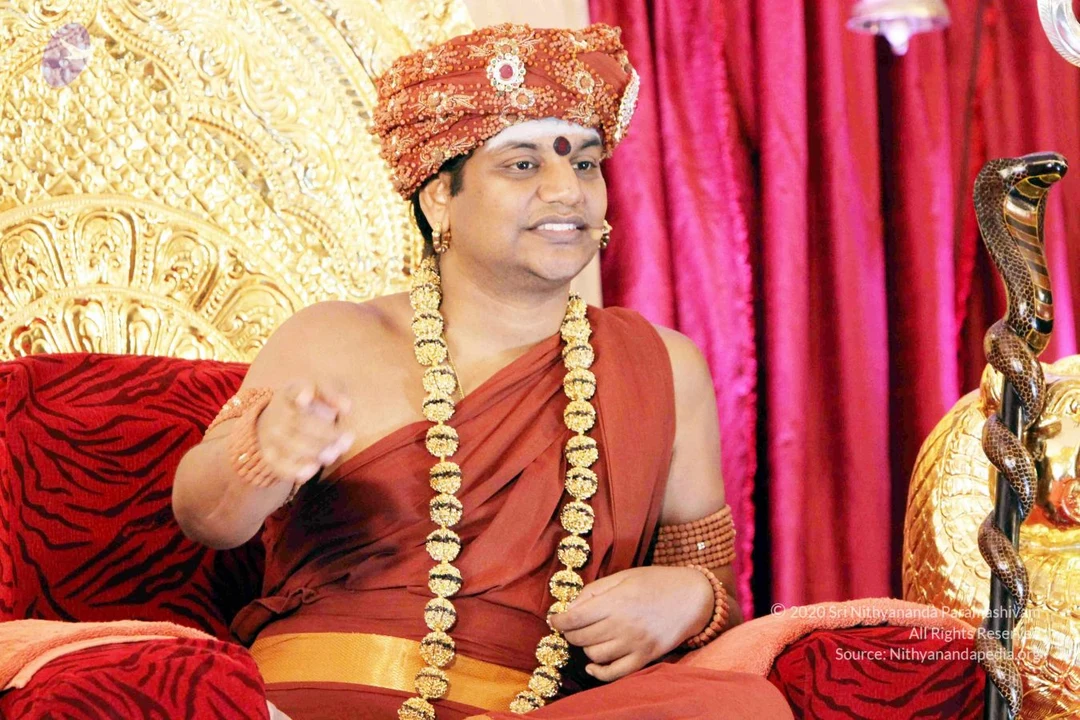
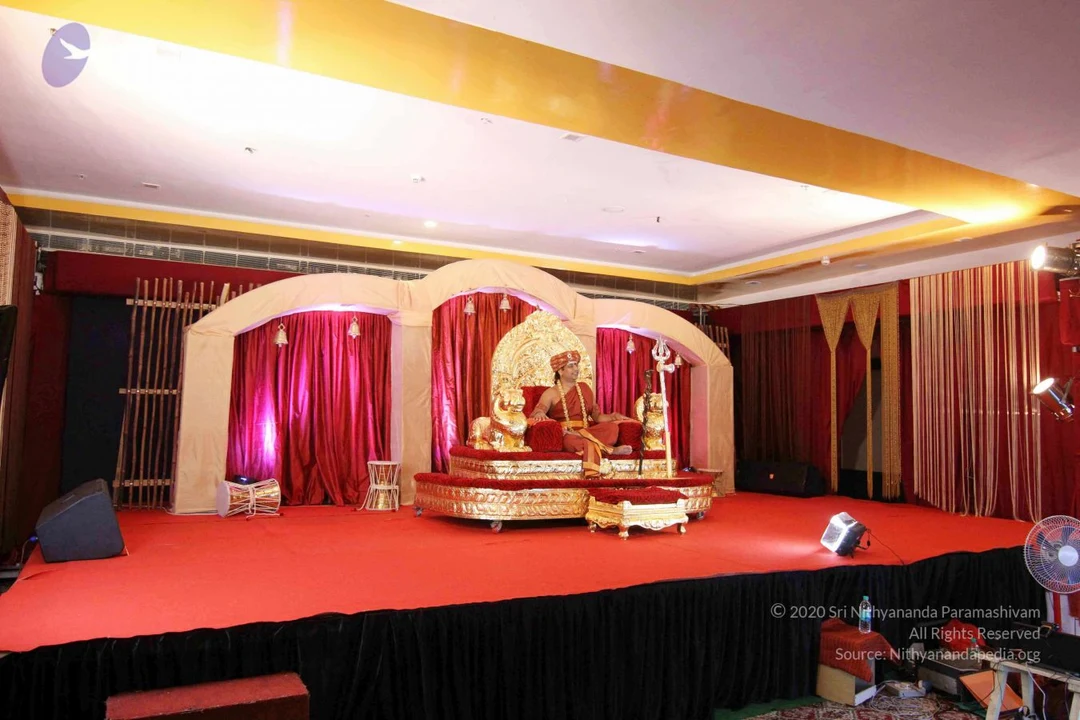
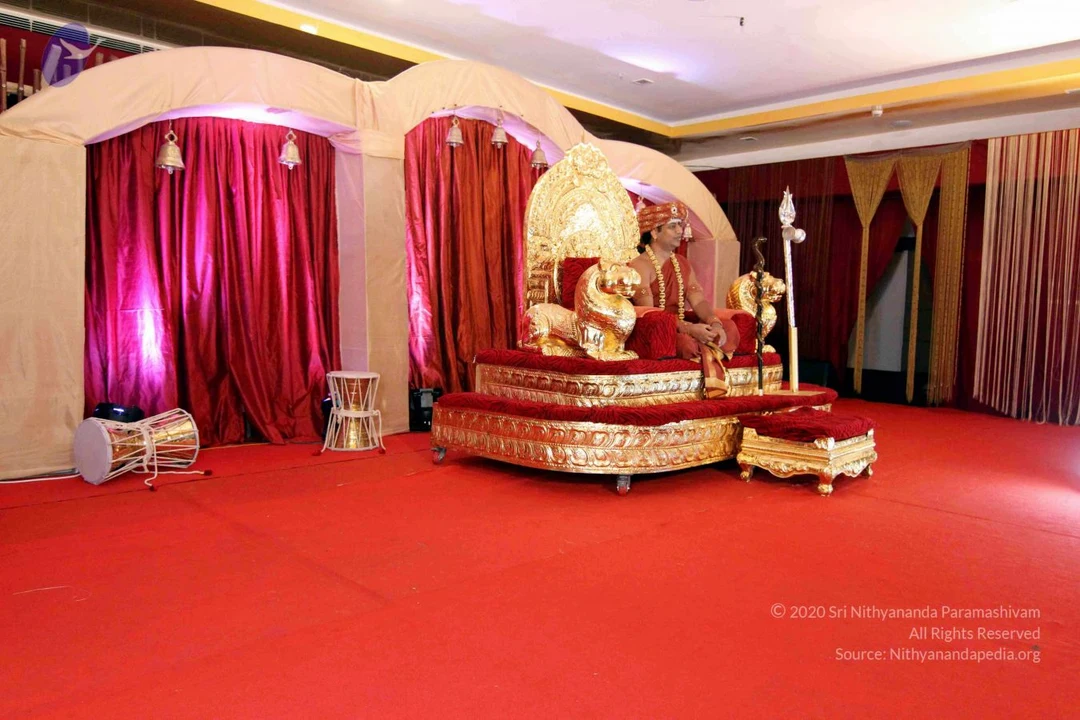
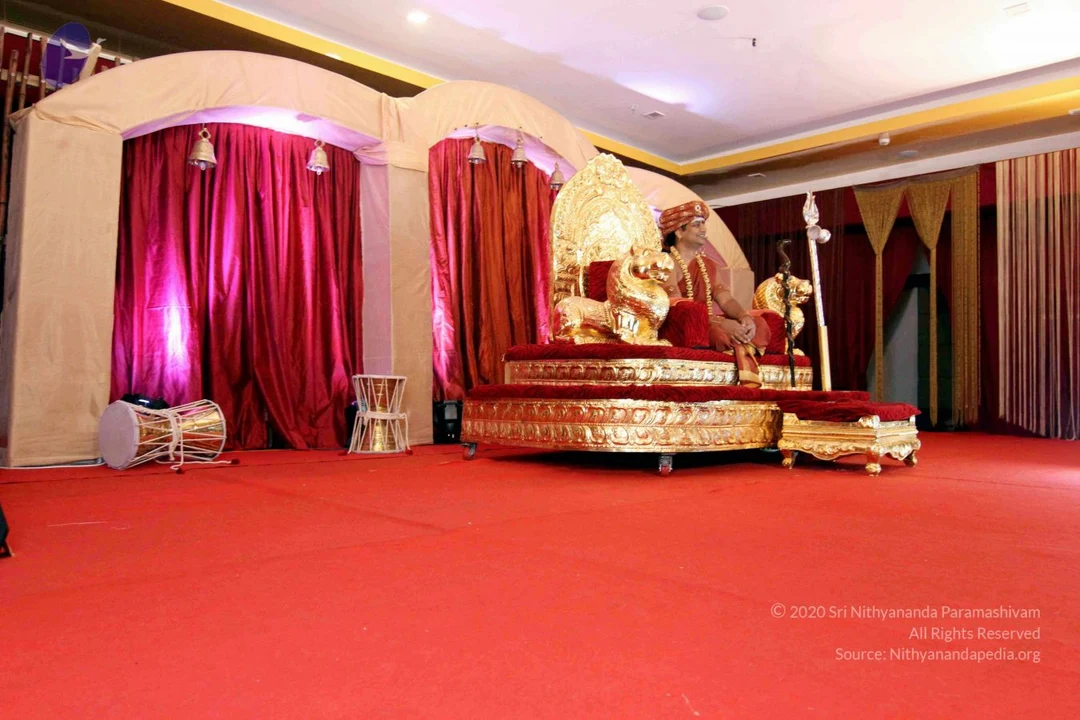
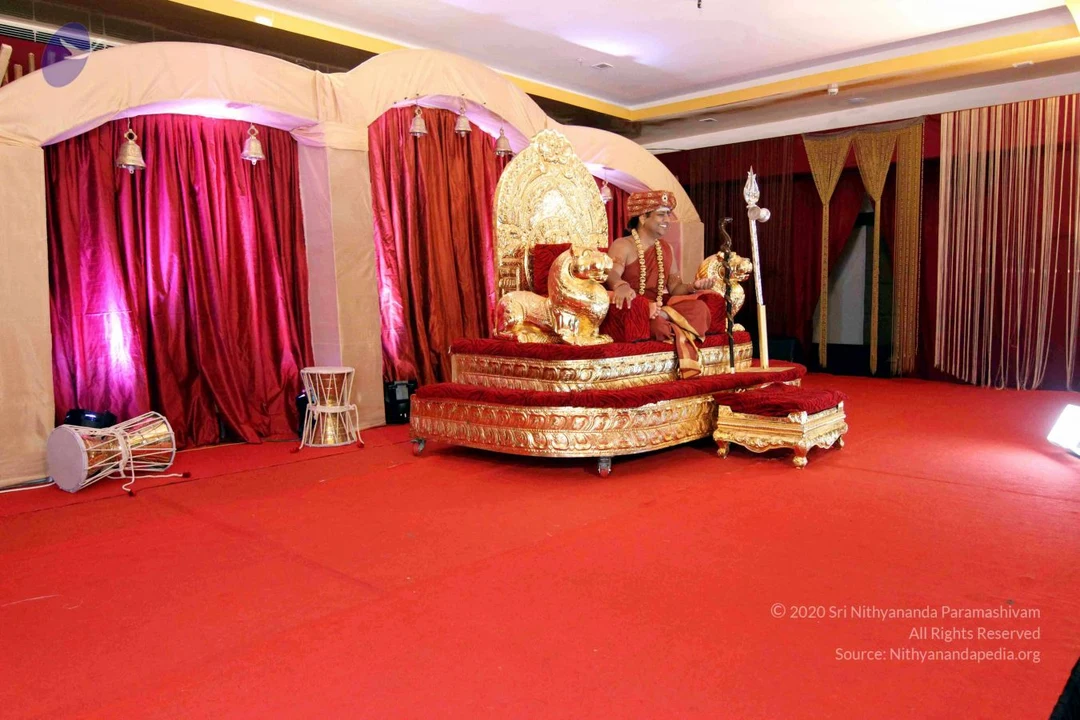
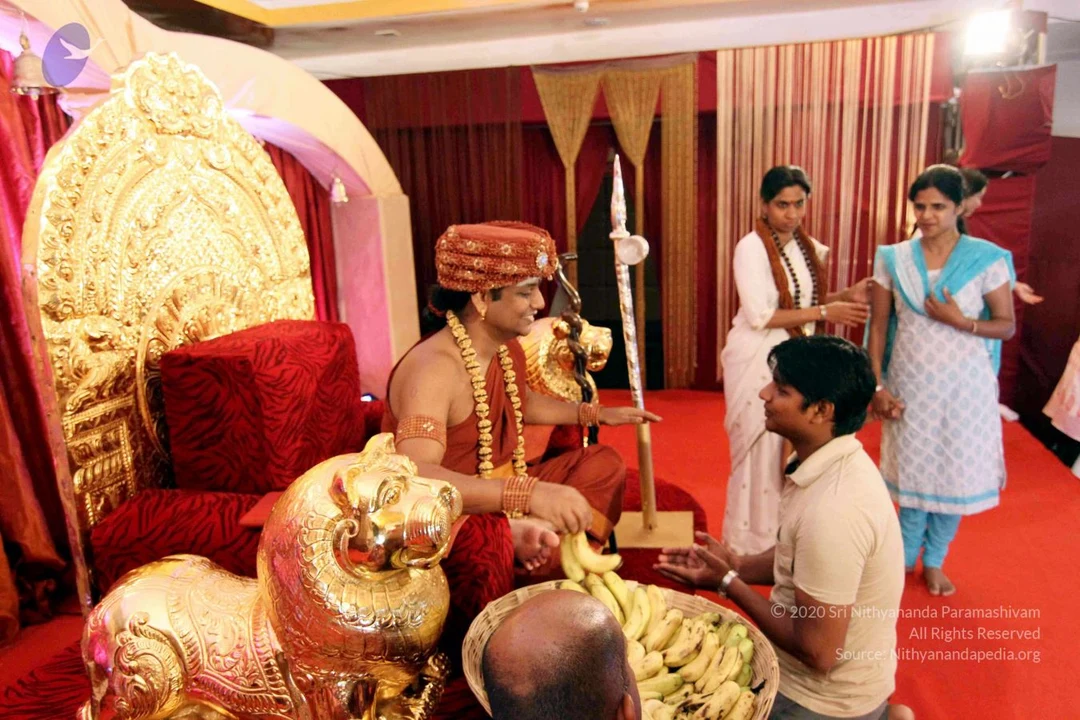
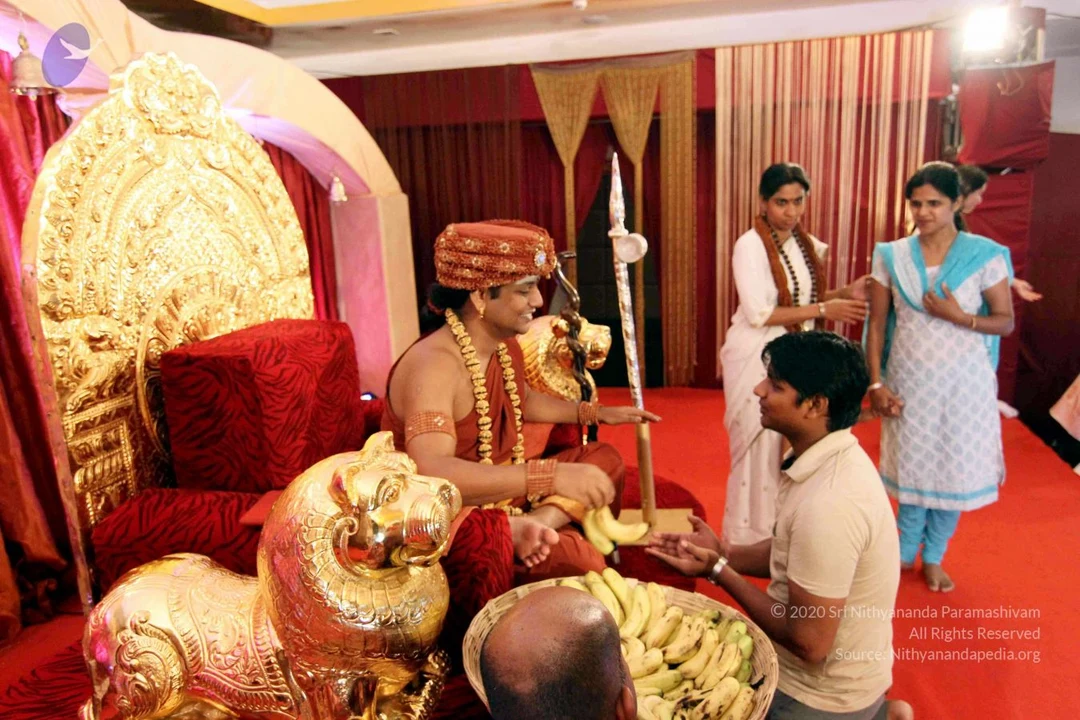
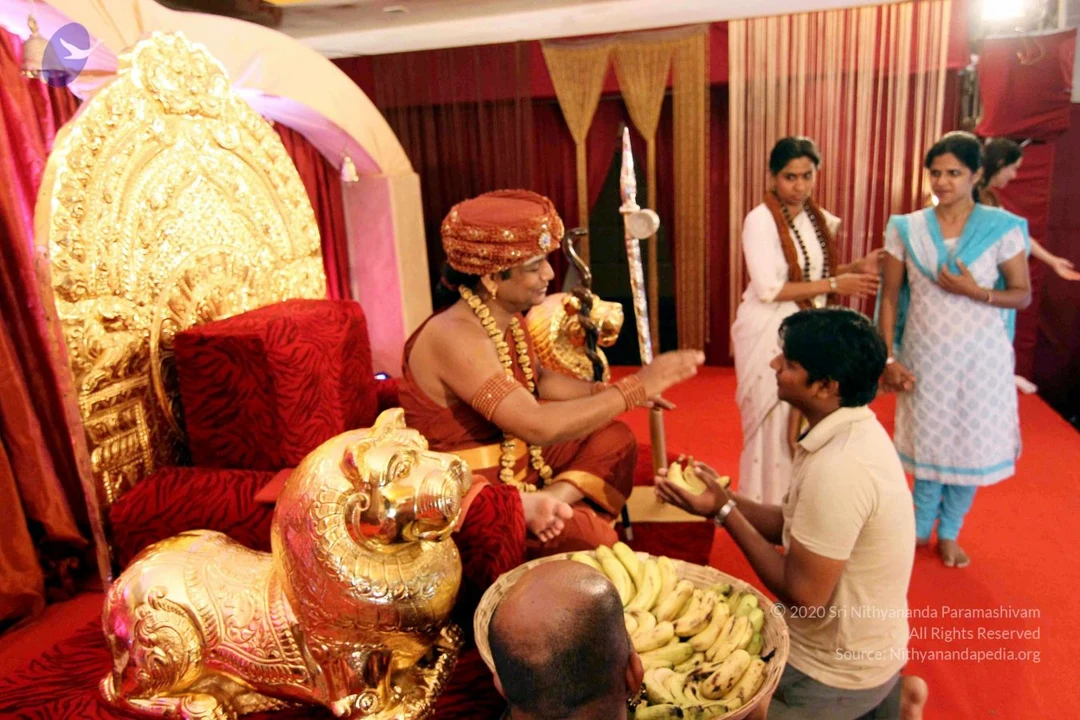
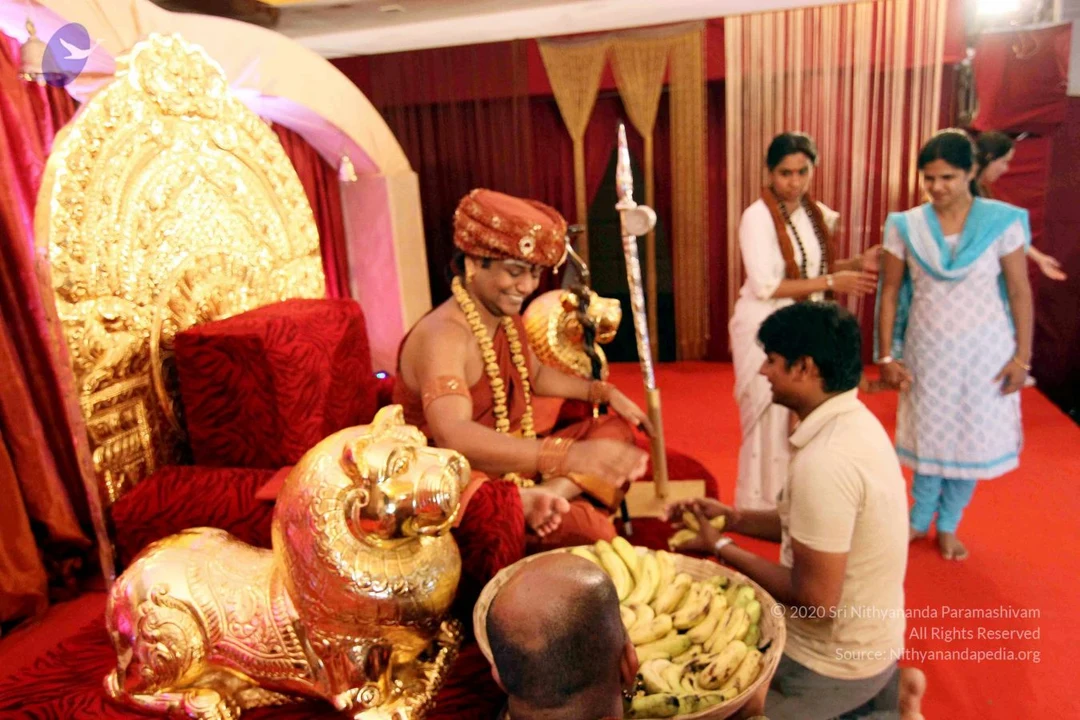
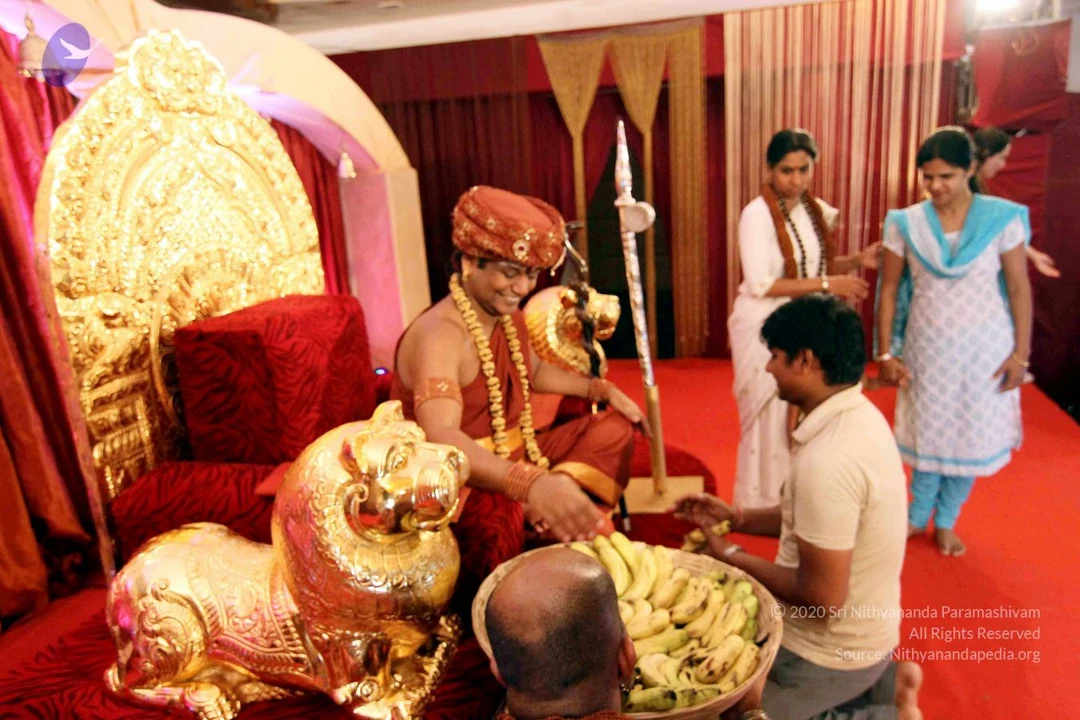
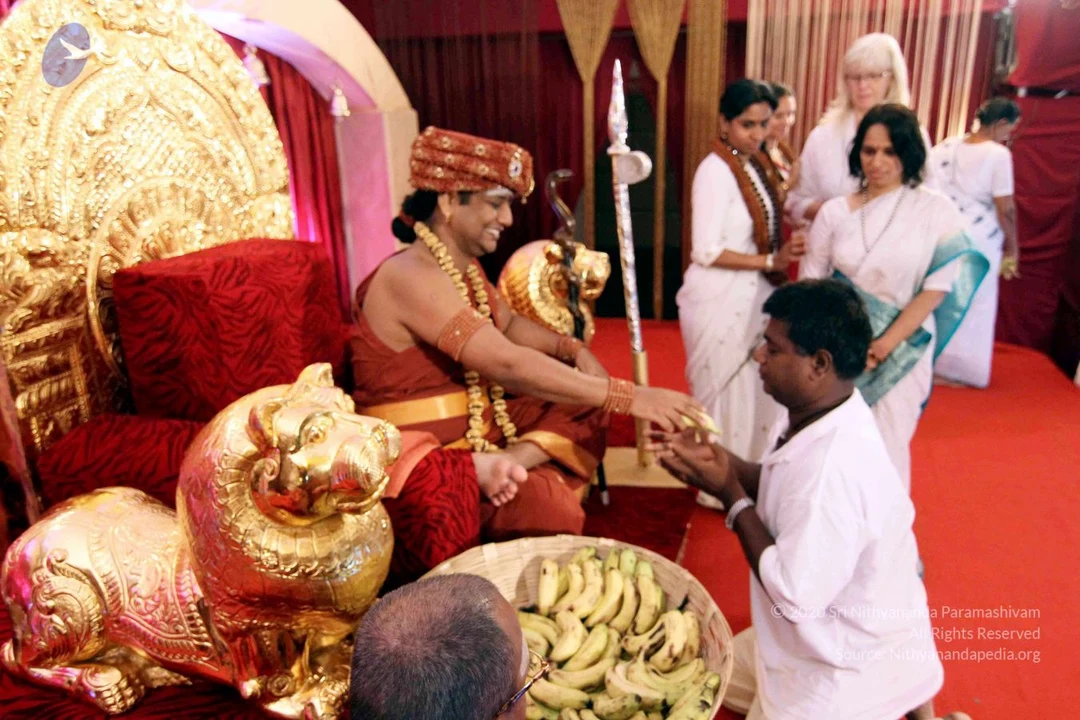
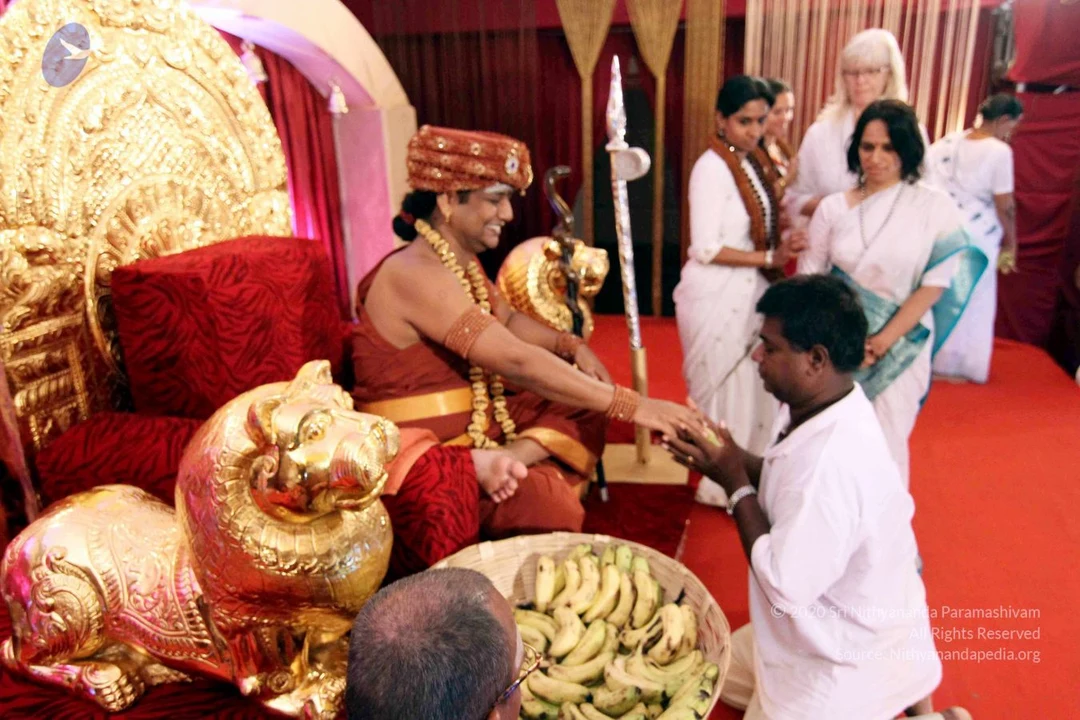
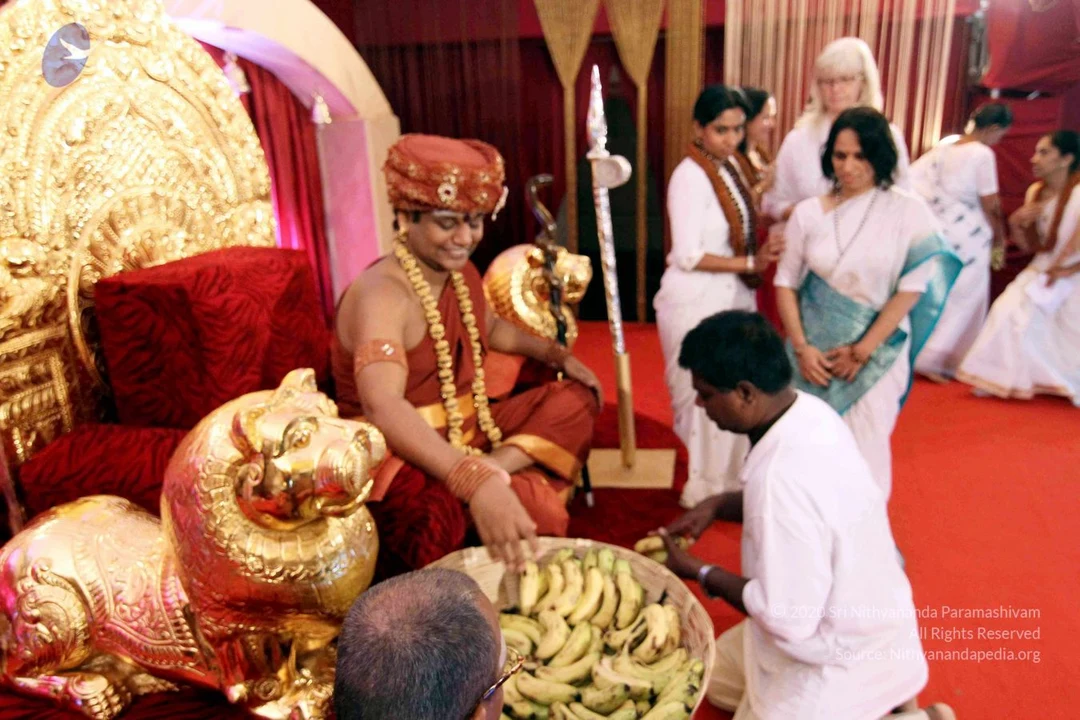
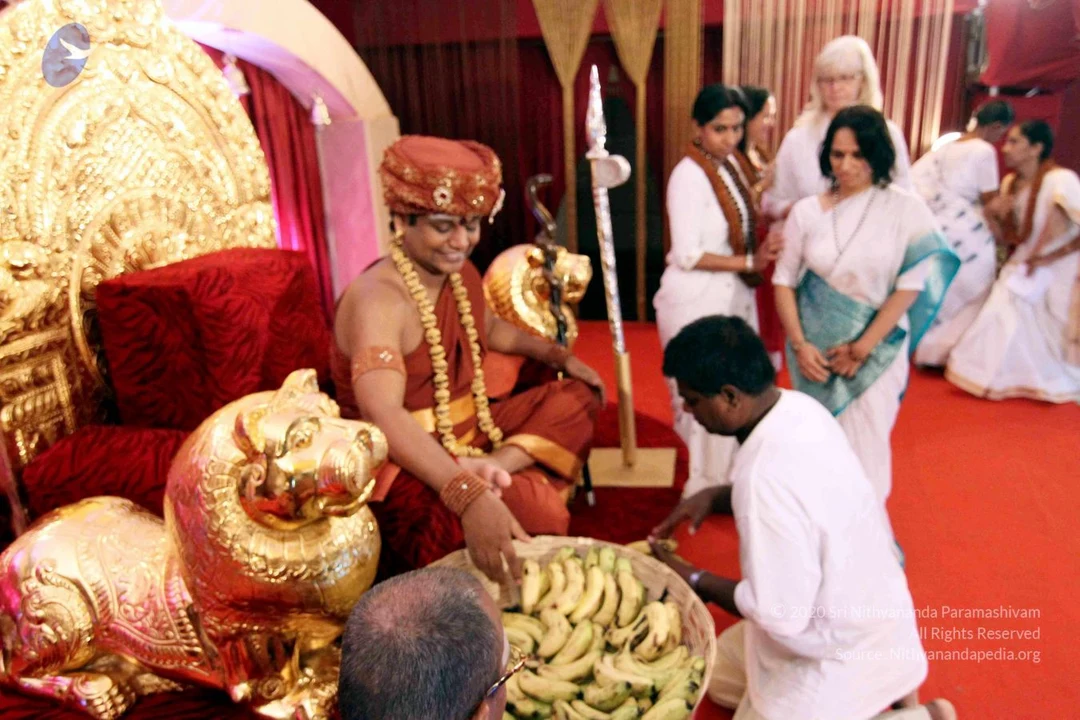
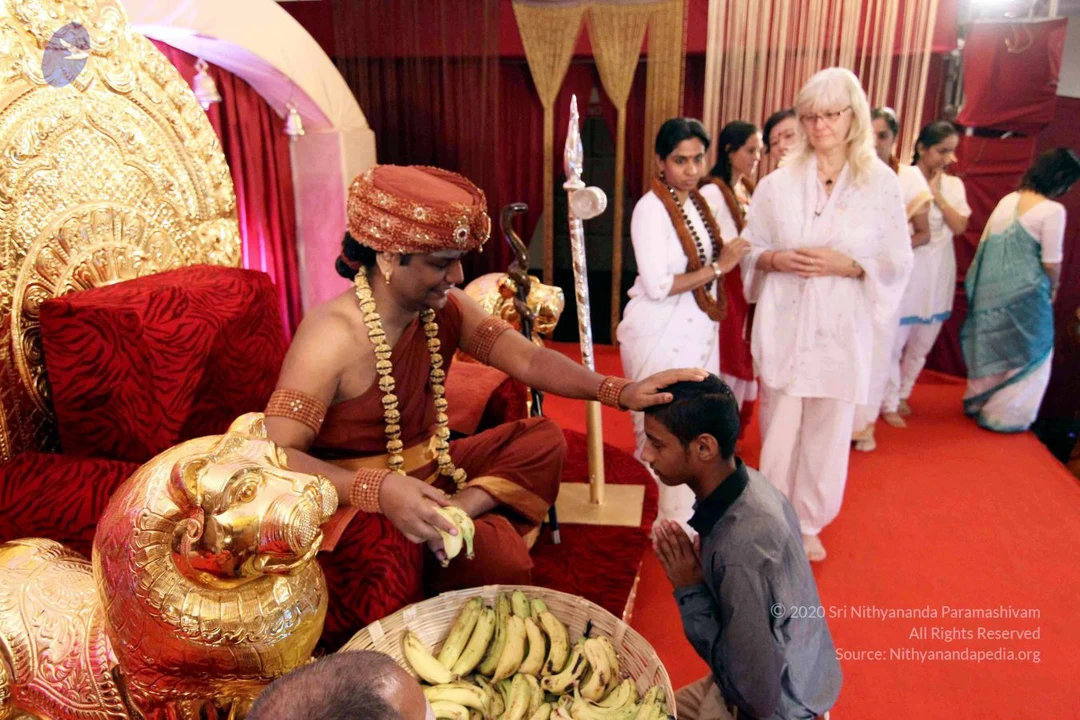
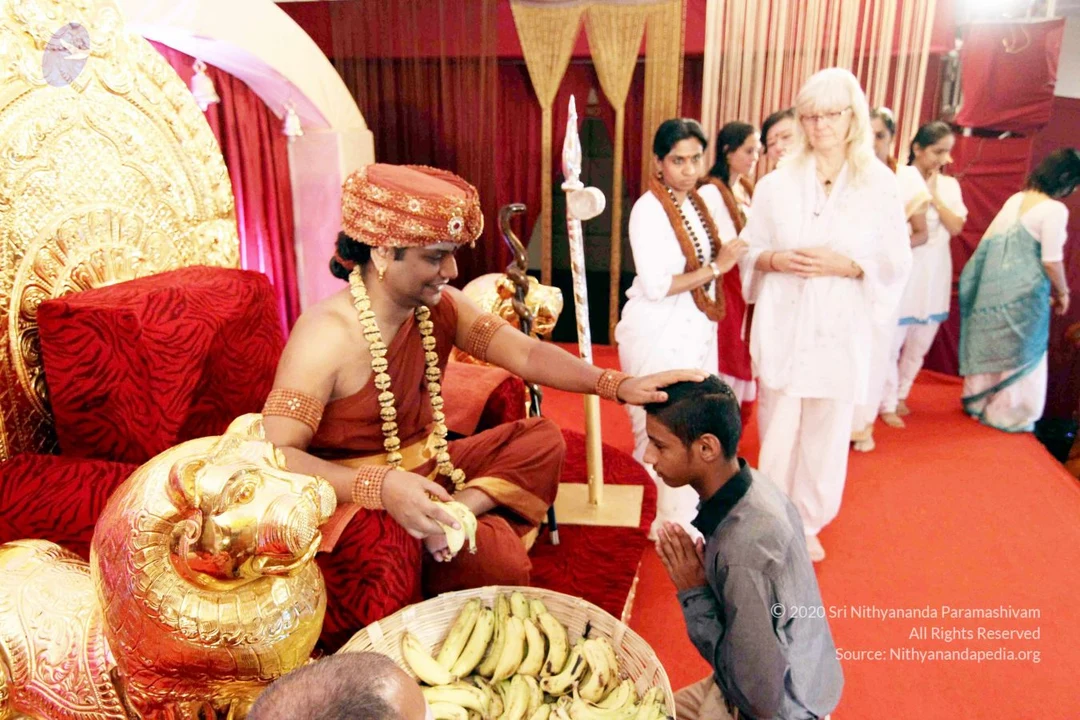
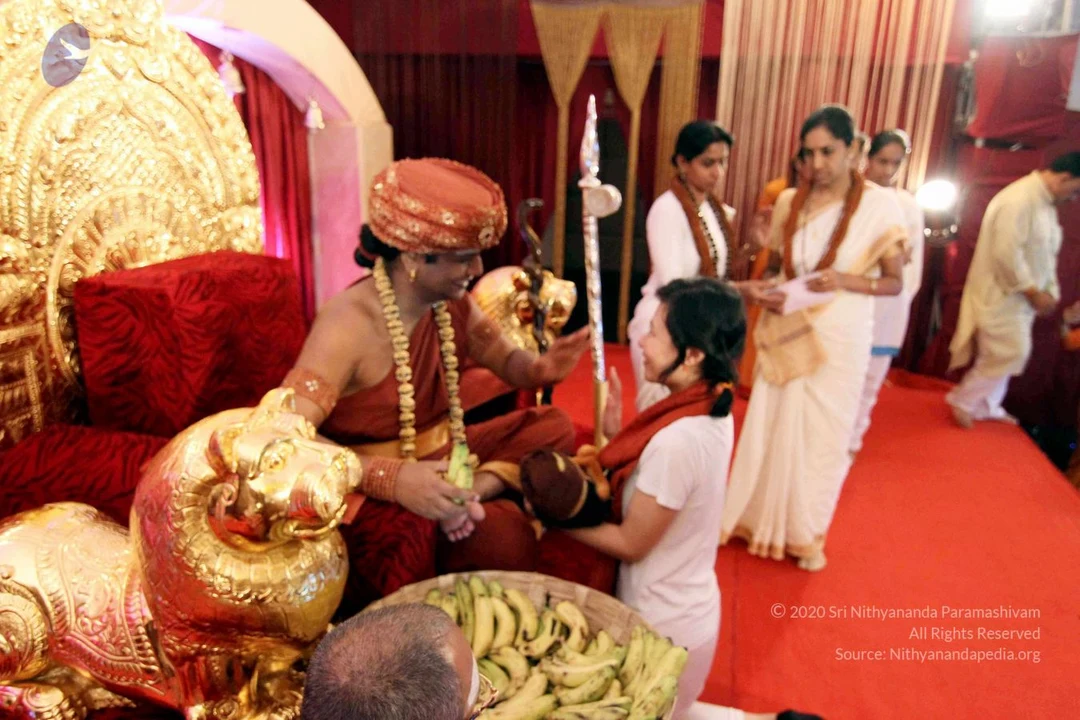
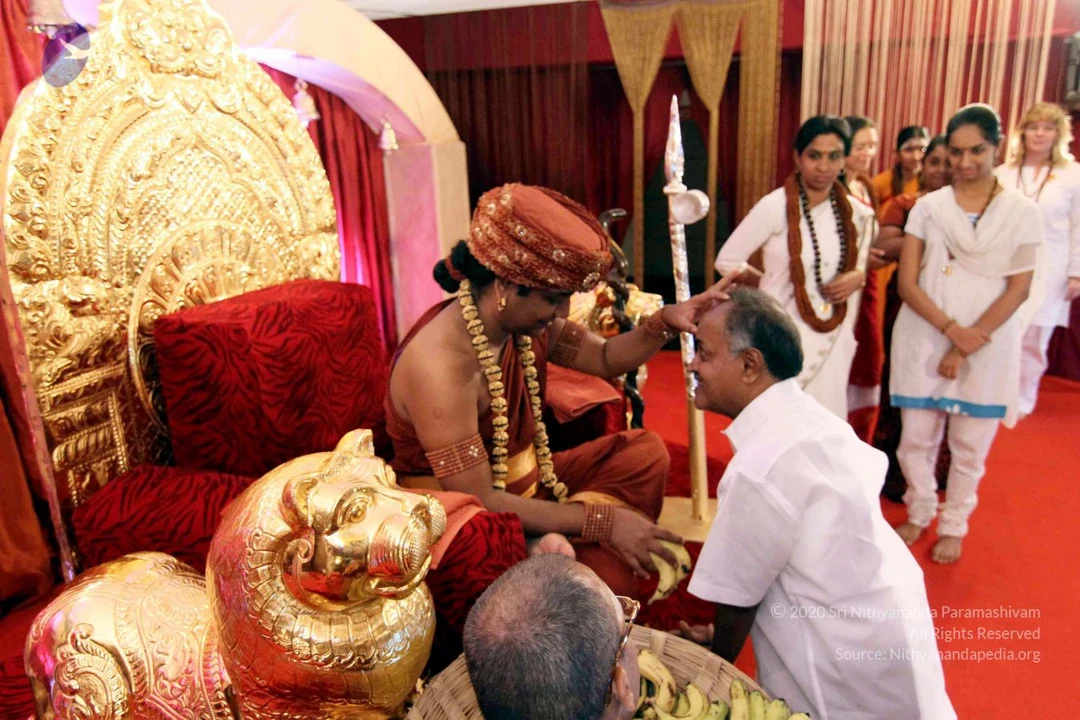
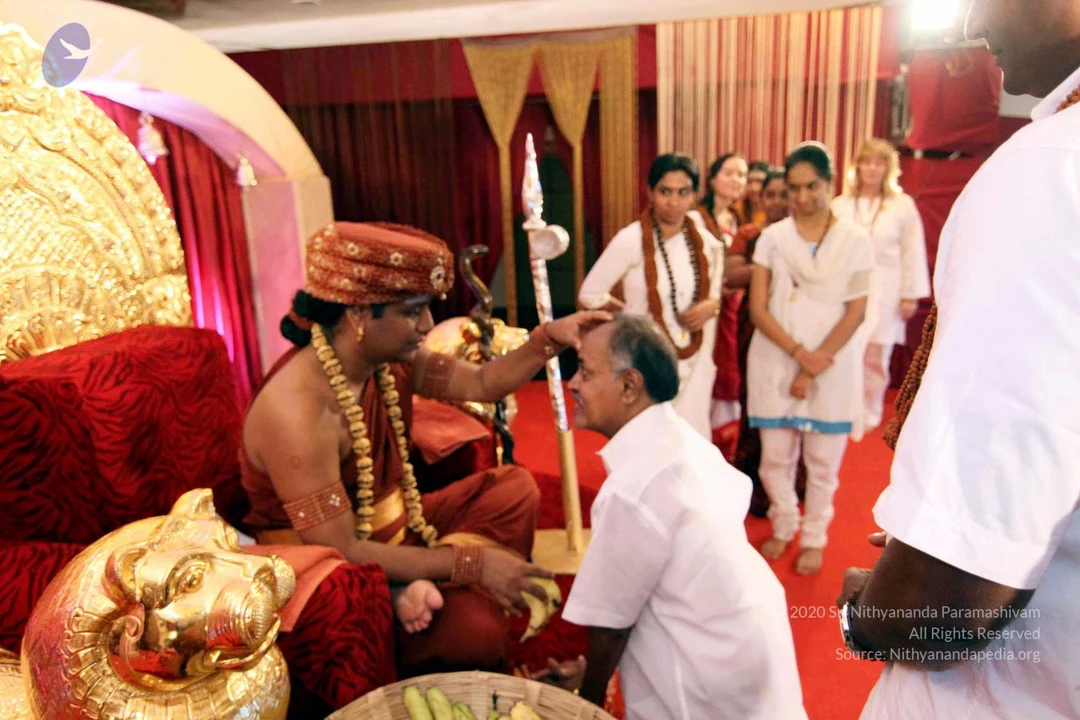
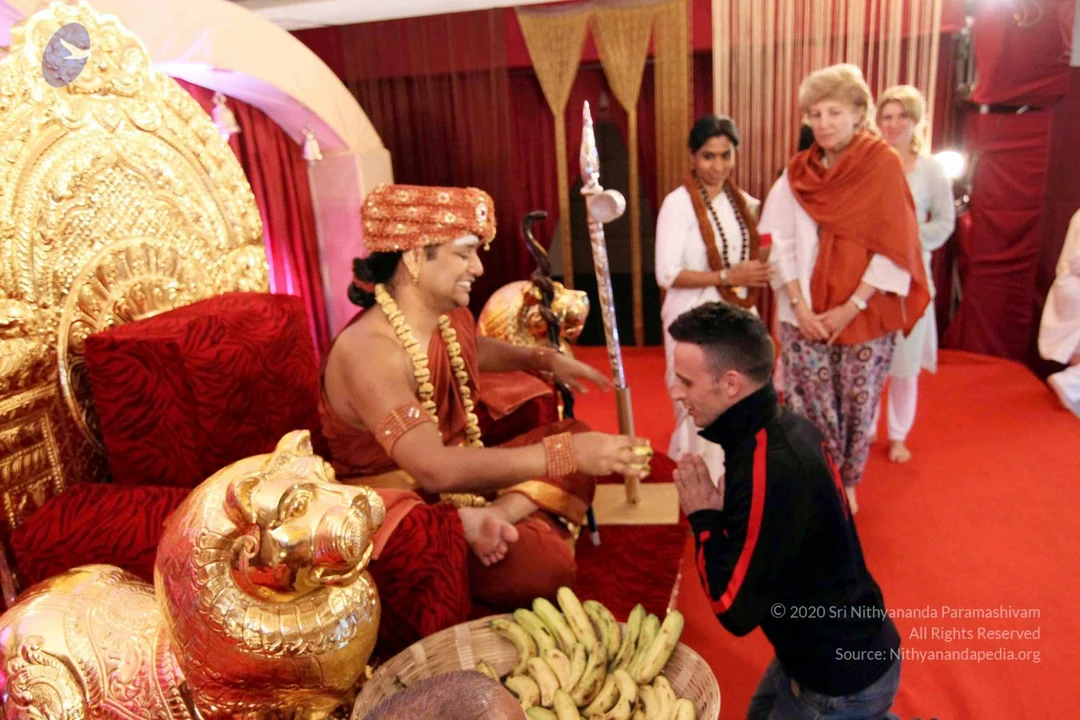
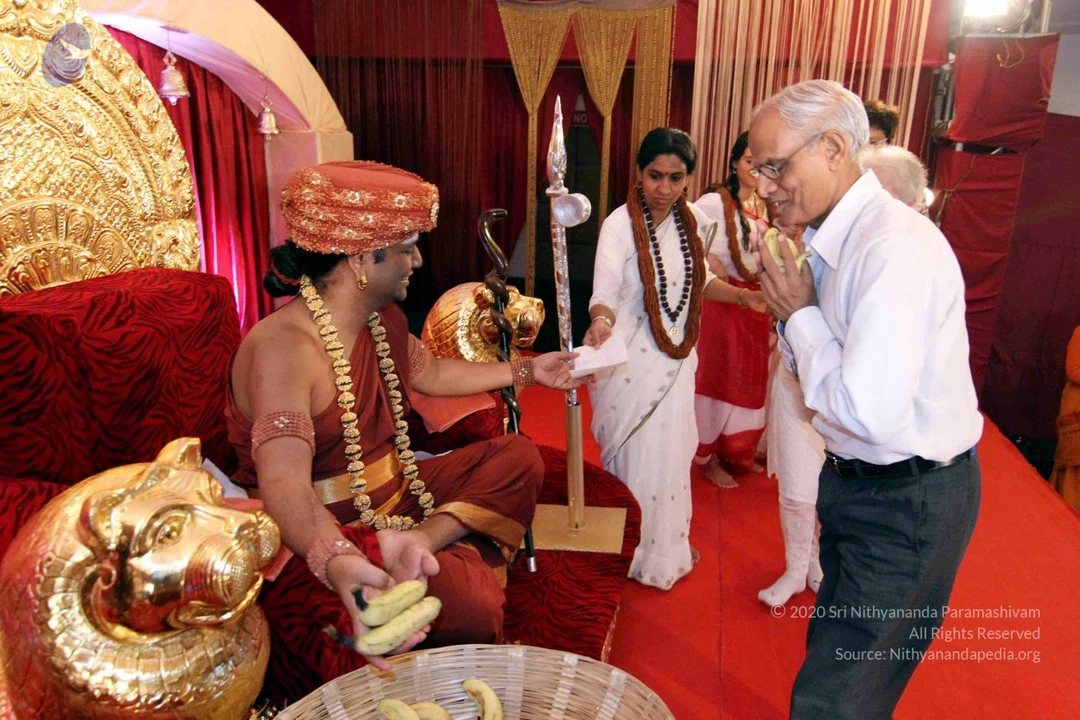
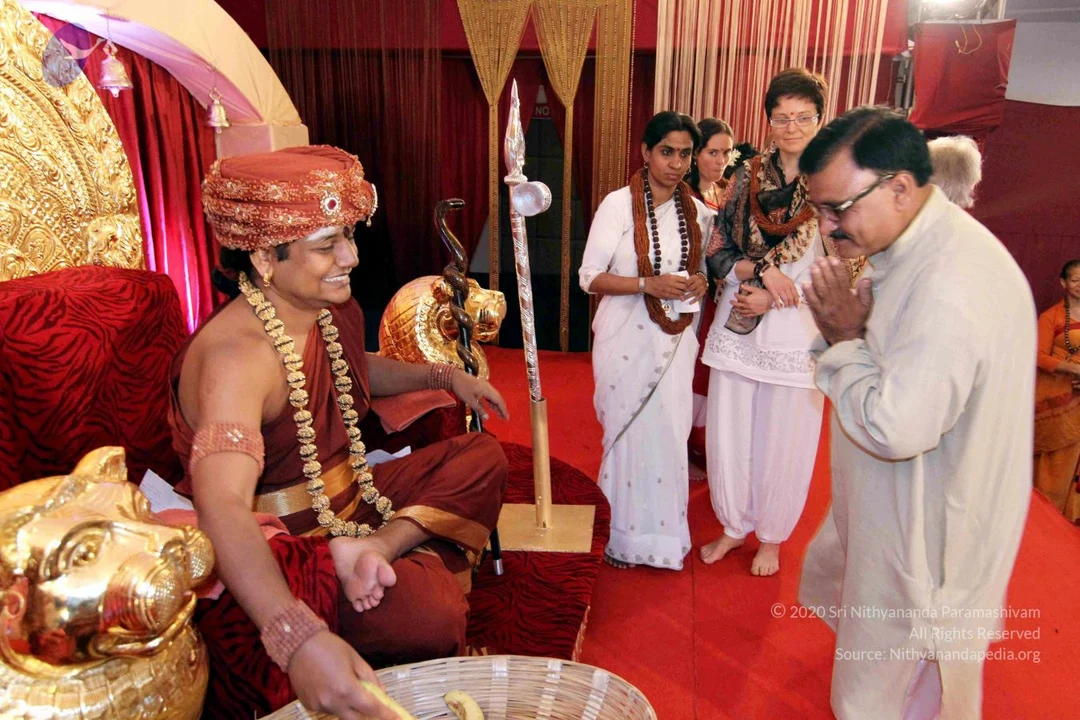
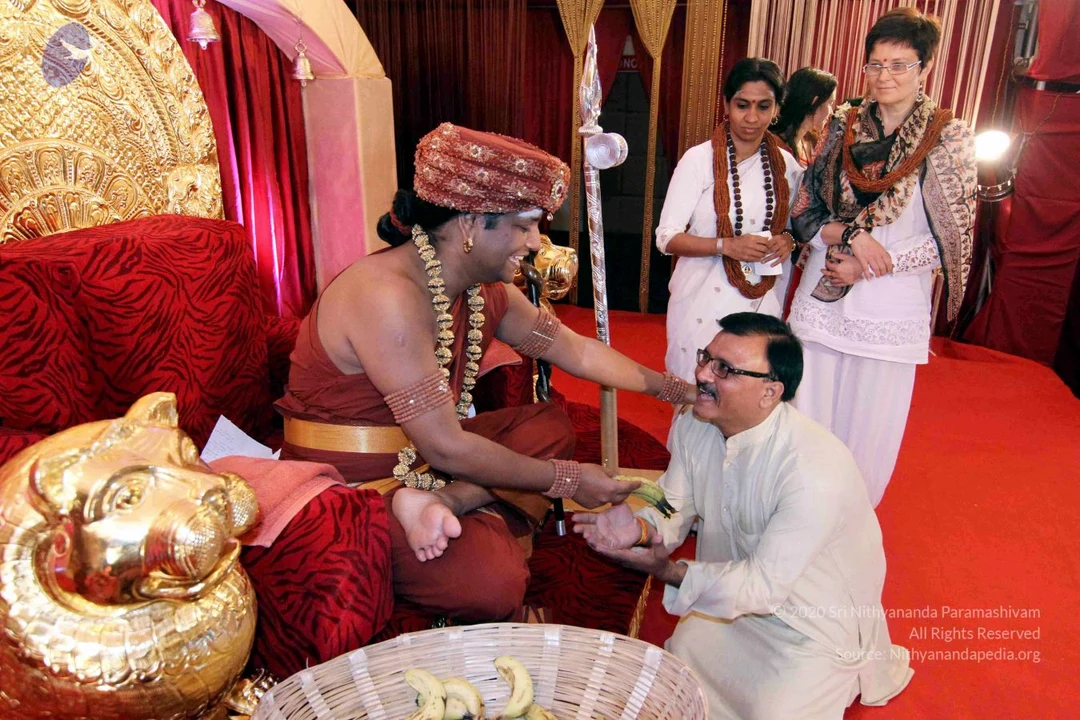
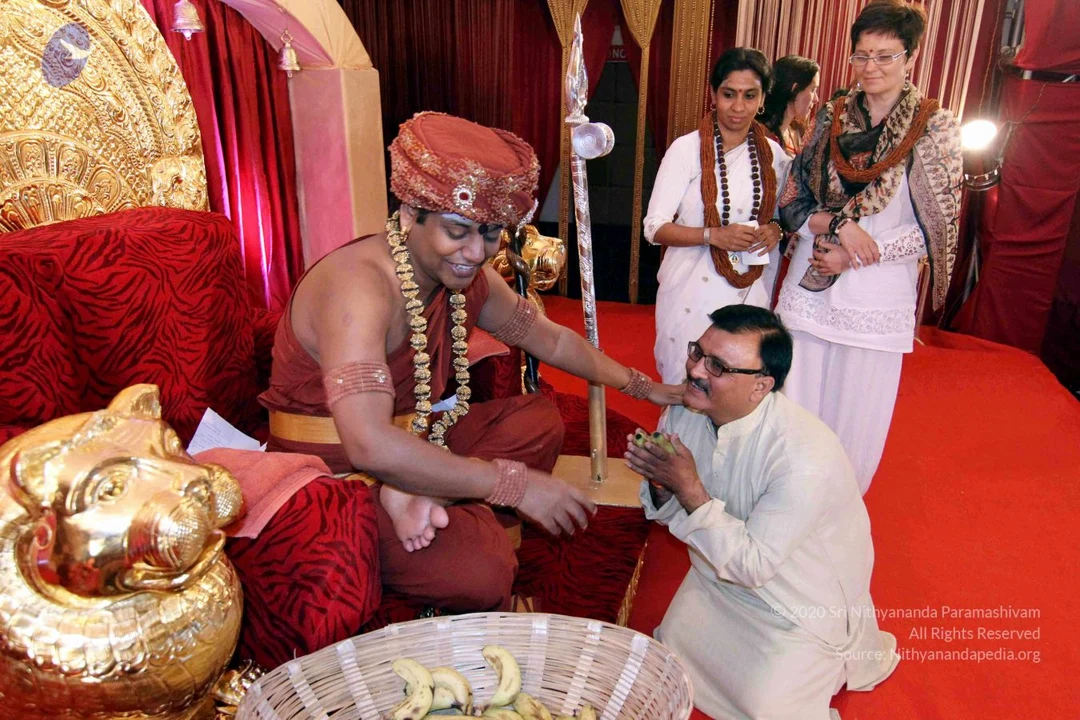
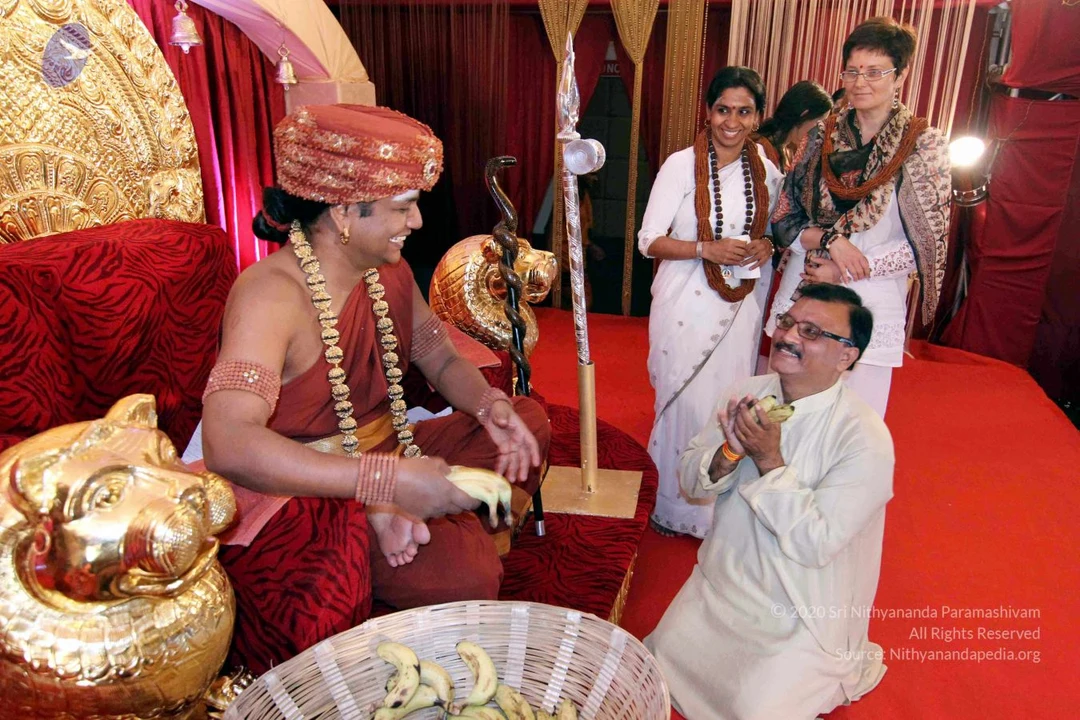
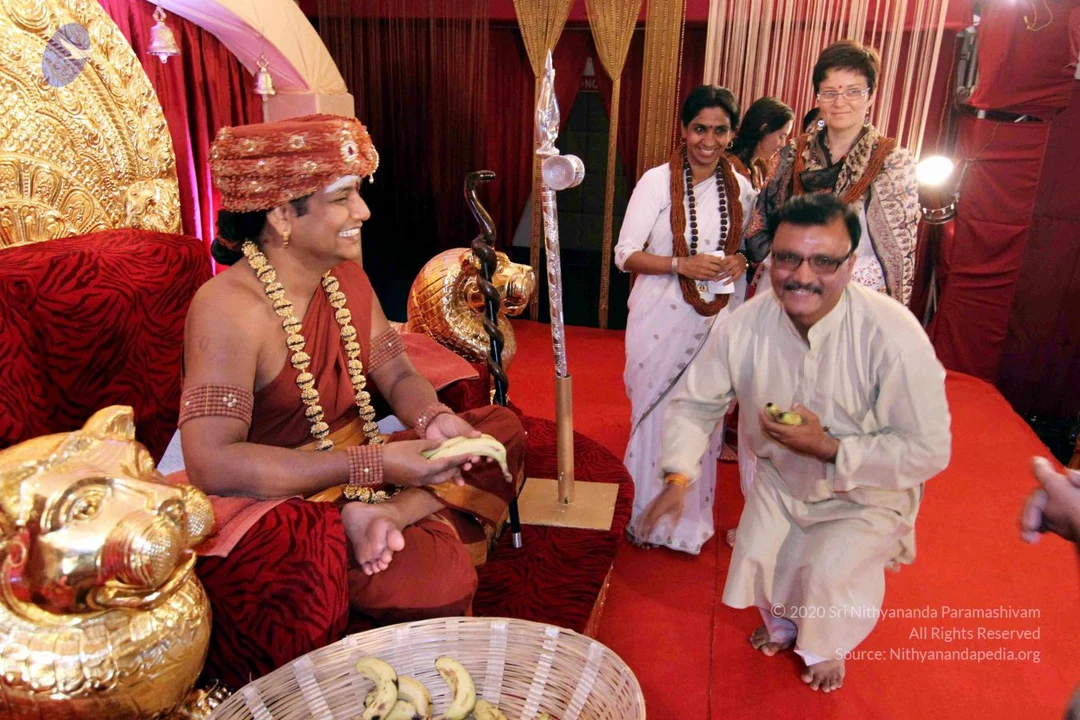
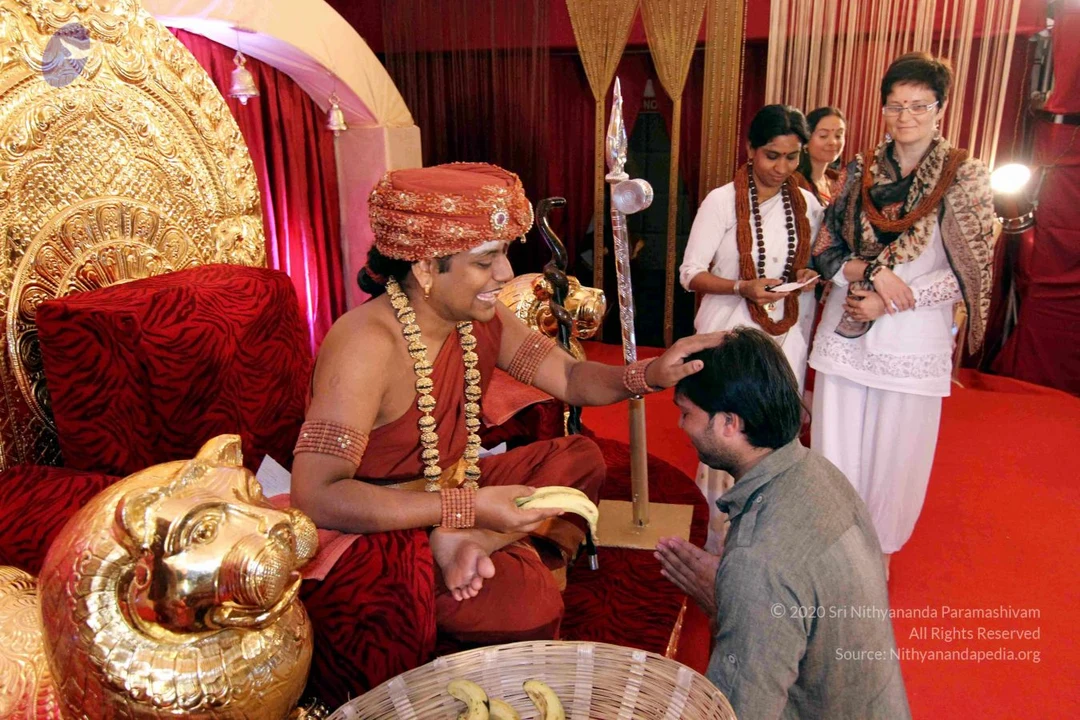
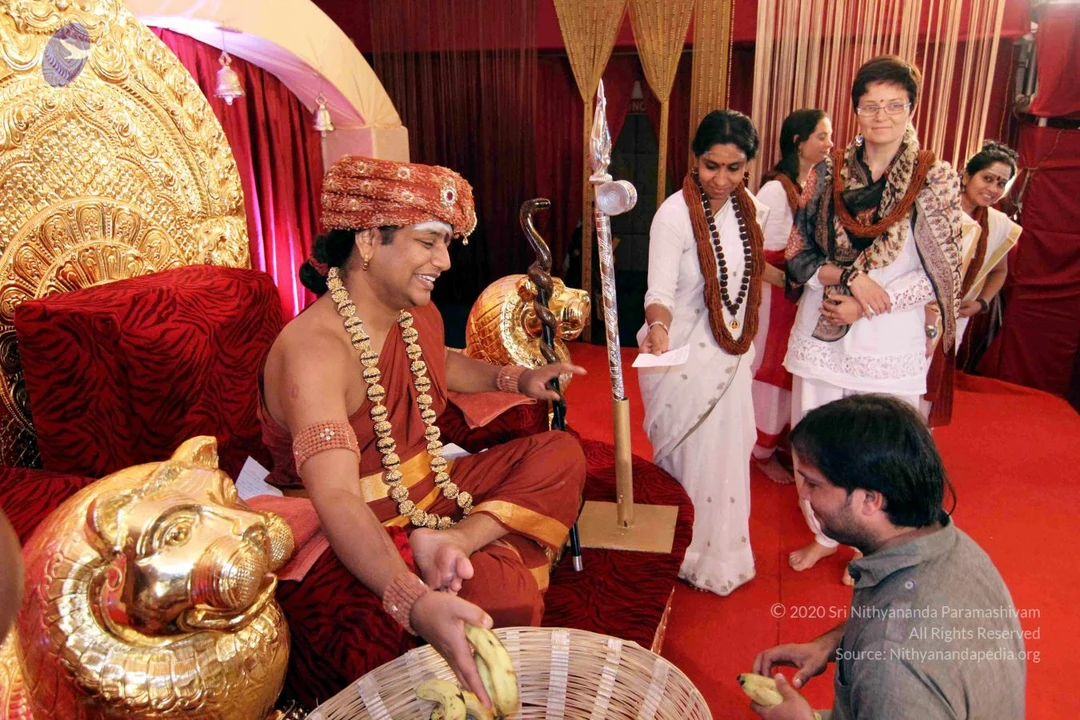
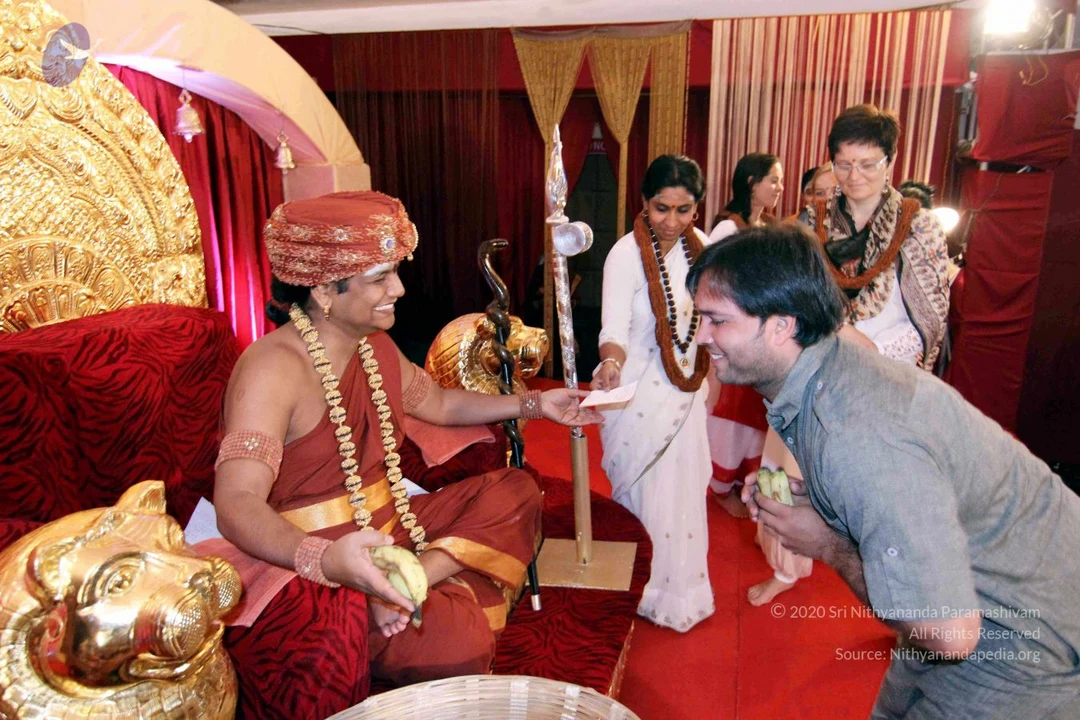
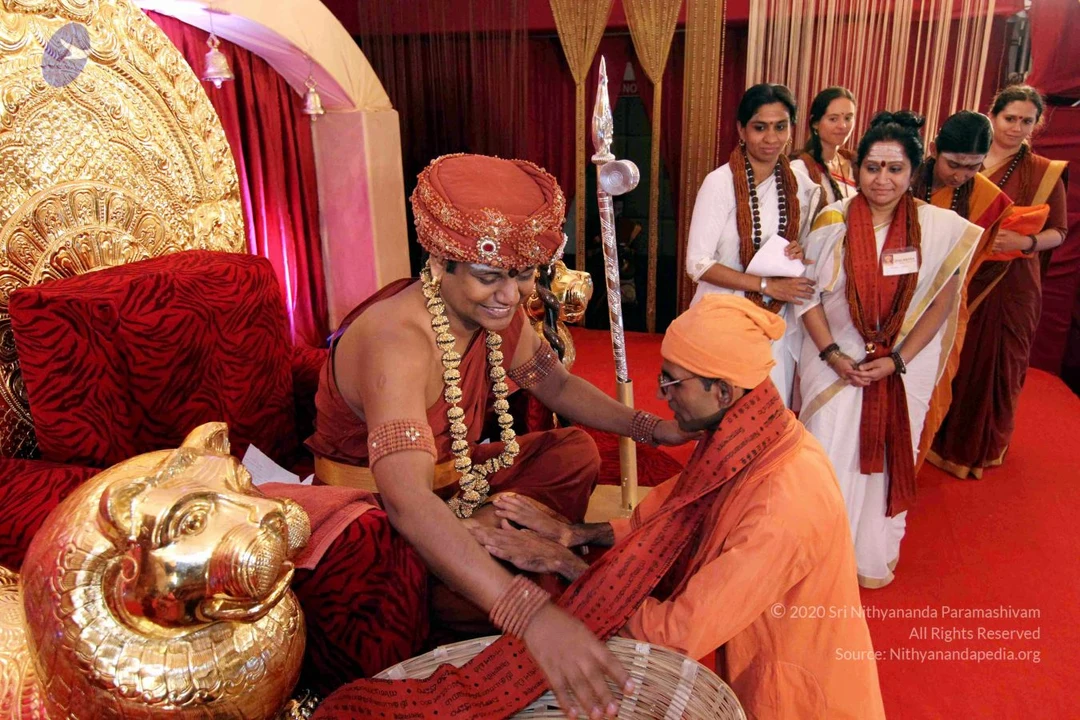
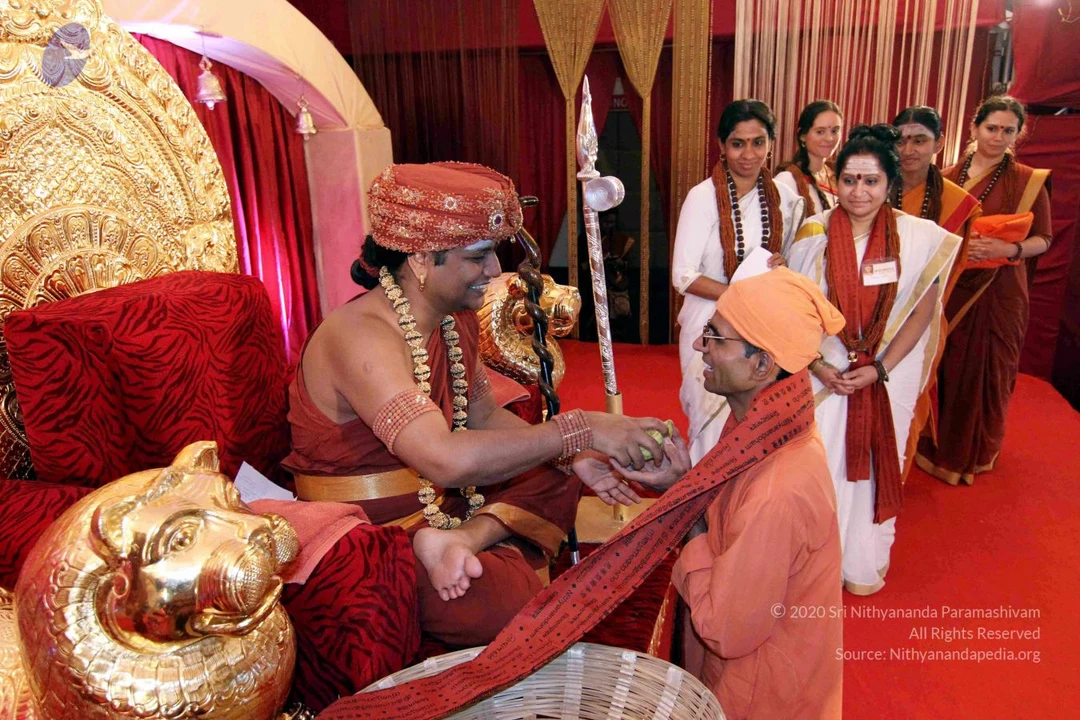
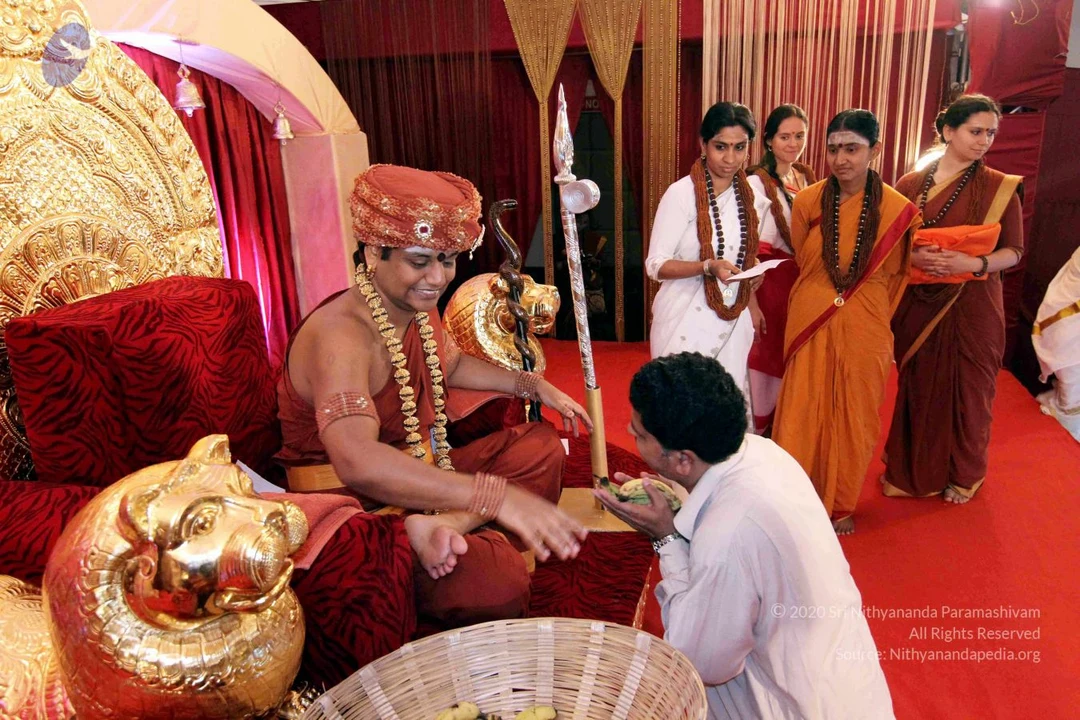
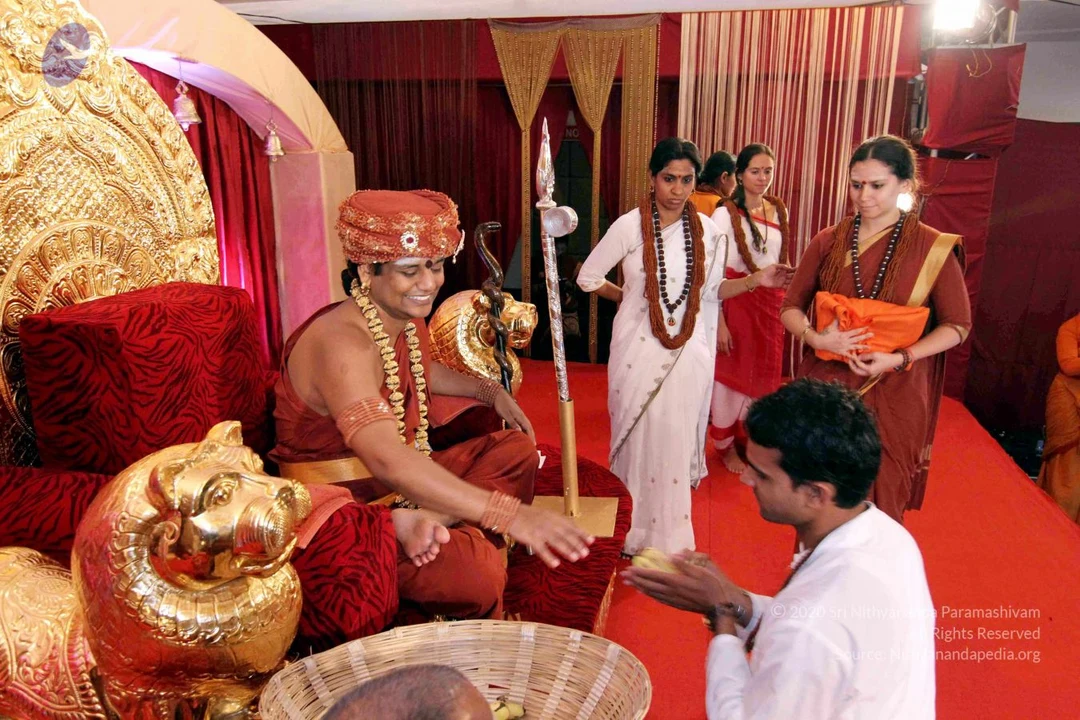
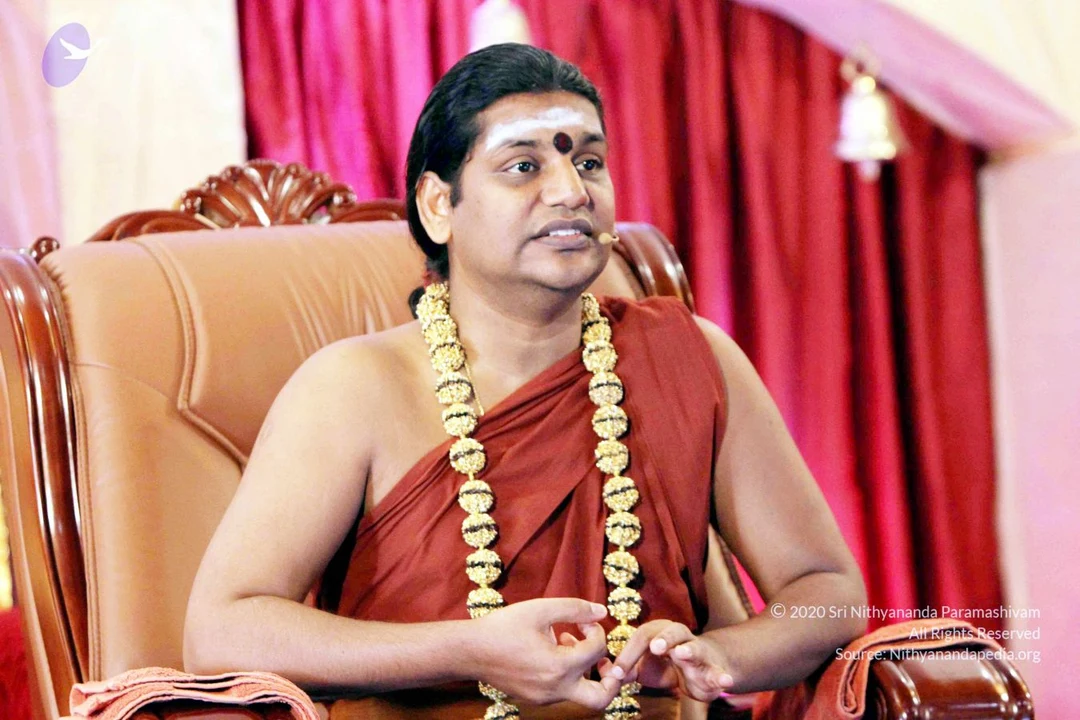
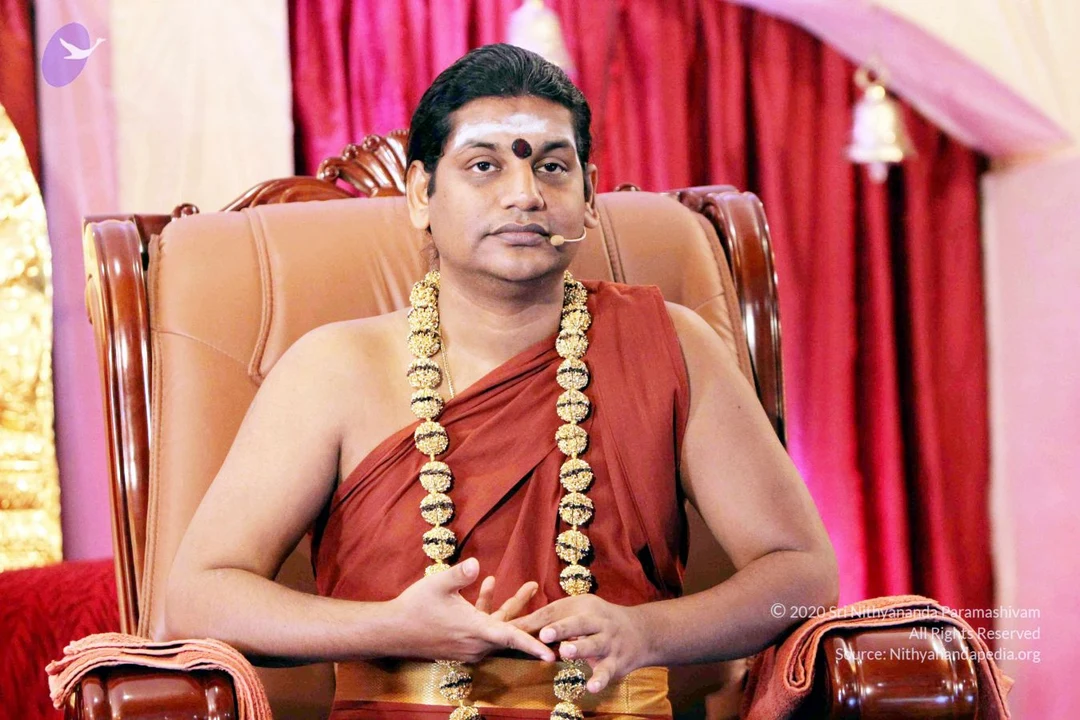
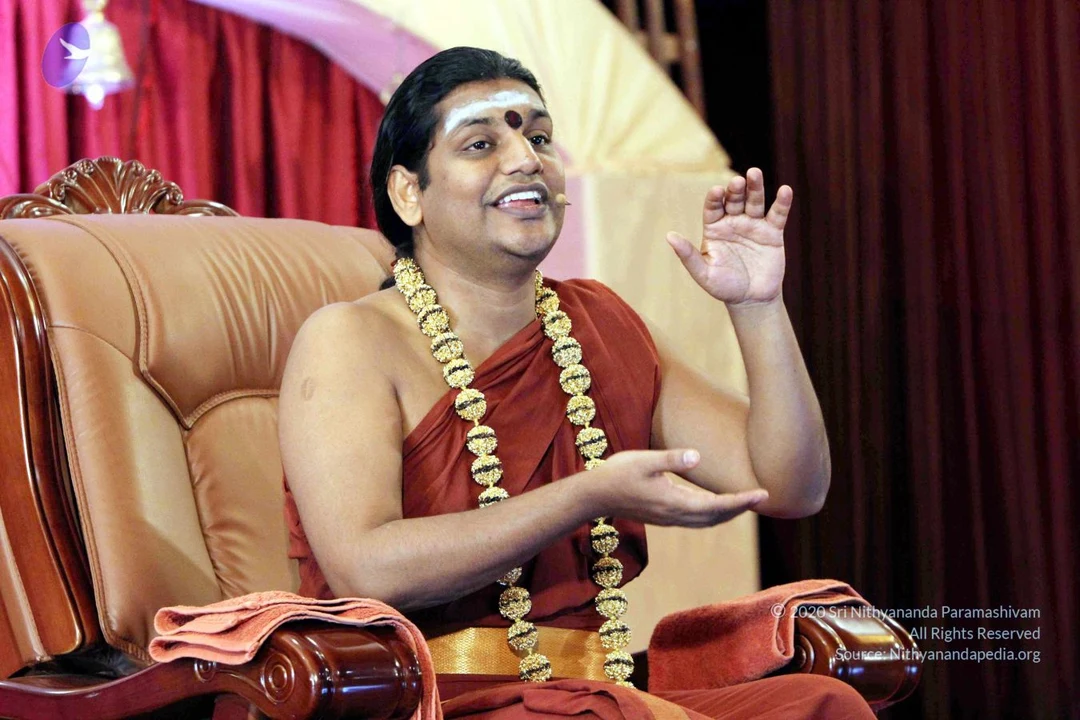
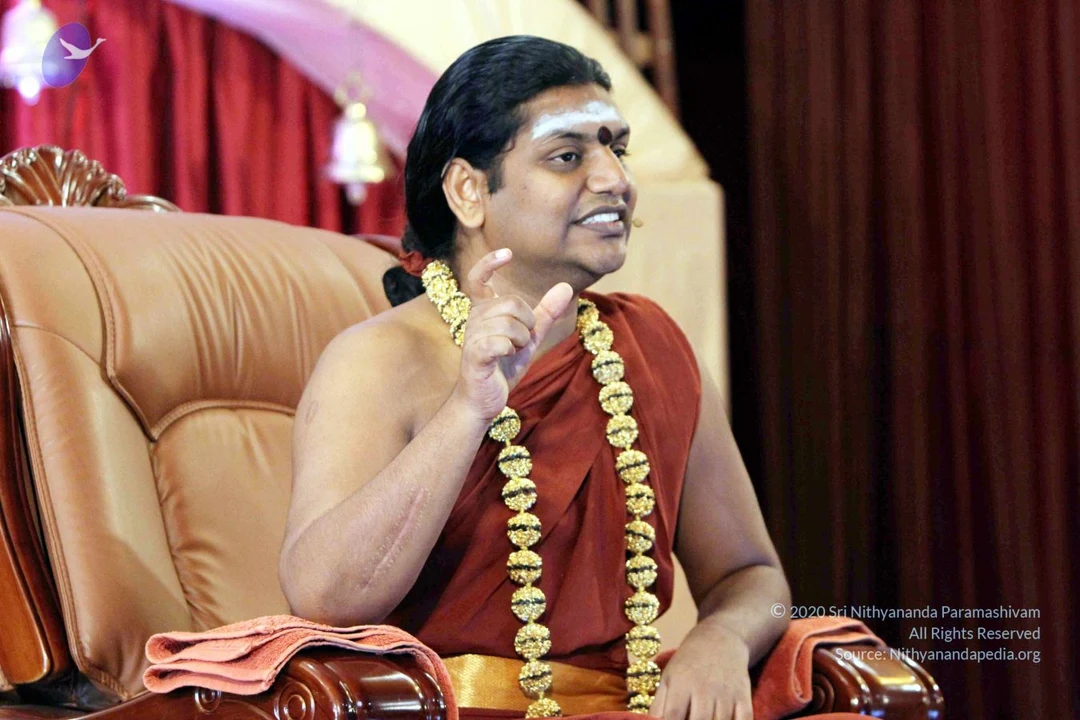
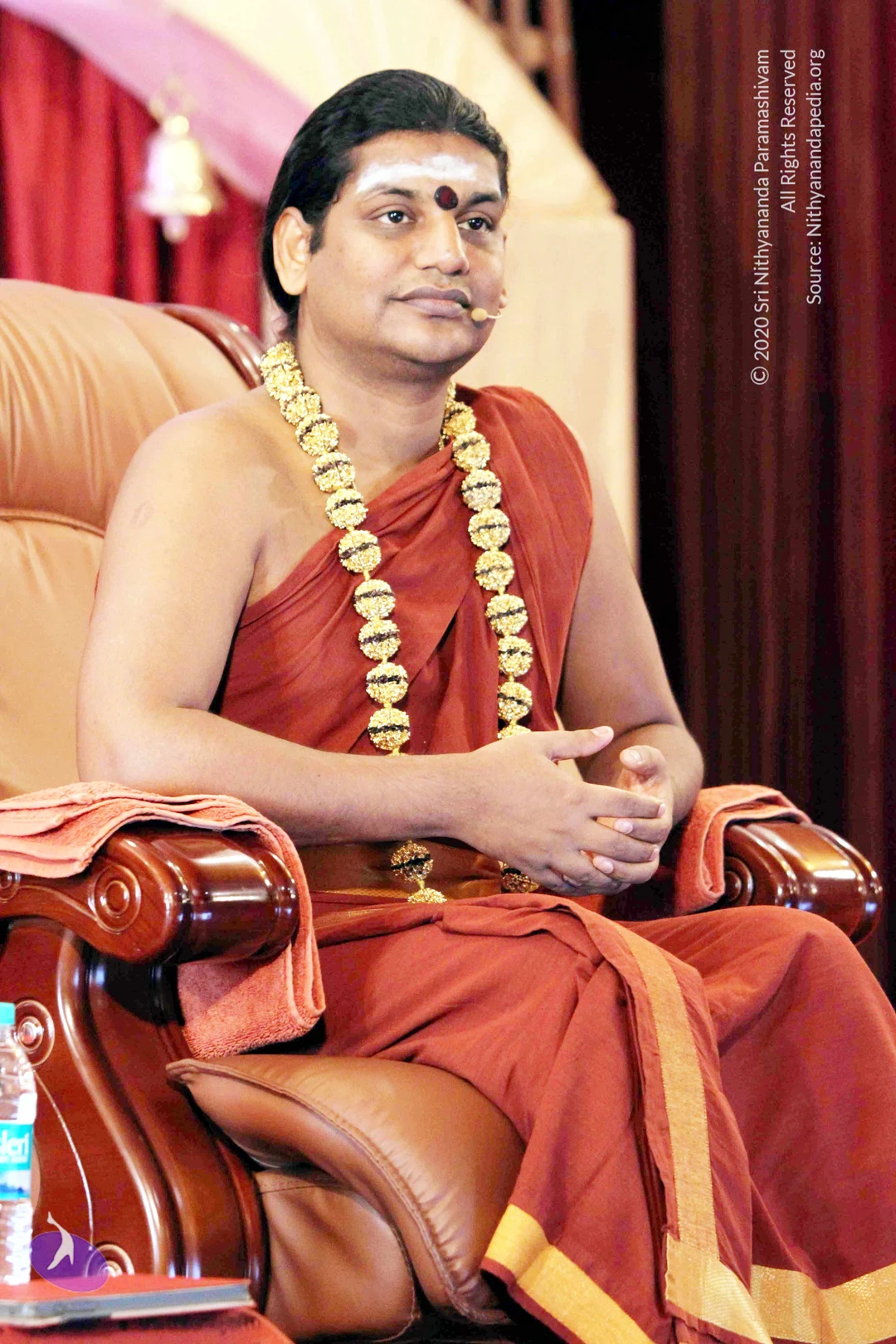
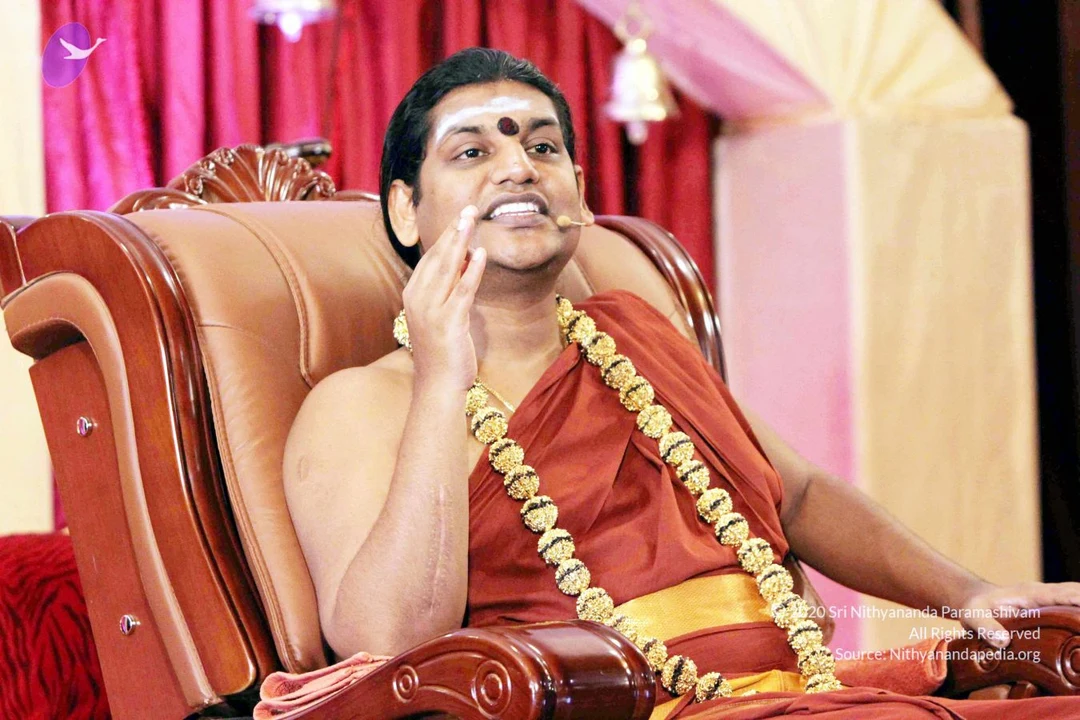
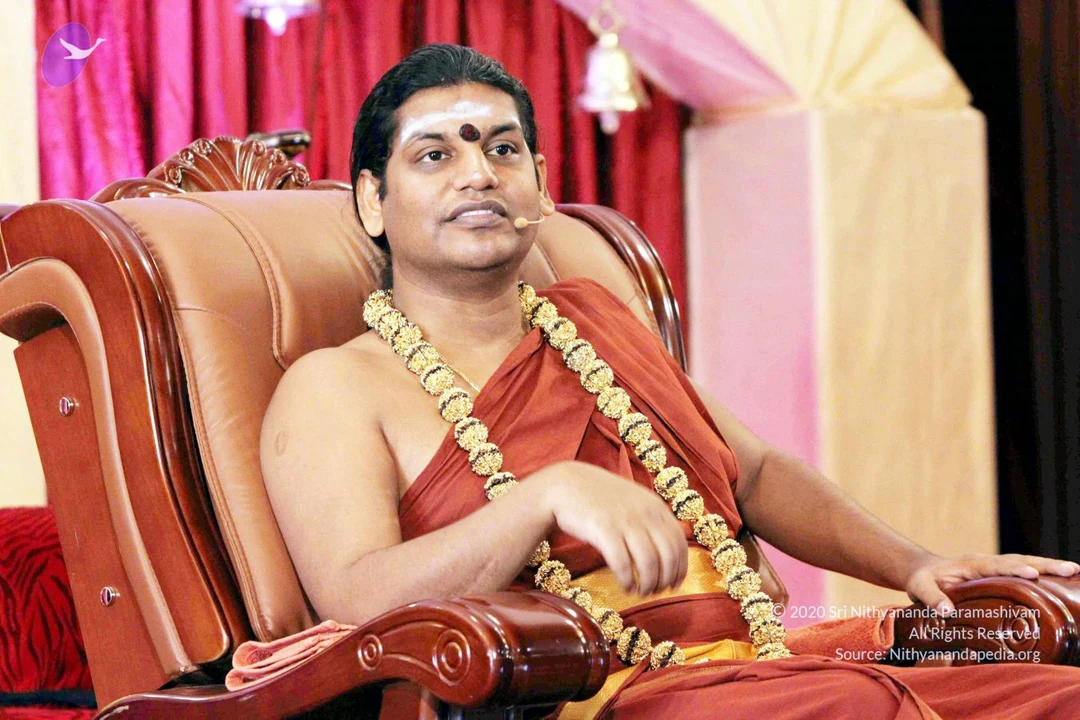
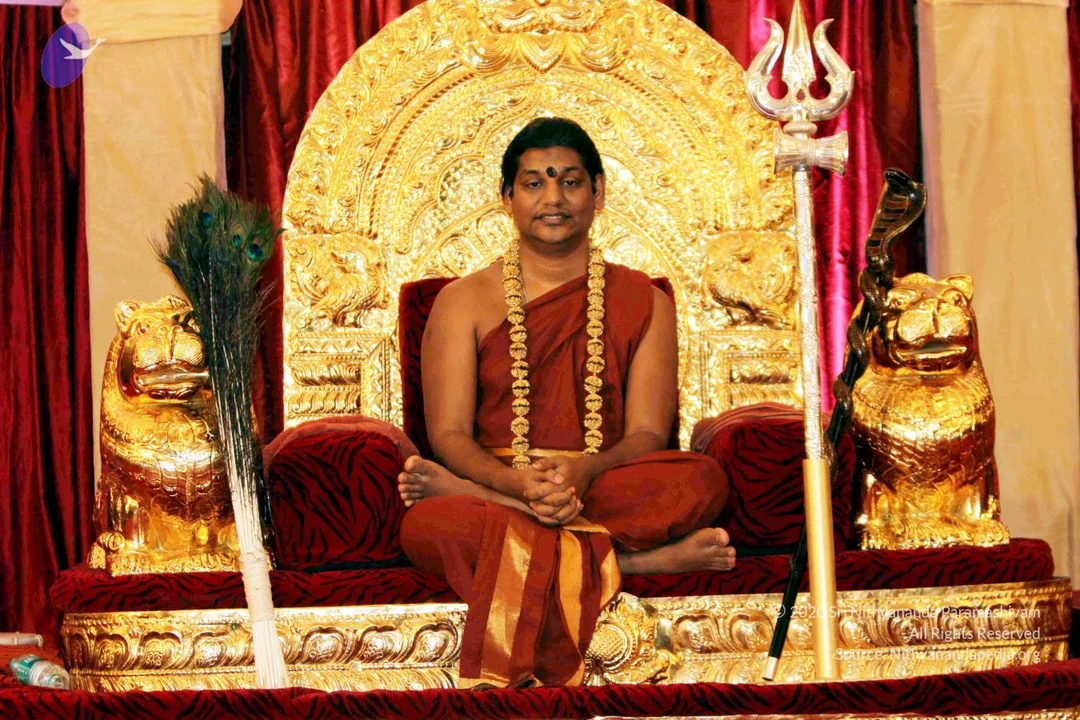
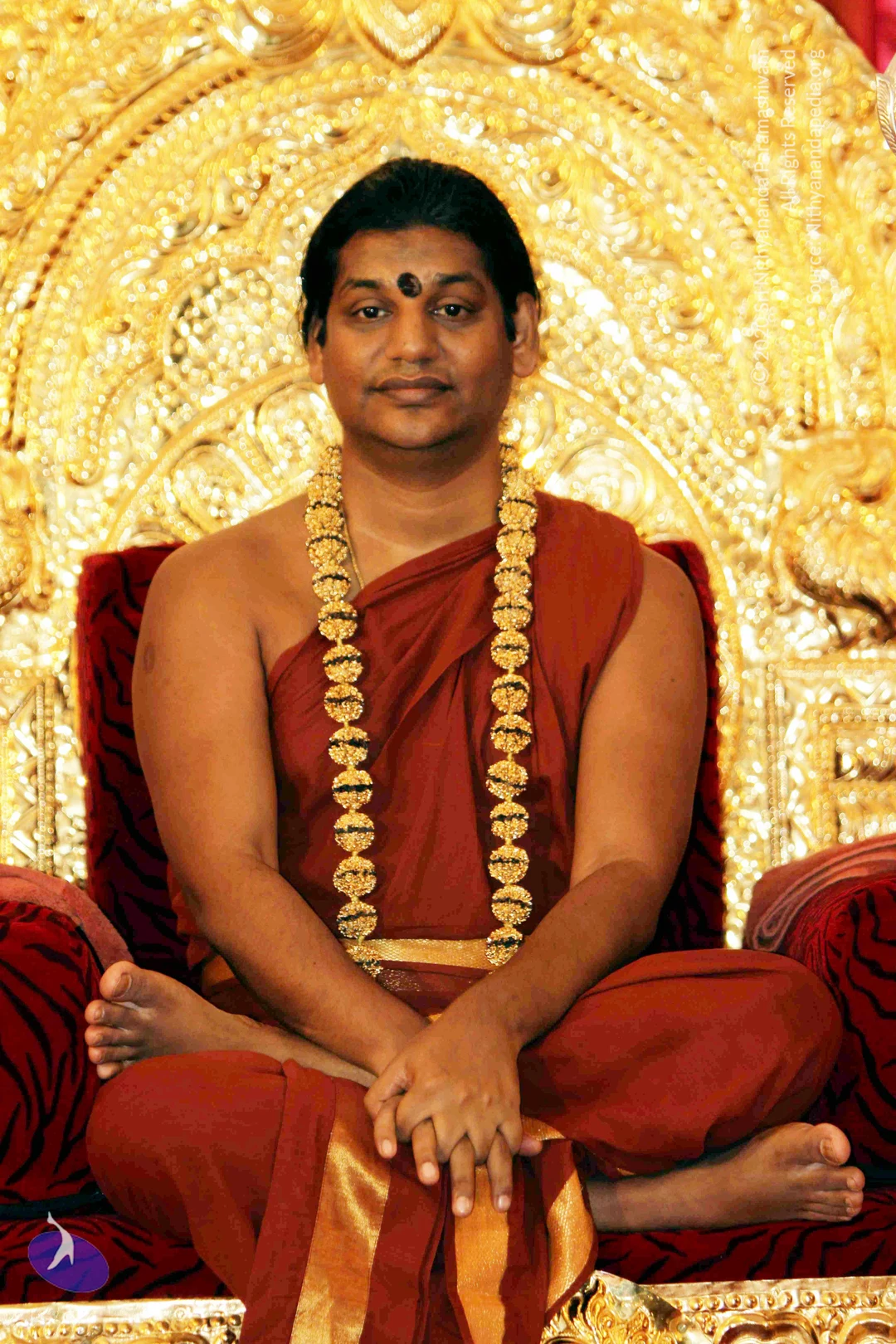
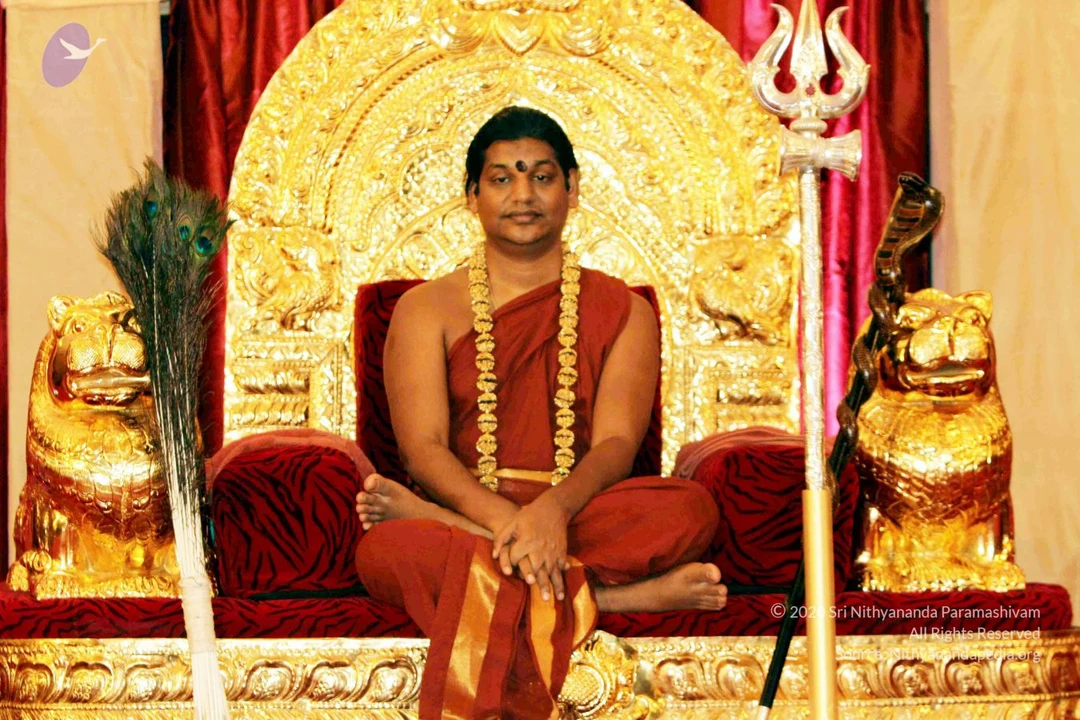
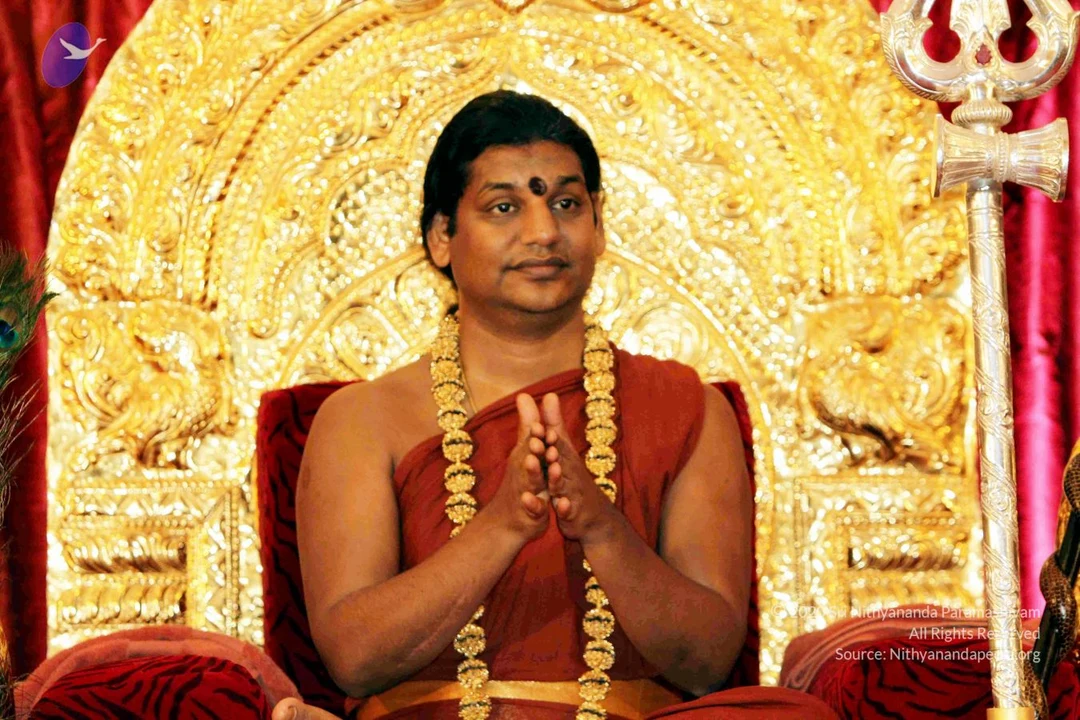
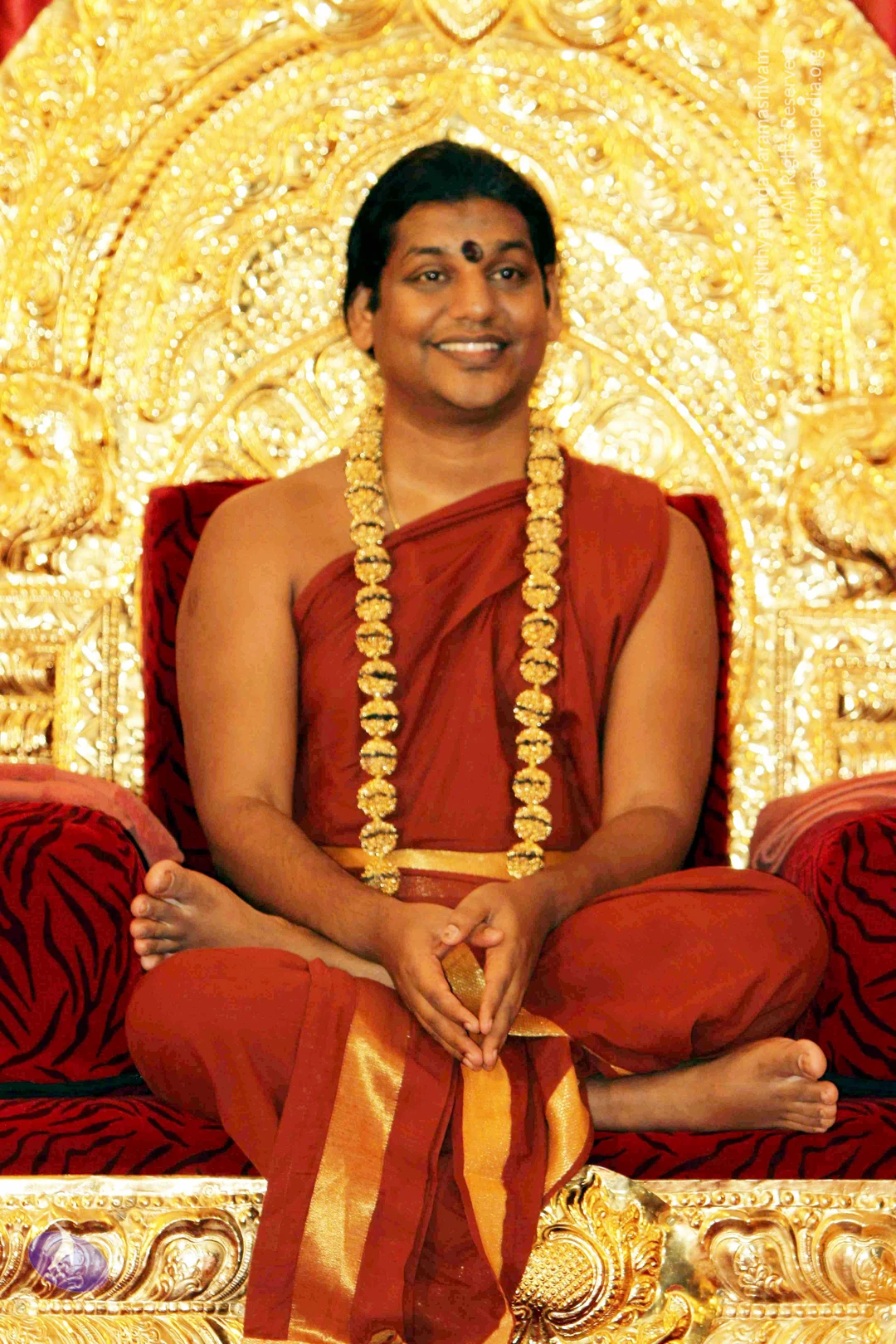
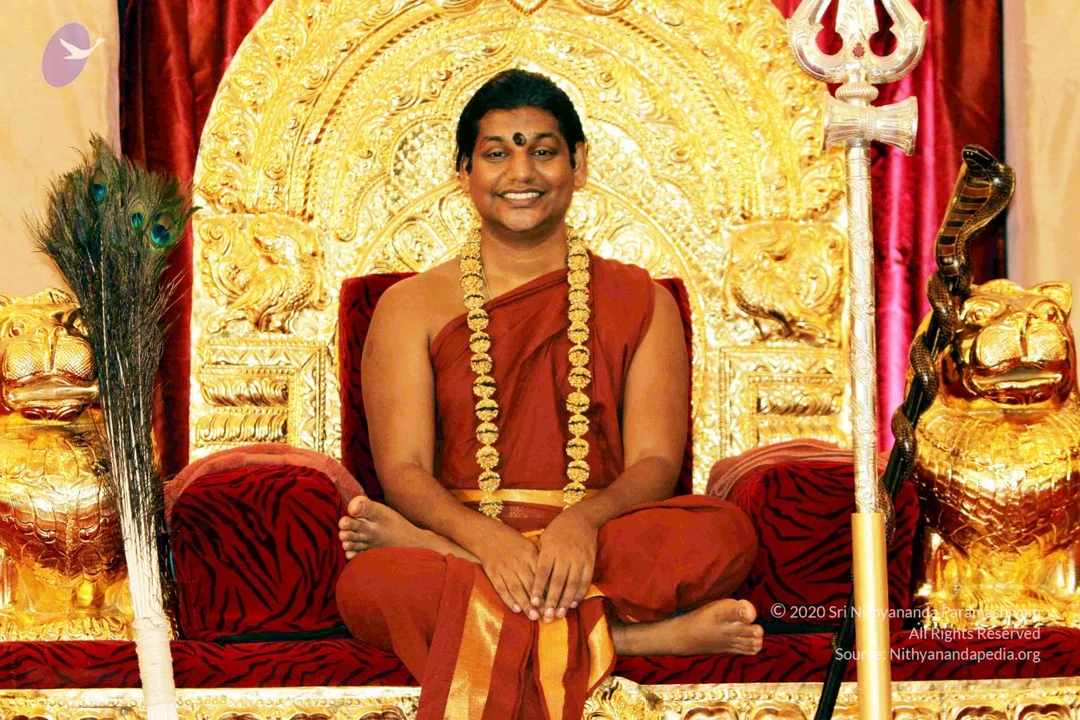
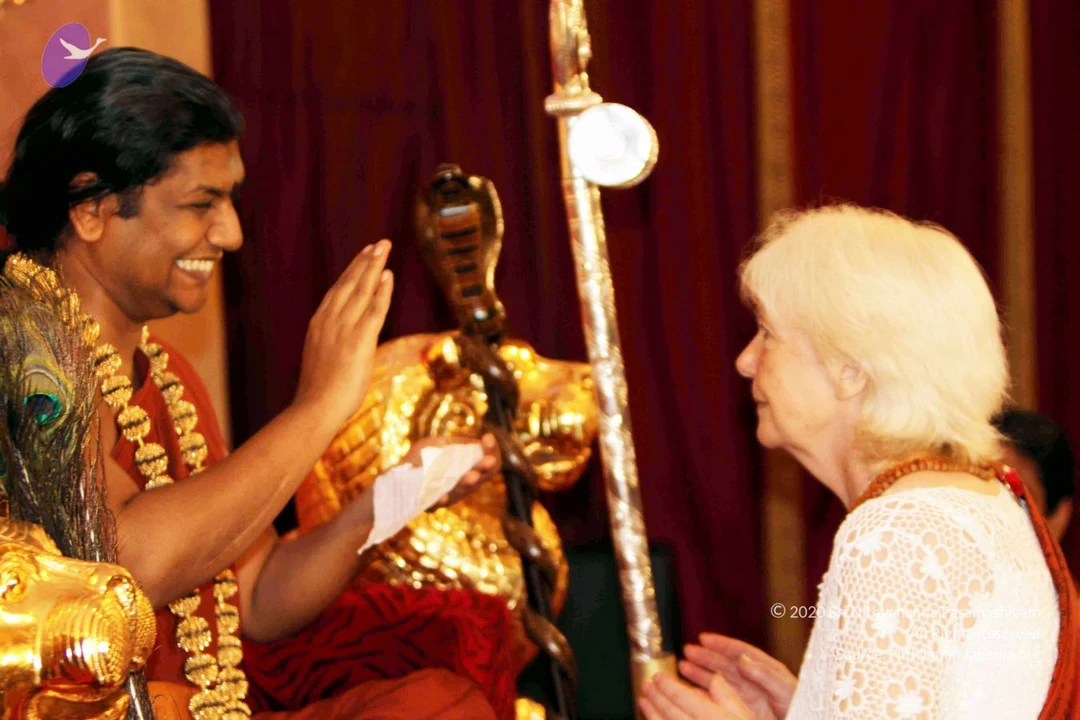
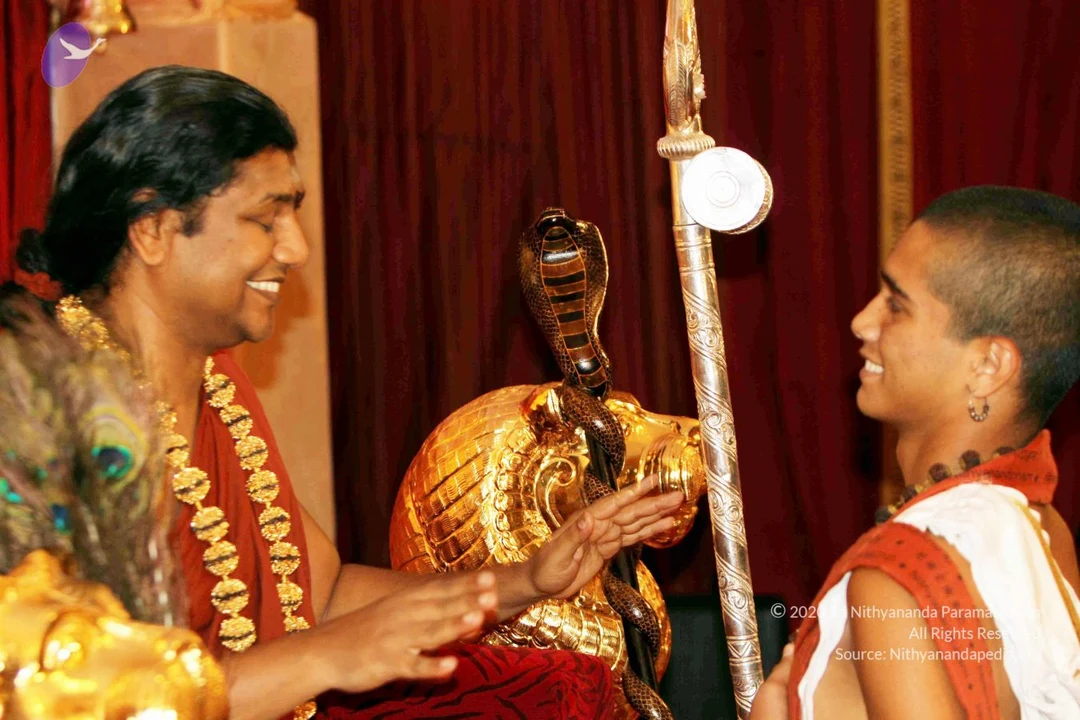
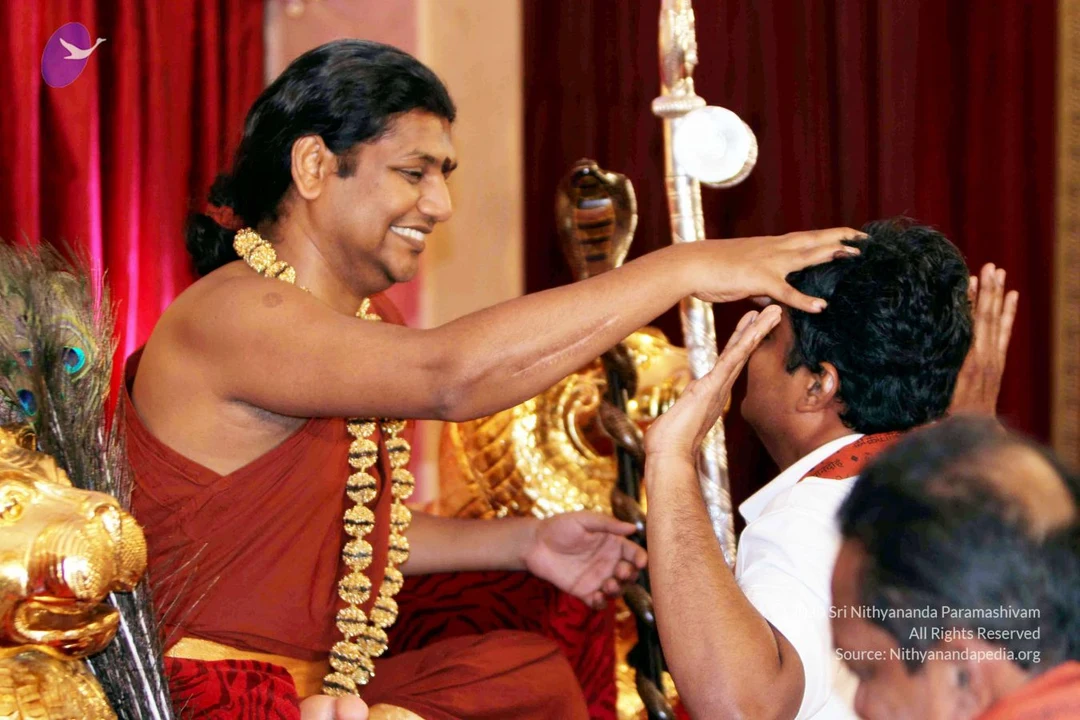
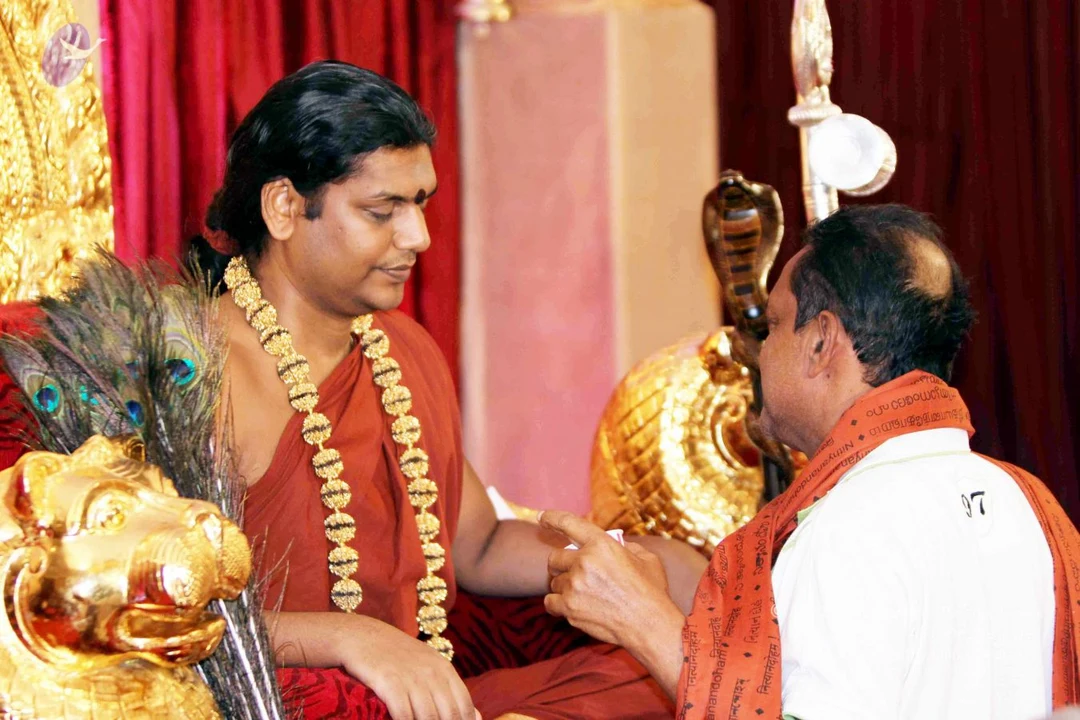
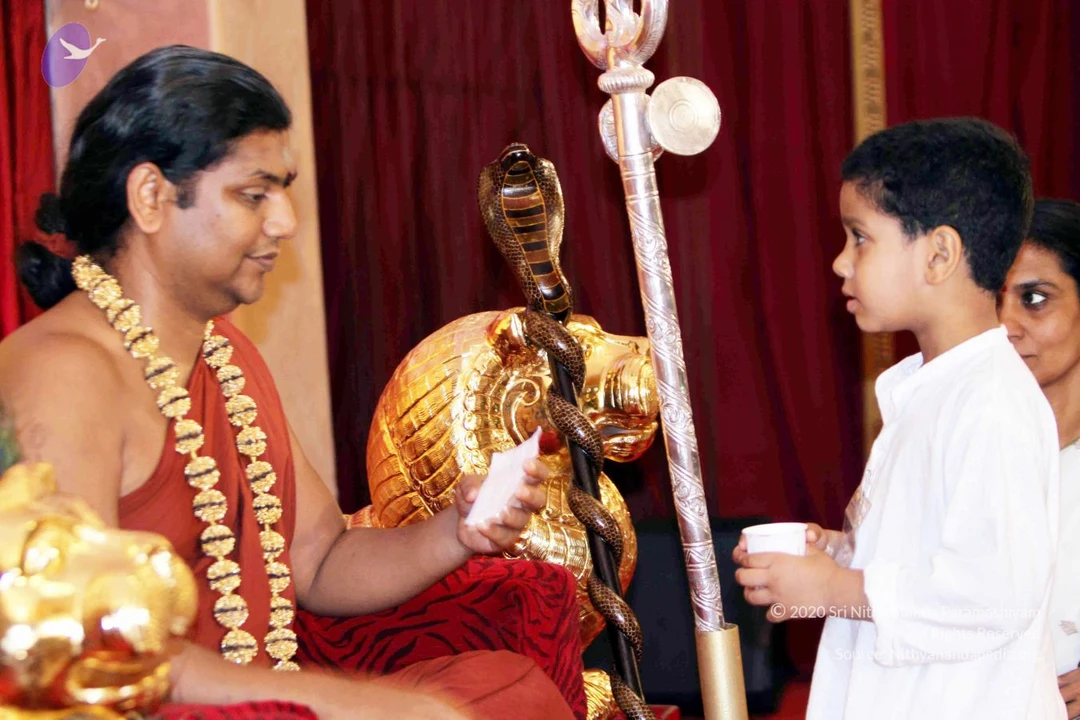
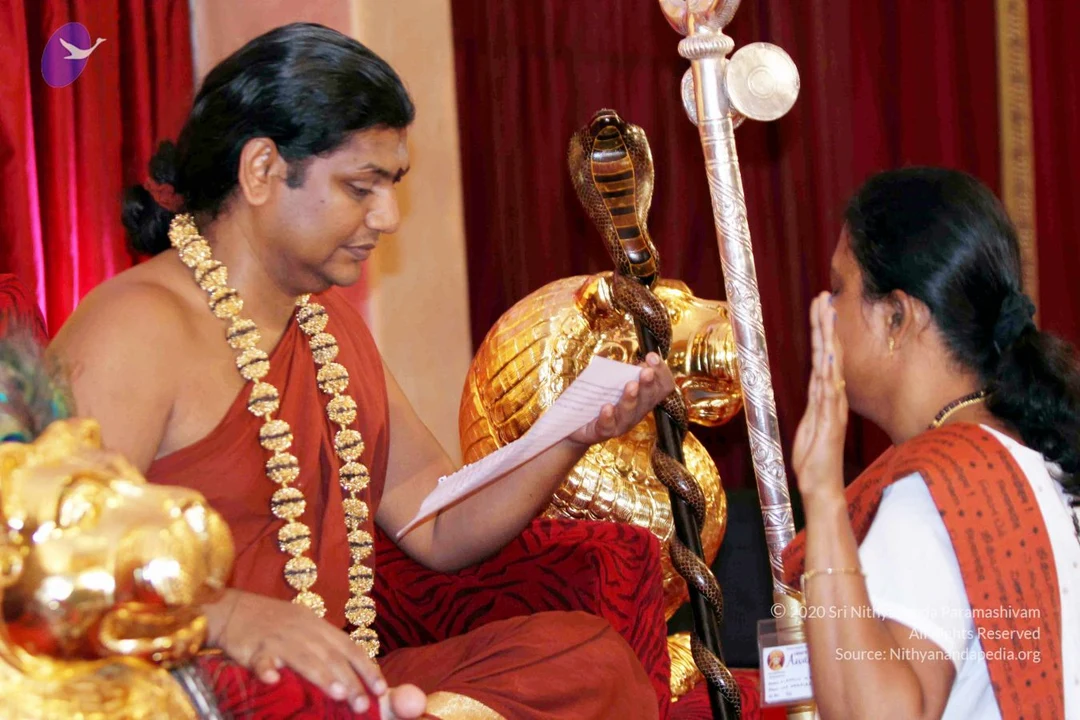
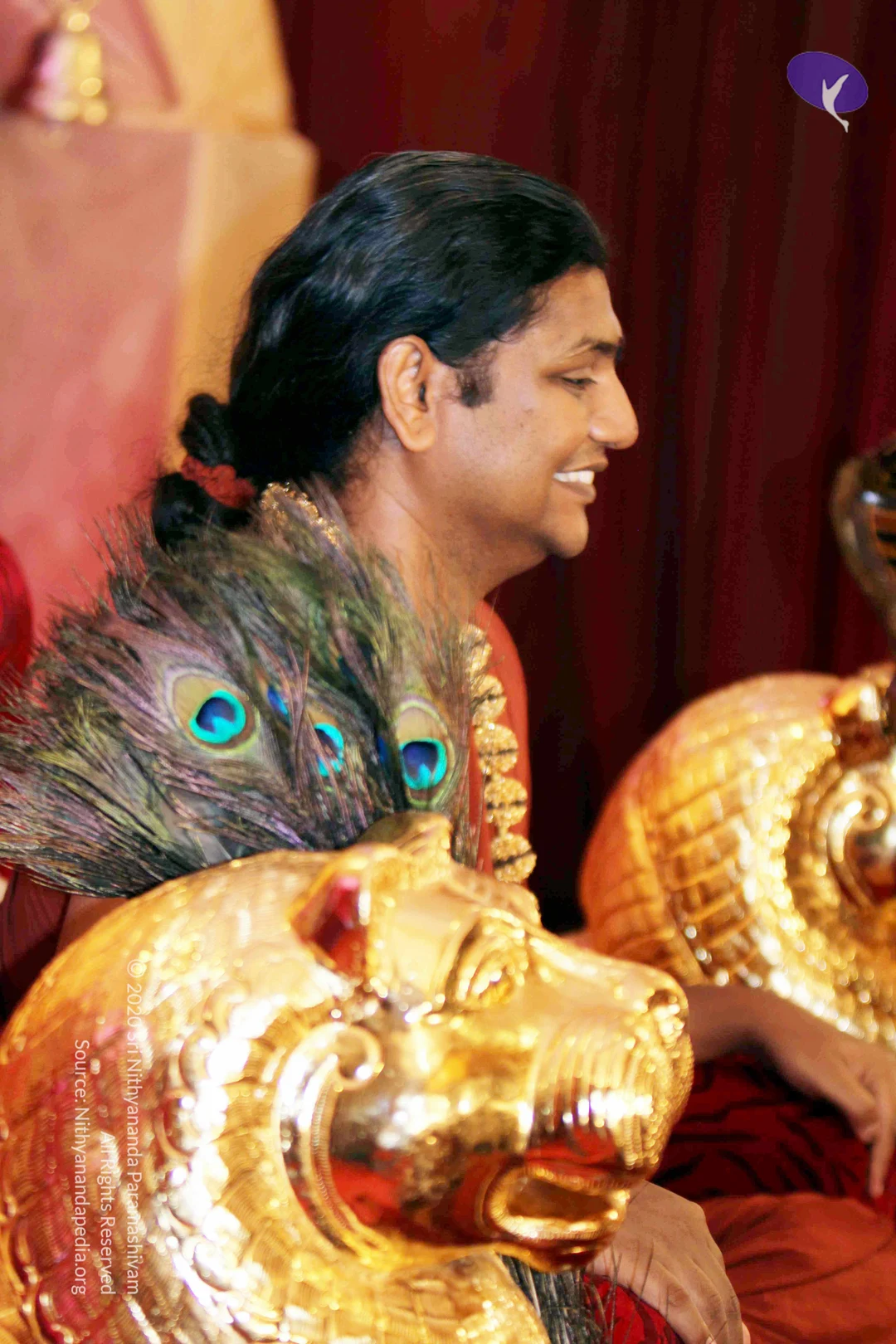
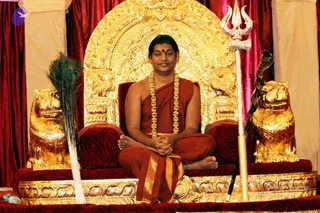
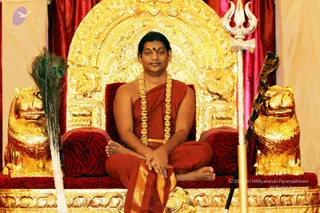
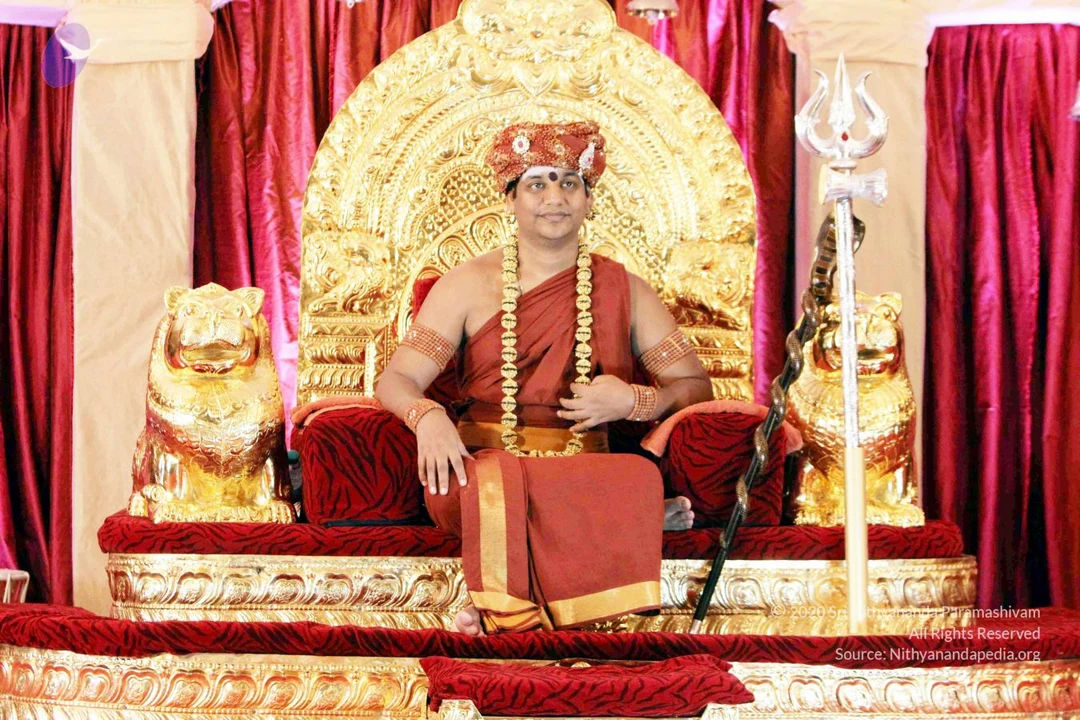
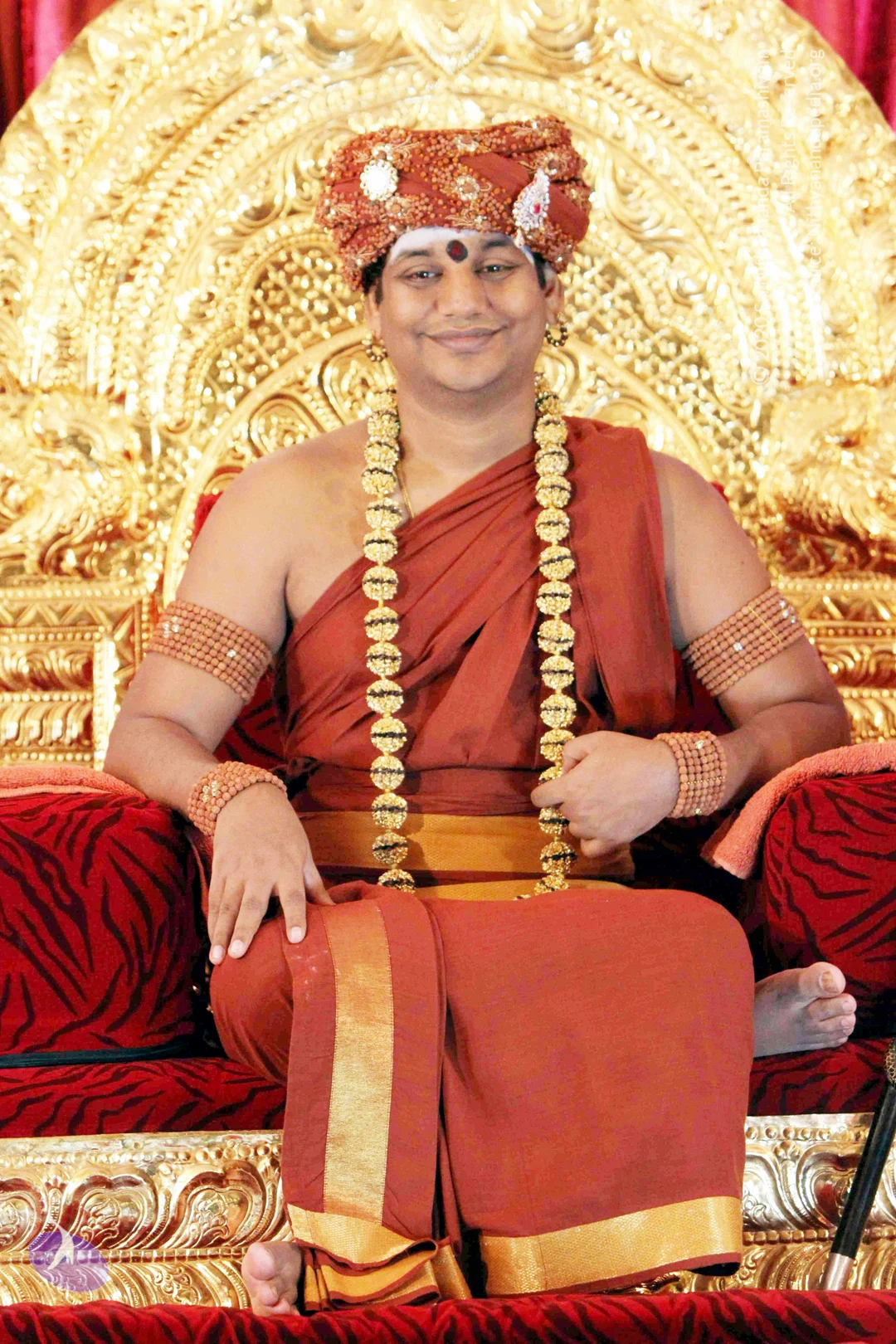
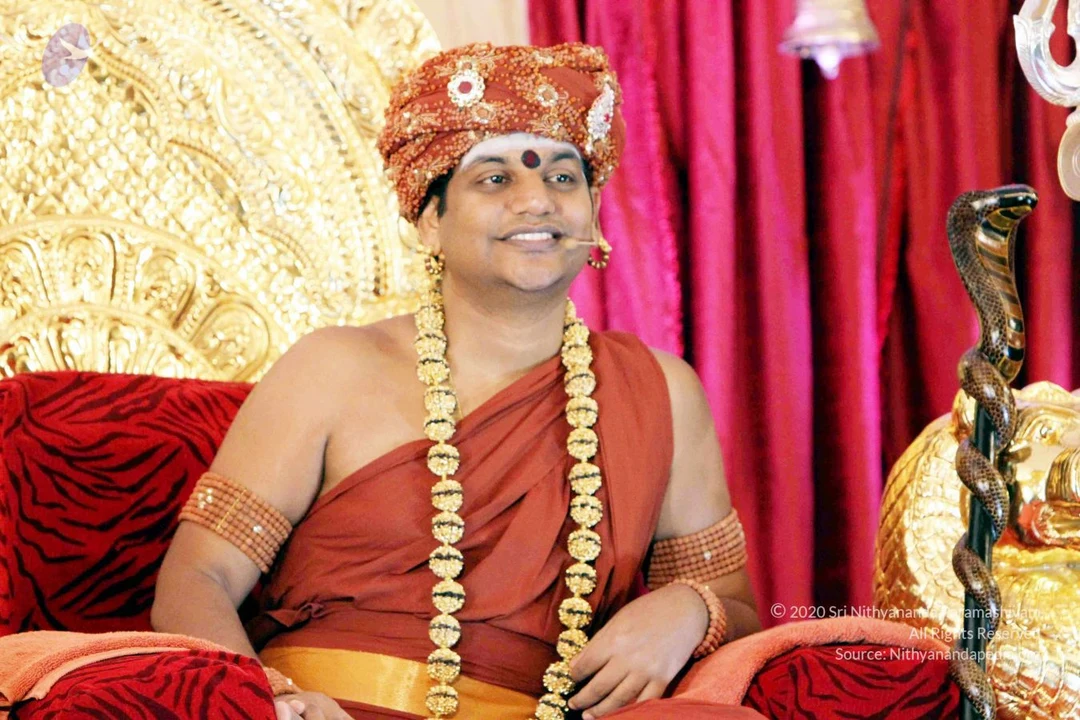
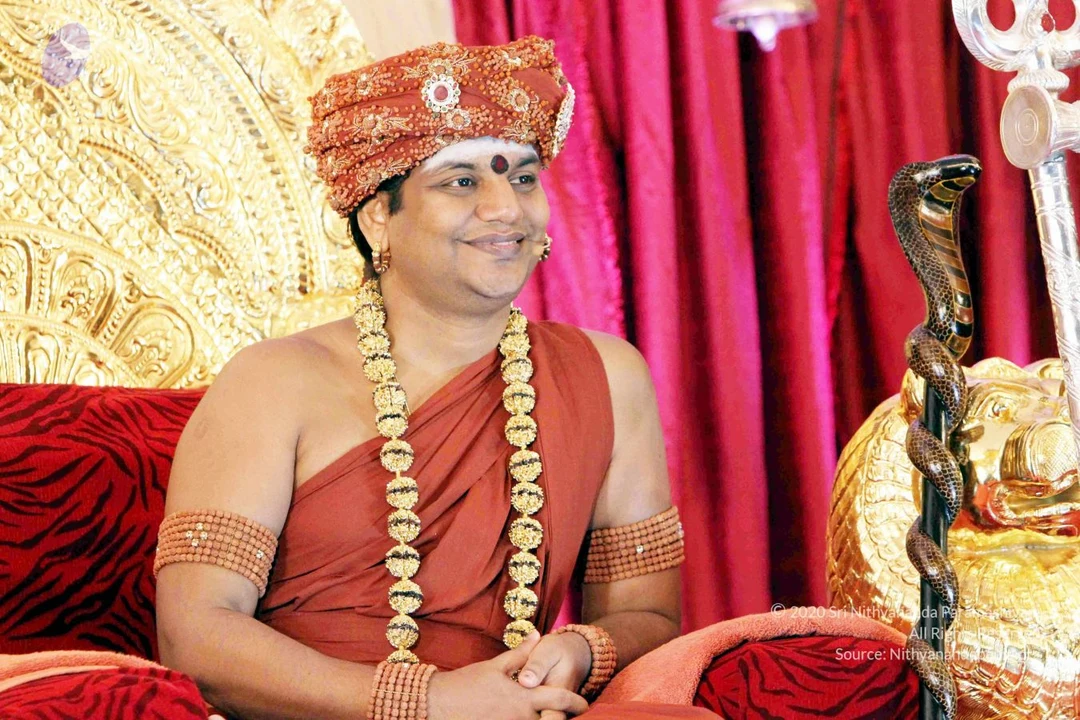
A seated man speaks from an ornate gold throne with red tiger-striped cushions against crimson drapes. He wears a red-orange turban decorated with gold and white ornaments, a red-orange dhoti-style robe with a gold-bordered waist cloth, and a long necklace of gold beads with dark accents. He has a red dot on his forehead and sandalwood-colored beaded bangles on his wrists and upper arm. His right hand is raised mid-gesture while he talks, with a small microphone near his face. a person: his long-established appearance cues here are the ornate turban, multi-strand gold bead malas and throne seating; the candidate is present in person.A man seated on an ornate gold throne with a carved arched back, flanked by two gold lion statues on red tiger-striped cushions. He wears a red-orange turban with a small red dot on the forehead, a red-orange shawl over the shoulders, a golden-brown waist cloth, multiple gold necklaces and rudraksha-style beads, and beaded bracelets on both arms. A silver trident with a snake coiled around its shaft stands to the right against a backdrop of red and magenta drapes. The man's appearance is consistent with a person identification based on the throne, ornate ceremonial clothing, gold necklaces and beaded adornments, though the face is not used for identification.A smiling man in saffron-orange clothing sits cross-legged on an ornate gold throne with a large gilded arched back. He wears a red-orange turban with a jewelled ornament, a red bindi, a long gold-bead necklace, and gold armlets and bangles. His wrapped robe is saffron with a gold border. Golden lion sculptures flank the throne, and a silver trident stands beside him with a serpent coiled around its shaft. Red and pink draped curtains and a red velvet seat cushion with tiger-stripe pattern complete the setting.

July 23 2014

Original wiki page
Contents

Title:

Fear of Death is Stupidity

Description:

In today's (23rd July 2014) satsang, Paramahamsa Nithyananda speaks on the topic 'death'. Death has no significance. If you know how to use that moment to be free once for all, you are the most intelligent person! For death to happen, you need just two things: the door which is open, and the presence of Mahakaala. Both happen during every death. With the right context you can just escape, be liberated once for all. A person with very less patterns, almost no patterns, can easily slip into eternity, infiniteness, during the time the door opens for his death. You can prepare to use your death as liberation; when you know how to make your death as liberation, life is celebration!

Link to Video:

Fear of Death is Stupidity

VideoAudio

Title

Experience Nirvikalpa Samadhi - Perpetual Completion

Description

In this session dated (July 23 2014) from Inner Awakening His Divine Holiness Paramahamsa Nithyananda shares about Perpetual Completion, which leaves us in the state of Nirvikalpa Samadhi. Swamiji says at the end it comes down to the a decision you make to be complete, the decision to persist with the decision beyond the tiredness and boredom. And when this process is done in the presence of an Avatar the prasada is the experience of Nirvikalpa Samadhi, one of the highest states of Samadhi.

Link to Video:

Experience Nirvikalpa Samadhi - Perpetual Completion

VideoAudio

Transcript

All right I don’t know about you guys still i am in the mood of Samadhi in Arunagiri yogishwara.Still i am not come out the Nirvikalpa samadhi and specially Arunagiri yogeswara.How many of you literally lived the whole thing i narrated. I know, I know just the brains, mirrors how many of you are still there in the kick.

(1:04)

Actually today i wanted to work on perpetual completion. Understand perceptual completion means ability to sit in the completion continuously without tiredness, boredom without any incompletion able to move you. without tiredness, boredom without any incompletion able to move you.It is like a sit when our incompletion comes up re-live and drop the incompletion, again just sit the space of completion. it l almost look like the initial level,the person who has a diarrhea, how he runs to restroom and comes back. Again in five minutes,again he runs to the restroom and come back, again he runs to restroom come back,In the initial it looks like that only in few minutes it will settle down. It looks like a wrong analogy.you can sit with open eyes or closed eyes, but you can't engage yourself in unconscious slumber means sleeping. you can't engage yourself in just getting last flow of thoughts,”No” you will only sit in the space of complete completion.I am going to be here continuously encouraging you and guiding you.

(2:43)

Listen to the instruction,you don’t need your eyes closed or eyes open its up to you,if you want to you keep your eyes open, keep it open.If you want to eyes closed,keep it closed,its up to you but no thought current in side.you sit in the space of completion any thoughts come up is a incompletion that see source why that thought feeling agitated,feeling irritated,feeling tired,feeling bored,why that thought.

See the source.when you started developing the same thought trend.Re-live,complete, relieve come back to completion.How many of you understand the process,shall we start.It not be difficult,very easy only first 10 thought you have to do completion and after that you will just simple decision you will be in the space of completion.That is all,permanent pain nothing but every individual separate,separate thoughts continuously coming that’s no permanent, only continuous. Broken leg every thought, i have had a hand fracture,every thought of pain is continuous is not permanent. you can look in what mind says “is pain”, from where the thought trend of pain is developing, how i am developing, look in,when you started developing.just see the thought trend is complete re-live you will see disappears.so thought will cross the thought and you will be thoughtless.

(4:37)

Understand completion is also one thought, Which completes the incompletion.you will be in the space of completion. I tell you you can complete with the life incidents happening.For example, If you are continuously abused.decide i am completing with this pattern.you will see suddenly you will stop attracting the persons who are abusing you.your life incidents will be completed.What is your talking about small pains. yes, i think going through a little bit inside reliving, will help you. “No” that hetered to go in is one more pattern.Yes, you can use anything you want.you want thing you want just come back to completion that's all. You can, everything in this session,I am trying to teach you is completion. Completion is your simple decision. That is incomplete. That is what I am telling,run to the bathroom immediately take him it a diarrhea patient.

Complete,Drop and come to the space of completion. Actually I am teaching you to live in Nirvikalpa samadhi. Perpetually living in Nirvikalpa samadhi Perpetually living in the space of advaita Perpetually living in the space of completion thats want to i am teaching you guys now Especially after this morning, today’s initiation you will see,I am sitting here and i will make you guys live in the perceptual completion. Even that is the one more incompletion,just go into that is the self doubt.Say,all this days we pulled out many incompletion from inside and completed.

(6:51)

Today we are just looking, who is come to fight with you,you are going to fight with them.We don’t call for Mahabharata war.who ever comes on the way, finish them tatatatatak. ”No” Every thought is a powerlessness.

Shall we start.You don’t need to close your eyes or tie the ribbon, just sit if you want to close your eyes you can close.If you want you can pick up your mirror, let start. I bless you all to achieve complete completion.

Photos
\

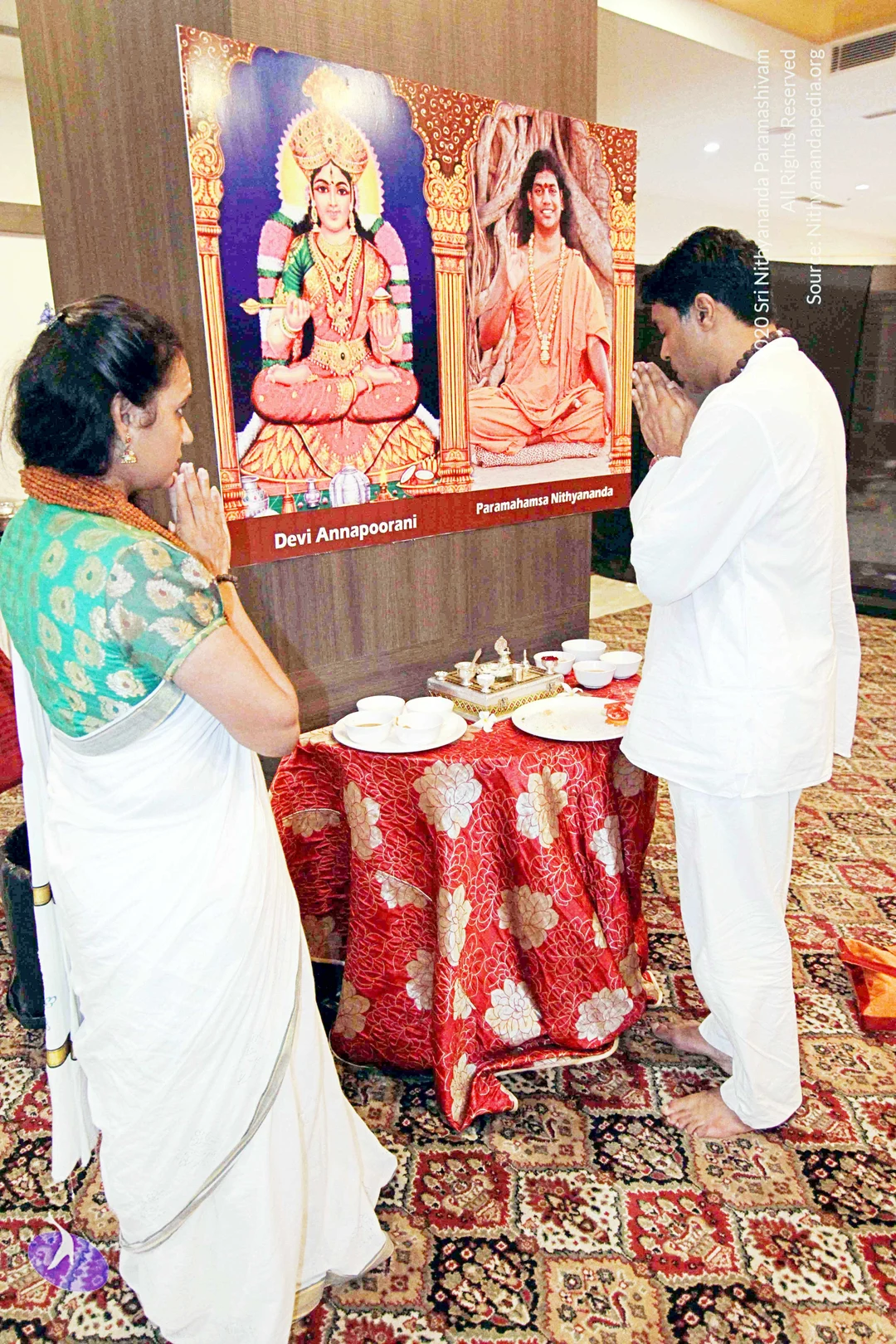
paduka pooja and satsang
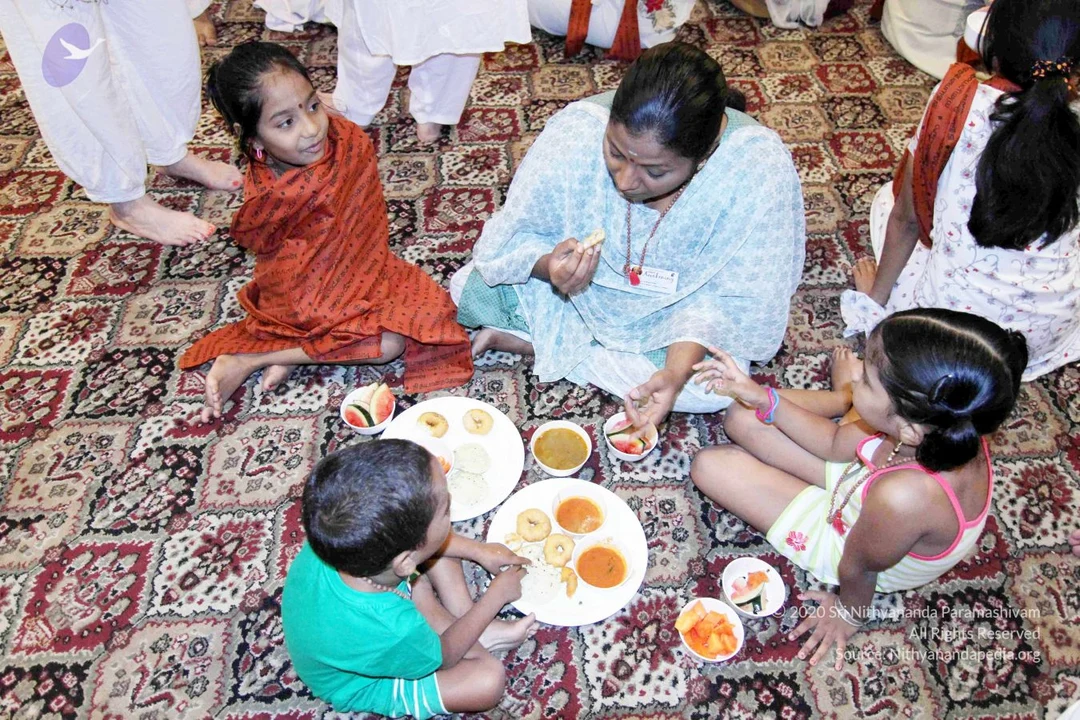
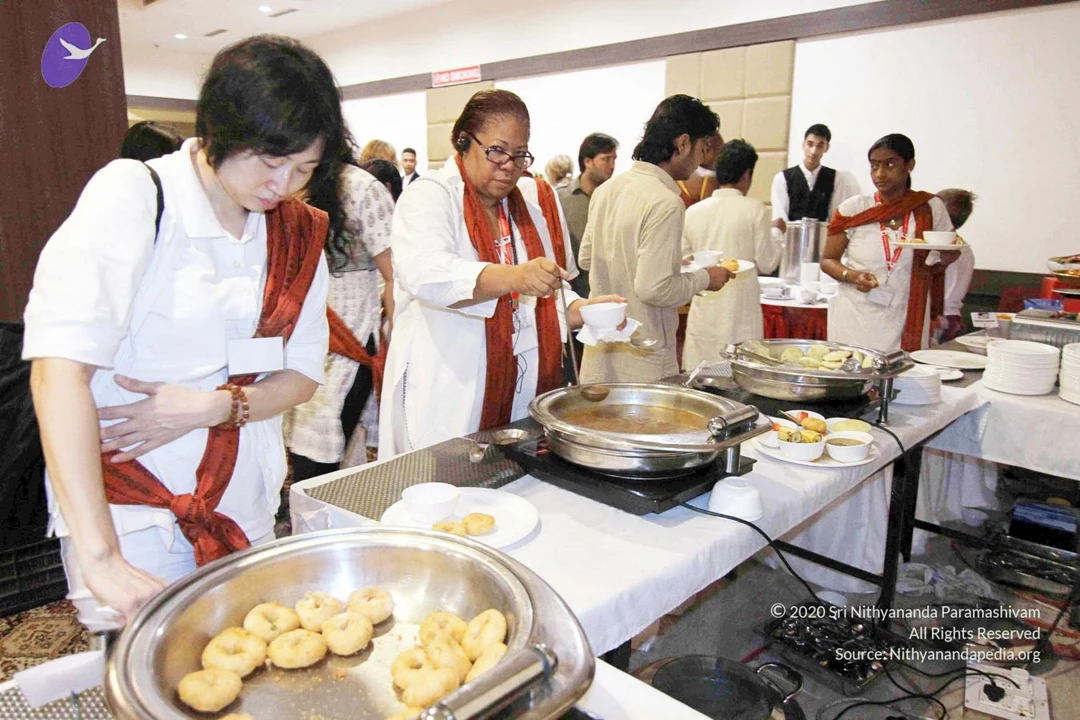
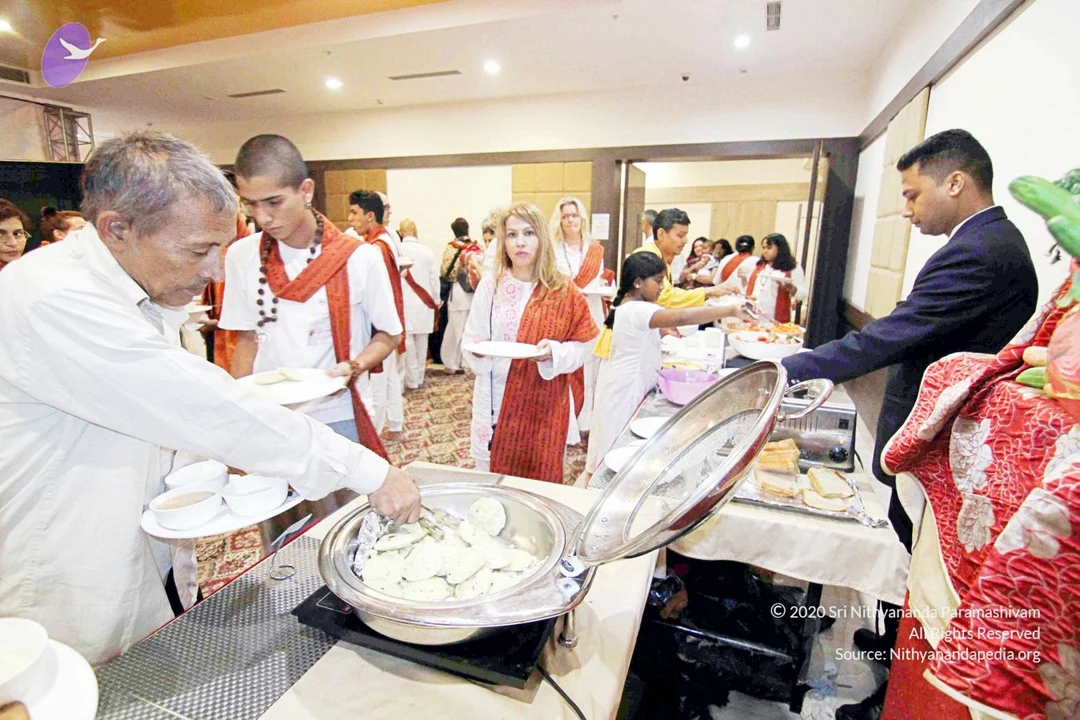
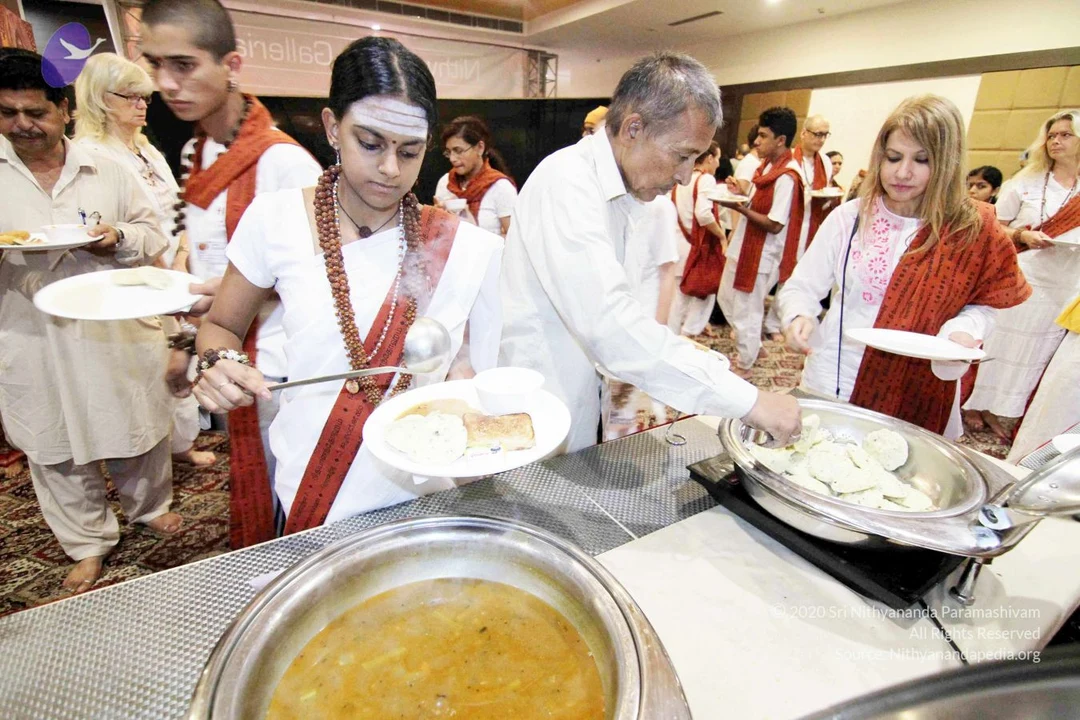
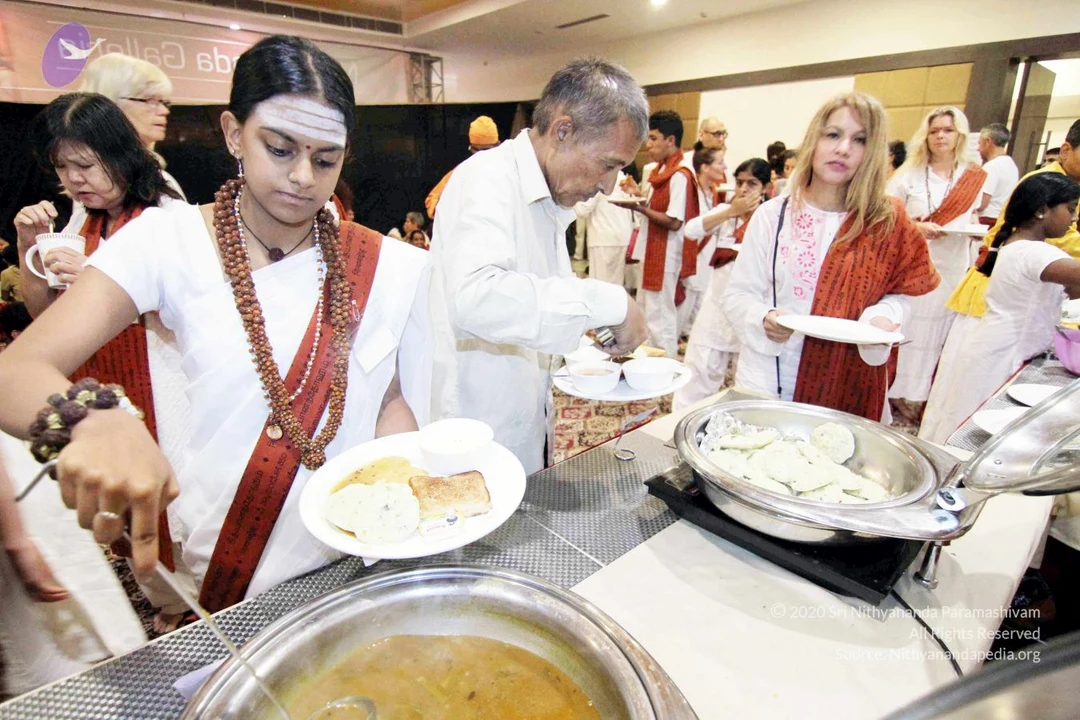
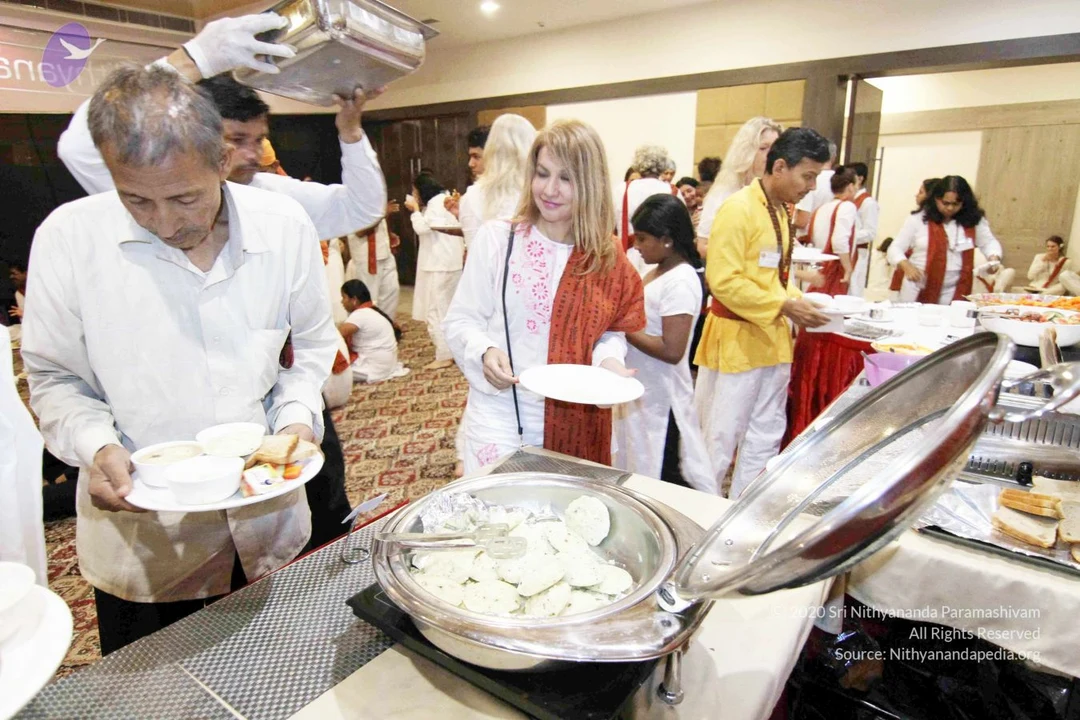
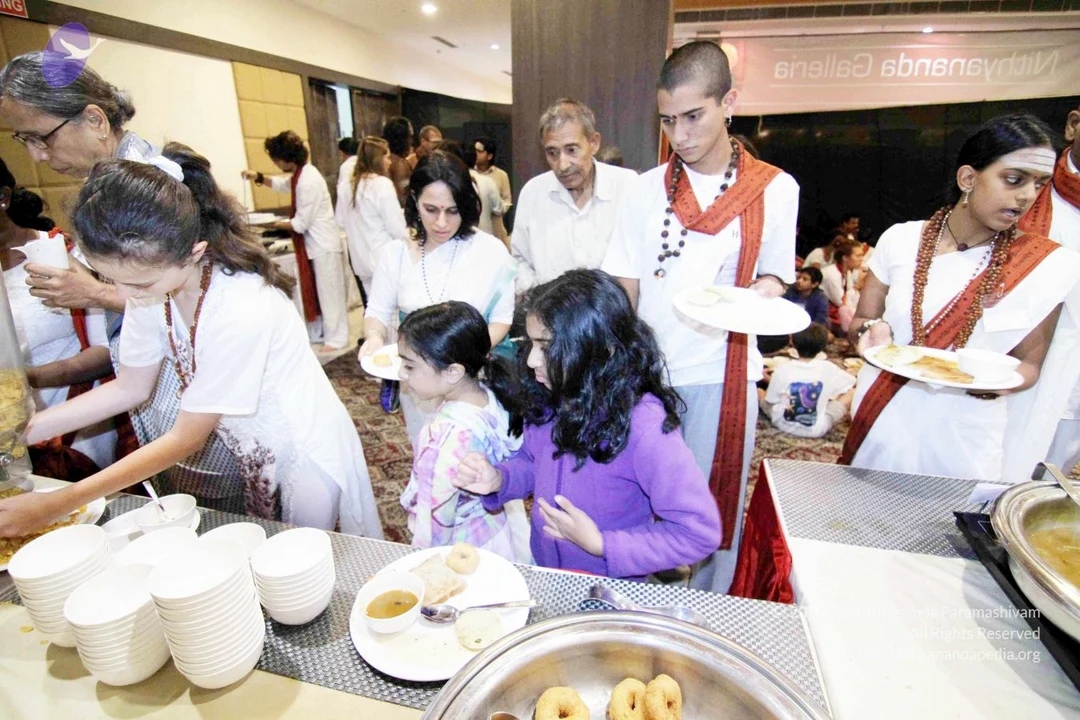
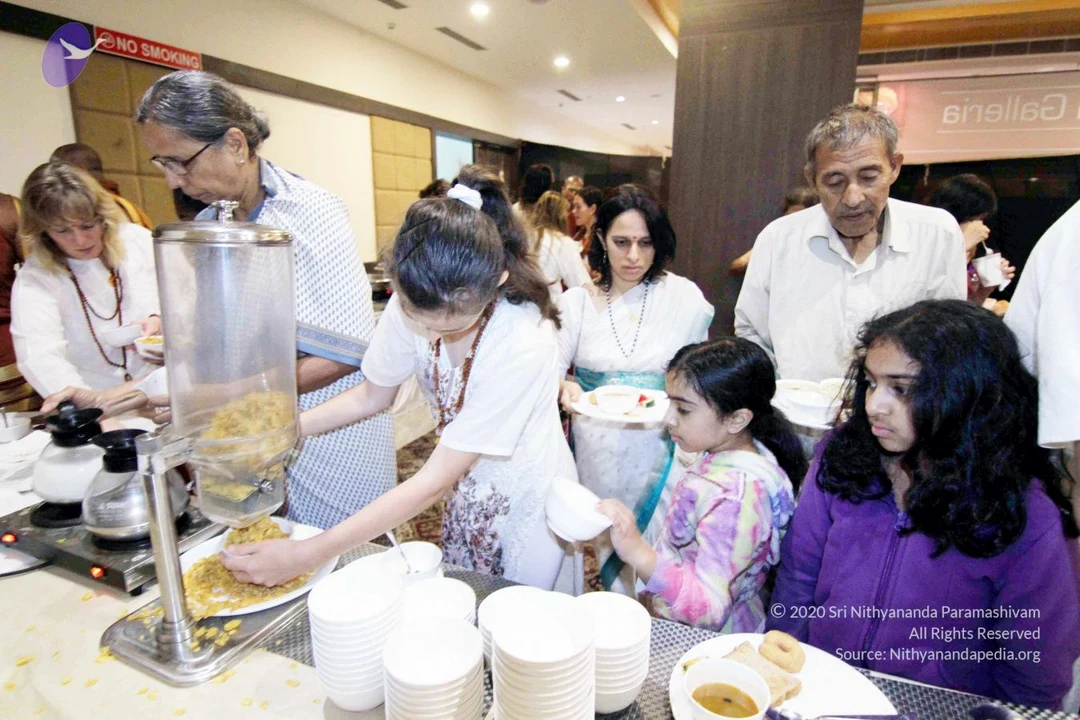
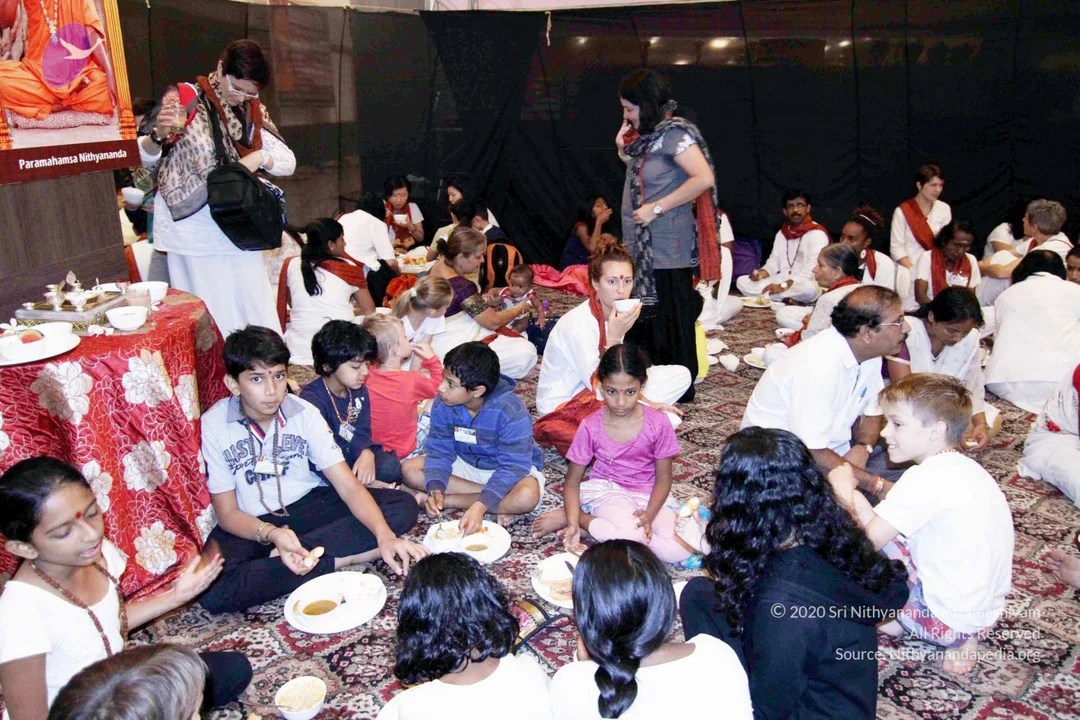
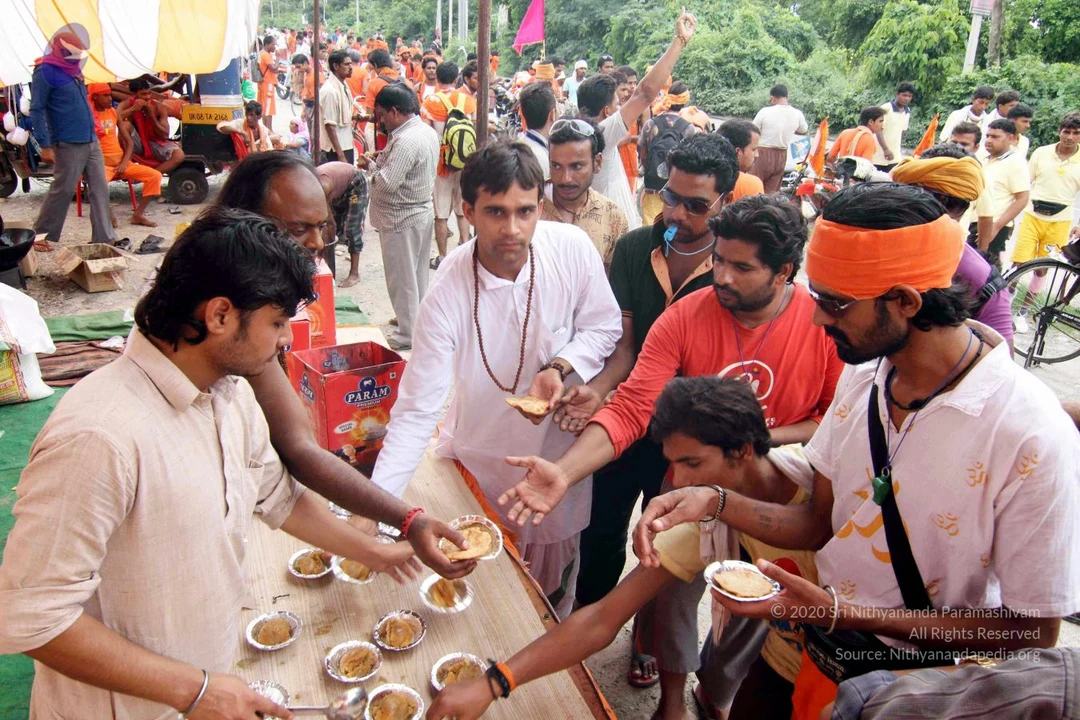
IA Session and Annadhaan

Tags:

Paramahamsa Nithyananda, death, liberation, pattern, infinite, eternity, Mahakaala

Photos from this day

View all 365 photos

Photos

11 photosSource gallery
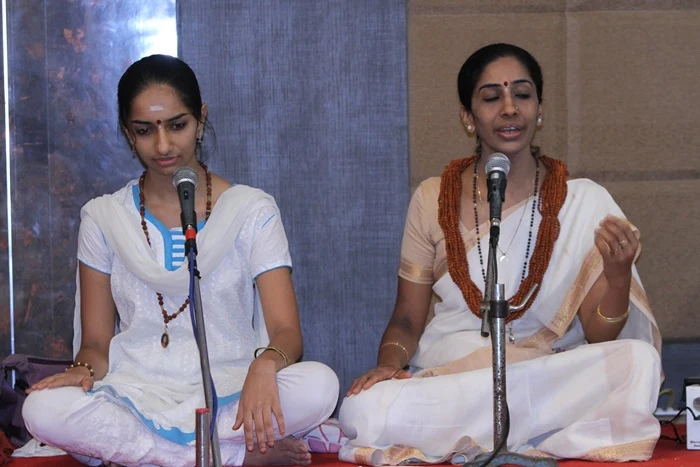
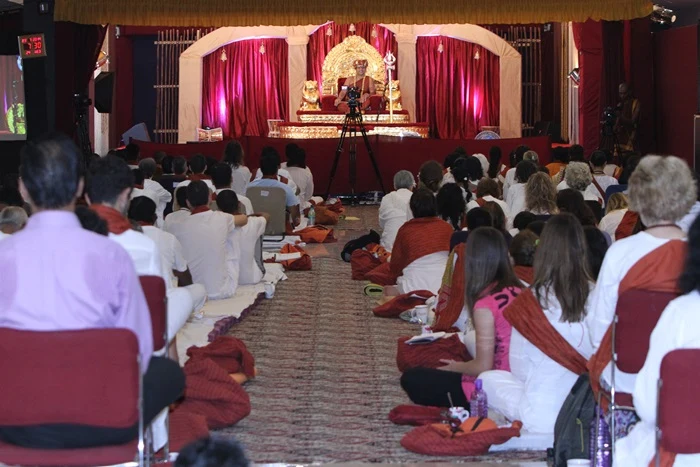
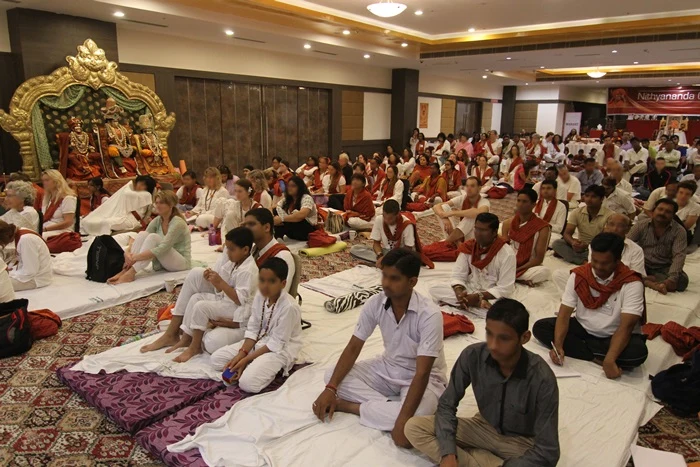
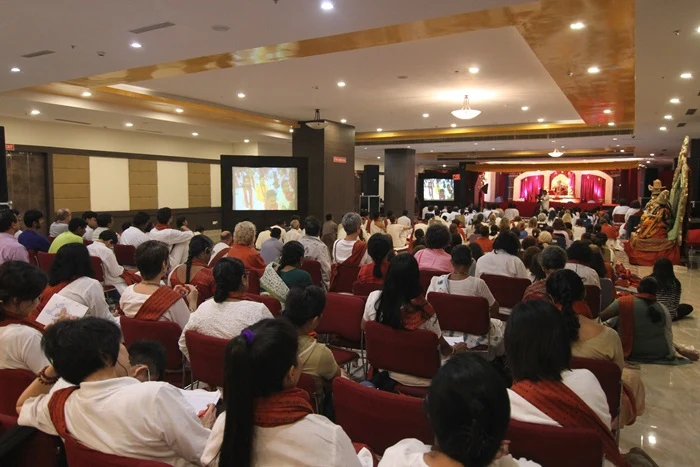
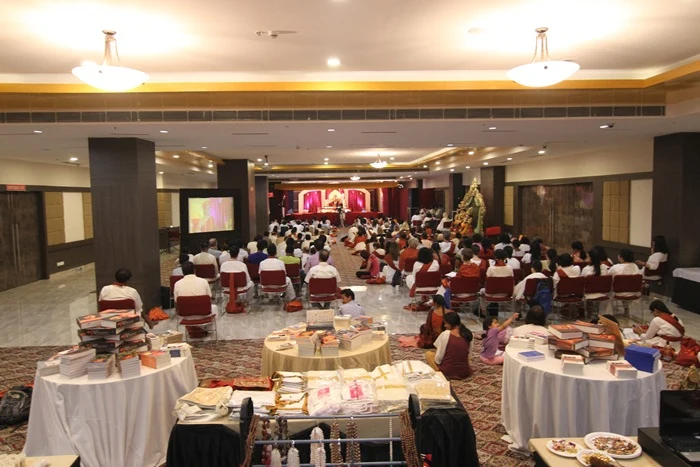
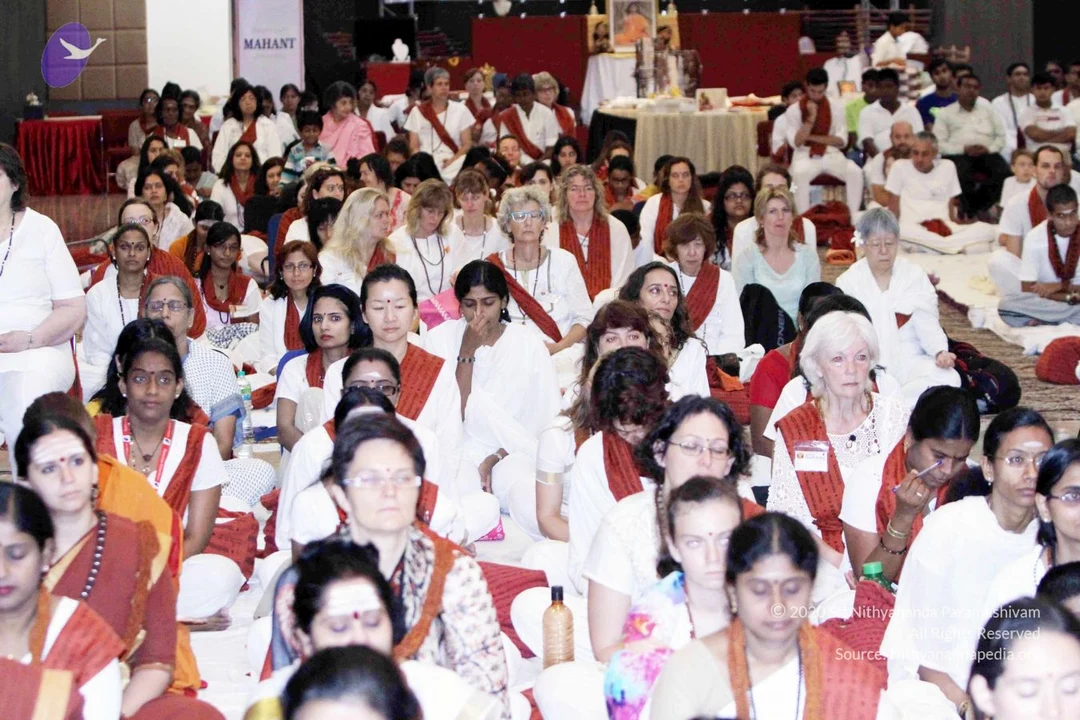
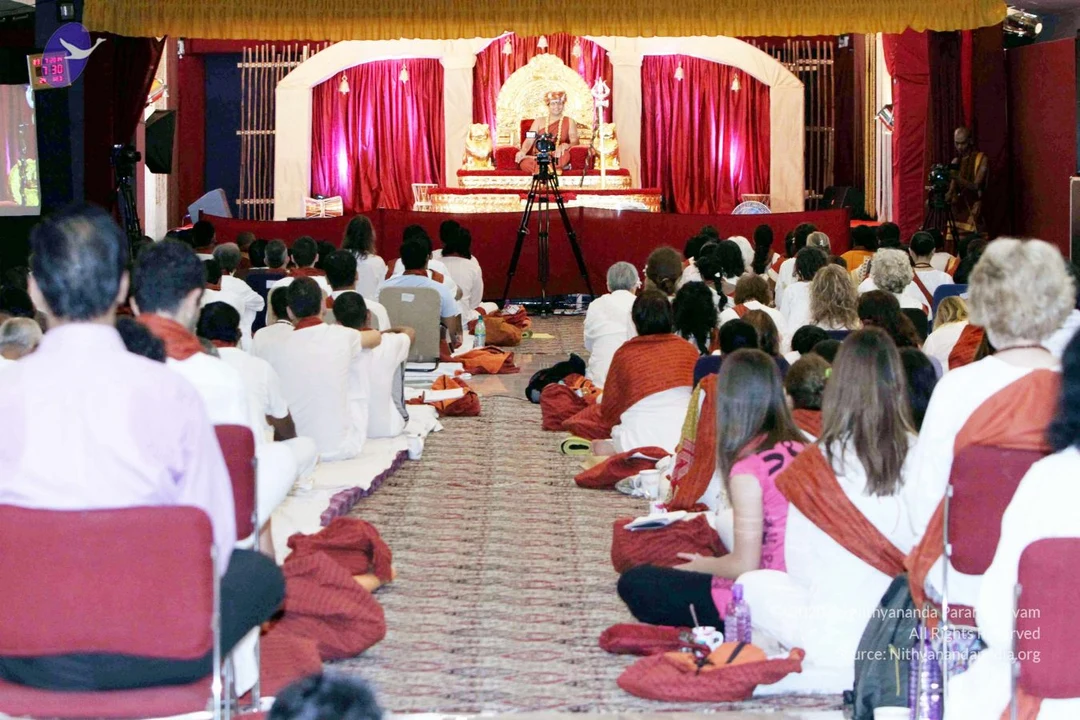
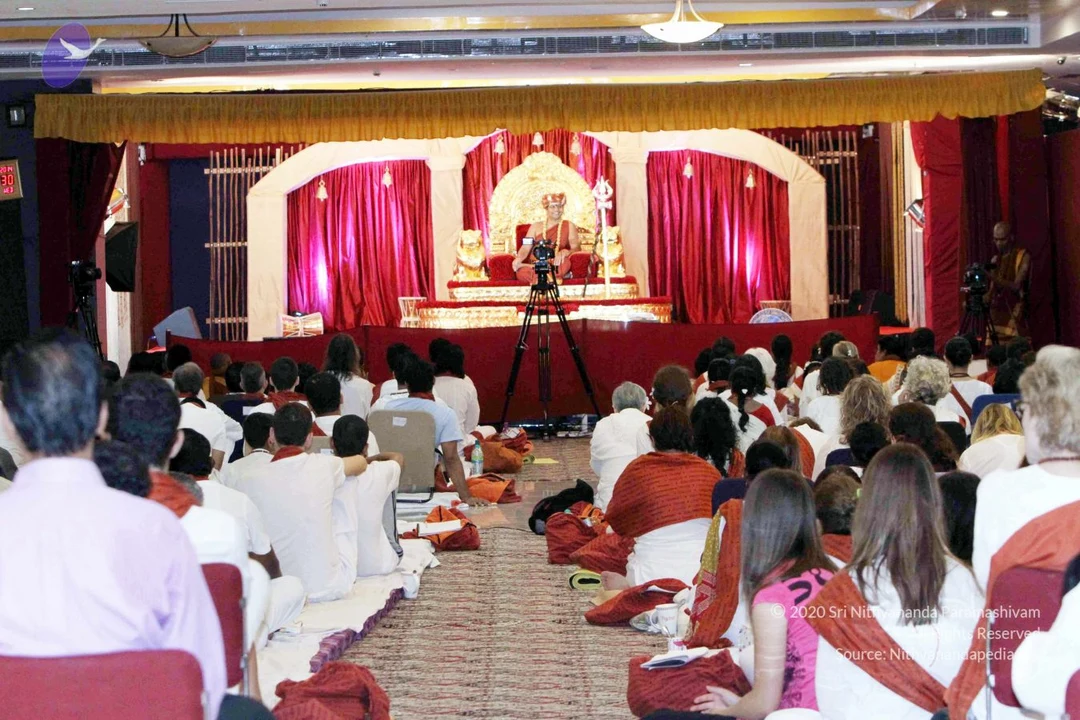
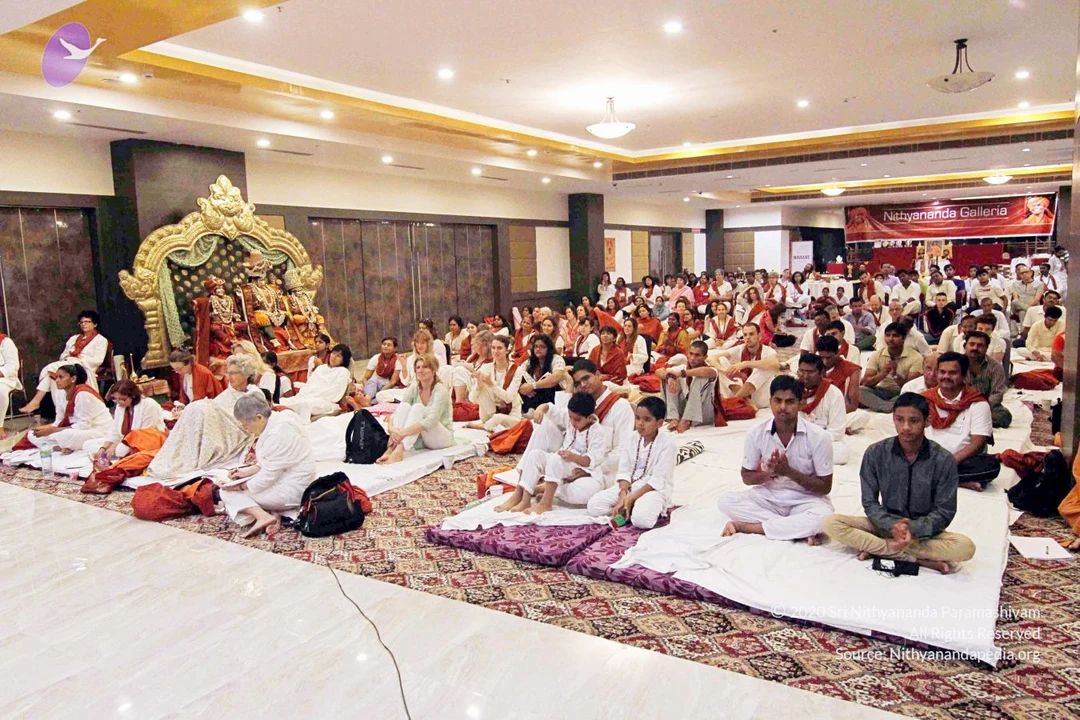
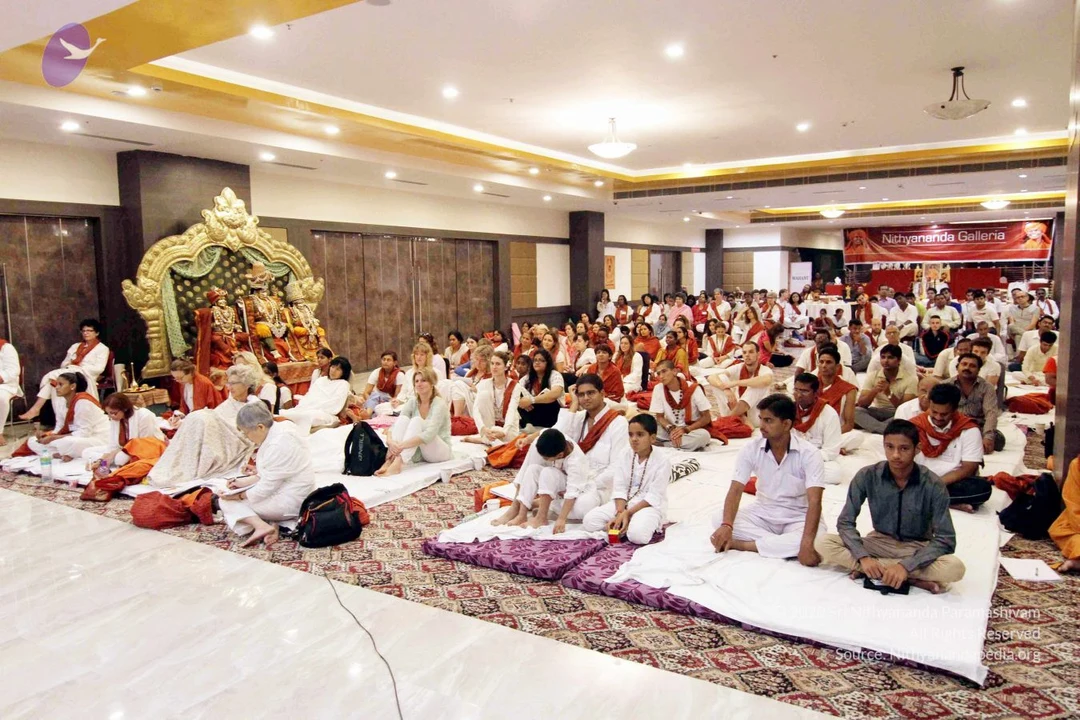
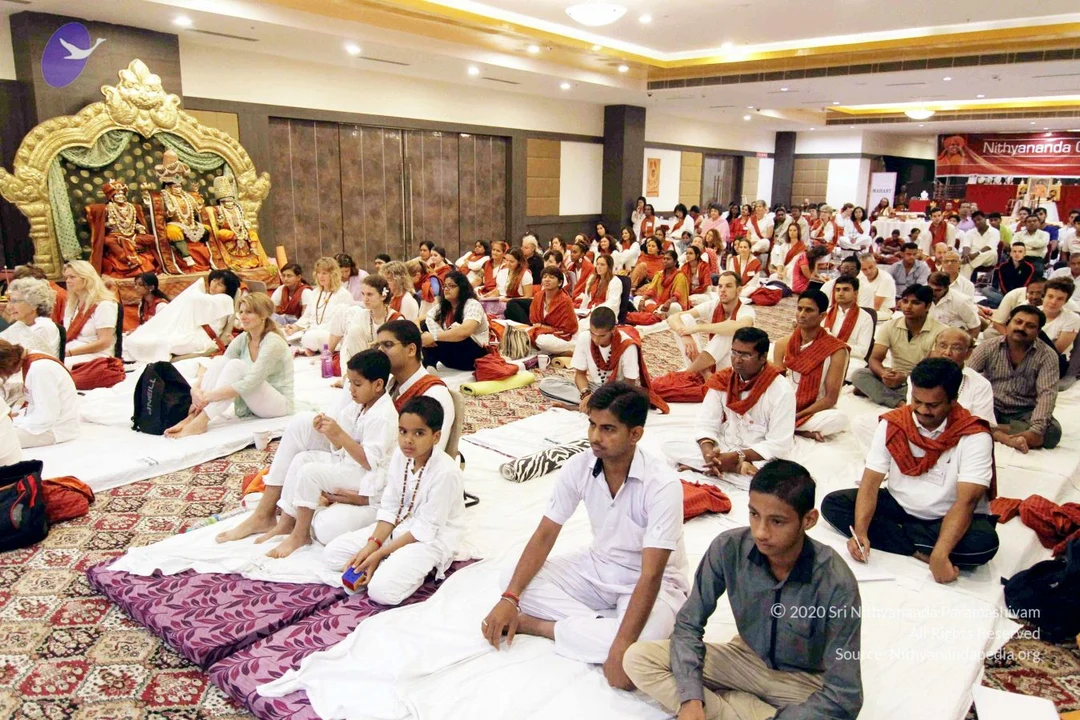
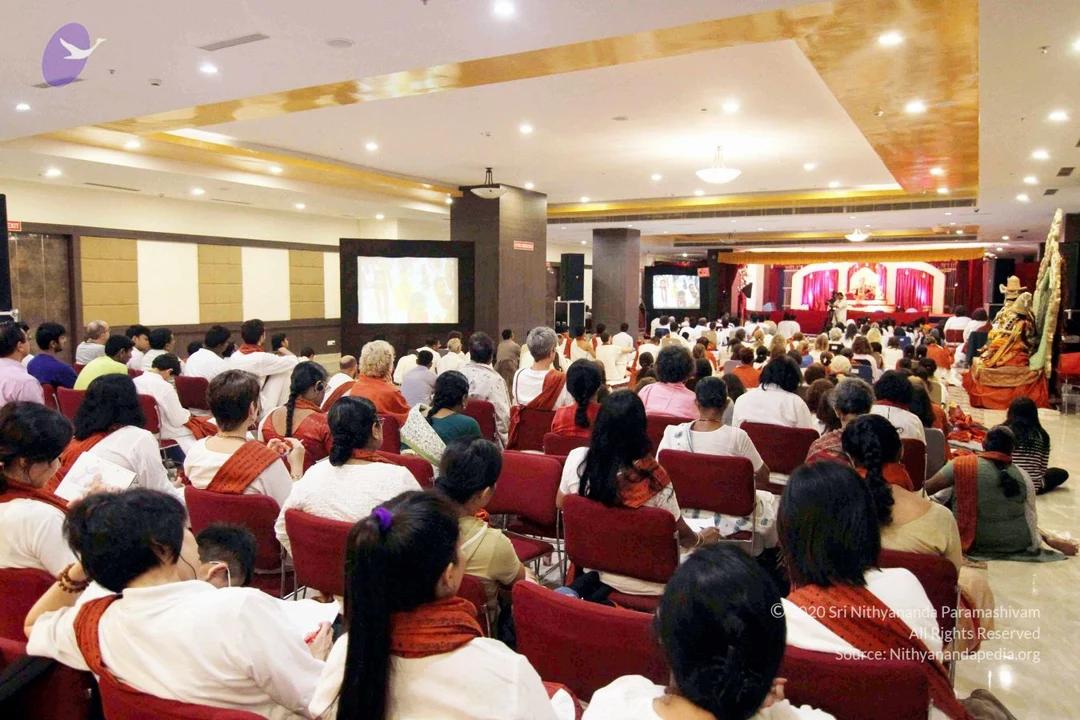
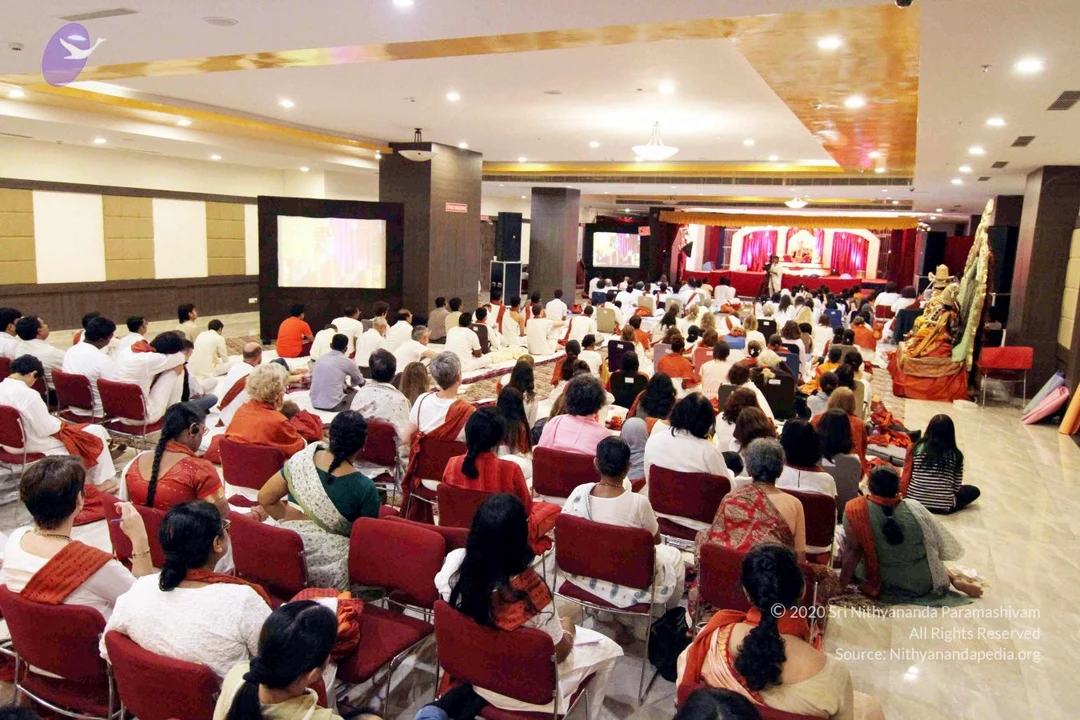
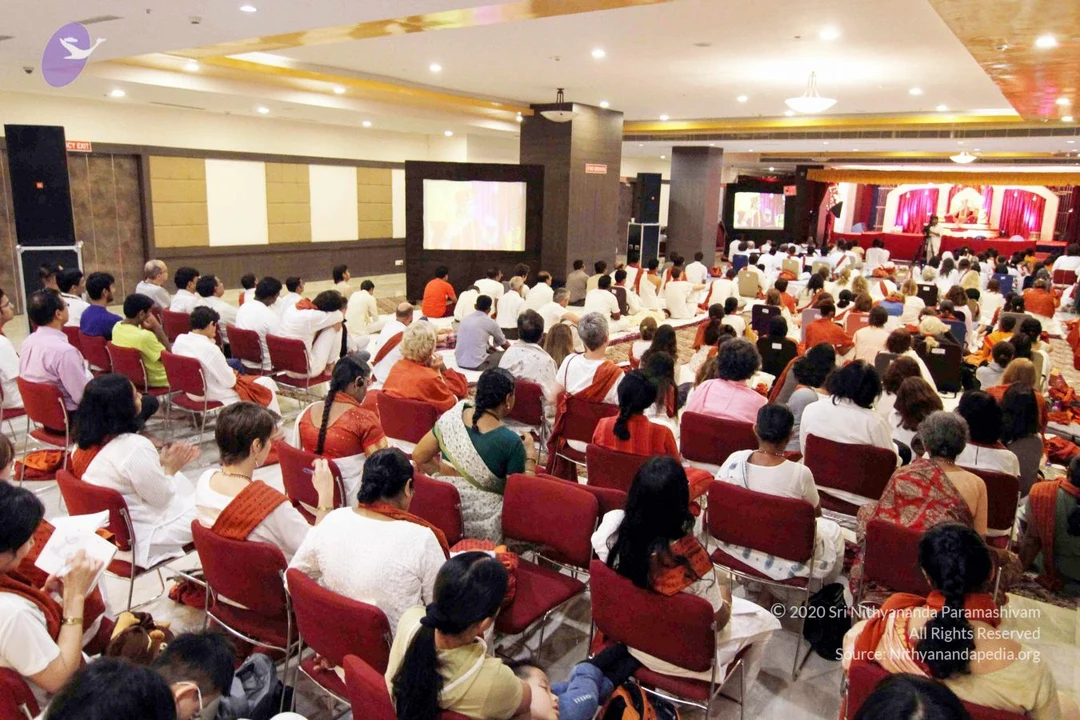
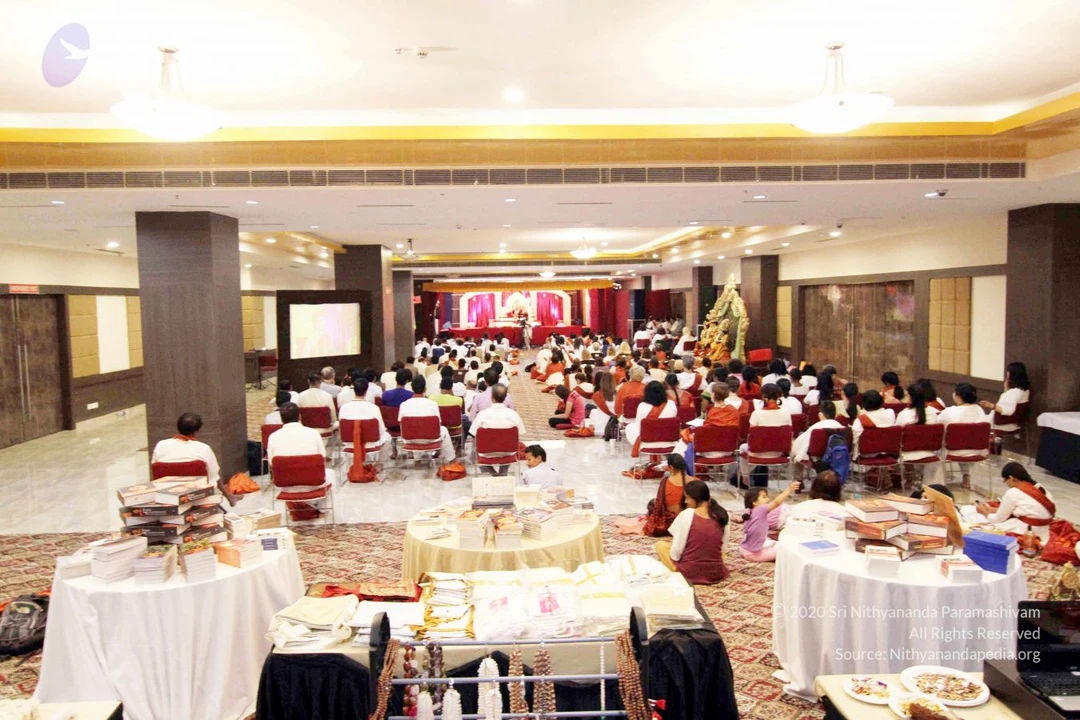
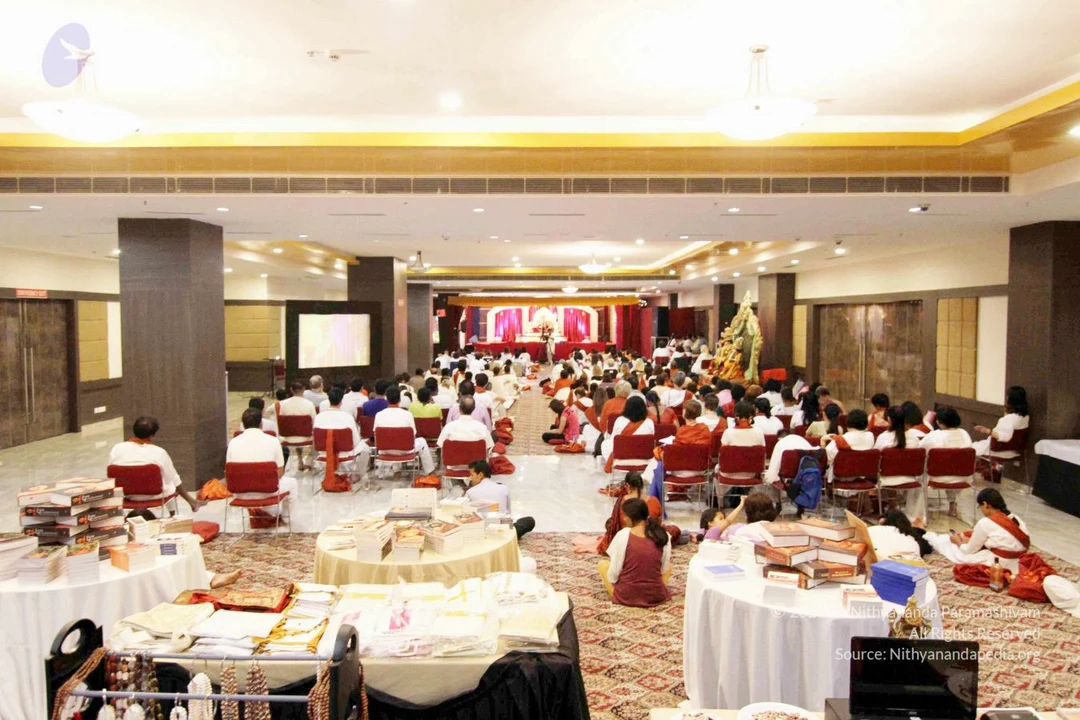
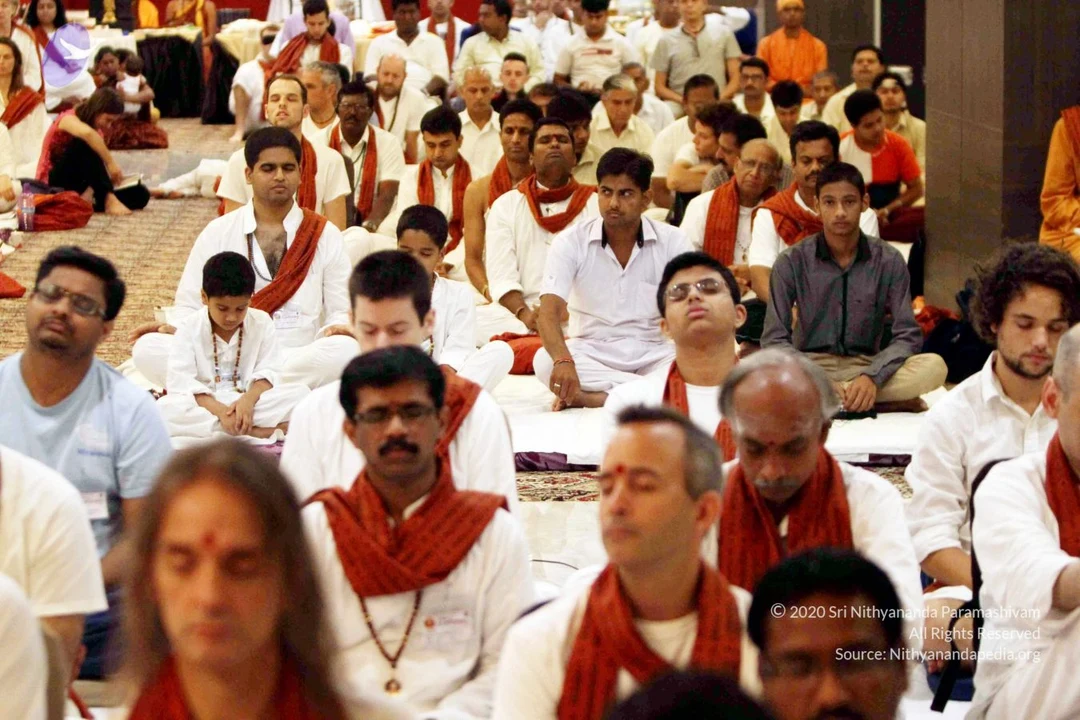
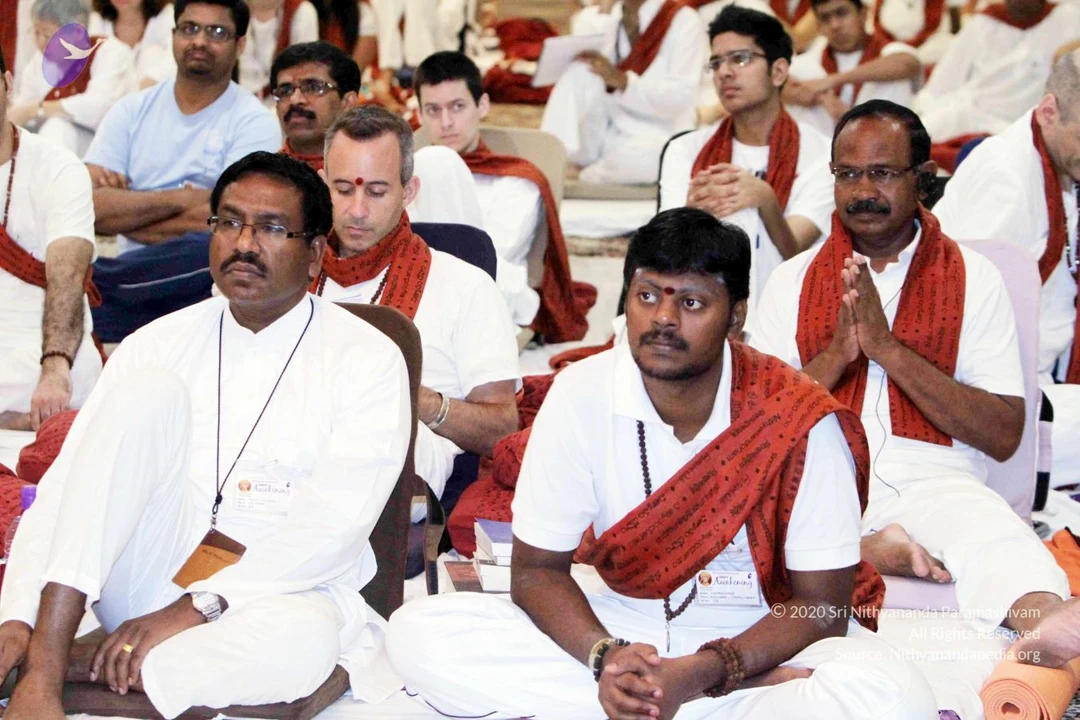
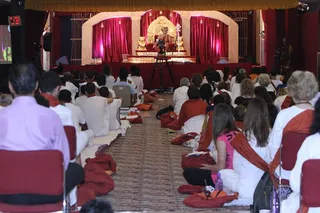
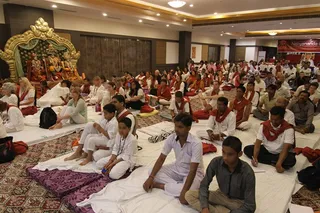
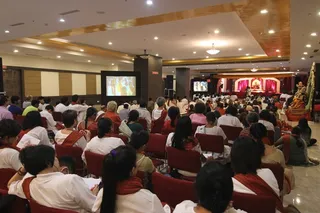
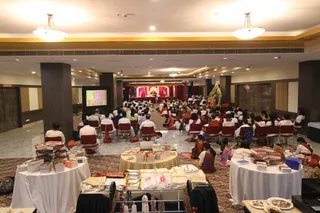
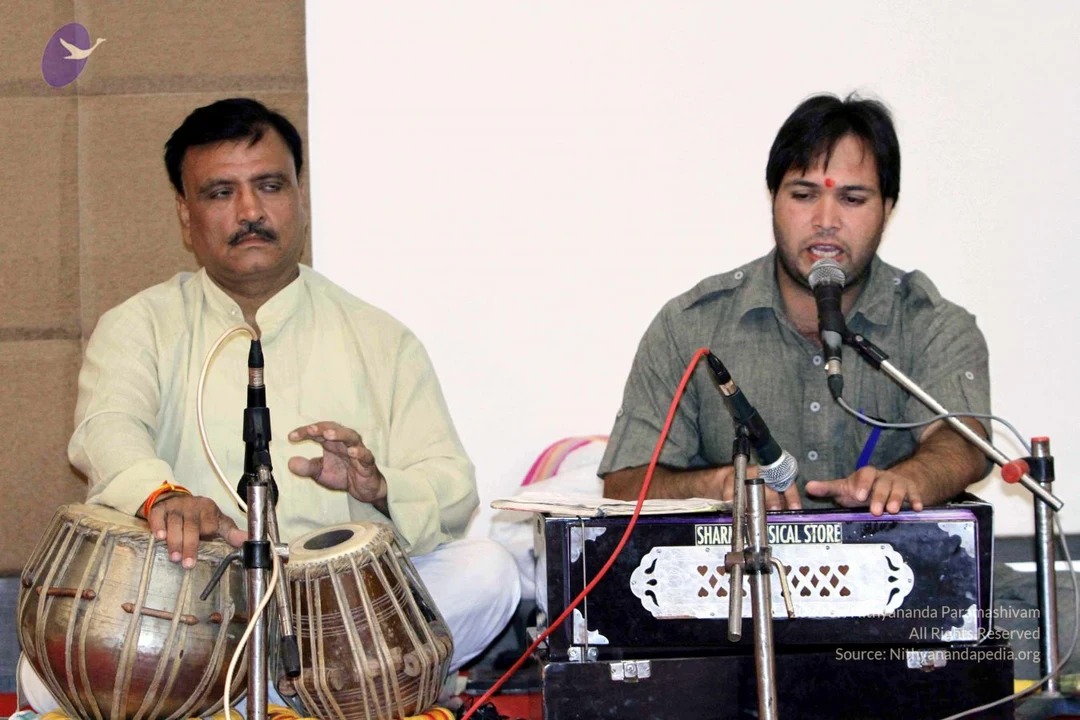
Two women sit cross-legged on a red floor mat before two standing microphones, performing chanting or singing. The woman on the left wears a white salwar kameez with a light blue neckline band, a wooden rudraksha-style mala, and a small bindi on her forehead, her eyes lowered. The woman on the right wears a cream and gold sari with a deep orange-red beaded rudraksha mala and a long strand of dark beads, bangles on her wrist, and her hand raised in a gesture while she sings. The background shows a blue-grey curtained wall.A large hall for a satsang, viewed from behind a seated audience of devotees. At the far end, a raised red-draped stage frames a golden throne with lion-shaped armrests, flanked by golden lion statues and red curtains with gold arches. A seated figure in saffron and orange robes sits on the throne, which is set in a red-and-gold backdrop, with a video camera on a tripod pointed toward the stage. Most of the audience sit on white cushions and mats in white clothes with orange shawls, some with red and orange shawls, while others sit on red chairs in the foreground. Several women wear pink and white, and a man in a lavender shirt sits near the front on the left. Water bottles and small bags are placed on the mats. Estimated audience count is well over twenty.A large indoor satsang hall with a crowd of devotees seated on white sheets and thin floral-patterned mats on a red-carpeted floor. Most attendees wear white shirts and trousers with saffron-red shawls draped around their shoulders; some wear red and white clothing, and a few women wear saris or salwar kameez. Many sit cross-legged taking notes or listening, and a young boy in the foreground writes in a notebook. At the upper left, an ornate gold-framed shrine holds deity murtis and a golden pedestal, and a red banner with white lettering hangs at the upper right. Nearby, a few people at the front are seated on mats with cushions. The room is lit by ceiling lights and tubular fixtures, with wood-paneled walls behind the seated congregation.A large indoor hall filled with seated devotees, mostly in white clothes with orange-red shawls draped over their shoulders, facing a stage at the far end. A pink-and-red backdrop frames a central seat where a figure sits under a canopy; on the right, a large ornate gold-and-red statue stands near the stage. Two screens show video, one on the left wall and one above the stage. Rows of red upholstered chairs fill the foreground, with some attendees taking notes. The scene suggests a satsang or discourse. The central seated figure is too distant and small to determine appearance, so no candidate is identified.Wide photograph of a large hall set up for a satsang gathering, with rows of red and white chairs filled with a seated audience, many dressed in white and saffron-orange clothing. In the foreground, white-draped tables hold stacks of books, sweets, decorative items and small boxes for sale. At the far end, a raised stage with red drapes and a decorated backdrop holds a seated figure at the centre, flanked by a large screen. A tall ornamental floral display stands to the right, and ceiling lights hang overhead. Several people are standing near the stage area.

paduka pooja and satsang
197 photosSource gallery
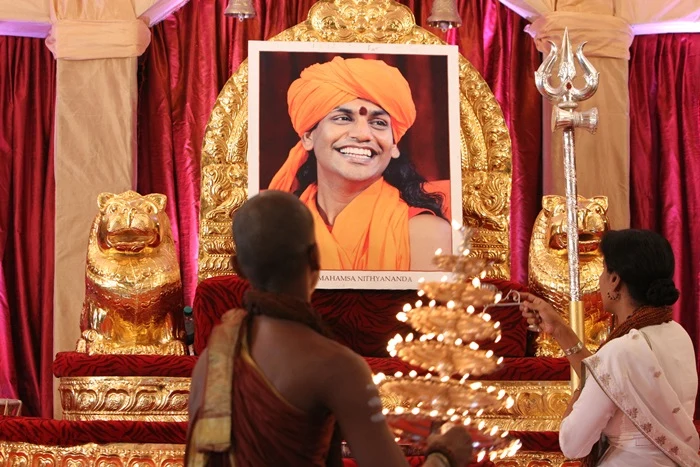
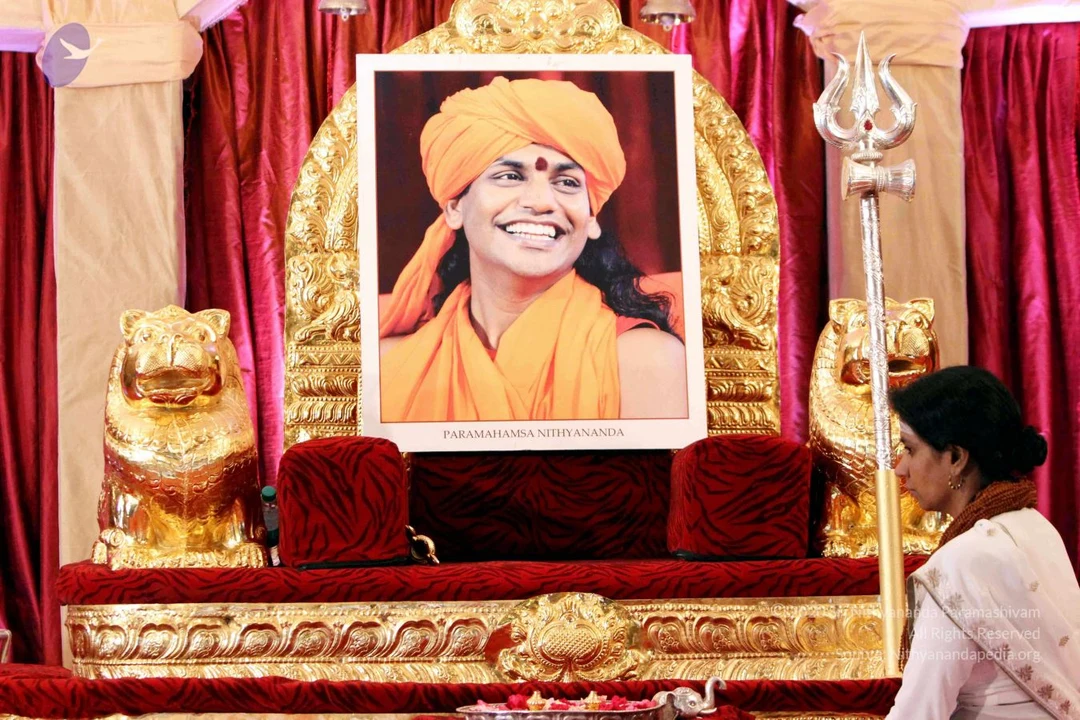
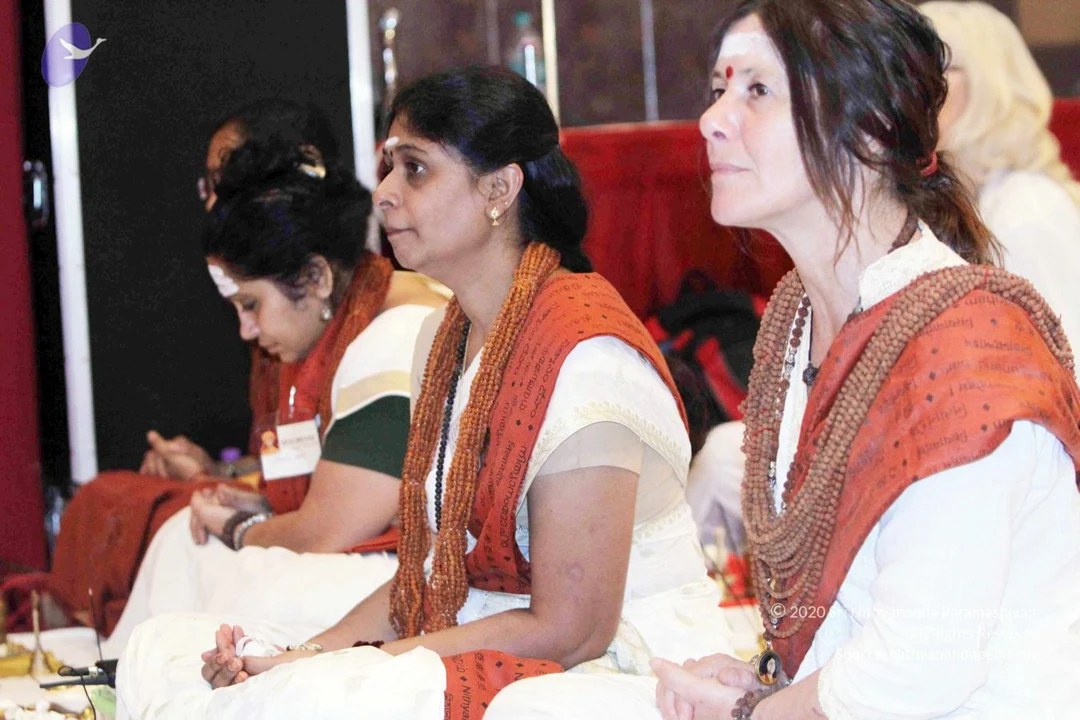
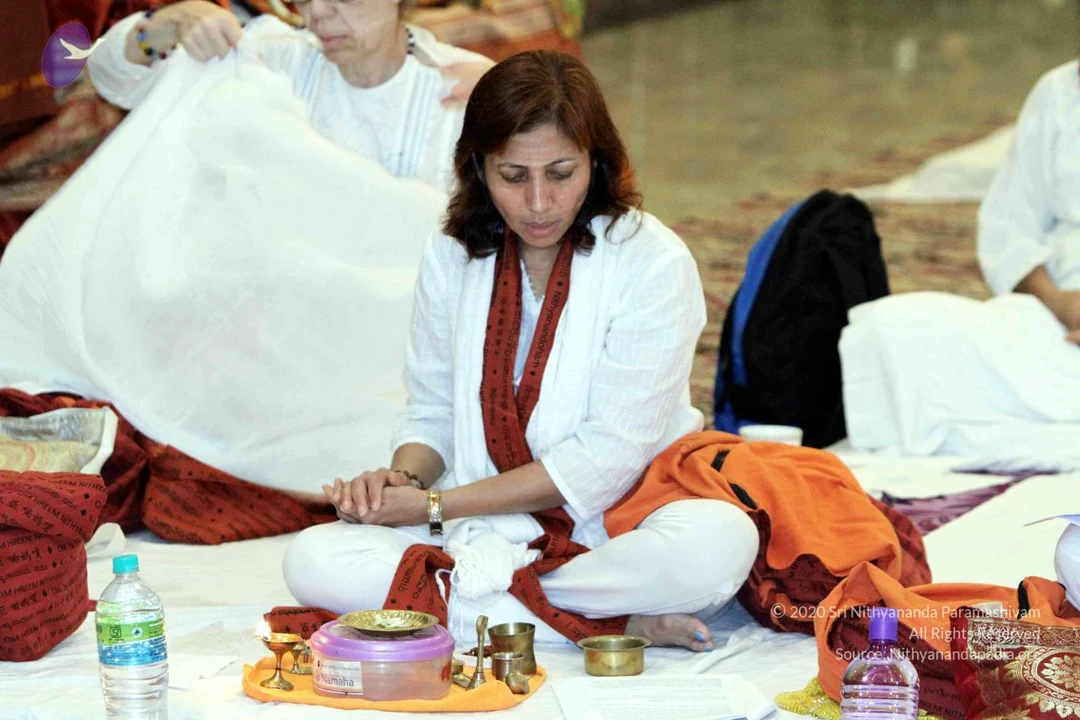
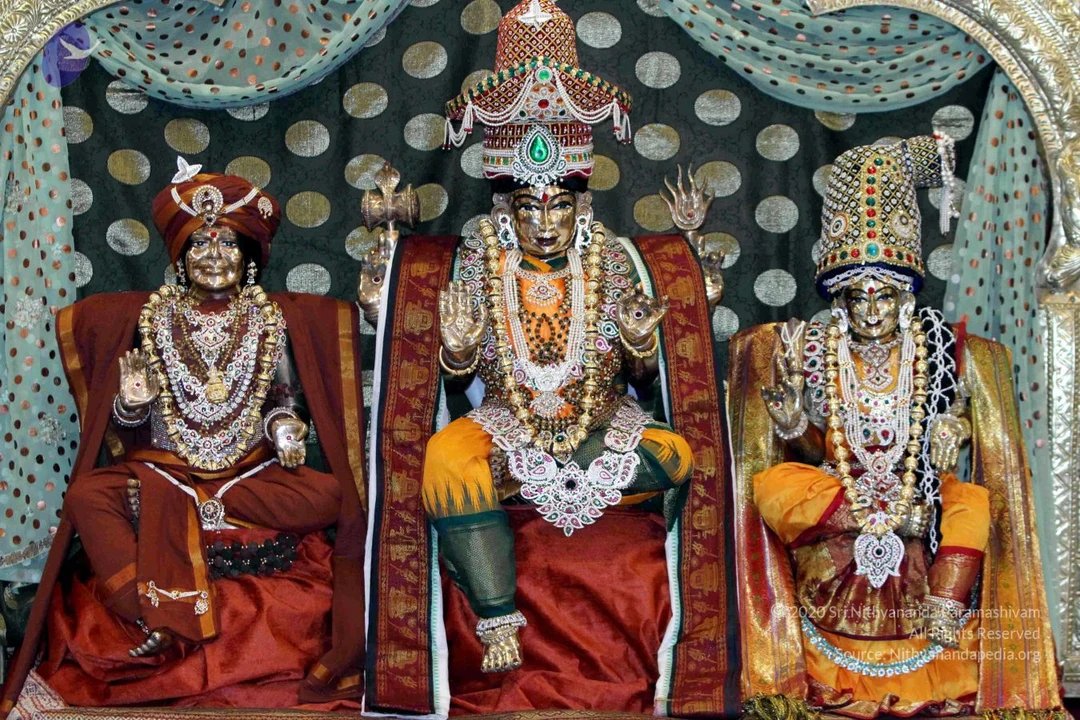
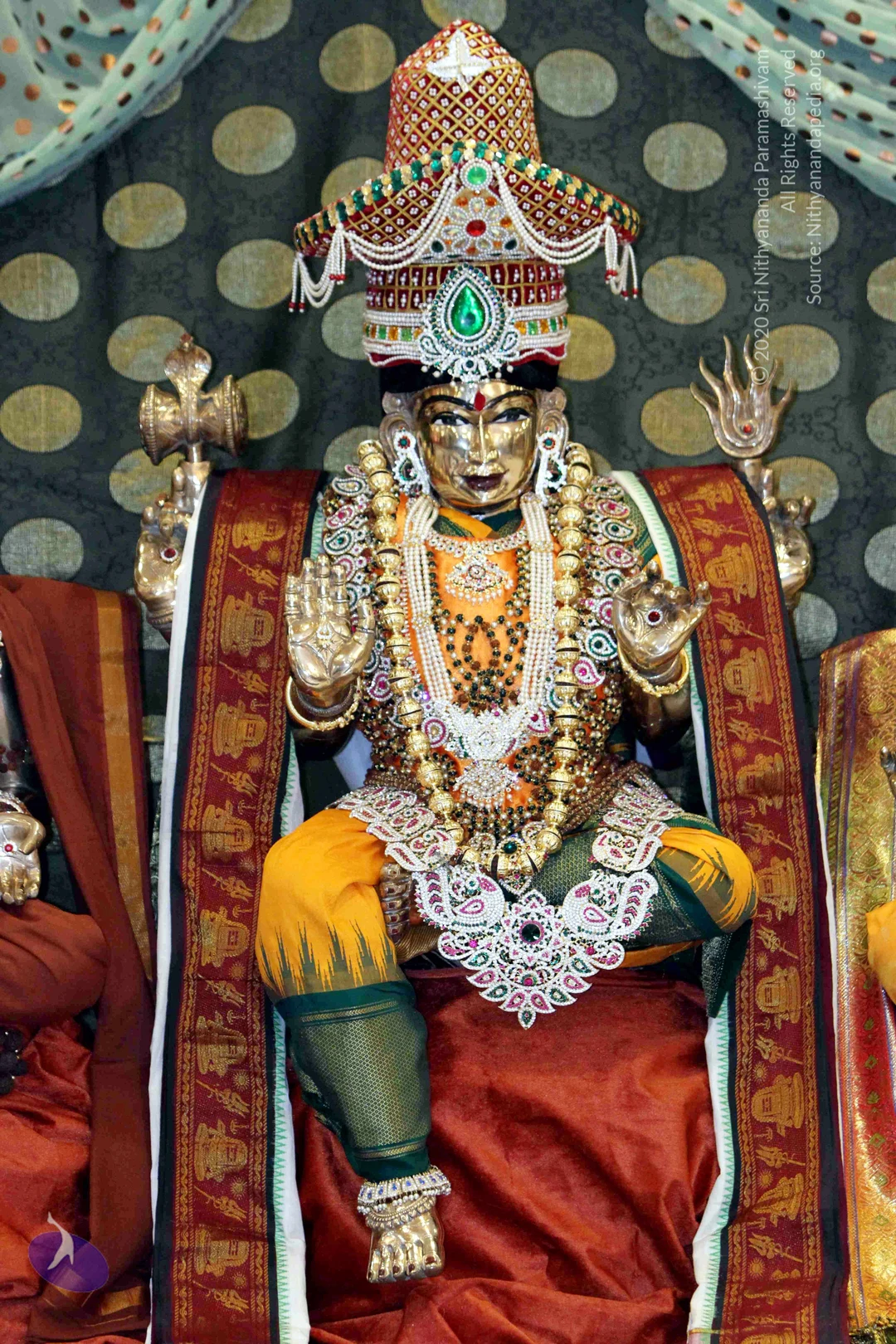
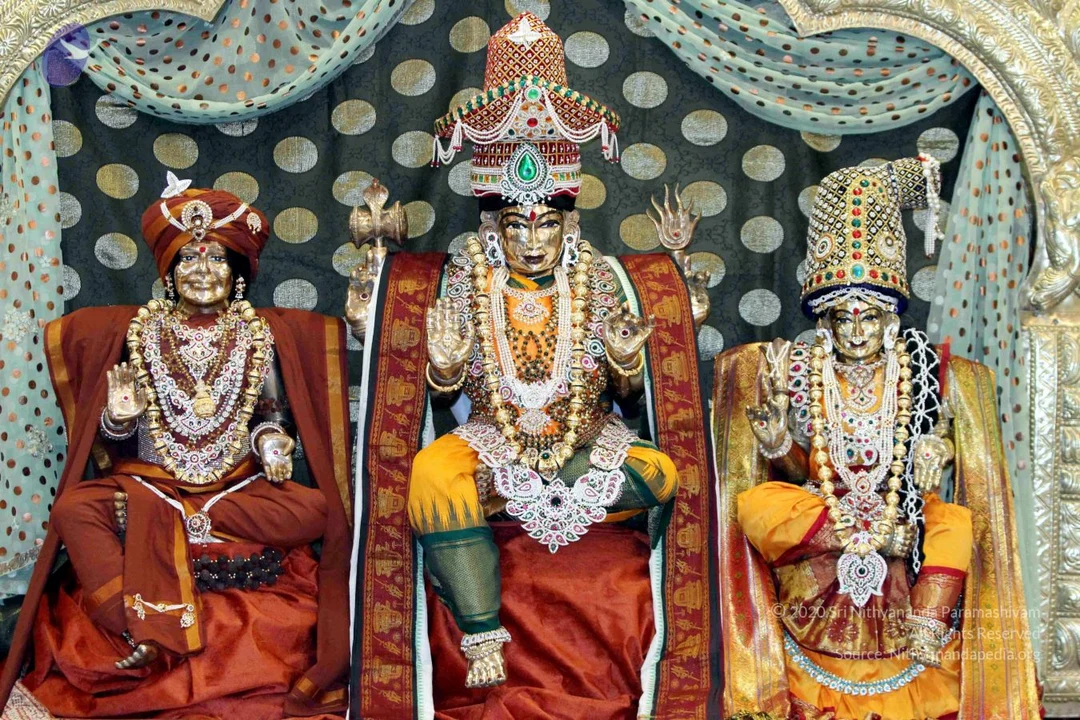
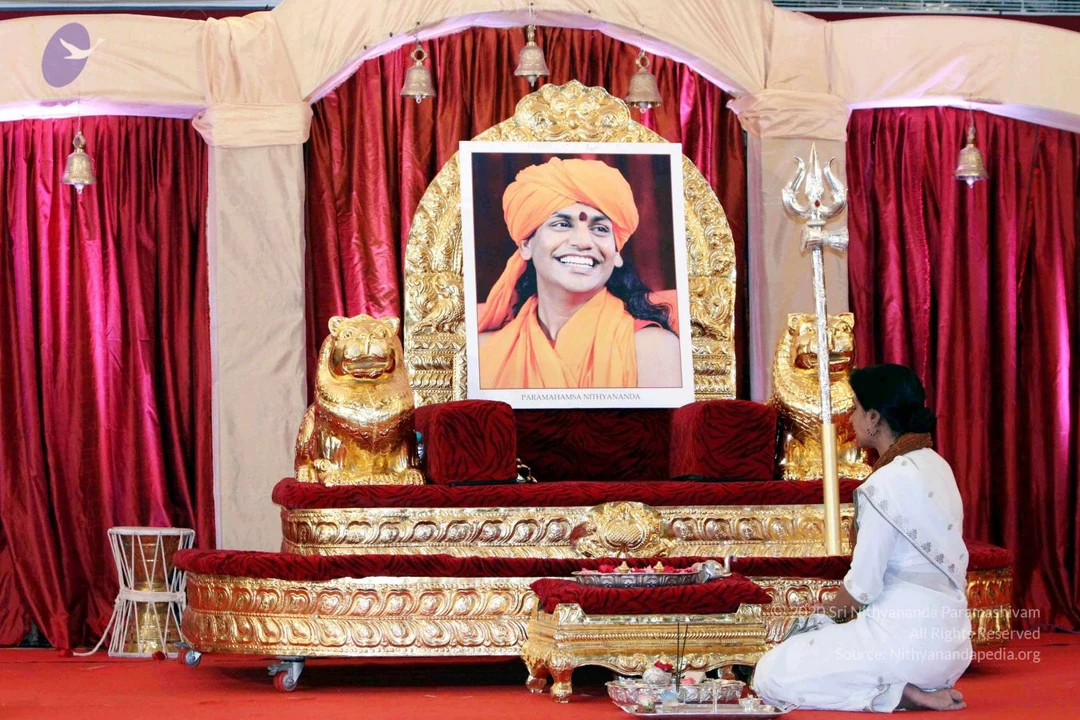
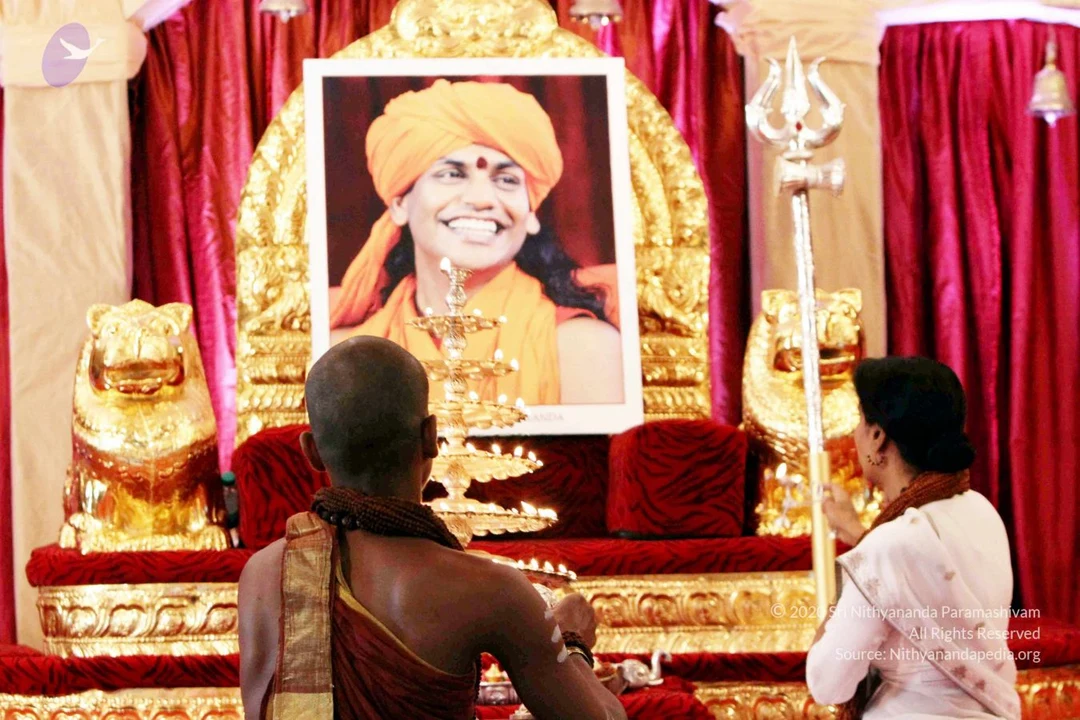
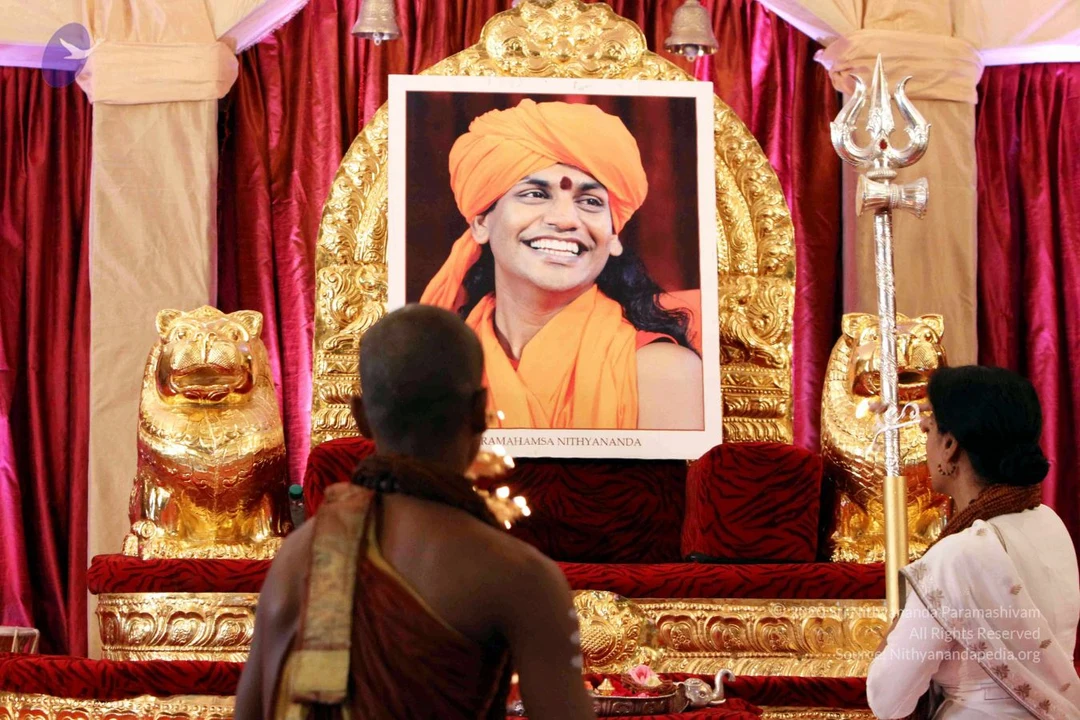
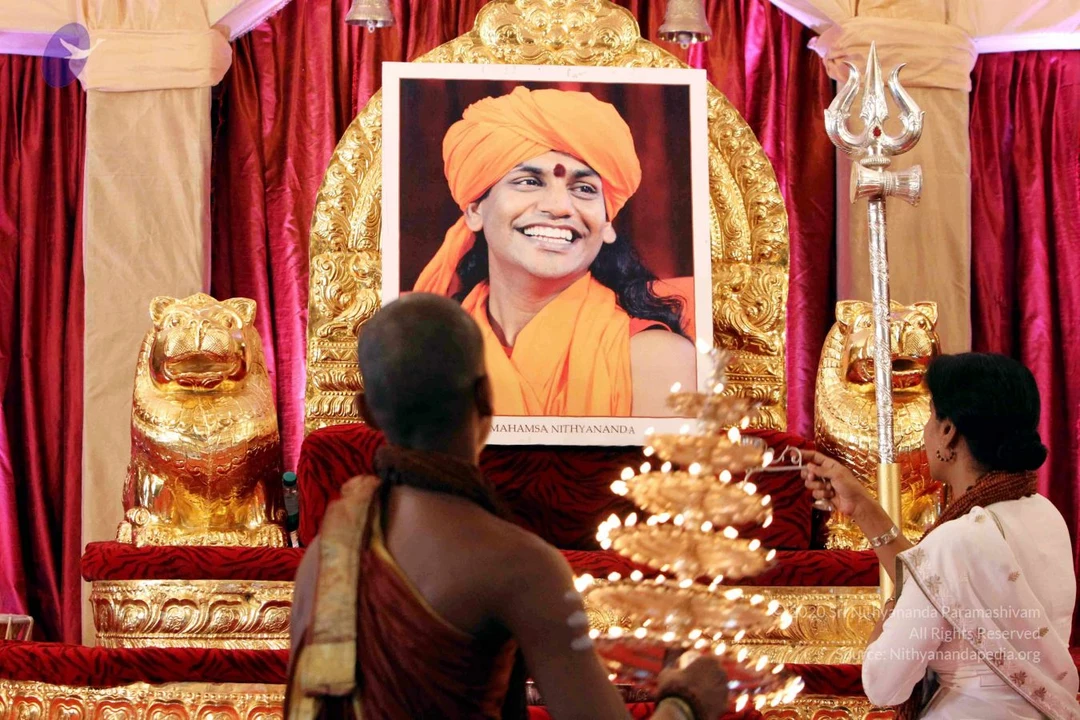
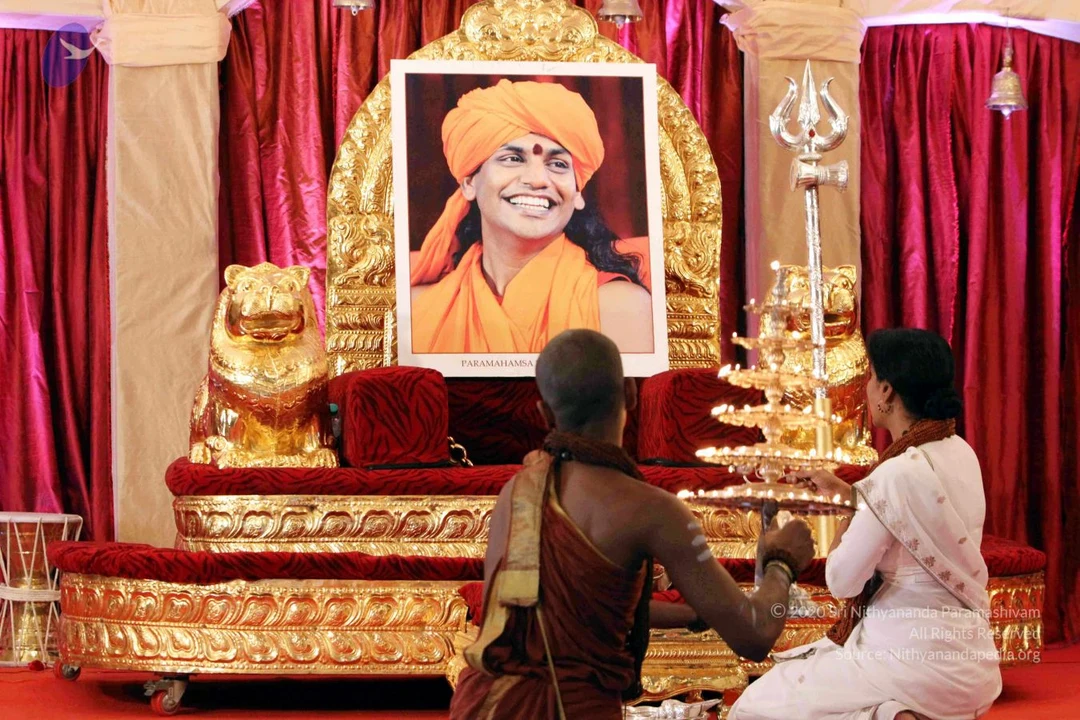
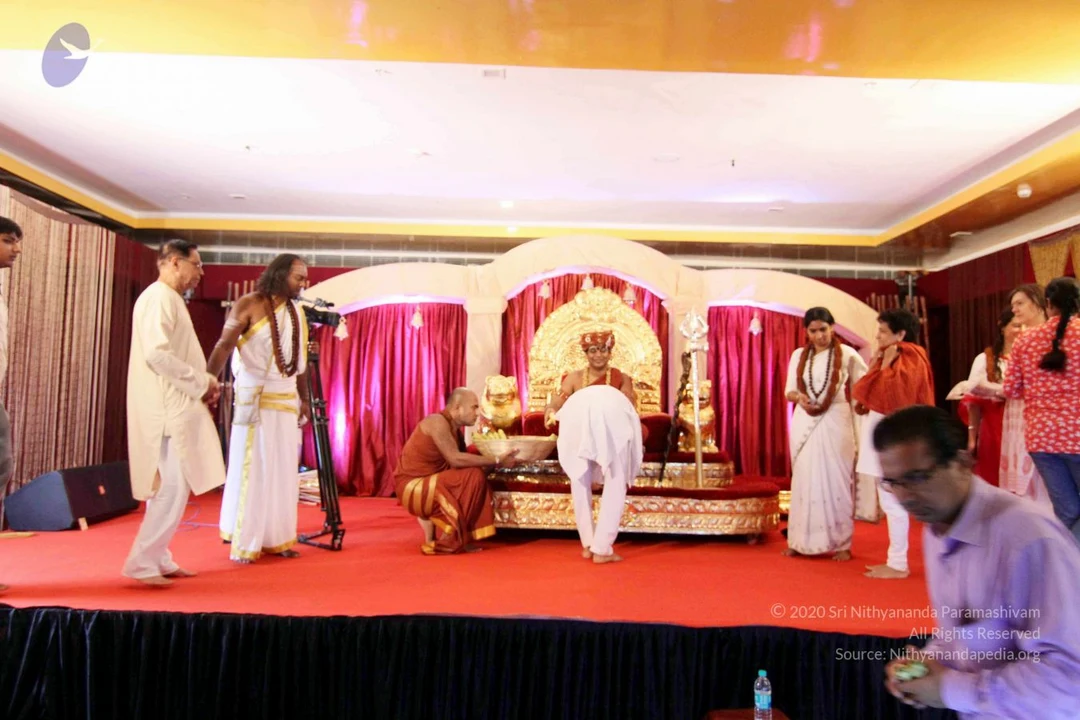
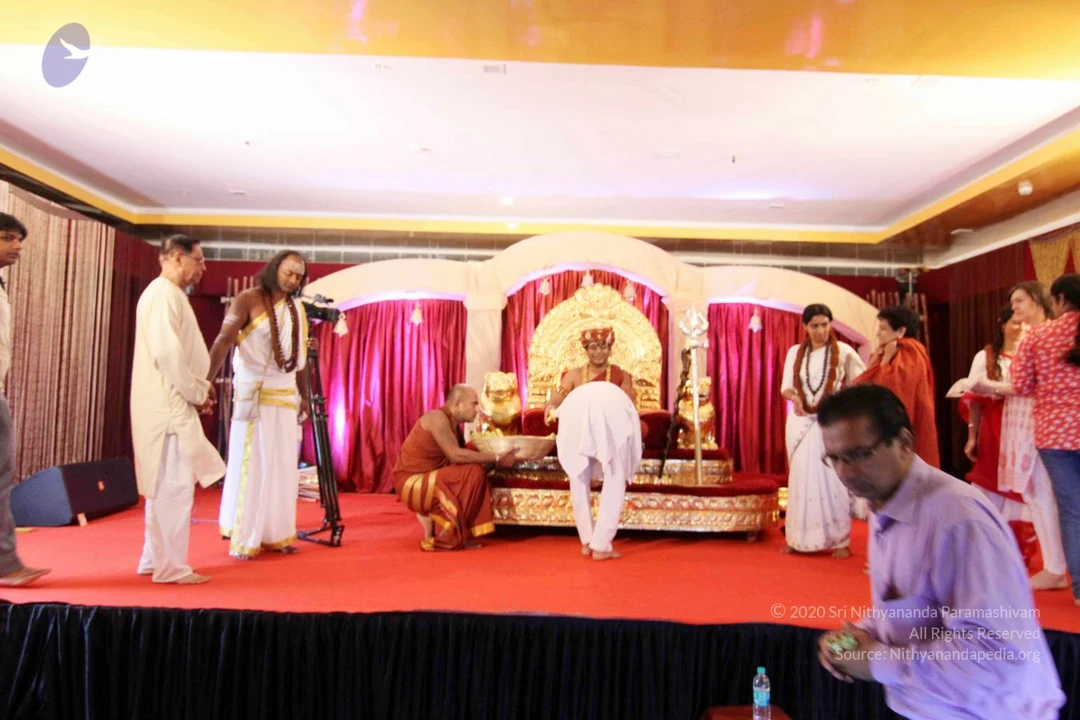
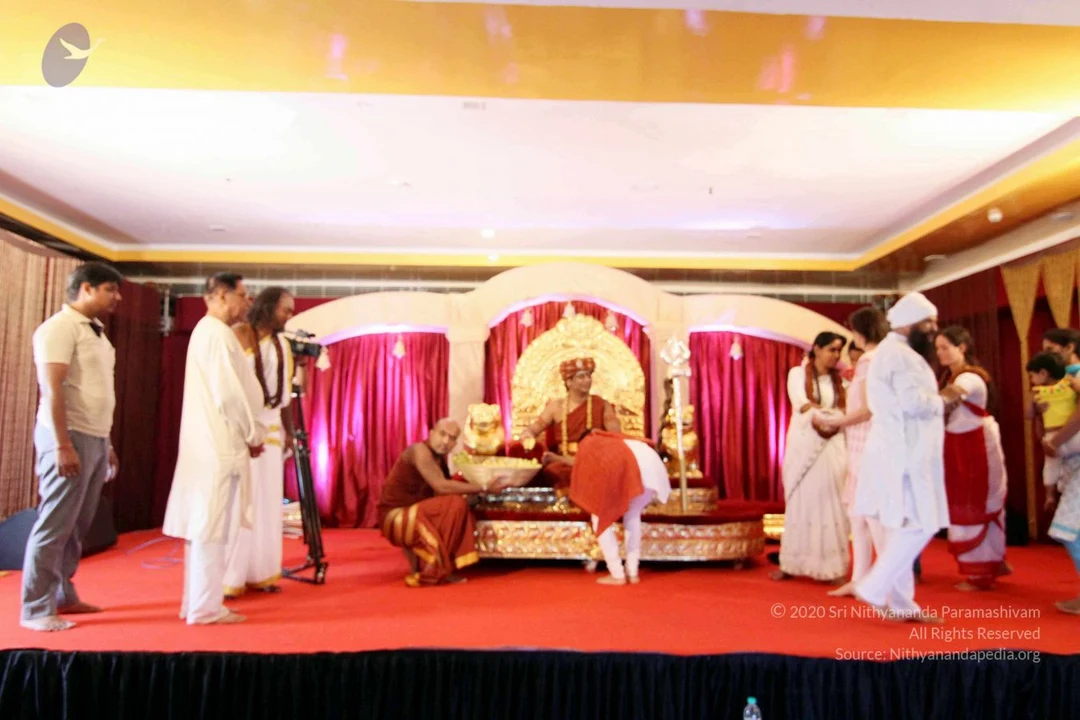
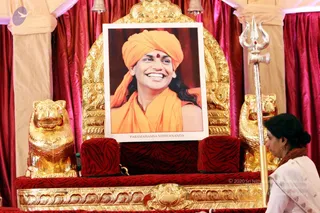
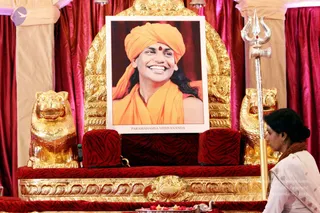
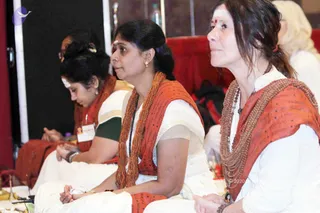
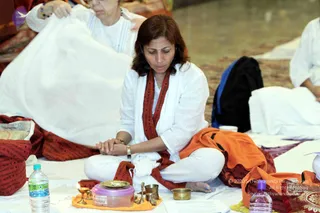
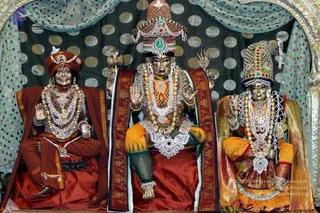
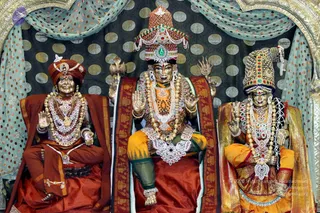
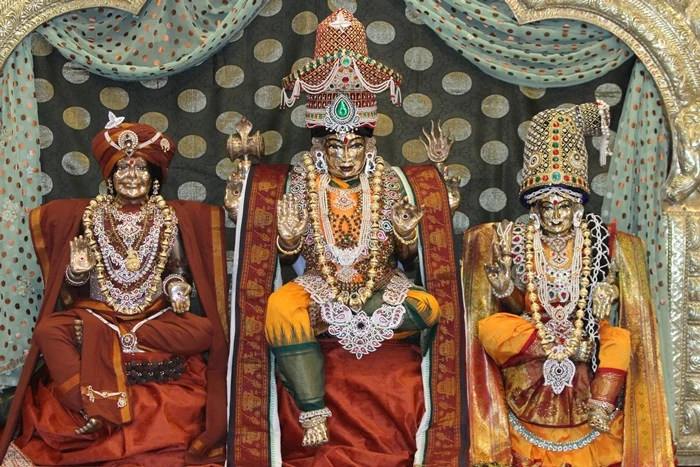
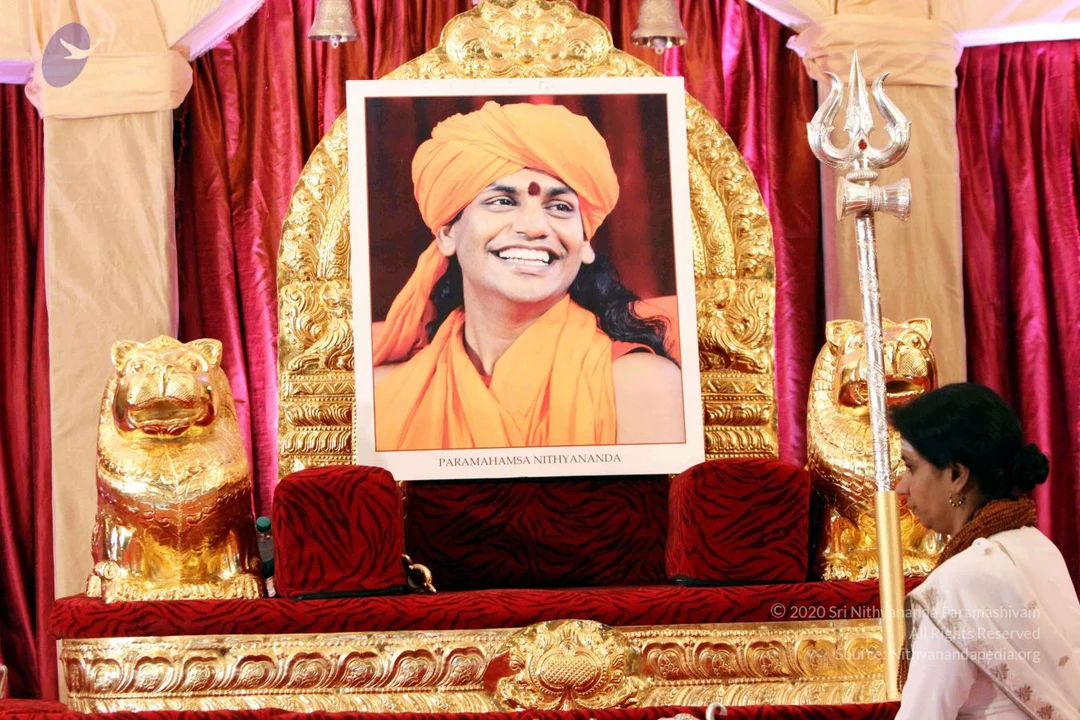
A photograph of a ceremonial throne set up with red velvet cushions and gold lion-shaped armrests against draped red and cream fabric. Centred on the throne is a framed portrait of a smiling man in an orange turban and orange robe with a red bindi, captioned "PARAMAHAMSA NITHYANANDA" on the print. A silver trident stands to the right. A woman in a white sari with a red-bordered shawl, her hair in a bun, sits at the right edge of the frame, partly visible. The portrait is a printed picture, not a physical person on the throne.A photograph of a ceremonial dais draped in red and pink fabric with a large golden throne-like backdrop. A framed portrait printed with the caption "PARAMAHAMSA NITHYANANDA" shows a smiling man in orange clothing and an orange turban with a red bindi, placed on a red-cushioned golden seat flanked by two golden lion figures. A silver trident stands at the right. A woman in white clothing with a dark bun and a red-brown shawl kneels at the lower right, near brass offerings and red flower petals on the golden platform. The portrait is a depiction, not the person in the scene.Three women sit in a row in a satsang setting, facing right with hands folded in their laps. The woman at right wears white garments with an orange-red shawl printed with script and multiple strands of rudraksha beads; a red bindi is on her forehead. The woman in the centre wears a white sari with an orange-red shawl and long orange-brown beads, with a gold earring. A third woman at left wears an orange-red shawl and white top with a white forehead mark. Behind them is a red-draped seating area, with a microphone stand and ritual items visible at the lower left.A seated woman in white clothes and an orange-and-red patterned shawl sits cross-legged on a white cloth, hands pressed together in front of her, eyes lowered. Before her on a yellow-edged tray are brass oil lamps, a small brass bowl, a covered pink plastic container and a small bottle of water. Behind her, another woman in white draws a large white cloth over the floor, and more people in white and red sit on the carpet. The setting is an indoor hall with a patterned carpet. Several people are visible, counted as a small group.Three seated figures, all appearing to be sculpted murti or statues rather than living people, displayed on a draped stage with a dark fabric backdrop covered in gold dots and pale teal sheer drapes. The central figure, seated on a red-cushioned throne, wears a tall jewelled crown with a green gem, a long pearl and gold garland, layered necklaces, and an orange-and-green dhoti, holding a trident and other ritual objects. The figure on the left wears a red-orange turban and a red shawl with heavy garlands and necklaces, while the figure on the right wears a tall jewelled headdress, orange-gold robes and a white and gold garland. The arrangement suggests a deity murti display with two attendant figures. Carved gold-toned frame edges surround the scene.Three gilded statues sit side by side on golden thrones in front of a dark backdrop printed with gold dots and draped with pale teal fabric. The left figure wears an orange-red turban, rudraksha-style beaded necklaces and a red robe. The centre figure wears an ornate crown, multicoloured jewelled necklaces and a yellow and green garment, with raised hands holding ritual objects. The right figure wears a jewelled headdress and an orange and gold sari with a white pearl necklace. Together these are deity murti and ceremonial statues, not living people.
IA Session and Annadhaan
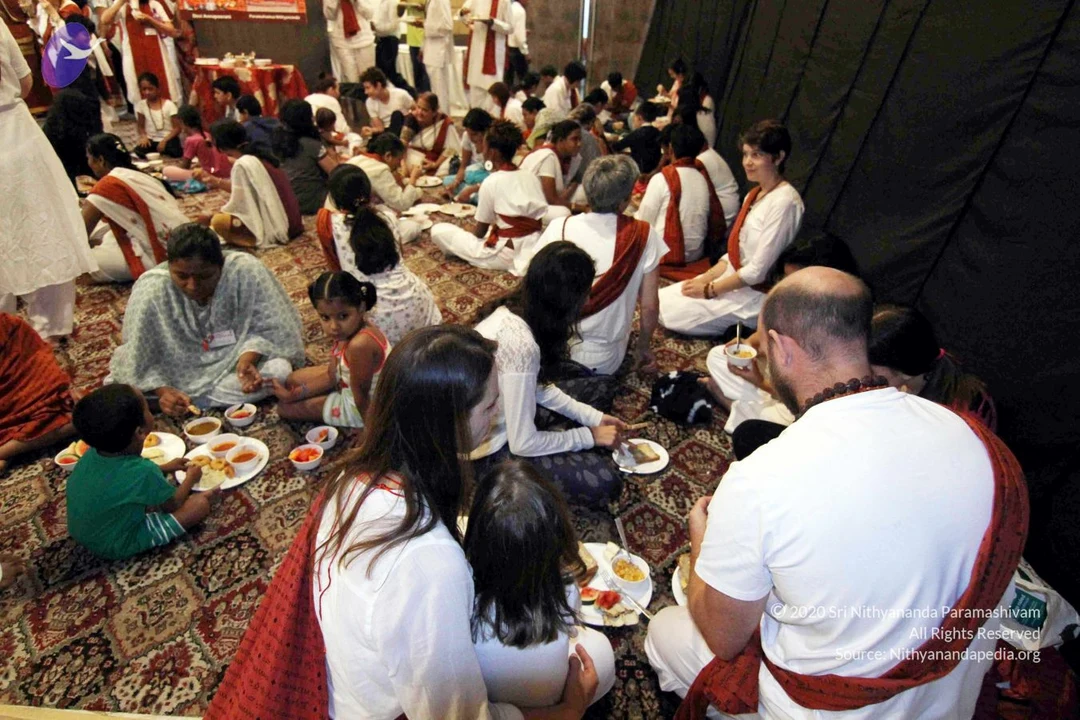
123 photosSource gallery
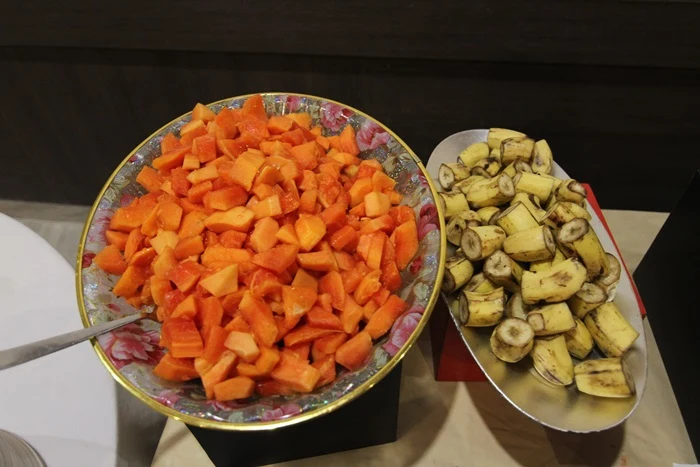
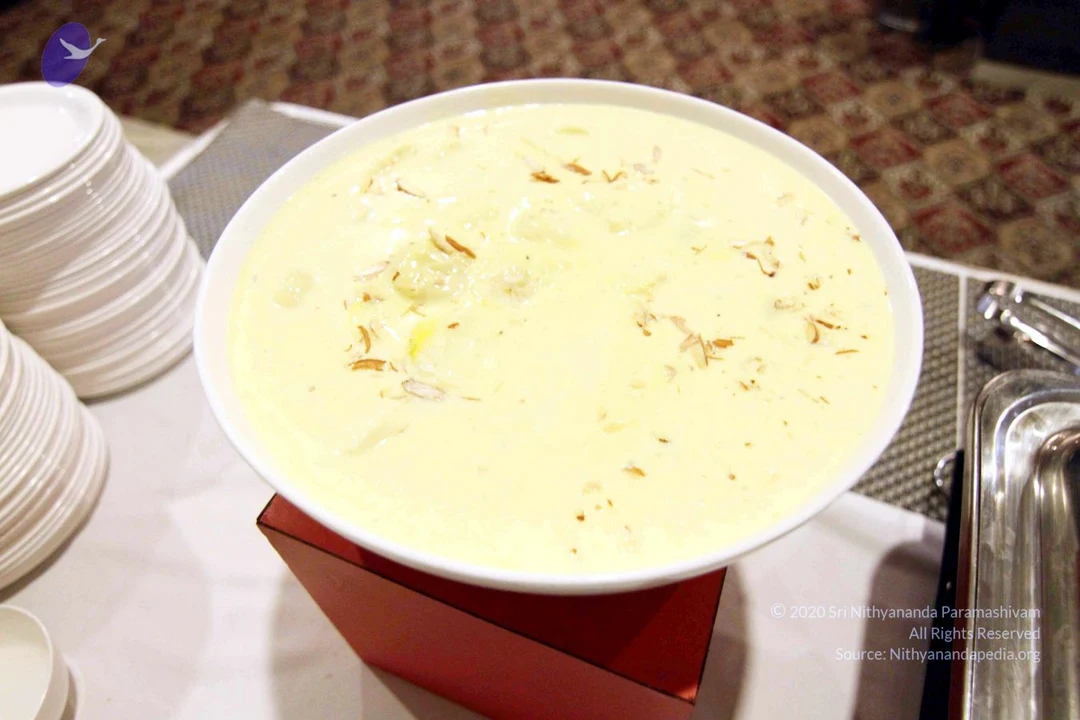
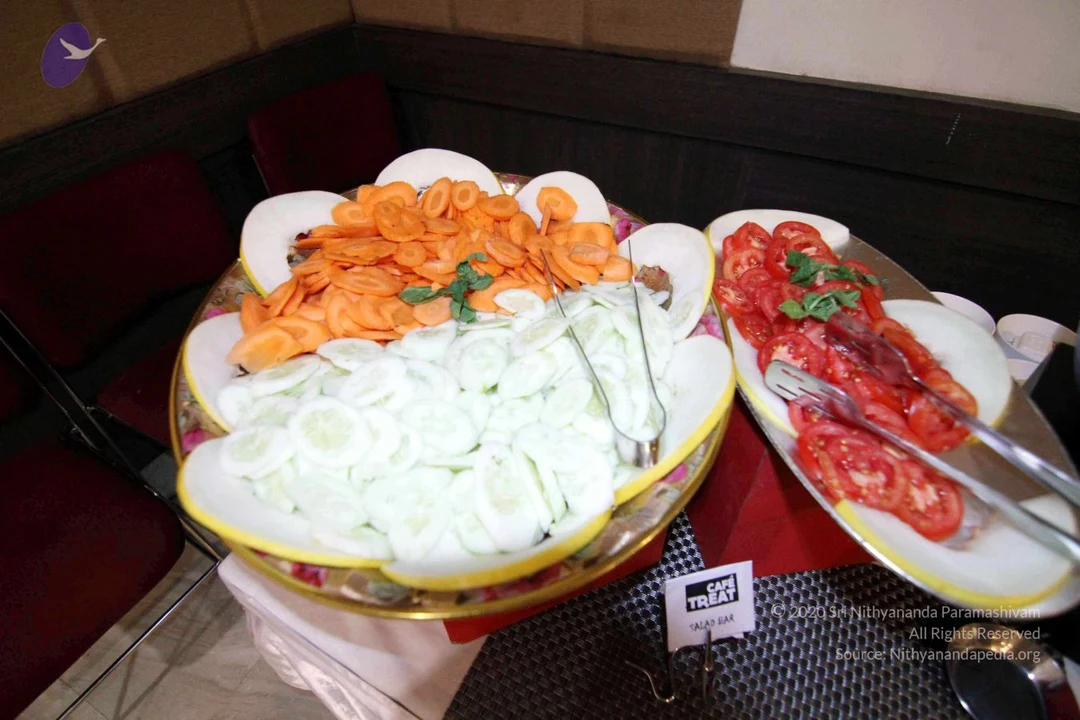
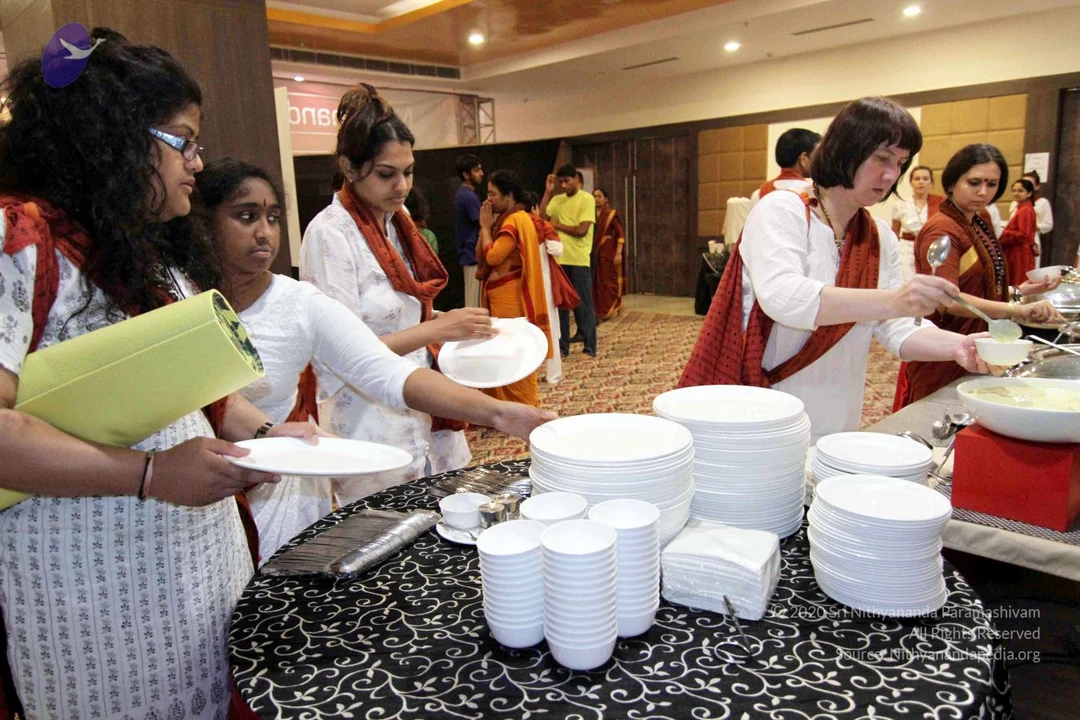
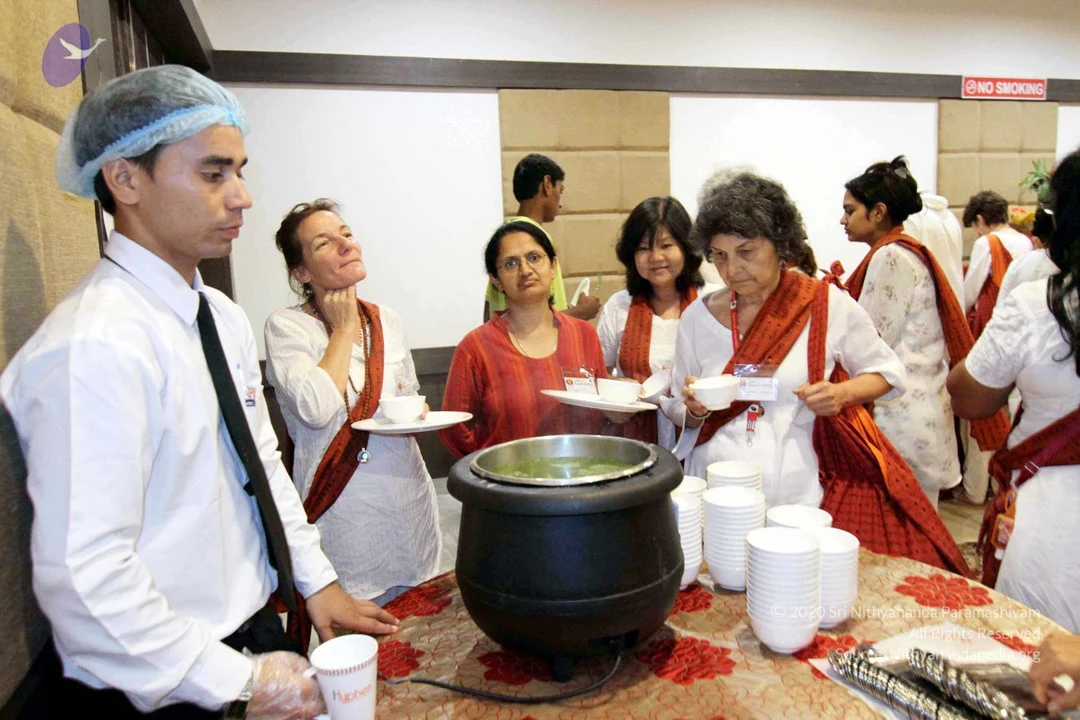
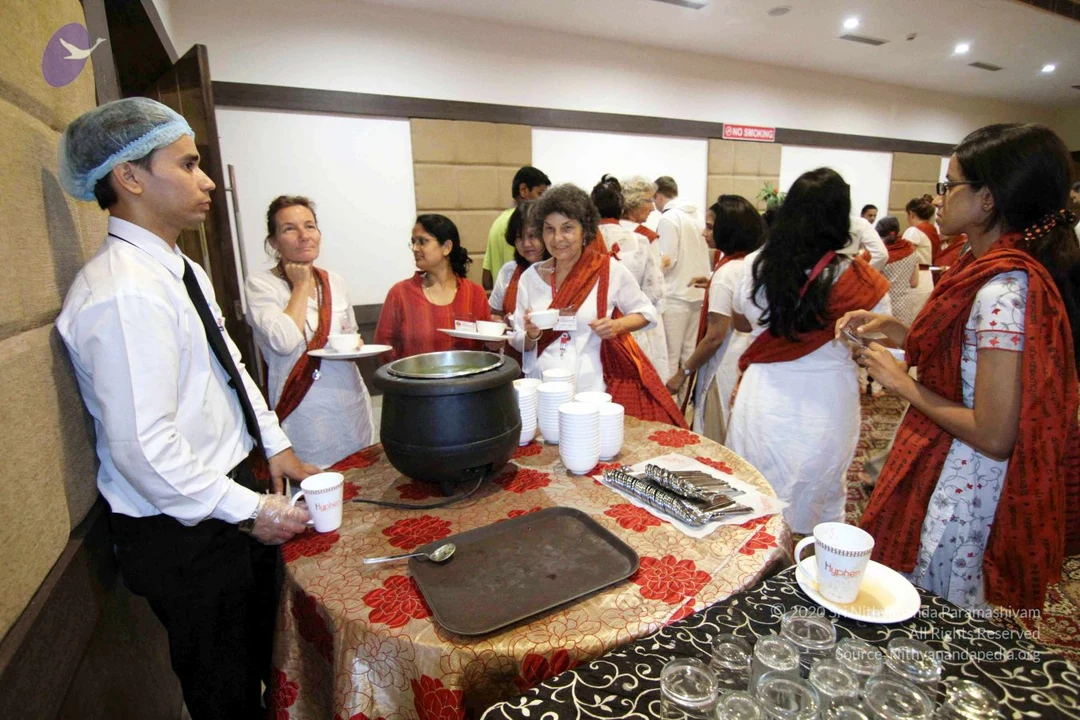
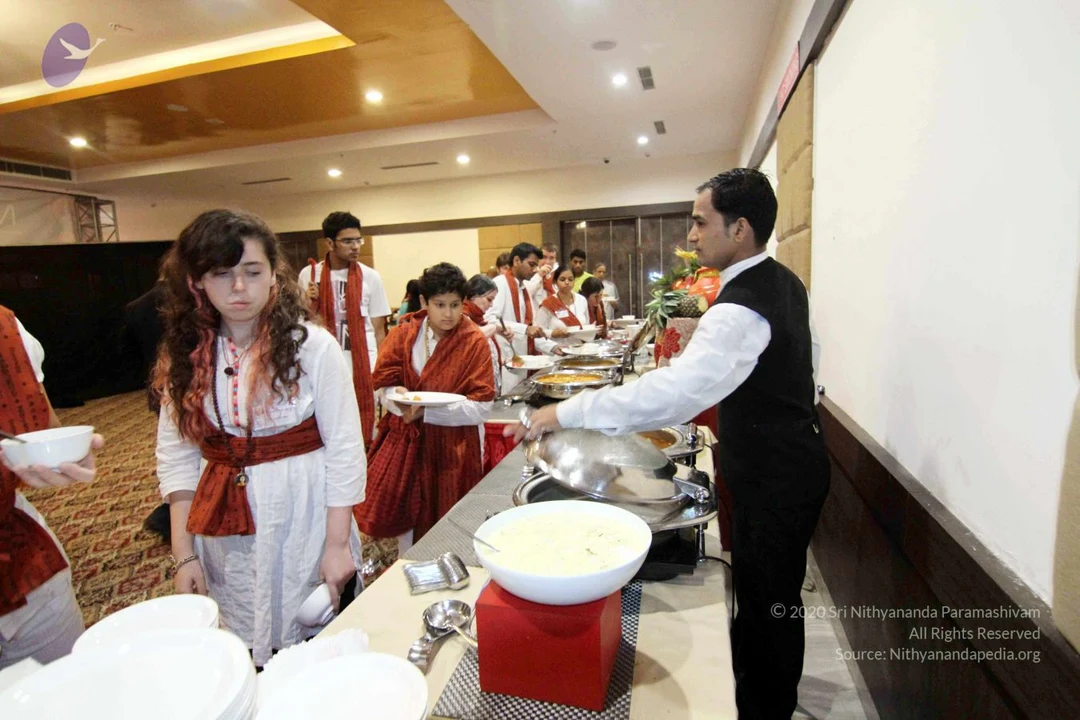
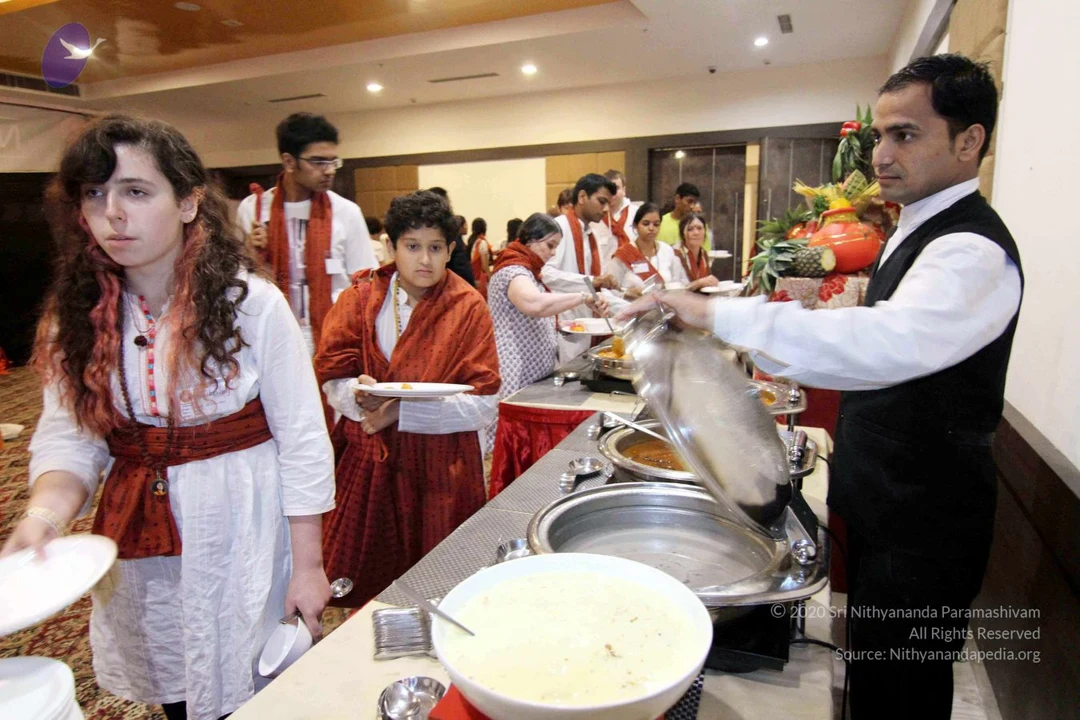
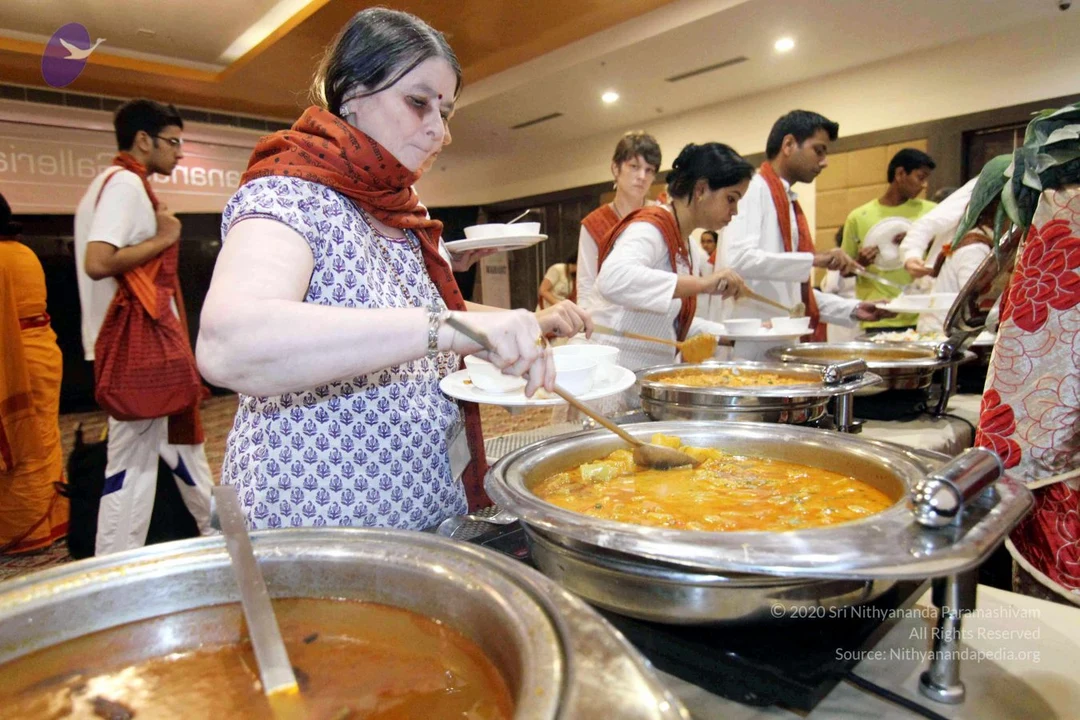
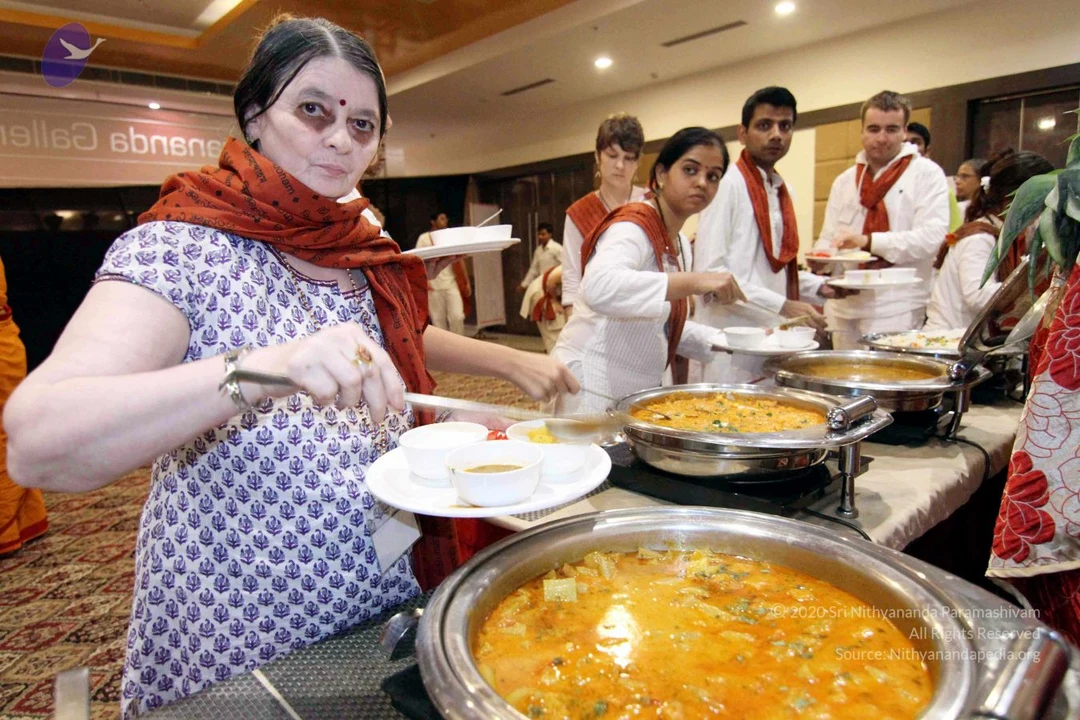
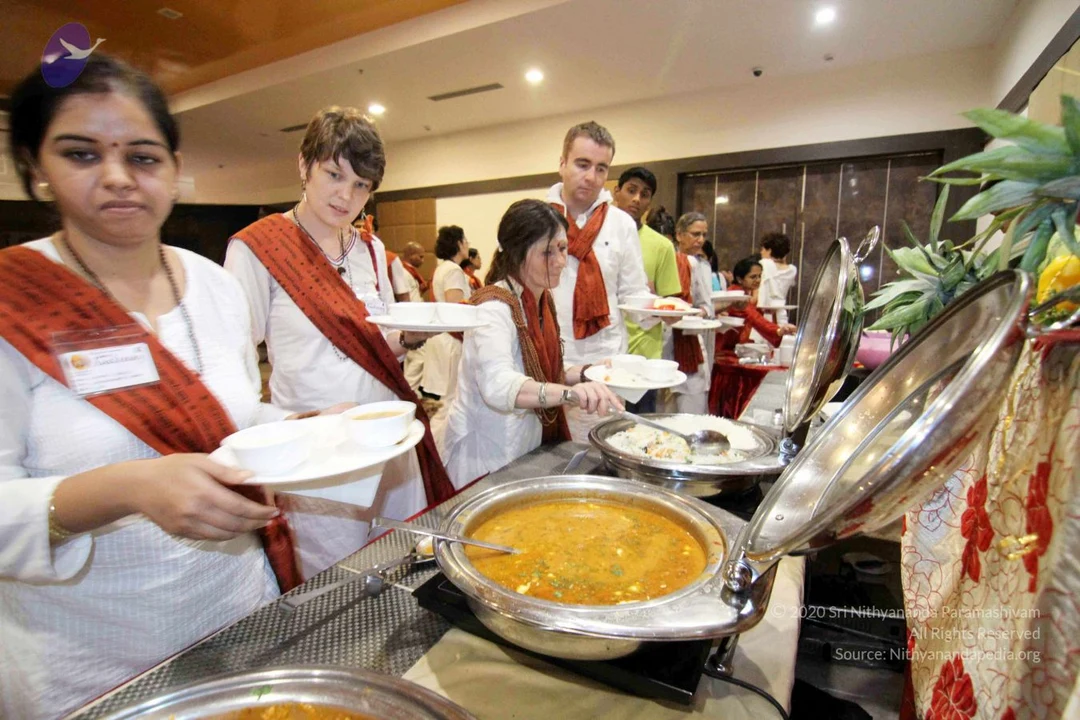
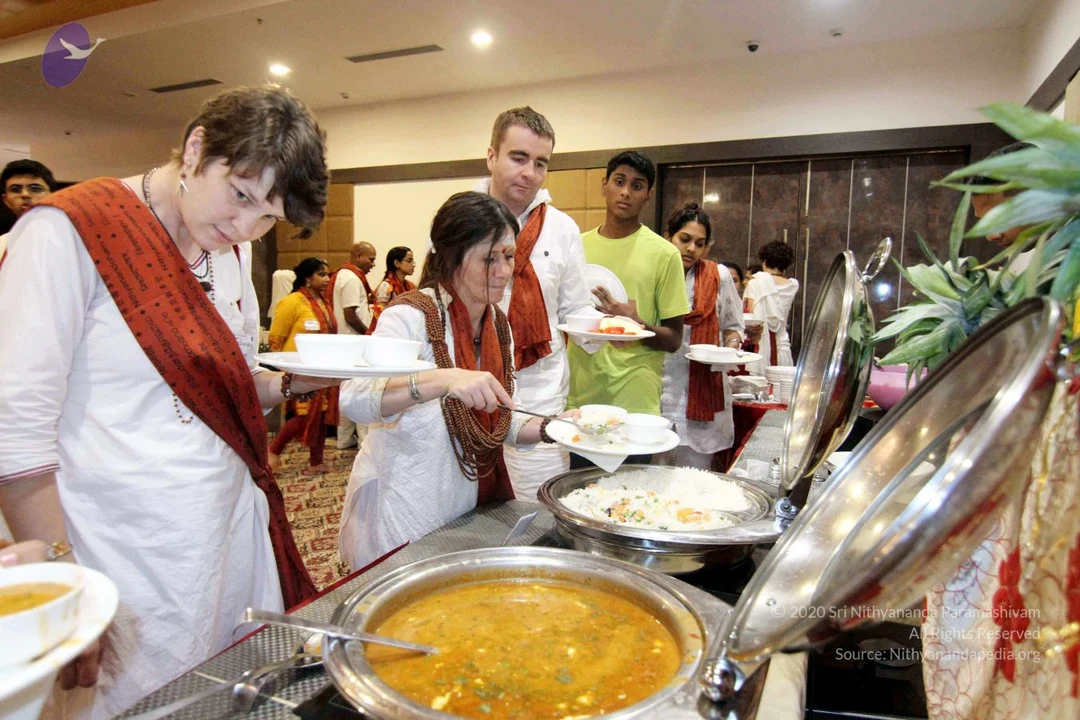
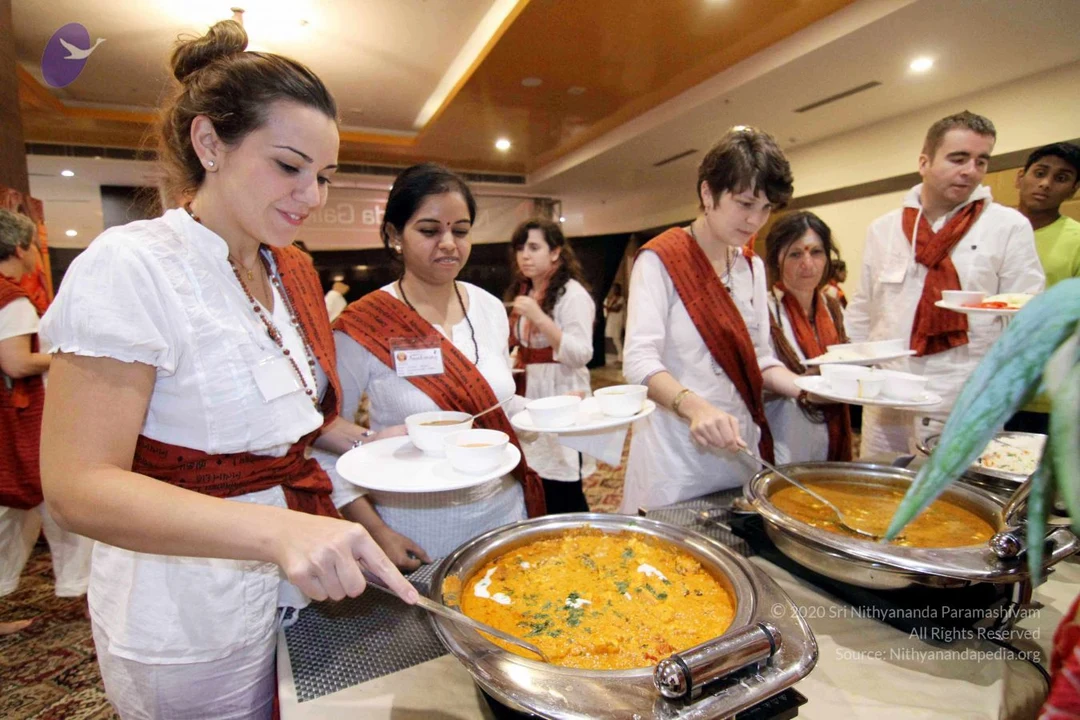
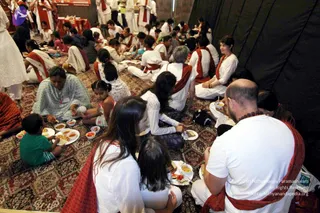
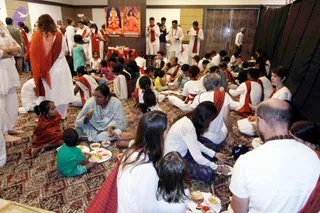
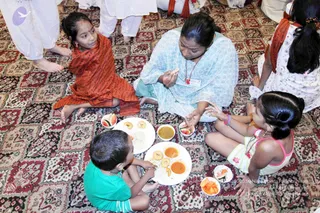
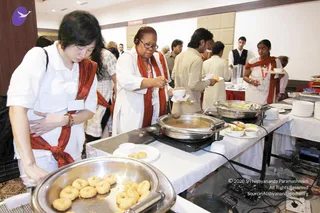
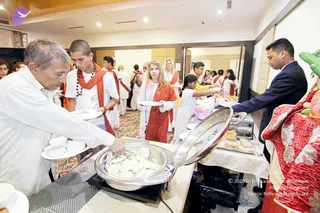
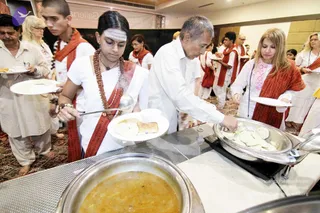
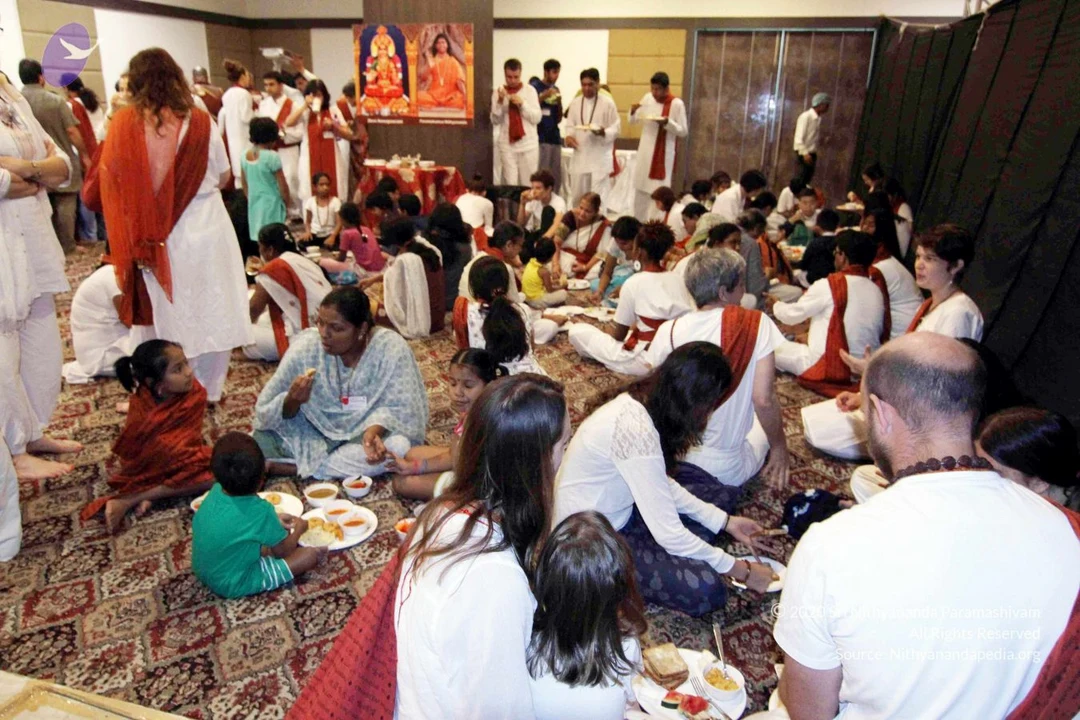
A seated group meal on a patterned carpet inside a tent-like hall with dark draped walls. Many people sit cross-legged on the floor in white clothes with red-orange shawls, eating from small plates and bowls of food. In the foreground a bald man in a white shirt and red shawl wears a beaded rudraksha-style mala and sits beside a woman in white; a young girl in a pink top and a small boy in green sit nearby. A woman in a grey shawl sits at left. Behind them, more devotees in white and red sit or stand near a table with offerings. Watermarked archive photo, no visible deity or lamp.A seated communal meal in a hall with a patterned carpet. Many devotees sit on the floor eating from plates, most wearing white clothing and red-orange shawls; a bald man in white in the lower right wears a beaded mala. A woman in light blue salwar kameez eats in the centre, children sit nearby, and a boy in a green shirt sits lower left. Behind them, a framed devotional picture of a goddess in red and gold hangs on a wall. Several attendants in white and orange stand serving near tables. No figure is clearly identifiable as a person.A photo of an overhead view of people seated on a patterned carpet eating a meal from white plates. A woman in a pale blue salwar kameez with a red bindi and a red beaded necklace sits in the centre, breaking off food and eating. Around her, a girl in an orange-red shawl with dark dots gestures and talks, a boy in a green t-shirt eats from a plate of vada and sambar, and a girl in a pink-trimmed white outfit eats watermelon from a small bowl. Other people in white stand at the top edge. Plates hold vadas, sambar, rice-like food and cut watermelon and papaya.A buffet serving line at an indoor event. A woman in white with a red-orange shawl stands at the left holding a stainless steel tray of golden fried vada-style fritters. A middle-aged woman in a white kurta with a red-orange shawl and a lanyard serves food with a ladle from a steel chafing dish of sambar-like curry. Behind them a young woman in white with a red-orange shawl and a red lanyard holds a plate, and a man in beige kurta stands at the table. Steel bowls of snacks, white plates, and a kettle sit on white tablecloths. No a person candidate is visible.A buffet serving line in a hotel-style hall. An older man in a white shirt uses tongs to lift idlis from a large steel chafing dish on a counter. Beside him a young man with a shaved head wears a white shirt, a red-orange shawl and a beaded mala. A woman with blonde hair wears a white top and a red-orange shawl and holds a white plate. A girl in white with a yellow sash stands at the food counter, and a man in a dark suit serves from the right. Other people in white and red-orange shawls queue in the background, and a red and gold garment is visible at the lower right.A serving line at an indoor event where a young woman in white with a white tilak on her forehead, a rudraksha mala and a red-and-saffron shawl ladles food onto a white plate. Beside her an older man in white clothing serves idli-like cakes from a silver chafing dish, while a woman in white with a red shawl holds a plate. A large steel pot of yellow curry sits in the foreground, and several people in white and red shawls wait with plates behind the counter. No clear a person candidate is visible; the people are volunteers and devotees at an annadan-style meal.

IA Session and Annadhaan
34 photosSource gallery
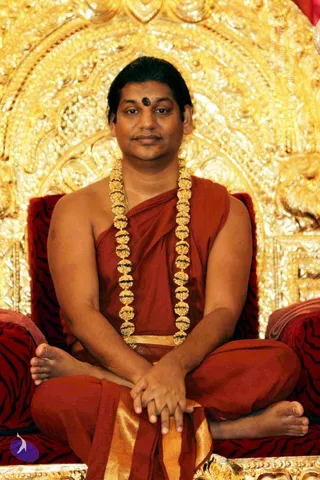
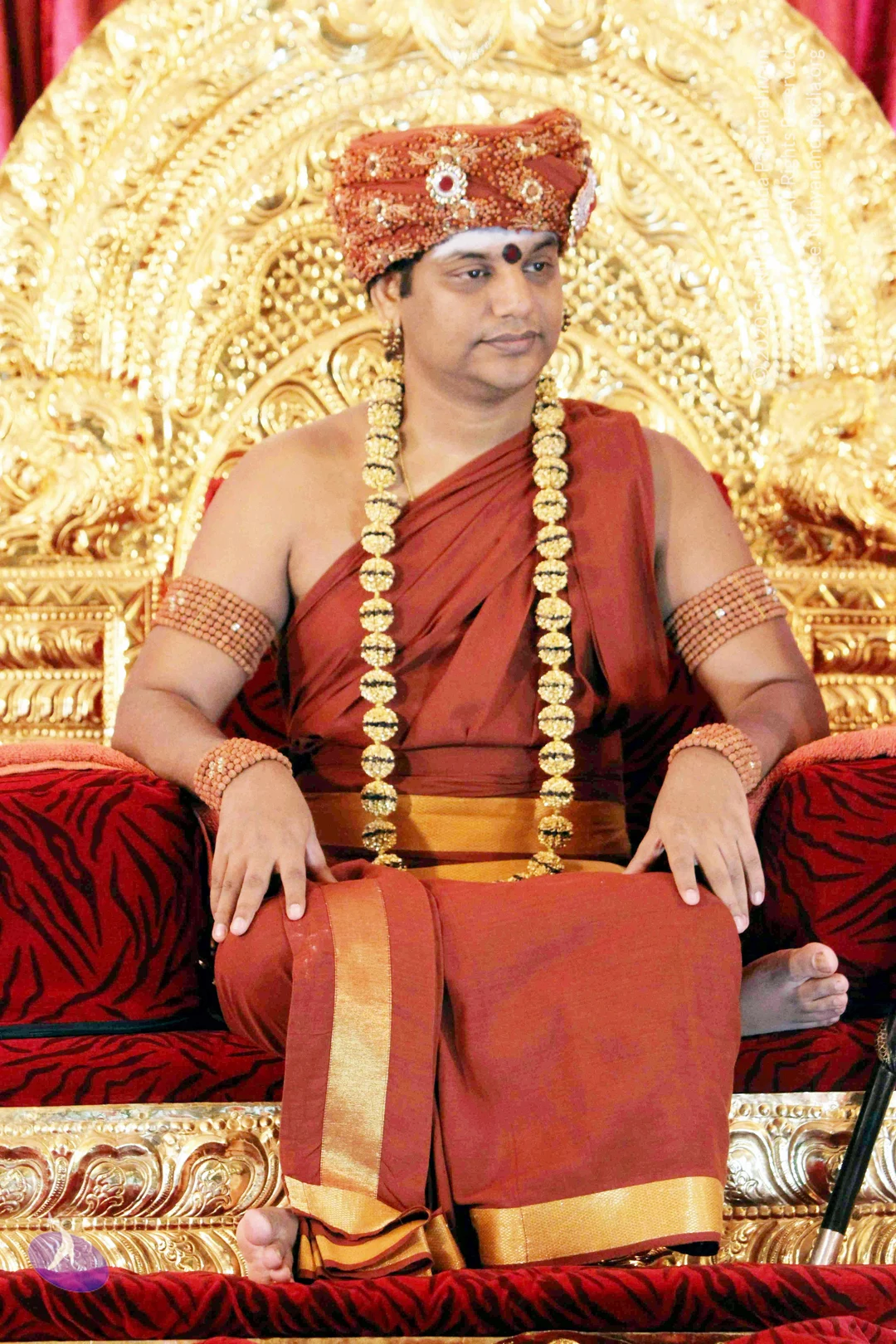
A seated man in saffron-red robes sits cross-legged on an ornate golden throne with gilded lion sculptures on each side. He wears a long ceremonial gold necklace, a red forehead mark and bare feet, and his hands rest together in his lap. A silver trident stands at right and a peacock-feather fan at left, with red and cream drapery behind.A seated man in an ornate golden throne with a gilded, repoussé backrest and red-and-black tiger-striped cushions. He wears a rust-orange sleeveless robe with a gold-bordered sash, a long double strand of gold-and-black beaded ceremonial garland, and a dark round bindi on his forehead. He sits cross-legged with hands folded over his lap, bare feet visible.A seated man in a red-orange robe sits cross-legged on an ornate gold throne with a red-and-black tiger-striped cushion. He wears a long gold necklace of beads, has a red bindi on his forehead, and holds his hands together in his lap. Behind him is a large gold repoussé backdrop with lion and tiger motifs and red curtains. A gold trident stands on the right, and a peacock-feather fan and a gold-and-black cobra-shaped staff are on the sides, with golden lion statues flanking the throne. a person, seated on his throne with a red-and-saffron robe, rudraksha-style beaded garland and trident, consistent with the page; the appearance cues are moderately clear.A man seated on a red and gold tiger-striped throne in front of an ornate gold repoussé backrest, with a silver trident (trishul) standing at right and a peacock feather visible at left. He wears an orange-red shawl over bare shoulders, a long gold beaded necklace, and a small red bindi on his forehead, with his palms pressed together in namaste. a person is described by the cues of a seated devotional figure in a saffron-red wrap with ceremonial gold necklaces on a throne, though identity remains uncertain. Red velvet drapes frame the scene.A smiling man sits cross-legged on an ornate gold-embossed throne with red upholstered cushions. He wears a red-orange unstitched wrap over his shoulder and a red-orange dhoti with a gold border, and a tilak mark on his forehead. A long gold-toned rudraksha mala hangs to his waist, and his hands rest together in his lap. The subject is a single seated person in front of a large ornate gold backdrop. a person: long-haired, saffron-red garb, ceremonial gold mala and ornate throne fit the page's description of a person.A smiling man with long swept-back dark hair and a red bindi sits cross-legged on a red velvet throne with ornate gold repoussé backing. He wears a rust-red garment draped over his torso, a gold waist sash, and a long gold necklace of beads. A silver trident stands at his right, with a snake coiled around its shaft, and a peacock-feather fan rests at his left. Golden lion heads flank the throne, and red and gold draperies frame the background.