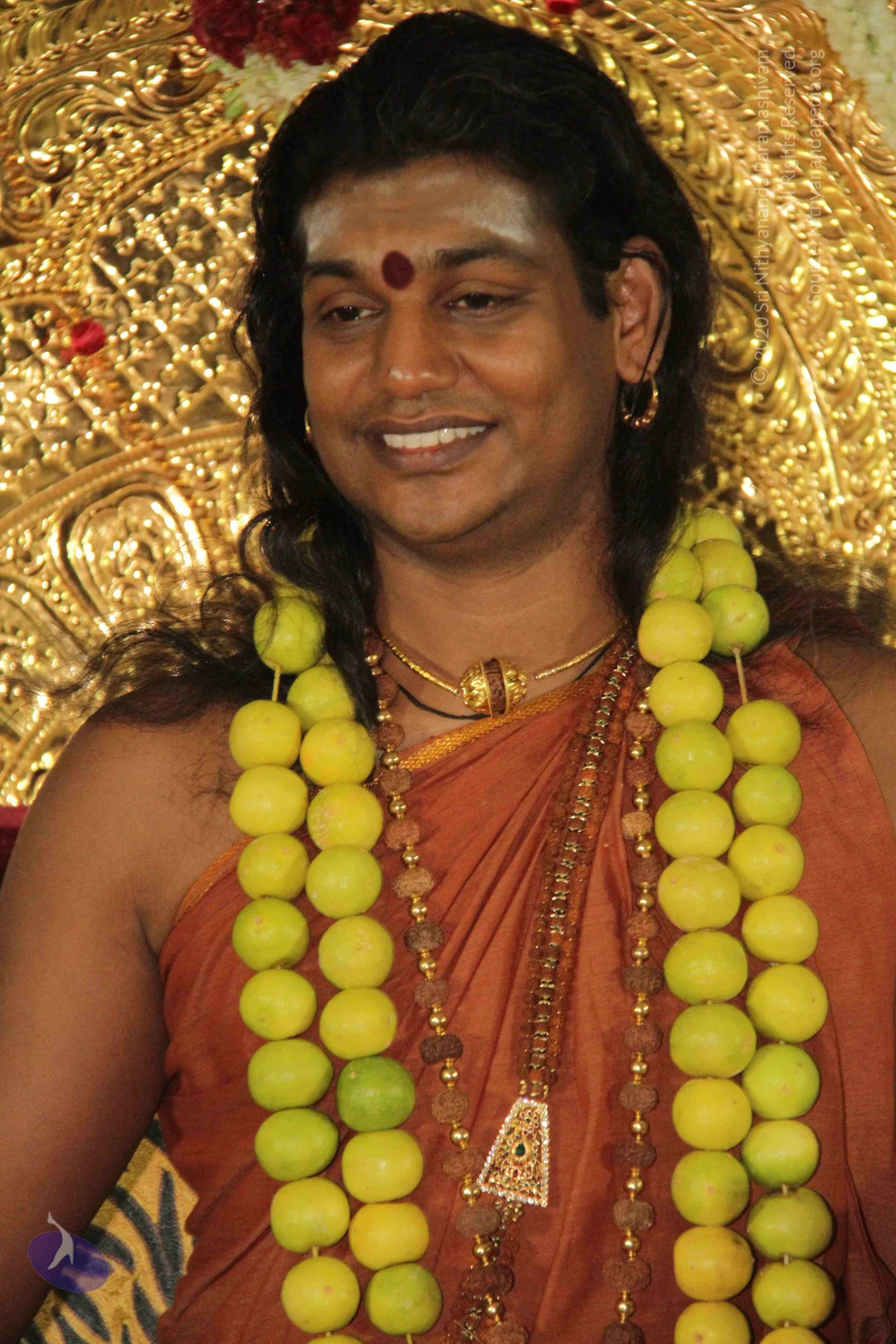
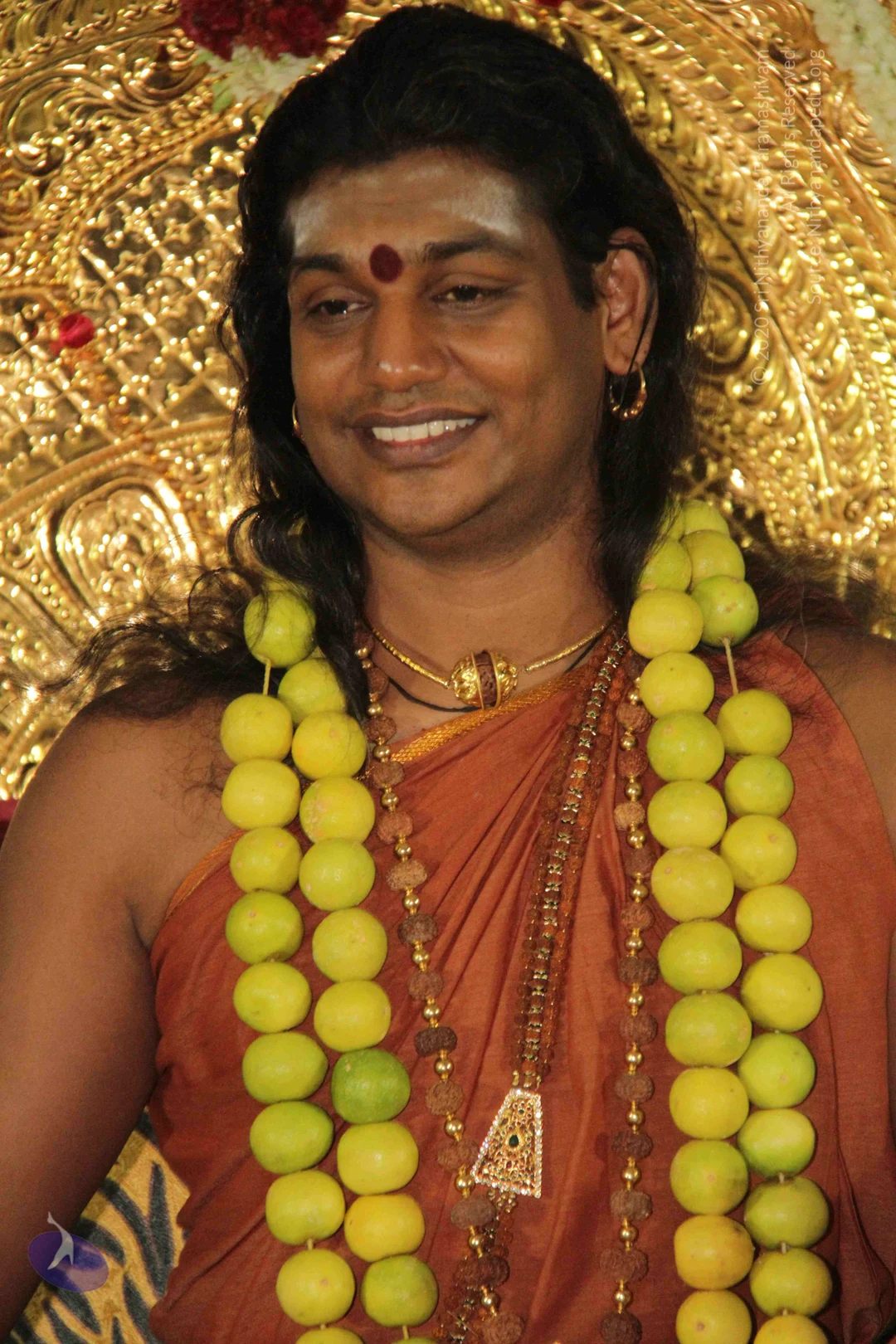
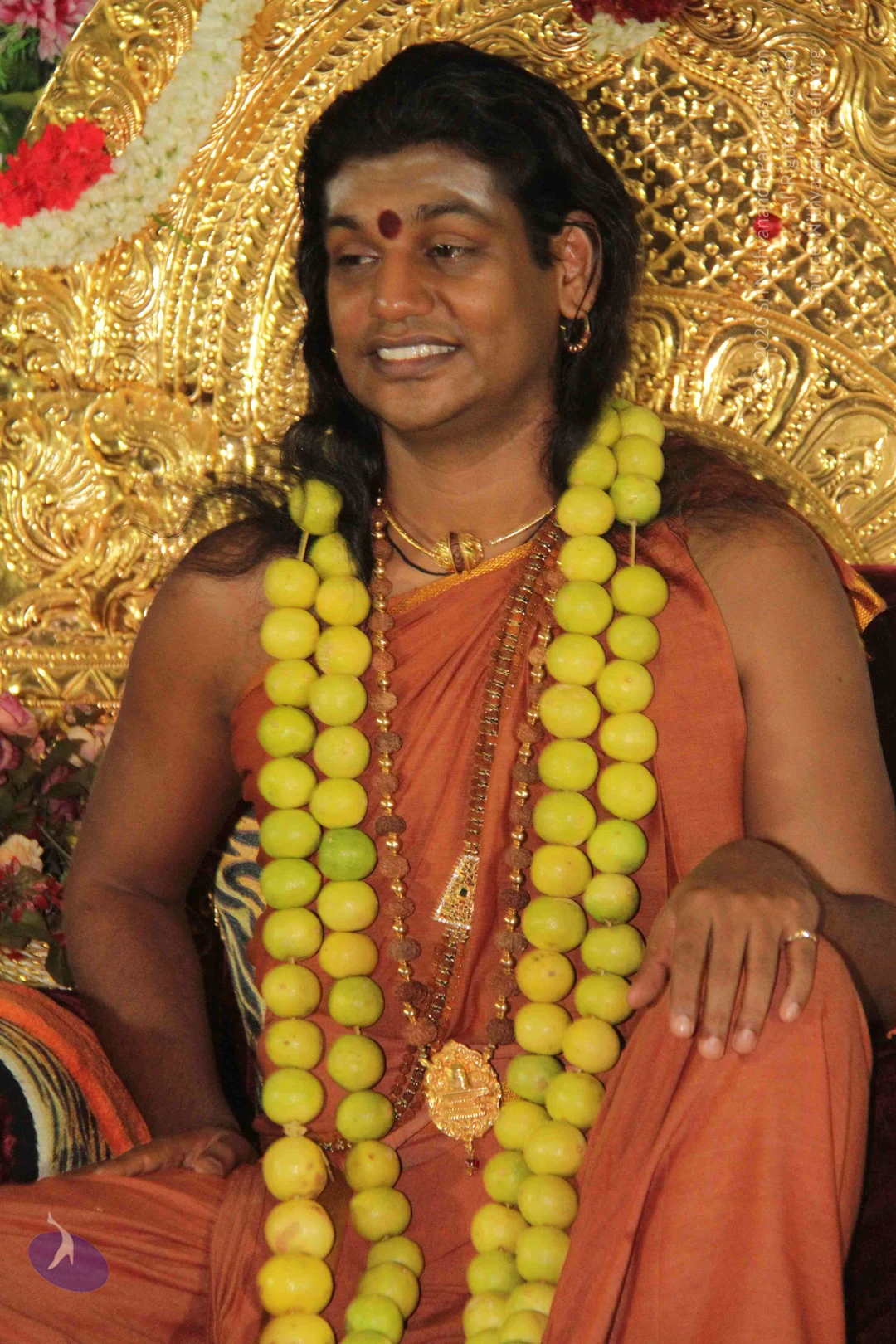
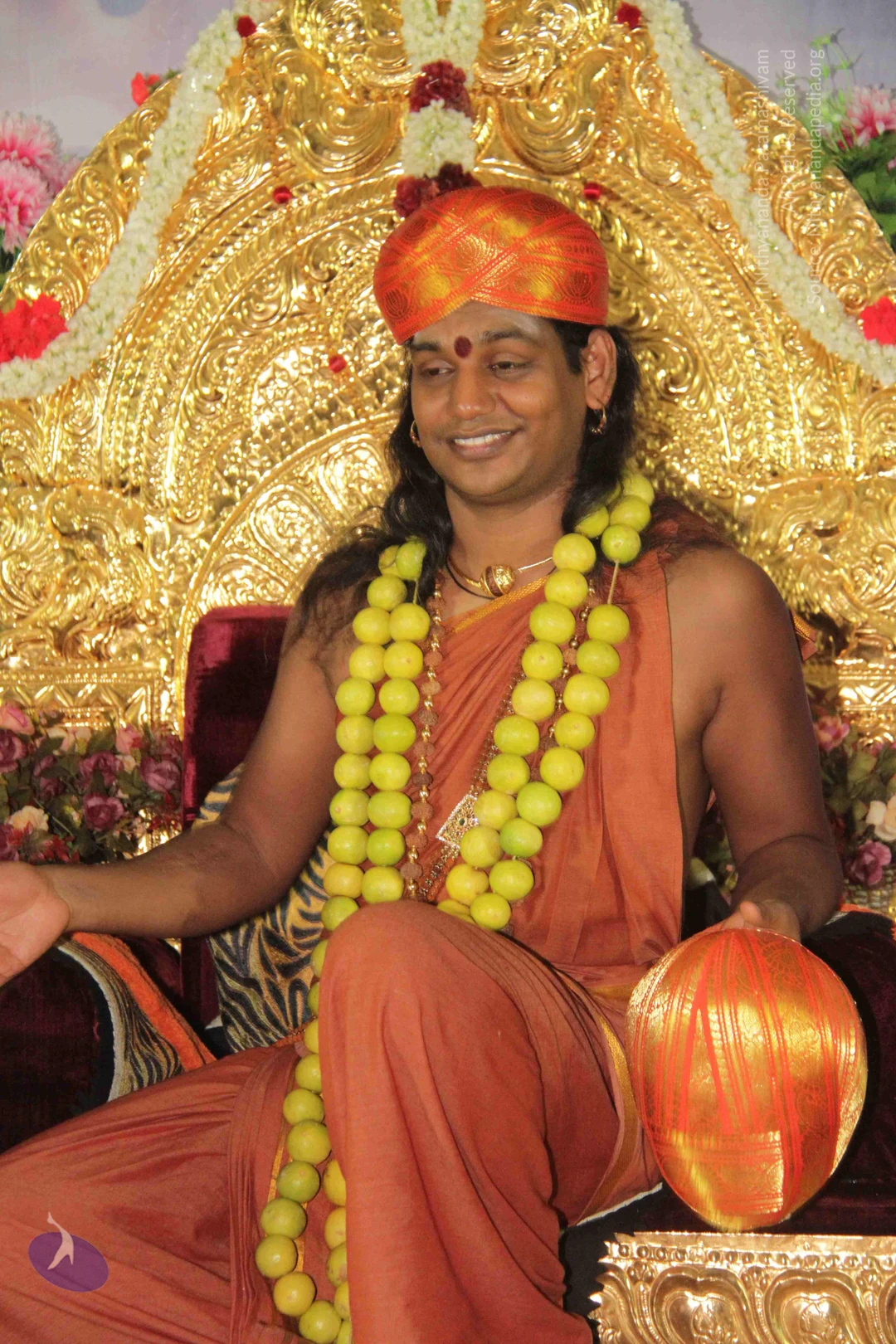
Skip to content
Sunday

22 July 2012

Performance Means Being Total.

Dated photos
333
Source pages
1
Media
2
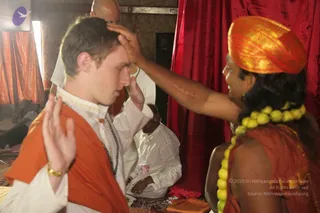
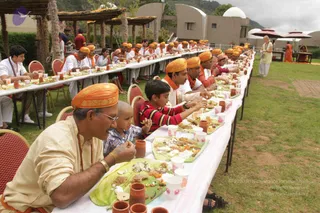
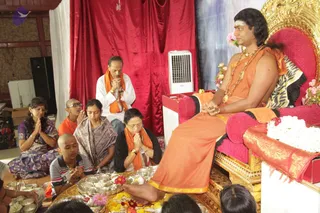
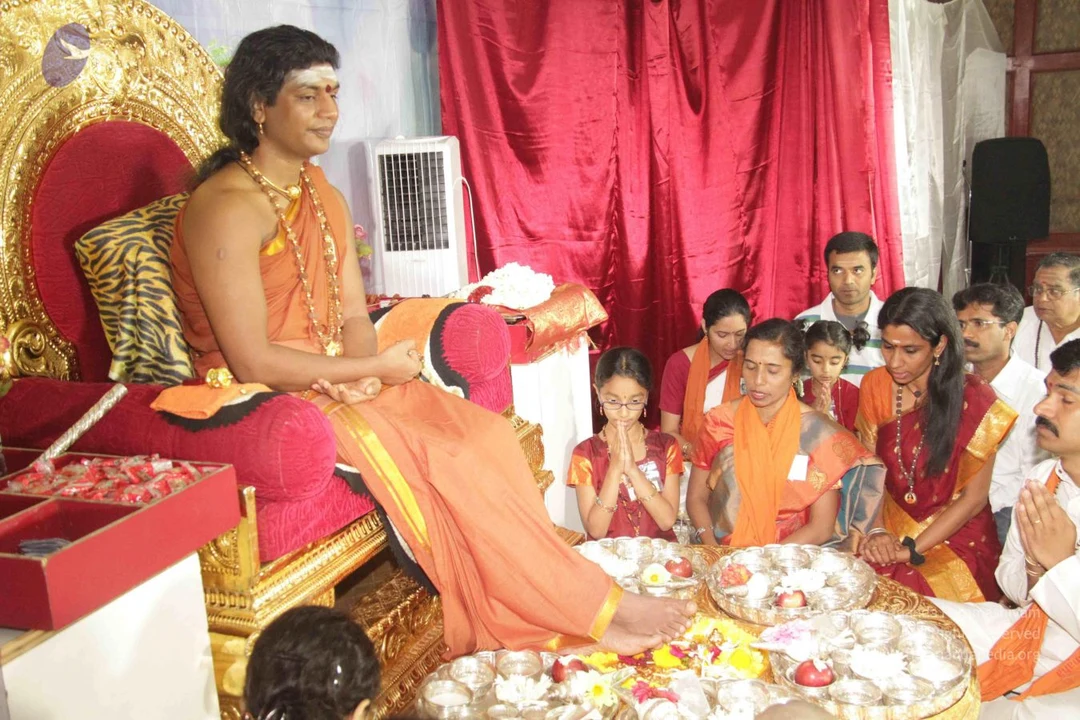
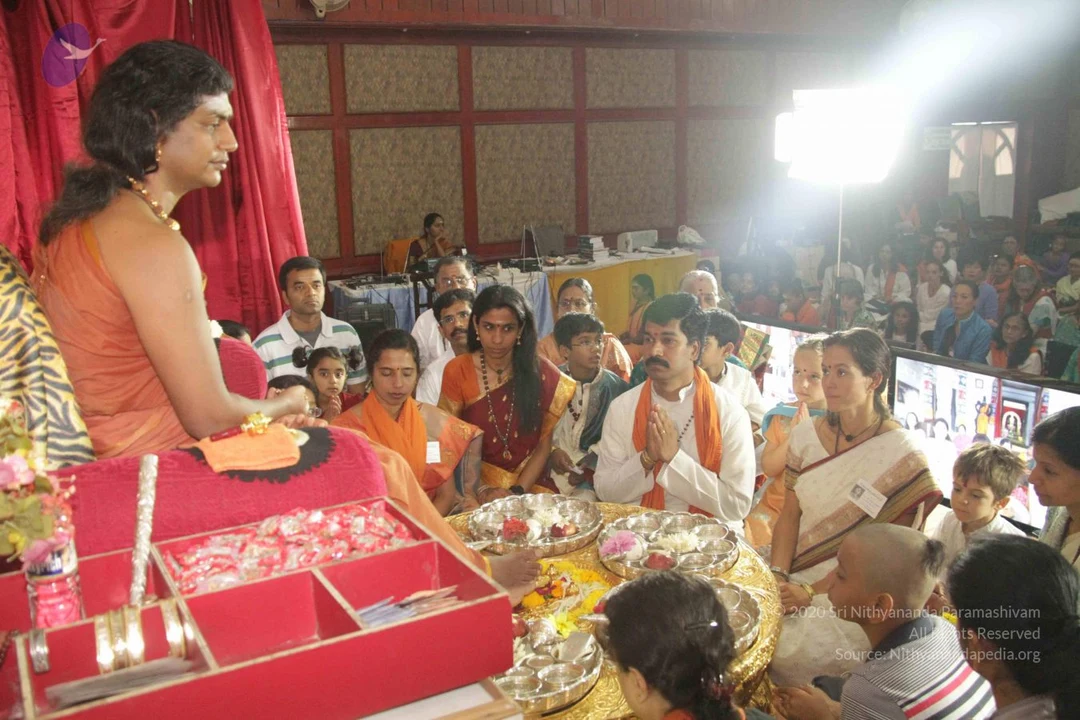
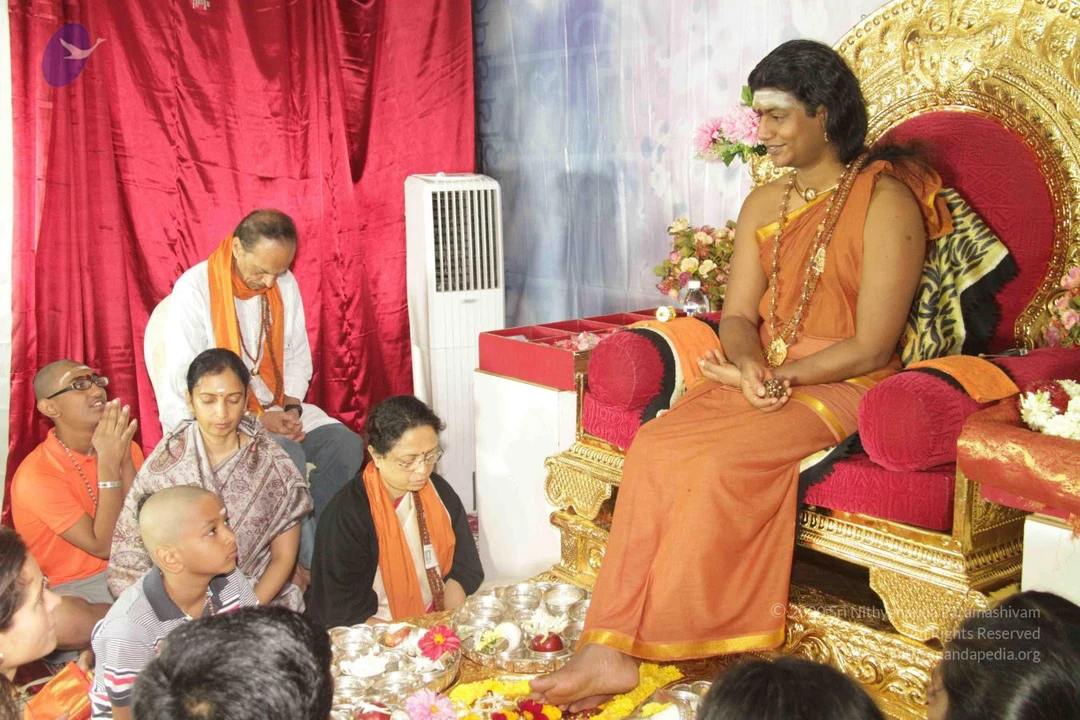
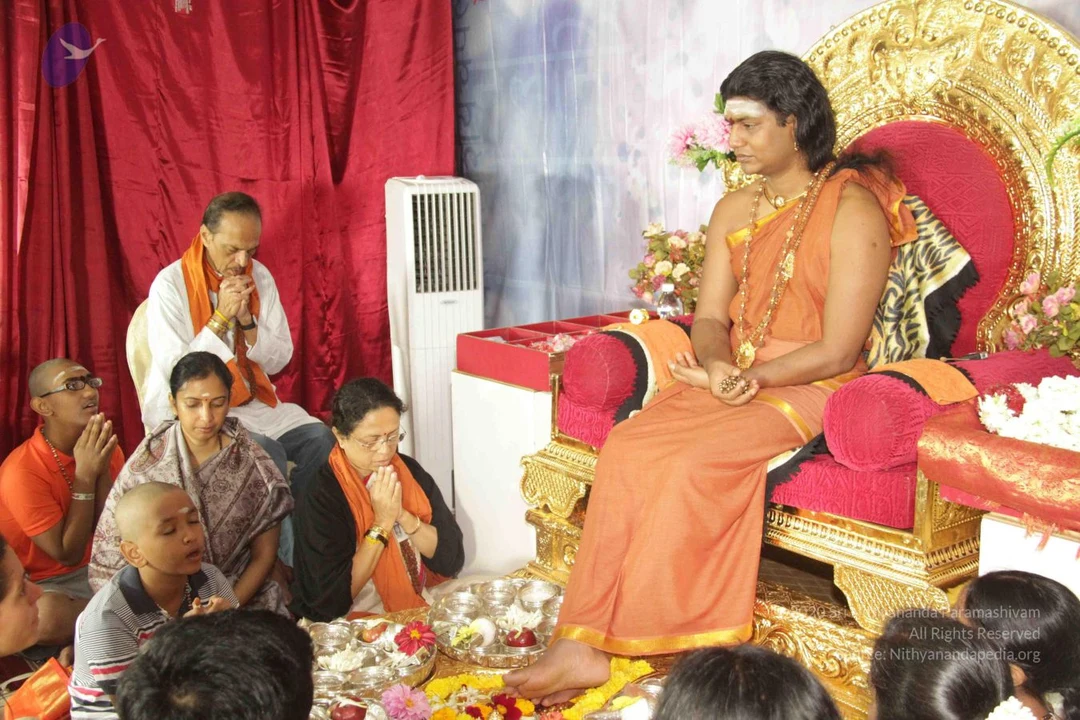
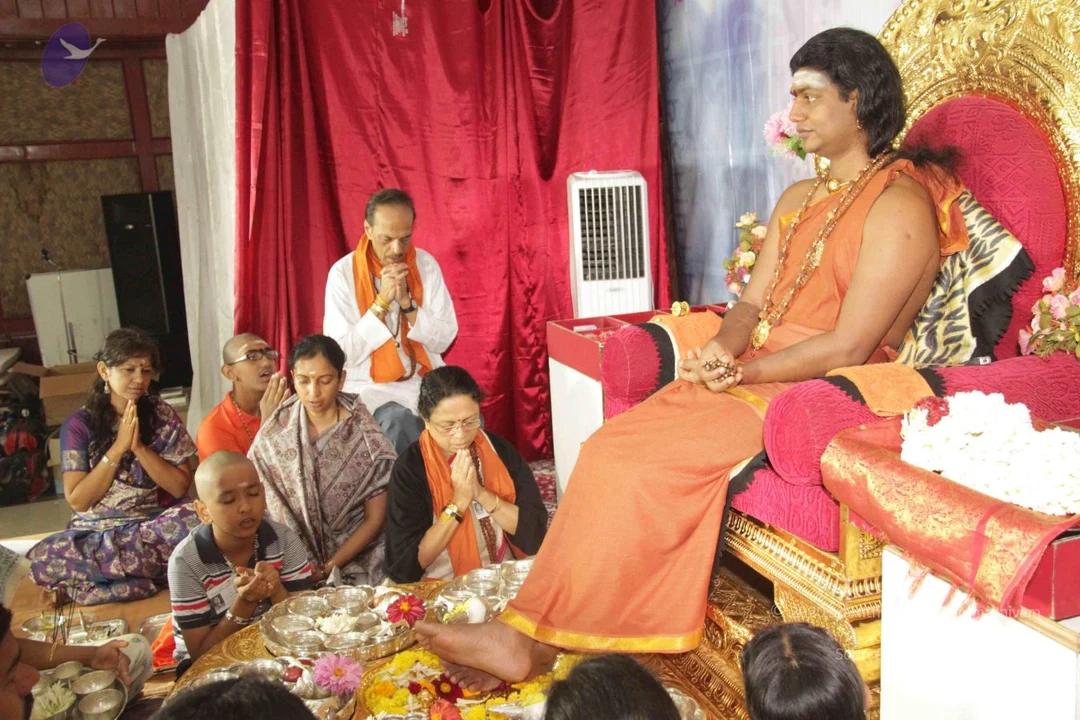
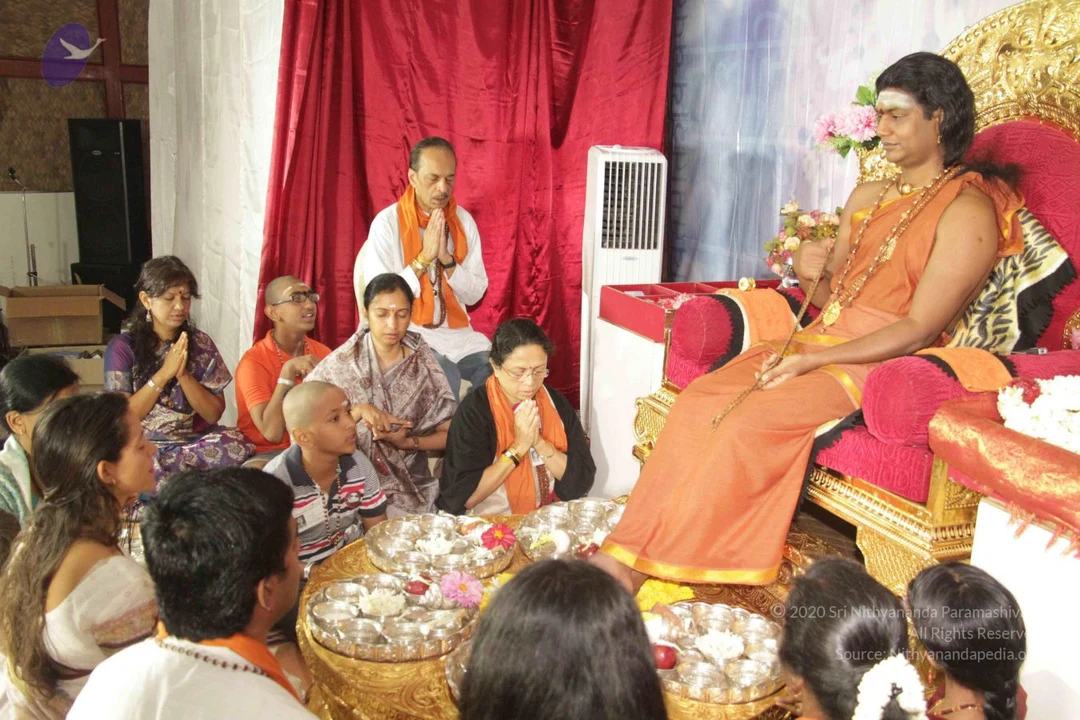
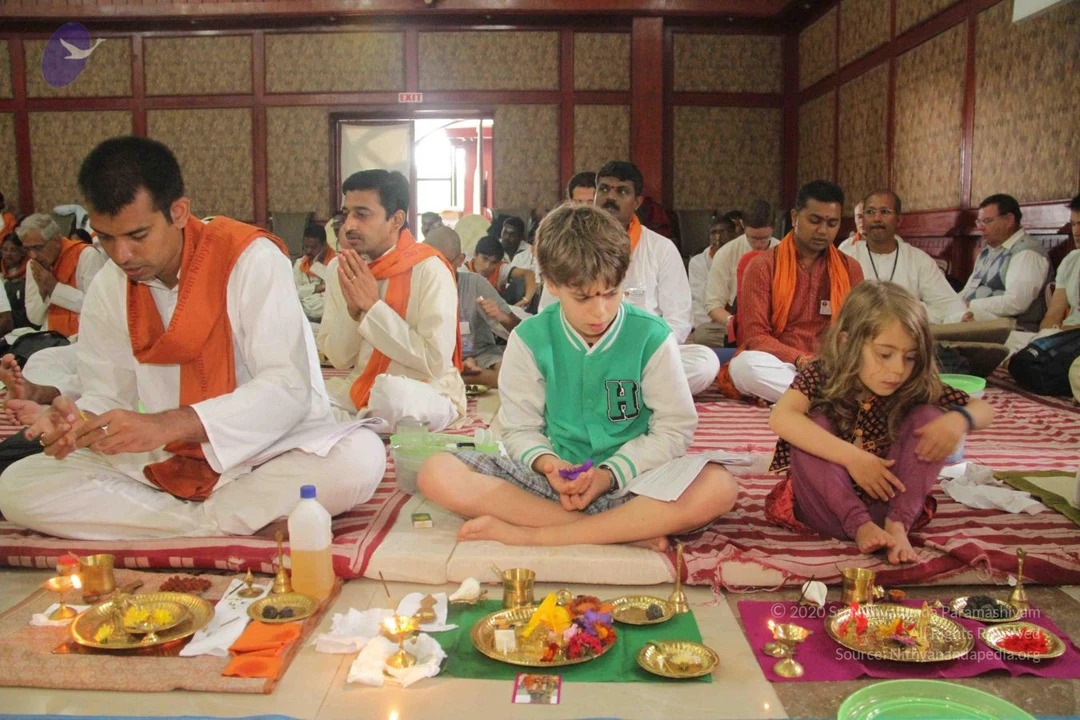
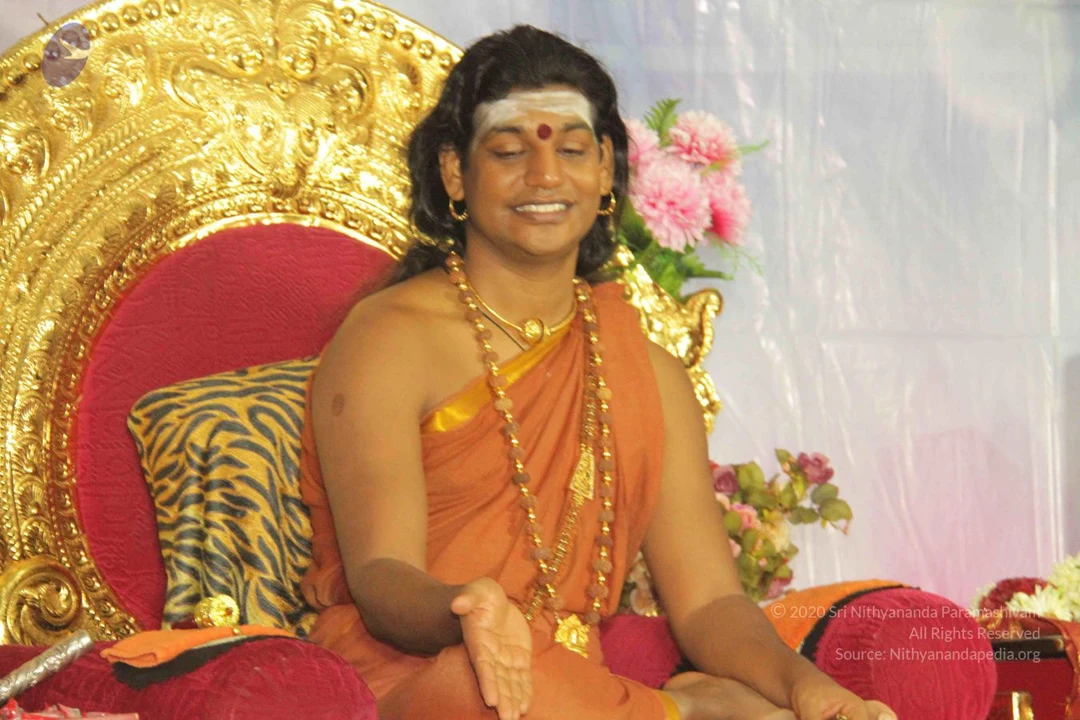
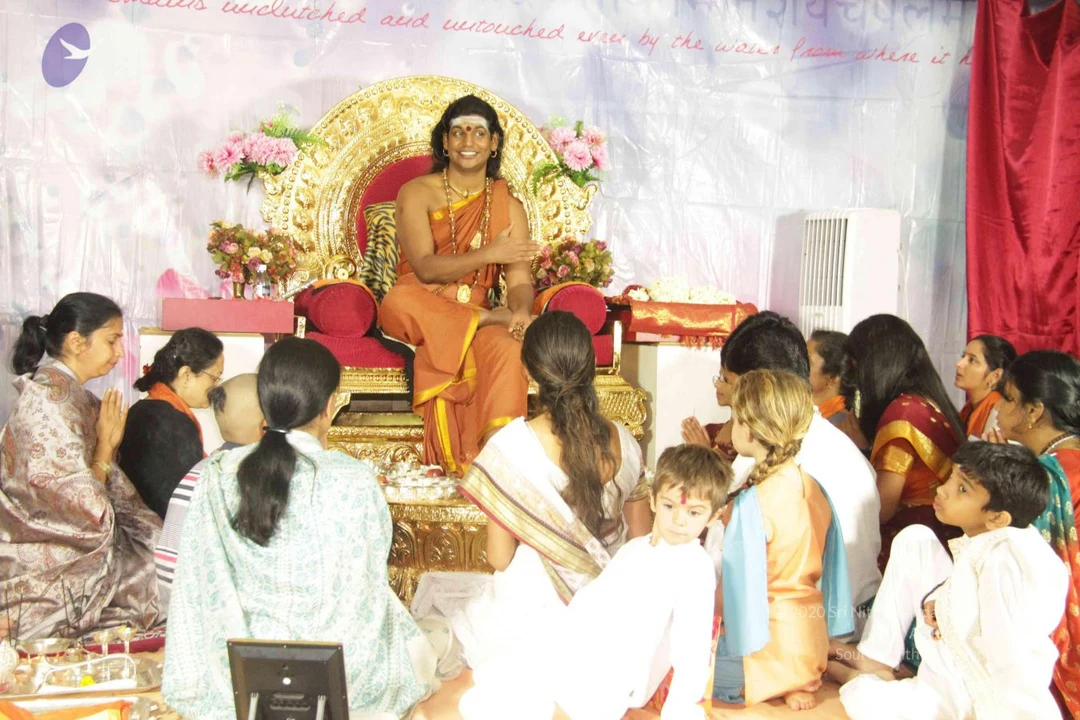
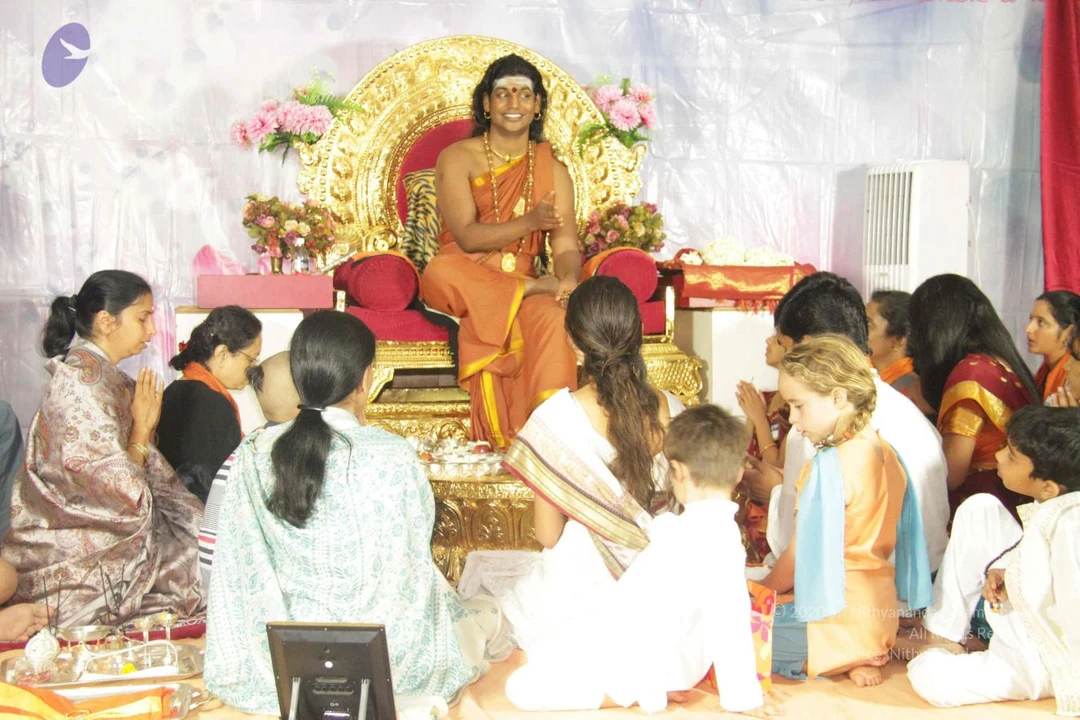
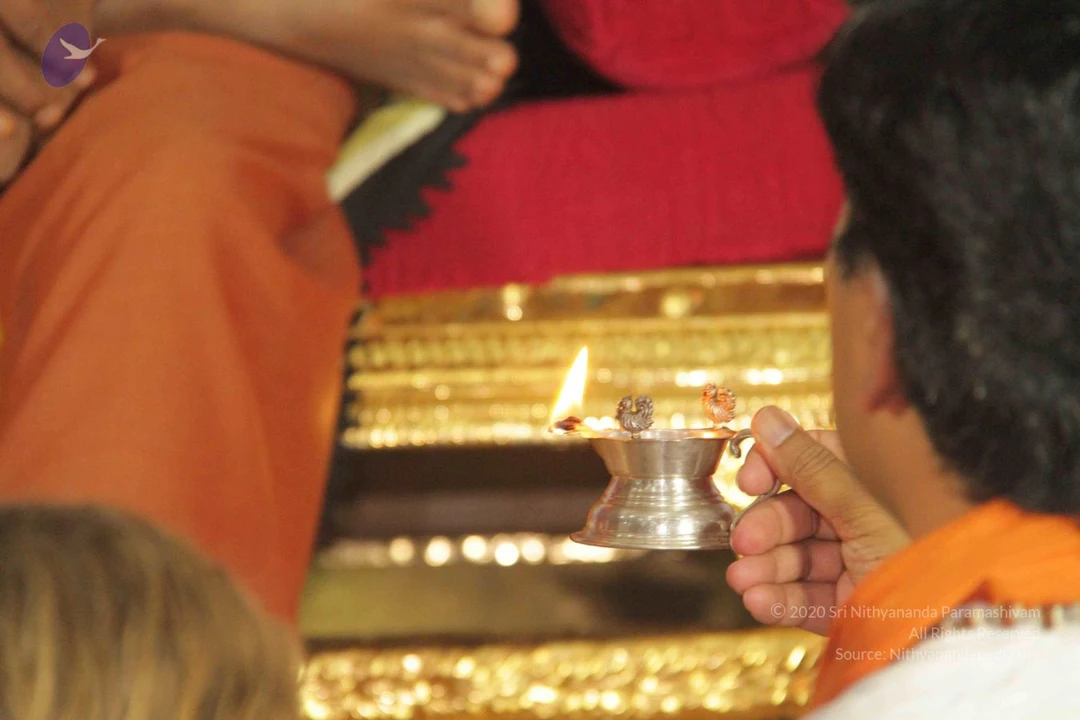
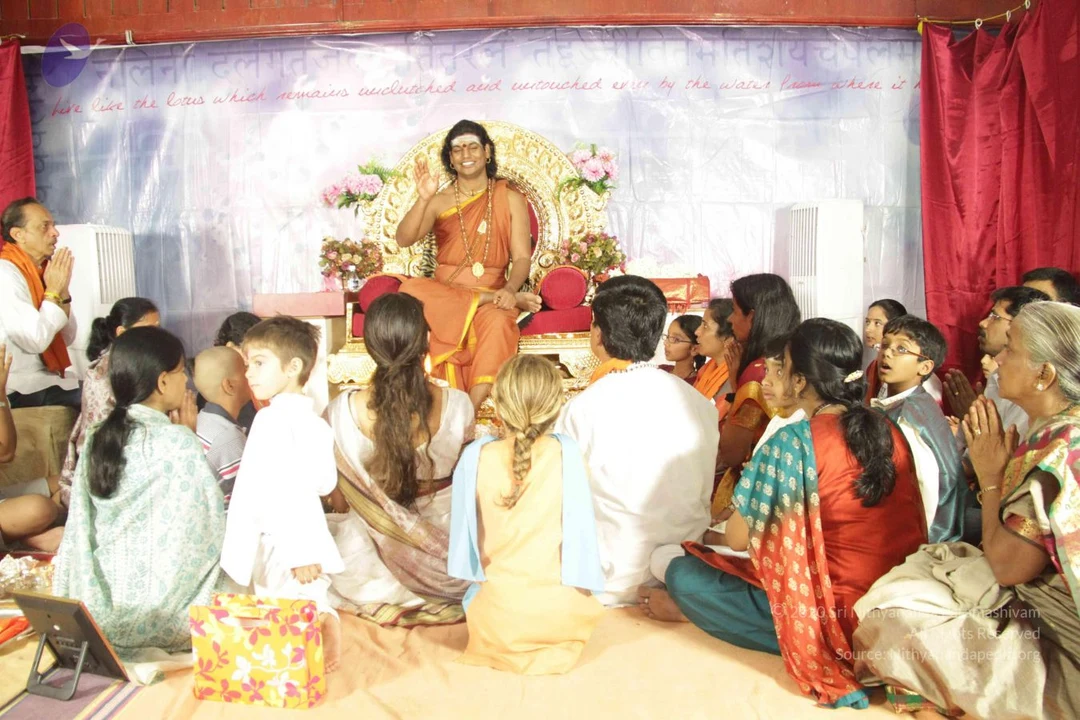
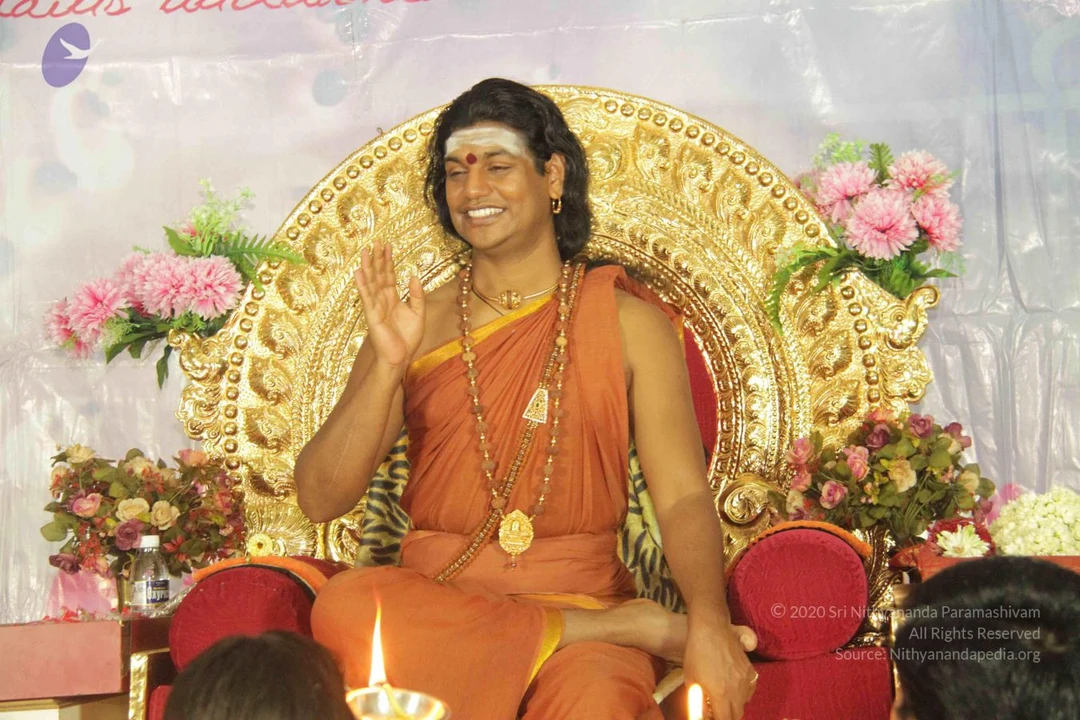
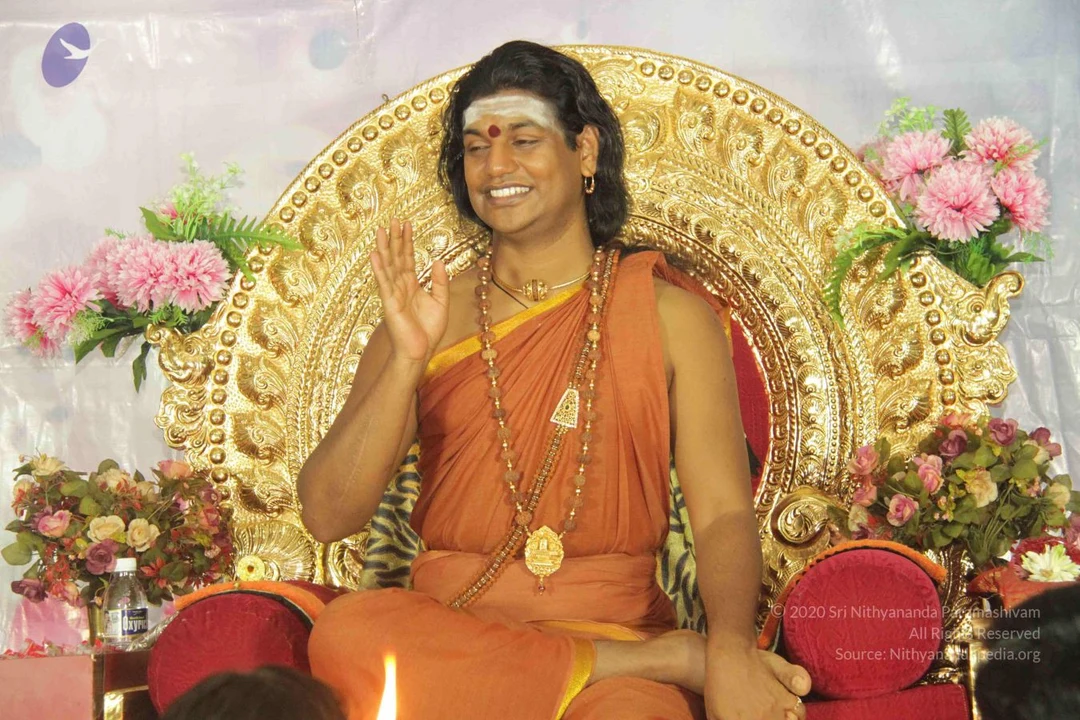
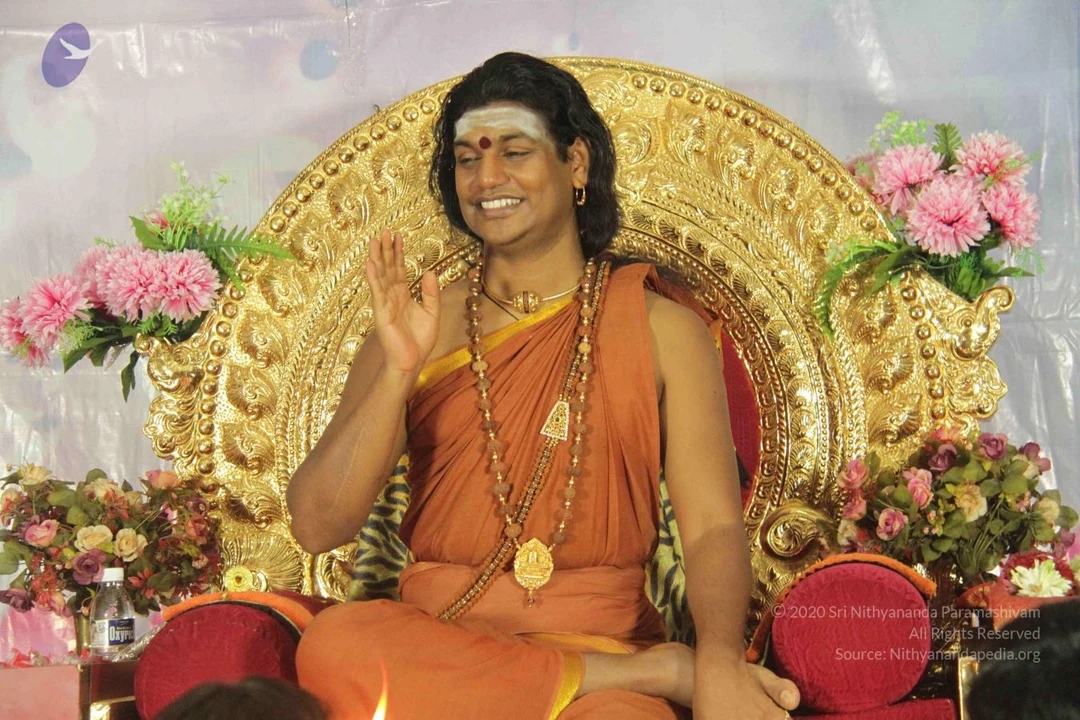
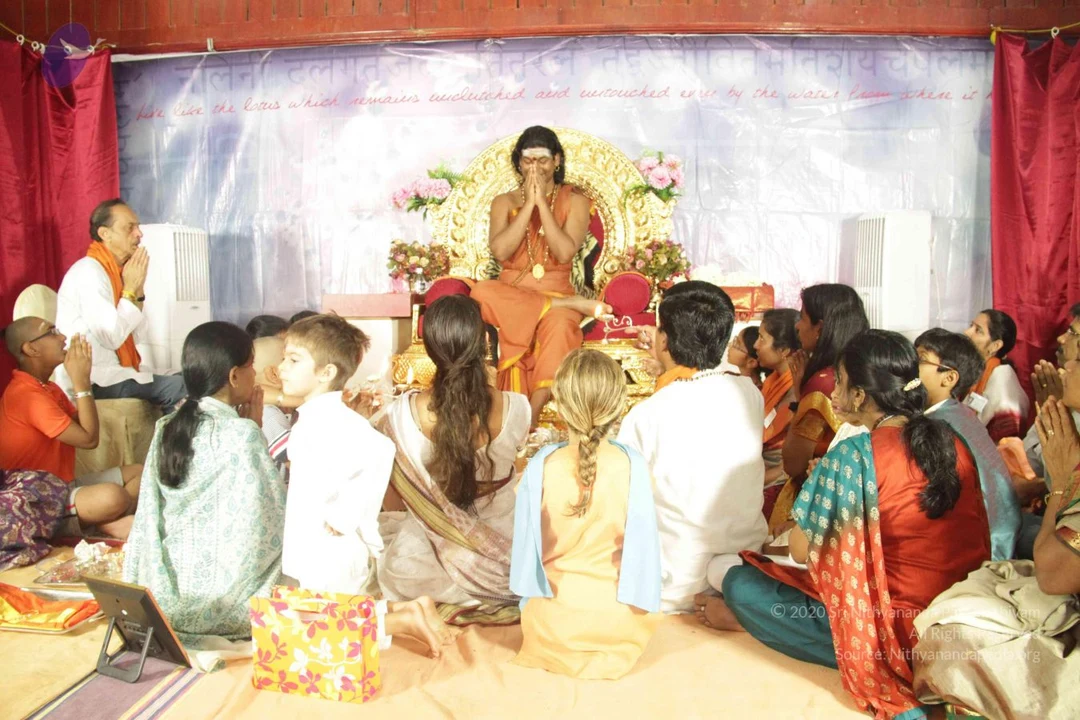
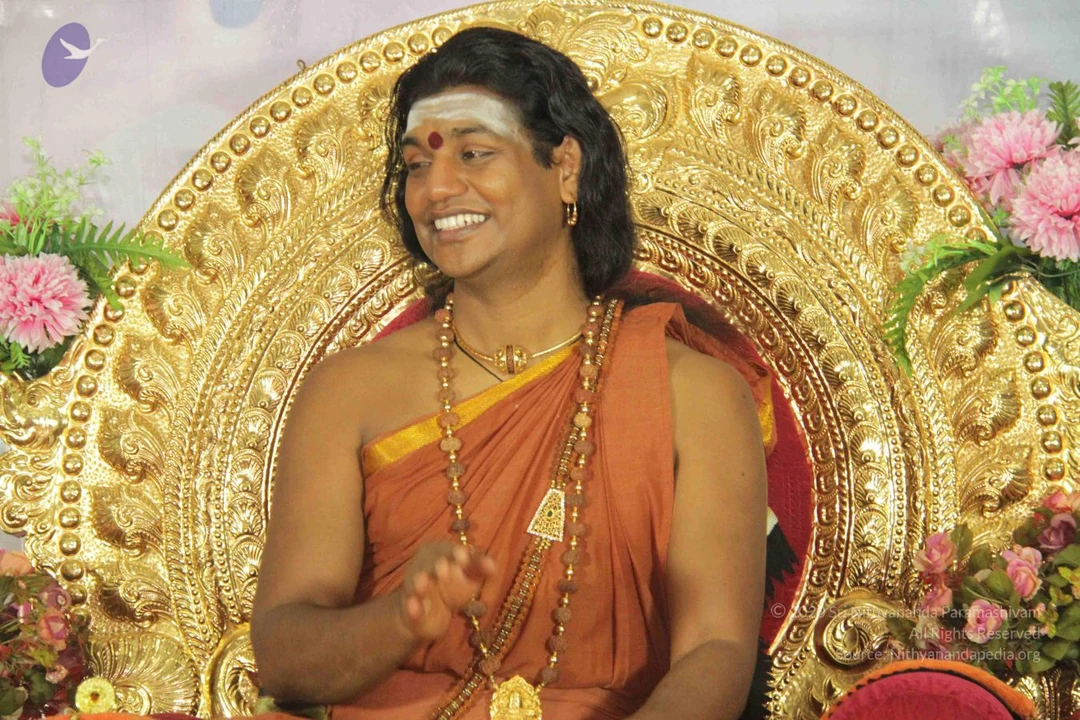
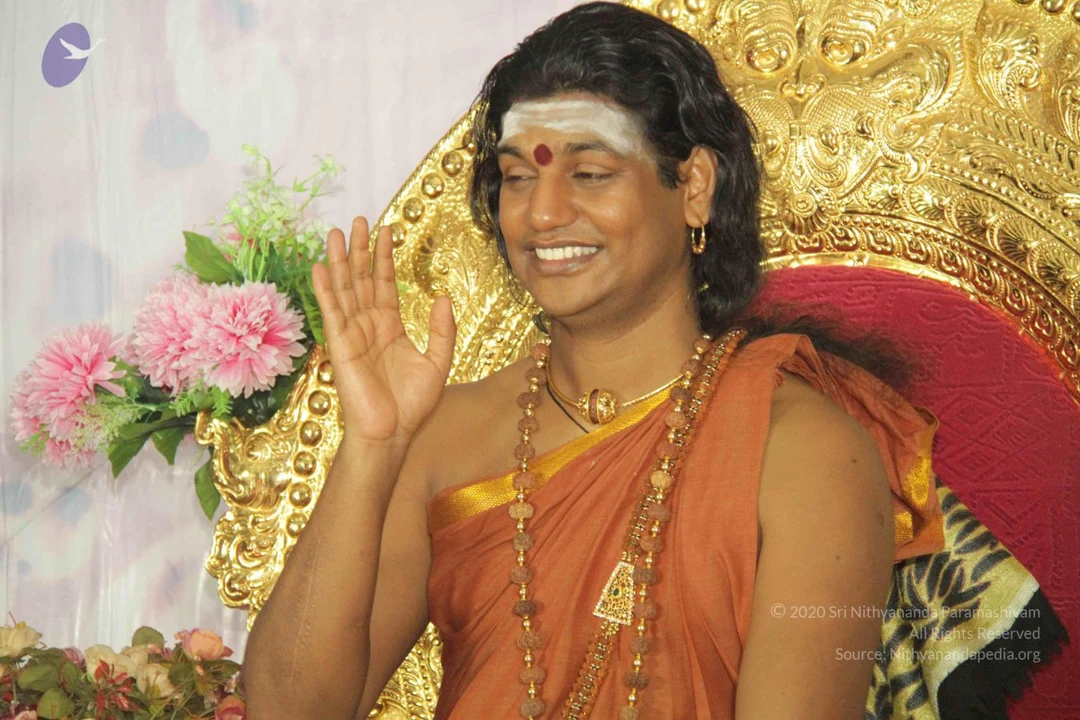
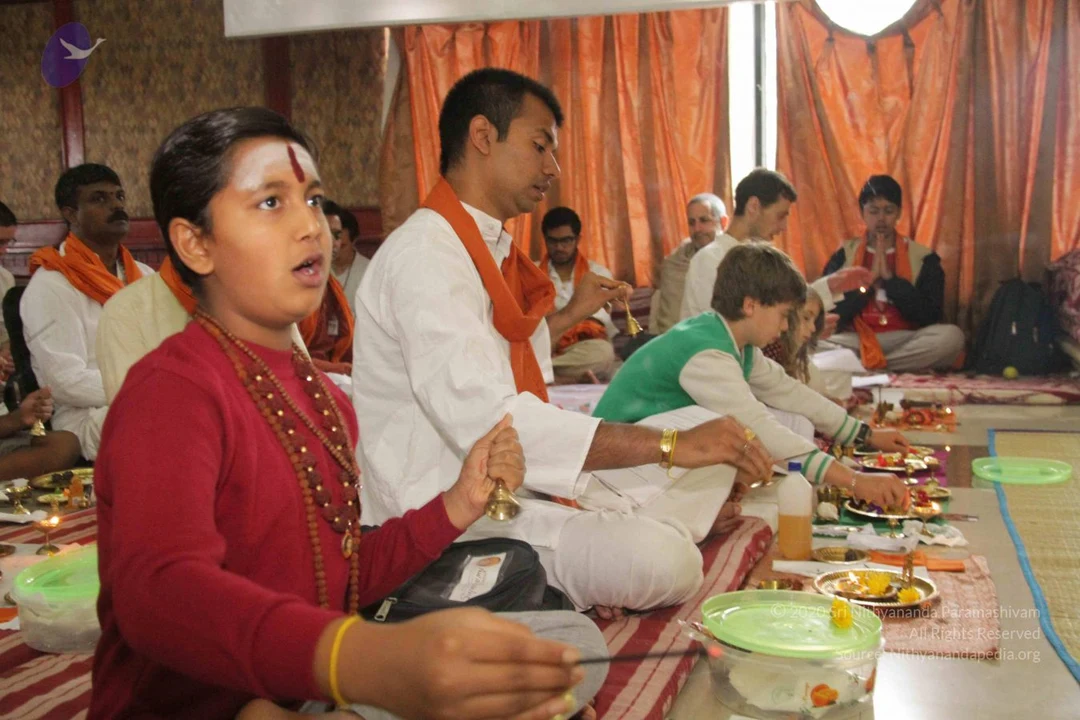
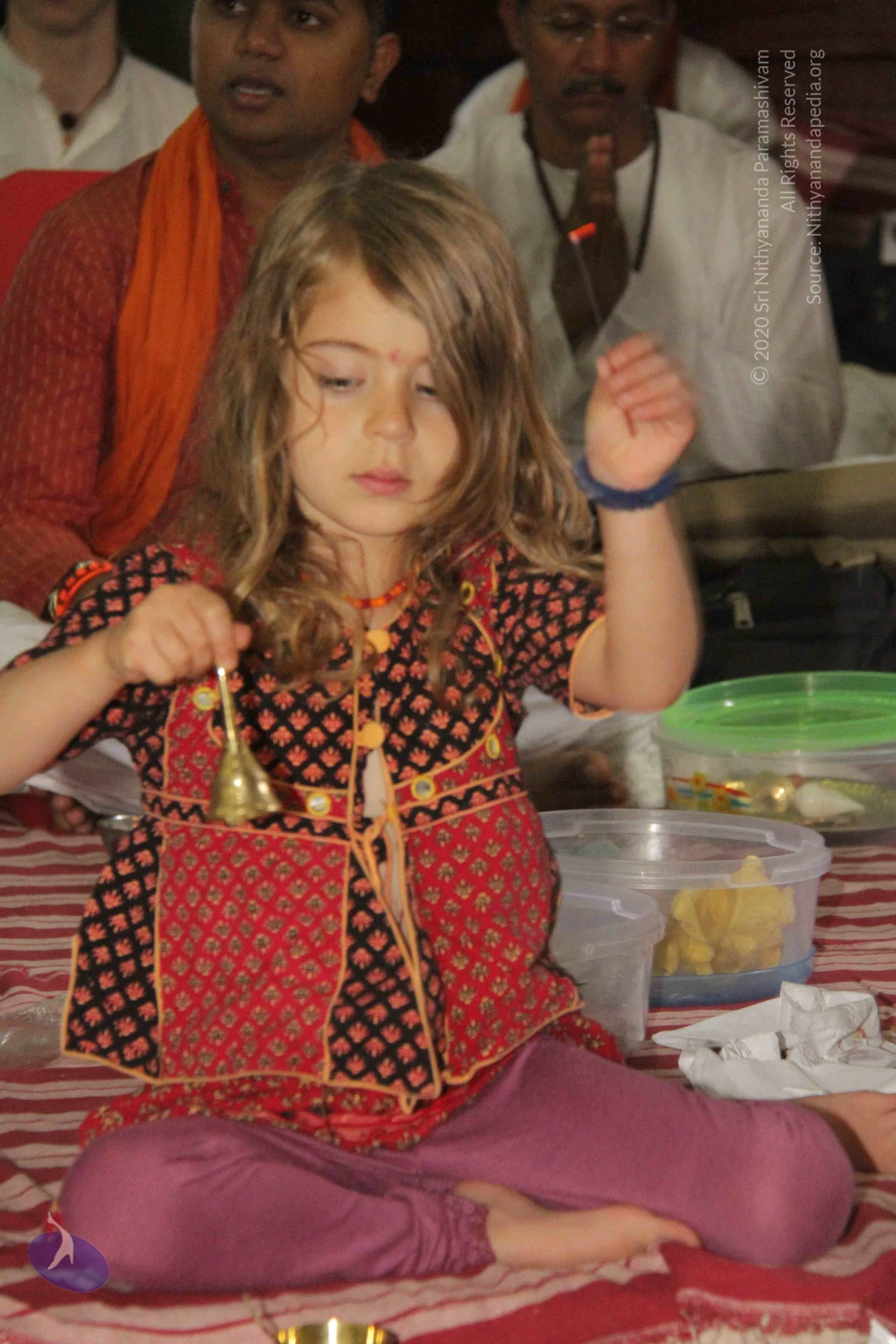
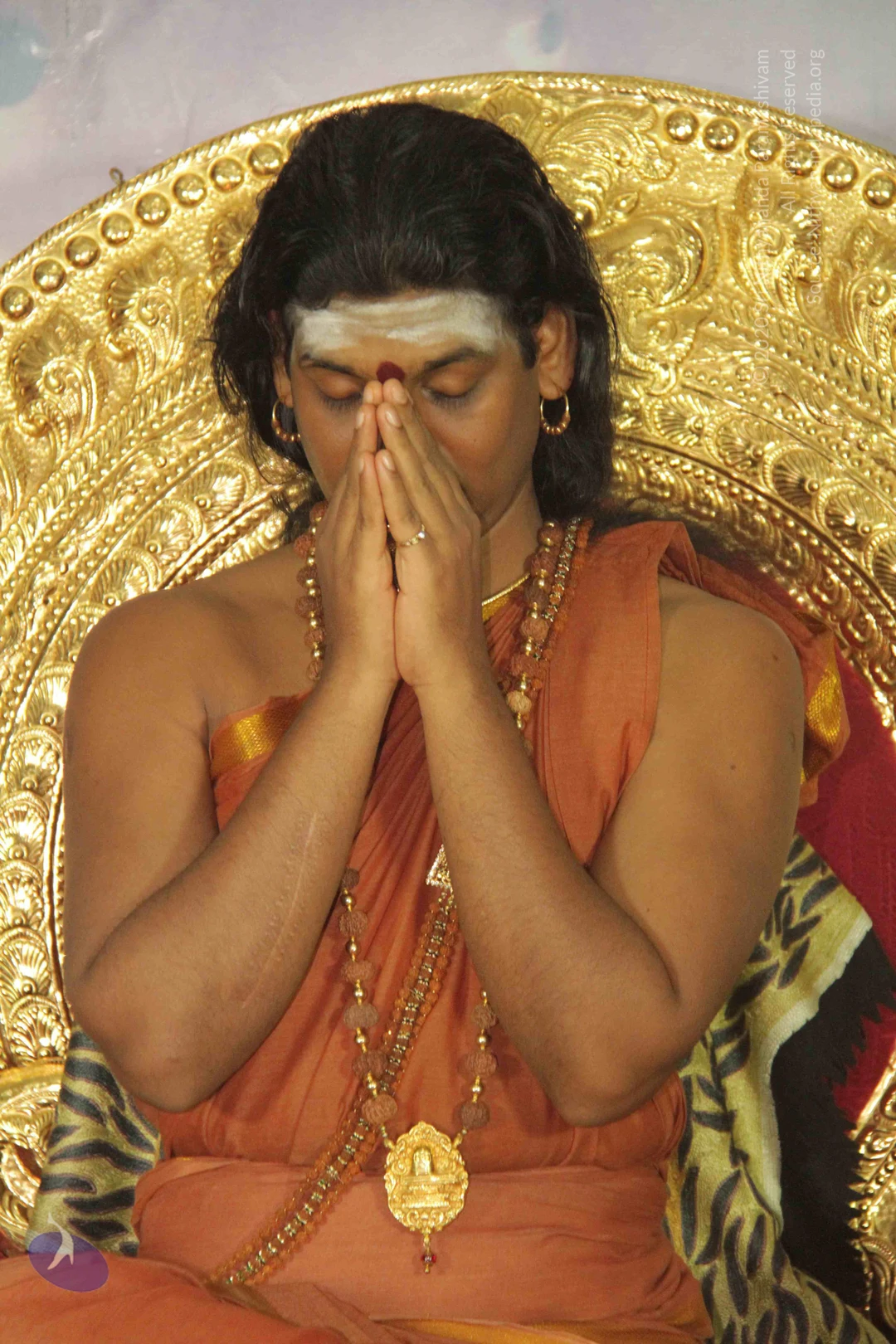
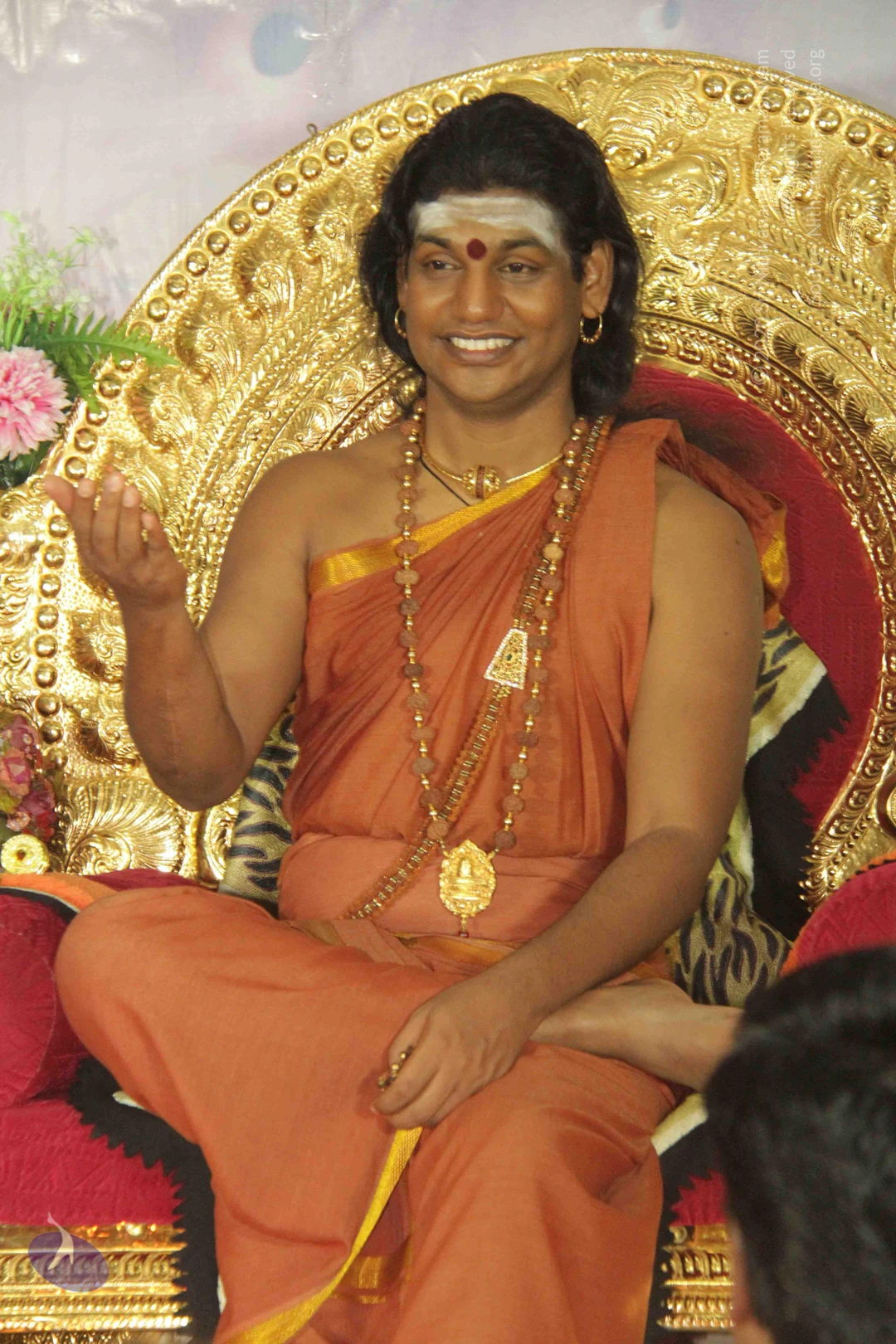
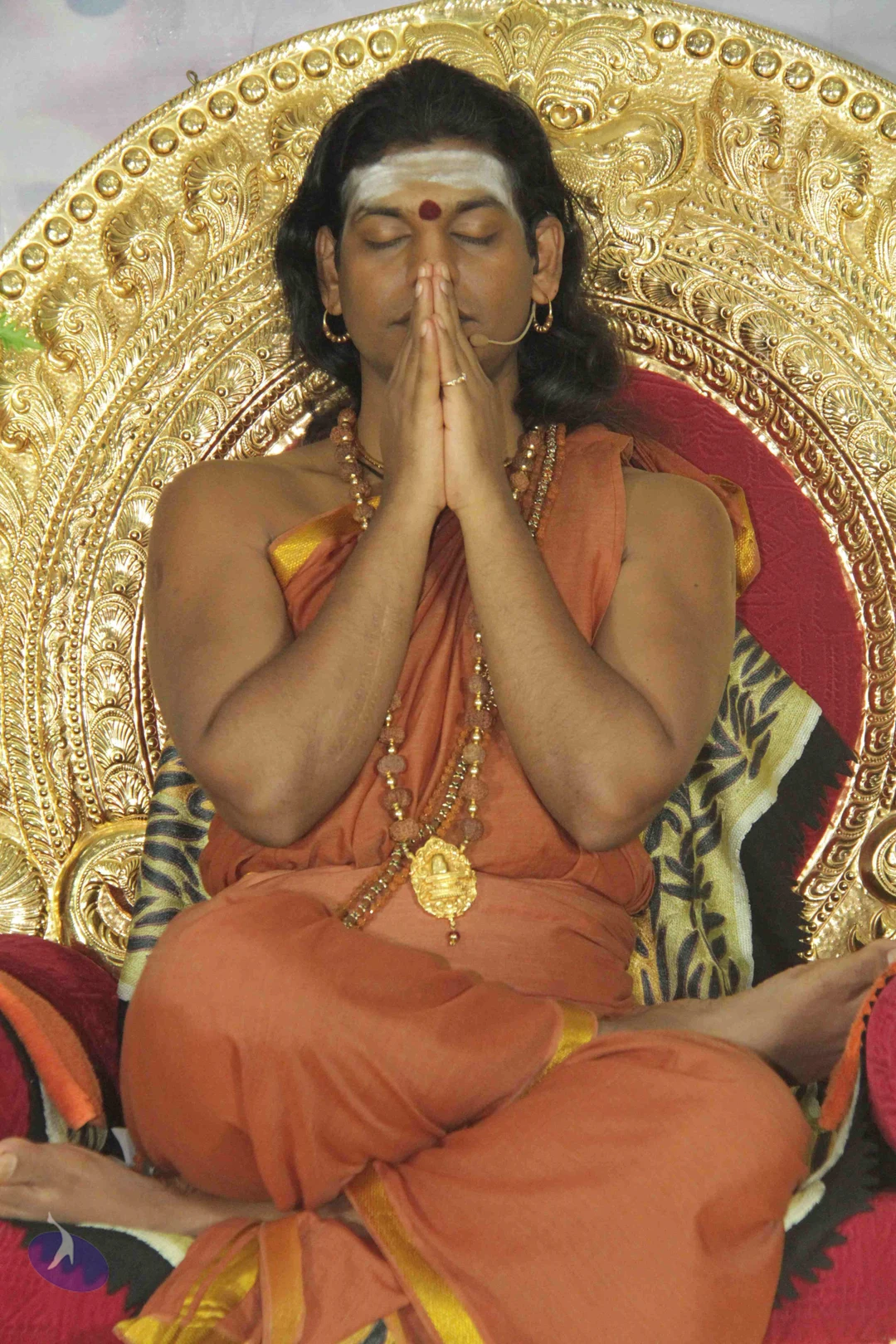
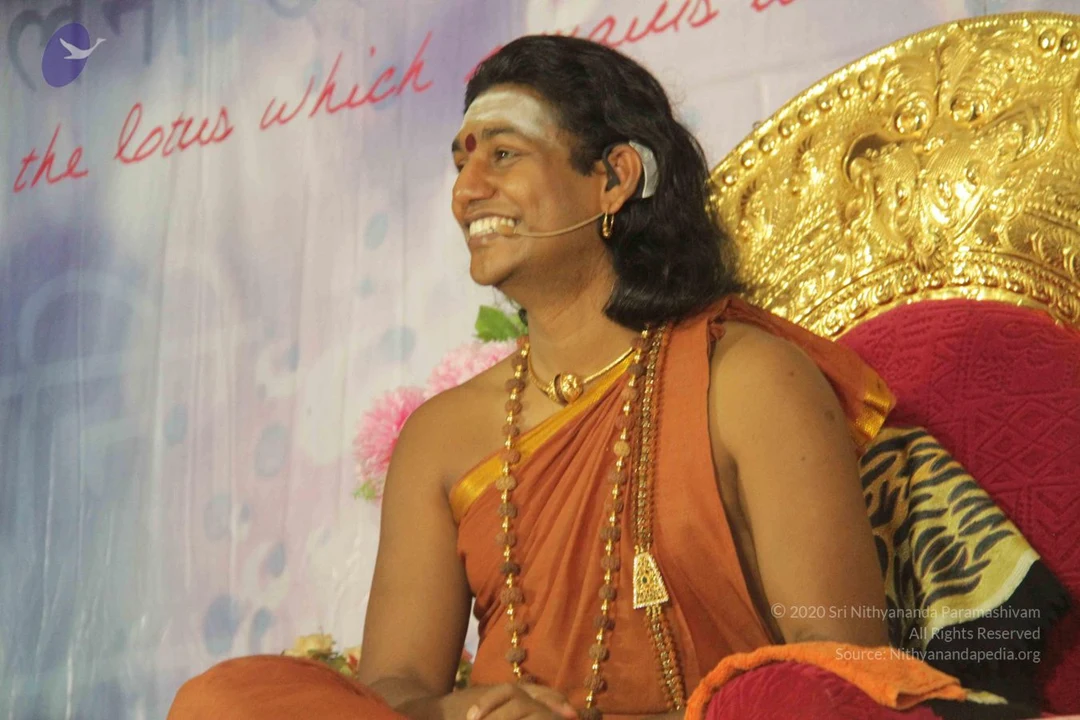
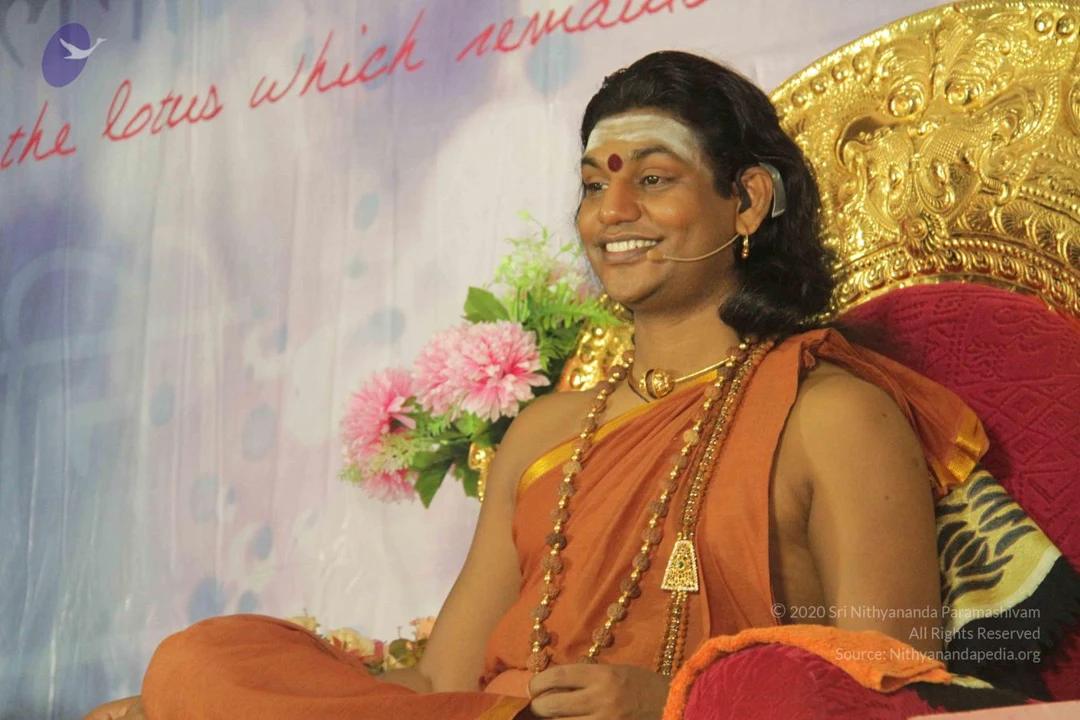
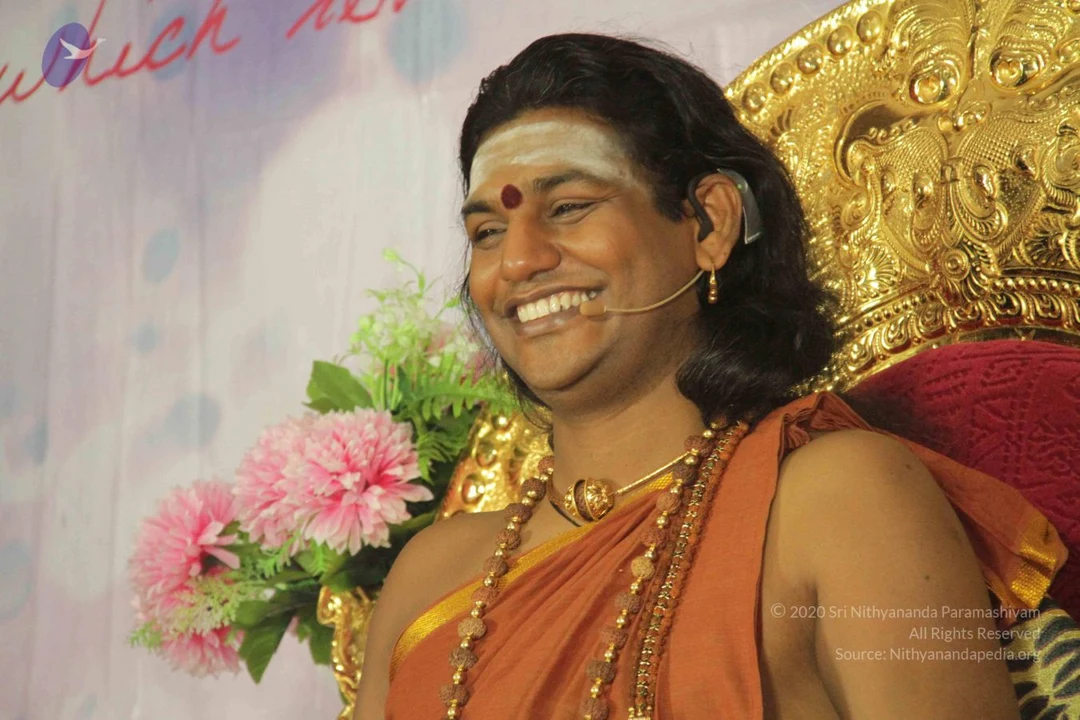
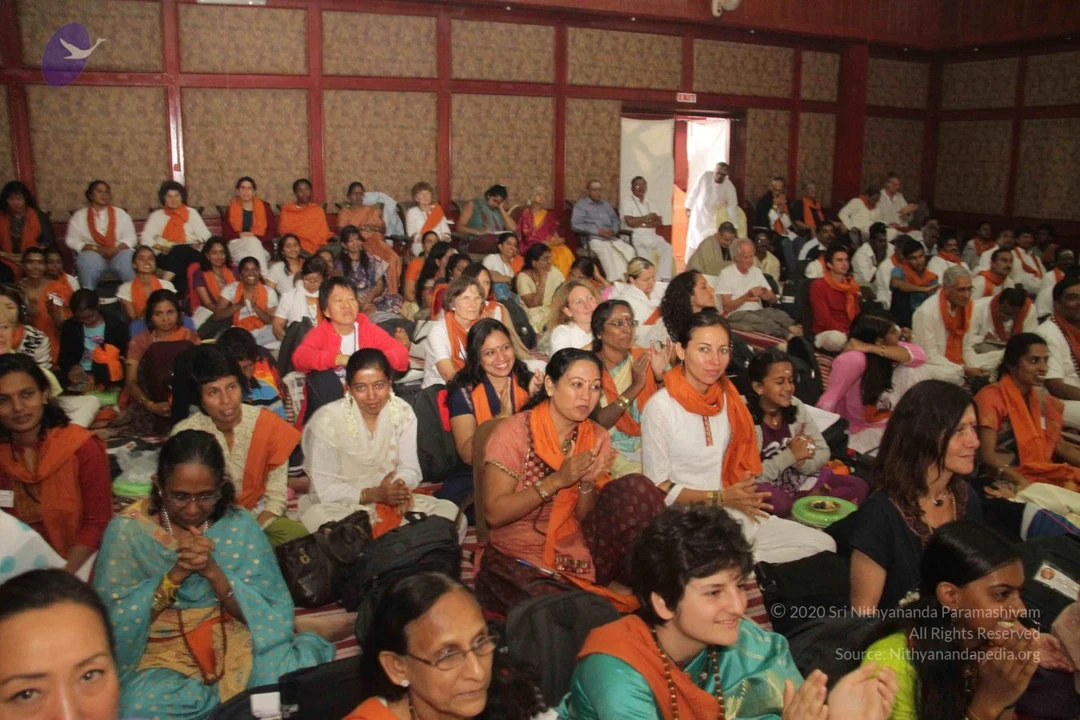
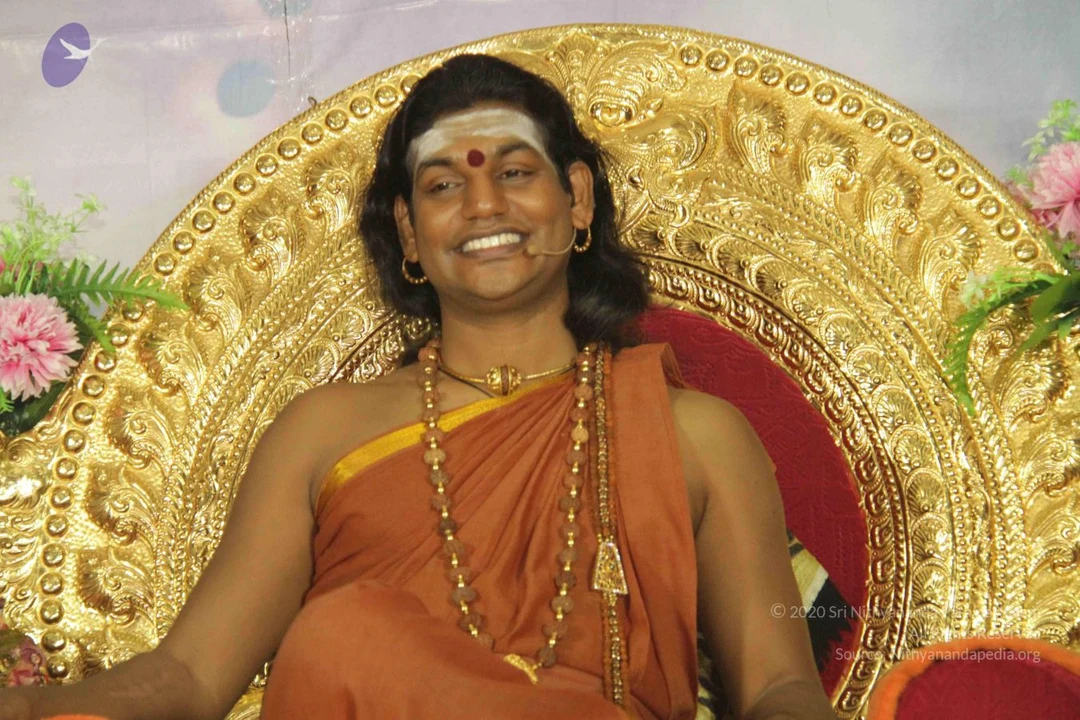
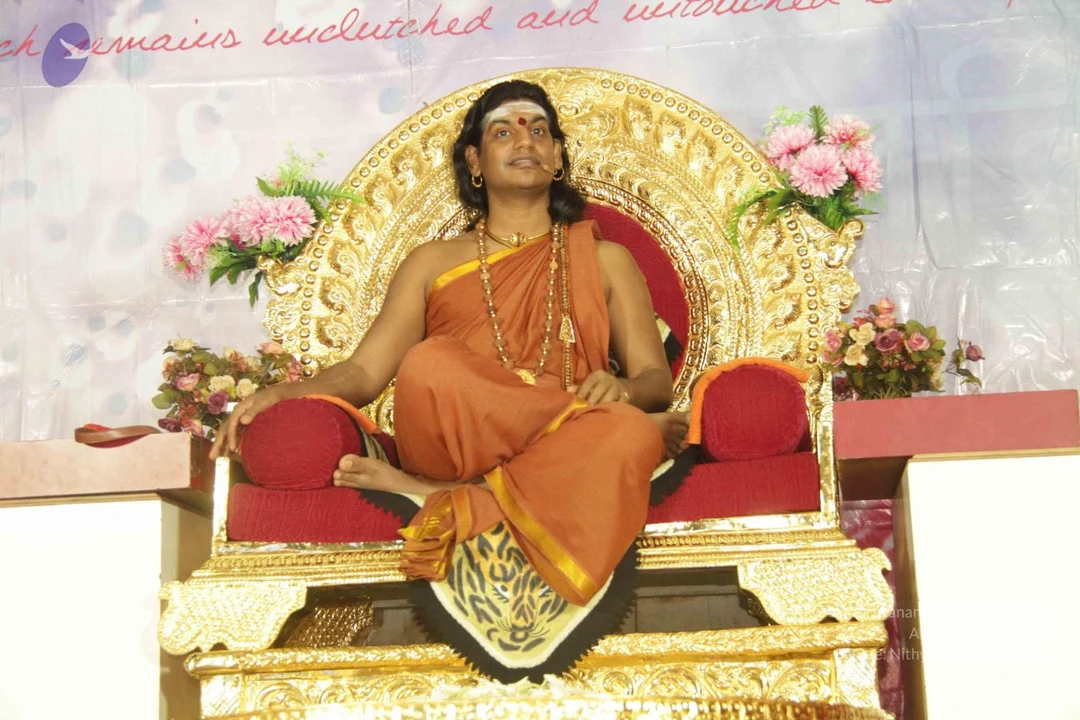
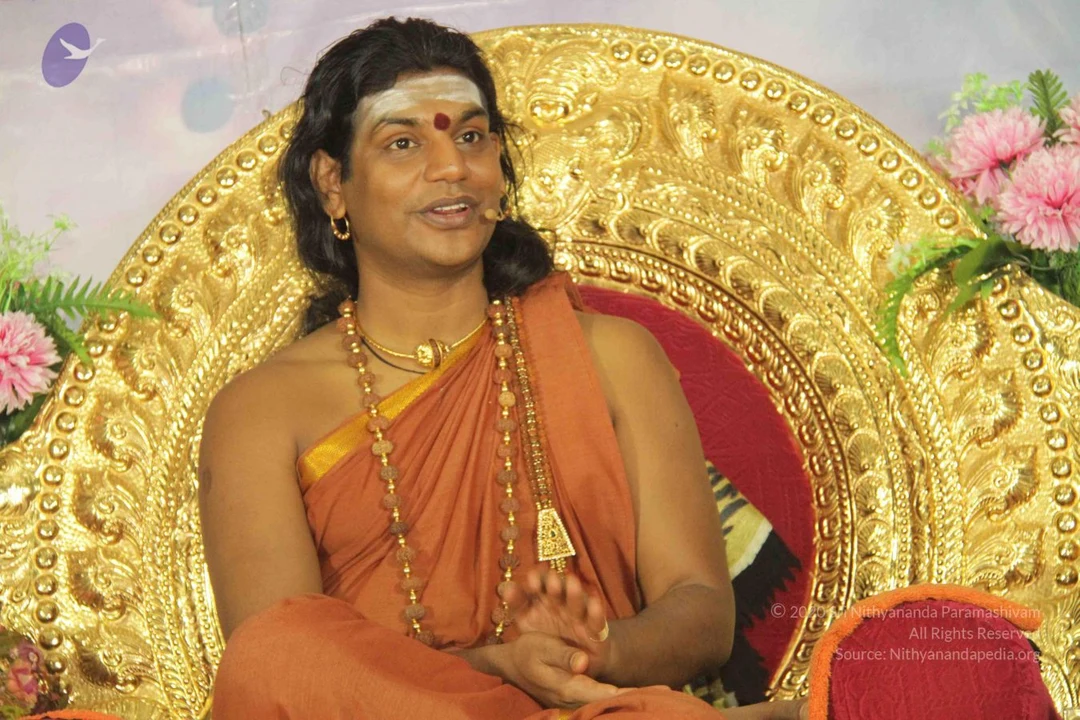
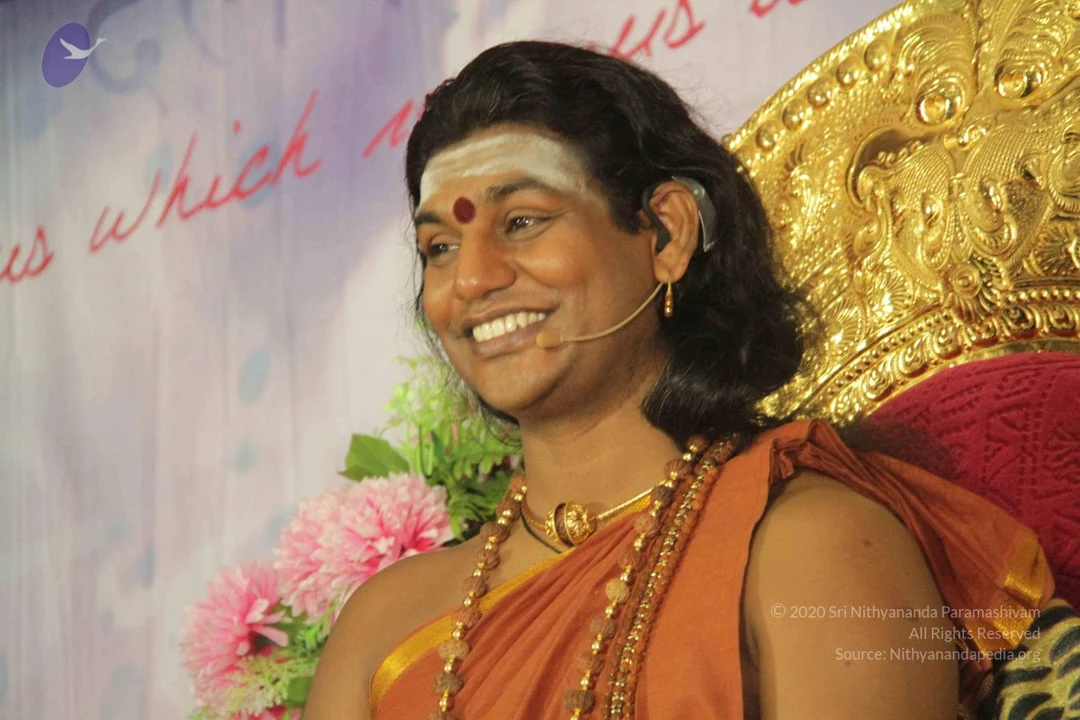
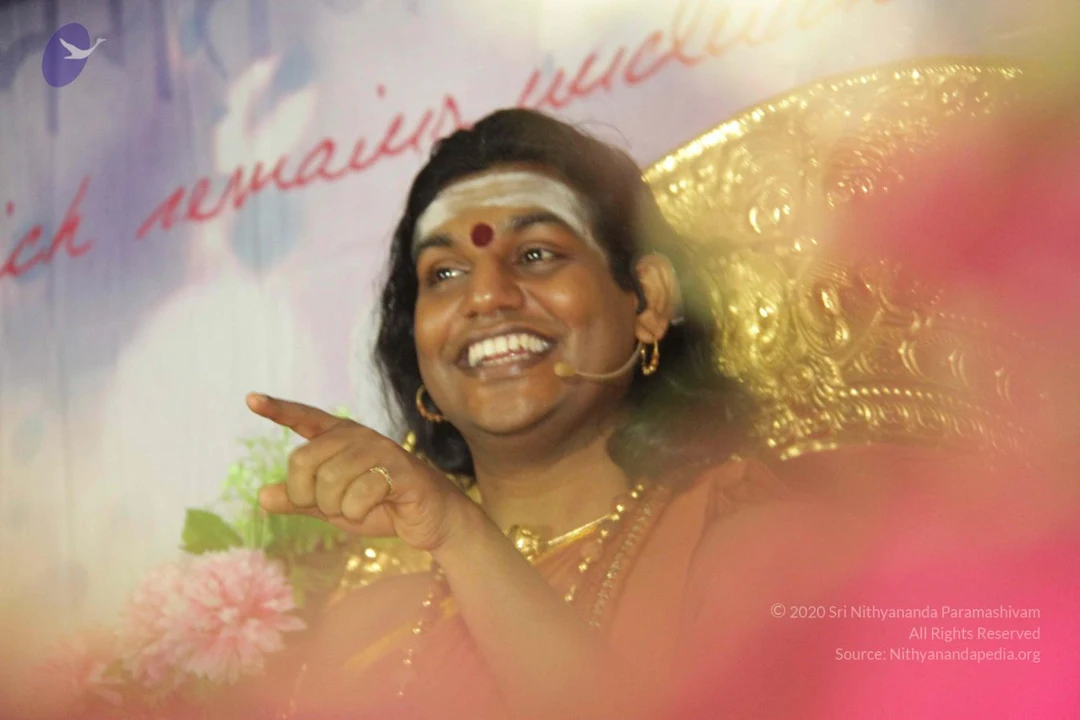
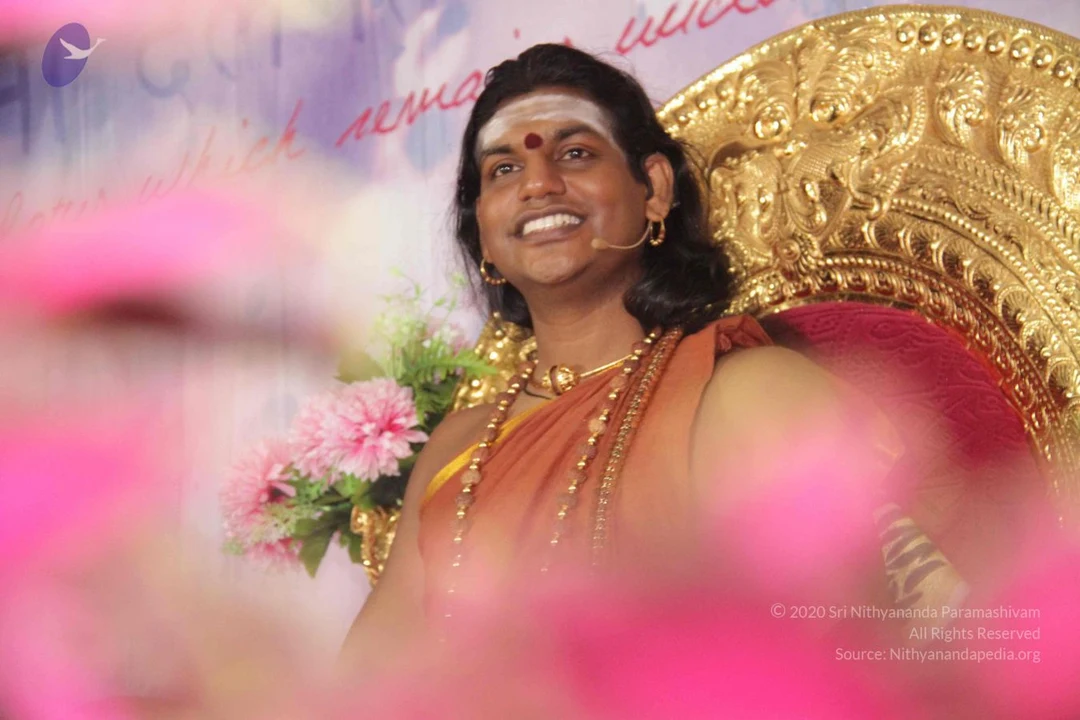
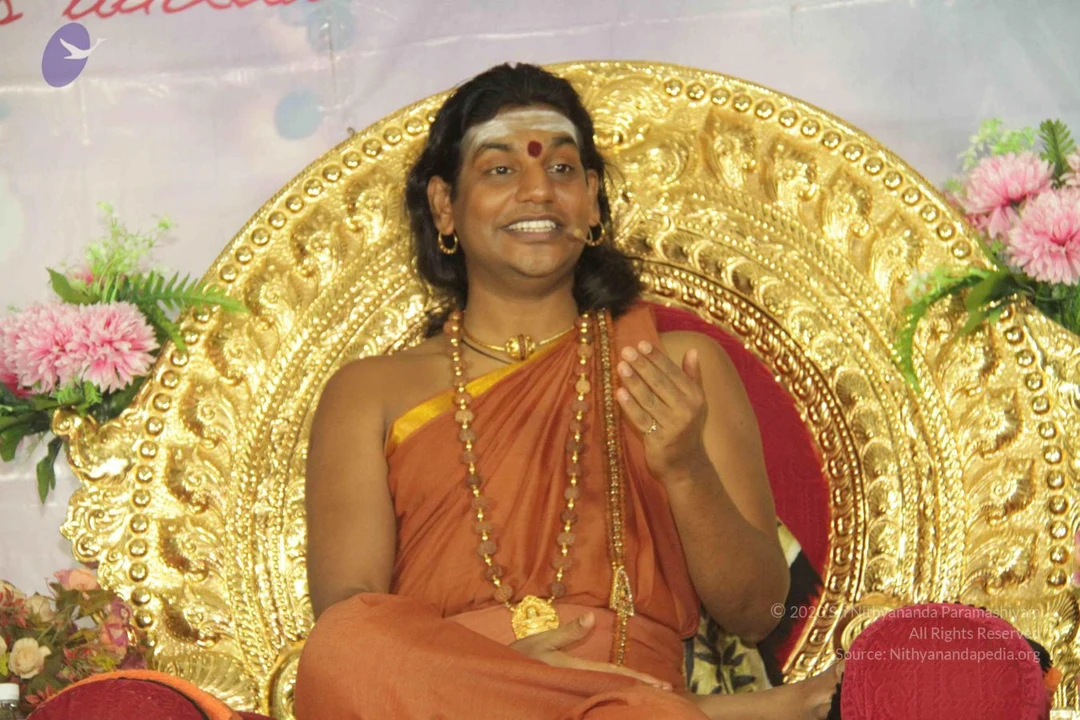
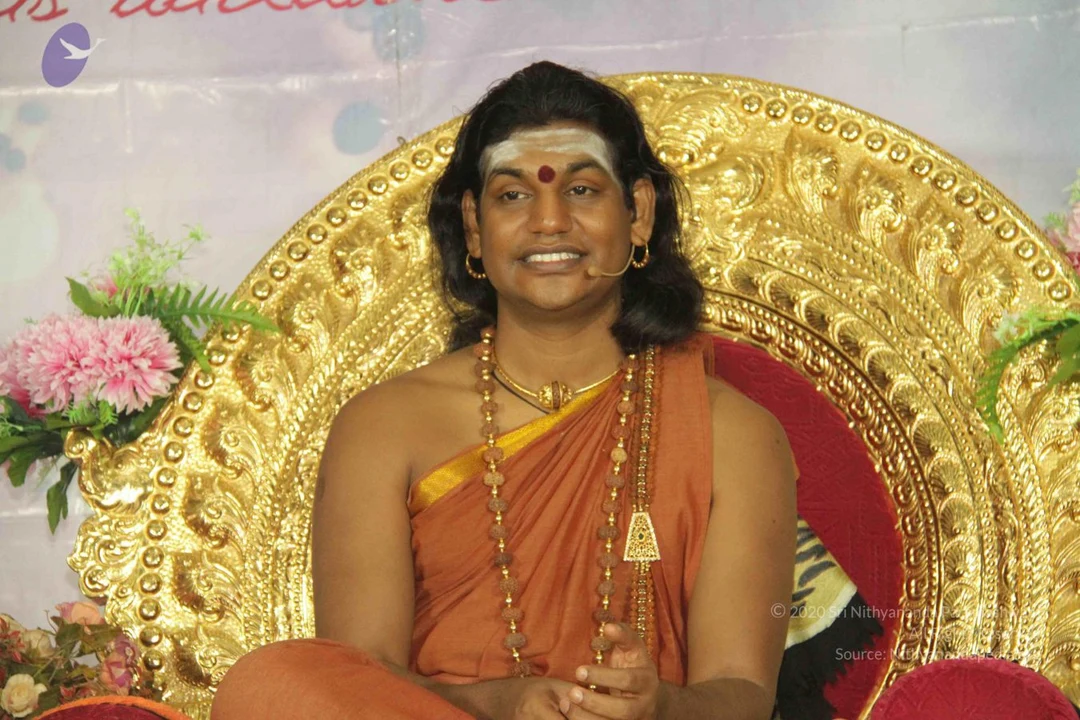
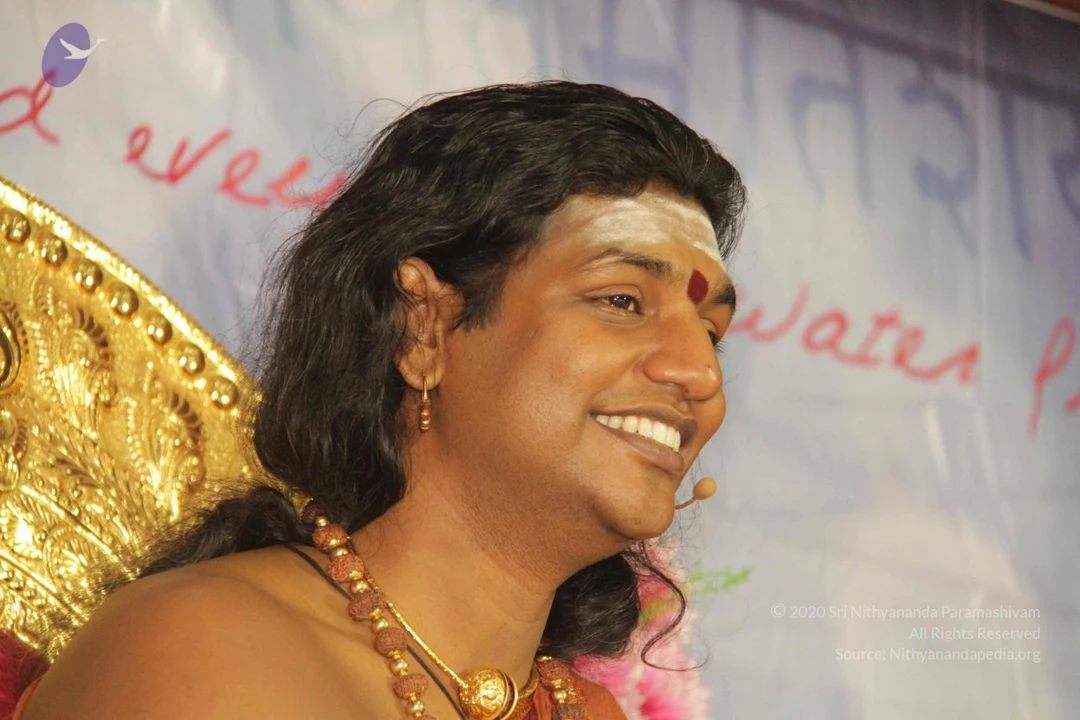
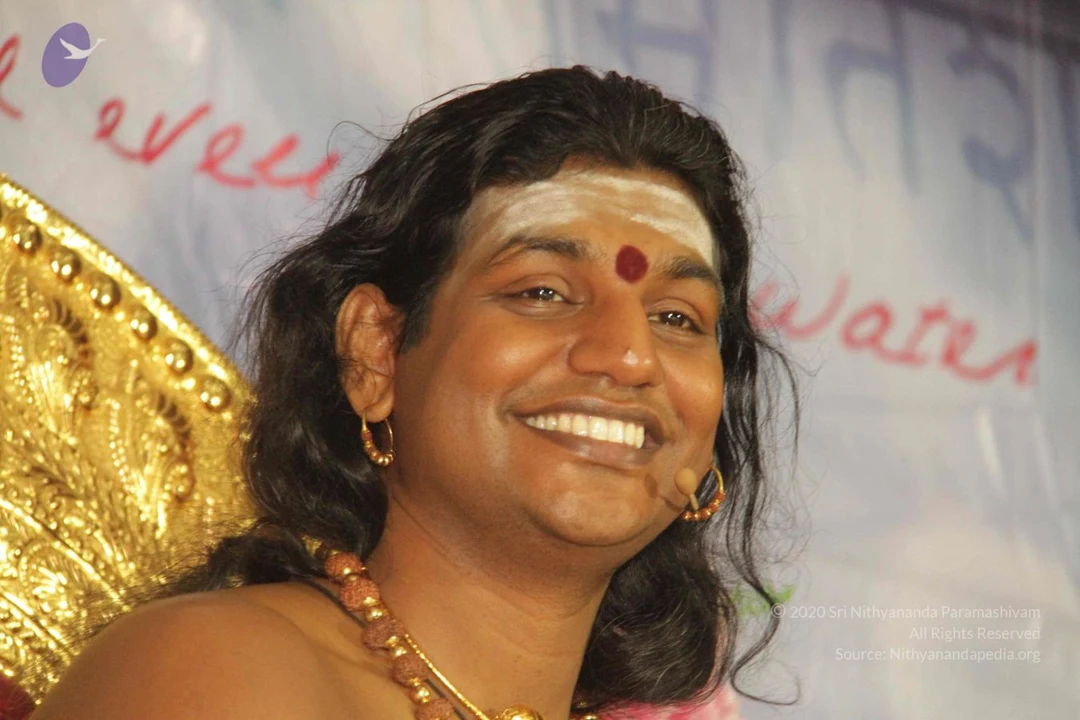
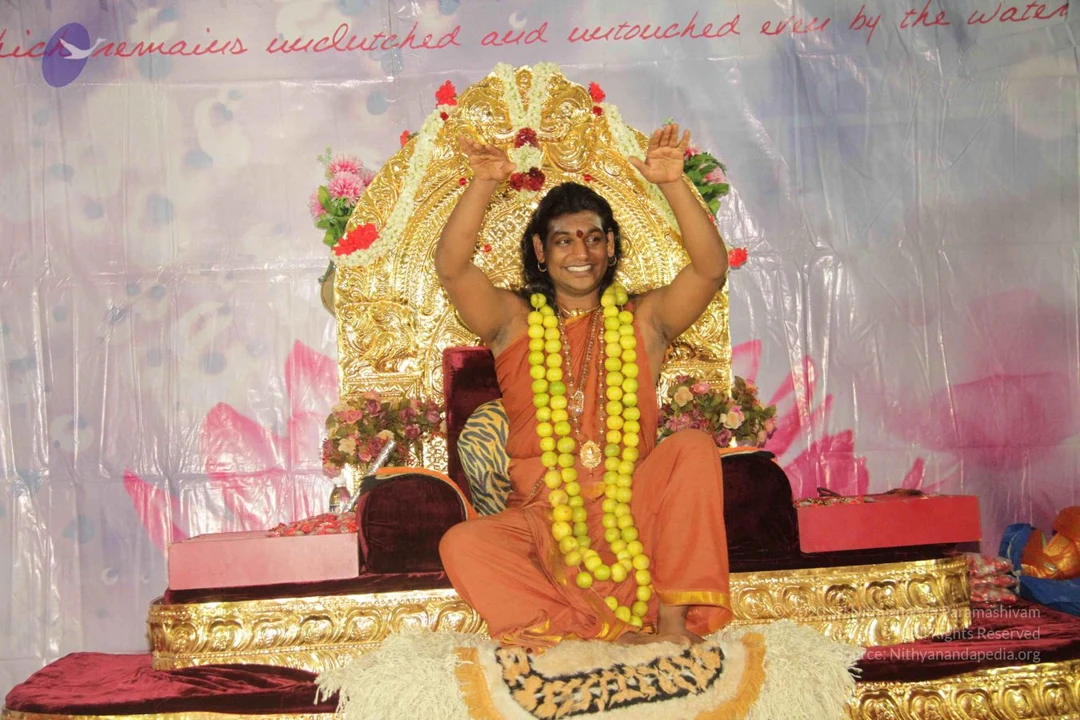
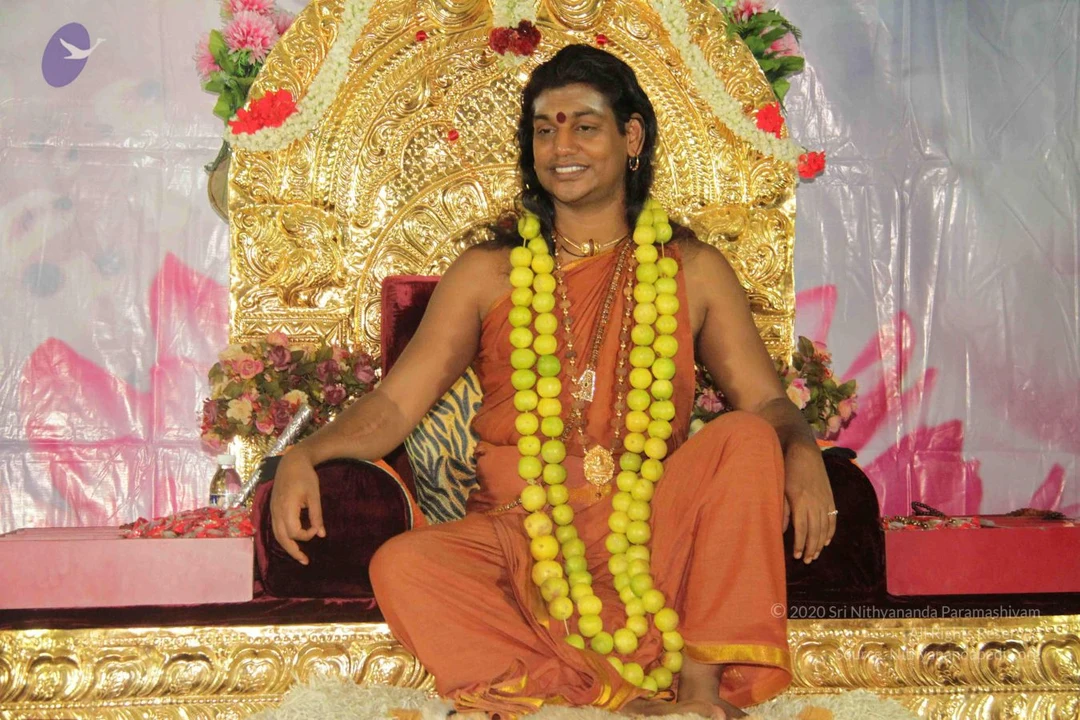
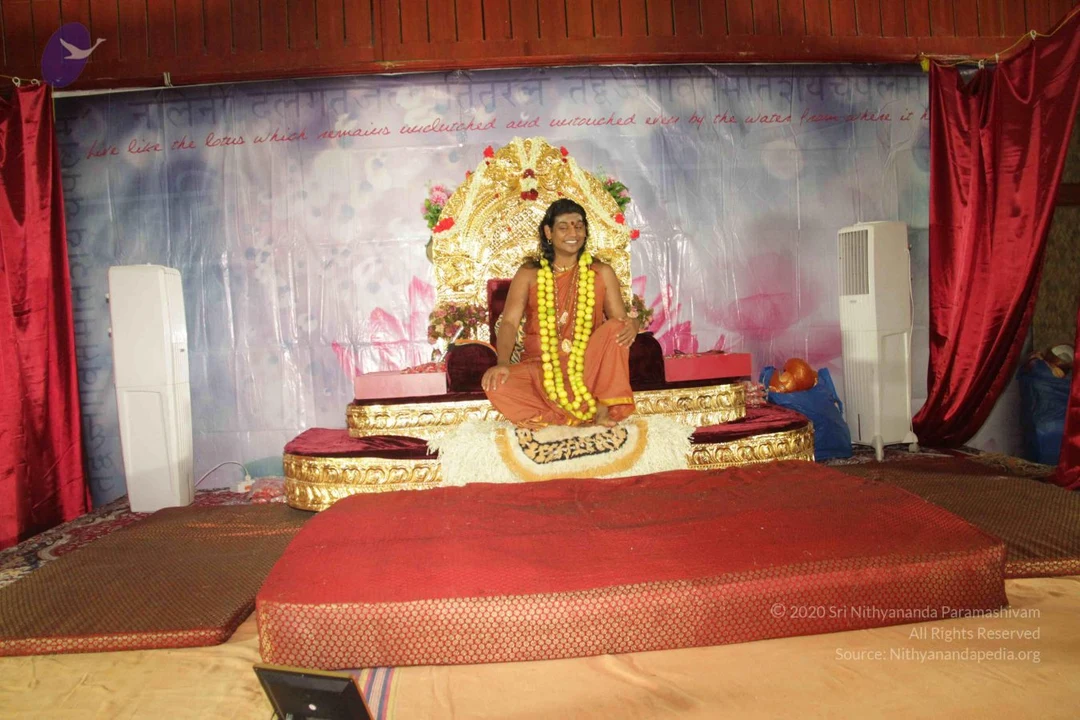
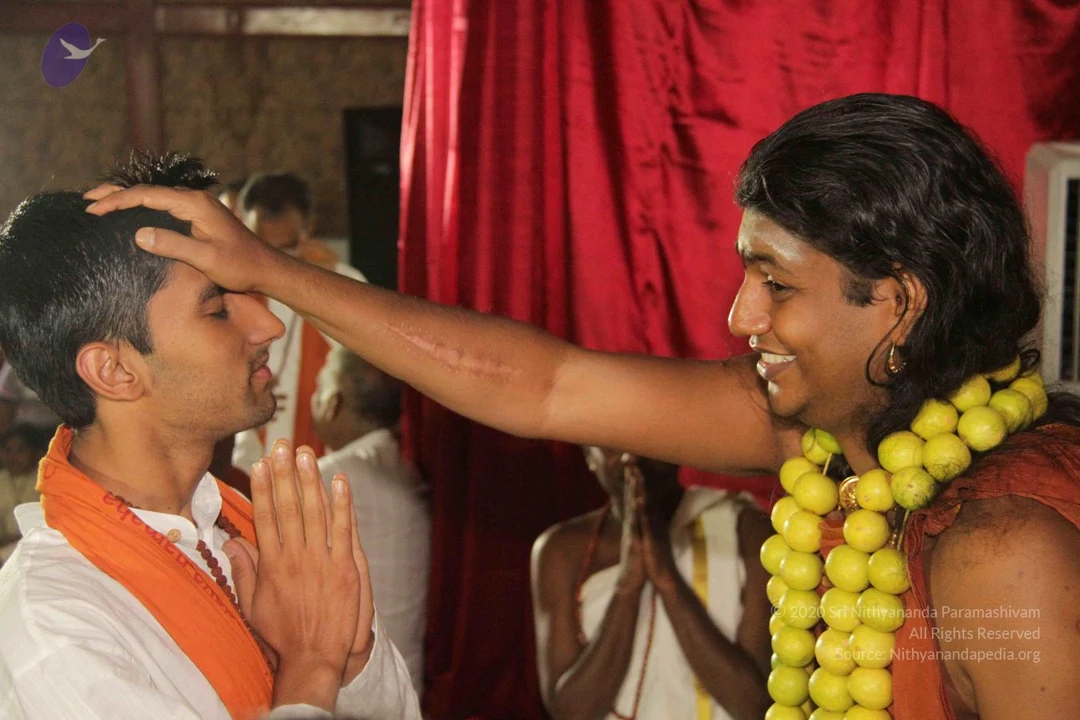
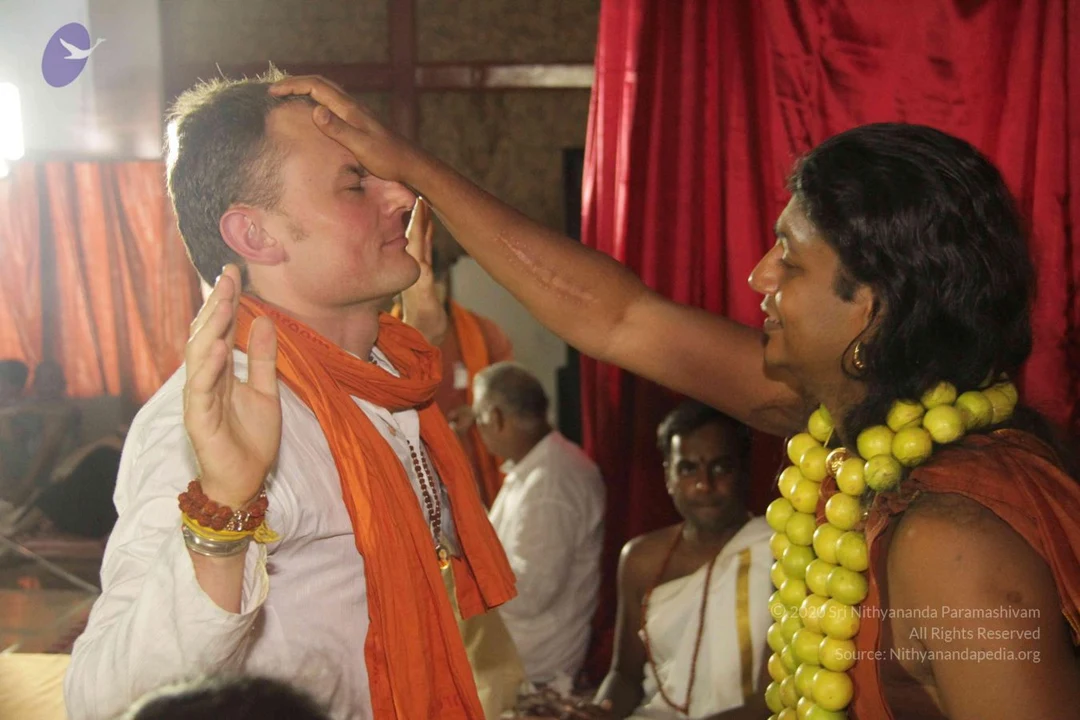
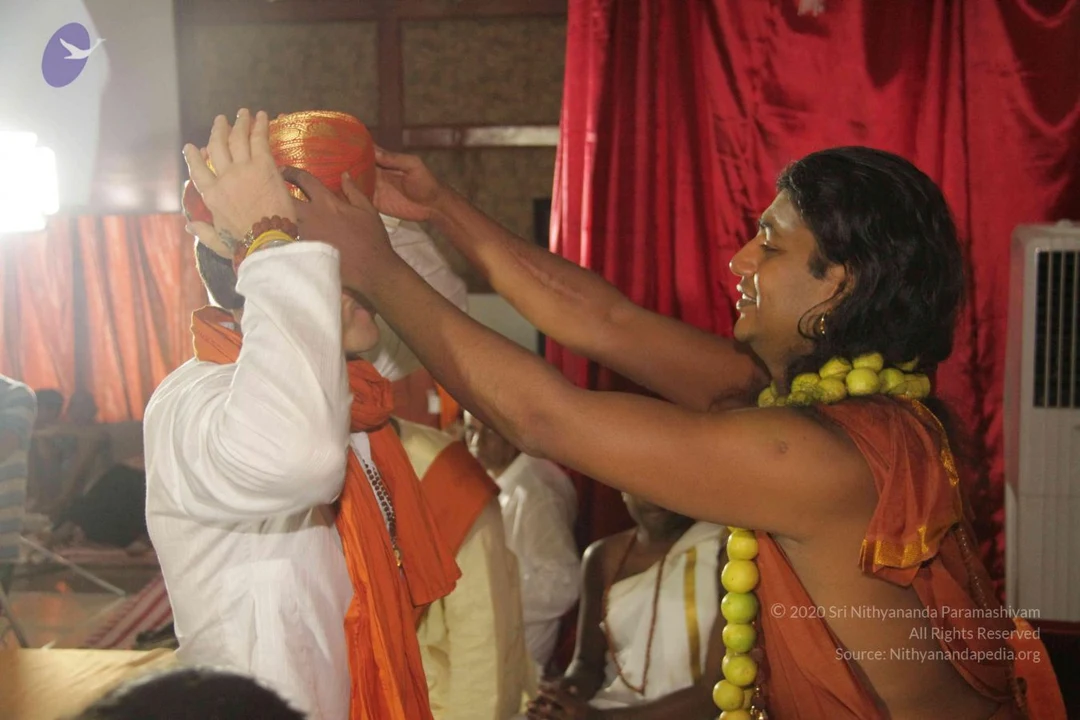
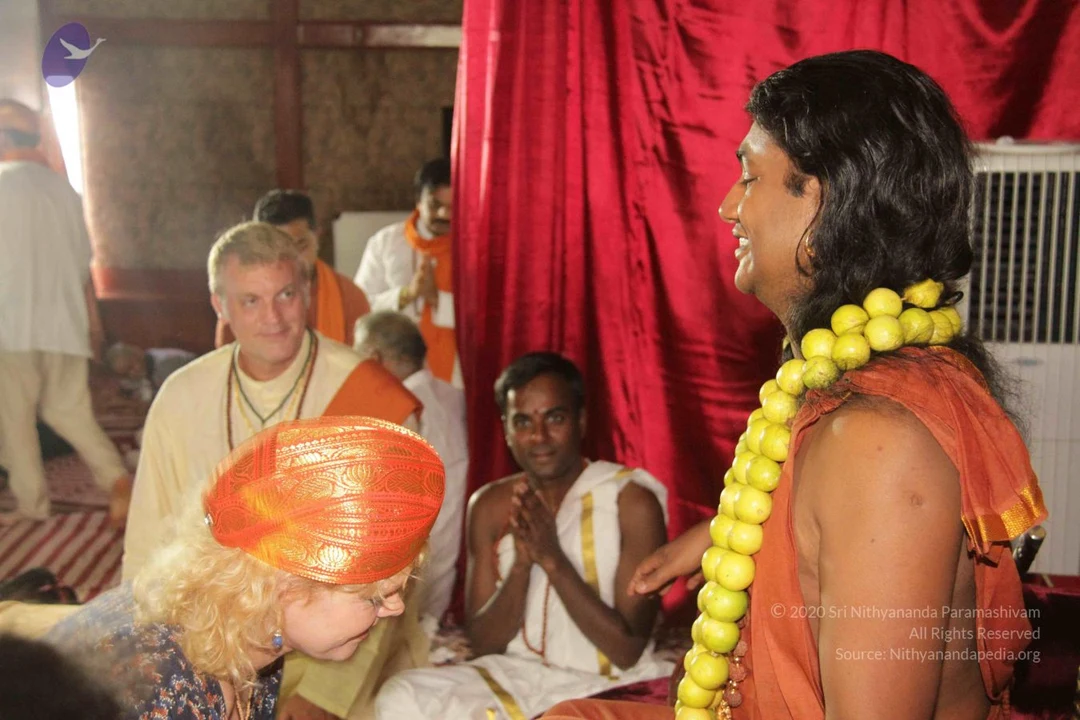
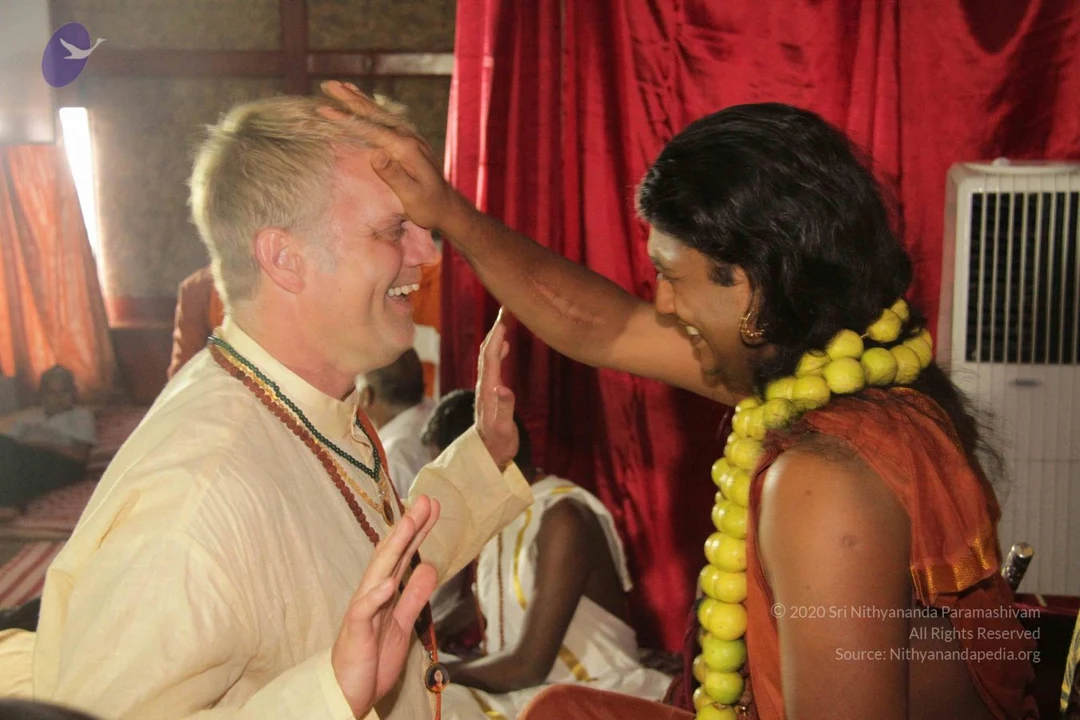
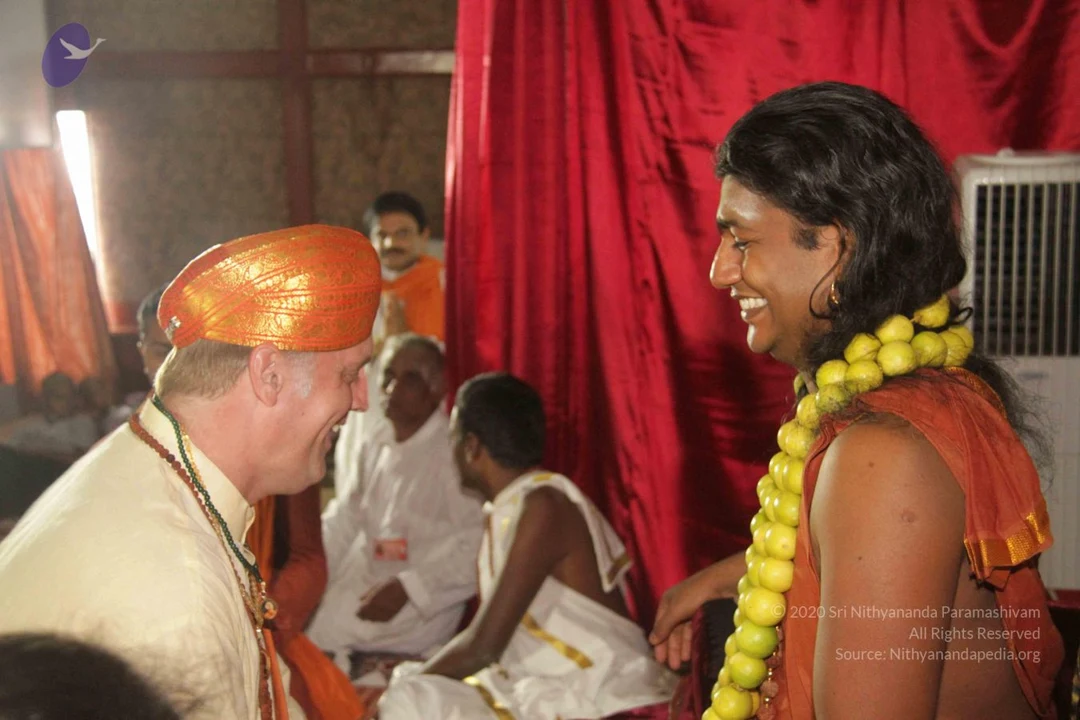
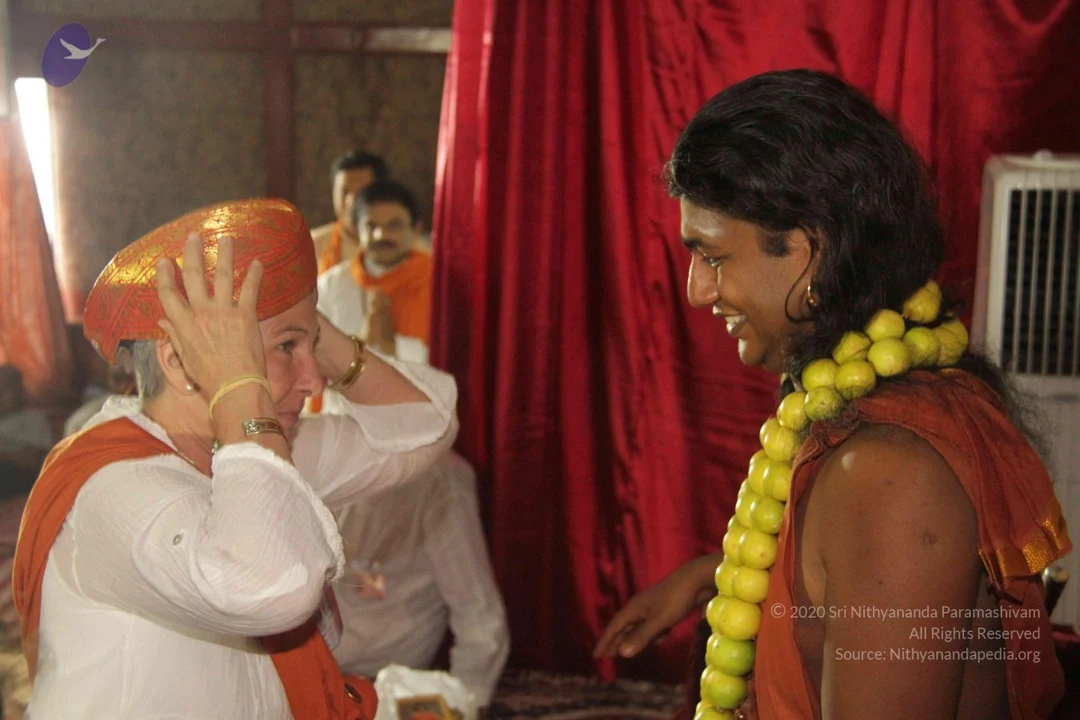
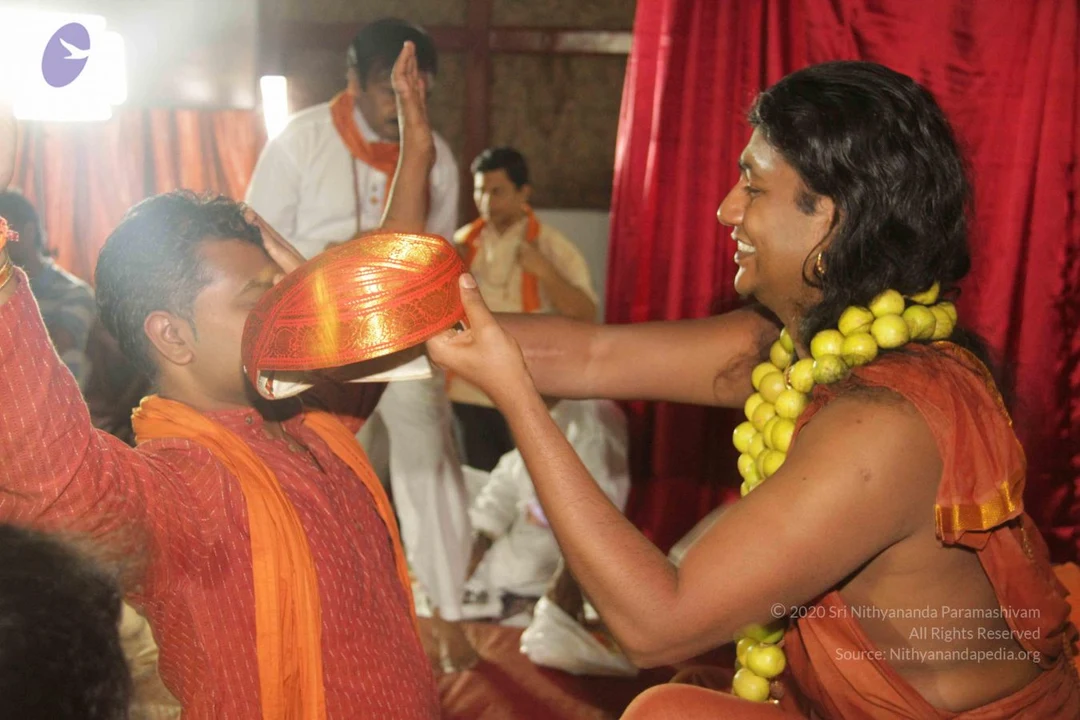
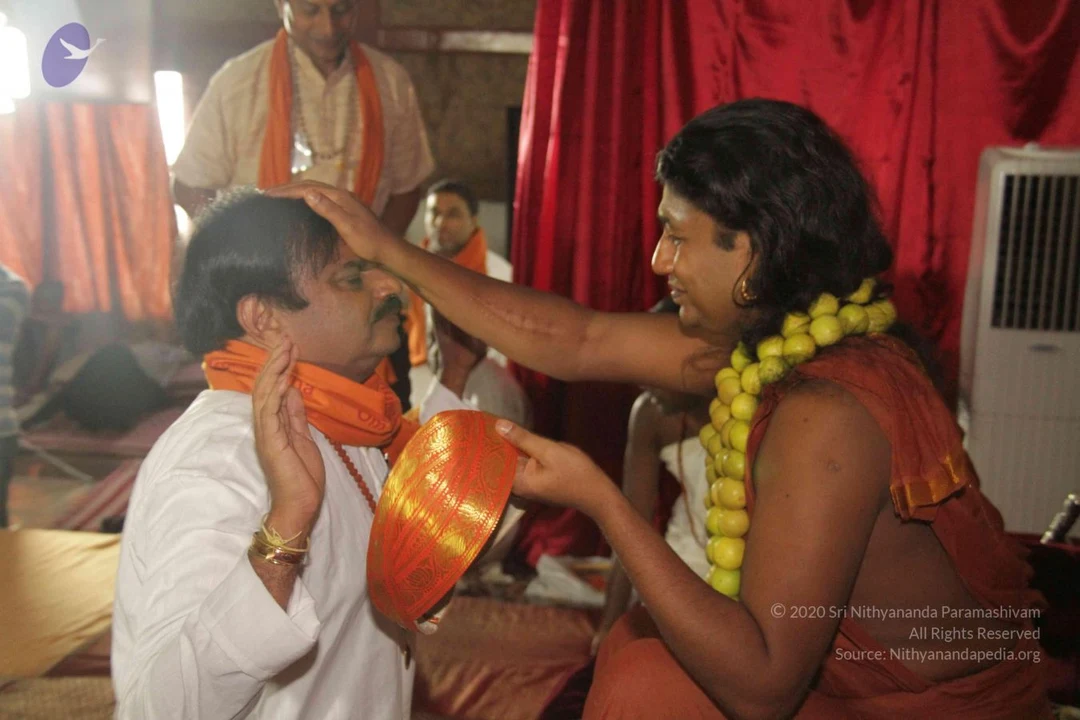
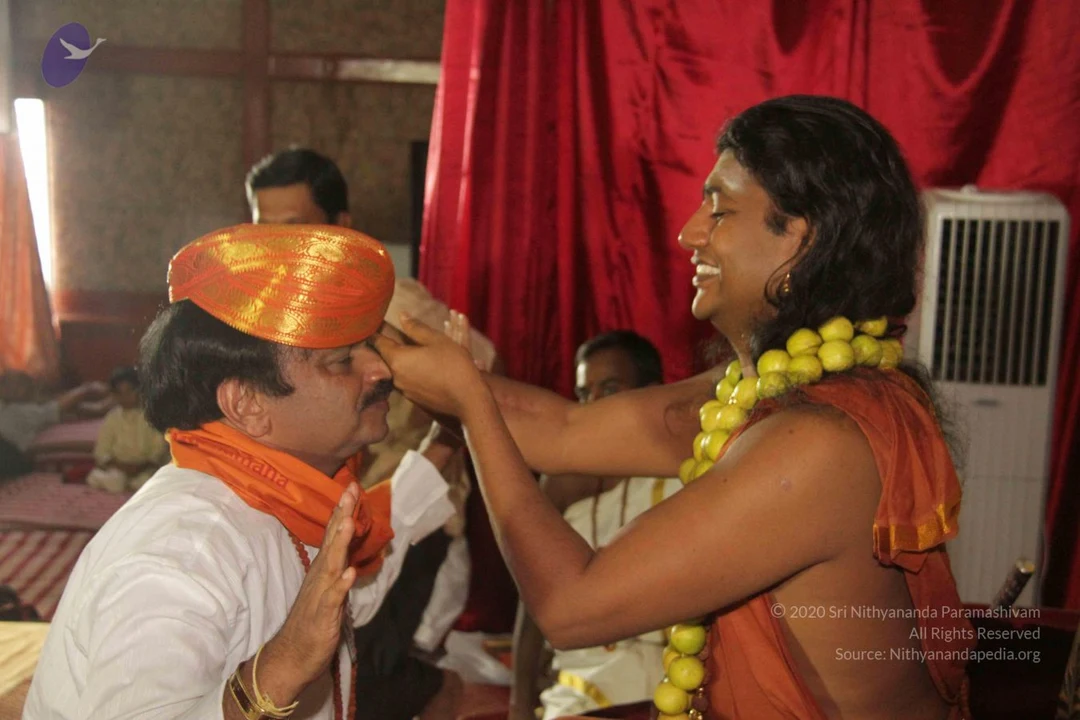
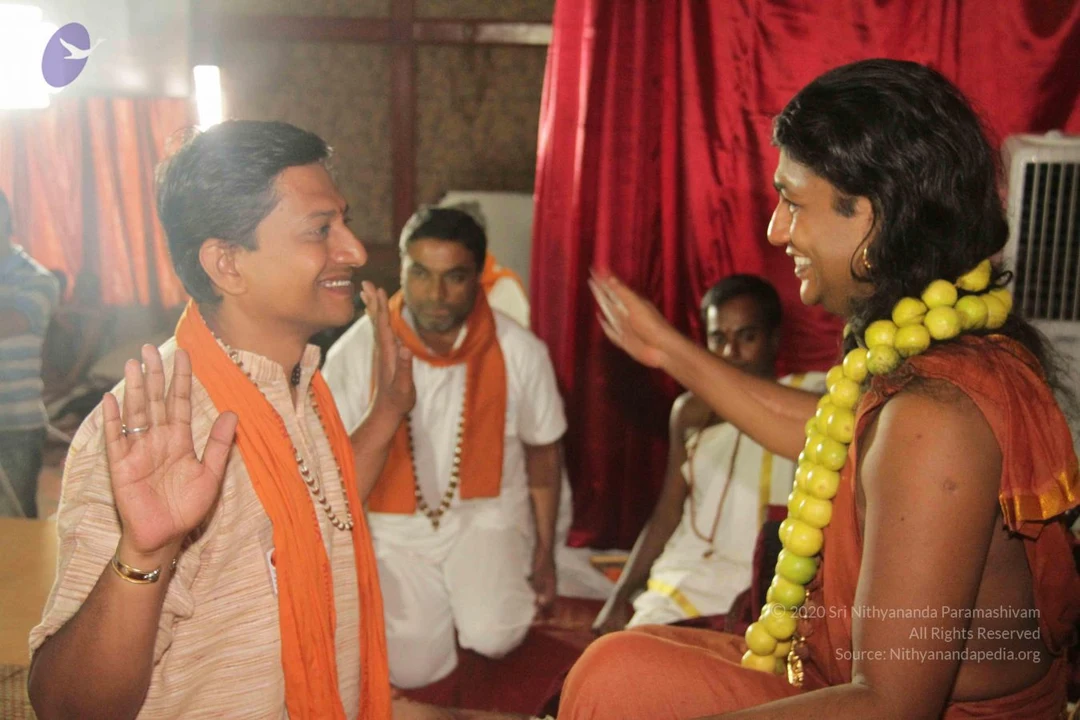
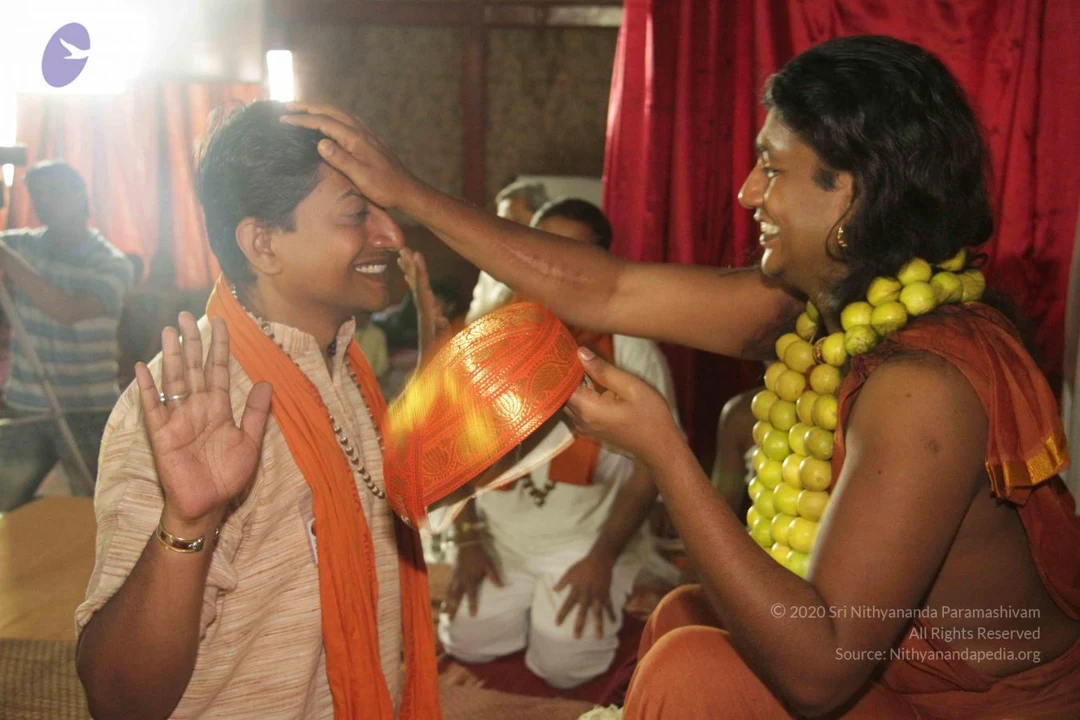
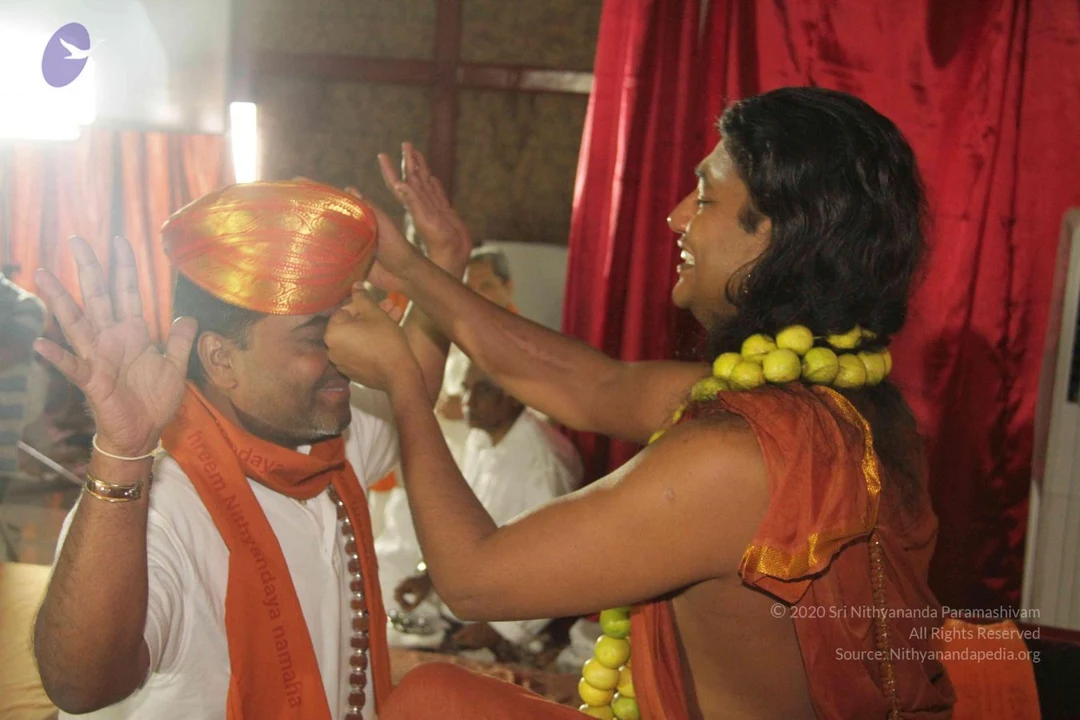
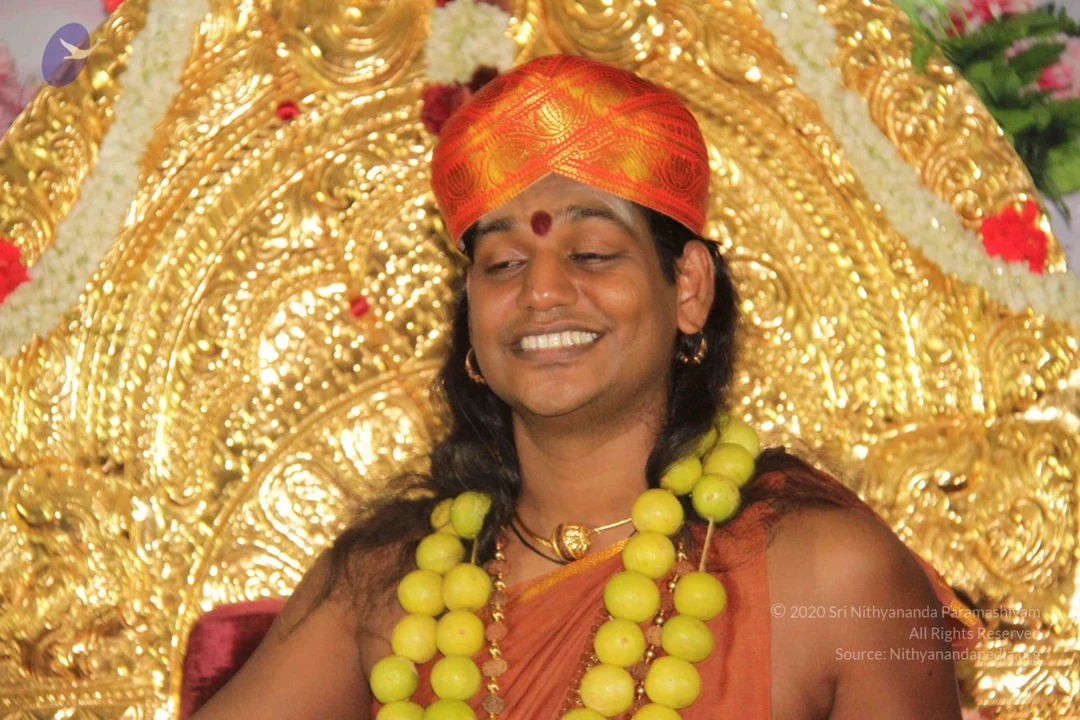
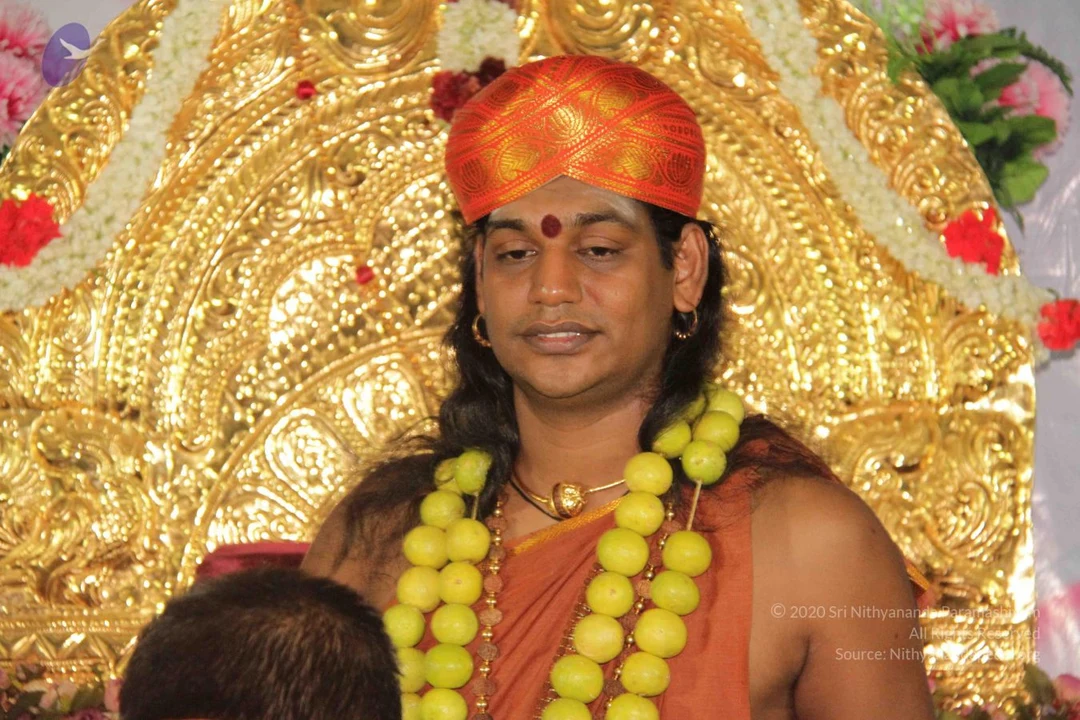
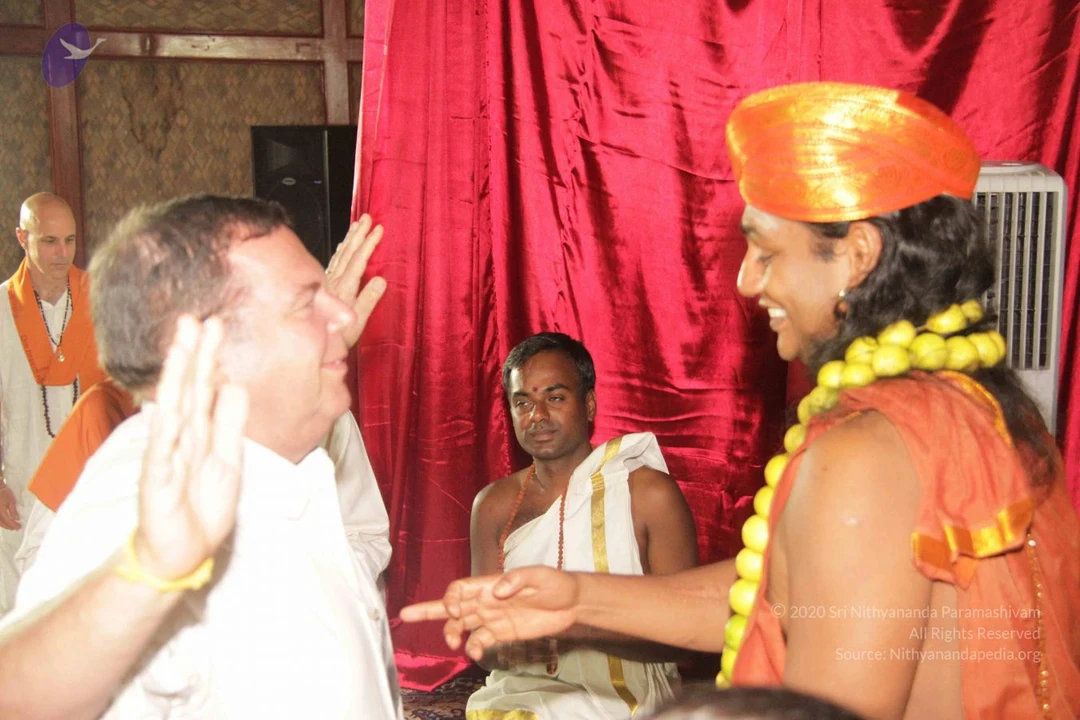
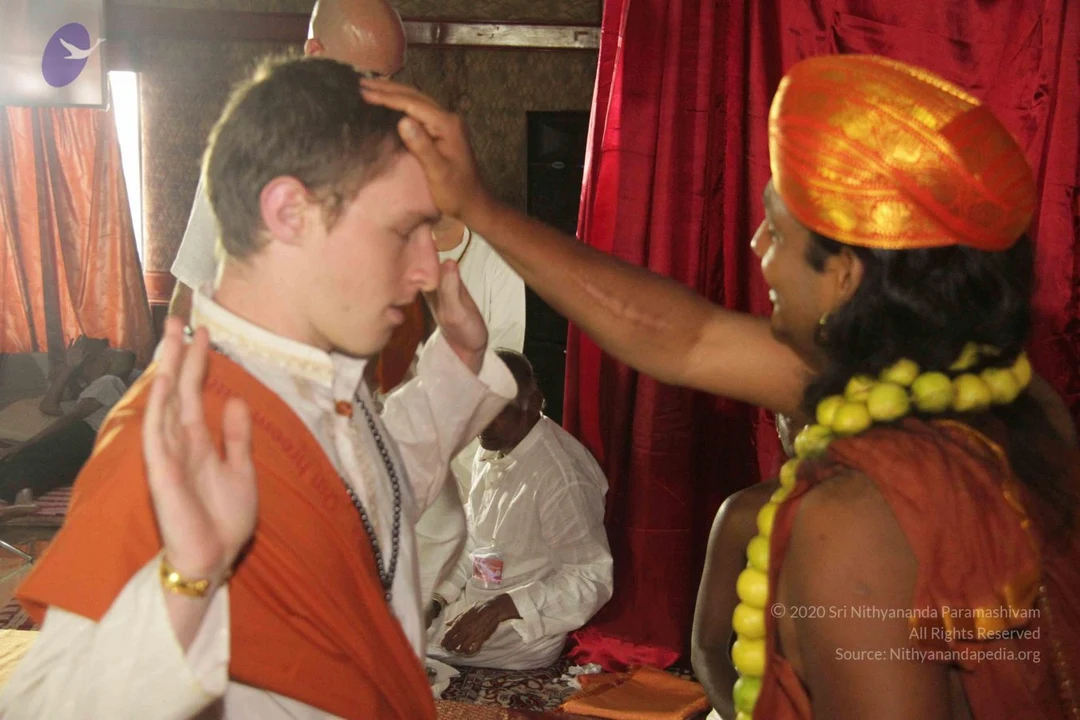
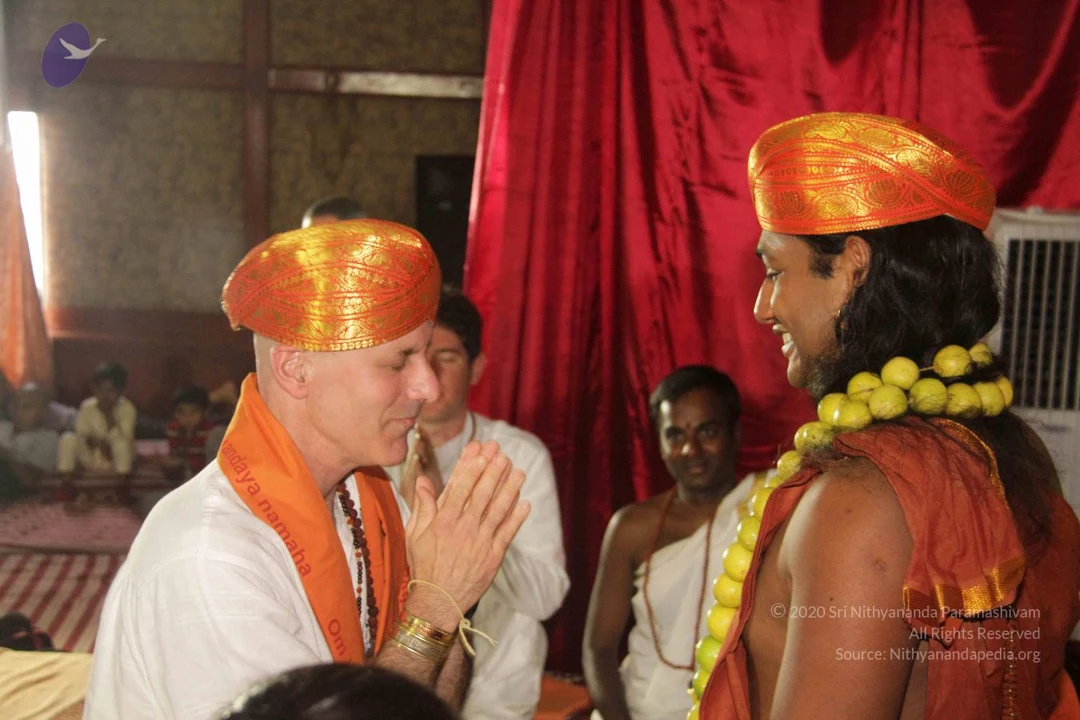
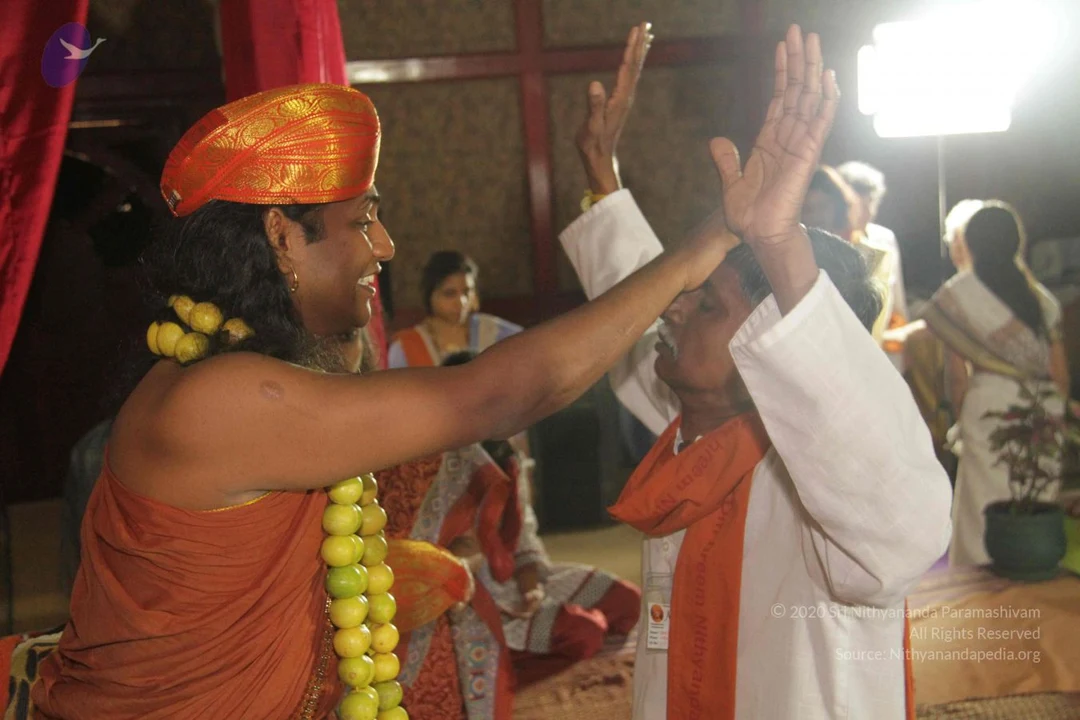
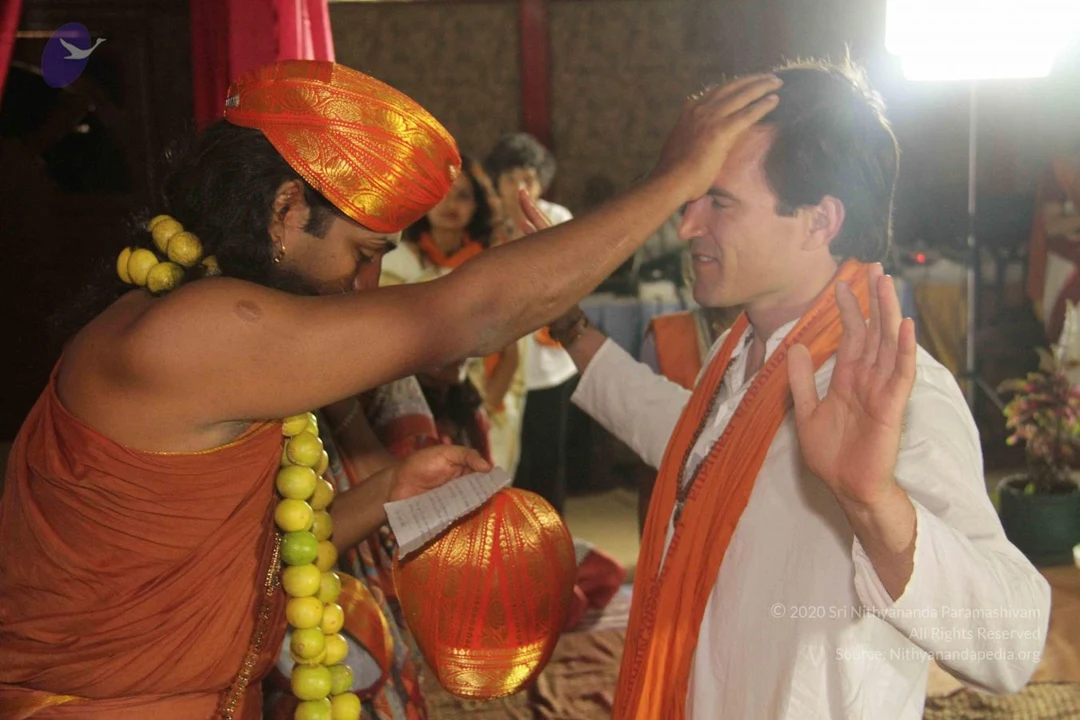
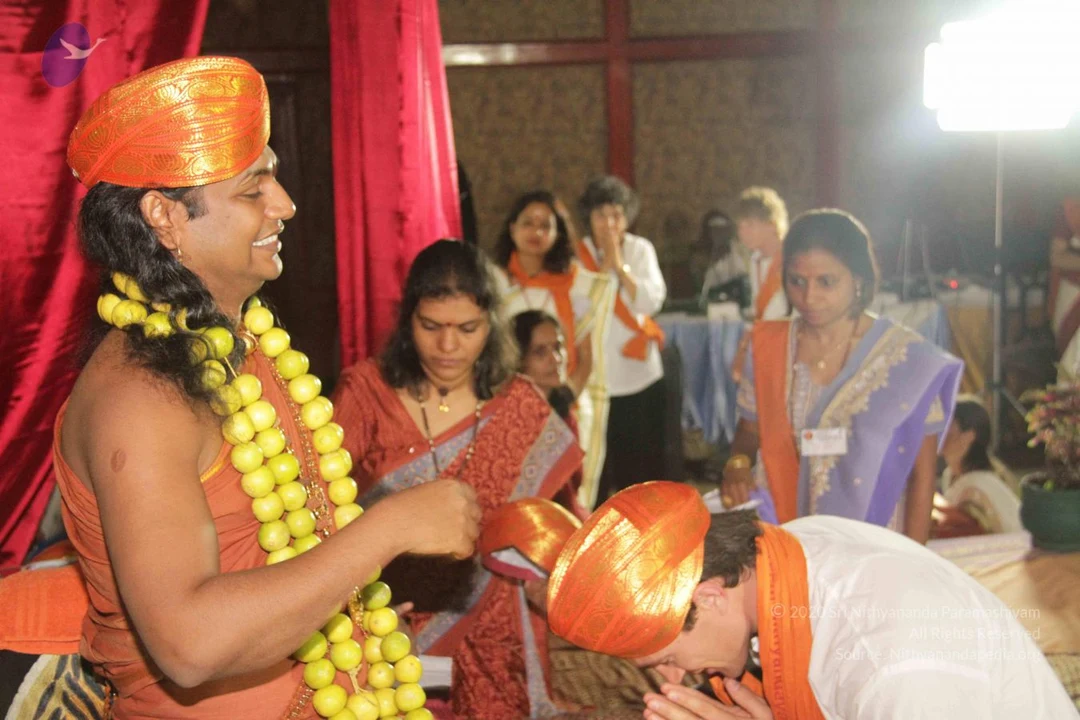
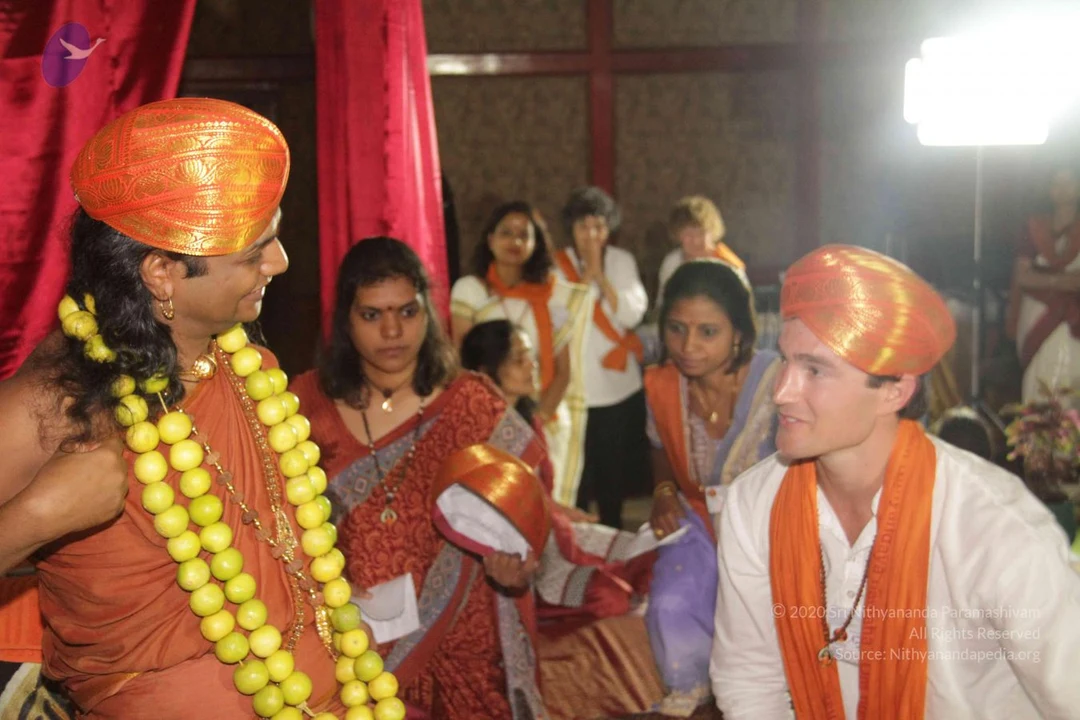
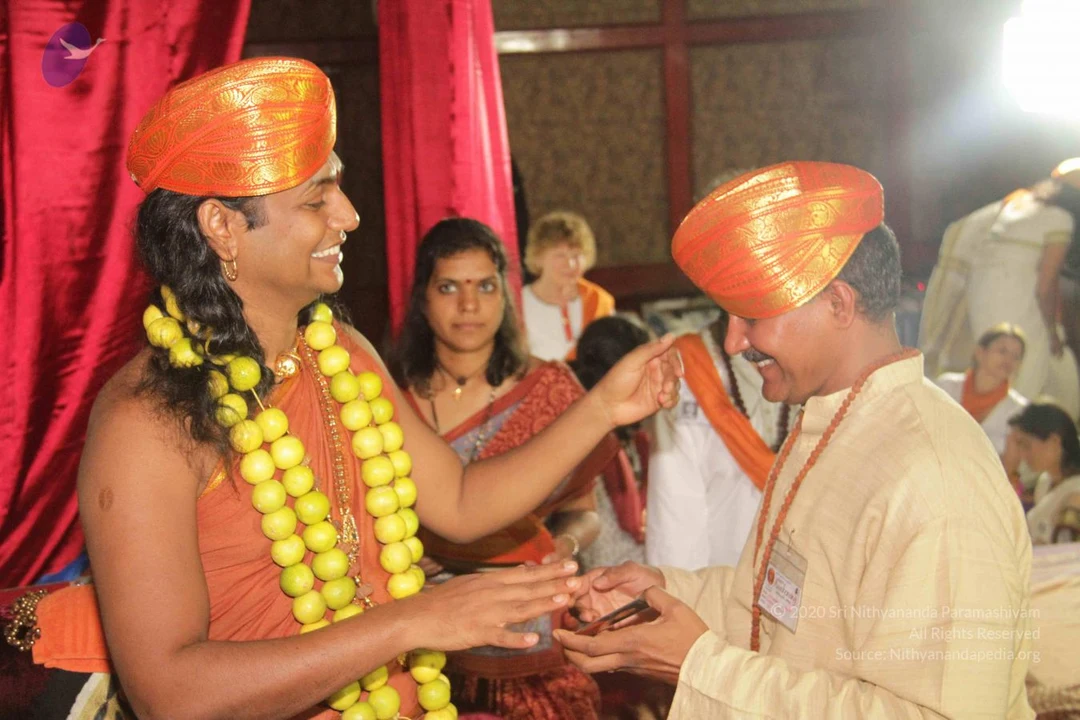
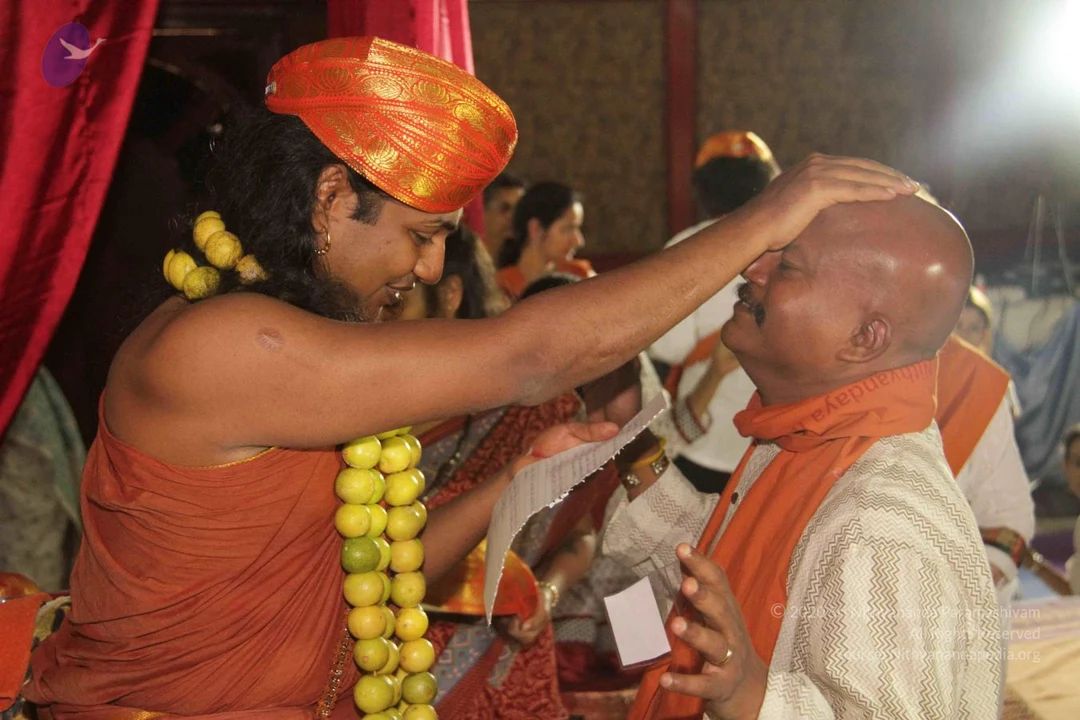
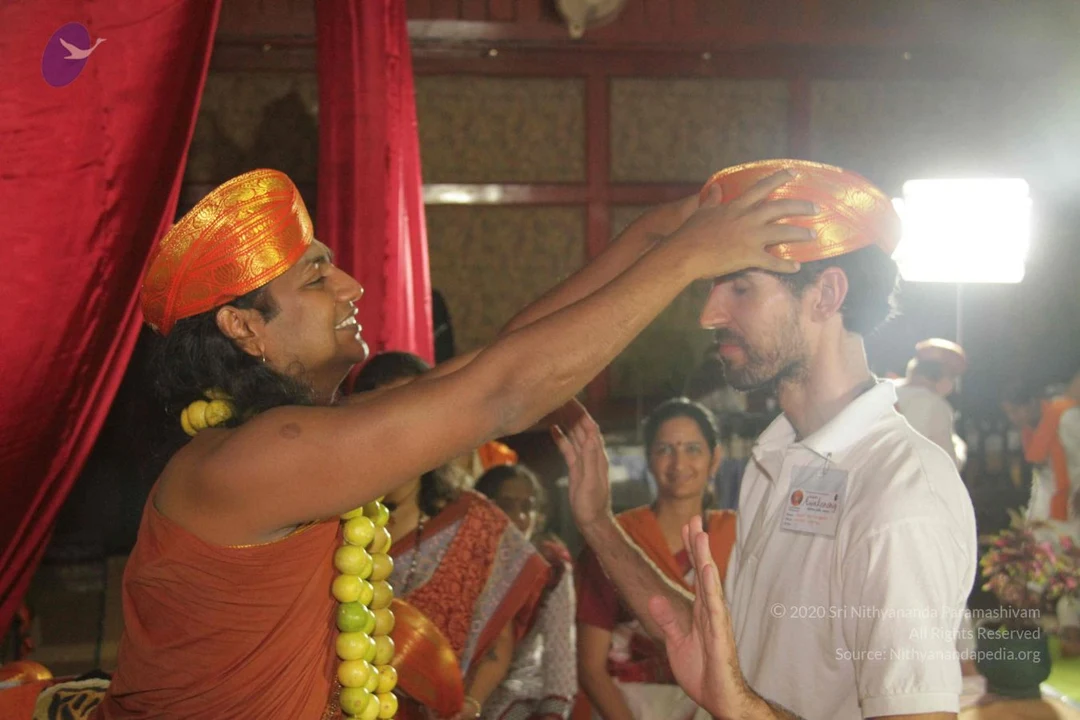
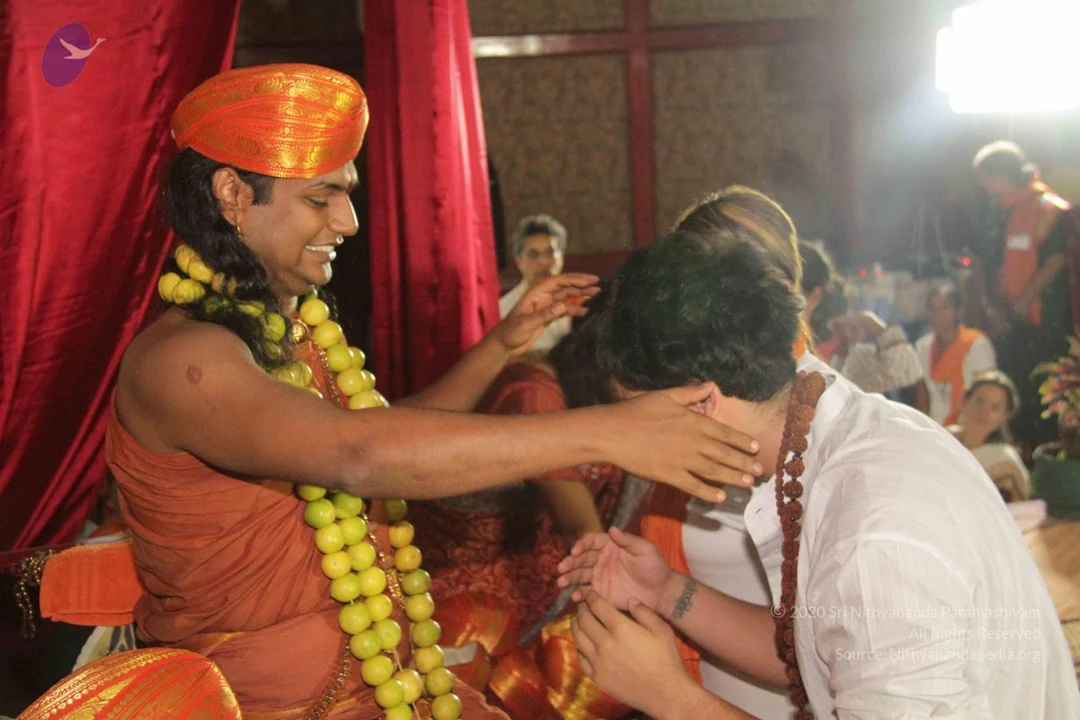
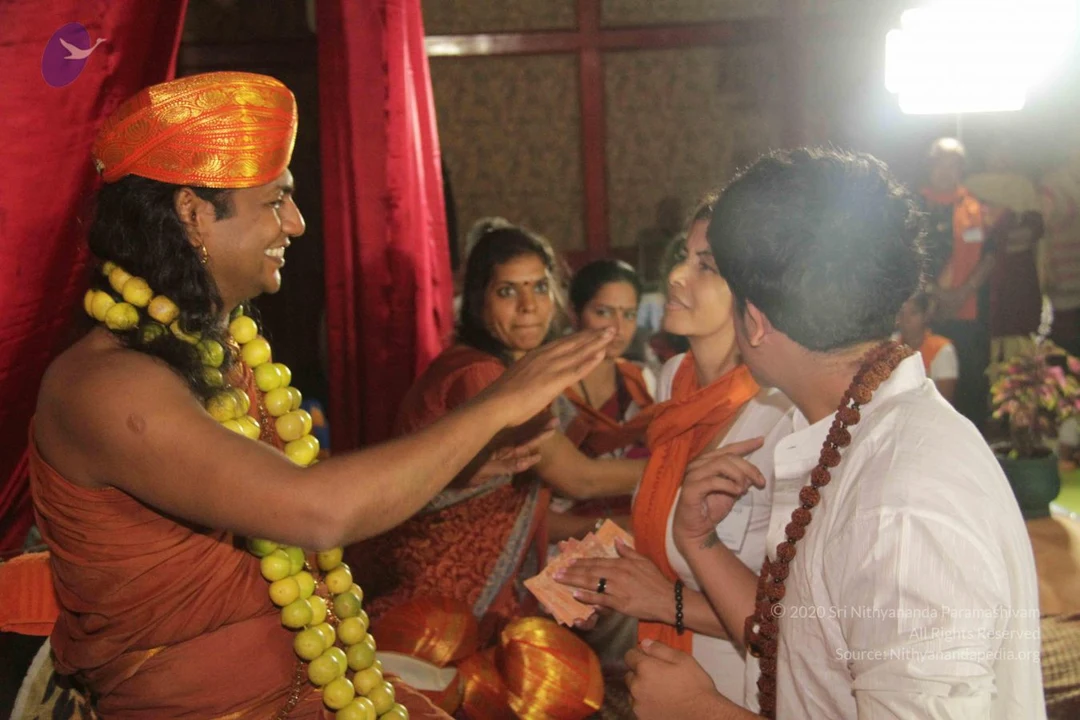
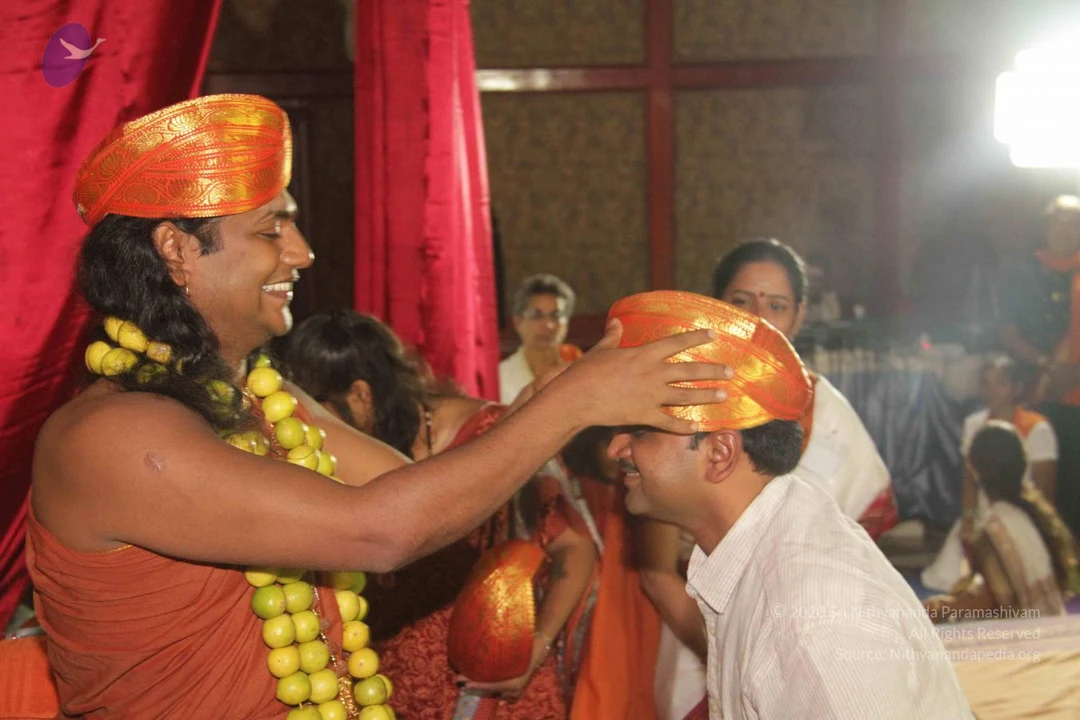
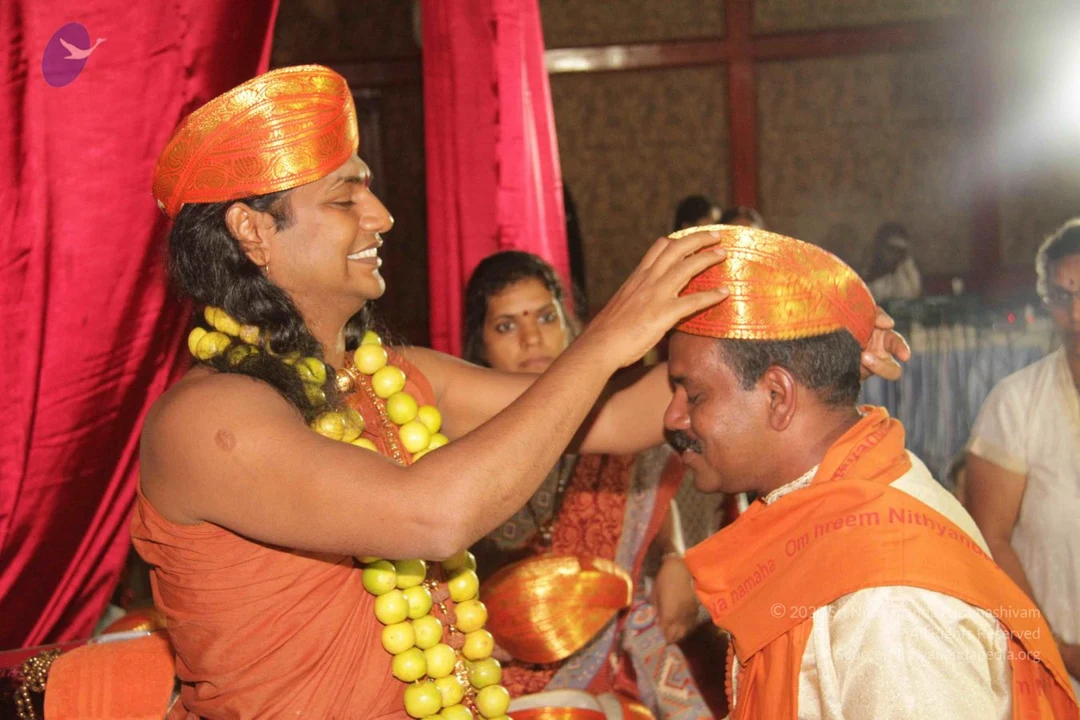
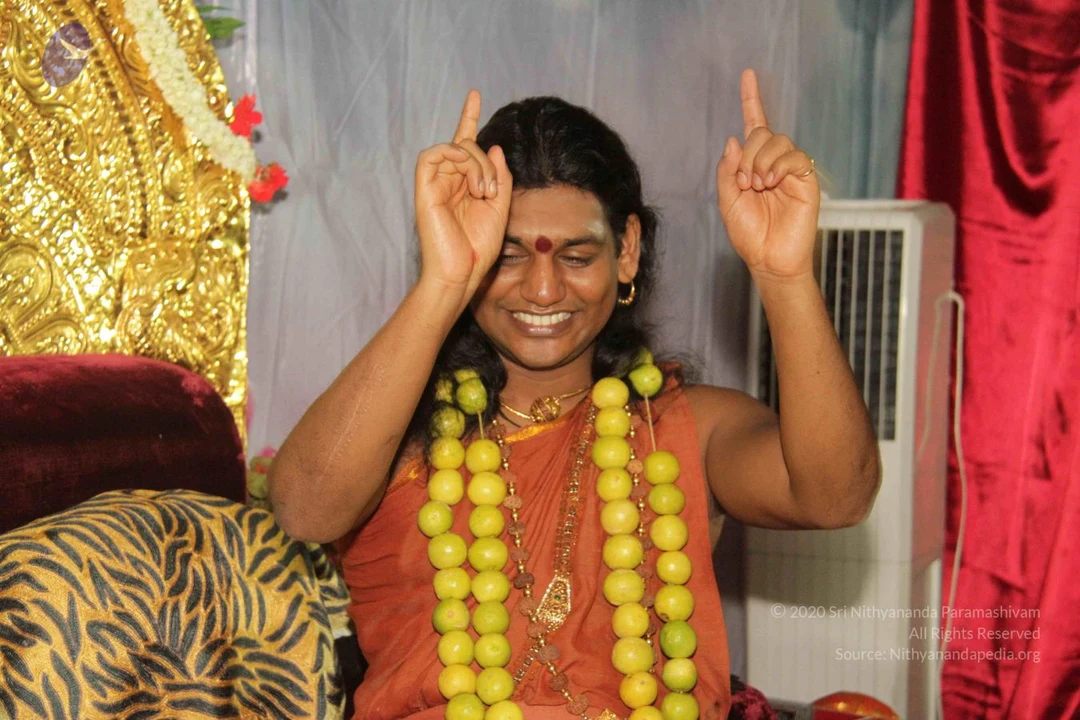
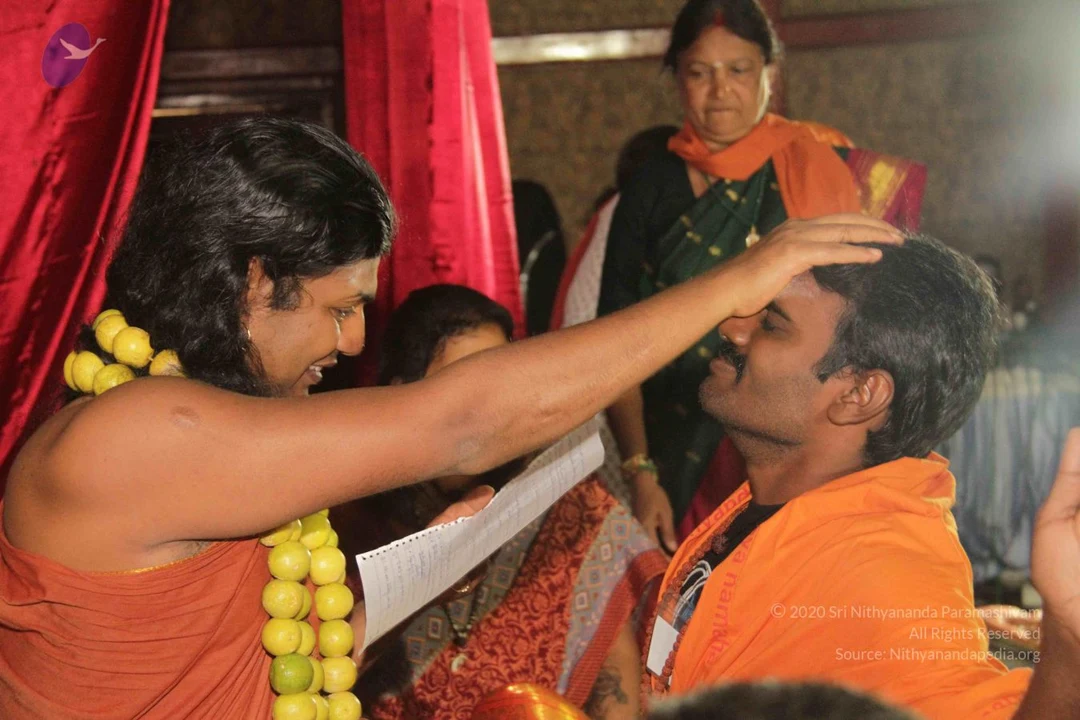
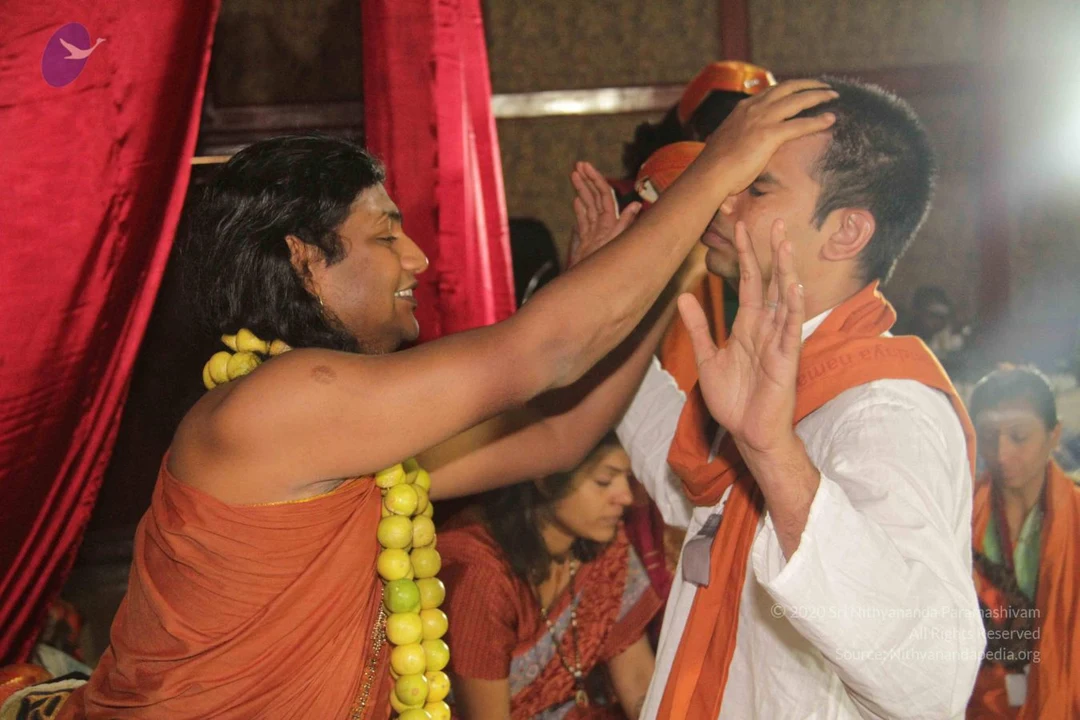
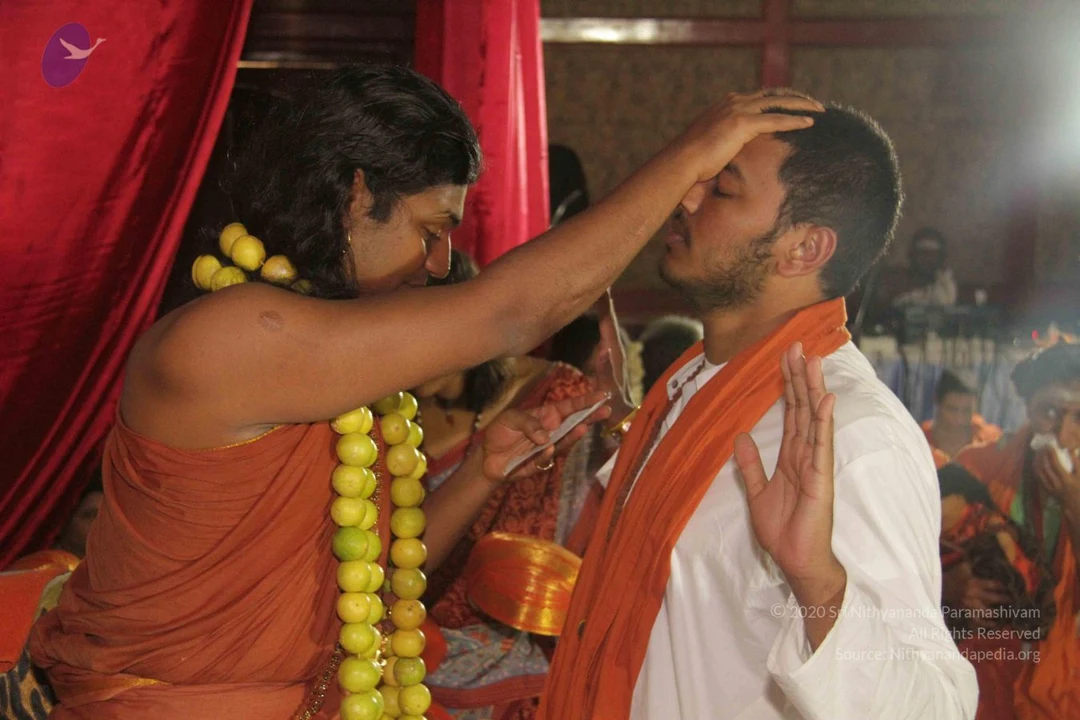
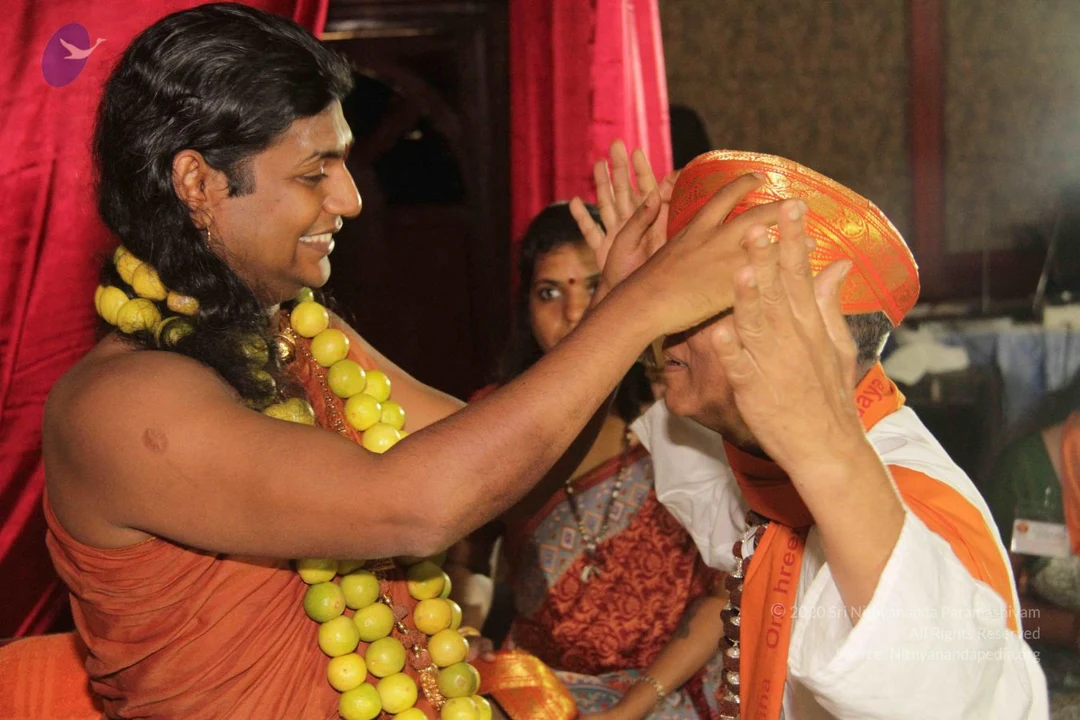
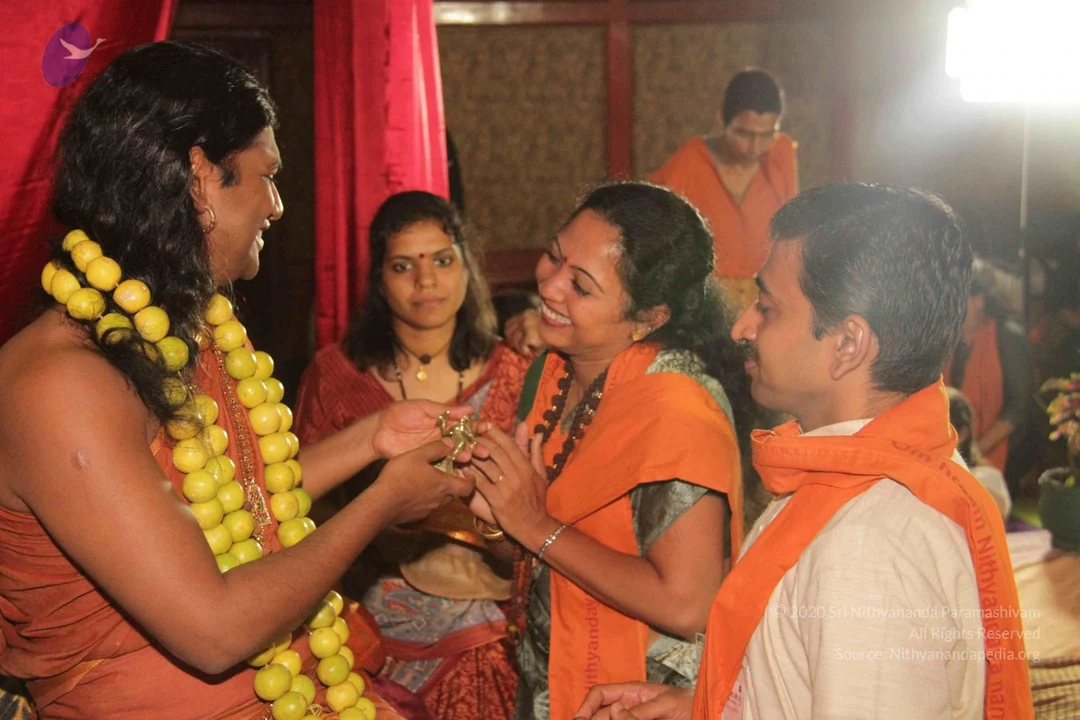
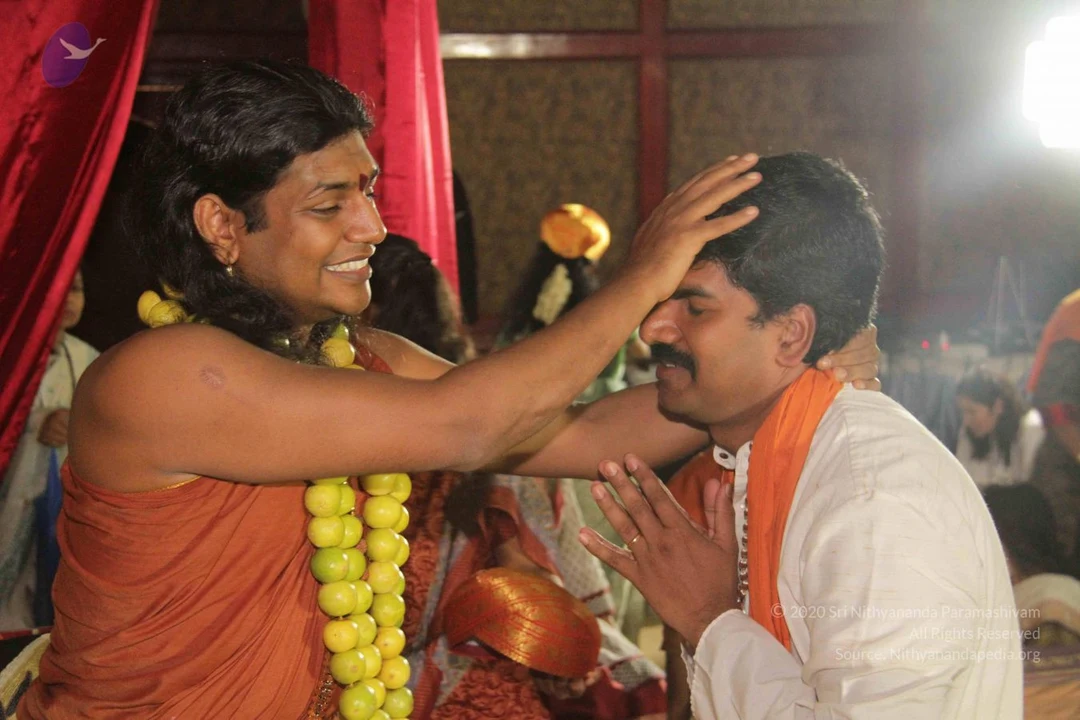
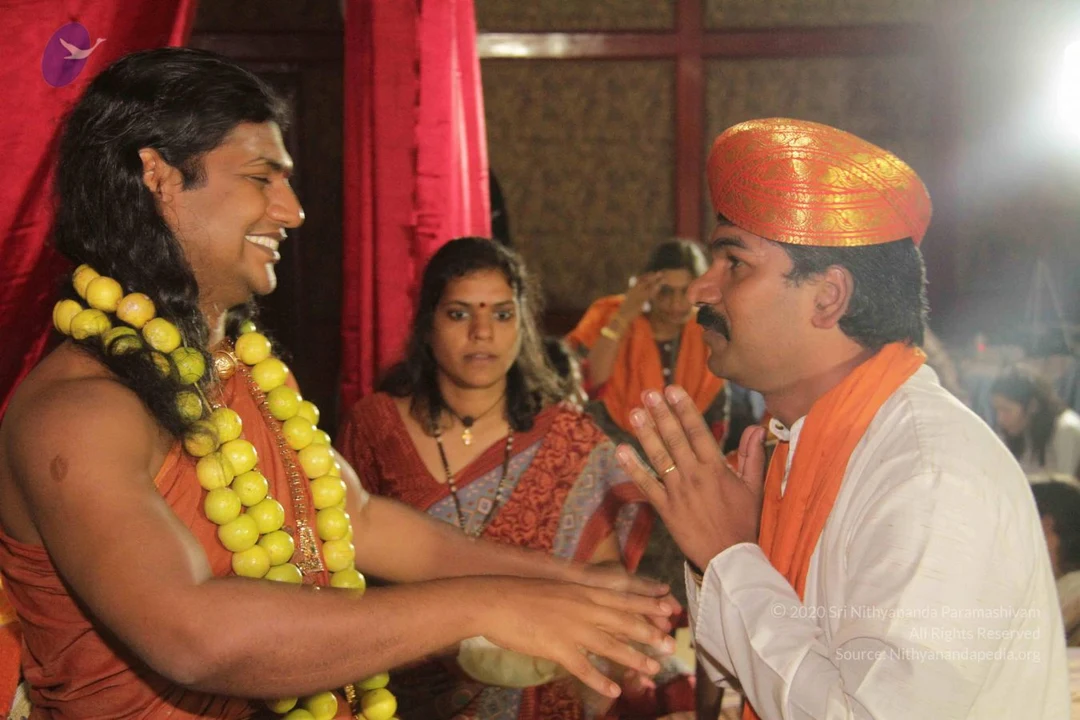
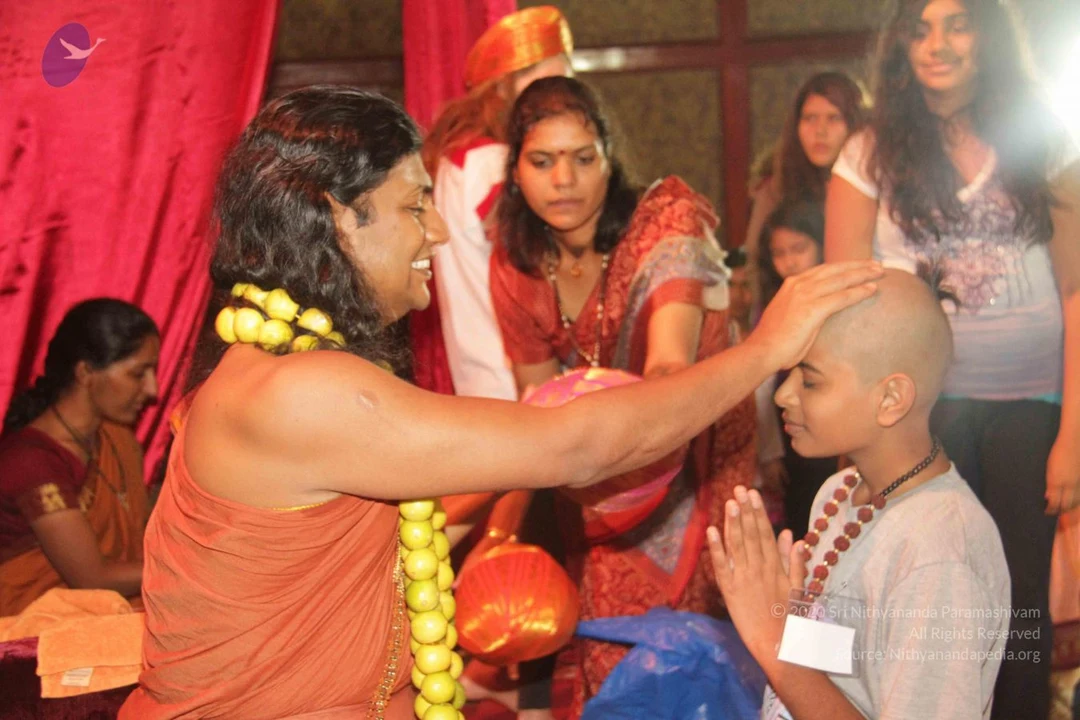
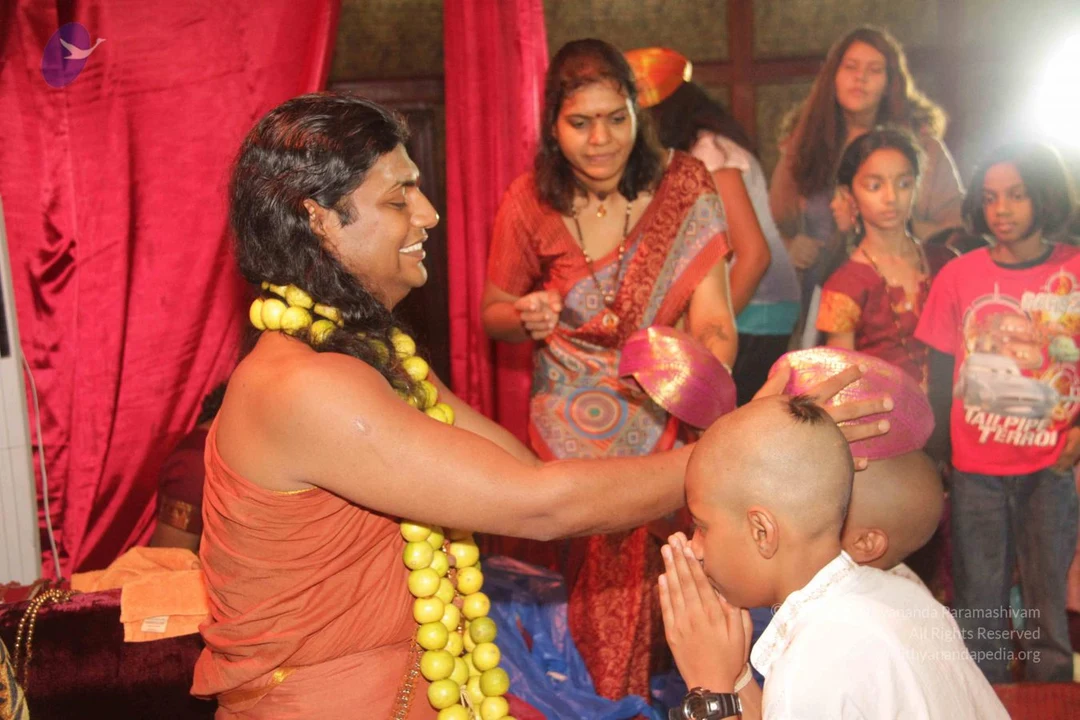
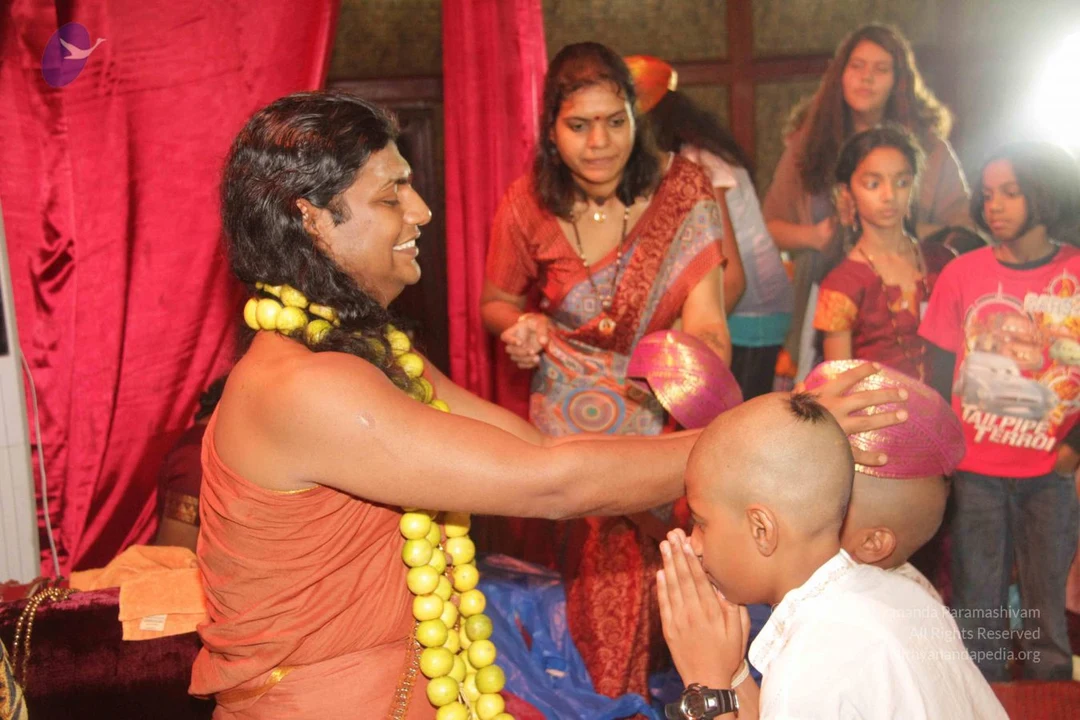
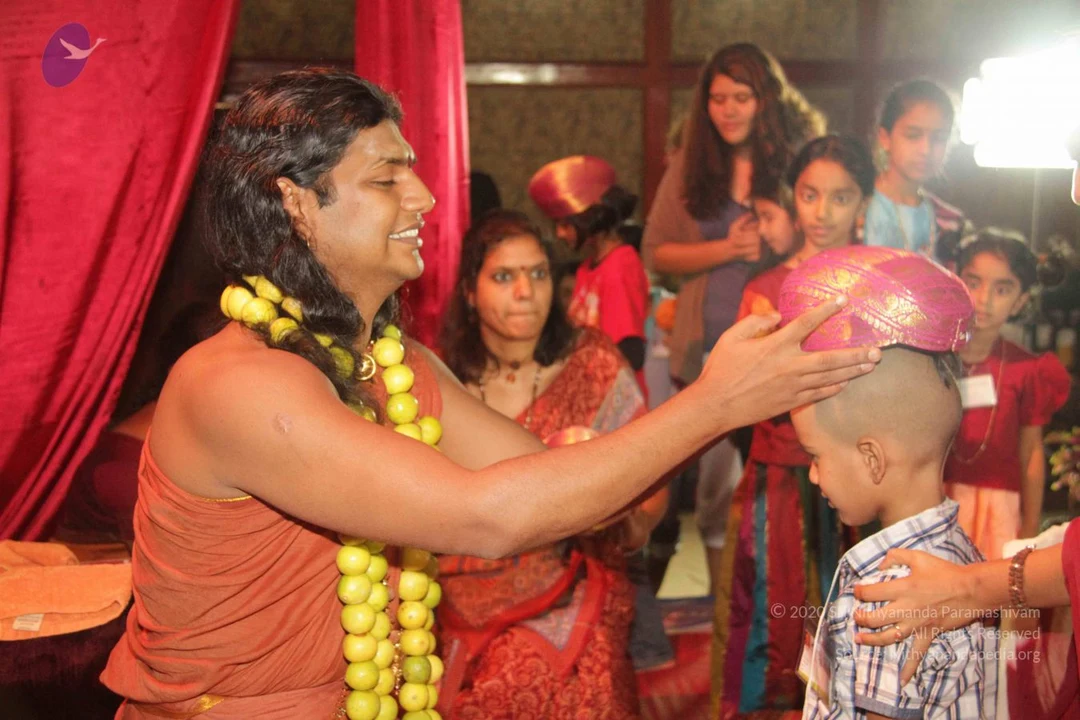
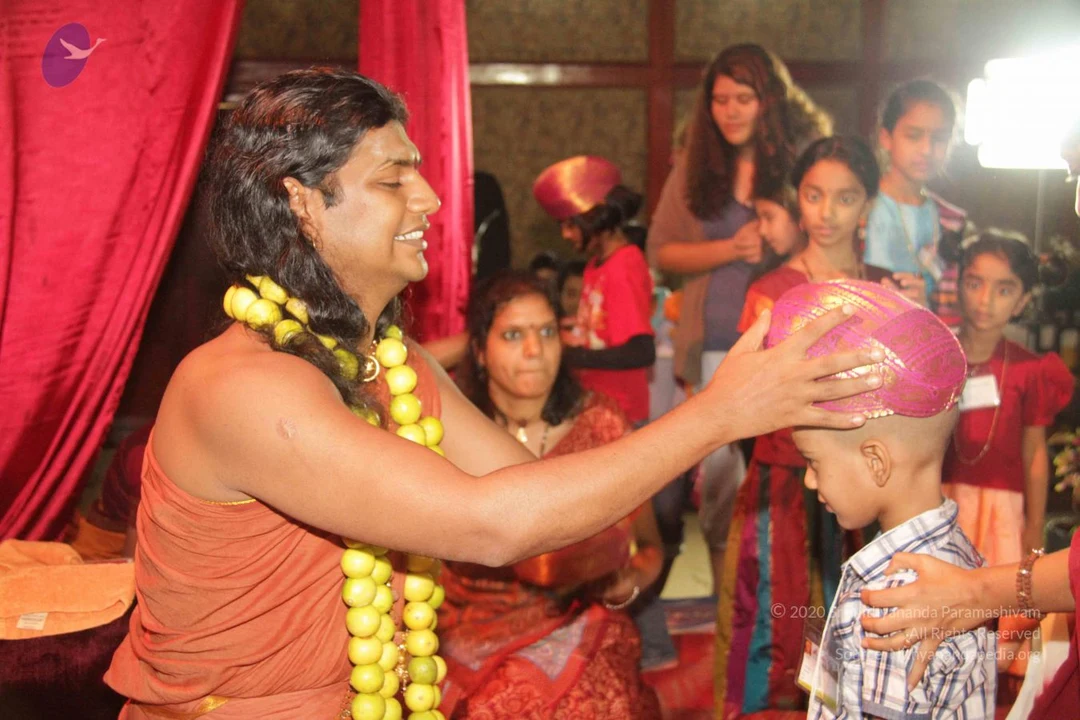
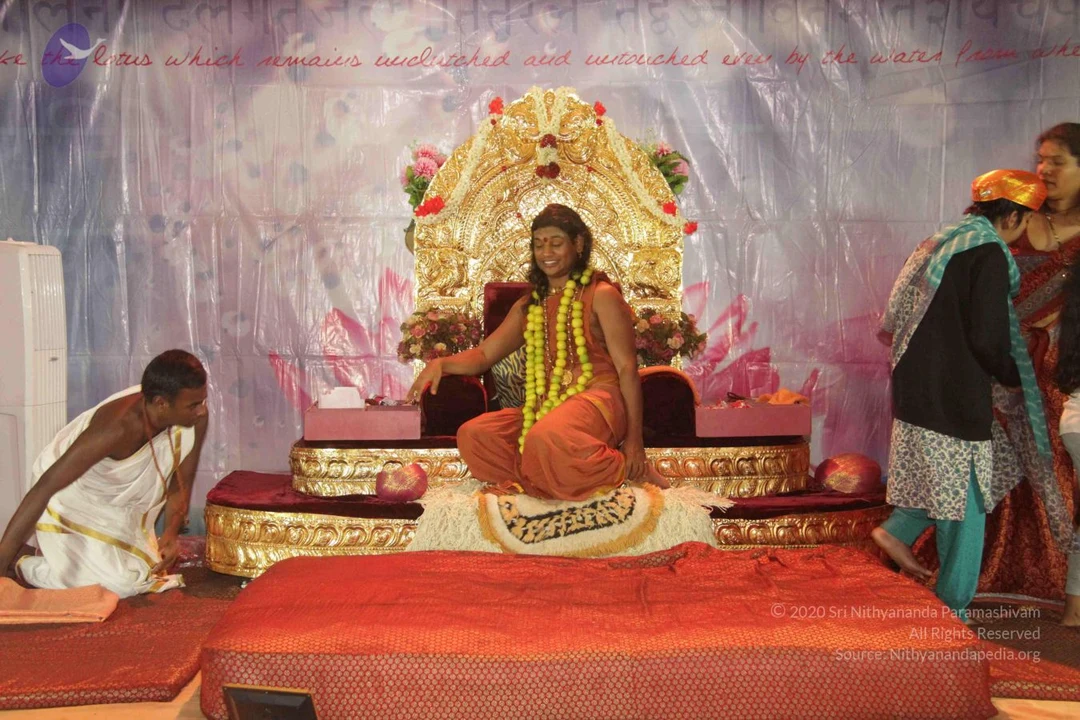
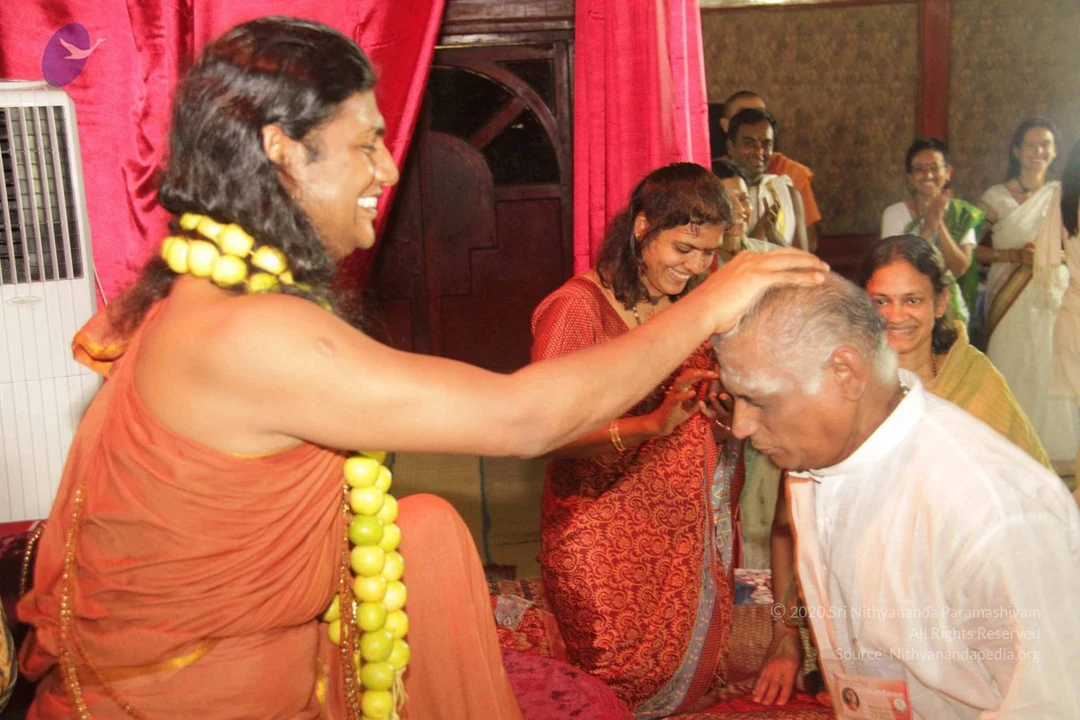
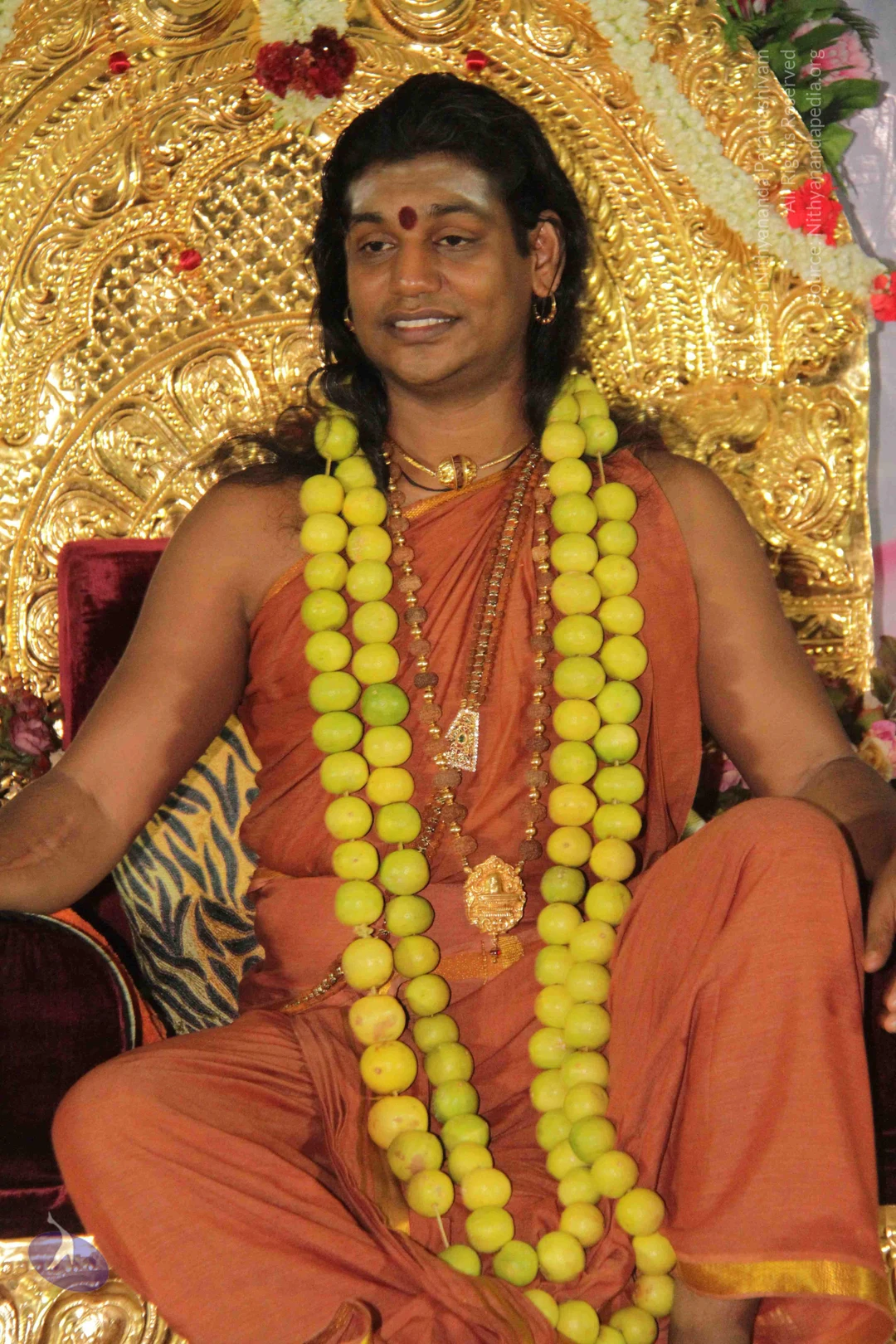
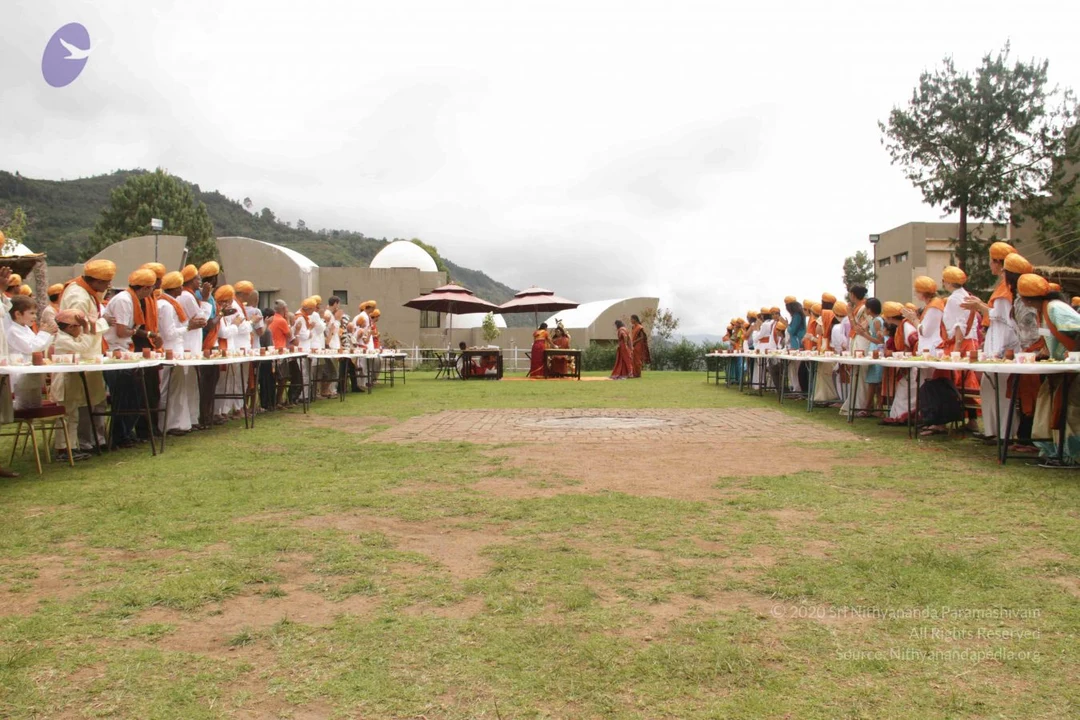
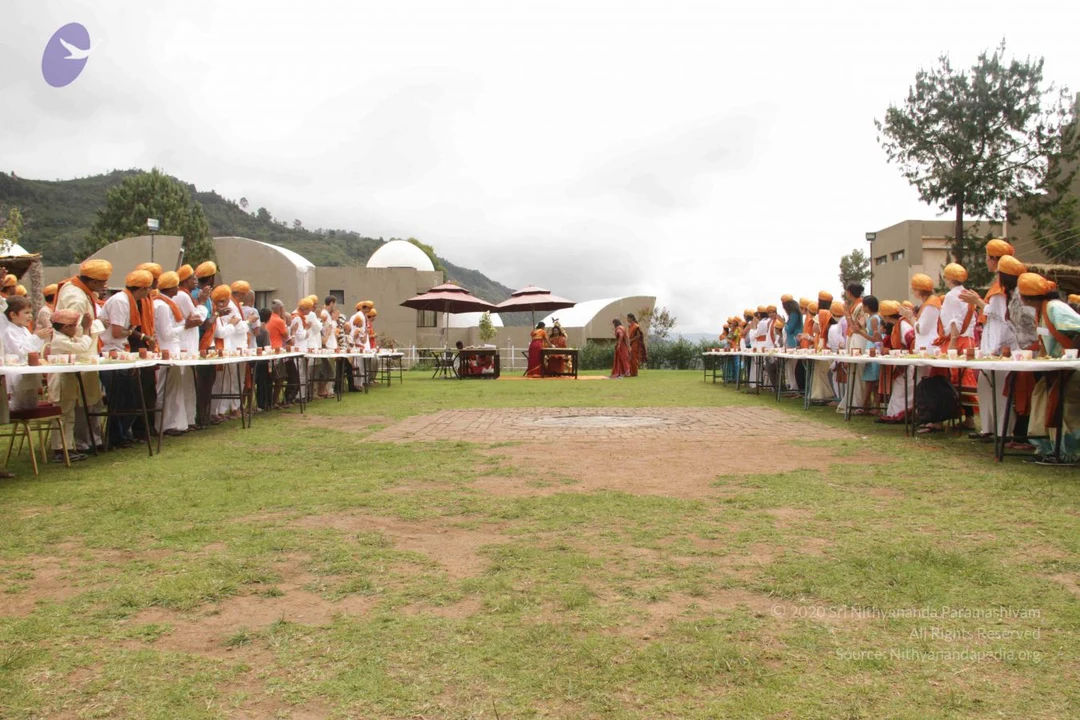
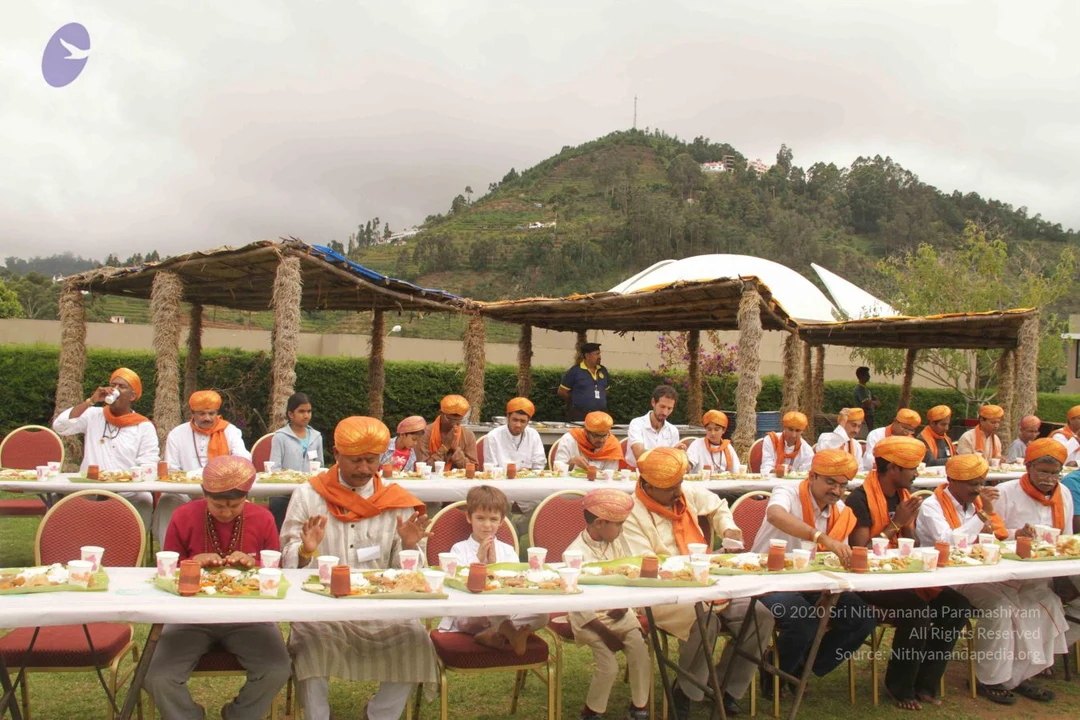
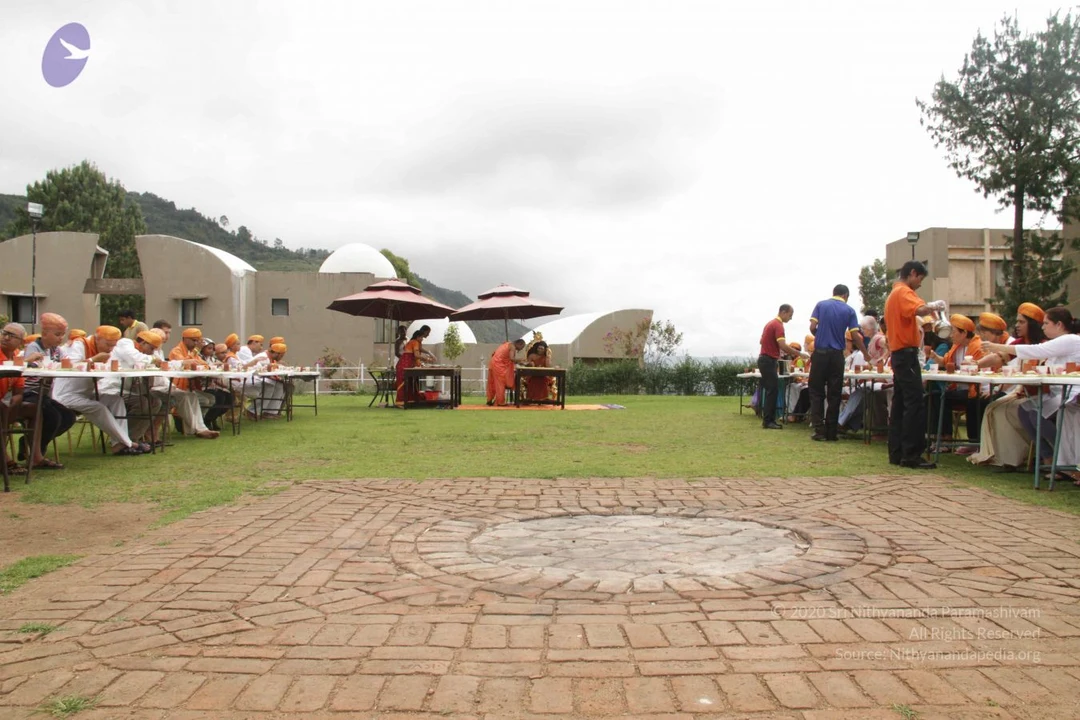
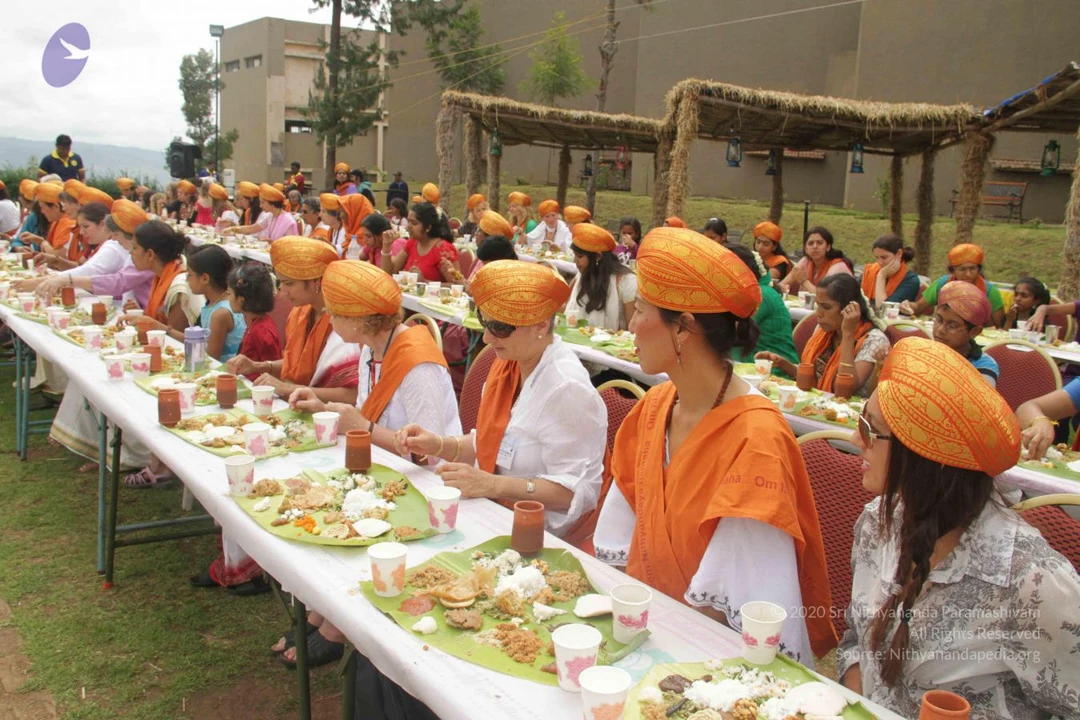
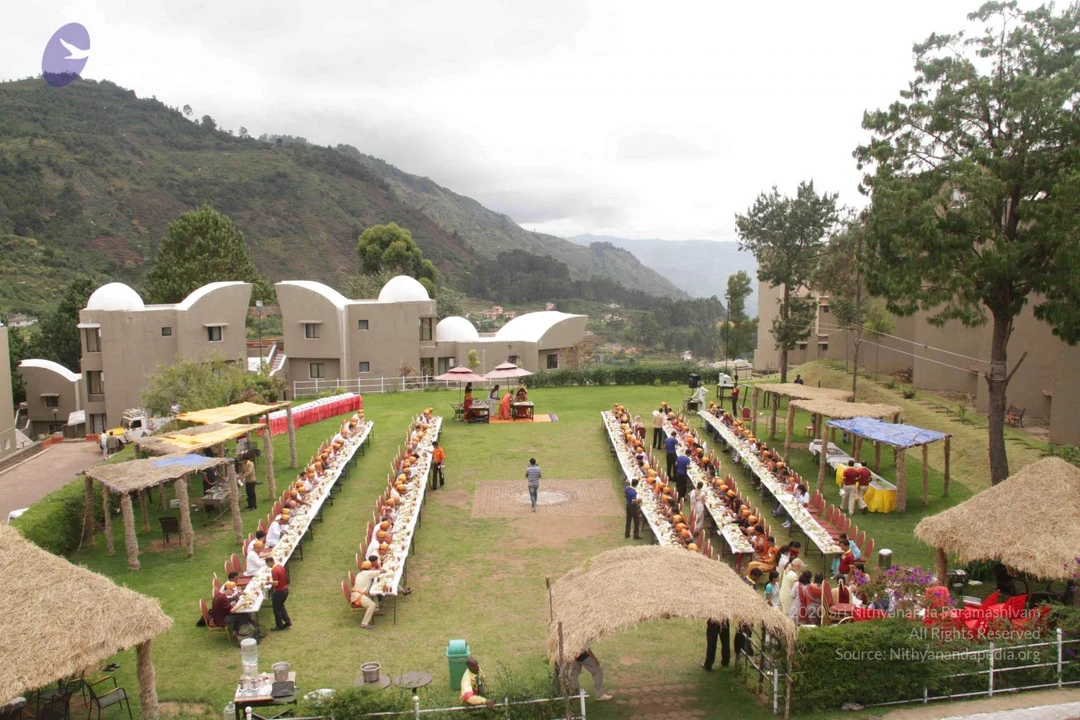
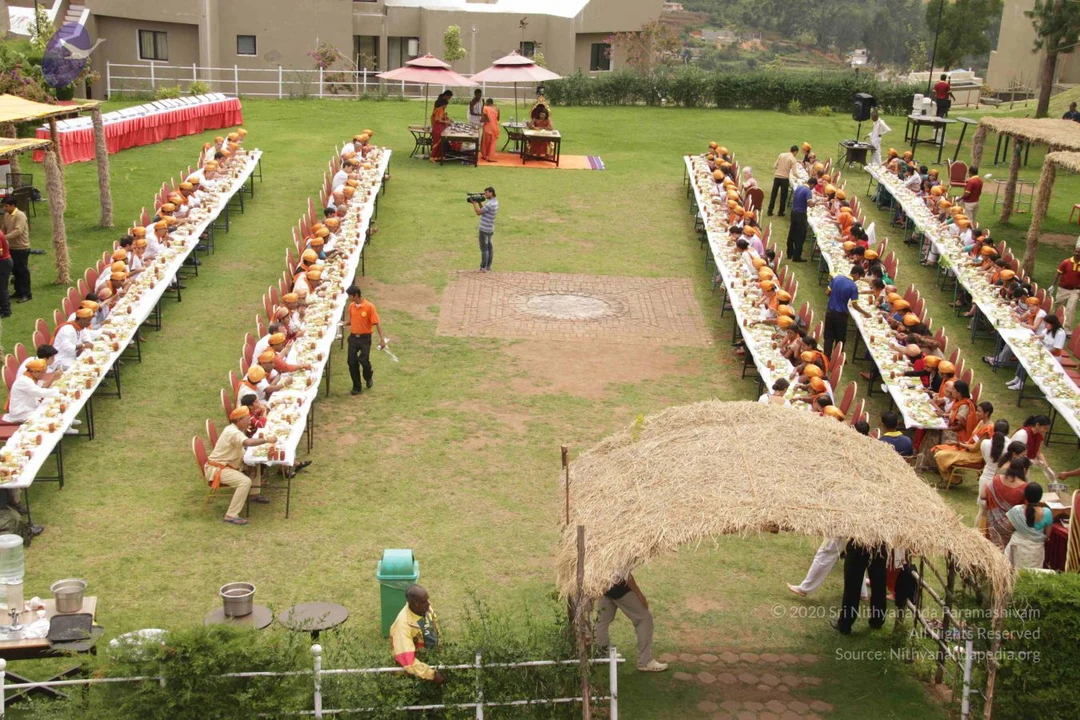
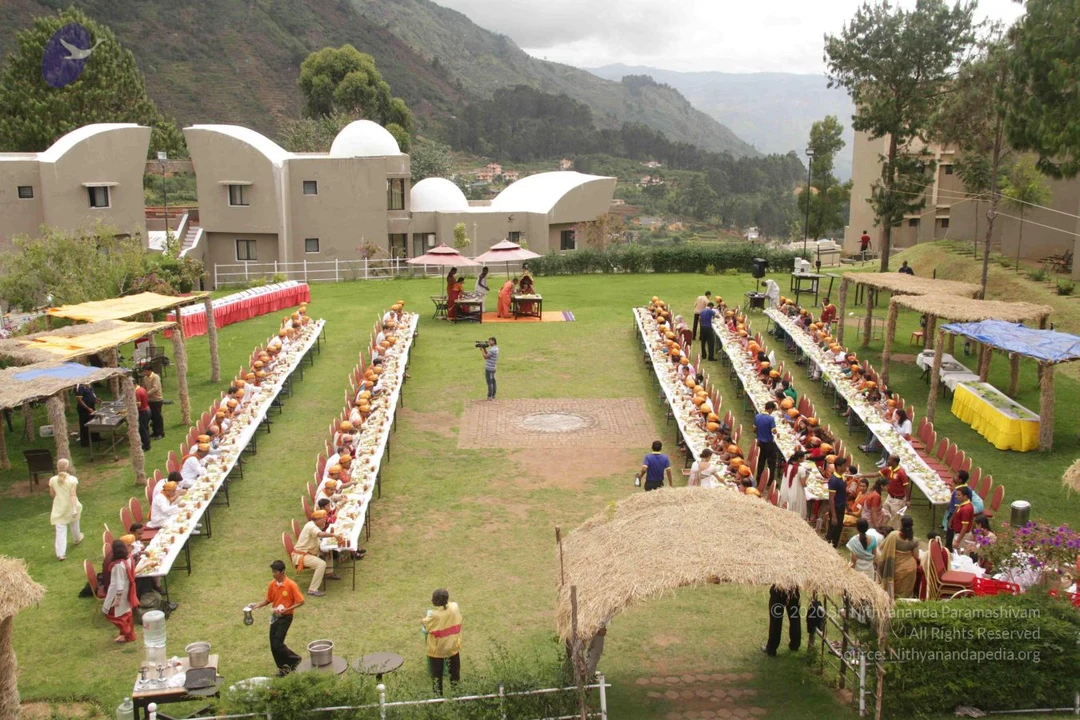
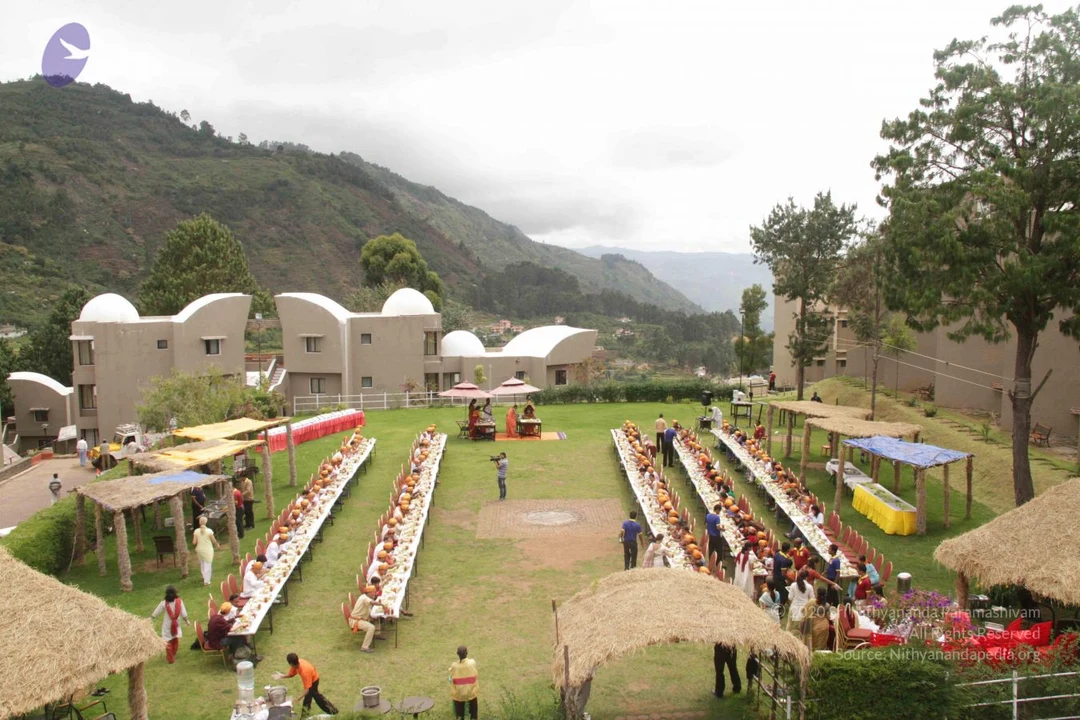
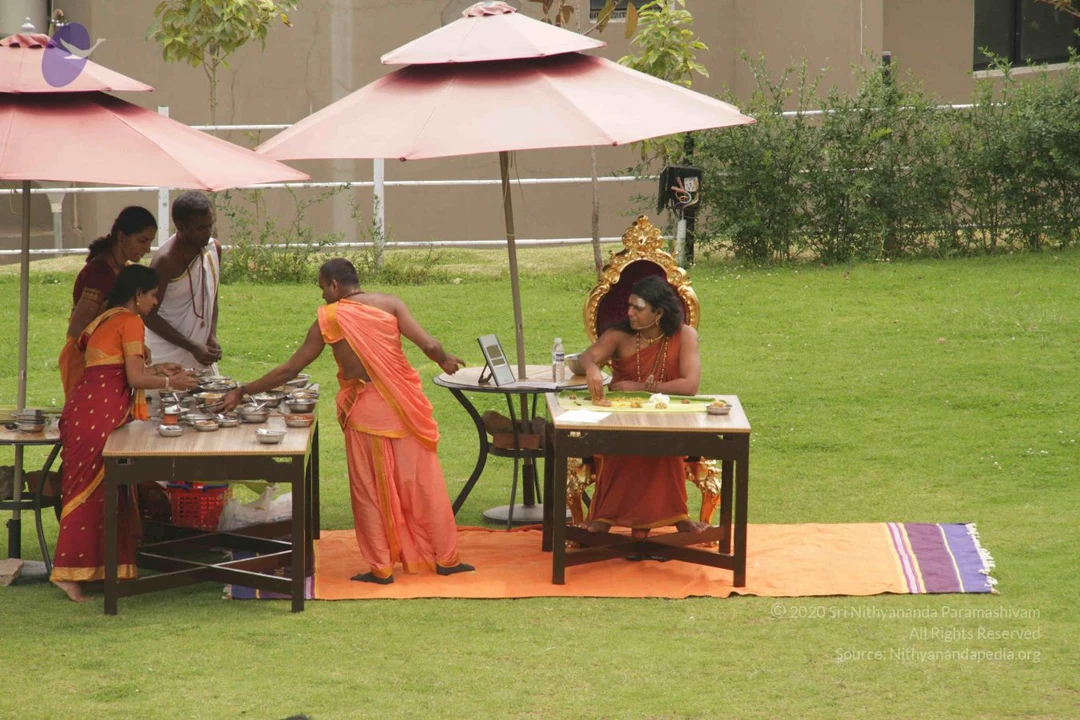
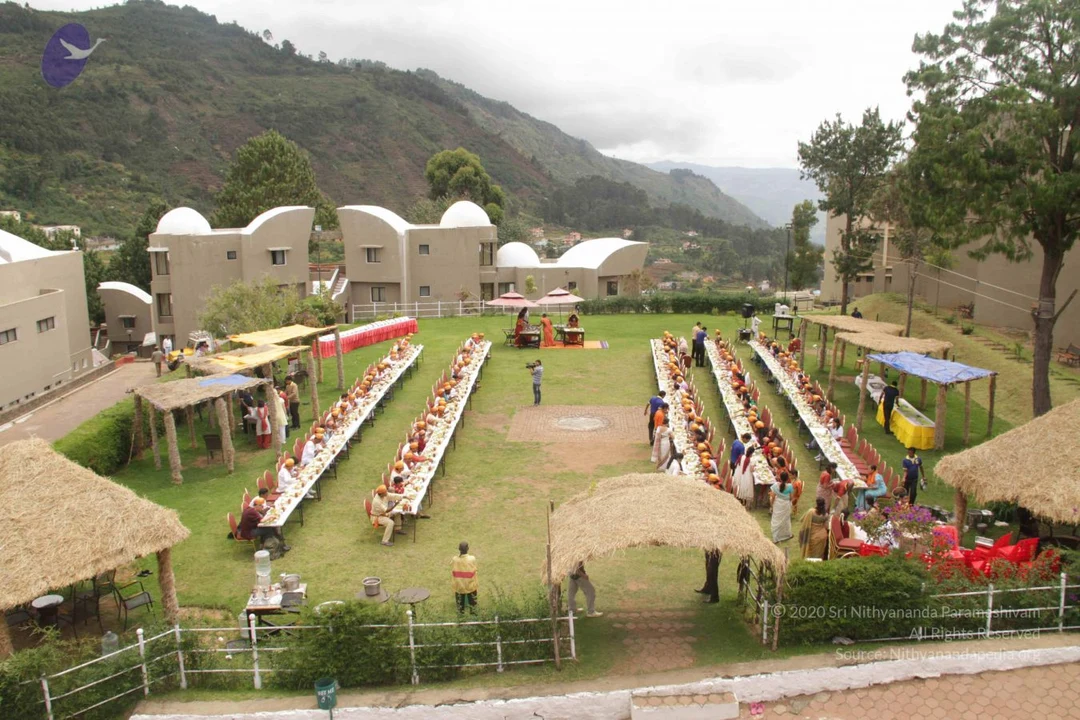
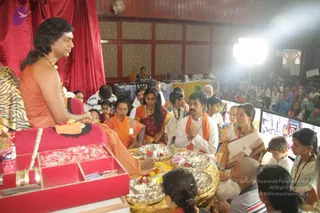
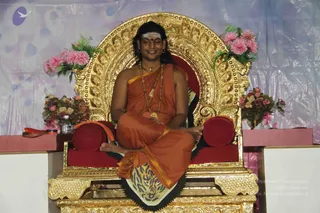
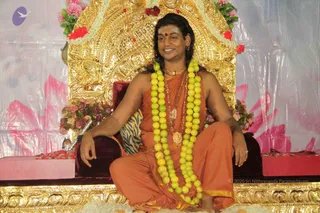
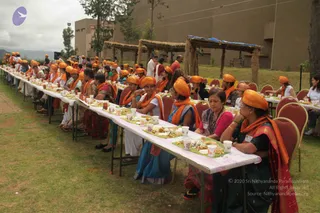
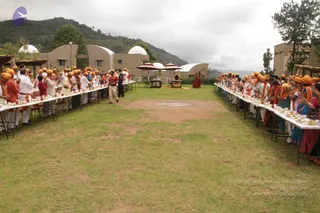
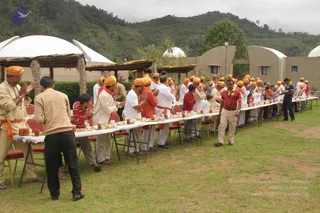
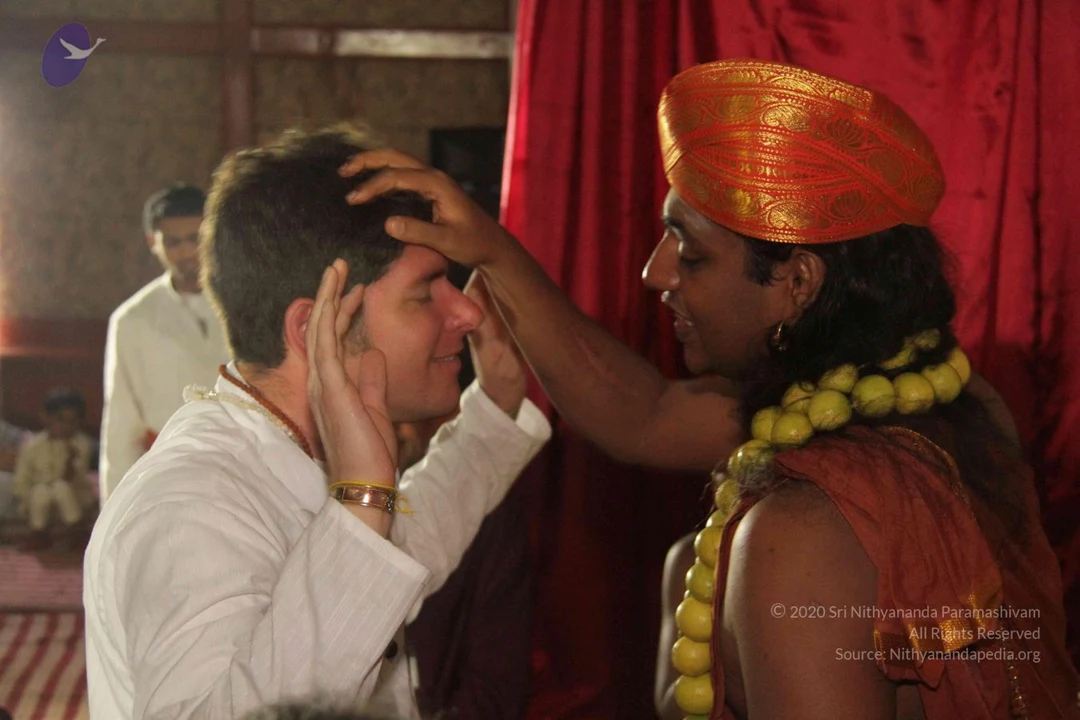
A photograph of a young man with short light-brown hair, wearing a white shirt under an orange-saffron shawl with printed text, a rudraksha mala and a gold bracelet, standing with palms raised. A man on the right in an orange-gold turban, with a yellow flower garland and orange-saffron shawl, presses his hand to the young man's forehead. Behind them a bald man in white clothes and another man in white sit near red and orange drapes in a room with a wooden wall.Outdoor photo of a long row of white tables on a lawn where many devotees sit eating a meal served on green banana-leaf plates with small clay cups and a clay pot. Foreground: a man in cream kurta with orange-and-yellow turban, rudraksha mala and gold bangles eats, a bald young boy in a blue-and-white checked shirt beside him. Along the row, many men wear orange and yellow turbans, orange shawls and white kurtas. A woman in a white top and a man in white stand near the far end; a woman in an orange sari sits at a side table under umbrellas. Behind them are modern beige buildings with white domes and a covered wooden pavilion.A photograph of a seated man on an ornate gold and red throne in an orange sannyasi-style robe with a gold necklace, long swept-back hair and a tilted head, with his bare feet resting on a yellow-orange cloth. Several devotees kneel and sit before him with palms pressed together in namaste: a woman in a purple sari, a shaved-headed boy in a striped shirt, a woman in a grey shawl, an older woman in black with an orange scarf, and a man in white with an orange shawl standing behind. Brass plates of offerings, marigold and flower petals, and white flowers on the throne frame the scene against a red curtain and a pedestal fan. Appearance cues match a person enthroned in a satsang setting, with the title and excerpt indicating a July 22 2012 event.

July 22 2012

Original wiki page
Contents

Title:

Performance Means Being Total.

Description:

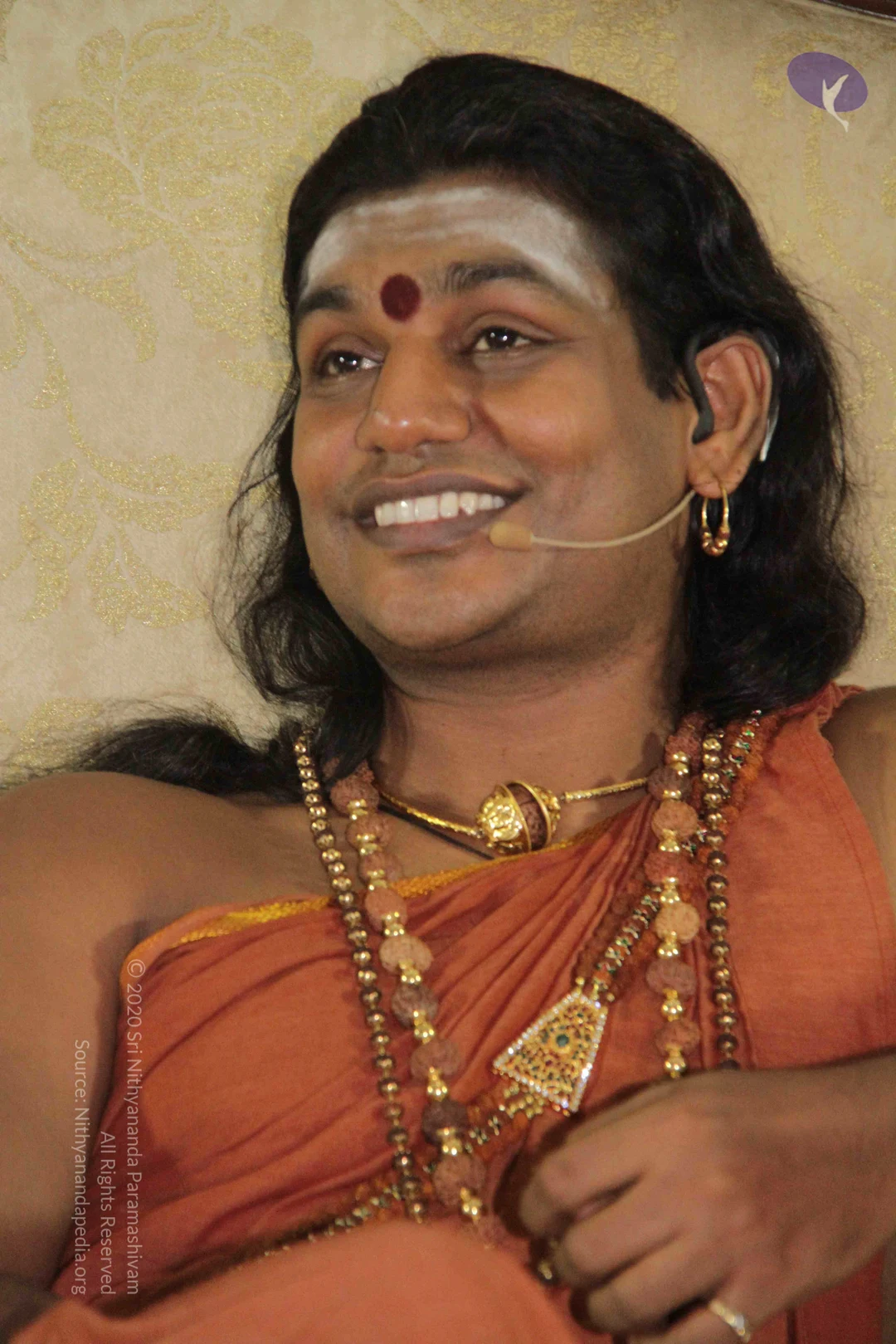
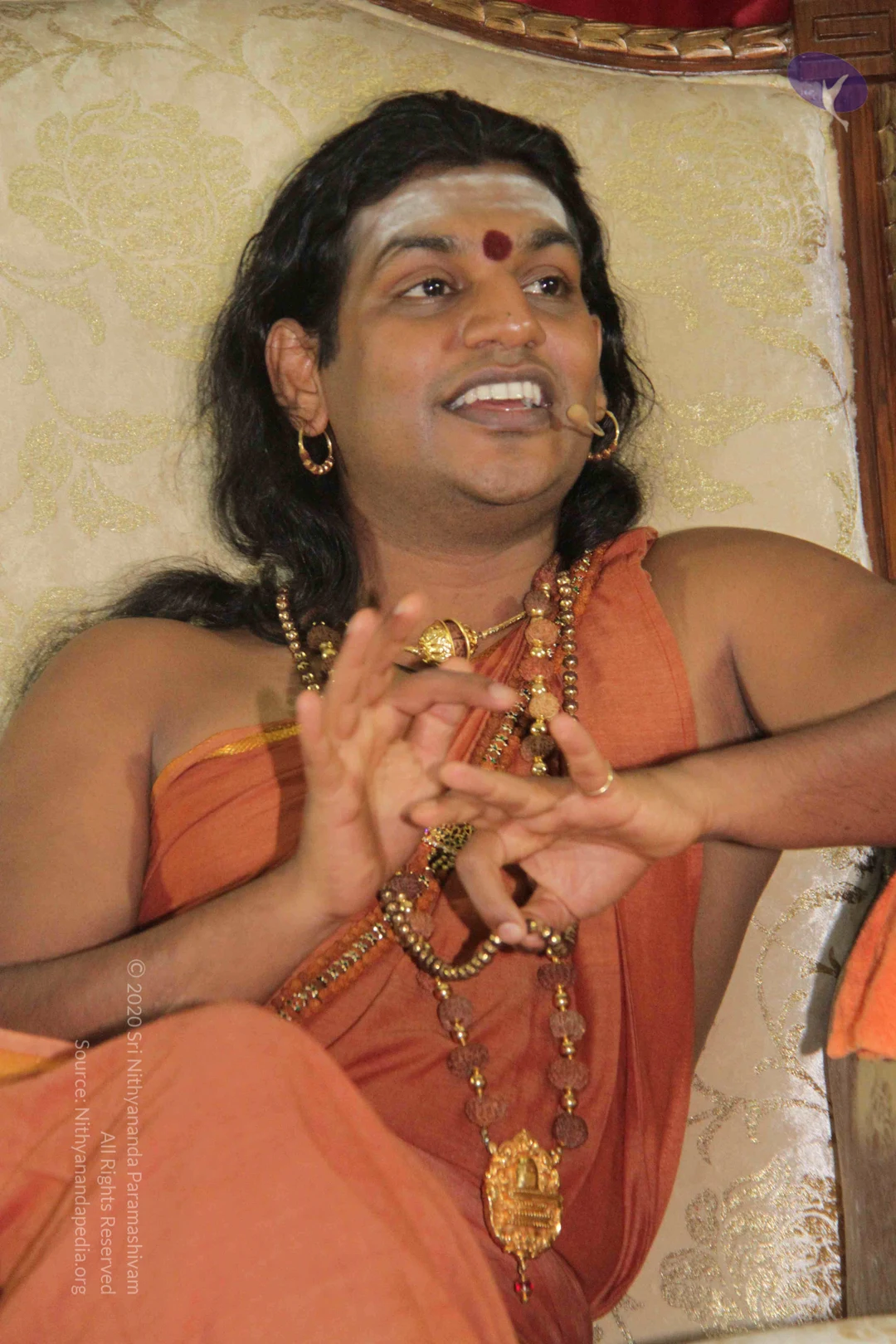
TALKS FROM MORNING SATSANG ON JULY 22 2012 IN MADURAI, INDIA In today's morning satsang, Paramahamsa Nithyananda (Swamiji) replies to a question on Bhagavad Gita. The verse in question advises intense action without clinging to reward. The questioner wants to understand how to apply this verse to his life. Paramahamsa responds that the common factor for all our actions should be the totality of our commitment. Whether business, relationship or public service, when we give complete attention to each task, we perform for the sake of the task and not for the sake of the outcome. That is the correct application of this verse.

Link to Video:

VideoAudio

Transcript:

PERFORMANCE MEANS BEING TOTAL

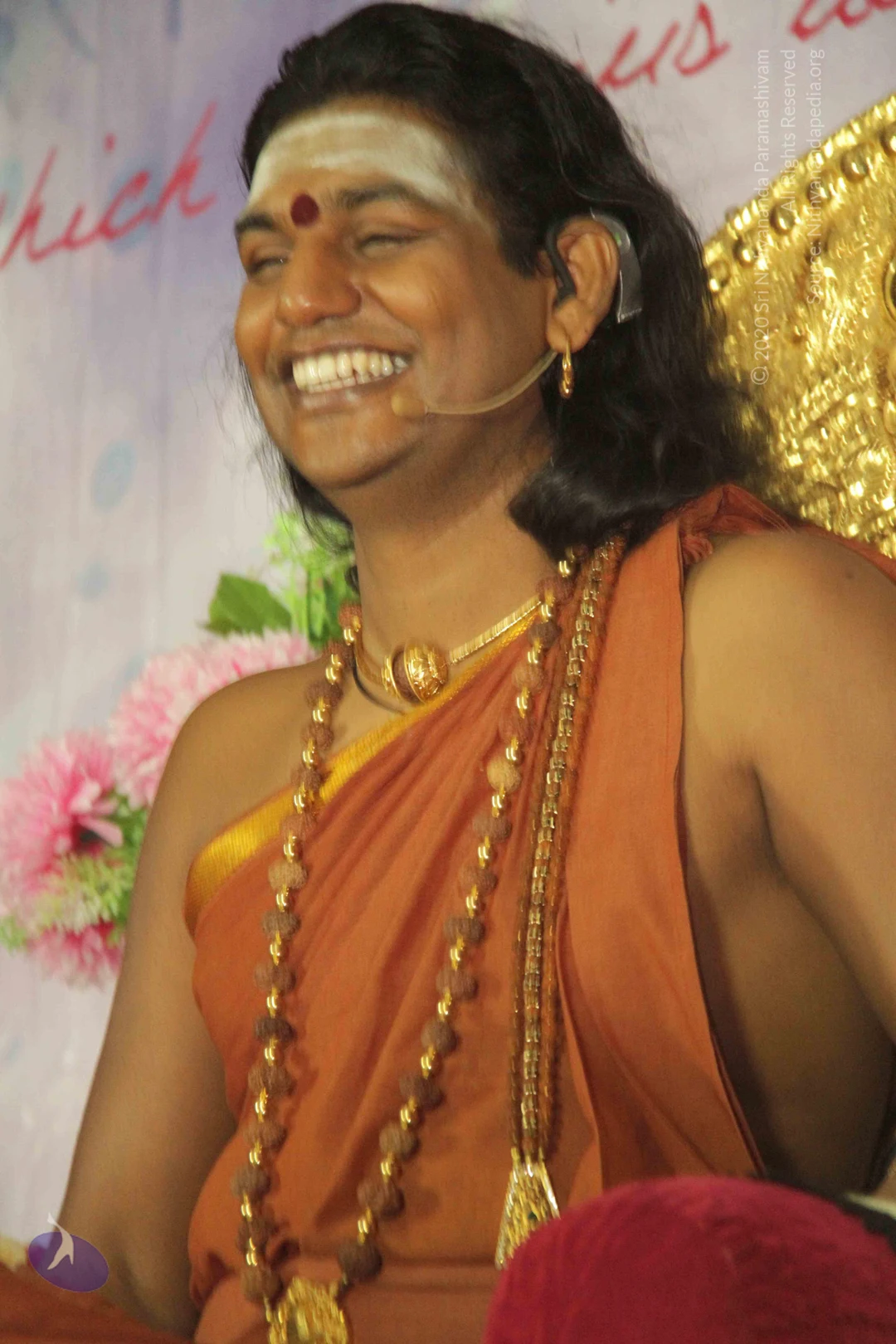
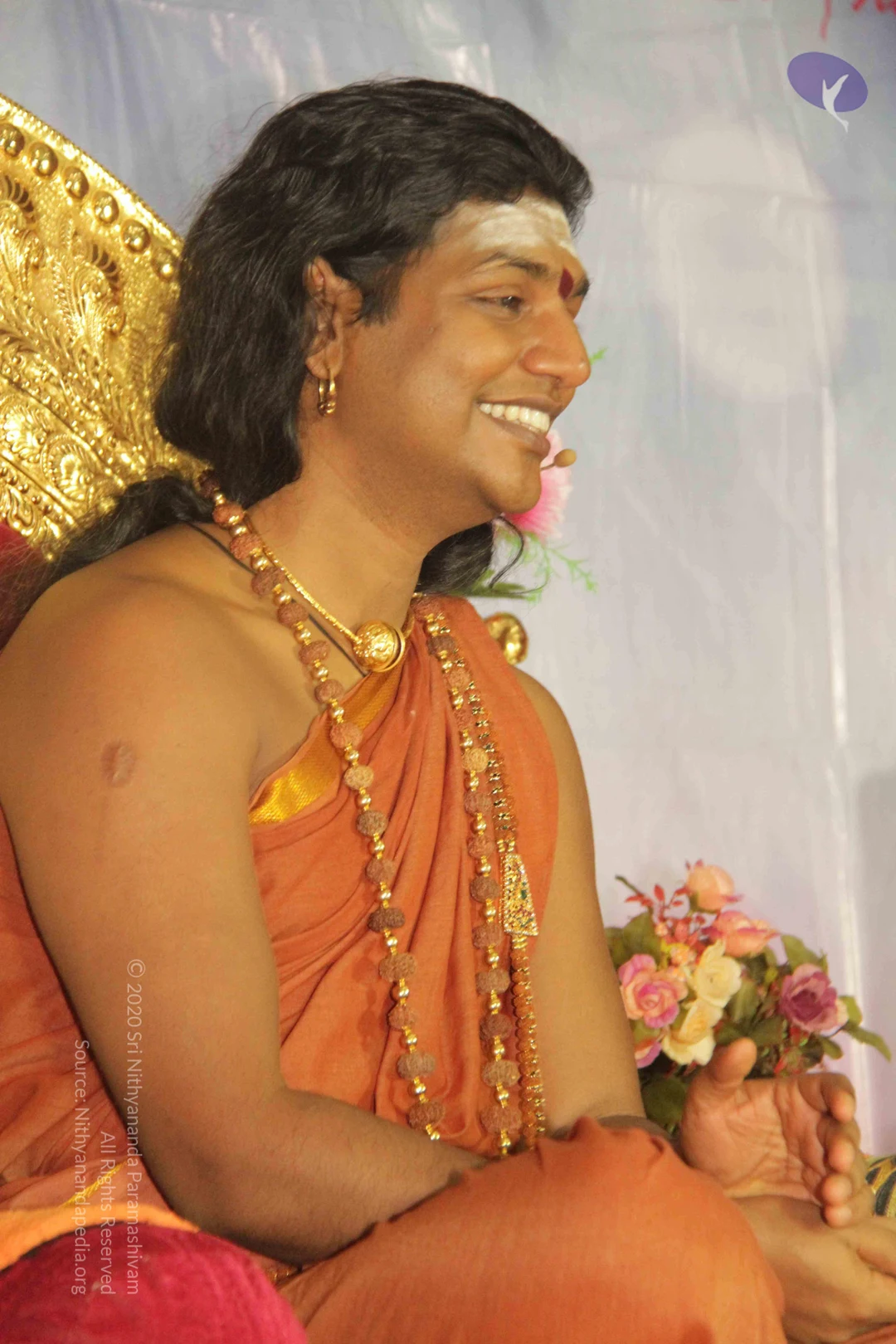
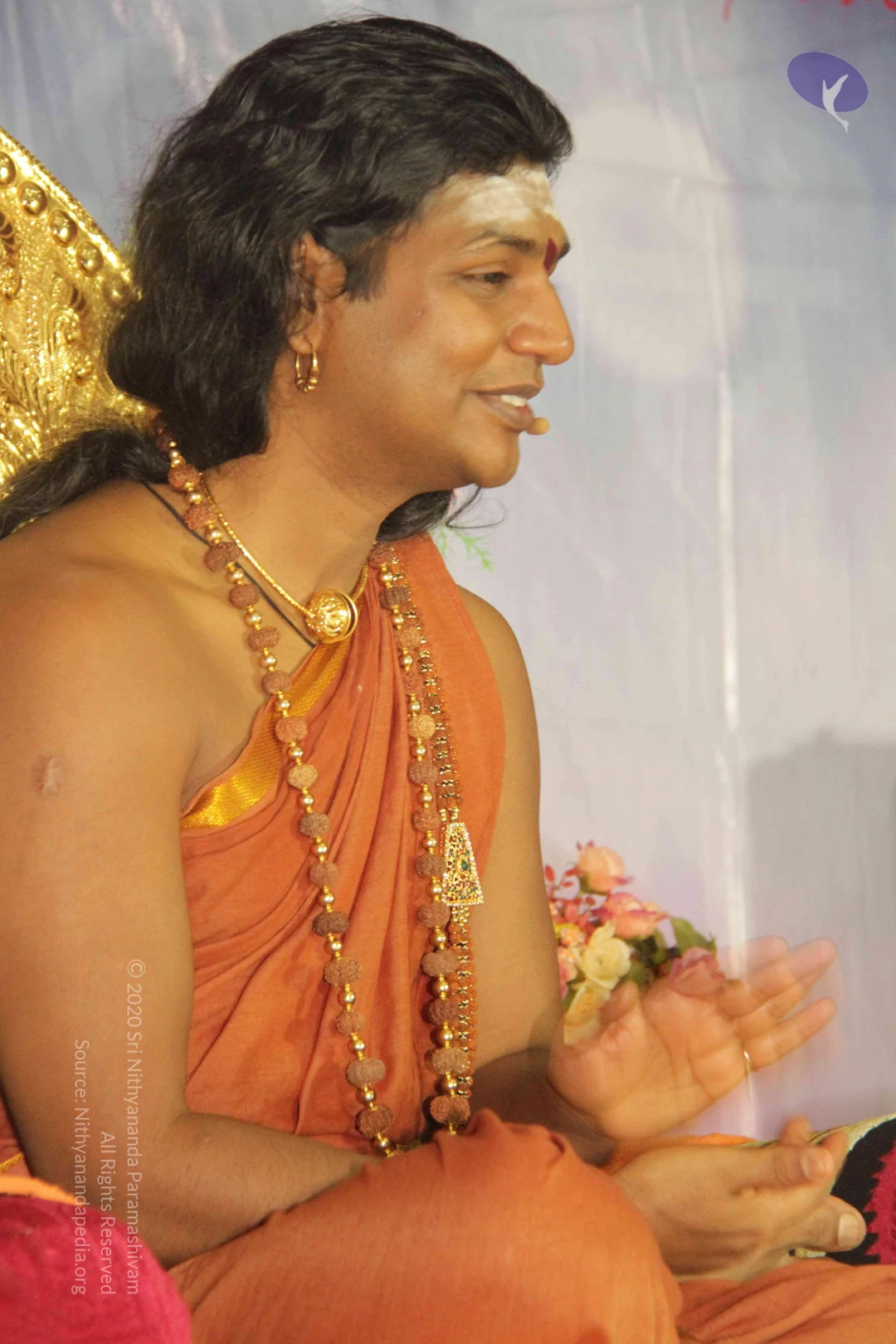
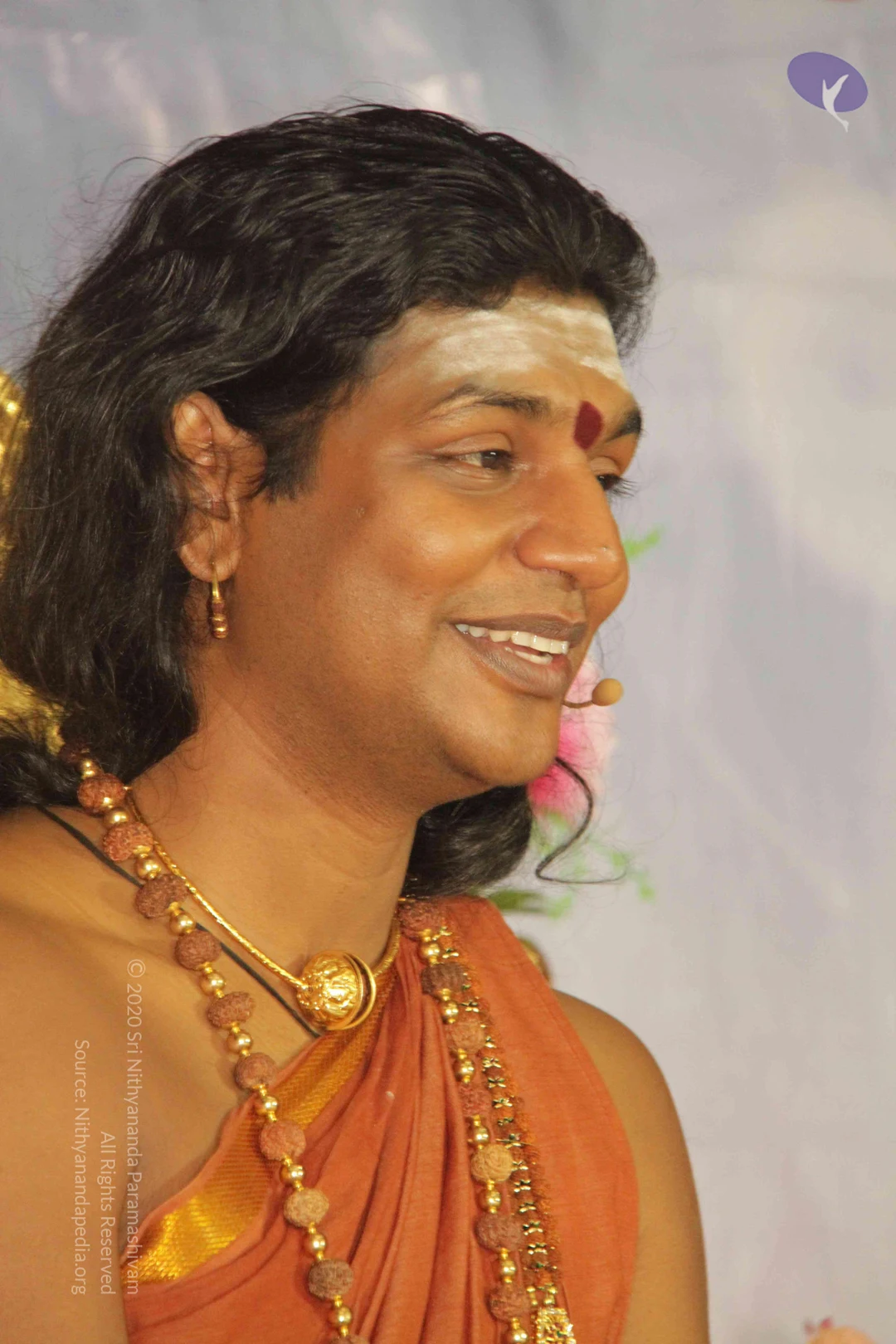
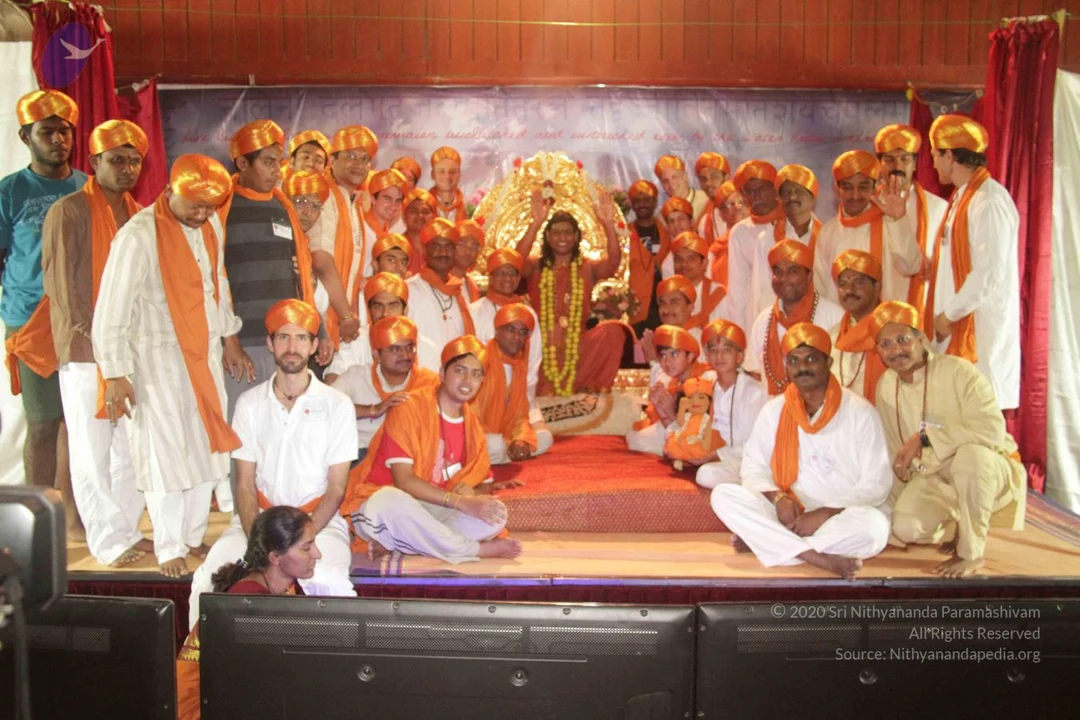
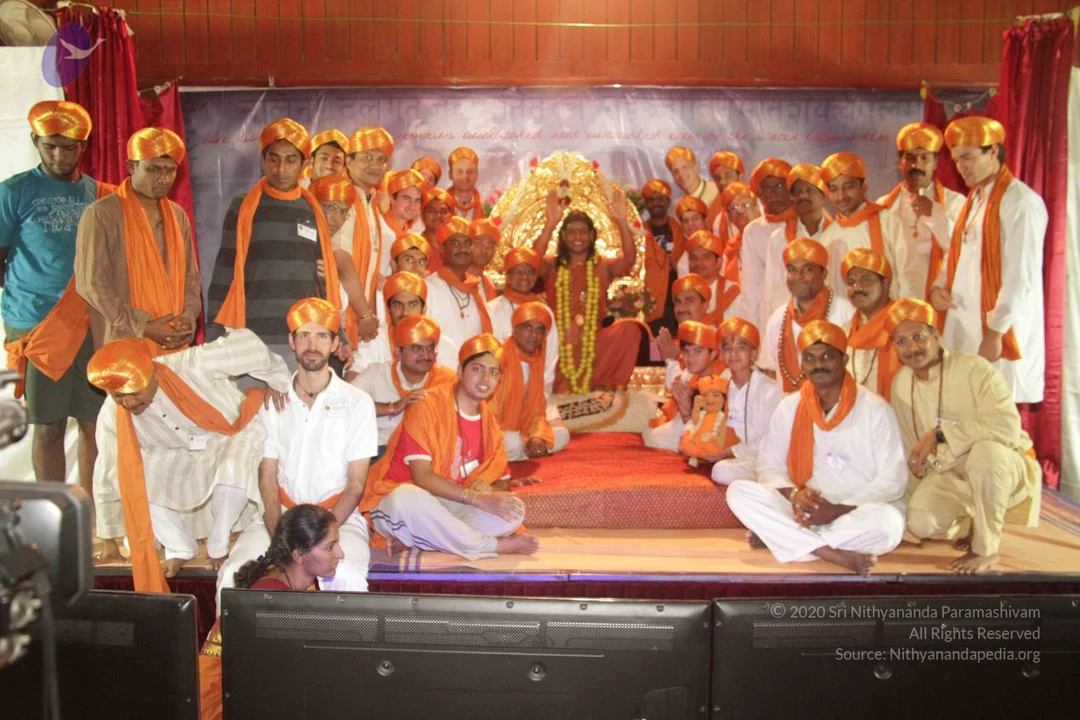
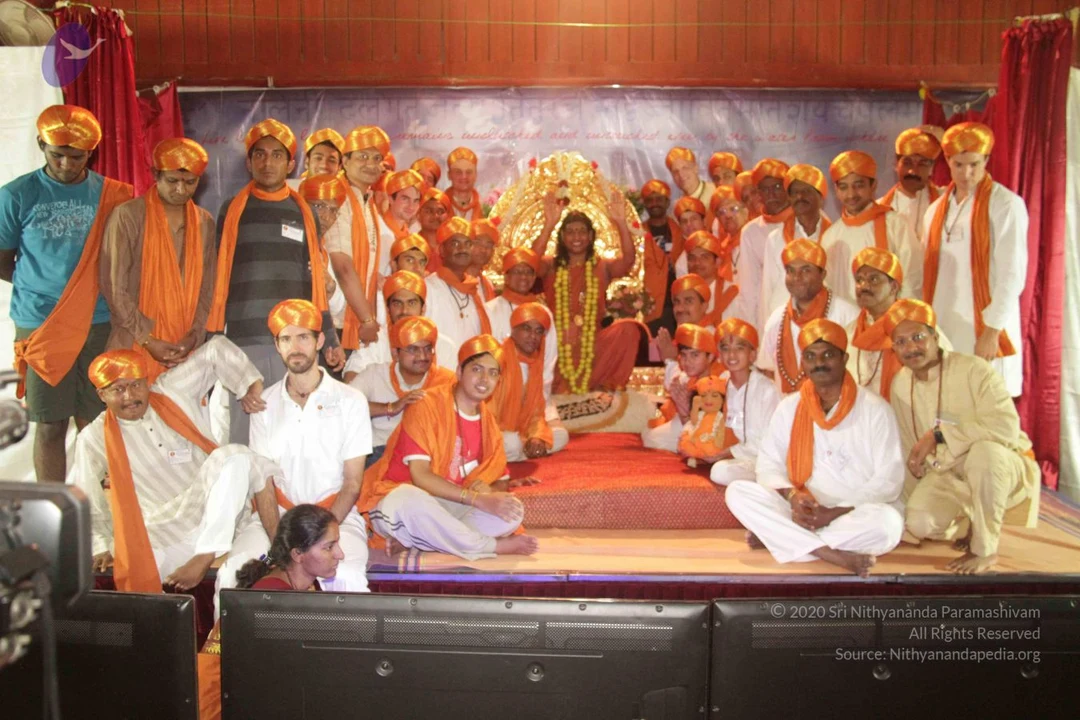
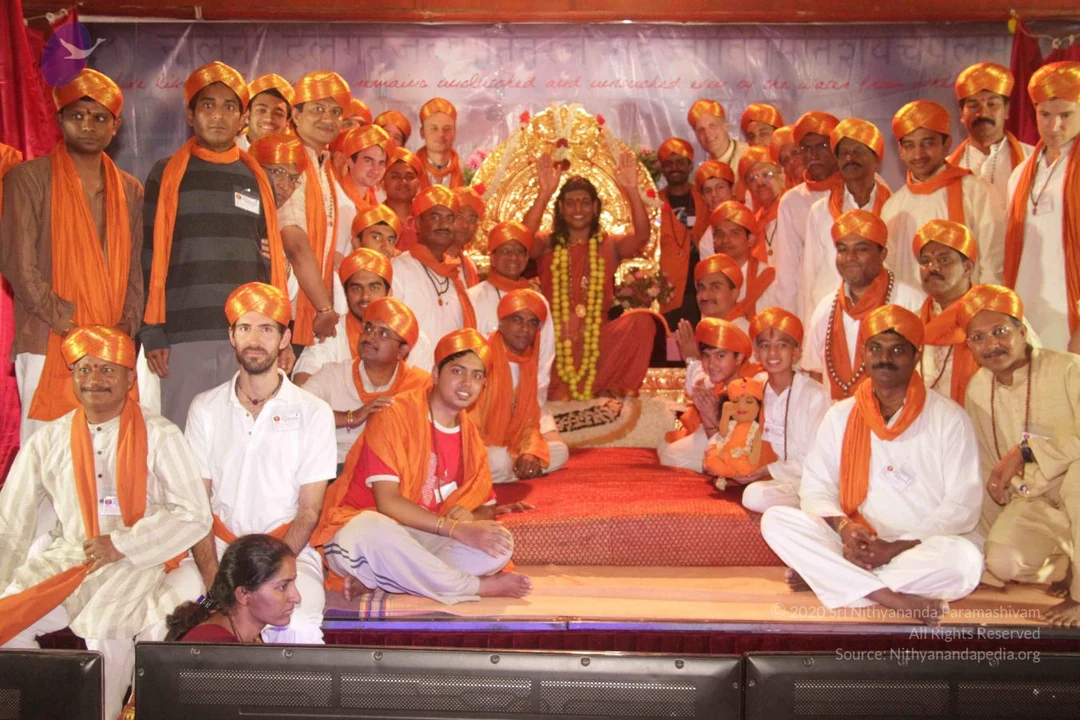
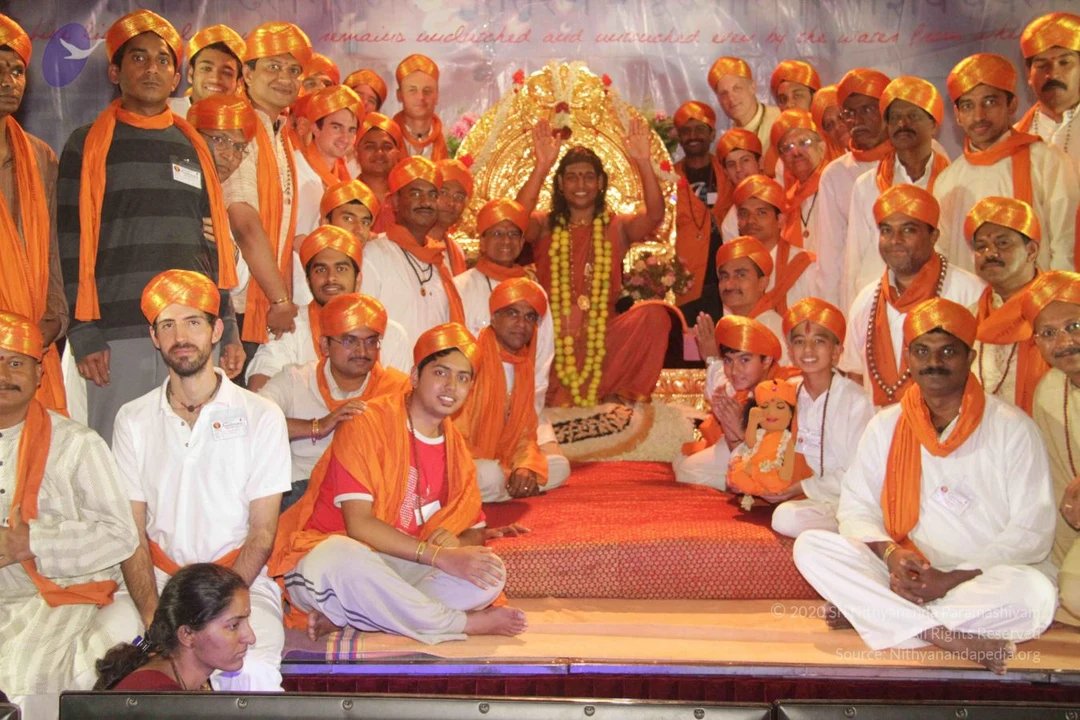
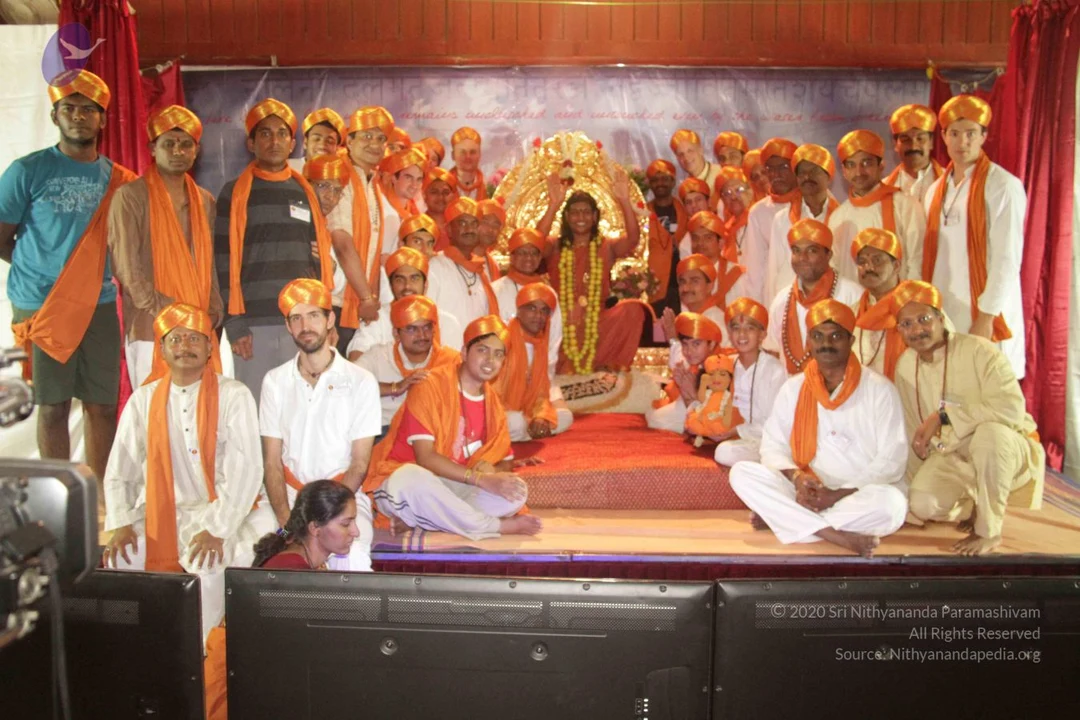
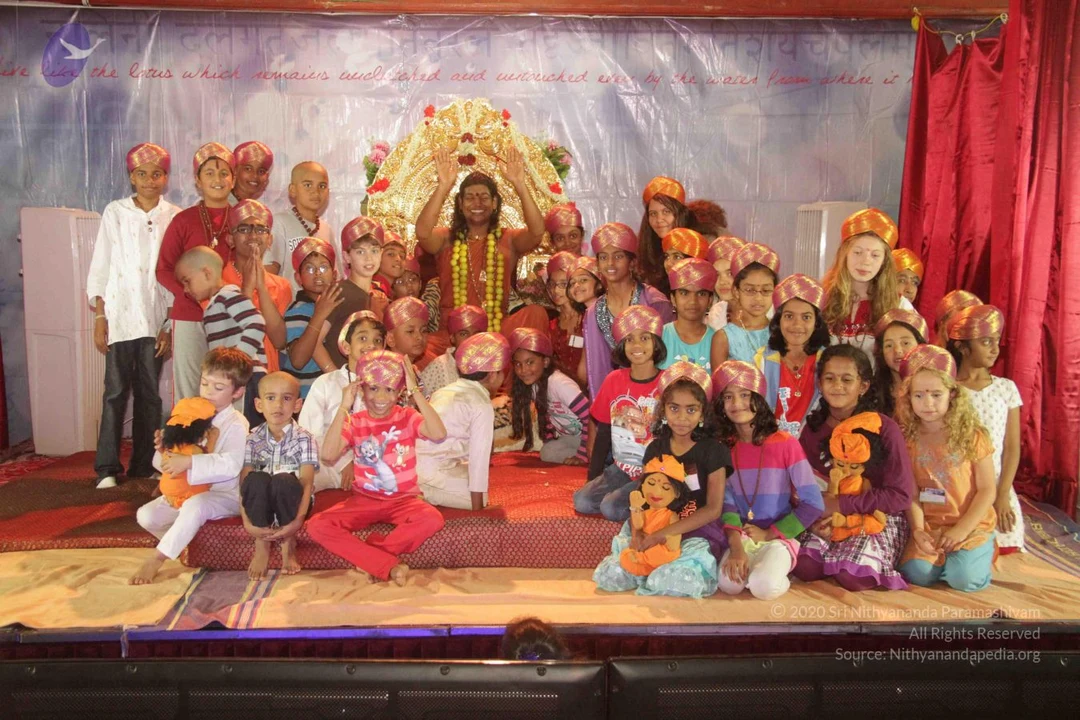
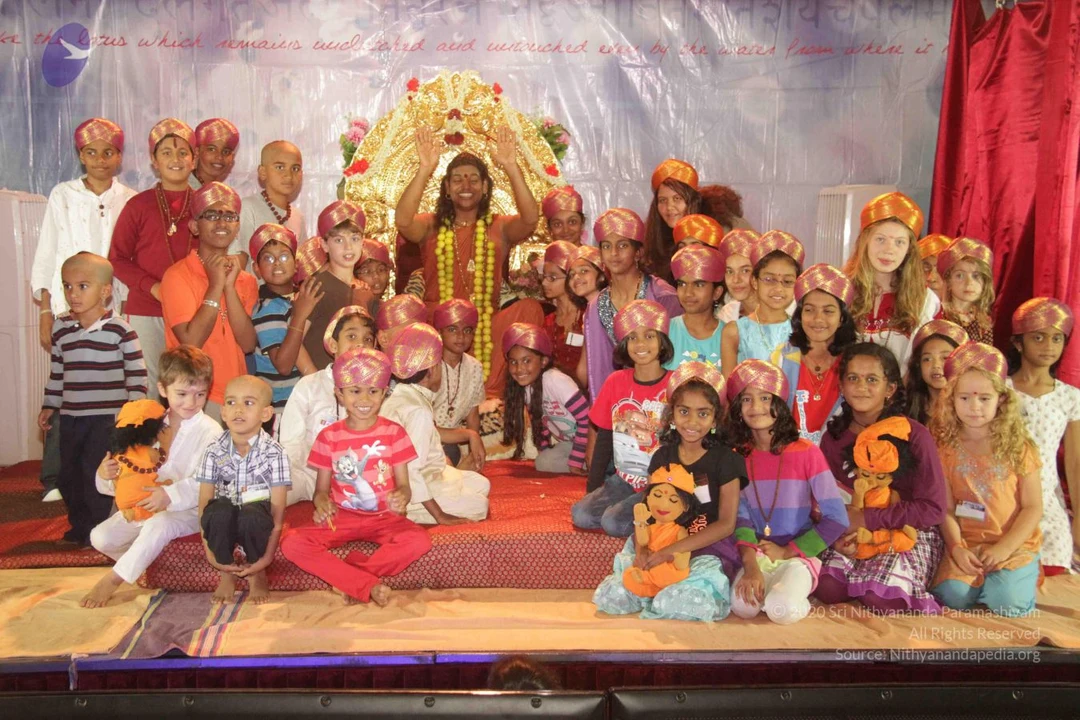
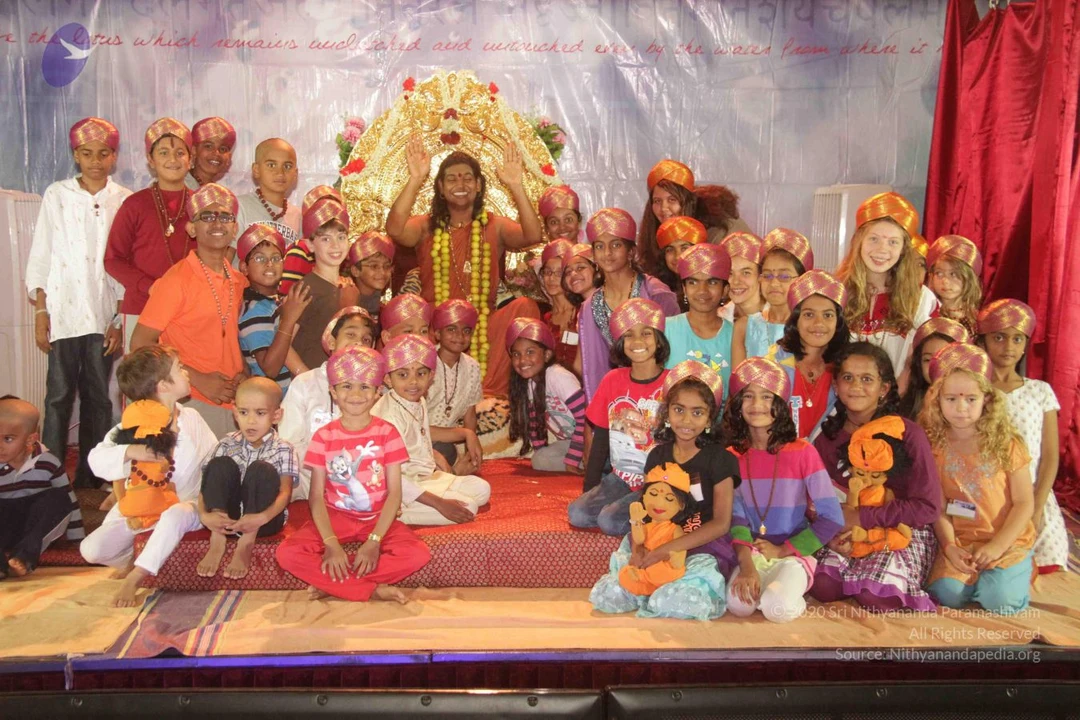
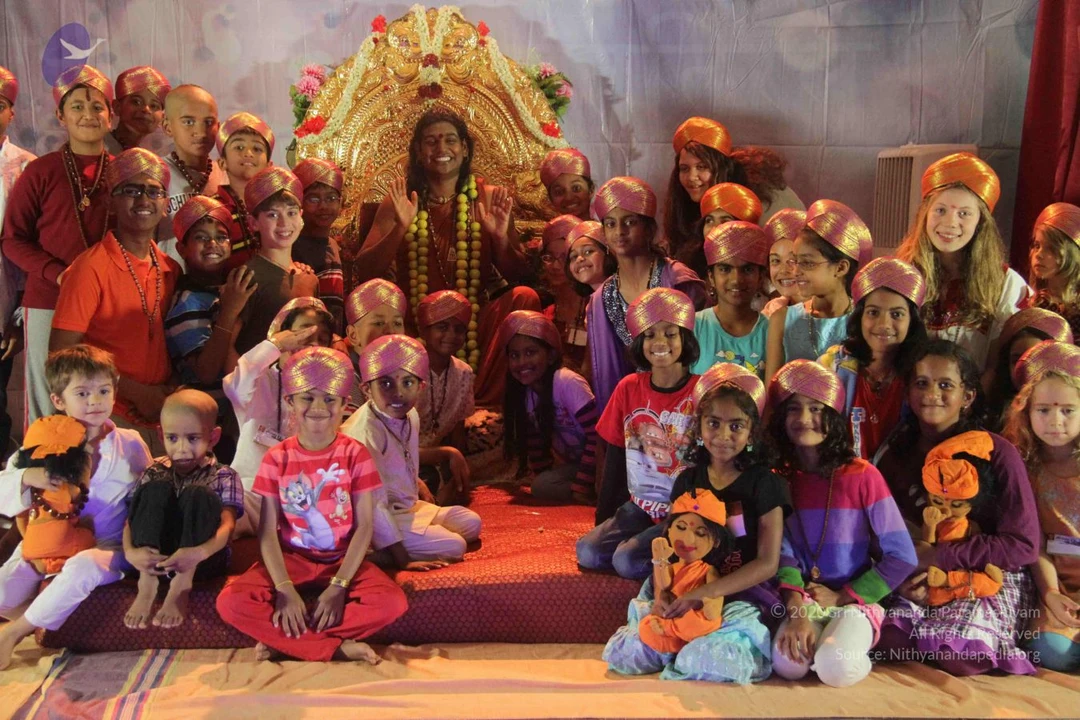
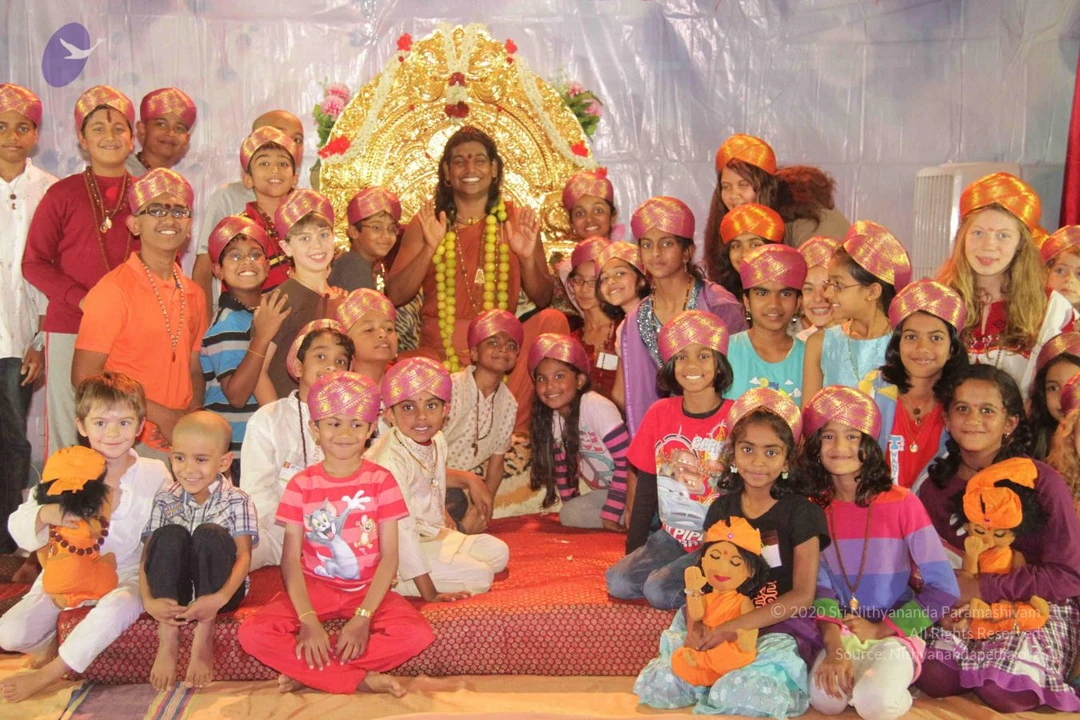
I welcome you all with my love and respects. Today the graduation day of July Inner Awakening. I am looking back, we completed 11 Inner Awakenings successfully. This is the 11th one and first time out of Bidadi. Despite of all the harassments, despite of all the harassments, problems, successfully we have completed the 11th Inner Awakening. Very smoothly, successfully and strongly spiritually successfully and such an intense work on every person / individual. This Inner Awakening shows the power of spiritual strength. Actually I was working on developing and further sharpening and making the Inner Awakening a strong experience to the core. We are very successfully this time, adding more and more stronger, deeper truths. More homas, pujas, everything we have increased. The number of pujas, the number of the rituals, and the number of meditations, number of process, number of akashic readings, everything only got added in this IA and every participant had their question answered at least one question in akashic reading. Great! Really wonderful! I can’t believe 11 Inner Awakenings are over. Feels like just the other day I started the first Inner Awakening very casually.

Everything we start very casually only becomes too big in our sangha. Very casually I started this morning satsang. Very causally. When I said, I will start everyday morning satsang I will come regularly. Not a single fellow in my ashram believed. They believed even when I said I am enlightened. But they cannot believe that I will wake up every morning regularly and come in a time, because if you see before I started this satsang, my life style, routine and me don’t get along well. Routine..no.. especially early morning sleep and if there is no program I will slowly get out of the bed, 10 o’clock only. I will wake up; I won’t sleep; I will wake up by 4o’clock; after 4 I won’t sleep. But I will just sit; just sit stretching the leg, I will not read; I will not see TV, nothing, no activity, just I will sit in Samadhi gazing at the wall. Nothing. Then slowly by 10 o’clock I will come out and walk upto the temple, do namaskar, then take bath, 1 o’clock I will eat, it was a chaos. There was no routine. But this morning satsang, when I announced nobody was ready to believe.. eh! Swamiji, following a routine, especially early morning coming out.. ? forget about it; it is all just 2 days, because they are also supposed to come. That is the way they were consoling themselves. It will all be over in 2 days, don’t worry. The seniors were consoling the juniors, and juniors were consoling the seniors, they both were consoling each other. They never expected finally they will.. it will become our life style.

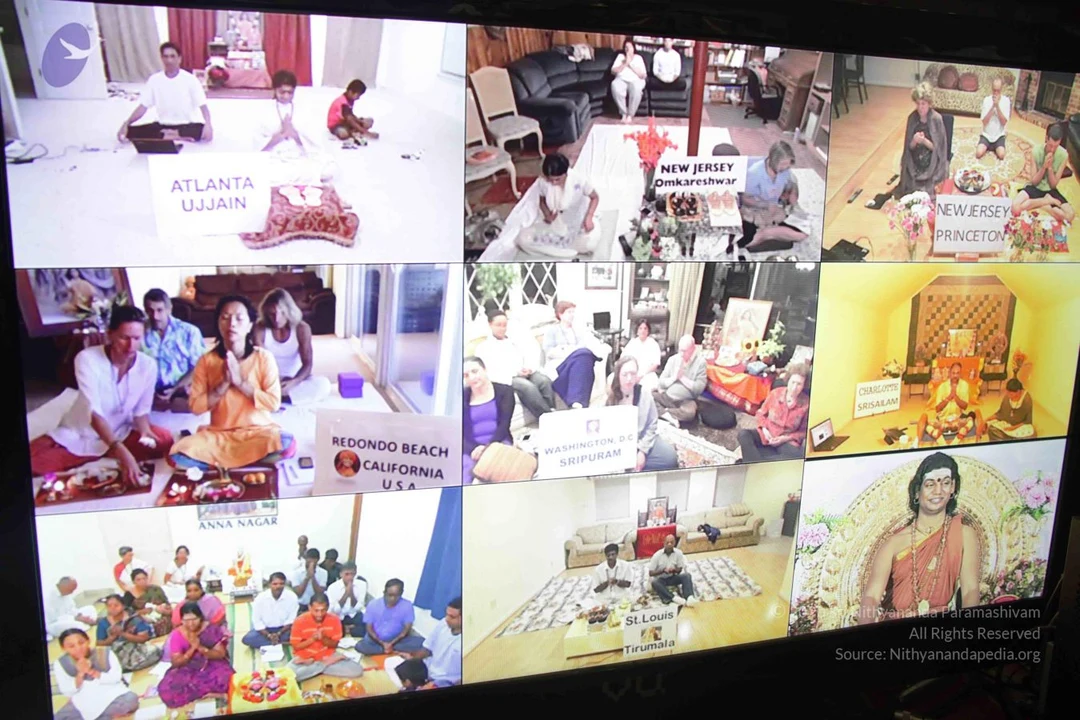
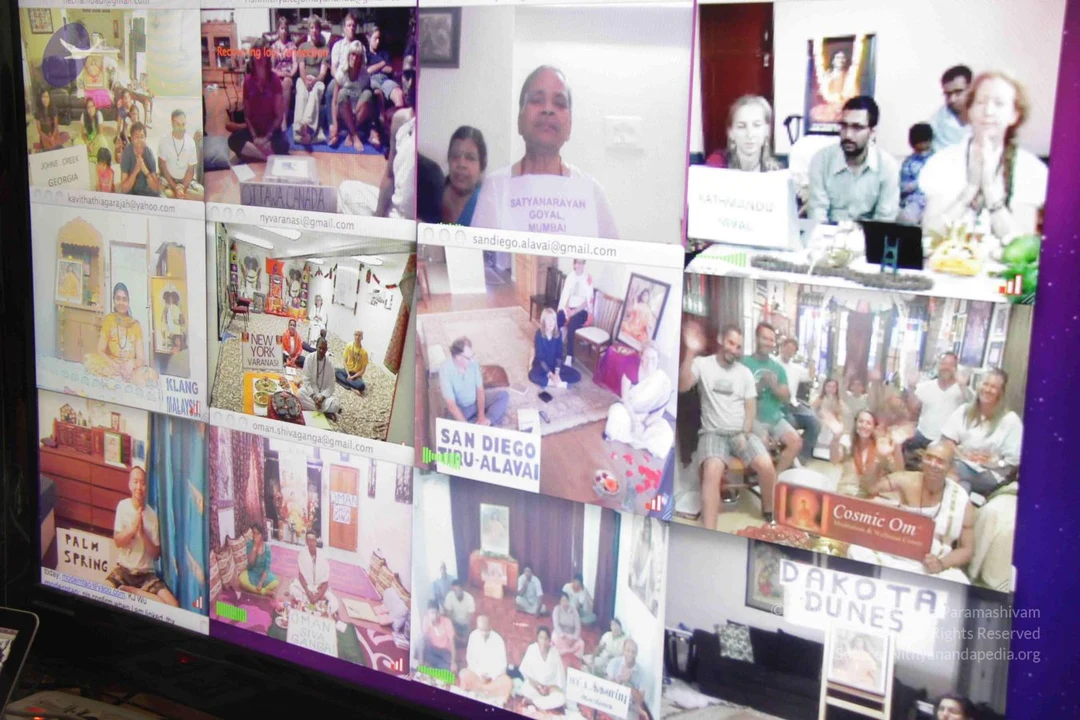
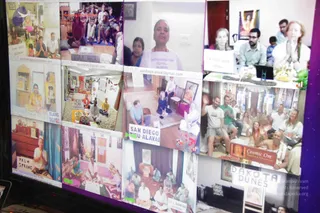
Now, even devotees, whatever country/city they may be… if they don’t attend the satsang, something is missing. No, I can see.. either they are in BIdadi, or they are in Kodaikanal, they are in Seattle, they are in St.Louis, they are in San Jose.. but they are in front of my camera. I see them only in different screen, that’s all.

The first question today is from Anand Singh, IA No.8 who is saying..

Dear Swamiji, in Bhagavad Gita chapter 5 verse 11 and Chapter 5 verse 12, the sacred secret is – ‘Constantly perform responsible intense action with no clinging to the reward of performance.’ My question is – I typically prioritise my business tasks by revenue; the higher the revenue, the higher the priority of the task. Is this verse 11 and 12 of chapter 5 applicable in the planning, execution, or both phases. Please clarify. Thank you, Swamiji.

Please understand, you doing the business tasks by the revenue, higher the revenue, higher the priority is perfect. Nothing wrong. But when you start calculating your whole life just based on the money or the revenue, that is where something is seriously wrong. At some points you may have to perform many actions which does not bring direct revenue but which brings fulfillment. For example, all the actions in your relationship, family; you may have to get a toy and give it to your child, you may have to give a smile to your spouse, you may have to give a hug to your friend, don’t lose those dimensions. Unfortunately if you put everything in the revenue sheet; toy is not a revenue, it is only an expense, a smile is not going to give you revenue, those things only I am saying, even when you need to do something which is related to your relationship which does not bring revenue, be responsible for it, be total in it. Otherwise you performing your actions, based on higher the revenue, higher the priority of task, perfect. Forget about you, even I perform like that only. That is the way life happens. That is the way life is. But you will see in me the same totality, and intensity when I perform all the actions which are not related to revenue, which are related to seva / service. When I conduct a medical camp or when I conduct some satsang or the mass programs, annadhan or any other social activities, social service activities which are no way related to revenue, you will see the same intensity in me. The prioritization may happen based on the revenue but the smile cannot happen based on the revenue.

See, after prioritizing when you start working, then forget about everything. It should be a complete total being. You prioritizing, see.. if you are not prioritizing based on revenue you can be a complete fool. I have seen.. I have seen penny wise pound foolish fellows. They will save few pennies and lose not just pounds, millions of pounds.

In planning, do prioritize based on the revenue but when you execute forget about the revenue. Be total. Complete. Even planning as per revenue has to be done responsibly, intensely. When you execute perform intensely without bothering about the reward. See.. when I plan, I plan this, this, this, this, this. When I execute even if the reward does not come, I don’t bother. I go ahead, execute. Do it. Over.

In planning, do responsibly. In execution do responsibly without clinging to the reward of performance.

The next question is from Subhashini K, IA No.100. who is asking,

“Can you please tell me the significance of writing mantra for 1001 times. During menstrual period women should not go to temple or perform puja at home – Swamiji, why are these types of conditions imposed on women? Thank you so much.”

Subhashini, about this likita japa, writing 101 times, 1001 times the mantra, it is nothing but you not to forget when you do japa. See, as I said, why the heavy prayer wheel, not to let you sleep. Like that only, writing is, so that you don’t sleep in between the japa, in between the chanting. Make sure that your consciousness stays in that mood. For that only this writing japa. It is called likita japa. Writing japa is just to make sure your consciousness stays in that state.

And second question you are asking, during menstrual period, women should not go to temple or perform puja at home. Swamiji, why are these types of conditions imposed on women? I have answered this question more than thousand times. Please understand, it is perfect, you can go to any temple, perform puja at home, nothing wrong. Only thing I wanted to make it very sure, if those temple authorities don’t want you to come there, I cannot do anything. All the temples run by Dhyananpeetam, women are welcome even during the menstrual period. We don’t have any restriction. But I cannot say the same word all the temple run by Madurai Adheenam because it is not in my hands. Those temples are in the hands of the traditional priests. So I can only say, all the temples I created, women are welcome to come at any time and all our devotees, I tell you all very clearly, you can go to the puja room in the house and perform puja. No God will be angry. Don’t worry. I always tell very funnily, keep one of my picture in your puja room, go to the puja room as usual even that time and do puja. If any God is angry, you tell, “I have not come to see you, I have come to see my God. I have come to see my God. You do your job. And no God will be angry. Don’t worry.”

So basically at that time you need more puja, more meditation because your mind and body will be in low energy. So to raise you to higher level energy you need more puja and more meditation. But I also make it very clear now itself, I cannot say, you can come to the temple which is run by Madurai Adheenam. I can only say, all the temples I created, Nithyananda Dhyanapeetam temples. We have more than 40 around the world and more than 400 Paduka Mandirs around the world and thousands of home temples. All the temples I created, I welcome you guys, I have no problem. So, anyhow the essence is even during the periods, you are not a sinner. You can go into the puja room and do/perform puja, meditation, everything. About those temples, you ask those temple authorities. All my temples you are welcome.

The next question is from Radhakrishnan, IA no.36, Dubai, who is saying,

“Nithyanandam beloved Swamiji, Once we return back to our places after completion of this Inner Awakening Program, I intend to continue my daily spiritual practices of Pancha Kriya, Nithya Yoga, meditation which is Nithya Dhyaan or eN-Kriya, Swamiji’s morning message or one youtube discourse, eN-chanting, ajapa japa, feeling connection, unclutching, Shakti dhaarana, healing, running Spiritual Embassy activities. Can you throw some light on this if anything is inadequate? I hope your answer would help all IA participants of this batch and also IA graduates who have completed before. At your lotus feet, M. Radhakrishnan.”

Radhakrishnan, actually it is a nice question. When you guys only read this, it looks like it will take a whole day. None of this is an action. Everything I made it as an entertainment for you guys. Don’t you understand, see, all you guys are now addicted to satsang. It is not that you force yourself into satsang as a spiritual practice. Understand, I made the whole thing as an entertainment. I wanted you guys to know, this Pancha Kriya, is along with your taking bath. Every day you brush, hope, see.. instead of brushing only the mouth you are going to take a few minutes and brush the nose also, nose and mouth. The whole ENT, it gets brushed. And not only cleaning your bowels, just have 2 minutes extra and add enema and clean it little more. That’s all. See, not just sweeping, and wiping also, mopping also, that is what is enema. Understand, what is enema? It is not that something you are going to do separately. Every day you guys clean your bowels, am I right? And along with that it is going to take,enema take 2mins? Maximum 5 mins, if you keep the can in the rest room itself, it is not more than 5 mins. I can’t describe more visually. And same way, every day you brush, see today morning I did my Pancha Kriya, hardly it took 5 mins. I brushed and then just put the tube, “Namashivaya!” that’s all, it was there in the throat, dagadagadaga..and then poured the water, that Ganga came out.

See..there is a story. Ganga was swallowed by Janhu Maharishi. He got very angry that in front of his ashram, Ganga started gushing when Ganga came down and he felt his meditation was disturbed, he just swallowed the whole Ganga. Then Bhageeratha went and begged Janhu Maharishi, “Please, please, please release her. I brought her with so much of effort.” He said, alright and opened the ears and through ears she came out. That’s why she is called Janhavi. Ganga has one more name ‘Janhavi.’ So like that only. Just pour and Janhavi comes out the other side. Over. That took some 5 minutes. Nothing. So what is there in Pancha Kriya. It is hardly 3 minutes job and cleaning the eyes. Actually during the nose, these two process itself all the water will come out of the eye. Eyes get cleaned and finally you just need to wash it. And I tell you guys, 4 days only, 4 or 5 days I am doing every day, I can see the difference, the colour, the skin colour is changing. As I said, I don’t apply anything. It is just changing.

And you are asking about meditation, Nithya Dhyaan or eN-Kriya. You can do if you find time. Otherwise, when you sit in the morning satsang, the Pada puja with that feeling connection and the satsang, that itself is more than enough. As I said, morning message, you are putting the morning message. It is not a spiritual practice at all. It is just, I have made the whole thing entertainment. You are addicted to it. Otherwise, 1 o’clock in the late night, 2 o’clock in the late night, will you wake up and sit in front of the computer. Do you know, all the European countries it is night 1 o’clock, 2 o’clock. And if you have to come to the center you have to drive 1 hour and it is like a.. it has become more an entertainment.

And then you are asking eN-Chanting, feeling connection, unclutching. These three does not need a separate time. It is going to be just become a part of your very consciousness.

Healing – healing is like a power you have. If somebody has a problem, you can say, I am a doctor, I am a healer, come on, I will heal you.

Running Spiritual Embassy activities – it is like making more friends, that’s all. Be honest. Running Spiritual Embassy activity is nothing but making more friends who are in your frequency. So actually you create sangha not for me, but for you to have more friends, more companions to talk about ….tell me what other satsang activity goes on honestly other than talking about me. Come on, you think I am not there or what? You think my photograph is sitting and watching what you guys are doing? I can smell even the bonda you guys eat during the satsang. Spiritual Embassy means nothing but talking about me. That’s all. See the dress today. I can very clearly classify two group. Men Spiritual Embassy which talks about my message, women Spiritual Embassy which talks about my dress. No. that’s all. There is only two category. So what is there. Running Spiritual Embassy activity means nothing but making more friends for you to talk who are in same frequency.

If I say some deep technical important sacred truths, all the men Spiritual Embassy will be busy that day making calls. If I wear some new jewel or the new dress, some new outfit, all women Spiritual Embassies will be busy on that day with calls. God! Here I am getting a message. Few men who are offended, “we also talk about your dress.” I thought it is exclusive right, God! Women are also angry.. Anyhow so, that is why I say, you guys are Arthanareeshwaras. Men also talk about both. Women also talk about both. It means you are Arthanareeshwaras. So both your dimensions are fulfilled.

So, in this ten, what do you call as a spiritual practice? Nothing. All these 10 is simply your life style. Making the biggest spiritual practices into life style is work of an incarnation. Making hard work into a smart work is the work of CEO. Make hard spiritual practices as smart spiritual entertainments is work of an incarnation. Making hard work into smart work, making hard work as smart work is CEO’s job. Making hard spiritual practices into smart spiritual entertainment is Cosmic Enlightenment Officer (CEO). Actually when you read only it looks like a ten big points - PANCHA KRIYA, NITHYA YOGA, MEDITATION, MORNING SATSANG, En-CHANTING, FEELING CONNECTION, UNCLUTCHING, SHAKTHI DHAARANA, HEALING, RUNNING SPIRITUAL EMBASSY ACTIVITY,.. When you see what? Just see.. morning when you brush, clean the nose; when you clean the bowels use the enema; over.. then come and sit in the satsang which is an entertainment, listen to all these jokes, make fun, laugh and especially if you are gathering as a Spiritual Embassy, that becomes such a joy to see the same frequency community around you.

I also wanted to tell all our devotees, please understand, make this as a rule. Do not read media. Avoid media. Understand? Avoid negative articles by media. Completely avoid. You see, negative means 99% is negative only. Avoid media. Whatever you need to know is there in our website as a news. Just read that much. That’s enough.

Anything you want to know about us, Me, sangha, everything, now that we have a very strong news column in the internet, in our website. Go just to our official website, read that news column, that’s enough for you. Nothing else is required.

And if you are coming to the morning satsang, to a Spiritual Embassy, you will naturally make friends, companions, over. All the other things, what is that - eNchanting, feeling connection, unclutching – it is a life style. That’s all. What is the last thing? Shakthi dhaarana. Night time when you fall asleep, hardly it takes 5 mins, I don’t know. Actually if you do few days,shakthi dhaarana, you will be addicted to that also. Because it just fills you so much and fall asleep. Over. It looks like a long 10 things. Just a life style.

What is running Spiritual Embassy activities. When you are bored in your work place, just seeing email, or making some phone calls, for you to have entertainment. That is Spiritual Embassy activity. That’s all is Spiritual Embassy activity. Nothing else. What else is there? So, Radhakrishnan, I have thrown light on the whole thing. See, it is more like an entertainment. I think I answered what you guys need to do after the Inner Awakening. The question is answered.

The next question is from IA No.45, who is asking,

“Dear Swamiji, can you explain the Vedic concept of Yugas? Are we not just 5,000 years into Kali yuga, which is supposed to last 42,000 years. If so, how is Satya yuga happening now, possible?

Please understand the yuga, in Sanskrit, yuga means era, the age. It is not dependent on sun and the moon moving, it is dependent on the collective mind moving. Even based on the sun and moon’s movements, as per the calendar, external calendar, the time for kali yuga to end is already happening. It is not as you expect 42,000 years. As per the vedic astrology the conclusion of the kali yuga is already happening. May be we are 400 years ahead, that’s all. So that can easily be equated by the movement of the collective minds. That is why I am saying, Satya yuga, the NIthya yuga is already started happening. You will see the proof for this word by 2015. 2015, you will see the proof. Solid proof.

Tags:

Paramahamsa Nithyananda, Bhagavad Gita, reward, intense, understand, life, action, commitment, business, relationship, service, perform.

Photos Of The Day:

Pada Puja
Nithya Satsang

Dial the Avatar

Sarva Darshan

Inner Awakening-Session

Gurukul-eNGenius

Inner Awakening-Darshan

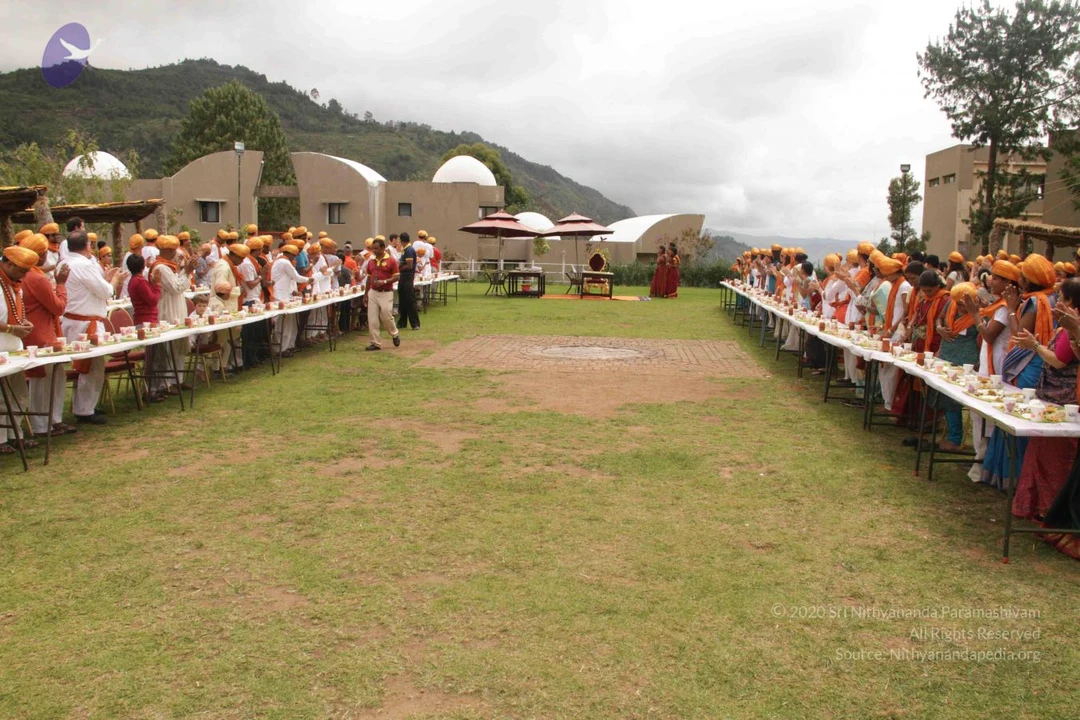
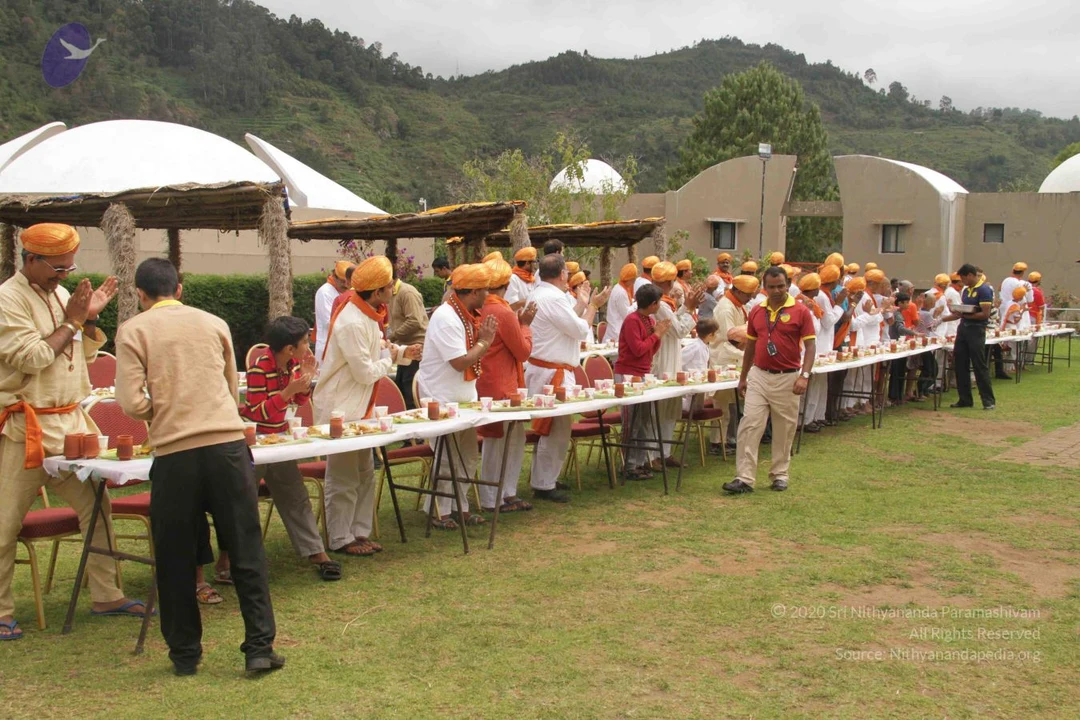
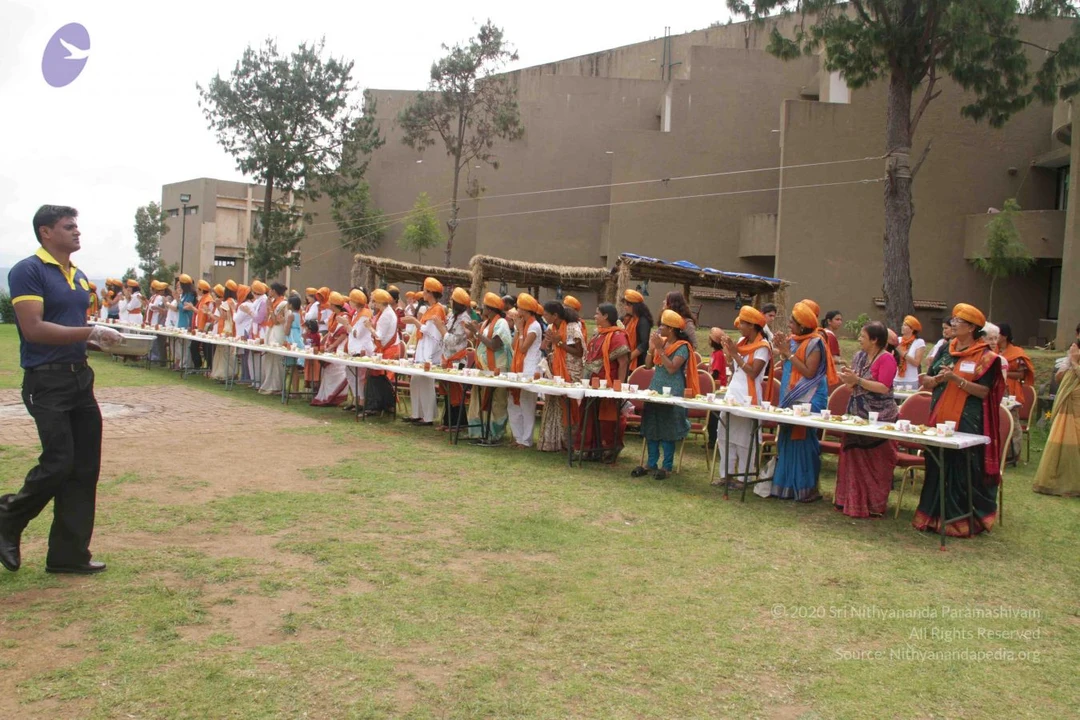
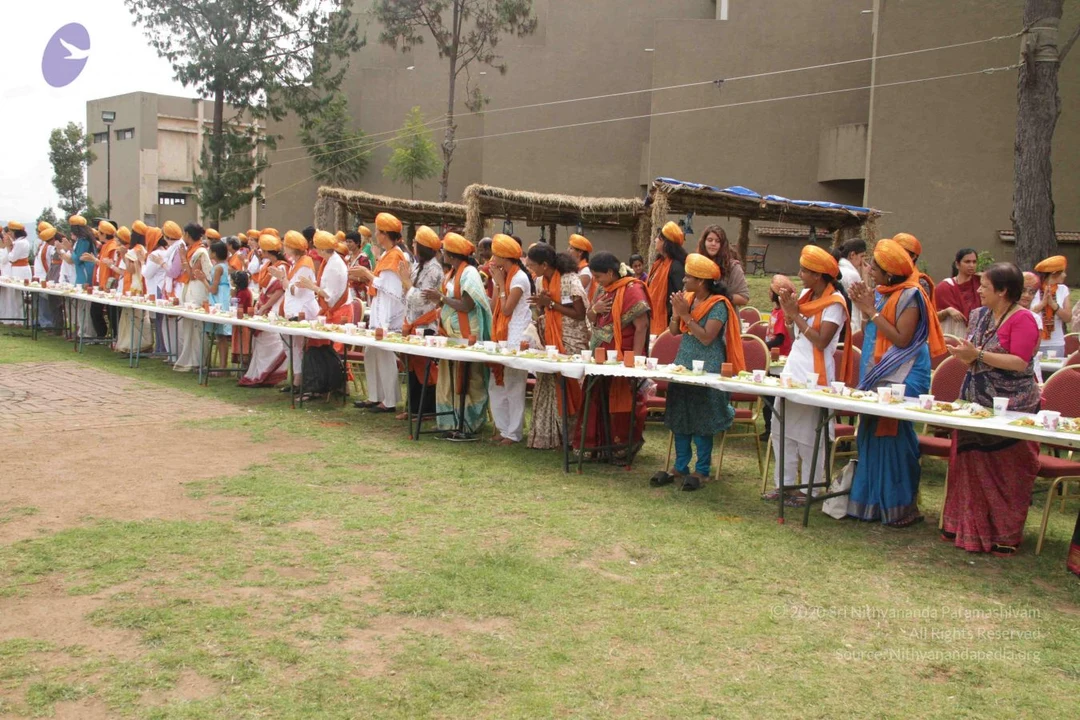
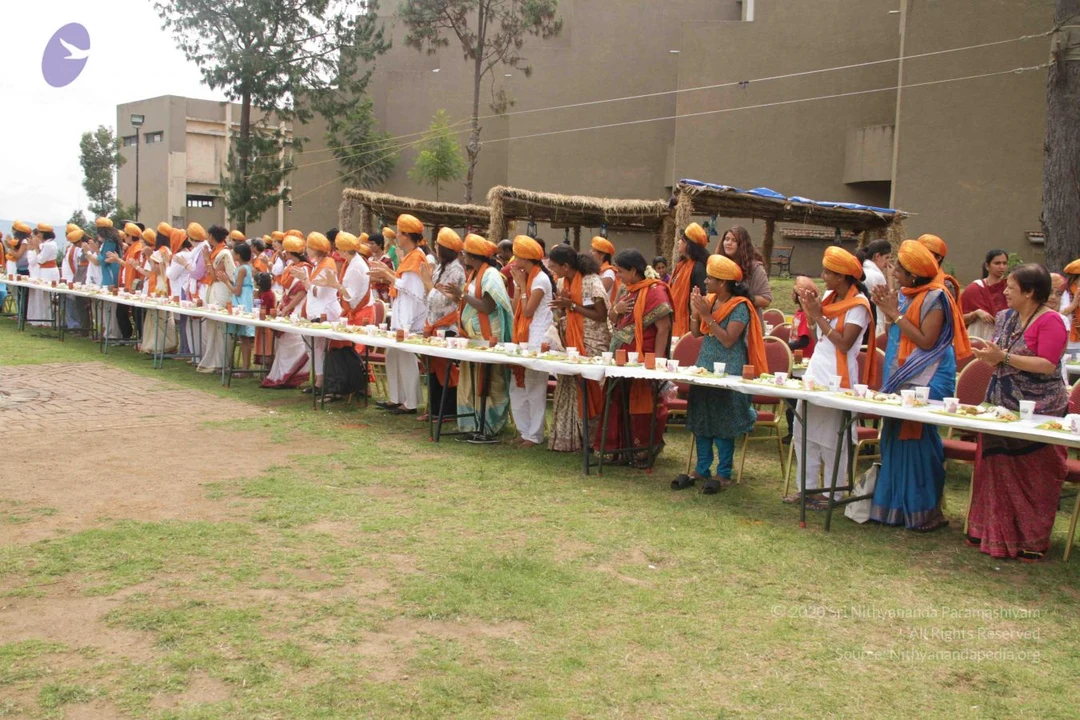
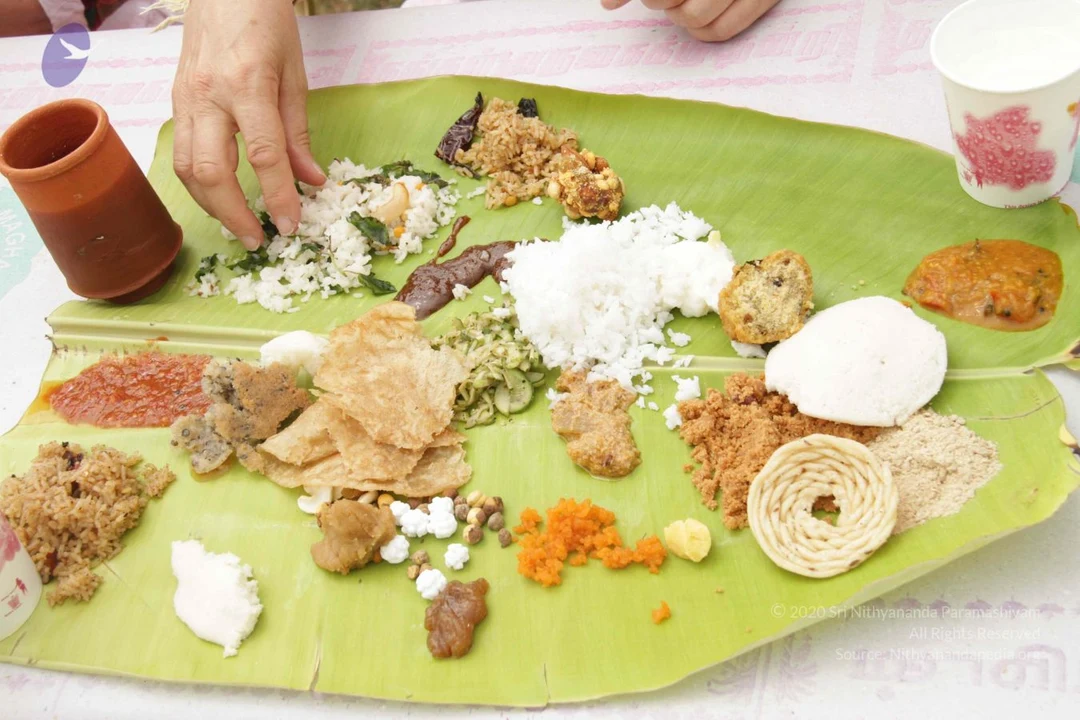
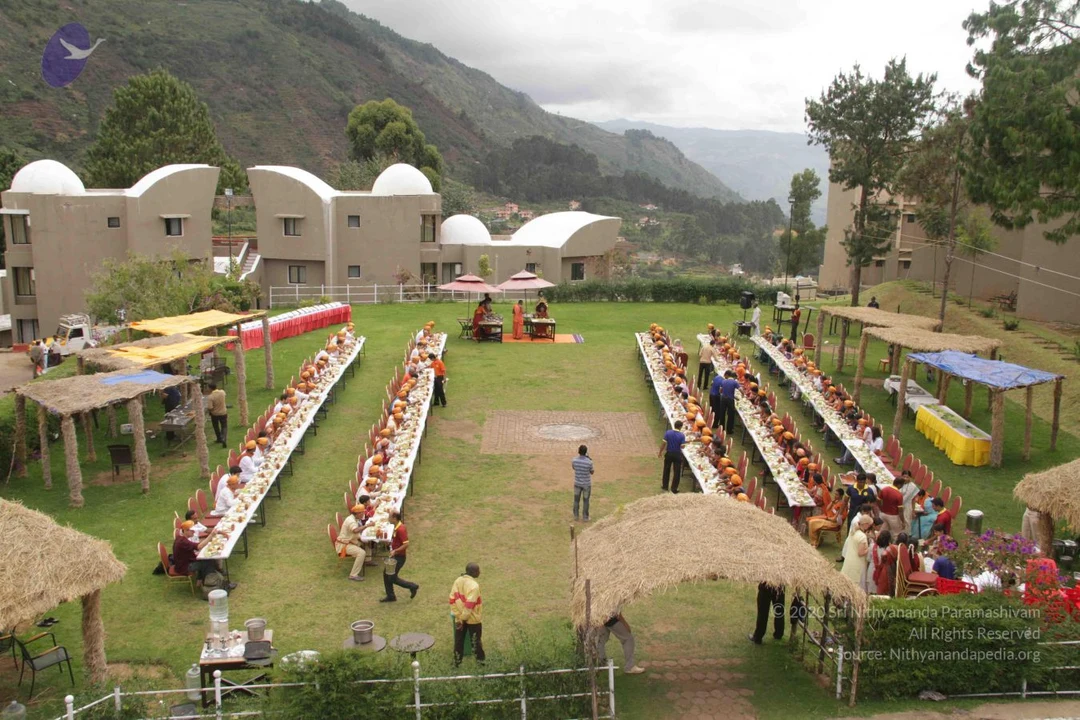
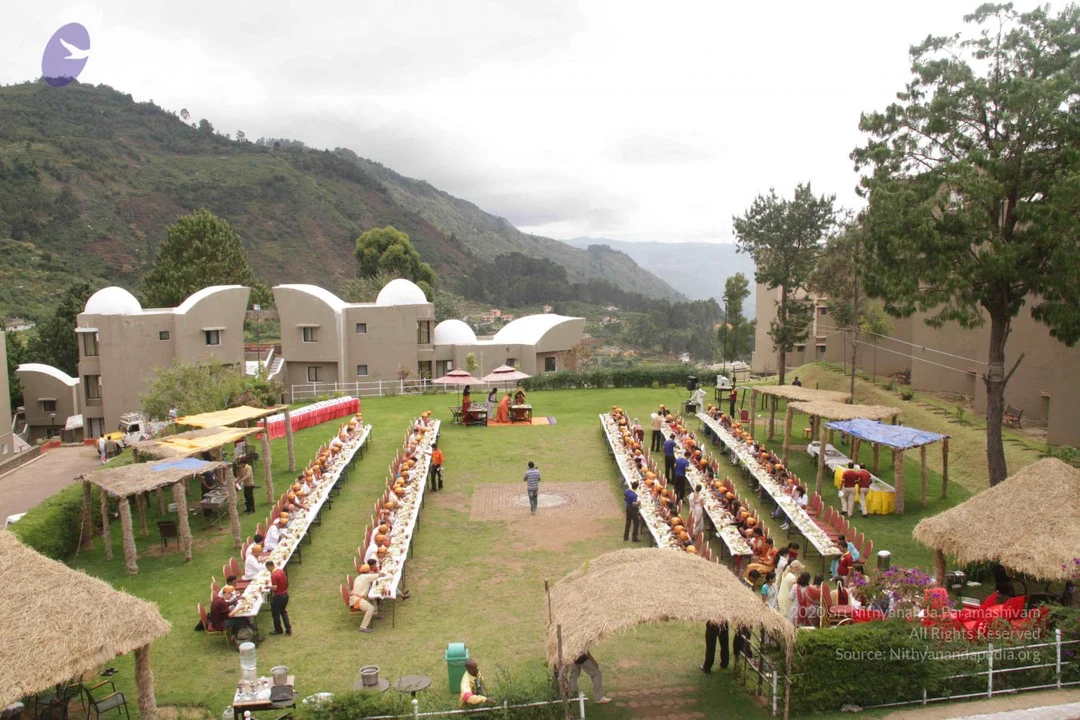
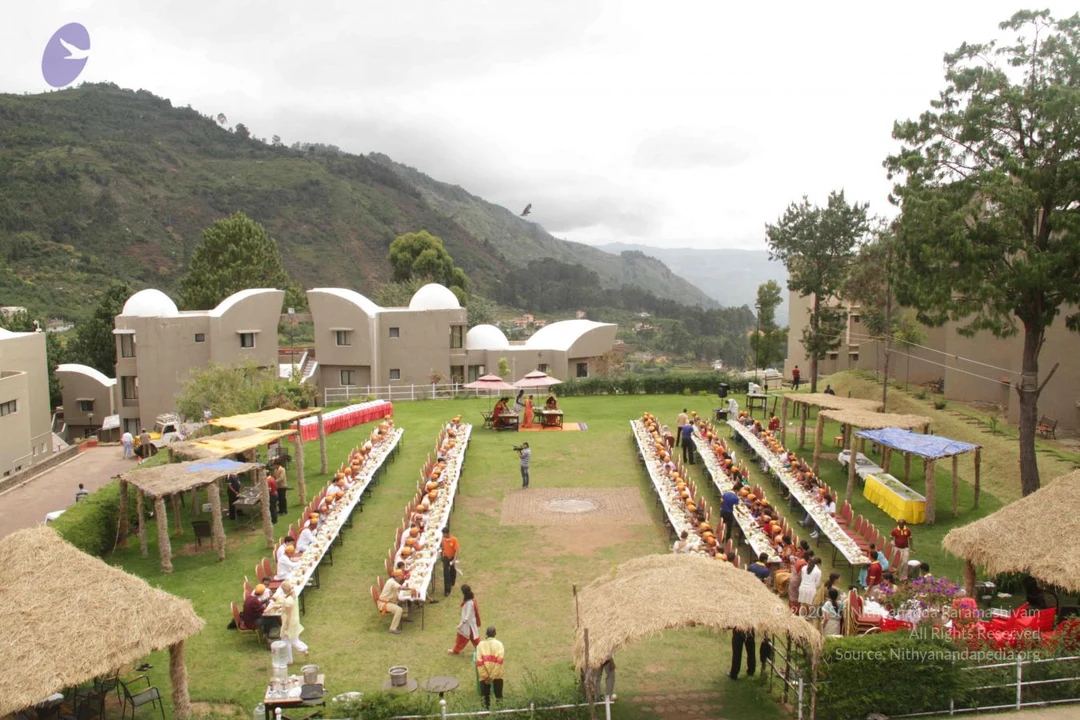
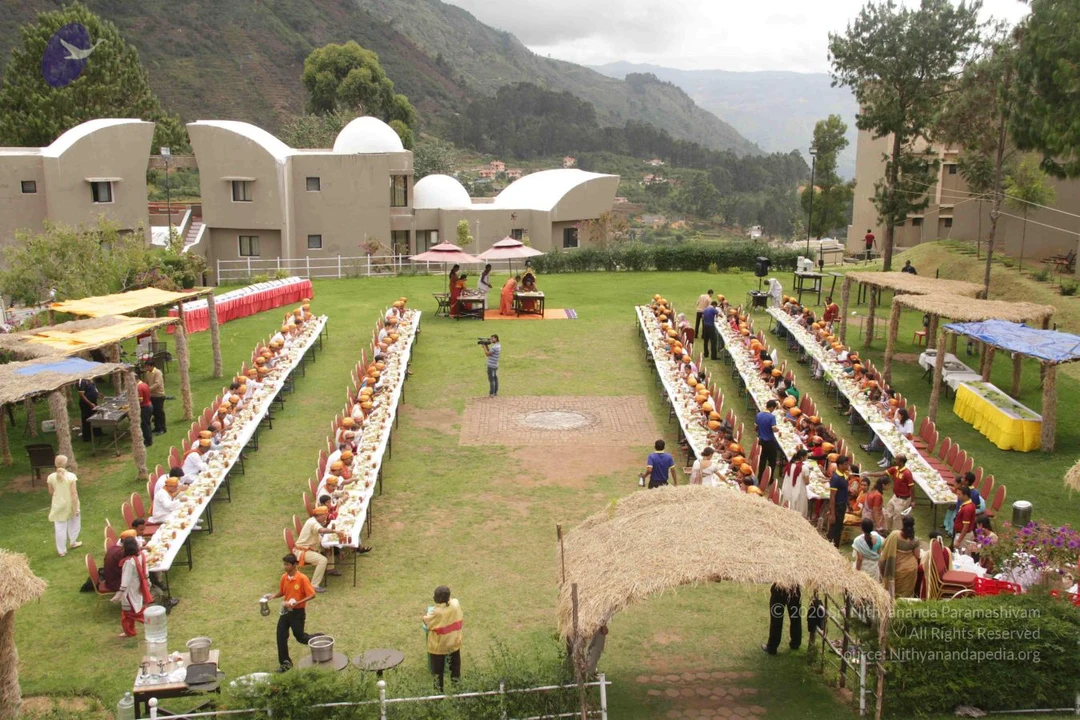
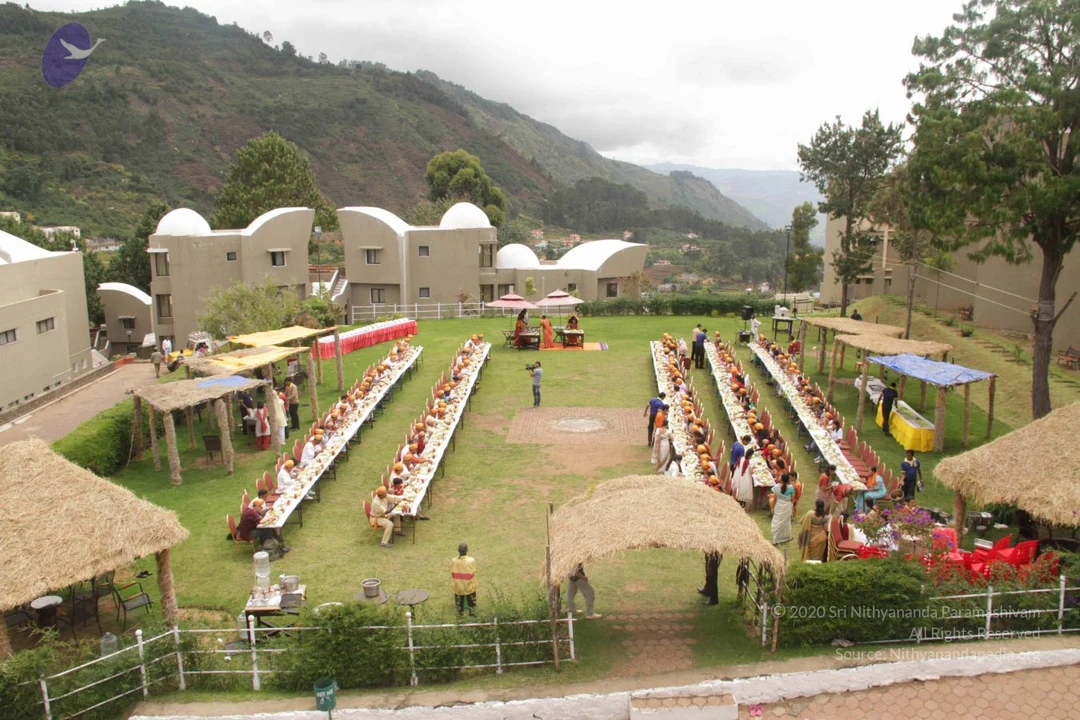
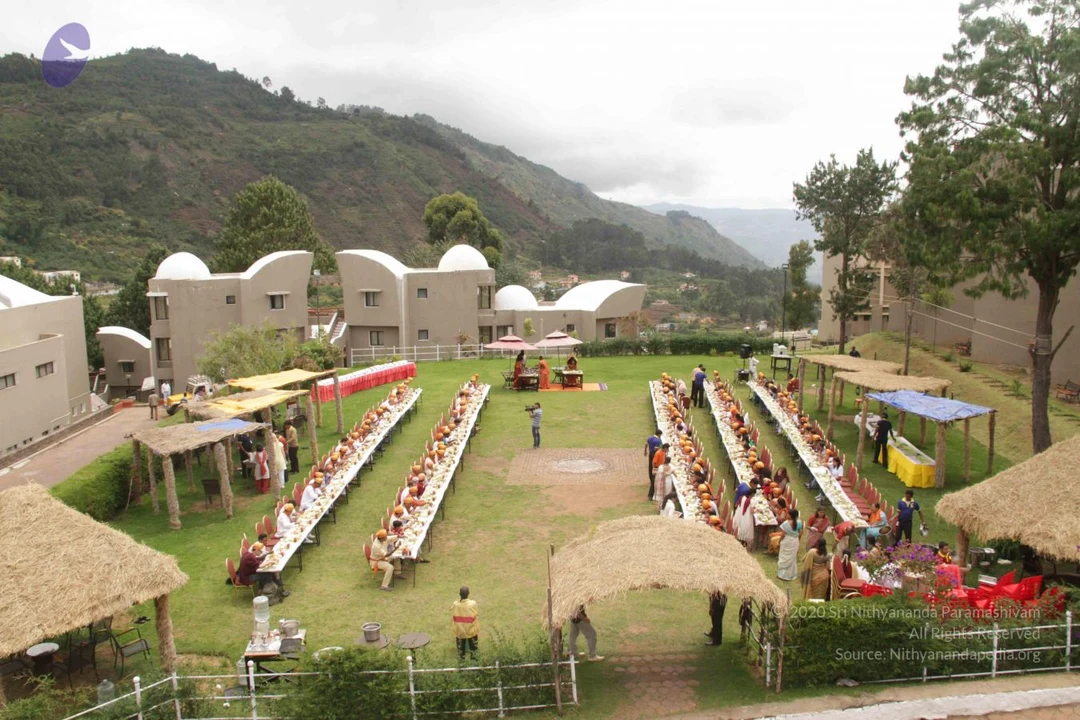
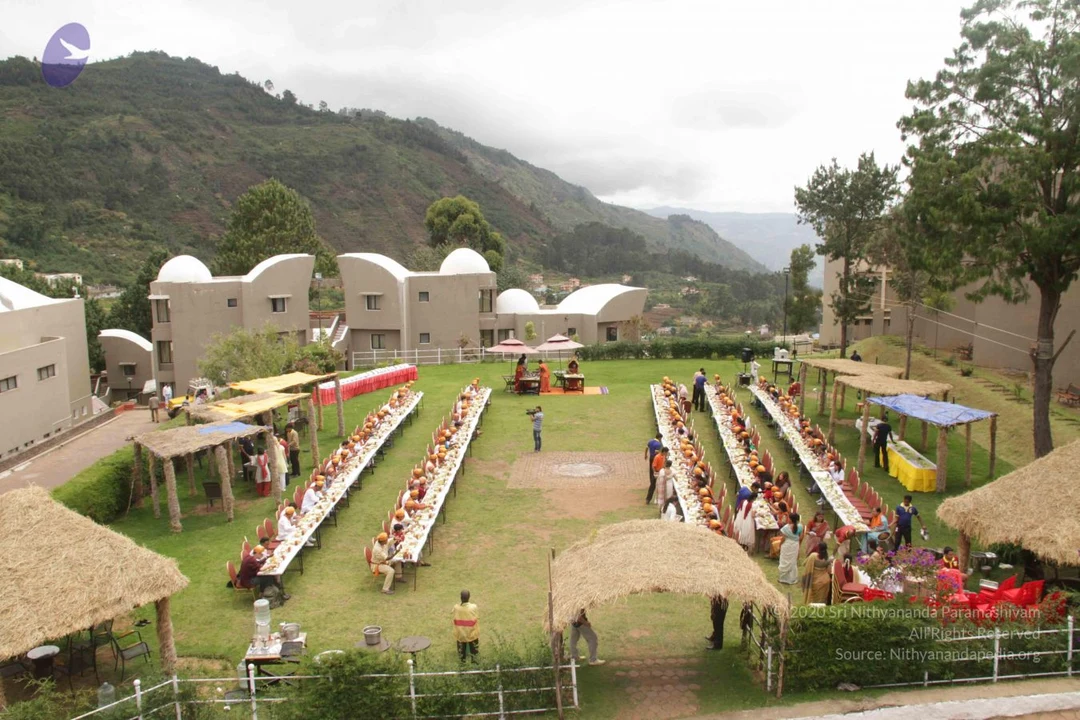
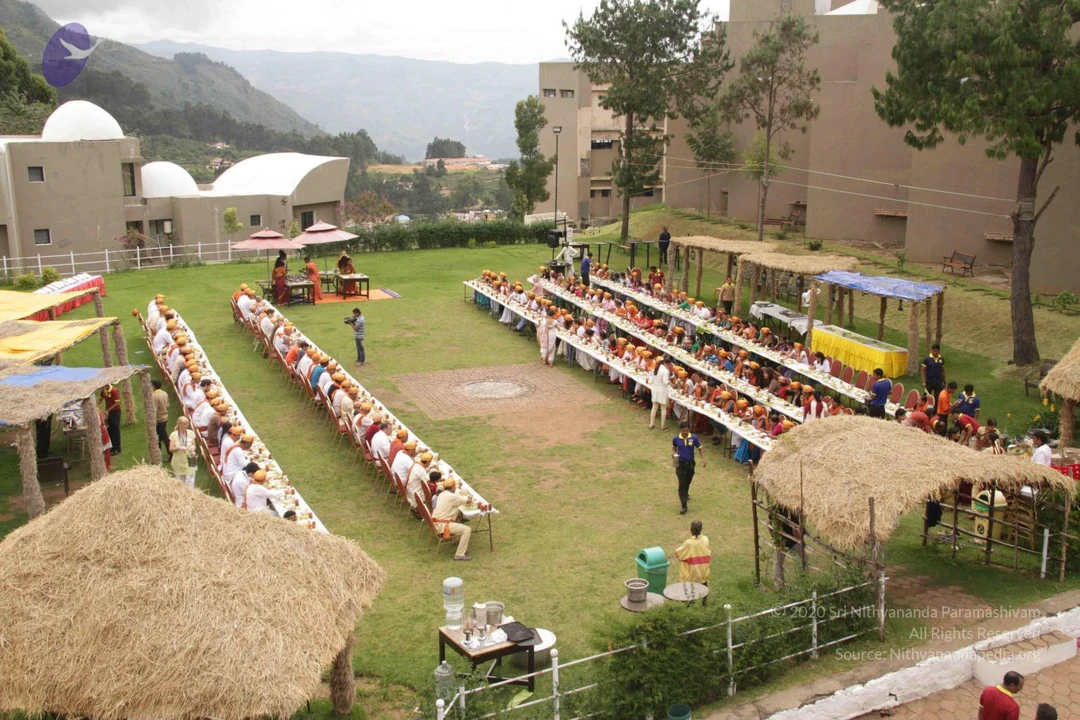
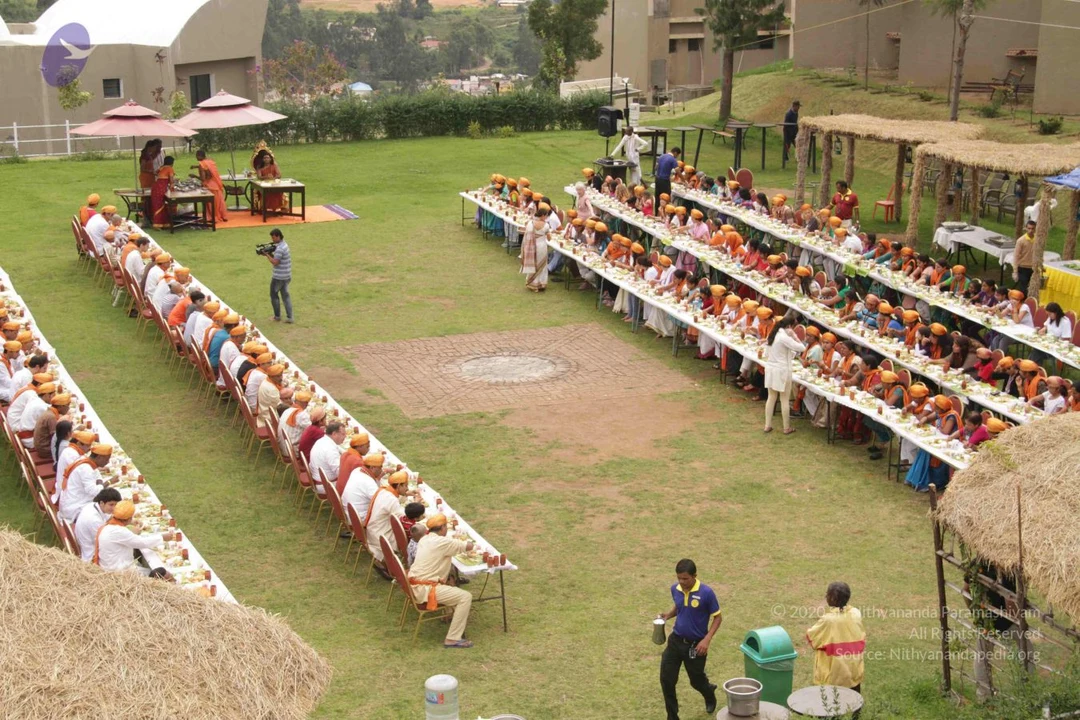
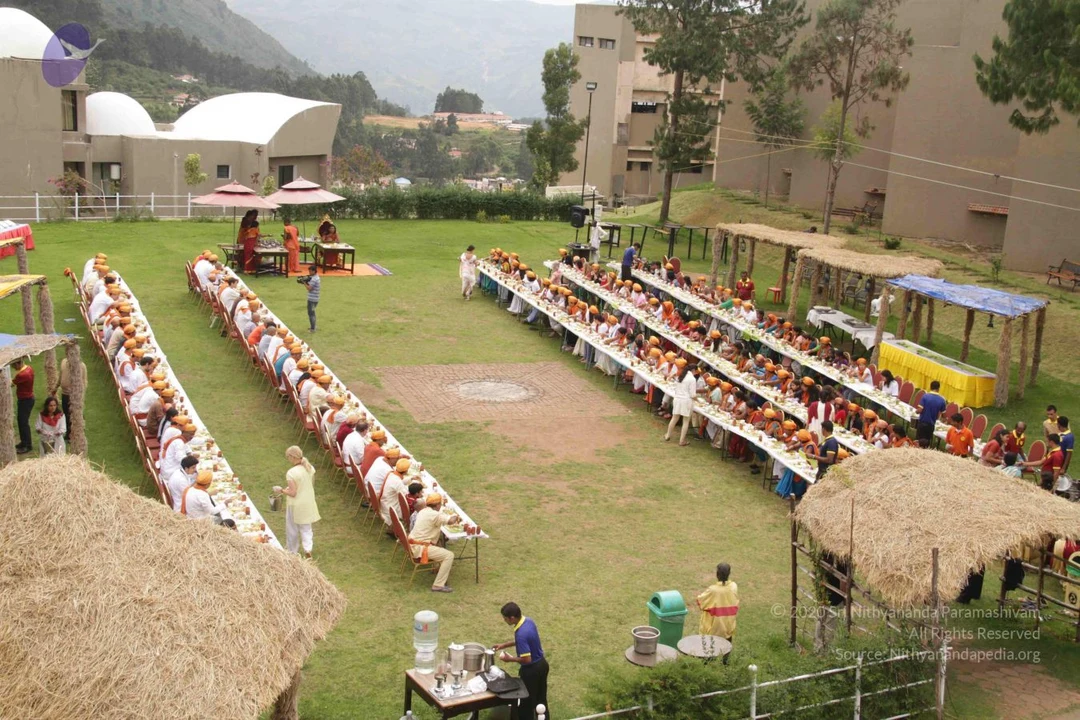
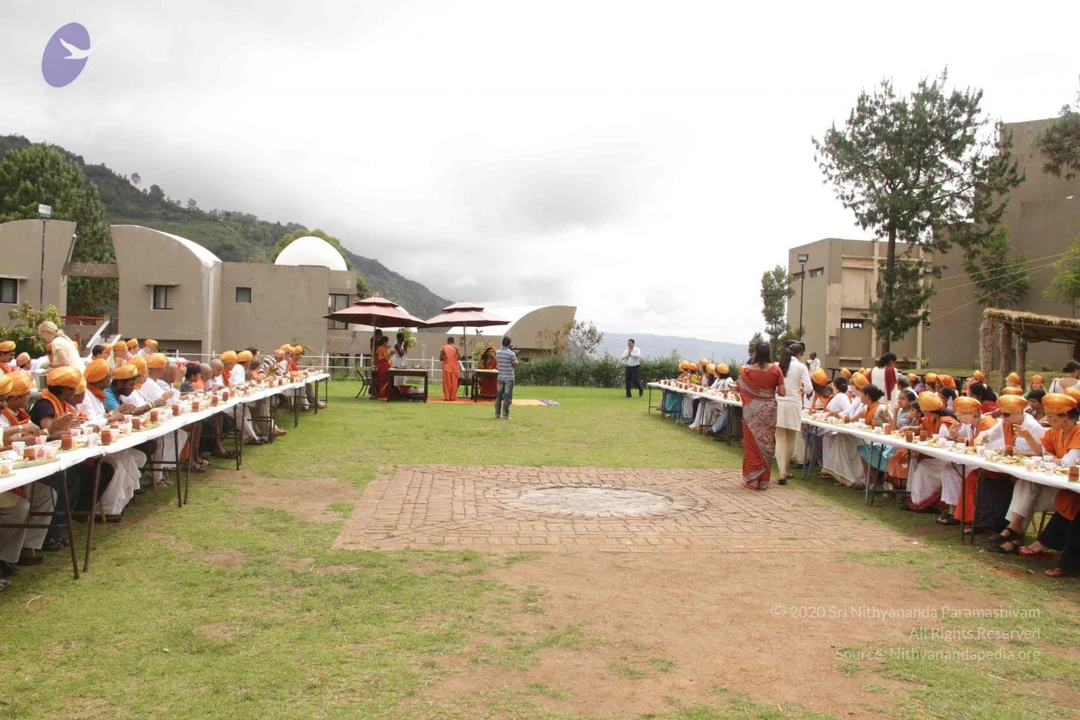
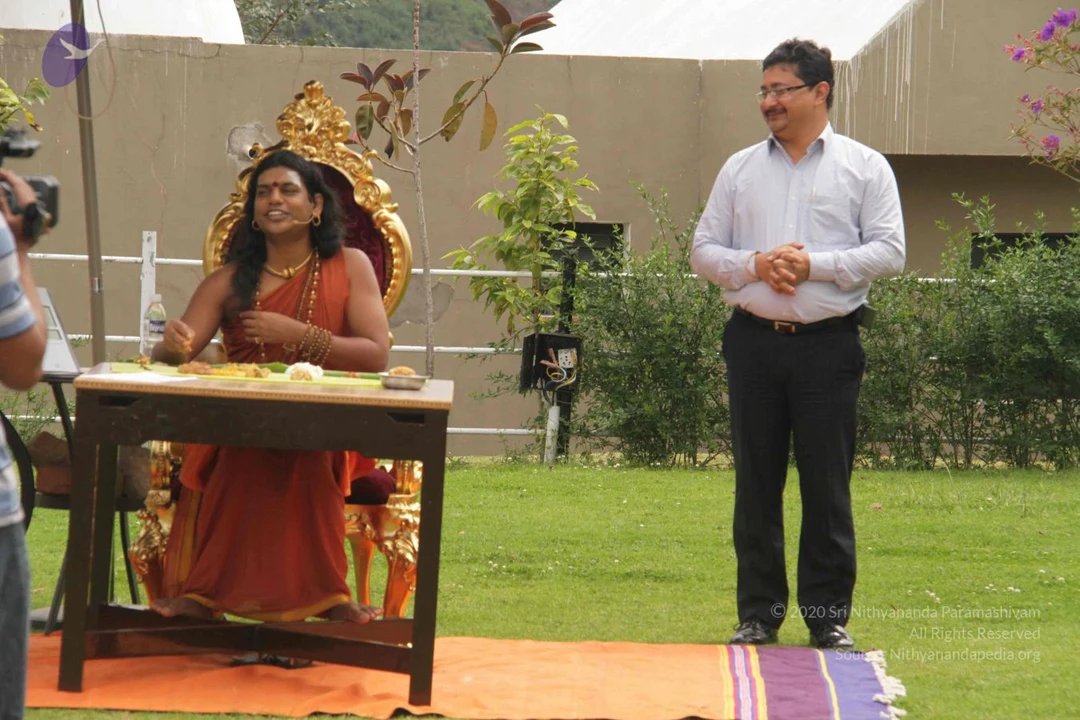
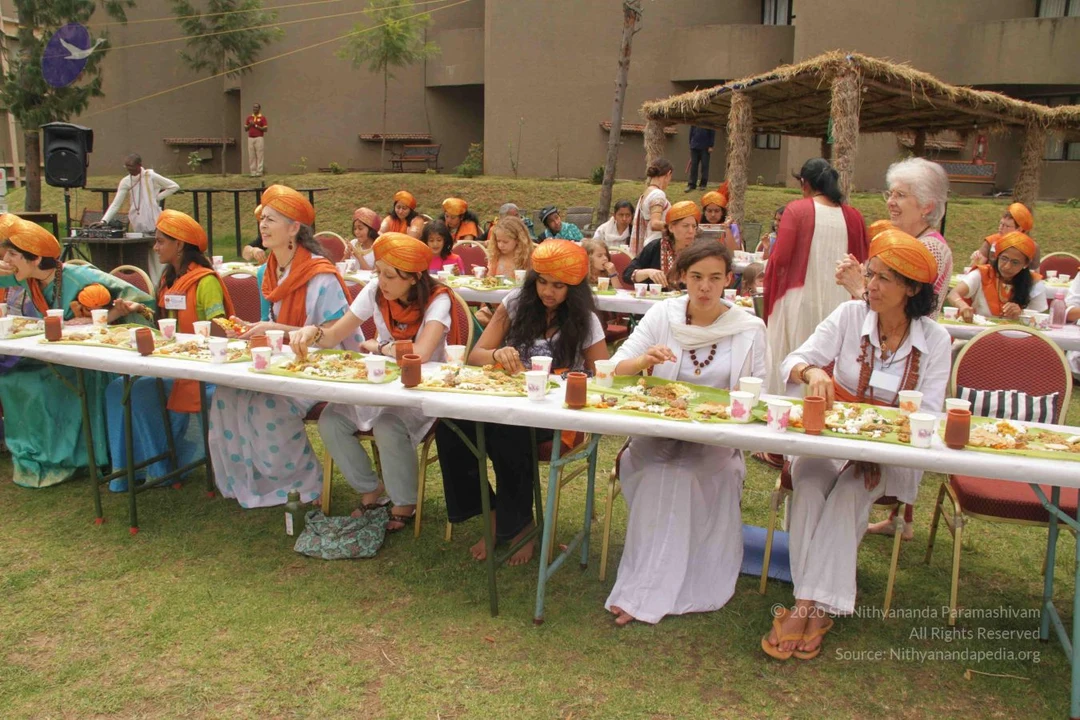
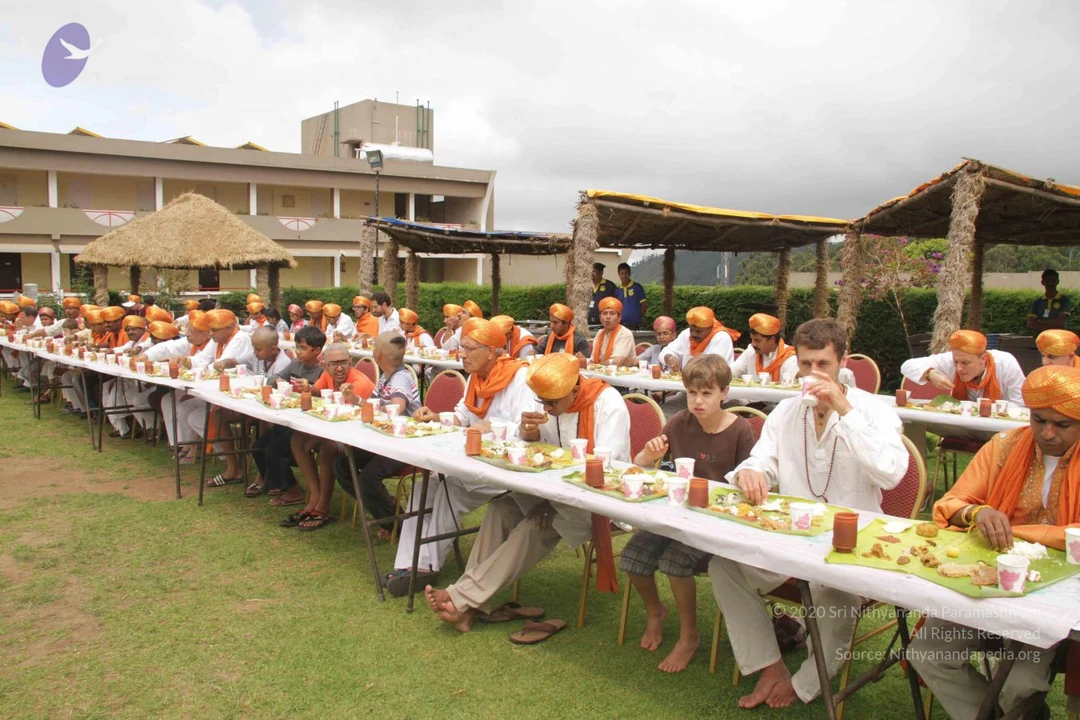
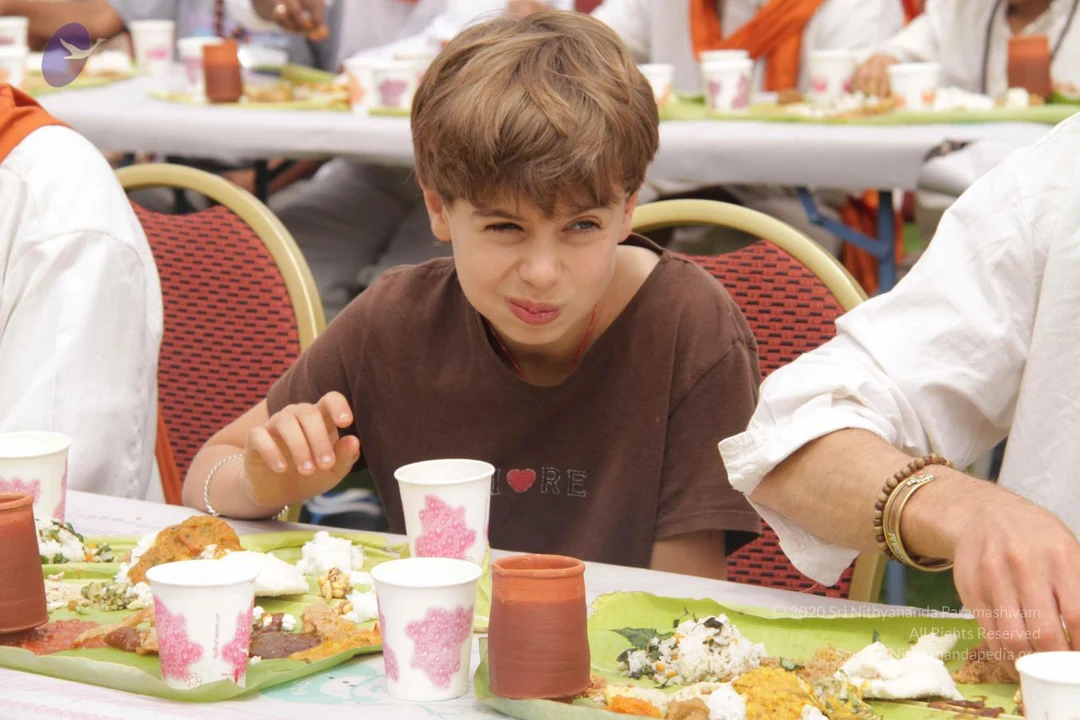
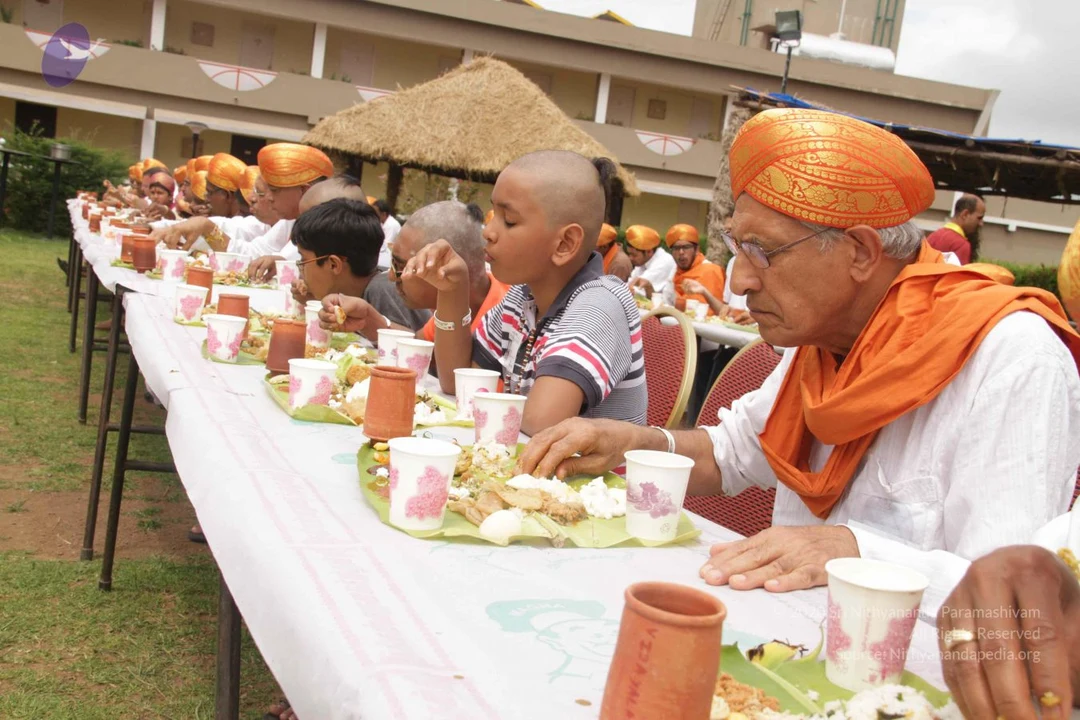
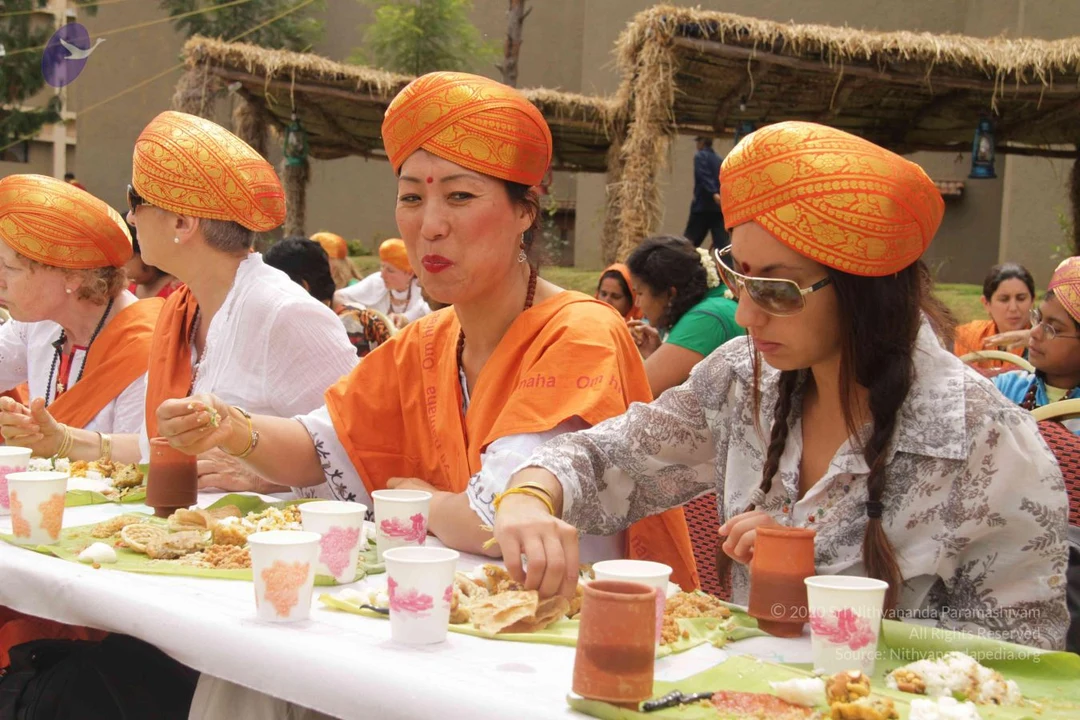
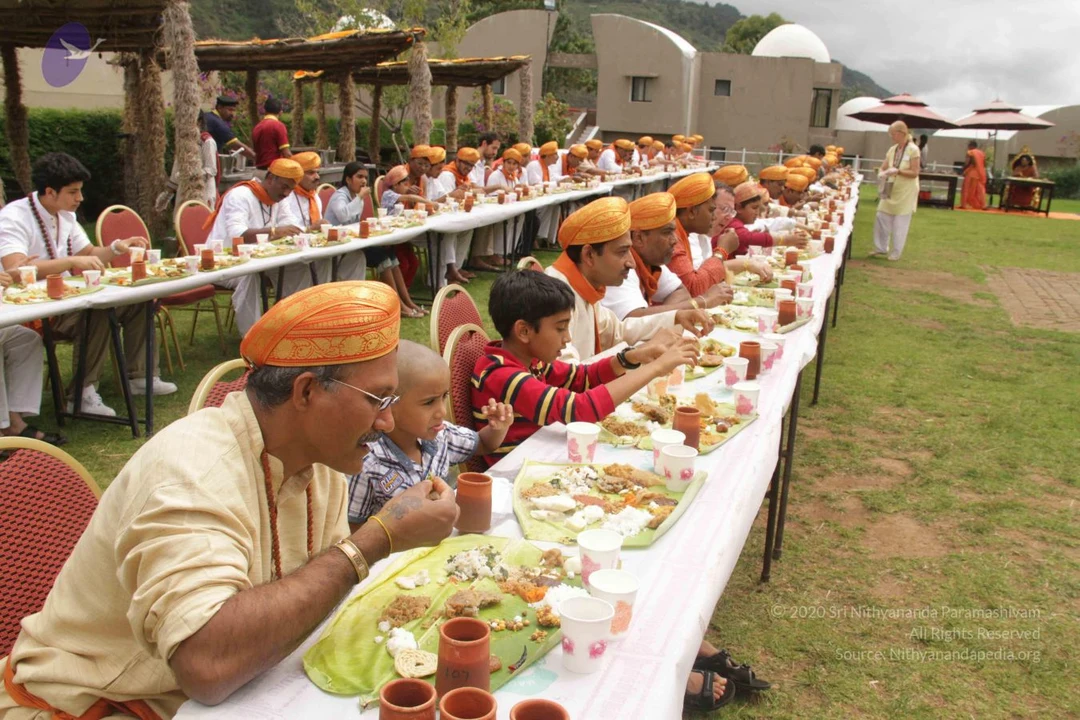
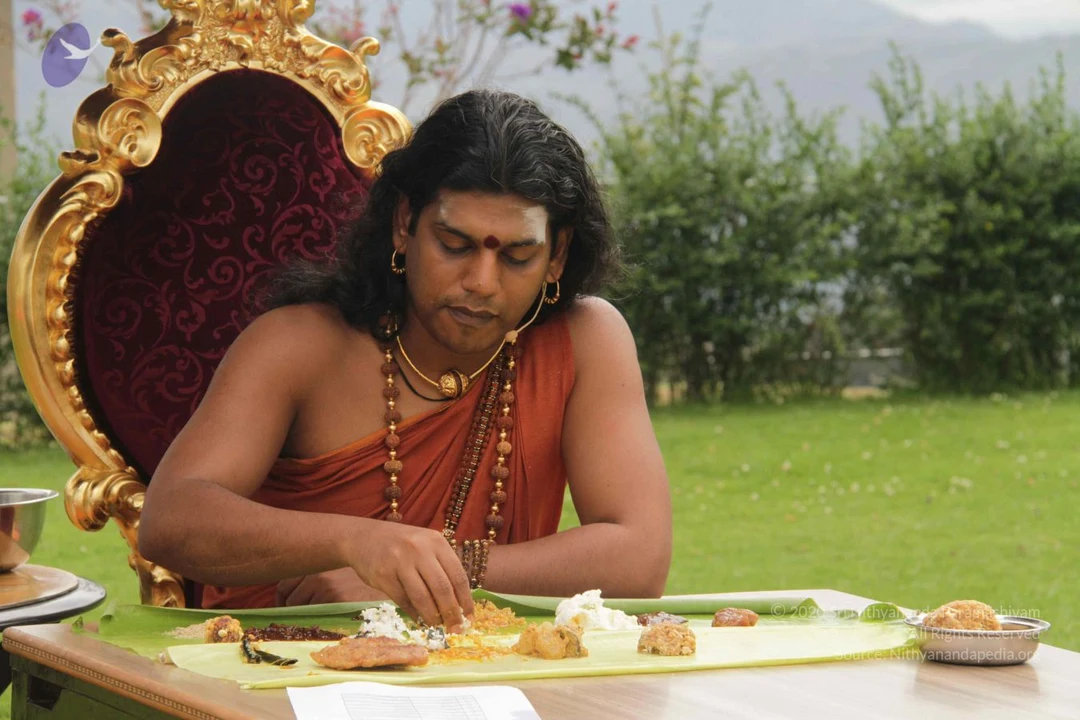
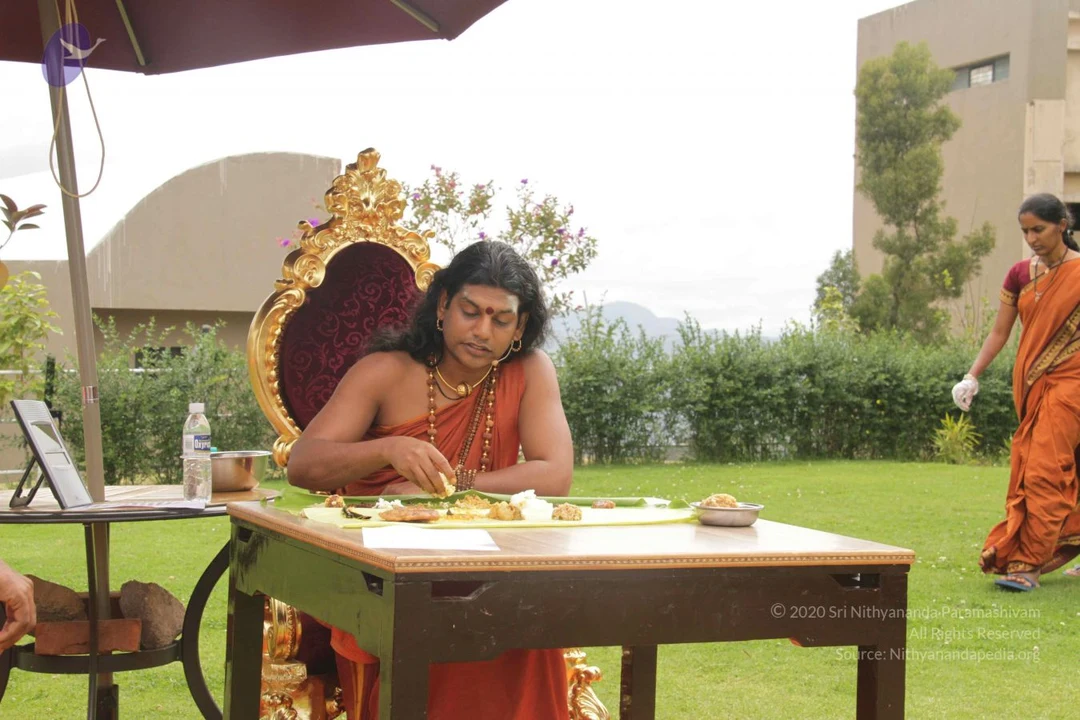
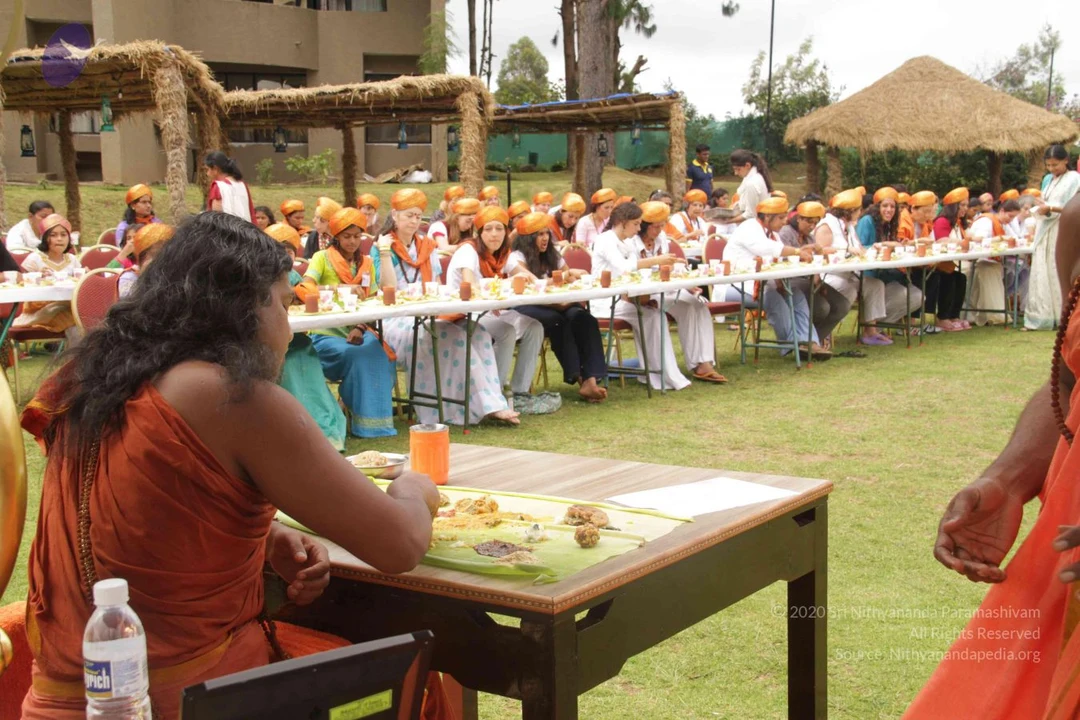
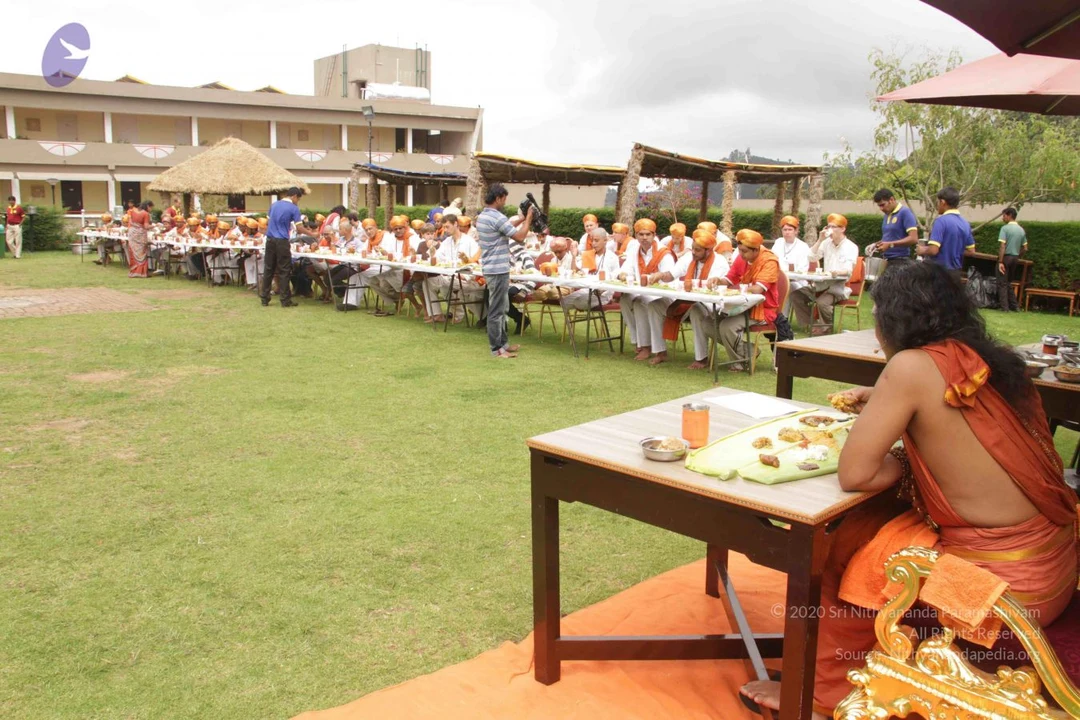
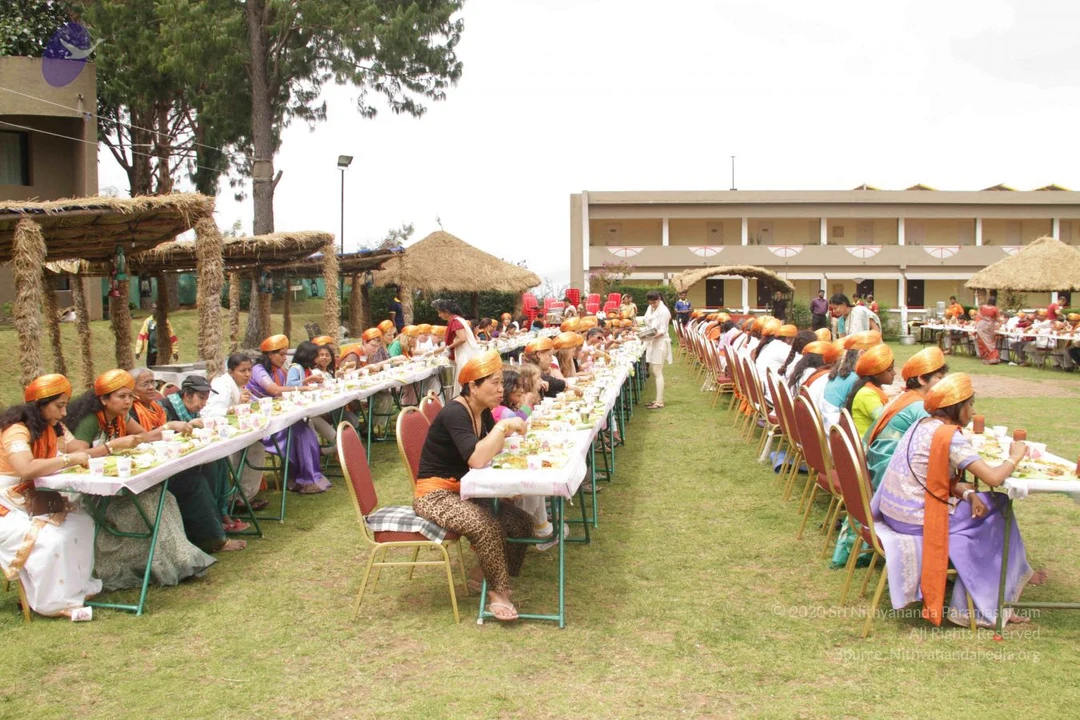
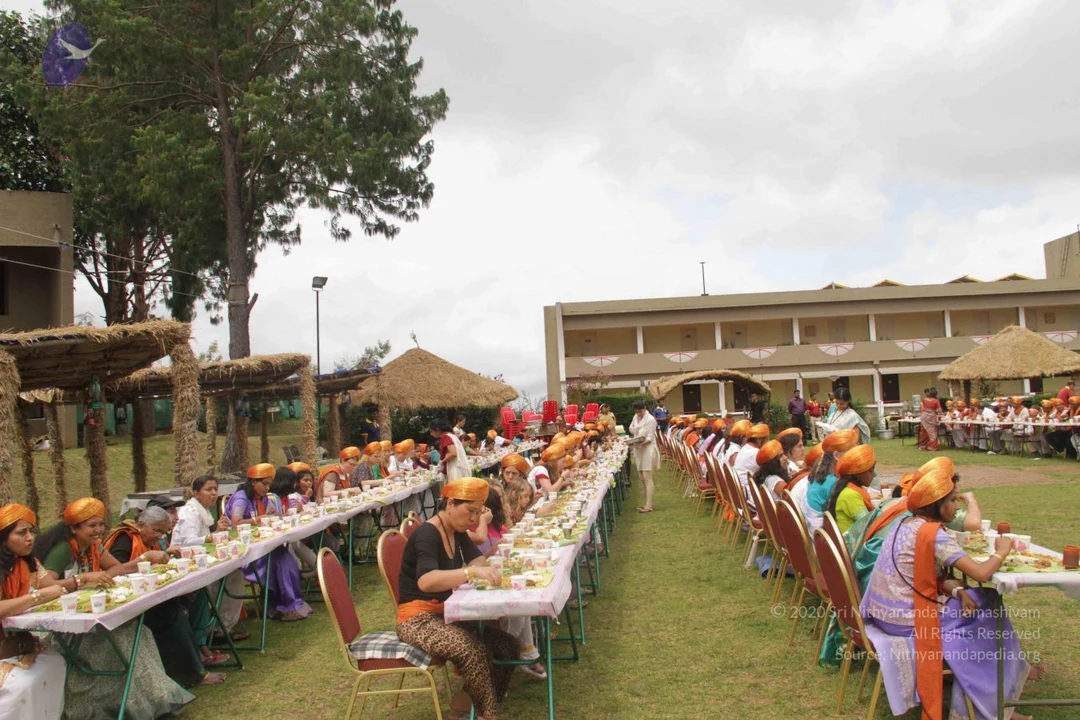
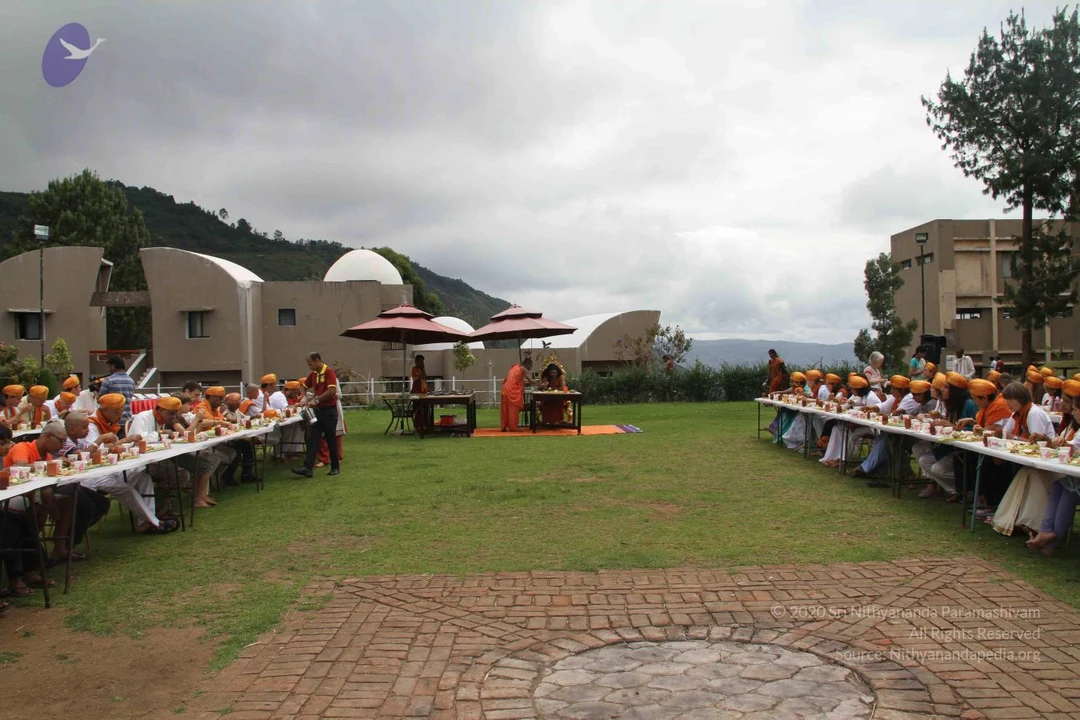
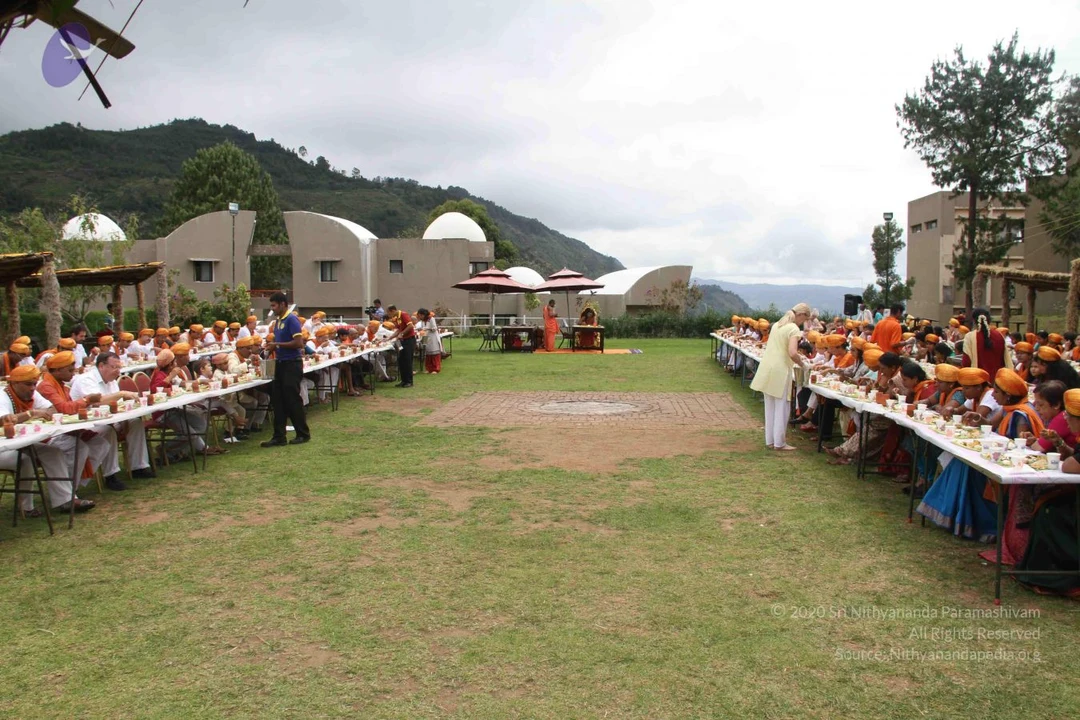
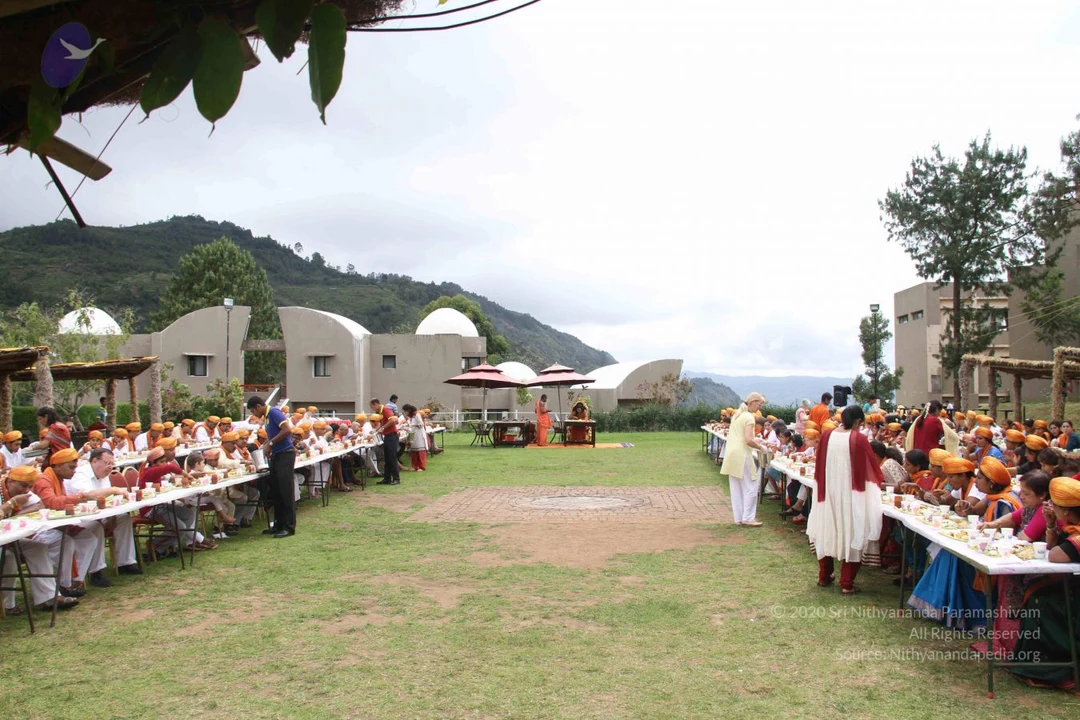
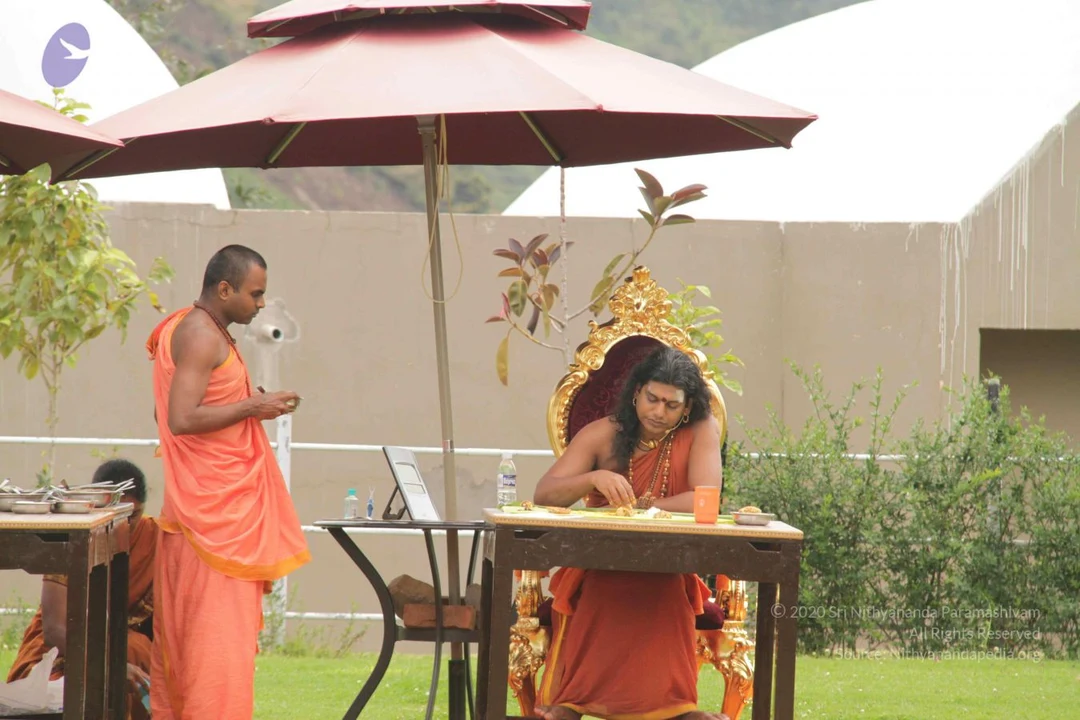
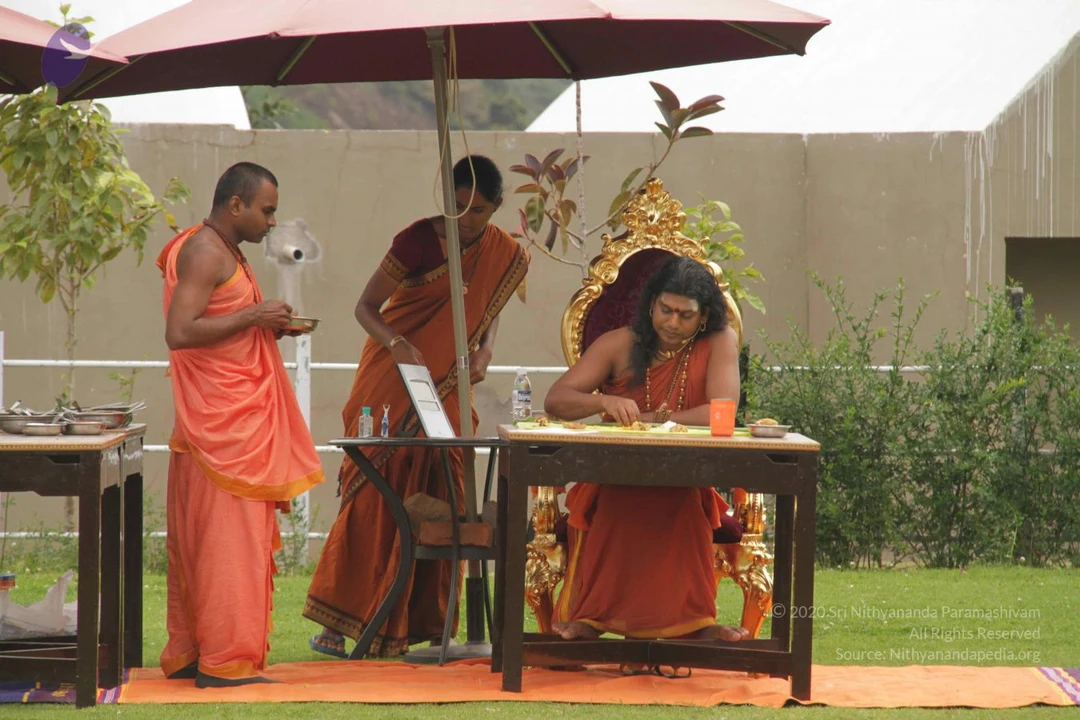
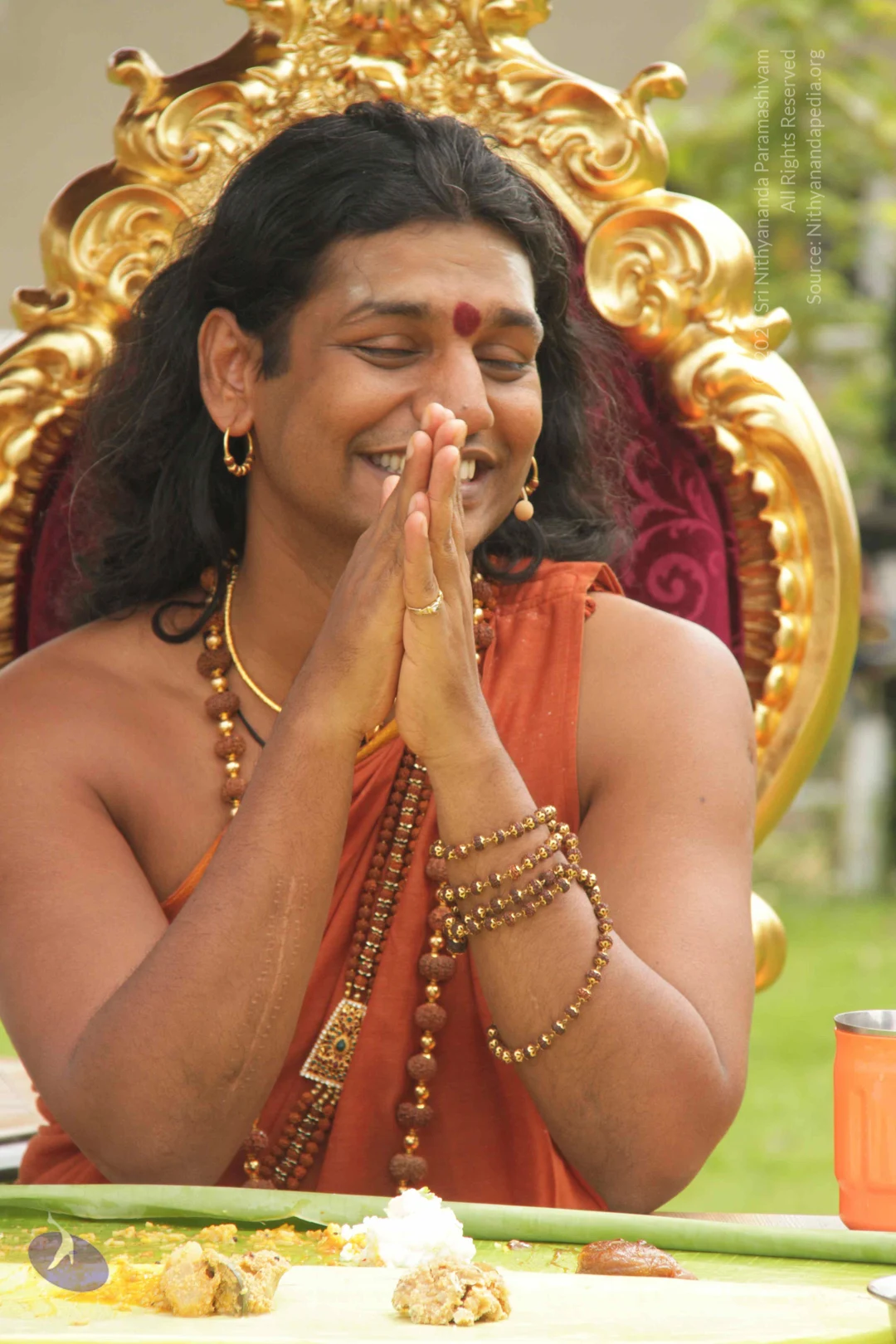
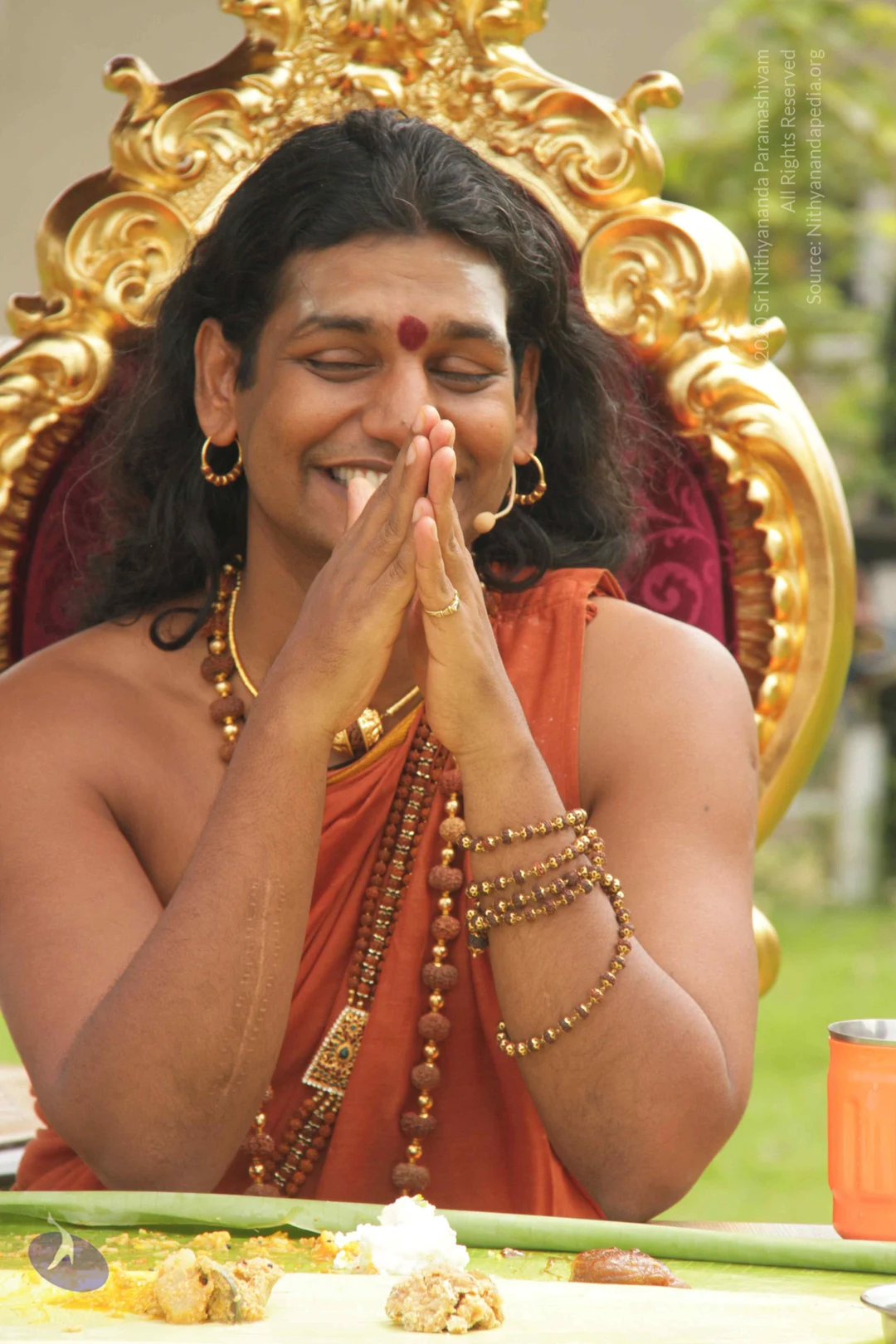
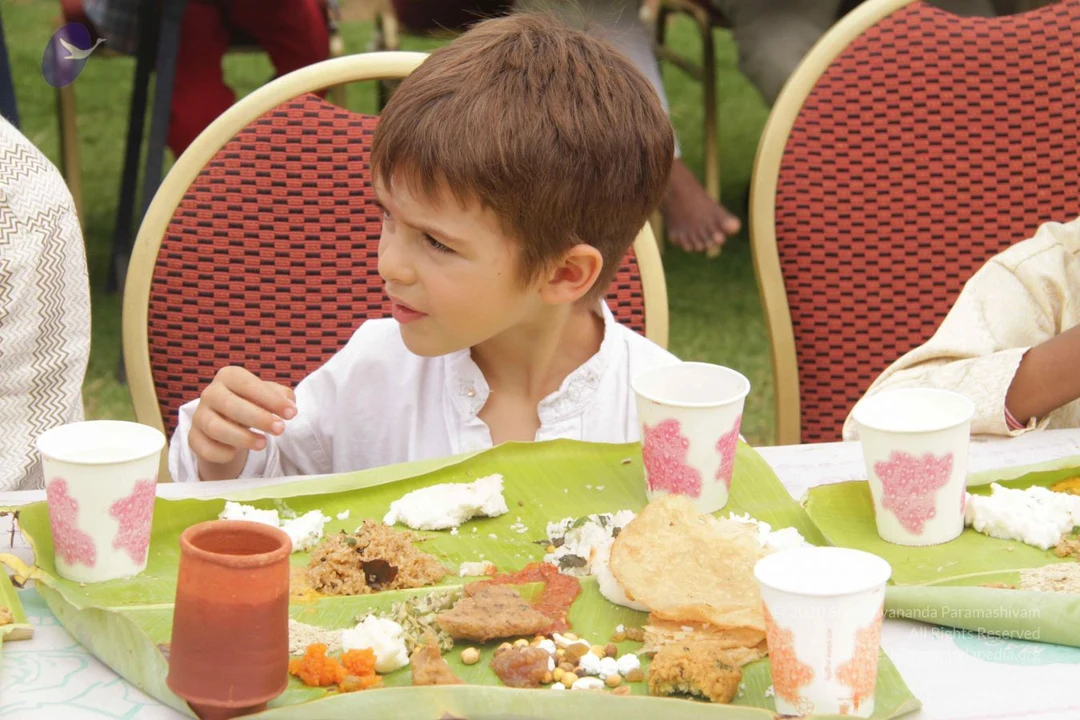
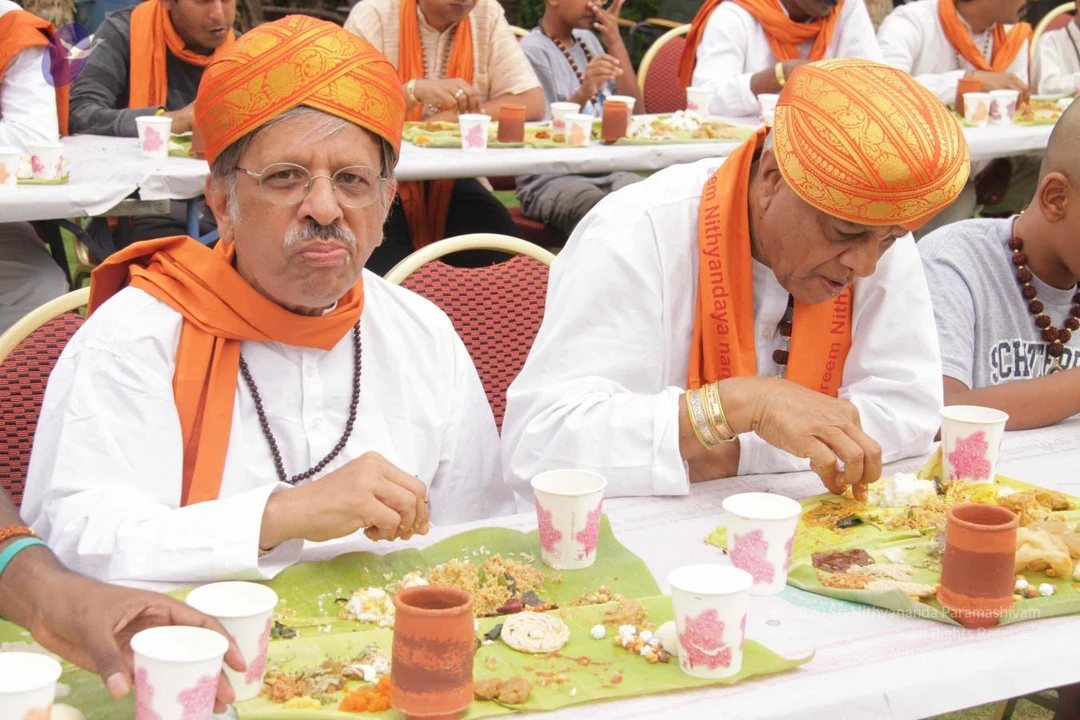
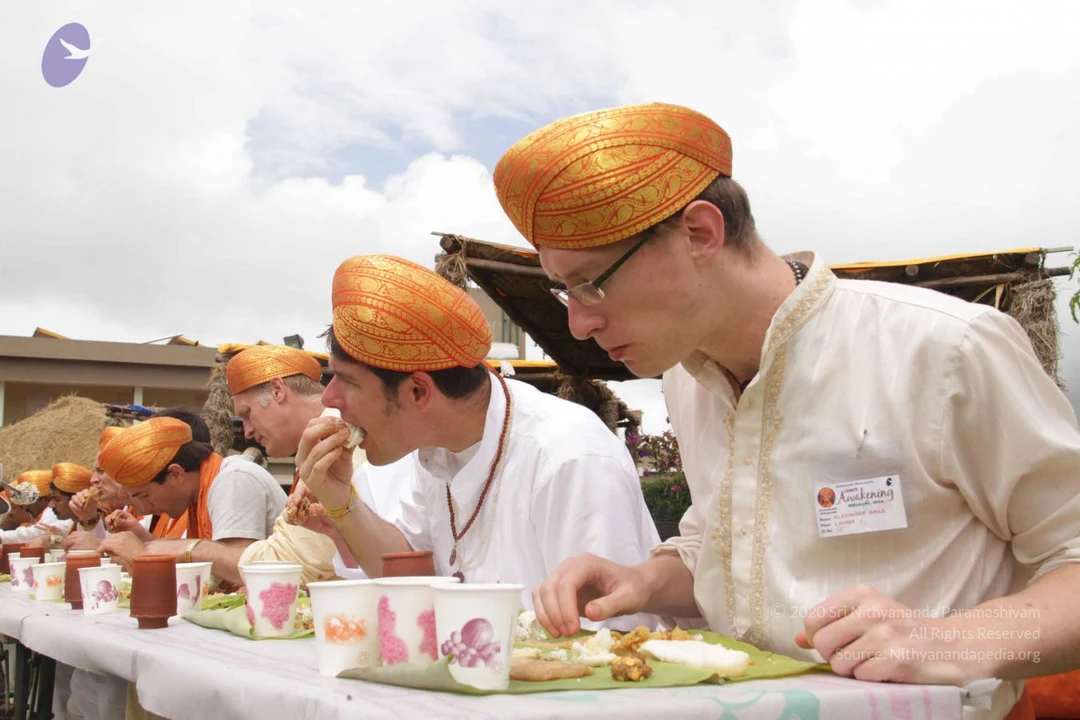
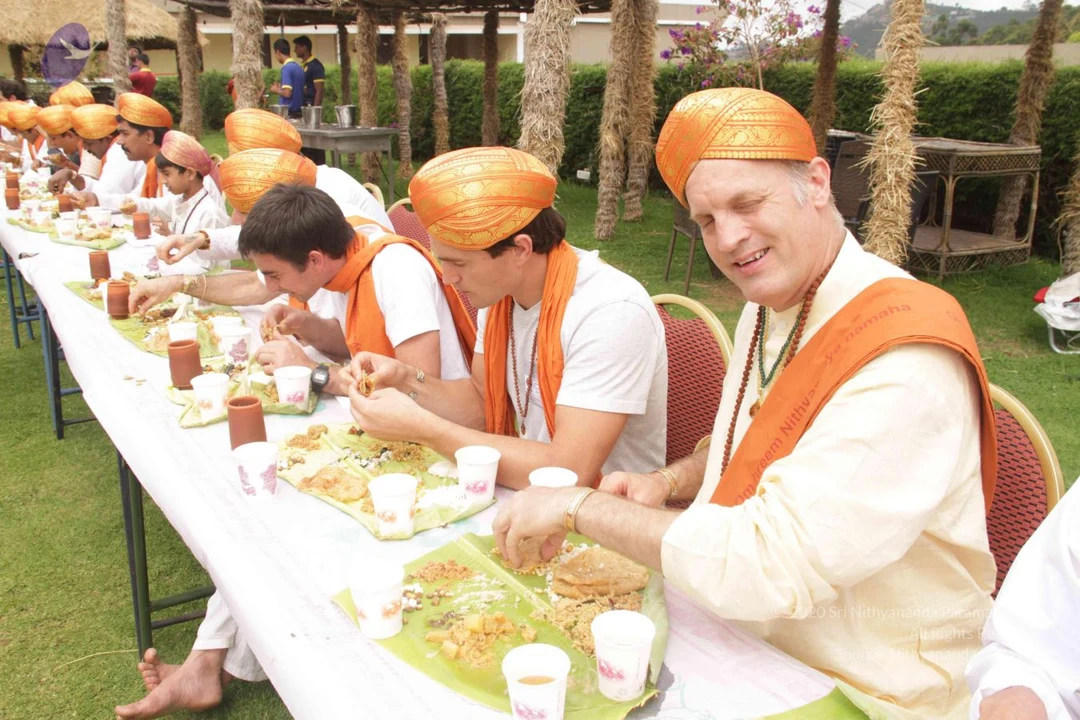
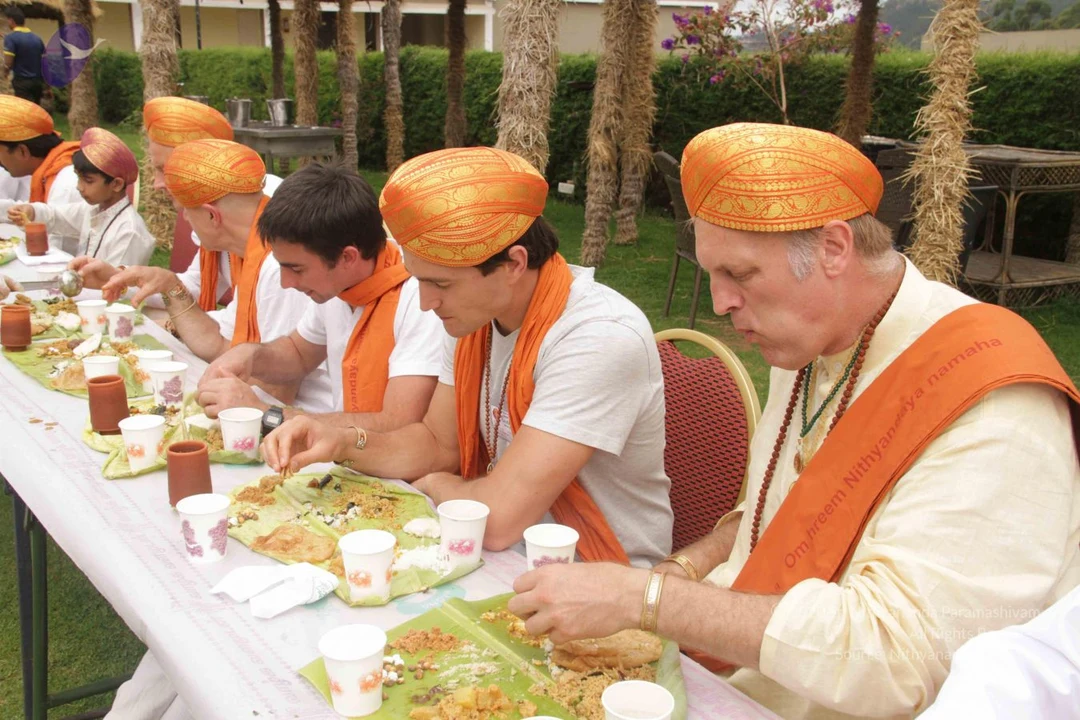
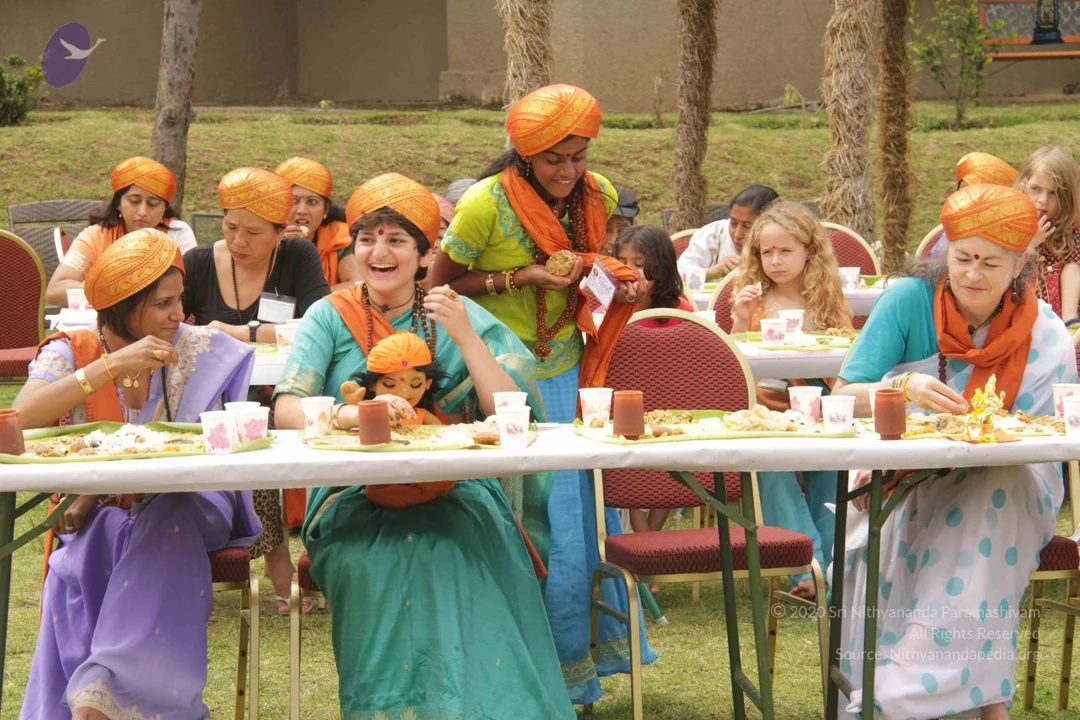
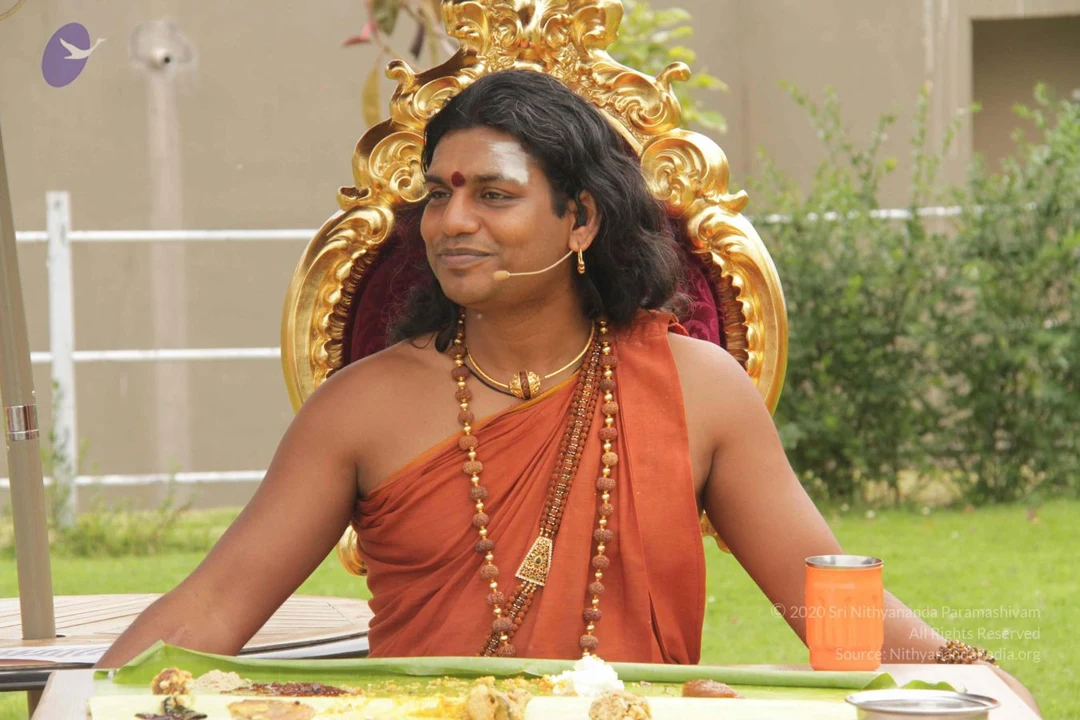
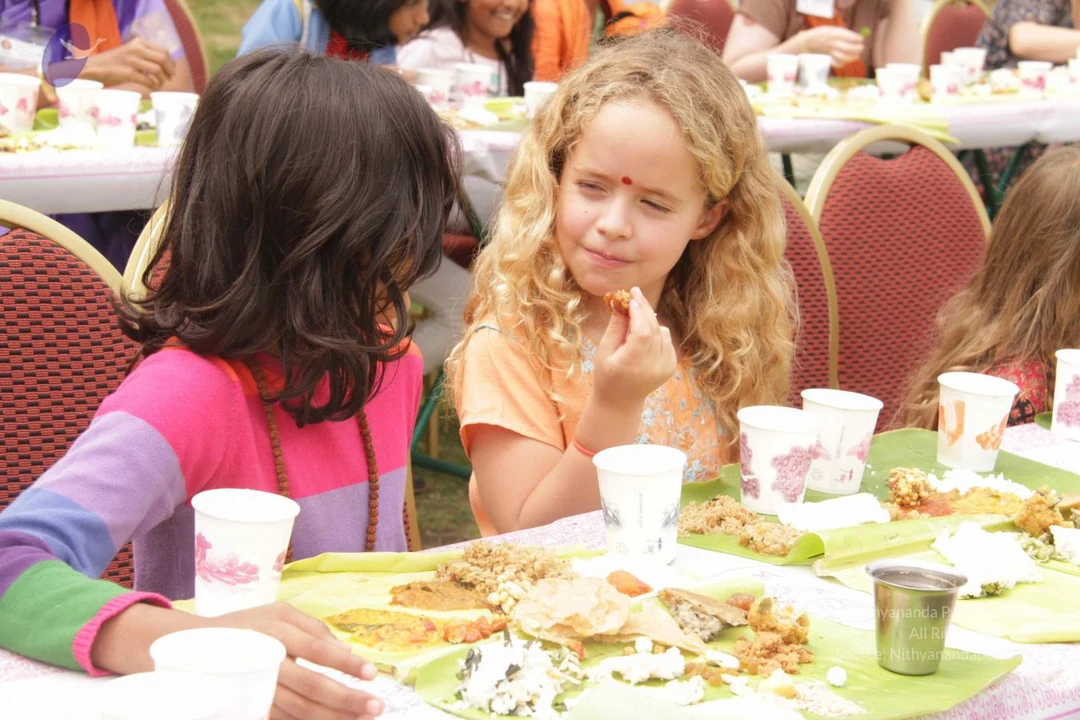
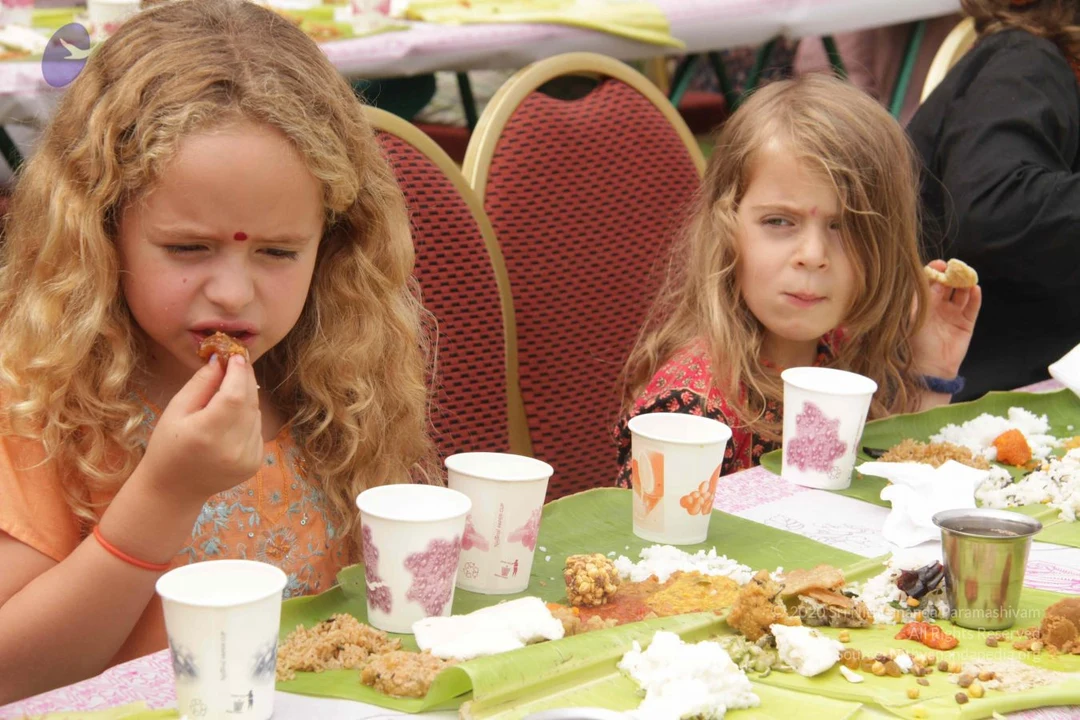
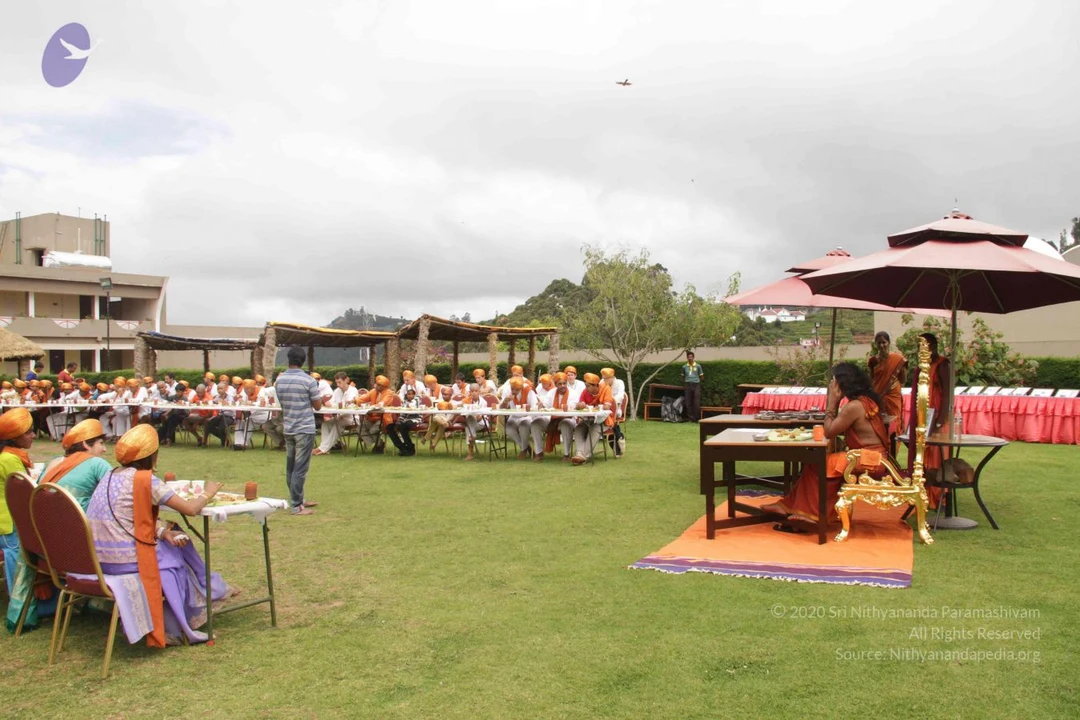
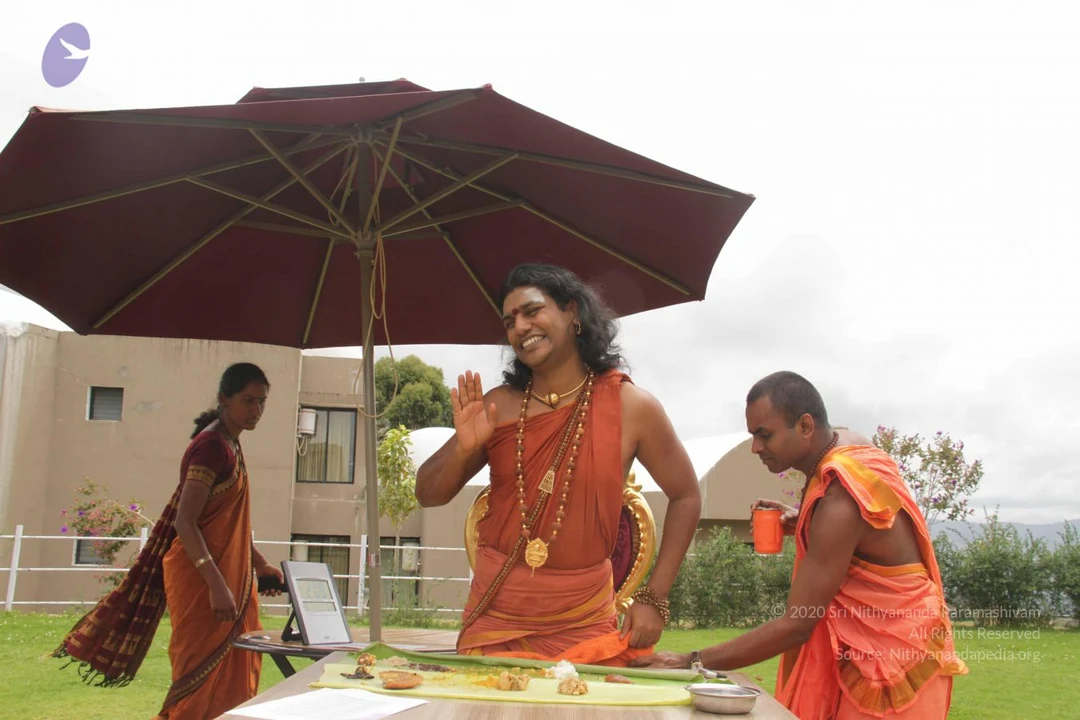
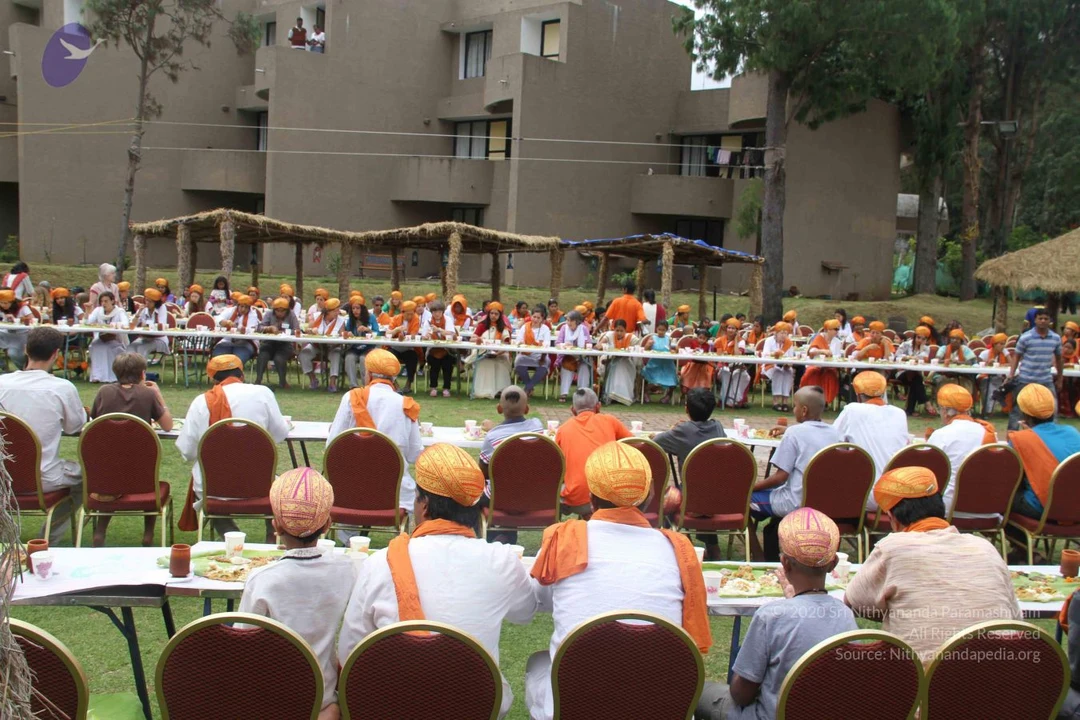
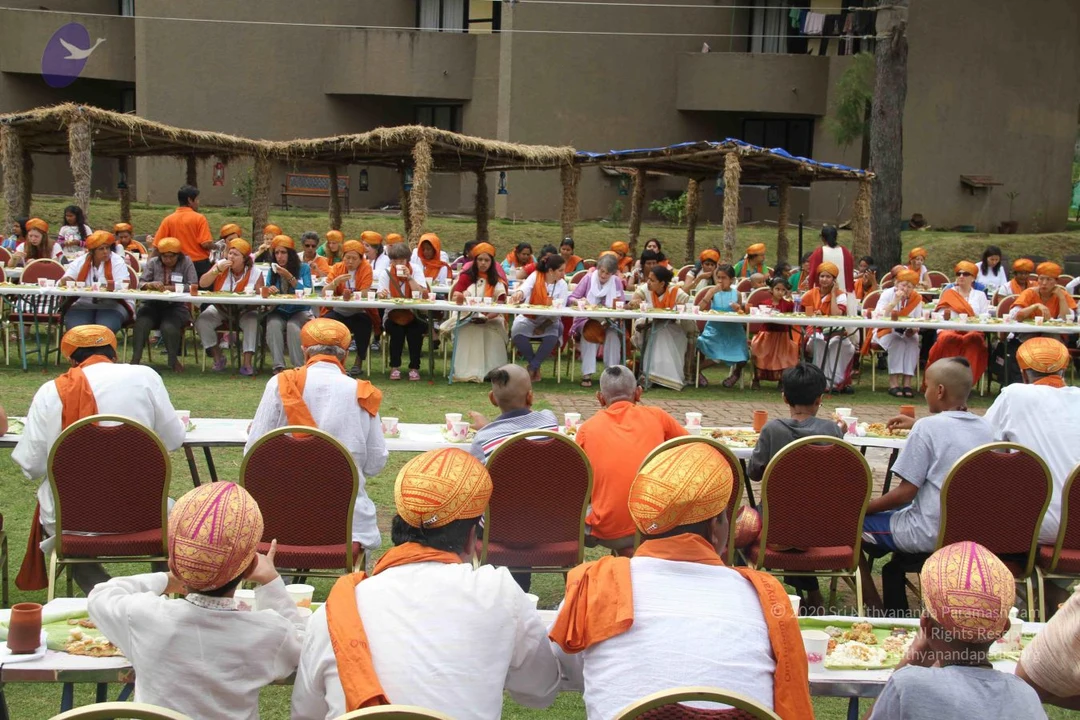
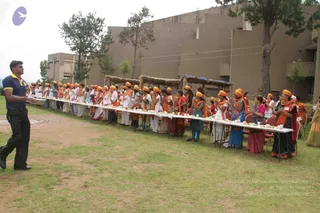
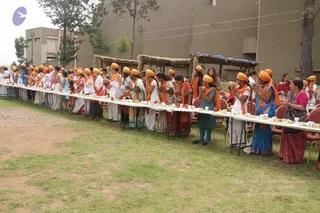
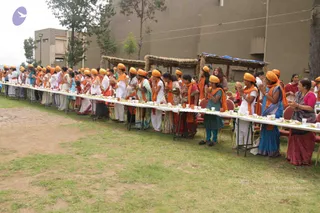
Special Lunch with prasadam from 21 temples

Photos from this day

View all 333 photos

Pada Puja
45 photosSource gallery
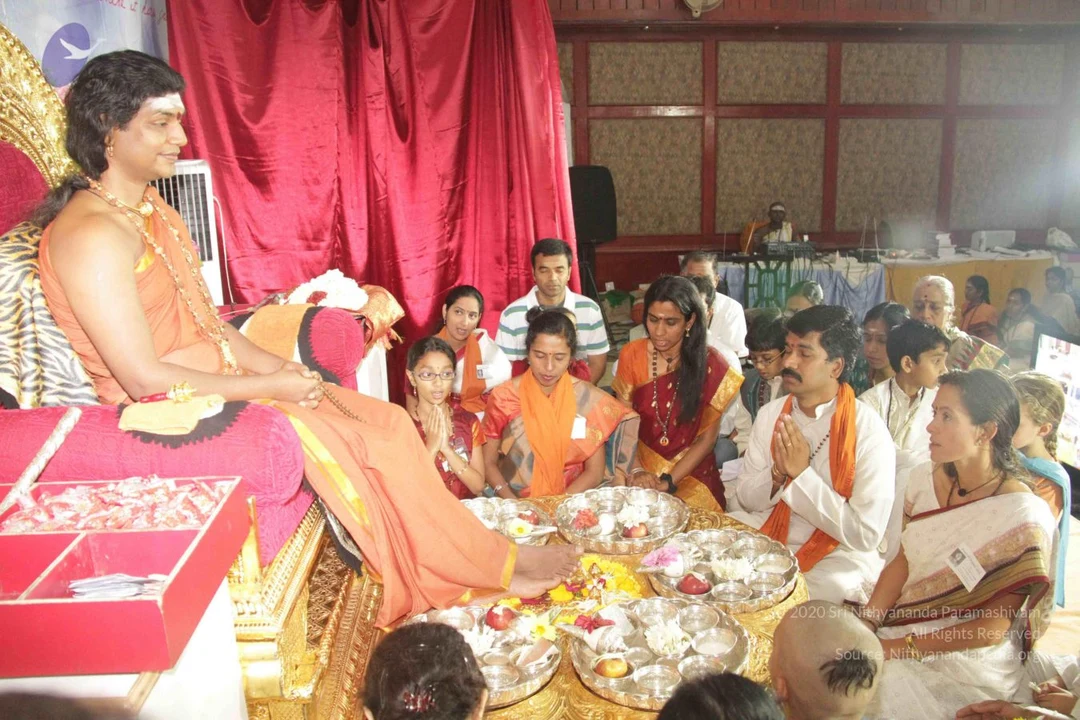
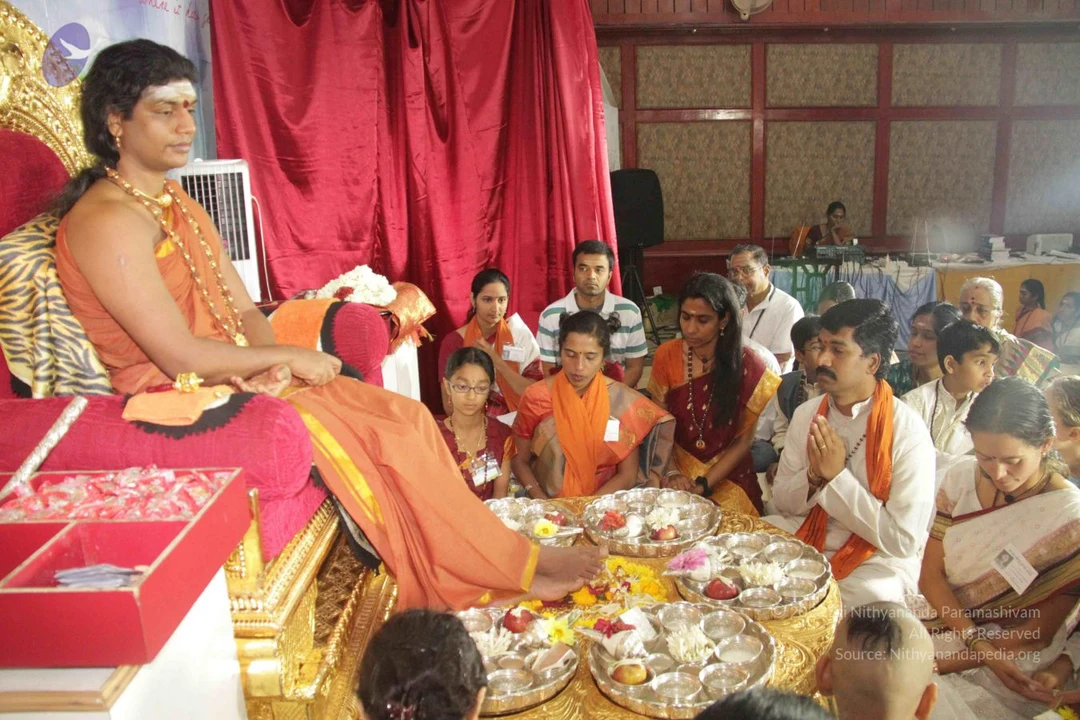
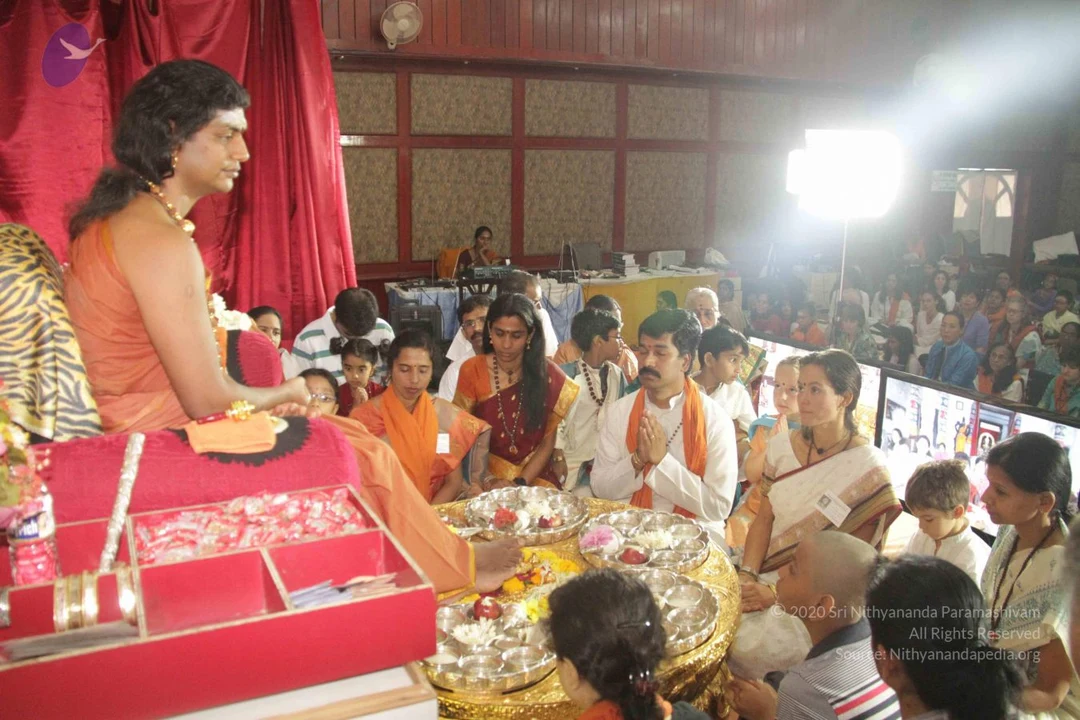
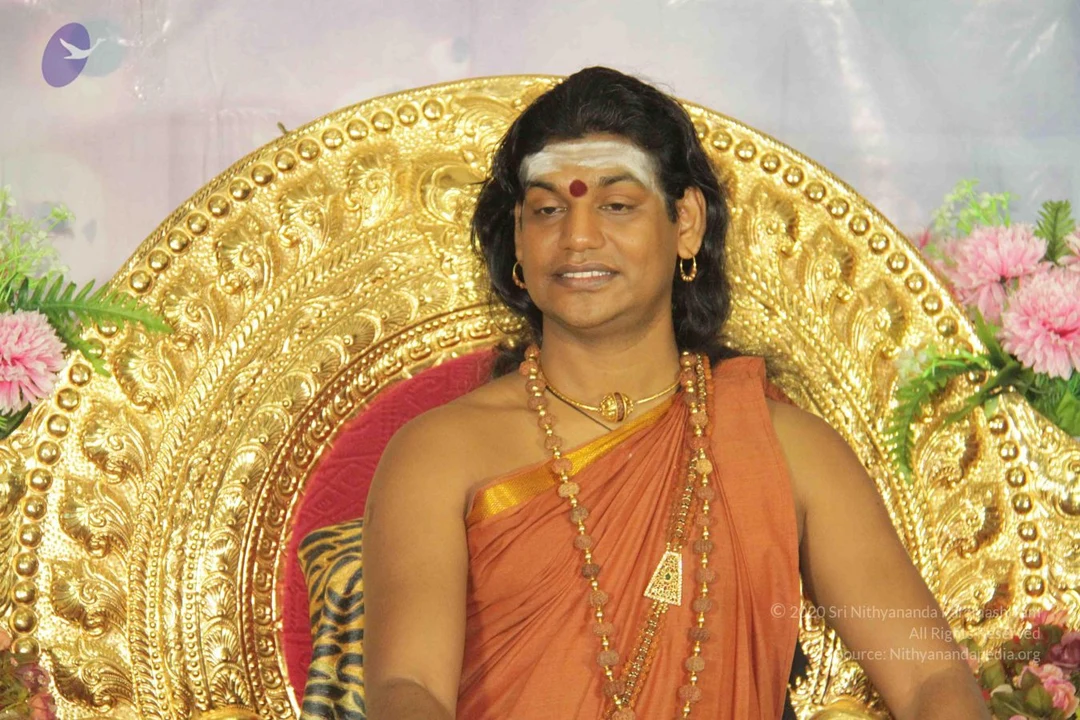
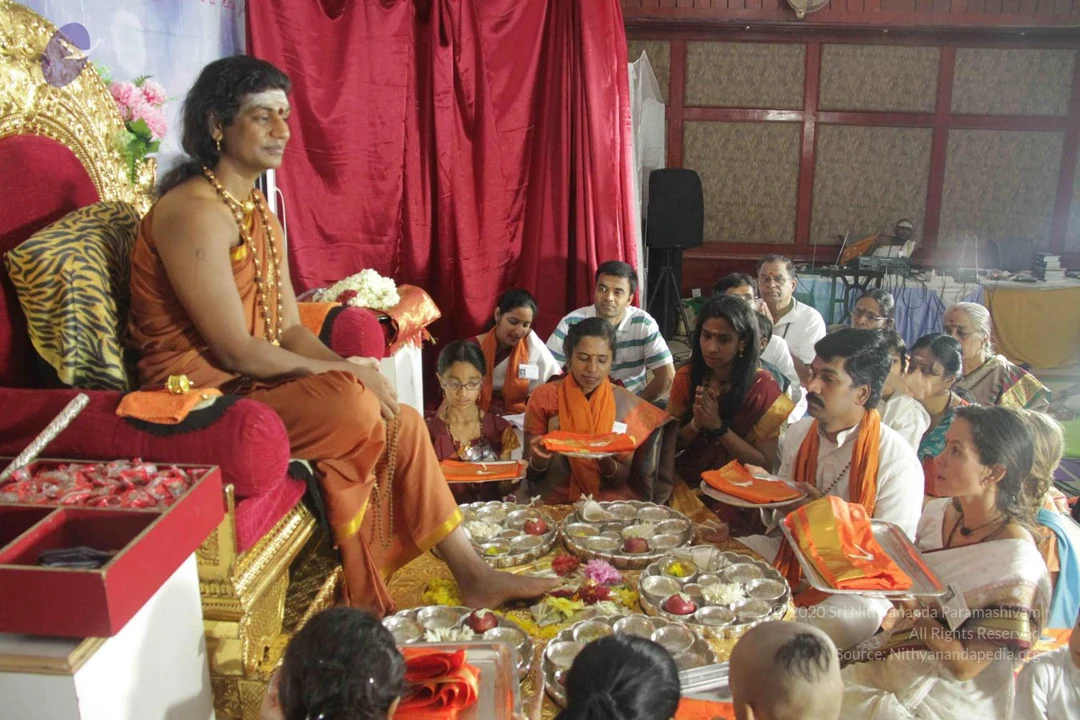
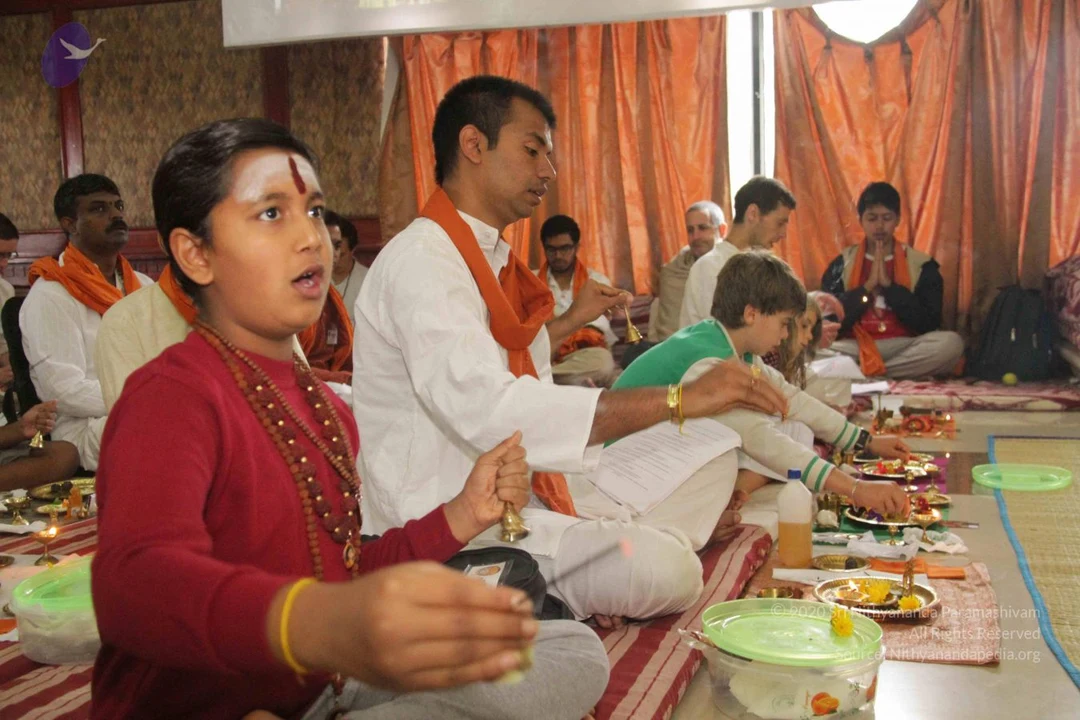
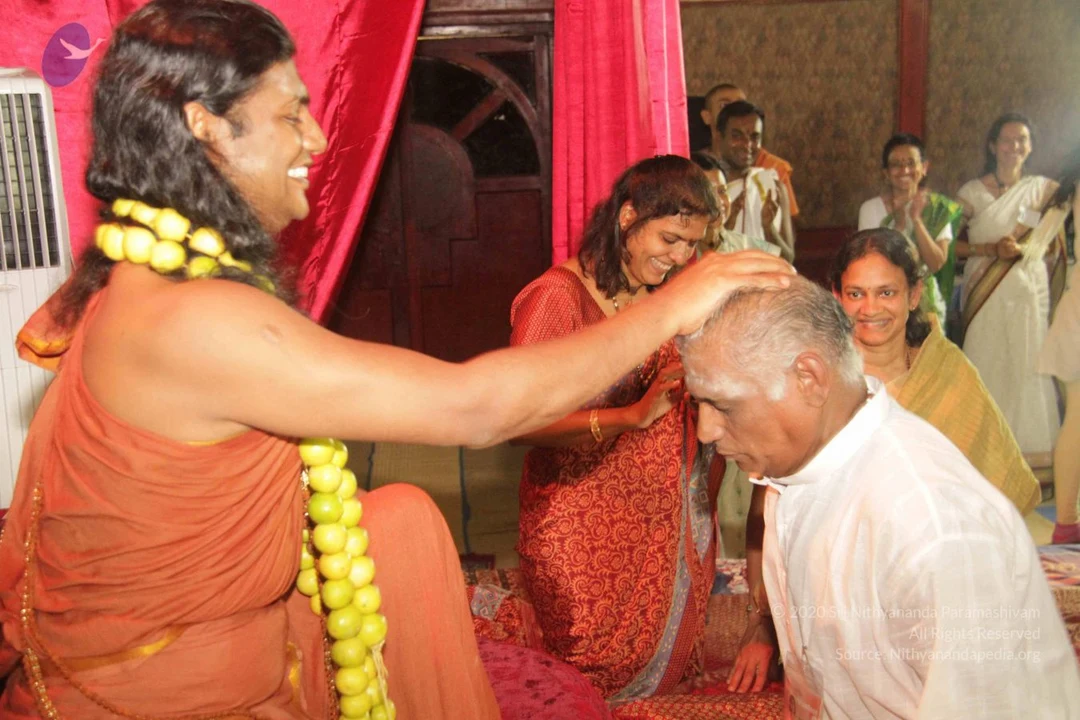
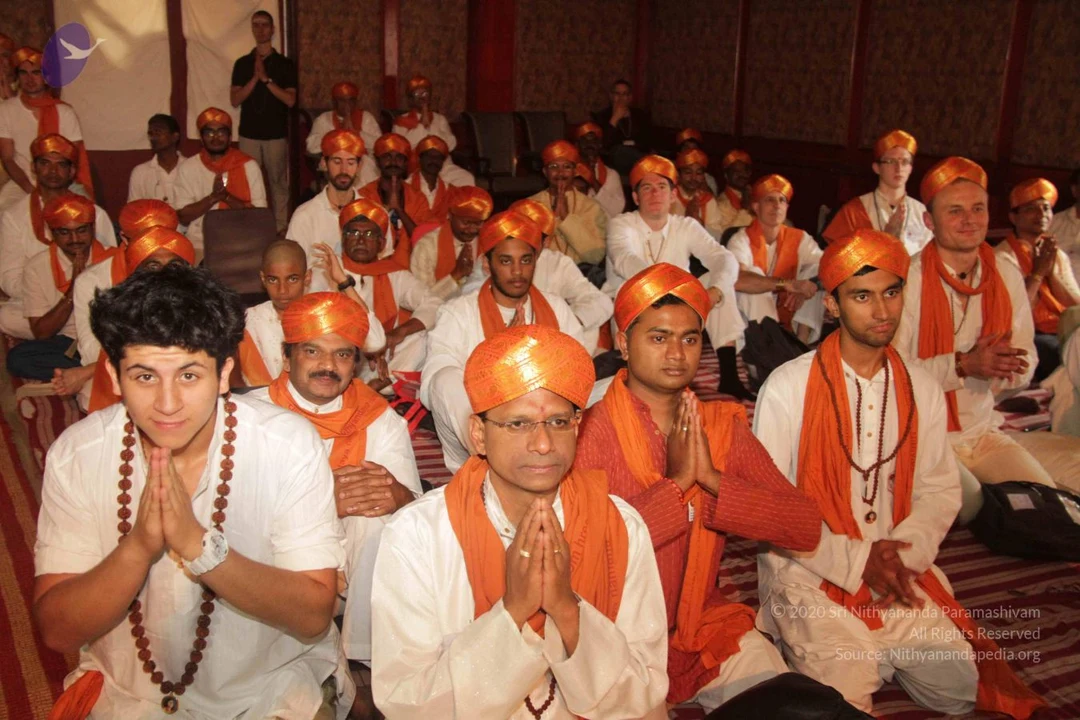
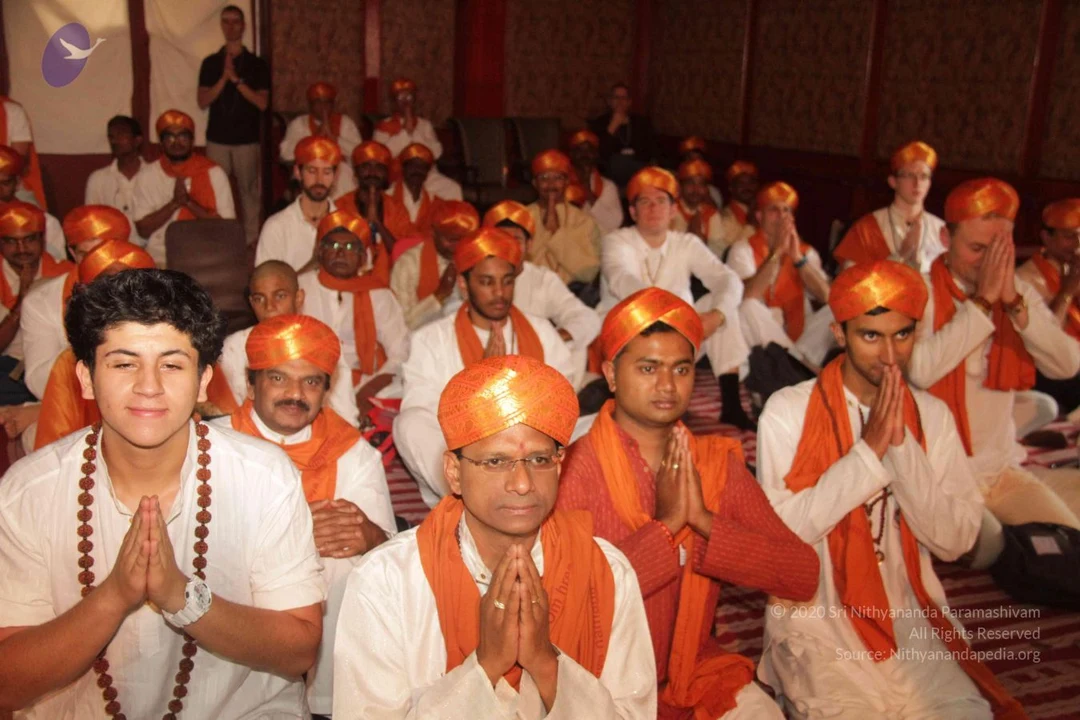
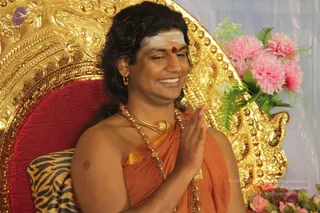
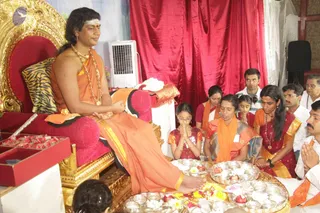
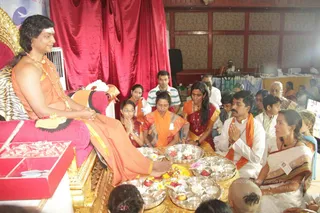
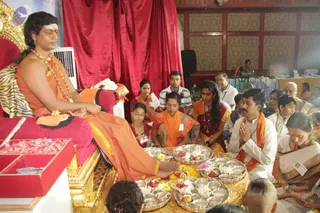
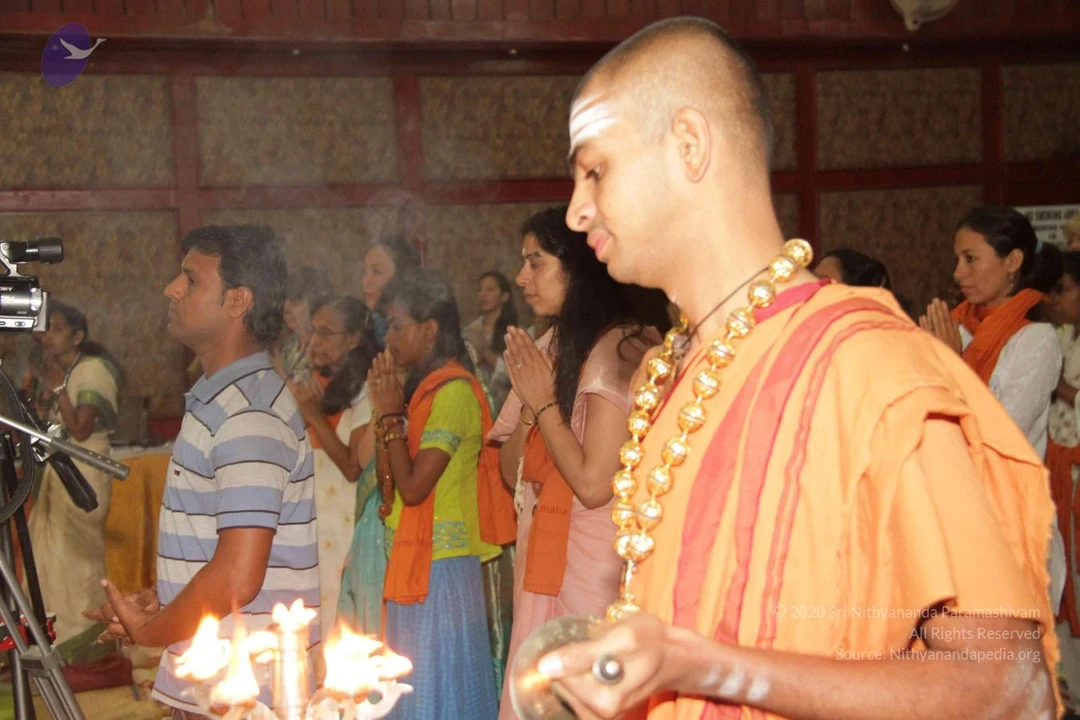
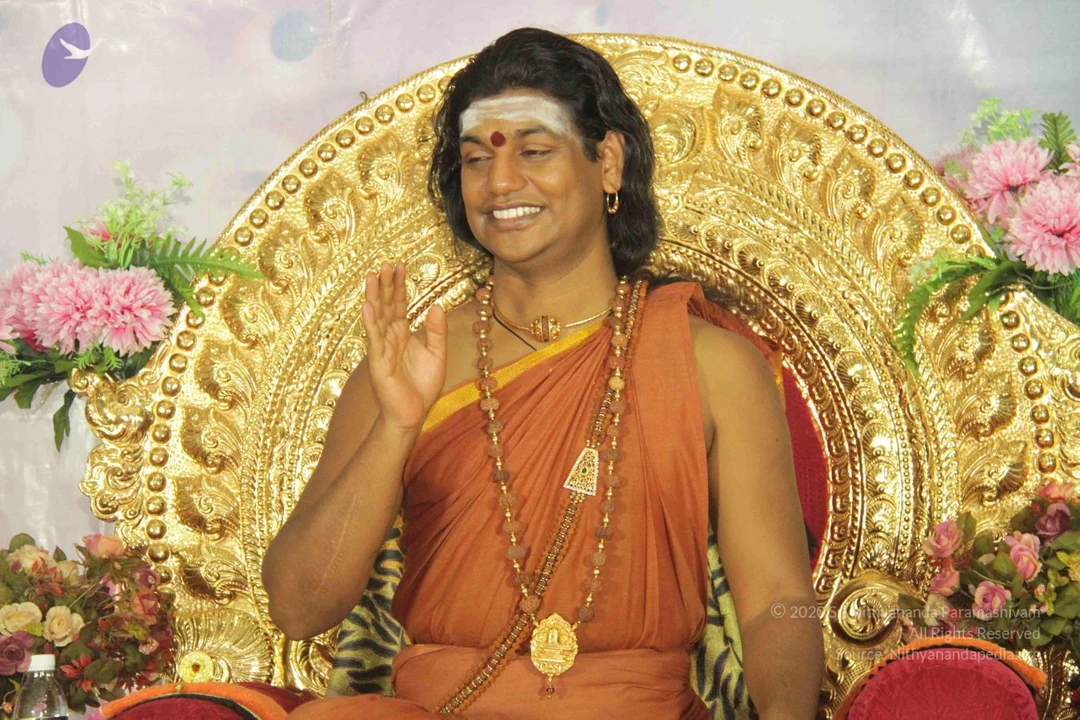
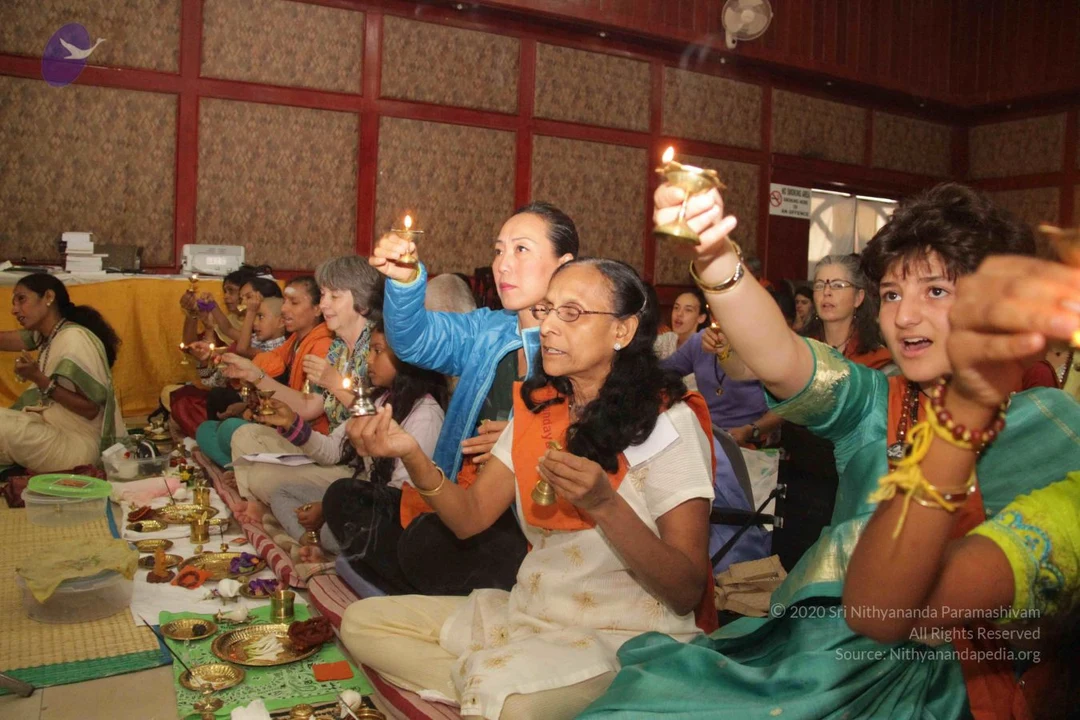
A photograph of a devotional gathering indoors, with a row of people standing with palms pressed together in namaste near a lit oil lamp row at lower left. In the foreground on the right, a shaved-headed man in an orange saffron robe with a thick gold beaded necklace and white vertical tilak on his forehead holds a small metal vessel. Behind him, women in orange shawls and a man in a striped polo shirt stand in prayer. A video camera on a tripod is at the left edge, and a faint smoke haze hangs in the air. Wood-paneled walls form the backdrop.A smiling man with long dark hair and a white vertical tilak with a red dot on his forehead sits in an ornate gold throne with a red cushion and tiger-striped cloth. He wears an orange saffron shawl, a rudraksha mala and a gold ceremonial necklace, and holds his palms together in namaste. Pink carnations and green fern leaves stand behind him.A seated man in saffron-orange robes with long swept-back dark hair, a white tripundra on his forehead, multiple gold necklaces and a gold ornate throne with red cushions sits before a red curtain. Several devotees kneel in front of him with palms joined in namaskar, including a young girl in glasses and a woman in an orange shawl and red sari. Brass plates on a golden tray hold fruit, flowers and offerings, and a red box of sweets sits at left. A pedestal fan and speaker stand in the background. The scene reads as a darshan with offerings and devotees paying respects. Swamiji (probable): the seated man in orange robes, long swept-back hair and gold necklaces is the figure receiving devotees on the throne.A seated man on a red and gold throne with a zebra-print cushion has his bare feet extended over a golden tray. He wears an orange robe, gold chain necklace and rudraksha-style beads, with long swept-back hair and a white tilak. Devotees kneel around the tray, a woman in orange holding the feet area, a woman in red and orange saree with a rudraksha mala, a man in white with orange shawl pressing palms together, and a woman in a striped saree at right. Silver thalis of fruit, flowers, sweets and kumkum surround the tray in a padapuja-style offering. Behind, a red curtain, a standing fan, a table with books and a seated musician. Swamiji appearance is probable, based on the long swept-back hair, orange robe, gold chain and rudraksha beads, and he is shown in person at the center of the foot-worship offering.Photograph of a padapuja ritual in a hall with red drapes. A long-haired man in orange robes and gold necklaces sits on a gold-and-red throne, his bare feet placed over a gold tray of flowers, fruit and brass plates. Around the tray, devotees kneel in saffron and orange shawls and white clothing, some holding their hands in namaste. A girl in glasses sits in the foreground, and a child with a tray of offerings is at the bottom edge. Behind them, a few people sit near sound equipment and a red box of offerings sits to the left. The man's appearance is consistent with the page's a person reference, so he is labeled a probable candidate.Indoor satsang hall with red curtains and wood-panelled walls. A man with long dark swept-back hair, a white tilak on his forehead, orange robe and gold necklaces sits on a red cushioned seat, Swamiji (probable), with his hand raised toward a golden tray of offerings. Before him, devotees sit on the floor: a woman in an orange shawl, a young person in a red sari with rudraksha mala, a man in white with orange shawl joining palms in namaste, and a woman in white sari. Brass plates hold fruit, flowers and sweets on a gold cloth. Children and adults fill the background, a bright light stand is at right, and monitor screens show images.
Nithya Satsang
42 photosSource gallery
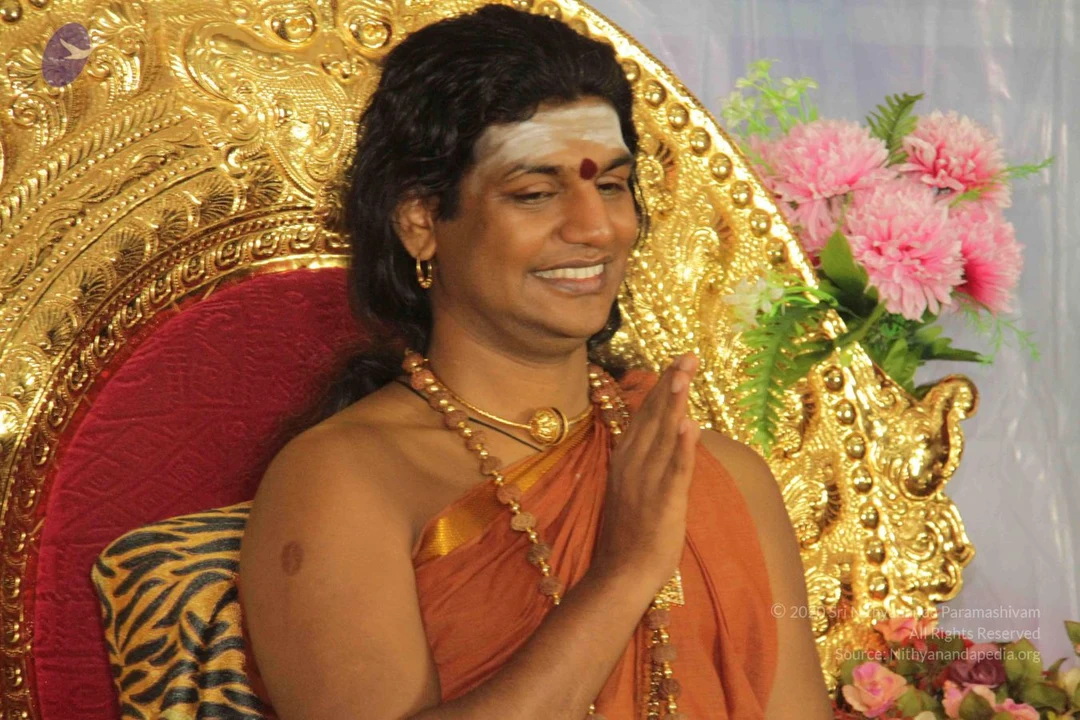
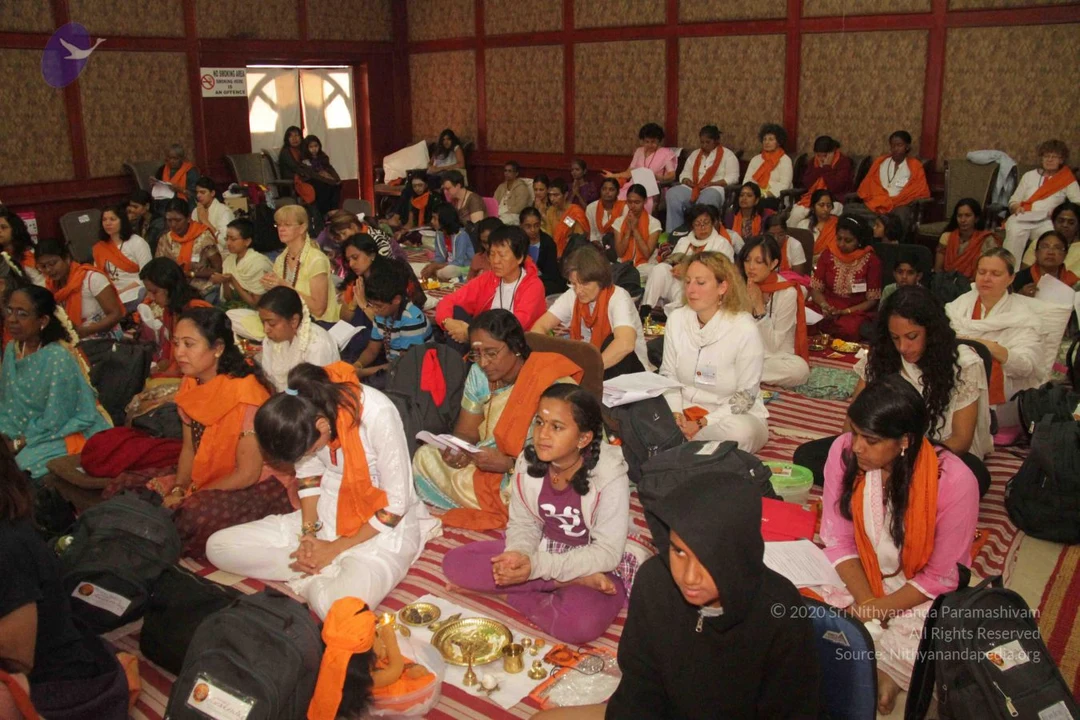
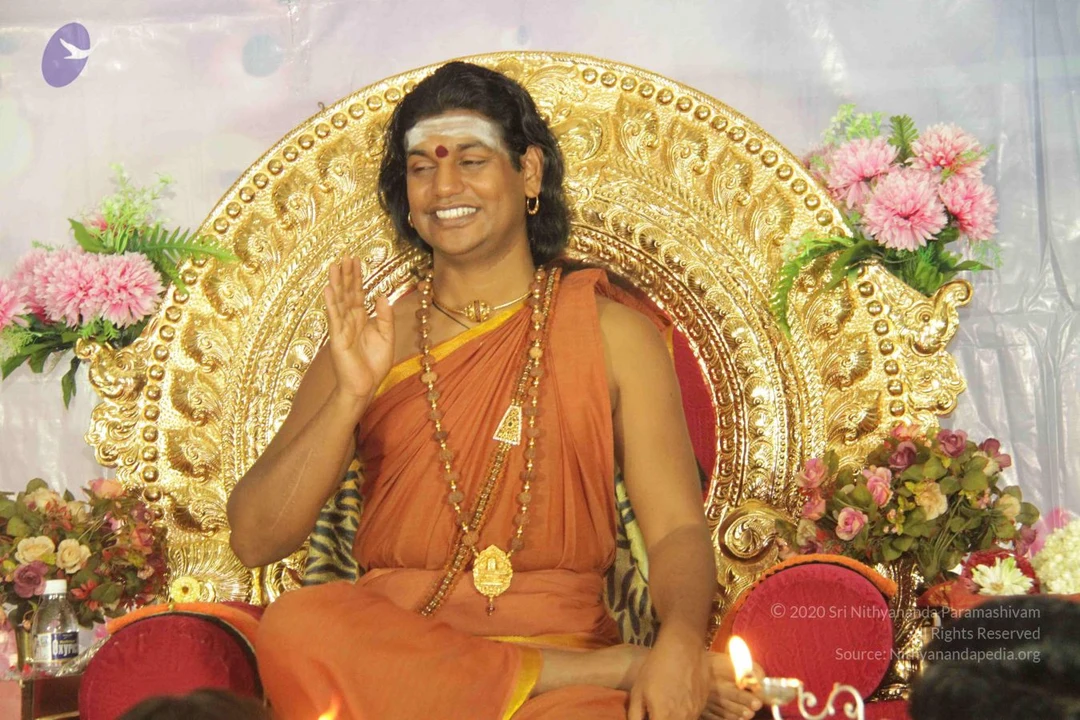
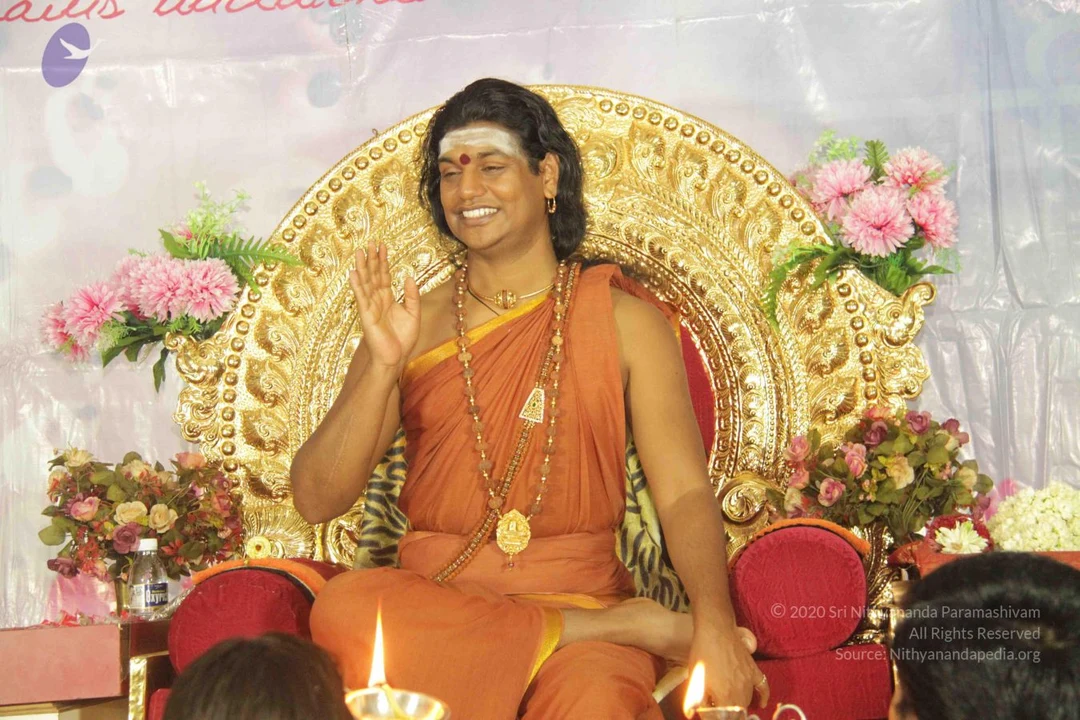
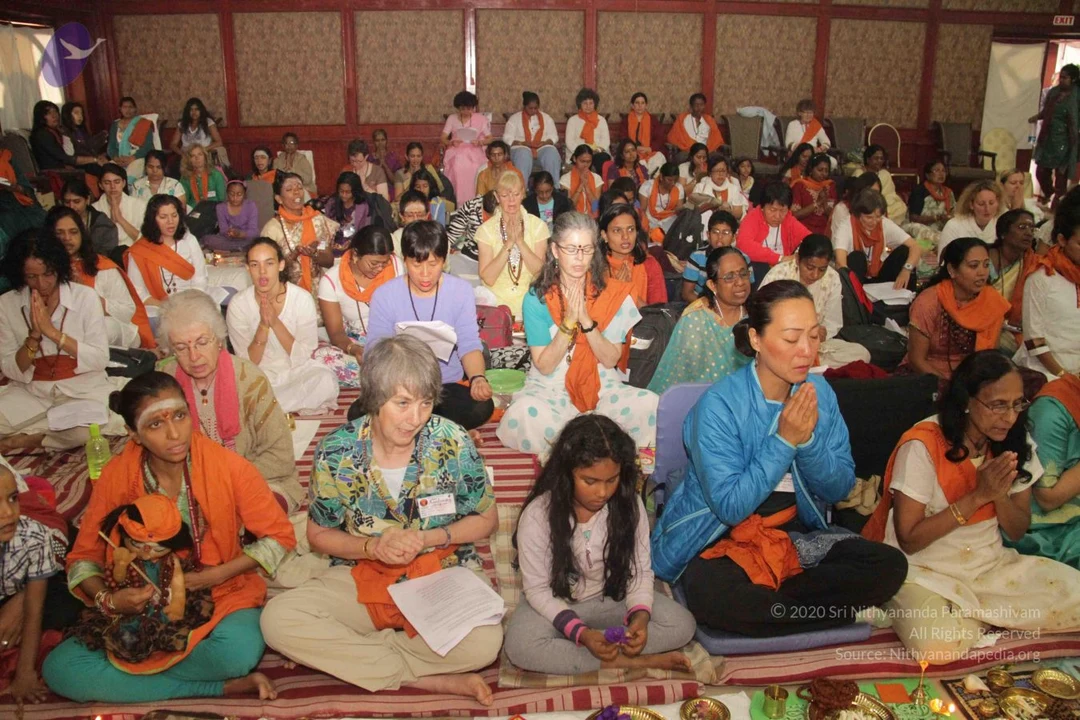
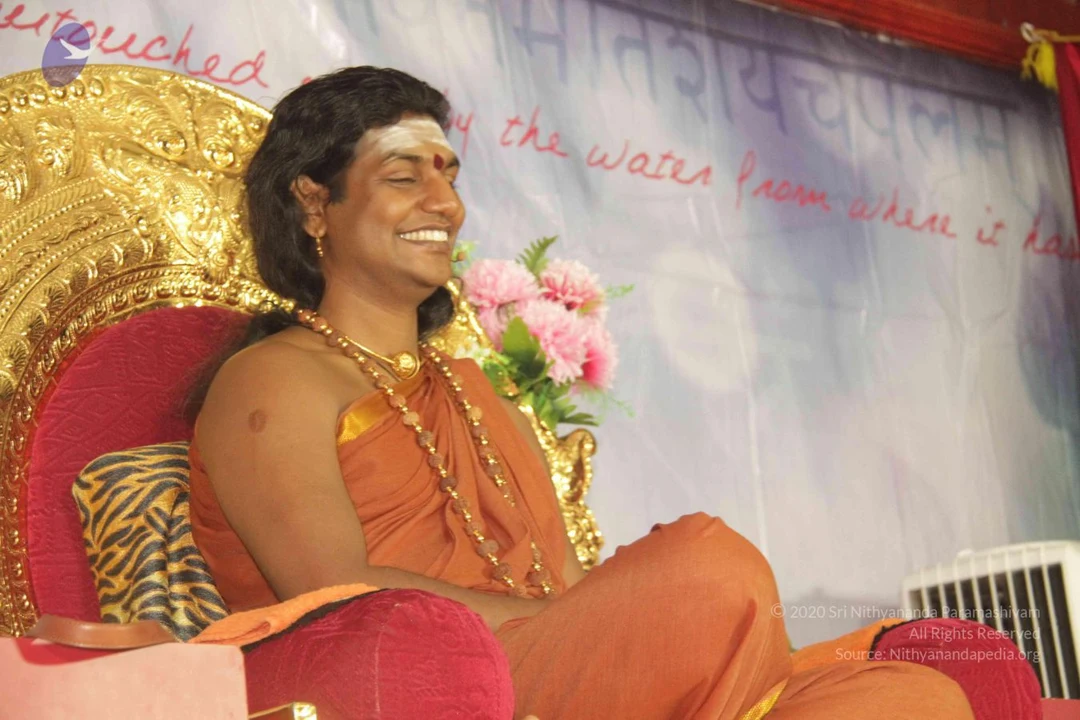
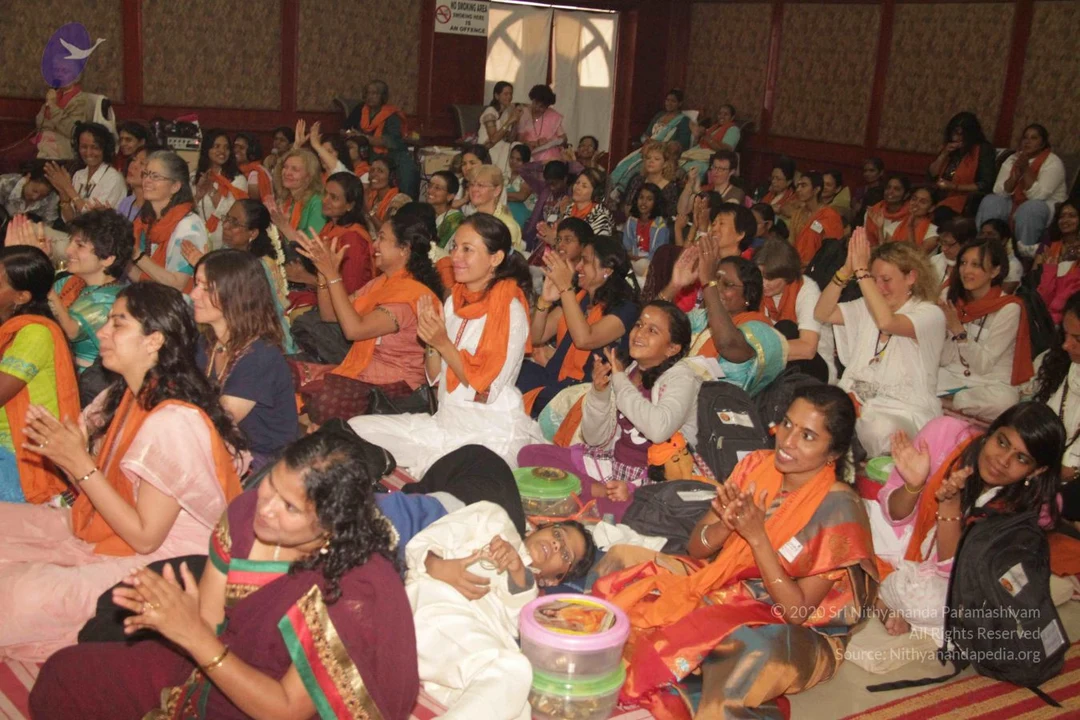
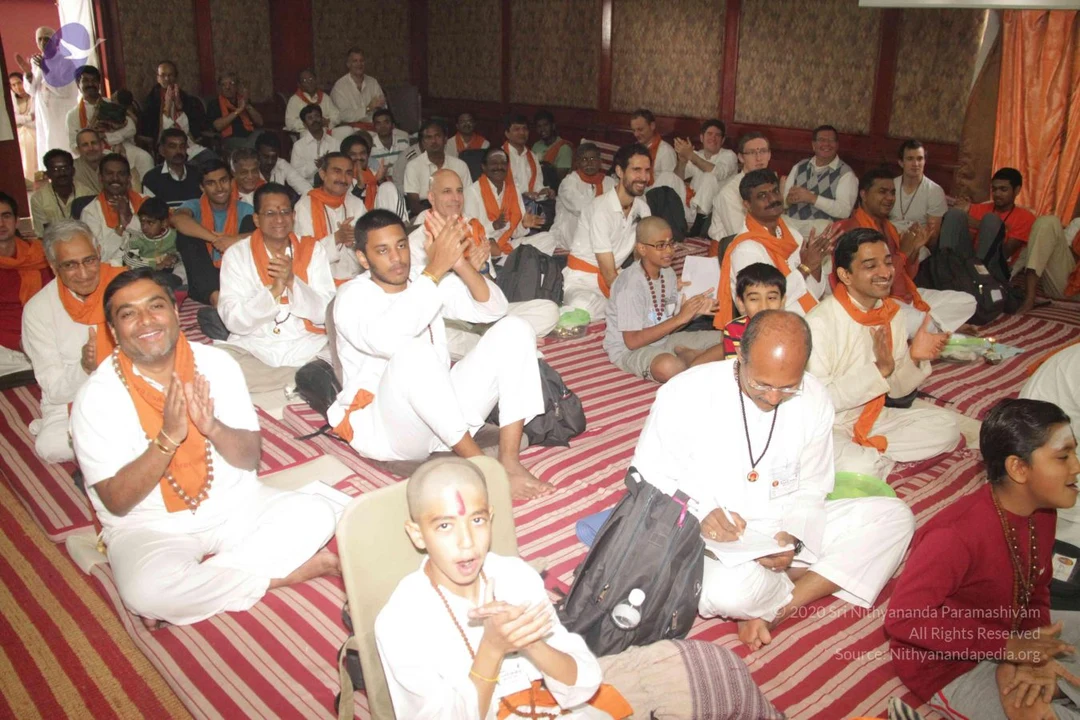
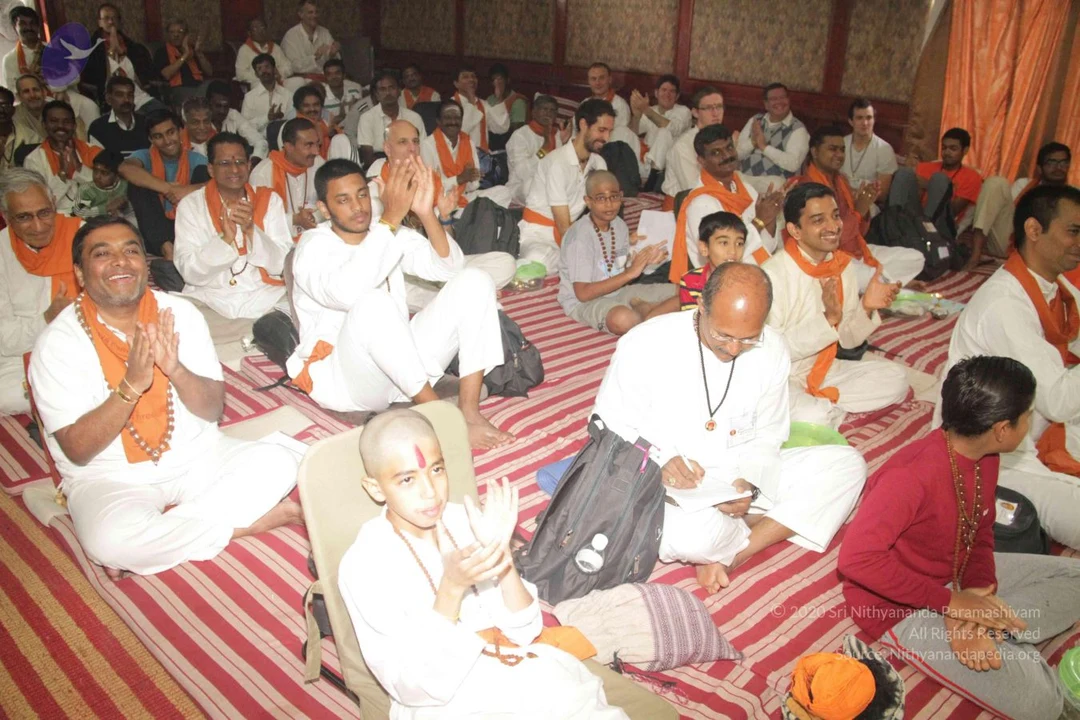
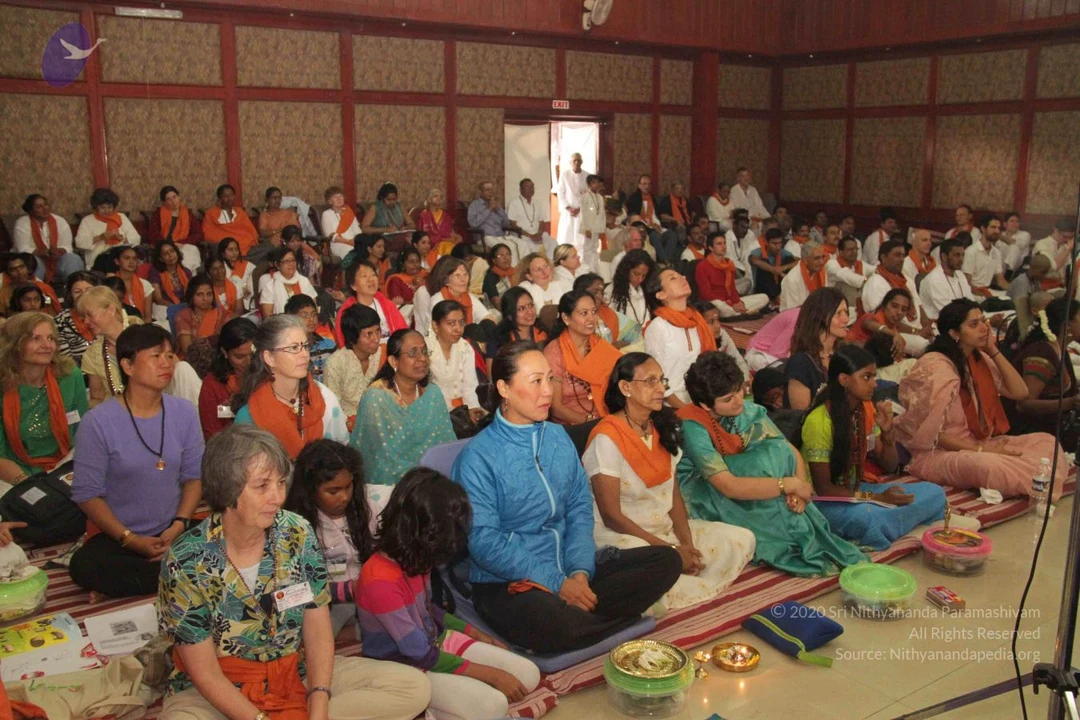
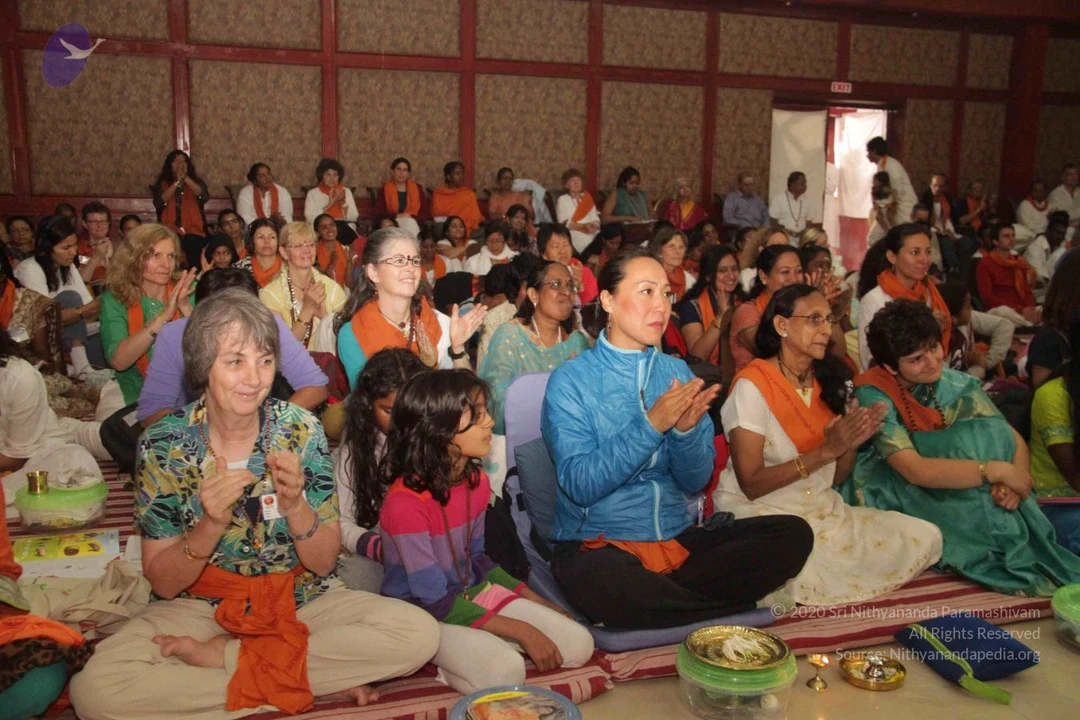
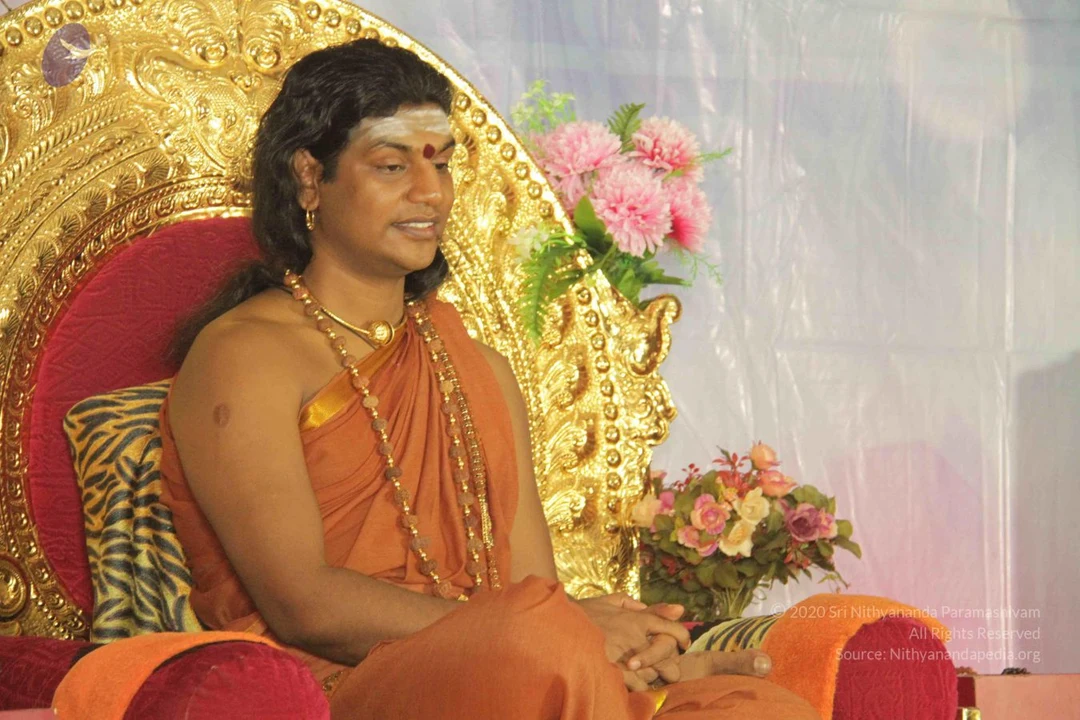
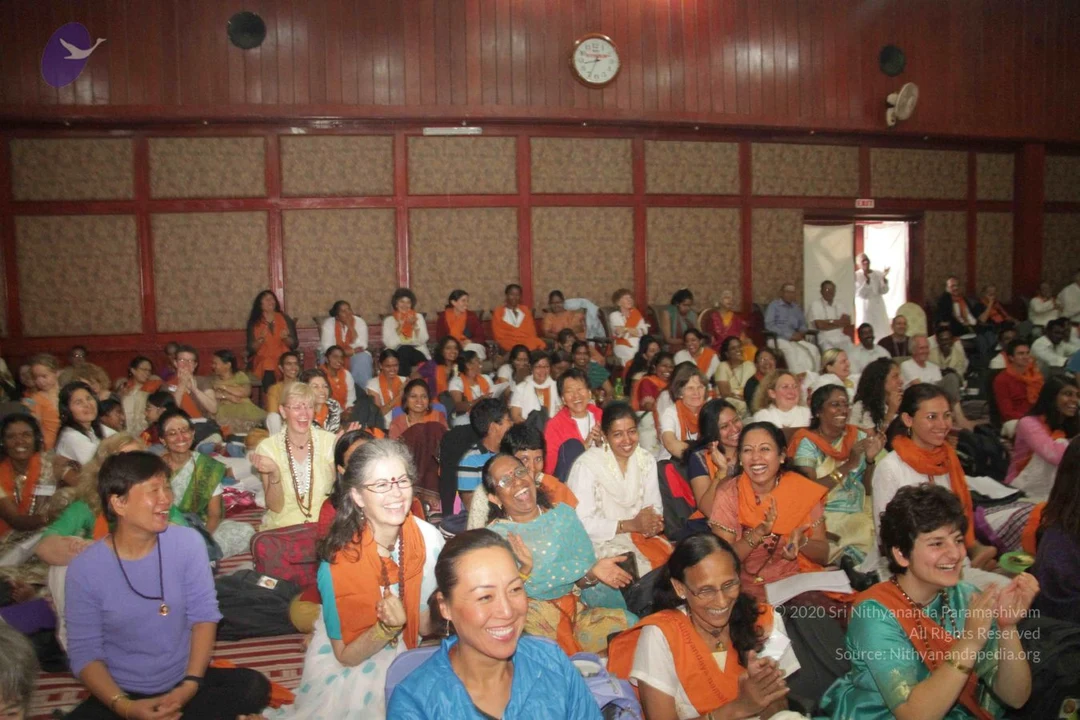
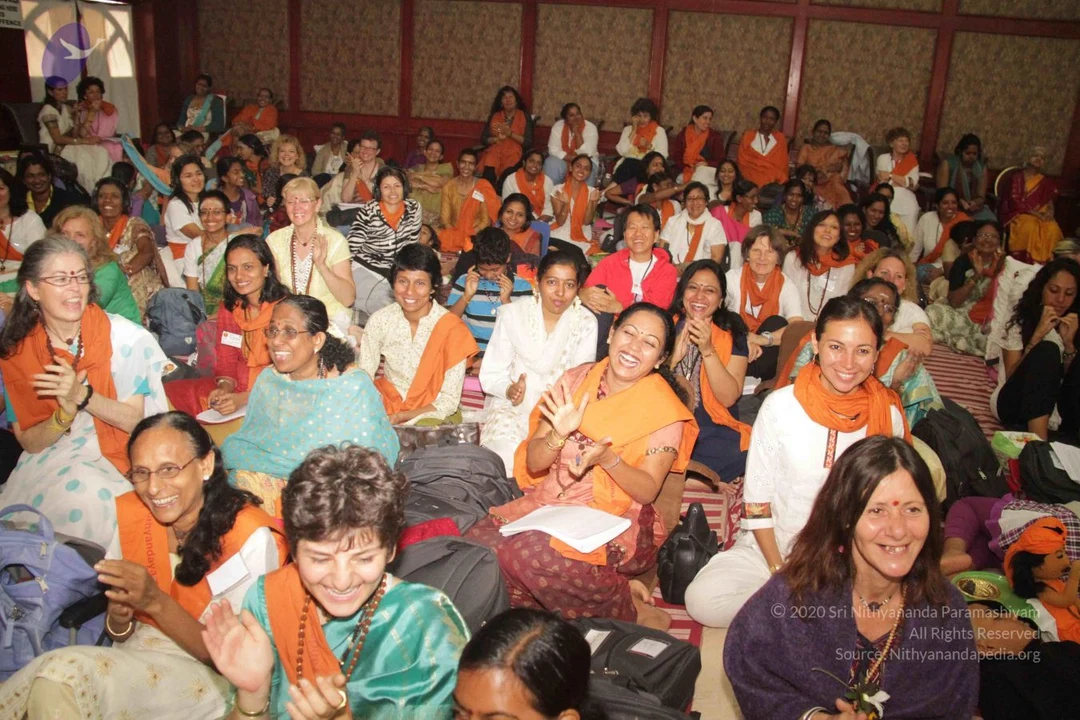
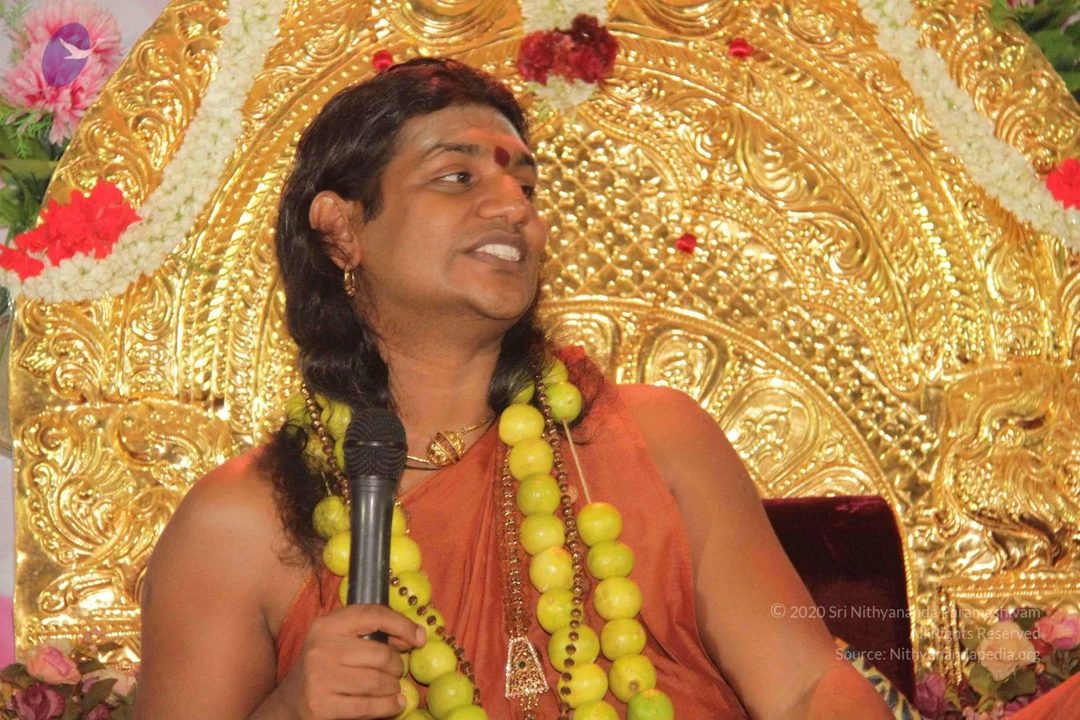
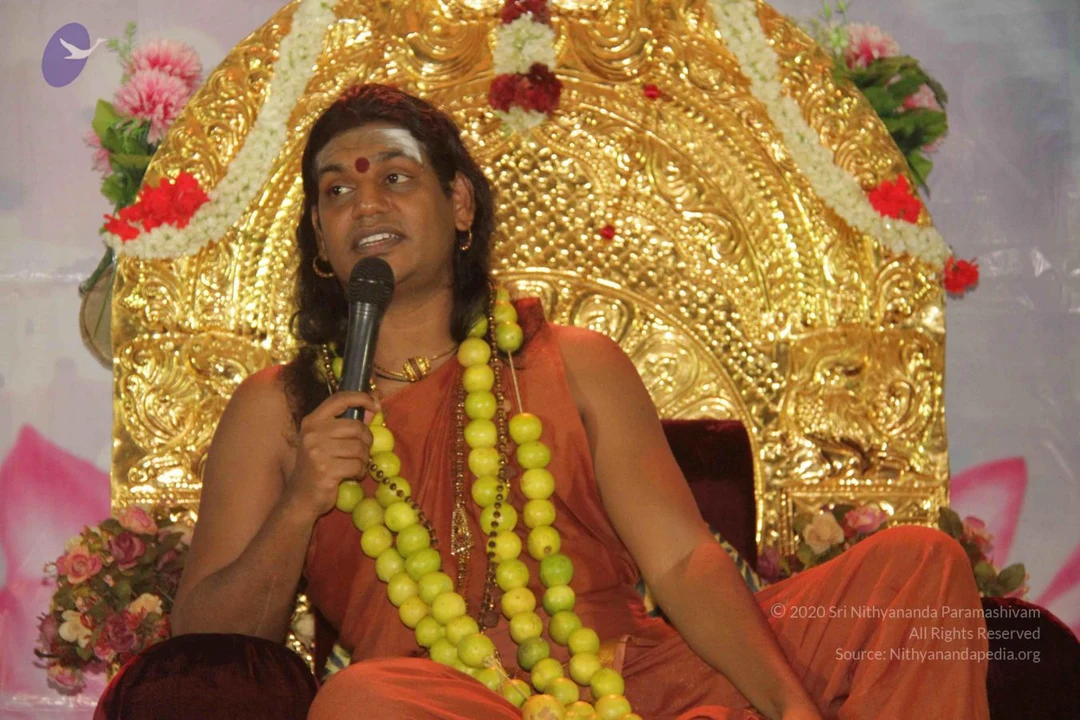
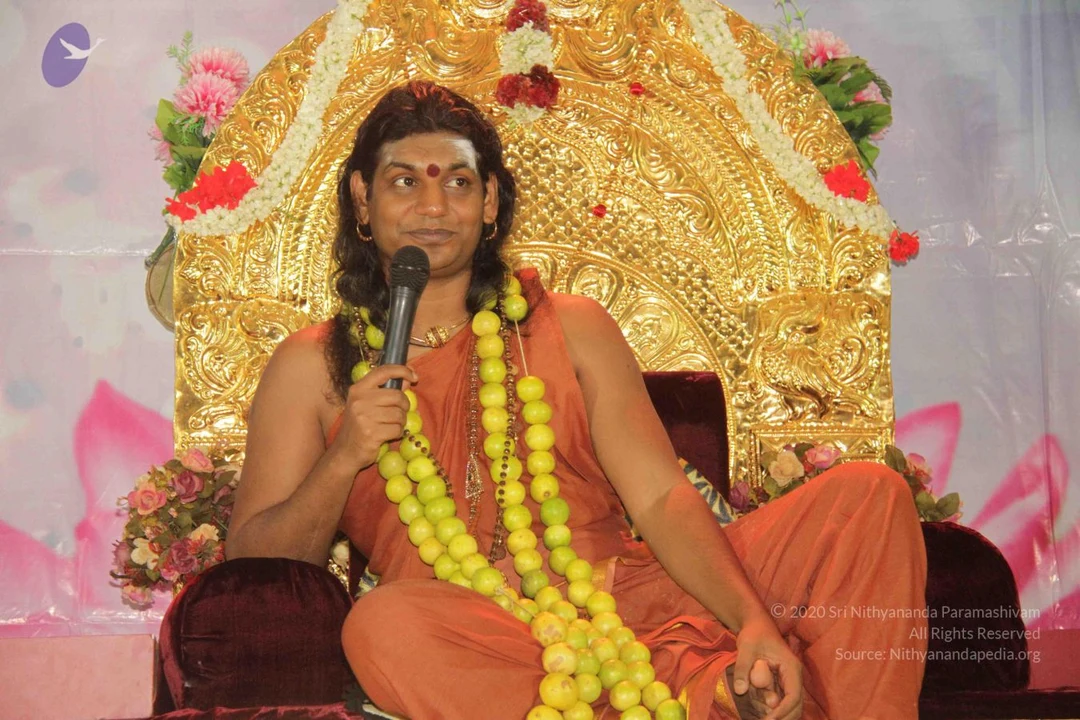
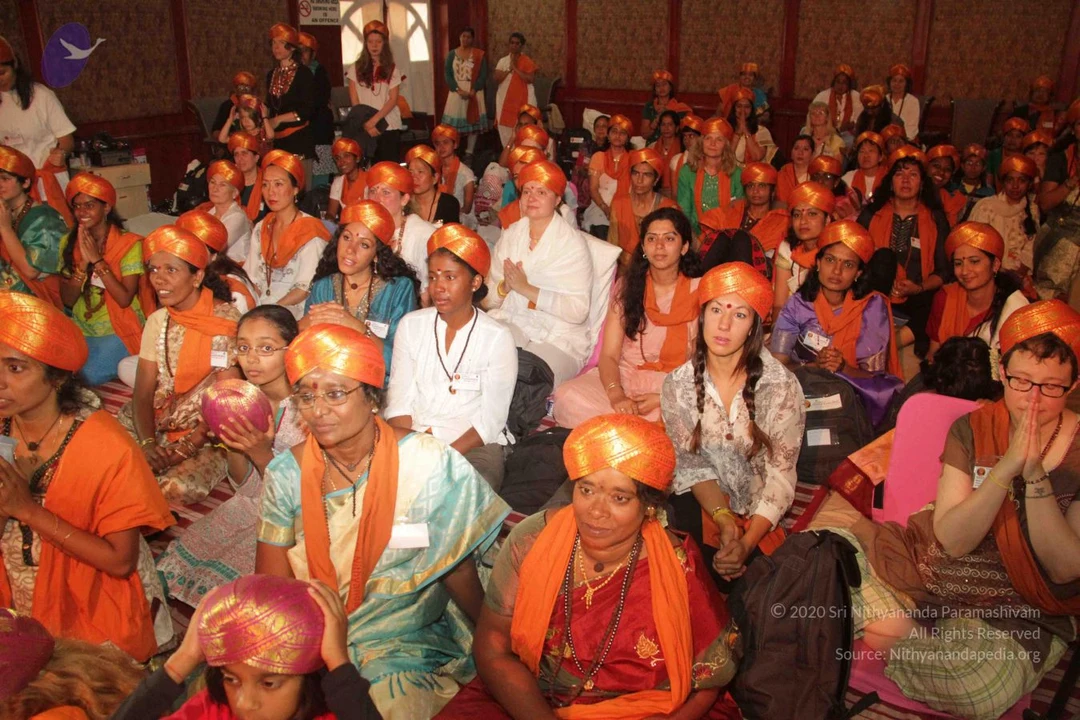
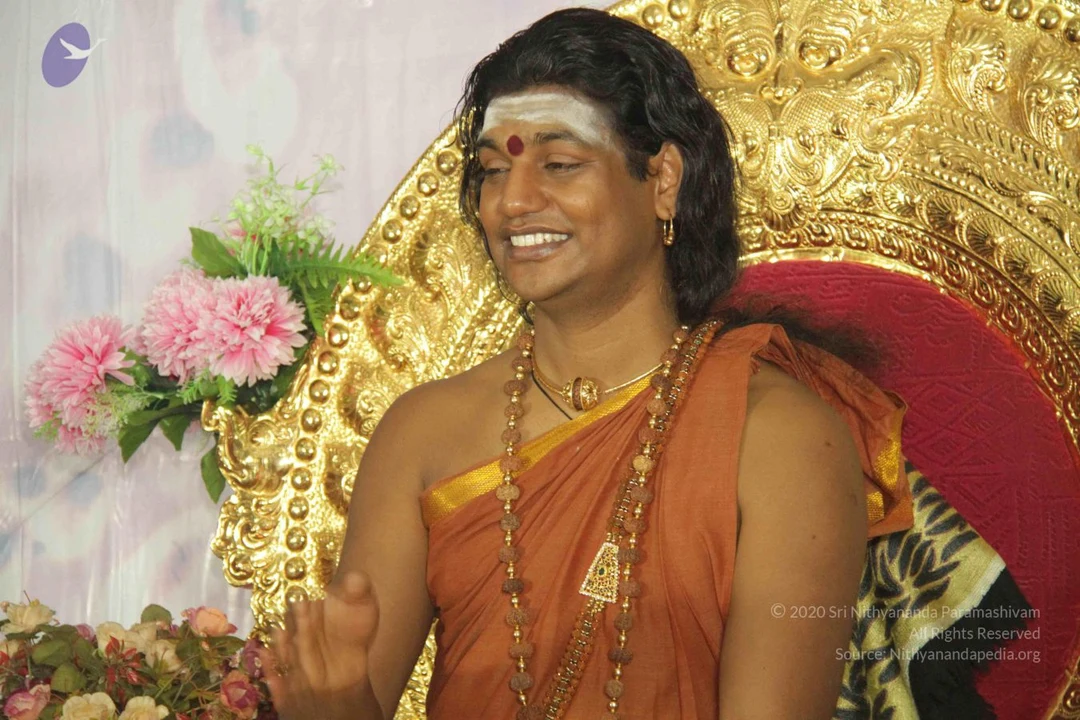
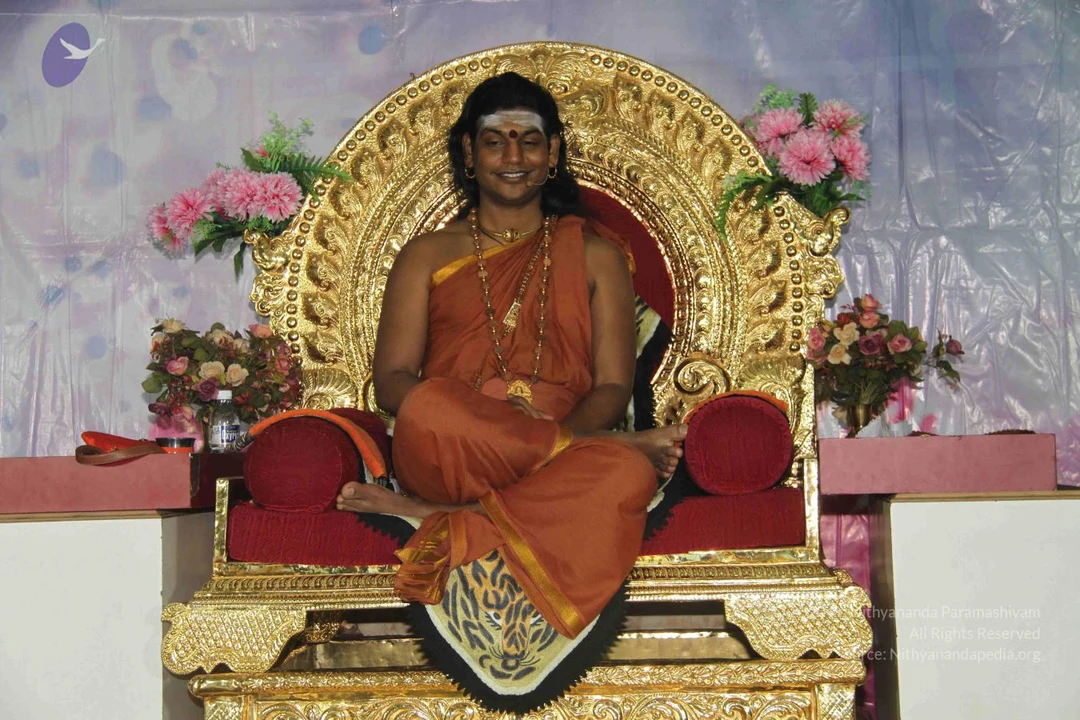
A seated man sits cross-legged on an ornate gold throne with a red cushioned seat and red bolster pillows, wearing an orange-saffron robe and a gold necklace over a rudraksha mala, with a white forehead marking and a small red bindi. He smiles and has a headset microphone. Behind him are pink chrysanthemum-style flowers and a pastel lilac backdrop. A bottle of water and a small bowl sit on a pink side table at left. Swamiji (probable): long swept-back hair, saffron robe, rudraksha mala and gold necklace, seated as a speaker on the throne.A photograph of a large monitor showing a video conference grid of many small participant windows, each labelled with a city or centre name on white or colored signs, including Klang, Palm Springs, San Diego Nithyananda Alavai, Dakota Dunes, and Cosmic Om. Participants sit in ashram-style rooms and homes, some in meditation or namaste posture, others seated in rows on mats or chairs. One window shows a woman in a white T-shirt labelled Satyanarayan Goyal, Mumbai, and another a man in white with a sign reading Satyanarayan Goyal near a framed portrait. A portrait is visible in a corner of the monitor. Several people in the grid are visible on screen, so they are depictions rather than physical people in the room; the physical scene is the monitor itself with a dark keyboard edge at lower left.A smiling man with long swept-back dark hair and a white vibhuti marking with a red bindi sits on an ornate gold-and-red throne with a tiger-striped cushion. He wears an orange saffron wrap draped over one shoulder, a rudraksha mala with gold beads, and a gold necklace. Pink flowers sit beside him. Behind him a banner shows red handwritten English text and Devanagari script. A white air cooler is at the lower right. Given the long hair, saffron clothing, rudraksha mala, gold necklace and the page's note that Swamiji attended, this is a probable depiction of Swamiji seated on the throne during a satsang.A photograph of a large seated audience in a wood-panelled hall, mostly women in orange and saffron shawls and sarees, many with palms pressed together in namaste or clapping. Some wear white kurtas and some wear pink, green and maroon saris. Plastic food containers sit on the floor among the audience. A no-smoking sign hangs on the wall at top left, and a purple cloth is visible in the upper left corner. Many people are visible across several rows, with a small group in the foreground. a person is not clearly visible in this frame; the audience appears to be attending a satsang session.A photograph of a seated satsang audience in a wood-panelled hall with striped red and white floor mats. Most attendees wear white clothes with orange shawls or sashes, and many have their palms pressed together in anjali or clap. In the foreground a shaved-headed boy in white sits on a small chair with a tilak on his forehead. A bald man in white with a rudraksha mala and glasses takes notes on a pad. Orange drapery hangs at the right and a bag and water bottle lie on the floor. No clearly identifiable a person is visible in the frame, so the speaker is not shown.A photograph of a large seated congregation on striped red and white mats inside a hall with patterned wall hangings and orange drapes. Many men wear white kurtas or dhotis with orange shawls, and several wear rudraksha malas. Most have their palms pressed together in anjali, clapping or chanting. A bald man in white with a rudraksha mala writes in a notebook, and a shaved-headed boy with a red tilak sits in front clapping. A man in a red top with a mala sits at the lower right. No single figure is clearly identifiable as a person from appearance, so no a person candidate is recorded; the scene reads as satsang attendees.
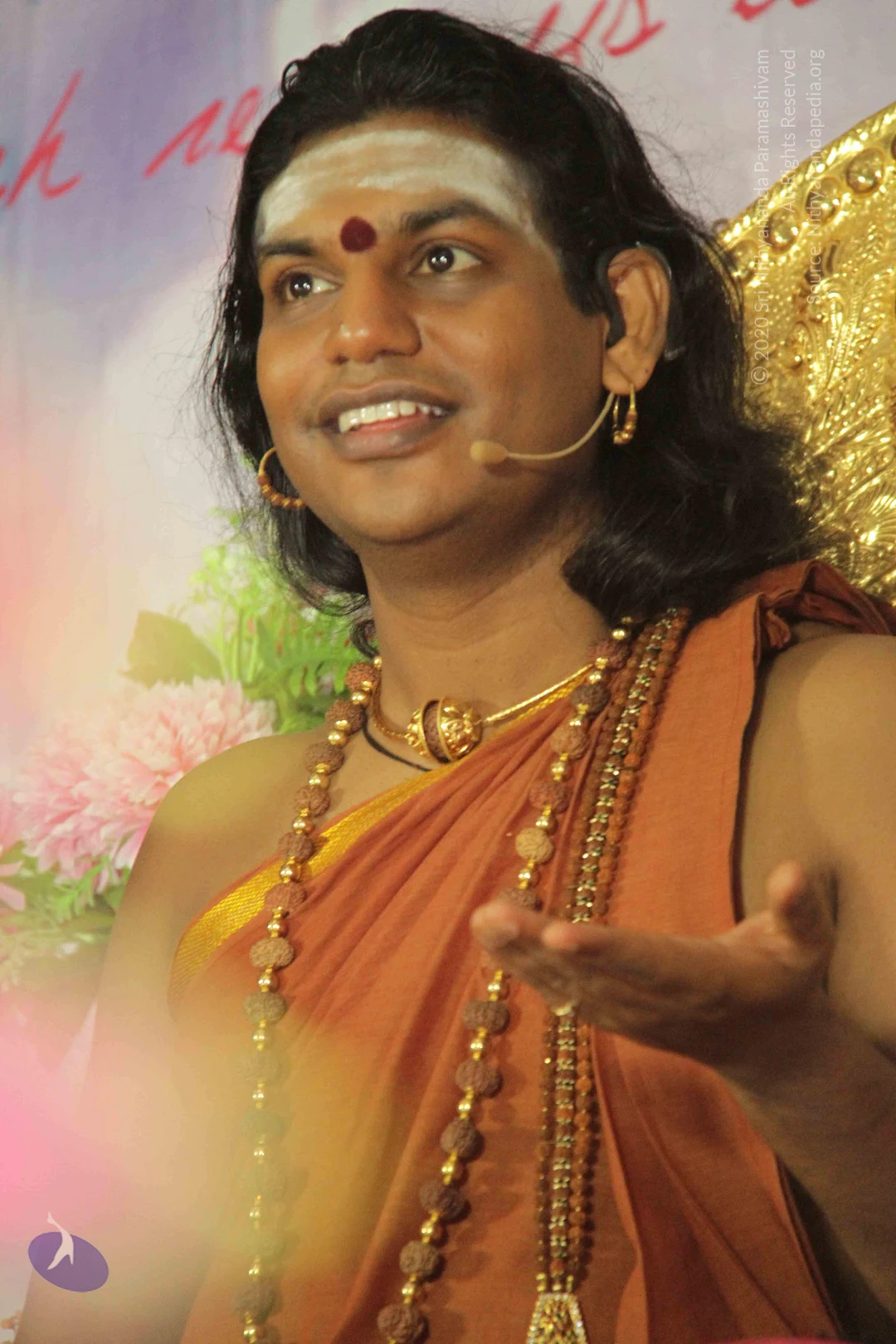
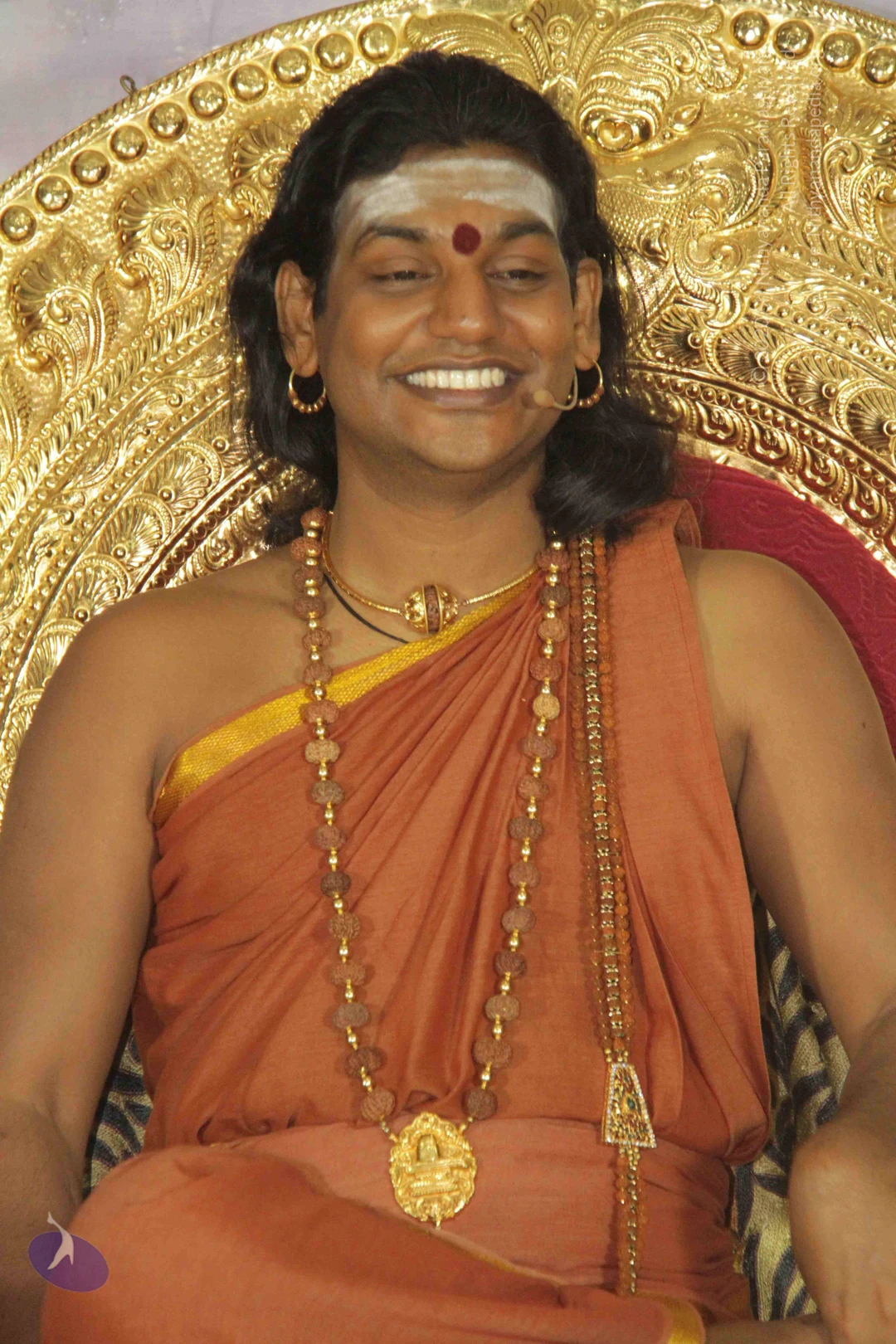
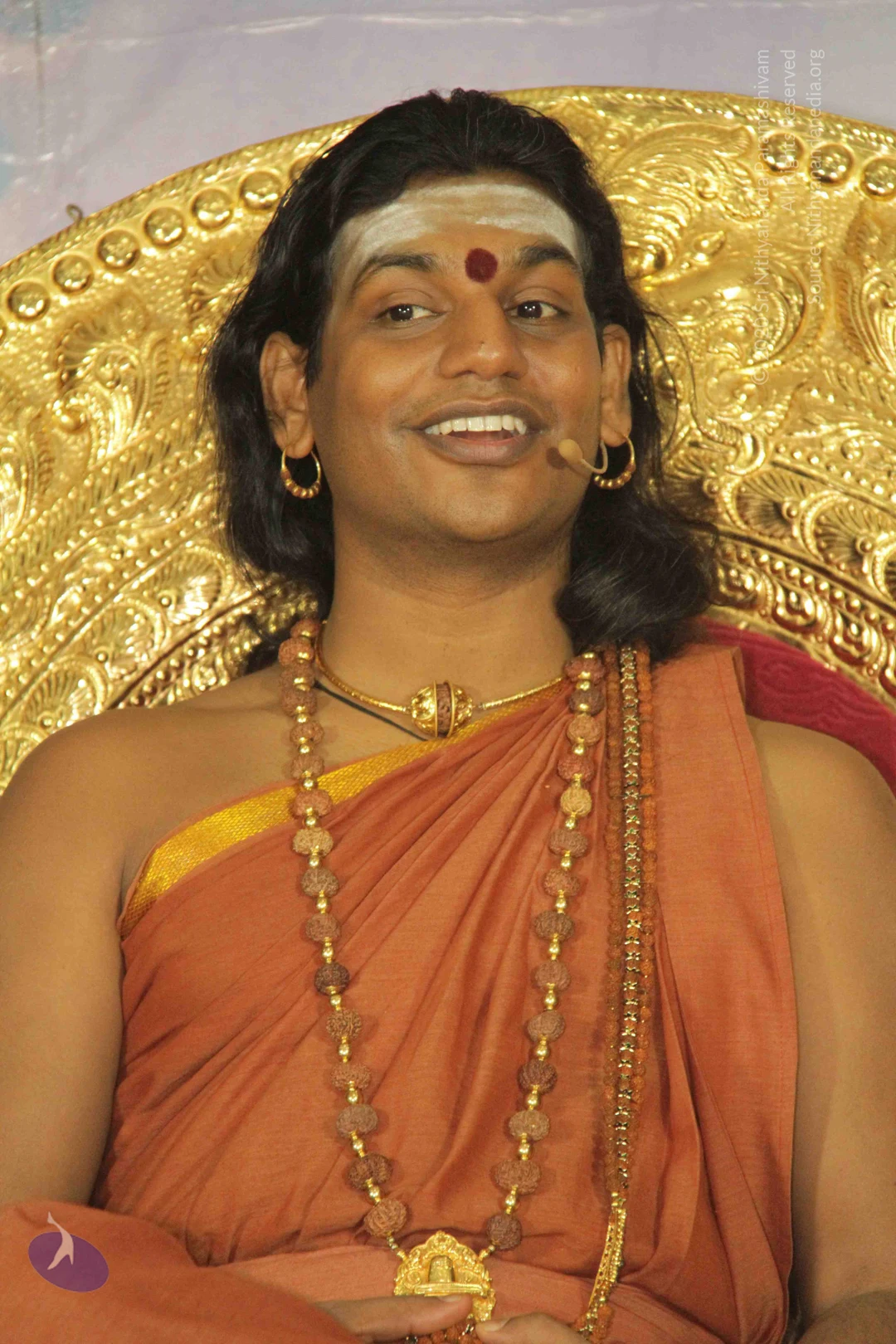
Dial the Avatar

8 photosSource gallery
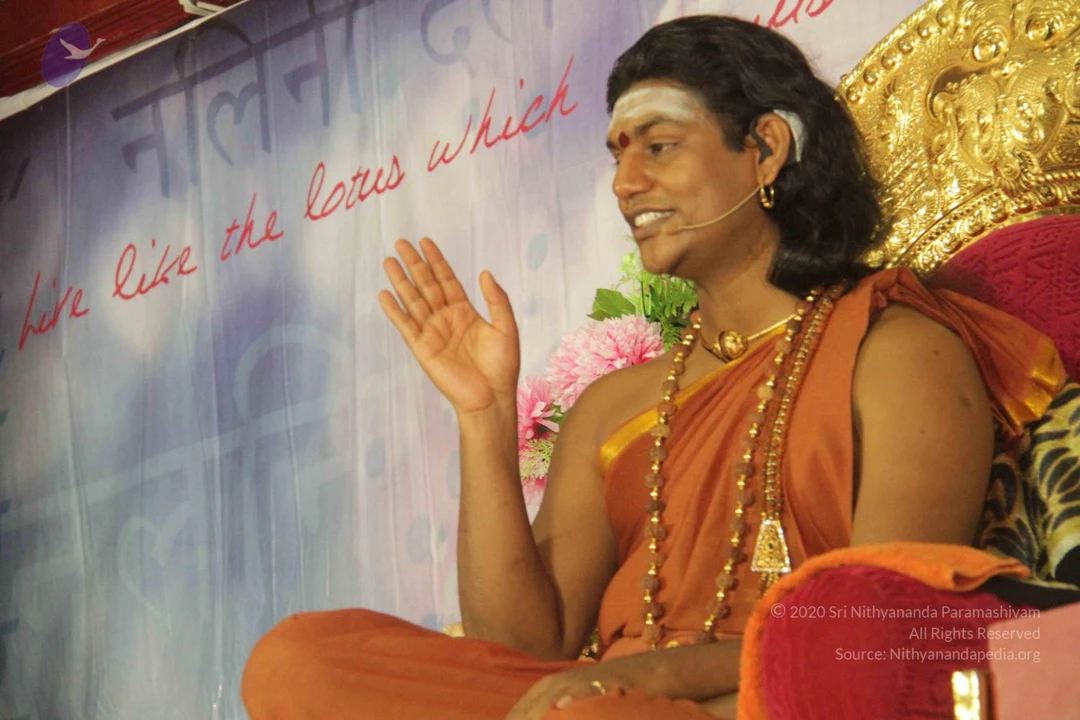
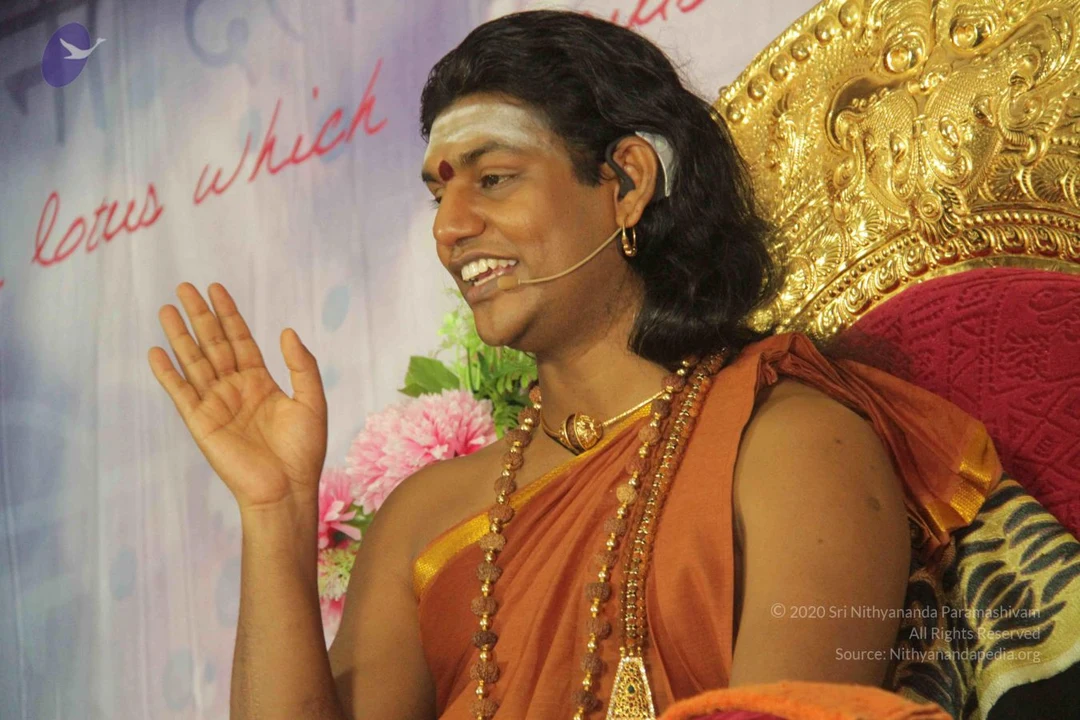
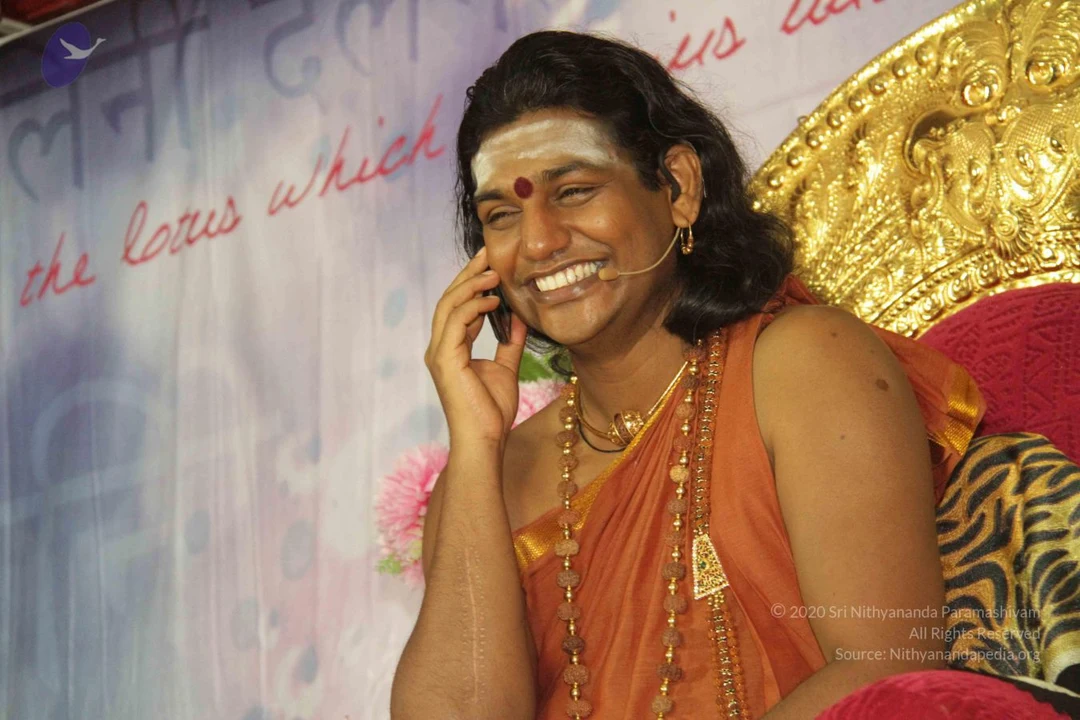
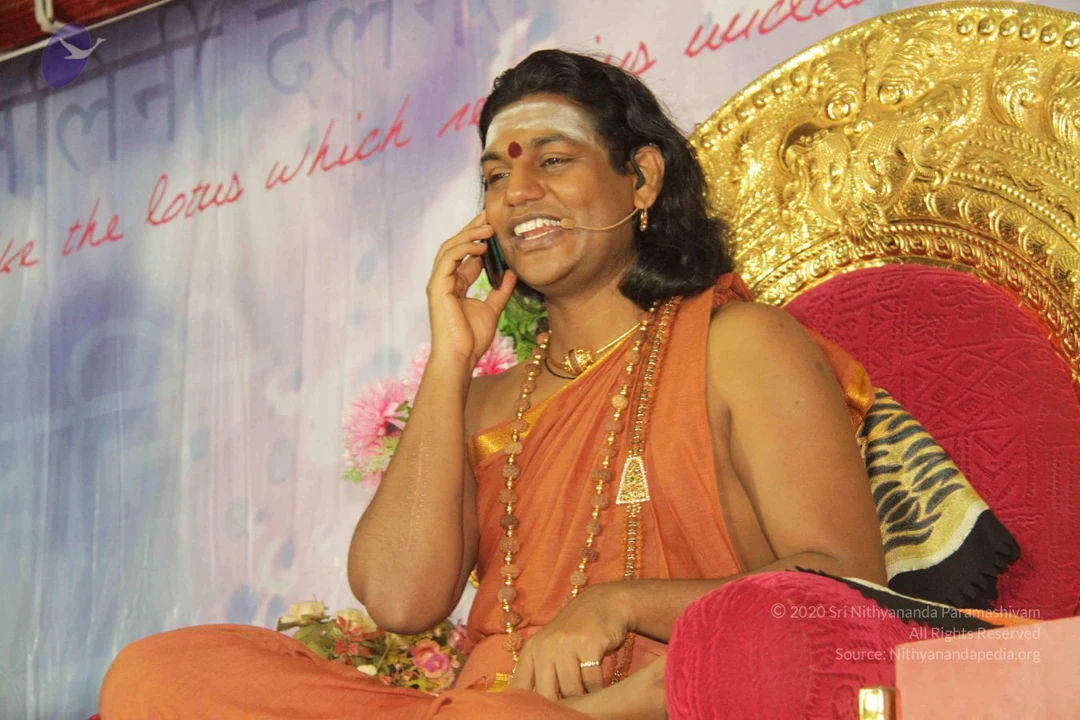
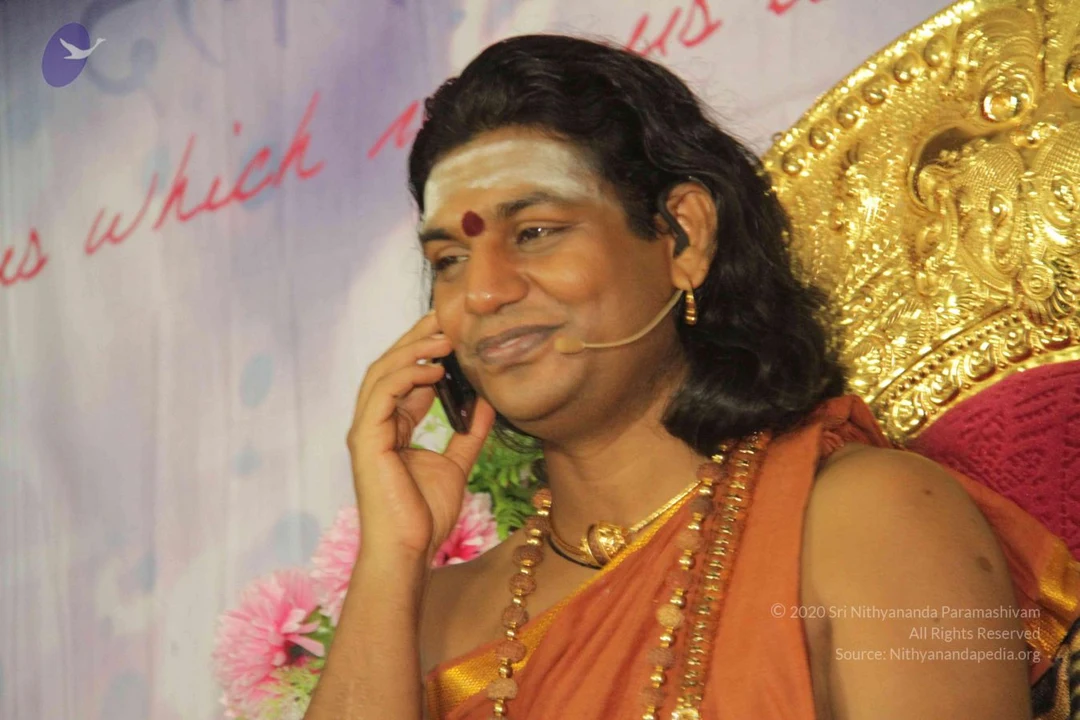
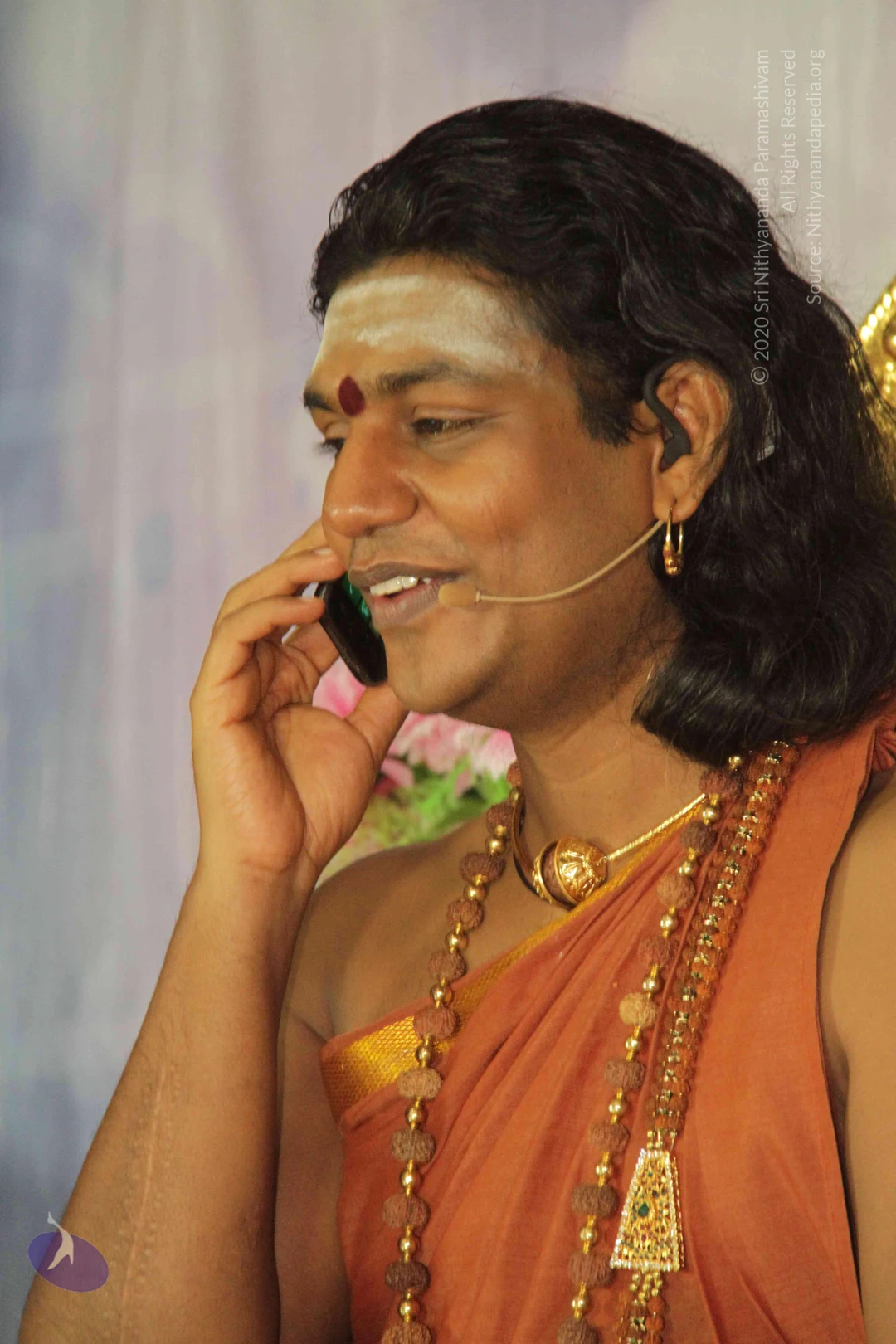
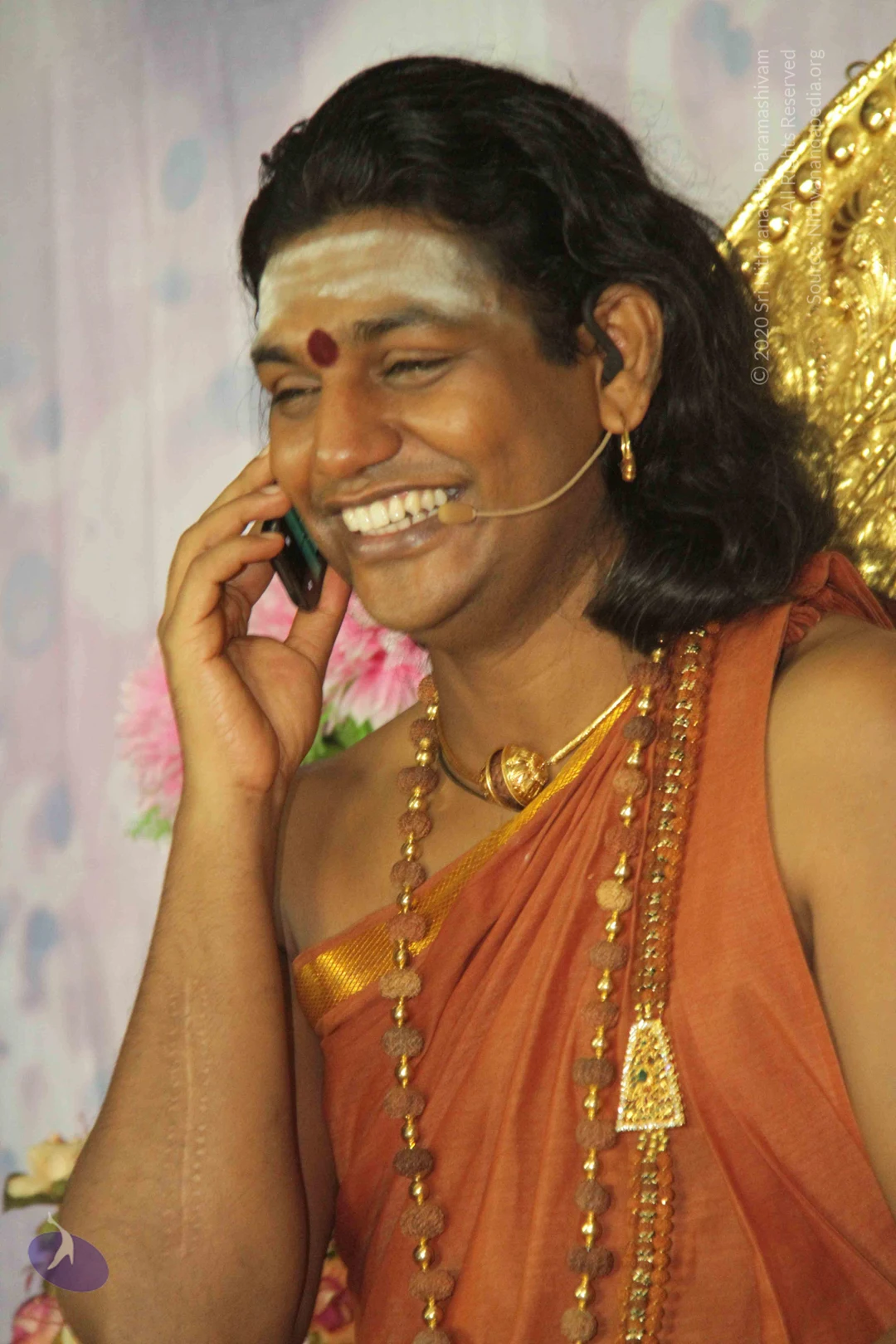
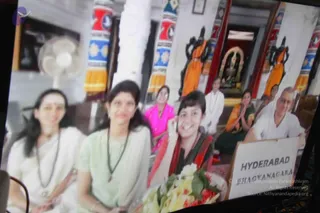
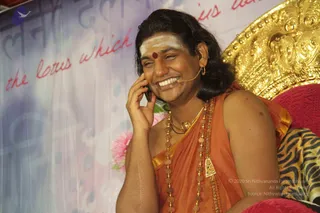
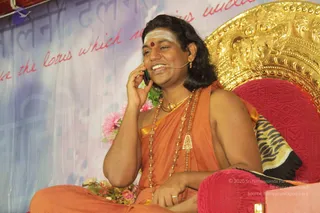
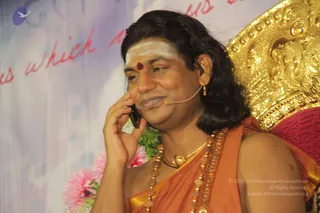
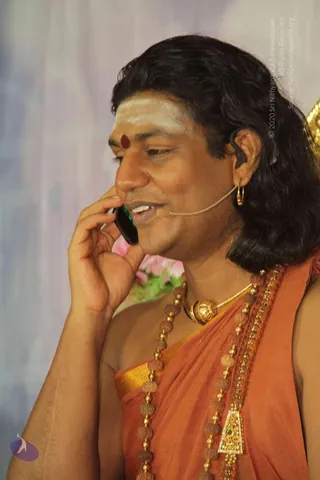
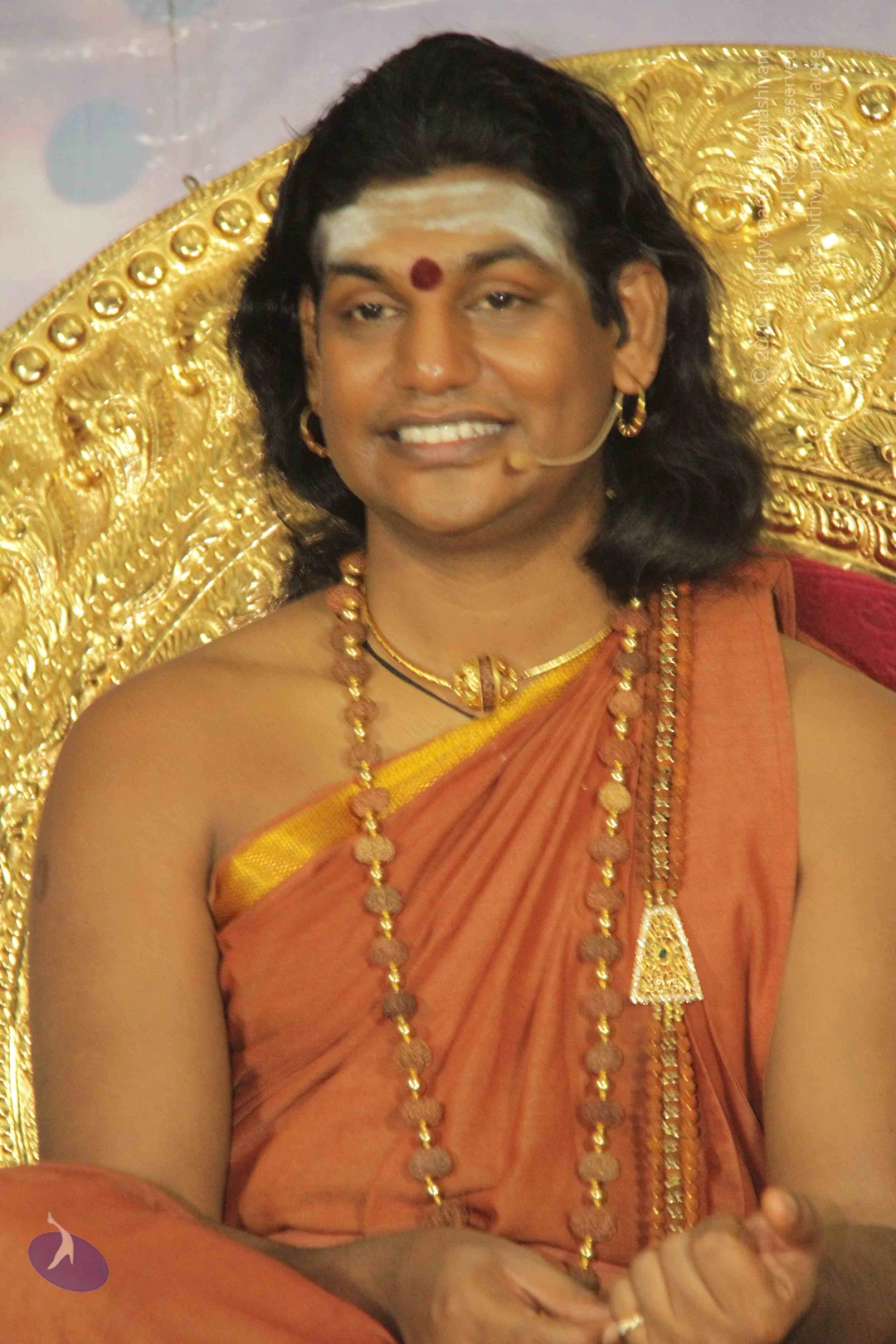
A photograph of a large monitor screen showing a group photo of several smiling people in front of a shrine with orange cloth and framed pictures. In the foreground, a woman in a green dress and a girl in a red-and-black outfit smile beside a bunch of white and yellow flowers. A bald man in a white shirt sits at right beside a printed sign reading HYDERABAD. Another woman in an orange sari sits in the background. The screen is at a slant, and a web page with bulleted text is visible at the right edge. Several people appear on the monitor, but they are shown on a screen rather than present physically.A photograph of a screen showing a group seated in a temple hall with red and blue pillars, orange-painted deity figures and a shrine with a lamp. In front, two women in white saris and beaded necklaces sit at left, a woman in a light green sari stands centre-left, and a smiling girl in a red and black outfit holds a bouquet of white and yellow flowers. Behind them a woman in a pink sari and a man in a white shirt sit near a wooden stand. A handwritten-style sign reads HYDERABAD BHAGYANAGARA. A ceiling fan and a framed picture appear at upper left.A photograph of a smiling man seated on a red cushioned chair in front of a golden ornate chair back. He wears an orange saffron garment draped over one shoulder, a long rudraksha mala and a gold ceremonial necklace, with a white vibhuti marking on his forehead and a red bindi. A small headset microphone is fitted near his face and he holds a mobile phone to his ear. Behind him is a pastel backdrop with red handwritten English text reading 'the lotus which' and a pink floral arrangement. A zebra-patterned cloth lies over the chair arm.A man sits cross-legged on a red cushioned seat beneath an ornate gold throne back, holding a mobile phone to his ear and smiling broadly. He wears an orange saffron robe, a rudraksha mala and a long gold pendant necklace, with white vibhuti and a red bindi on his forehead and a headset microphone at his ear. Behind him a pastel backdrop shows pink flowers and red handwritten lettering reading 'the lotus which'. A small flower arrangement sits at lower right. Swamiji (probable) appears as the seated speaker, identified only by appearance cues: long swept-back hair, saffron clothing, rudraksha and gold ornaments.A photograph of a man seated before a golden ornate throne-back, holding a mobile phone to his right ear with a head-mounted microphone. He wears an orange saffron shawl over his shoulder, a gold necklace, layered rudraksha-style beaded malas, a red bindi and white vertical tilak on his forehead, and a small gold earring. Behind him are pink flowers and a pastel backdrop with red handwritten script. The subject shows distinctive adornments and saffron clothing, consistent with a person candidate, but the appearance is not fully certain. Single person visible.Photograph of a man with long dark wavy hair and a white vertical line with red dot on his forehead, wearing an orange-saffron garment with a gold border, a gold necklace and multiple rudraksha malas, and a small gold earring. He holds a black mobile phone to his ear while wearing a headset microphone, smiling, against a pale lavender backdrop with pink flowers. Appearance-based candidate: a person, identified by long swept hair, saffron clothing, rudraksha malas and ceremonial gold necklace, shown speaking during a satsang setting.
Sarva Darshan

10 photosSource gallery
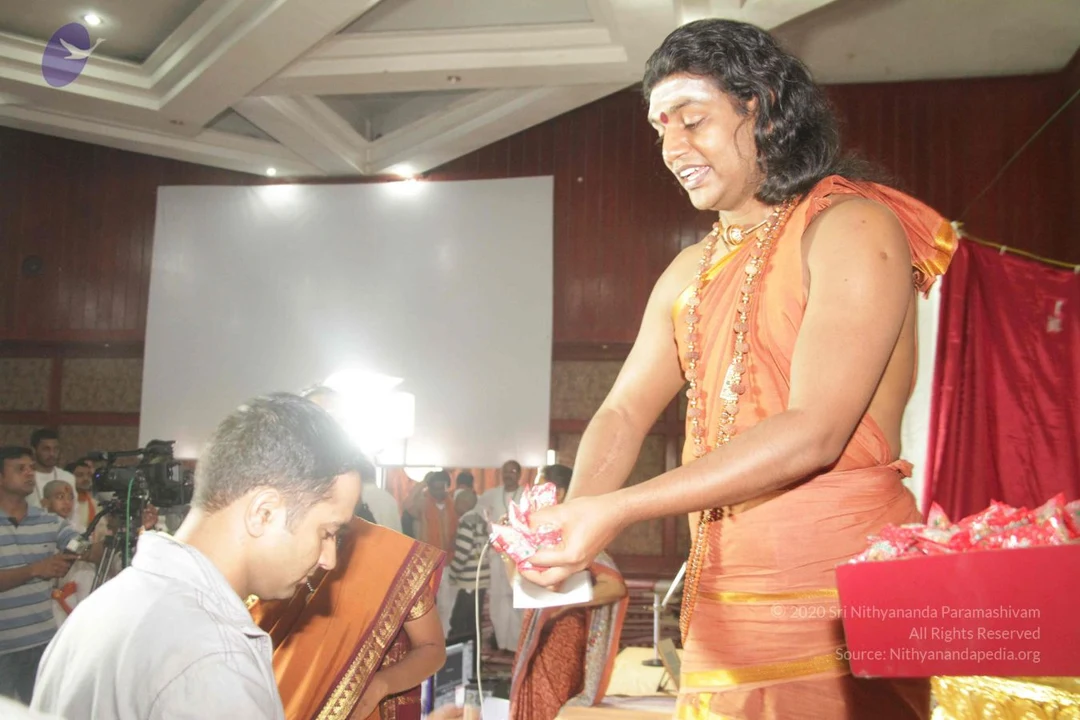
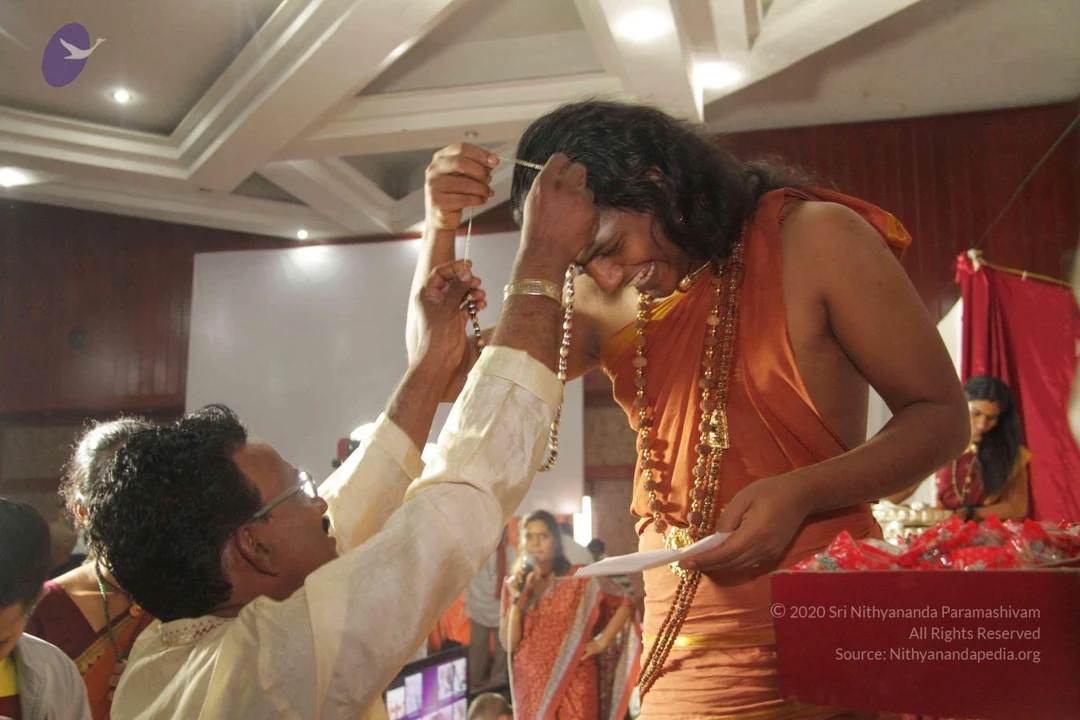
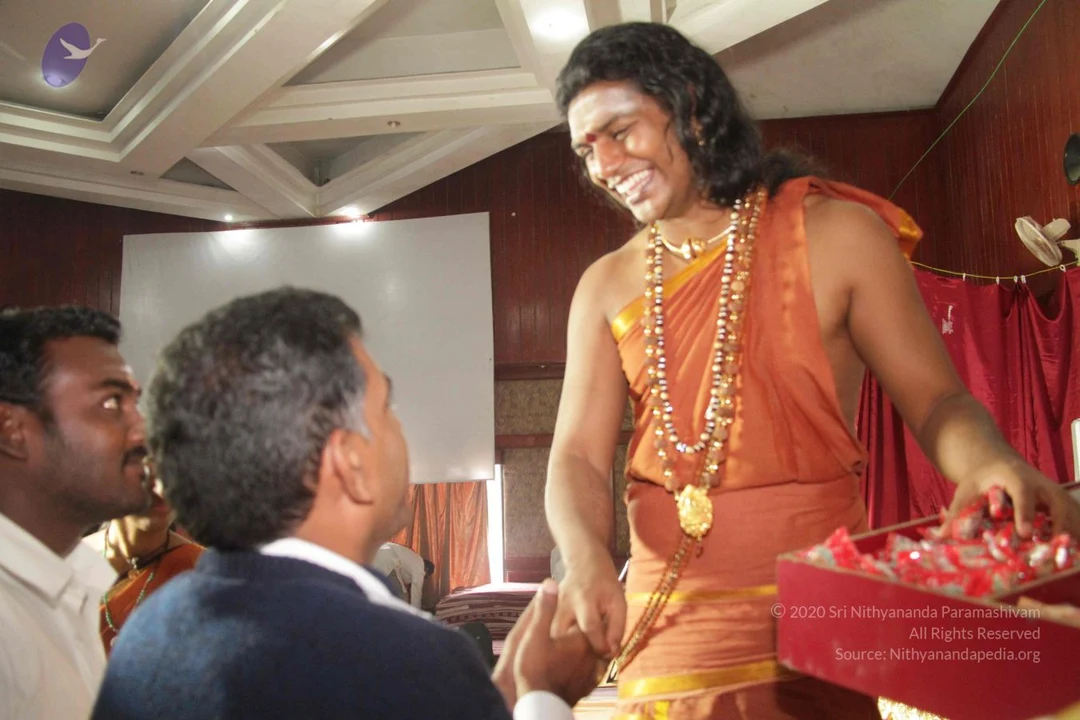
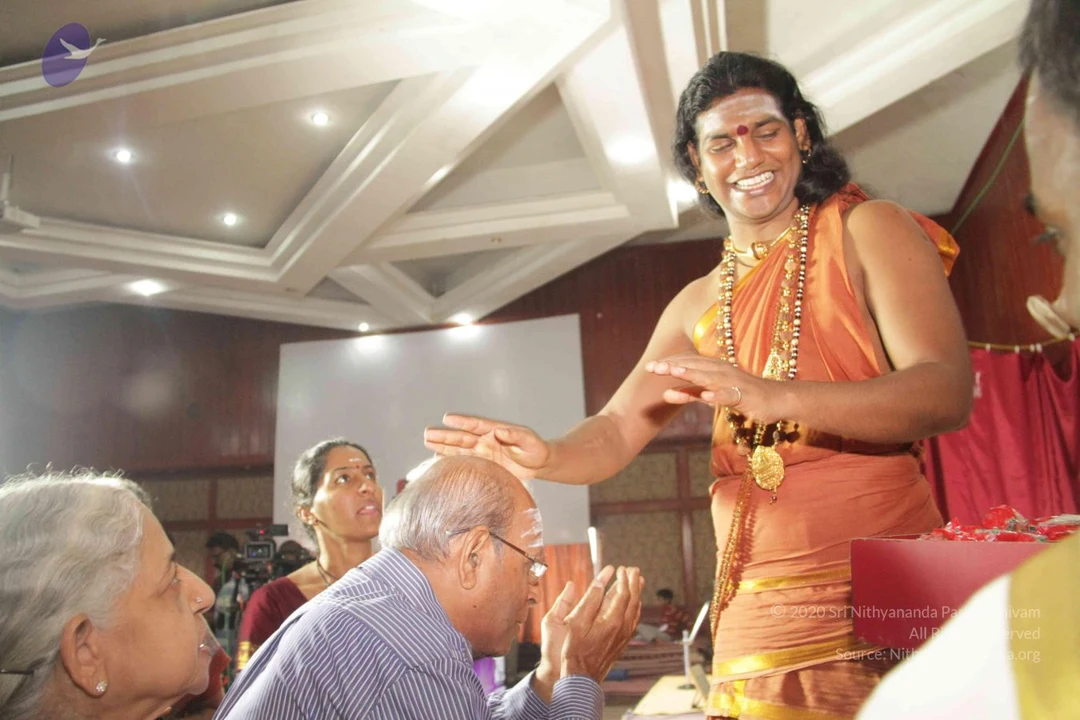
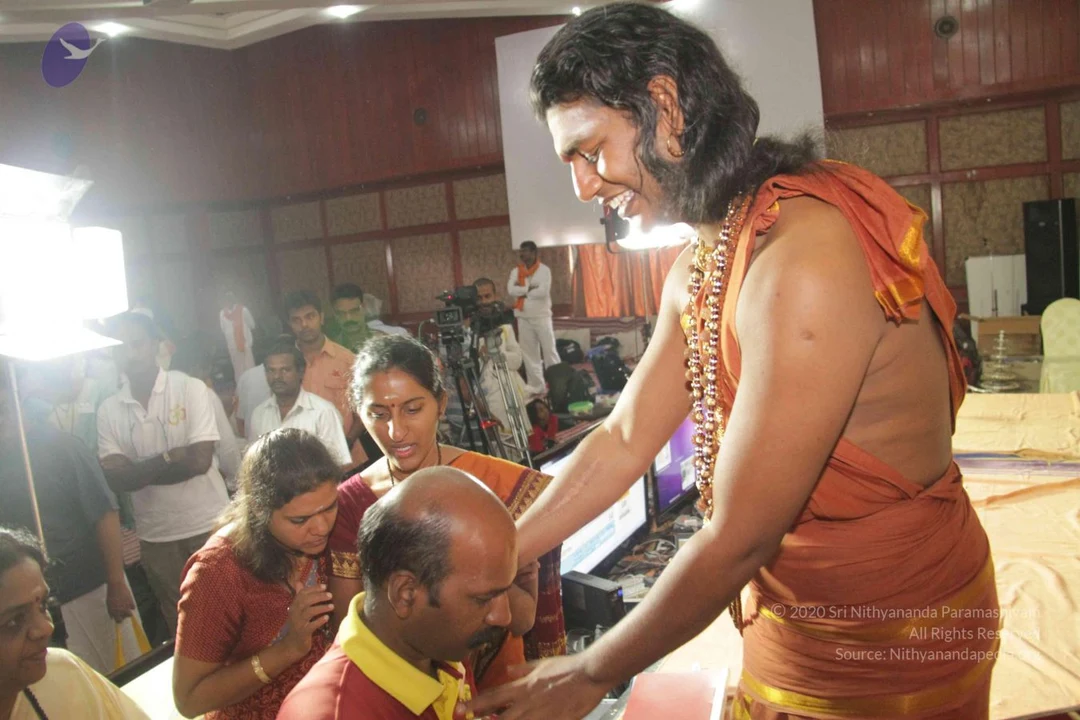
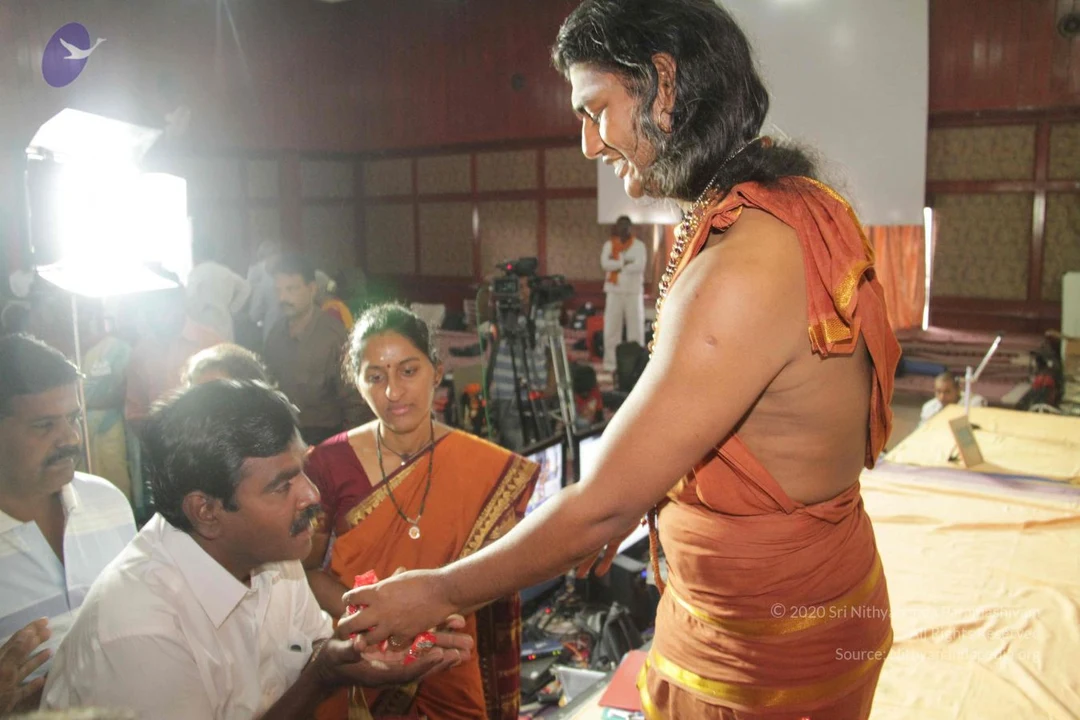
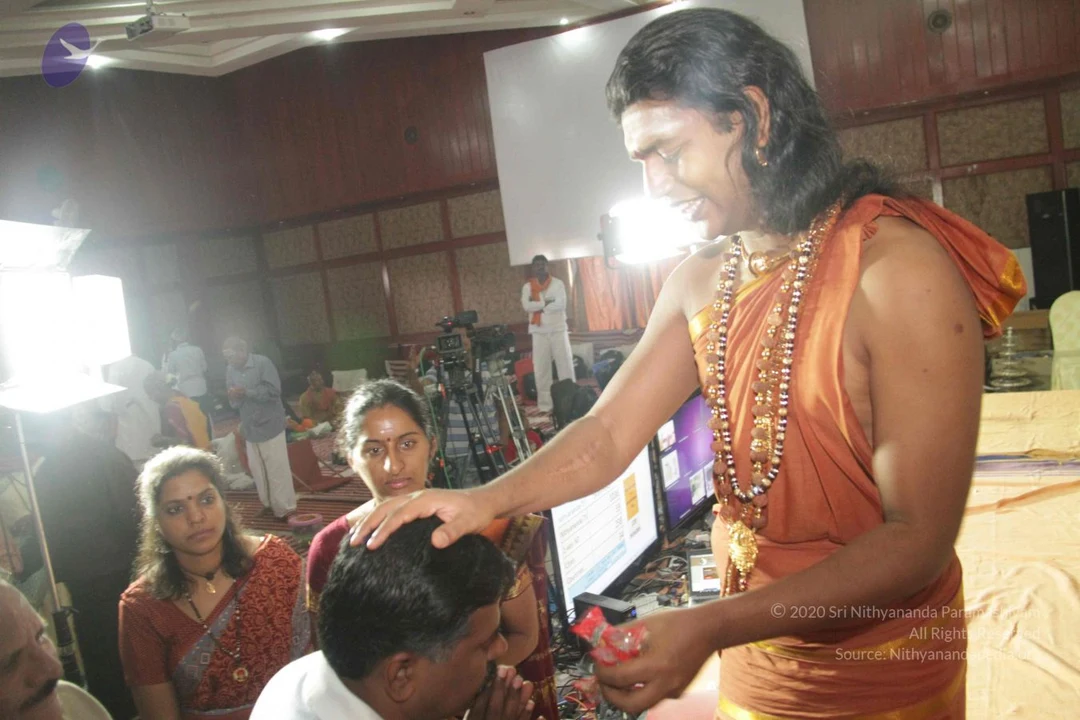
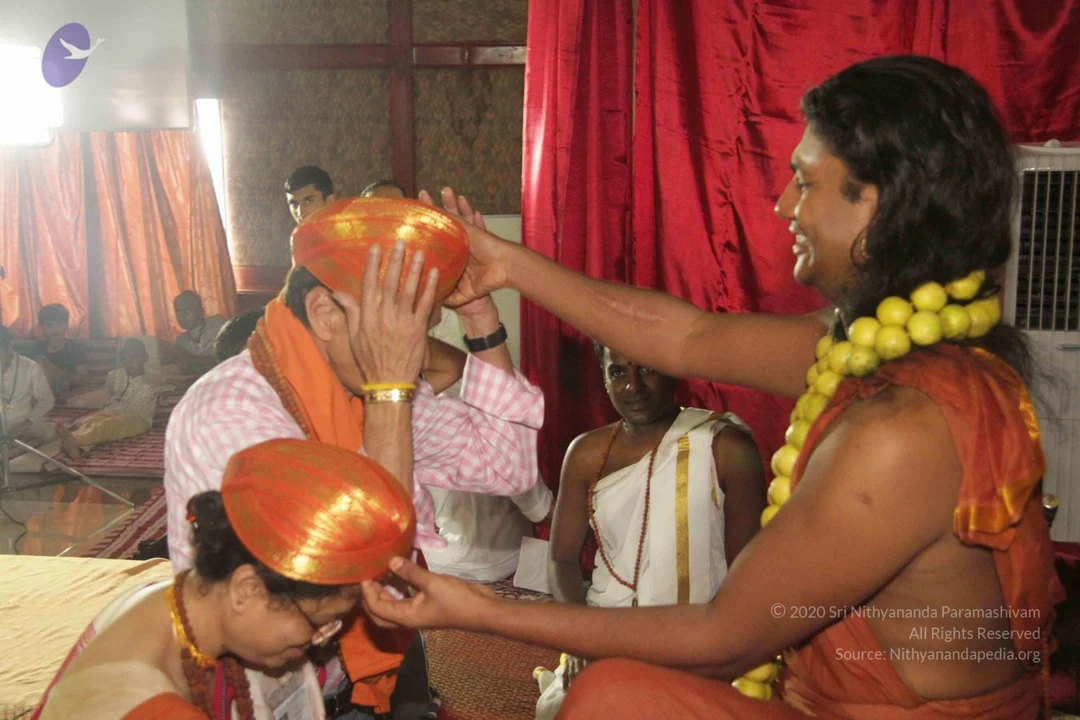
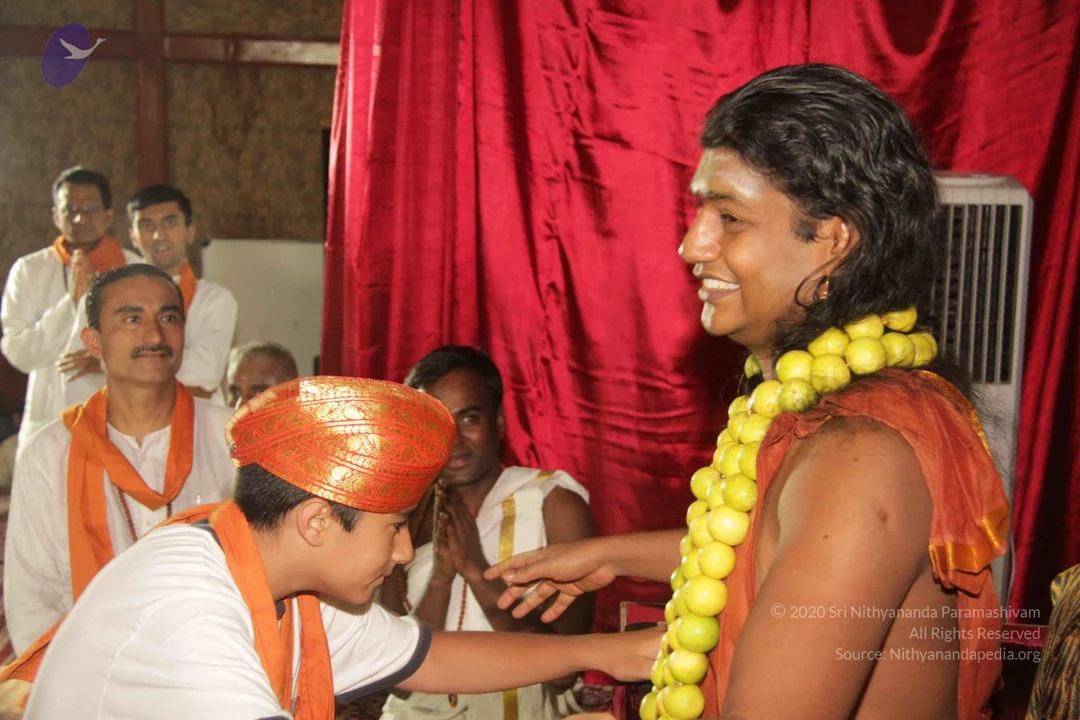
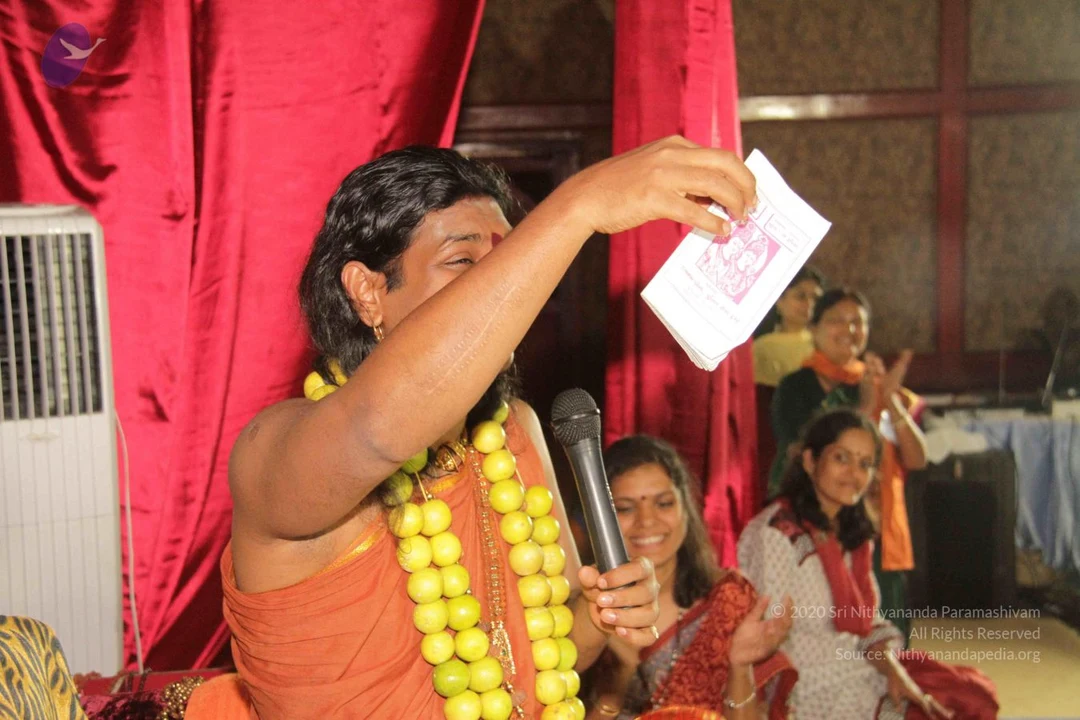
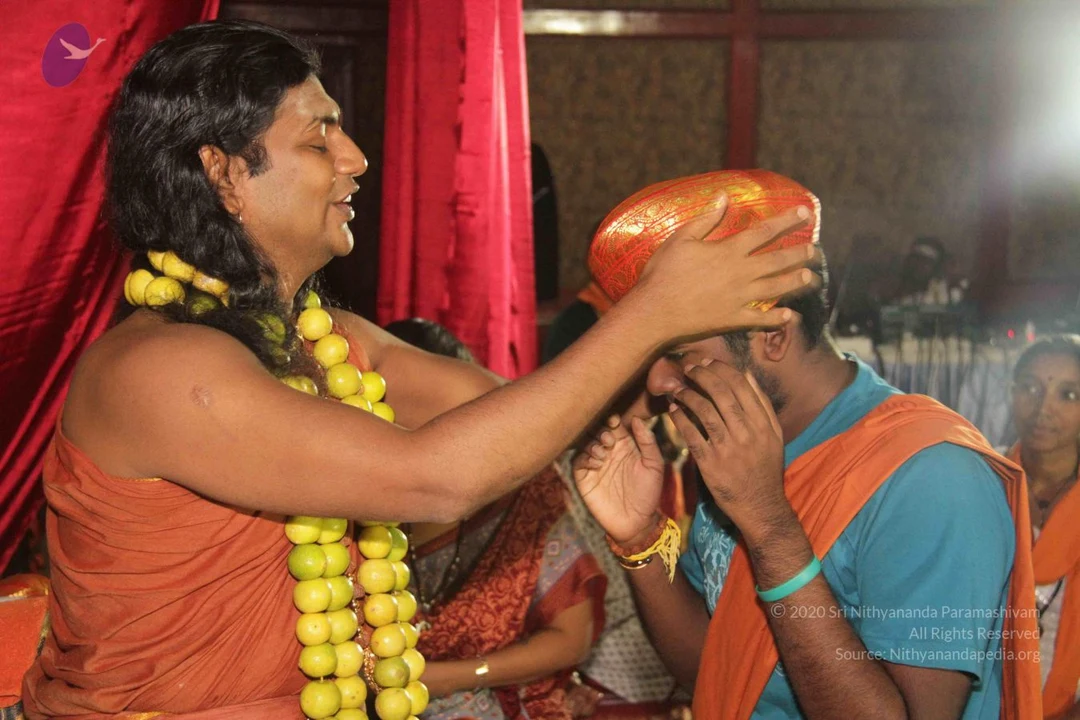
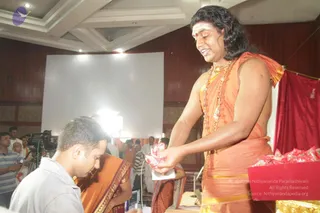
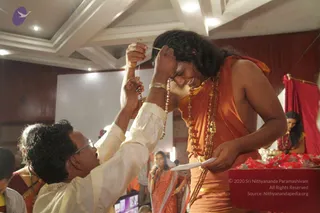
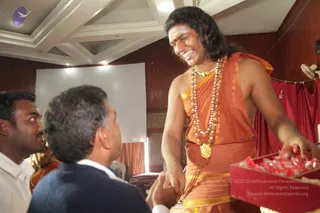
A photo from an indoor hall with wood-panelled walls and a blank projection screen. A man with long dark hair and an orange shawl, wearing a gold-chain mala, an orange dhoti with gold border and a red bindi, stands at right holding out a small packet wrapped in red and white paper. In front, a man in a grey shirt bends forward with his head lowered to receive it. Behind them stand a woman in an orange sari with gold border and several onlookers in orange and white. A video camera on a tripod and a red box of similar packets sit at right. Probable Swamiji is the man with the long hair and orange shawl, distributing prasad at a satsang.A photograph of an indoor ceremony in a hall with a white coffered ceiling. A man in a white shirt and light trousers, wearing glasses, leans in and places a thread or cord on the forehead of a long-haired person in an orange-saffron dhoti and shawl, adorned with layered gold and beaded malas and a gold necklace. The person in orange has eyes closed and holds a folded white paper in one hand. A bright red-wrapped tray with a pile of red-packaged items sits in the foreground right, and a woman in a red and orange sari stands in the background near a microphone. Cues for the orange-clad figure include long swept hair, saffron clothing and multiple malas, consistent with a person receiving the ritual touch.Indoor photograph in a wood-panelled hall with a white coffered ceiling and a whiteboard behind. A smiling man with long swept-back dark hair, a red bindi, a shawl draped in saffron-orange, layered beaded malas and a large gold pendant stands on the right, offering sweets from a red tray with his right hand while clasping another man's hand. The recipient, seen from behind in a navy jacket over a white shirt, leans in toward him. At left a younger man in a white shirt watches, and a partly visible person in orange stands at the edge. Red drapes hang at the right. Appearance-based label: a person, shown distributing prasad to a devotee.Indoor photo of a smiling man in an orange-saffron dhoti and shawl, with long dark hair, a red bindi, a gold chain, and multiple rudraksha malas, extending his right hand in blessing over the bowed head of a seated older man in a blue striped shirt who holds his palms together in namaskar. An older woman with short grey hair on the left watches, and a woman in a dark top stands behind them. A white ceiling with recessed lights, a projection screen, a red draped backdrop and a red-covered table with offerings complete the ceremonial setting. The orange-clad figure is an appearance-based a person giving blessing, with long swept hair, orange clothing and multiple malas as the qualifying cues.A photograph inside a hall with wood-panelled walls and a white projection screen. A tall man with long dark hair, bare-chested under an orange-saffron shawl and wearing a beaded necklace with ornaments, leans forward smiling and places his hand on the head of a seated bald man in a yellow collared shirt. Beside them a woman in an orange sari and a second woman in red stand close, one with hands together. Behind them, men in white shirts and orange stoles stand watching, and a camera on a tripod is visible. Light stands and a table with equipment fill the foreground.A photograph inside a hall with wood-panelled walls and bright studio lights, showing a long-haired man in an orange-saffron dhoti and shawl with a beaded necklace and gold trim, bare-chested and standing, leaning forward to hand small red items to a seated man in a white shirt who holds out his cupped palms. Beside them a woman in an orange sari with gold border and a pendant stands watching. Other people in white and orange clothing stand in the background near camera equipment and a tripod.
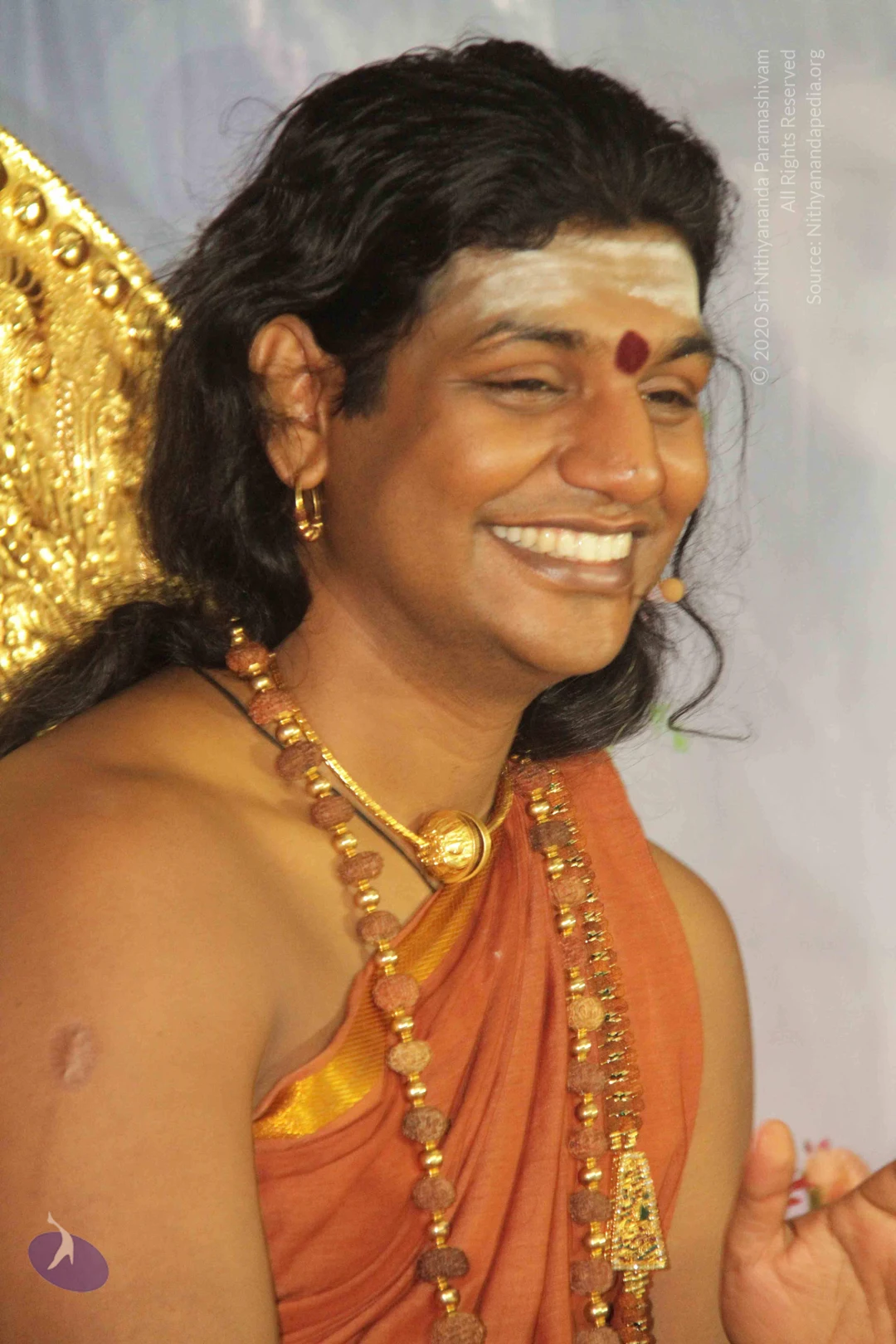
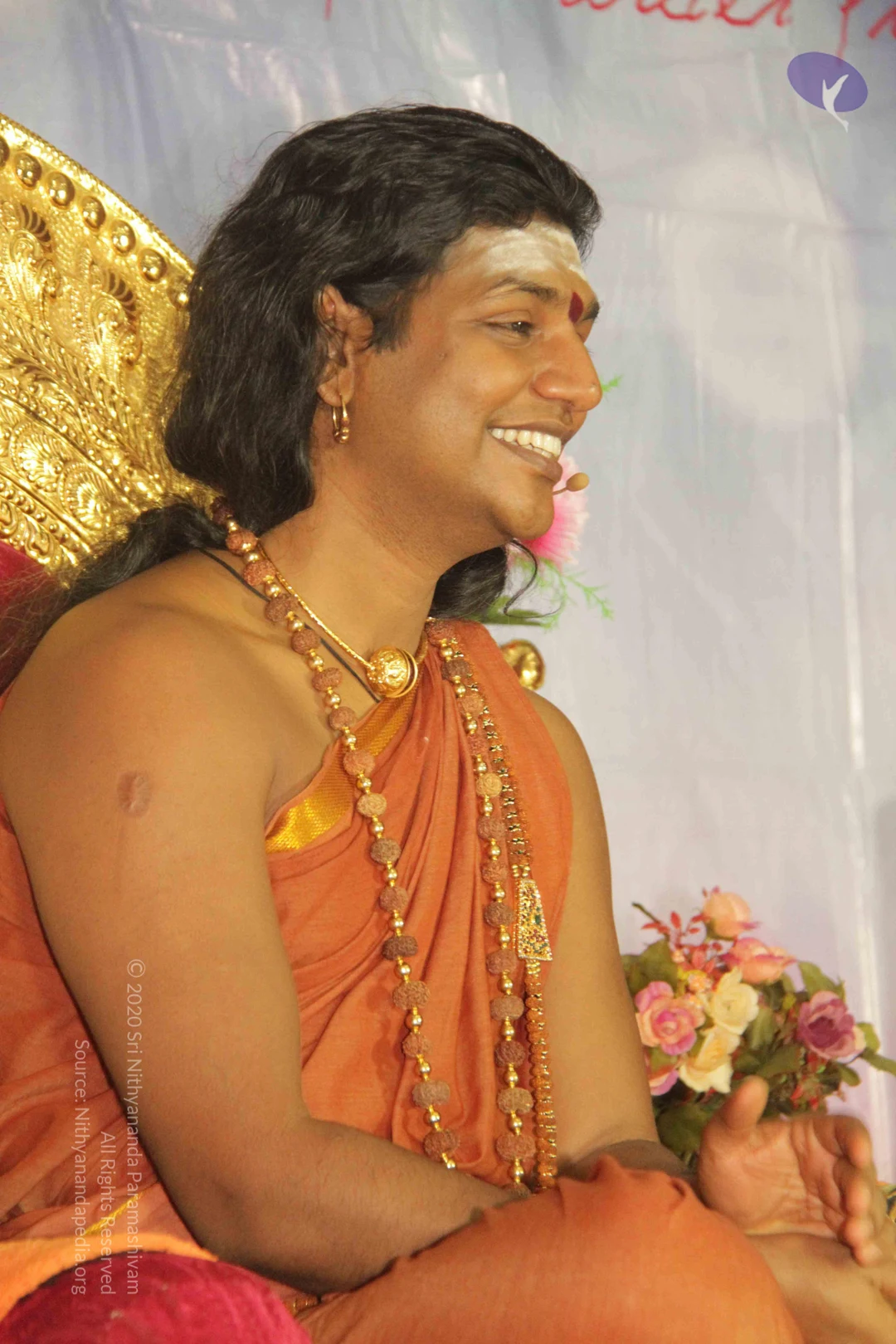
Inner Awakening-Session
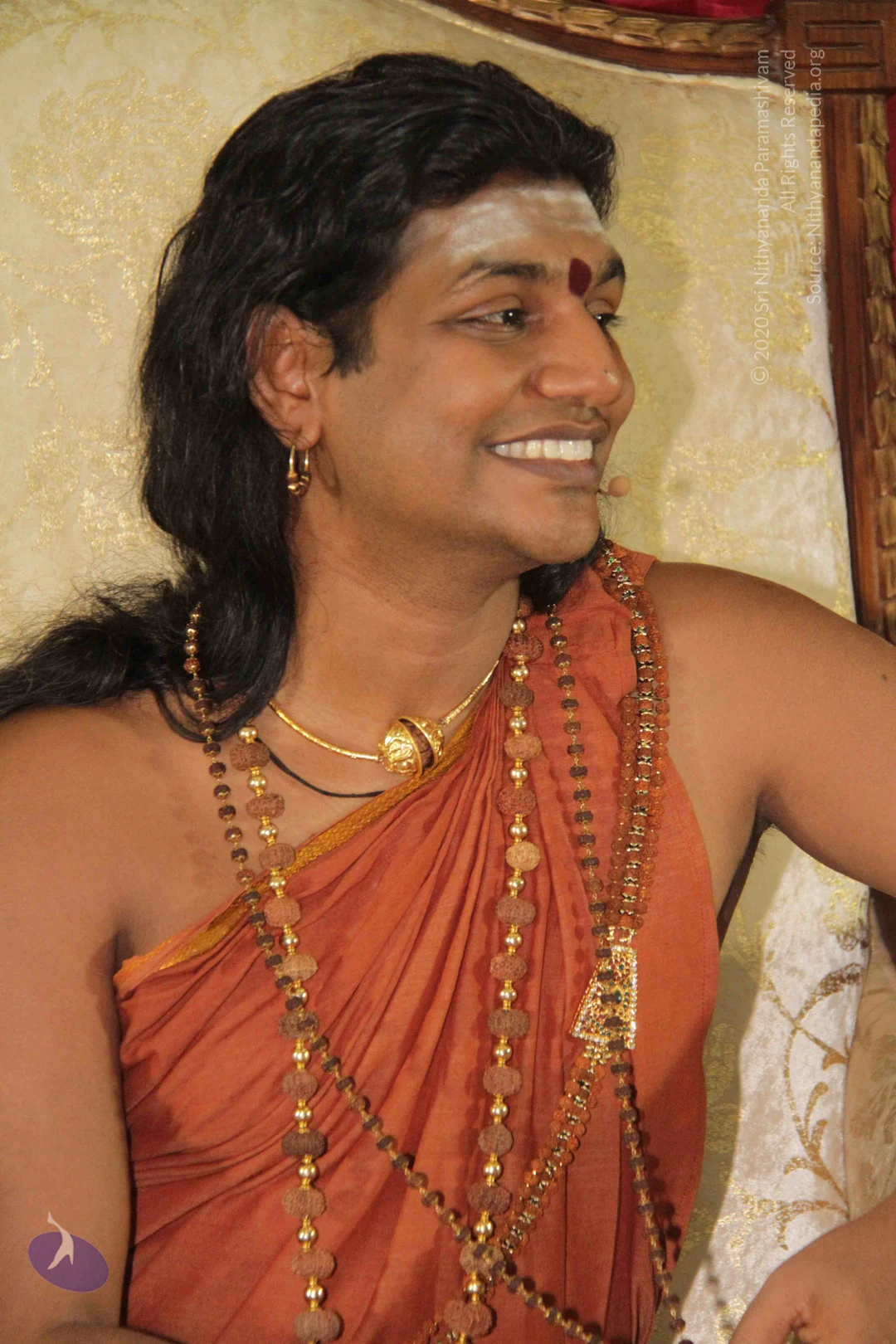
9 photosSource gallery
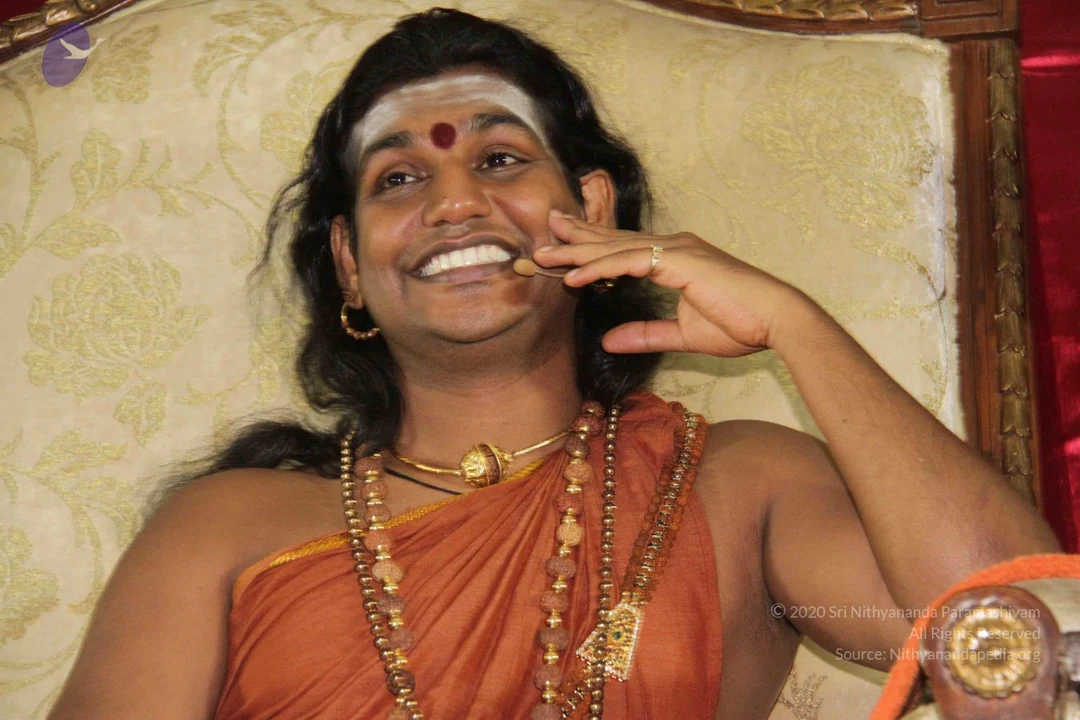
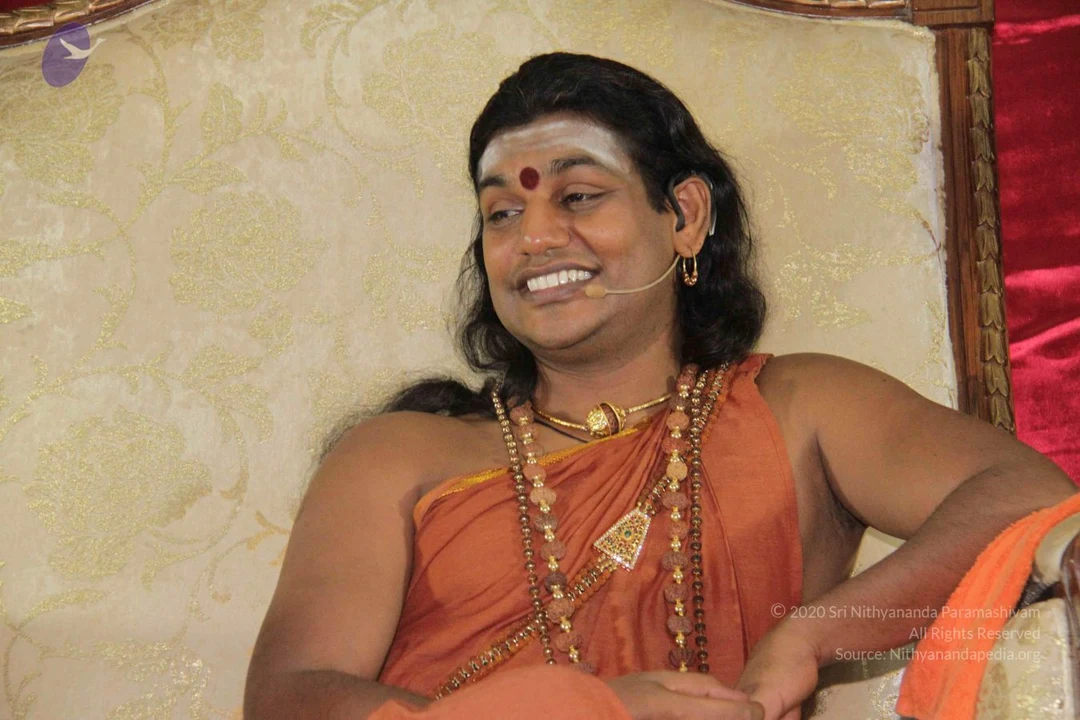
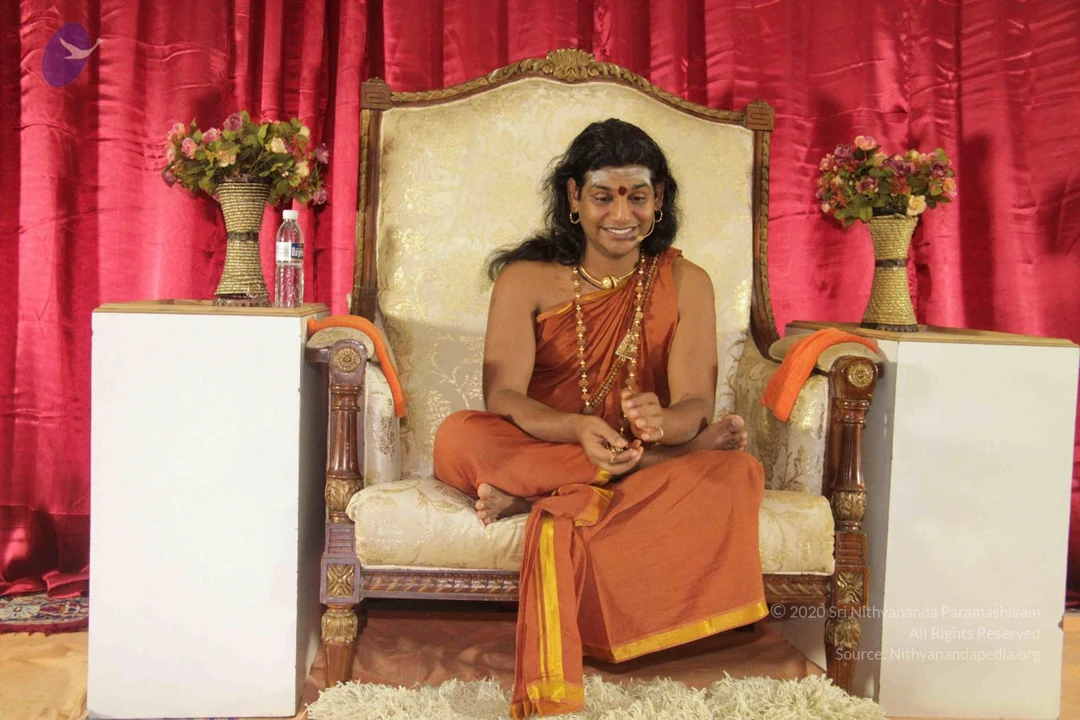
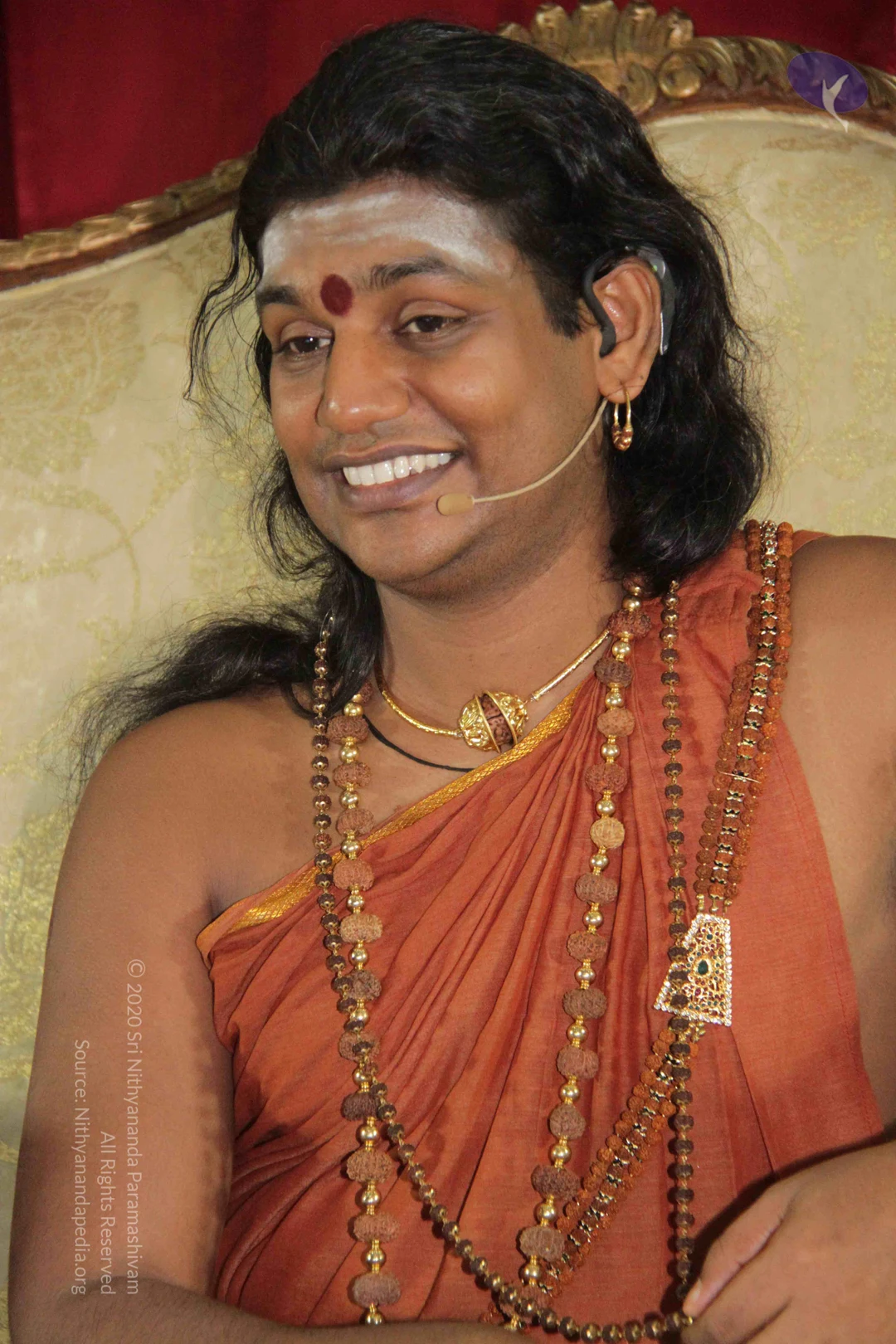
A photograph of a seated man on an ornate gold-and-cream upholstered throne with carved wooden arms, in front of a red satin drape. He wears an orange-saffron dhoti-style cloth with a gold border, several tiered rudraksha and bead malas, a gold chain, and a red bindi with a white forehead mark. Long dark hair falls past his shoulders and he has gold hoop earrings. He smiles and gestures with one hand while resting the other on the armrest. Two flower arrangements in woven vases with pink and white blossoms stand on white pedestals at either side, and a water bottle sits on the left pedestal. A white-and-gold copyright line appears at the lower right. Appearance-based candidate: probable Swamiji seated in person, identified by the throne, saffron clothing, malas and long hair.A photograph of a man seated on an ornate gold-and-cream upholstered throne with carved wooden armrests, in front of a red draped curtain with flower arrangements at either side. He wears an orange-saffron cloth draped over the body with a gold border, multiple long beaded mala necklaces, a gold pendant, and a gold earring, and has a white forehead marking with a red dot. He has long swept-back dark hair, smiles broadly, and raises one hand to a small headset microphone near his cheek. A water bottle sits beside the chair. The presentation includes long hair, saffron clothing, rudraksha-style malas and gold ornaments, consistent with the page's Swamiji reference, so this is a probable match in an in-person talk setting.A smiling man with long dark hair sits on an ornate gold-patterned cushioned chair against a red background. He wears a saffron-orange garment draped over his shoulders, multiple rudraksha-style beaded malas, a gold ceremonial necklace with a pendant, and a gold earring. A white tilak with a red bindi marks his forehead. He holds a small microphone near his cheek with one hand, which bears a ring. a person is shown as a seated speaker with saffron robes, rudraksha malas and a gold necklace, consistent with a satsang discourse setting.A man seated on an ornate gold-brocaded throne-like chair with a red velvet backdrop behind him. He wears an orange-saffron cloth draped over one shoulder and bare-chested, with several strands of rudraksha-style beaded malas and a gold ceremonial pendant necklace. He has long dark hair swept back, white sacred ash markings on his forehead with a red bindi, and a small gold earring and headset microphone. He smiles warmly while resting one arm on the armrest, appearing to speak at a satsang or discourse. A small logo appears at the upper left corner. Appearance-based label: a person, seated in the speaker's seat.A man with long dark hair sits cross-legged on an ornate cream upholstered throne with carved wooden arms and gold trim, in front of a red draped curtain. He wears an orange-saffron dhoti and shawl with gold borders, a gold necklace and a long rudraksha-style mala, and has a red dot on his forehead. His hands are held together in front of him. Two vases of pink and white flowers stand on white pedestals at either side, a water bottle sits on the left, and a cream shag rug lies at the base of the throne. Presentation cues match the a person candidate: long swept hair, saffron clothing and ceremonial gold necklaces, seated on a throne in a satsang setting.Close-up photograph of a smiling man with long dark hair swept back, wearing an orange-saffron wrap over a bare shoulder, with multiple strands of rudraksha and gold-bead malas, a gold pendant necklace, a gold hoop earring, a white vertical forehead mark and a red bindi. He appears to wear a small headset microphone near his cheek. Background shows cream fabric with gold patterning and a wooden frame. A printed copyright and source caption is visible along the right edge, but it is not reproduced here.

Gurukul-eNGenius

7 photosSource gallery
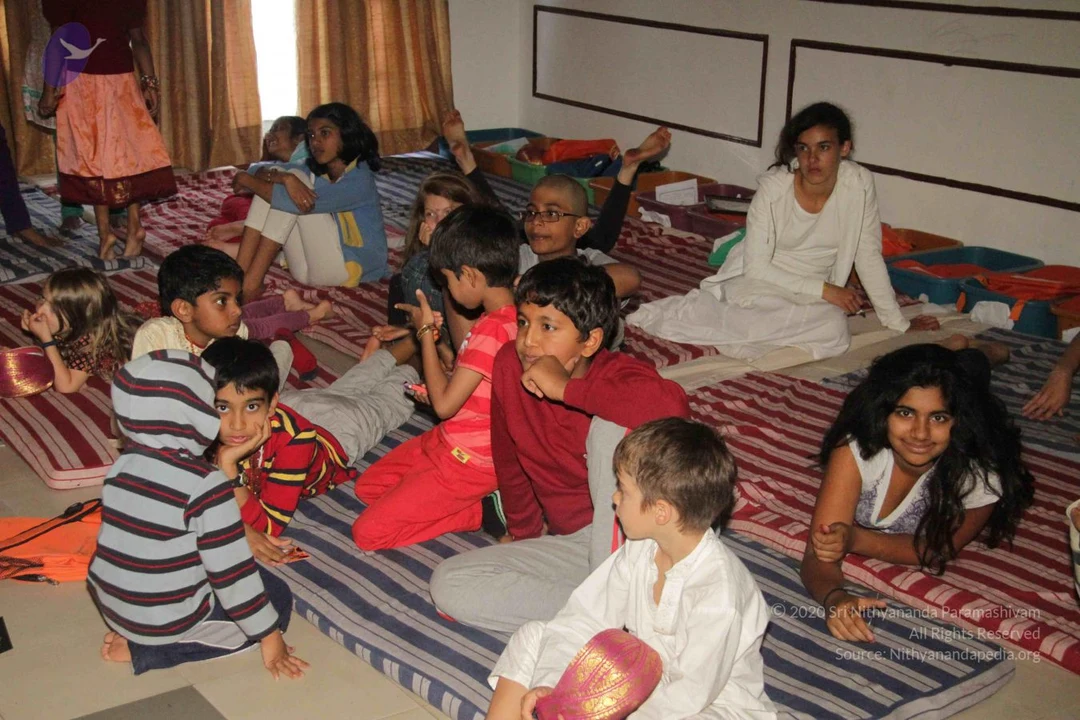
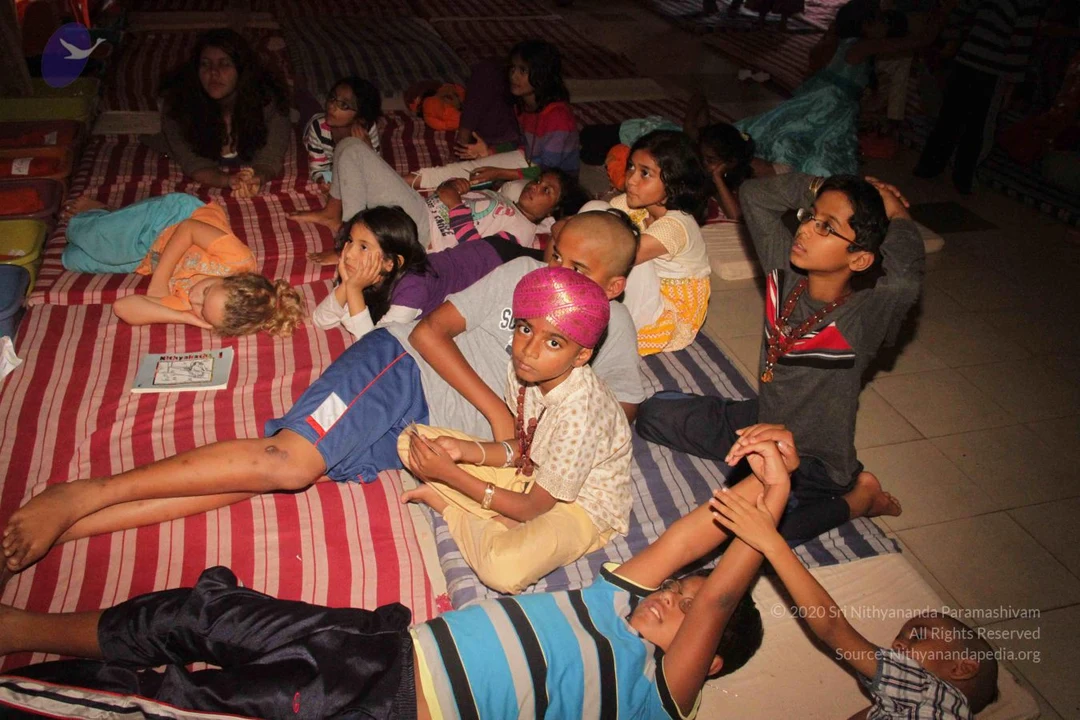
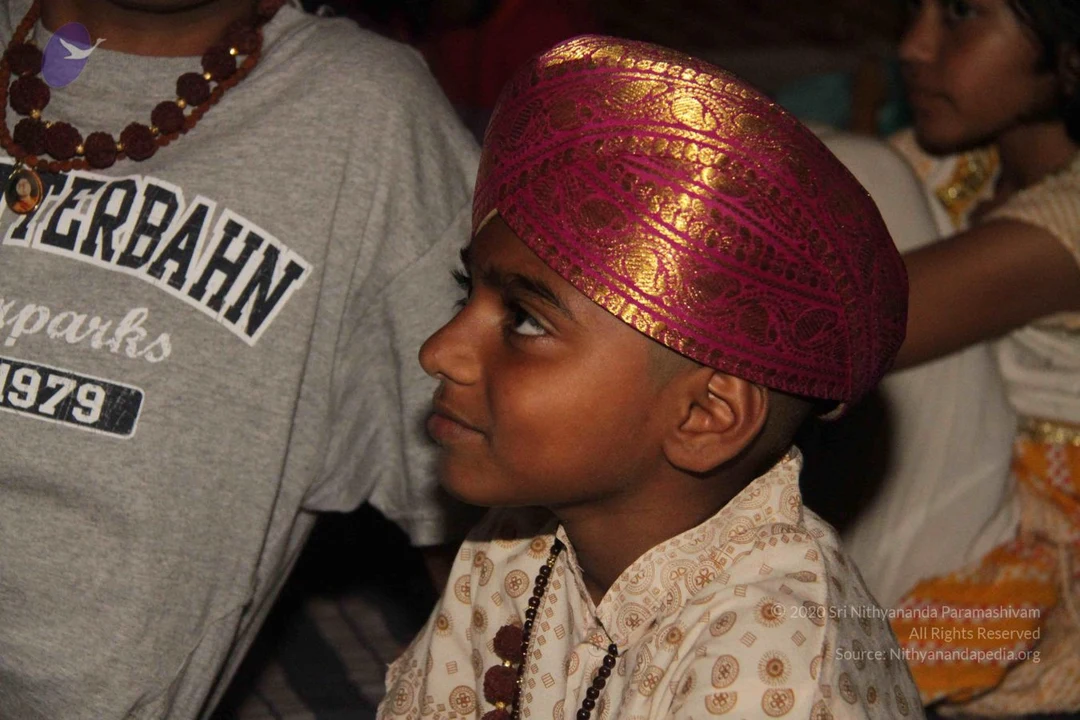
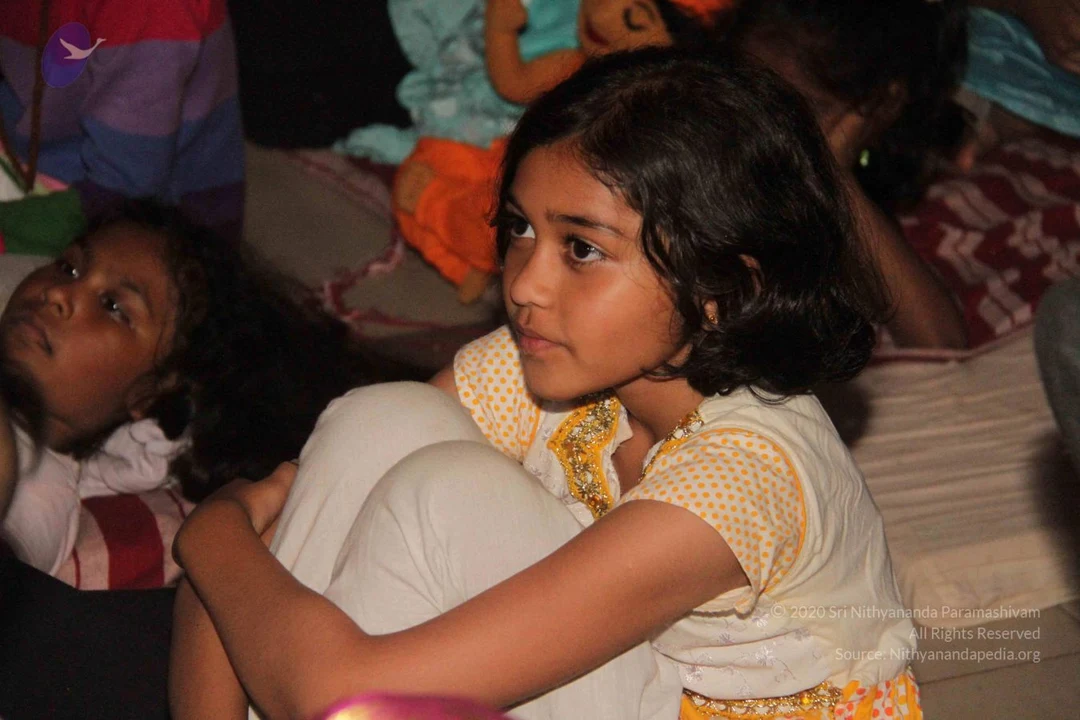
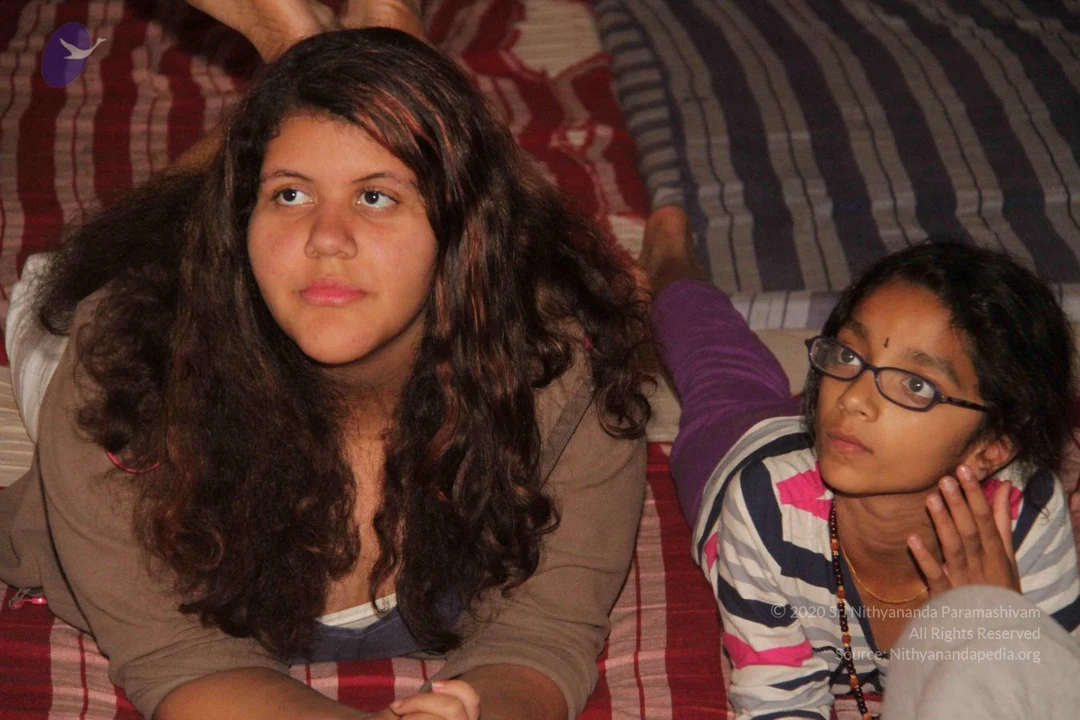
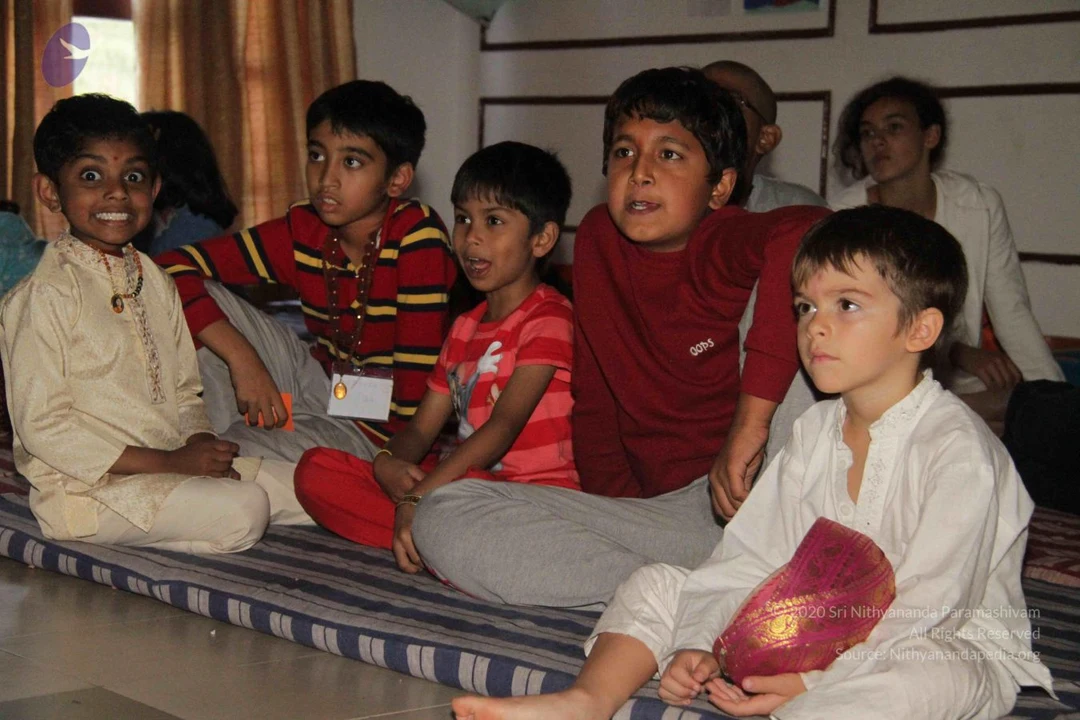
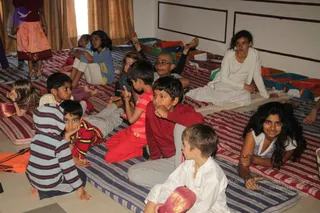
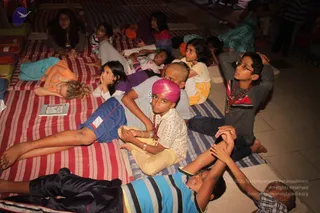
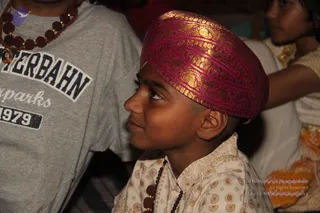
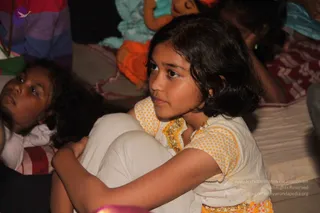
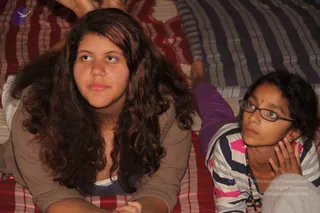
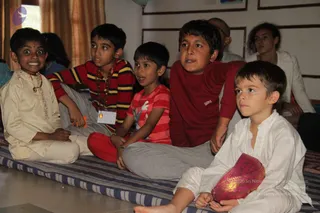
A photograph of children seated and lying on striped mattresses on a tiled floor in a plain room with cream walls and brown-framed panels. Around a dozen children, several in white or grey clothes and one in red, look toward the front with raised hands, some resting their chins on their hands. An adult in white clothing sits at the right edge, and a figure in a long orange-and-pink skirt stands at the upper left. Plastic trays and orange cloth bags are stacked behind them. The scene resembles an inner awakening class setting.A photo of children lying and sitting on red-and-white striped mats in a hall, watching something intently. A boy in a pink turban and cream kurta sits in the centre, a boy in grey shirt with a rudraksha-style mala leans back at right, and a girl in purple sits with her hands on her cheeks. Others lie on mats in orange, teal and blue clothing, with a bald child in a grey t-shirt in the middle. Walls are beige tiles and there are stacked orange and green bins at left.A young boy in profile wears a magenta turban with gold brocade pattern and a cream kurta with a small gold-and-brown paisley print. Brown rudraksha beads hang from his neck. Beside him, a person in a grey T-shirt with partly visible black text and a rudraksha mala looks upward, and an older person in an orange and cream garment appears at the right edge. The background is dim and crowded.A photograph of a young girl sitting on the floor, hugging her knees and looking off to the side with a serious expression. She wears a white short-sleeved top with yellow polka dots and a yellow gold-embroidered trim, and white trousers. Behind her, a child with dark hair reclines on a cushion, and a colourful striped fabric and an orange-and-blue soft toy are visible. The setting appears to be a floor-seated gathering in dim light, with a patterned mat or bedding beneath.Two young girls lie prone on red-and-white striped bedding, watching something ahead of them. The girl on the left has long, dark, curly hair with reddish highlights and wears a brown top. The girl on the right wears glasses, a striped pink-and-white top with a purple sleeve, a small bindi and a rudraksha mala with a gold chain. A pale-sleeved hand rests at the bottom right. No deity, a person or ritual is clearly visible.Photo of a group of children seated cross-legged on a striped floor mat indoors, watching something intently. From left: a boy in cream kurta with a red bindi and beaded necklace grinning widely; a boy in red and yellow striped shirt with a rudraksha-style mala and name badge; a boy in pink-and-red striped tee; a boy in maroon sweatshirt; and a fair-haired boy in white kurta holding a pink cloth bag. Behind them adults sit in white and blue clothing.

Inner Awakening-Darshan
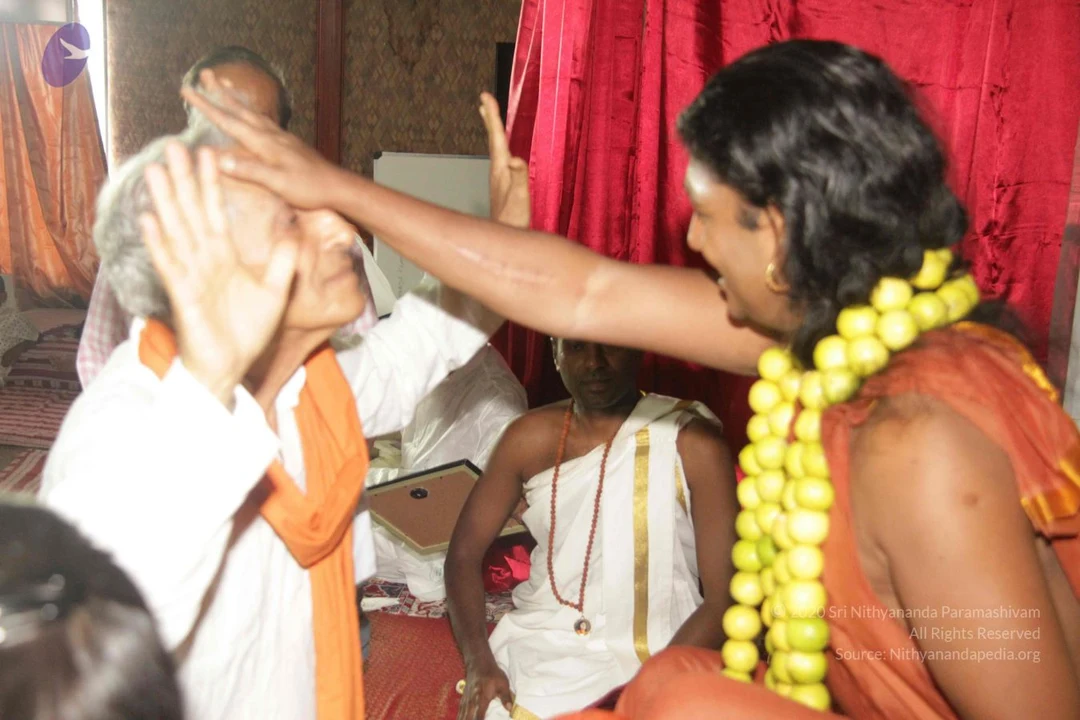
137 photosSource gallery
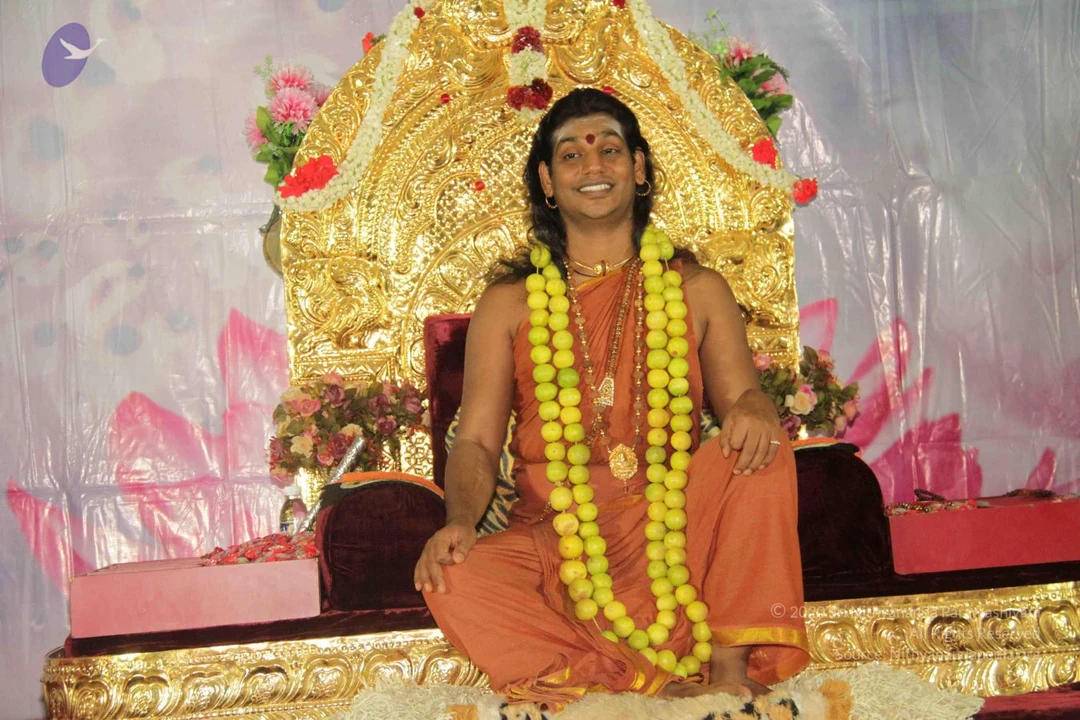
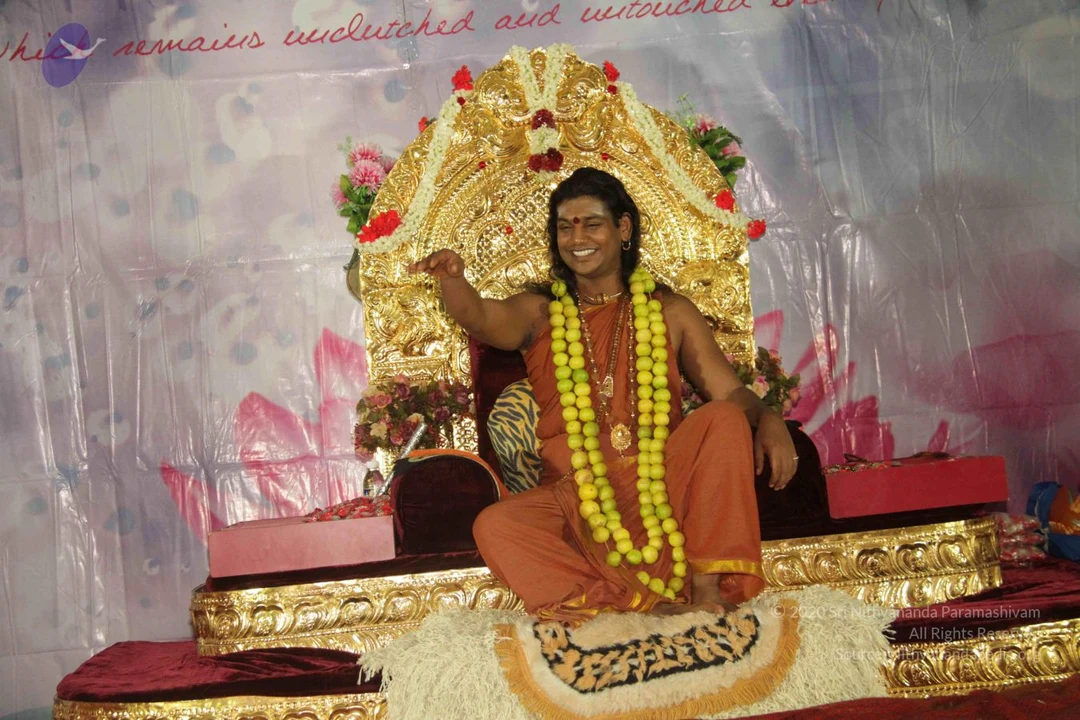
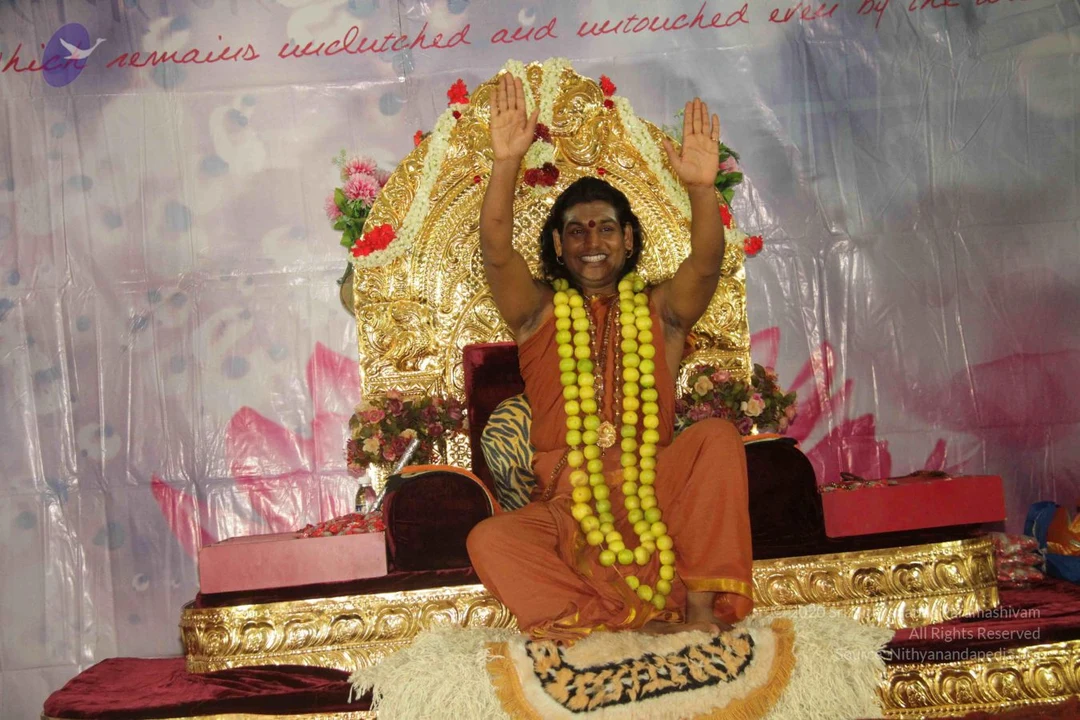
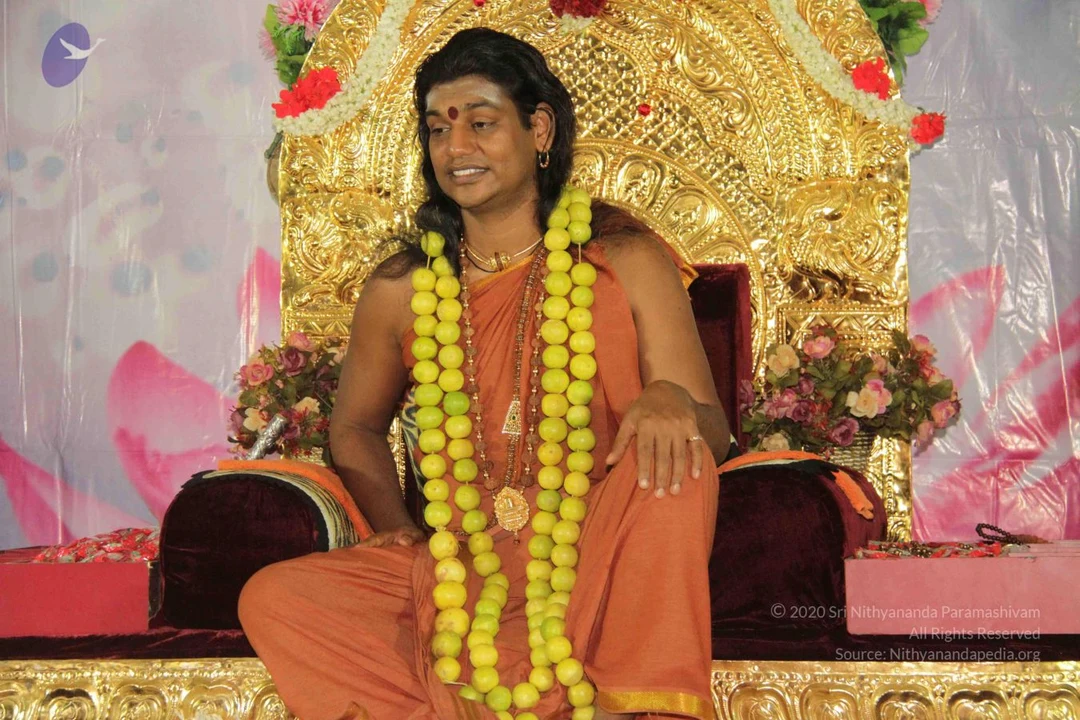
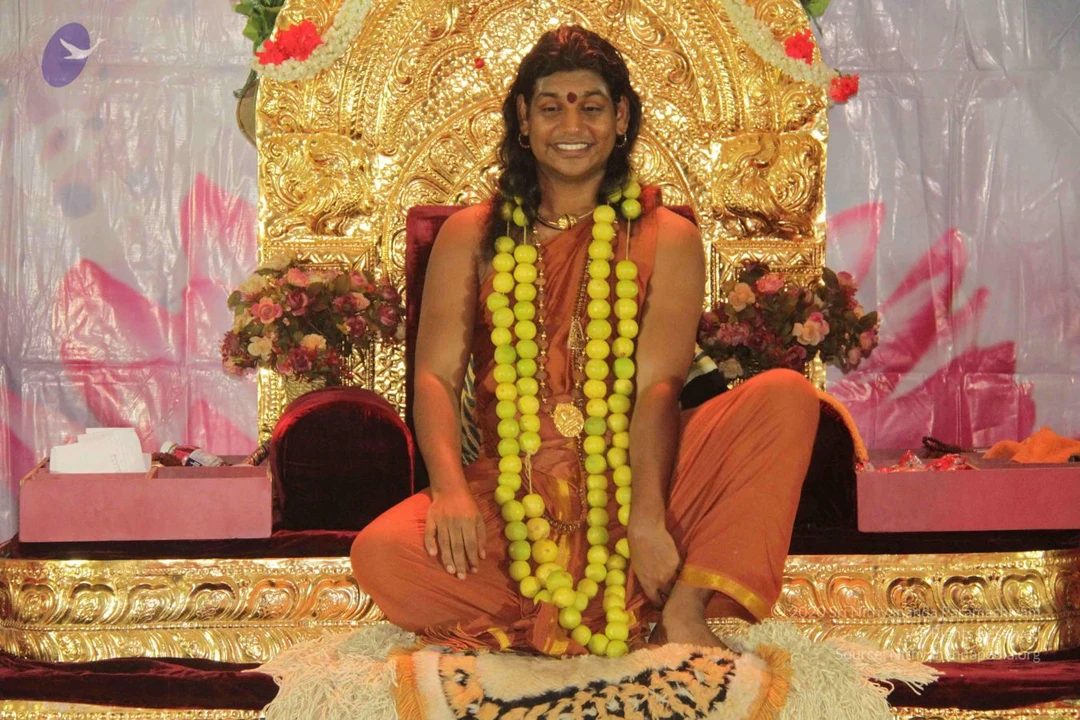
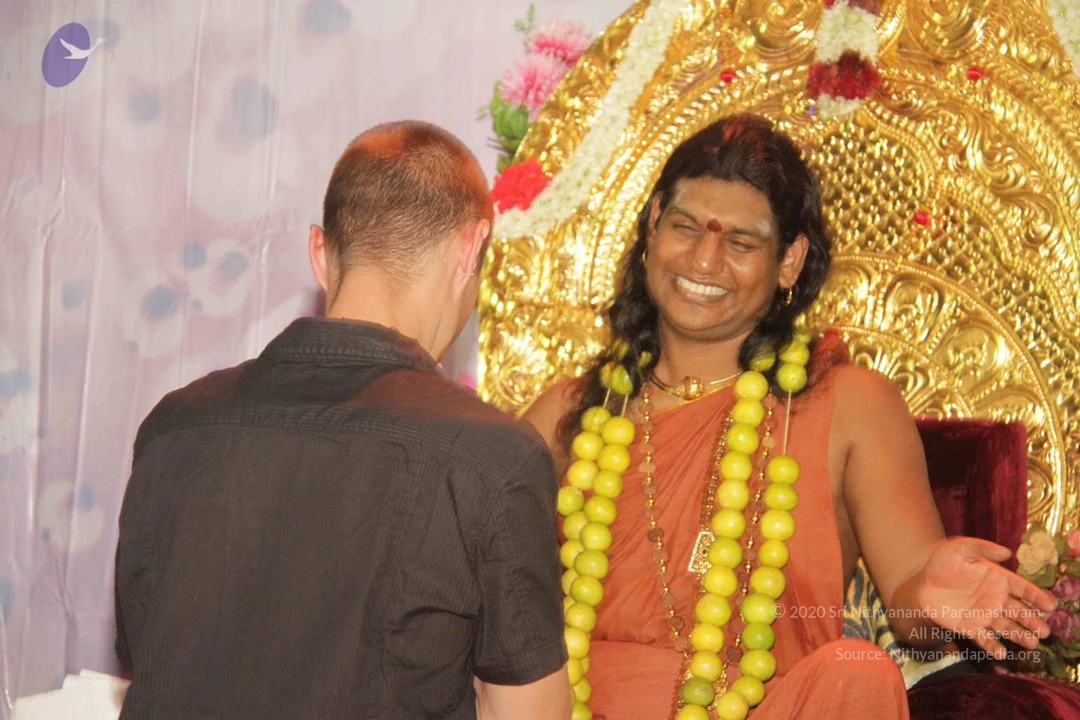
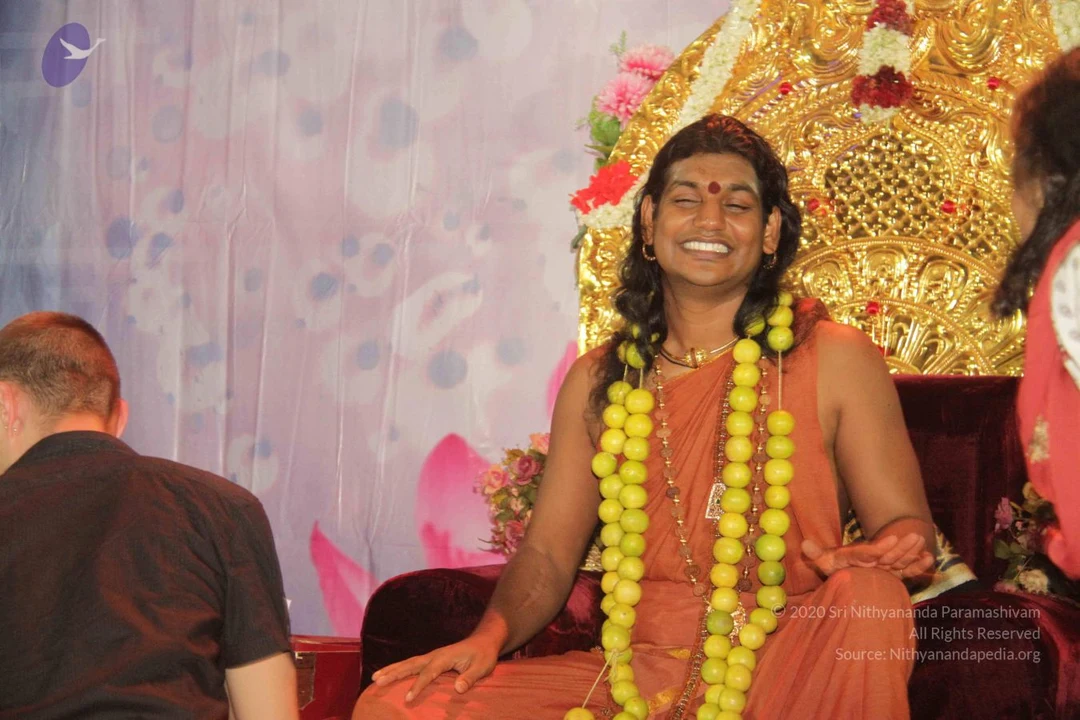
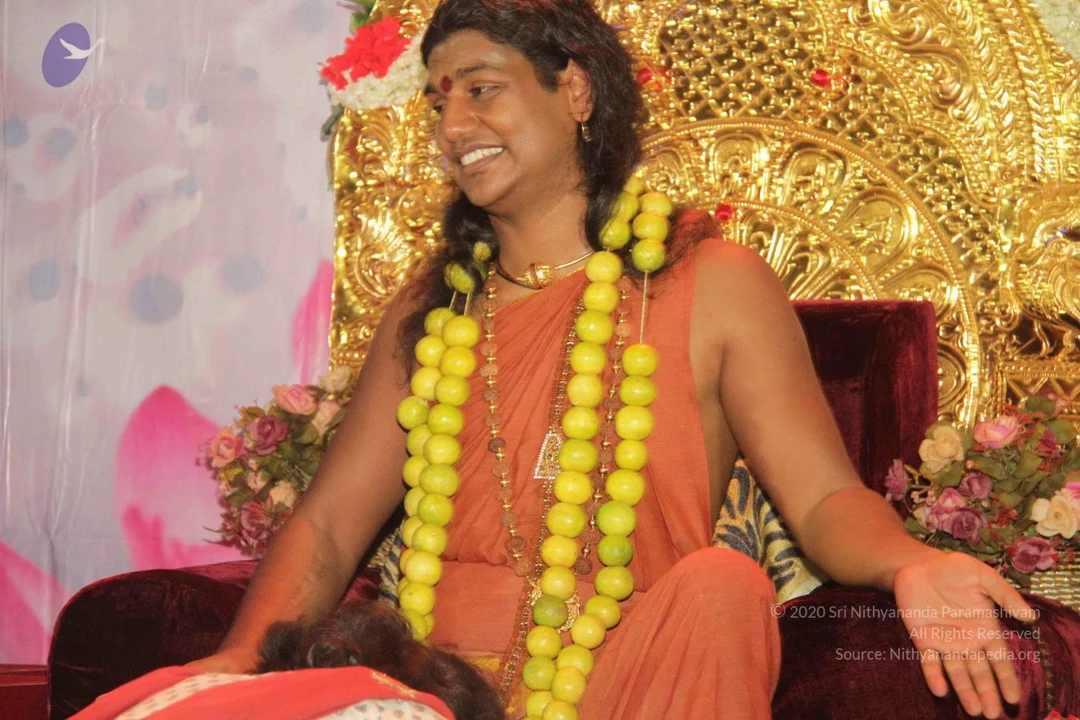
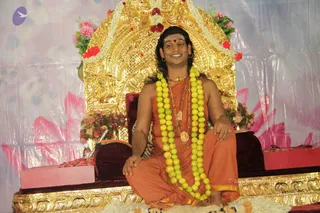
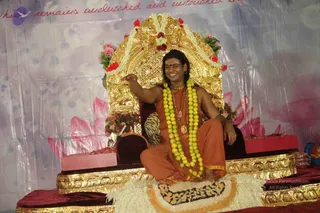
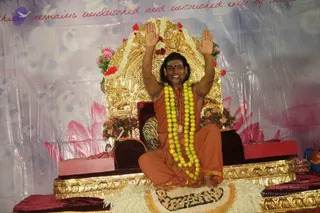
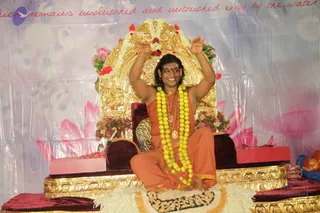
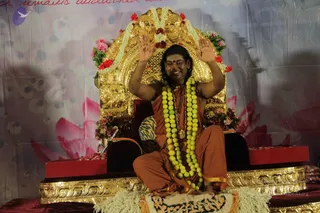
A seated man in an orange-saffron dhoti and shawl sits on an ornate gold throne with a carved gold backrest, decorated with white jasmine garlands and red flowers. He wears a long green-yellow bead garland, a rudraksha-style necklace, and a red bindi, smiling at the camera. Pink lotus-patterned fabric and pink and white flowers fill the background, with a wooden-style pink cushioned platform beneath the throne.A man with long swept-back dark hair sits cross-legged on an ornate gold throne with a golden arched back decorated with garlands of white flowers and red blossoms. He wears an orange-saffron cloth draped over his body, a long yellow-green marigold garland of beads, a gold chain and a red bindi, and he smiles while pointing with one hand. The throne is set on a red velvet cushion with a white fur-like mat in front, and pink flowers and a pink lotus-patterned backdrop surround him. Probable Swamiji: long hair, saffron clothing, rudraksha-style beaded garland and gold necklaces, seated on a throne during a satsang.A photograph of a man seated cross-legged on a raised pink-and-gold throne with a tiger-striped cushion, arms raised with palms open in greeting, smiling broadly. He wears an orange-saffron cloth, a long necklace of large lime-green beads, a rudraksha-style mala and a red bindi, with long swept-back dark hair. Behind him is a gilded throne backrest decorated with white and red flower garlands and pink flowers, and a backdrop with a lotus motif and handwritten red script. Flower arrangements sit on the platform.A seated man in saffron-orange robes raises both arms in an animated gesture while smiling on an ornate golden throne with red velvet cushions. He wears a long yellow-green marigold garland, a gold pendant necklace and a red bindi. Behind him stands a golden arched backrest decorated with white flowers, pink and red blooms, and a pink lotus-patterned backdrop with red script. Red boxes sit on either side of the throne, and a patterned white and brown cloth covers the lower dais. The Swamiji (probable) appearance cues include long swept-back hair, saffron clothing, rudraksha-style adornments and ceremonial gold necklace, consistent with a satsang discourse setting.A man seated on an ornate golden throne with a gilded arched backrest decorated with red and white flower garlands, raising both hands palms-out in a joyful greeting while smiling. He wears a rust-orange robe over his shoulders and an orange lower wrap, a long necklace of yellow-green beads, a gold pendant and gold chains, and a red bindi on his forehead. The throne sits on a gold-trimmed red platform with flower arrangements at its base, in front of a pink lotus-patterned backdrop. A patterned fur-like rug lies at the front. Swamiji (probable): the man has long swept-back hair and ornate gold necklaces with an orange robe, consistent with the event on the page.A photograph of a smiling man seated cross-legged on an ornate gold throne with carved golden backrest and maroon cushions. He wears an orange saffron cloth draped over one shoulder and orange lower garment, a long rudraksha-style mala and a gold necklace, and a red bindi. He has long swept-back dark hair and a yellow-green garland of lime-like beads reaches to his waist. Pink and red flowers and a white floral garland decorate the throne back, with a pink-and-white draped backdrop behind. Probable Swamiji: long swept-back hair, saffron clothing, ceremonial gold necklace and rudraksha-style mala are visible on the seated figure, who is seated in the central throne position.
Special Lunch with prasadam from 21 temples
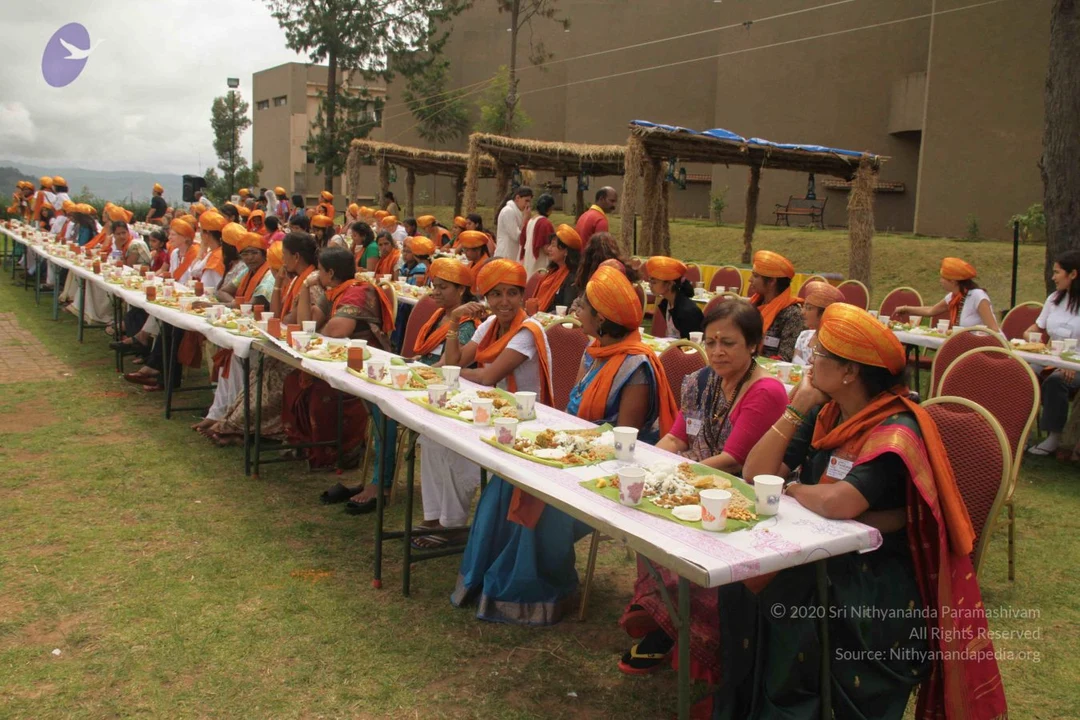
75 photosSource gallery
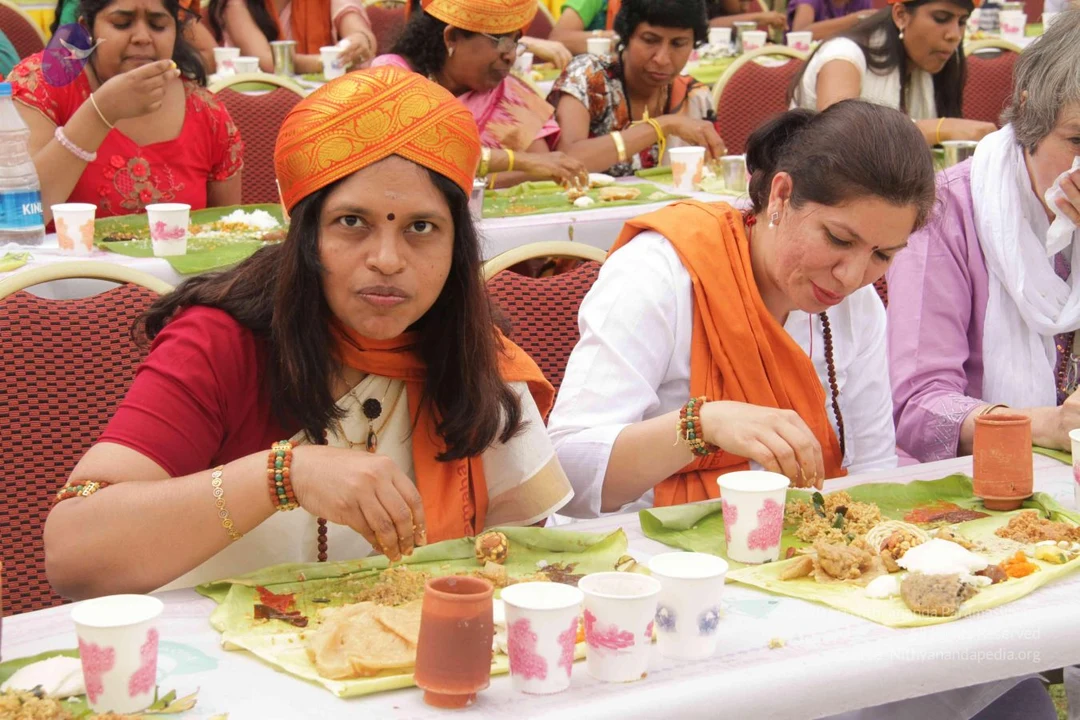
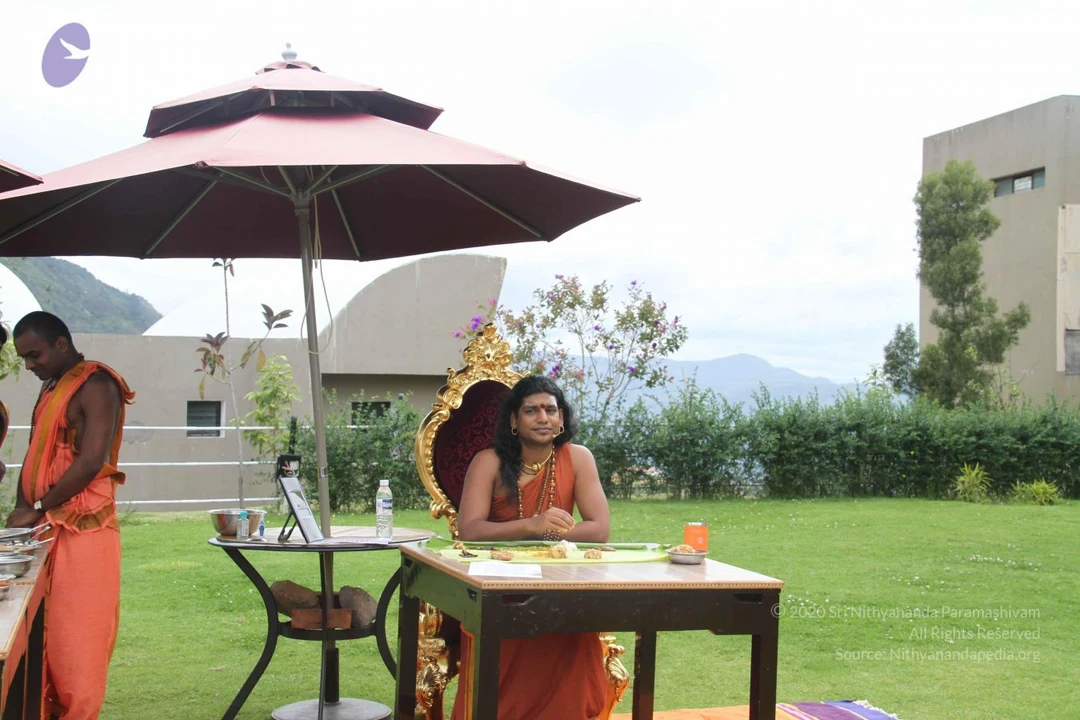
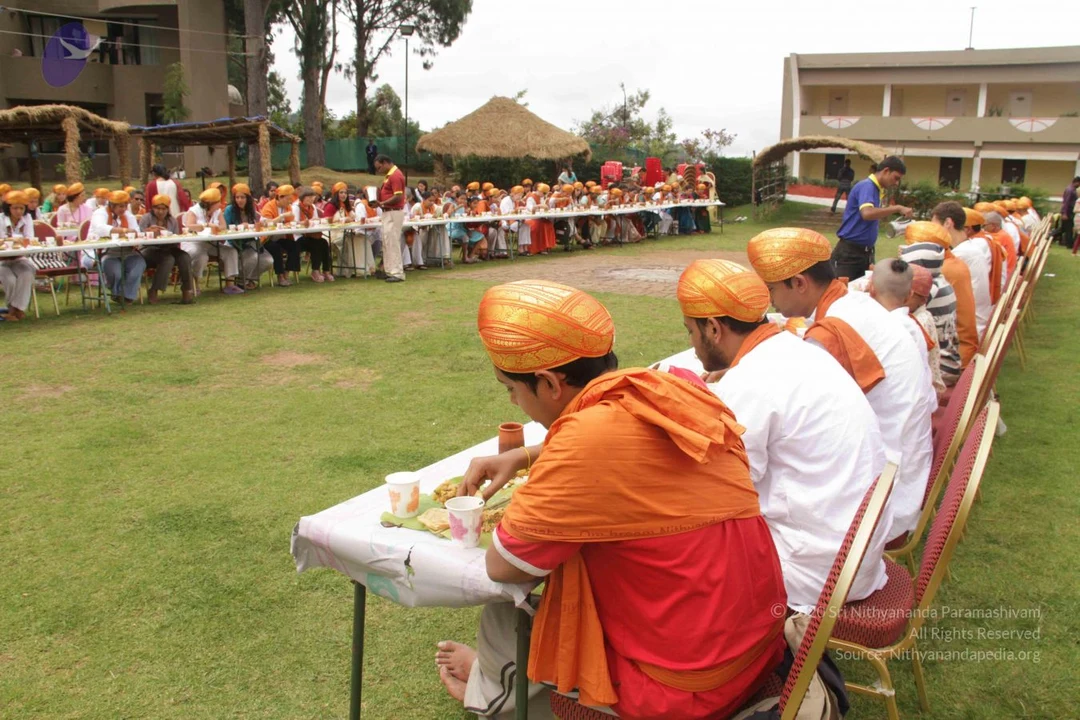
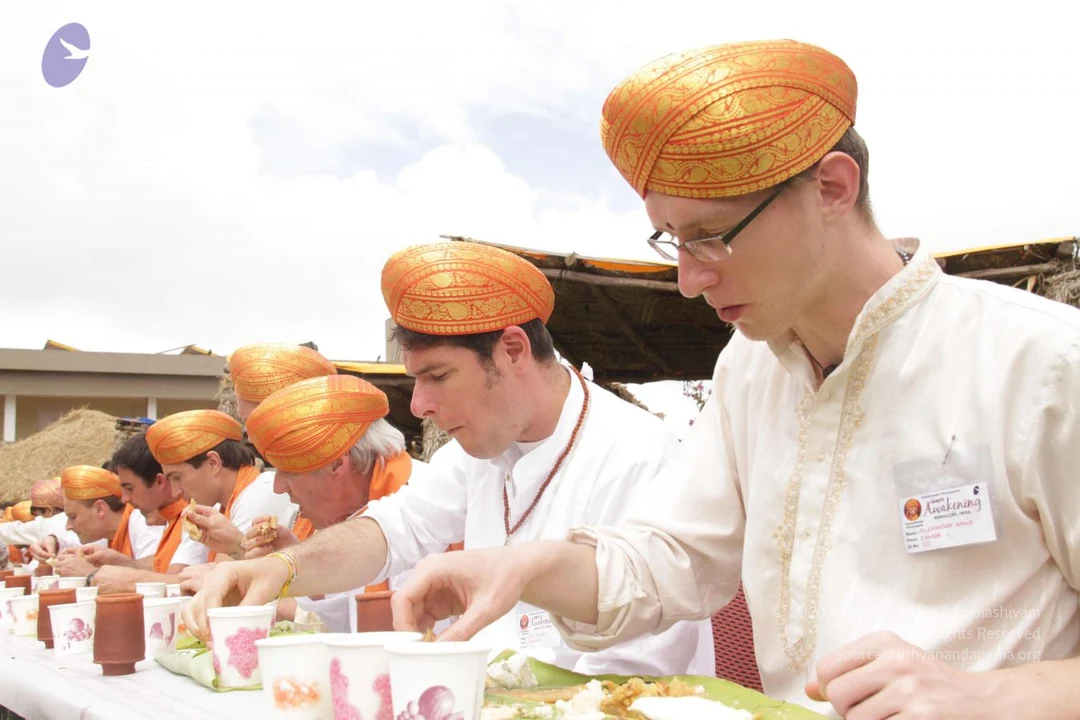
Outdoor long-table meal on a grassy lawn under a cloudy sky, with rows of seated women on both sides of white-covered tables. Many wear orange turbans and orange shawls, and some wear saffron-orange sarees. Banana-leaf plates hold rice and food, with paper cups beside them. Thatched open-sided shelters with blue tarps stand behind, and a large beige building is in the background. Staff in white and orange move along the rows. No a person candidate is visible in the scene.Outdoor photo of a long communal meal on a grassy lawn in a hilly, misty setting with low beige buildings with curved white domed roofs and umbrellas. Two long rows of white-covered tables run down the lawn with steel plates and cups set out. On both sides, many people in saffron-orange turbans and orange and white garments stand clapping and palms-together. A man in a maroon shirt and khaki trousers walks down the central path between the rows. Two women in red saris stand near a small decorated shrine table at the far end. Counted physical people are many dozens; no clear a person candidate is visible.Outdoor communal meal on a grassy lawn with long white-covered tables set with plates and cups. Many men wear orange and saffron turbans, cream or white kurta-style clothing and orange waist cloths, and many stand with palms pressed together in a gesture of greeting or prayer. A uniformed staff member in a red polo shirt and khaki trousers walks along the tables, and another in dark uniform stands at right. Wooden pergolas, white dome tents and a beige boundary wall with arched openings sit behind, with forested hills beyond. Several children are visible, one in a red shirt. Roughly fifty people are visible in the scene.A long outdoor annadan-style meal line on a grass lawn in front of a tan multi-storey building with trees. Dozens of women in orange and saffron head wraps and orange shawls sit or stand at long white-clothed tables with leaf plates and cups, many with hands joined in prayer. A man in a navy polo shirt and dark trousers walks in from the left carrying a tray. Thatched canopies stand behind the tables. Several women wear white, blue and red saris.A long outdoor photograph of a line of devotees standing with palms pressed together in namaskar beside long white-clothed tables set with plates of food and cups on a grassy lawn. Many people wear orange turbans and orange shawls, some in white kurtas and others in saffron and blue saris or salwar kameez. A woman in a red saree and a woman in a magenta top stand at the right edge. Behind them are a concrete building, trees, and thatched-roof shelters with blue tarpaulin. No a person candidate is clearly identifiable.Outdoor photo of a long line of devotees standing with palms pressed together at long white-covered tables set with banana-leaf style plates, cups and food on a lawn. Many women wear orange and saffron headscarves and orange shawls, with white, blue, green and red saris and kurtas; some wear white. Thatched shelters and concrete buildings stand behind them. The scene suggests a communal meal or annadan offering before food is eaten. No one is identifiable as a person in this crowd.