Skip to content
Thursday

13 October 2011

Which Is The Right Path For You

Dated photos
220
Source pages
1
Media
2
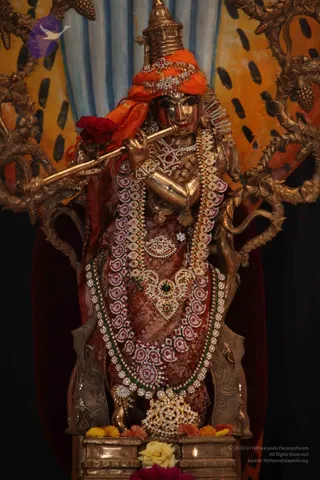
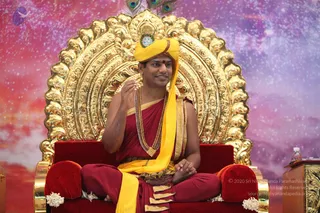
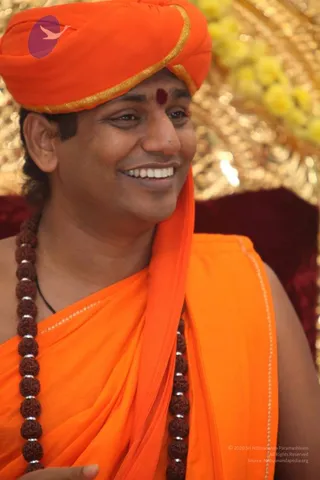
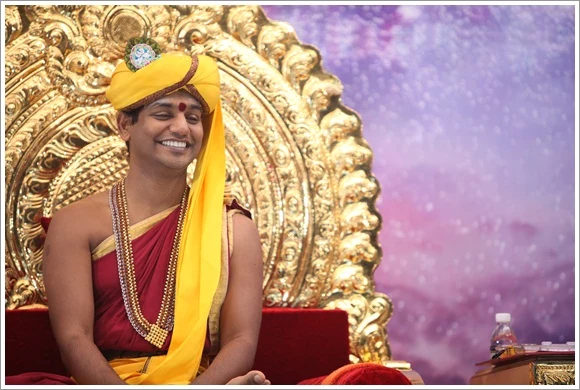
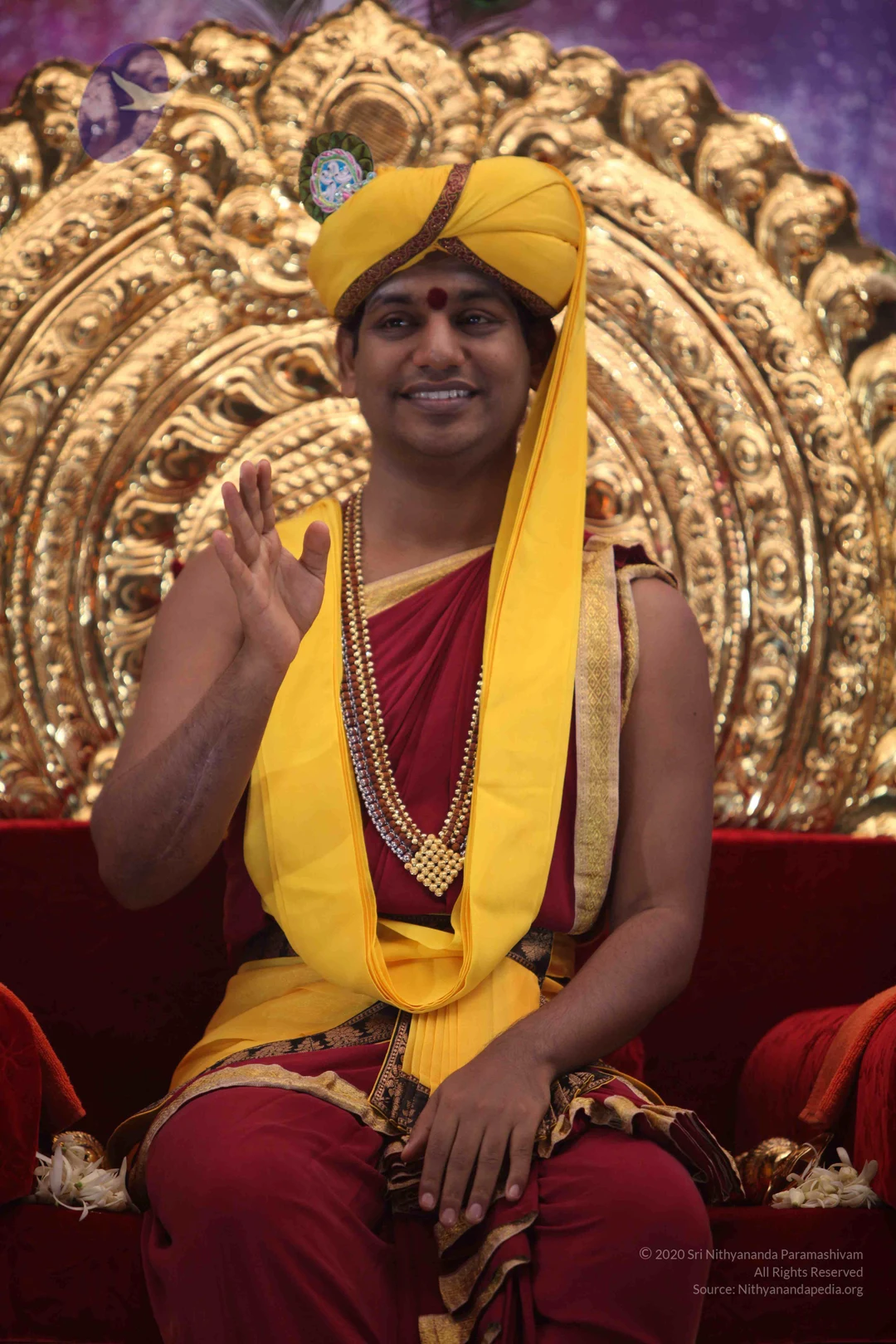
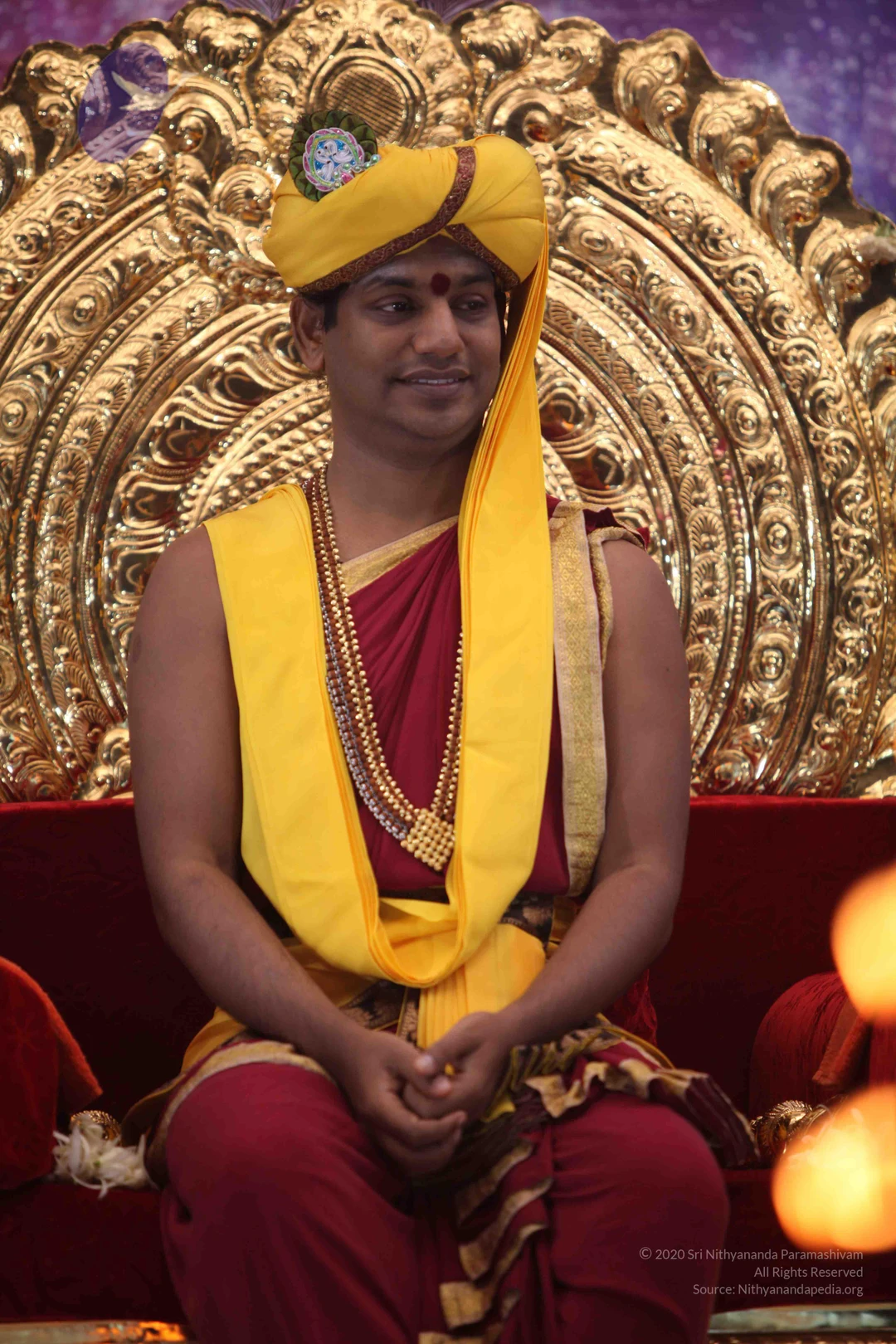
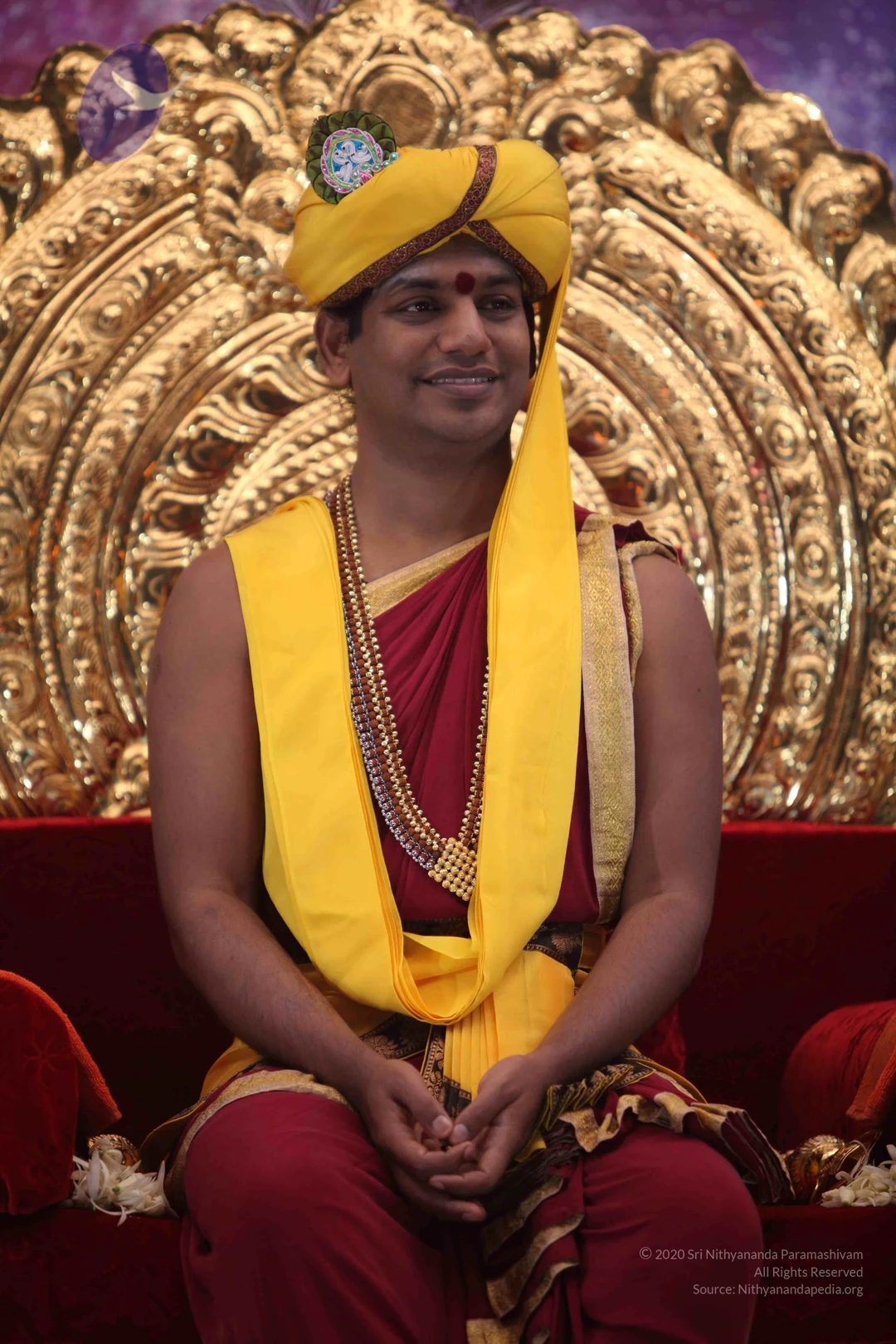
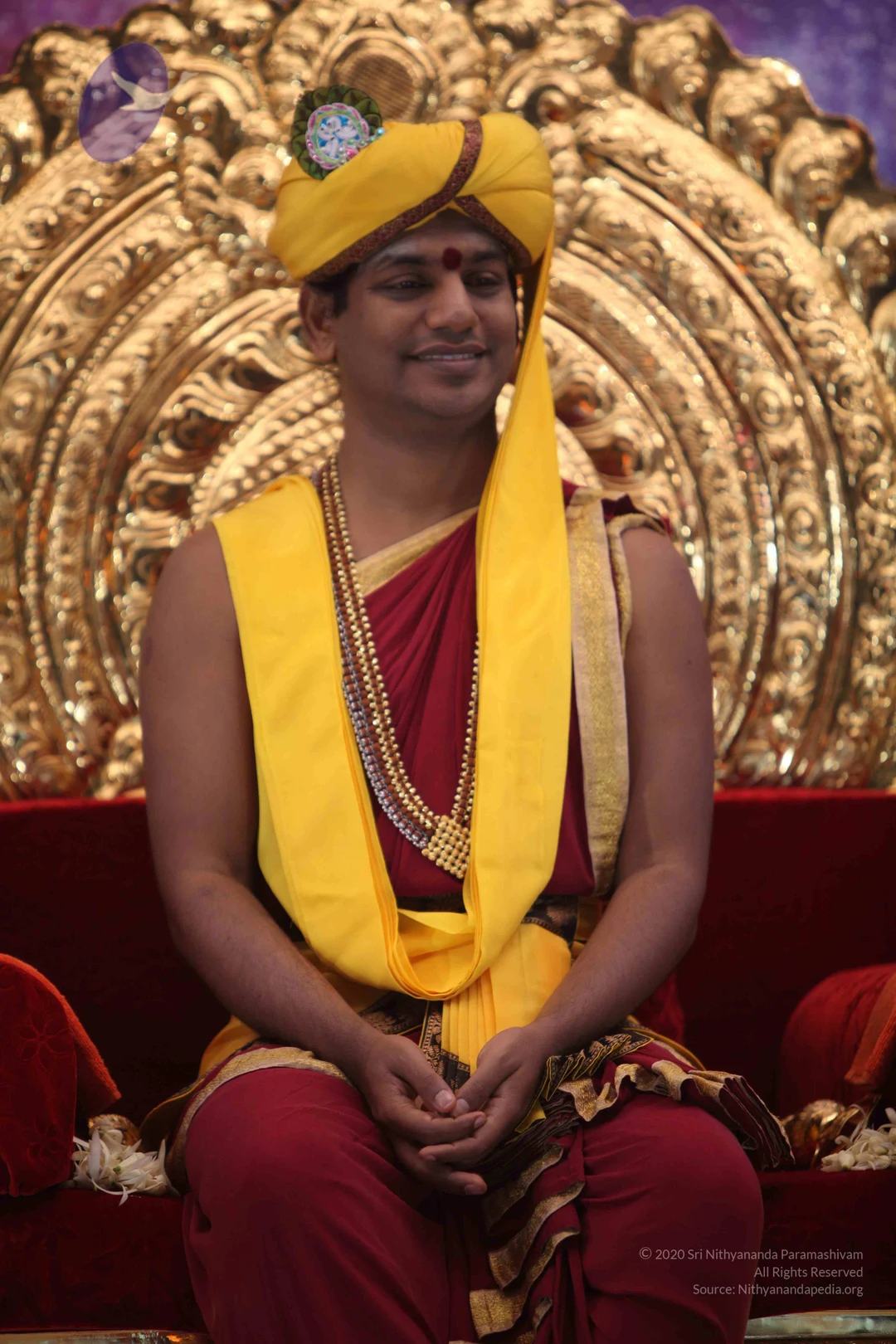
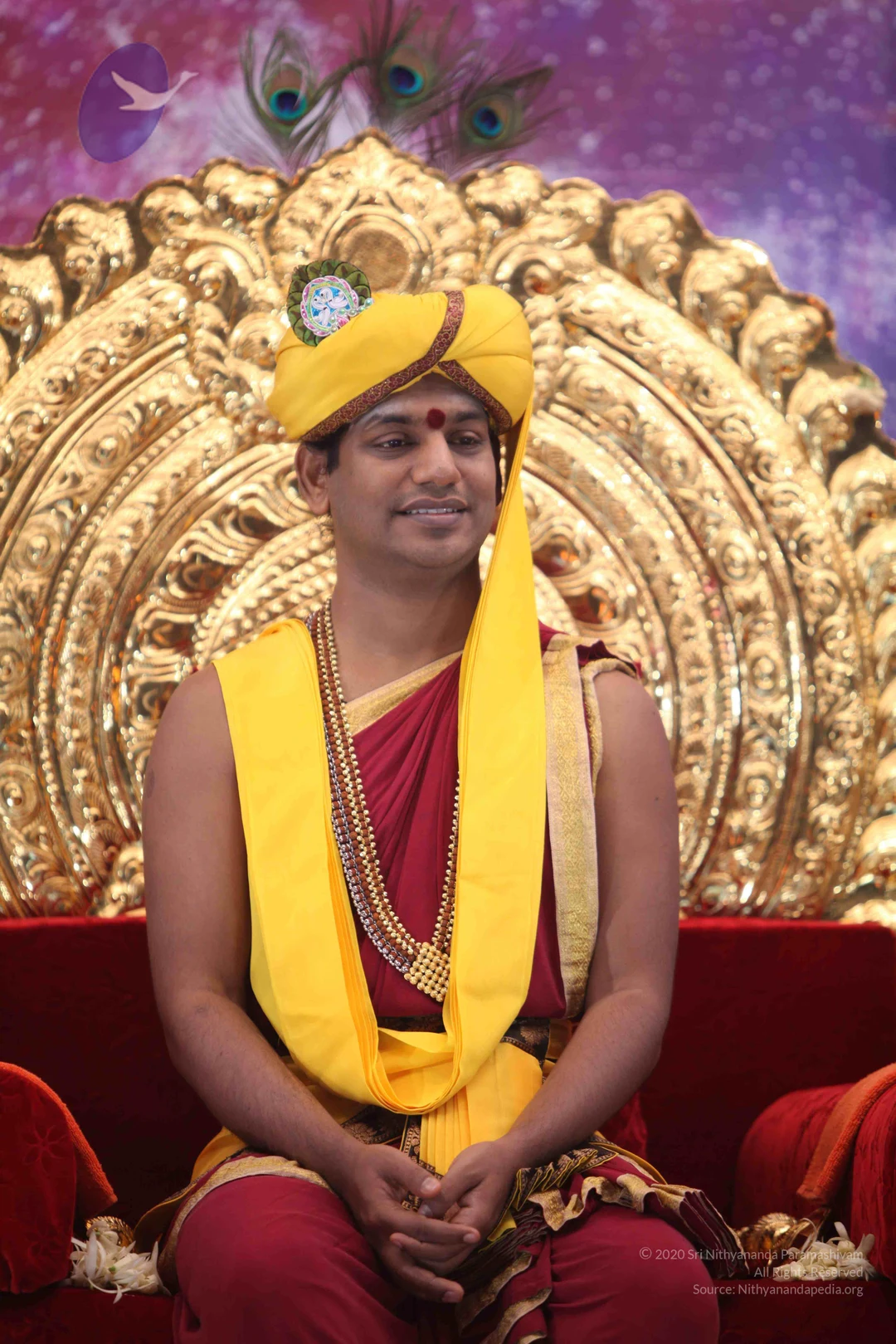
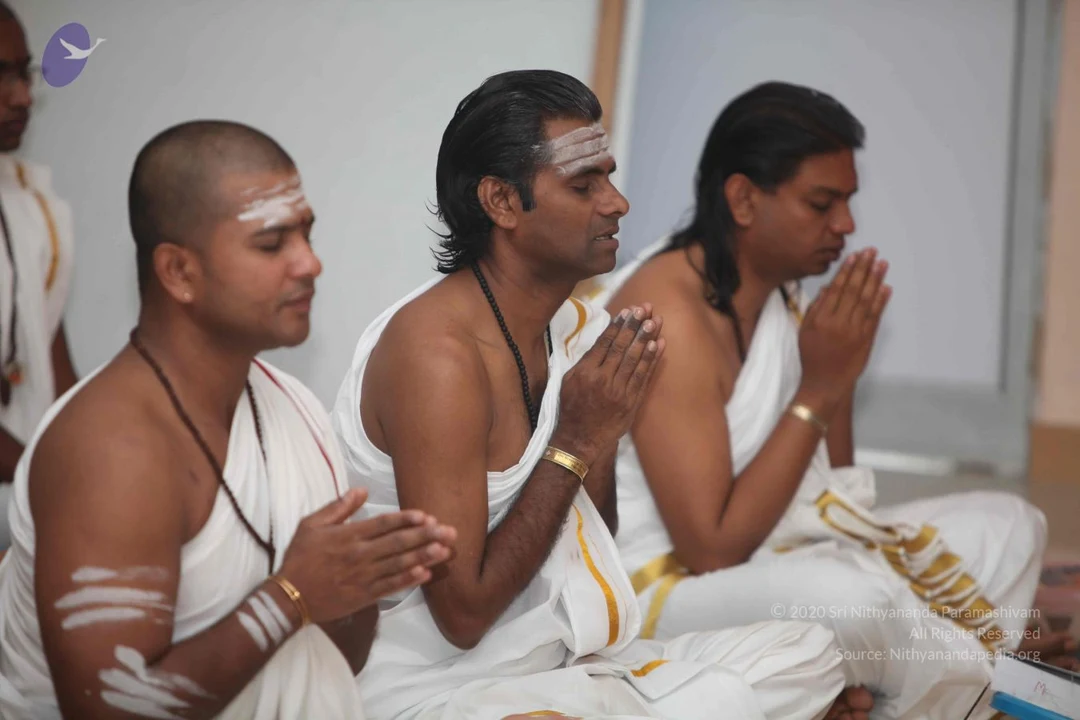
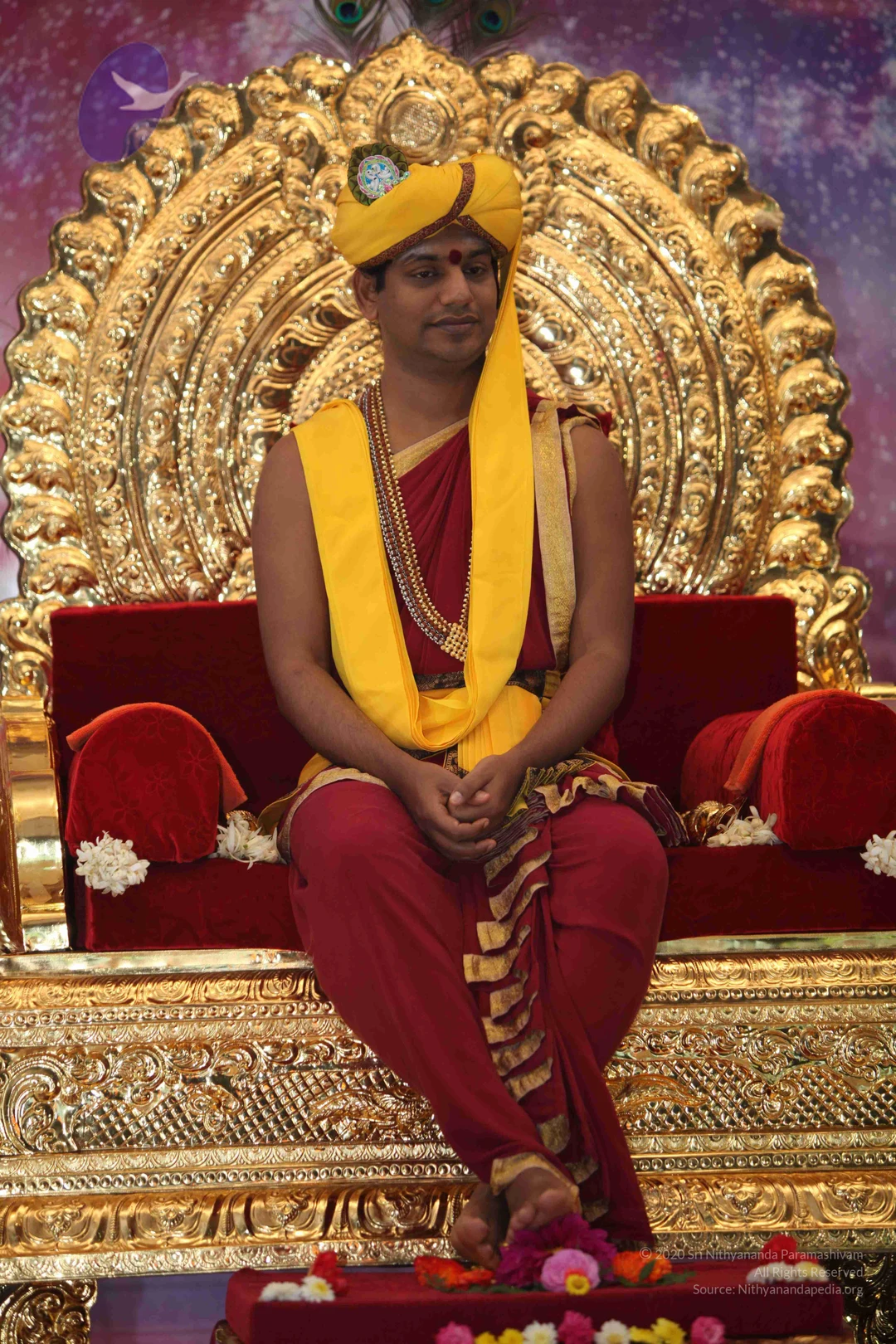
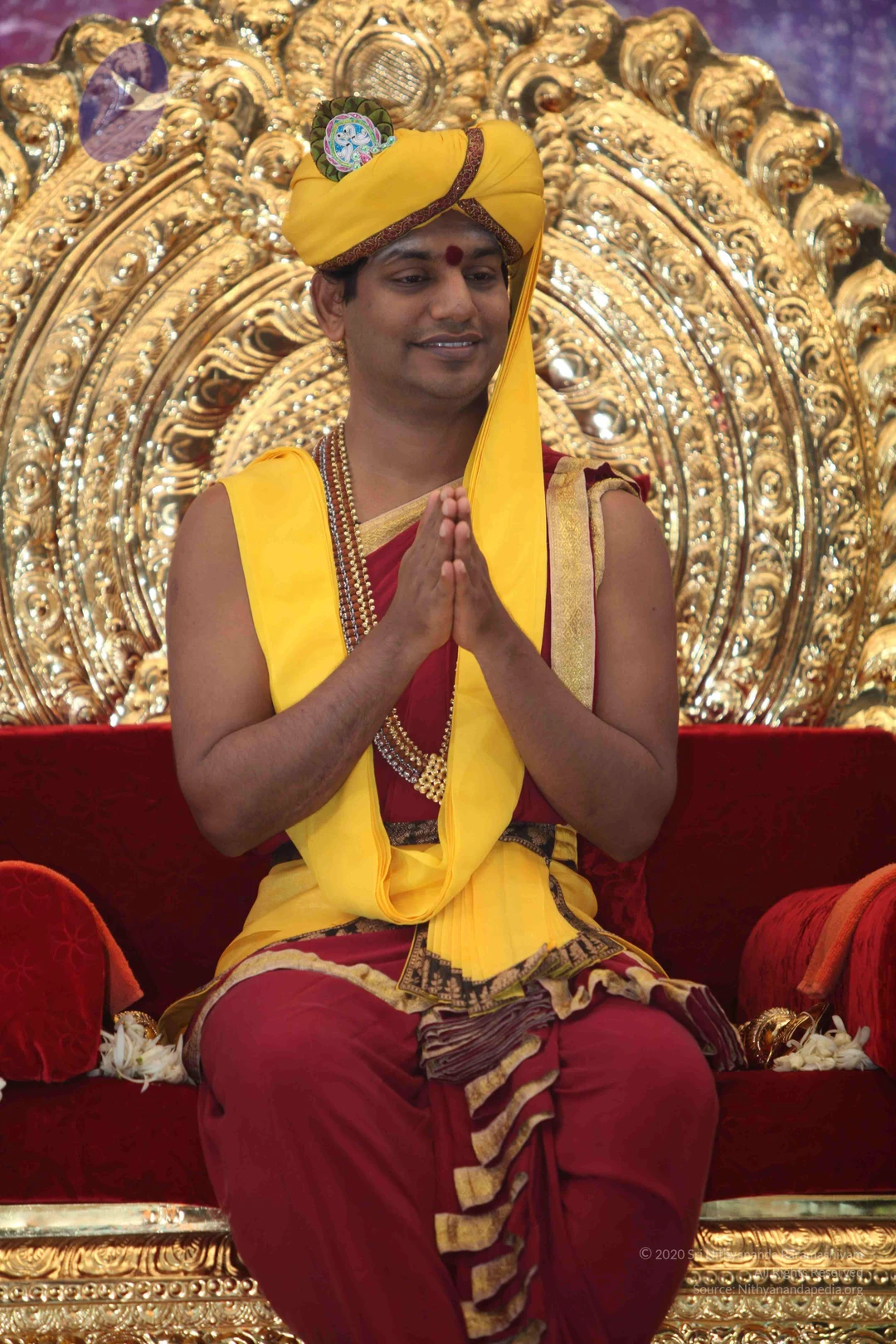
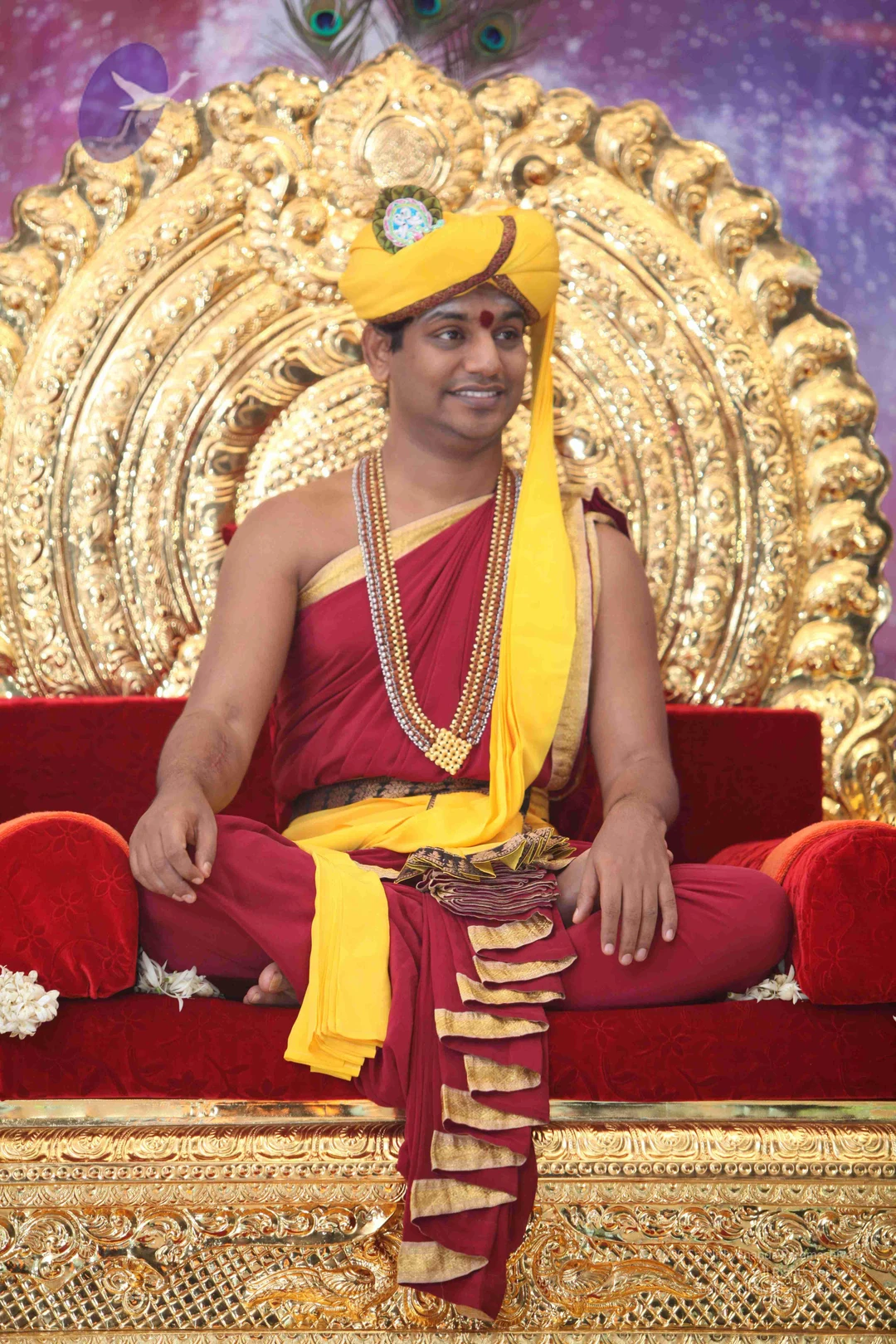
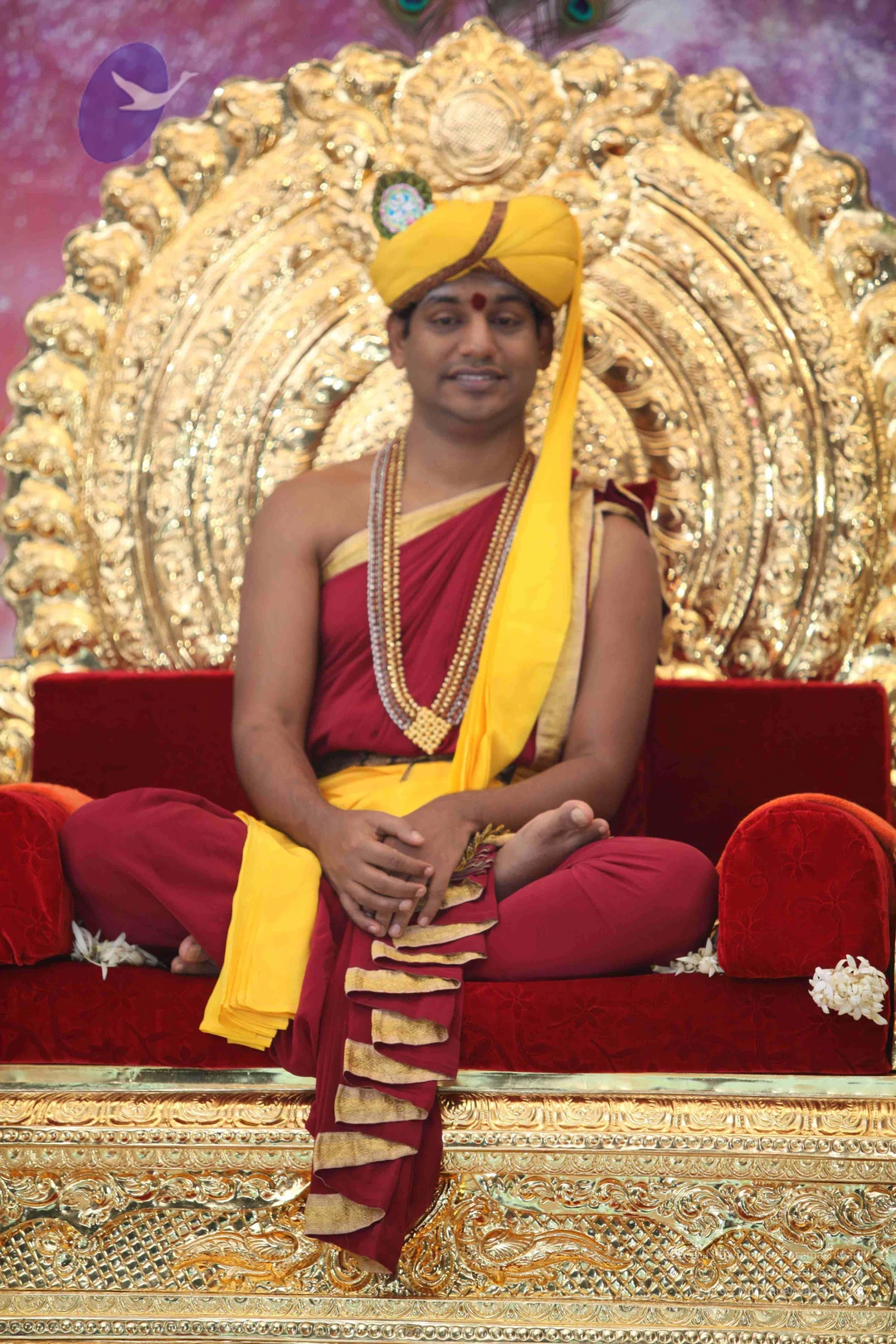
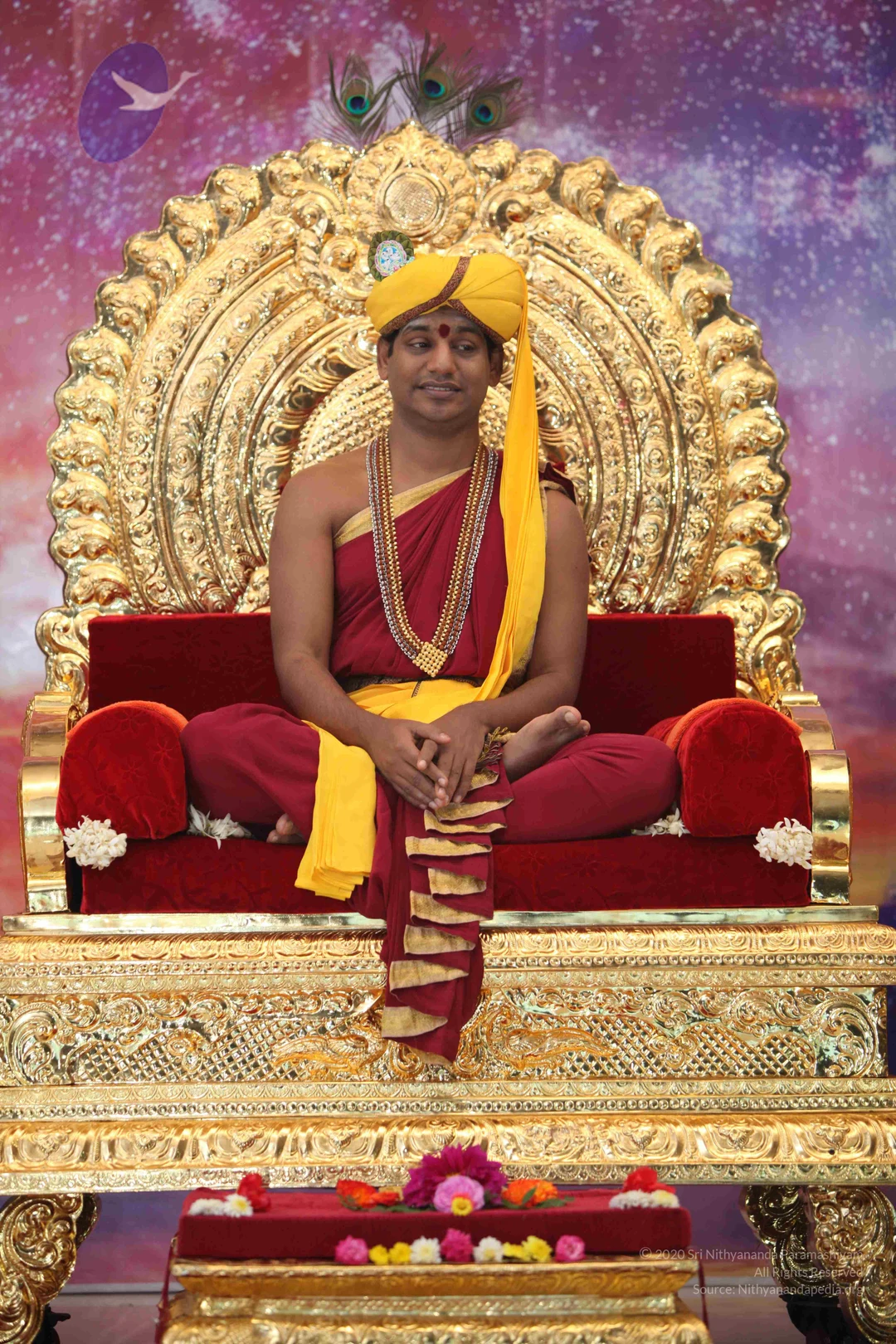
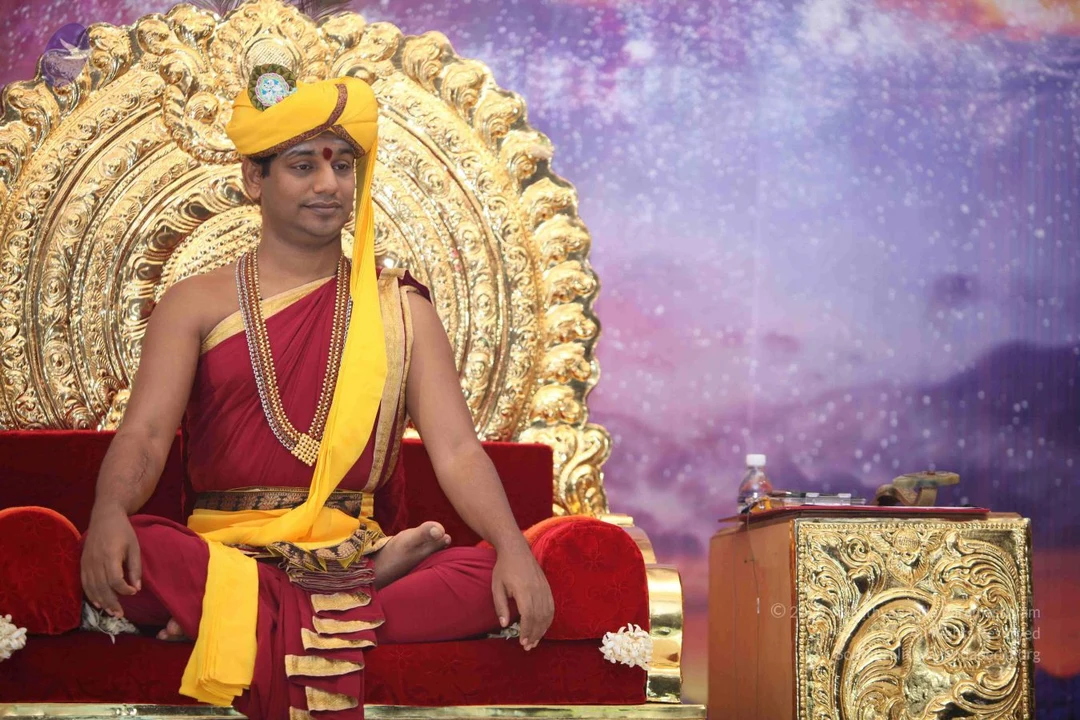
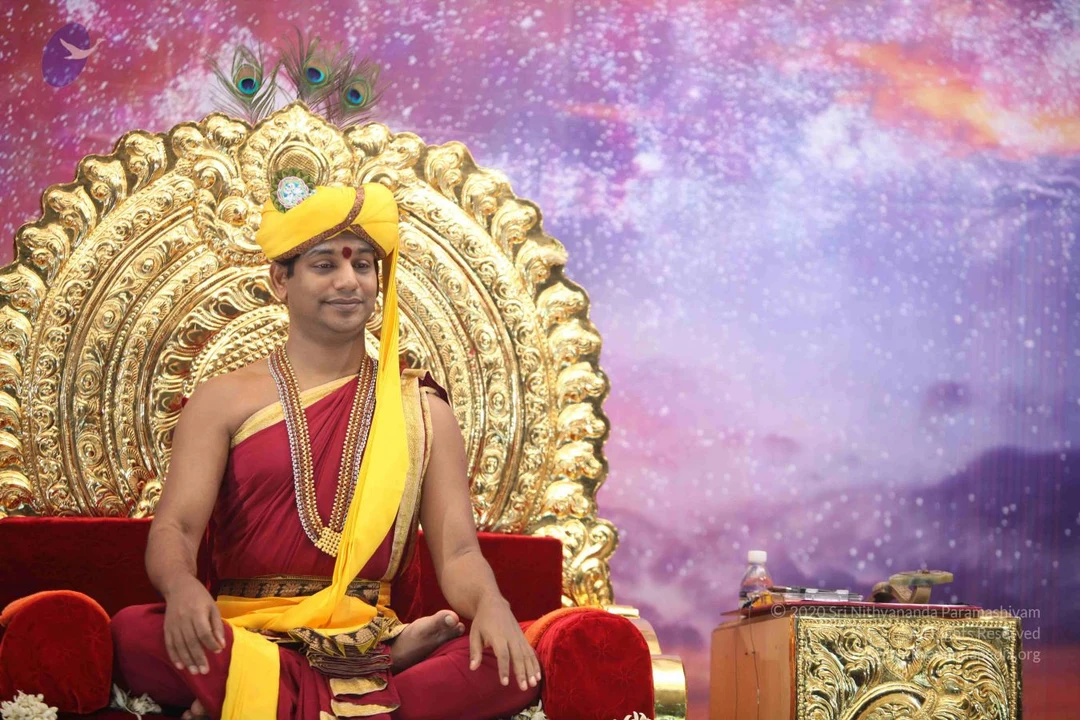
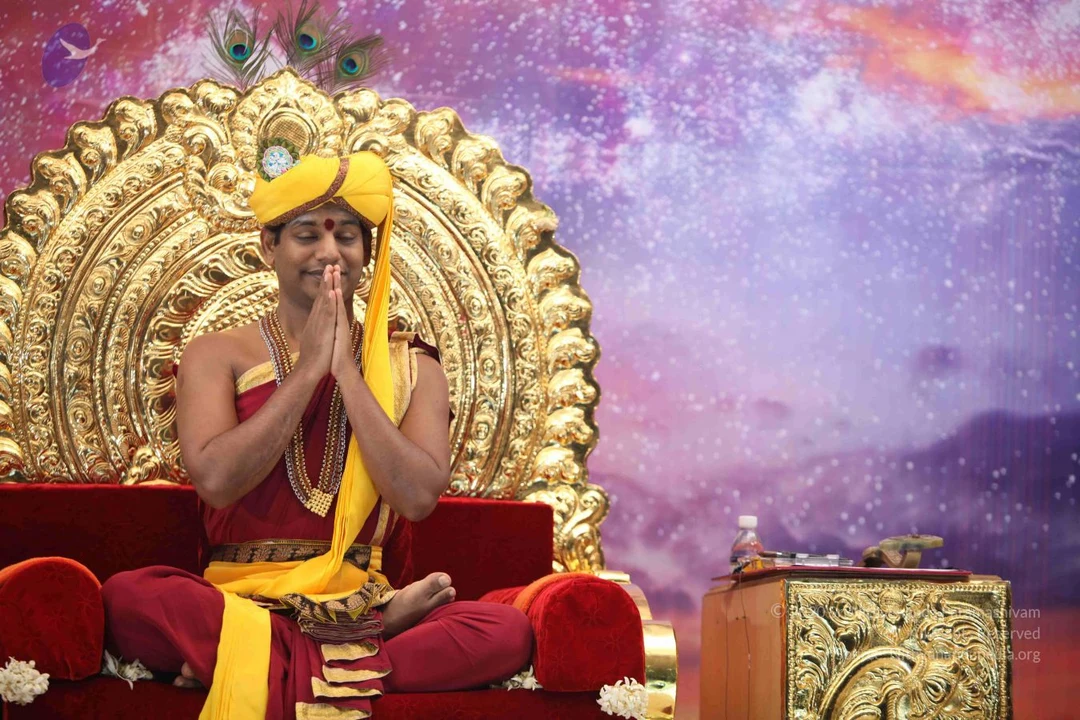
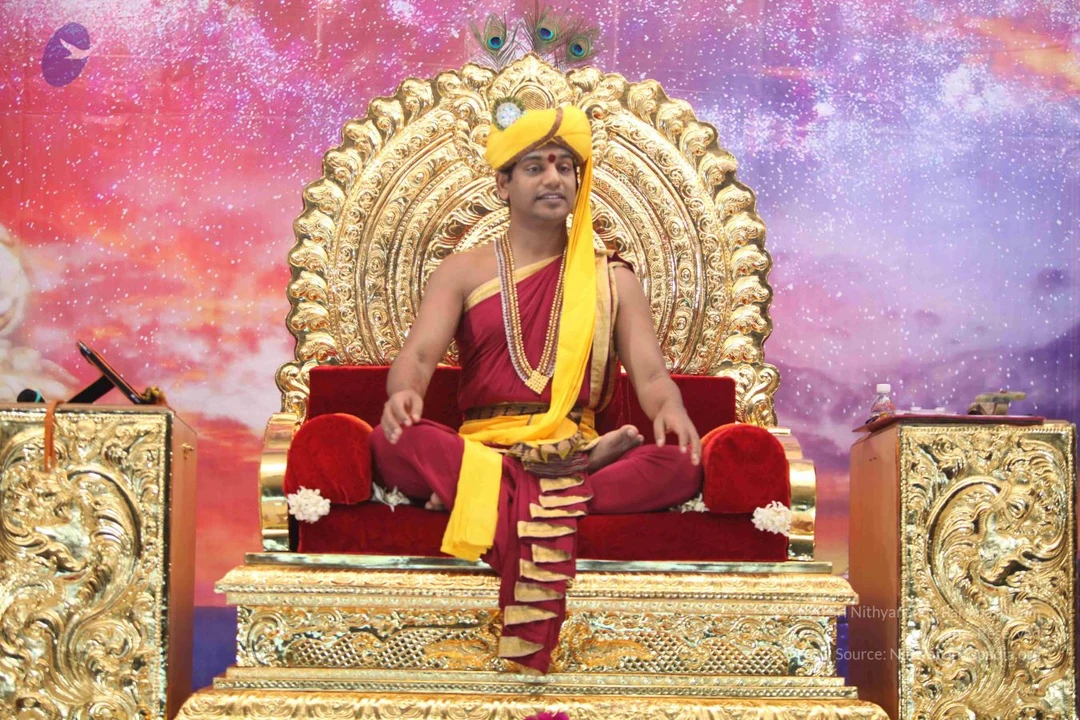
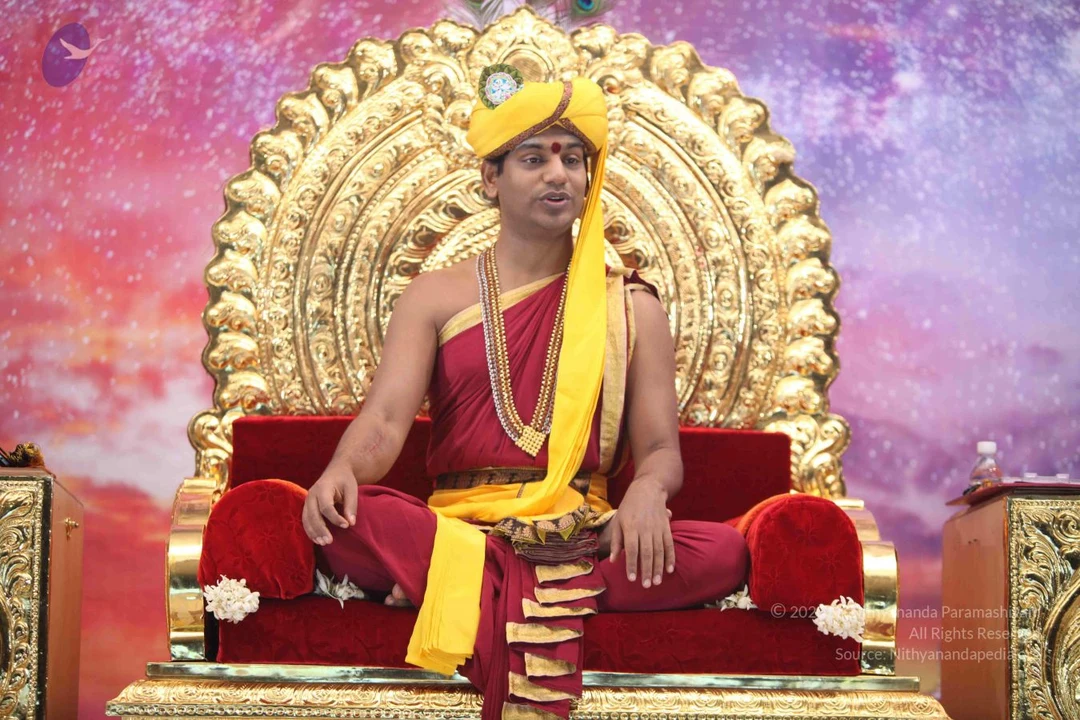
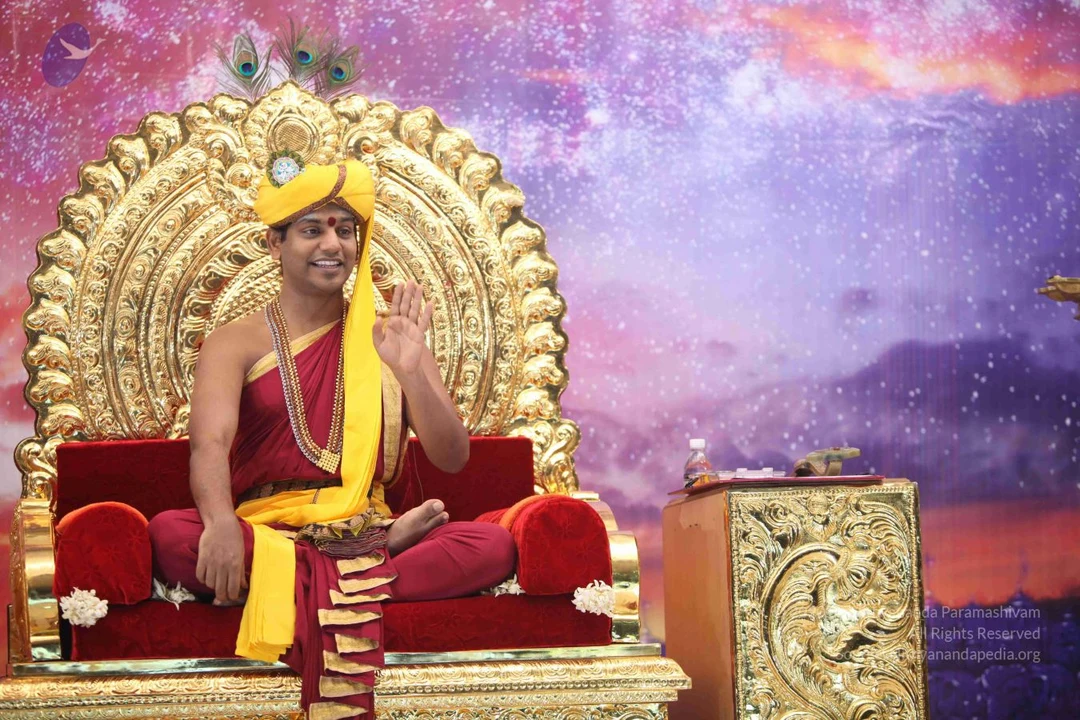
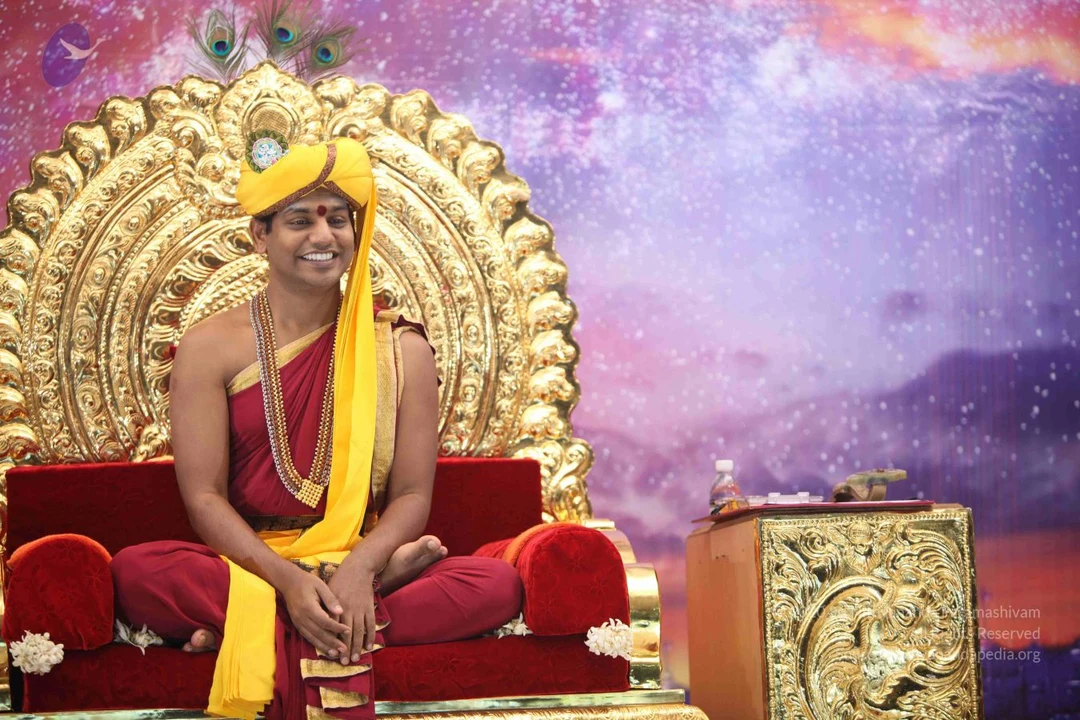
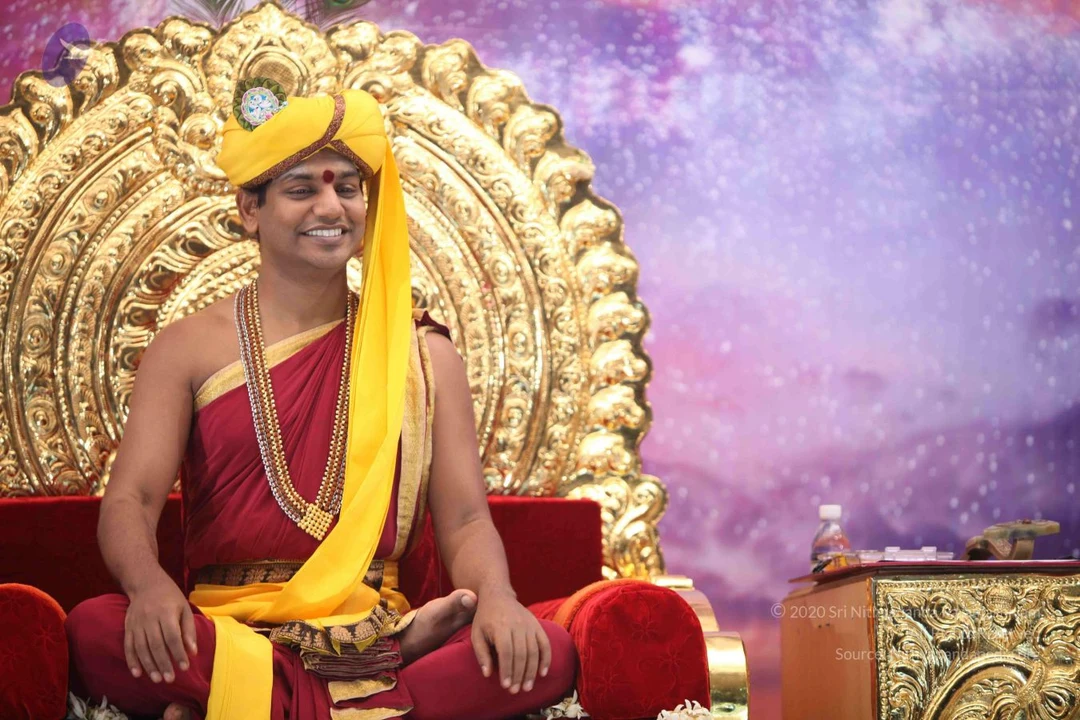
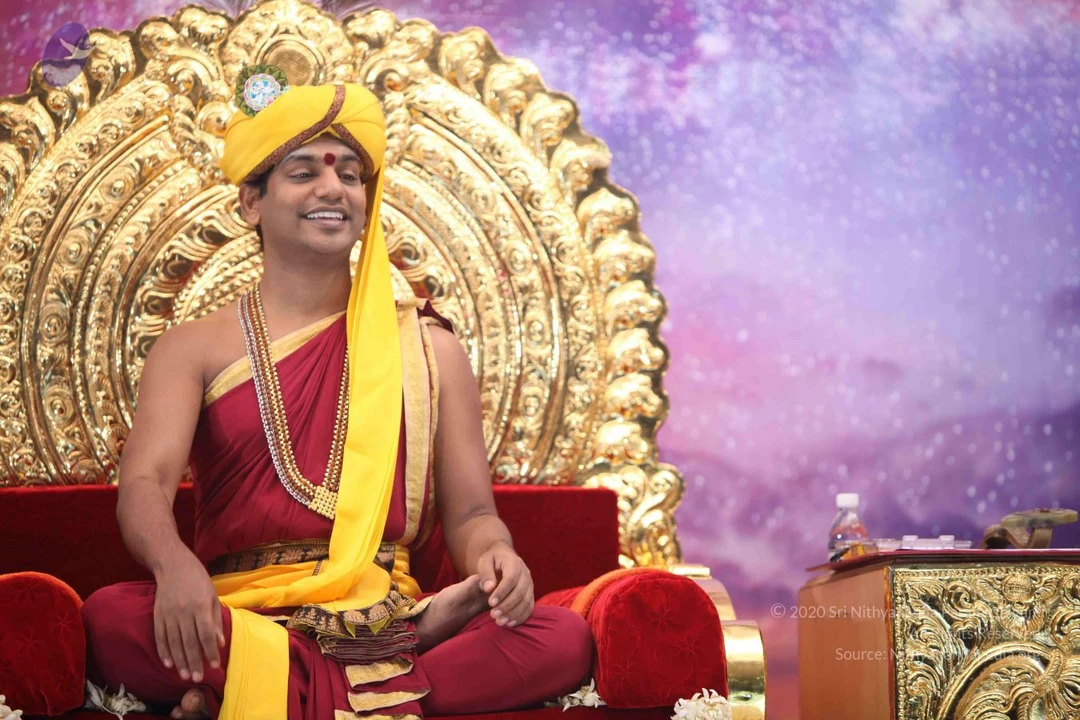
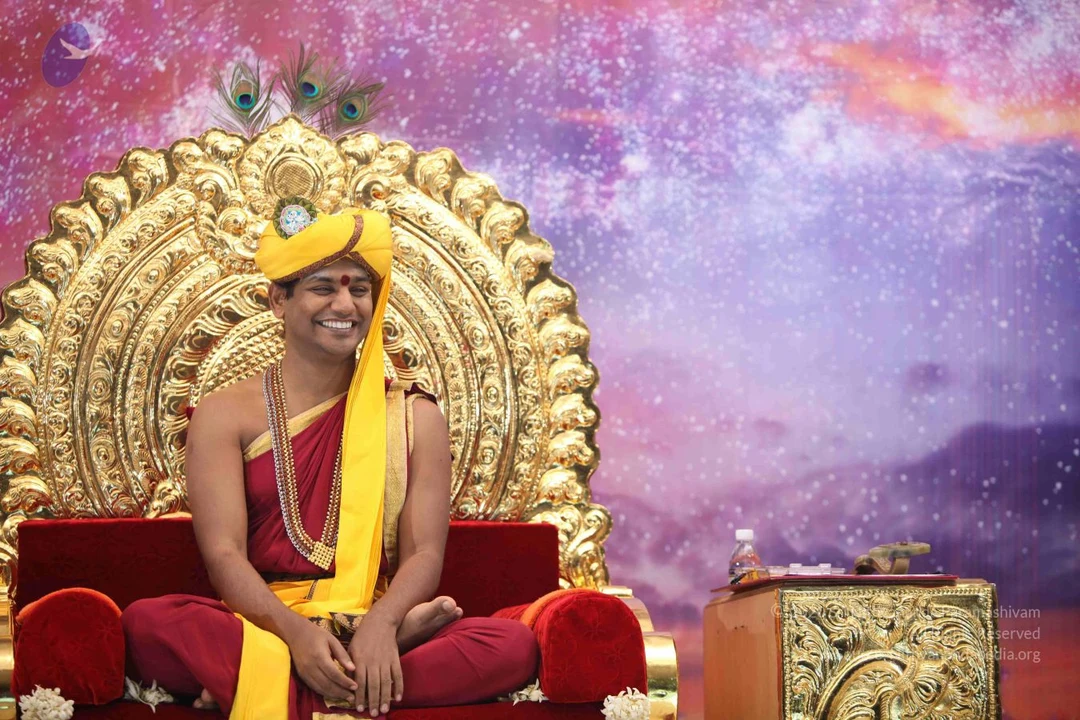
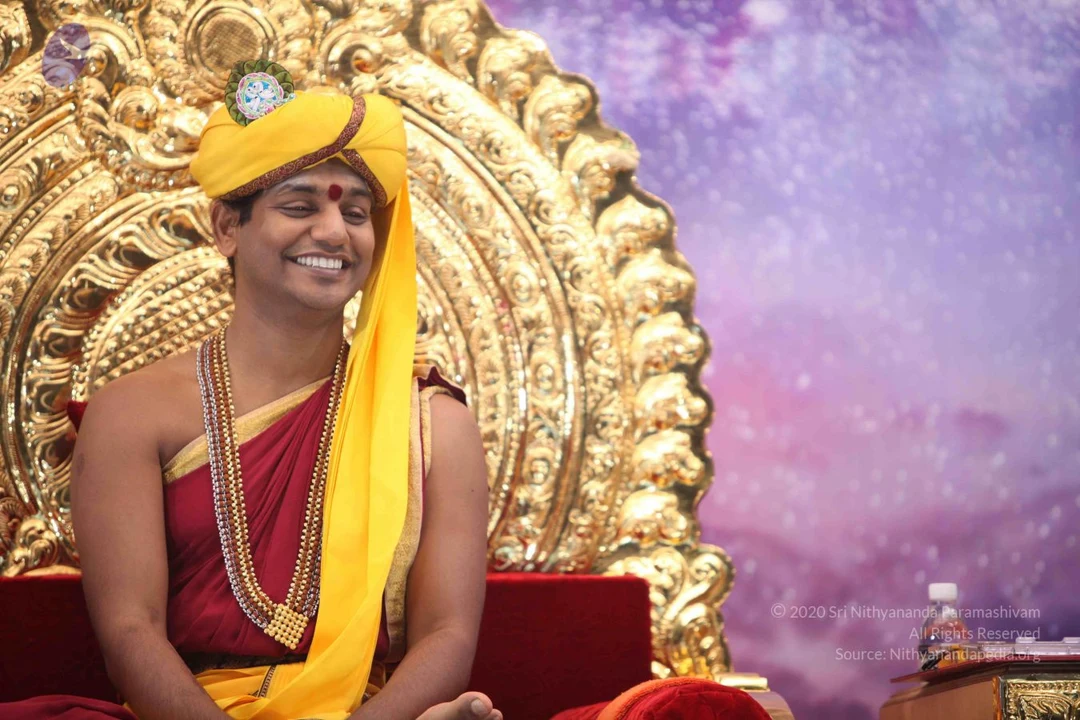
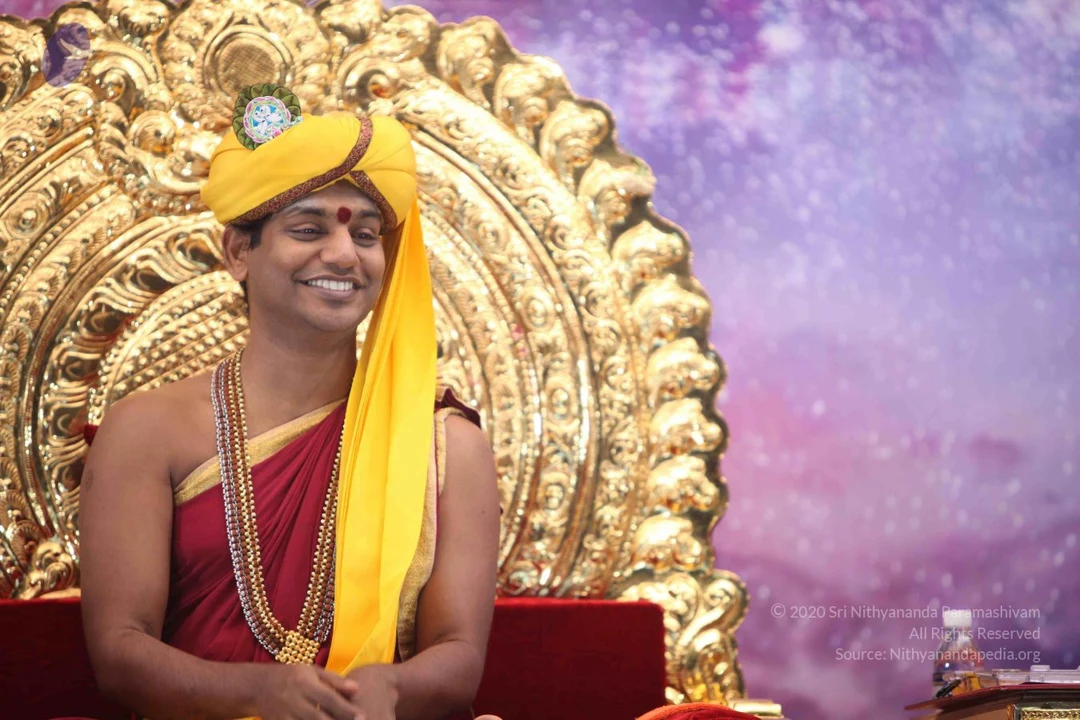
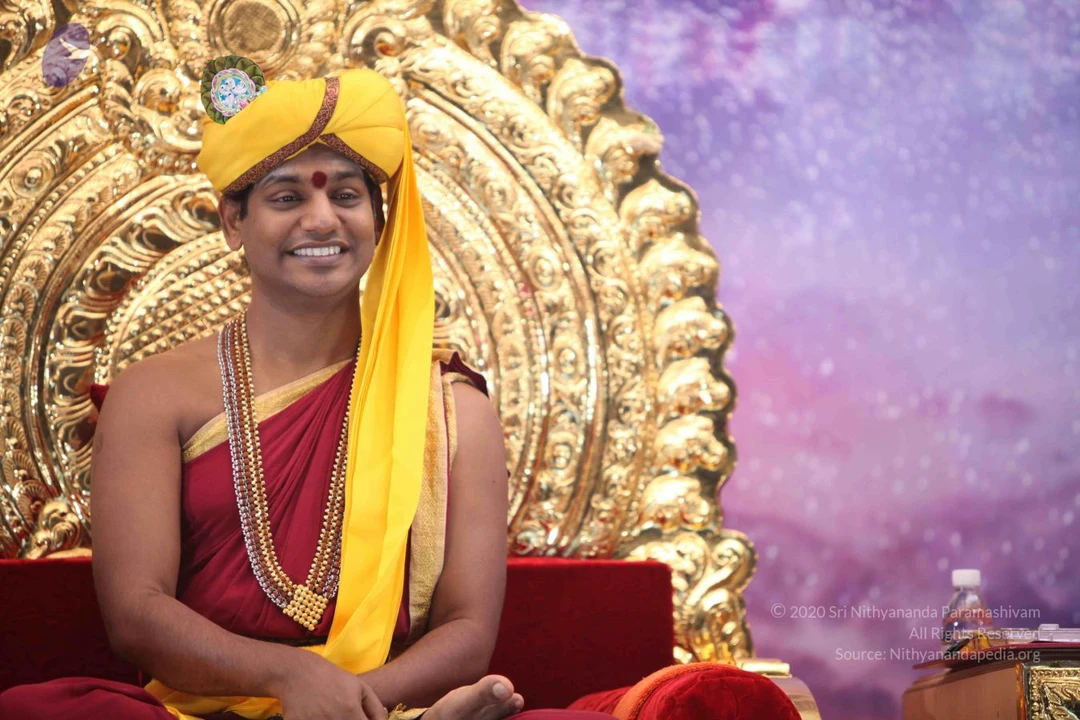
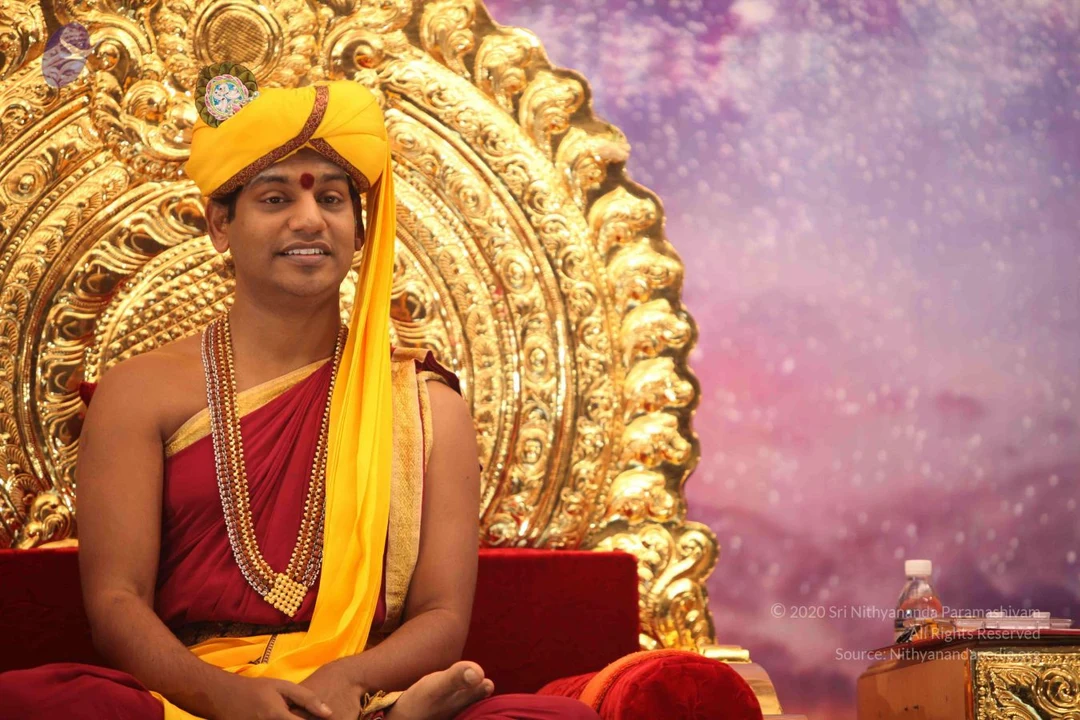
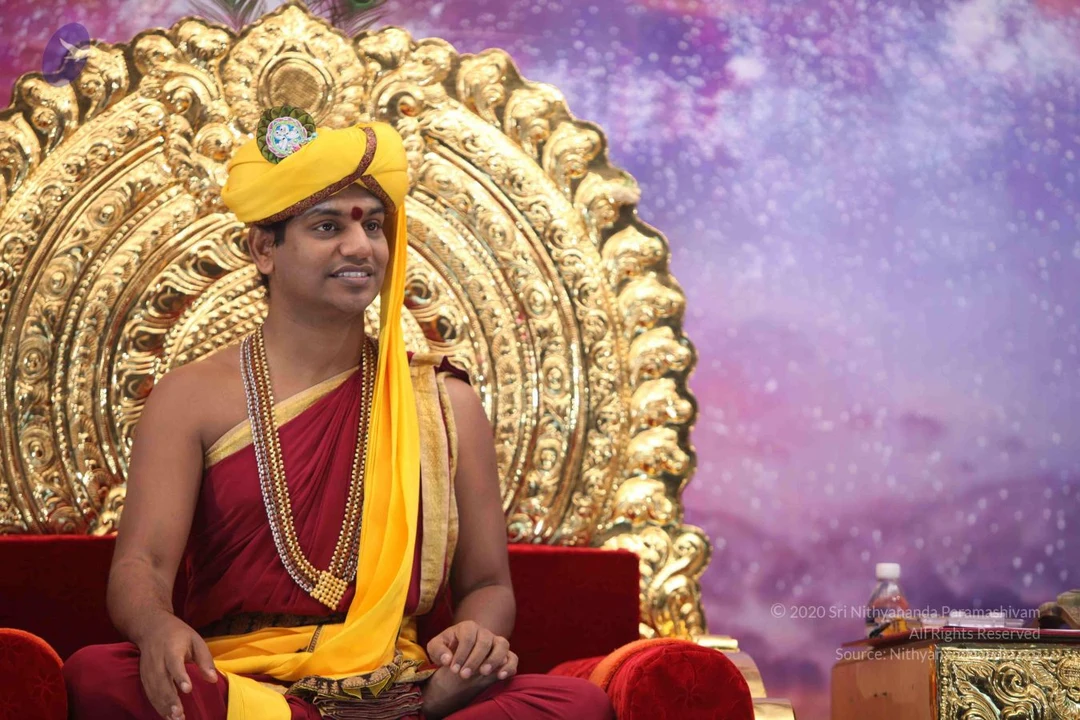
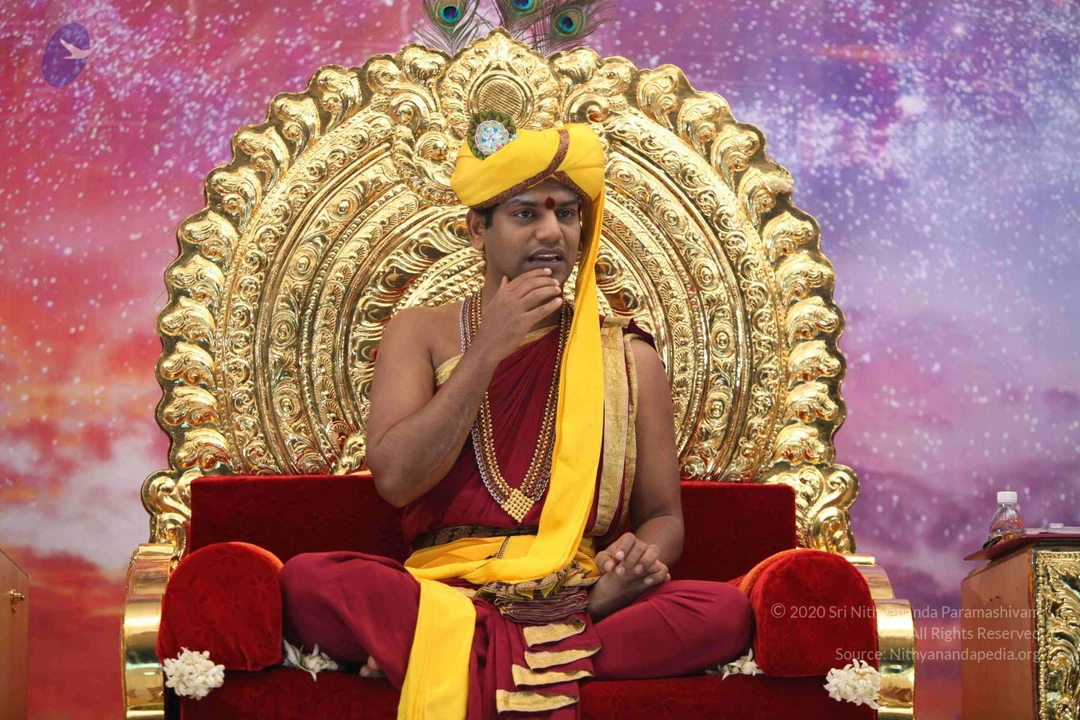
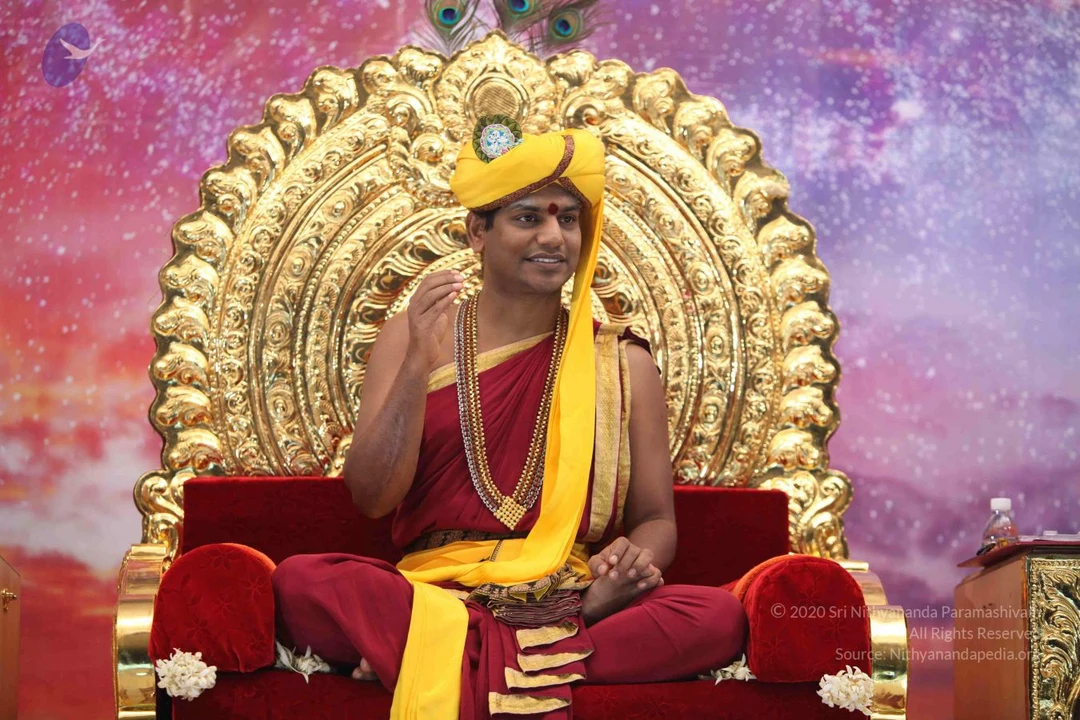
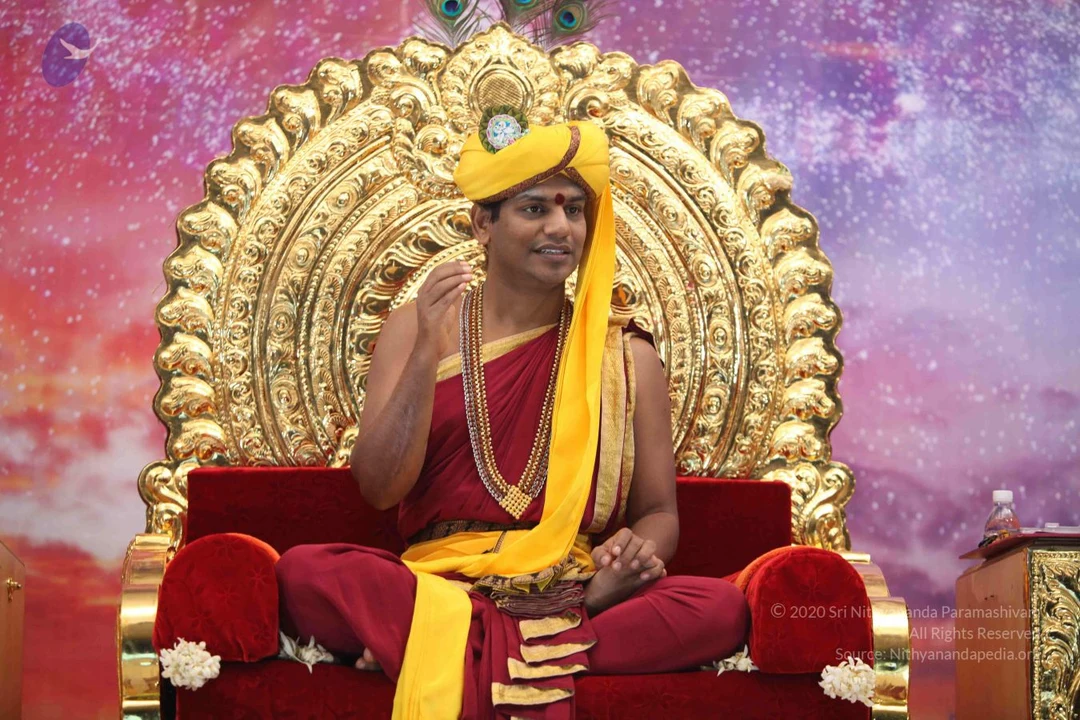
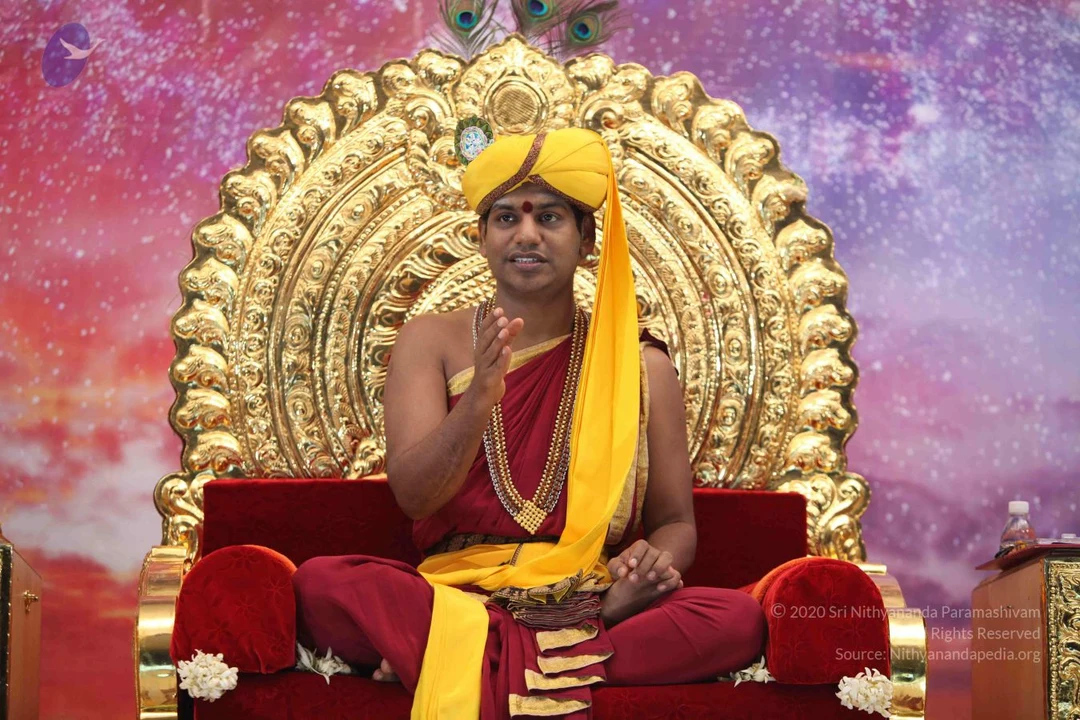
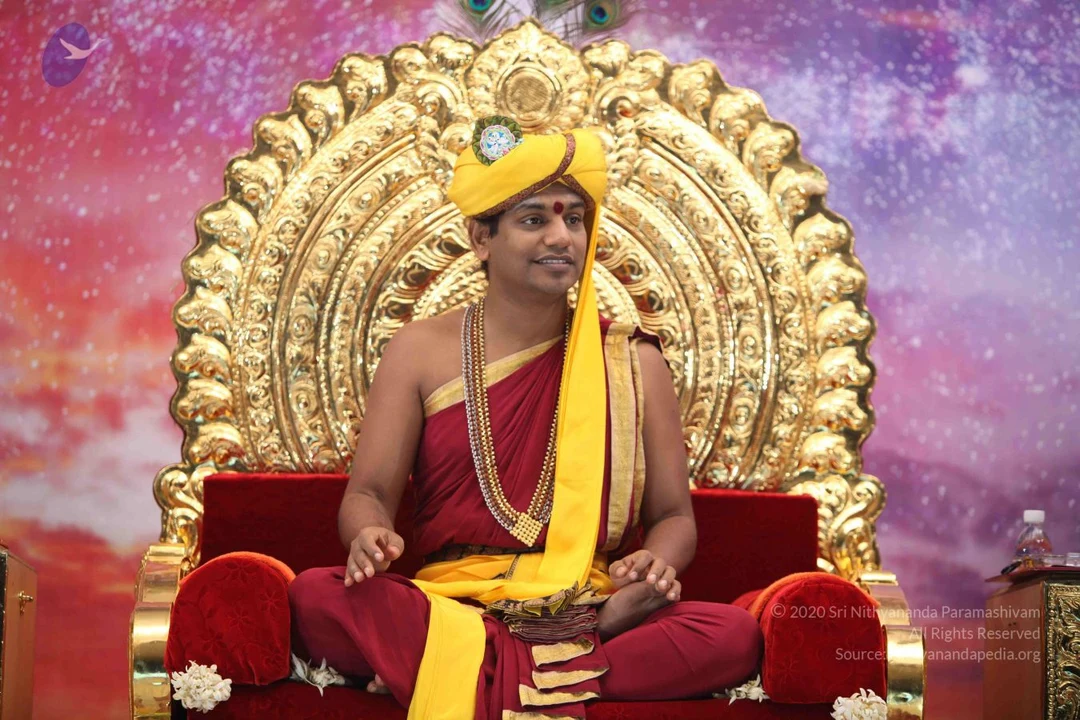
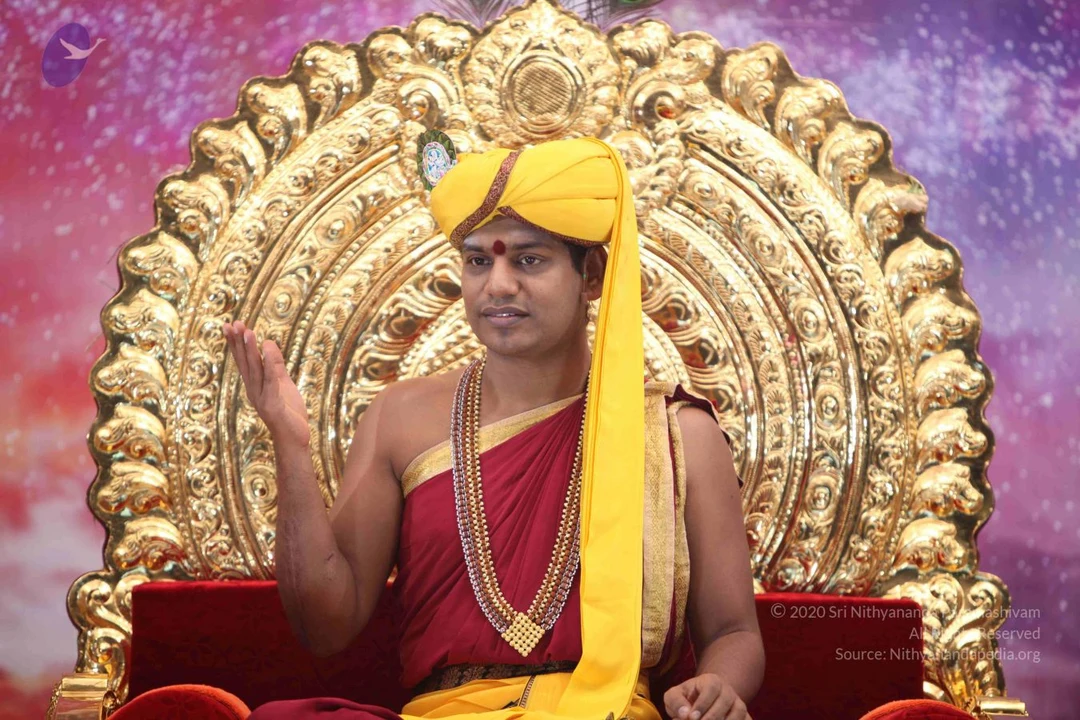
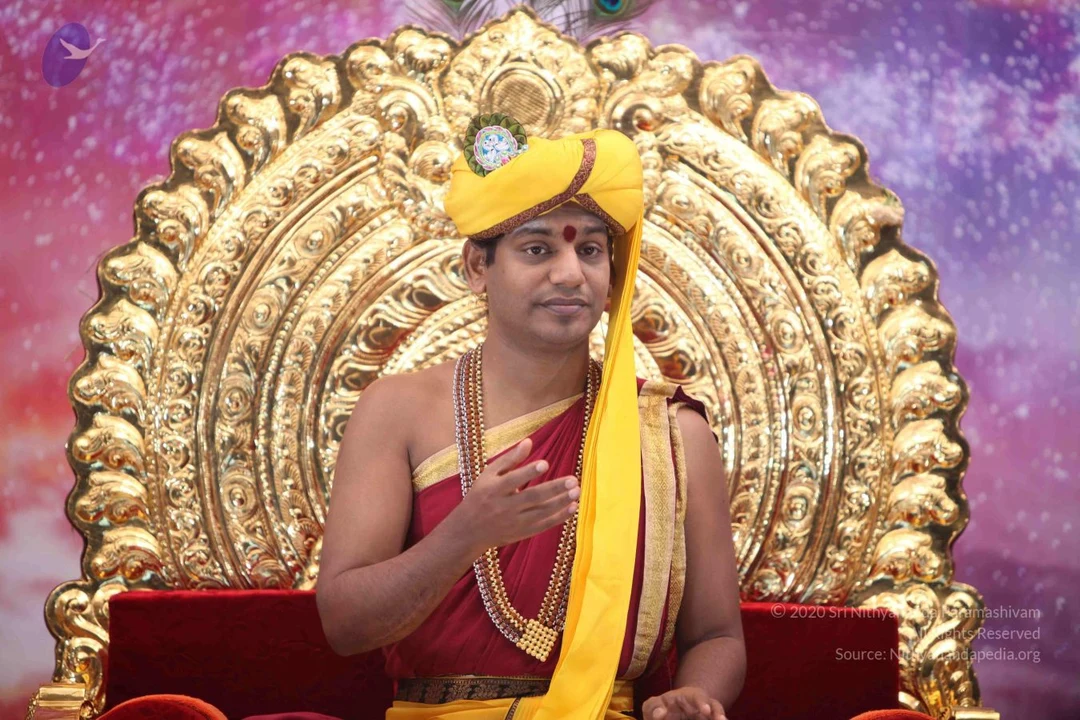
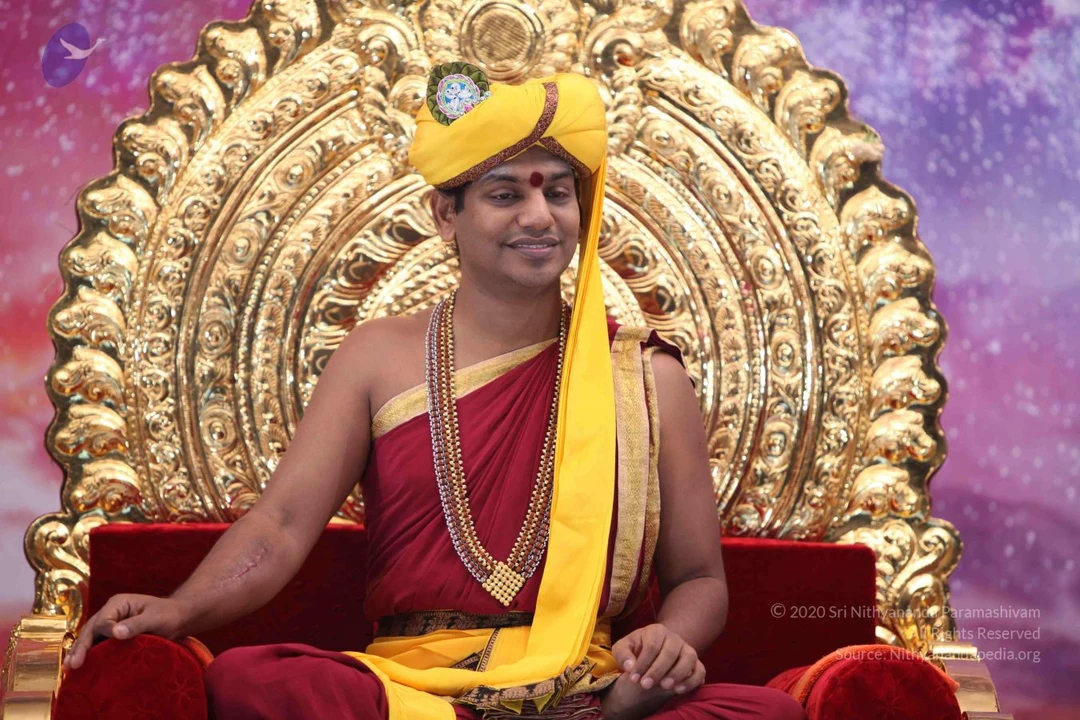
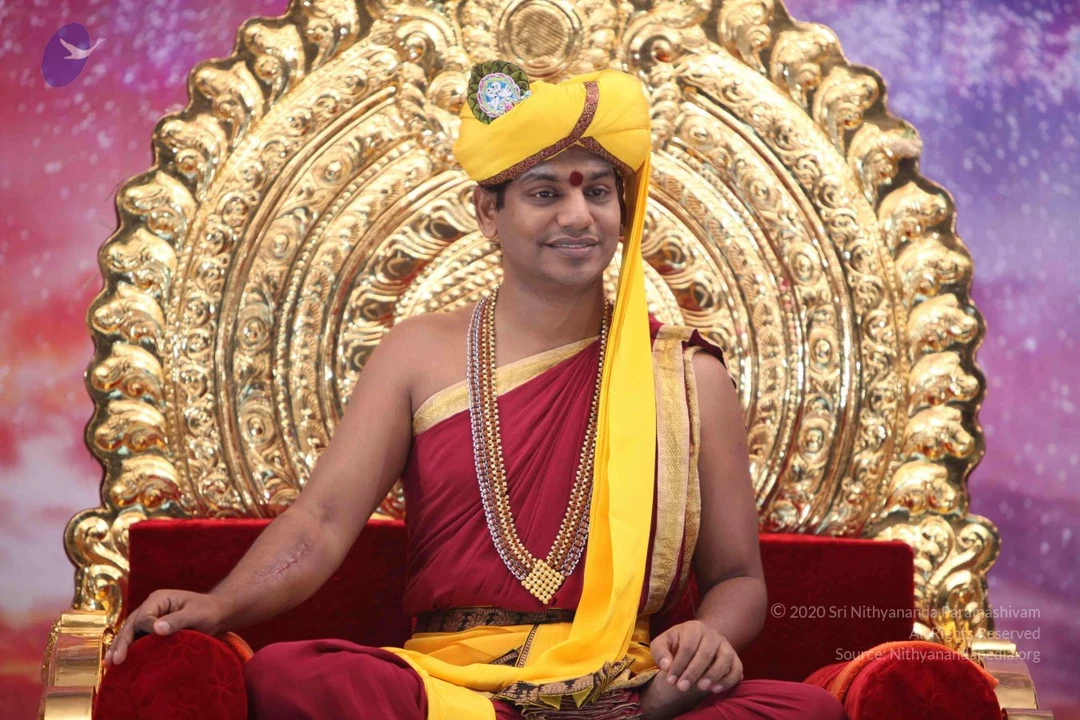
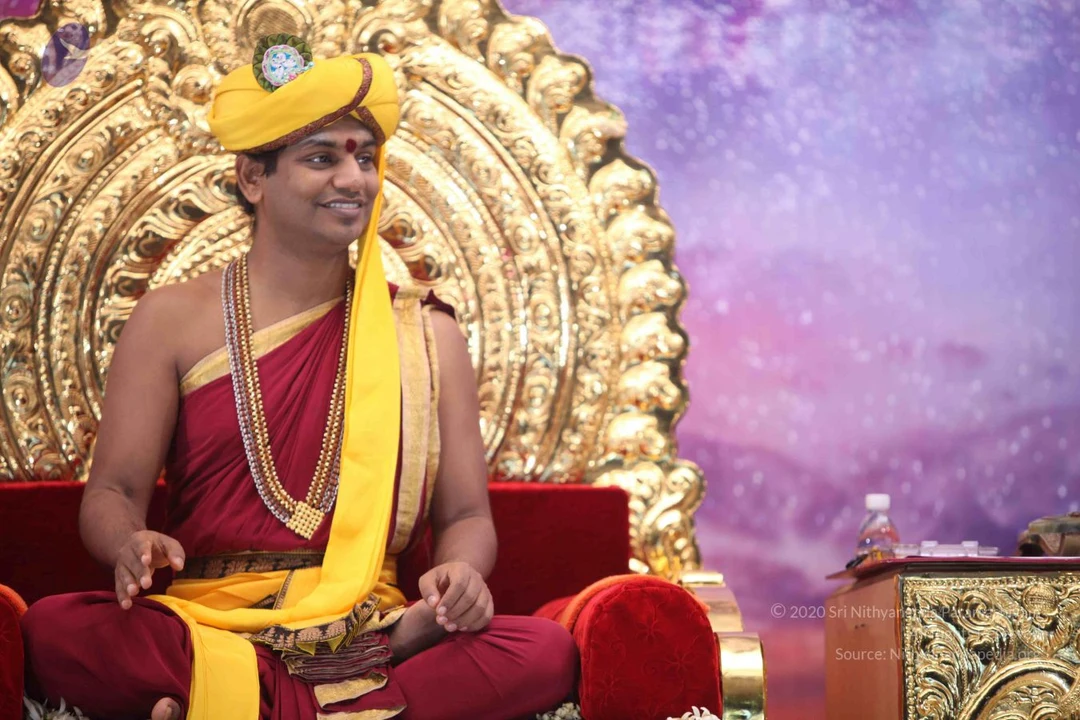
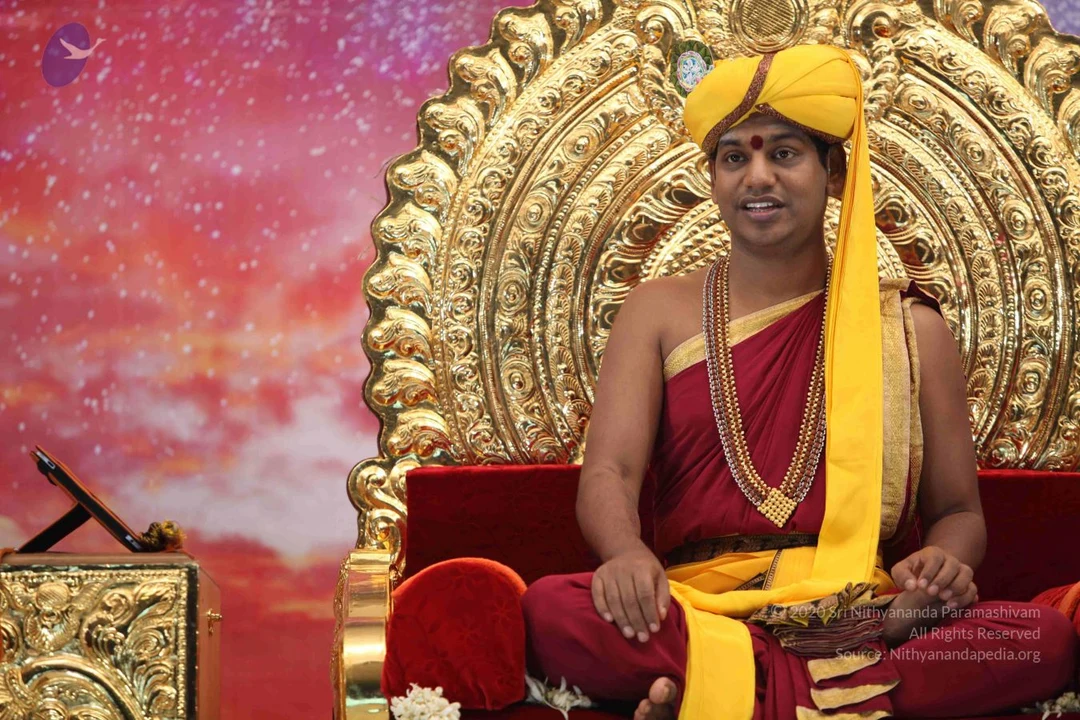
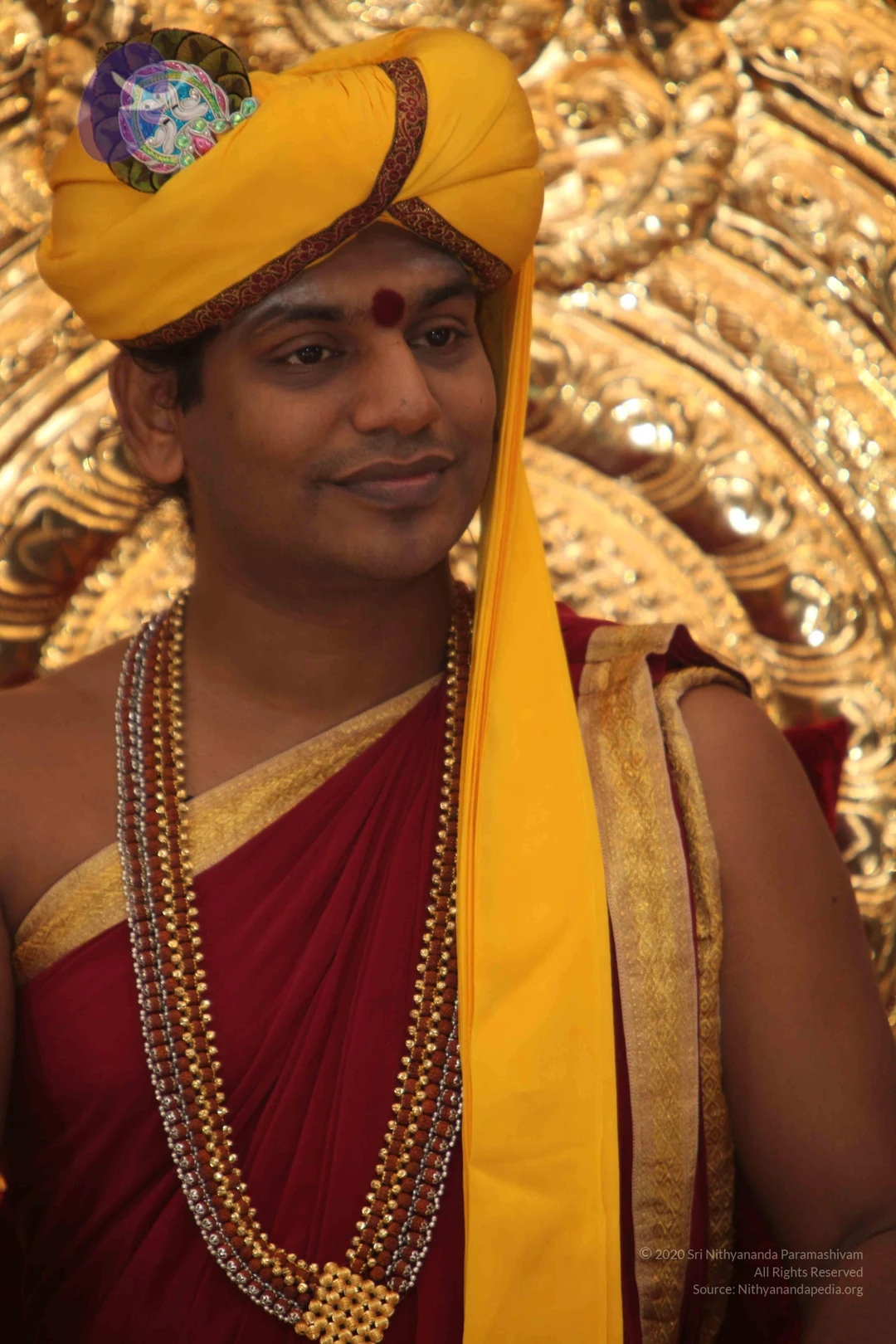
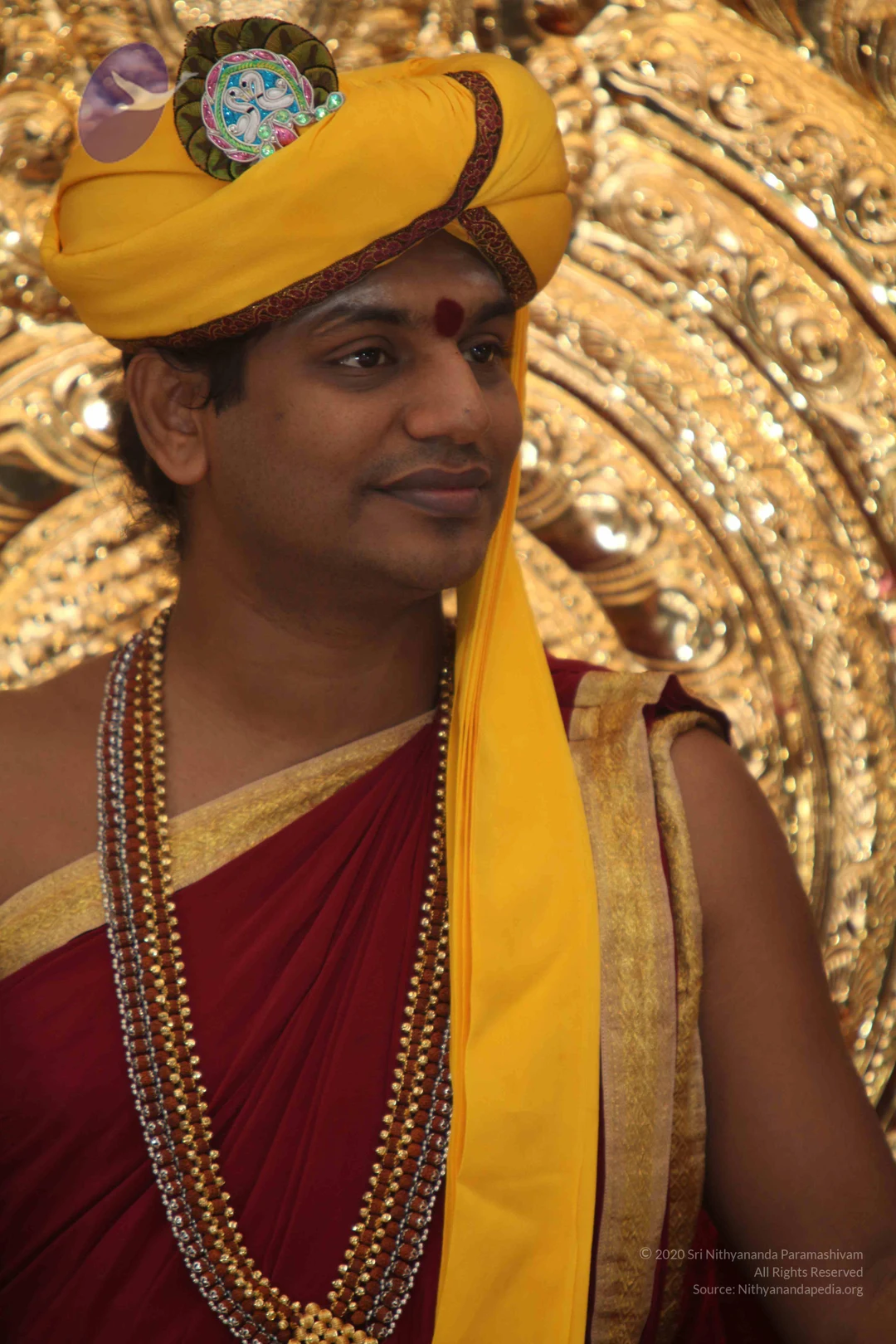
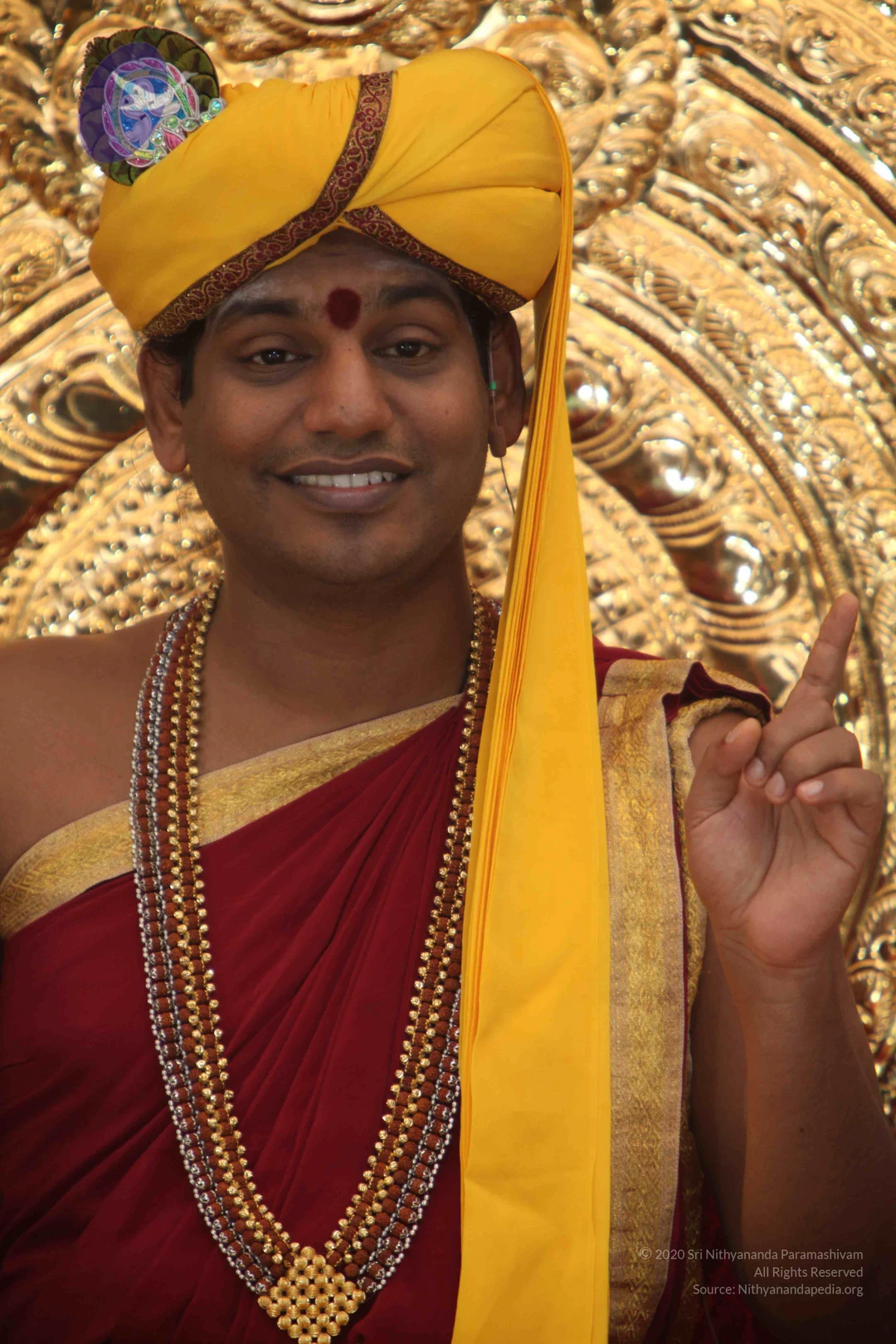
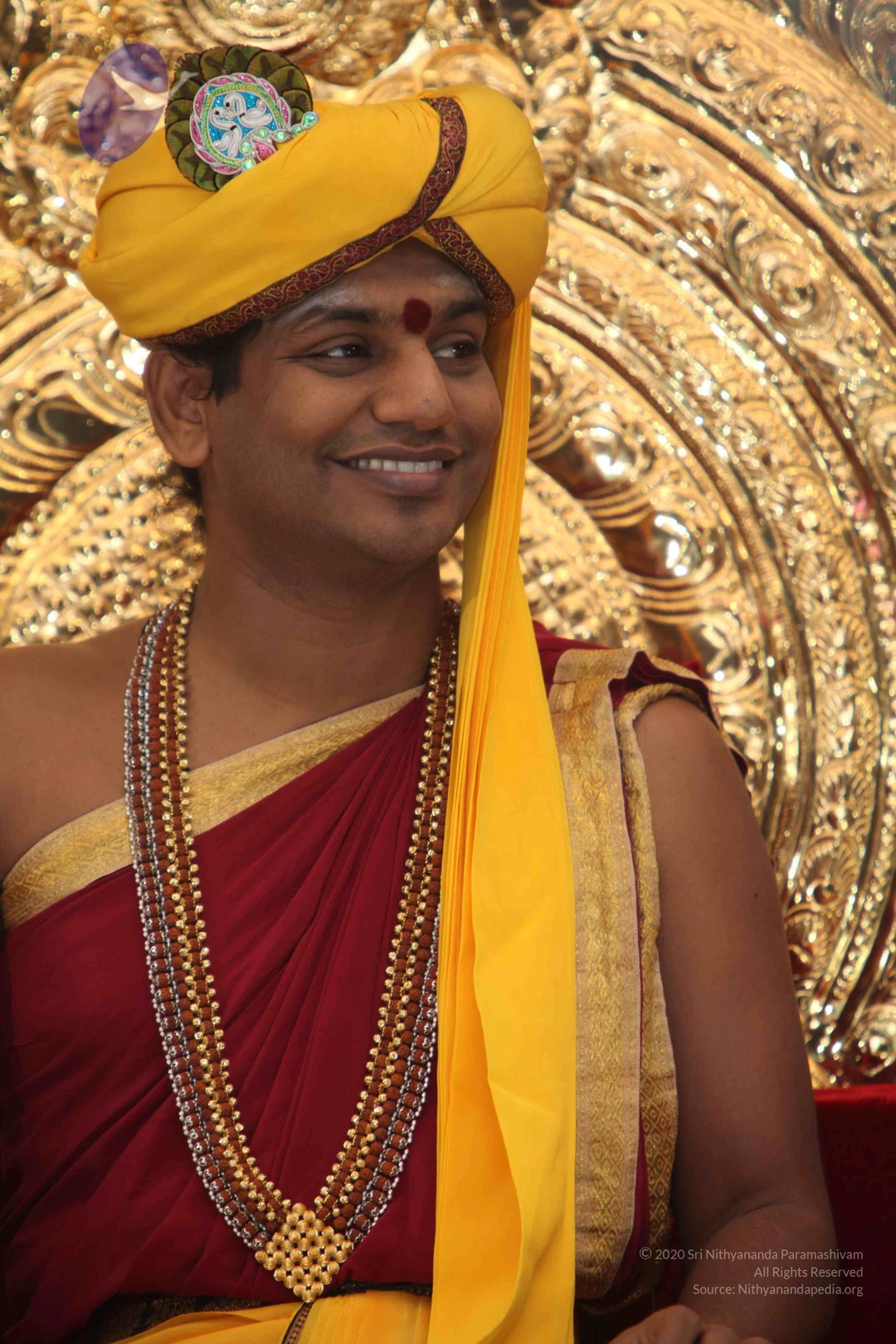
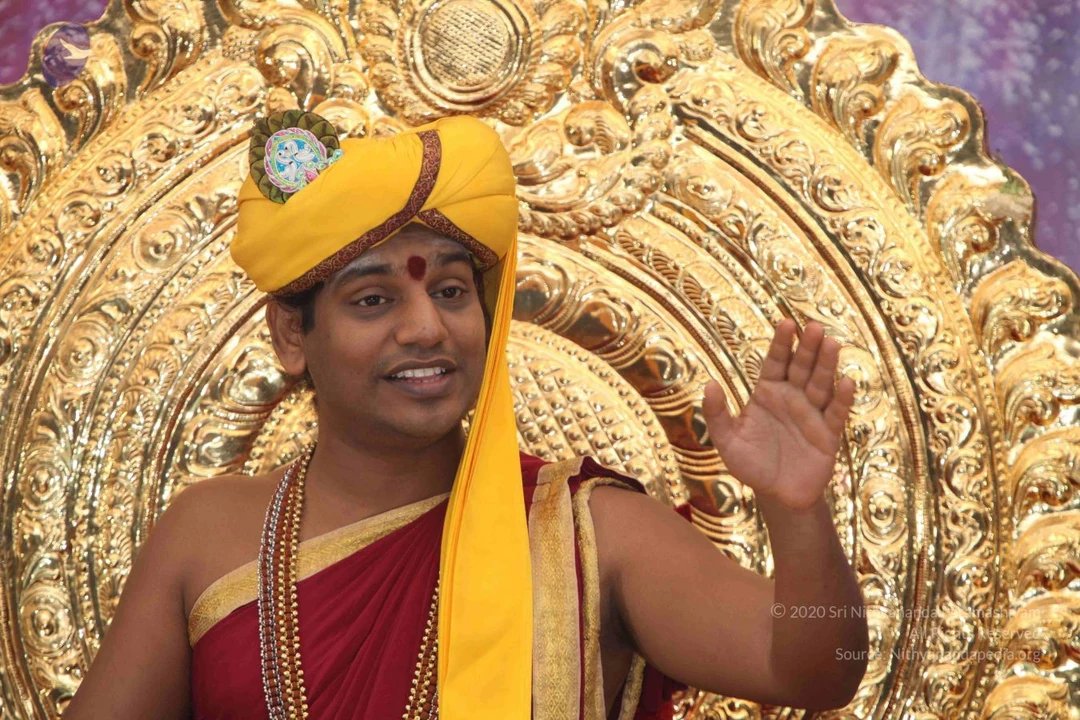
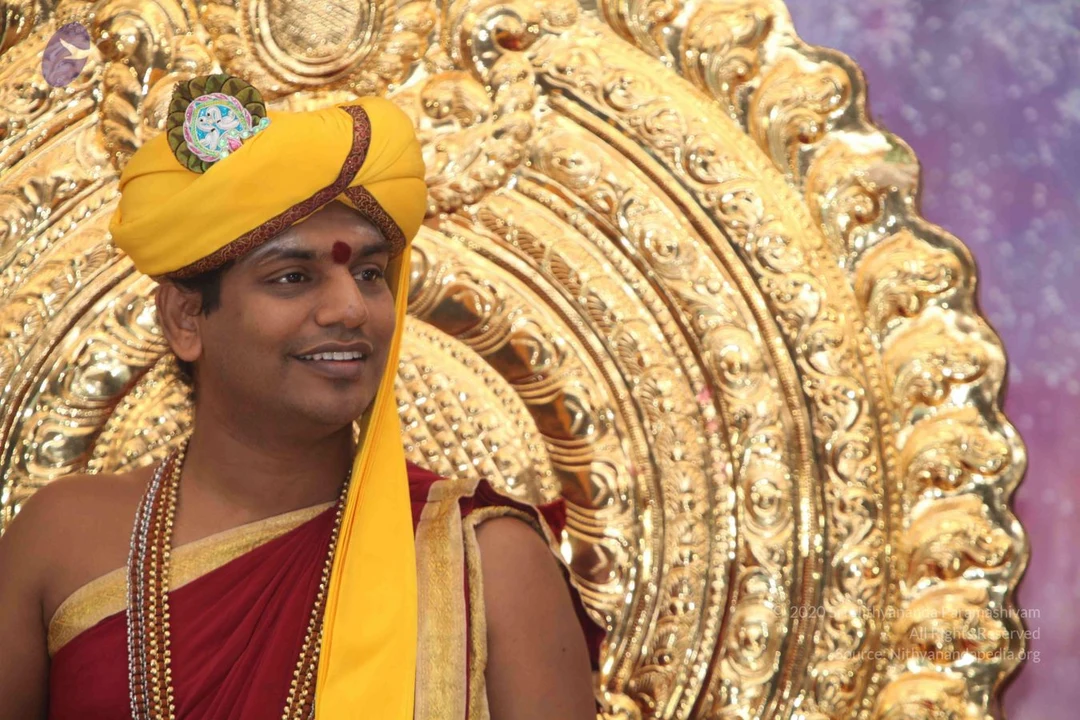
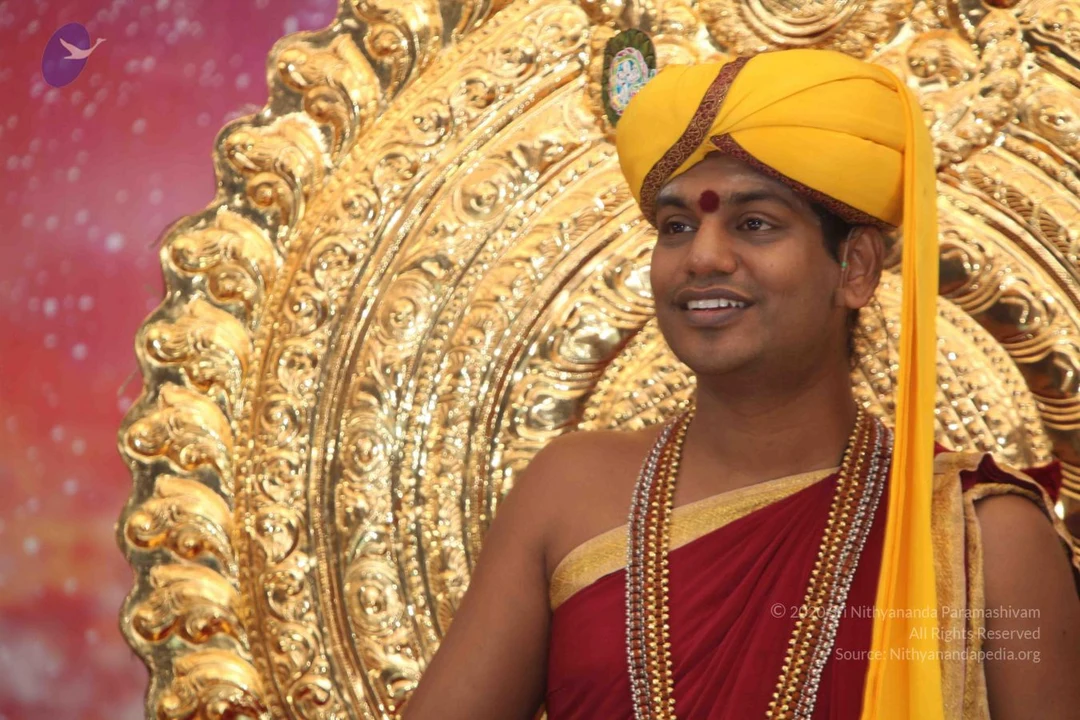
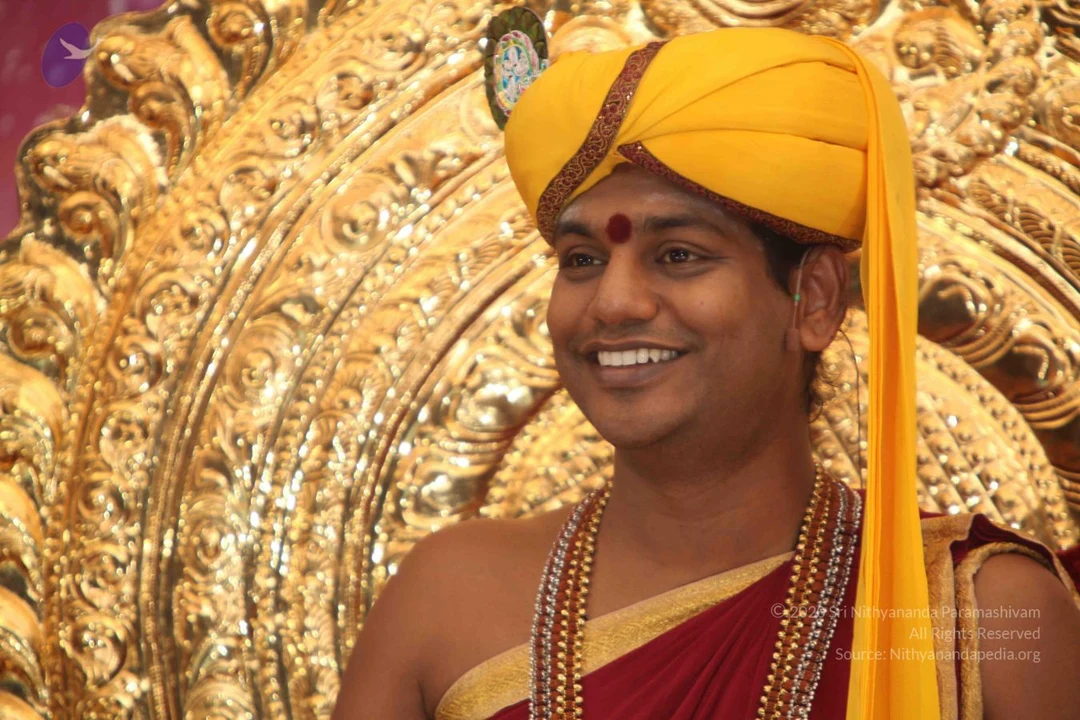
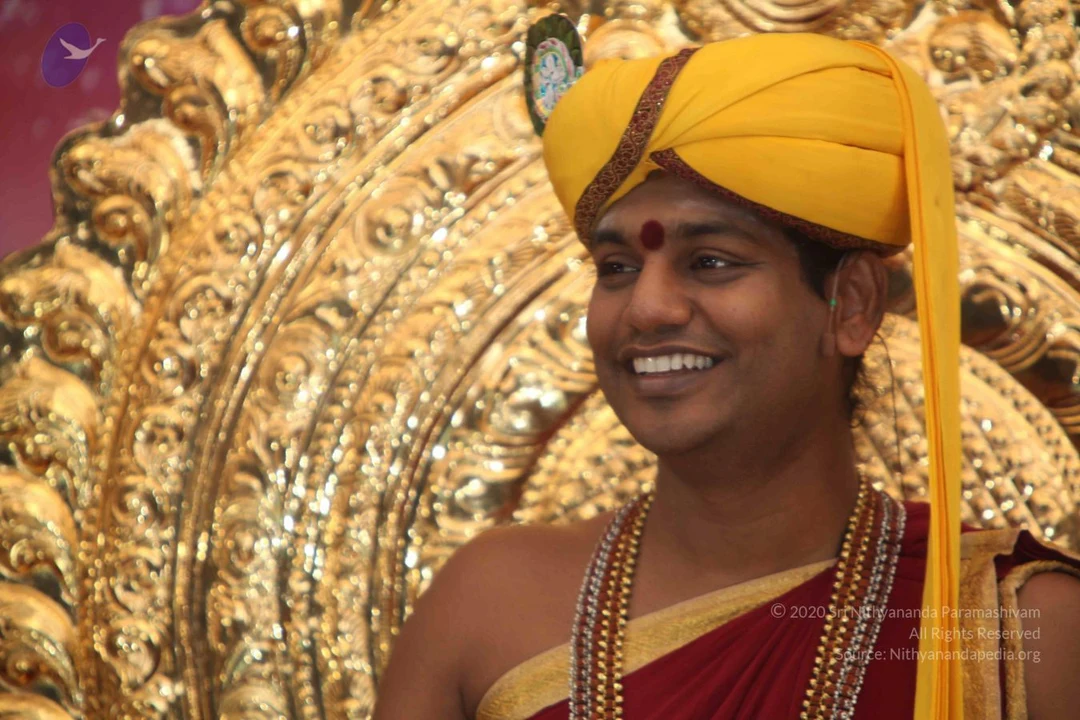
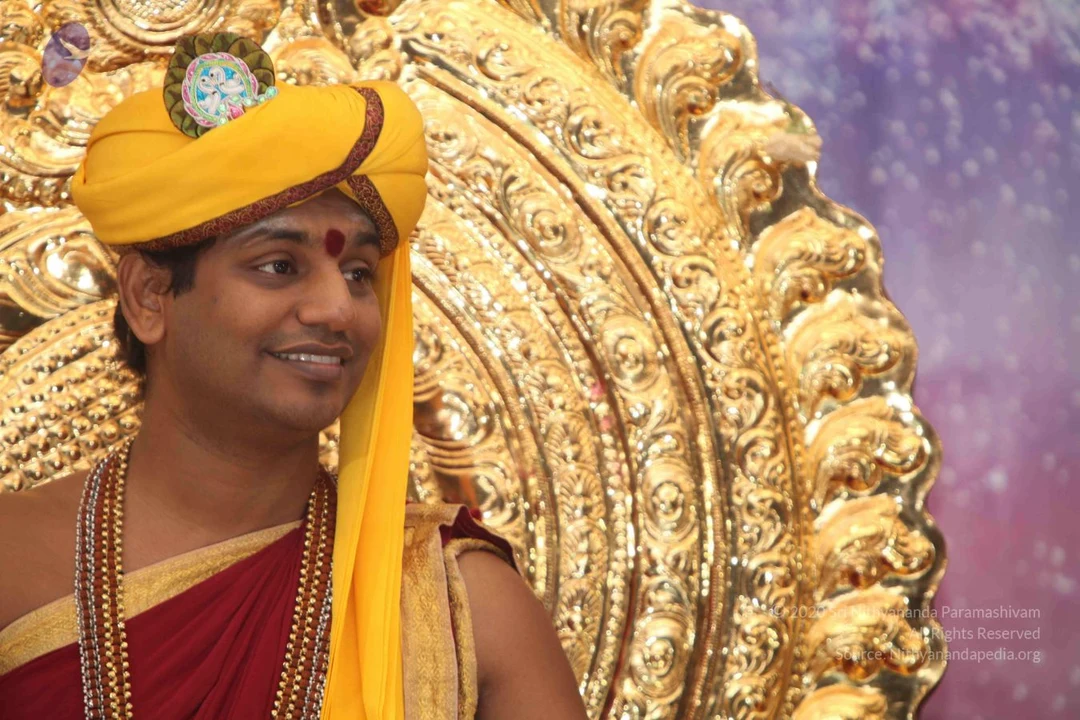
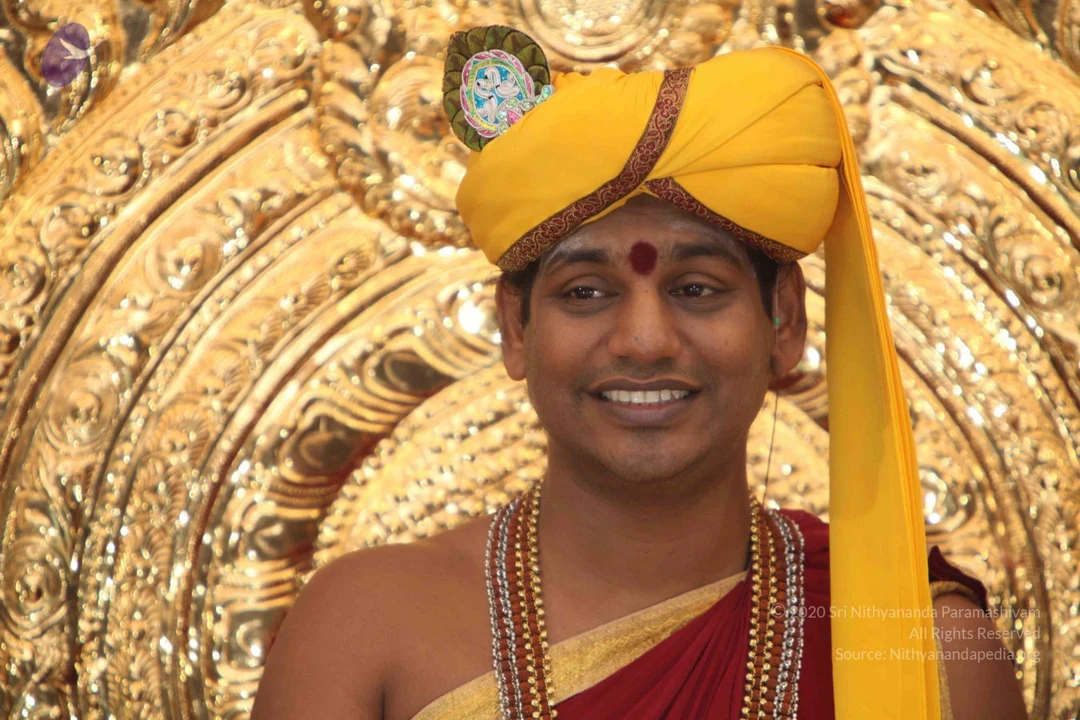
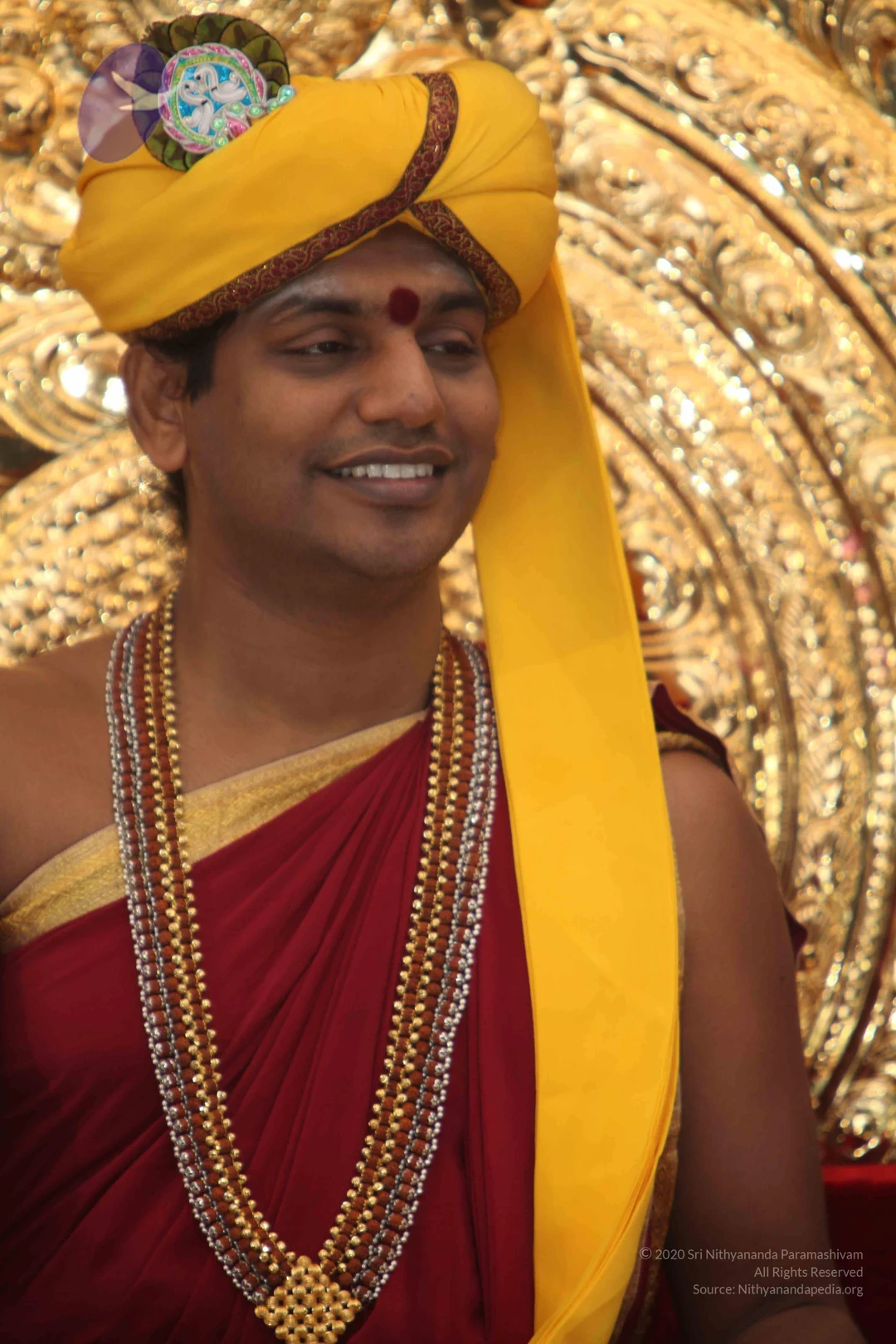
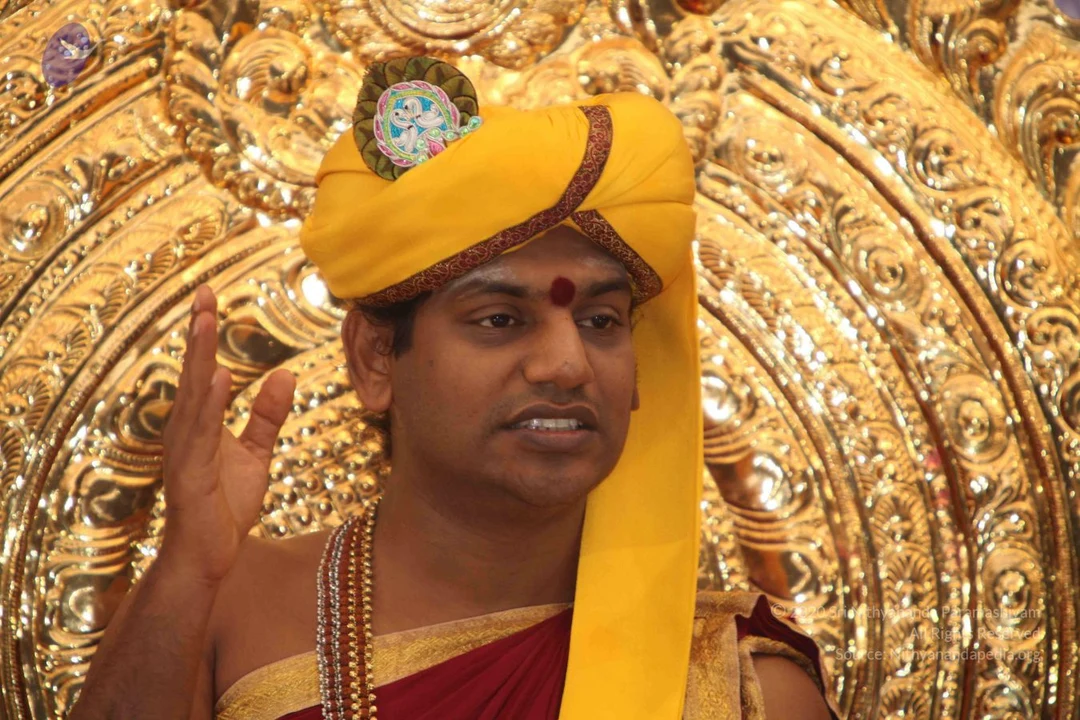
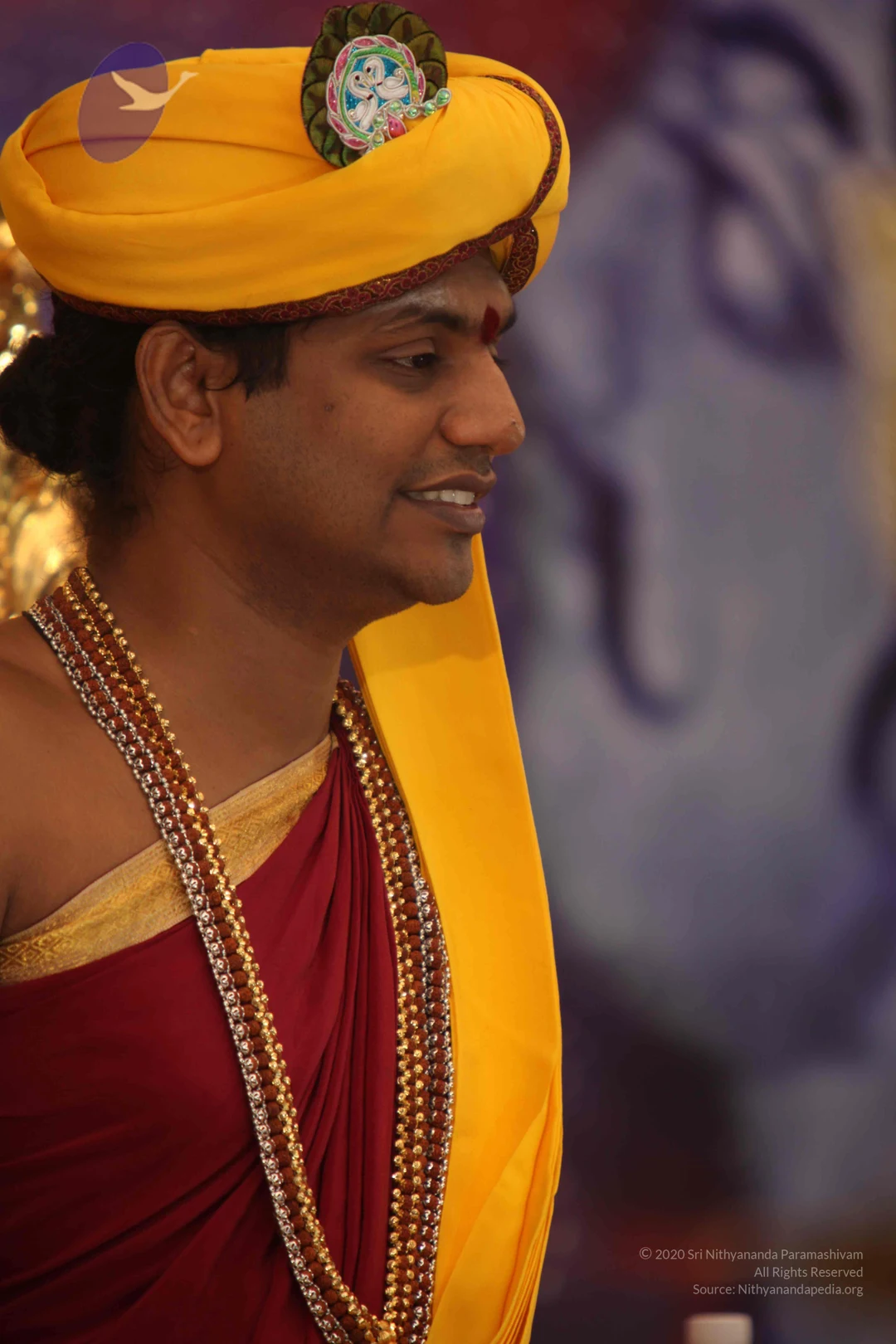
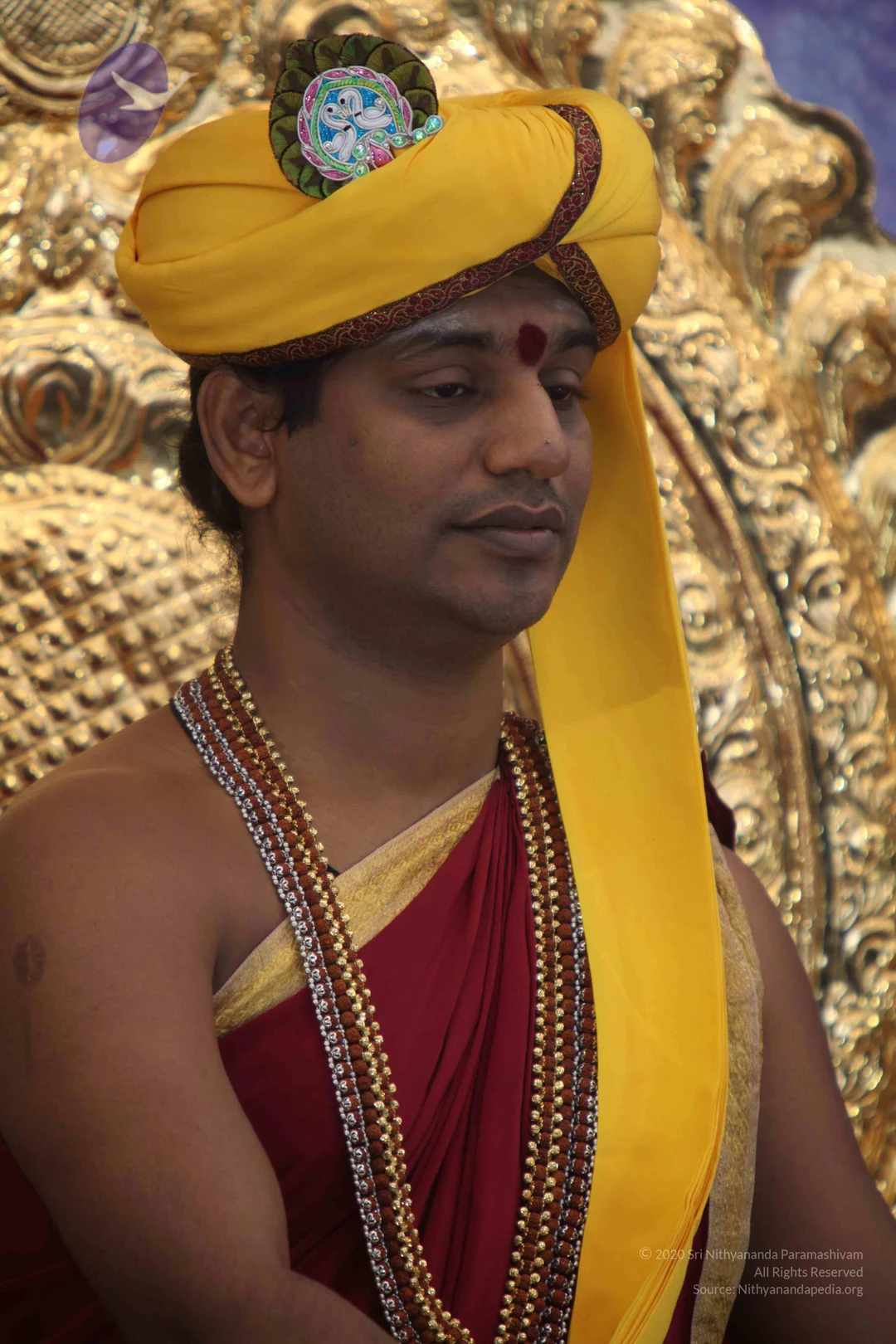
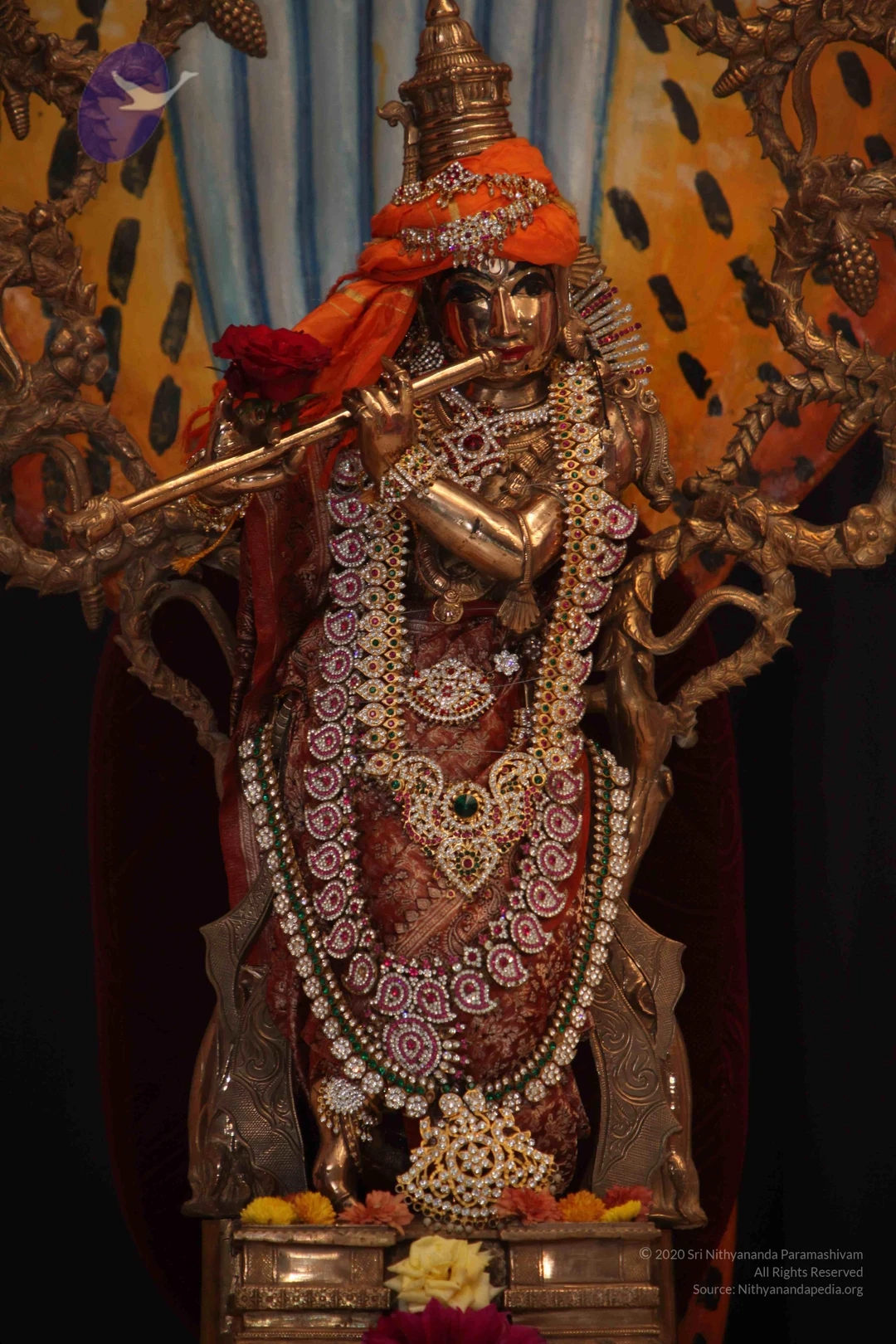
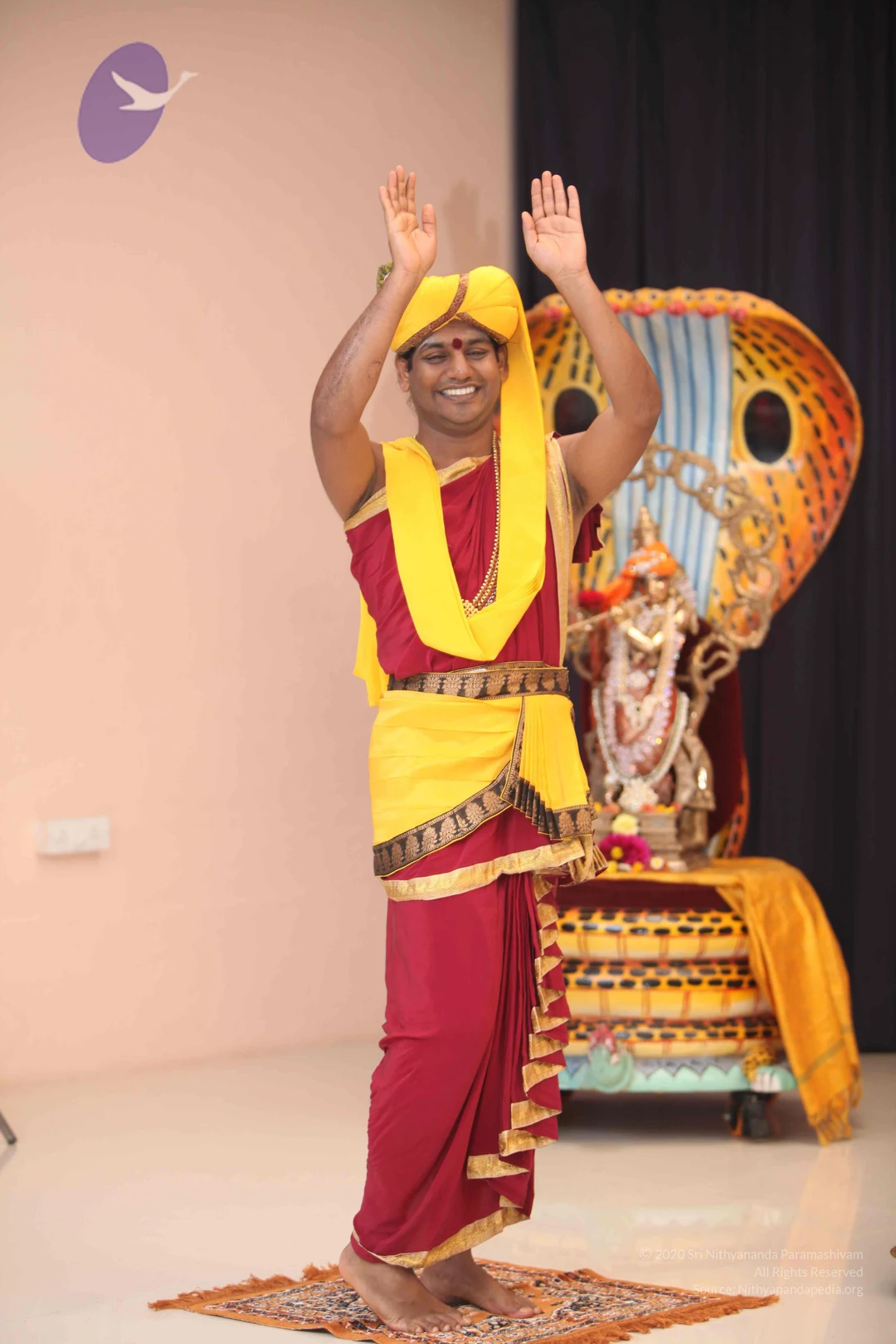
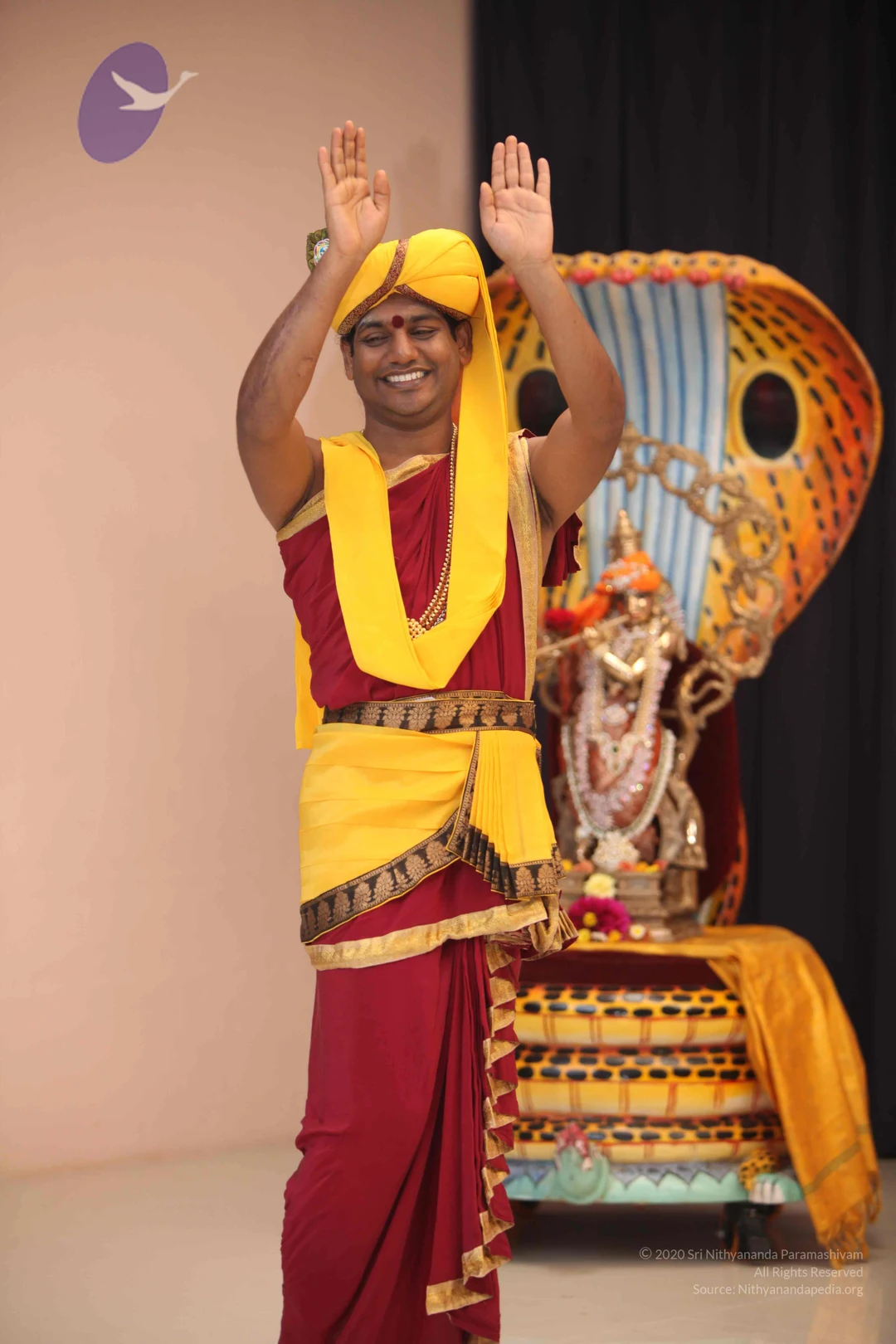
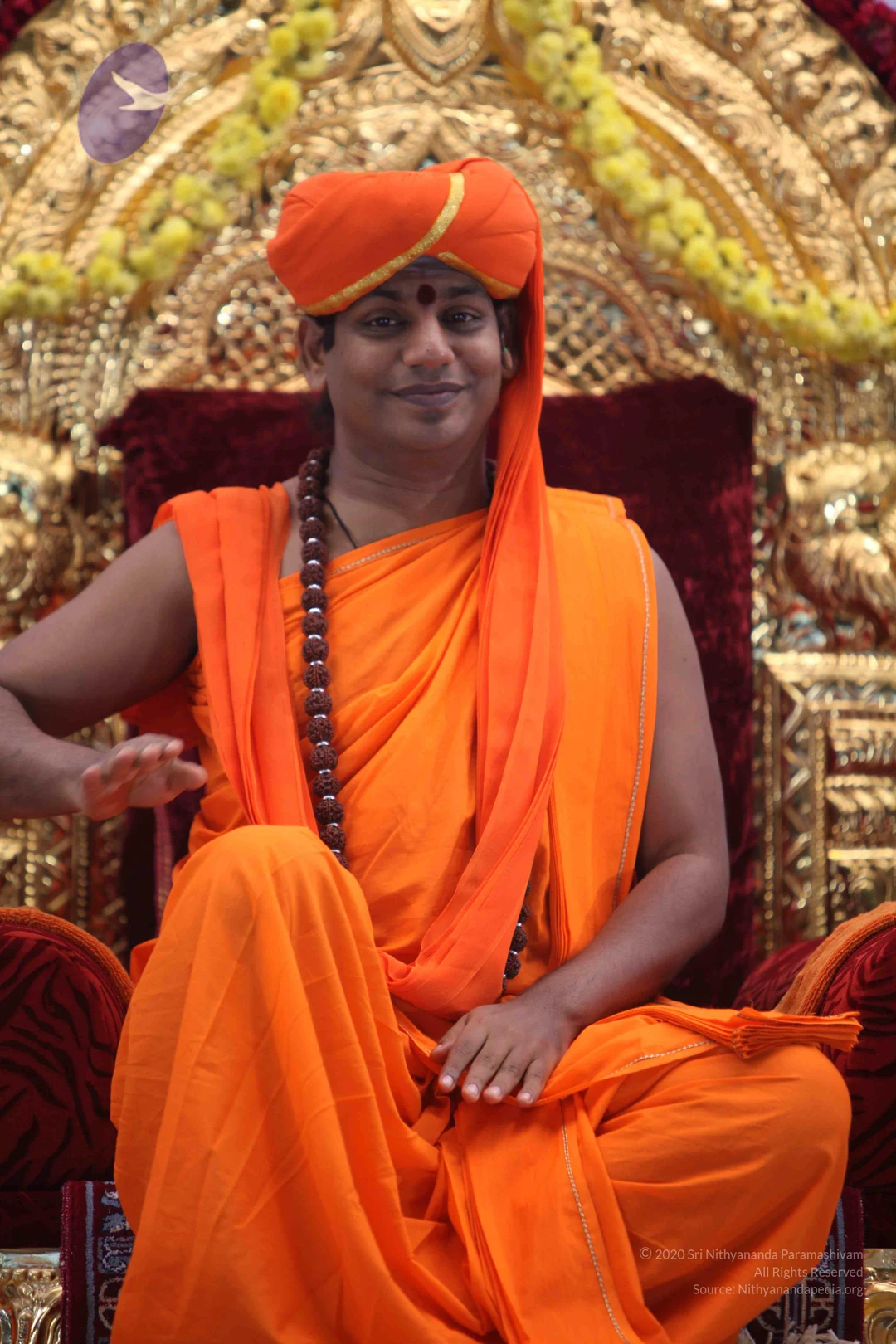
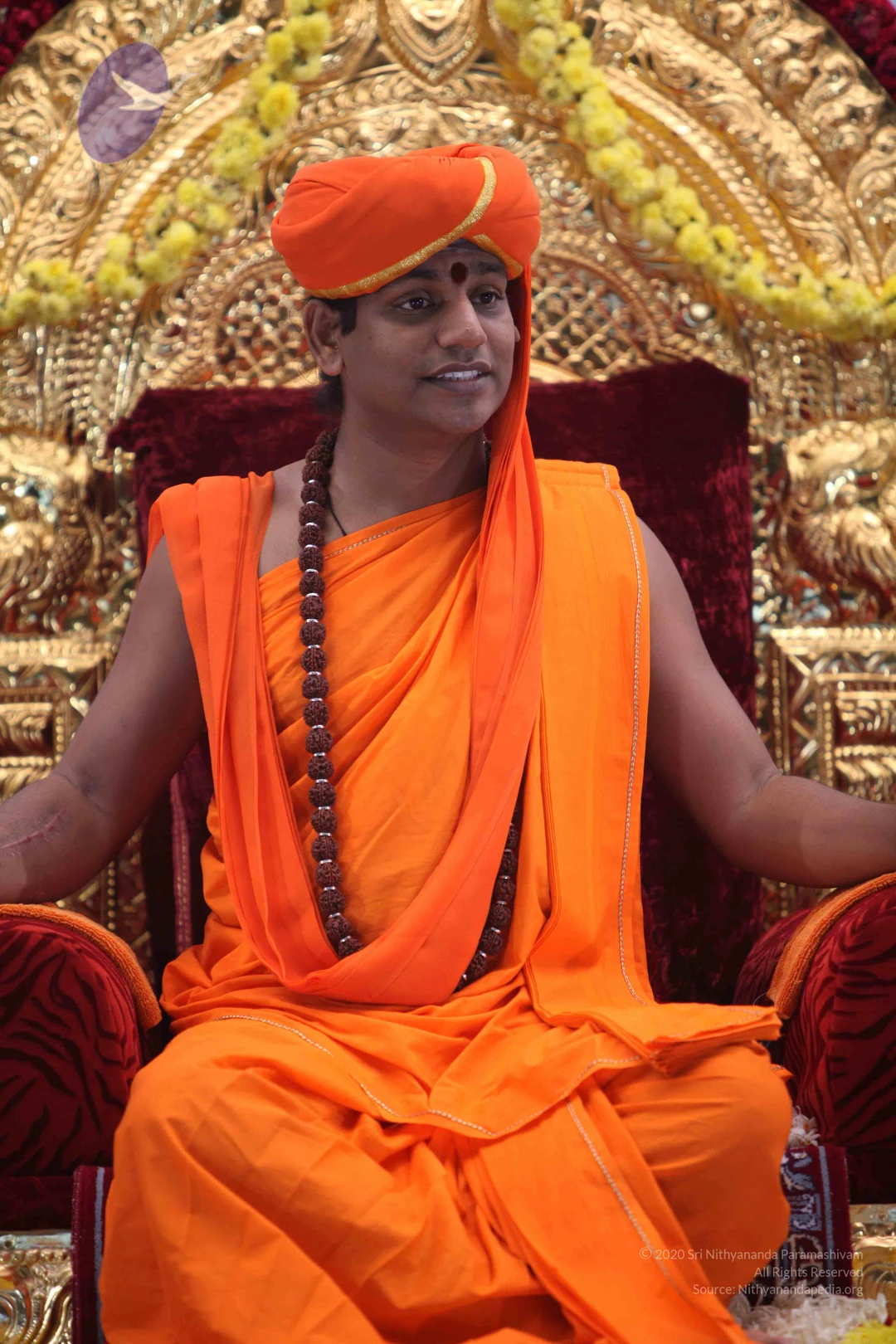
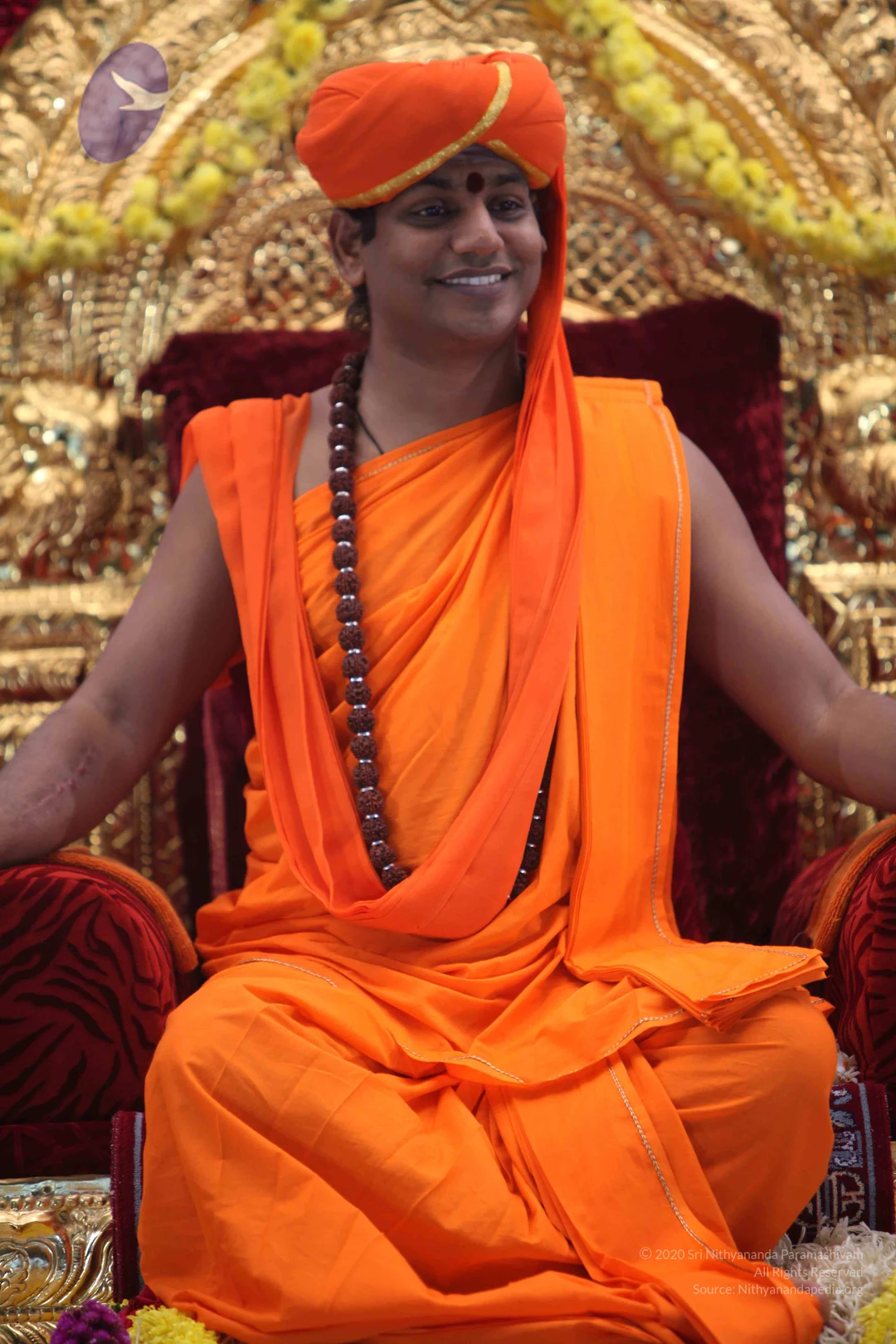
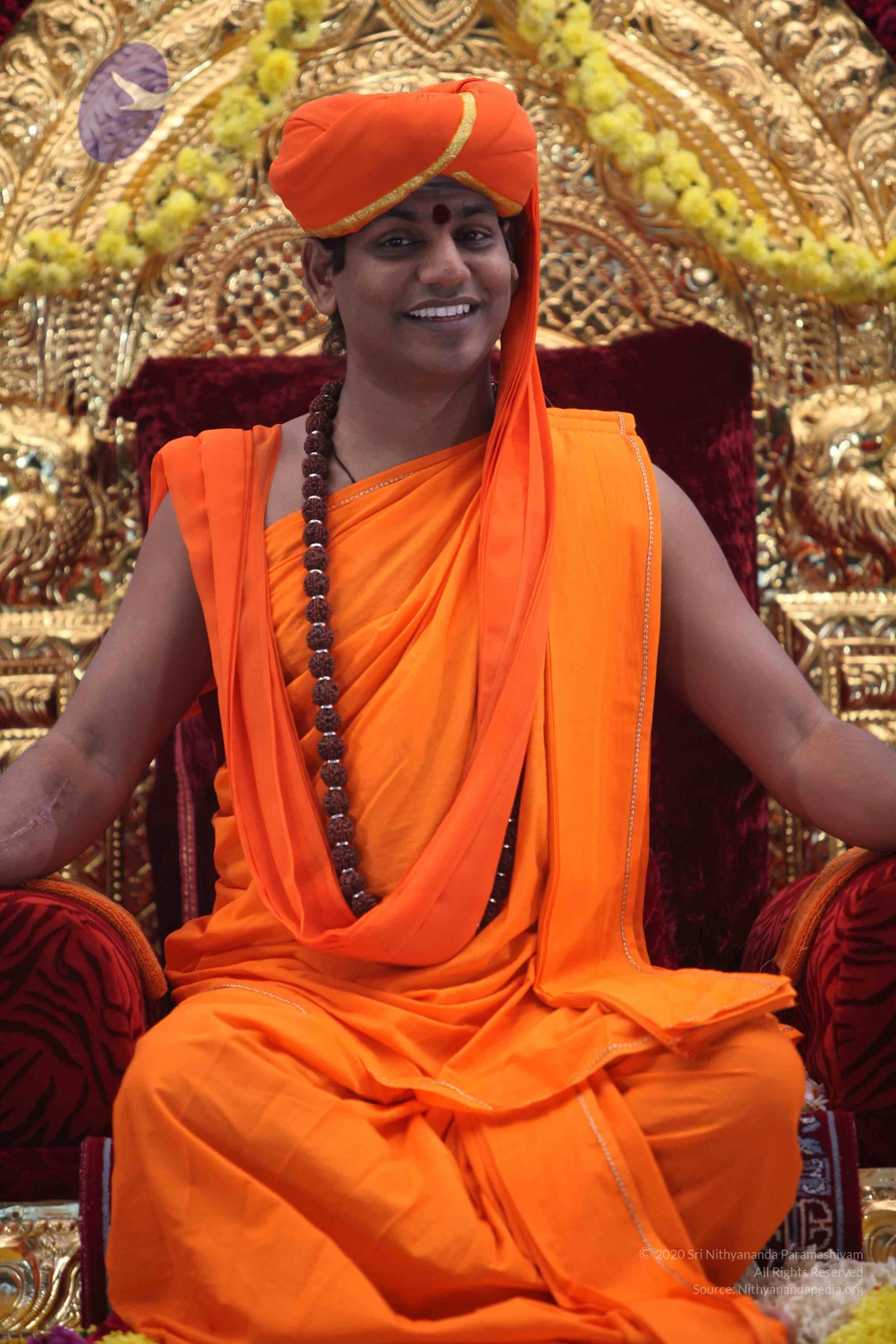
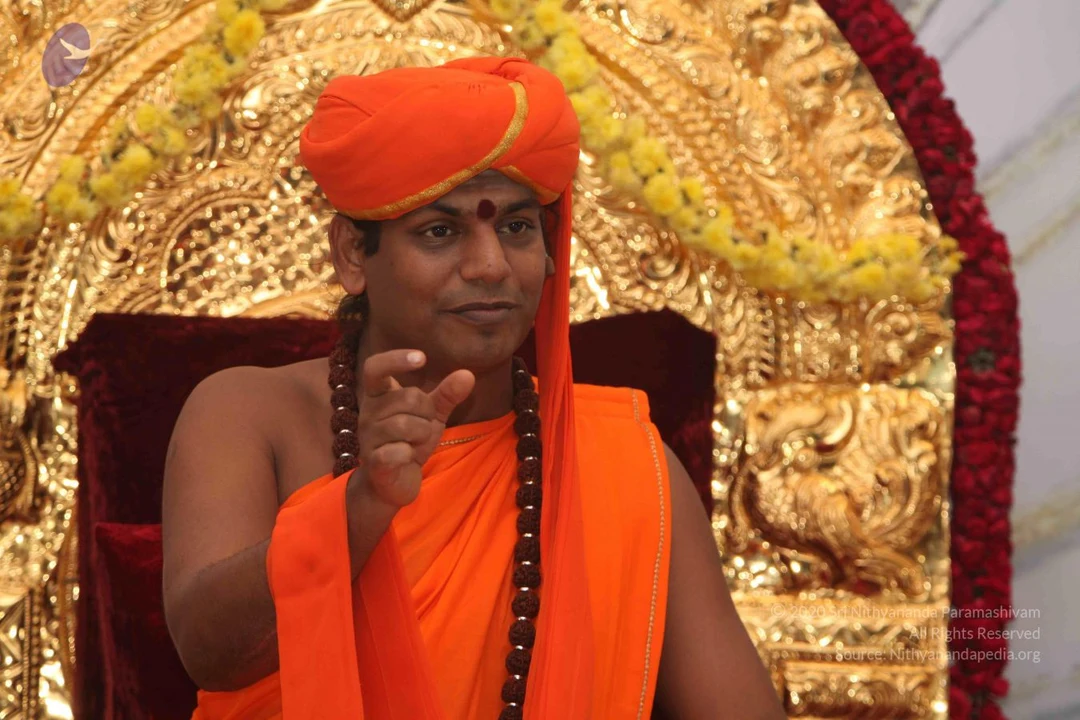
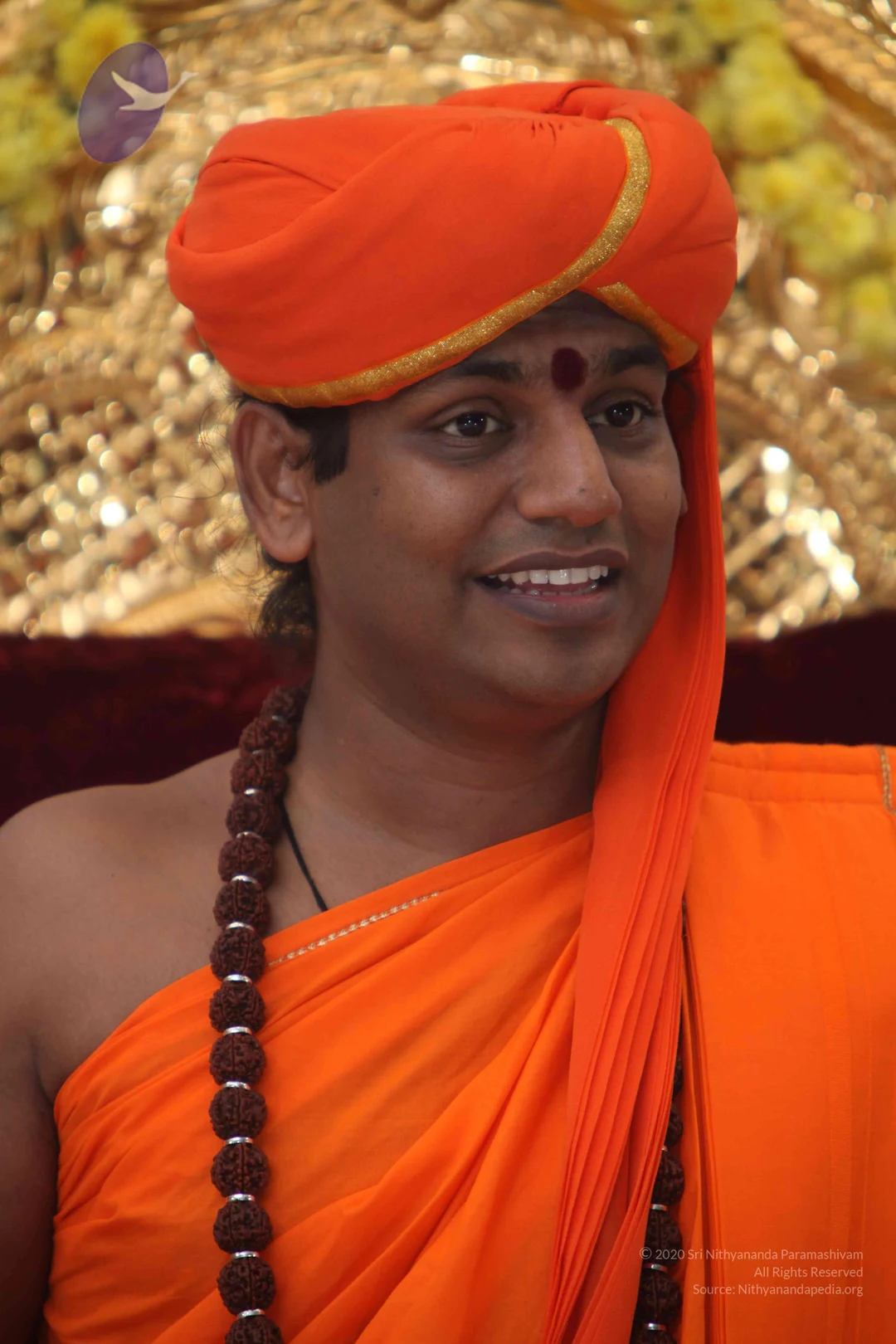
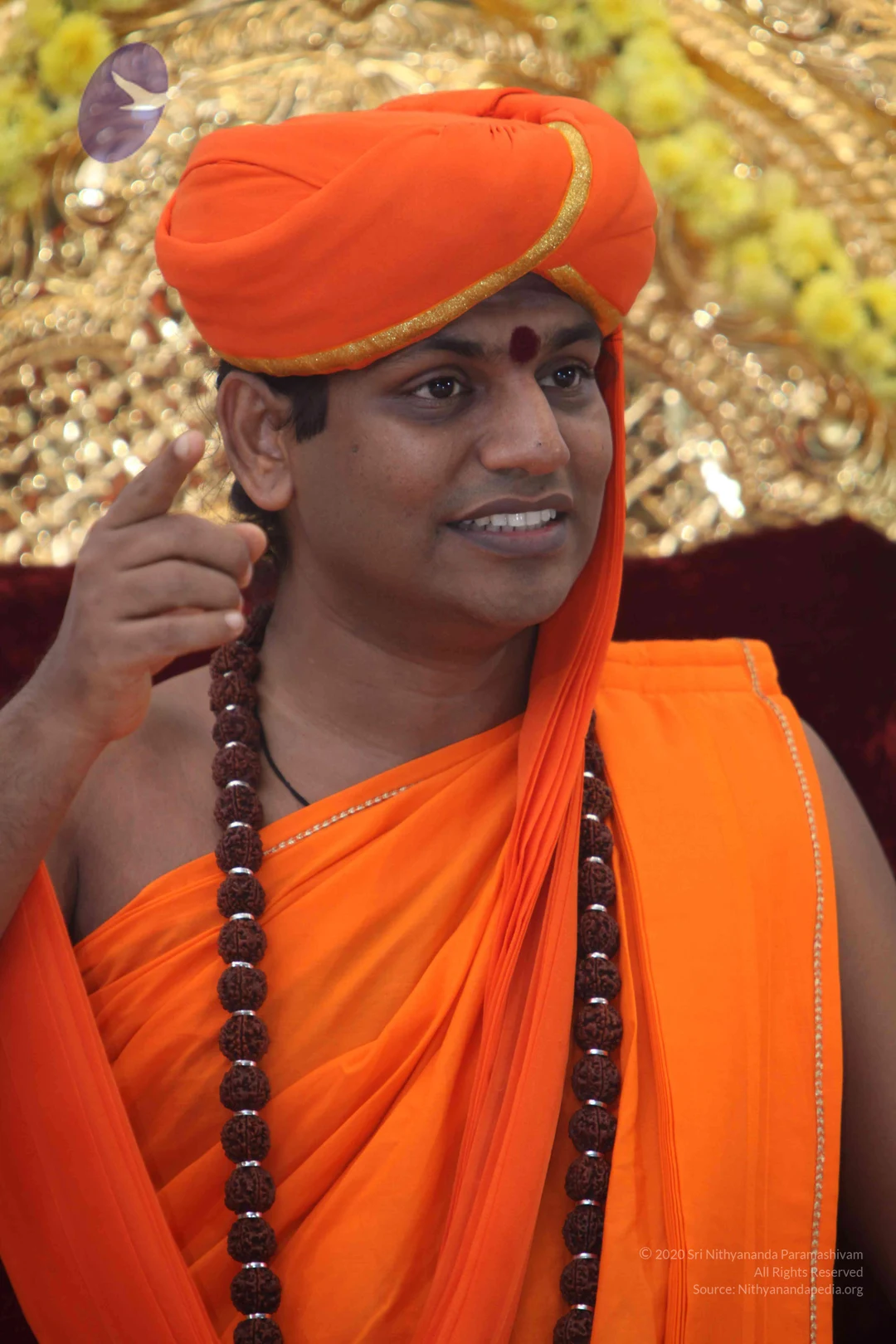
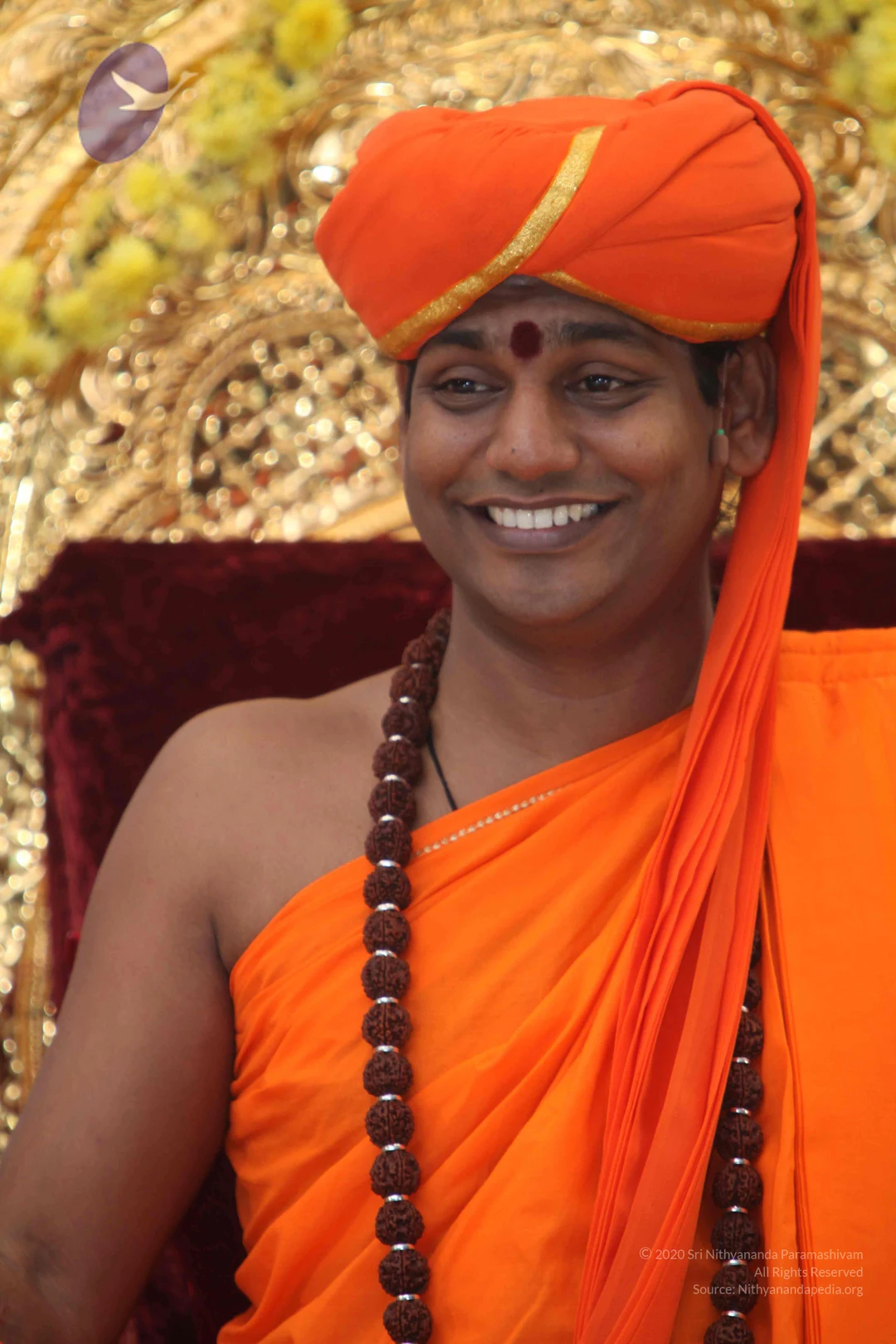
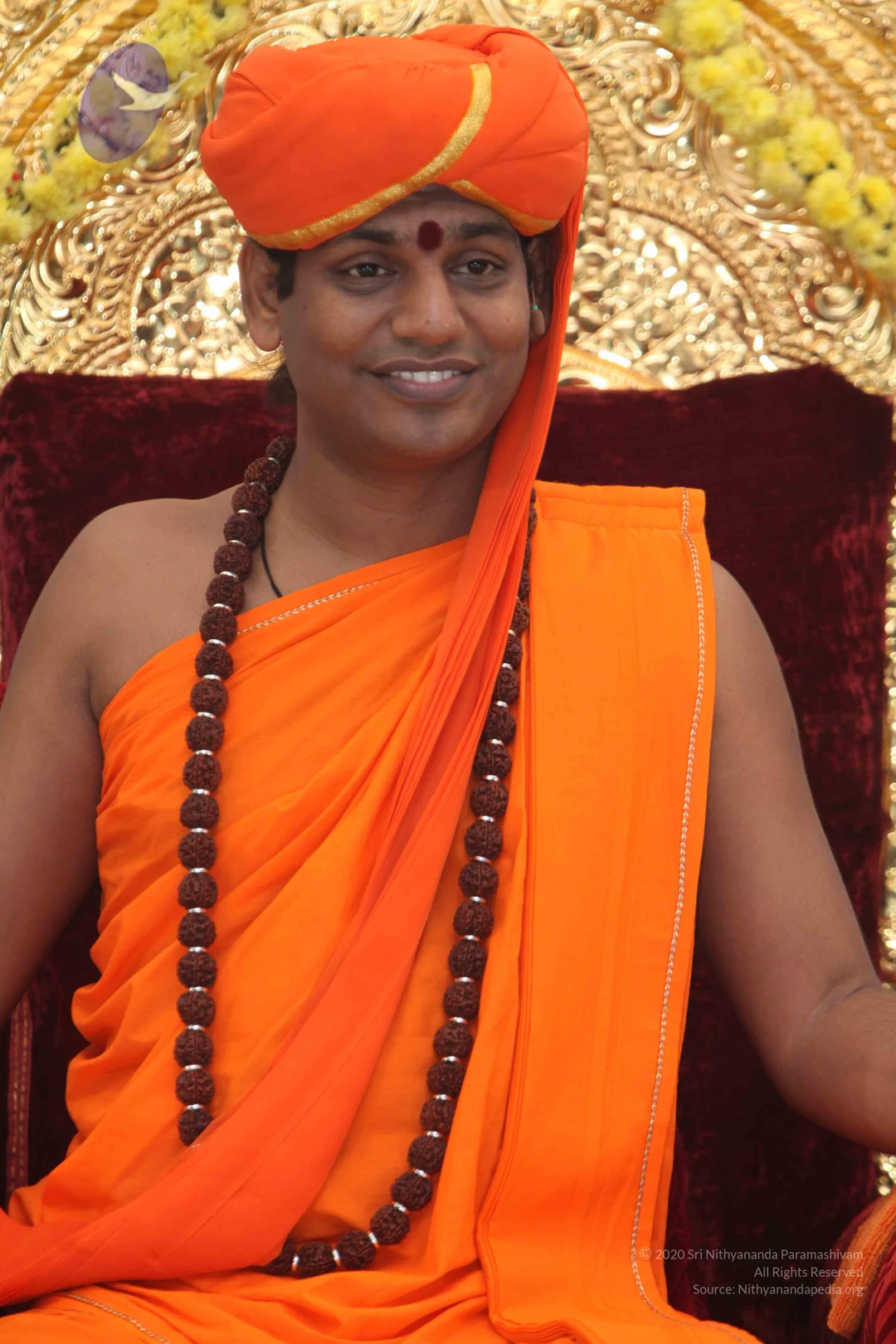
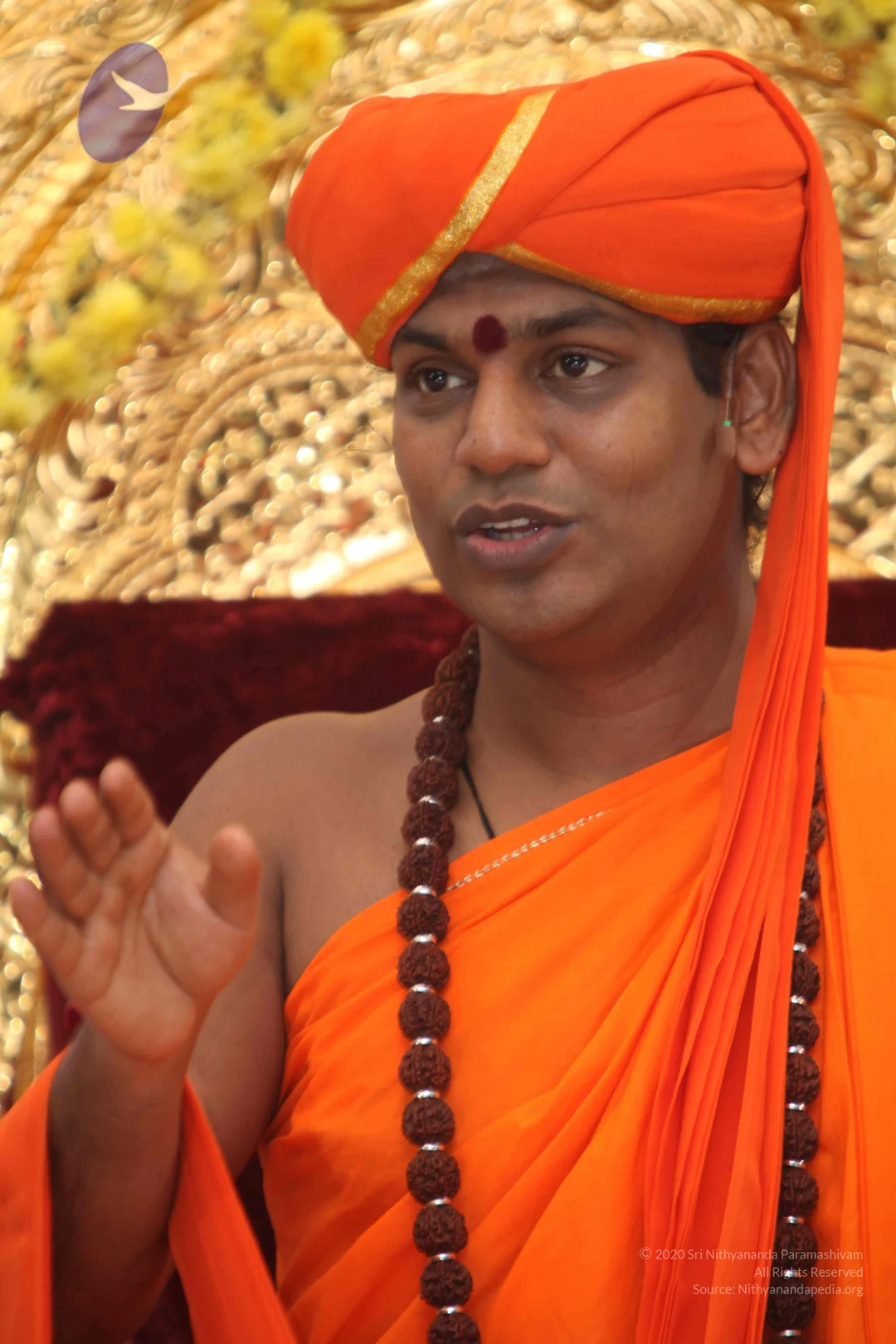
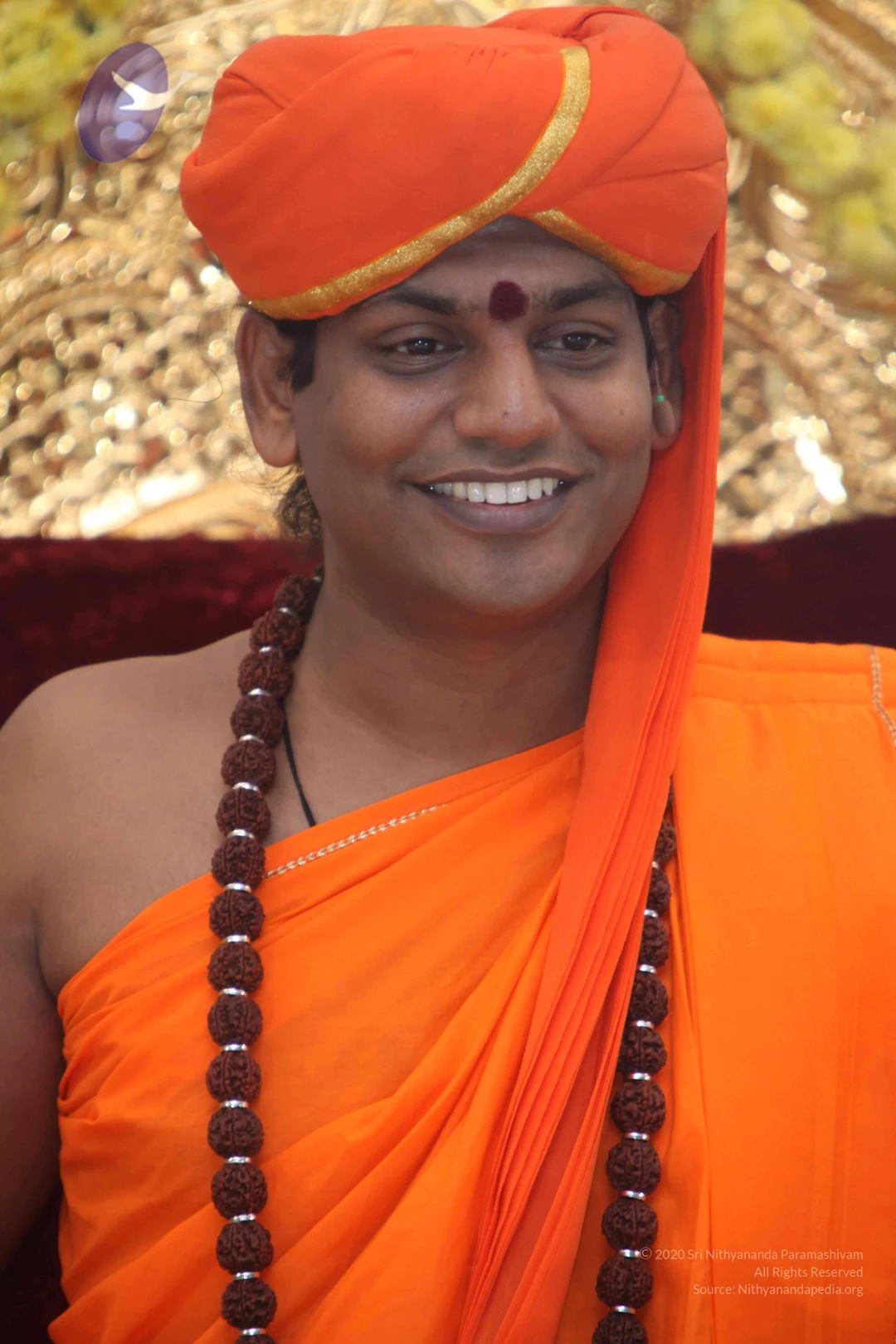
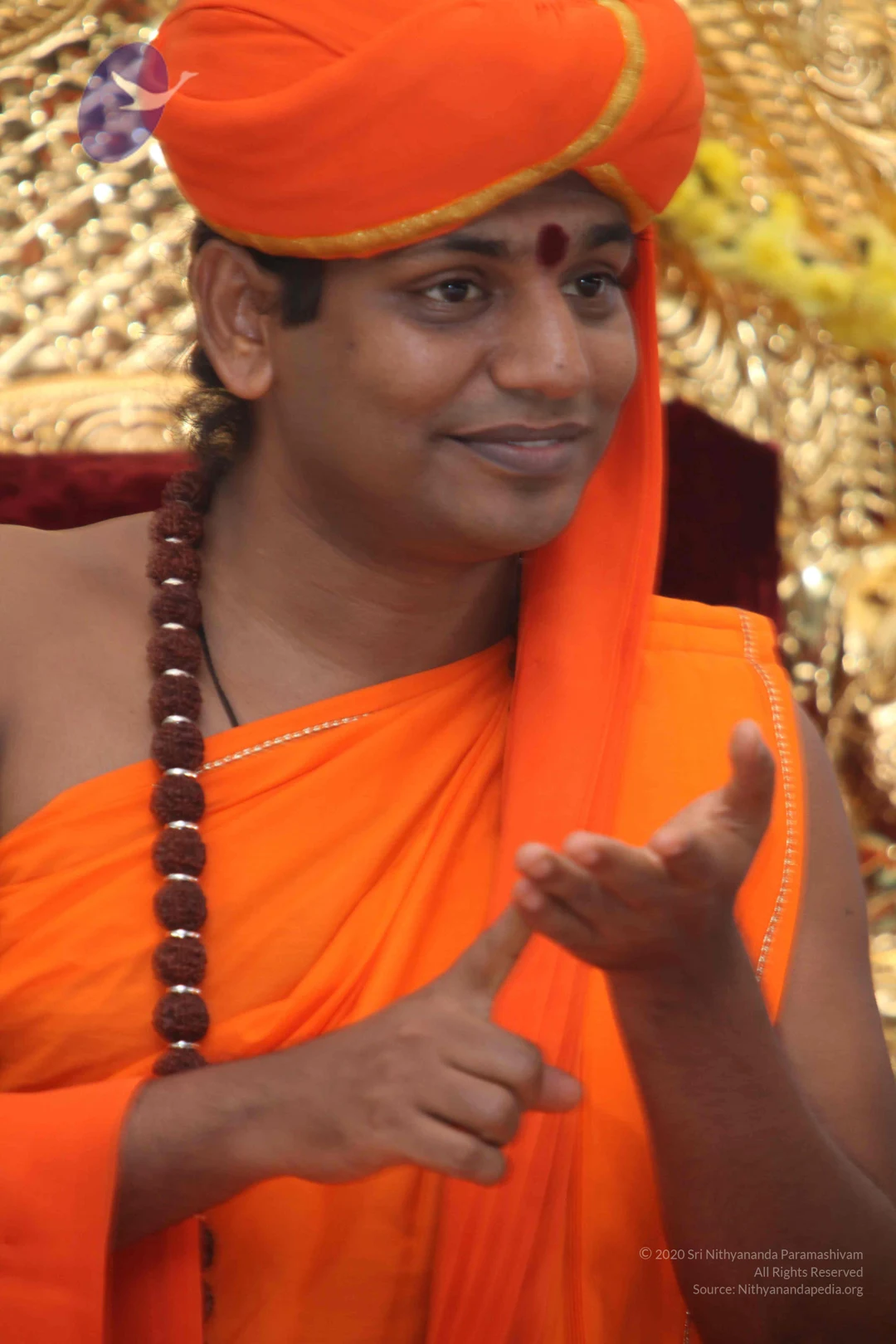
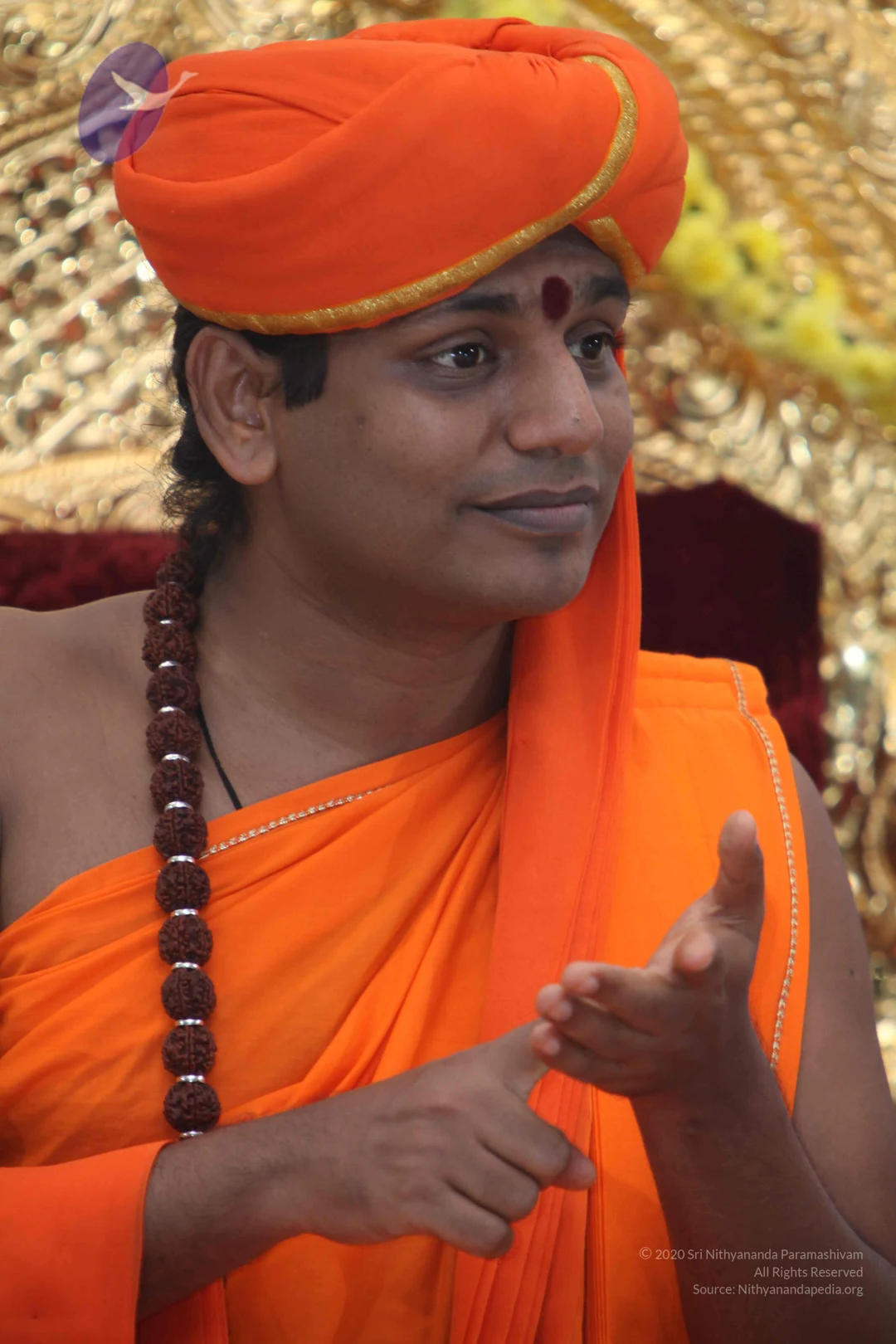
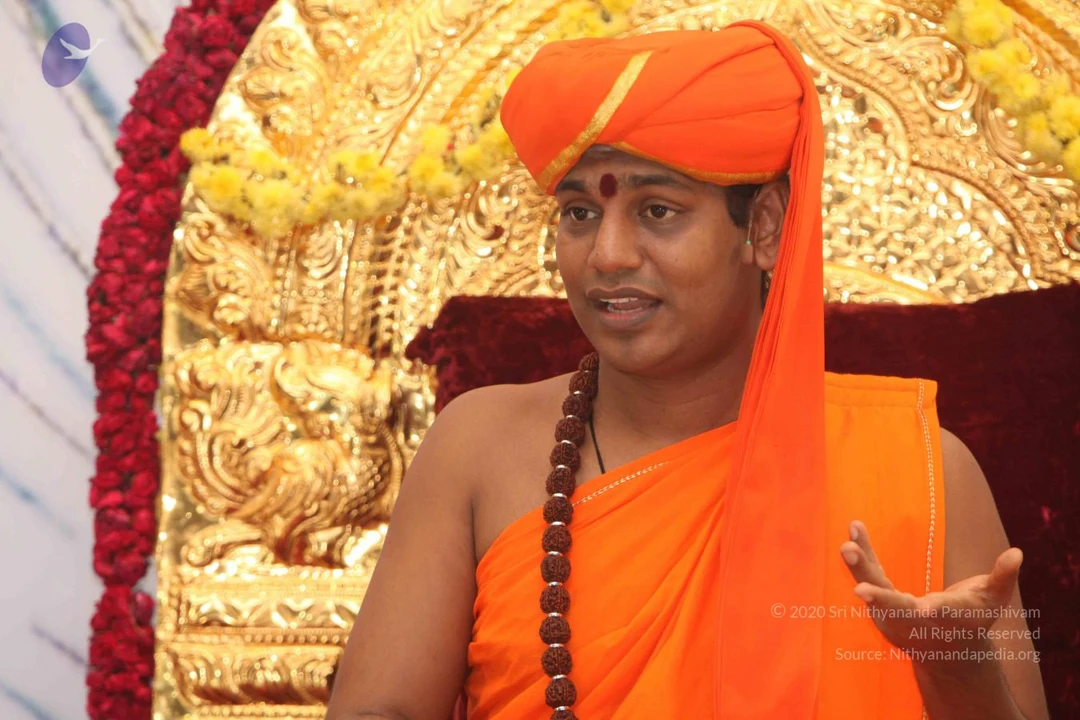
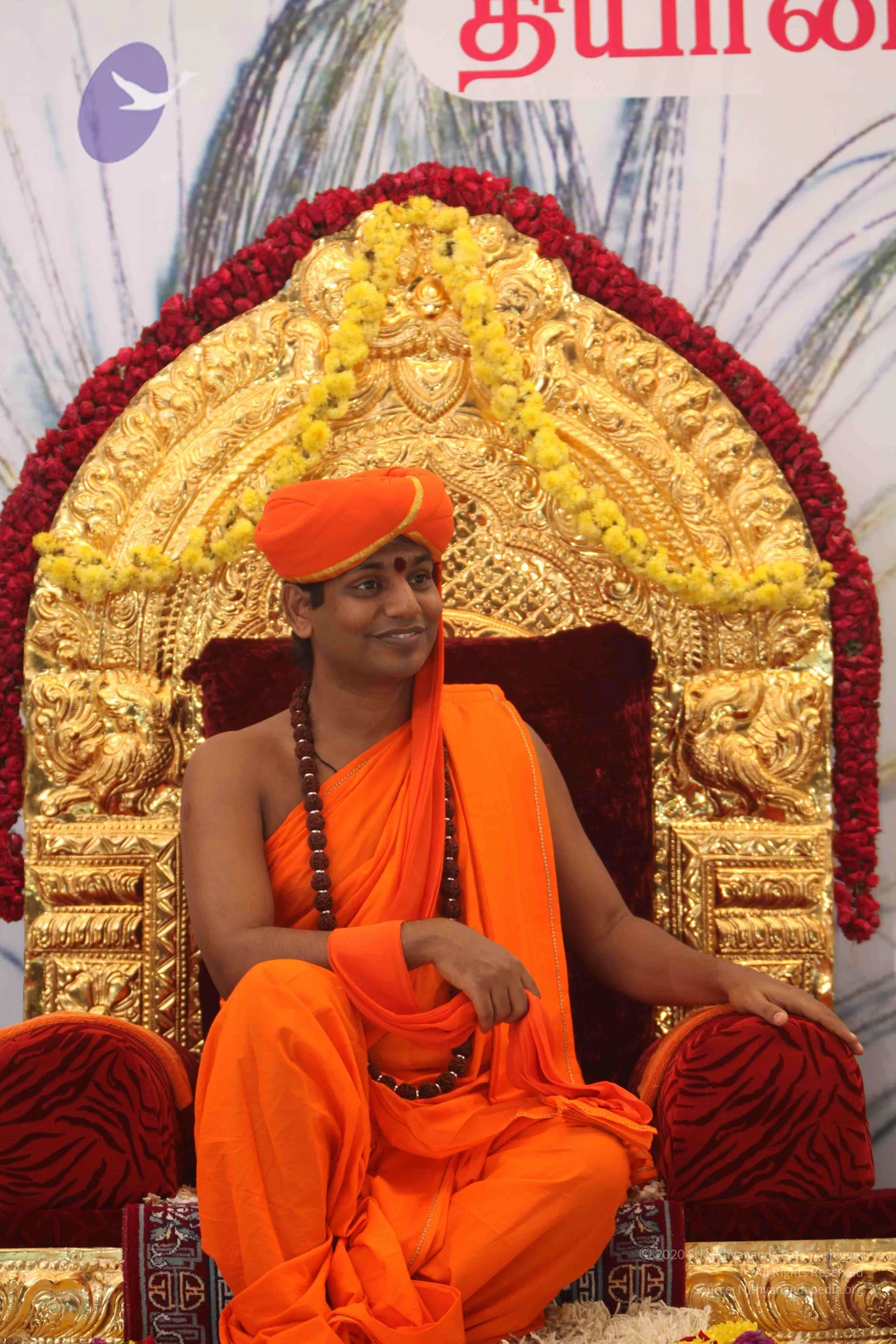
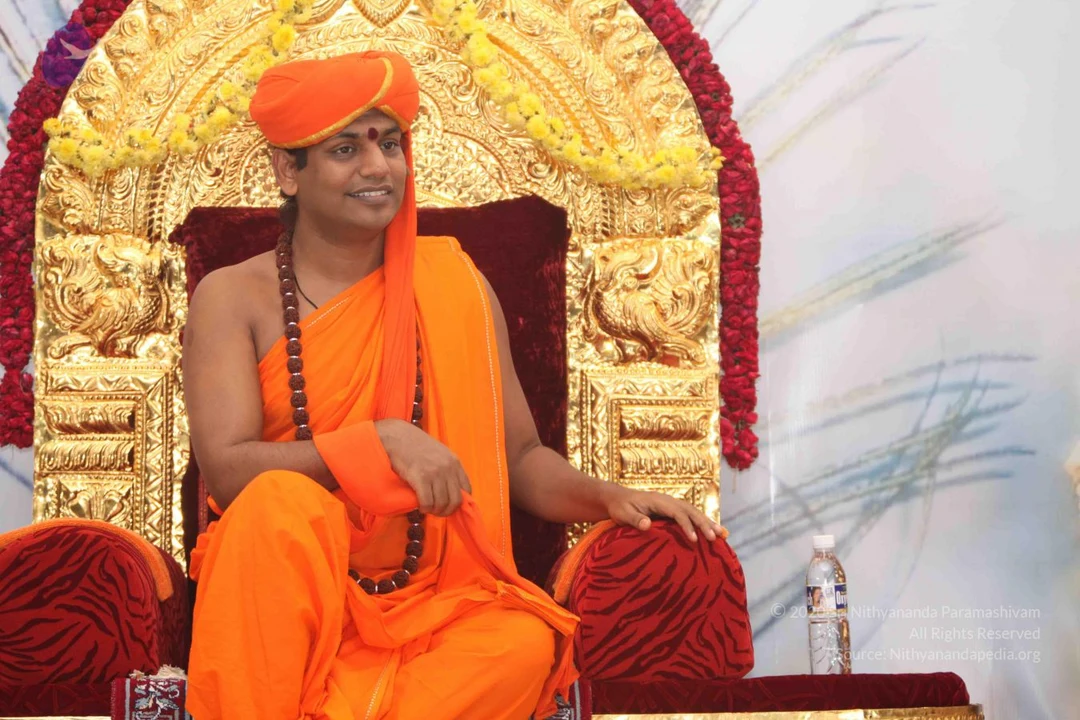
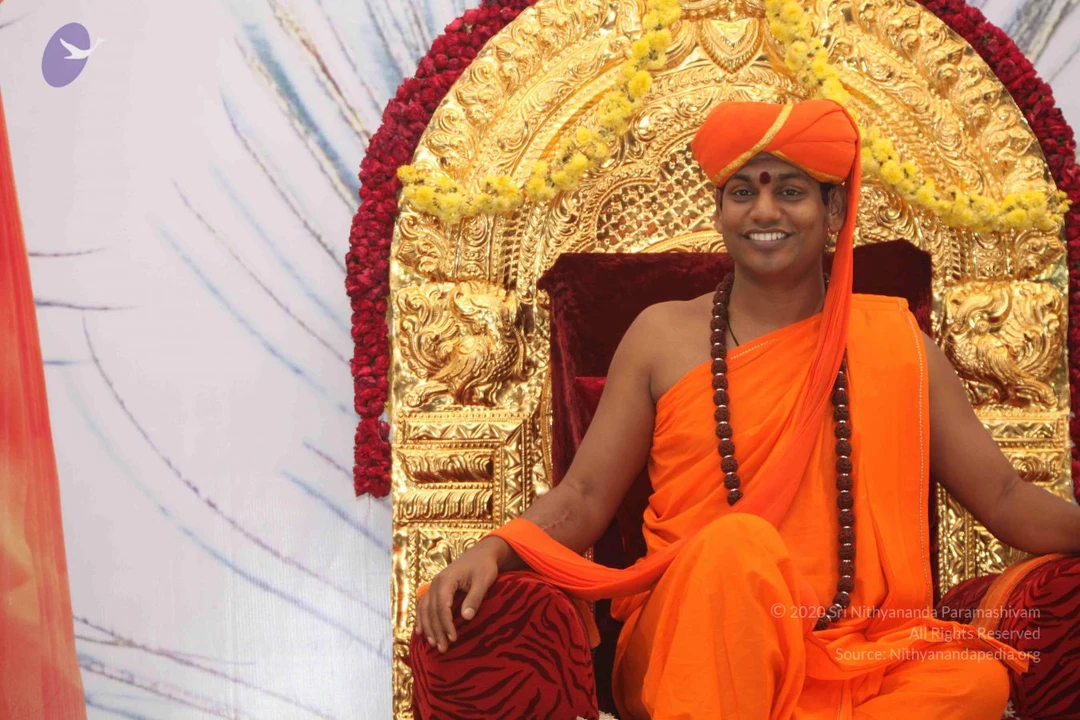
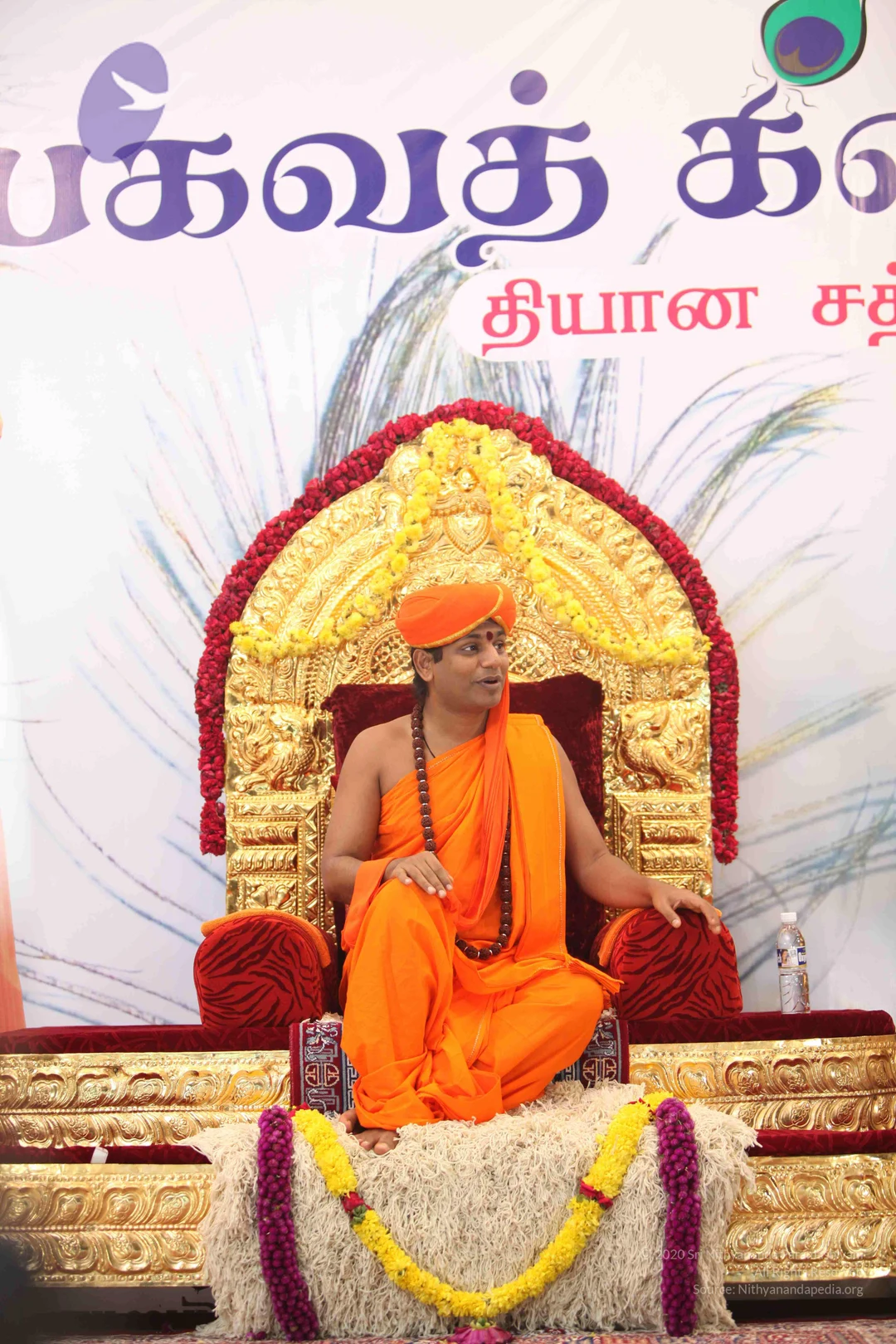
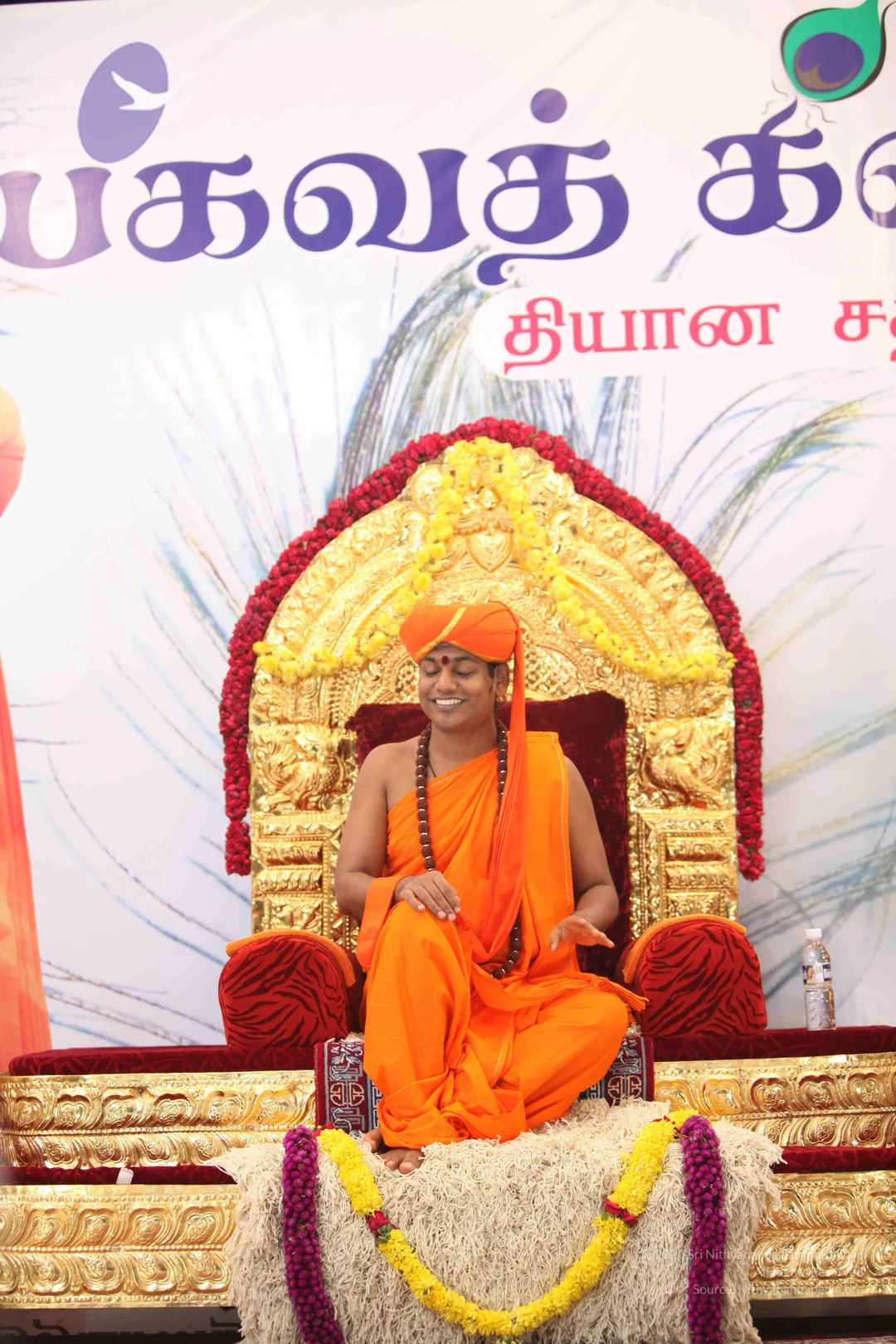
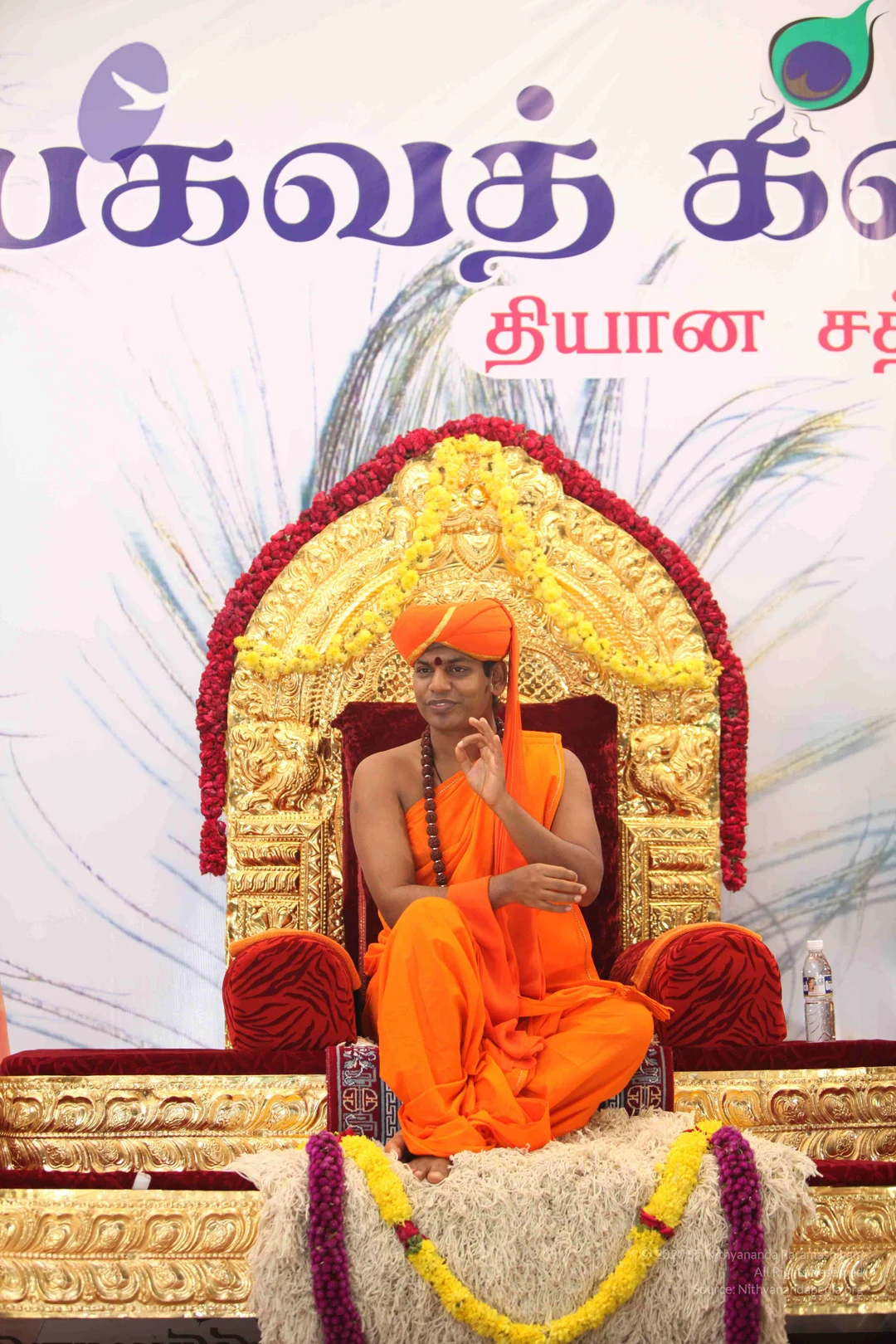
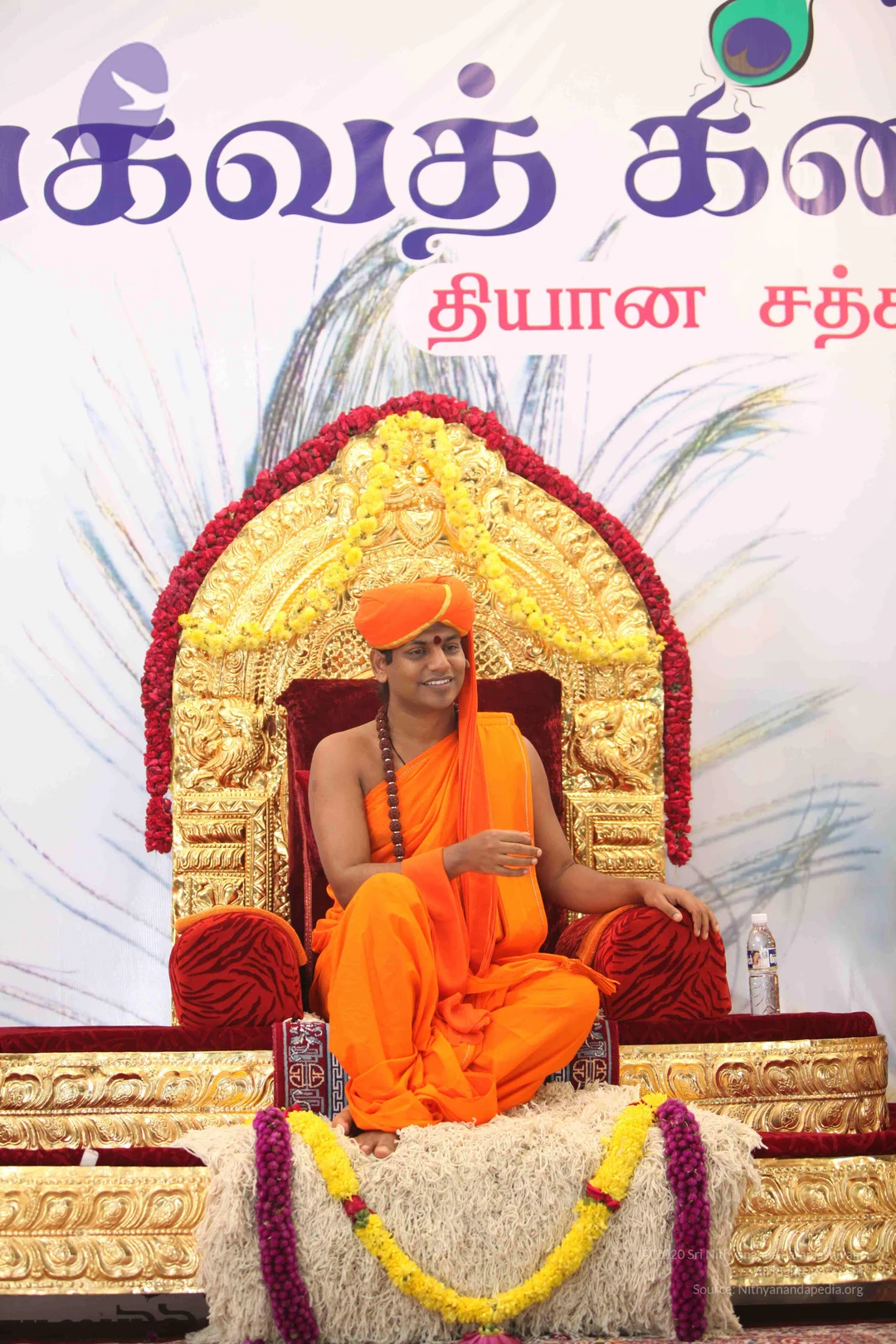
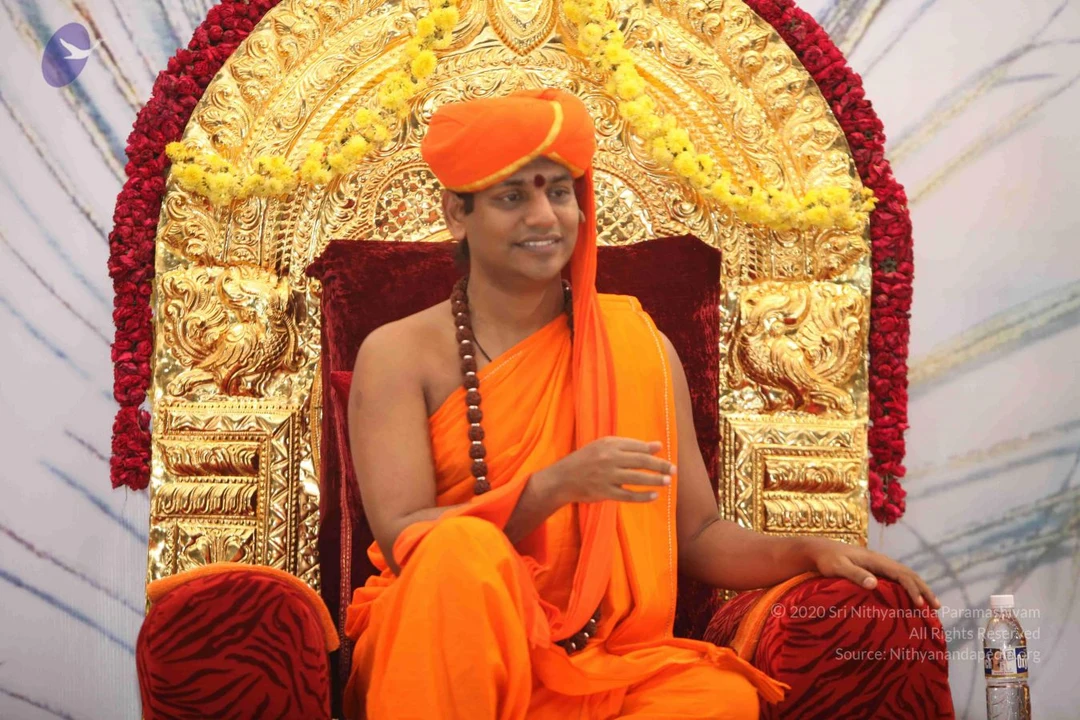
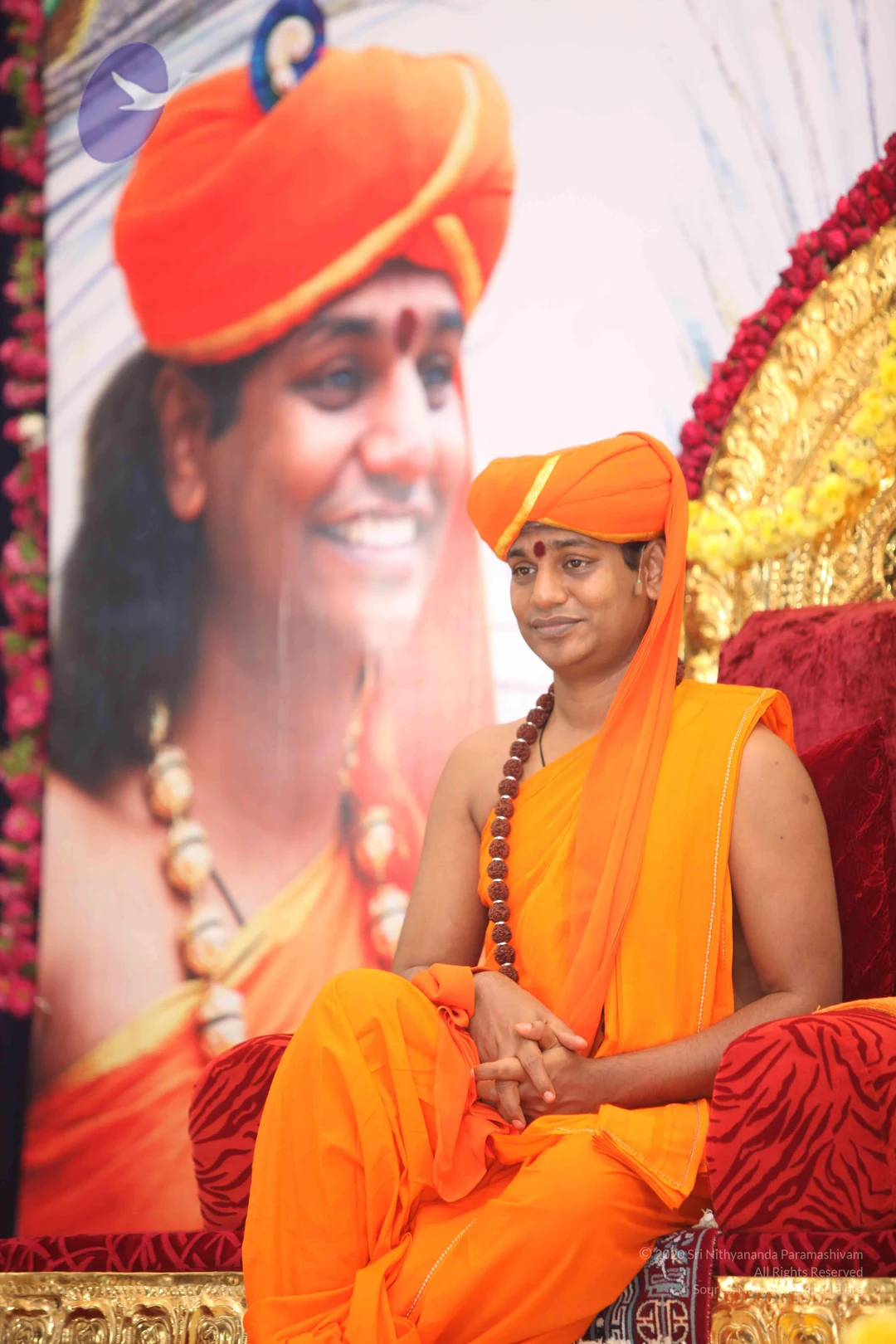
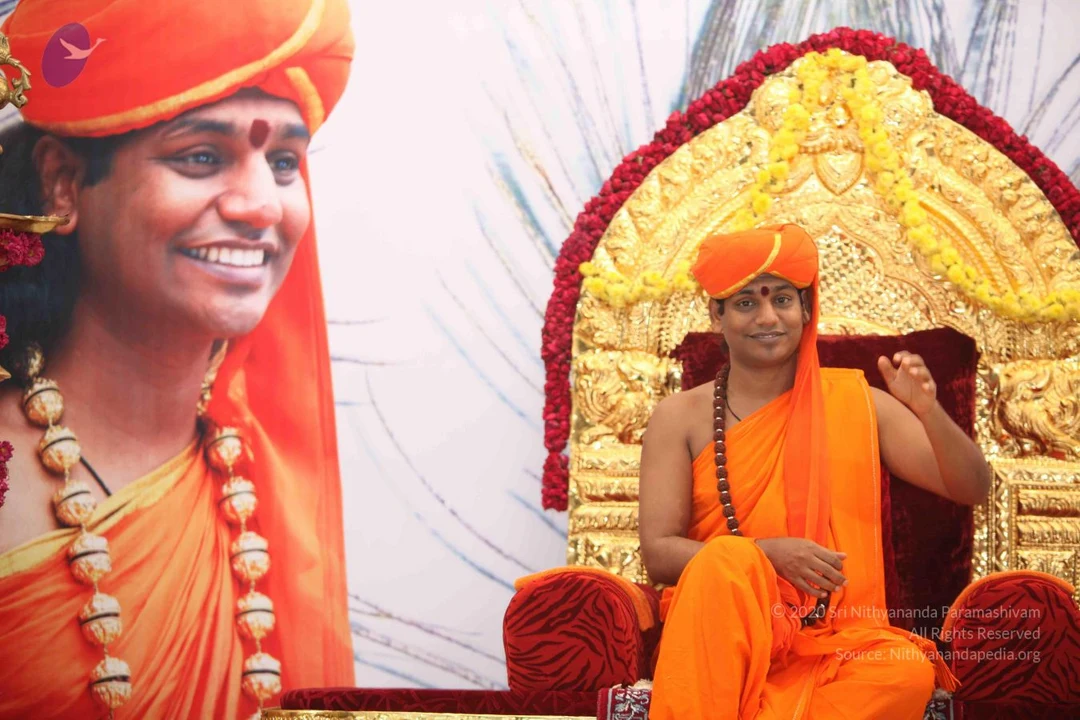
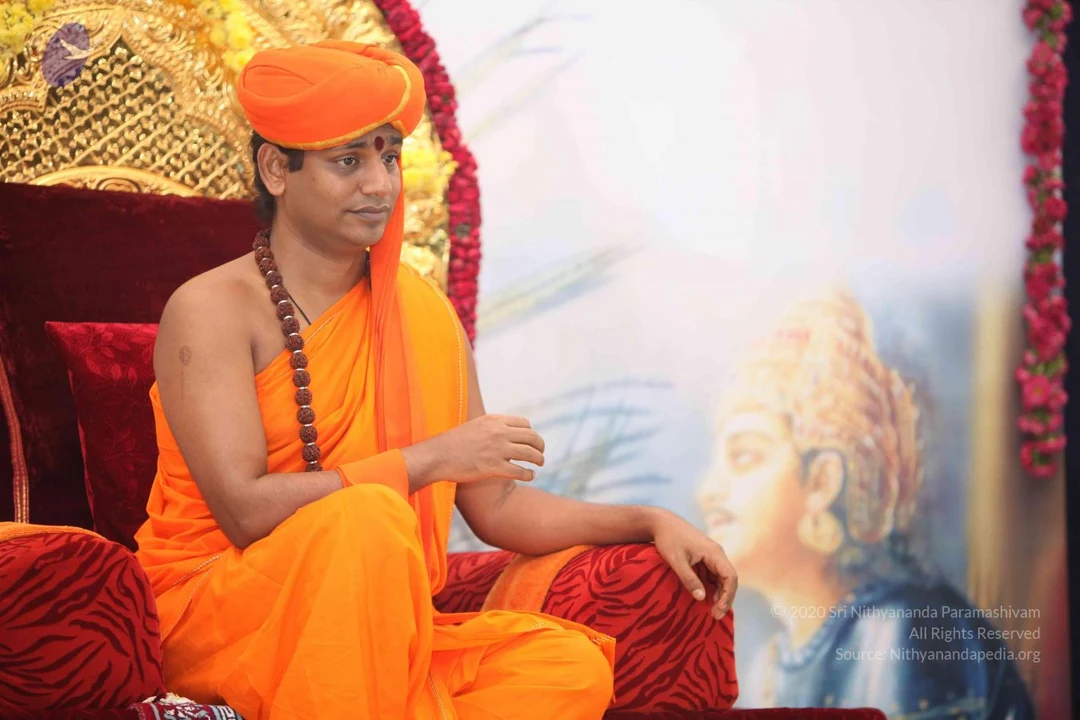
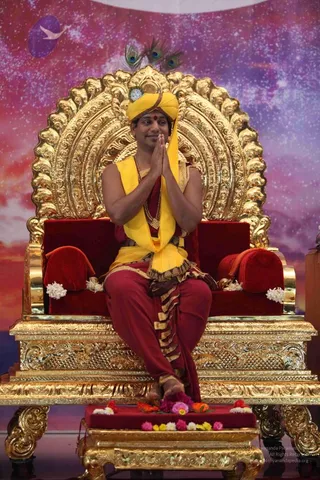
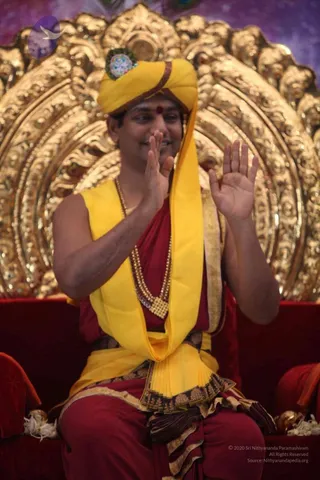
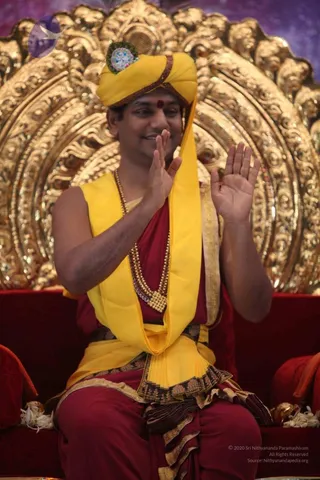
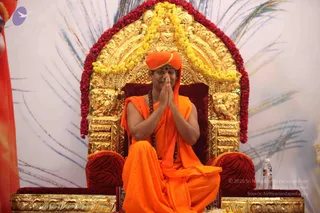
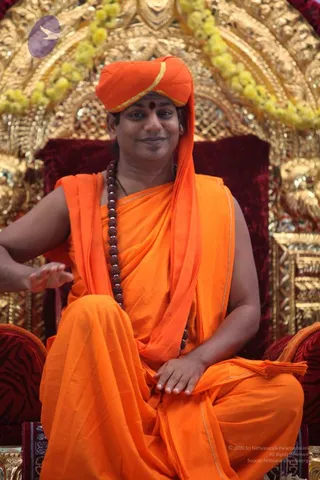
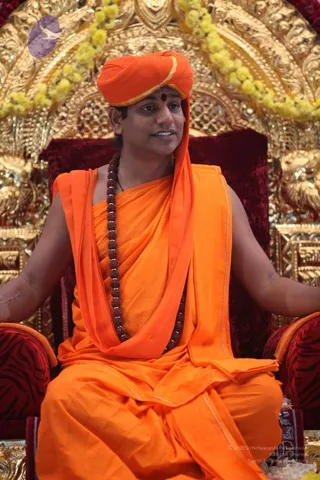
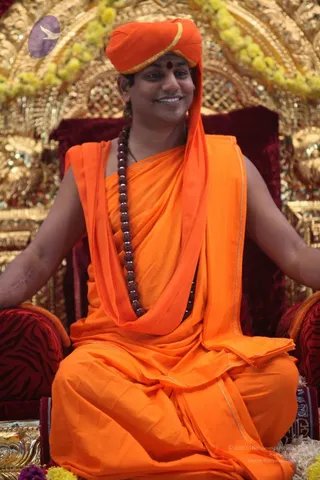
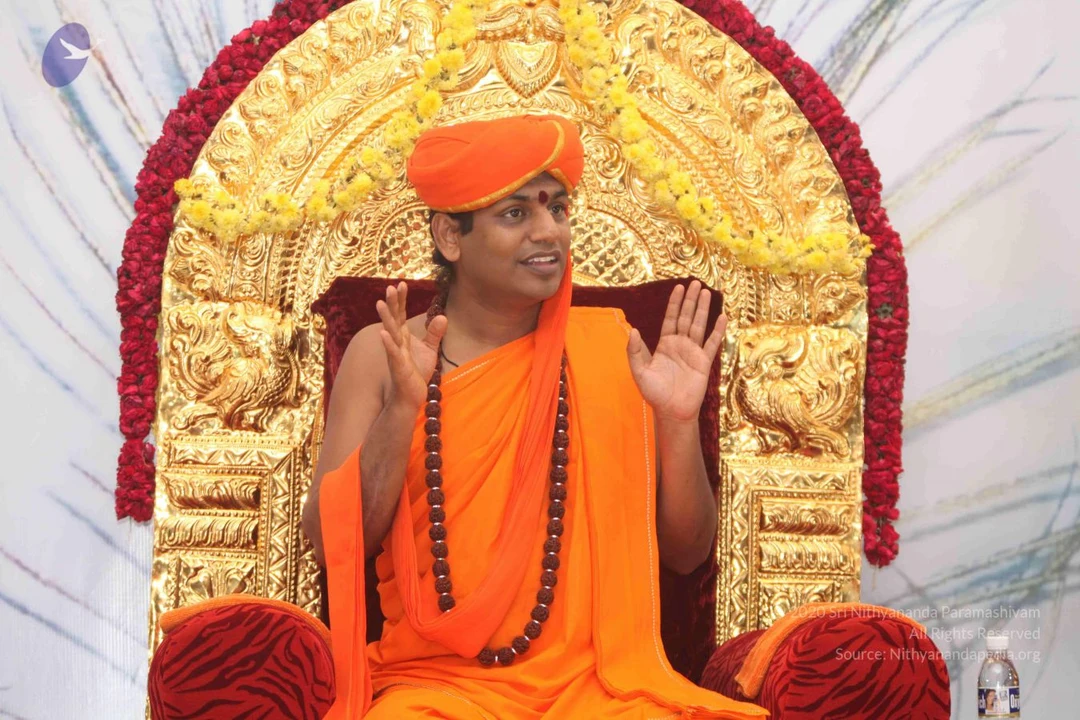
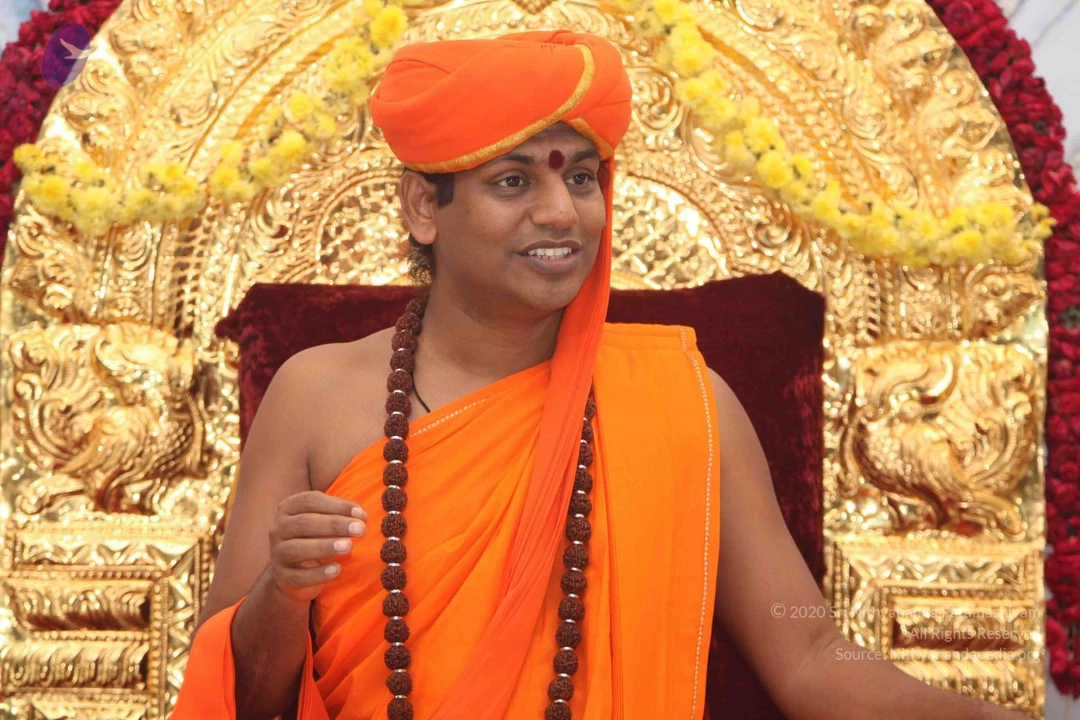
A photograph of a bronze-toned Krishna murti standing against a backdrop of orange and cream fabric with black spots and a stylised gold tree frame. The deity plays a long flute held to his lips, wears an orange turban topped with a golden crown, and has a red rose tucked behind the turban. He is adorned with layered jewelled necklaces set with pink, green and white stones, and wears a deep red silk garment. Marigolds, pink and yellow flowers are arranged at the base on a metal pedestal. No people are visible.A seated man in a yellow turban with a jewelled ornament and a red bindi sits on a red cushioned throne with an ornate gold back, decorated with white flowers at the base. He wears a red and maroon robe with a gold-edged yellow shawl draped over one shoulder and layered gold and rudraksha-style beaded necklaces. His right hand is raised in a teaching gesture while he speaks, and his left hand rests in his lap. Peacock feathers stand above the throne, and a pink and purple starry backdrop fills the background. A water bottle sits on a wooden stand to the right.A smiling man in an orange saffron turban with a gold trim and an orange saffron shawl draped over one shoulder sits in front of a gold, shimmering backdrop with yellow flowers and a deep red cushion. He wears a long rudraksha mala with silver spacer beads and has a red bindi on his forehead, and his hand is raised in front of his chest as if speaking.

October 13 2011

Original wiki page
Contents

Title:

Which Is The Right Path For You

Link to Video:

VideoAudio

Transcript:

Bhagavad Gita

Which is the right path for you?

DATE: Day 46: Oct 13th 2011

Please understand, for example I give bhakti for ‘A’, karma for ‘B’, yoga for ‘C’, dhyana for ‘D’; ‘D’ can achieve only through dhyana. For whoever I give whatever, that is path for them. That person should not even think there are 1000s of paths. He should know ‘no only this is the path’. But an enlightened being cannot say there is only one path for all. Understand the difference.

When you are initiated there is only one path for you; after that no other path. Now you need only perseverance in that path; that’s all. But from an enlightened beings side I can’t say there is only one path, nothing else, no. There are millions of path. The big confusion is sometime the individual seeker thinking there are millions of path, he starts jumping here and there, here and there, here and there and without perseverance in one path he starts jumping here and there. So he never achieves; he loses. That should not happen. On the other end Master - teacher tries to tell there is only one path nothing else, nobody else. Then the whole follower group becomes fanatic. That is the other danger.

Please understand only by understanding you can avoid both dangers. From your side you should know there is only one path, from my side I should tell there are millions of paths. The truth is there are millions of paths but the fact for you is there is only one path. The path in which you are initiated, pick up that, know that this is the only path and go with it. But the expounder cannot say there is nothing else. No. Expounder should know the truth - there are millions of paths. Expounder cannot even justify saying that ‘ohh if I say there are millions of path, disciples don’t have perseverance on one path they are initiated, they jump here and there’... expounder can’t be forgiven even if he gives this excuse. No.

It is your responsibility to make the disciple understand there are millions of paths but forget about all others, you pick up this one and practice. If he has given that understanding to the disciples, they will travel in their path but they will know very clearly there are other paths also. I cannot go and kill somebody who is travelling in some other path. The terrorism, fanaticism based terrorism would not have happened if the Masters and expounders have taken the responsibility of making disciples understand ‘for you only one path in which you are initiated but there are millions of paths’.

The Guru who believes there is only one path nothing else and the disciple who believes there are millions of paths; both are dangerous. Guru should be very clear there are millions of paths and he should make disciples understand, disciple should be very clear ‘for me there is only one path’ and have perseverance and achieve it. But knowing there are some more paths may help disciple not be fanatic or terrorist or violent towards others.

See it’s a different spectrum; teachings given to different spectrums. For example the man who has never started even the good actions, he should be taught good actions but that is not ultimate. He need to know you need to go beyond even good actions. Good and bad need to be crossed.

What is after all heaven? Heaven is nothing but your solidified fantasy for pleasure; that’s all. What else is heaven…. solidified fantasy for pleasure. That is why see the description of the heaven... the milk and honey will flow like a river, the soma rasa - higher level alcohol which gives you kick but doesn’t spoil the health… that flows like a river and Rambha Menaka Urvashi - eternal virgins will always be dancing around, you will have pushpaka vimanas - private jet to travel wherever you want, huge palatial buildings and amrutha...you can go on be eating, you will not feel stomach is full or you will not put on weight, you will not die, nectar.

See all the descriptions of heaven. You remove all the side effect and after effect or bad things from whatever you see and solidify all the good things and make it as a heaven. What is the part you like in a elephant - the tusk. Come on let us have the elephant with four tusk and ten trunks. That is what is Airavata. Airavata is supposed to be having 10 trunks and 4 tusks; 4 tusks and 10 trunks because that is the best part in elephant. What is the best thing you want from a tree? If one tree can give all fruits how great it will be. That is exactly the description of Kalpataru. One tree but it can give not only all fruits….all items you ask!!!

I can tell you heaven is nothing but Harry Potter story-the solidified fantasy of the kids; nothing more than that. I can tell you, the Harry Potter story how it became popular in the modern days, same way this heaven story has become very popular in those days. Then slowly, slowly, people have started believing it is true. I am not saying it is lie. I am only saying it is not truth enough to be ultimate truth. It is not true enough to be ultimate truth.

Actually there is heaven; there are Indras, other Gods. This is what we call life in the other planet. There are some more planets where life IS Rishi loka, Muni loka, Pitru loka, Swarga loka, Vaikunta, Brahma loka; there are and each incarnation has his own akshara dhama -means the space which never gets perished, in which his form remains and continues to do the play and all the disciples who cherish his form, devotees who want his form, they all gather around him and live around that form; Aksharadhamas… all this are true.

Somebody came to me the other day and said Swamiji in enlightenment there is no form, it’s all beyond form and formless. But I am hearing Swaminarayan people are constantly teaching you will become an eternal servant, devotee of Bhagawan in Aksharadhm. How is it true? Understand there is a space, plane, where each Master each incarnation has an Aksharadhama and from Aksharadhama directly you can rest into the ultimate enlightenment nirvikalpa samadhi. I can say in a way people who live closely, who are too attached to the form who does not want to give up the form, they enjoy the space of Aksharadhama.

But even the Aksharadhama is not true enough to be the ultimate truth. So the teachings given for the different spectrum of consciousness…. if you do all this homas you will reach heaven. It is a teaching given for the spectrum of heaven. But if you go beyond the karma without expecting results without bothering about fear or greed, if you are just go on expanding you as a pure consciousness, ultimately you will reach something beyond heaven or hell which we call enlightenment, satya swarupa, the ultimate beyond form and formlessness. This is the higher level teaching.

Please understand just because you heard the higher level teaching don’t think the lower level is a lie. True enough to be ultimate truth. One side the people who think heaven is the ultimate truth are fools. The other side people who think ‘ohhh all these ideas about heaven are lies’ are again fanatics. You need to understand the truth leads you from one step to other step, one step to other step; different spectrum. Here Bhagawan is breaking the myth saying heaven is the ultimate…. is not the ultimate truth.

Photos:
Photos Of The Day:

Temple
BGSatsang

BGSatsang-Tamil

Miscellanous

Photos Of The Day:

Miscellanous

Photos from this day

View all 220 photos

Photos:

16 photosSource gallery
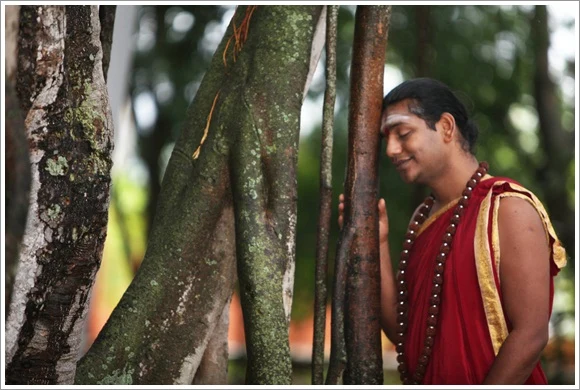
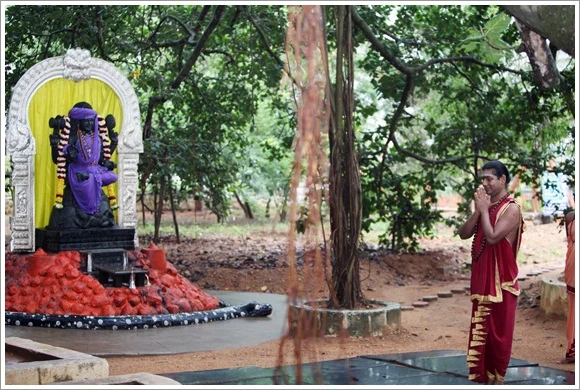
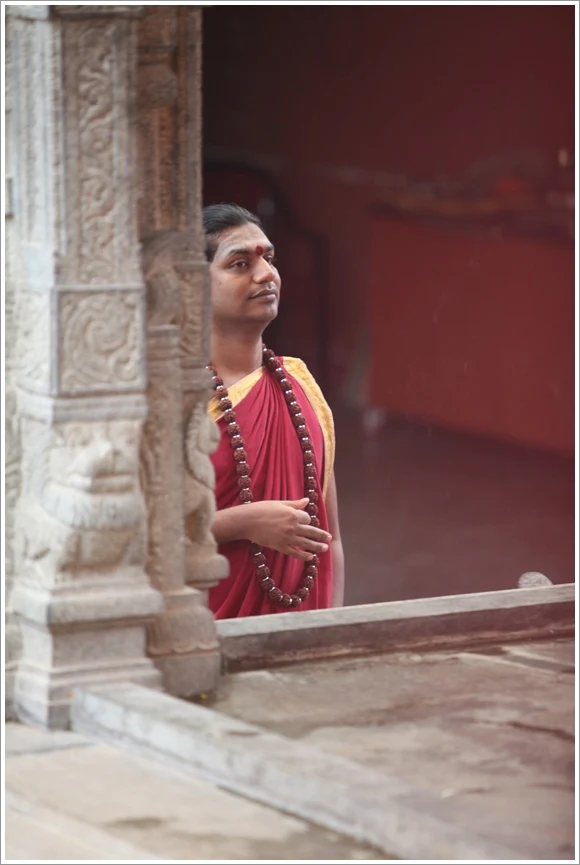
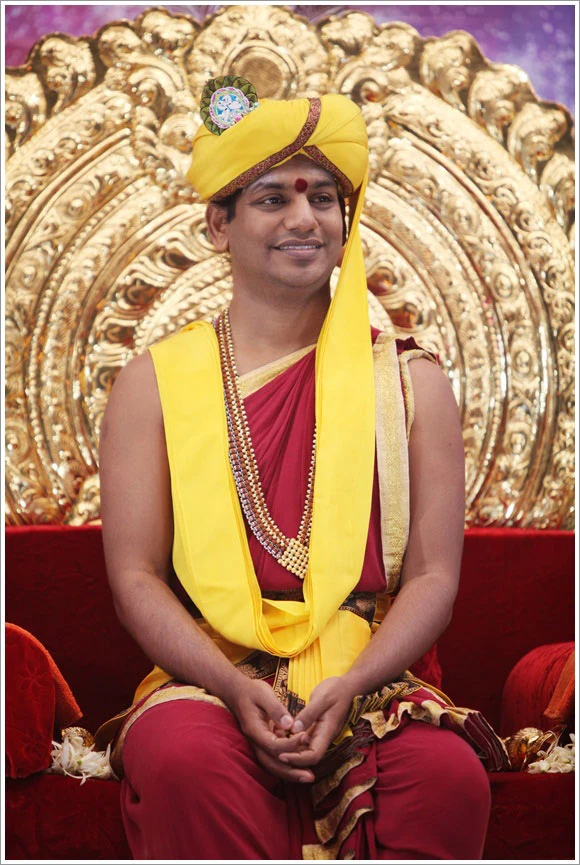
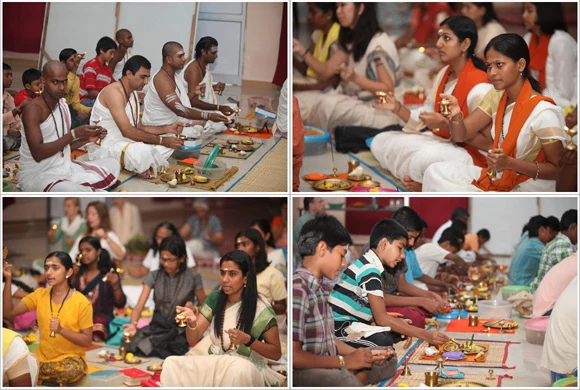
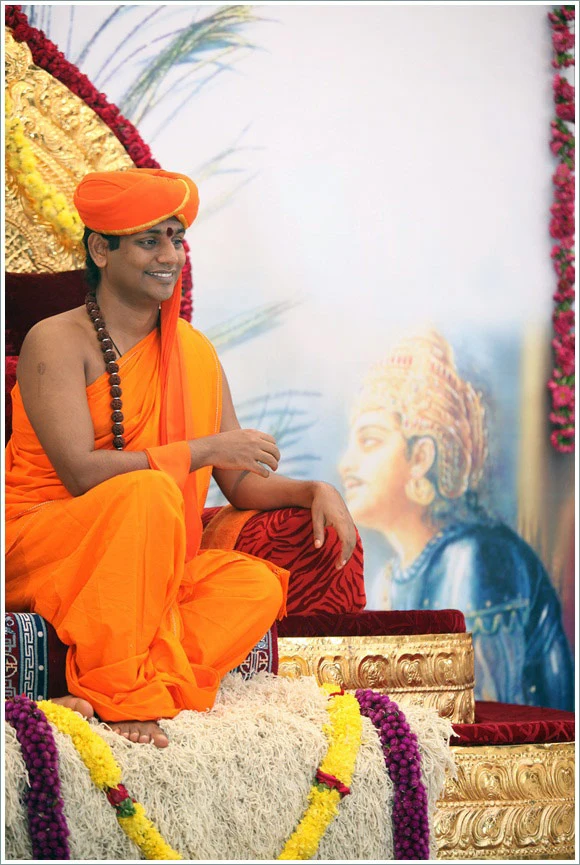
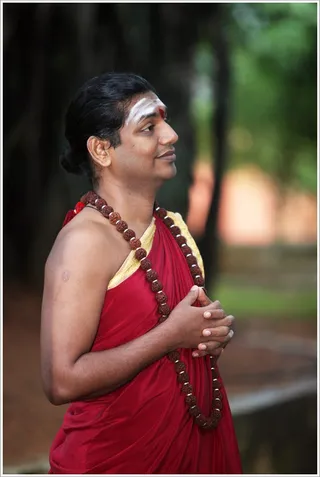
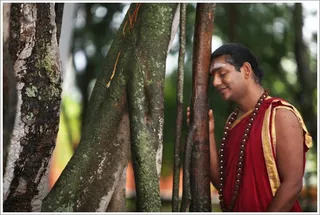
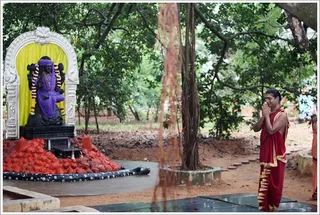
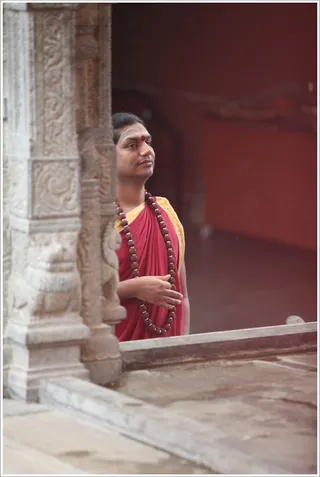
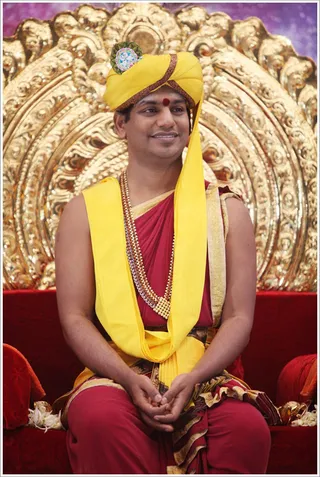
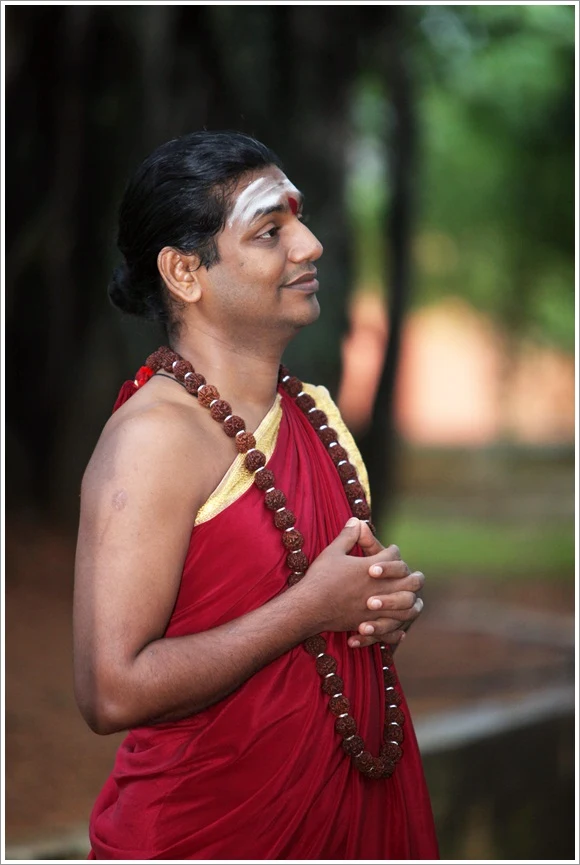
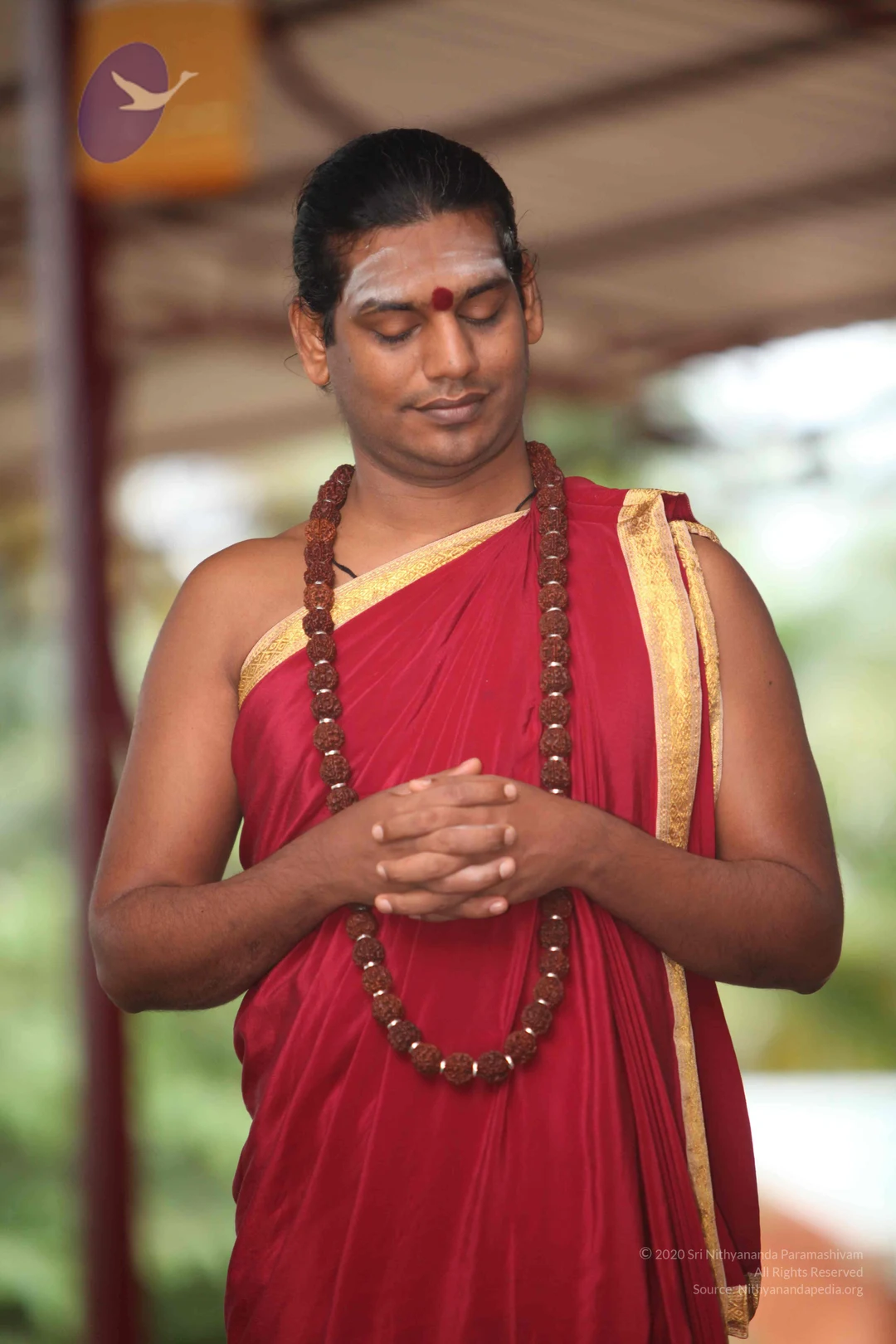
A man in profile stands outdoors against a blurred background of dark tree trunks and green foliage. He wears a red sleeveless wrap with a gold-edged neckline and a long mala of brown rudraksha beads across his chest. His hands are pressed together at his chest in anjali, and he gazes upward with a slight smile. White vibhuti marks his forehead with a red dot at the centre. a person: long dark hair gathered at the back, rudraksha mala and ceremonial clothing in saffron-red, with a satsang-style gesture of devotion.A man in a red and gold saffron-toned wrap with rudraksha mala beads stands outdoors leaning his forehead against the trunk of a large tree with mossy bark. His eyes are closed in a peaceful, meditative pose, his right palm pressed to the trunk, and vibhuti or sandalwood marks are visible on his forehead. Green foliage and a blurred orange structure appear in the background. Appearance cues include the rudraksha mala and red-gold wrap, but he is not clearly identifiable as the page's subject, so the role is described only as a devotee or sannyasi.Outdoor photo beside a shaded tree with hanging aerial roots. On the left, a black stone murti of a deity draped in a purple garment and garlanded with flower strings sits in a white-framed niche with a yellow backdrop, in front of a large mound of red kumkum powder. On the right, a man in a red dhoti-style garment with gold borders and a red shawl stands barefoot with palms pressed together in anjali mudra, facing the shrine. Dirt ground and green foliage fill the background.A man stands at the edge of a carved stone pillar on a temple porch, wearing a red-maroon garment draped over a yellow inner cloth and a long dark rudraksha mala. He has short dark hair and a red bindi on his forehead, and his hand rests across his chest as he gazes to the side. Behind him a deep red wall and a damp stone floor fill the shadowed hall. Appearance-based label: a person, shown in person with rudraksha mala and red-and-yellow robes, though the identification is uncertain.A man seated on a red cushioned throne in front of an ornate gold carved backdrop, smiling. He wears a yellow turban with a jeweled brooch and a red bindi, a yellow shawl draped over one shoulder and across the chest, a red dhoti-style garment with gold border, and layered gold and rudraksha-style necklaces. His hands rest folded in his lap. Flowers lie on the red seat beside him. Appearance-based candidate, a person, seated in the role of a sannyasi presiding over a satsang on a throne.A four-panel collage of group ritual worship in a hall with white floor mats. Top left, men in white dhoti and shawl sit cross-legged before brass plates of flowers and offerings. Top right, women in white saris with orange shawls hold brass lamps and puja items. Bottom left, women in yellow, green and red saris hold small brass lamps and offering vessels on mats. Bottom right, a group of boys in striped shirts and adults sit at brass puja trays with oil lamps and flowers. The collage shows pictured devotees performing puja; the panels are graphic arrangements of photographs, and no physical people are counted in the collage itself.

Temple
43 photosSource gallery
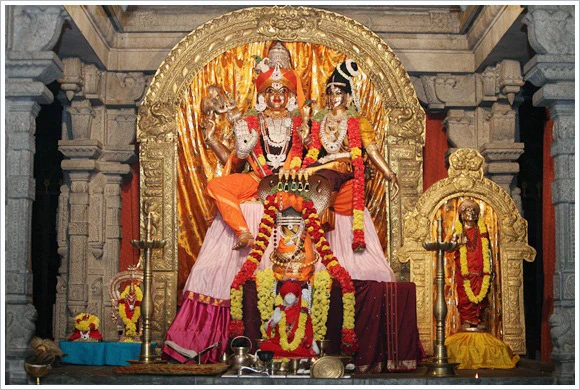
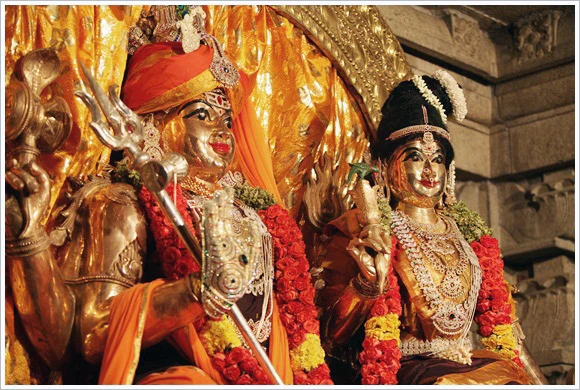
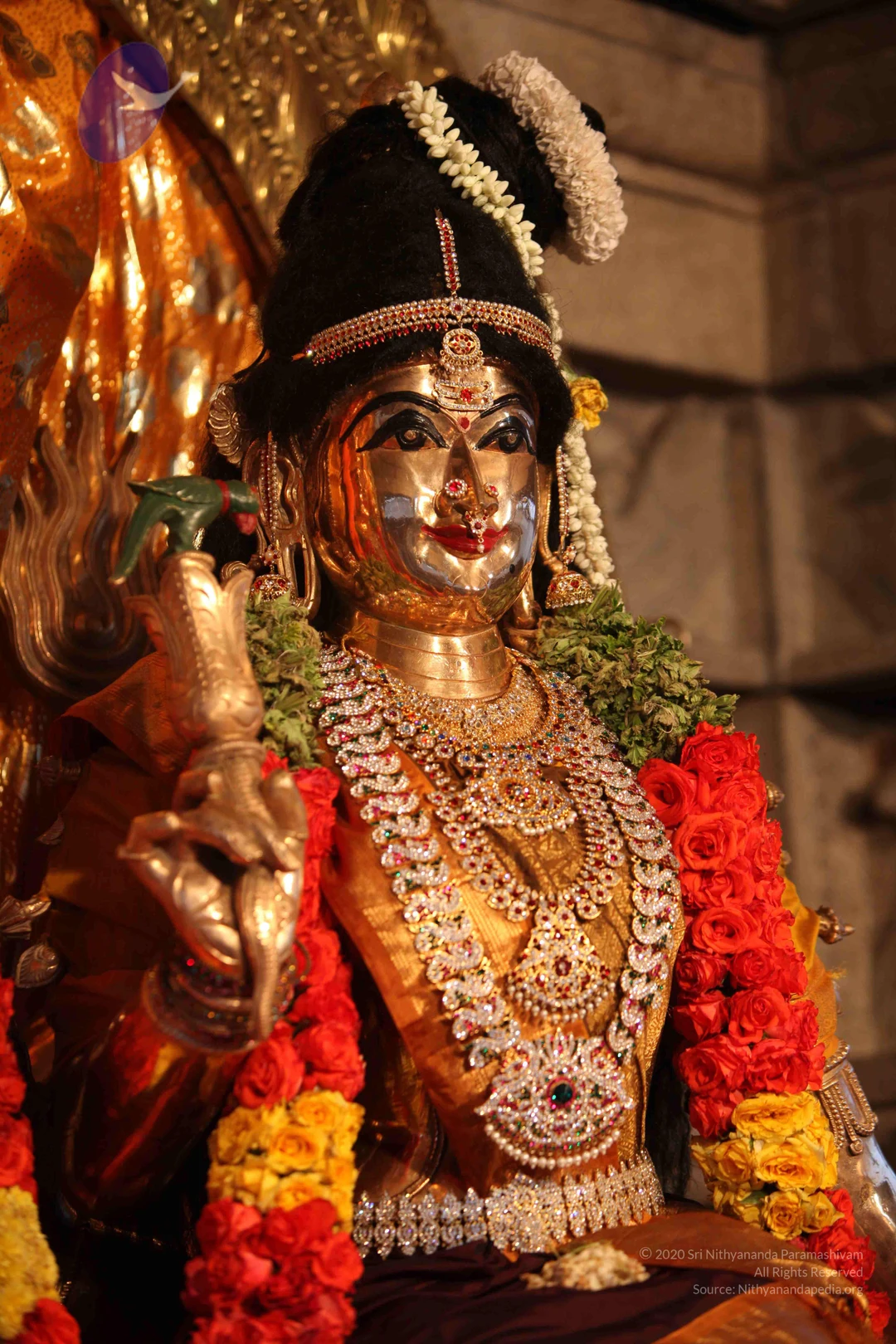
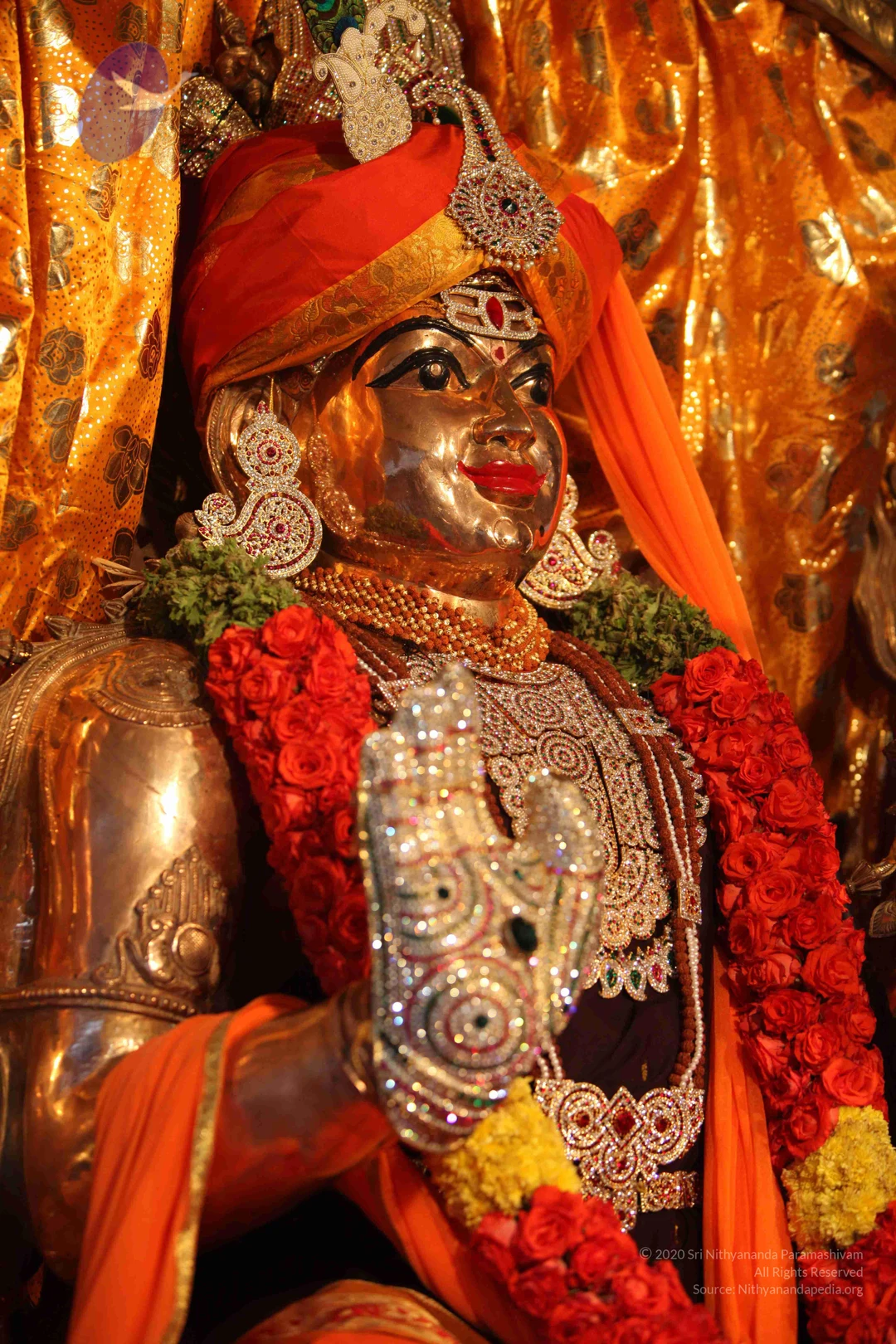
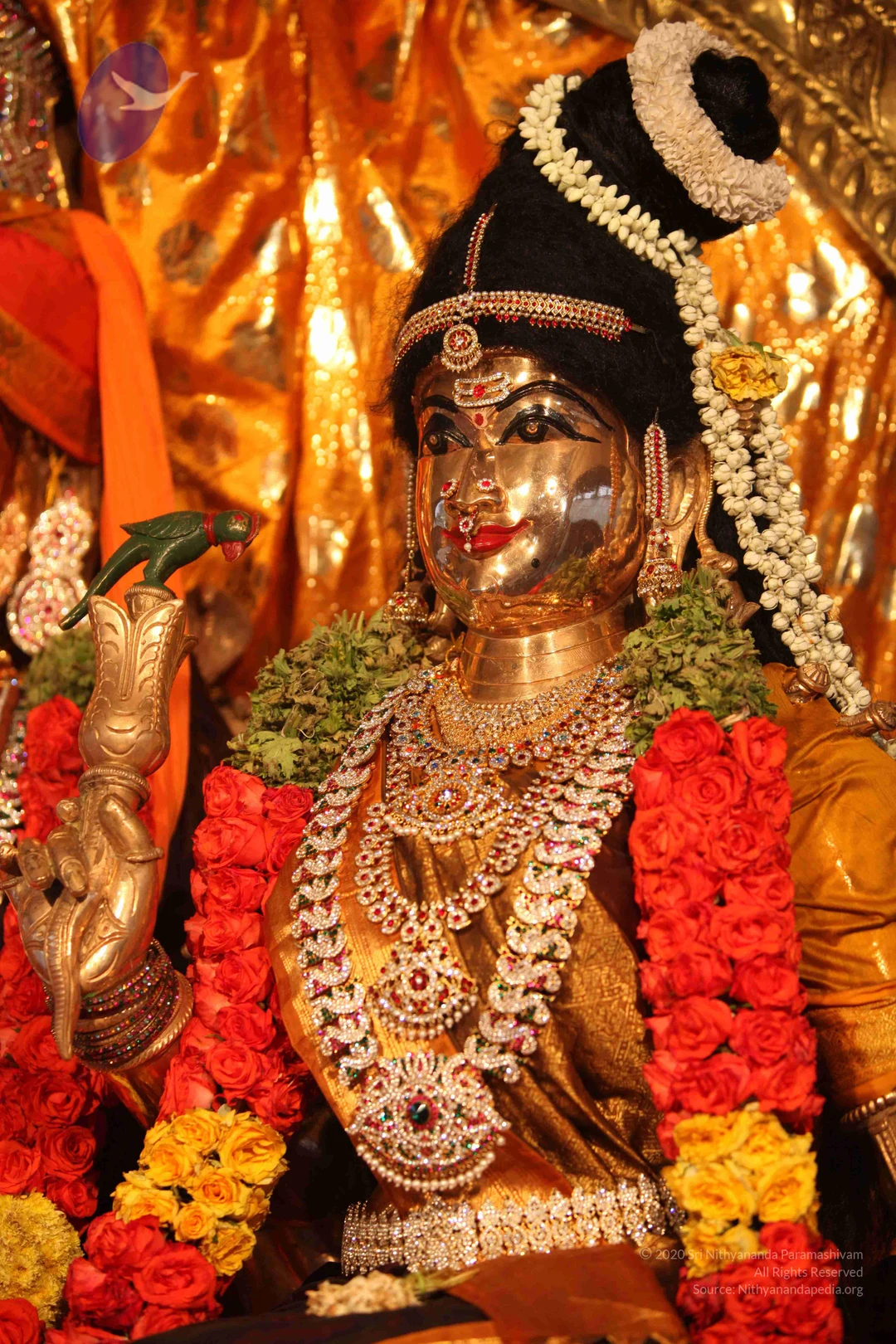
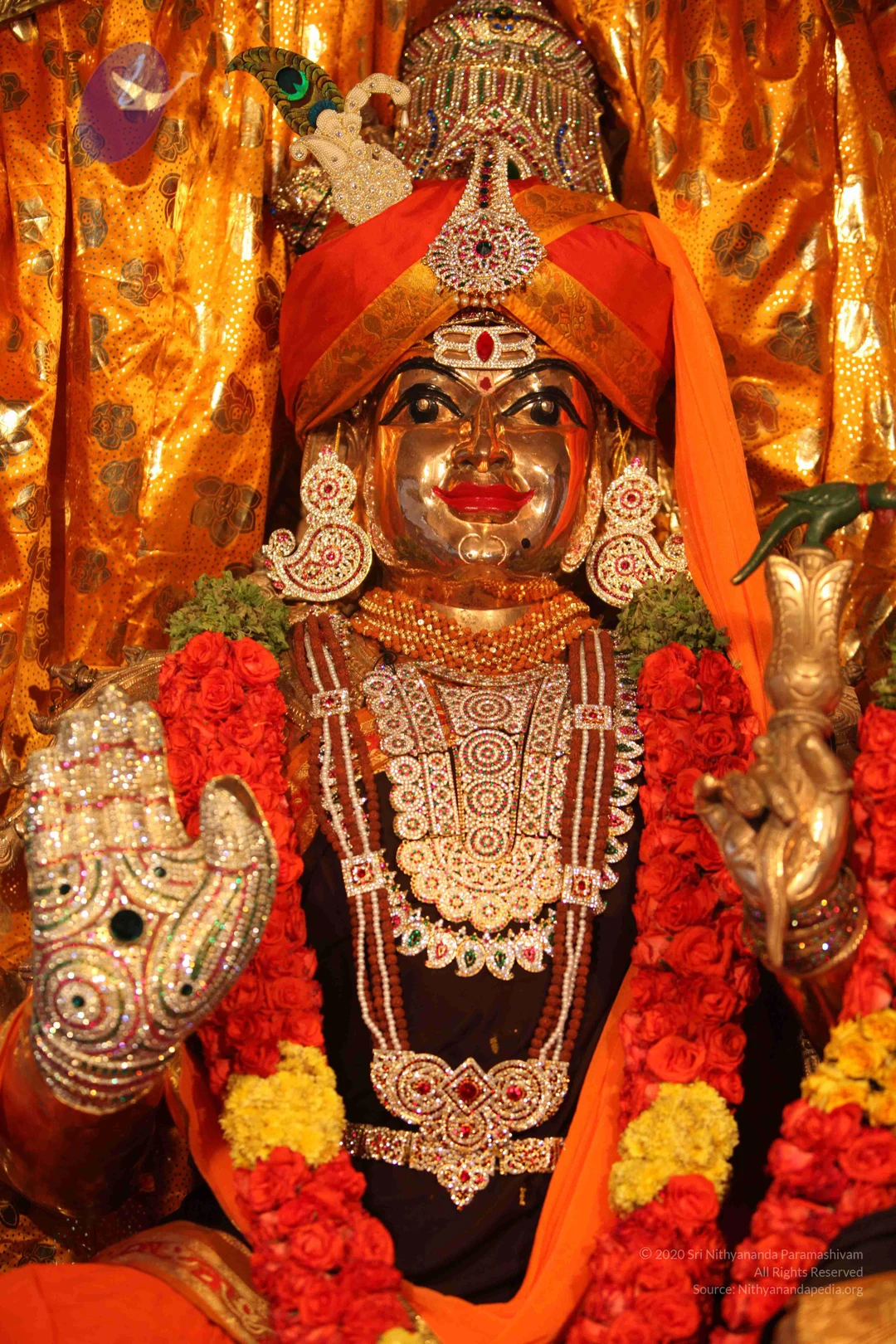
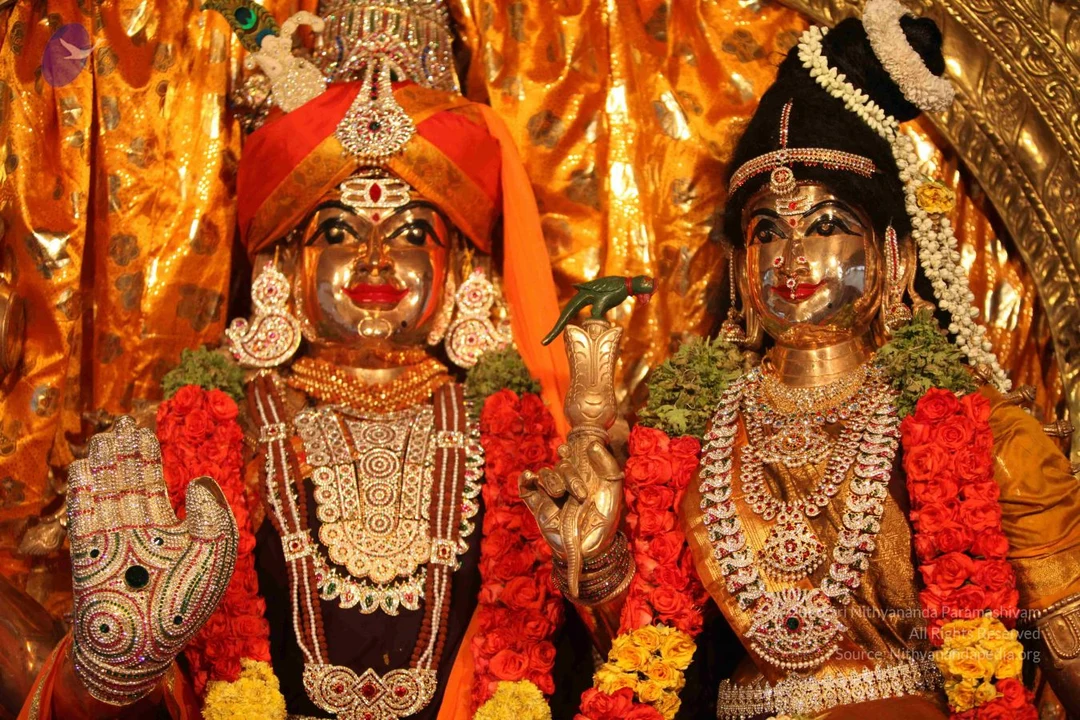
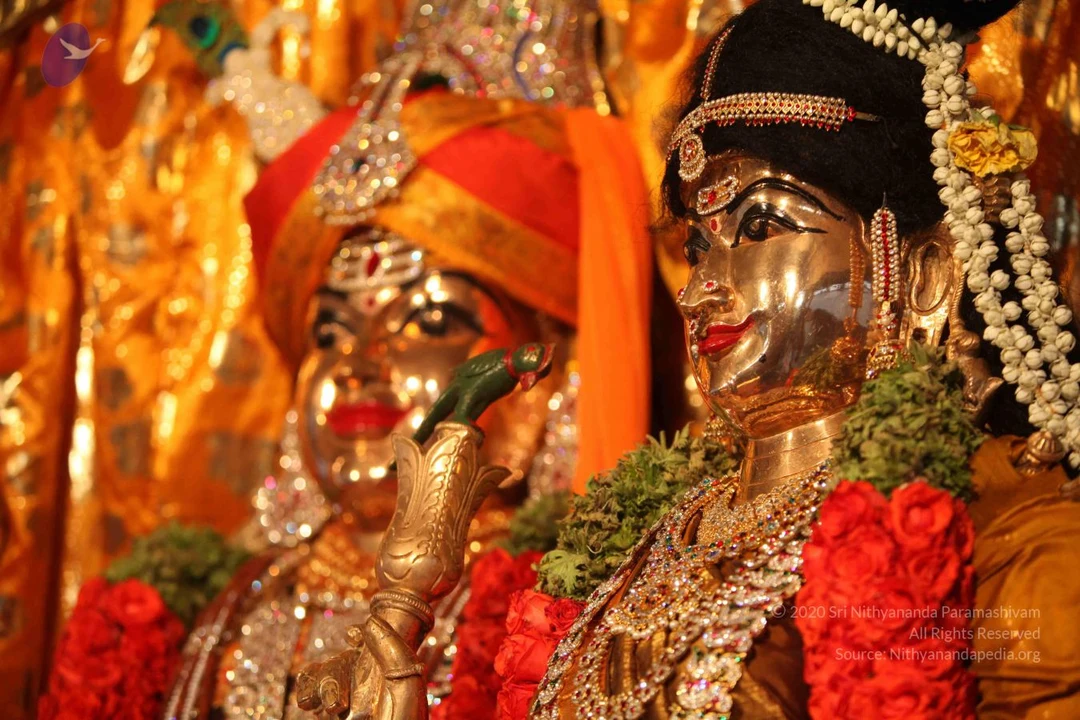
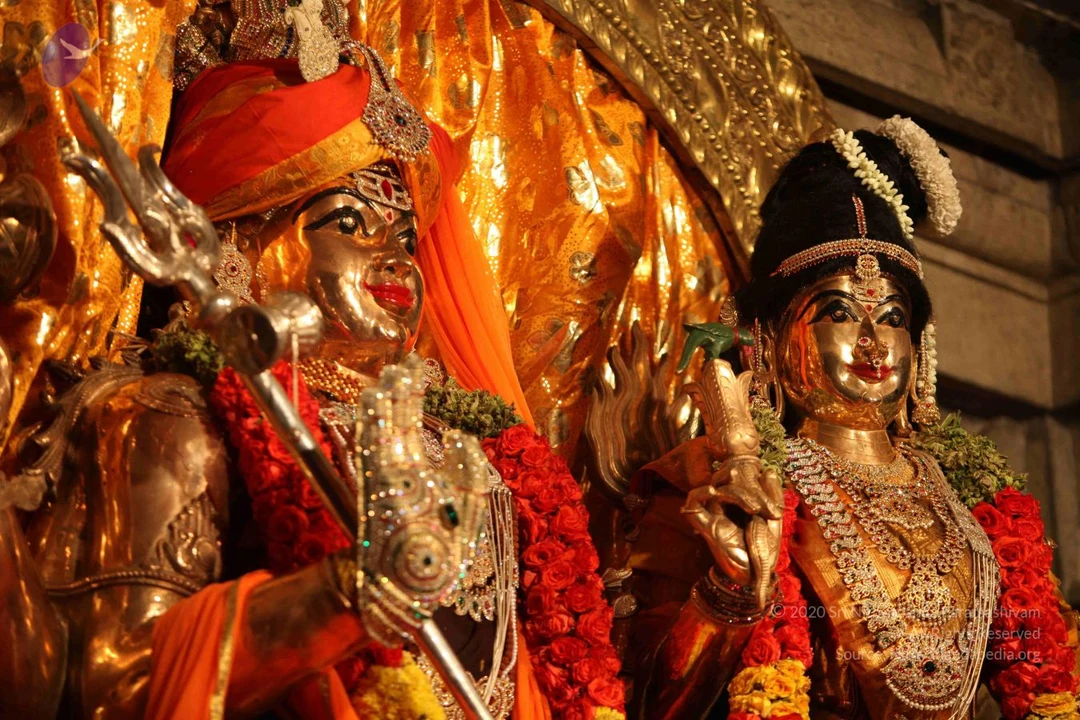
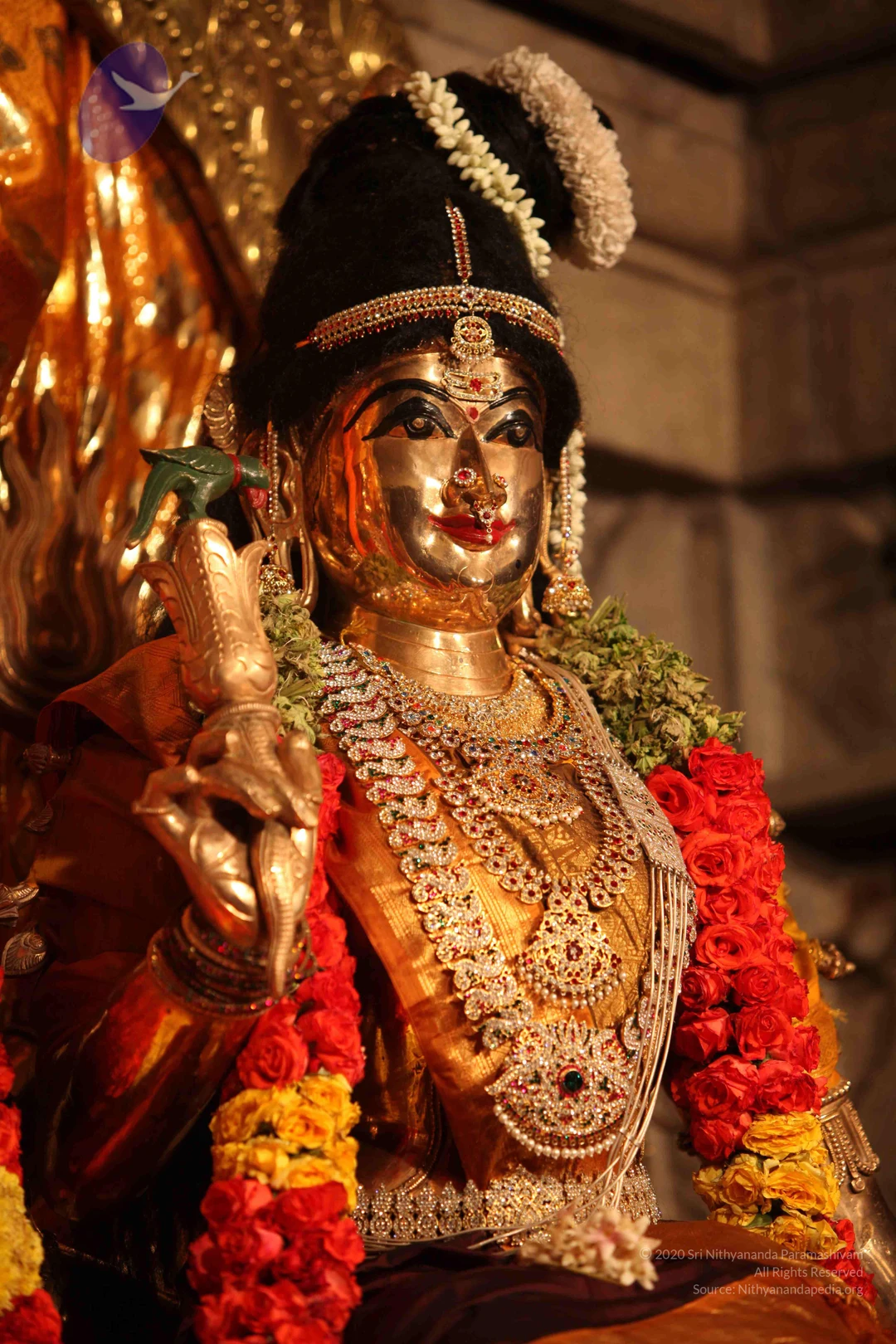
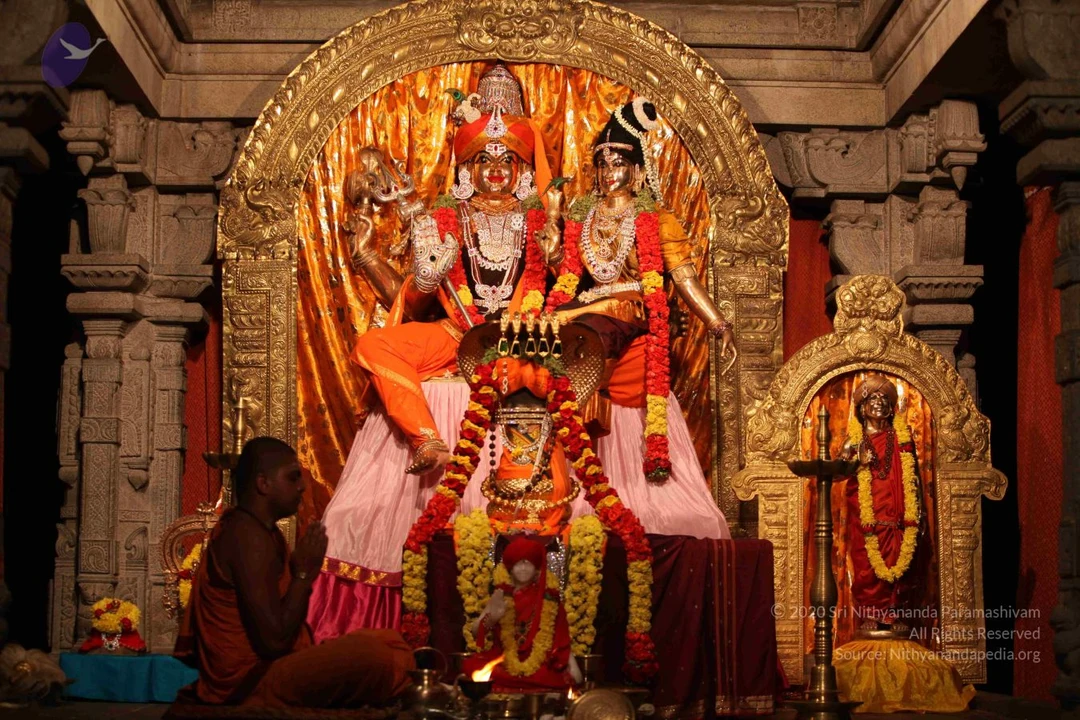
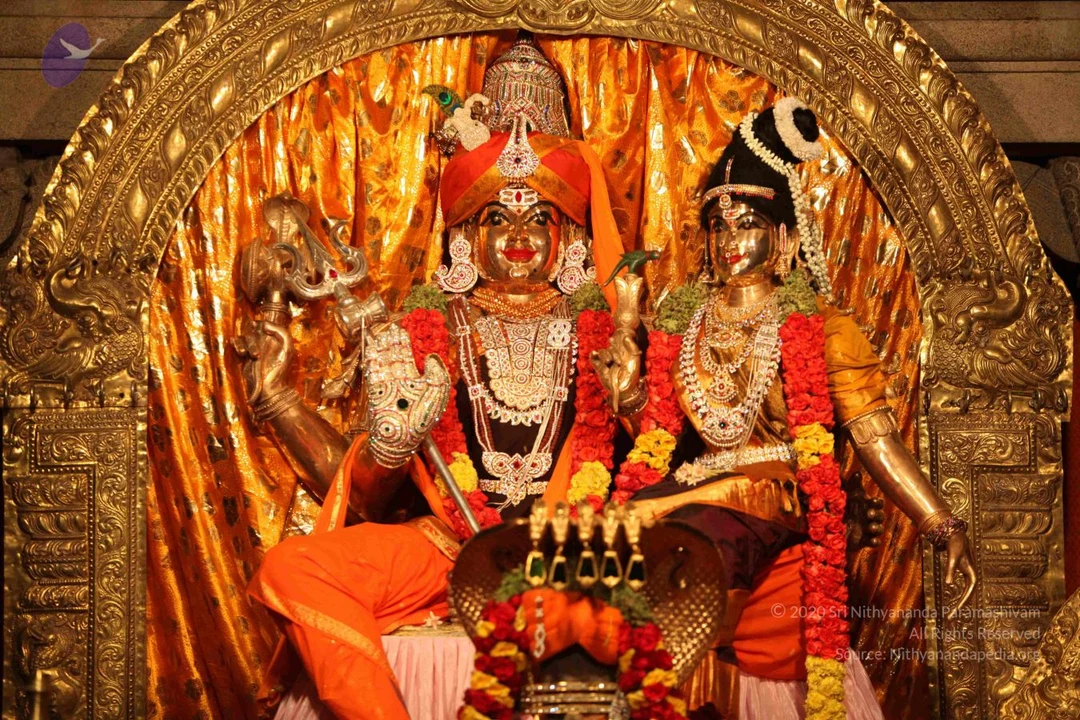
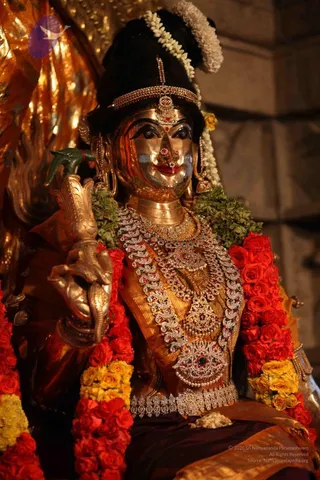
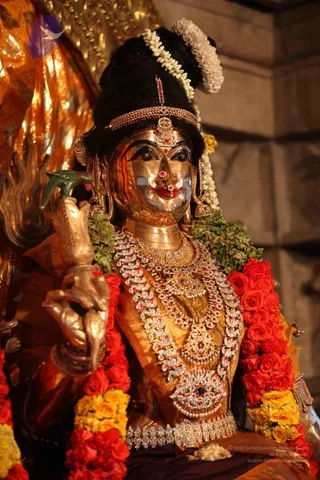
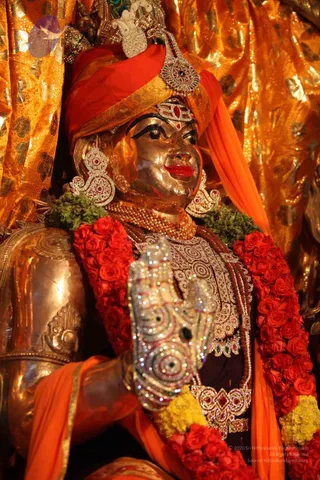
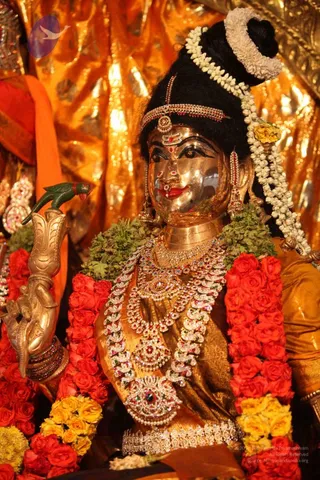
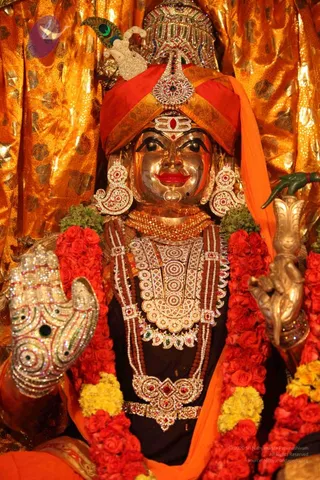
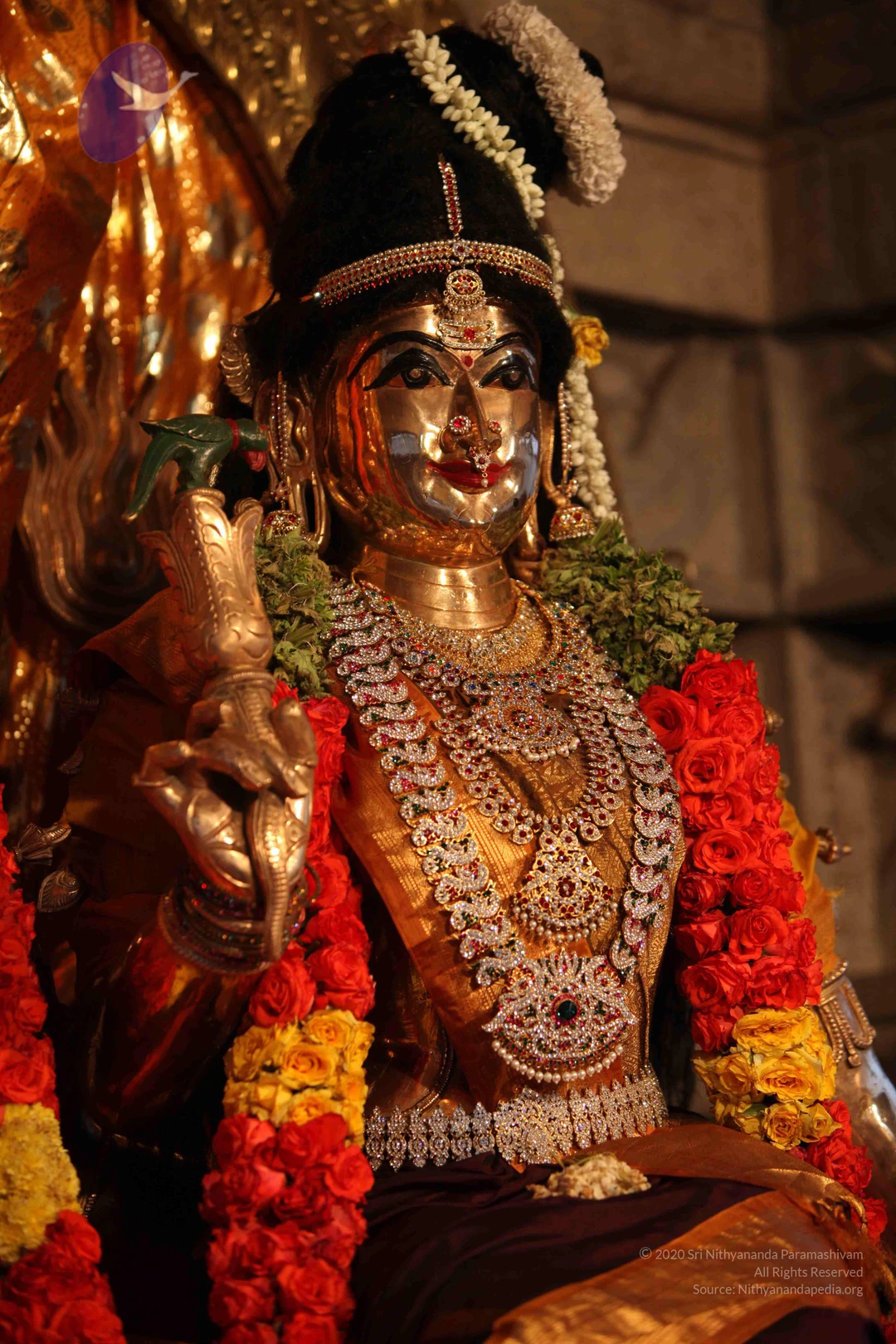
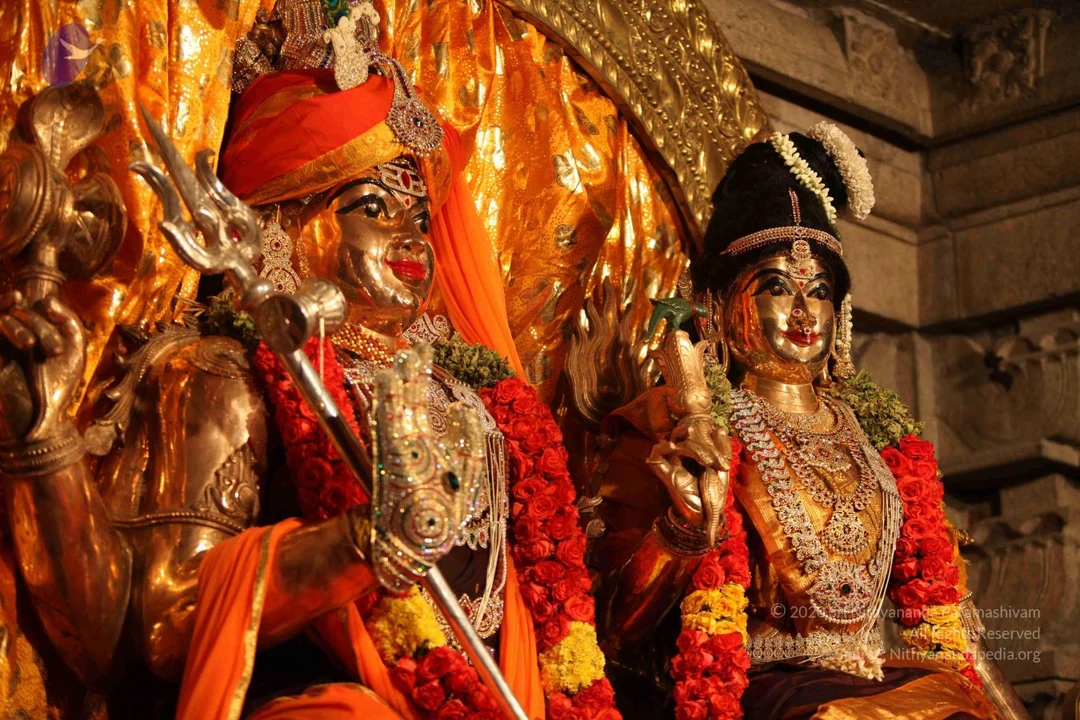
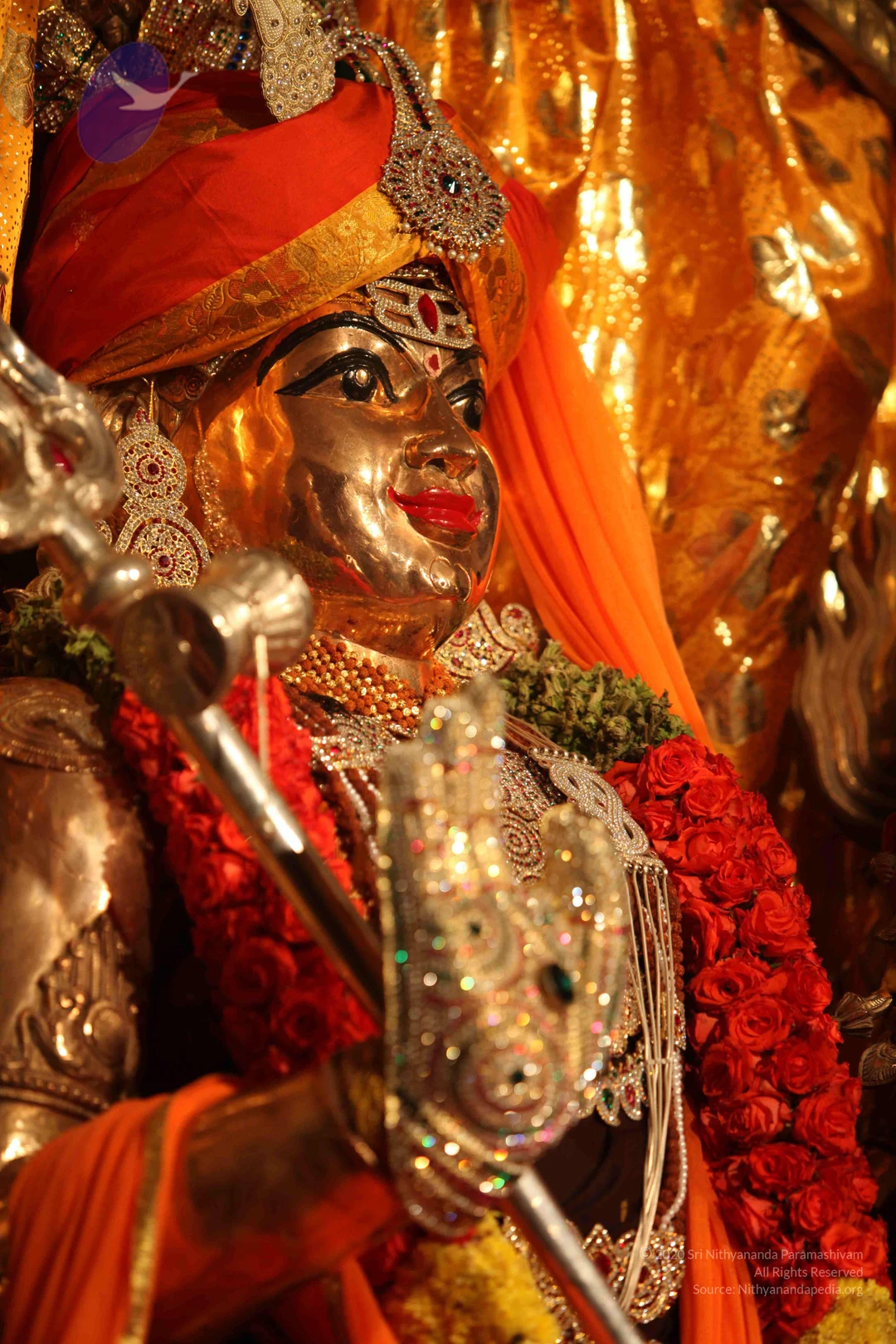
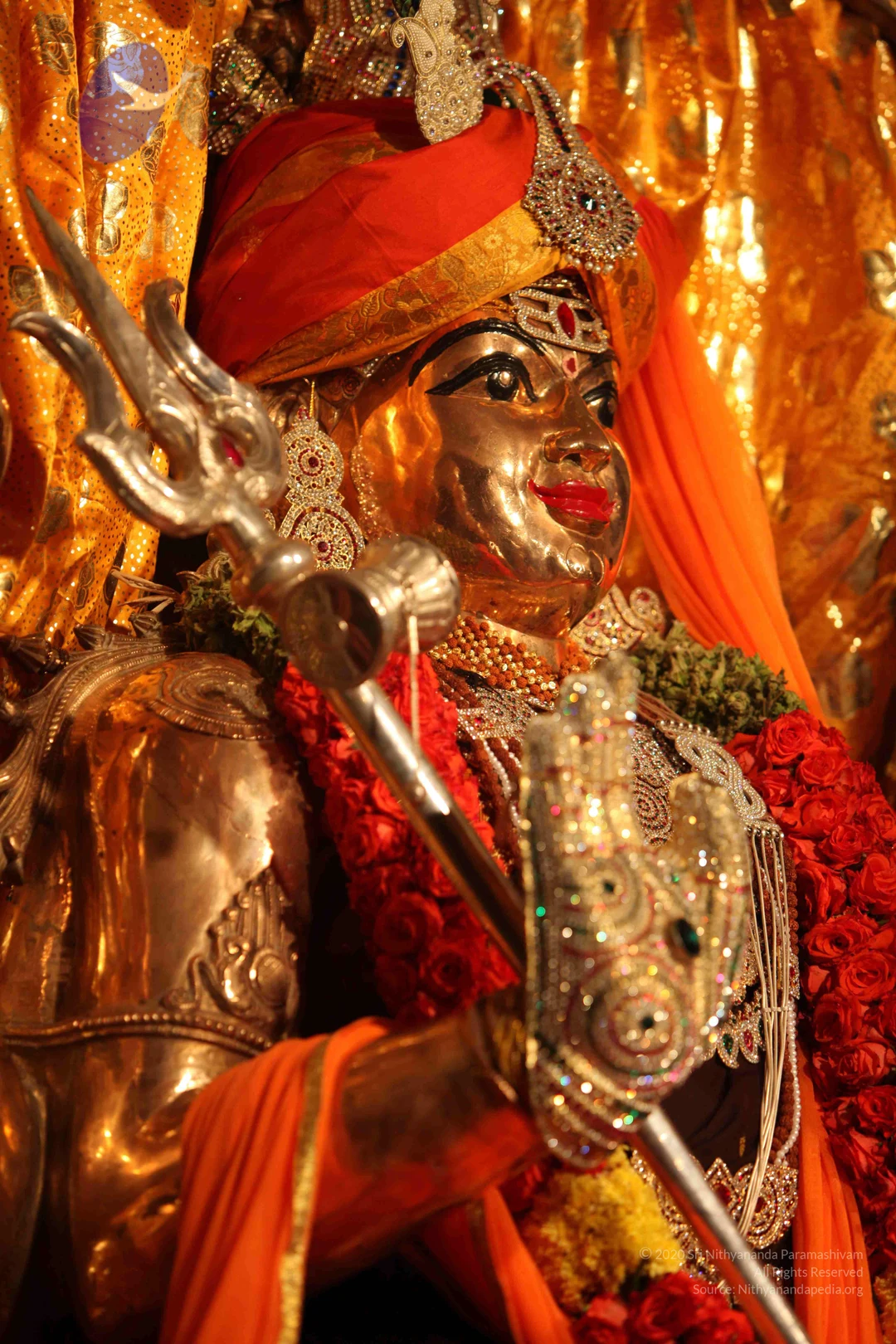
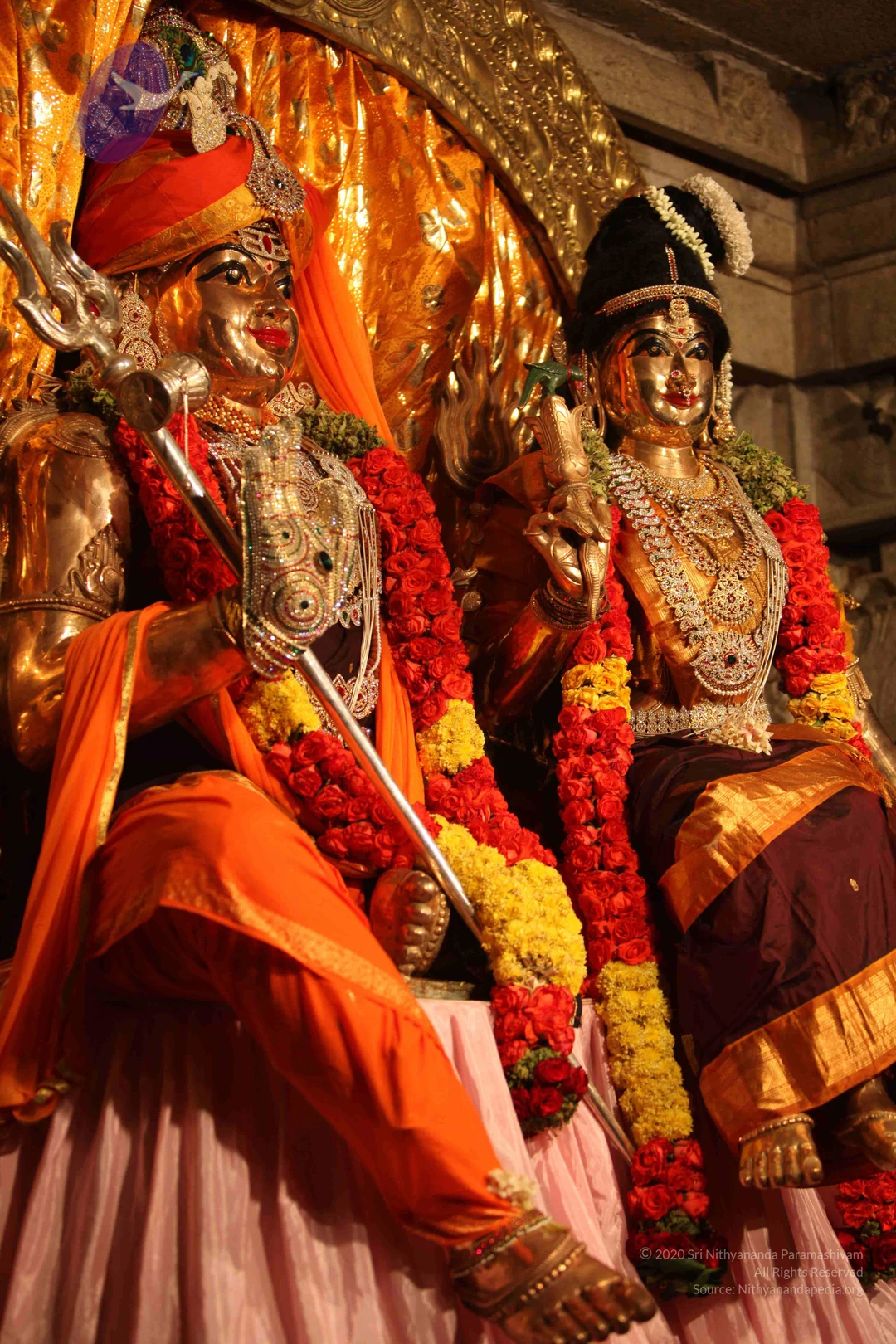
Close photograph of a gilded metal deity murti. It wears a black hair bun crowned with white jasmine garlands, a jewelled headband and a red bindi, and layered jewelled necklaces with red, green and white stones and pearls. A green-and-gold lotus or flower-tipped staff is held in one raised hand, and red and yellow rose garlands, with green leaves, drape over the shoulders. Background shows a gold-foil backdrop and temple stone wall.A golden metal murti of a deity with a polished face, red lips, and a nose ring, adorned with a jeweled crown band, flower garlands of jasmine, red roses and yellow roses, and a dense multi-stone necklace set with white stones, red and green gems and pearls. The figure holds a golden staff or sceptre with a green-tipped top in one hand, and wears a gold-embroidered garment; a golden backdrop and stone wall are behind. No physical people are visible.A gilded metal statue of a seated figure, shown in close view, wearing a red and orange turban with a jewelled ornament and a feathered crest at the top. The statue has a golden face with dark arched eyebrows, a red-lipped smile and a red tilak. It wears layered rudraksha beads, a gold-beaded necklace, a crystal-studded chest ornament and jewelled earrings. A red and yellow flower garland drapes over the shoulders and chest, and an orange cloth flows behind. The statue holds a crystal-encrusted hand-shaped piece near the chest, with a golden armour-like arm plate, against a background of orange and gold brocade. This is a statue, not a living person.A gilded metal deity murti of a goddess, possibly Meenakshi or Parvati-type, decorated for worship. She wears a jewelled crown with a jasmine garland in dark hair, heavy stone-studded necklaces, bangles and earrings, and a gold sari. Red and yellow rose garlands and green leaf garlands drape the figure. She holds a green parrot perched on a golden staff, and orange and gold draped fabric forms the backdrop.A gilded metal statue of a deity is seated against a gold brocade backdrop, wearing an orange and red turban topped with a peacock feather ornament and jewelled crest. The figure has a red painted mouth, a red bindi and an ornate jewelled collar and necklaces with a rudraksha-style mala. Red roses and yellow marigold garlands hang across its shoulders. It raises a jewelled palm in abhaya mudra and holds a golden staff-like object in the other hand. No physical people are visible; this is a murti photographed in a shrine setting.Two gleaming metal murti figures of deities stand side by side against a backdrop of gold and orange brocade. The left figure wears a red and orange turban with a jewelled crown ornament, a raised right hand inlaid with coloured stones, and layered gold and beaded necklaces. The right figure has long black hair with a crown and white flower garland, holds a gold staff topped by a green parrot, and wears heavy jewelled necklaces and a gold-brown sari. Both are draped in red and yellow marigold and rose garlands.
BGSatsang
86 photosSource gallery
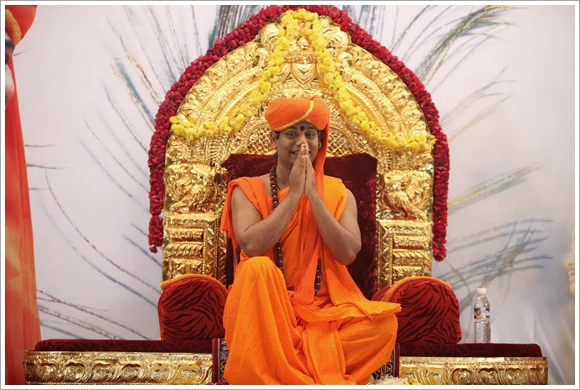
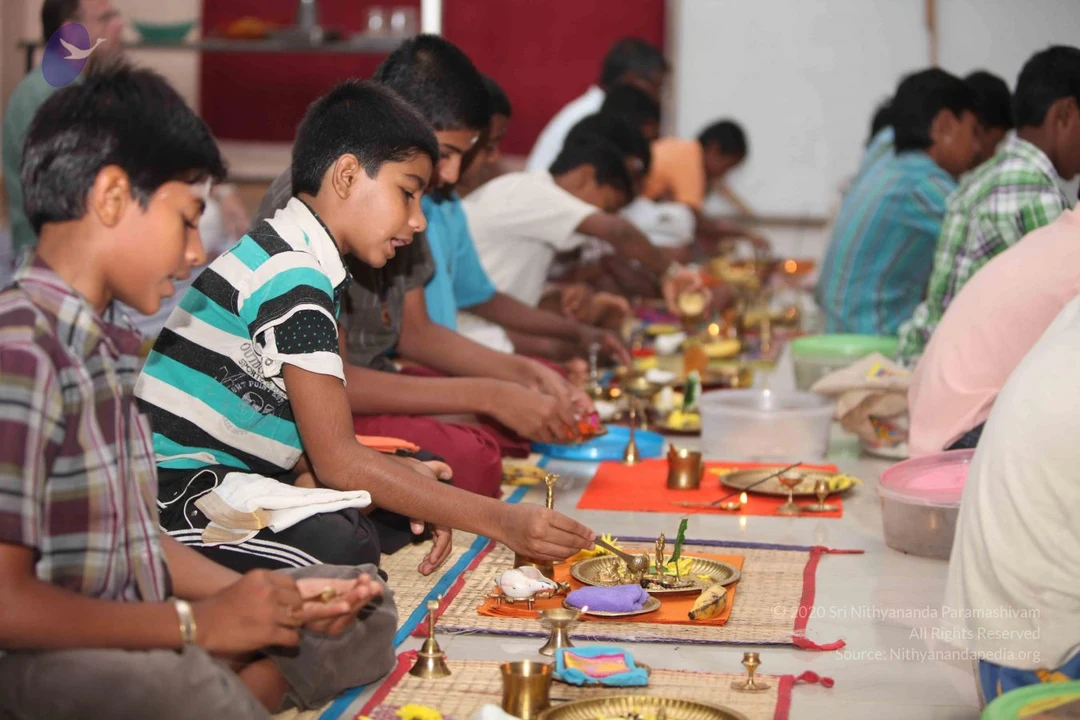
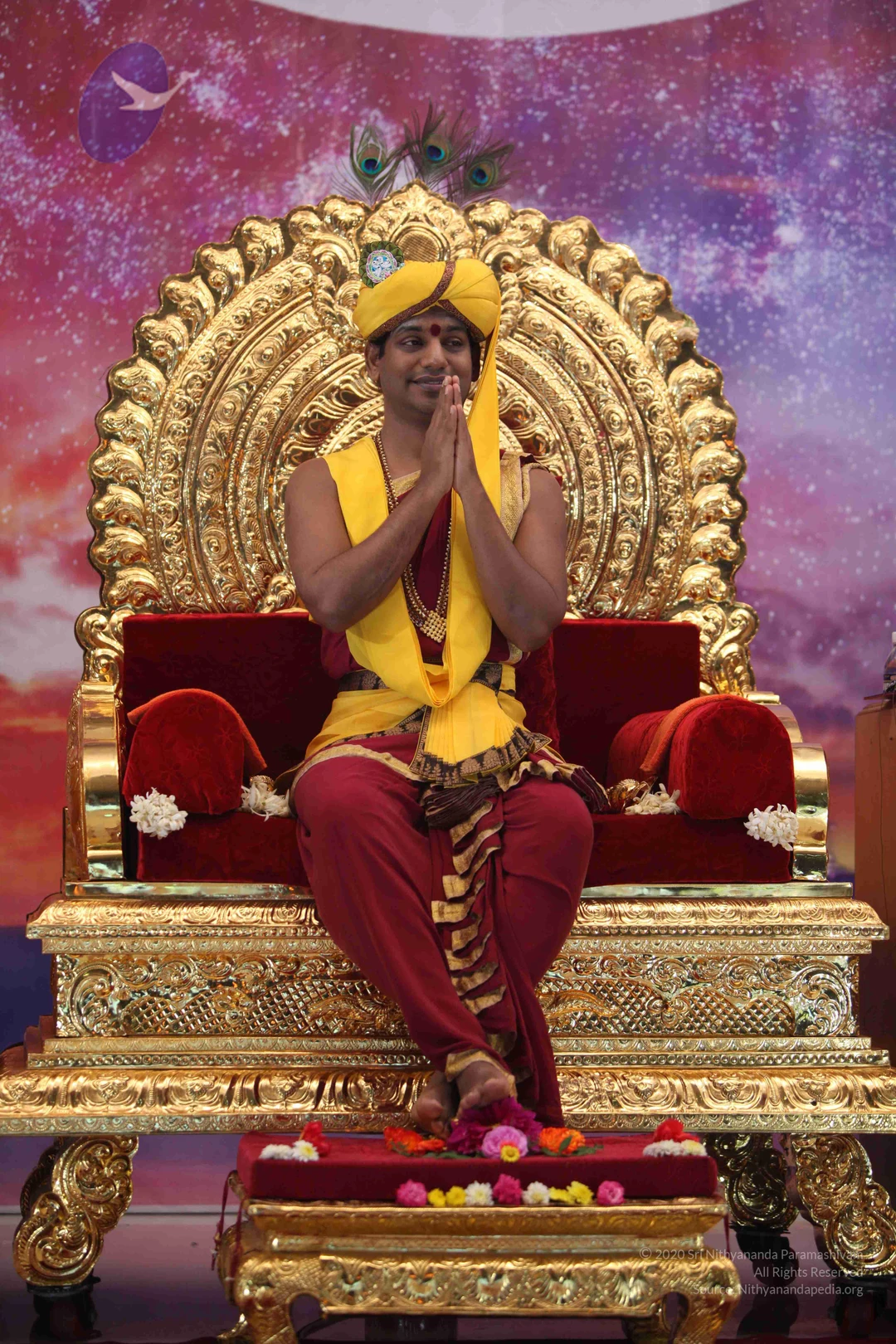
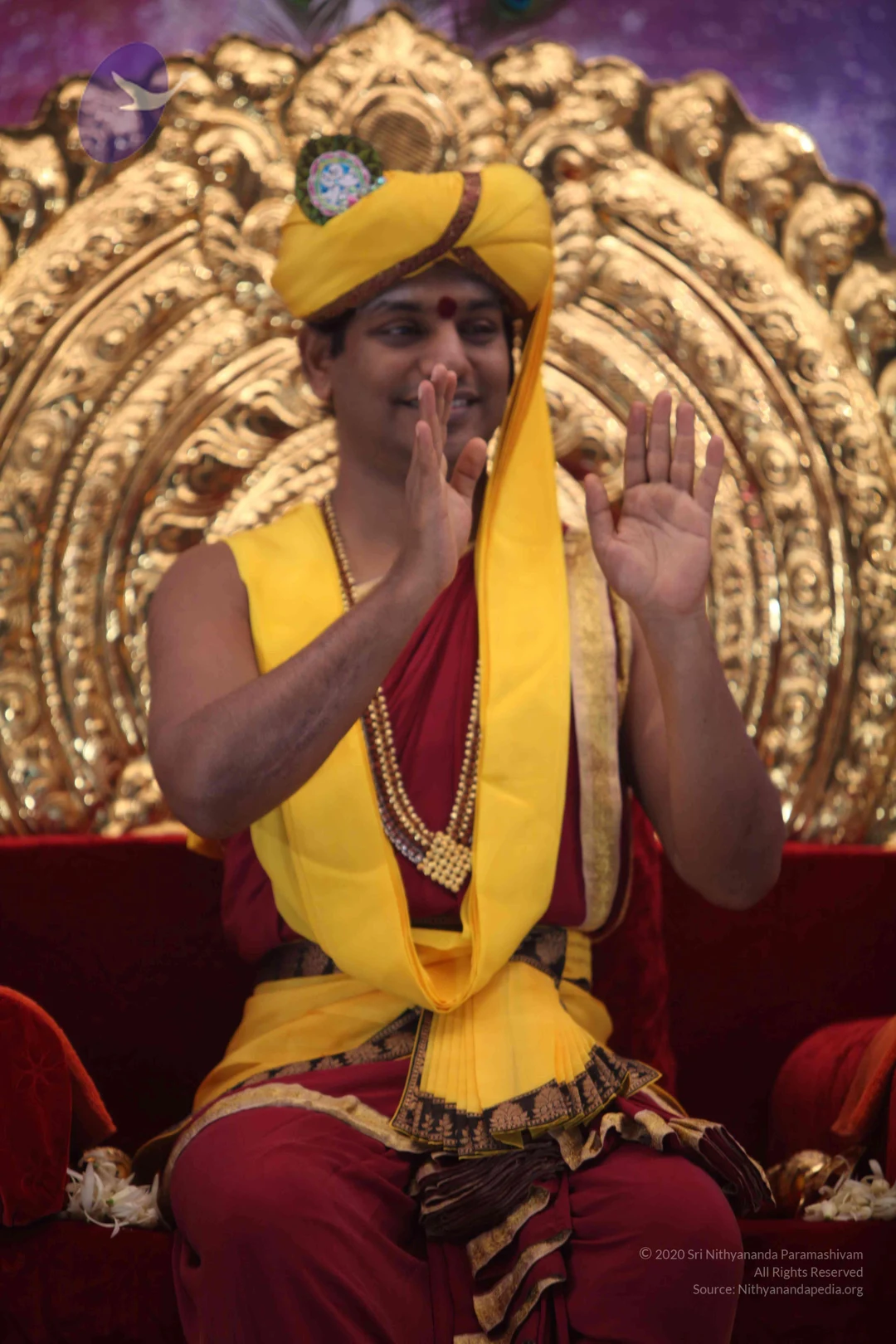
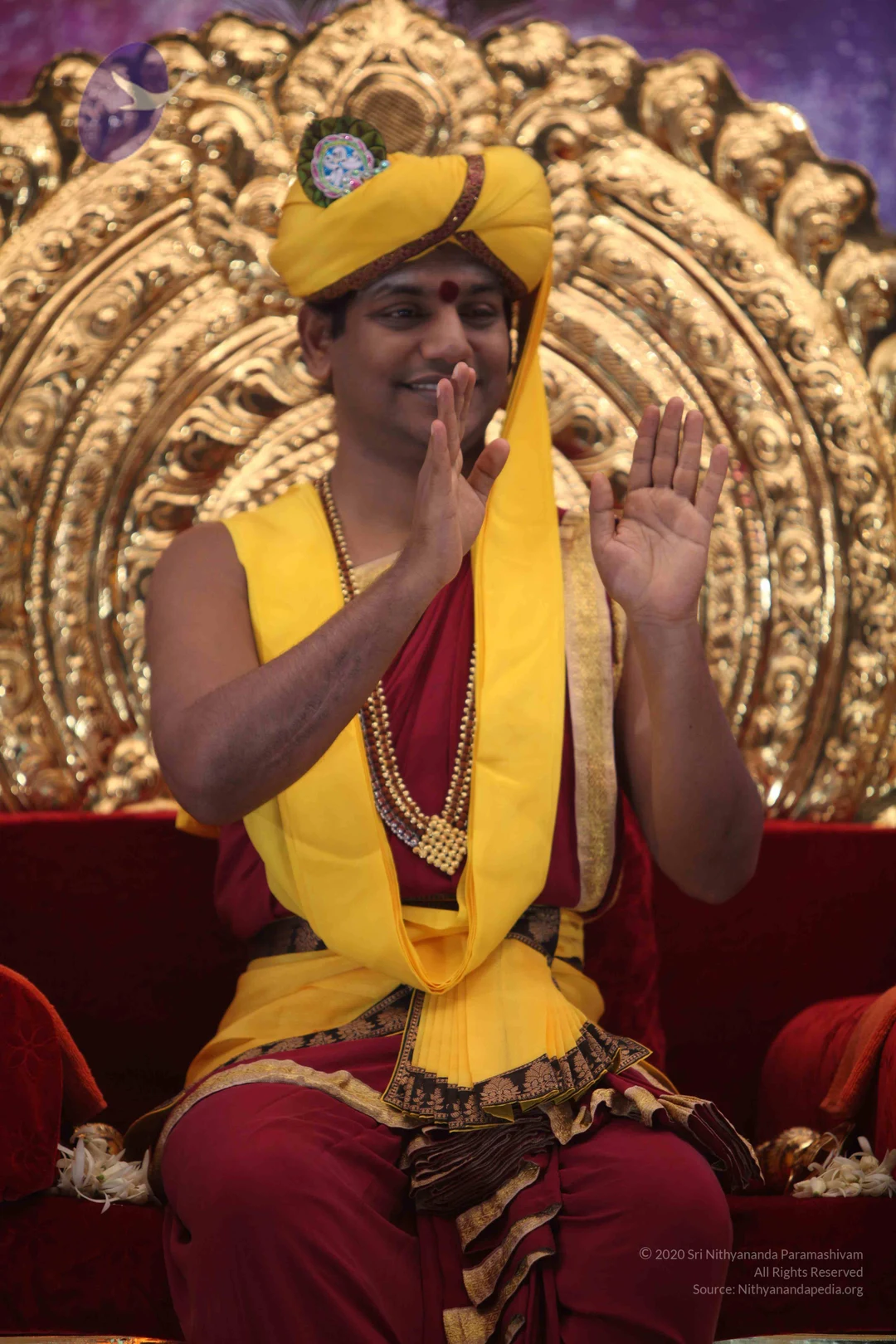
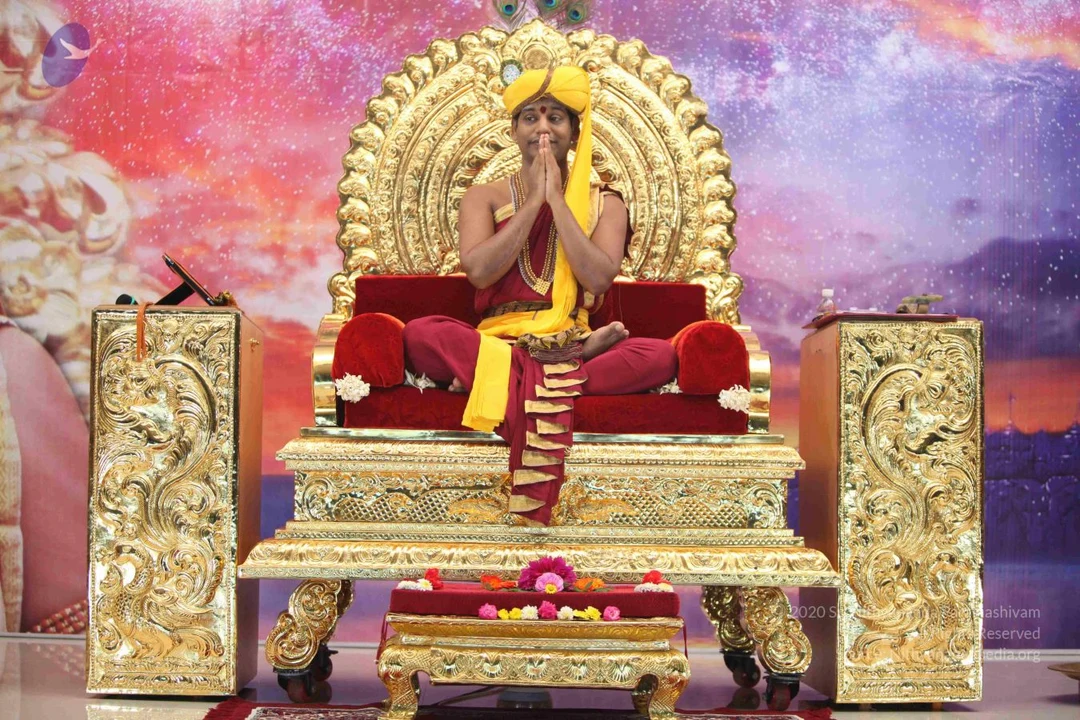
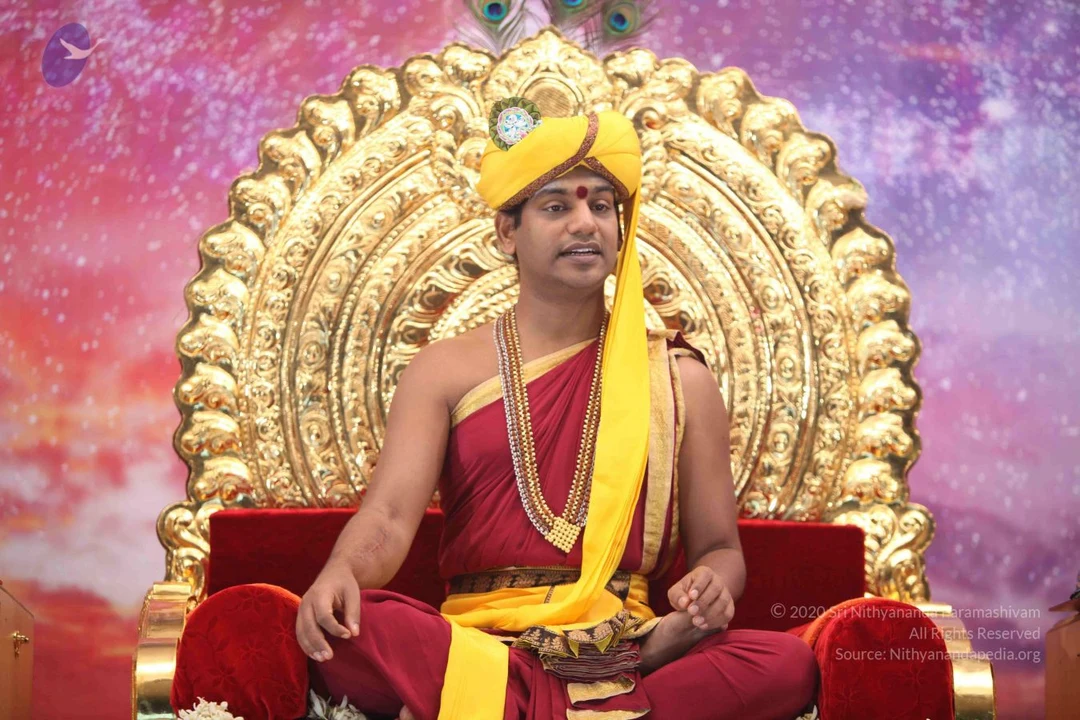
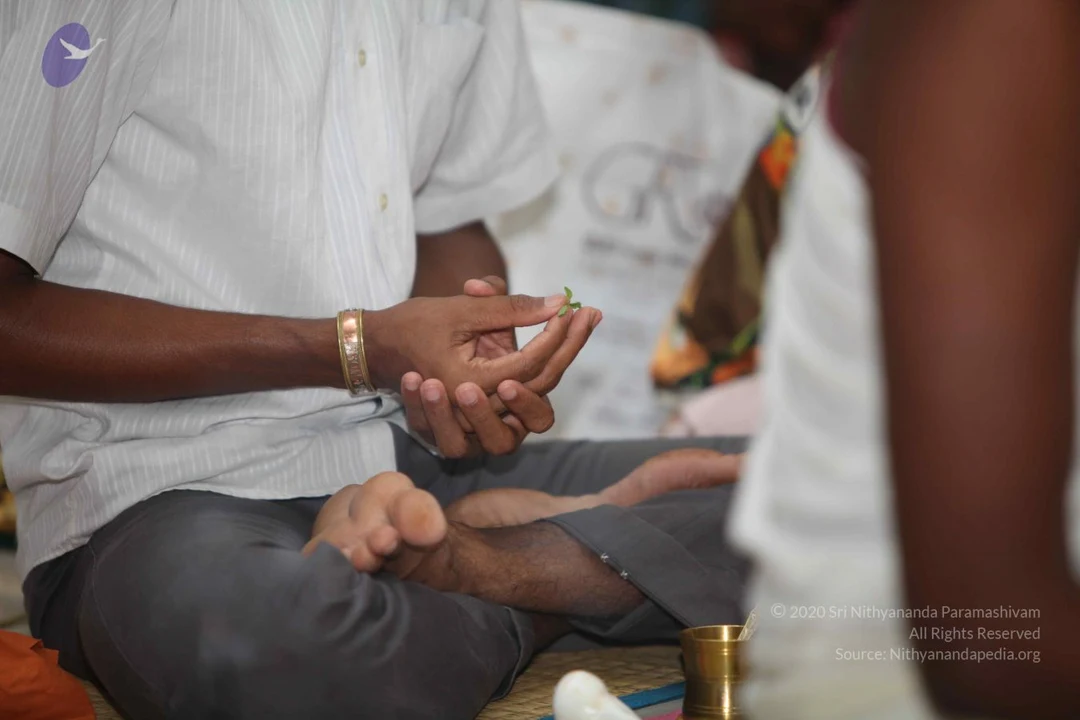
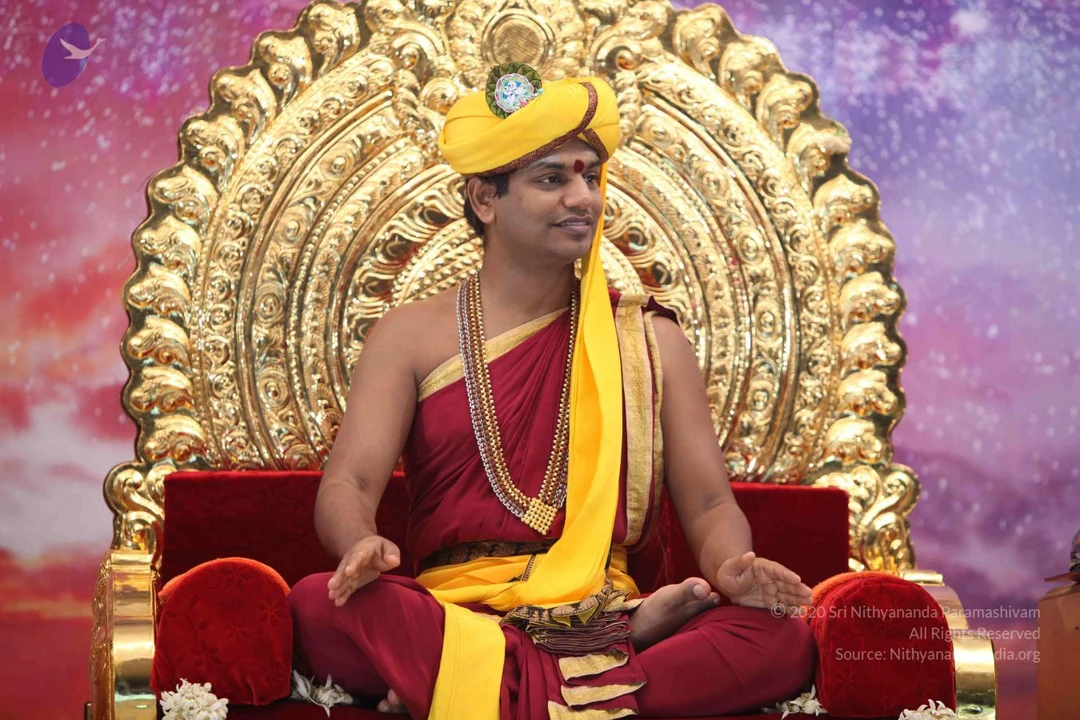
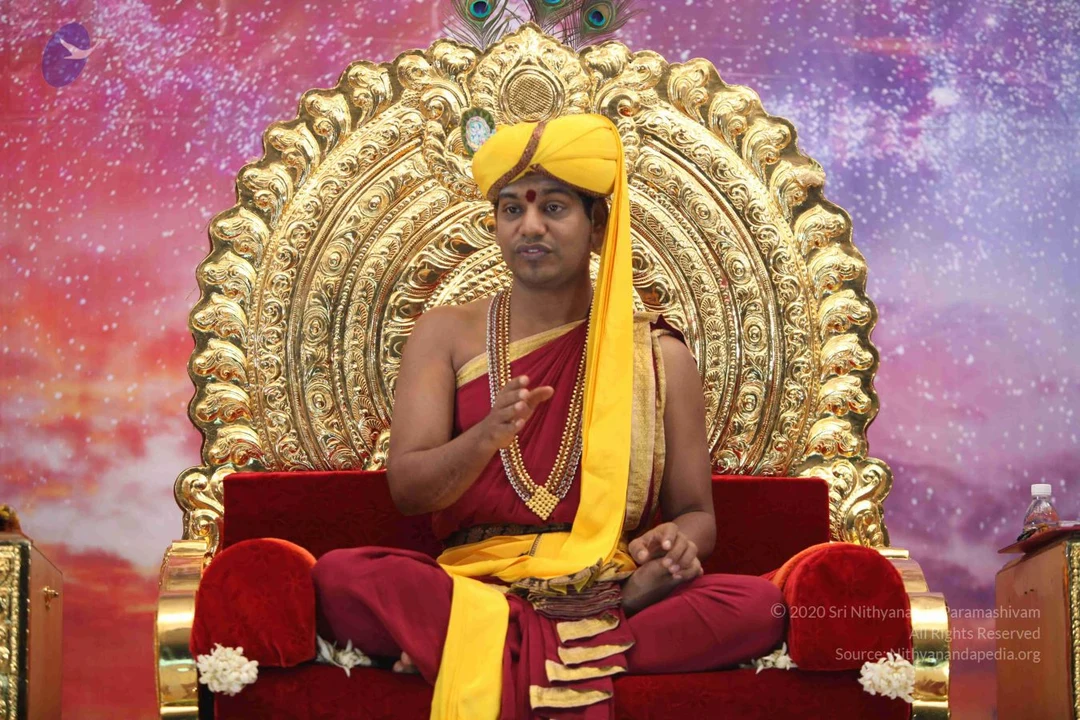
Close photograph of a seated man in a white short-sleeved striped shirt and grey trousers, cross-legged on a mat, holding a small green leaf between the fingers of his right hand in a mudra-like gesture. A gold bangle is on his wrist. A brass kalasha-style vessel sits at lower right beside white cloth, and a blurred figure in white stands at the right edge. Another blurred person in patterned fabric appears in the background. The setting appears to be a seated gathering or ritual session. The image is a photo with two visible people, both partly shown.Several men in white dhotis and bare upper bodies sit cross-legged on a floor during a puja, holding small brass oil lamps and lighting them. Some have white tripundra markings on their foreheads and white painted stripes on their arms, and several wear rudraksha malas. In the foreground a bald man holds a lamp near a brass plate, while a seated man in the centre with a rudraksha mala and gold-edged dhoti holds a lamp. Behind them, young boys in a red shirt and yellow shirt also hold lamps. Brass plates with bananas, flowers, betel leaves and a kalasha-style vessel rest on mats, and a white wall and red curtain form the backdrop.A row of seated boys and young men perform a puja on woven mats along a long floor line. Brass plates hold offerings of bananas, flowers and a small brass kalasha, and several small brass oil lamps with lit flames stand nearby. Foreground: a boy in a green-and-white striped shirt and a plaid shirt reaches toward a brass tray. Behind them, other participants in white, blue and checked shirts sit with brass vessels and orange cloths before them. Pink and orange cloths and plastic containers line the floor. No senior teacher is visible.A man seated on an ornate gold throne with red velvet cushions, against a pink and purple galaxy-style backdrop. He wears a bright yellow turban with a peacock feather crest and a small green emblem, a yellow shawl draped over his shoulders, dark red dhoti-style garments with gold borders, multiple strands of beads and a gold necklace, and a red tilak on his forehead. He sits with palms pressed together in namaste, with his bare feet resting on a footstool decorated with orange, pink, yellow and white flowers. The appearance matches the a person cues: a yellow turban and ornate ceremonial gold and beaded adornments, seated in a position of honour on a throne. A small logo appears in the upper left corner.A man seated on a red cushioned throne before an ornate gold carved backdrop, smiling and raising both palms toward the viewer in a gesture of blessing or address. He wears a yellow turban with a small decorative brooch, a red dhoti-style garment, a long yellow sash draped over his shoulder and tied at the waist, and layered gold beads around his neck with a red tilak on his forehead. Scattered white flower petals lie on the throne.A seated man in a golden-yellow turban with a green and gem brooch sits before an ornate gold carved throne back. He wears a yellow shawl over a maroon robe with gold-bordered edges and a multi-strand gold bead necklace. He smiles and raises both palms outward in a gesture of blessing. Red velvet cushions and white flowers are at his sides.
BGSatsang-Tamil
71 photosSource gallery
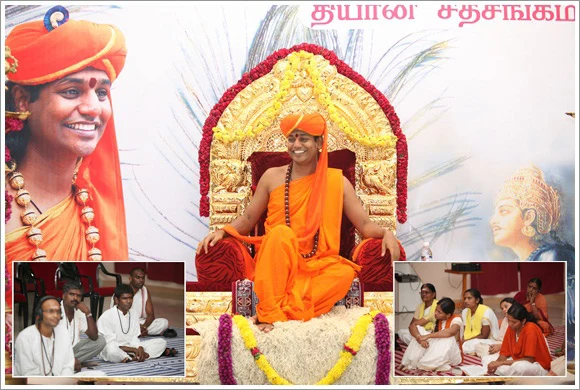
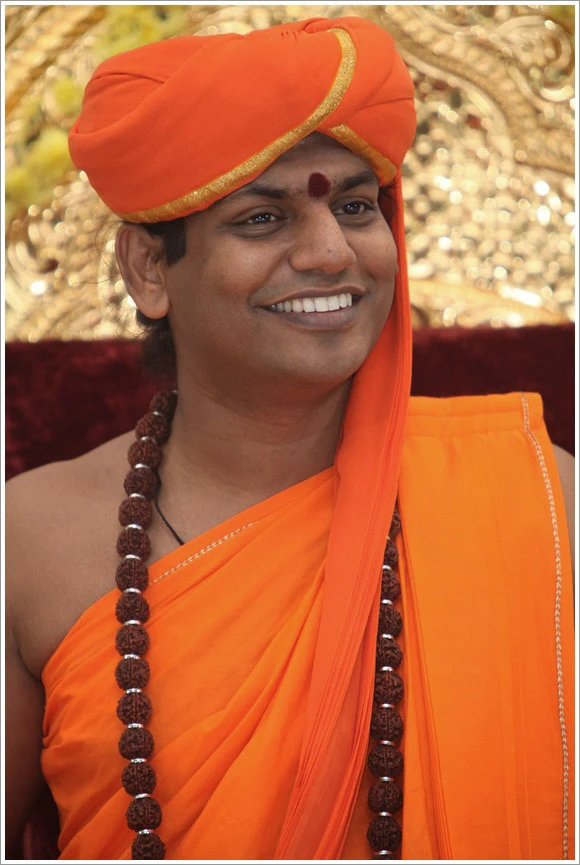
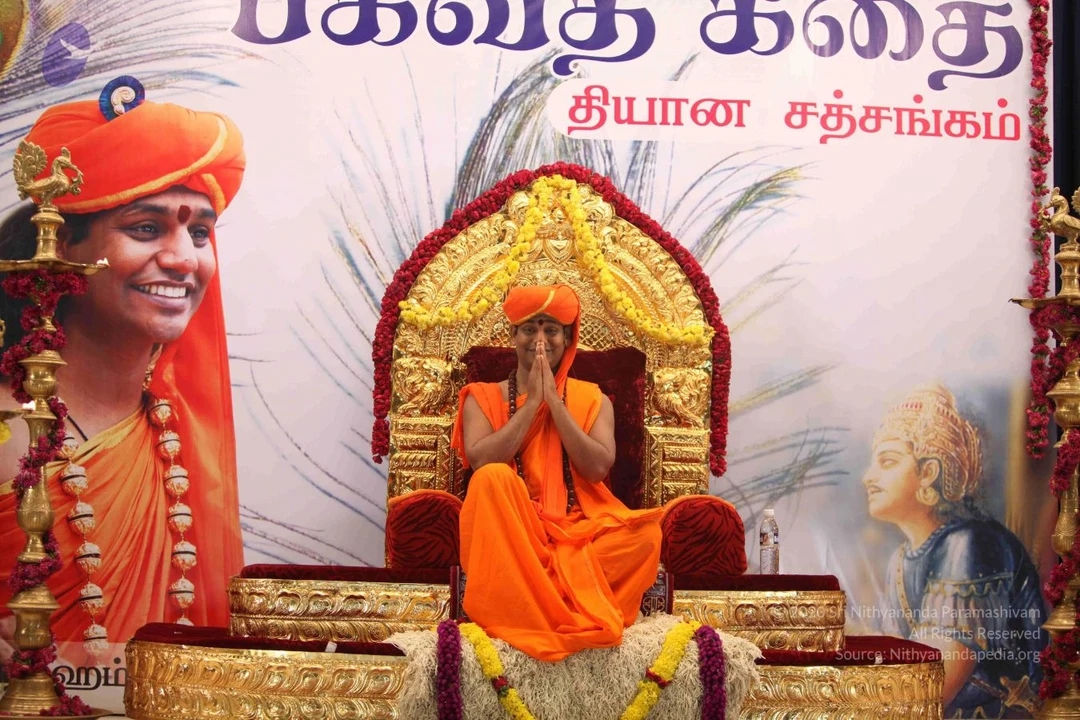
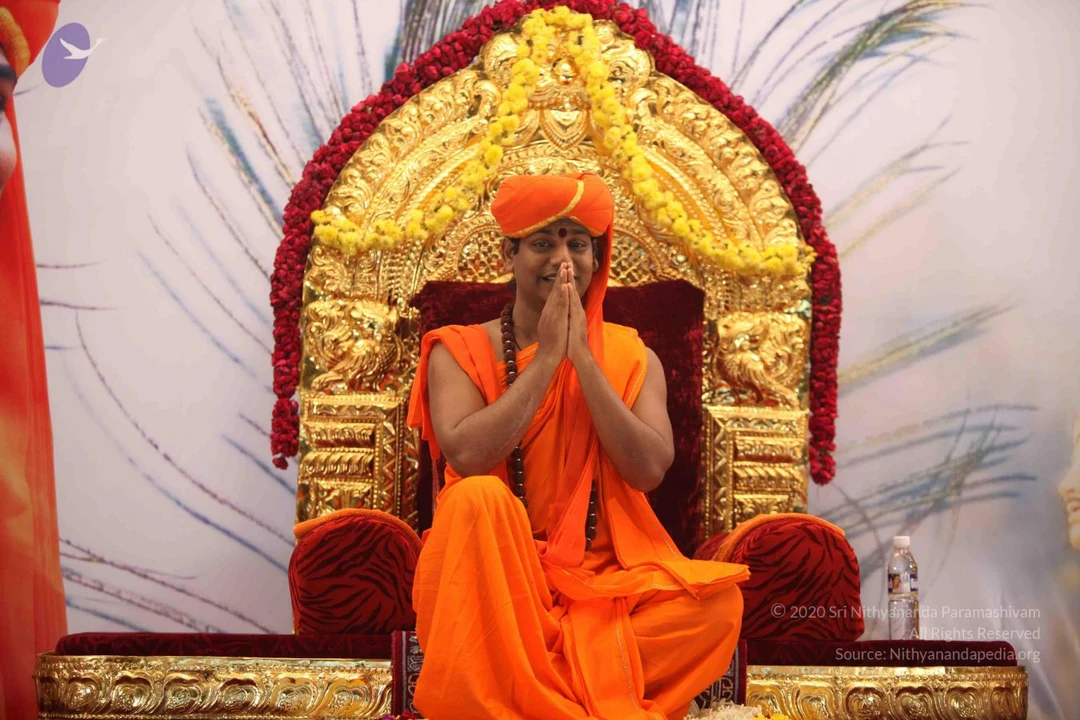
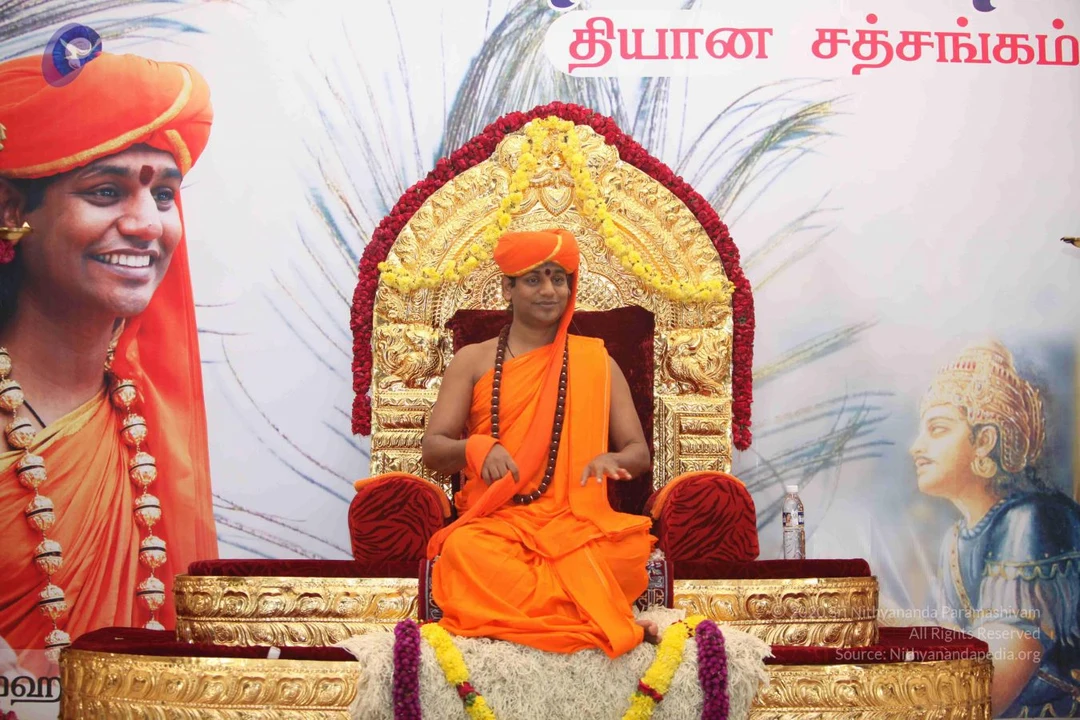
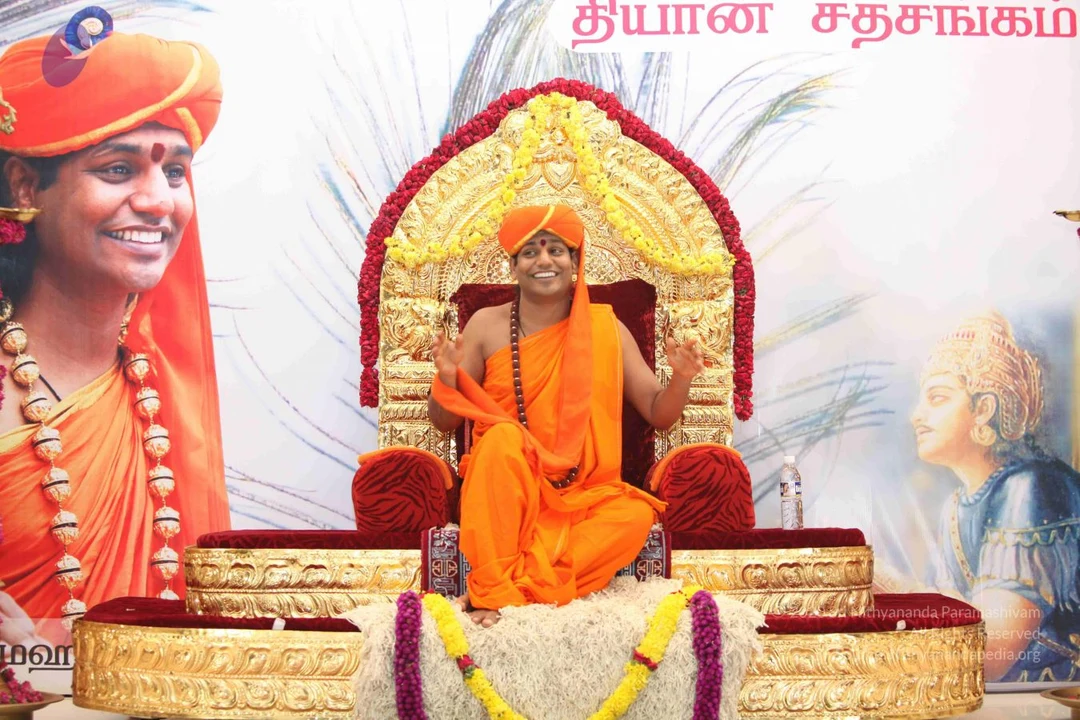
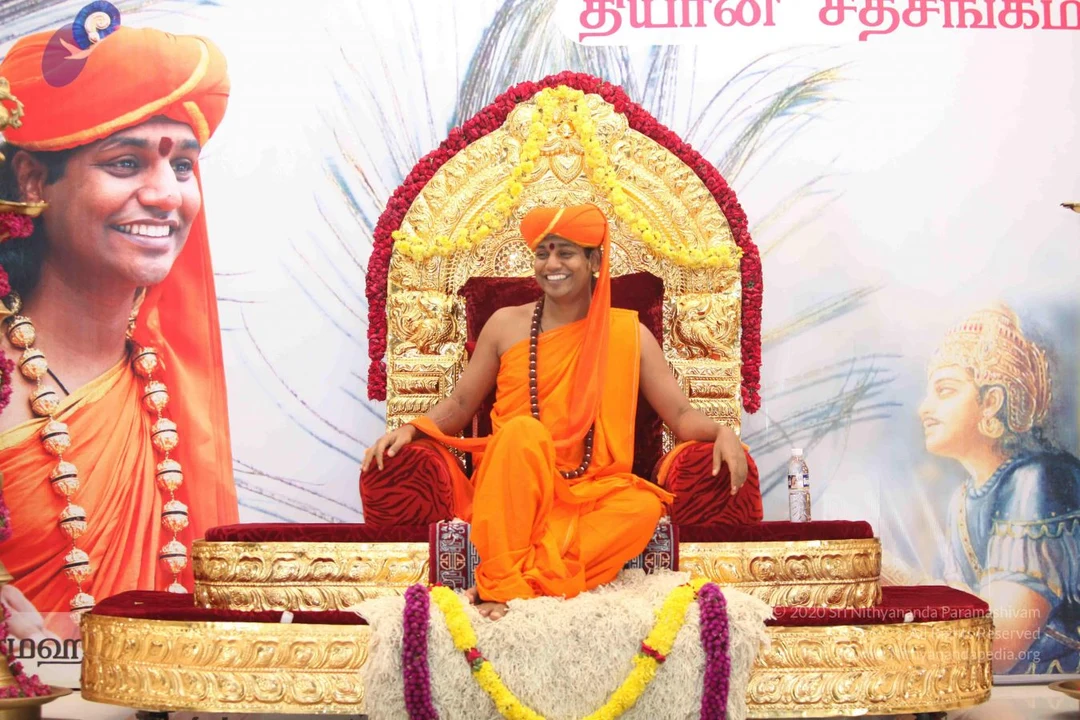
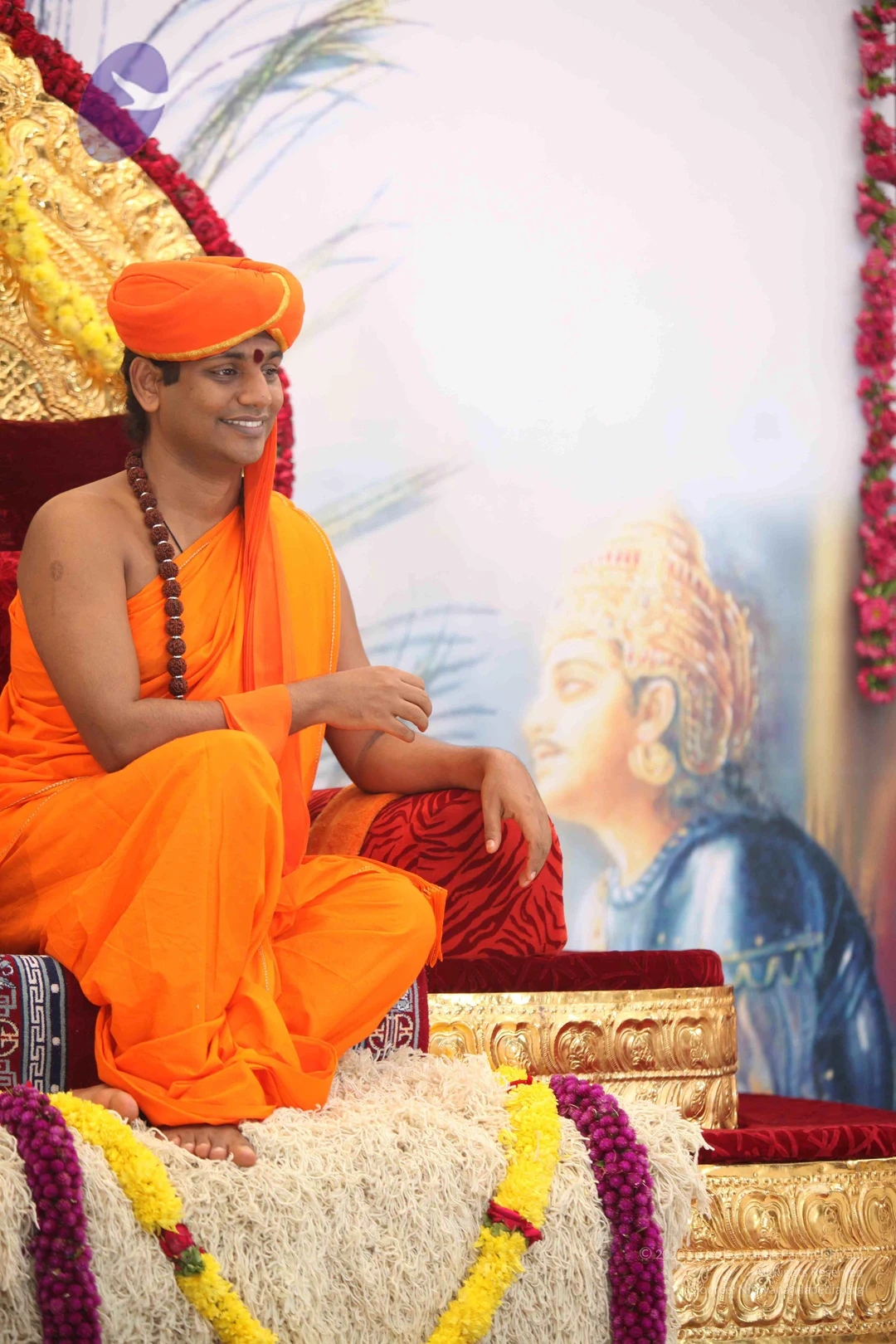
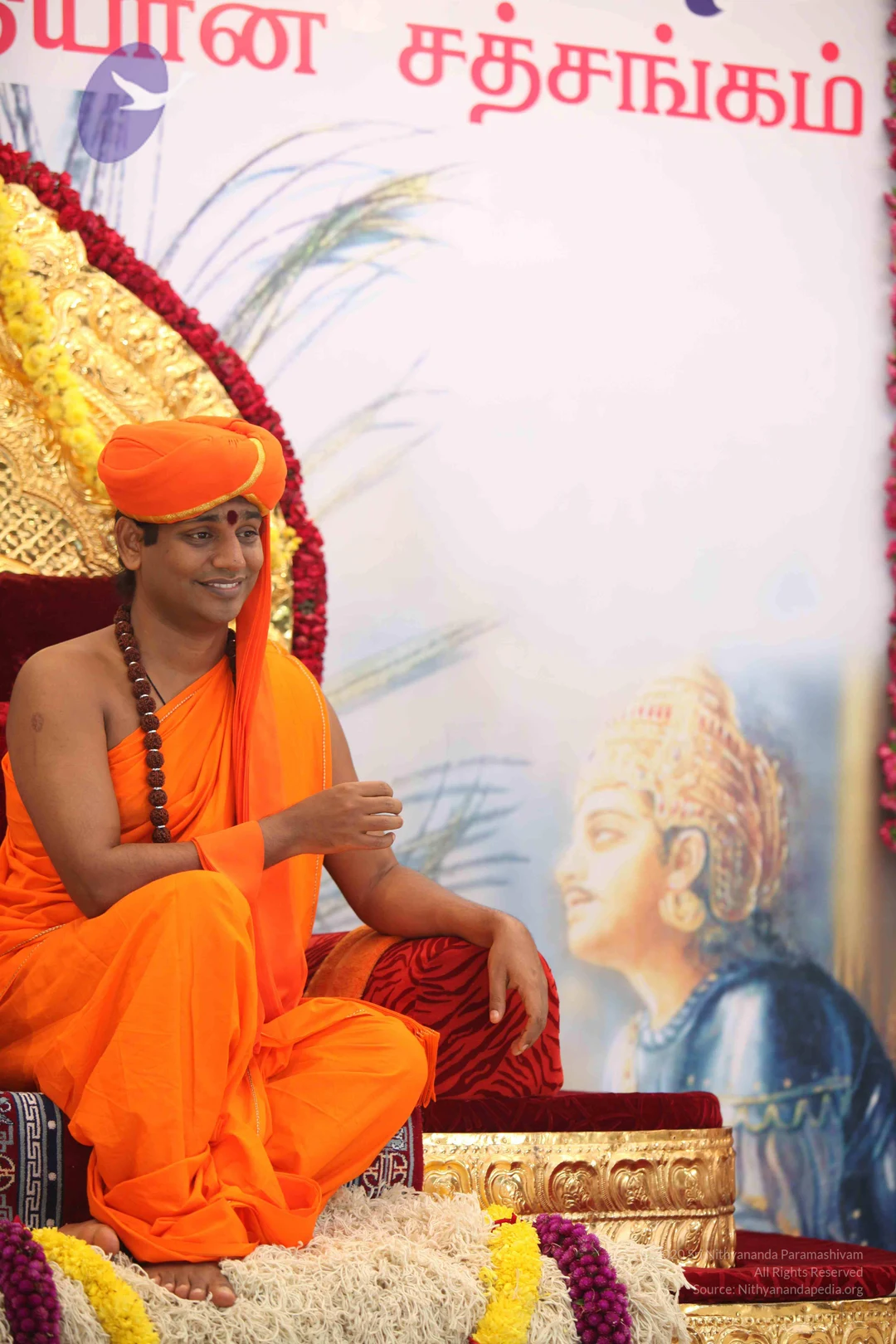
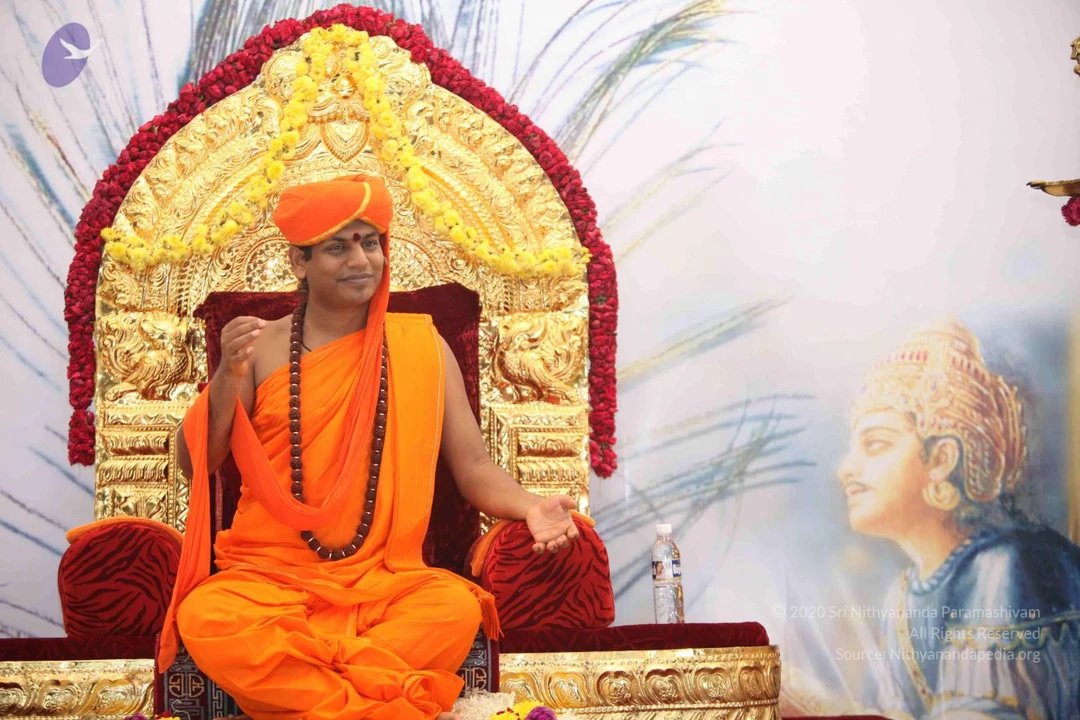
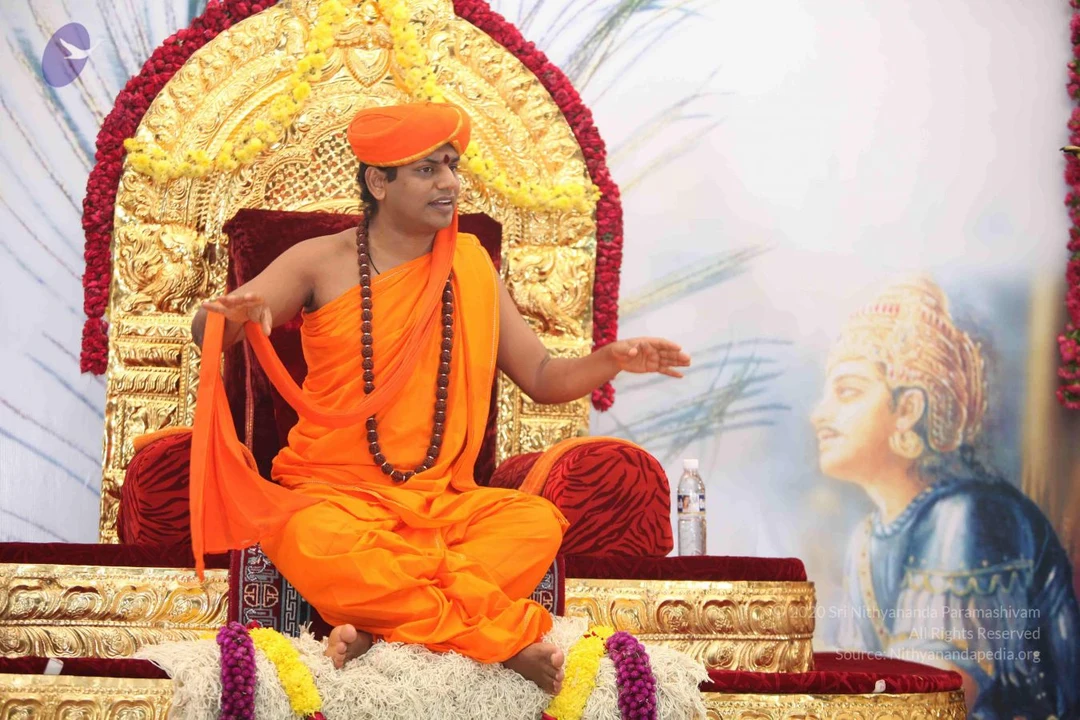
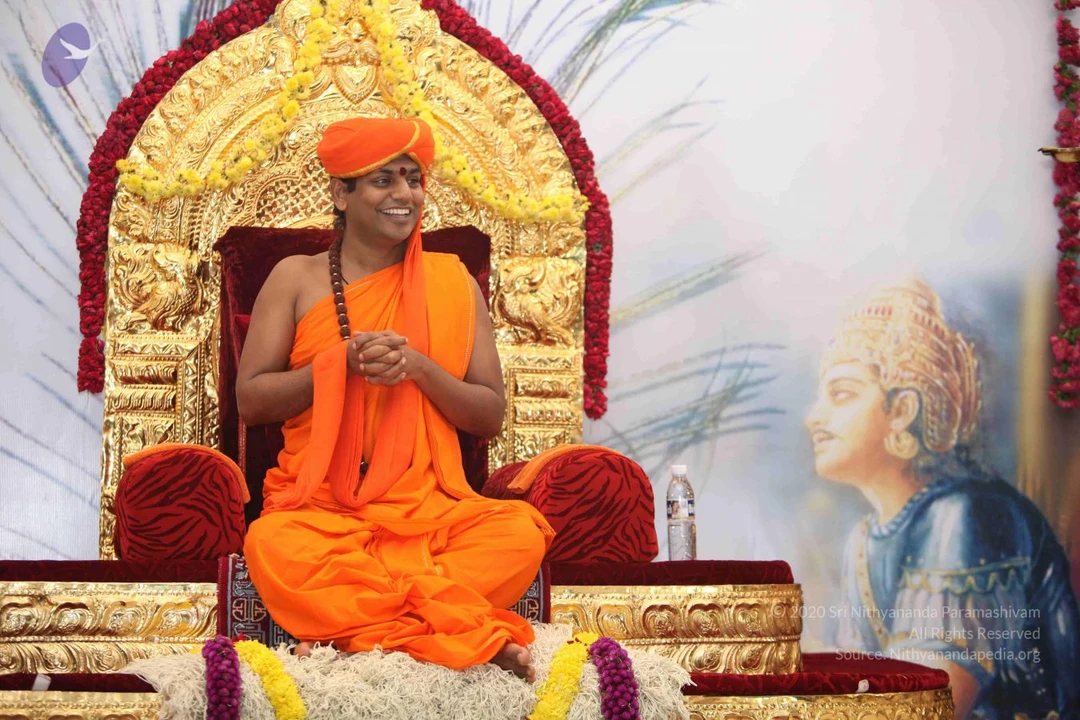
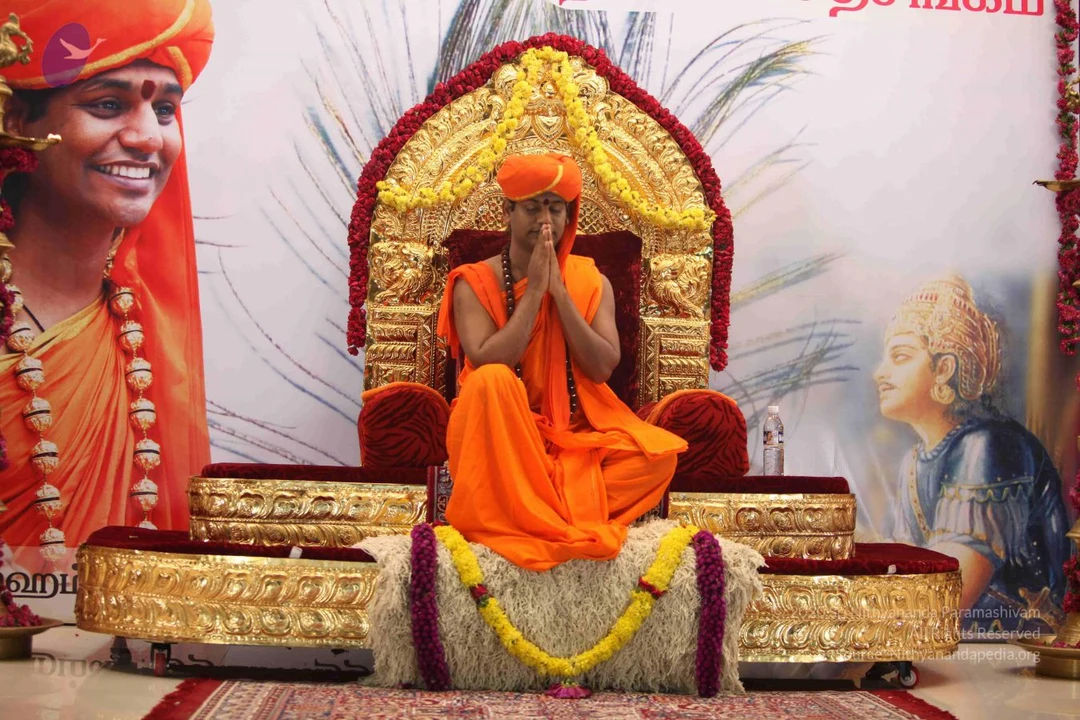
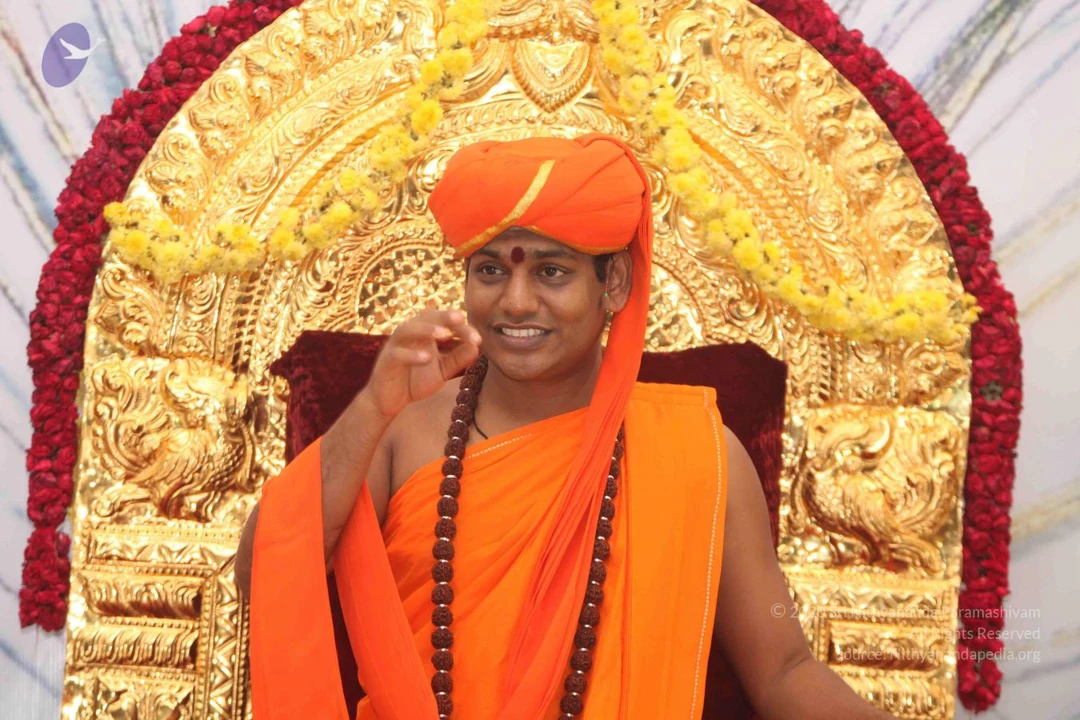
A seated man in saffron-orange robes and an orange head wrap sits with palms pressed together in namaste on an ornate gold-and-red throne decorated with yellow and magenta flower garlands. He wears a rudraksha mala. A portrait on the left shows a smiling man in orange with a crown-like turban and ceremonial beaded gold necklaces, and a painted figure on the right wears a blue robe and ornate headdress.A seated figure in saffron-orange robes and an orange turban sits on an ornate golden throne with red cushions, hands joined in namaste at chest level. A red and yellow flower garland drapes the throne back and a fresh flower cloth lies at the base. Behind is a large banner with a smiling man in an orange turban and rudraksha mala on the left, and a painted deity in a blue garment with a gold crown on the right. Brass lamps with flower garlands flank the stage. The banner's Tamil heading reads Bhagavad Gita and Dhyana Satsangam, indicating a meditation satsang.A man seated on an ornate gold throne with a red velvet back and tiger-striped red armrests, hands pressed together in namaste and smiling. He wears an orange turban, orange shawl and orange robes, with a rudraksha mala around his neck and a red bindi on his forehead. The throne is framed by a red and yellow flower garland and a gilded arch with carved lion figures. Behind him is a white backdrop with painted feather motifs, a water bottle sits at right, and an orange-robed attendant stands partly visible at the left edge. a person is seated on the throne, presenting namaste as a teacher giving satsang.A seated man in saffron-orange robes and an orange turban with gold trim sits on an ornate gilded throne with red velvet upholstery and yellow flower garlands above. He wears a long rudraksha mala across his chest, a red bindi on his forehead, and gestures with one raised hand while smiling. The background is a richly carved gold canopy. a person: saffron turban, orange robes and a rudraksha mala, seated on a throne.A seated man in an orange turban and orange draped robes sits on an ornate gold and red velvet throne with a gilded carved backrest and yellow flower garland. He wears a long rudraksha mala and a red bindi, and his arms rest on the throne's armrests. The setting suggests a formal seated discourse or darshan. The fact that this is a flag-free candidate is unclear, so the figure is described by role and attire only.A smiling man sits cross-legged on an ornate gold throne with red velvet cushions and yellow flower garlands above. He wears an orange turban with a gold trim, a red bindi, an orange drape over his shoulders and body, and a long rudraksha mala hanging on his chest. His arms are spread outward along the armrests. Golden carved decorations fill the background.
Miscellanous

3 photosSource gallery
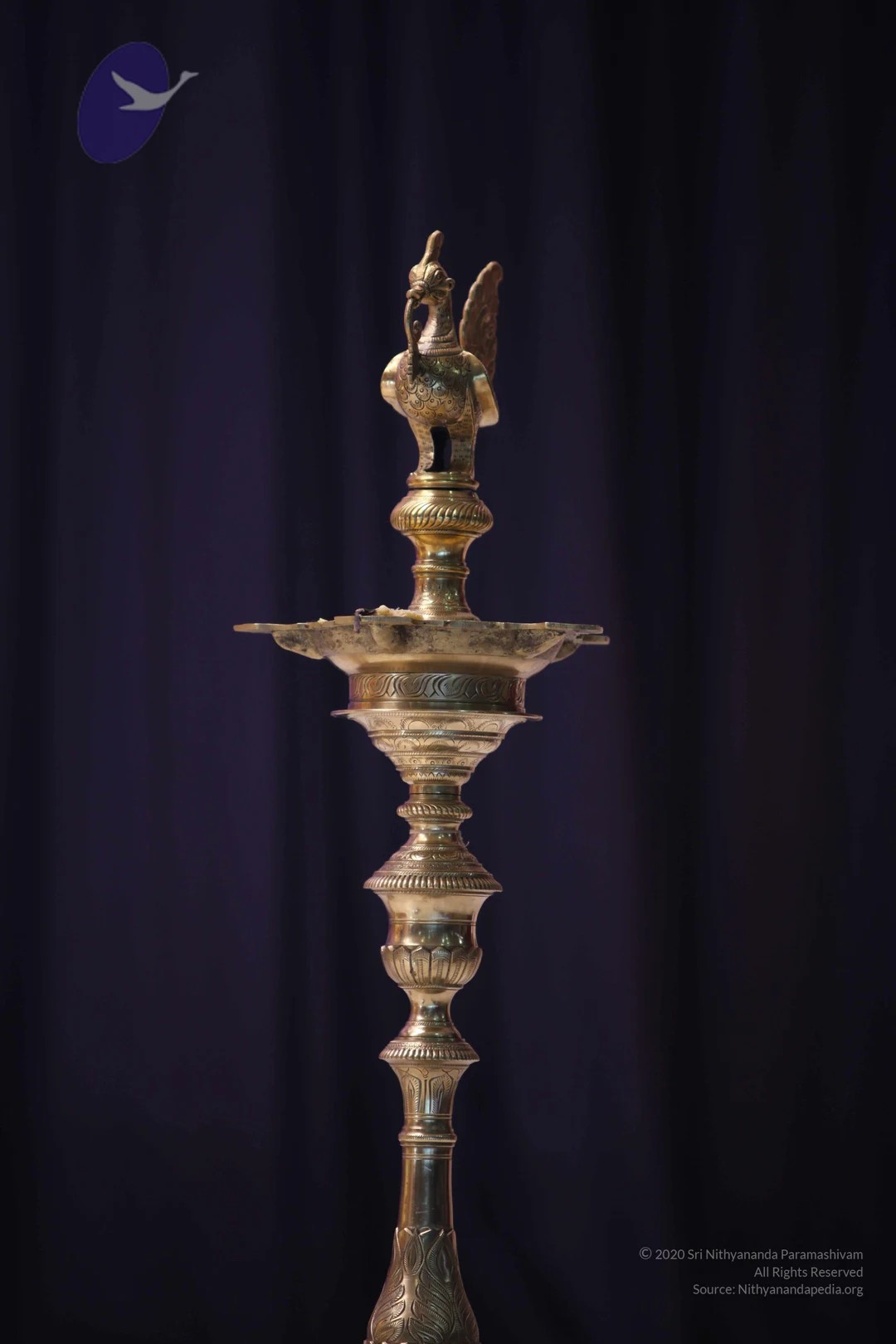
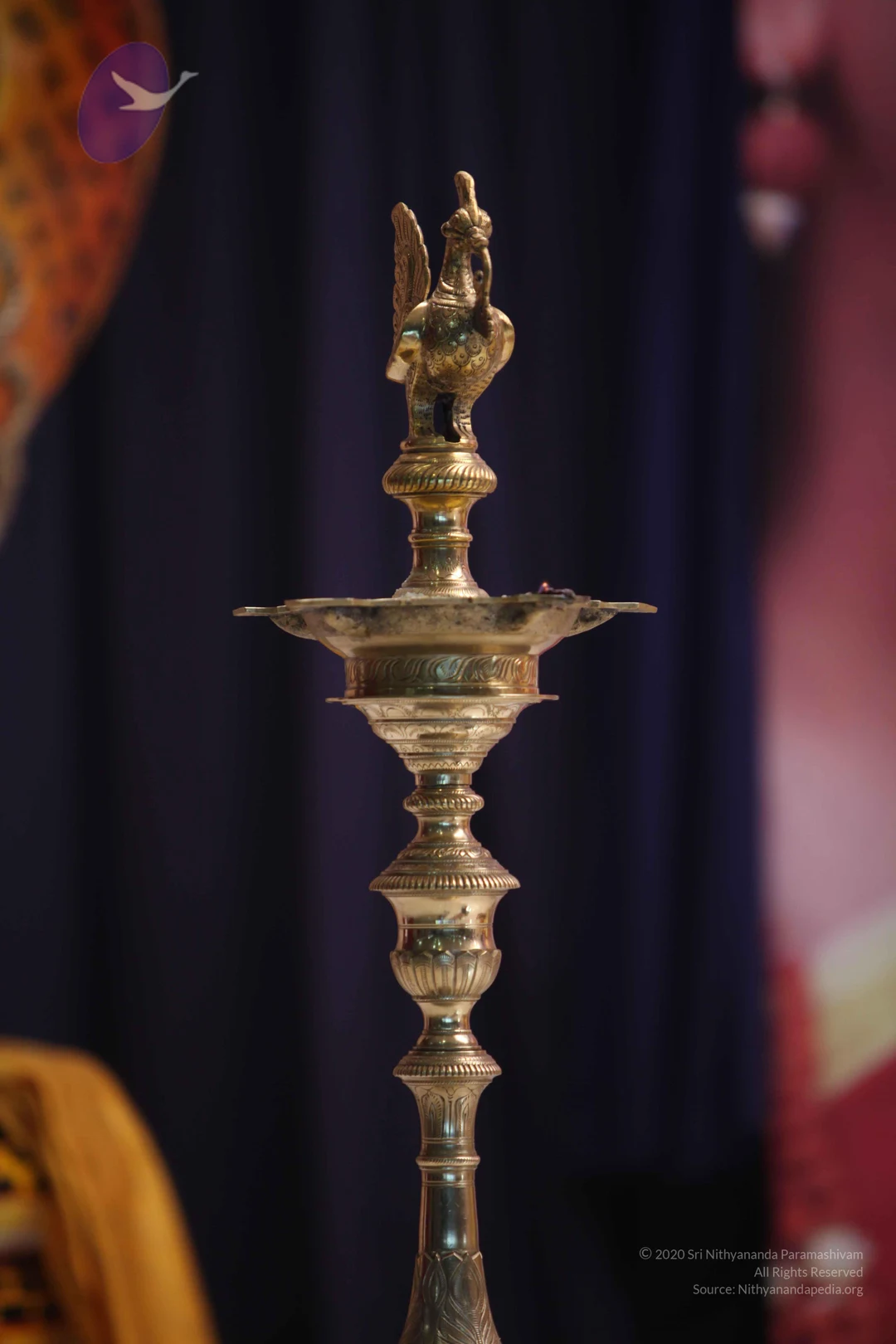
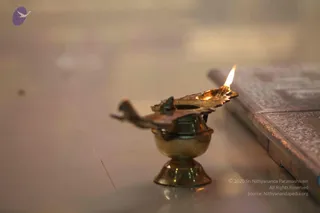
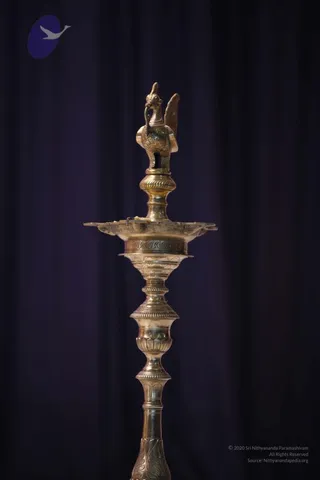
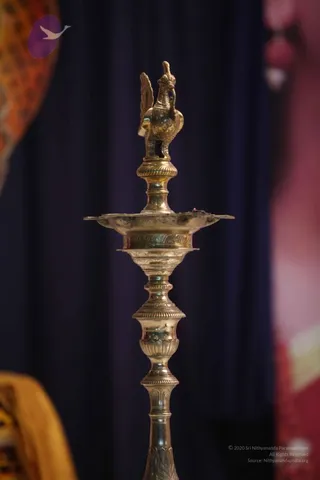
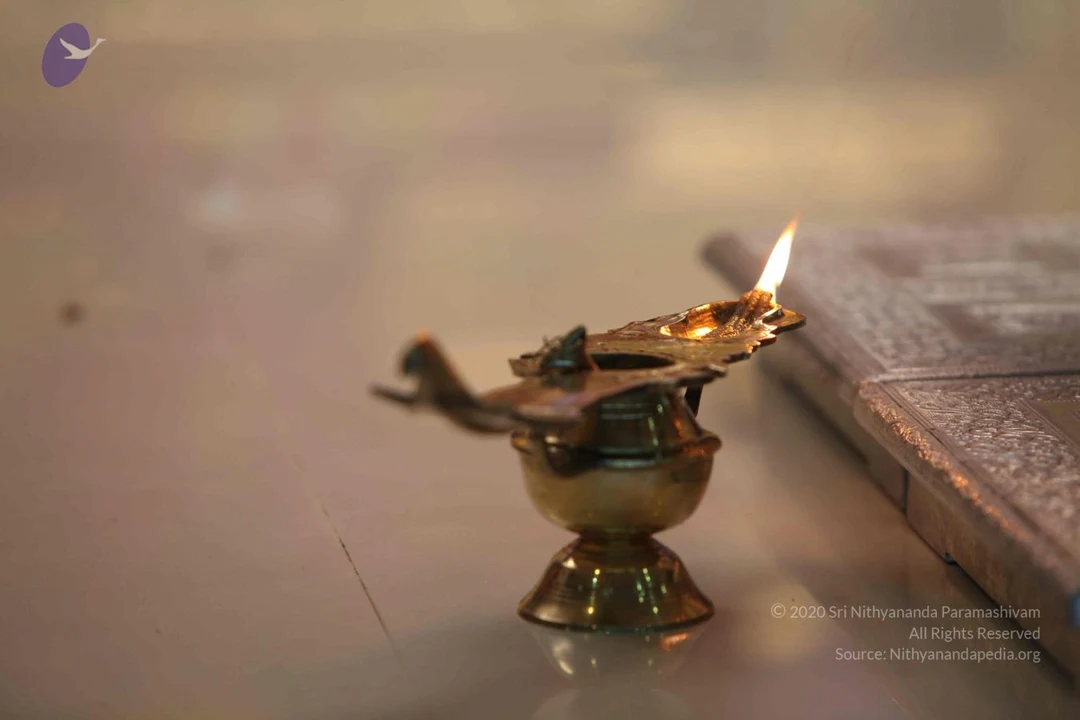
Close-up photograph of a small brass oil lamp with a lit flame, placed on a smooth light surface beside an ornately carved wooden or metal object with raised decorative patterns on the right edge. The lamp has a footed bowl base, a spout with a flame, and a curved handle. Soft blurred background in warm beige tones.A tall polished brass oil lamp (nilavilakku style) stands against a dark navy draped backdrop. Its top is crowned with a figurine of a bird, possibly a peacock or swan, with raised wings and a curved neck. The stem is segmented with bands of engraved floral and leaf patterns, and the wide shallow lamp bowl holds a small amount of residue at its rim.A tall polished brass oil lamp stands in the foreground against a dark navy drape. Its top holds a peacock-shaped finial with raised wings and a looped crest, above a wide flared dish with a small flame or wick visible at the rim. The shaft has repeated turned bands, lotus-like petal carving and engraved floral motifs down to a flared base. Blurred warm orange and red fabric appears at the left and right edges. No people are visible.
Miscellanous
1 photoSource gallery
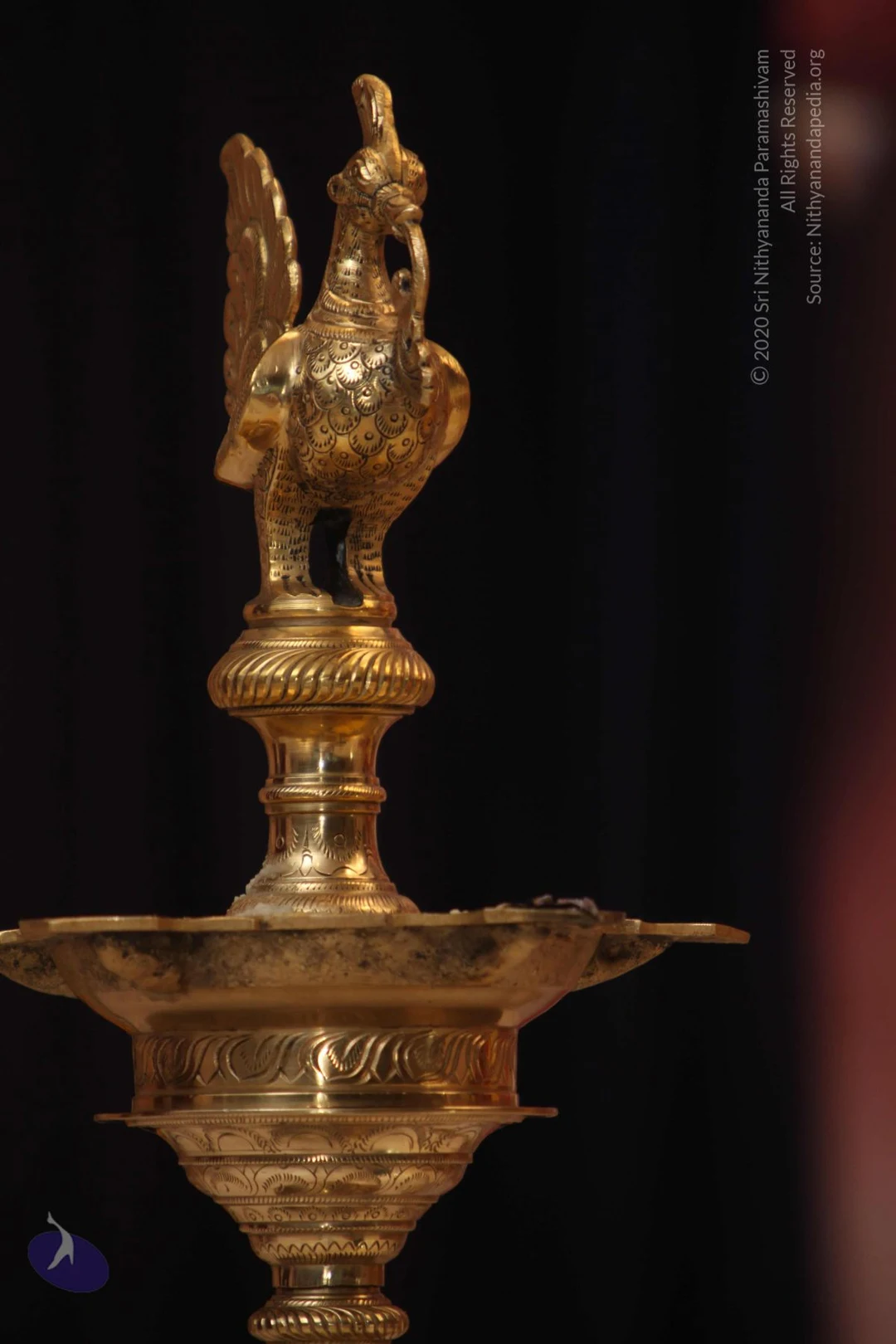
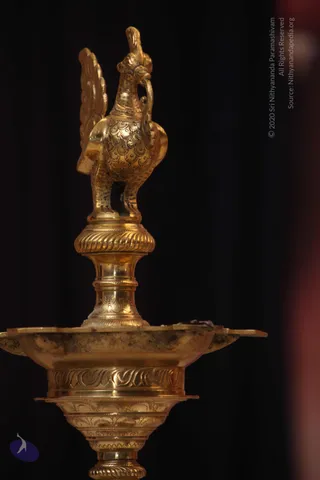
Close-up photograph of a polished brass oil lamp against a black background. The lamp has an ornate top finial shaped like a bird. Below it sits a tiered stem with decorative bands and a wide, lobed bowl for oil and wick. The brass is warm golden and reflects light on its surfaces. No people are visible.