Skip to content
Tuesday

11 February 2014

Coming in terms with reality

Dated photos
170
Source pages
1
Media
1
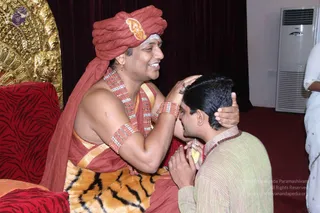
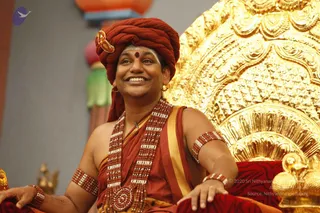
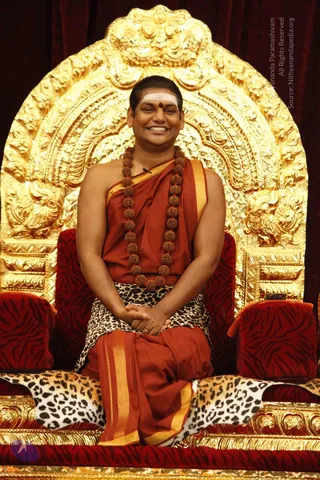
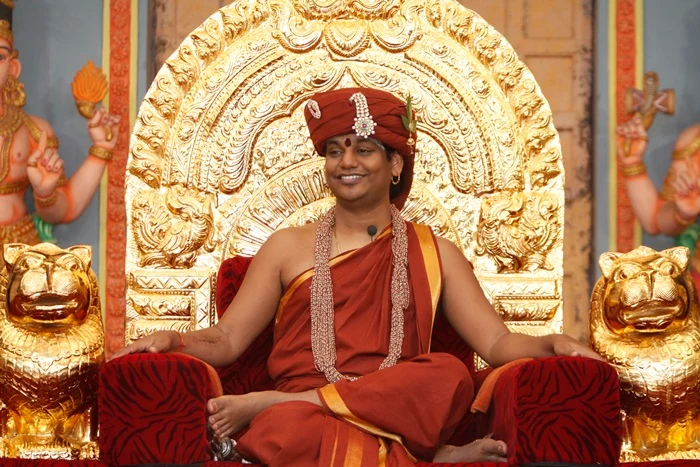
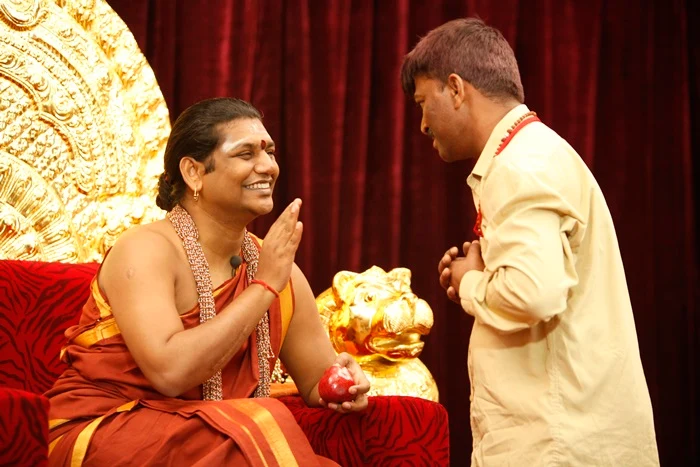
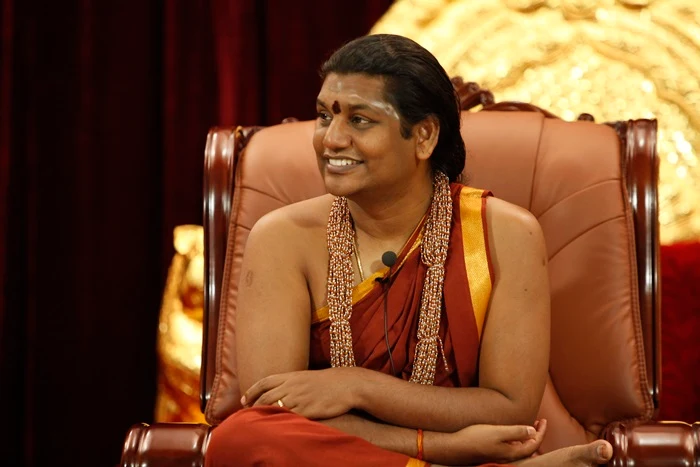
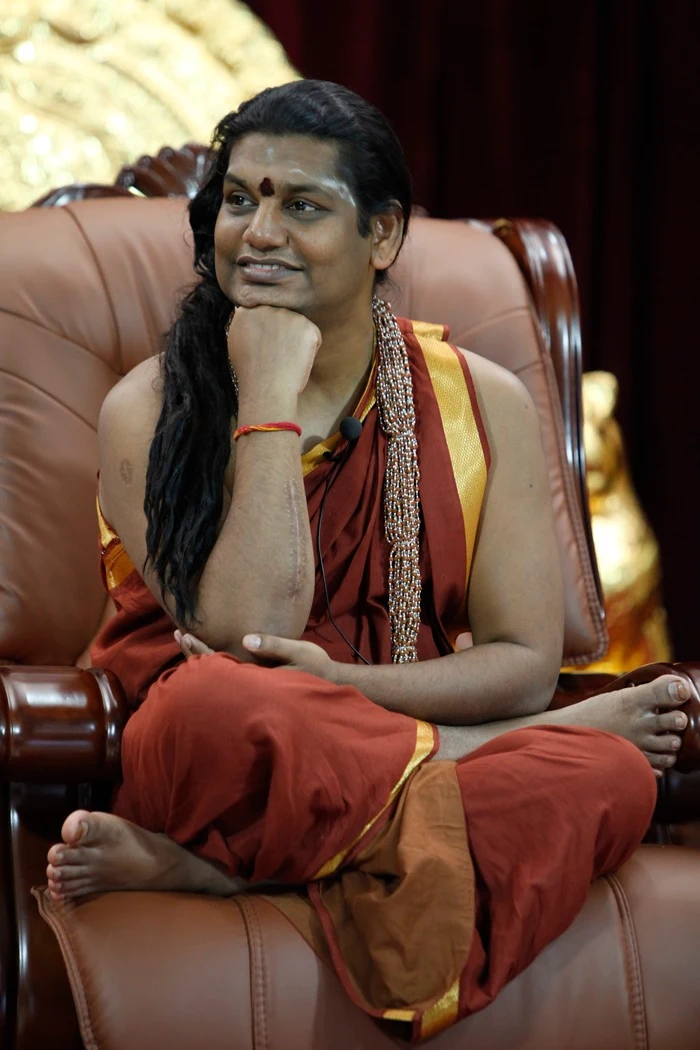
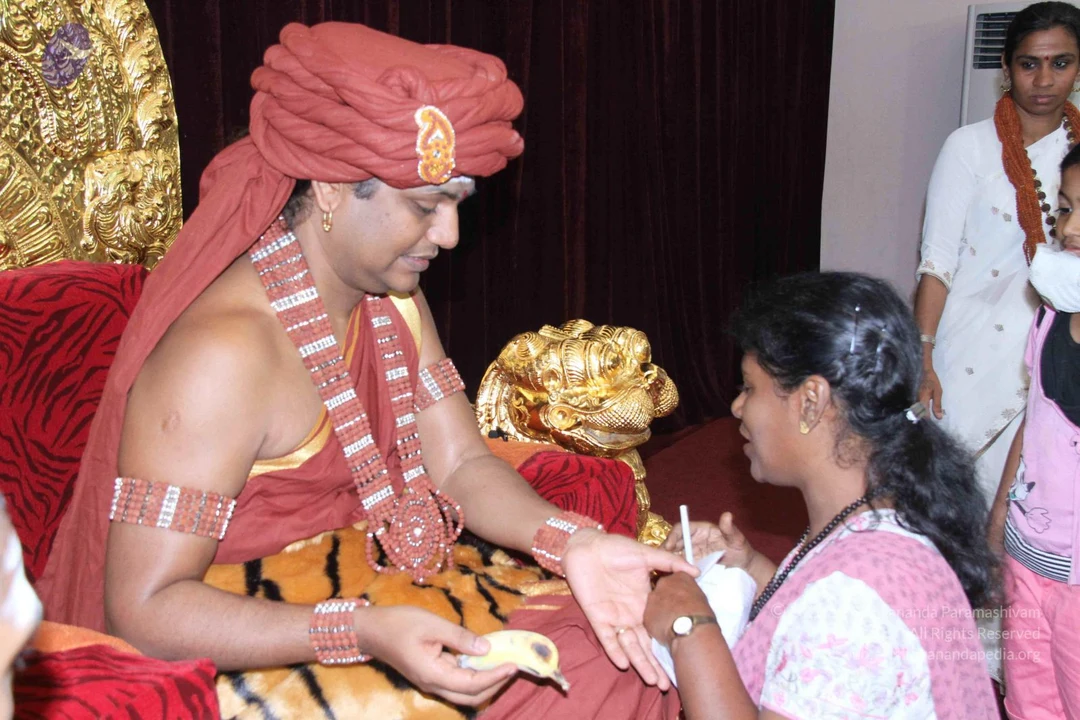
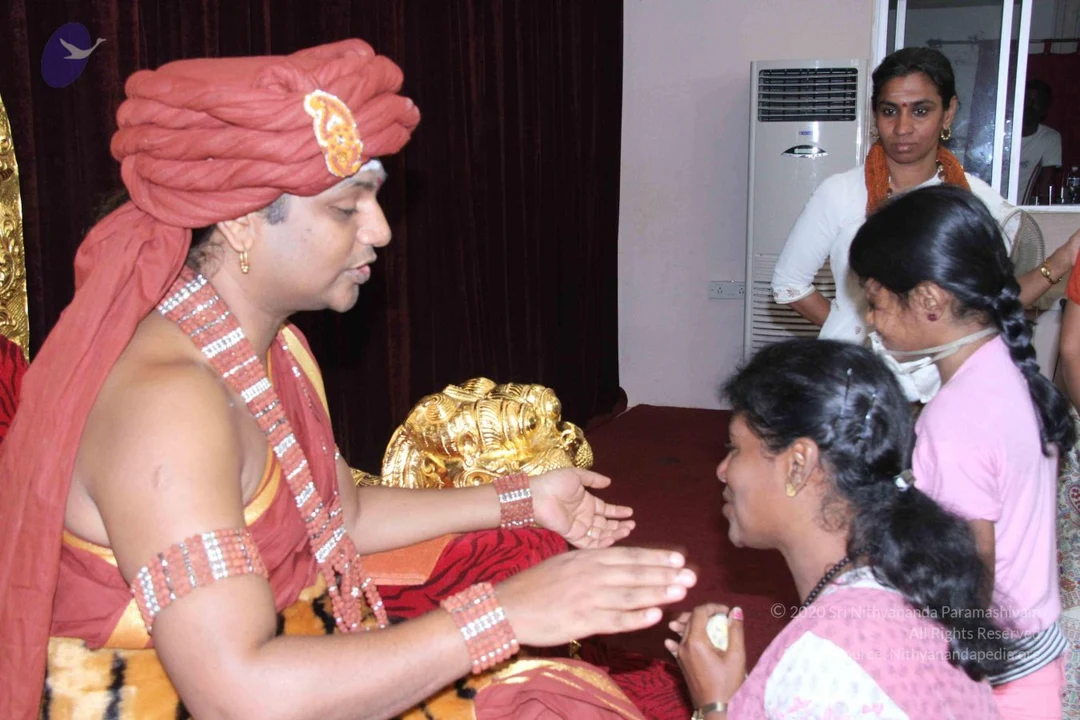
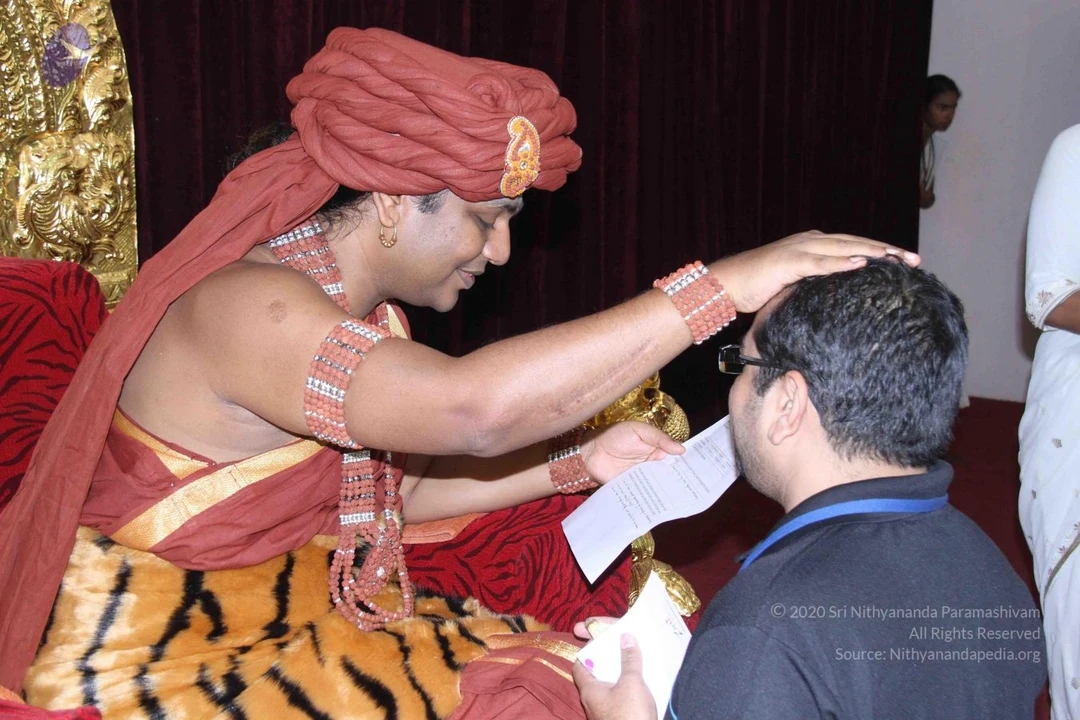
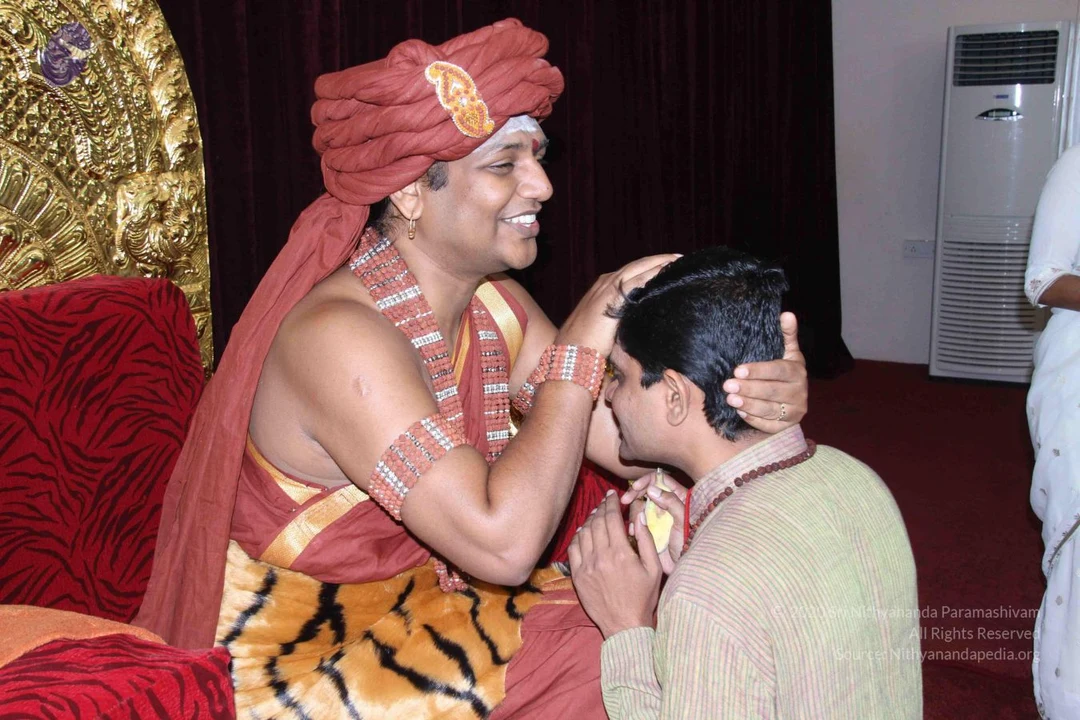
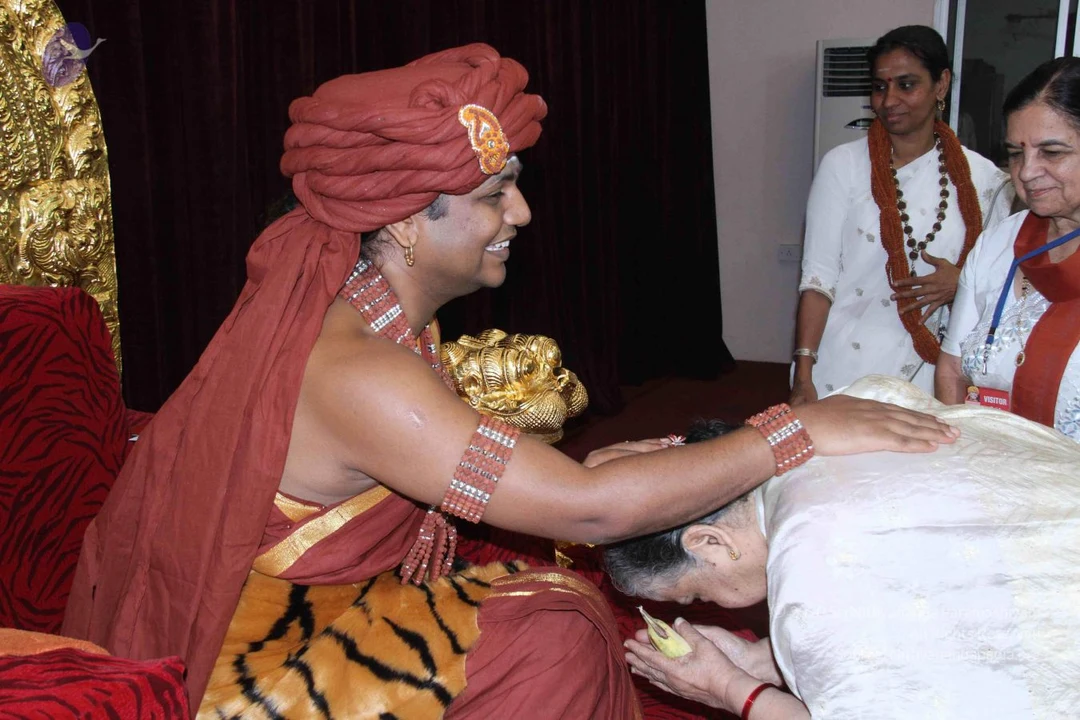
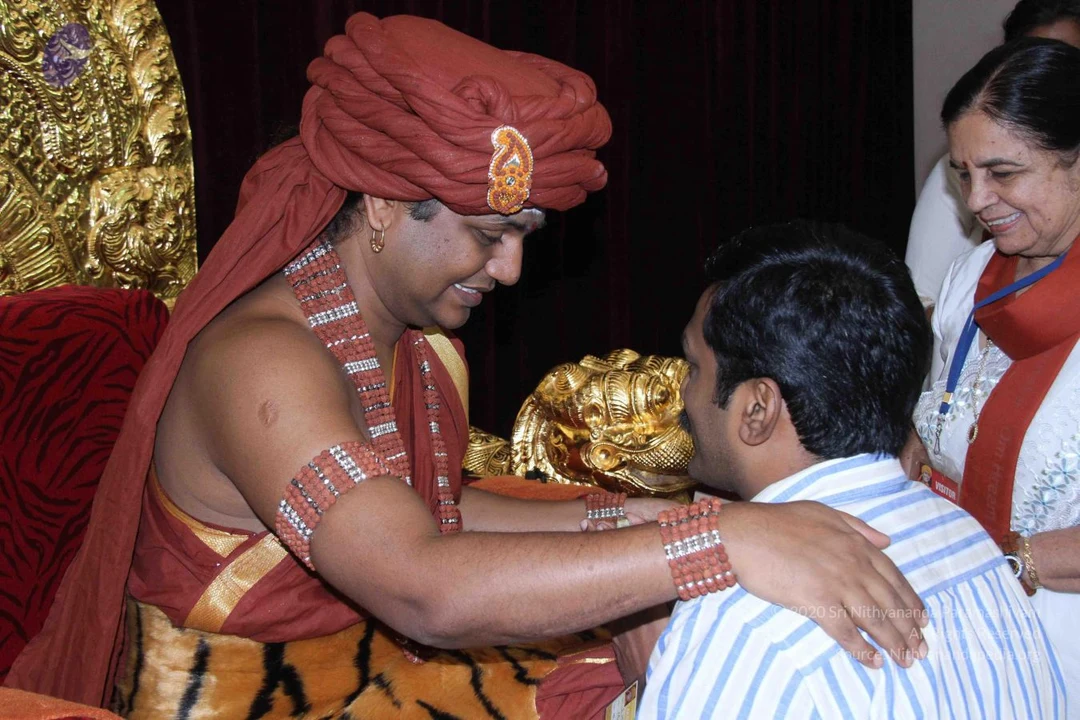
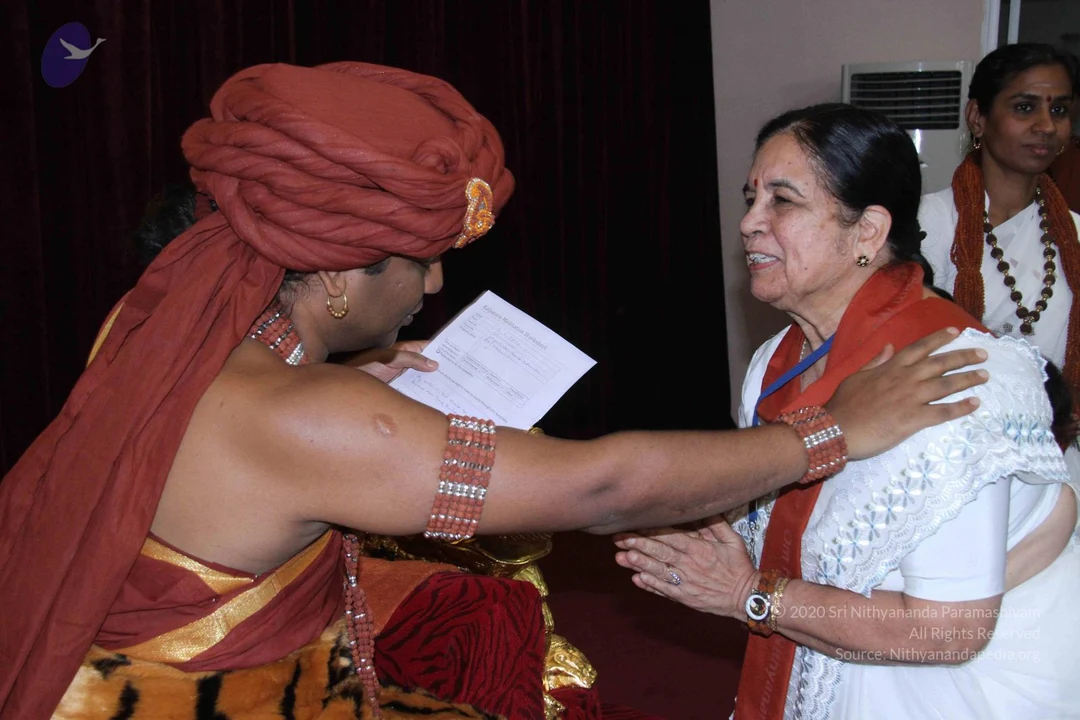
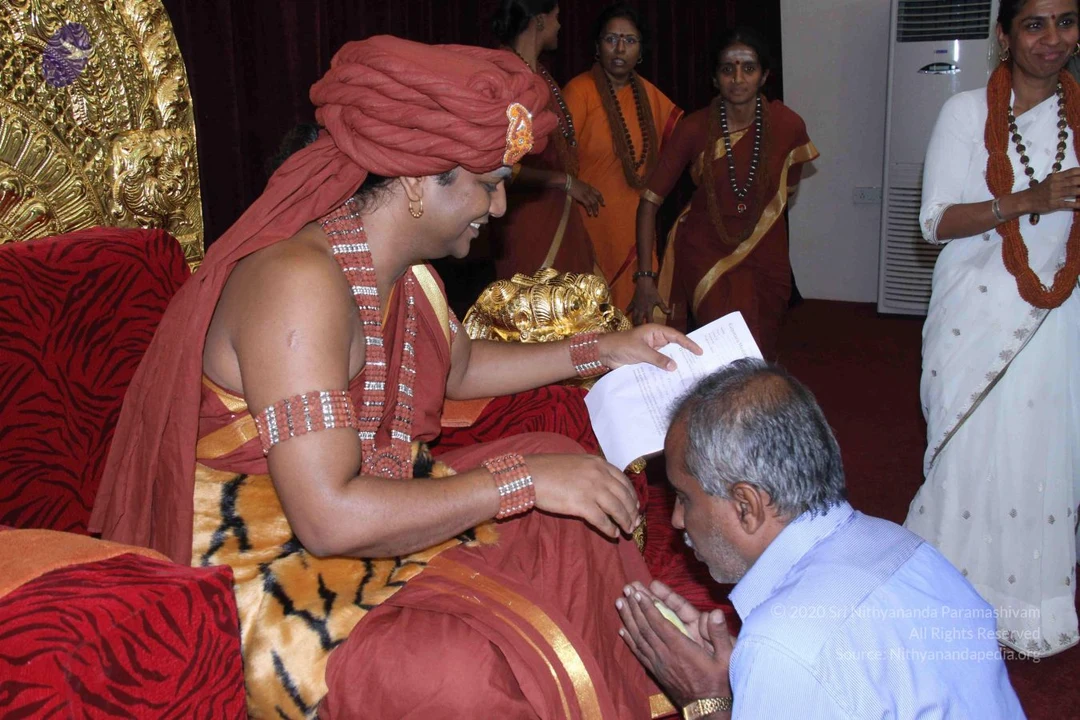
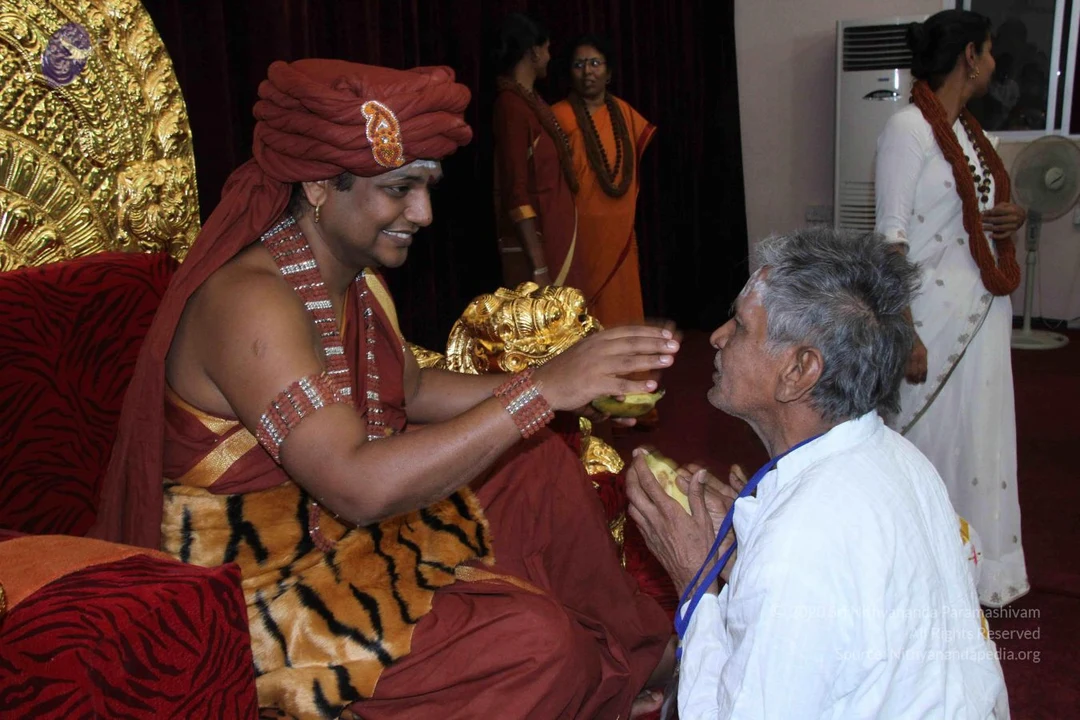
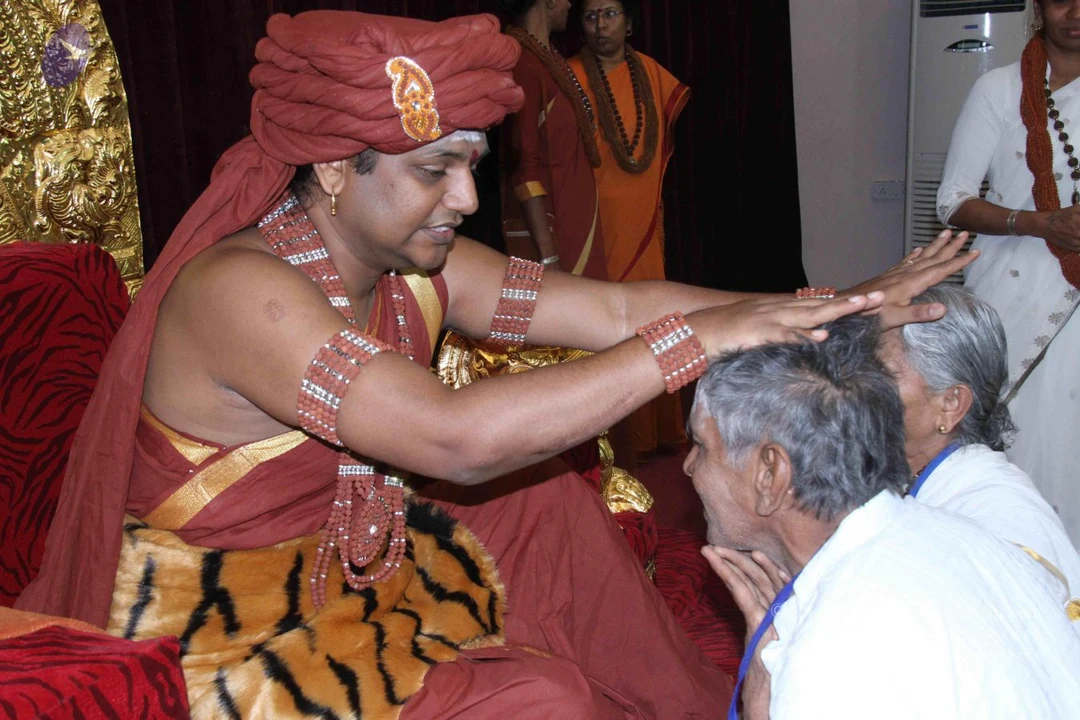
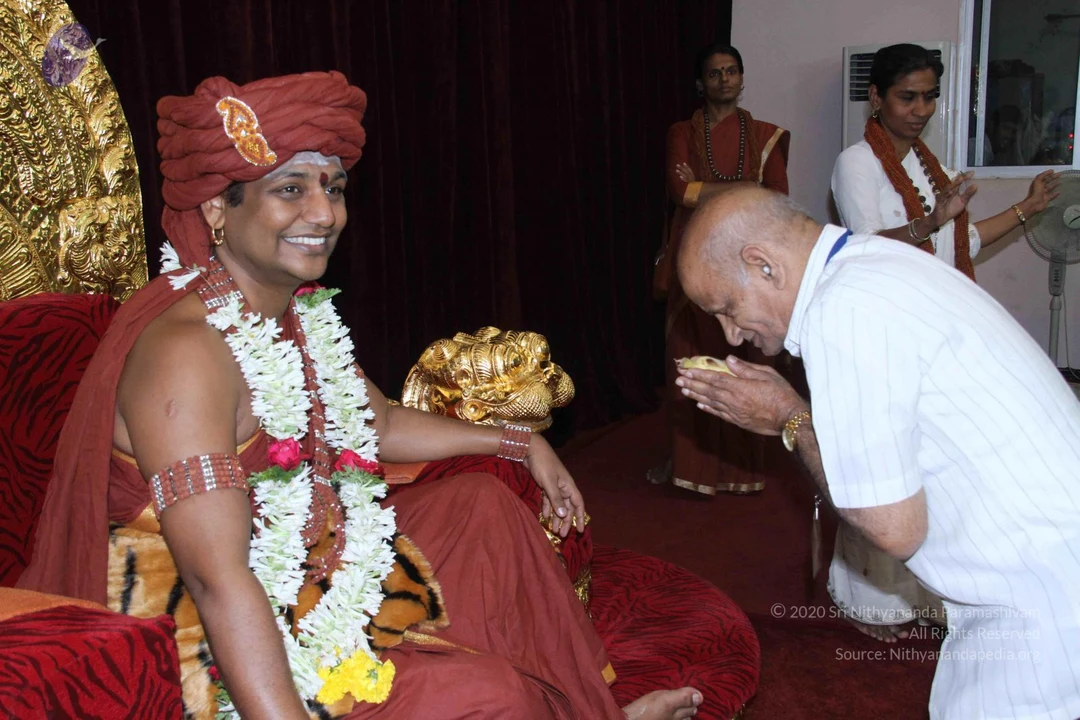
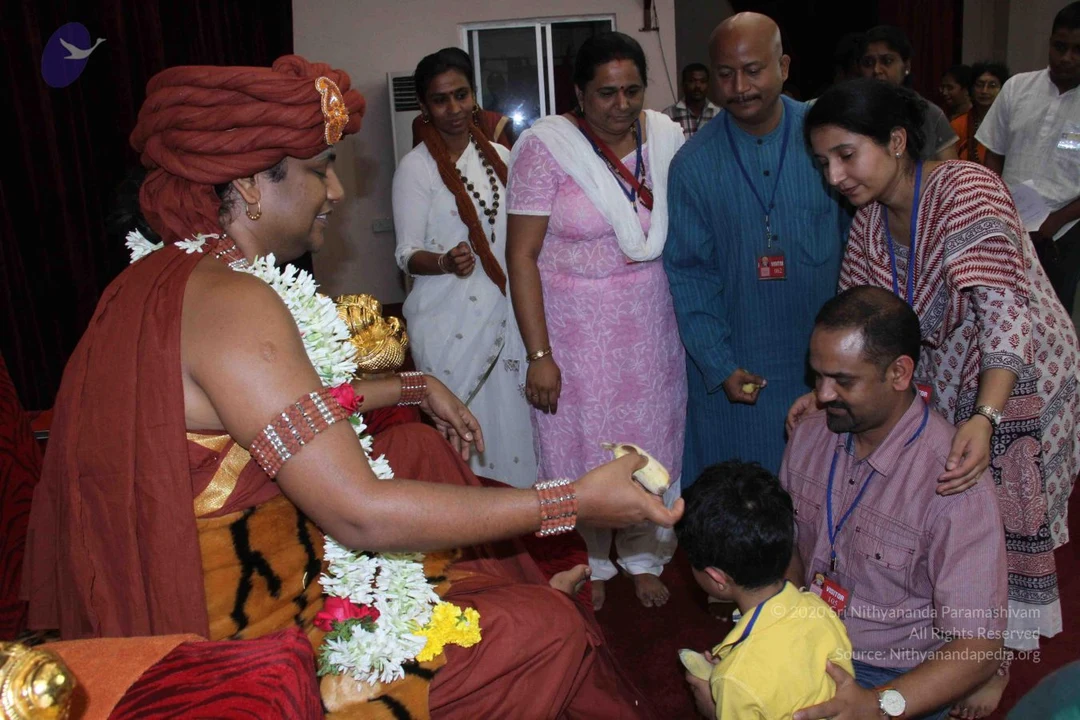
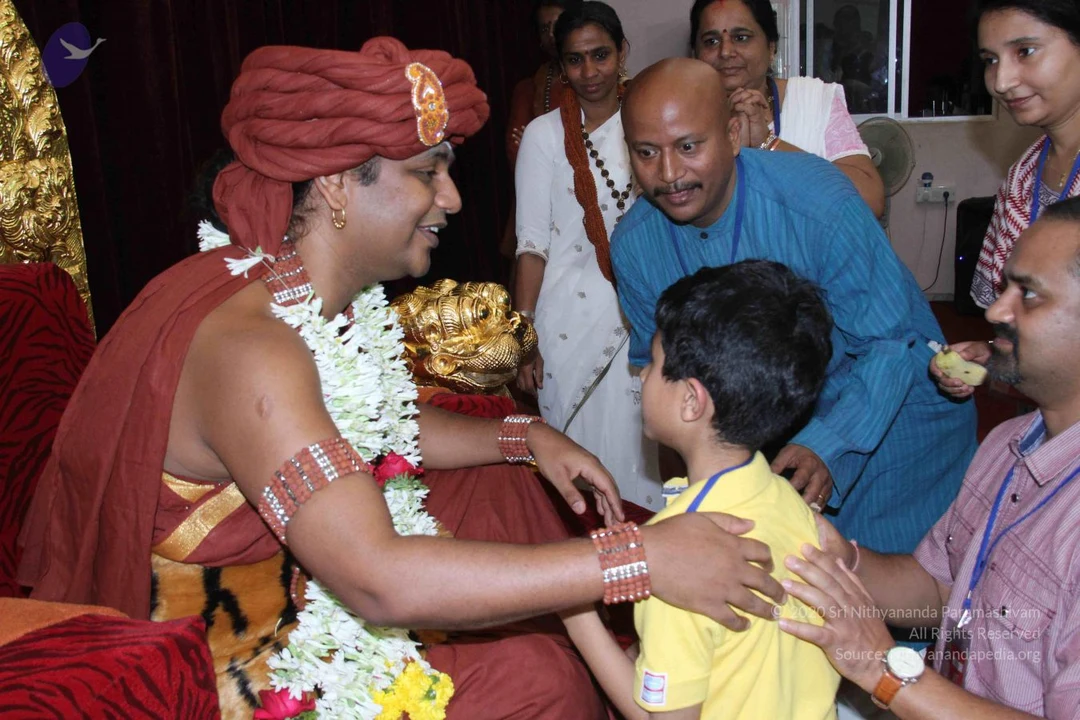
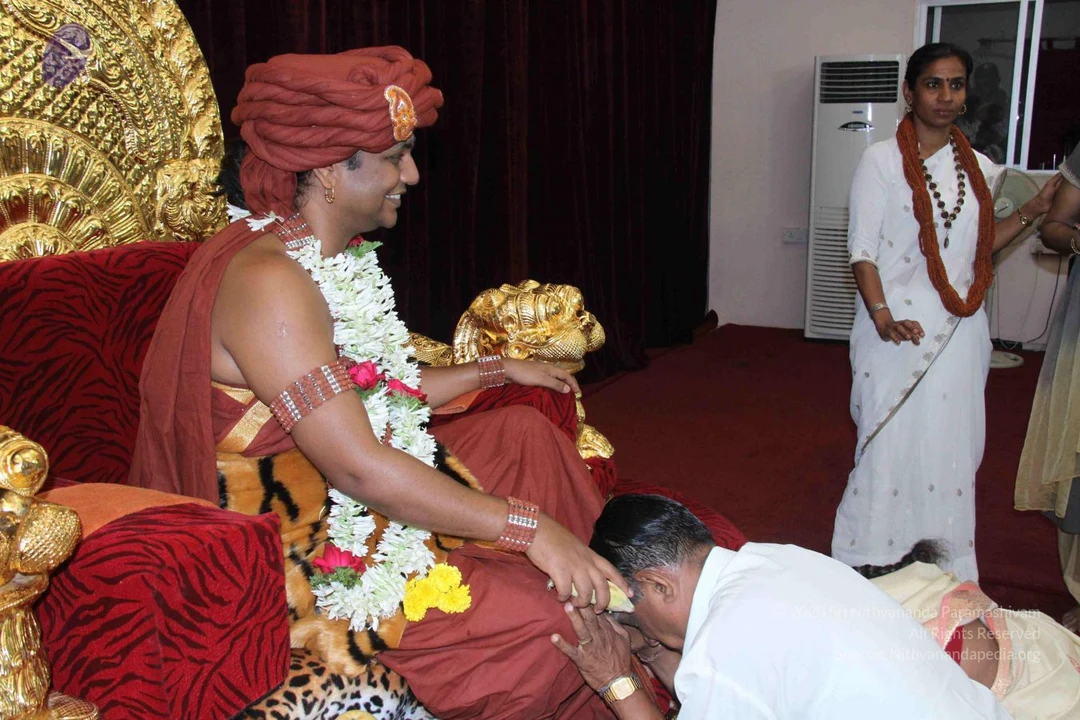
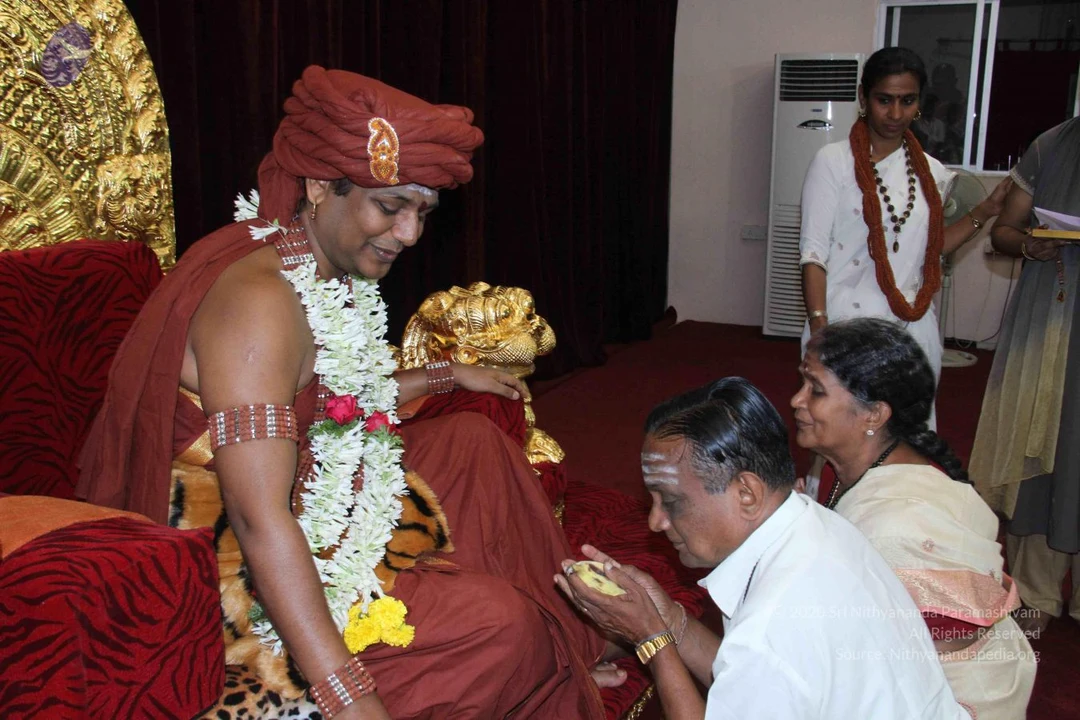
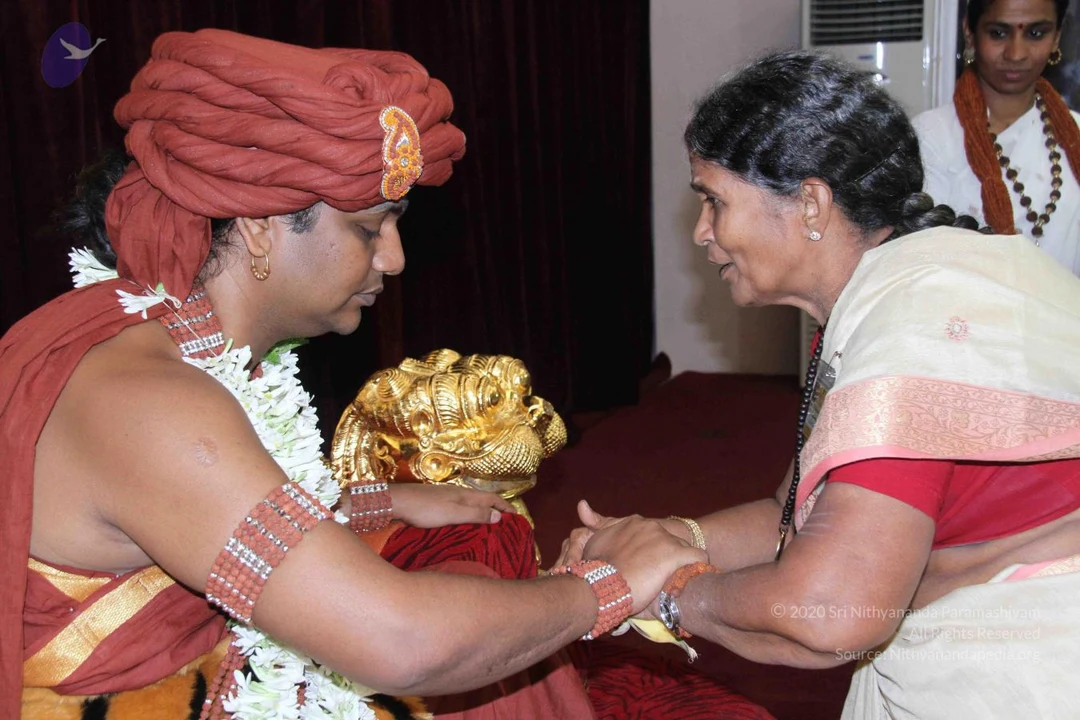
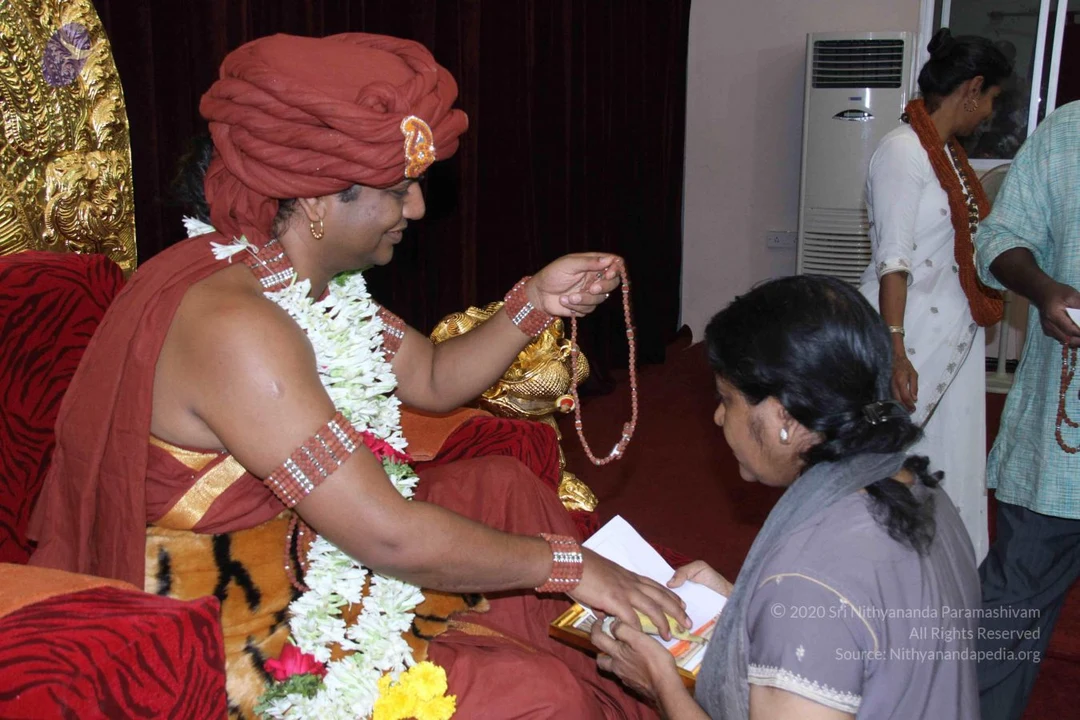
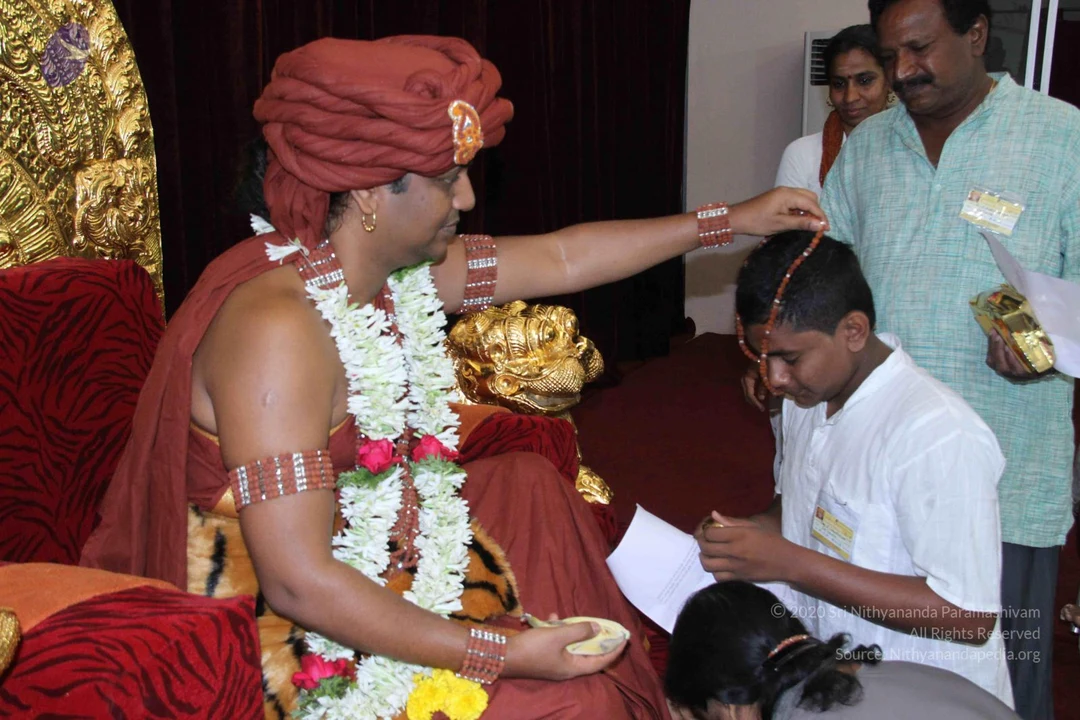
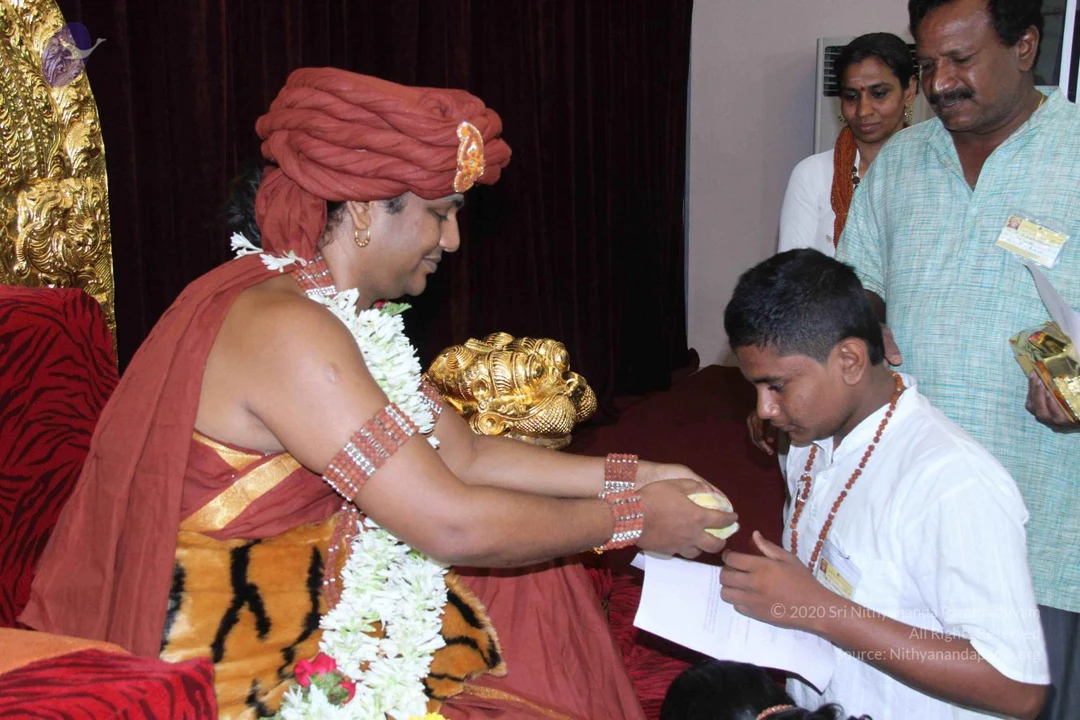
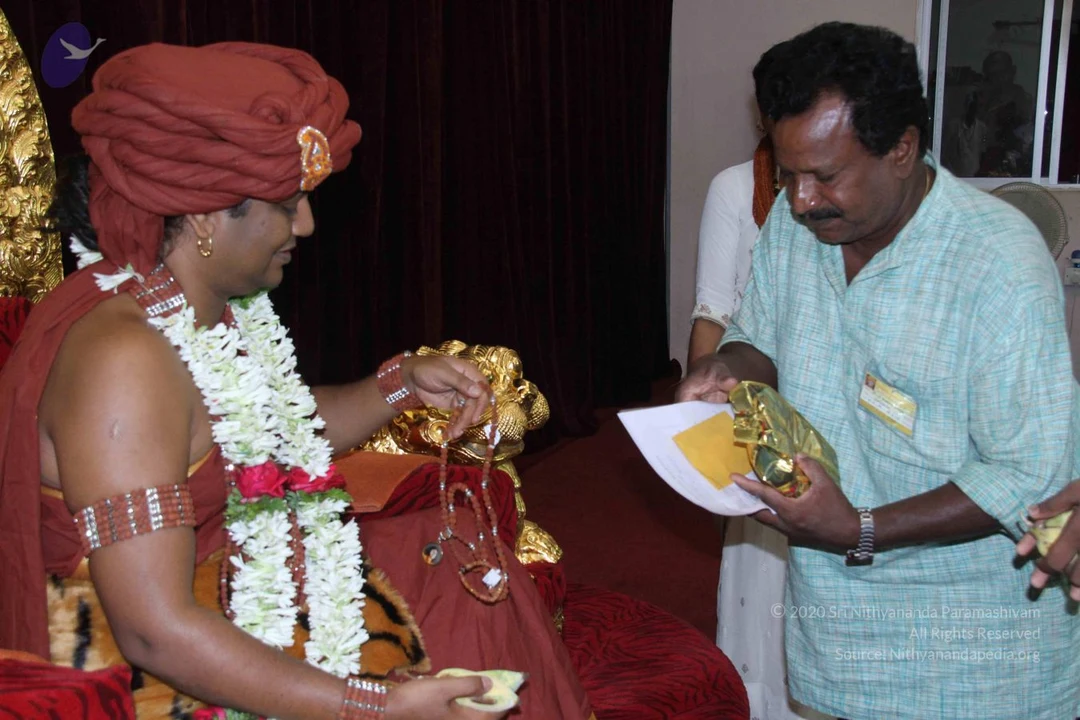
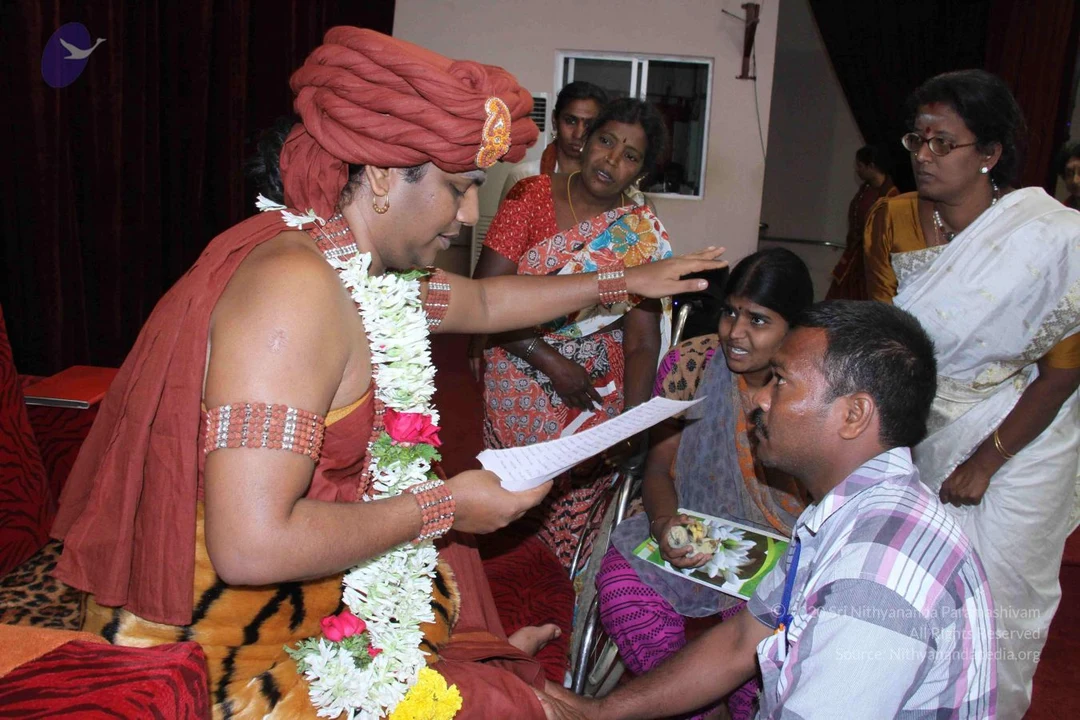
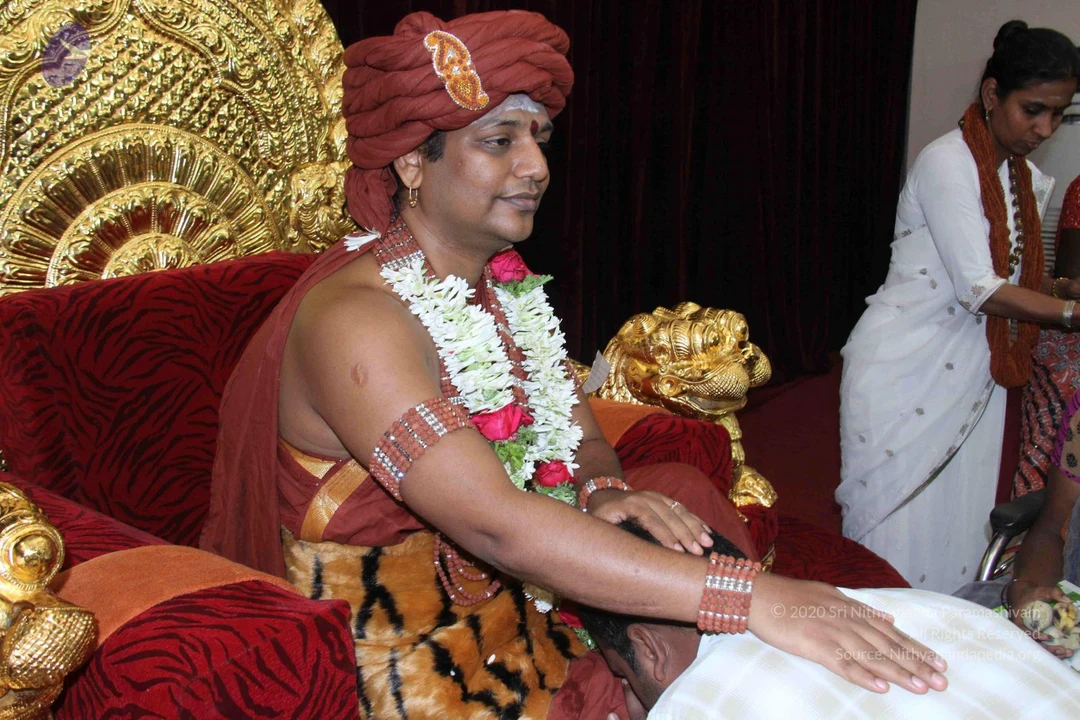
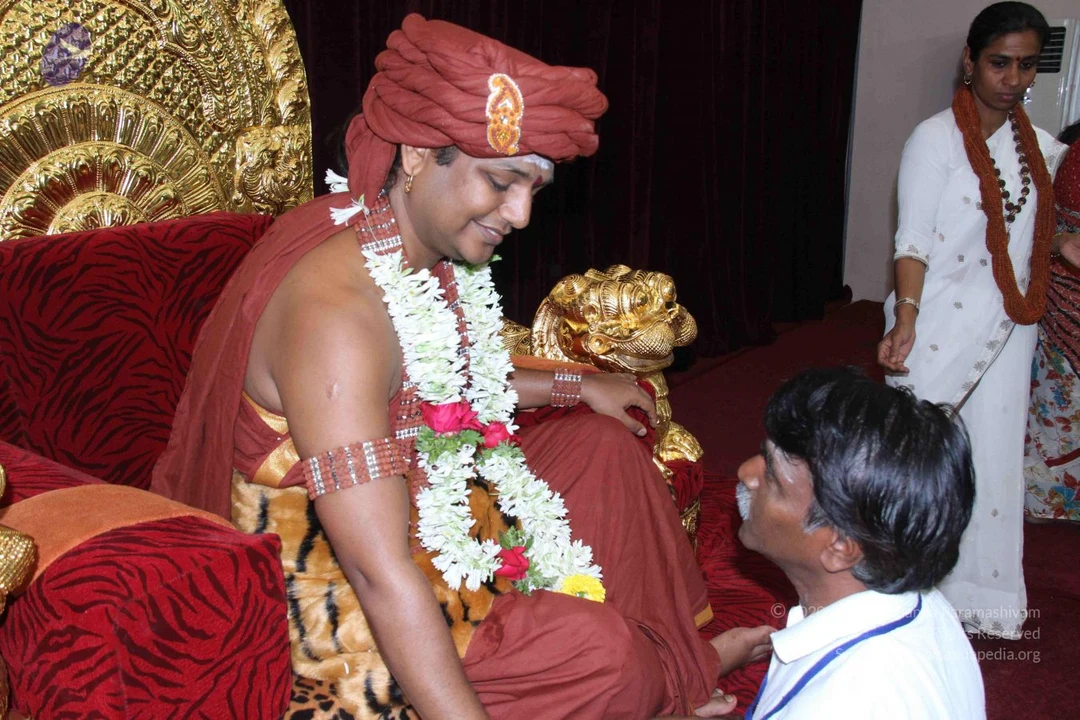
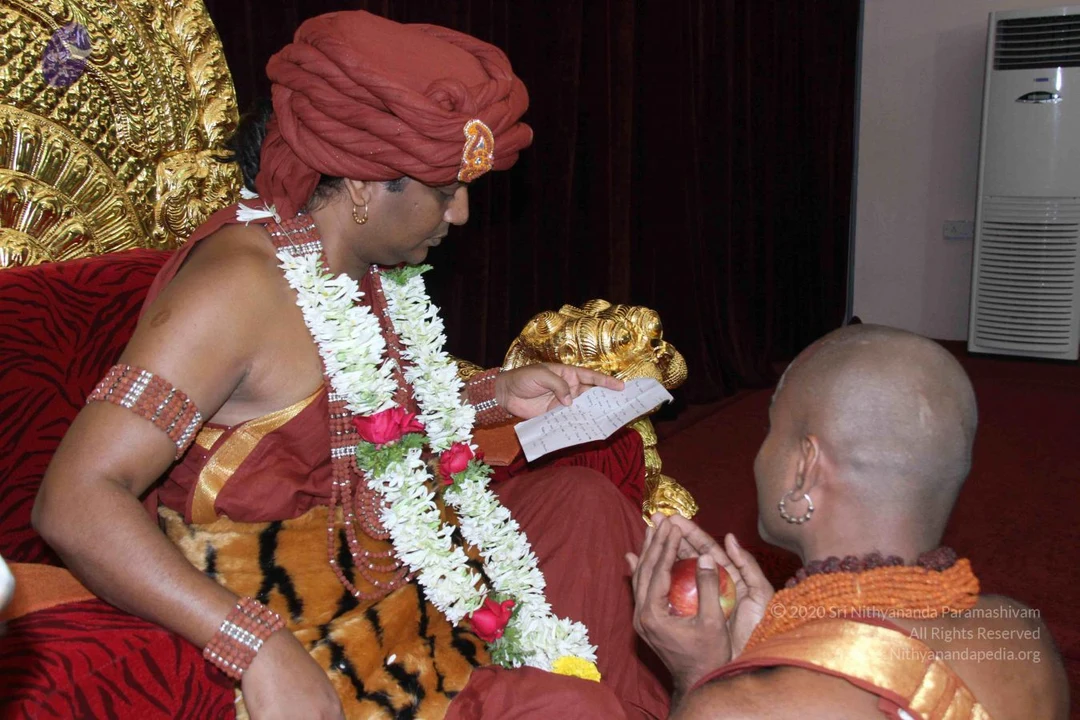
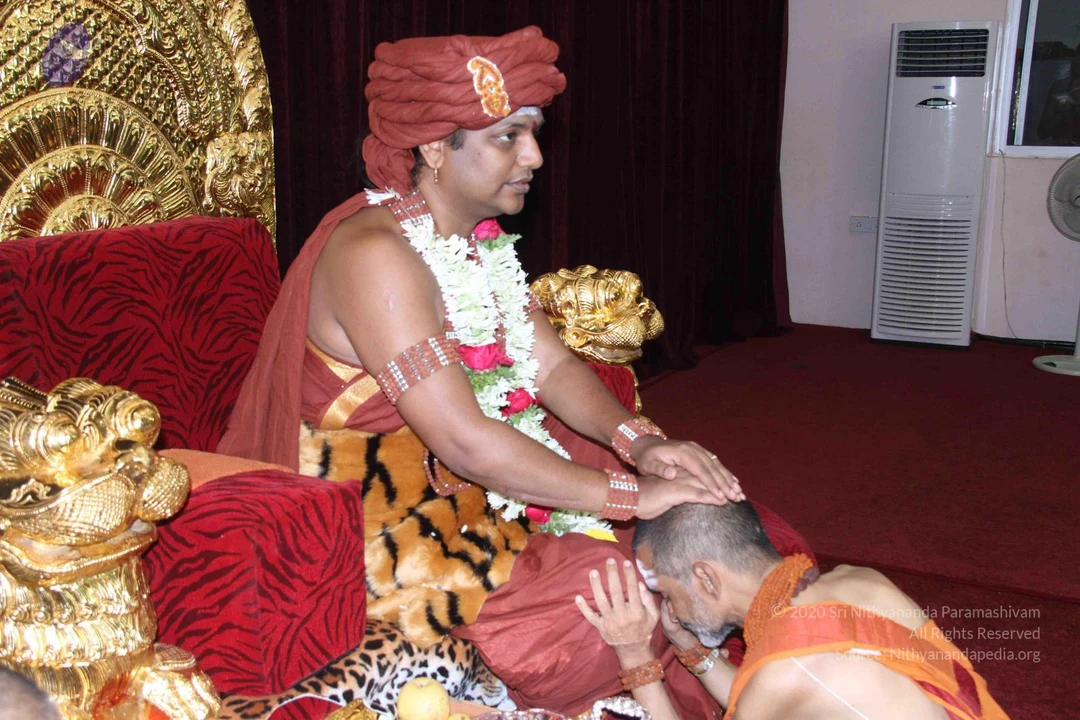
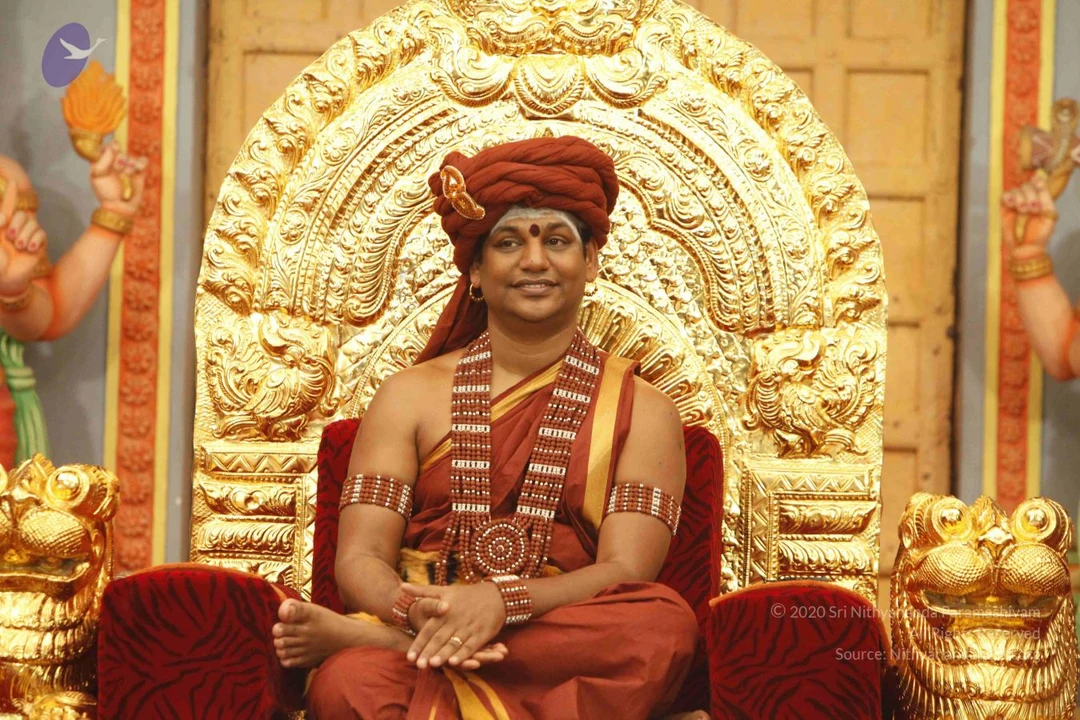
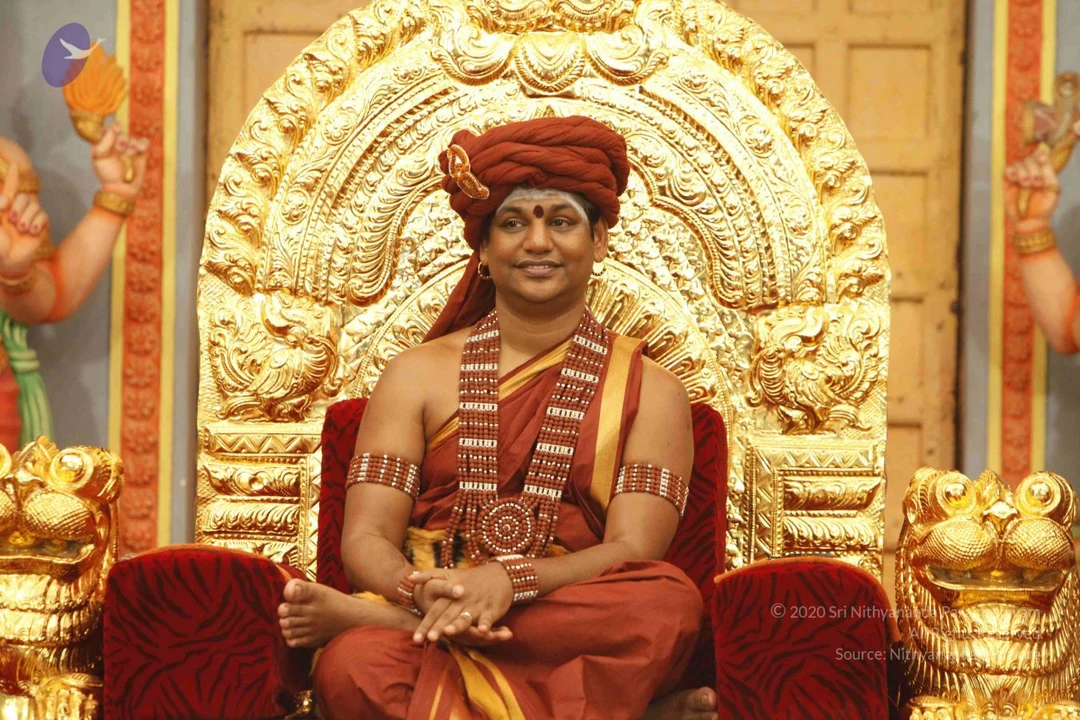
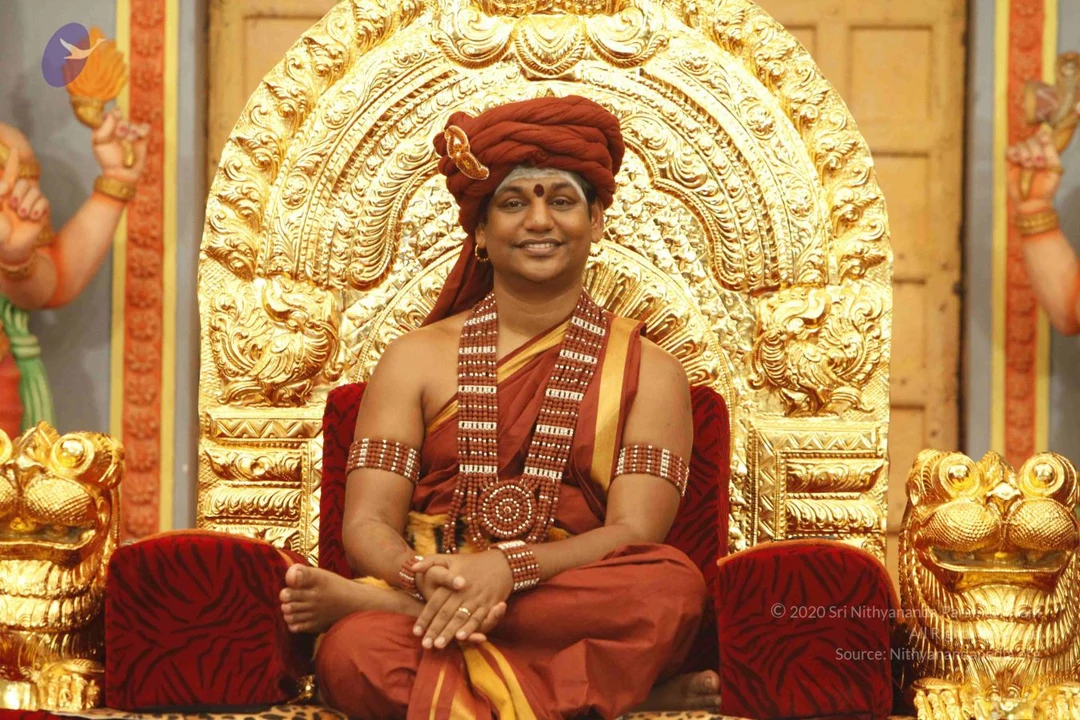
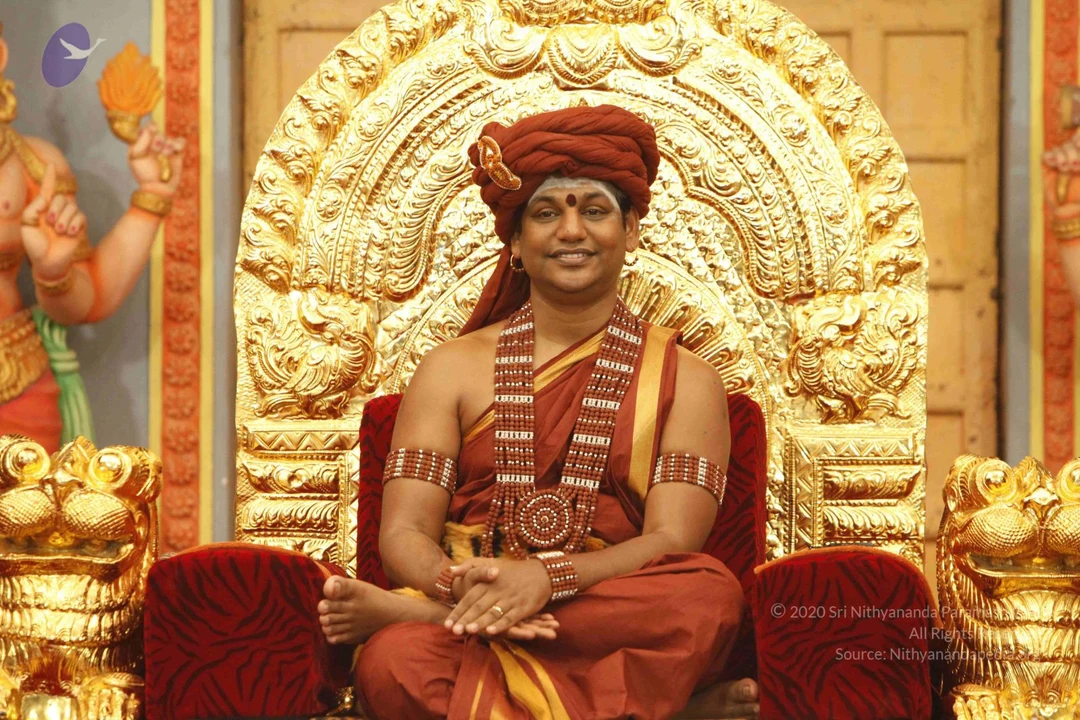
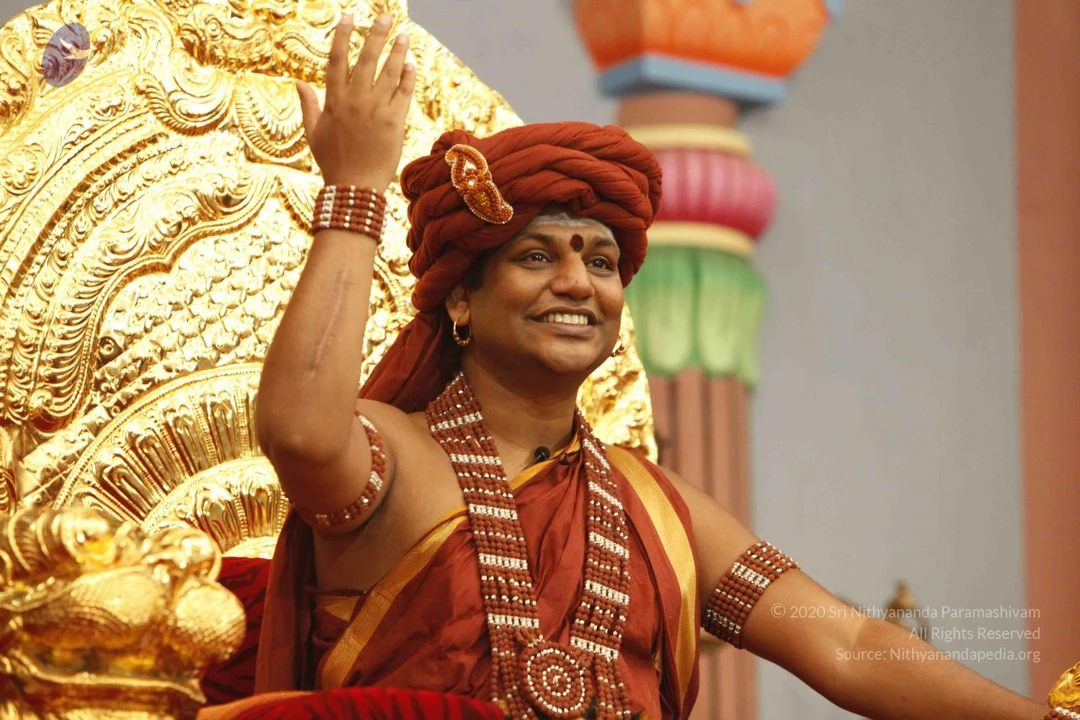
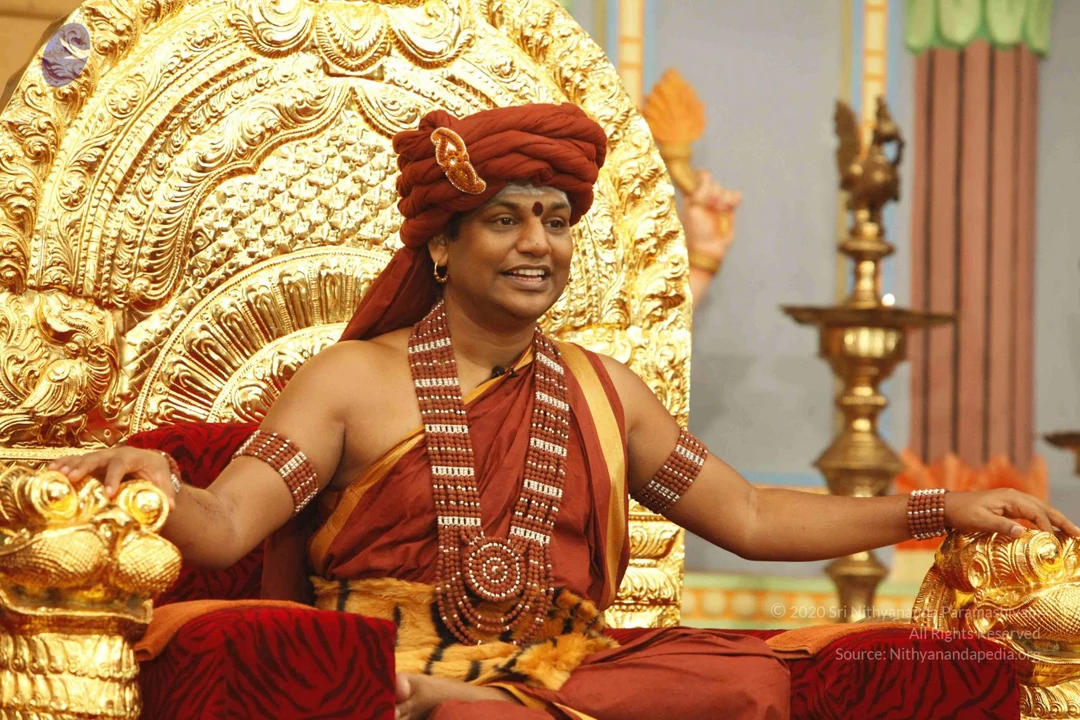
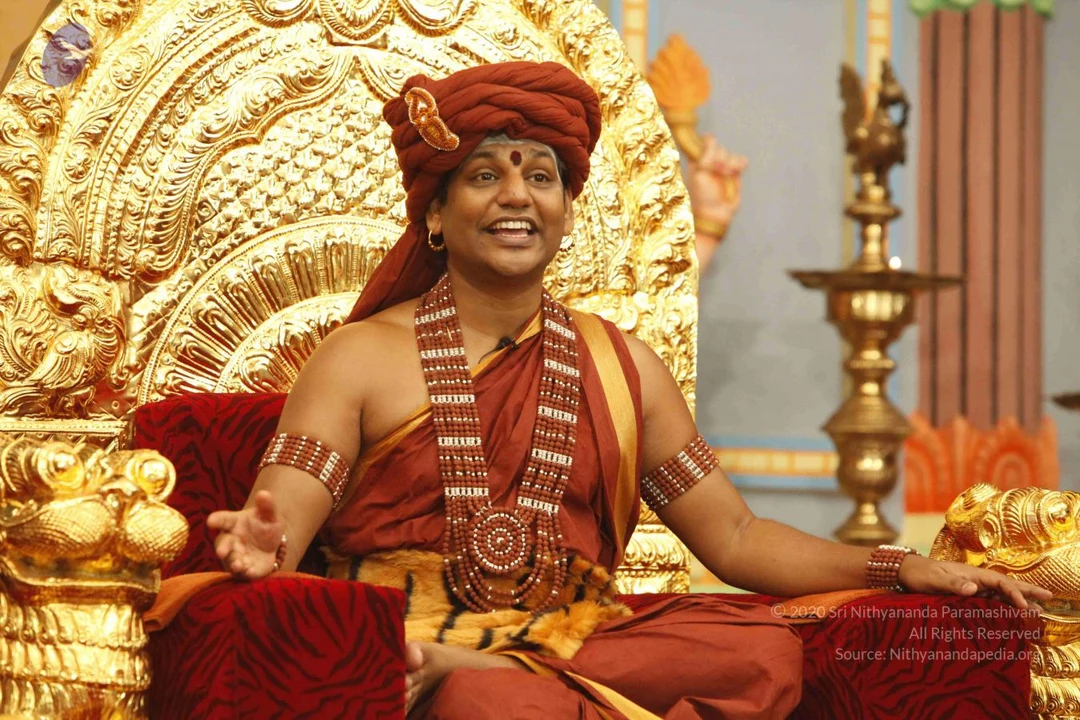
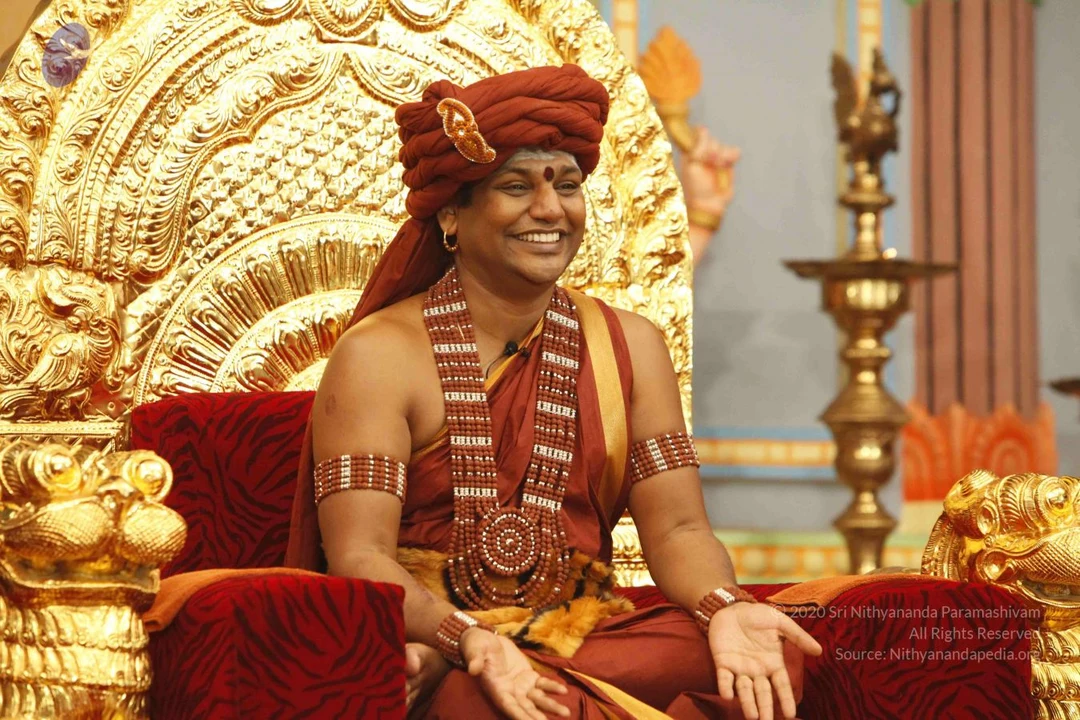
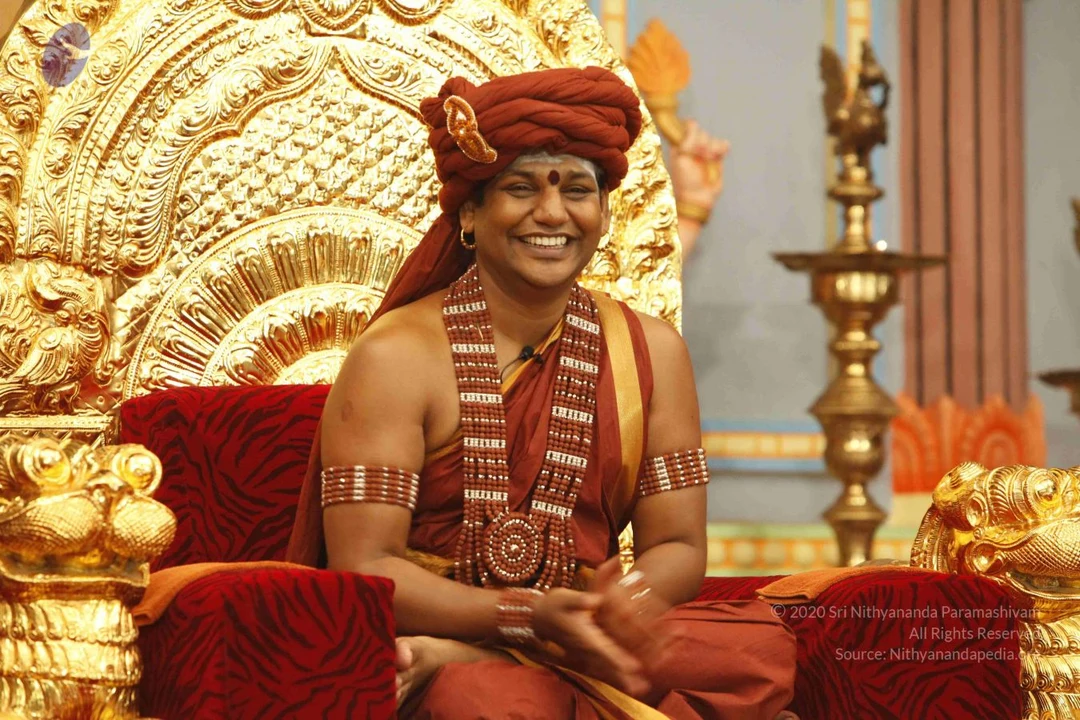
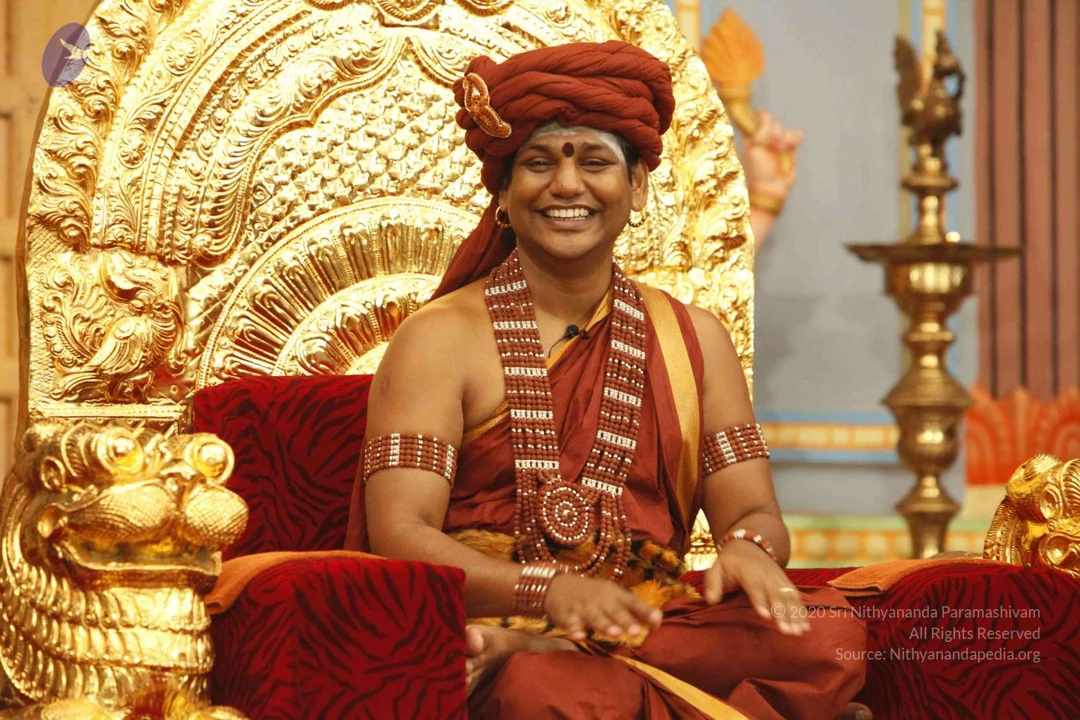
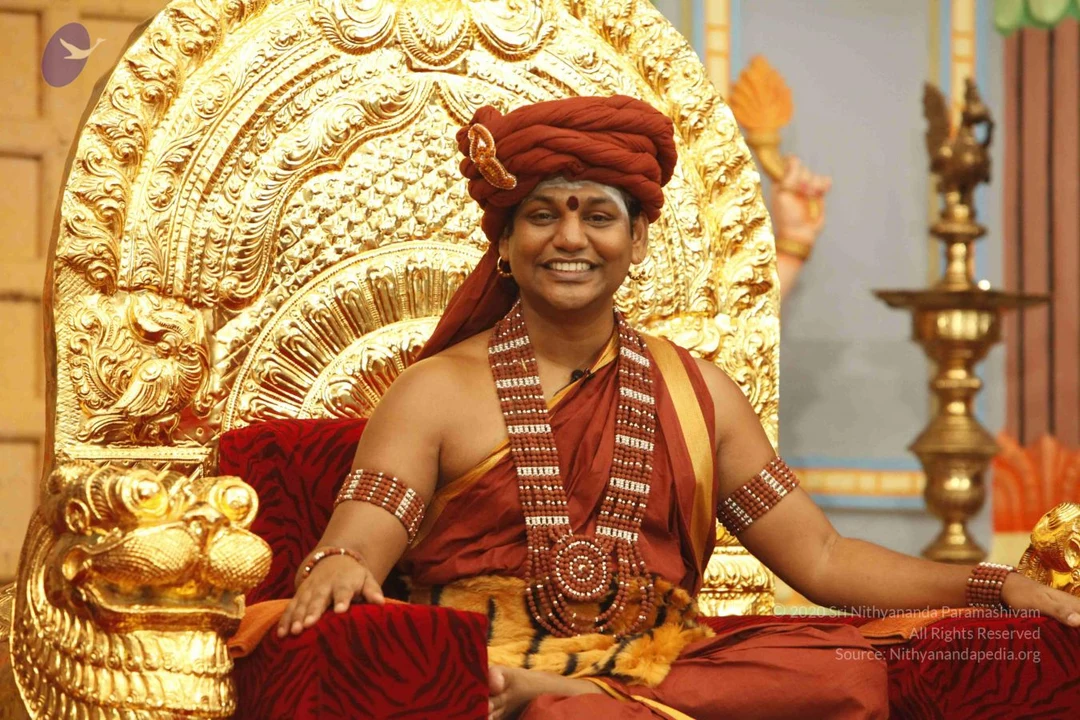
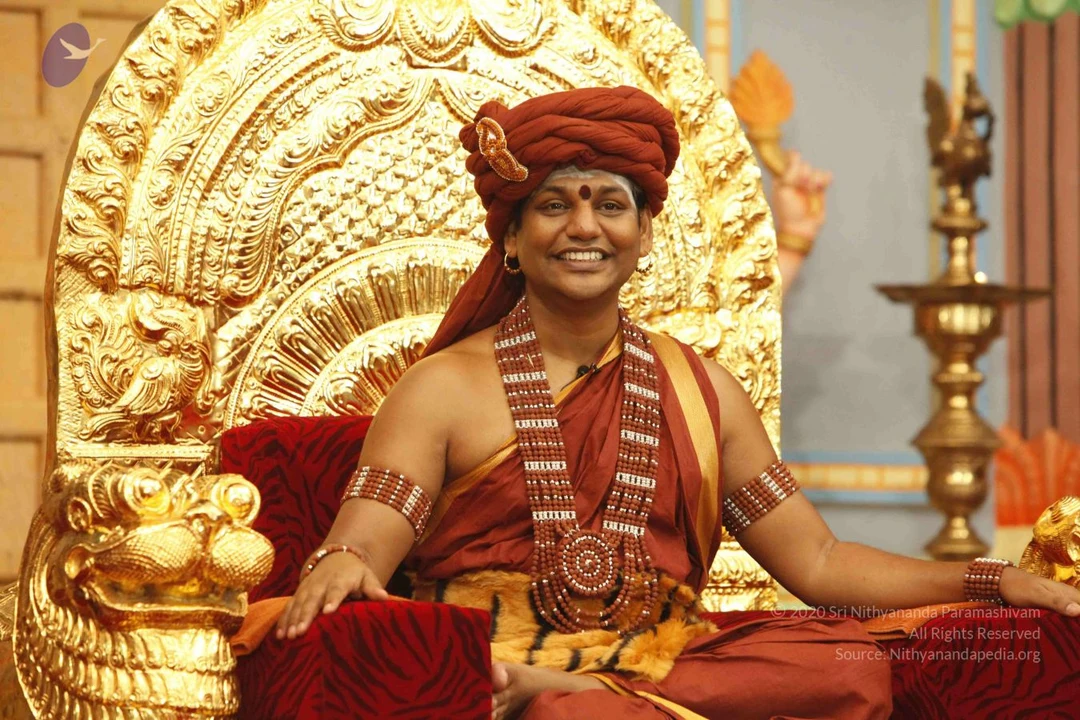
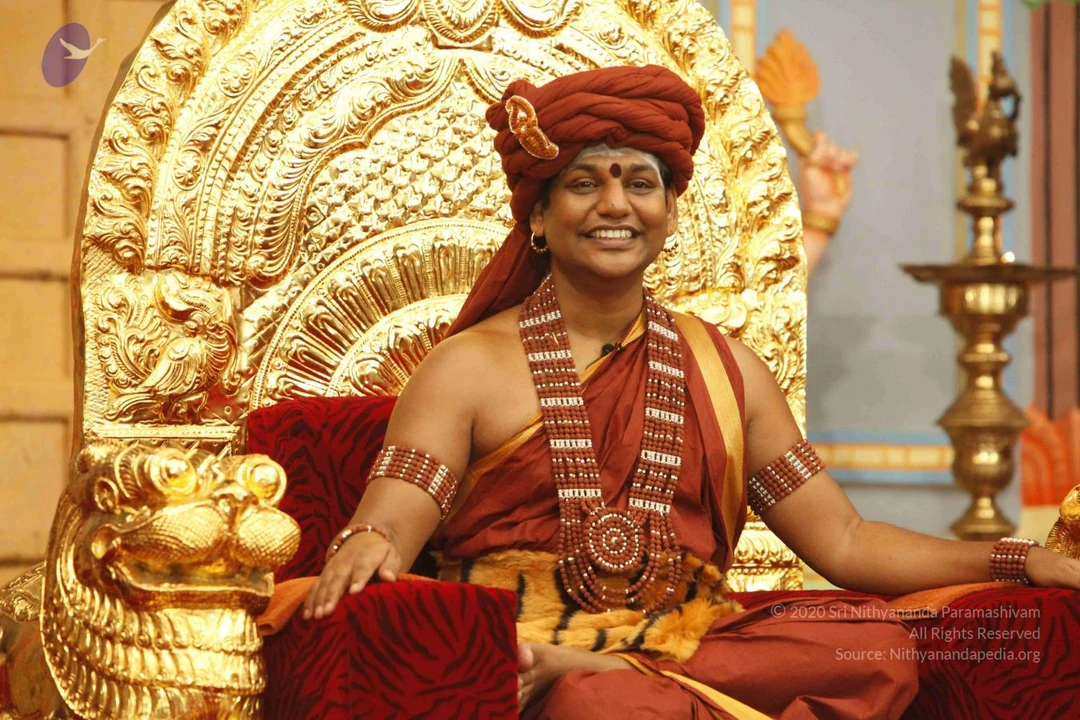
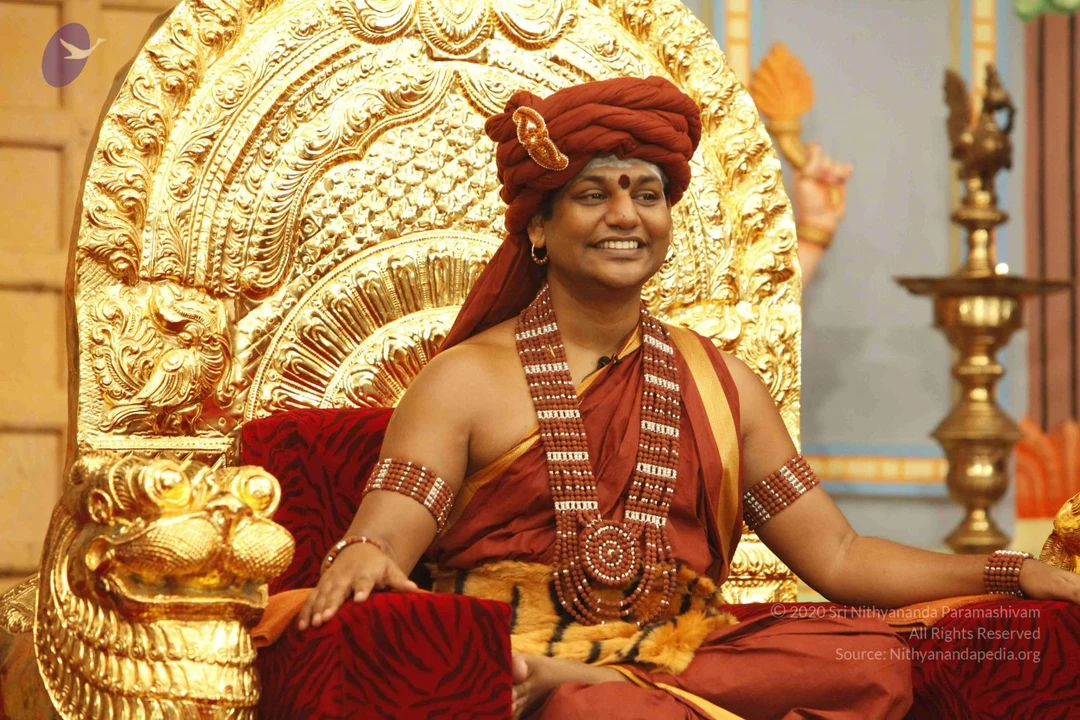
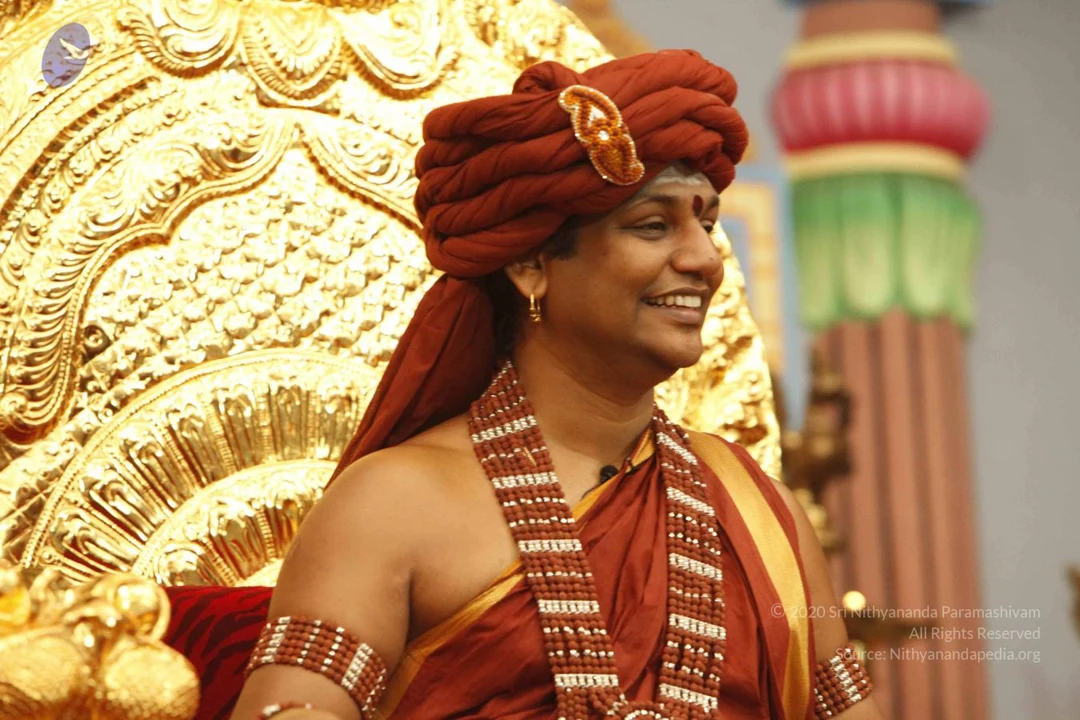
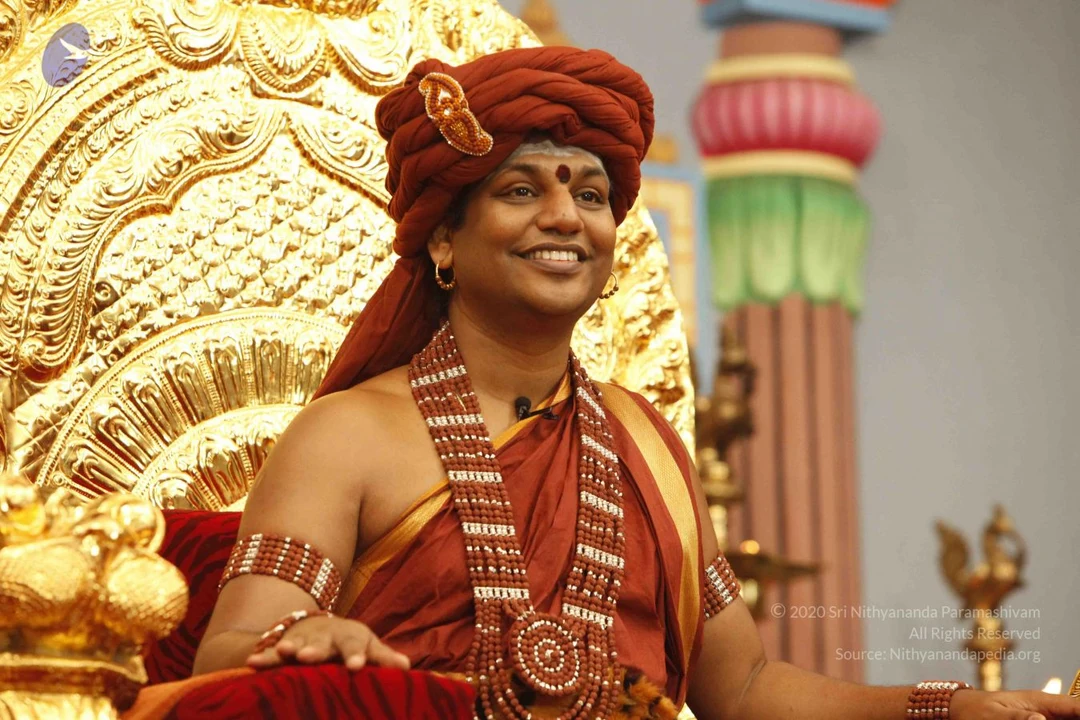
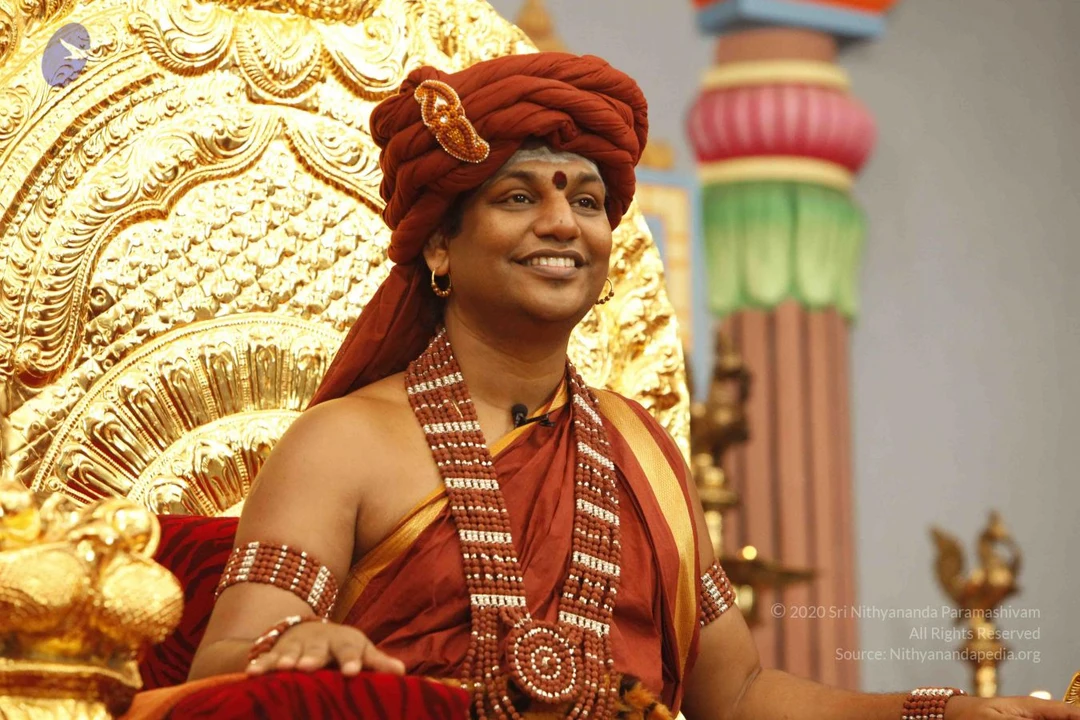
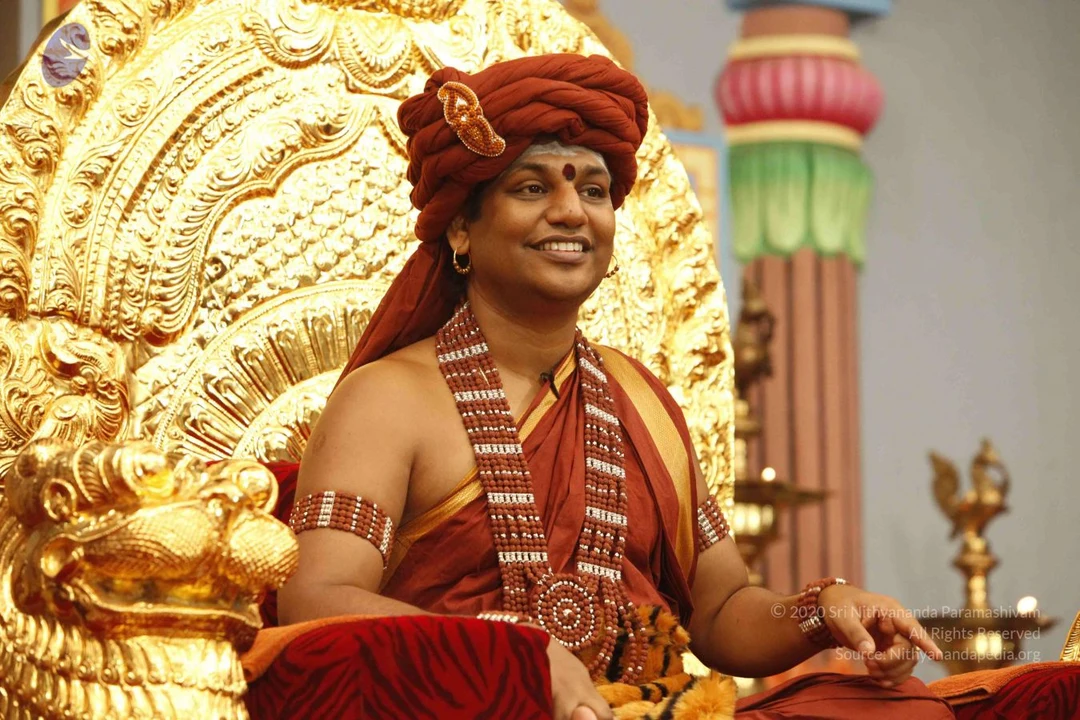
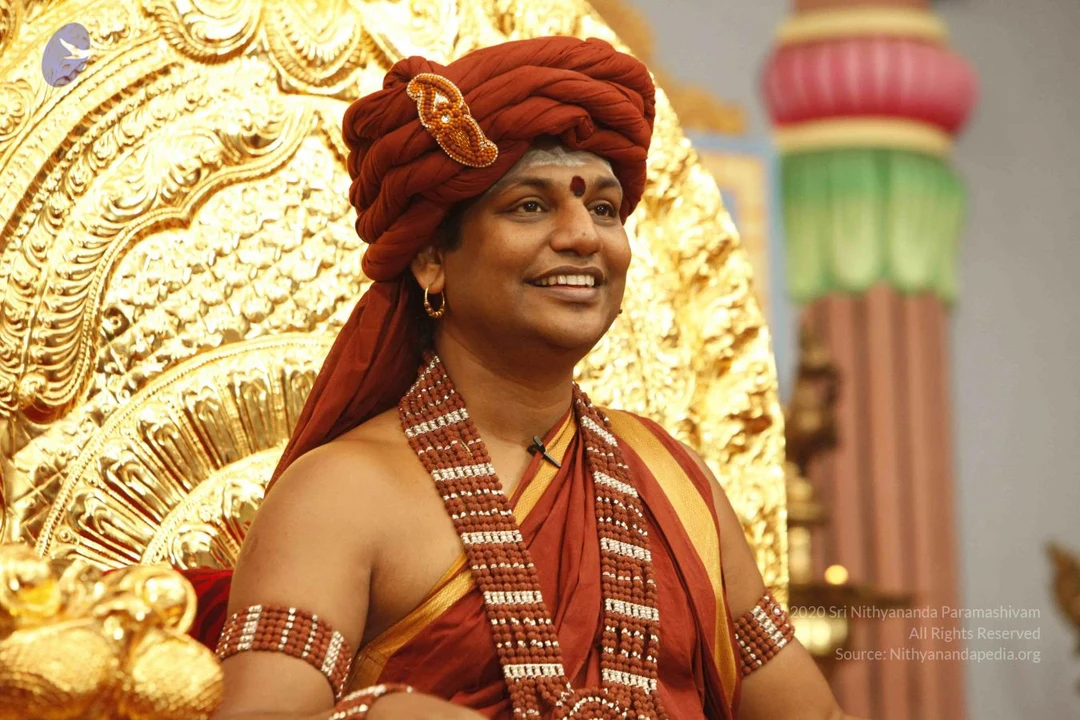
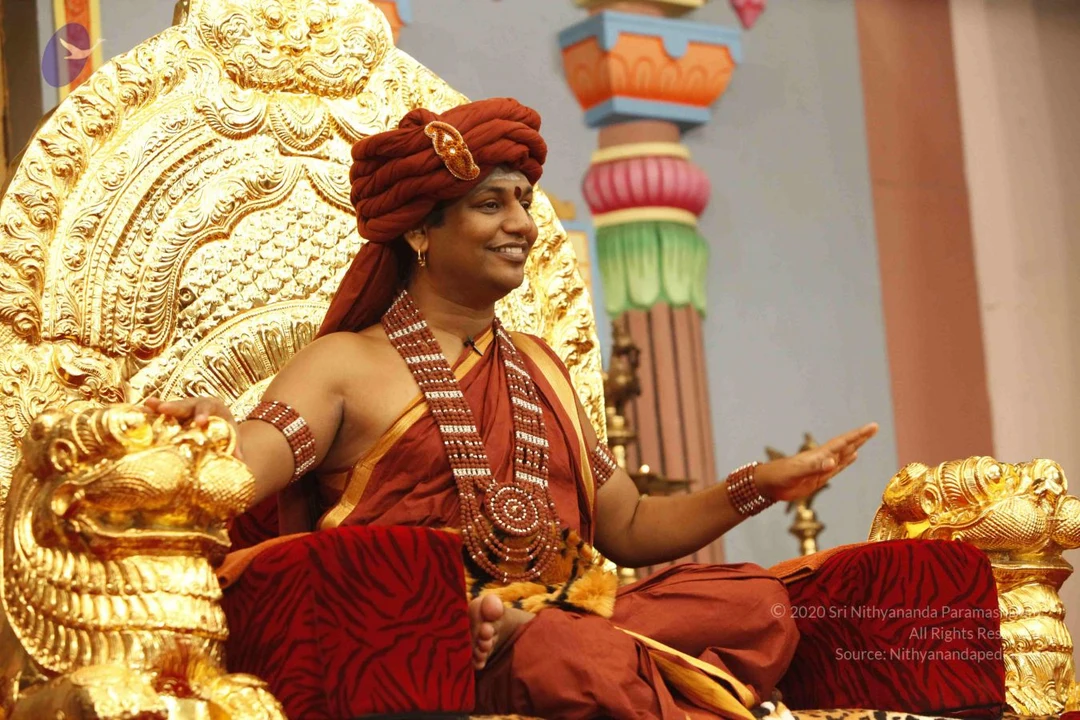
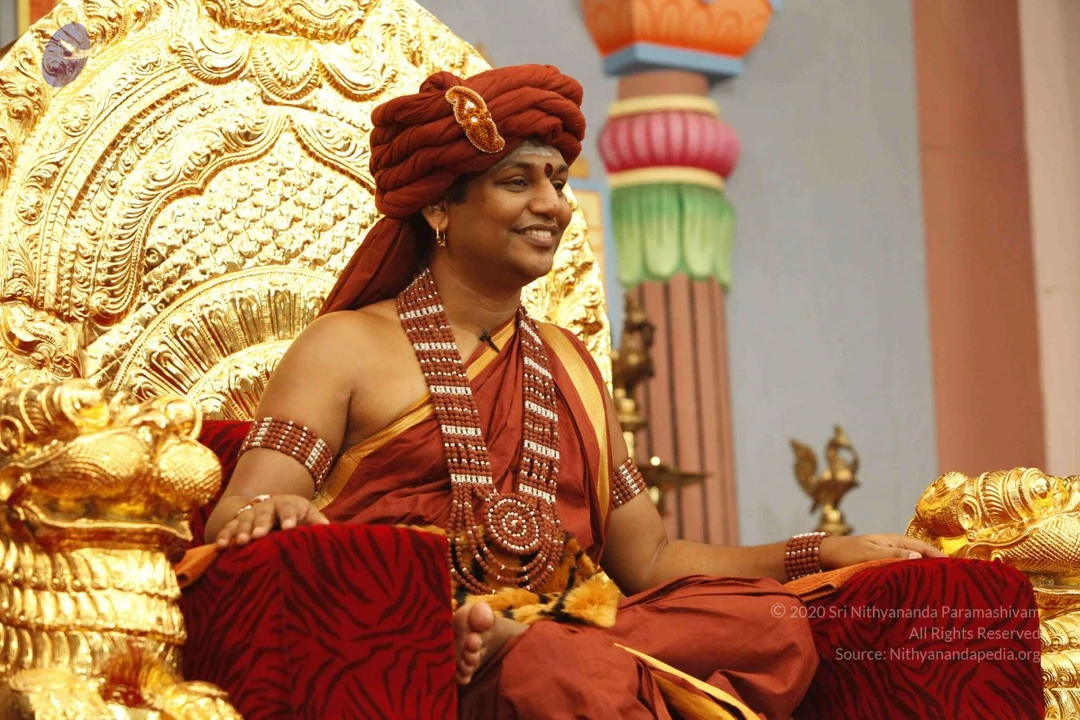
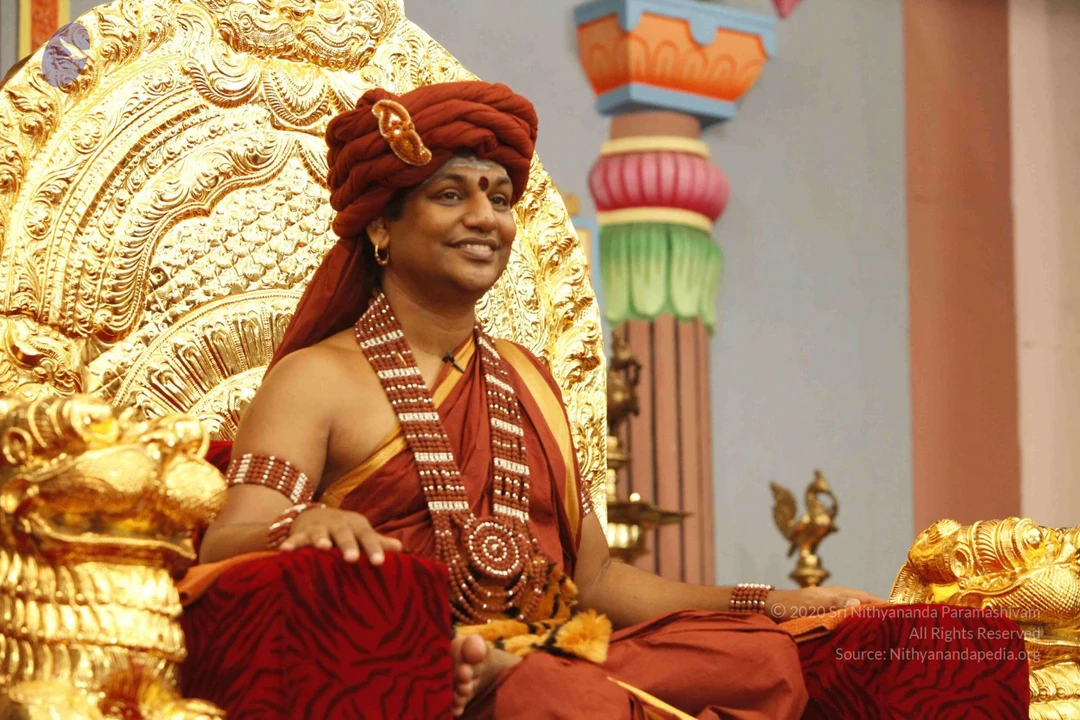
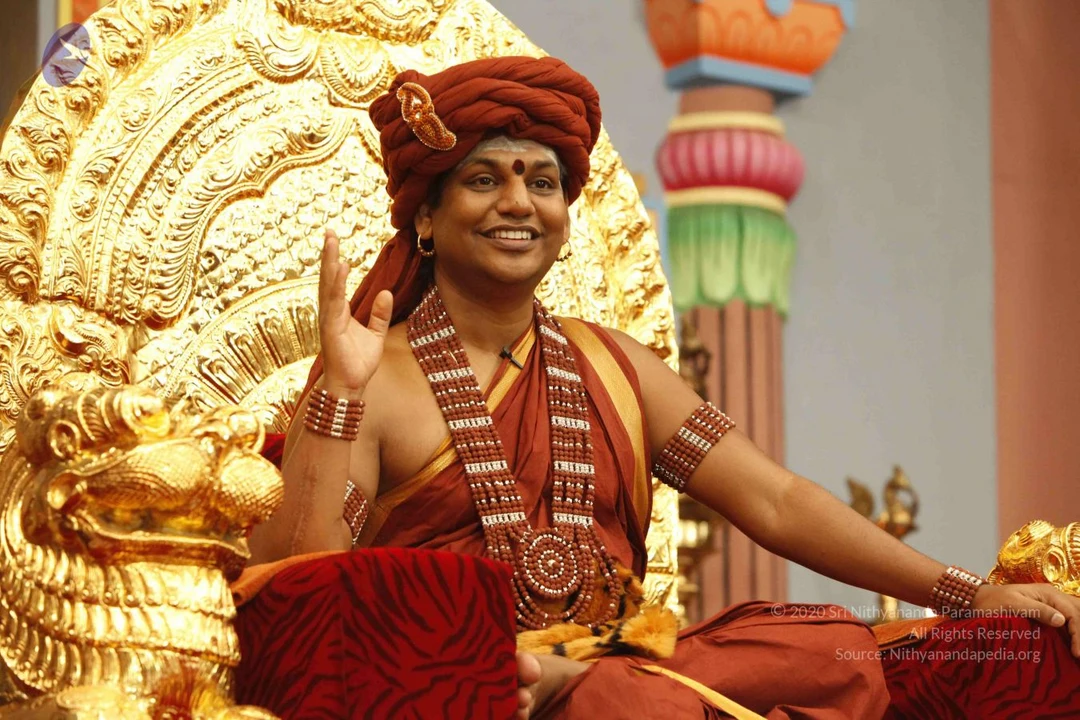
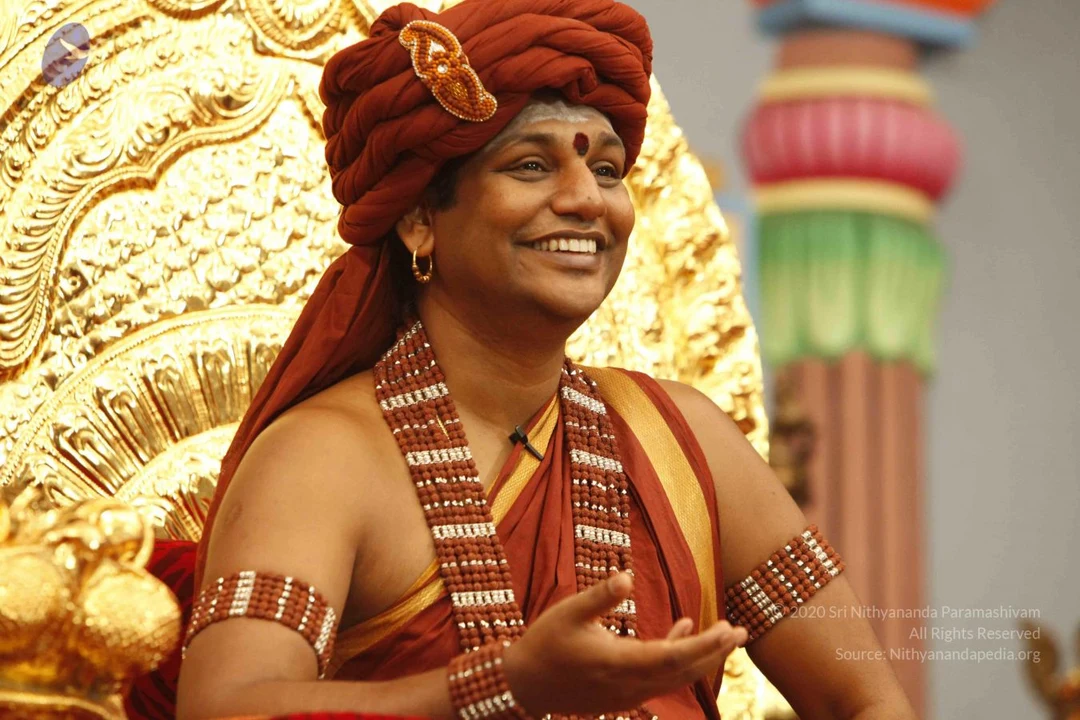
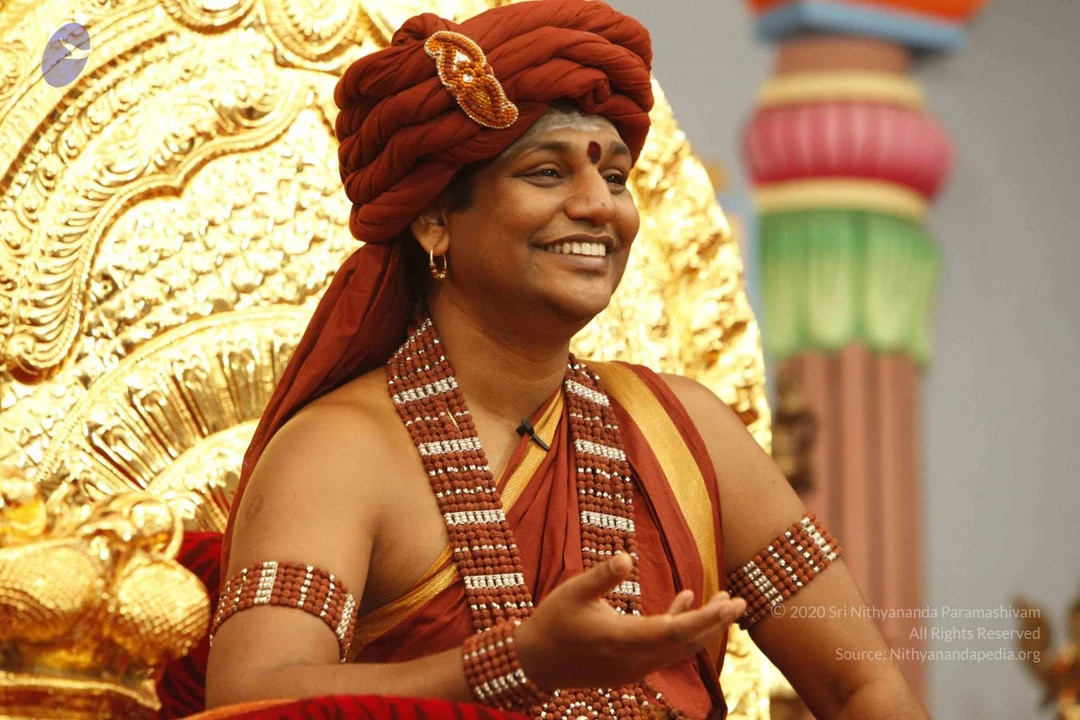
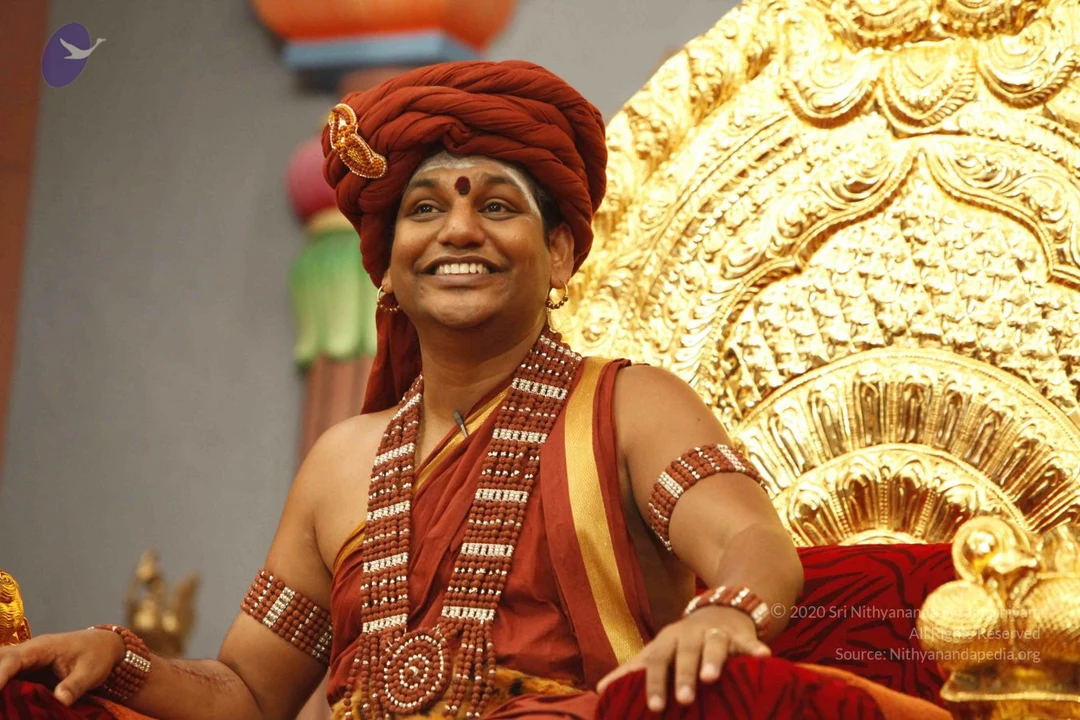
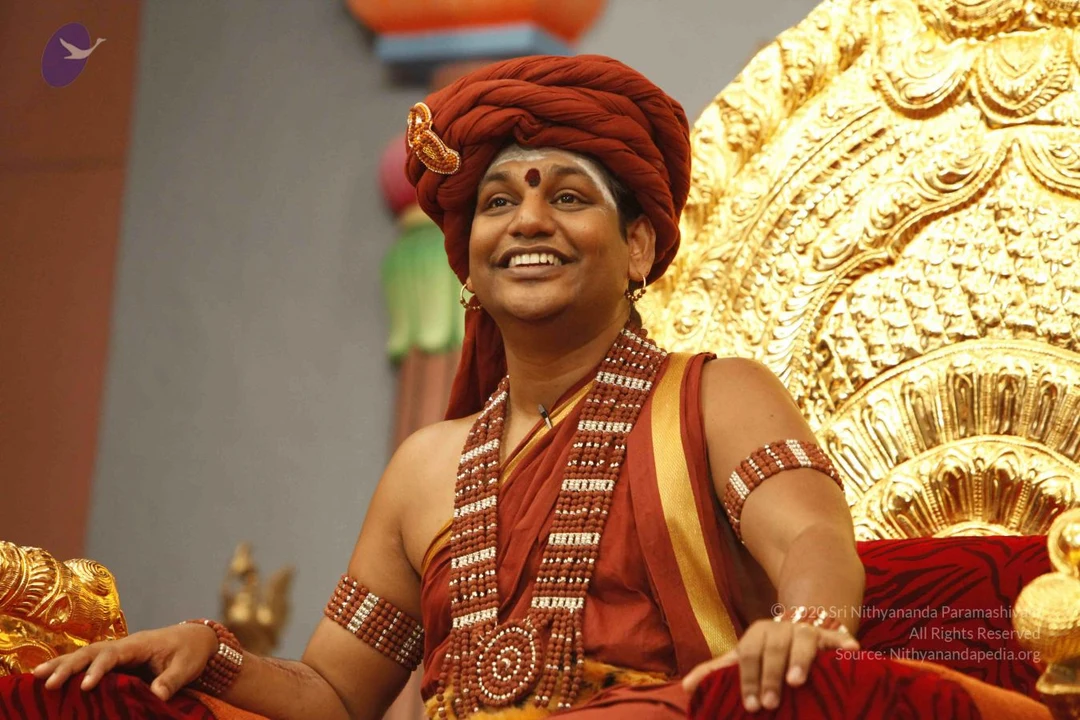
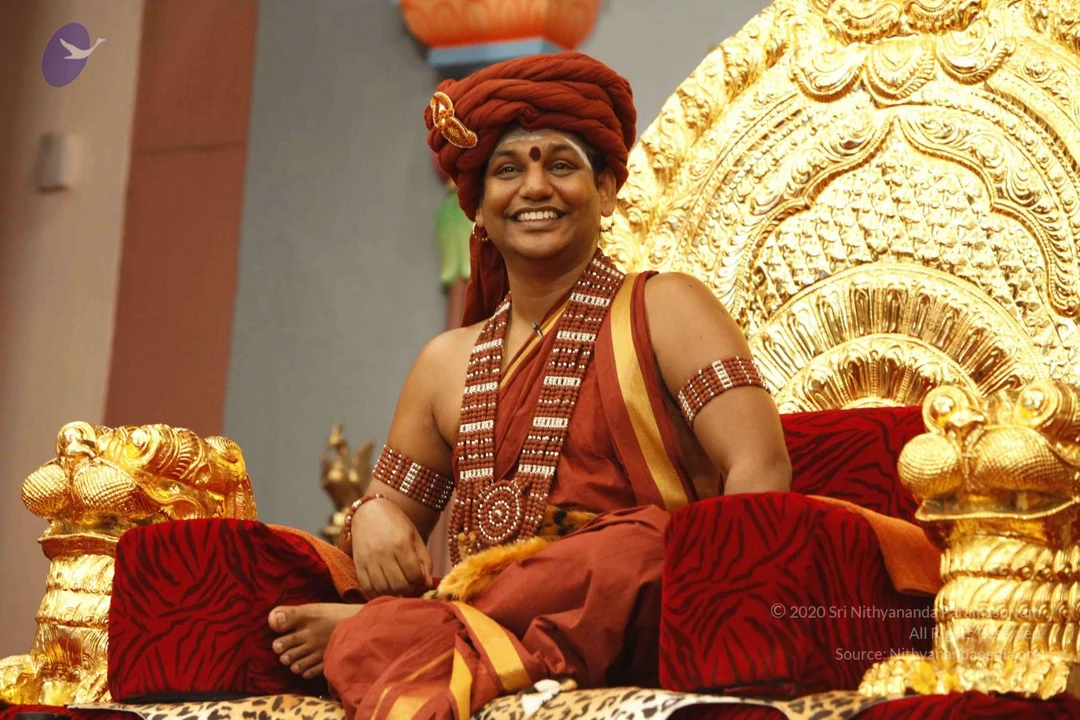
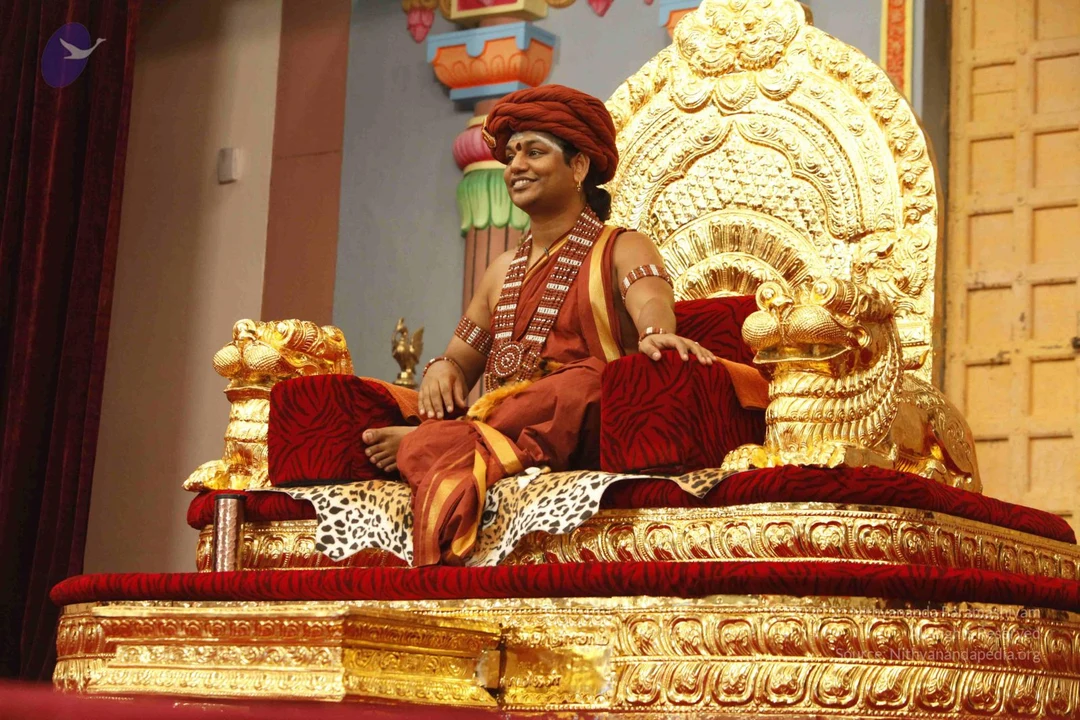
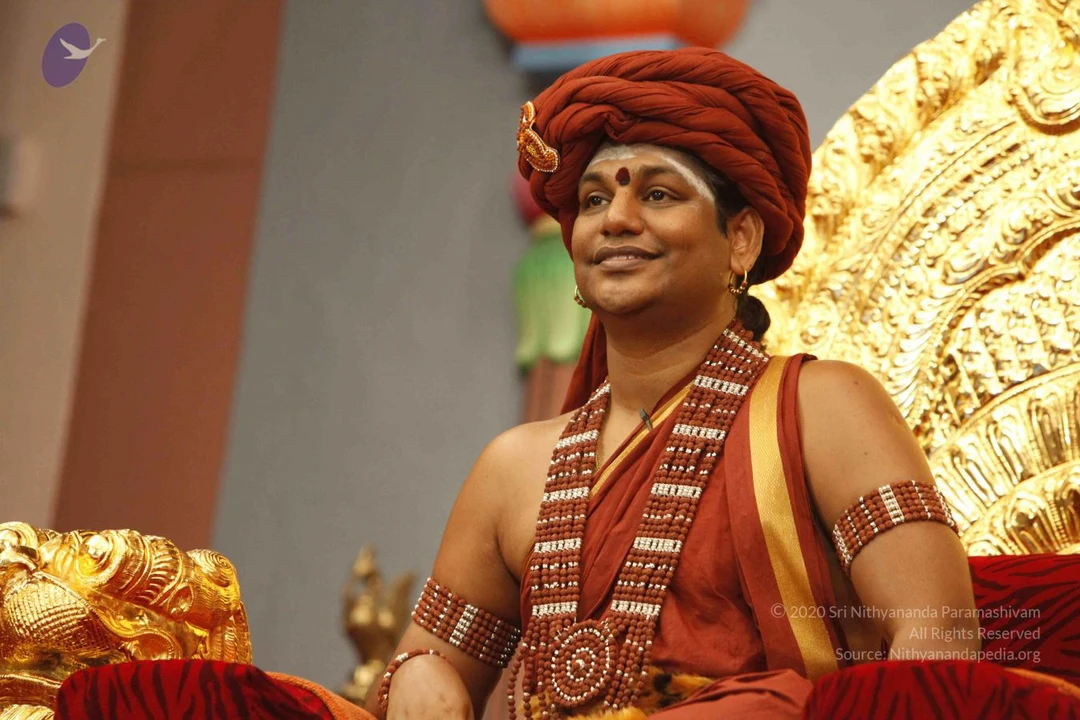
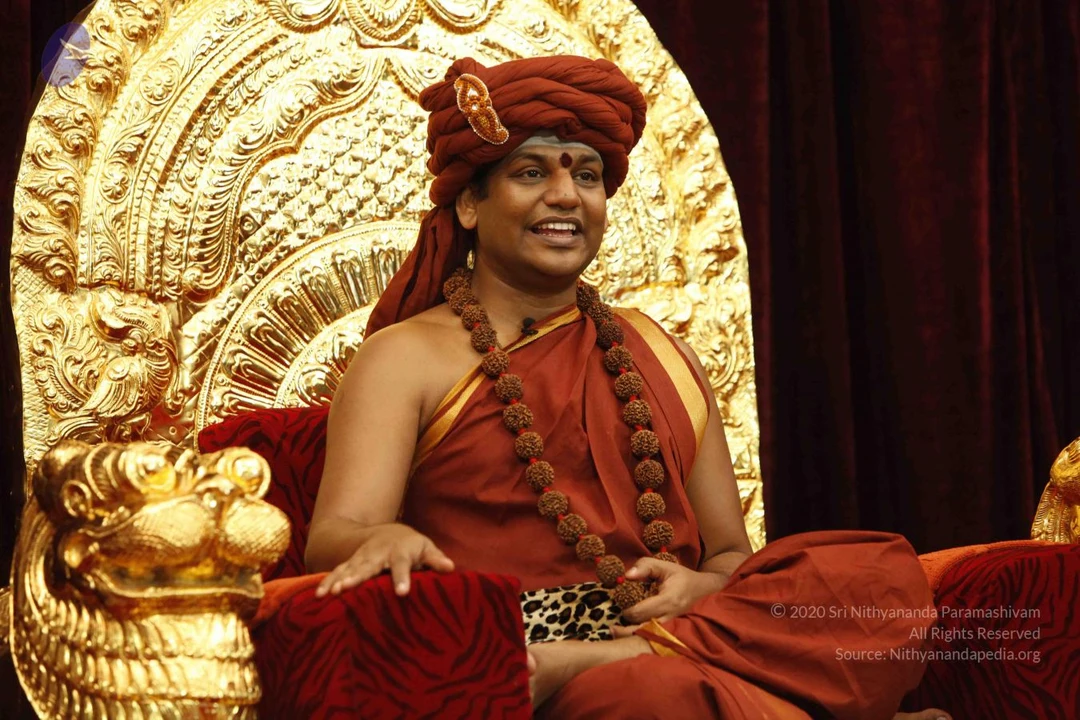
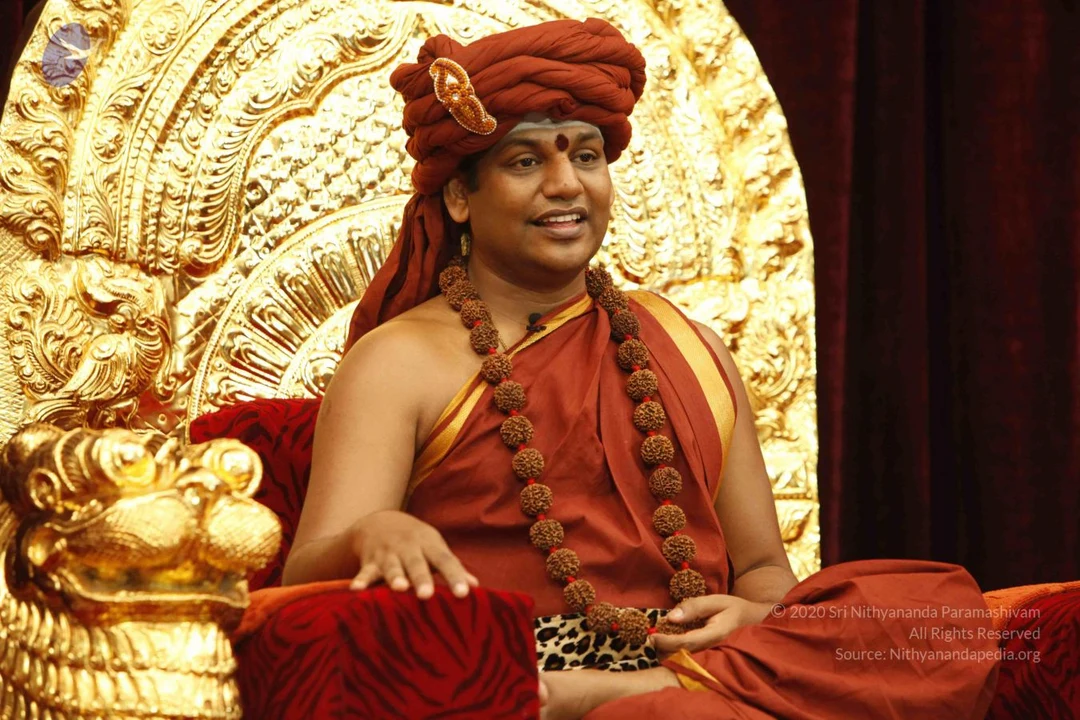
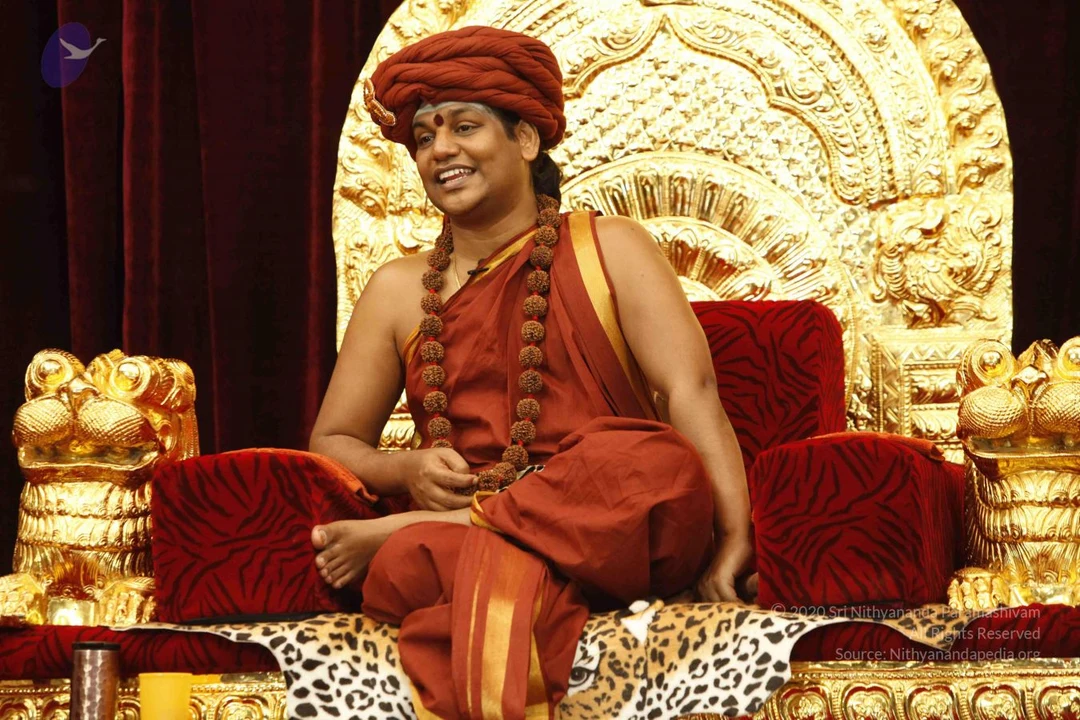
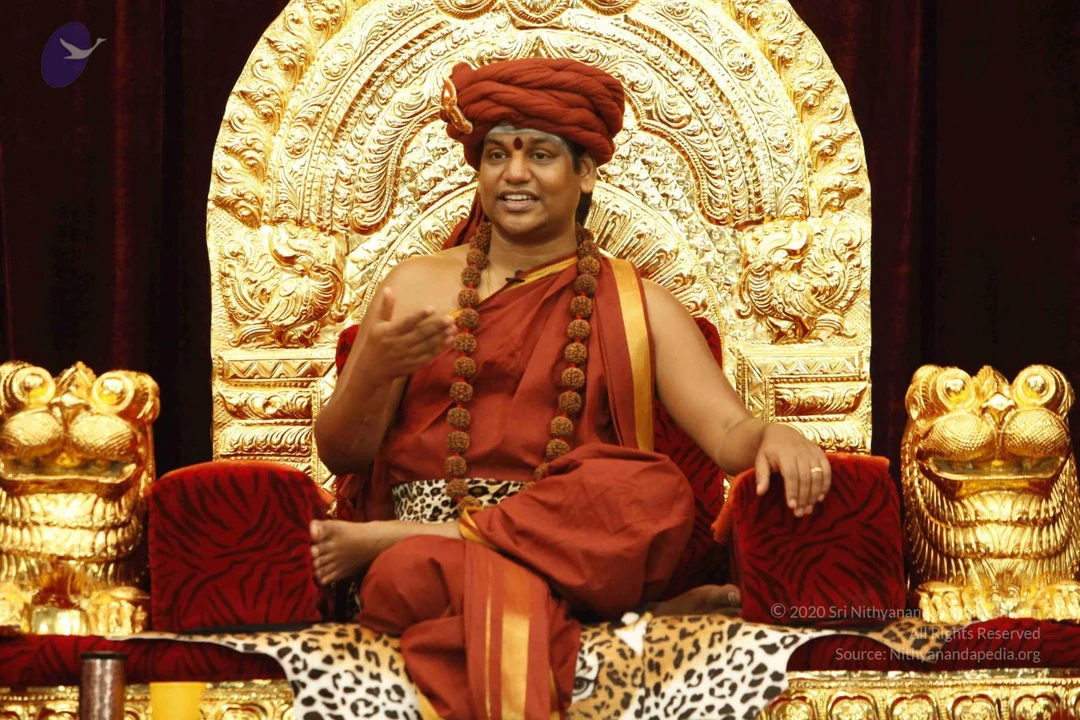
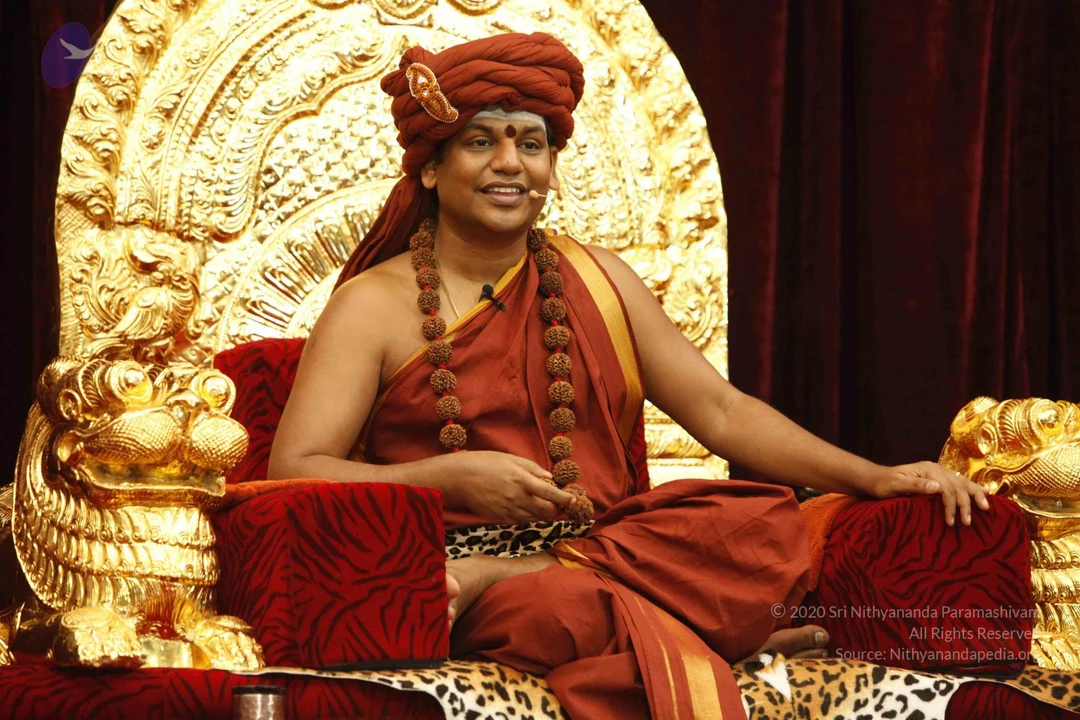
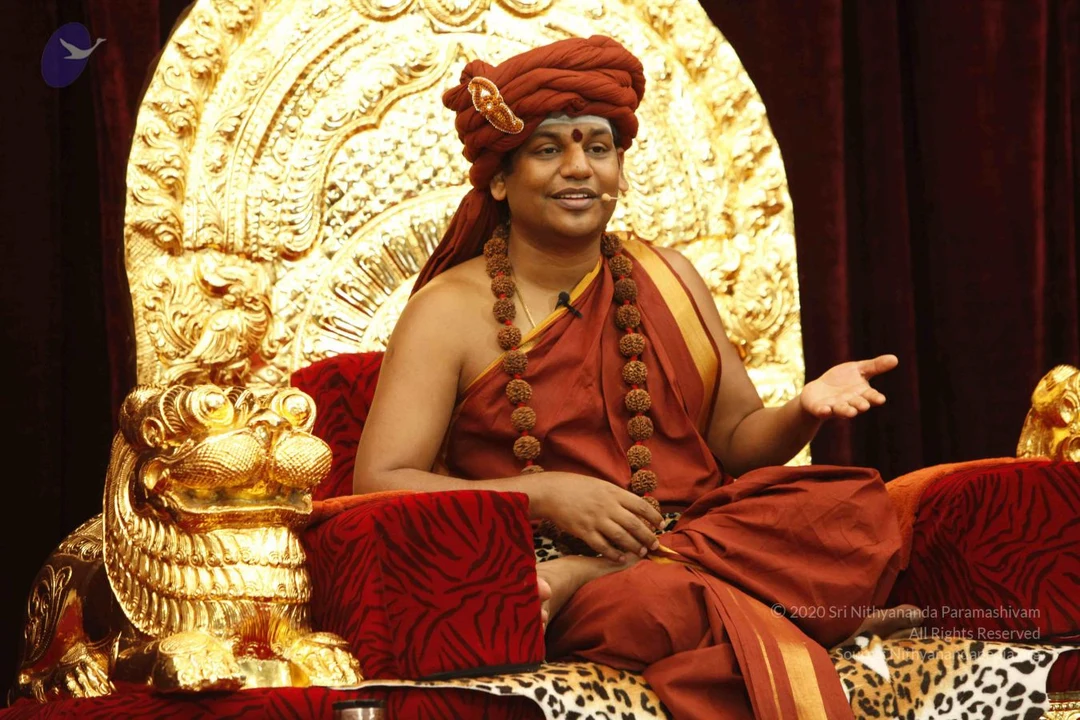
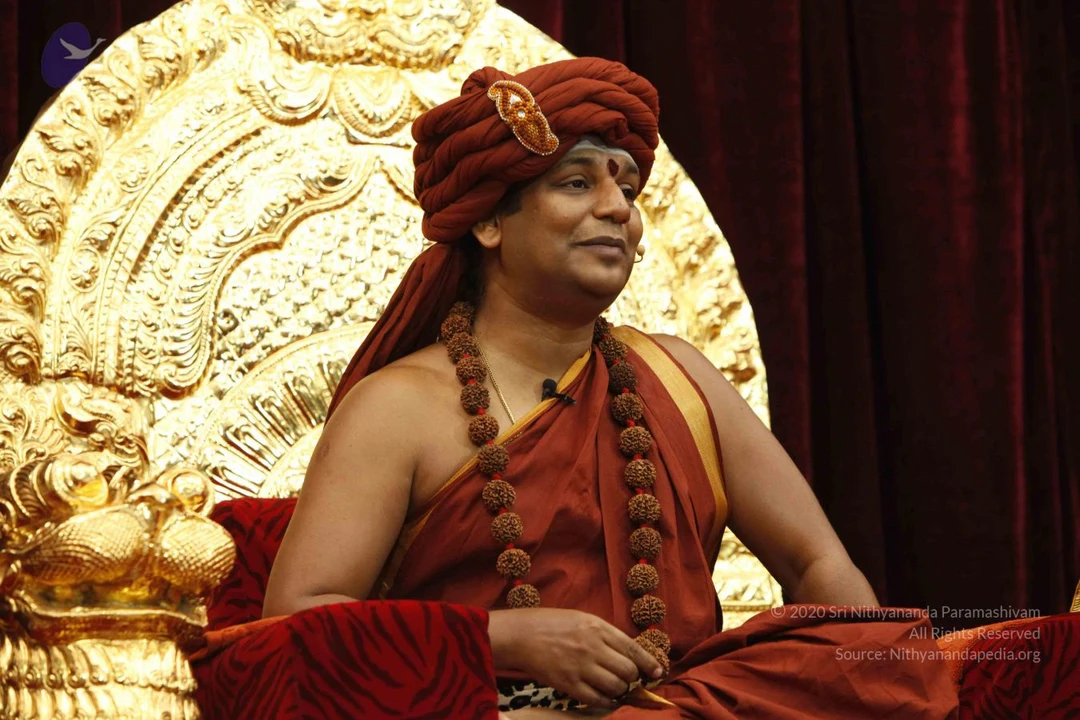
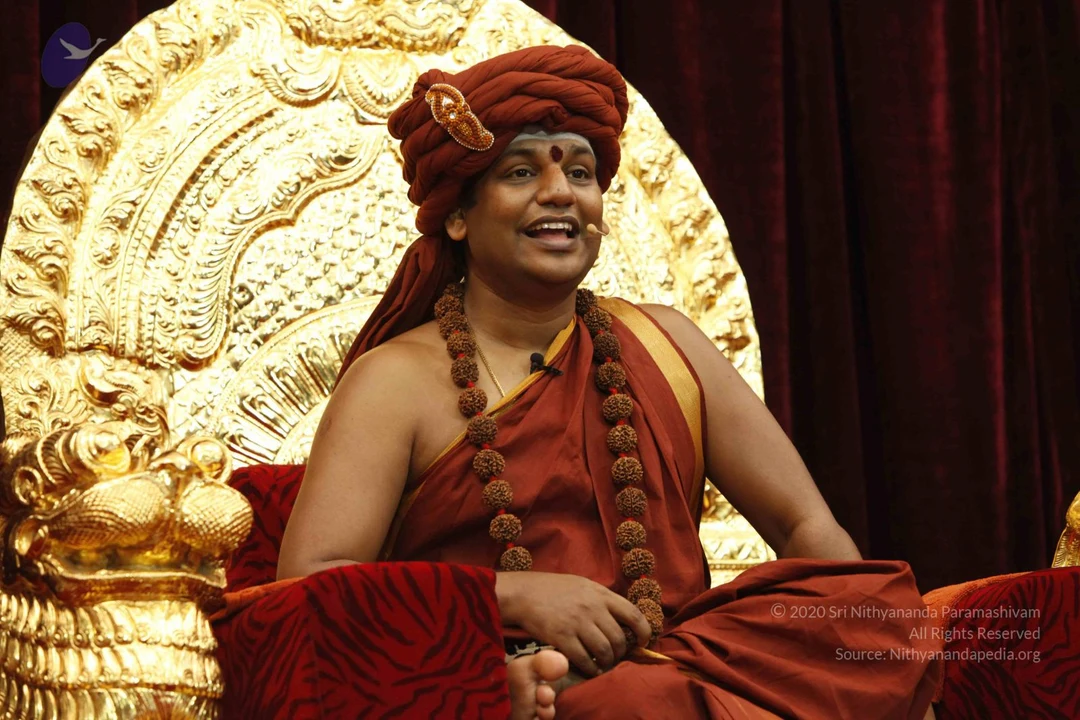
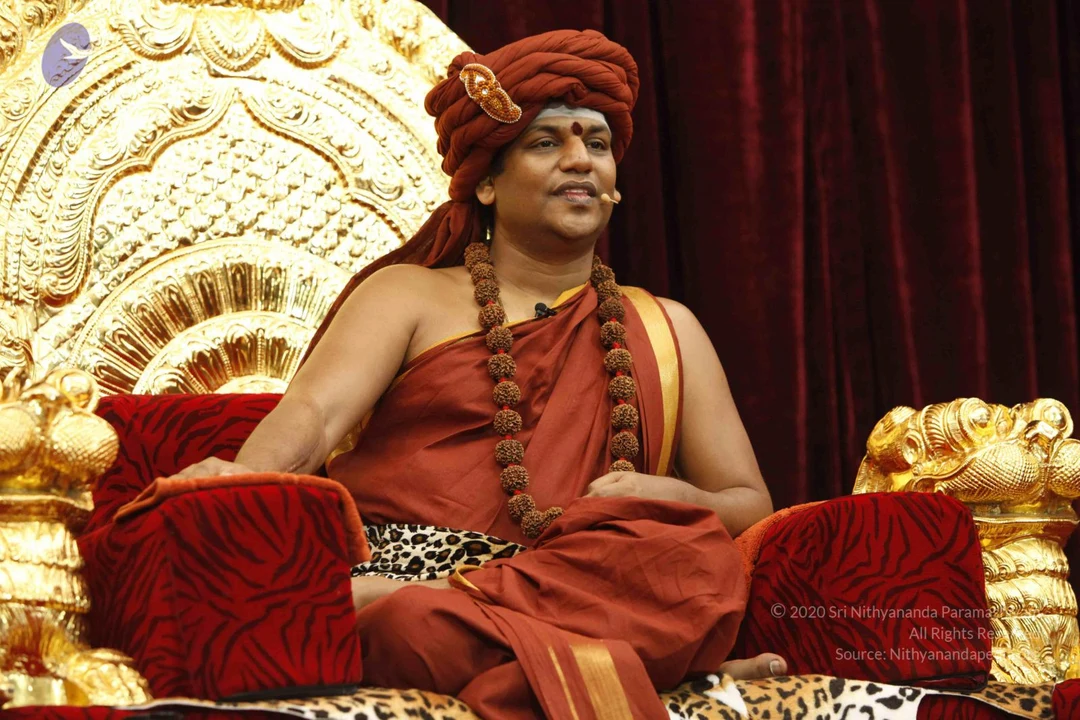
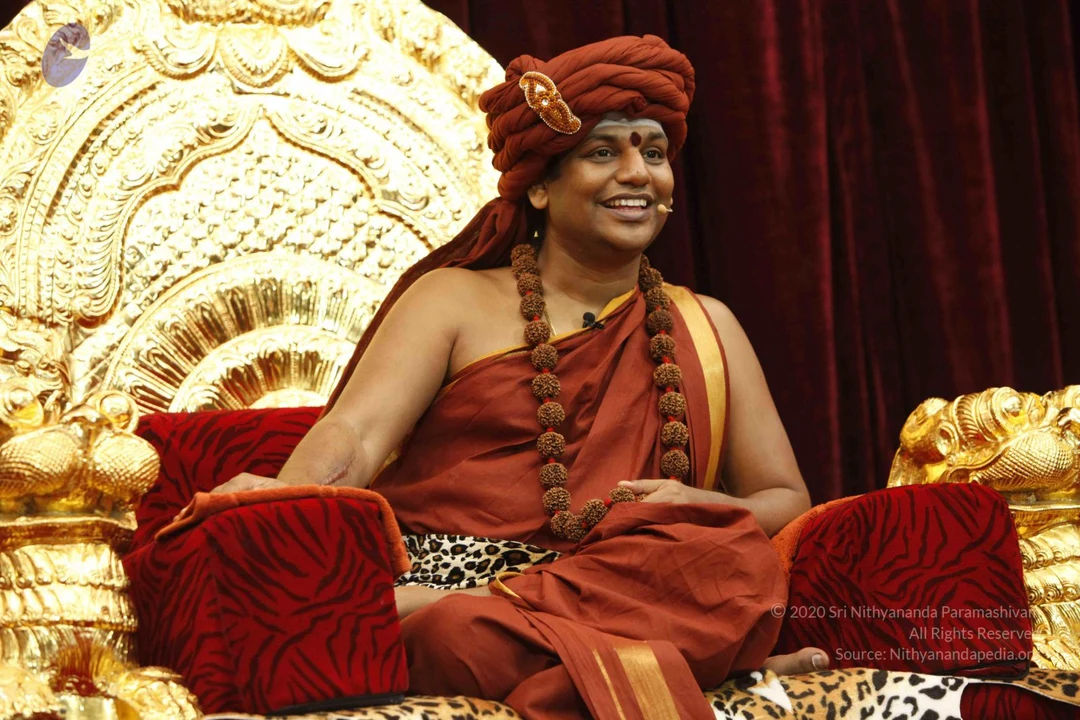
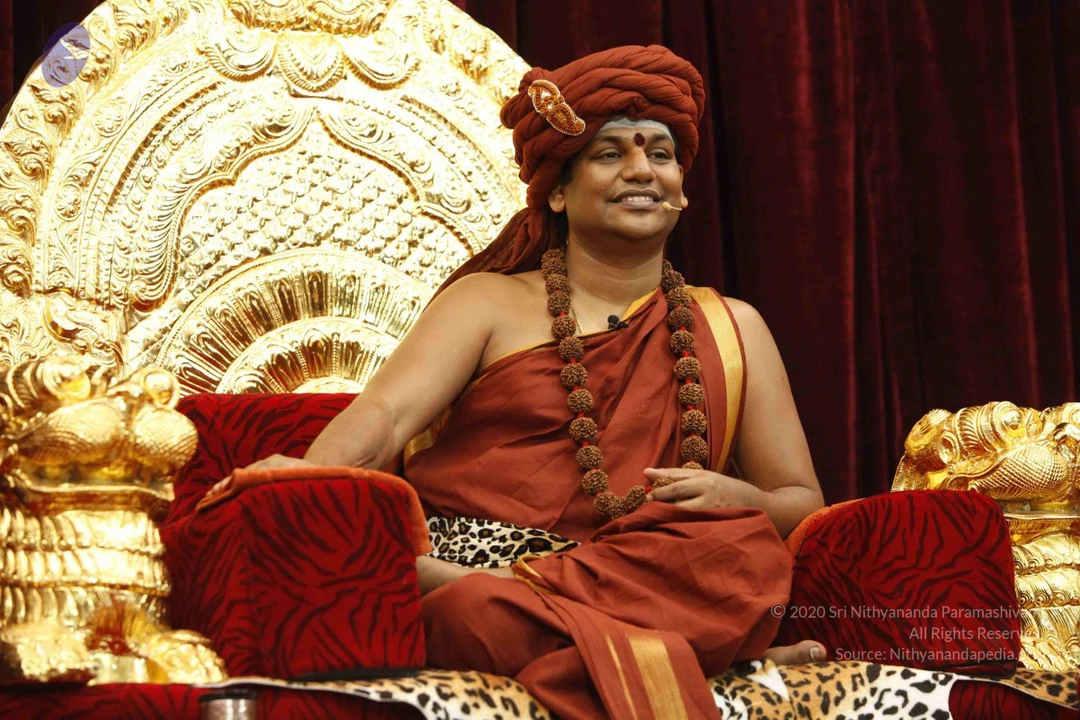
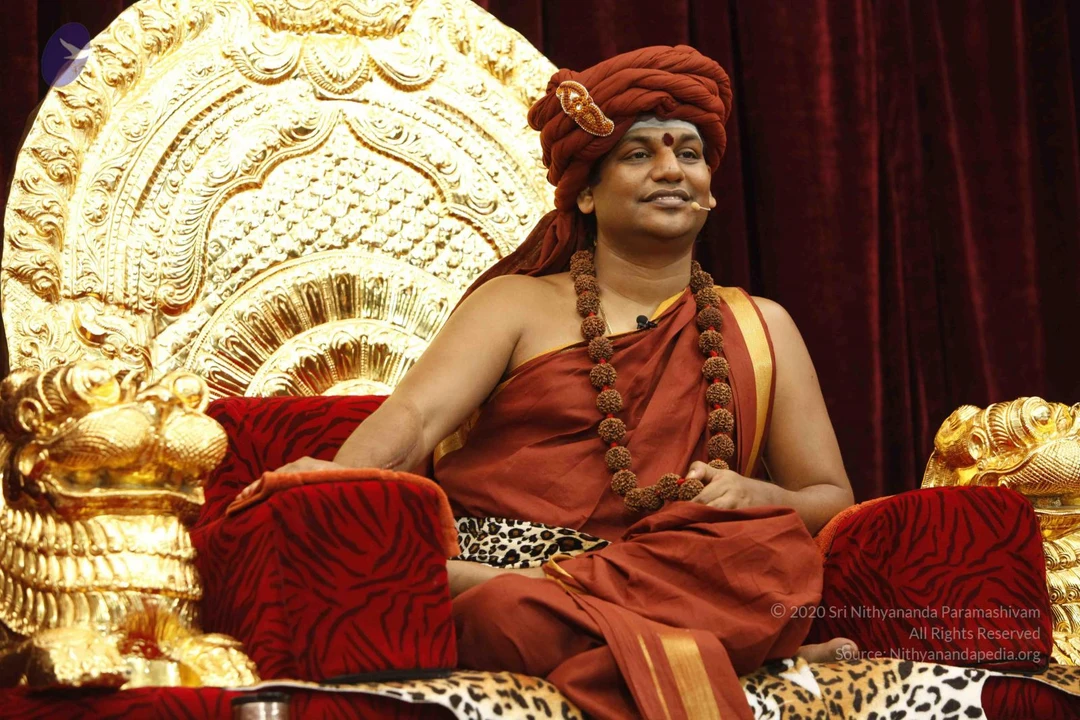
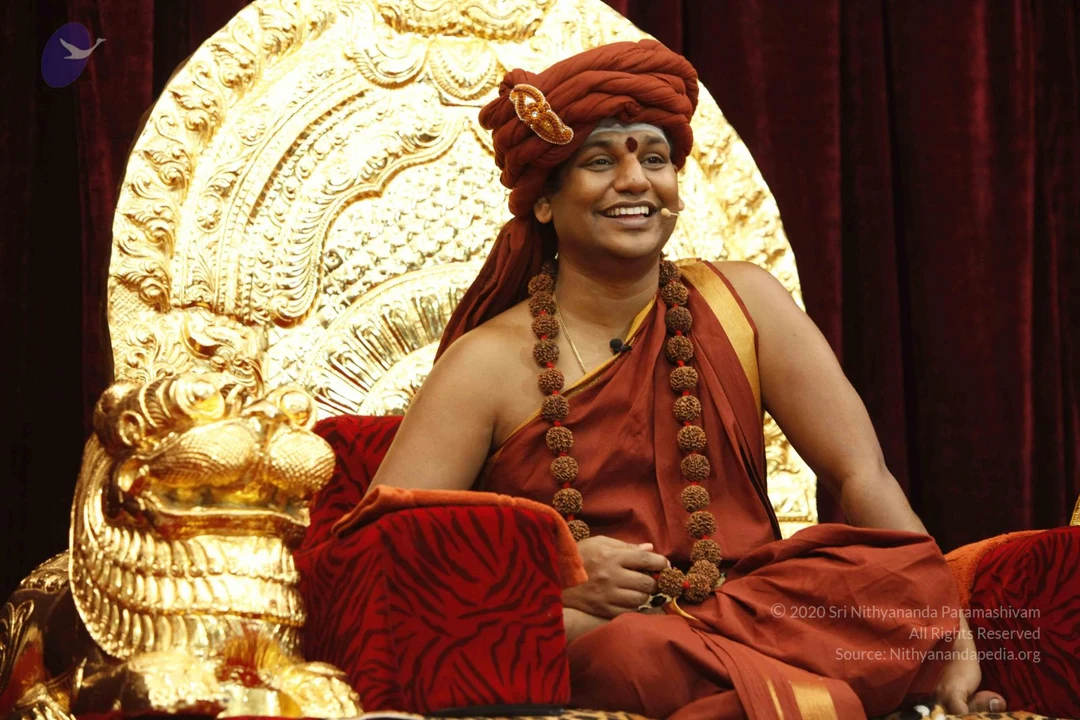
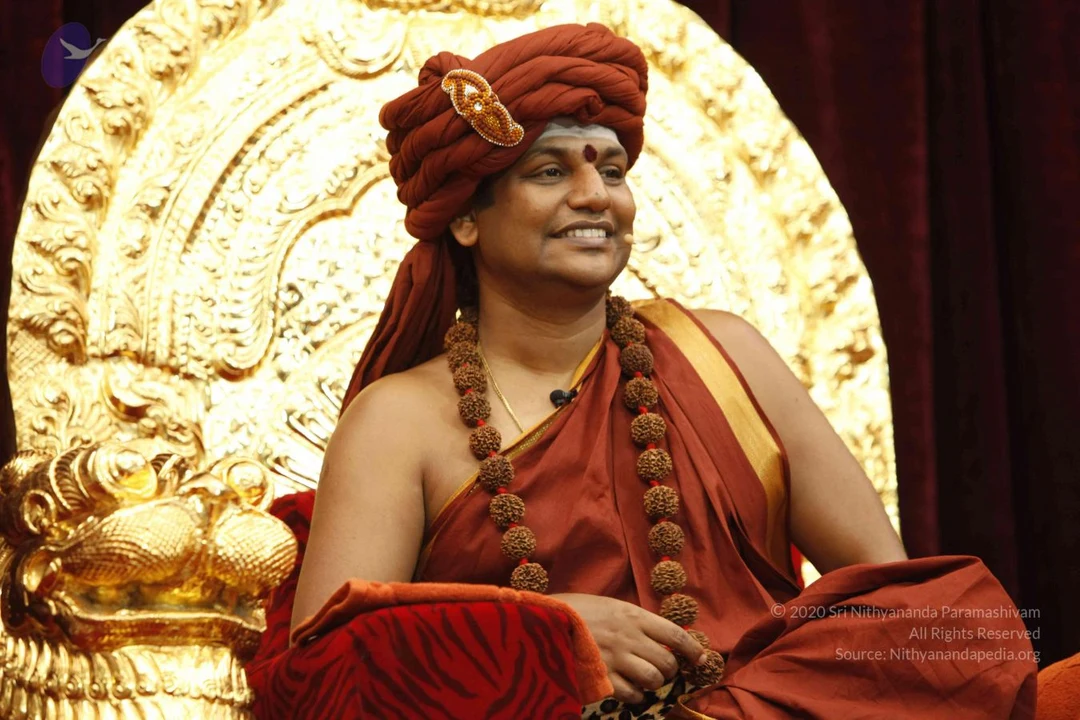
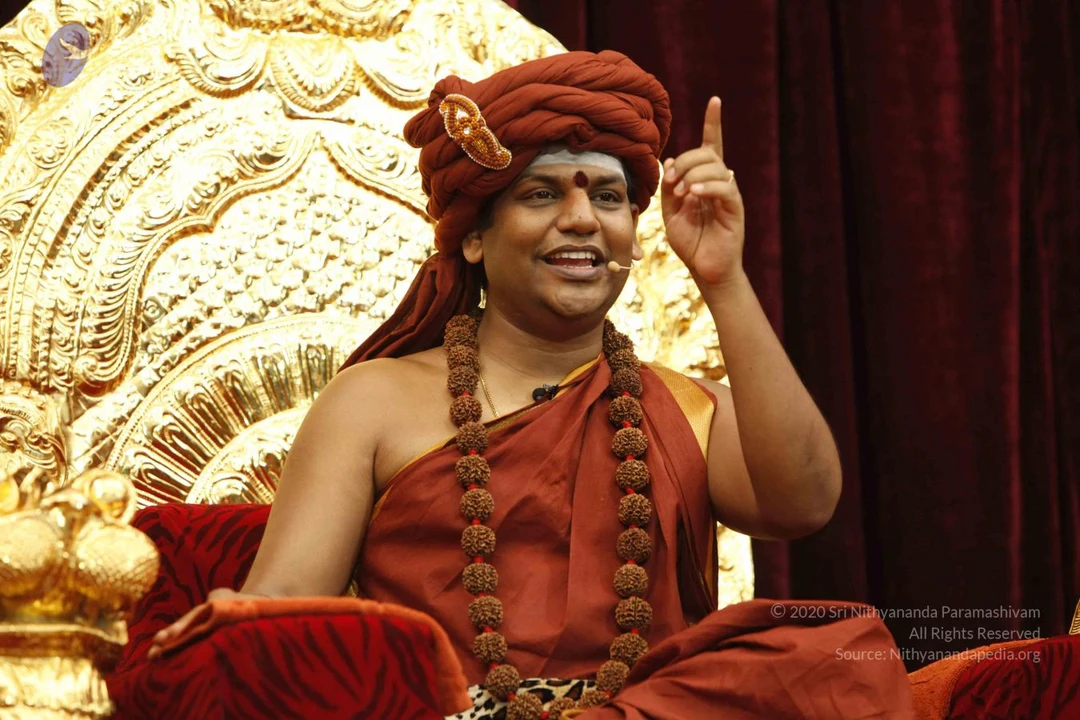
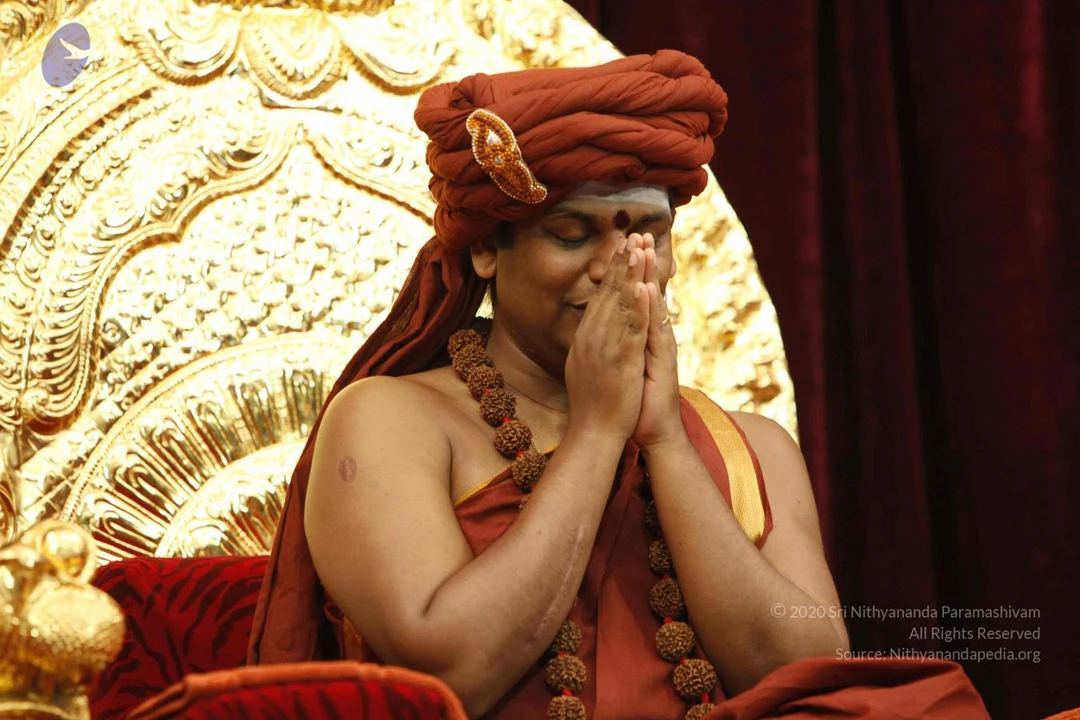
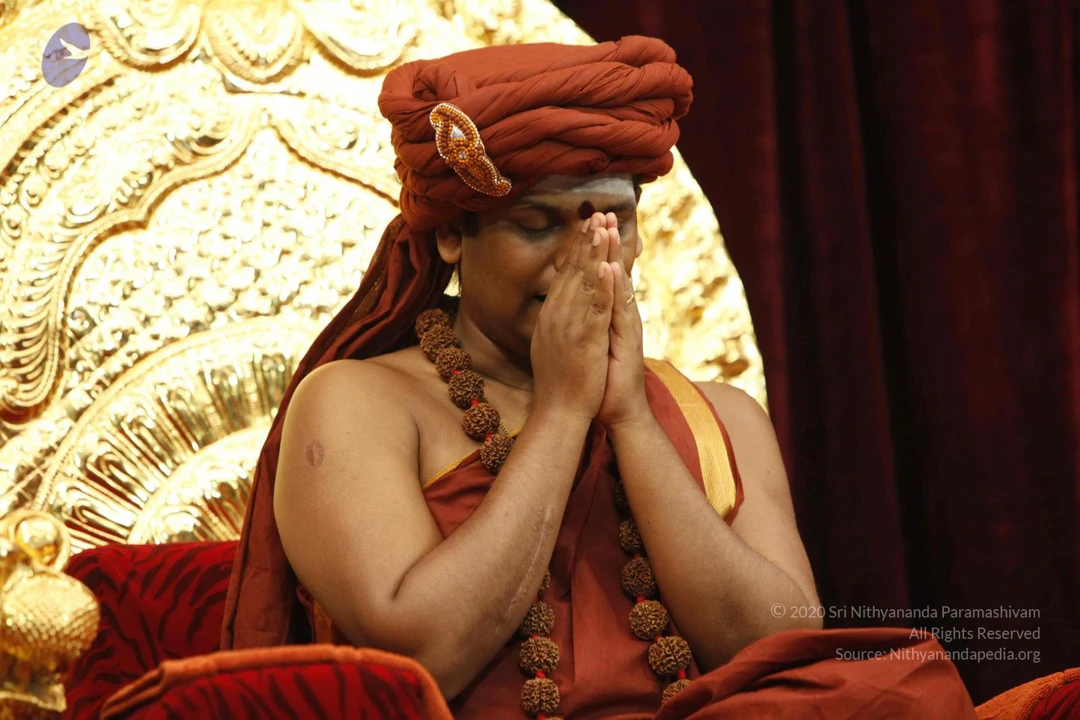
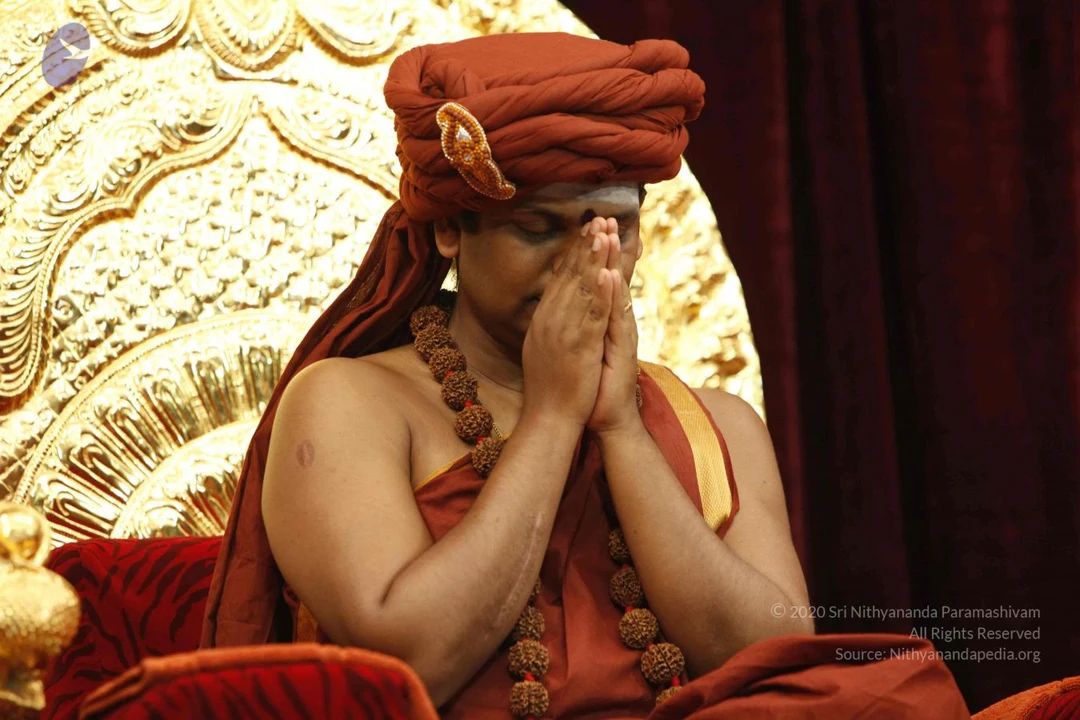
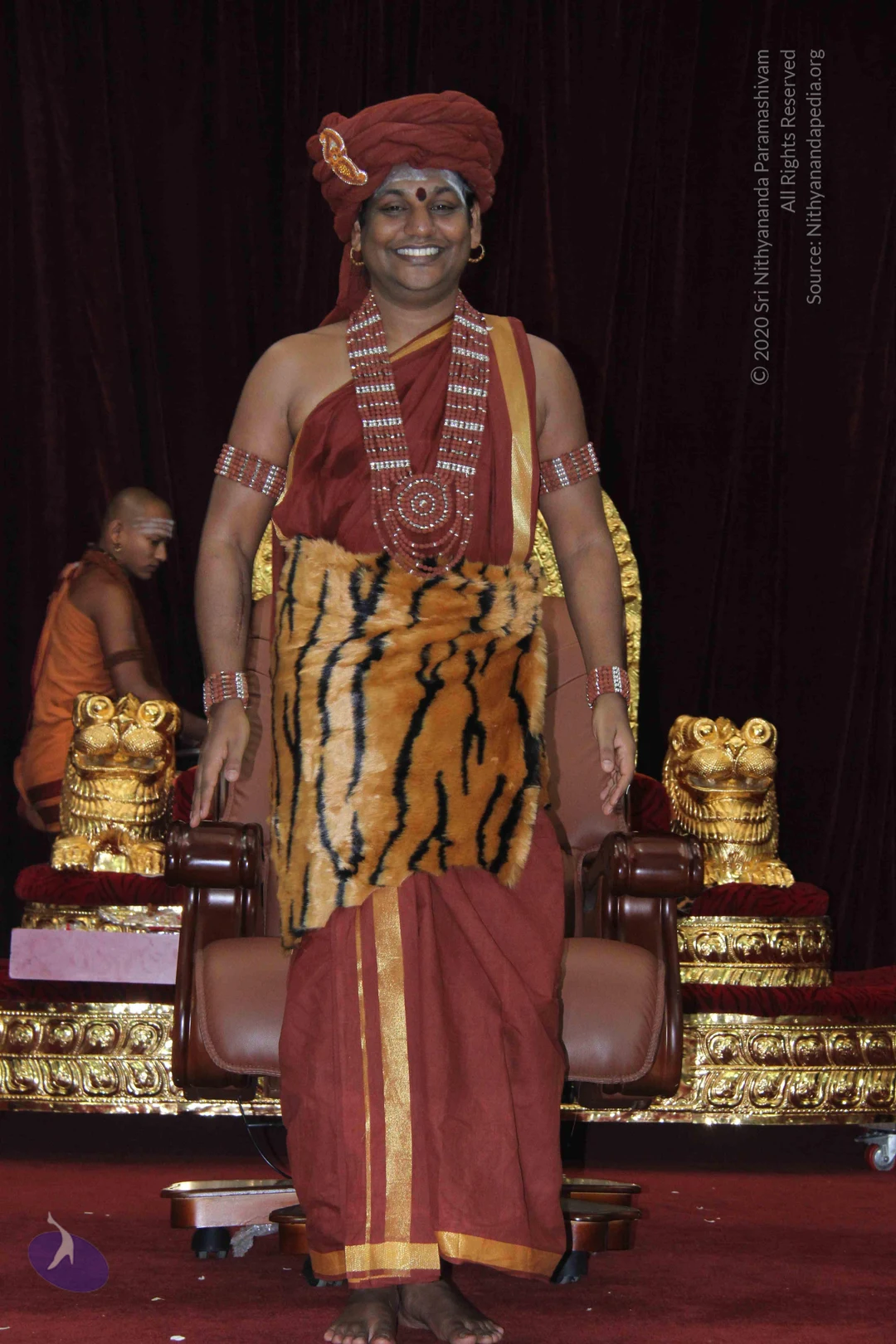
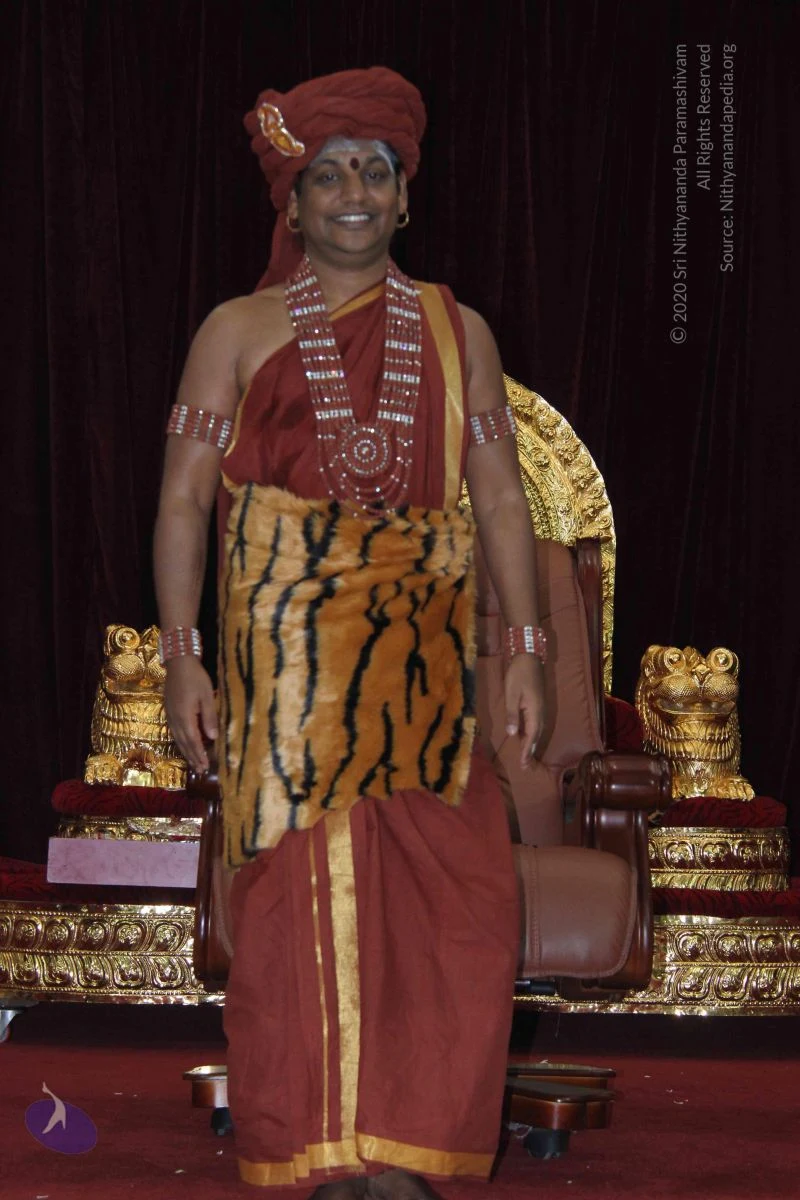
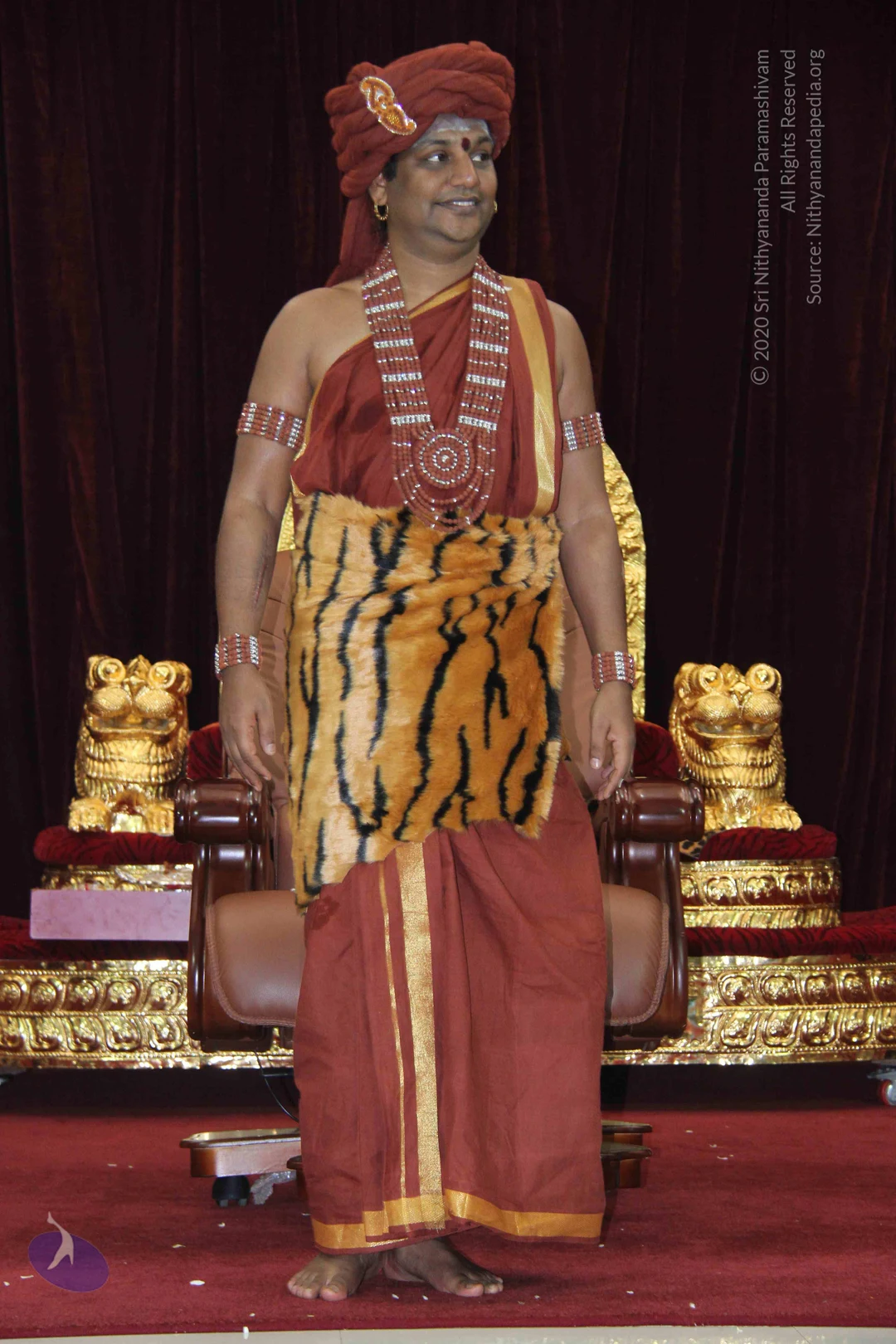
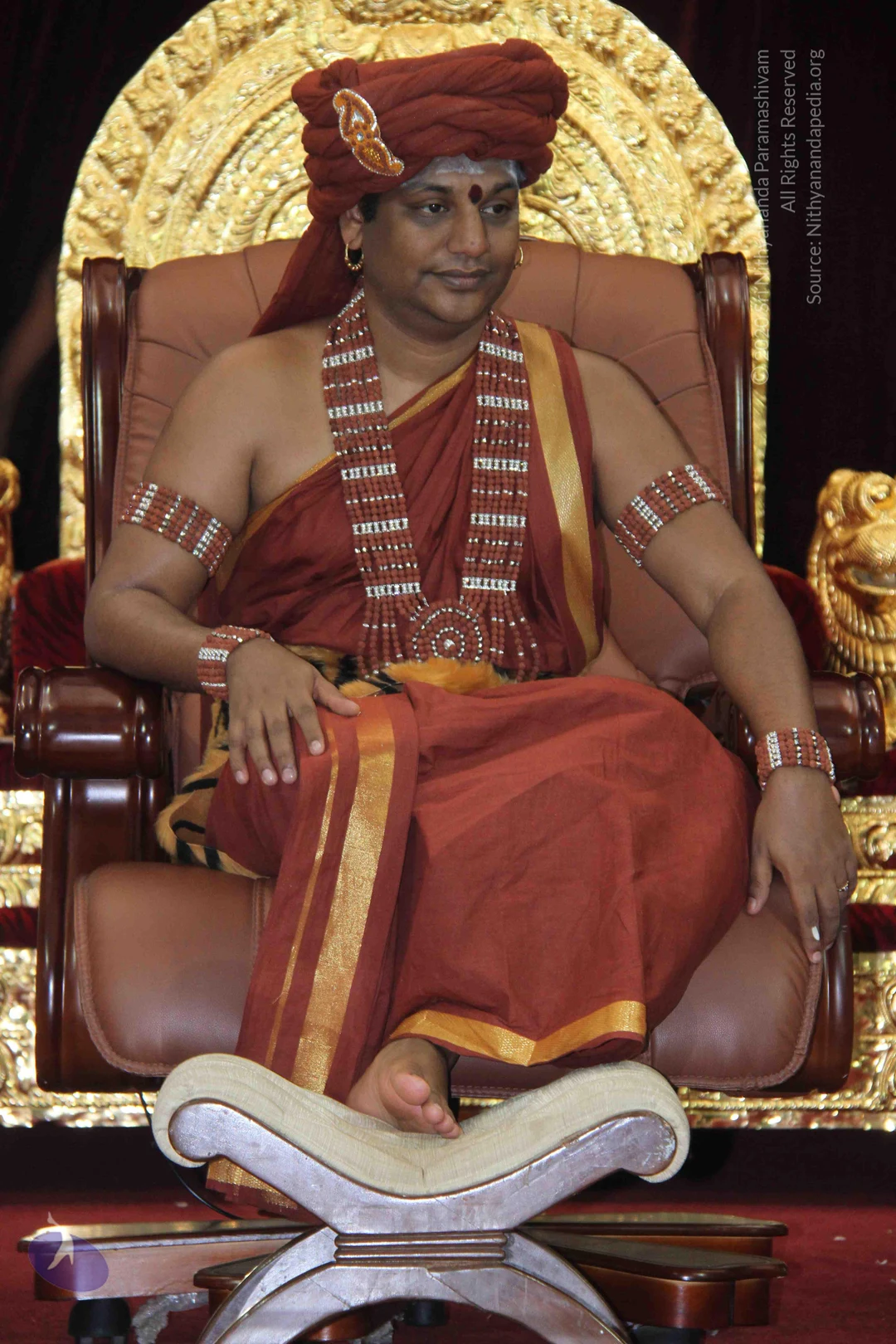
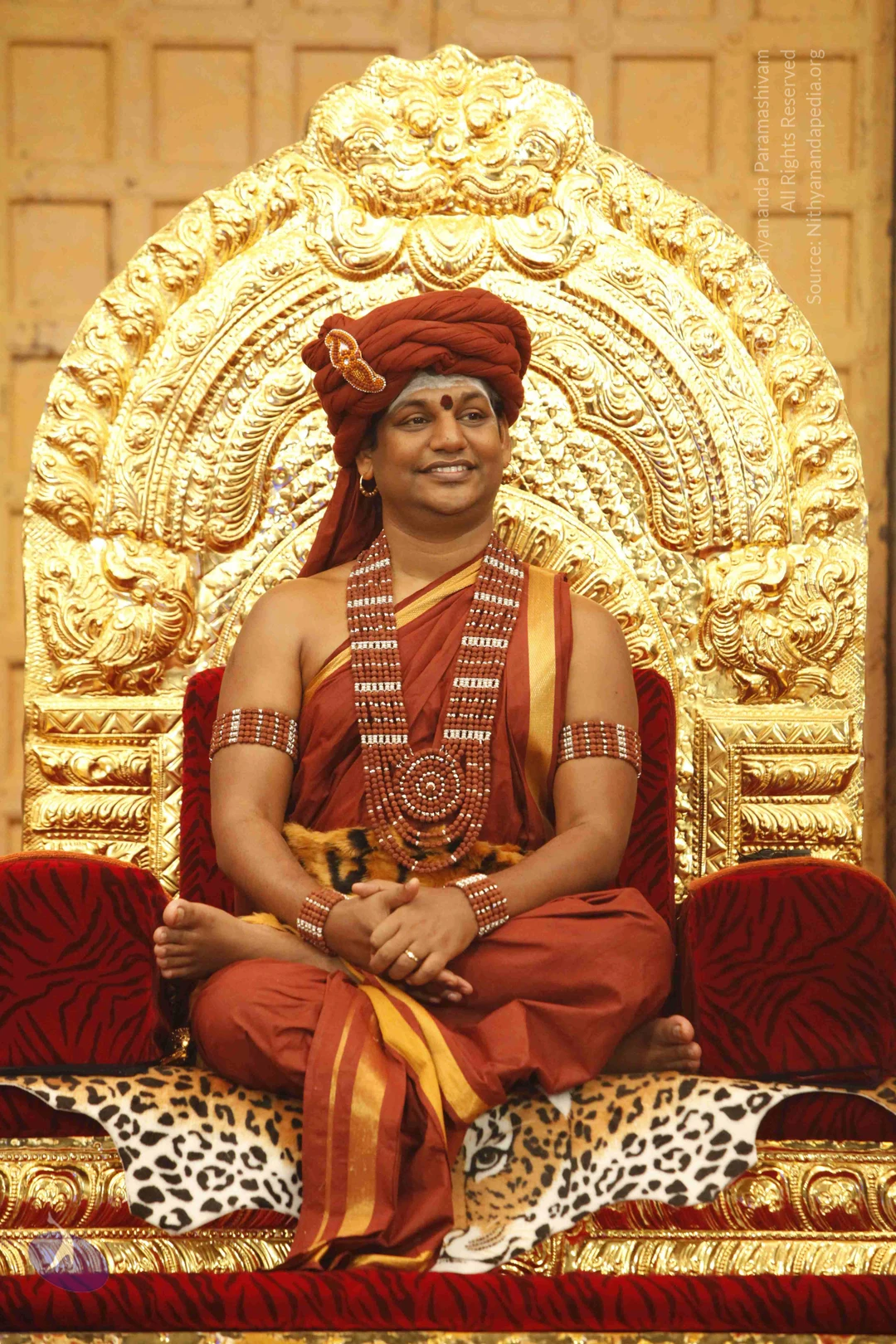
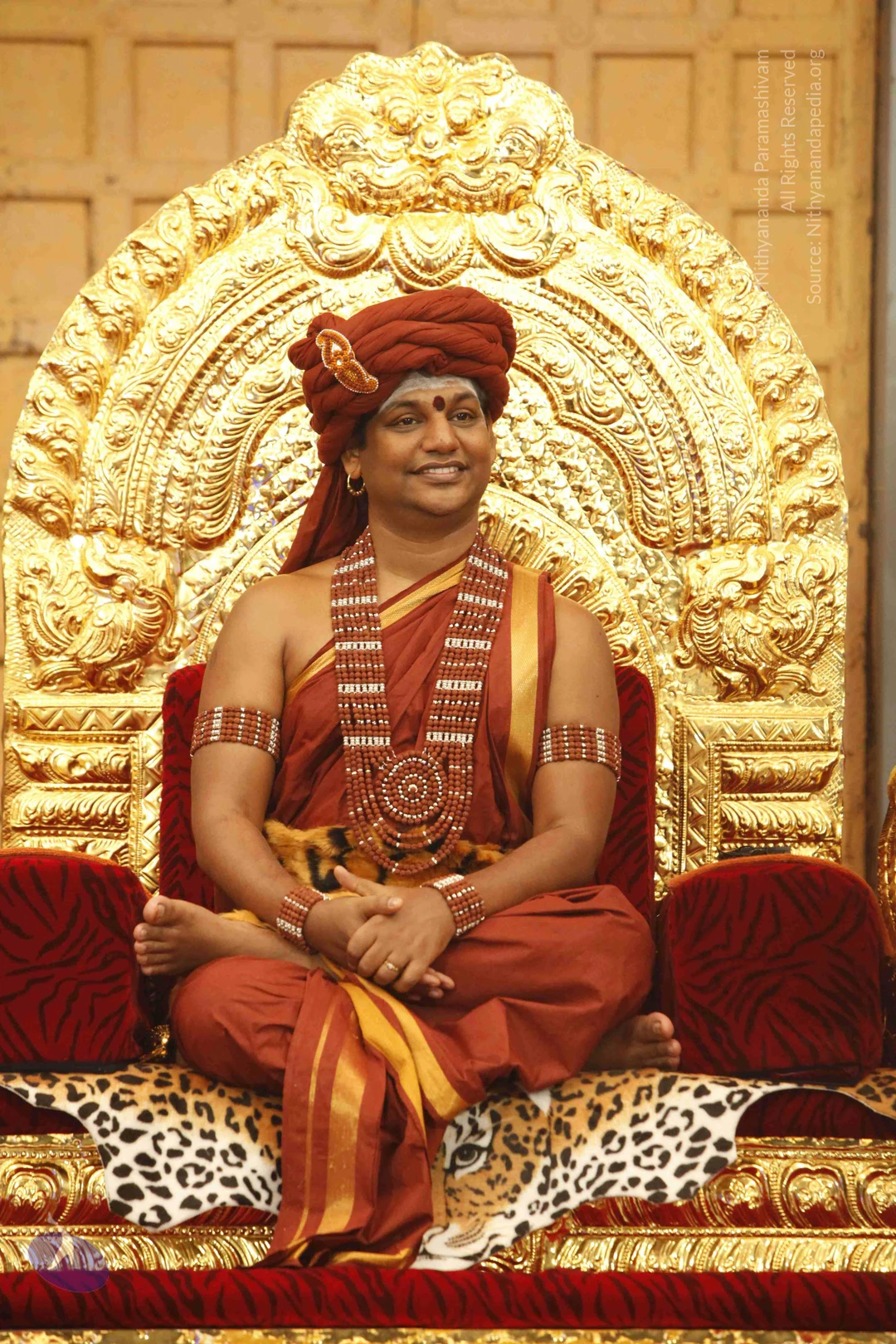
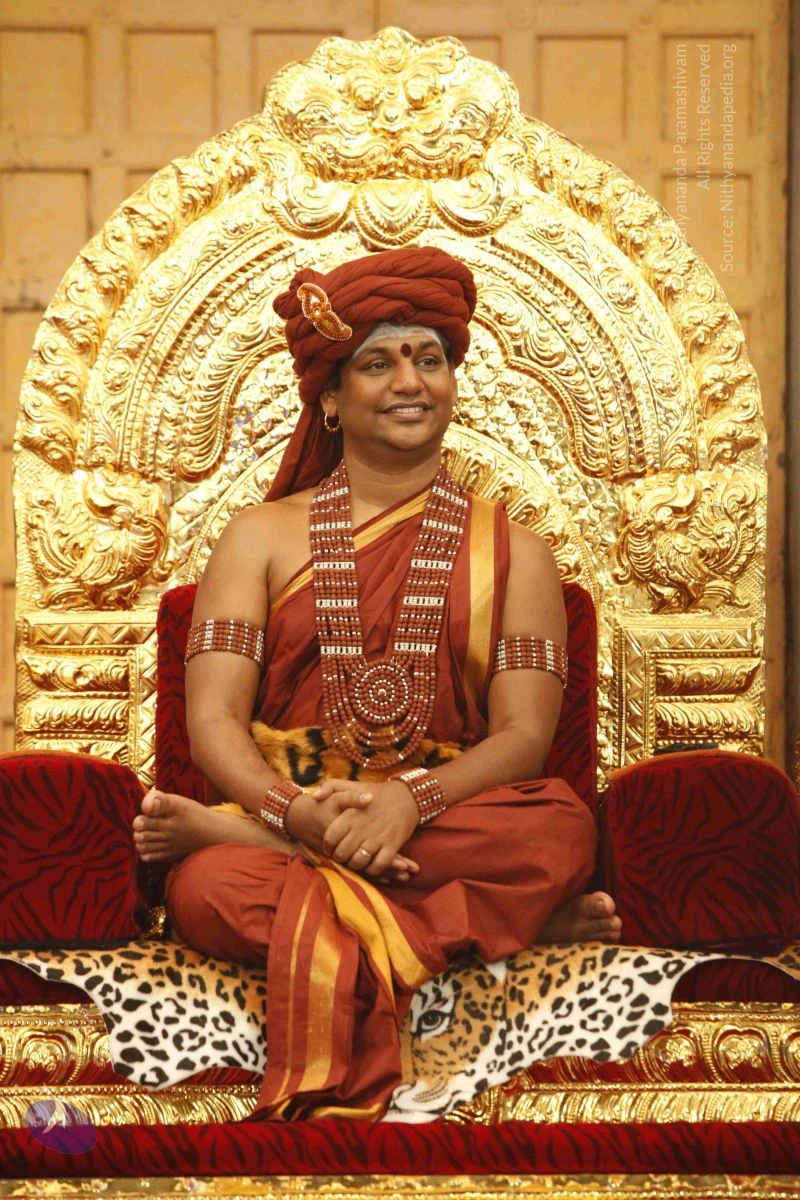
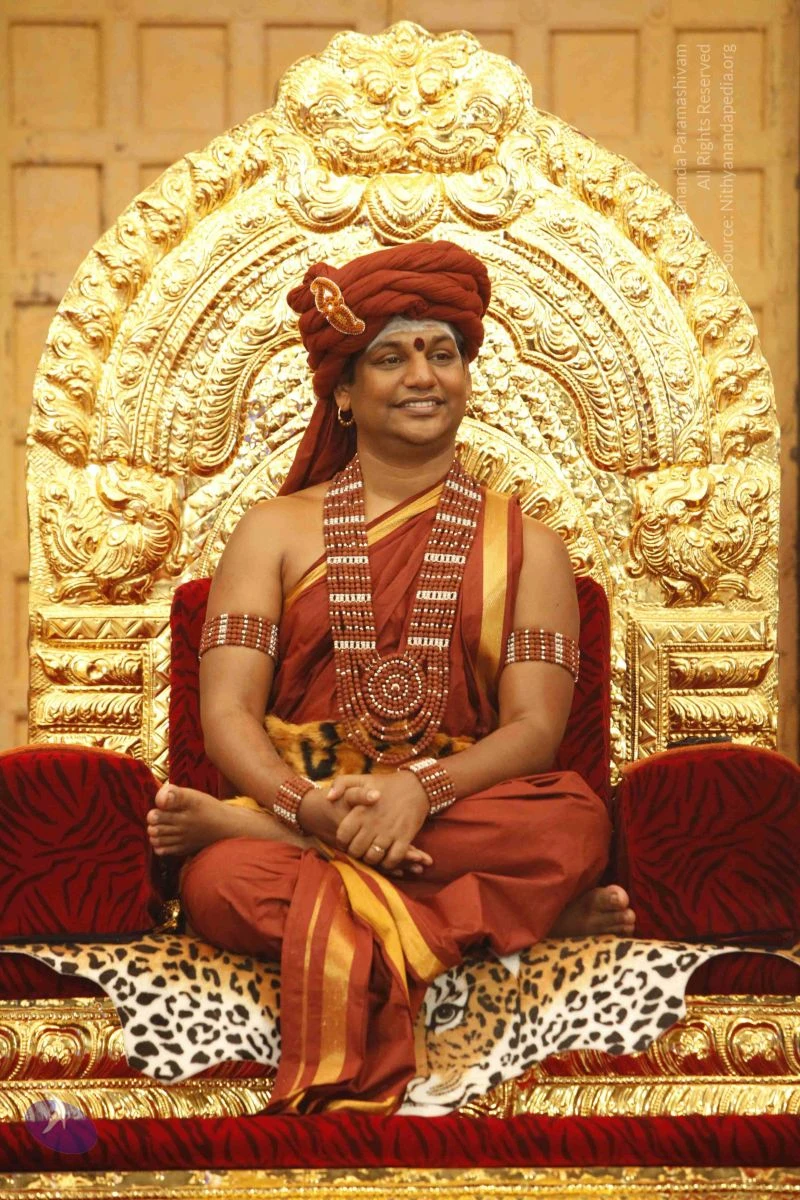
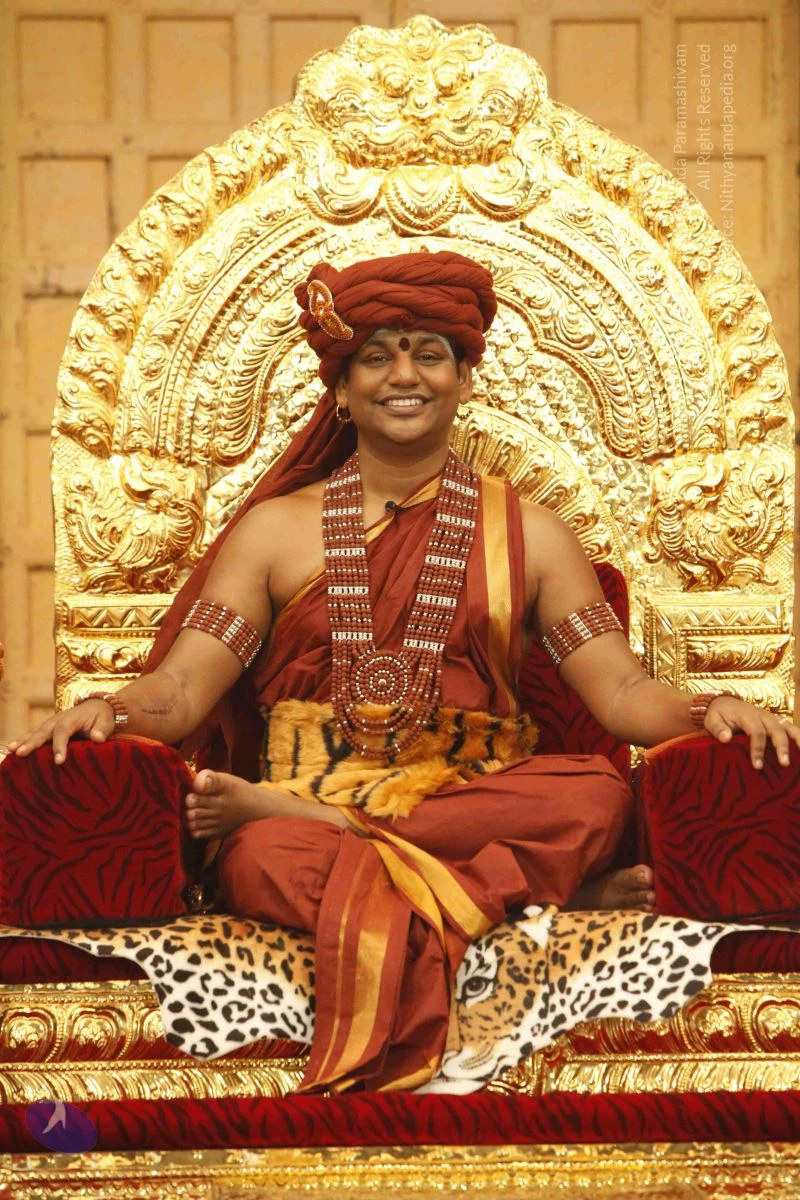
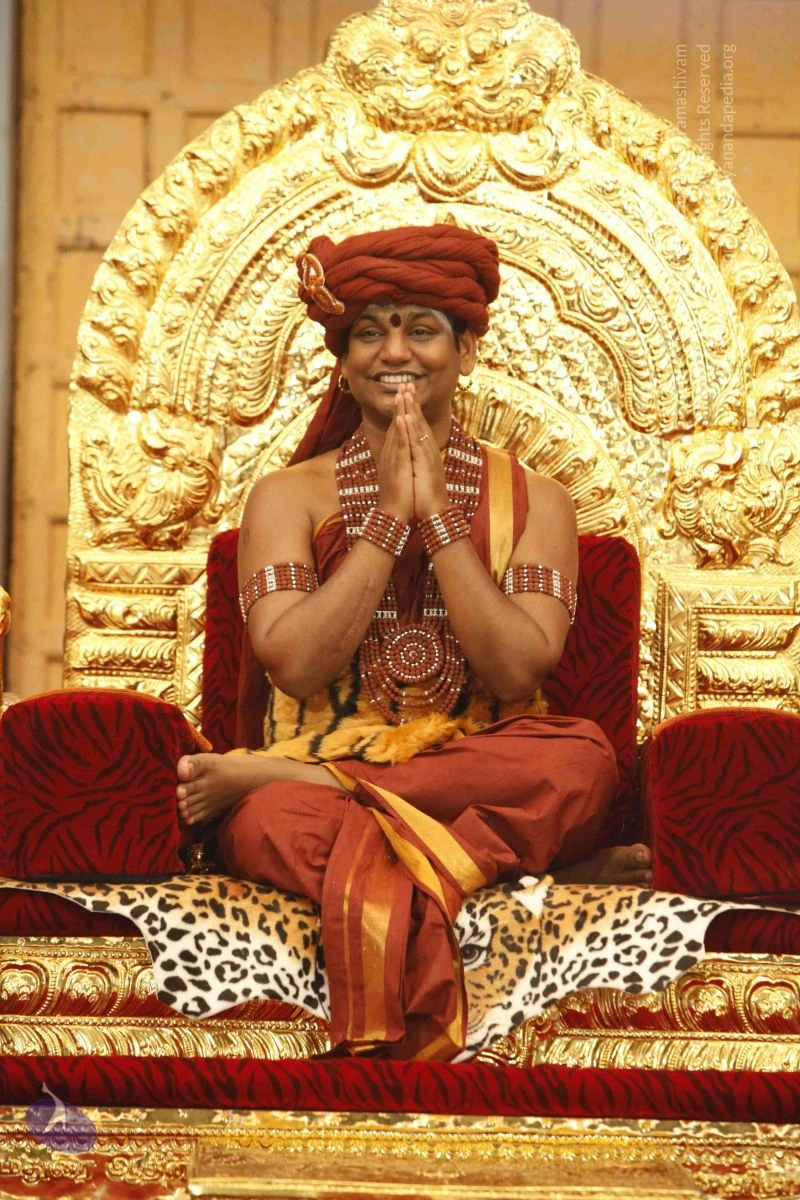
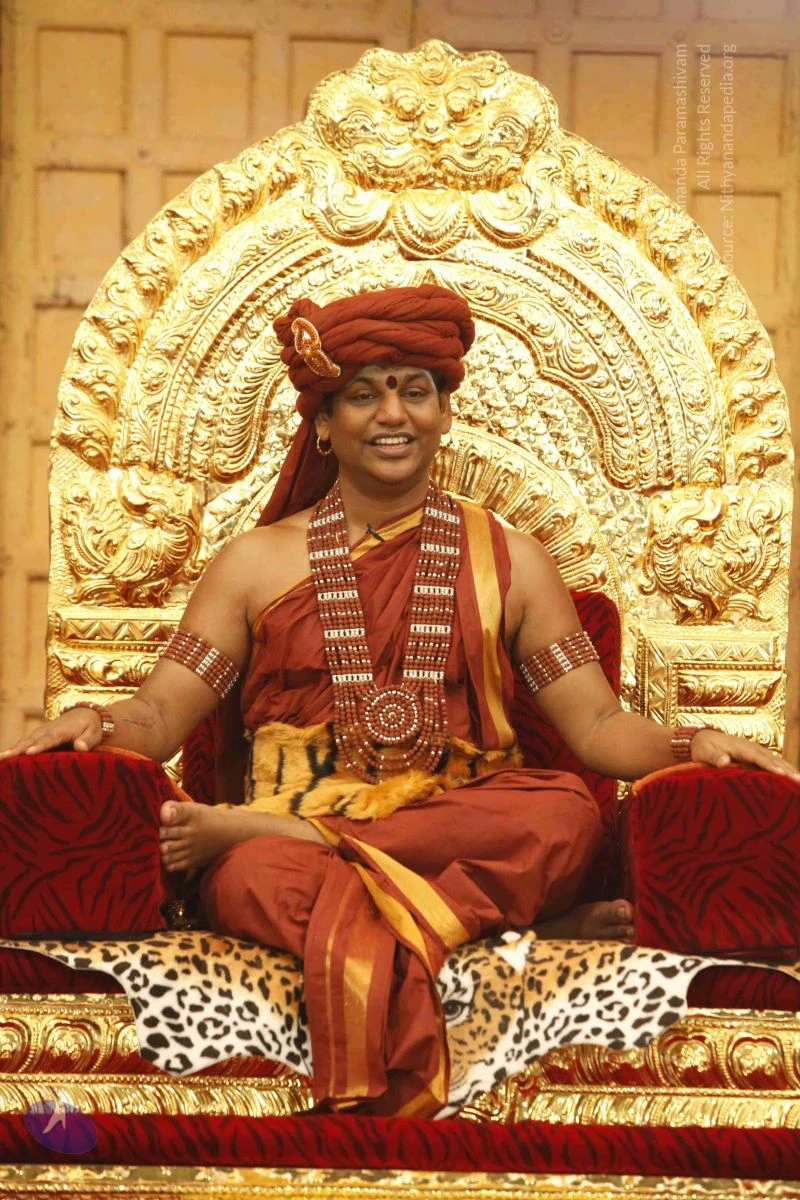
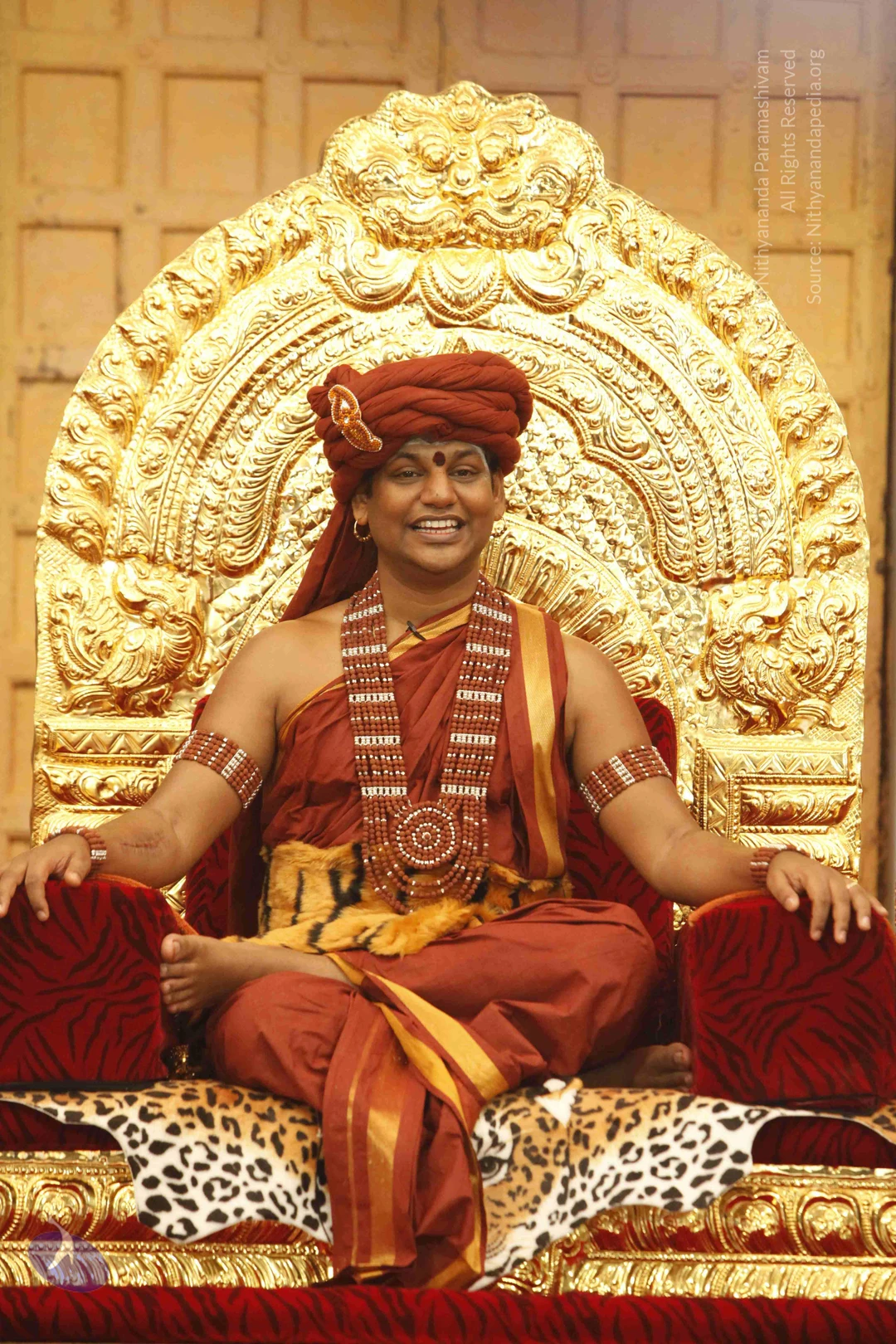
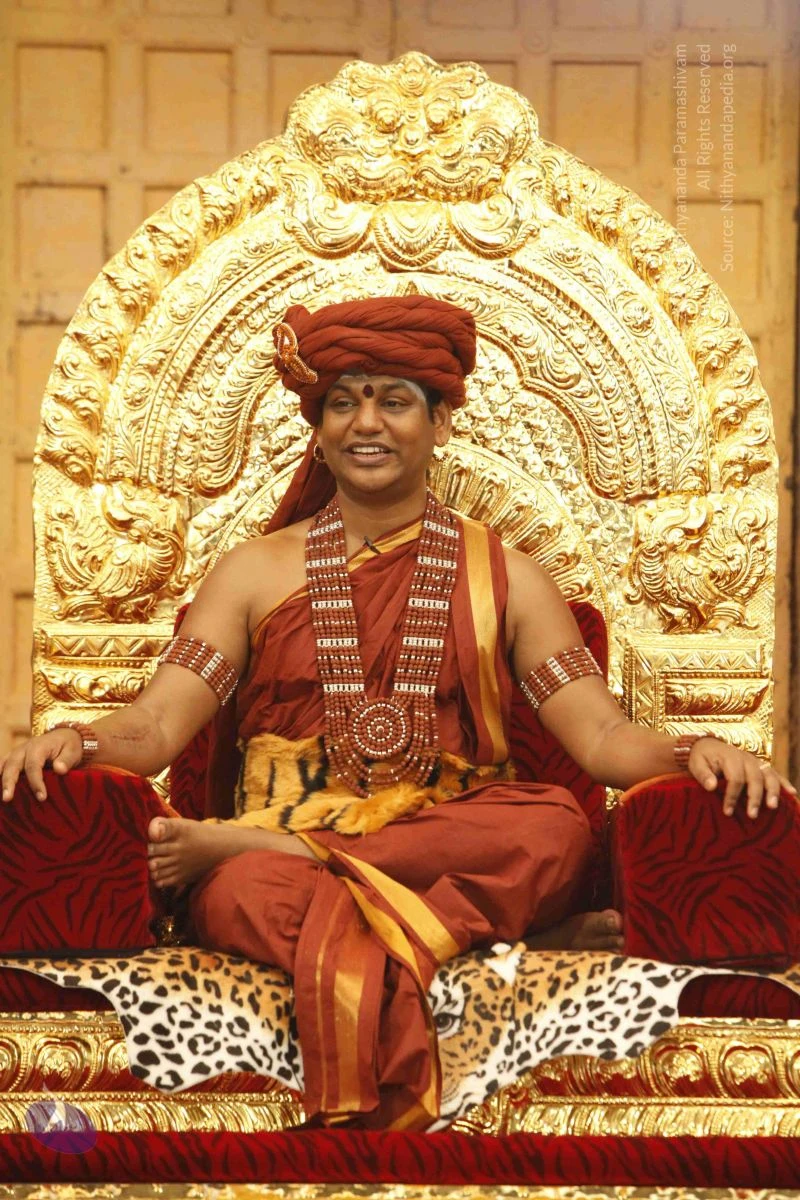
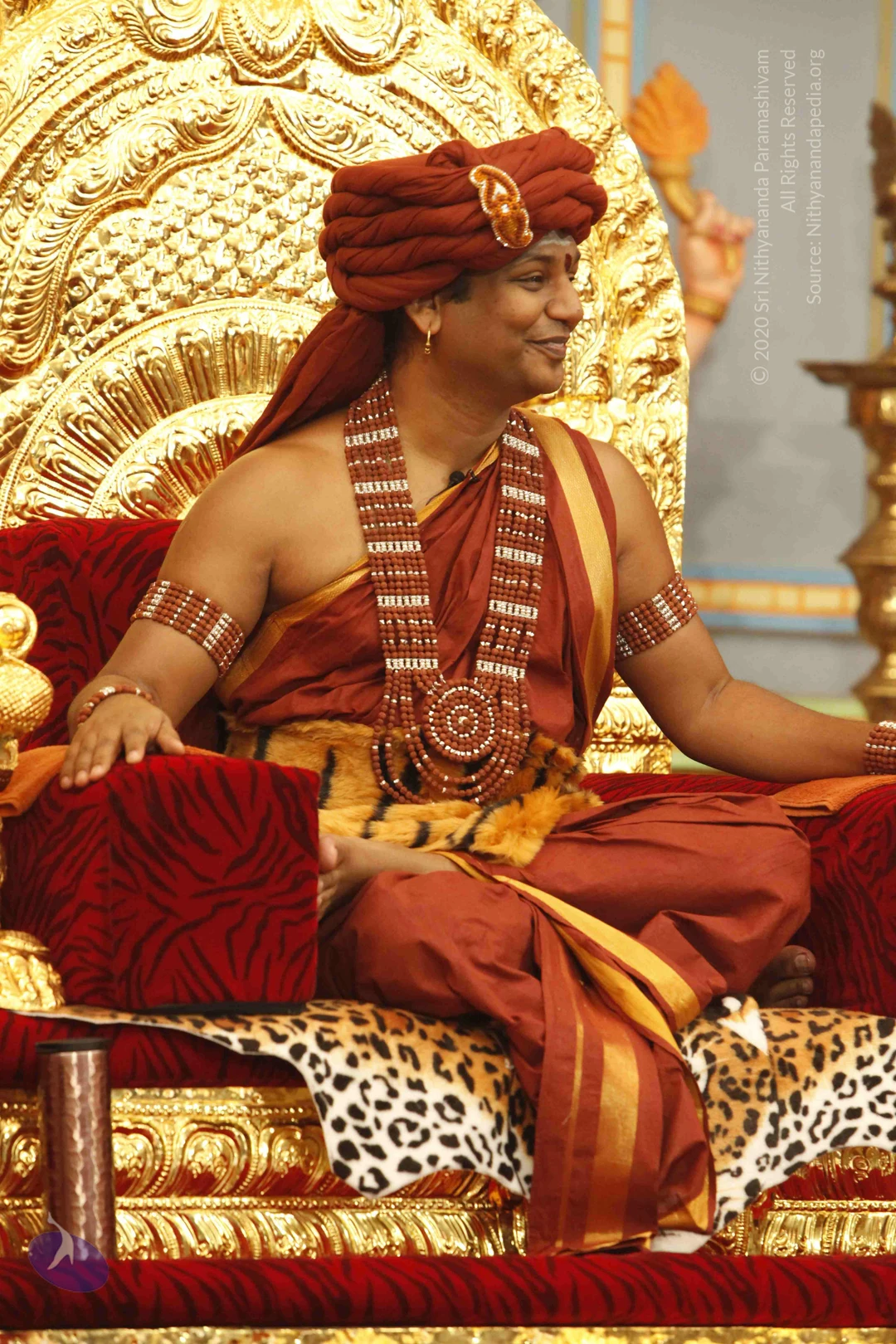
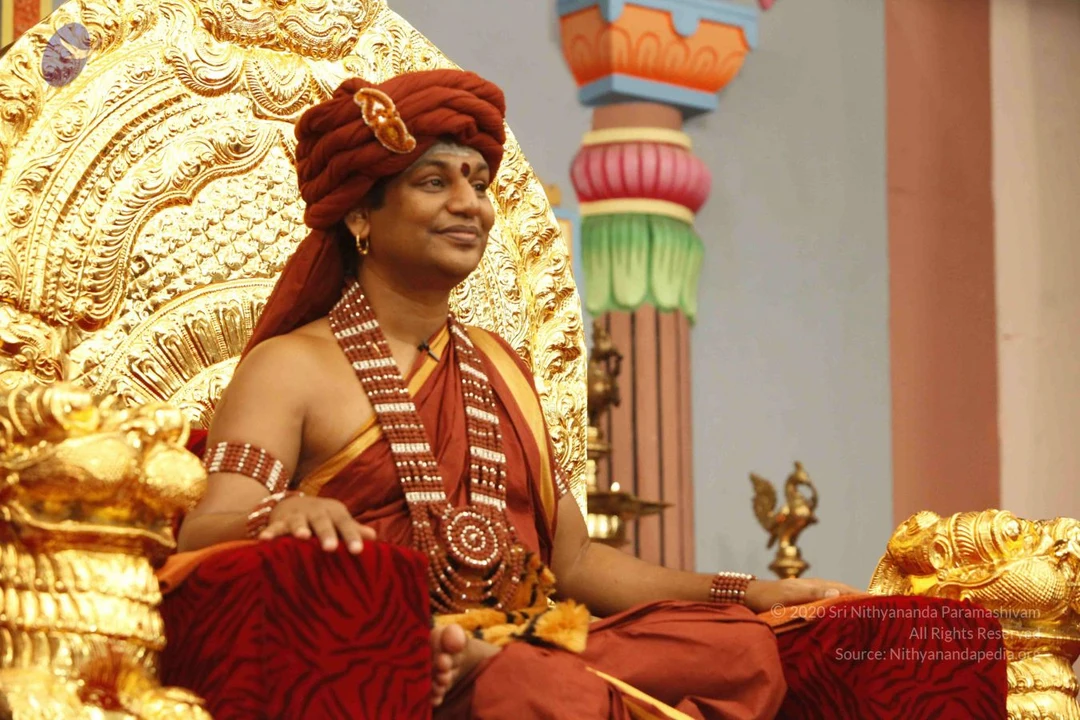
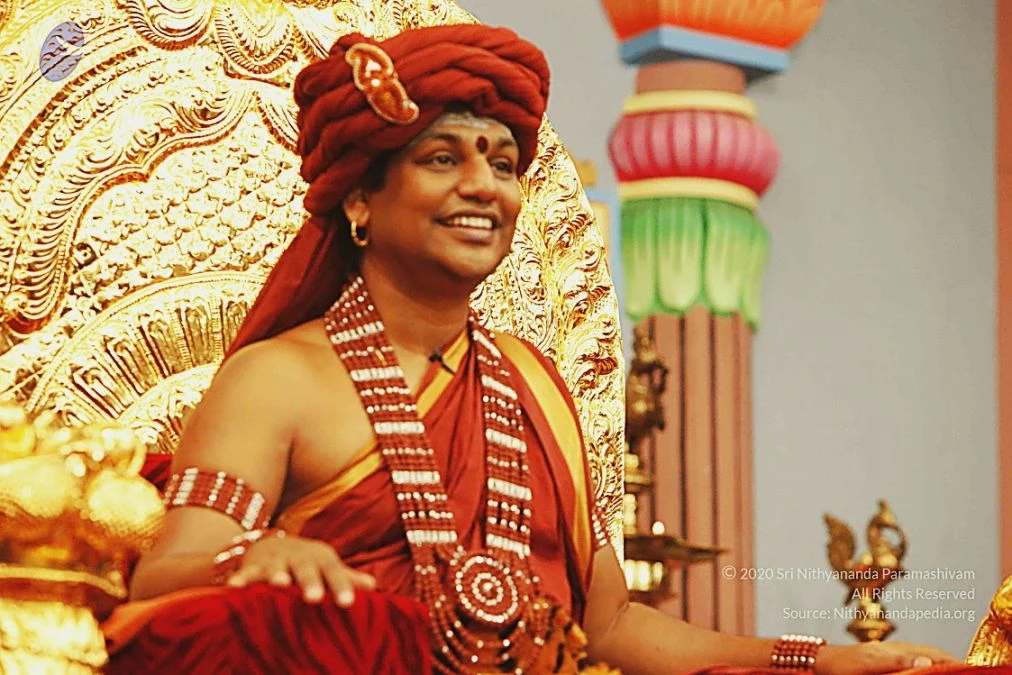
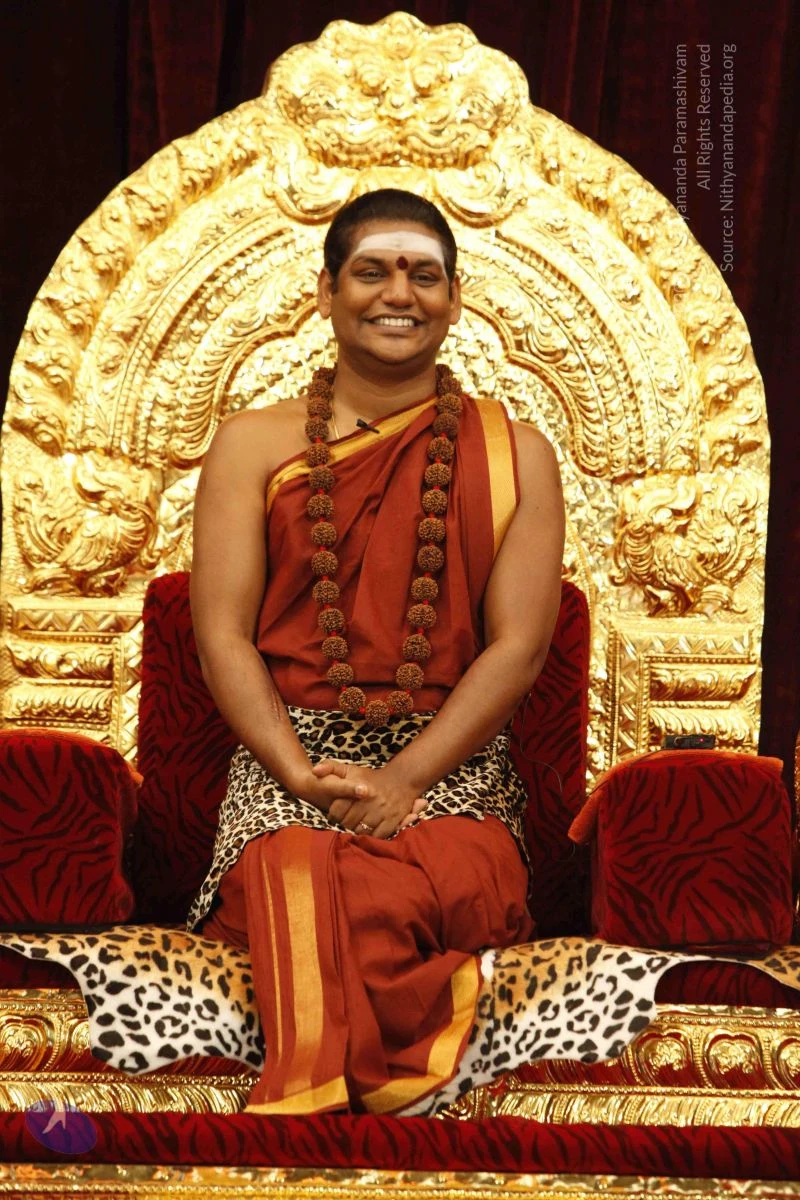
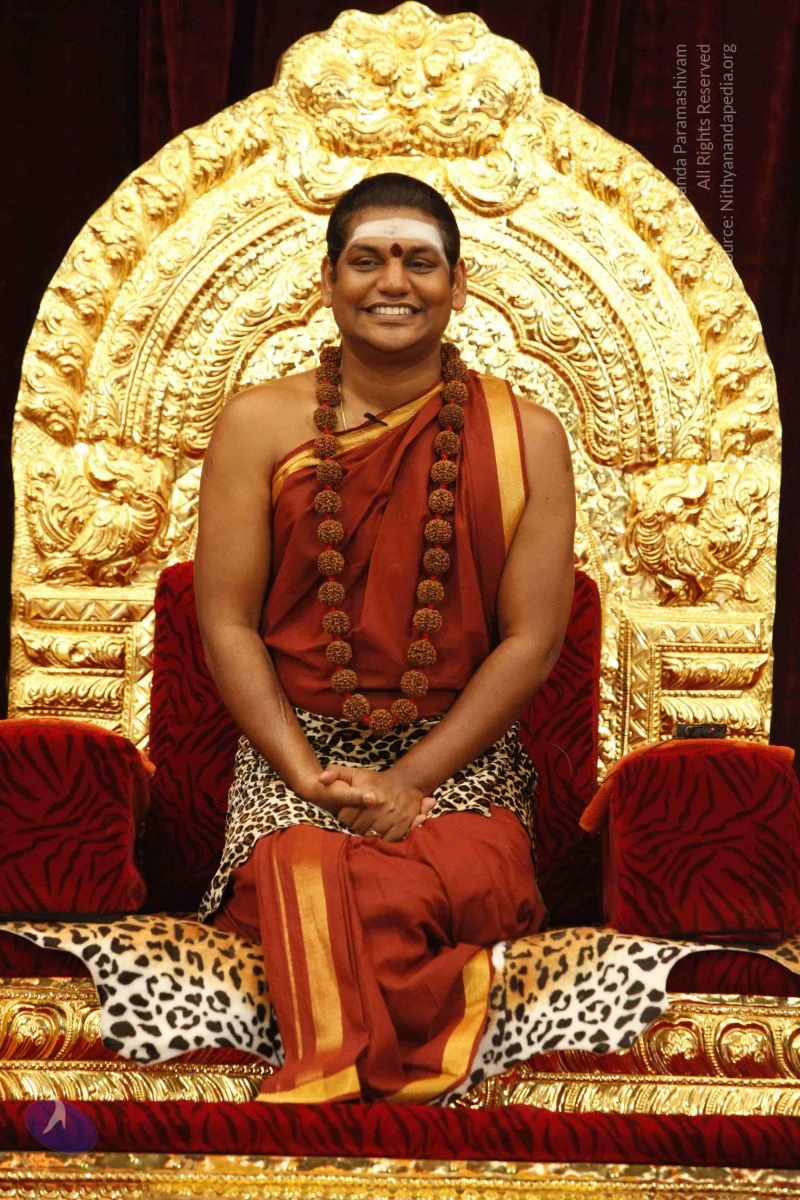
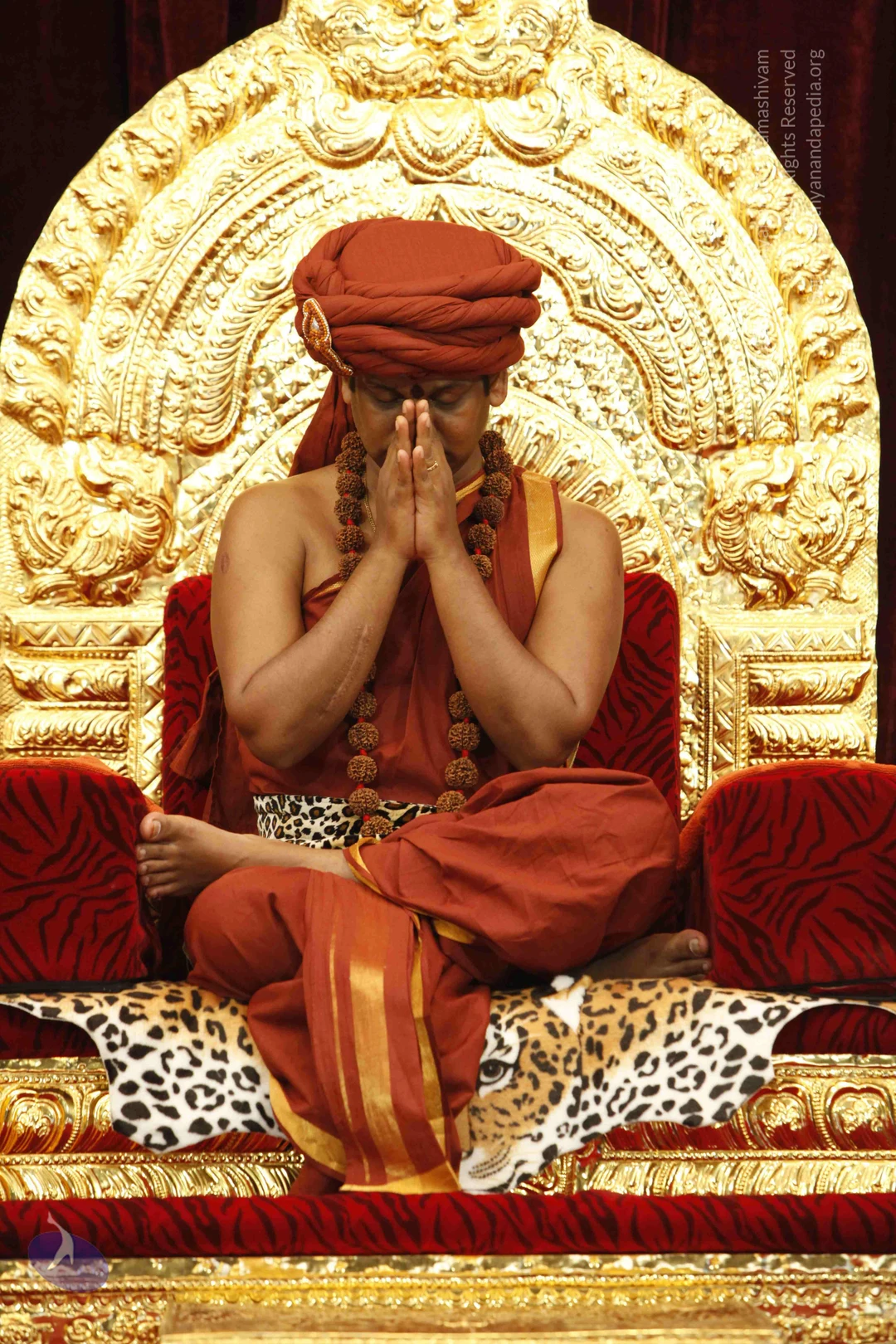
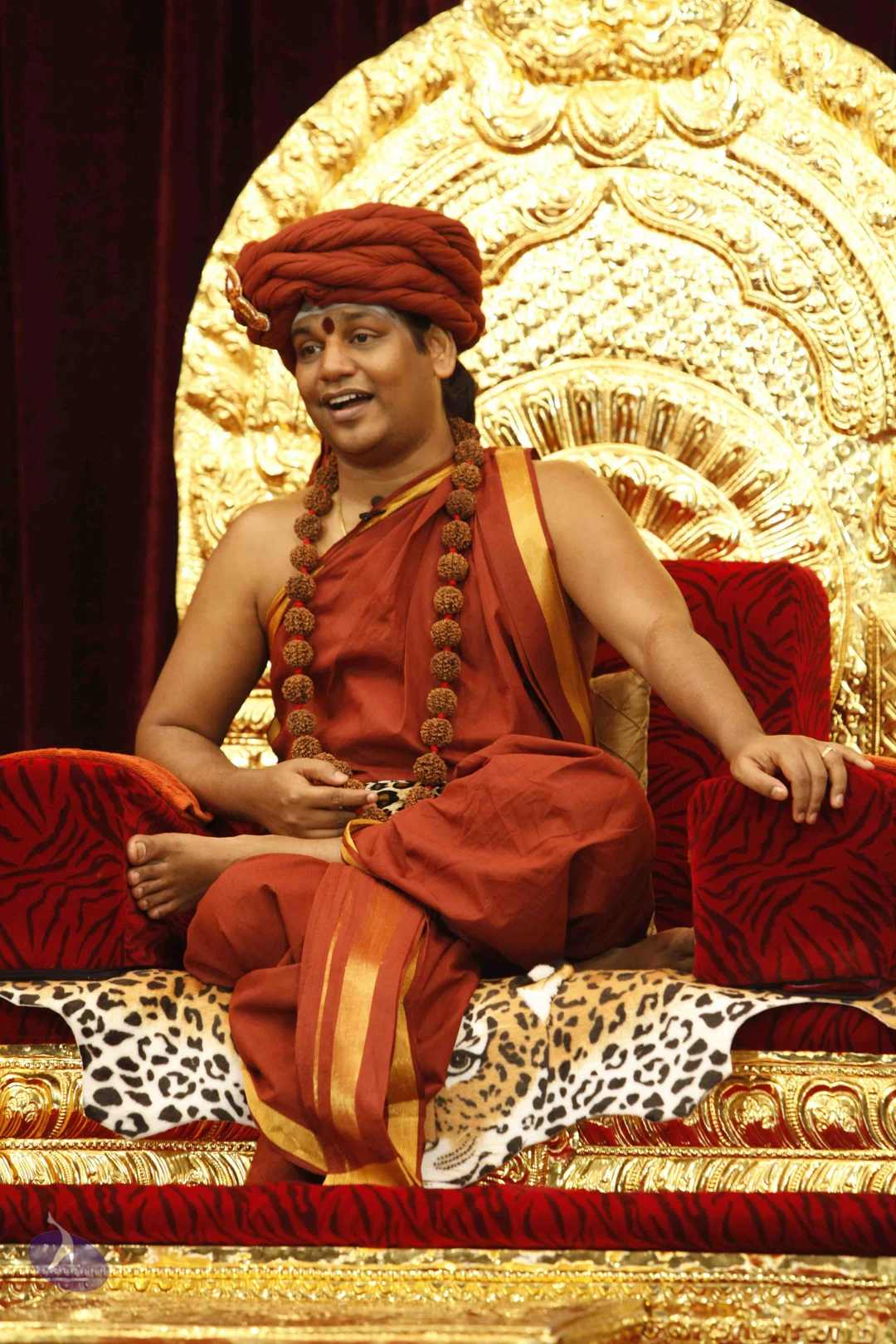
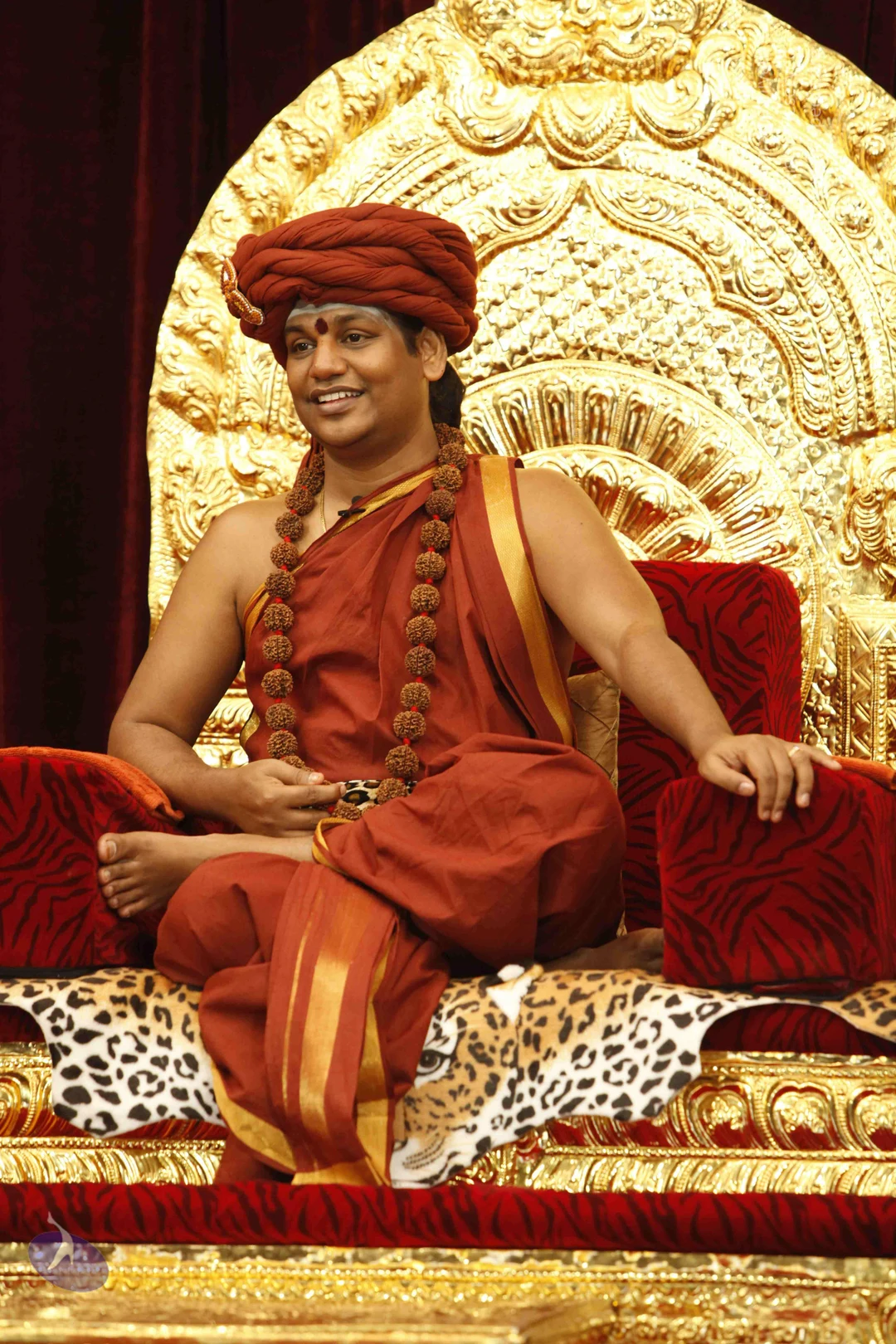
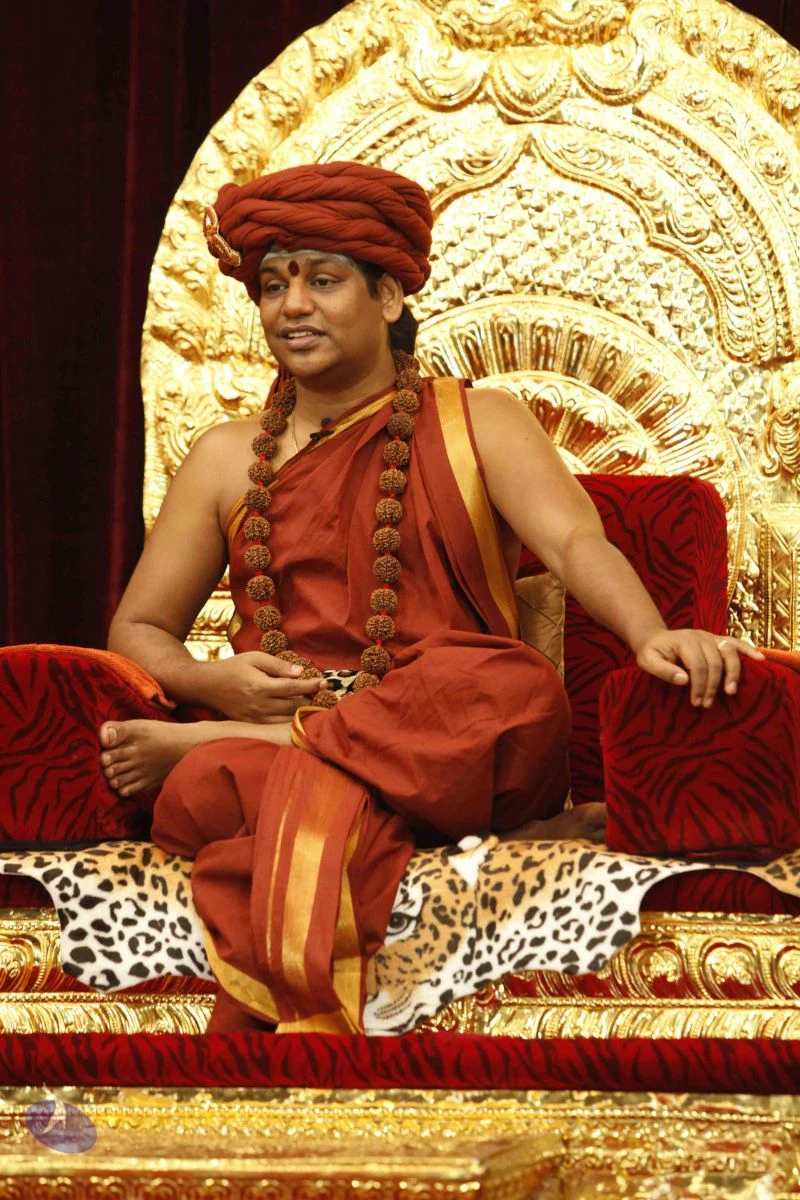
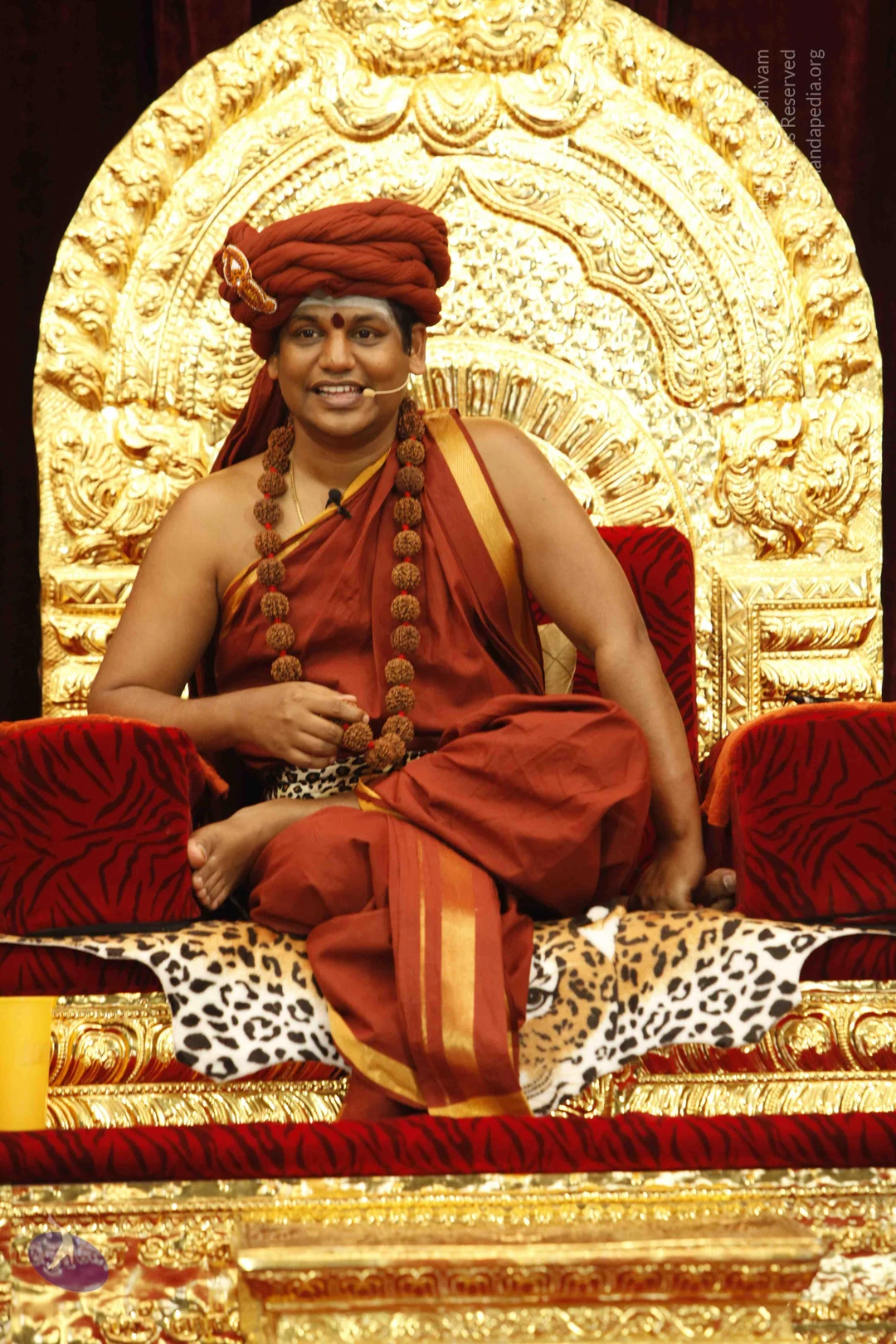
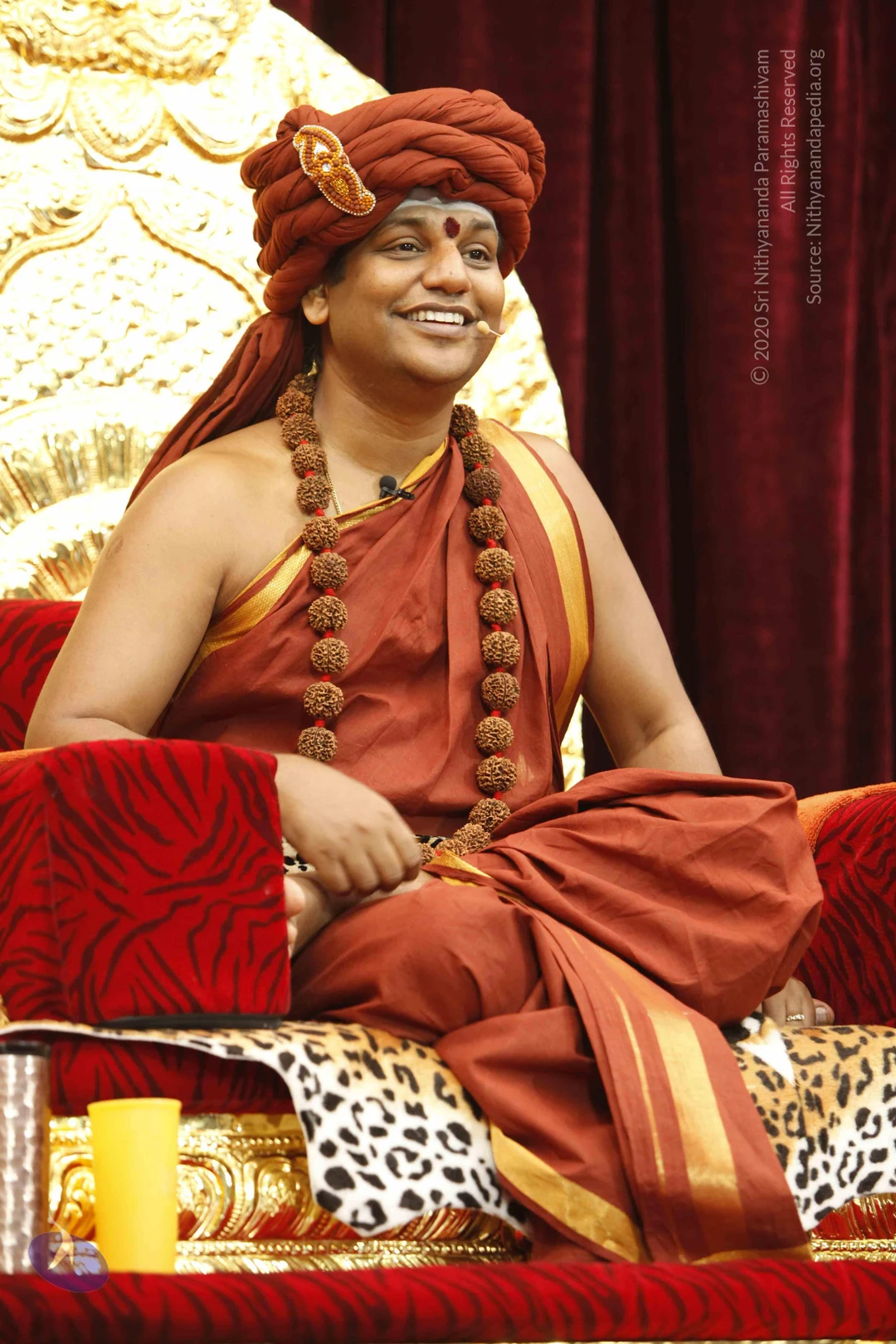
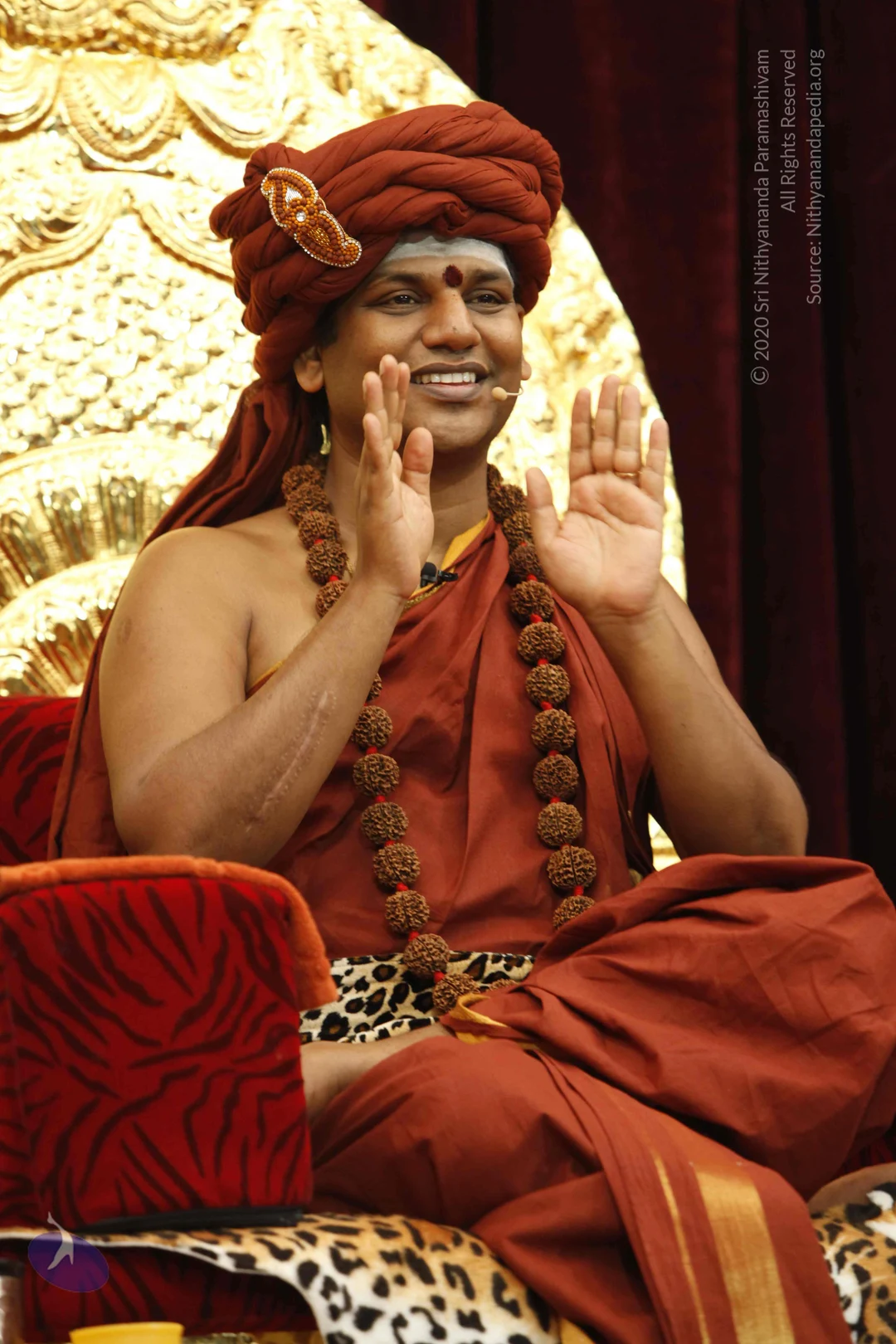
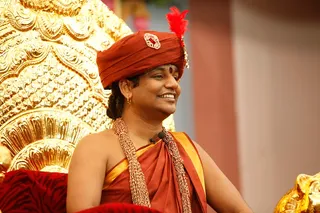
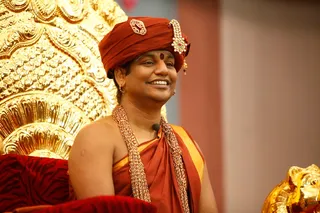
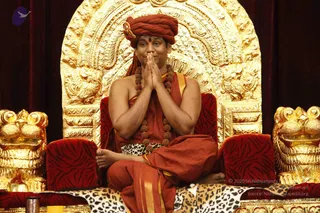
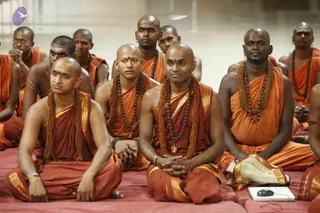
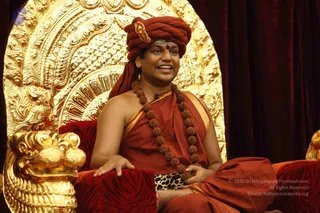
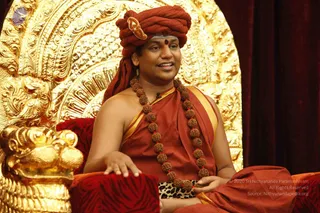
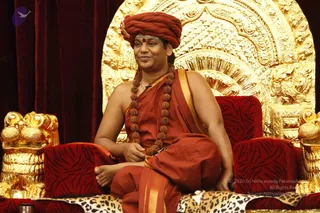
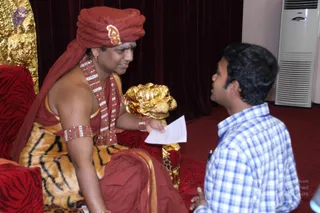
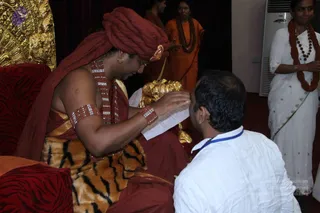
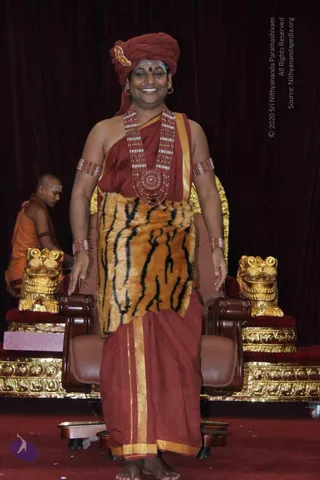
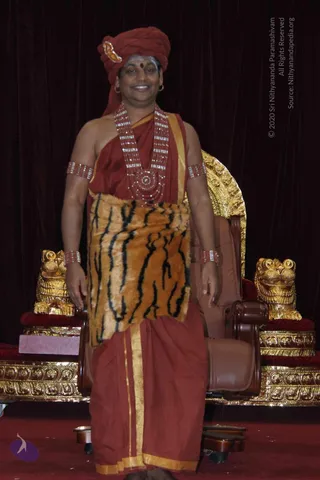
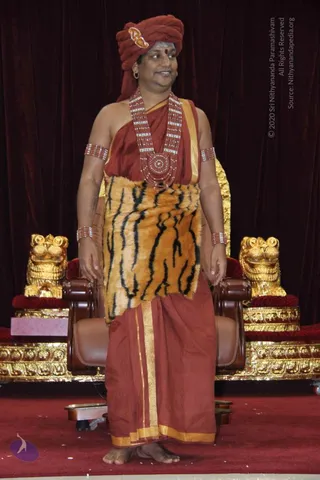
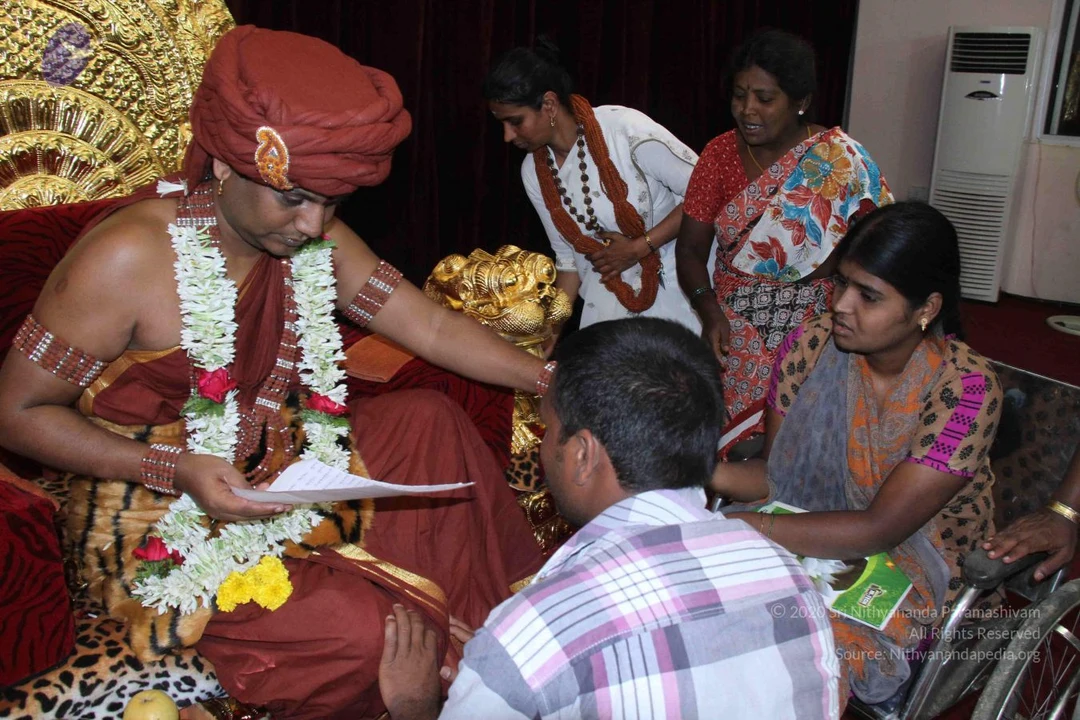
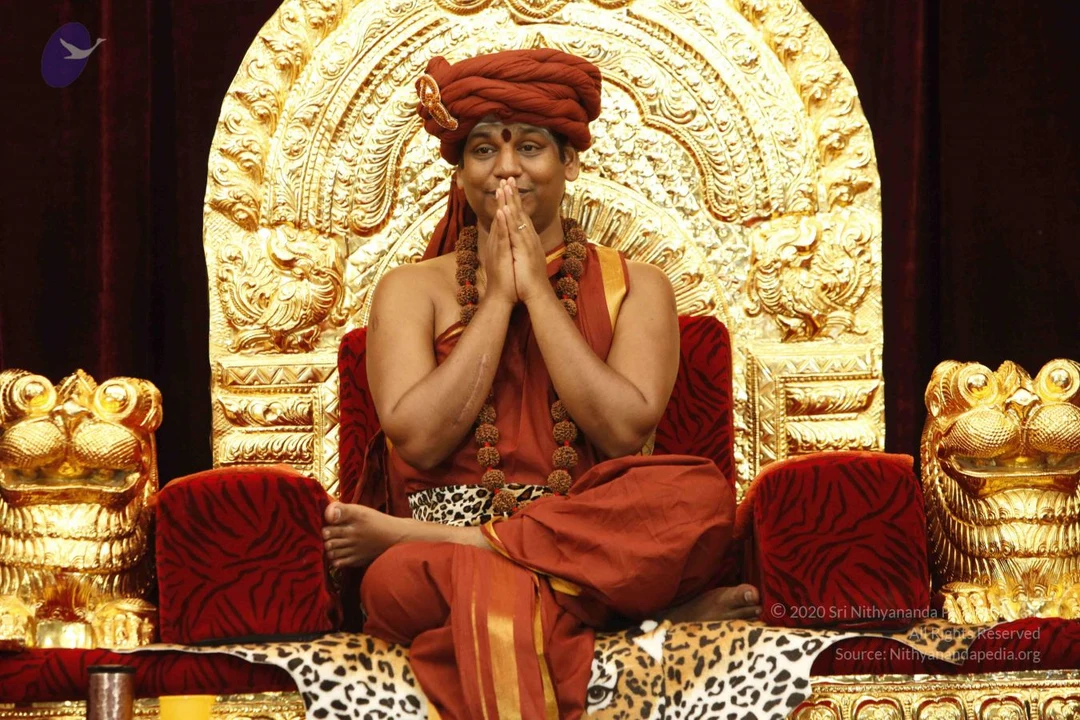
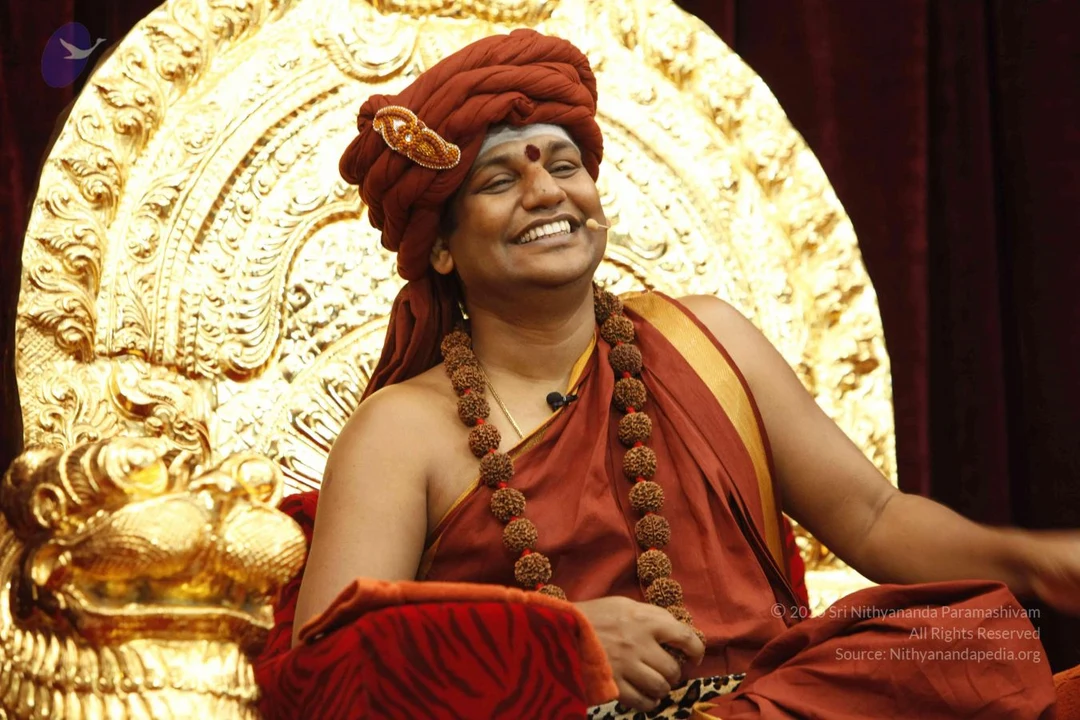
A seated man in a rust-red turban with a small gold emblem, bare-chested with a rust-red and gold shawl, and a multi-strand beaded necklace and beaded armlets, smiles as he rests both hands on the head of a kneeling young man in a pale green striped shirt and rudraksha mala who holds his palms together in greeting. The seated man is in the style of a probable Swamiji: the cues are the red turban, ornate beaded jewellery and saffron-toned robe. He sits on a red tiger-striped cushioned seat in front of an ornate gold carved throne back, with a dark maroon curtain behind and a white floor-standing air conditioner at right. A person in white stands at the right edge.A smiling man seated on an ornate gilded throne with elaborate golden carvings. He wears a red-orange turban with a gold ornament, a red bindi and white marks on his forehead, gold earrings, a red-orange shawl with a gold border, and layered red and white beaded rudraksha-style malas with a central pendant, plus beaded armlets on both upper arms. a person: the visible cues are the red turban, ornate ceremonial beadwork and the throne, with the page noting his presence at this satsang.A man seated on an ornate golden throne with an arched gilt back carved with floral and scrollwork, set against deep red drapery. He wears a rust-orange robe with gold-edged borders, a long rudraksha mala of beads around his neck, and a leopard-print wrap over his lap, with a white vertical tilak and red dot on his forehead. His hands are clasped in his lap and he smiles broadly. A leopard-print and red tiger-striped cushioned seat sits beneath him. A small lapel microphone is clipped to his robe. a person is shown in person, seated on the throne with a rudraksha mala and orange robe.

February 11 2014

Original wiki page
Contents

Title

Coming in terms with reality

Description:

In today’s morning Satsang, Paramahamsa Nithyananda delivers a crucial sacred secret – COMING TO TERMS WITH REALITY IS COMPLETION. When we are powerful, in front of reality -facing it - we know what we need to change and what we can change. We can even overcome the wrong concepts and fear about death, confronting death and completing with it. Let us all be in a powerful space of completion, coming to terms with reality!

Link to Video:

Tags:

Paramahamsa Nithyananda, sacred secret, powerful, reality, change, fear, death, space completion.

Transcript:

[00:33]

Nithyanandeshwara Samaarambhaam Nithyanandeshwari Madhyamaam | Asmath Aachaarya Paryanthaam Vandhey Guru Paramparaam ||

[00:25] Iss samay hamare sath upasthit sabhi darshakon aur bhakton ka main prem evam aashirwad sahit swagat karta hun.

[1:06]

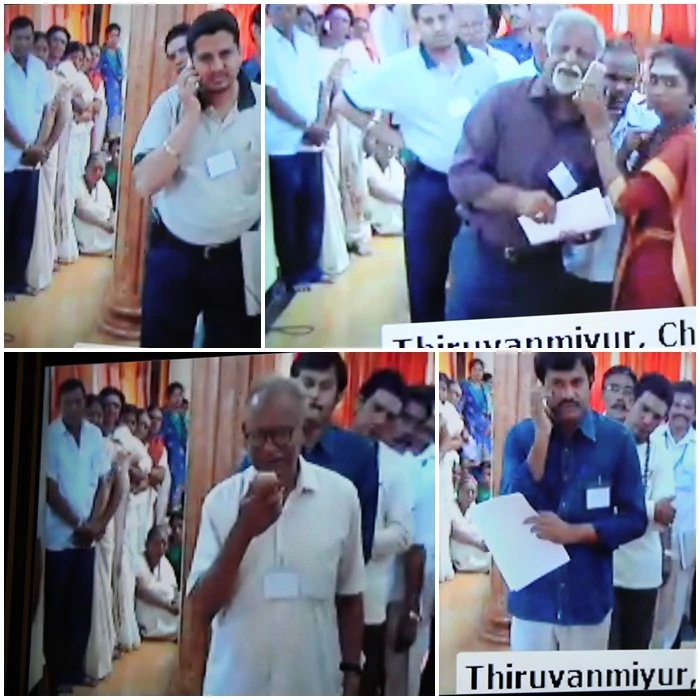
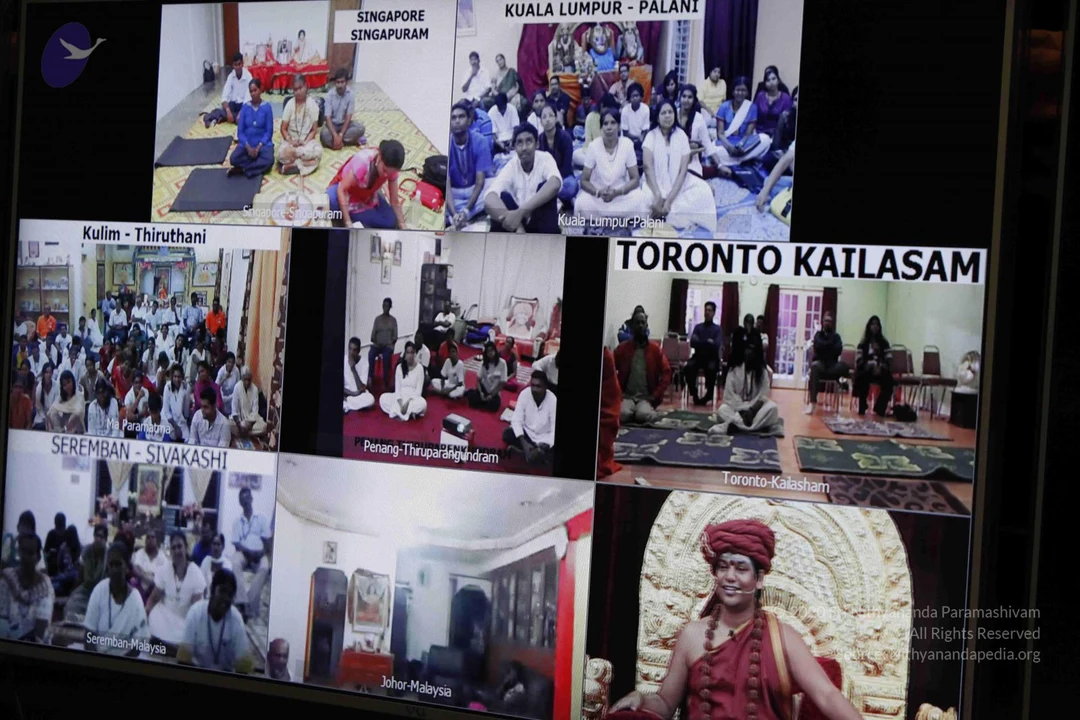
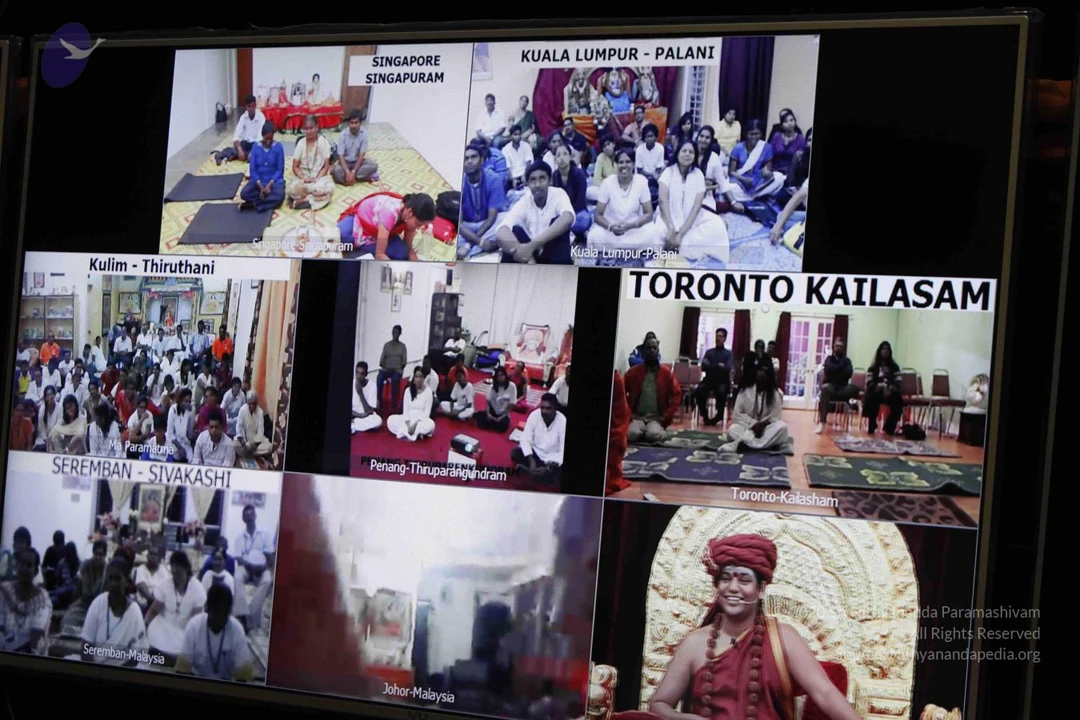
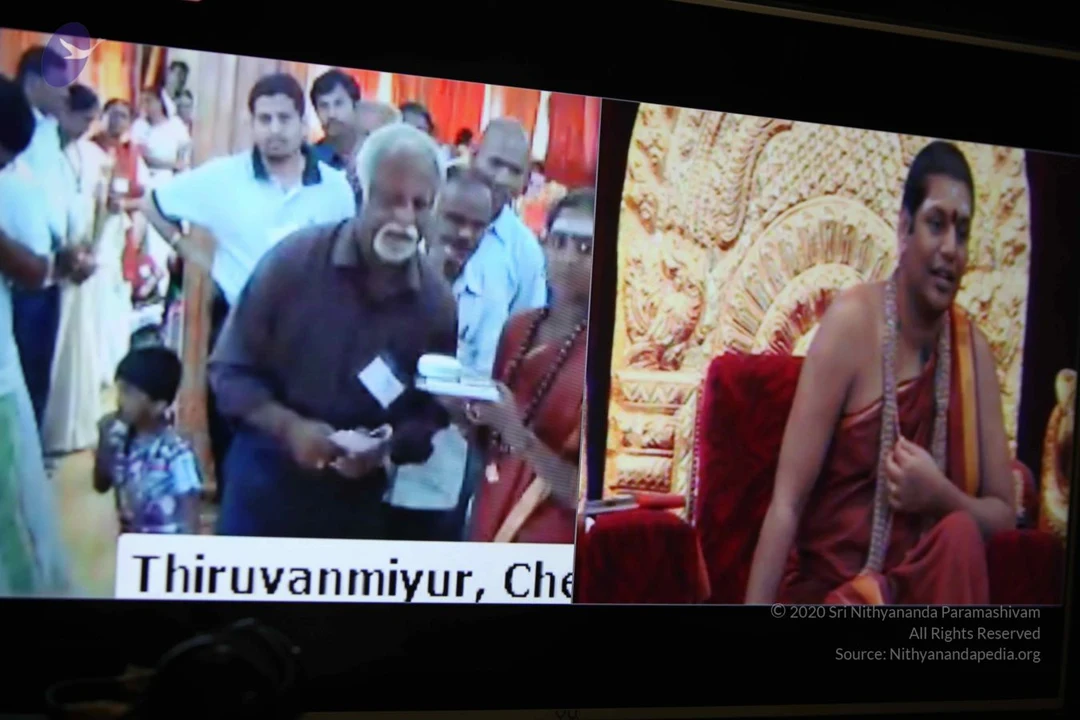
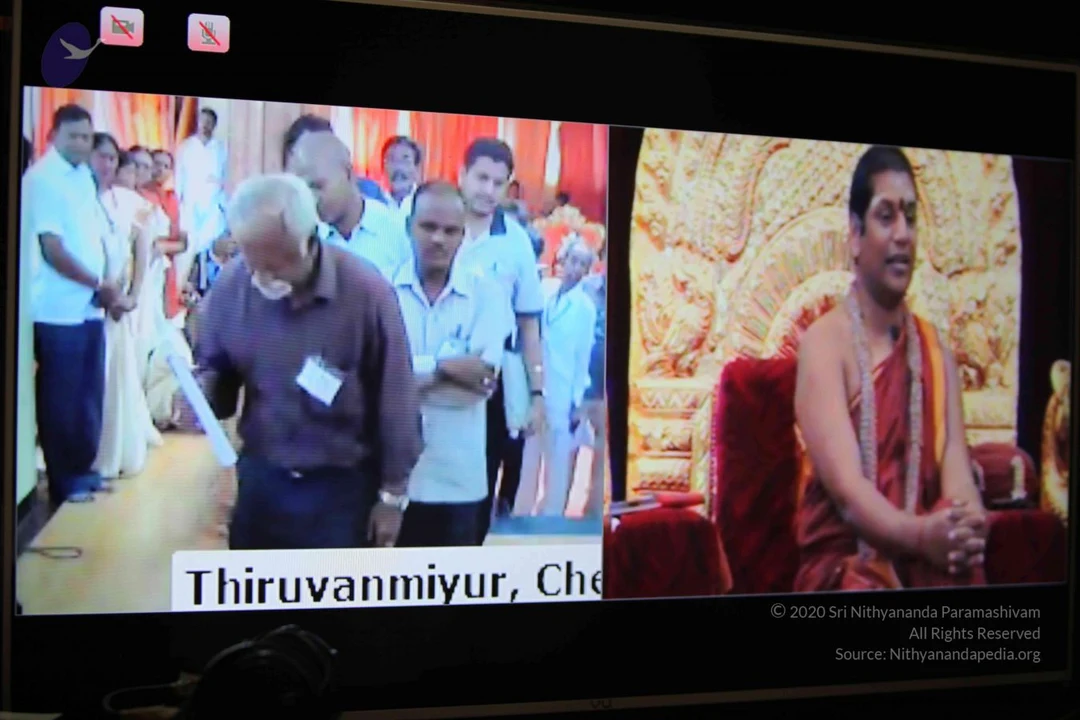
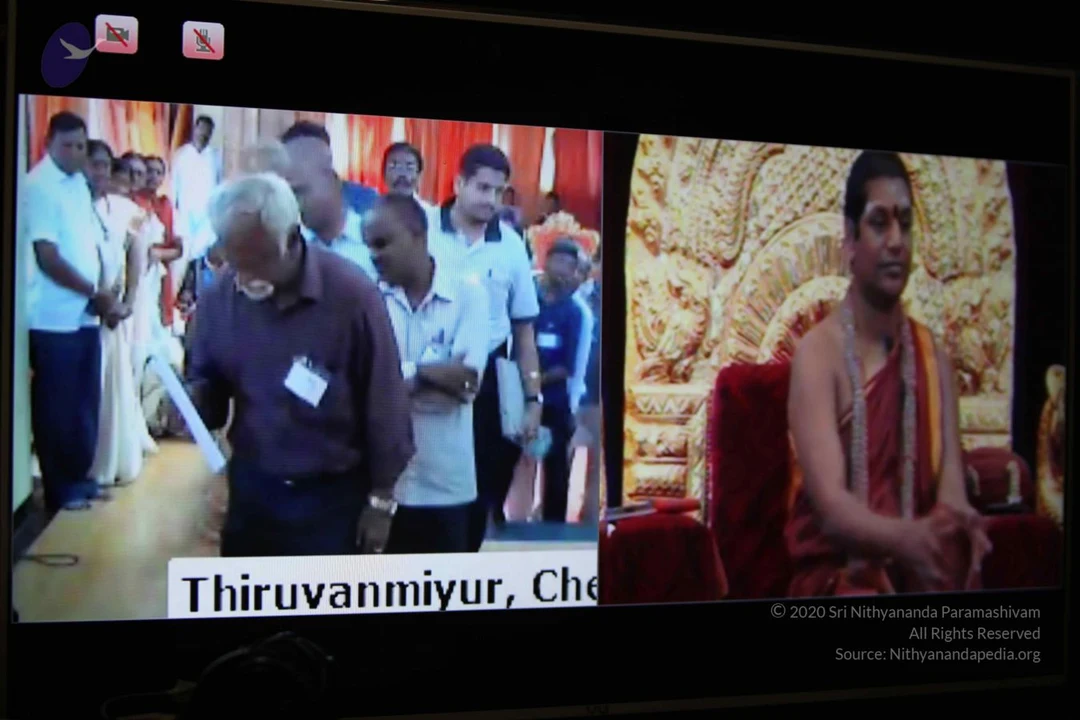
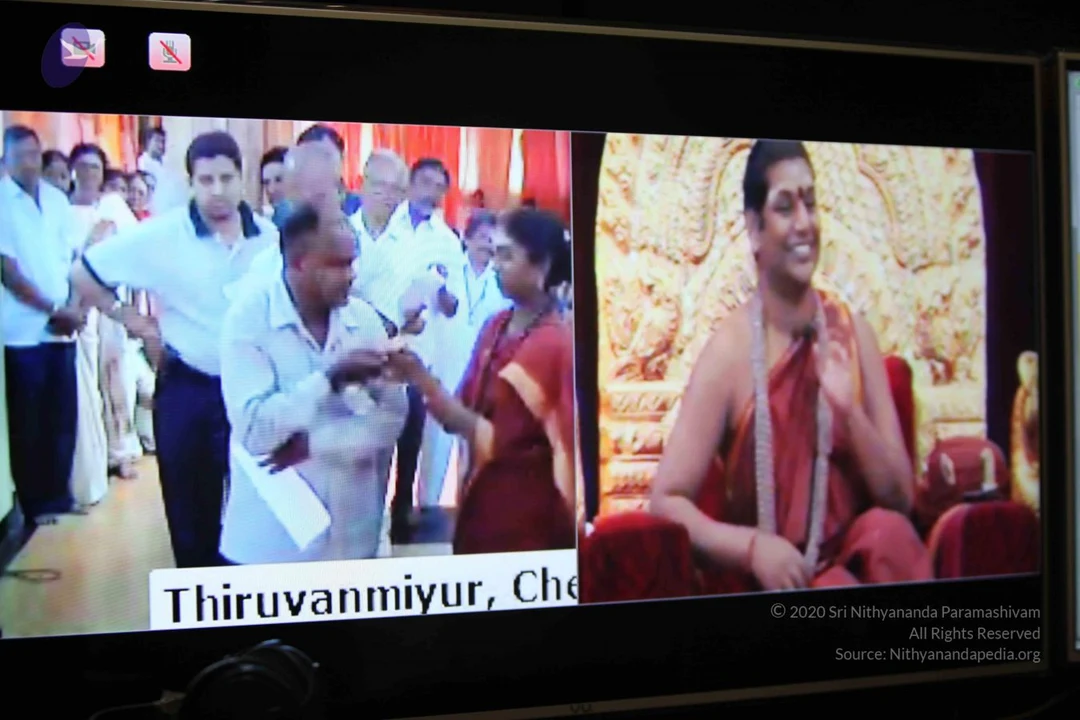
I welcome all the devotees, disciples, samajis, satanghis sitting with us through Nithyananda TV, Sadhna news channel… Sadhana TV, Eshwar TV, Janashree TV, and through two-way video-conferencing having Nayana Deeksha in 32 cities… sorry in many cities in many countries around the world. Cities sitting with us having Nayana Deeksha in two-way video-conferencing: Guadeloupe-Rameshwaram, Singapore- Singapuram, Los Angeles-Arunachalam, Houston-Kalahasti, Oakland-California, Bangalore Center, Toronto-Kailasam, Ohio-Prayag, Seattle-Chidambaram, Nithyananda Dhyanapeetam-Haridwar, Thiruvanmiyur-Chennai, and Dhyanapeetam Andhra Pradesh-Cuddapah, Kulim-Tiruttani, Oklahoma-Somanatham, Ohio-Prayag, Seattle-Chidambaram, London-Kashi, San Jose-Madurai, Camus-Hong Kong, Jorpati-Nepal, Varanasi, Port Washington-New York, Mexico City, Hyderabad-Gupta Kashi, Dubai-Vaidyanatham, Charlotte-Srisailam, Hosur Dhyanapeetam, Oman-Sivagangai, Scottsdale-Arizona, Seremban-Sivakasi, Adi Nithyananda Dhyanapeetam-Avathipalayam, Wellington, Paris- Home Temple, Oman-Sivagangai. I welcome all of you with My love and blessings.

[03:22]

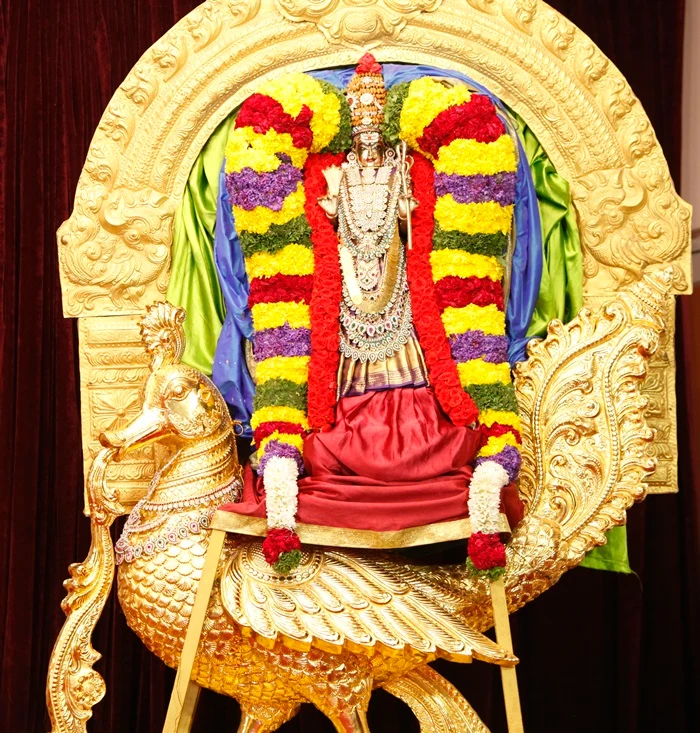
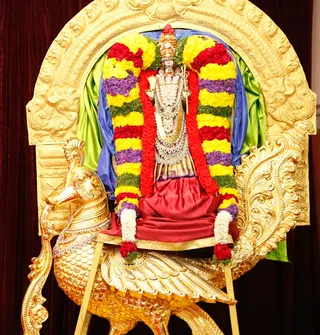
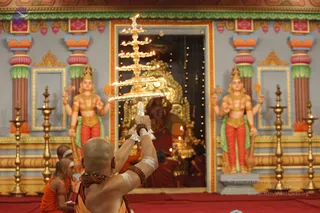
Today, Rajarajeshwari Brahmotsava sixth day. Devi is gracing all of us on Swarna Hamsa vahana, Golden Hamsa, a mythological bird which can… which is described as the embodiment of enlightenment, Swarna Hamsa vahana. [aarati is shown]

[04:39]

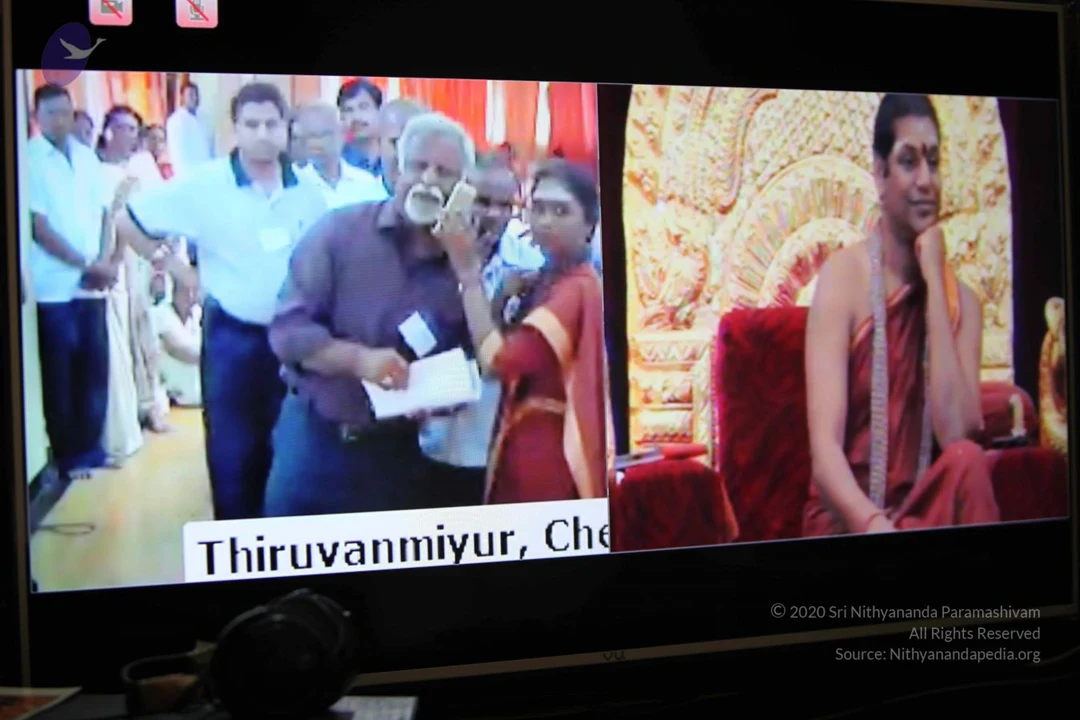
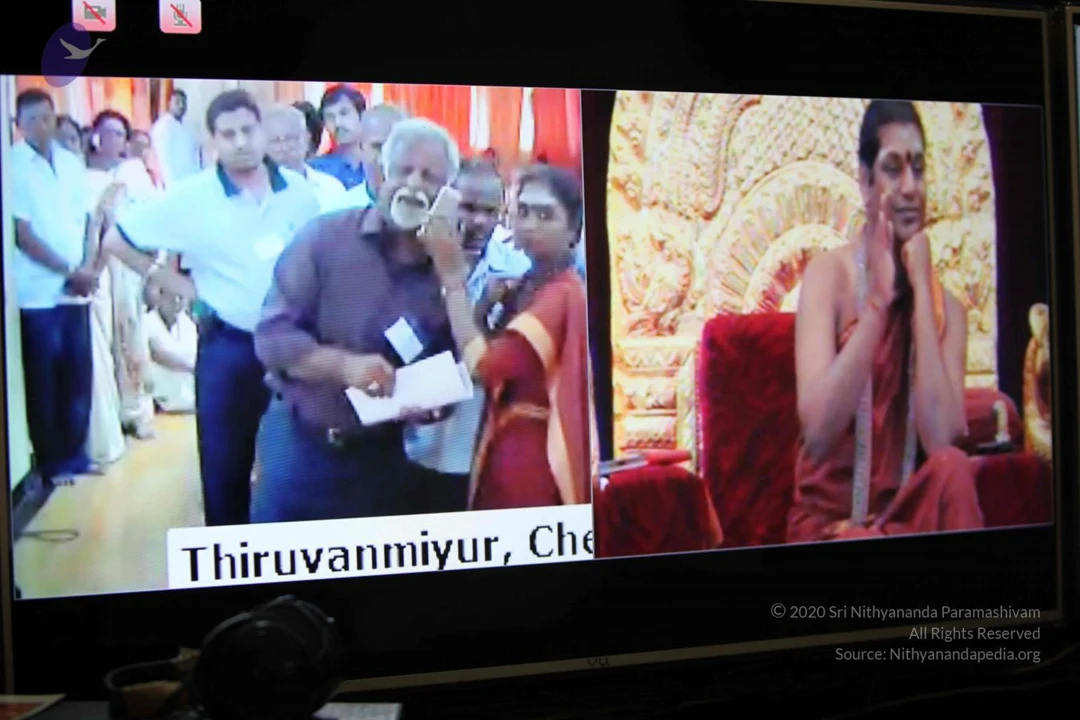
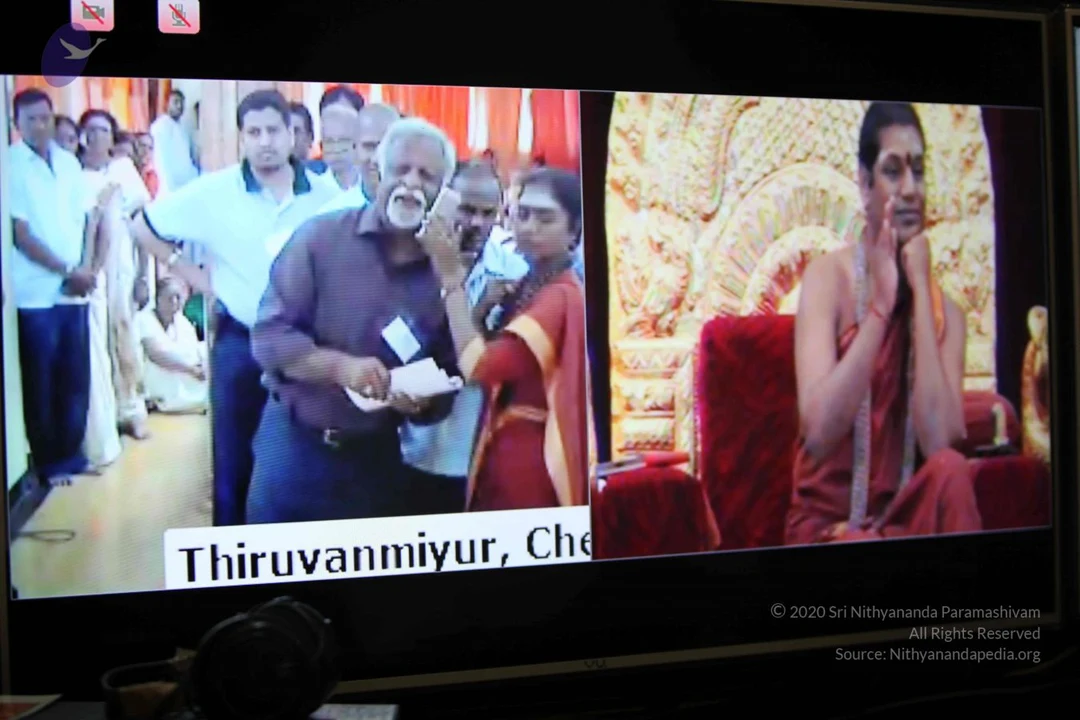
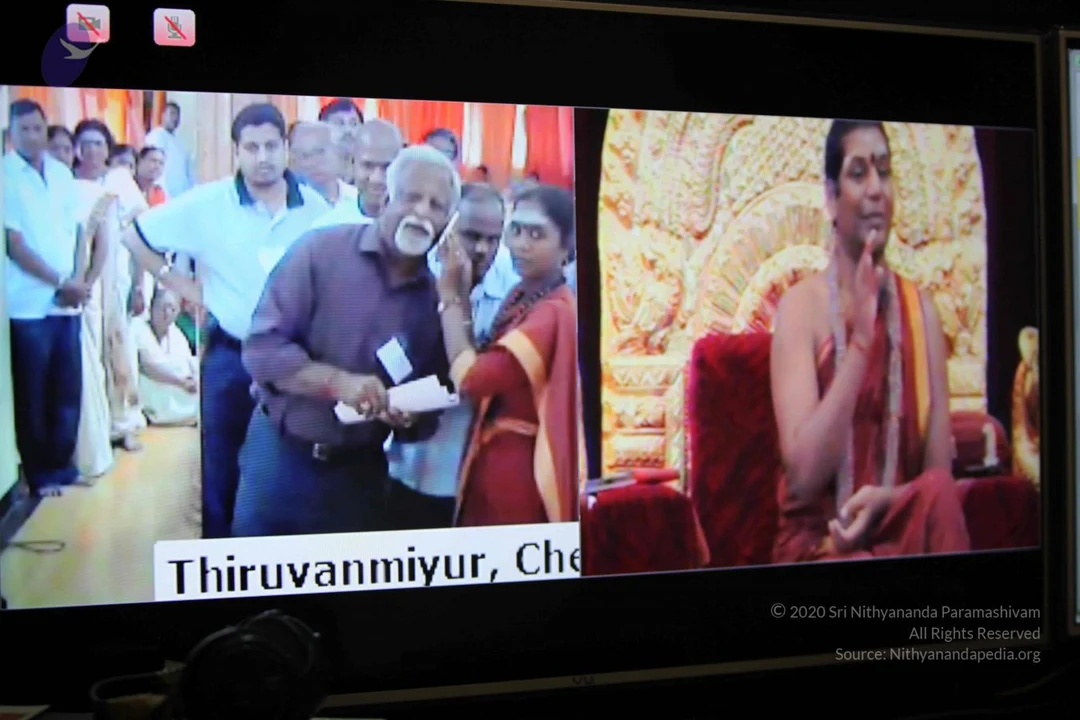
I will enter into the satsang. I will expand on beautiful, most important truth, in a way sacred secret, in the process of Completion. Please listen. Completion, Kalpataru, Inner Awakening, all one and the same. Kalpataru program is the introduction to the Science of Completion and Inner Awakening. I welcome all the devotees gathered in Thiruvanmiyur-Chennai for Kalpataru program. கல்பதரு நிகழ்ச்சிகாக, திருவான்மையூர் சென்னை தியானபீடத்தில் ஒன்றுகூடி இருக்கும் அன்பர்கள் அனைவரையும் வணங்கி வரவேற்கின்றேன். (Kalpataru nikalchikaka Thiruvanmiyur Chennai dhyanapeetathil onru kooti irukum anbarkal anaivarayum vannagi vara vetkindran)

See, the inner awakening starts happening the moment the completion starts. Completion is nothing but coming to terms with the reality. Understand. Completion is nothing but coming to terms with reality. Unfortunately you cannot and you do not want to face the reality as it is, Kalabhairava as it is. You put all your incompletions on him, your own imaginations on him, your own ideas on him, your own perceptions on him. Anything between you and the reality is incompletion. And coping up to face the reality is Completion.

[07:00]

This time I went to Varanasi for few days. And, naturally My favorite place, Manikarnika Ghat, where hundreds of bodies are being burnt every day. We all went and all… Me and all My Swamis were sitting in the boat in the Ganga. We saw the double decker and all. Double decker means, one body will be burning; if there is no place, they will just add more wood on that same fire and put the one more body. World’s largest crematorium is Manikarnika Ghat, because per day, average three hundred and fifty bodies they are burning, per day average, three fifty. Sometimes it goes up to six hundred. We are seeing in front of our eyes, the bodies burnt in a different level, legs stretched out, head stretched out. And I sincerely recommend all My disciples should spend at least, at least three, four days. If it is possible, eleven days or twenty one days. If you can’t, at least three days. I tell you, I guarantee, if you are a CEO, you will become a better CEO, if you are a lawyer you will become a better lawyer, if you are an engineer, you will become a better engineer. Just at least three days go and sit in the Manikarnika Ghat. Day in and day out, just see that bodies getting burnt. I promise, you will not fall into depression.

[09:33]

It is a western mentality you have been told, “If you see the dead body you will be in depression Oh....!”, and keeping the crematorium, cremation ground or burial ground, tombs completely away from the city and that also well decked. It...It will feel almost like a royal garden. Just to hide the reality of the death you decorate it, pedicure it, manicure it, and make a beautiful garden. Alright you can make all that but inside what is there? Dead body. They want us to forget that, that is why they do all the pedicure, manicure so beautifully. You forget it is all dead bodies inside.

I tell you, sitting with Manikarnika where Mahadeva personally initiates everyone and liberates them, he initiates them into the Taraka Mantra. Please understand. A Shaivite. I may be a Shaivite, but I am telling the truth. He initiates people into Rama Mantra, Rama Nama. He just gives the Rama Nama, Taraka Mantra. Even this time I saw Mahadeva liberates people just by initiating them into Rama Nama. The moment He initiates, the moment the mantra touches that being, they are liberated. Please listen. Listen. I guarantee you. You don’t have to be a dead body burning in the Manikarnika Ghat. Even if you sit there, in one day you will forget you are alive; you will simply associate yourself with one among the bodies getting burnt, and Mahadeva will initiate you also.

[12:20]

I tell you, coming to terms with reality is Completion. That automatically happens in Varanasi, in Manikarnika. How much ever I describe I may be a great orator, but I cannot orate, what all can happen in you when you see the hundreds of dead bodies being burnt every moment. I cannot describe. Either you come to terms with reality, there is no “or” actually, just only one; you come to terms with reality. Fortunate are the May Inner Awakening participants who will be experiencing this in My presence, in Manikarnika Ghat in My presence. And I am also planning one batch of Gurukul kids but only after the parents written consent. Parents have to give permission, only then. Because, I had the fortune of sitting in the cremation ground and seeing the bodies burning at the age of eleven, twelve, with a great Yogi, Ramsurat Kumar. I had such a wonderful introduction about death by Ramsurat Kumar. Understand it’s an amazing introduction. Nothing can equate his words and his way of introducing.

[15:01]

I asked him one day out of curiosity. They were bringing one dead body. I asked him, “Swami, Swami, he has gone to heaven or hell?” I asked him in Tamil, "இவன் சொர்க்கம் போனனா, நரகம் போனனா சாமி? அப்படினு". ("Ivan sorgam ponna, narakam ponaana Swami? appydi ennu.” He laughed and said... He told in Tamil, டேய், எங்கேயும் போரது இல்லடா, அவன் இருக்கும்போது எப்படி இருந்தானோ அப்படியேதான்டா இருப்பான் (“Dai, engeyum porathu illa da, avan irukkum pothu eppadi iruntha ano, appidyey thaan da iruppan) I’ll translate: people don’t go to hell or heaven. When they were alive what kind of a space they were in, that will only continue.

Please understand. When you are alive, make heaven for you by creating Completion within you and Completion with others. While you are alive, make heaven for yourself. While you are alive, make heaven for yourself. Don’t make hell for you. While you are alive, make heaven for yourself. If you are in the hell now, if you die now, don’t think you will move to heaven or somewhere else. No. I was shocked actually when he said these words. “Hey, nobody goes anywhere.” He told in a very colloquial Tamil...he addressed Me as a child in the singular, ஹே… எவனும் எங்கியும் போறது இல்லடா, இருக்கறப்போ இருந்த மாறியேதான்டா இருப்பானுக" (“Hey, evan engeyum porathu ilai da, irukkrapa irrurikrapadiyae than iruppaanga.” He doesn’t know Tamil. He is from Kashi. So, he picked up the North Arcot Tamil, very slang Tamil, My… the area in which I was born and brought up. In that Tamil He said, “No one goes anywhere. When they are alive what space they are in, that same space continues that’s all.”

[17:41]

Come to terms with reality NOW. Let reality not bring powerlessness in you. Let reality not lead you to incompletion. Let reality not make you suffer. Let reality not make you powerless. Coming to terms with reality is Completion. Dhyan Se suniye. Please listen, coming to terms with reality is Completion. Don’t think I am promoting Manikarnika Ghat because I am going to do Inner Awakening there. No. Even if you don’t come with Me for Inner Awakening, you go on your own and sit on the Manikarnika Ghat, you will see Mahadeva, Mahakala, Kaalabhairava blesses you also with the Taraka Mantra and liberates you also. You don’t have to die and get burnt there. Just sit in that atmosphere; automatically your innerspace will start getting burnt.

Actually, I cannot describe. We were all sitting in a boat, maybe, I think, eight of us – four sannyasis and four sannyasins, Ma Swamis and Shri Swamis. We can see some bodies legs are out, some head is out. One day we saw from the above: both hands are burnt and the chest is fresh, even the skin is not peeled. So, he is bringing the wood from other fire and arranging on that body. I looked at one of My Sanyasini, Ma Swami and said, “See, all your kaajal will melt like that only.” 😃 Once in a while, we should remember the truth at least.

[20:40]

And, I tell you, the reality of death is not at all depressing if you understand the reality. One of My Swami asked Me, “Swamiji, if we all die, we will all be with You only, na?” I said, ‘Yes. It is just department change. That’s all, don’t worry. It is only department transfer. Not even ashram transfer, just department transfer.” 😃 The reality of death is not at all depressing. I tell you, if you sit with the right understanding from the right context, it will bring so much joy in you, so much Completion in you. When you see so many bodies continuously burning, so much of introspection will happen.

I wanted to tell all… all of you, don’t bring your...bring up your kids with the western idea of death. Understand. They don’t even know life, what they know about death? Come on. They should understand, introspect, contemplate death, learn from the higher source. See, when Ramsurat Kumar told Me this, I did not have a second thought this is the way the death is. At this age, at that kind of a person should be telling the truth and I can hundred percent guarantee you, My gurukul kids will not have a second thought, they will not have a doubt or second thought when I describe about death the same thing which I learnt from Ragupathi yogi… Ramsurat Kumar. When I tell My kids, I am hundred percent sure they.. they simply internalize it, they simply imbibe it. I can be hundred percent sure My kids will have a extraordinary experience.

[23:40]

Coming to terms with reality. I wanted to repeat this word again and again so that you understand. Because hundreds of devotees write in facebook to Me. They write, “Swamiji, whatever you say in the morning satsang goes on inside us the whole day. We are just soaked in it.” Because the way it is said; not just what is said, the way it is said. Listen, because every truth I reveal in the morning satsang, I will be repeating it twenty five times in that half an hour. So many times. Coming to terms with reality. Today meditate on this: Coming to terms with reality is completion. I am not saying you should not change reality. I am not saying you accept reality. I am only saying, reality should not make you powerless, that’s all. Be powerful in front of reality, with reality, and you will know where you can change, where YOU have to change. Where you can change and where YOU have to change.

Just decide, “No powerlessness. Let’s be friends.” That is all you need to do with reality.” No powerlessness. Let us be friends. I will be powerful, you will be powerful, let both of us be powerful.” Coming to terms with reality is Completion. Today, in the Inner Awakening all the participants are going to go through the death process. It is one of the wonderful processes to come to terms with reality.

[26:40]

This time, when I went to Kashi, I had two joker Swamis also with Me. And I told these fellows, “Why don’t you go and sit in the Manikarnika Ghat and meditate?” And they all got completely inspired and got ready. They said, “Tonight we are going Swamiji.” And prepared everything. Next day morning, when I came back, I thought really both of them are going to be shining, enlightened, radiating enlightenment after having darshan of the Mahakala in the Maha Smashana. But both faces were as usual, same. ‘Errrr.’ I asked, “What happened?” They said, “No, yesterday night we slept away....we did not go.” And junior joker is telling, “I called this fellow; he did not come. So I did not go.” When death comes you cannot call him and go baba! And this joker is asking Me, “I wanted to go on Parivrajaka in Himalayas.” One night this joker cannot go and sit in the Manikarnika Ghat and meditate.

[28:30]

All of you, I sincerely recommend all My devotees, all My disciples, if you think you can get some good from Me, I give you this as My experience, experiential introduction, experiential instruction. Whether you are ten year old or ninety year old, please go and spend at least three days in Manikarnika Ghat, Varanasi, seeing these bodies getting burnt. Just seeing will teach you so many truths about death. The way the death is treated there, that very context, the context from which the dead and death are treated will teach you all the lessons, all the lessons you need in your life. Coming to terms with reality is Completion. Coming to terms with reality gives you the power like Kalpataru. Whatever you want goes on becoming reality. Whatever you want goes on becoming reality. Understand. Whatever you want goes on becoming reality. Every time you are in incompletion be very clear you are not coming to terms with reality. Whether incompletion with yourself or incompletion with others, coming to terms with reality is Completion.

[31:23]

I’ll repeat. Coming to terms with reality is Completion. Coming to terms with reality is Completion. This should ring in your ears whole day and night. When people write to Me in the Facebook, “Whatever You say in the morning satsang is ringing in my ears, Swamiji.” I am so happy, because the whole morning satsang is designed for that. The whole day you go on functioning from this cognition. That is why all the major cities of India I wanted them to have a City Center like how we have developed Bangalore City Centre. Mumbai, Delhi, Kolkata, all cities should have a Center where people gather every morning seven to eight and attend the satsang. Eight O’clock they will go to office. The Center itself give breakfast like Bangalore Center. Satsangh, breakfast, and go to office. That’s all. Such nice routine to follow, to follow. I wanted all over the world this to become a trend.

[33:18]

So, coming to terms with reality is Completion. Let reality not make you powerless. Always be powerful with reality. So, you will know whether you change the reality or YOU have to change yourself, you will simply have intelligence and do it spontaneously as and when required. You will not have the attitude of conquering, you will not have the attitude of competing, you will have the attitude of completing. Don’t have the attitude of competing or conquering with reality. You will just have the attitude of completing.

So, I bless you all! Let you all radiate with Integrity, Authenticity, Responsibility and Enriching and Causing eternal bliss, Nithyananda! Thank you!

[34:13]

Photos From The Day:
Photos Of The Day:

Pada-Puja
Nithya-Satsang-Kalpatharu-Darshan
Tamil-Satsang-Q-and-A-for-IA-Kalpatharu-Darshan-Germany

Photos Of The Day:

Nithya-Satsang

Q-and-A-Kalpaturu-Darshan-Germany

Photos from this day

View all 170 photos

Photos From The Day:

12 photosSource gallery
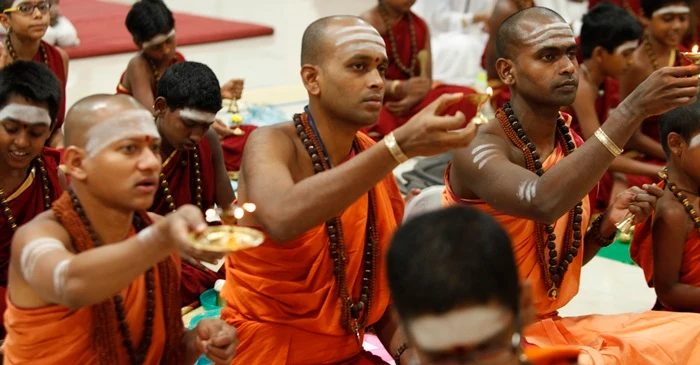
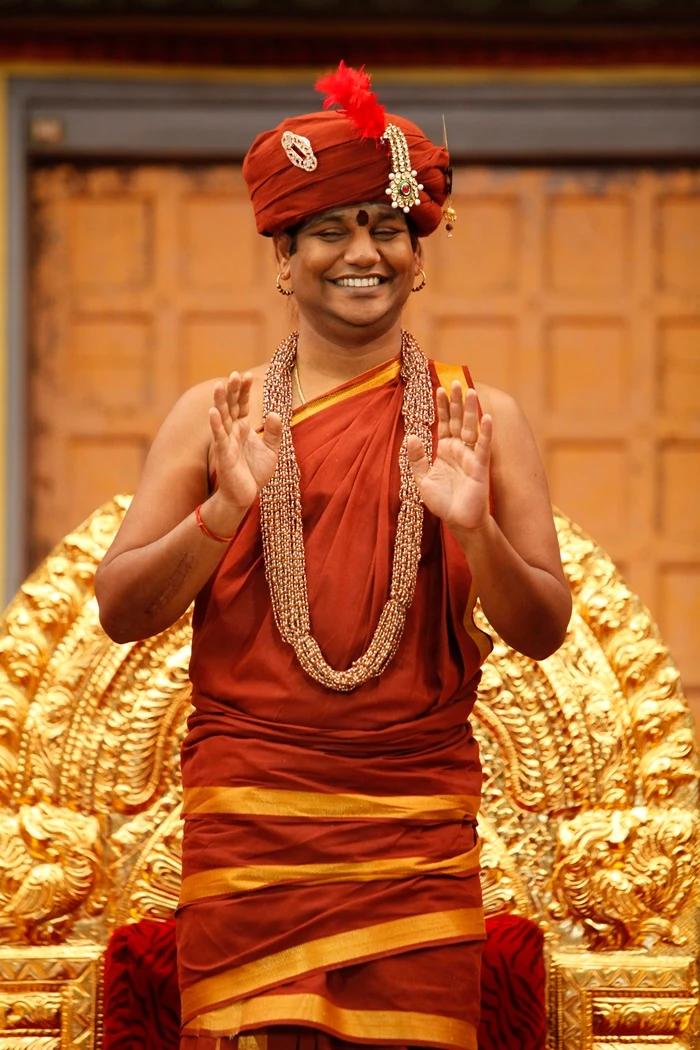
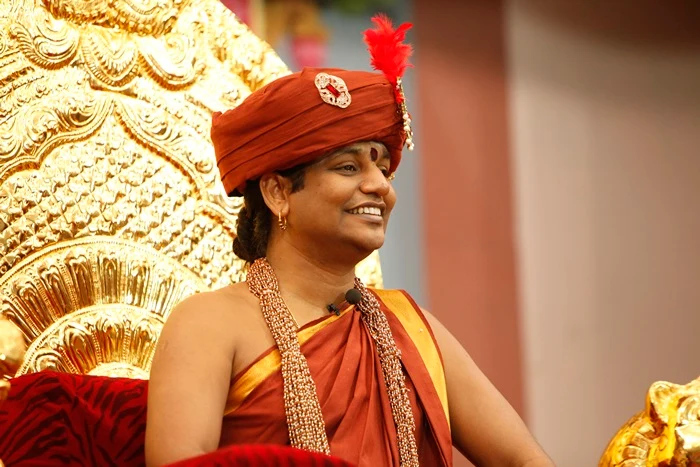
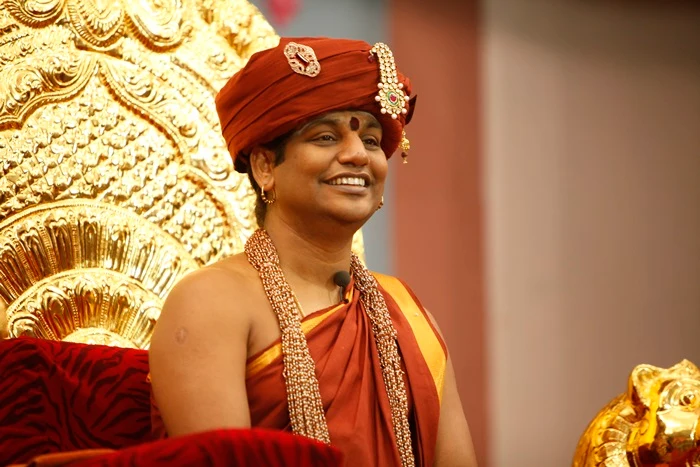
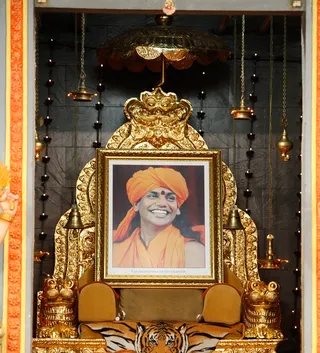
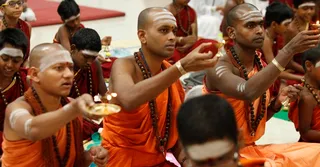
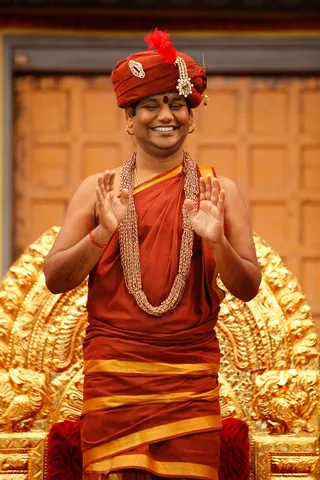
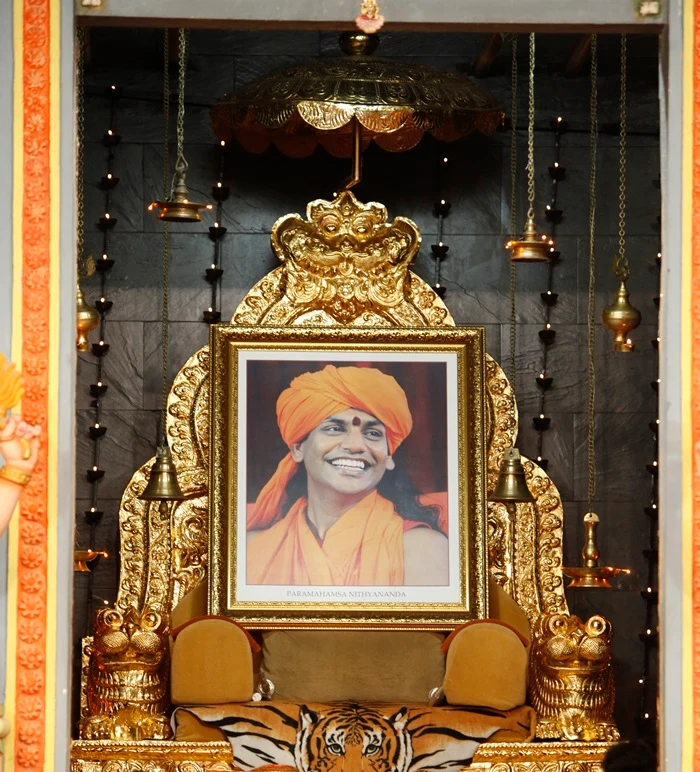
A framed portrait labelled "PARAMAHAMSA NITHYANANDA" sits on an ornate gold throne with lion-head armrests and a golden canopy above. The portrait shows a smiling man with an orange turban and orange robe, with a red bindi. The throne is draped with a tiger-striped cloth, and brass oil lamps and bells hang on chains around it against a dark slate wall with strands of rudraksha beads. No people are physically present.A metal murti of a deity is seated on a golden peacock throne with an ornate gold arched backdrop and dark maroon curtains. The figure wears a tall crown, layered silver necklaces and a red silk dhoti-style garment, and is draped with thick garlands of yellow, red, purple and green flowers with white jasmine strands. Green and blue fabric panels frame the arch behind the murti. No people are visible in the scene; the peacock-form throne and floral garlands suggest a puja or abhishekam setting.A photograph of a group of young men in saffron-orange robes and rudraksha malas performing a ritual with brass lamps. Several are seated closely together, holding small brass oil lamps and dishes in their hands, with white vibhuti stripes painted on their foreheads and arms. A man in the centre-right raises a small lamp, and another in the foreground holds a brass plate. The setting appears to be a hall with red carpeting and other seated participants in the background. The scene conveys a collective puja or aarti with oil lamps.A smiling man with closed eyes stands in front of an ornate gold throne with carved lion-like designs, palms raised together in greeting. He wears a red-orange turban with a red feather and a jeweled ornament, a rudraksha-style mala of beads across his shoulders, gold earrings and a thin gold necklace, and a red-orange draped robe with gold borders. A red thread is tied on his wrist and a small red bindi sits on his forehead. Behind him is a wooden panelled wall. The appearance matches the page's Swamiji claim on several cues: the turban, the beaded mala and the saffron-ornate clothing, so this is a probable Swamiji in person.A smiling man in a rust-red turban with a red feather and a small gold-framed emblem sits on an ornate gold throne with carved gold filigree. He wears a rust-orange and gold shawl draped over his shoulder and bare chest, with beaded gold-toned necklaces, a rudraksha-style mala, and a small red-and-gold tilak on his forehead. A microphone clips to his shawl. The scene is a satsang setting with a red velvet cushion visible at lower left. Swamiji (probable): the seated figure matches the shawl, turban and ornate necklace cues associated with the page's satsang event.Swamiji (probable) sits smiling on an ornate gold throne with a red cushion, wearing a red-orange turban with a jewelled ornament, a red-orange shawl over the bare shoulder, and heavy gold ceremonial necklaces. A small microphone is clipped near his chest, indicating a seated satsang discourse. A gold lion-headed armrest is visible at the right edge of the frame.

Pada-Puja

4 photosSource gallery
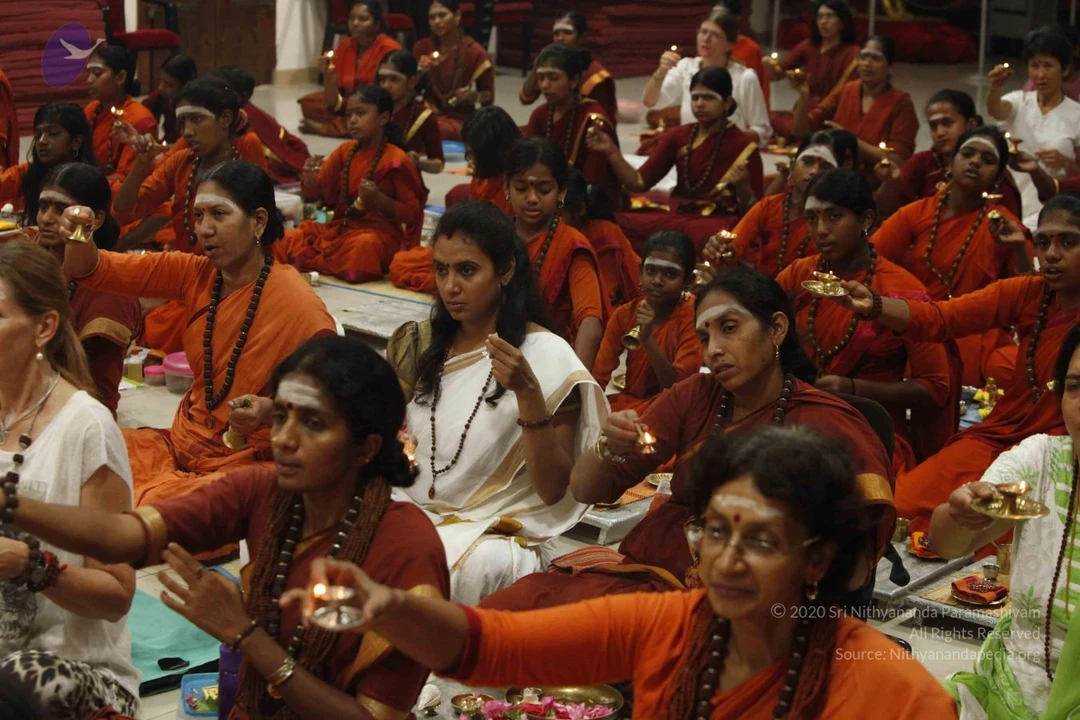
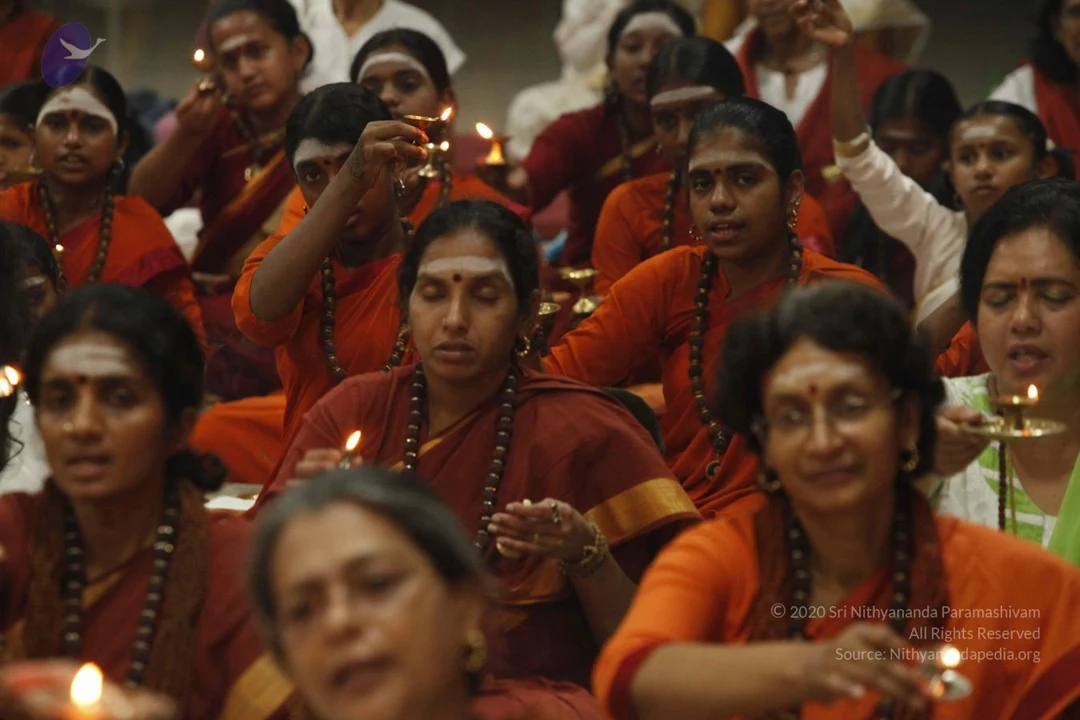
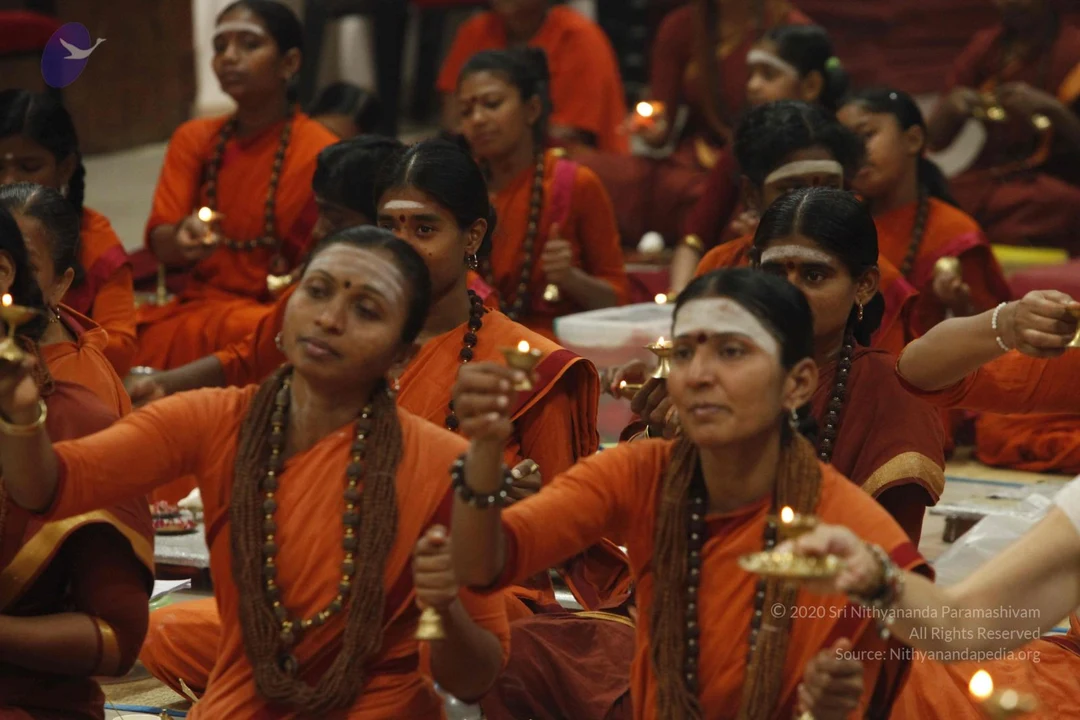
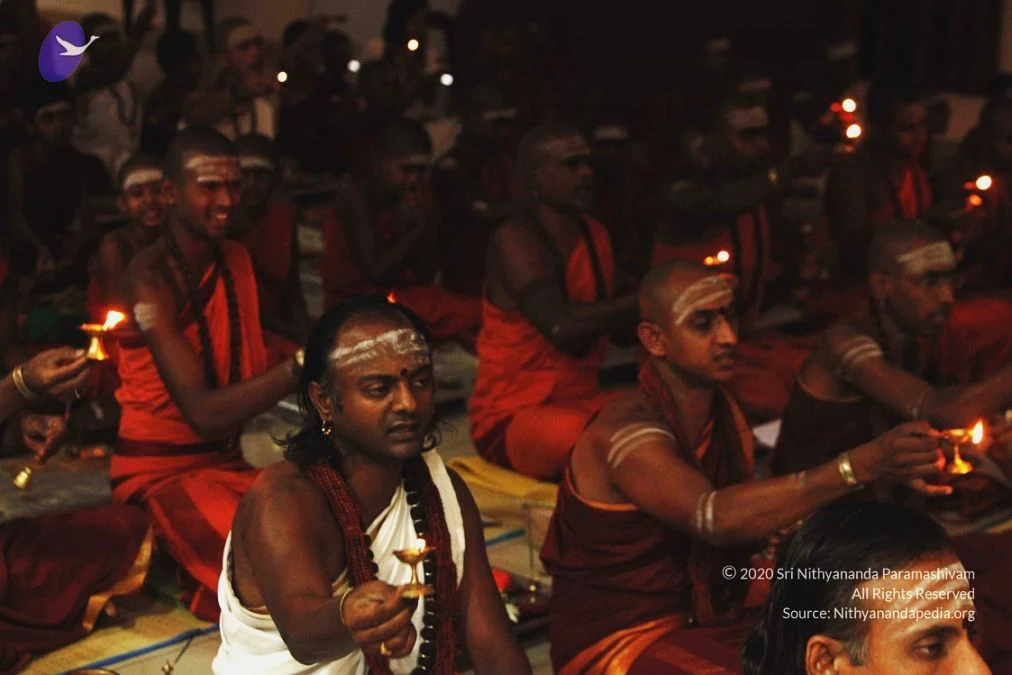
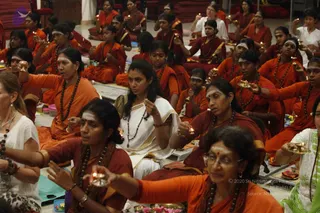
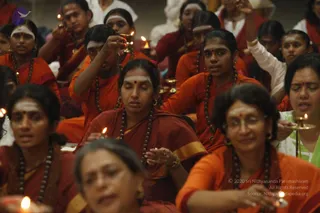
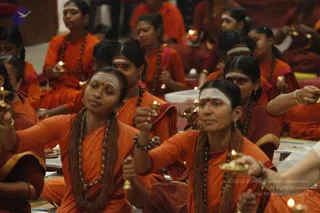
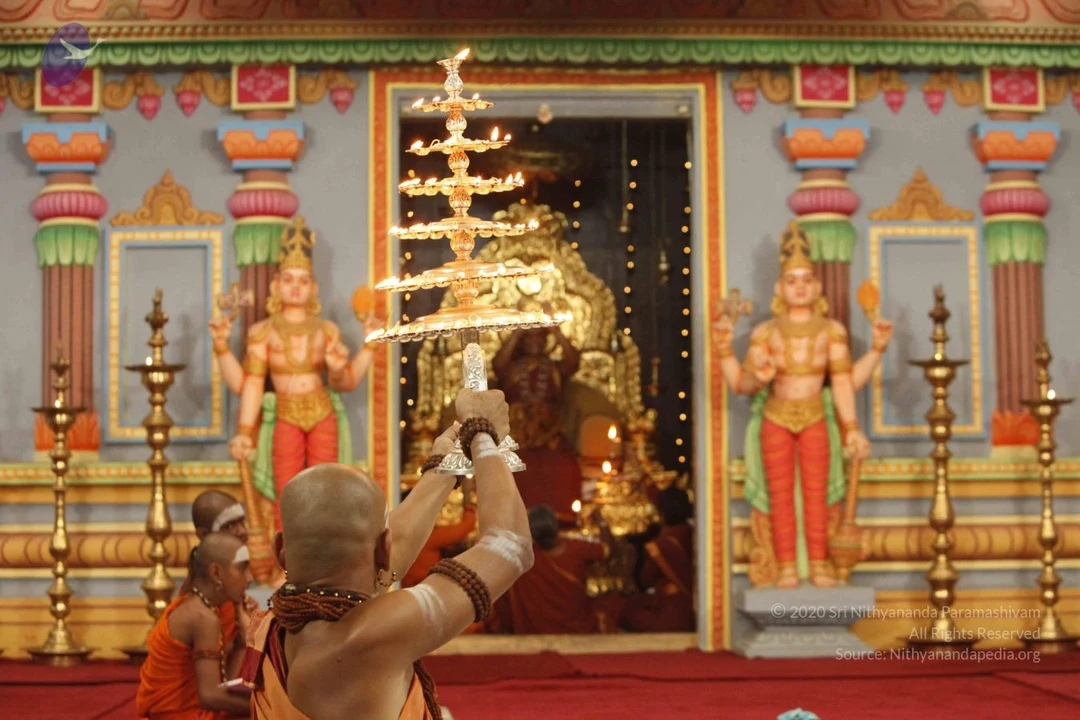
Temple interior with a bare-chested priest in the foreground holding a silver multi-tiered aarti lamp with several lit flames, facing a shrine doorway. Two stone-coloured guardian figures in red and green dhoti-style garments stand on either side of the doorway. Another shaved-headed priest in an orange cloth sits at left with a white tilak, and a few more seated figures in orange and red garments are visible in the background near a golden deity murti and throne. Brass lamp stands line the red carpeted floor. Aarti ritual in progress.A packed hall of women seated on the floor, most in saffron-orange and rust-red saffron clothing with long rudraksha malas and white forehead markings. Many hold small brass oil lamps (deepams) with lit flames and raise them in offering, while others hold brass plates with flowers and kumkum. In the foreground a woman in orange with glasses and a red-dotted forehead lifts a lamp, and a woman in a white dhoti-style saree with a gold border sits centrally holding a lit lamp. A few people in white clothing appear at the edges. The scene suggests a group lamp-offering ritual during satsang.A large group of women devotees in orange, red and maroon saris sits closely packed during a satsang, many wearing rudraksha malas and white vibhuti lines on their foreheads. Several hold small oil lamps with lit flames, and one woman in the foreground holds a lamp in her hands while her eyes are closed in chant. Others raise their hands or sing with open mouths. The setting appears to be an indoor hall with warm lamplight.Photograph of a large group of women in saffron-orange clothing seated closely together, many wearing rudraksha malas and white forehead markings, some with red bindis. Several women hold small brass oil lamps (lit flames visible) and others hold bells or brass vessels. Background shows more orange-clad participants and a white container. No a person candidate is visibly present in this image.

Nithya-Satsang-Kalpatharu-Darshan

73 photosSource gallery
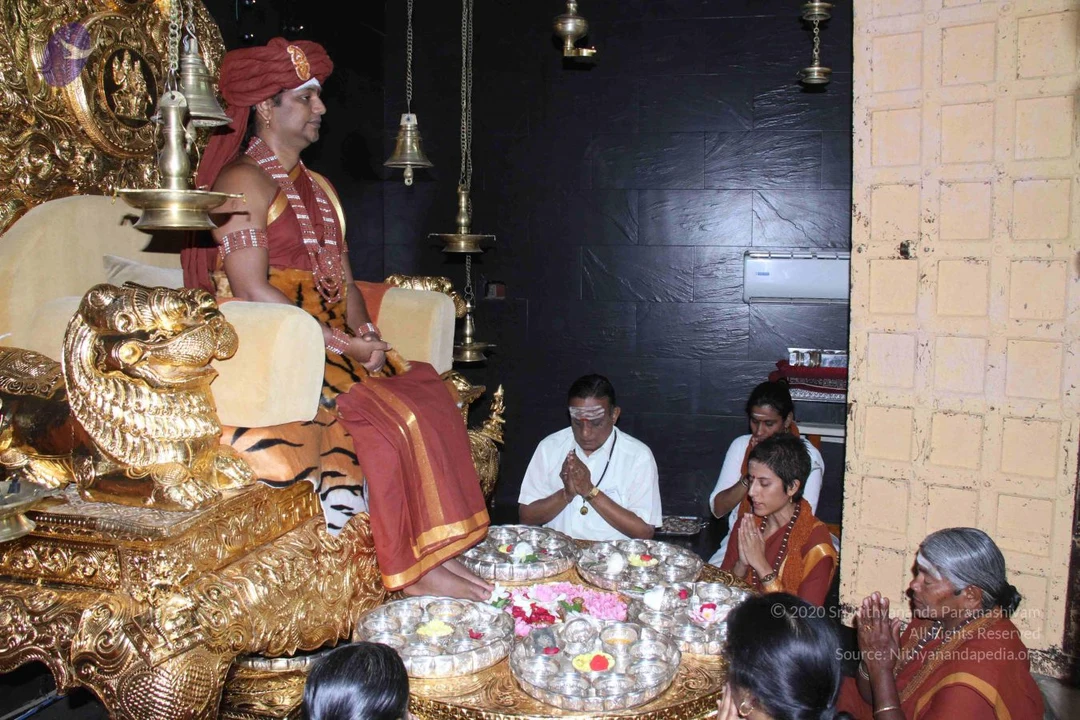
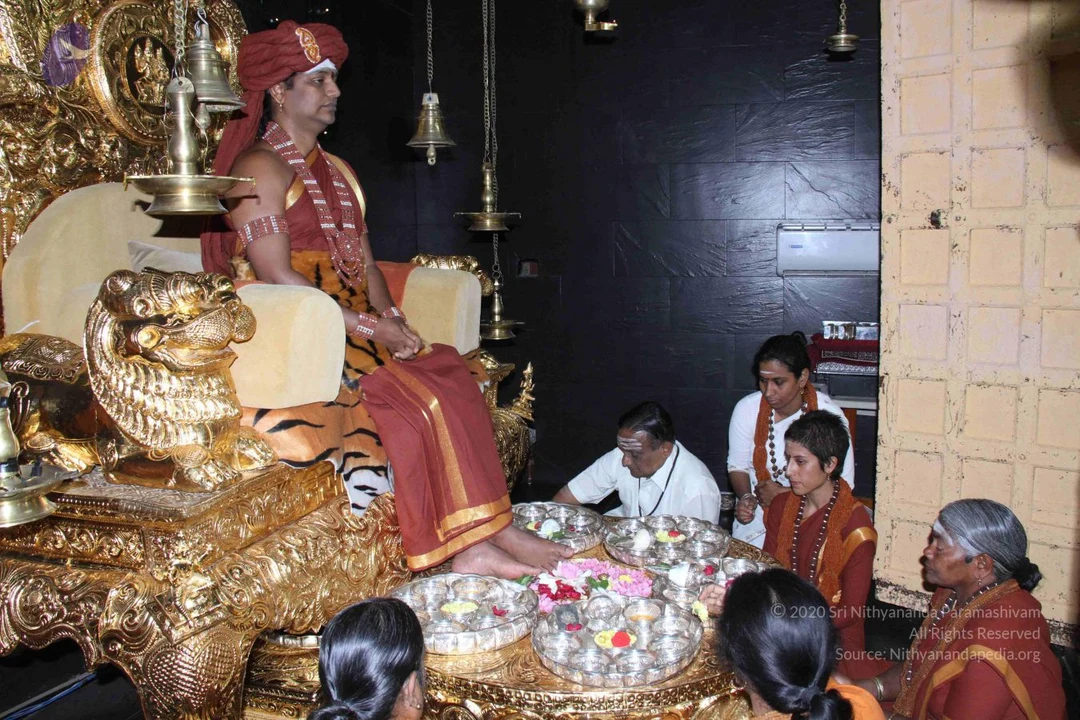
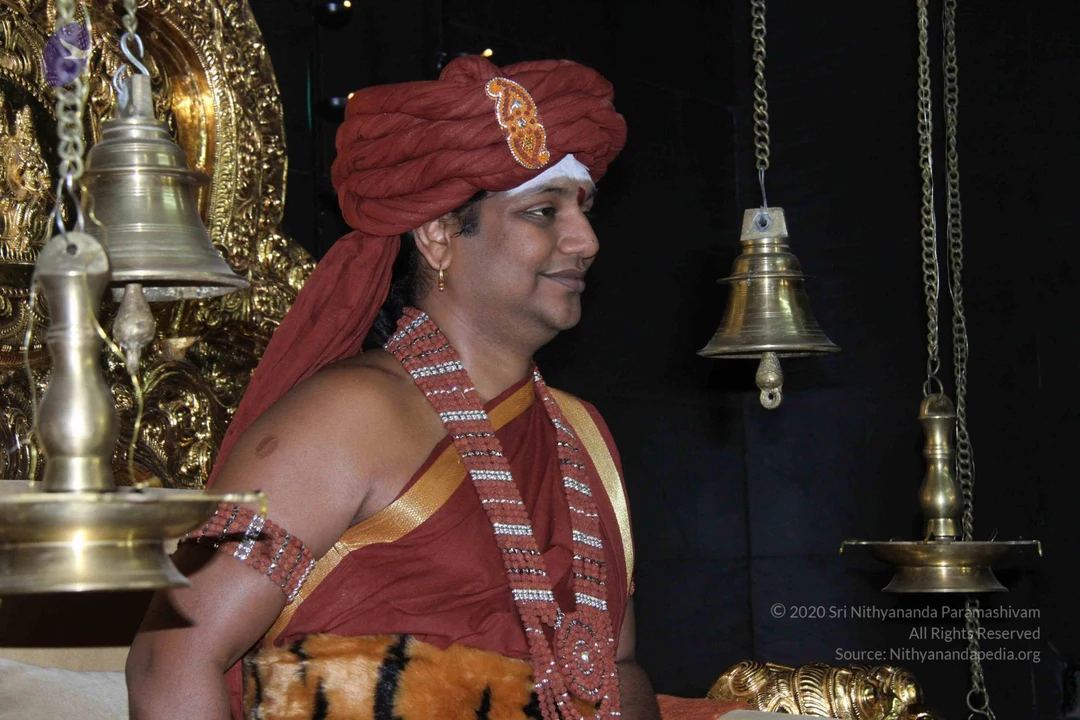
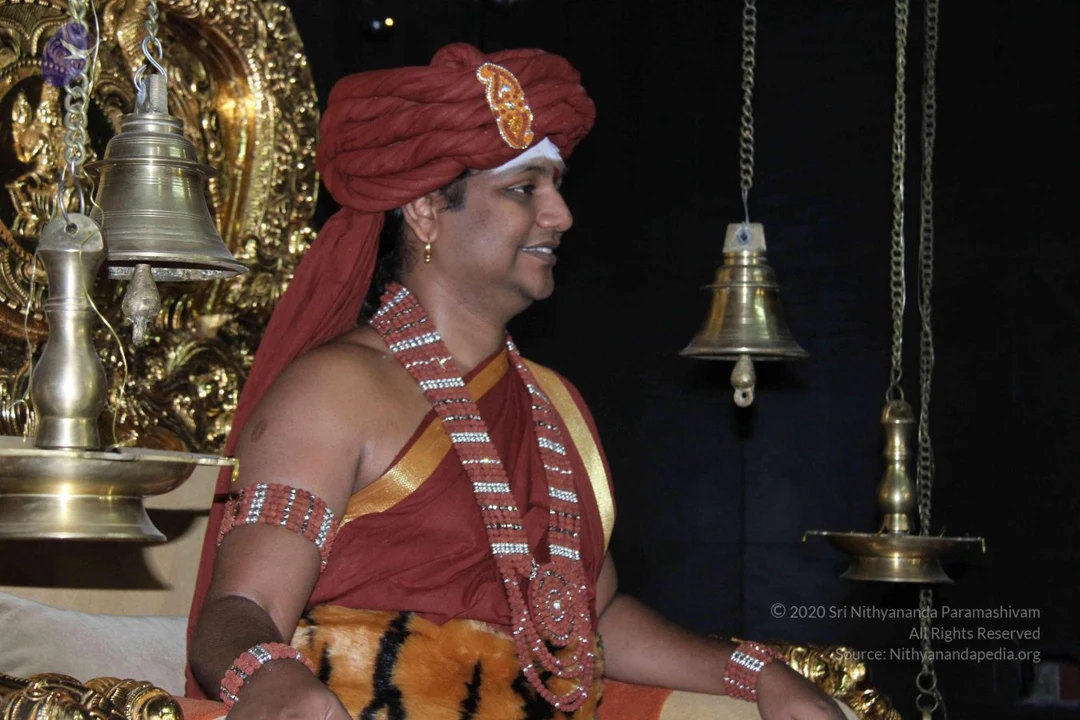
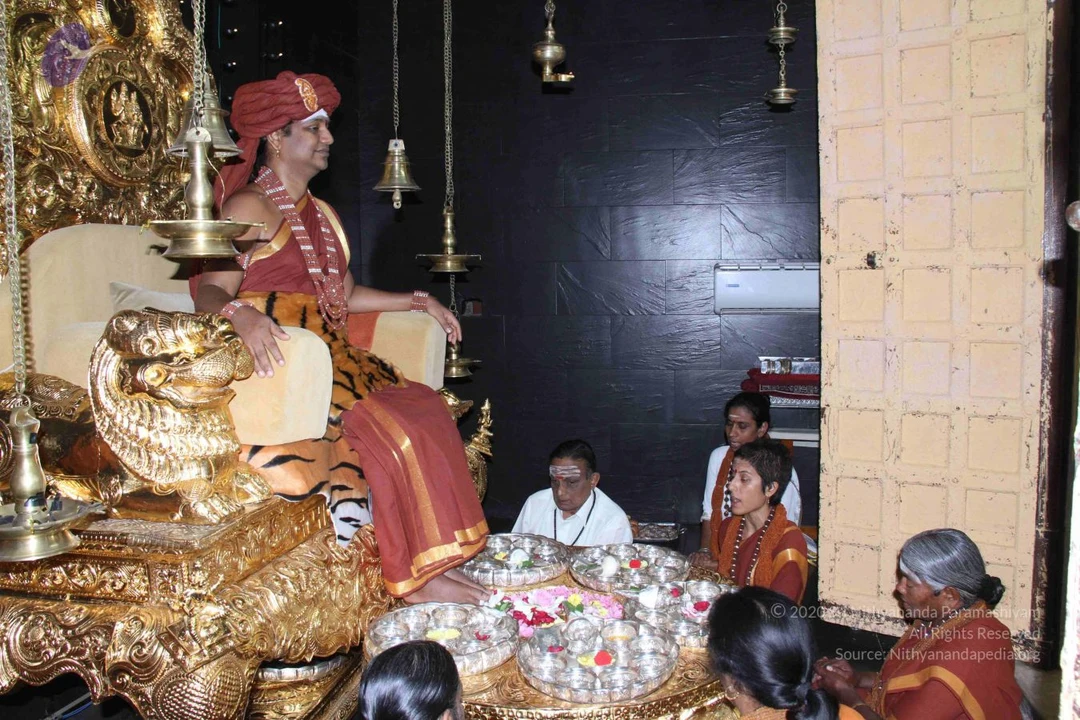
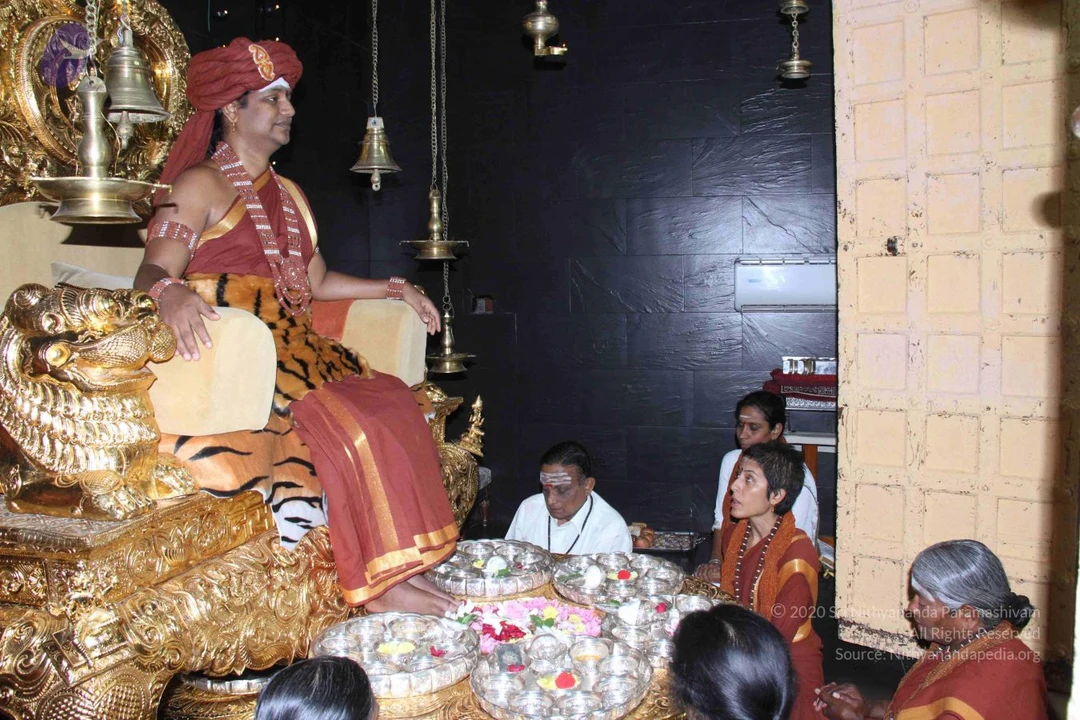
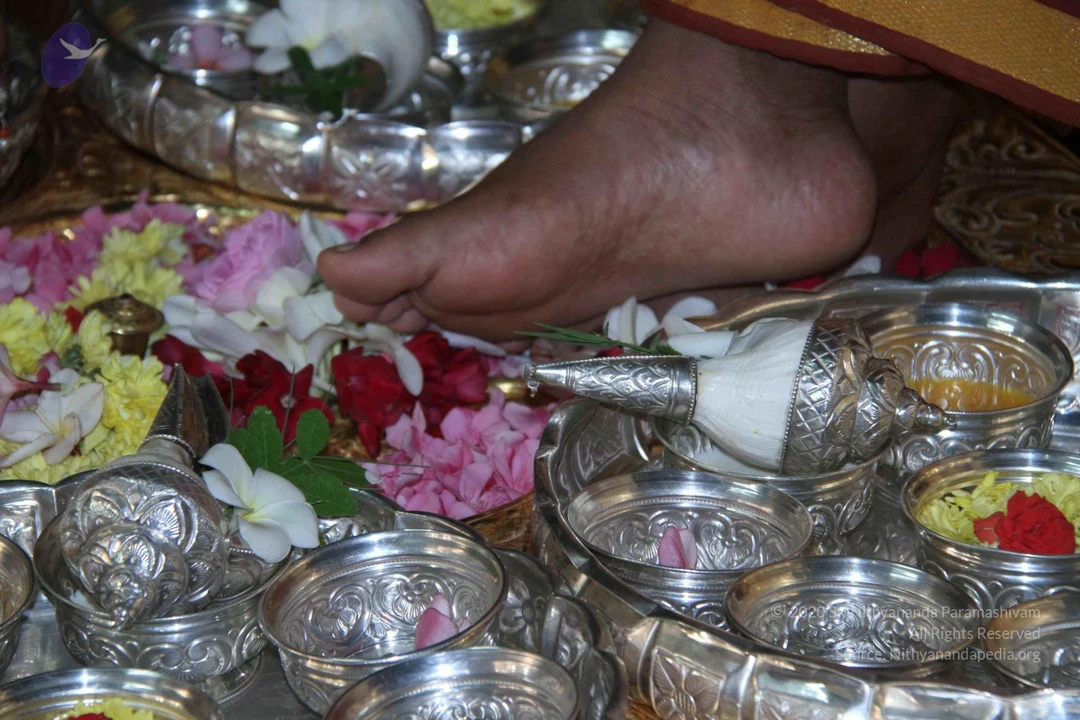
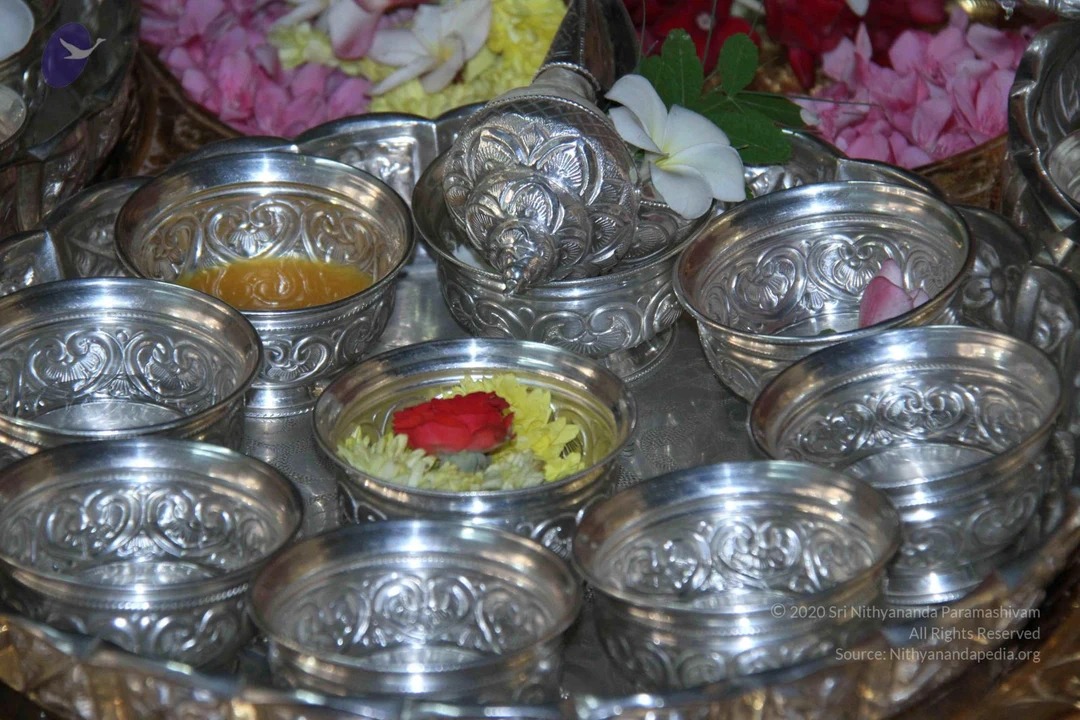
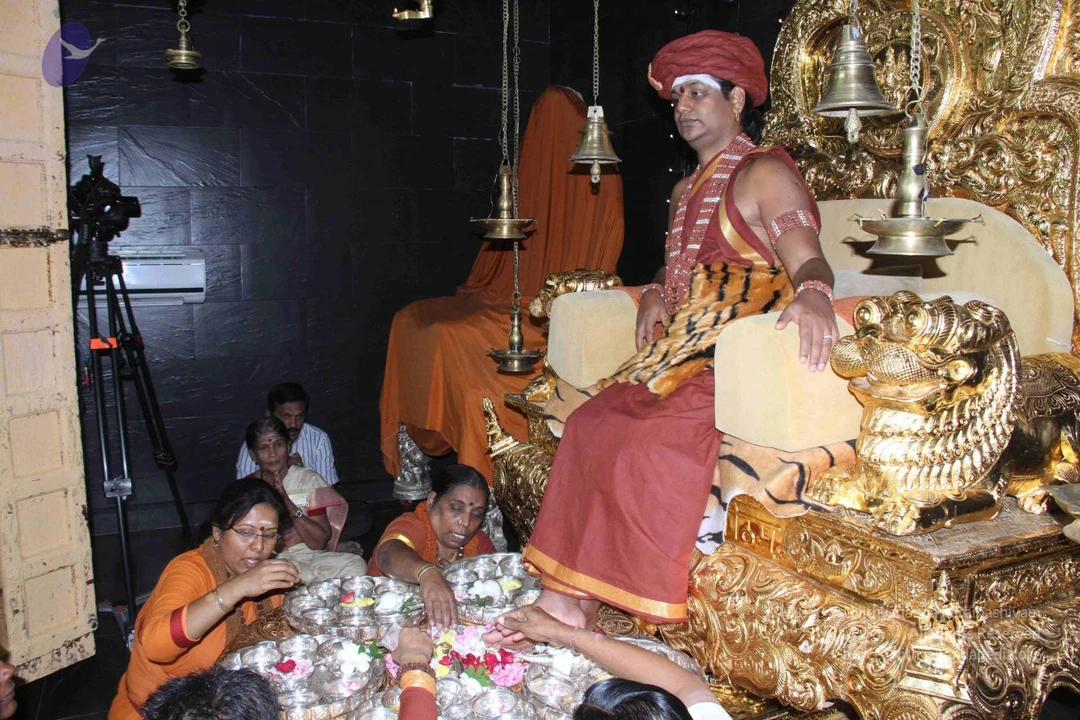
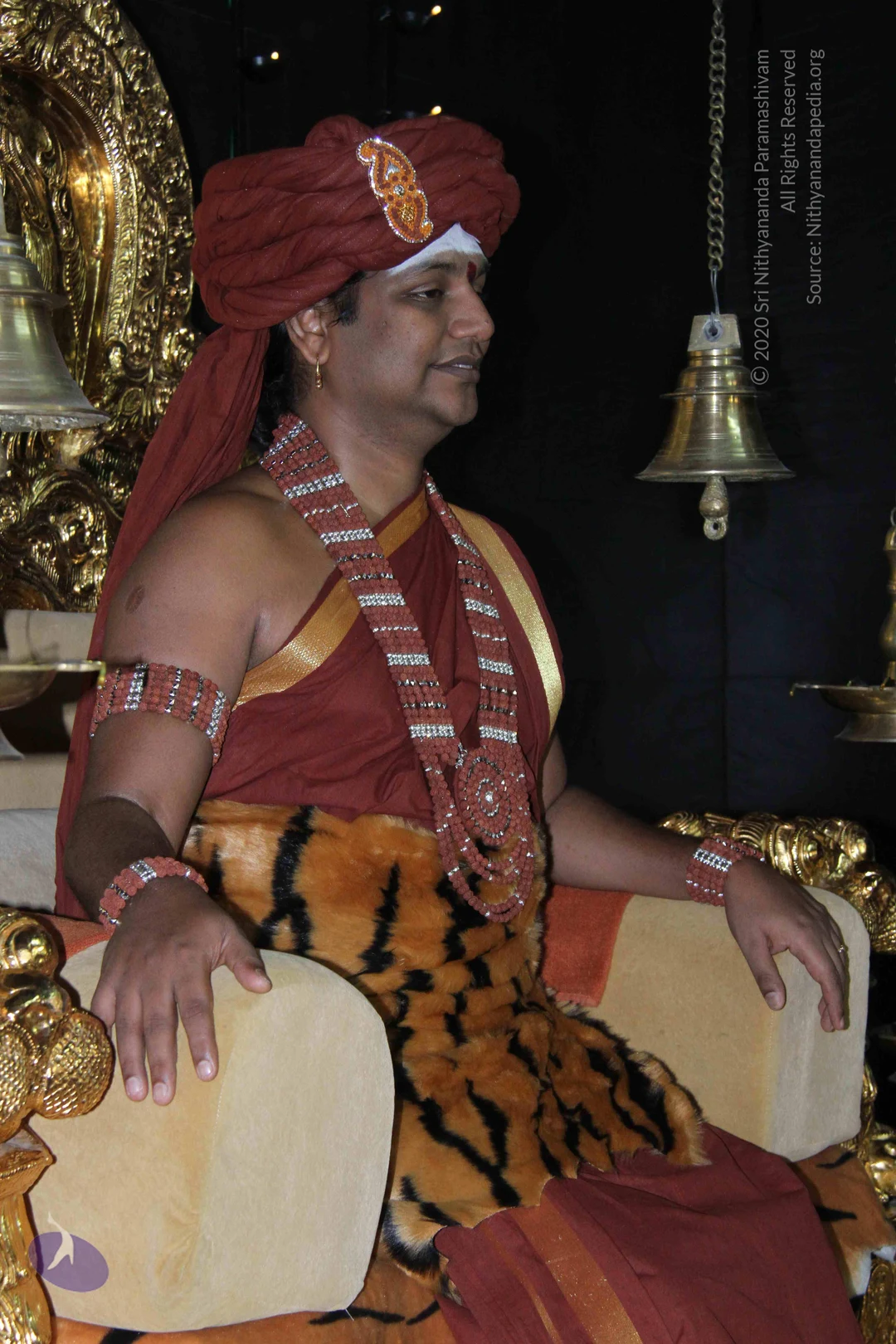
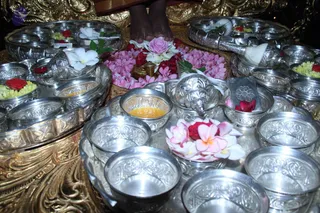
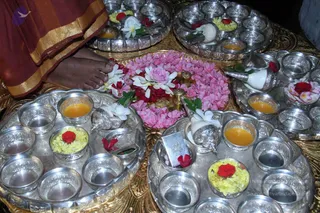
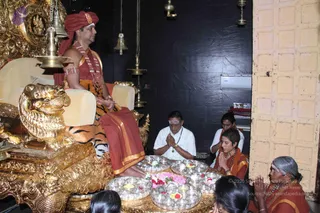
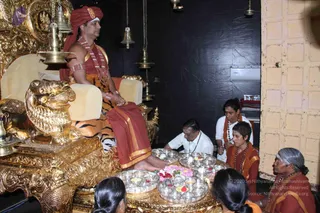
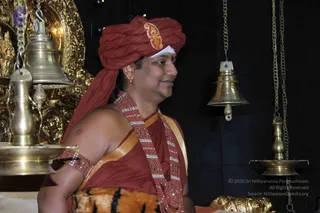
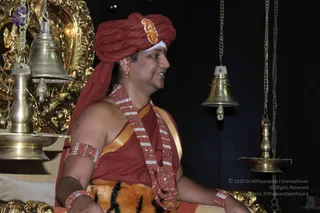
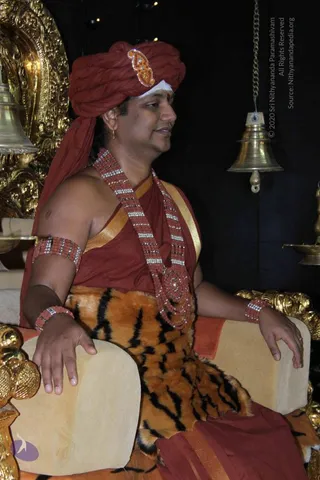
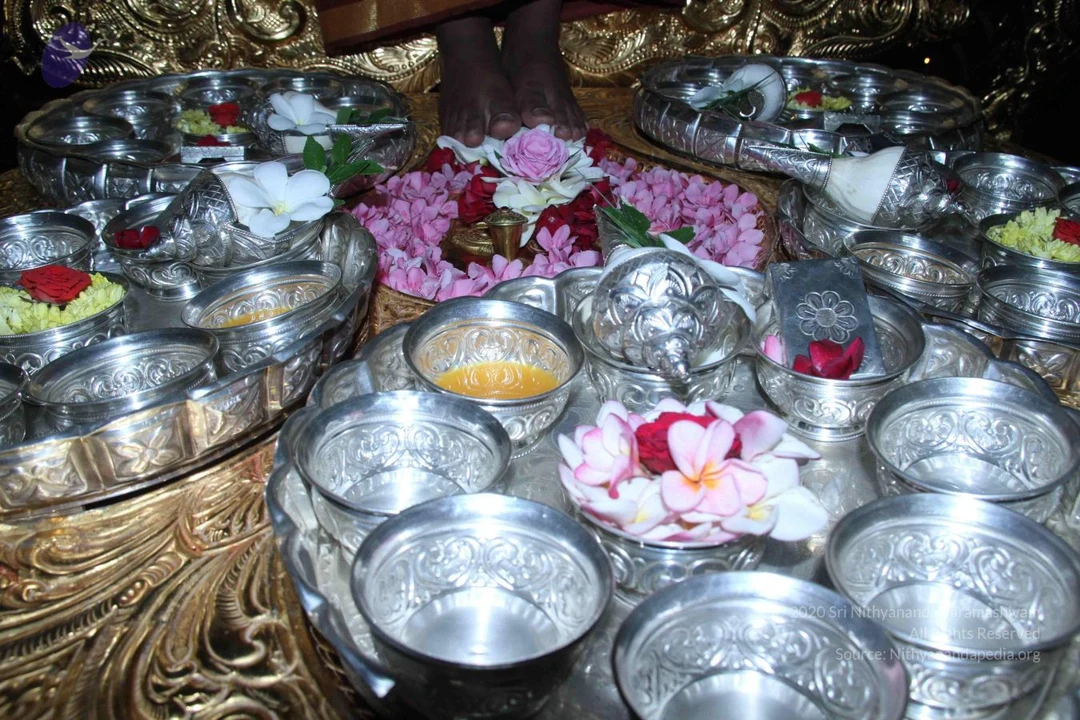
Close view of a ceremonial puja arrangement: a pair of bare feet rests on a golden throne-like platform above a large circular tray. Around them are ornate engraved silver bowls and vessels filled with pink and red rose petals, white plumeria flowers, red roses, green leaves, yellow sweet paste and saffron-coloured liquid. A small silver kalasha-style vessel and a silver spouted pot stand among the offerings. The setting is a padapuja-style offering with flowers and silver vessels; no people's faces are visible and no identity can be confirmed from the feet alone.Close view of a padapuja-style ritual arrangement: a person's bare feet in a maroon sari with gold border stand on a tray of pink and white flower petals, with white plumeria and red roses. Surrounding silver trays hold small bowls of yellow saffron-tinted paste, orange sweets or turmeric, red flowers, a silver kalasha-style vessel with white flowers and a small silver lamp. A gold-rimmed ritual tray frames the offerings. The scene is a photograph of ritual offerings, with no visible face or identifiable person.A seated man on an ornate gold throne carved with a lion-head armrest, wearing a red turban, red-and-saffron robes, a tiger-striped shawl draped over the seat, beaded white and red necklaces and armbands, is being honoured with hands folded in front of him. Around the throne, several devotees sit on the floor with palms pressed together, including a man in white with white tripundra vibhuti on his forehead, a woman in saffron with a rudraksha mala, and an older woman in saffron at the lower right. Silver offering trays holding flowers, marigolds, pink petals, kumkum and small oil lamps sit in front of the throne, and brass hanging bells and lamps hang on the black wall behind. Swamiji (probable) cues: turban, saffron-red ornate clothing, beaded jewellery and the tiger-striped seat, with his role as the seated figure on the throne receiving devotion during a puja-type ritual.A seated figure on an ornate gold throne with carved lion-head armrests is receiving padapuja in a dark-walled room with hanging brass bells and oil lamps. He wears a red-and-orange turban, rudraksha mala and red-and-white beaded necklaces, bangles, and a red dhoti with gold border over a tiger-striped cloth. A brass tray of flowers and kalasha-style vessels lies before his feet, and a man in white kneels to the left while a woman in white with a rudraksha mala stands behind. Two women in orange-red shawls and an elderly woman in an orange sari sit at the tray edge, with a dark-haired woman partly visible in the foreground. Six people are visible in total.A photograph of a man seated in profile on a dark background, wearing a red-maroon turban with a gold paisley ornament and a vertical tilak on the forehead. He wears a maroon garment with gold border, a beaded necklace of silver and red beads, a beaded armband, and an orange-and-black striped animal-skin seat cover. Brass hanging oil lamps and bells hang on chains beside him, and gilded carved ornamentation stands behind. The swami-style presentation with turban, beads and ritual setting gives an appearance-based a person label, so this is a person seated in a ritual space with brass lamps and bells.A seated man in a deep red turban with a small gold-embroidered motif and a white tilak on his forehead sits before an ornate gilded backdrop. He wears a red-orange shawl with a gold border, a long coral-red beaded necklace with crystal accents, a matching beaded armband, and a tiger-striped orange lower garment. Two hanging brass bells and a brass oil lamp frame him against a dark background. Appearance cues with the turban, beaded mala, and ceremonial dress suggest the presence of Swamiji (probable), seated in a ritual setting.
Tamil-Satsang-Q-and-A-for-IA-Kalpatharu-Darshan-Germany
26 photosSource gallery
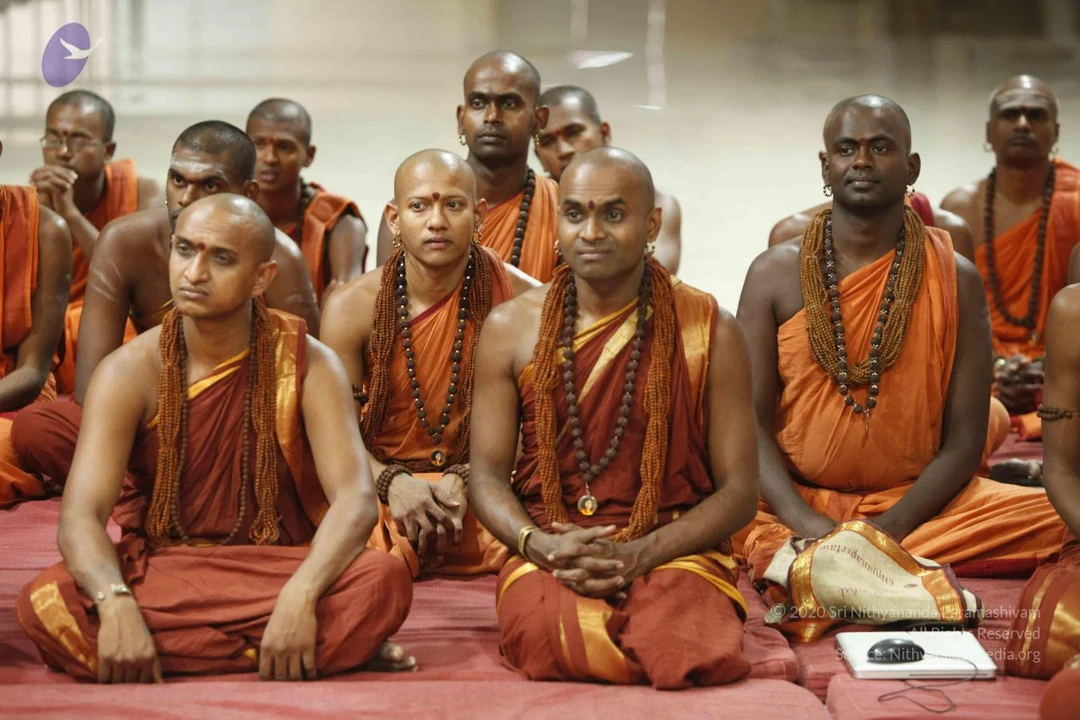
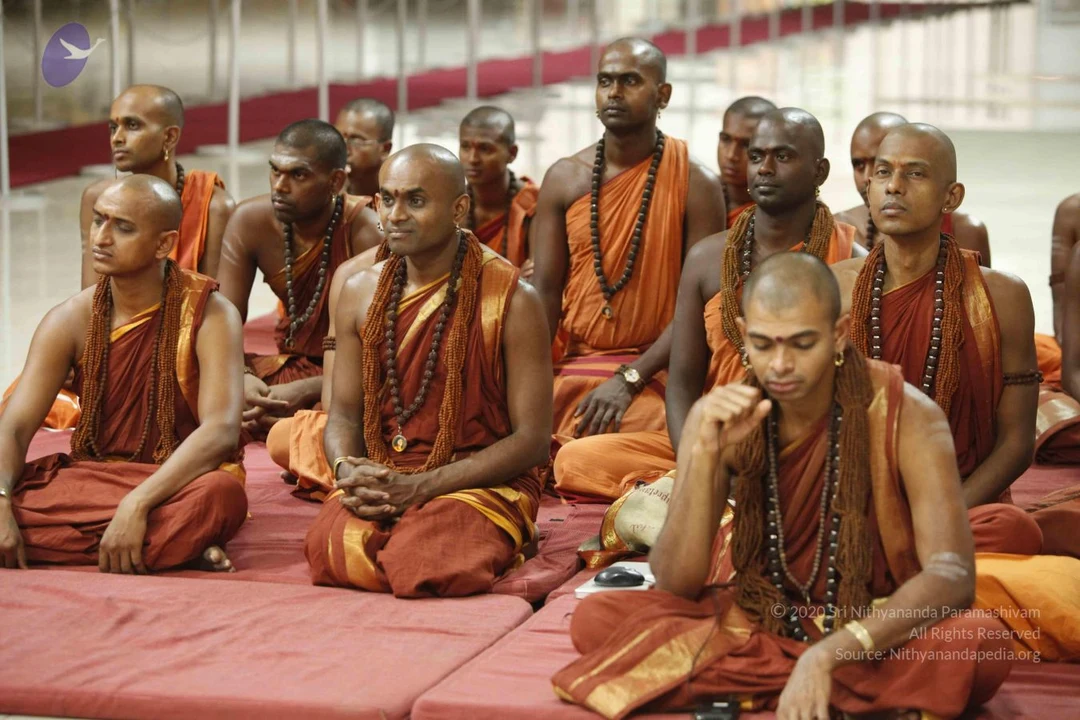
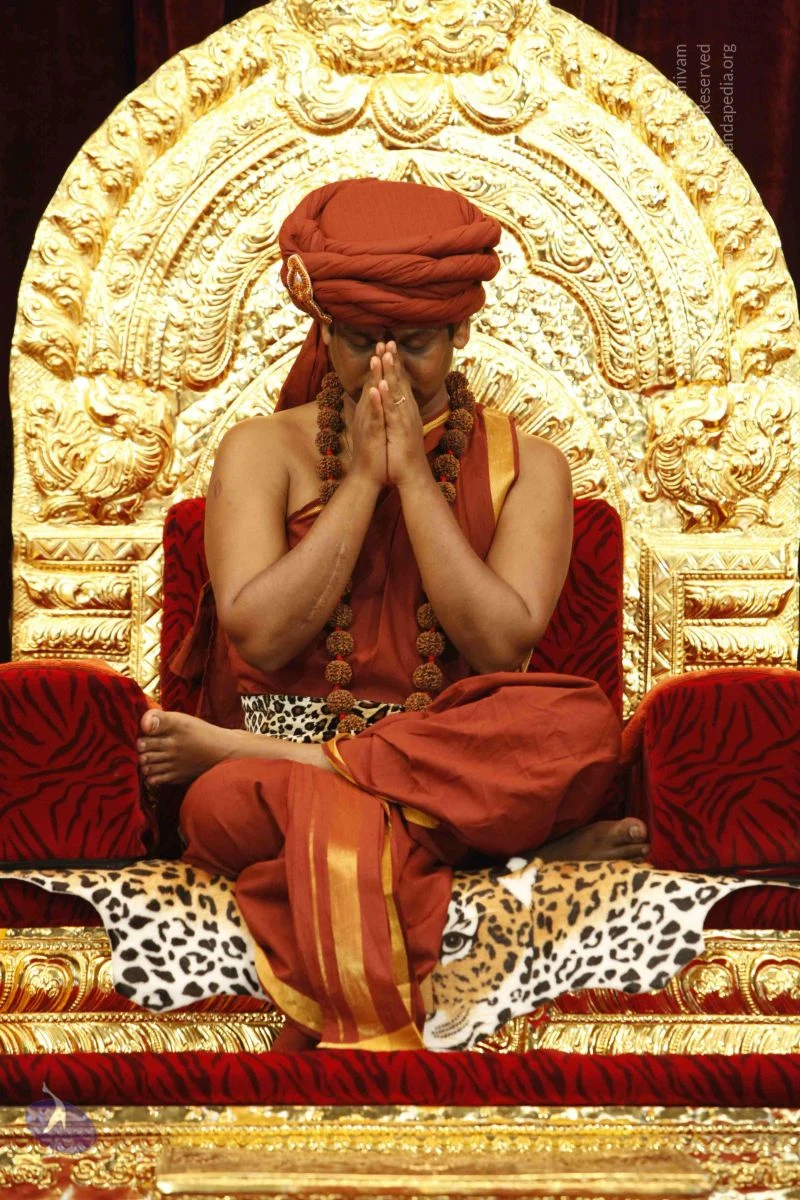
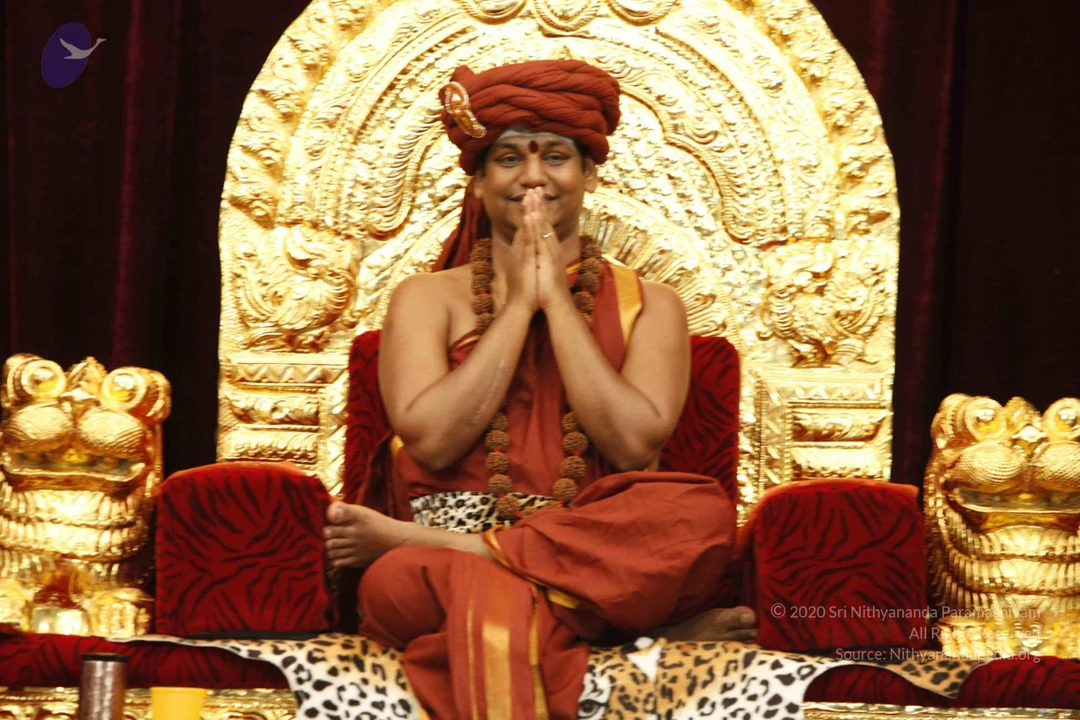
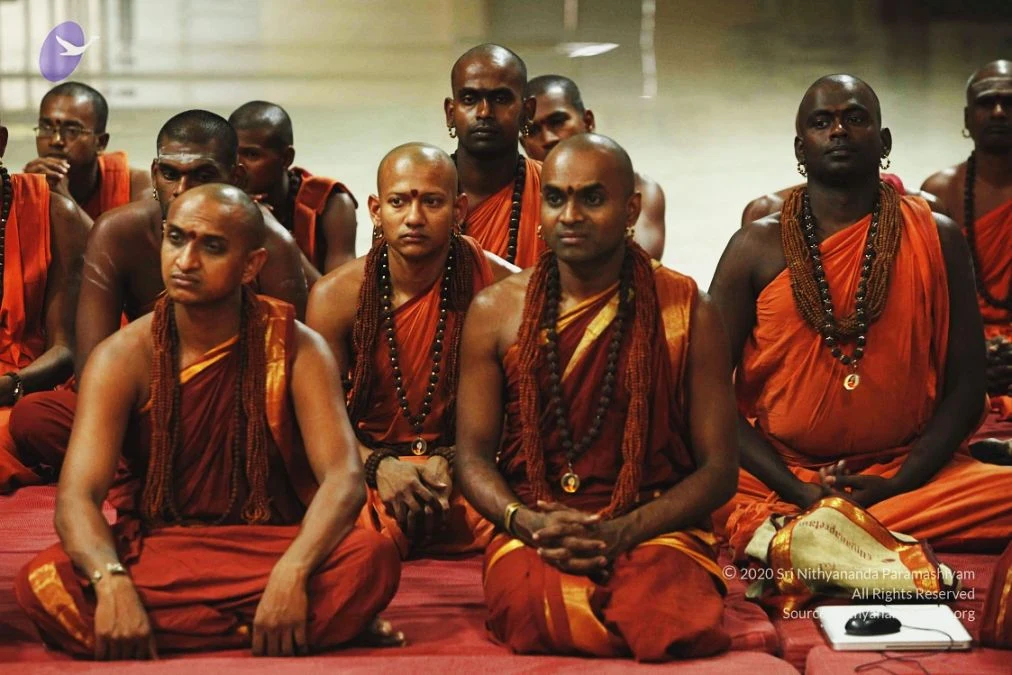
A man seated cross-legged on an ornate golden throne with carved lion-head armrests, upholstered in red and dark tiger-stripe velvet, with a leopard-print cloth draped over the seat. He wears a deep red turban, rudraksha mala beads around his neck, a red-orange robe with gold border and a leopard-print waistband. His palms are pressed together in namaskar and he has a gentle smile.A seated group of shaved-headed men in saffron and orange robes sits on a red mat during a satsang. The front pair wears dark rudraksha malas and braided orange-brown shawls over red and gold cloth, and the man in the centre has a red tilak on his forehead and hands clasped in his lap. Behind them, others in orange garments, some with beads, sit attentively. A small white mic and black cable lie on the mat in front. No individual in the group is clearly identifiable as a person by the visible cues, so the a person field stays unsure.A group of shaved-headed male monastics in saffron and orange-red robes sits cross-legged on red mats in a hall with a glossy floor and a red carpet runner behind them. Several wear long rudraksha malas and gold bangles or rings. One seated man in the front right rests his chin on his hand with eyes lowered, while the others look forward attentively. A small purple bird logo appears in the upper left corner.A man seated cross-legged on an ornate gold throne with carved lion-head armrests and a gilded arched backrest, against deep red velvet drapery. He wears a red-orange turban with a gold ornament, red-orange robes with a gold-edged shawl, a long rudraksha mala, and a small red bindi with a tilak. He smiles broadly, one hand resting on a red cushion. Swamiji (probable): the figure matches the page's indication of his presence through the turban, rudraksha mala and ceremonial throne cues. He is the only person visible.A man seated on an ornate golden throne with carved floral and scrollwork backing, draped in dark red velvet. He wears a red-orange turban with a gold brooch, a red-orange cloth draped over the body with gold-edged trim, and a long rudraksha mala of brown beads. A red dot marks his forehead, and he gestures with one hand resting on a red tiger-striped cushion beside a gold lion-head armrest. Setting suggests a satsang discourse. Swamiji (probable): the red-orange turban, rudraksha mala and ornate throne are consistent with the page's reference to a Satsang discourse.A seated man on an ornate gold-and-red throne, with gilded lion-headed armrests and a large gold carved backrest. He wears a rust-orange turban, bare-shouldered orange-red robe with gold border, and a long rudraksha mala reaching his chest. A red bindi is on his forehead and he smiles while resting his hands on his lap. Red velvet cushions with zebra-striped trim and a leopard-print cloth cover the seat. Appearance cues are consistent with a person, seated in the role of speaker at a satsang.

Nithya-Satsang

33 photosSource gallery
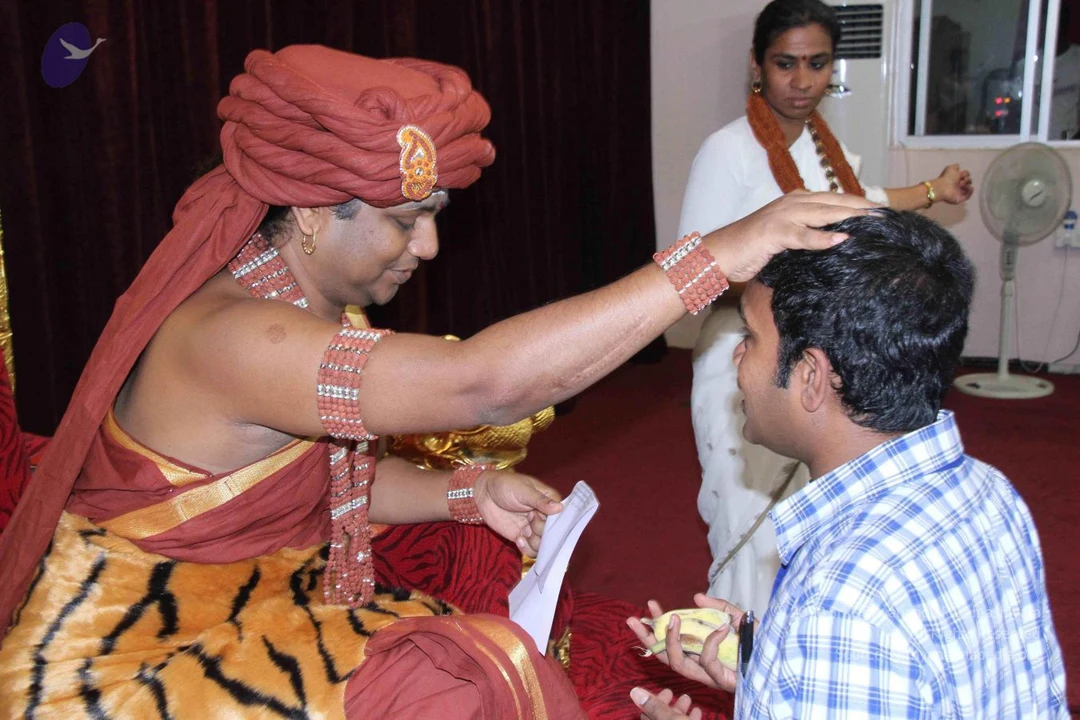
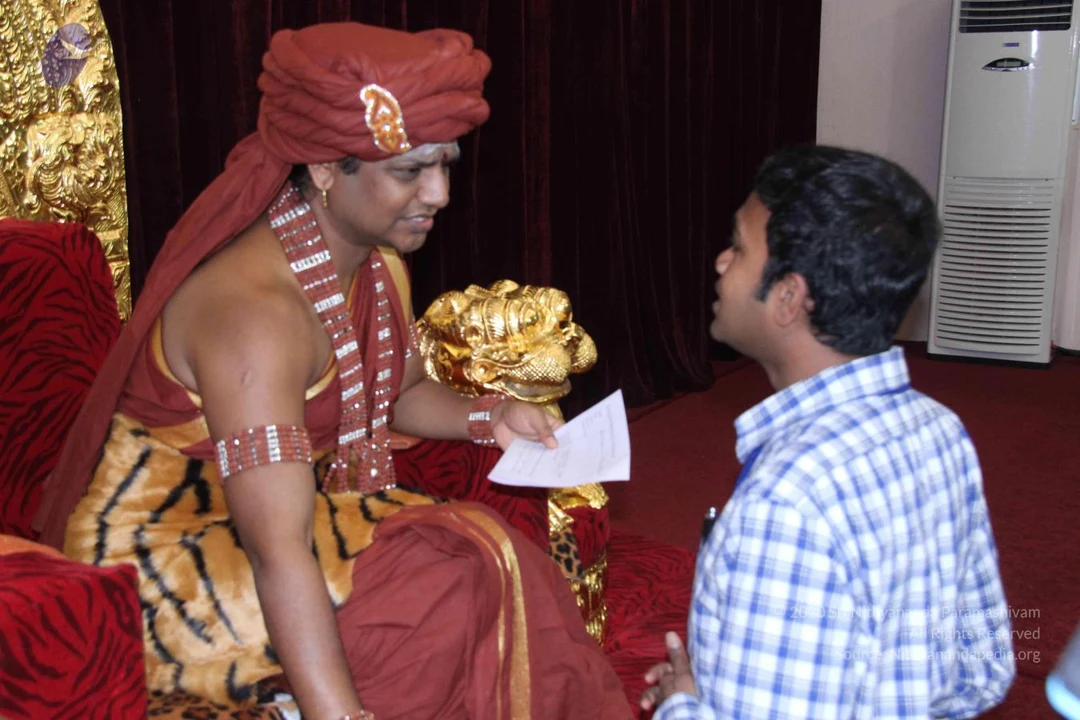
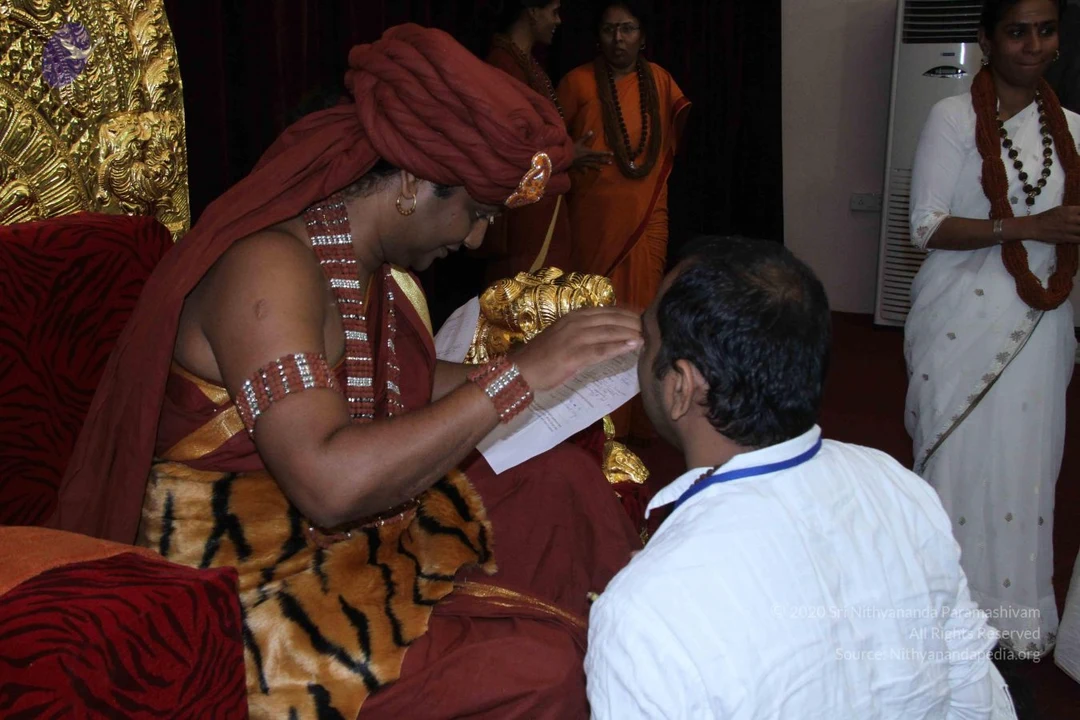
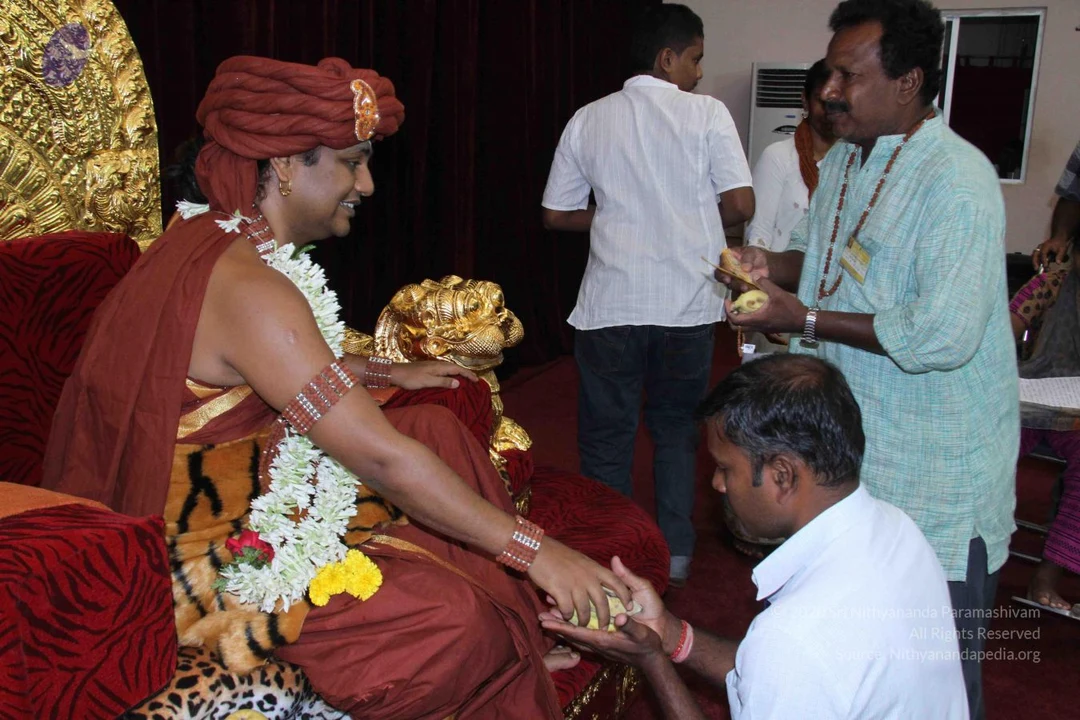
A seated man in a maroon turban with an orange-and-gold paisley emblem and white tilak on his forehead sits on a cream upholstered chair with gold carved frame. He wears a maroon garment with gold border, a tiger-stripe orange and black fur wrap over his lap, a long red-and-silver beaded mala necklace, matching beaded armlets and bracelets. Behind him hang a brass bell and brass oil lamp against a dark background.A seated man in a red turban with a gold brooch, a red shawl over bare shoulders, a tiger-striped gold-and-black garment, beaded red-and-white necklaces and beaded armbands sits on a red tiger-print throne beside an ornate gold lion-head armrest. He leans toward a younger man in a blue-and-white checked shirt who kneels on a red carpet and holds a folded white paper. Behind them hang dark red velvet drapes and a white floor-standing air conditioner. Swamiji (probable): the seated figure wears a red turban, beaded rudraksha-style necklaces and ornate clothing, matching the page's claim.A seated figure on an ornate golden throne with red velvet upholstery and a tiger-striped cloth draped over the seat wears a maroon-red turban and red robe with a gold border, plus beaded necklaces and bangles. He is bent forward touching the forehead of a kneeling man in a white shirt with a blue lanyard, who holds a paper. Behind them a woman in an orange robe with a rudraksha mala stands, and on the right a woman in a white sari with a red-and-black beaded garland watches. Gold lion-form ornaments and an air conditioner appear in the room.A barefoot man stands on a red carpet in front of an ornate gold-and-brown throne chair flanked by gold lion-head armrests, with dark red drapes behind. He wears a maroon turban with an orange ornament, a red bindi and white forehead markings, and a maroon dhoti-style cloth with a gold border. A tiger-striped orange and black fur shawl is draped over his chest and shoulders, with layered red and silver beaded necklaces and matching beaded armbands and wrist bands. He smiles toward the camera. Behind him on the left, a shaved-headed attendant in orange robes with white forehead markings stands near the throne. The appearance matches the page's Swamiji candidate through the turban, tiger-print shawl, beaded jewellery and throne setting.A standing man in a red-maroon turban with a gold ornament and a red bindi on his forehead, wearing a maroon dhoti and draped shawl with gold borders and a striped tiger-print wrap across his chest. He wears a multi-strand beaded necklace with a large circular pendant, beaded armlets and bangles, and smiles while standing beside a dark-brown leather throne with gold lion-head armrests on gold-embellished plinths in front of dark red velvet drapes.A single man stands barefoot on a red carpet before a dark red velvet backdrop and gilded lion-headed throne armrests. He wears a red-orange turban with a gold ornament, red and gold dhoti, a red shawl draped over one shoulder, and a tiger-stripe orange and black fur wrap at the waist. He has red and white beaded rudraksha-style necklaces, beaded armbands and bracelets, and a red bindi with a grey forehead mark. He stands beside a brown leather chair. Appearance-based candidate: Swamiji (probable), shown in his ceremonial red turban, layered beaded malas and tiger-skin wrap, standing in front of a throne.

Q-and-A-Kalpaturu-Darshan-Germany
22 photosSource gallery
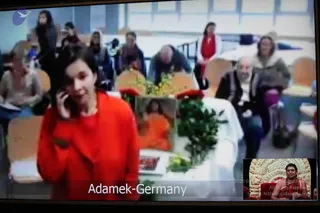
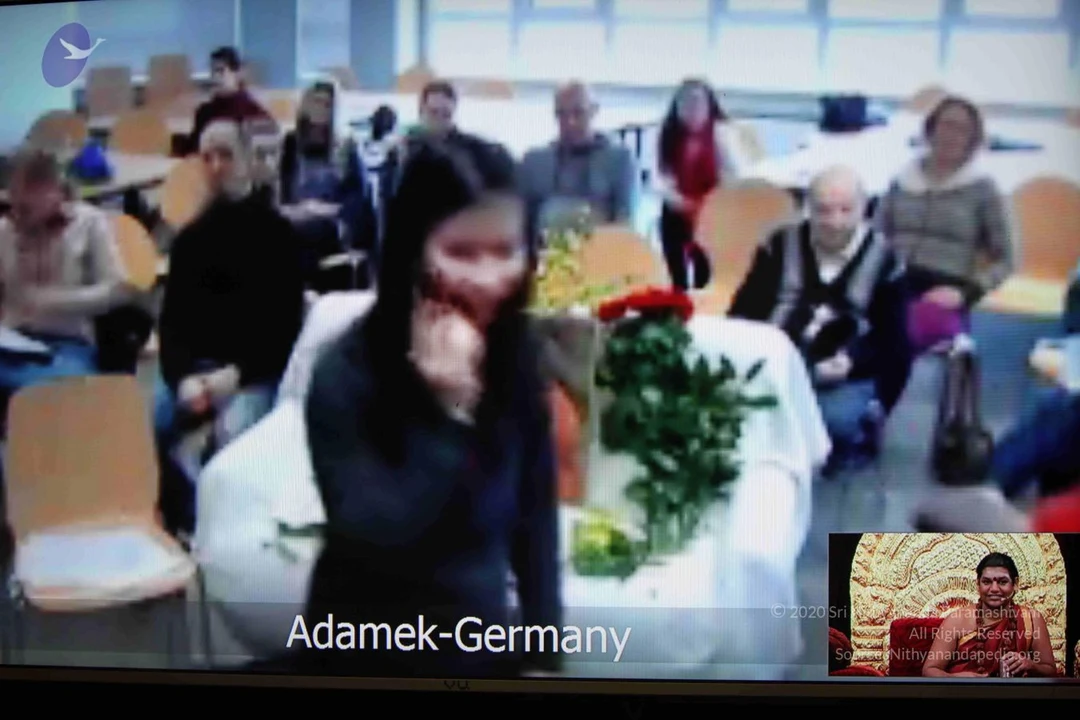
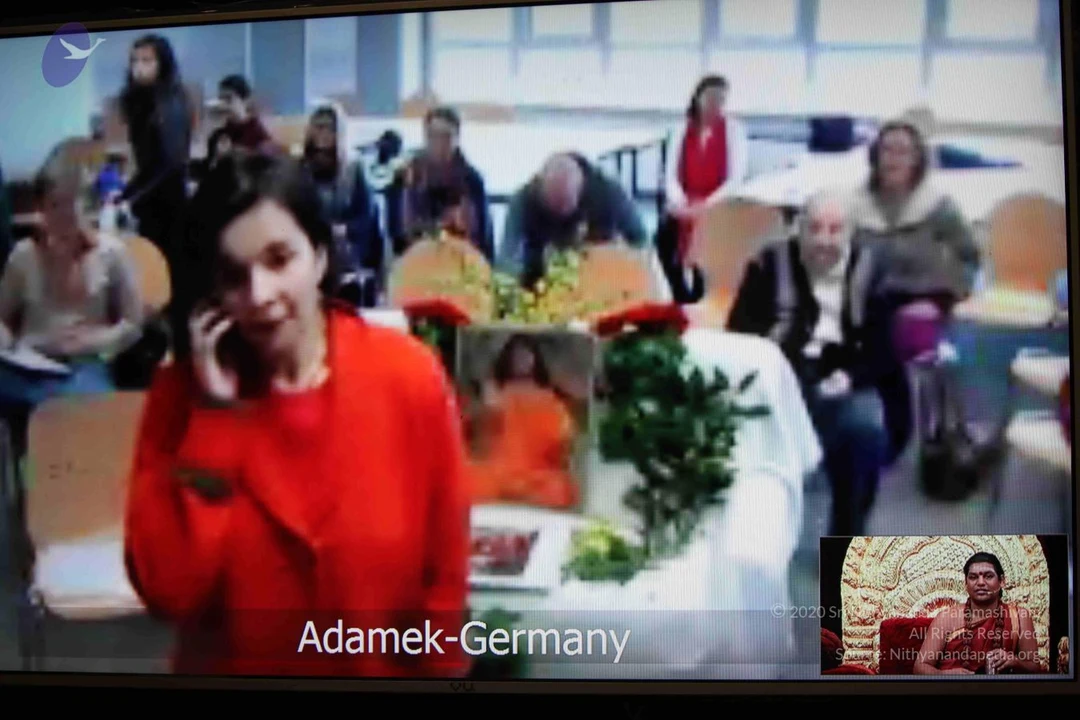
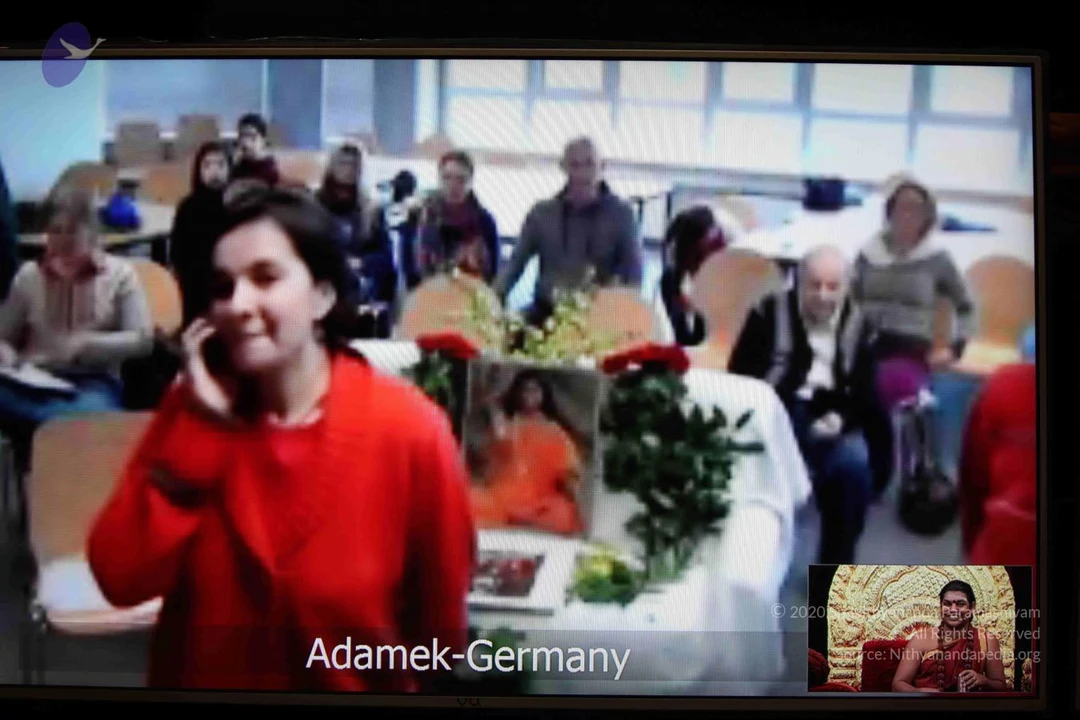
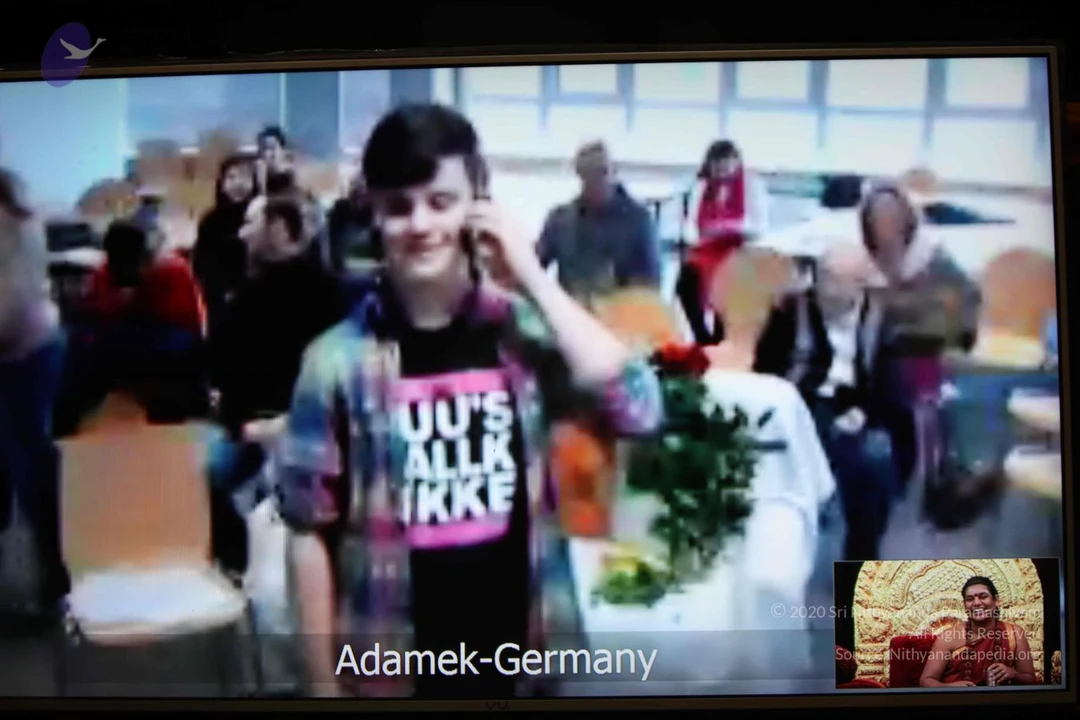
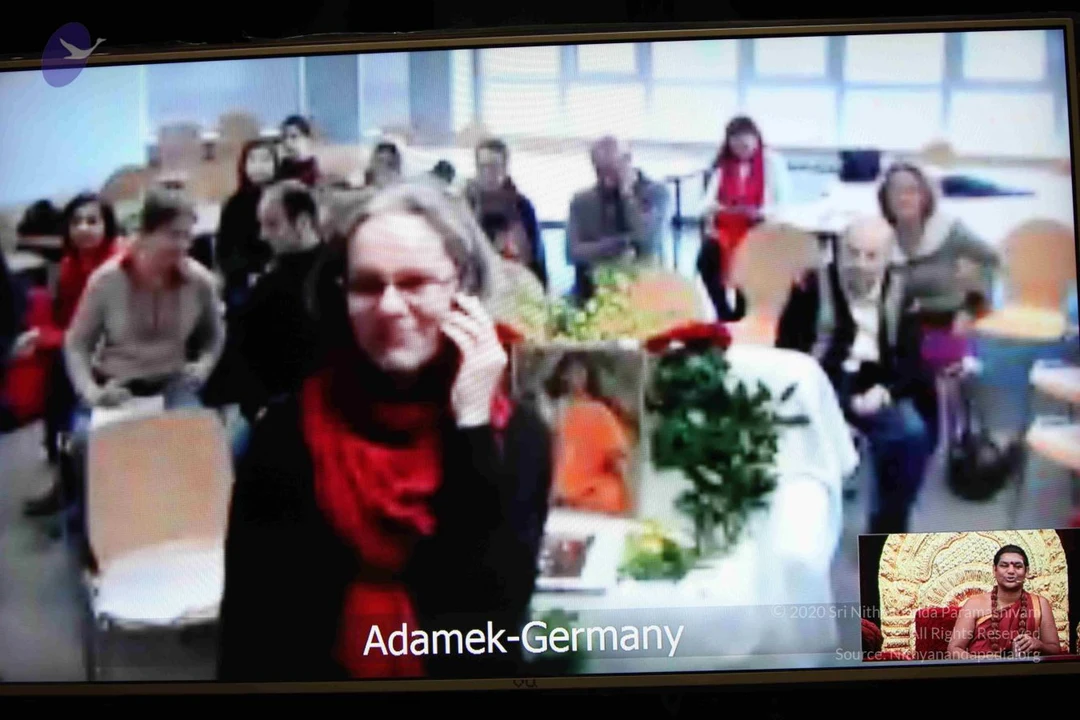
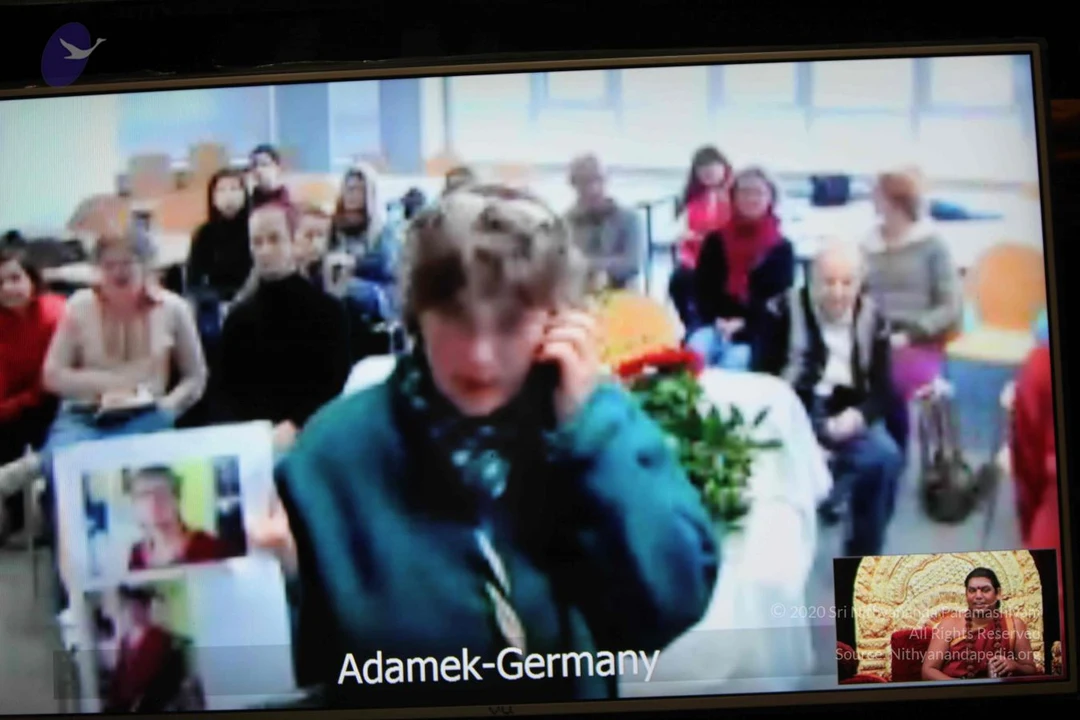
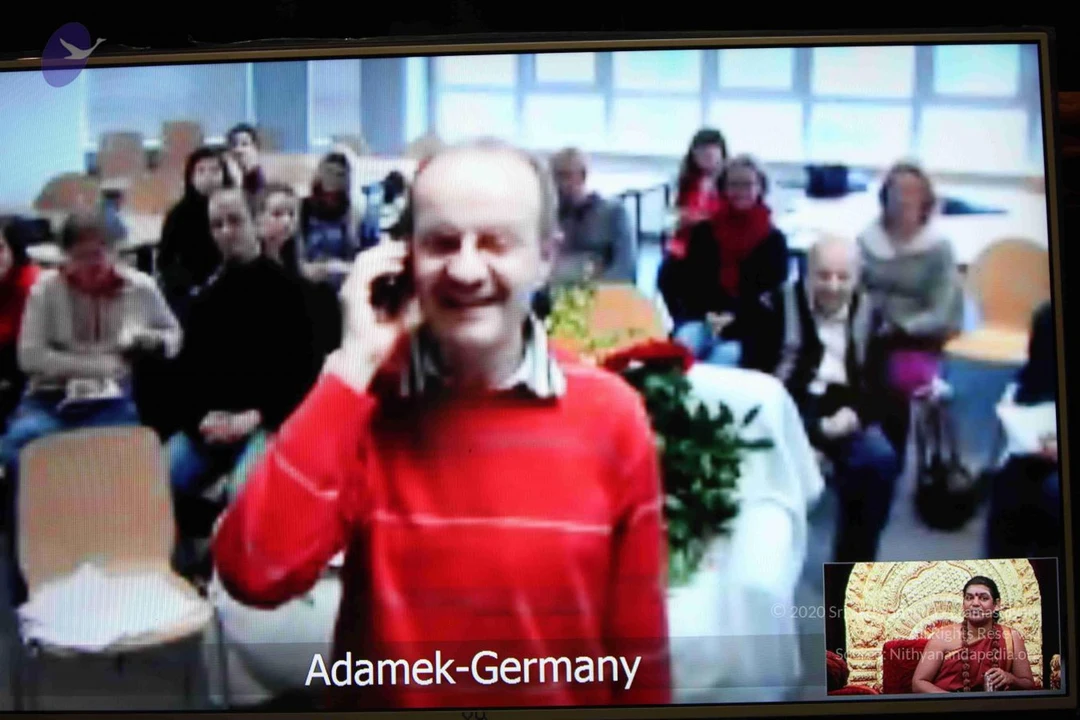
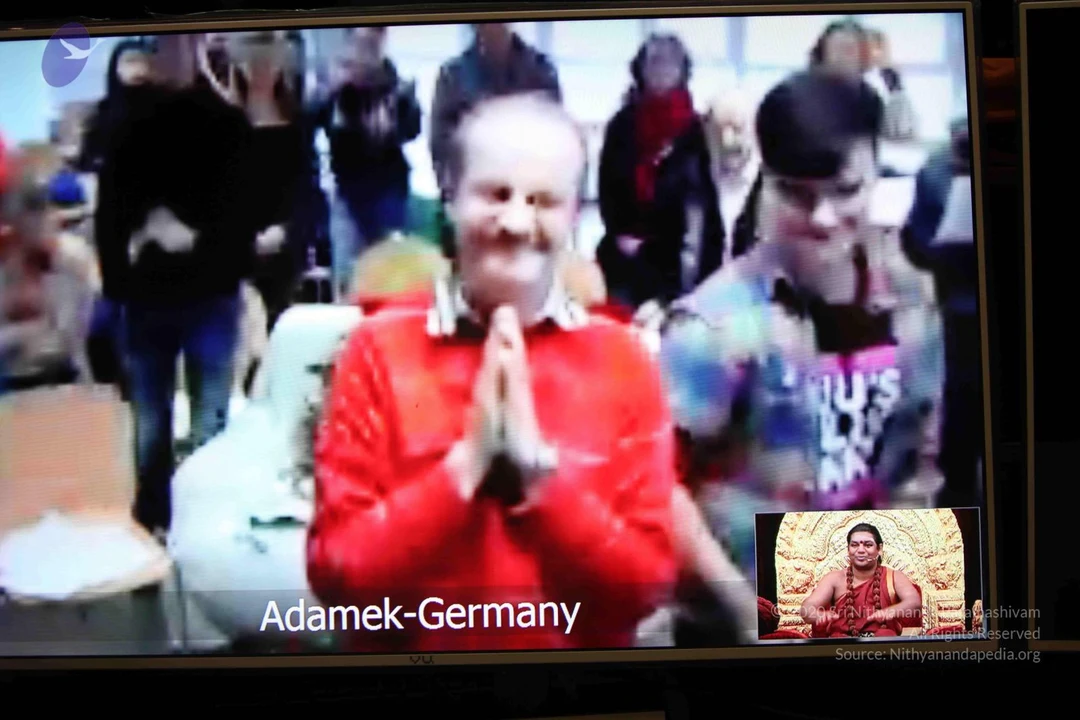
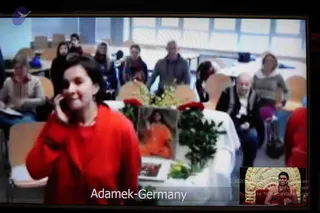
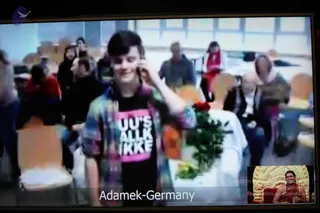
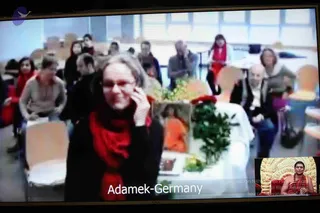
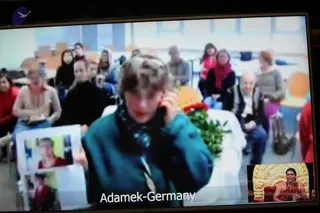
A screenshot of a video-conference feed showing a seated audience in a classroom-style room with wooden chairs. In the foreground a woman with long dark hair and a dark top covers her face with her hand, a white-draped table with a bouquet of red roses and greenery in front of her. Behind her several people sit watching. In the lower right corner a small inset shows a figure in orange robes seated before a gold ornate backdrop, labelled as a depiction of Swamiji, with a caption reading Sri Nithyananda Paramashivam. A name caption at the bottom reads Adamek-Germany.A photograph of a large screen showing a video-link session. In the foreground a young woman in a bright orange-red jacket holds a phone to her ear and smiles. Behind her, a room of seated people fills the frame, including a bald man in a dark jacket and a woman in a grey top, with a table holding a framed photo of a figure in orange robes, red flowers and green leaves. A small inset in the lower right shows a man in red-orange robes seated on an ornate golden throne, with a caption reading Adamek-Germany across the bottom of the main video. Several people stand and sit in the background of the remote room.A photograph of a large screen showing a two-way video link from a meeting room in Germany. In the foreground a young woman in a red top holds a mobile phone to her ear. Behind her, several seated people sit at tables in a bright room, and a framed photograph of a person in orange robes stands on a white-draped table decorated with red flowers and greenery. In the small inset at lower right, a man in gold and red ceremonial attire sits in front of a gold-lit backdrop, marked as a live feed from the event.A large screen shows a live video-conference feed from a group in Adamek, Germany, labelled by a caption at the bottom. In the foreground a smiling young man in a multicoloured plaid shirt over a black t-shirt with pink lettering holds a mobile phone to his ear. Behind him, a room with orange chairs holds several people, including an older man in a dark jacket and a woman in a grey headscarf. A small inset in the lower right shows a figure in orange robes seated on a golden throne, a person appearance; he is seen on a screen and is not physically present. Several adults sit or stand in the blurred background.A photograph of a large screen showing a live video link. The main image shows a room of seated people in a Germany location, with a smiling woman in front wearing glasses, a black top and a red scarf, one hand raised near her ear. Behind her, others wear red scarves and sit on light chairs. A small framed photo of a saffron-robed figure, a bouquet of green leaves and a flower arrangement sit on a table. In the lower right corner, an inset shows a man in orange-red robes seated before a gold patterned throne-like backdrop. A caption on screen reads Adamek-Germany.A screen shows a live video link from a group in Germany, captioned "Adamek-Germany" in white text across the lower edge. In the foreground a young person in a teal jacket and dark scarf holds a phone to one ear and a printed photo of a woman in a red top. Behind them a seated audience in mixed casual clothing, including a woman in a red scarf, fills a bright room with orange chairs. A small inset at lower right shows a robed figure seated on a gold throne in an orange garment, and a flower arrangement sits at the table edge.