Wednesday
12 February 2014
What makes you jump as high as possible
- Dated photos
- 15
- Source pages
- 1
- Media
- 2
February 12 2014
Original wiki pageTitle
What makes you jump as high as possible
Description:
In today’s morning Satsang, Paramahamsa Nithyananda expands on and further defines Liberated Thinking. What is the key to Liberated Thinking? Completion! Completion is the base for everything in our lives. Practicing Completion and Authentic Listening allows us to act from the correct context, with clarity, and from a powerful space, where we can experience the possibilities that exist within us.
| Video | Audio |
Transcript:
(00:35) Nithyānandeśvara samārambhām Nithyānandeśvari madhyamām | asmat āchārya paryantām vande guru paramparām ||
(01:03)
(In Hindi)
Iss samay hamare sath upasthit sabhi darshakon aur bhakton ka Main prem evam aashirwad sahit swagat karta hun.
(01:13)
I welcome all the devotees, disciples, samajis, satsangis, Shrimahants, Mahants, Kotharis, Thanedars, devotees, disciples, samajis, everyone sitting with us all over the world through Nithyananda TV, Sadhna TV, Lotus TV, Janashree TV and two-way video-conferencing having Nayana Deeksha many cities, many countries around the world.
Cities sitting with us in two-way video-conferencing: Charlotte-Srisailam, Toronto- Kailasam, Singapore-Singapuram, Oklahoma-Somanatham, Kuala Lumpur-Palani, Los Angeles-Arunachalam, Houston-Kalahasti, Ohio-Prayag, Nithyananda Nagaram- Hyderabad, Seattle-Chidambaram, San Jose-Madurai, Guadeloupe-Rameshwaram, Thiruvanmiyur-Chennai, Bangalore Center, Ohio-Ma Shivananda, Devon-UK, Dubai- Vaidyanatham, Jorpati-Nepal, Camus-Hong Kong, Kulim-Tiruttani, High Point-North Carolina, London-Kashi, Port Washington-New York, Uttarahalli-Bangalore, Oman- Sivagangai, Winston-Salem, Paris-Home Temple, Adi Nithyananda Dhyanapeetam- Athipalayam, Oakland-California. I welcome all of you with My love and blessings.
(02:53)
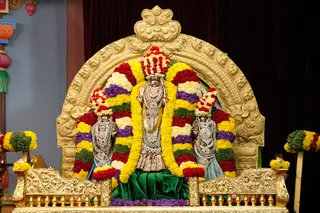
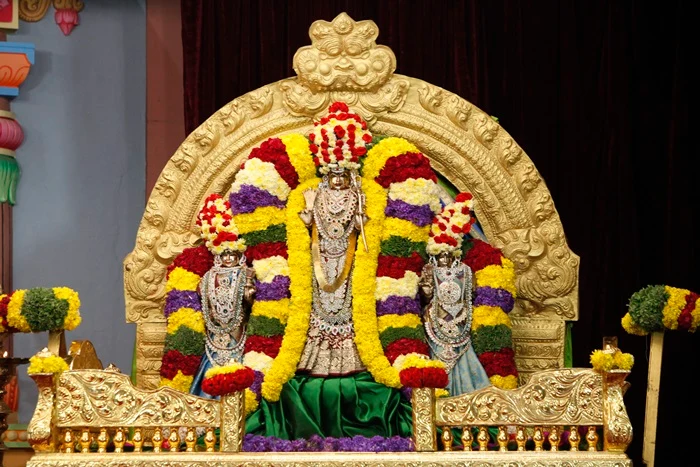
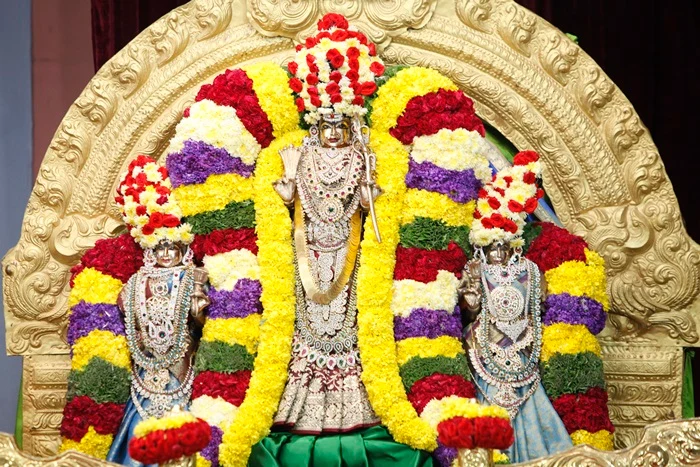
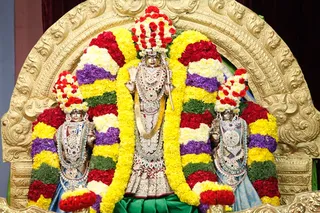
Today, the anniversary of Mahamandaleshwar Pattabhishekam. Mahamandaleshwar Pattabhishekam of Mahanirvani Peeta. Paramahamsa Nithyananda coronated as the Mahamandaleshwar of Mahanirvani Peeta today, one year over. So, that is why today Rajarajeshwari, Devi, is gracing in Suvarna Palkhi, Suvarna Shipika, on the same Palkhi on which we had a procession after the Pattabhishekam, coronation…. Today Devi is gracing as the seventh day of the Brahmotsavam. [aarti is displayed.]
(5:06)
Within a year, so much has happened. I can’t imagine only one year before we became Mahamandaleshwar, Pattabhishekam has happened.
Today’s subject, today I will expand on - Practicing Liberated Thinking Continuously. Today morning, just when I came down from the room to the Garbha Mandir for Pada Puja, something happened. I wanted to expand on that…. When I came down I saw a few of My sannyasis standing. May be they know that Swamiji anyhow is going to come down in a few minutes let’s see Him and walk, or just they were casually standing, or they were coming I don’t know. I saw them and smiling at them I made a statement: “See, only our organization can cope up with these constant festivals. Everywhere is a Utsava.” See, in normal life, in the regular people’s life, maybe once in a year, four, five days they will wake up like this early morning and get ready, go to temple or do some puja. Here every day is Utsava, every day festival. Something or the other is going on.
(07:14)
So I was telling our Swamis, standing and joking because we had a few minutes extra, I was standing there and joking. Usually when I come down, I will say ‘Hi’, ‘Bye’ to all the Swamis who are standing there. And this Bhairava will always stand there waiting to receive the blessings. And I looked around and told, “Only our organization can handle this every day Utsava.” Immediately, one Ma Swami, she replied, “Only we can handle every day these problems also....some or the other problems.” She made a statement, either self-inflicted or inflicted by others, some problems every day. Immediately I looked into her. I said, “No. Wrong cognition.”
Listen, if you don’t practice liberated thinking, you will have the wrong cognition. The problem of the wrong cognition is, when you cognize the problem so much, if the Cosmos wants to get your attention, if it wants to wake you up, it will only torture you and wake you up. Understand. What you cognize to become more alive, that will be supplied to you more and more and more. If the celebrations and joy makes you more alive, more excited, more joyful, that will be supplied to you again and again. Because, ultimately, Cosmos wants you to be in your peak. But if only problems and sufferings makes you to come to peak, only that stands in your memory, that only sticks out in your memory and cognition, then Cosmos will go on supplying that to you.
(09:50)
Understand. Listen, cognize this. I told her, “No, wrong cognition. See the amount of work we are doing, contribution we are doing, good things happening; when you look at that.” But, this cognition, please listen. I am not saying accept all the problems but all I am trying to tell you is: Don’t resist. When you resist, the problem gets recorded as big in you, and you will see, forever to wake you up life will go on be torturing you. It is not that life wants to torture you; but that is the only way you wake up, you come to awareness. Understand, the purpose of your individual soul is to be in the high state of awareness. If joy and excitement and celebration brings you to the high state of awareness, life gives you that. But, only suffering and torture brings you to that high state of awareness, life gives you that. Life gives you what you want. Life gives you what you want…. Life’s purpose is to make you high aware. And life can’t keep quiet because you created it. Life has no Stay Order. You can’t get a Stay Order for life.
(12:06)
And the more you cognize problems, means only problems brings you to your peak. Then naturally, to keep you in the peak, Cosmos goes on supplying problems. I have seen in My life, when I cause somebody’s reality, I am in My peak. When I just sit in Samadhi, I am in My peak. I saw the Cosmos bring these two constantly for Me. Whole day I am in Samadhi; Whole day I go on causing people’s reality. Understand. Whatever brings you to your peak, life will cause that to you. So don’t allow your cognition to carry so much of vengeance towards you and others. It is vengeance and anger that goes on cognizing life as self inflicted or ex….outside war. And you are so angry, violent; you don’t even want somebody to pinpoint your violence. You don’t even want somebody to pinpoint, remind, your violence and anger. You don’t even want somebody to raise you.
Understand, life, life is too big than any perceived problems. Any perceived problems also – listen – any perceived problem also becomes too big by the addition of your resistance. I am not saying accept the problem. I am just saying don’t resist. This is the way it is. Let us handle.
(14:59)
I have always seen the violent people getting overwhelmed. Violence is nothing but a deep resistance towards you and the life…. Violence is nothing but a deep resistance towards you and the life. Don’t cognize life as violence, complete. Don’t cognize life as problems, complete. Complete with that. Listen, what brings you to the high awareness, Cosmos repeats that in your life. Complete. Complete. Complete. Let Meditation, Samadhi, Completion, let that bring you to the maximum peak awareness and make you Alive and peak possibility of you. Let the moments of Completion bring you to your peak. Let the moments of Completion bring your words to your peak, thinking to the peak, action to the peak, feeling to the peak, living to the peak. If only problems are bringing your words to the peak, thinking to the peak, feeling to the peak, living to the peak, be very clear life is going to constantly give you problems because you are planning for that, you are excited only with that, you are alive only with that.
(17:33)
Getting excited with Completion, getting excited with Bliss, being in your peak of thinking, feeling, living and words from the space of Completion is Liberated thinking. Practice this constantly. Only then you are a Sannyasi. Only then you are My disciple, My disciple. Only then you are a human-being. Only then you are alive. Understand. What makes you excited, life gives you a ‘Thathaasthu’ for it. I am in My peak when I am in Samadhi and causing somebody’s reality. And life goes on bringing that to Me. Life goes on bringing that to Me, showering that to Me. Everything else, I complete it. Understand. Learn this one simple process, one simple thinking. This one simple thinking will become liberated thinking in you, liberated thinking in you. Understand, only a person who has the liberated thinking can really do anything useful in the life, whether it is serving himself or serving the Sangha, protecting themself or protecting the Sangha.
(19:34)
Very important moment of your life is having patience when Master points your wound to you, your puss to you; having the patience to complete it. When He points your violence to you, you become more violent about it. When He points your incompletion to you, you become more incomplete about it. When He points your incompletions, complete. When He points your violence, complete…. Constantly practicing liberated thinking. Even in your casual moments, the liberated thinking should be running under lying. The moment you listen to this truth, don’t start the conversation in you, “I am not able to do; what can I do? How can I do? I don’t believe in all these? These are all words.” See, one word can destroy all your spiritual practice. That word is, “These are mere words.” If you allow that one word you can brush all the process Guru does on you aside. I have seen that is the one word through which Rahu enters you and occupies you. That is Rahu’s master-key to open you.
(21:30)
I have seen few Swamis, when they are about to get destroyed, they will use this word: “Eh, these are all mere words.” Understand, because all your problems started as “mere words”, solution also comes as a “mere word….” I am not saying accept all the problems happening around. I am just saying, don’t resist. Then your cognition will not be built on problems. When your cognition is built on problems, Cosmos will go on supplying problems to you, because the purpose of Cosmos is to keep you in high awareness…. See, for example, if you are a dog, the trainer wants to make you jump as high as possible. He will check whether biscuit makes you jump as high as possible, or a bone makes you jump as high as possible, or a ball makes you jump as high as possible. He will use that to make you jump as high as possible.
(23:11)
So, whether Completion makes you jump as high as possible, or causing others’ reality makes you jump as high as possible, what makes you jump as high as possible is your decision, your cognition. If only problems and sufferings, complications, controversies, conflicts makes you jump as high as possible, complete with it now. Complete with it now. Let Completion, joy, causing others’ reality, let all these make you jump as high as possible. Let these make you excited as high as possible. Let this causing others’ reality and Completion galvanize all your energies inside you.
I tell you, just with this one process of rose plant, making the rose plants shed the thorns, My kids will be out of self torturing violence…. From the young age you develop a pattern for you to come to the peak high excitement and joy, either somebody has to torture you or you have to torture yourself. Either you have to inflict some problem to you, or somebody else has to inflict some problem to you, or at least you have to imaginary, perceive imagine some problem. Only then you can be in your peak, the best words will come out of you, the best thinking will come out of you, best feelings will come out of you, the peak living will happen in you. When you start building this pattern you are planning for a life with full of problems. Like how Kunti only in suffering she reaches the peak of Krishna Bhakti. That is why her whole life was suffering. Or at least she perceives her whole life as suffering.
(26:20)
I tell you, the worst part of violence is if somebody points that, it will flare up. Because by flaring up, it diverts your attention, it does not let you complete with it, it does not let you complete with it. Understand, today, all of you look in, take this as a homework. Find out, are you practicing liberated thinking or not?
Please listen, if only the problems causes you the peak feeling of alive, then you are in the bound thinking; you are only planning for more and more problems, confusions, sufferings. If Completion makes you feel high, if Completion gives you the kick, that feeling excited, joy, the causing others’ reality, that gives you the kick of life. The beautiful words, thoughts, feelings, living, if the Completion and causing others’ reality becomes the best moments of your life, understand you are in the liberated thinking, because you are planning for that to be again and again happening in your life. Whatever excites you, you will be attracting that in your life. Whatever excites you, you will be attracting that in your life. Whatever excites you, you will be attracting that in your life - is a basic law of life. Wherever you are, basic laws are basic laws.
(28:56)
The good news is - your cognition can be changed towards liberated thinking. The bad news is - you don’t believe that it is so easy. Good news is - fact of matter, as a fact, your cognition can be changed very easily. The bad news is - as a perception, you perceive this as very difficult. You perceive this as very difficult.
I tell you, tiredness always comes by the perceived problems, not by the real problems. Boredom always comes by the perceived problems, not by the real problems…. Real problems brings you strength and intelligence. It is the perceived problems, the time, amount of energy you waste in the perceived problems that brings you tiredness and boredom. See, a man is sitting for years, goes on solving problems which is brought to him as a personal problems of the people, or brought to him as a problems on him. People come to Me bringing their problems or trying to bring problem to Me. But go on solving. I neither feel bored nor feel tired, because understand, all real problems brings only intelligence and energy. It is the perceived problems that bring boredom and tiredness and suffering.
(31:20)
Listen. Practice liberated thinking which is more easy than suffocated thinking. Only for suffocated thinking you need lot of complicity and complexities inside. For liberated thinking you just need to be plain, you just need to see the facts; you just need to see the reality; you just need to understand…. The cognitive shift, the good news is, the cognitive shift is possible in reality. The bad news is, your perception always shows the cognitive shift is not possible, is very difficult...‘I tried’, ‘I am trying hm, hm, hm’. Practice liberated thinking. Dyansaye suniye. Practice liberated thinking. Practice liberated thinking in every step, in every moment, everyday life, practice liberated thinking.
(33:03)
(Hindi summary)
Aaj Mai purnatva ka lagatar abhyas karne ke bare me baat karunga. Dhyan se suniye, yadi aap mukta soch ka abhyas nahi karenge aap ka bodh galat hoga. Jo bhi aapko aur adhik jivit karega vohi Bhramand aapko pradan karega. Yadi aap ko pida hi jivit rakhta he, aap ko jivit rakhne ke liye jeevan pida dete rahega. Yadi aap ko anand or chetna aap ko chetna ke uchchatam star par rakhta hai jeevan aap ko anand dega. Jab Mai kisi ki vastavikta ka karan ho, samadhi me ho, jeevan lagatar Muje vohi deta hai. Pratisodh or krodh hi jeevan ko yudh ke roop me darshata hai. Koi bhi samasya tabhi bada dikhai deta hai jab aap uska virodh karte hai. Himsa or kuch nahi balke swayam or dusro ke virodh hai. Apni himsa ke saath Purnatva kijiye. Dhyan or purnatava ko apne jeevan ki sarvochch sthiti banayiye. Lagatar mukt soch ka abhyas kijiye. Tabhi aap ek jivit manushya bhi hai ye sahi soch kijiye or aap is soch ka anubhav karenge. Aap ke jeevan ka mahatvapurna kshan tabhi hai jab Guru aapki apurnata, aap ki himsa ko dikhate hai, tab aap ko Purnatva karna chahiye. Aap ke har kshan me mukth soch ka abhyas kijiye. Ye kabhi na sochiye ke ye mansic keval sabda hai, samasya ka virodh na kijiye. Bas usi chetna ke saath dekhiye. Yadi aap samsyao se prerit hai uske saath Purnatva kijiye. Or Purnatva or dusro ki vastivikta ka karan banna aaphi ko apne jeevan ka adhar banaiye.
(35:56)
I bless you all. Let you all radiate with Integrity, Authenticity, Responsibility and Enriching. With Eternal Bliss, Nithyananda. Thank you.
(36:07)
Photos From The Day:
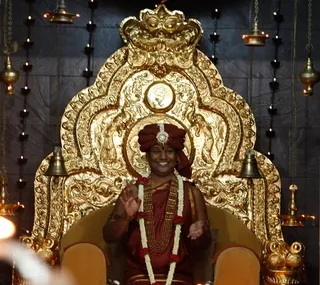
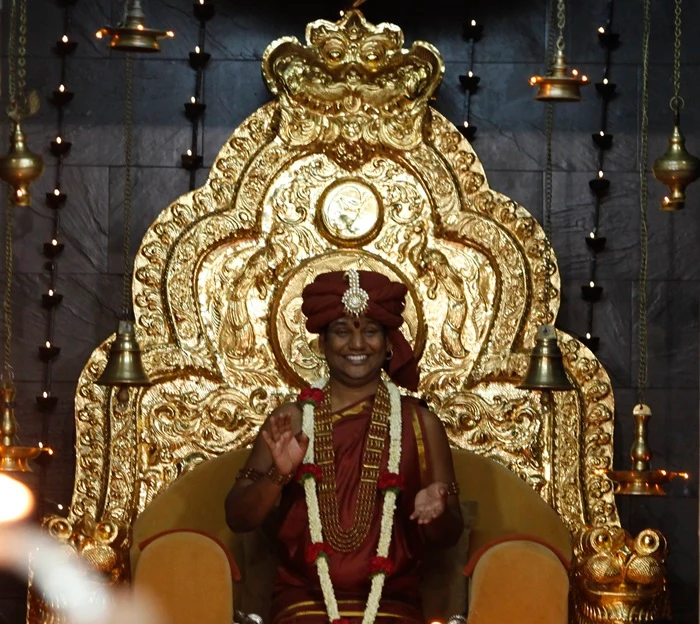
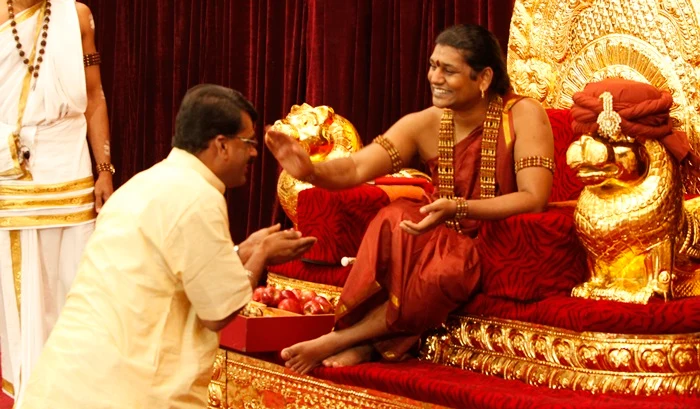
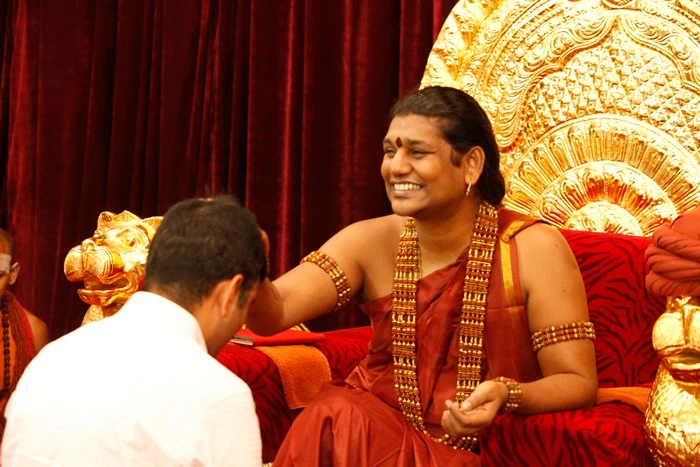
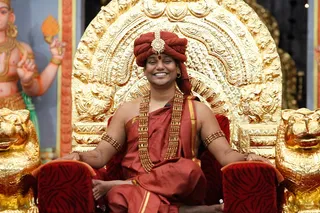
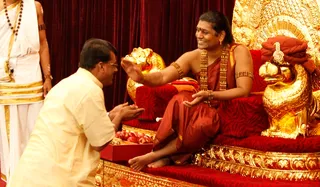
Sri Nithyananda Paramashivam graces and blesses as Swamiji accepts the offering of Padapuja
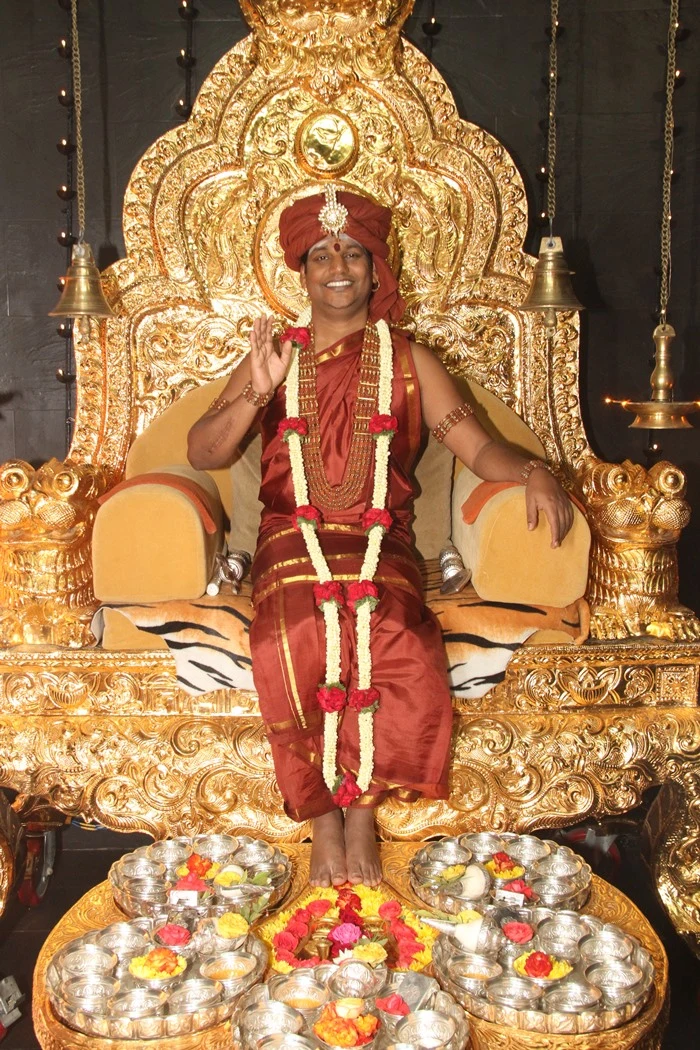
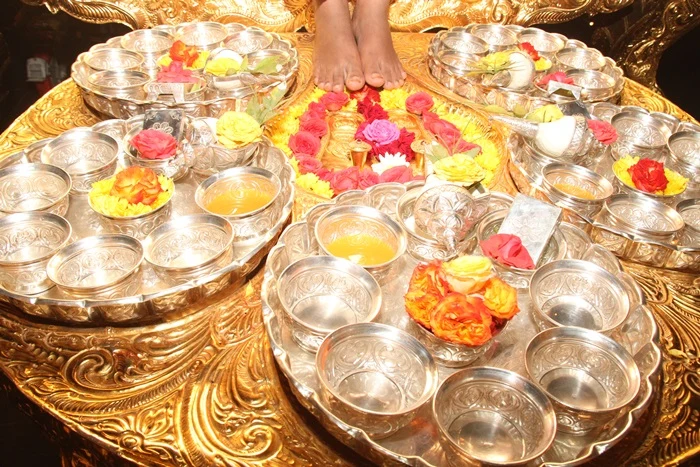
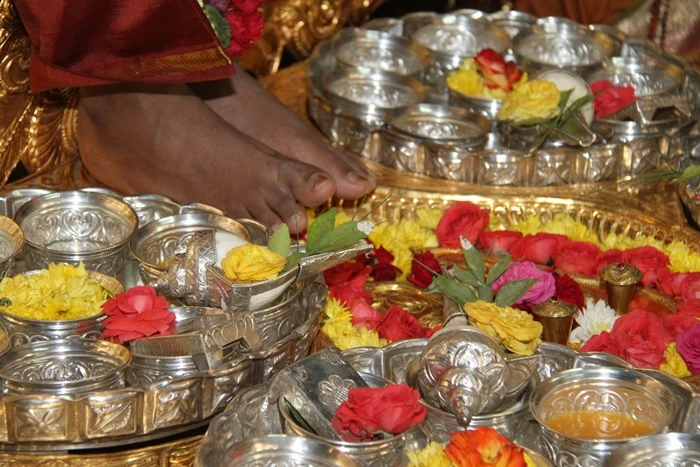
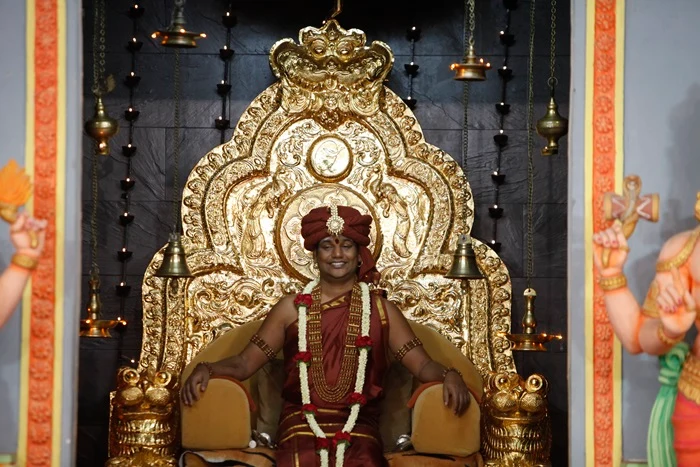
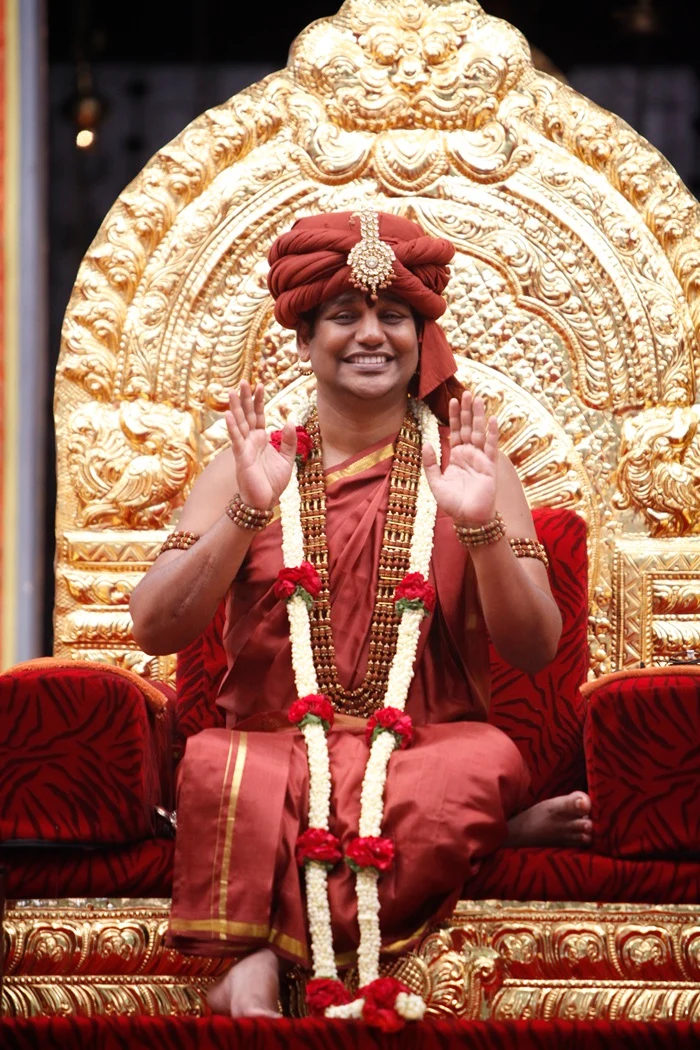
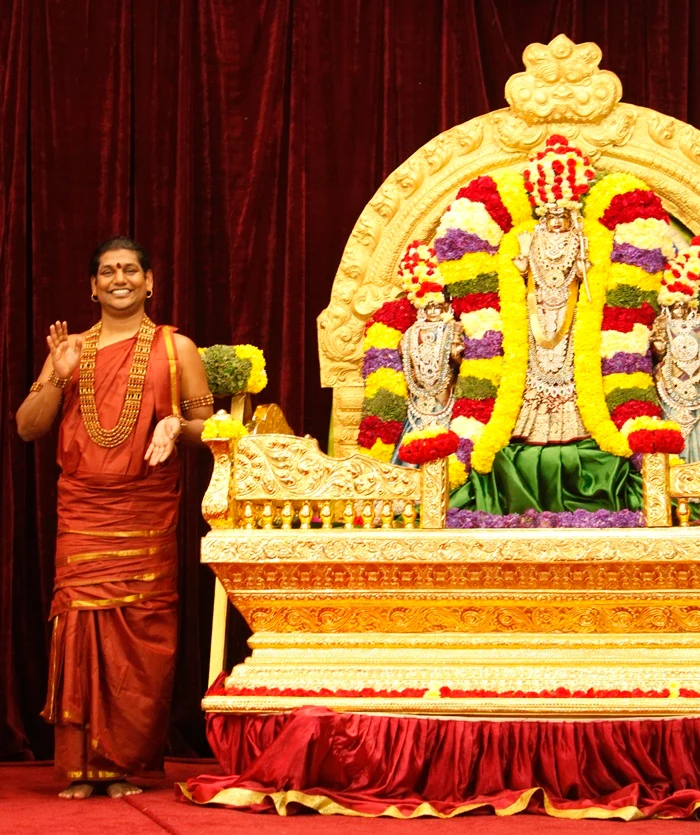
The Leela Alankar of the day
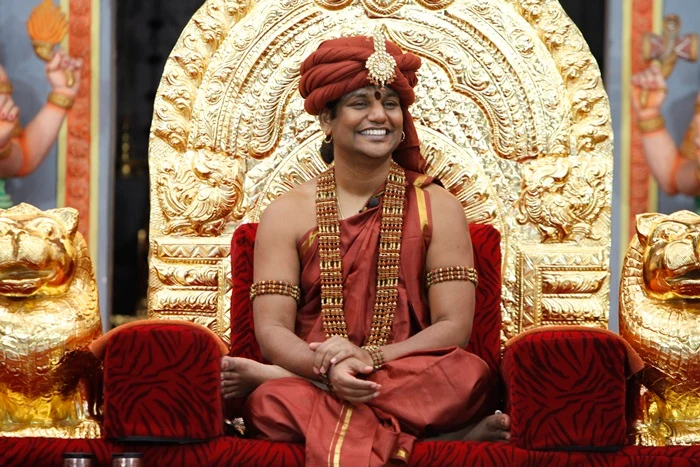
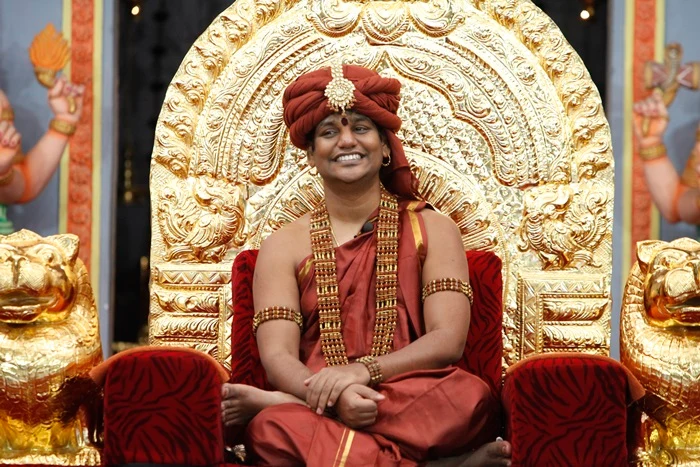
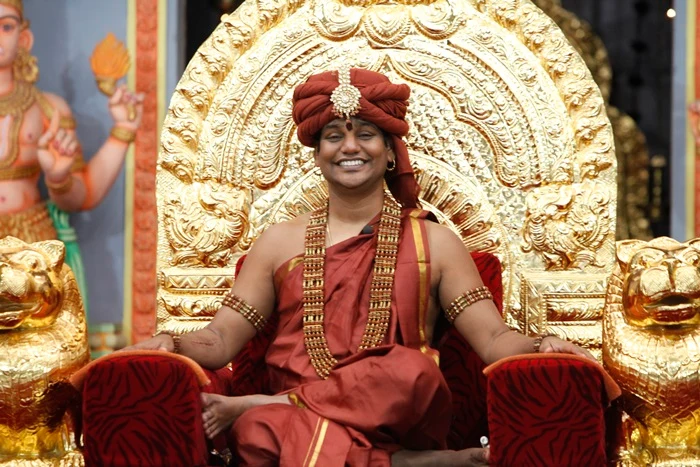
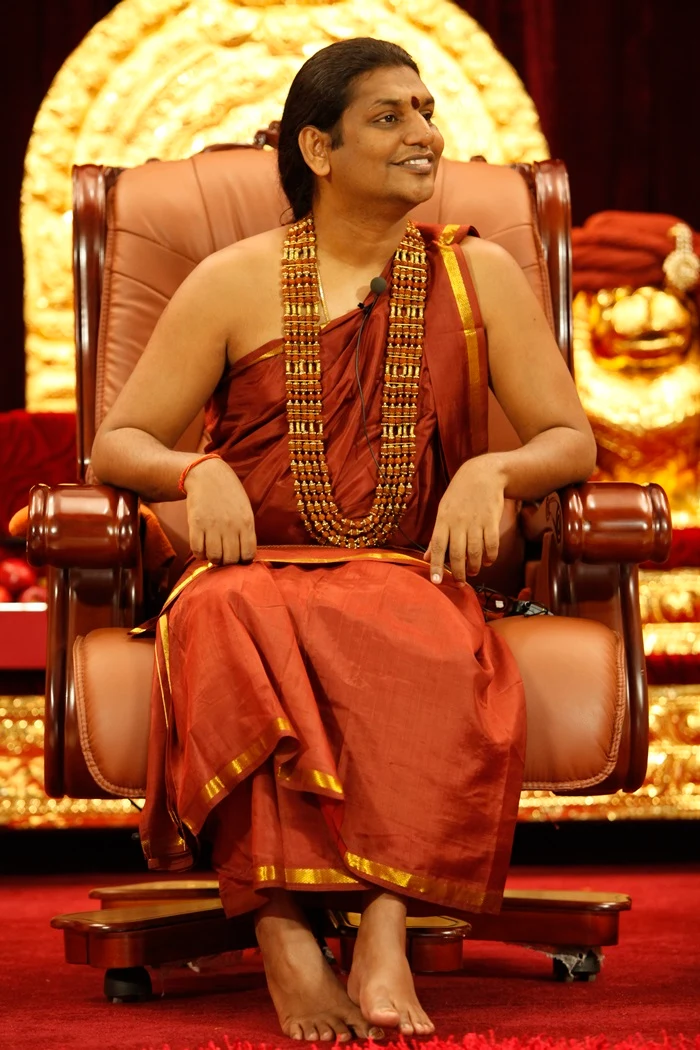
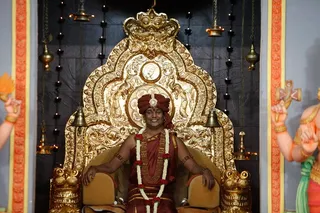
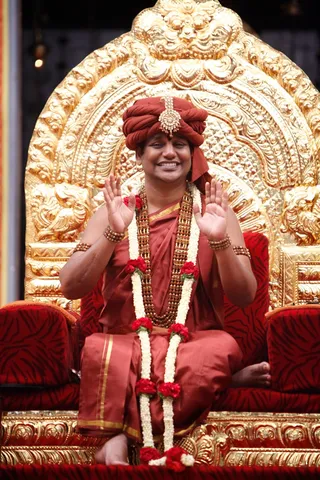
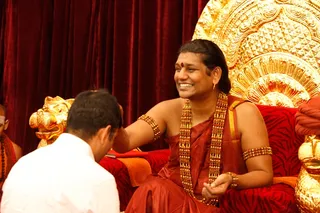
Nithya Satsang and Kalpataru Darshan
Photos from this day
View all 15 photosSri Nithyananda Paramashivam graces and blesses as Swamiji accepts the offering of Padapuja
6 photosSource gallery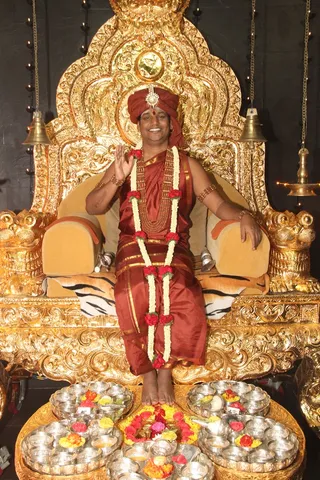
Nithya Satsang and Kalpataru Darshan
8 photosSource gallery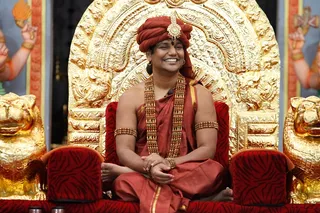
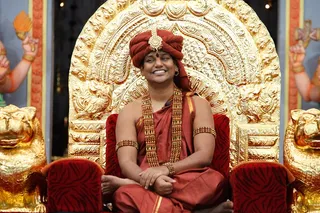
February 12 2014
1 photoView all