Skip to content
Wednesday

13 November 2013

Become the Naster of your Life.

Dated photos
220
Source pages
1
Media
2
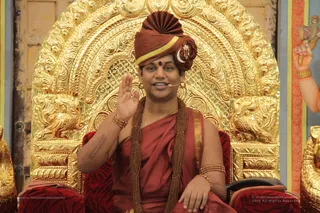
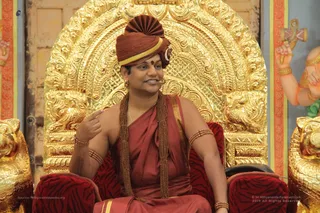
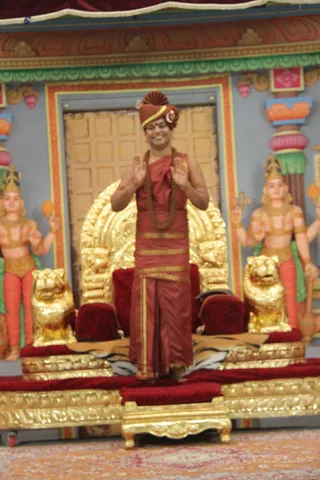
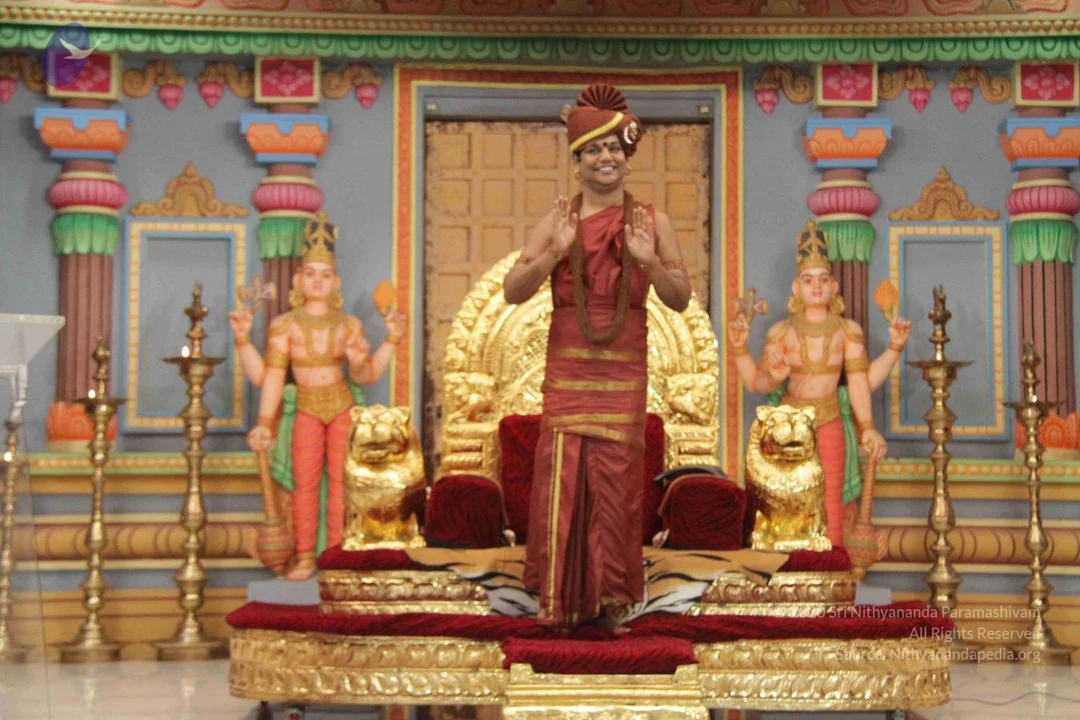
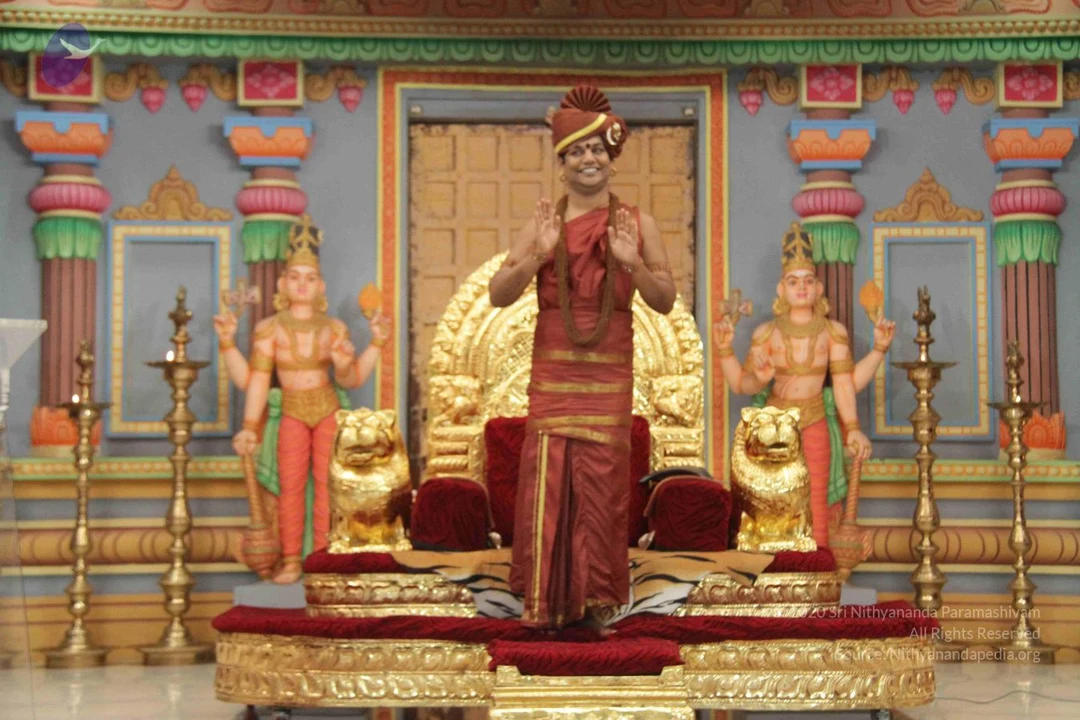
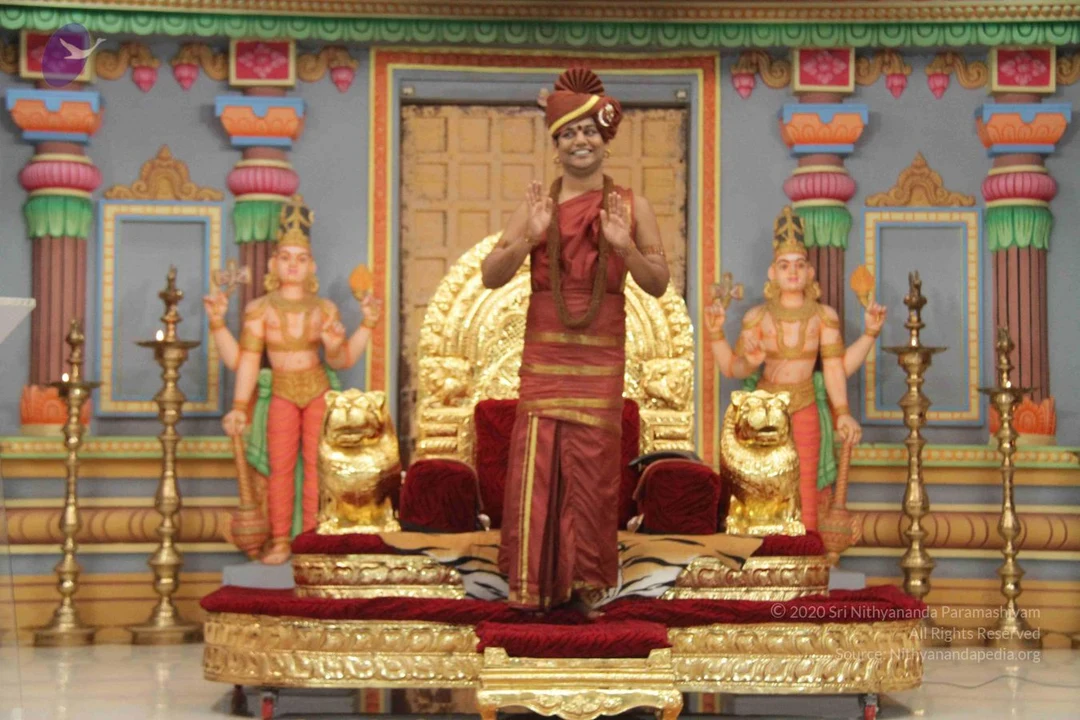
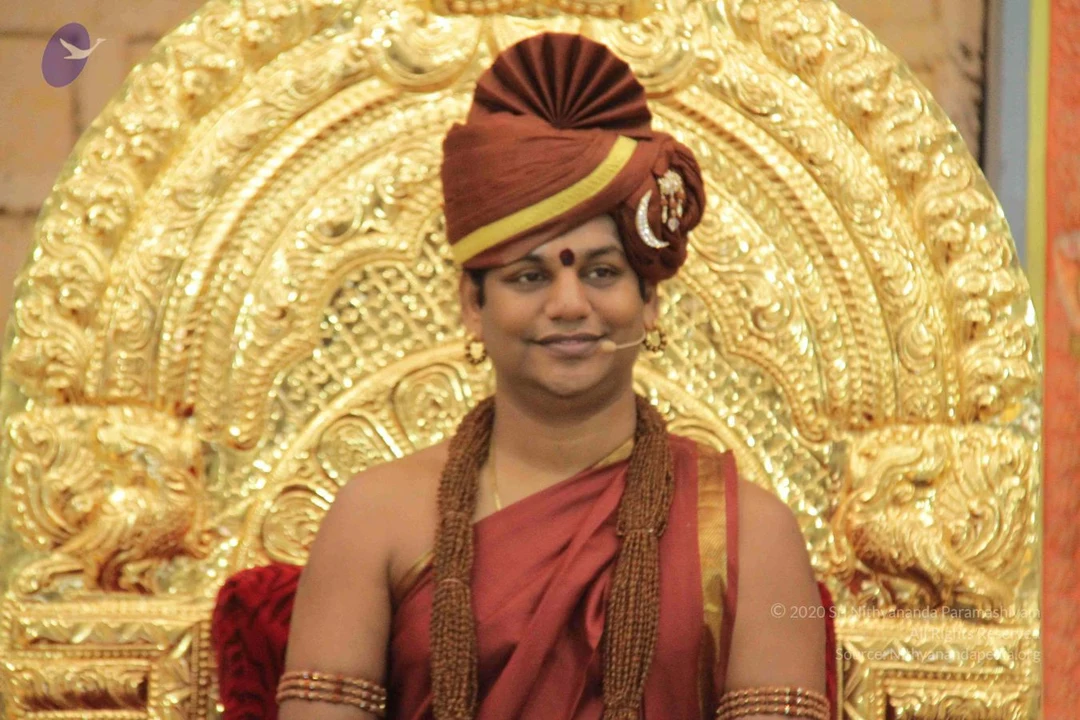
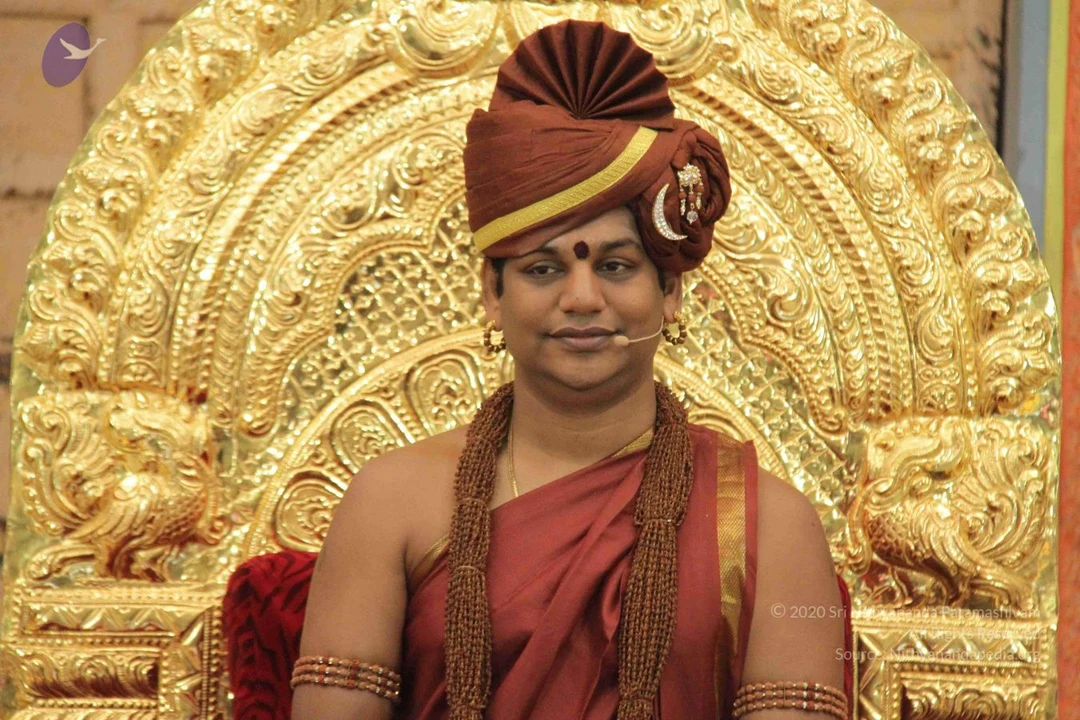
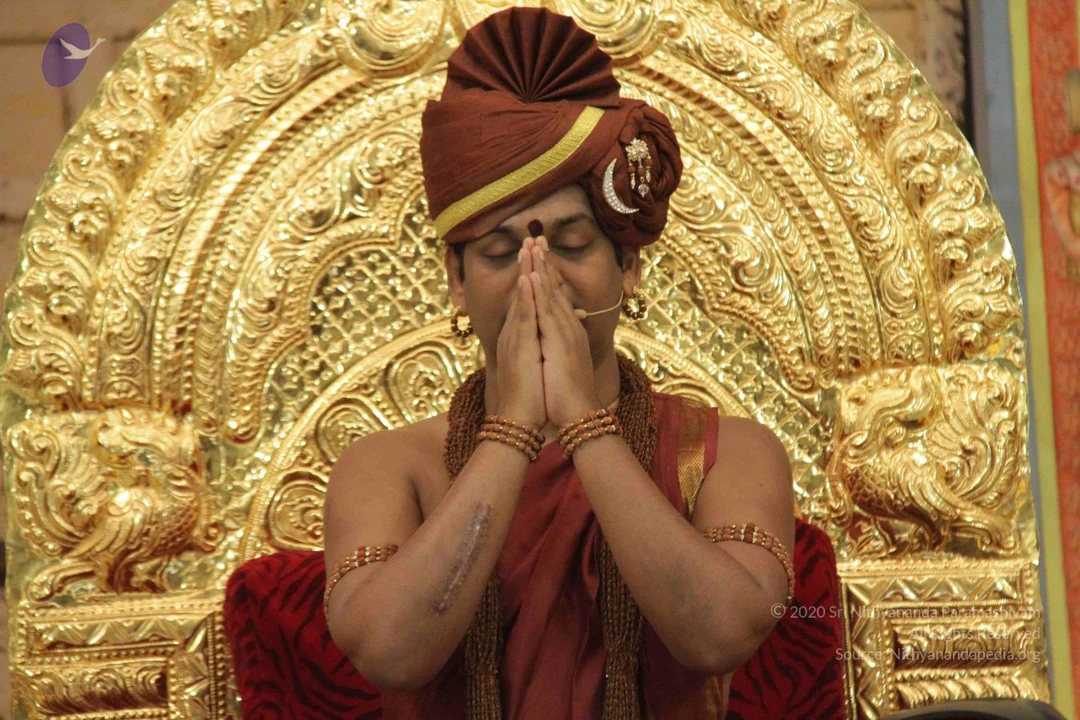
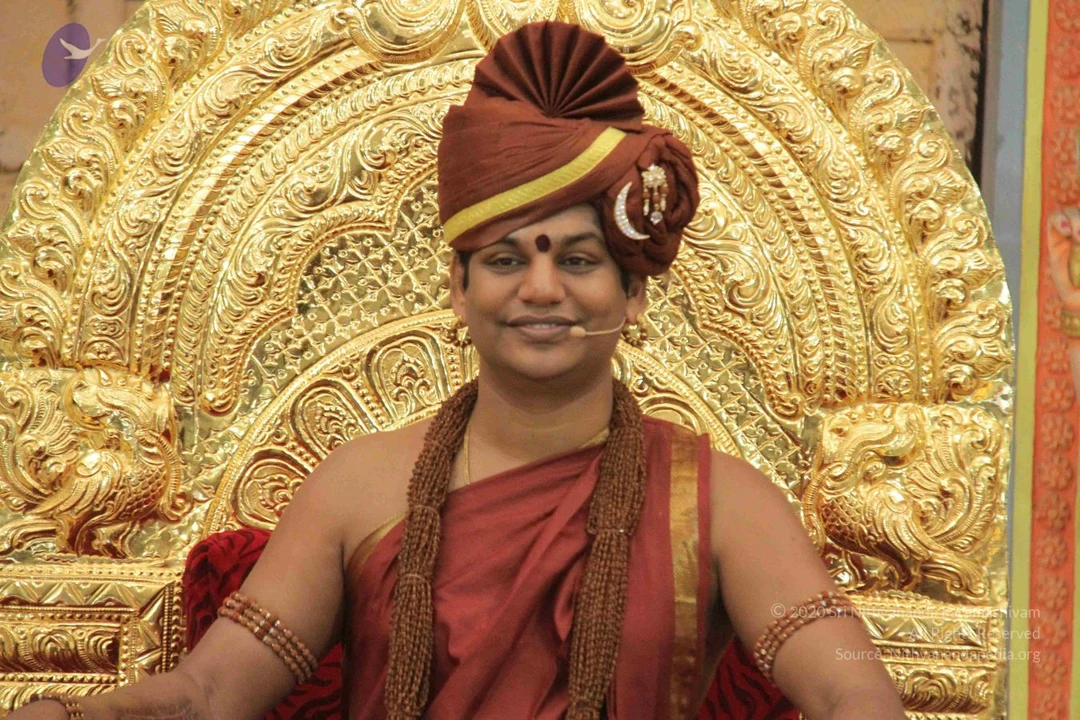
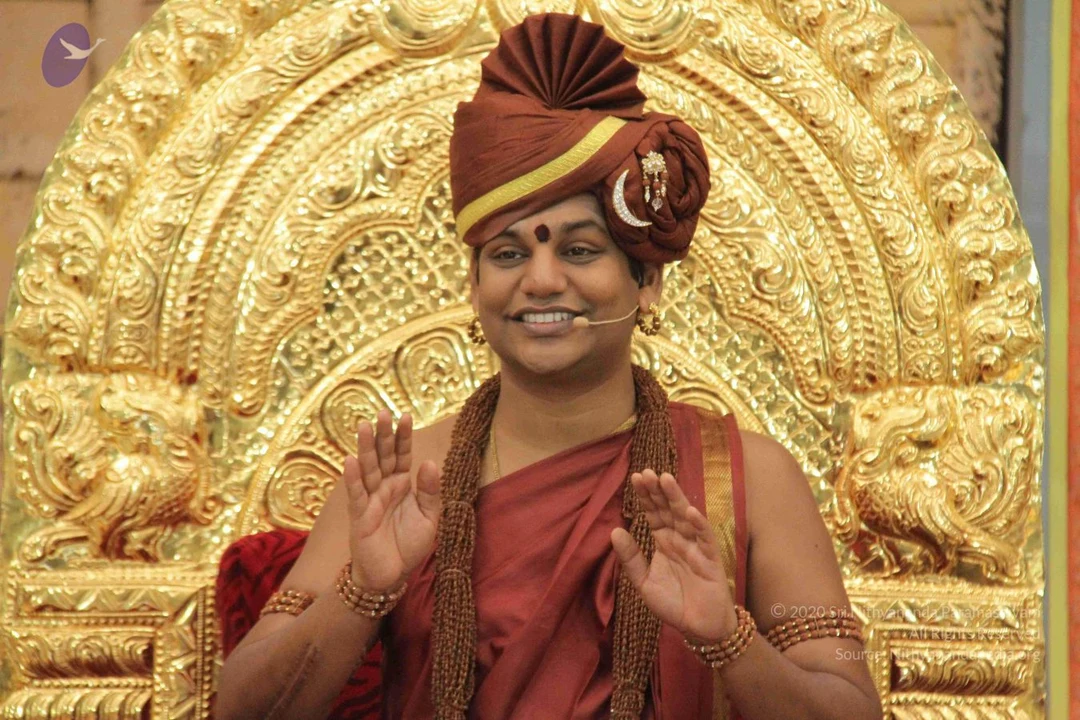
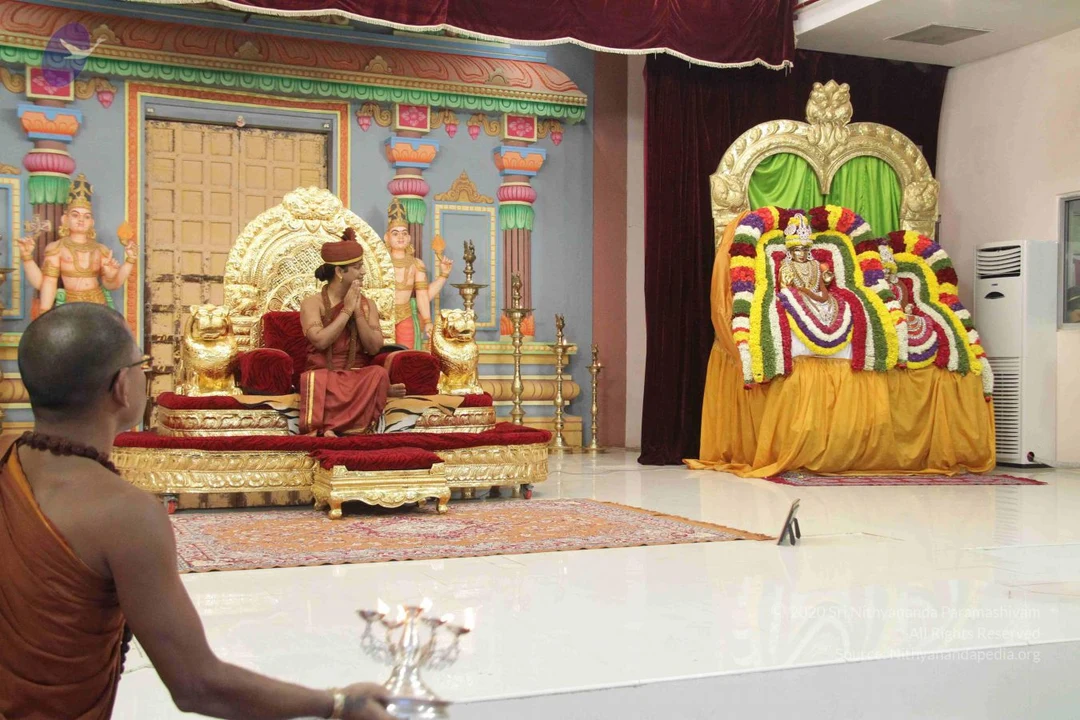
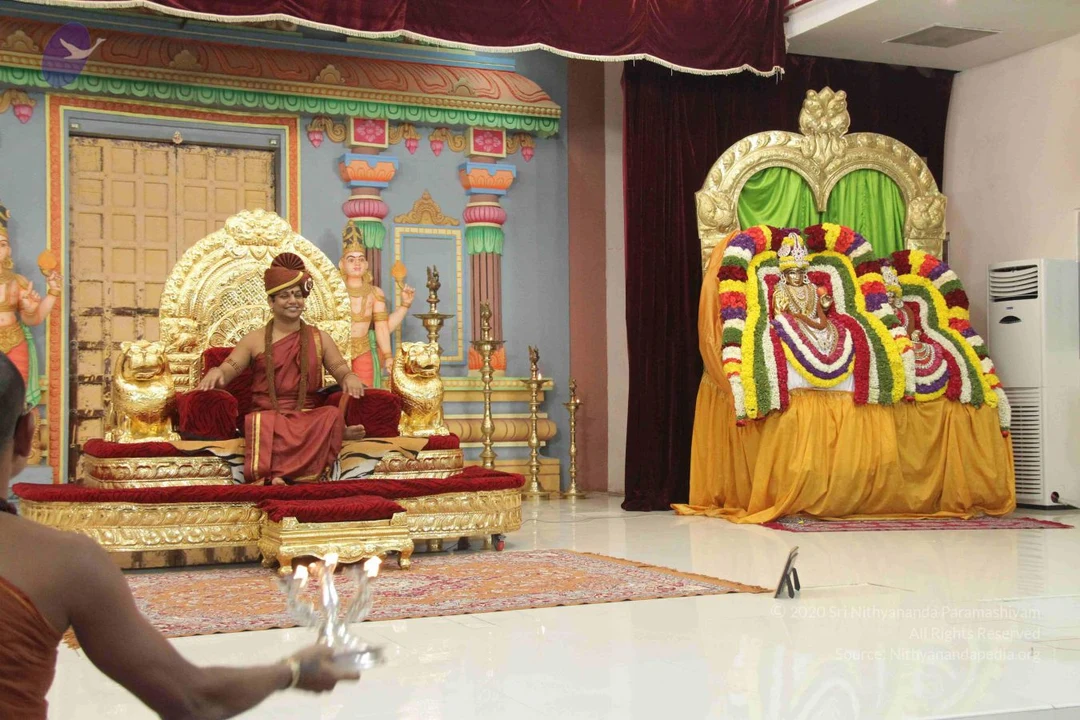
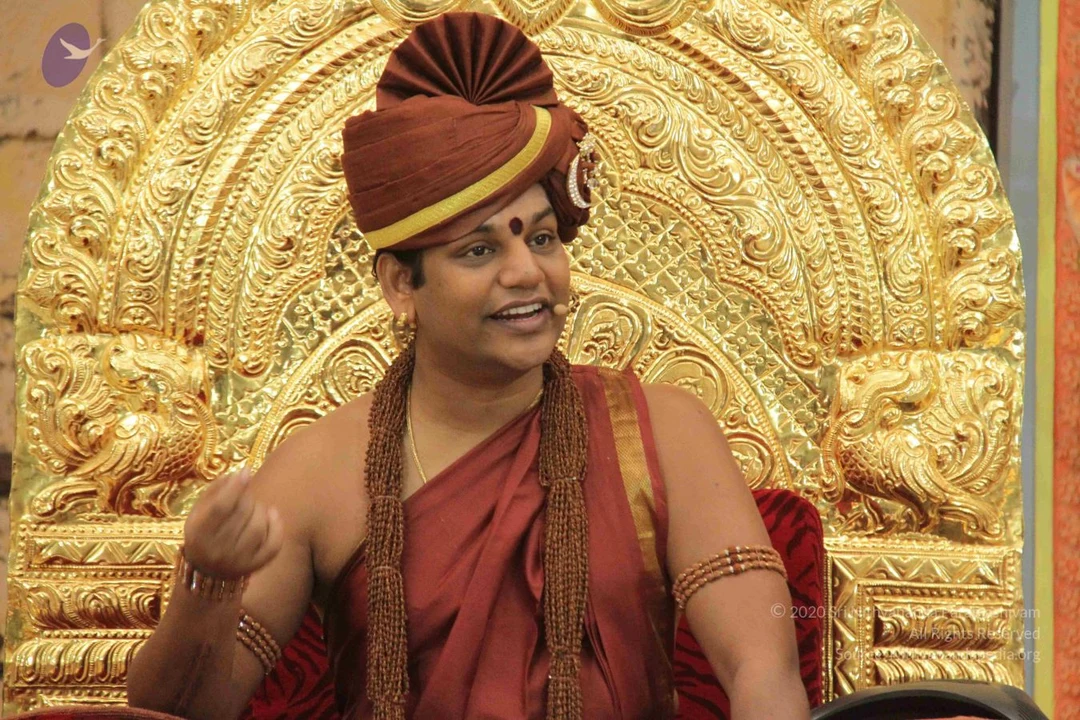
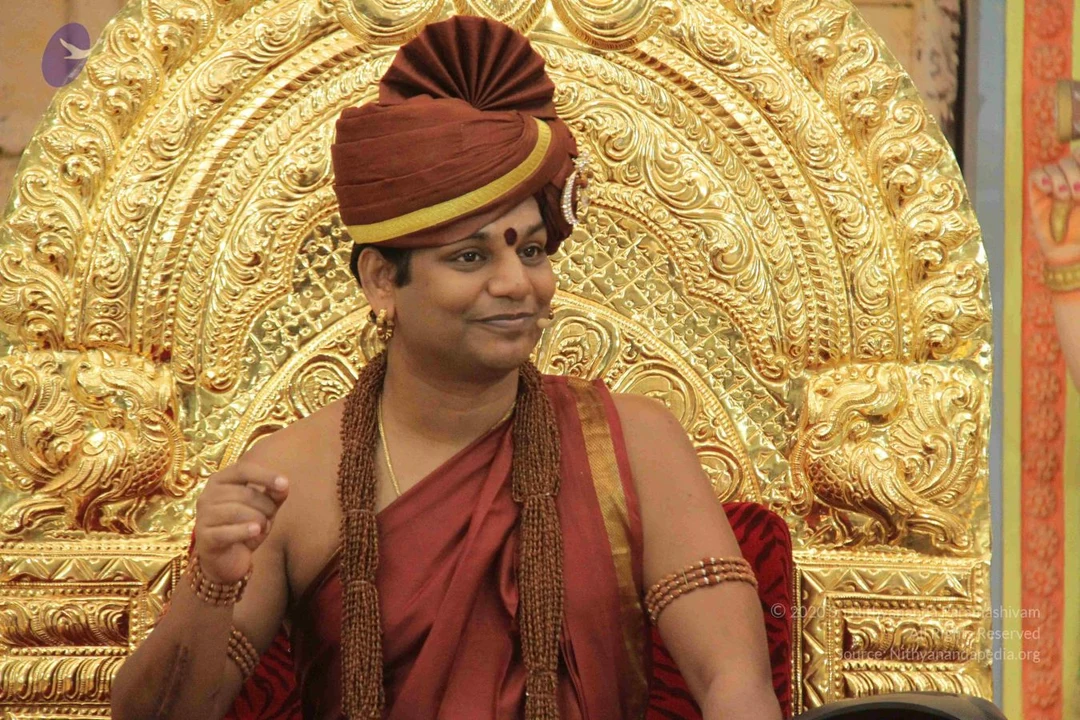
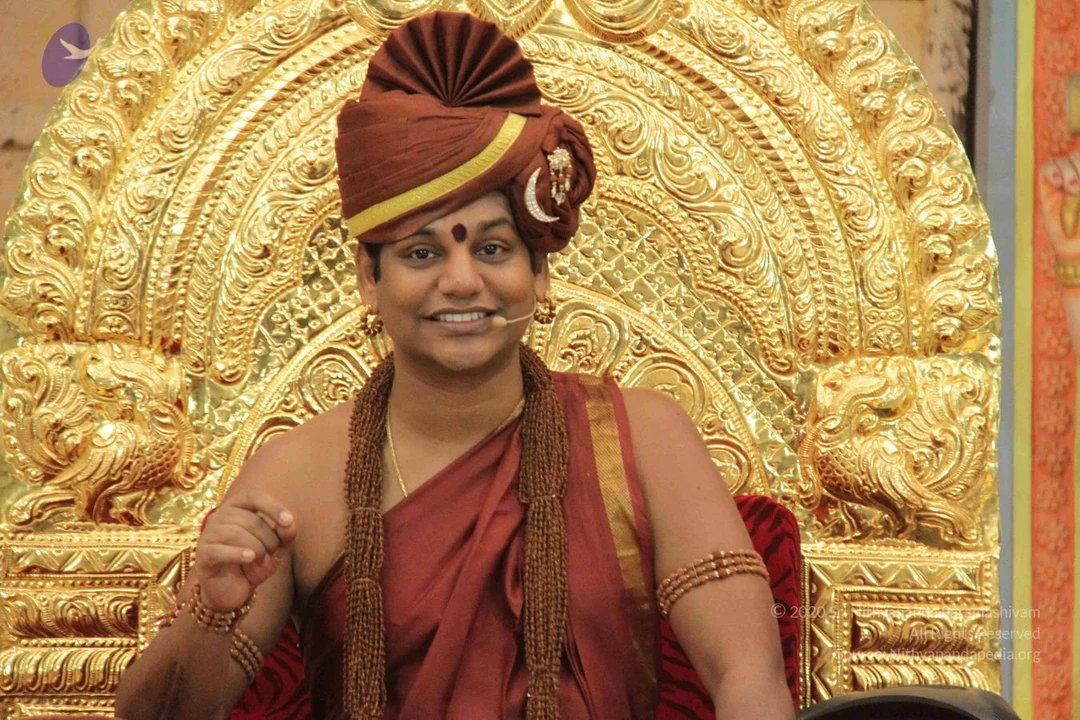
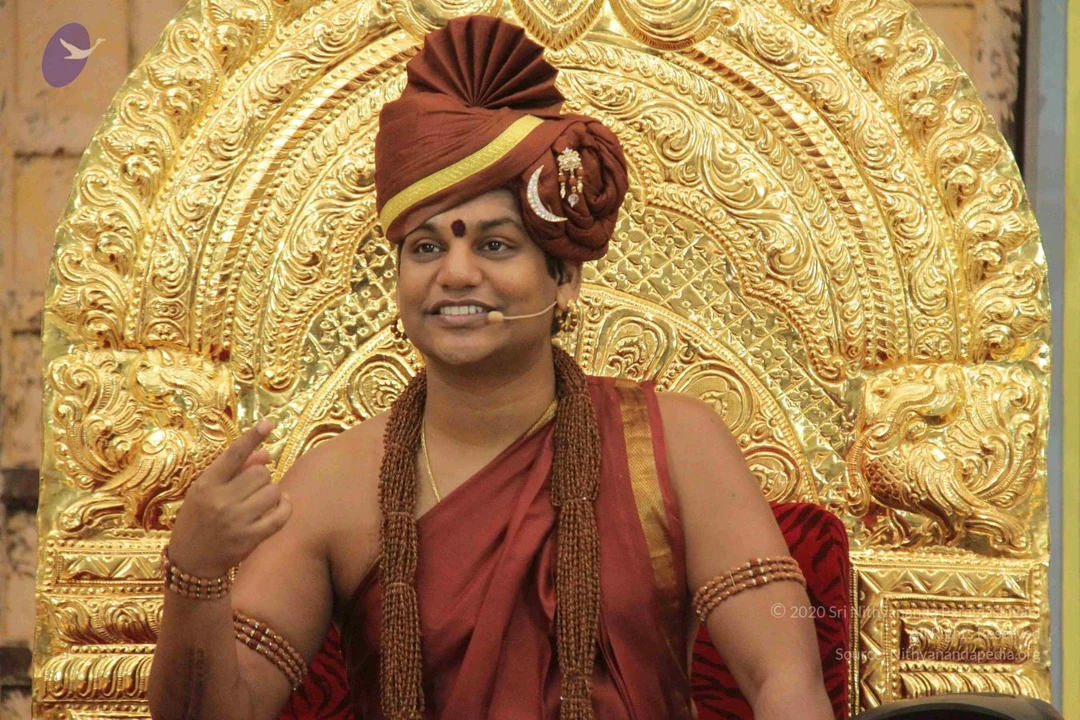
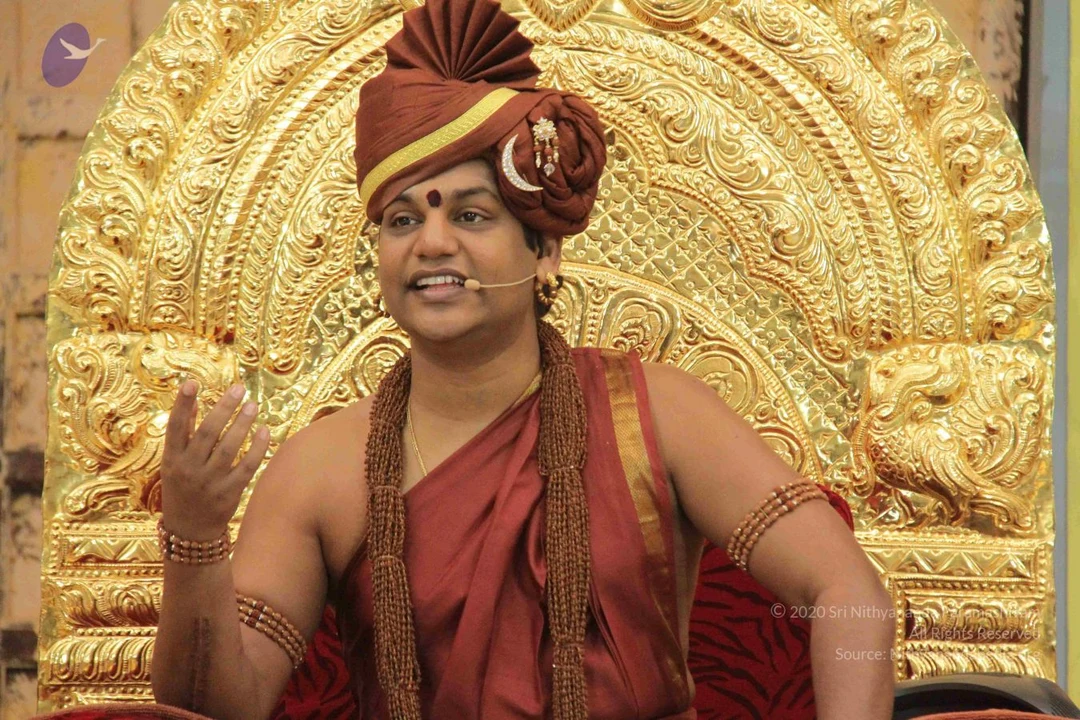
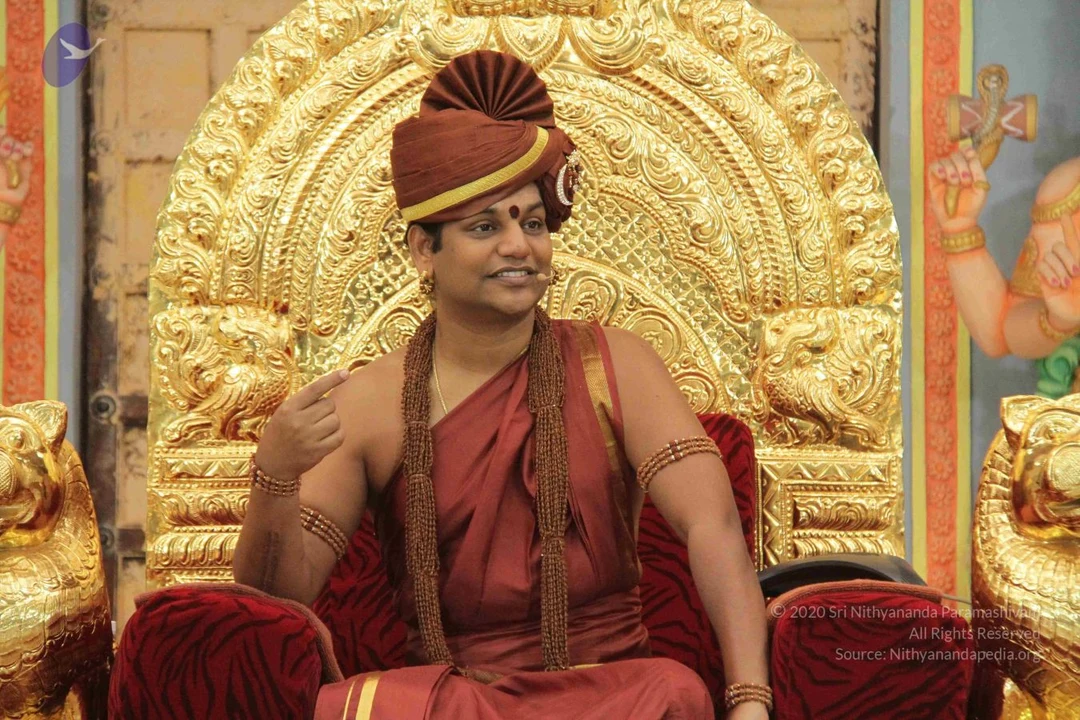
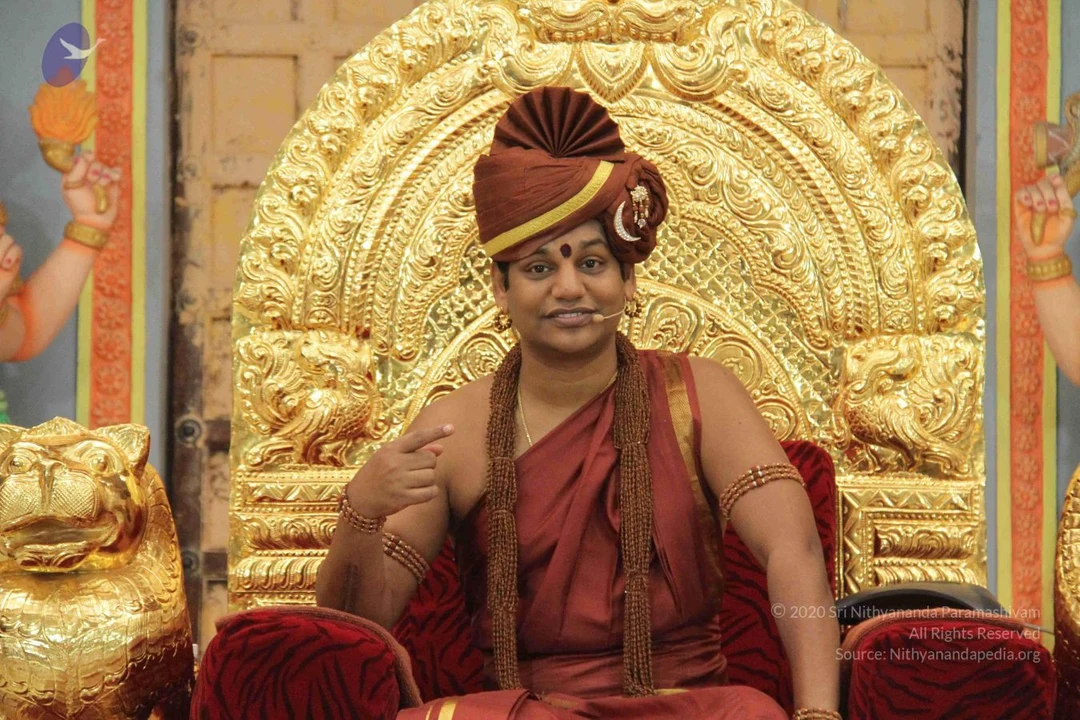
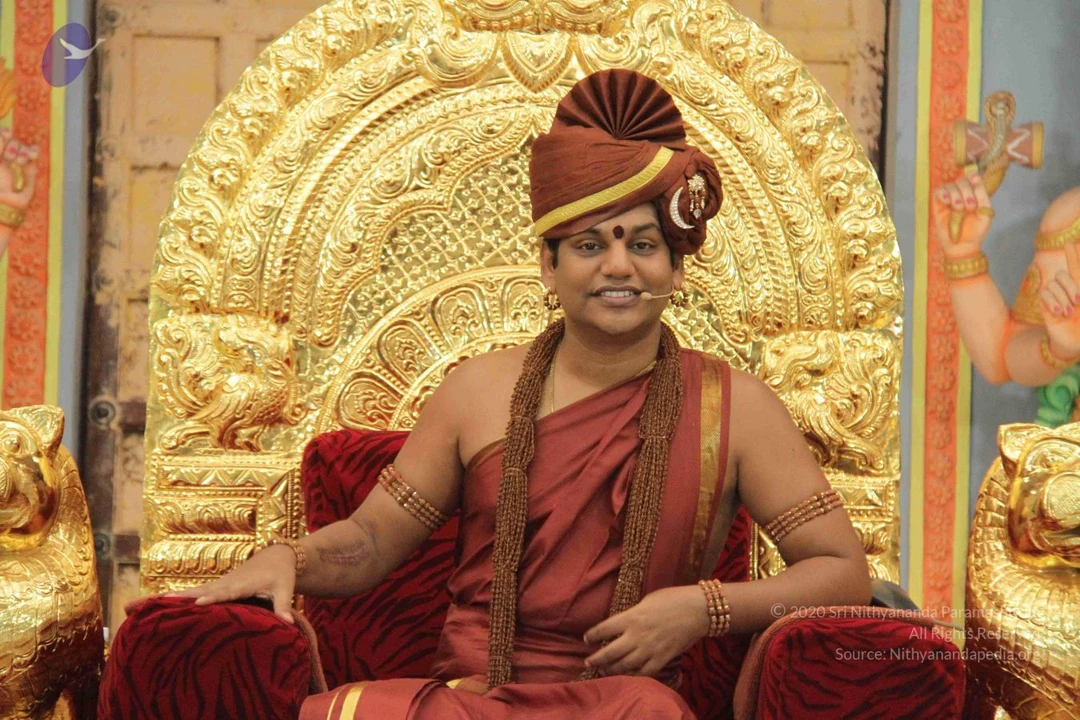
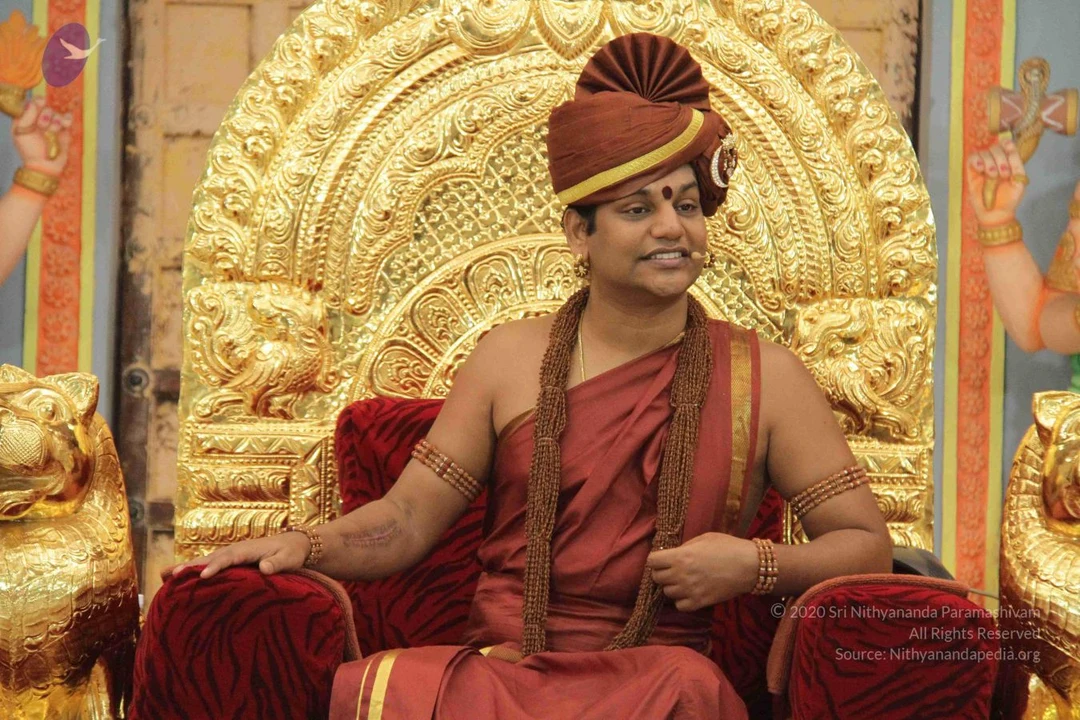
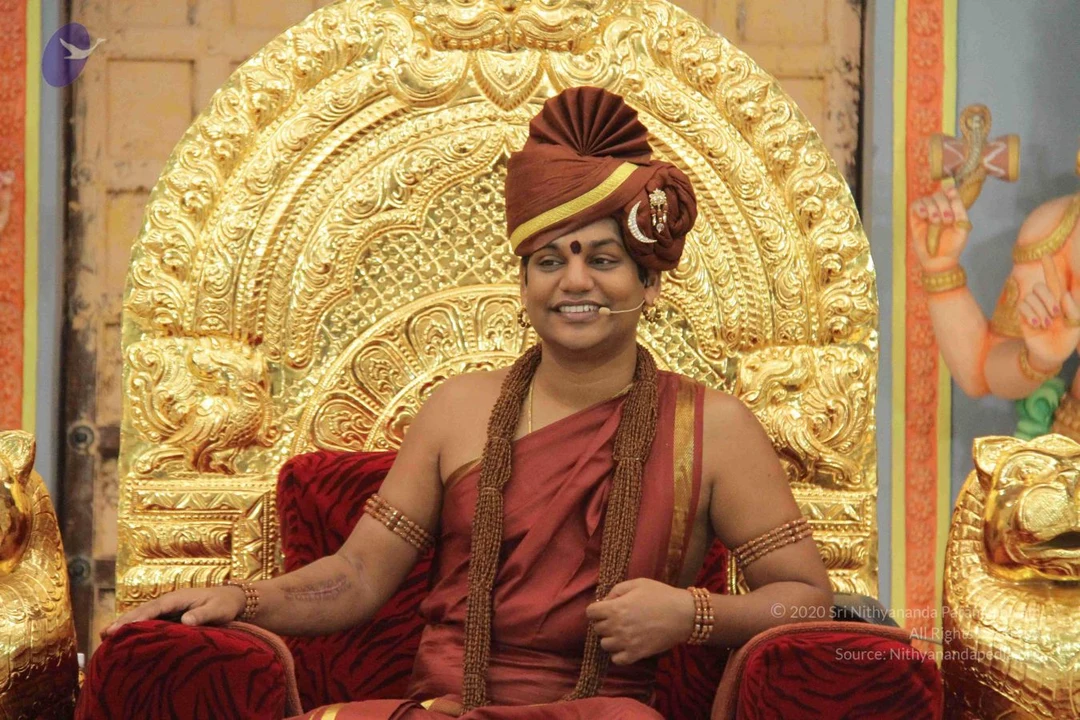
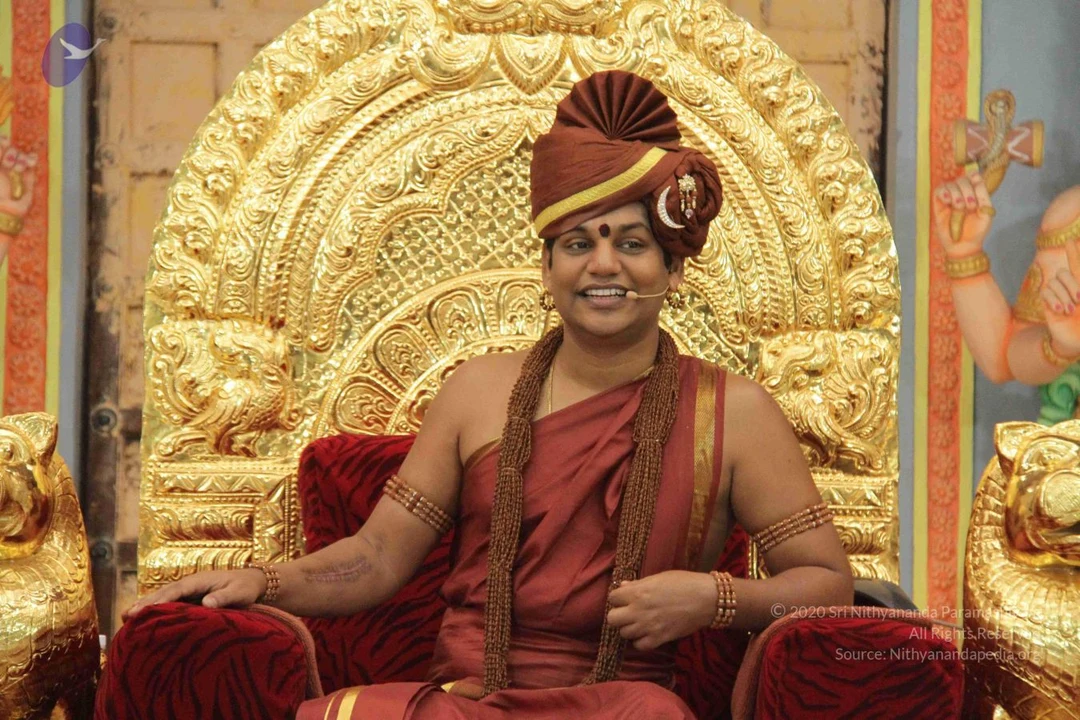
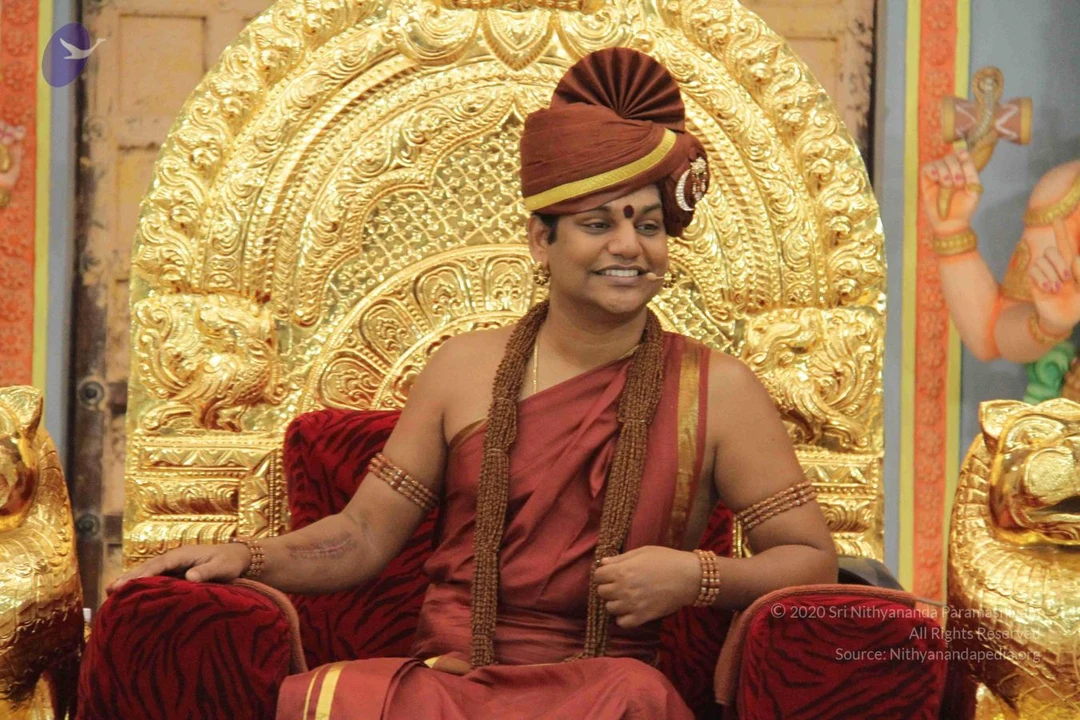
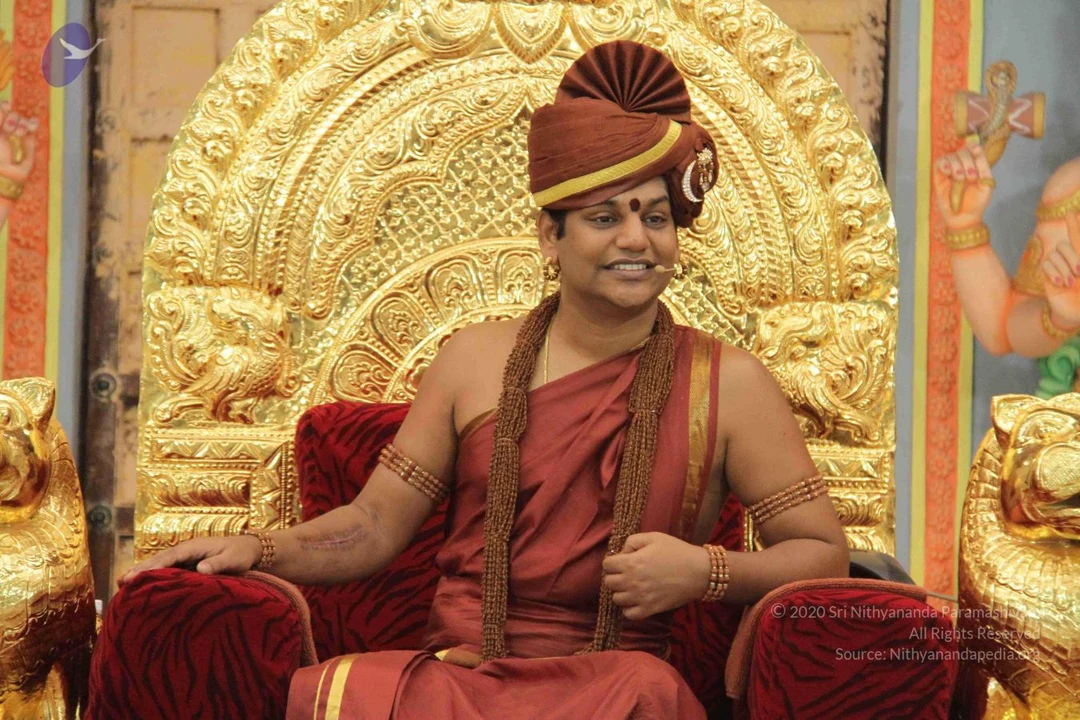
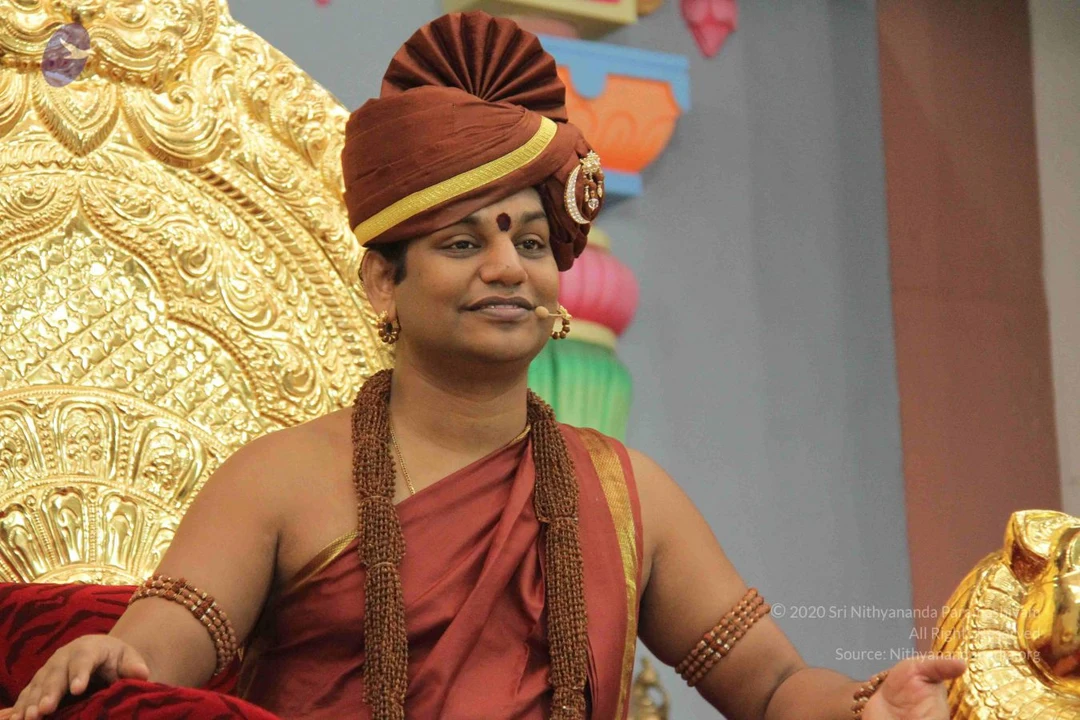
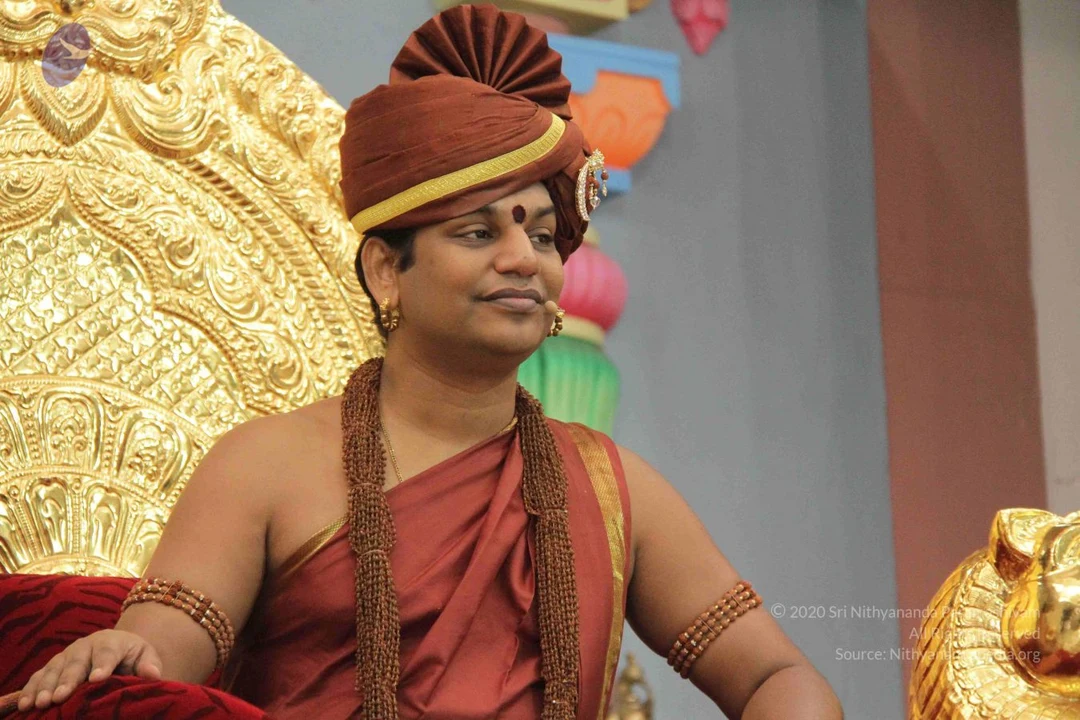
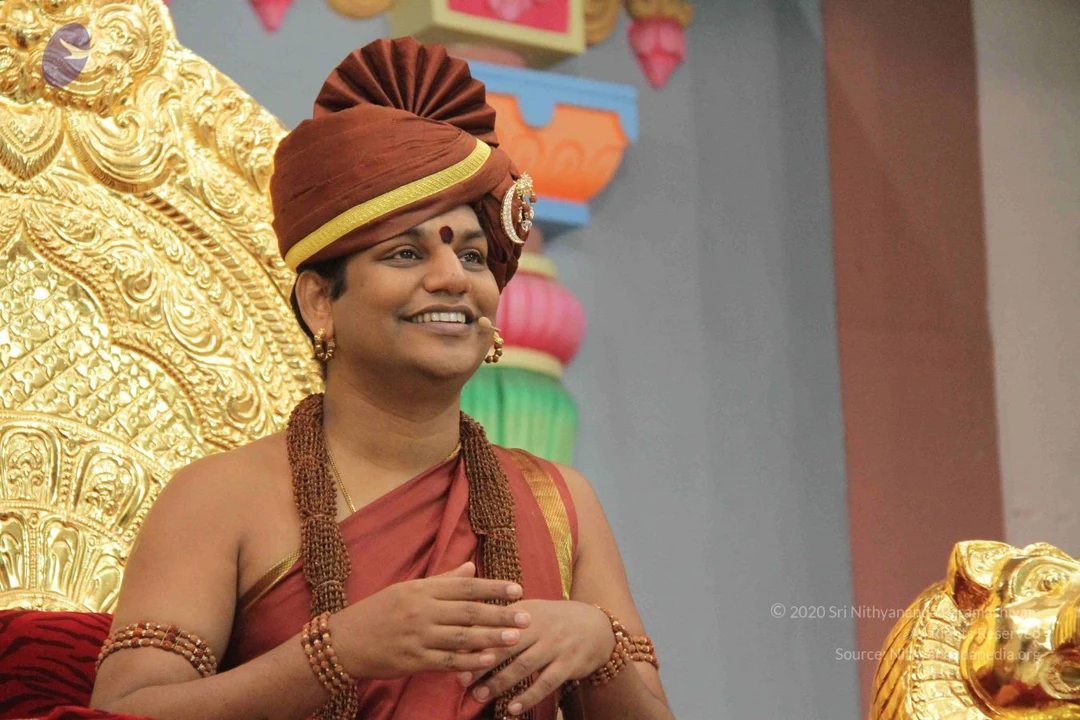
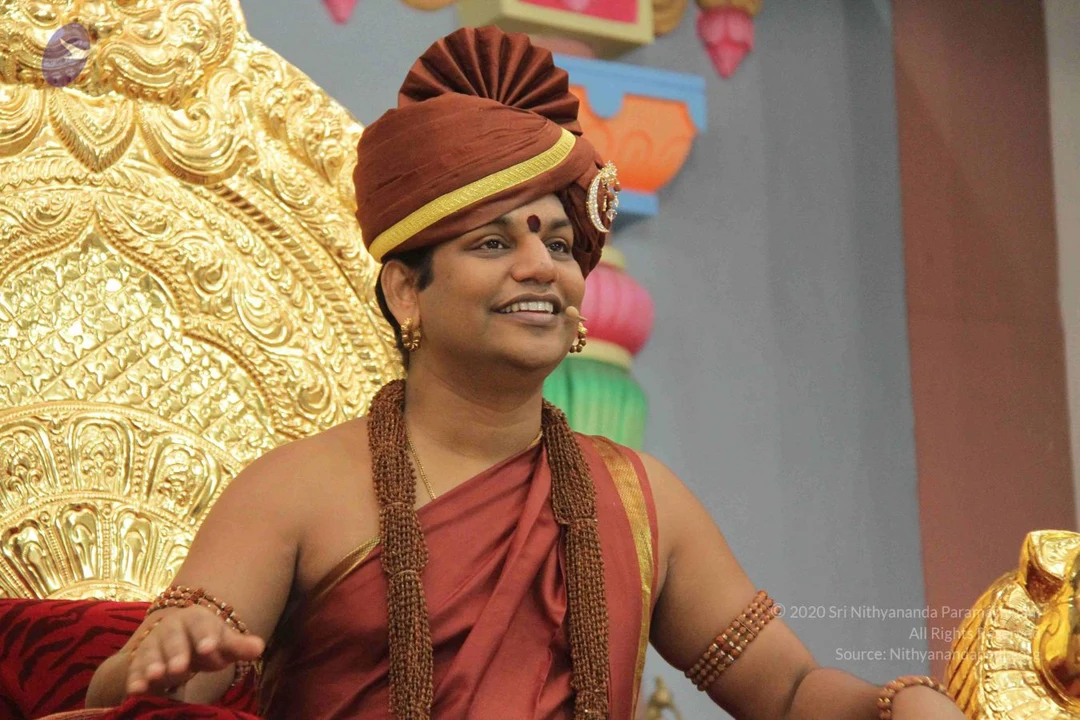
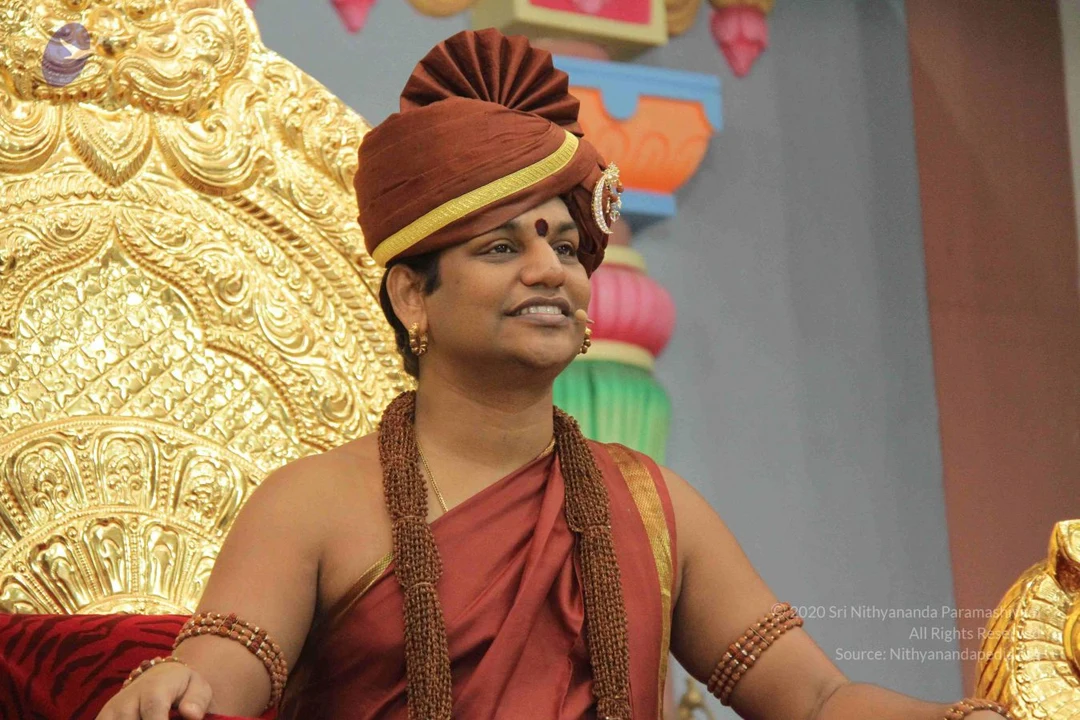
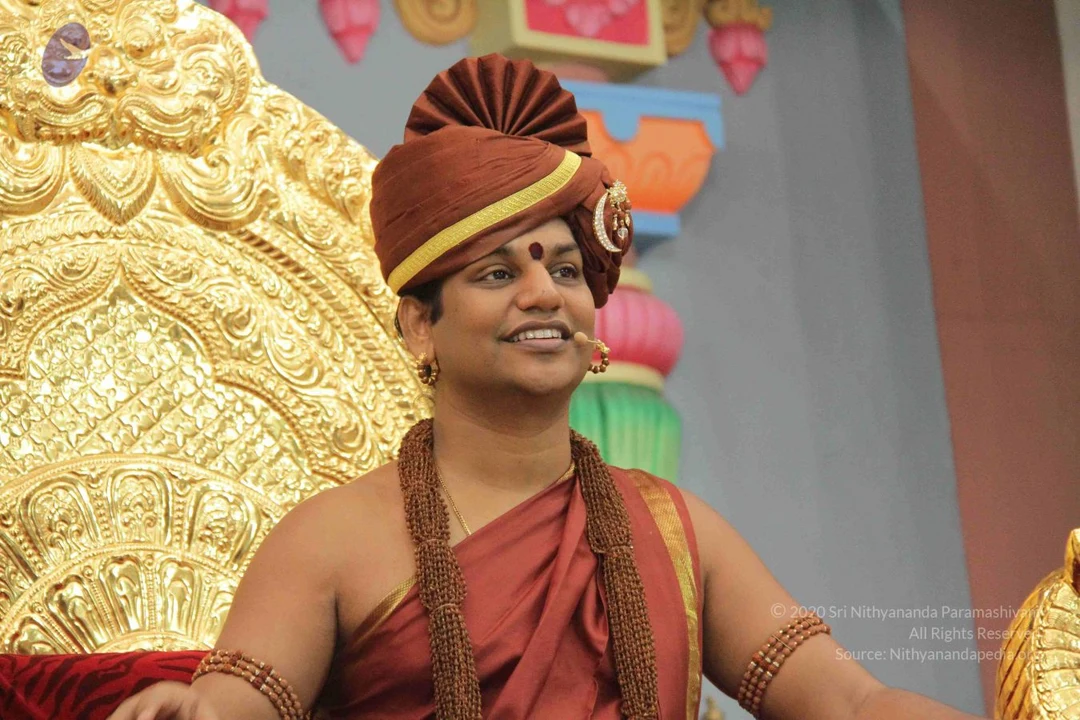
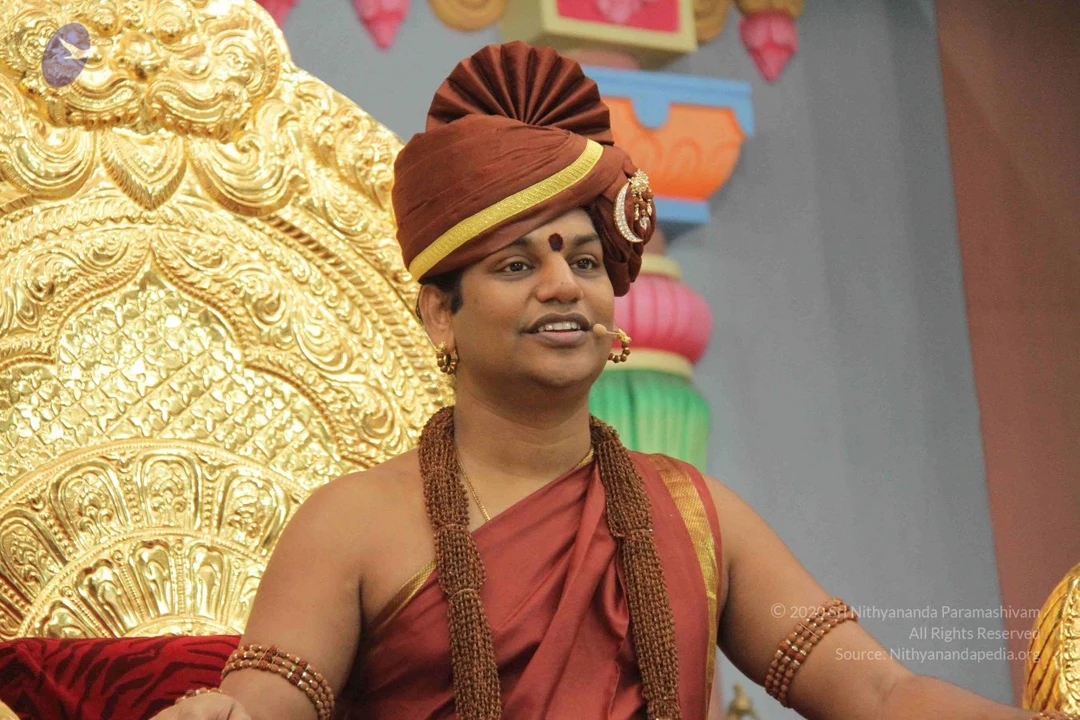
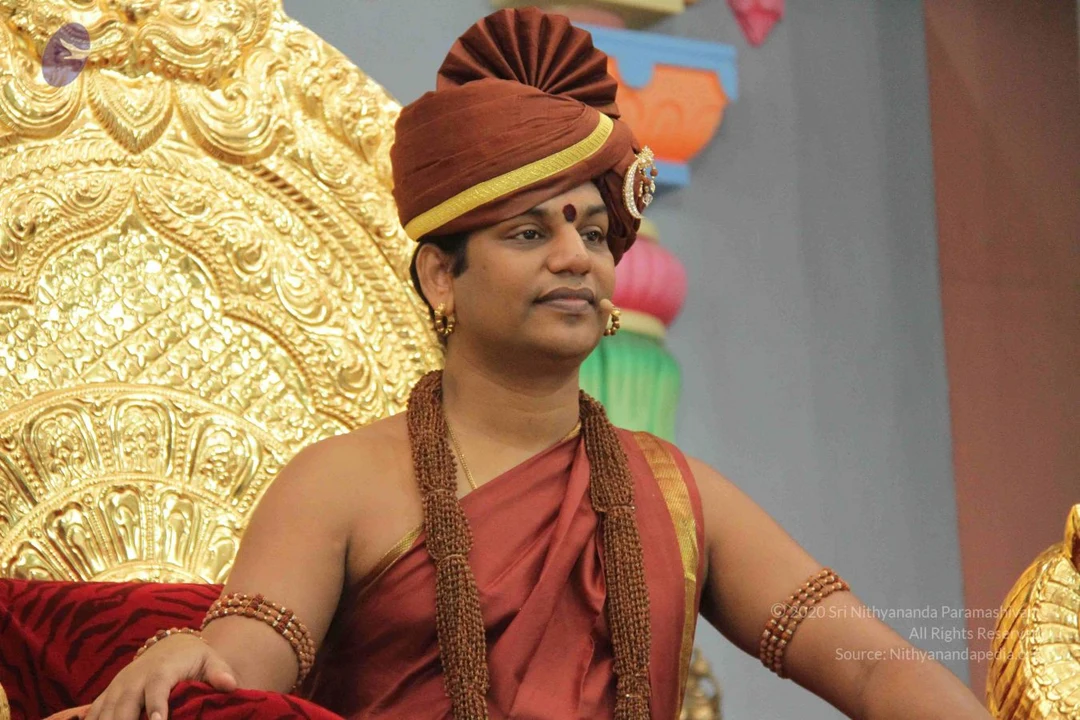
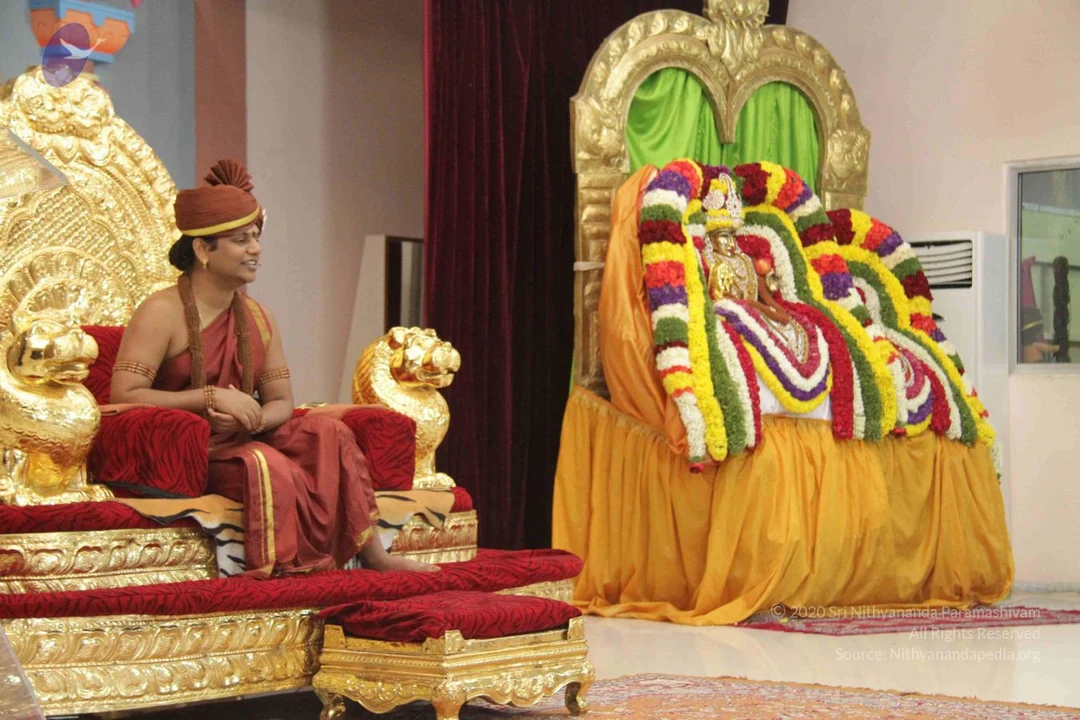
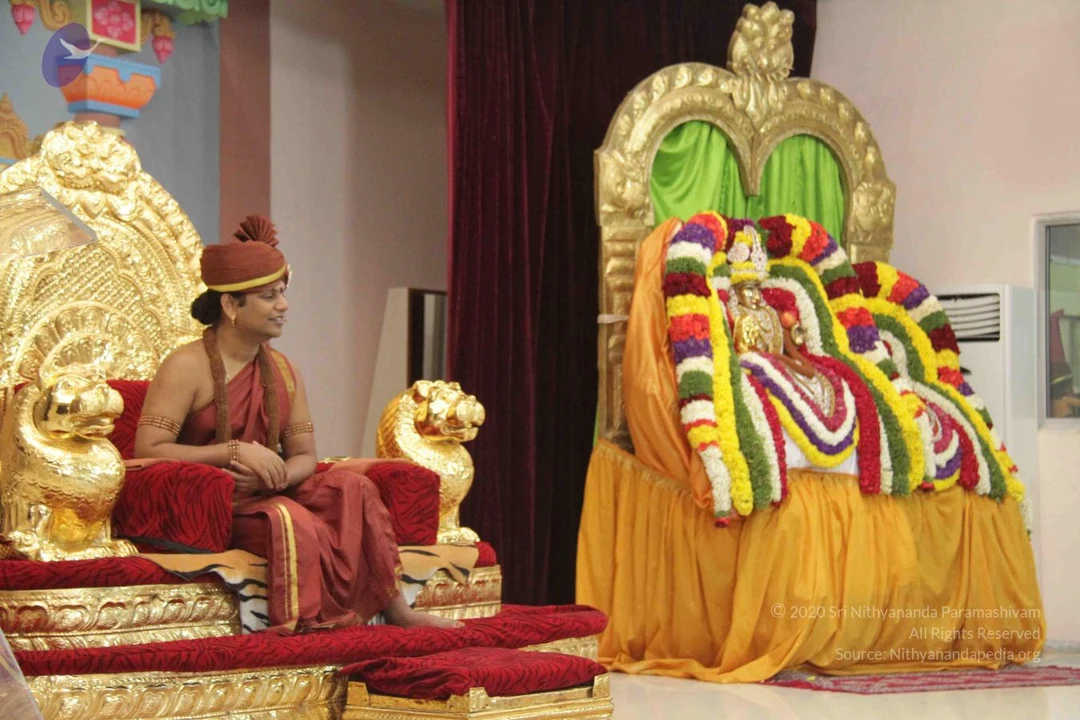
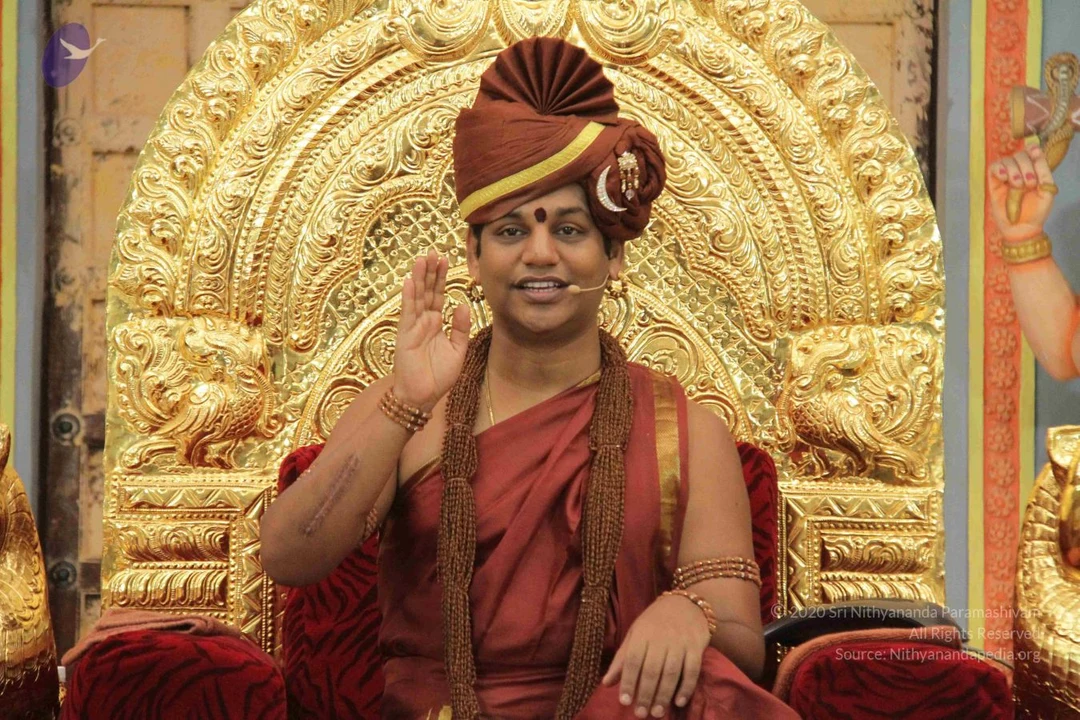
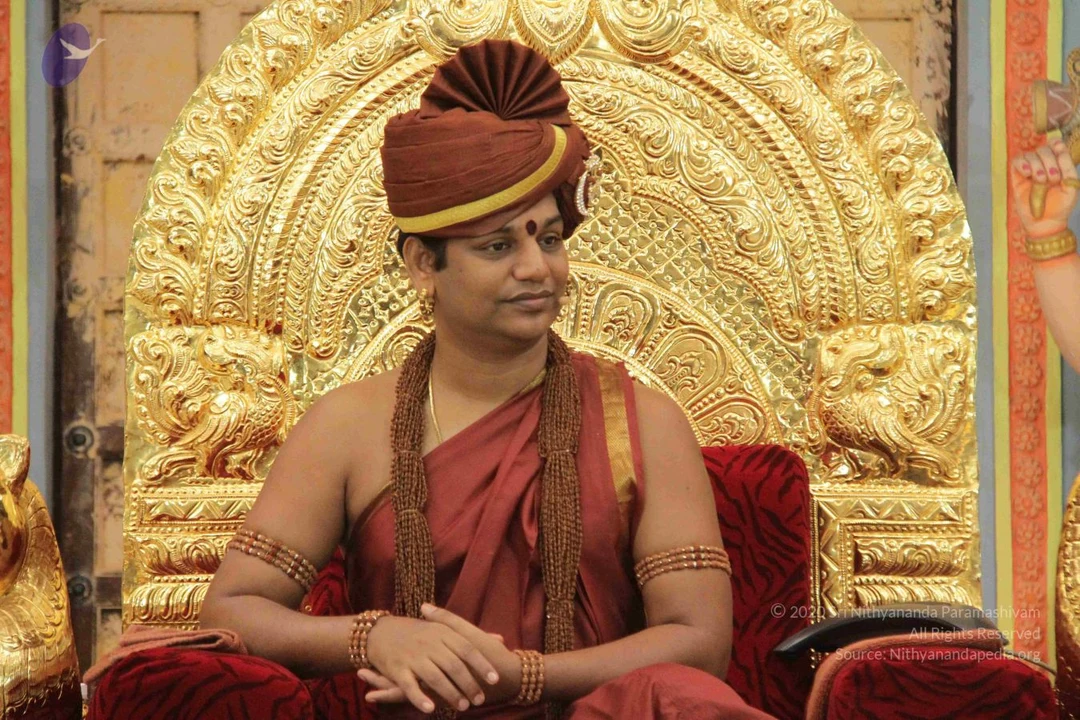
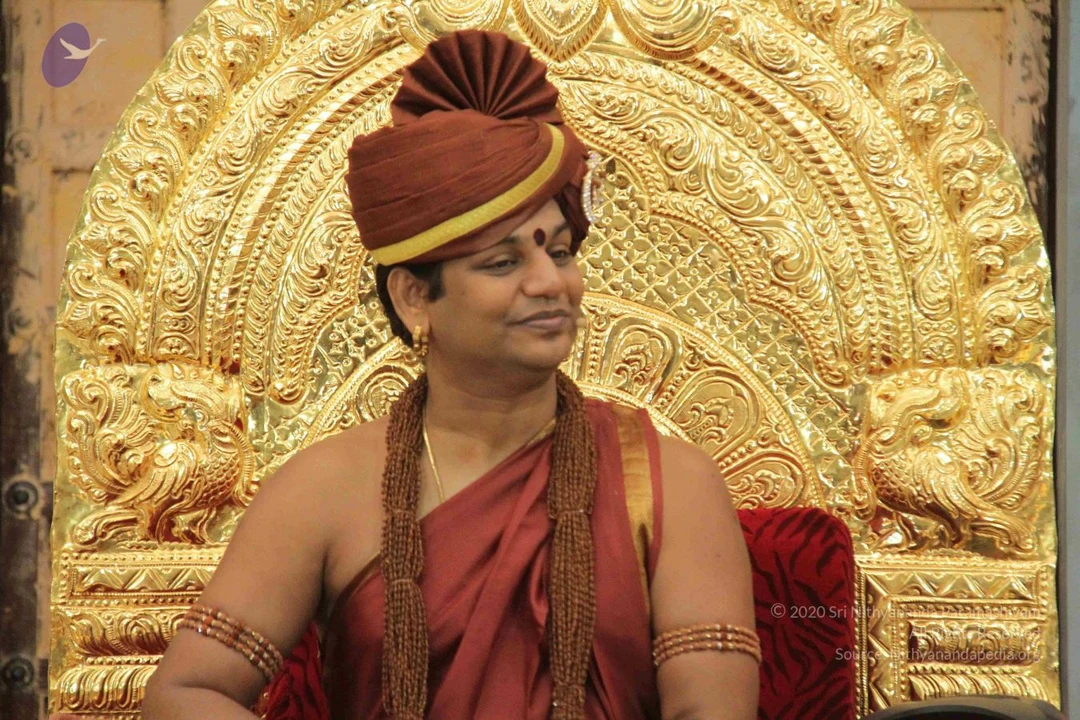
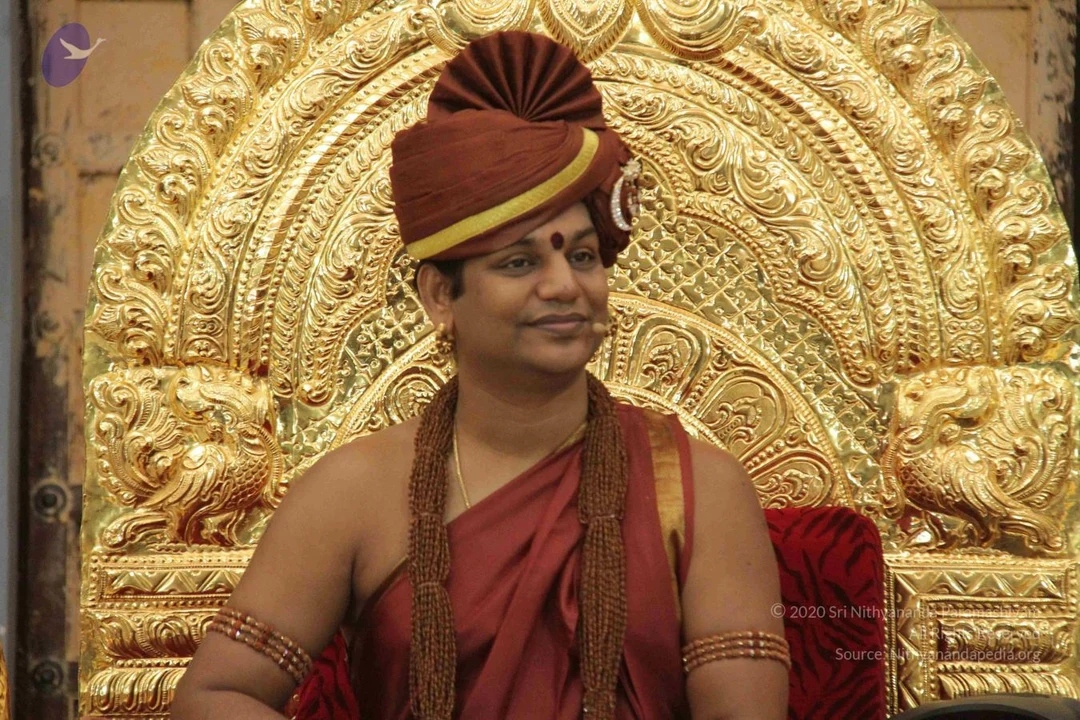
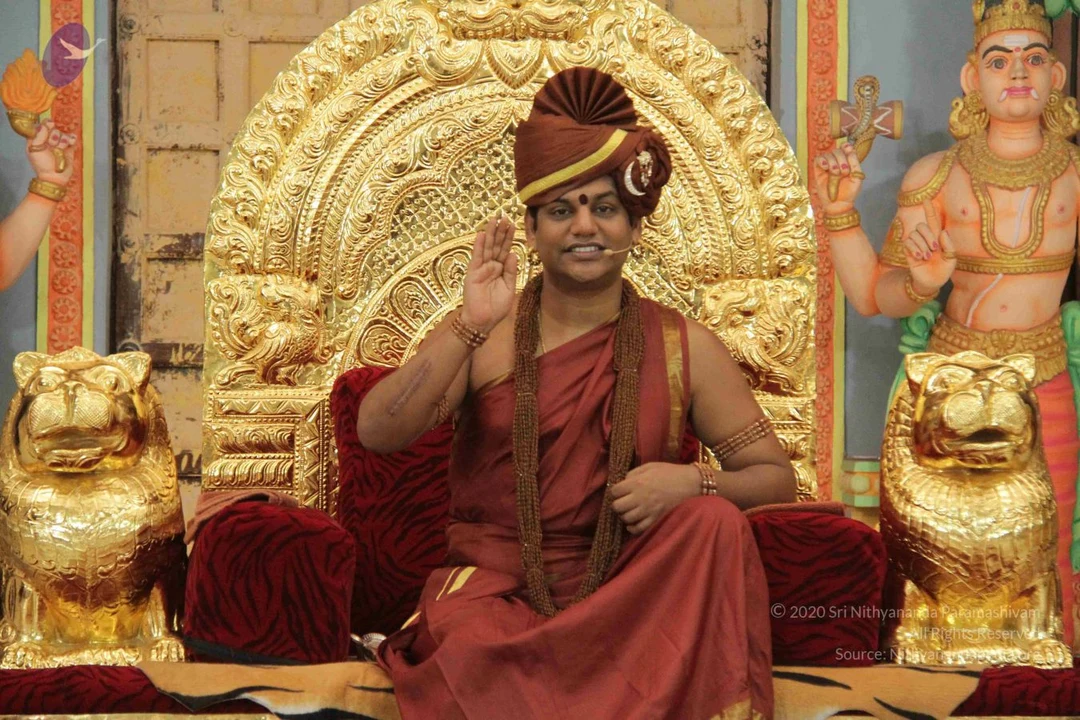
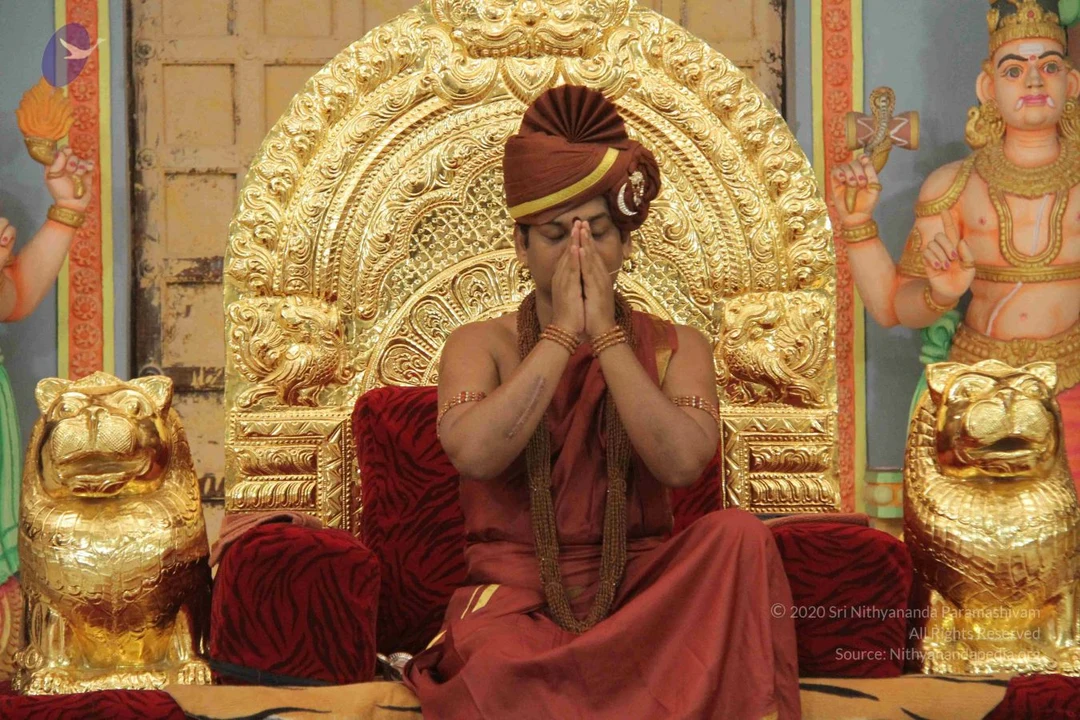
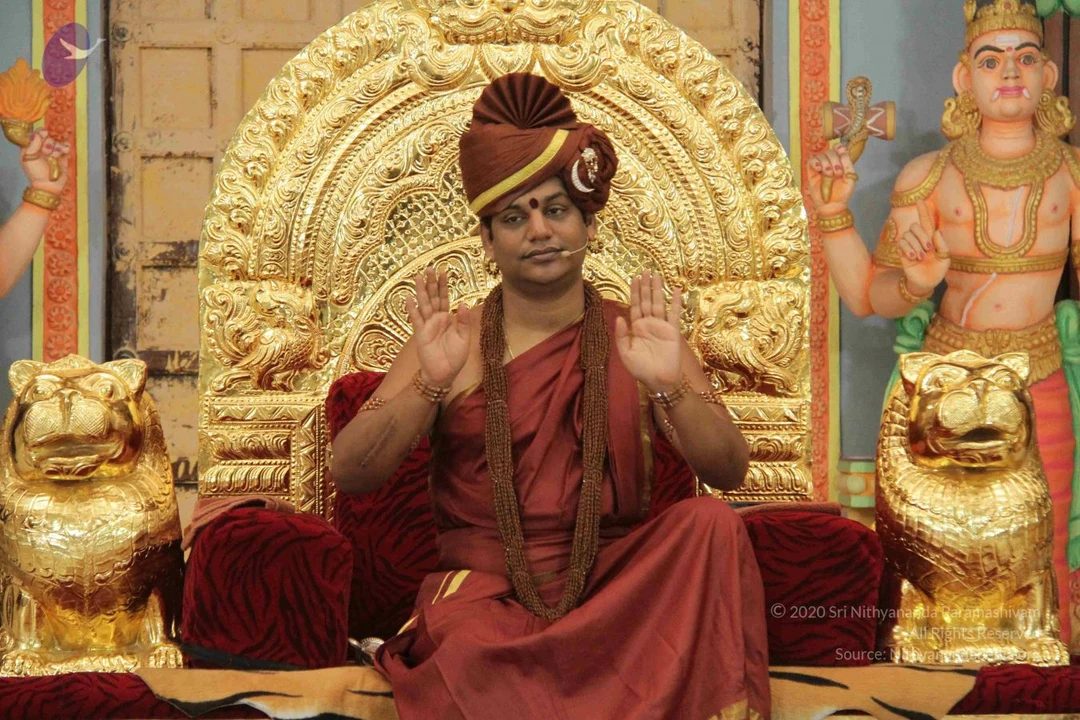
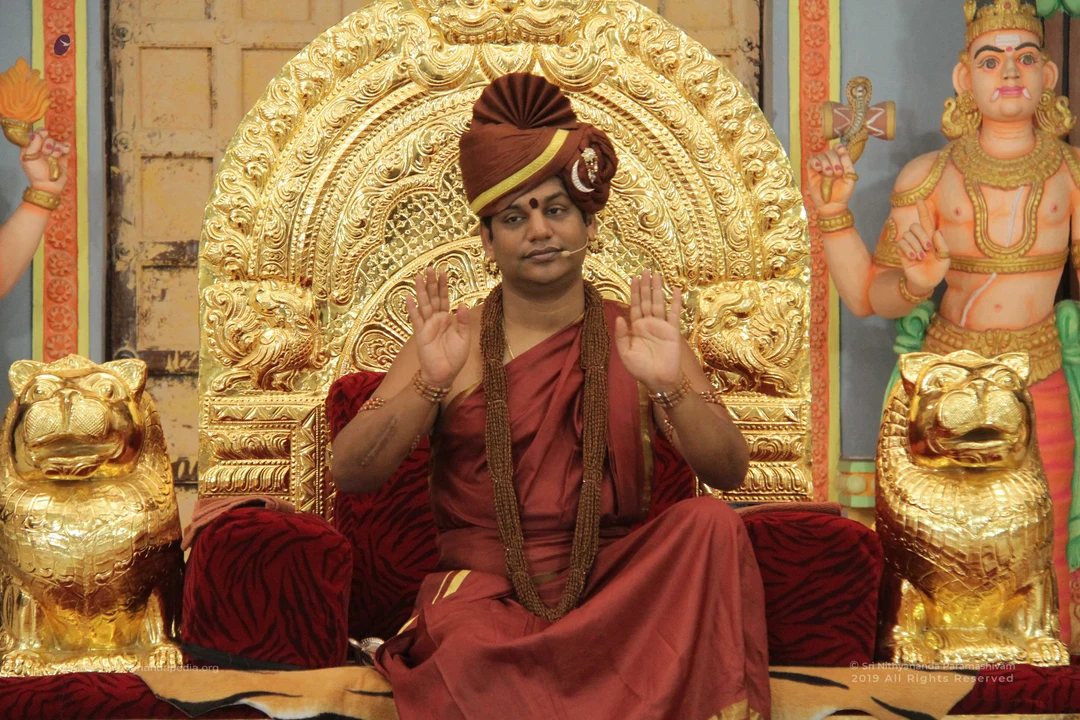
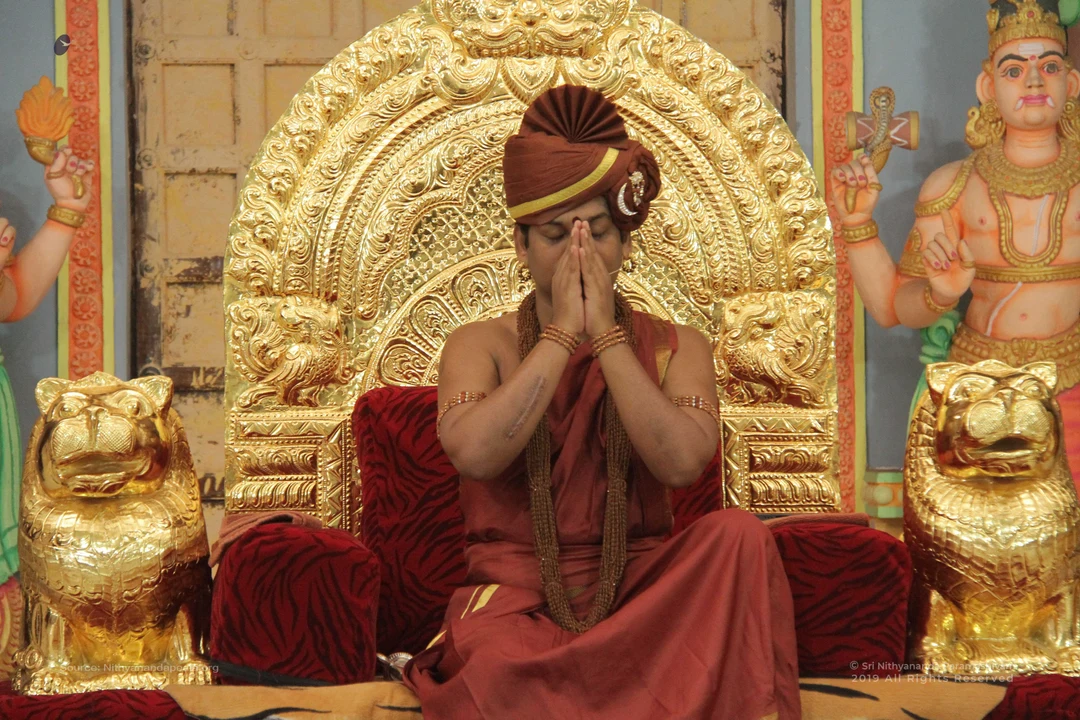
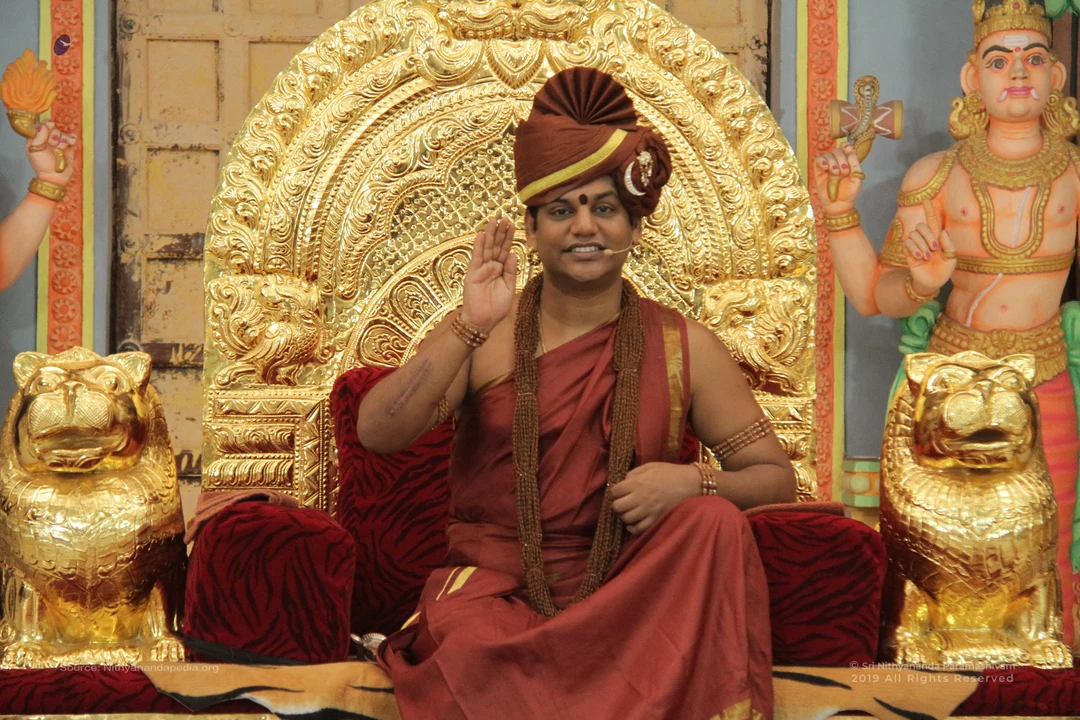
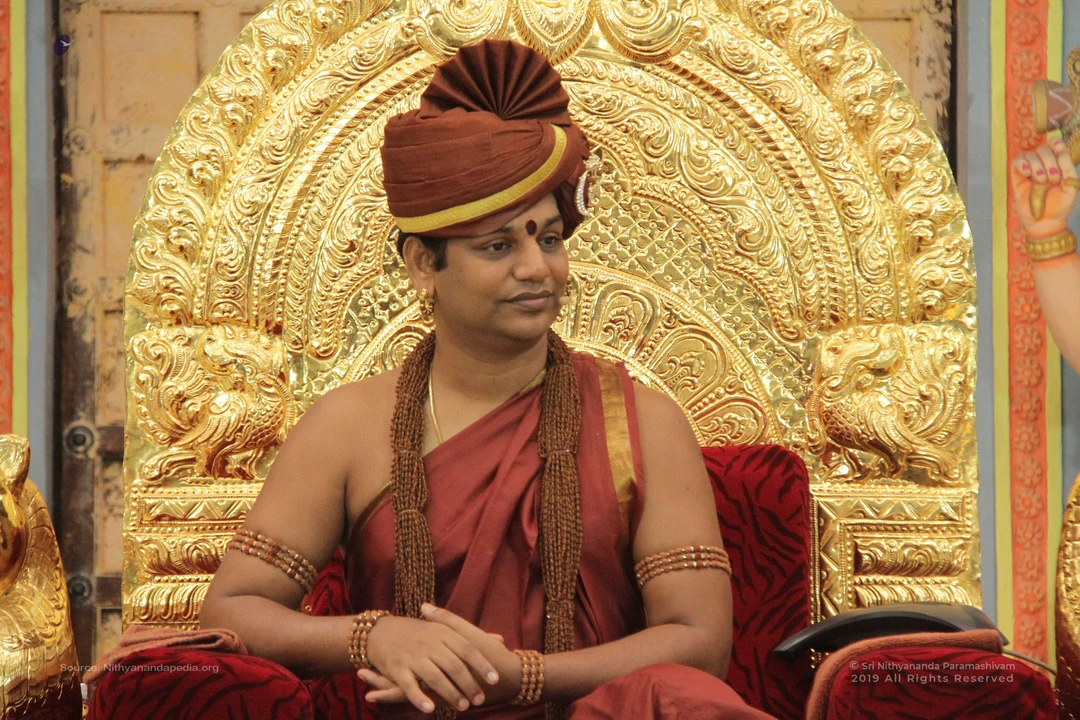
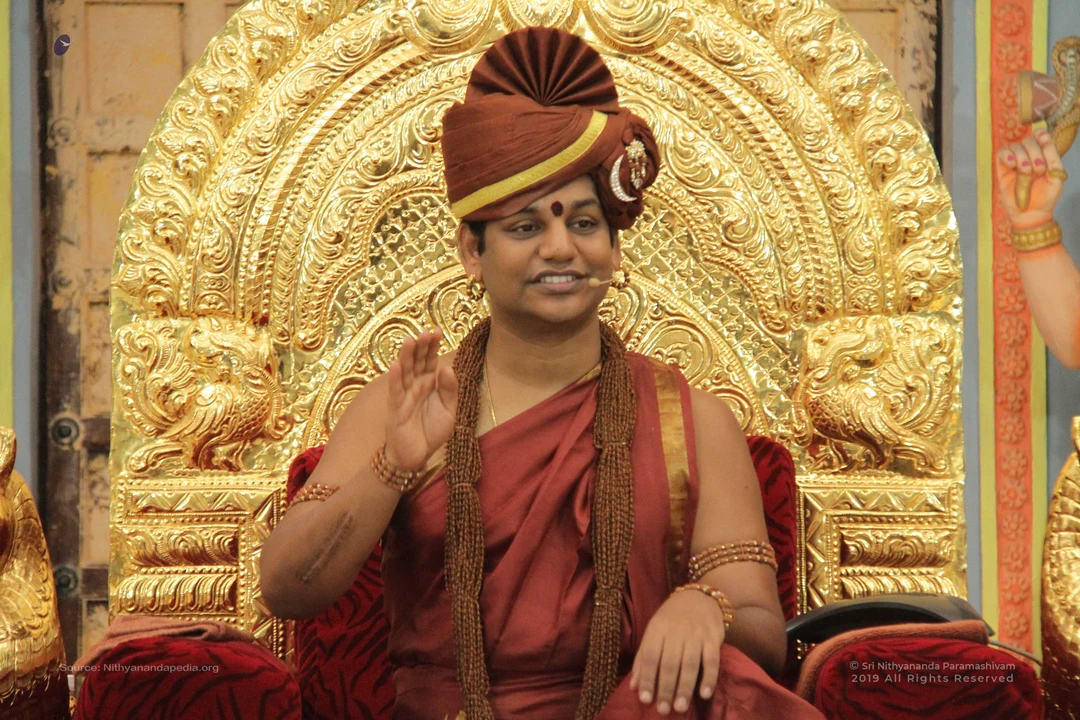
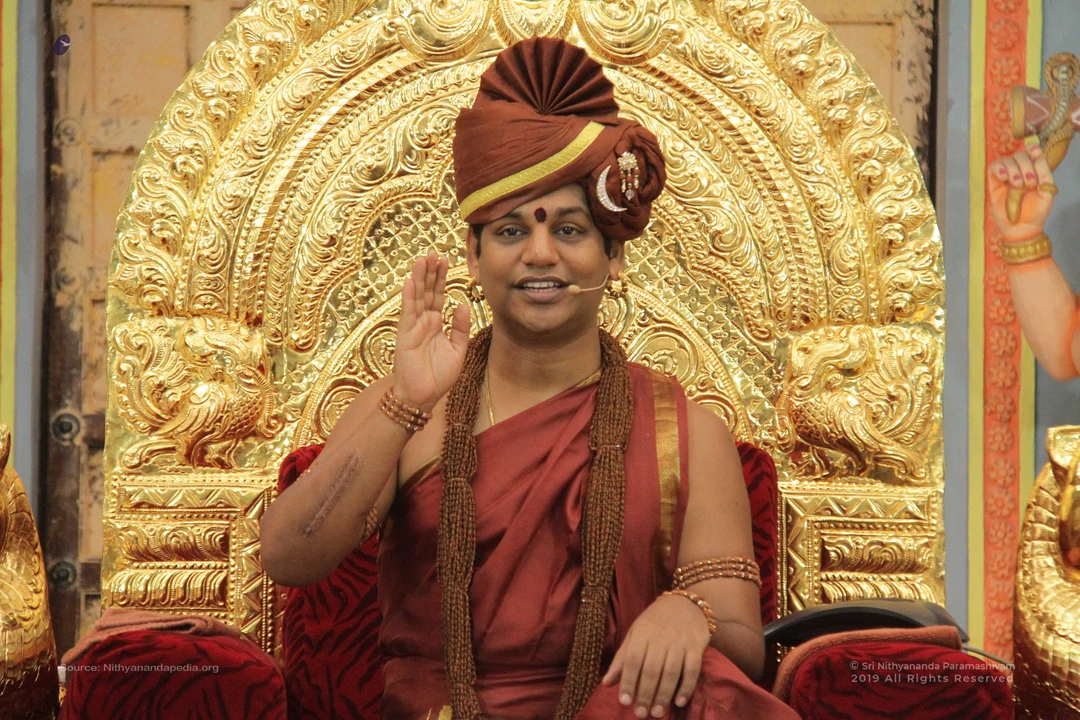
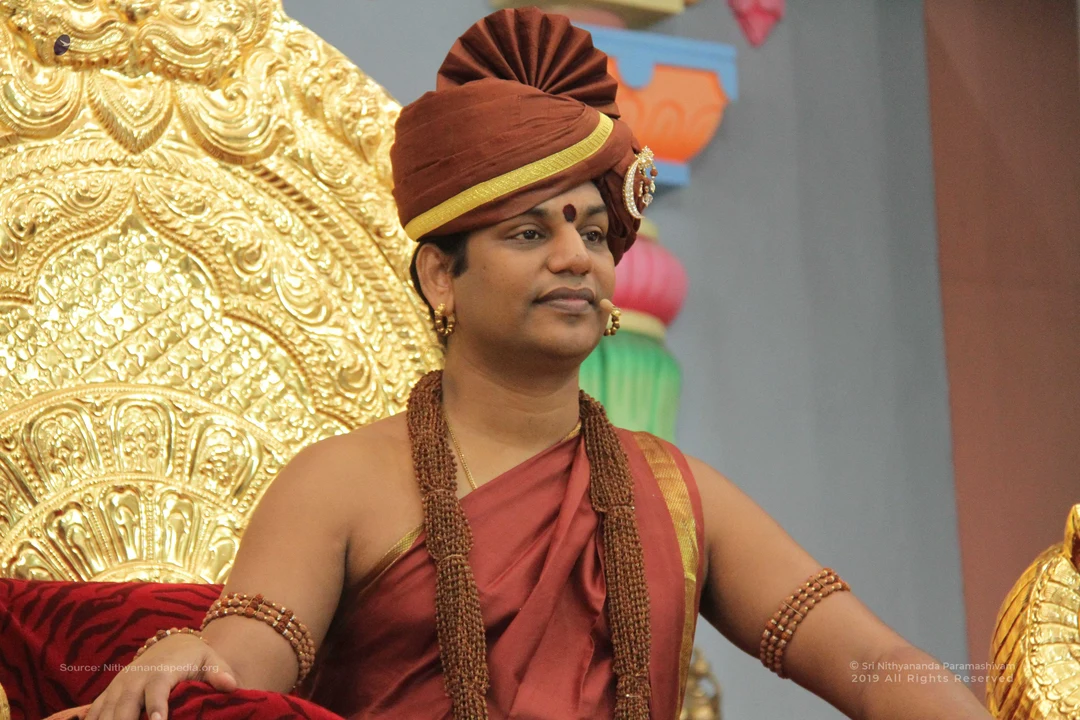
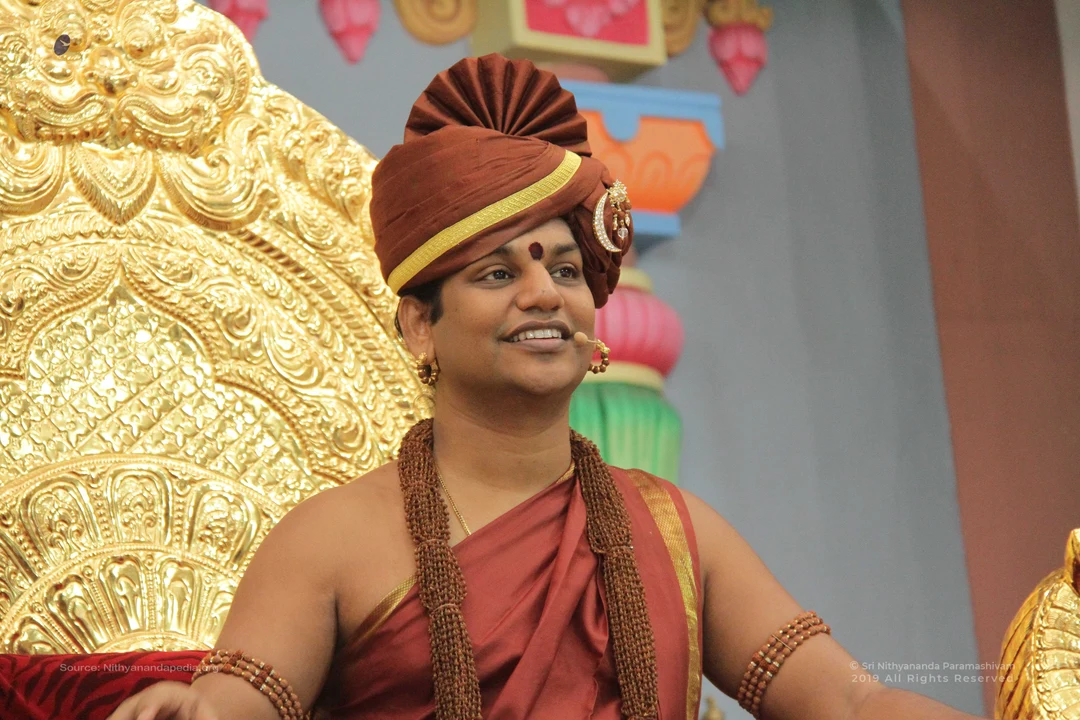
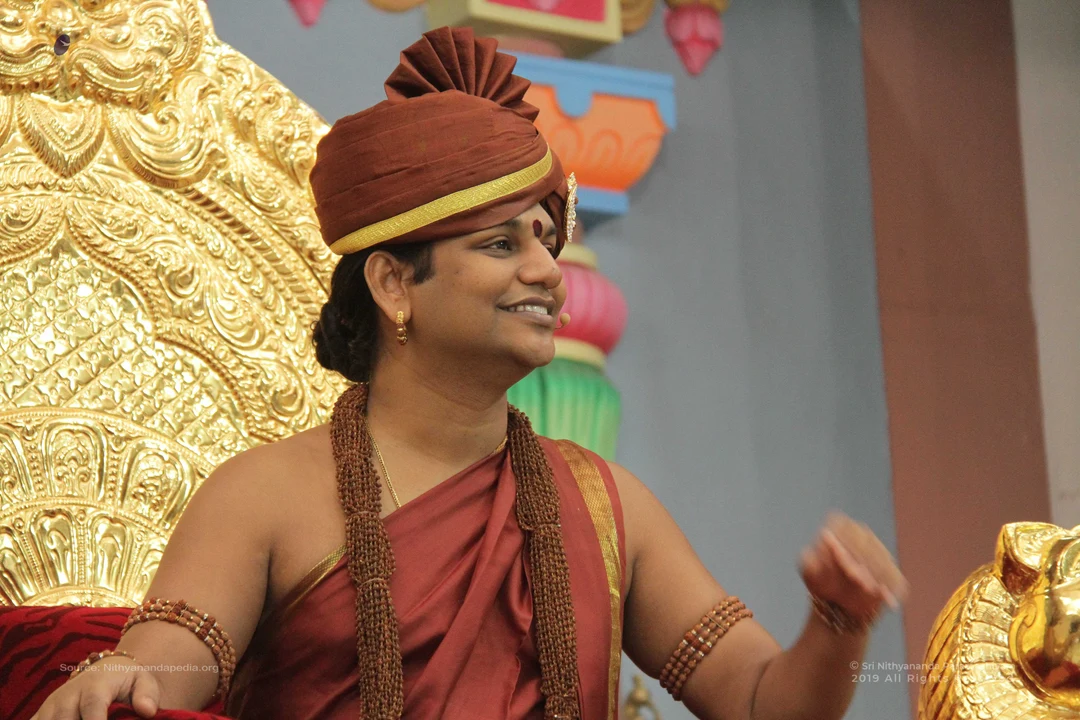
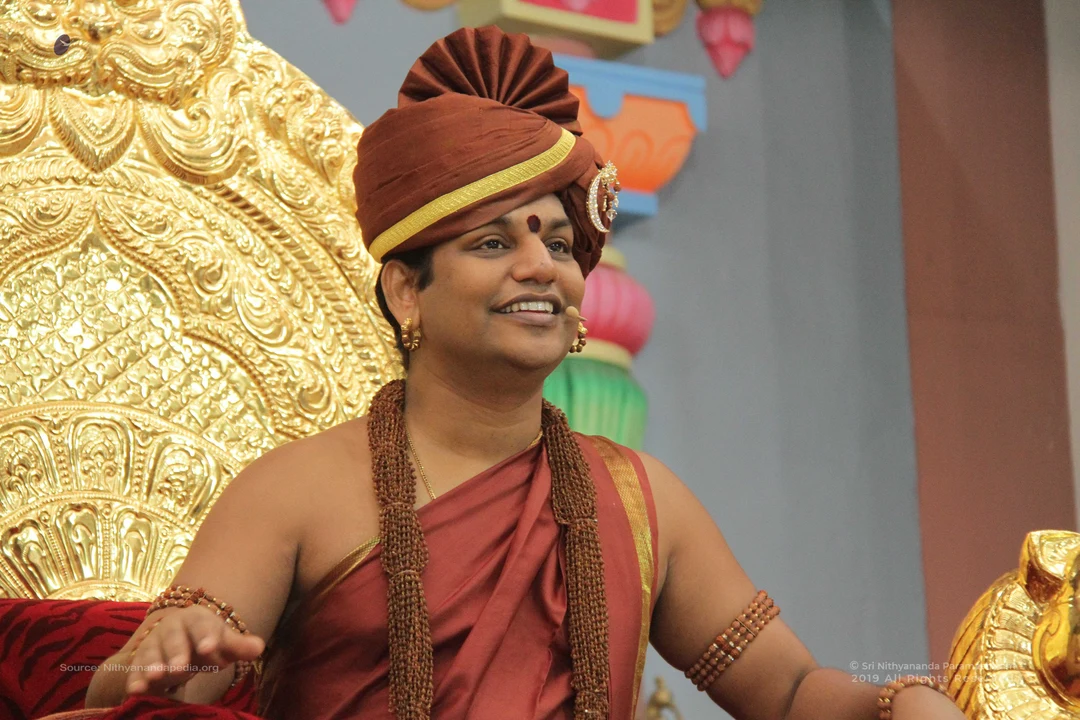
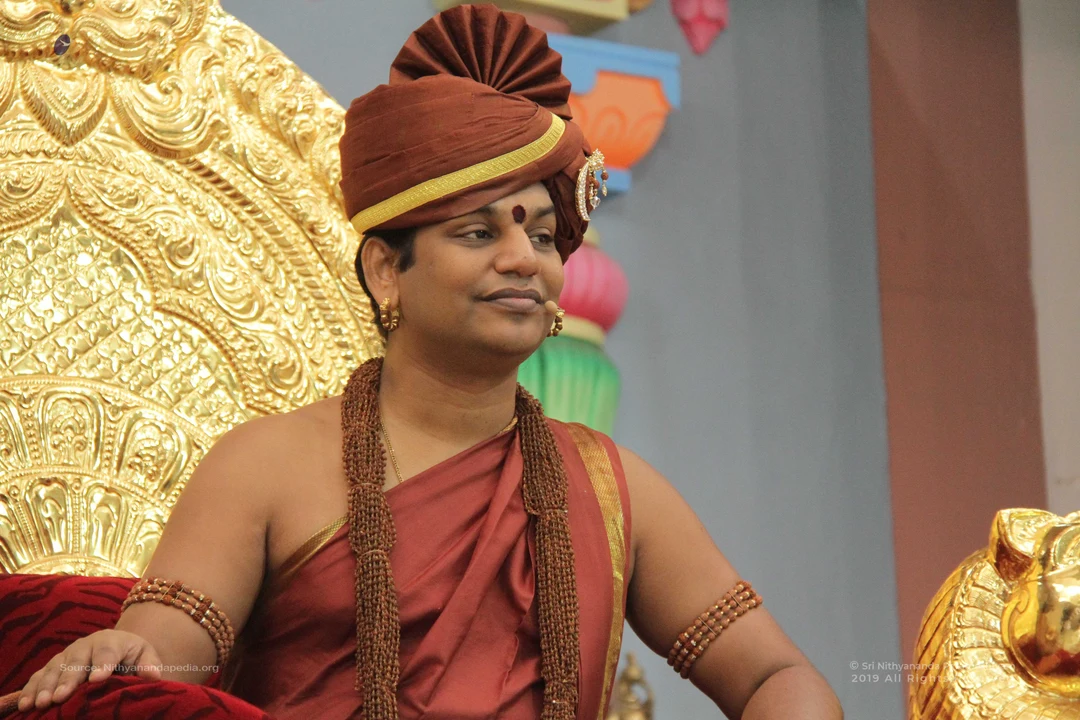
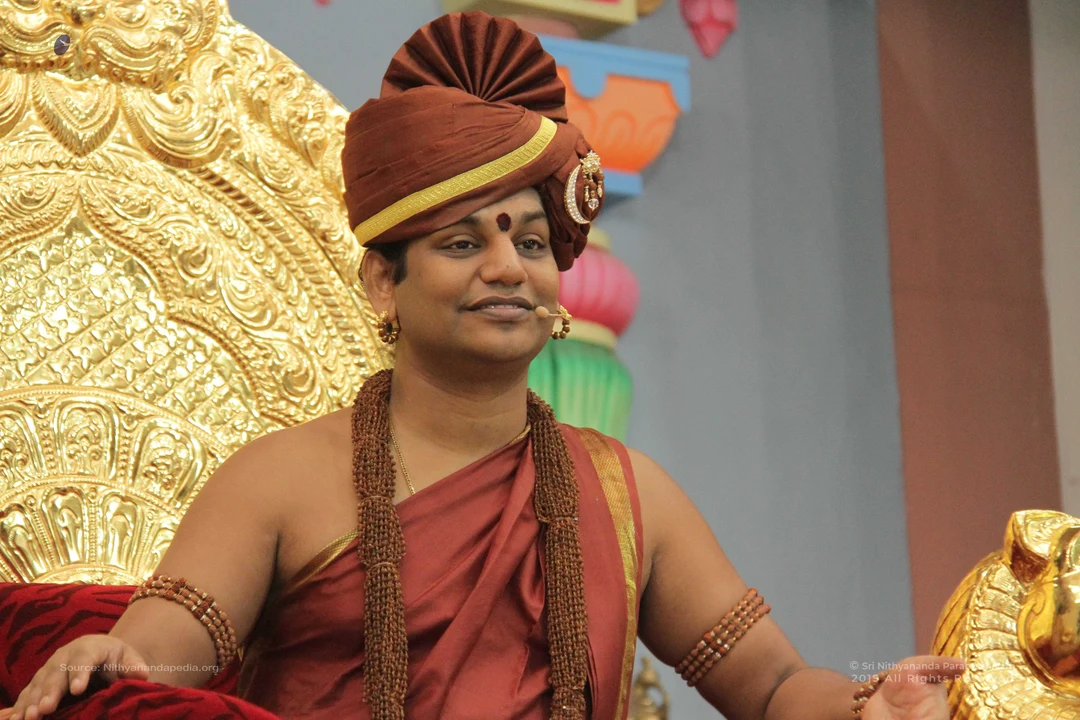
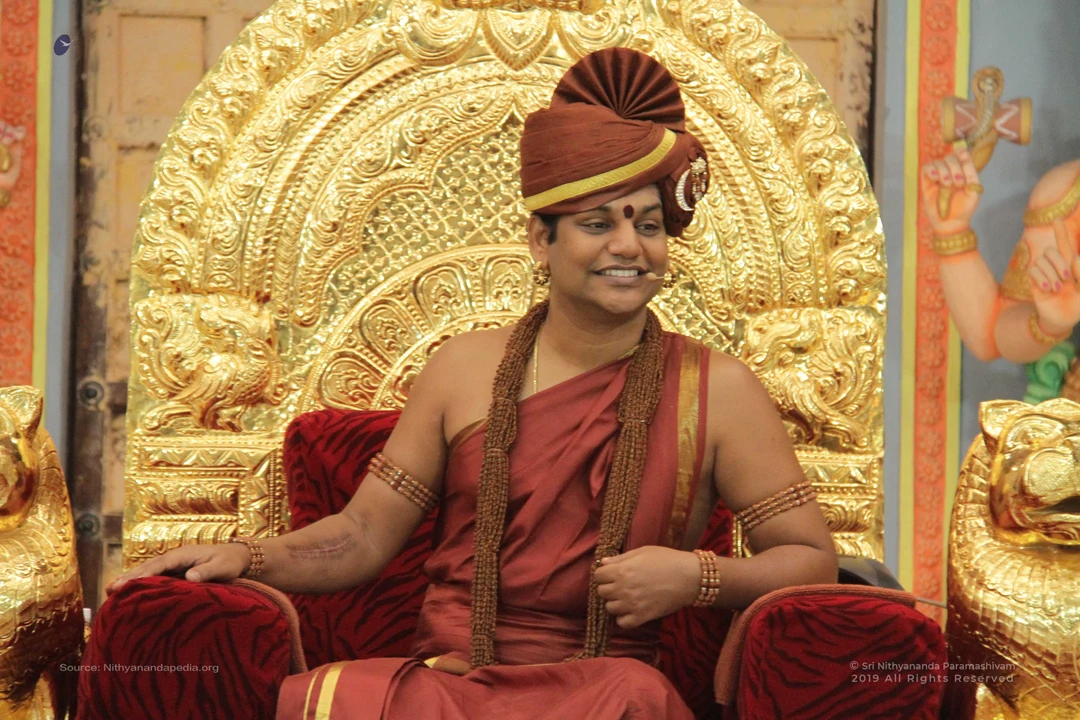
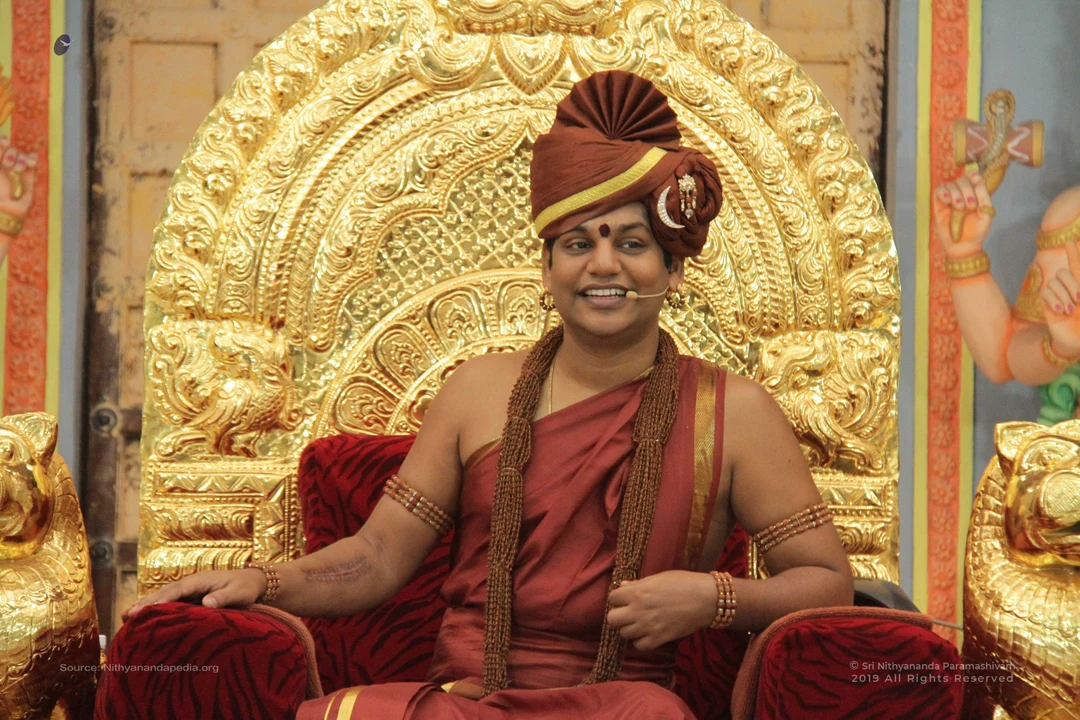
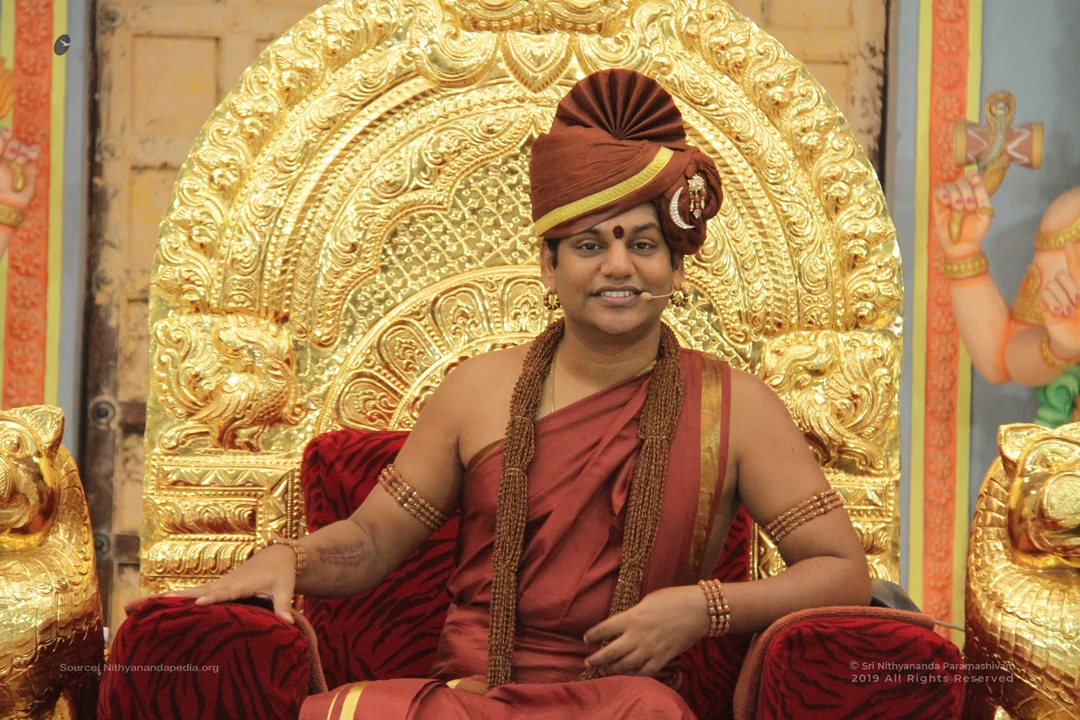
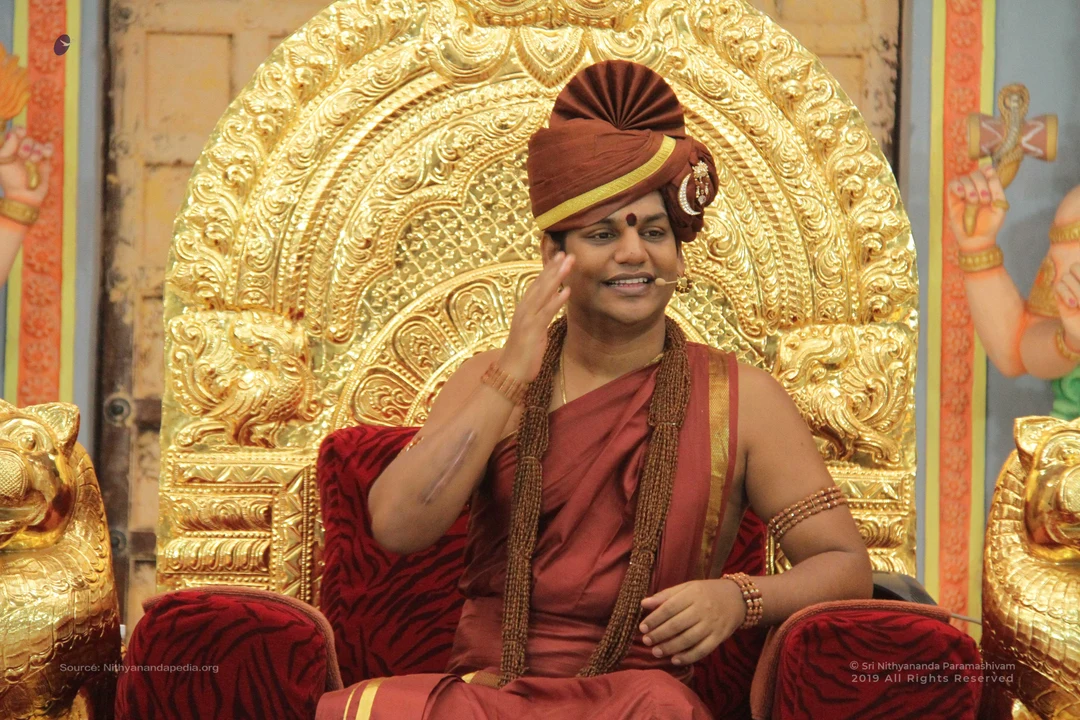
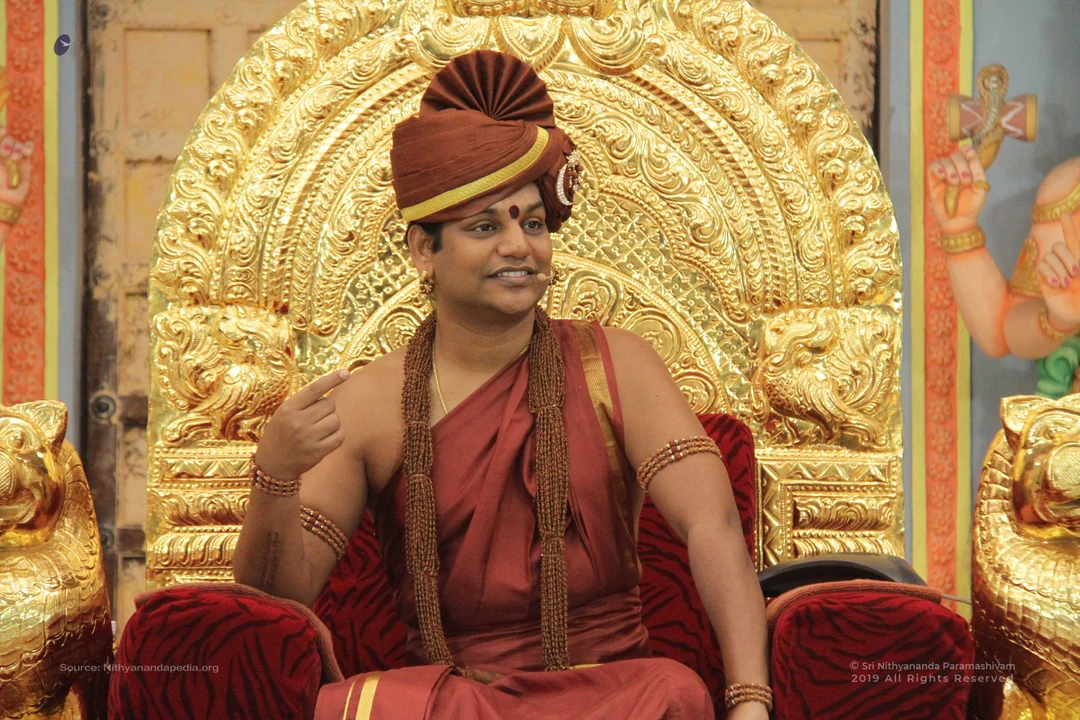
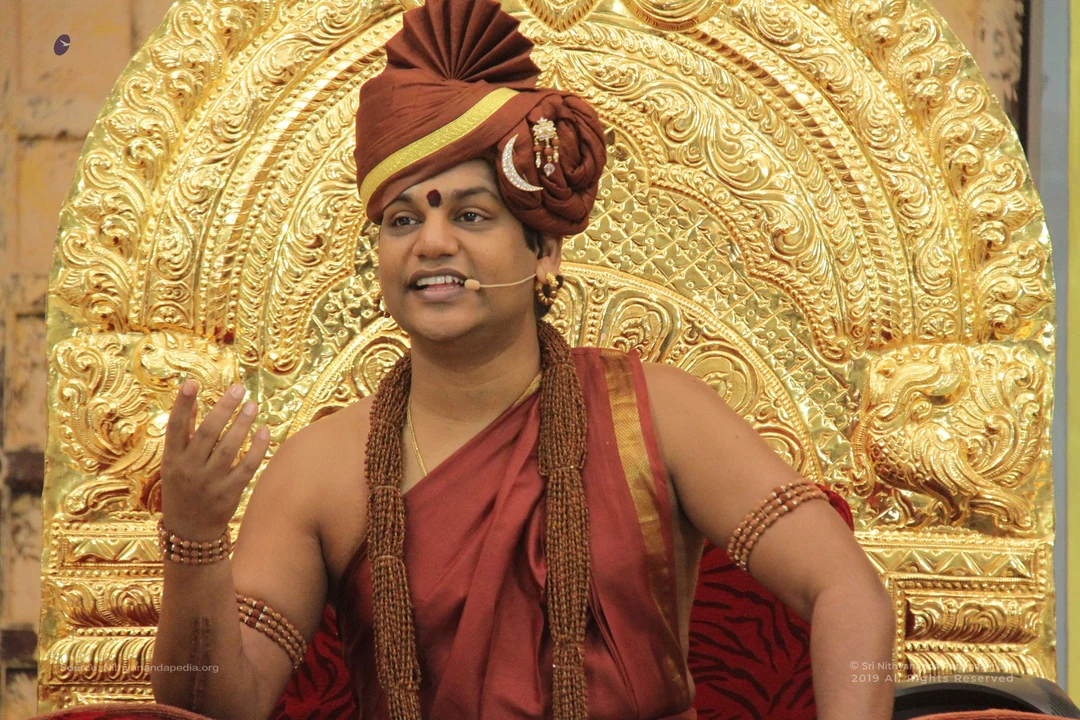
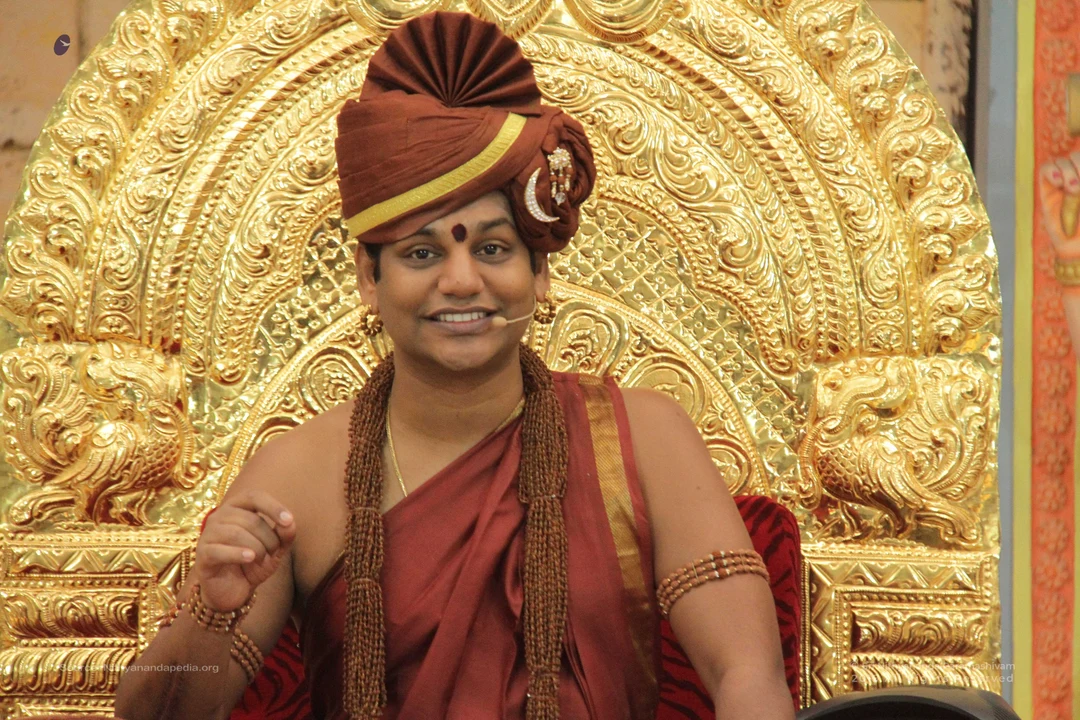
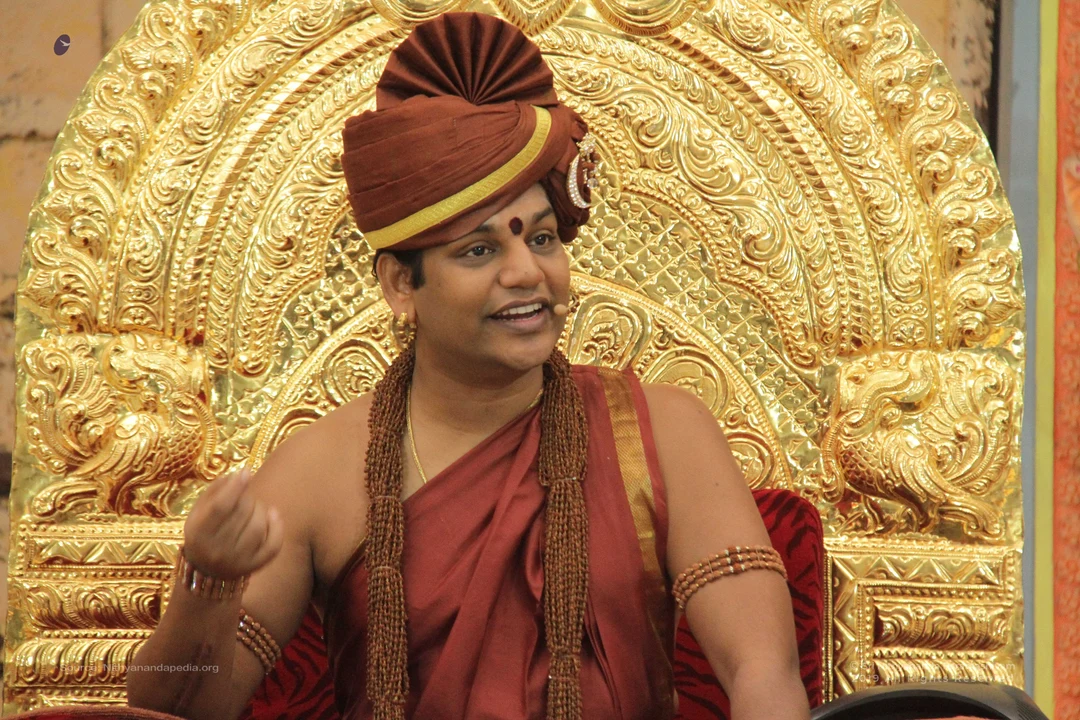
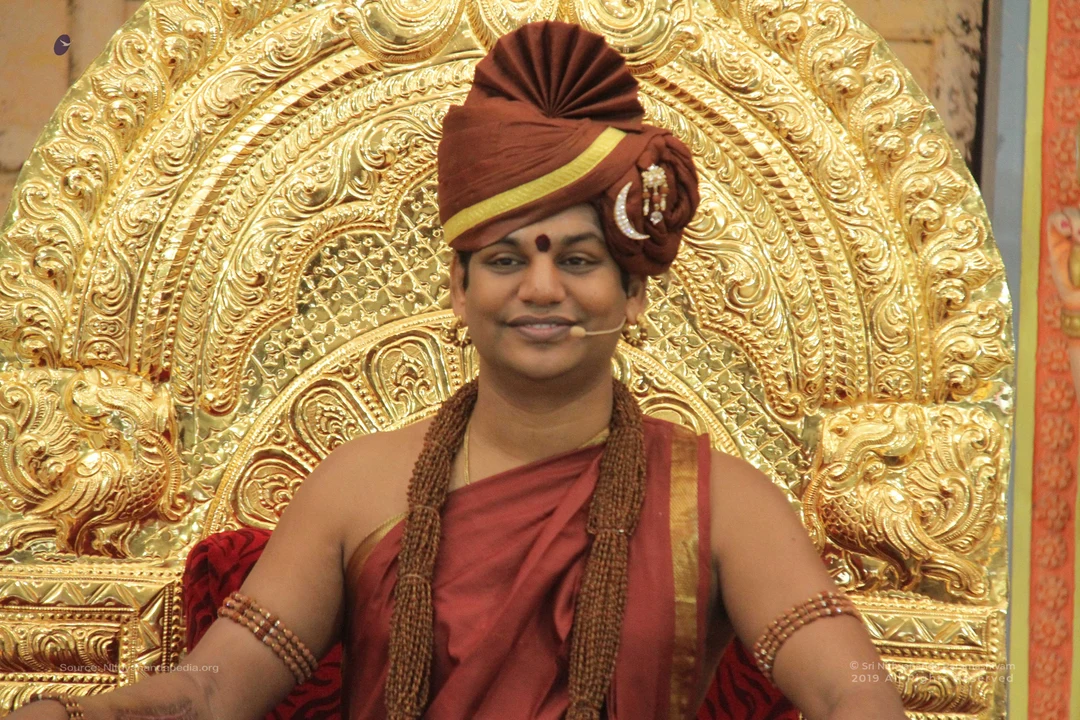
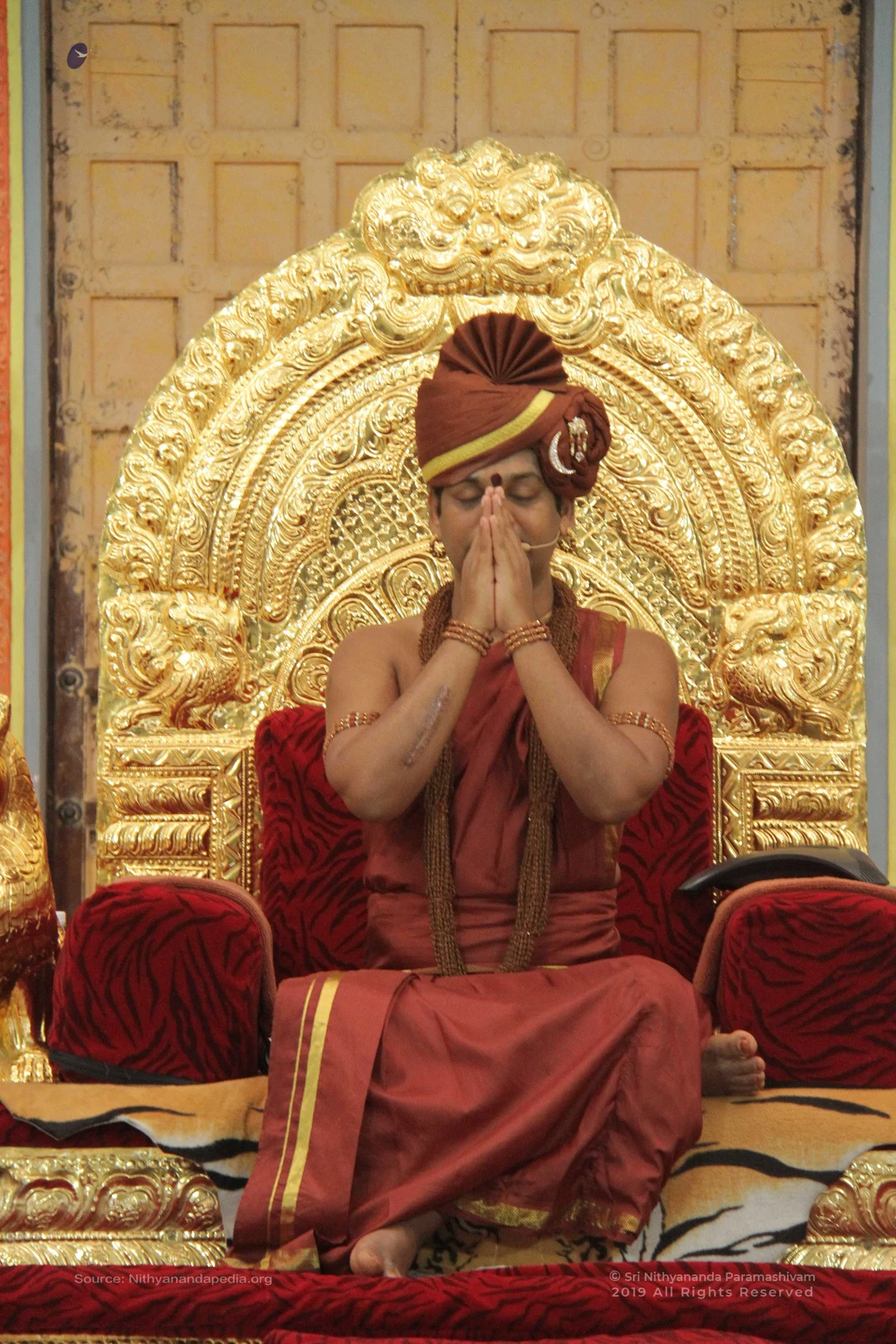
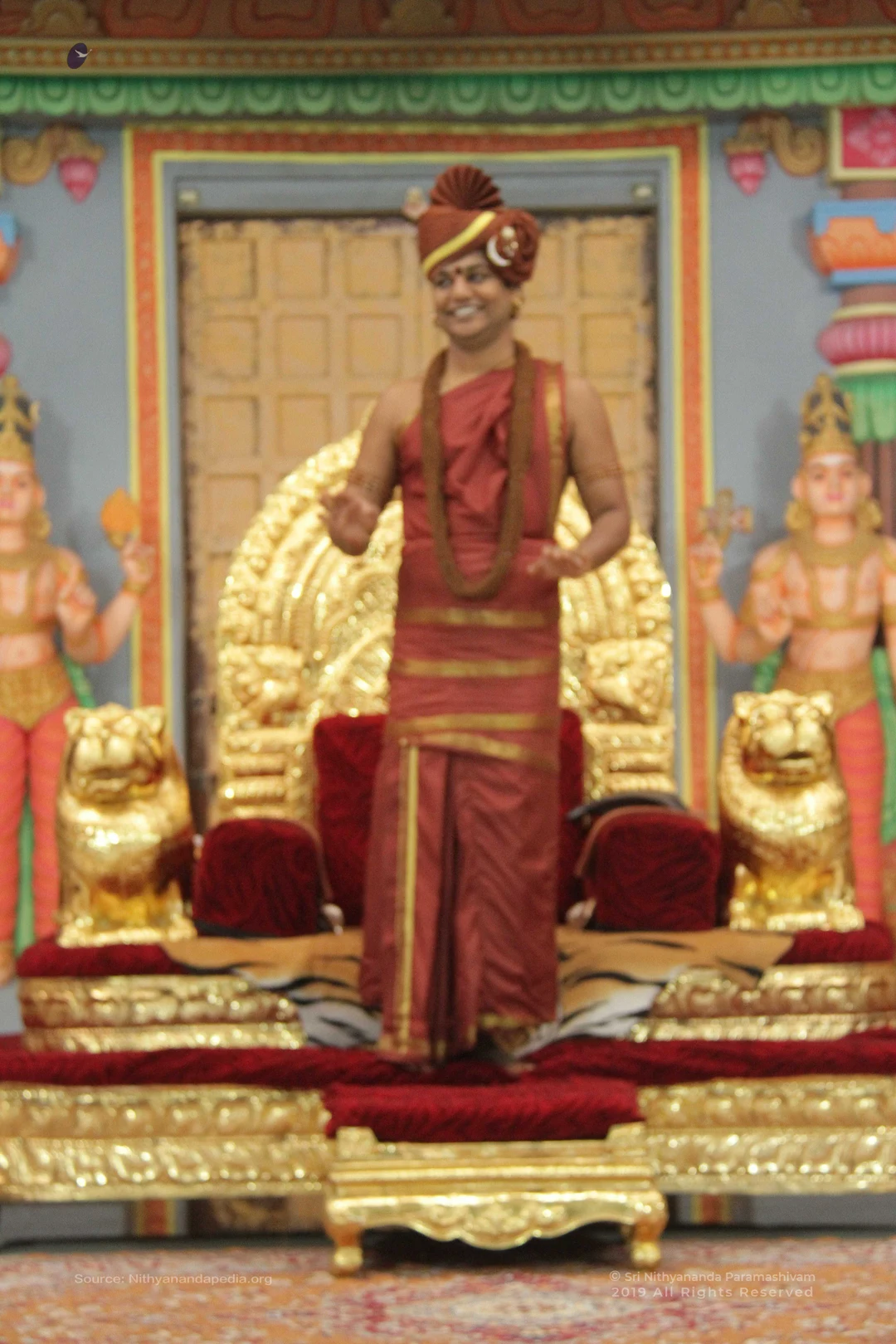
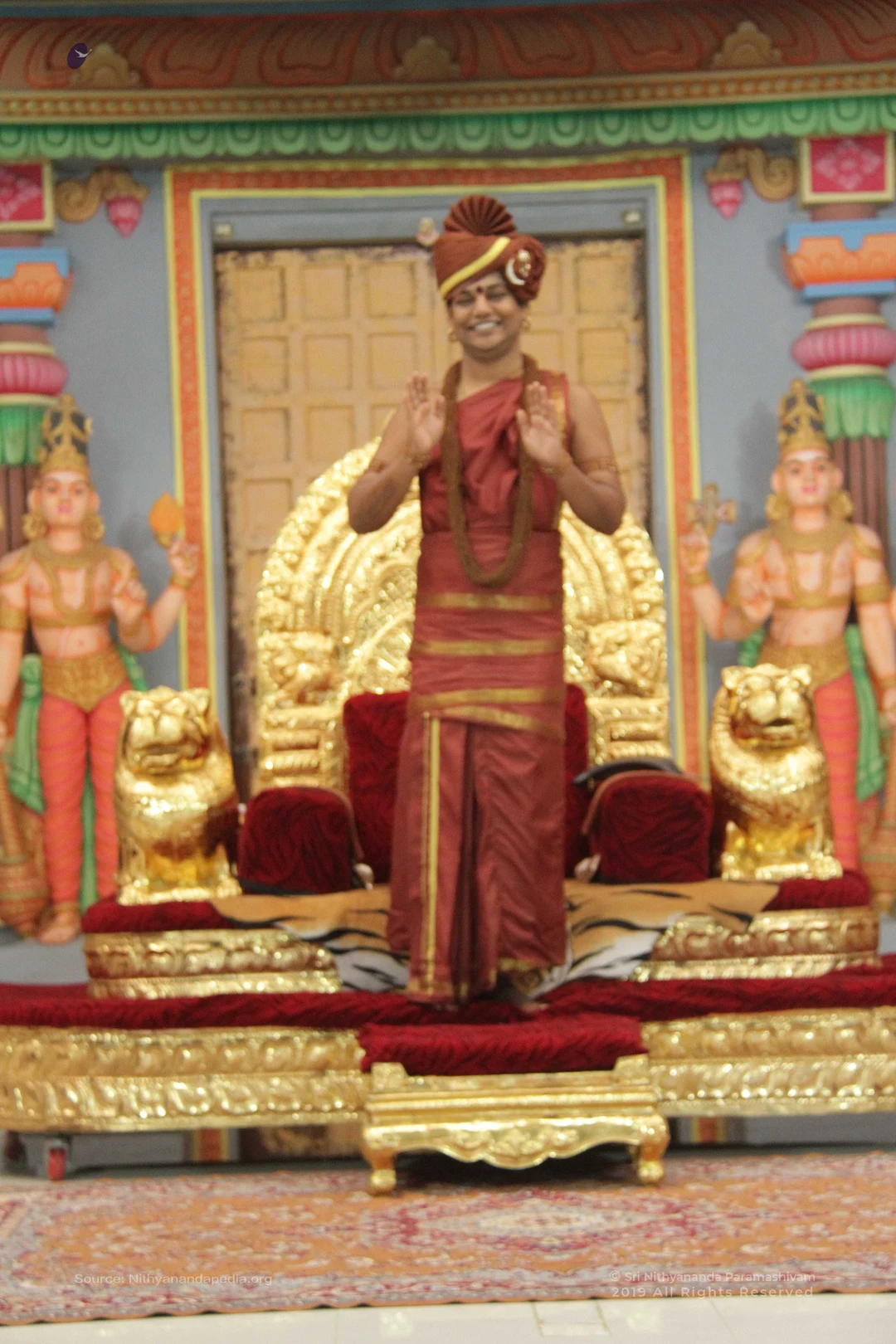
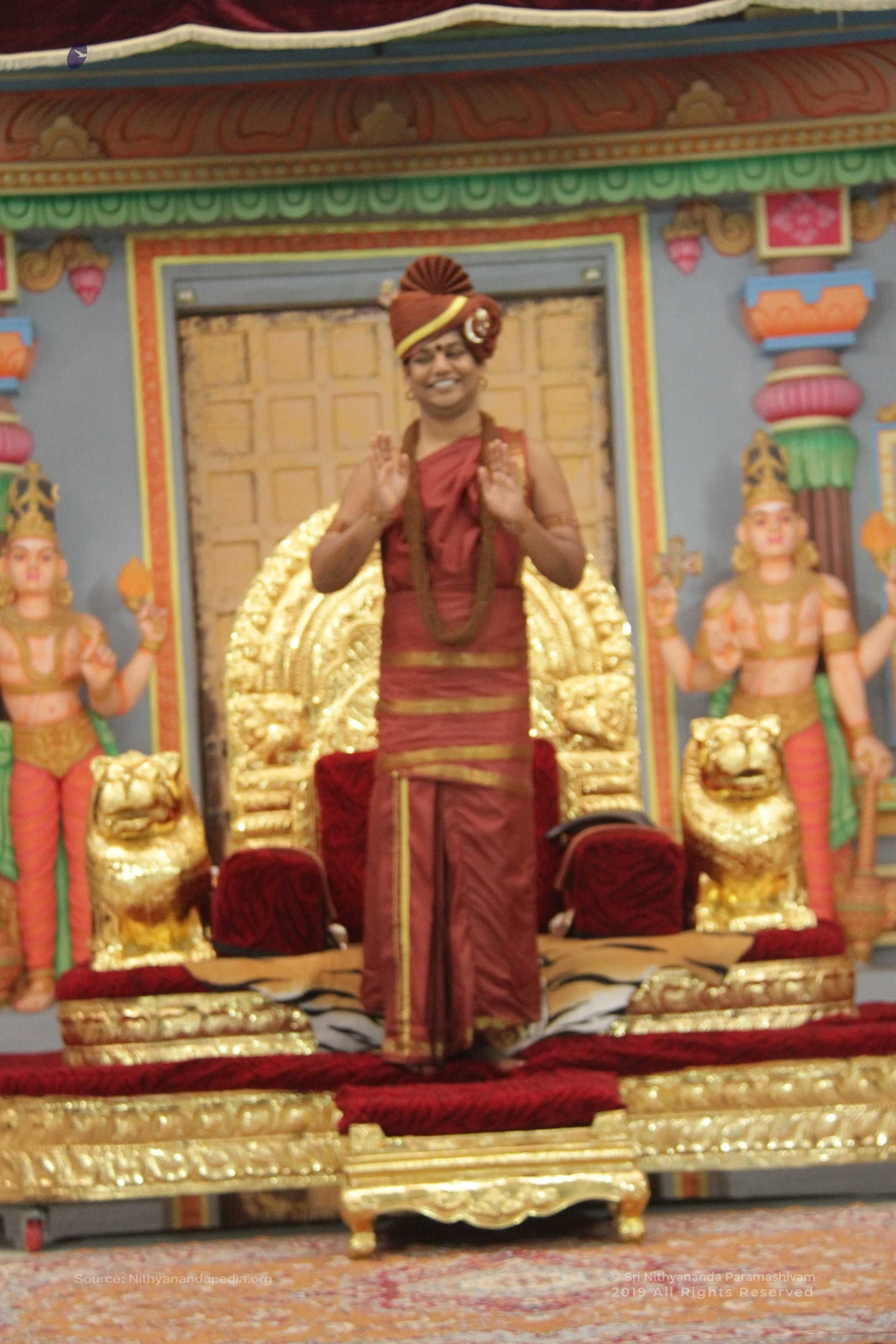
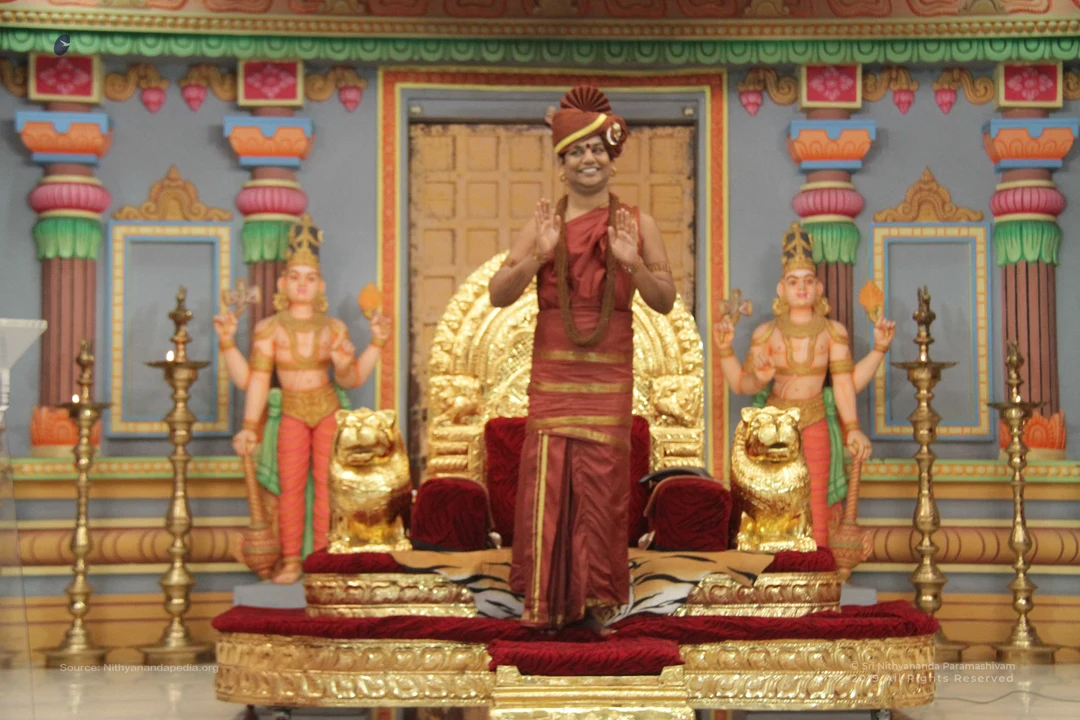
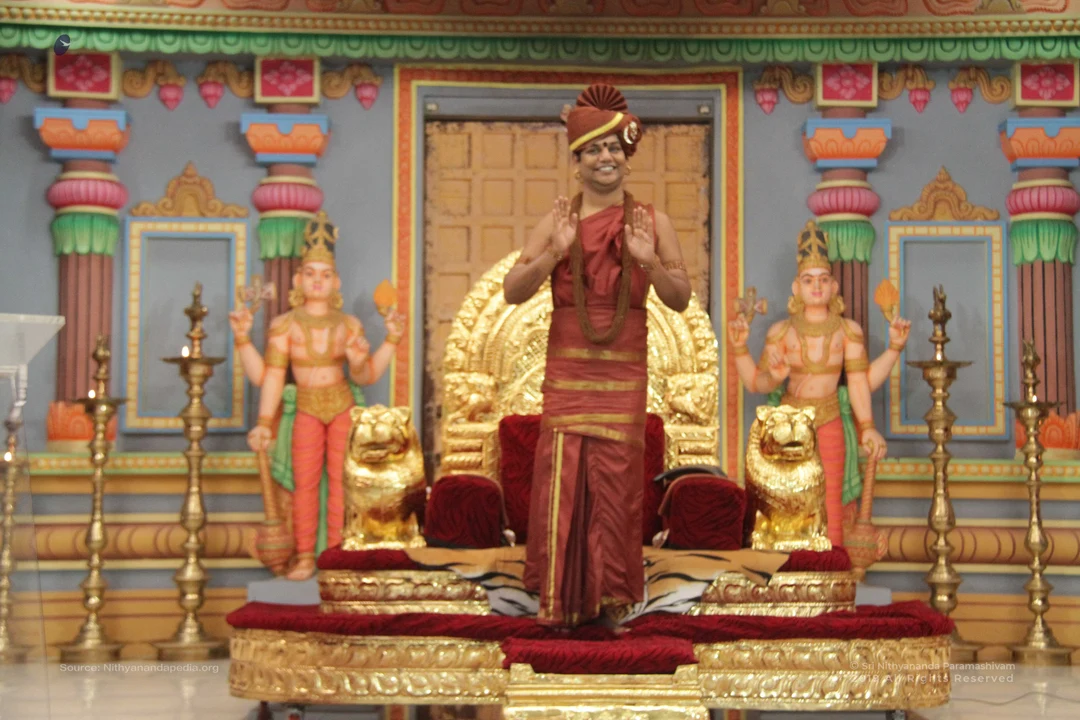
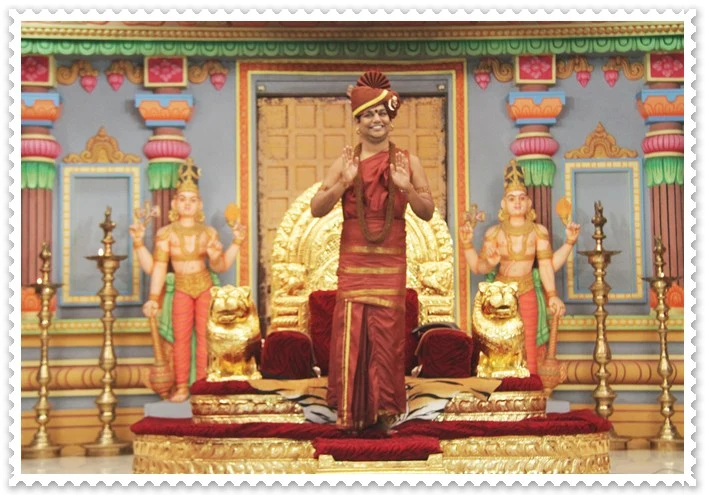
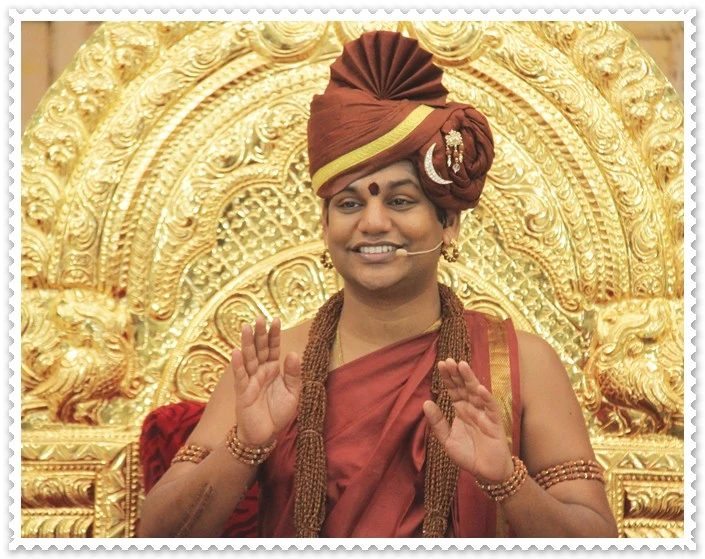
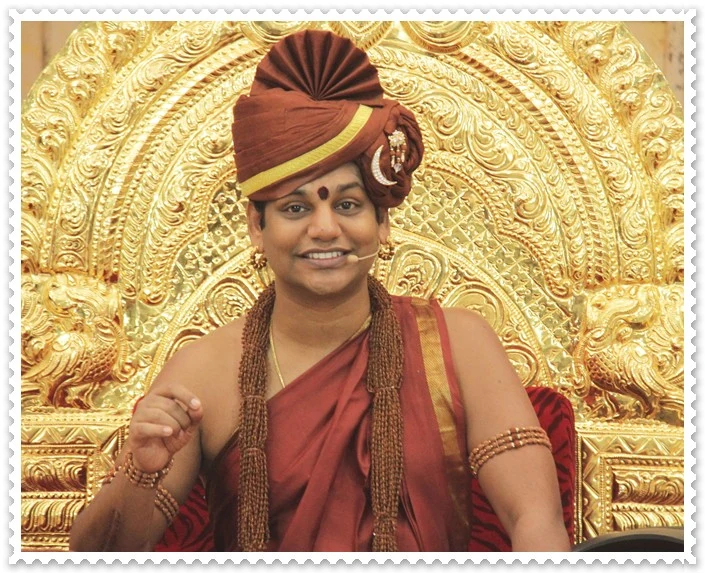
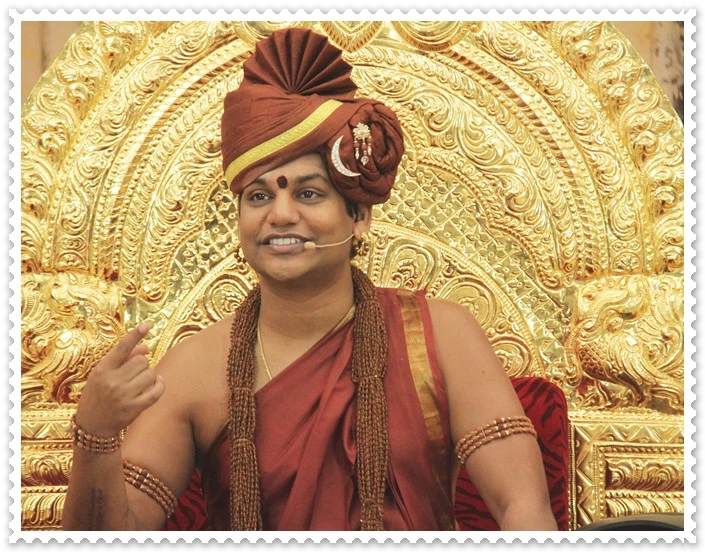
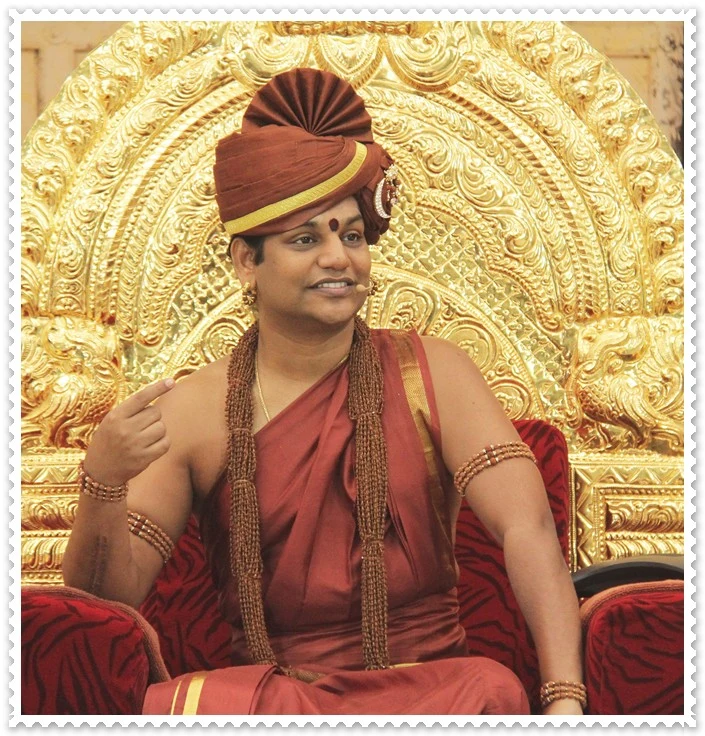
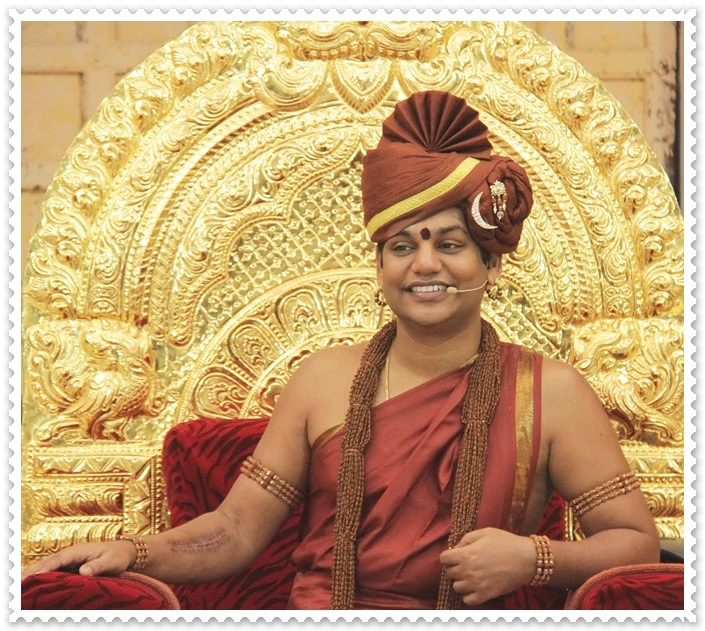
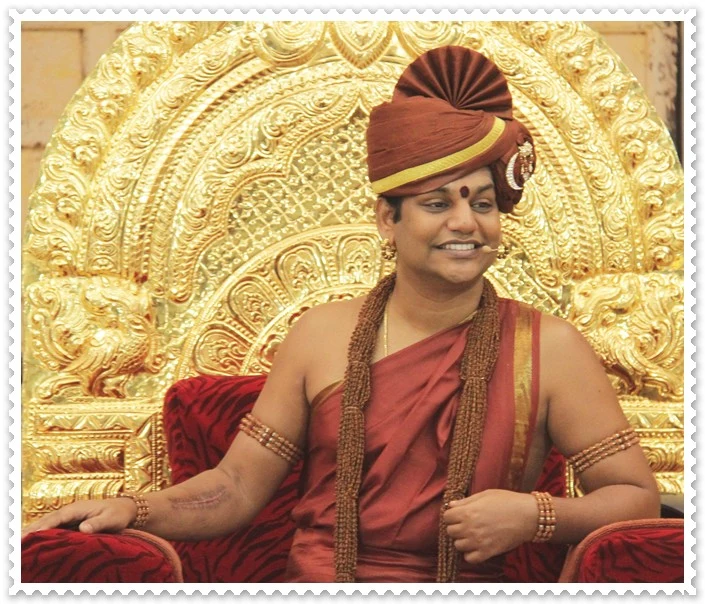
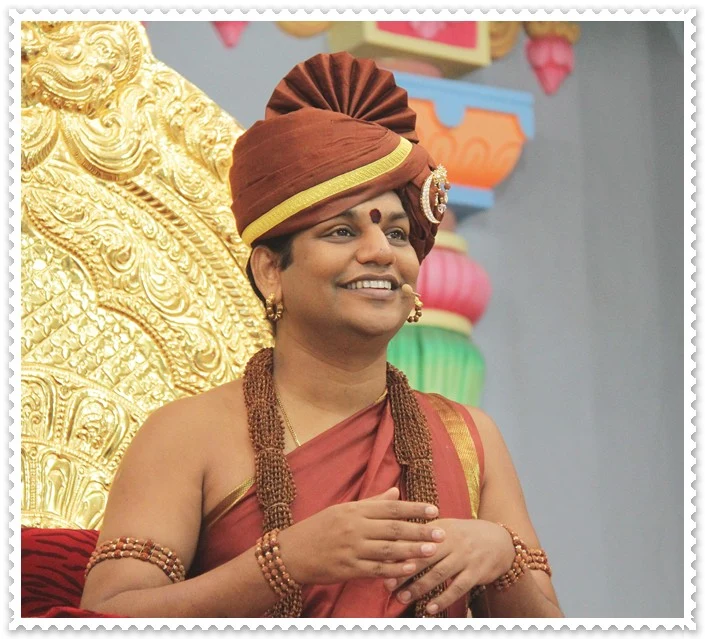
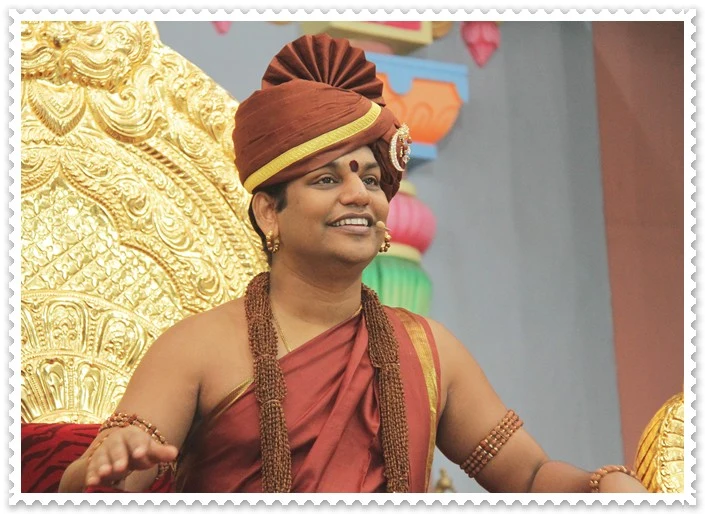
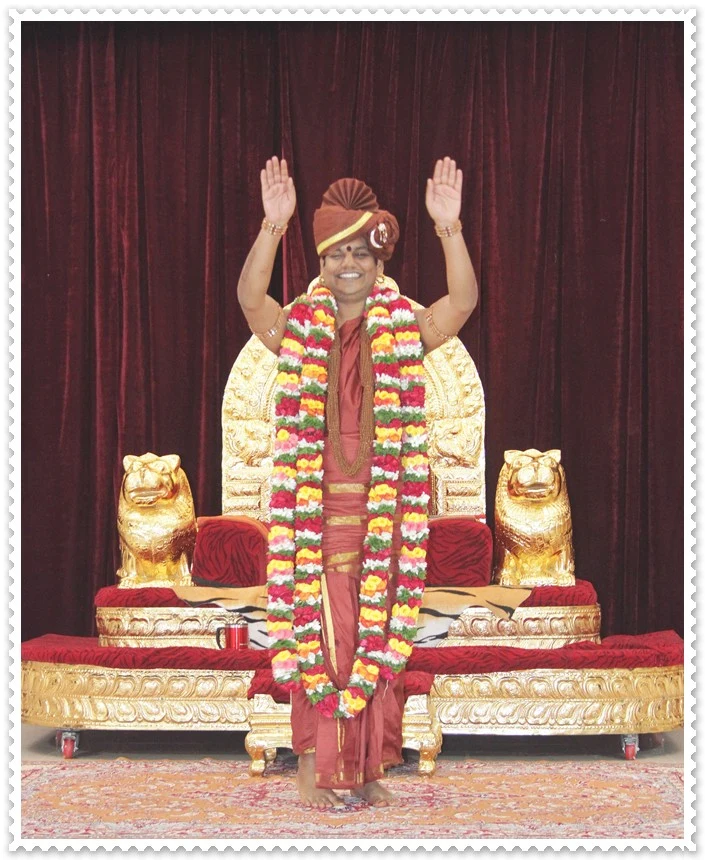
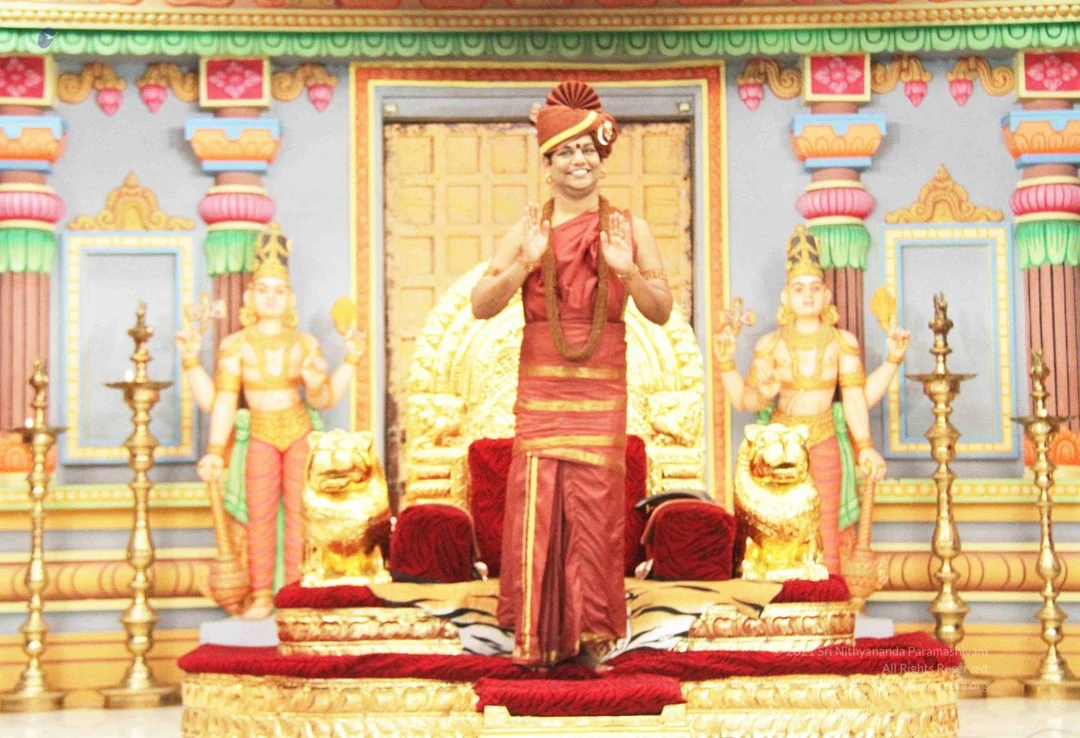
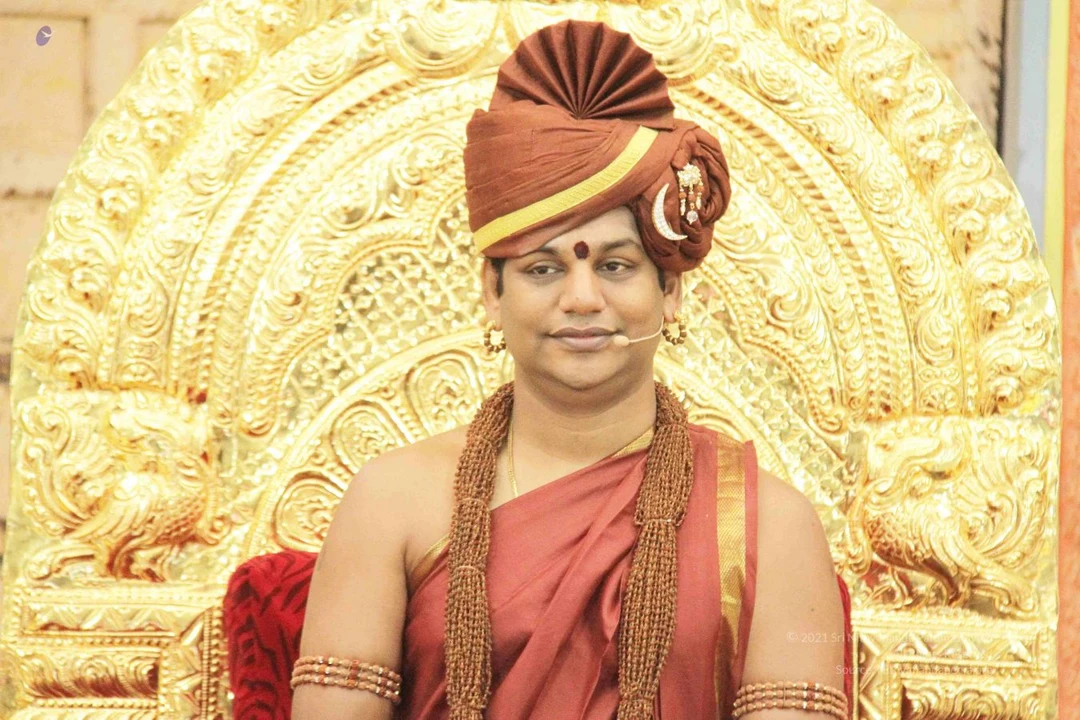
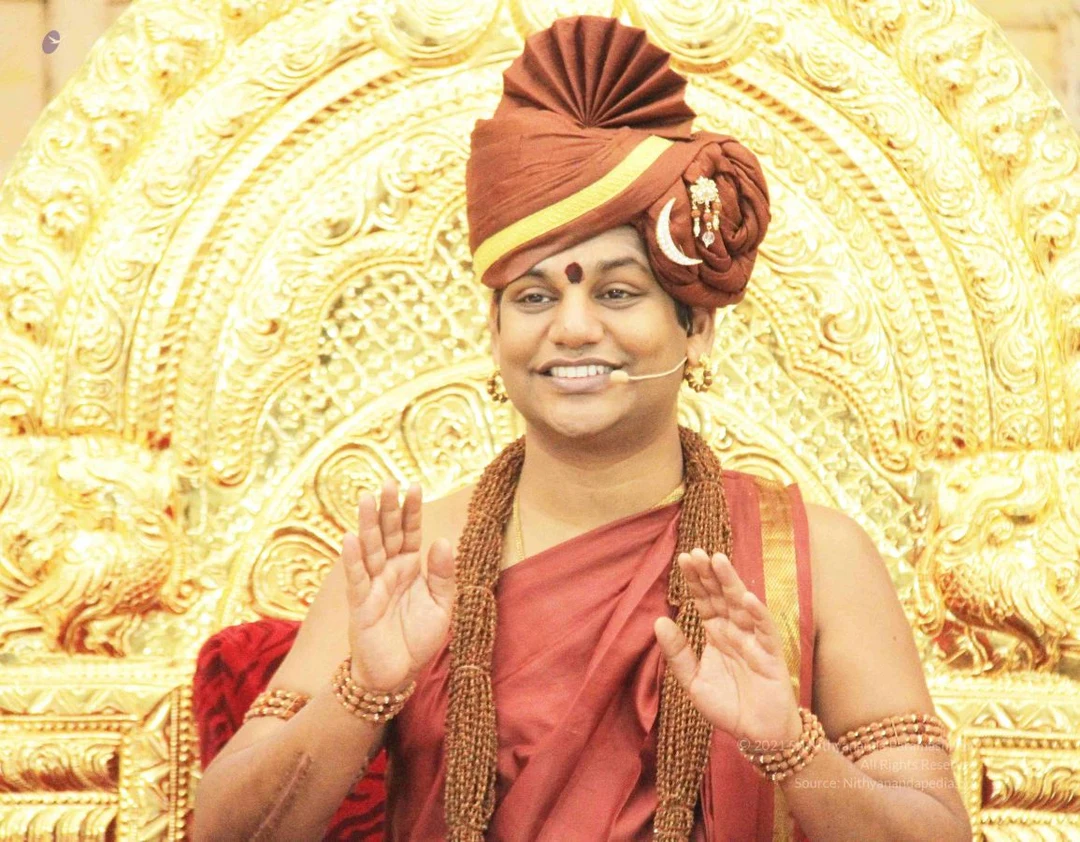
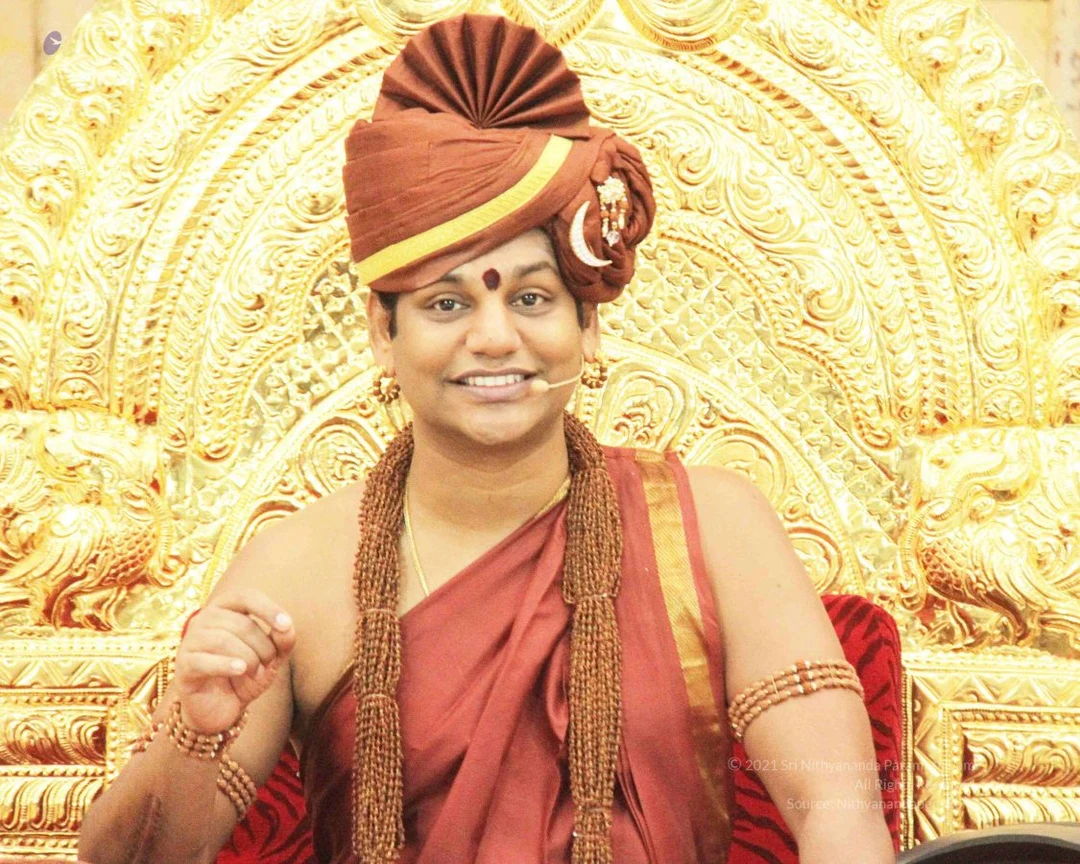
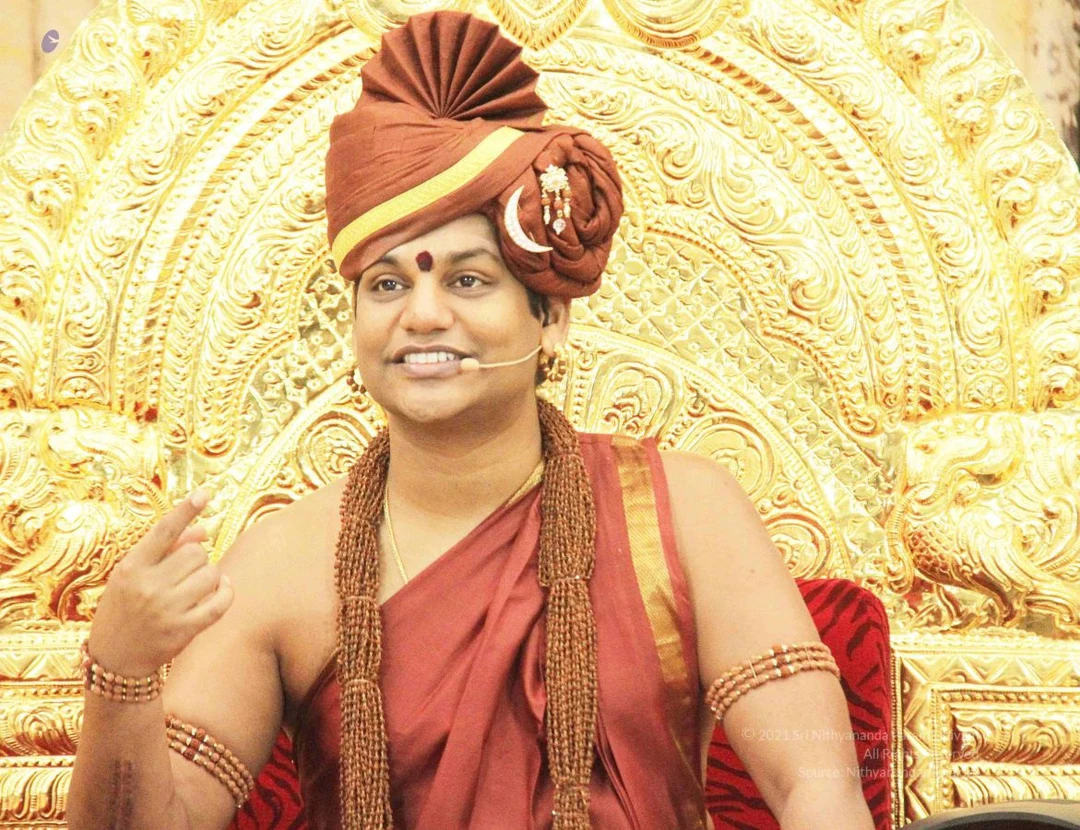
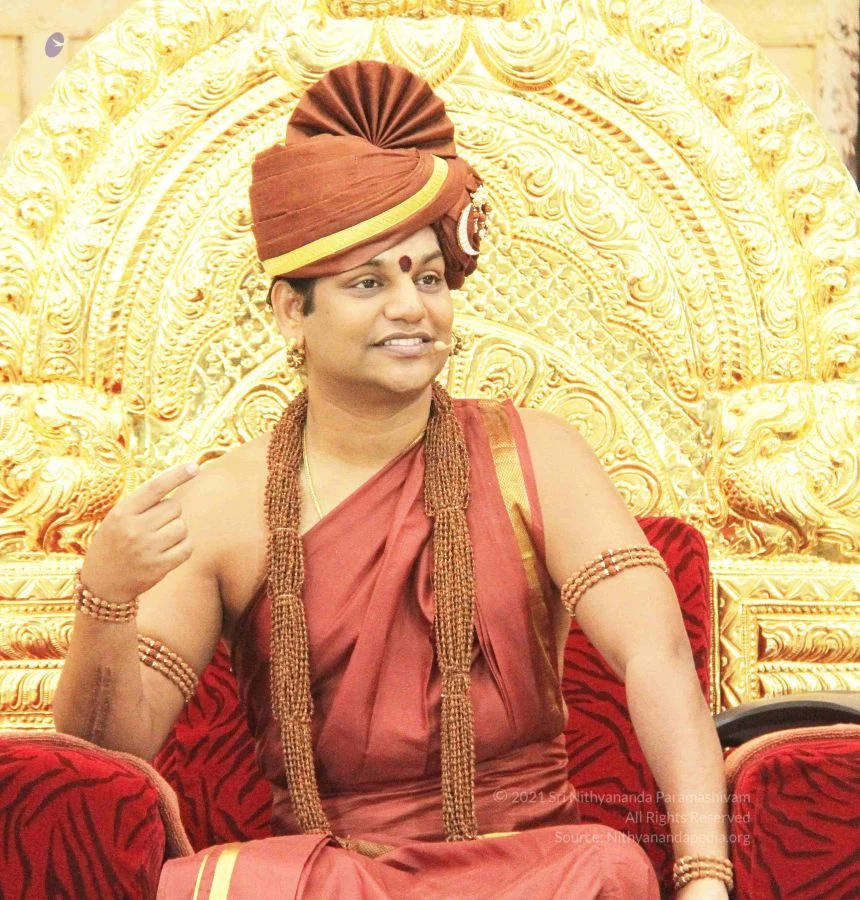
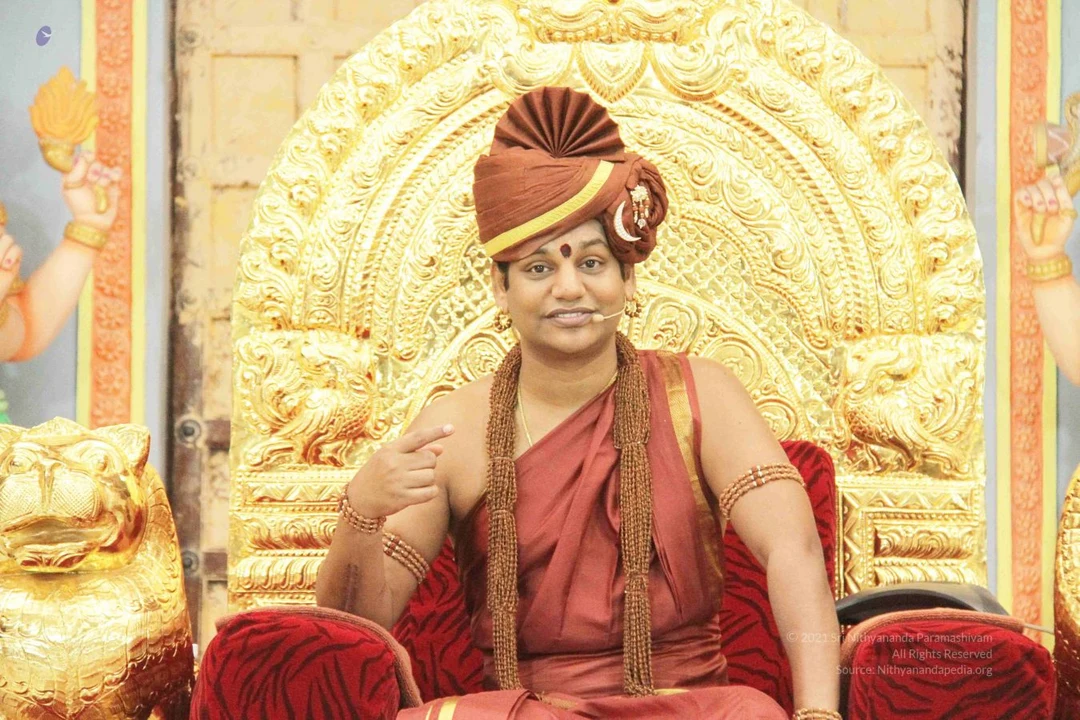
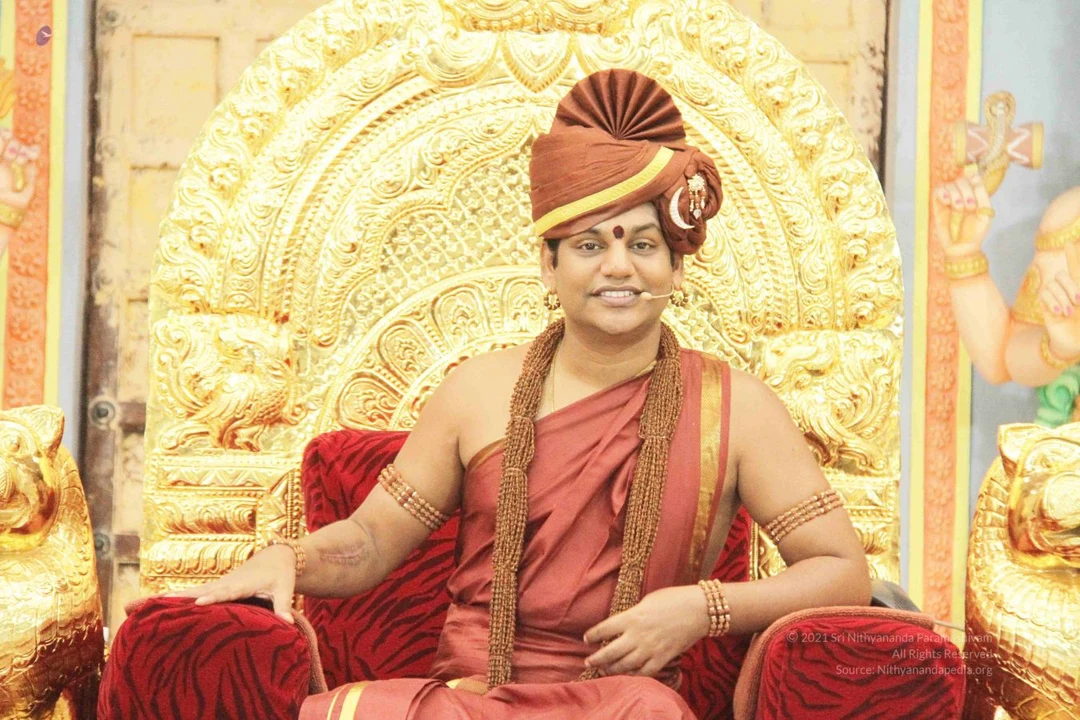
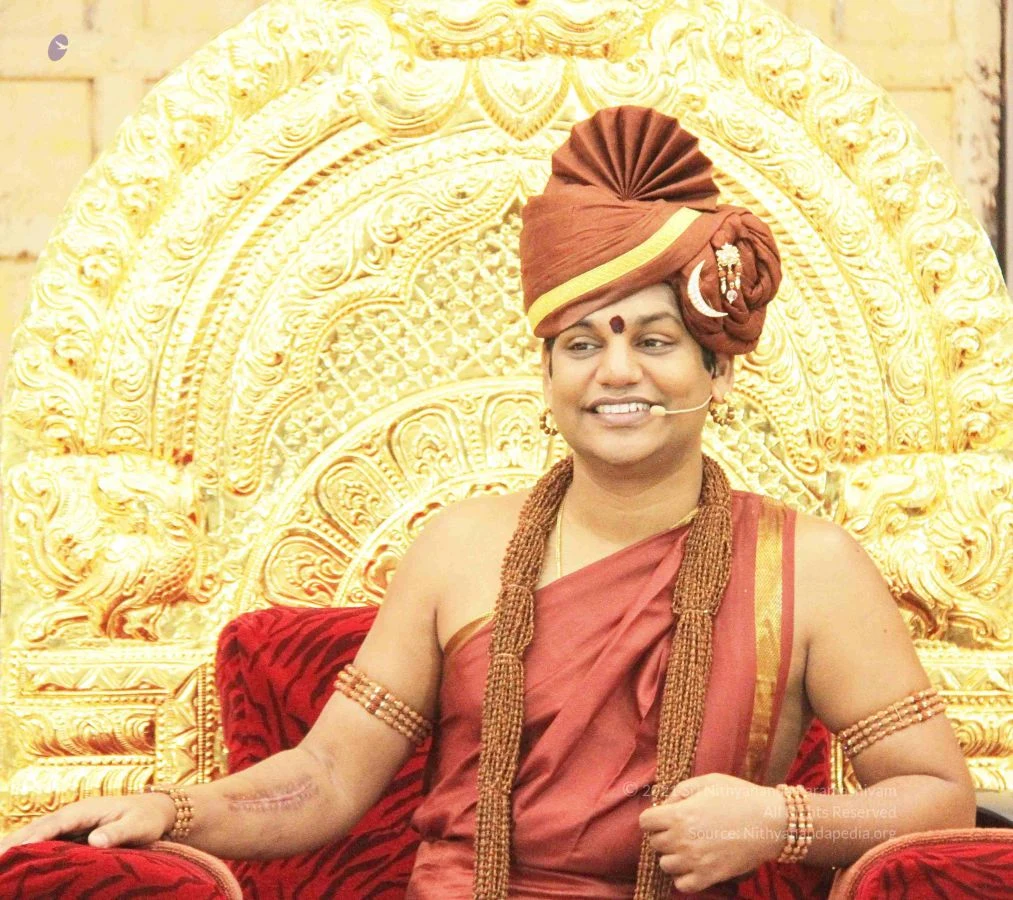
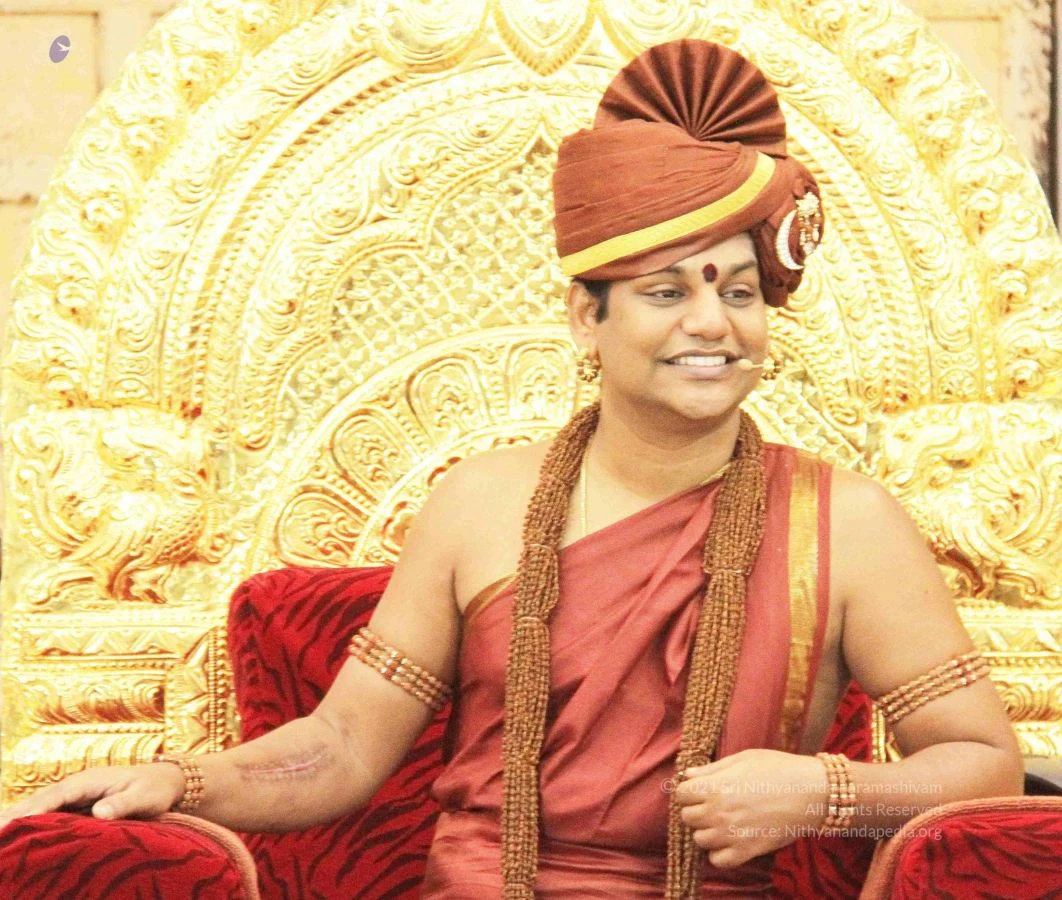
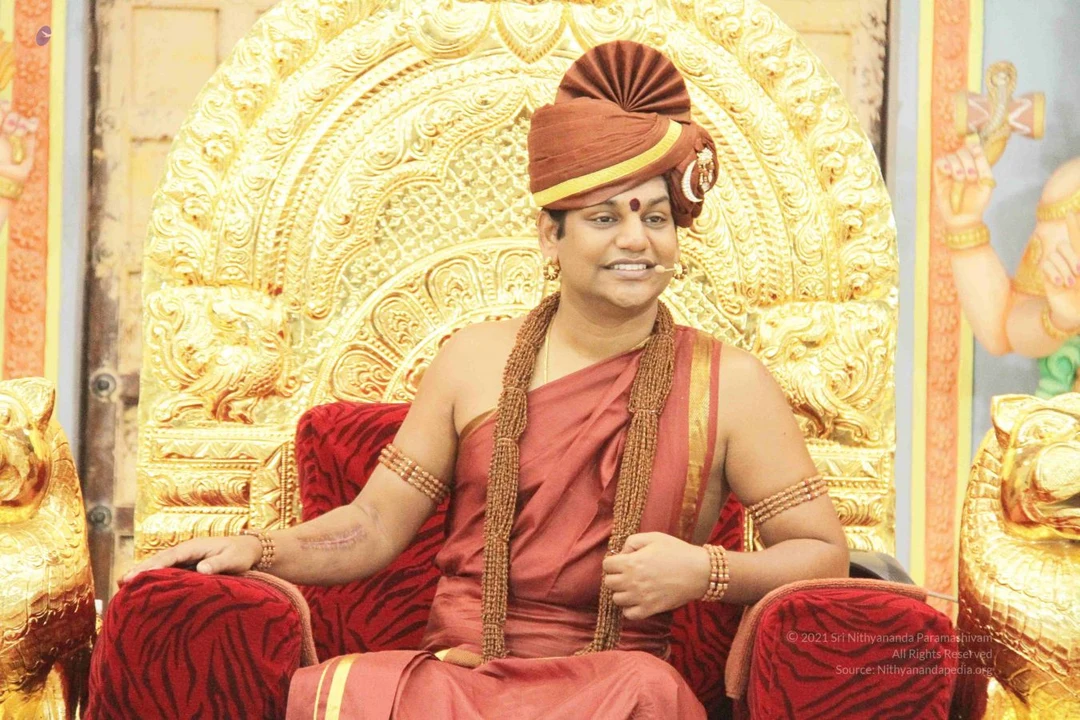
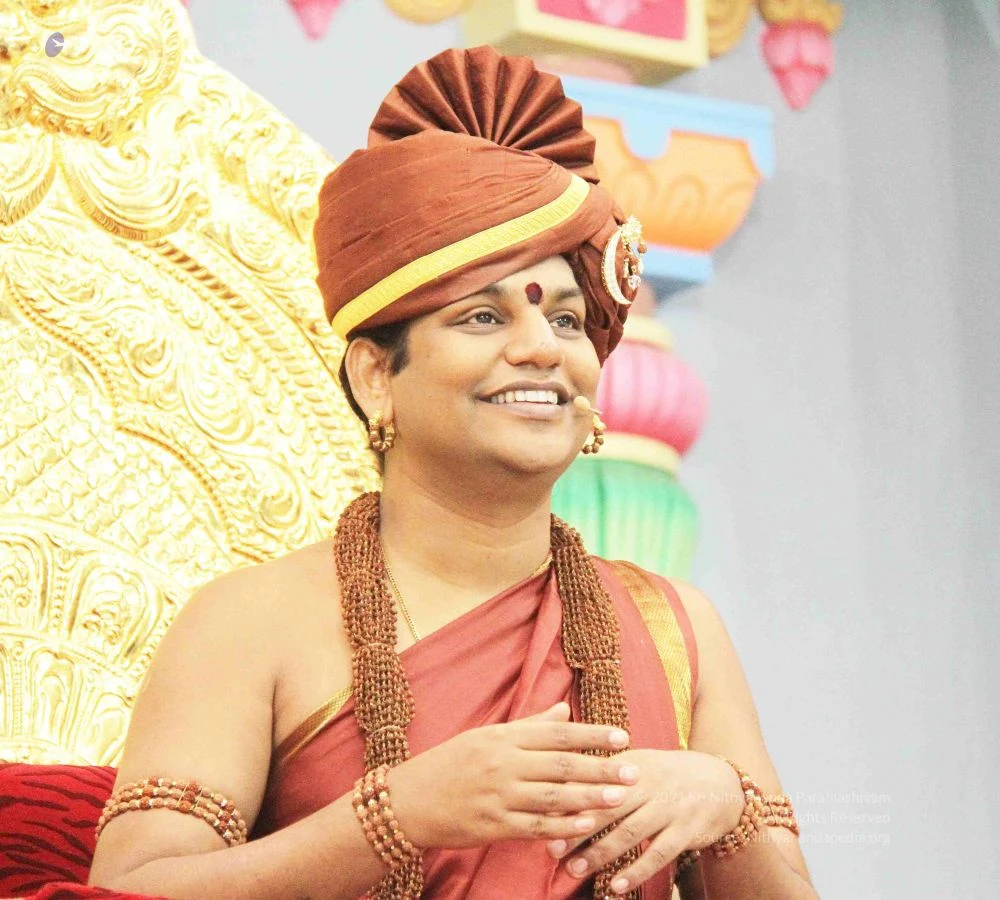
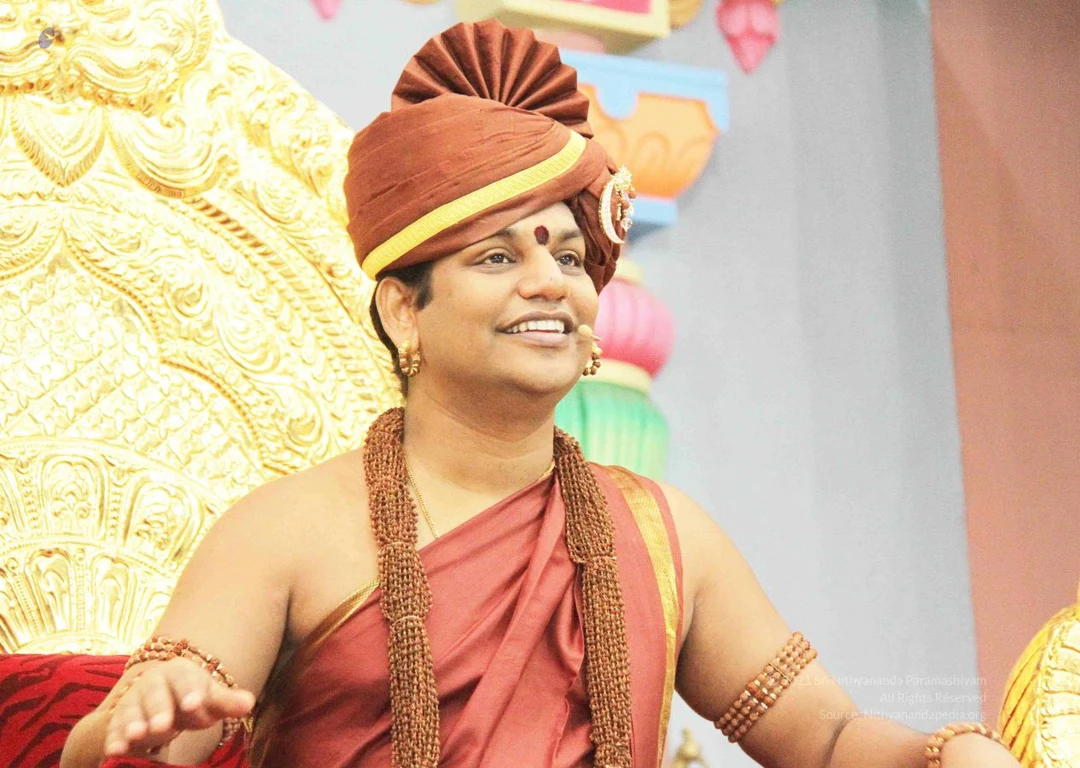
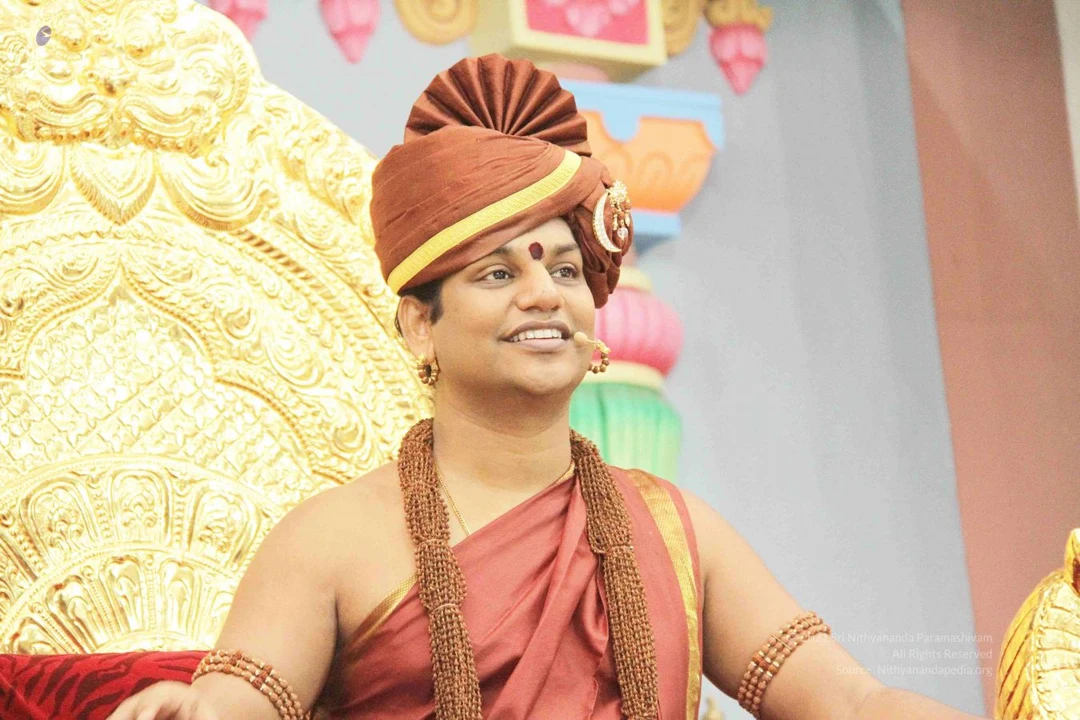
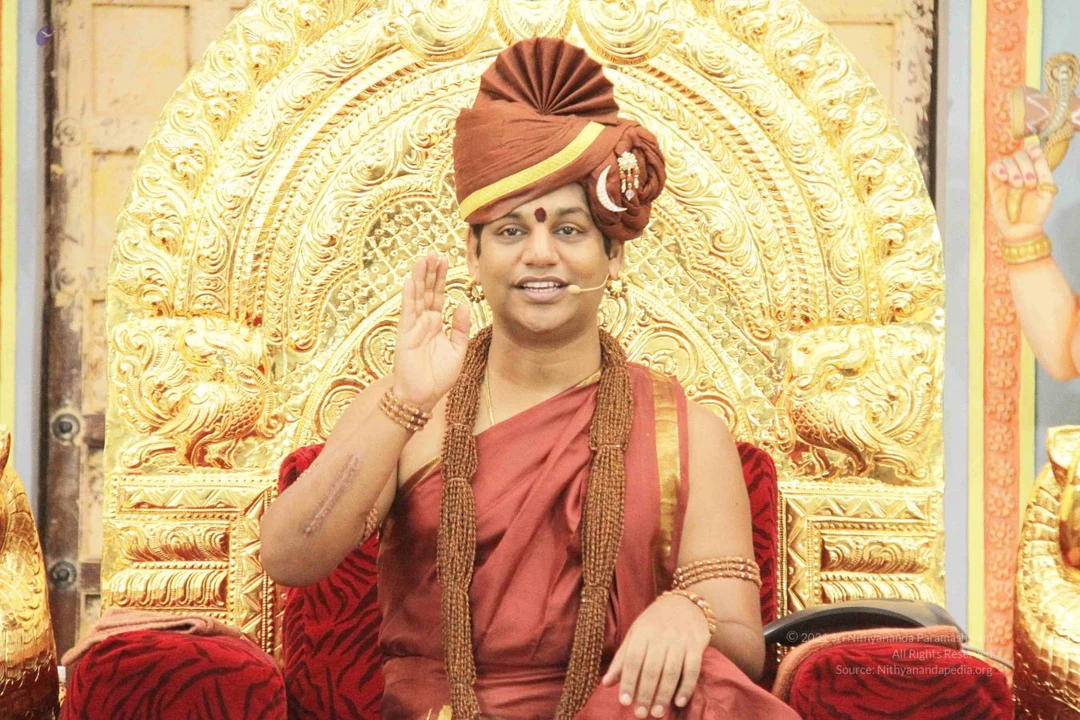
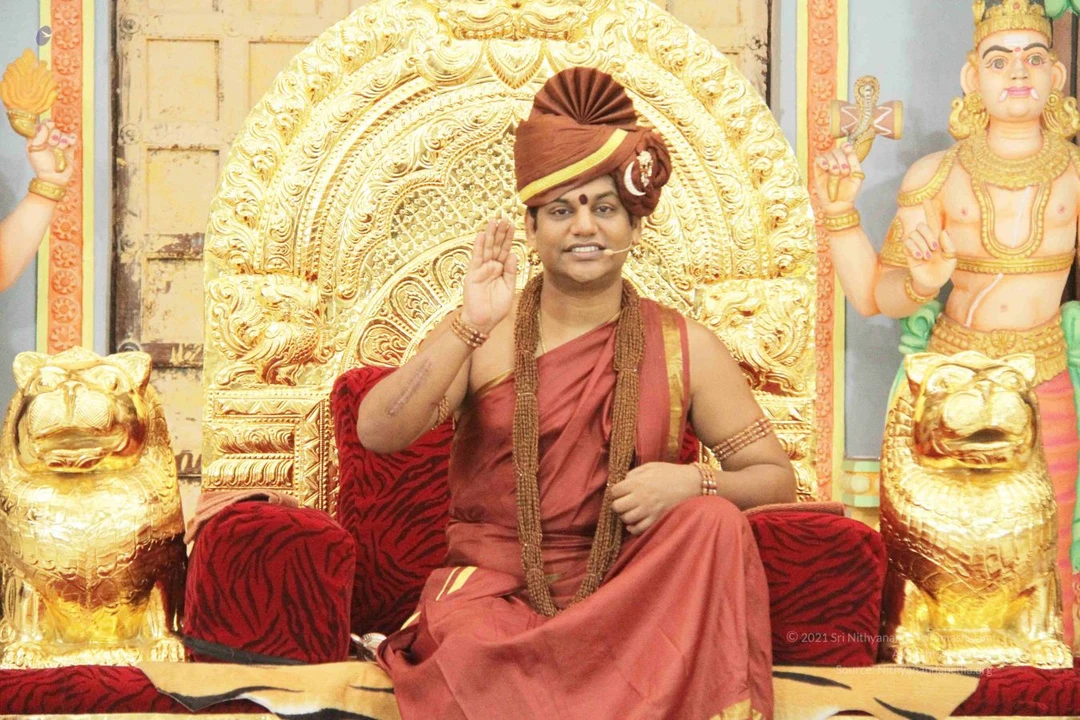
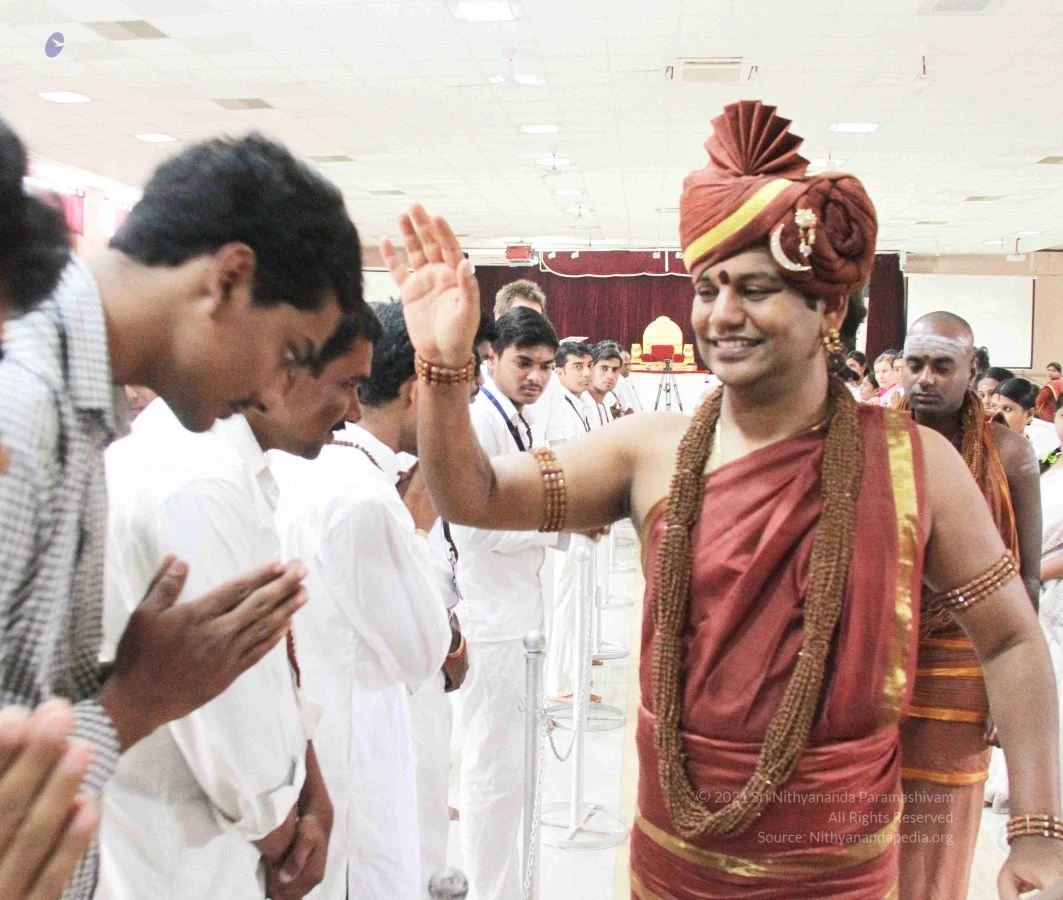
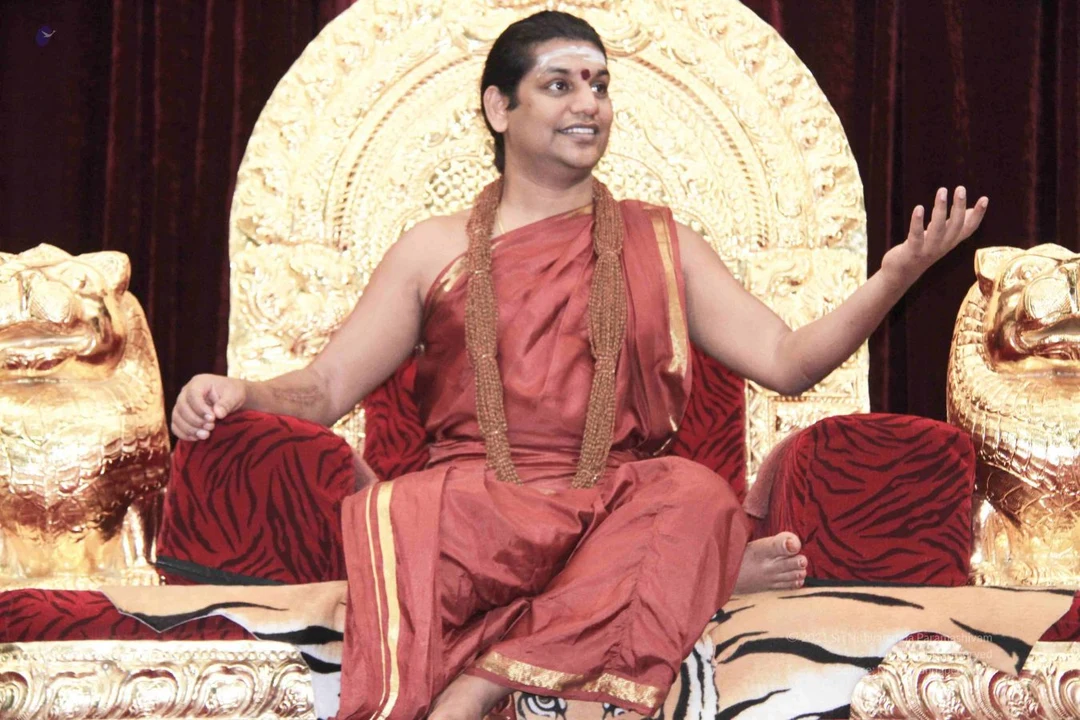
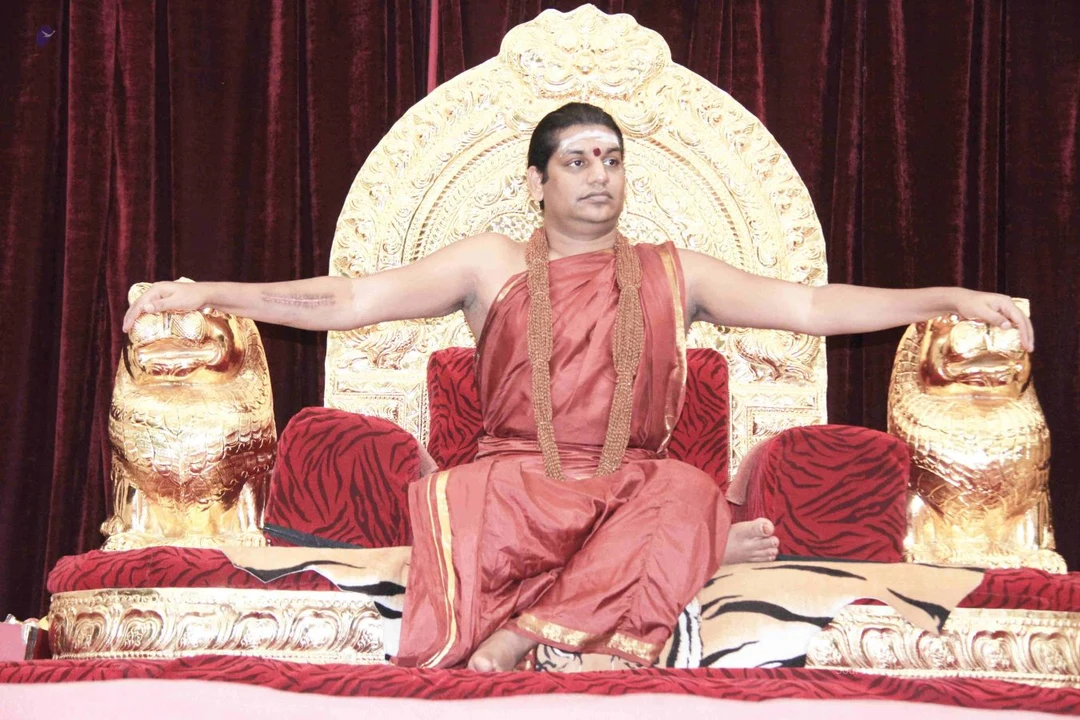
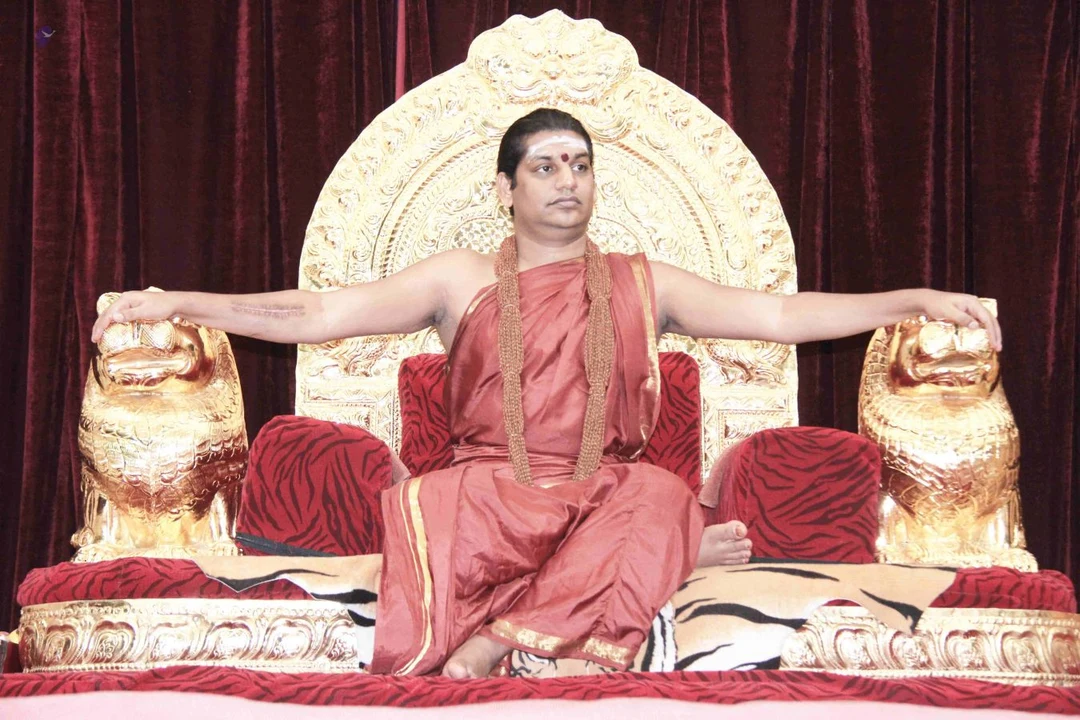
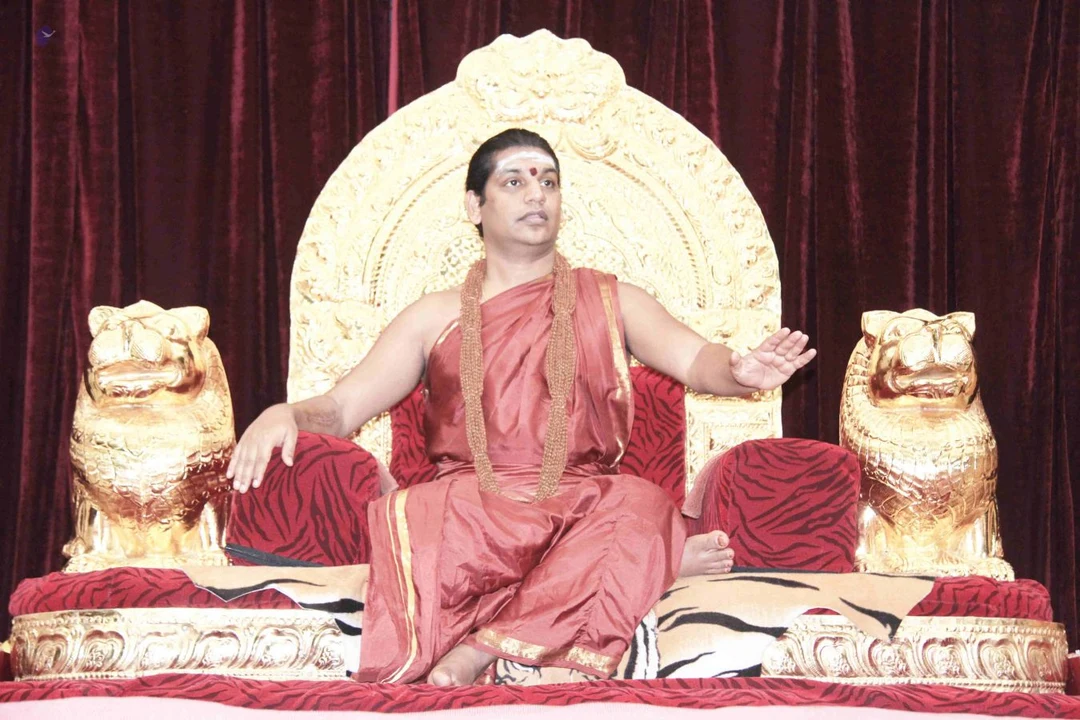
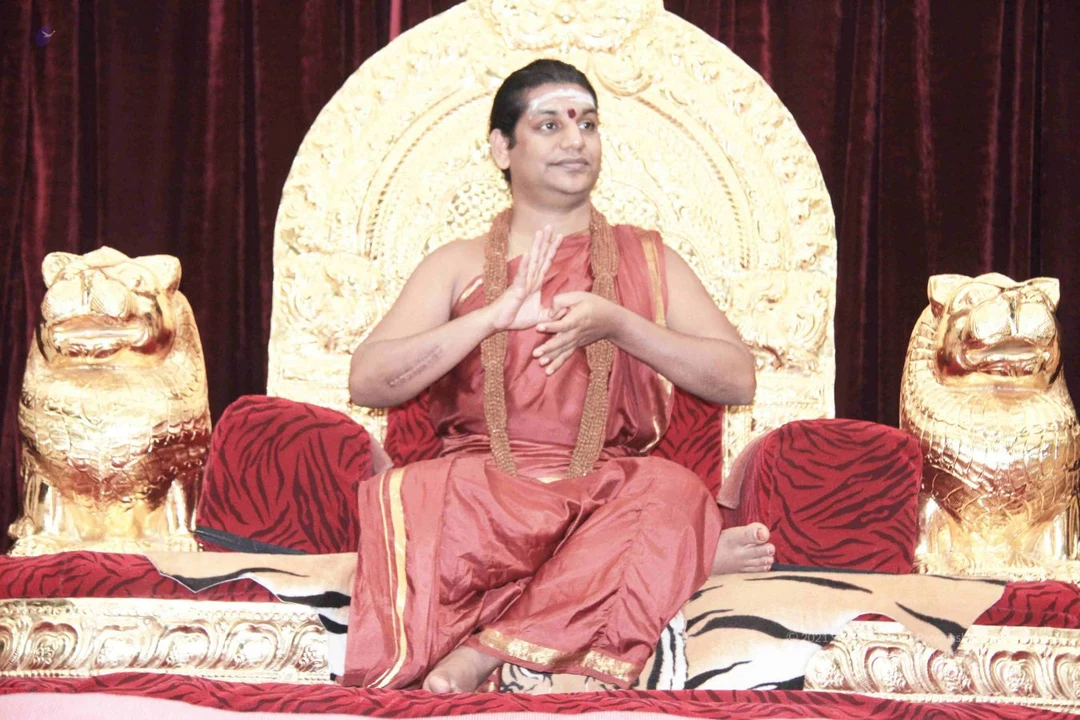
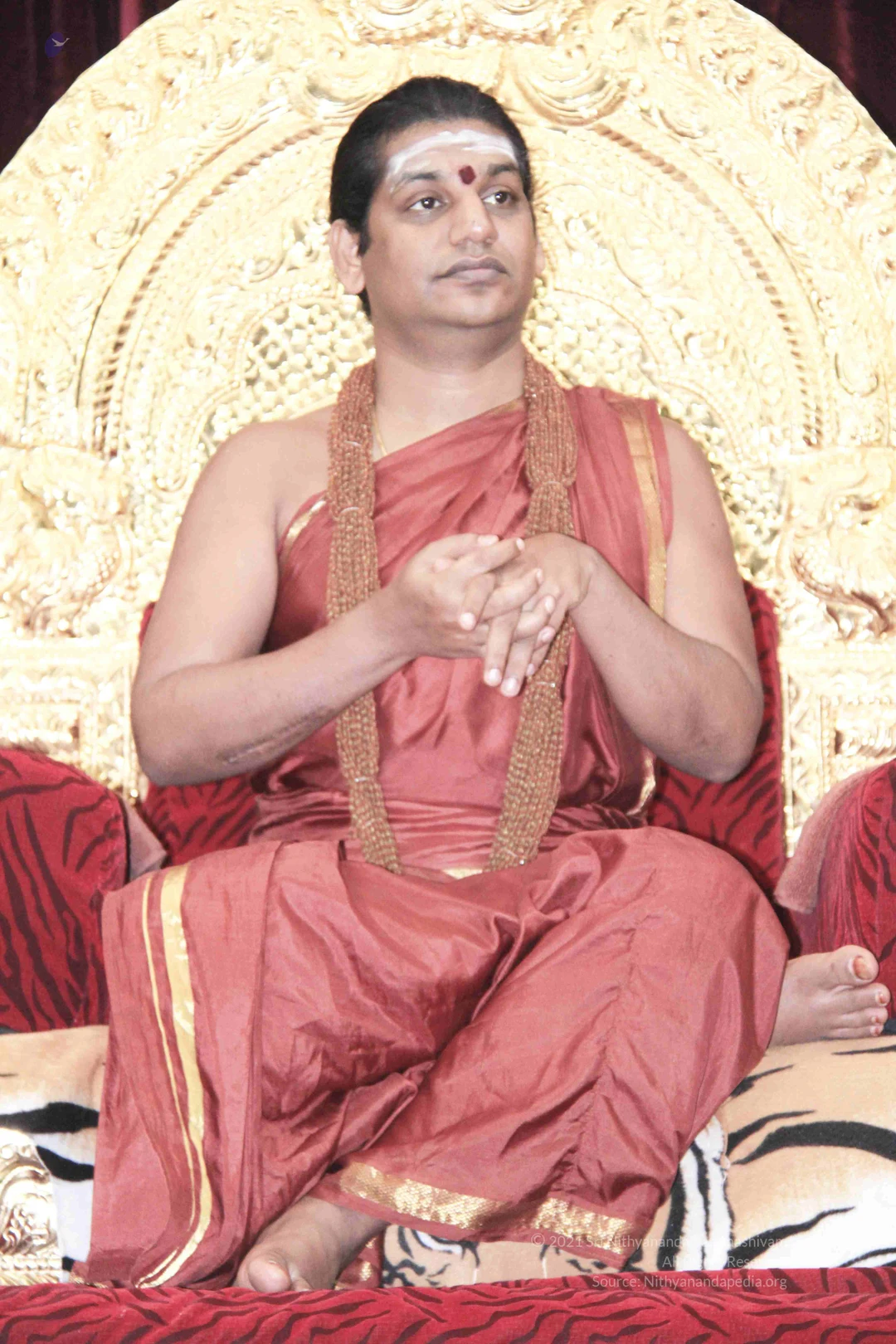
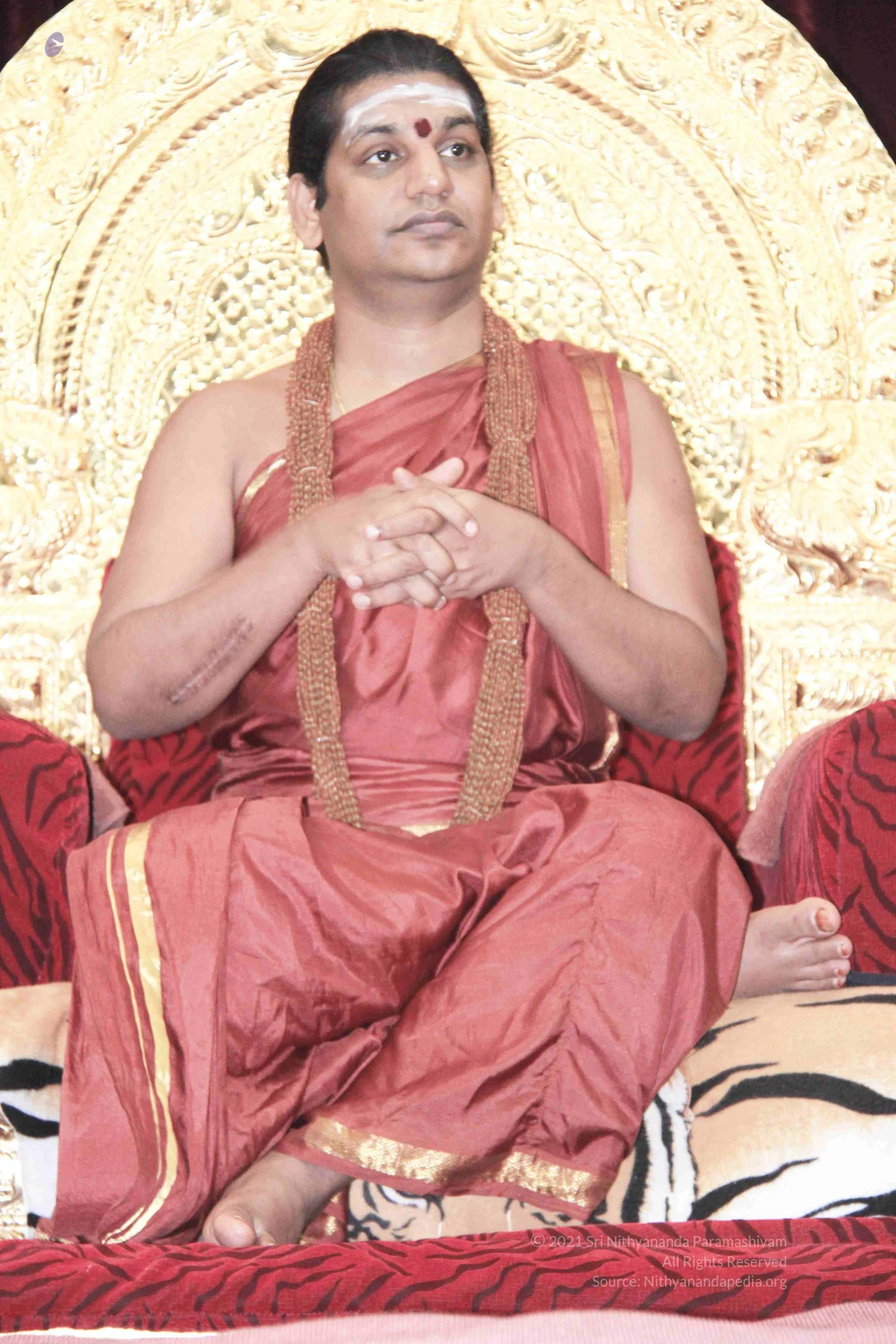
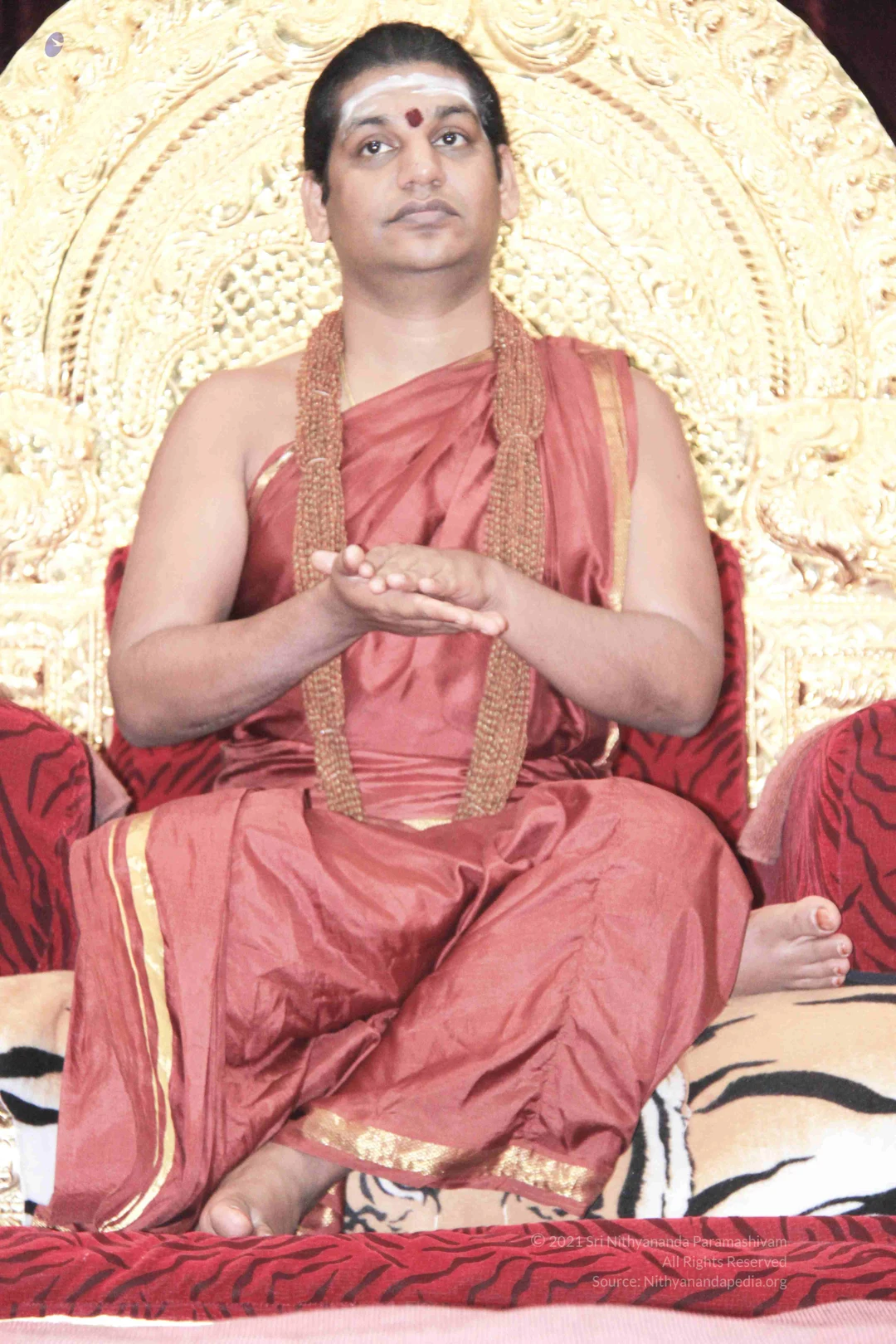
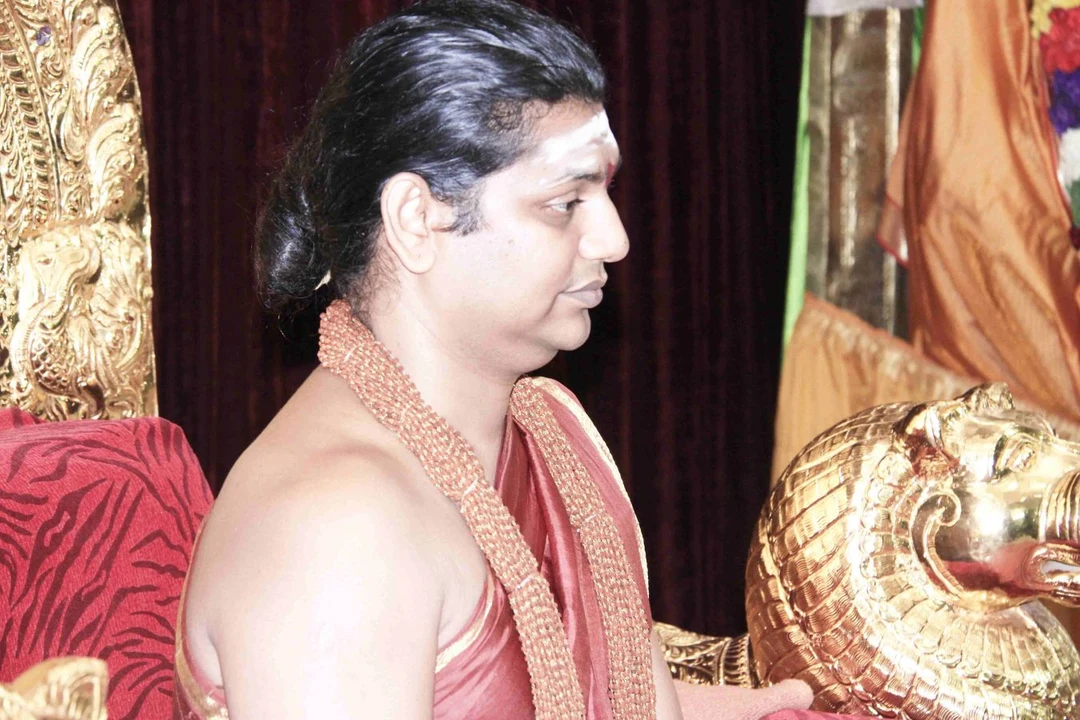
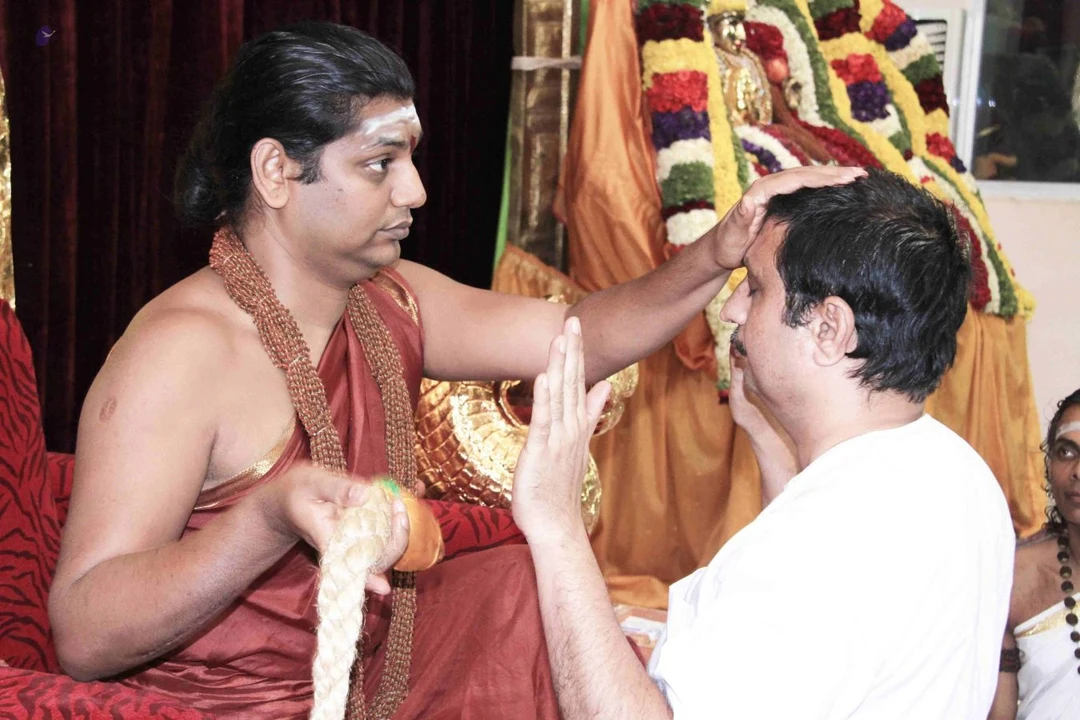
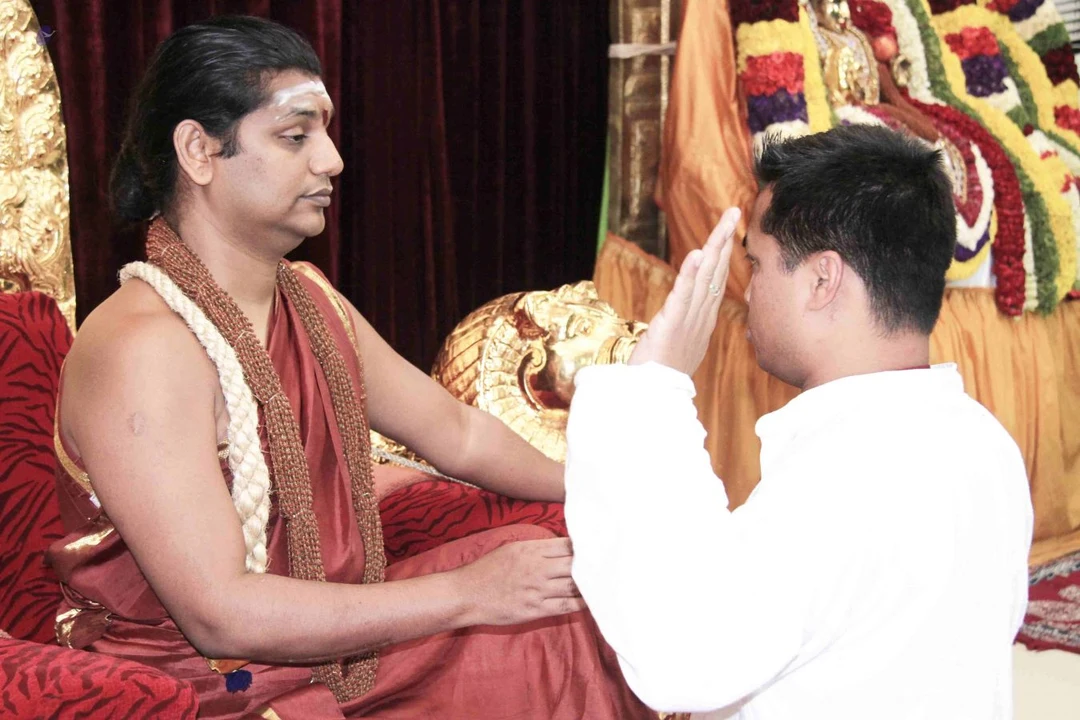
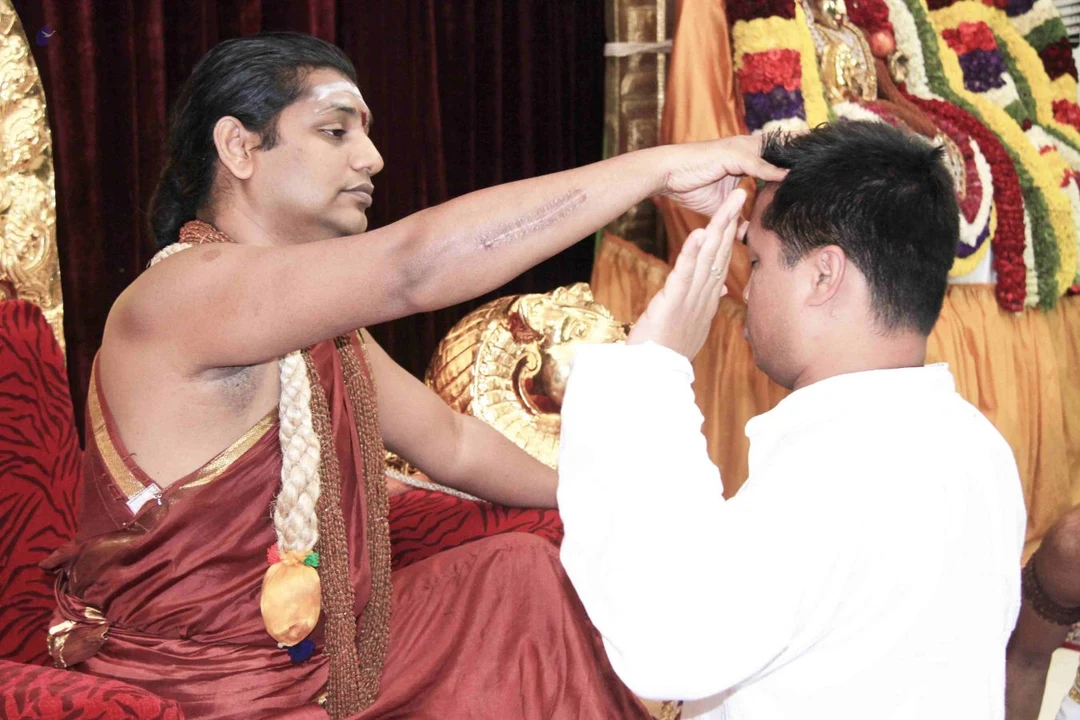
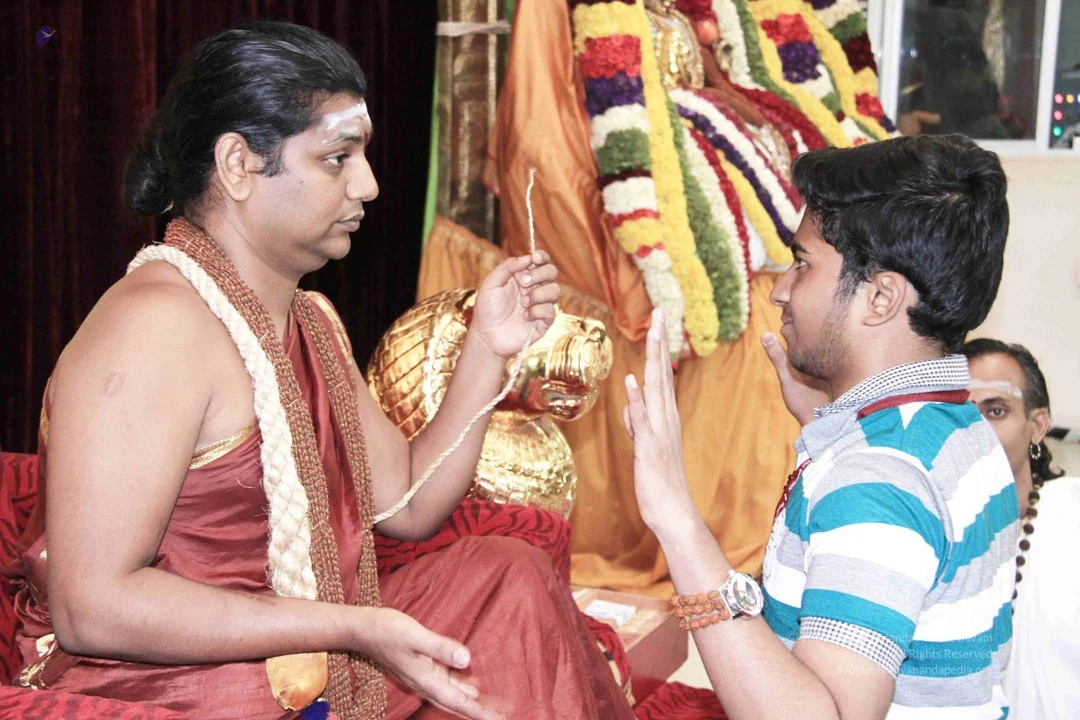
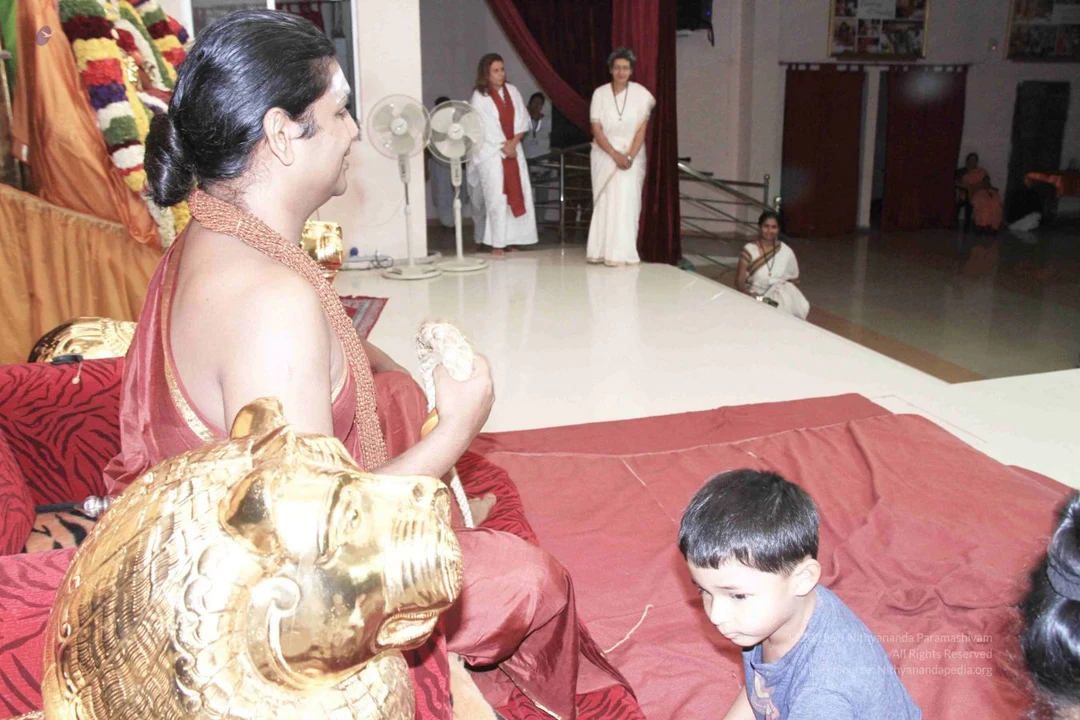
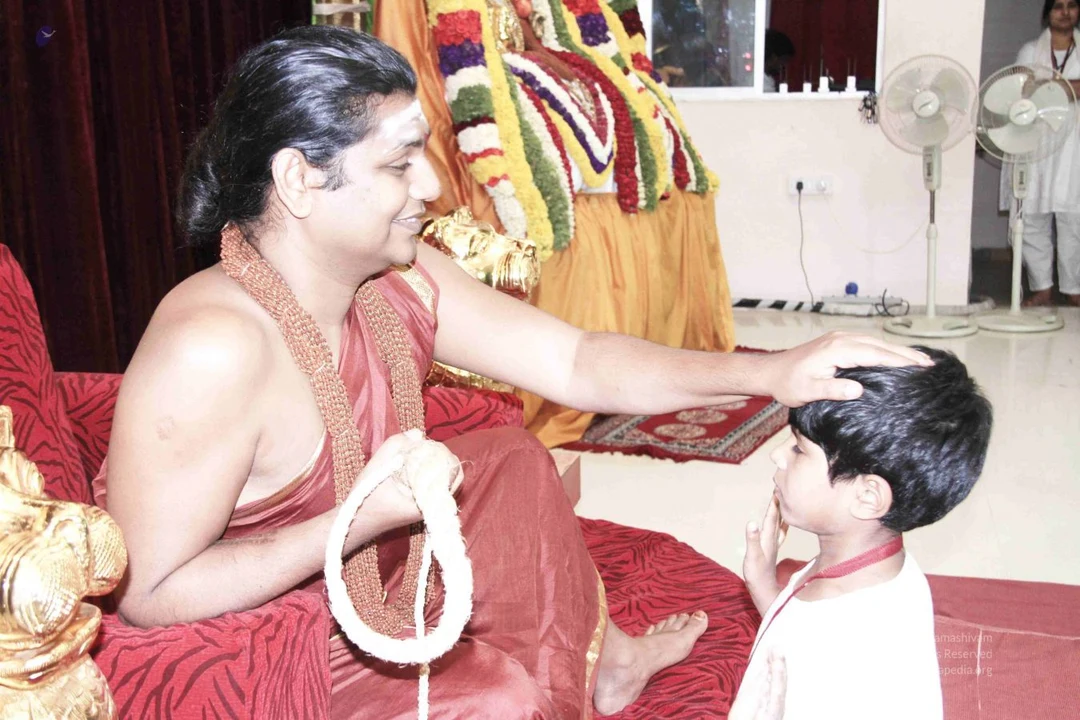
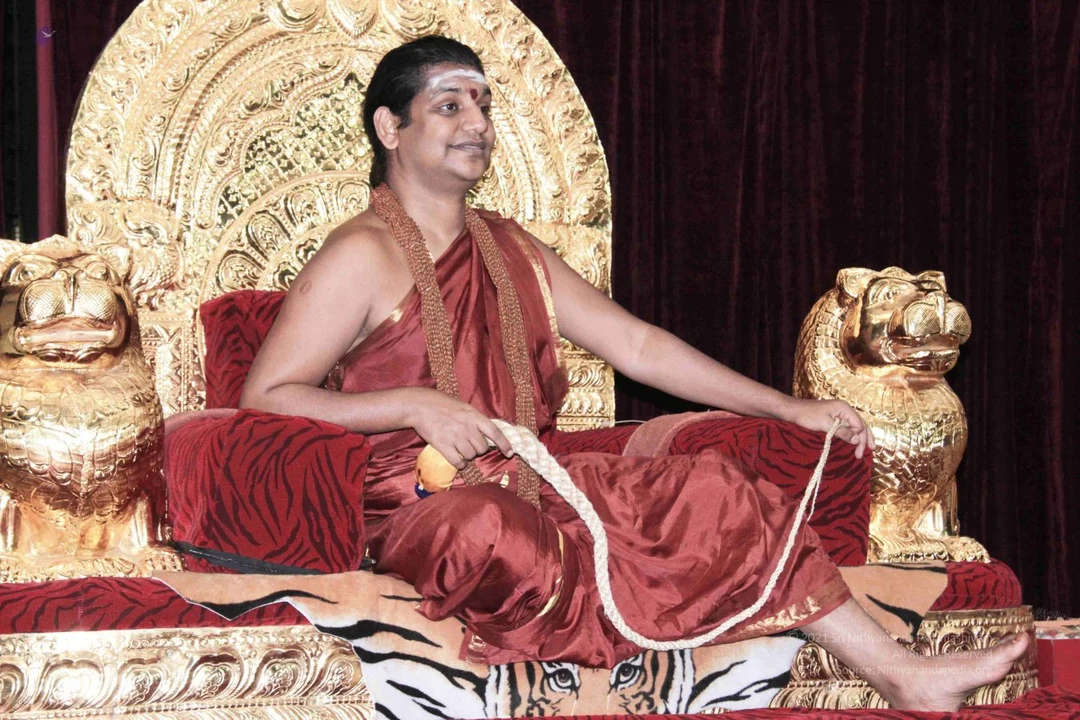
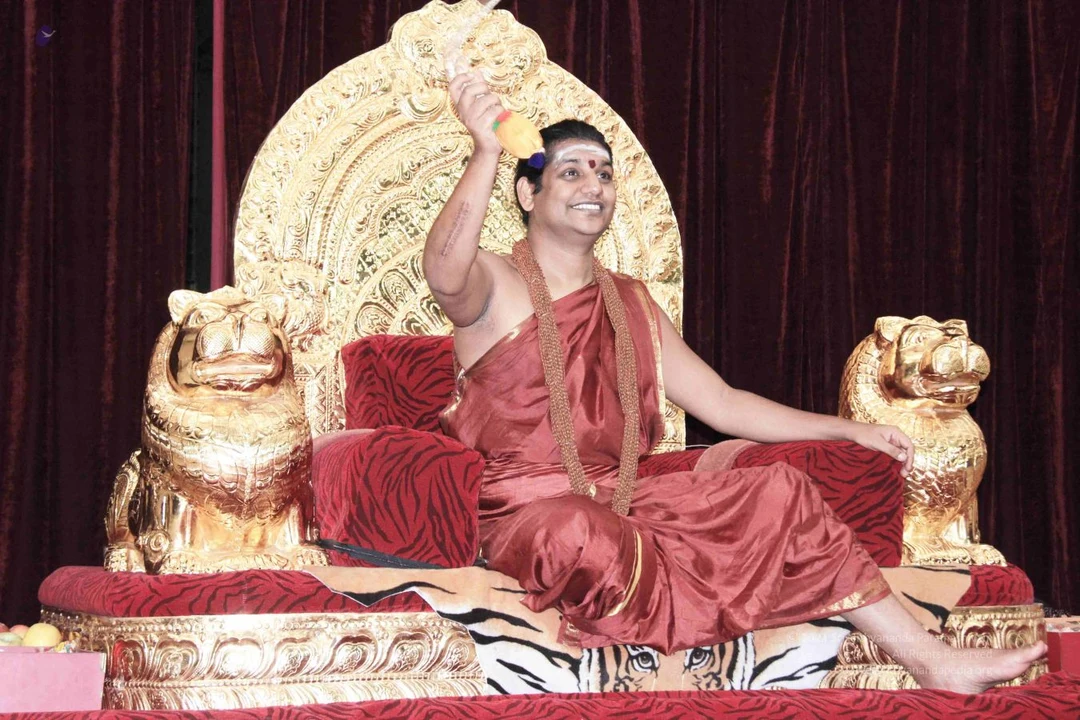
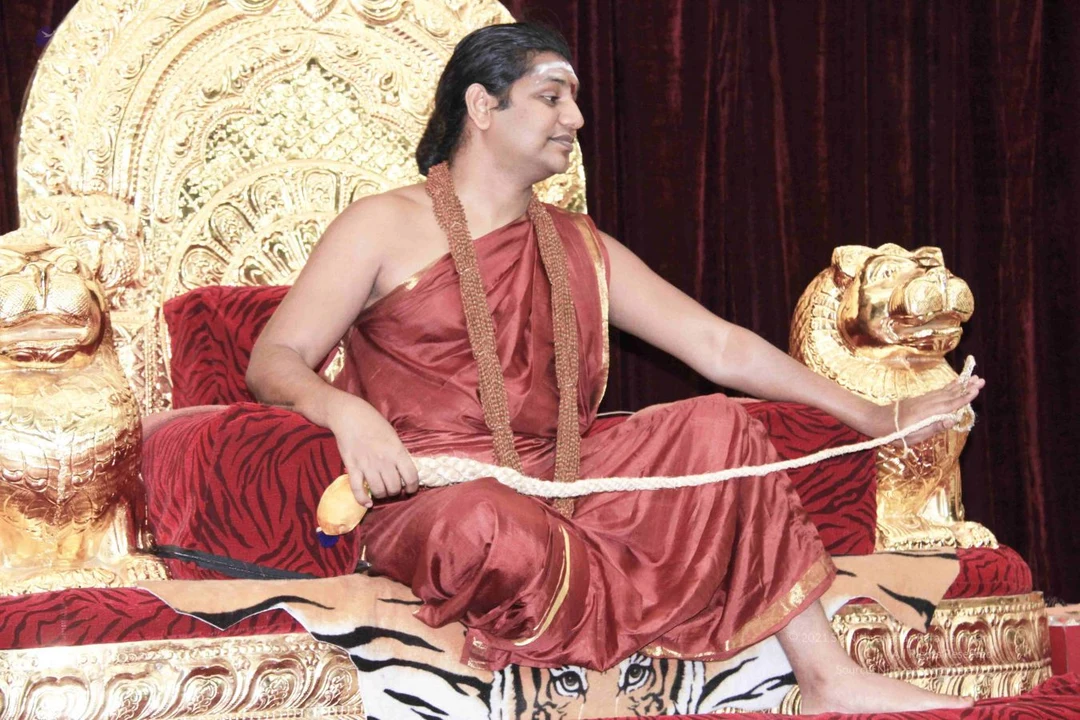
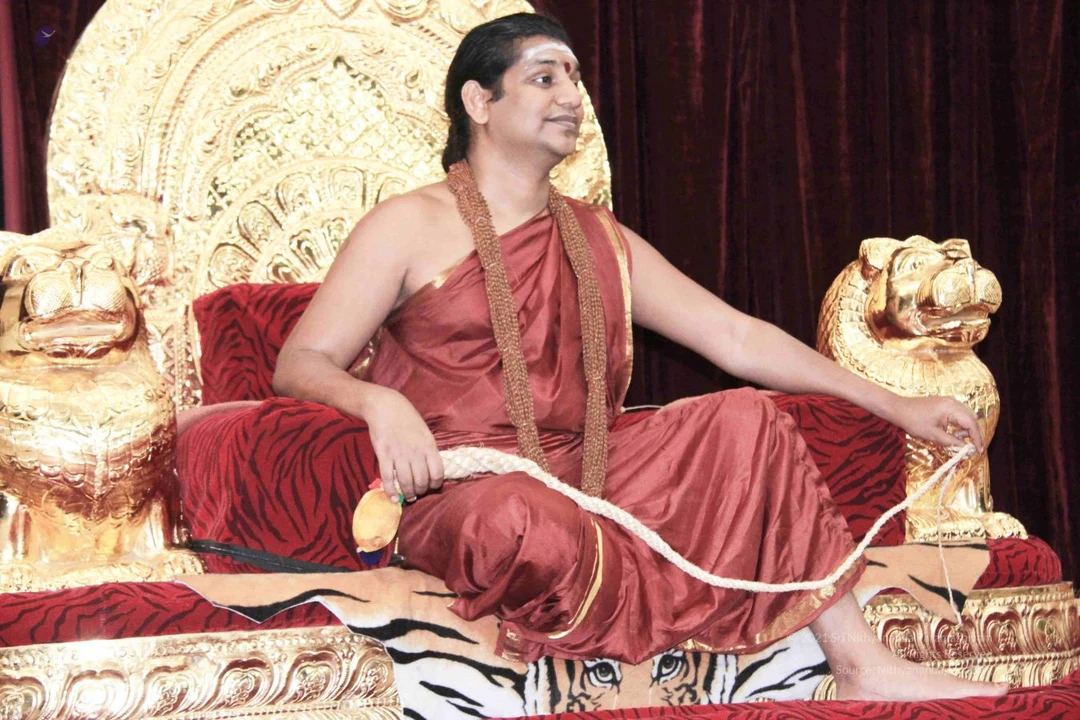
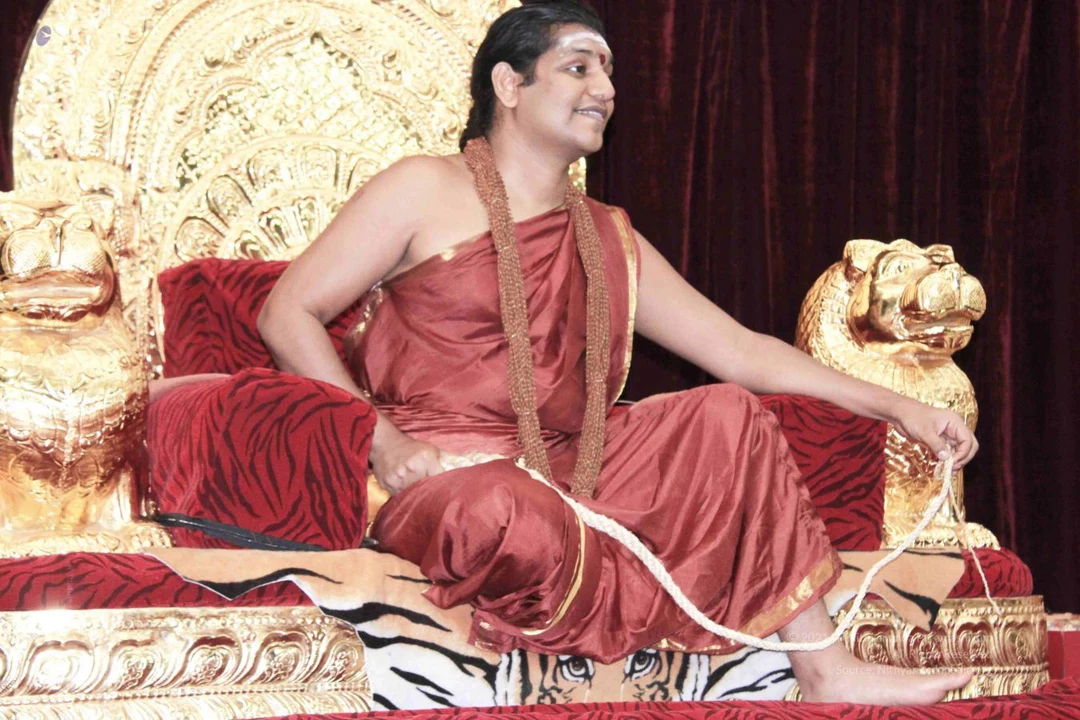
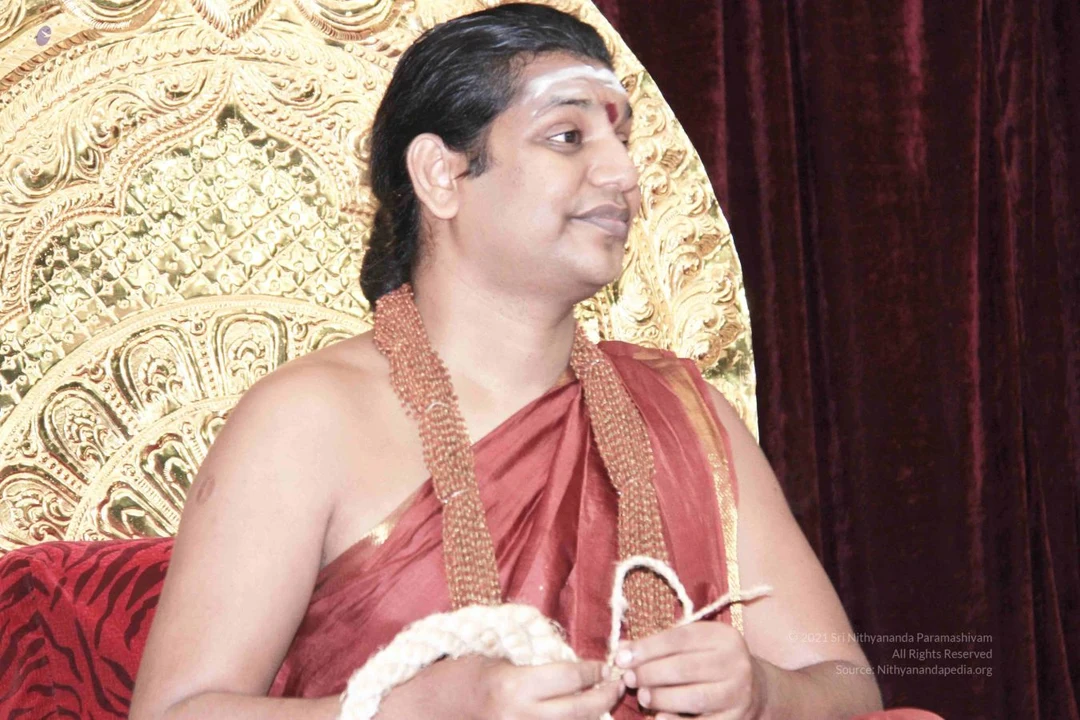
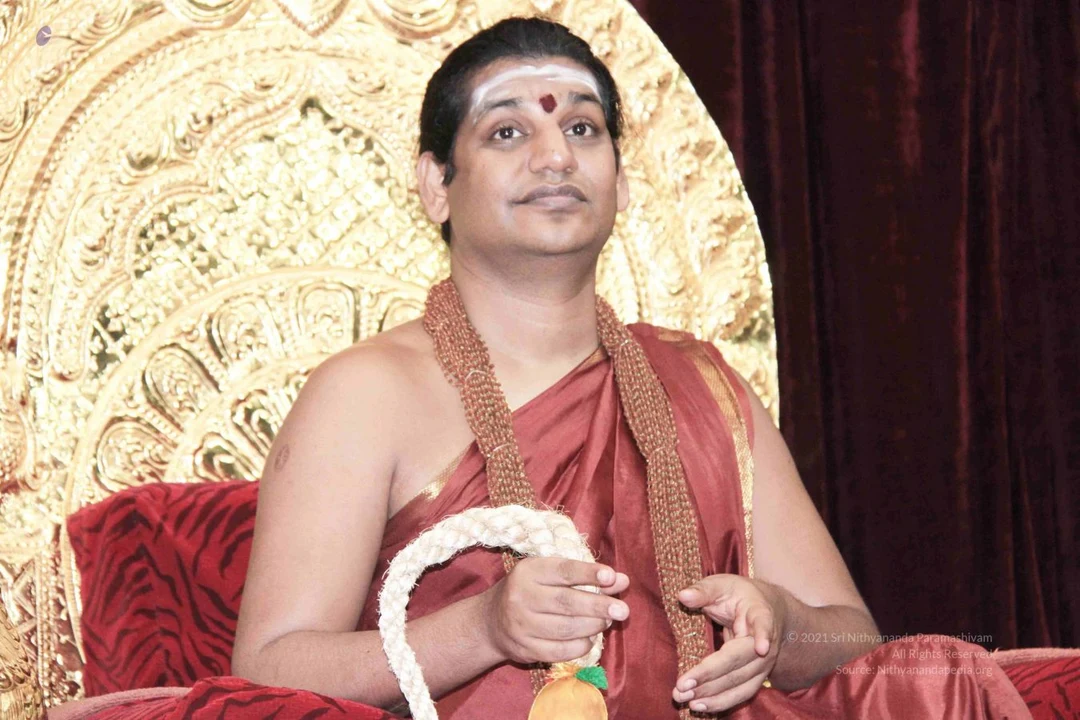
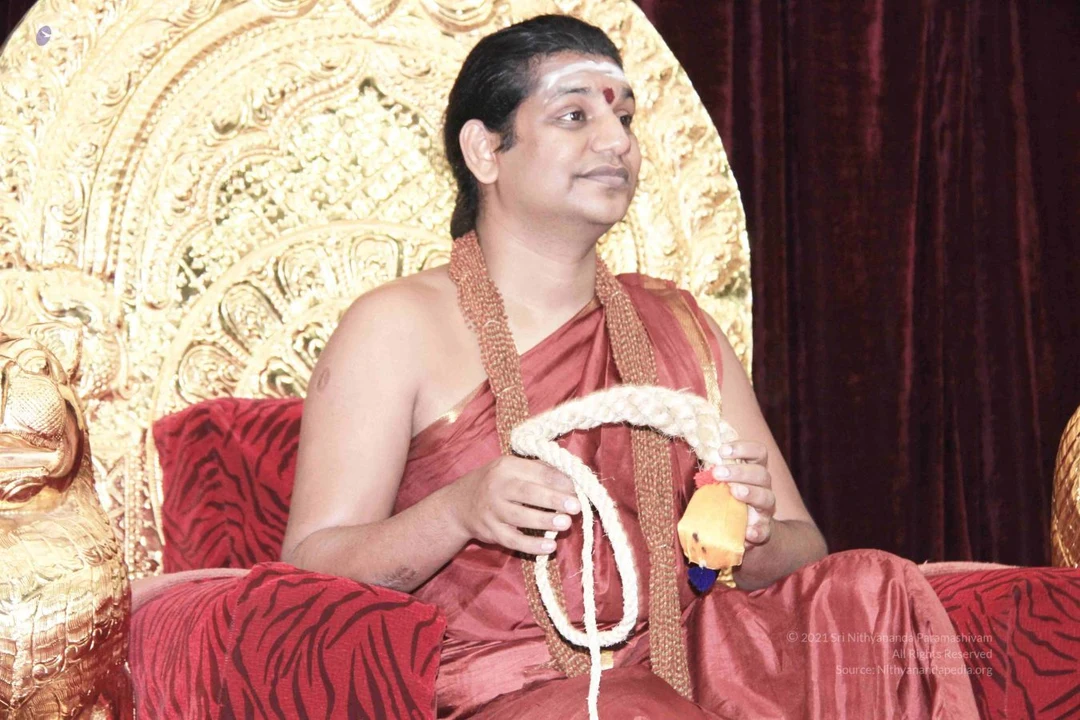
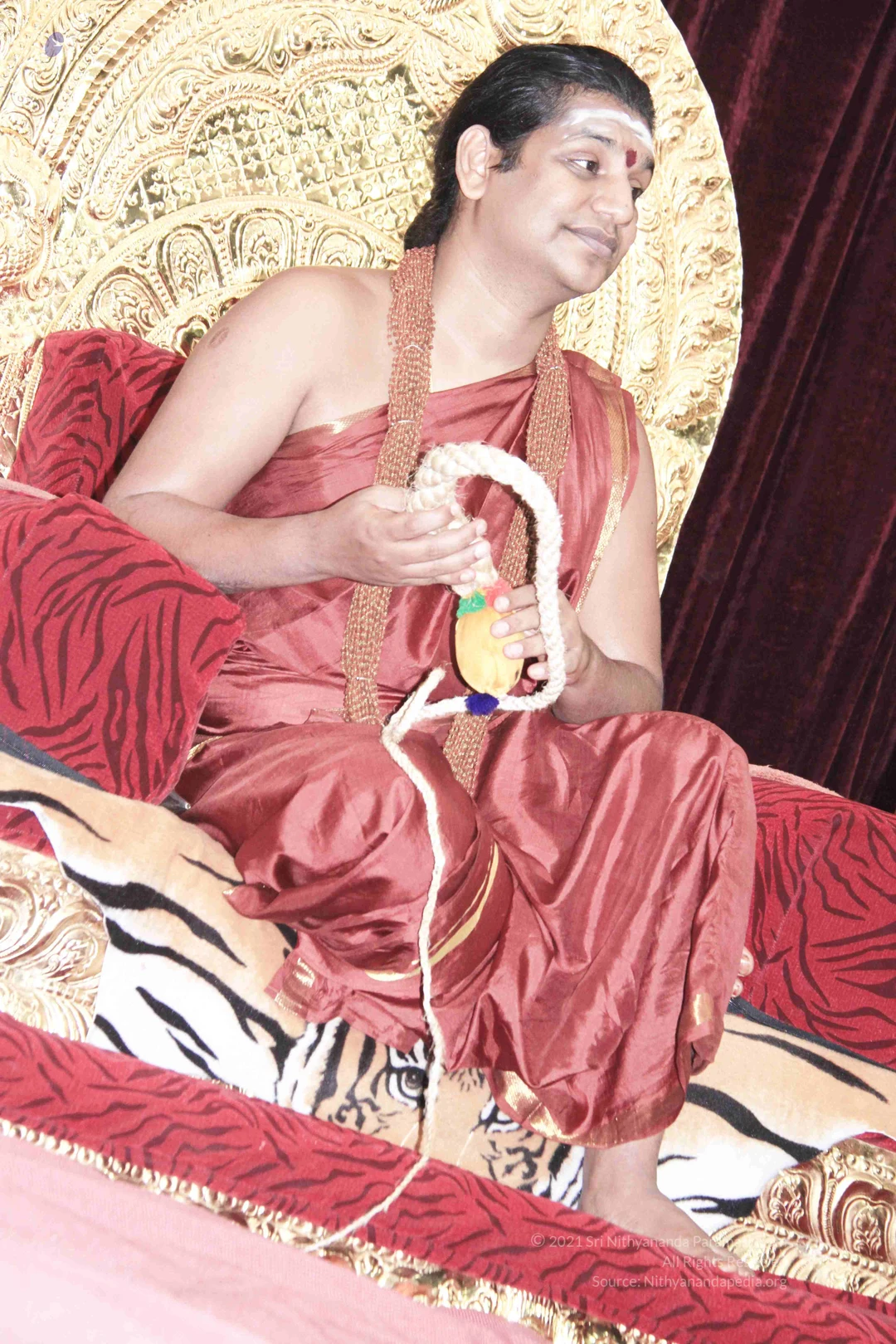
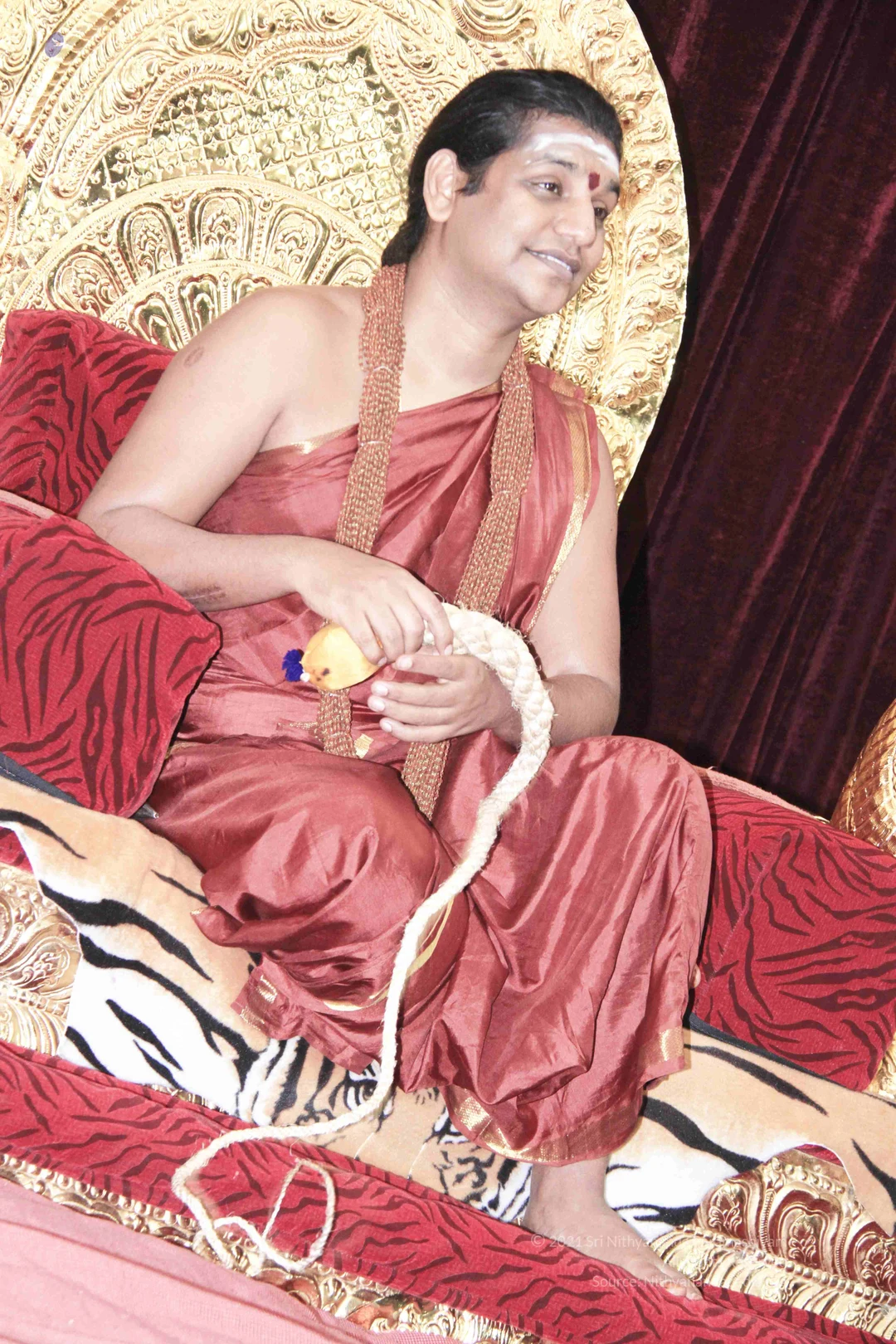
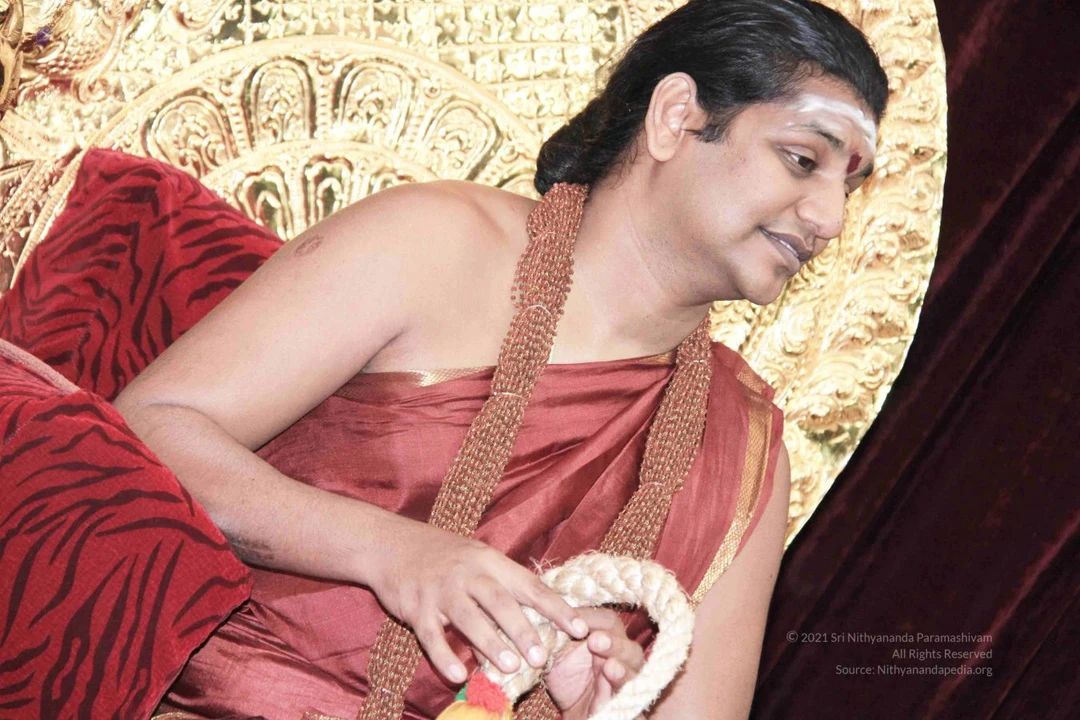
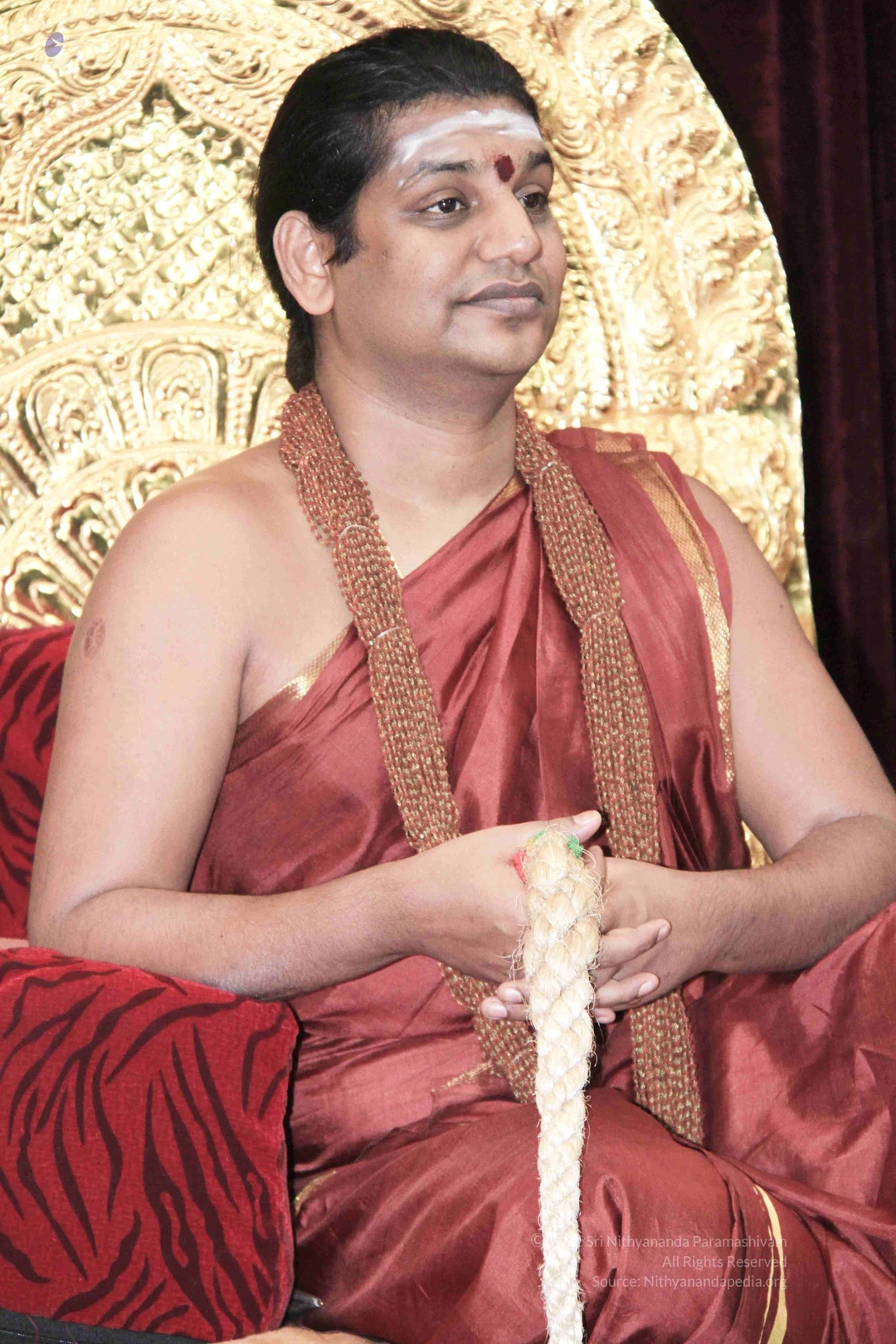
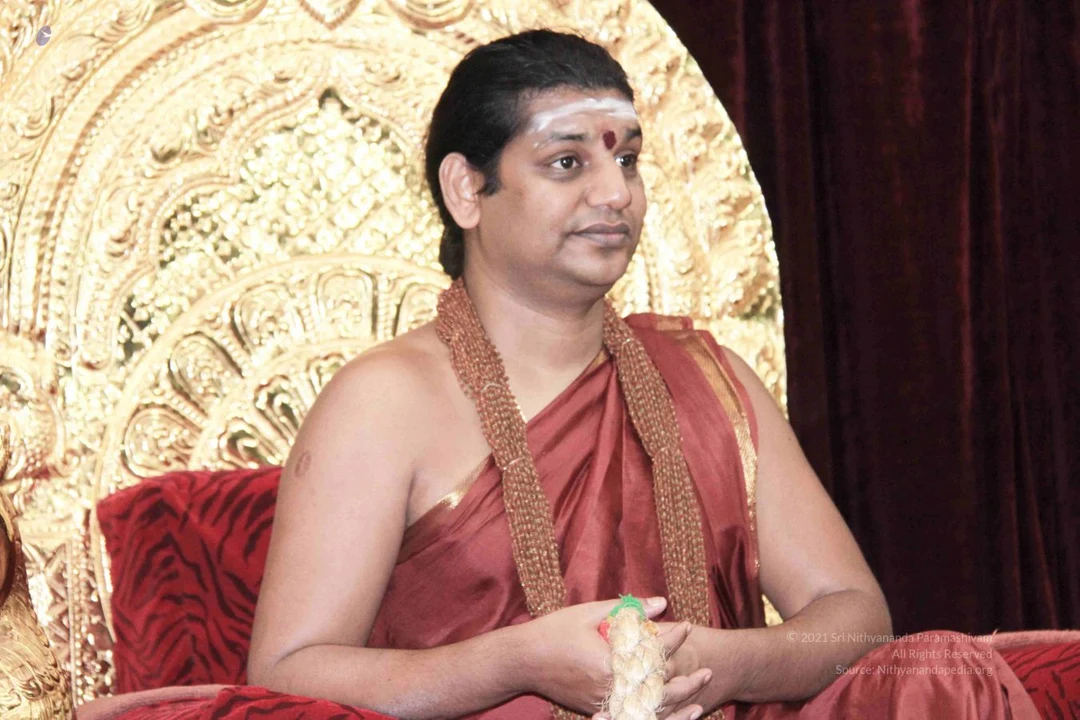
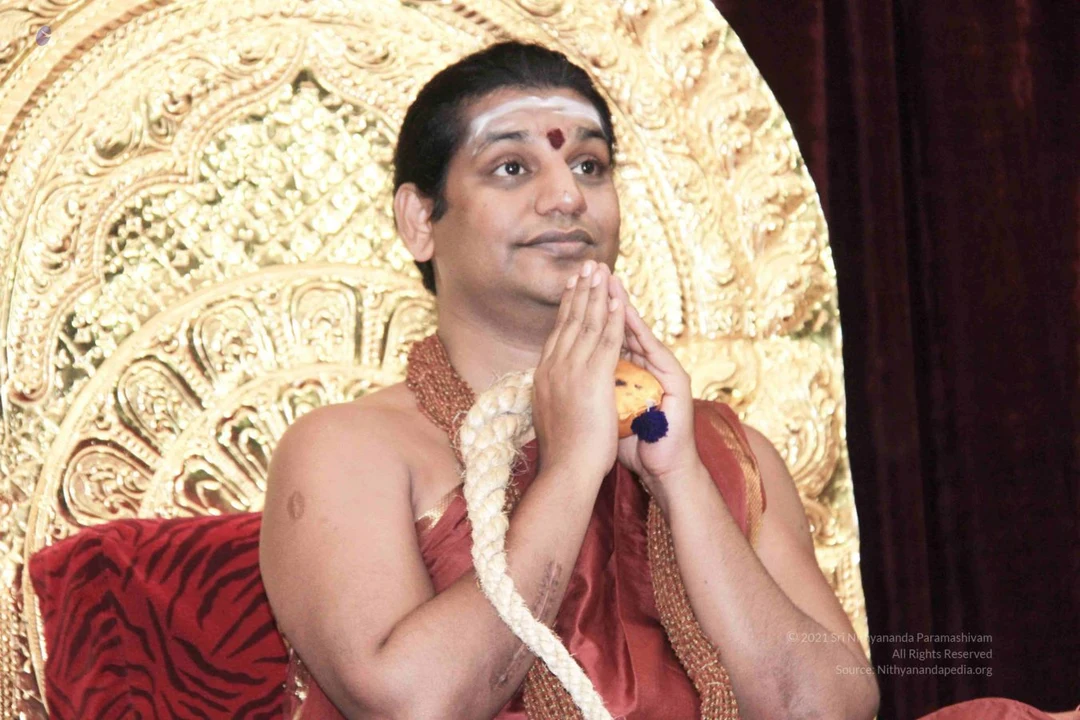
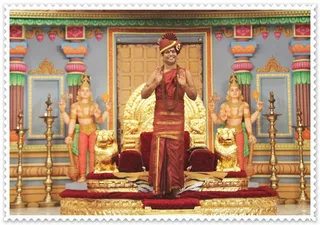
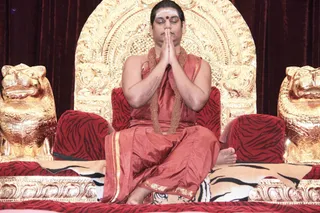
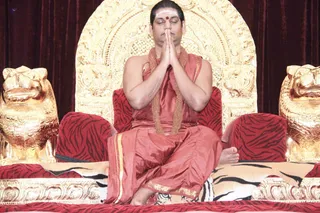
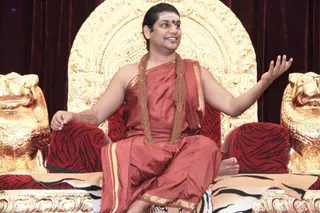
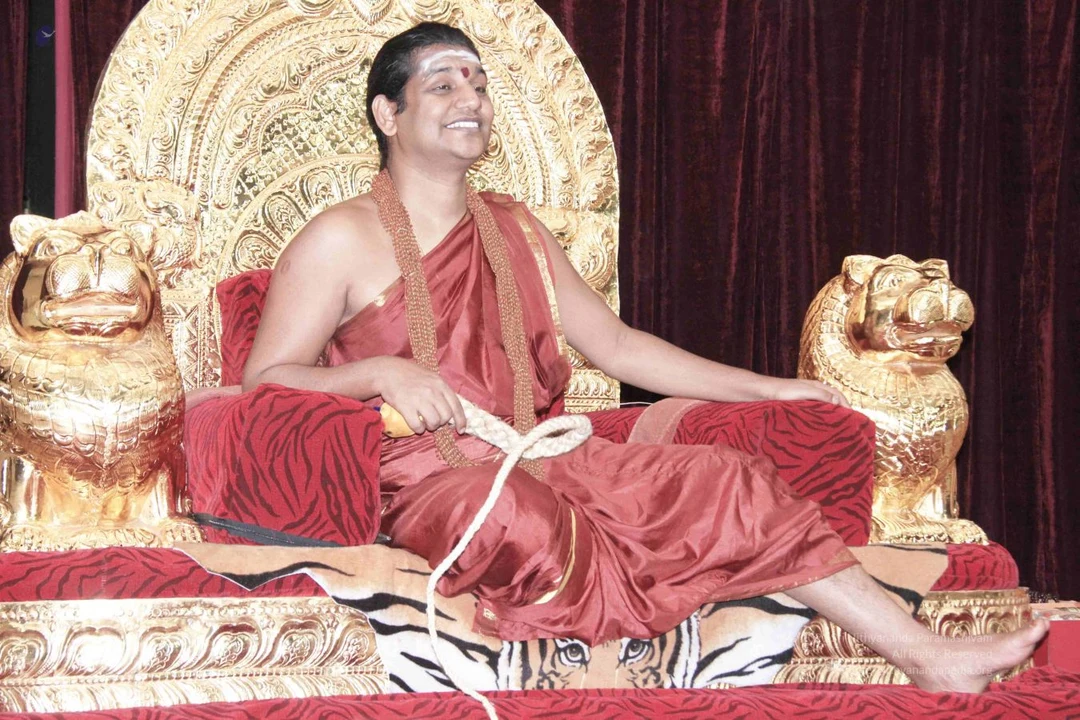
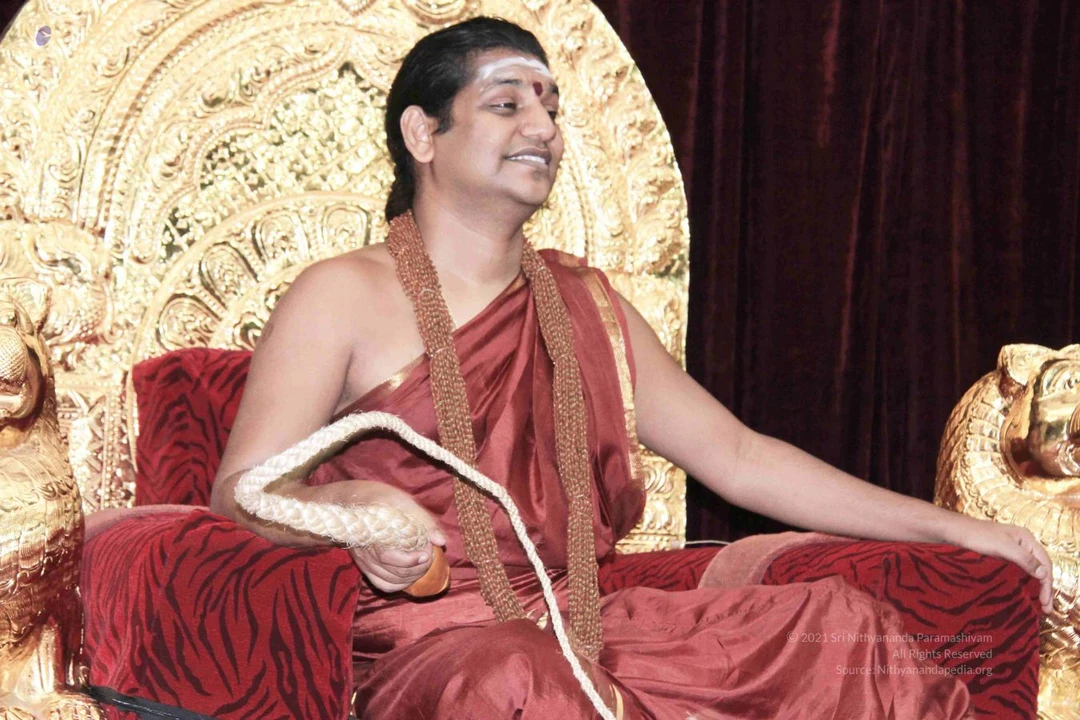
A seated man in a maroon turban with a gold border and a crescent-moon ornament sits before an ornate gold throne with carved lion-like finials. He wears a rust-red robe, a long rudraksha mala, gold bangles and gold earrings, and a red bindi on his forehead. He raises one hand in a blessing gesture while speaking into a headset microphone. Red cushioned seats flank him, and a painted figure appears at the right edge. Swamiji (probable): the turban, rudraksha mala and ceremonial gold jewellery match the appearance cues, shown here as a seated speaker before a throne.A seated man in a maroon-red turban with a gold-trimmed edge and a red-brown dhoti-style wrap sits on an ornate gold throne carved with lion heads and scrollwork, flanked by red-and-black striped cushioned armrests. He wears long brown rudraksha malas across the chest, gold bangles and beaded armlets, and a small red bindi on his forehead, and he gestures with one hand while speaking. Behind him a gilded deity figure with raised arms holds a trident-like staff. Swamiji (probable): the long malas, turban and saffron-red ceremonial clothing in a throne setting fit the visible cues.A person in a rust-red turban and matching rust-red draped robe with gold borders stands on a golden throne with red cushions and a tiger-skin covering, hands raised together in front of the chest with palms pressed in greeting. A dark beaded mala hangs at the neck. Behind is a painted temple backdrop with two multi-armed deity murti figures in gold crowns, flanked by gold lion statues on the throne's base and an ornate golden door. a person is visible, though his appearance is uncertain given the blur; the figure wears a turban, saffron-toned robe and rudraksha-style mala, which are the qualifying cues.

November 13 2013

Original wiki page
Contents

Title:

Become the Naster of your Life.

Description:

In today’s morning Satsang Paramahamsa Nithyananda took us to a deeper level of understanding about completion and space creation. He explained how we must complete with all complications first and only in that power of completion will we have the clarity to create space. He emphasized that self- doubt is not natural and we must complete with it and the doubts about our ability to create space. Only then our kundalini shakti can be used for action which is responsibility.

Link to Video:

VideoAudio

Transcript:

Nithyanandeshwara Samaarambhaam Nithyanandeshwari Madhyamaam | Asmath Aachaarya Paryanthaam Vandhey Guru Paramparaam ||

<00:40 Hindi - 00:51>

I welcome all the devotees, disciples, samajis, satsangis sitting with us through Nithyananda TV, Sadhna TV, Lotus News Channel, Eshwar TV, Janashree TV, two-way video-conferencing in twenty-two places in twenty-one countries around the world as per the statistics.

Cities sitting with us in two-way video-conferencing: Seattle-Chidambaram, Kulim-Tiruttani, Charlotte-Srisailam, Los Angeles-Arunachalam, Hyderabad-Nithyanandanagaram, Toronto-Kailasam, Guadeloupe-Rameshwaram, Houston-Kalahasti, Toronto-Kailasam, San Diego-La Jolla, Peethadheeshwaris’ Training Center-Salem, Tiruvanmiyur Dhyanapeetam, Auckland-California, Oman-Sivagangai, Jorpati-Nepal, Surrey-British Columbia, Dubai-Vaidyanatham, Grasse-France, Bangalore North, East London-UK, Indrani-New Jersey, Paris Home Temple, Dakota Dunes, Hong Kong-Sirkazhi, San Jose-Madurai, Hyderabad-Gupta Kashi.

I welcome all of you with my love and blessings.

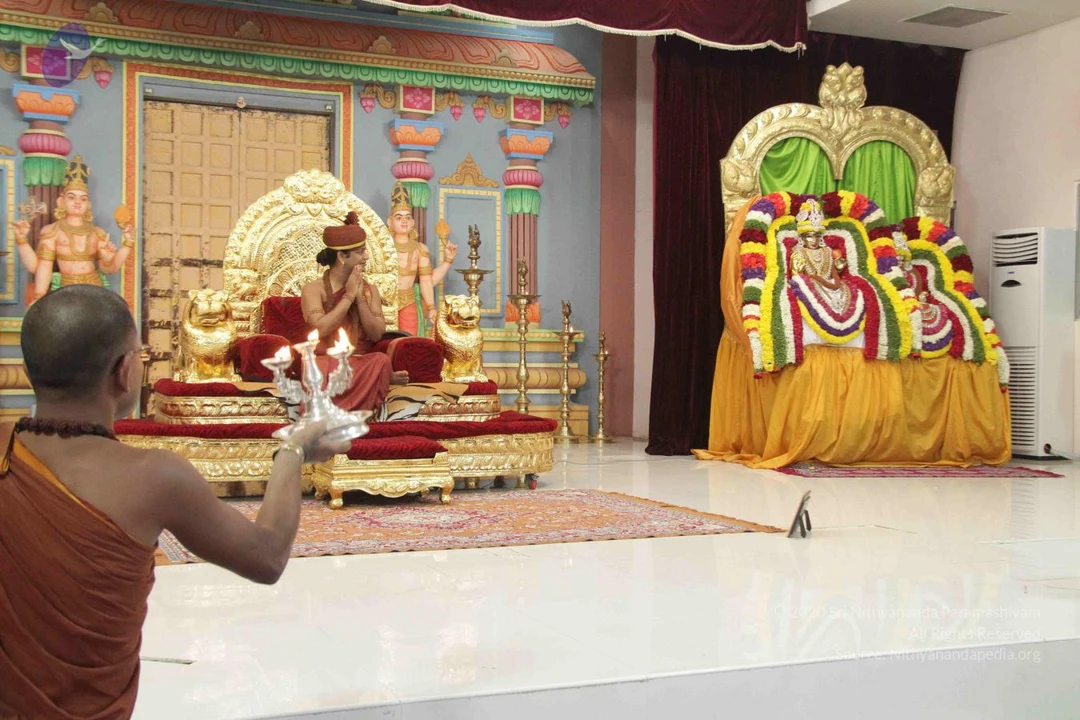
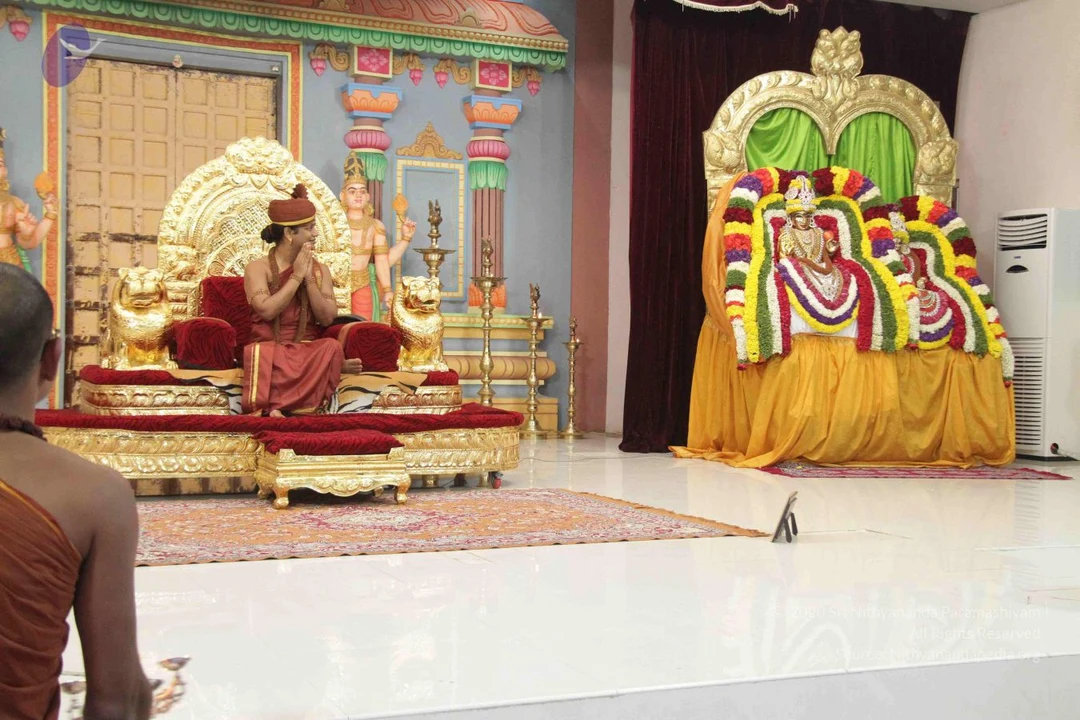
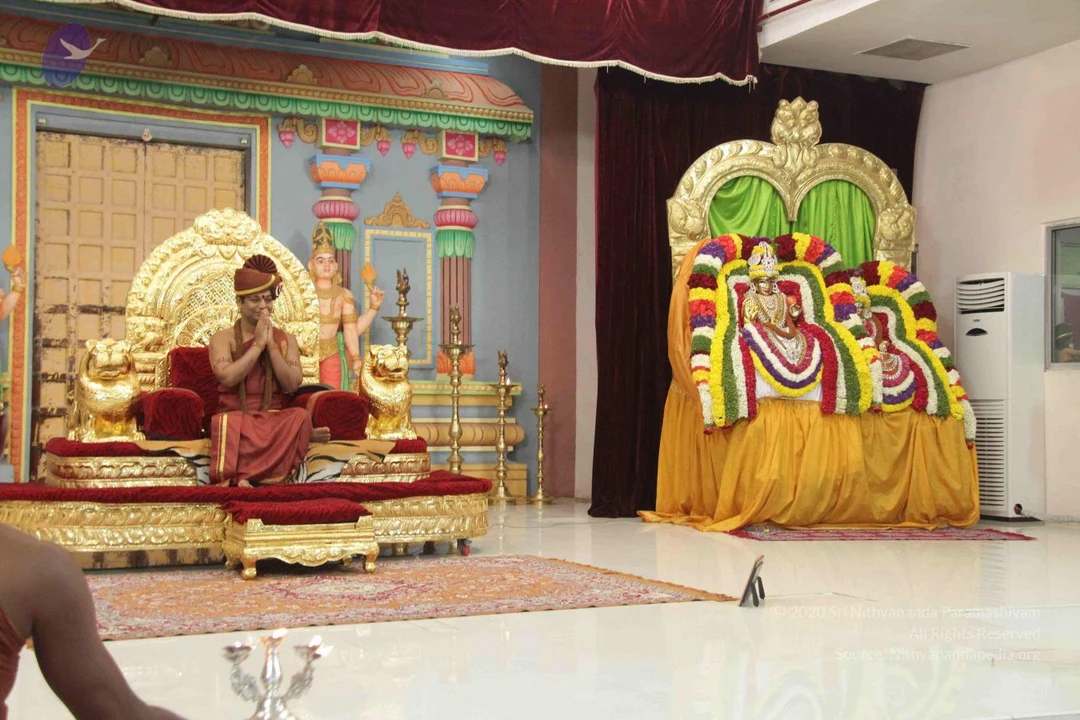
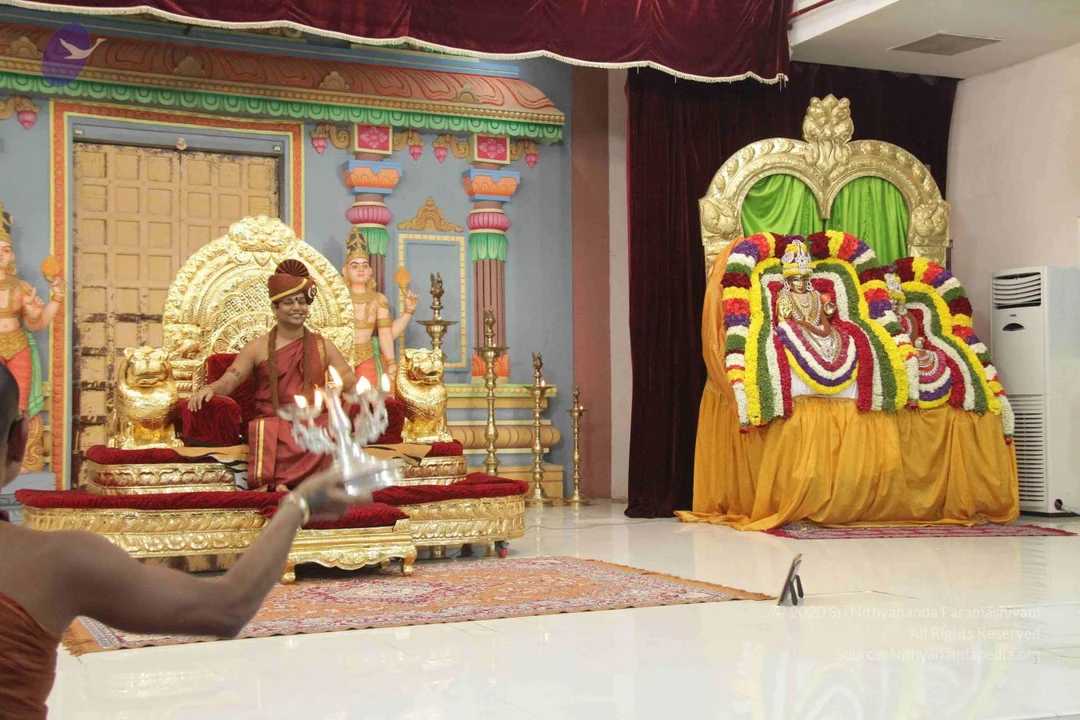
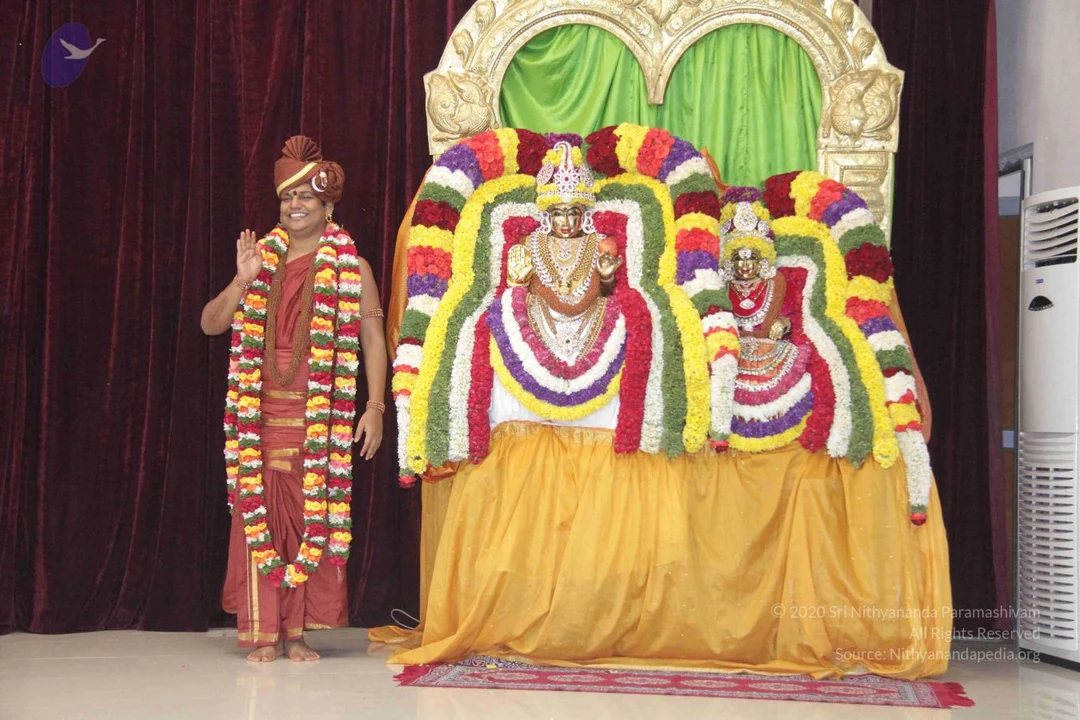
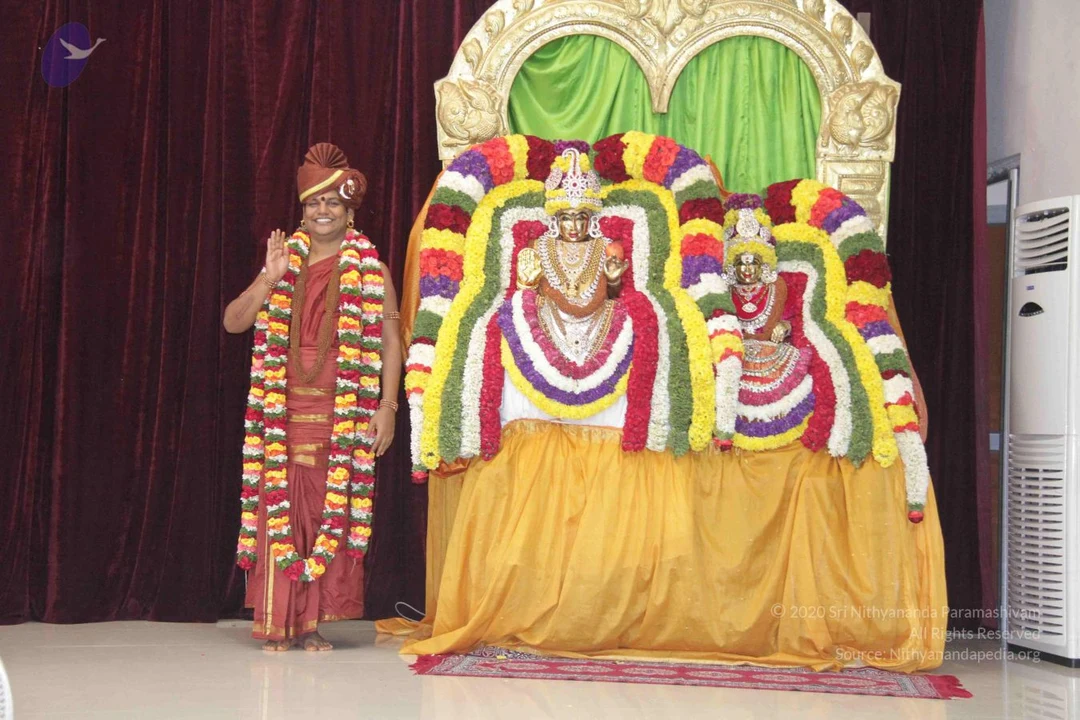
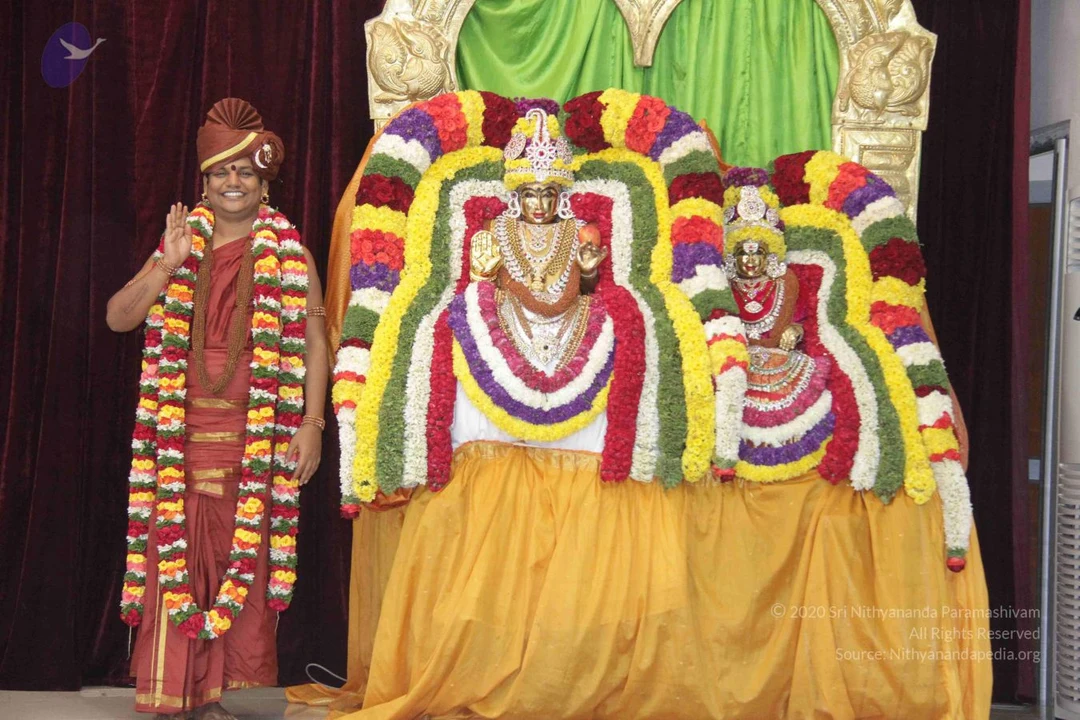
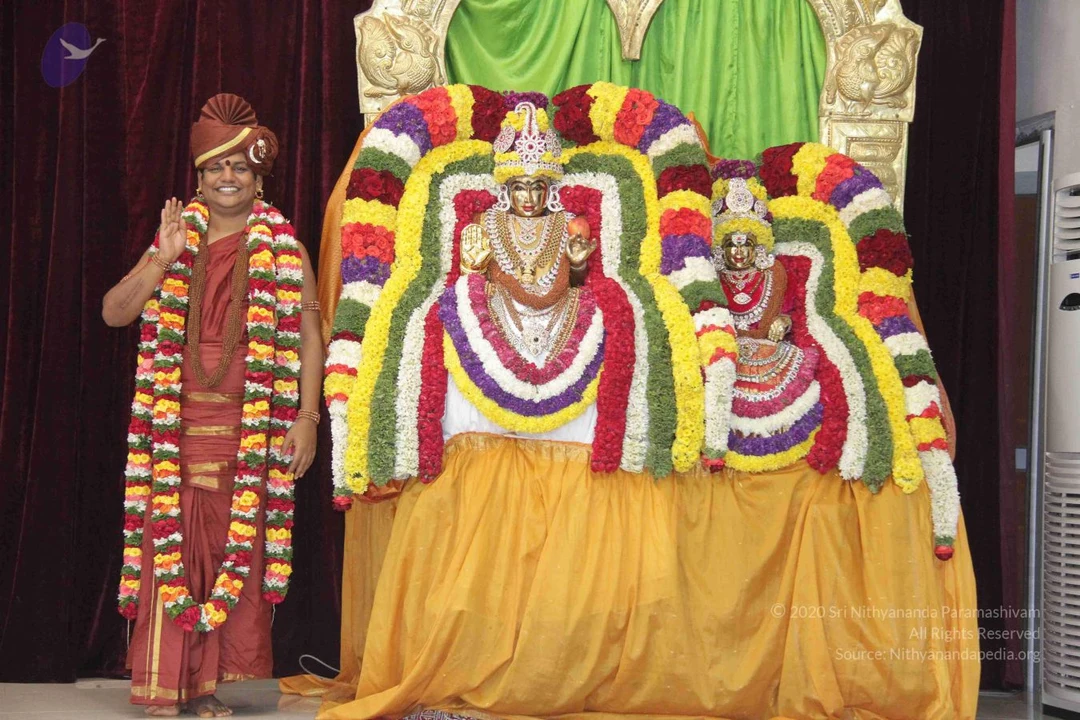
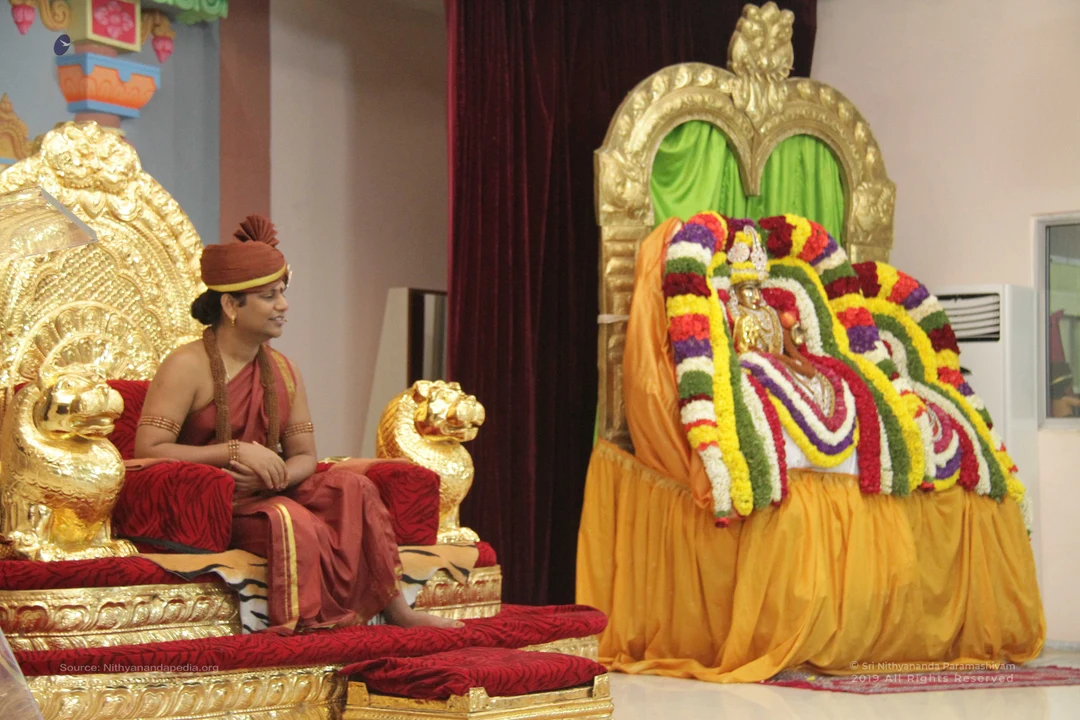
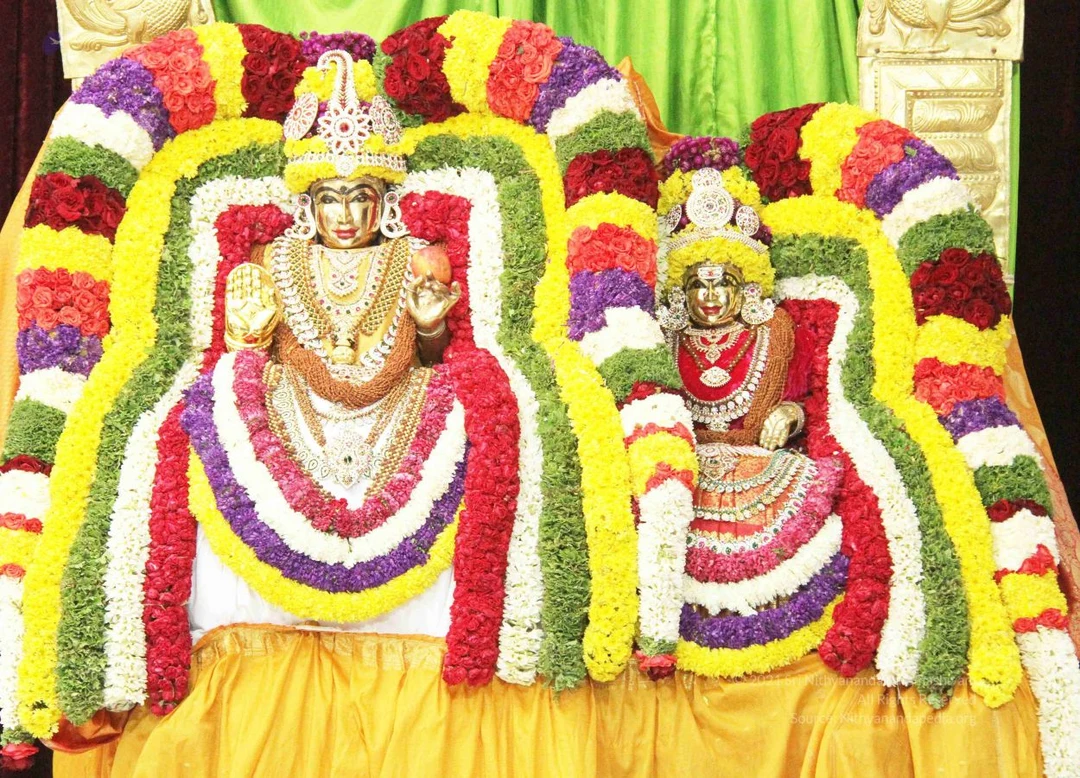
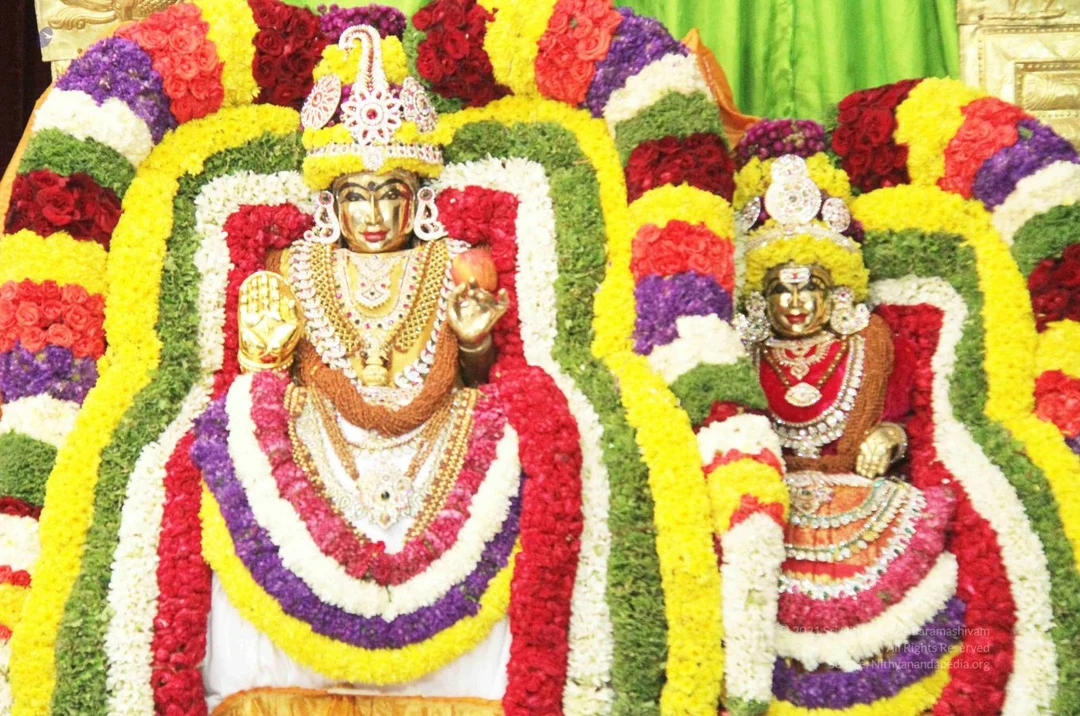
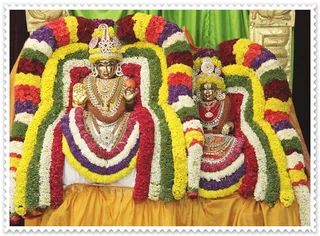
Today, Nithyanandeshwara Brahmotsava 6th day. Mahadeva is gracing us with Nithyanandeshwari. Today, the day is celebrated as Devotees’ Day. All the sixty-four Shaiva saints are celebrated with their presence in Tiruvannamalai. Here we are celebrating. He is gracing us with Nithyanandeshwari.

Today I will continue to expand on power of completion and creating a space.

Listen.

Whenever you create a space, you also create a self-doubt. Because of the self-doubt, you challenge the space you create. Because you challenge the space, you already corrupted the space. The challenging of the space you do because of your earlier failures, because of so many complications. By the time you complete creating the space, the space is polluted and broken.

Listen. I am giving you an example. When you create a space to become healthy. For example, you are suffering with certain sickness. You decide to create a space to become healthy. When you create the space to become healthy itself you will have all self-doubts, doubt about the Power of Space and doubt about your ability to create a space properly. These self-doubts. And not only that, because of earlier failures, you wanted to challenge the Power of Space. That’s the most unfortunate thing – wanting to challenge the Power of Space.

Understand, so first, all these complications into creating a space should be completed. Complete all these complications. Create the space from that Completion. So first, spend at least few minutes completely completing and in that Power of Completion, please understand, in the Power of Completion, you will have, really, really, really you will have clarity to create a space.

Today I will explain and give you the experience of at least making one thought into a space and into a reality. Listen.

Take up any one thought, whether you want to become healthy, wealthy, or healed relationships, Completion, or you want to enrich, you want to achieve something, you want to be a leader, you want to be a boss, whatever it is, pick up one idea, one thought which you wanted to make it as reality.

I also have a question. Somebody is asking, ‘Swamiji, don’t even know what is self-doubt, because it has existed all the time. I feel everybody feels like that only. Whenever anything big is taken up, it feels natural. Only when you have not experienced self-doubt you know you have self-doubt now. Because I have experienced it all the time, never realized when it creeps in. It seems like that is how everybody feels whenever anything is taken up. ’ This question is from Ma Jnanatma.

No. What you wrote is not true. In your life also you have achieved something without self-doubt. Otherwise you can’t even be continuously breathing so many days with that big nose. Even to breathe continuously without a break is taking up something without a self-doubt.

Listen, this question that “always self-doubt was part of me” is not right. It is not true. There are many things: Your heart is beating, do you have self-doubt about it? You are breathing, do you have self-doubt about it? You are thinking, do you have self-doubt about it? Then how can you say whenever anything big is taken up self-doubt becomes part? So, making thousand lives enriched for the Bali Inner Awakening, is that more than, more difficult than continuously breathing day in and day out for the last thirty or any number of years?

Anything you mastered becomes involuntary. When you started driving, it was difficult. When you mastered it, it becomes involuntary. So, all involuntary things have been mastered by you. There’s nothing called “involuntary”. Everything involuntary you have mastered it either in this janma or earlier janmas. So, creating a right space without self-doubt also has to be mastered like driving. How many of you know driving cycle, pedaling cycle? Then all of you know when you started, it was really difficult. You would at least fallen a few times and broken your knees, had injuries in the knees. But in few weeks, you master it. You have mastered it. Same way, creating the right space you need to master it. You need to make an effort.

Sit. First thing, the myth you are carrying “it is natural” is wrong. It is not natural. The moment you say “self-doubt is natural”, you have given a strong foundation to self-doubt, you have given a bigger place for self-doubt which is not right, listen, which is not right. Now, completing with your self-doubt must be the first thing in the life. Completing with the self-doubt should be the basic truth in the life.

Dyanse Suniya , please listen.

Today, take up any one thought now, whether you want to become healthy or wealthy, or content in your relationship, or complete with yourself, or always being in the space of powerfulness, or you want to enrich this many number of lives for the Inner Awakening, whatever. Or you want to enrich people with these, these, these, these ideas, whatever – even if you give a meal, “anna dhaan”, it is enriching with food; if you give the clothes, you are enriching somebody with clothes – whatever, whatever. With whatever you are enriching others that is enriching. So if you want to enrich, whatever you want to do, make a sankalpa. And I’ll give you the science of how to make this into reality. It can be any thought: You may want to become a CEO of your office, you may want to be a powerful person, you may want to be successful. Whatever may be your desire, first stop feeling incomplete about what you want. All the incompletions you carry, like example, if you feel you can never become healthy, if you feel you can never have wealth, if you feel you can never become the boss of your office, first complete with that impossibility. The impossibility comes from a deep root patterns. Complete with them. Tell yourself very clearly there is nothing called “impossible”. The idea of “impossible” is sickness. I wanted to call that as “impossible syndrome”. It is like you using your own power to destroy you. It is like you pay somebody and tell them to conduct a sting operation on you. You pay somebody and tell them to kill you. You pay somebody and tell them to do black-magic on you. In Tamil there is a proverb: “Swantha Kaasila Shoonyam Vachukkaradhu”. No, the idea of “impossibility” is you thinking something against yourself.

Listen, listen.

Sit and complete with that “impossibility”, then all the fears about effects and side-effects of what you want to make it as reality. Usually, when you want to become boss, along with that you will have the fear ‘Oh, then I will have to work for so many hours. I have to do this, this, this, this.’ Fear of the effects and side-effects, complete with all of them also. Complete with all that also. Complete with all that. Complete with everything. Then when you create a space, means, when you visualize and say, ‘I am this now’, ‘I am healthy now’, you will have hundreds of self-doubts, hundreds of doubts about your ability to create the right space. Please understand, first you will have self-doubt. Then you will have doubt about your ability to create the space. Complete with that. And now sit with that space. Naturally, when you sit with that space, you will be so excited, alive; means the Kundalini is oozing into your thinking, into your feeling. Decide you will make that Kundalini into reality through your actions.

Deciding to make your feeling into action is “responsibility”. Please listen. Deciding to make your feeling into action is “responsibility”. The feelings which comes out of Completion when you decide to make that into reality as action, what you are doing is “responsibility”. That is “responsibility”.

<18:47 Hindi -20:01>

Now, I will give you a few minutes. Sit. Close your eyes. Pick up that idea you have. Complete with all that impossibility.

<21:09 Hindi - 21:21>

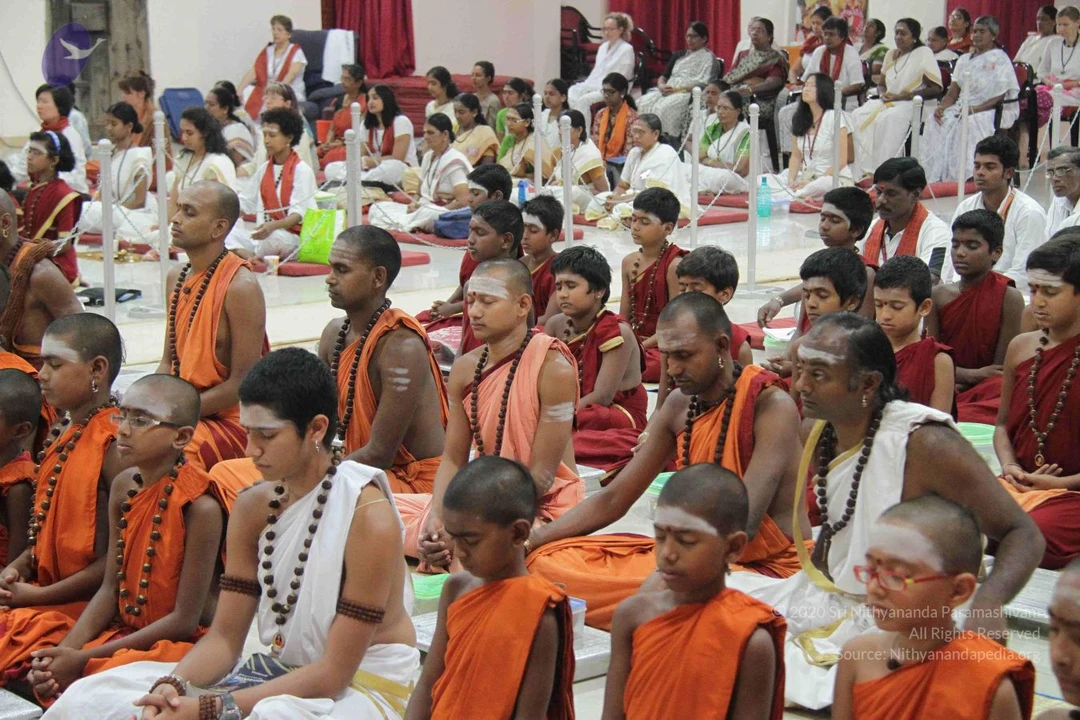
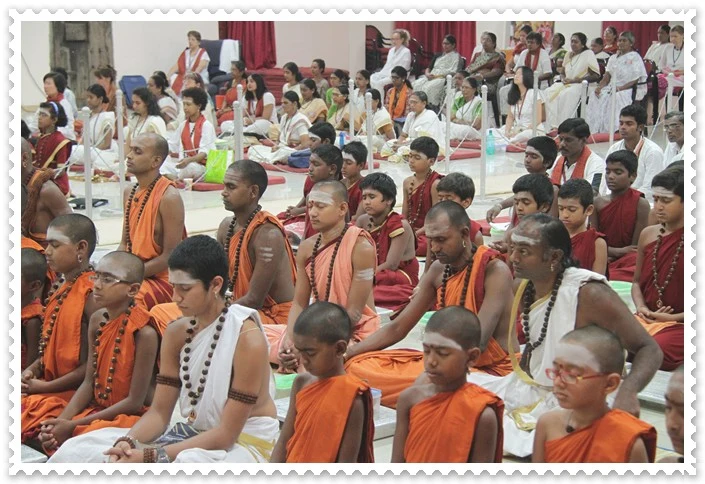
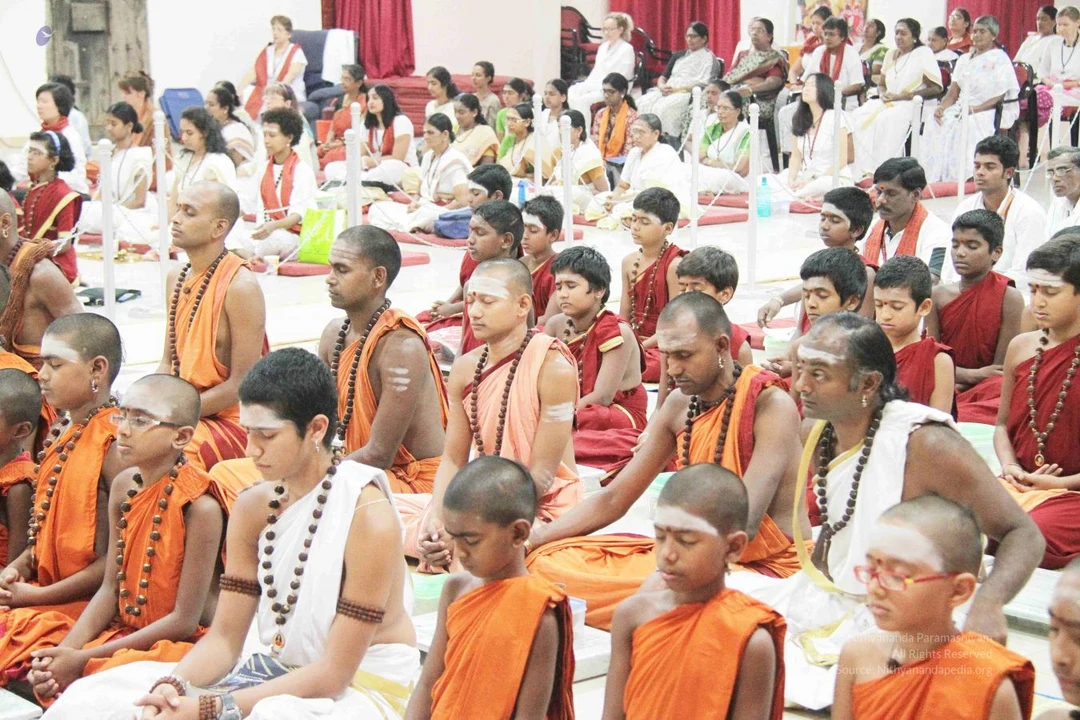
Gurukul kids, sit straight and close your eyes.

<23:56 Hindi -24:01>

Complete with all your self-doubts. Complete with all the earlier lack of Integrity you had, inauthenticities you had irresponsibility’s you had.

Complete with even the idea you carry that you cannot complete with yourself. Complete with everything, every incompletion.

Now create the right space.

<26:33 Hindi -28:20 >

Now create the space for what you want to achieve, what you want to make it as reality. Complete with all the doubts you have towards your ability to create the space or towards the possibility of that space becoming reality. Complete with all that.

<33:23 Hindi -33:58>

I bless you all with my Integrity, Authenticity, Responsibility and Enriching, let all of our spaces become reality and auspicious!

Let you all achieve, experience, live, express, radiate, share and explode in eternal bliss, Nithyananda.

Photos Of The Day:
Photos

Tags:

Paramahamsa Nithyananda, completion, creation, space, kundalini, clarity, action, responsibility.

Photos Of The Day:
Satsang

Darshan

Yoga

Photos from this day

View all 220 photos

Photos Of The Day:
100 photosSource gallery
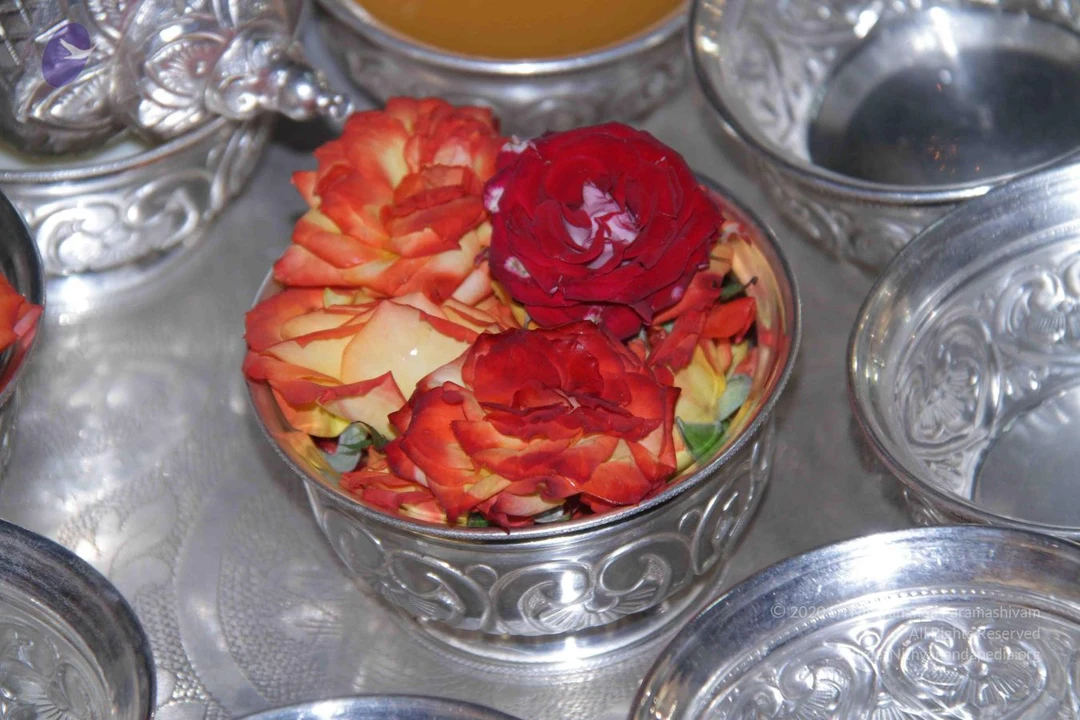
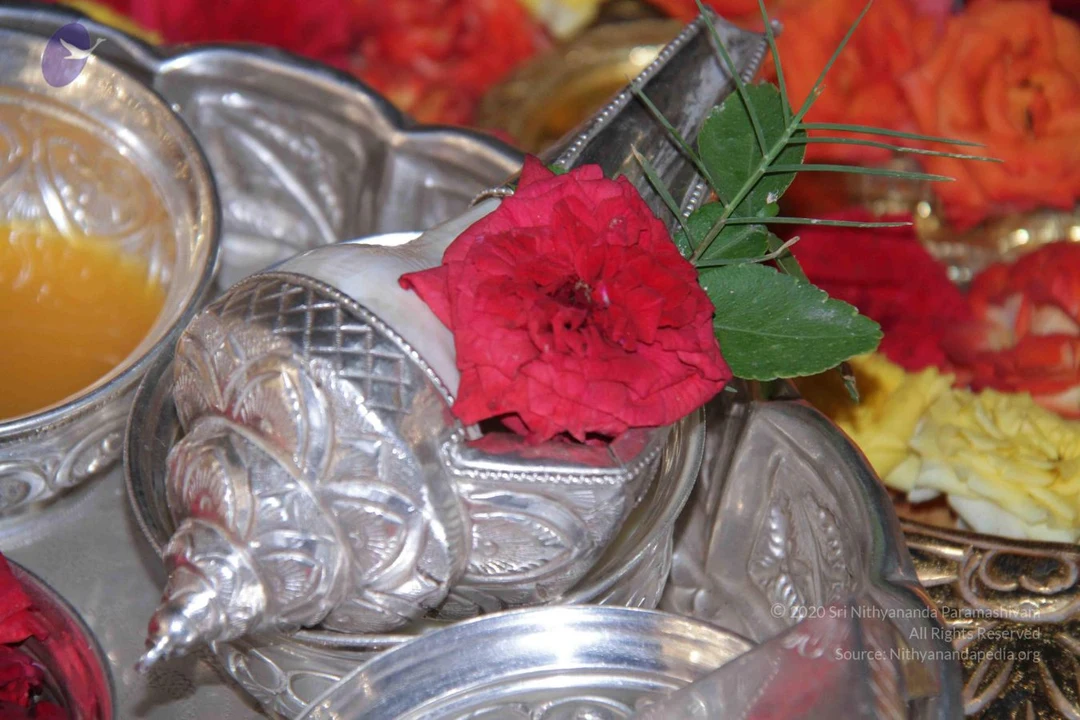
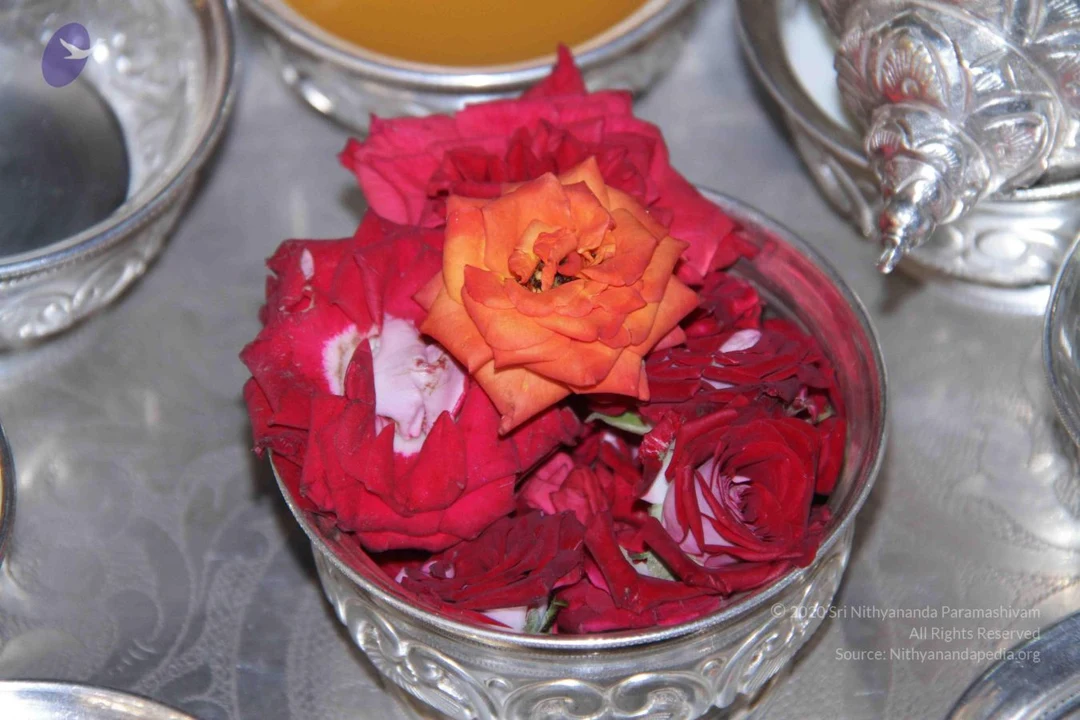
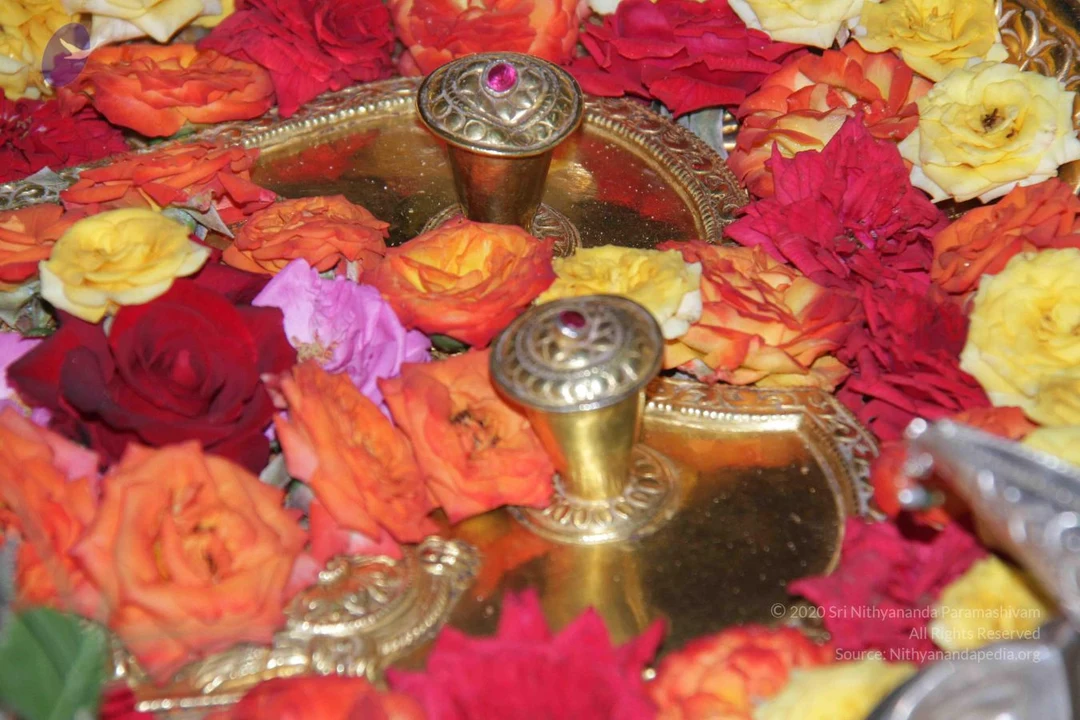
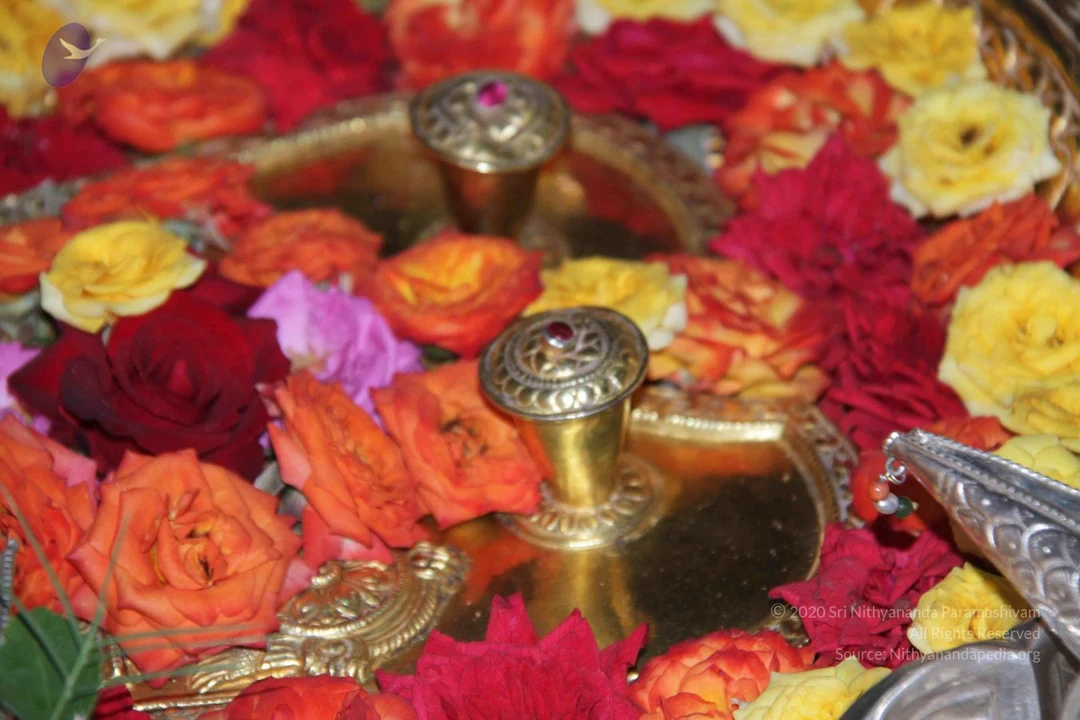
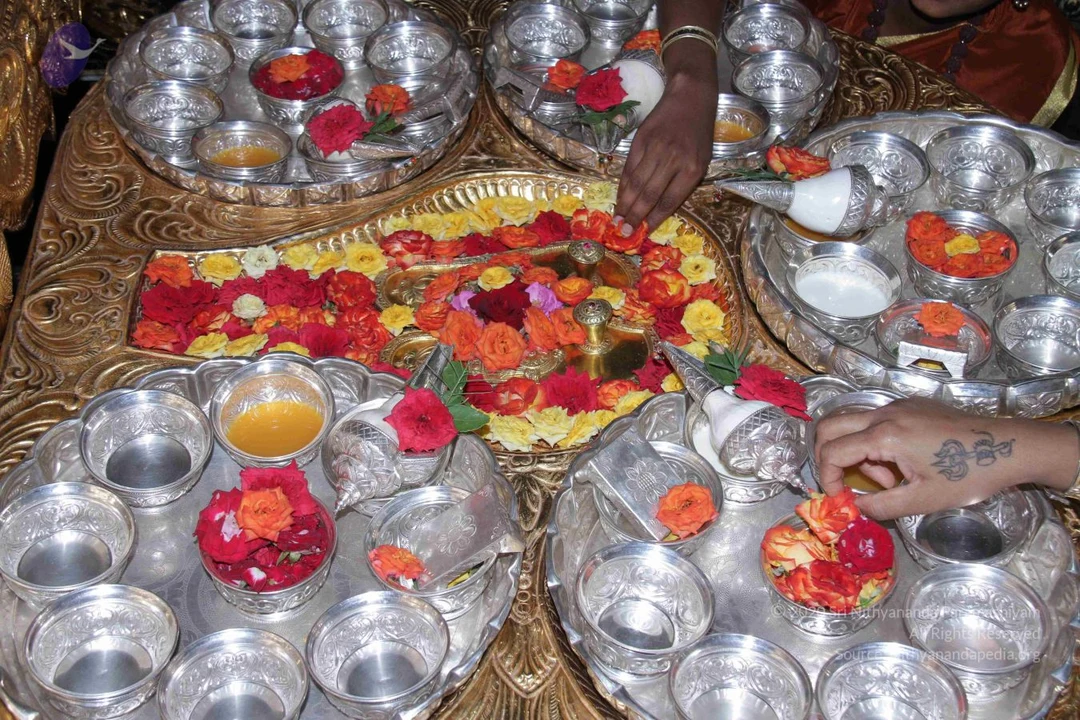
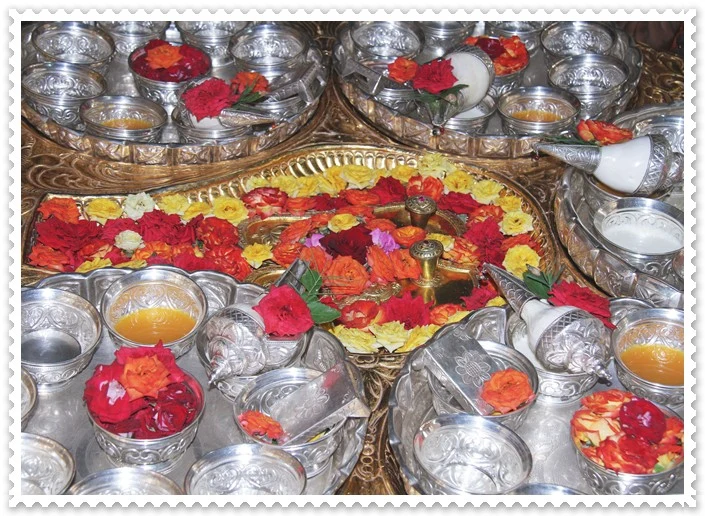
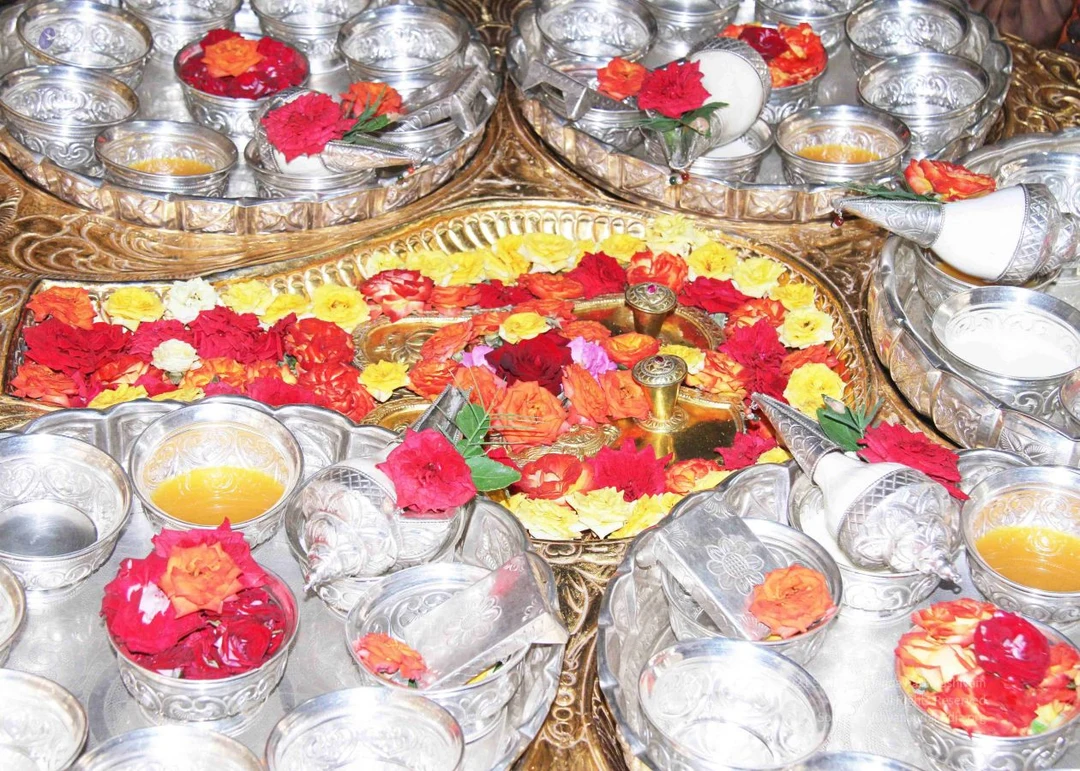
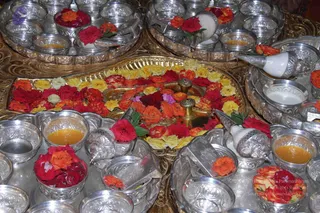
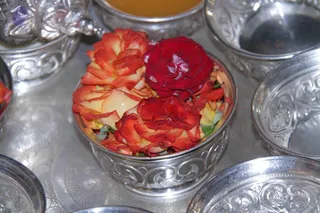
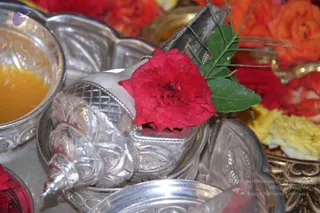
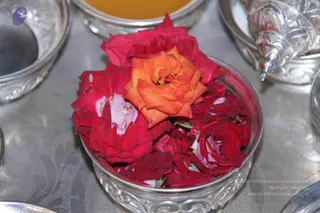
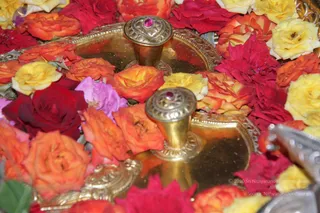
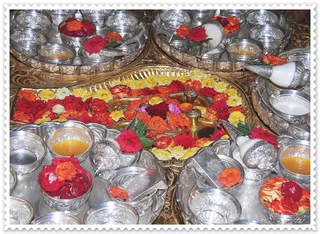
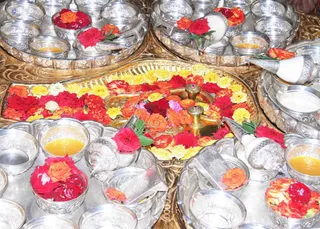
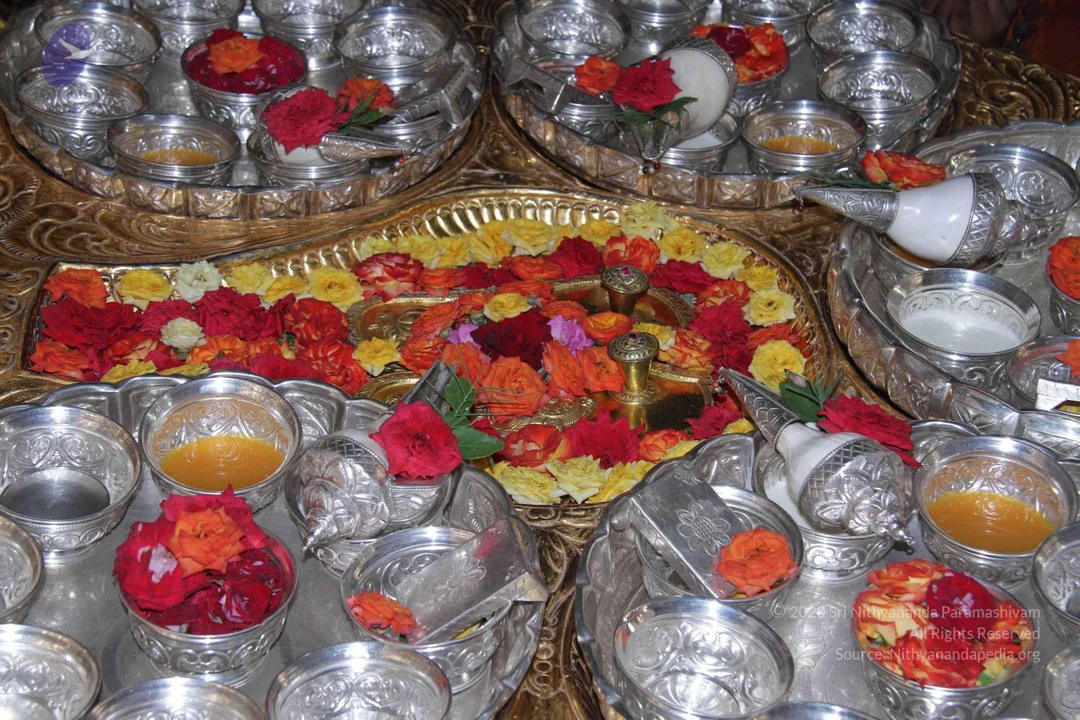
Close-up of a ritual puja arrangement on ornate brass trays. Silver bowls hold orange and yellow liquid, and a central brass tray is heaped with red, orange, yellow and white rose petals and flowers. Silver spouted vessels and small silver ladles sit among the bowls, with green leaves tucked in. Brass oil lamps or vessels rise from the centre of the flower tray. No people are visible; the scene is a set of offerings laid out before a ceremony.Close-up photo of a silver puja tray holding several small repoussé silver bowls. The central bowl is filled with red and orange-yellow rose petals and whole roses, with a deep red bloom on top. Other silver bowls at the edges hold clear liquid and are empty. No people are visible.Close photograph of a ritual offering arrangement on a silver tray. In the foreground stands an ornate silver conch-shaped vessel with embossed lattice and leaf patterns, its opening topped with a red rose and a sprig of green leaves. Beside it sits a silver bowl of golden-yellow liquid, possibly honey or ghee, and the tray is filled with red, orange and yellow flower petals and blooms. No people are visible.Close-up photograph of a silver bowl filled with red and pink rose petals and a single orange rose, set on an ornately engraved silver tray. Other silver vessels, including a bowl of yellow liquid and a silver spouted pot, sit at the edges. This is a ritual offering arrangement; no people are visible.Close-up photograph of a gold-coloured ritual tray densely covered with rose petals and whole roses in orange, yellow, red and pink. Two ornate gold-toned cylindrical vessels with domed lids set with small red stones stand upright on the tray, surrounded by filigree metalwork edges. No people are visible; a small corner of a silver-coloured object appears at the right edge. The arrangement suggests floral offering or puja decoration.Close-up photograph of a brass ritual tray heaped with red, orange, pink and yellow roses. Two gold-coloured brass cylindrical stands with small red stones set in their tops rise from the flowers, and a silver ritual vessel edge appears at the right. No people are visible, so this shows a floral offering arrangement rather than a person or event scene.

Photos

13 photosSource gallery
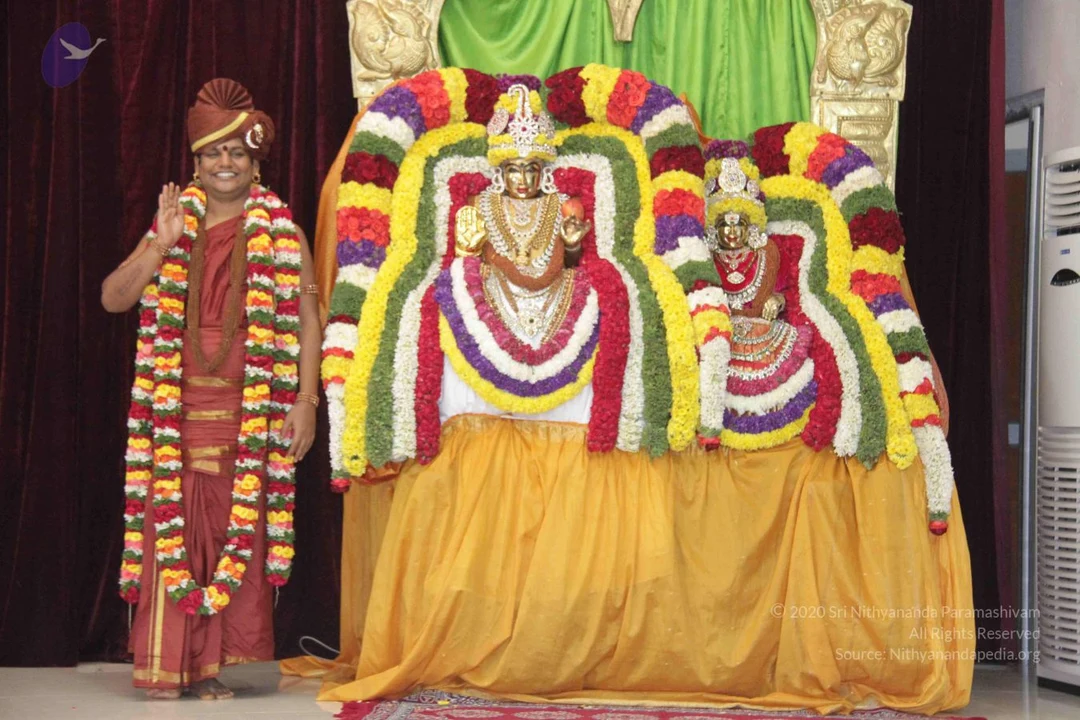
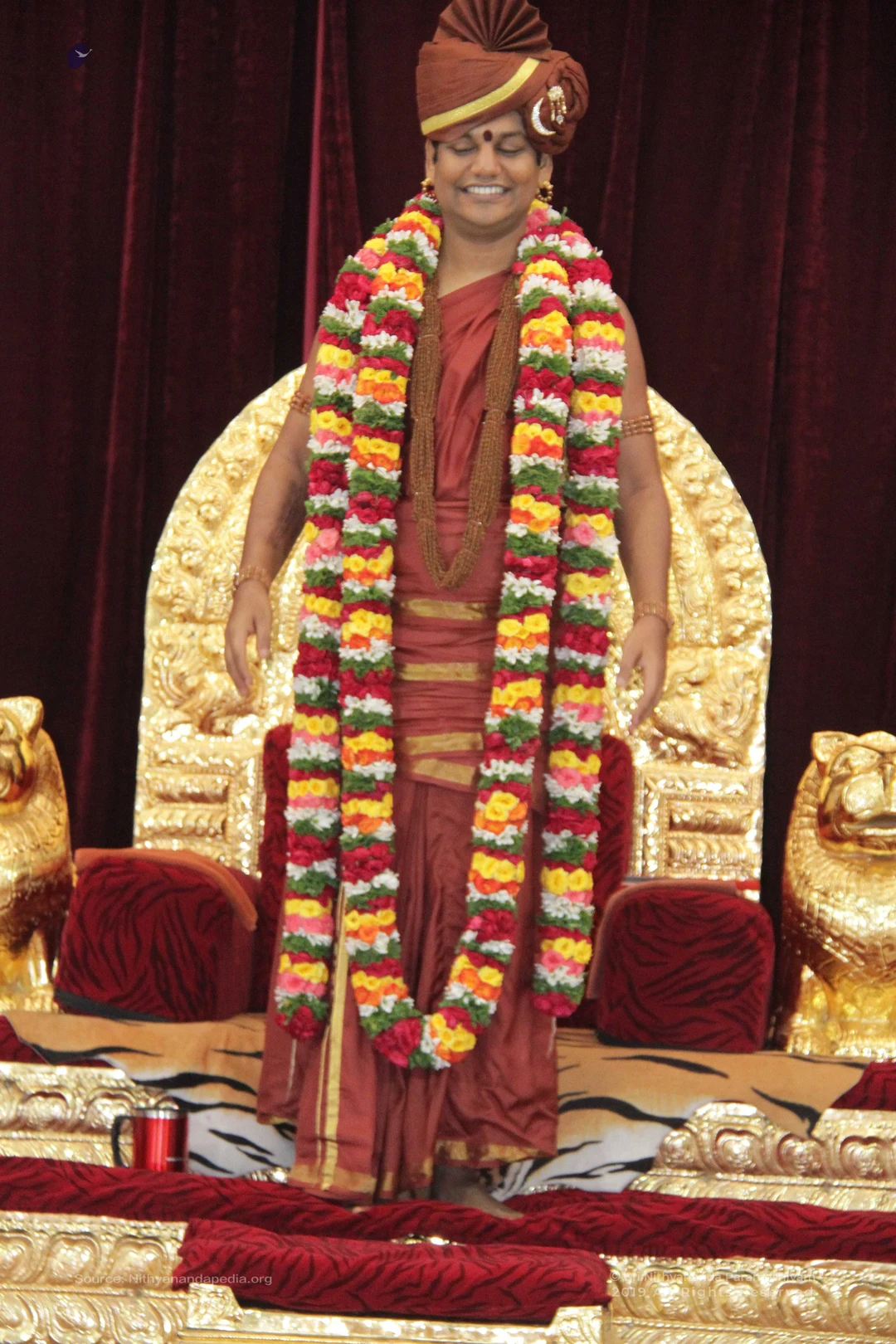
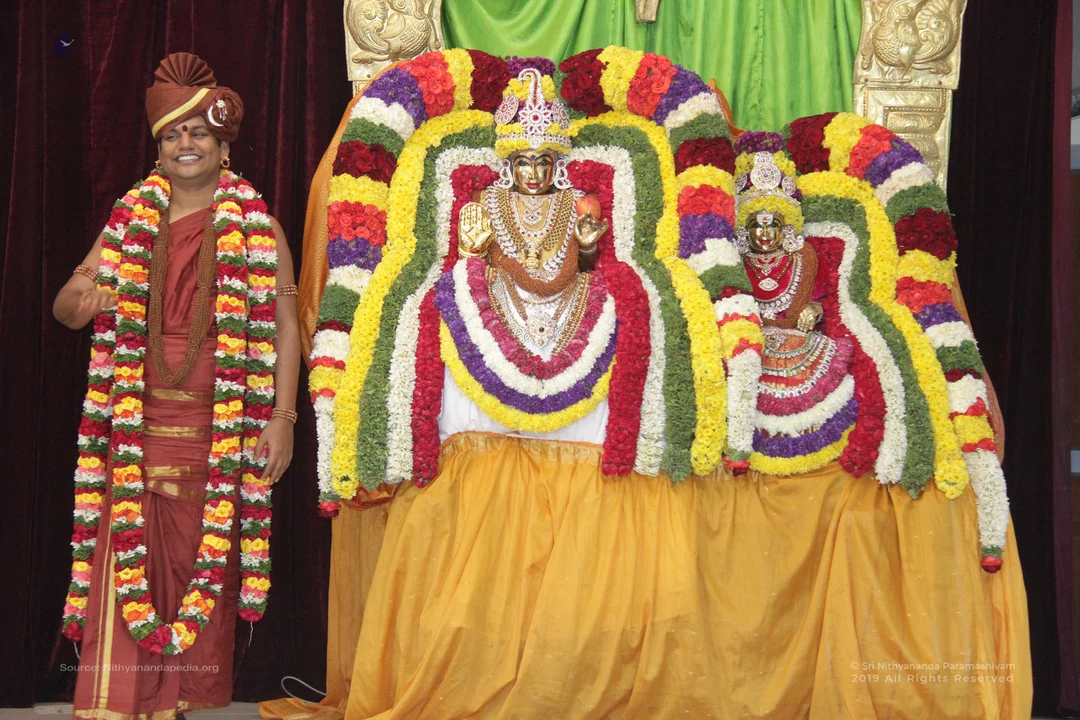
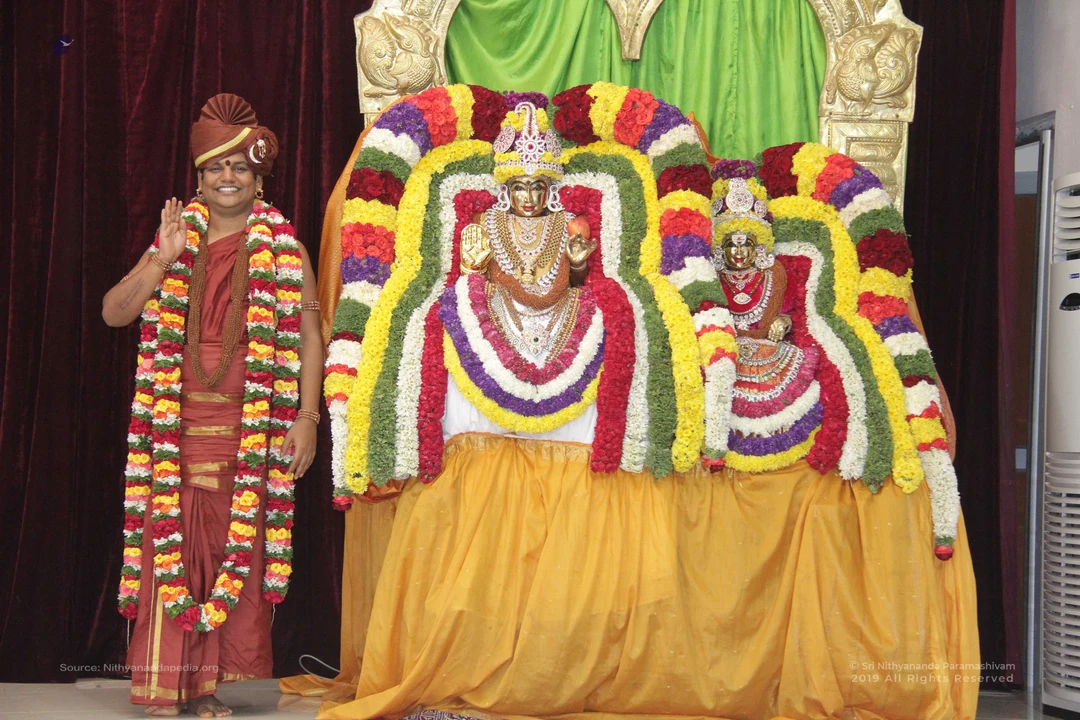
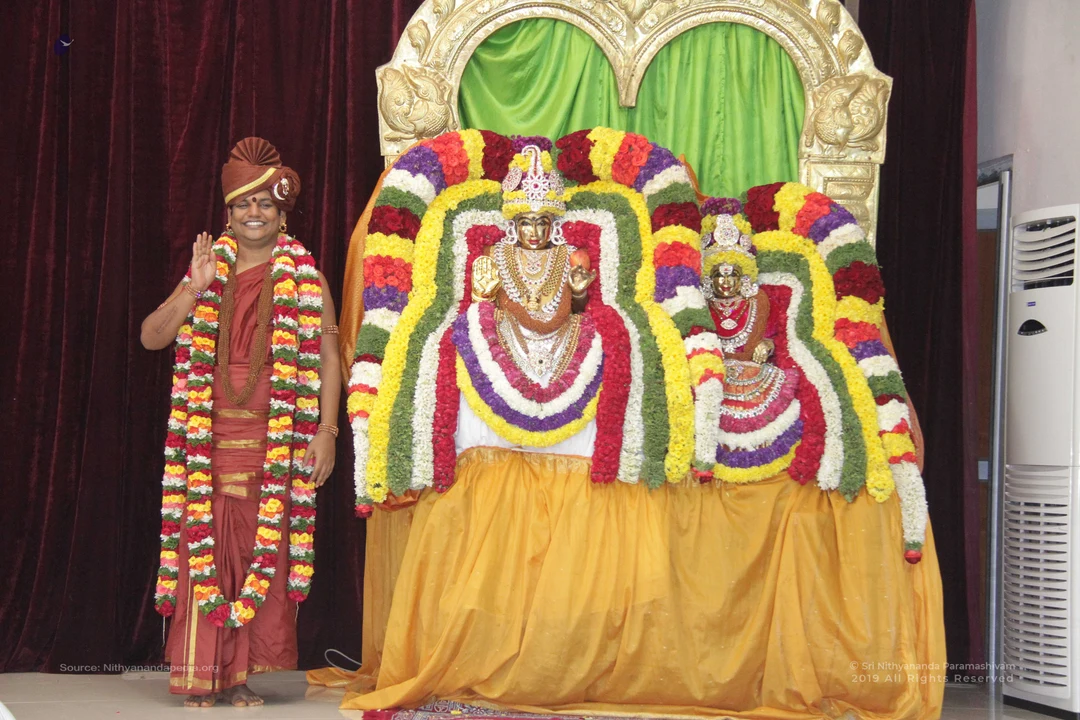
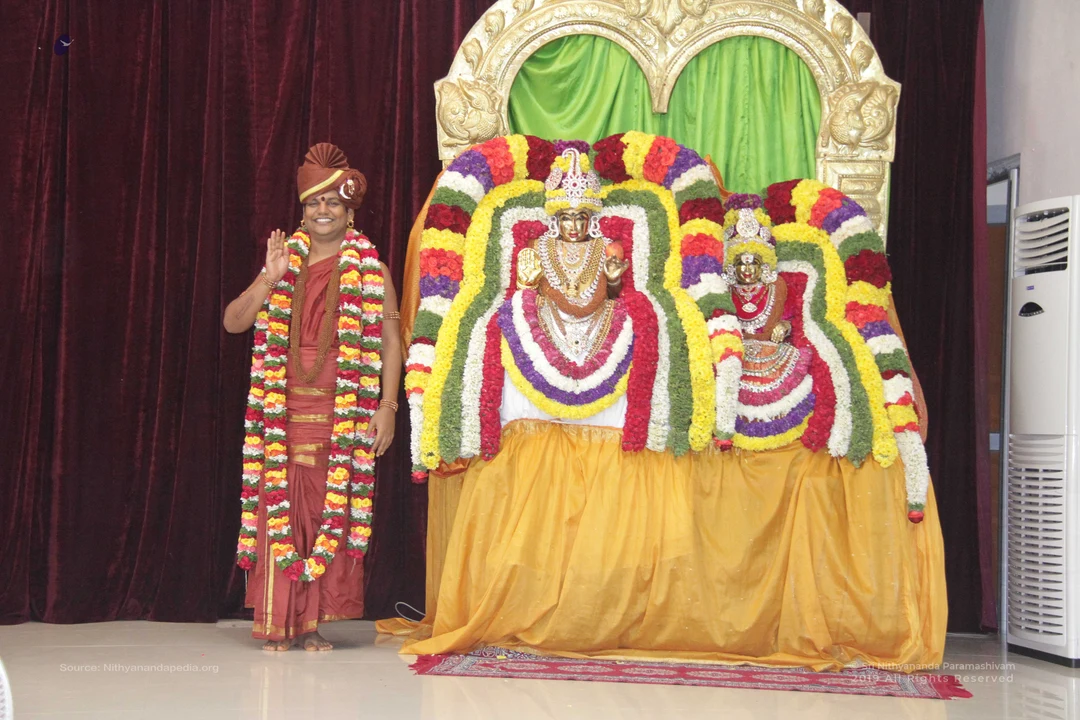
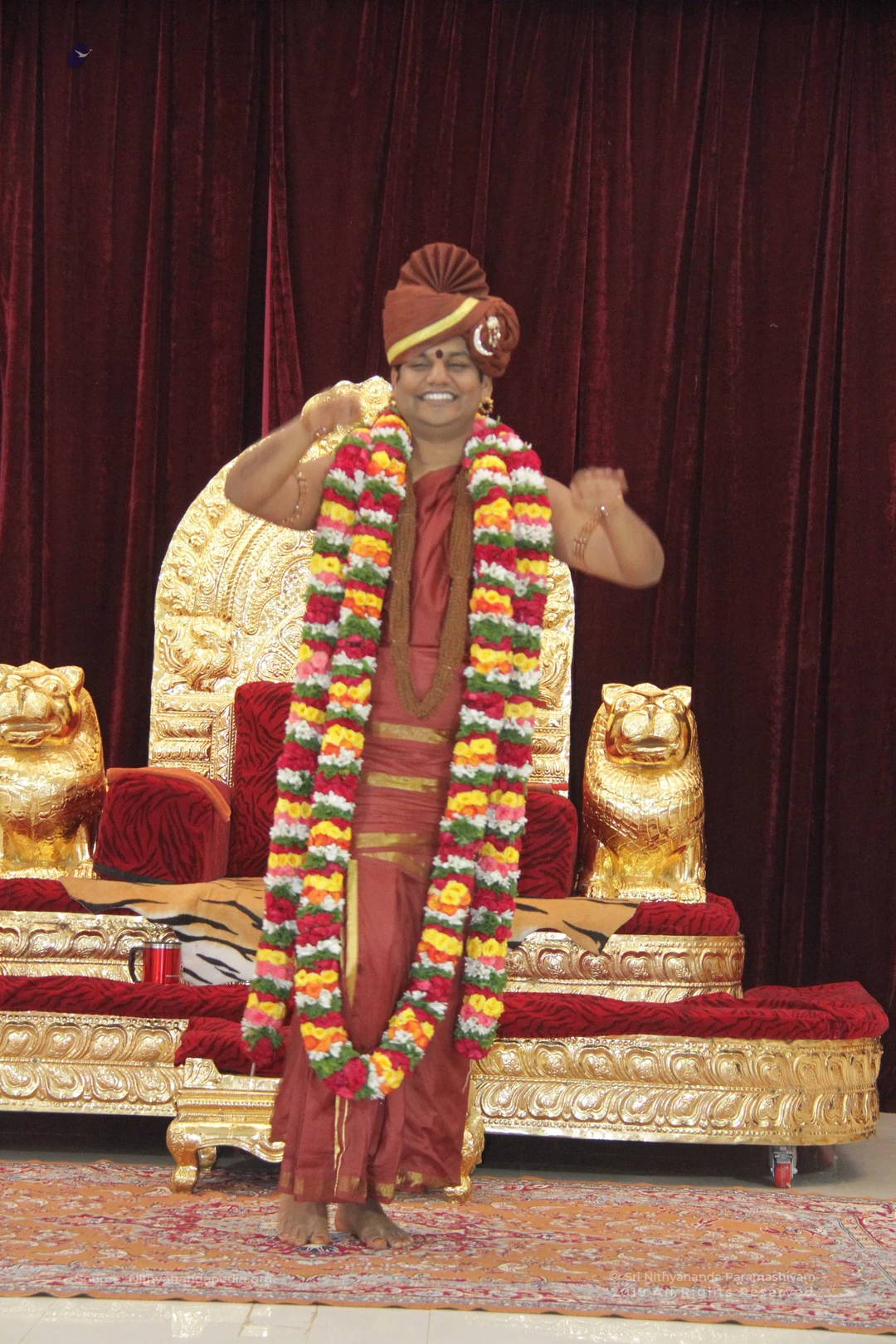
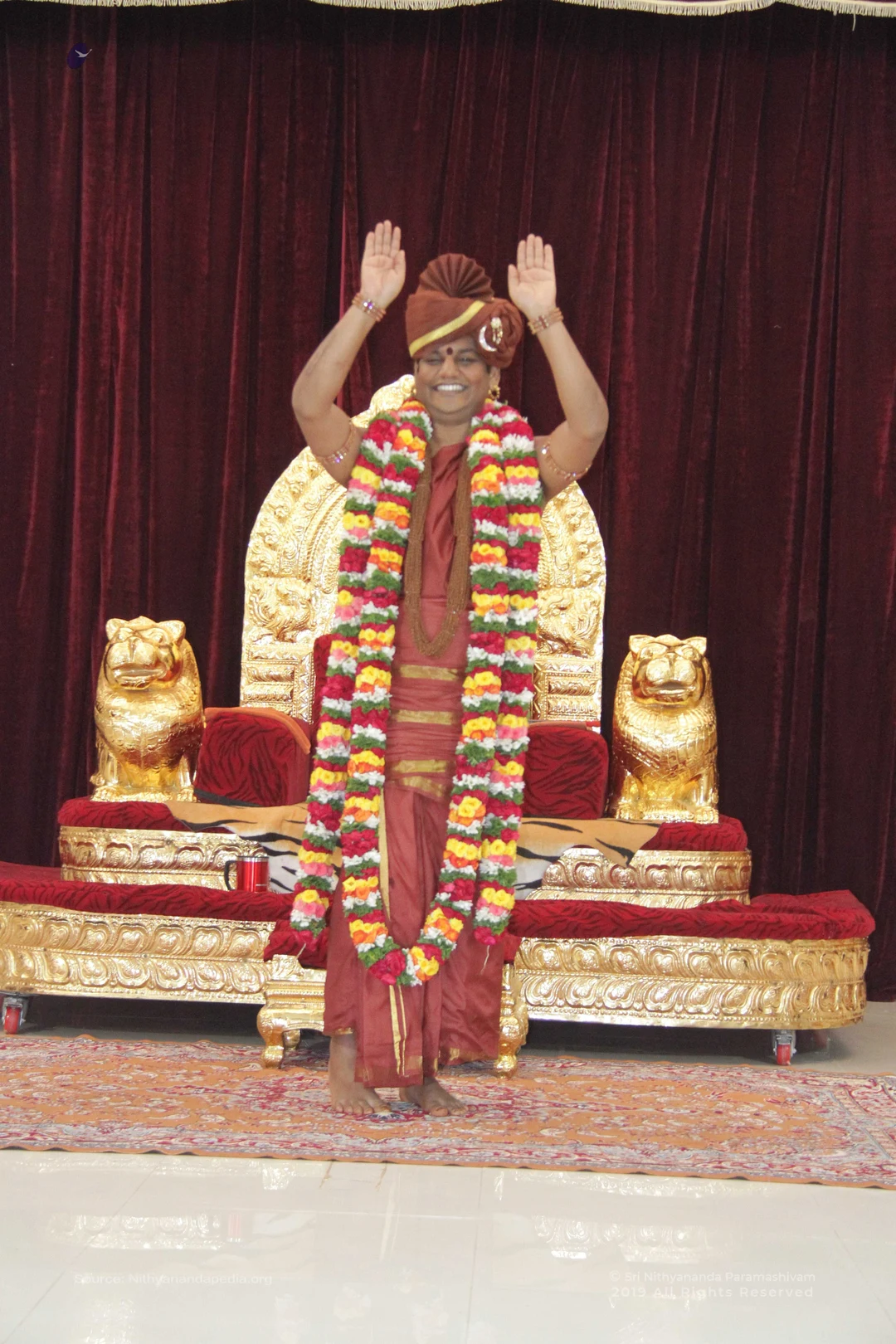
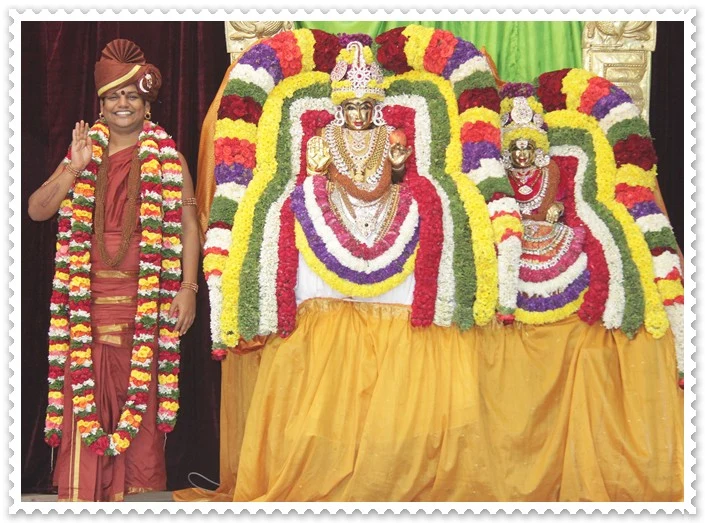
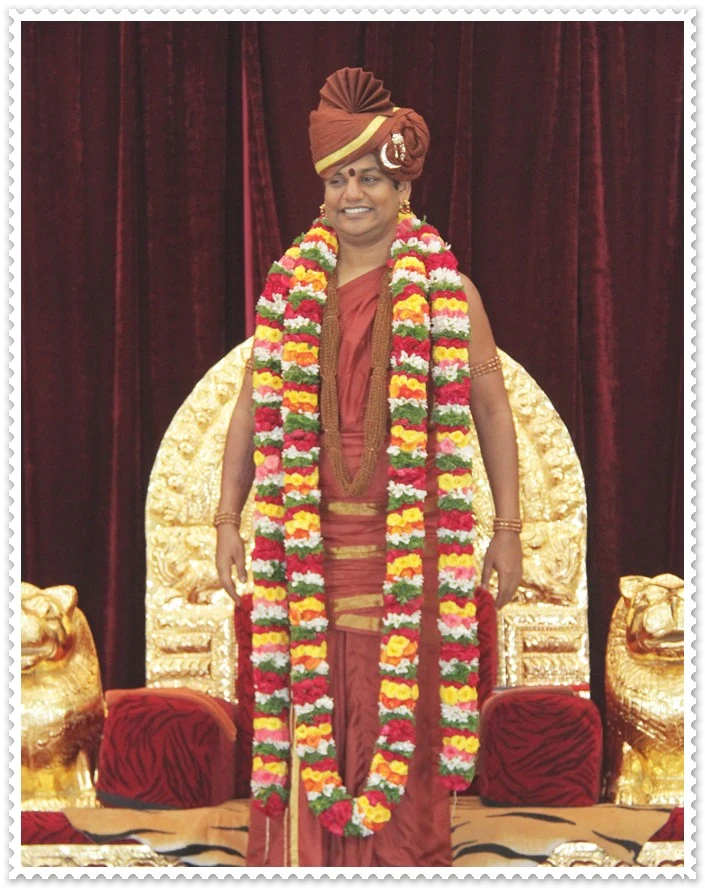
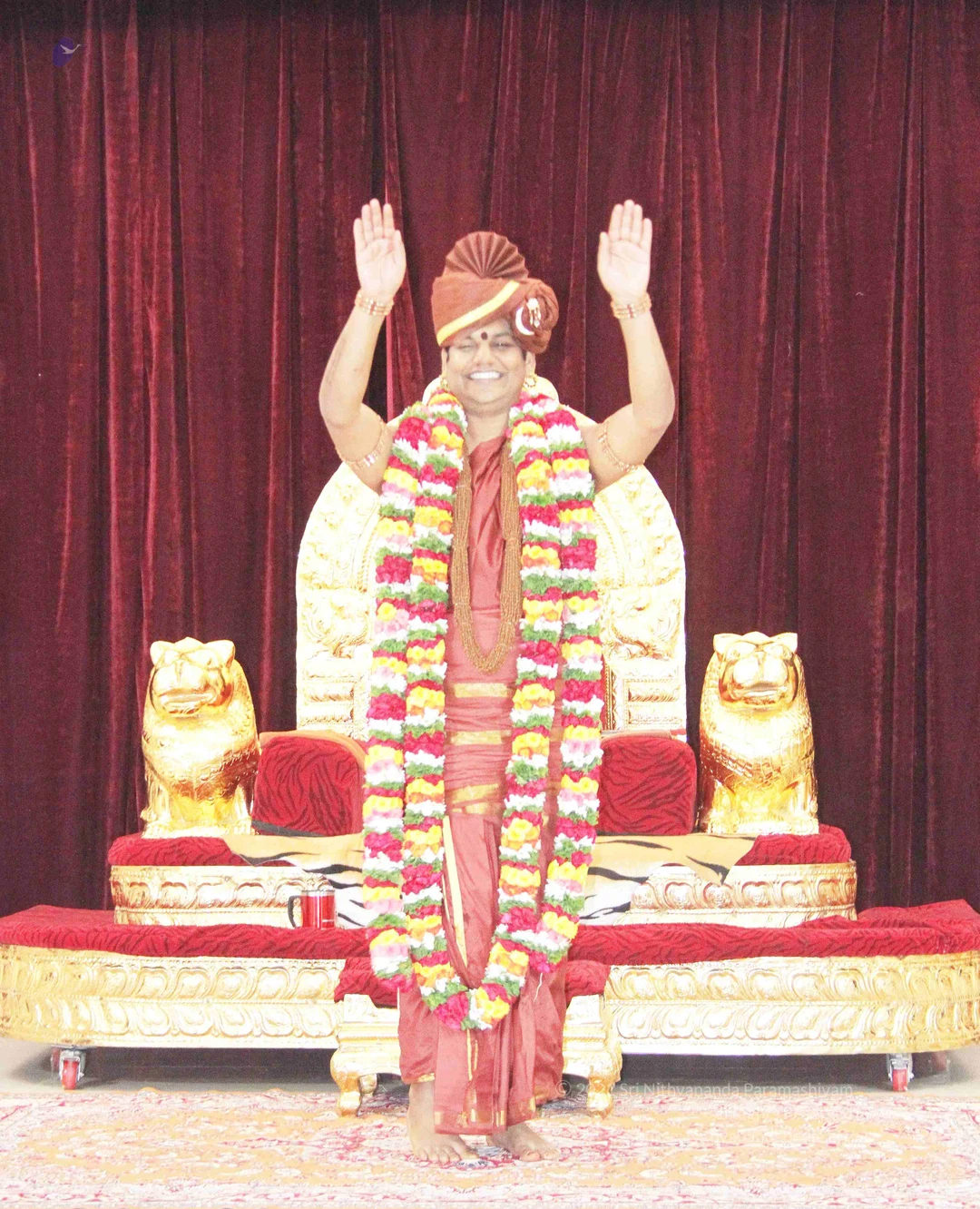
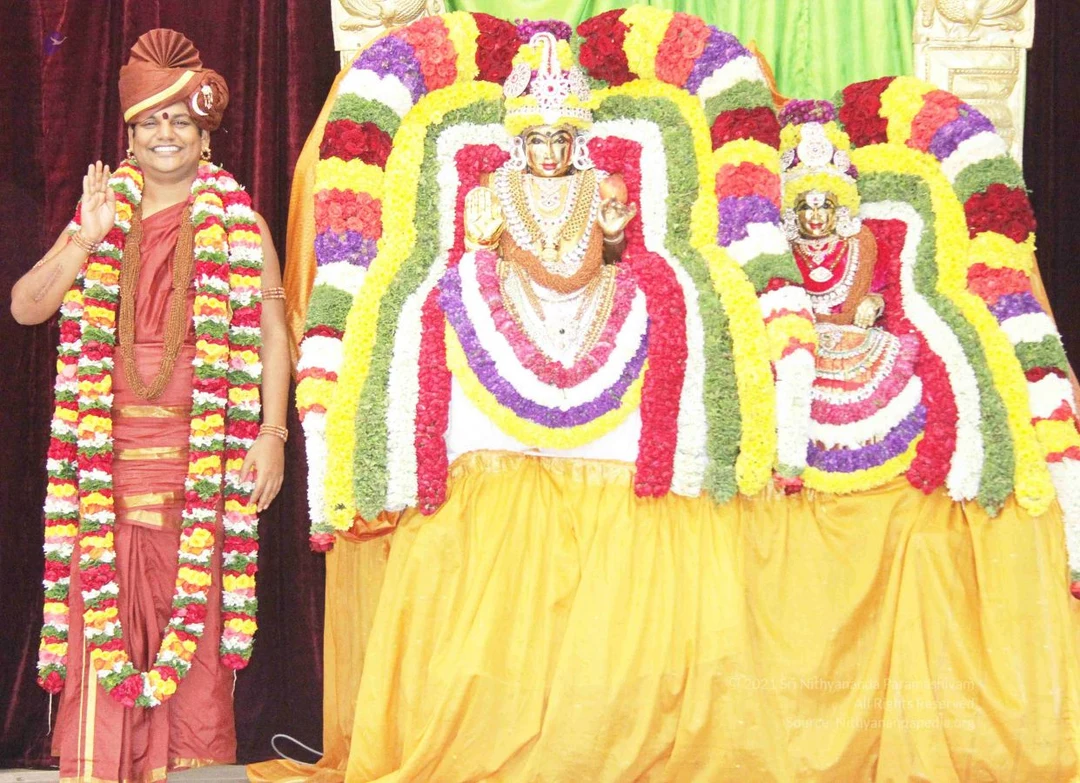
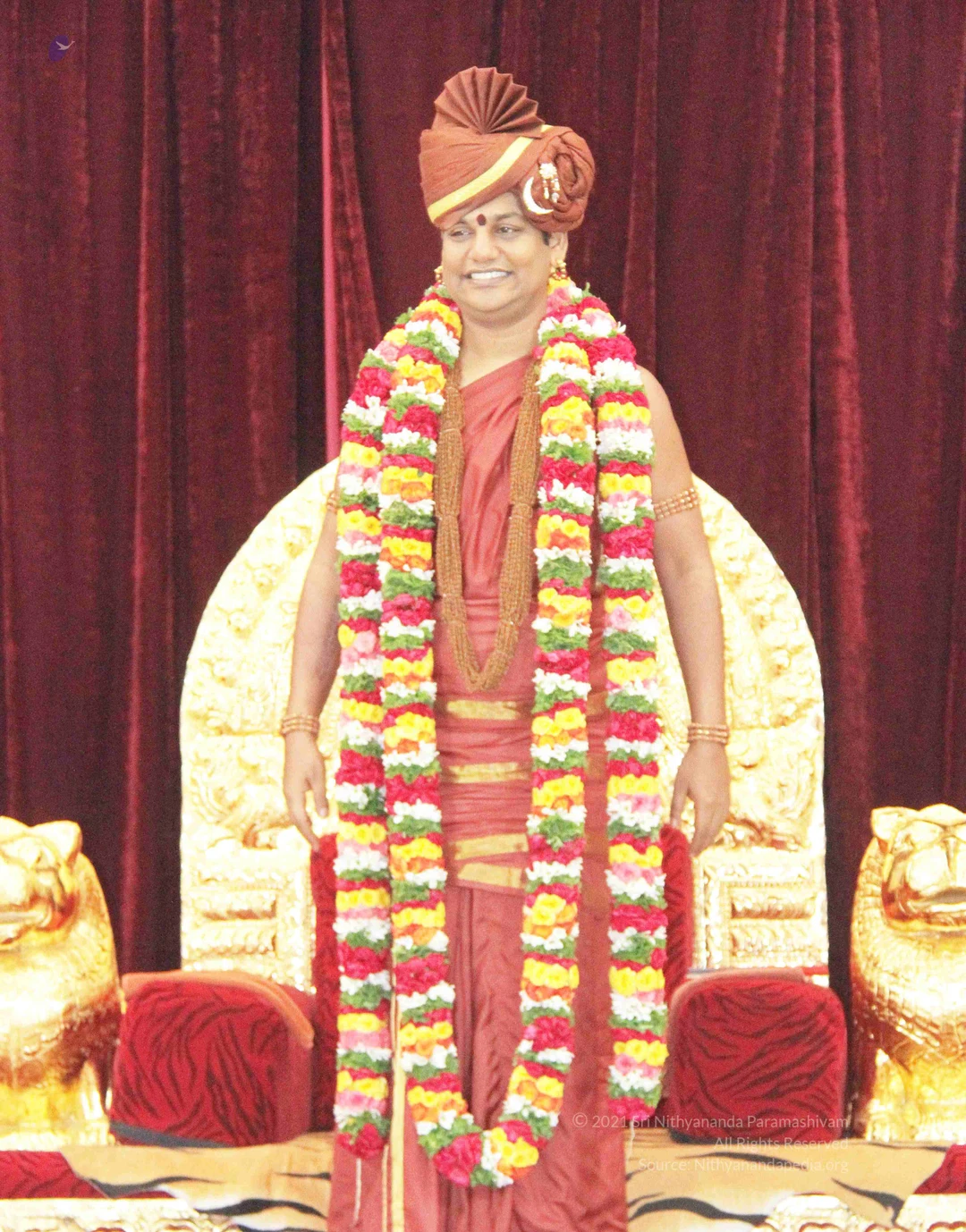
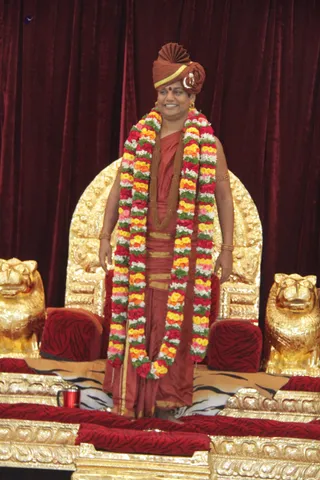
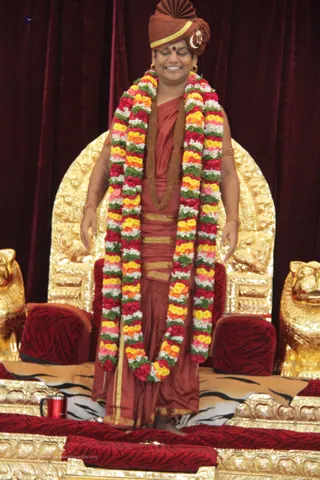
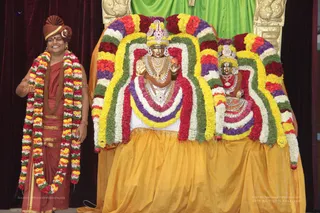
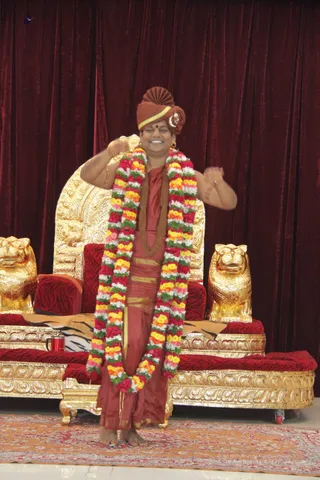
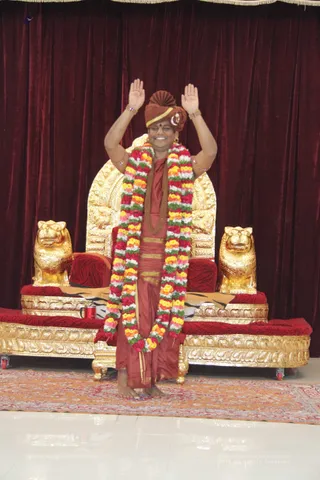
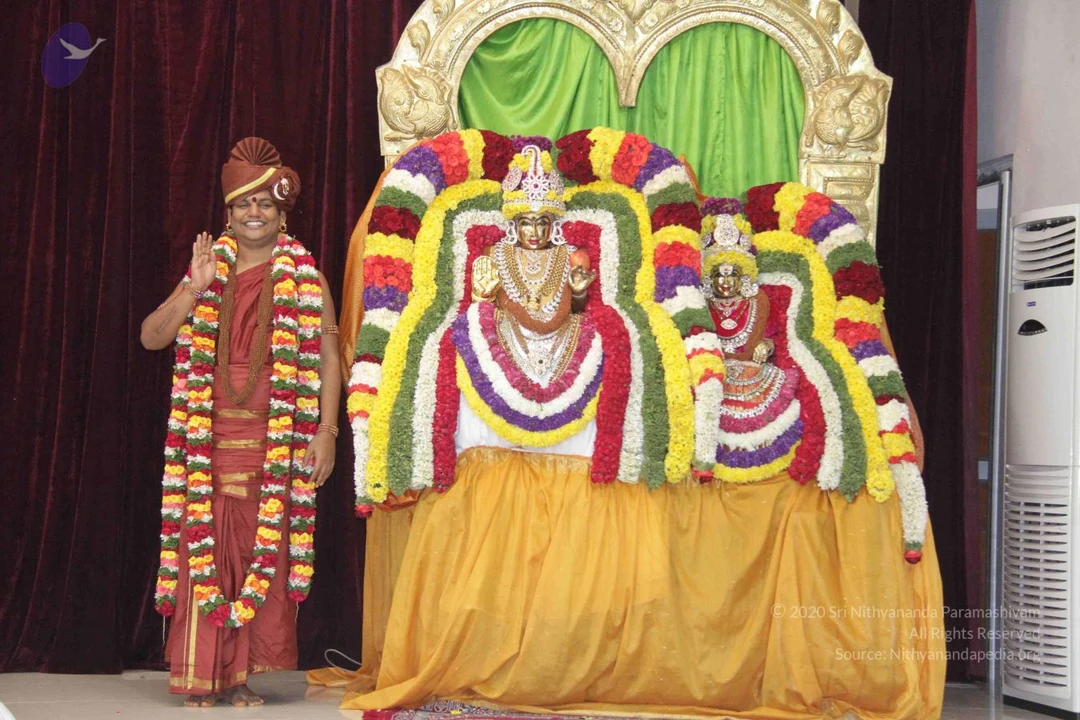
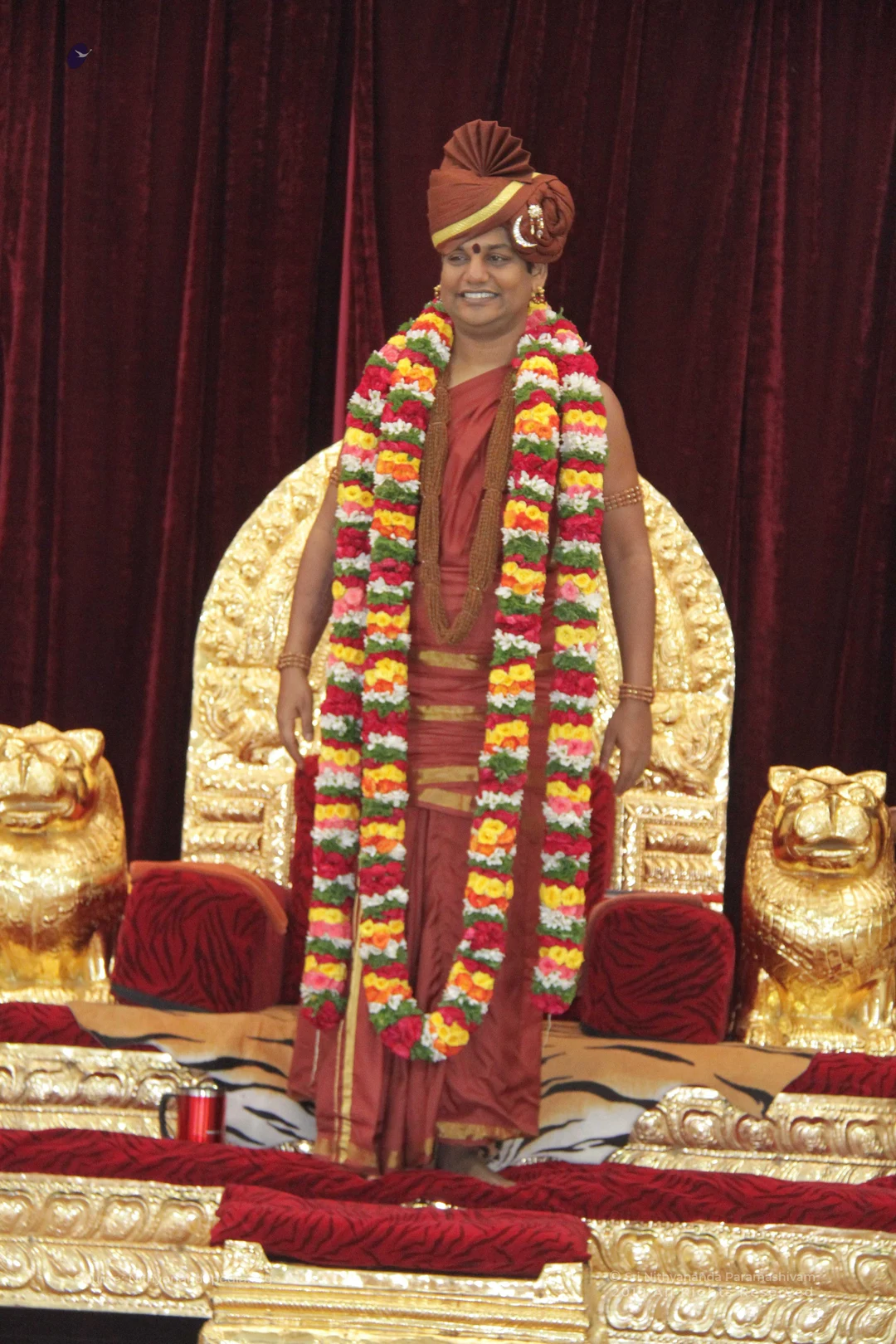
A man in a rust-red turban with a fan-pleated top and gold trim stands on a stage before a gilded, carved throne backed by deep maroon velvet drapes. He wears a rust-red robe, a dark beaded rudraksha-style mala across his chest, a gold armband and gold bangles, and a long multicolour flower garland of red, yellow, orange, pink and white blooms. Gold-painted lion figures flank the throne, which sits on a tiger-striped cloth and red velvet cushions. A red thermos sits on the lower stage.A standing figure in a rust-red robe and matching turban with a gold band and a fan-shaped top ornament stands on a gold-carved throne platform. He wears a long multicoloured flower garland of red, yellow, orange, pink and white blooms, and a rudraksha mala hangs at his chest. His eyes are closed and he smiles. Behind him are deep red velvet drapes and a gold carved throne back, with gold lion figures on either side and a tiger-striped cushion below. A red flask sits on the platform at left. Swamiji (probable): the figure has a turban, saffron-toned robe, rudraksha mala and ceremonial garland, consistent with the page's claim.A photograph of a man in a rust-red and saffron-toned robe with a matching turban, standing at left with a multicoloured floral garland of red, orange, yellow and purple flowers draped around his neck and a rudraksha mala. He smiles and gestures with one hand. To the right stands a large ornately decorated deity murti, adorned with a silver-and-gold crown, jewelled necklaces and a gold hand raised in blessing, framed by a cascade of multicoloured garlands in red, yellow, green, white and purple. A smaller decorated murti sits beside it, and the figures are set before a yellow-gold drape and dark red curtains. a person is described by his turban, rudraksha mala and saffron-toned robe, standing beside the decorated deity murti.A smiling man in a rust-red turban with a gold-trimmed band and a red-brown dhoti-style garment stands barefoot on a patterned red carpet, wearing a long multicoloured flower garland and a brown rudraksha mala. He raises both hands in a playful gesture. Behind him is an ornate gold throne with carved lion heads and red striped cushions, set against deep red velvet drapes. A red travel mug sits on the throne's armrest. The man appears to be an appearance-based a person, given the turban, garland and rudraksha cues, but the identification is not certain.A photograph of a man standing barefoot on a patterned rug before an ornate gold throne with carved lion-head armrests, red tiger-striped cushions and a red velvet curtain behind. He wears a rust-red turban with a gold band, a rust-red robe with gold borders, a rudraksha mala, and a long multicolour garland of orange, yellow, red and white flowers. He smiles with both palms raised beside his head in greeting. The image shows a probable Swamiji (Nithyananda Paramashivam) in appearance-based identification, based on the turban, rudraksha mala and the throne setting, with the page indicating his presence.A seated man in a maroon turban with a gold border and a crescent-moon ornament sits before an ornate gold throne with carved lion-like finials. He wears a rust-red robe, a long rudraksha mala, gold bangles and gold earrings, and a red bindi on his forehead. He raises one hand in a blessing gesture while speaking into a headset microphone. Red cushioned seats flank him, and a painted figure appears at the right edge. Swamiji (probable): the turban, rudraksha mala and ceremonial gold jewellery match the appearance cues, shown here as a seated speaker before a throne.
Photos
19 photosSource gallery
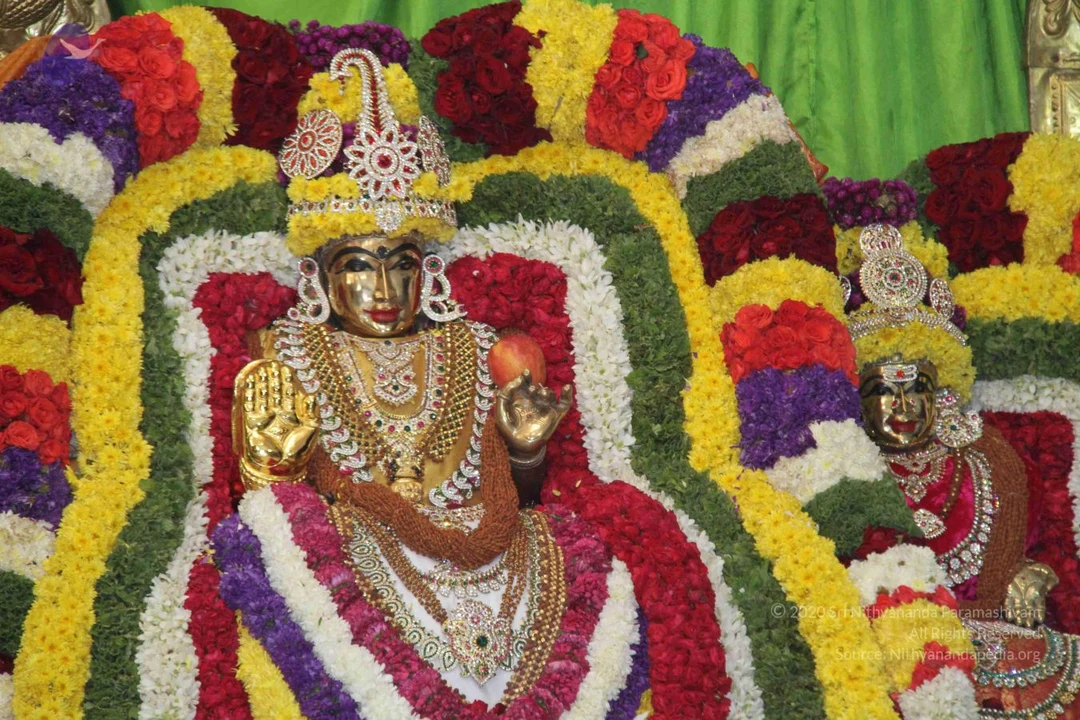
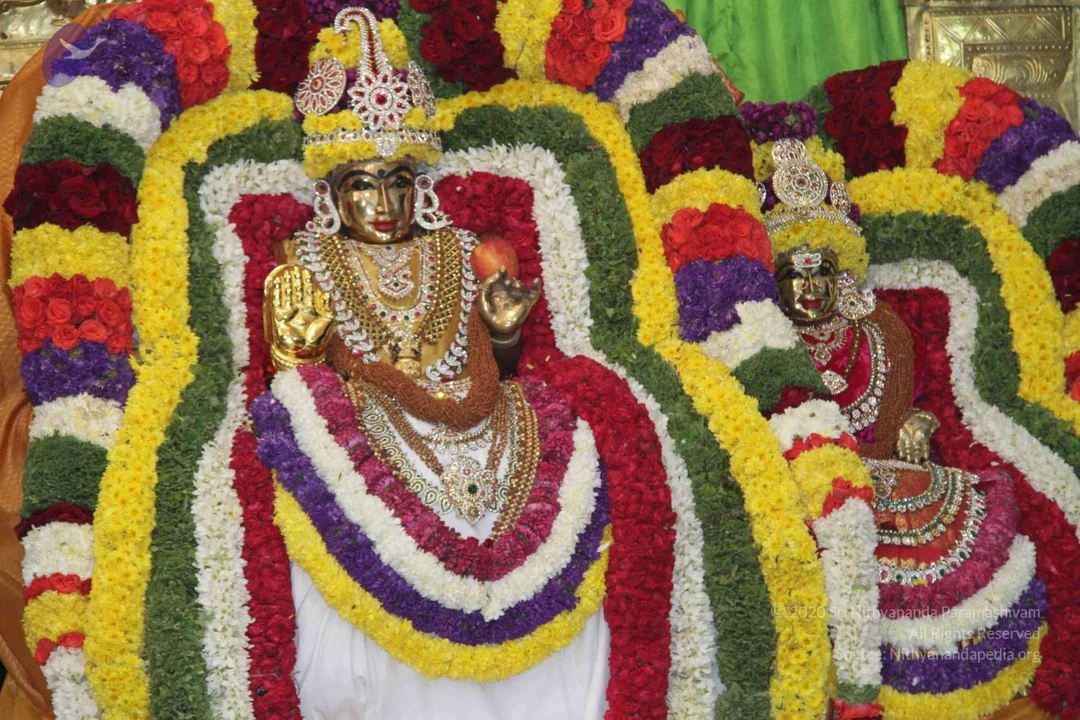
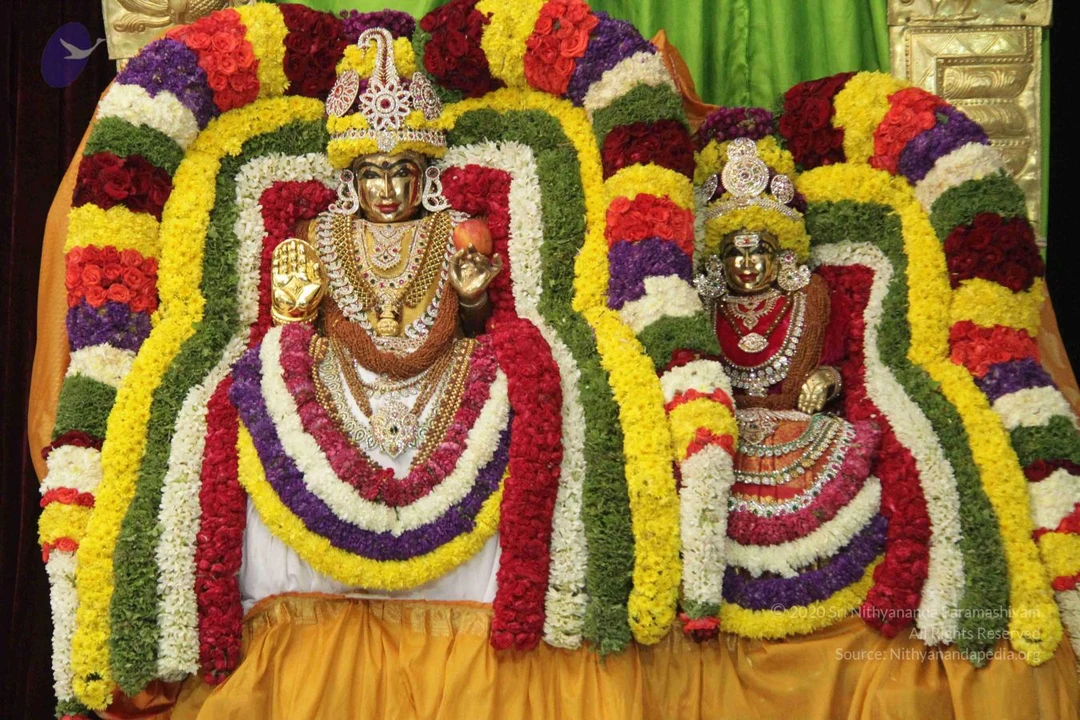
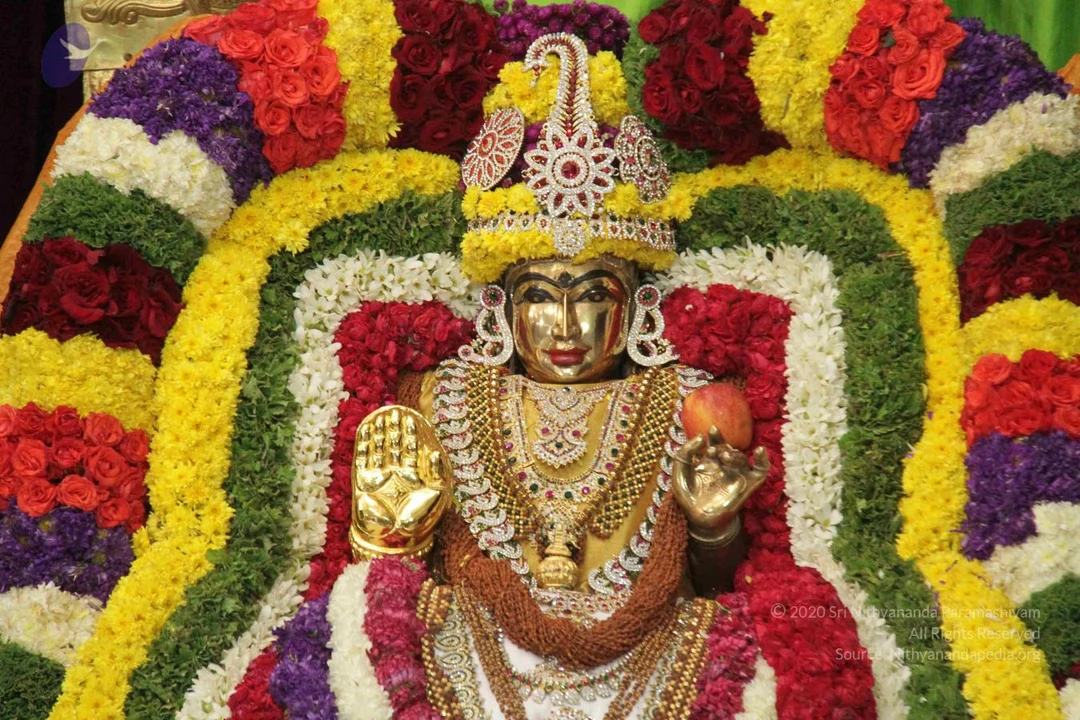
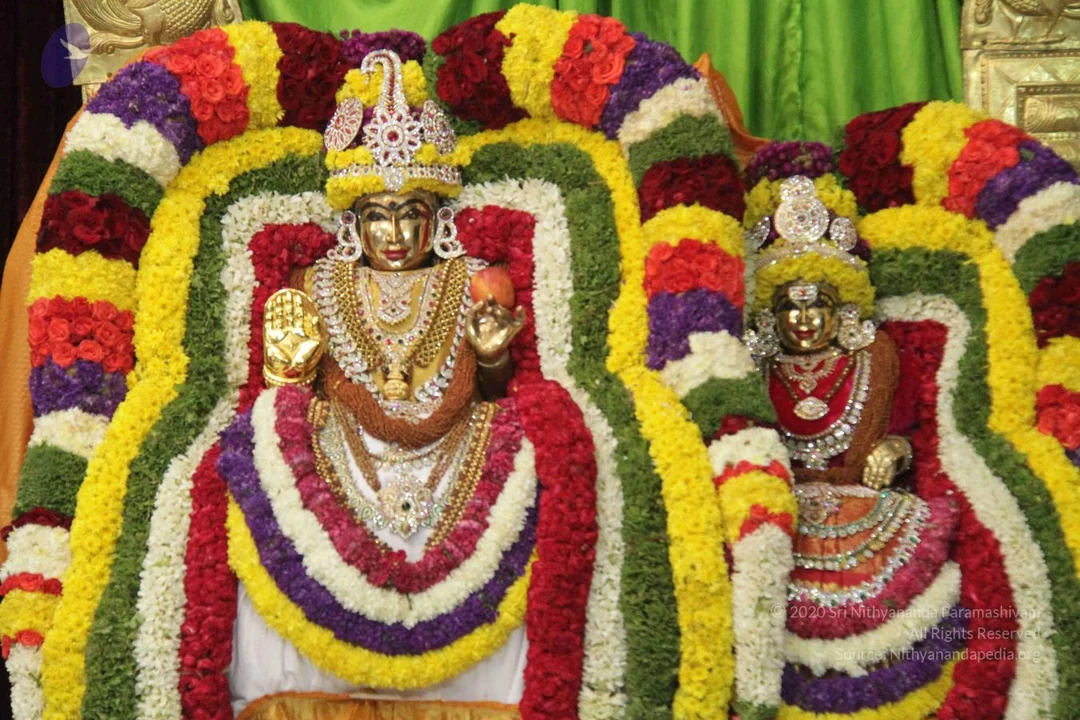
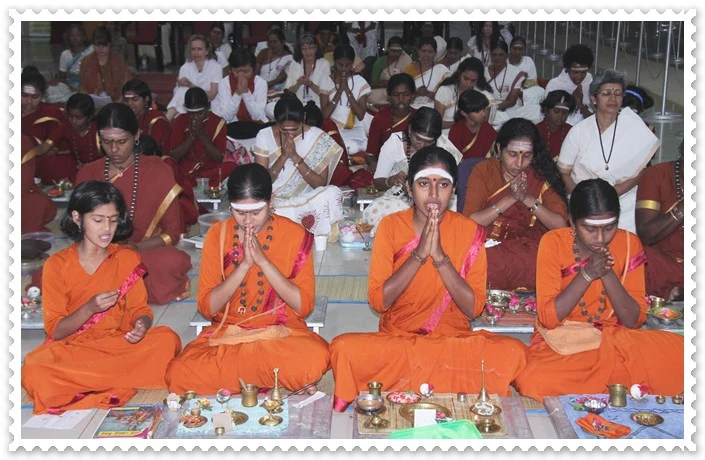
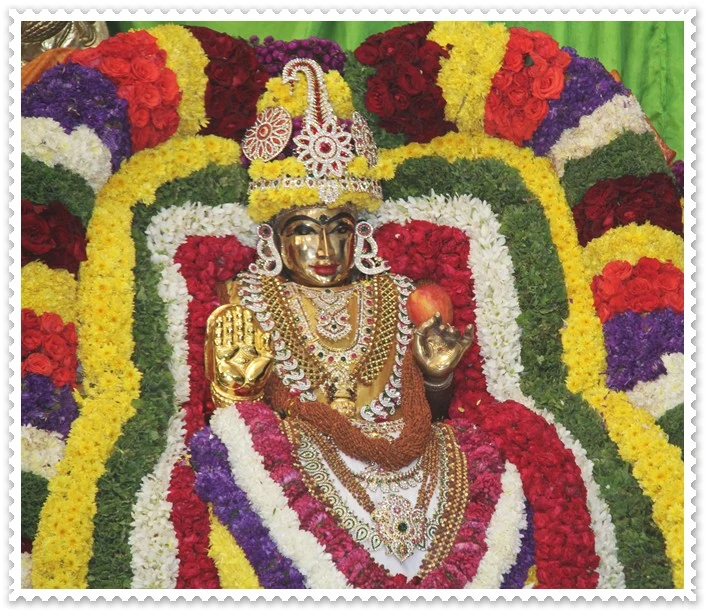
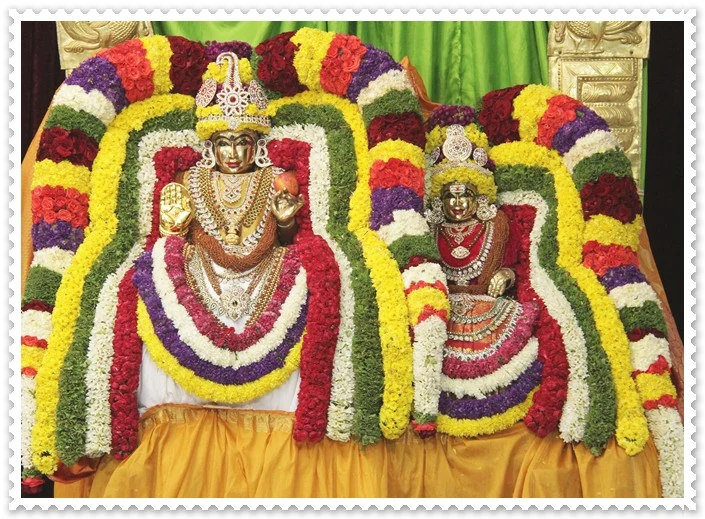
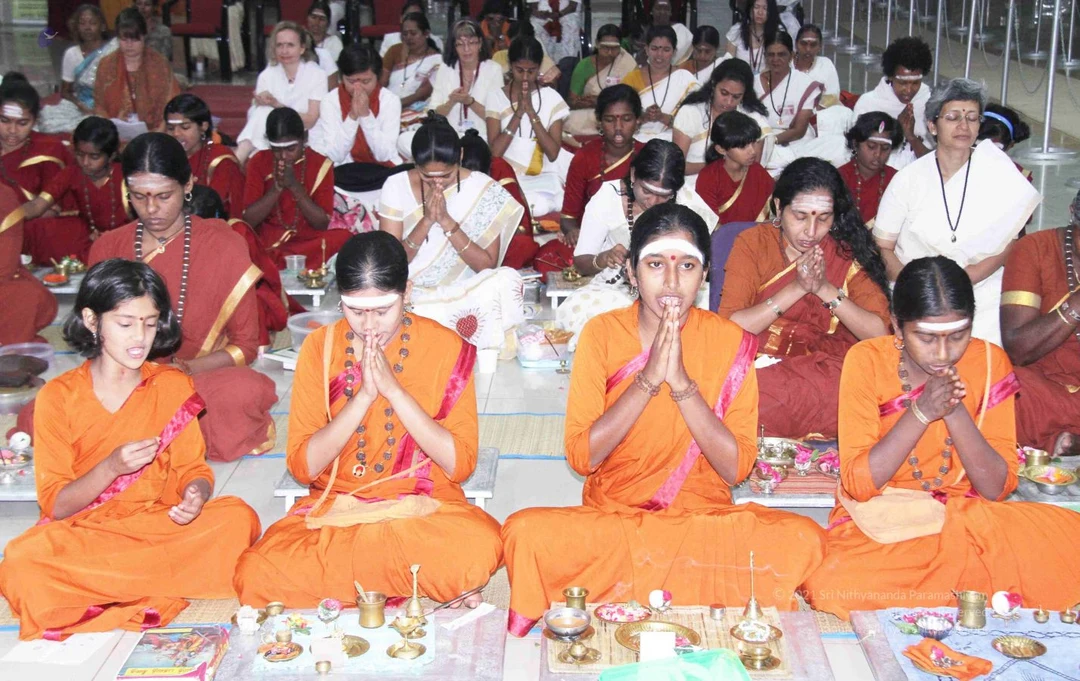
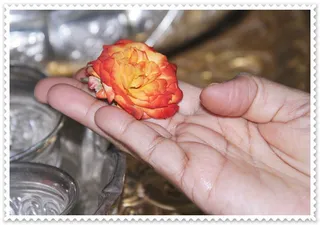
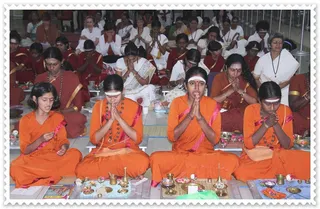
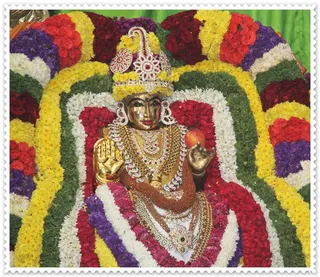
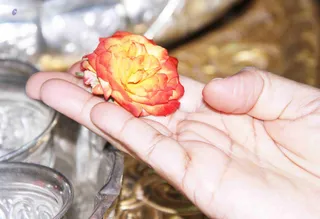
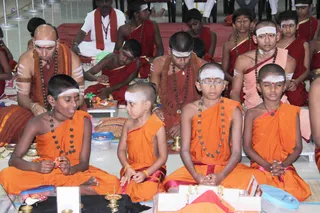
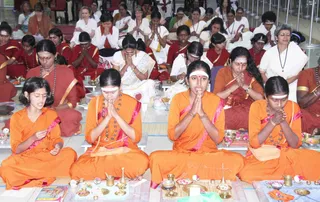
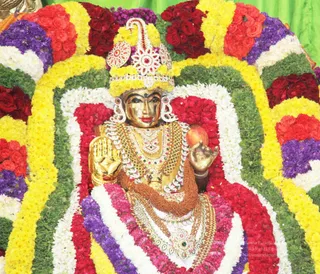
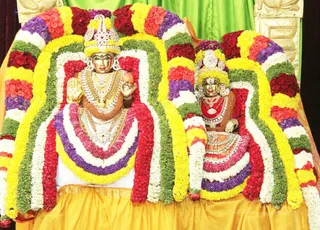
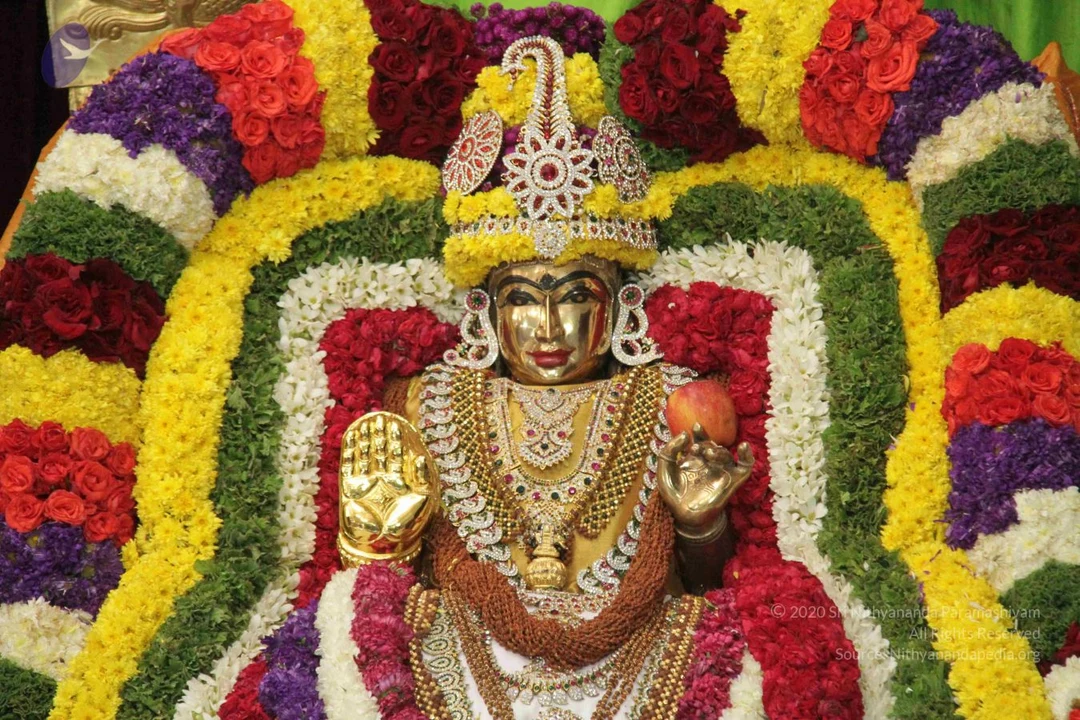
Close-up of a ritual arrangement on a large ornate brass tray filled with red, orange and yellow rose petals surrounding a small brass lingam-shaped object. Surrounding silver bowls hold orange liquid, white milk-like liquid, and more petals, with silver spouted vessels and ladles placed among them. No people are visible; the scene shows offerings laid out for an abhishekam-style puja on brass and silver ware.Close-up photograph of a hand held palm-up holding a single orange and yellow rose with red-tipped petals. Behind it, blurred silver and polished metal vessels and a gold-toned surface are visible. Only one hand is visible, so one person is partially shown.A photograph of a seated group of women and girls at a person satsang-style gathering, most in orange and saffron robes with pink borders. Four young women in front sit cross-legged with palms pressed together in namaskar, one wearing a rudraksha mala and forehead tilaka. Behind them, others in maroon and red saris and white saris sit with hands folded or in prayer. Brass lamps, small brass pots, flower offerings and plates with red and pink petals lie on low wooden stands and mats in front of them. No identifiable a person figure is visible in the frame.A golden deity murti decorated for worship sits within a dense arrangement of garlands in yellow, white, red, magenta and purple flowers. The murti wears a tall ornate crown with red and white jewelled medallions, large jewelled earrings, layered gold necklaces and a multi-strand beaded necklace. Its raised right hand shows a blessing gesture and its left hand holds a red fruit. No physical people are visible; the figure is a statue.A man in a maroon and gold saffron-toned robe with a matching turban stands on a raised golden platform before a gilded throne flanked by two gold lion figures. Two painted standing deity murtis with multiple arms and gold crowns stand on either side. He wears a long beaded necklace and holds his palms together in front of his chest. Tall brass oil lamps stand on the platform, and the backdrop has ornate pink and green pillars with a gold-framed doorway. The man shows distinctive visible cues of long sweeping hair under the turban and ceremonial gold ornamentation, consistent with a person seated or standing as the speaker at the satsang stage.Two gilded metal deity murti are decorated with thick multicolour flower garlands in yellow, red, purple, white and green, arranged in arched frames behind them on a gold draped base. The larger figure on the left wears a tall crown, layered gold necklaces and a white garland, with one hand raised in blessing. The smaller figure on the right wears a silver-embellished crown, red garments and a red-and-white garland, seated with hands in front. No physical people are visible.
Satsang

31 photosSource gallery
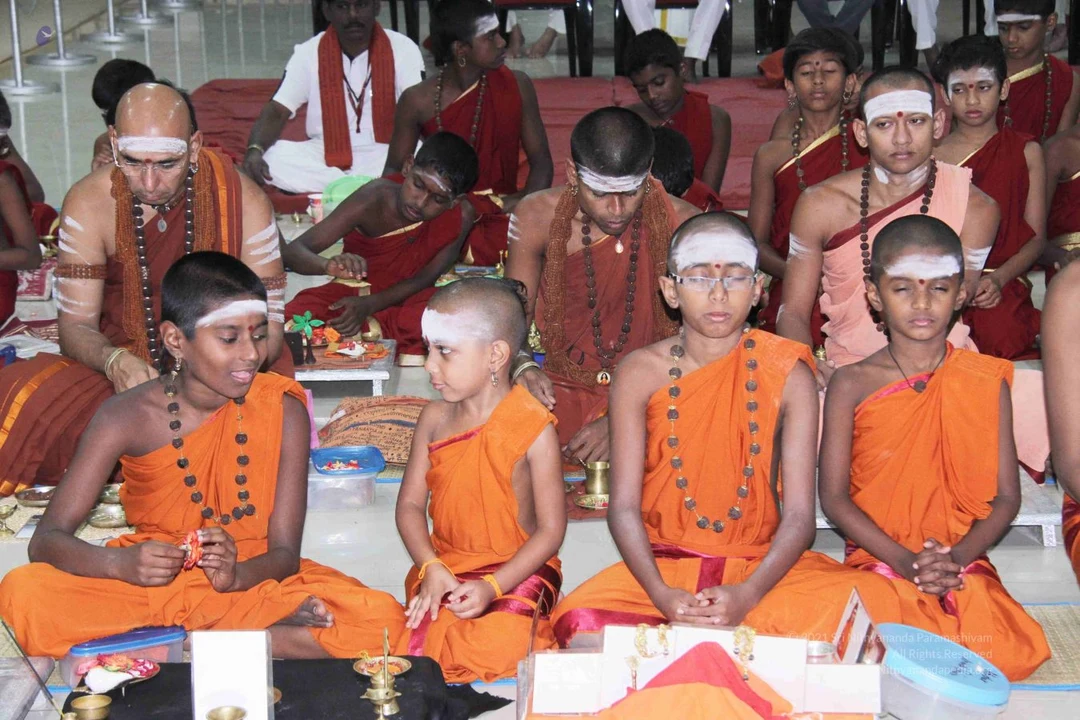
Close-up photograph of a ritual arrangement on ornate brass and silver trays. A central brass plate holds a golden vessel with a tall stem, surrounded by a dense ring of red, orange, pink and yellow flowers. Silver bowls hold red and orange rose petals and pale yellow liquid, and silver conch-shaped vessels with spouts sit among them with small silver spoons. The setting suggests puja offerings; no people are visible.Close-up photograph of an open hand with the palm facing up, holding a single orange-and-yellow rose with red-tipped petals. Behind the hand, out of focus, are silver and gold ritual vessels and a bowl of water. No people are visible beyond the hand.A group of young saffron-robed boys and a few adult priests sit cross-legged on a white floor during a ritual. Several boys wear orange dhotis and shawls, rudraksha malas and white sacred marks on their foreheads. An adult in orange with rudraksha beads sits at the centre with a pale hand on a boy's shoulder. On the left, an adult in orange with a bald head and white body markings sits behind brass oil lamps, a small tray of fruit and flowers, and a plastic container. A man in a white shirt with a red shawl sits in the background. A boy in a pink shawl sits to the right, and a boy in glasses holds his hands together. Brass lamps and bowls sit on a low white table in the foreground.A seated group of young women in saffron-orange and red saris with pink borders and rudraksha malas sit in rows with palms pressed together in prayer, with white sandalwood or vibhuti marks on their foreheads. Brass lamps, a kalasha-style vessel, small brass cups and offering plates with flowers and kumkum stand on low mats in front of them. Behind them, more devotees in white and cream saris sit in an indoor hall, some with folded hands and eyes closed. No clearly identifiable a person figure is visible in this frame, so this appears to be a group satsang or puja gathering.A golden deity murti adorned with dense garlands of yellow marigolds, red roses, purple flowers and white jasmine arranged in layered borders around it. The figure wears an ornate crown with a red and white floral motif, large jewelled earrings, multi-strand gold necklaces set with red and green stones, and a rudraksha-style brown bead cord. Its right hand is raised in abhaya mudra and its left hand holds a red fruit. Green foliage fills the background behind a green cloth. No living people are visible; this is a decorated statue shown in a photograph.Photograph of two golden deity murtis seated side by side on a yellow-gold cloth, heavily decorated with a dense arch of flower garlands in yellow, red, purple, white and green. The larger murti wears a crown, gold necklaces and a white dhoti-style garment, with one hand raised in a blessing gesture. The smaller murti beside it wears a red and gold dress, ornate necklaces and a crown. Green drapes and gilded carved panels form the background. No people are visible.

Darshan
51 photosSource gallery
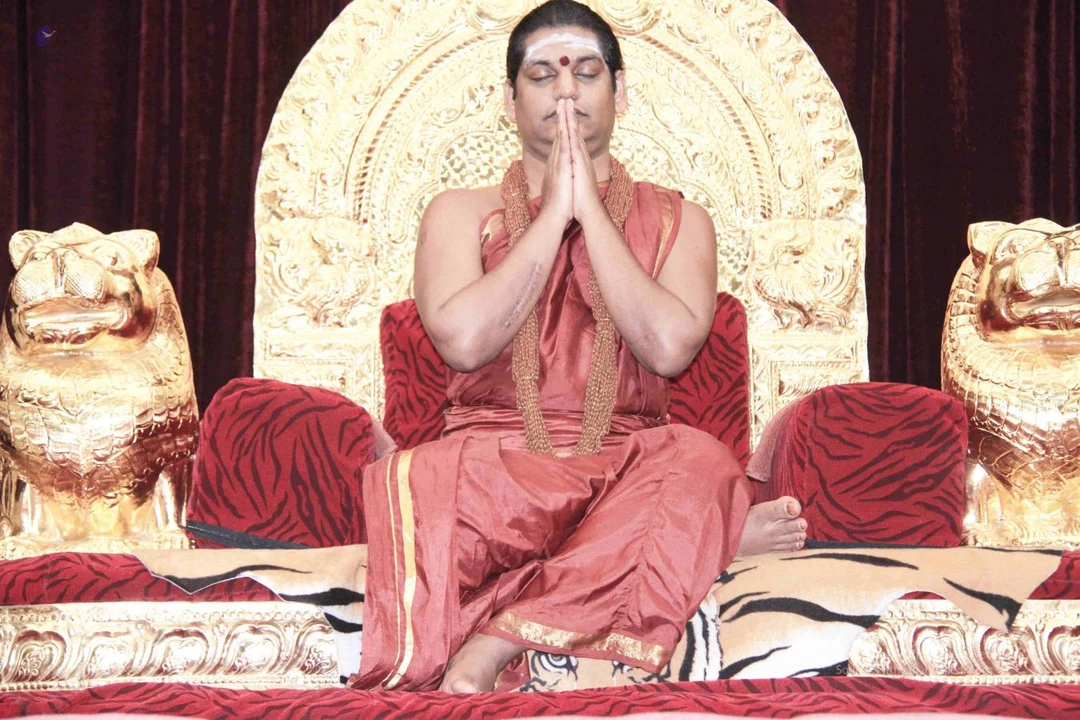
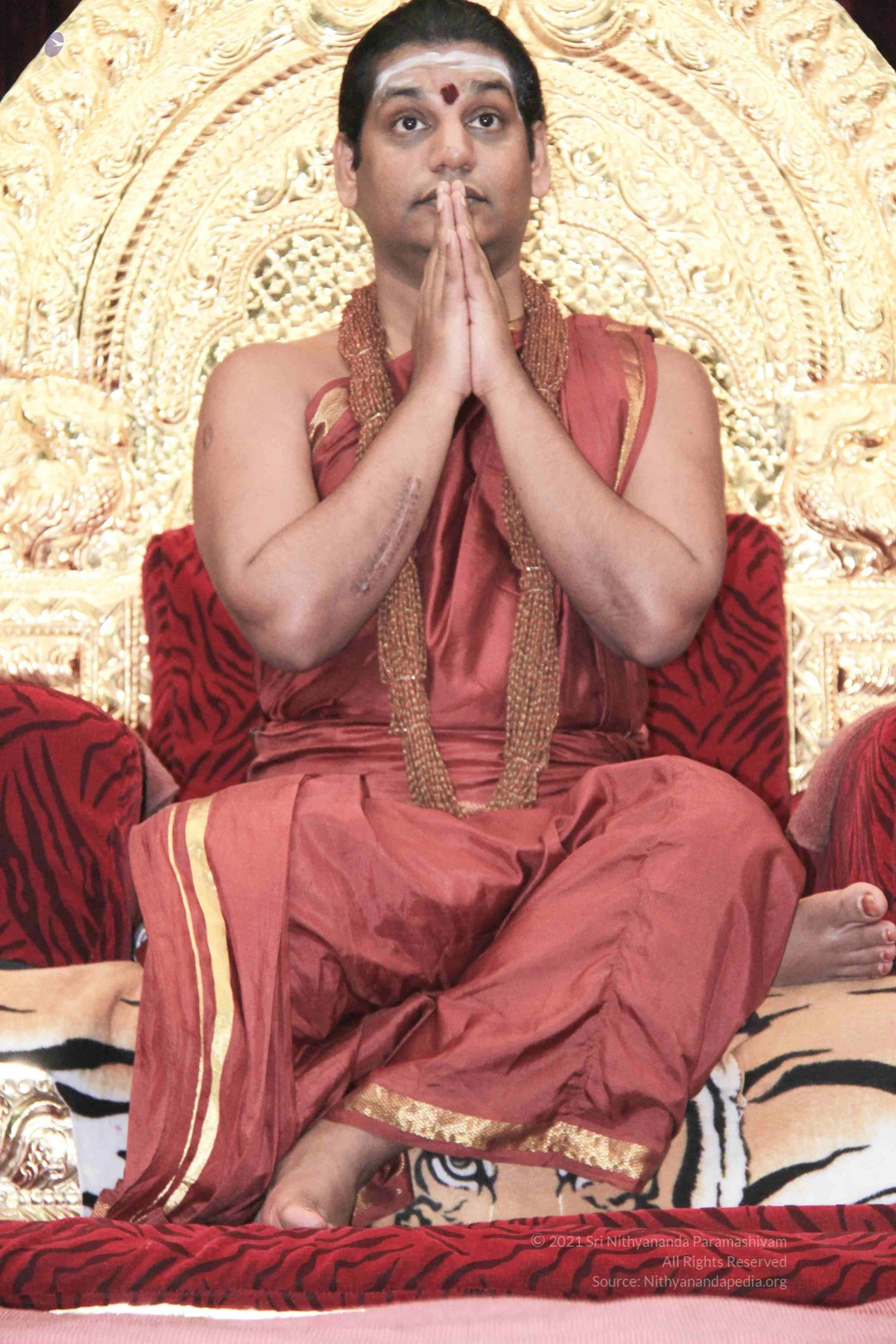
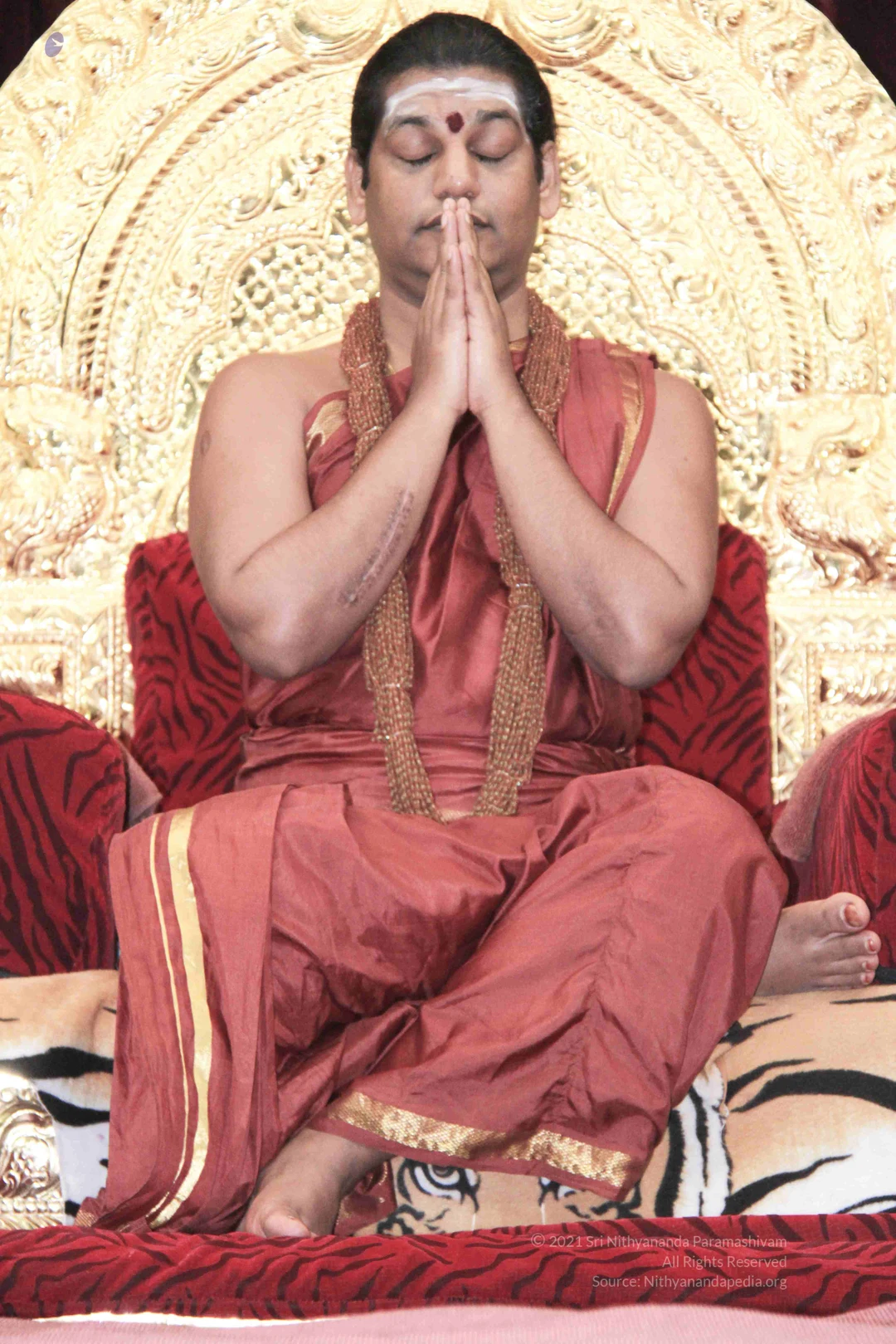
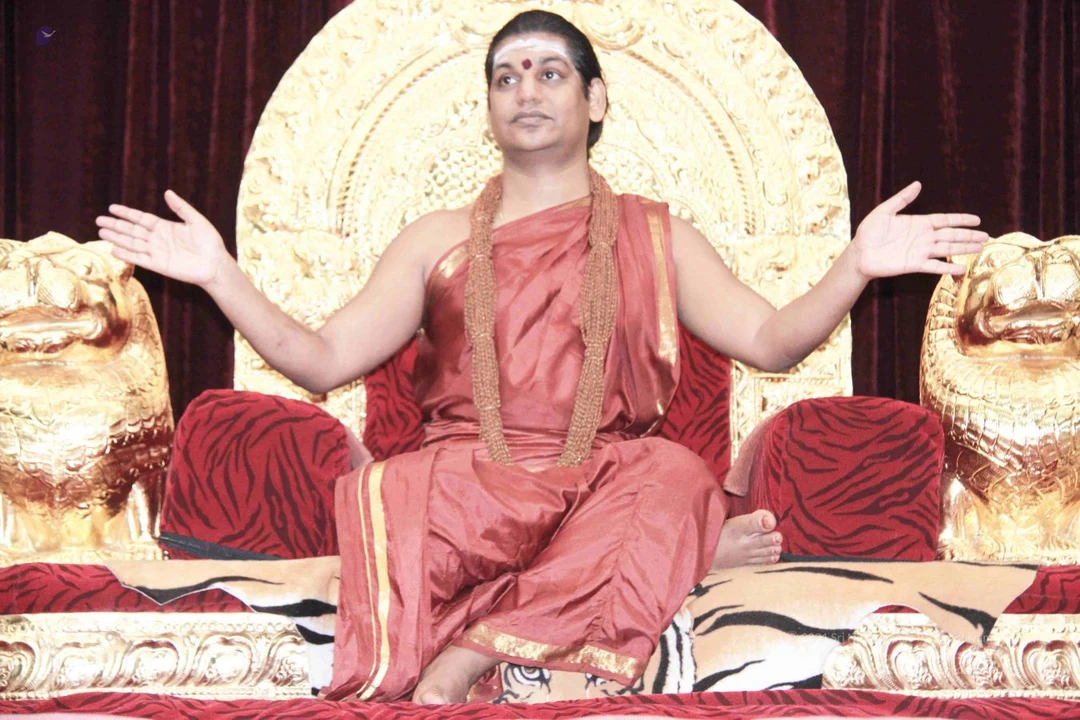
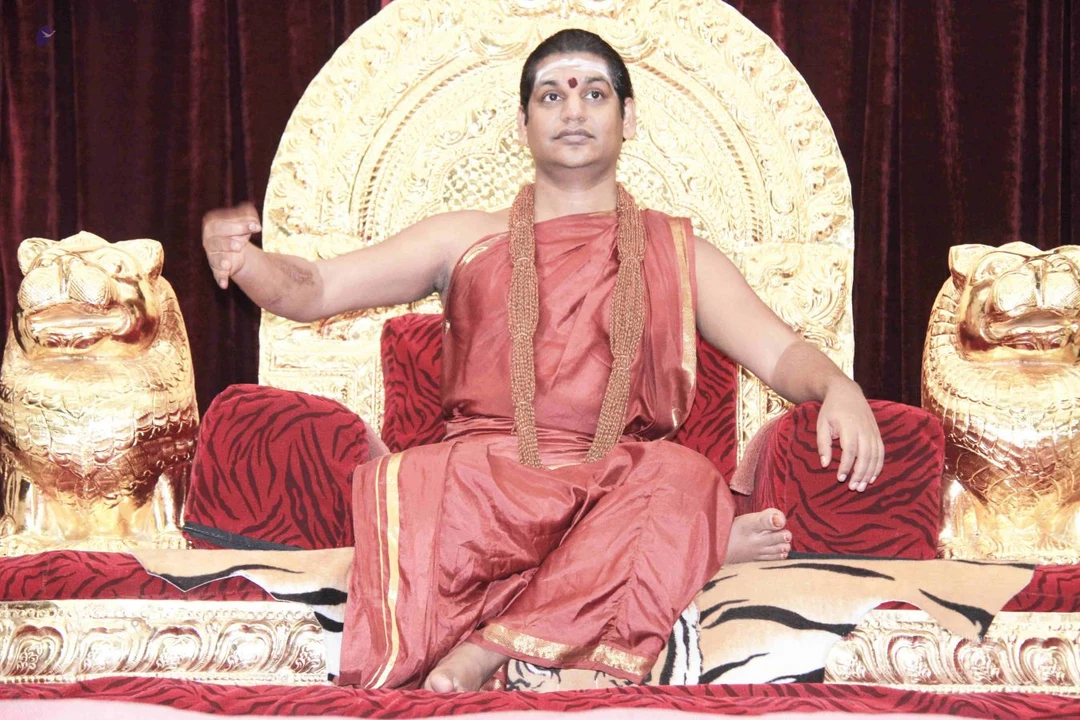
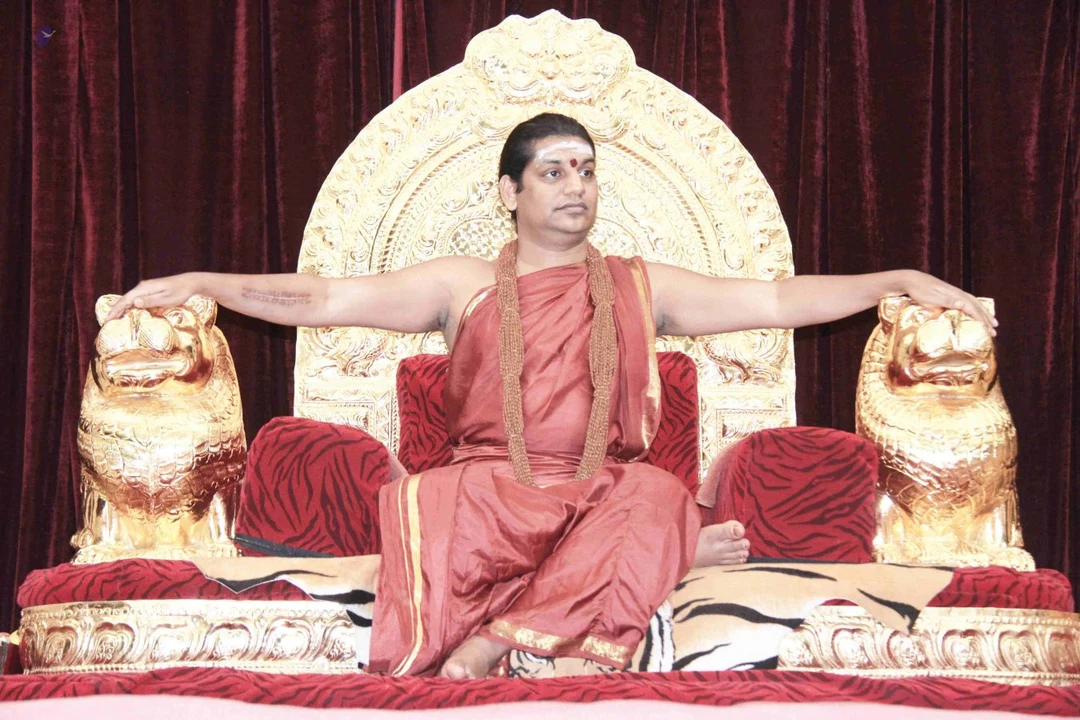
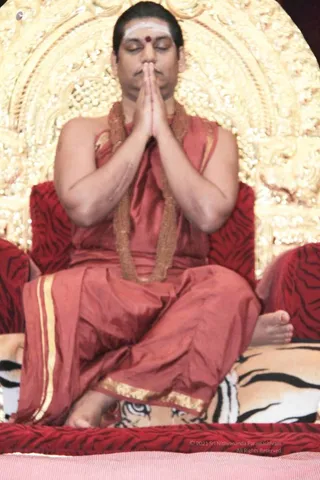
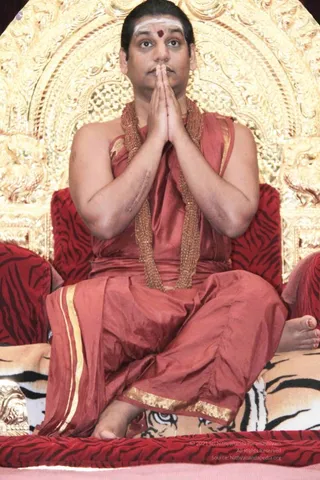
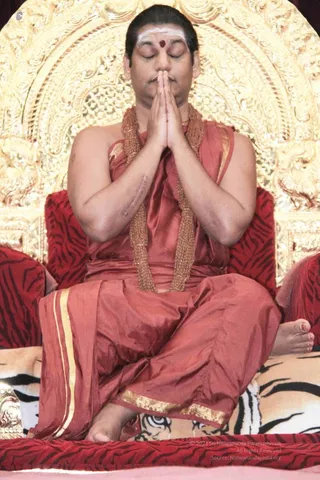
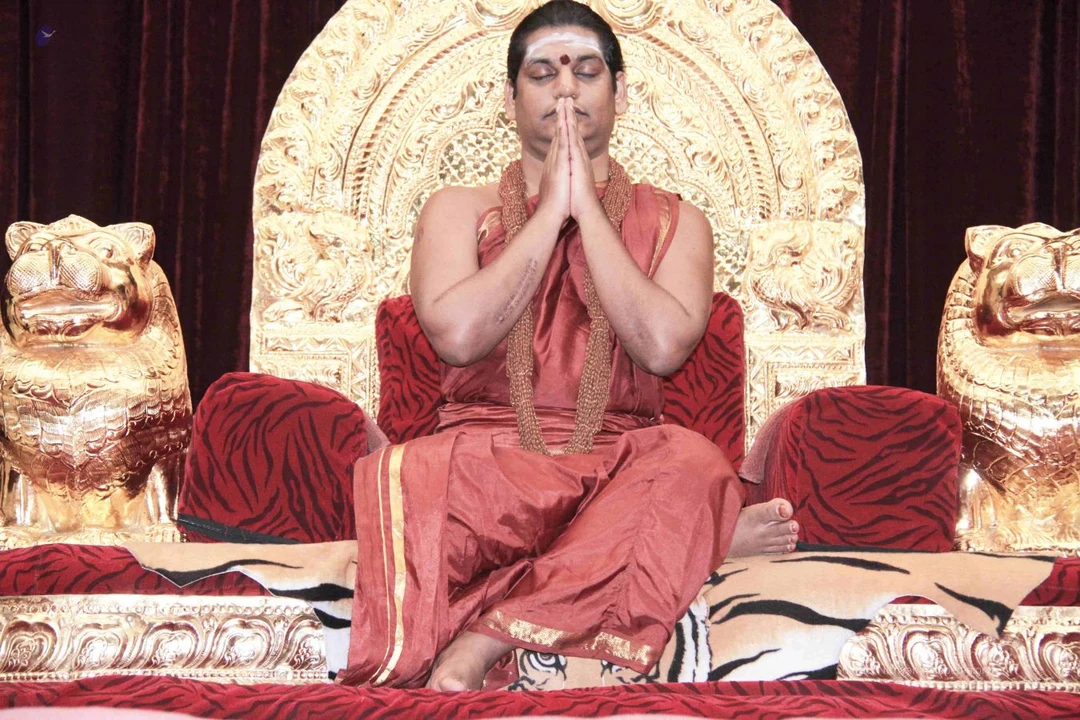
A seated man in a rust-red silk robe with gold-edged border sits cross-legged on a red-and-black tiger-striped cushion before an ornate gilded throne backed by a carved gold arch. Two gold lion-head sculptures flank the seat. He presses his palms together in anjali mudra with eyes closed, wears a gold-toned beaded necklace, and has a white vertical tilak and red bindi on his forehead. Red velvet drapes frame the background. Appearance-based candidate: a person, seated in the role of a guru giving satsang, with the ceremonial throne and tiger-striped seating as cues.A seated man with hands pressed together in anjali mudra sits on an ornate gold throne with a carved arched back and gilded lion-head armrests, draped in red-and-black tiger-striped cushions. He wears a rust-red silk garment with gold border, a gold-bead necklace, a white forehead marking and a red bindi, with eyes closed. The setting is a stage with deep maroon velvet drapes behind him. Appearance-based label: a person, seated in a throne-like setting with rust-red robes, long swept hair, and ceremonial gold necklace.A seated man in reddish-maroon silk robes with gold borders sits on a red tiger-print cushioned seat in front of an ornate gold-embossed backdrop. He has his eyes closed and palms pressed together in anjali mudra before his chest. He wears a tan rudraksha mala draped over his shoulders, a white vertical forehead marking with a red dot, and is barefoot. The seat and cushions are upholstered in red with black stripes. a person by appearance cues: reddish ceremonial robes, rudraksha mala and a ceremonial seat, with the page indicating his presence at a satsang.A seated man in rust-red silk robes with gold border sits with palms pressed together in namaste before an ornate gold-embossed throne. He wears a rudraksha mala of reddish beads across his chest, a white urdhva-style tilak with a red bindi on his forehead, and sits cross-legged on a tiger-striped red cushion. Behind him, a gold repoussé backrest with carved patterns fills the frame.A seated man in a maroon-red silk garment with gold border sits cross-legged on a red and tiger-striped cushion before an ornate gilded throne backrest. He has eyes closed, palms pressed together in anjali mudra at chest level, a white vibhuti line and red kumkum on the forehead, and a long beaded rudraksha-style mala with gold tones draped around his neck. Behind him are red tiger-print cushions.A seated man in a red-orange silk garment with a gold border sits on an ornate gilded throne backed by a large golden carved arch. Two golden lion-head armrests flank him, and the seat cushions are upholstered in red tiger-stripe fabric over a tiger-skin rug. He wears a long rudraksha mala draped over his chest, a red bindi and white forehead markings, and his bare feet are visible. His right arm is raised open-palmed in an expressive gesture while his left hand rests on his knee, and he is speaking. A dark red curtain hangs behind the throne. One person is physically present.
Yoga
6 photosSource gallery
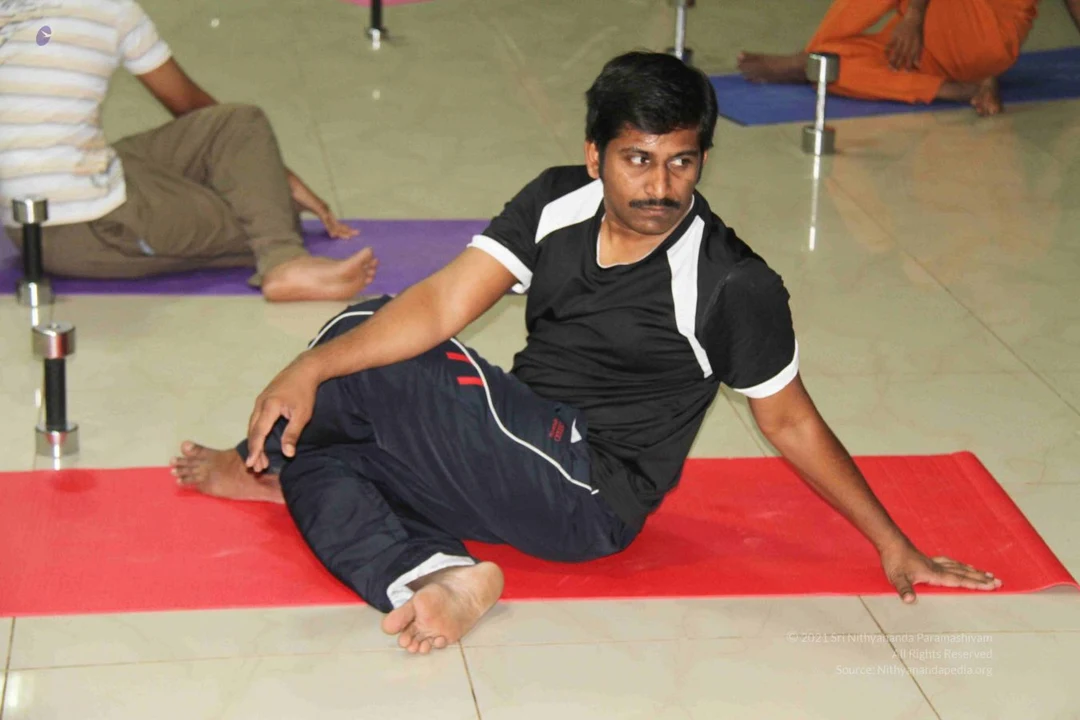
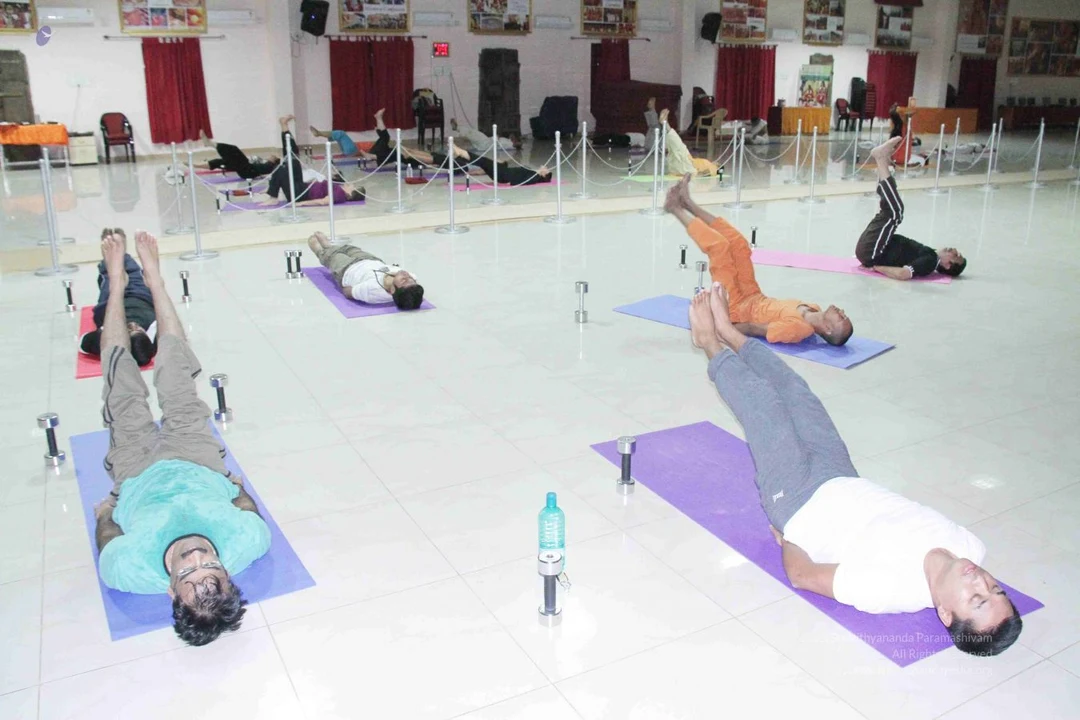
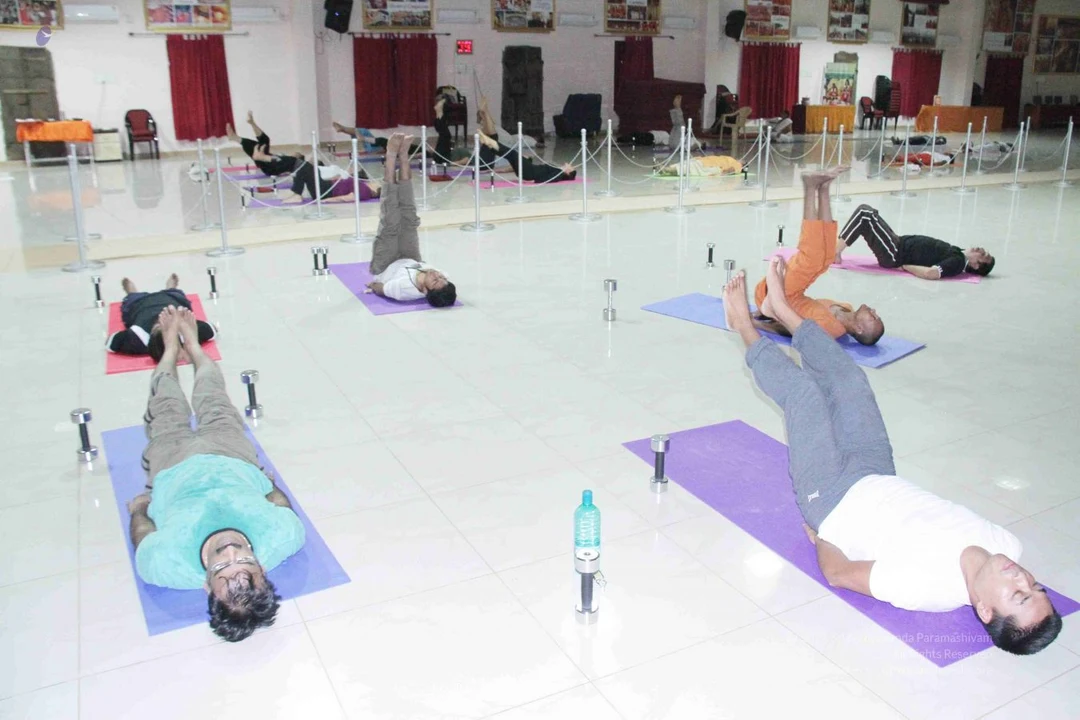
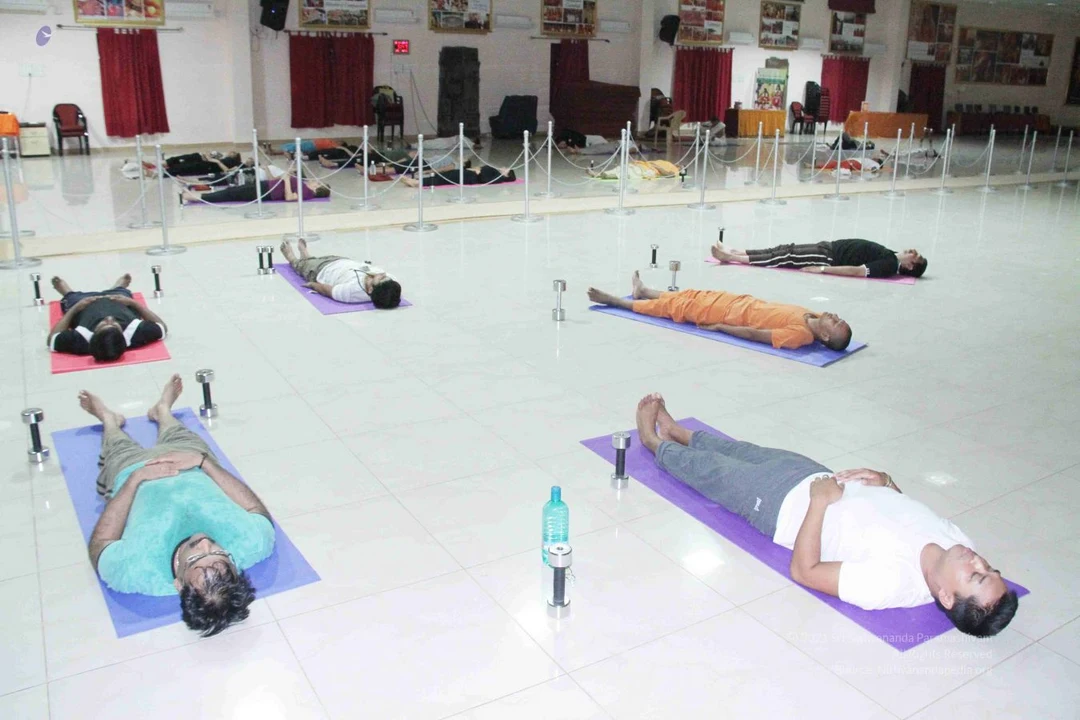
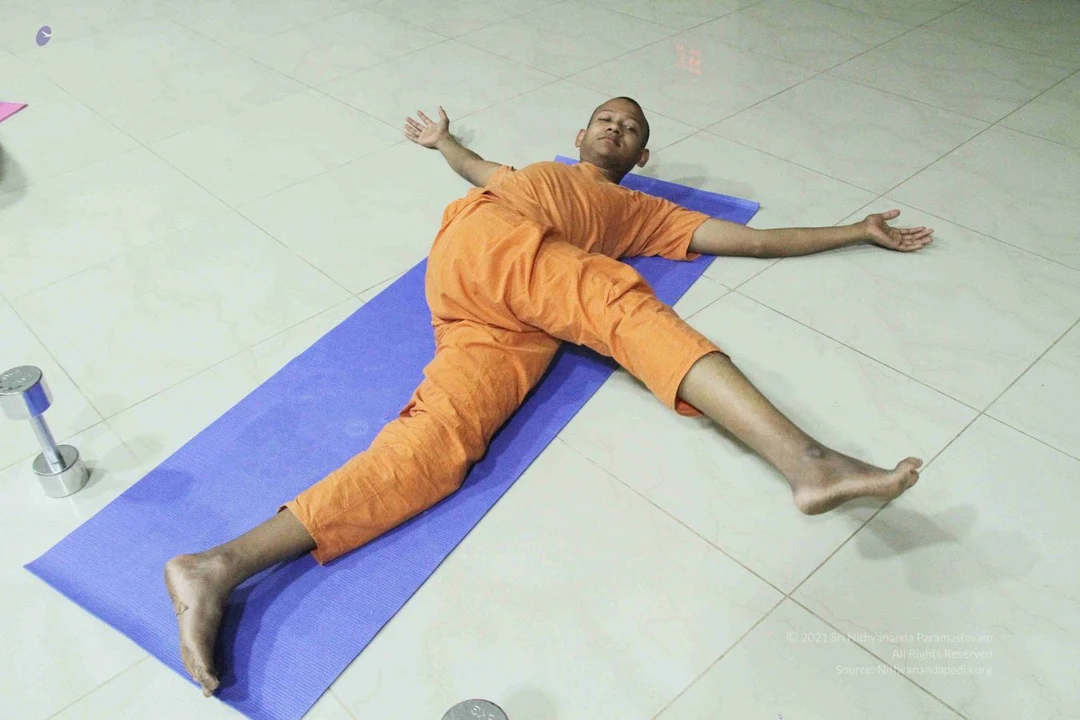
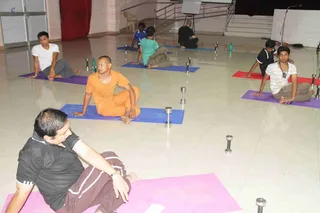
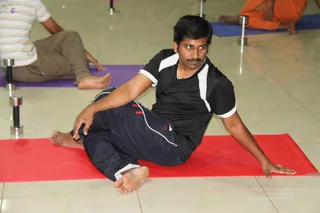
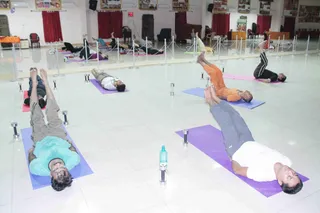
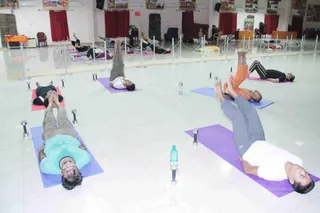
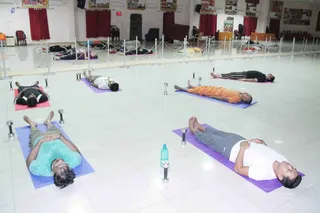
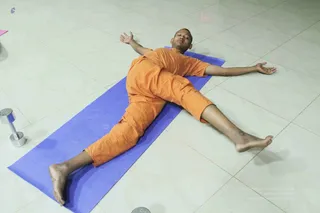
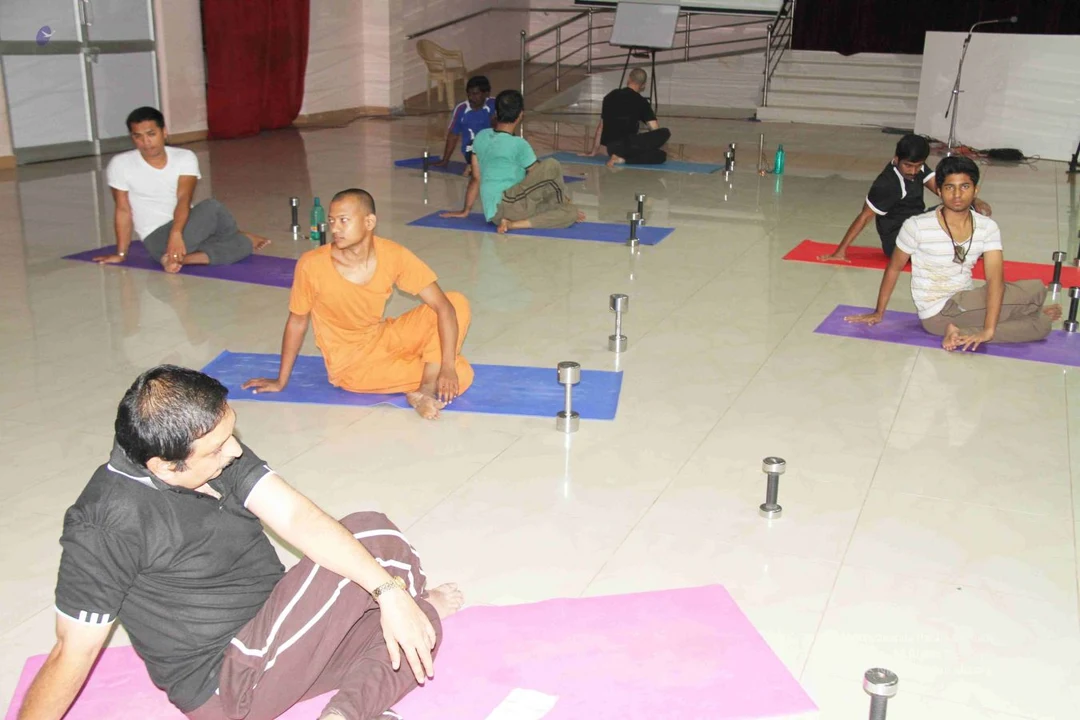
Indoor hall with a polished cream tile floor where around seven people sit on coloured yoga mats in a seated twisting posture. A monk in orange robes sits centre-left on a blue mat, while a man in a black polo and brown trousers sits in the foreground on a pink mat. Others wear white t-shirts, a green top and black shirts. Small metal dumbbells are placed between the mats. Red curtains, a stage with a microphone stand and a projection screen are visible at the back.A man in a black and white short-sleeved athletic top and navy track pants sits on a red yoga mat in a seated twist, one hand planted behind him and his gaze turned sideways. Behind him on the left, a person in a striped white and brown shirt sits on a purple mat beside a dumbbell, and on the upper right a figure in orange robes sits cross-legged on a blue mat. Metal dumbbells stand on the tiled floor between the mats.A photograph of an indoor yoga session on a glossy white tiled floor in a large hall with red curtains and framed pictures on the walls. Several men lie on purple, blue and pink yoga mats, lifting their legs straight up in a supported inverted pose, while others rest on their backs or hold the posture with their feet in the air. Metal dumbbells sit between the mats and a plastic water bottle stands on the floor. Men wear white, grey, teal and orange clothes.A photograph of a yoga session in a bright hall with white tiled floor and red curtains. Many participants lie on their backs on purple and blue mats, legs raised upward in an inverted posture, with small metal dumbbells placed between the mats and steel rope barriers lining the floor. Two men in the foreground wear a white t-shirt with grey track pants and a teal shirt with khaki trousers. Another man in orange and a man in black tracksuit appear in the middle and right. Framed posters hang on the back wall.Photograph of a bright tiled hall where several people lie supine in savasana on purple and red yoga mats, with small metal dumbbells placed beside them. A man in a teal shirt and grey trousers lies closest to the left edge, a man in a white shirt and grey shorts lies at right, and a man in an orange shirt and purple-blue mat lies in the middle right. Further back, more participants lie on mats between silver stanchion posts with rope lines, under red curtains and framed photo panels on the walls. A water bottle stands on the floor near the front mats. Several more participants are visible in the background, bringing the total visible people to roughly ten.A photograph of a single person lying supine on a blue yoga mat on a cream tiled floor, arms spread wide and legs splayed in a relaxed stretch. The person wears an orange saffron-coloured kurta and loose orange pants with bare feet and a shaved head. A silver dumbbell lies at the left edge of the frame and a pink mat edge appears at the top left. The page notes a person presence, but the appearance here is uncertain, so the person is described by role only.