Skip to content
Tuesday

8 October 2013

Cosmos is Waiting to fulfill your dreams!

Dated photos
392
Source pages
1
Media
2
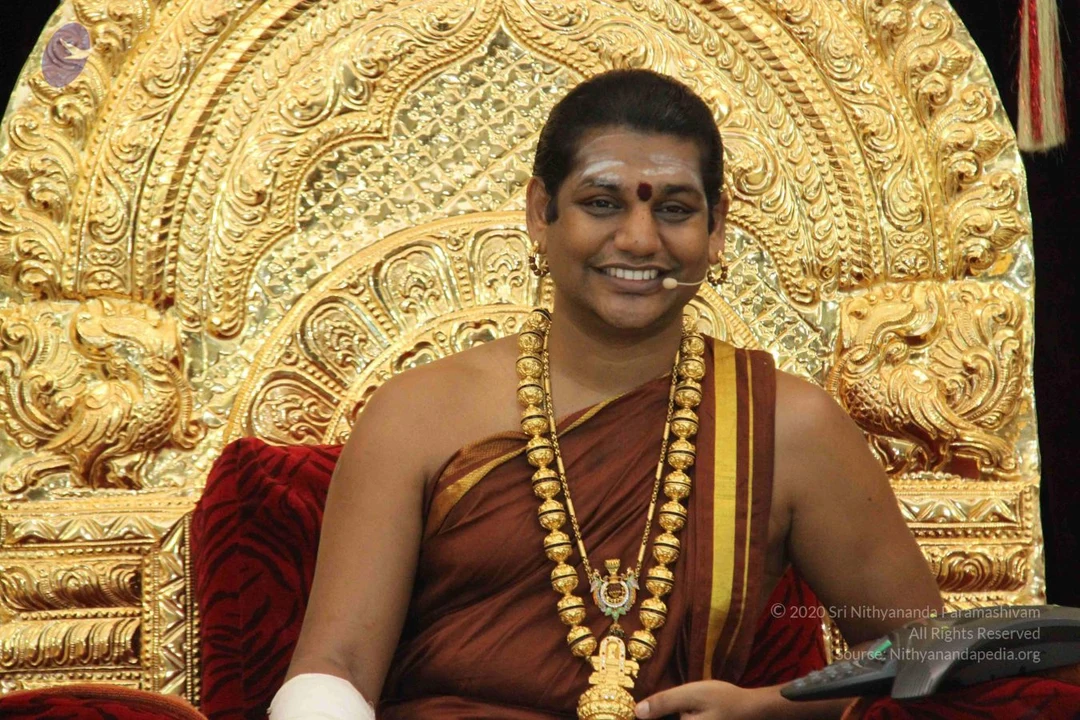
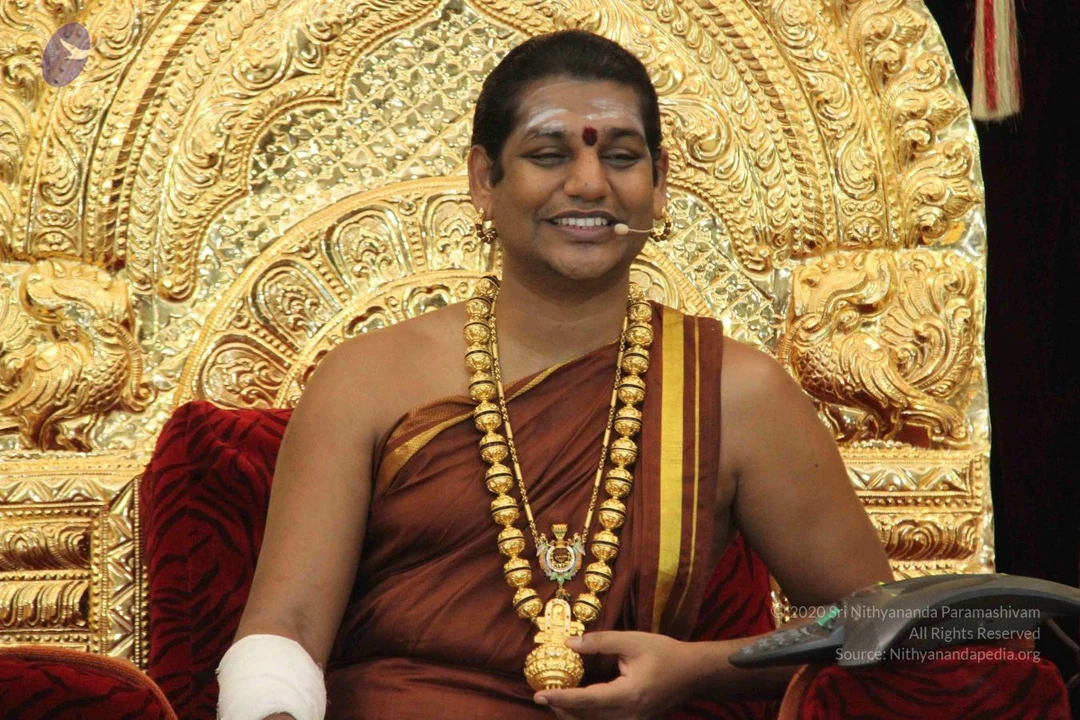
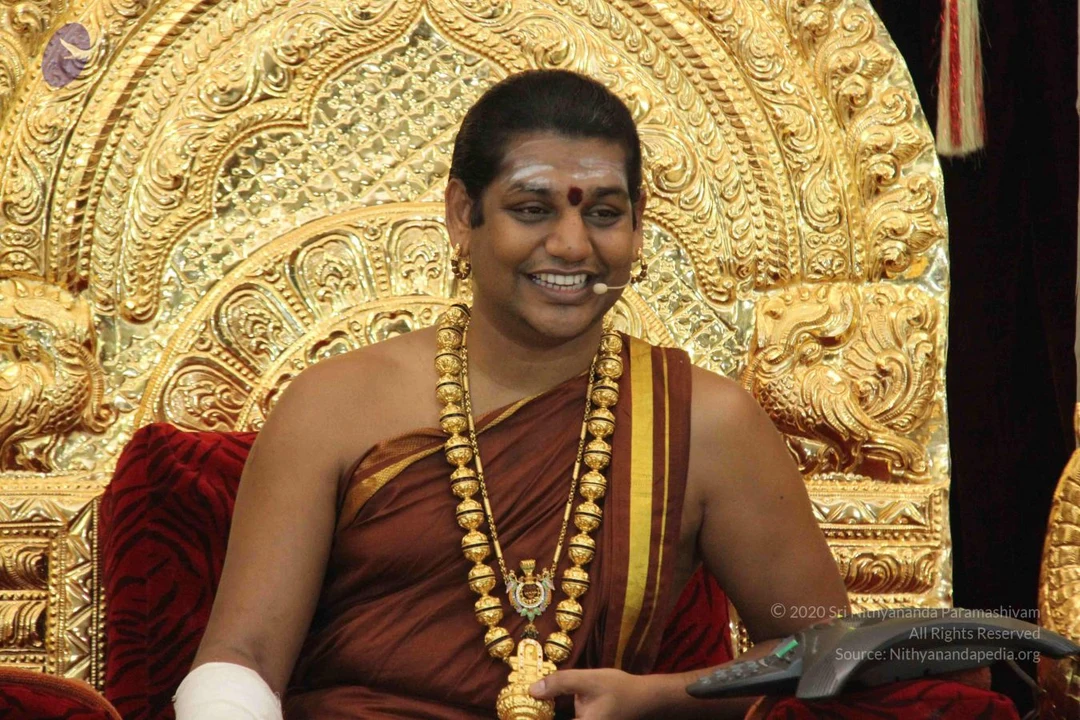
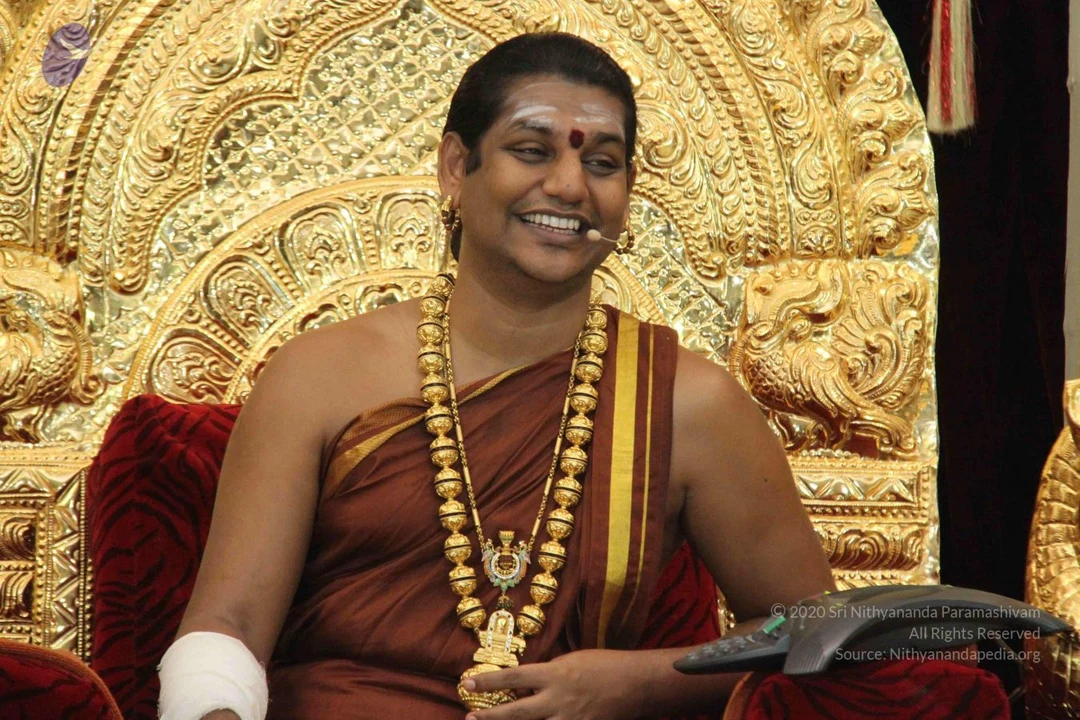
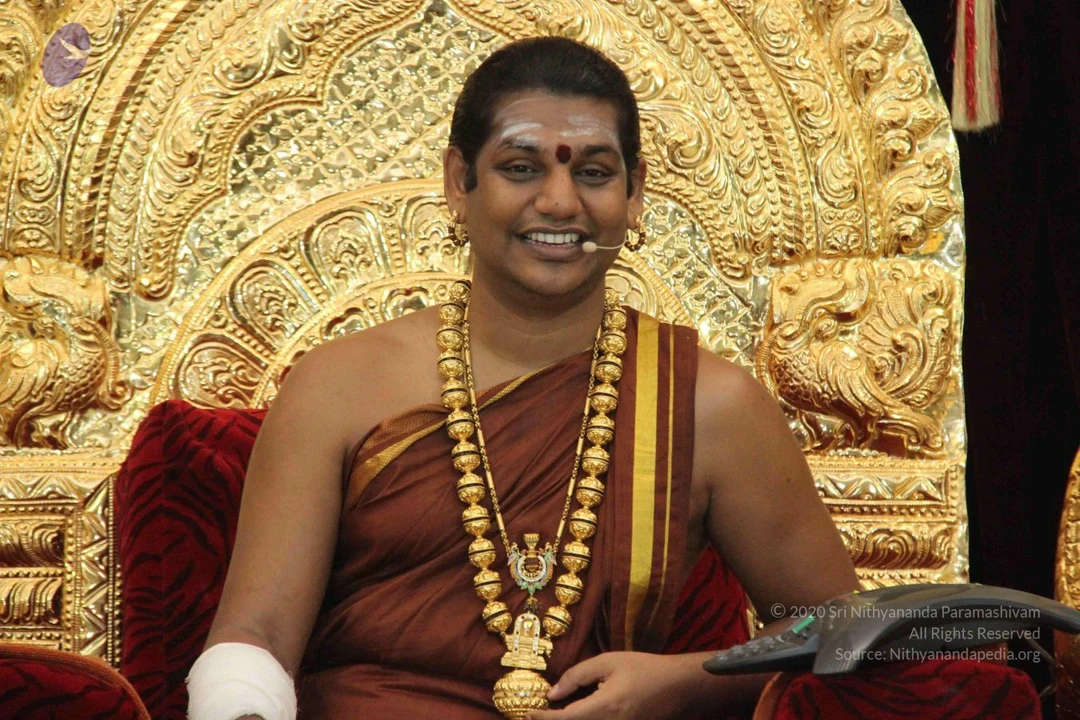
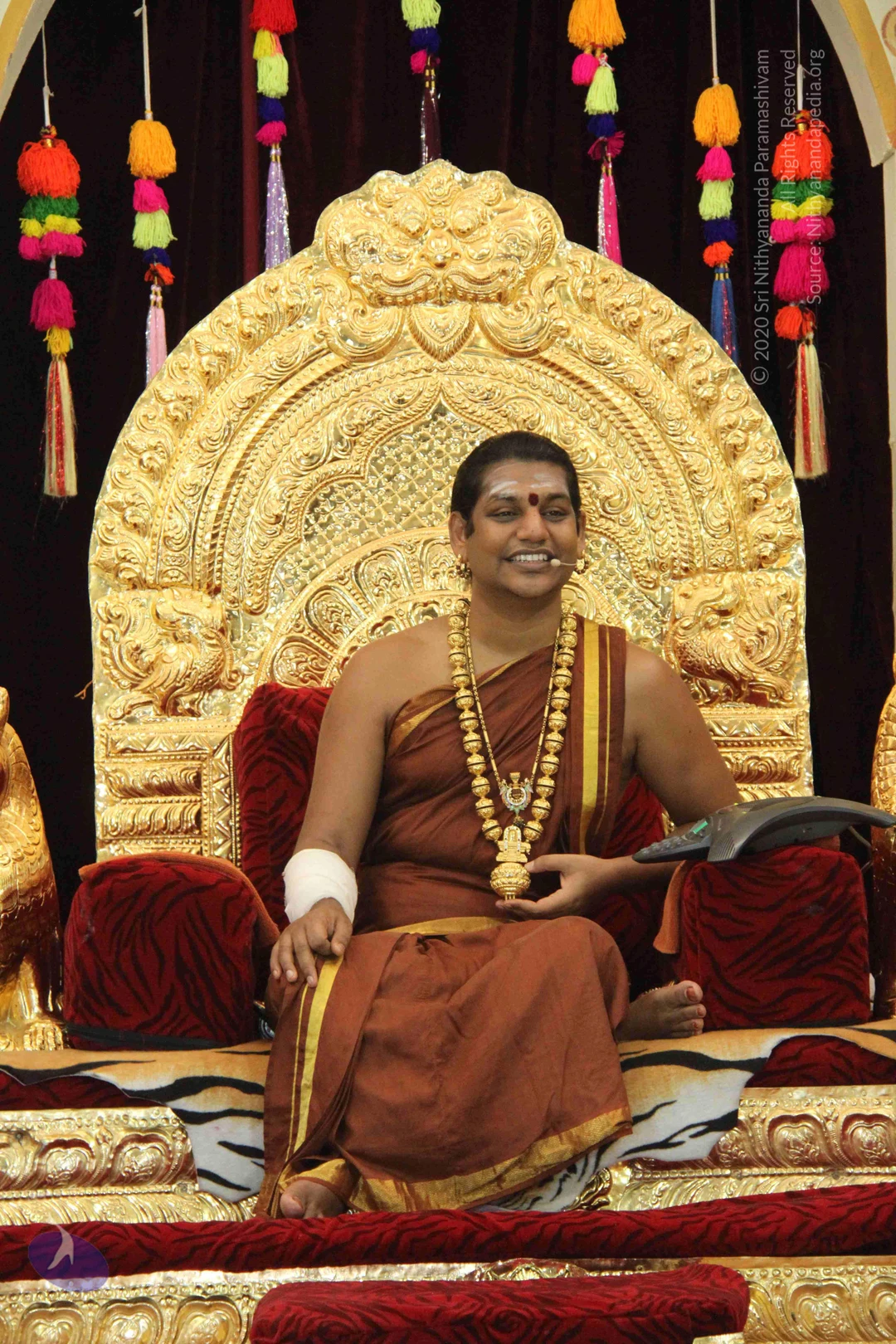
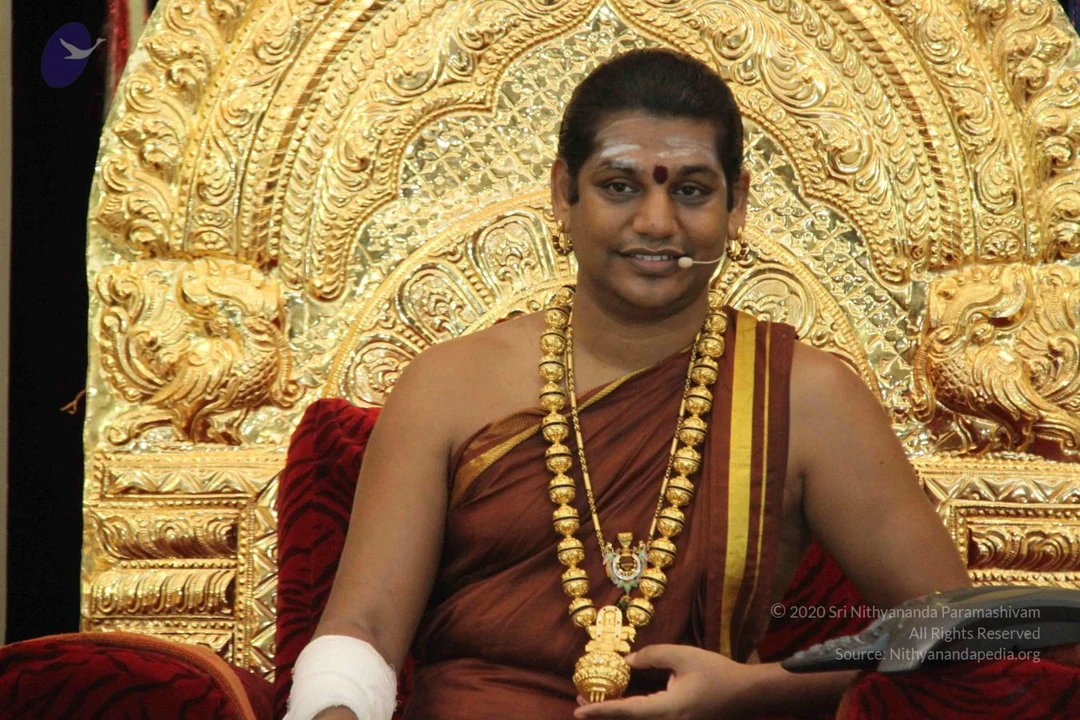
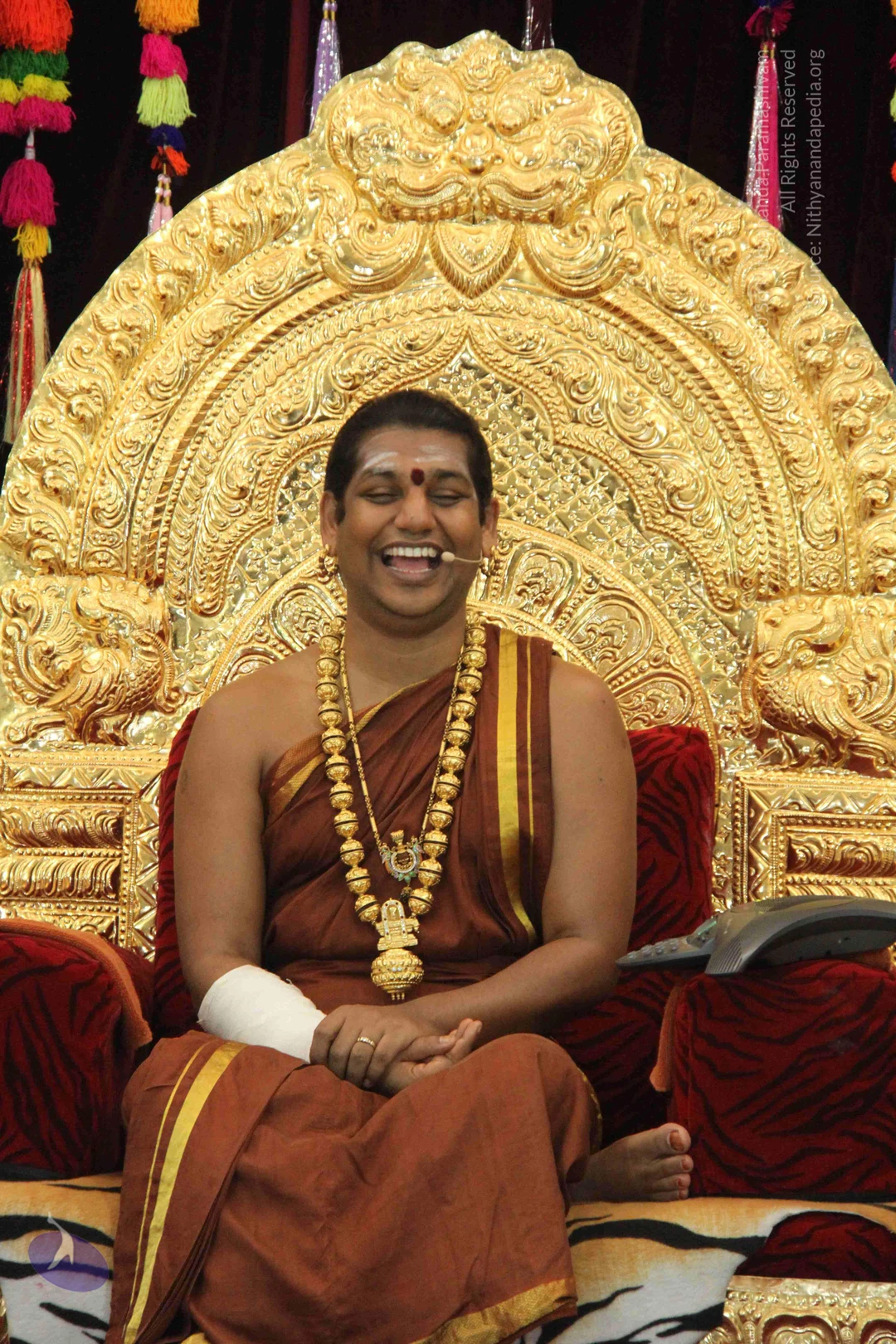
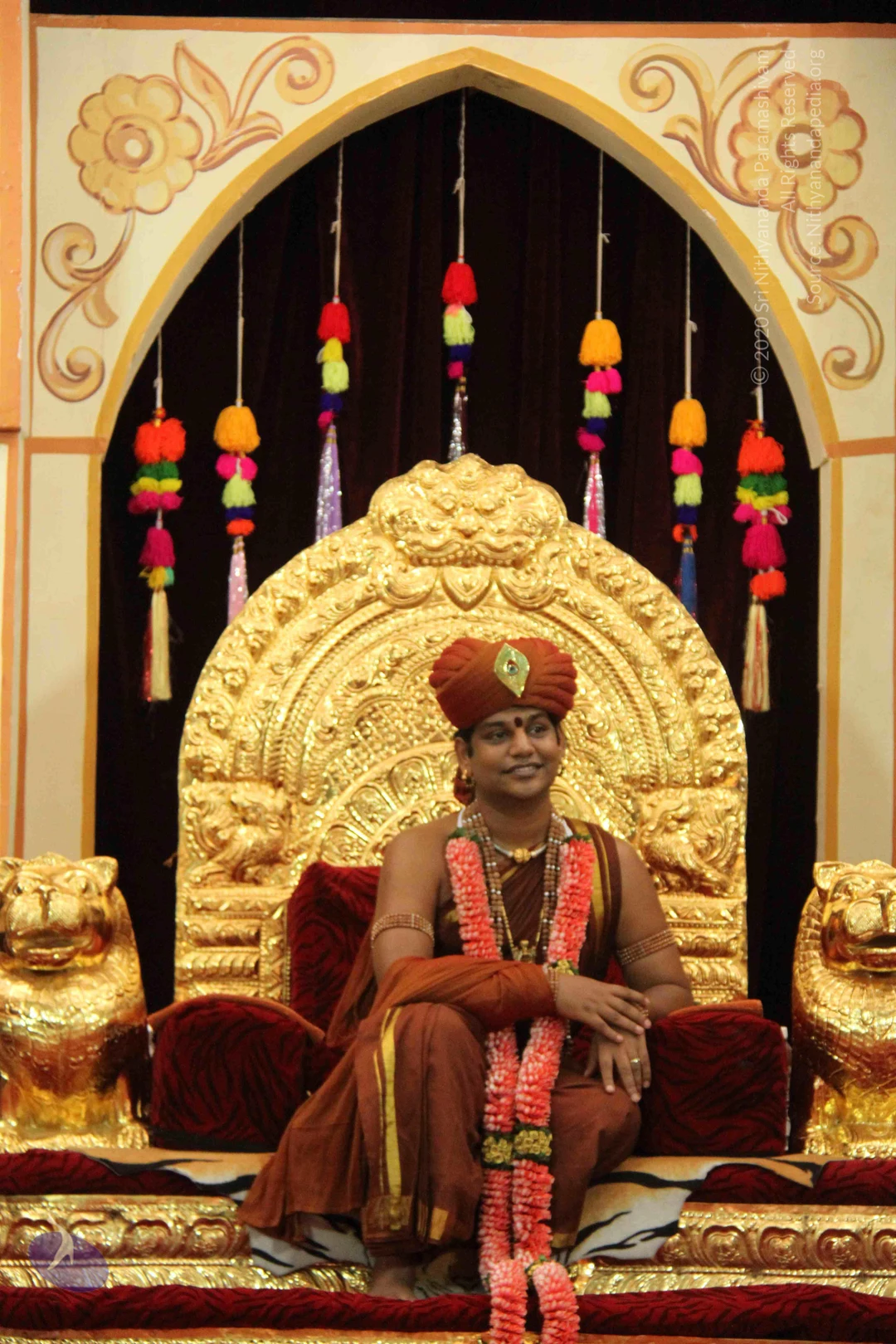
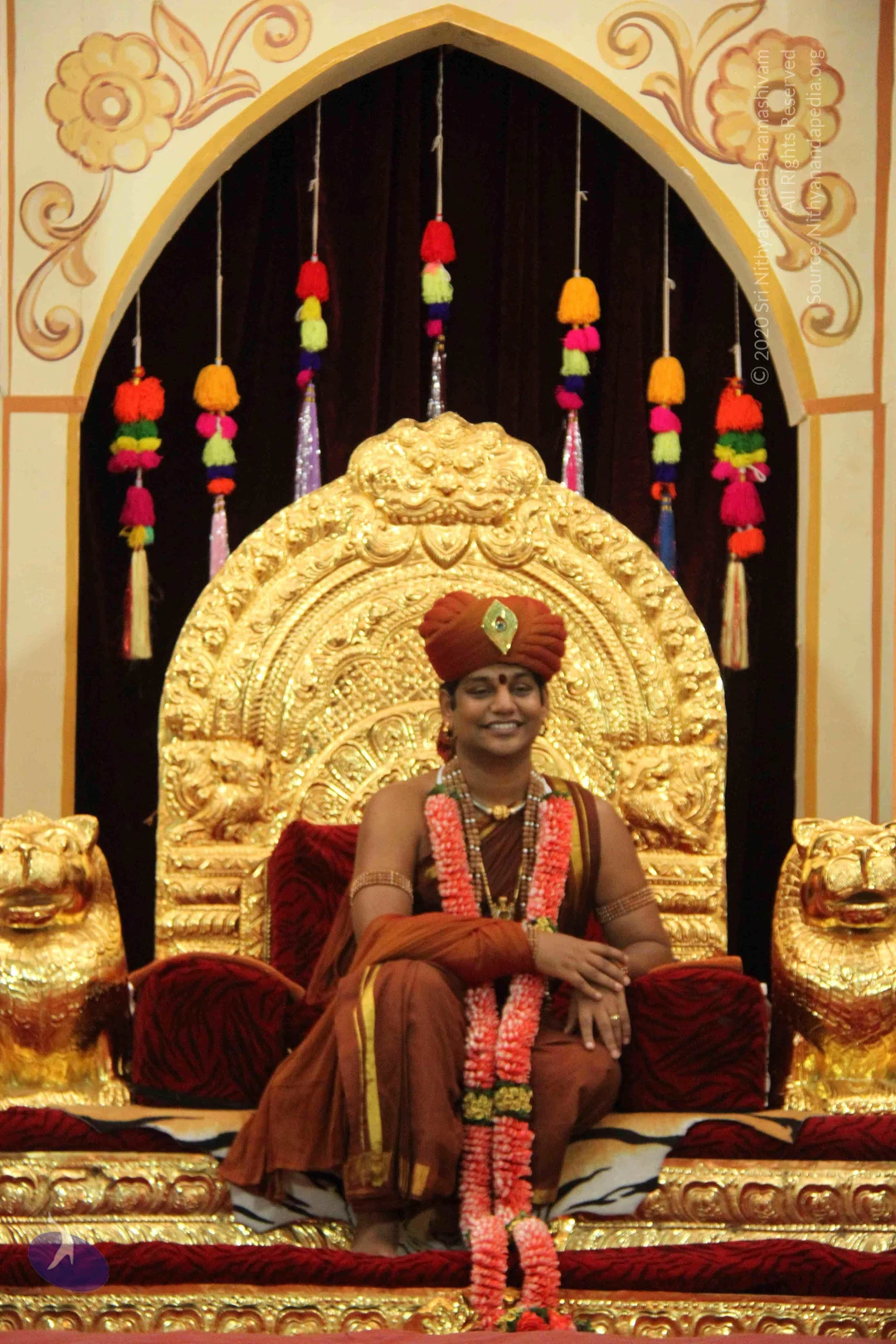
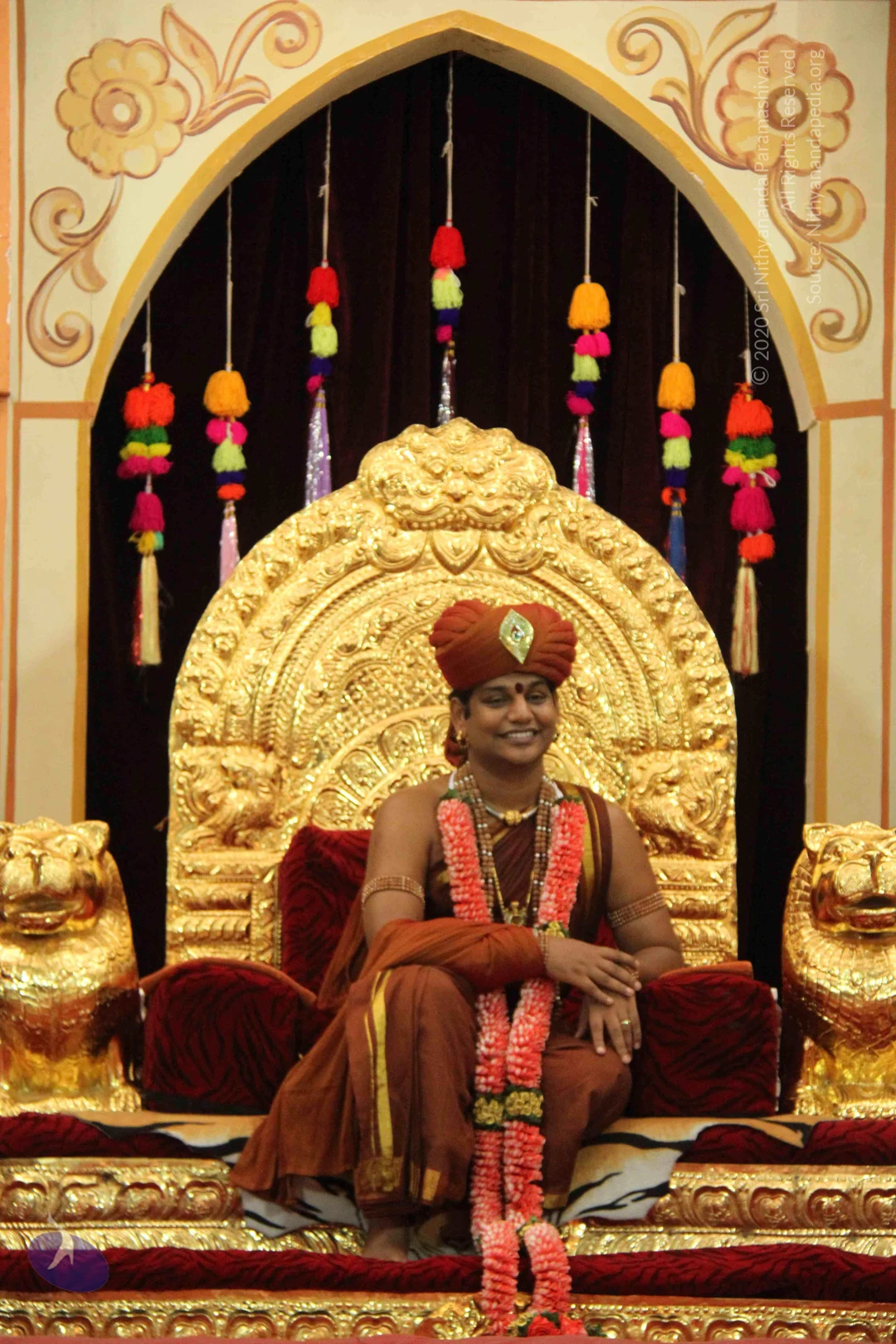
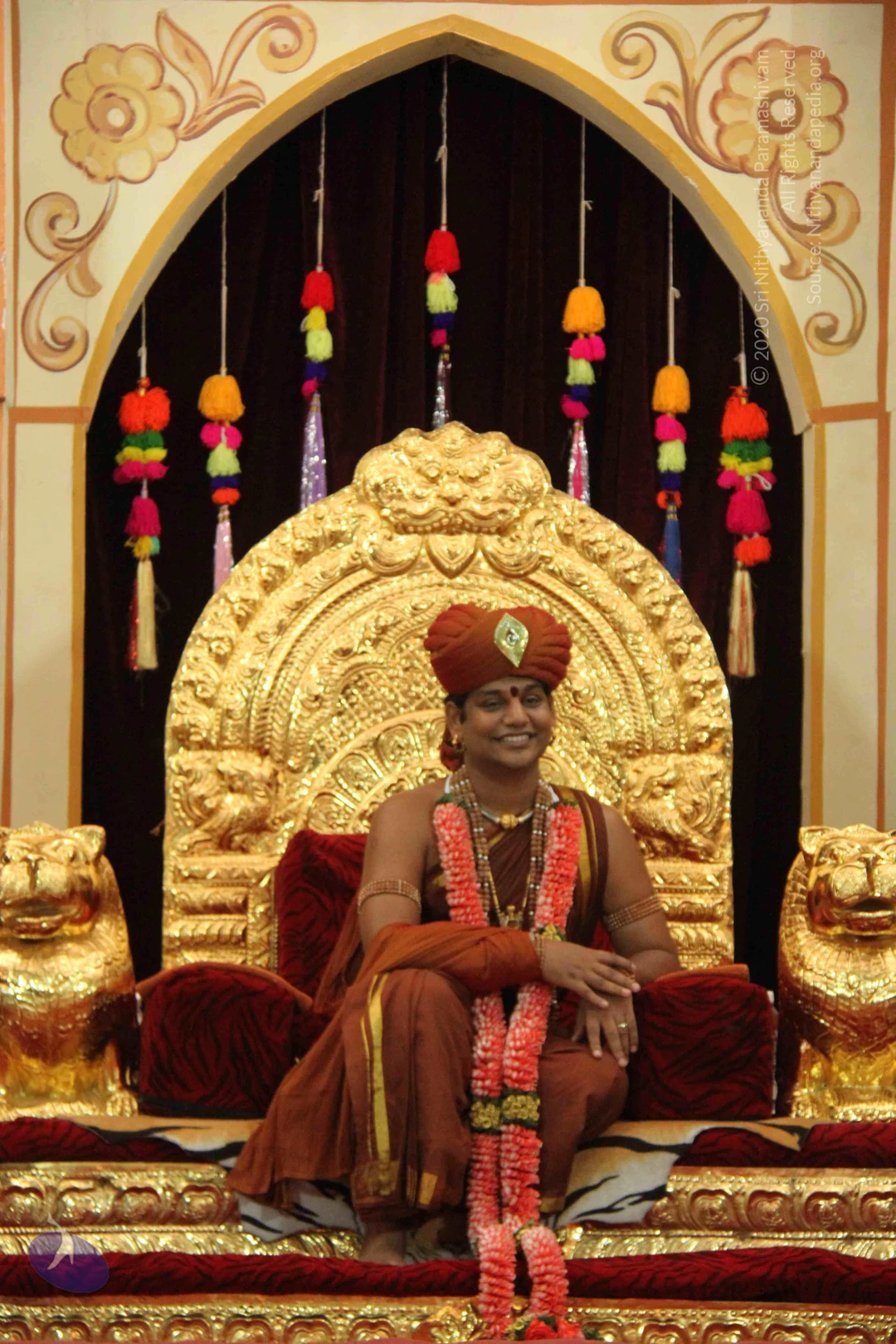
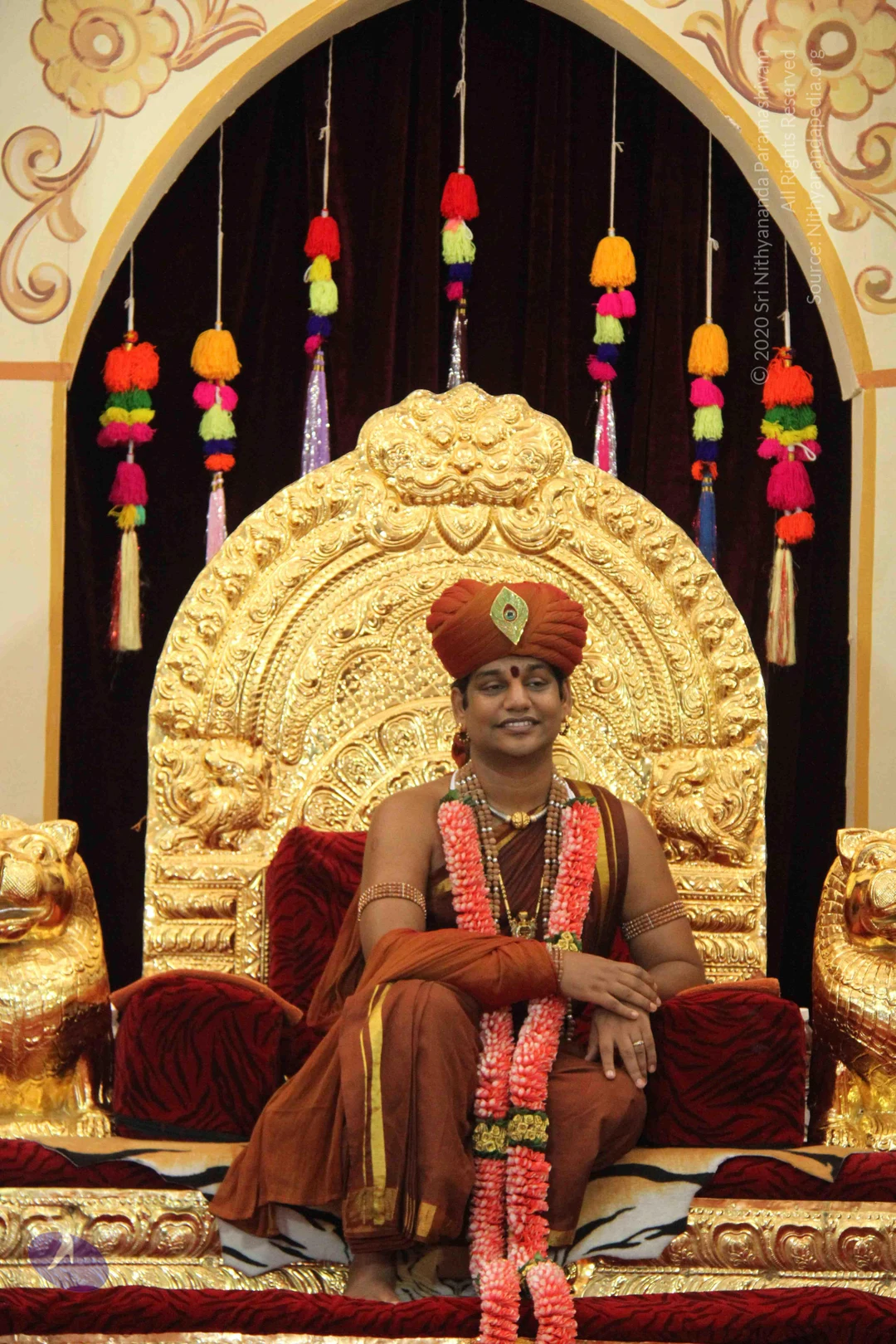
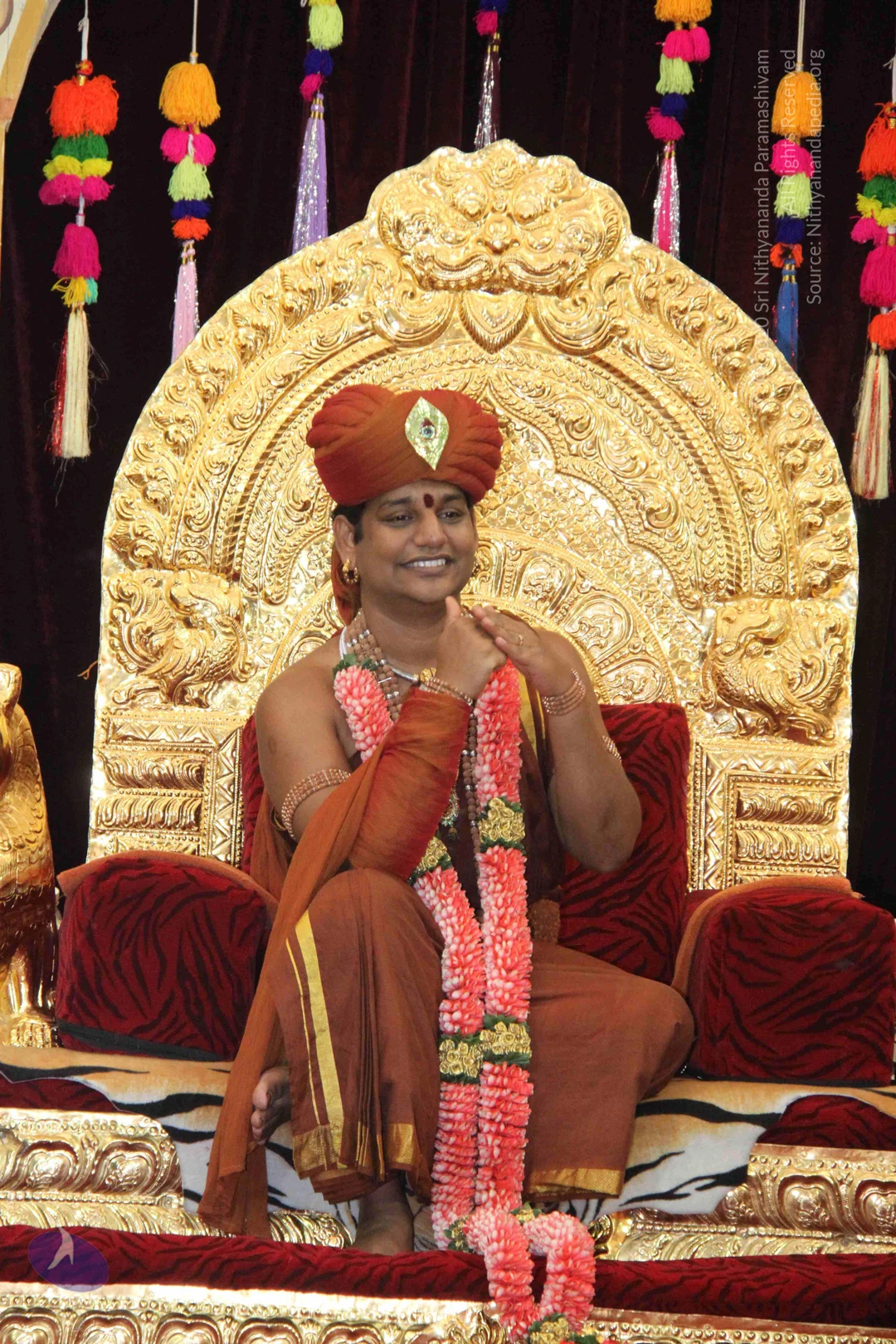
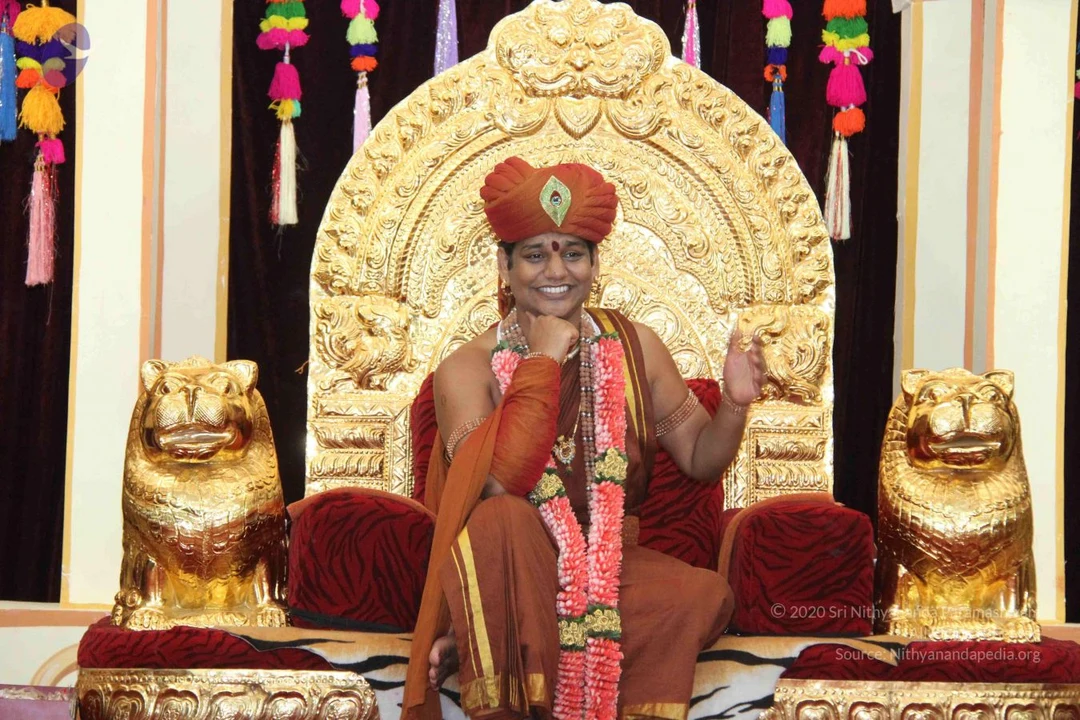
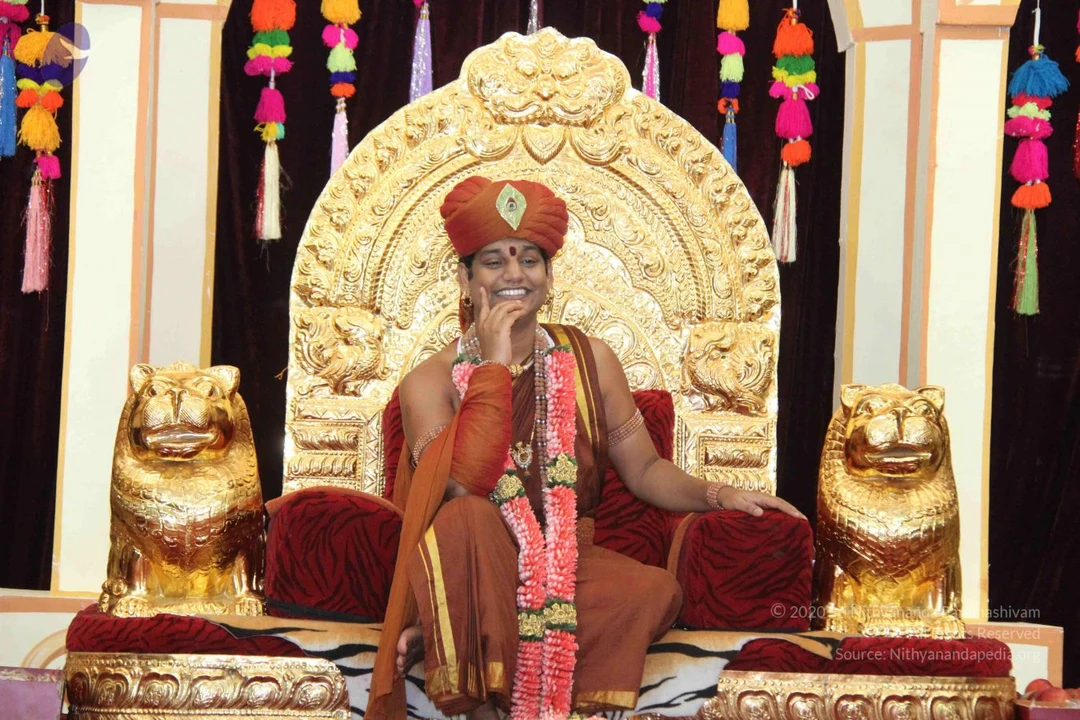
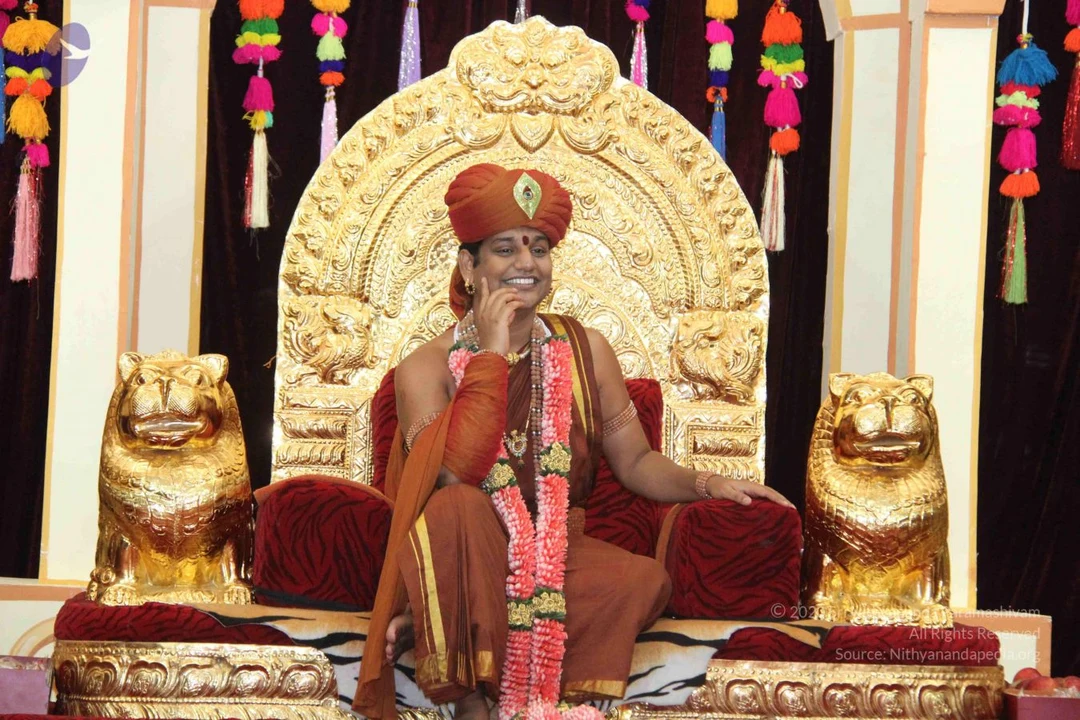
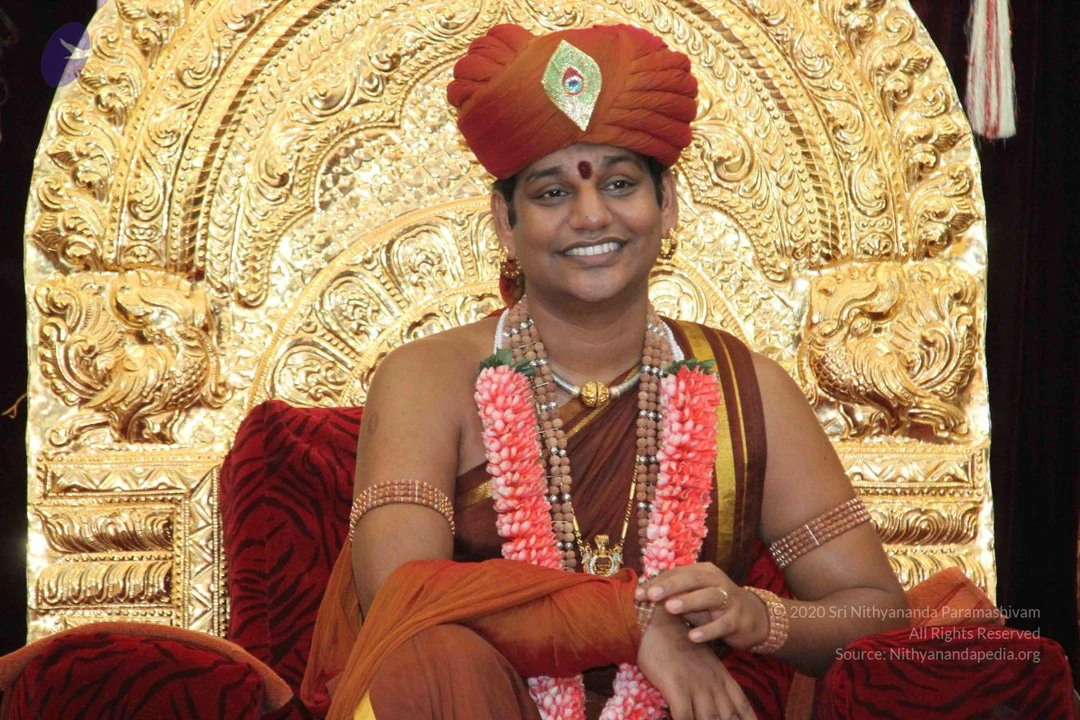
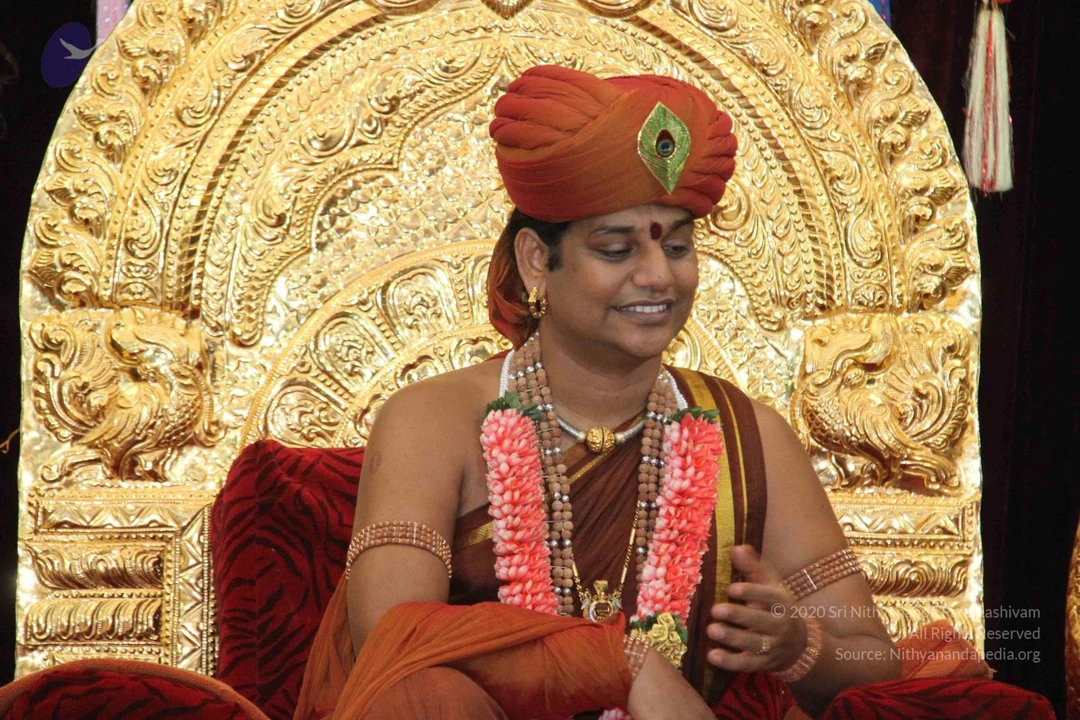
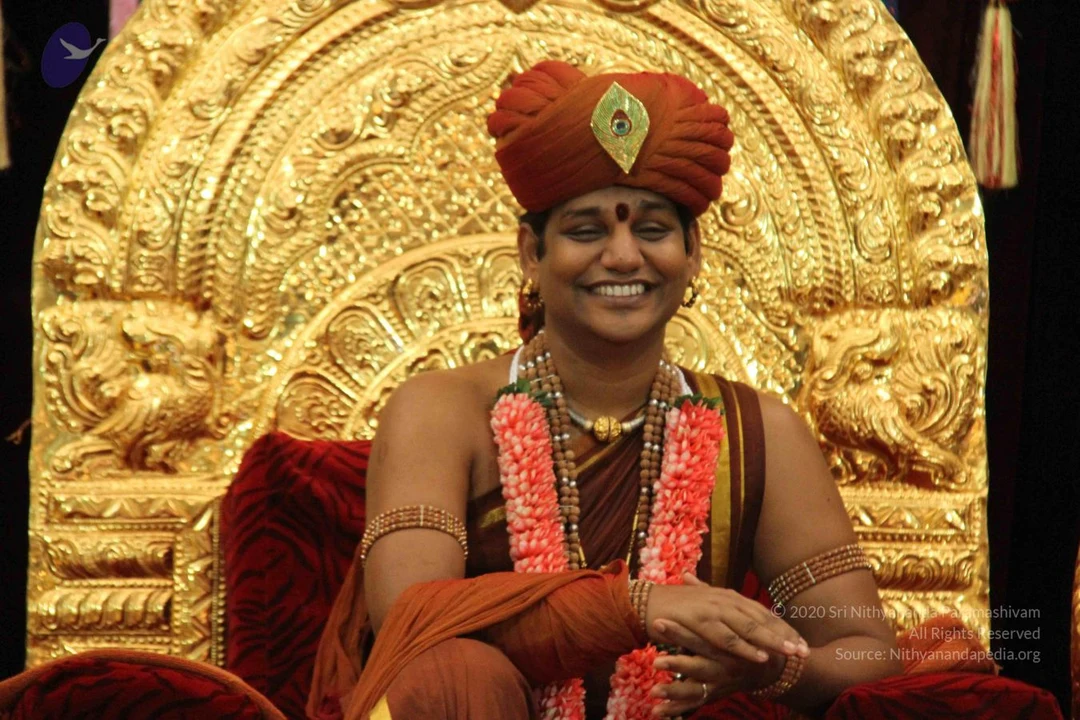
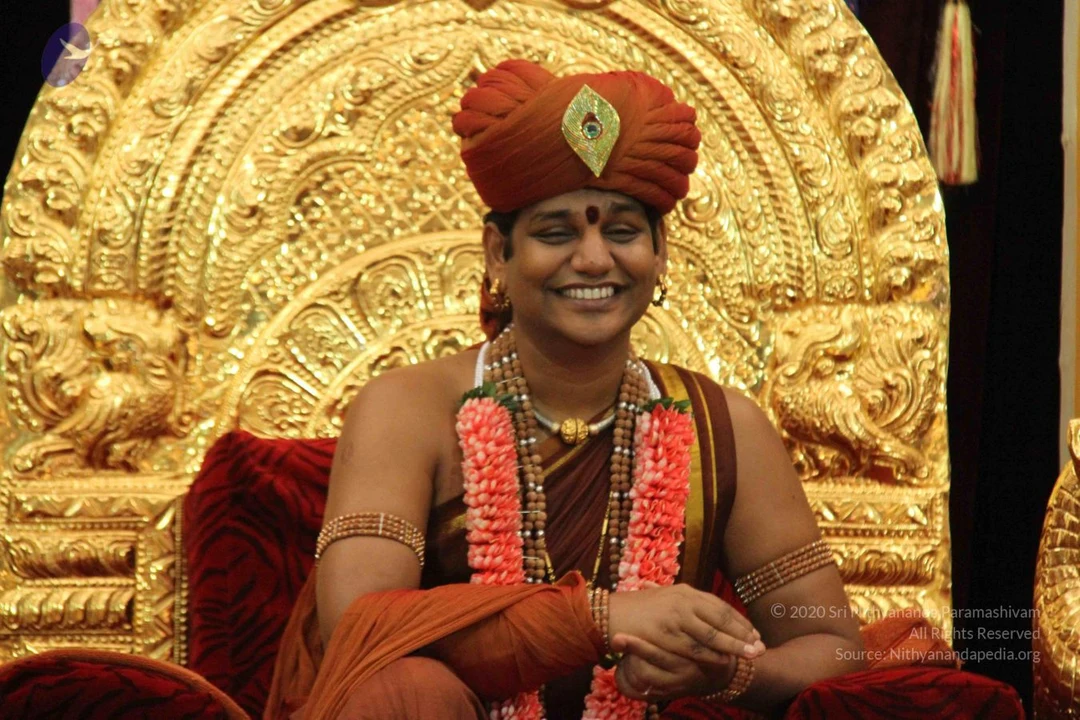
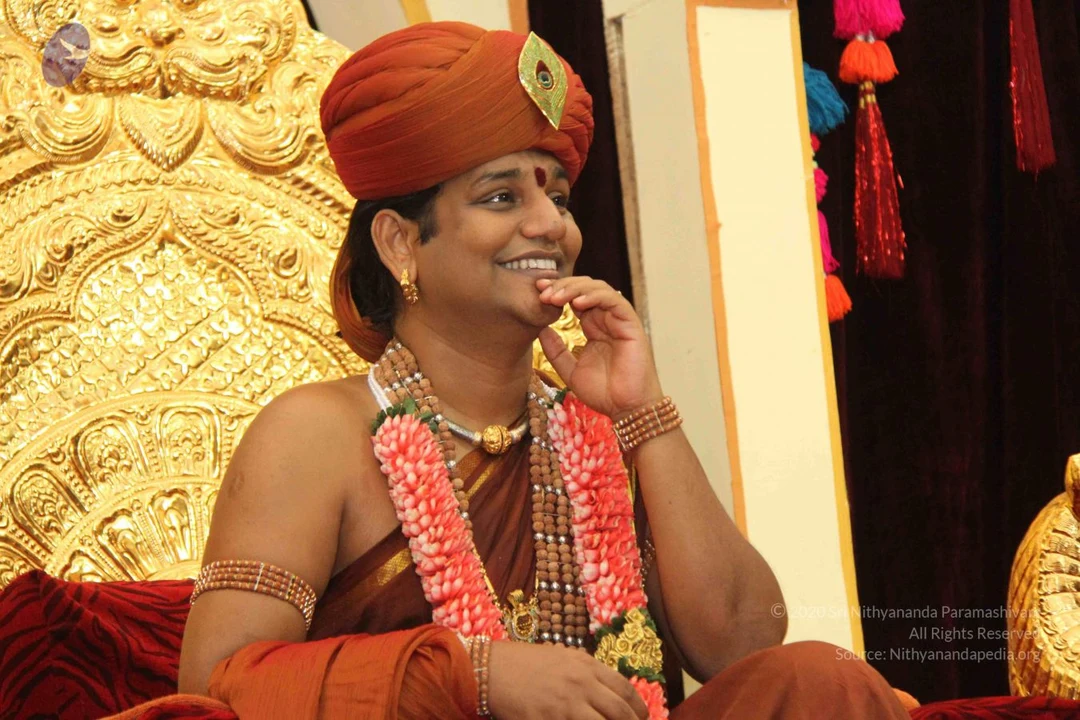
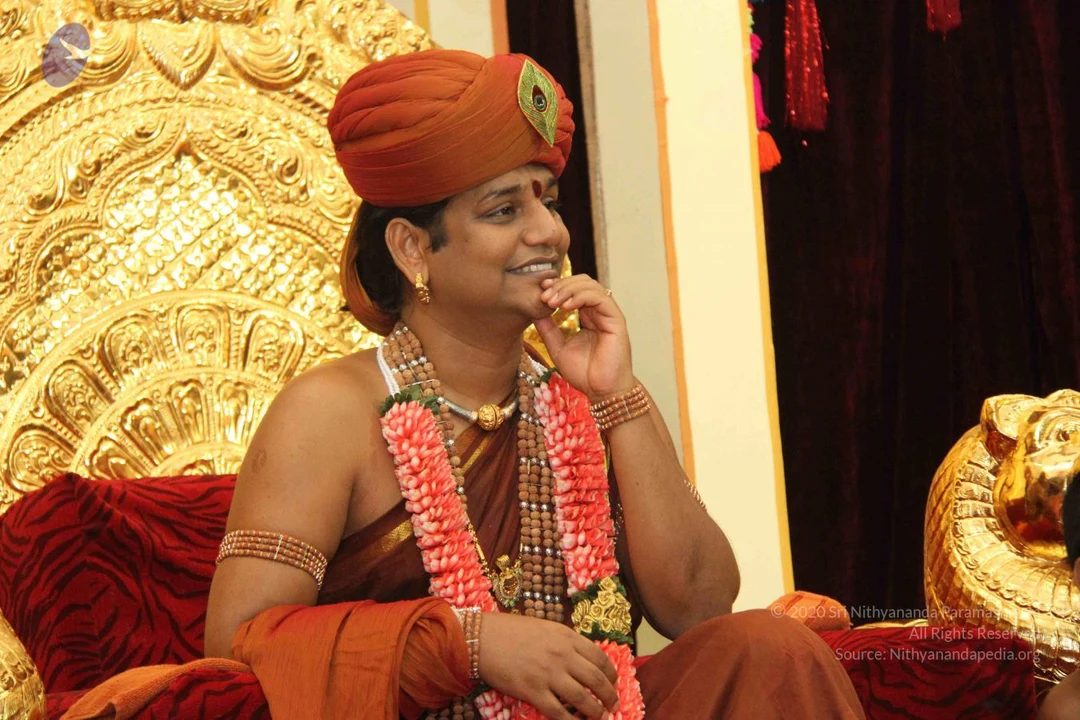
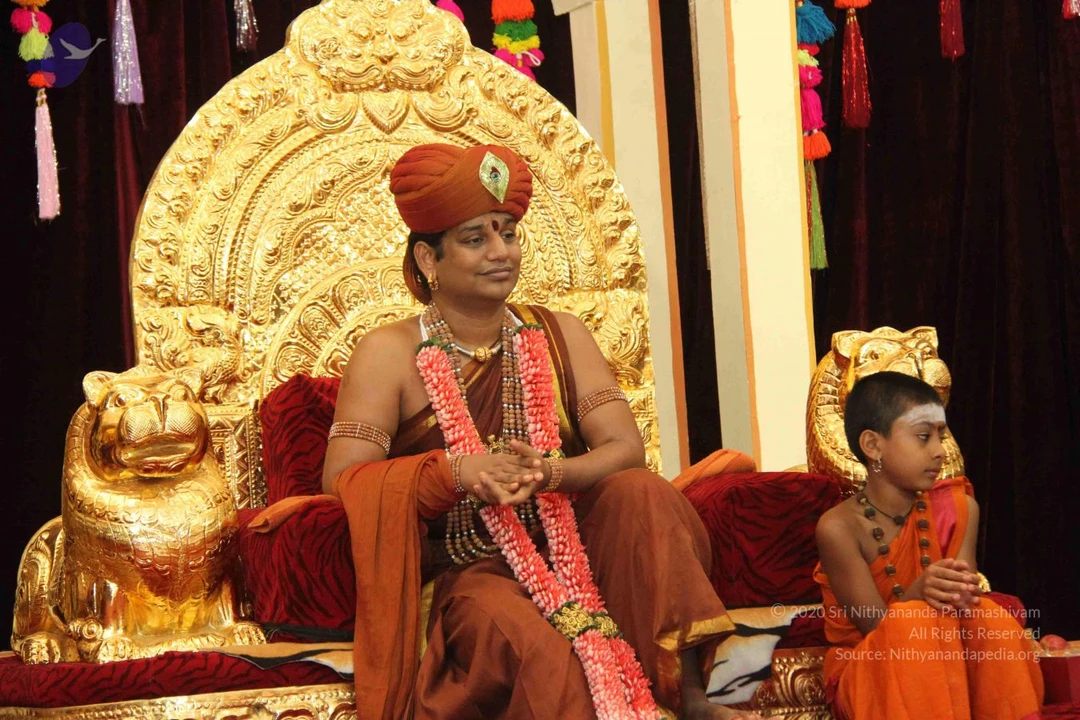
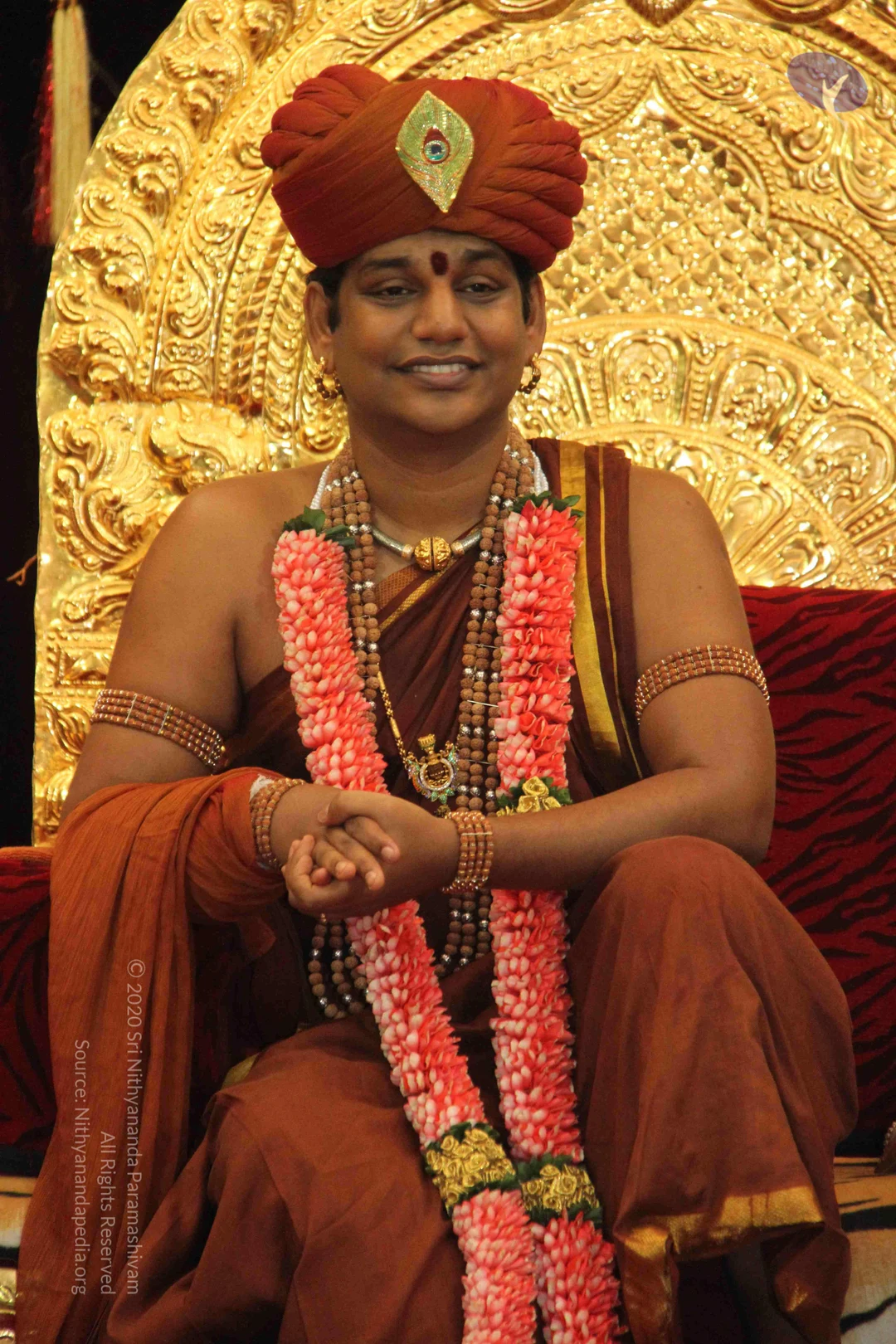
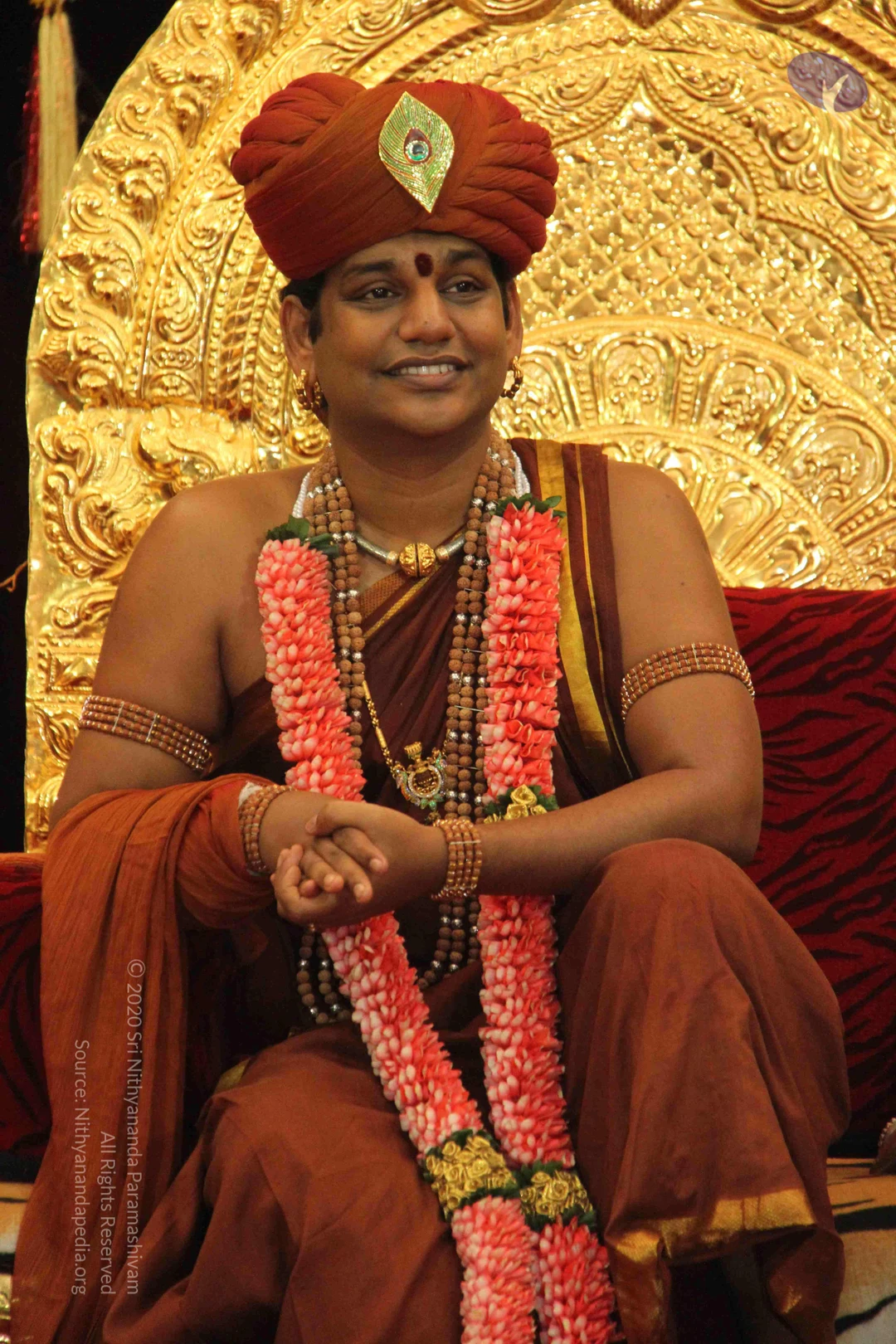
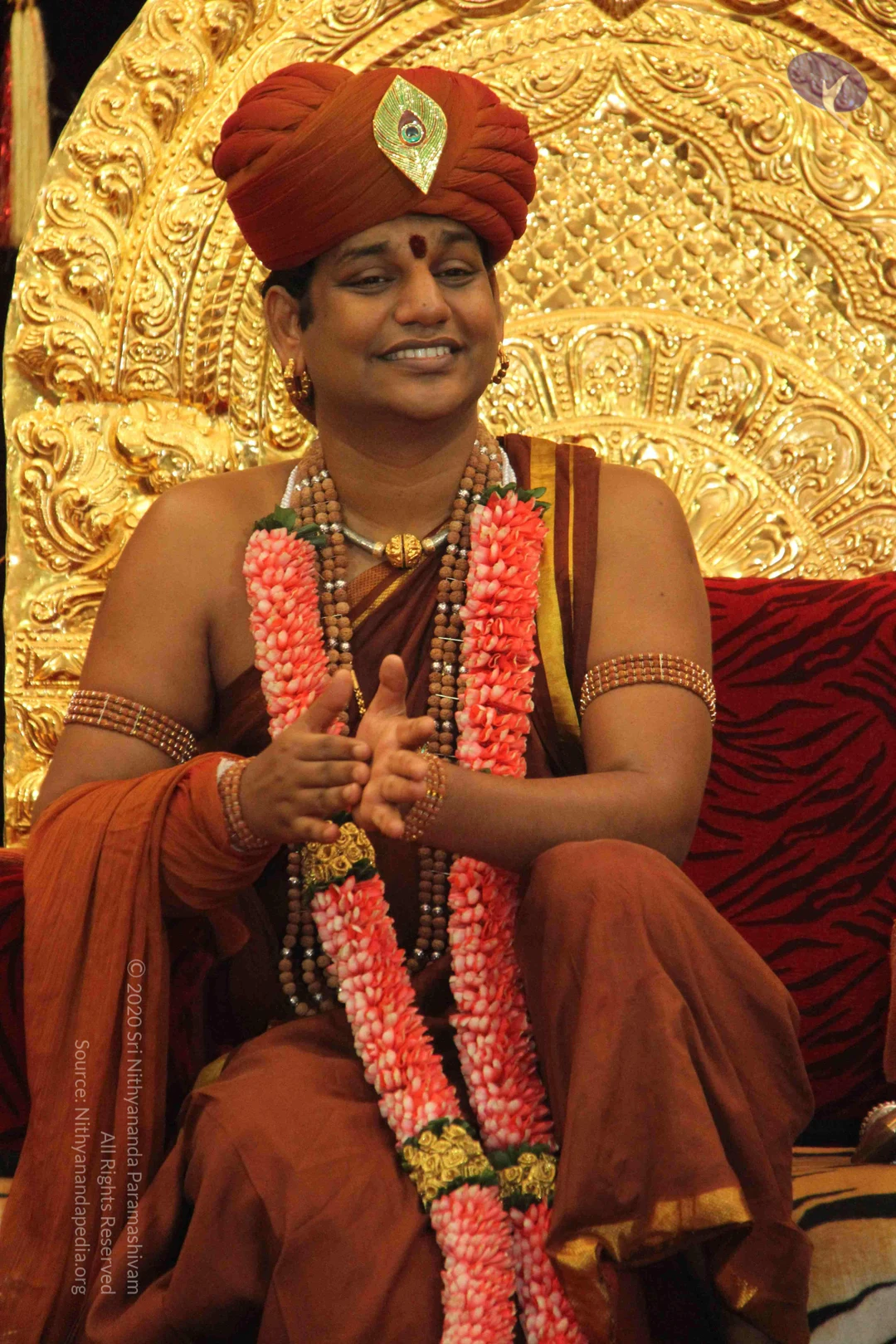
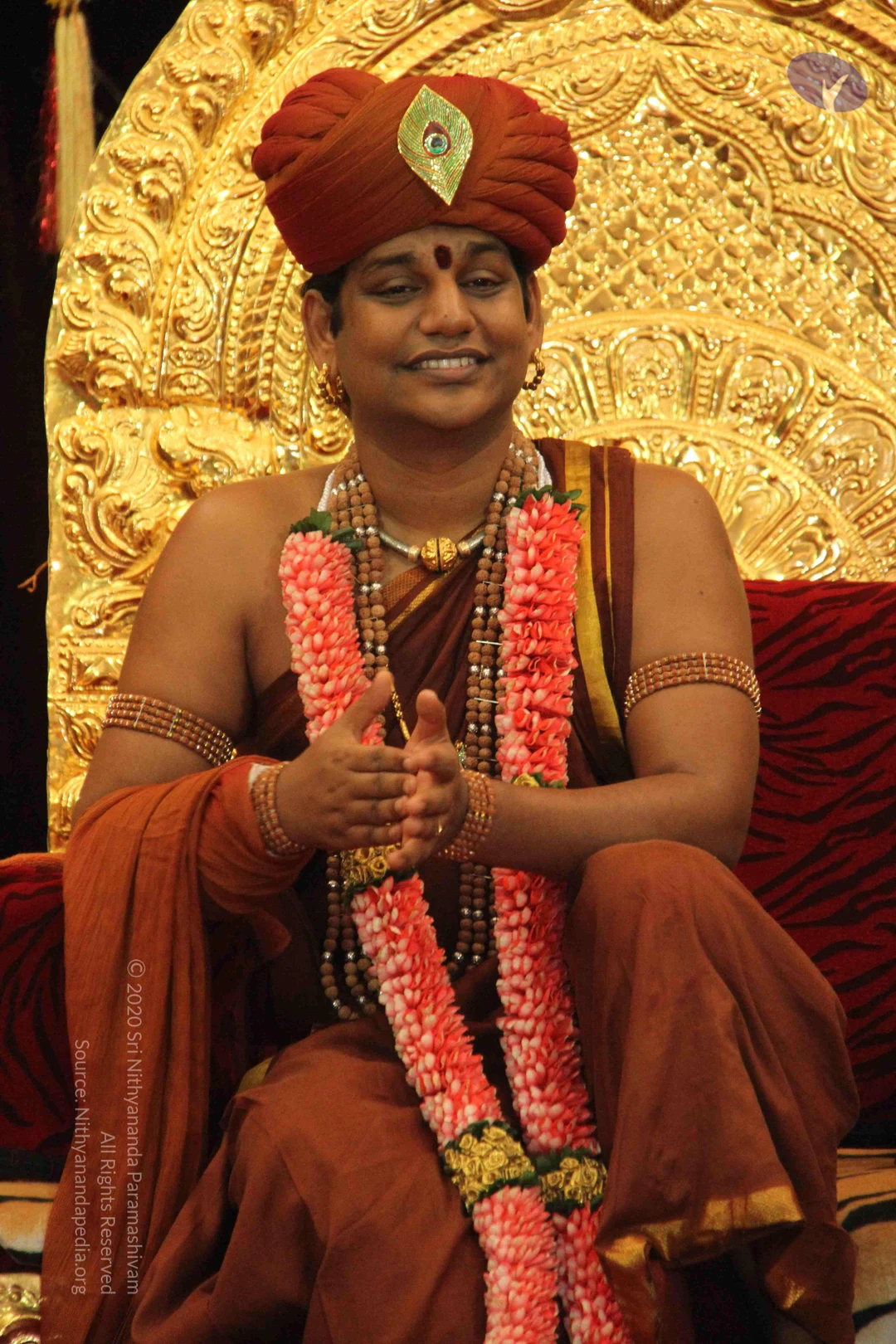
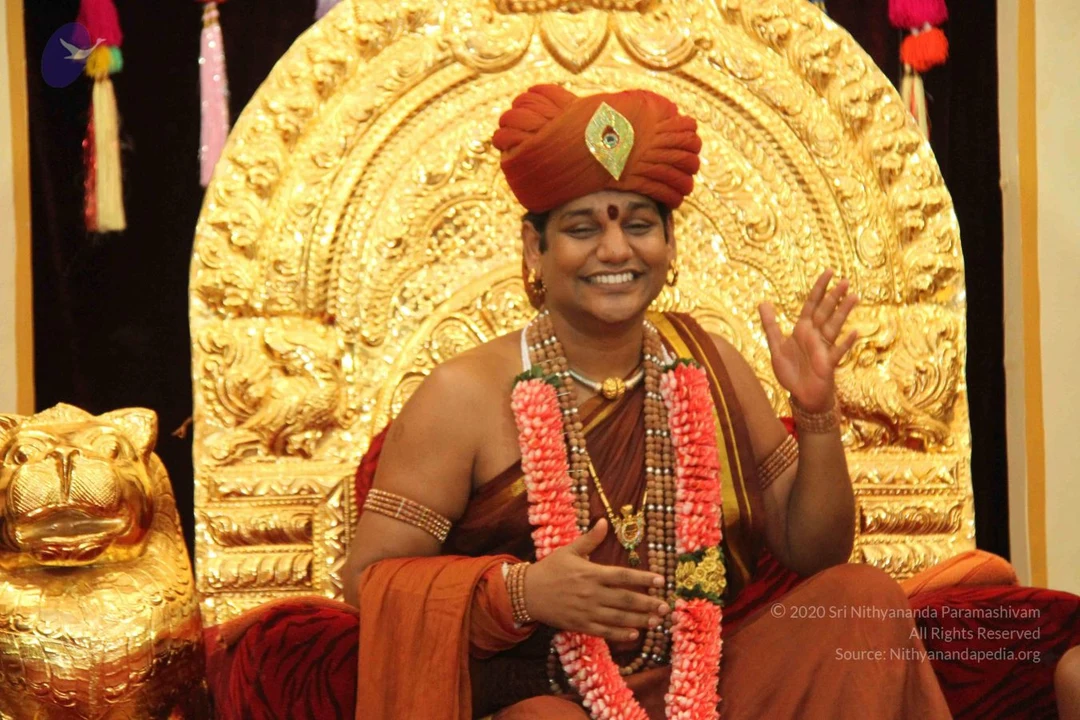
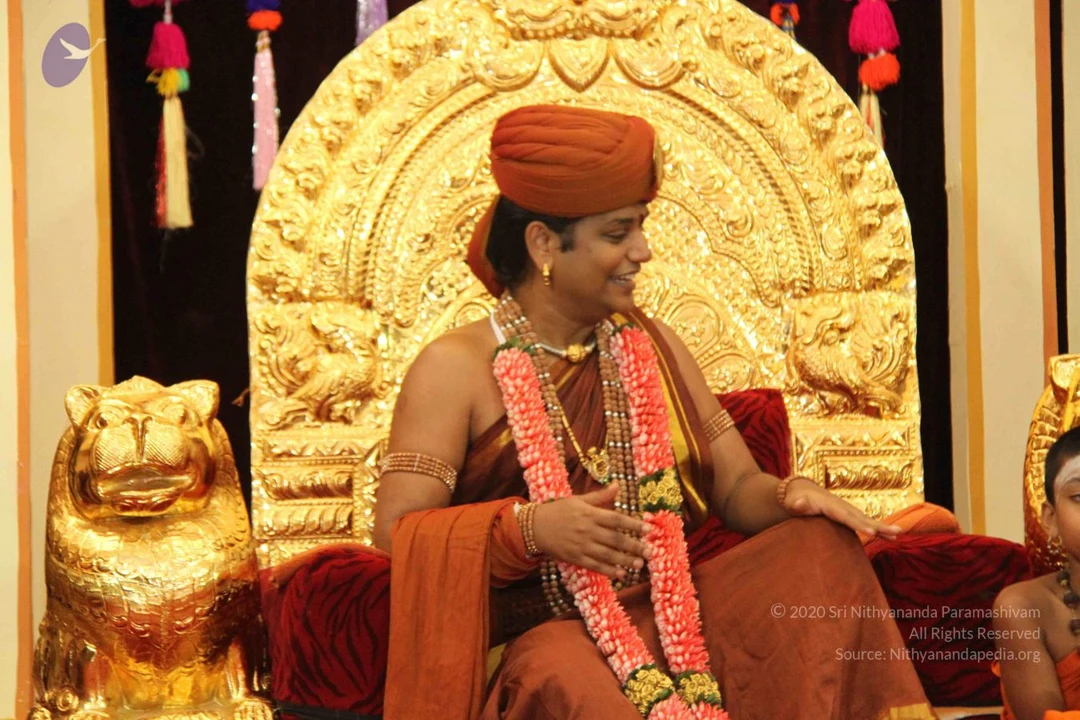
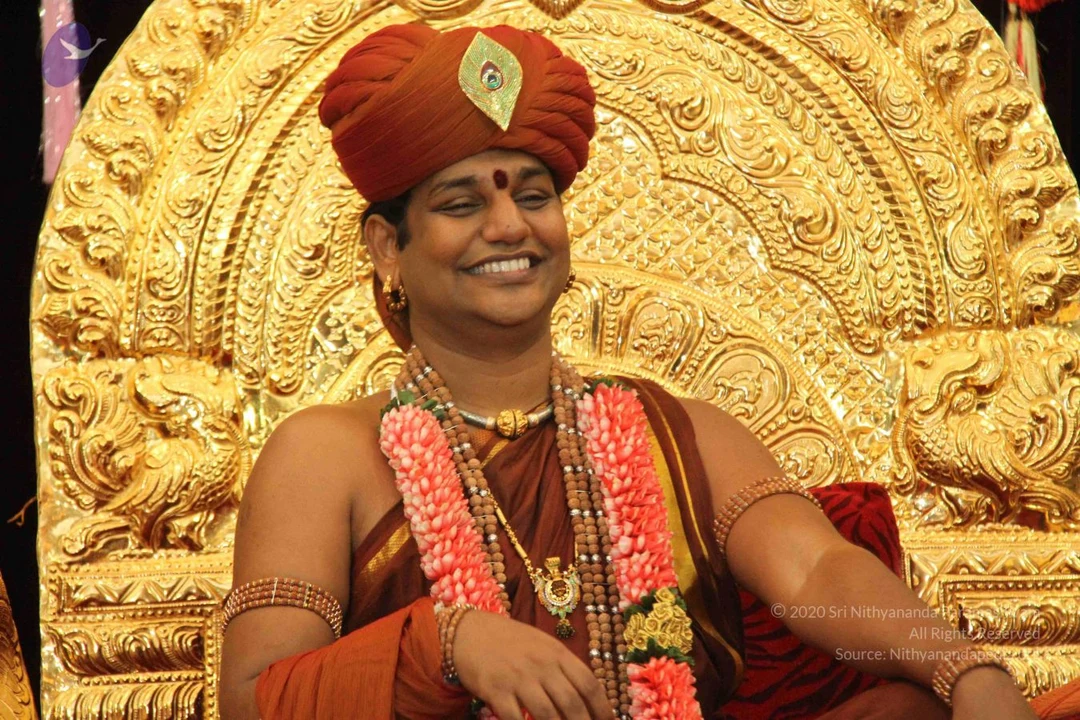
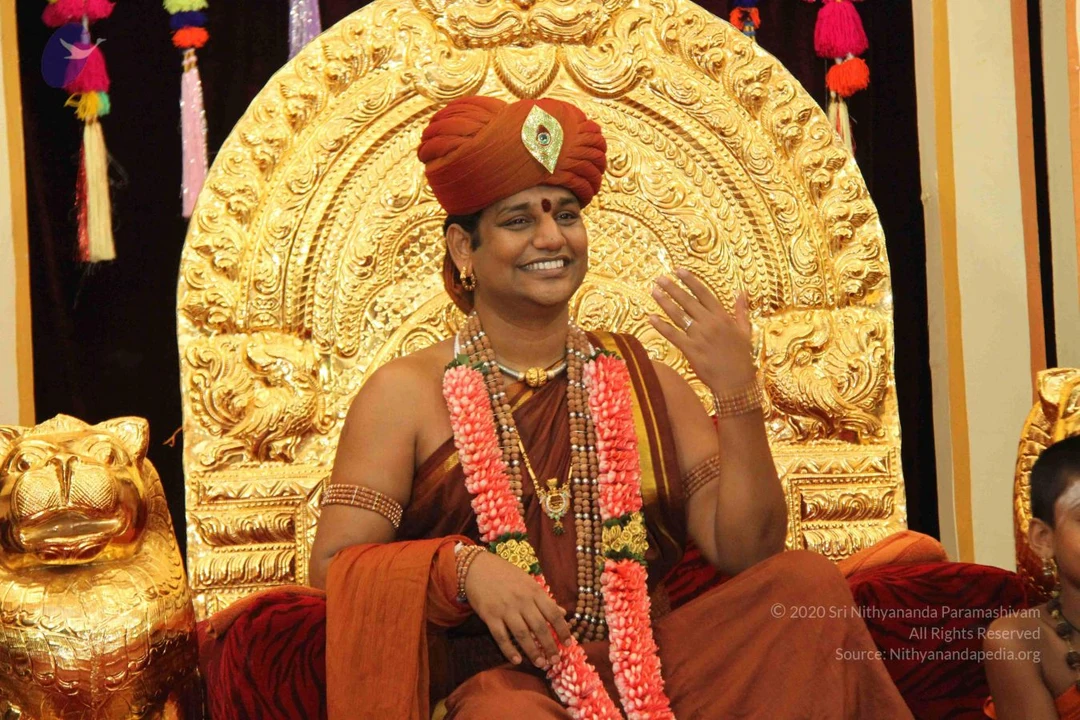
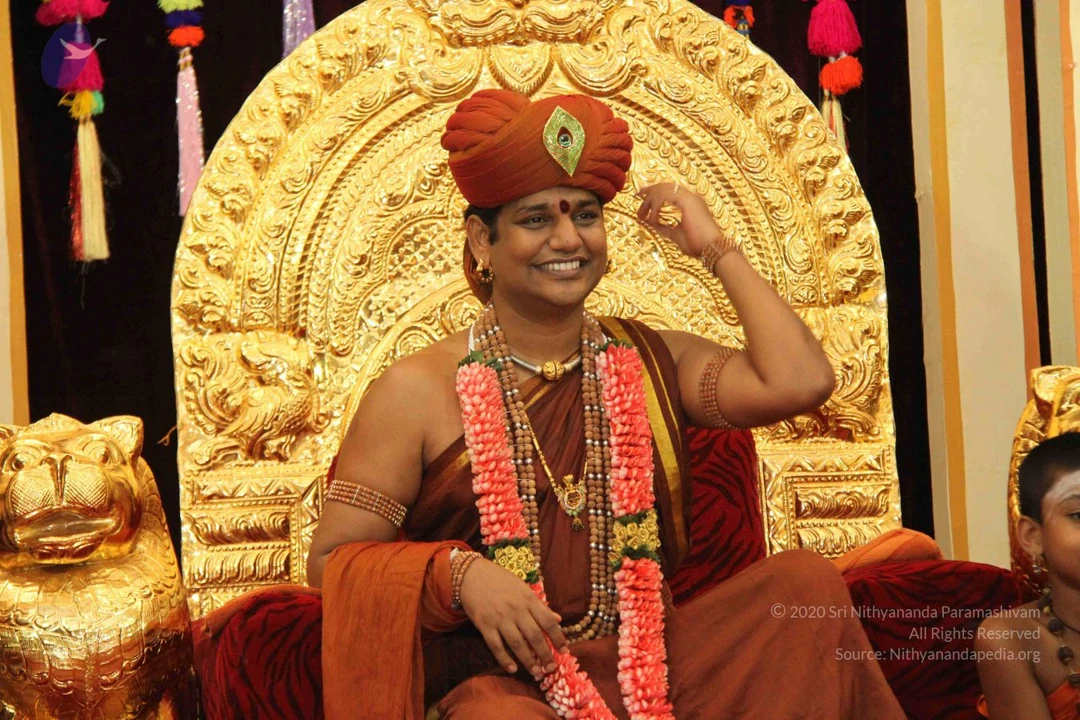
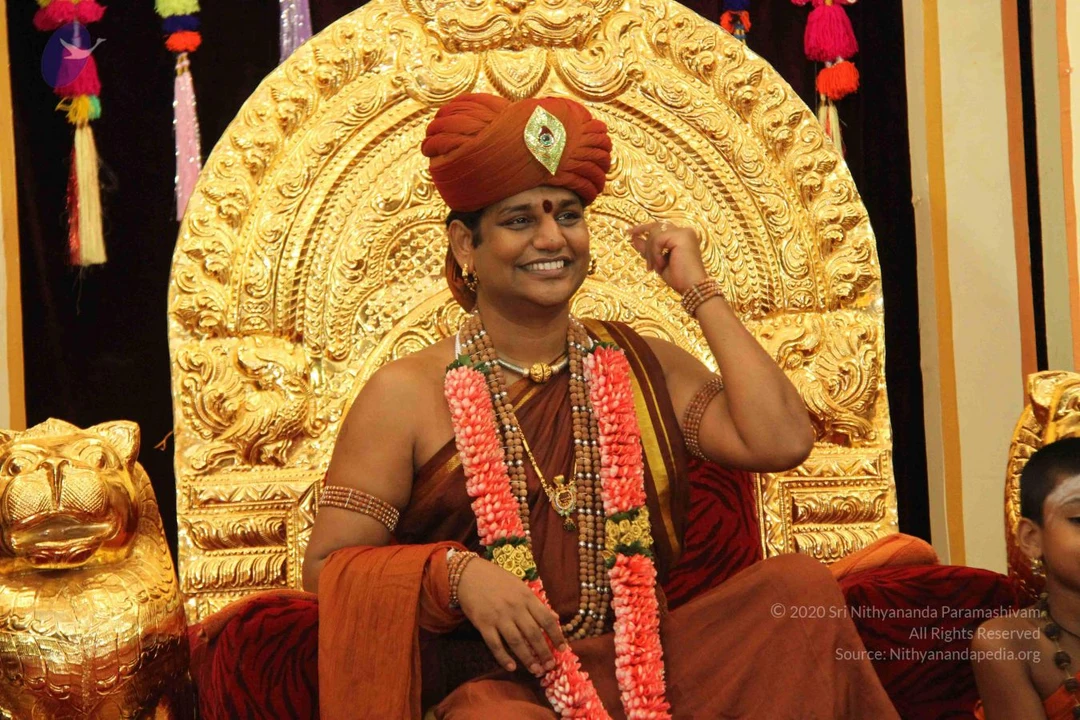
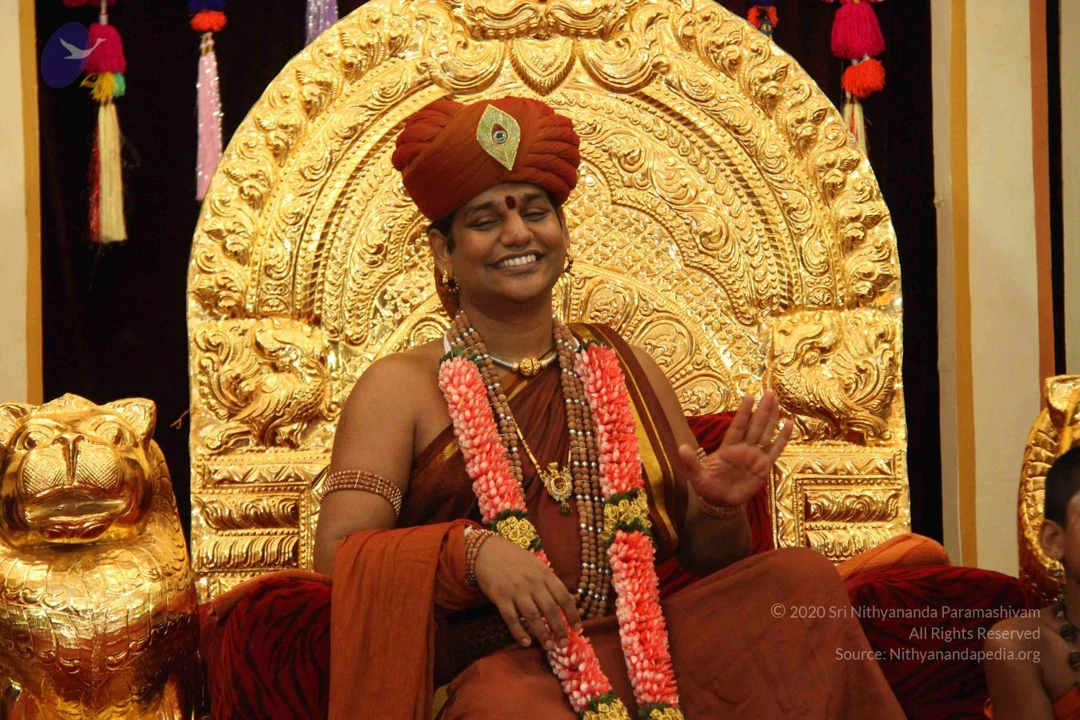
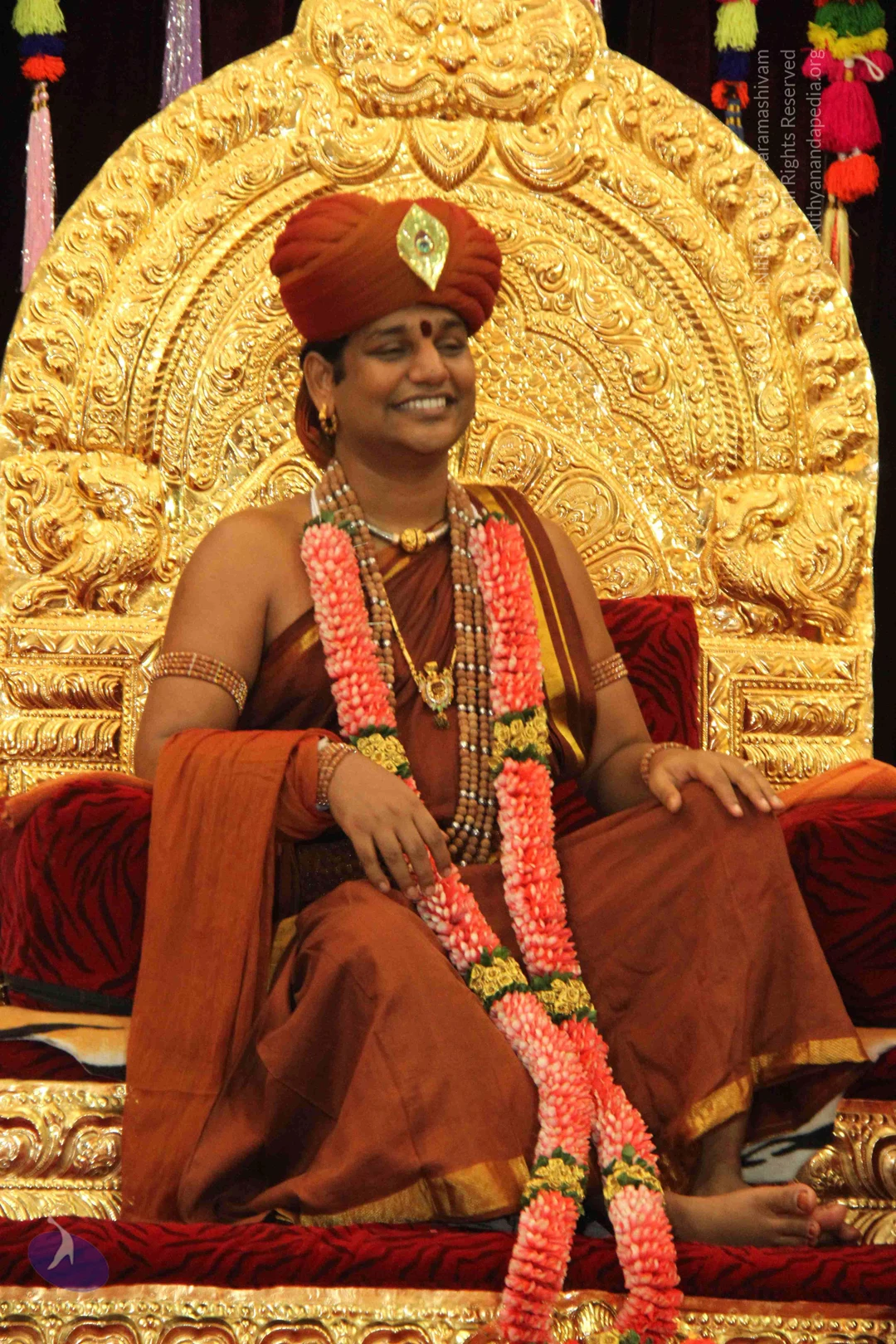
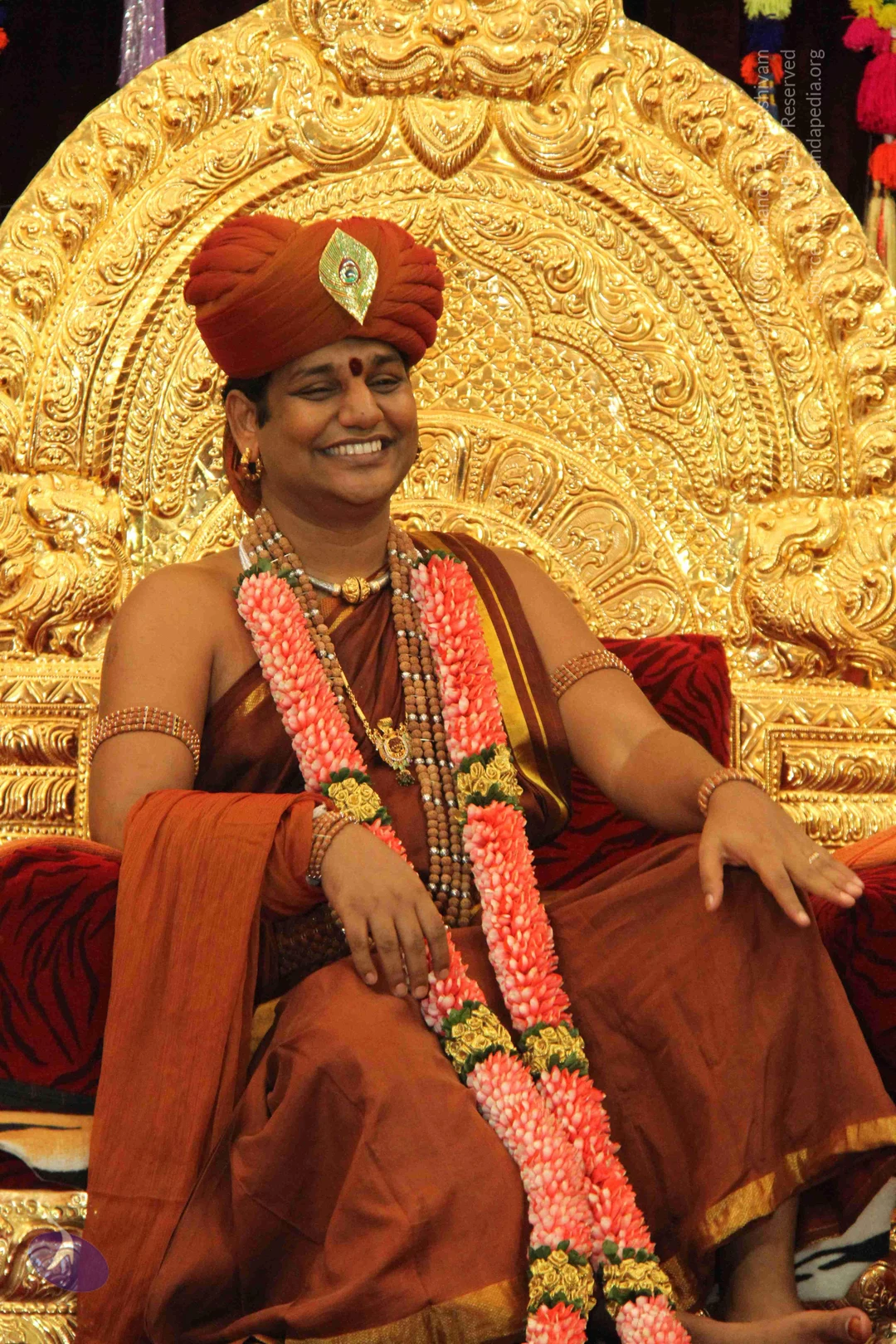
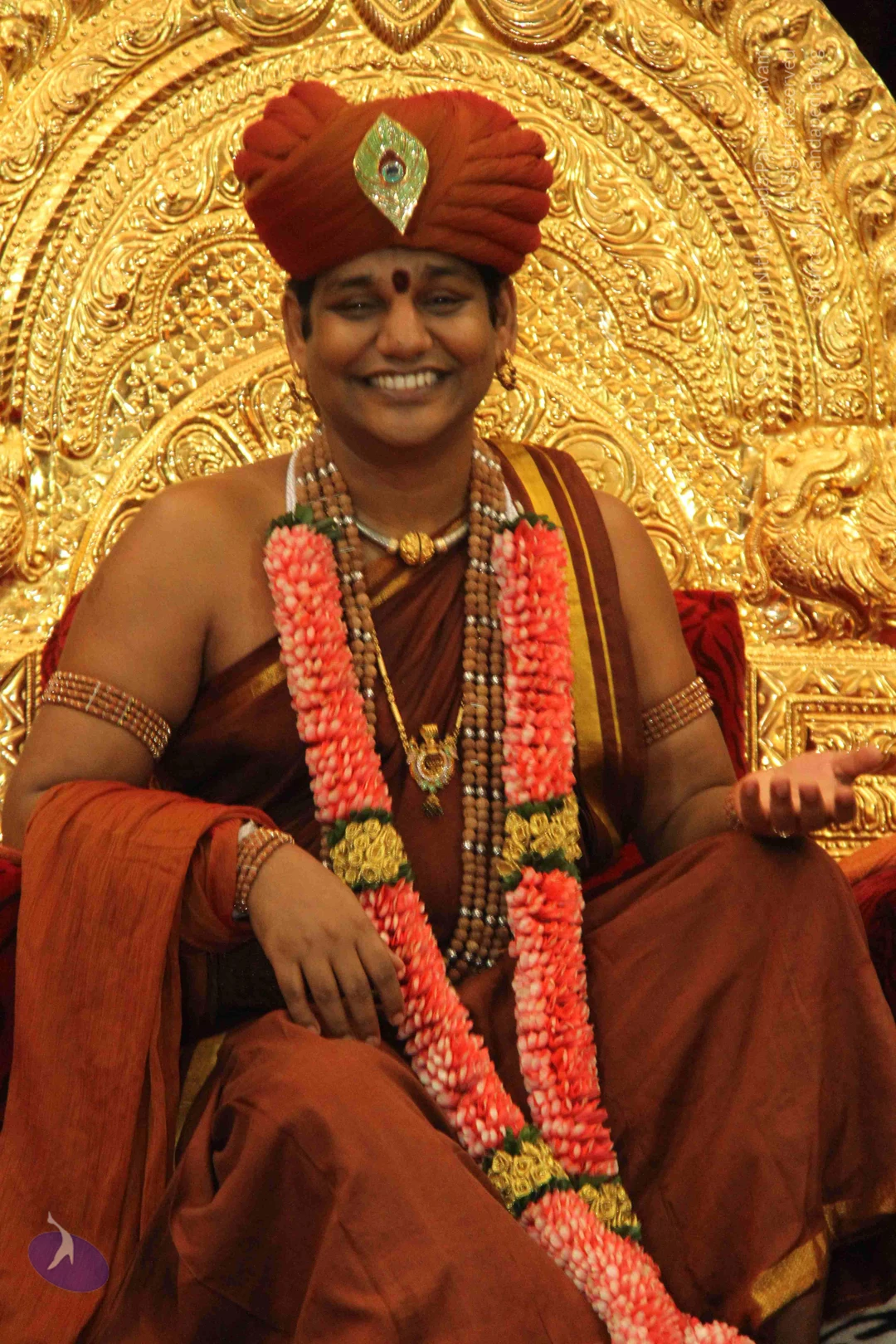
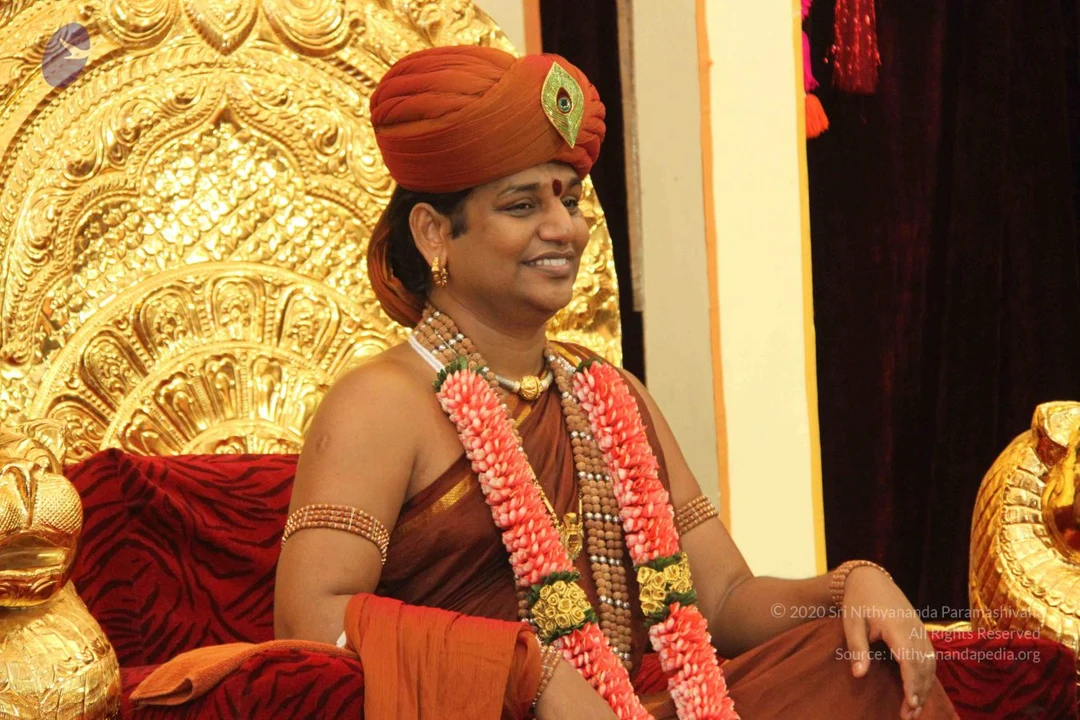
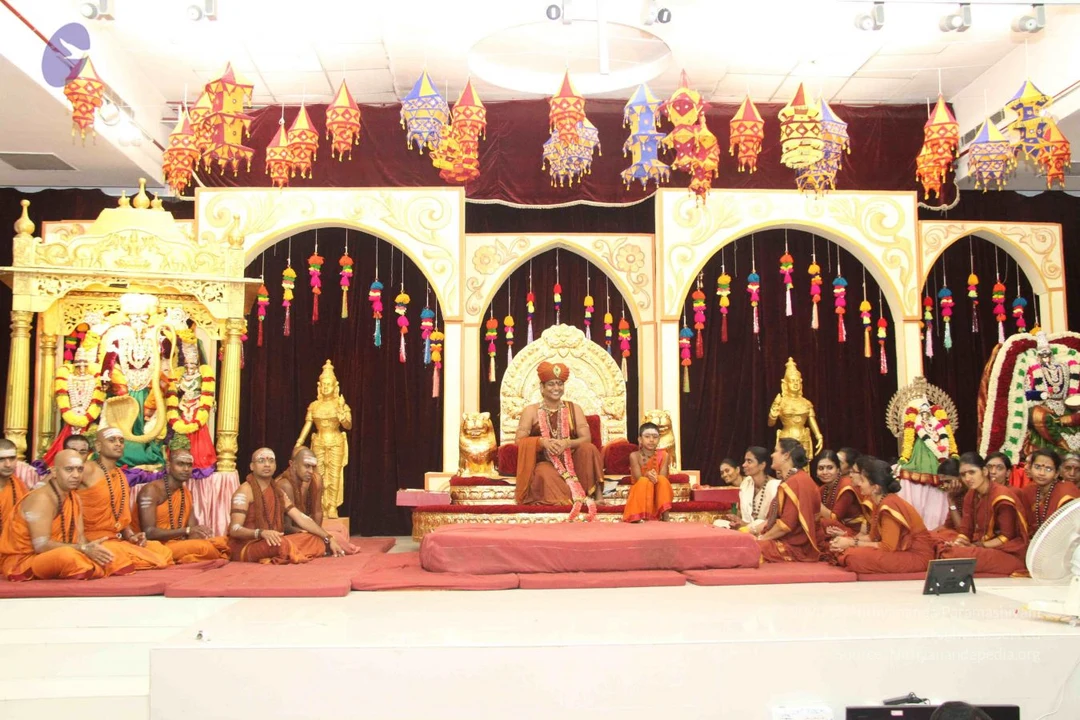
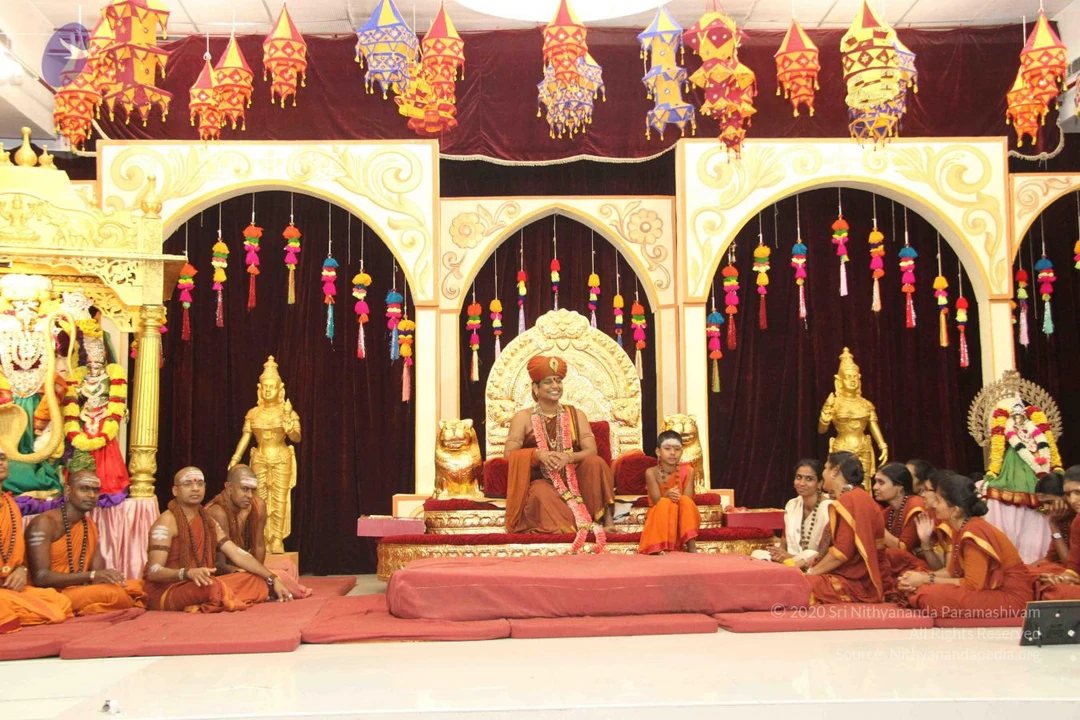
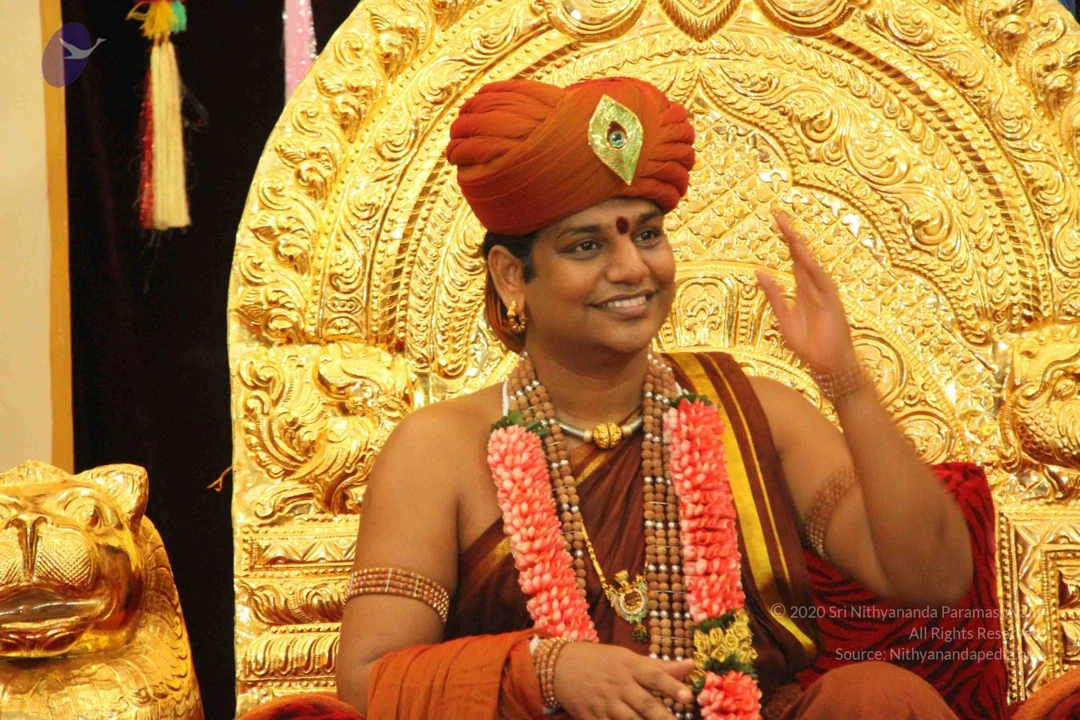
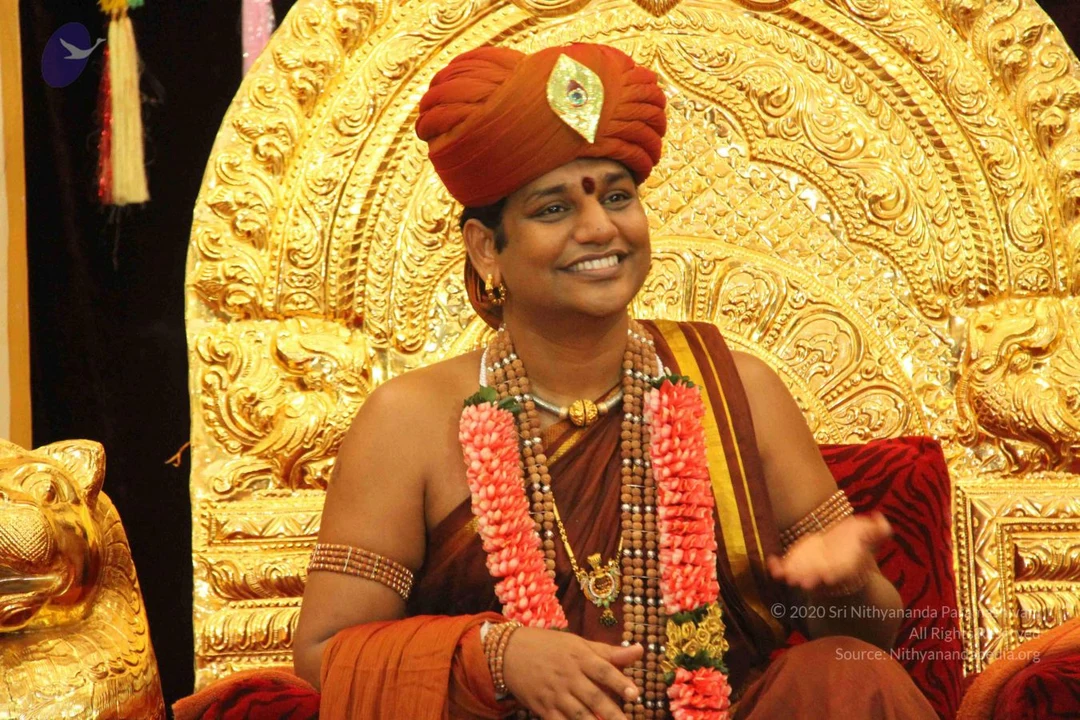
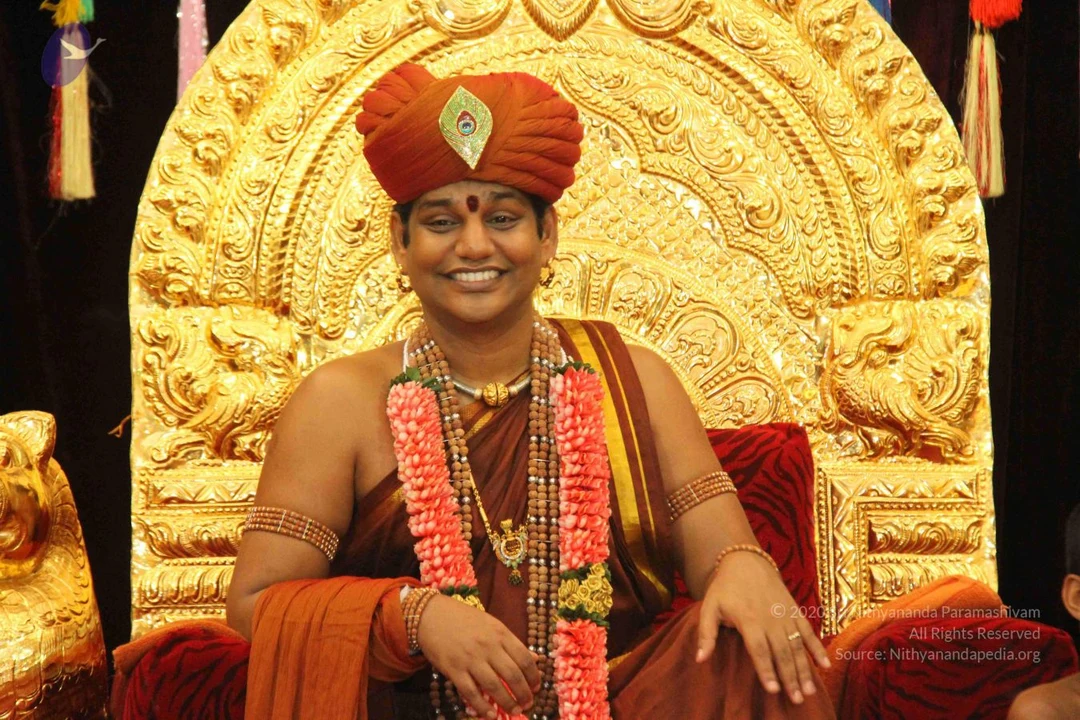
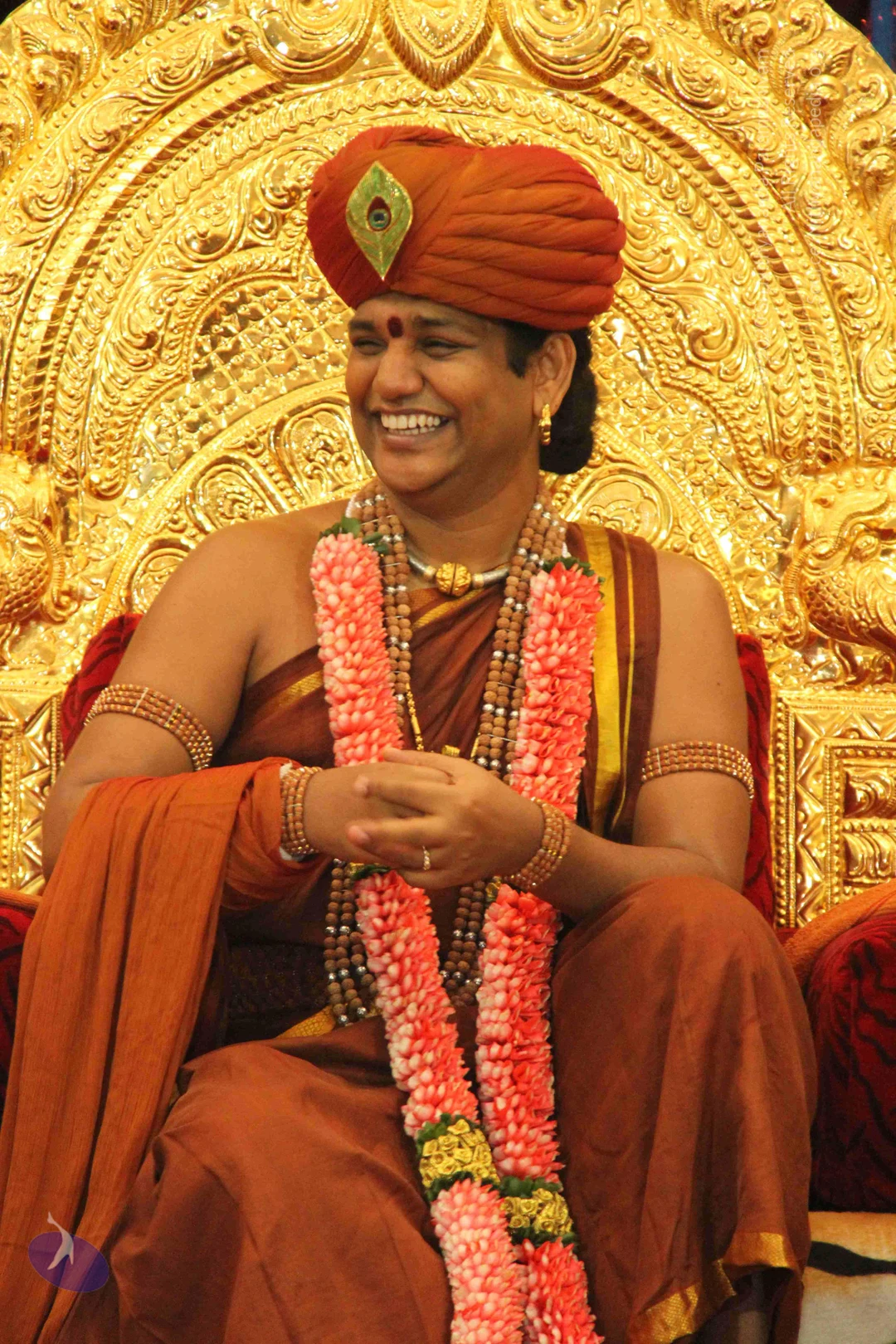
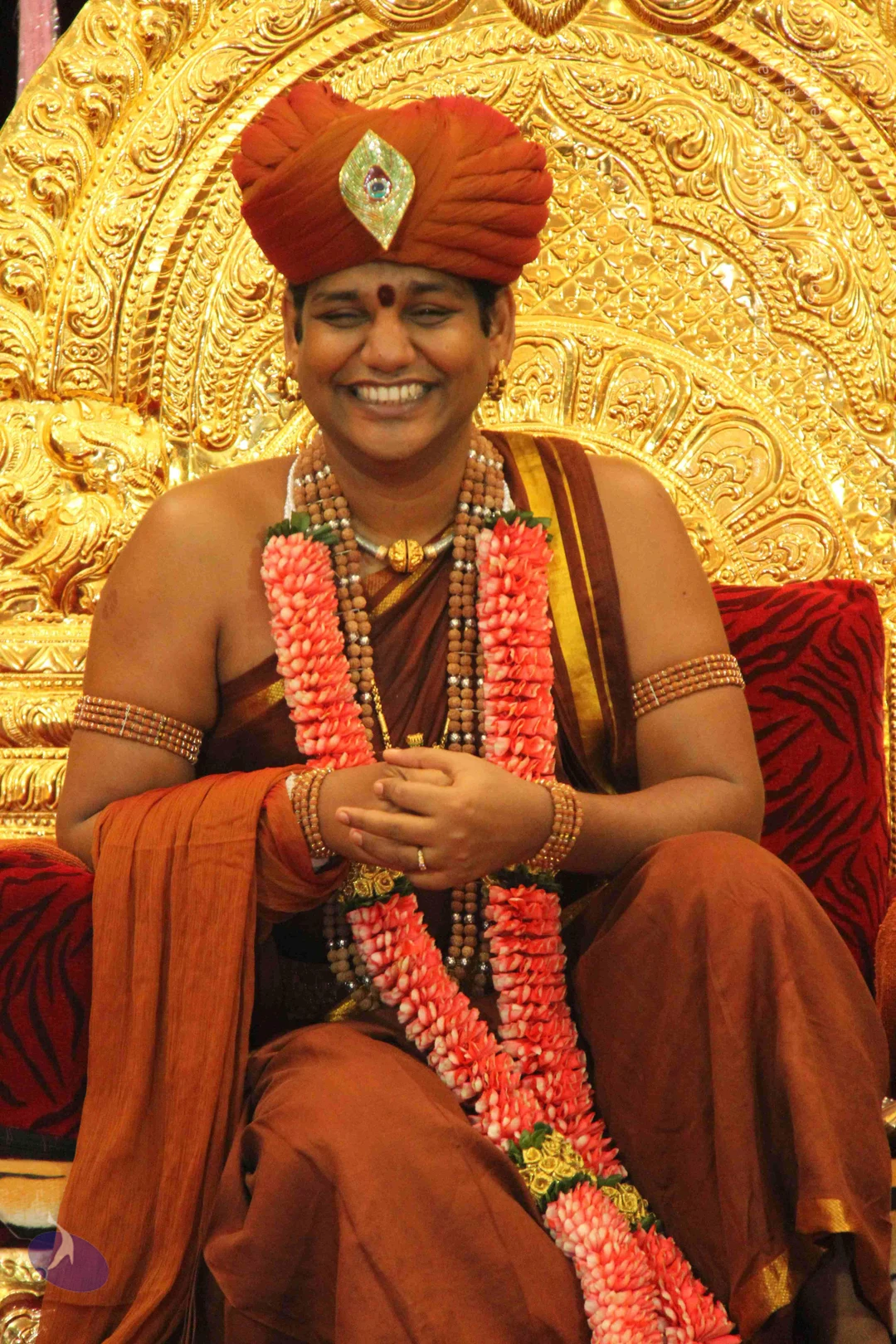
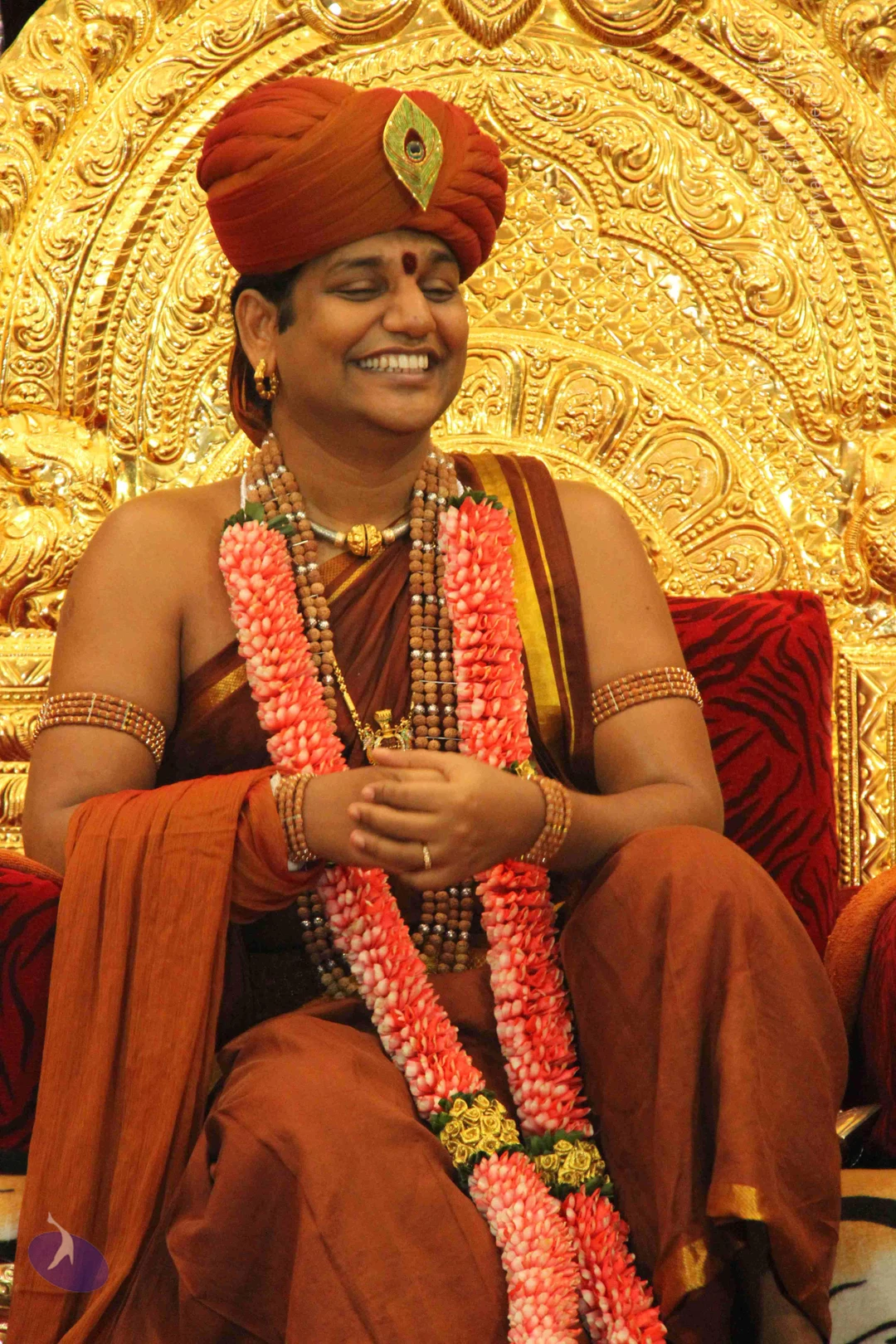
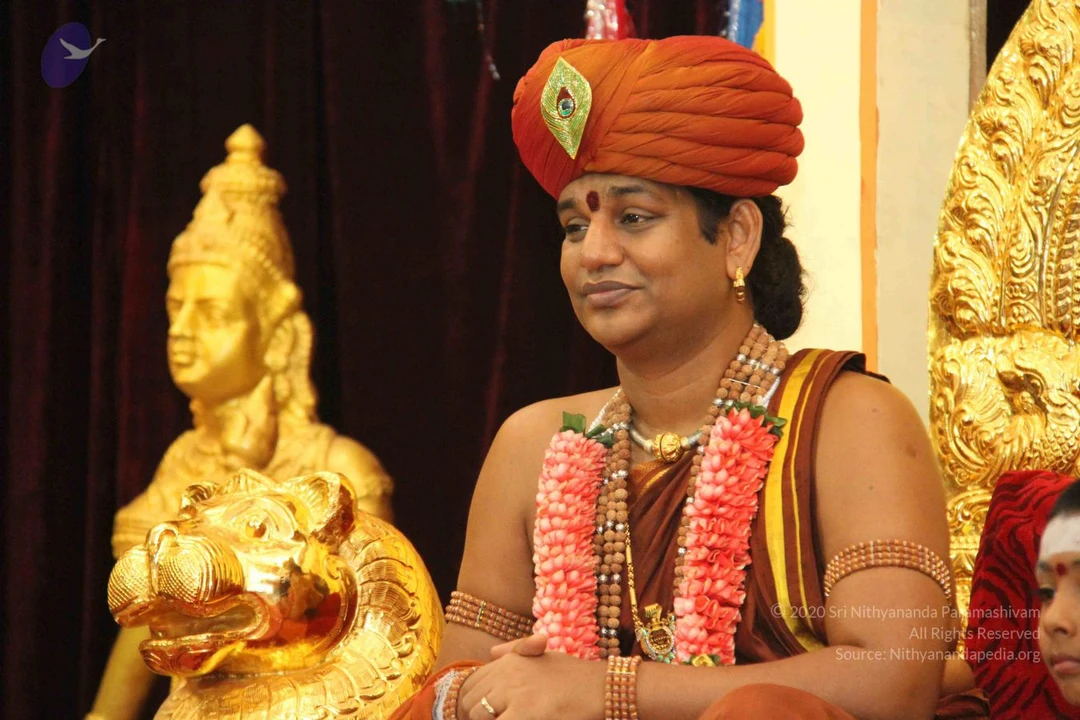
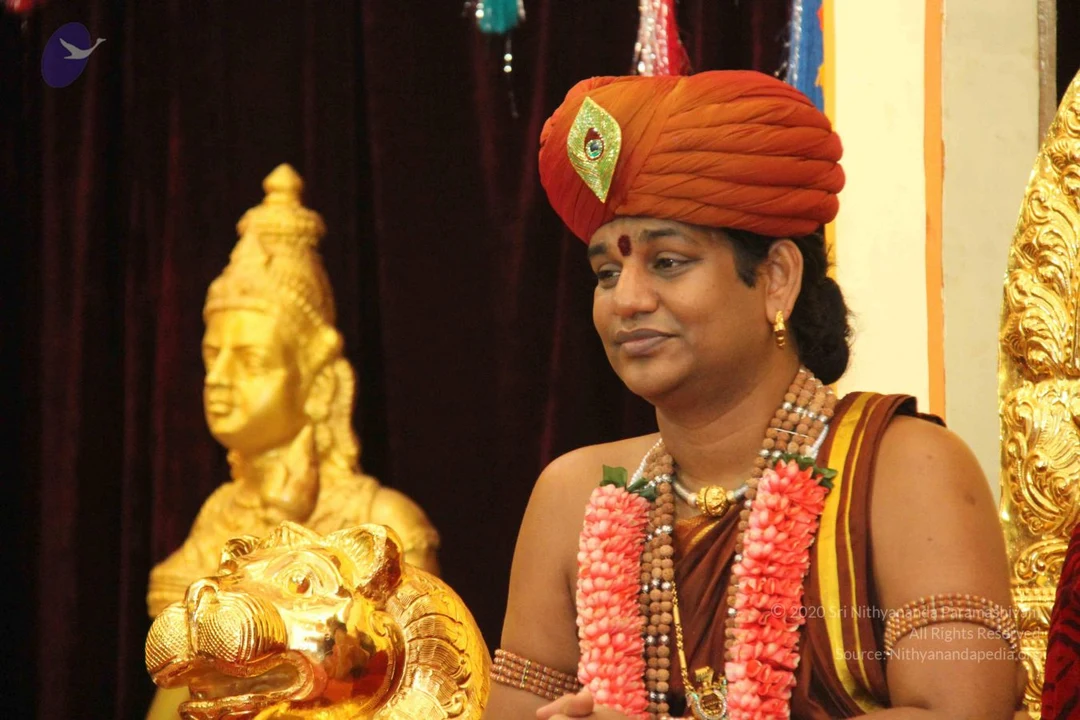
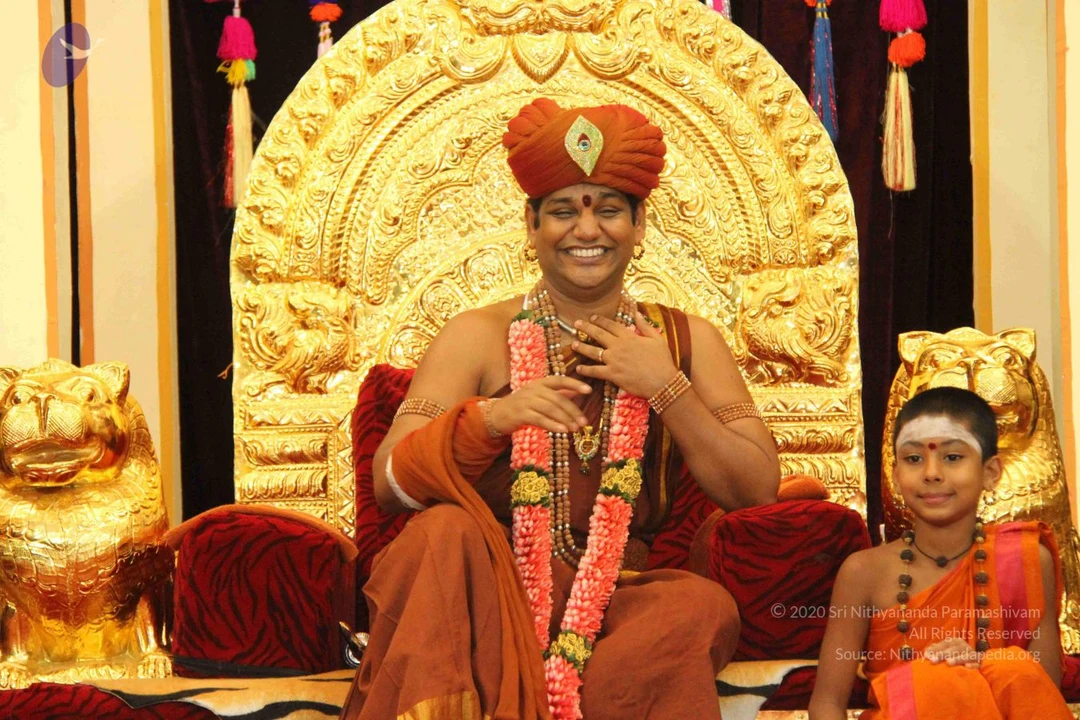
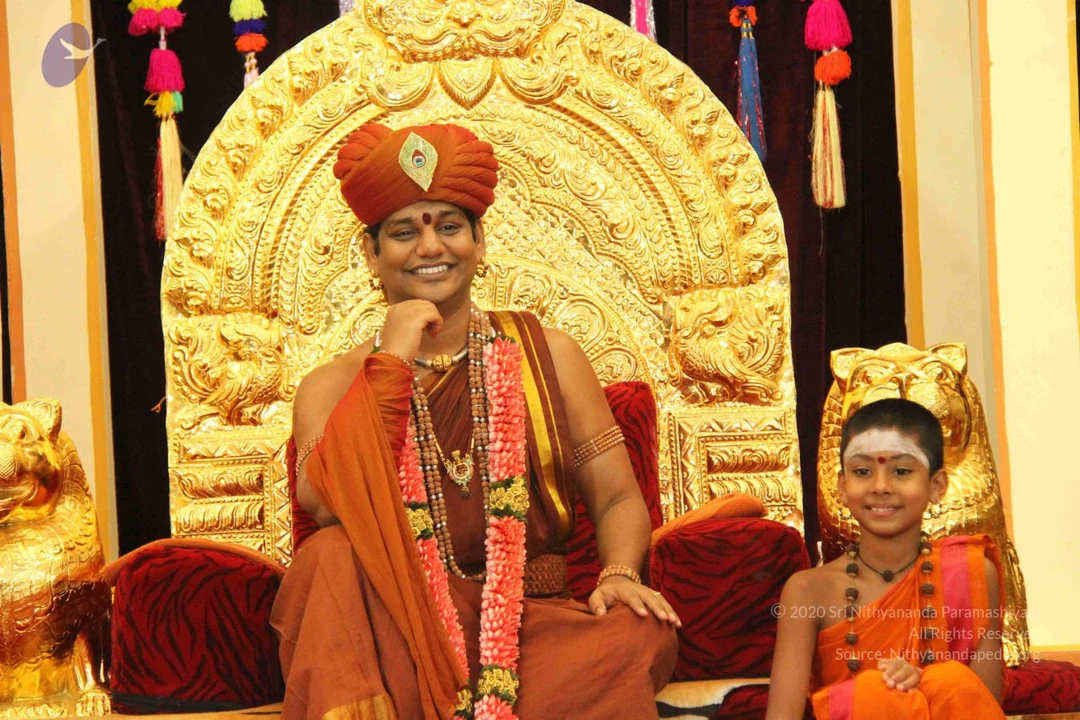
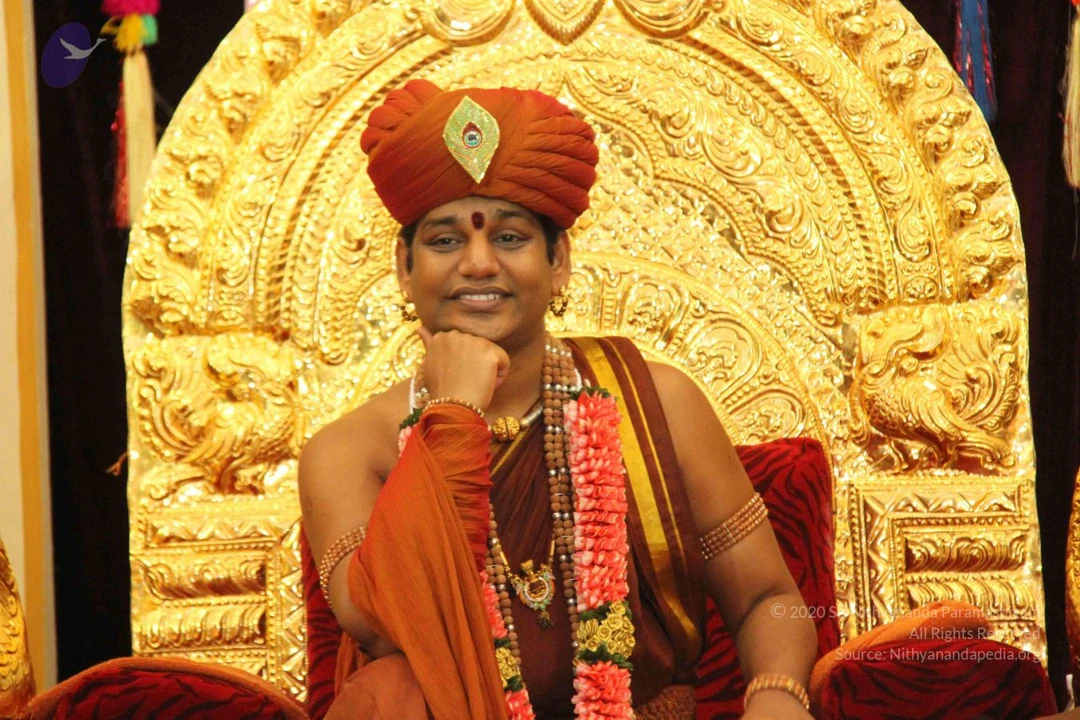
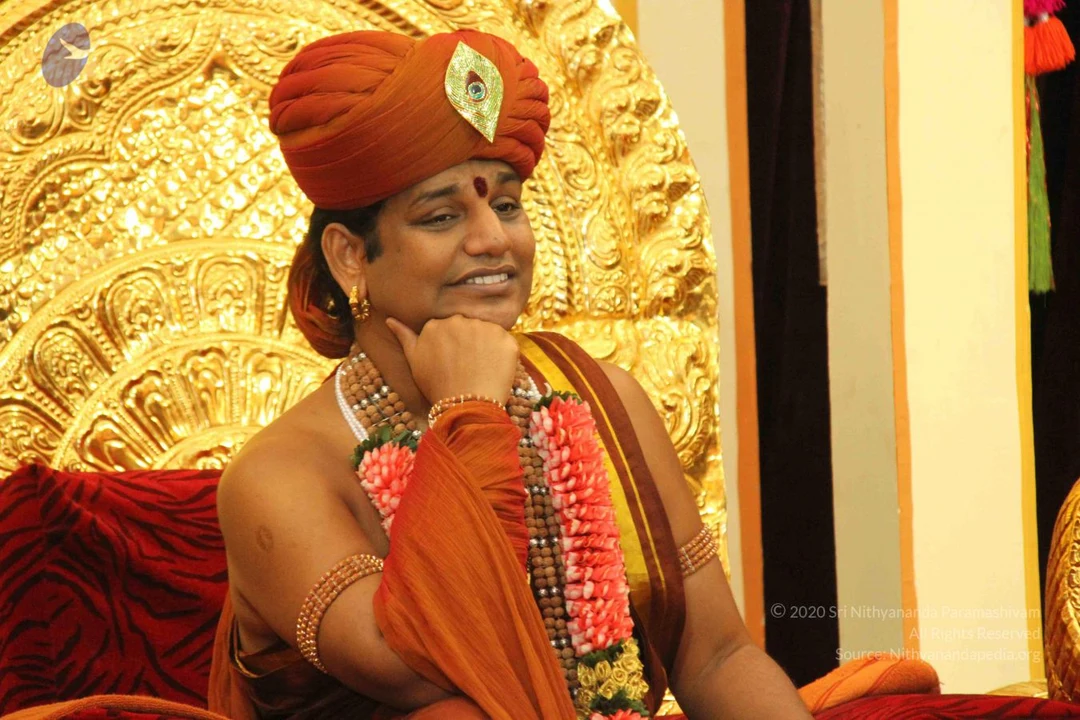
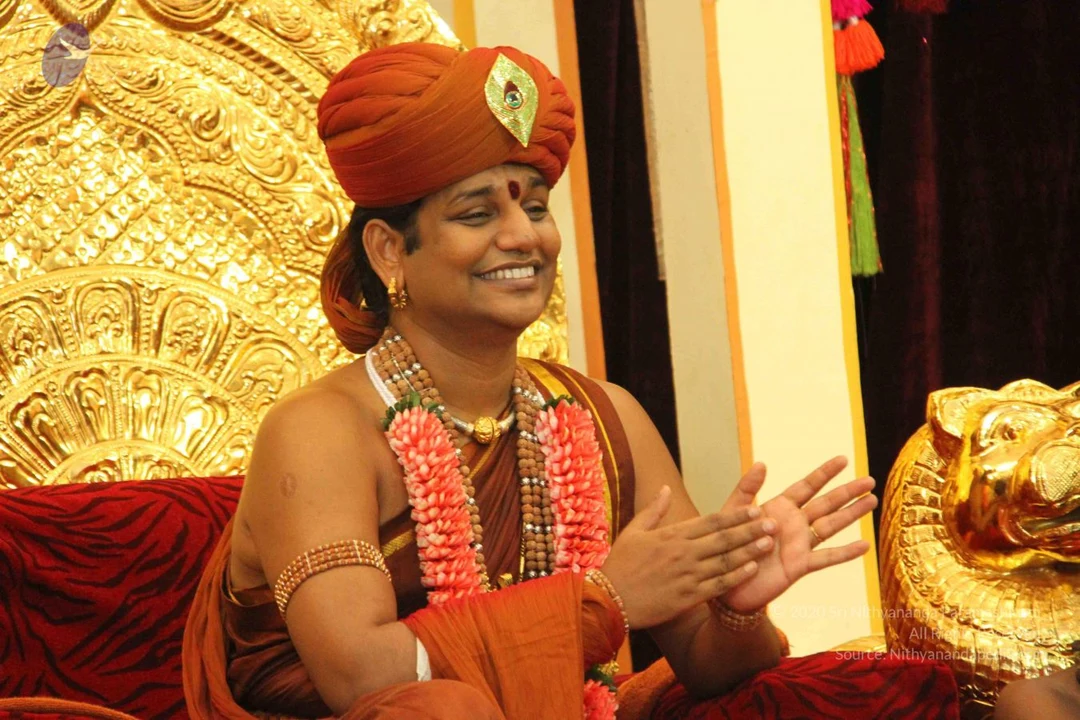
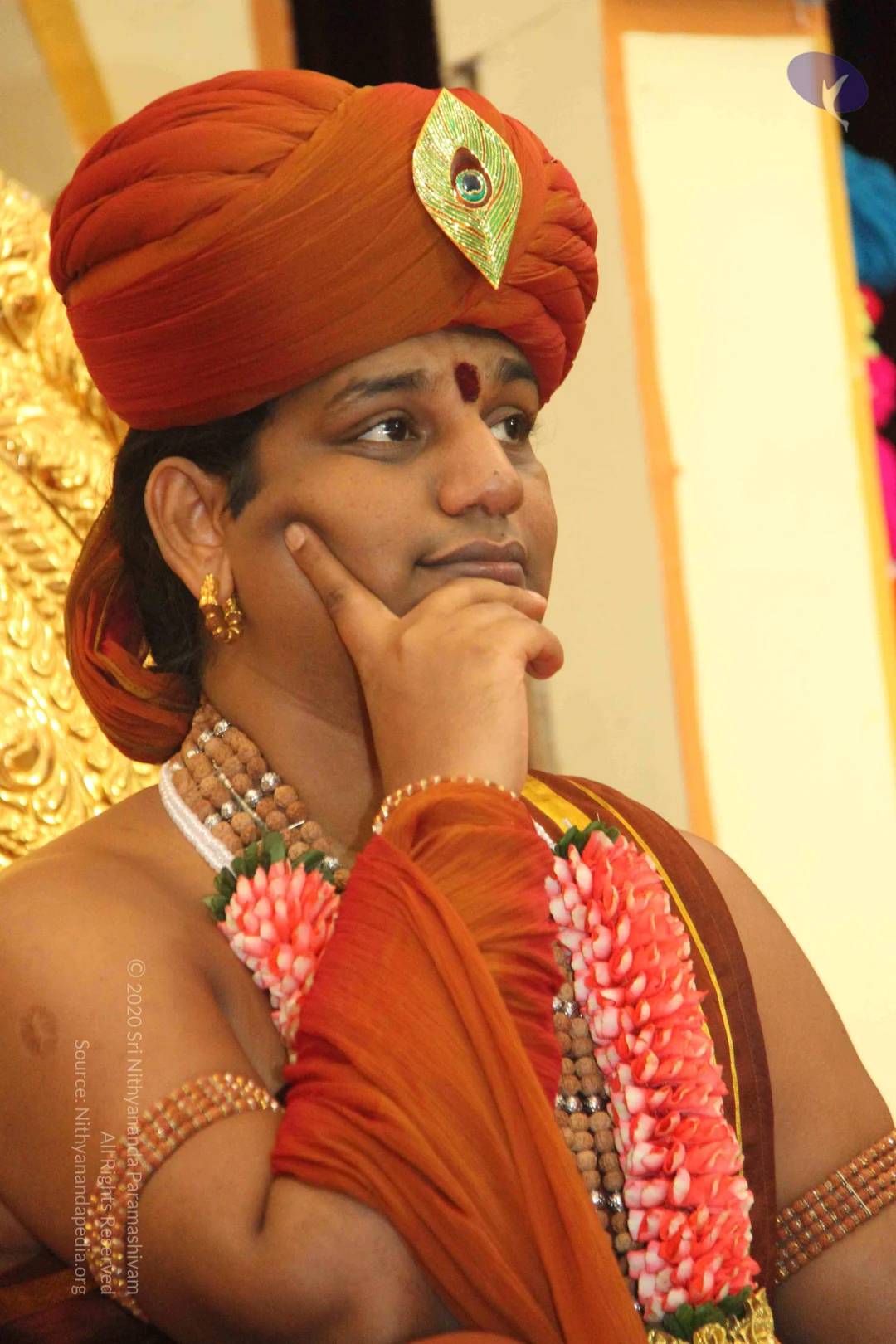
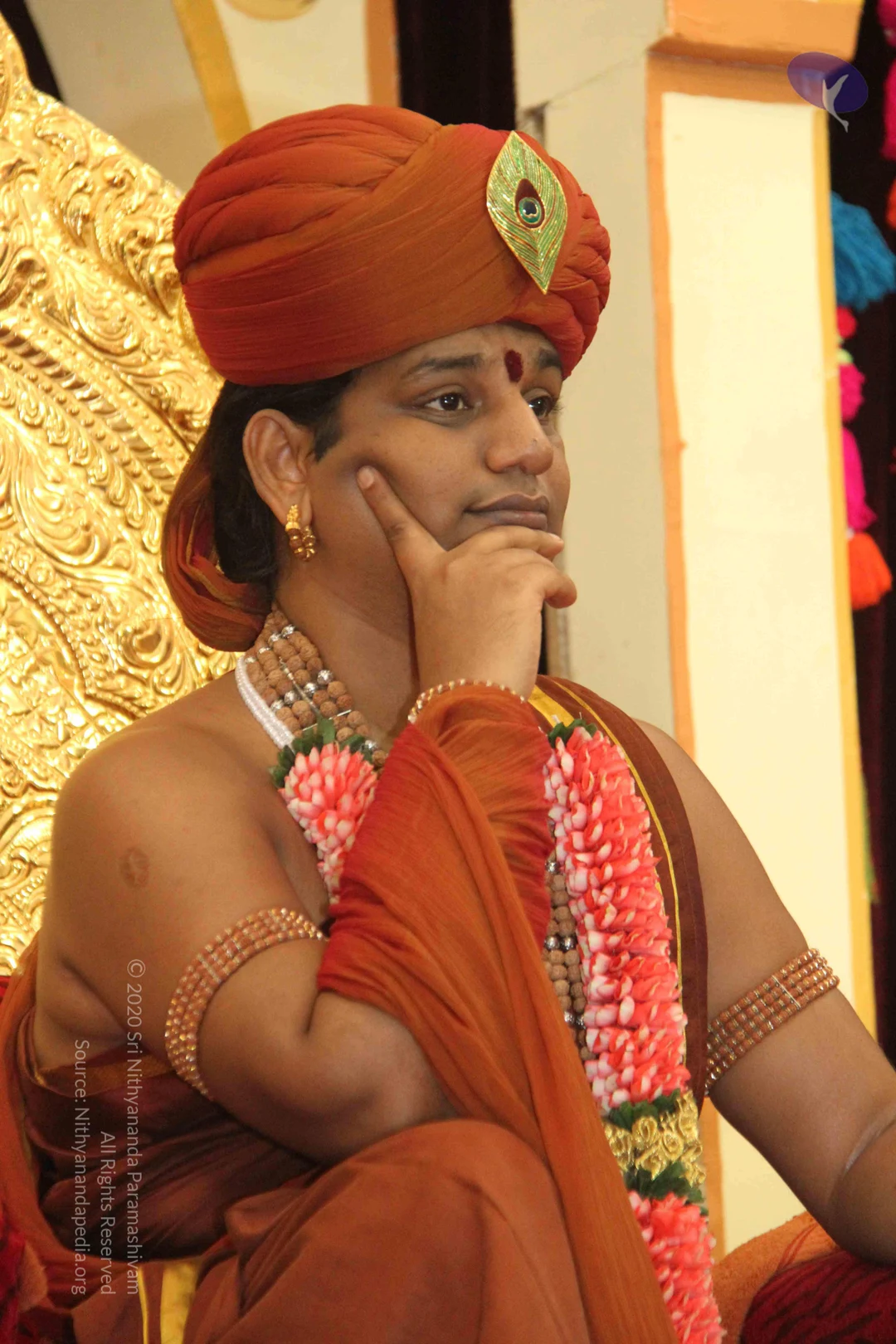
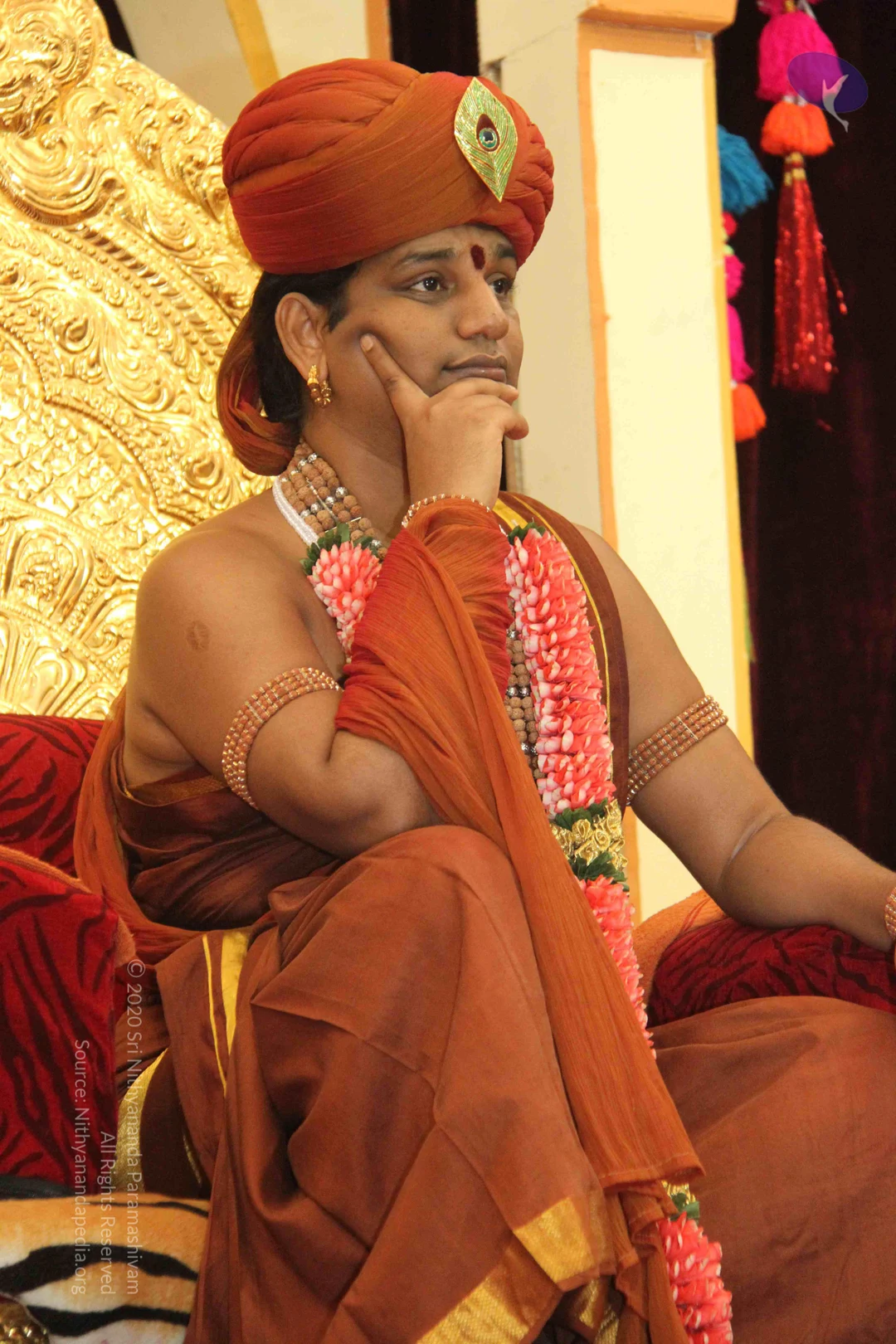
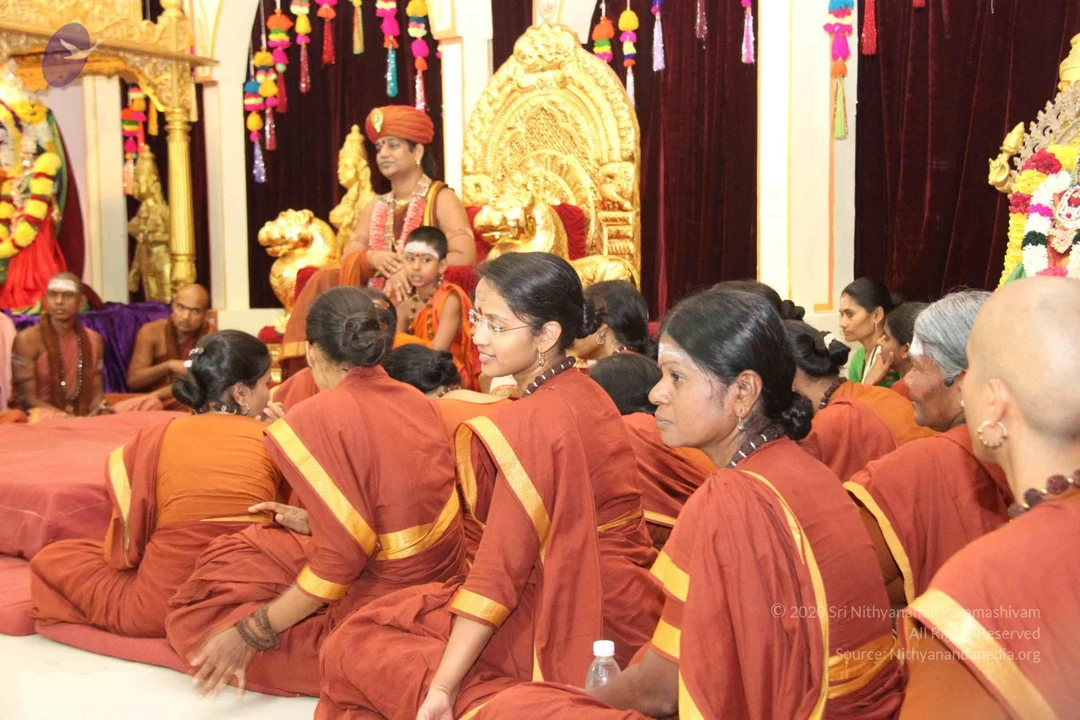
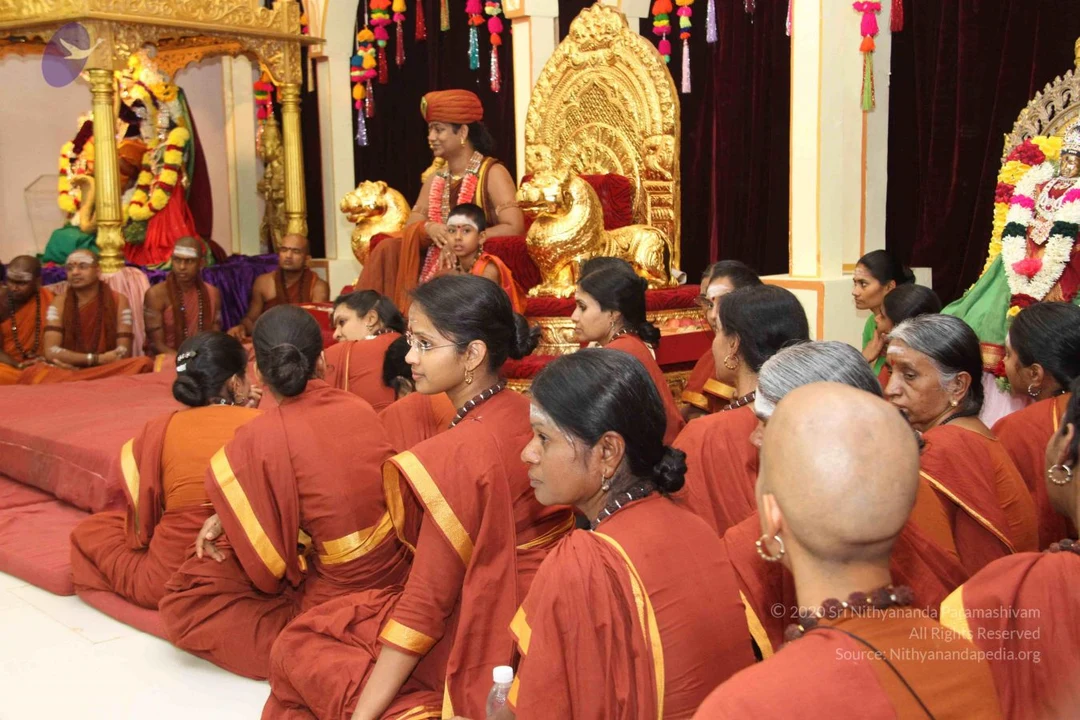
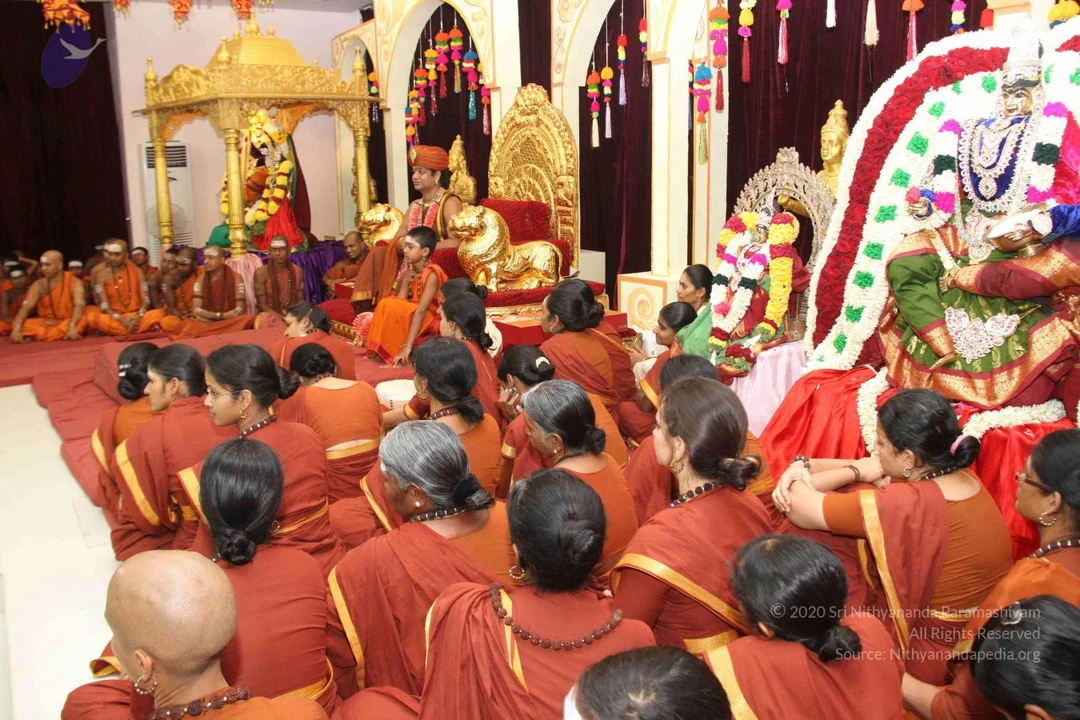
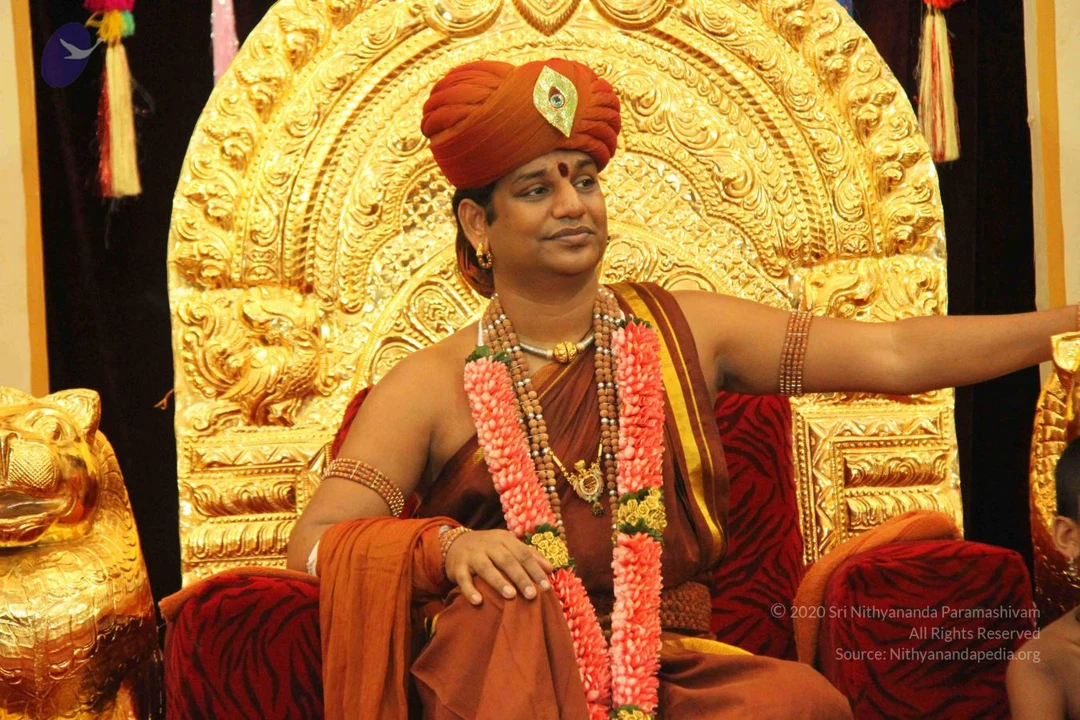
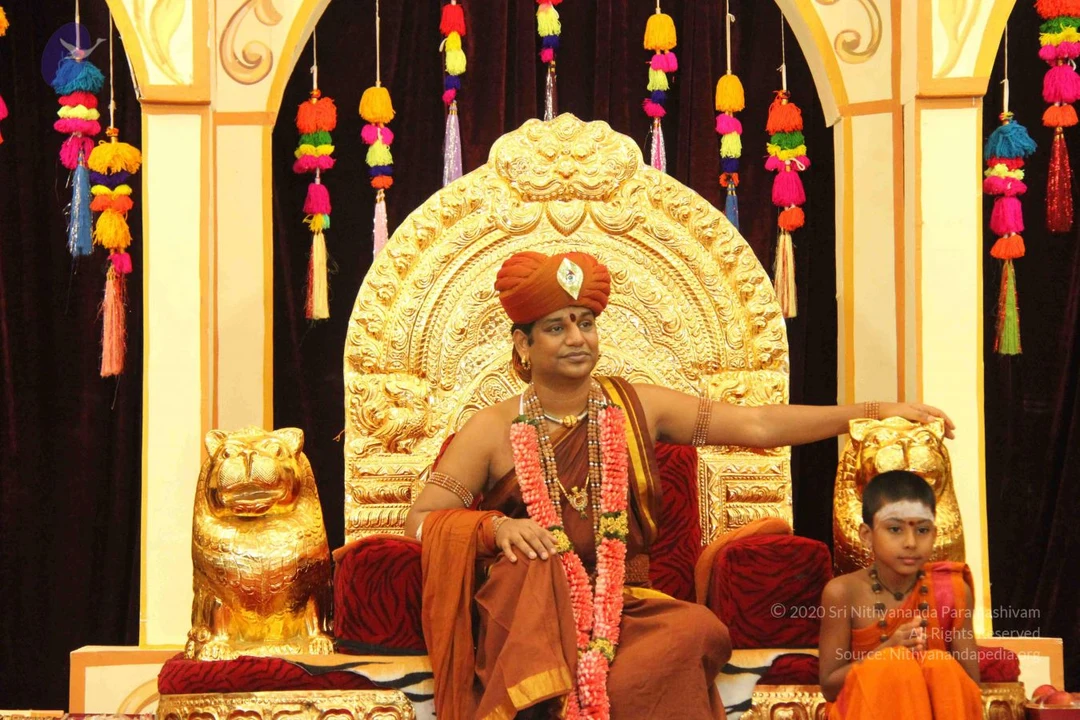
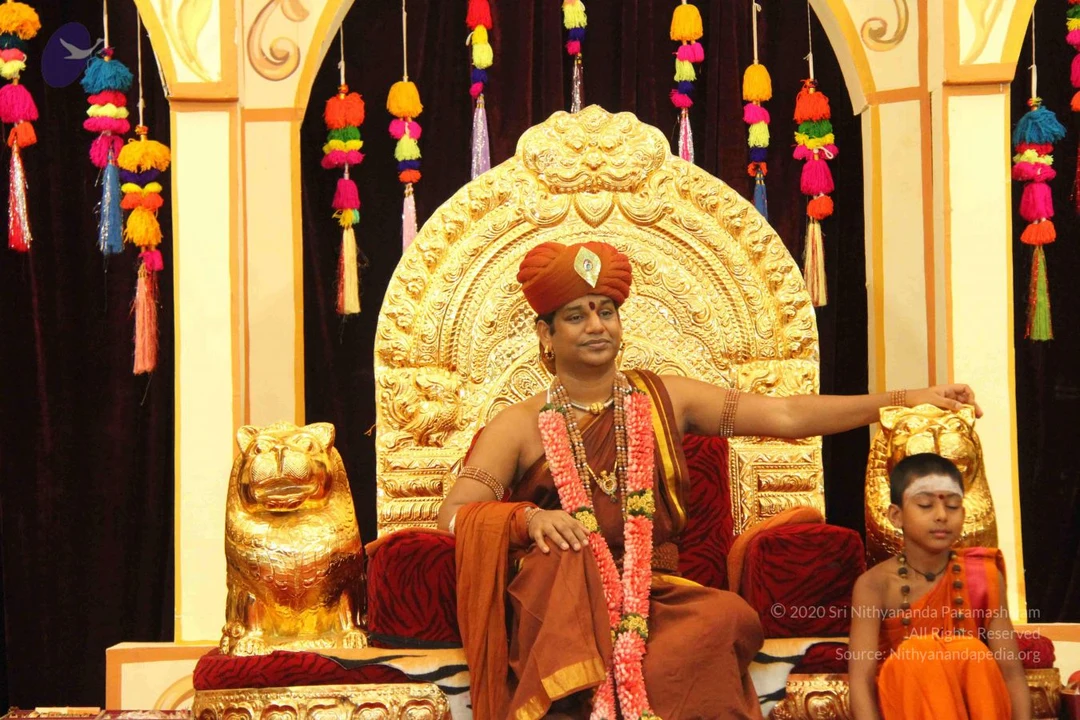
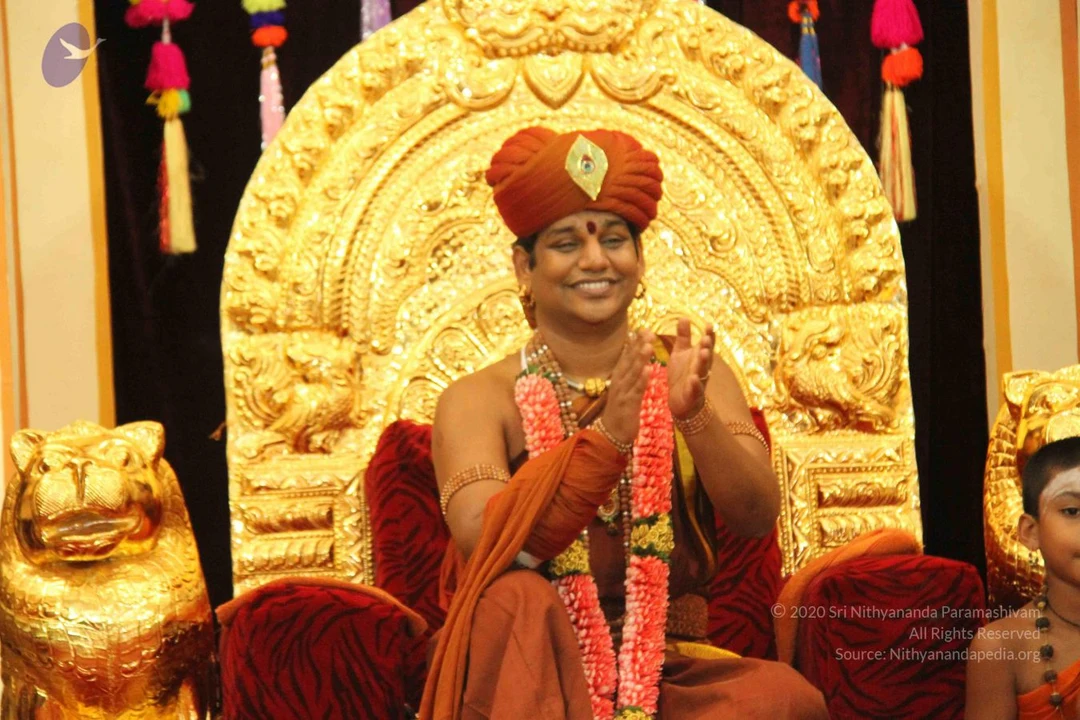
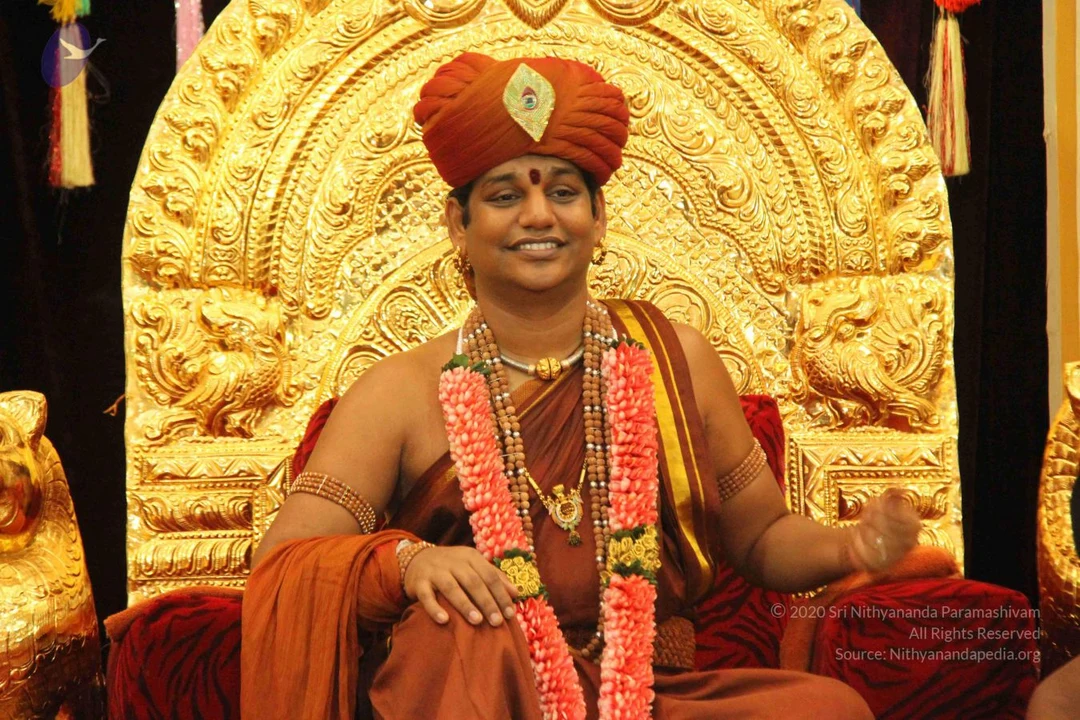
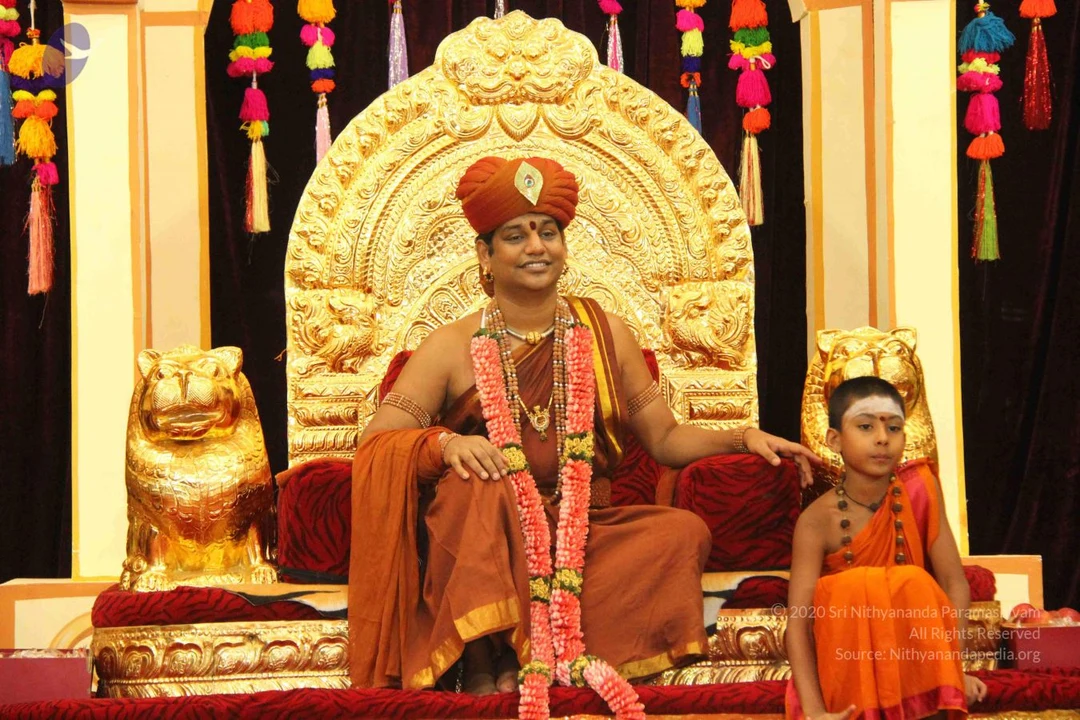
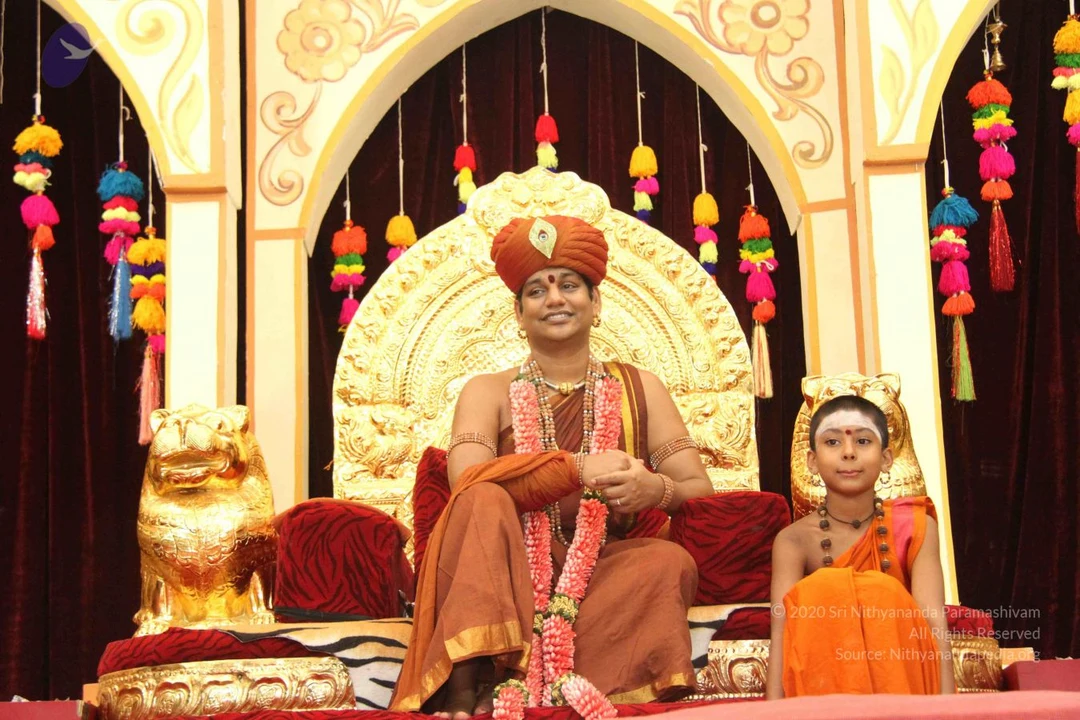
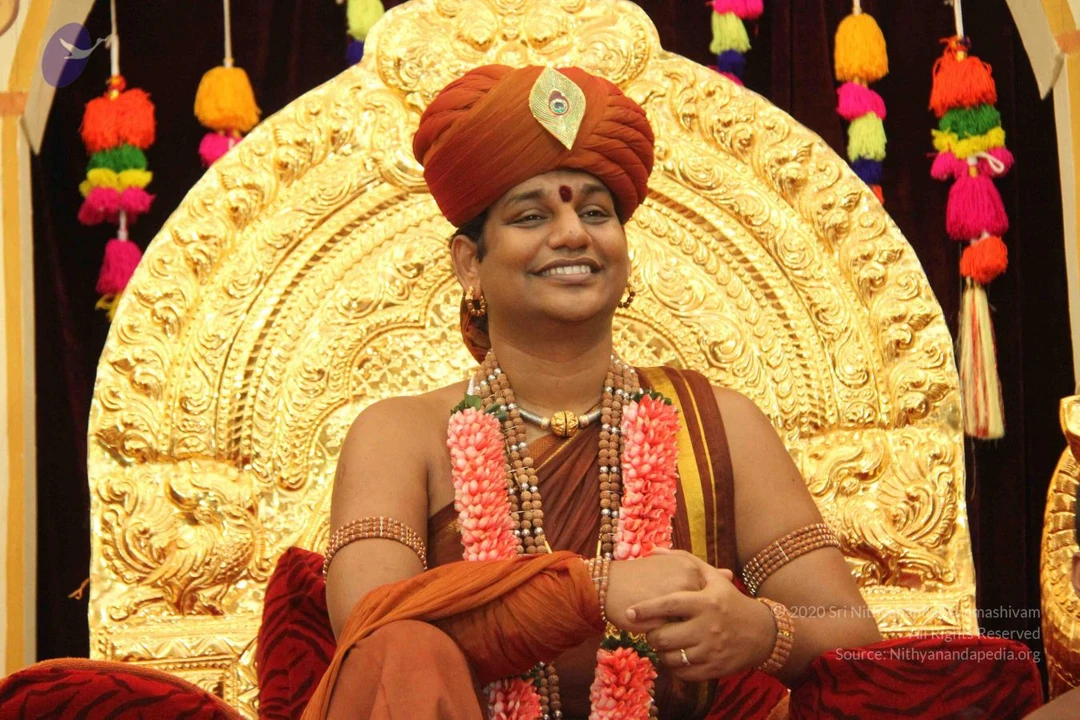
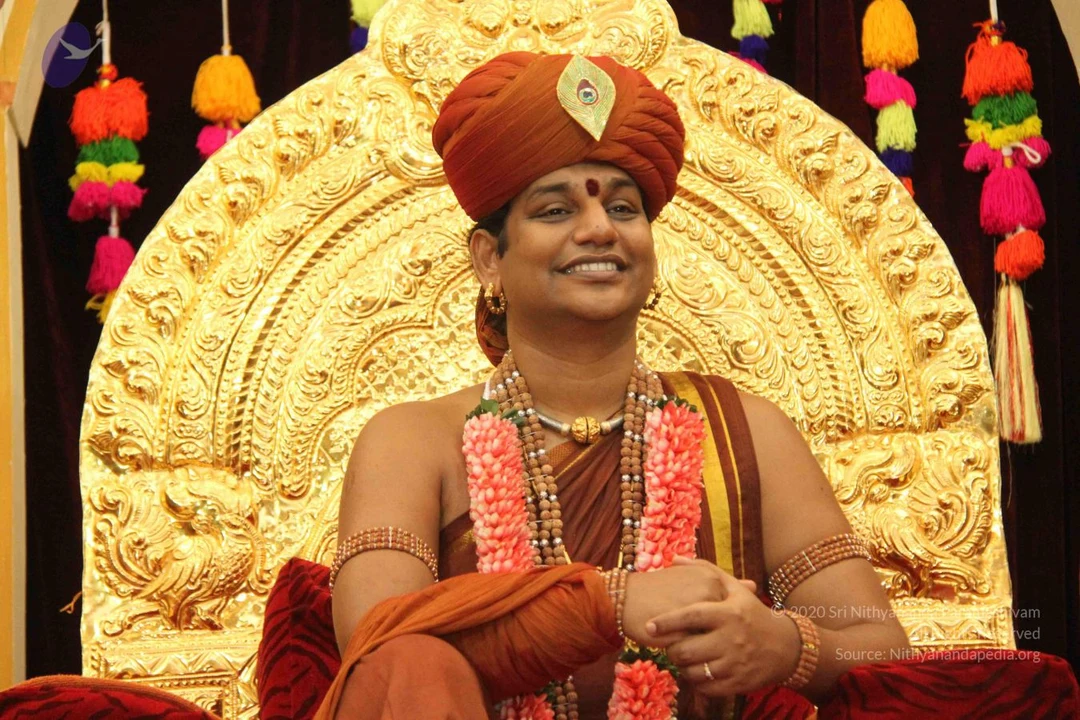
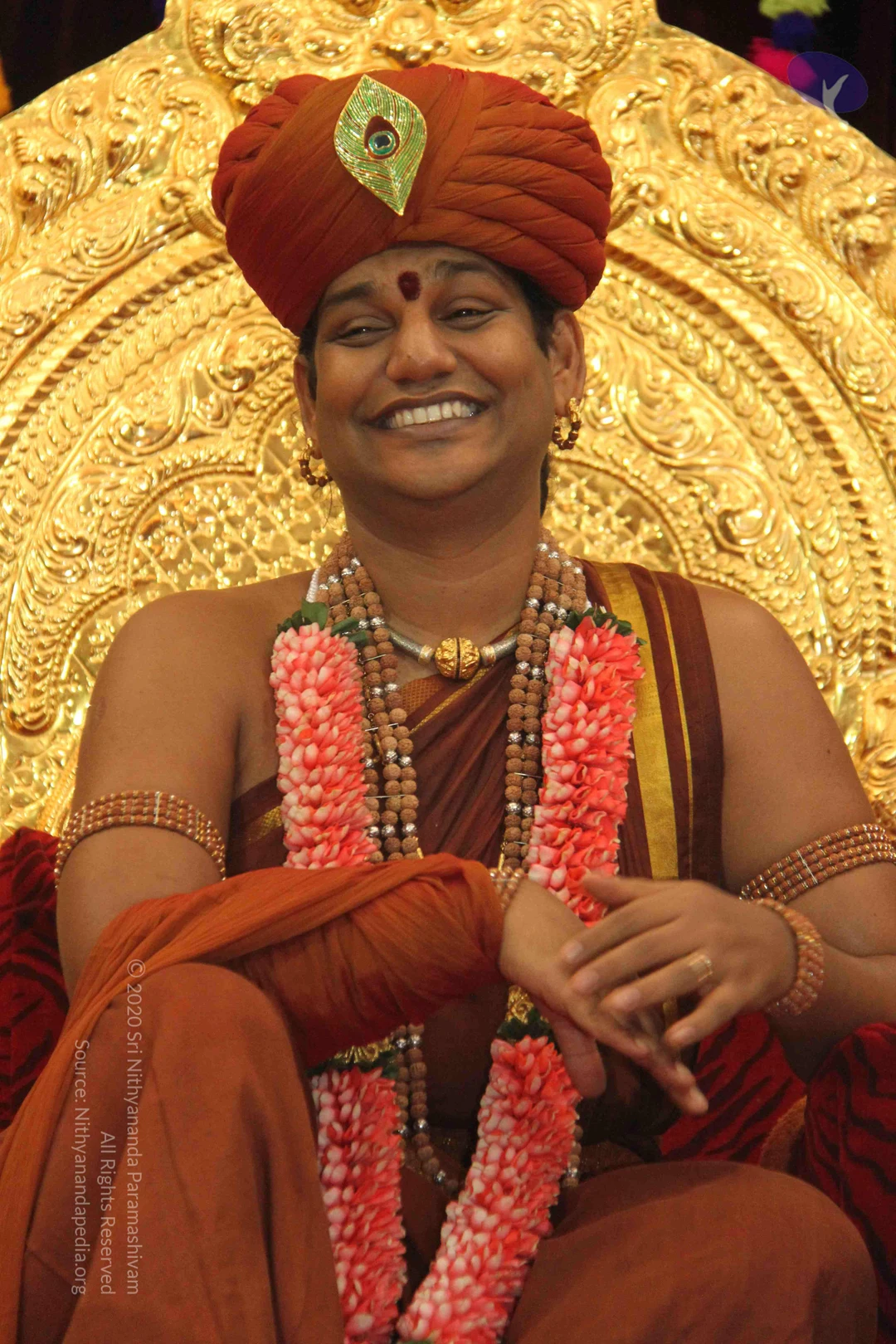
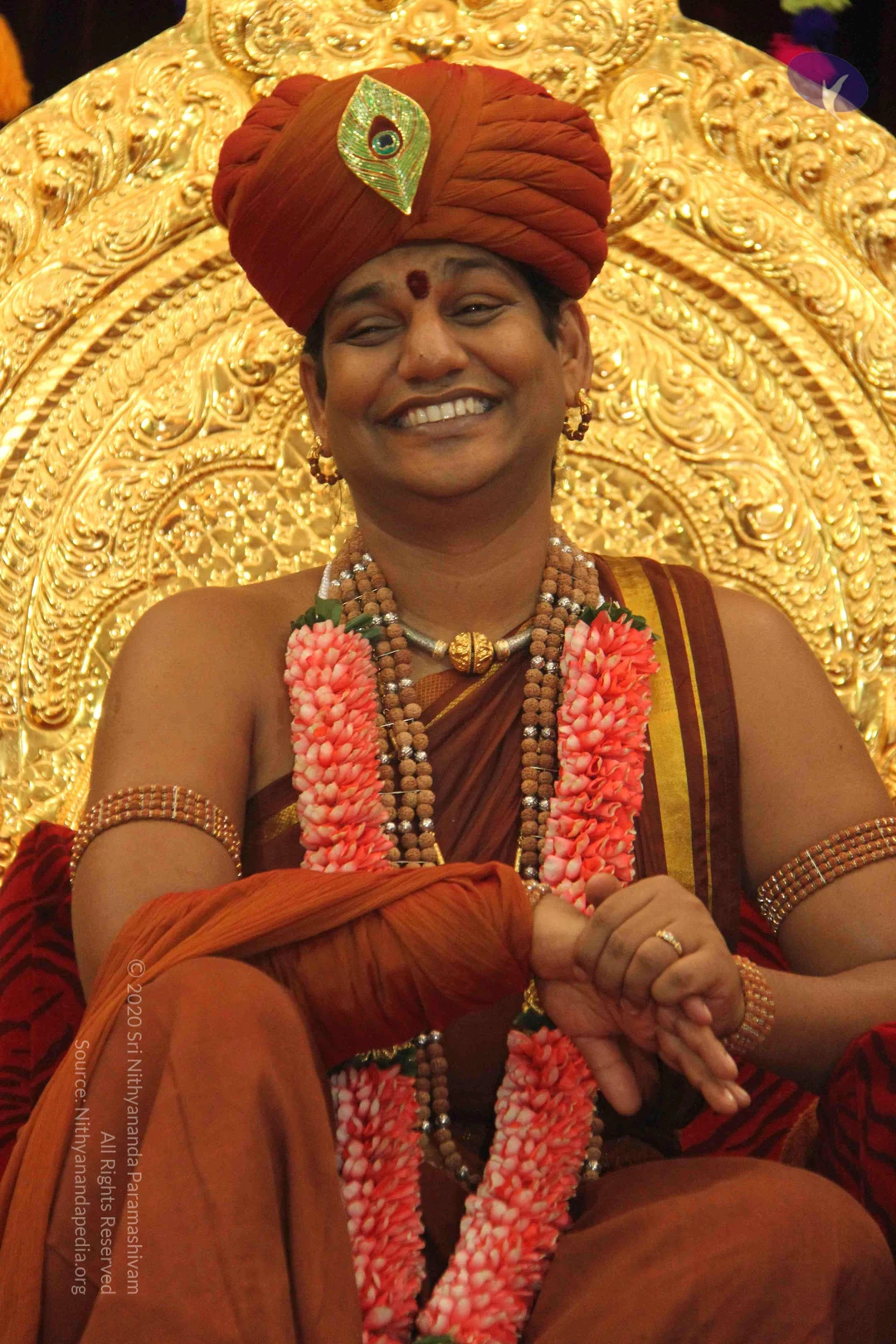
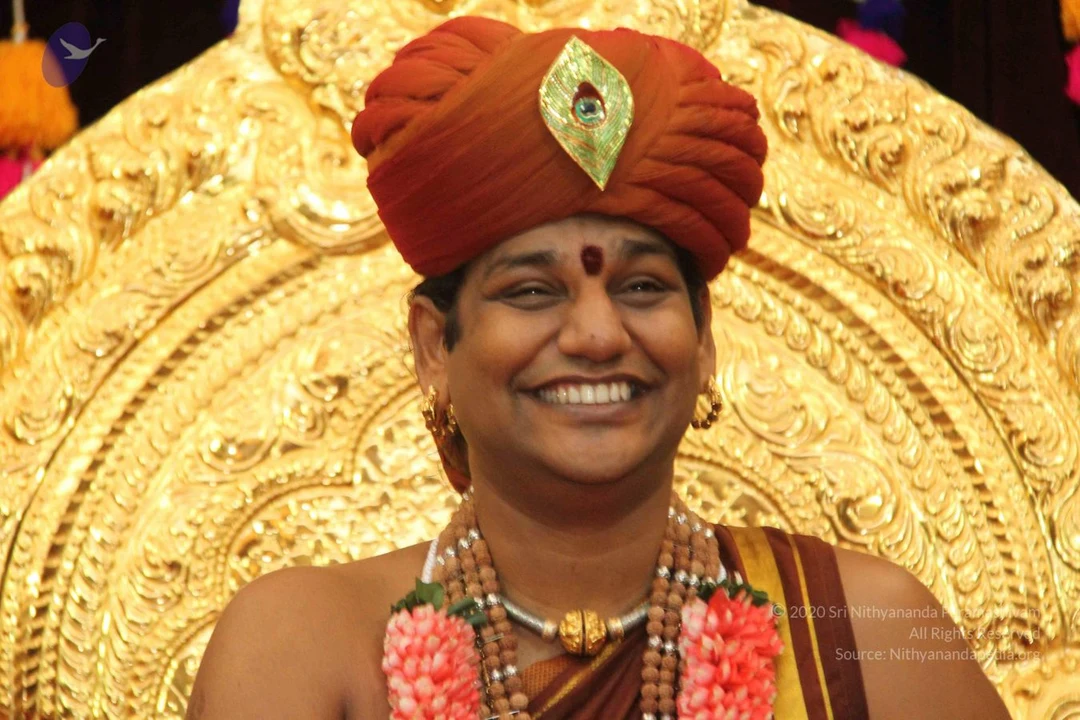
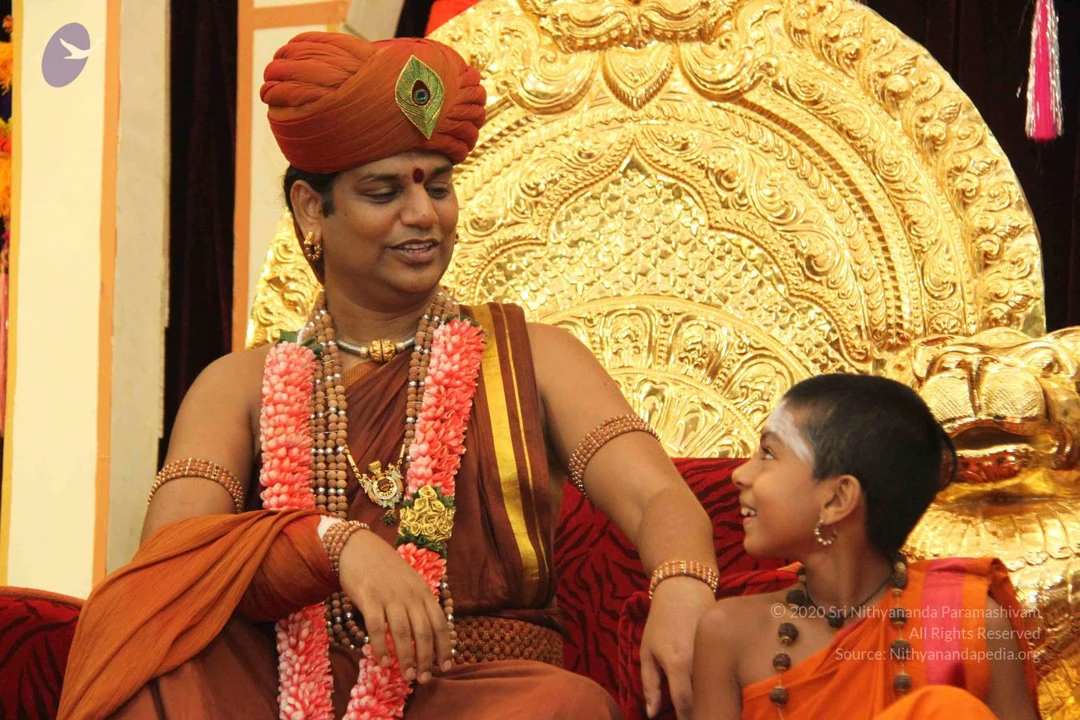
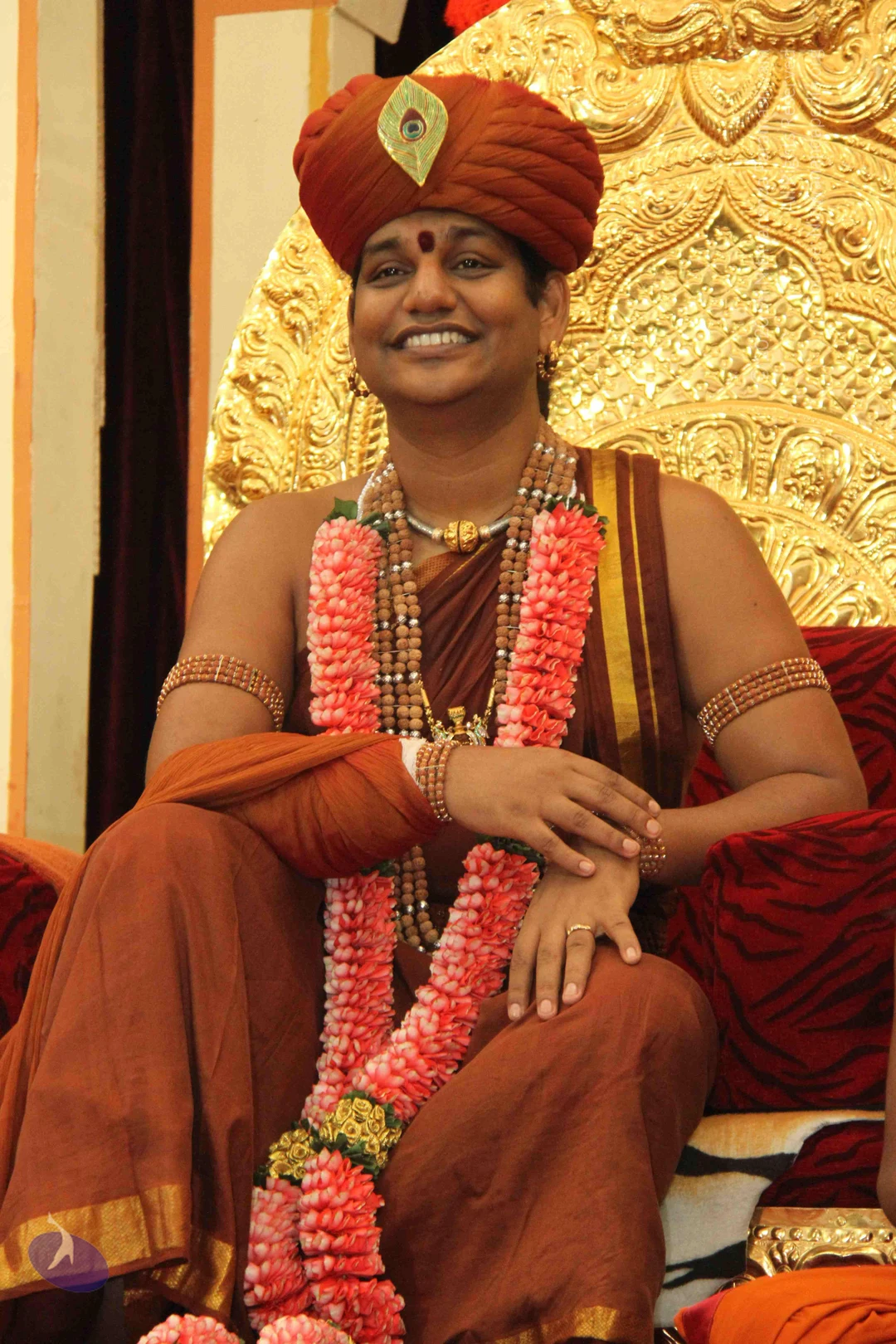
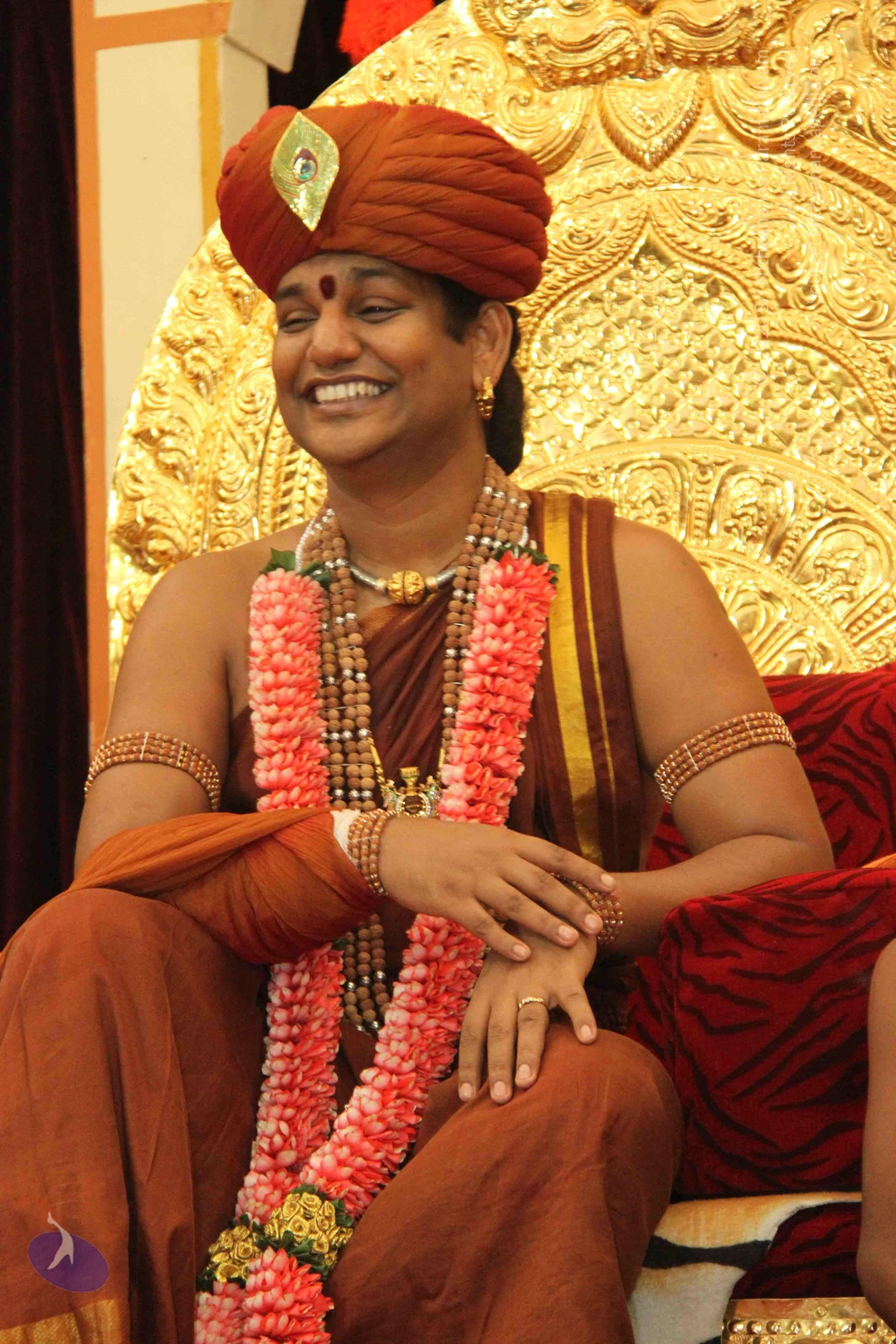
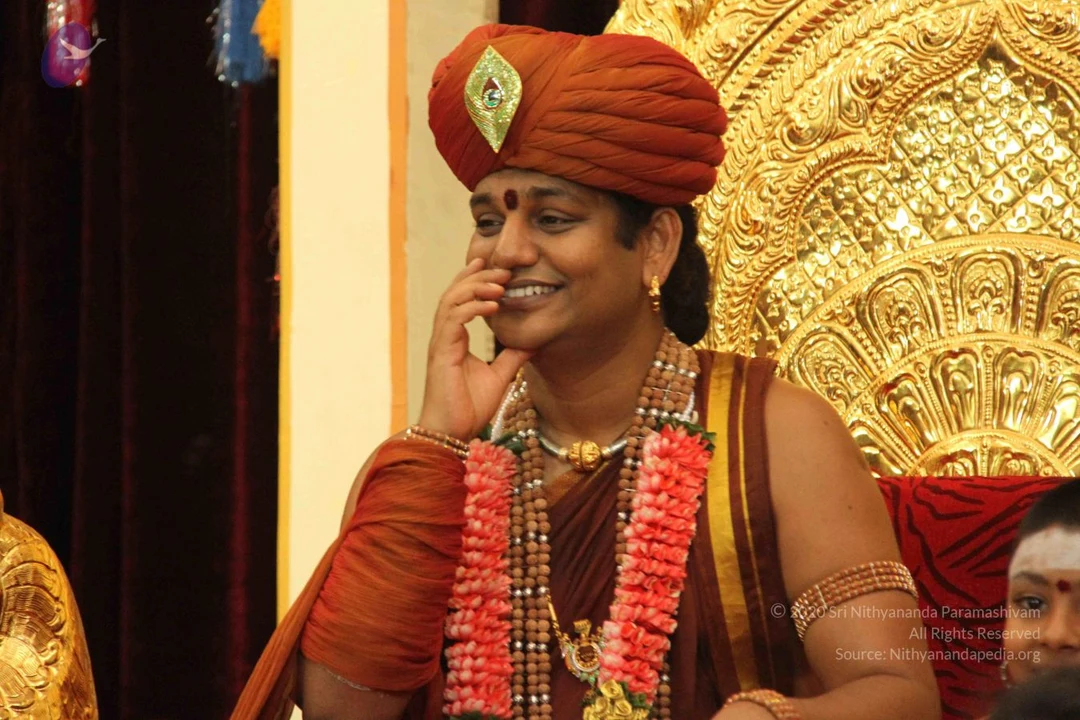
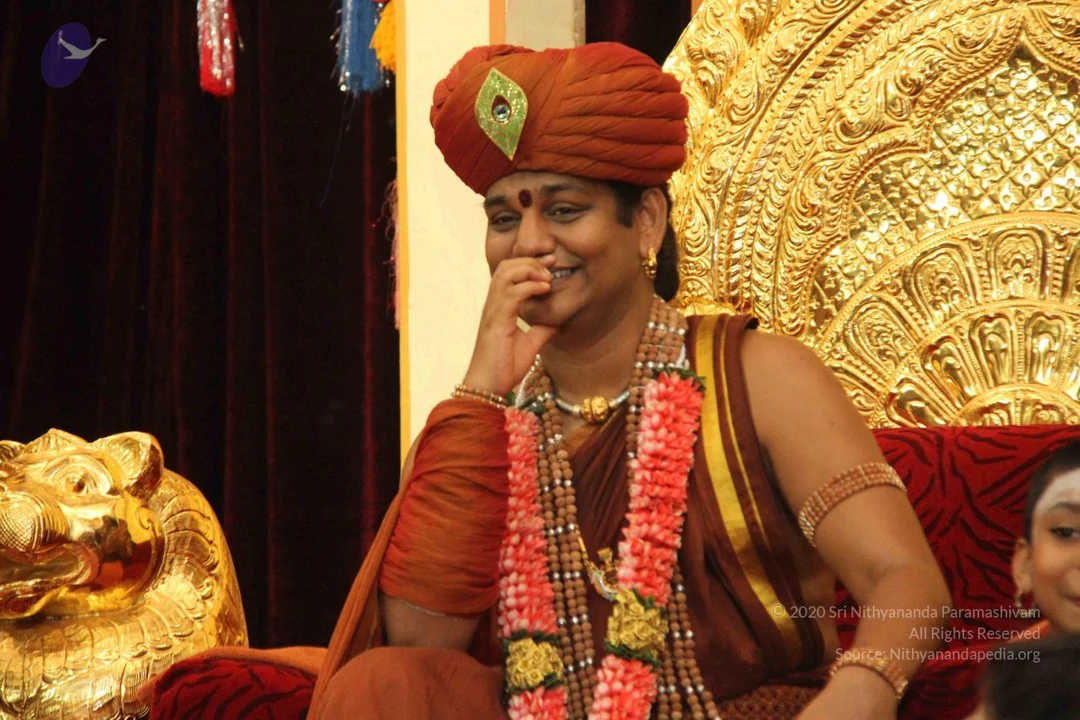
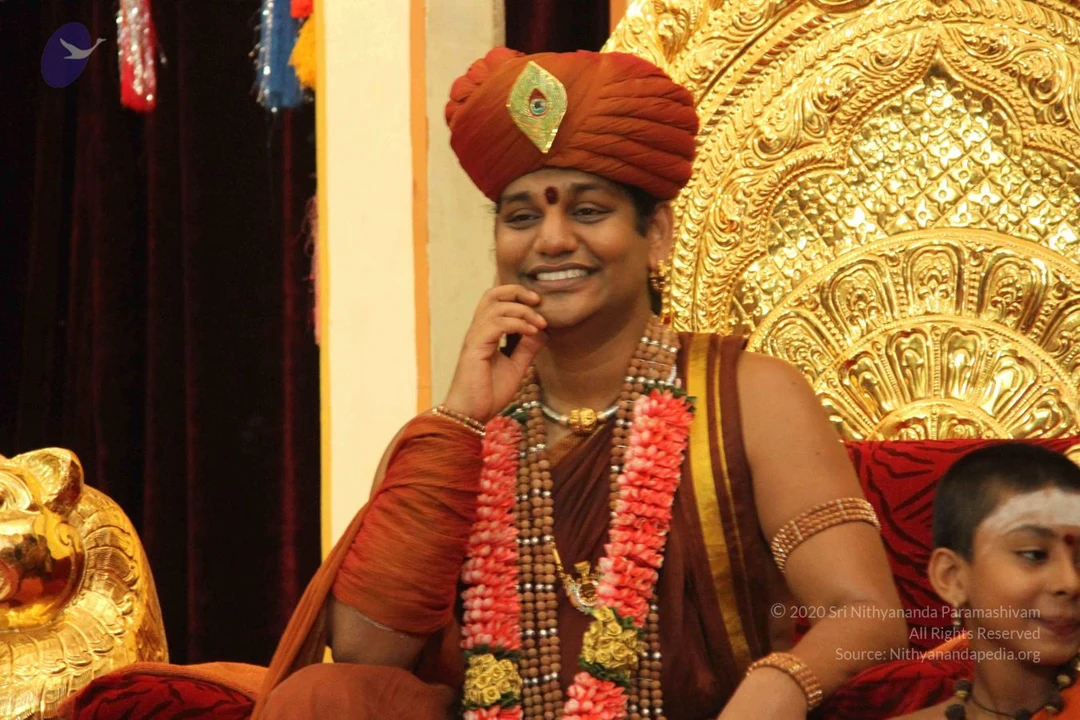
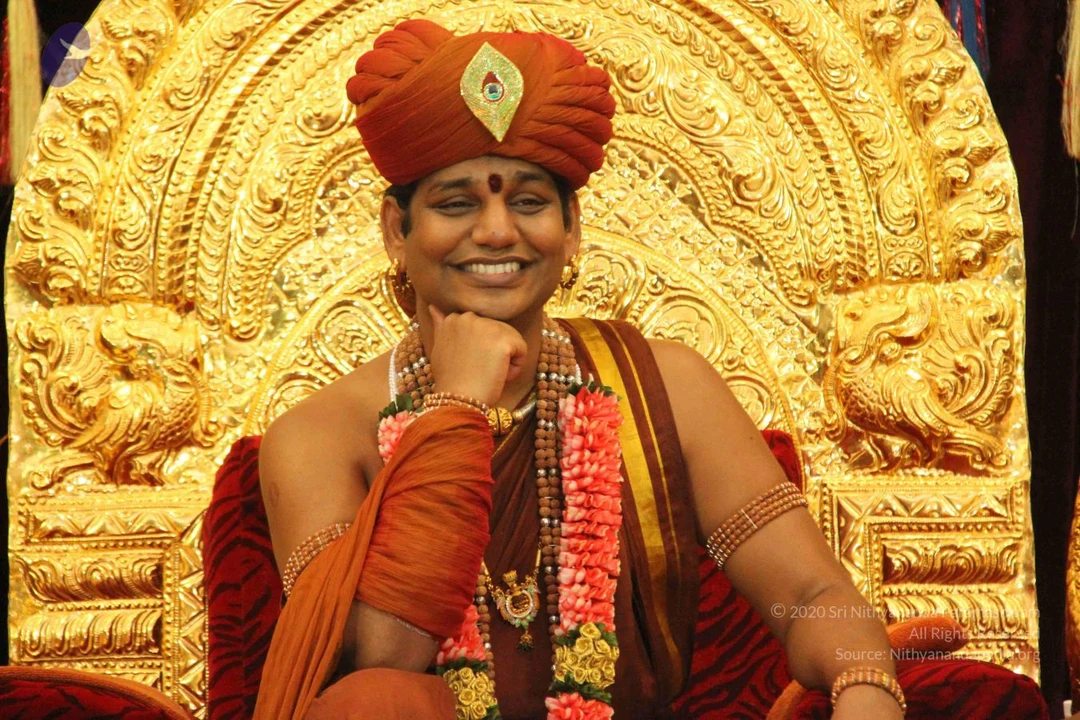
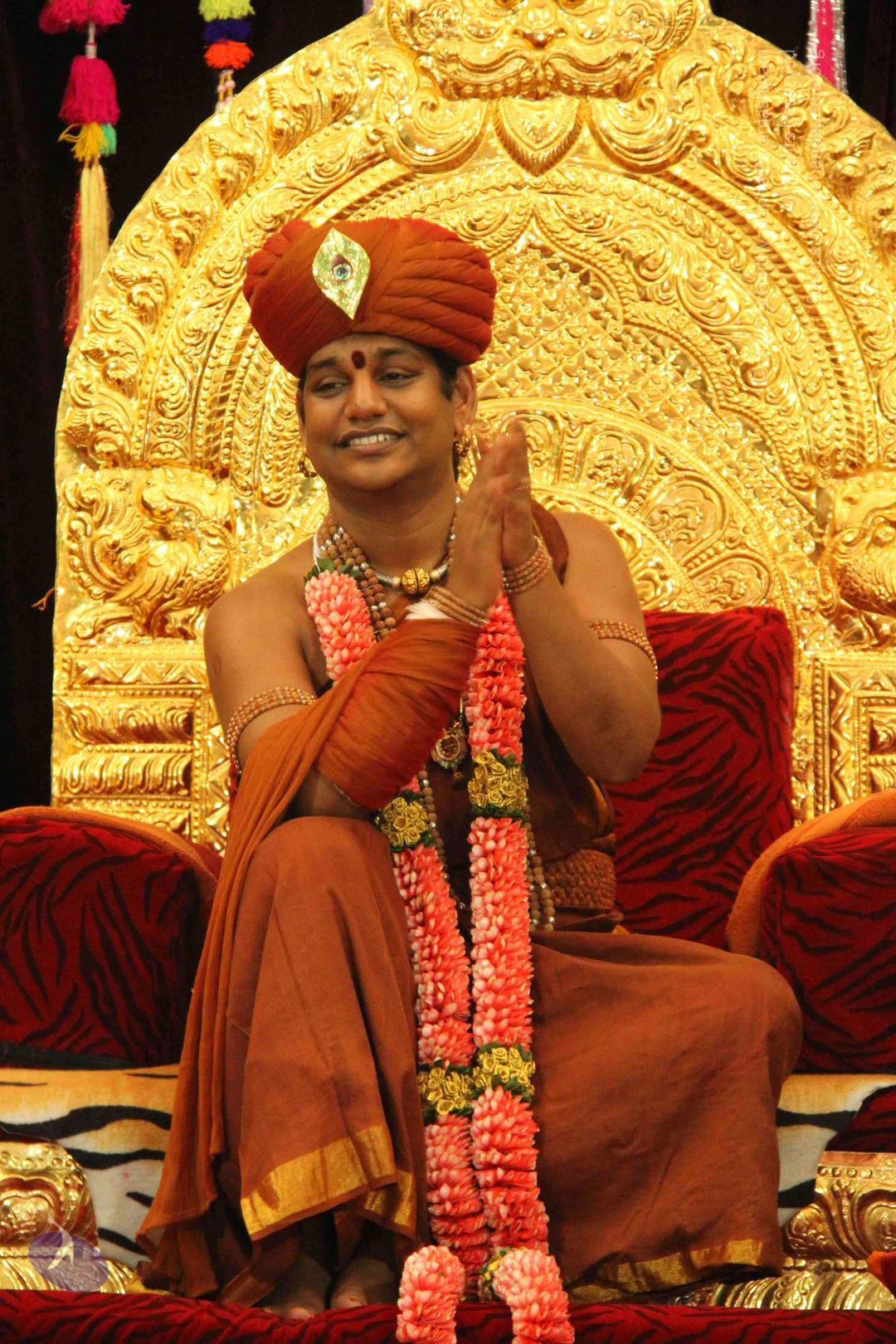
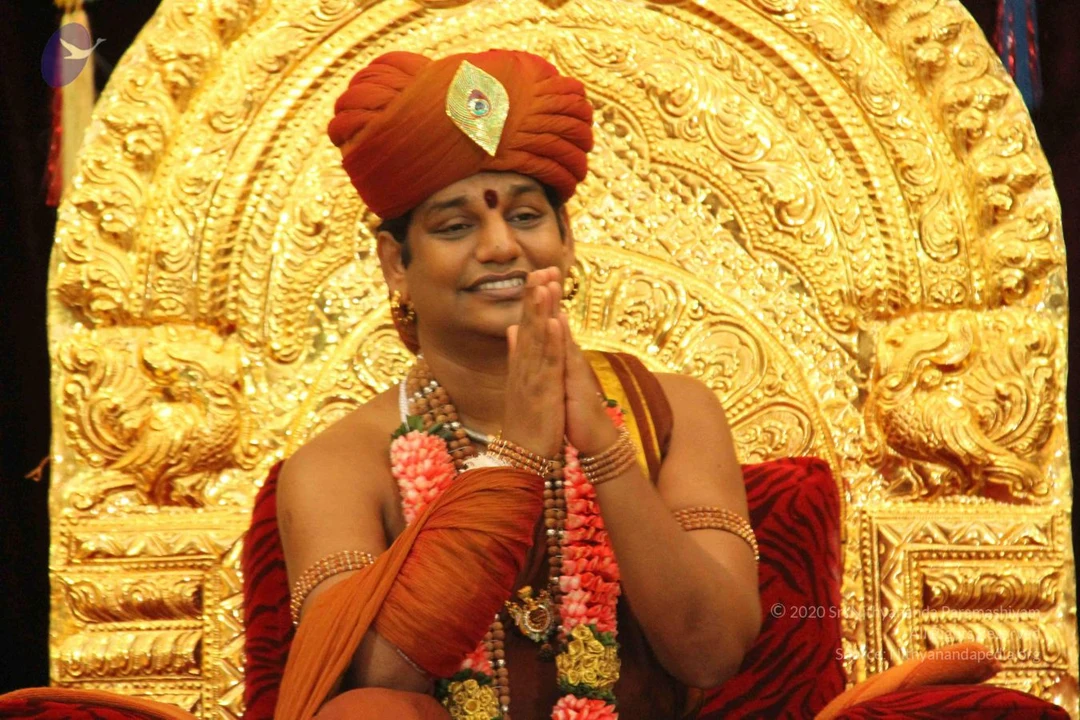
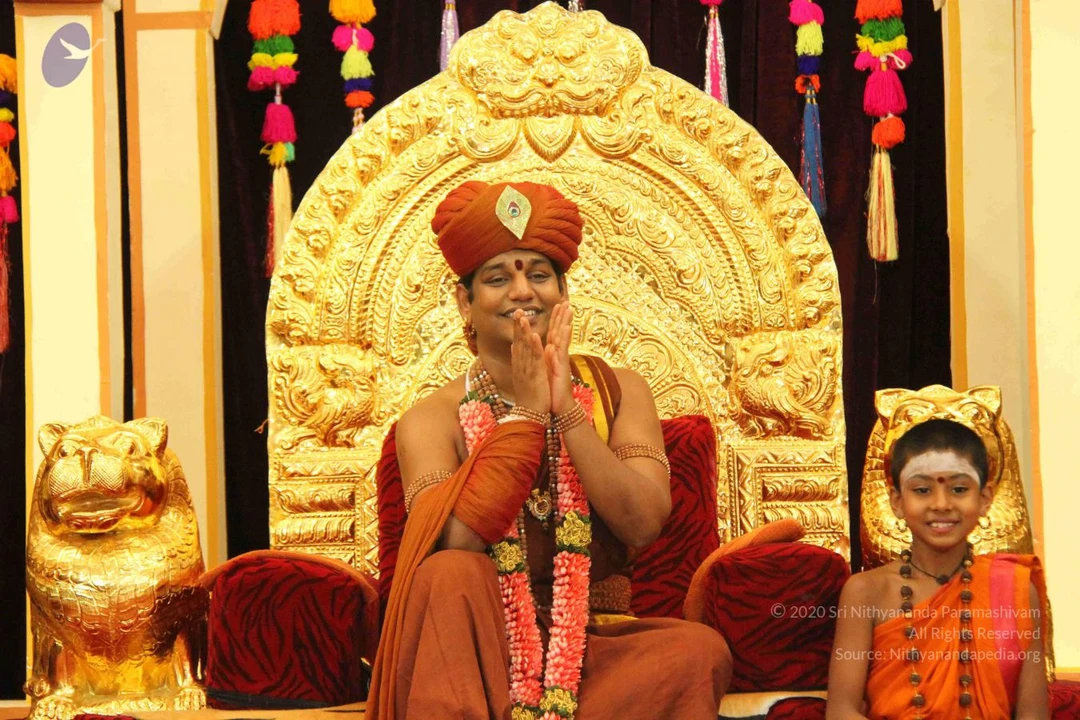
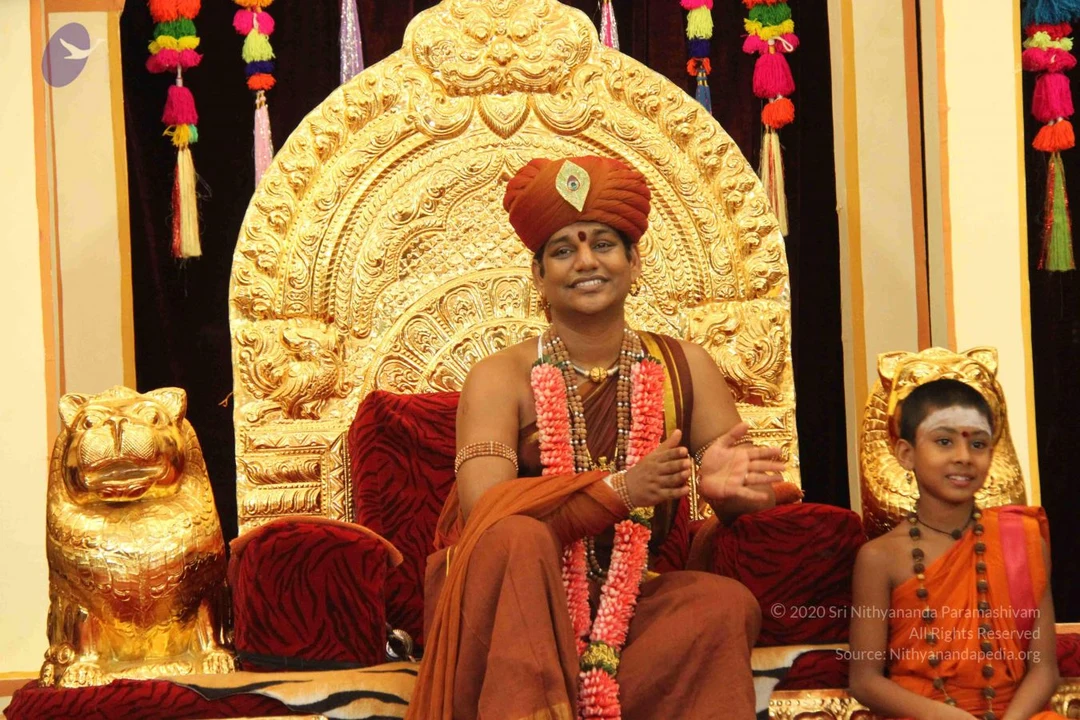
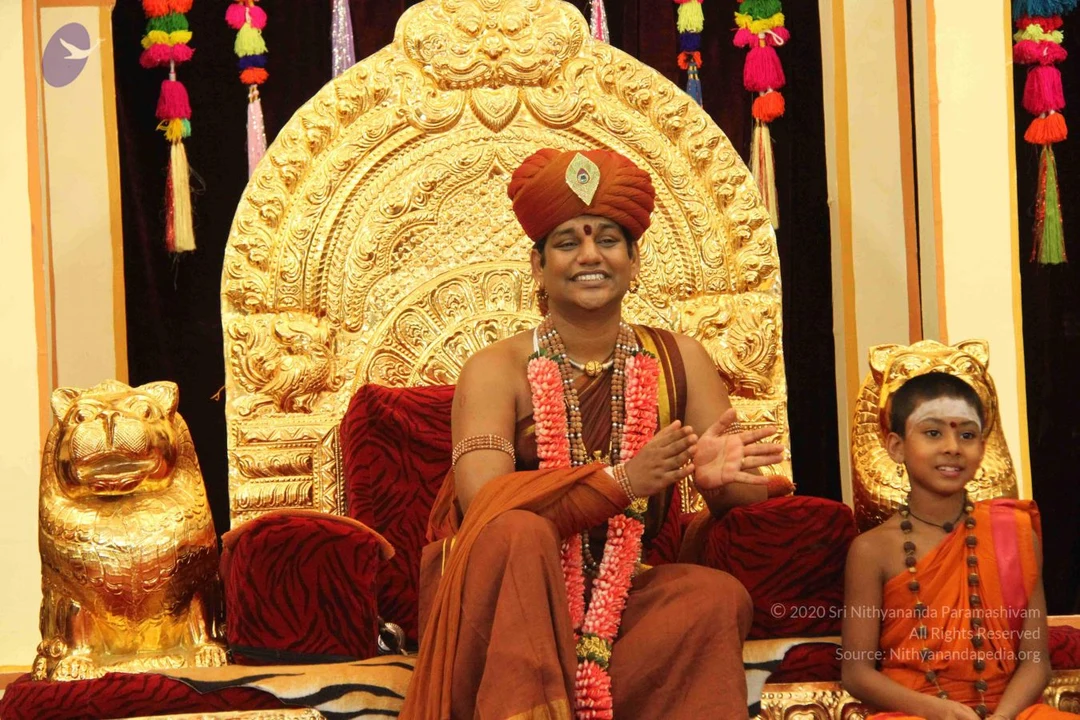
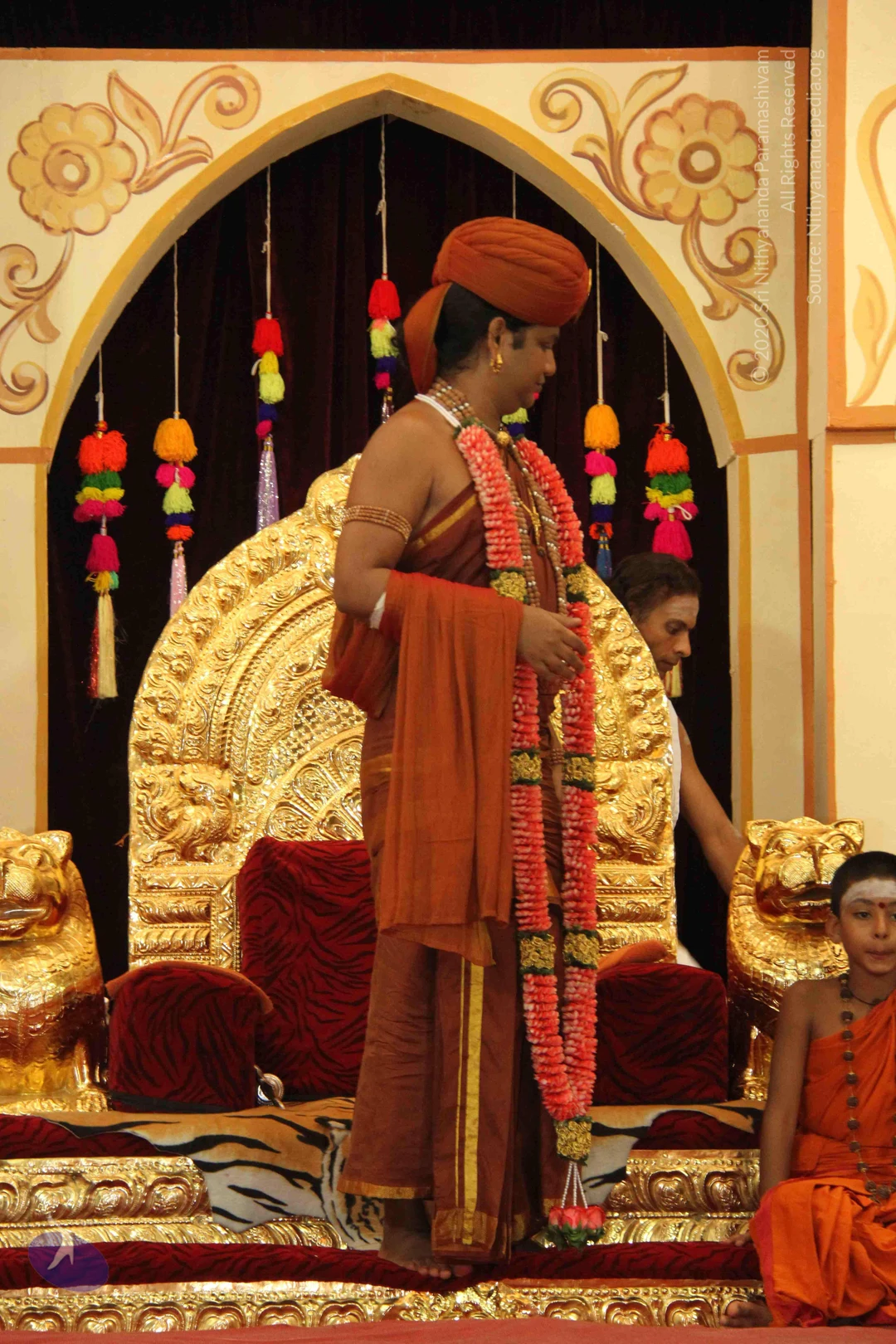
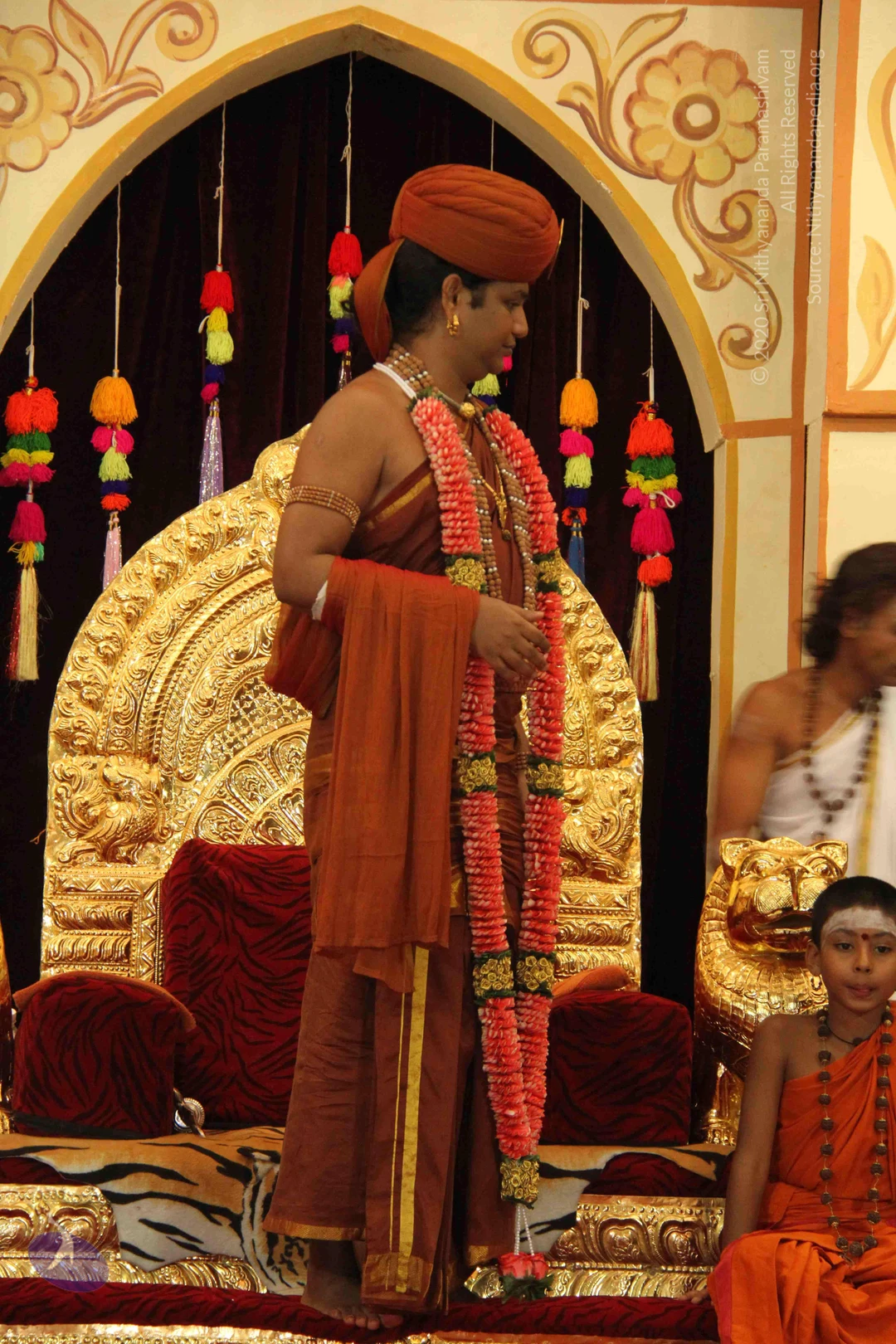
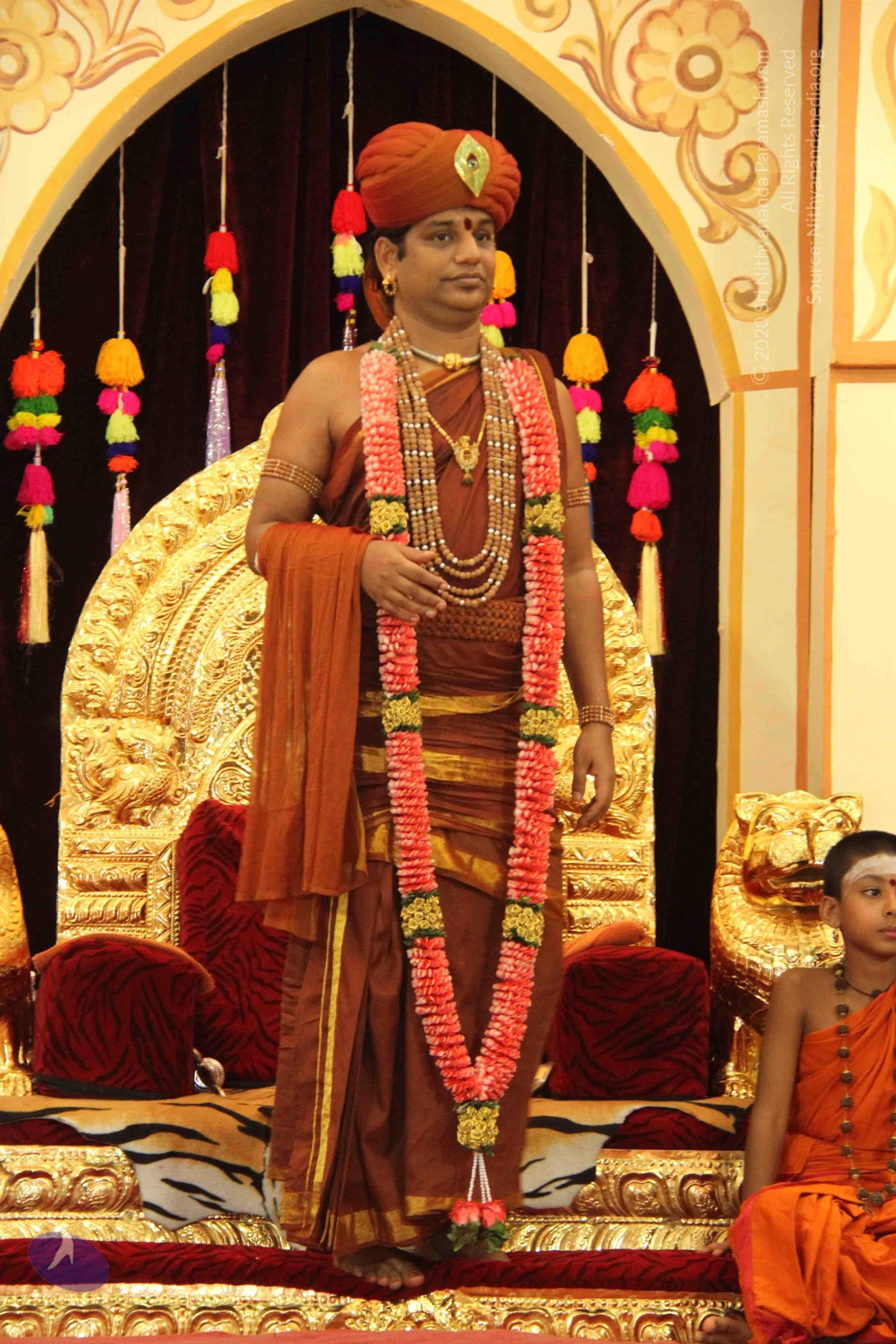
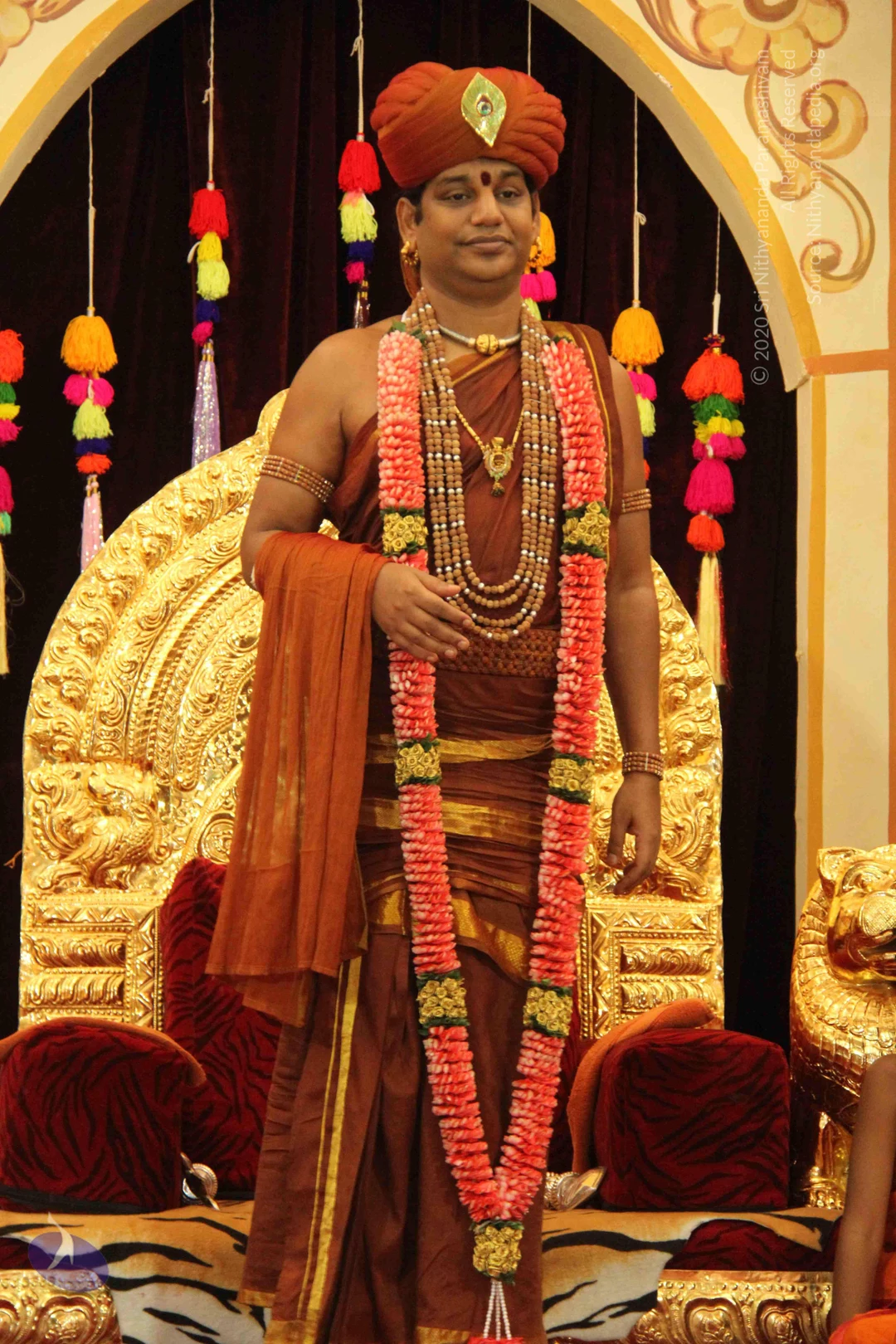
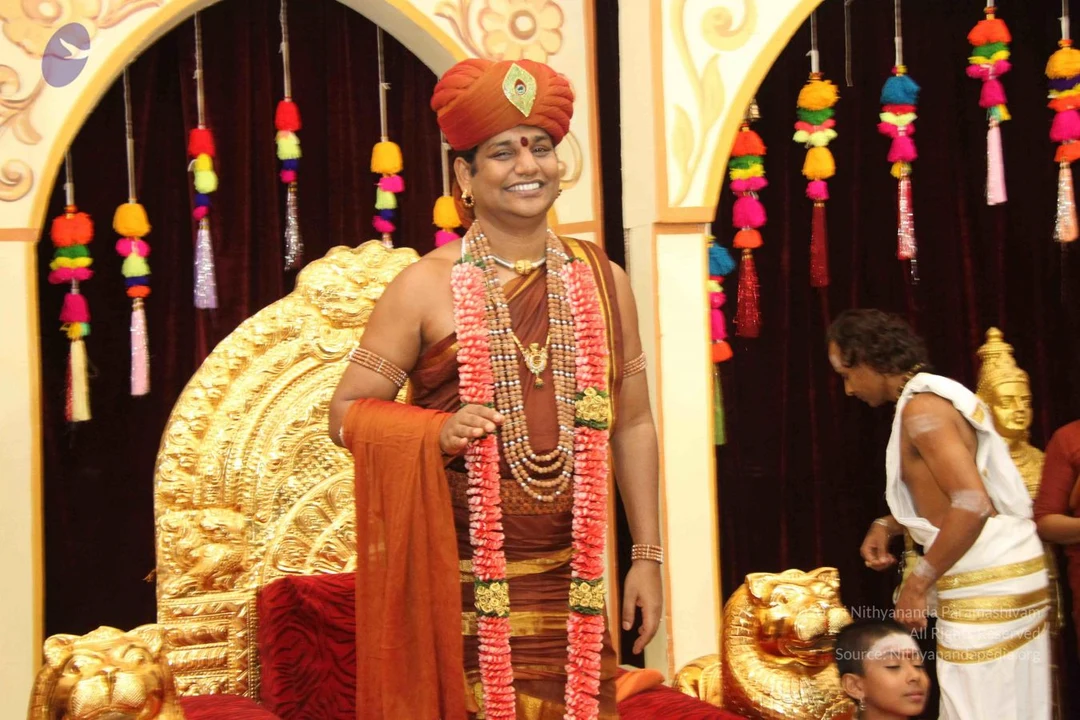
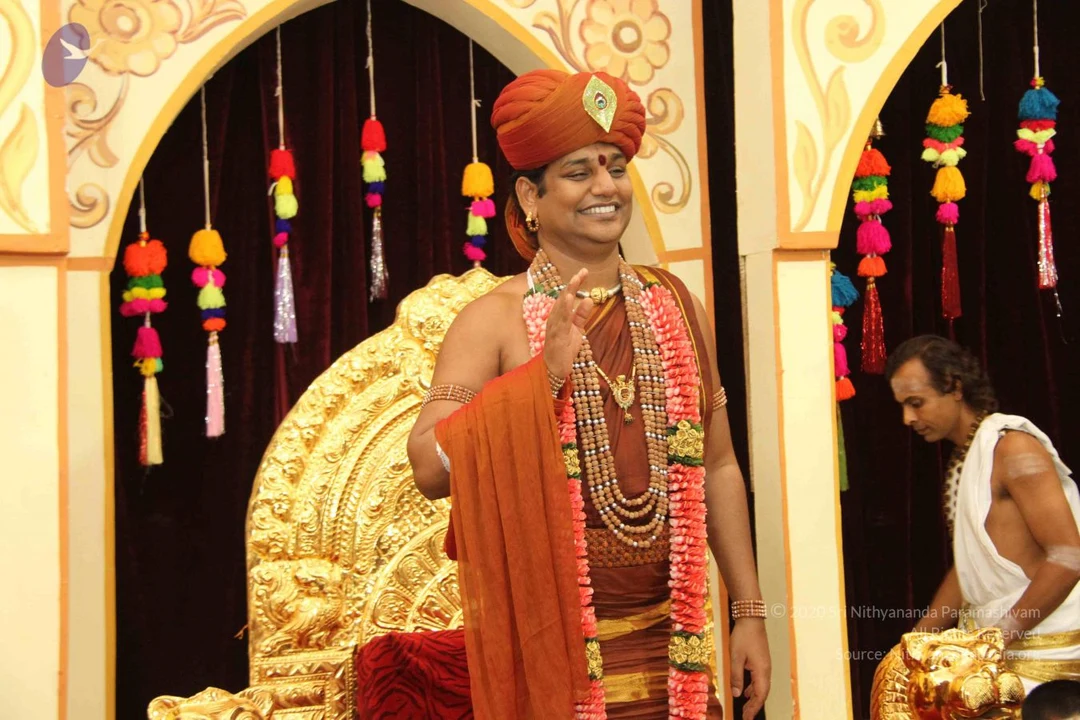
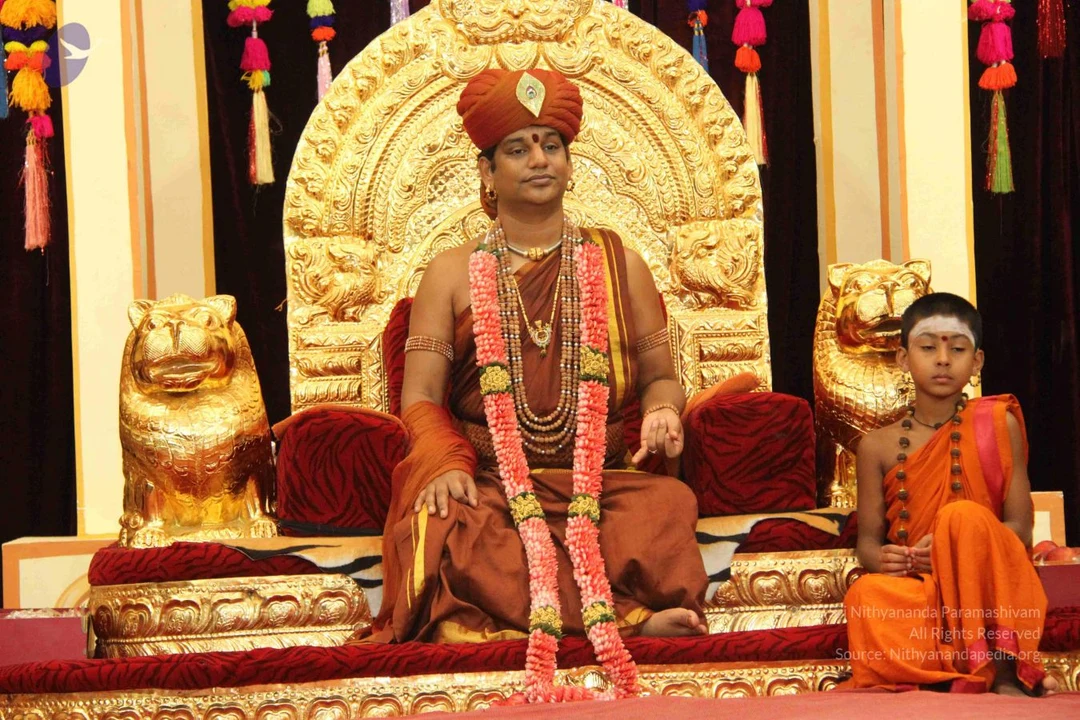
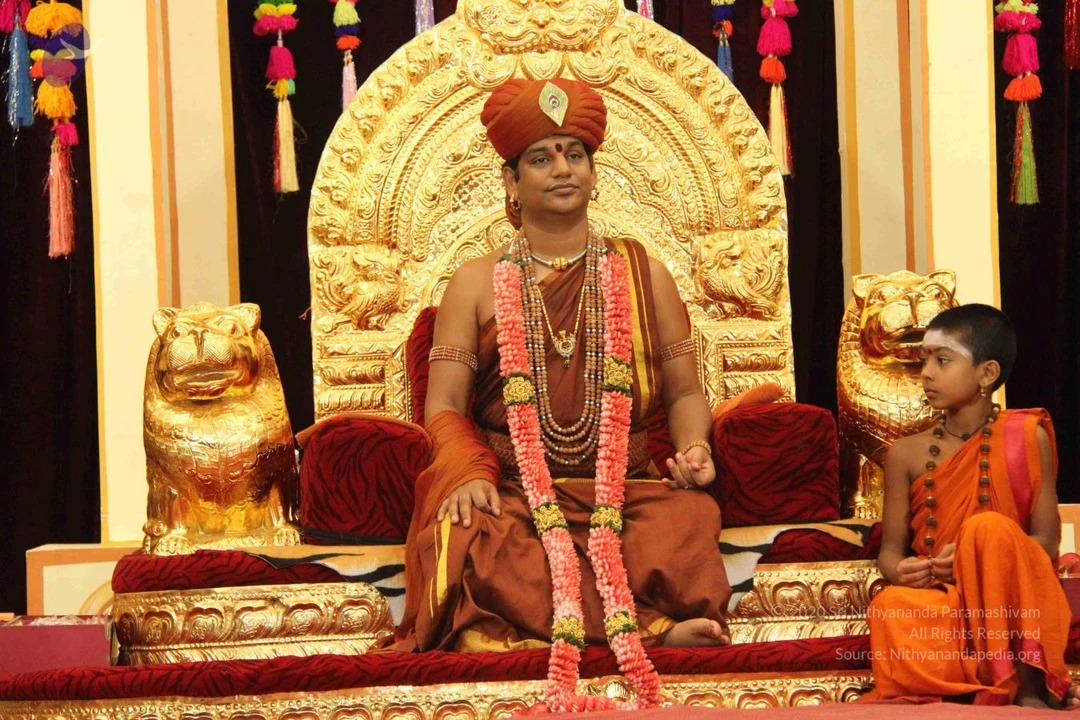
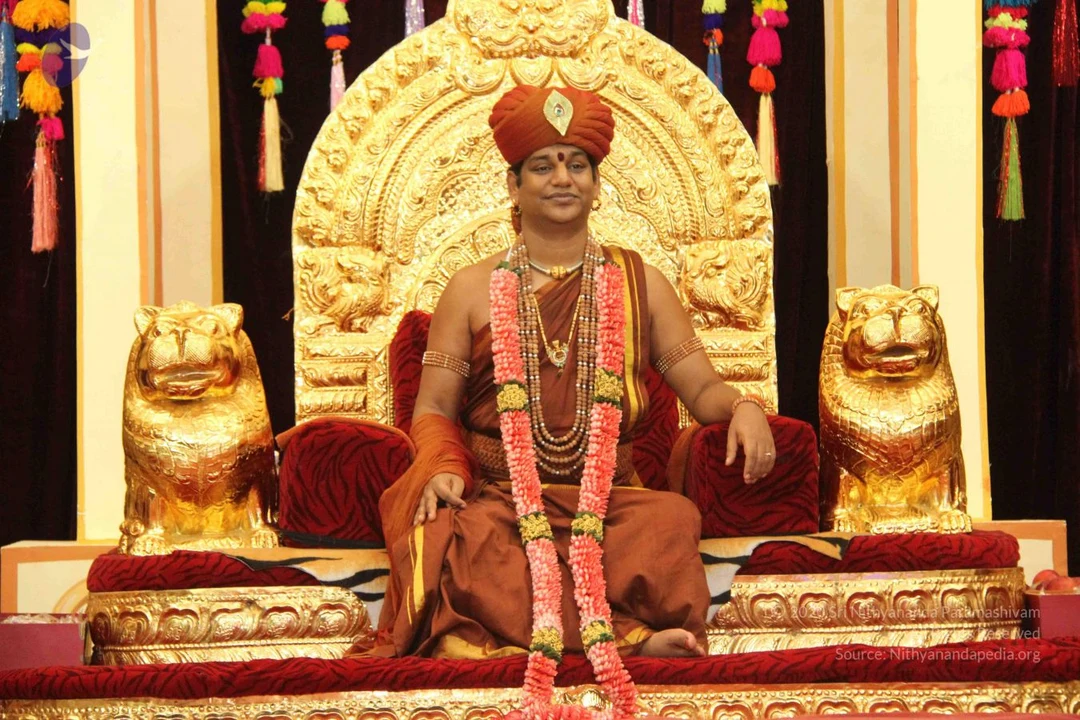
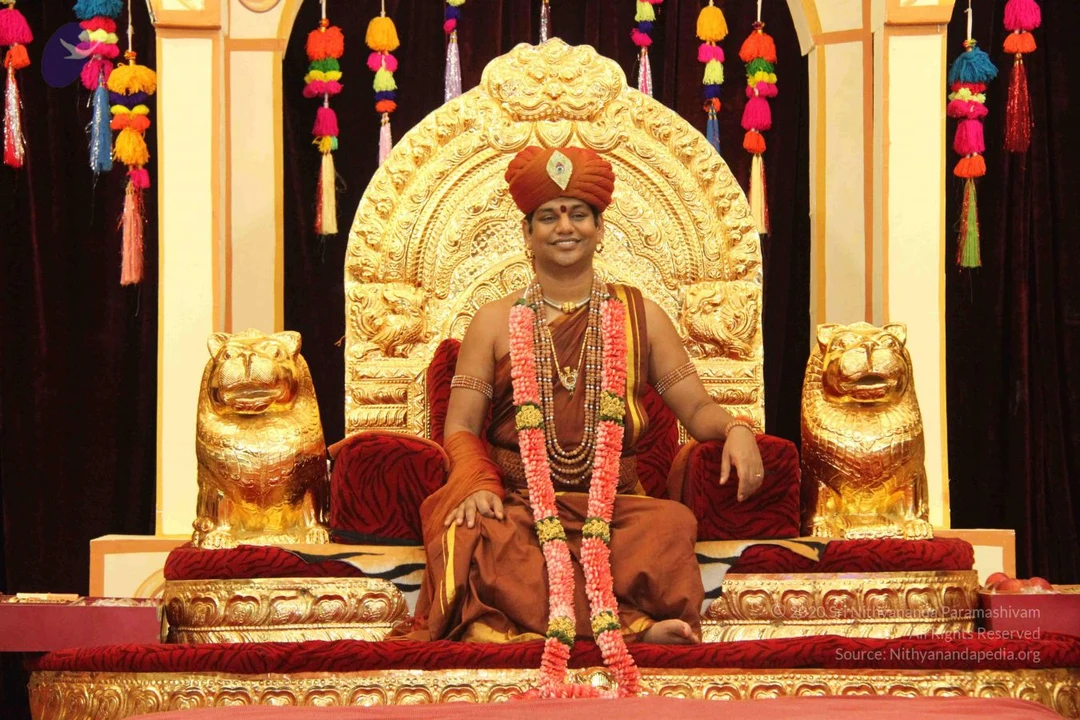
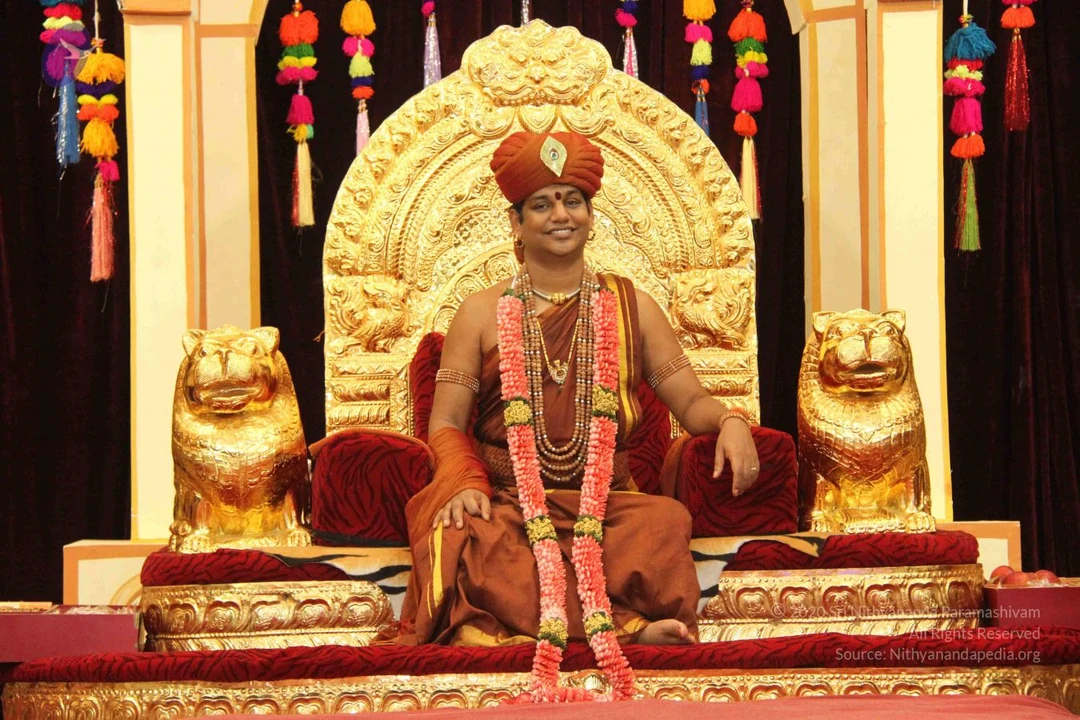
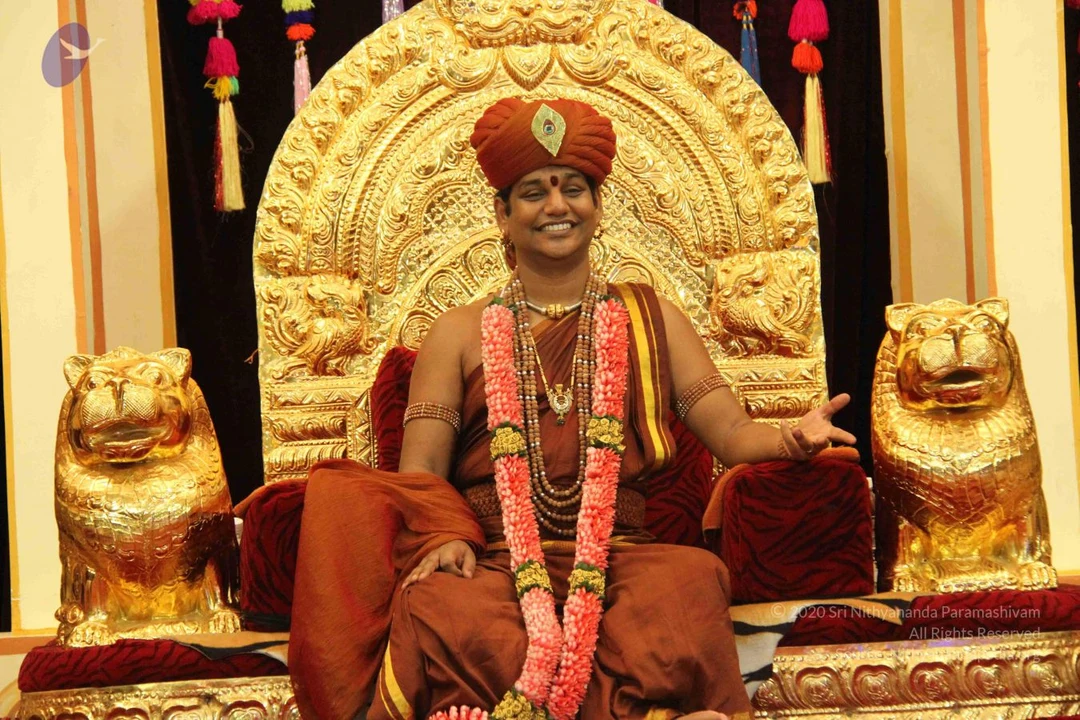
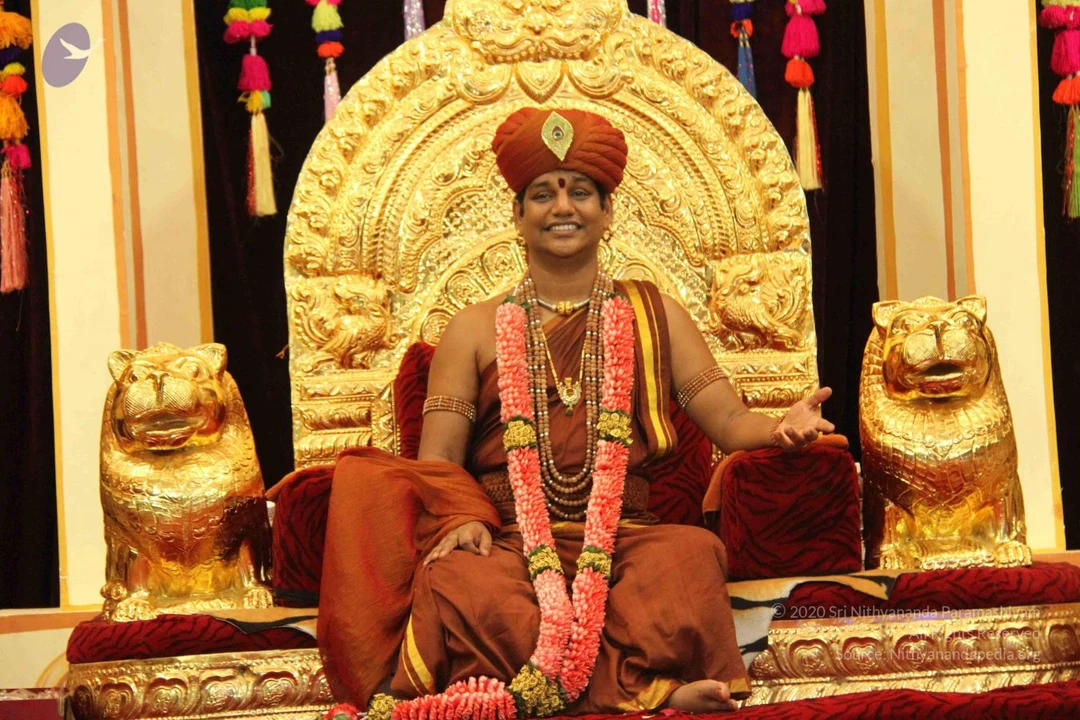
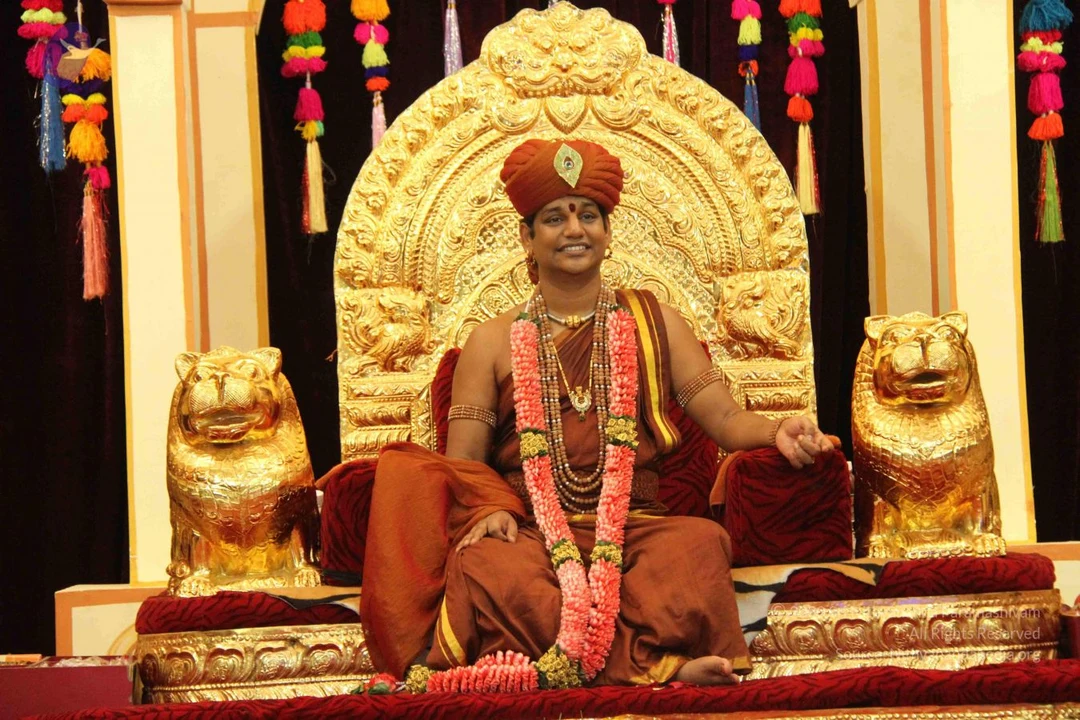
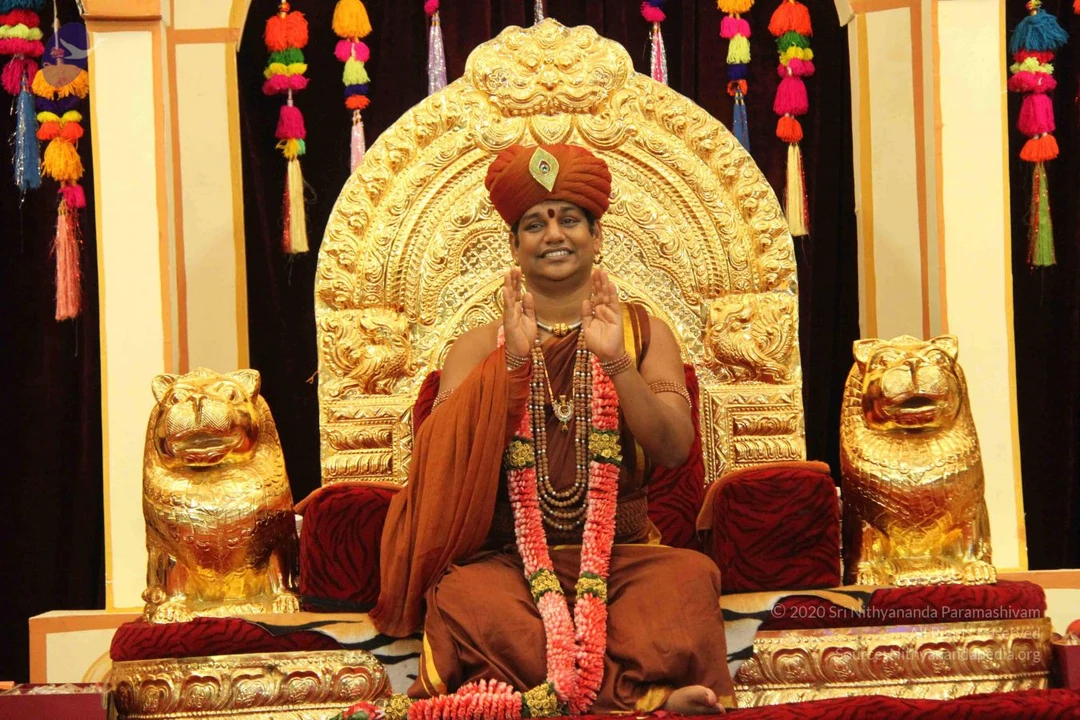
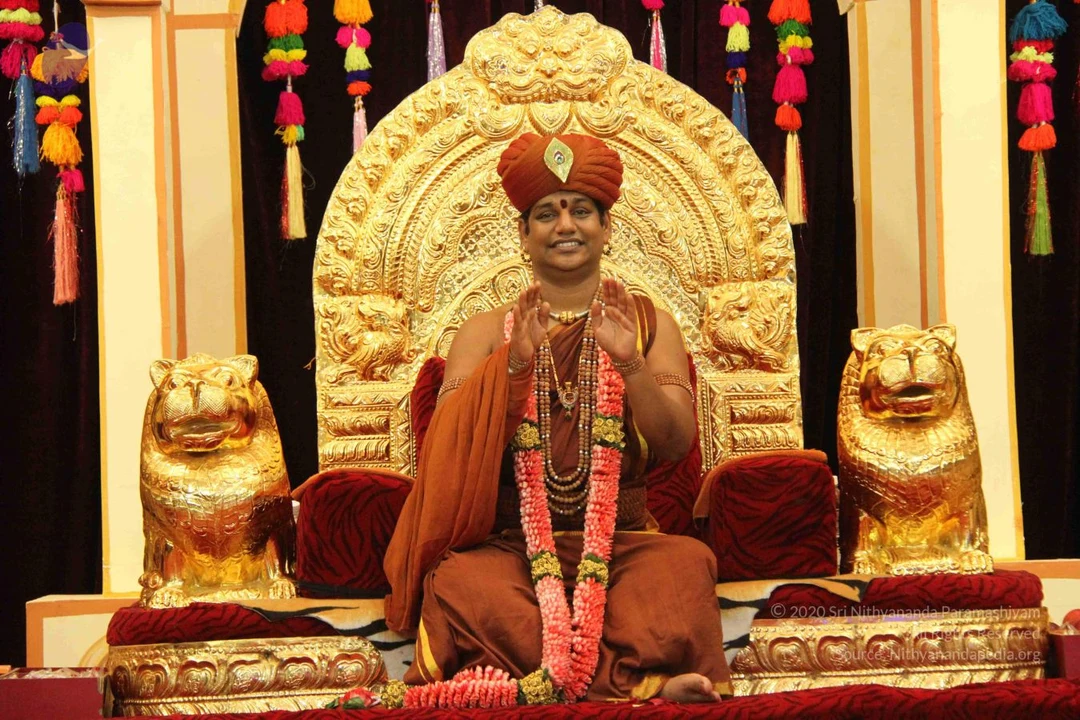
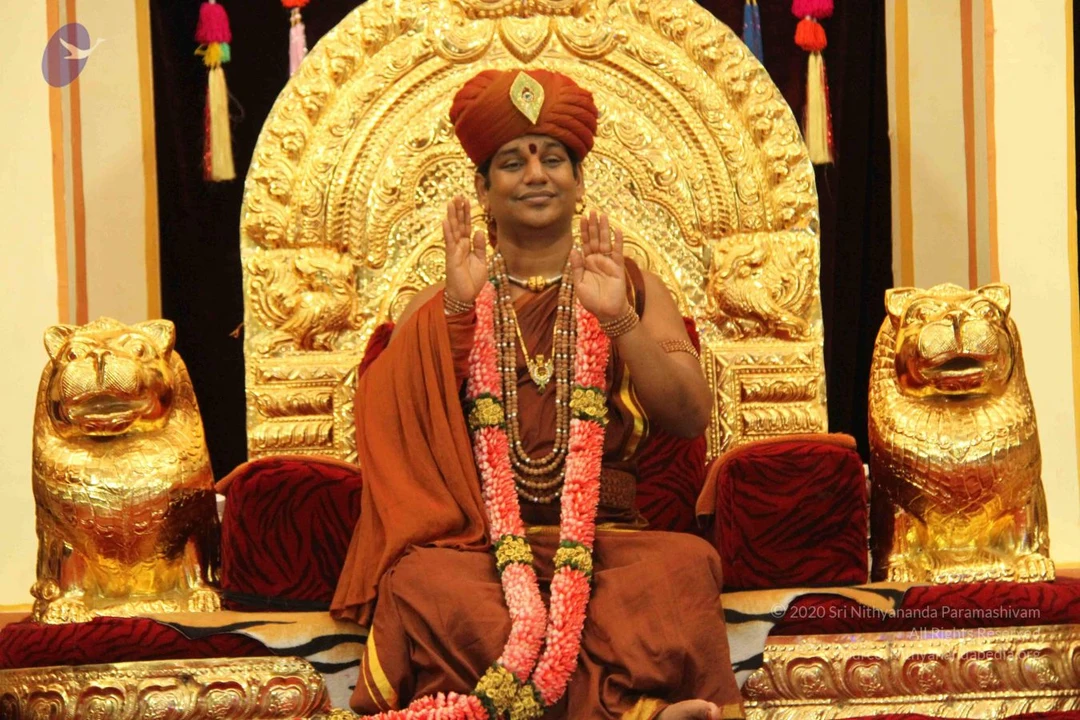
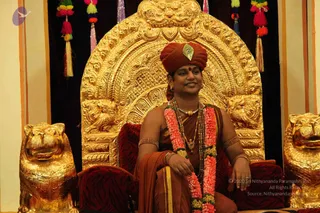
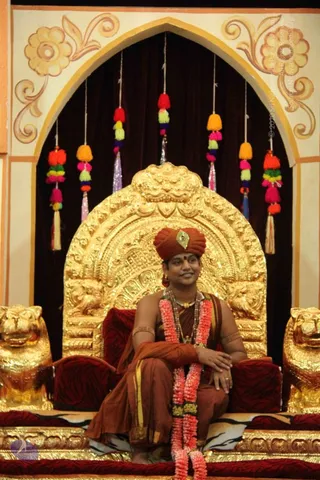
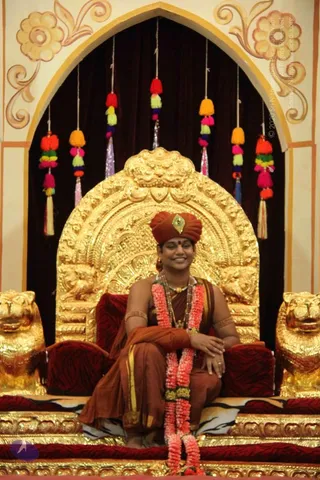
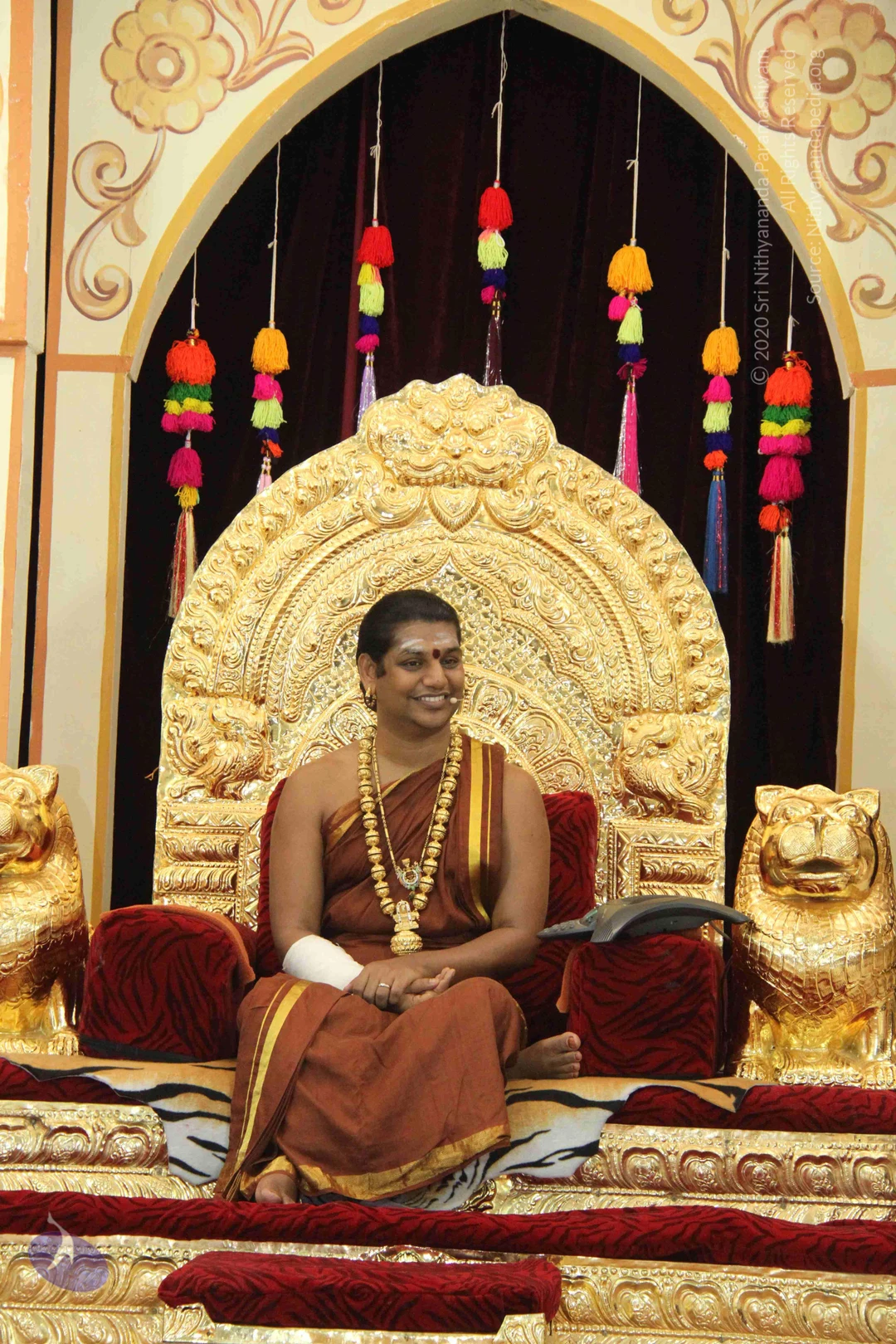
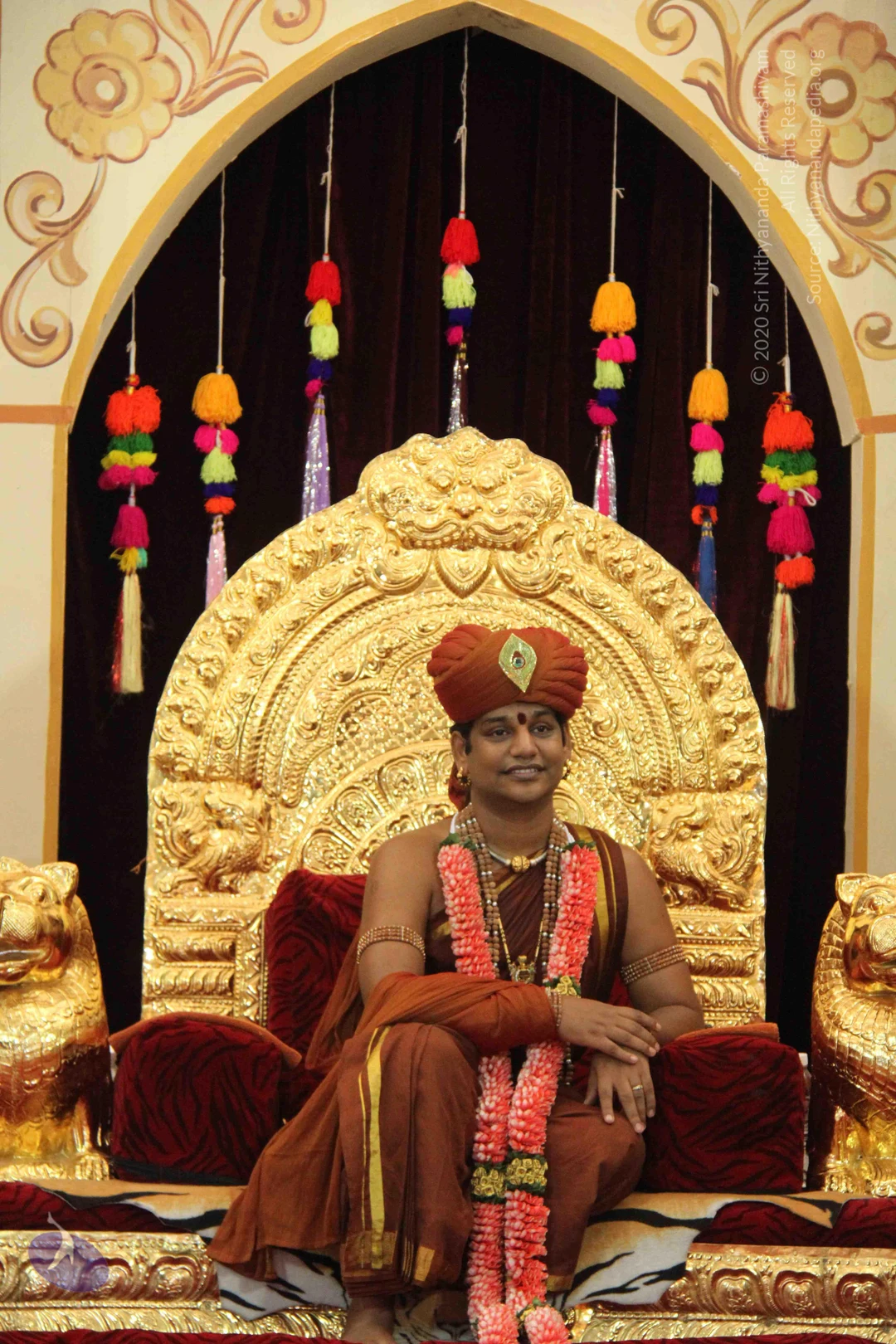
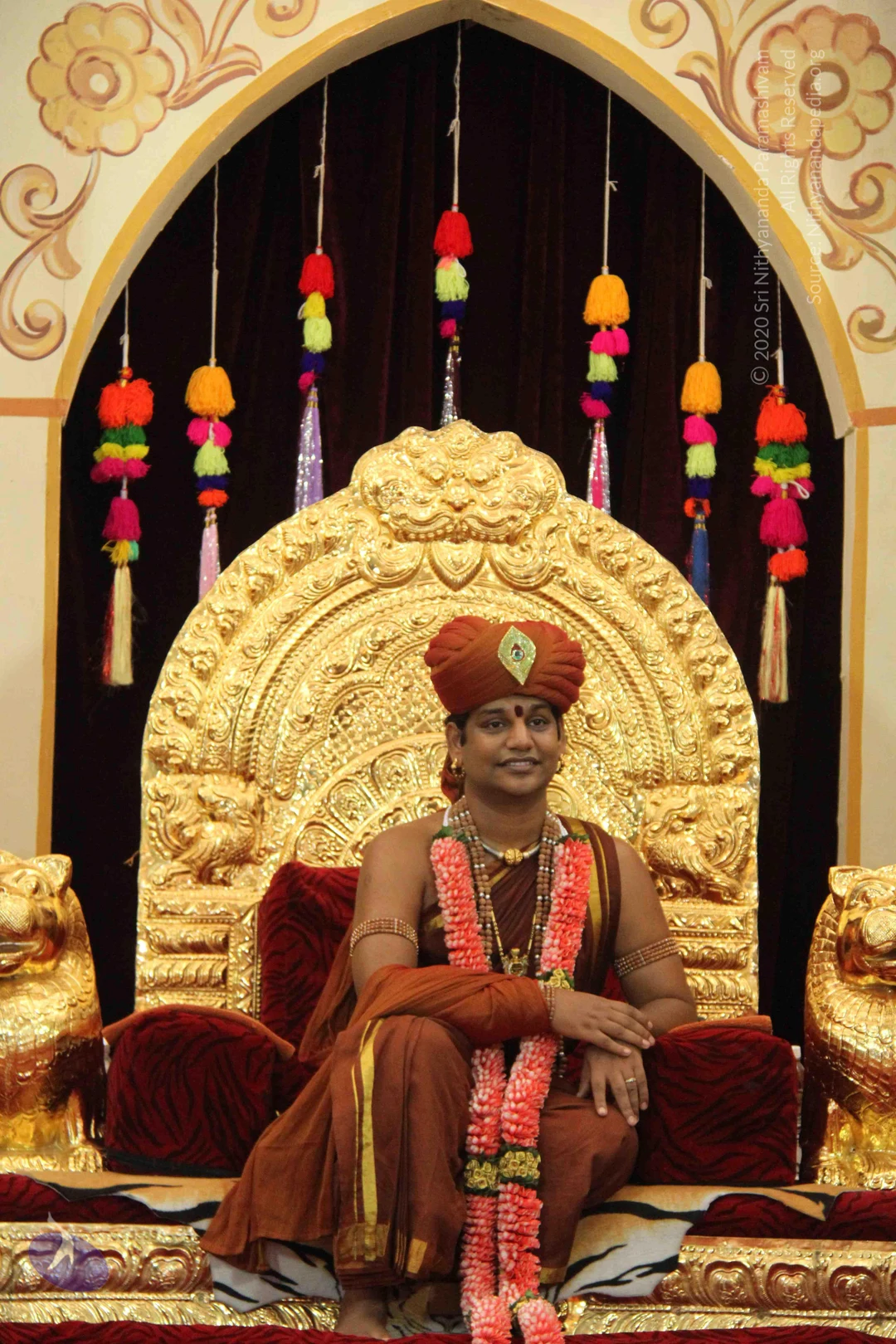
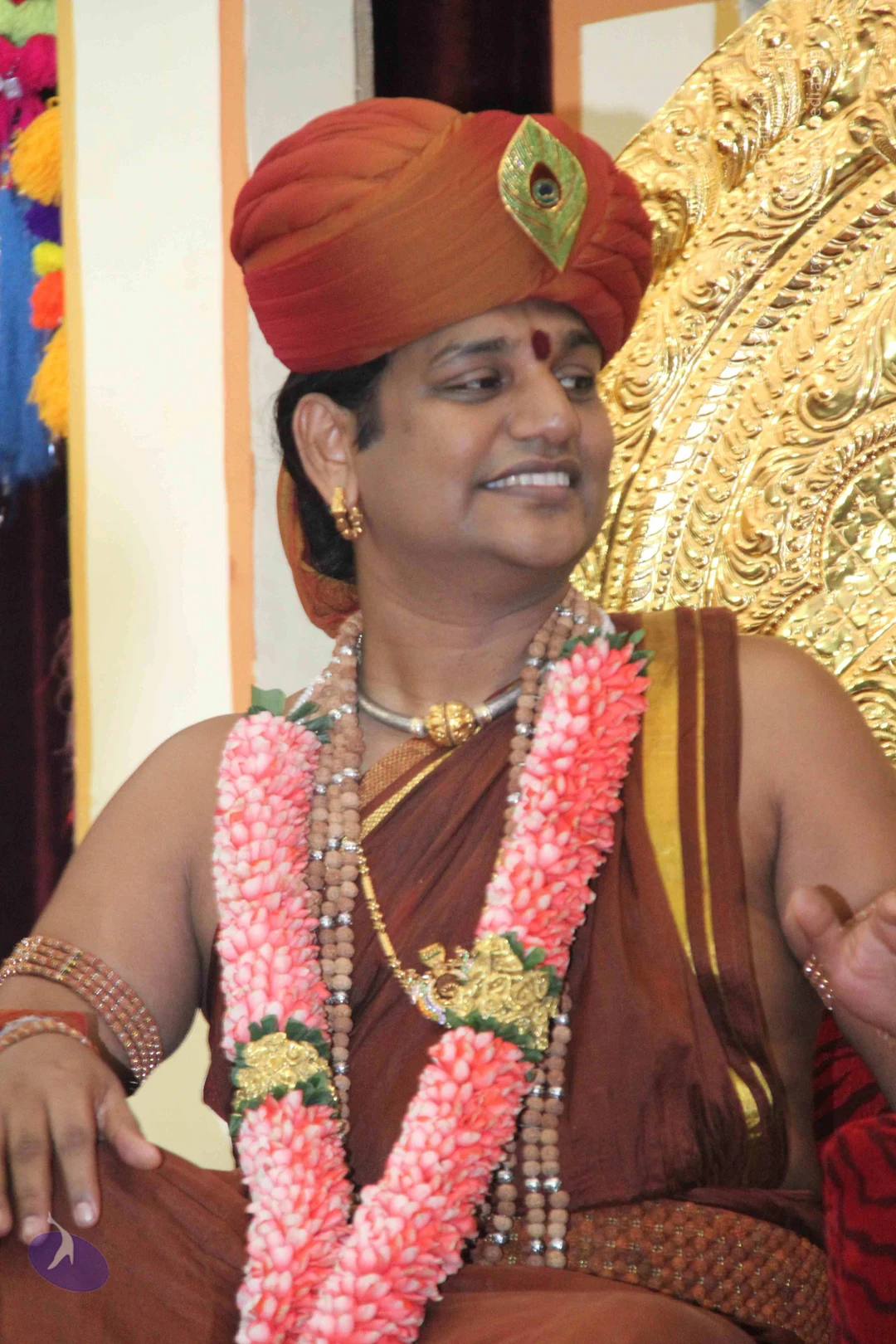
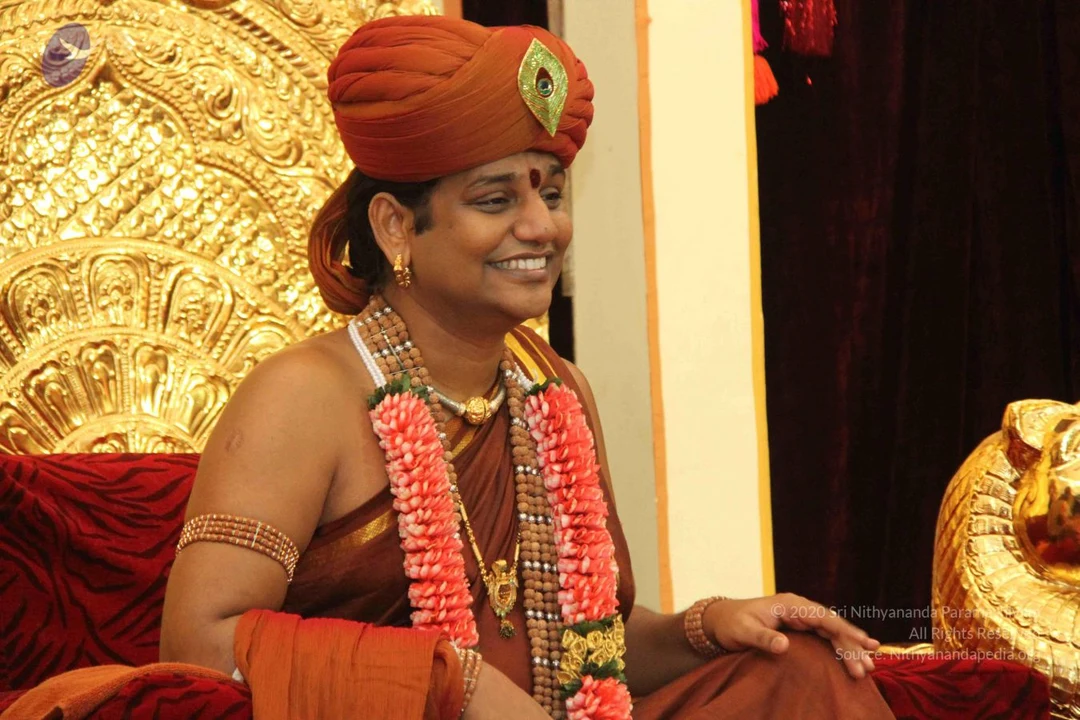
A close-up photograph of a single lit incense stick, its pale grey ash-tipped stem angling diagonally from the bottom right toward the upper centre. A thin wisp of smoke curls to the left against a dark background, with soft out-of-focus orange and amber lights glowing at the bottom left and a reddish blur at the top right. No people are visible in the frame.A photograph of a seated man in a golden ornate throne with carved floral and lion motifs, wearing an orange-red turban and a rust-orange shawl over a brown-orange garment. He wears a rudraksha mala, a gold pendant necklace, gold bangles and a pink-and-white flower garland, and smiles while resting his hands on his knee. A golden lion statue sits beside the throne, and a second, partly visible person in orange clothing is at the right edge. Hanging pink and orange tassels decorate the backdrop. Swamiji (probable): the seated man wears a turban, rudraksha mala, gold necklace and saffron-orange clothing on a throne, matching the page's Swamiji reference.Swamiji (probable) sits on a gold-embossed throne, smiling, wearing a rust-orange turban with a peacock-feather ornament and a red bindi. He wears rudraksha mala strands, a gold necklace, pink flower garlands and gold armlets over a saffron-brown robe with a gold-bordered sash. A young child with a white tilak on the forehead sits at the lower right edge of the frame. The dark velvet backdrop and gold throne suggest a stage setting.

October 08 2013

Original wiki page
Contents

Title:

Cosmos is Waiting to fulfill your dreams!

Description:

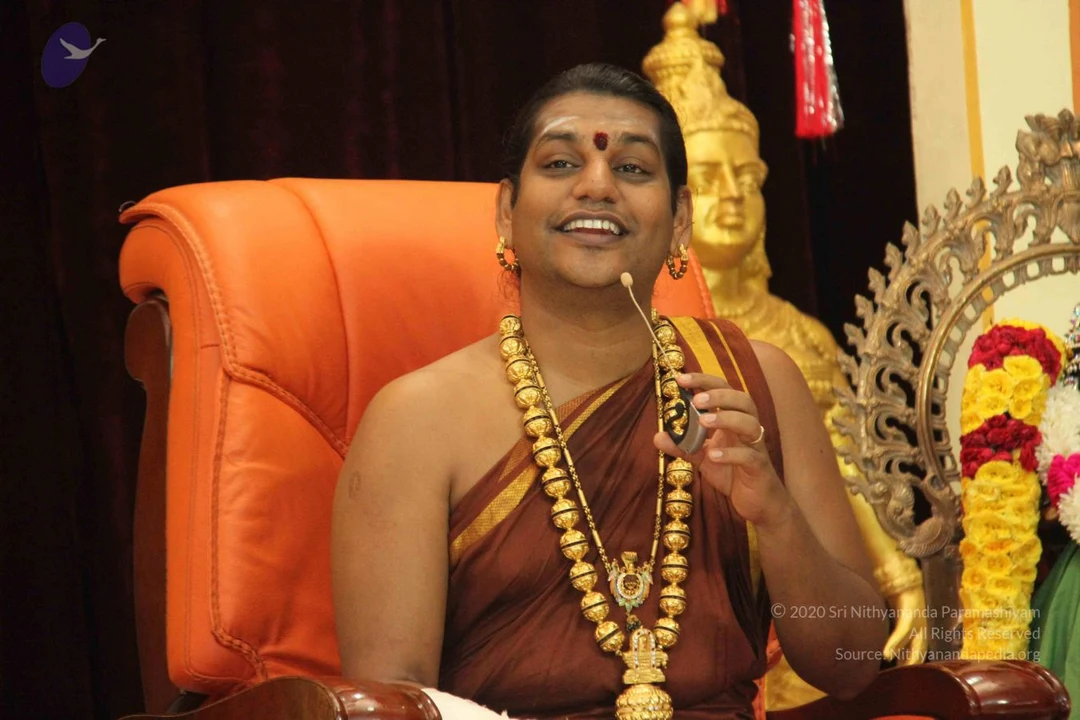
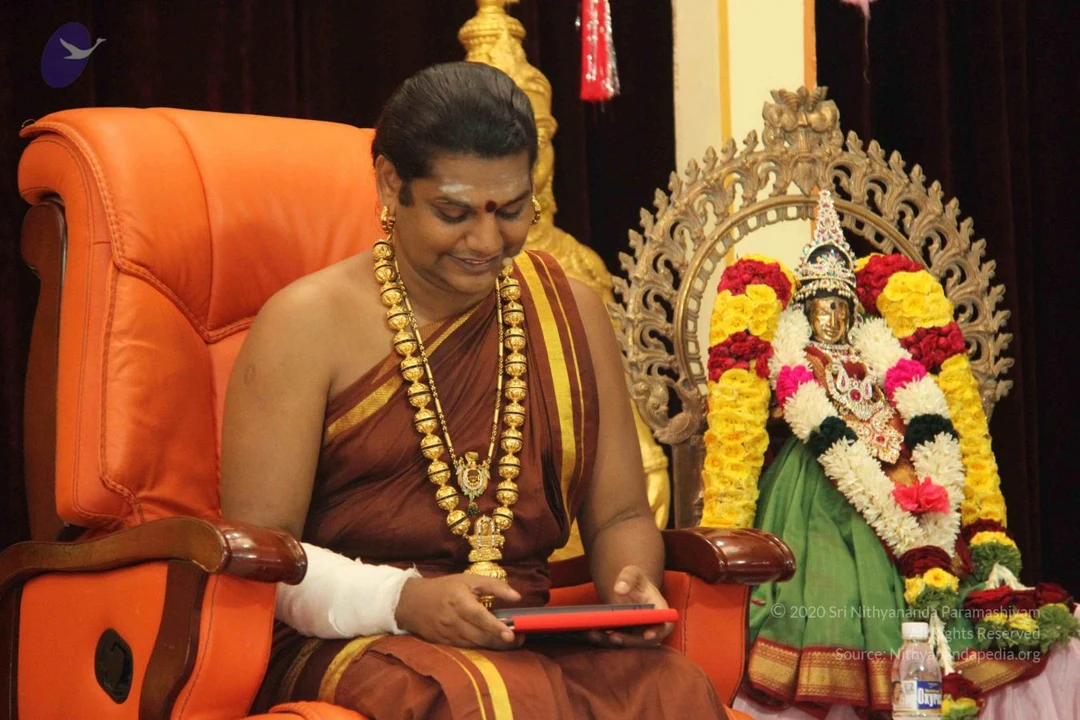
In today’s morning Satsang, Paramahamsa Nithyananda declares how the power of our words can decide our life. The words we utter to ourselves and others influence our health, thinking, actions, and all other aspects of our lives. When we use positive words, all our courage and energies will be awakened to fulfill those words. The Cosmos is on our side waiting to help us make our dreams reality. Let us declare our dreams, take responsibility for them, and watch them transform our lives!

Link to Video:

VideoAudio

Transcript:

Nithyanandeshwara Samaarambhaam Nithyanandeshwari Madhyamaam | Asmath Aachaarya Paryanthaam Vandhey Guru Paramparaam ||

00:42 Hindi - 00:52

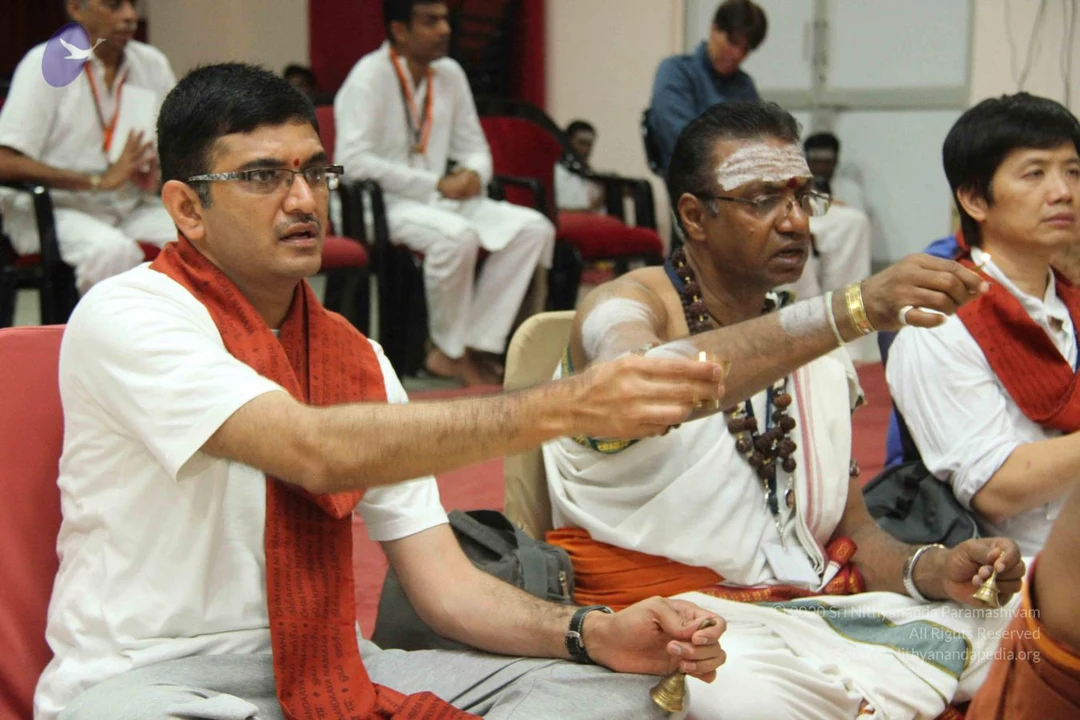
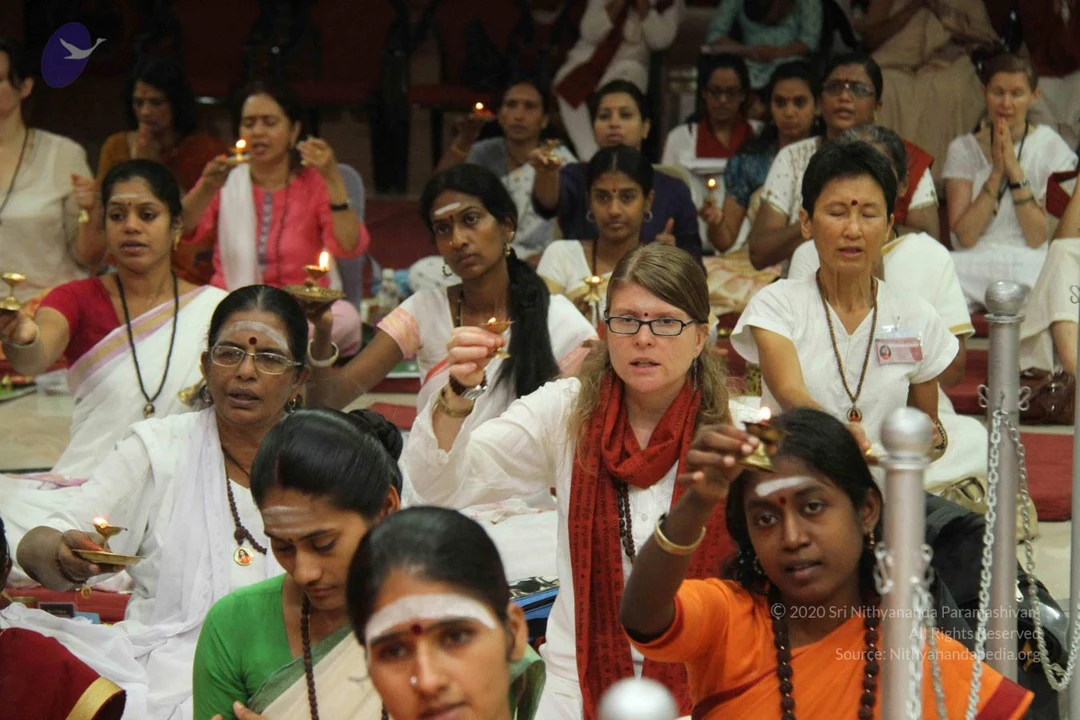
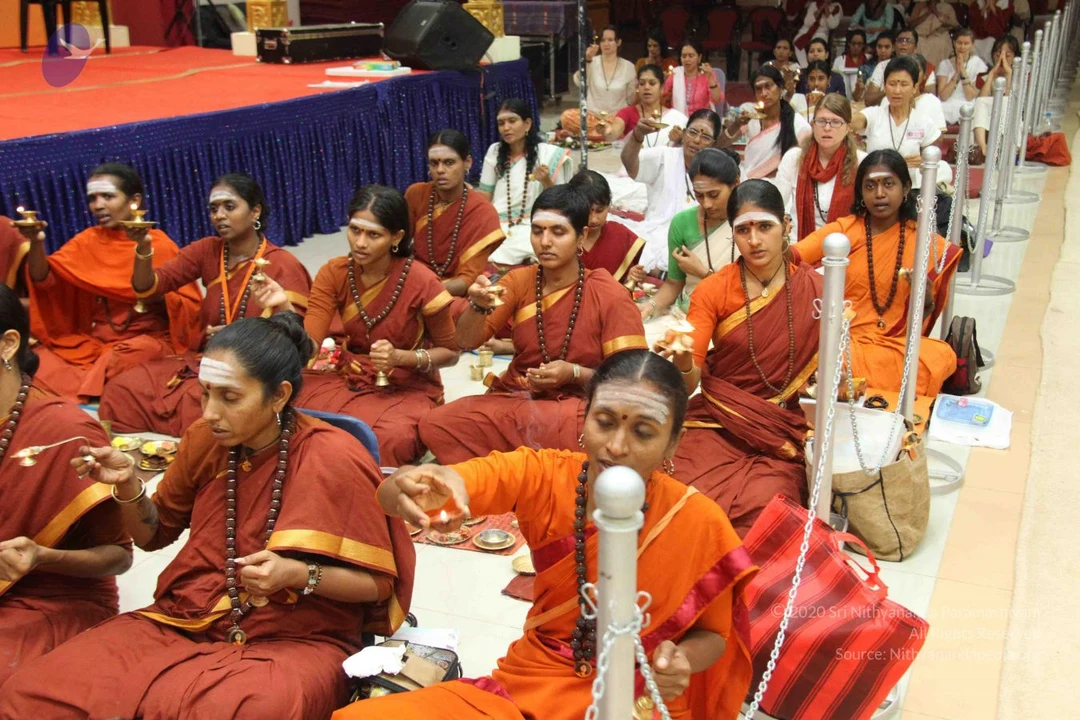
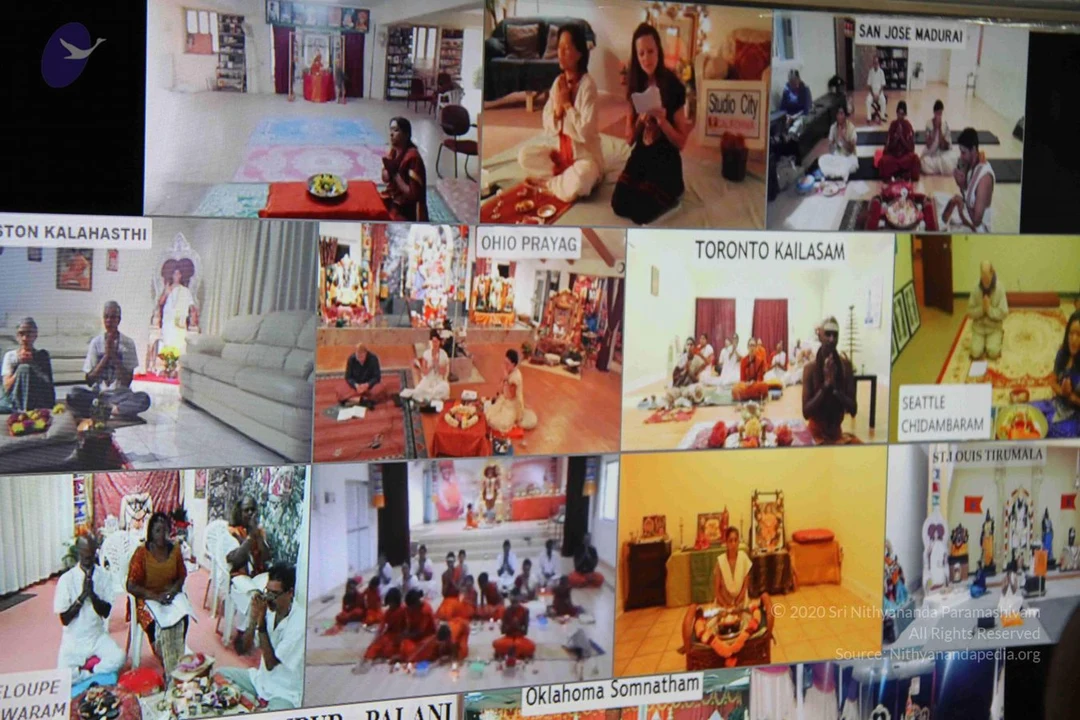
I welcome all the devotees, disciples, samajis, satsangis sitting with us all over the world at this moment through Nithyananda TV, Sadhana TV, Lotus News Channel, and two-way video-conferencing having Nayana Deeksha.

Cities sitting with us in two-way video-conferencing having Nayana Deeksha: Enriching Temple-Bidadi, Bangalore North, Indrani-New Jersey, San Diego-La Hoya, Hyderabad-Gupta Kashi, Calgary-Alberta, Singapore-Singapuram, New York-Varanasi, Dubai-Vaidyanatham, Devon-UK, San Jose-Madurai, St. Louis-Tirumala, Hyderabad Bhagyanagar, Houston-Kalahasti, Ohio-Prayag, Toronto-Kailasam, Seattle-Chidambaram, Oklahoma-Somanatham, Kuala Lumpur-Palani, Studio City-California, Nithyananda Nagar-Tiruvannamalai, Oklahoma-Somanatham, Varanasi, Los Angeles-Arunachalam, Charlotte-Srisailam, Jorpati-Nepal, Oman-Sivagangai, New York-Varanasi.

I welcome all of you with my love and blessings.

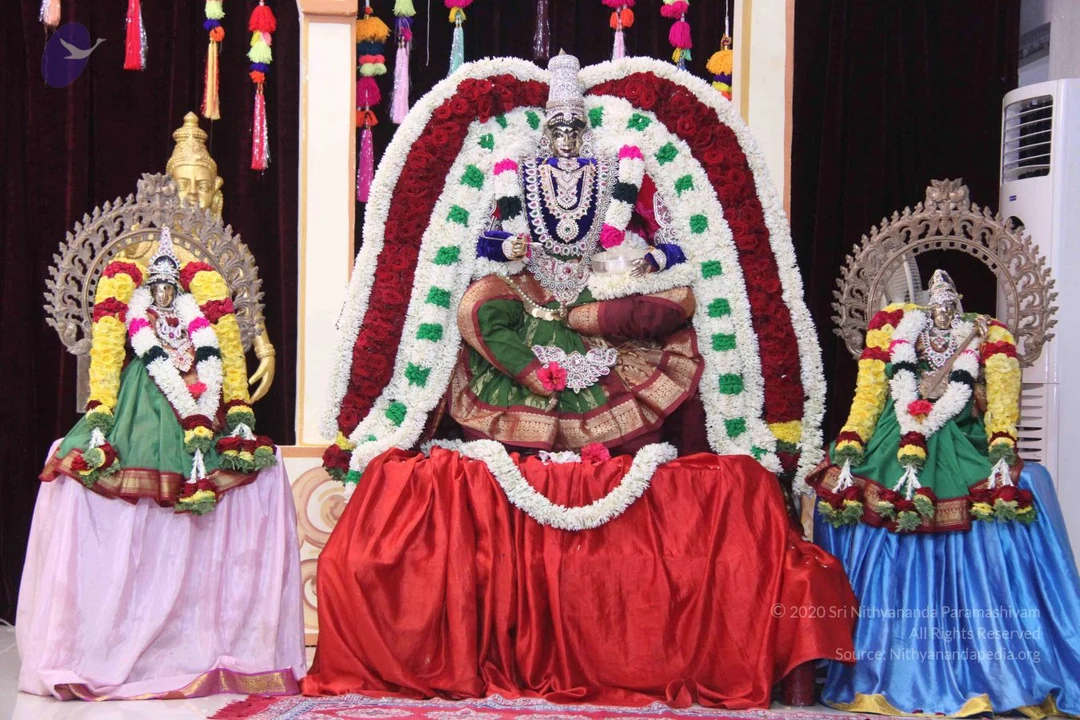
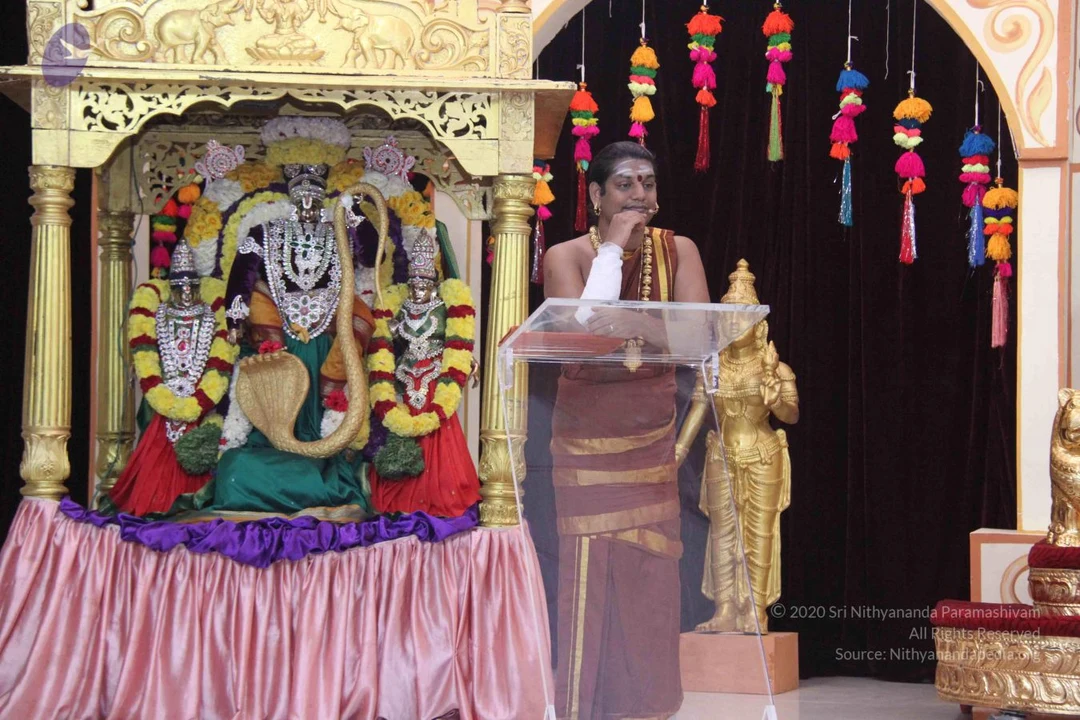
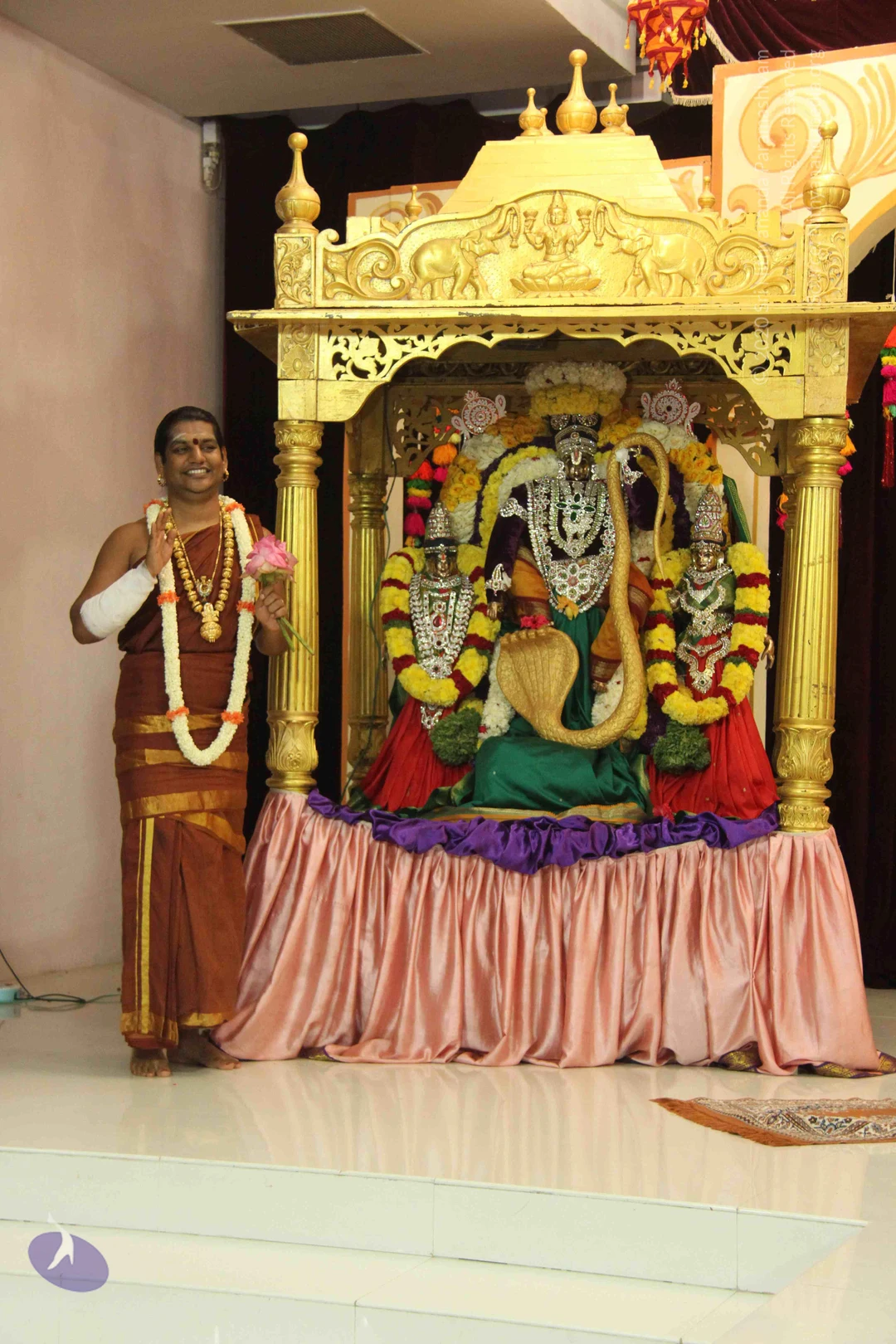
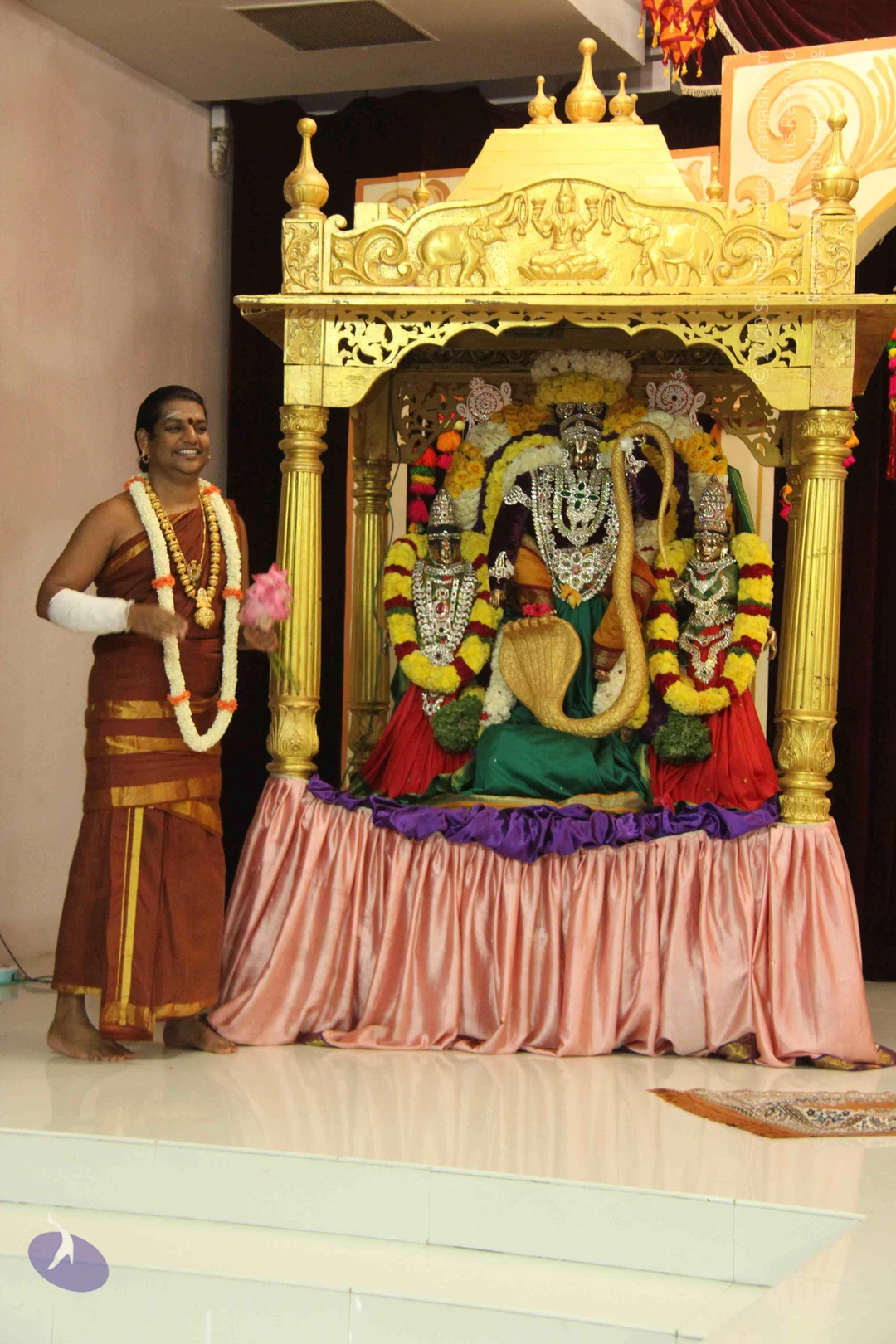
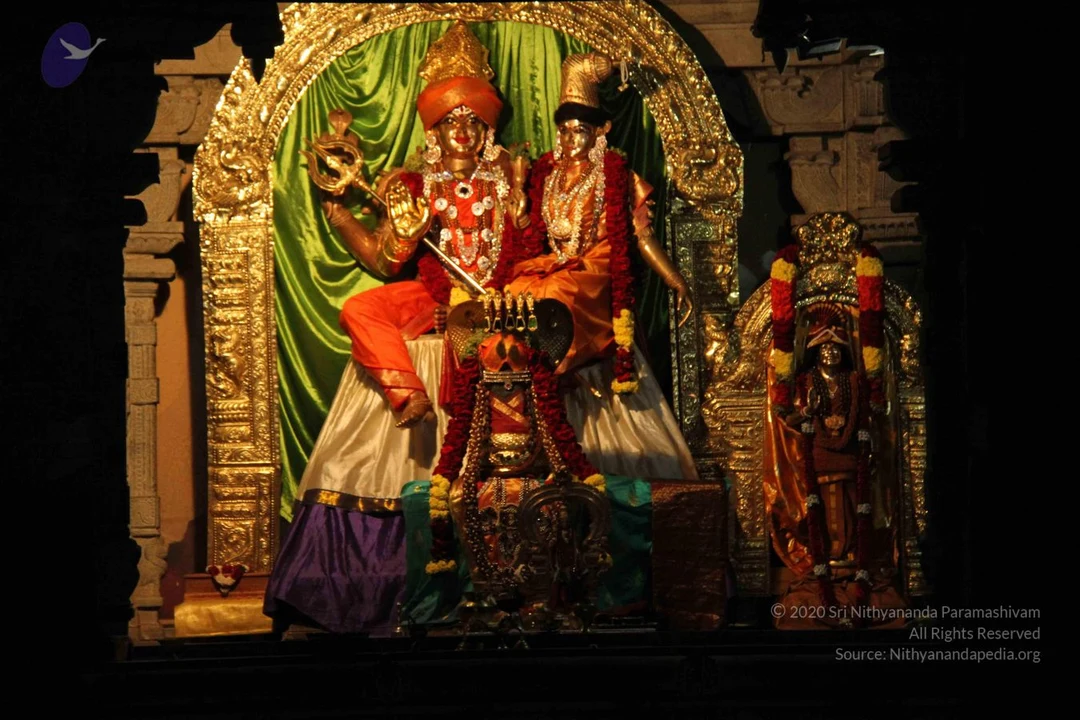
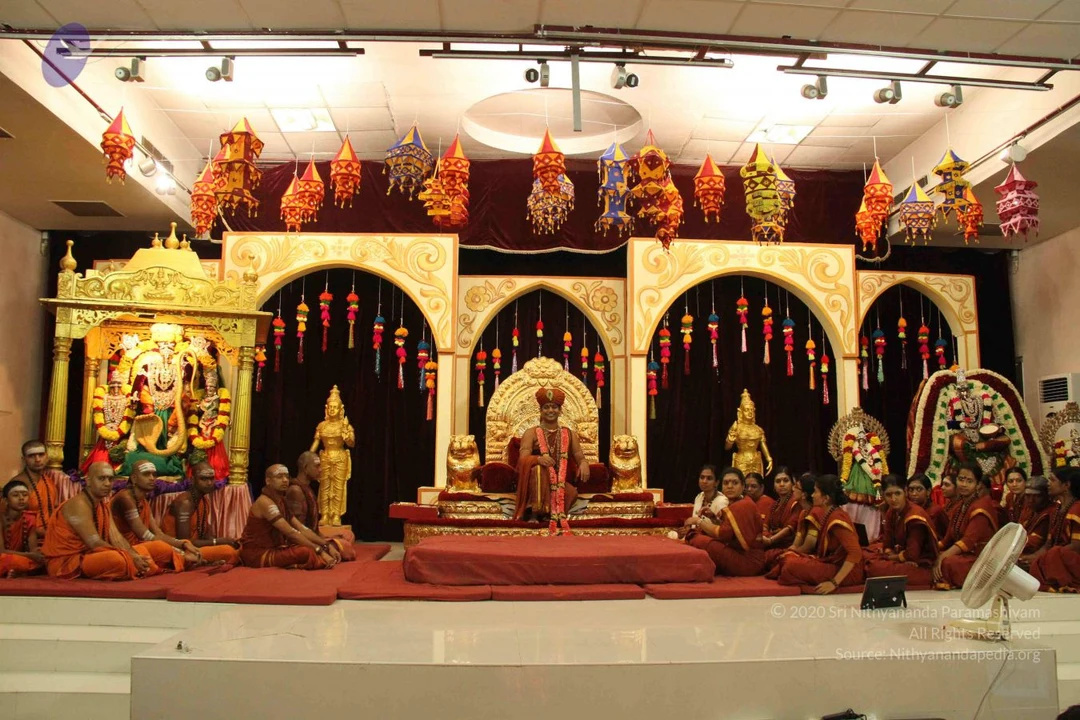
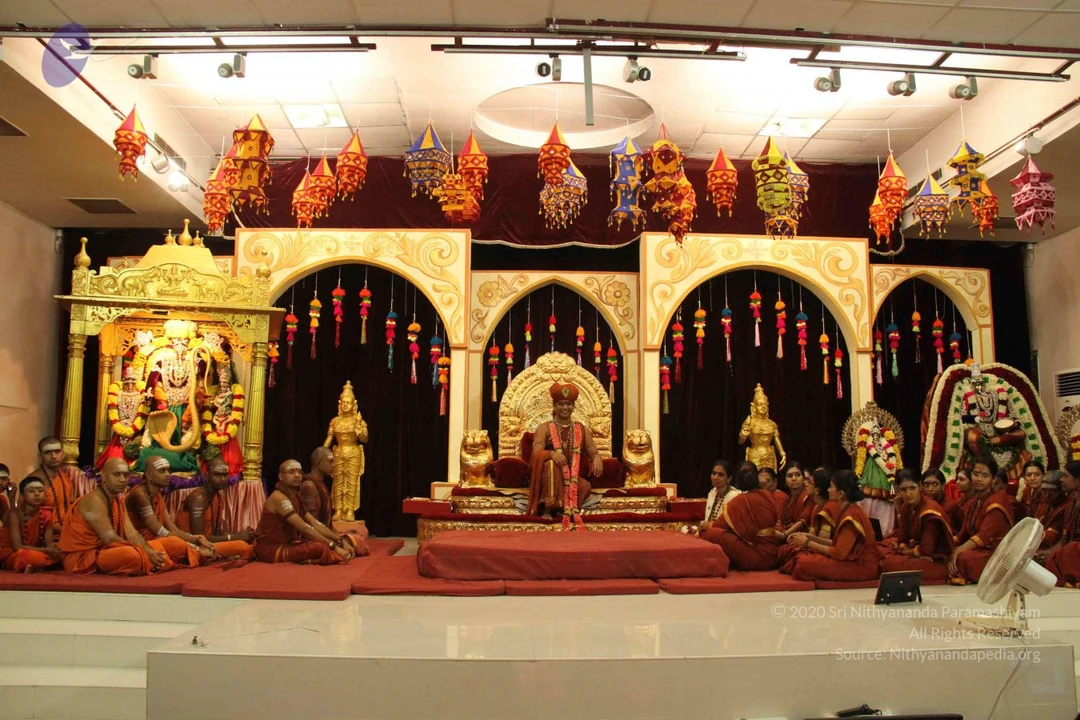
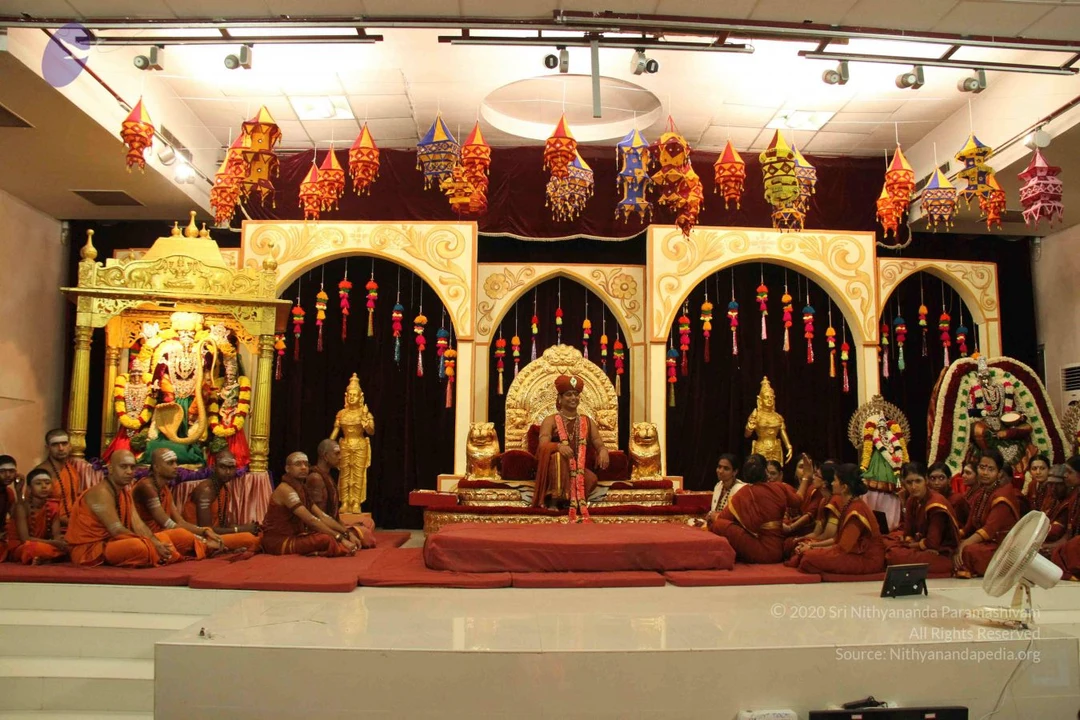
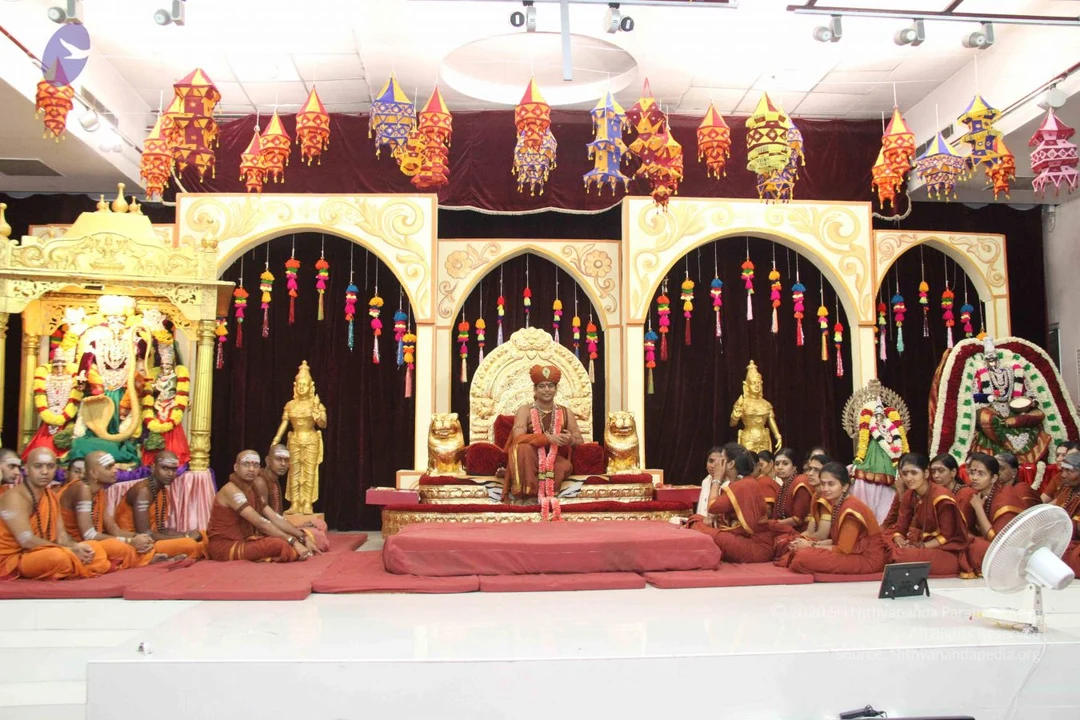
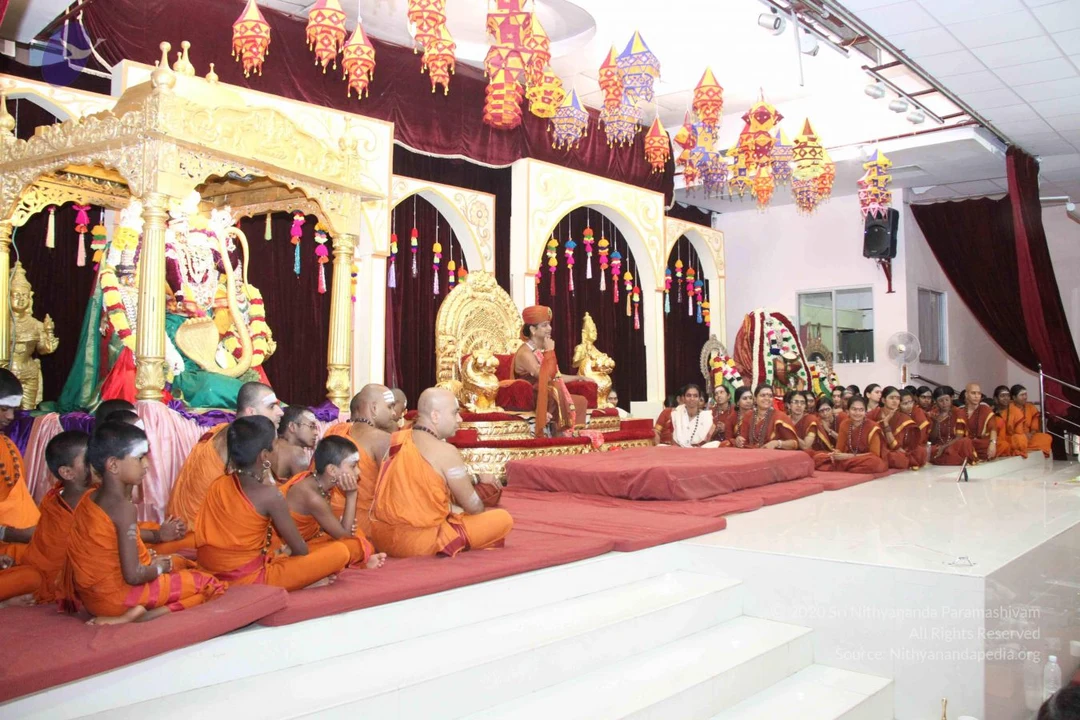
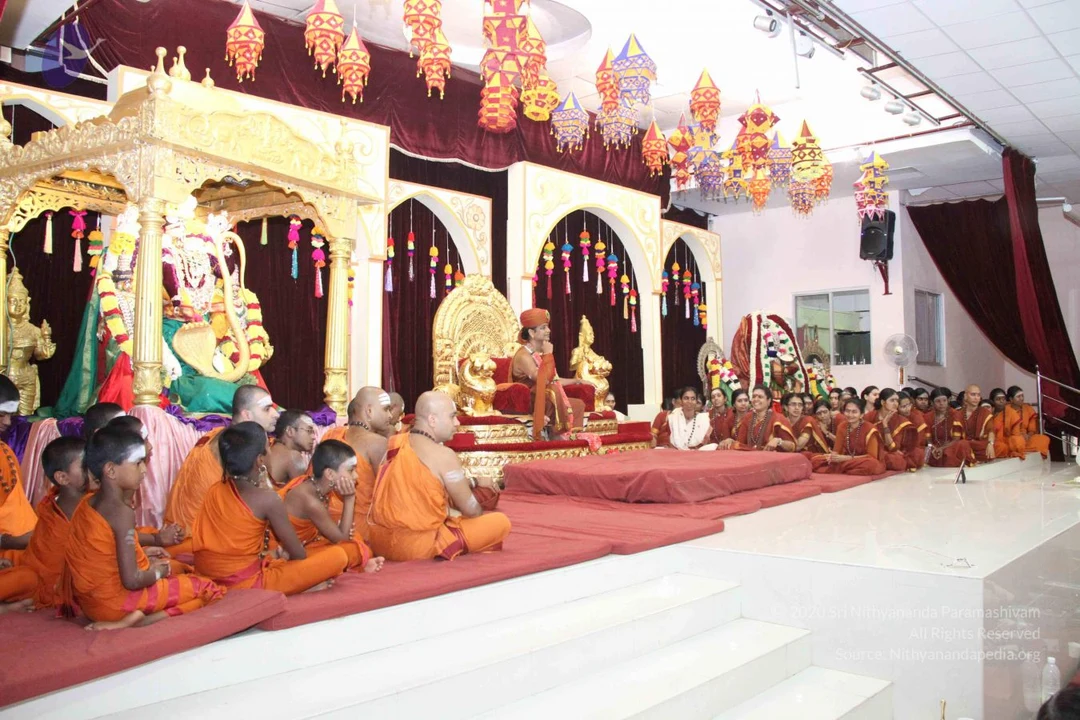
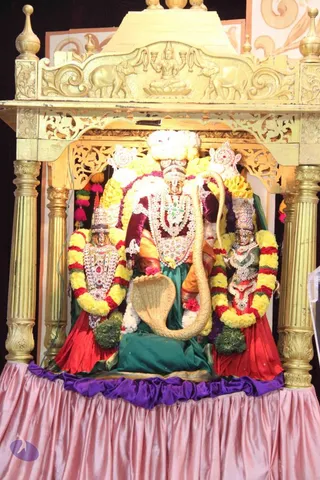
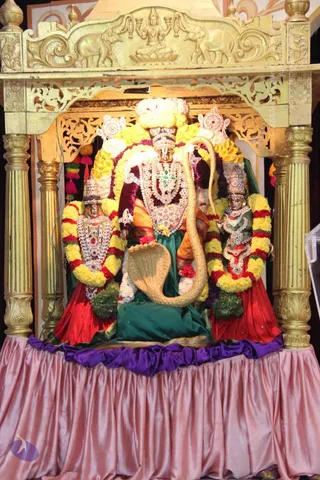
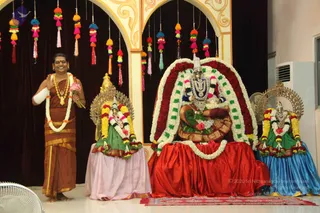
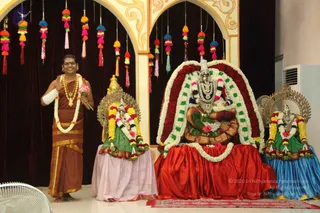
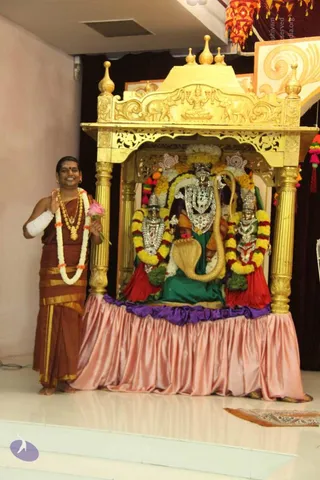
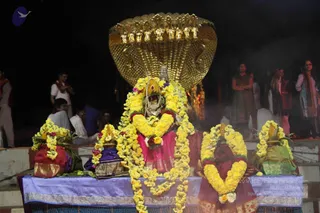
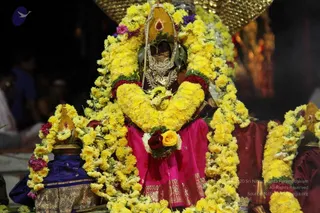
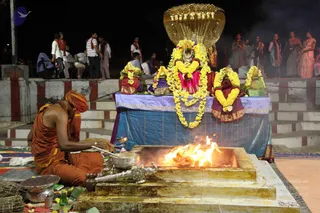
Today, Navaratri, the Srivari Brahmotsava, Venkateshwara Brahmotsava.

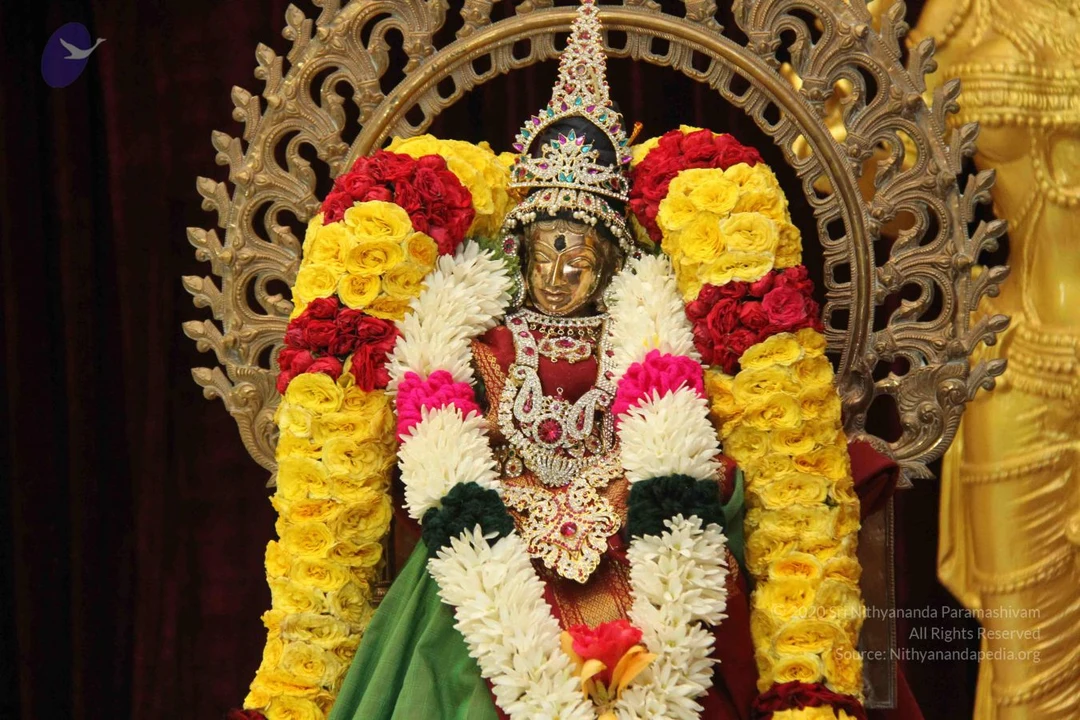
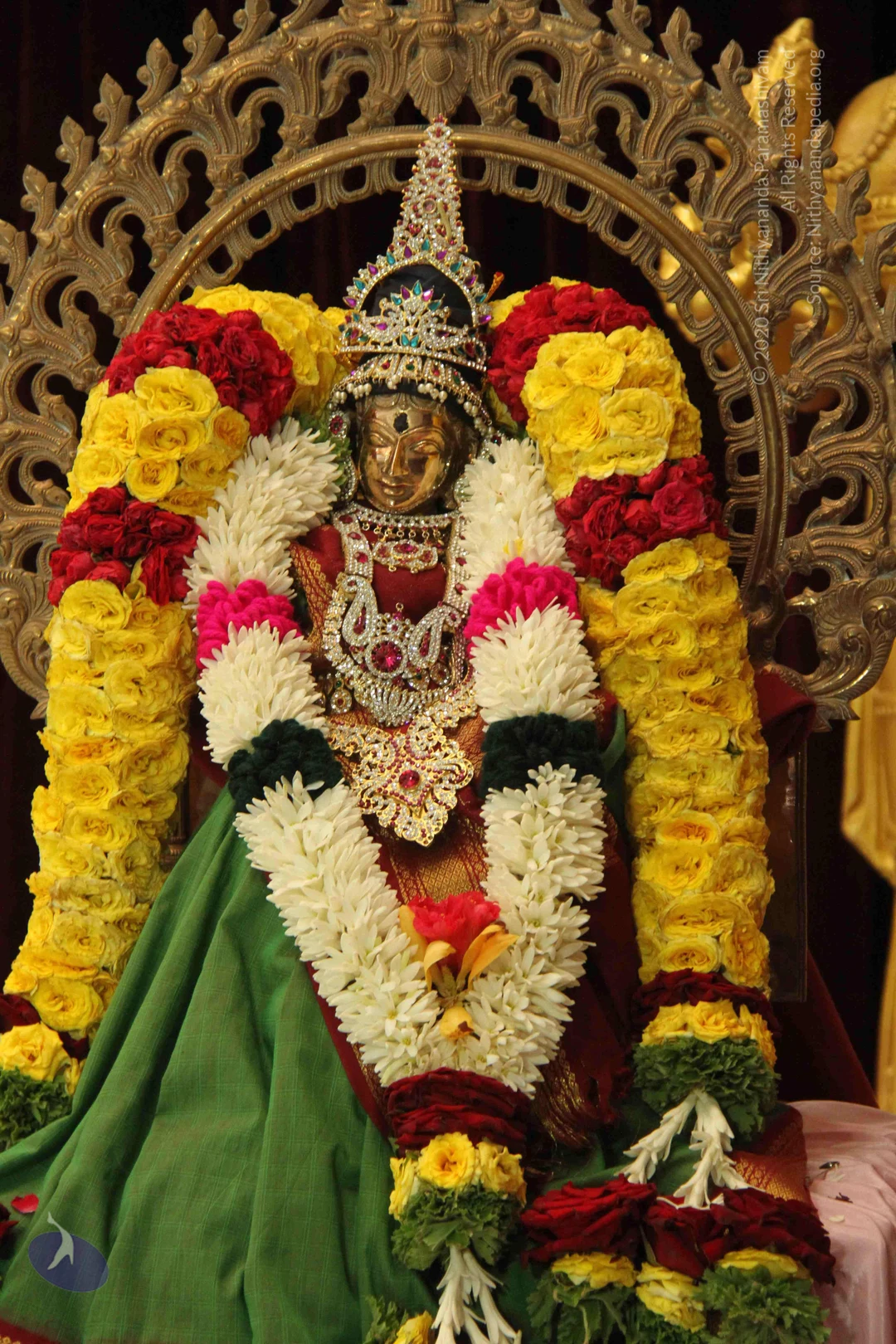
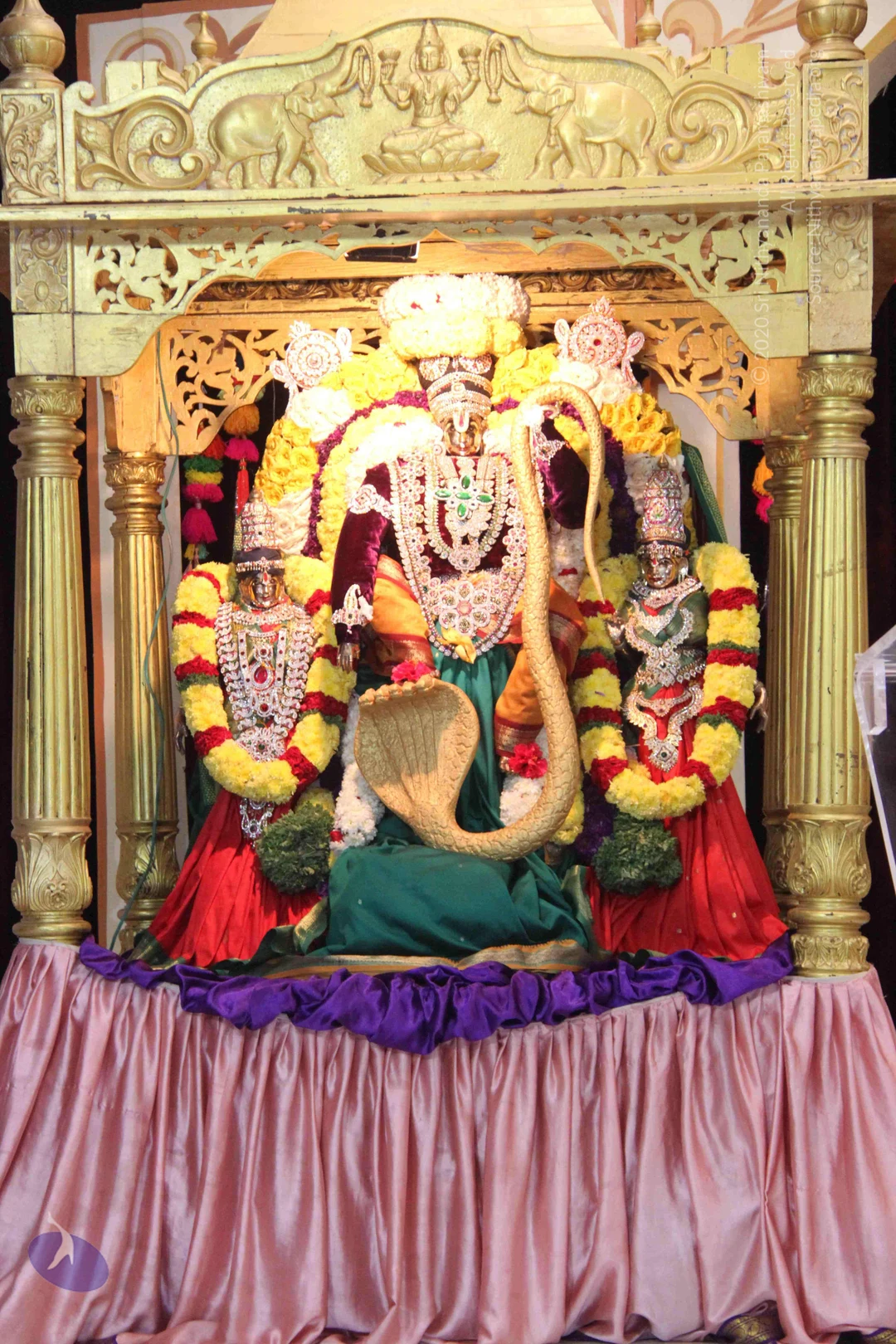
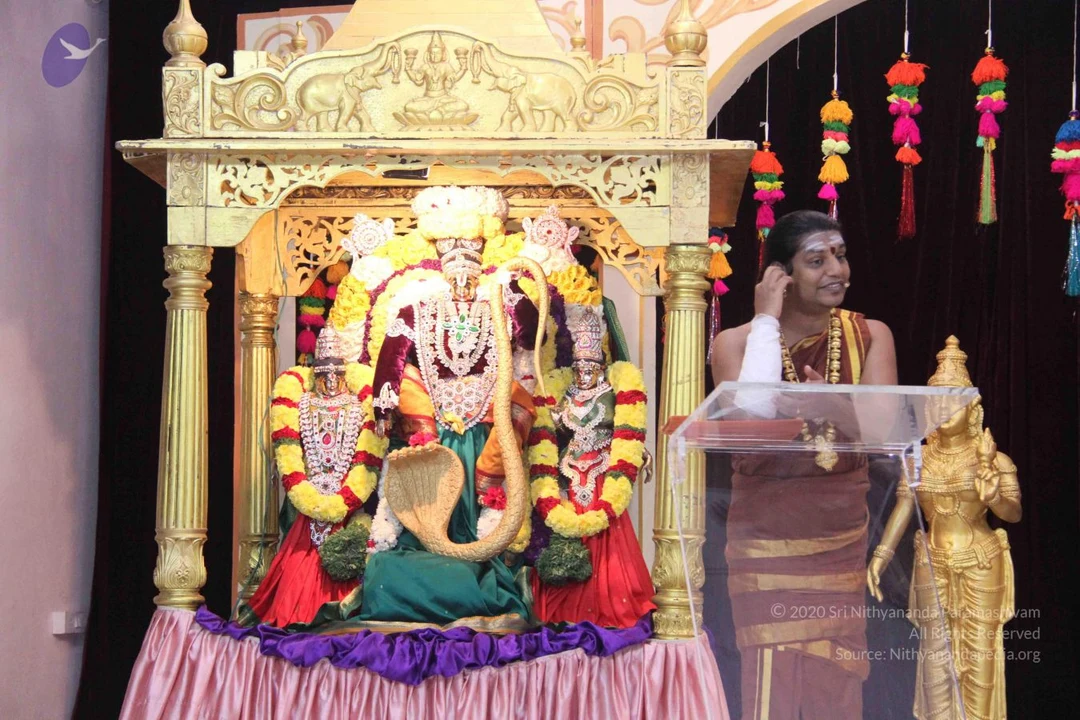
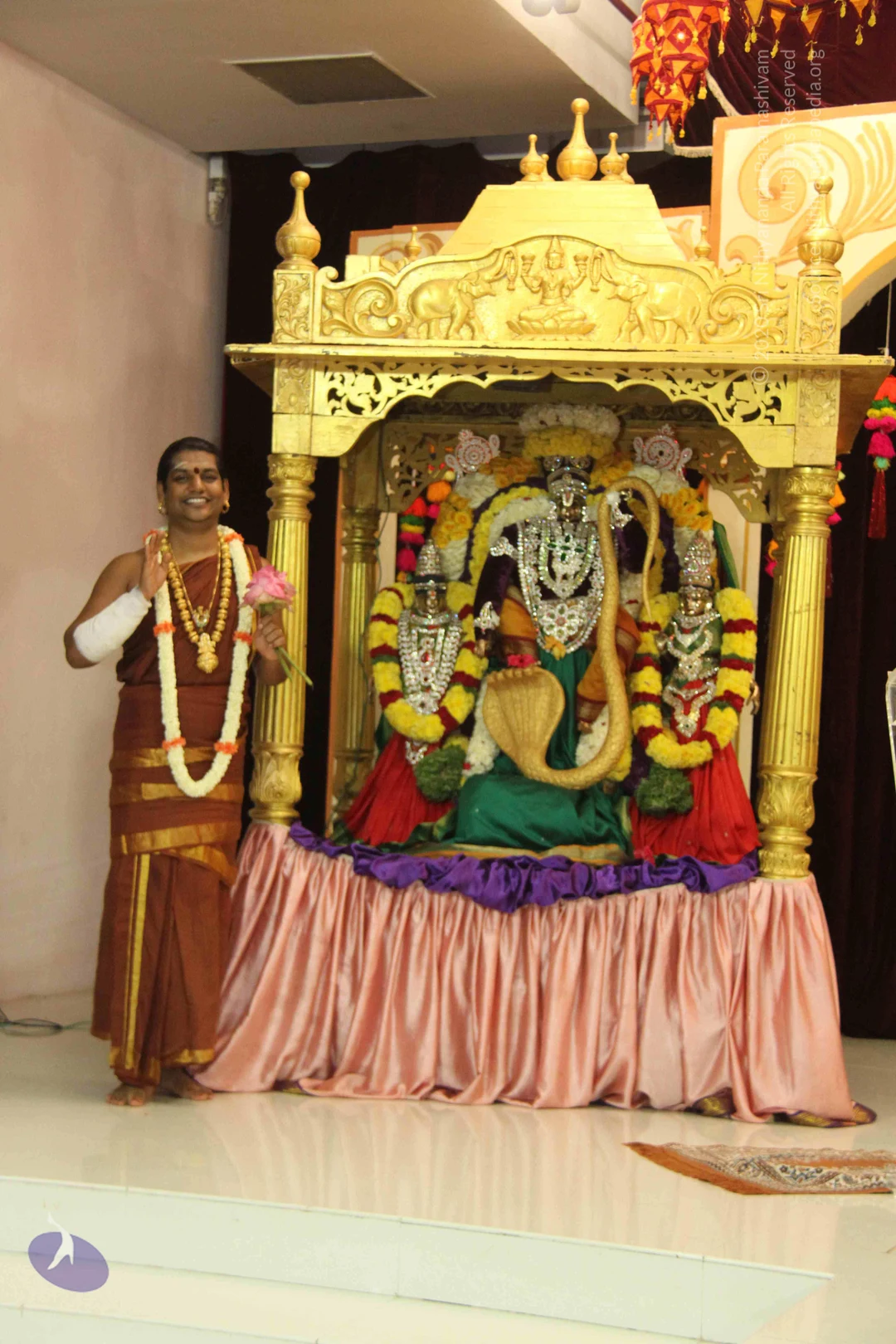
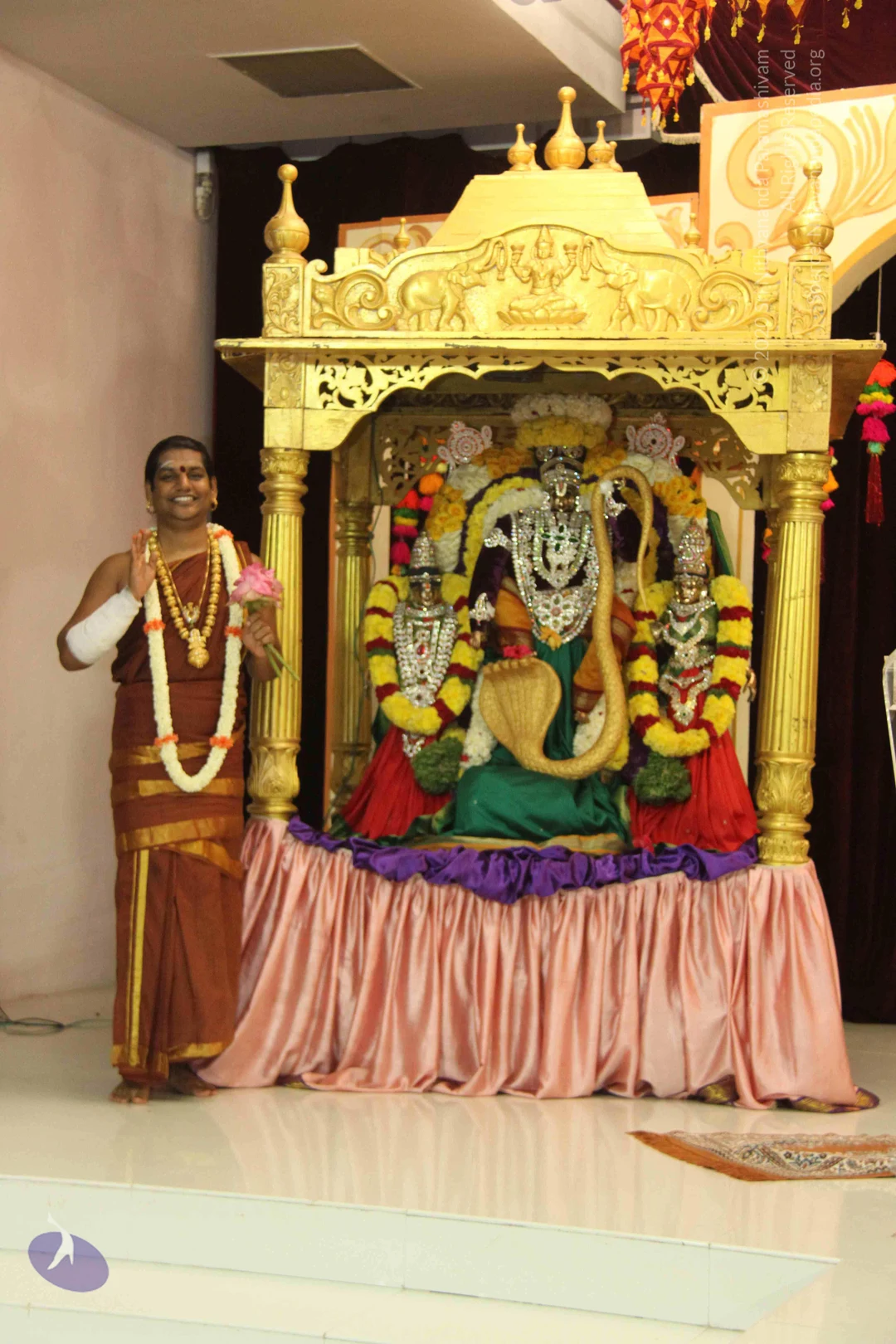
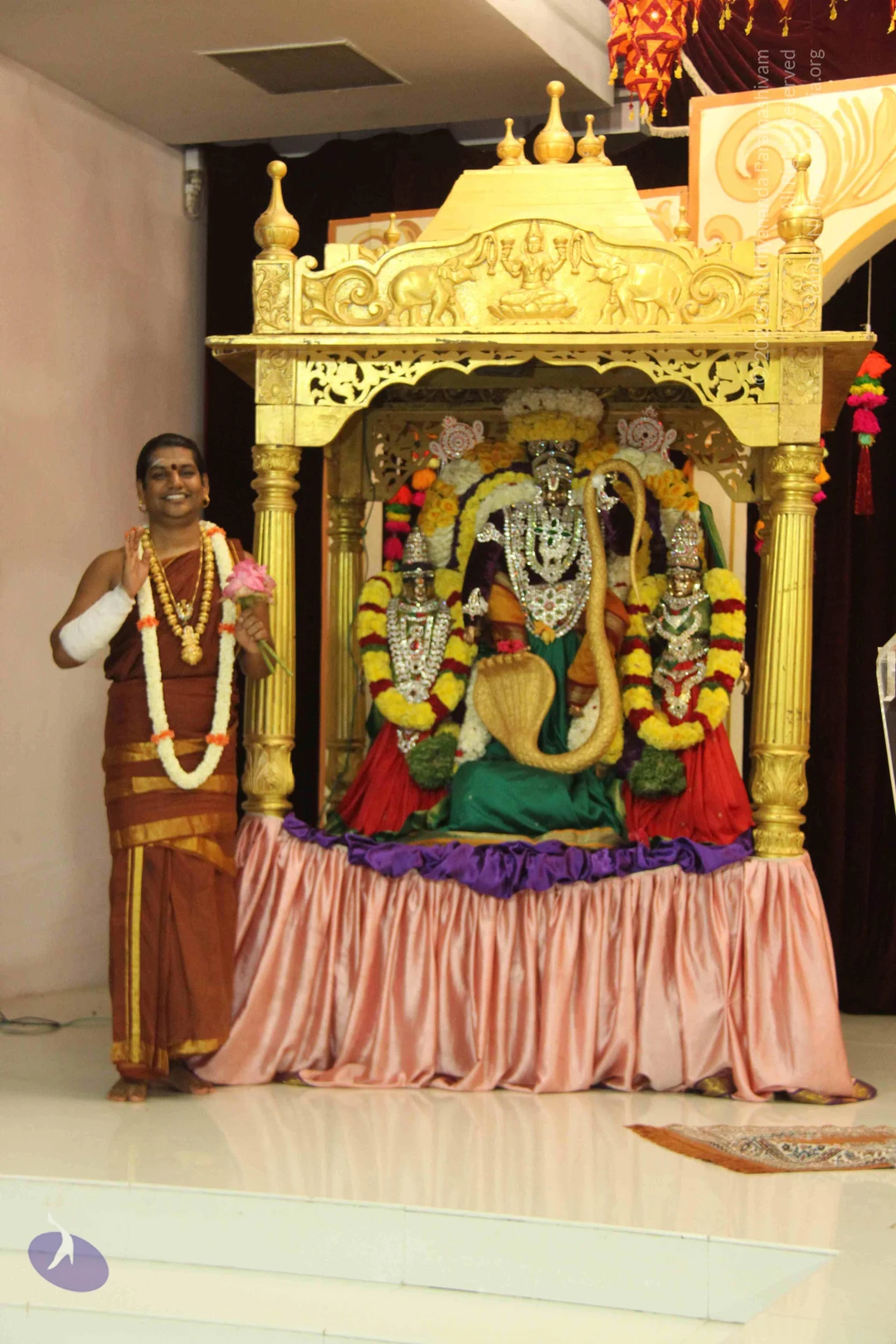
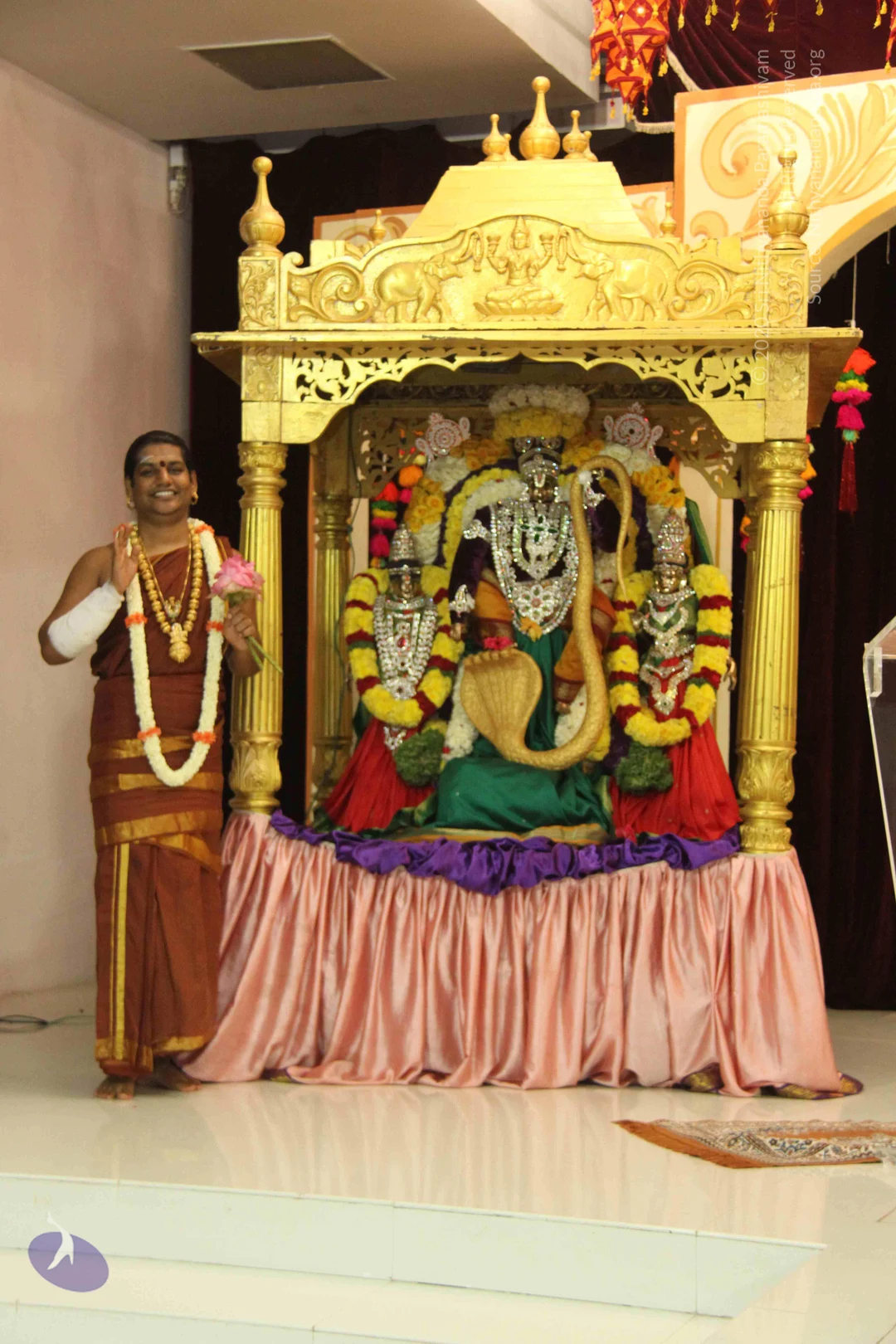
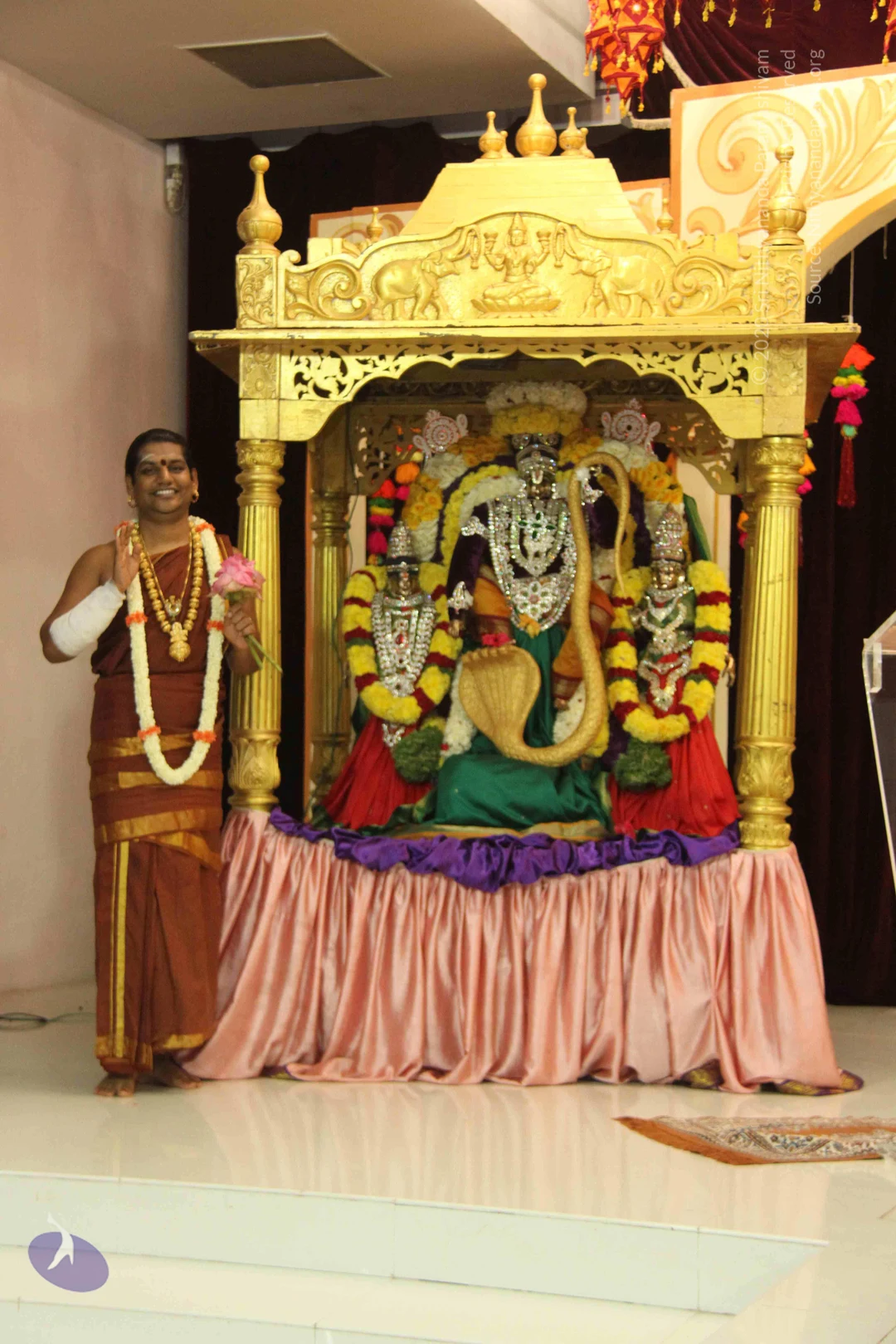
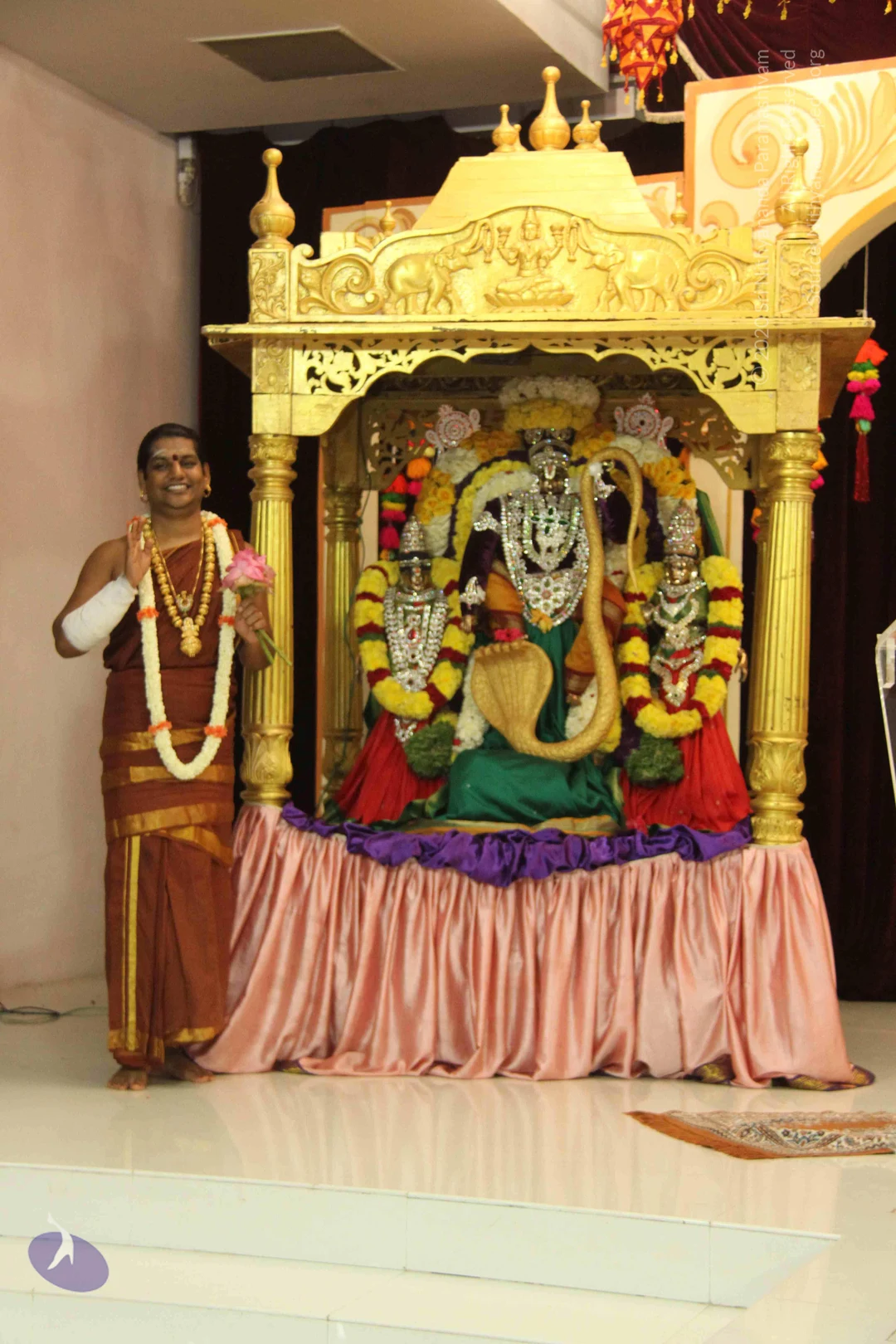
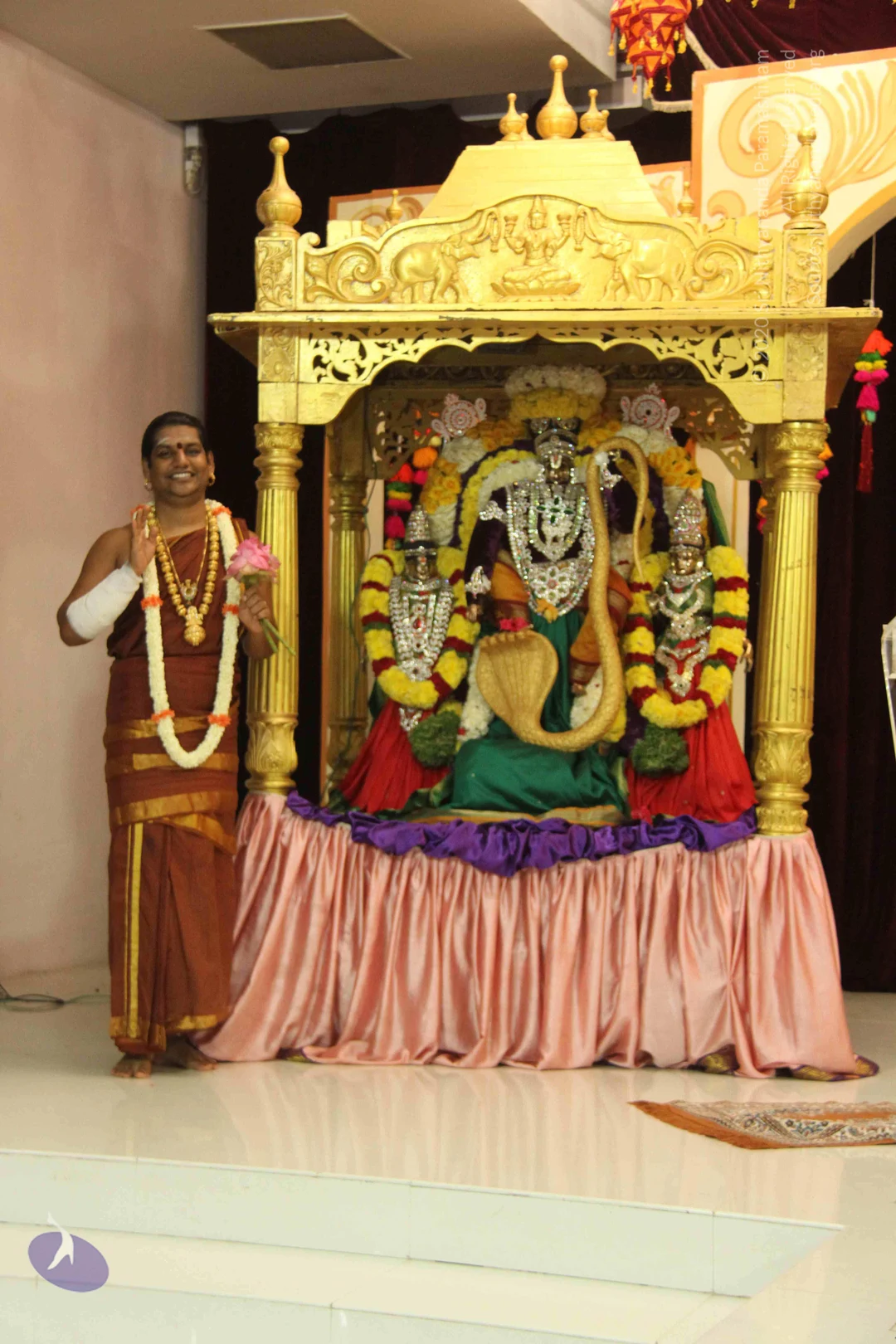
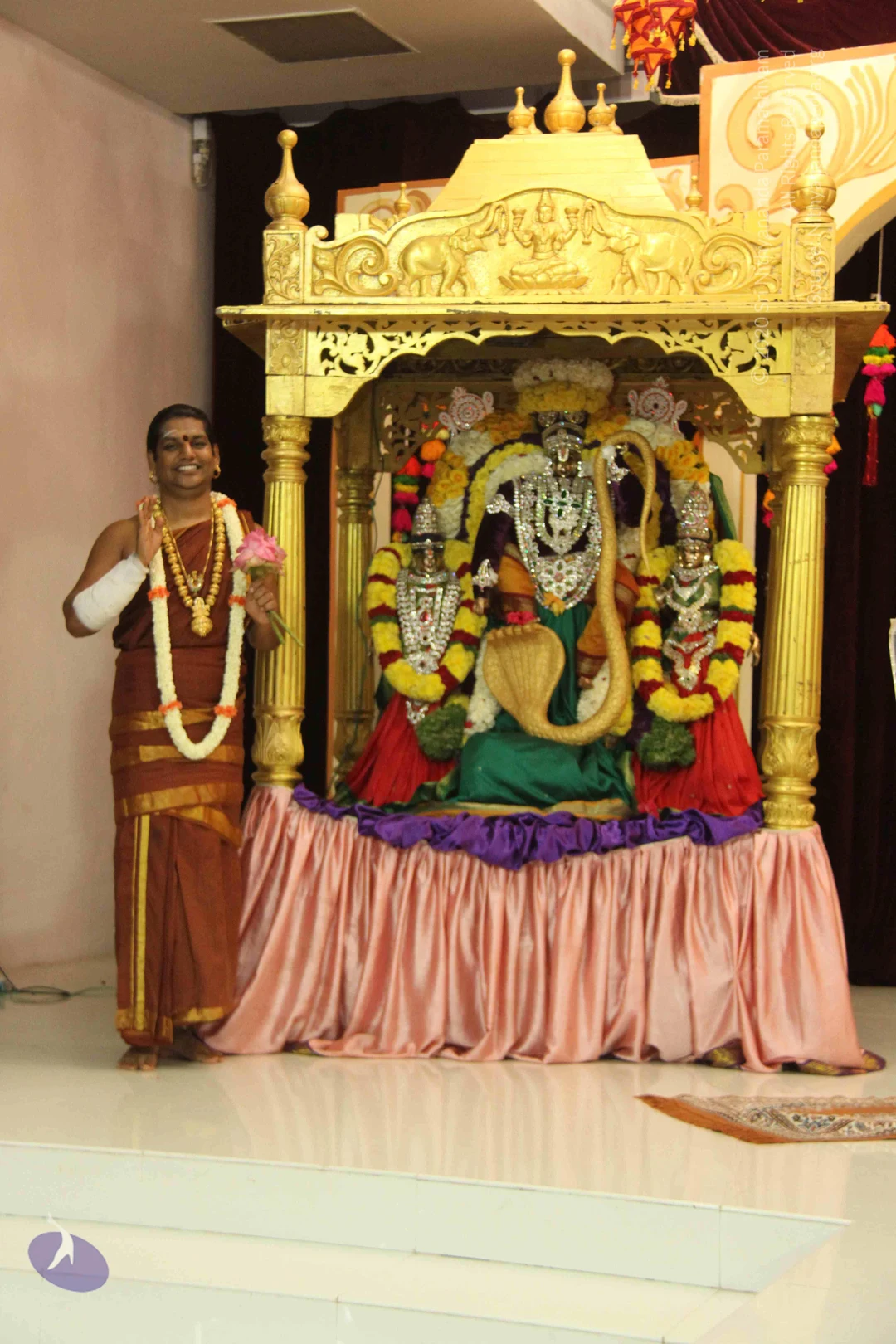
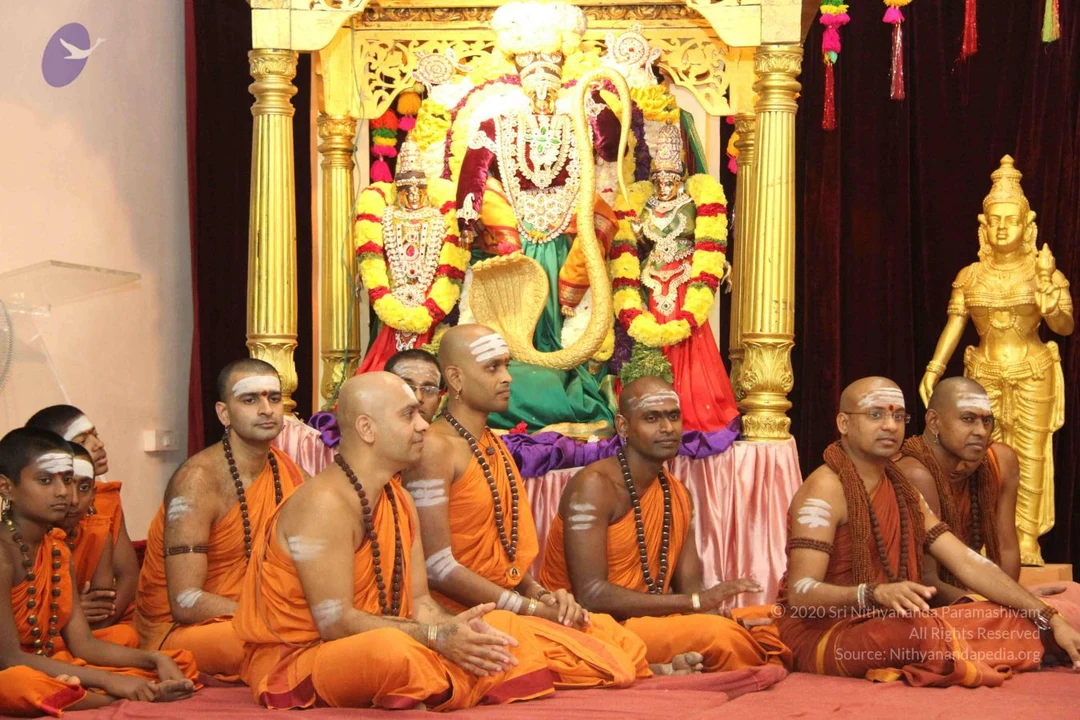
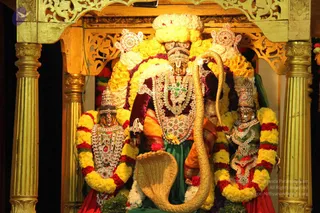
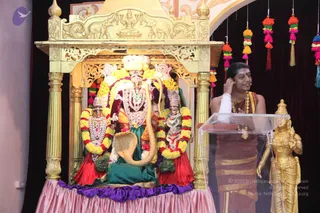
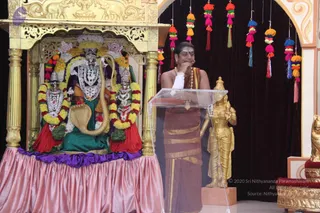
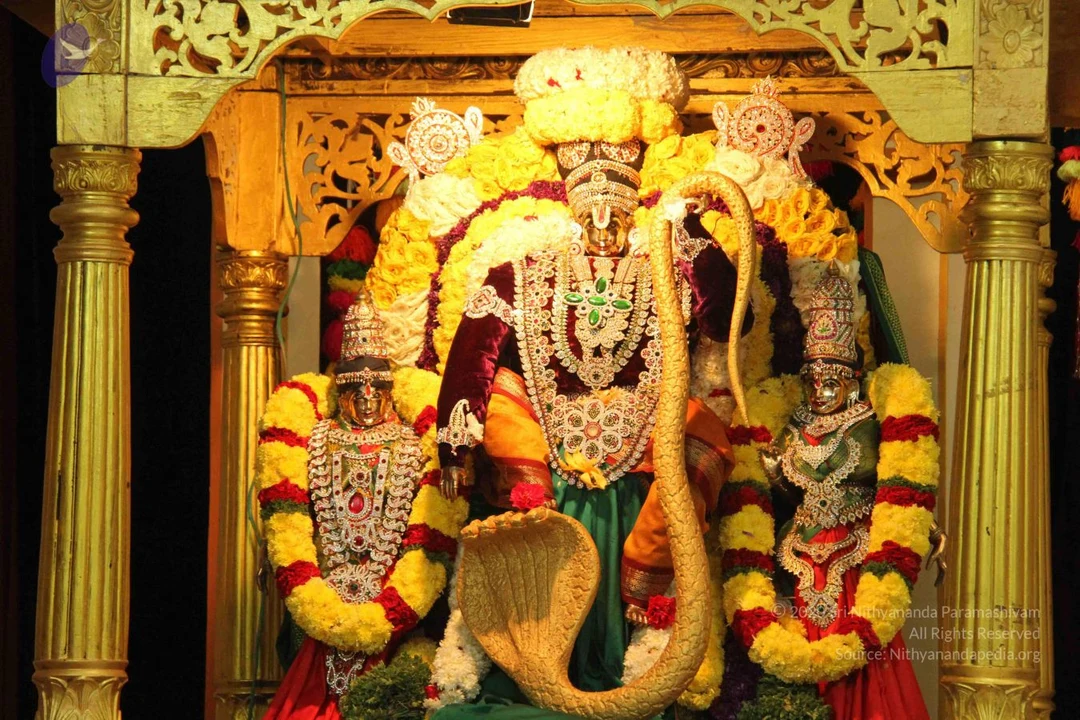
Venkateshwara is gracing us in Sarva Bhoopala Alankara withthe Sridevi and Bhoodevi. He is dancing on the Kaaliya or the snake, poisonous snake, and saving the Gokula.

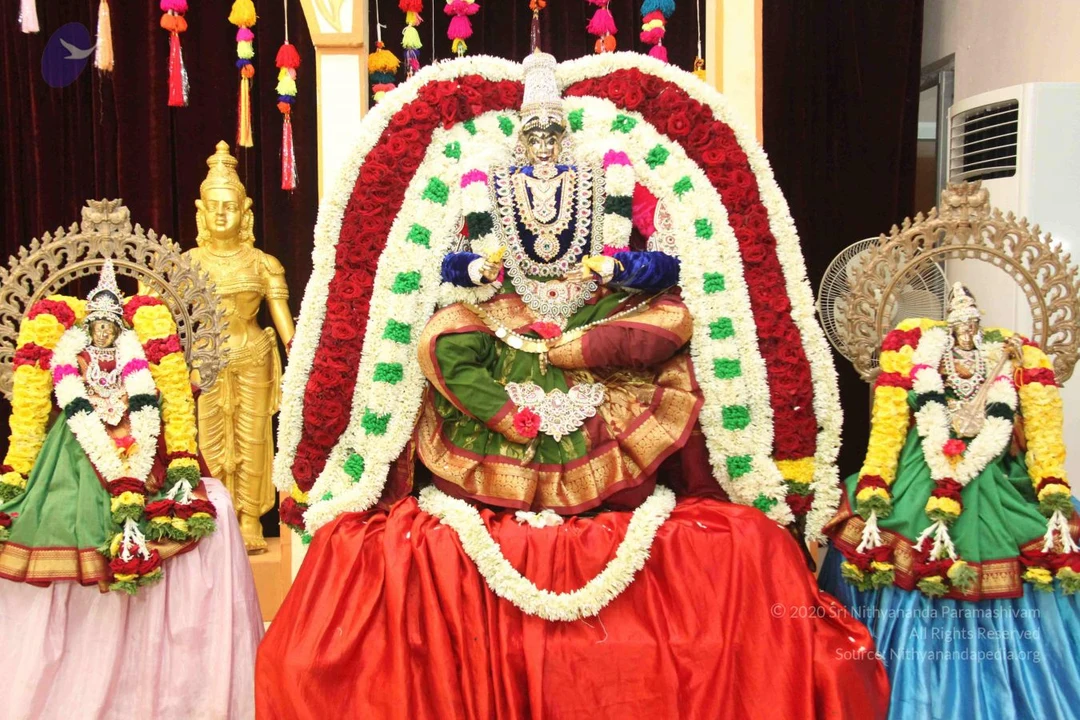
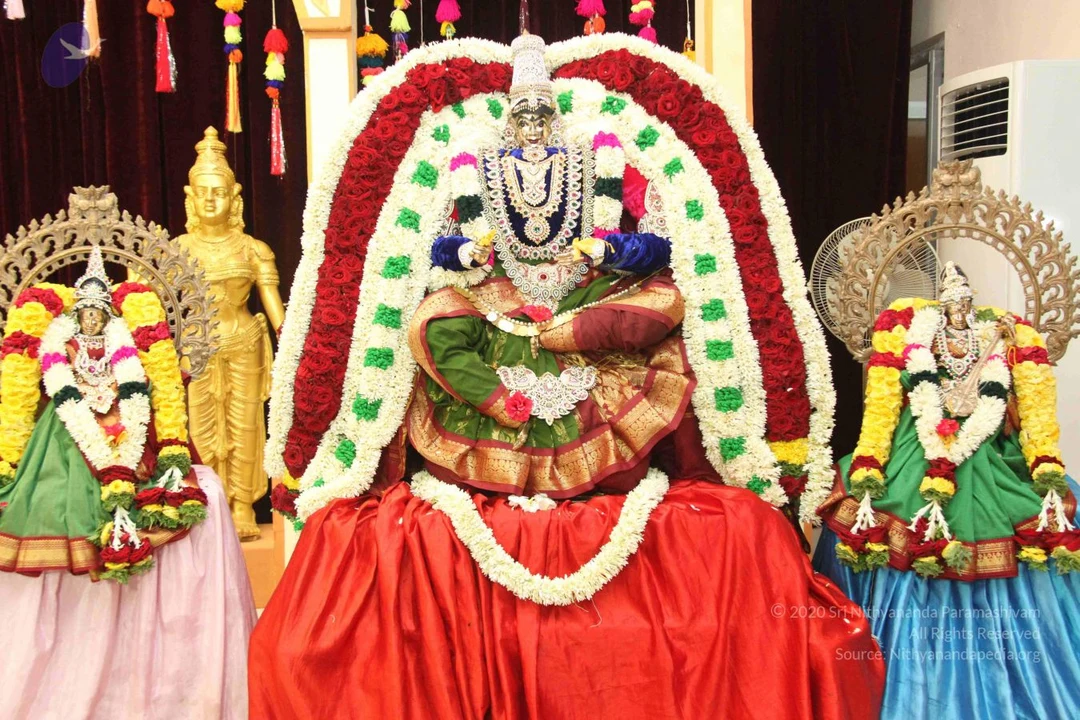
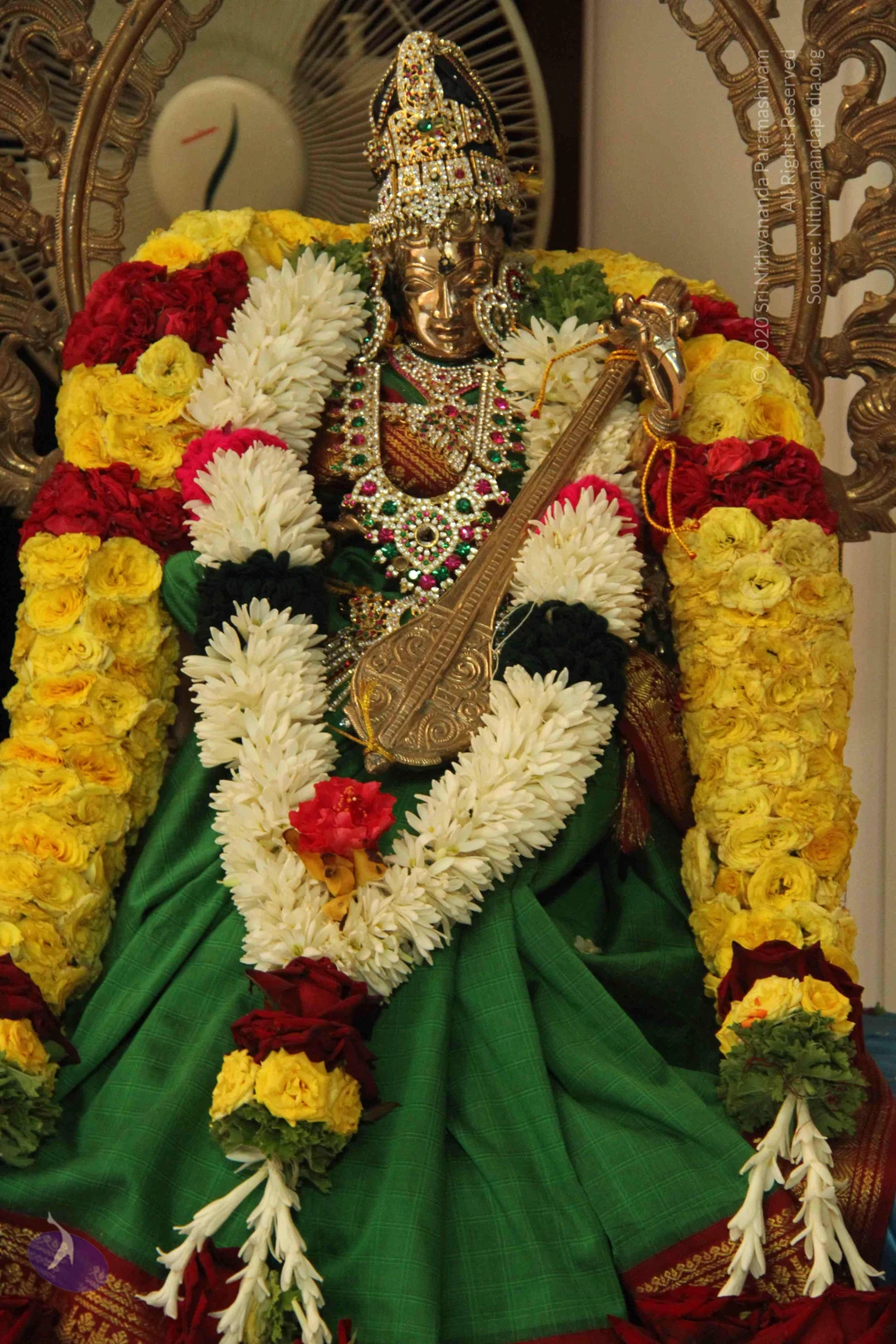
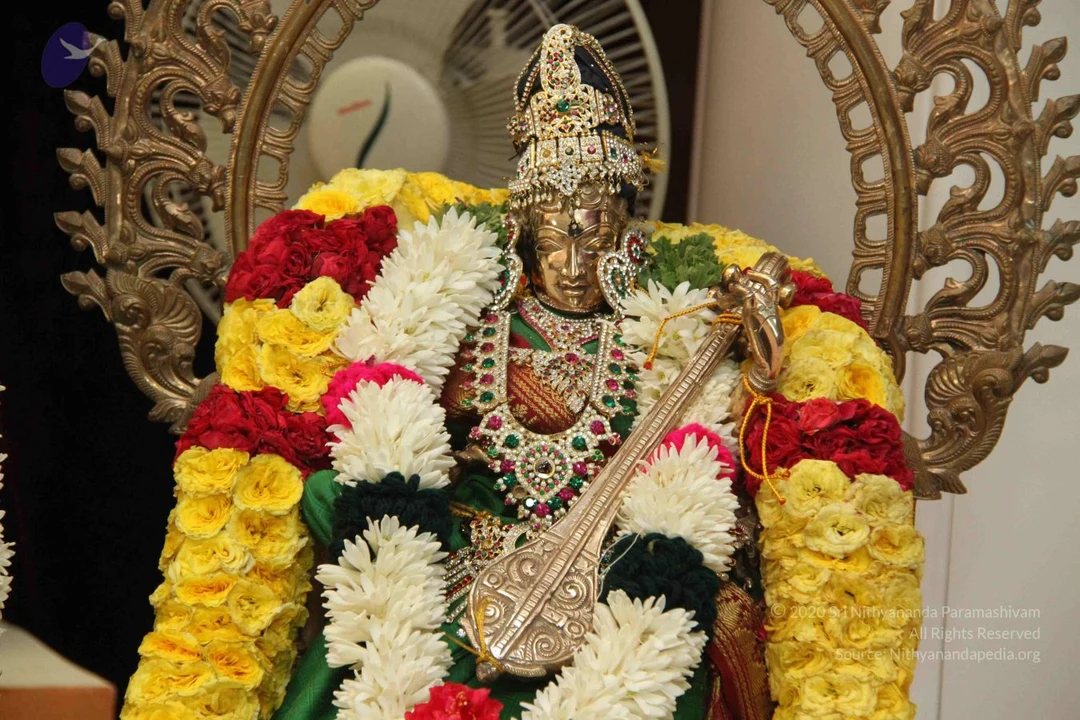
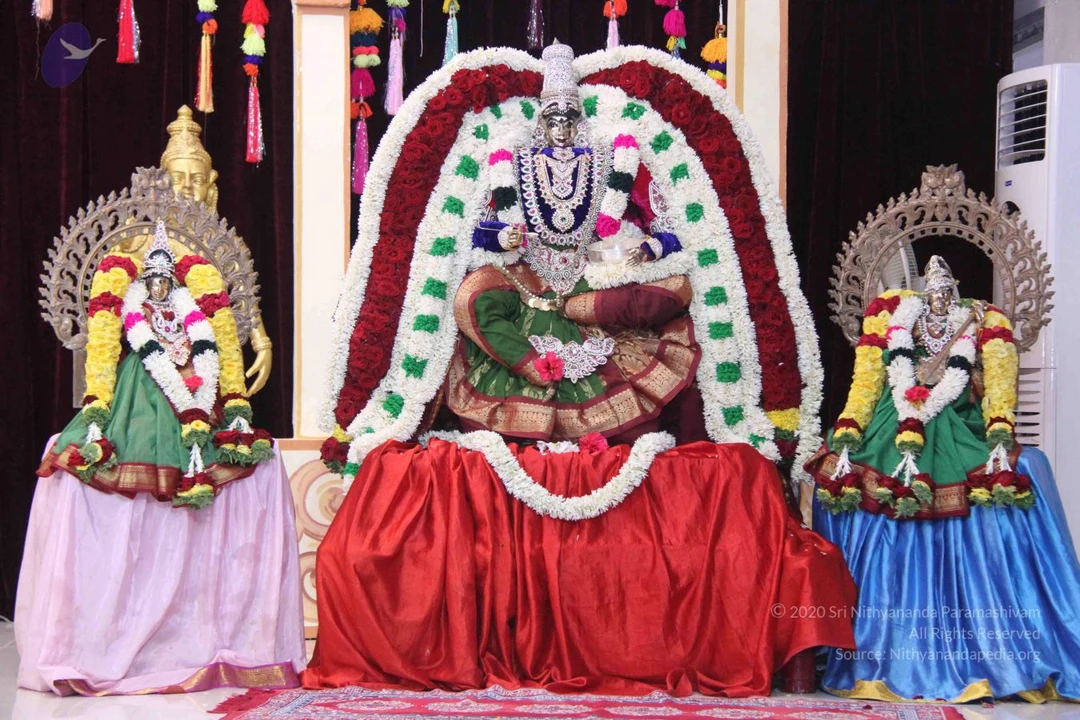
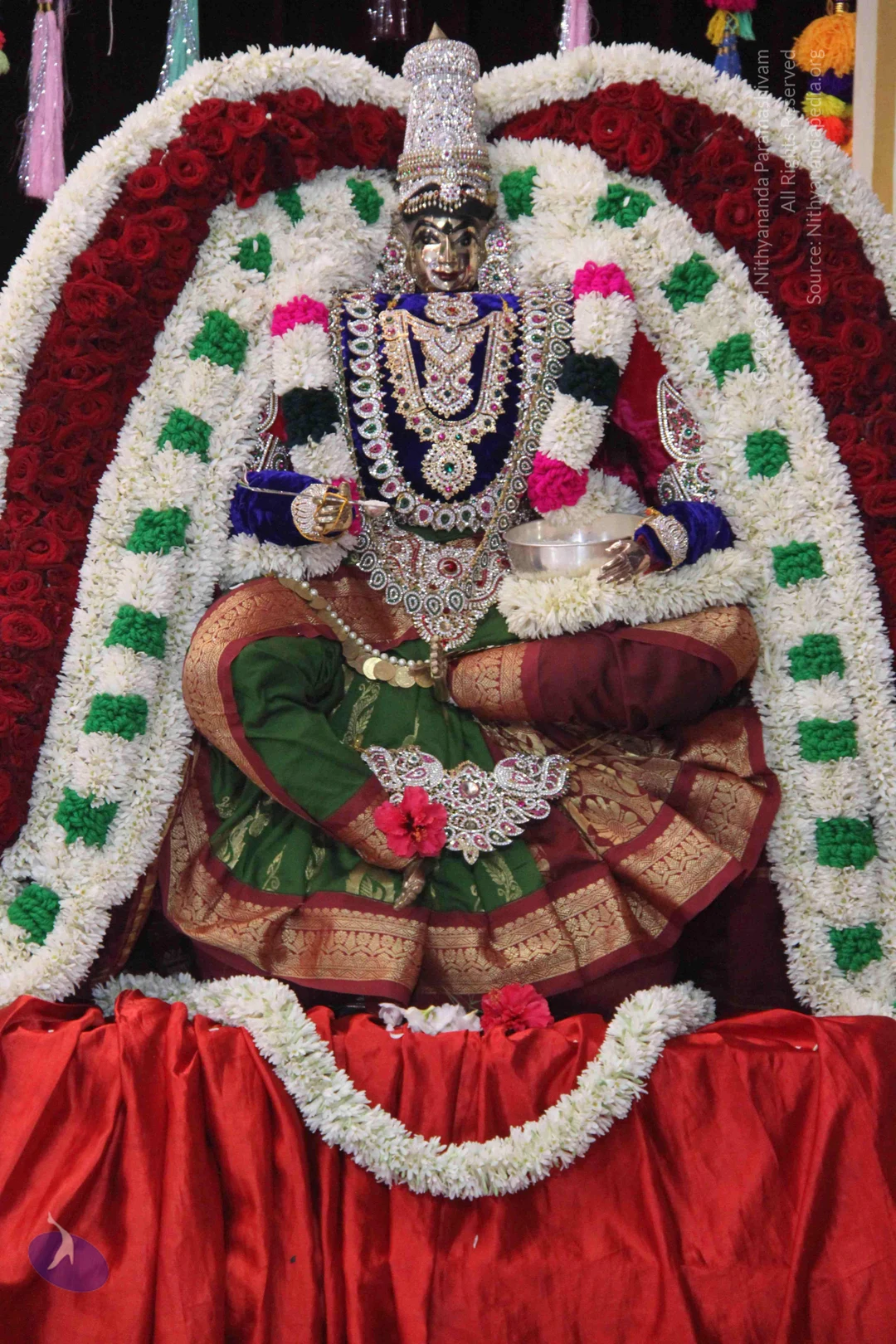
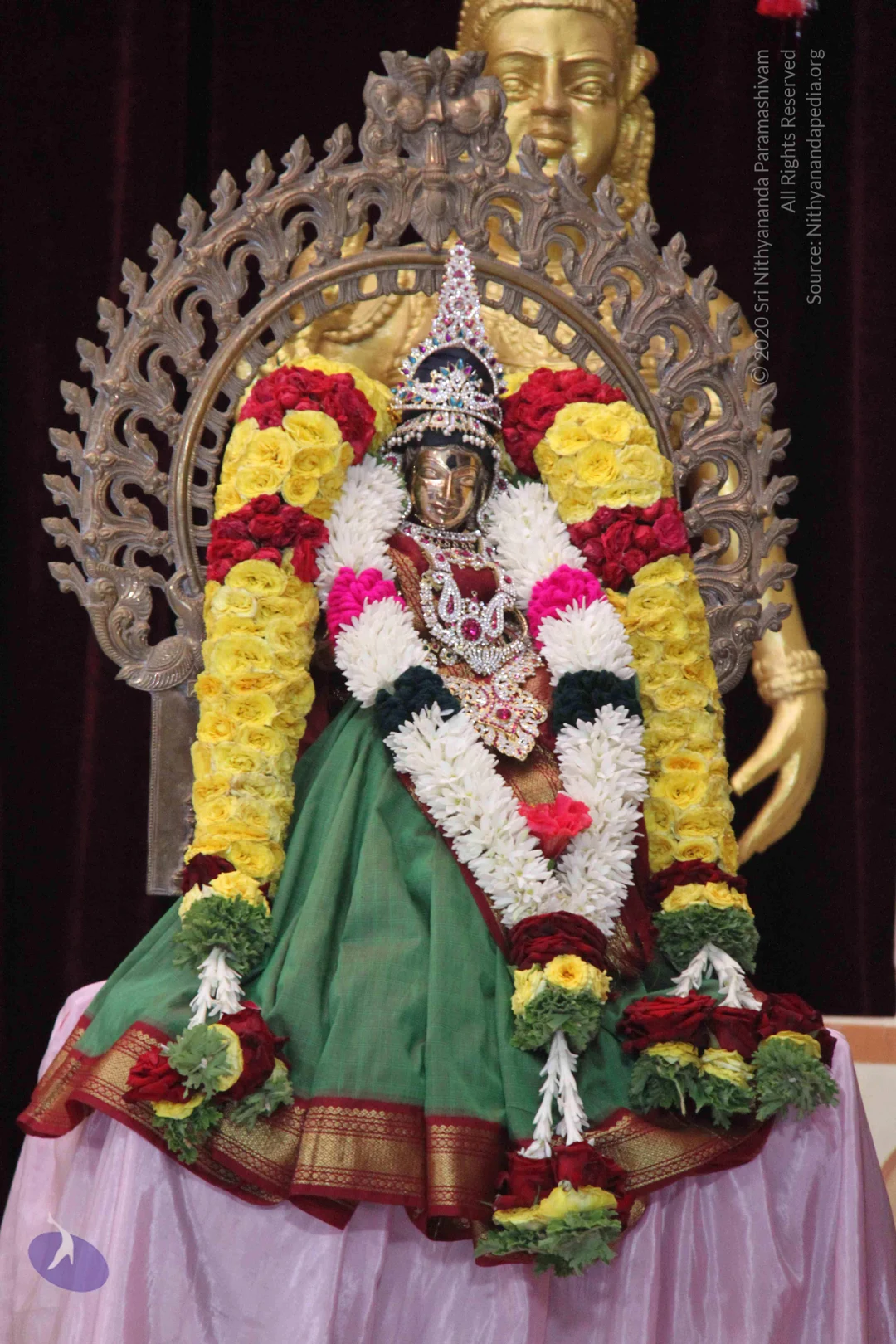
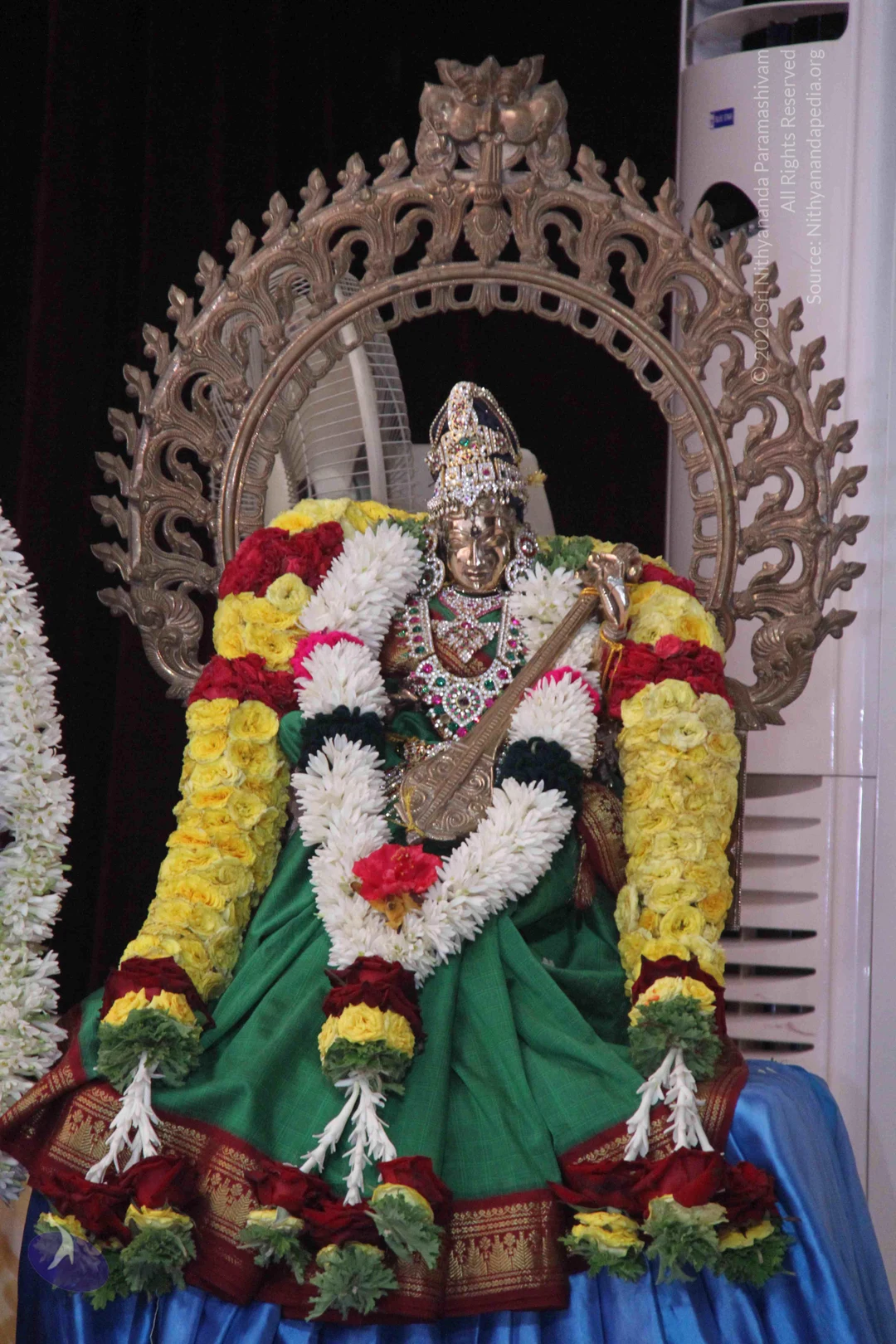
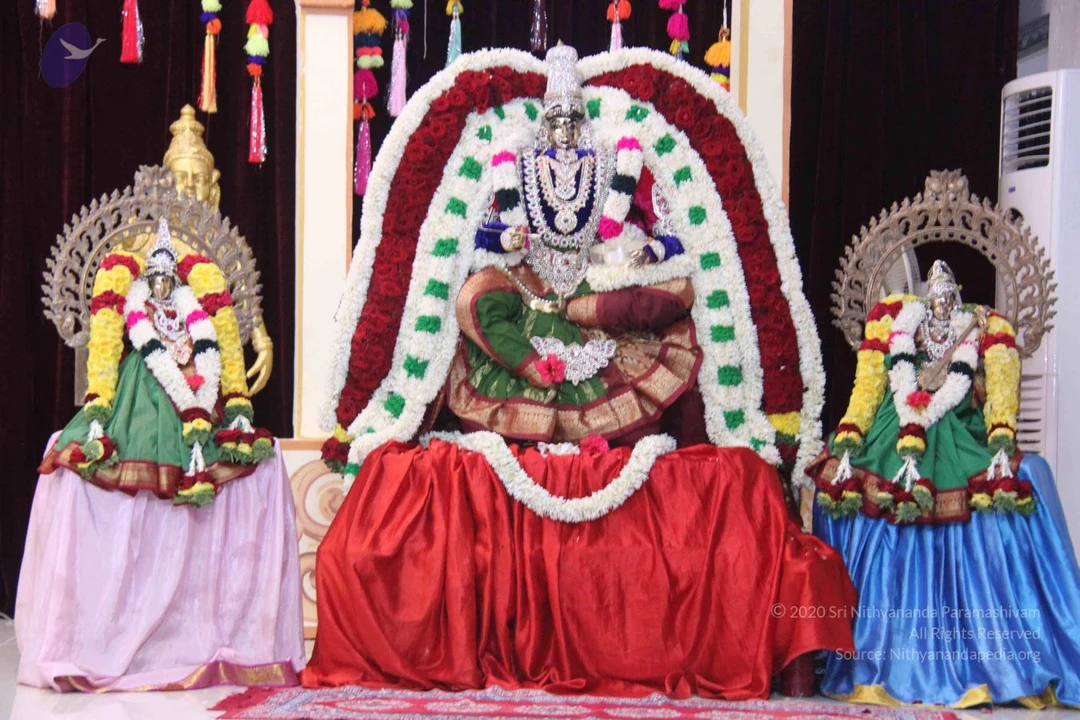
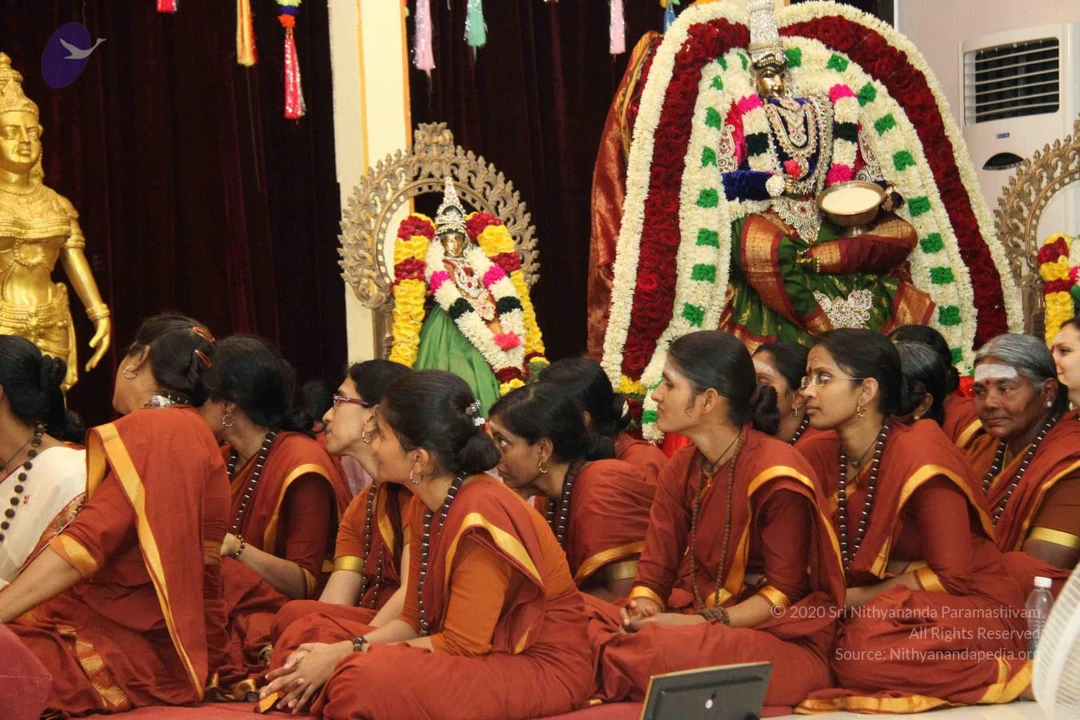
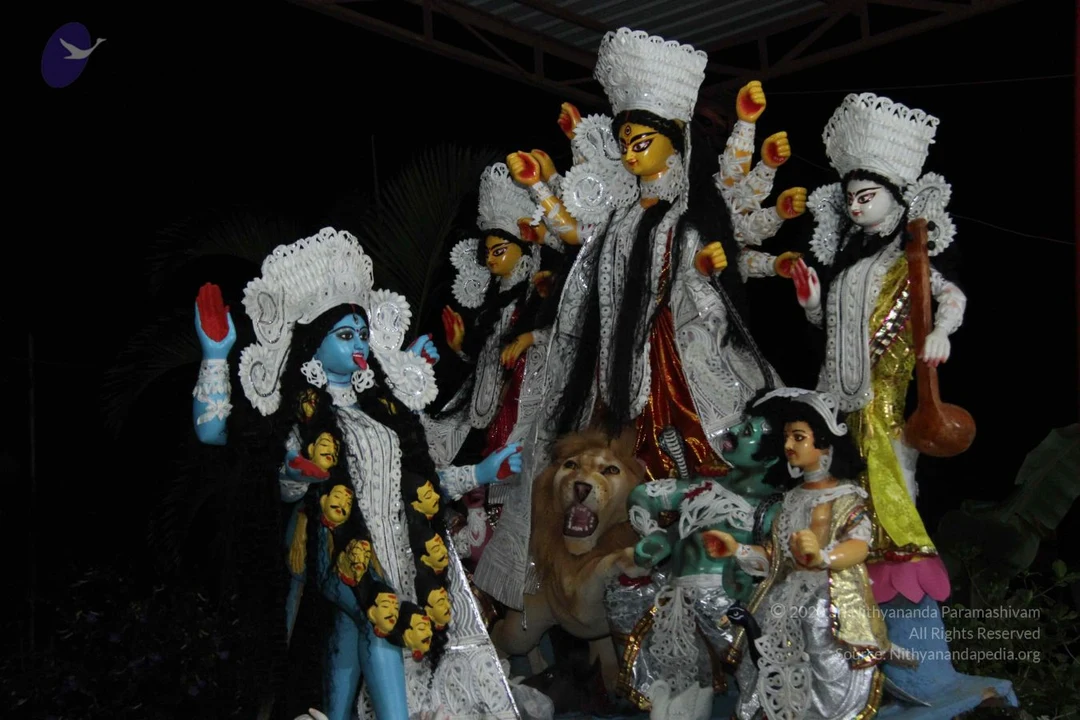
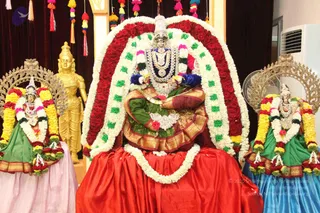
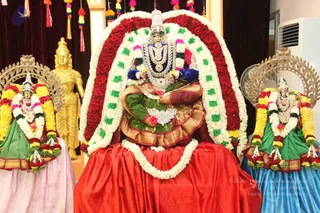
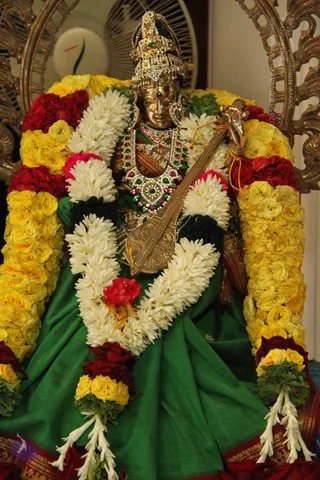
And, as part of Navaratri Utsava, Devi is gracing us as Annapoorna with Lakshmi and Saraswathi, energy which feeds which resides as “Anna” in all of us.

Let’s enter into Nithya Satsang.

Again I wanted to expand on power of words. Still that four important ideas are sitting in my inner space for more and more ideas to come out, more and more sacred secrets to come out, more and more truths to be revealed.

Power of Words. I can give you one small example. If you just go on uttering for a few days “I am sick, I am sick, I am sick!”, and others also utter that words towards you, you will simply be sick. I am giving you a negative example, because the negativity catches you very quickly, you catch negative examples very quickly. Same way, if you constantly tell yourself “I am healthy, I am healthy, I am healthy!”, and you use the same words towards others also, to others also – “I am healthy, I am healthy, I am healthy!” – I tell you, from somewhere the courage and energy and Kundalini will be awakened in you. The courage and Kundalini will be awakened in you, you will be really healthy. You need to know this truth which is a very important truth. I wanted every one of you to know this truth.

Listen, come to the space of listening. Dyanse suniya.

As natural programming, you tend to hold your words up and high. So, when you give word to yourself and others “I am healthy, I am healthy”, the extra Kundalini awakens in your system and holds your declaration as reality, holds your declaration high and up. Words you utter towards you, the words you utter towards others are so powerful, you need to know, the words you utter towards yourself and others guides your thinking, the way your thinking flows.

Just decide, not even one year, six months and all, one month decide. Today sit and design, means write down what way you want you. What way you want you, sit down and pen down and after penning down, next one month go on uttering the words as if you already become that. For example, you decide you will become a wealthy, healthy, enlightened being, wealthy, healthy, enlightened being. Everyone will think, ‘Oh that is too much.’

First of all, you should know, you have a right to dream. Cosmos does not make fun of you when you dream. Please understand, Cosmos dreams along with you, it sympathizes with your dream because you have a right to dream. Understand about that first. May be your boss mocks at you when you dream. May be people who are jealous of you make fun of you when you dream.

Hinduism gives you the complete right for your inner image, outer image, others’ image and life image. That is why, even in our Sangha, I tell people, ‘Practically that guy may be useless and a headache for the whole Sangha but he has the right to have the inner image, outer image, life image and others’ image that he is an incarnation. He has the right, he has the right to have the inner image, outer image, life image, others’ image that he is an enlightened being, he is an incarnation. He has the right. Hinduism does not make fun of your dreaming abilities.

I tell you, in any field, if dreams are not mocked only then growth will happen. When Wright Brothers wanted to fly, if people made fun of their dreams what would have happened? Of course, all of you should know that Wright Brothers were not the first to fly. Seventy years before the Wright Brothers, a Brahmin priest, in Mumbai, has built aircraft as per the Vedic traditions, Vaimanika Shastra and flew 3 Kilometre, 1,500 feet high in front of the Baroda Maharaja. In front of king and his court, he flew and safely landed and he has demonstrated. Unfortunately, when the British came, they killed that whole family in some false cases, pretext and stolen the aircraft and wiped the whole science out. They managed that. The whole thing is forgotten. No trail is left. You need to know these very important truths.

If dreams are not allowed, if dreams are made fun of, growth is not possible. The whole effort I am trying to do in my training is not to make fun of dreams but helping them to take responsibility. I always insist on helping people take responsibility for their dream. Dream itself should not be stopped or deprived. I tell you, when you dream, Cosmos dreams through you. It yearns for you to become reality. Mother yearns for her child to become a man or woman. Mother yearns for her child. Just like mother yearns for the child to become man or woman, Cosmos yearns for you to become the reality.

Long, long before the Wright Brothers, a resident of Mumbai, a scholar in Sanskrit literature, especially of the Vedas, an inventor and teacher in the School of Arts, he built an aircraft and flew and showed.

Life, life yearns for you to become reality. When you dream, life dreams through you. Please listen, the moment you start dreaming, life starts building its dreams about you. Dreams of life for you are hundred times more stronger and powerful than anything you can dream for yourself.

15:00

The dreams life can dream for you is thousand times more powerful than the dreams you can create for yourself, but when you start dreaming for yourself, life’s dream for you starts opening itself through you. You might have tried and started dreaming to become an MLA(Member of Legislative Assembly), but life will dream and make you the Chief Minister! I am giving you an example. You might have started dreaming for a million dollars, but life will dream to make you a billionaire! Understand, life’s dreams for you are always larger than your dreams for yourself! So, I tell you, when you dream, life does not make fun of you. Only when you don’t take responsibility for your dreams, you make fun of yourself and collapse! Life never makes fun of you. You make fun of you when you don’t take responsibility for it. When you don’t take responsibility, life collapses you.

I have a small story about Power of Words. Listen!

Once a small town was visited by a saint. As he passed by a small hut, a woman came to him and begged him to pray for her critically-ill child.

Since the saint was new to the town, a crowd gathered around him and see if he could do anything.

The woman brought the sick child to him and he said the prayer over her.

‘Do you really think your prayer will help her when medicine has failed?’, yelled a man from the crowd. From the crowd one guy shouted, ‘Will your prayer work when medicine has failed?’

‘You idiot, you don’t know what I am doing! and just shut up’, said the saint to the man.

The man became furious with these words with his face grew hot and red. He was about to say something or perhaps hit the saint.

The saint walked over to him and said, ‘If one word has such power to make you so angry and hot, may not another word have a power to heal?’

When one word can make you mad, another word can make you heal!

Understand, life in its pure form expects you to dream larger and larger spaces, larger and larger possibility, and take responsibility for your dreams. Start dreaming! I am adding a step further. From today, once you completed the dream, declare Completion with the space all the time that deprived of not making your dream into reality. That is one of the important space you carry. You always feel, ‘I can dream; but I will never be able to make it reality.’ Complete with that space and declare, ‘From now it is reality!’ Start walking, talking, speaking, thinking that you already become a healthy, wealthy, enlightened being, you already become that. Start talking, walking, thinking, feeling. There is no such thing as “too many enlightened beings cannot be in one place”. Thousands and thousands of enlightened beings can be together, because they become one space!

I have always seen, in the Inner Awakening program, the third day when they go through that introduction of Mamakara, inner image, outer image, life’s image and others’ image, suddenly such a beautiful bonding, love, the oneness is experienced among the whole group! After that, I have never seen bickering between the group. Otherwise, such a large number, when they gather…….! Usually, when a large number of people gather for this kind of programs from various backgrounds, age, education, a lot of confusion happens. But, I can say that never, never ever the confusion happens in our program! I have seen always!

Because the whole knowledge, the whole understanding that everyone is in the same space as you, gives you tremendous feeling of oneness. I tell you, if every one of you declares, even more than one-third of you declare sincerely your dream and start at living, the whole energy in your family, in your society, in your city, wherever you live, will become different.

Listen, the power of your thinking, I tell you, just declare for one month, and let your thinking, speaking, all your actions and living, your behavior, in everything radiate your declaration. You will see, suddenly in a month you would have grown so much, you would have travelled too far away from the old, the “impossible” personality.

“Impossible” personality is what we call “Shudra” in Vedic tradition. In Vedic tradition, “Shudra” is not defined based on birth. The “impossible” personality, the person who is stuck with the “impossible” personality, means doubt on yourself, doubt on others, doubt on your ability to relate with others, when you are stuck with the “impossible” attitude, you are “Shudra”.

But you are stuck with self-doubt, but you don’t have any doubt towards your ability to relate with others, then you become “Kshatriya”.

Your doubt on others, whether others can do or not, only that is there, but otherwise you don’t have doubt about yourself, then you become “Vaishya”.

If you have completed with all the doubts, neither you have self-doubt “whether I can do it or not”, nor you have doubt on others “whether he can do it or not”, or you don’t have doubt towards your ability to convey, inspire the other person, all doubts are complete, you become Brahmana.

Understand, it is just your personality which makes you Brahmana or Kshatriya, Vaishya or Shudra. The community based on understanding and ability, not by birth, community based on understanding and ability, not by birth, that should be the lifestyle.

I will give the essence in Hindi.

The essence what I wanted to express to all of you through today’s satsangh is:

Dream your best possibility and declare it. Start thinking, living, acting, doing everything as if your declaration has already become reality! Do it! Then you will understand the Power of your Words, the Power of your Thinking, the Power of your Feeling, and the Power of your Living.

Let you all achieve, experience, live express, radiate, share and explore in eternal bliss, Nithyananda! Thank you!

Photos Of The Day:
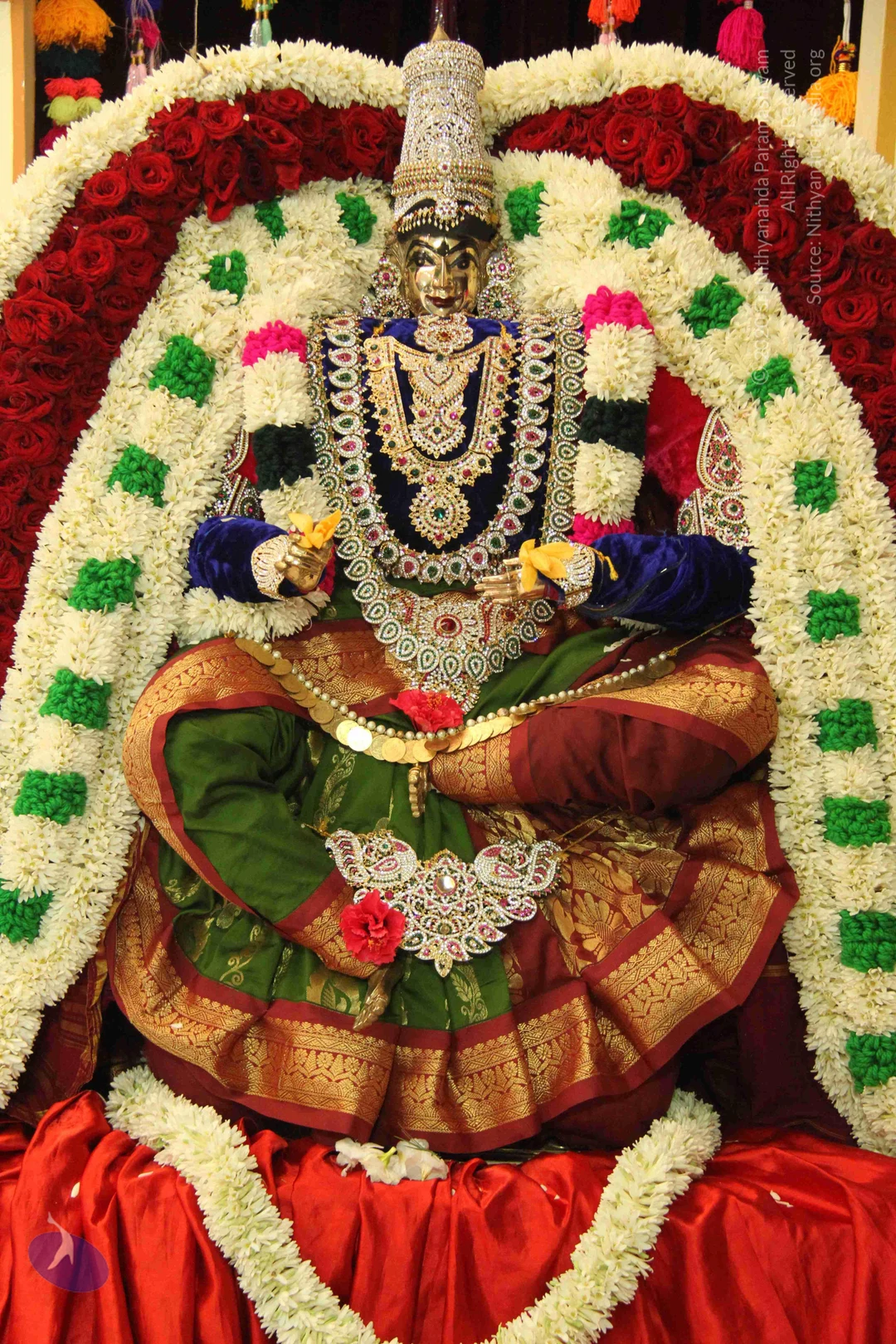
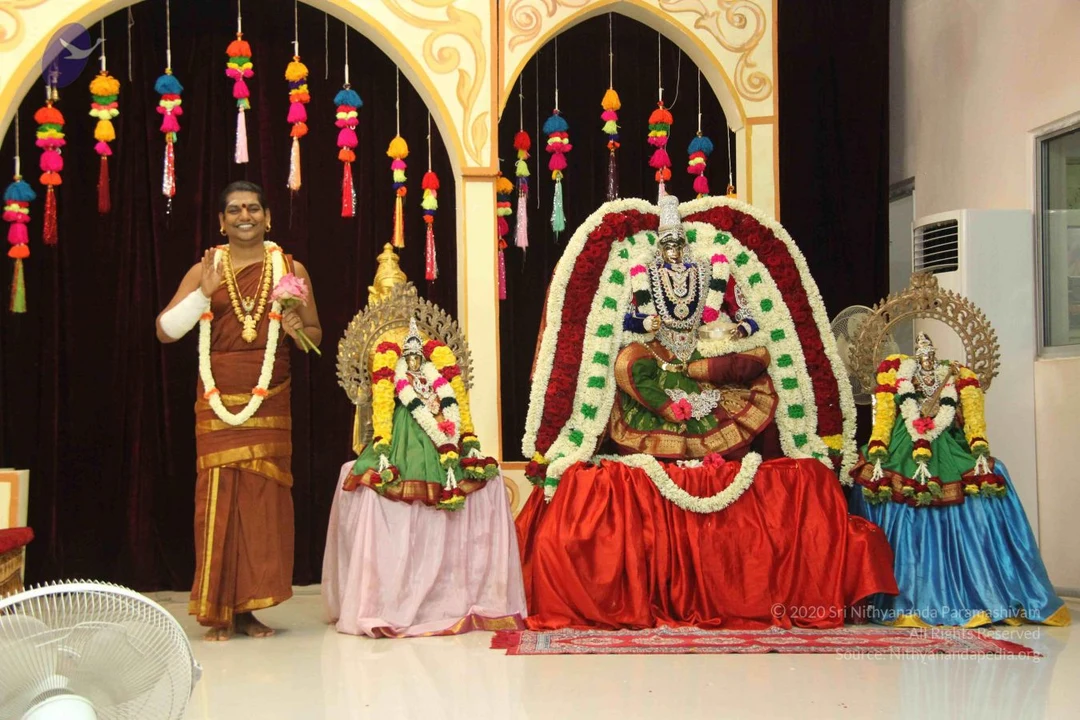
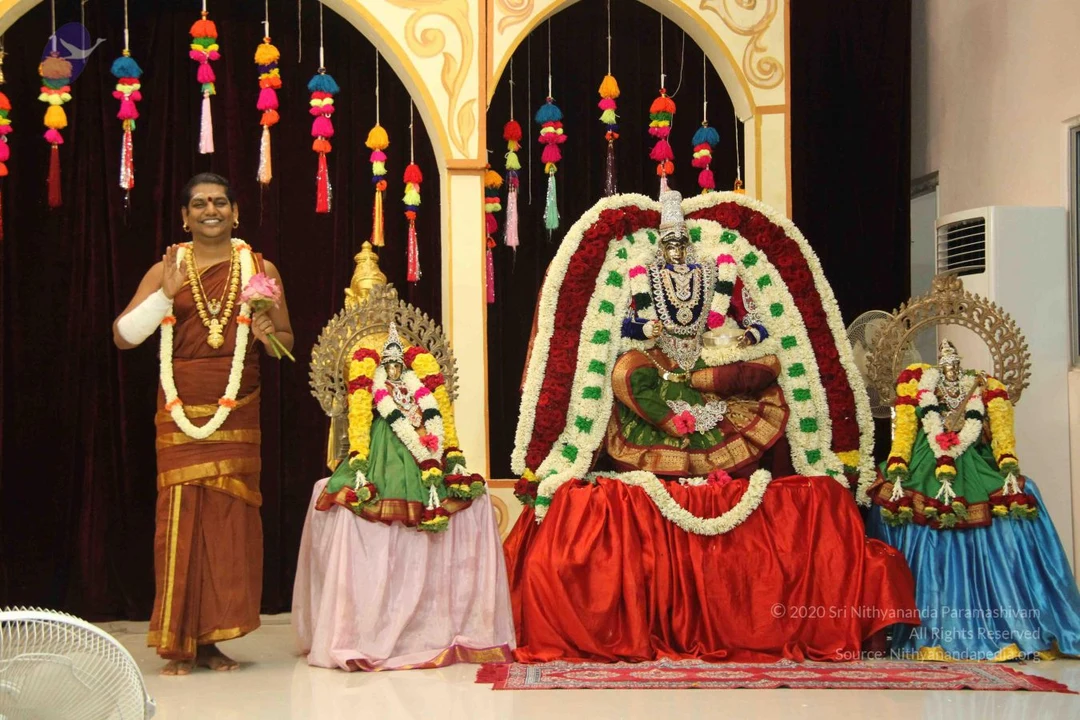
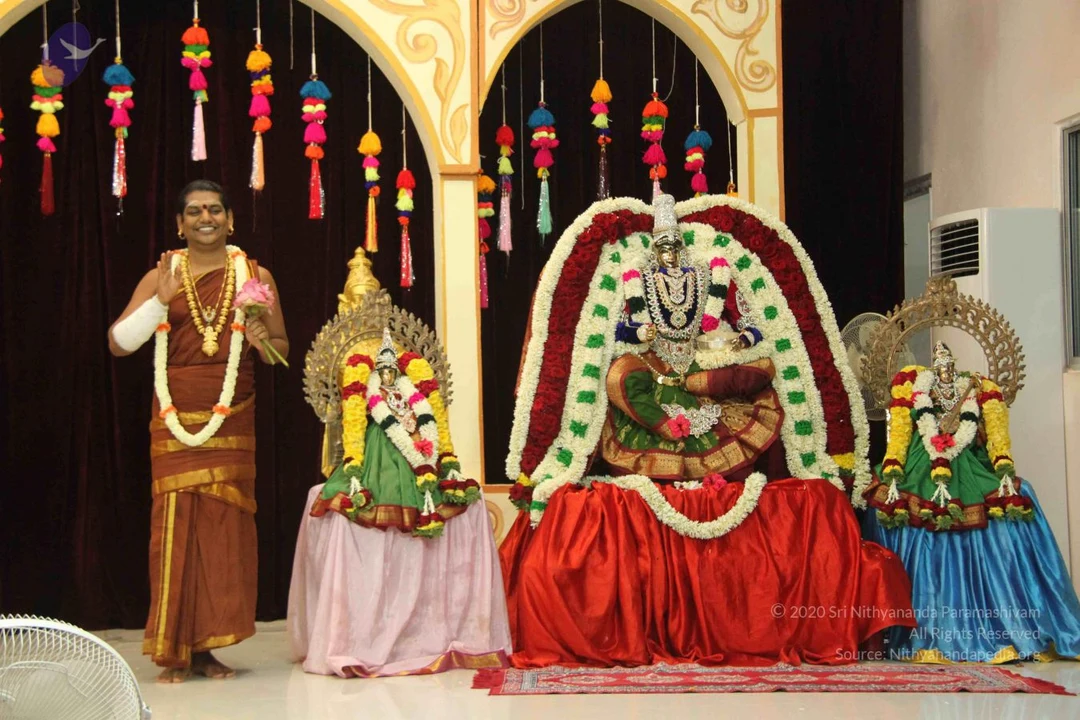
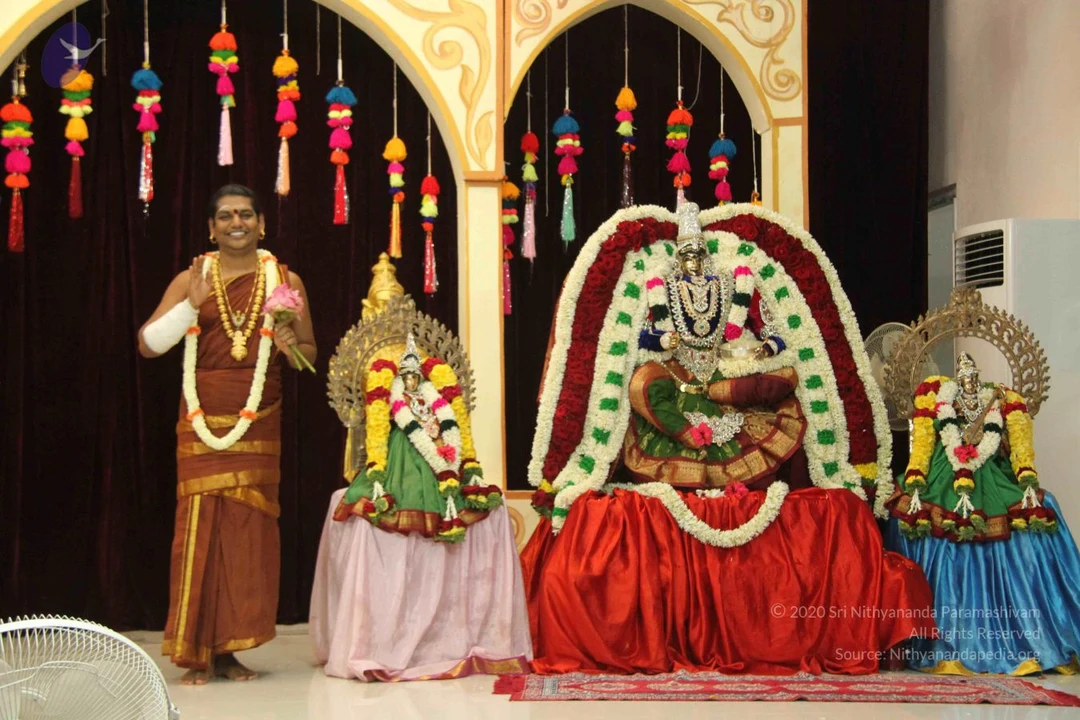
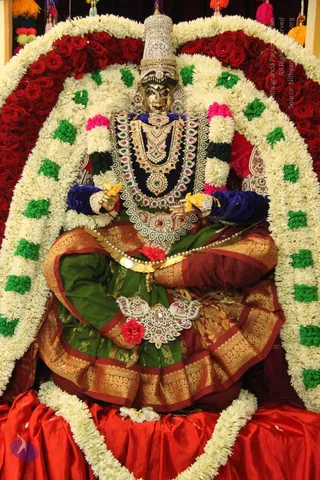
navaratri-Devi-alankar

Venkateshwara-alankar
paduka-puja

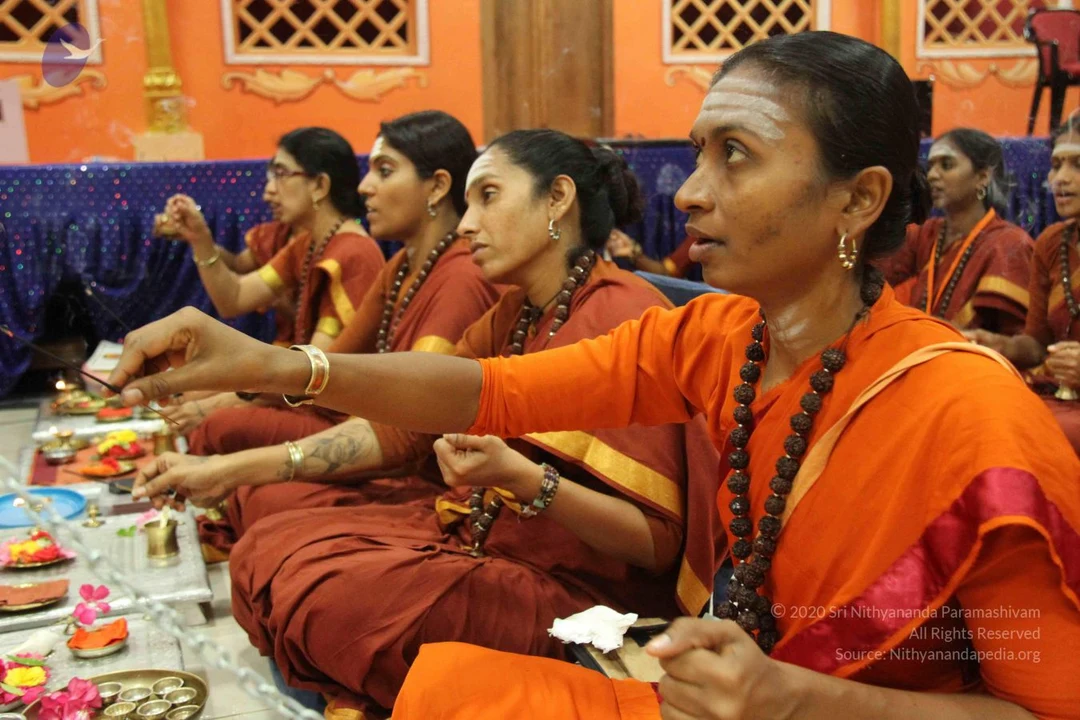
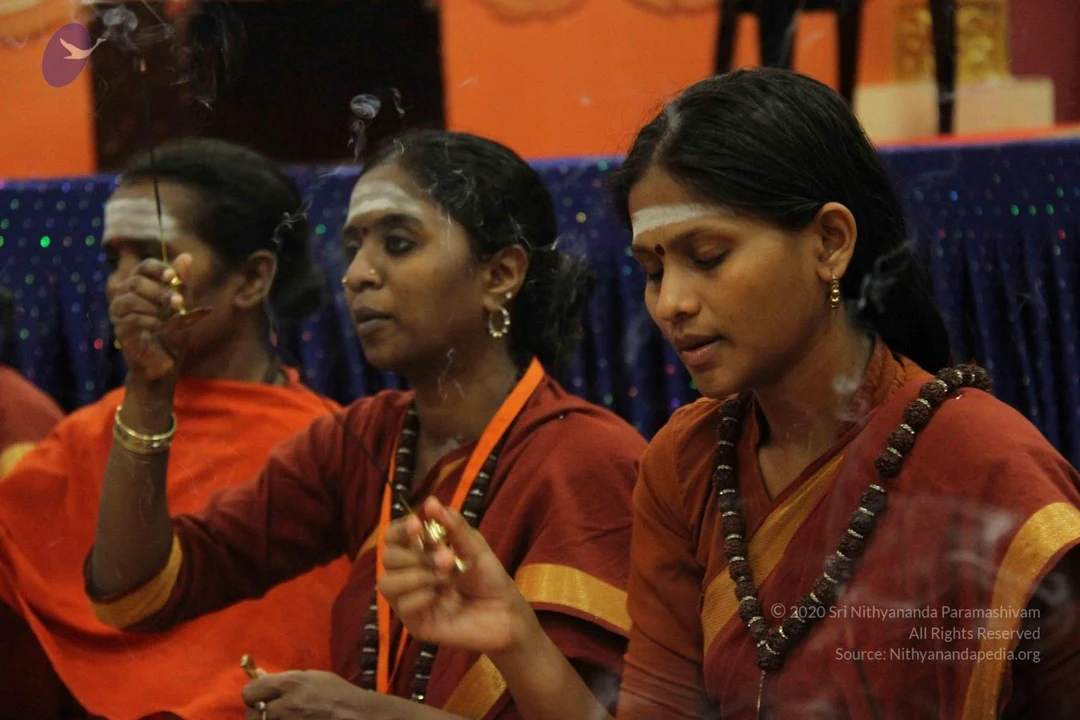
aarti

nithya-satsang

sarva-darshan

final-blessing

HDH-deities

ia-day12-darshan

ia-day12-food

ia-day12-session

ia-day12-temple-session

temple

navaratri-culturals

chandi-homa

Tags:

Paramahamsa Nithyananda, power, life, health, positive, courage, energies, Cosmos, reality, dreams, transform.

Photos from this day

View all 392 photos

navaratri-Devi-alankar

15 photosSource gallery
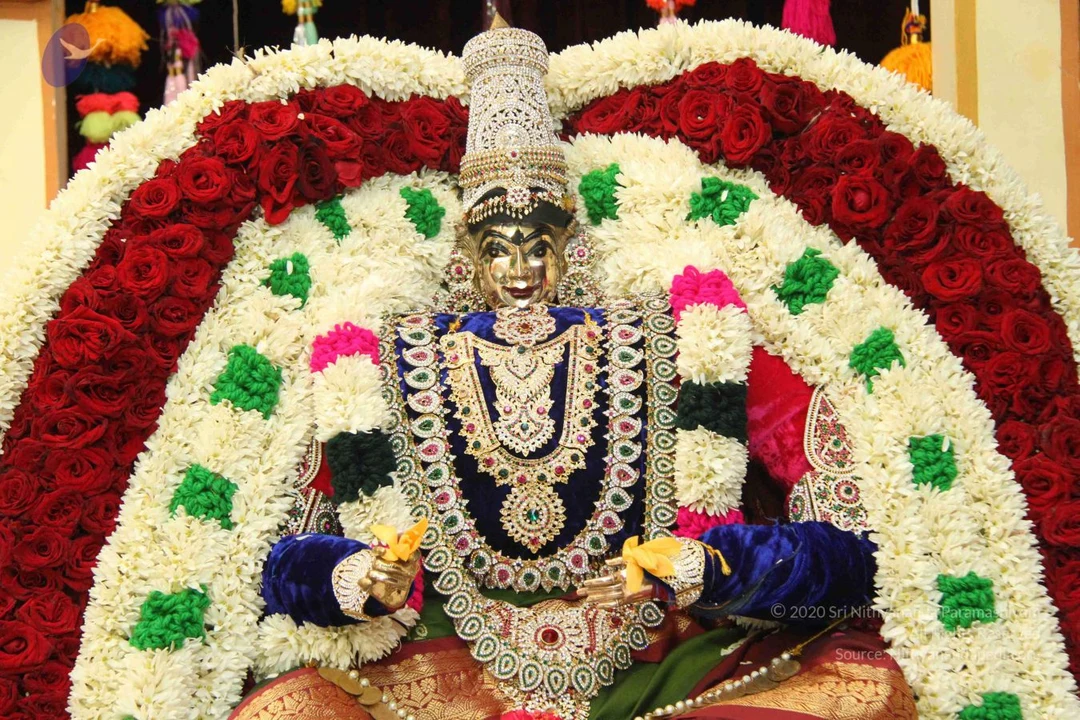
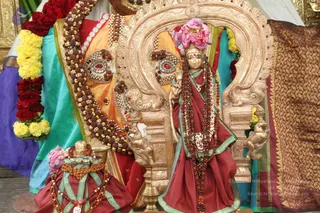
A decorated deity murti seated on a red silk cloth, framed by an arch of white jasmine garlands with green and pink accents and a backdrop of red roses. The figure wears a tall jewelled crown, layered gold and gemstone necklaces, a navy velvet blouse with blue sleeves, and a green and maroon brocade sari with gold borders. Its hands are held in mudra with yellow flower ornaments, and red flowers and a gold coin necklace adorn the lap. Watermarked archive photo; no physical people visible.A photograph of a seated deity murti decorated for worship, framed by a dense arch of red roses and white jasmine garlands with green and pink flower accents. The murti has a golden face, an ornate silver-and-gold crown, and wears a deep blue velvet blouse with sleeves, layered gold and jewelled necklaces, and a maroon and gold brocade skirt. Its hands hold golden implements tied with yellow ribbons. No physical people are visible.A decorated deity murti, a goddess figure, sits centrally on a red draped seat under a large arch of red roses and white and green flower garlands. She wears a silver crown, layered silver and gold necklaces, a blue and green silk blouse with gold border, and a red skirt with a white flower garland at the hem. Flanking figures of smaller goddess murtis, dressed in green and yellow flower garlands and pink or blue silk, sit on either side under ornate gold-toned circular halos. A golden standing figure stands in the background, with red and pink tassel decorations hanging above, and a wall air conditioner at right. No physical people are visible.A central deity murti is seated on a red silk-draped base, decorated with a garland arch of red roses, white jasmine and green leaves, with an ornate silver crown, silver necklaces and a green and gold sari-style garment. Flanking it are two smaller seated murtis in green and yellow or blue garments with floral garlands, and a golden standing figure stands at left. Ornate gilded arches frame the side figures, with hanging tassels above and a fan at right.A metal murti of the goddess Saraswati seated against an ornate brass backdrop, dressed in a green sari and heavily garlanded with white jasmine strands and yellow and red roses. She wears a jeweled crown and a necklace set with red, green and white stones, and holds a brass veena. No people are visible; the statue is the sole subject of the photograph.A metal murti of the goddess Saraswati, shown from the waist up with a jewelled crown and a veena held across her body. She wears layered gold and gemstone necklaces, green and red ornaments, and a green garment. Fresh garlands of white jasmine, red roses and yellow flowers frame the figure, set before an ornate brass arch and a white wall with a fan behind it. No people are visible.

Venkateshwara-alankar
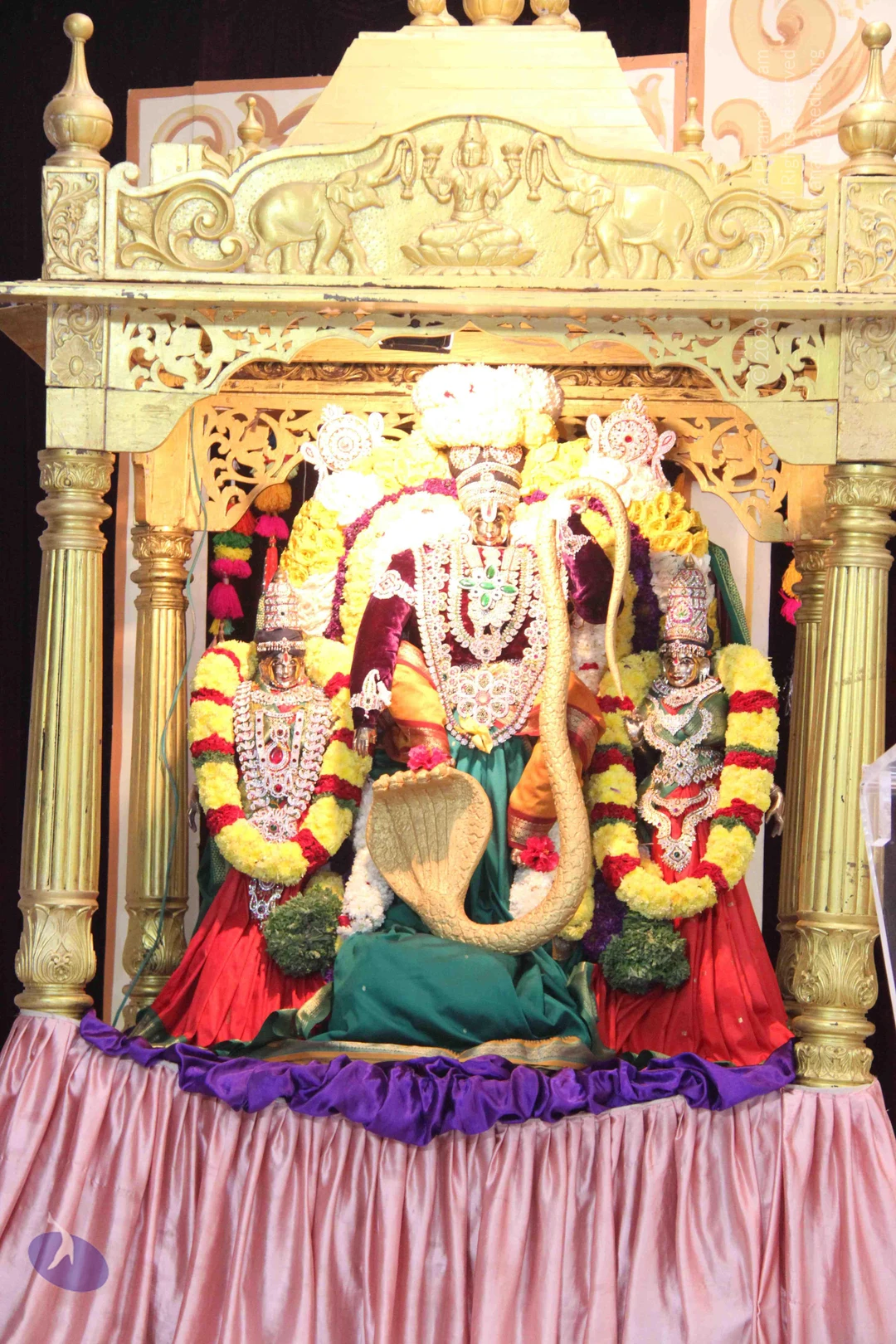
3 photosSource gallery
Ornate deity murti of Vishnu-like form stands centrally in a golden carved wooden shrine, adorned with a crown, heavy silver-gold jewelled necklaces with green and red stones, and a maroon garment with orange and green drapery. A large cobra hood rises behind the figure, and yellow and white marigold garlands with red flowers hang around the murti and two flanking consort figures wearing silver-jewelled ornaments and crowns. Golden pillars frame the shrine. No physical people are visible.A photograph of a decorated deity murti of a Vishnu-form figure seated in a gilded wooden shrine with carved elephants and a lotus-seated goddess above. The central figure wears a maroon velvet garment, green cloth, a white flower crown and a large coiled golden serpent. Two smaller attendant figures on either side wear red and green skirts and yellow-and-red flower garlands. Pink satin drapery and a purple border cover the base. No people are visible.A decorated deity murti stands in a gilded shrine canopy with carved elephants and a lotus-seated figure above. The central murti wears a maroon velvet robe, ornate silver jewellery, a crown of white and yellow flowers, and a golden hooded serpent arches over its head. Flanked by two smaller silver-adorned figures in red and green skirts, all draped in yellow, red and white garlands. Pink satin drapery with a purple trim covers the platform. No people are visible.

paduka-puja
32 photosSource gallery
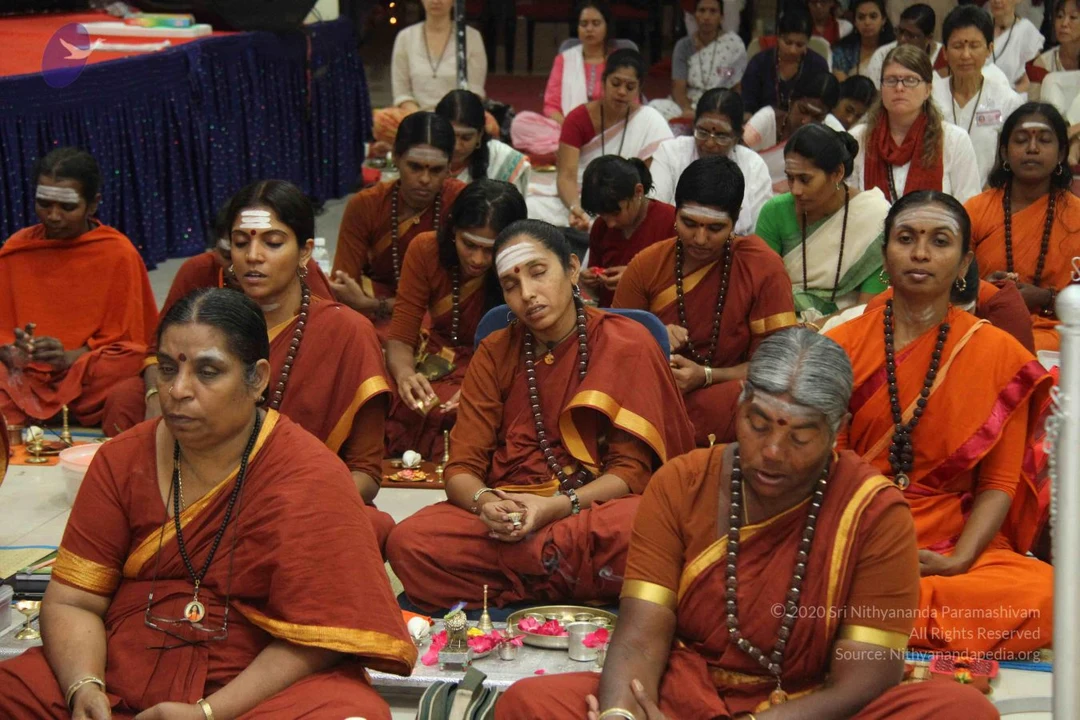
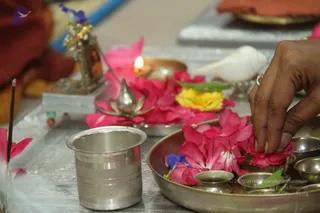
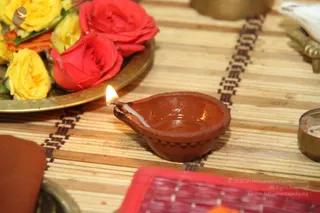
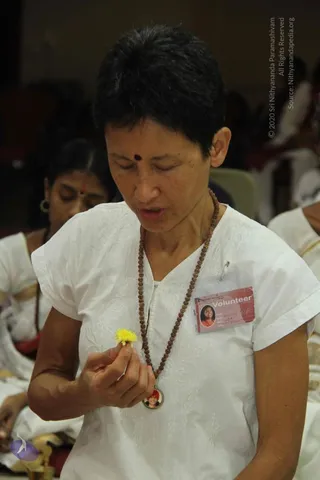
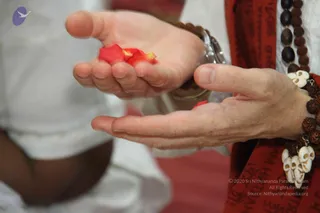
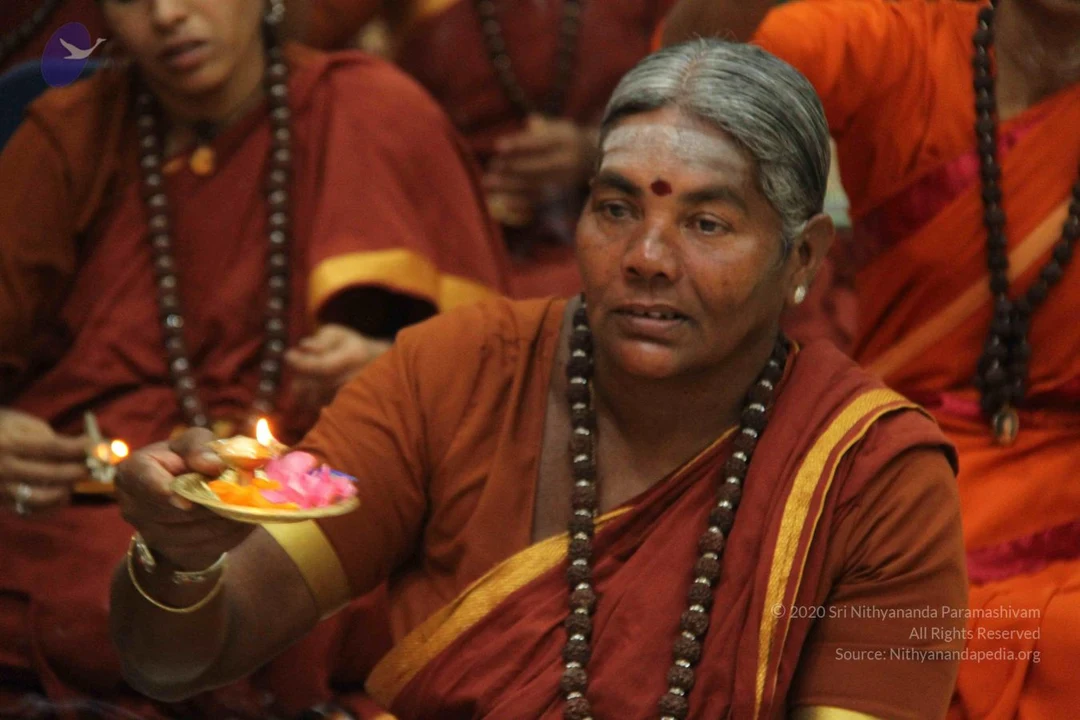
Devotees seated on the floor in orange and rust-coloured saris and robes with gold borders, many wearing rudraksha malas and white or red tilak marks on their foreheads, during a puja or satsang. Brass plates with pink flower petals, small oil lamps and metal vessels sit before them, and a blue draped table stands at the upper left. Women in white and green clothing sit among them in the background, with a crowd of people behind. No individual is identified as a person; the scene shows devotees only.Close-up photo of a ritual puja tray on a polished silver surface. A hand at upper right sprinkles yellow turmeric or kumkum powder from a small ornate container onto the tray. In the foreground a small gilded and jewelled portable shrine holds a framed portrait of a bald figure in orange robes, adorned with a blue flower on top, set on a silver pedestal with a red and green bead hanging below. Pink and red rose petals, a yellow rose and a green leaf are scattered around a silver lotus-shaped vessel. A small oil lamp burns on a brass plate beside a white conch shell, and a silver cup sits nearby. A partially visible person in a red and gold garment sits at left. Tattooed forearm visible at the top right.Close-up of a puja tray on a silver table: a bronze tray holds pink and red flower petals, a small brass lamp with a lit flame sits on a flower-strewn plate, a white conch shell rests at the top right, and a steel cup stands in front. A bare hand with a ring places pink petals into the tray. Incense sticks and a small deity figure in a niche appear at the left, with a yellow flower and a blue flower among the offerings. No people's faces are visible and no a person candidate appears.Close-up photo of a small terracotta oil lamp with a lit flame on a woven bamboo mat. Behind it, a brass plate holds red and yellow roses. Brass items and a red cloth edge appear at the frame edges. No people are visible.A short-haired woman in a white embroidered kurta stands with her eyes lowered, holding a small yellow flower between her fingers. She wears a rudraksha mala and a round pendant with a small portrait, a red bindi on her forehead, and a white volunteer badge with a small photo pinned to her chest. Another woman with a red forehead mark and a man in white sit softly out of focus behind her in what appears to be an indoor hall with a brass lamp at the lower edge.Close-up photo of two hands extended palms-up holding red rose petals and a small lit flame or glowing offering. The hand on the right wears a rudraksha mala with white skull-shaped beads and a wrist mala, and a red-orange garment with printed text is visible. A blurred white-clad person sits at the left edge. a person appearance cues are limited to the hands and beads, so identity is uncertain.

aarti
7 photosSource gallery
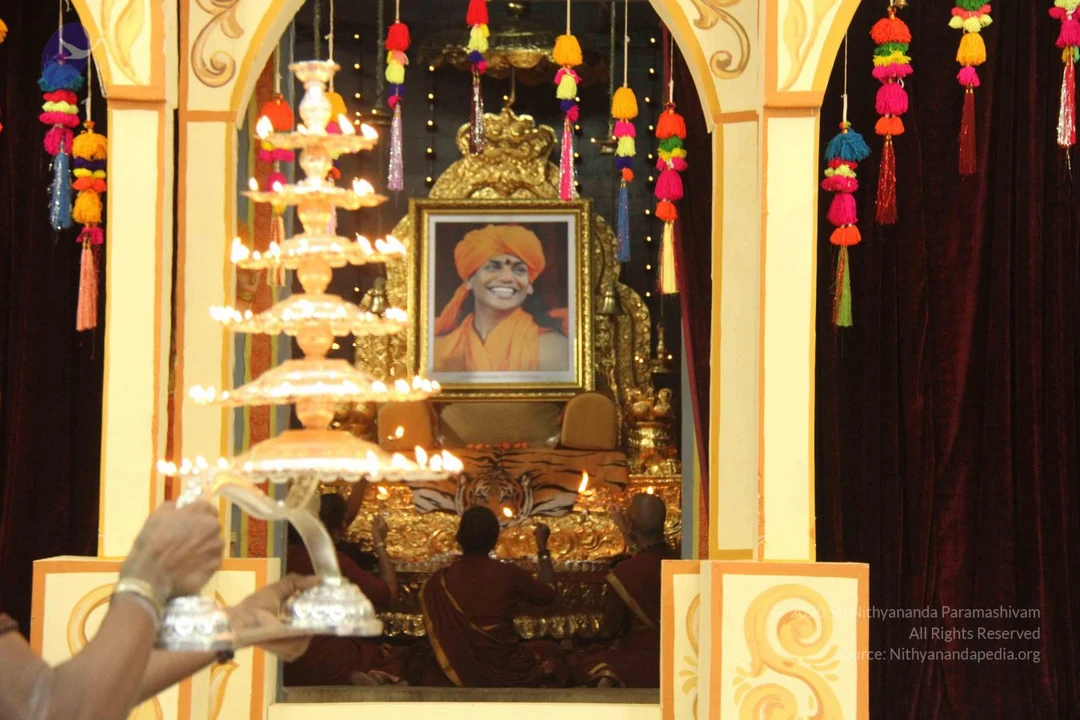
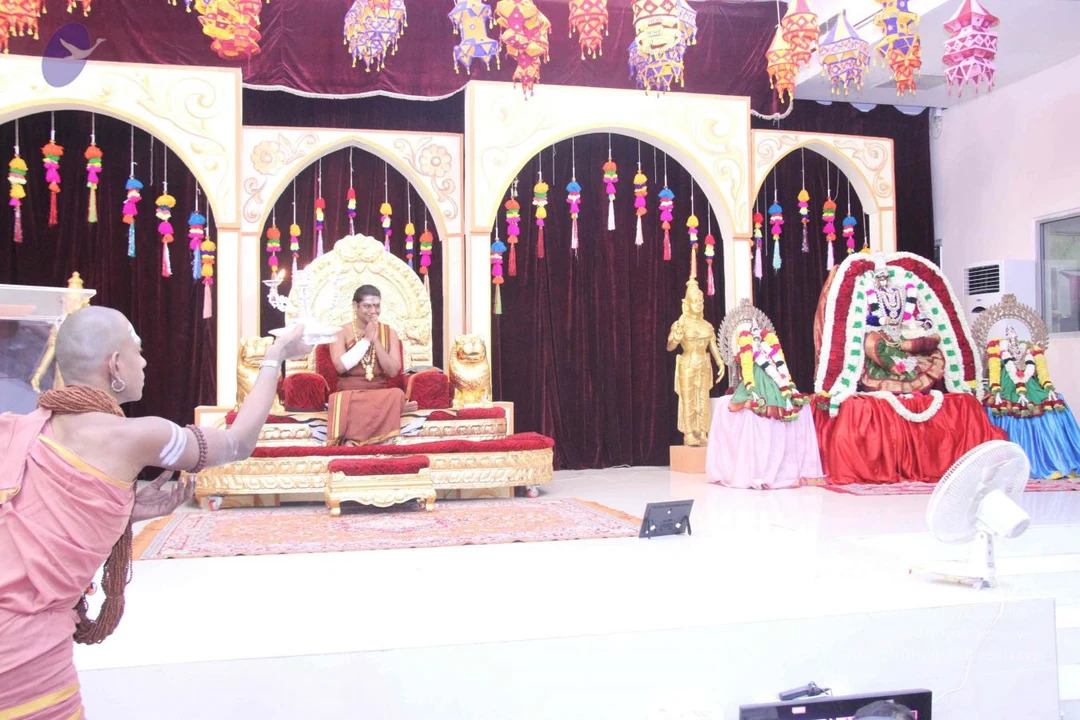
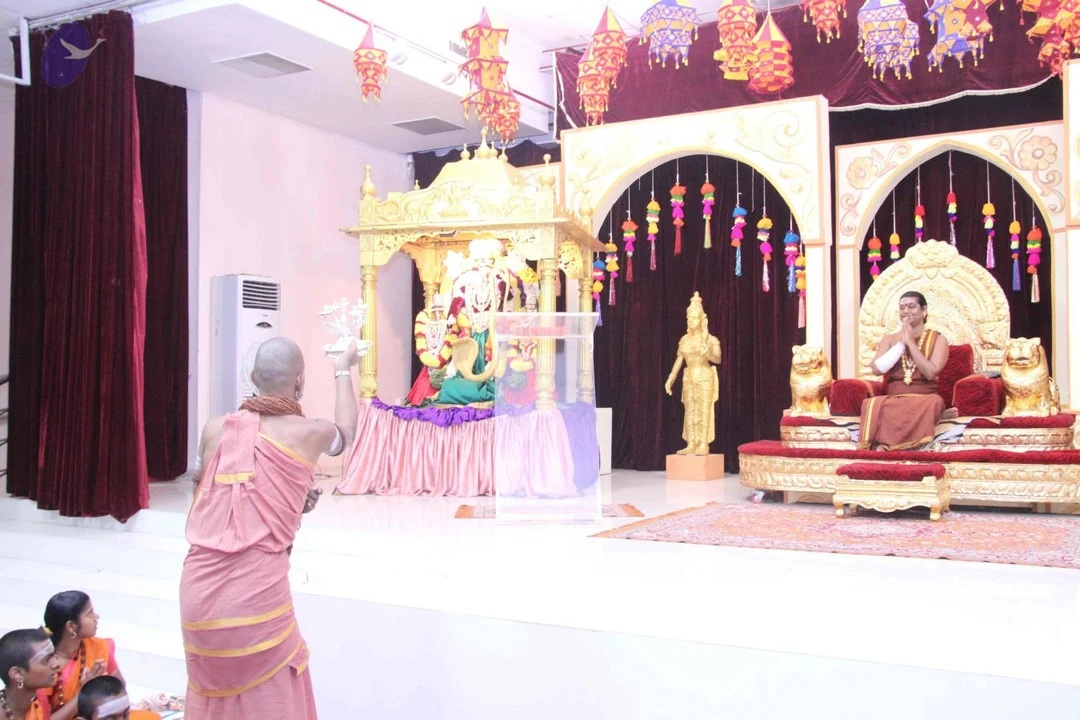
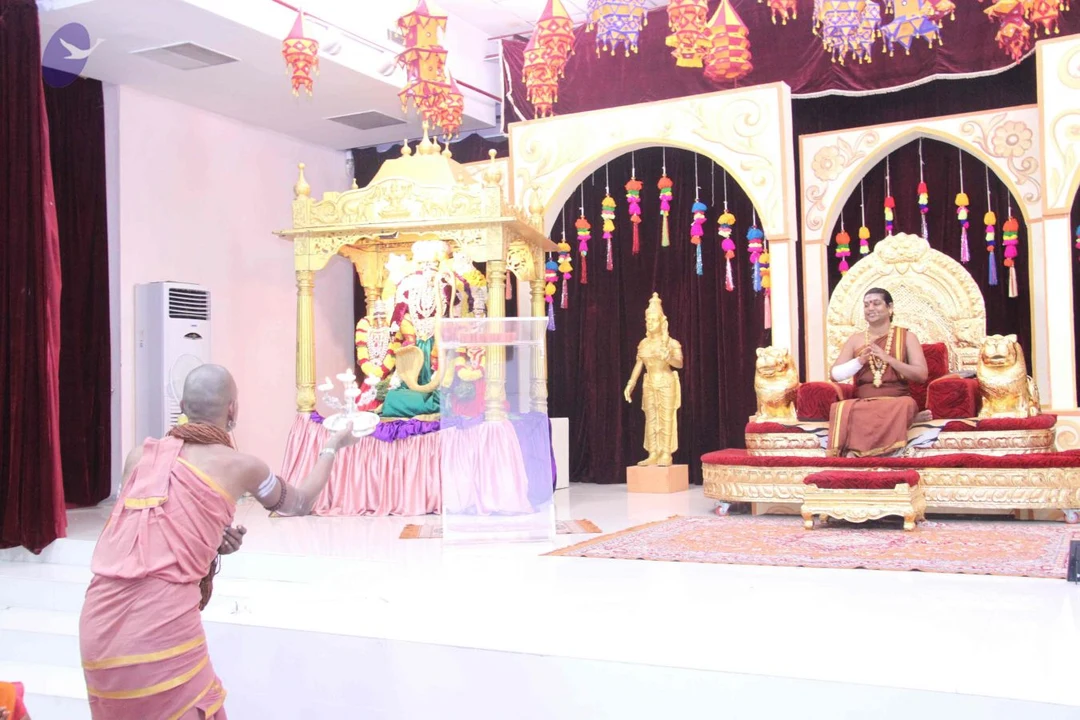
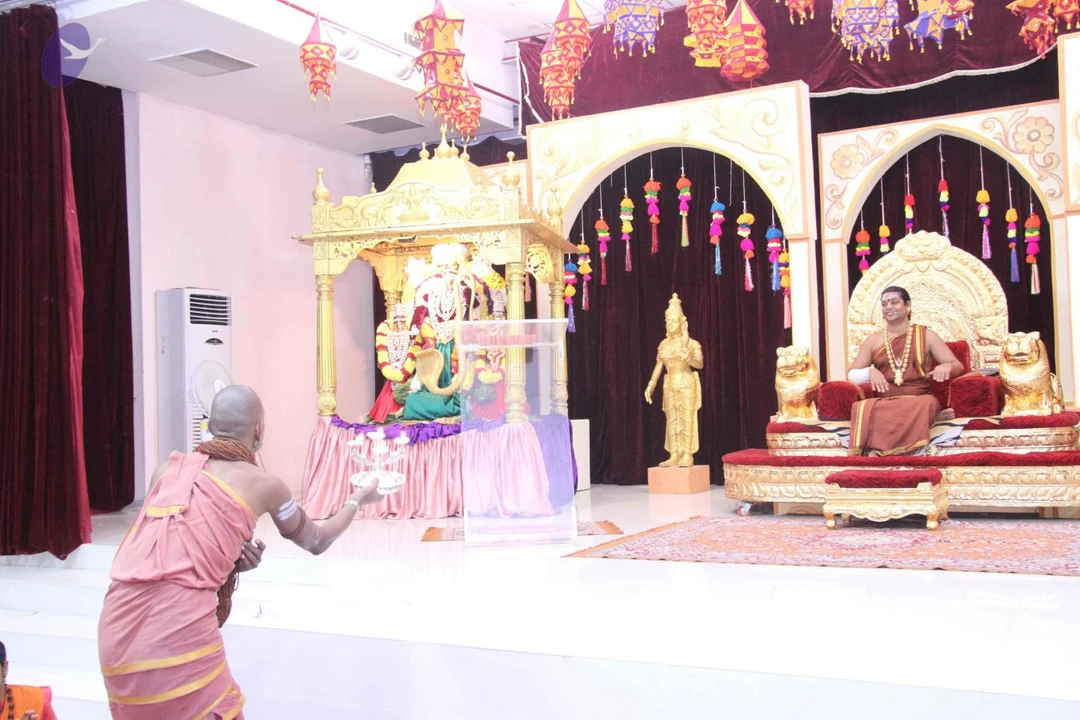
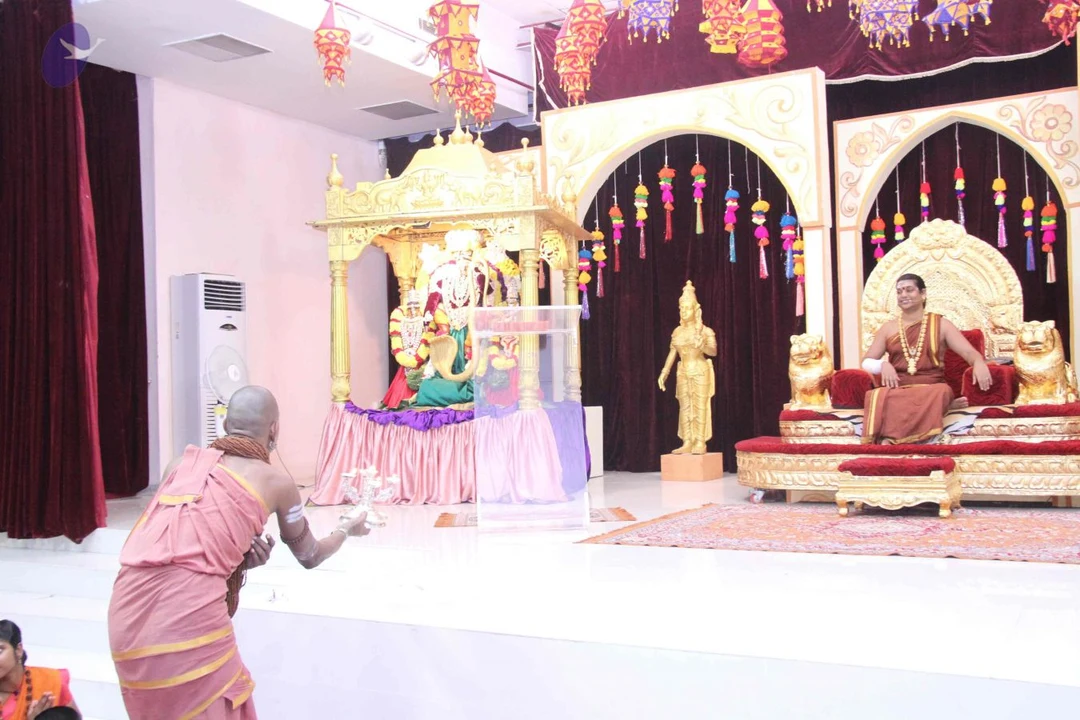
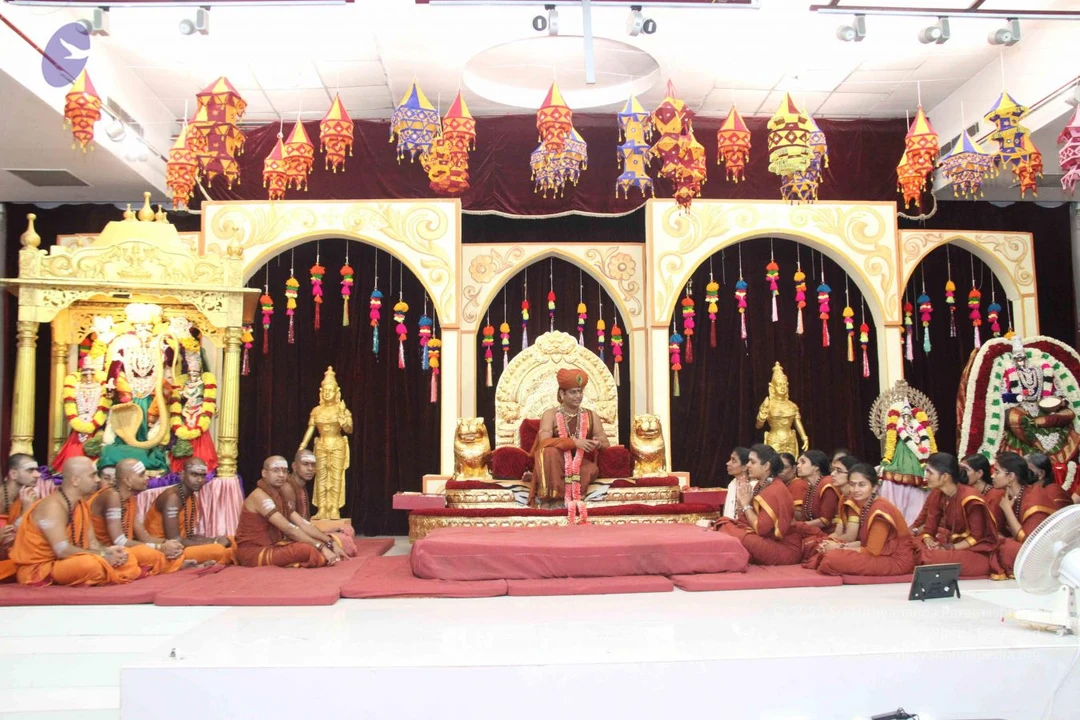
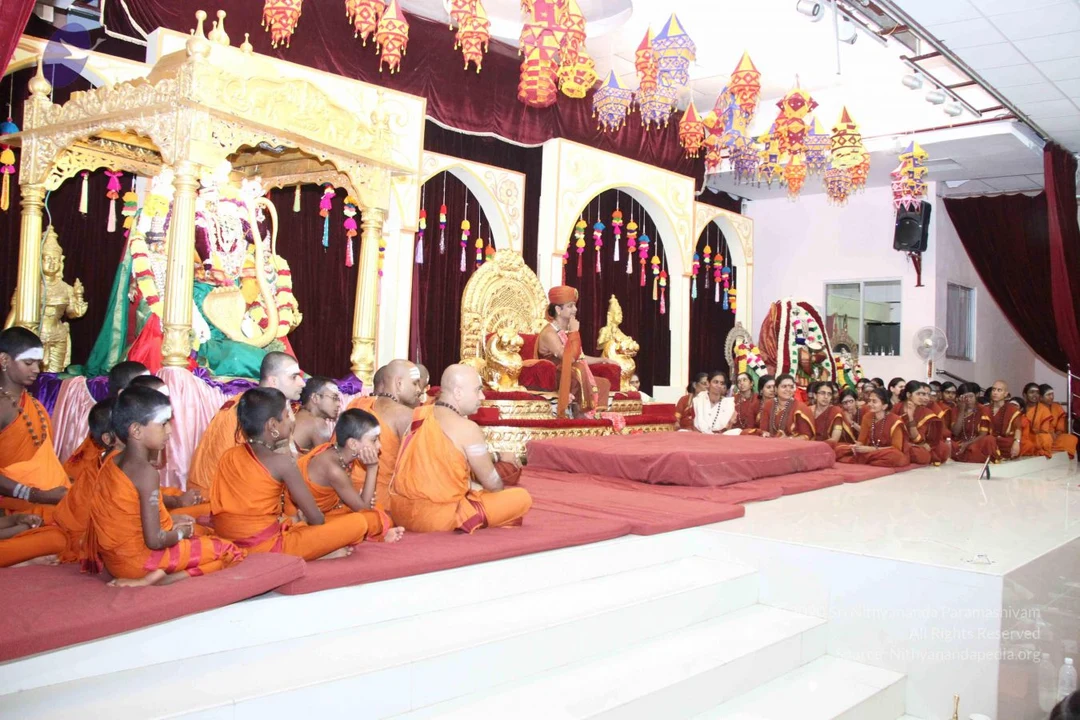
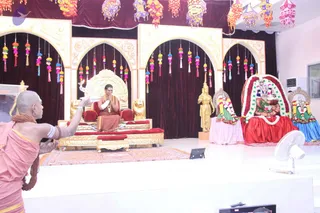
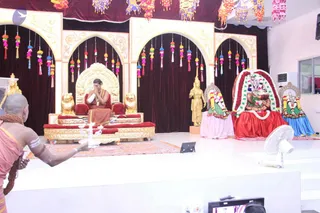
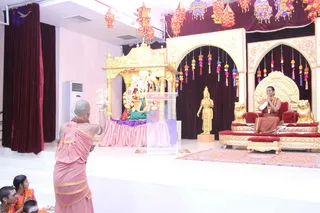
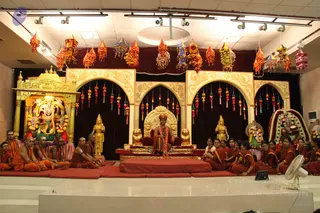
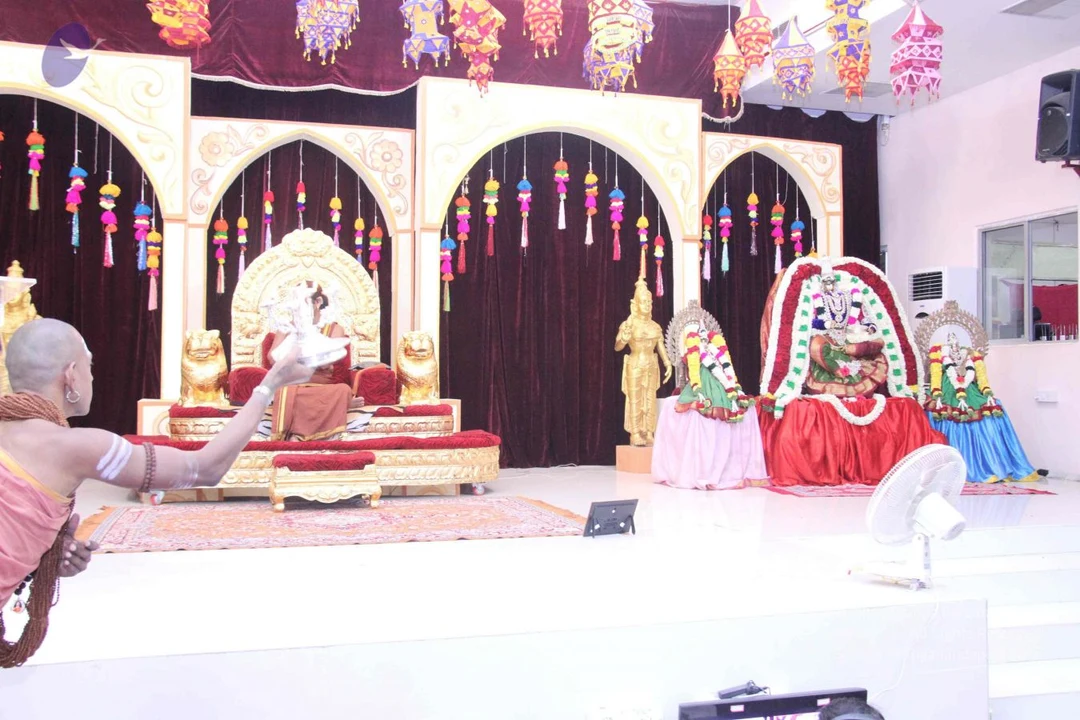
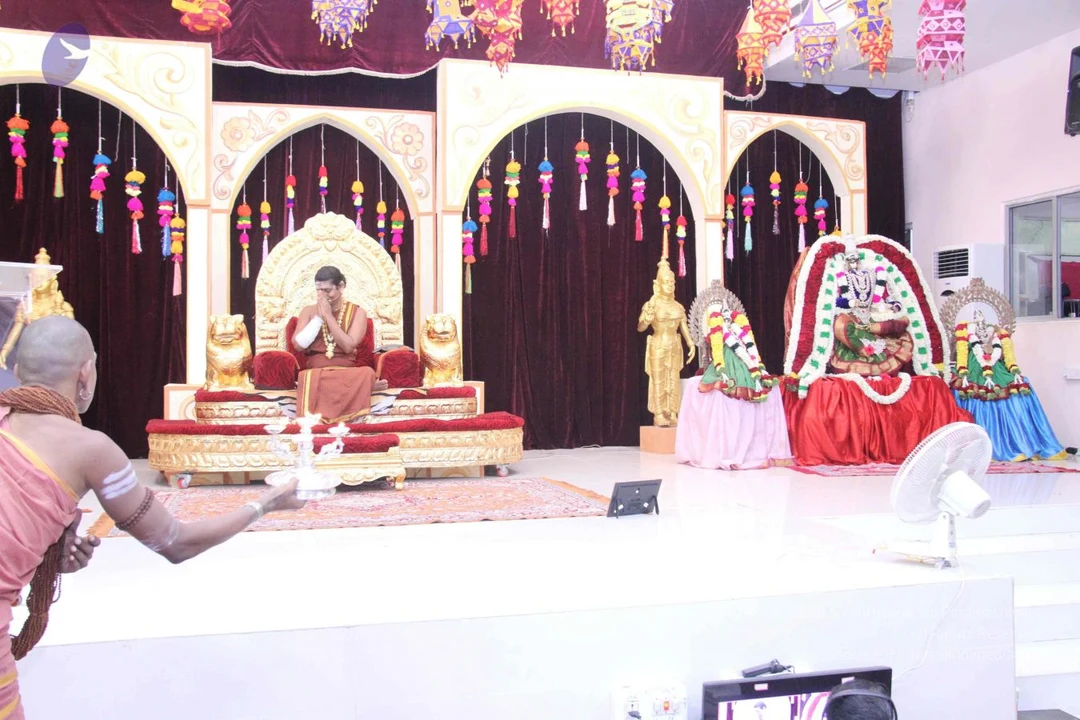
A photograph of a decorated stage set for a satsang or darshan. A seated figure in a saffron-orange robe with a gold necklace sits on an ornate gold throne with red cushions and lion-shaped armrests, hands folded in greeting. In the foreground, a bald attendant in a pink-orange robe and rudraksha mala holds up an oil lamp or aarti plate toward the seated figure. To the right stand a golden standing figure and a deity murti decorated with garlands in red, green and white, beneath a canopy of flower strands. Maroon drapes, hanging tassels and colourful paper lanterns frame the stage, with a white floor and a pedestal fan at the edge.A photograph of a stage set with a golden throne flanked by golden lion figures, draped in red cushions, with a seated figure in orange-brown robes on it. To the left, a shaved-headed priest in a saffron-pink dhoti and a rudraksha mala holds a white offering vessel toward the throne. Right of centre, a deity murti decorated with garlands sits on a red-draped platform, beside a smaller garlanded murti in green and blue. A golden standing figure stands between them. Ceiling-hung colourful lanterns, tasselled maroon drapes and a standing fan complete the setting.Photograph of a stage set for a ceremony. A seated figure in a gold-and-red ornate throne flanked by golden lion sculptures wears an orange-brown dhoti-style garment, a gold necklace and a white shawl, with hands raised near the face. A standing priest at left in saffron-toned clothing with a rudraksha mala and white markings on his arms holds a lit oil lamp toward the throne. At right a deity murti is decorated with red and white garlands and dressed in red, with smaller decorated murtis beside it. A golden standing figure stands between the thrones, with colourful tassel decorations and maroon velvet drapes behind. Two people are visible, one seated and one standing.A photograph of a temple-style hall with a gold ornate canopy shrine holding a deity murti decorated with garlands, and a gold statue of a standing figure nearby. A seated person on a gold throne with lion-shaped arm supports, wearing a reddish-brown dhoti and shawl with a gold necklace, has hands joined in greeting. In the foreground a shaved-headed man in a pink-orange robe stands with his back to the camera, raising a ceremonial object. Two people in orange-tinted clothes sit at the lower left, and colourful paper lanterns and tassel strings hang from the ceiling and arches.A temple-style stage with a gilded canopied shrine holding a deity murti decorated with garlands, and a golden standing figure beside an ornate throne. A seated person in a maroon-brown robe and a gold necklace sits on a red-cushioned gold throne flanked by golden lion figures, holding a white cloth with hands folded. In the foreground, a bald priest in a pink dhoti and orange shawl holds a small brass lamp or puja vessel toward the shrine. Colourful tassels hang from arches and maroon drapes line the back.A photograph of a ceremonial stage with a red velvet backdrop and hanging colourful tassel garlands. On the right, a man with a bare upper body and orange-red wrap sits on an ornate gilded throne with lion-shaped armrests and red cushions; he has a rudraksha-style necklace and sits with his hands resting. On the left, a shaved-headed attendant in a pink-orange wrap and white armbands leans forward holding a lit oil lamp toward a gilded canopied shrine holding a deity murti decorated with garlands. A gold standing figure stands between them. Two sets of people are visible: the seated man and the attendant, so the count is two.
nithya-satsang
38 photosSource gallery
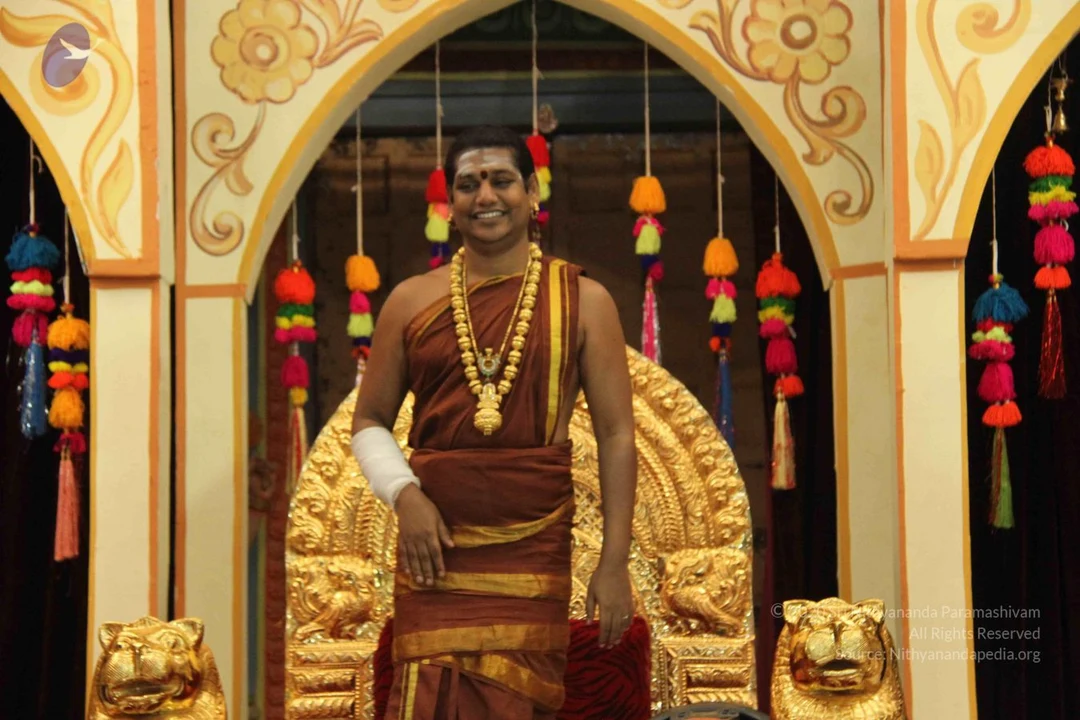
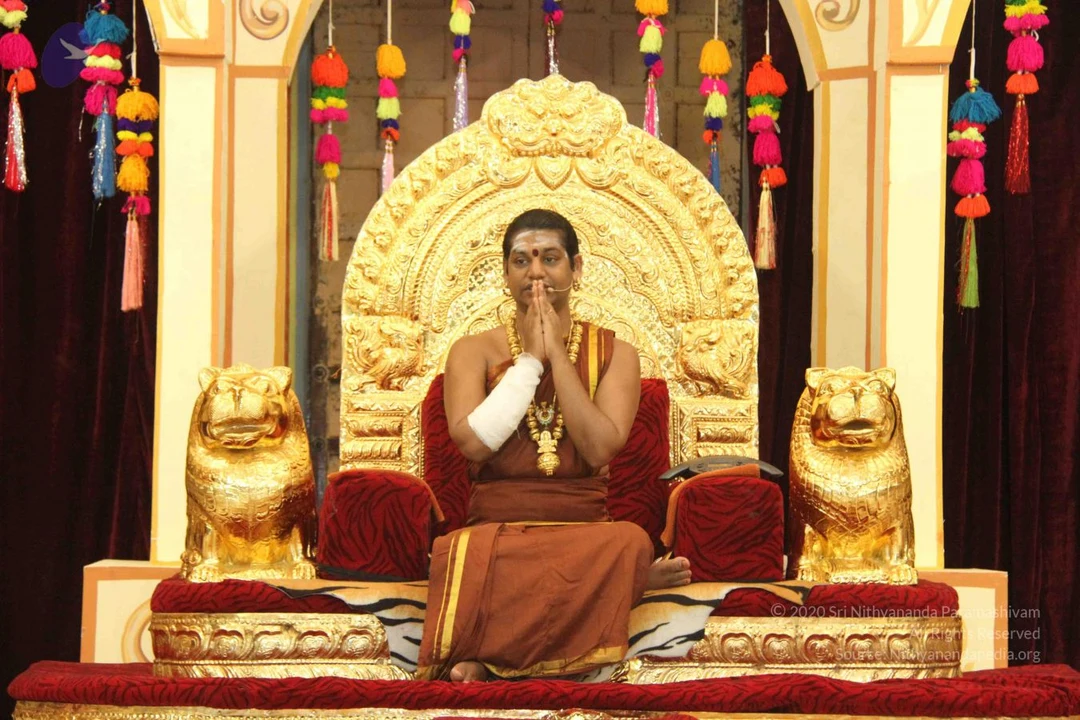
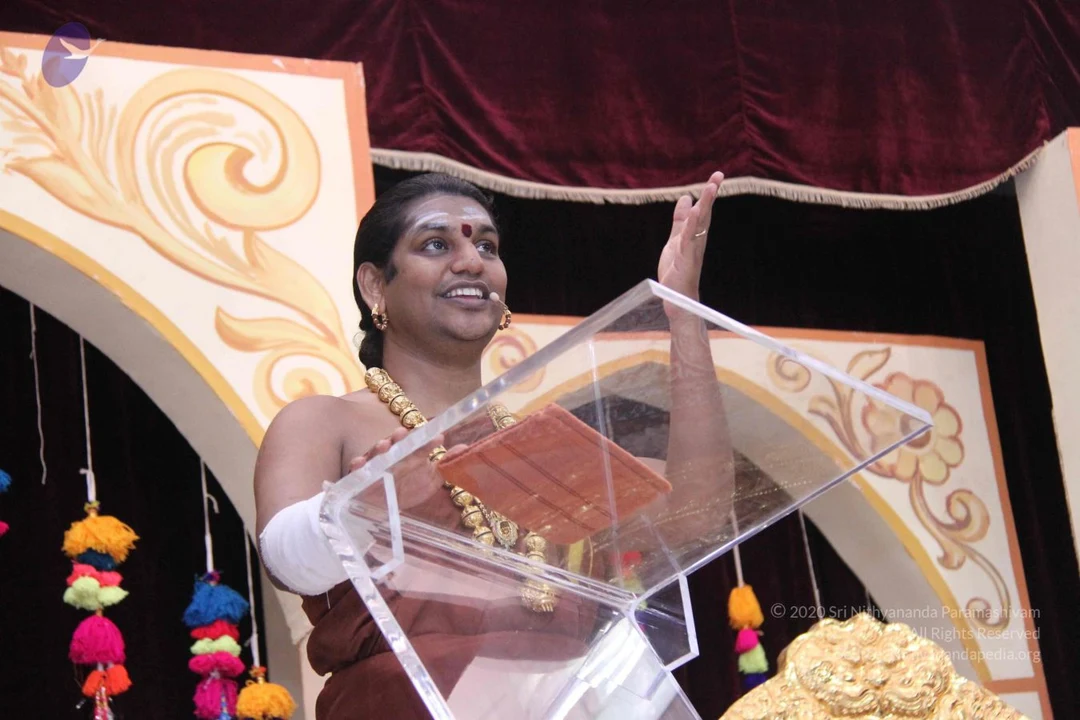
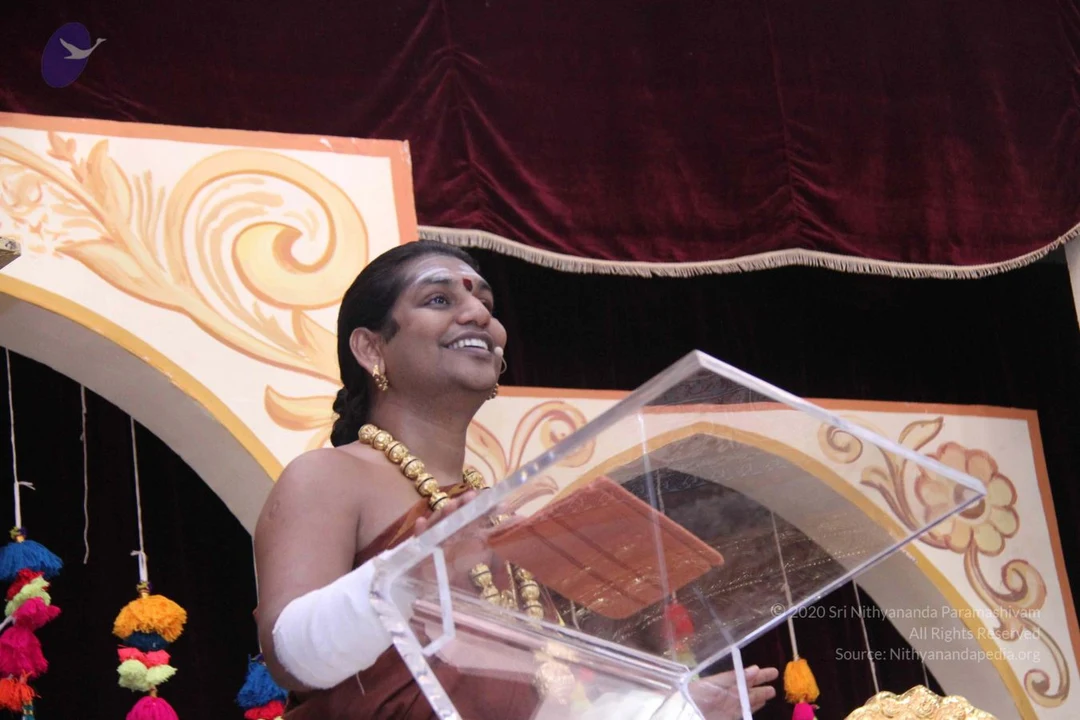
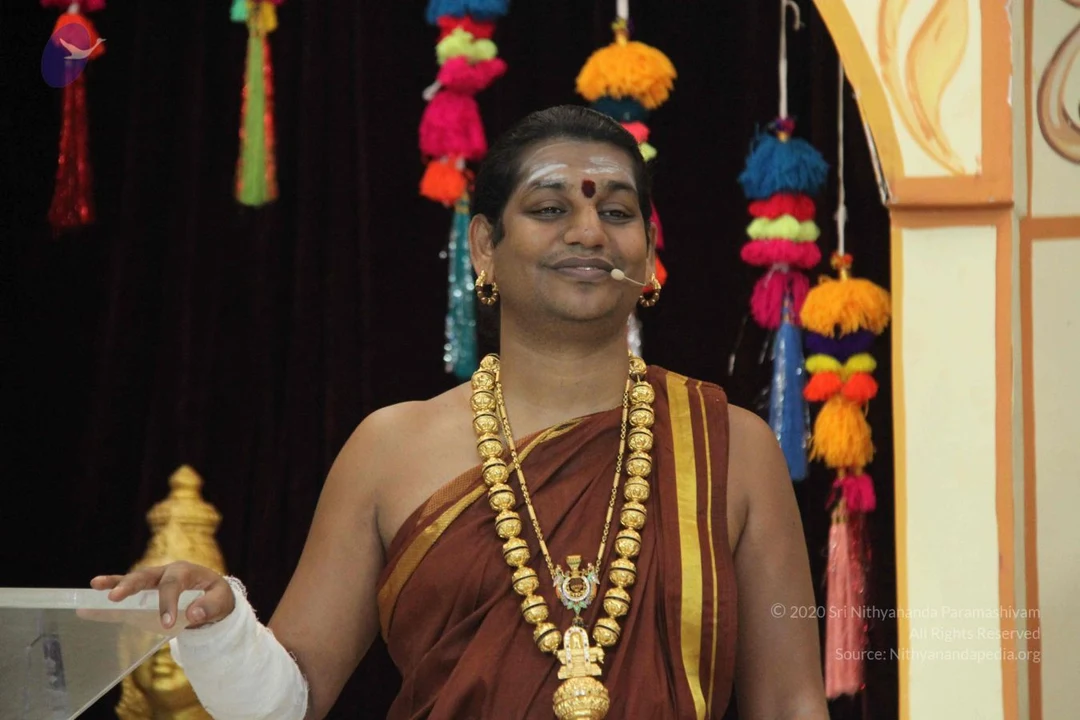
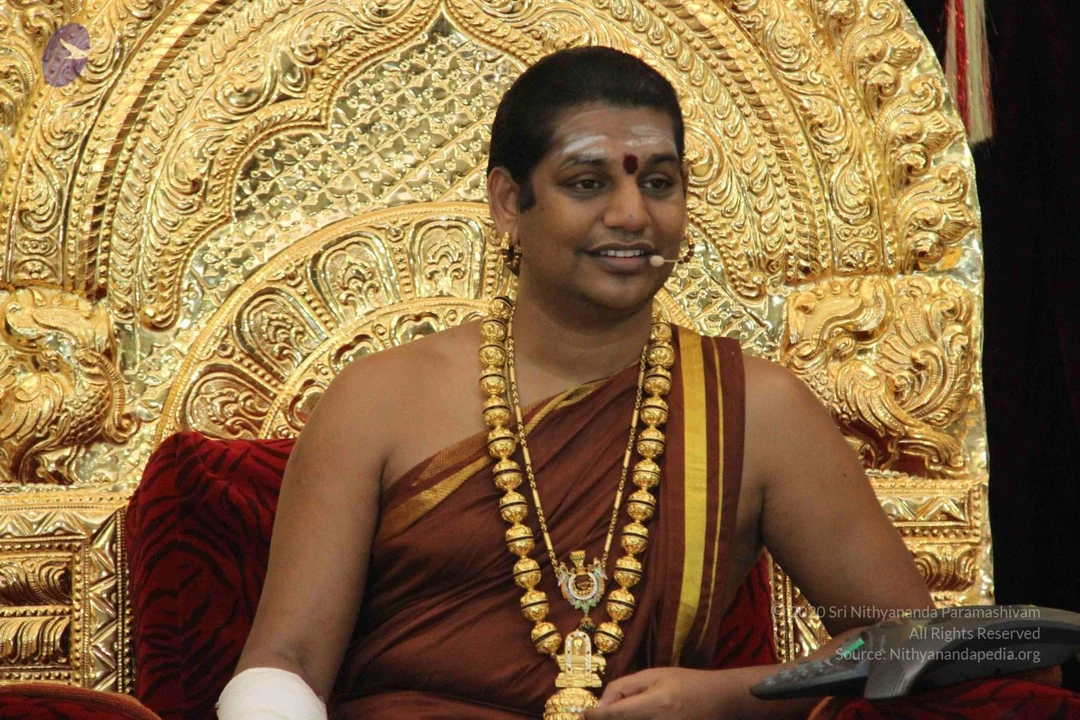
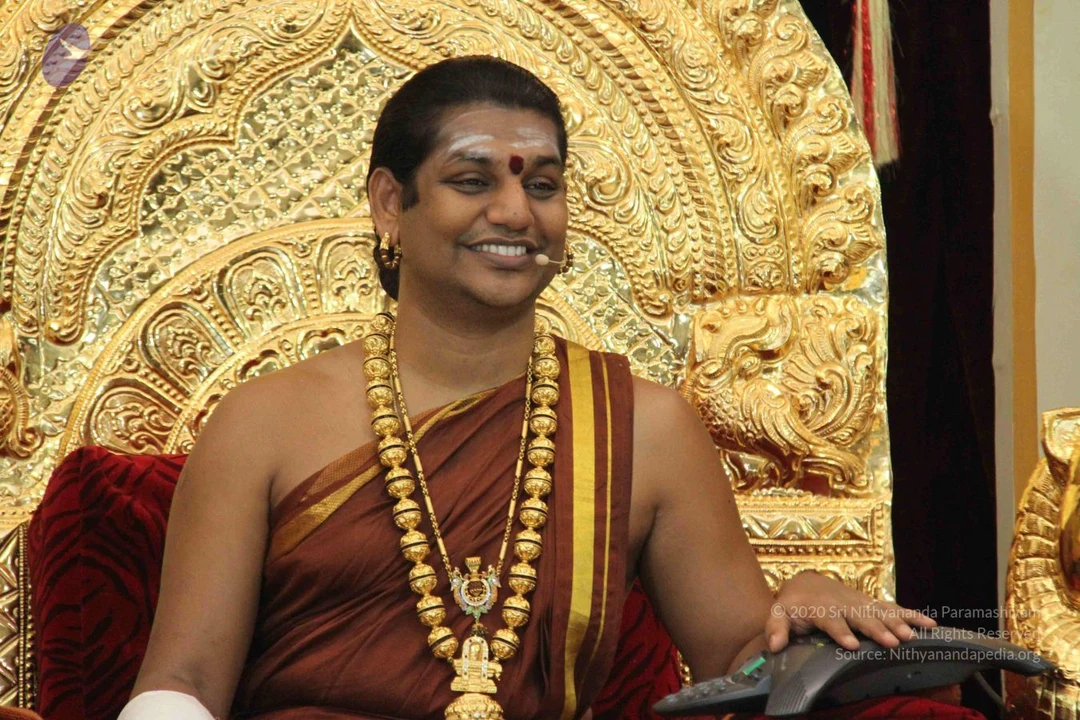
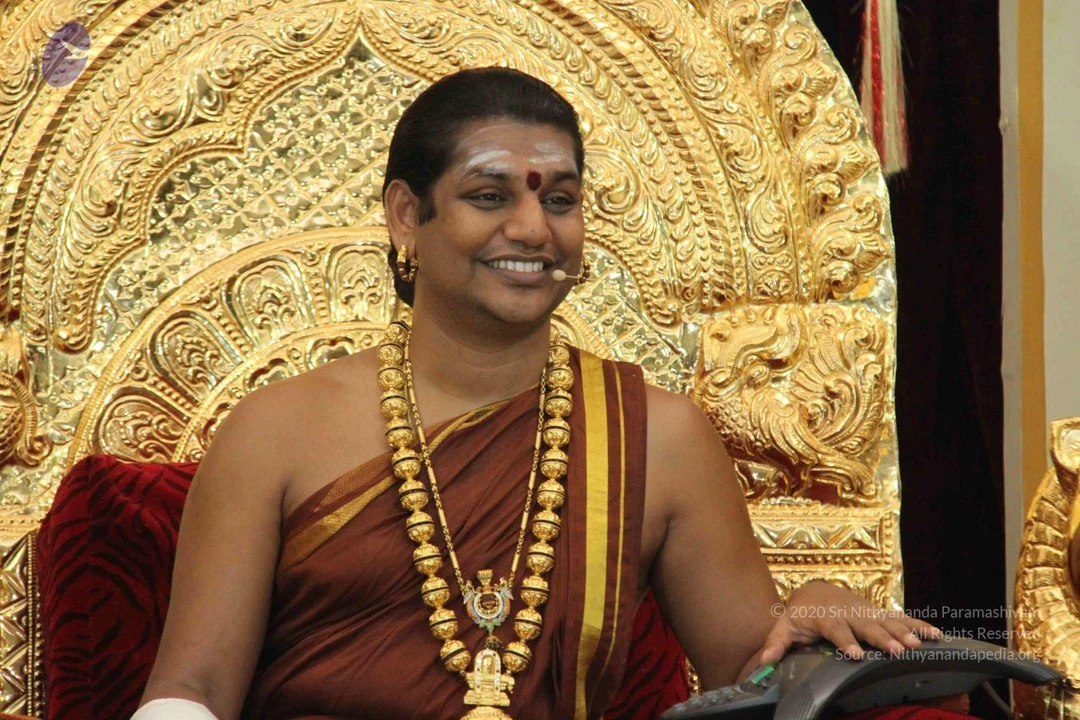
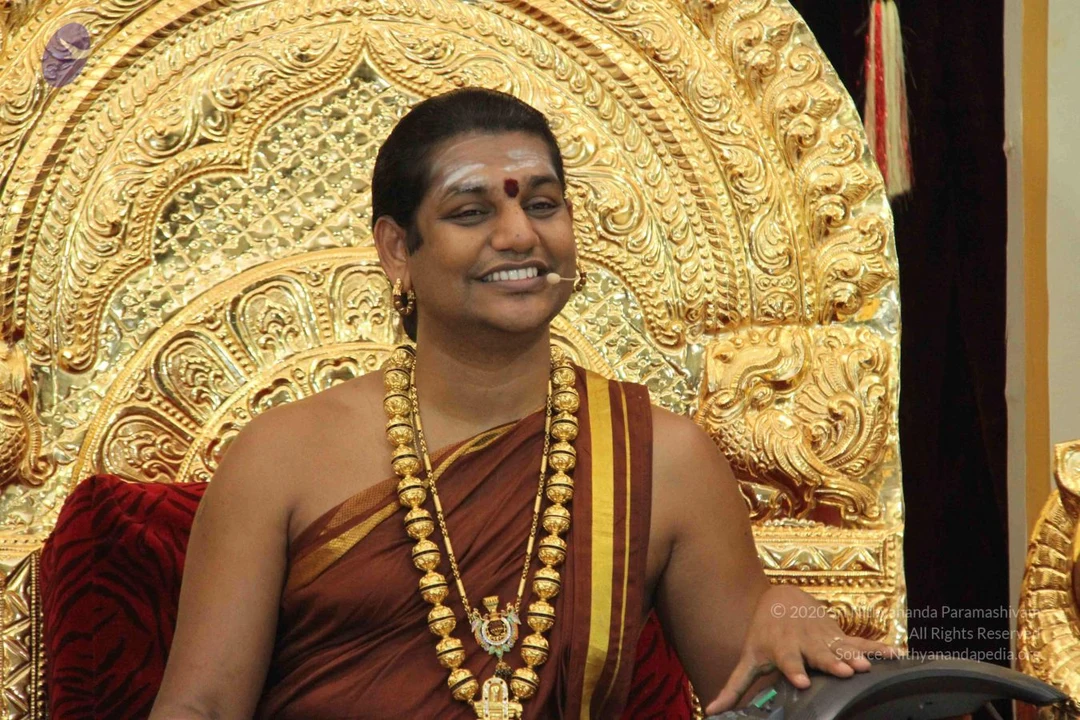
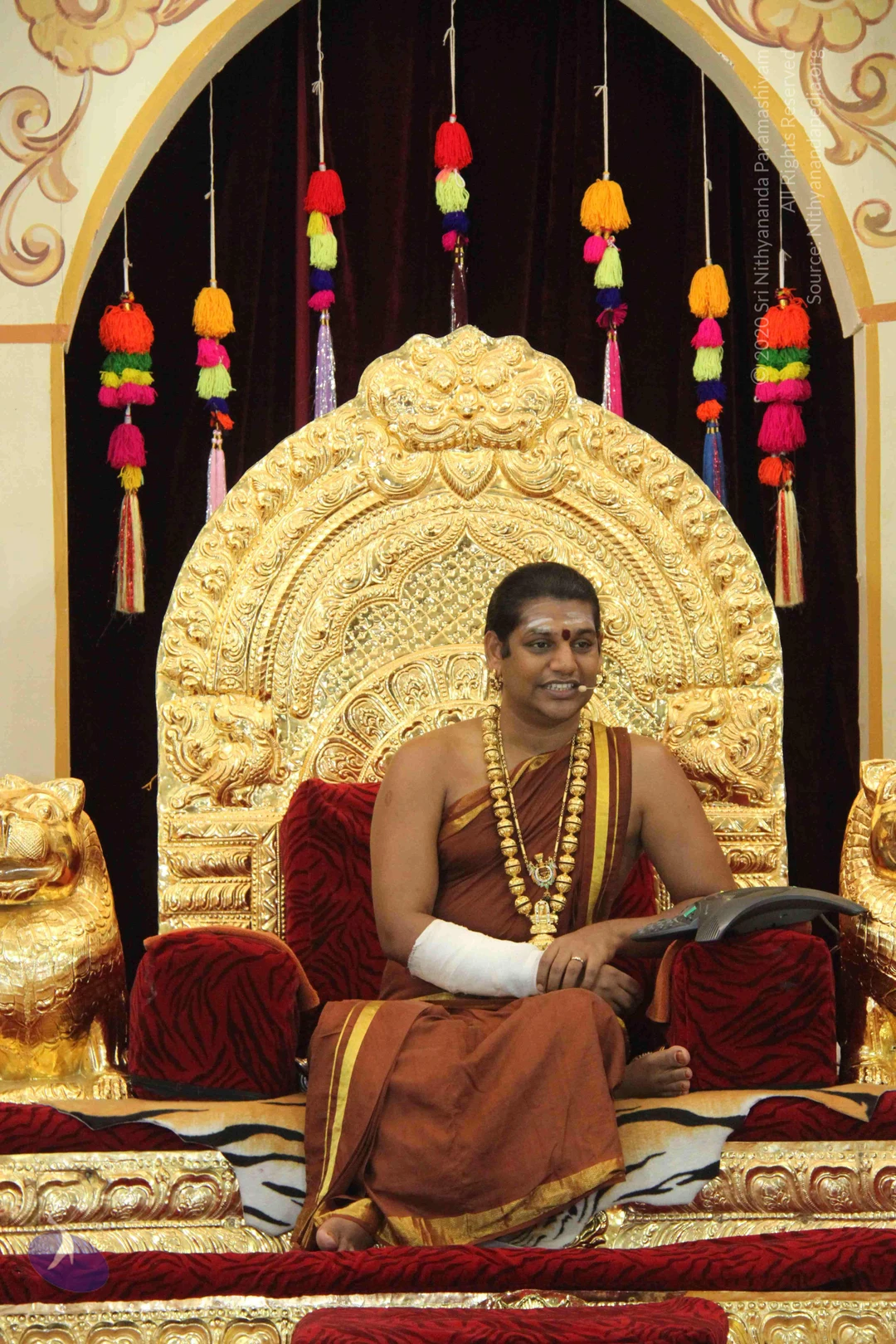
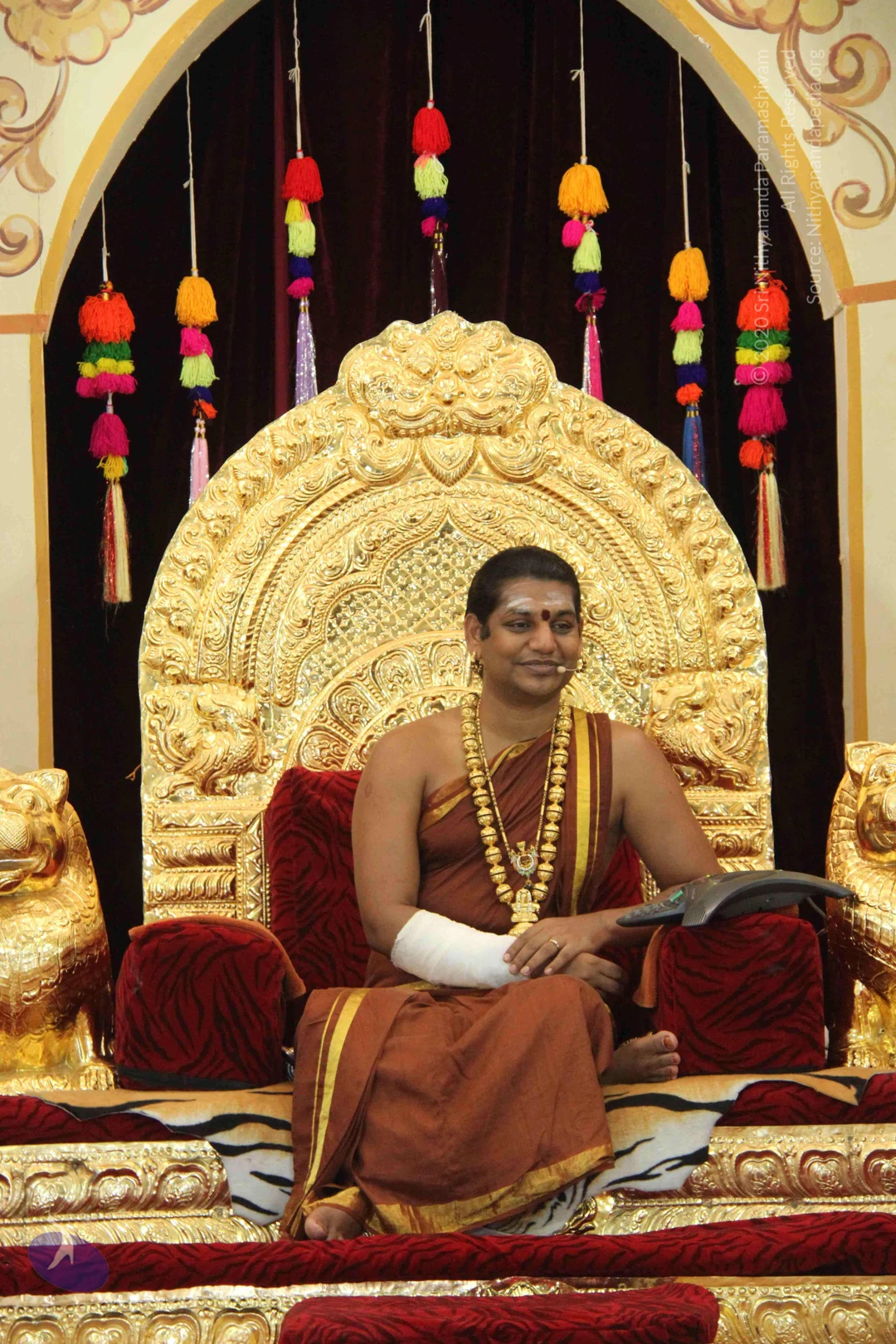
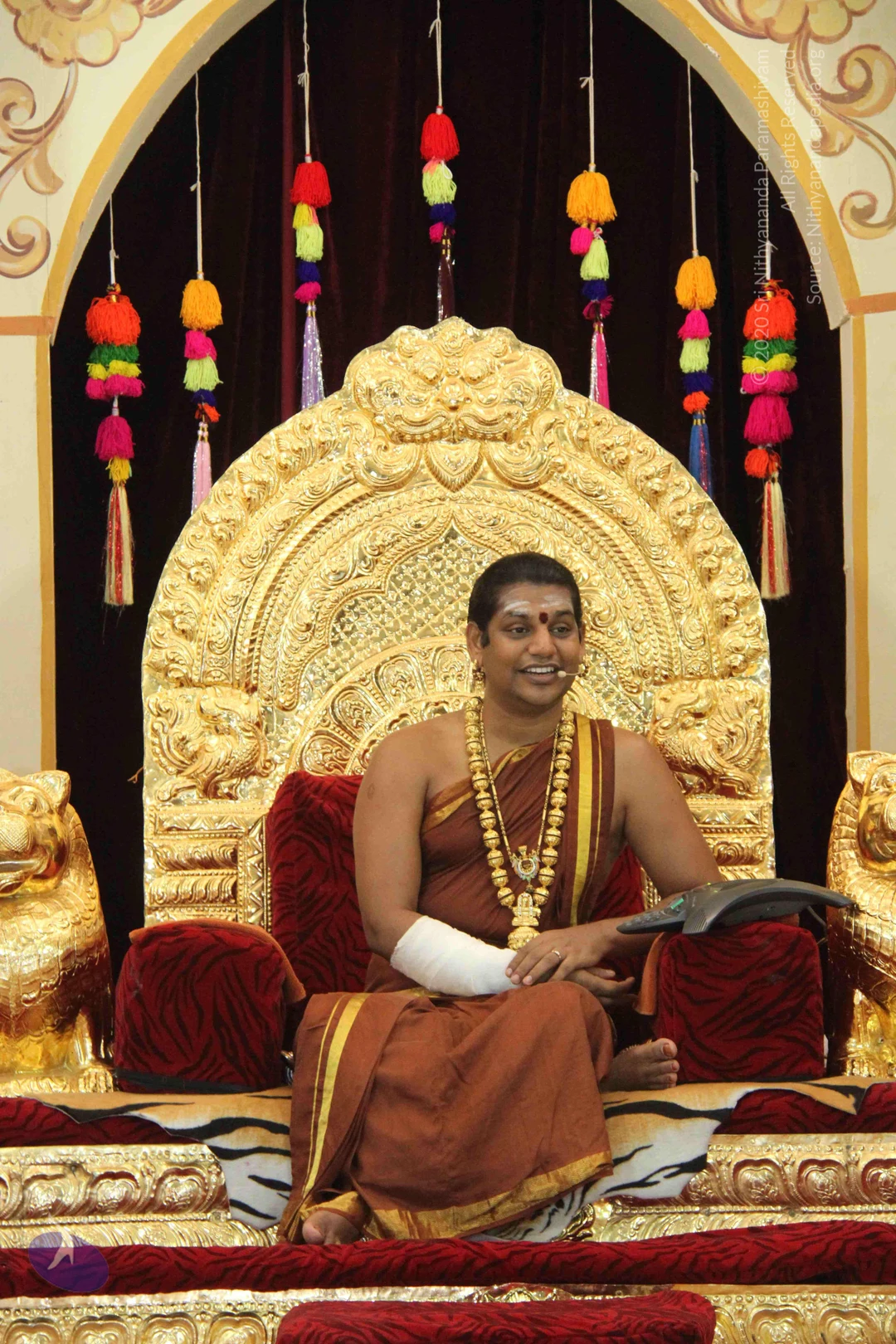
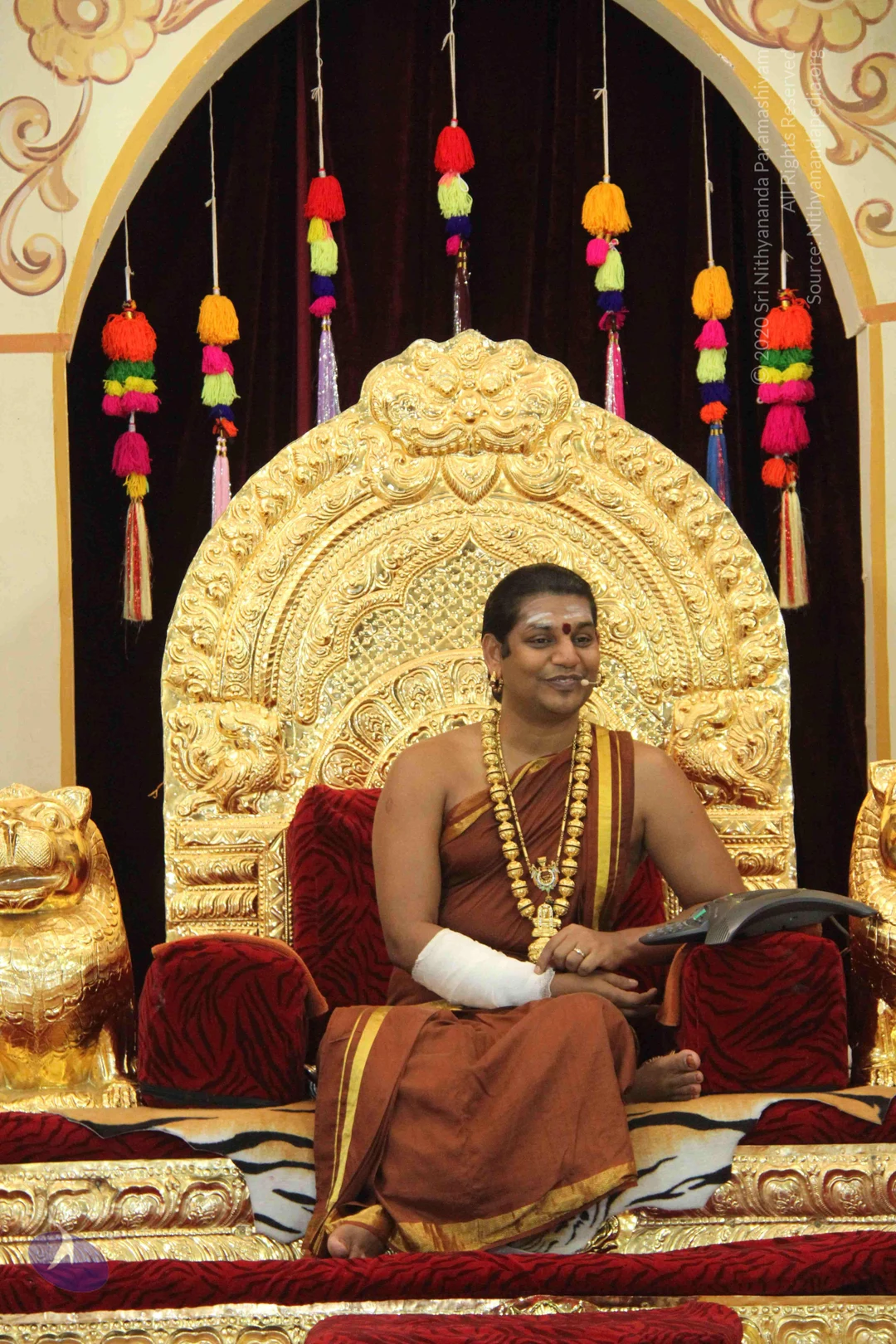
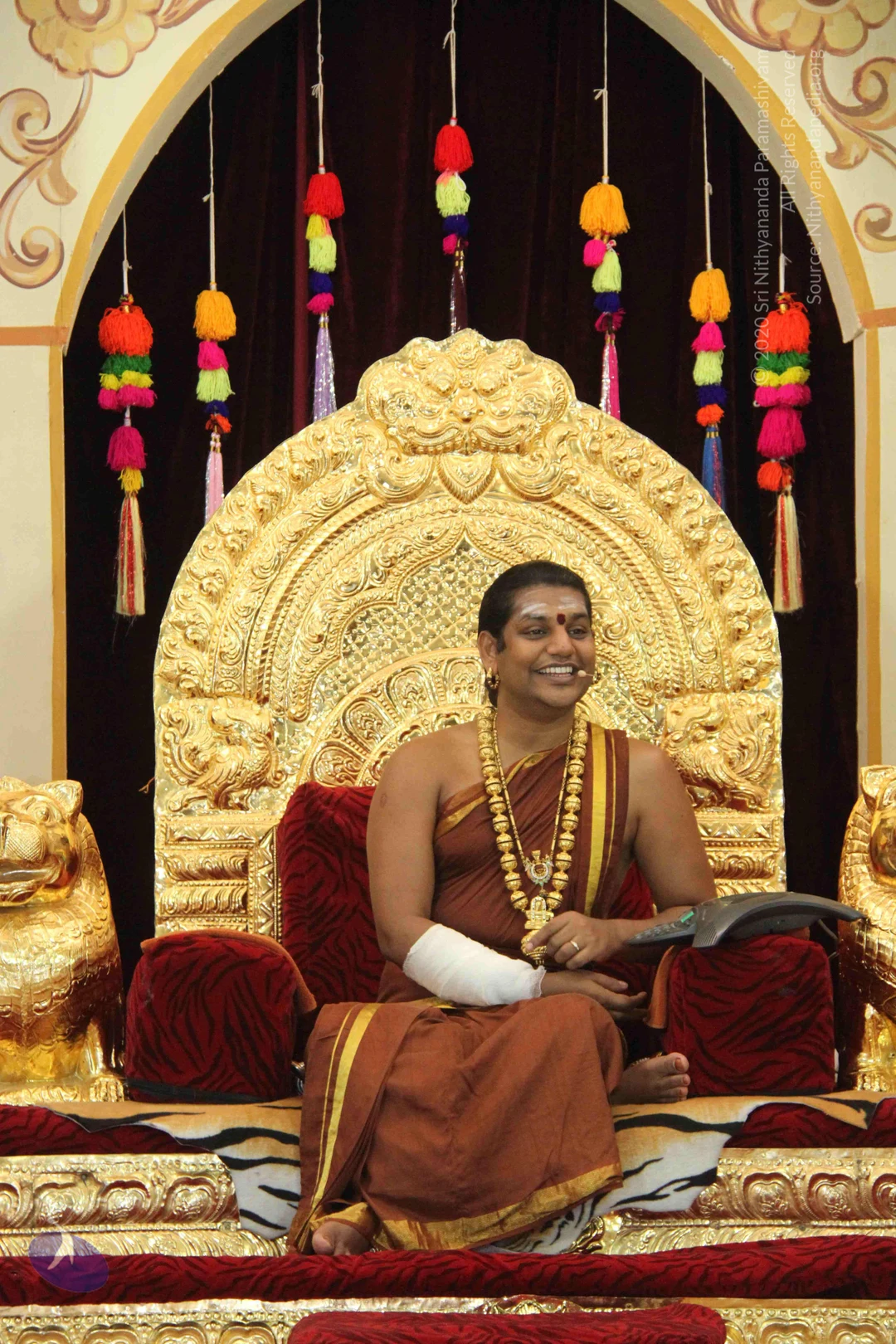
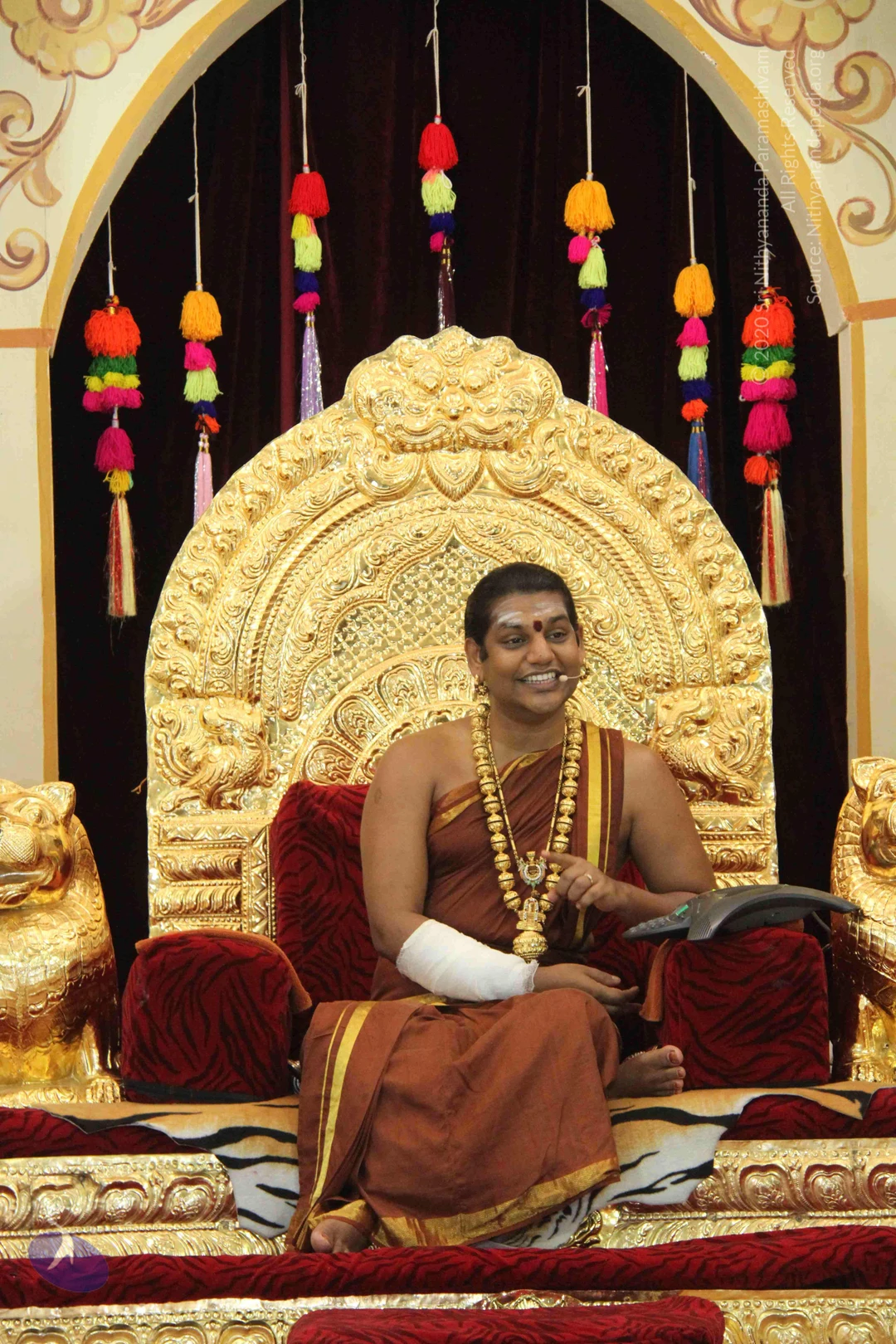
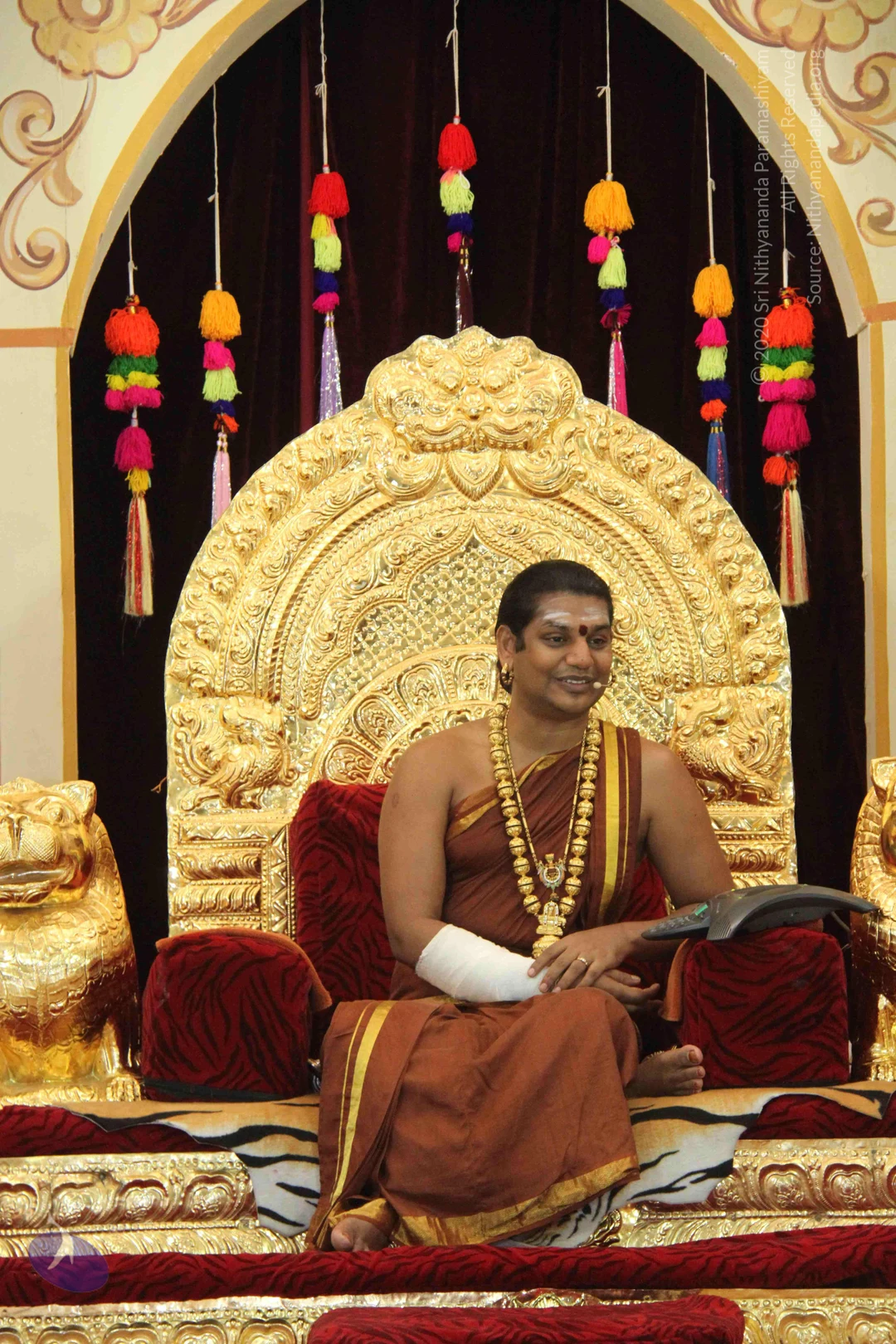
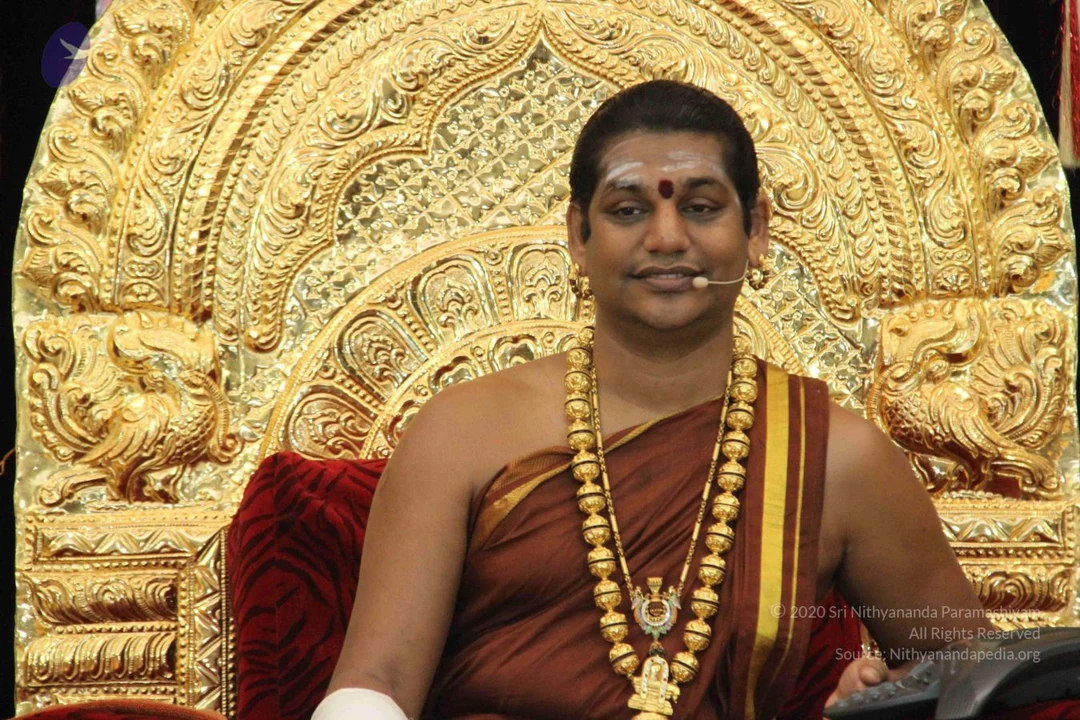
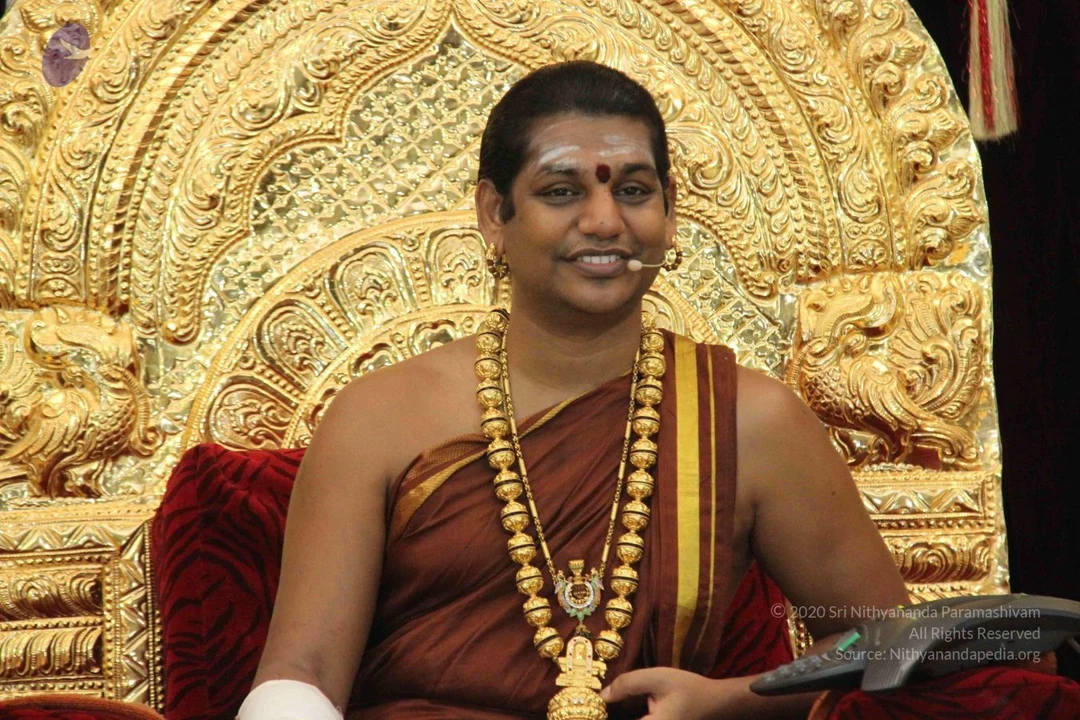
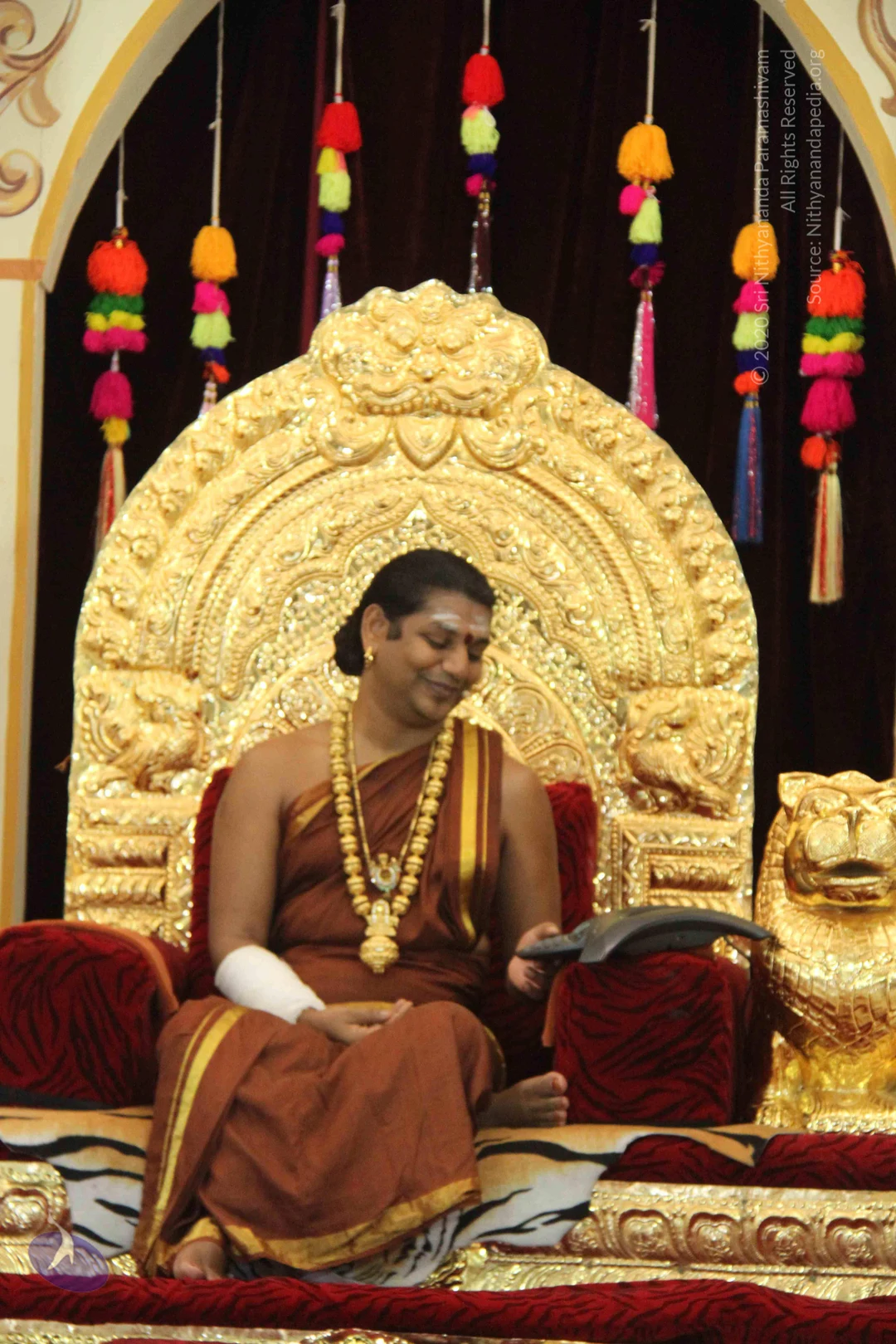
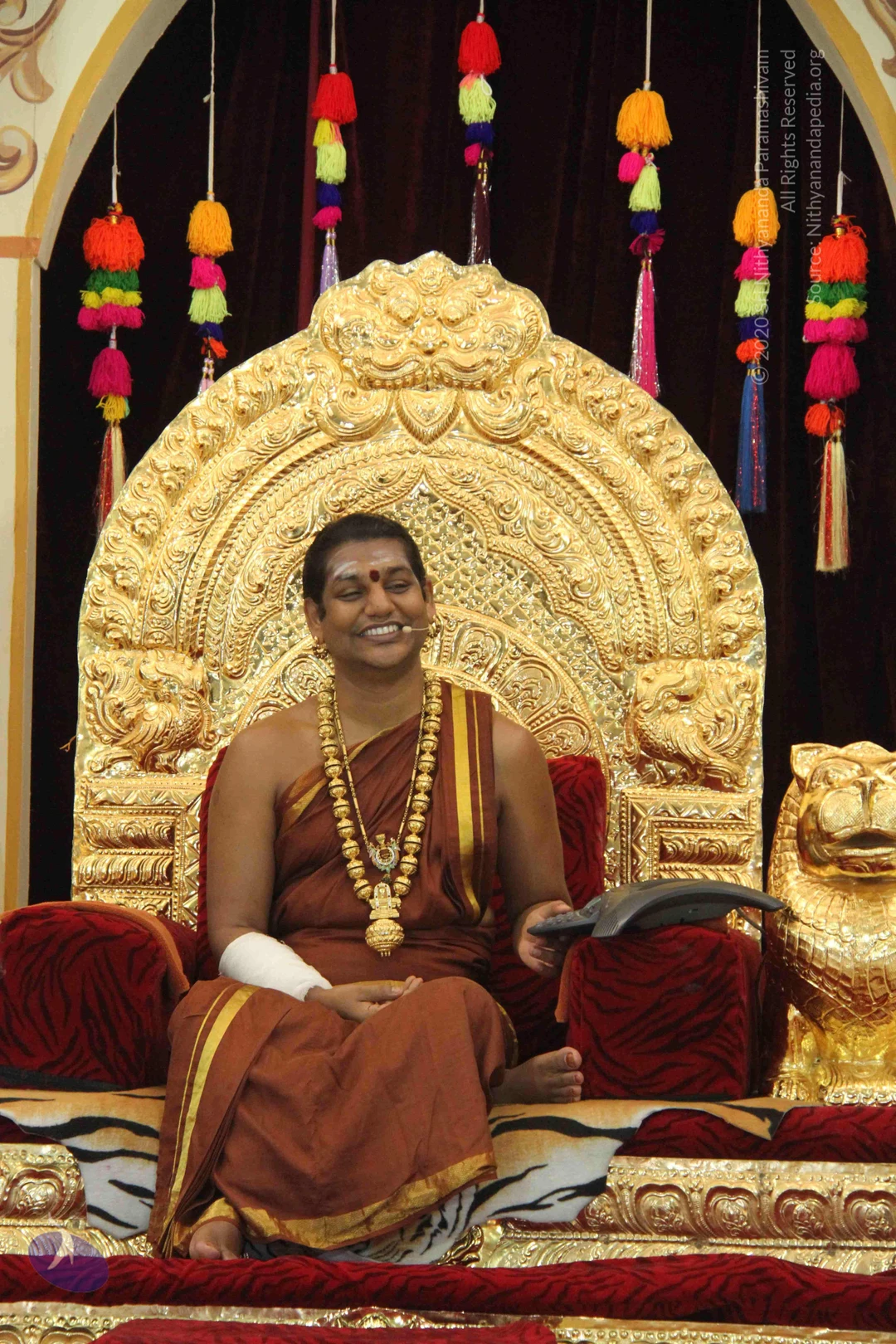
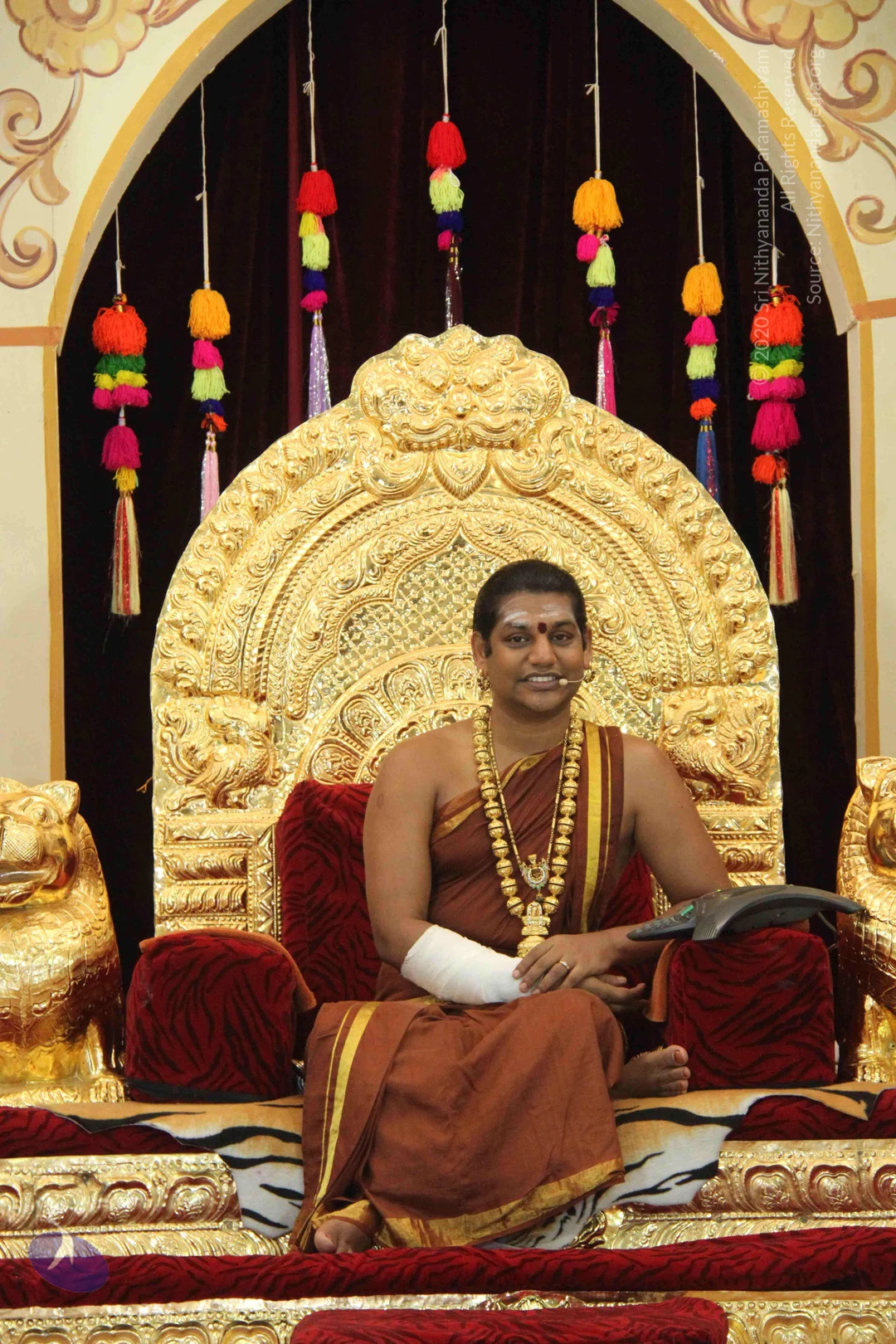
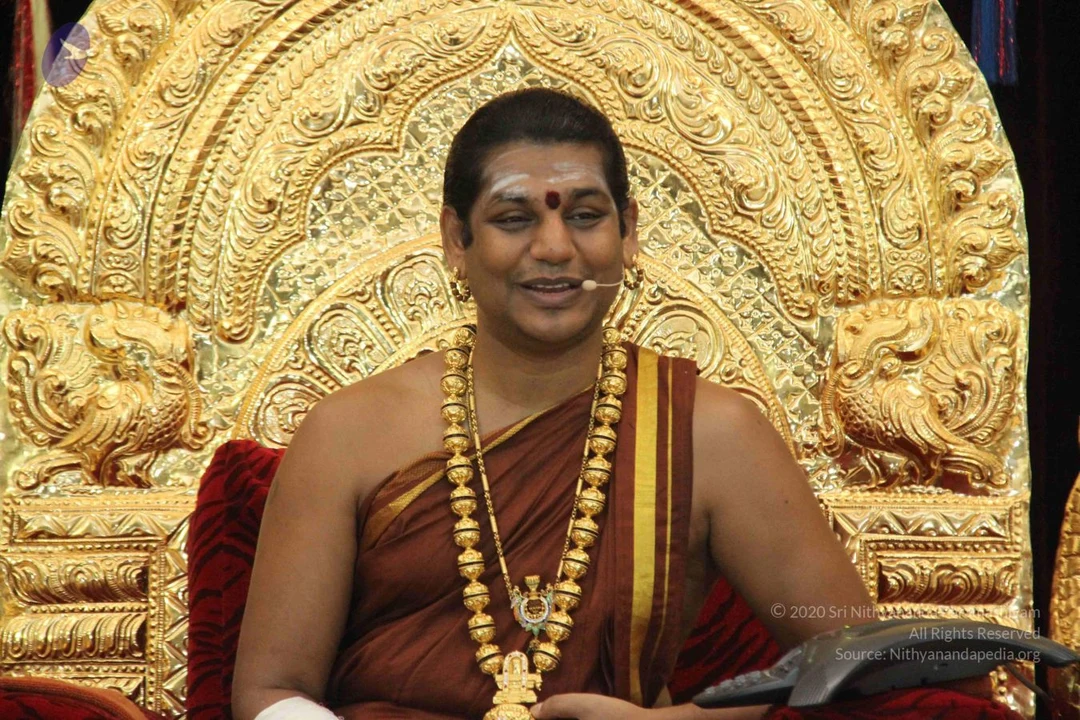
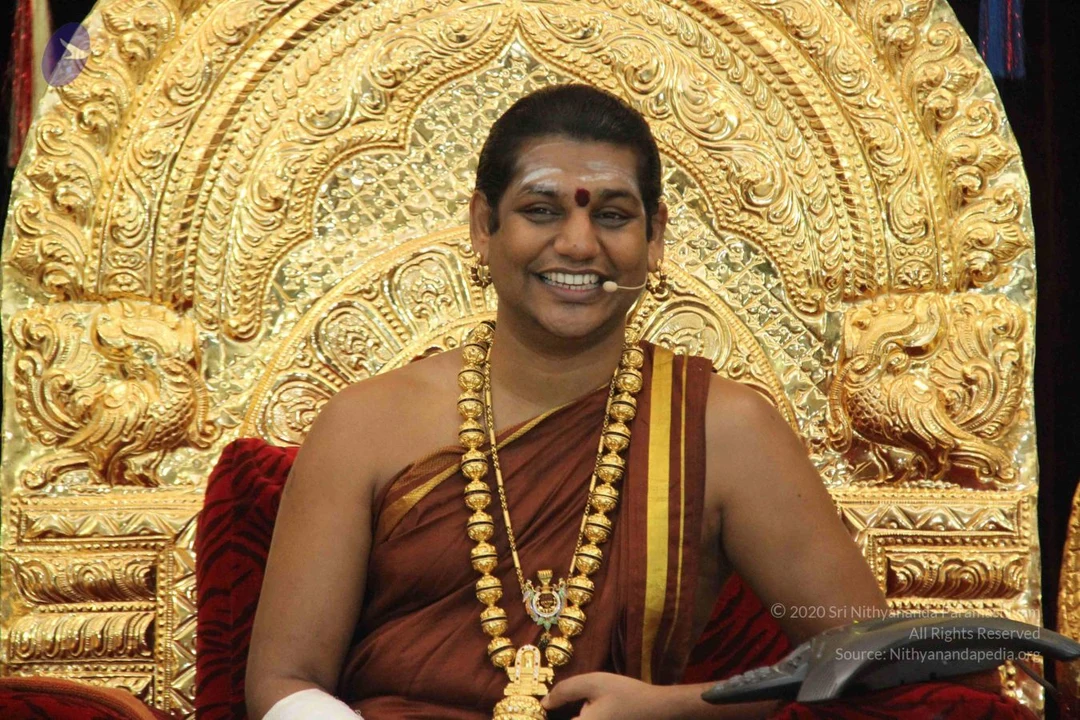
A man stands smiling before an ornate gilded throne with carved lion heads at its base and two gold lion statues in the foreground. He wears a rust-brown dhoti-style garment with a gold border, a heavy gold necklace with a pendant, and a white bandage on his right forearm. He has a red-and-white tilak mark on his forehead. Behind him, arches are painted with gold floral scrolls and hung with colourful tassels in orange, pink, green and blue. a person appearance-based label applies only if cues are present; the figure is a single standing person in ceremonial dress beside the throne.A seated man in rust-brown ochre robes sits on an ornate gold throne with a carved arched back, flanked by two gold lion sculptures and red tiger-striped cushions. He has palms pressed together in namaste, a white bandage wrapped around one forearm, and wears a gold necklace and a red bindi. Hanging tassels in orange, pink, green and yellow decorate the backdrop, with maroon drapes on either side. A headset microphone is visible near his face. a person: the seated figure has a shaved head and ochre robes, and the page identifies a person at this event, so this is a probable match based on appearance cues rather than confirmed.Photograph of a satsang stage with a decorated deity murti seated under a golden canopy with elephant reliefs, adorned with flower garlands and jewelled ornaments, with a cobra hood arching behind it. A person in a rust-orange and gold-bordered dhoti and shawl stands at a clear acrylic lectern on the right, one arm bandaged, with a gold standing figure beside the lectern. Colourful tassel decorations hang from the top right and dark drapes form the backdrop.A man stands at a clear acrylic lectern in front of a golden shrine housing a Shiva-family deity murti adorned with silver ornaments, a cobra hood, and garlands of yellow and white flowers. He wears an orange-brown dhoti with a gold border, a white shawl, a white sleeve on one arm, and a vibhuti mark on his forehead, one hand raised to his mouth. Behind him hang colourful tassel decorations and dark maroon drapes, with a gold standing figure beside the lectern. The setting resembles a satsang or discourse hall.Close side-profile photo of a smiling man with slicked-back dark hair in a bun, white tripod-style forehead markings and a small red dot on the brow, wearing a gold multi-bead necklace over a bare chest and an orange-brown cloth. A small clip-on microphone is on his face, a white bandage wraps his right forearm, and he rests his hand on his chin. Colourful pink, orange and yellow tassel hangings hang in the background against dark drapes. Appearance-based candidate: a person, with a bare chest, gold bead necklace and ornate ceremonial presentation; he is seated and speaking at a satsang-style setting.Close profile photograph of a man seated indoors, smiling with his hand raised to his chin and a small headset microphone near his mouth. He has a tied-back bun, white sacred ash lines on his forehead with a red dot, a gold earring, and a heavy gold bead necklace over bare shoulders. His right arm is wrapped in white bandage. Behind him hang colourful tassels in pink, orange, blue and green, with a gold ornament at the lower left.
sarva-darshan

10 photosSource gallery
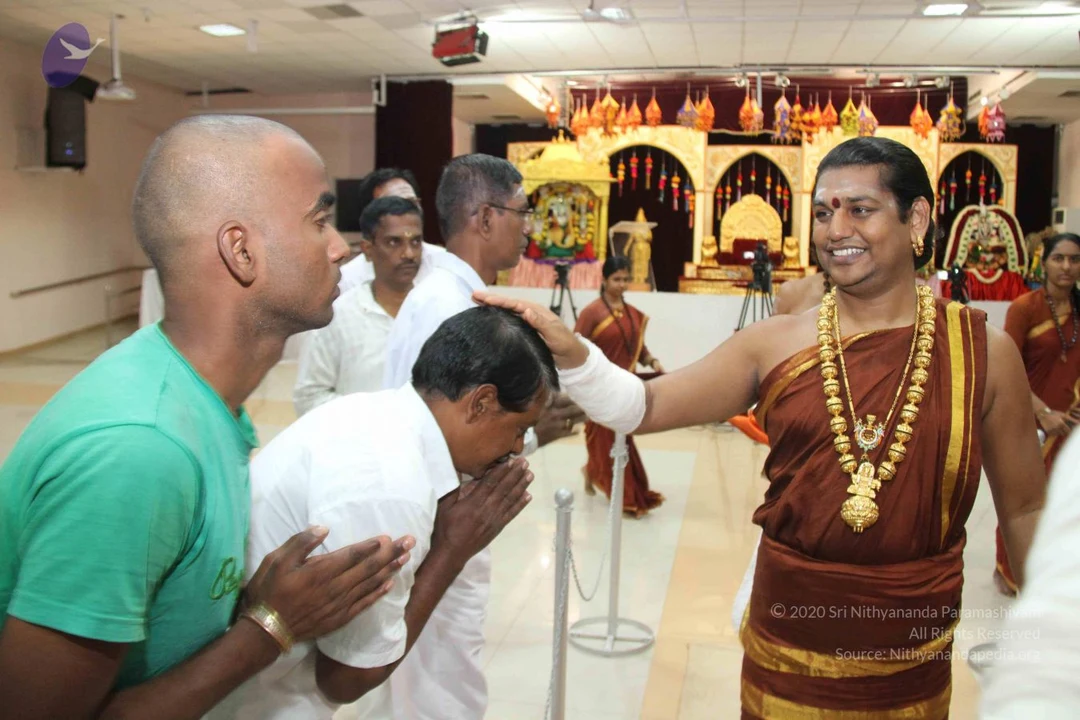
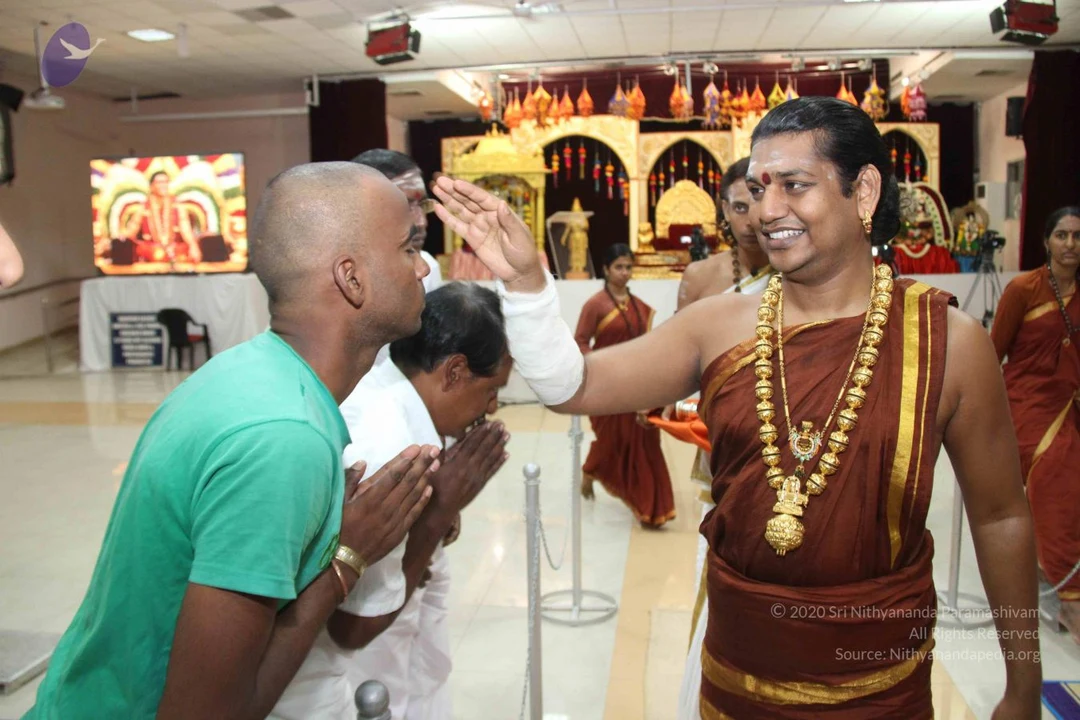
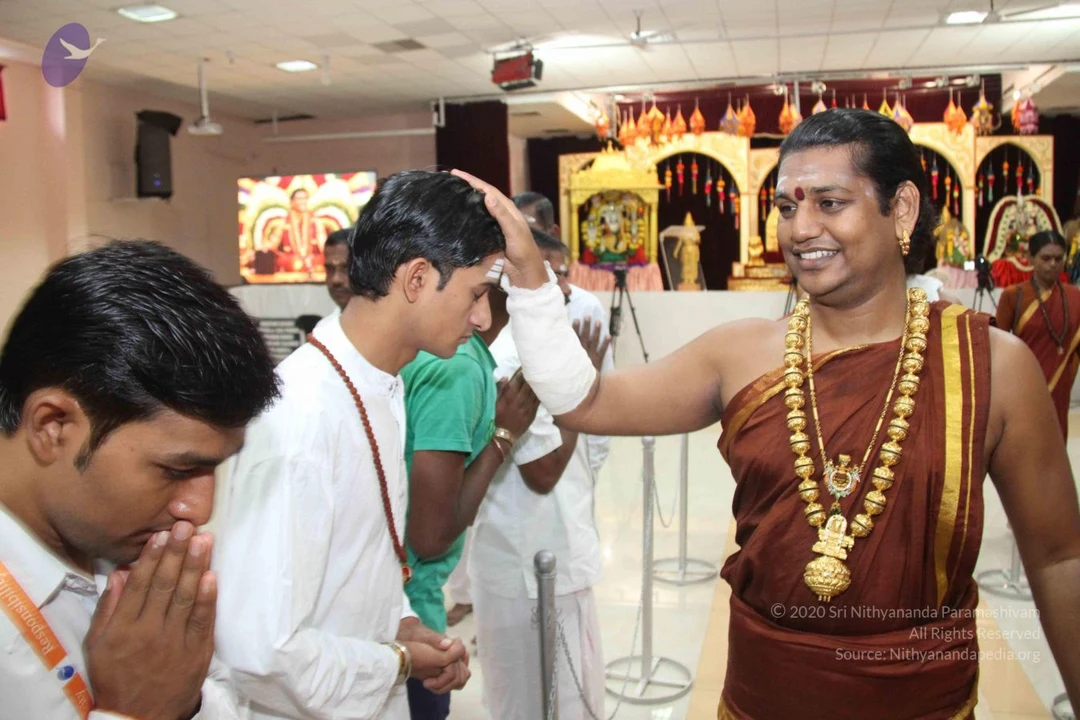
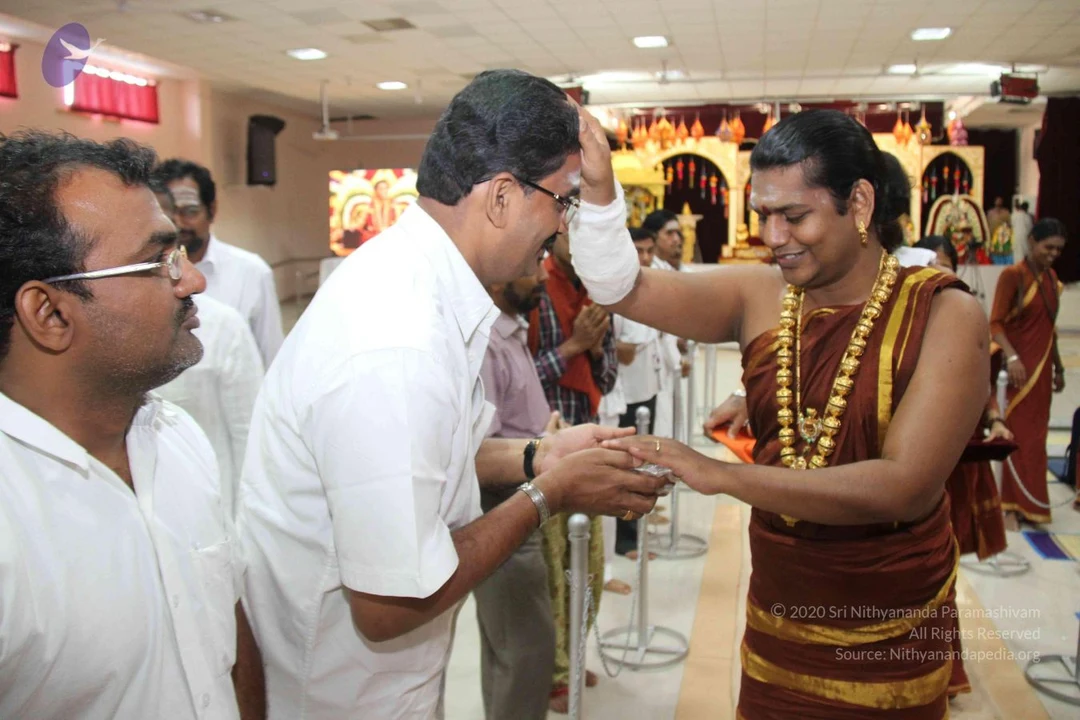
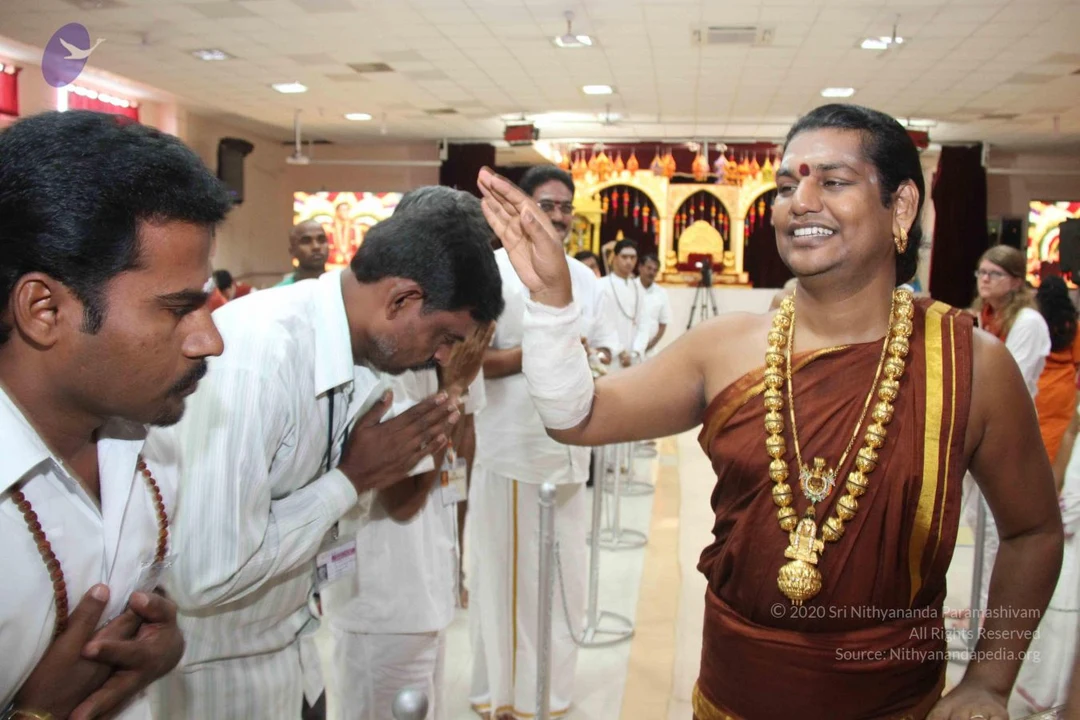
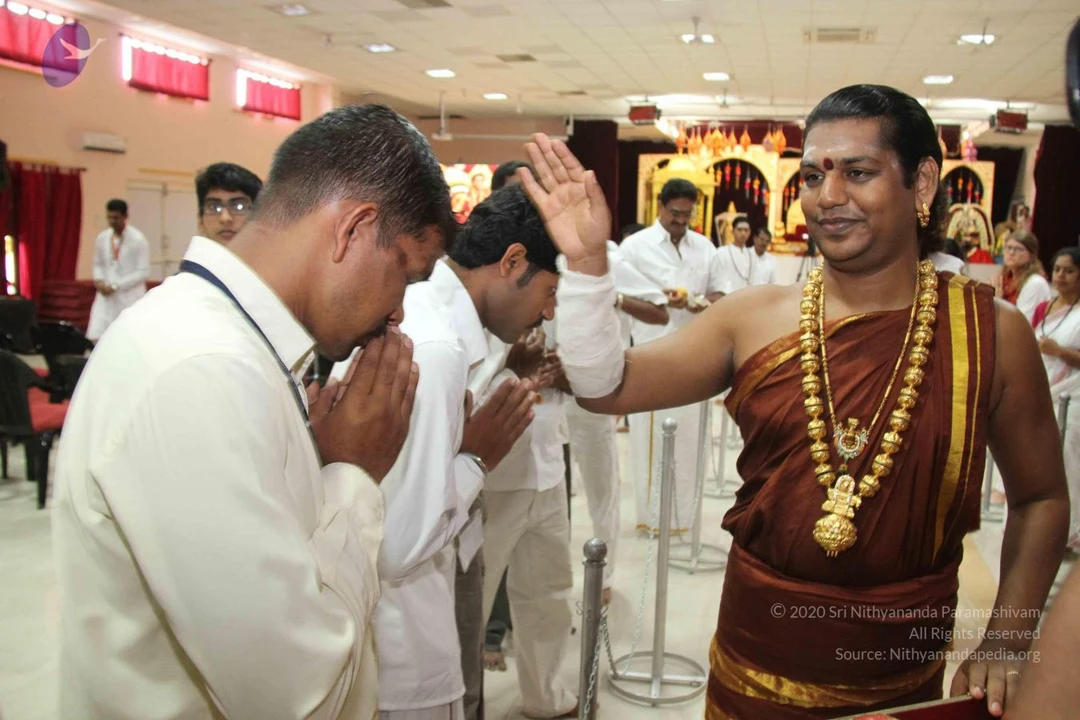
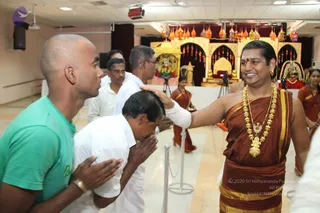
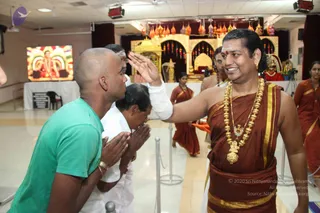
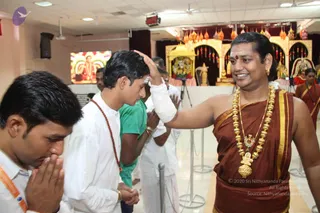
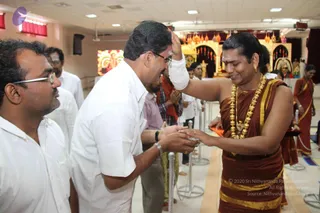
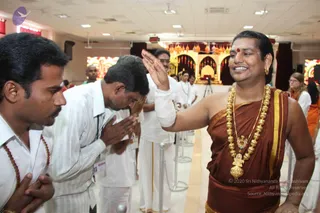
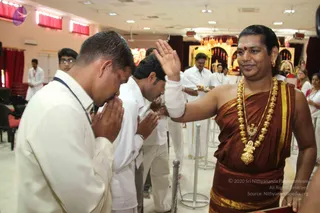
A photograph in a bright hall with cream tiled floor and a decorated altar behind, showing a man in a rust-brown dhoti-style garment with gold-yellow border and a heavy gold necklace with pendant, his hair swept back and a red bindi on his forehead, placing his right hand on the head of a shaved-headed man in white shirt who bows with palms joined; a man in a green t-shirt with palms pressed together stands at left, and other men in white and women in rust-brown saris stand in the background near a golden canopy, lanterns and deity murti.A photograph of a temple-hall setting with a smiling man in a maroon-brown dhoti and shawl with a wide gold border, wearing a heavy gold necklace with a pendant and gold earrings, raising a hand in blessing toward a young man in a green t-shirt who presses his palms together. Beside them, a man in white clothes bows with folded hands. Behind them, women in maroon saris stand near a golden shrine with hanging orange and red lanterns. A large screen shows a seated figure in a decorated setting. a person: the central figure in maroon dhoti and shawl with gold necklaces and gold-bordered cloth, offering a blessing.Indoor temple-style hall with cream walls, a ceiling projector, and a decorated shrine with gold arches, hanging lanterns and a deity murti behind. A bare-shouldered man in a brown-red dhoti-style wrap with gold border stands at right, wearing layered heavy gold necklaces with a gold pendant, a red tilak and a small earring, smiling as he places his hand on the head of a young man in a white shirt with a rudraksha mala. Nearby a man in a green t-shirt and a man in white stand with hands folded in prayer, and a figure at left in white shirt with orange lanyard has eyes closed, palms pressed together. A video screen shows a figure in red-orange clothing. Several people are visible in the scene.A photograph inside an ashram hall with a red-curtained stage and golden decorative arches behind. A man with long hair swept back and a gold ceremonial necklace of beads, wearing a rust-brown dhoti with gold borders and a bare upper body, extends his arm and touches the forehead of a man in a white shirt. The white-shirted devotee, wearing glasses, bends forward with his palms together, receiving the blessing.Indoor scene in a hall with a gold-and-red temple-style shrine in the background. On the right, a smiling man in a brown saffron-toned robe with gold stripe borders wears a heavy gold multi-bead necklace with a pendant, gold earrings and a red bindi, and raises one hand in blessing toward devotees. On the left, two men in white dhotis and shirts stand with palms pressed together, one bowing with hands folded. Other devotees in white clothing stand behind them near rope barriers, and a woman in orange appears at the far right. The room has a white ceiling with recessed lights and red and gold decorations.A man in a rust-brown dhoti-style garment with gold borders and a thick gold chain necklace with pendants stands at right, raising one palm forward in a blessing gesture while smiling, with a red tilak on his forehead and gold earrings. In front of him at left, a man in a white shirt presses his palms together and bows his head, with other devotees in white kurtas and dhotis folding hands behind him. In a bright hall with red curtains and a golden shrine arch in the background, a few more people in white clothes stand near the wall and rails.

final-blessing

3 photosSource gallery
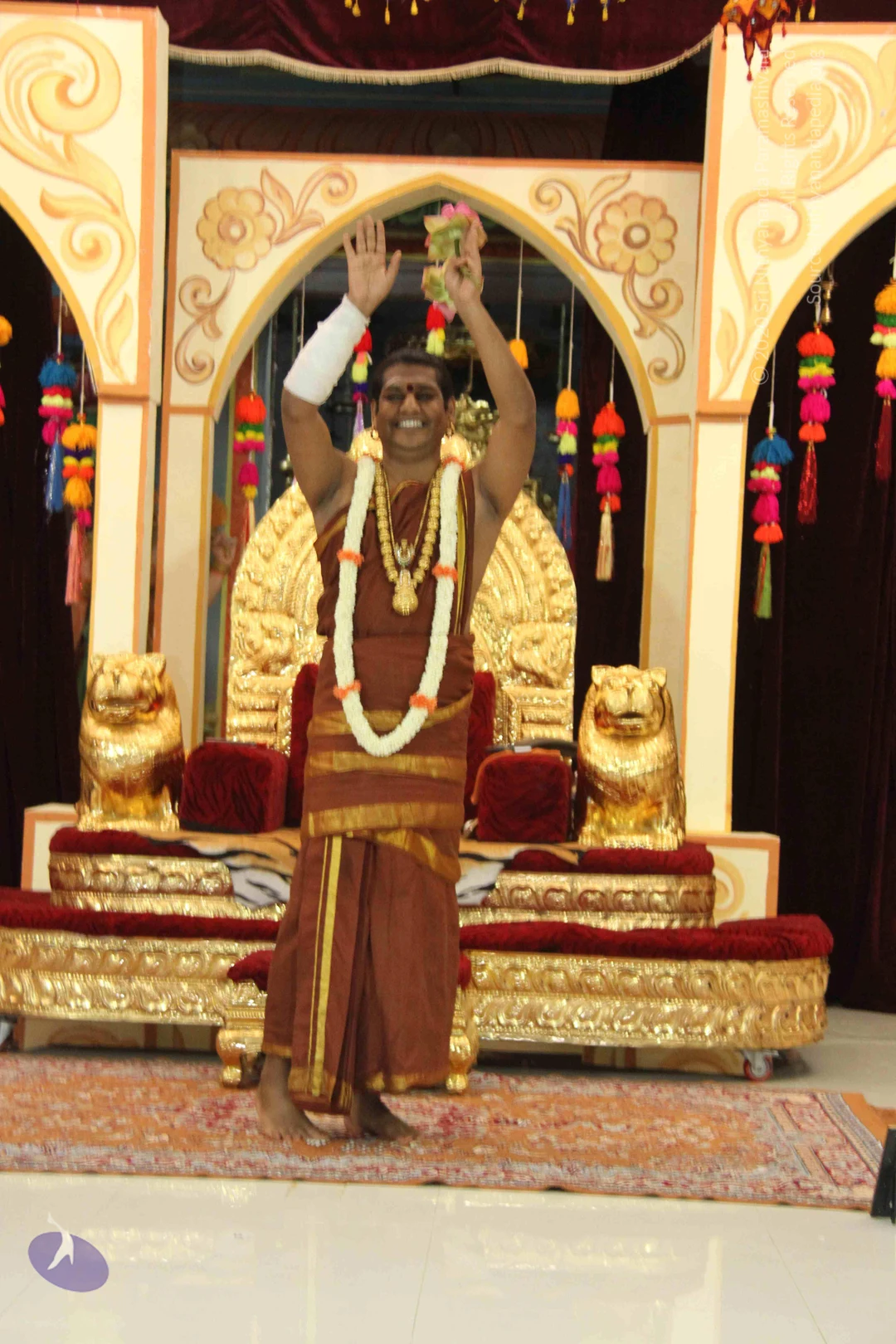
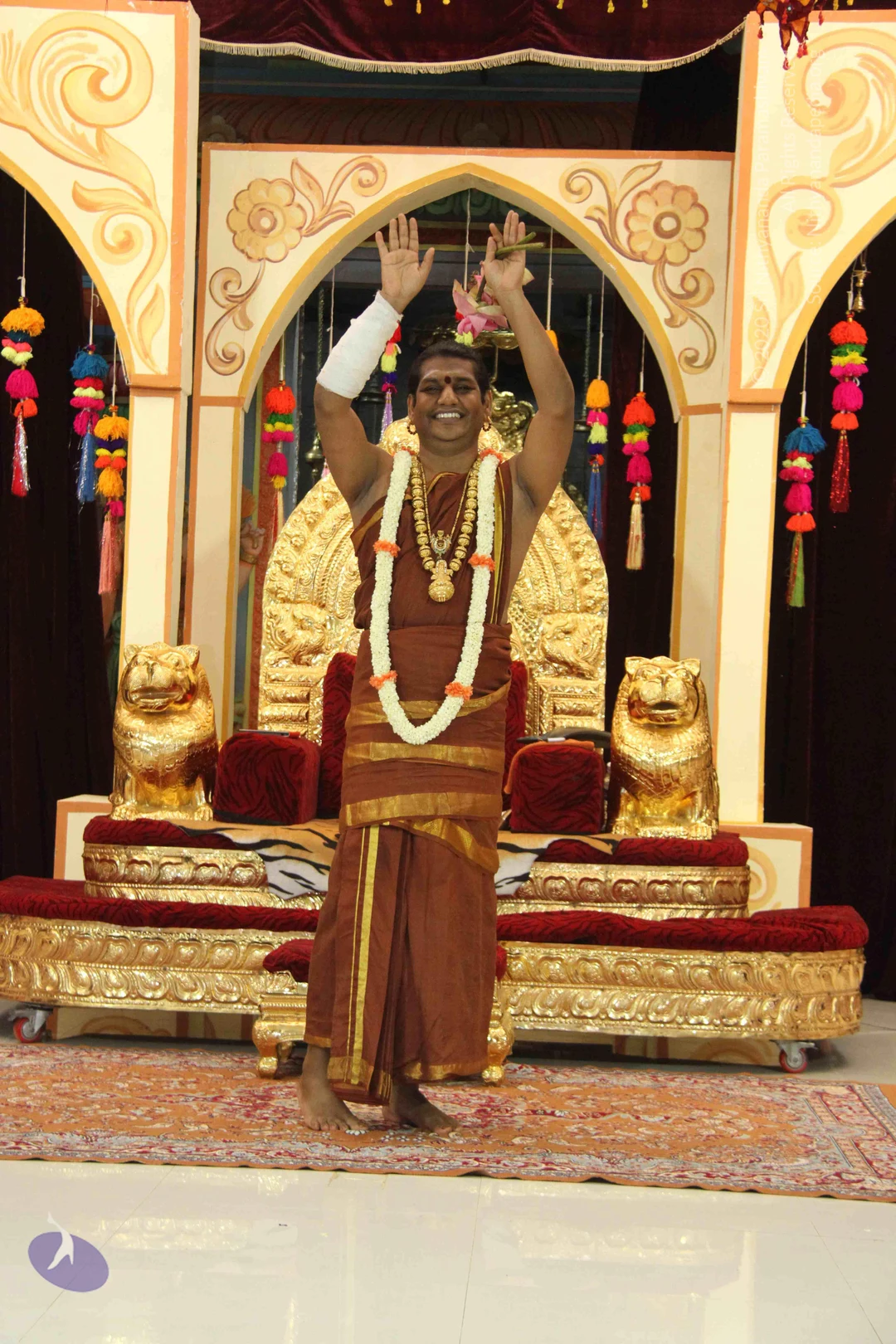
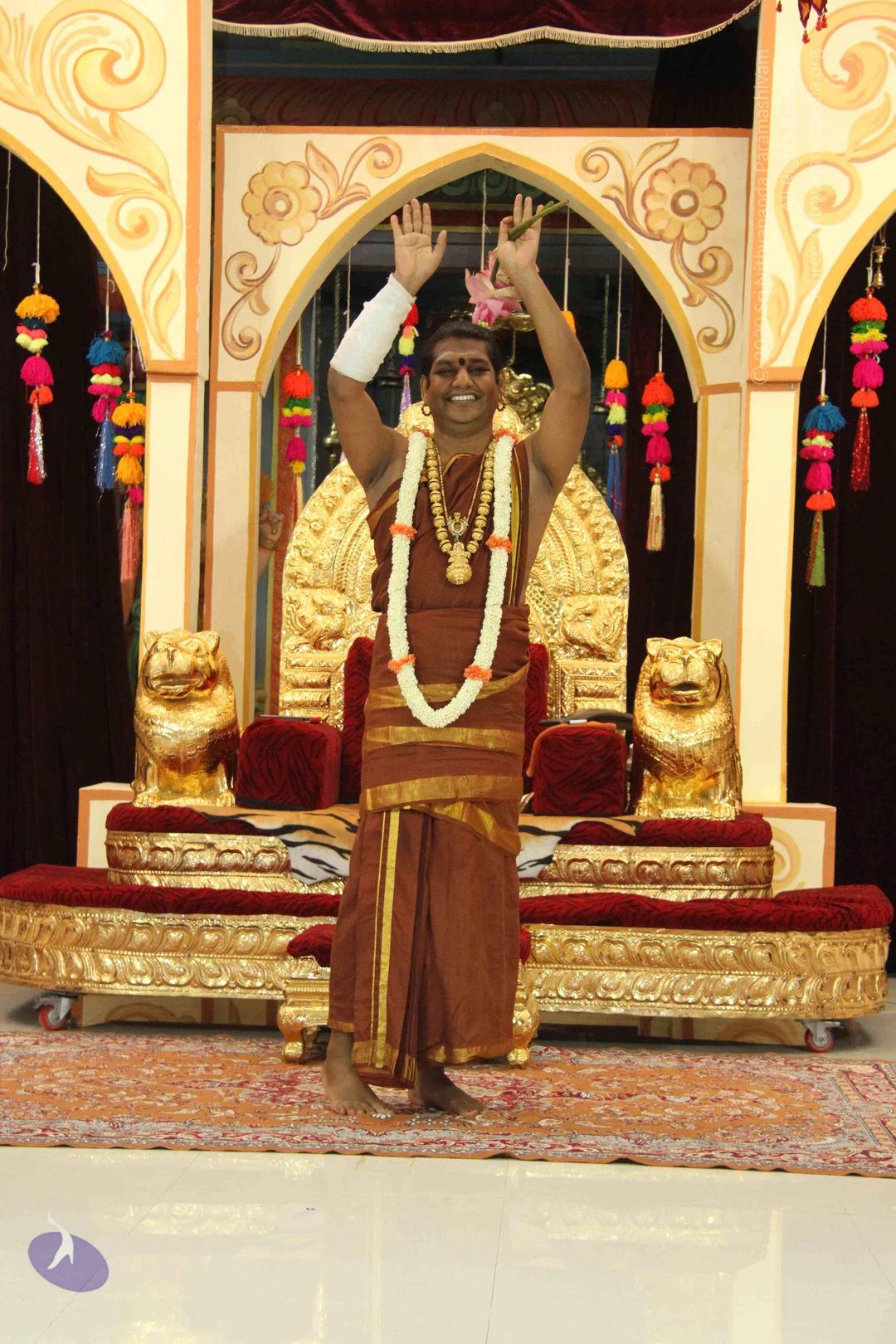
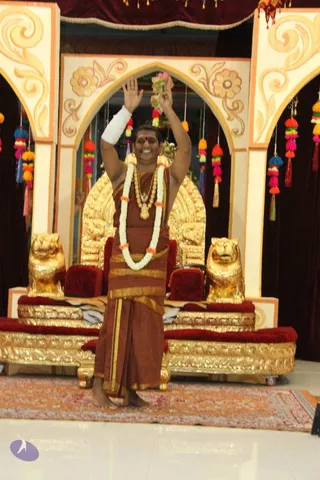
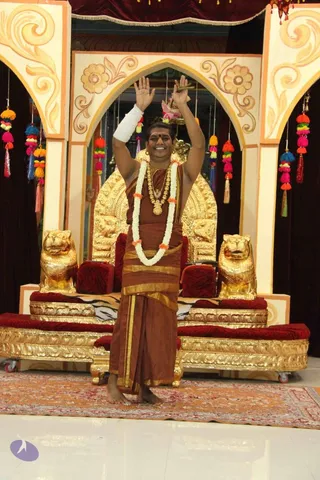
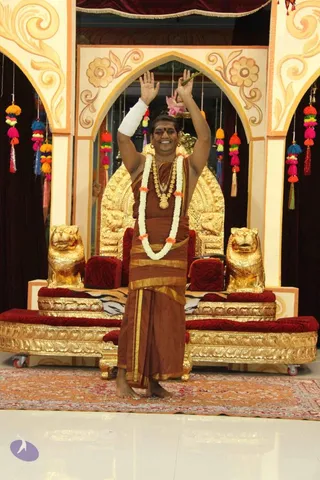
A man stands barefoot on a patterned rug before an ornate golden throne flanked by two gilded lion sculptures, with red cushions and a carved arch behind him. He wears a rust-brown dhoti and shawl with gold borders, a white and orange flower garland, a gold necklace with pendant, and a red bindi. He smiles with both arms raised, hands open, and holds small flower offerings. Colourful tassels hang from the arch and draping. a person: the cues are the ceremonial gold necklace, garland and saffron-toned clothing, in a throne setting consistent with a satsang.A barefoot man in a brown dhoti and brown shawl with gold borders stands on a patterned rug before an ornate golden throne flanked by two golden lion sculptures with red cushions. He raises both arms in a welcoming gesture, smiling, and wears a white garland of flowers, a gold necklace with a pendant, and a red tilak on his forehead. A white bandage covers one forearm. Behind him are a gold-arched backdrop and hanging tassels in pink, orange and blue. a person: the figure matches a long-haired-free presentation only weakly, with shaved head and white garland rather than distinctive long hair or saffron robes, so identity remains uncertain.A standing man in a reddish-brown dhoti and shawl with gold borders raises both hands in greeting before an ornate gold throne flanked by two golden lion figures and red velvet cushions. He wears a white garland, a heavy gold necklace with a pendant, and a white bandage on one forearm, and has a tilak on his forehead. Colourful tassel decorations hang from the archway, and a pink flower is tucked near the top of the arch. He stands barefoot on a patterned carpet.

HDH-deities

14 photosSource gallery
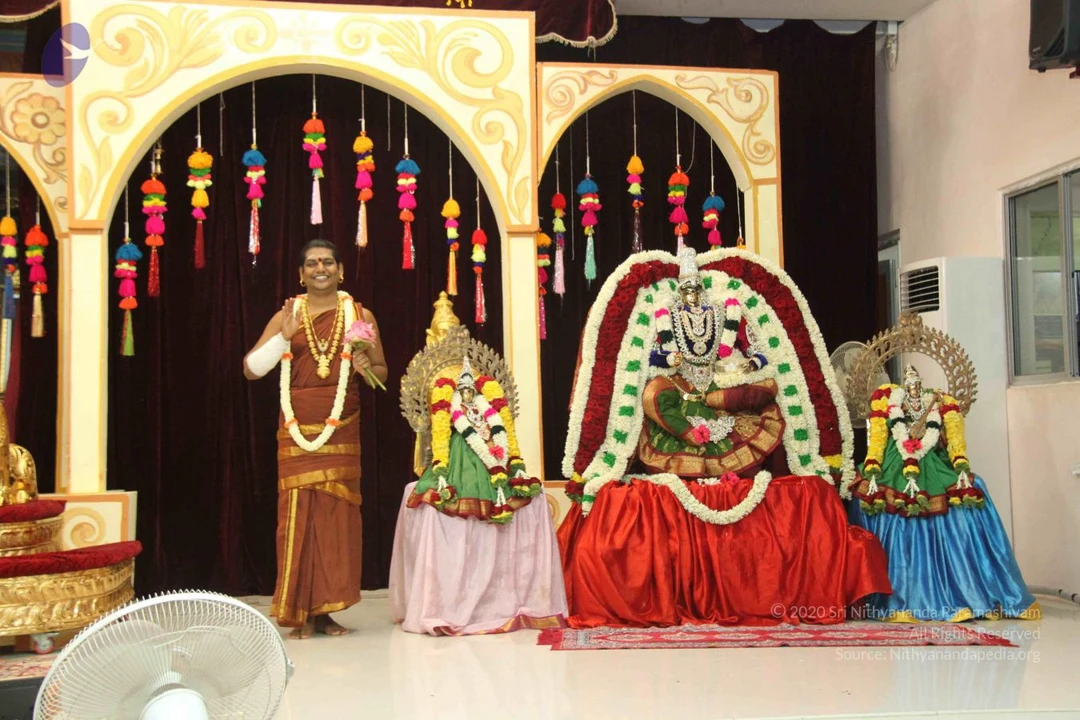
A photograph of a stage at a temple-style hall with ornate cream arches and dark maroon drapes hung with colourful tassels. A man standing at left wears an orange-brown dhoti and shawl, a white bandage on his left arm, a gold necklace and white flower garland, and holds a pink flower while making an abhaya gesture. At centre sits a deity murti dressed in a green and gold sari, draped in white and red garlands, on a red cloth-covered seat. Two smaller deity murtis in green and blue garments with garlands flank the central figure on pink and blue draped platforms. A gold throne edge appears at far left and a white fan at lower left.A man stands at left in a brown dhoti and brown shawl with a white garland and a gold chain, holding a pink flower and raising his hand in greeting, beside a decorated stage. A large deity murti sits centrally on a red draped seat under a red and white floral arch, adorned with a crown, jewelled necklaces and a green sari, with two smaller decorated figures seated on each side in green and blue garments and garlands. Colourful tassel decorations hang from an arched backdrop, with a fan and cabinet visible at the edges. a person is the man standing at left, identified by his clothing and garlands rather than by his face.A photograph of a temple stage hung with colourful tassel decorations. A man in a brown dhoti and shawl, with a white garland and a gold chain, stands at left holding a pink flower and raising one hand in a blessing gesture while smiling. Behind him, three deity murtis sit on thrones: the central figure in a red and green silk draped in white and red flower garlands with a crown and jewelled necklaces, flanked by two smaller murtis in green and yellow and blue garments with garlands. A white fan stands at the edge of the stage. Possibly a Satsang or darshan setting.A photograph of a standing man in a brown dhoti with gold border and a gold necklace, a white garland around his neck, hands in anjali mudra and holding a pink flower, smiling beside a stage. Behind him, three seated deity murti are decorated with garlands: the central one is a large figure in green and red silk with a silver crown, framed by red and white flower arches, flanked by two smaller murtis in green and blue silk. Red and pink draped cloth covers the platform, with colourful tassels hanging from the arches above and a white fan at the lower left.A man stands at left on a stage in front of a decorated backdrop with hanging tassels and arched gold-painted panels. He wears a brown-orange dhoti and shawl, a gold-beaded necklace and a white garland, holds pink flowers, and bandages one forearm white while raising his other hand in a blessing gesture. Beside him, a large adorned deity murti sits on a red draped throne with a crown, jewelled necklaces and flower garlands, flanked by two smaller decorated murtis in green and blue garments. a person appearance cues are not clearly sufficient here, so the identity is uncertain. Stage pillars and a wall air conditioner are visible.A smiling man in a reddish-brown dhoti with gold borders and a white flower garland stands beside a gilded canopy shrine. He wears a gold necklace, a white bandage on one forearm and holds a pink flower, raising his other hand in greeting. Behind him, a deity murti adorned with silver ornaments, green and red garments, a cobra hood overhead and yellow-and-red marigold garlands sits on a pink satin-draped platform.
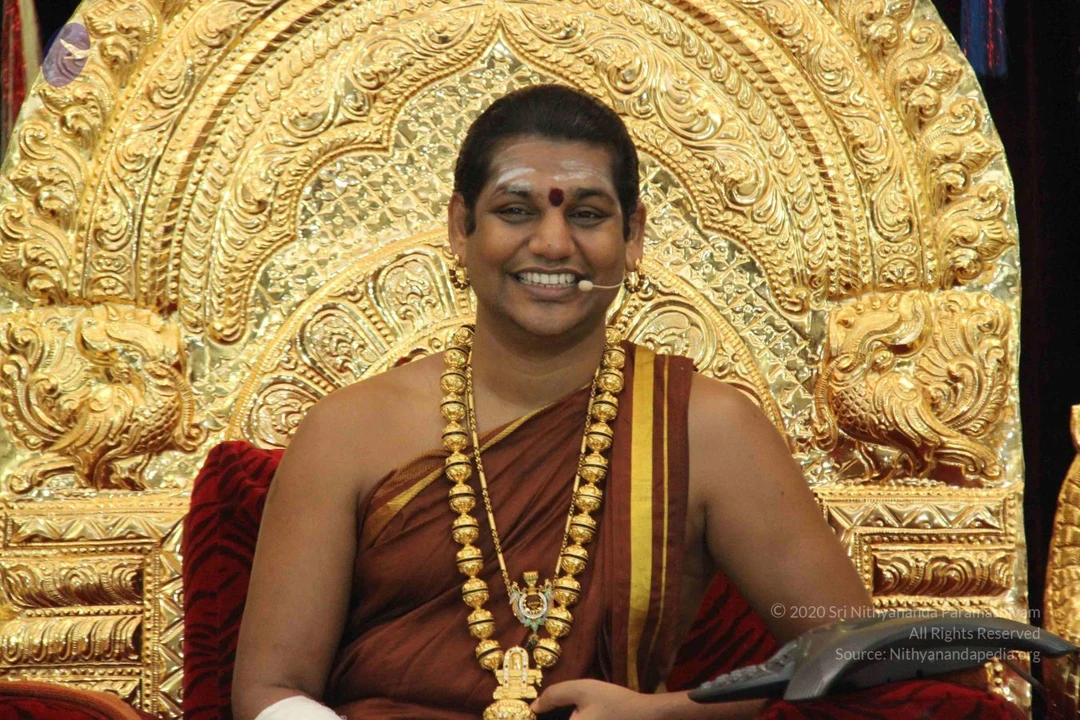
ia-day12-darshan

8 photosSource gallery
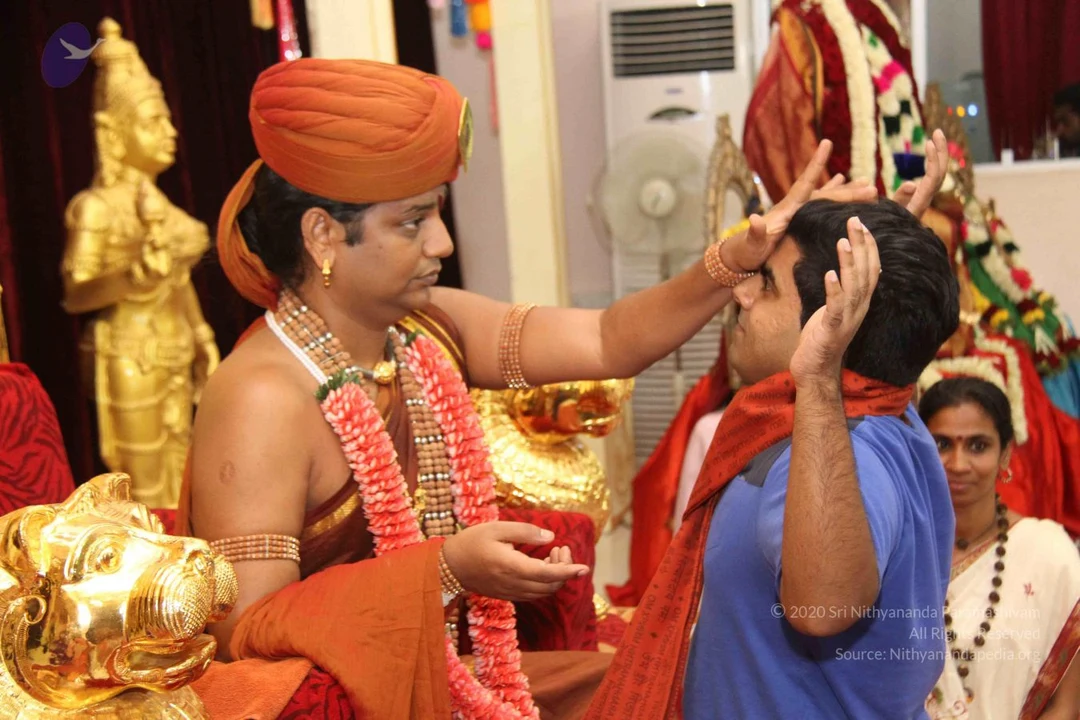
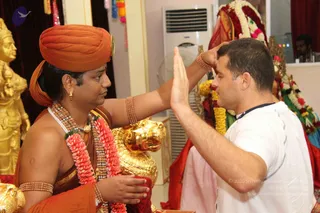
A seated figure in an orange saffron turban, orange robe and multiple rudraksha malas with a ceremonial gold chain and red-and-yellow flower garlands holds a sheet of paper and performs a blessing by placing palms on the head of a man in a white shirt and orange shawl who bows forward. Gold-coloured decorative objects, a red velvet throne-like seat and a mounted air conditioner fill the background. Two people are visible.Close side profile of a smiling person wearing a bright orange turban with a gold ornament at the crown, gold drop earrings and a multi-strand necklace of wooden rudraksha-style beads. Behind, blurred garlands of yellow, red and white flowers and a brass vessel are visible. The person's head is turned downward and to the right, eyes lowered.A seated figure in an orange-saffron turban and orange-brown robe, with a rudraksha mala and layered ceremonial garlands of white and pink flowers, reaches out to touch the forehead of a smiling man in a white dhoti and orange shawl. a person: the seated figure wears a saffron turban, rudraksha beads and ornate garlands, and sits on a red-cushioned seat before golden lion and elephant figures. Behind them stand a floral-decorated deity murti draped in red cloth and a standing air conditioner. A devotee in white stands to the right in the background, and a golden statue of a guardian figure stands at left.Indoor blessing scene. A man in an orange turban, orange-and-gold robe, rudraksha beaded malas and a pearl necklace sits and places his right palm on the forehead of a bald, grey-haired man in a white shirt with an orange lanyard, whose hands are raised in reverent gesture. Behind them stand golden statues and red-and-white flower garlands, with a white floor fan. Swamiji (probable) appears as the orange-robed figure performing the blessing, based on turban, rudraksha malas and ceremonial jewellery; he is seated and giving the blessing.A seated figure in an orange turban and saffron-orange robe, with a pink and white flower garland, layered rudraksha malas and a gold necklace, places a hand on the head of a smiling older man in a white shirt and orange shawl. Behind them stand a golden deity murti, a red-draped altar with flower garlands, and a standing white ceiling fan. A woman in a white sari with a red bindi watches at right. Swamiji (probable): the seated figure in saffron and orange, with a turban, rudraksha malas and a gold necklace, appears to be the presiding teacher giving blessing to the devotee.A photograph of a private blessing inside an ashram hall. A figure seated on the left wears an orange turban, orange saffron-coloured cloth and multiple rudraksha malas with a long pink and white flower garland; a gold necklace and bangles are visible. Their right hand is raised to the forehead of a man in a white t-shirt with a dark cord, who stands on the right with his eyes closed and head bowed. Behind them are a golden lion-faced ornament, a gold deity statue on the left, a white air conditioner, and garlands of marigolds and red flowers. Two people total are physically present. Probable Swamiji cues: orange turban, rudraksha malas and ceremonial gold necklace, shown in a ritual blessing role.

ia-day12-food

10 photosSource gallery
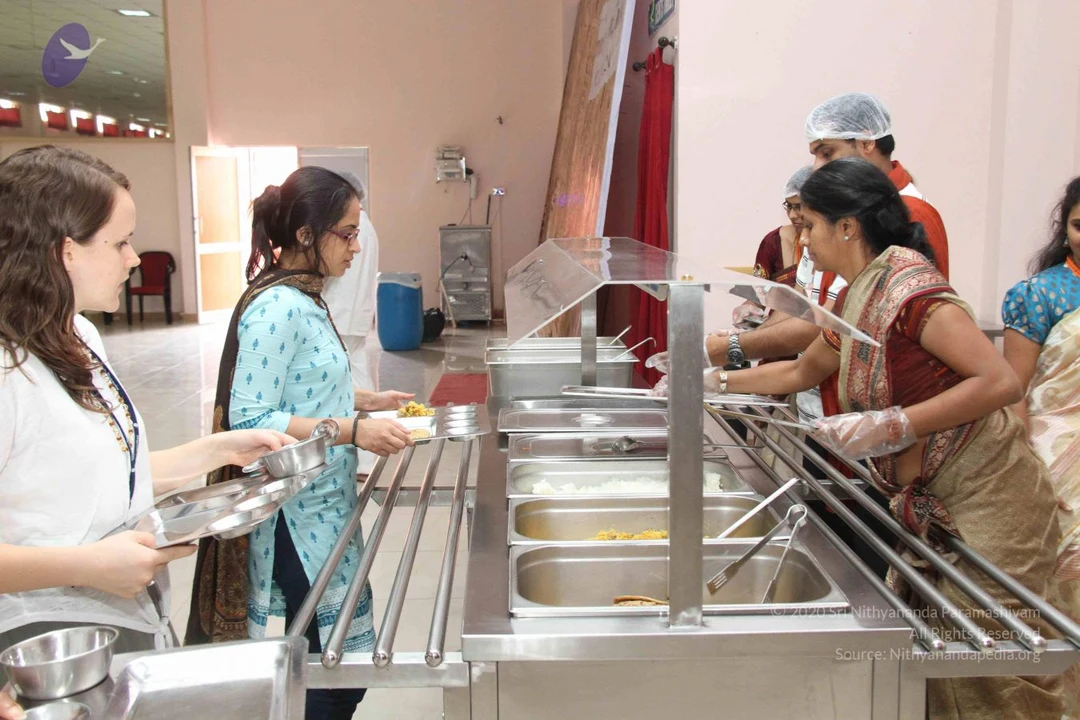
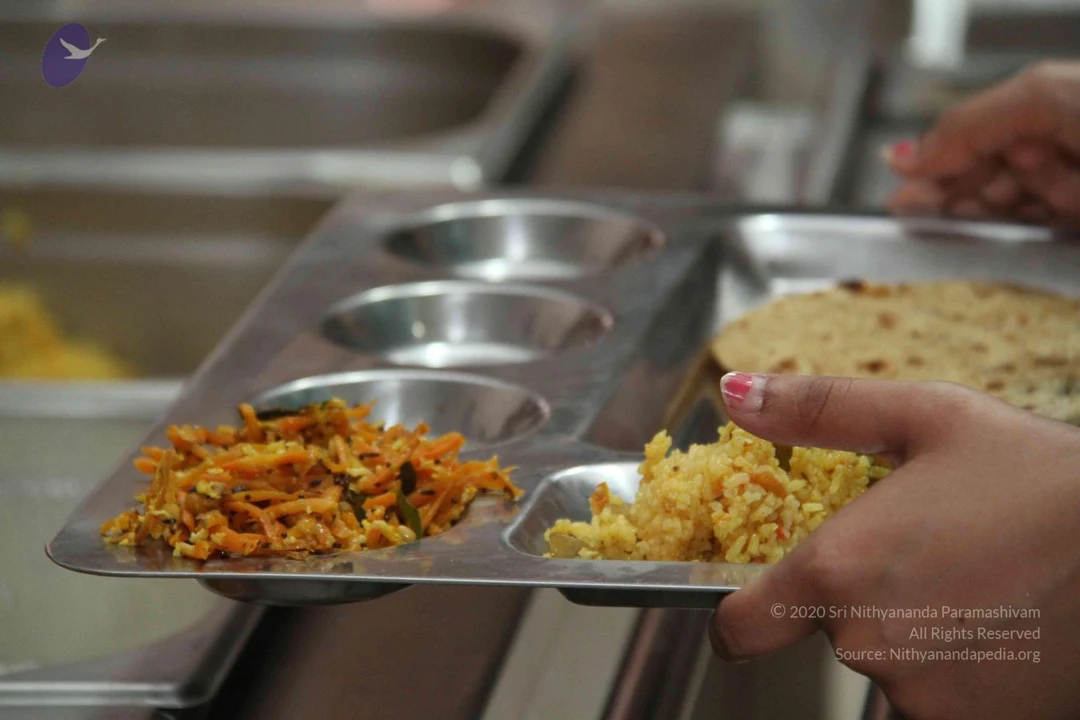
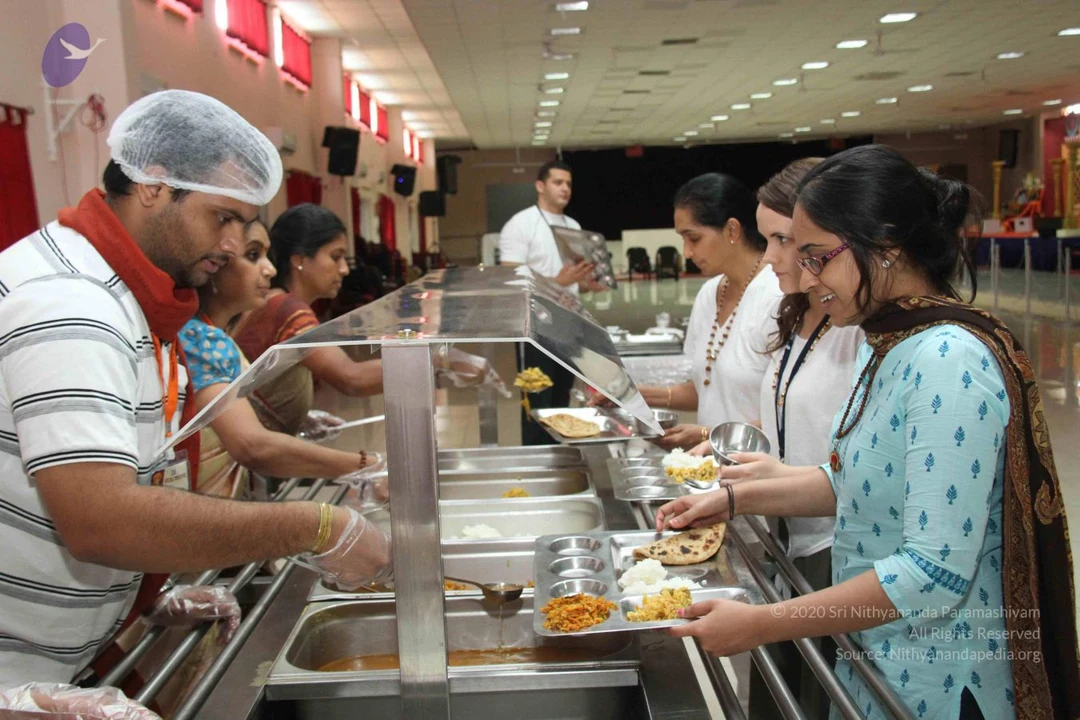
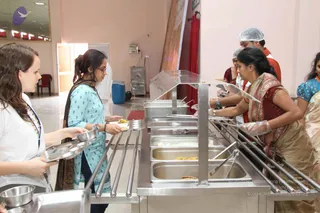
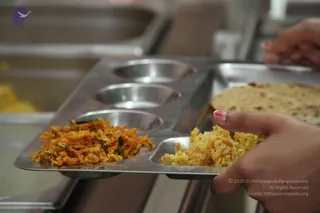
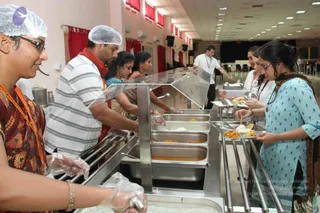
A photograph of a self-serve food line in an ashram dining hall. Several women and a man stand behind a stainless steel steam counter with heated trays of rice and yellow dishes, serving food with metal tongs and ladles. A young woman with light hair in a white top holds a stack of metal plates on the left, while a woman in a light blue kurta and dupatta holds a small steel bowl. A man in a white hairnet and orange shirt, and a woman in a red and gold sari, help serve. Clear plastic sneeze guards sit above the trays, and pink walls and a tiled floor fill the background. No one in the scene is identifiable as a person.A close photograph of a hand holding a stainless steel compartmented serving tray at a canteen counter. The compartments hold shredded carrot stir-fry with curry leaves and yellow lemon or turmeric rice, and a flatbread or roti sits on the right. Steel counter trays and bowls are blurred in the background. One person's hand with painted pink nails is visible; no face is shown. A small purple bird logo appears at the top left corner.Close-up photo of steel serving trays in a communal kitchen or annadan setting. The upper tray holds plain white cooked rice, and the lower tray holds a shredded vegetable dish with orange carrot strips, green herbs and bits of yellow-golden grain. No people are visible, and no a person candidate appears in the frame.A close-up photograph of a steel buffet tray line serving food. In the foreground a steel tray holds a mound of plain white cooked rice. Behind it, a tray contains orange-yellow spiced rice or vegetable dish, and a gloved hand holding a serving spoon is visible at the upper left. No people's faces are visible and no one is seated or standing in the frame. Water droplets dot the clear plastic tray covers. The setting appears to be an annadan style food service line.Close-up photograph of a shallow metal tray or dish filled with a creamy white liquid mixed with small pieces of diced vegetables or fruit, including green and orange-red bits. The surface shows a sheen of moisture and a faint reflection along the rim. Above it is a blurred, pale grey wall or background. No people are visible, and no deity, a person or ritual figure appears in the frame.Volunteers serve a buffet meal in a large hall. On the left, a woman in a red and gold patterned sari with orange lanyard and hairnet wears gloves and smiles. Beside her, a man in a white striped shirt and white hairnet, with an orange-red scarf, uses a serving spoon over steel trays of rice, yellow dal and curry. Other women in saris and salwar kameez with lanyards serve food, and a red-curtained wall and white ceiling lights frame the room. On the right, a woman in a light blue patterned kurta holds a plate and serves rice with a ladle. Another worker in white stands in the background.

ia-day12-session

2 photosSource gallery
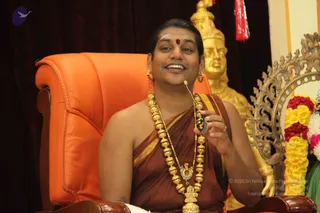
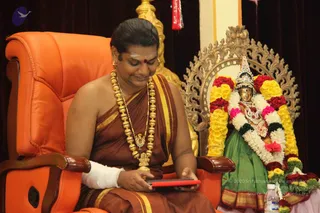
A photograph of a seated man in a brown and gold-bordered dhoti-style garment, bare-shouldered, wearing heavy multi-strand gold bead necklaces with a gold pendant, gold earrings, a red bindi and a white forehead marking. He sits in an orange leather armchair holding a small handheld microphone and smiles while speaking. Behind him a golden deity murti stands beside an ornate silver-framed mirror decorated with yellow and red flower garlands, with a dark velvet curtain behind.A seated man in a brown and gold-bordered saffron-toned dhoti-style cloth sits in an orange leather armchair, smiling as he looks down at a red tablet held in both hands. He wears a heavy multi-strand gold bead necklace with a pendant, gold earrings, a red bindi and white sacred marks on his forehead, and a white bandage on his left forearm. Beside him stands a decorated deity murti dressed in a green sari with red-bordered drape, adorned with a crown, jewelled ornaments and a garland of yellow, red, pink and white flowers. An ornate gold-toned arched backdrop and dark maroon curtain frame the scene, with a water bottle at the base.

ia-day12-temple-session

7 photosSource gallery
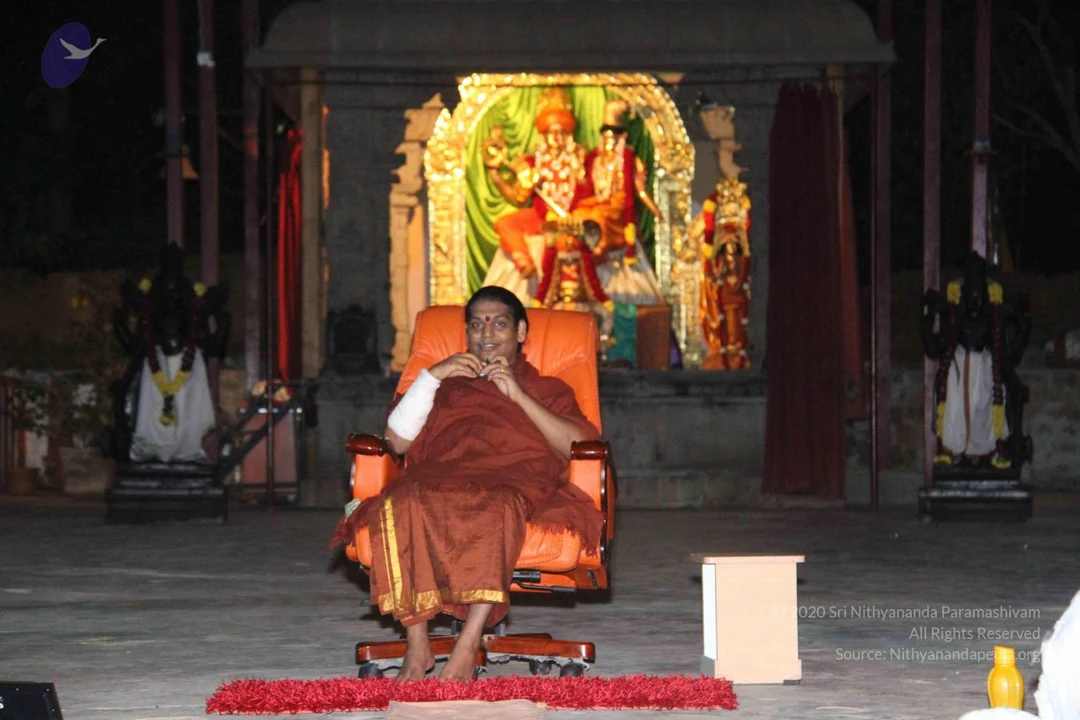
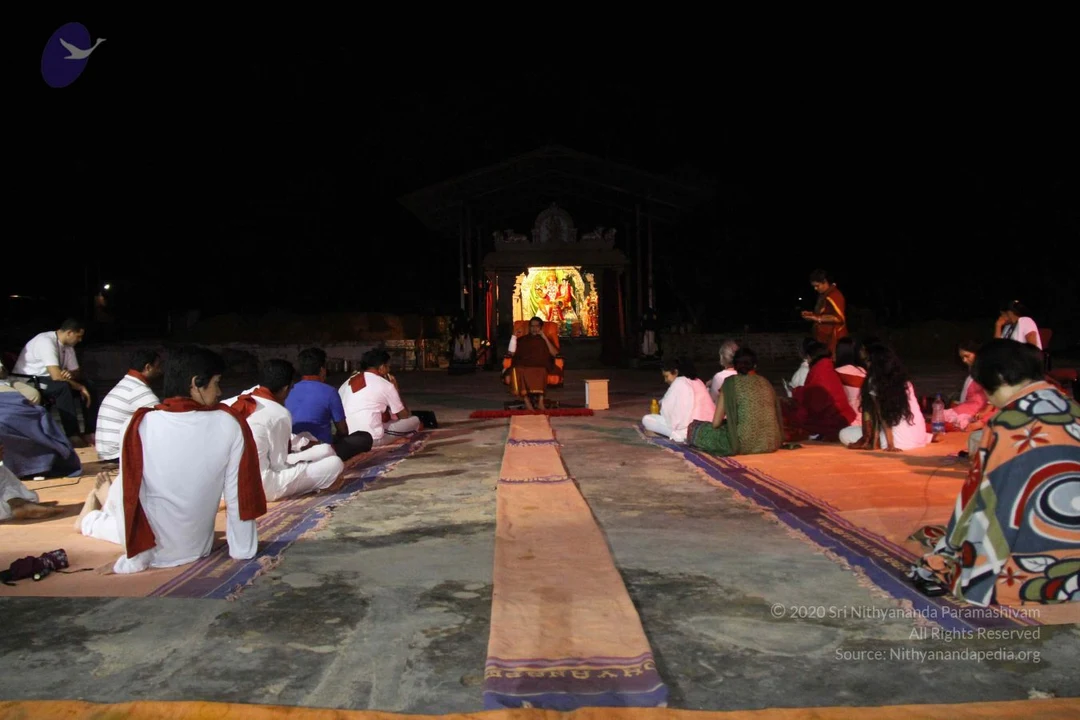
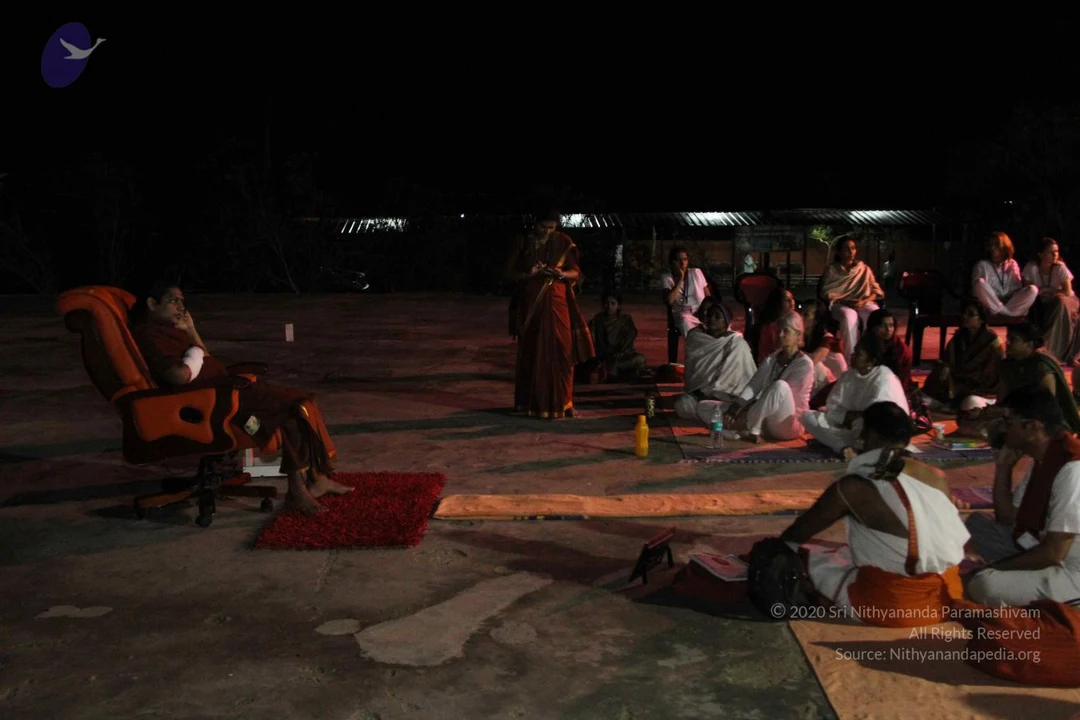
A dimly lit photograph of a seated person in a dark reddish-brown robe on an orange armchair, with a small red bindi and a thin necklace, hands resting on the armrests, smiling slightly. Behind is a glowing gilded shrine arch framing a deity murti with a green backdrop: a figure in orange with a crown holds a rod and a drum-like object, beside a seated goddess in red and white with a garland, and a smaller figure in orange to the right. Garlands of marigolds hang at the sides. The scene is dark apart from the lit shrine.A man in a rust-red monastic robe sits in a large orange leather armchair on an open-air stage at night, speaking with his right hand raised and holding a small microphone in the left hand. His right arm is wrapped in white bandage. Behind him, an illuminated shrine arch framed in gold holds two seated deity murti in orange and red garments, adorned with garlands, with a green backdrop and a standing attendant figure beside them. A dark curtain hangs at the right and a small wooden table sits at lower right. a person is seated at the centre, distinguished by his shaved head with a red bindi and a rudraksha-style robe of the speaker's presentation, while attributing the identity remains appearance-based only.A man in a rust-orange robe sits in an orange padded armchair on a stone-paved open stage at night. His right arm is bandaged in white and he has a red mark on his forehead; he smiles with his hands near his chin. Behind him stands an illuminated shrine with golden arch framing a green curtain, where a deity murti with a crown and a consort figure are seated with garlands. Red and white garlanded statues flank the stage on both sides. A small wooden podium sits to the right and a red mat lies at the front. a person is seated centrally, identified by appearance cues of his saffron-orange robe and ceremonial setting, as the page indicates his presence at this satsang.Night outdoor satsang at an open-air temple-style hall. A lit deity murti stands in a shrine niche at the back. A person in orange-brown robes sits on a raised chair facing the audience, with a small table nearby. Devotees sit cross-legged on mats across the stone floor: men in white kurtas with red shawls on the left, women in pink, green and white saris on the right. A standing attendant in orange garments with a red sash stands at the right edge. Floor mats in blue and orange line a central aisle.Night outdoor gathering at an open-air shrine. Devotees sit in rows on orange and blue cloth mats on a stone-paved courtyard, facing a small canopied pavilion lit by warm lamps where a lit deity murti or image stands behind a figure in an orange robe. Several seated people wear white with red shawls or scarves; others wear pink, green and patterned saris or orange garments. A figure in orange stands near the right edge, and a white bucket or vessel sits on the floor in front of the shrine.Night-time outdoor satsang on a concrete ground lit by dim artificial light. A person in a dark orange-red robe sits in a tall orange reclining chair on a red mat at left, appearing to address the group; the appearance-based identification is uncertain. Seated devotees in white and orange clothing sit on mats and cloths facing him, some with water bottles and books nearby. A woman in a deep orange sari stands at centre, and a corrugated-roof shelter with lights is visible behind the group.
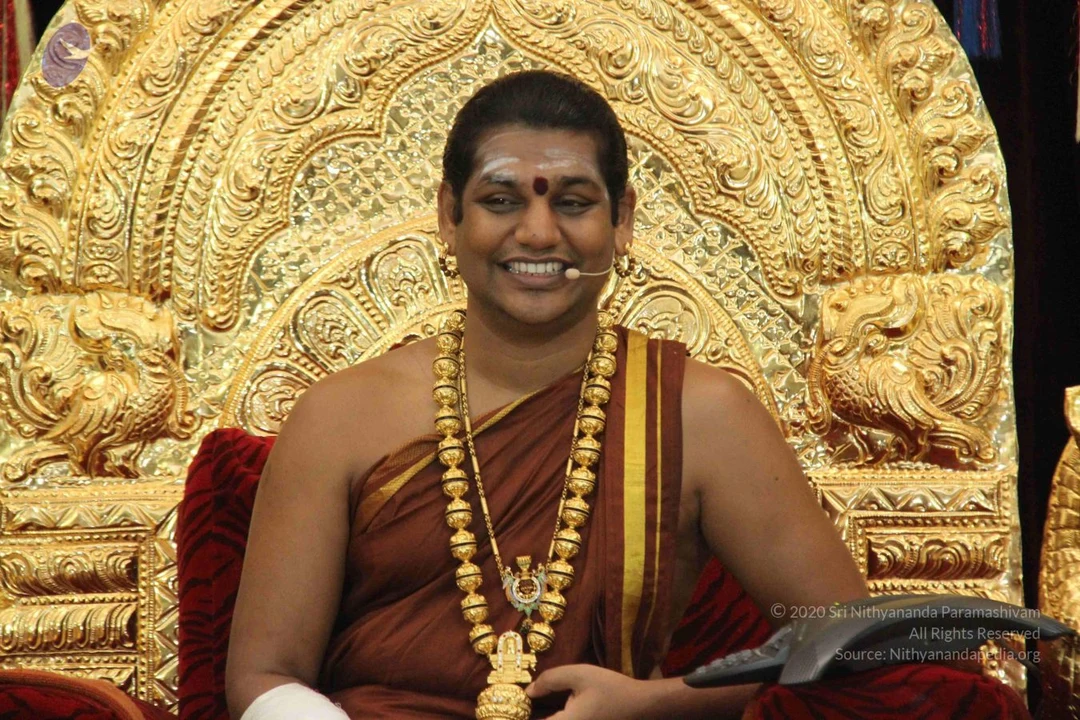
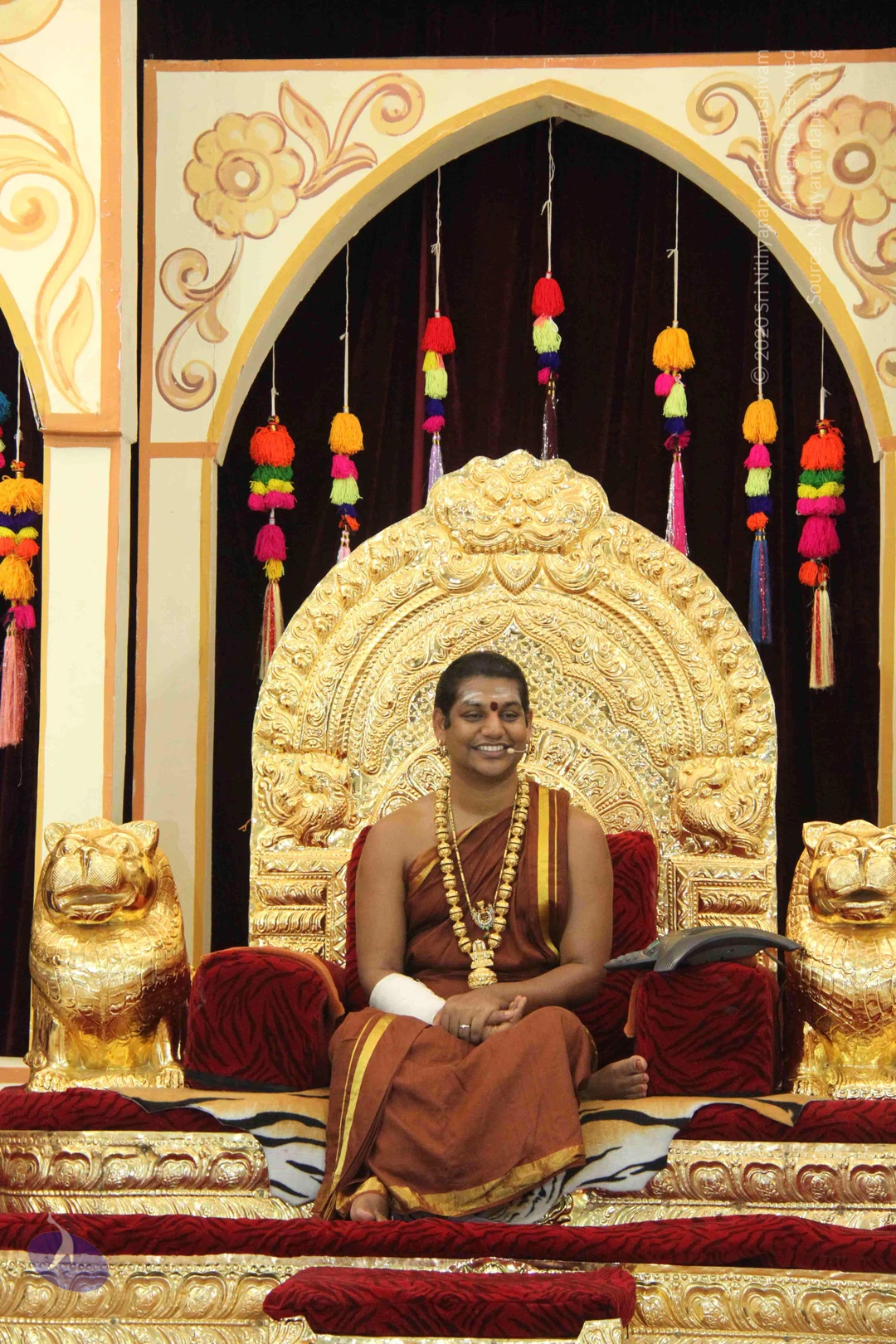
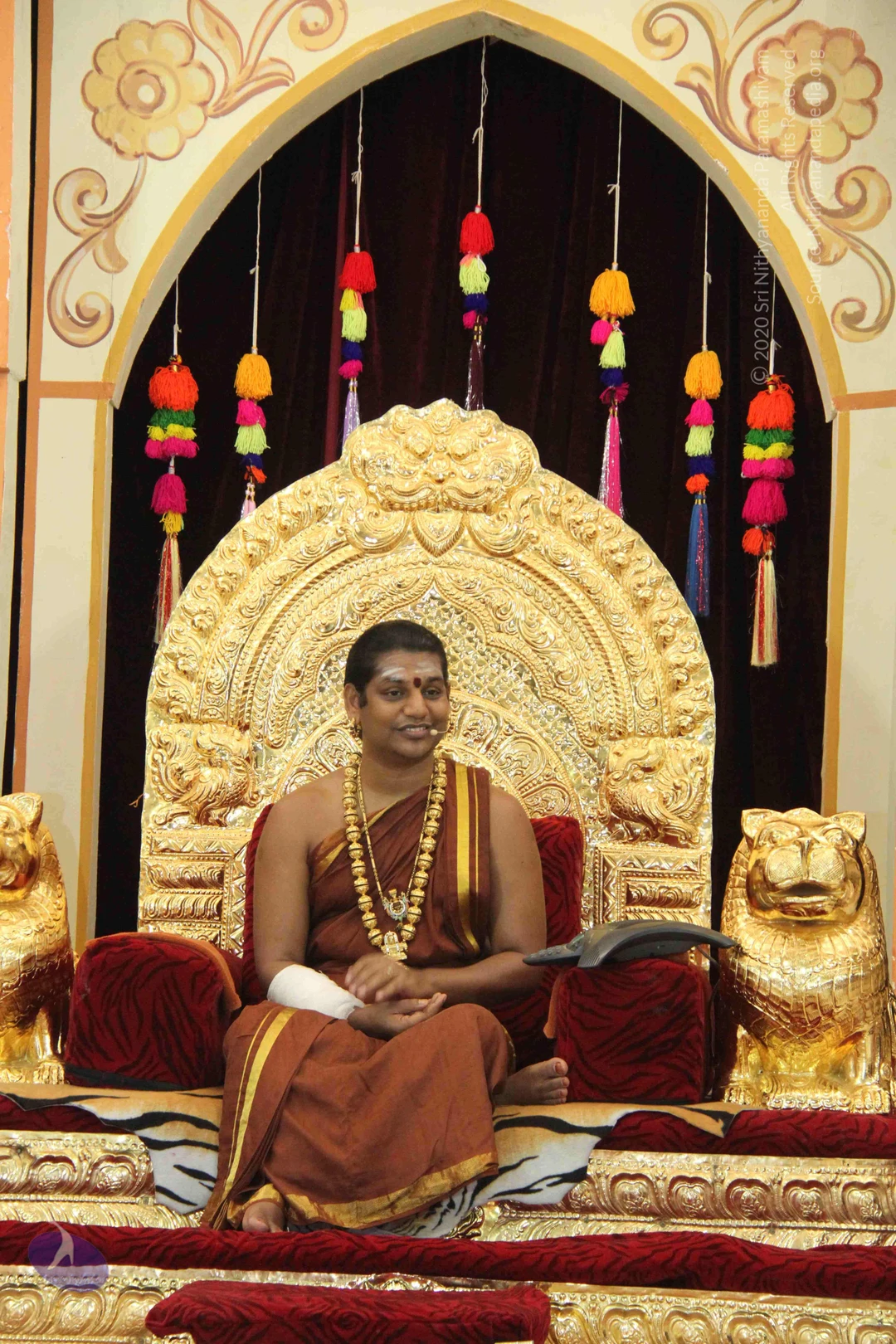
temple
16 photosSource gallery
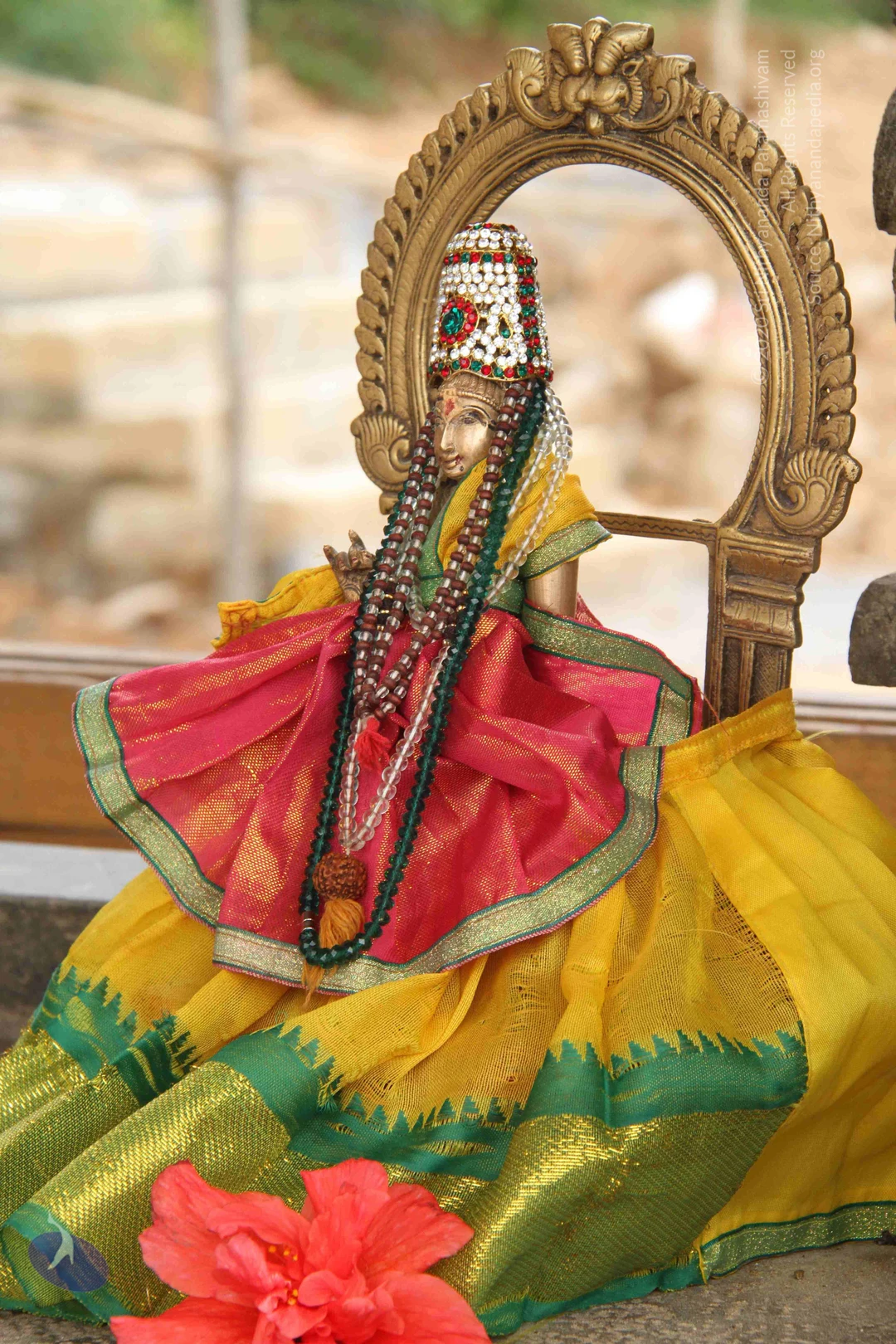
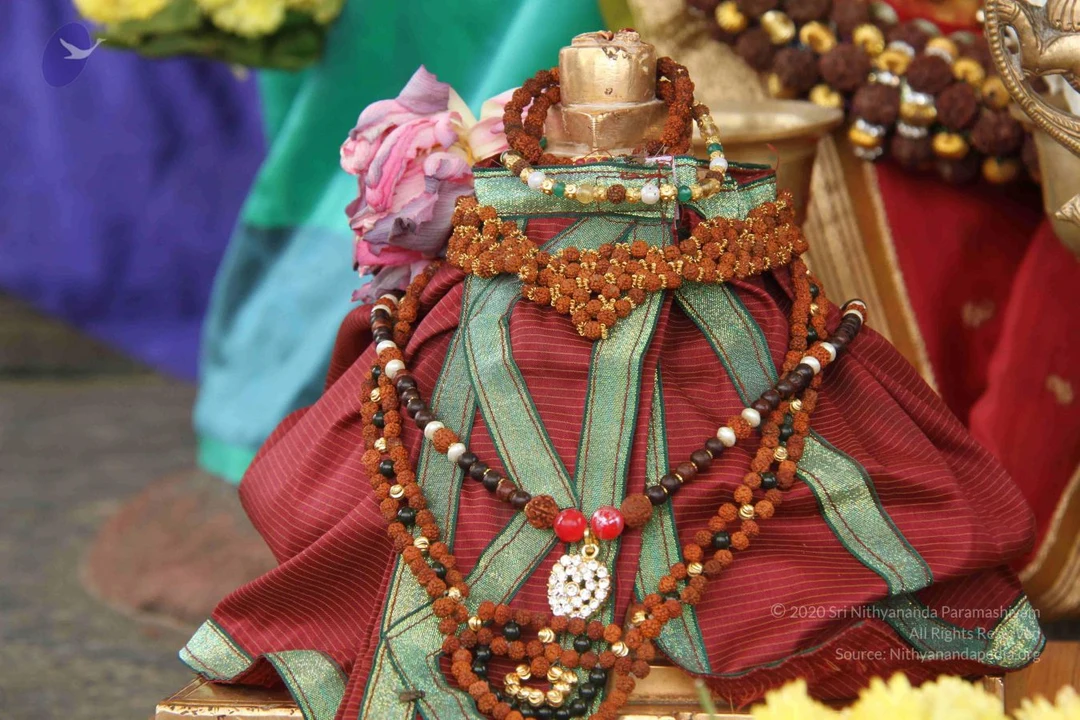
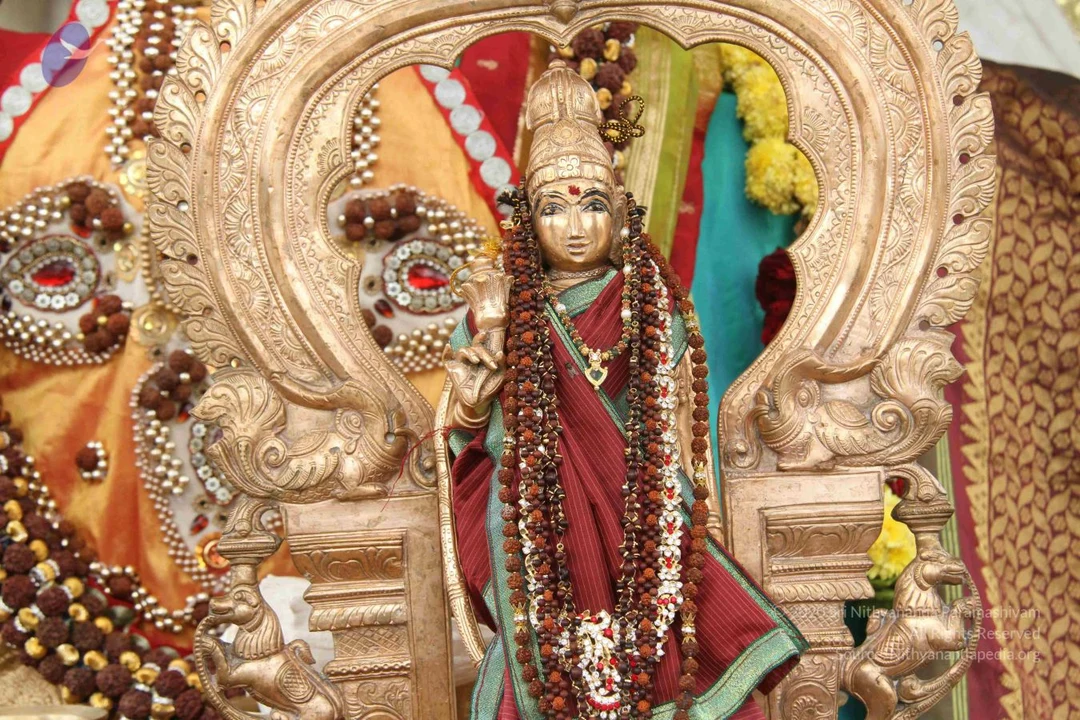
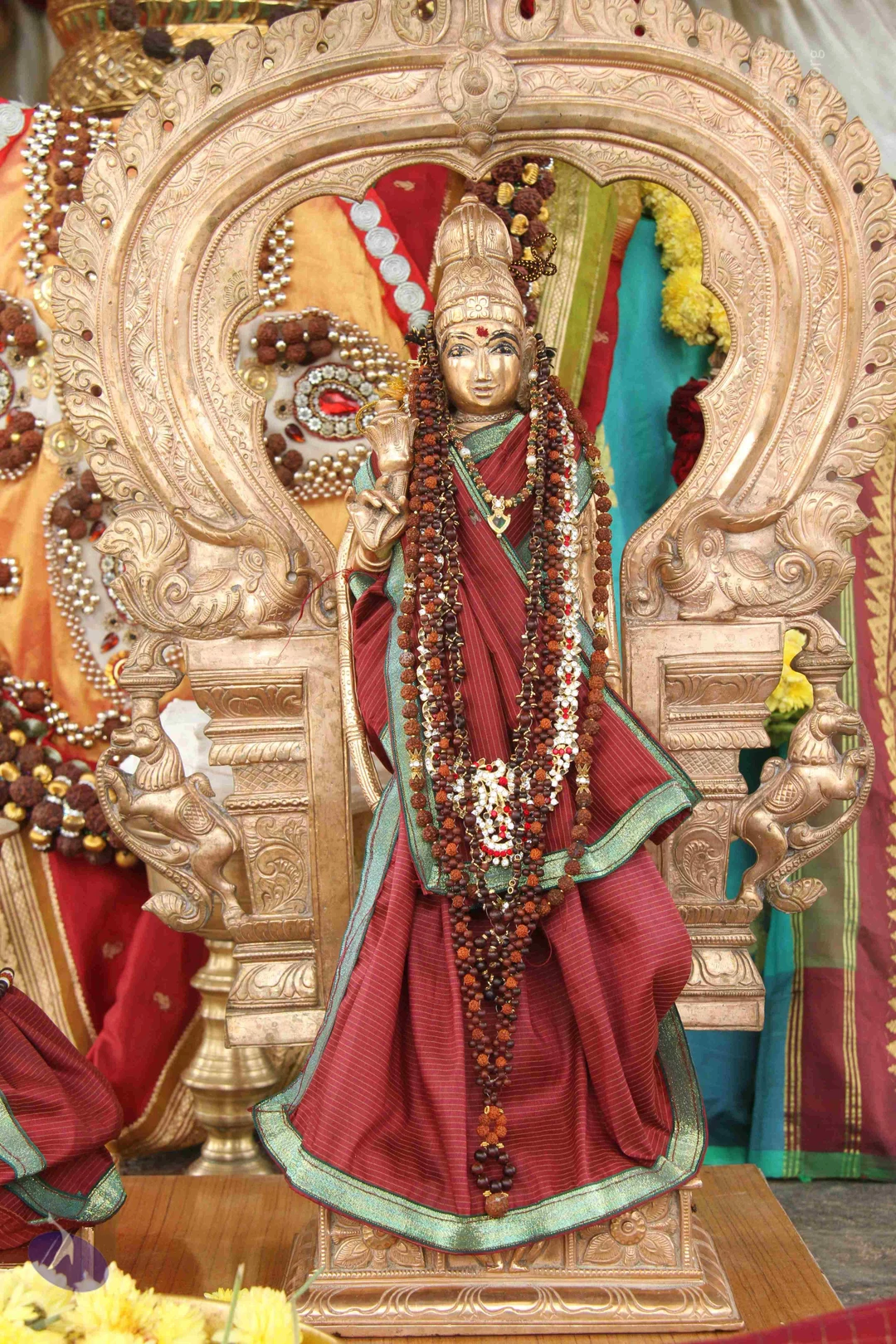
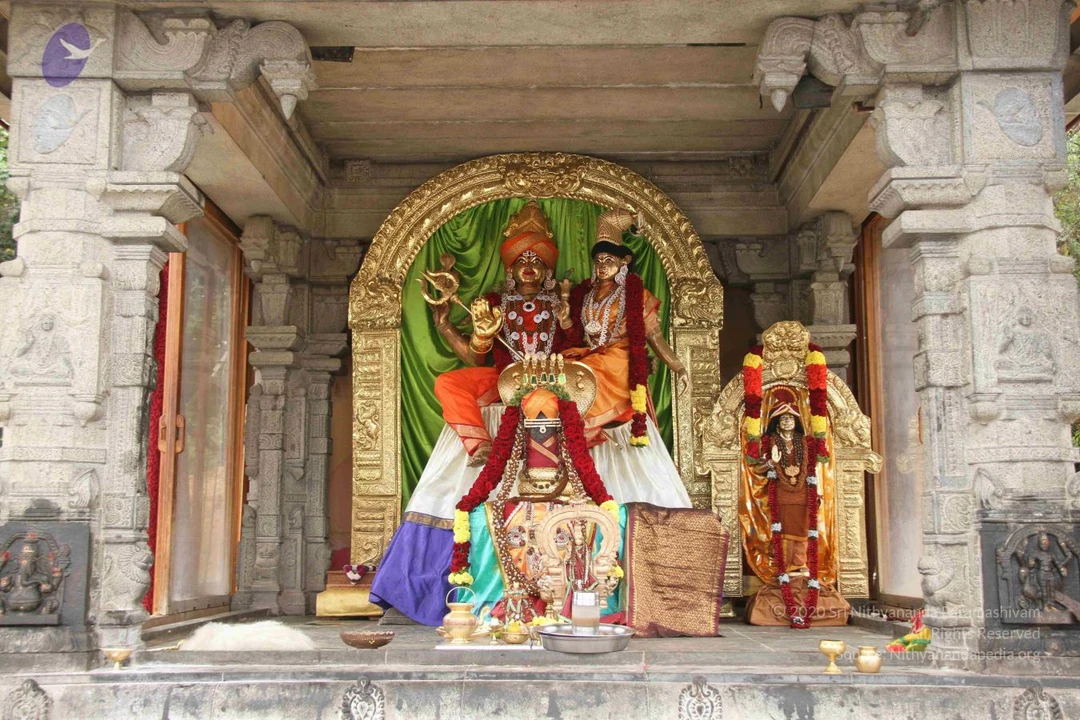
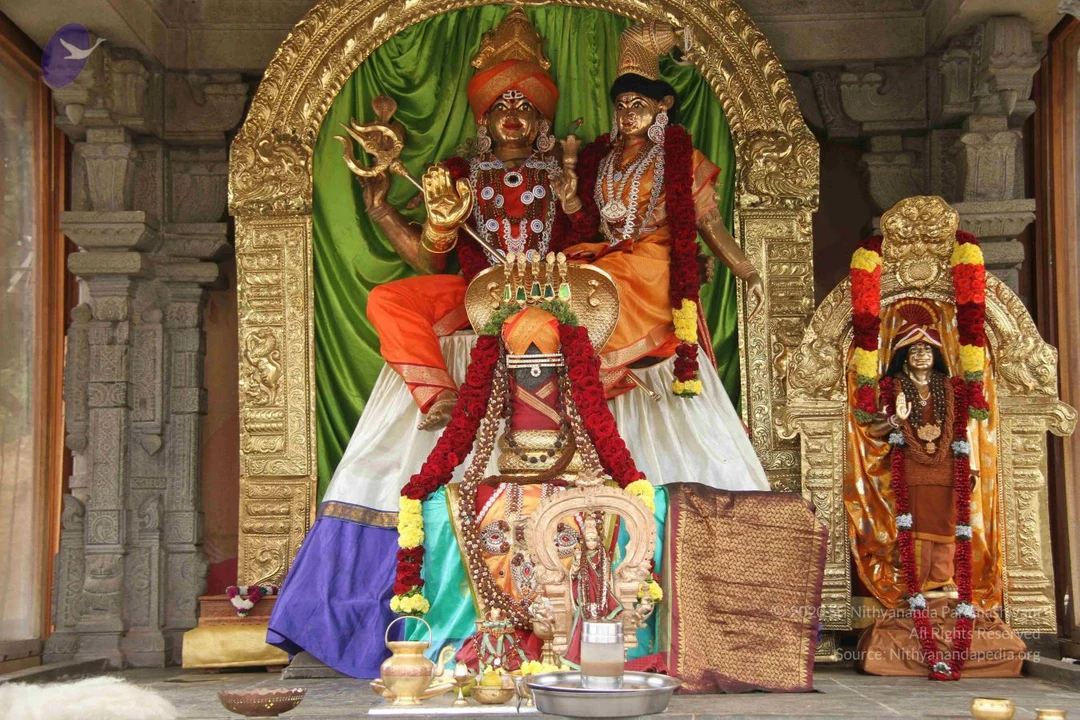
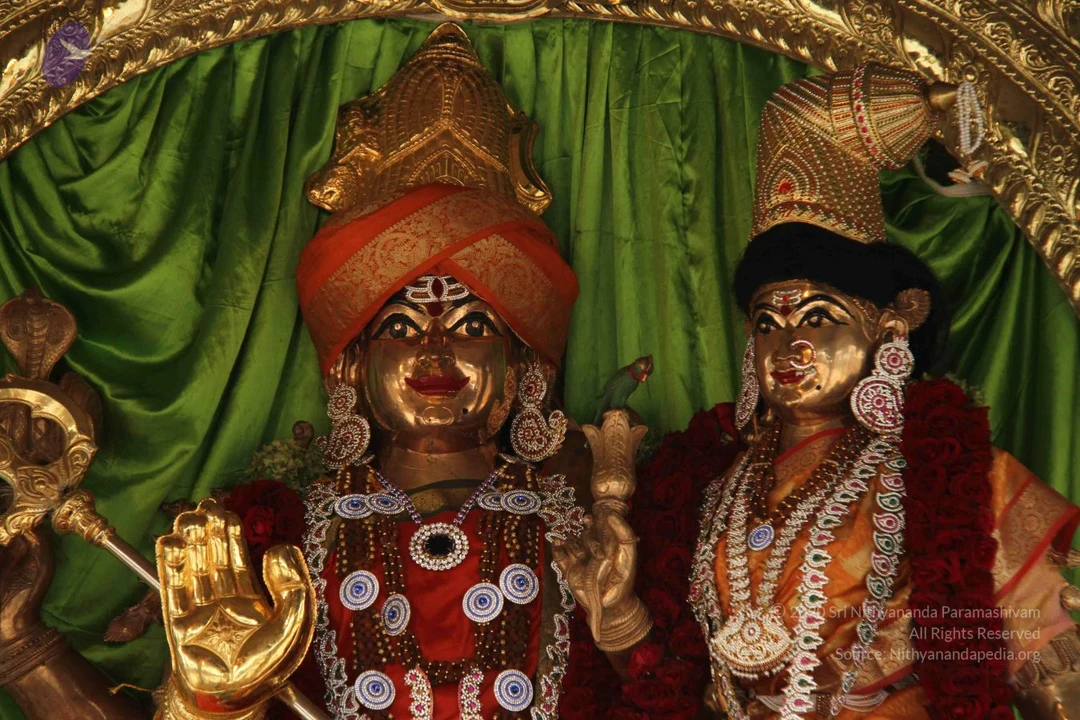
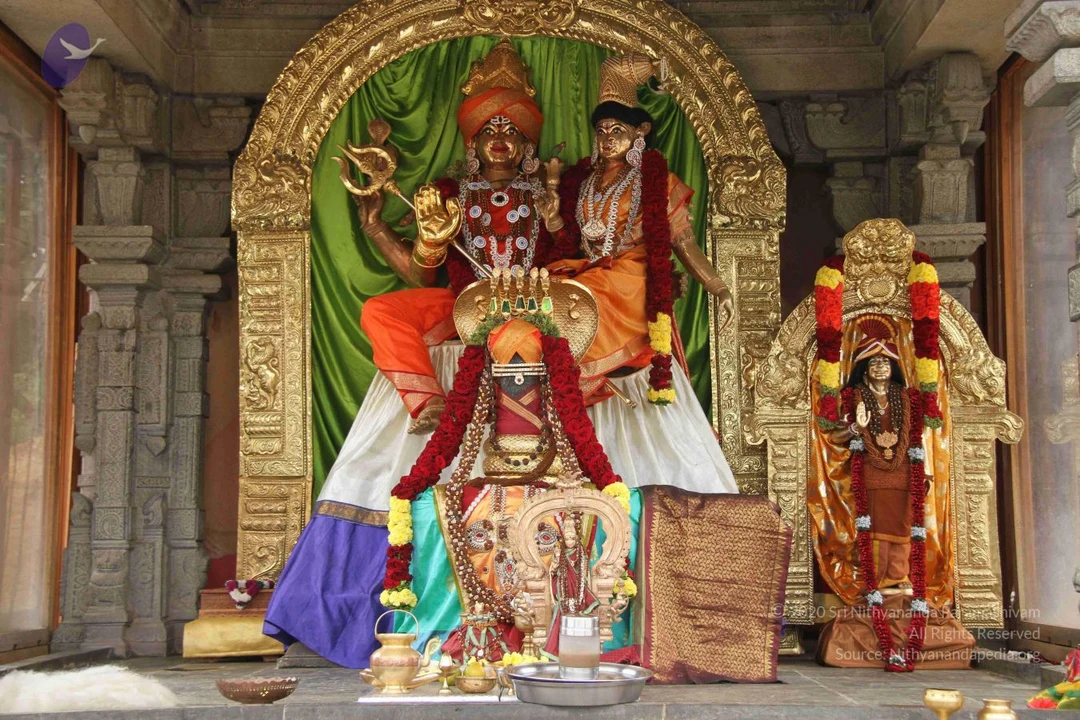
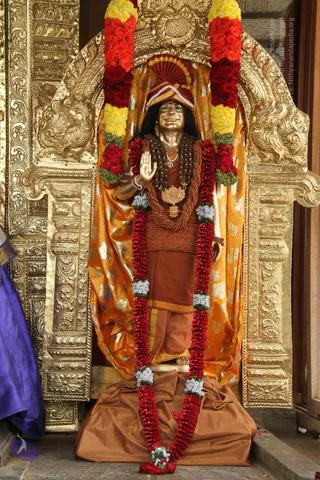
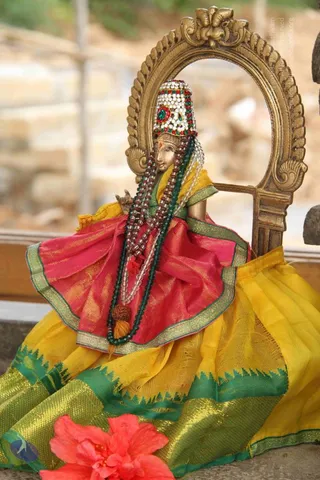
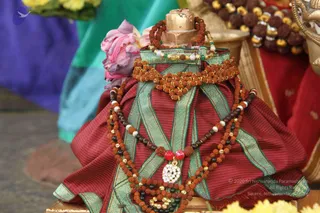
A golden statue stands in an ornate gilded shrine niche, draped with an orange and gold patterned cloth and framed by red and yellow flower garlands. The statue wears a red and gold turban, rudraksha mala necklaces, a gold pendant, and a reddish-brown dhoti and shawl, with its right hand raised in blessing. Heavy repoussé gold panels surround the niche, and a red flower garland hangs down the front. A purple cloth edge is visible at the left. The figure is a statue, not a living person, and the statue's identity is not established by the visible evidence.A gilded statue of a guru figure stands in an ornate gold-leaf niche with floral carvings. The statue wears a red and gold turban, rudraksha mala necklaces, a large gold crown-shaped pendant and a saffron-orange cloth draped behind it. Its right hand is raised in blessing. Garlands of red roses, yellow flowers and white blossoms frame the figure. The statue is shown as a depiction, not a living person, so no in-person candidate is present.A golden deity murti pair stands before a green silk backdrop within an ornate gilded arch. The left figure wears an orange turban-style crown, a red-orange garland with white and blue-rimmed discs, and holds a golden trident in one hand while the other hand is raised in a blessing gesture. The right figure wears a golden crown, a red rose garland, a white and gold necklace, and an orange sari, with a pink flower held in one hand. Both have red bindi and gold earrings. The deity murti are statues, not living people, and no person is pictured.A decorated metal deity murti of a goddess seated on an ornate golden throne (peetha) with arched back. The figure wears a red and green sari, layered rudraksha malas, and a pink flower on the crown, holding a hand raised in blessing. Behind are an orange and gold draped cloth, red roses, and yellow marigold garlands, with a small kalasha-like offering at the lower left decorated with beads and a rudraksha mala. The setting is a temple shrine, with a dark purple and teal cloth hanging to the side.A small doll-like figure of a seated woman in a yellow and green silk sari with pink and gold drapery, wearing a jewelled crown with red and green stones and multiple strands of beads and rudraksha over the shoulders. She is seated before an ornate gold-toned arched frame, with a red hibiscus flower in the foreground. No physical people are present; the figure is a statue or doll.Close-up photo of a golden linga-shaped ritual object draped in a maroon silk cloth with green-gold zari borders, adorned with layered rudraksha malas, dark bead strands, a red-and-white stone pendant, and a pink rose. Yellow marigolds and brass lamps appear at the edges, with a purple and green fabric in the background. No people are visible.
navaratri-culturals

176 photosSource gallery
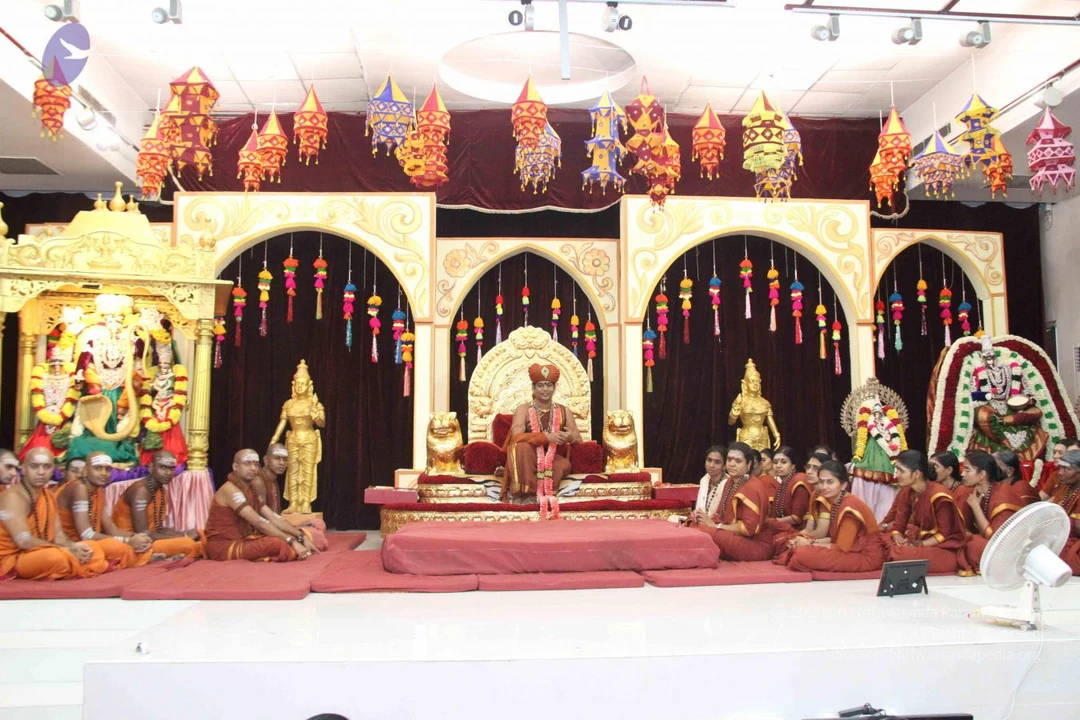
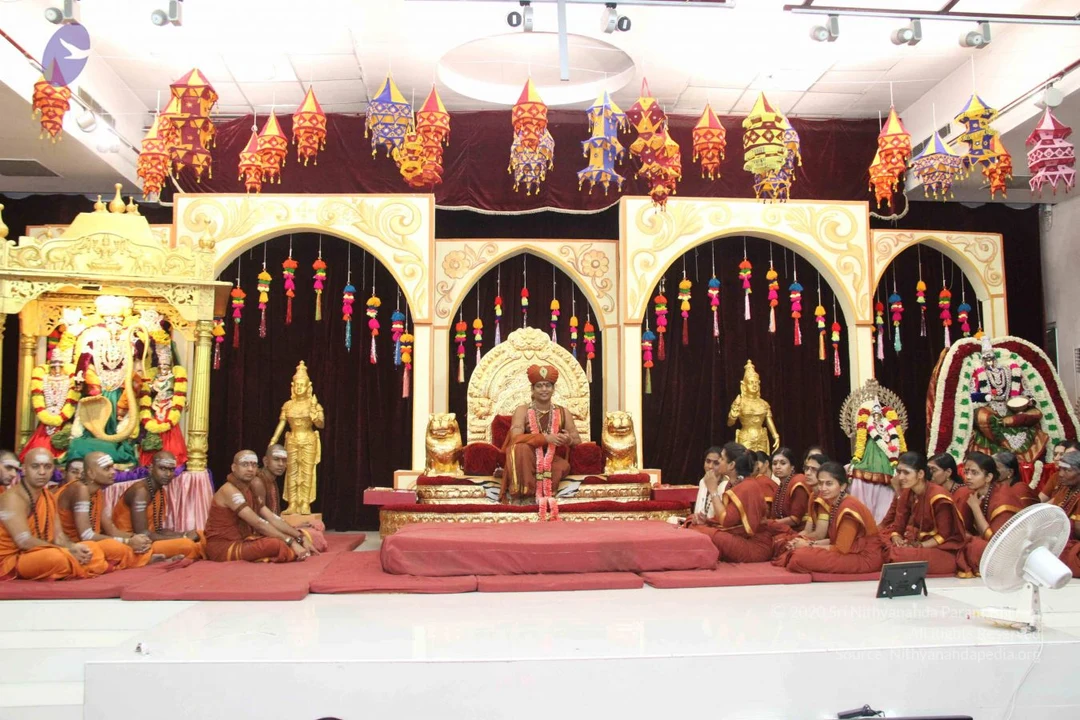
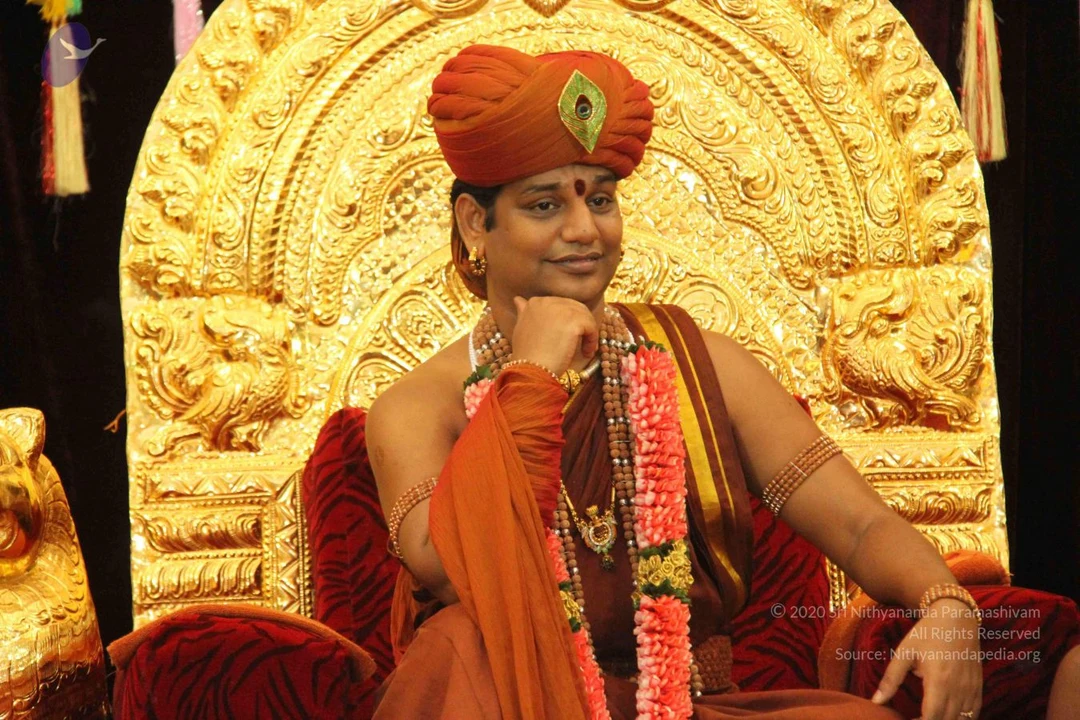
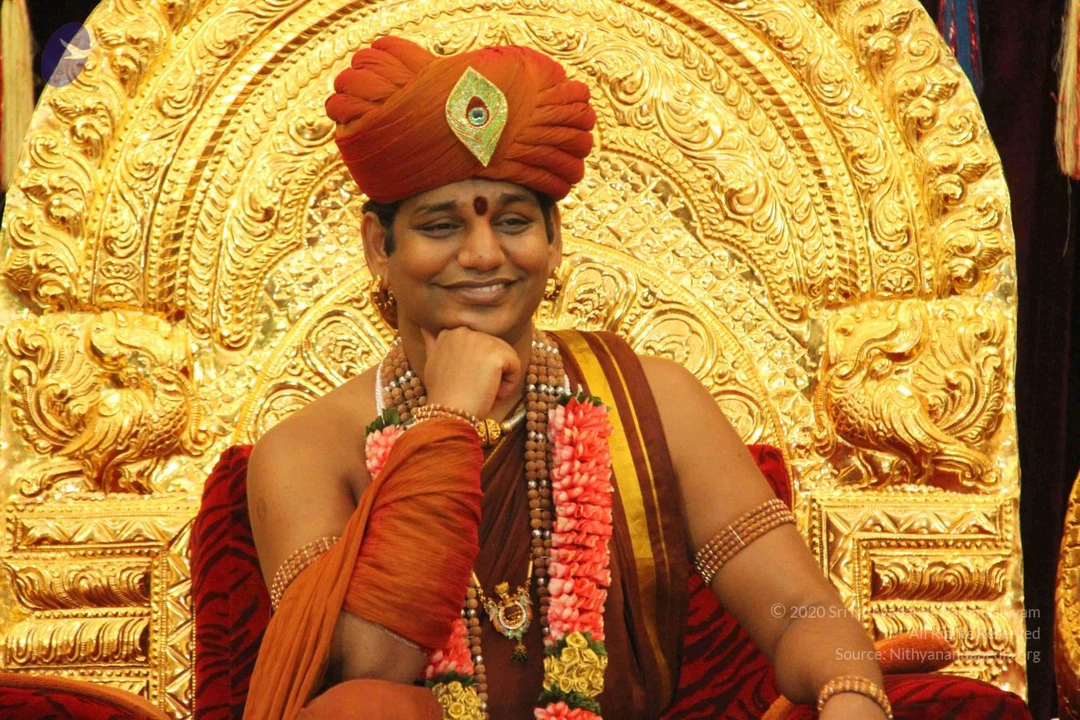
A stage set for a ceremony in a temple-style hall. Seated on red mats in front of the stage are men in saffron robes and women in orange-red saris, several with folded hands. Golden statues of female figures flank the throne, and a large decorated deity murti of Ganesha sits under a golden canopy on the left, with a garlanded deity image on the right. Hanging paper lanterns in red, yellow and blue decorate the ceiling, and draped garlands fill the arches behind.Indoor satsang stage with a gilded lion-armrest throne at centre, where a man in a red-and-gold robe and a red turban sits, wearing a long red-and-white flower garland. Golden figures of deity murtis flank the throne, and a gilded deity shrine with a Ganesha-like murti and flower garlands stands at left. Seated devotees in saffron and orange robes and rudraksha malas sit on red mats in rows at left and right, and a woman in a saffron sari sits near the front right. Strings of colourful paper lanterns hang from the ceiling above maroon drapes with floral garlands. A white fan stands at the bottom right.A photograph of a festive stage in a hall decorated with hanging colourful paper lanterns and tassels. A central seated figure sits on a gold throne with lion-shaped armrests, wearing a red-orange garment, a red-orange turban-style headwear and a beaded garland. Golden statues flank the throne, and a decorated deity murti with flower garlands sits on a gold palanquin at left, with another adorned murti at right. Robed devotees in orange and saffron clothes sit on red cushions on either side of the stage, some seated on the floor at front. A white table fan stands at the lower right.A man seated on an ornate gilded throne with an arched back carved with lion motifs, flanked by two gold lion sculptures. He wears a rust-red turban with a jewelled ornament at the front, a dark-red shawl over a brown robe, layered rudraksha and bead malas, a gold chain, bangles on both wrists, and a long garland of pink and white flowers draped over his chest. Hanging tassels in pink, green, blue and orange decorate the top of the throne backdrop. A small purple circular logo appears at the upper left. The man has an appearance-based label of Swamiji (probable), seated in a throne setting with distinctive ceremonial cues including the turban, rudraksha malas and ornate gold clothing and jewellery.A photograph of a seated man in an ornate golden throne with carved lion heads at its sides, framed by a cream arch with floral gold scrollwork and dark maroon velvet drapes hung with multicoloured tassels. He wears a rust-orange turban with a green jewel, a rust-orange cloth wrap over his bare torso, and a long pink and white flower garland falling to his knees, along with beaded rudraksha-style malas and gold bangles. He sits with one arm resting on a red cushion and smiles. Appearance-based label: a person, seated in the role of the presiding teacher on the throne.A seated man in a rust-red turban with a green jewel and a rust-red dhoti-style wrap sits smiling on an ornate gold throne with carved lion heads, gilt lion figures flank him, and a red-and-cream tiger-striped cushion lies beneath. He wears a long pink-and-white flower garland, rudraksha beads, gold bangles and a gold necklace. Behind the throne hang red, orange, green and pink tassels against dark maroon drapery under a painted cream arch with gold floral scrollwork. Swamiji (probable) seated on a throne, wearing a turban, rudraksha mala and gold necklace, with a garland across his body.

chandi-homa
51 photosSource gallery
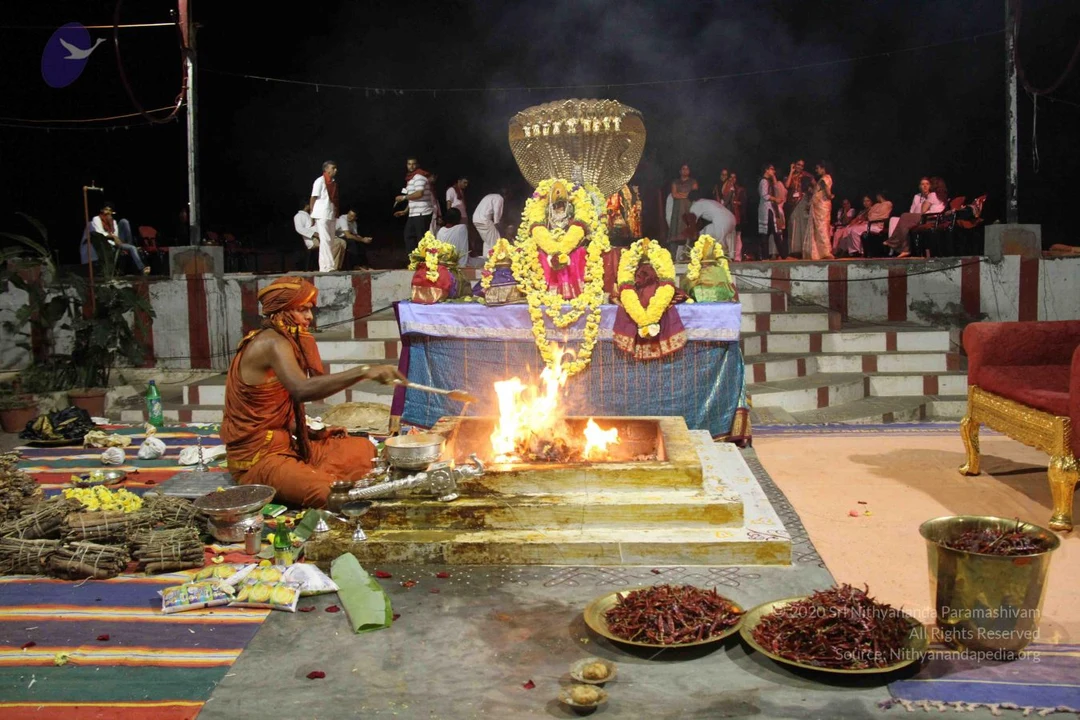
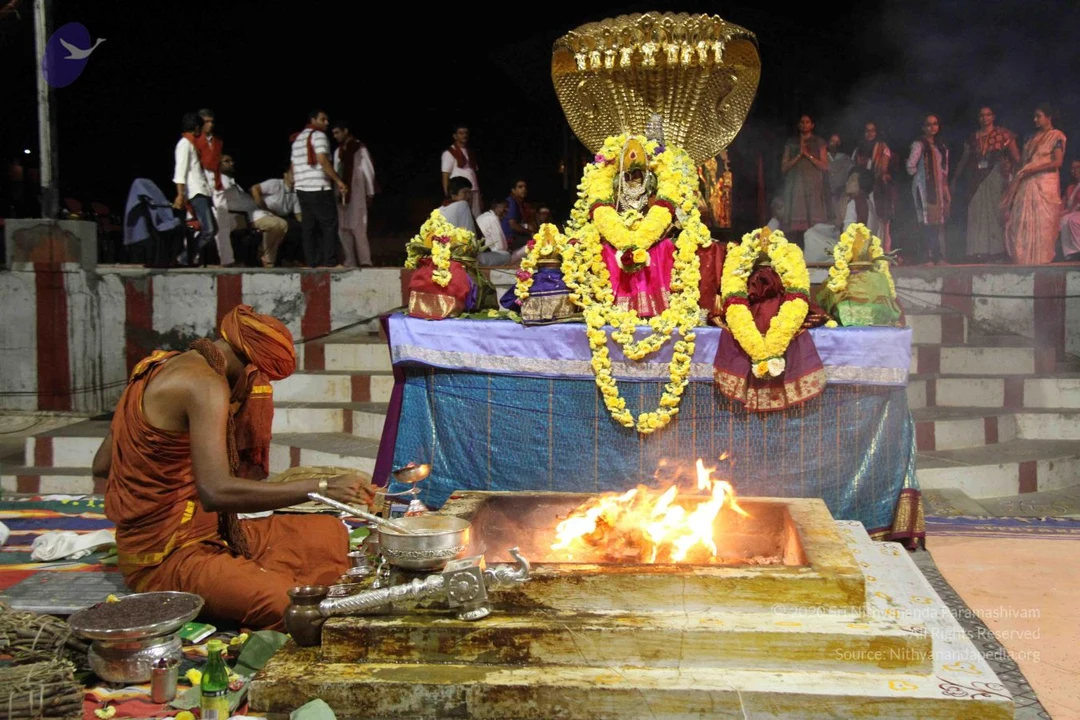
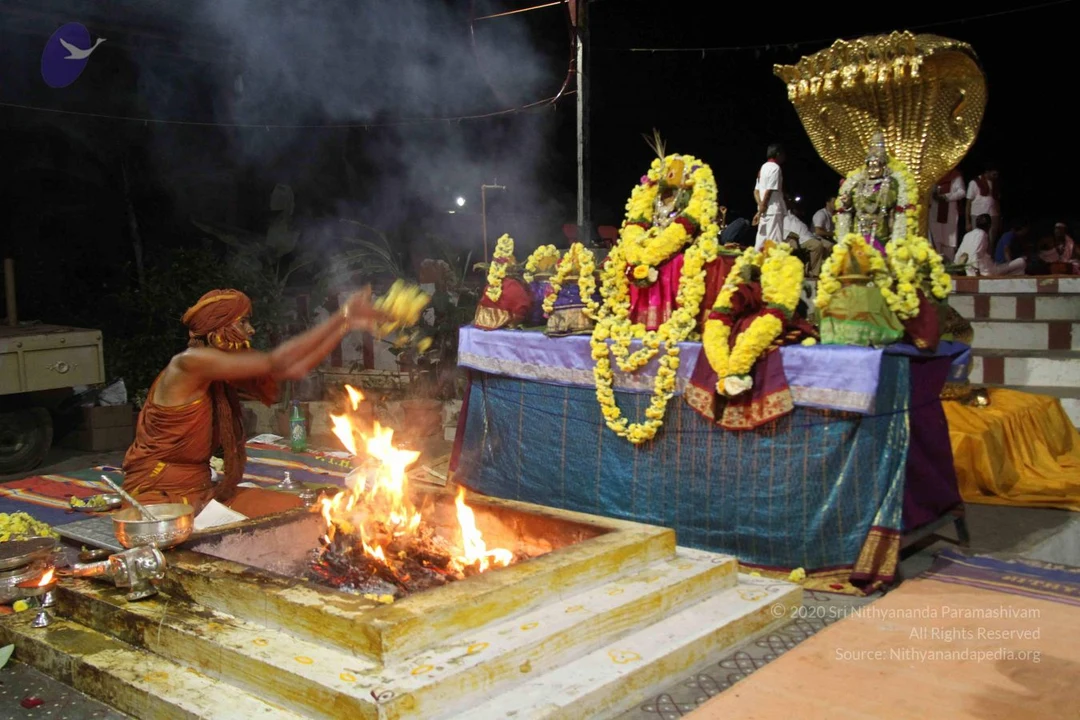
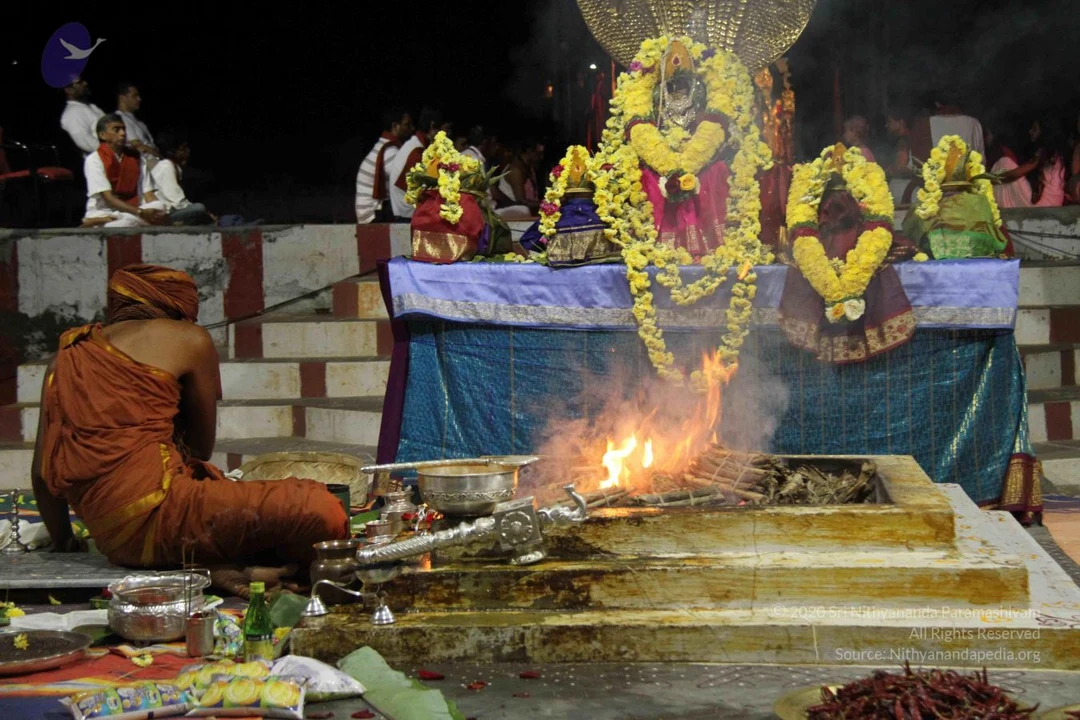
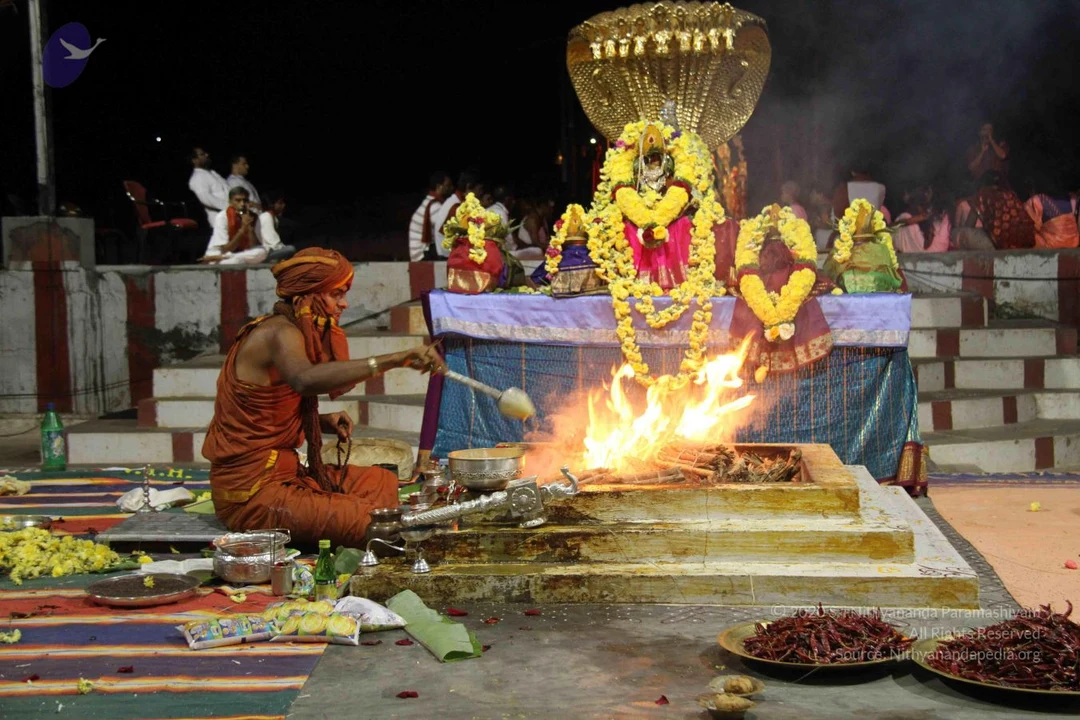
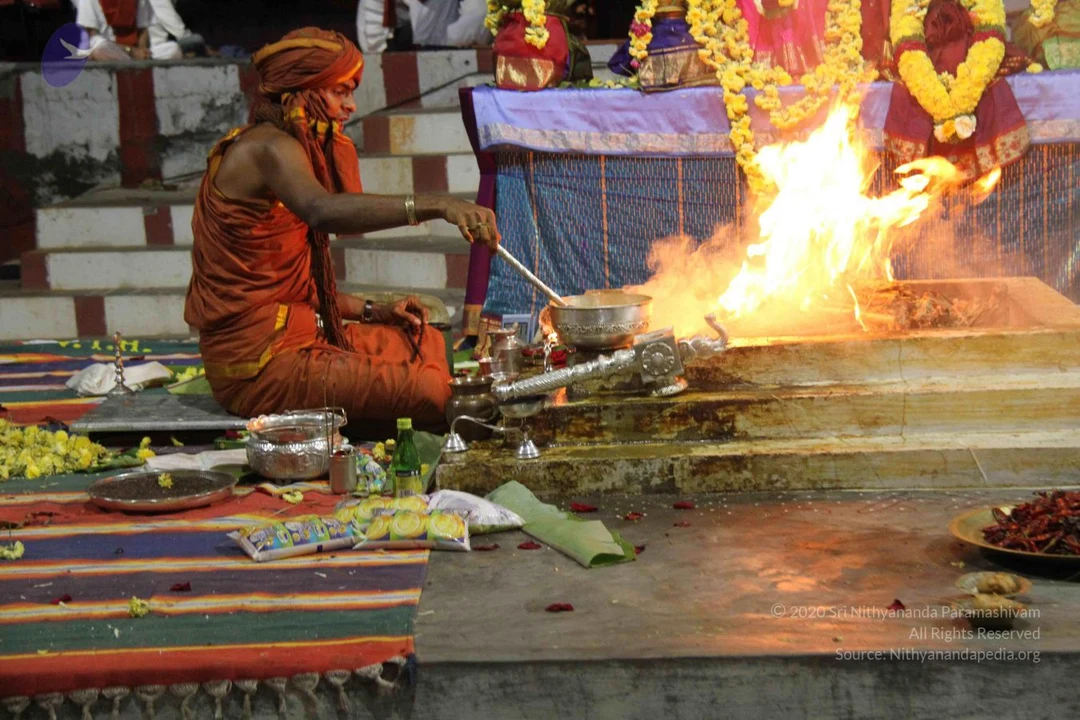
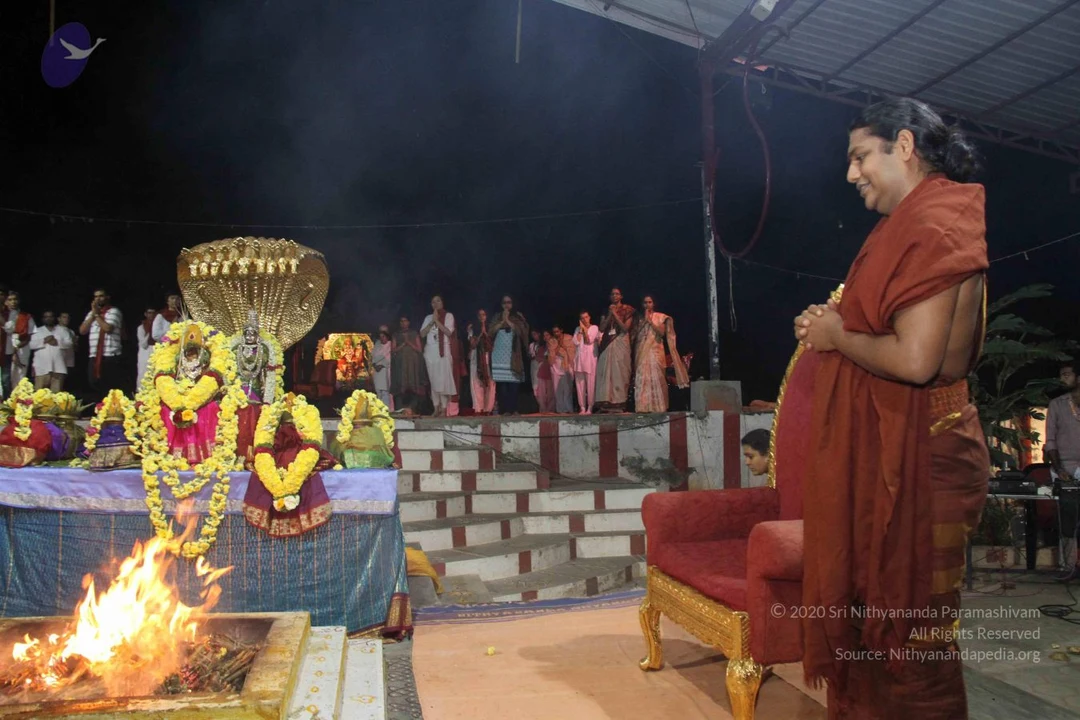
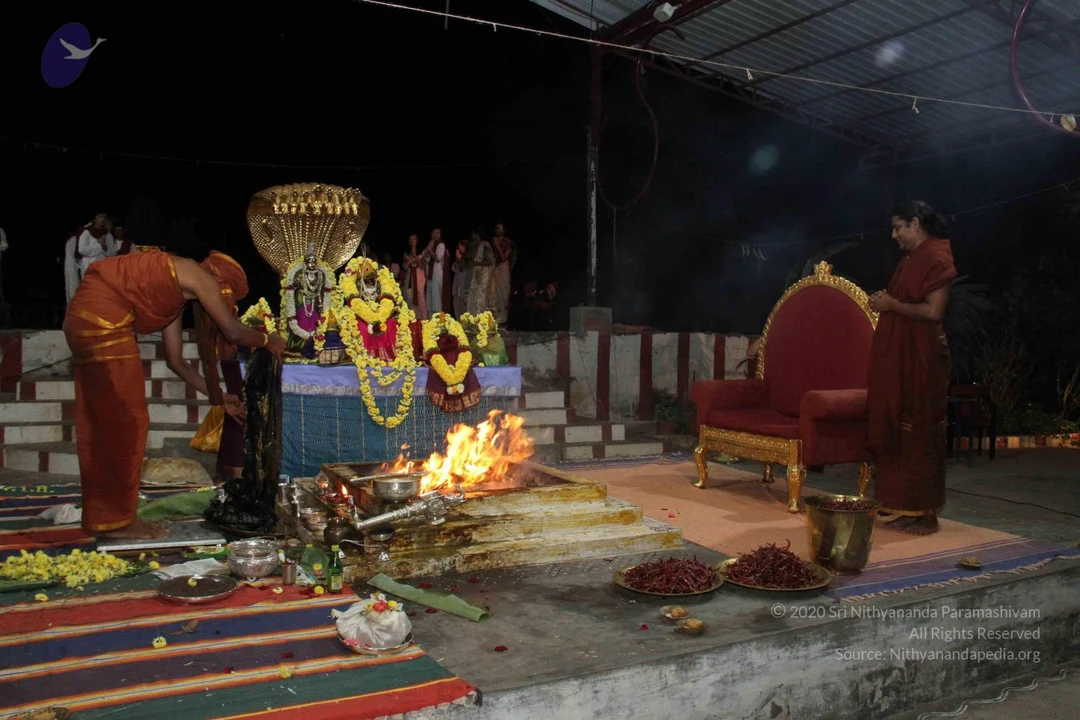
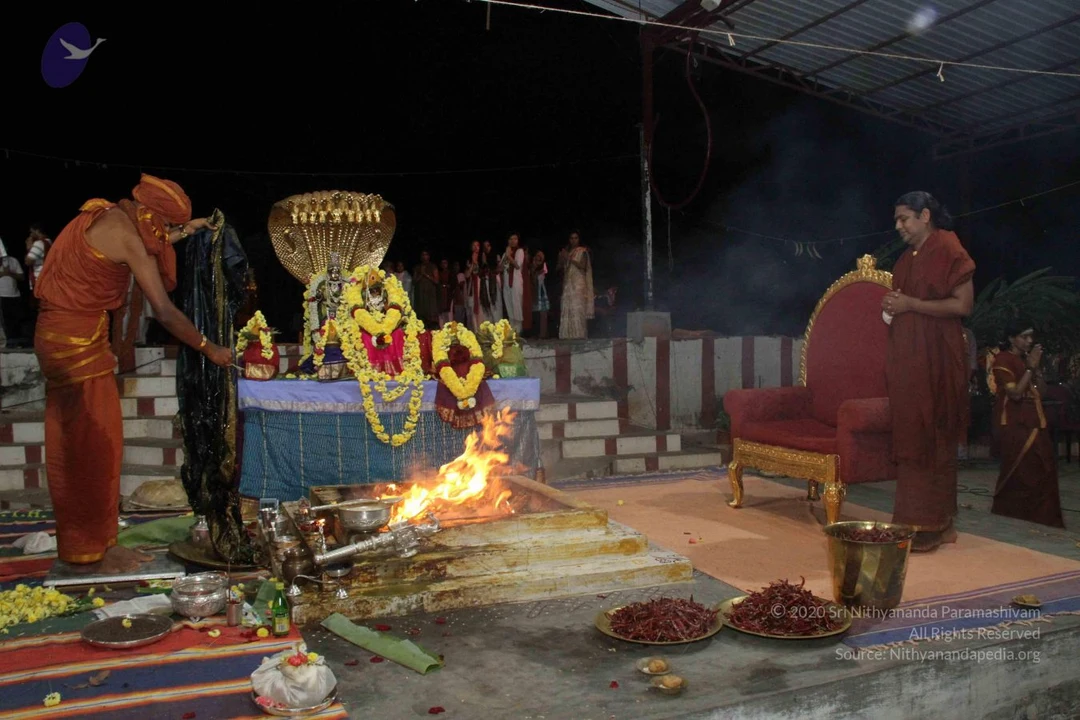
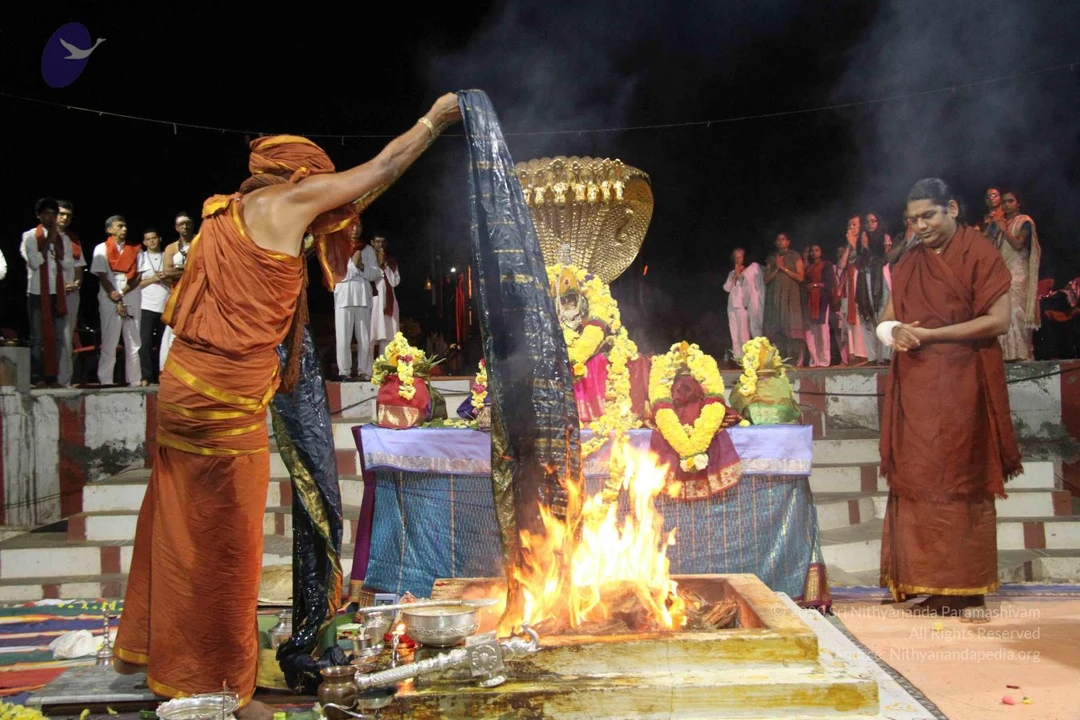
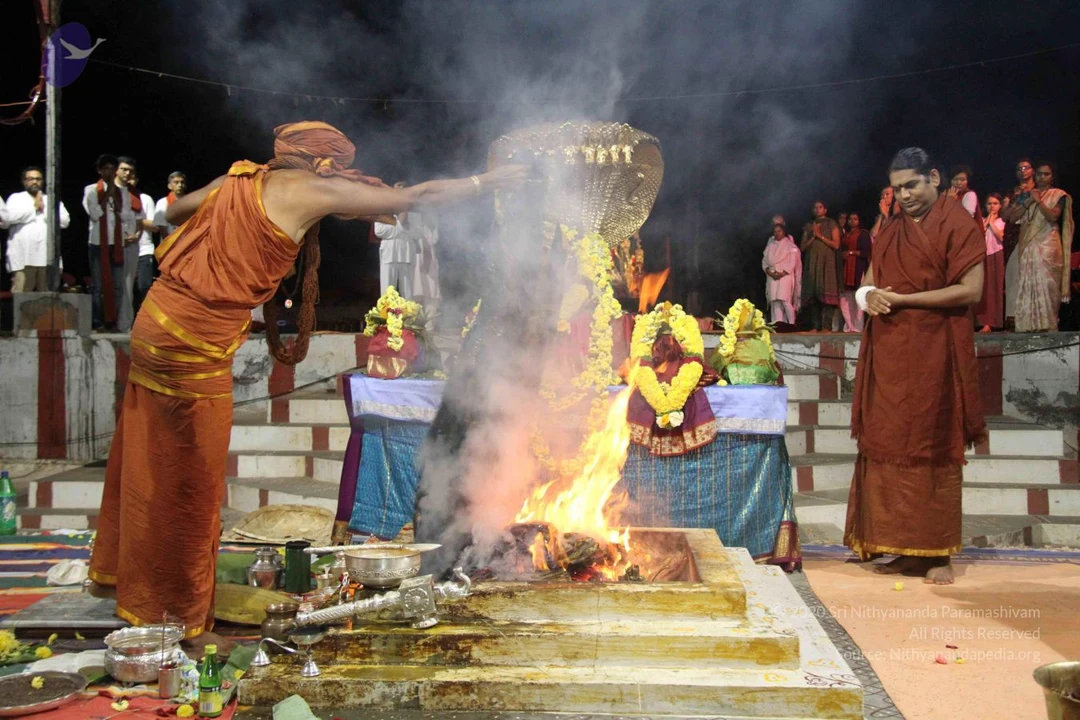
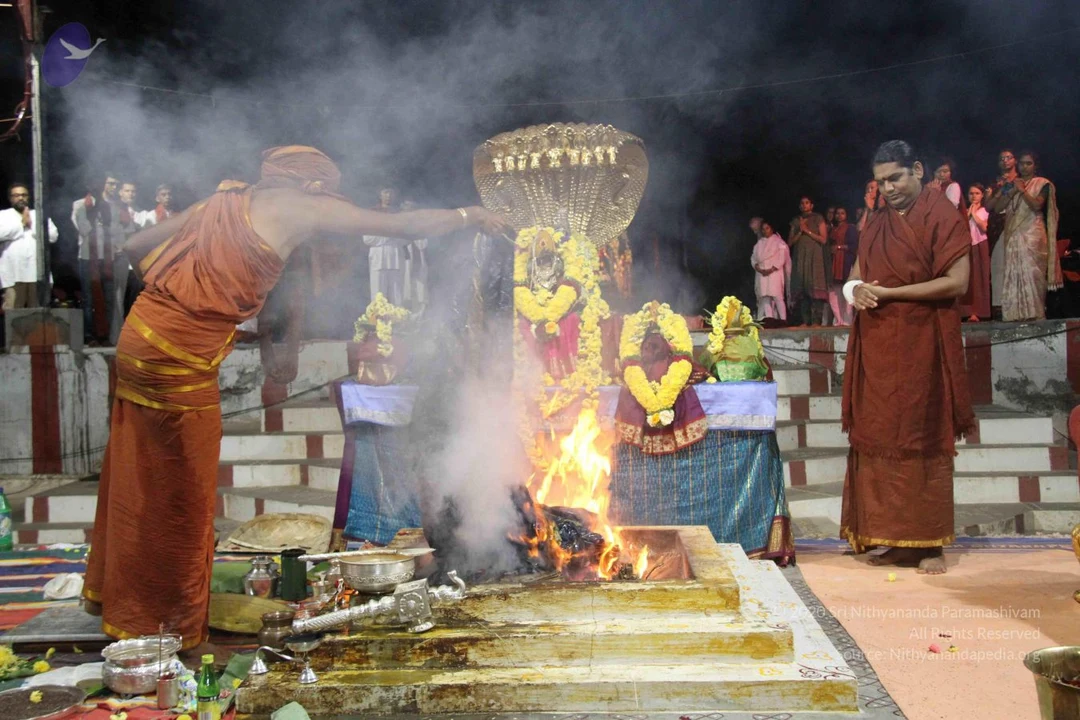
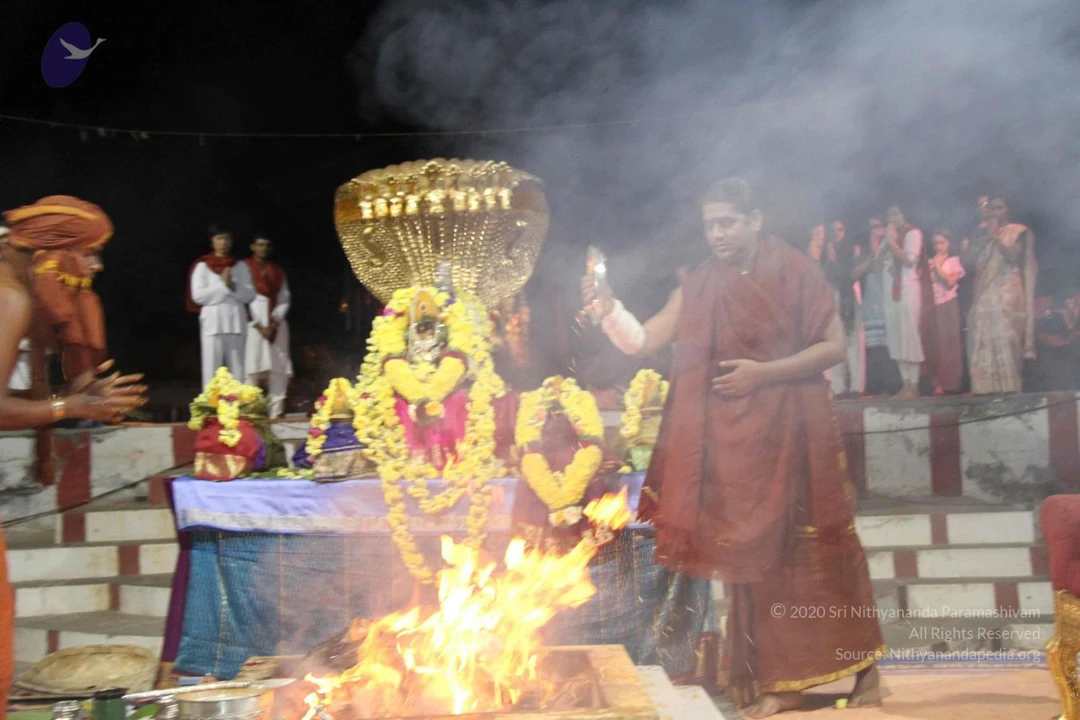
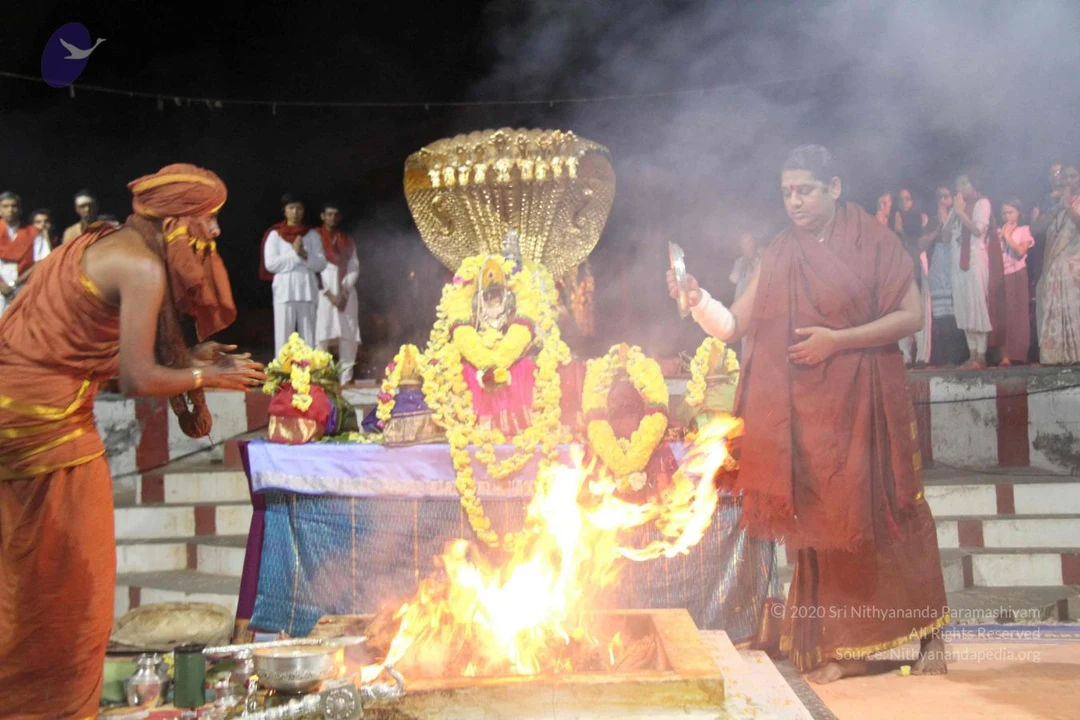
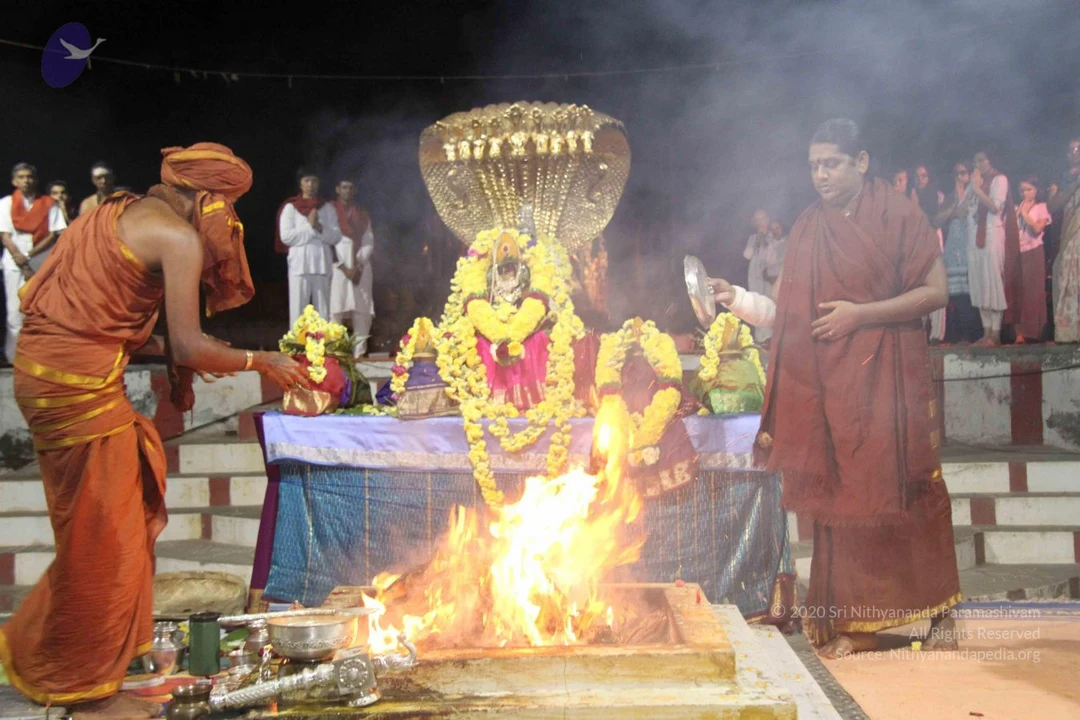
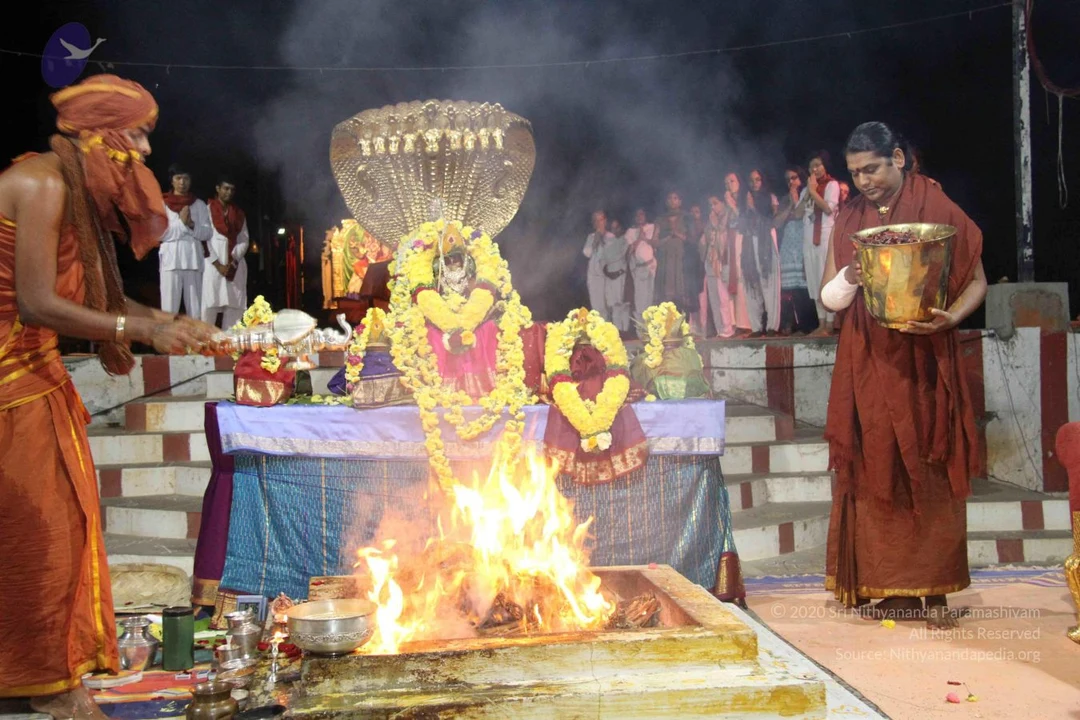
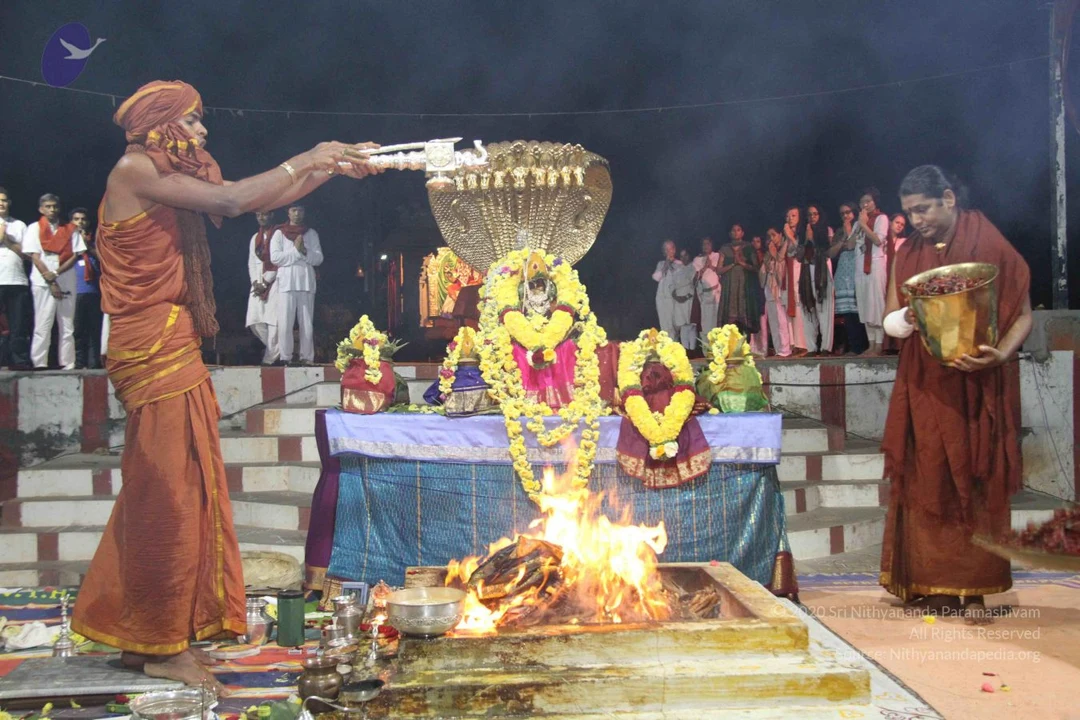
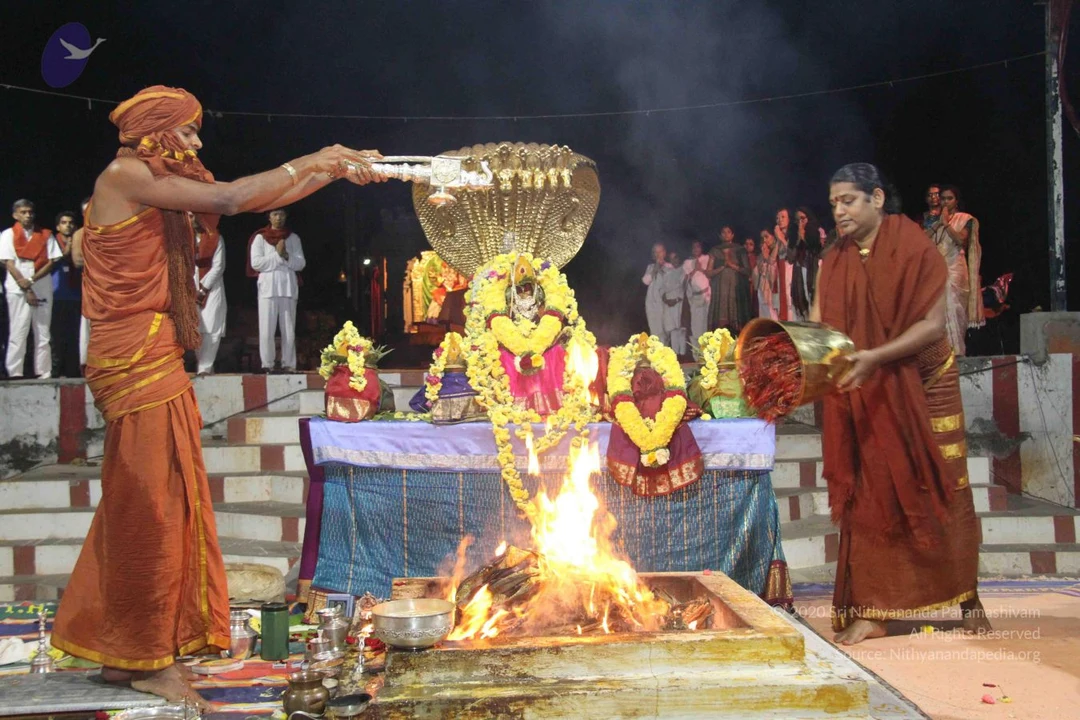
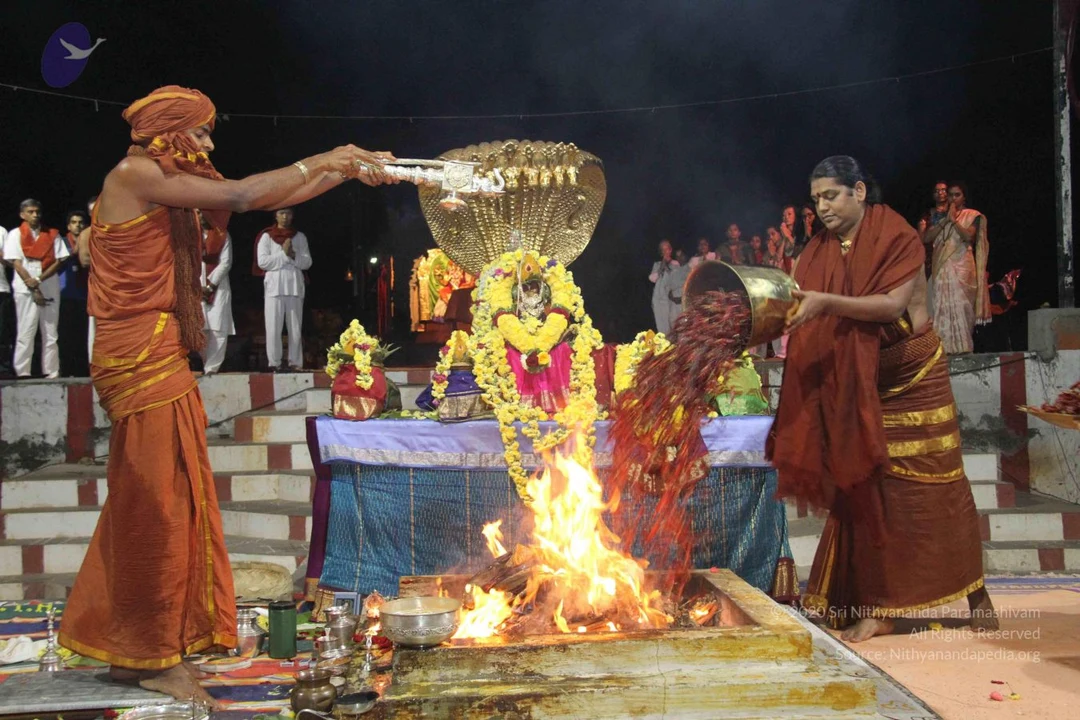
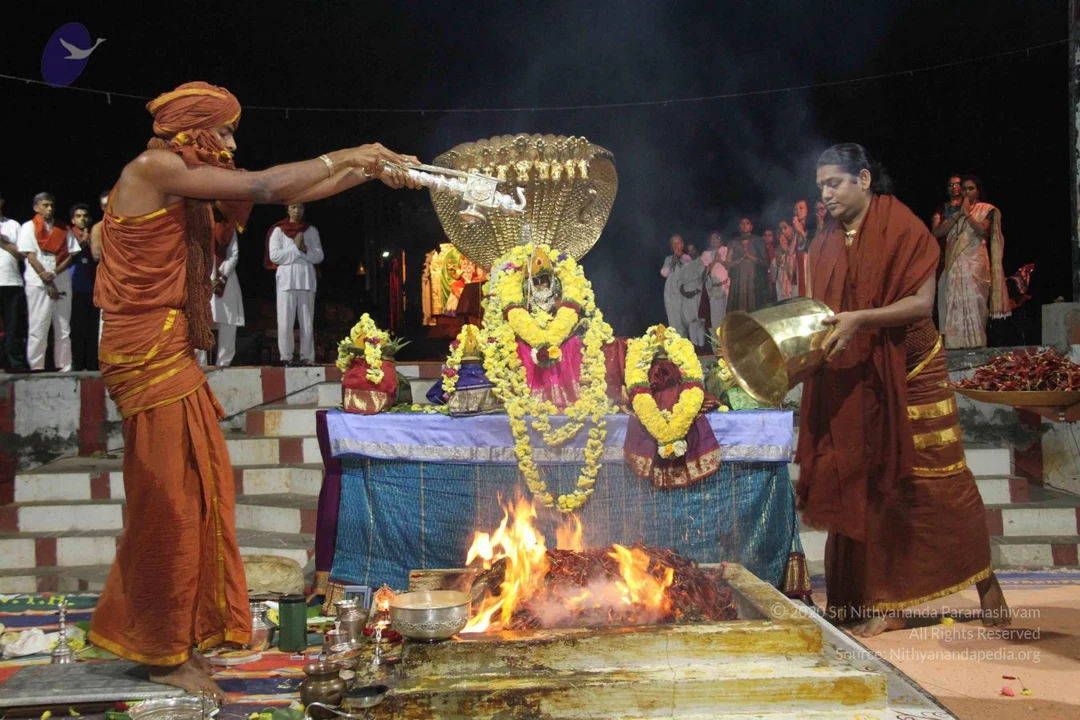
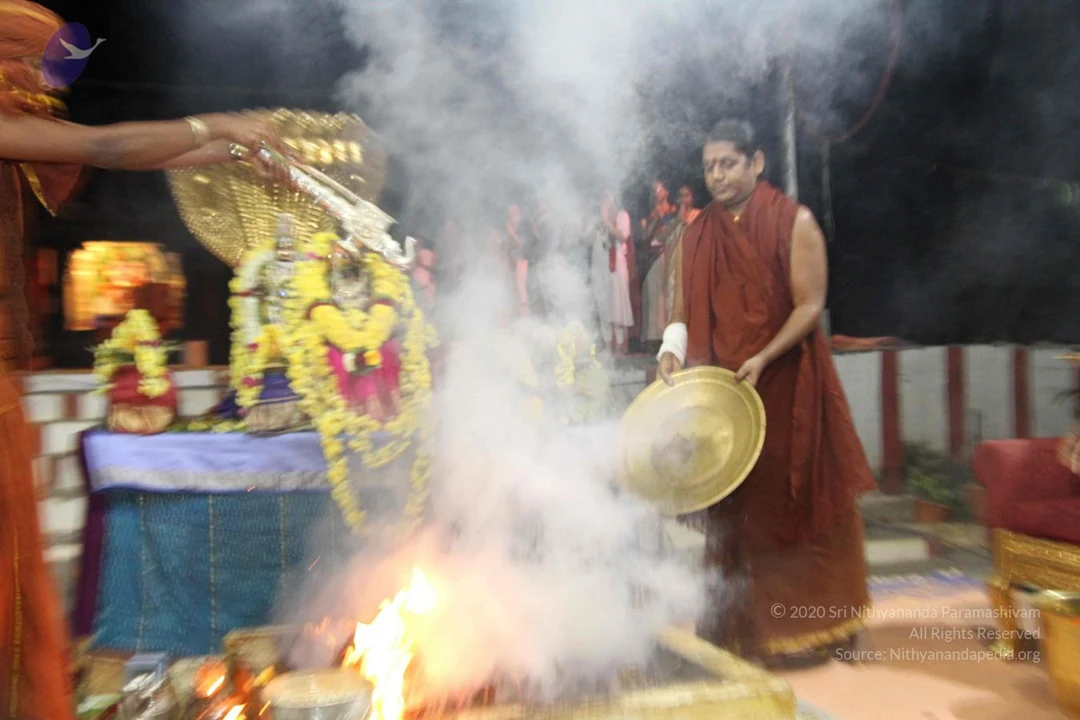
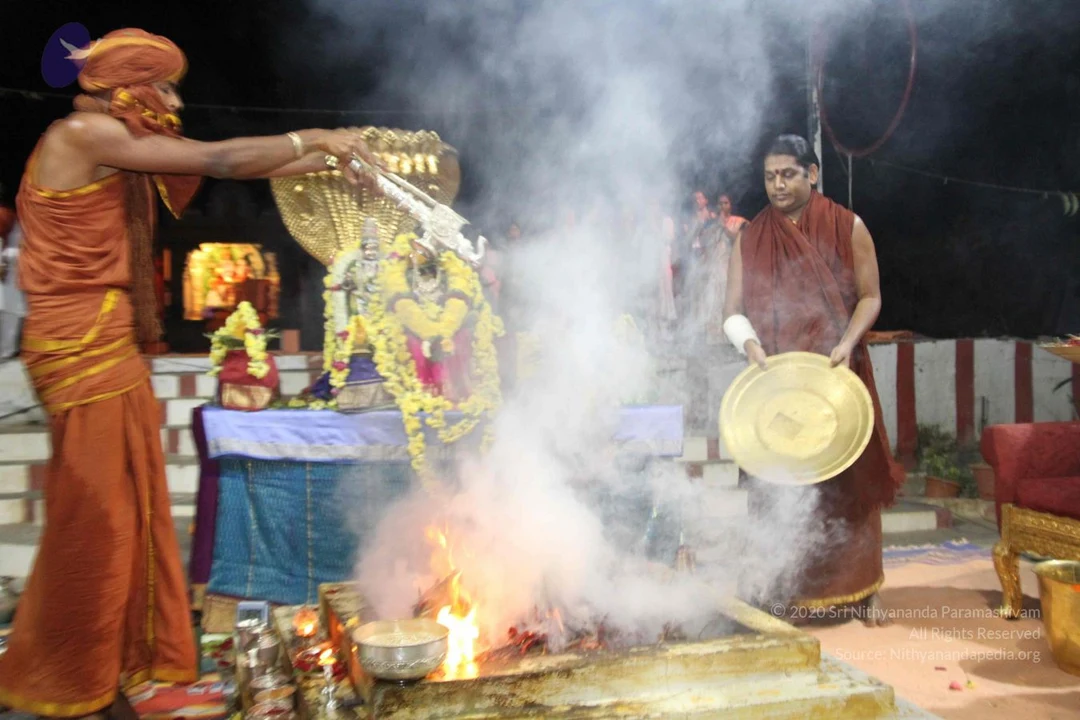
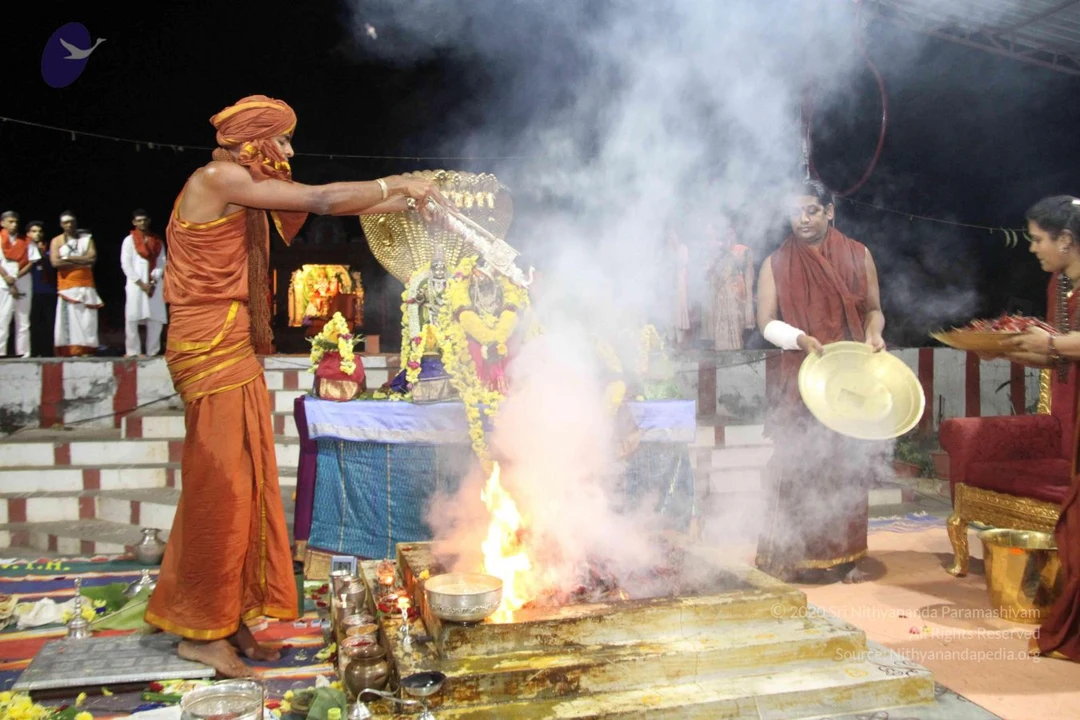
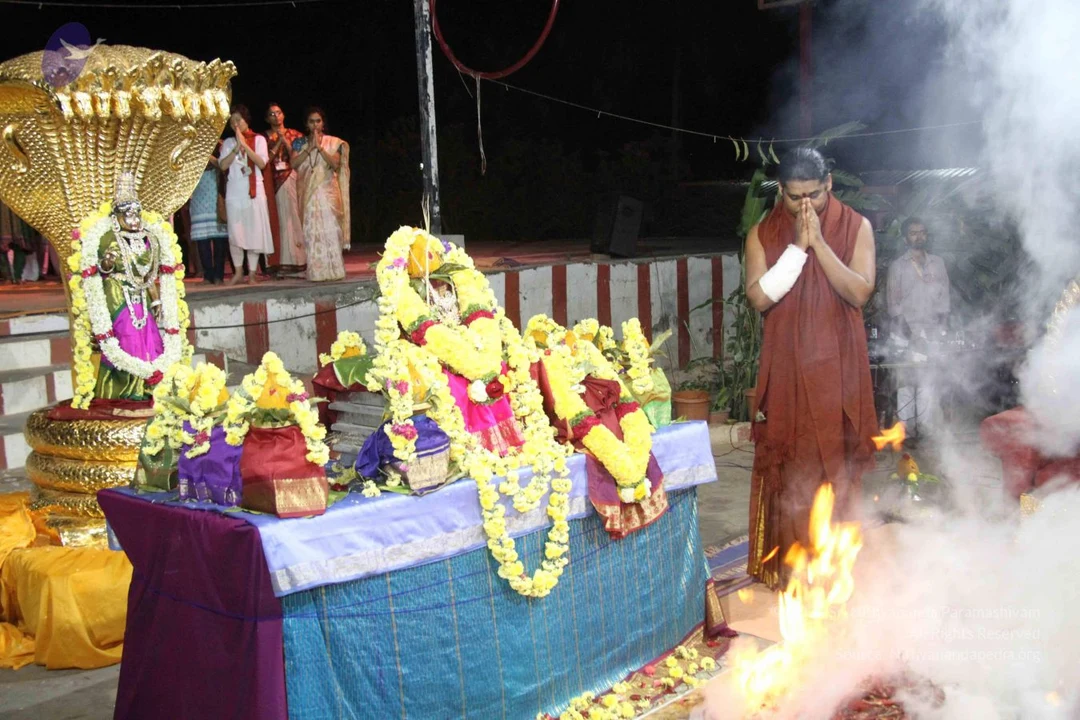
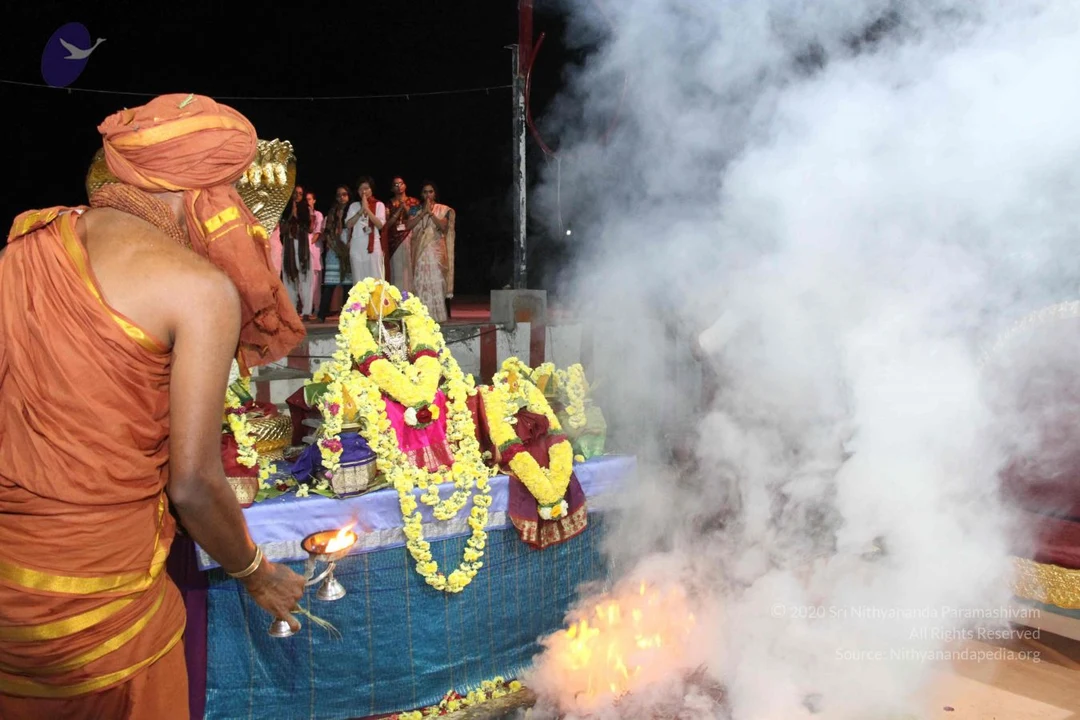
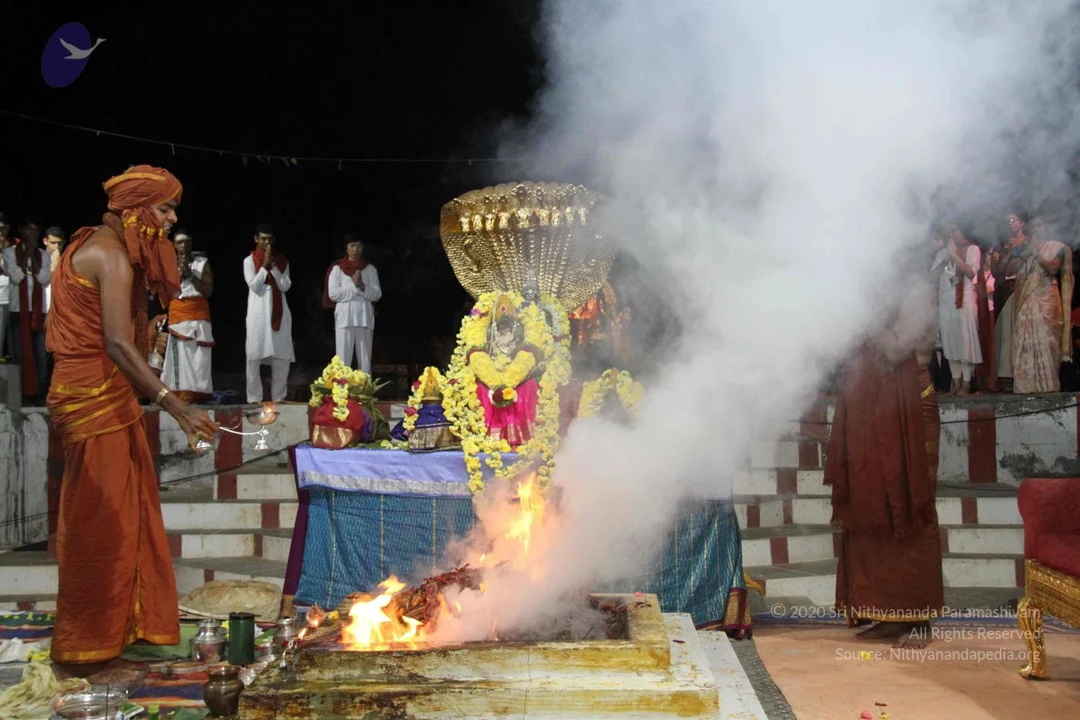
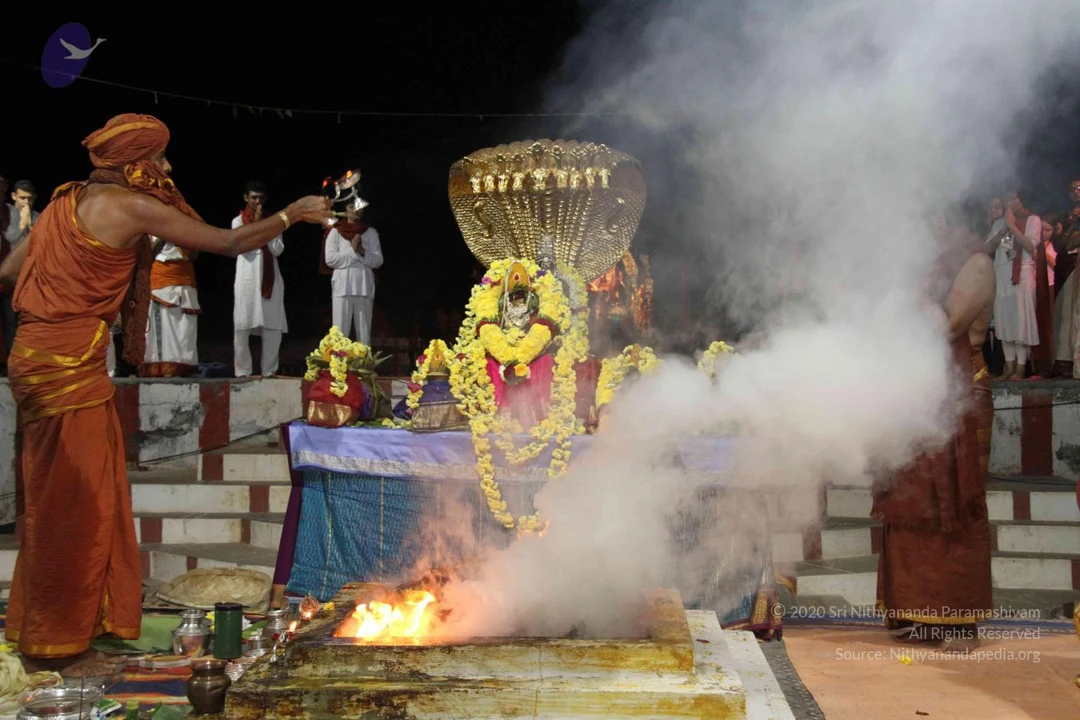
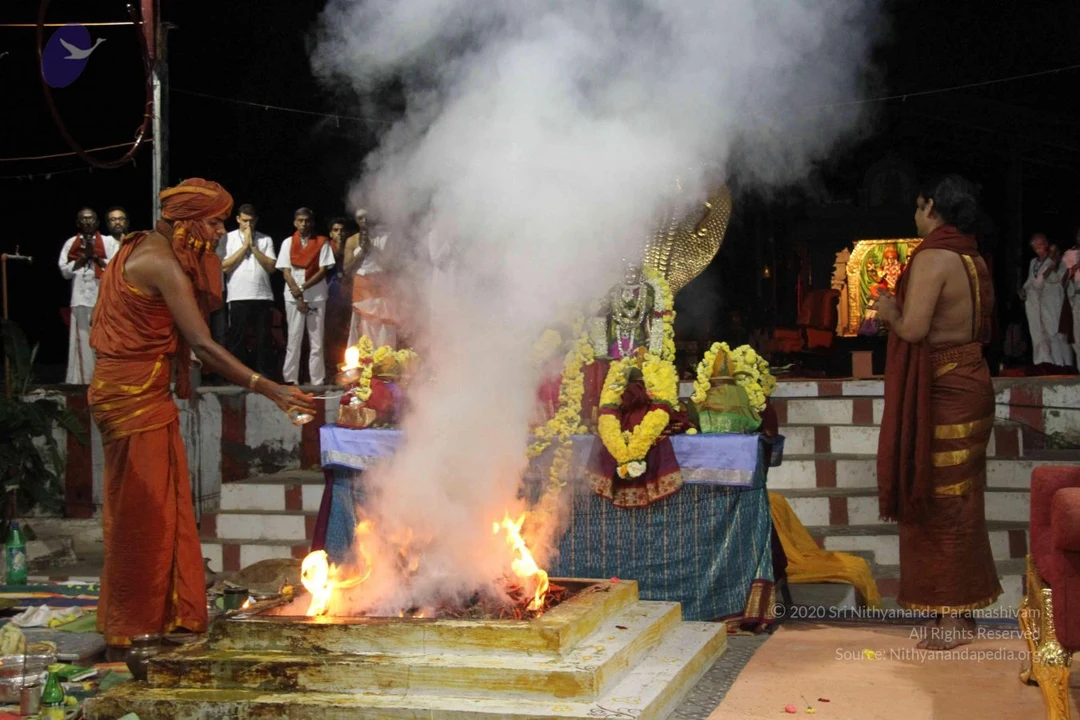
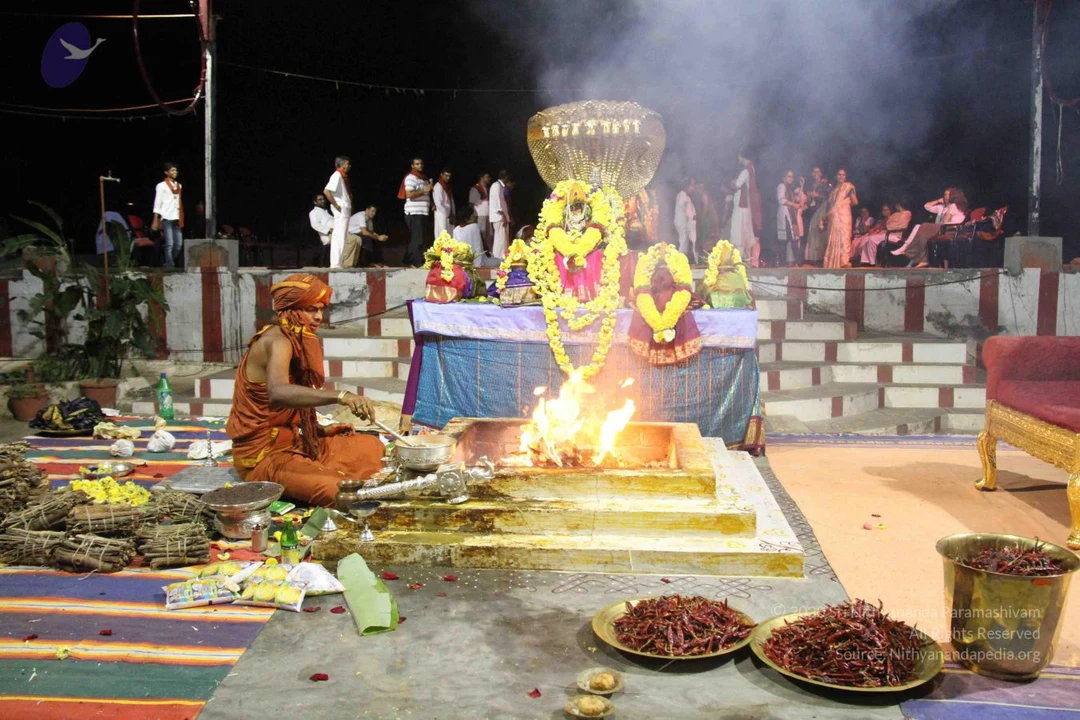
Night outdoor homa at a stone fire pit with a bright fire burning in the centre. A priest in orange-saffron robes and an orange turban sits cross-legged on a striped mat, tending the fire with a ladle. Behind the fire, a deity murti and a large brass cobra hood are decorated with yellow marigold garlands on a blue-draped altar. Brass plates hold red chillies and offerings, and bundles of ritual sticks lie on the mat. Several men in white and orange and women in saffron and pink saris stand on steps behind, with smoke drifting across the scene. A seated figure near the fire wears orange, and the appearance is not distinctive enough to confirm a person.Night outdoor ritual at a stepped stone platform. A priest in orange robes and an orange headwrap sits cross-legged at a yellow-tiled fire pit, feeding a bright flame with a ladle while offerings lie beside him. Behind the fire, a deity murti is adorned with marigold garlands and sits under a large golden cobra hood. Several people in white and saffron clothing stand and sit around the platform, and a row of women in saffron and pink saris sits on the steps at right. Brass plates of dried red chillies, marigold flowers, plantain leaves and bundled sticks lie on striped mats in the foreground, with a red sofa and gold-trimmed chair at far right.Close-up photograph of a sacred fire blazing in a homa fire pit, with bright orange flames and rising smoke consuming offerings of wood, dried leaves and flower petals. A small metal vessel with a curved handle sits at the lower left edge of the wooden platform. No people are visible; the background is dark blue fabric.Night photograph of a deity murti on an outdoor stone platform beside a river ghat, decorated with thick garlands of yellow marigolds and red roses. A large golden multi-headed cobra hood with carved snake heads rises behind the murti. Two smaller decorated pots or kalasha-like vessels with yellow garlands and red and green cloth sit on the blue-lavender draped table on either side. Silhouetted devotees stand and sit in the dim background near smoke or incense haze, one man in white with a red-orange shawl and others in dark clothing.A deity murti is adorned with heavy garlands of yellow marigolds, with red roses and a rose-bloom accent at the chest. The figure wears a pink silk garment with gold zari border and a gold-toned ornate necklace and crown-like headdress. Flanking pots or brass vessels with blue and maroon silk draped around them are visible on either side, and a gold-toned canopy edge appears at the top. The background is dark with blurred figures and warm lights. No physical people are clearly in focus.Night outdoor ritual at a stone ghat with a fire pit burning in front. A priest in orange-saffron robes and an orange head wrap sits cross-legged at left, tending the flames with a ladle and offering bowls. Behind the fire, a deity murti is decorated with yellow-orange marigold garlands and sits under a golden multi-hooded serpent canopy (naga hood), on a draped blue and lavender cloth-covered platform. Brass vessels, a kalasha-style pot and a small tray of offerings are arranged on the steps. Several people stand along the steps behind, some in white shirts and red shawls, and women in saffron and pink saris with hands folded in prayer, a homa or puja setting. Watermarked archive photo.