Skip to content
Saturday

5 October 2013

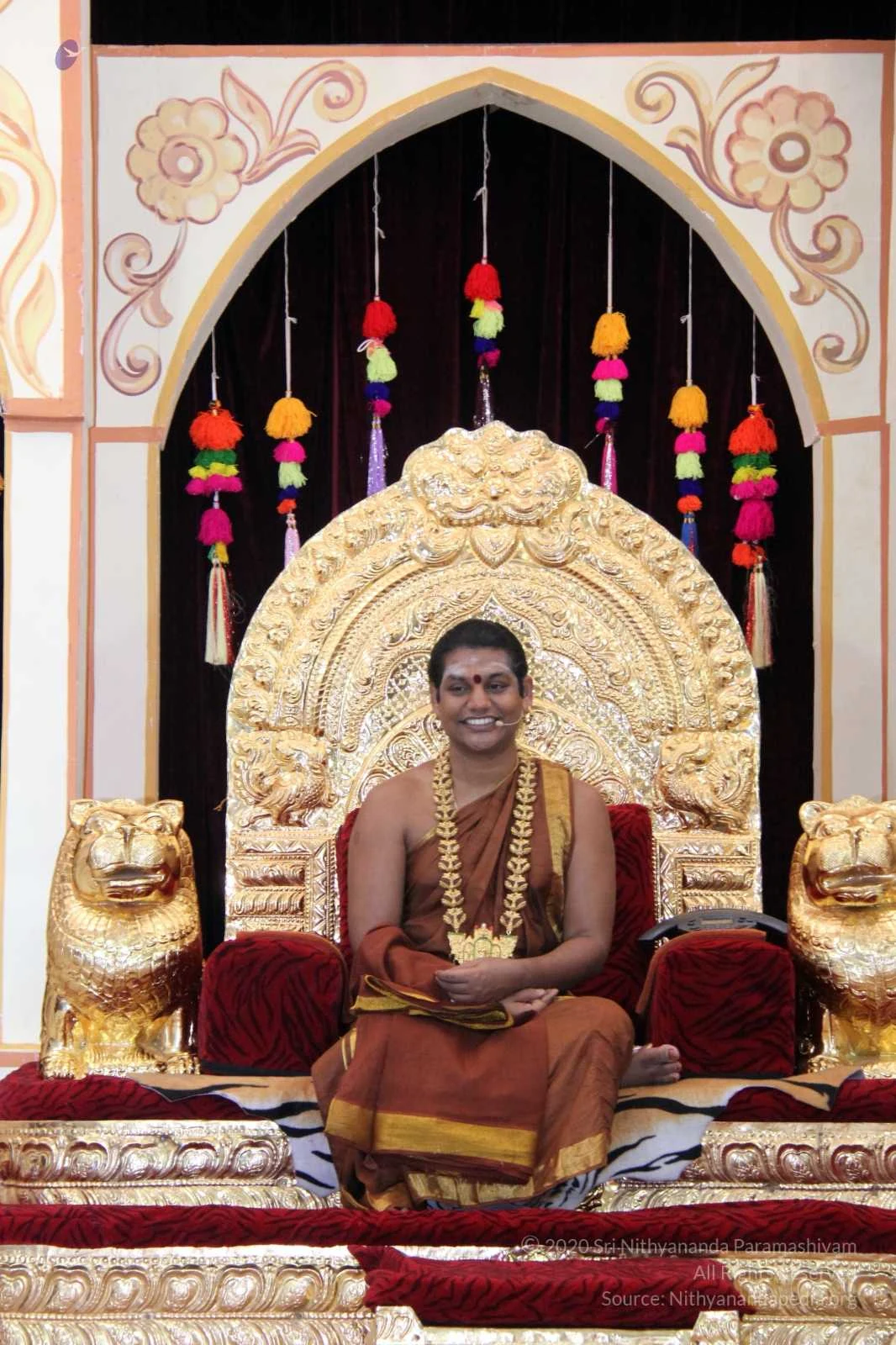
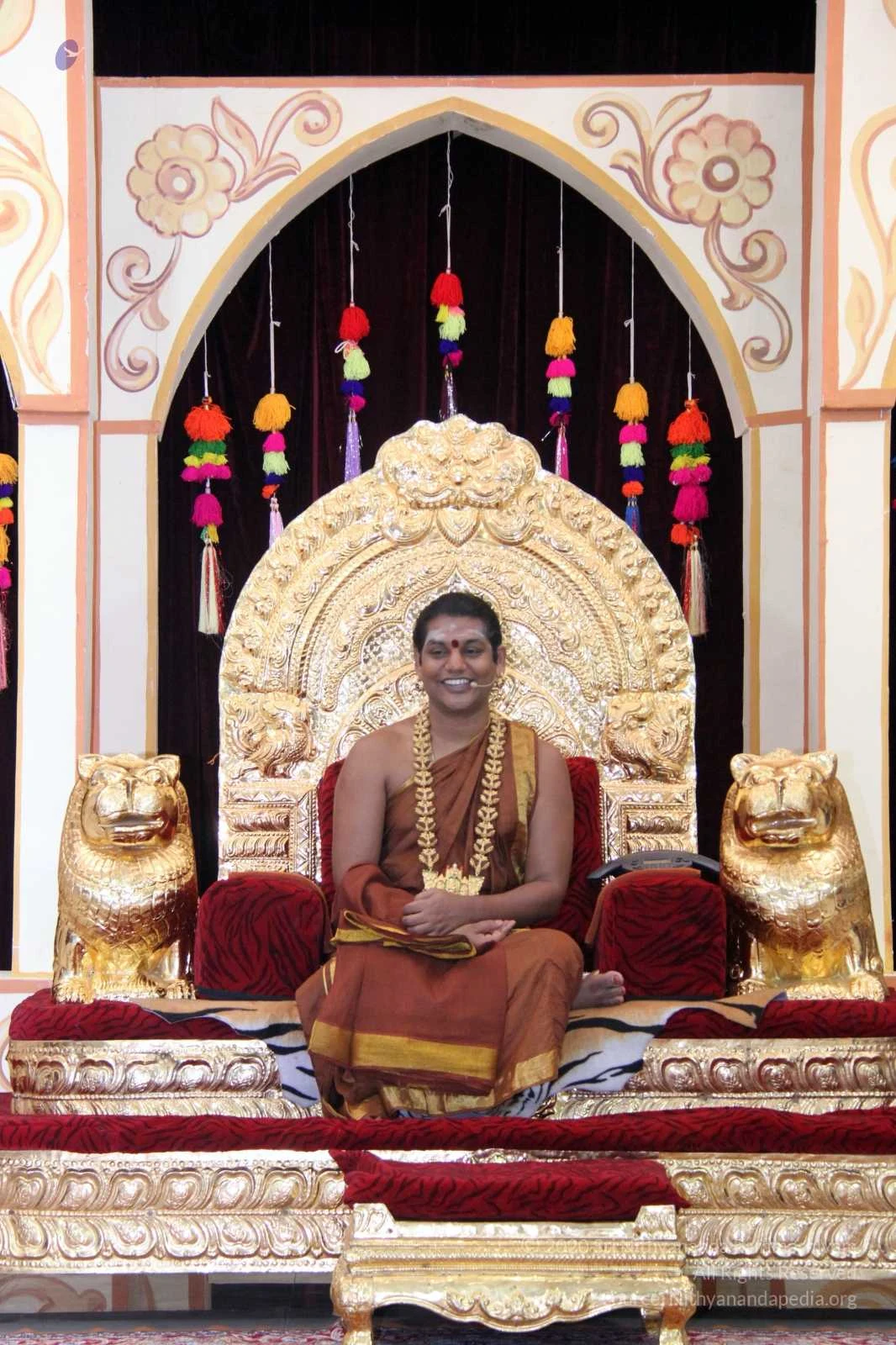
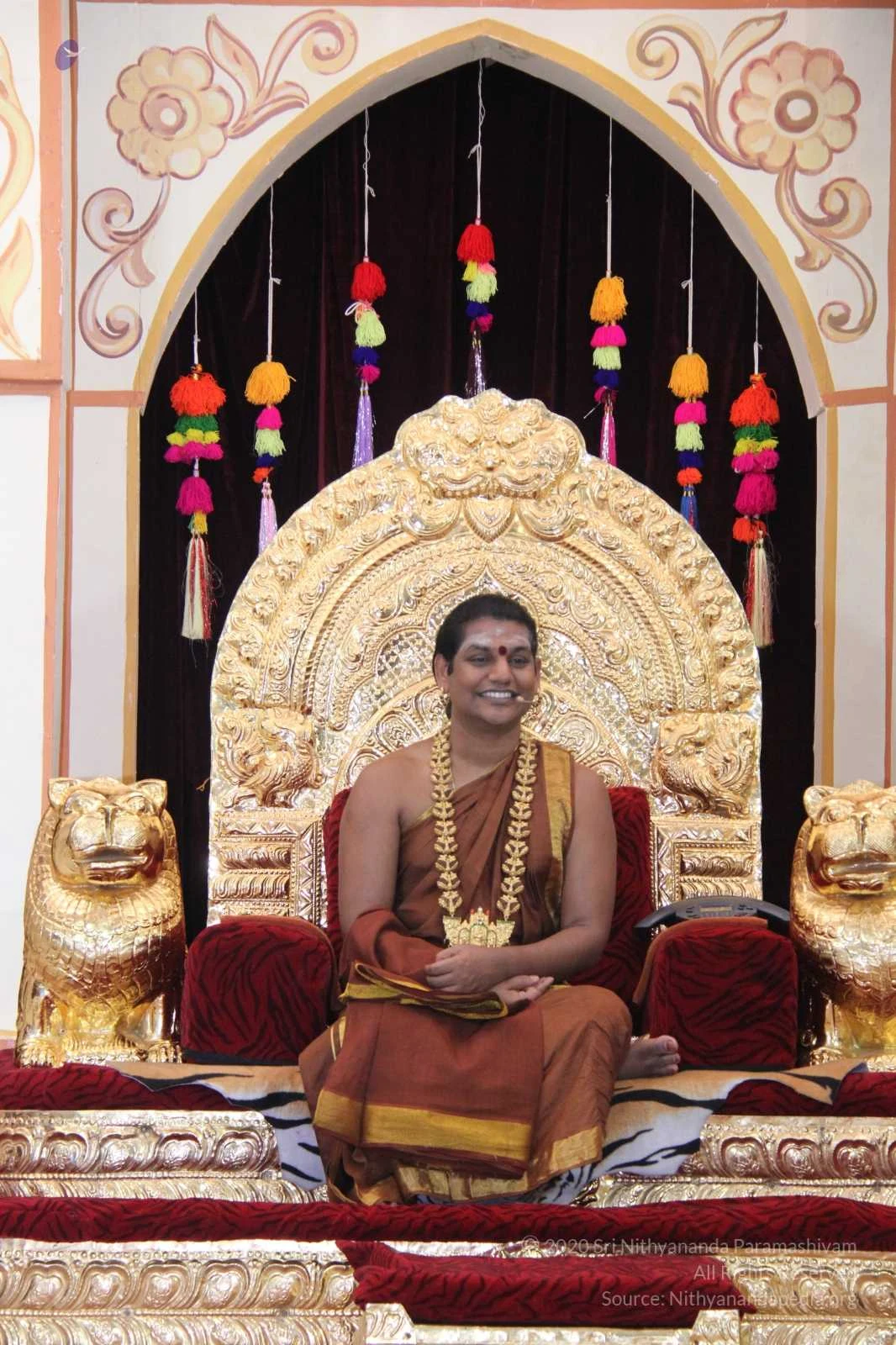
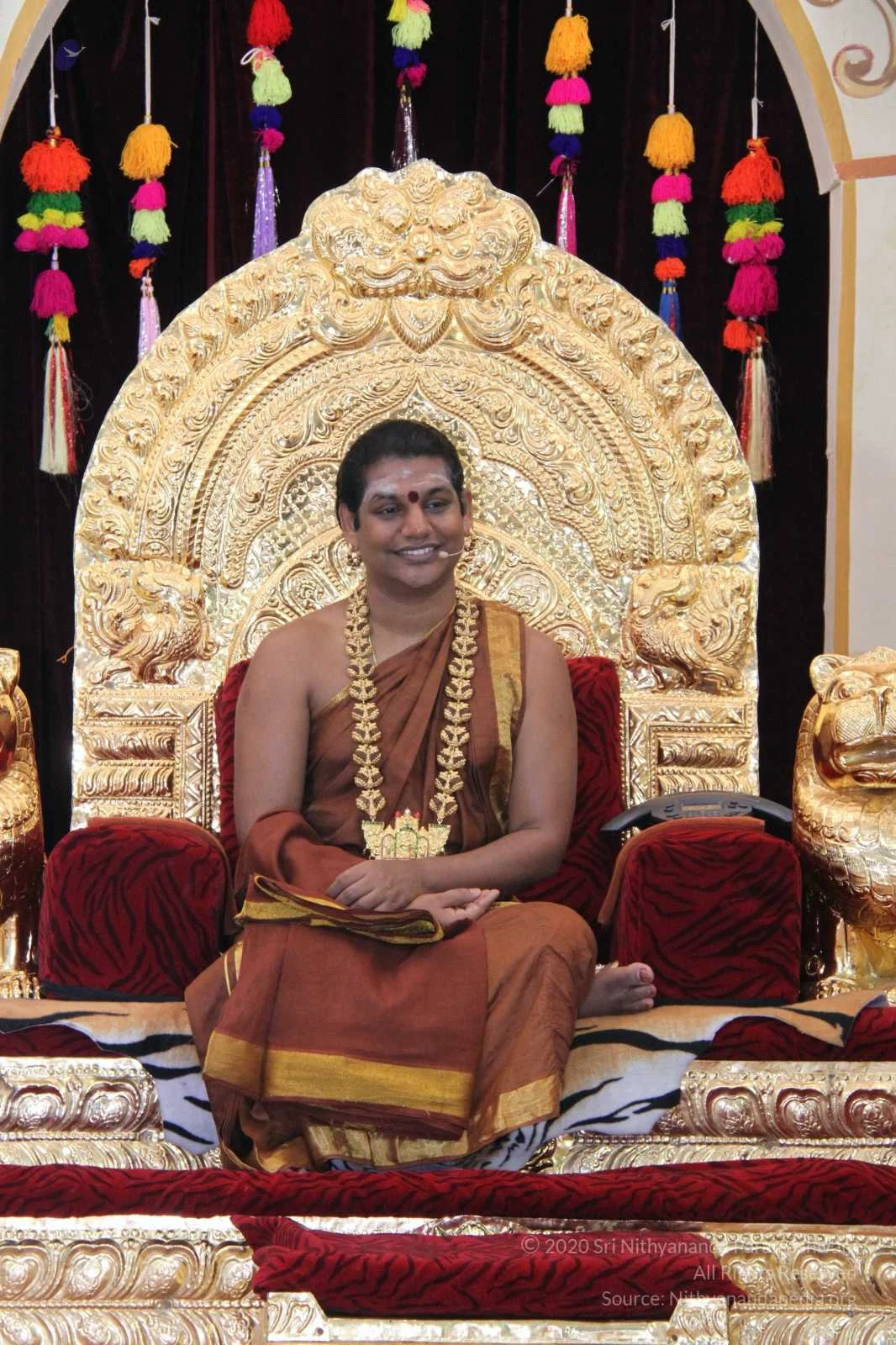
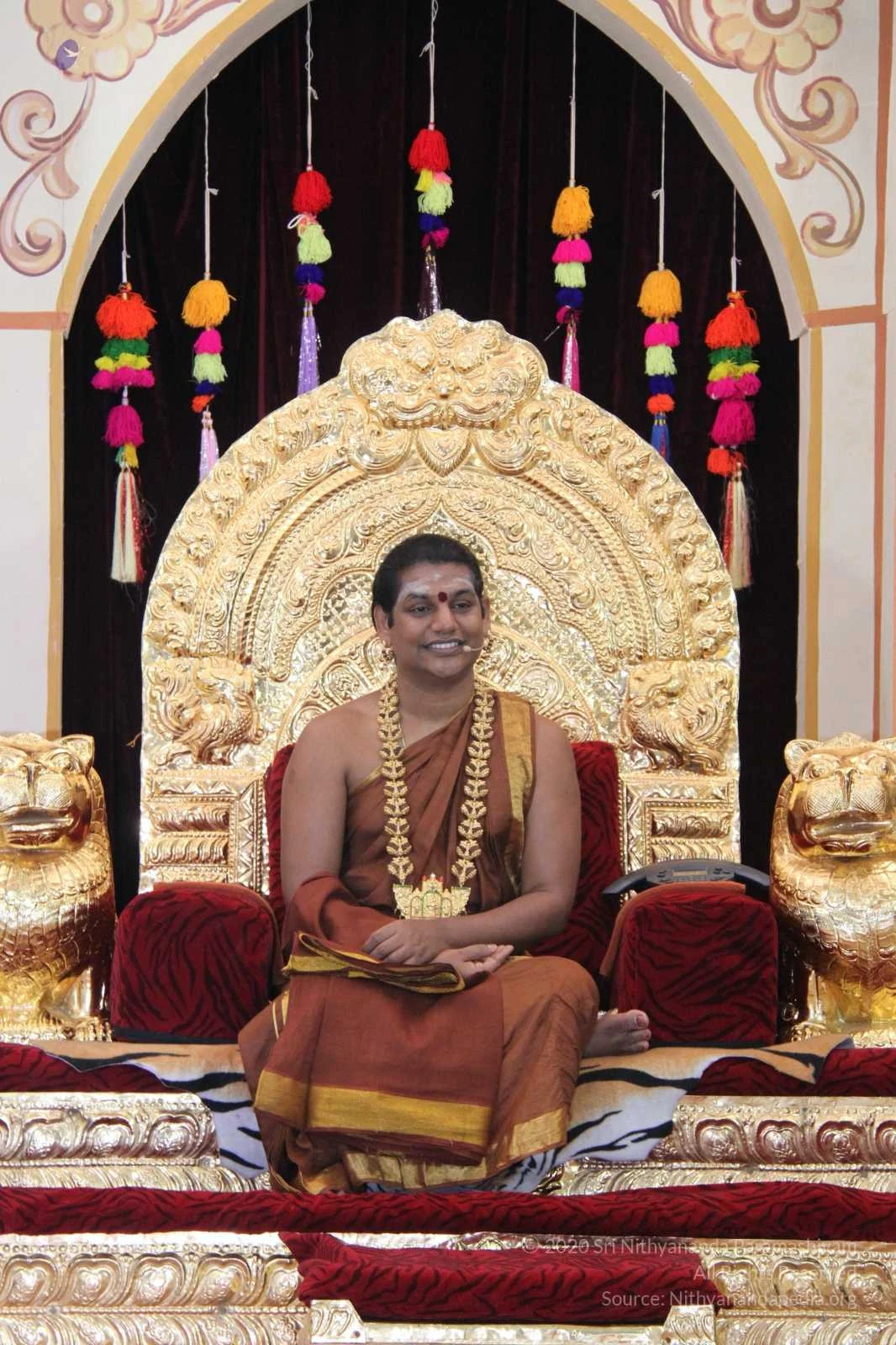
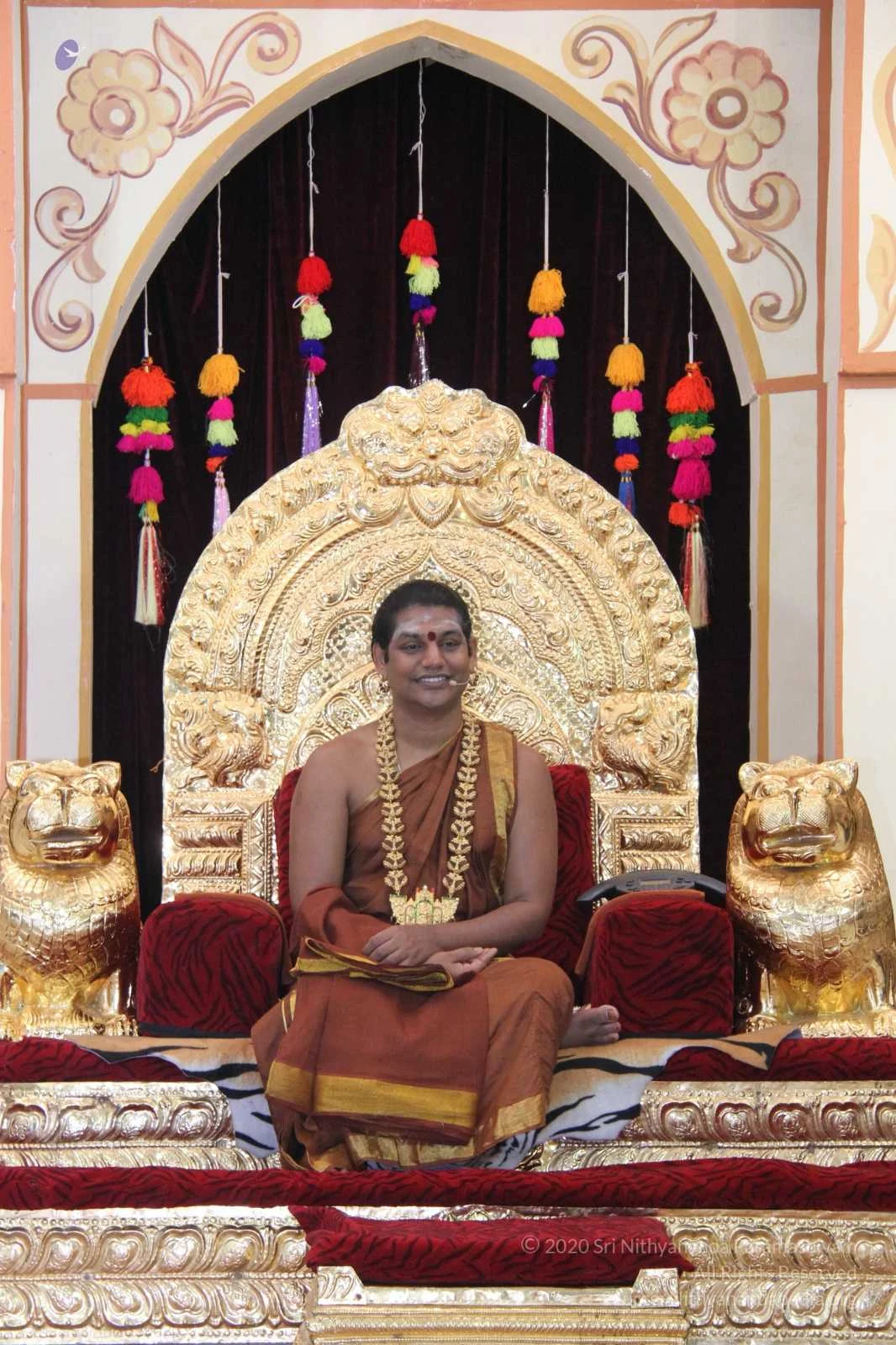
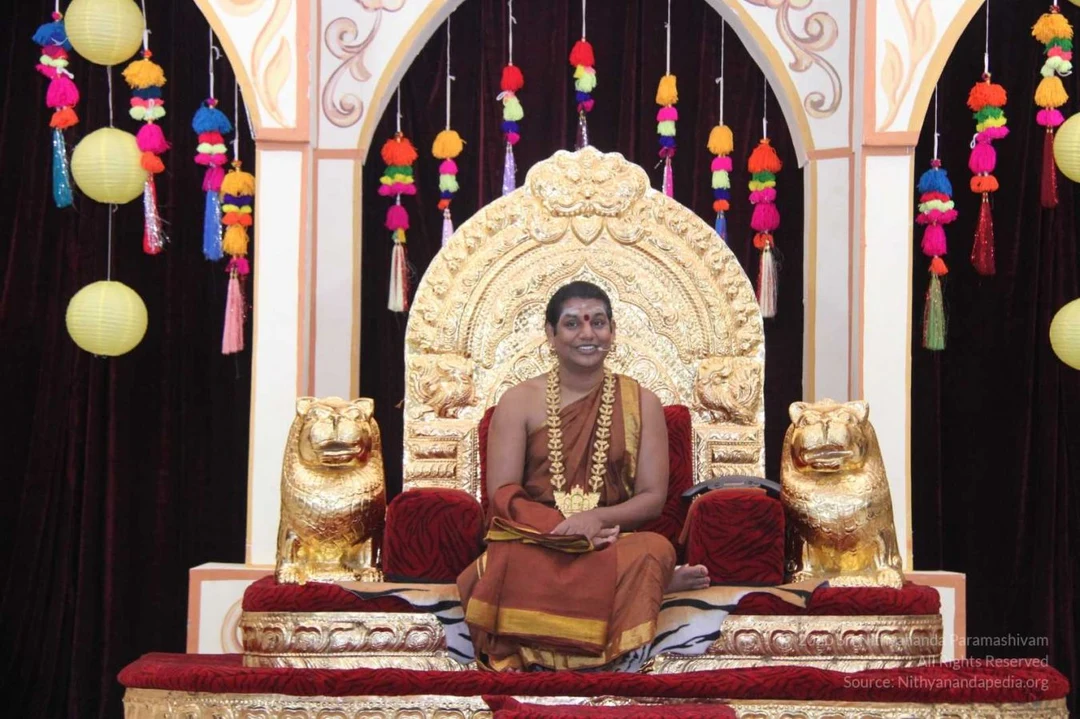
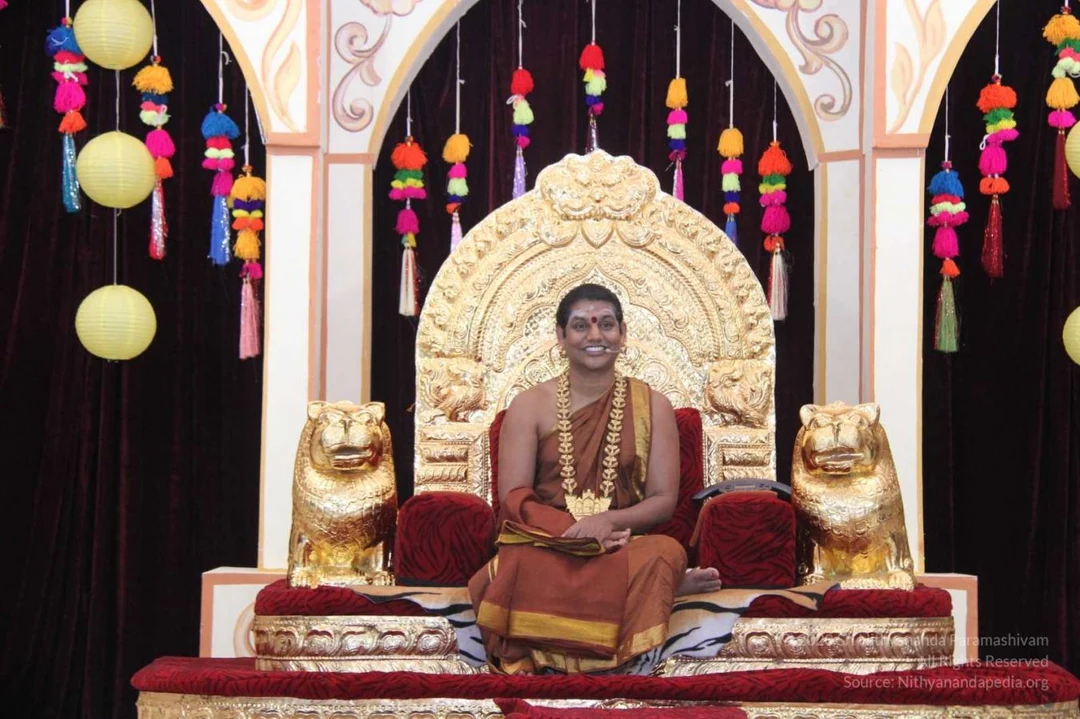
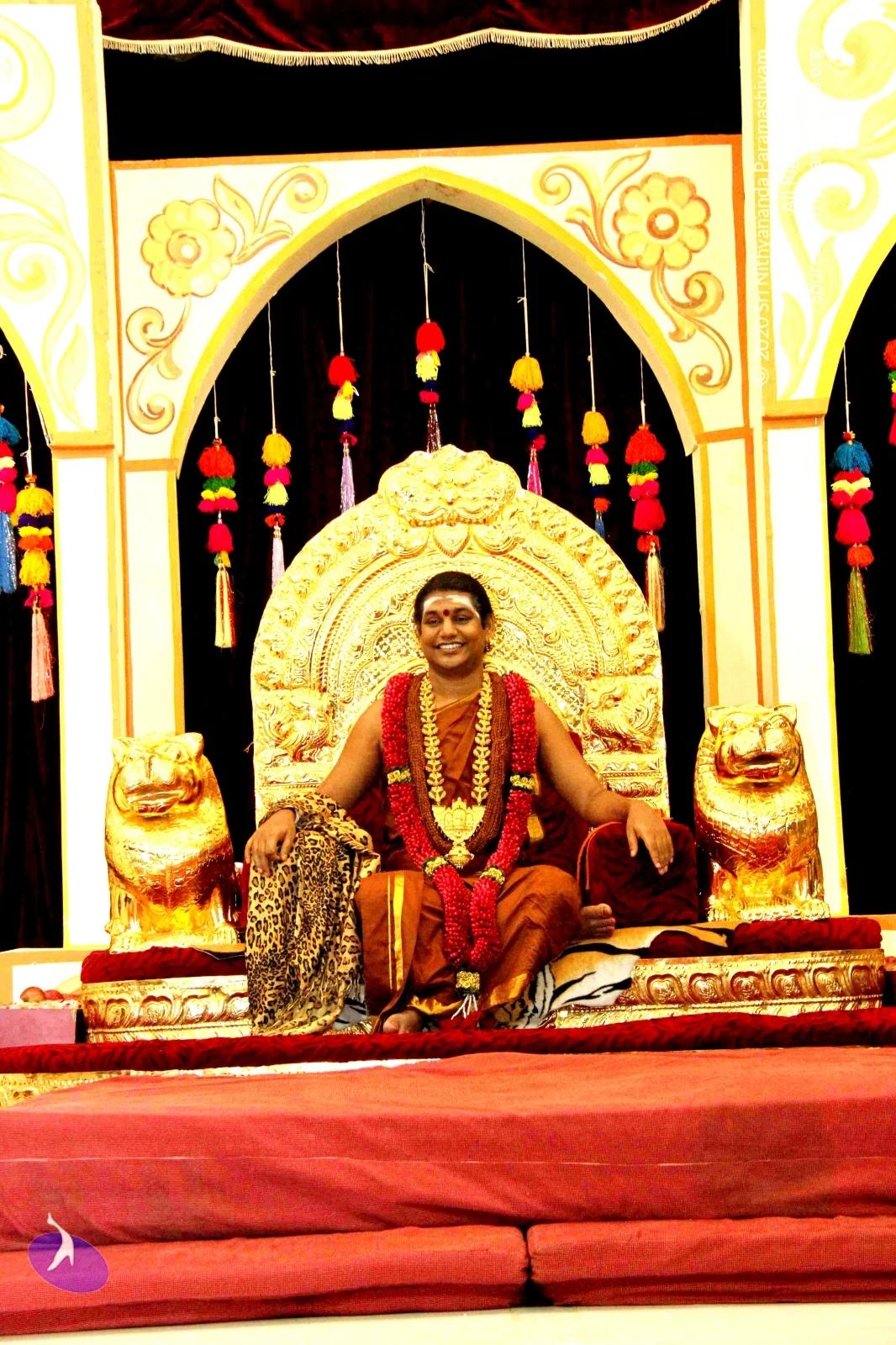
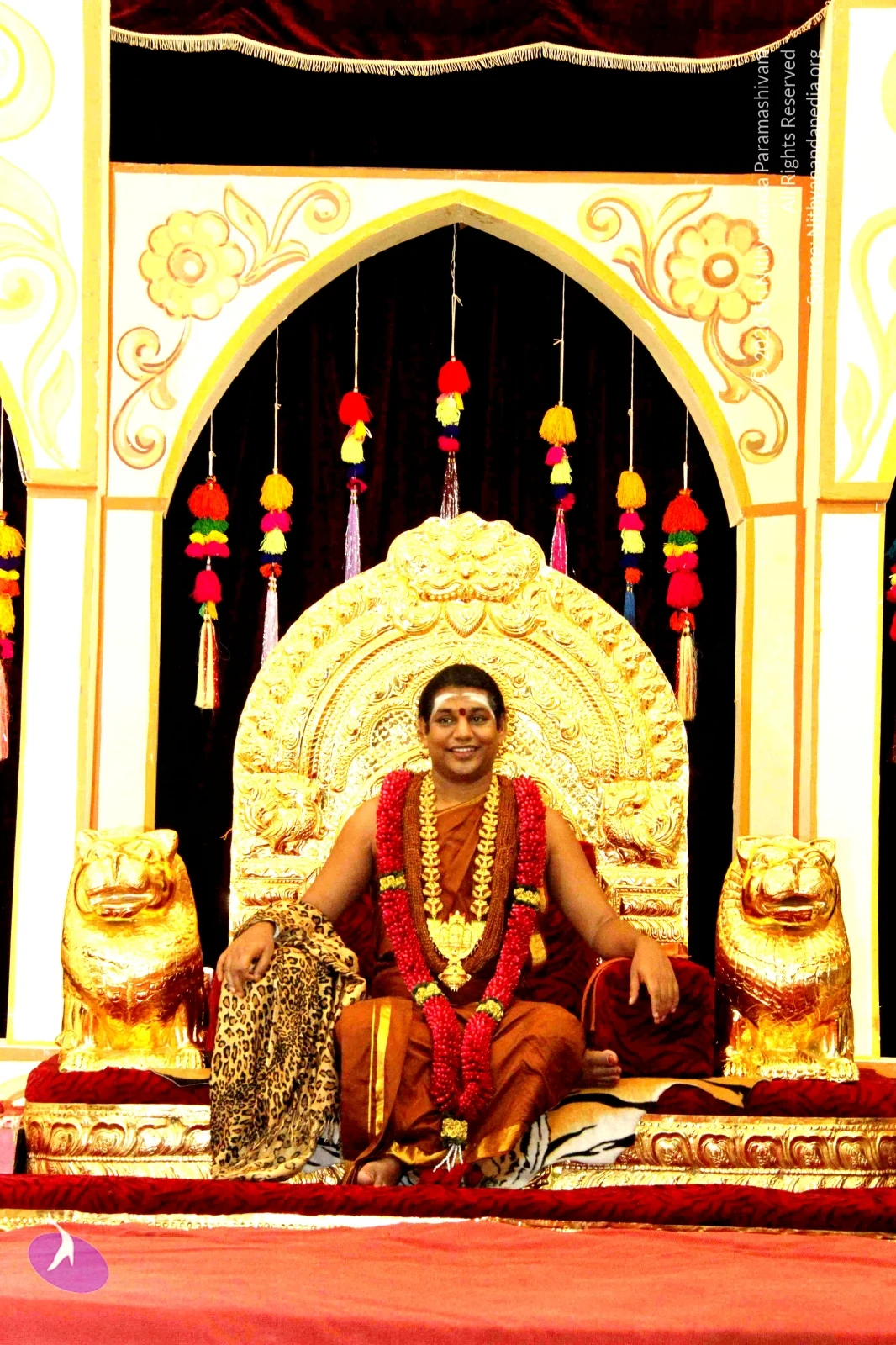
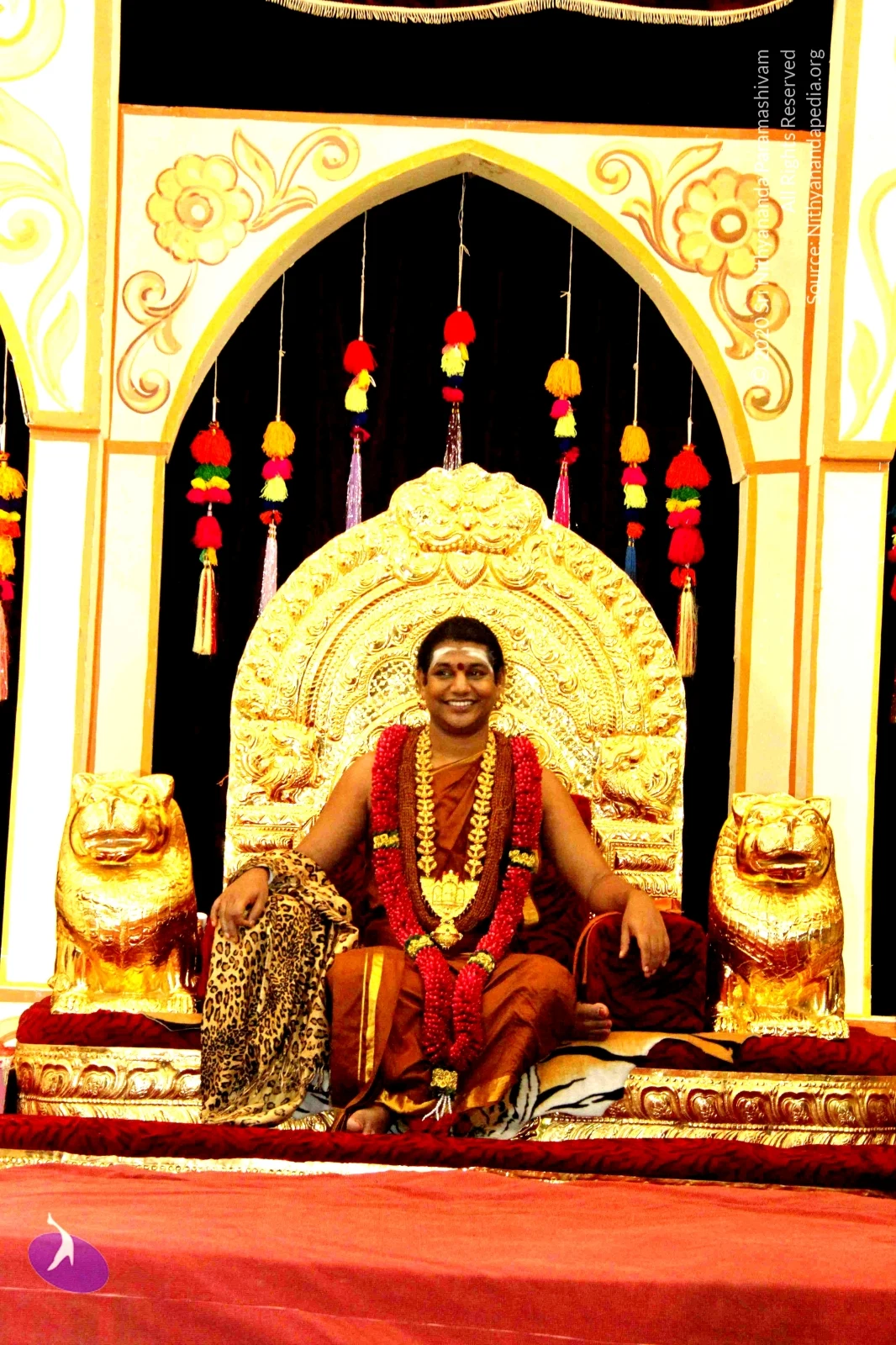
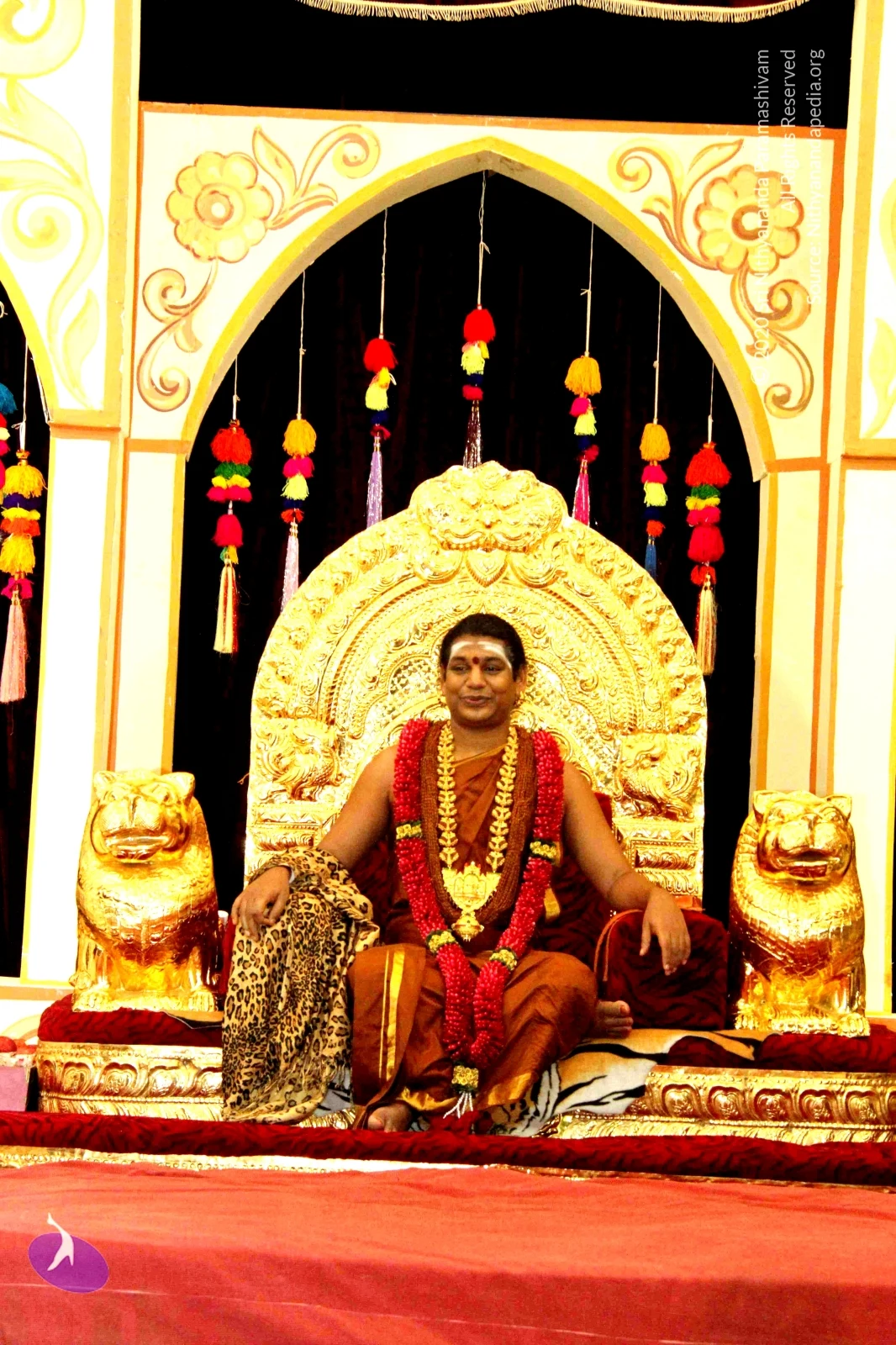
Why Vegetarianism-by the Supreme Pontiff of Hinduism HDH Bhagavan Sri Nithyananda Paramashivam.

Dated photos
495
Source pages
1
Media
2
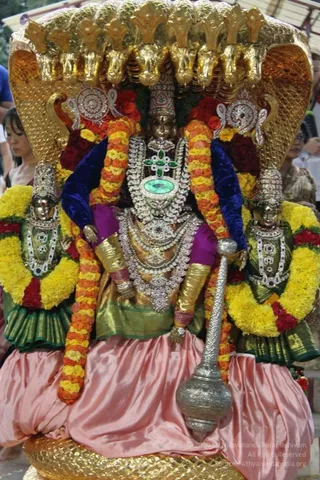
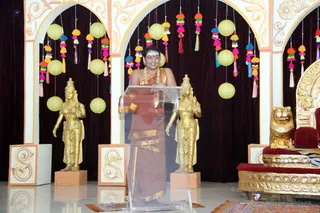
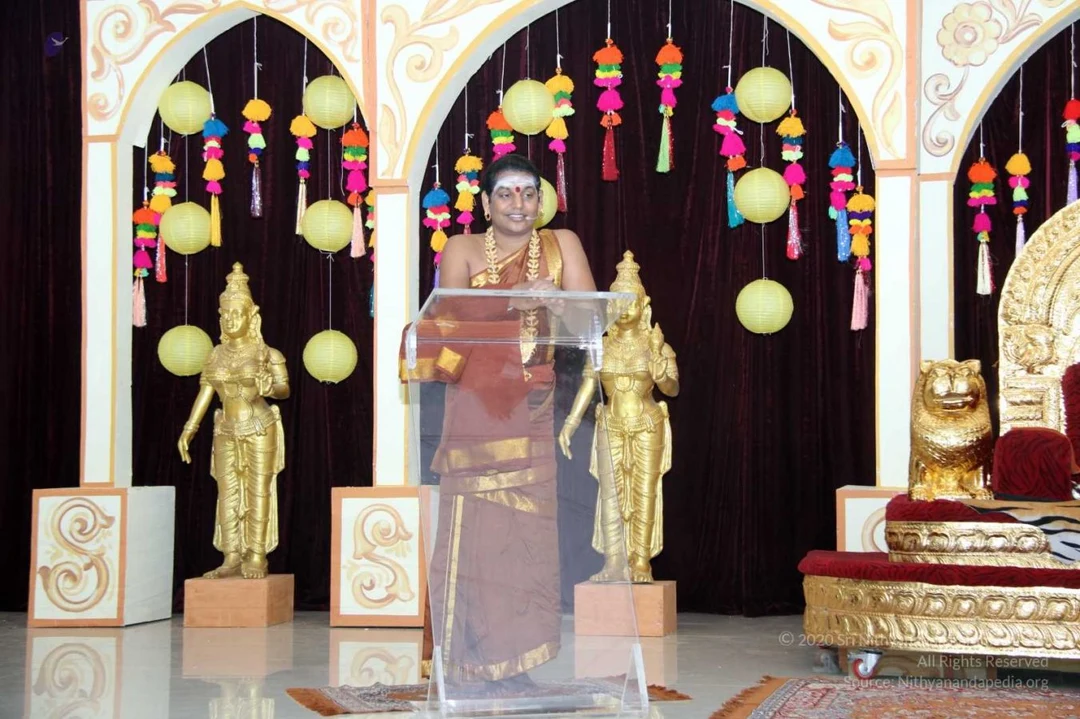
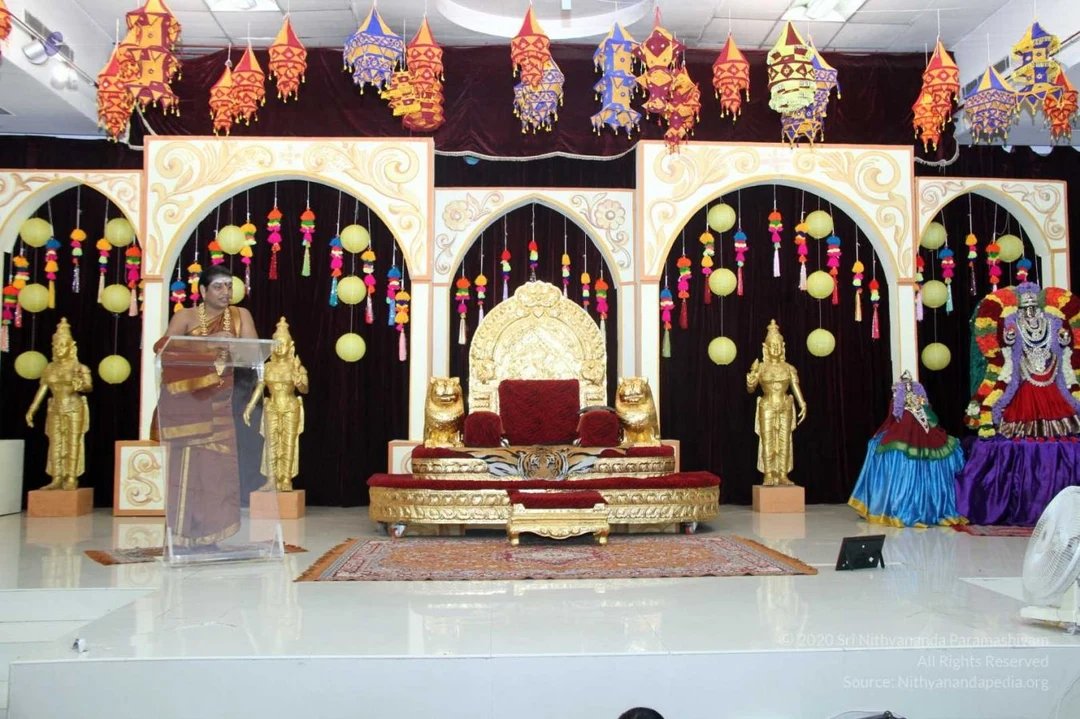
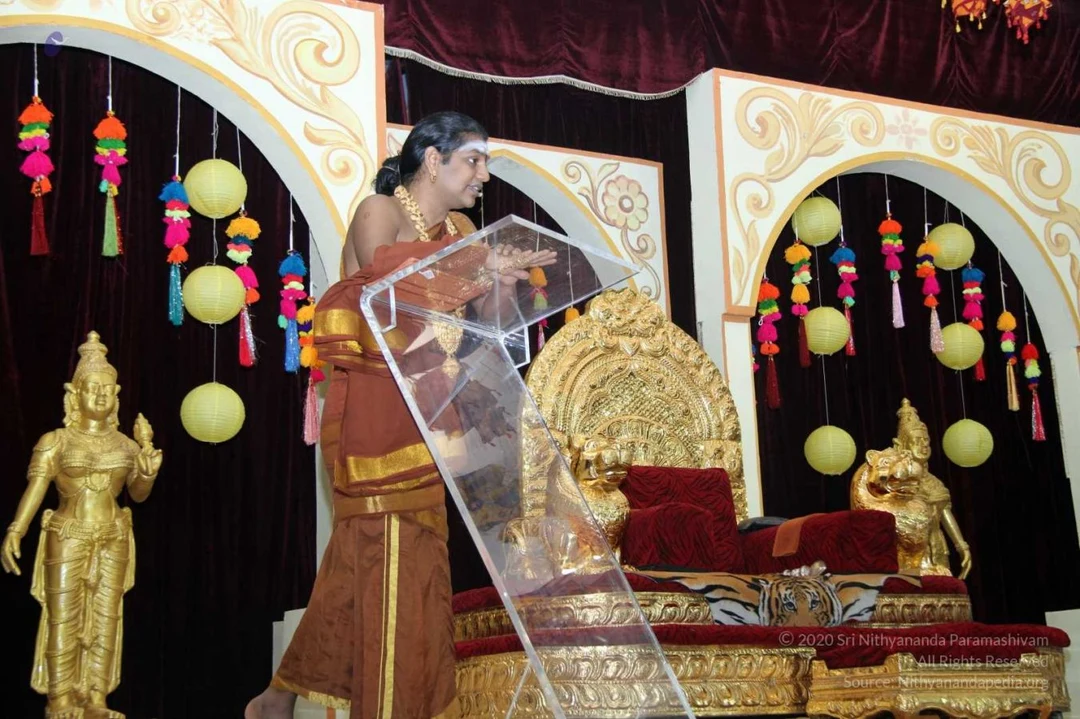
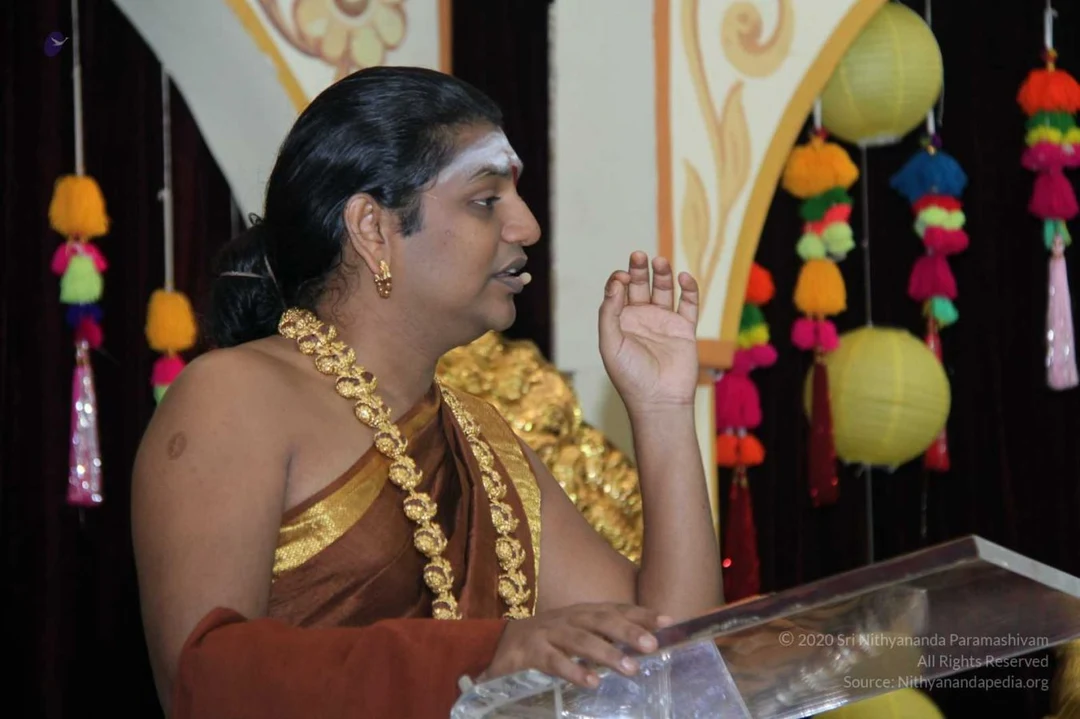
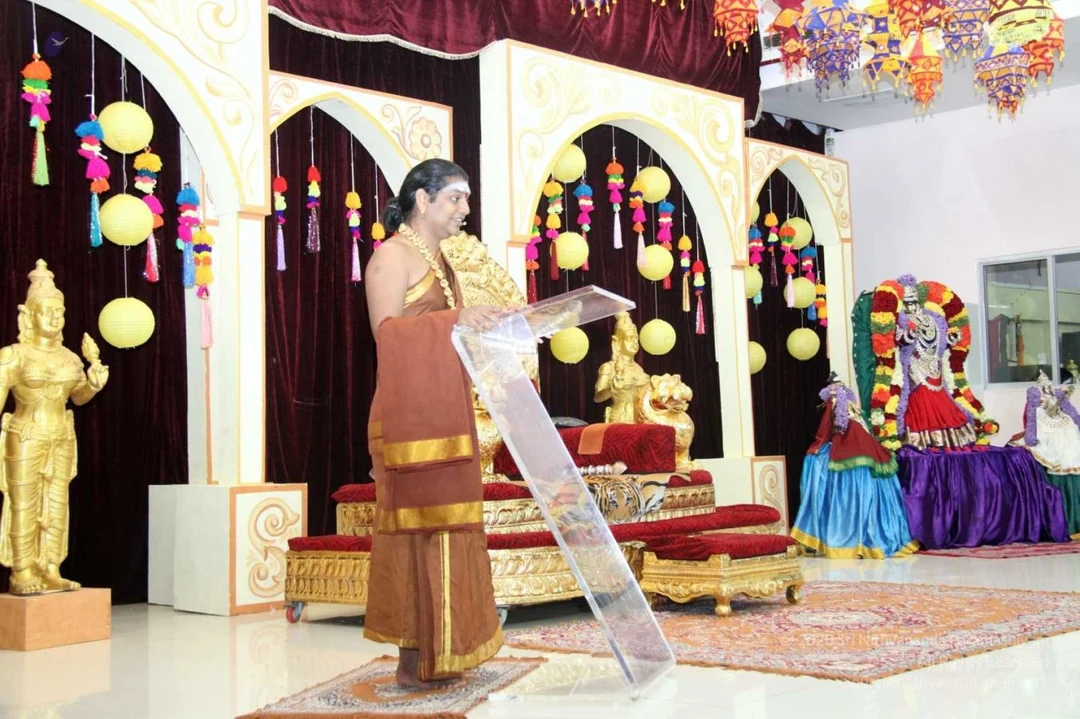
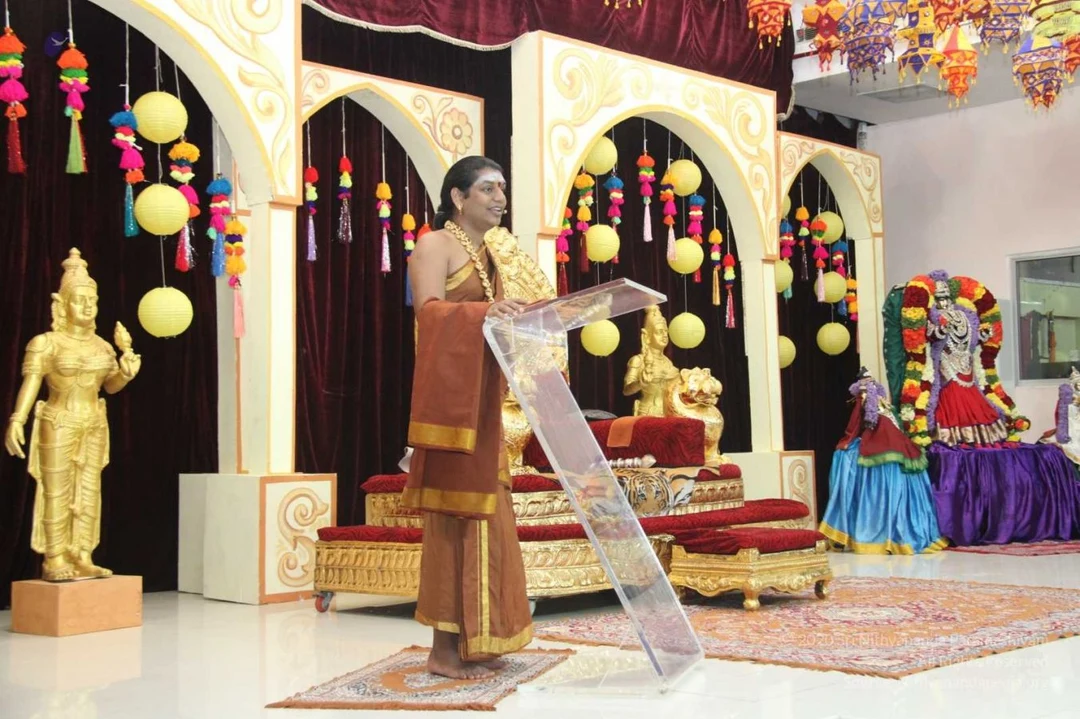
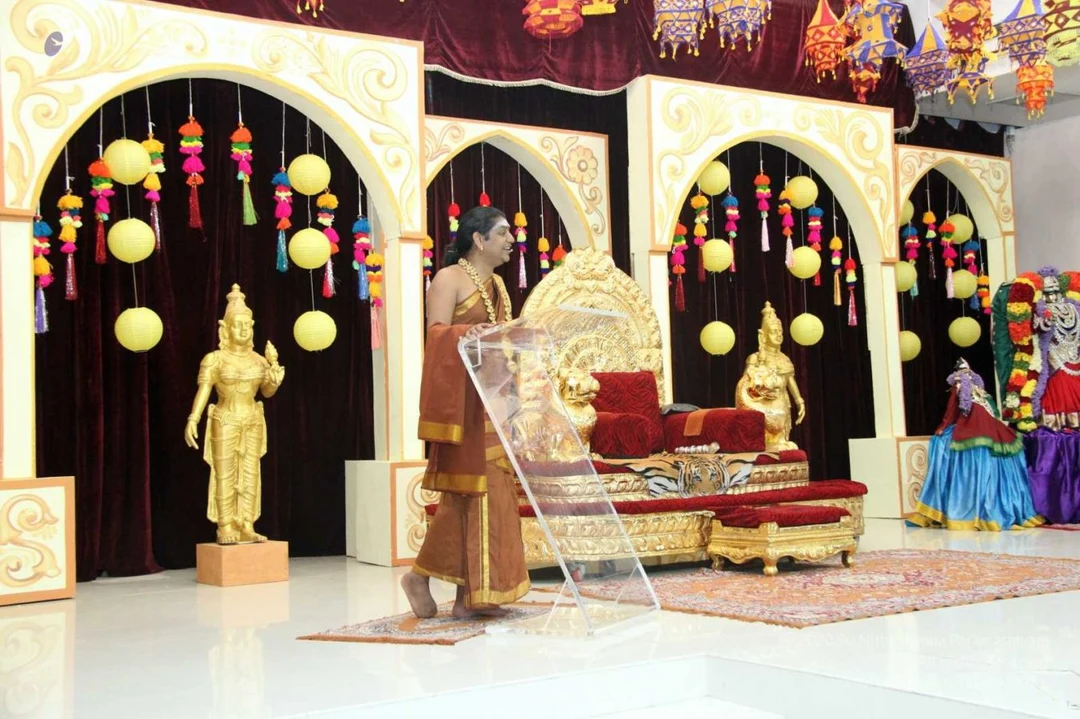
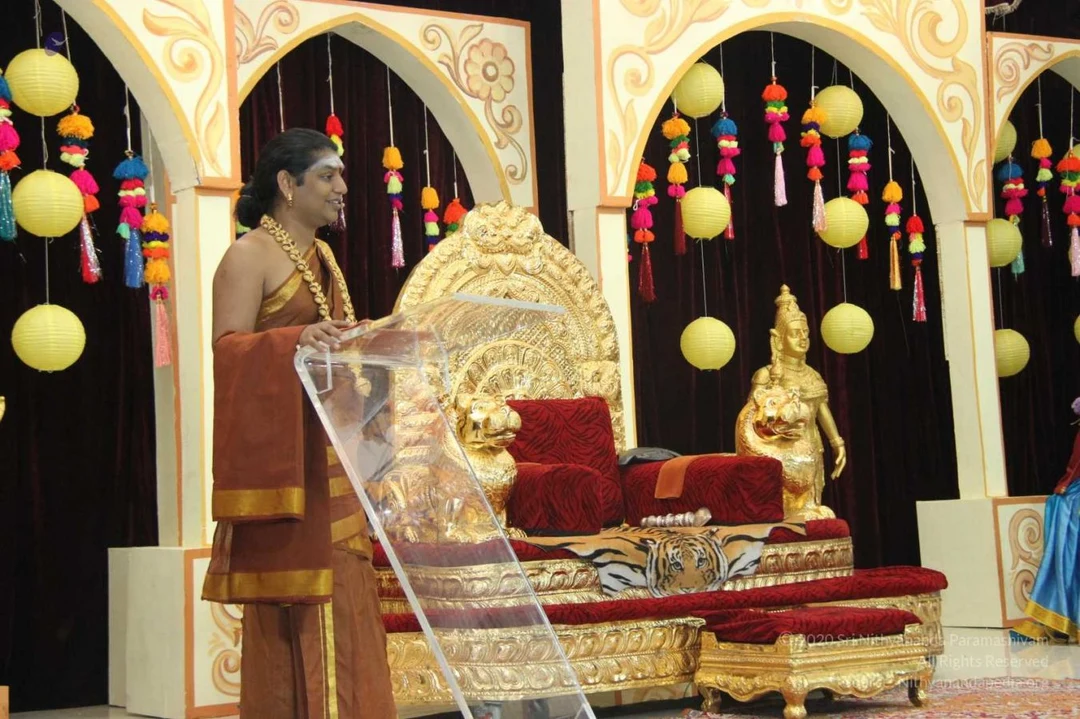
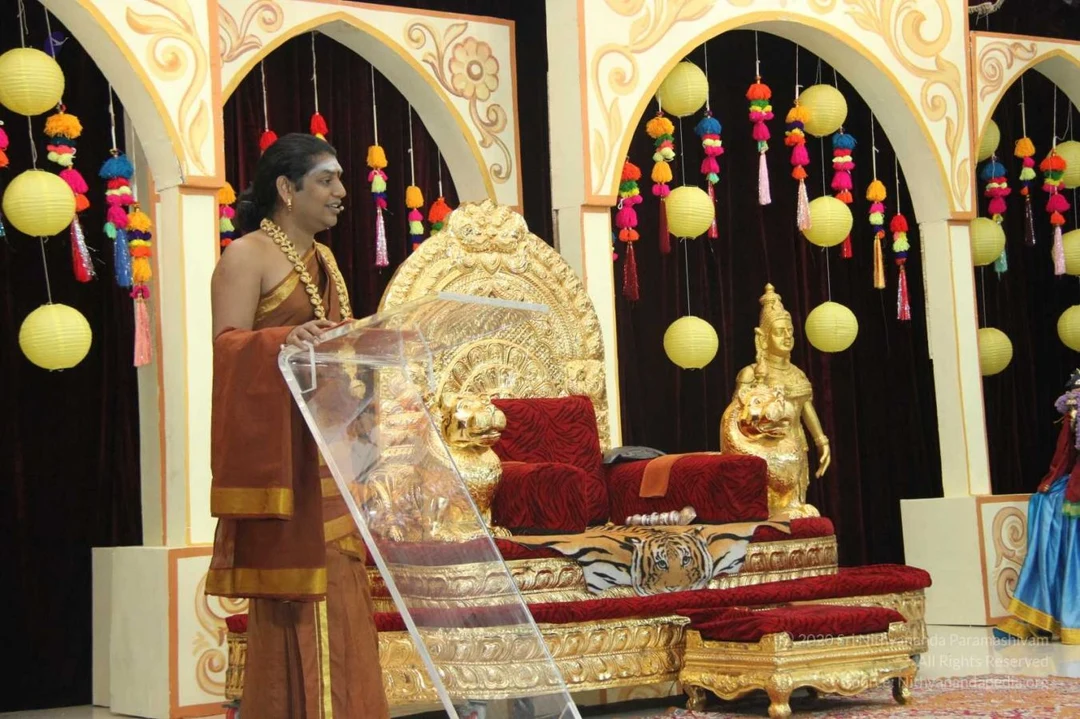
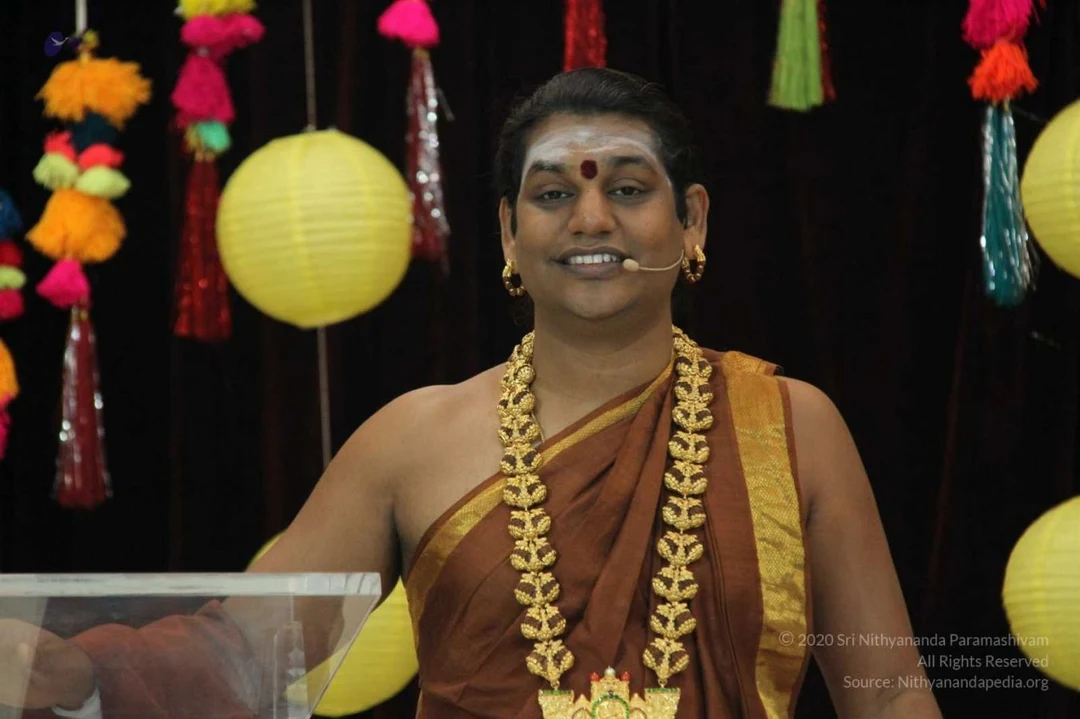
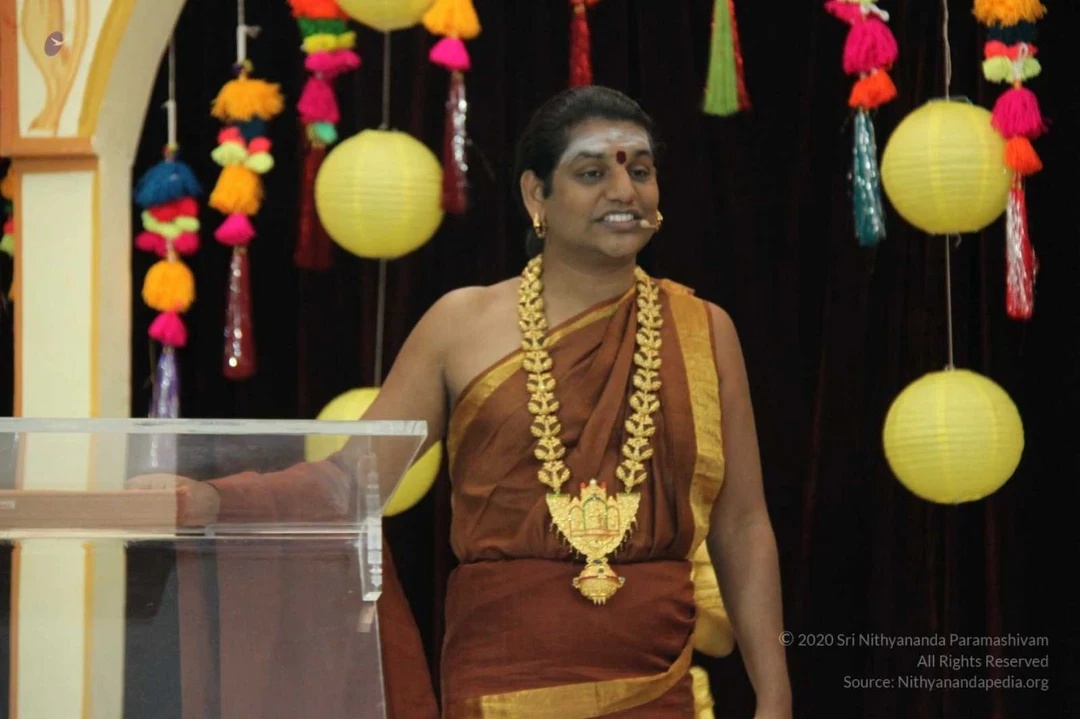
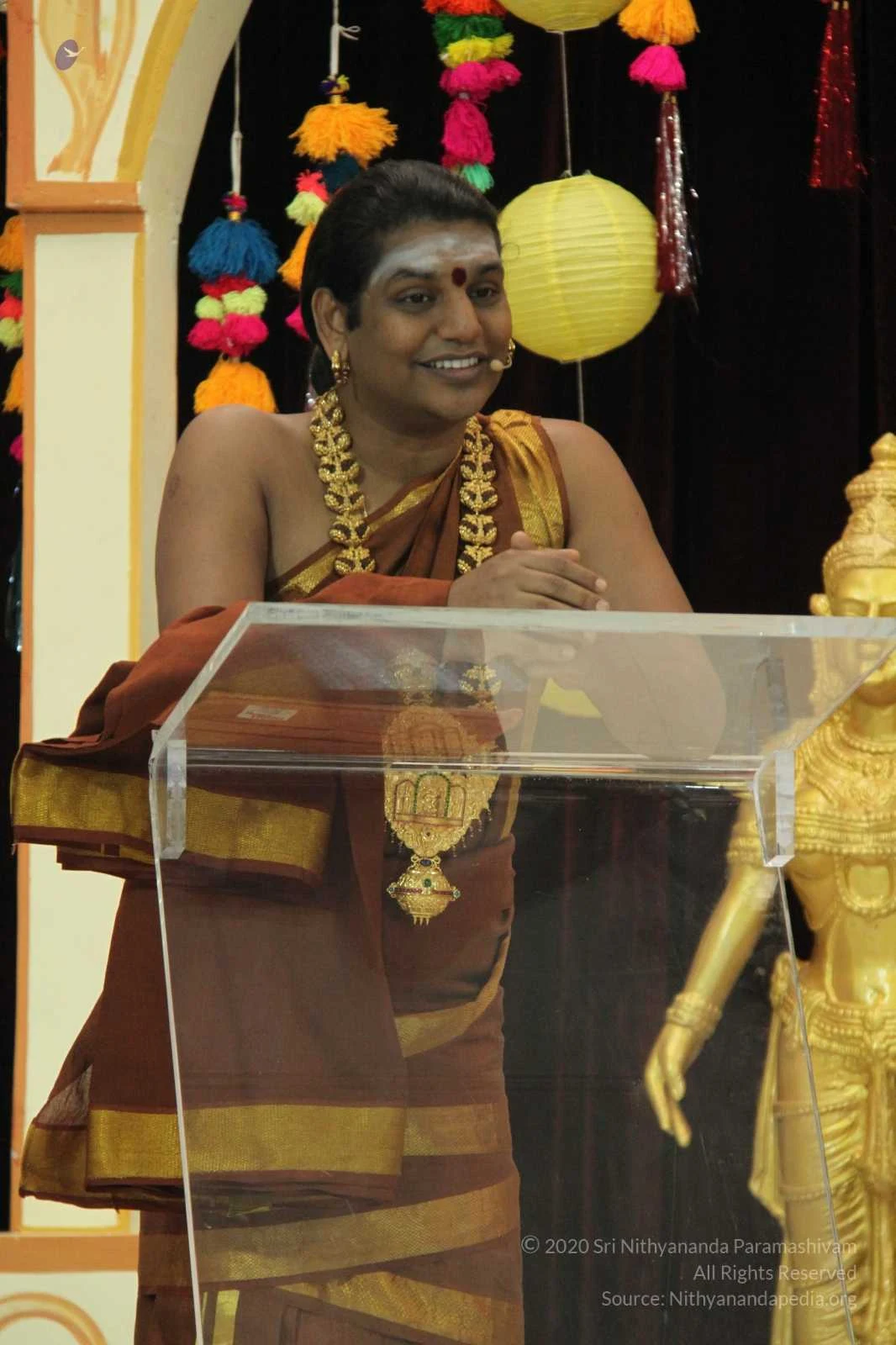
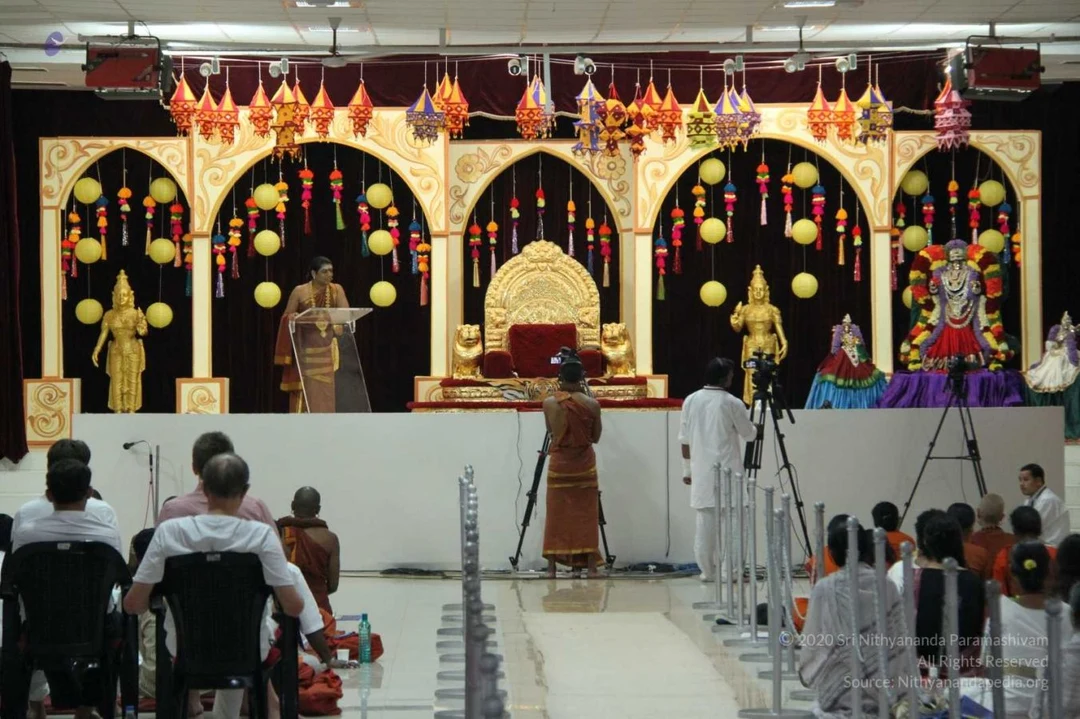
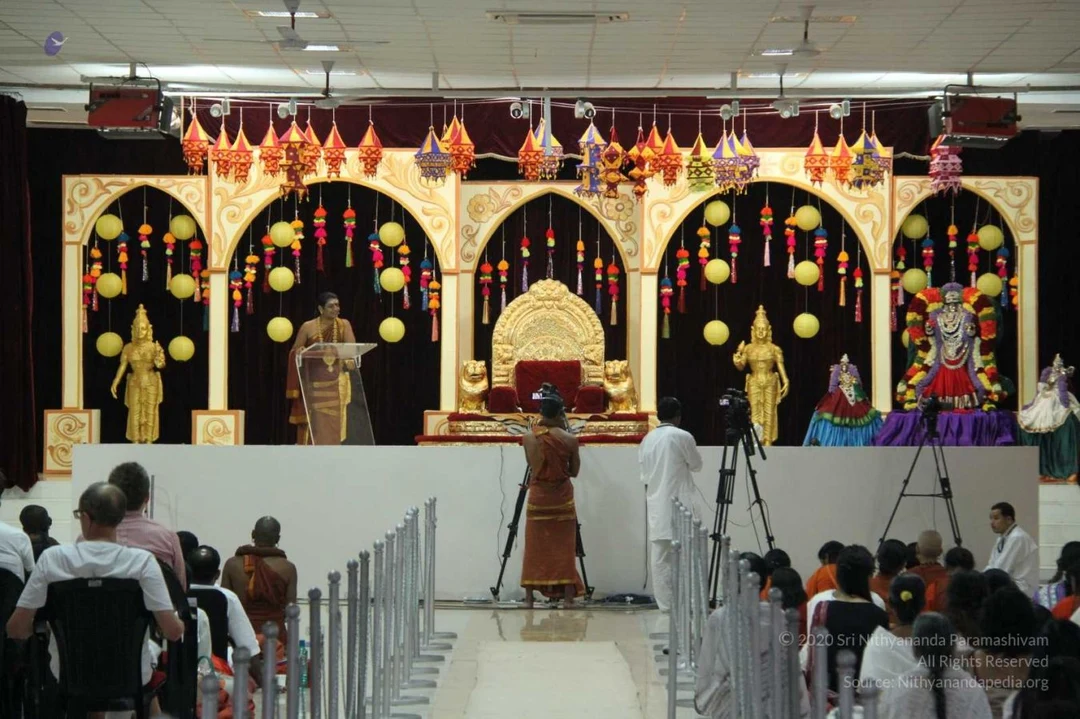
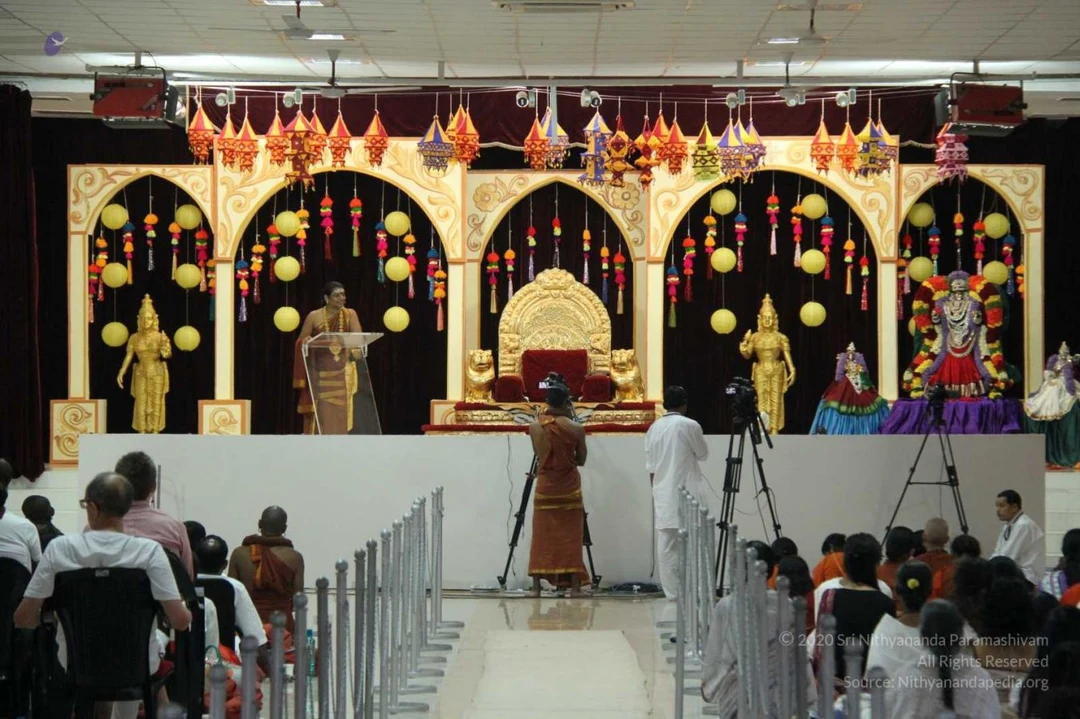
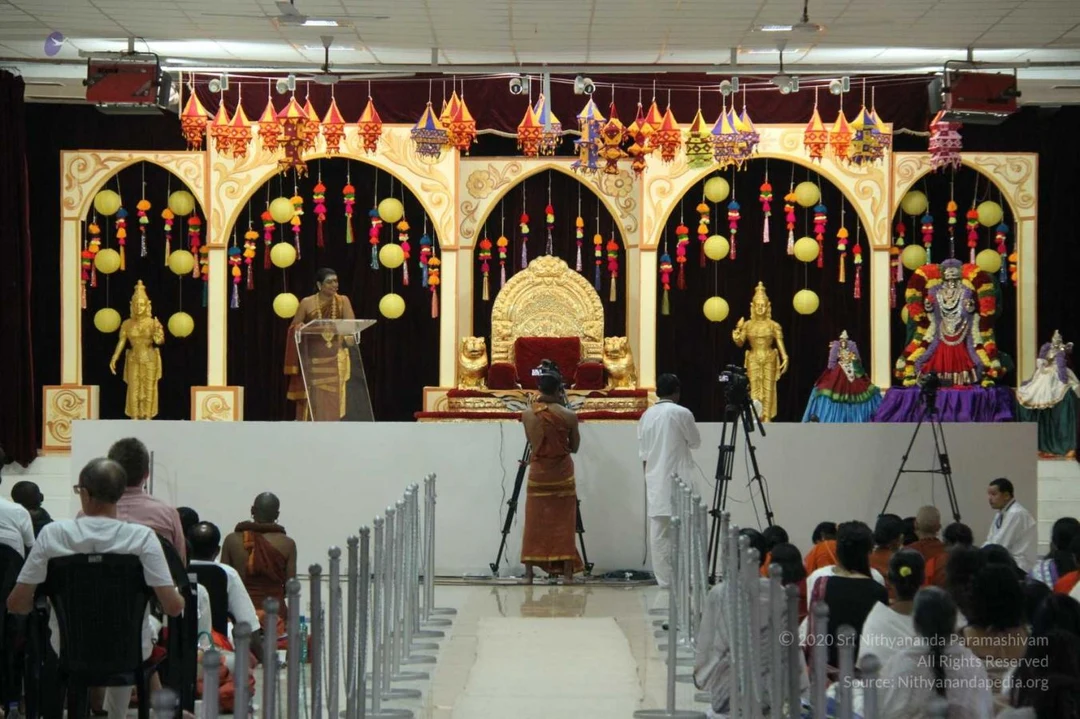
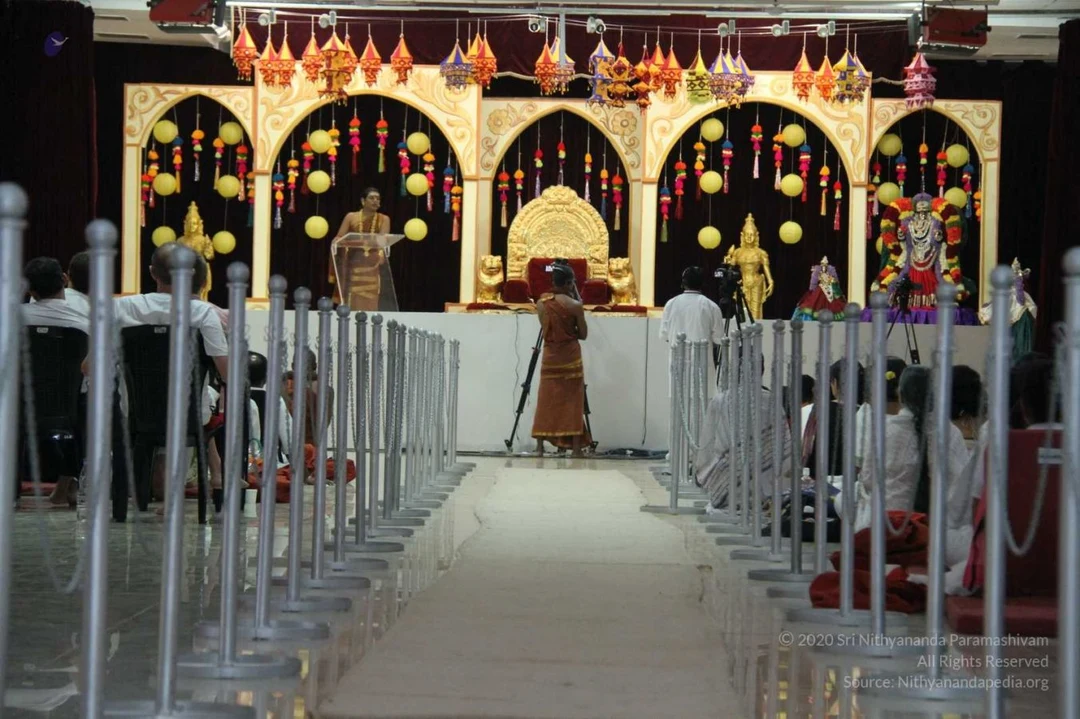
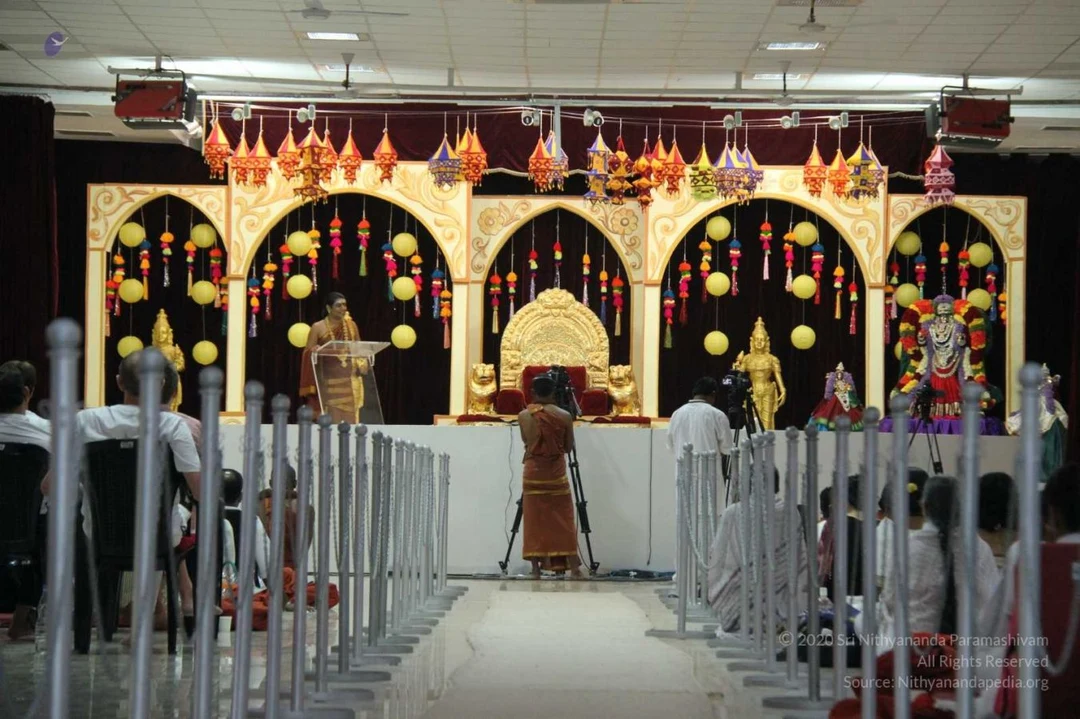
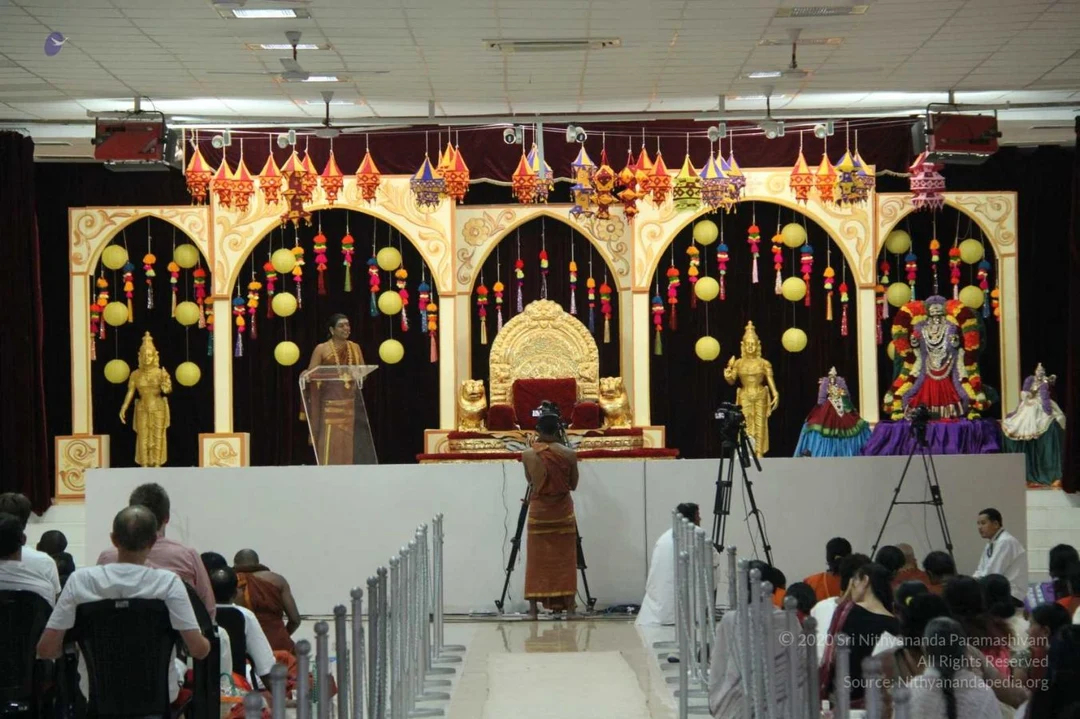
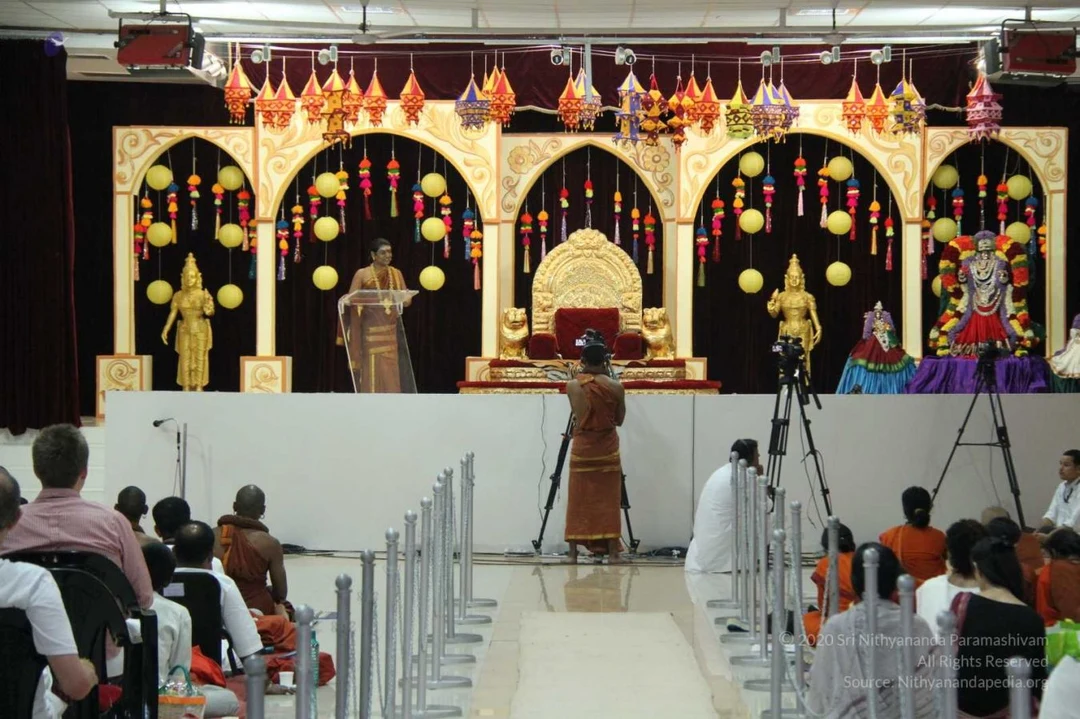
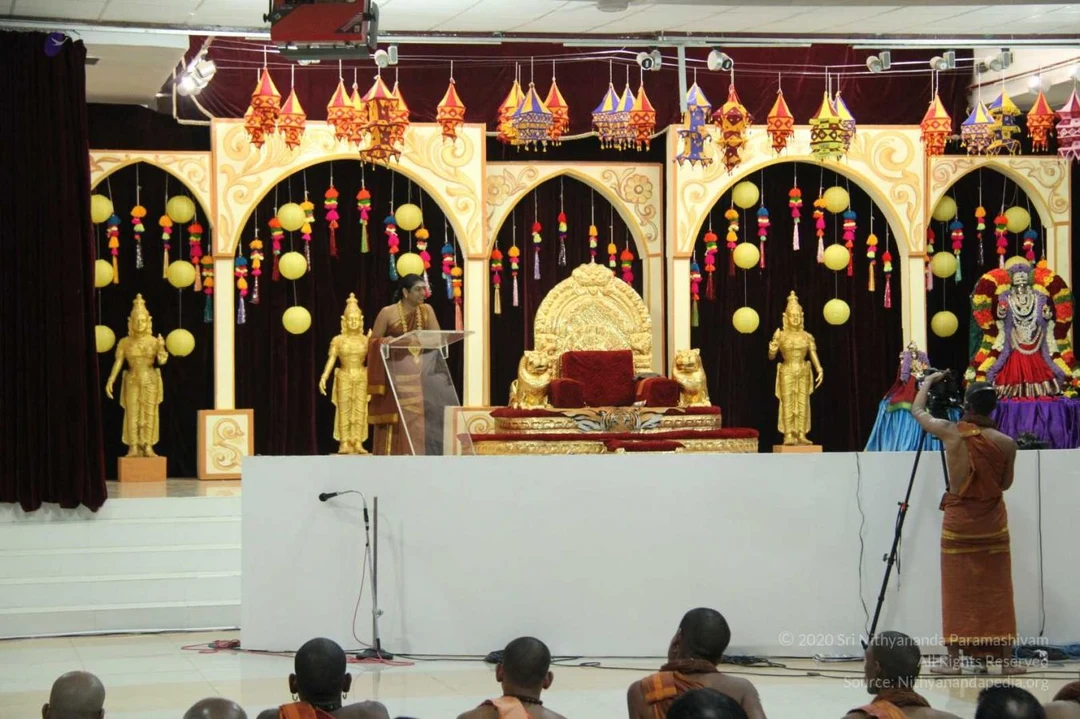
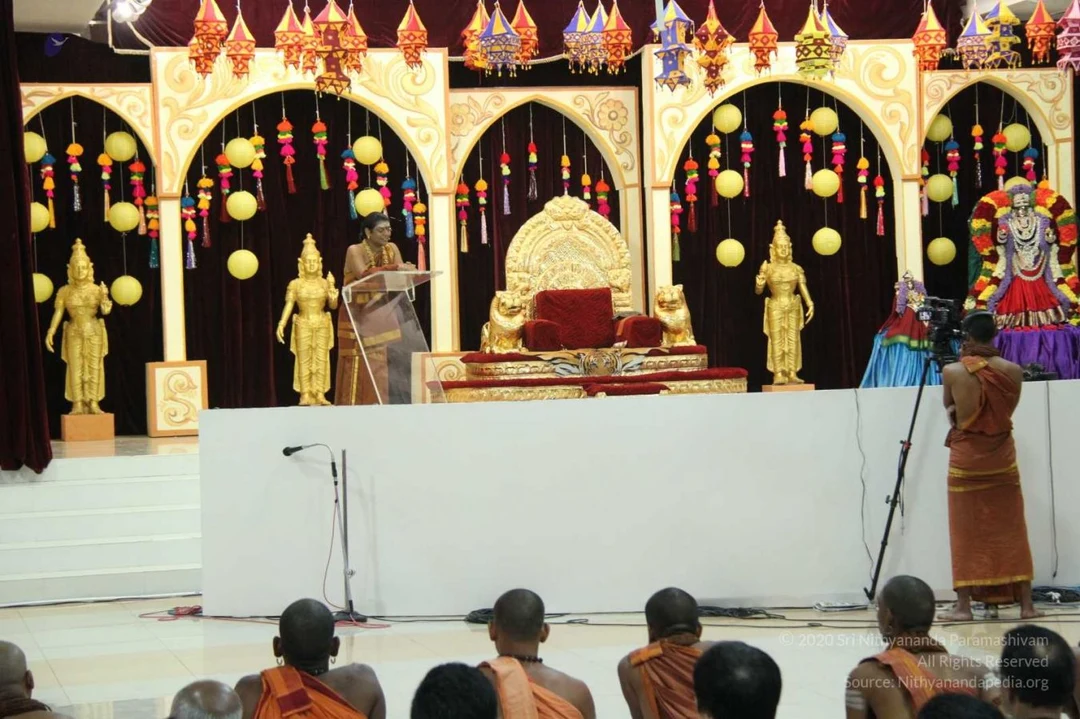
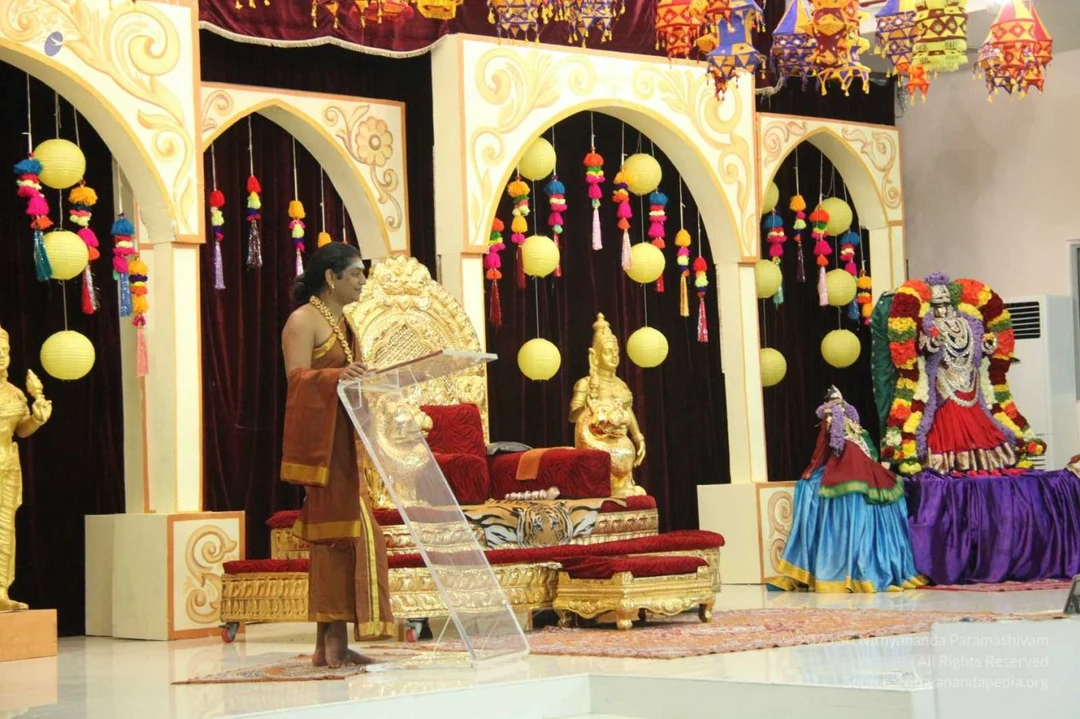
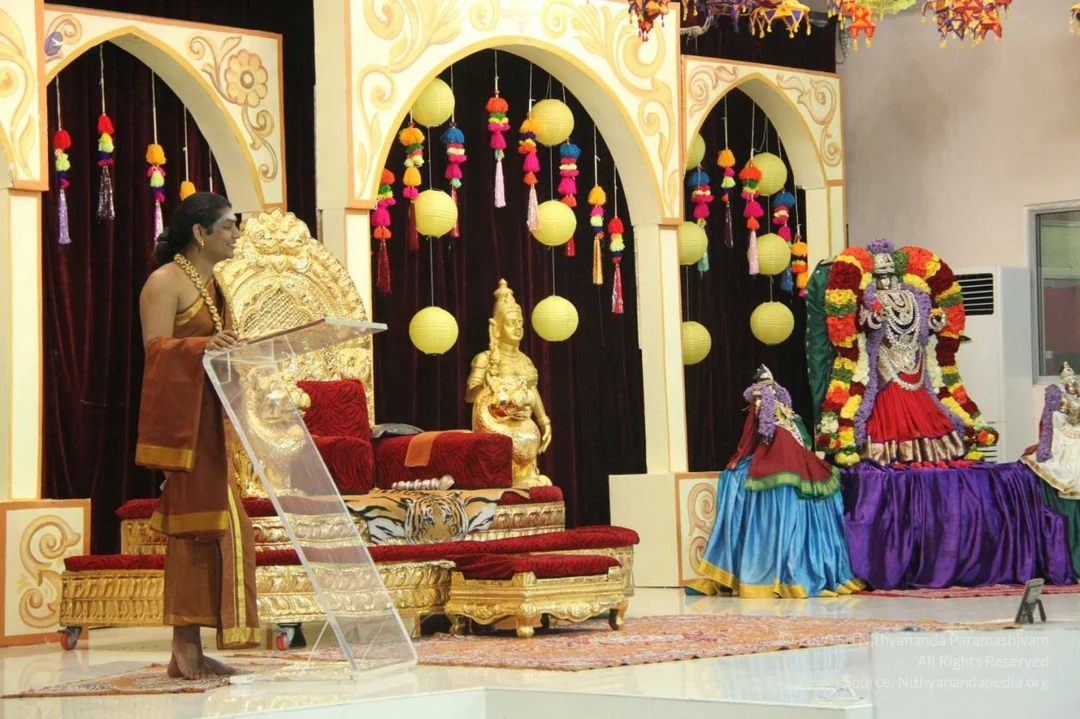
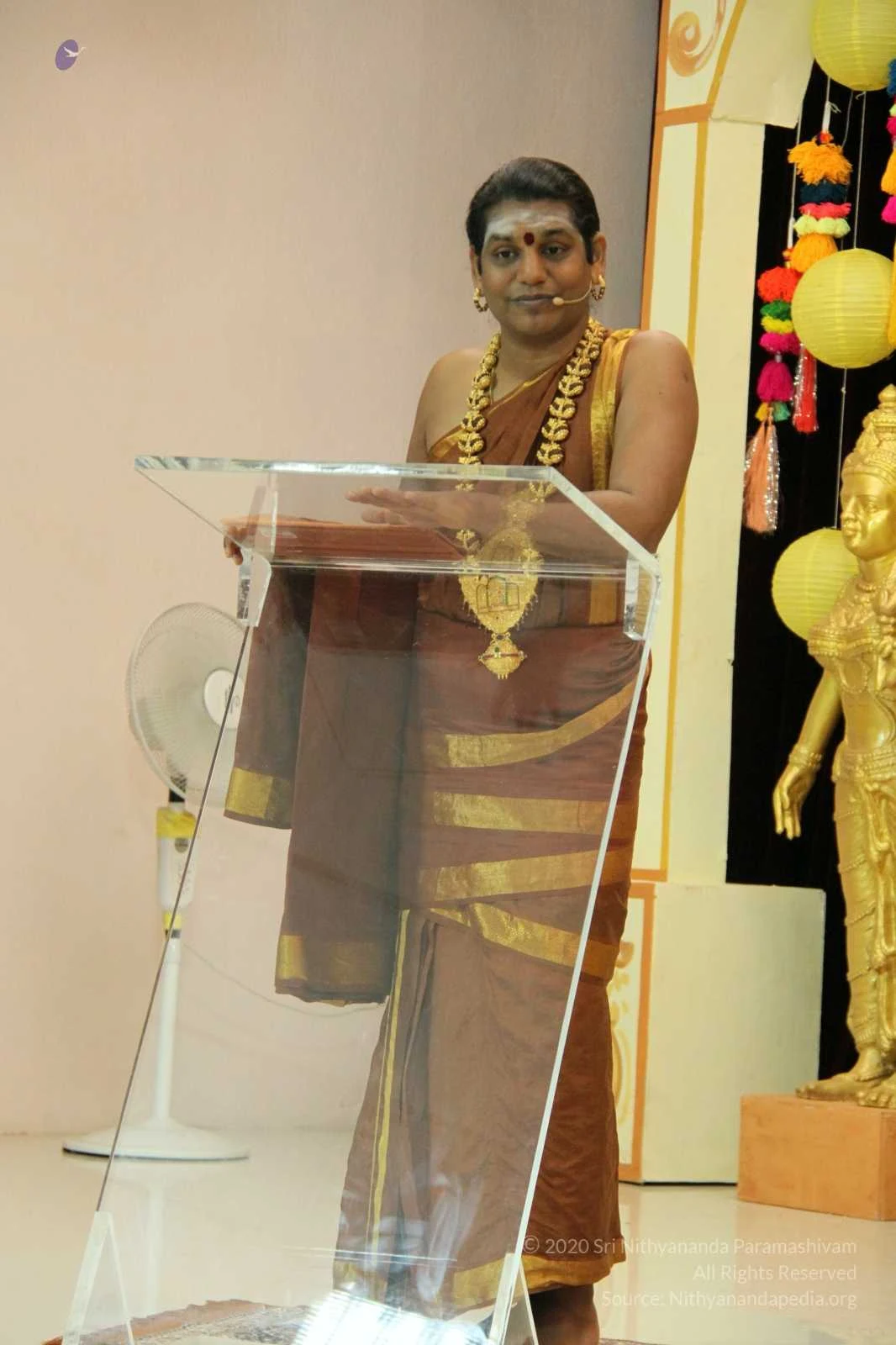
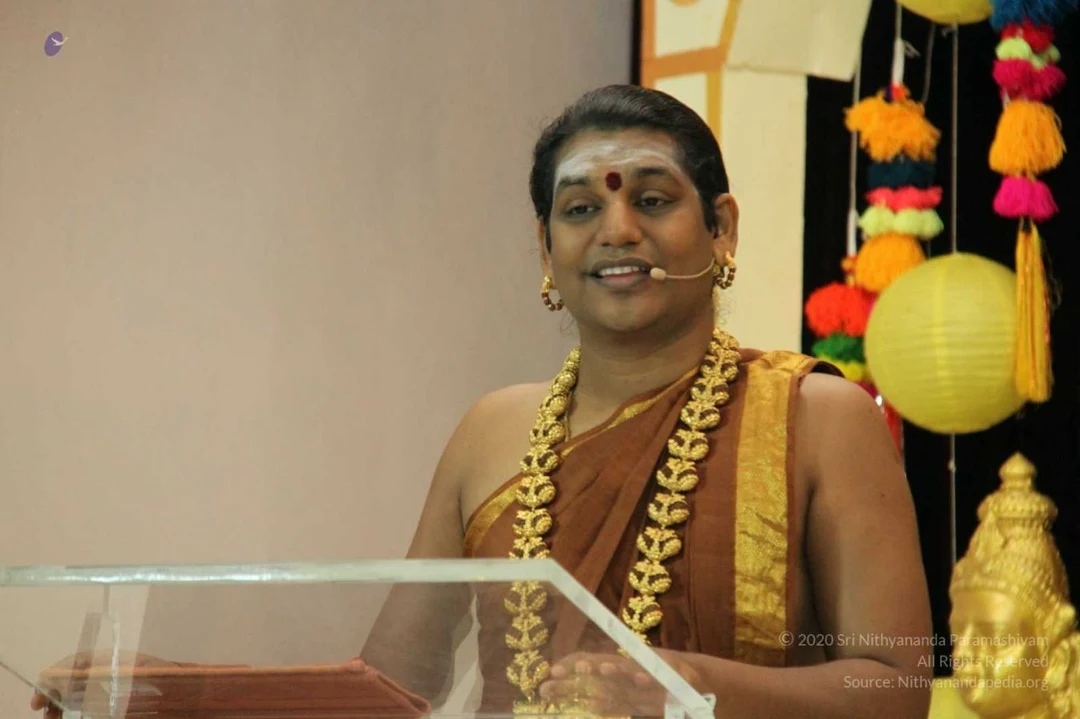
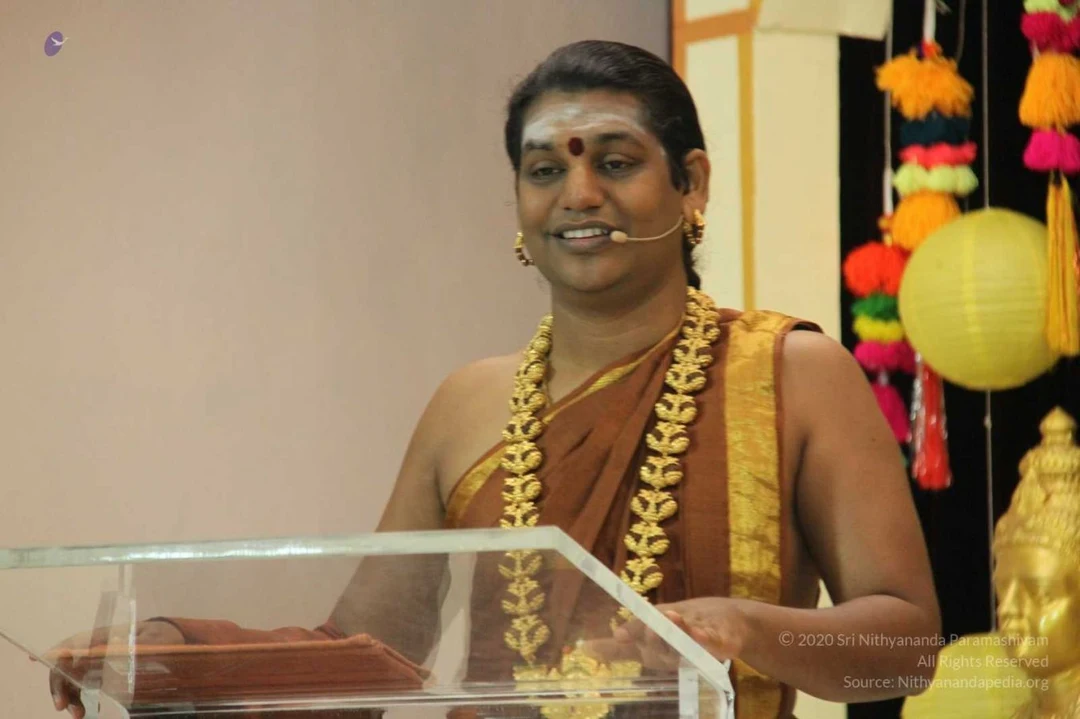
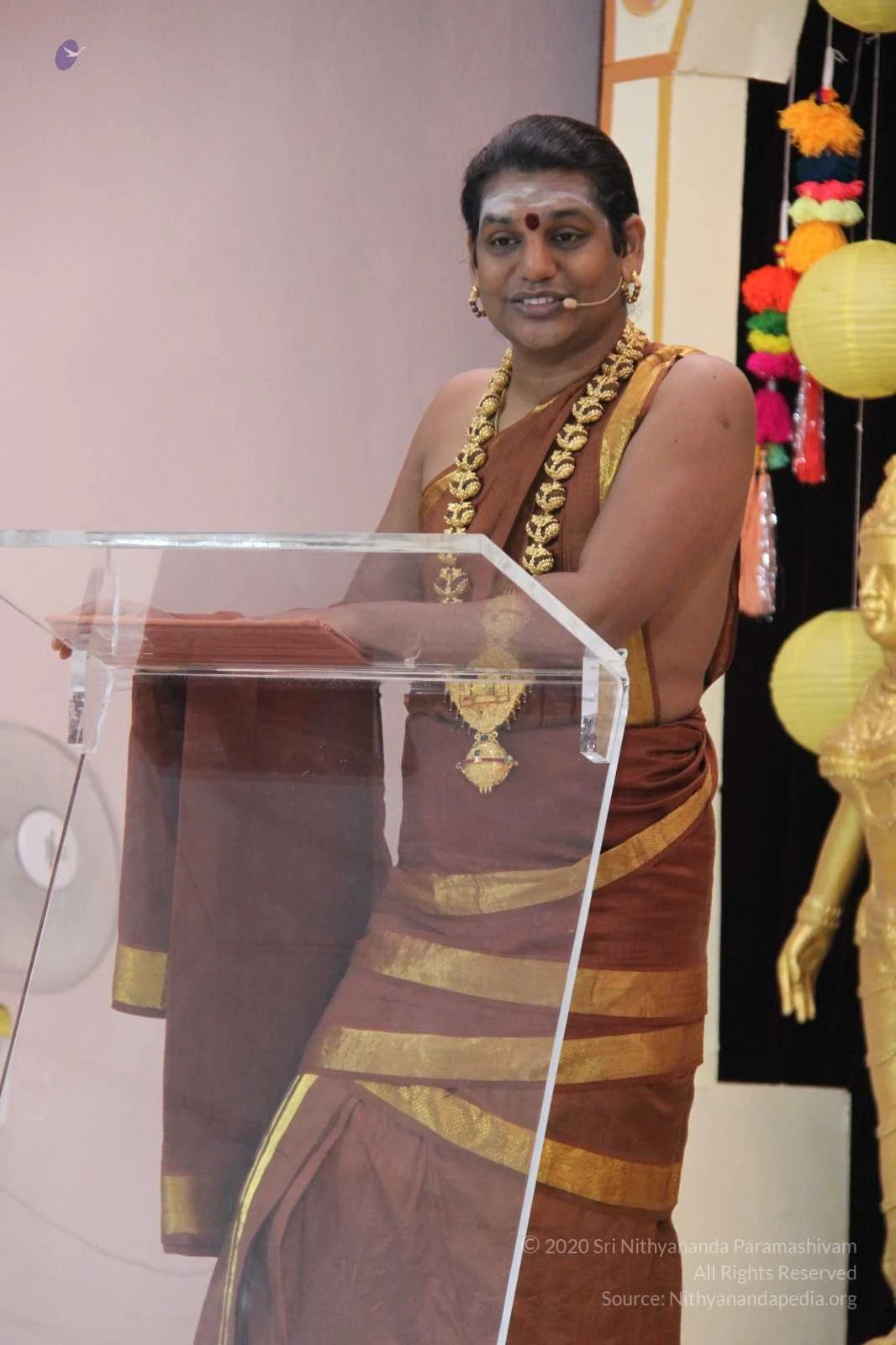
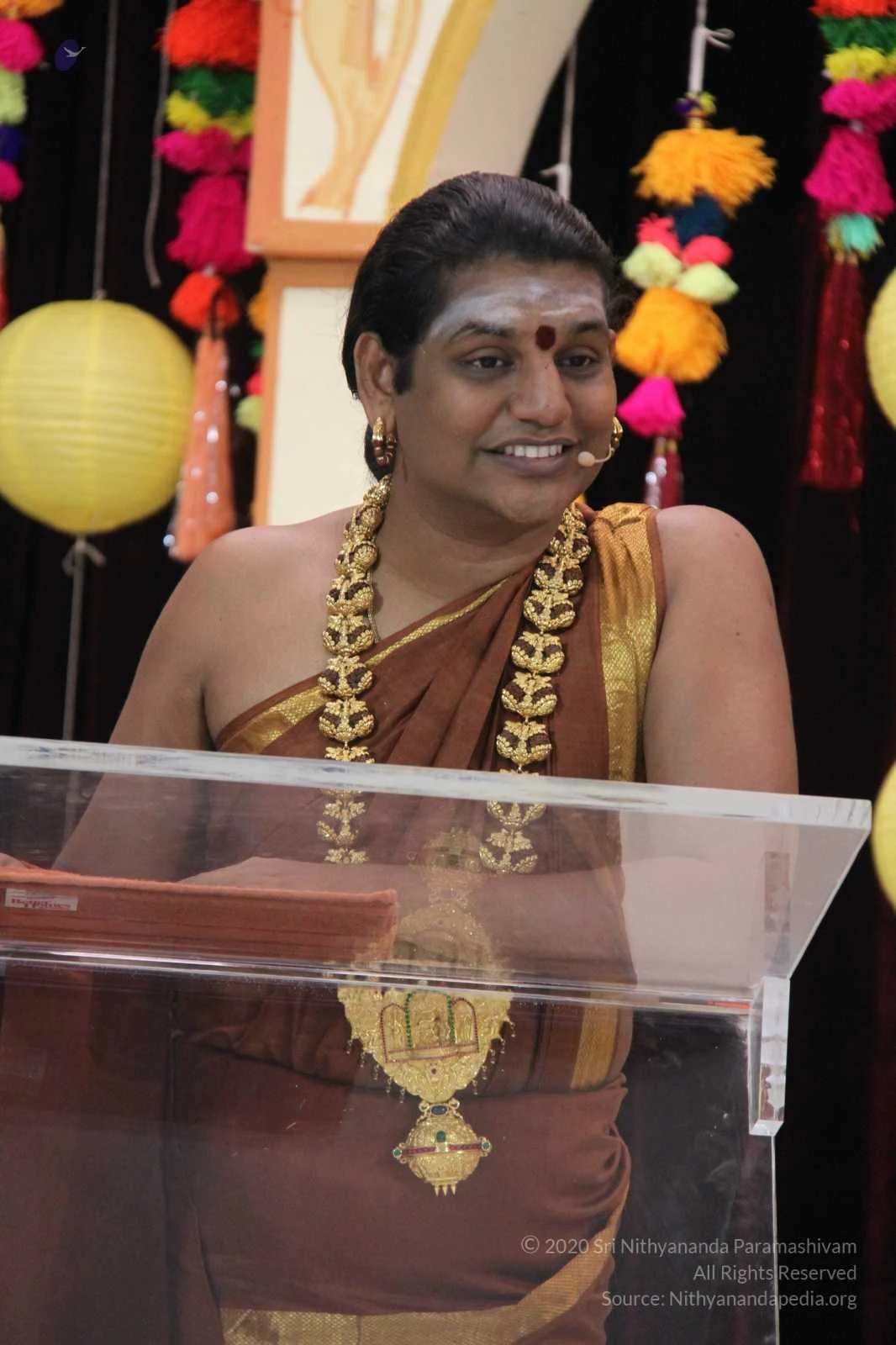
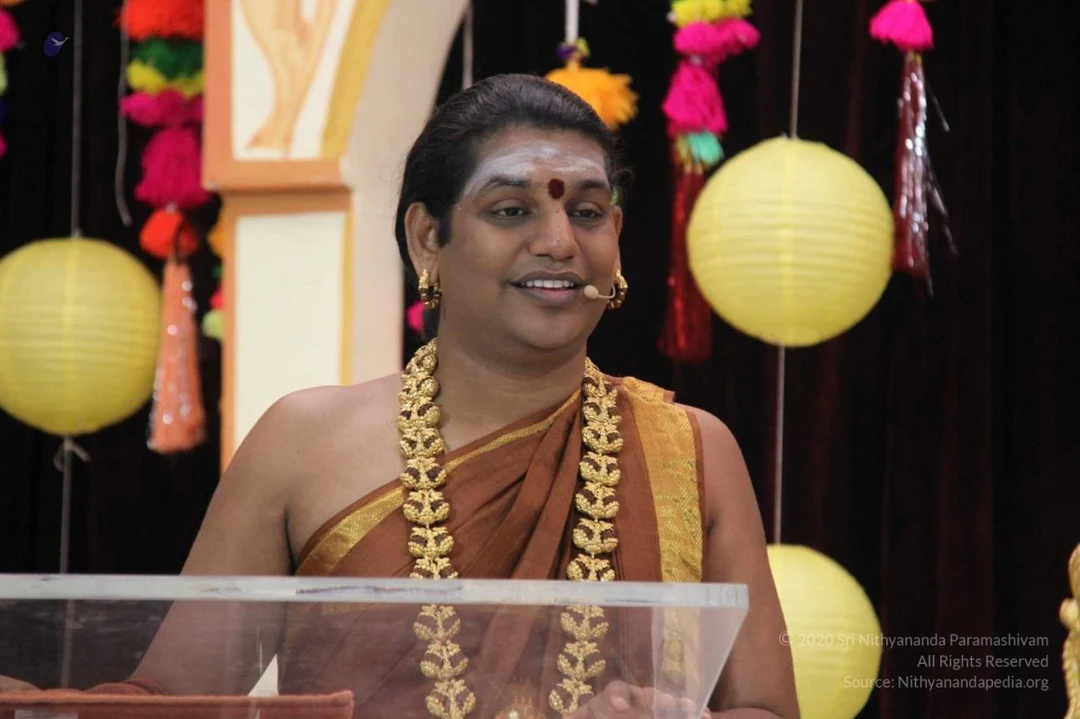
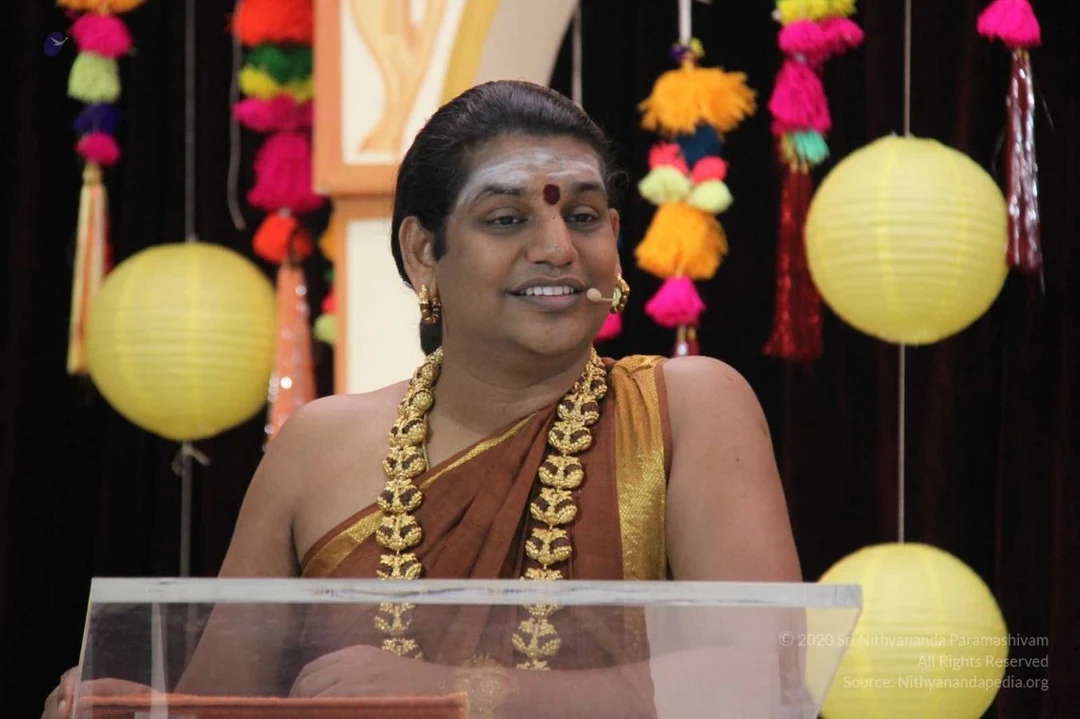
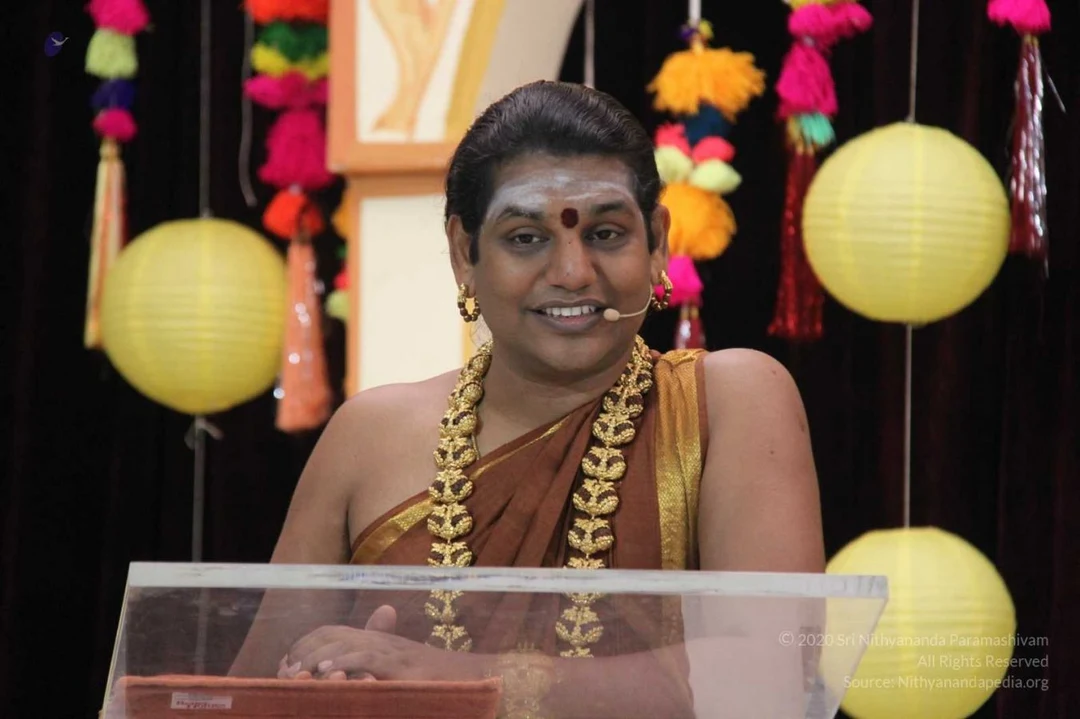
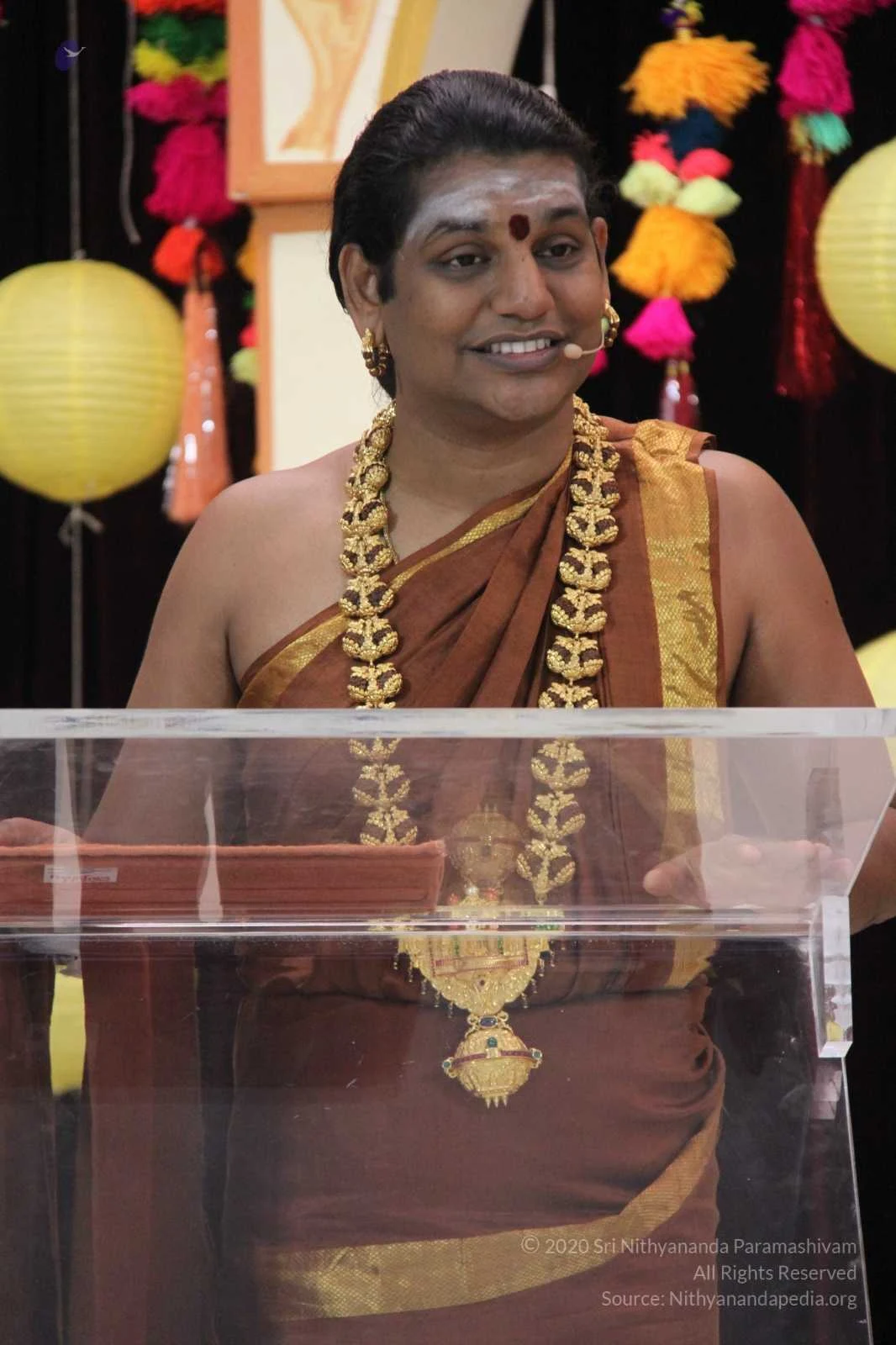
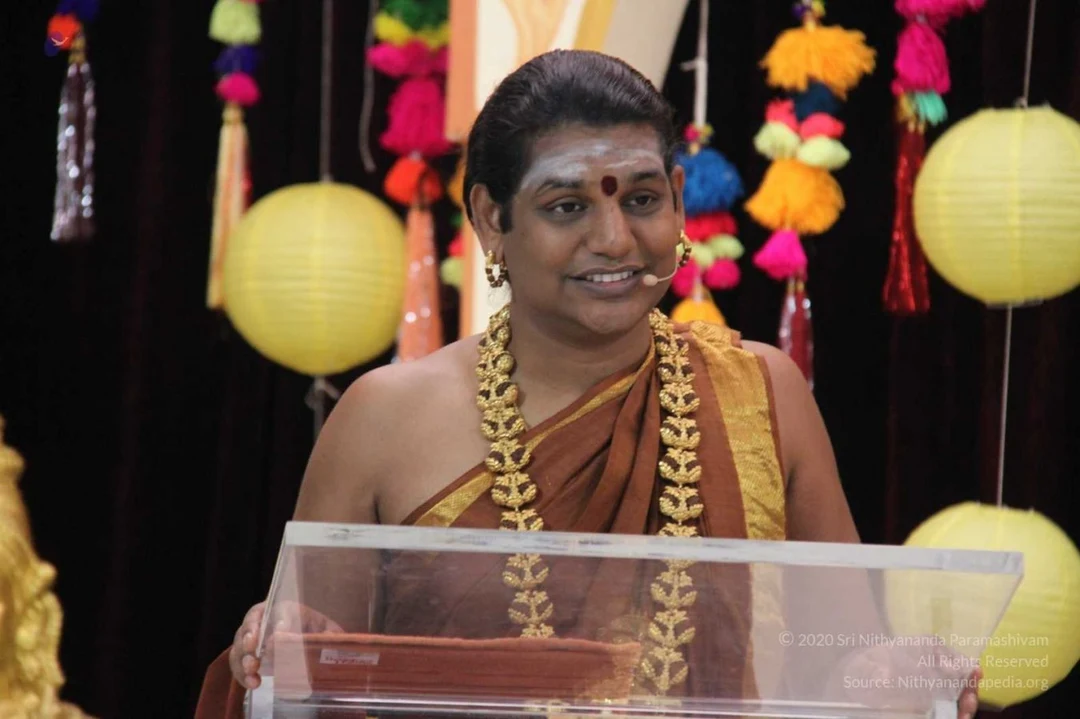
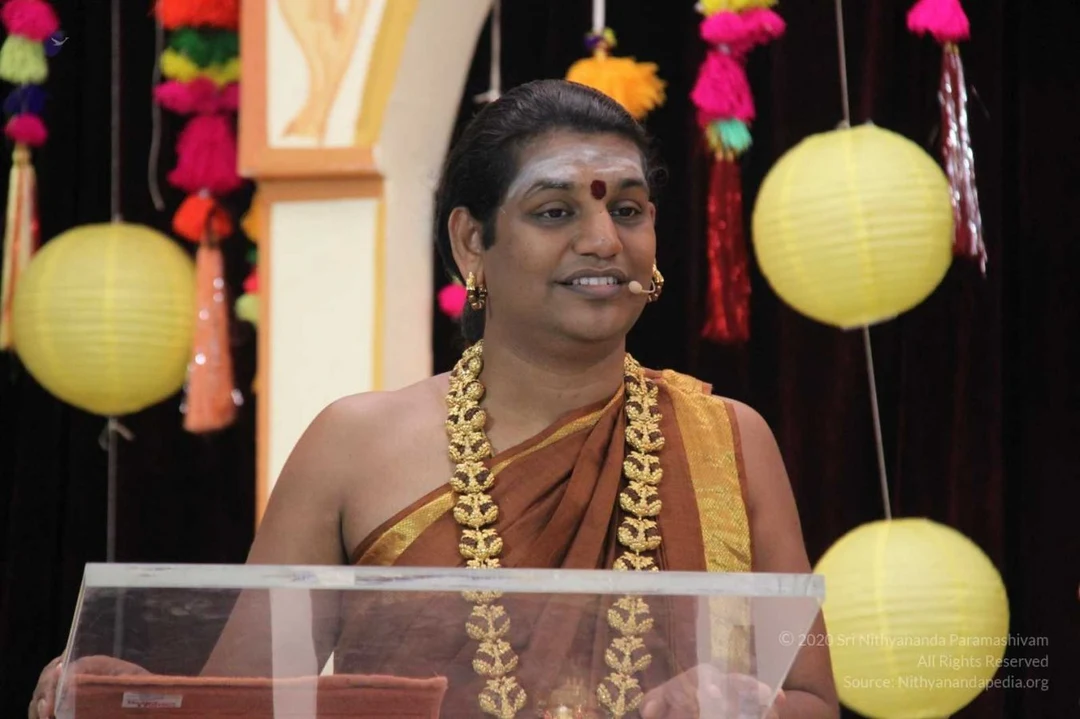
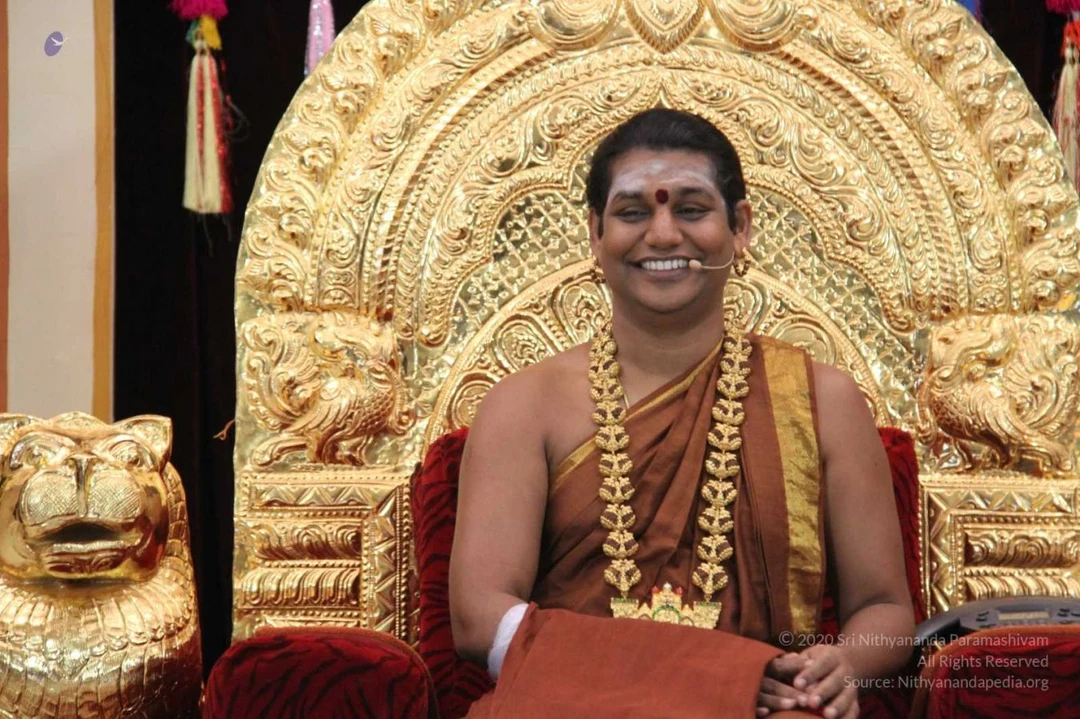
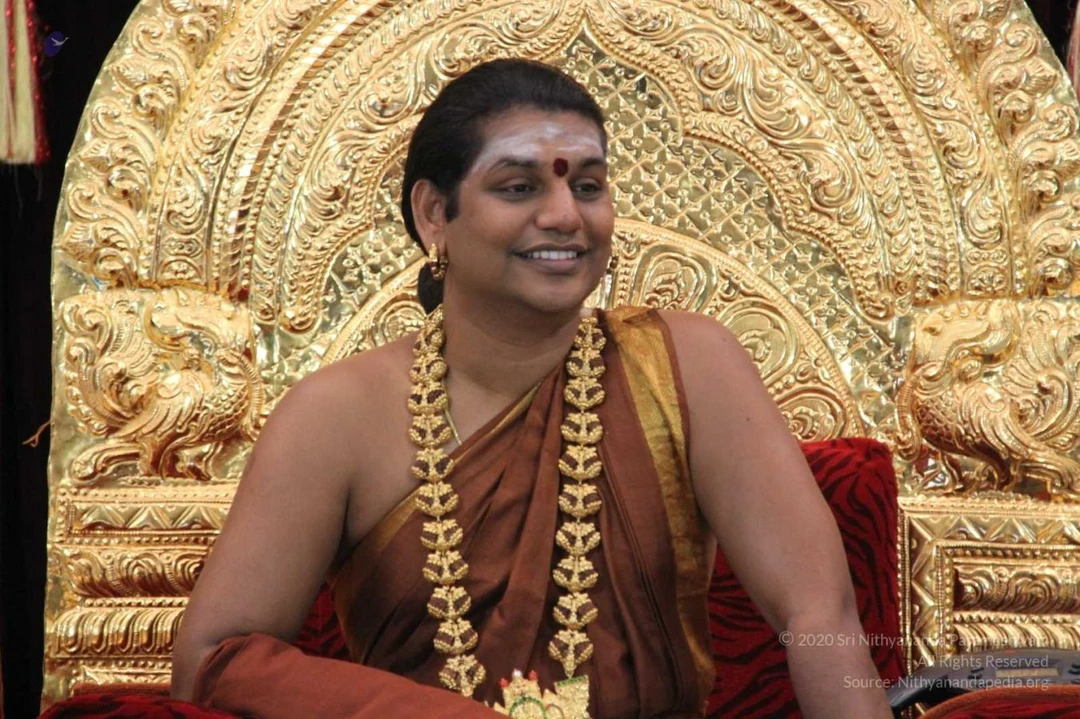
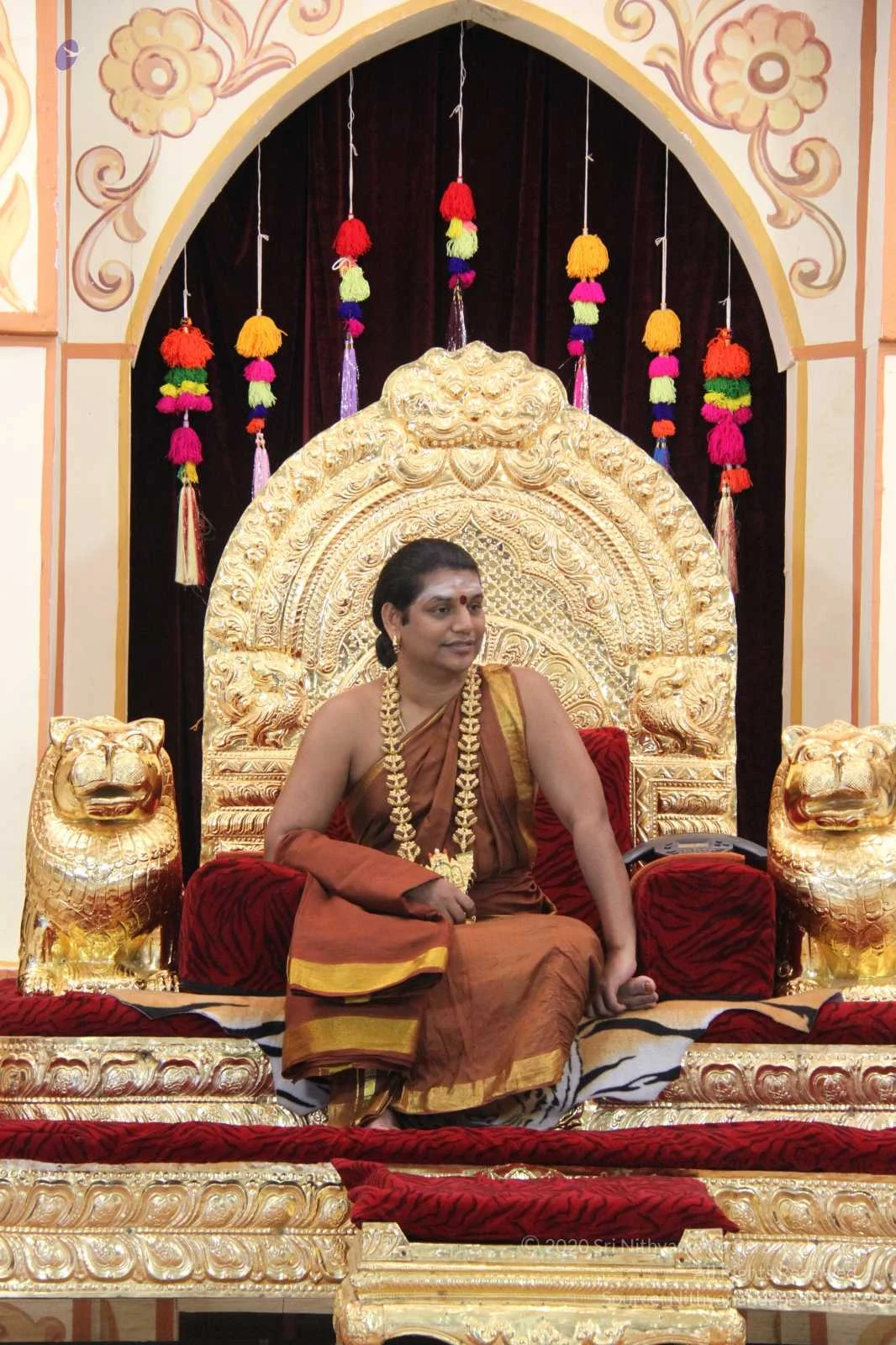
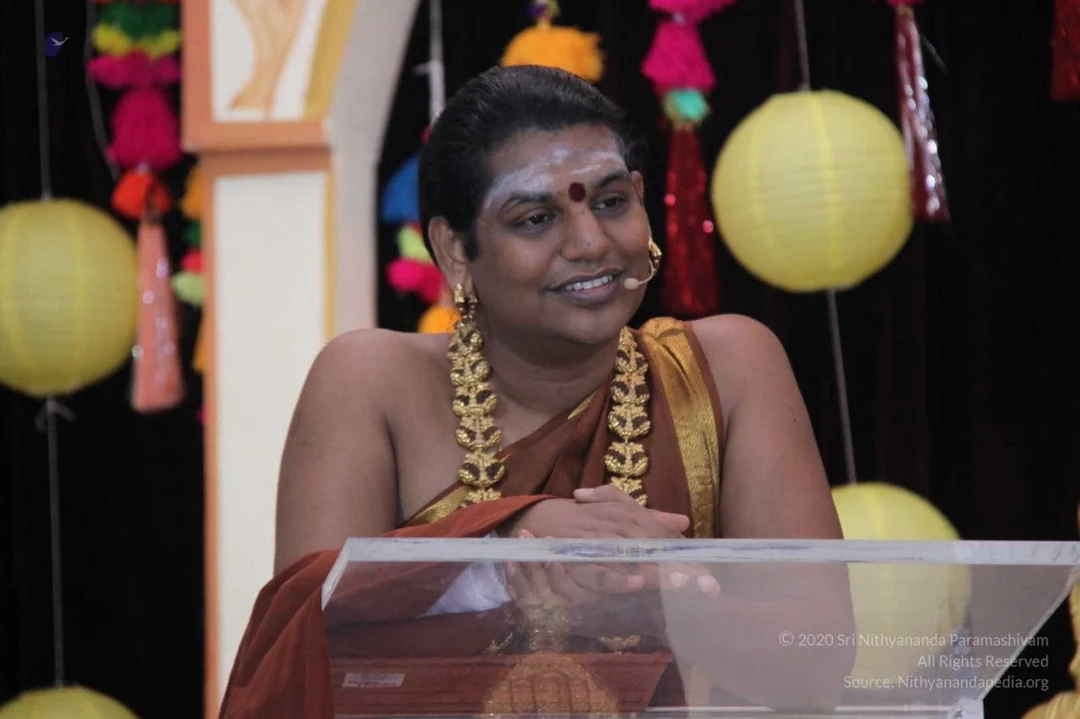
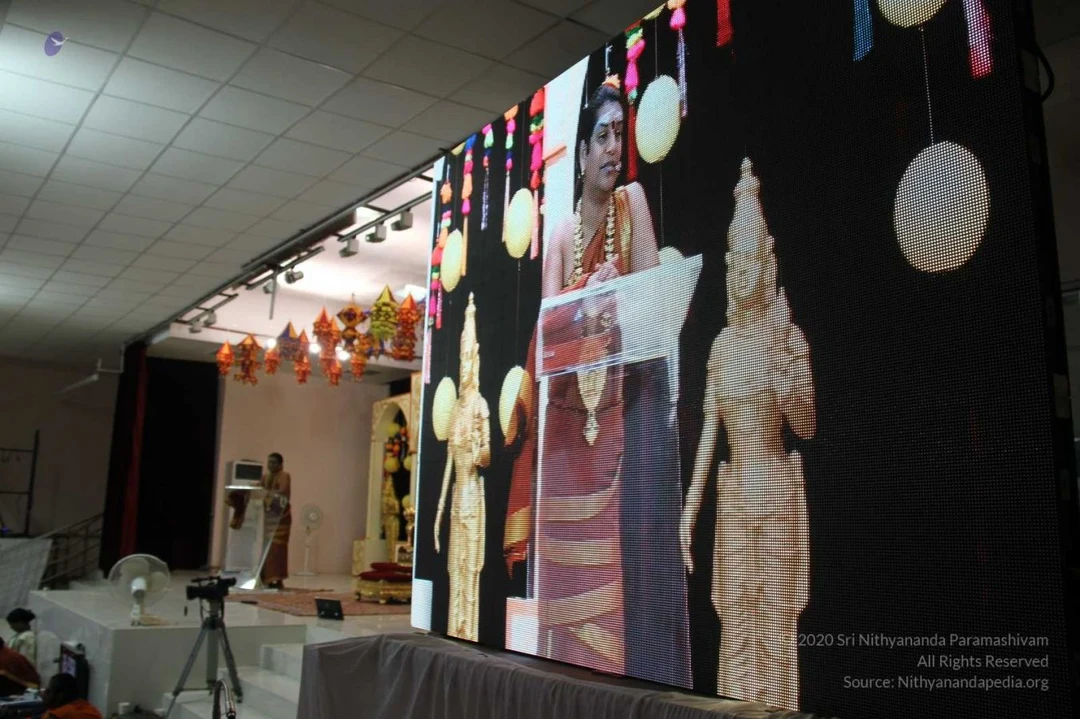
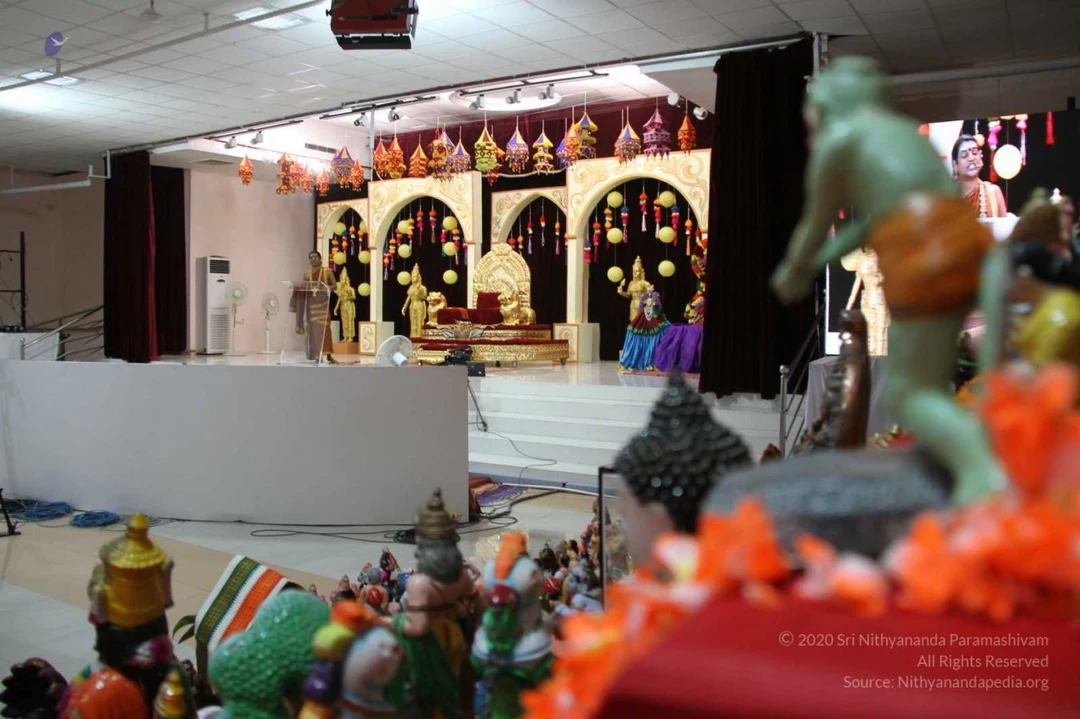
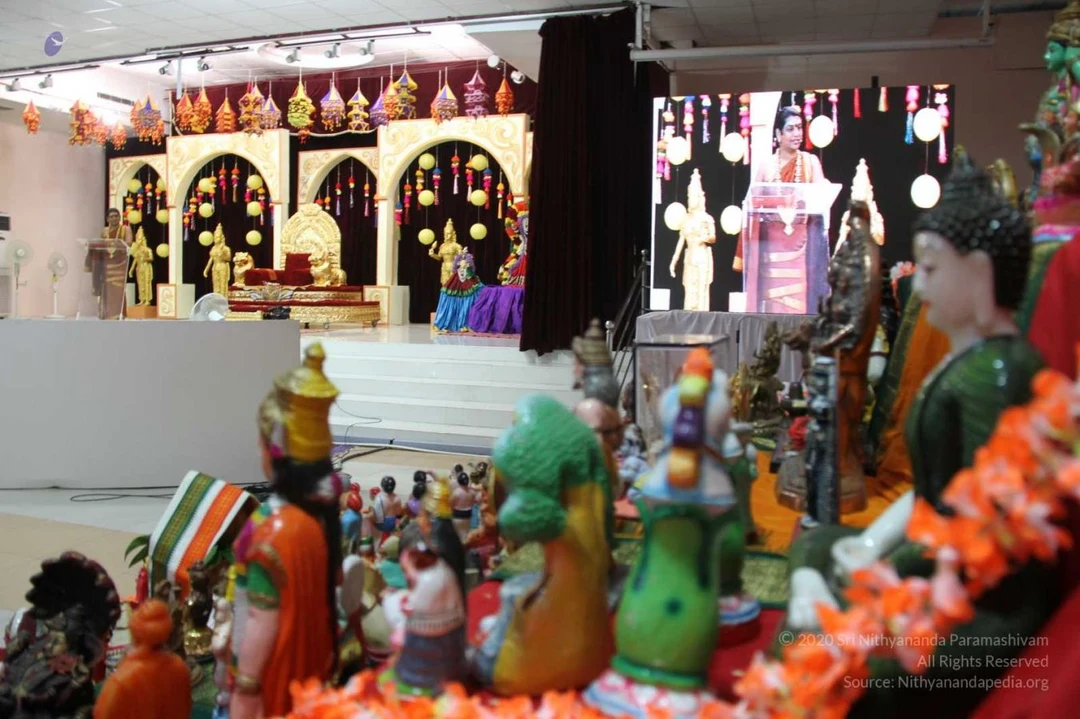
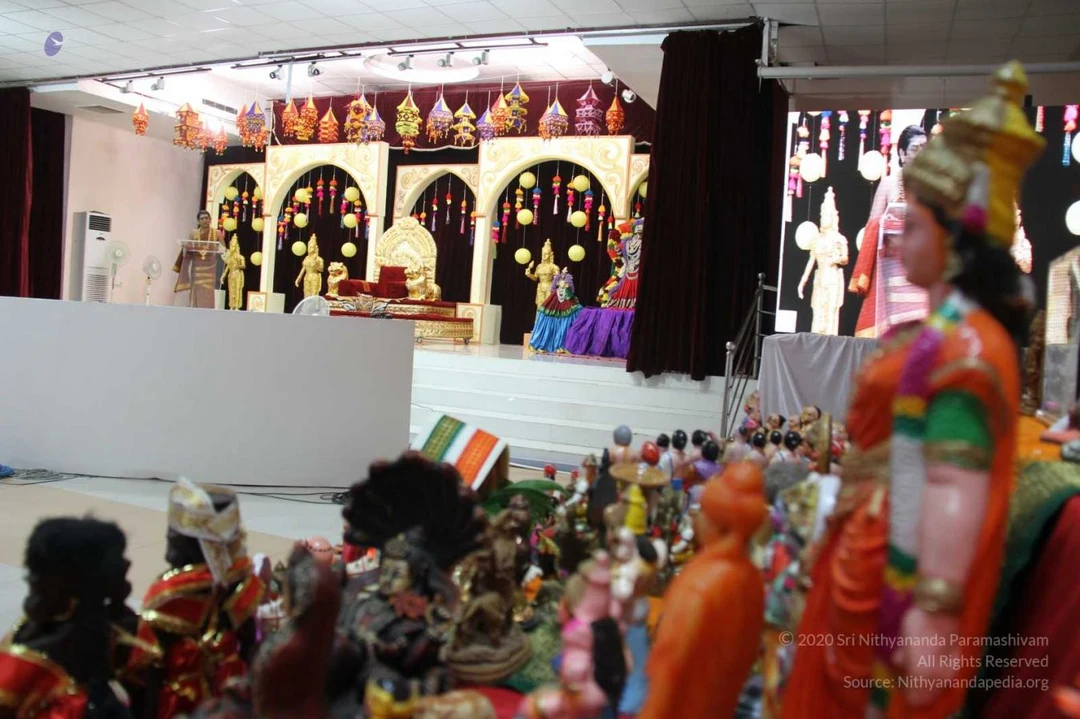
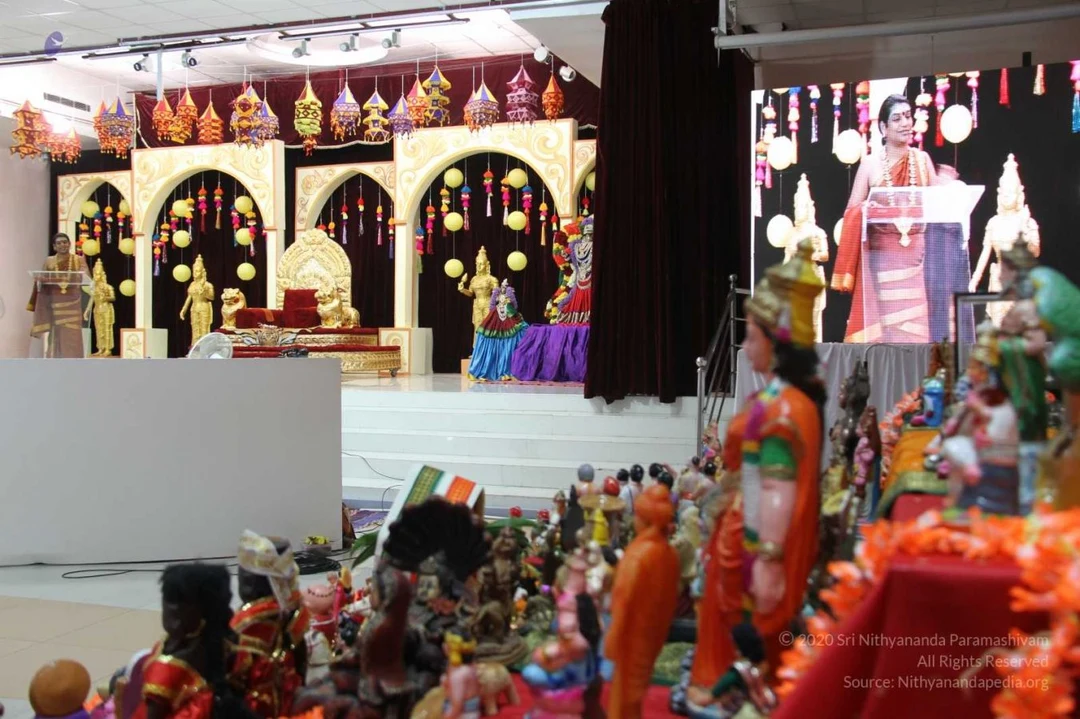
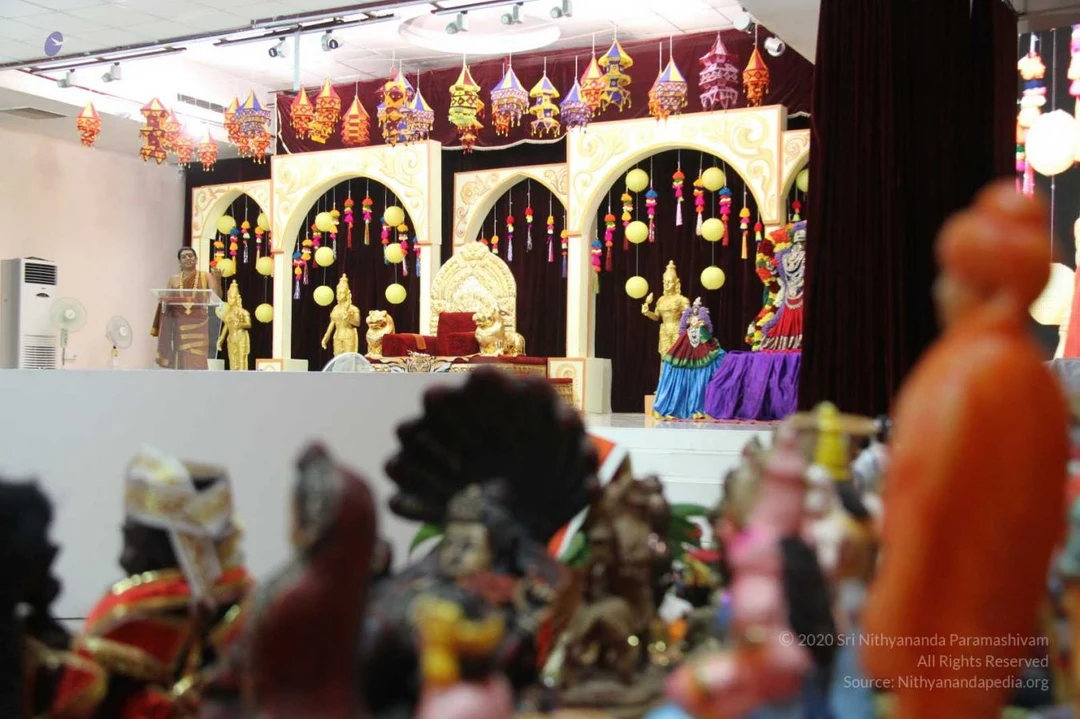
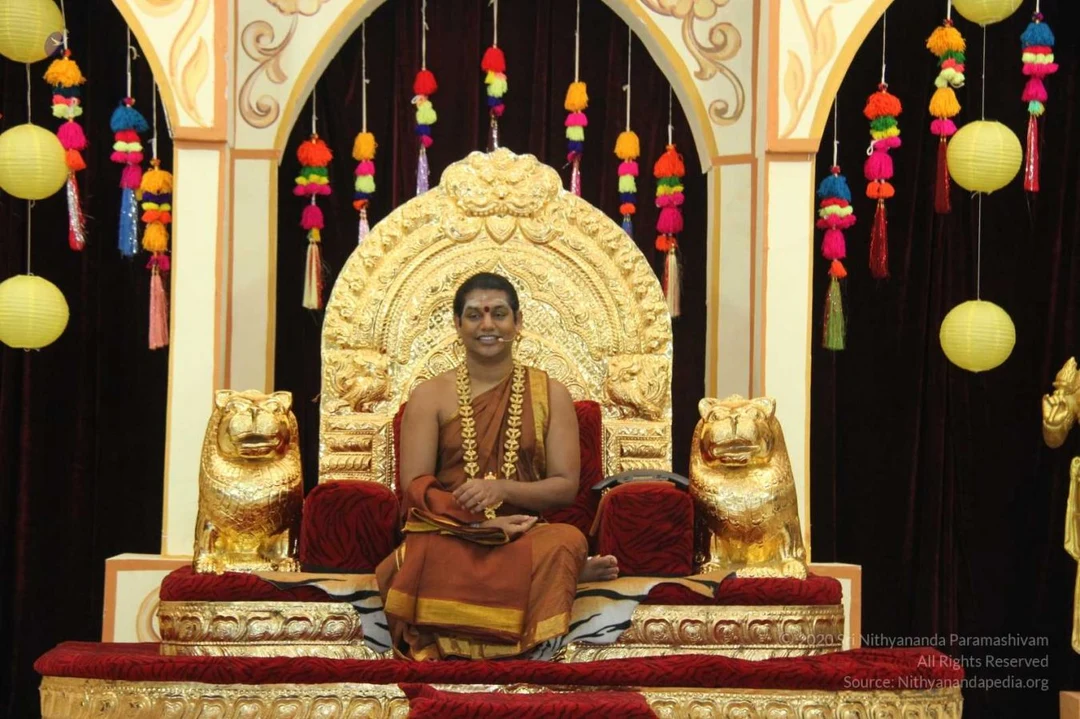
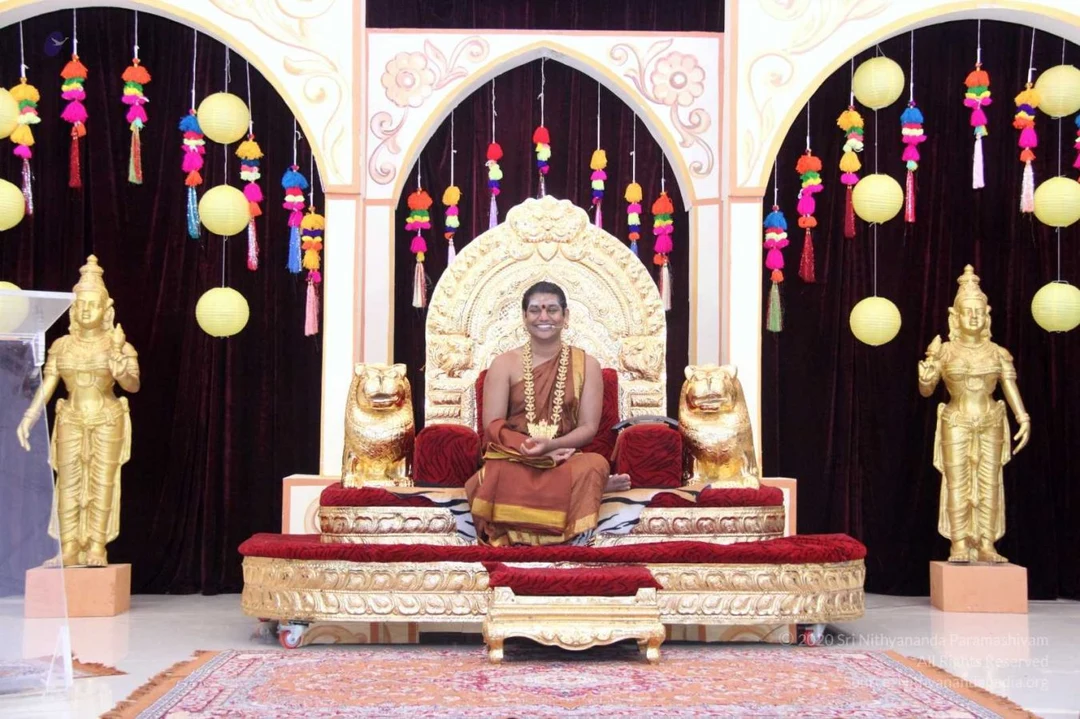
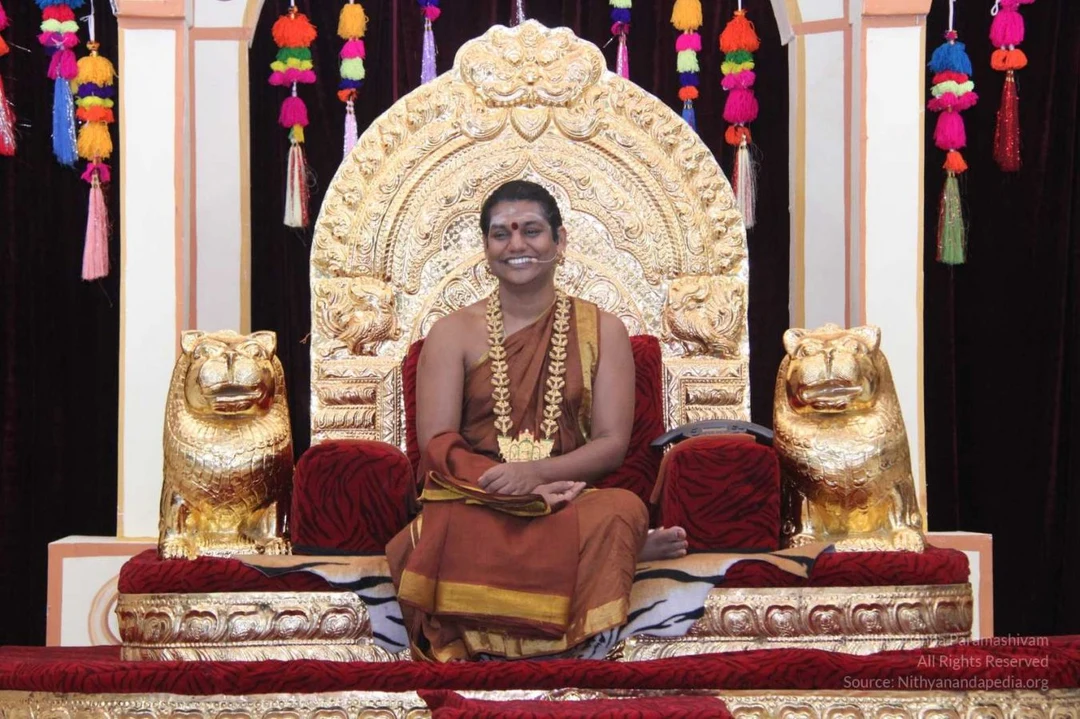
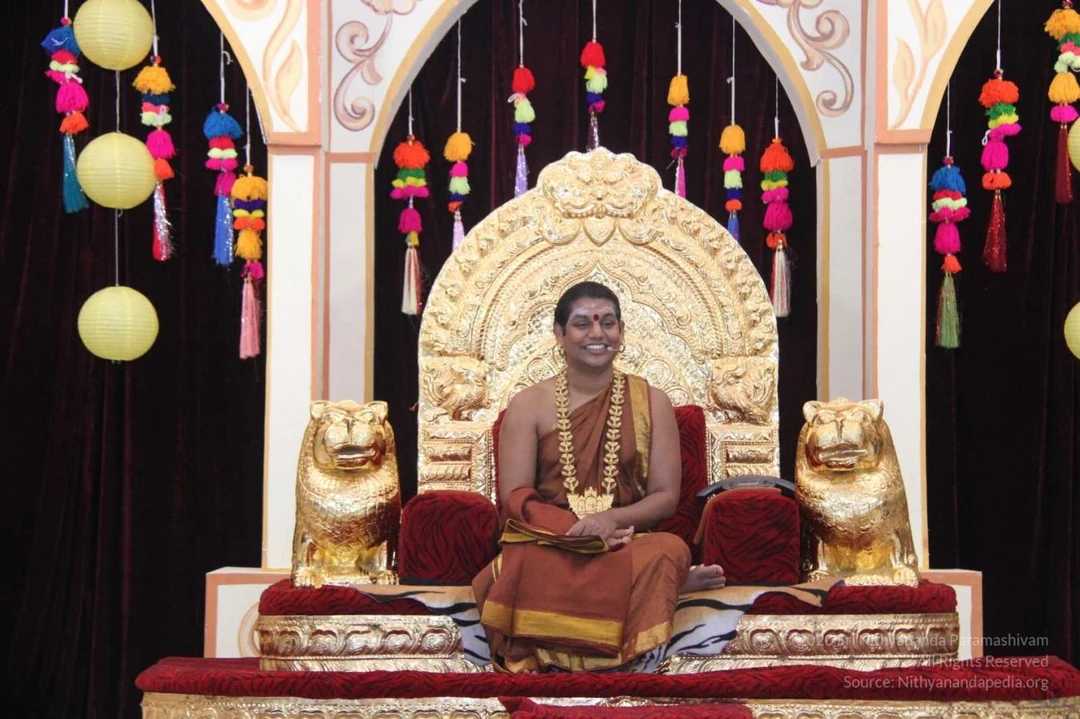
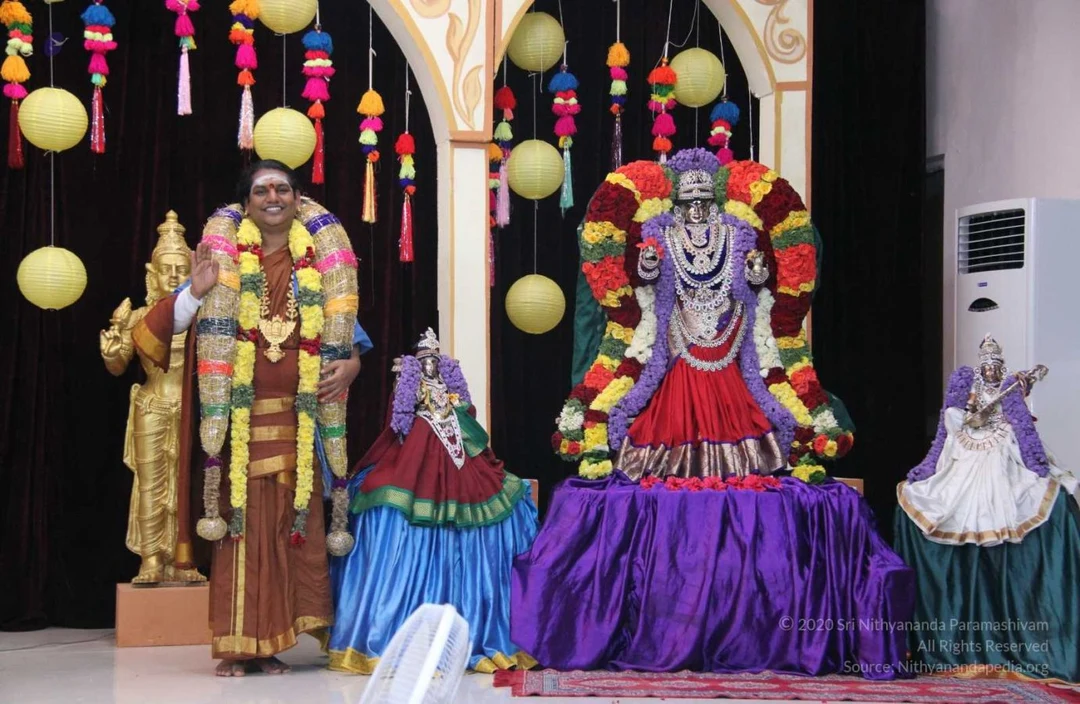
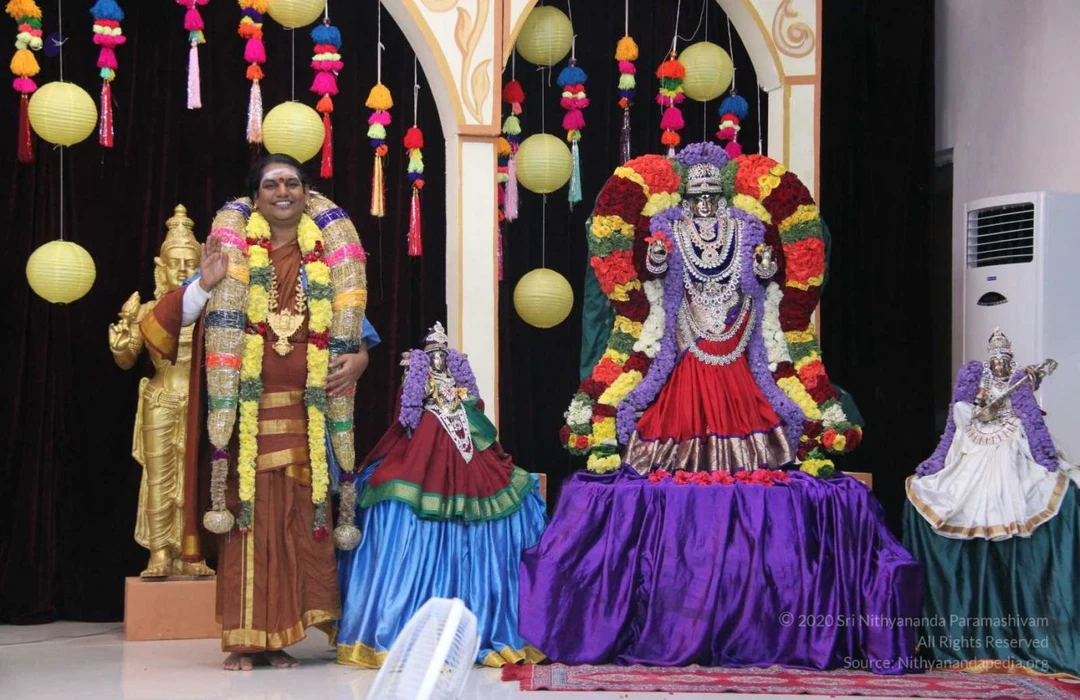
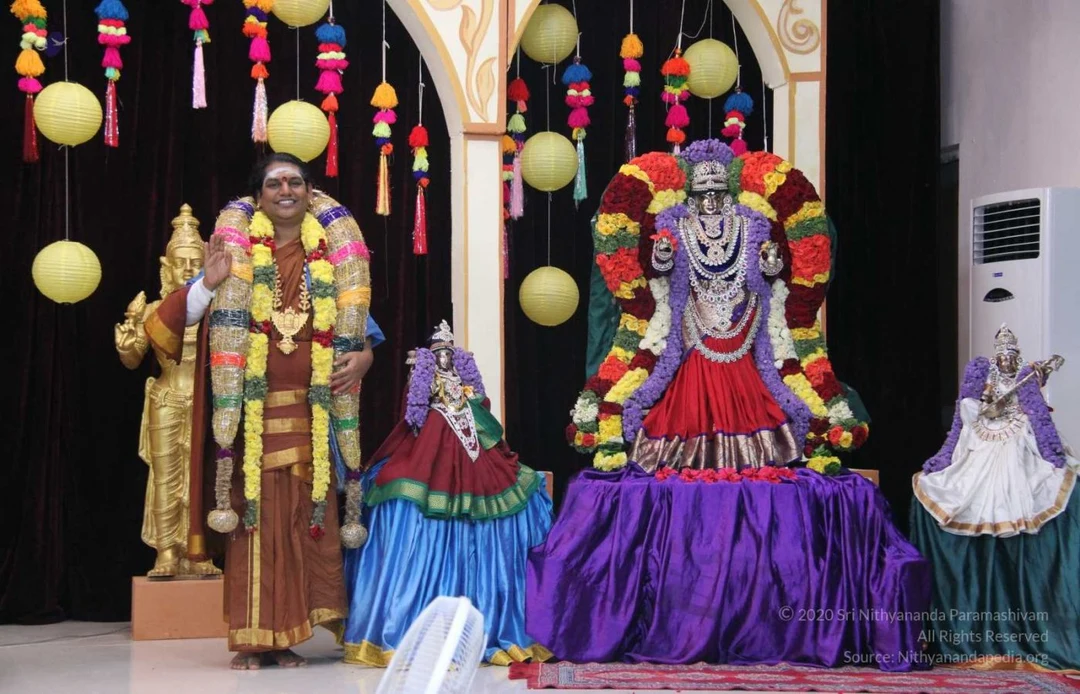
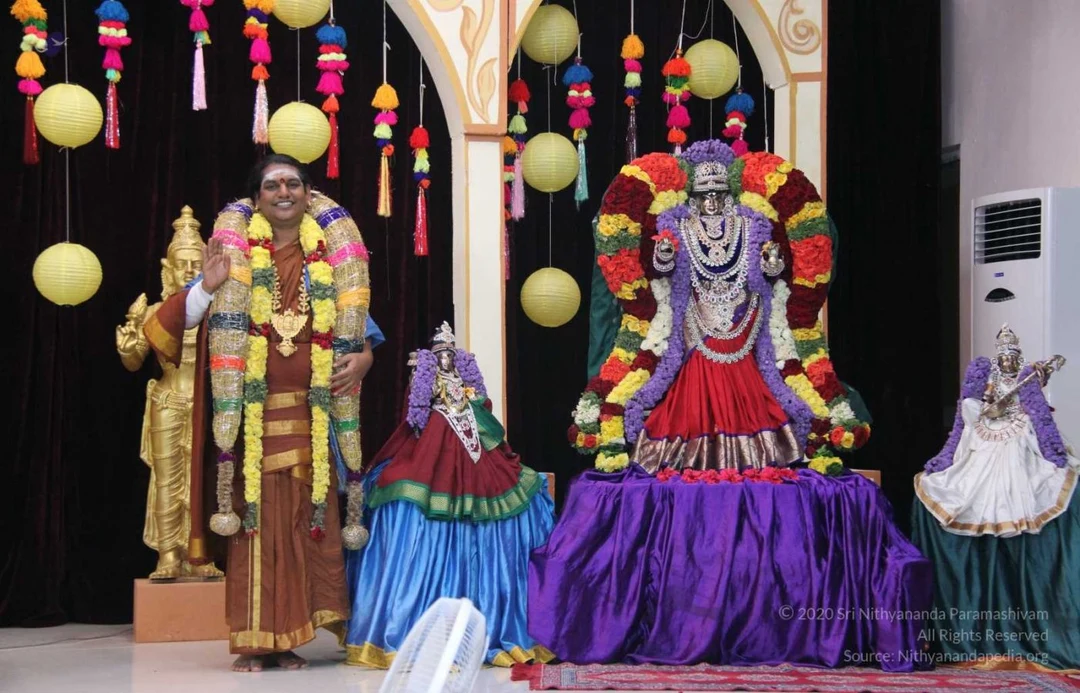
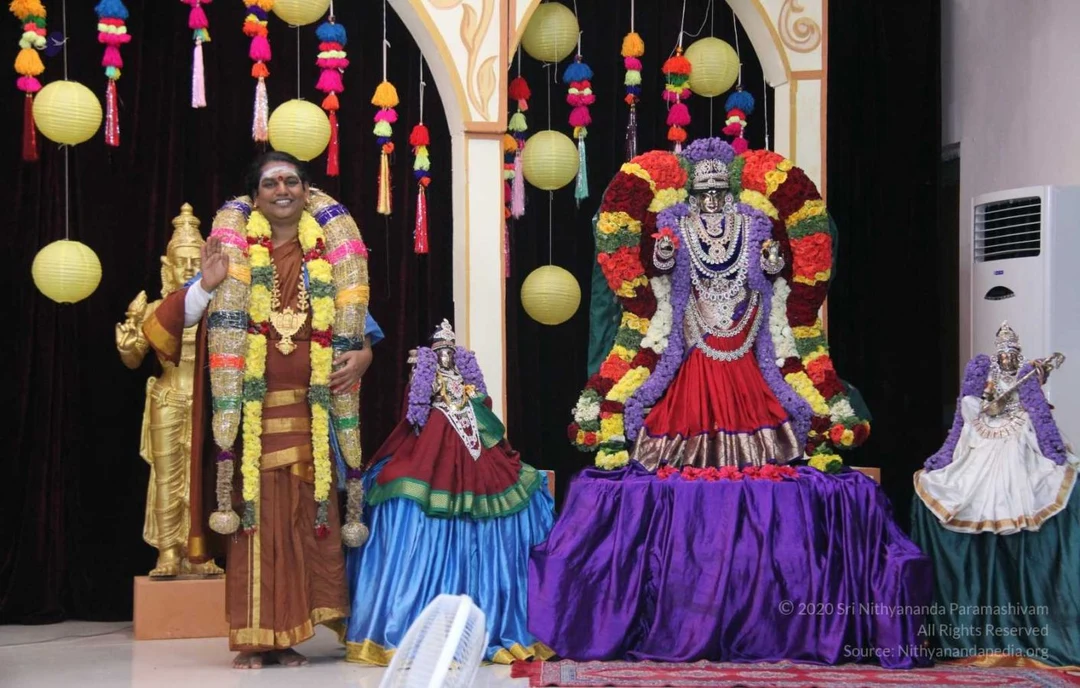
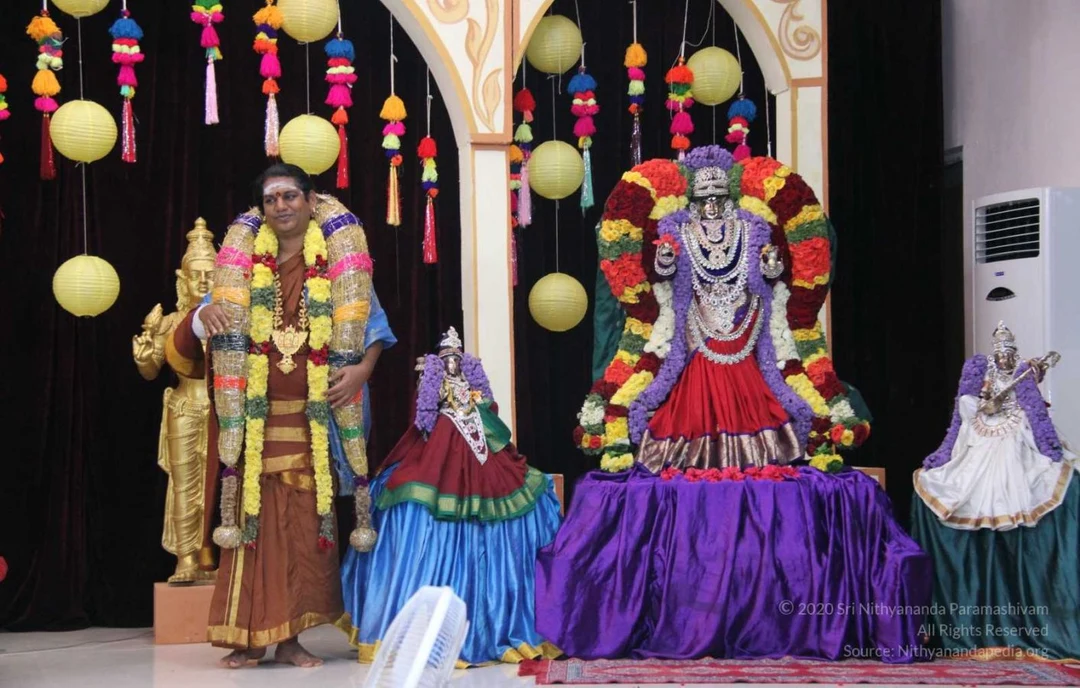
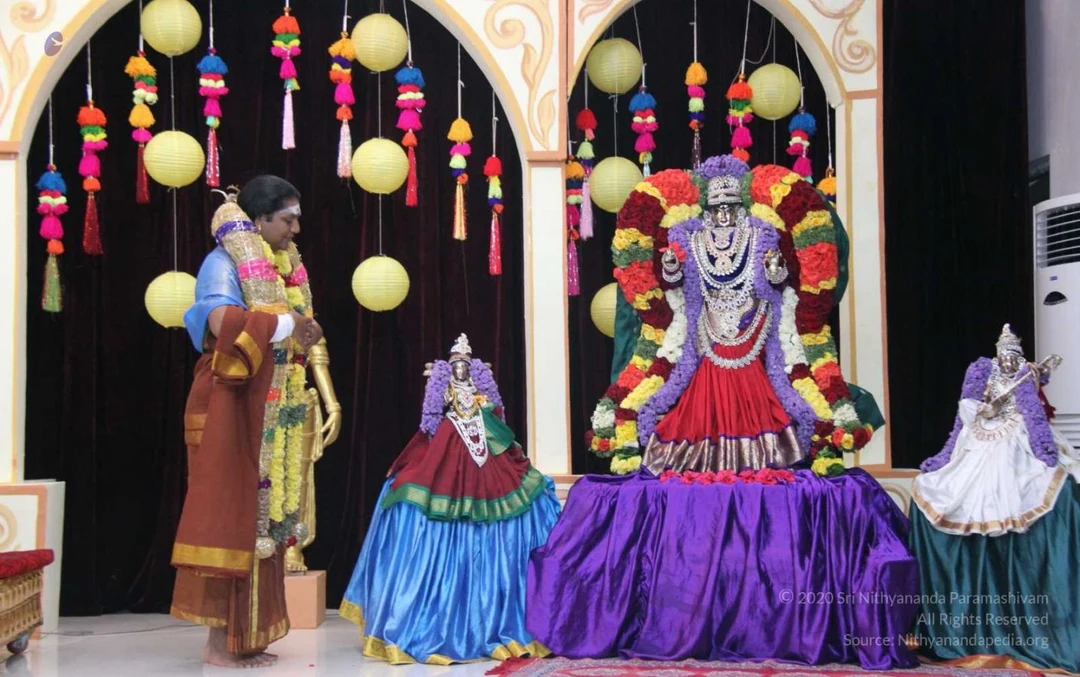
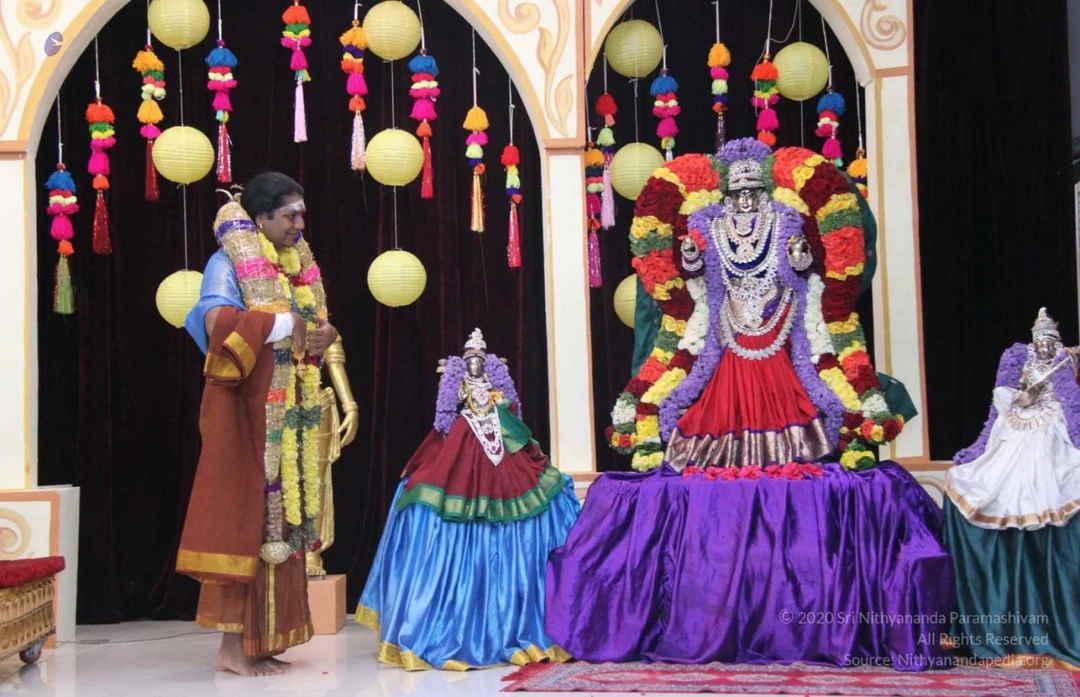
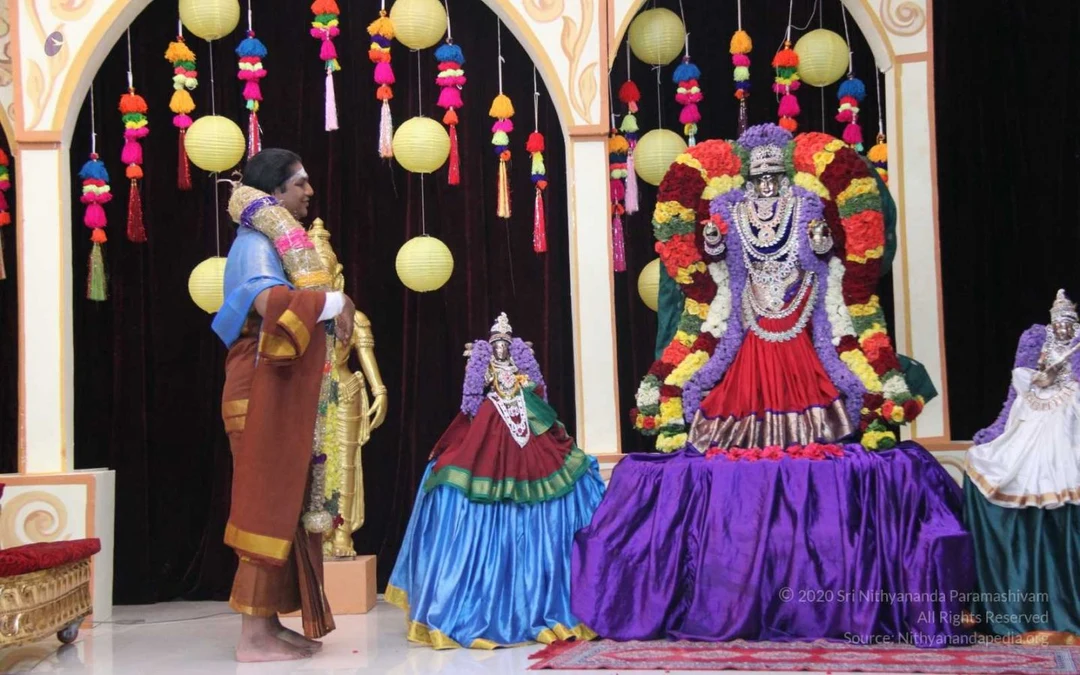
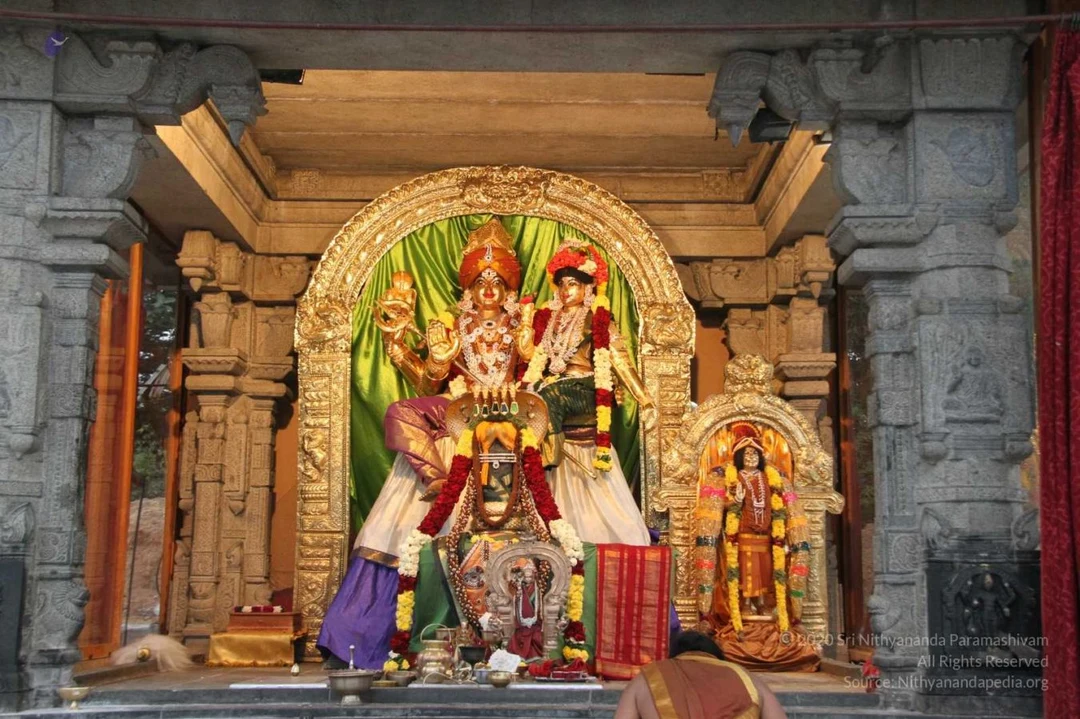
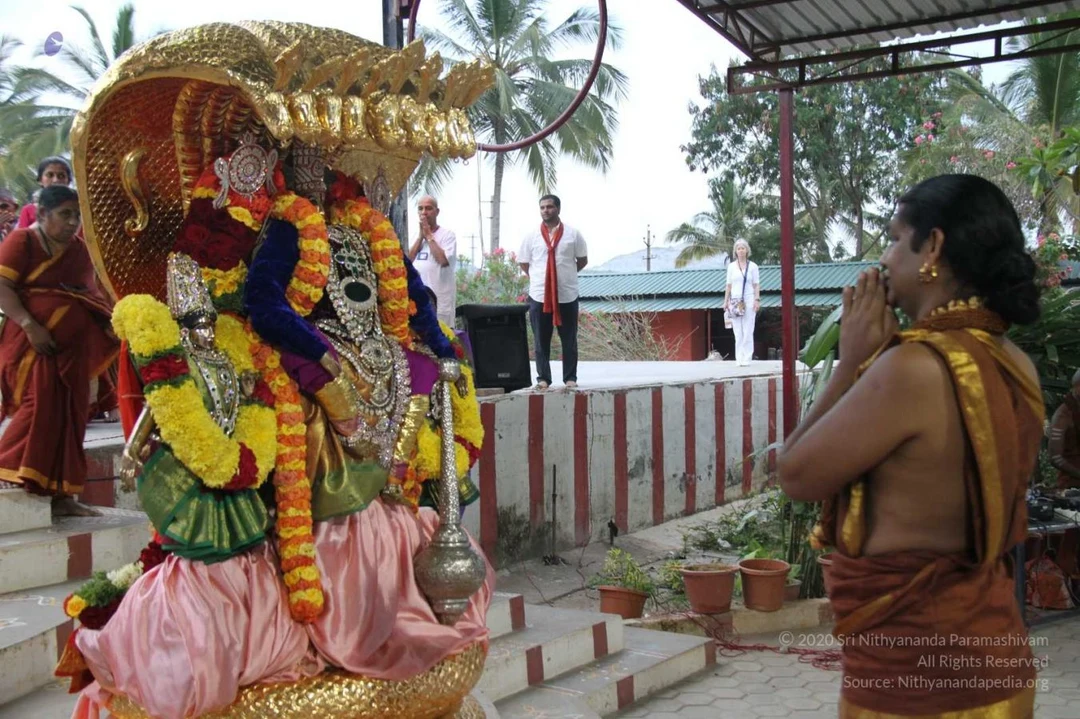
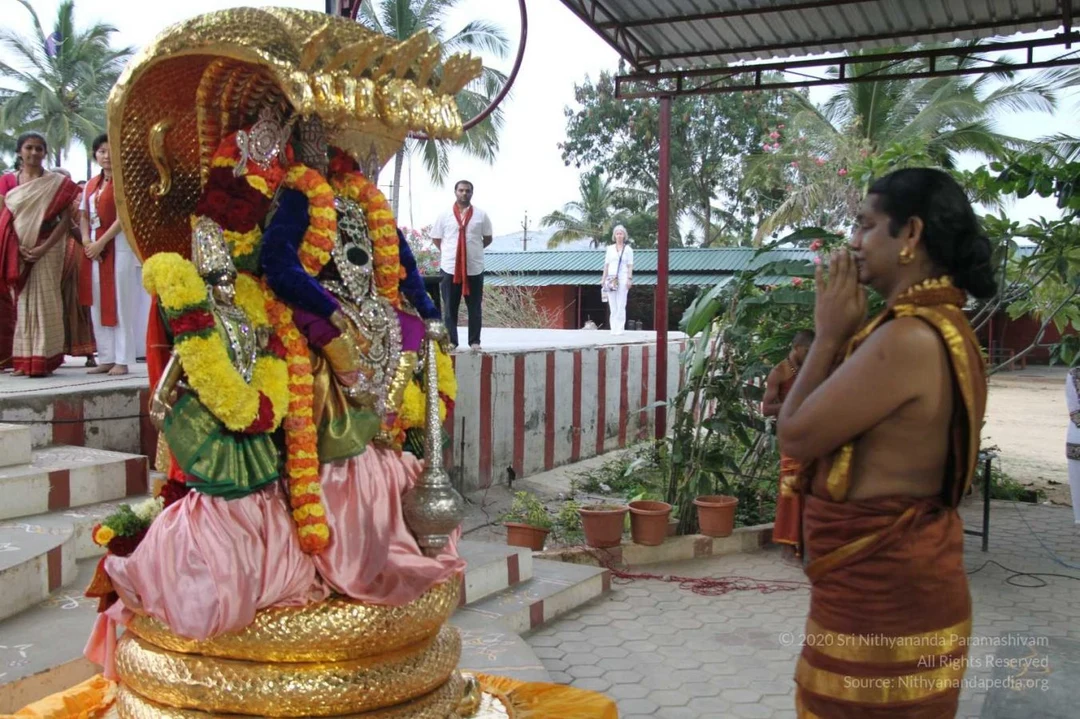
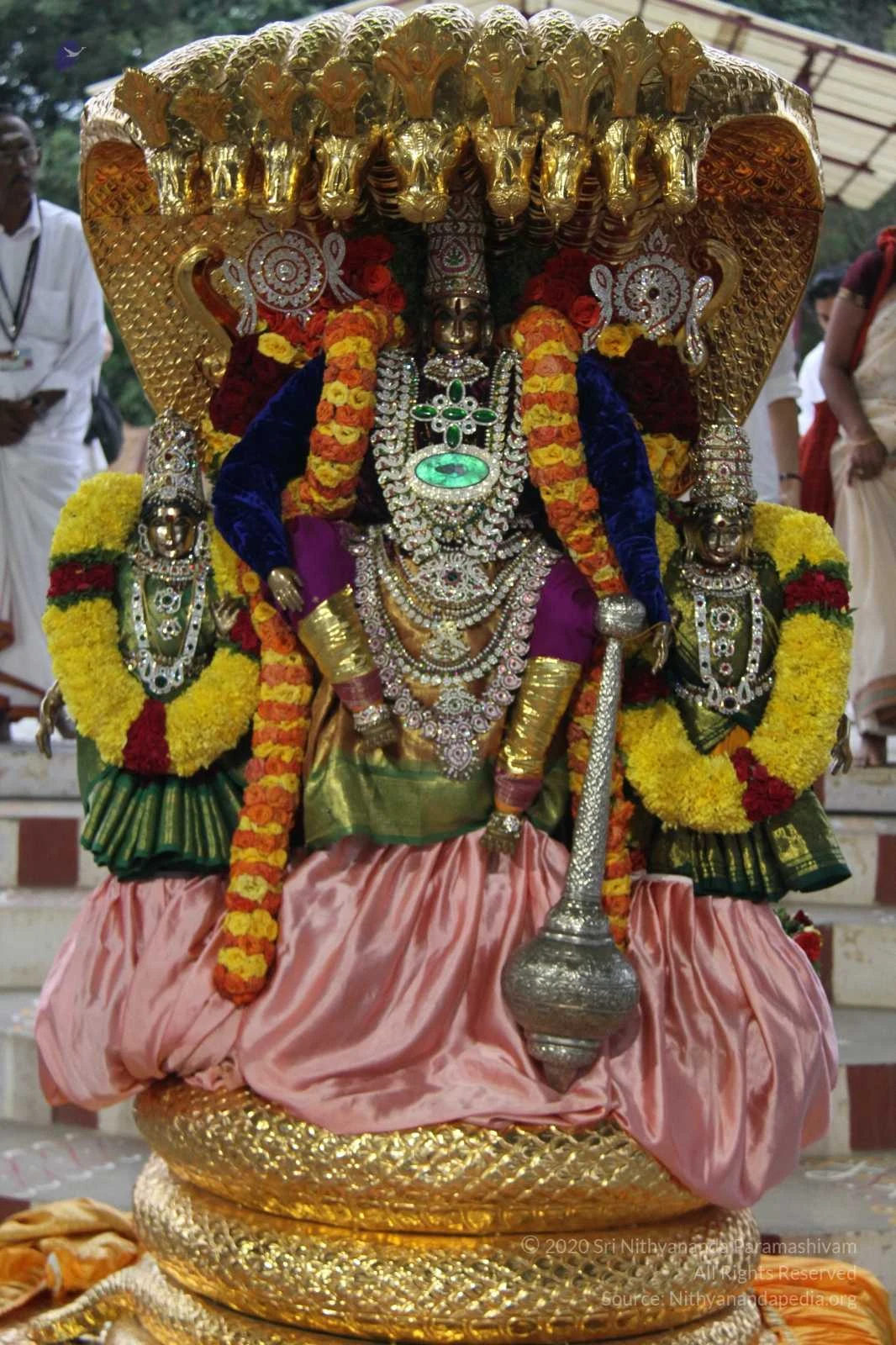
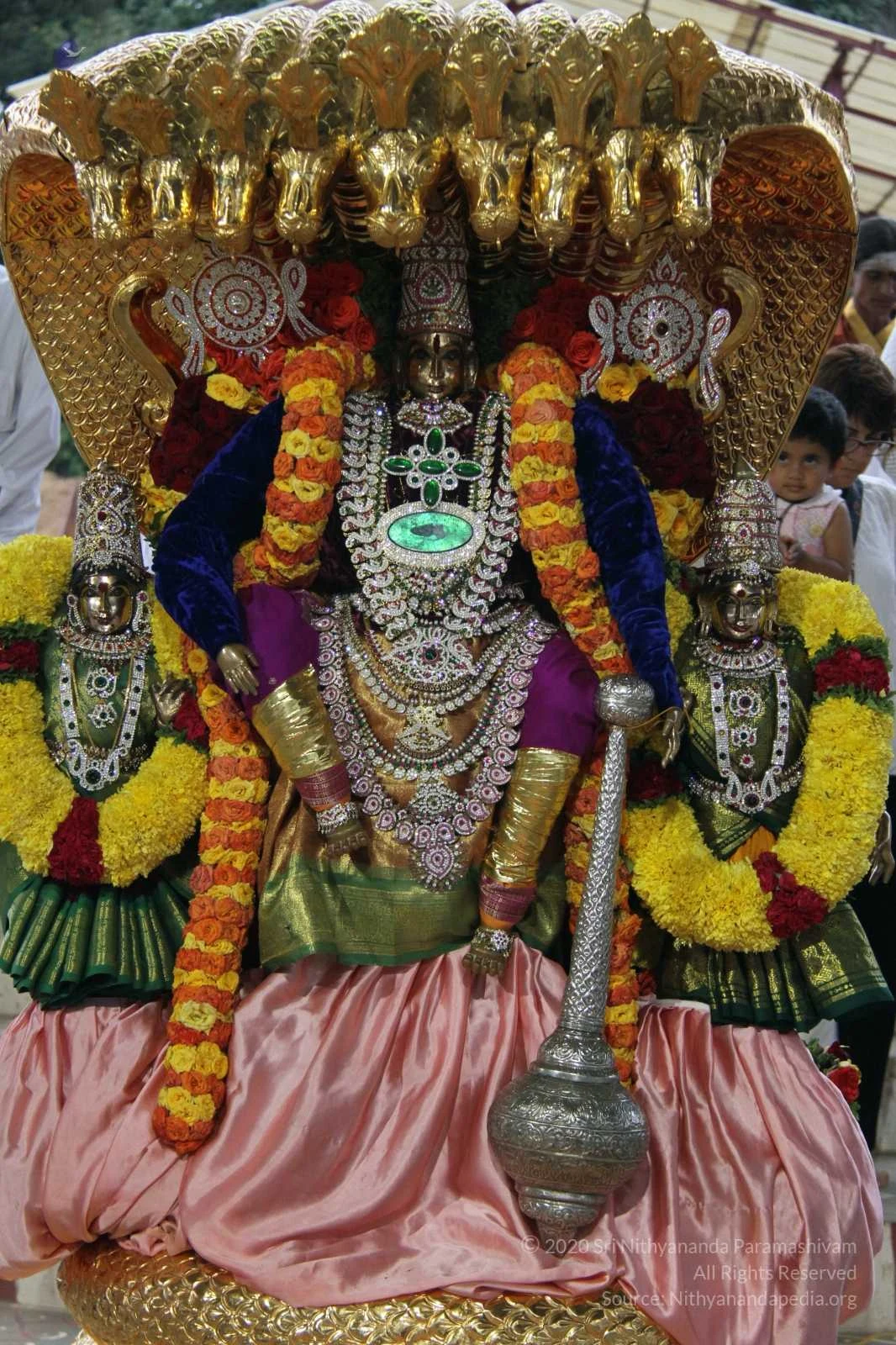
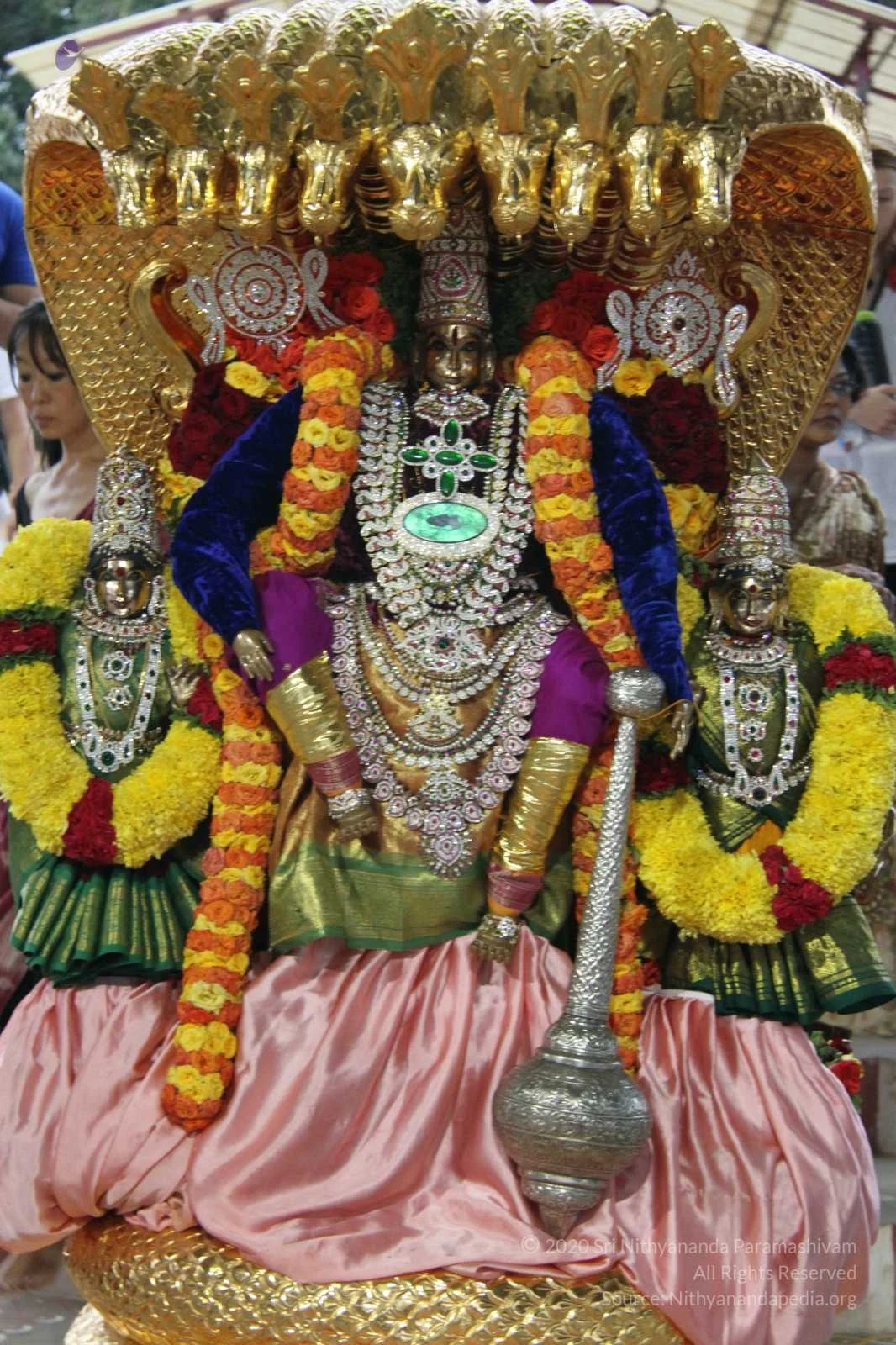
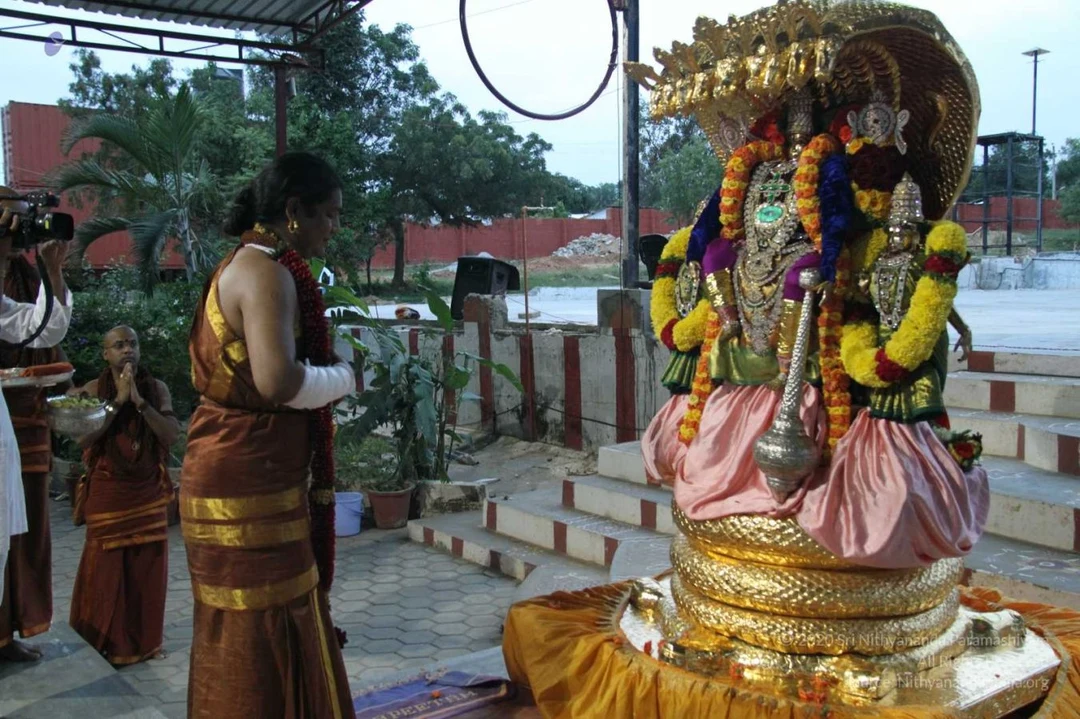
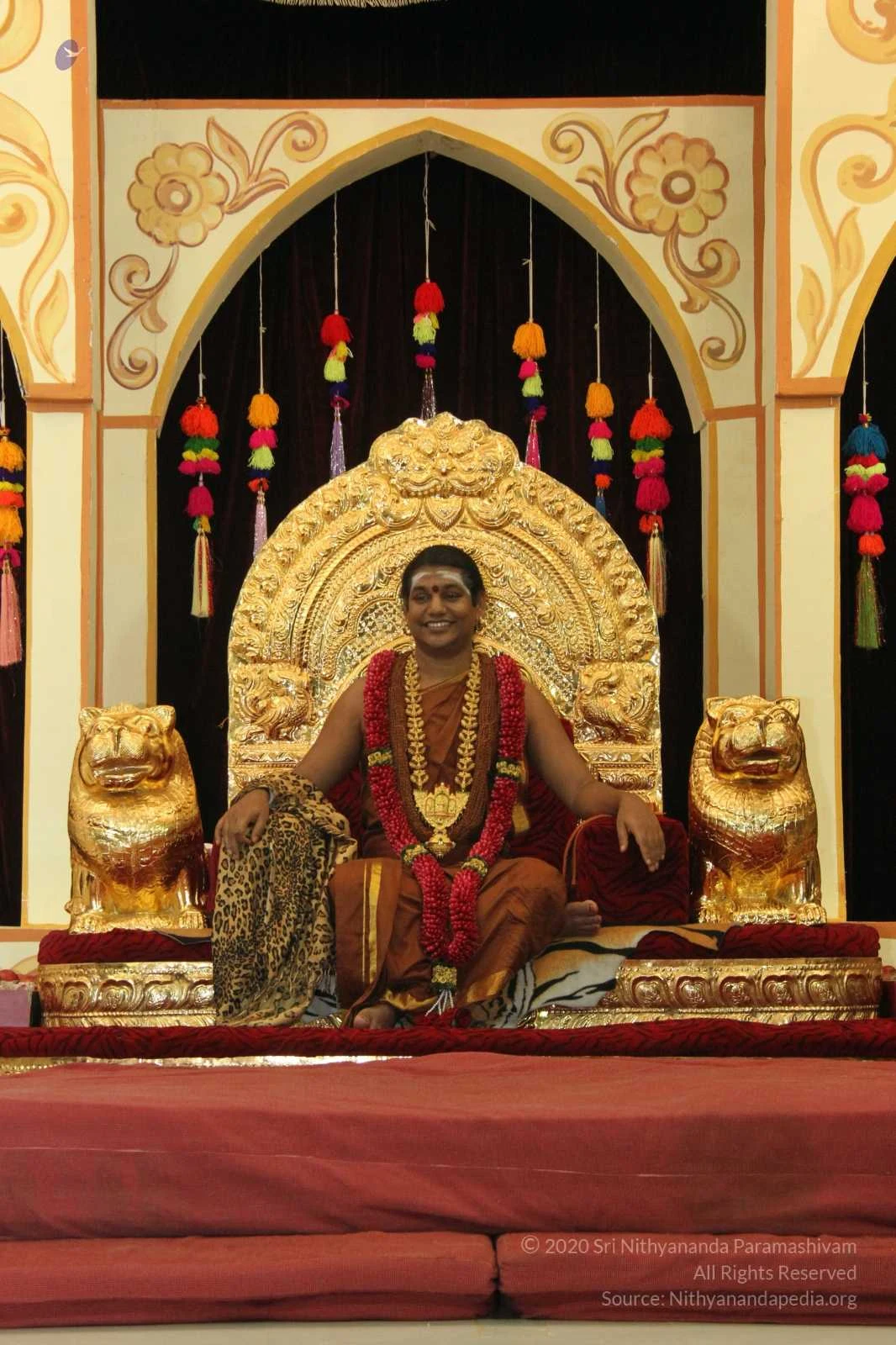
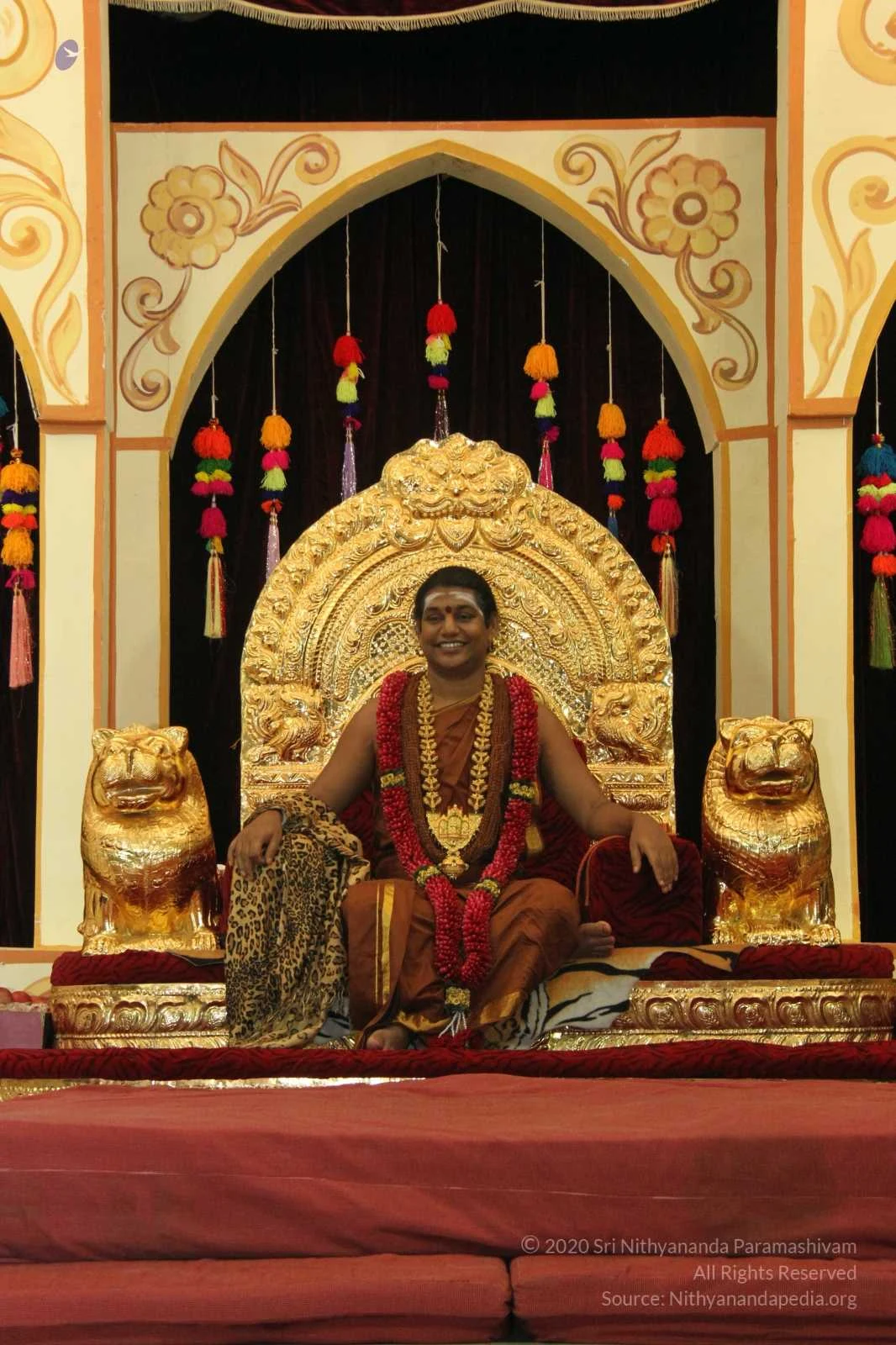
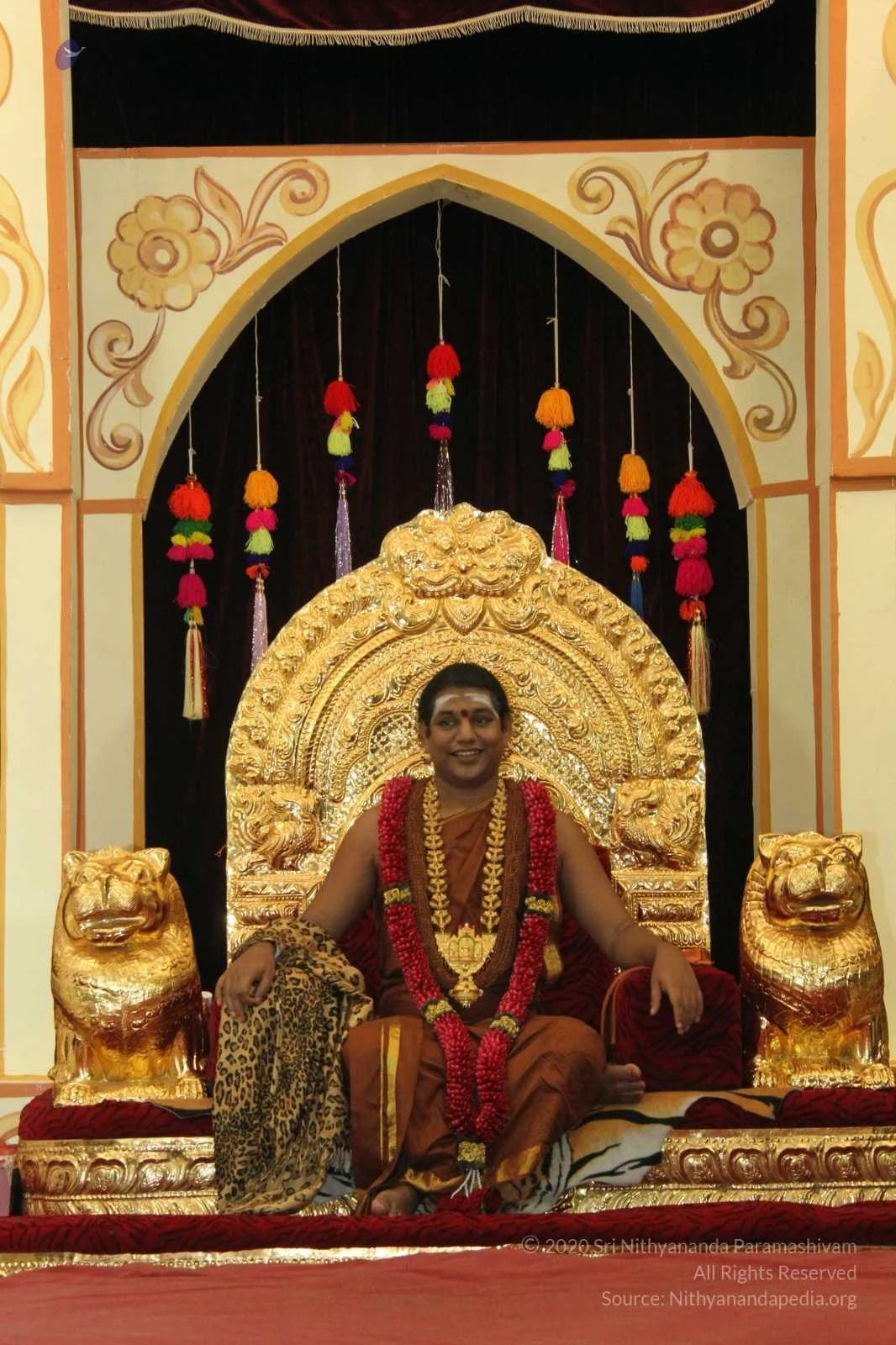
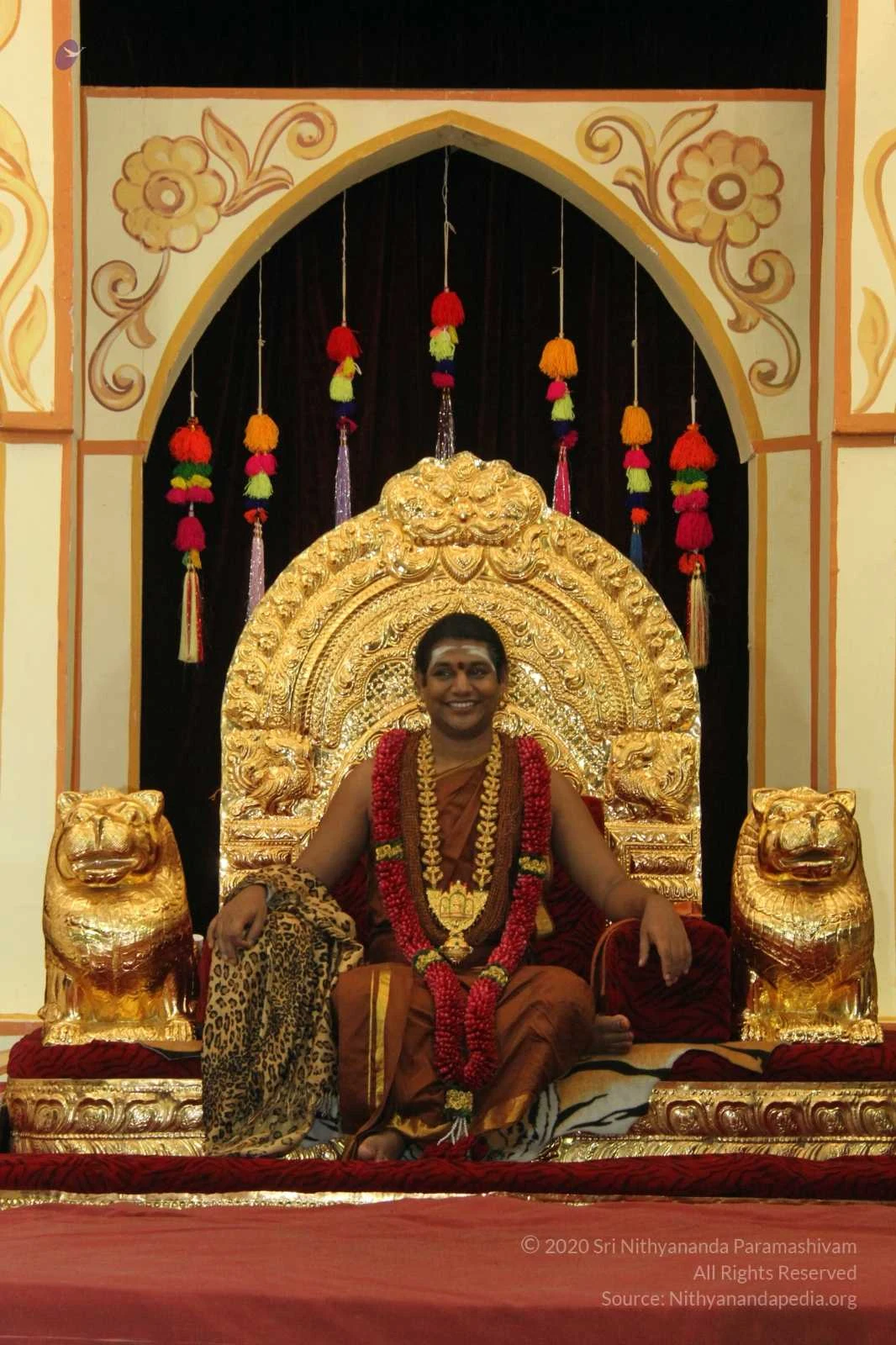
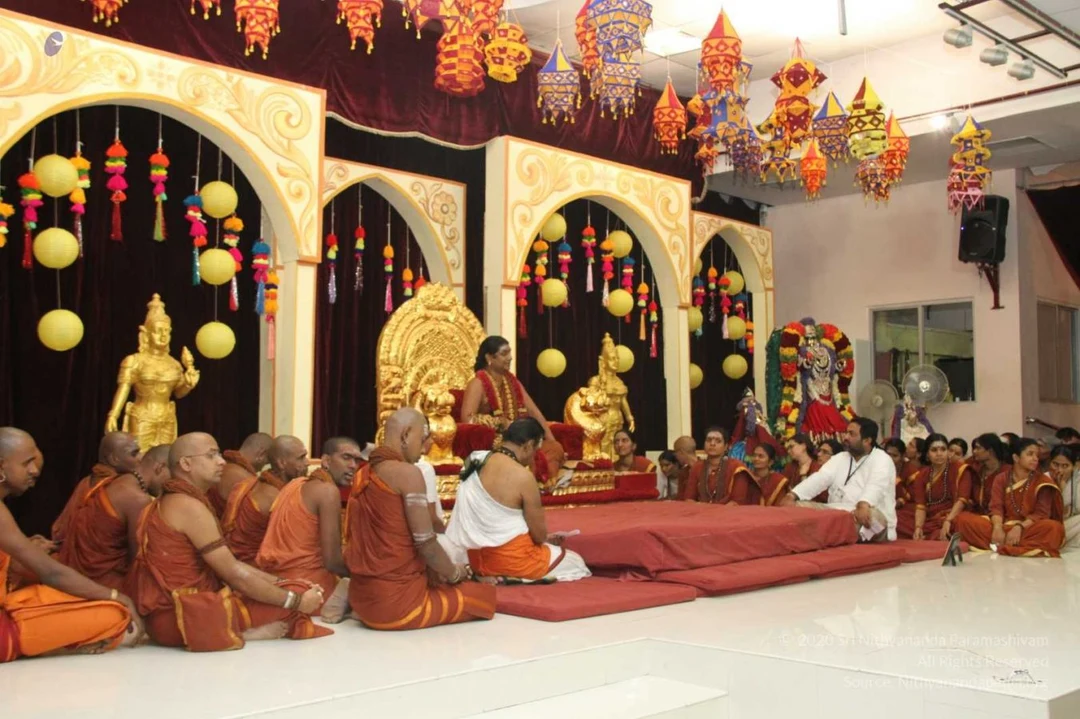
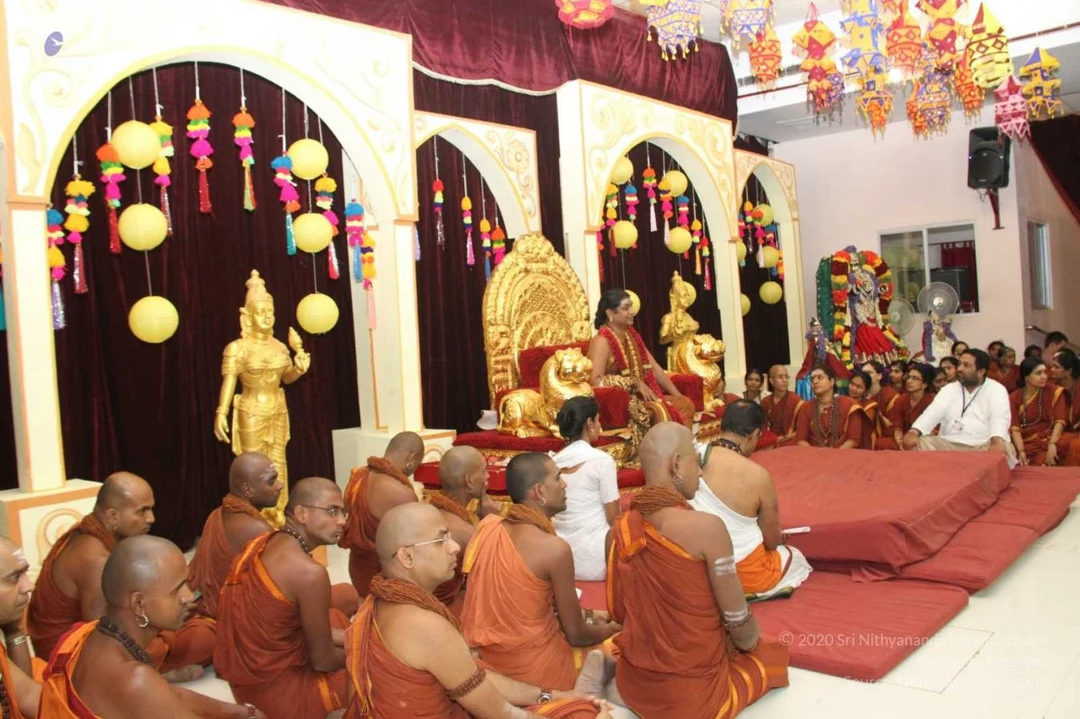
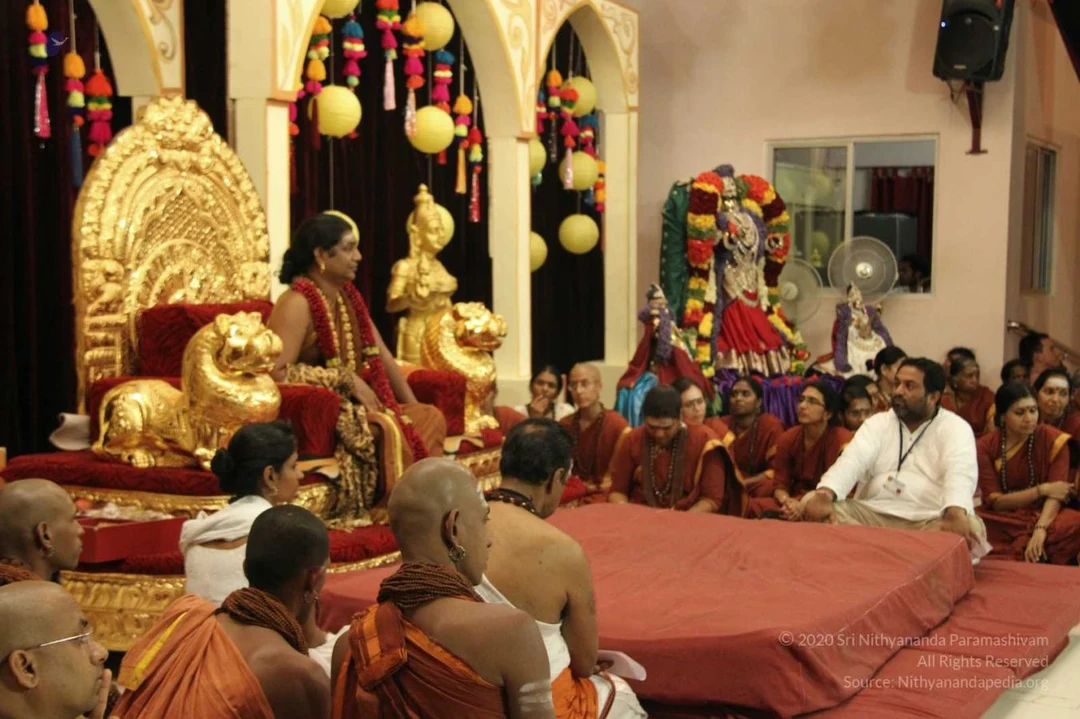
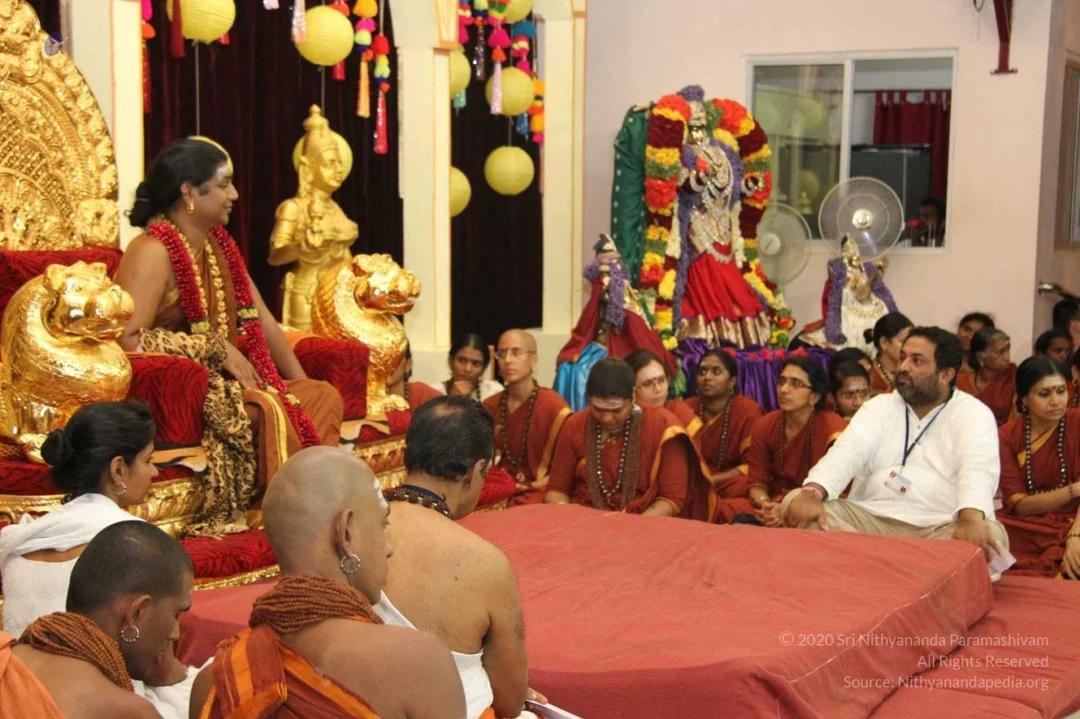
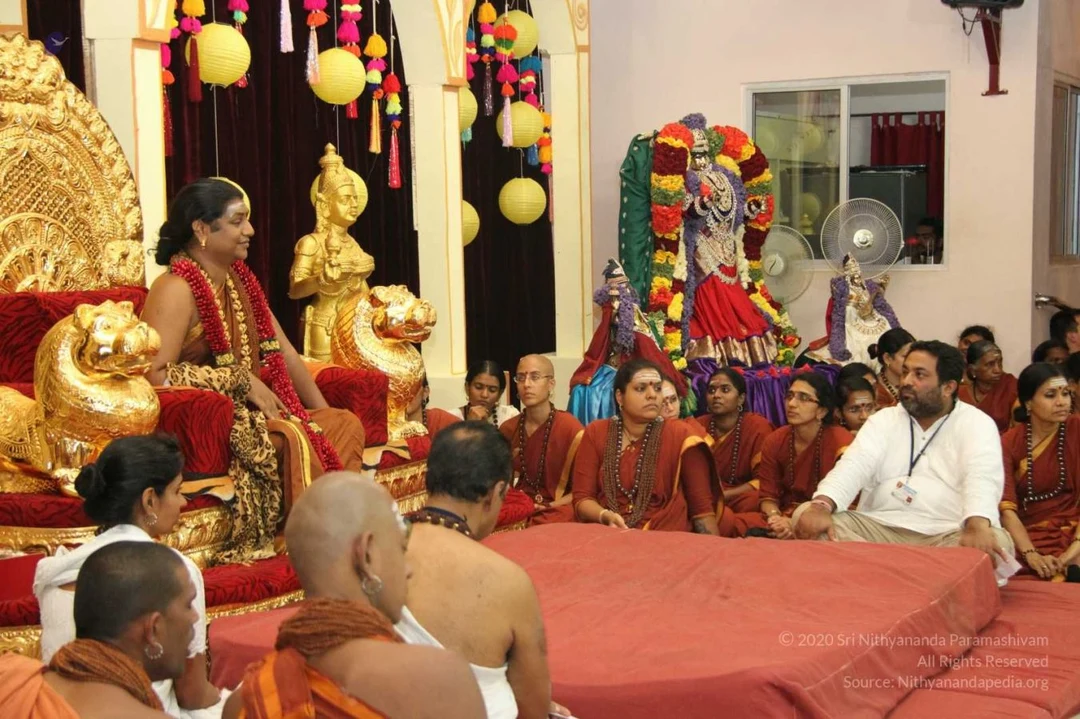
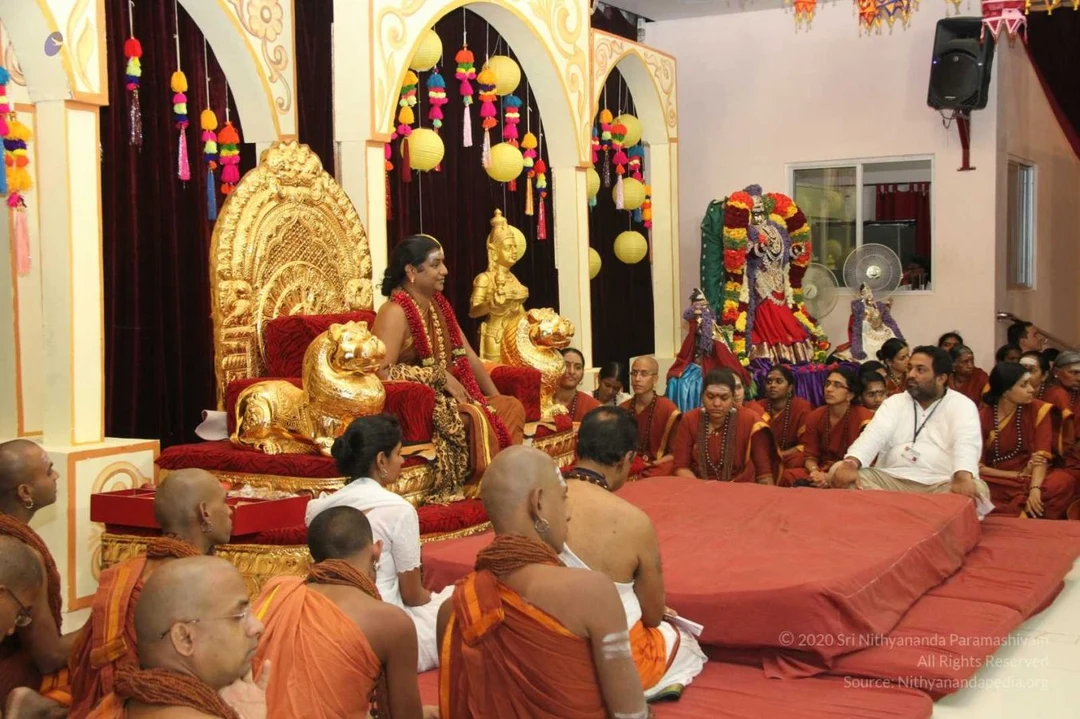
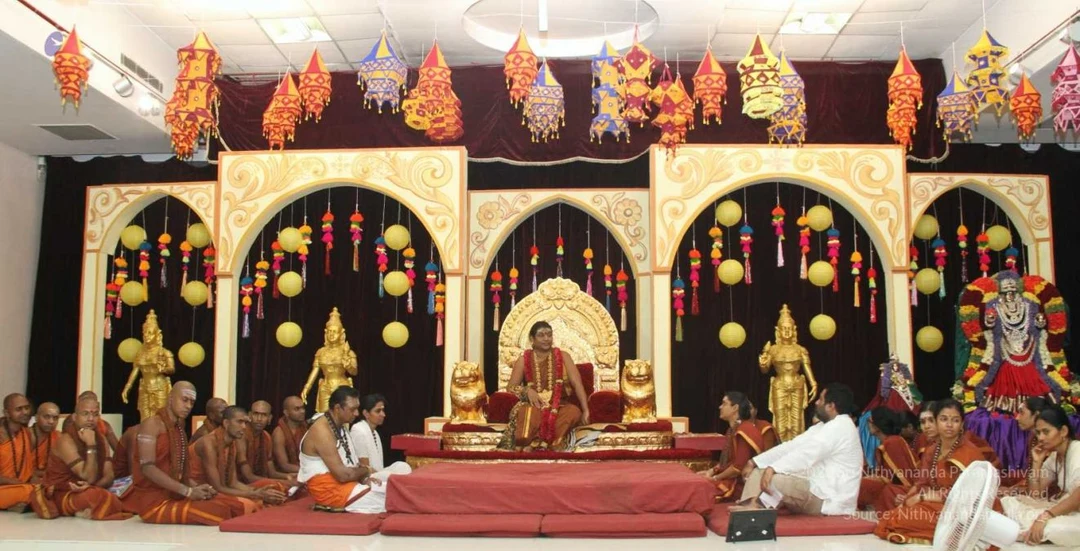
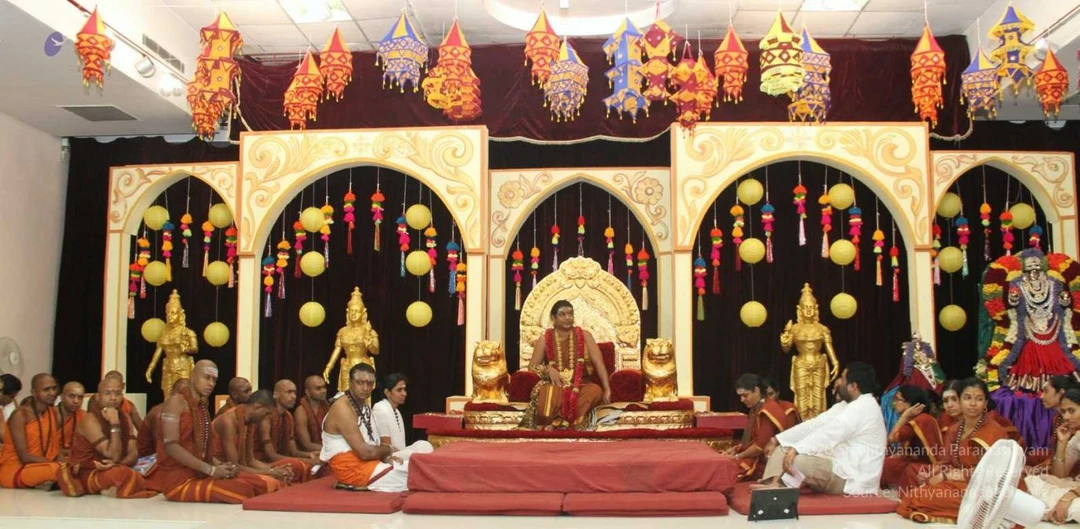
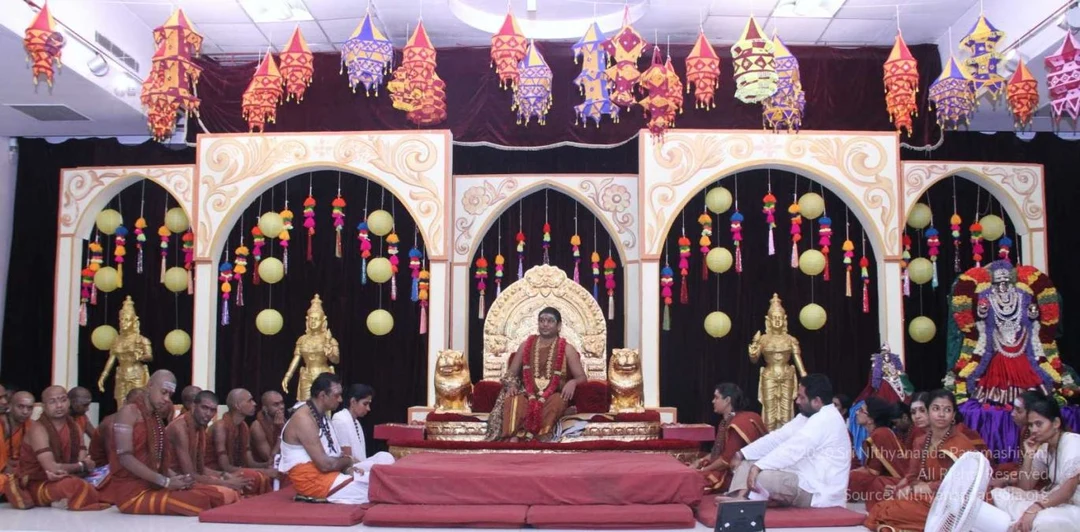
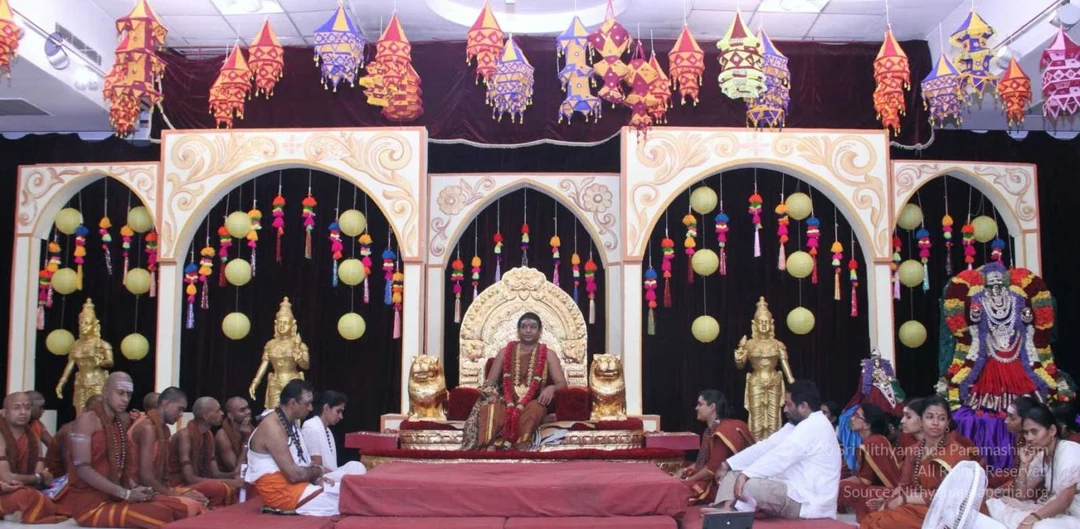
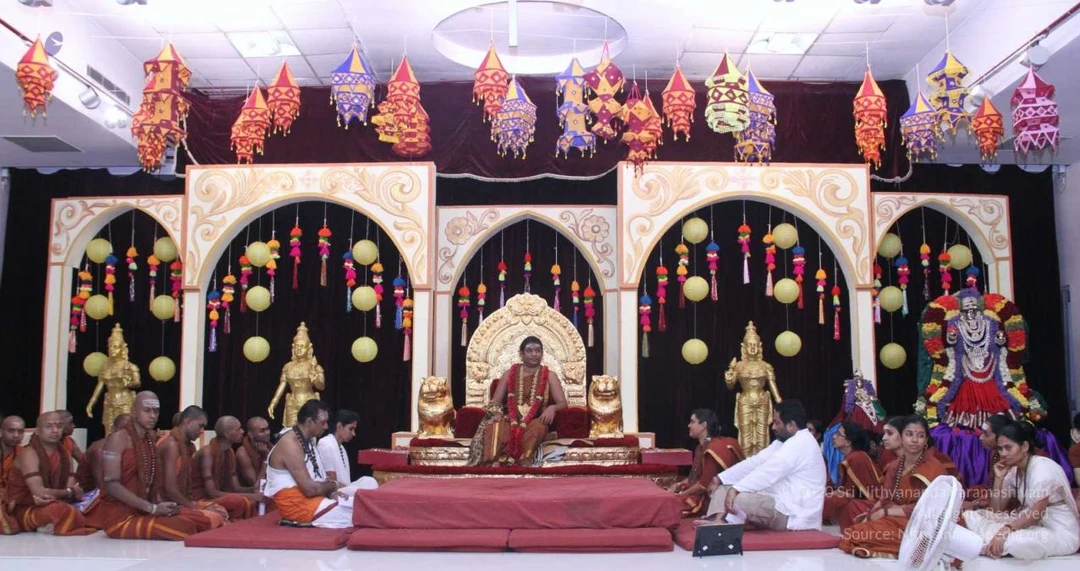
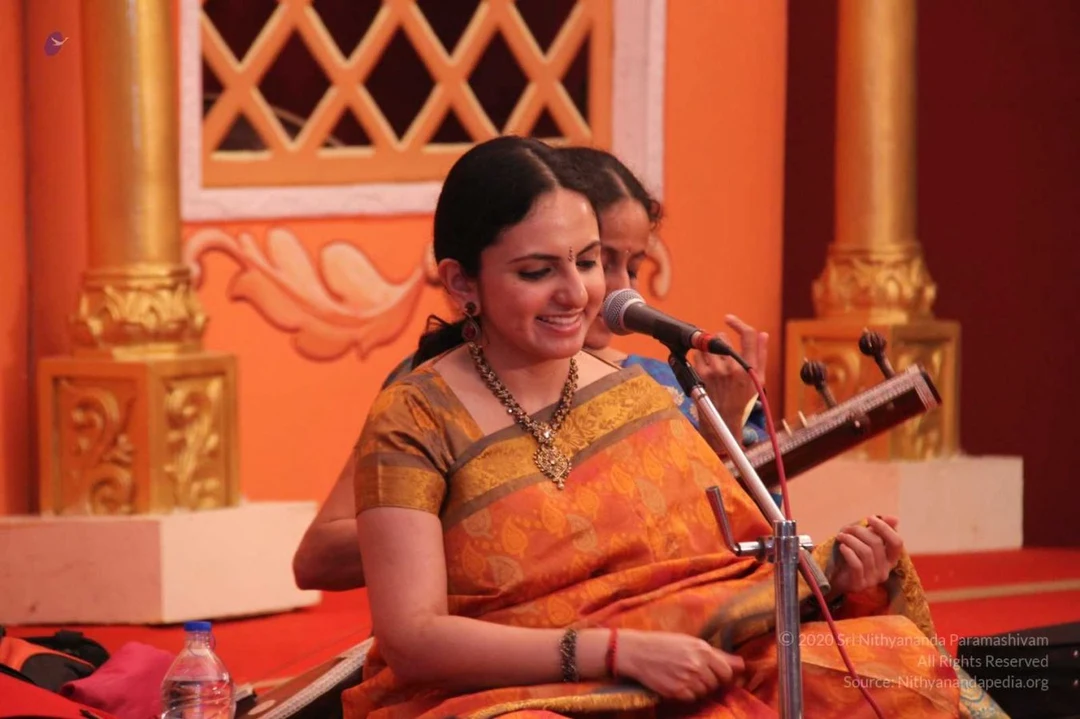
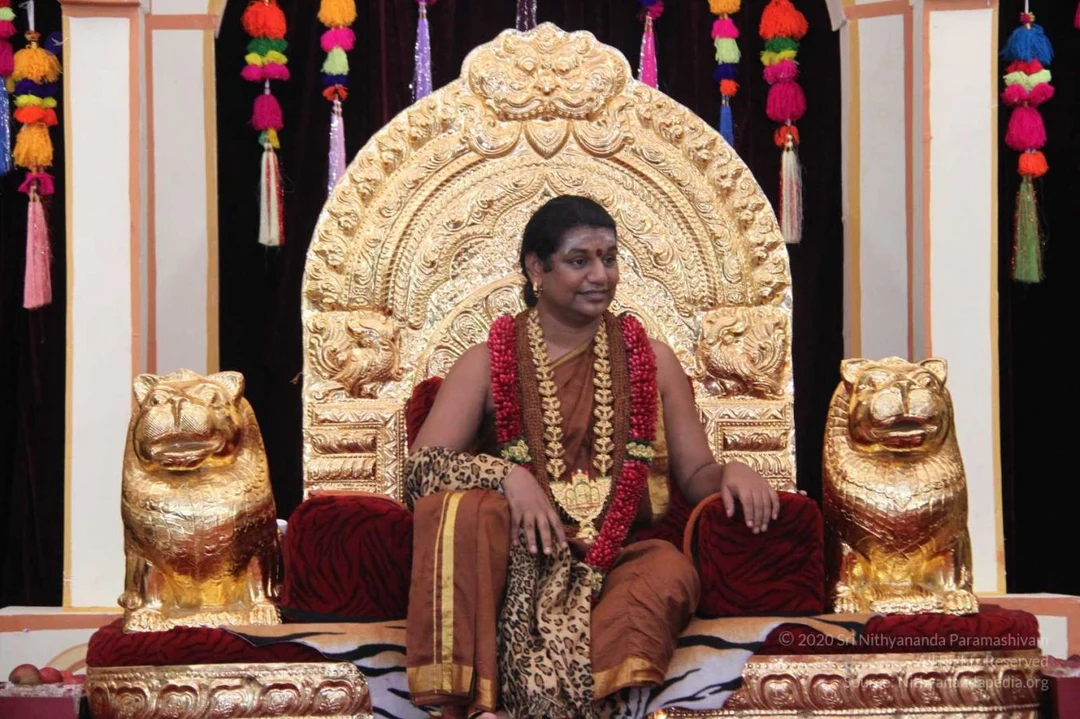
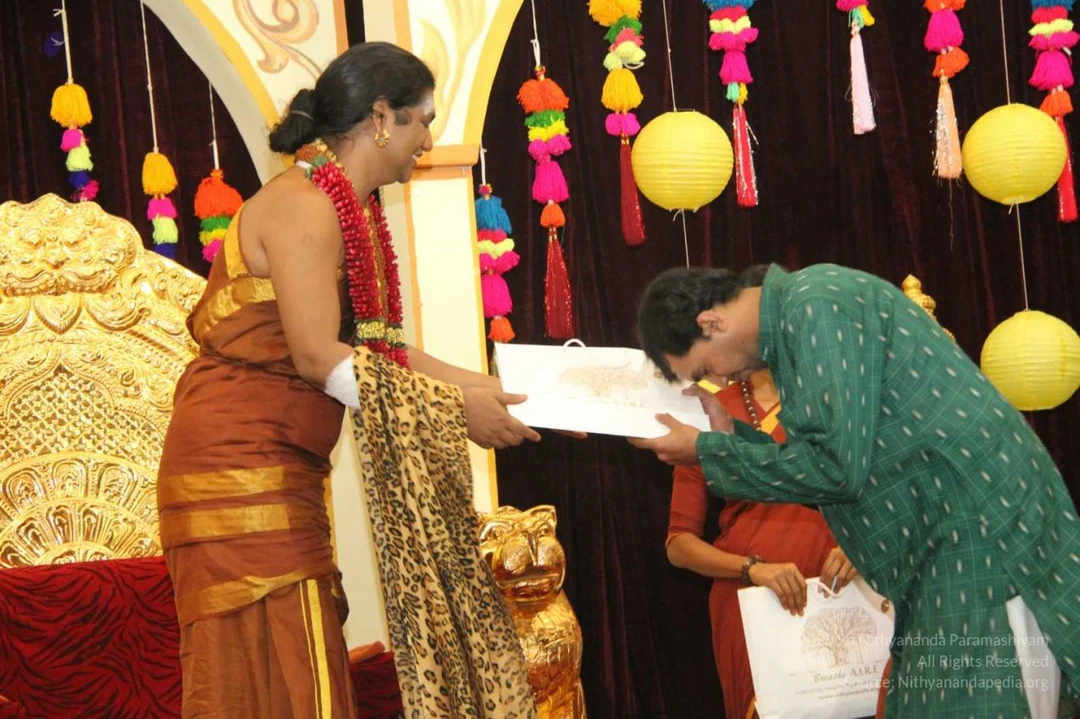
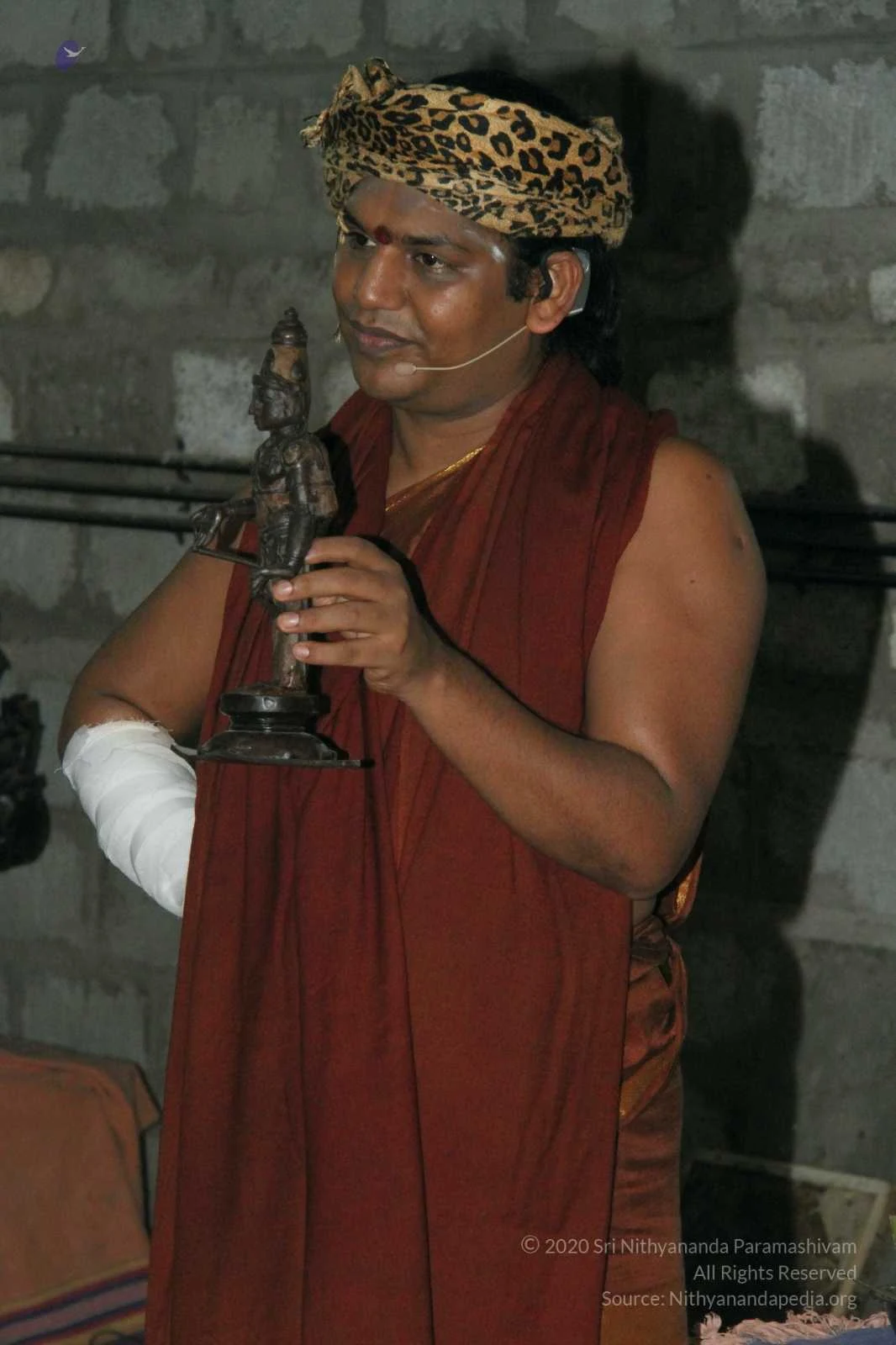
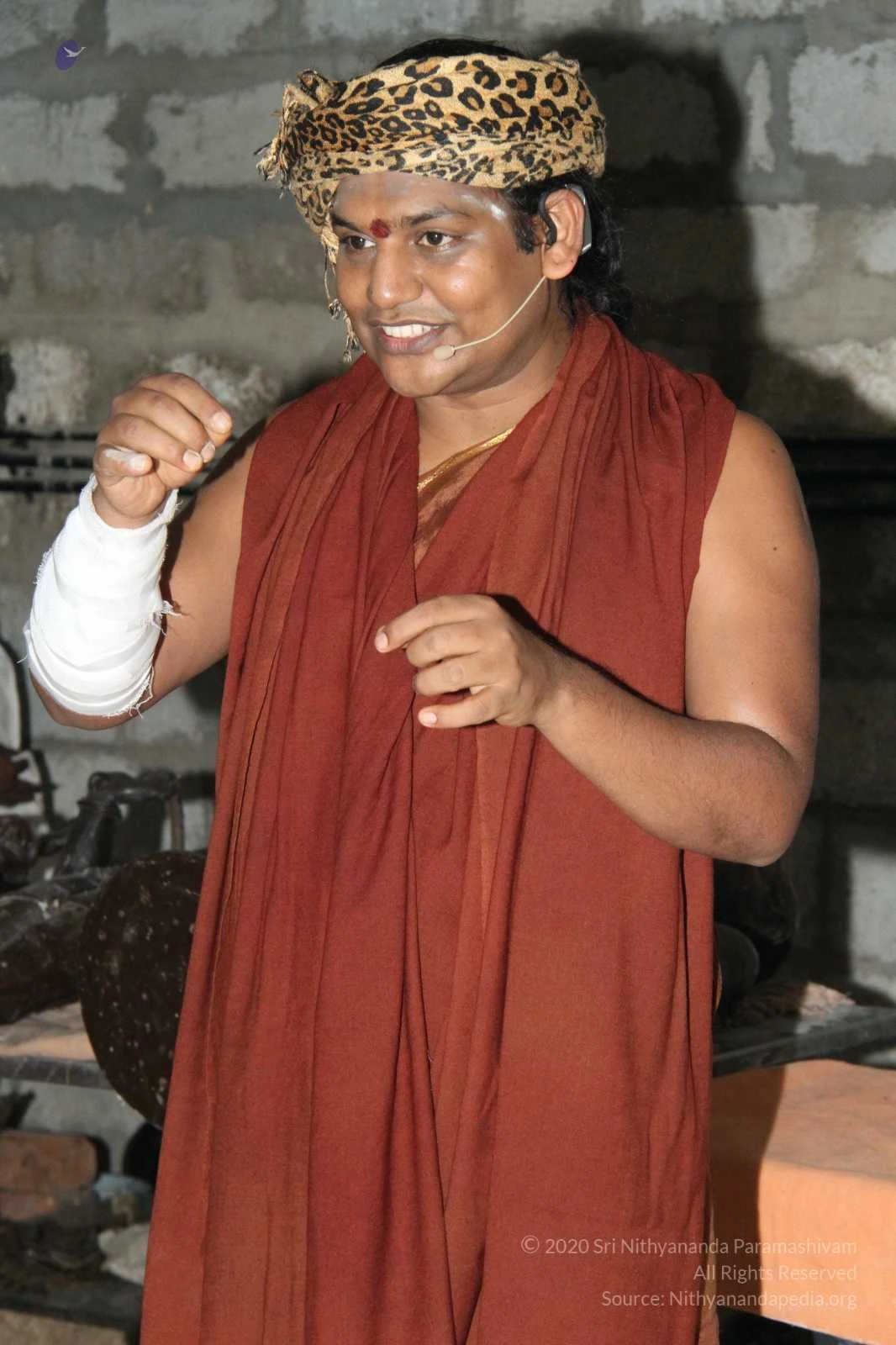
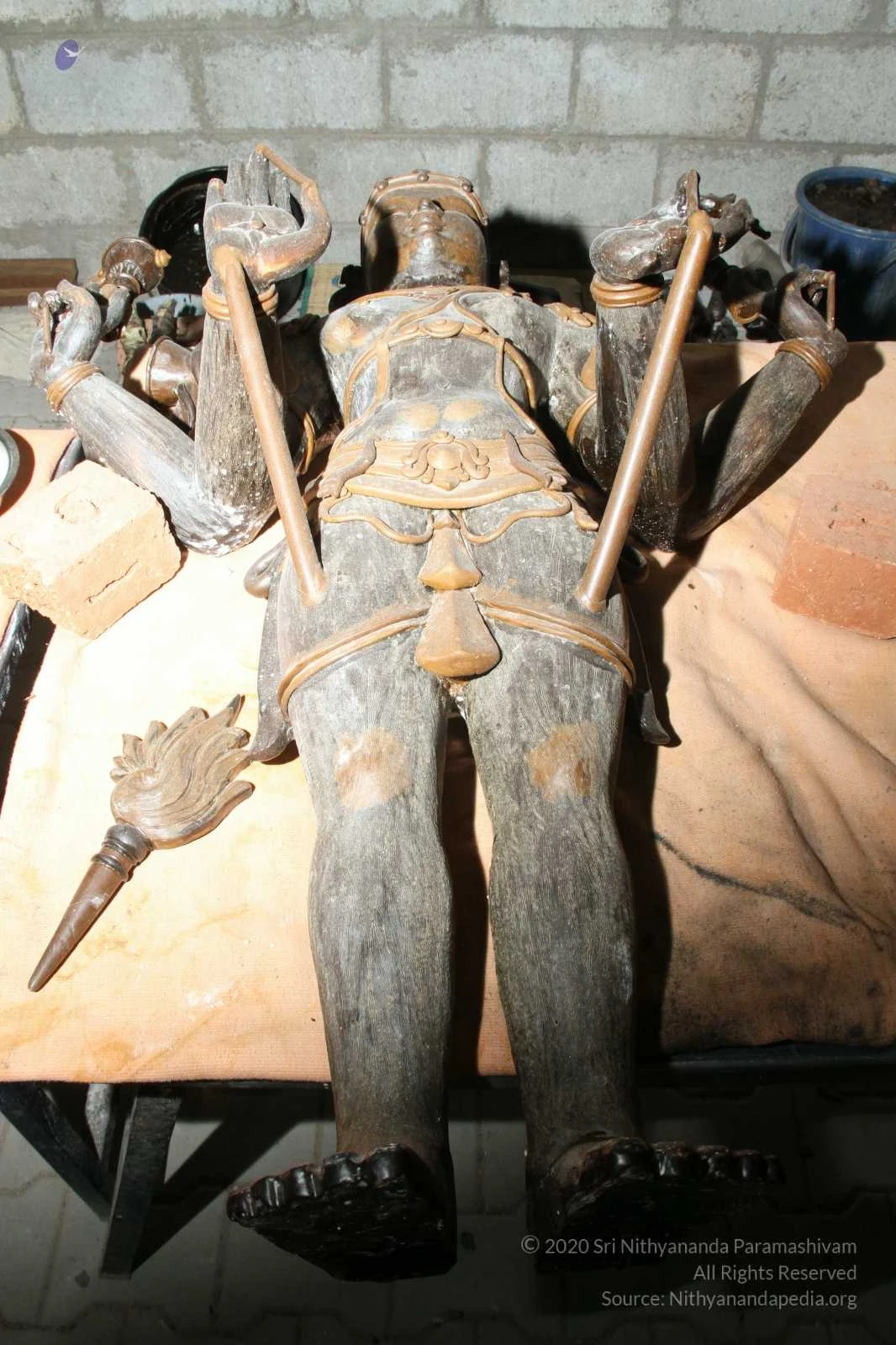
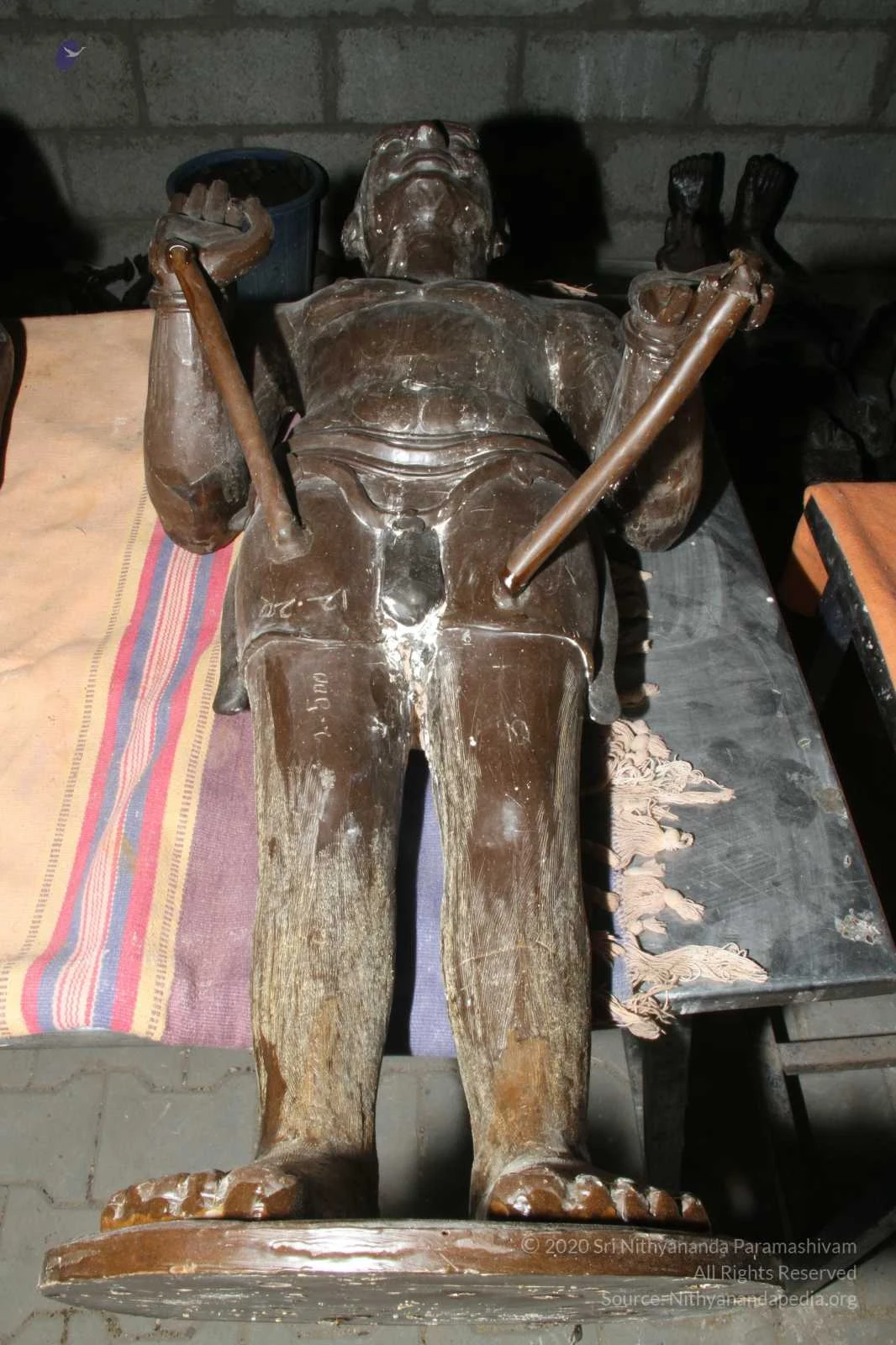
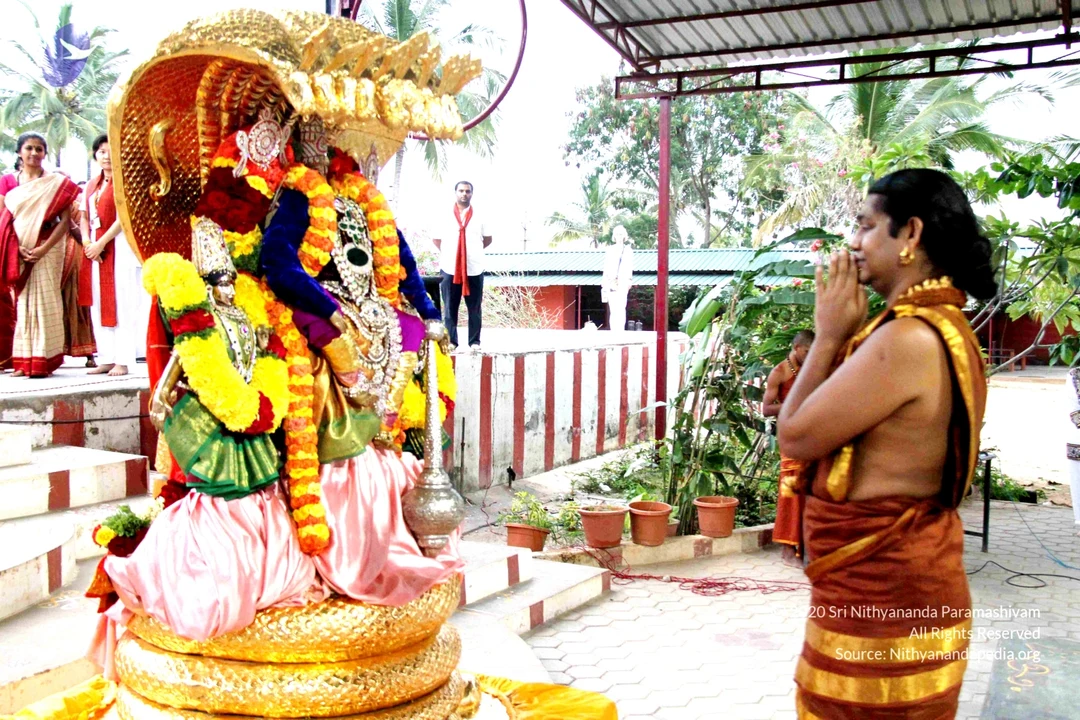
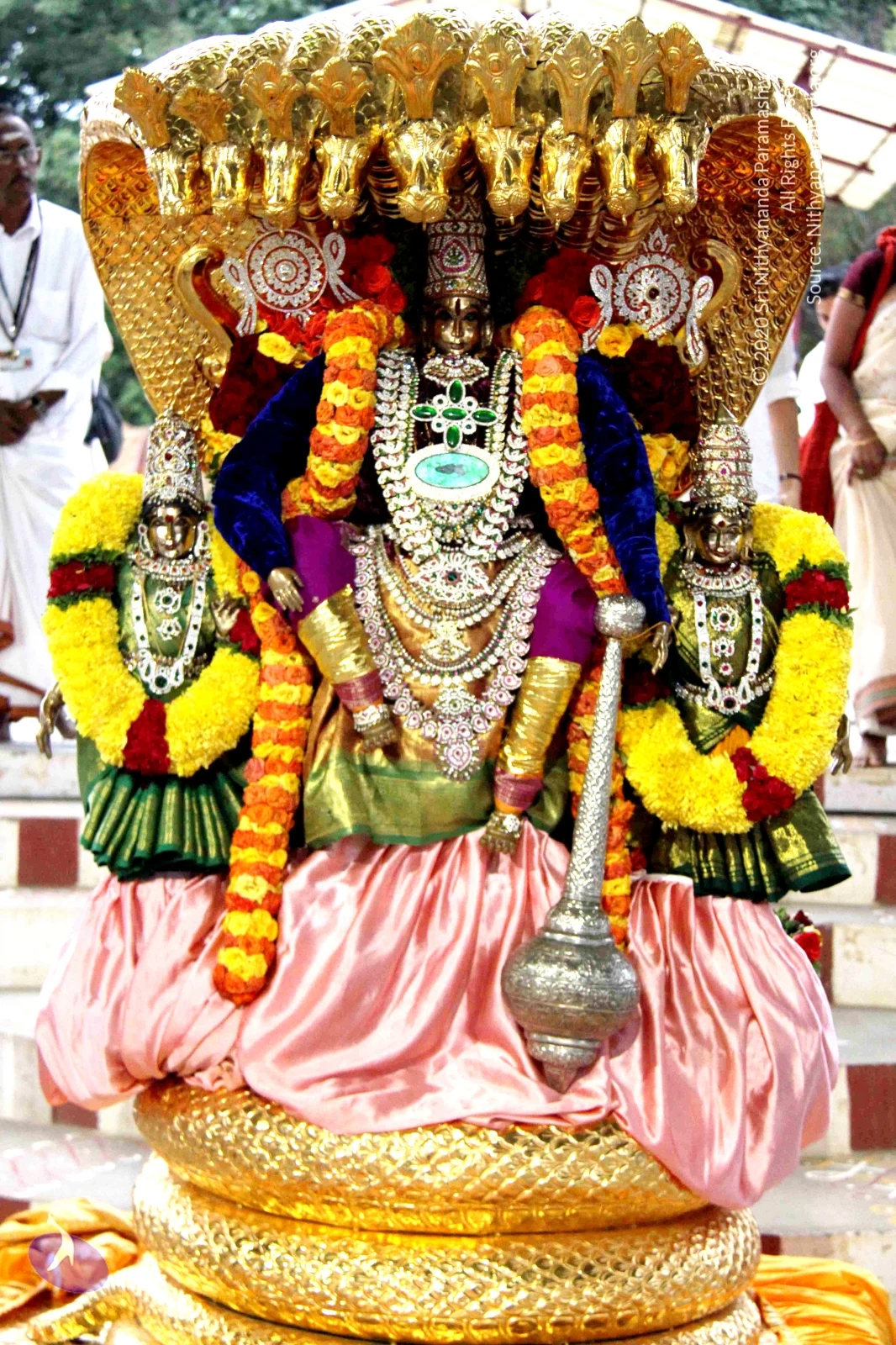
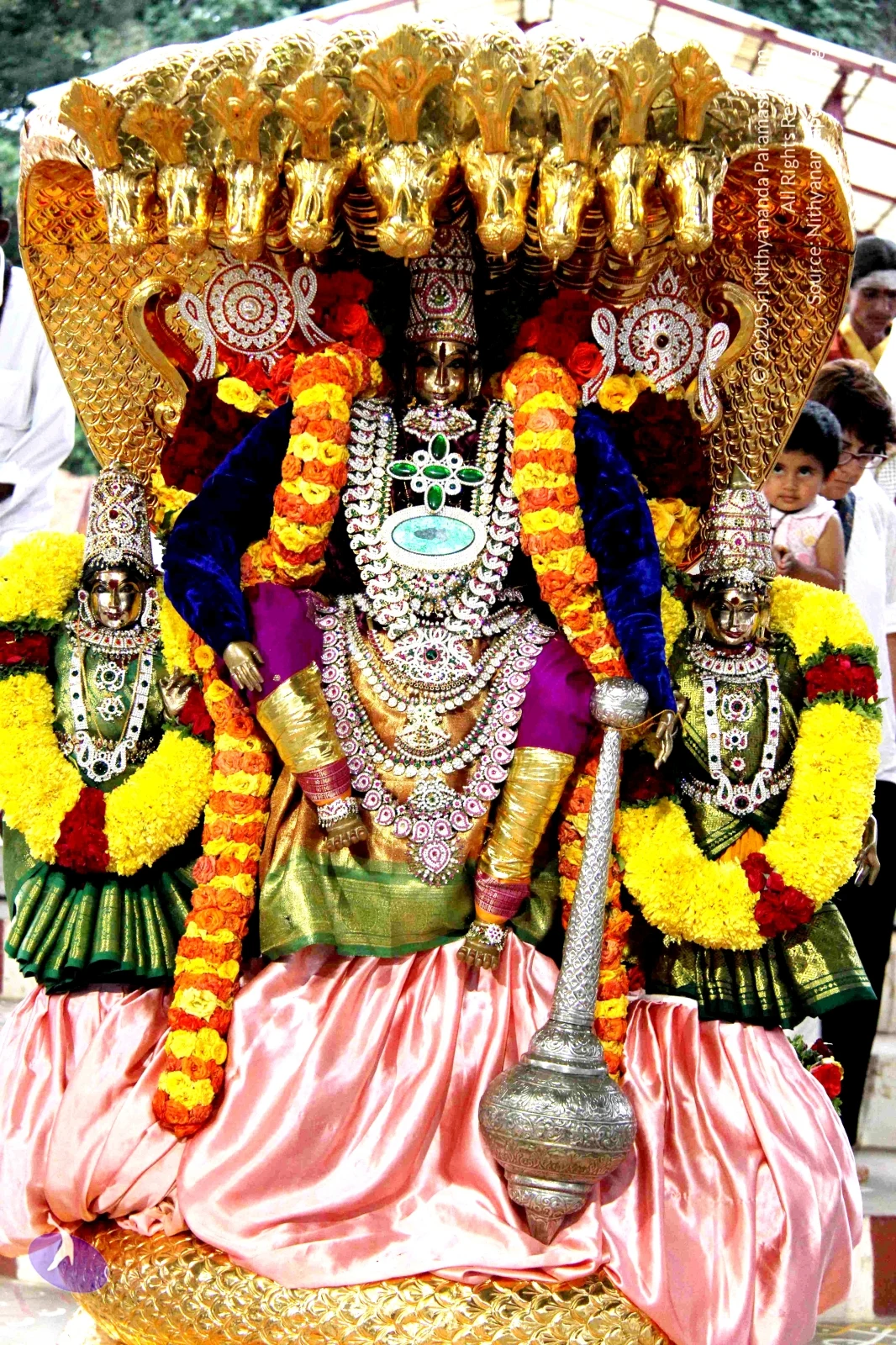
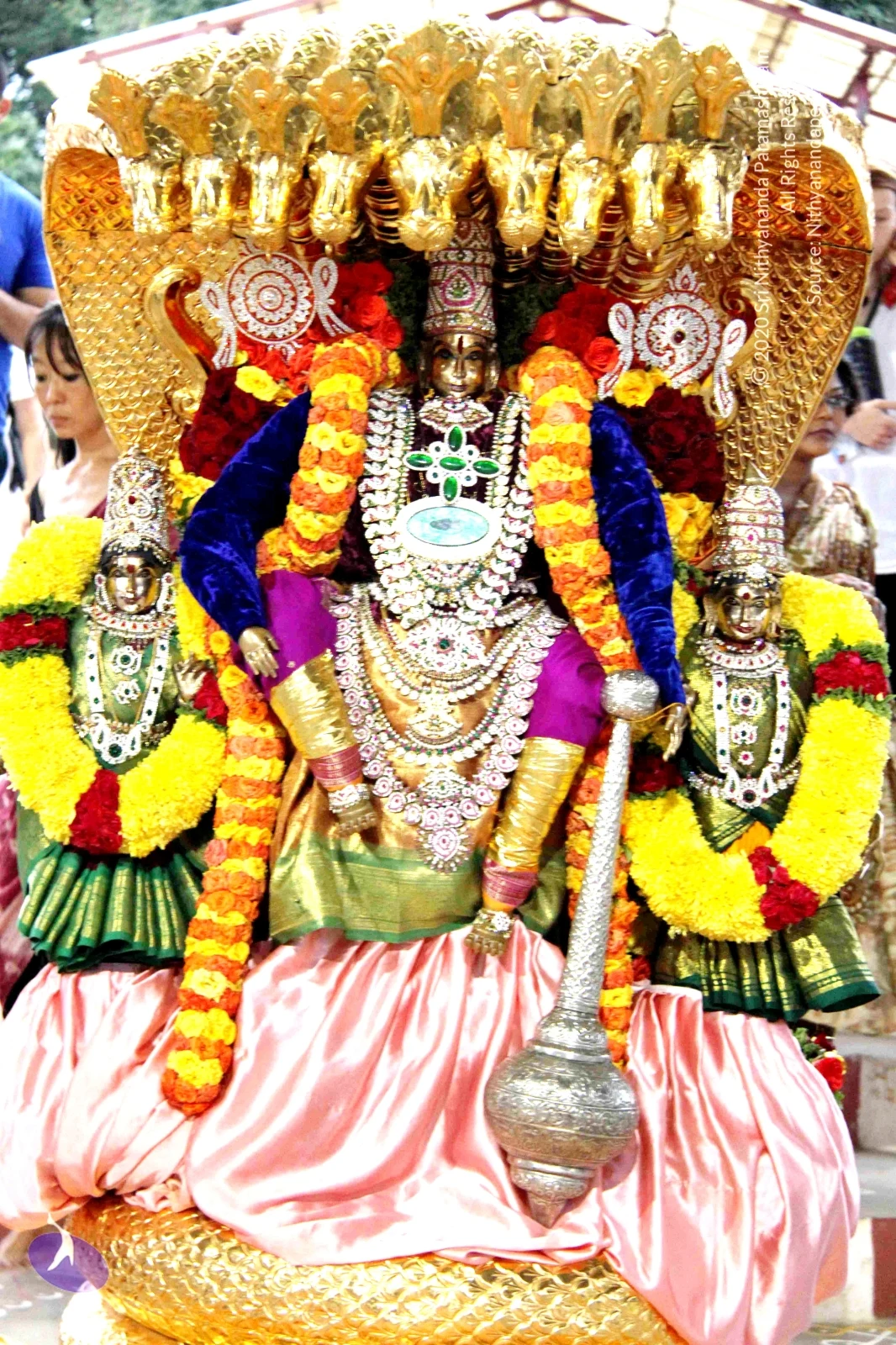
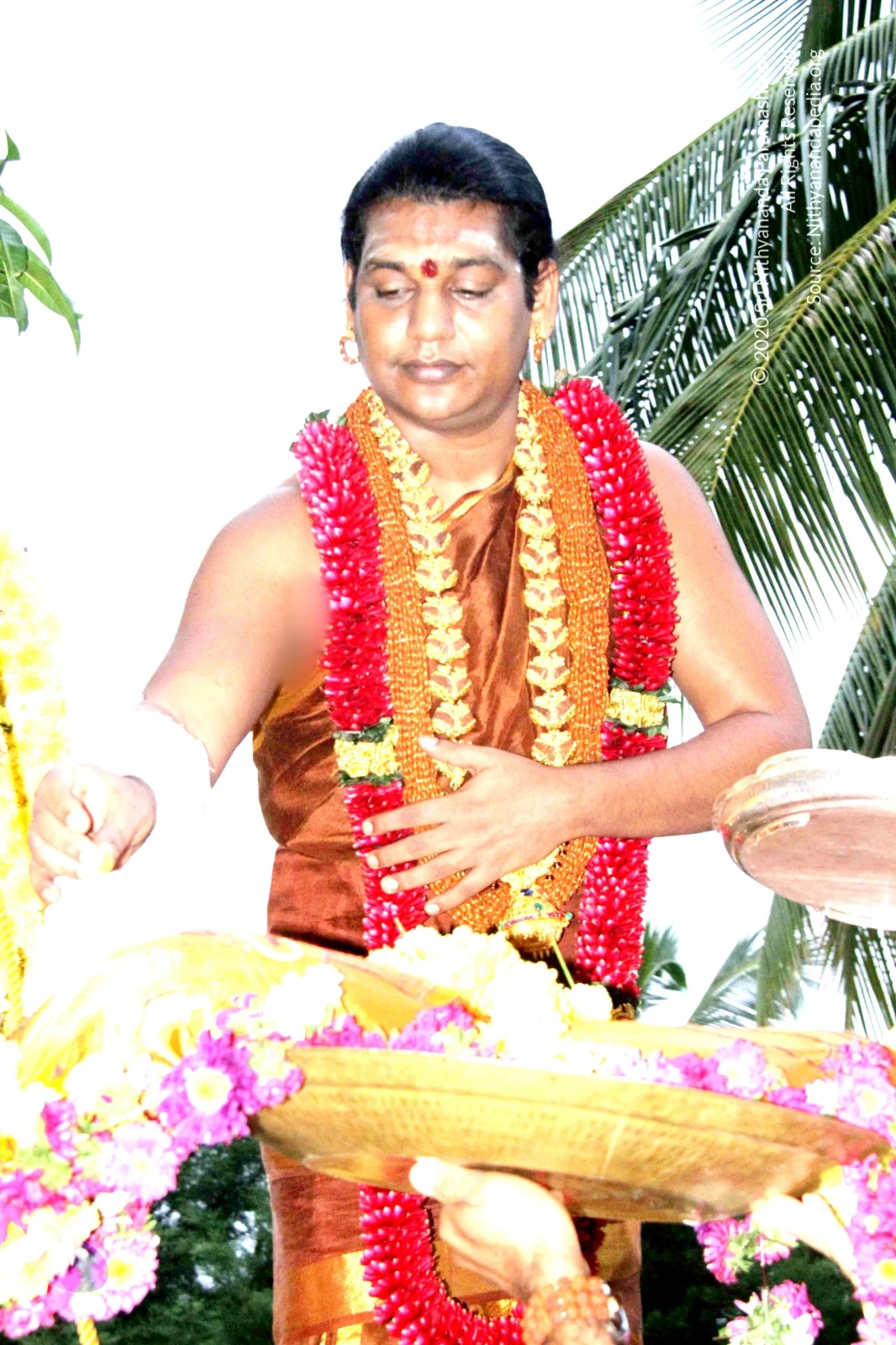
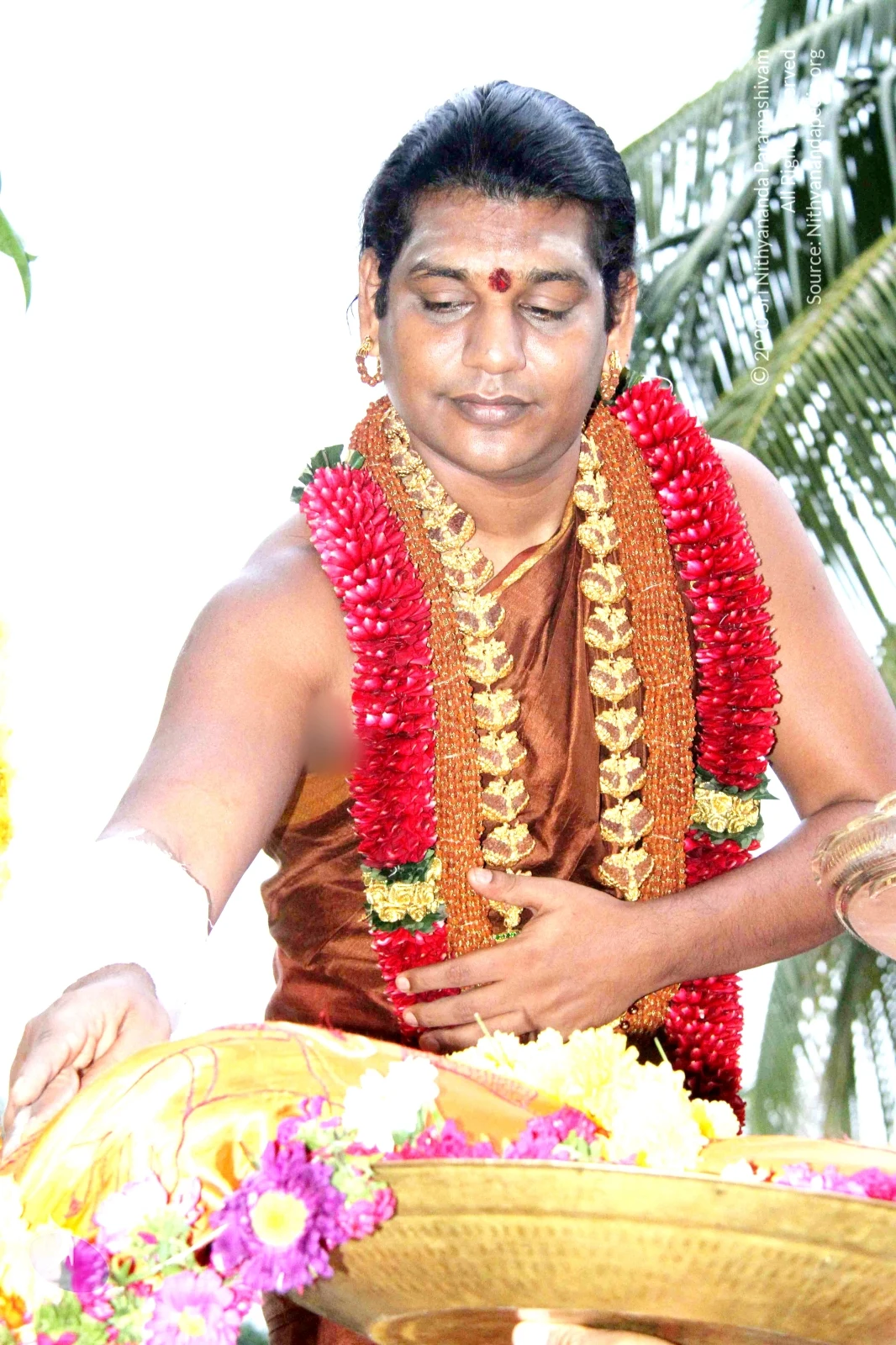
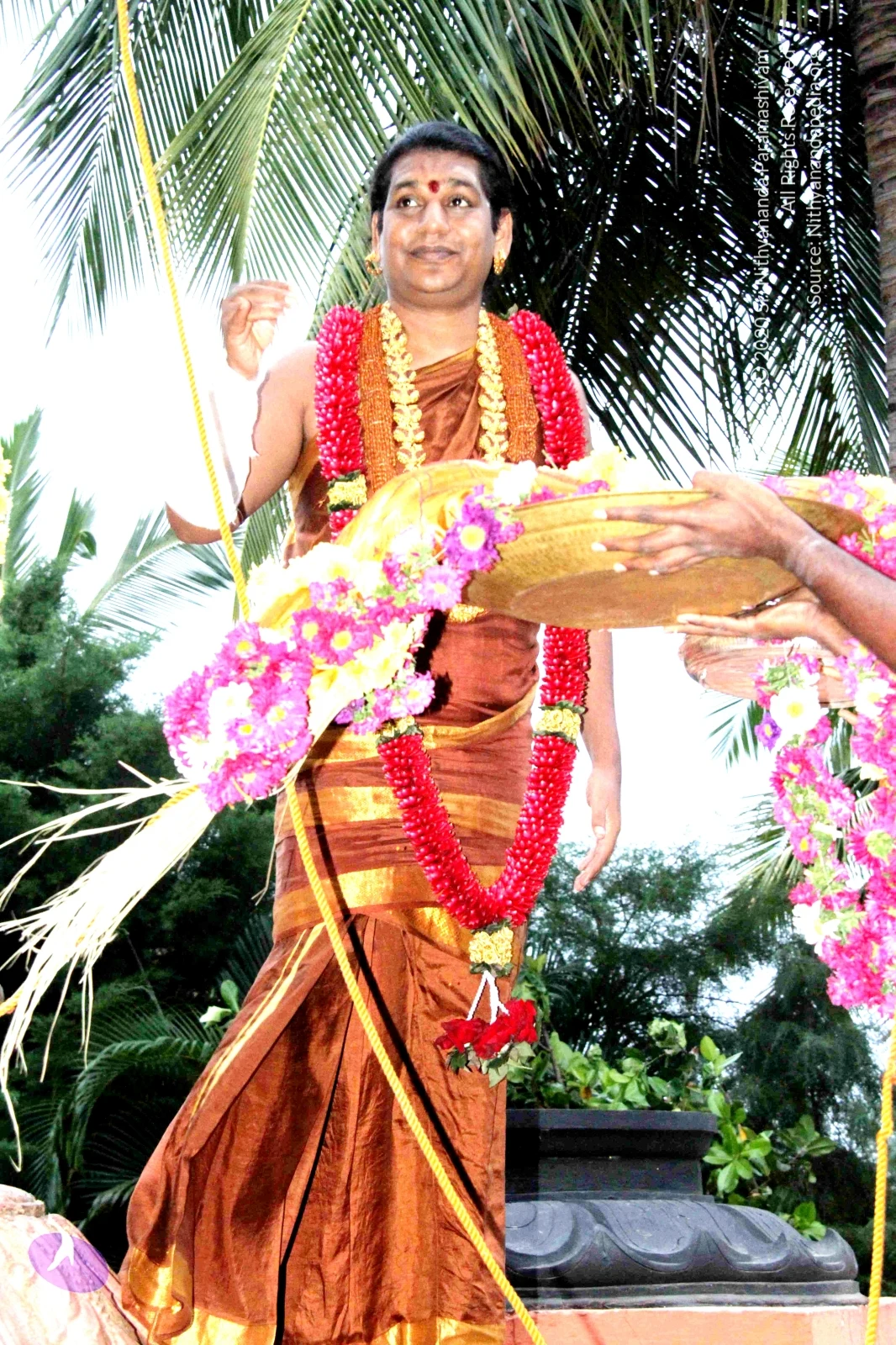
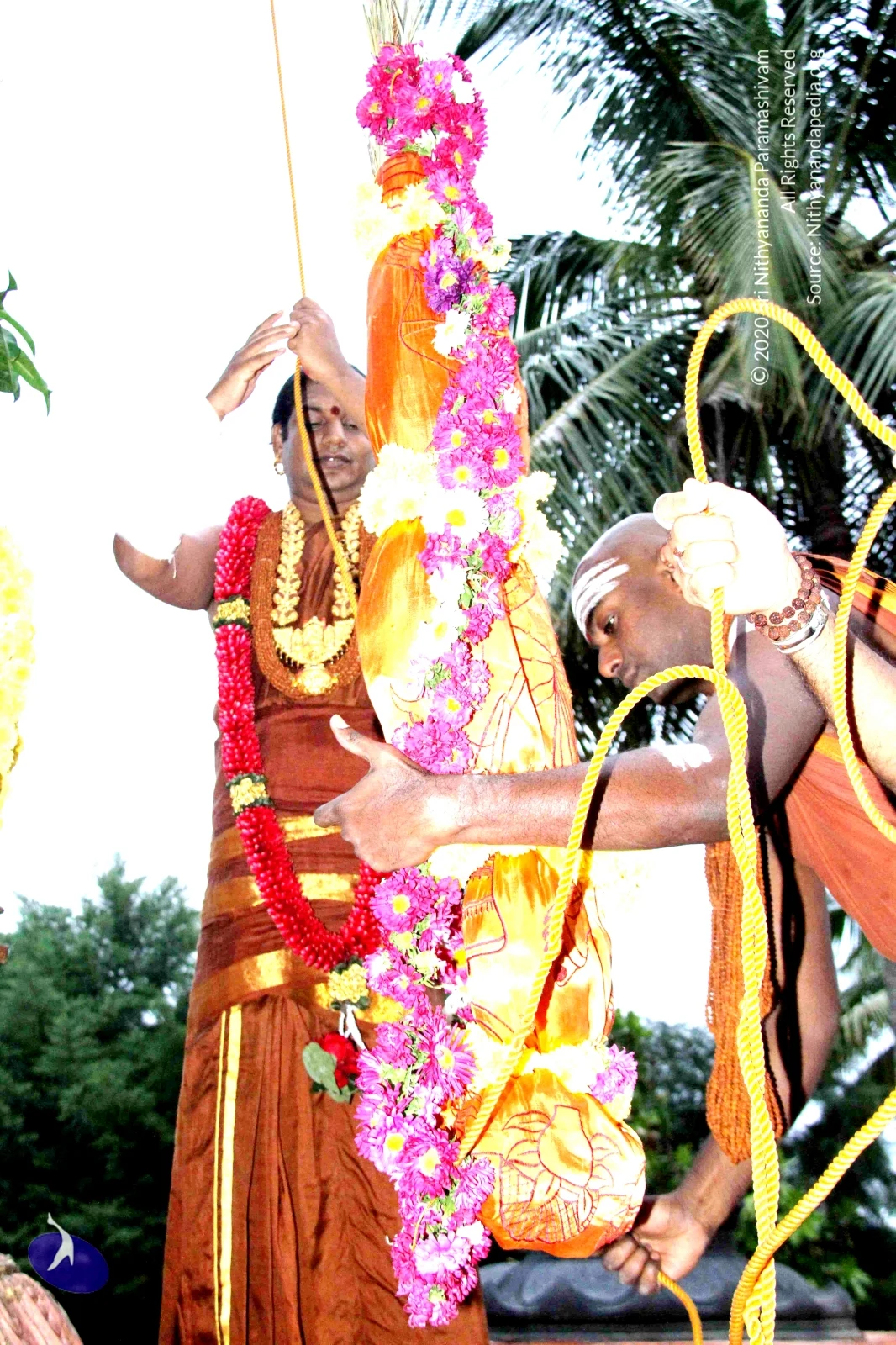
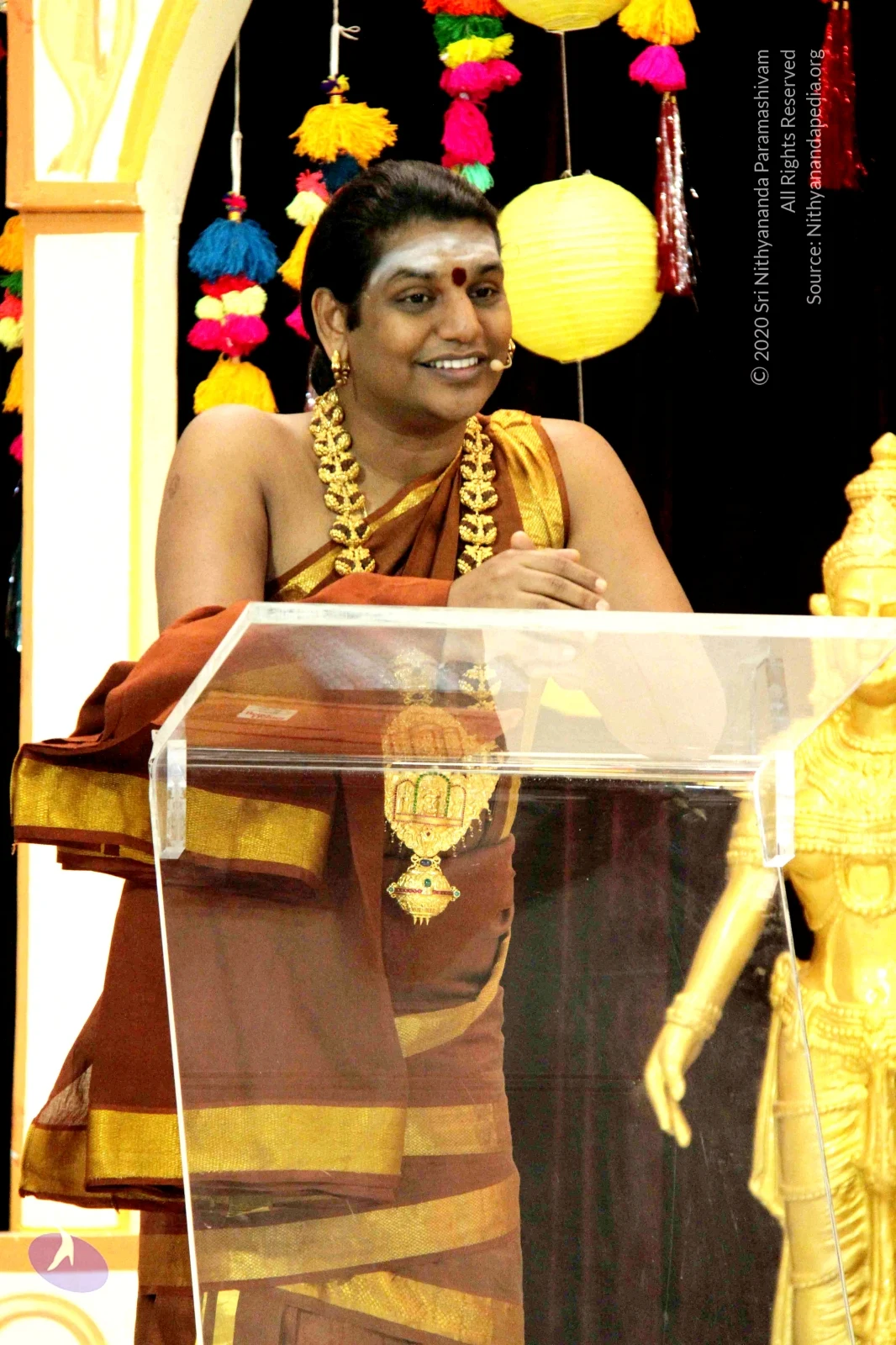
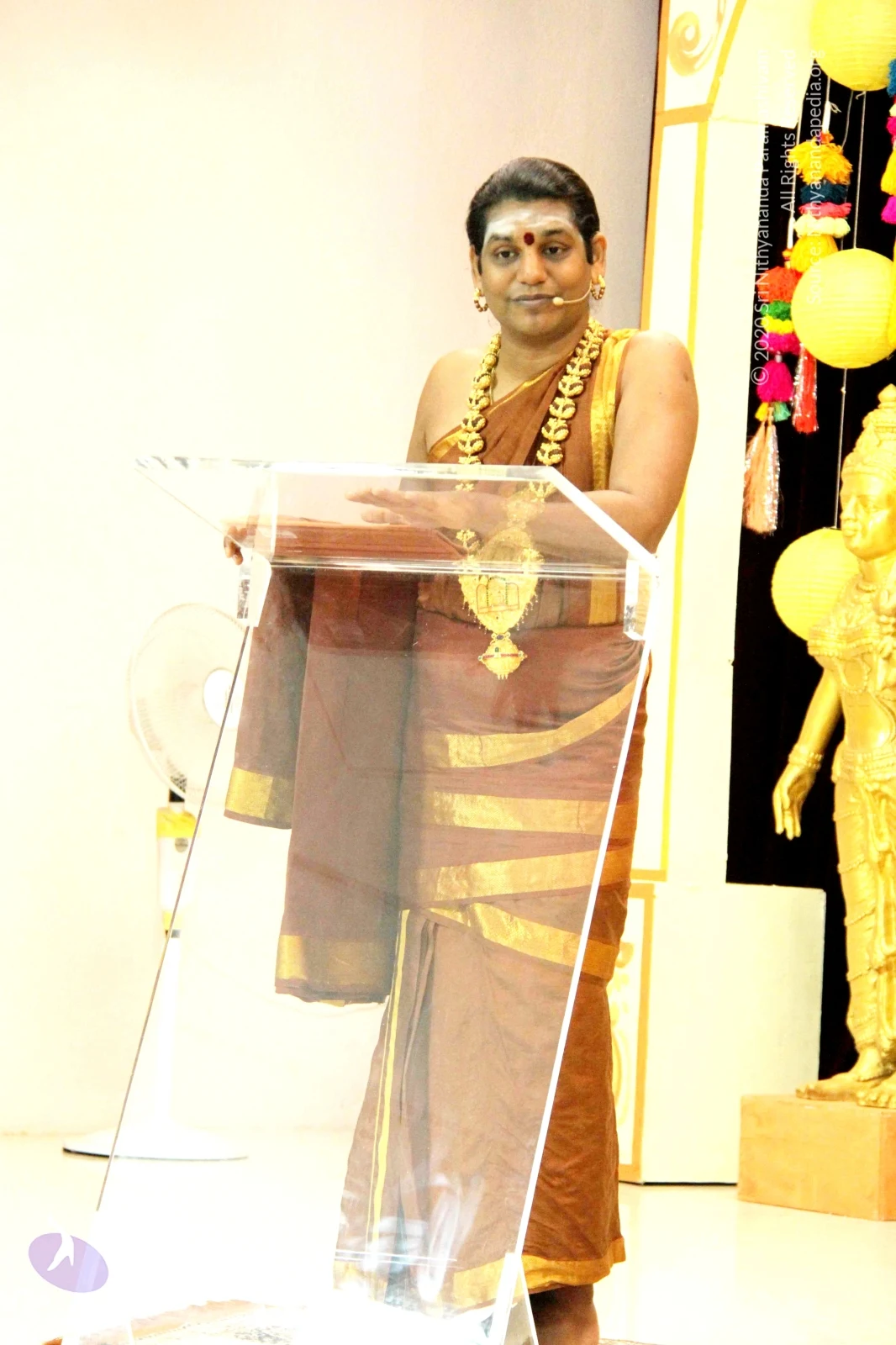
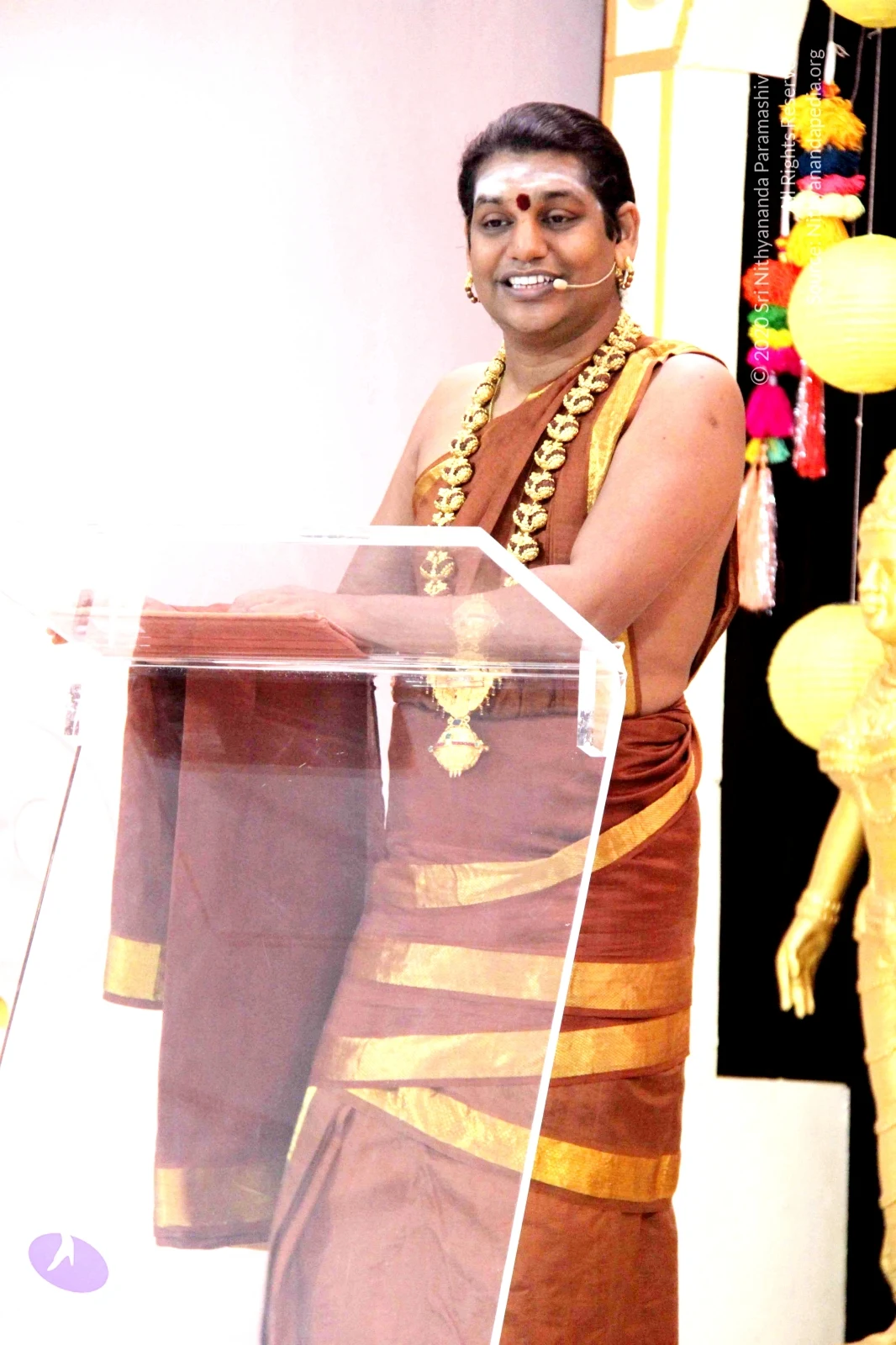
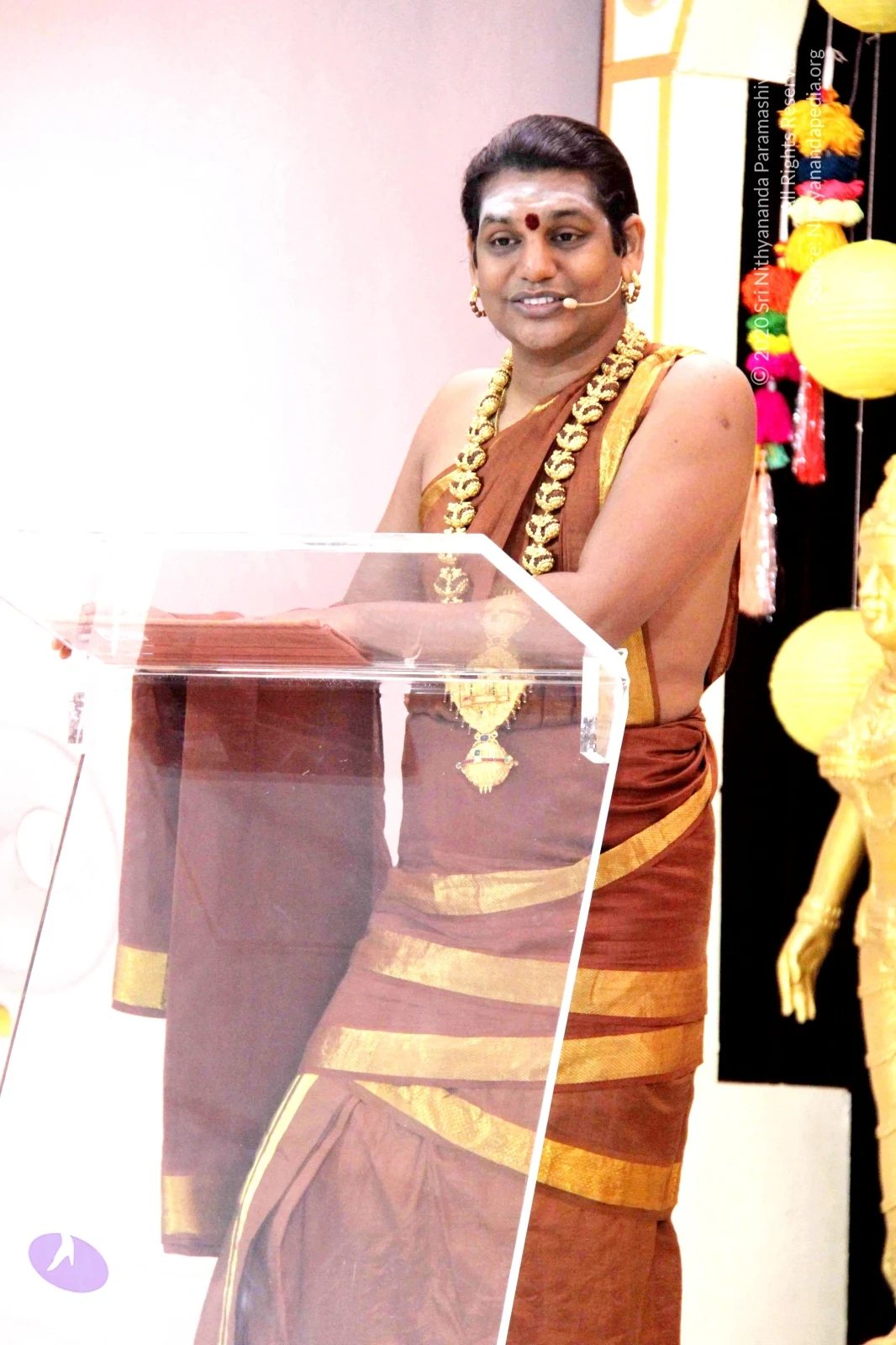
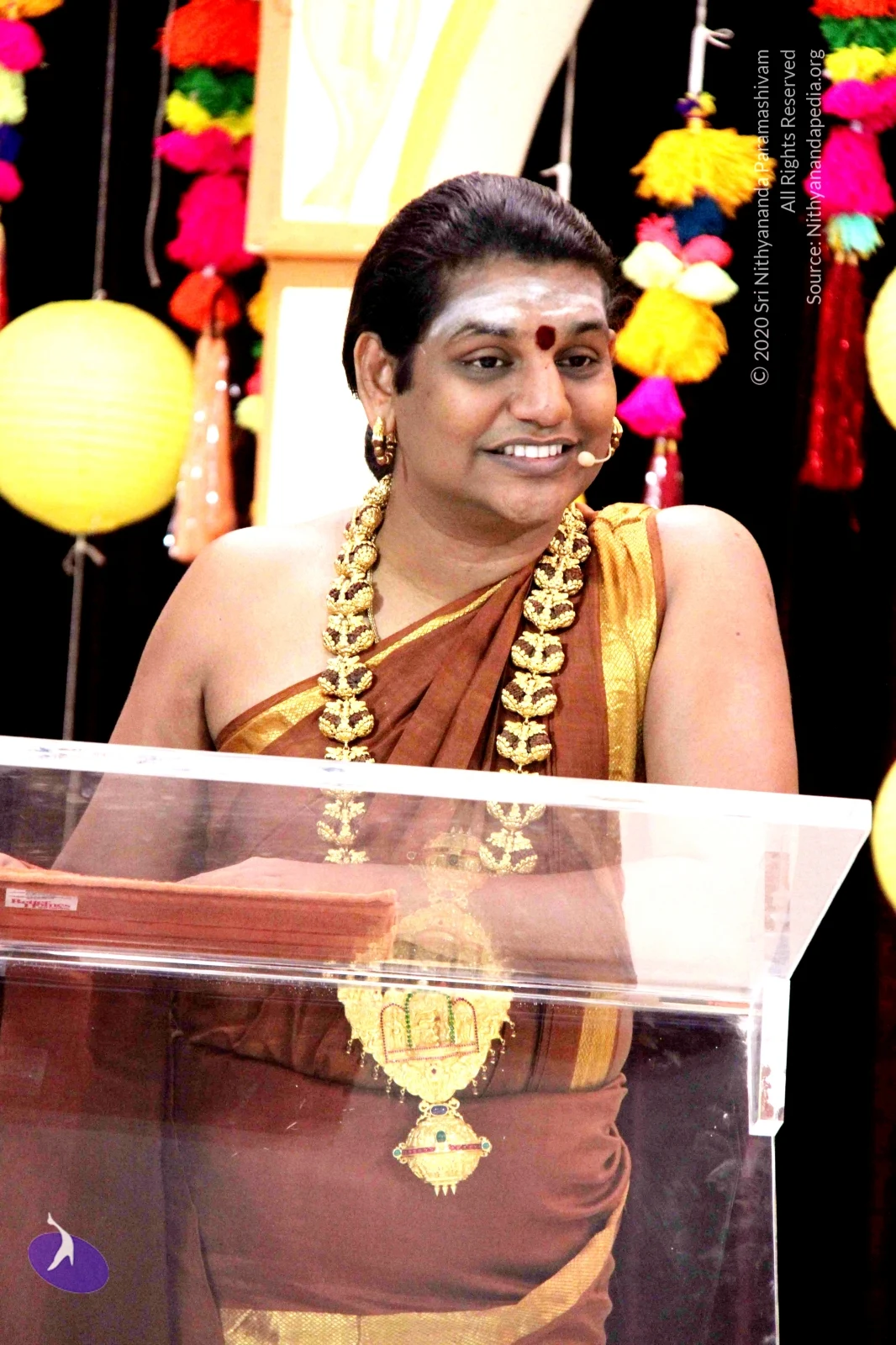
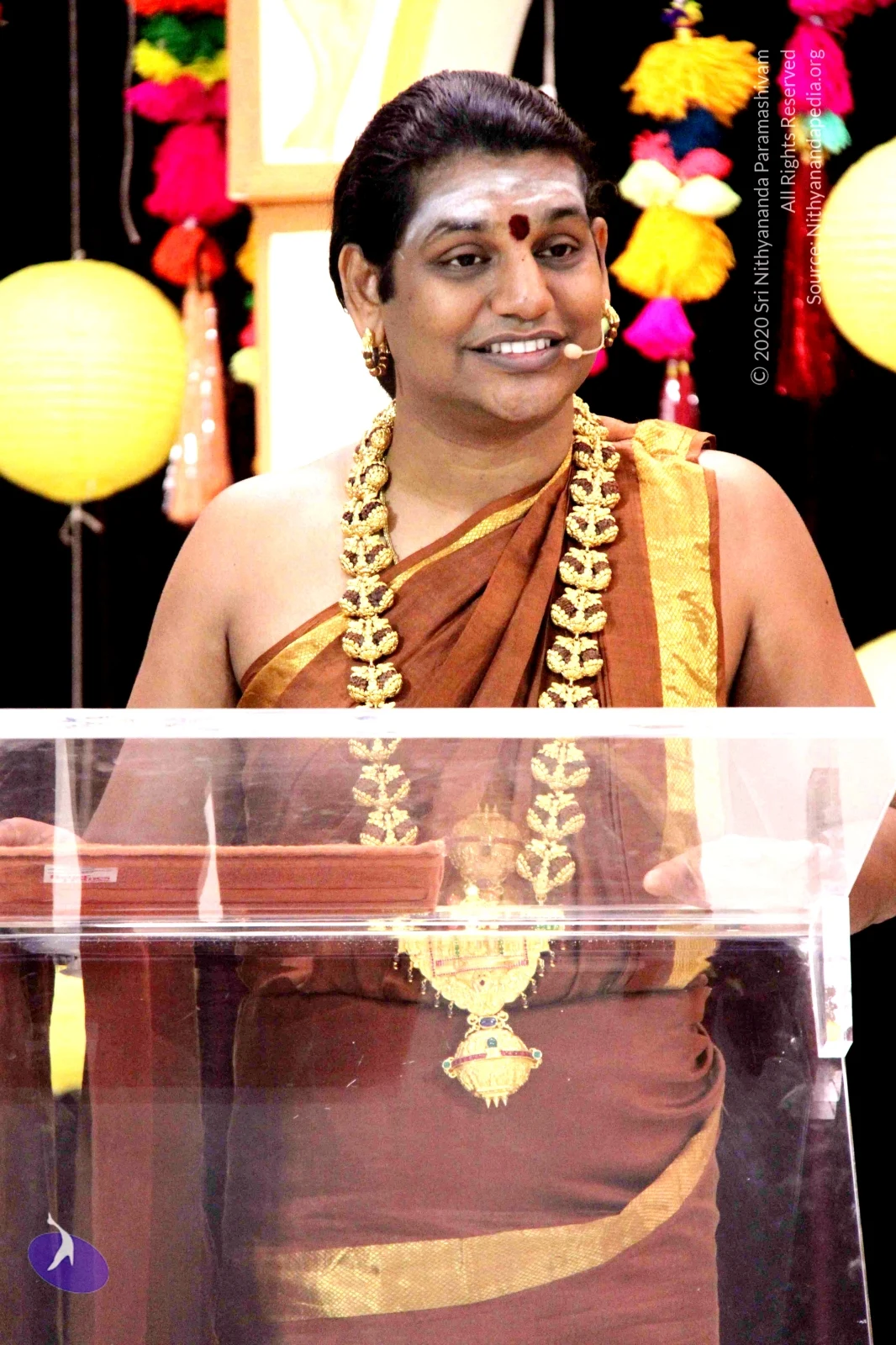
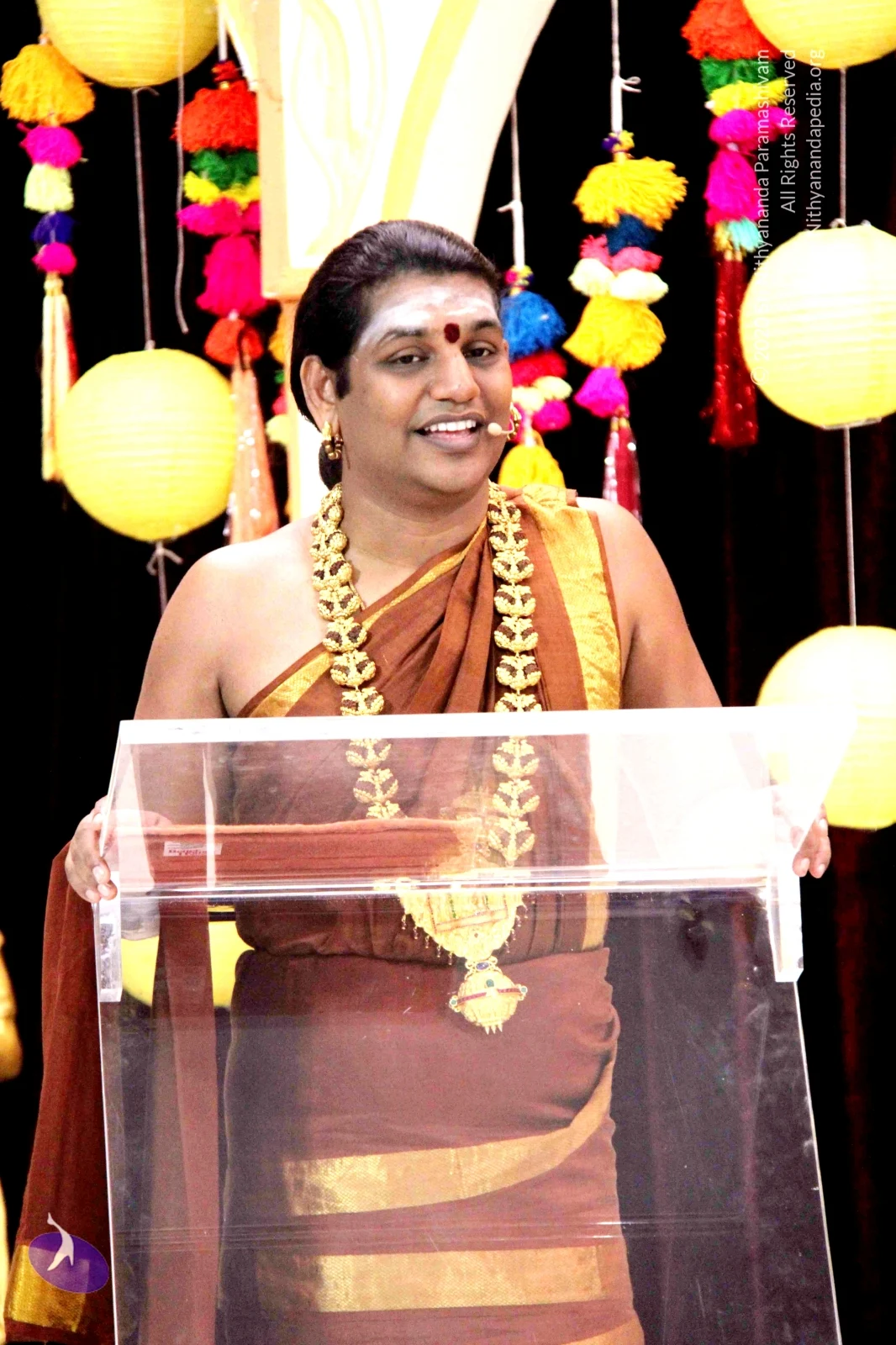
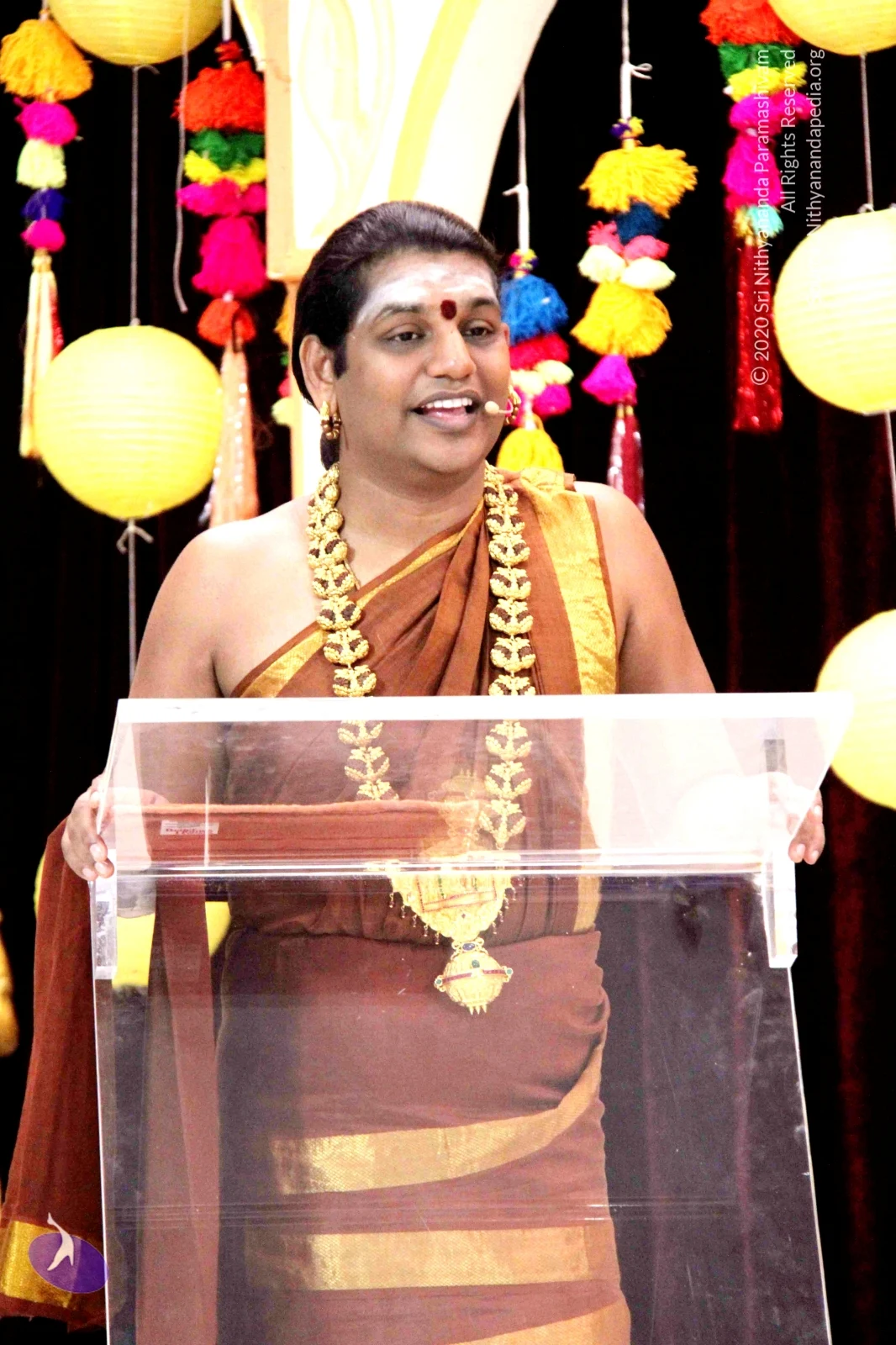
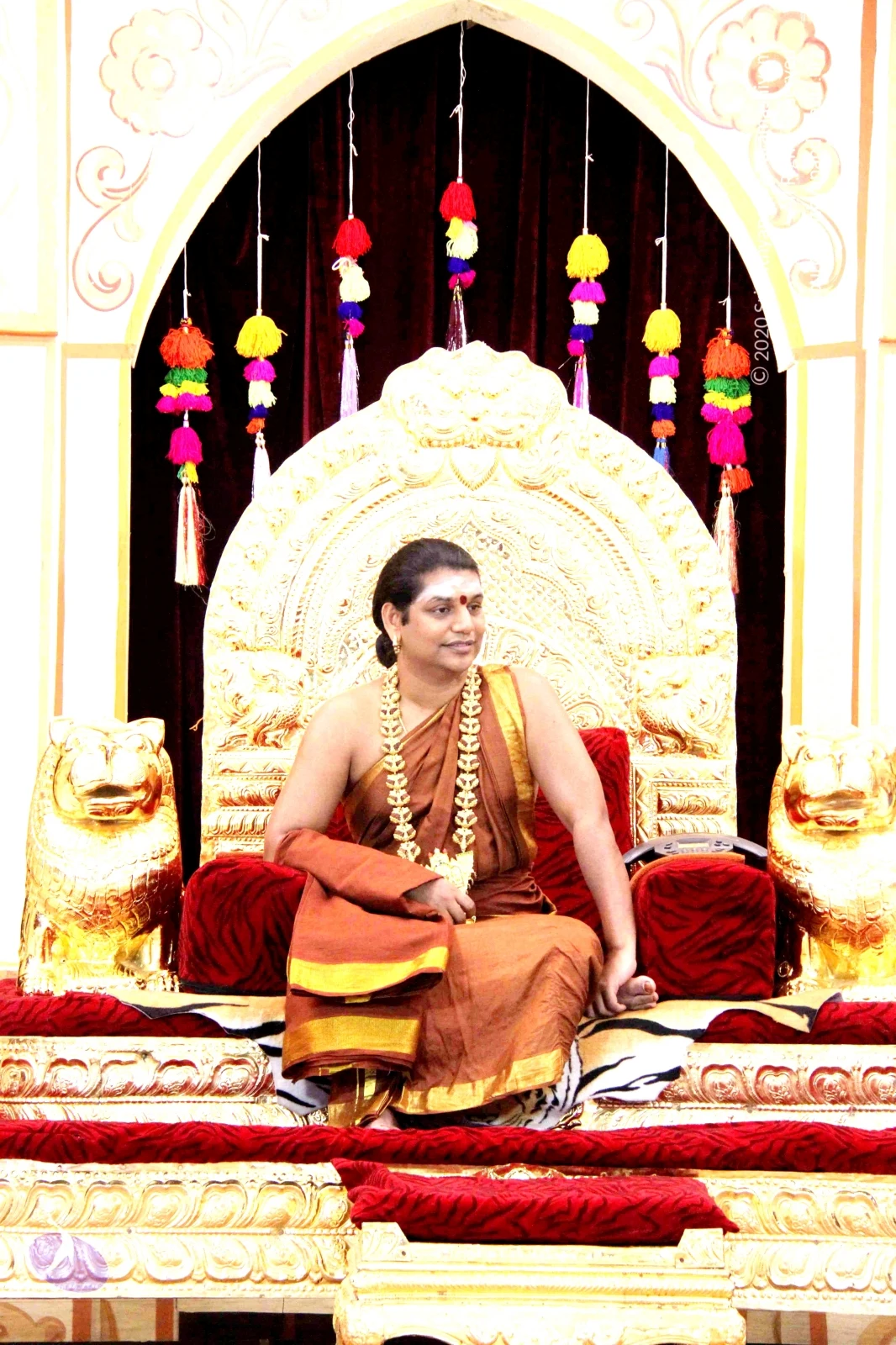
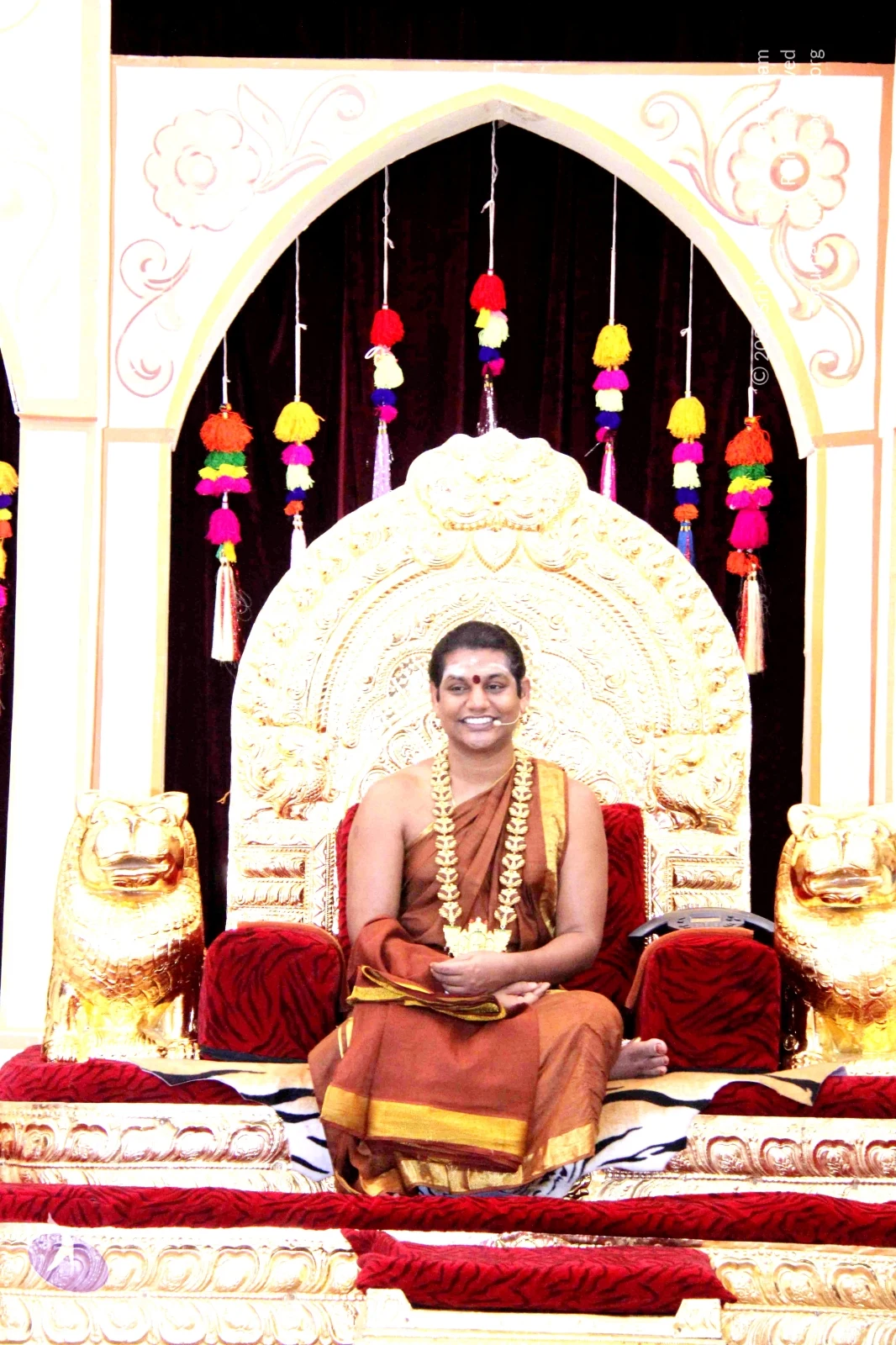
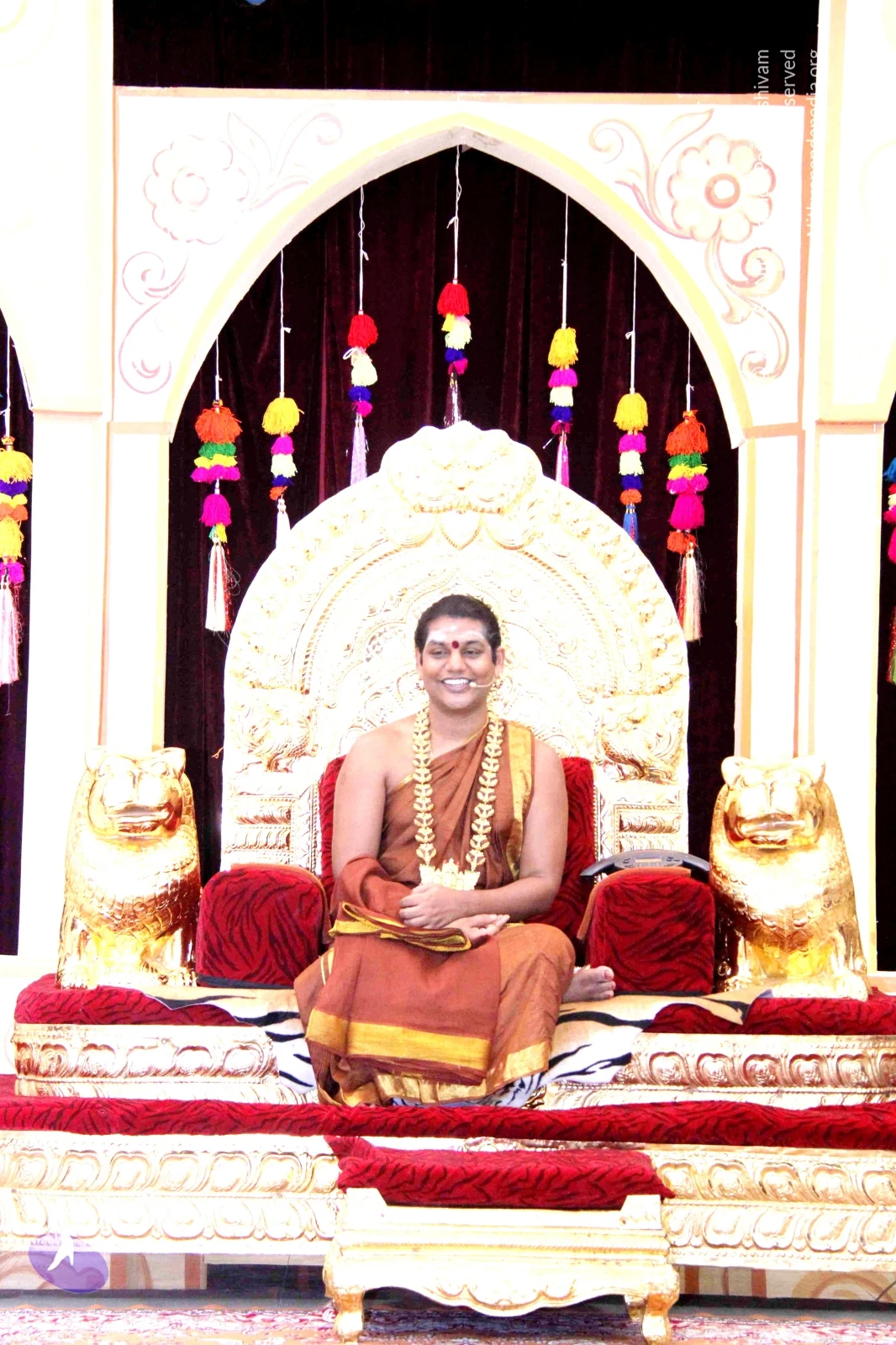
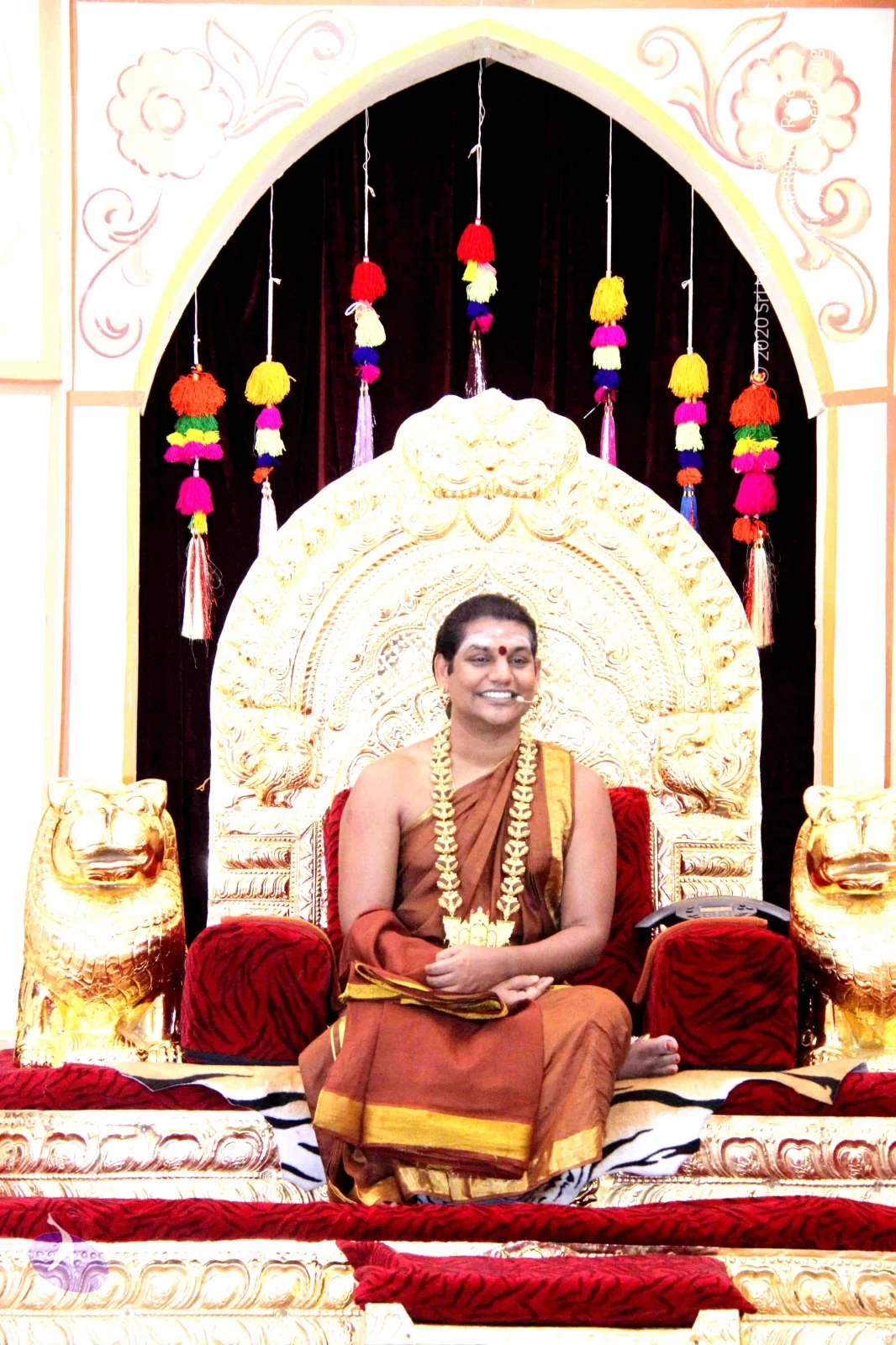
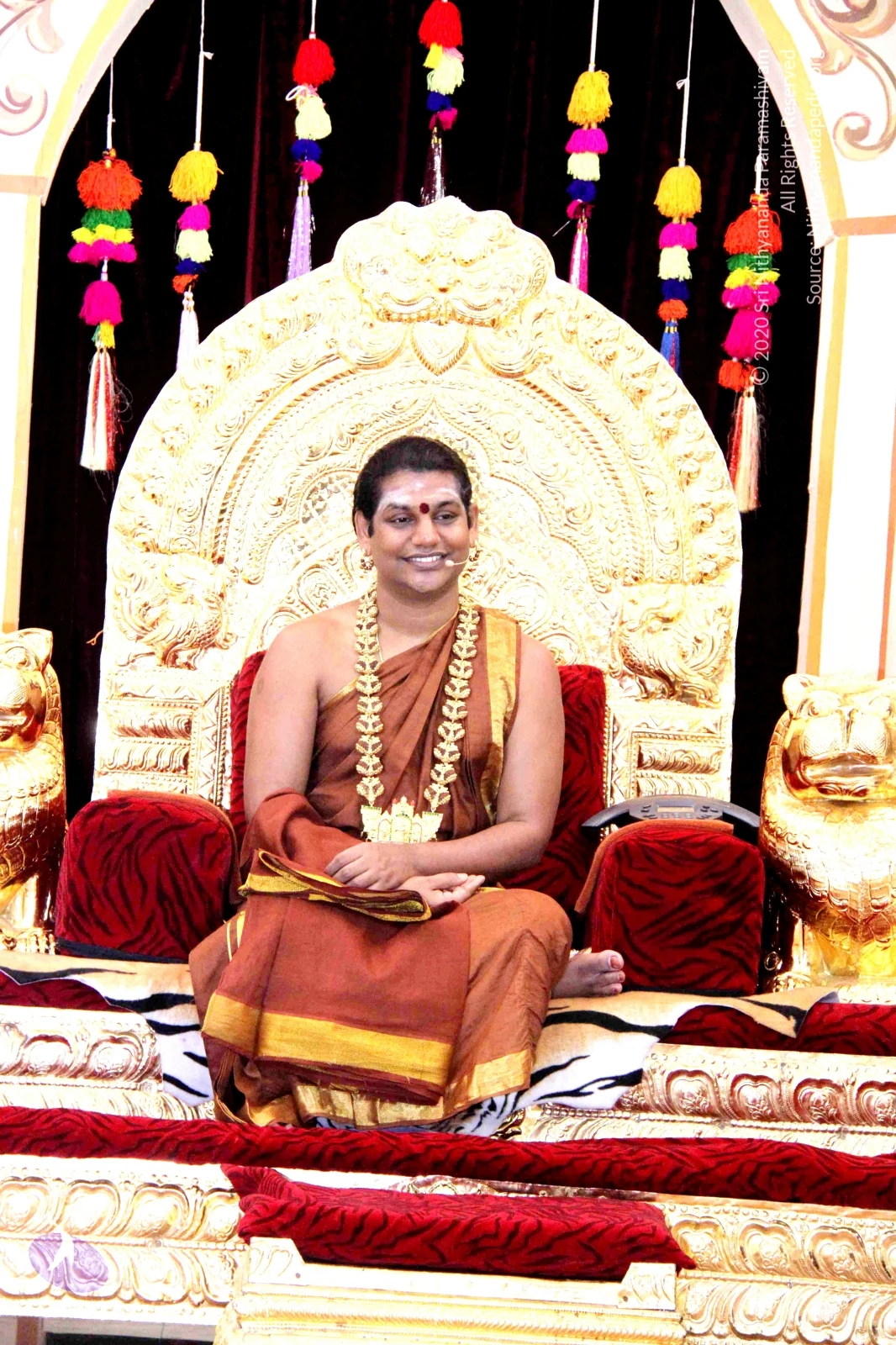
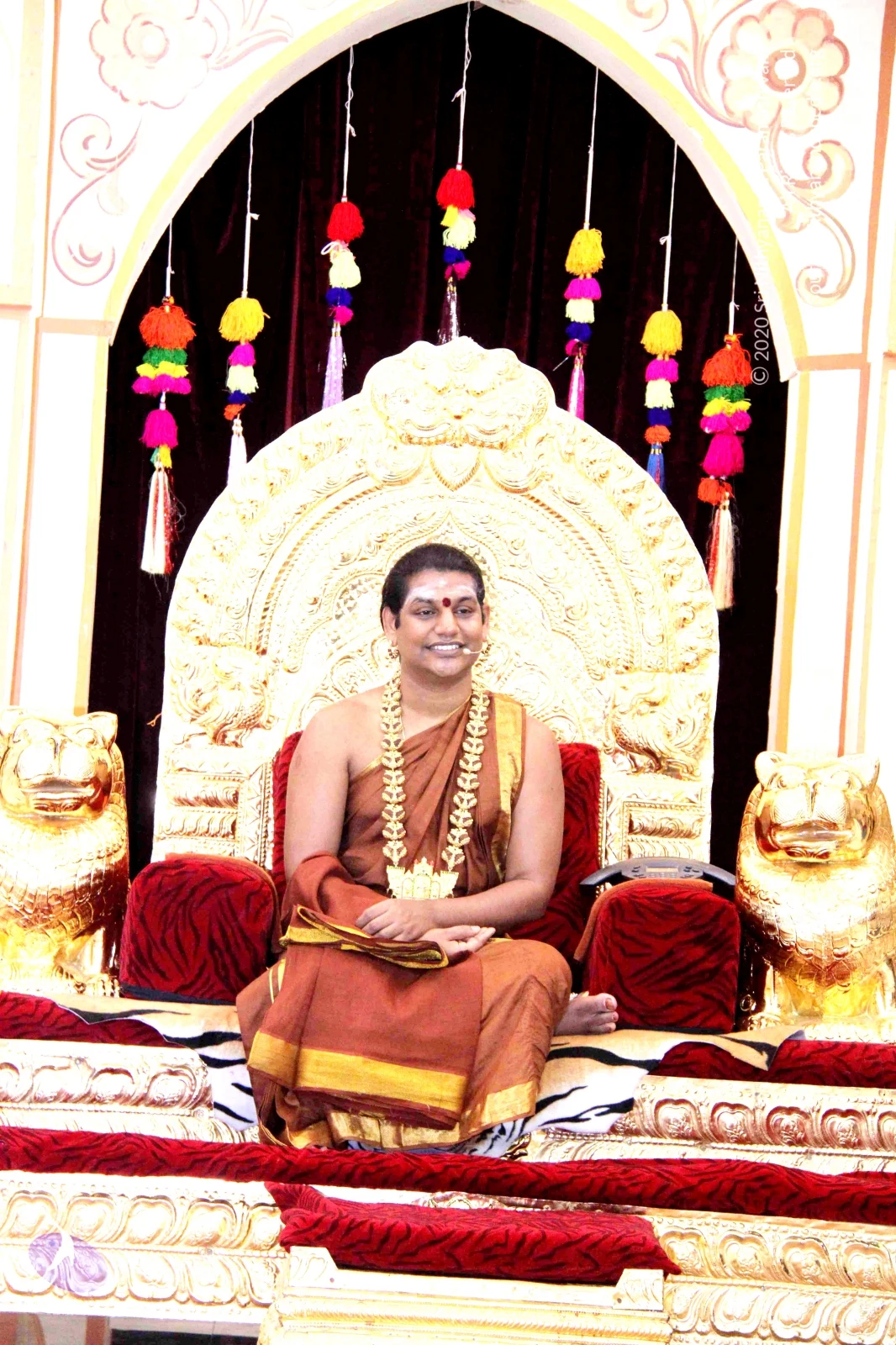
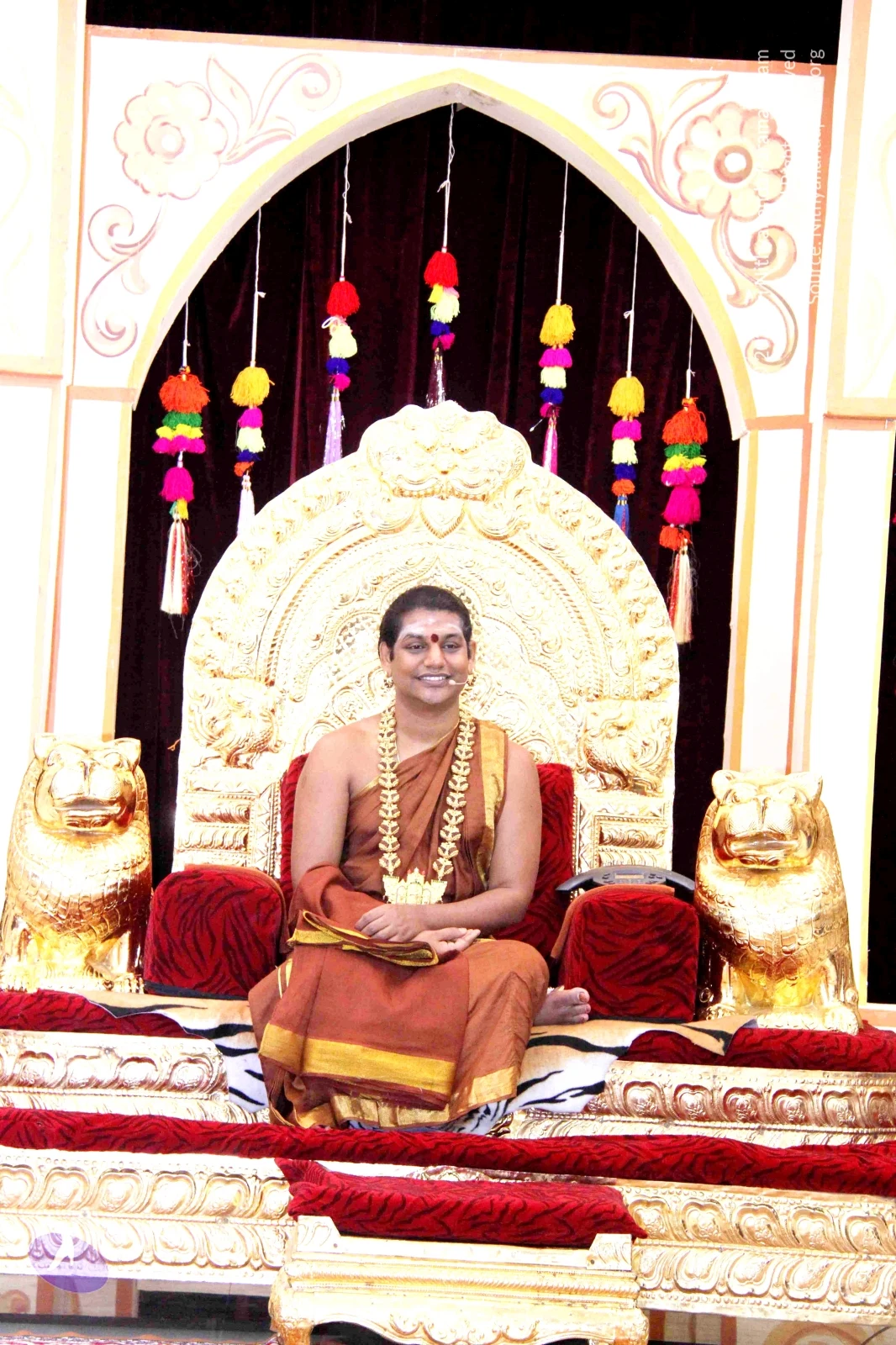
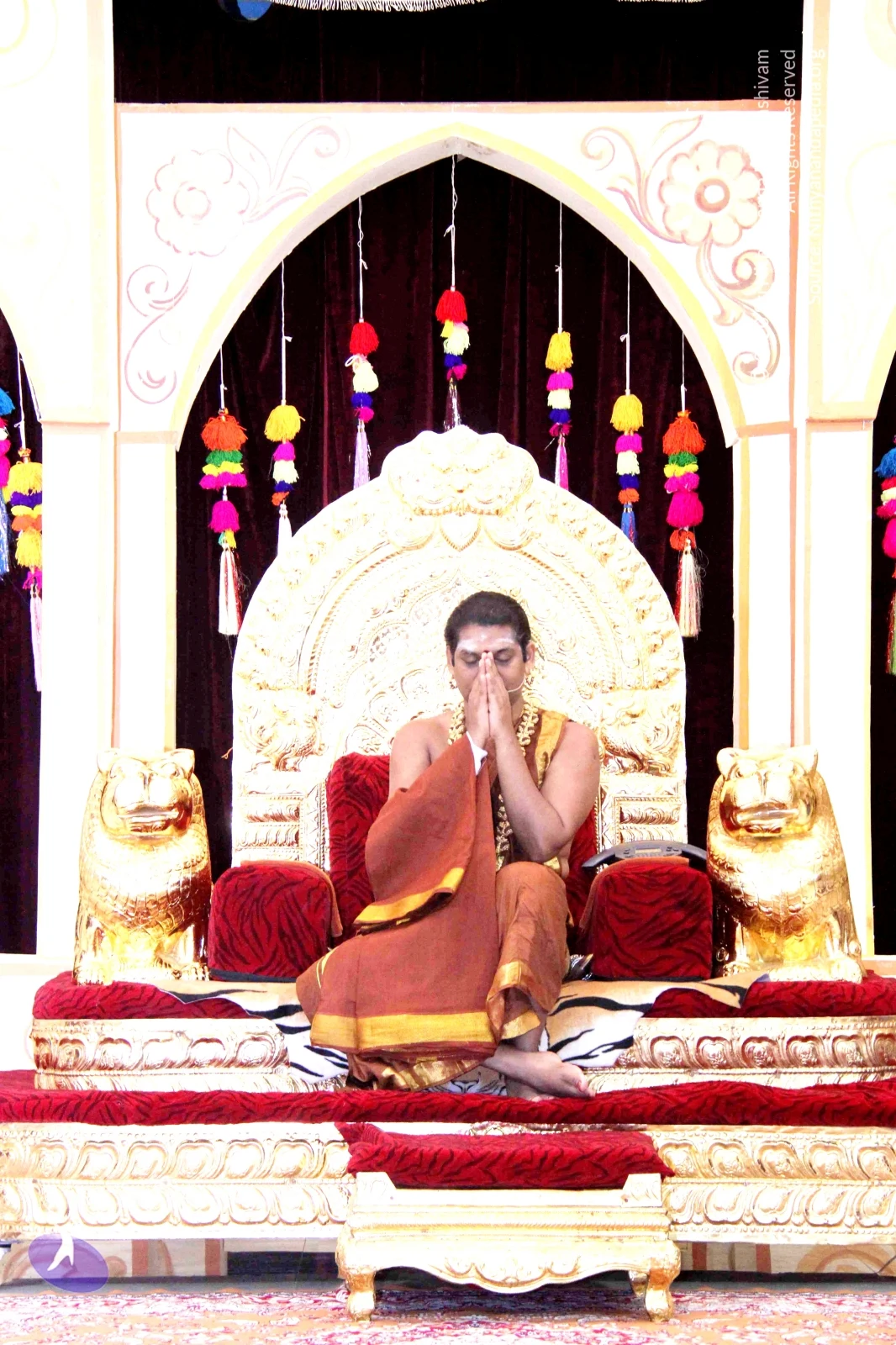
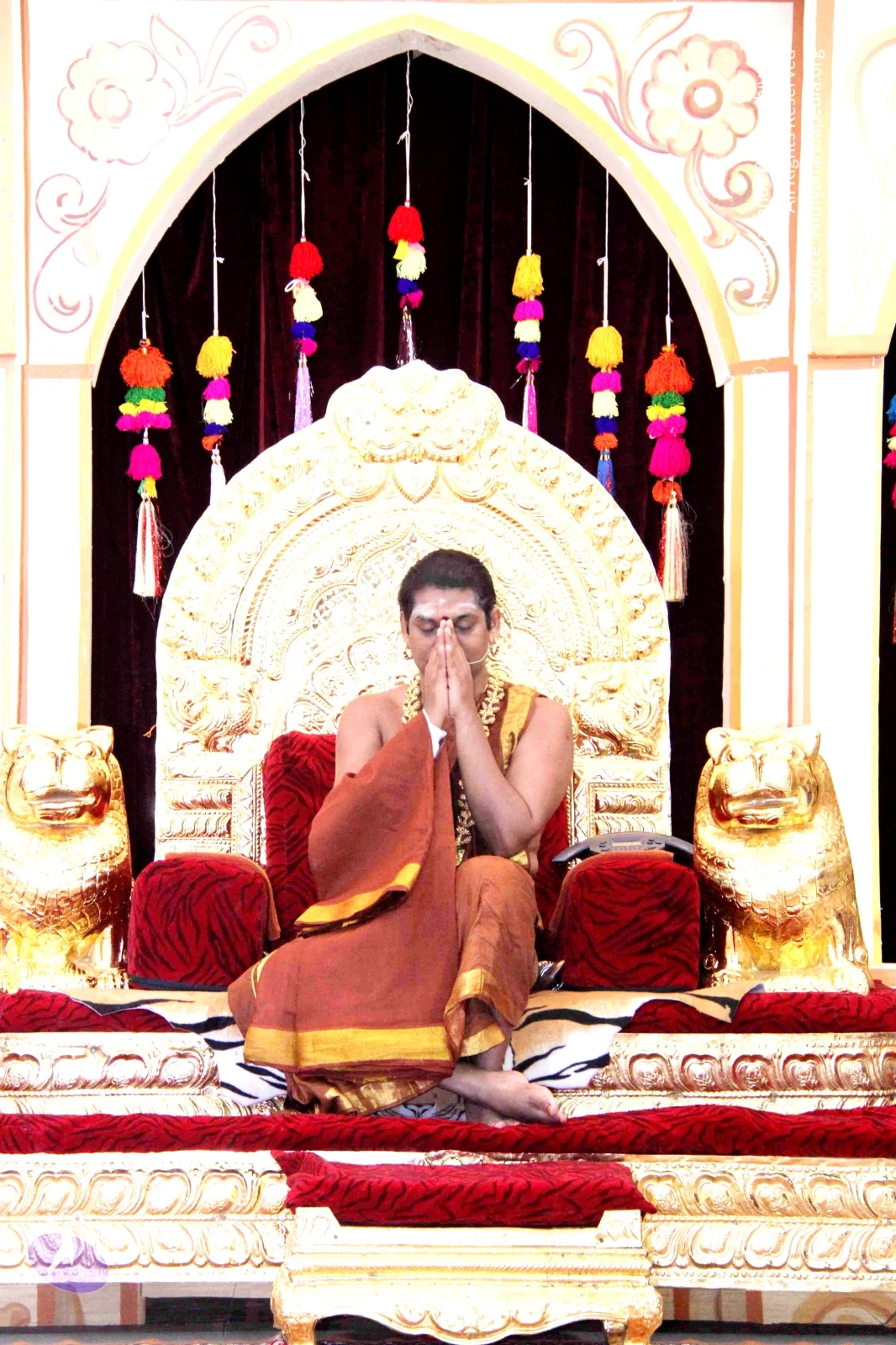
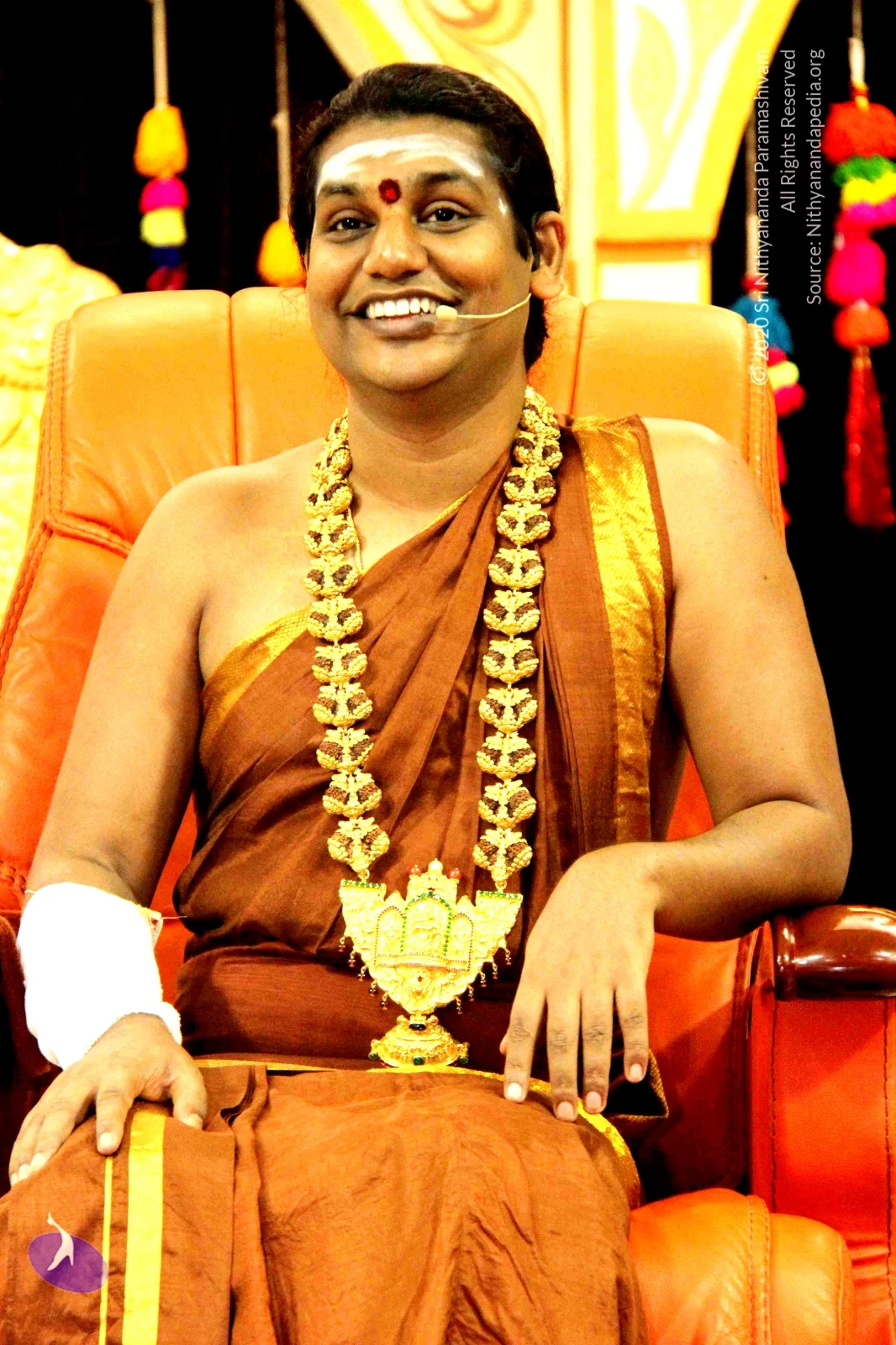
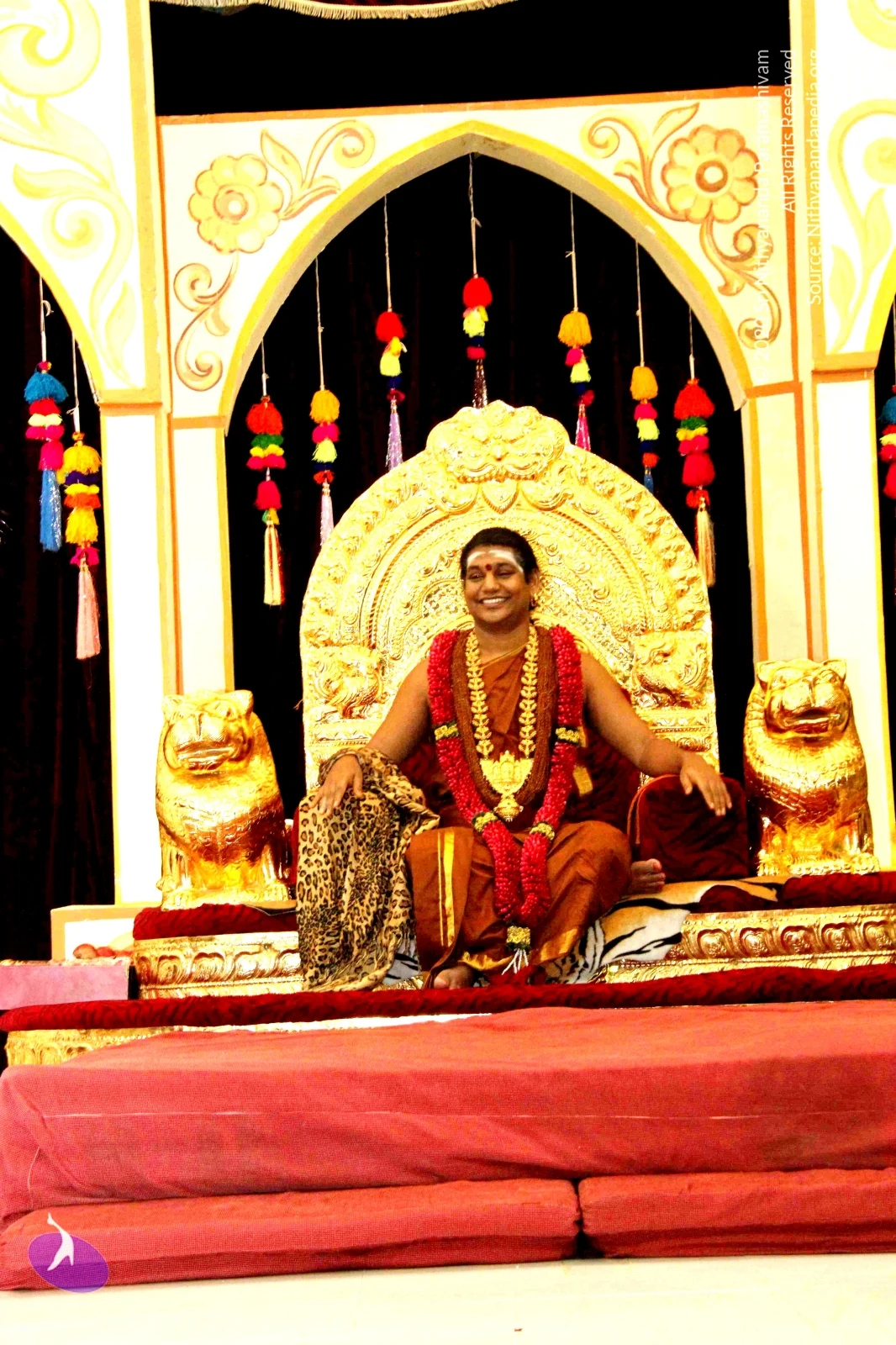
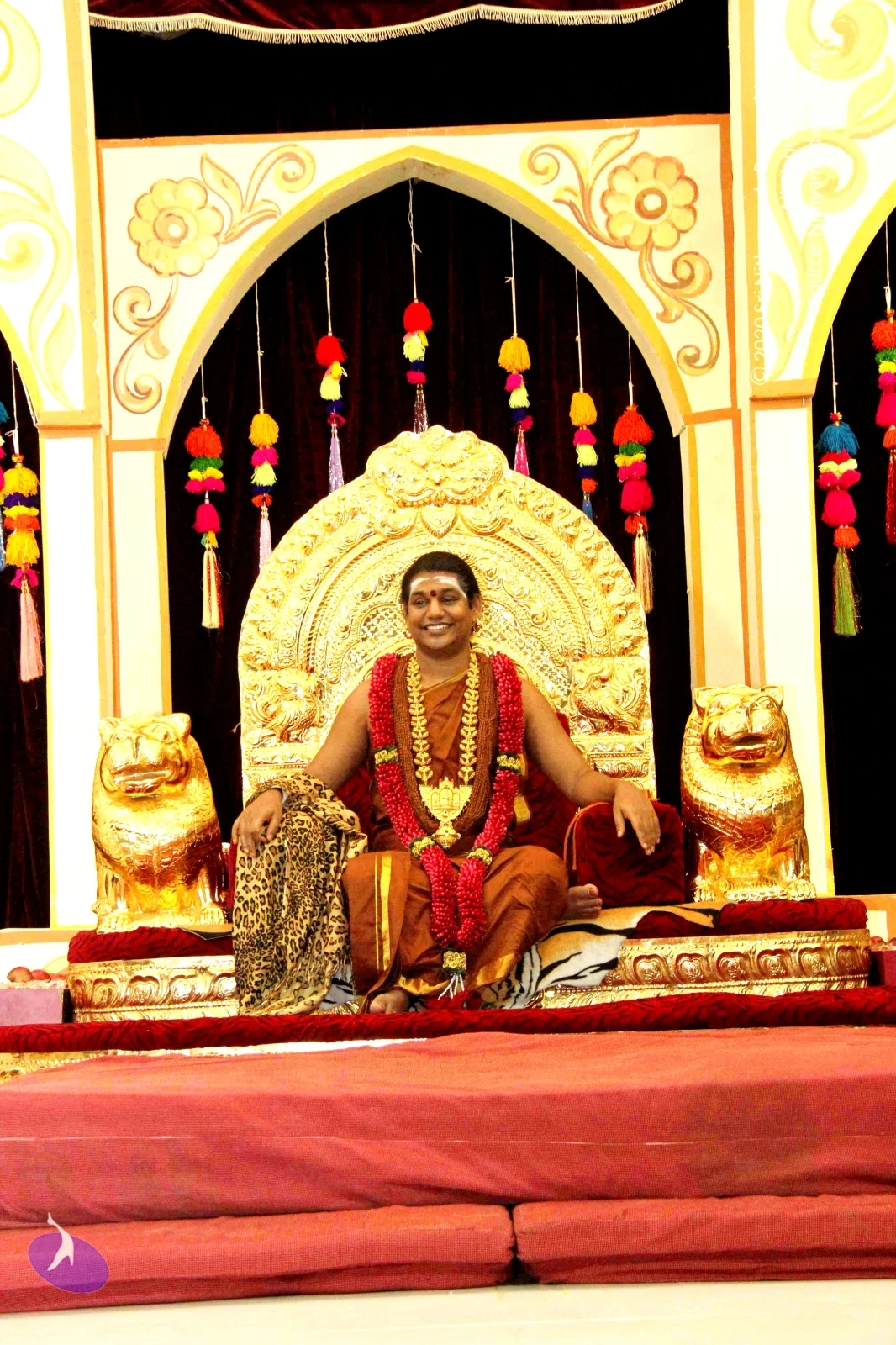
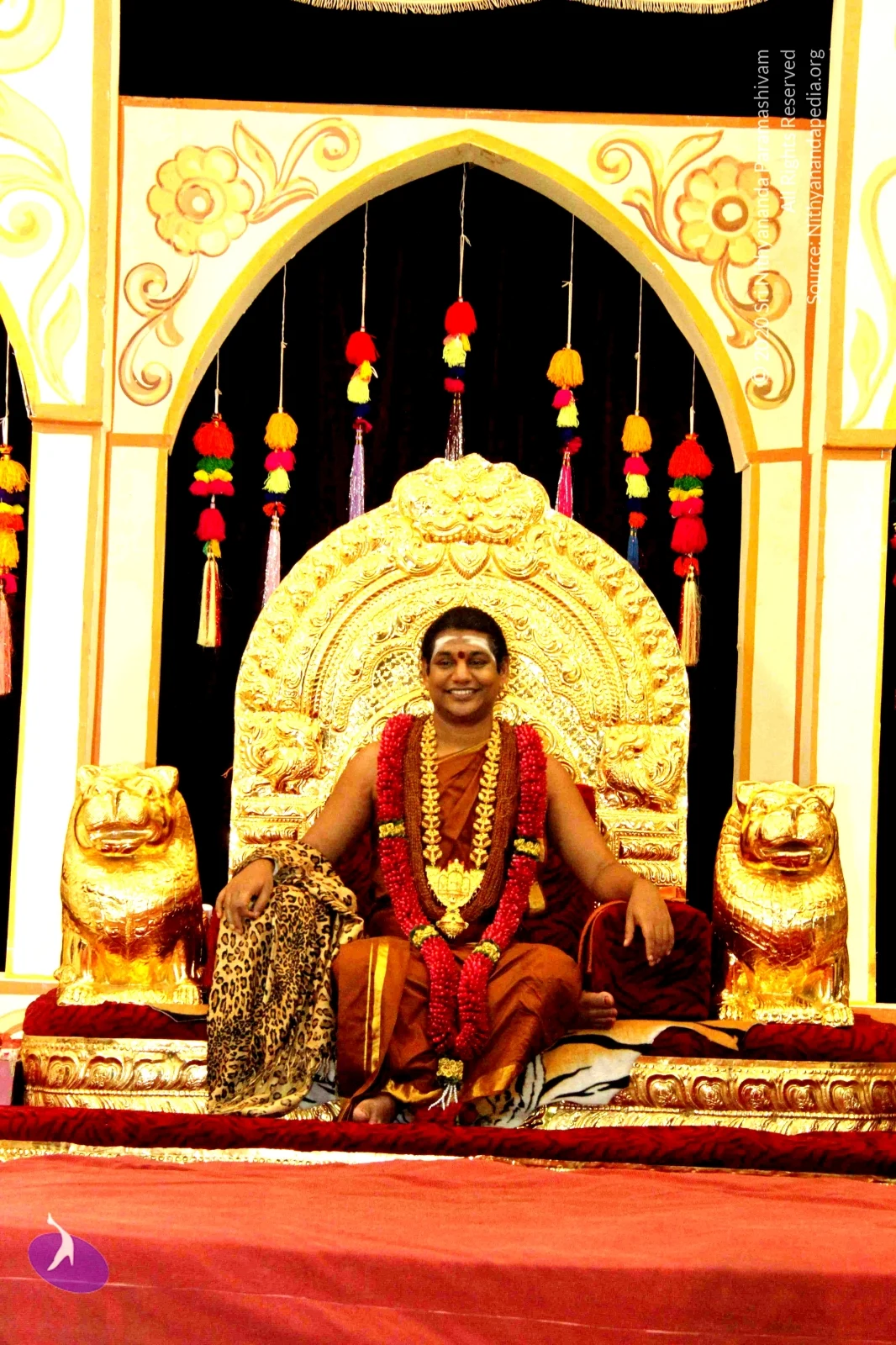
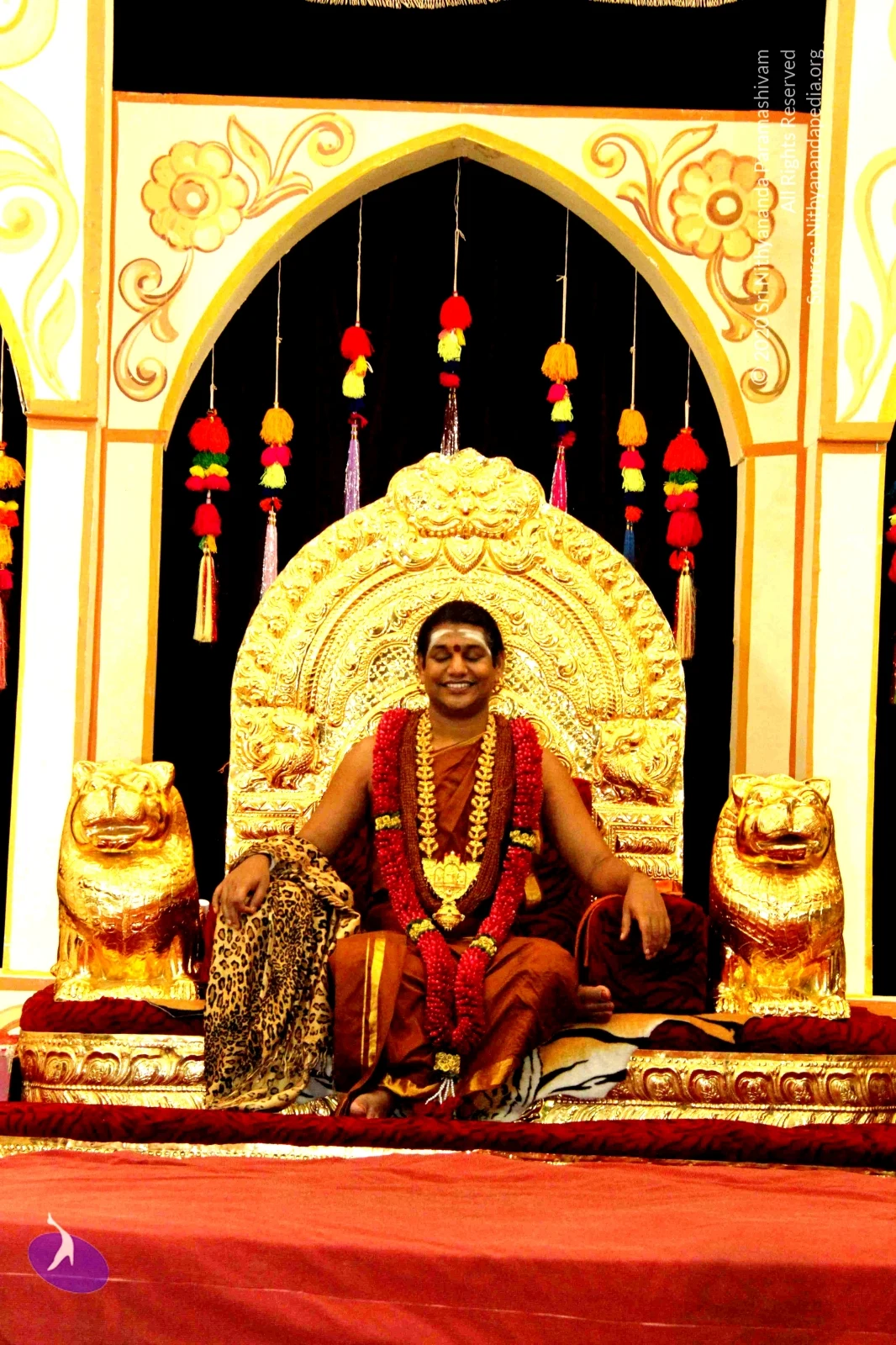
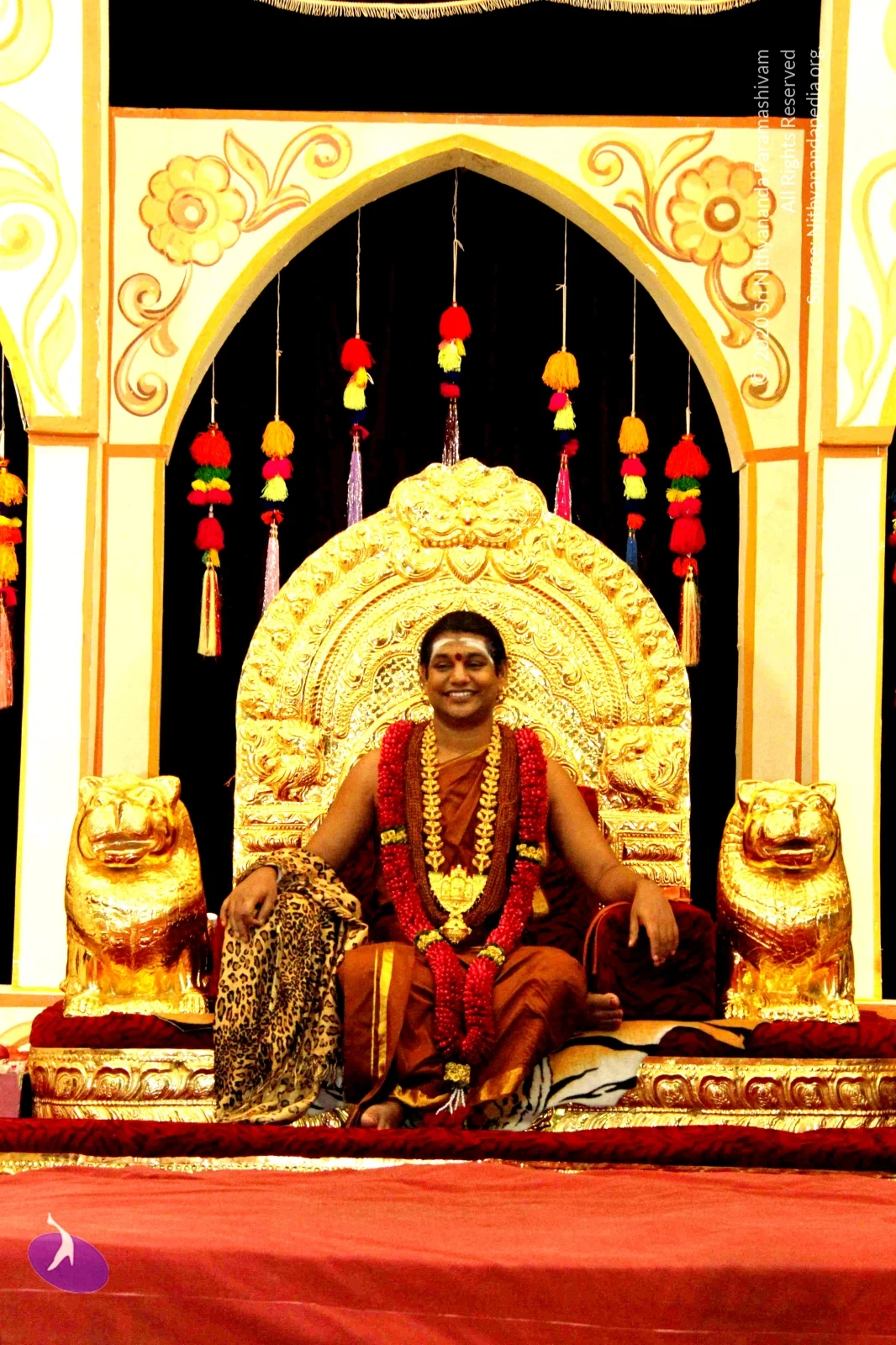
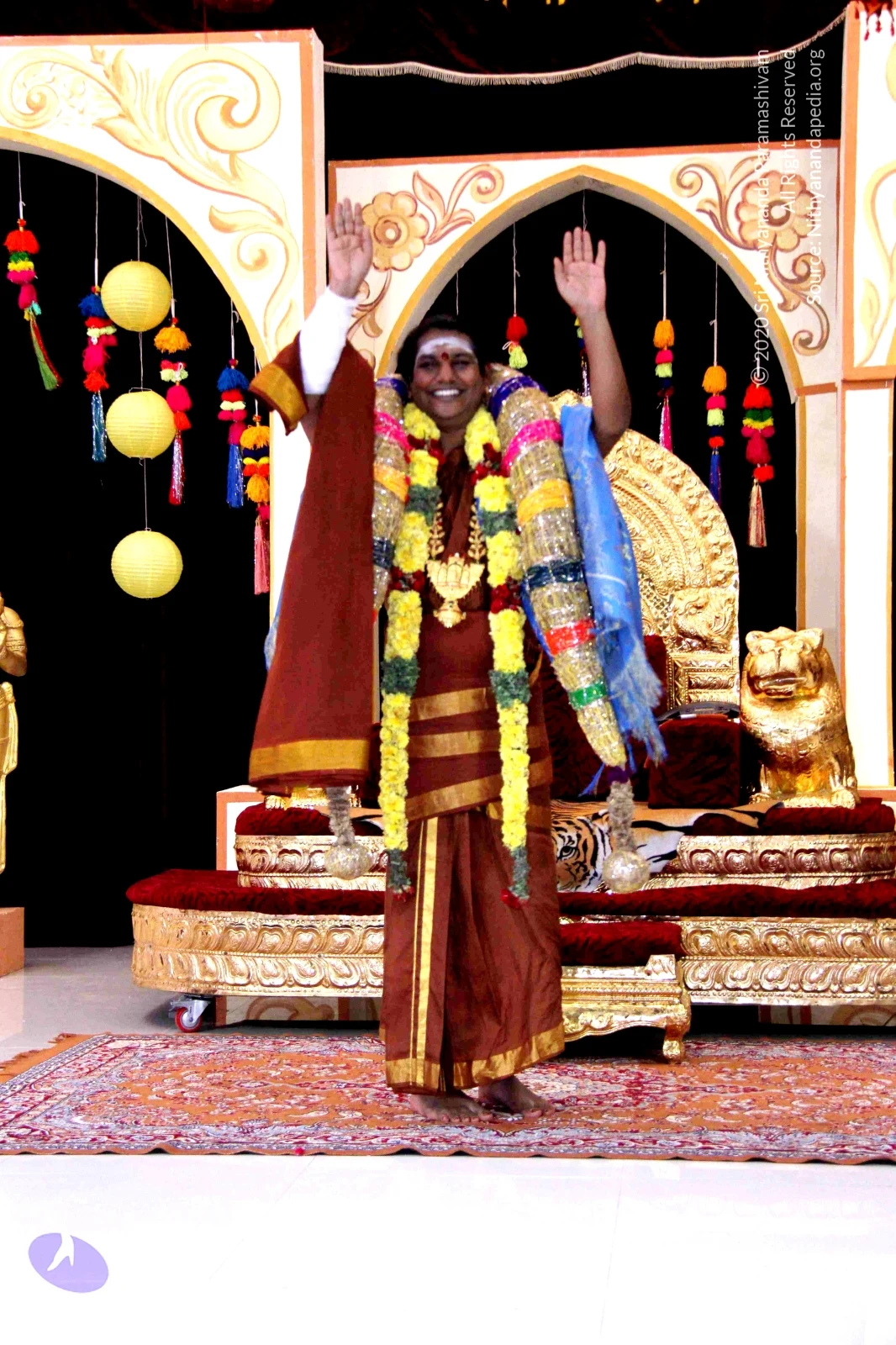
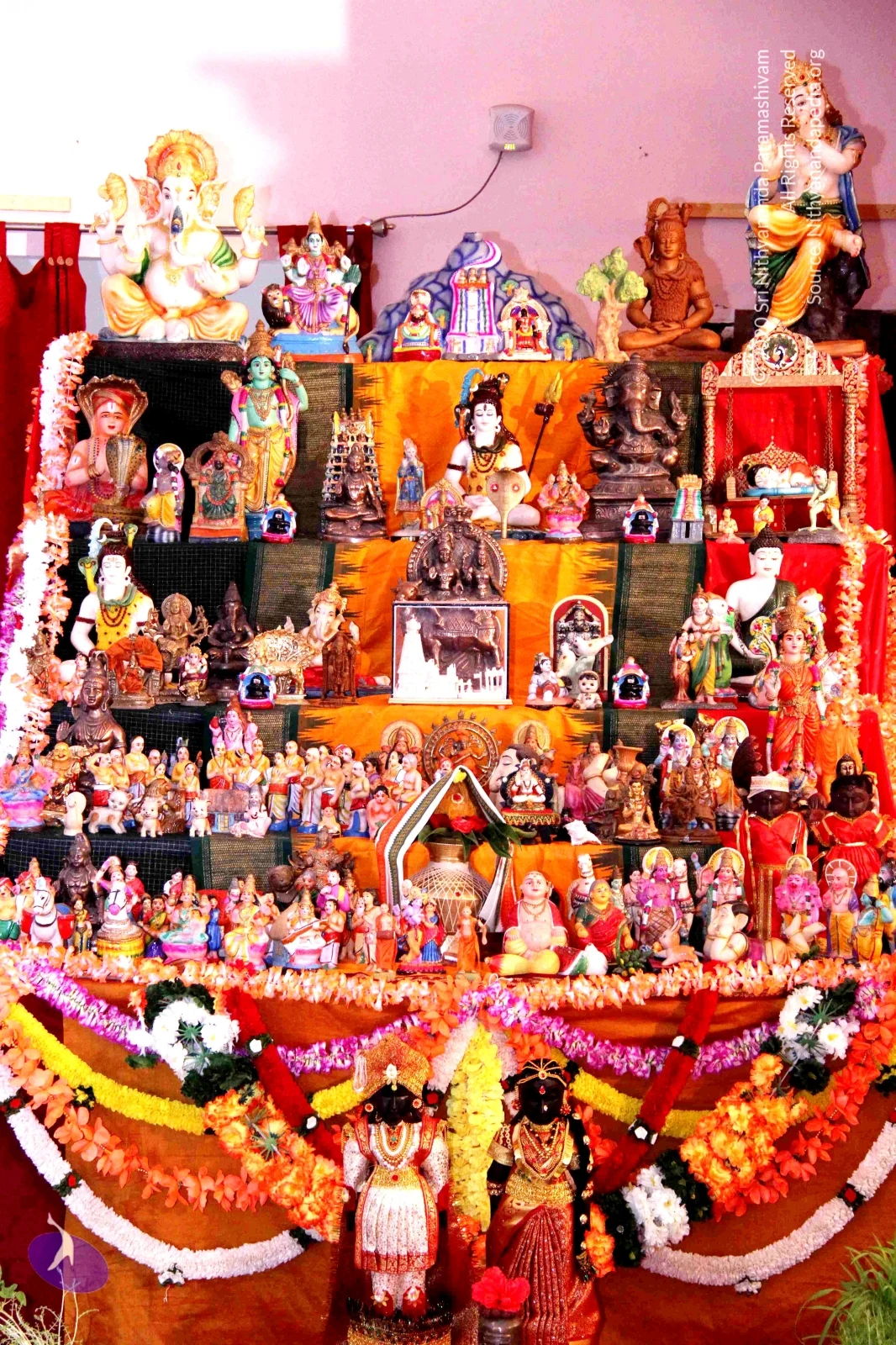
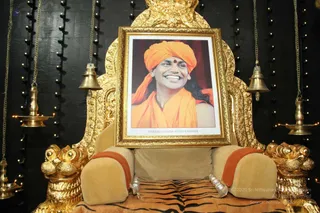
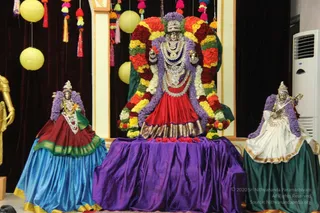
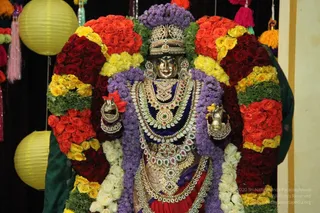
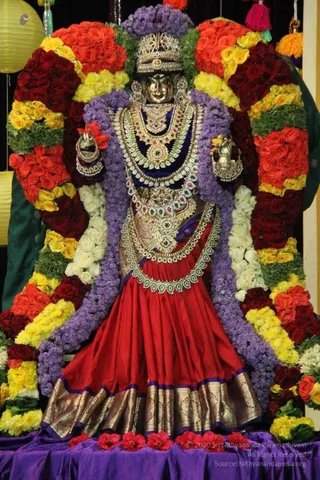
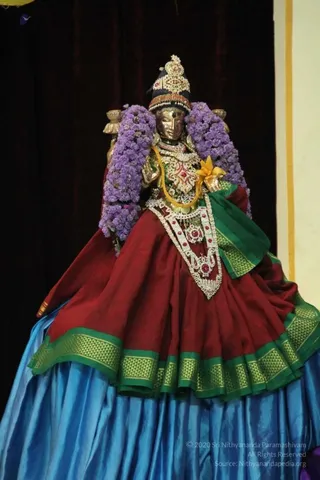
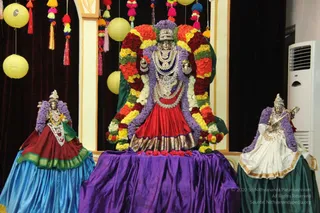
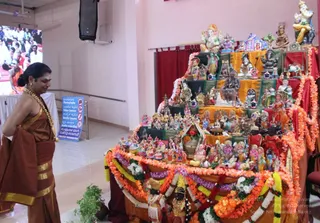
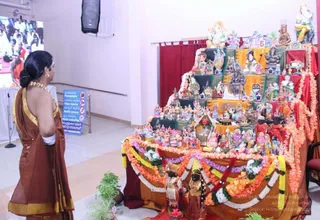
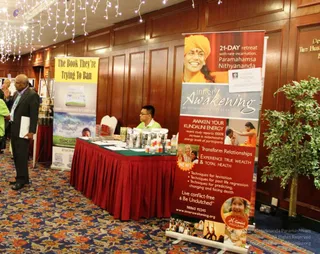
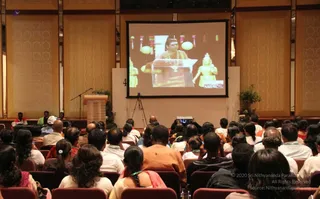
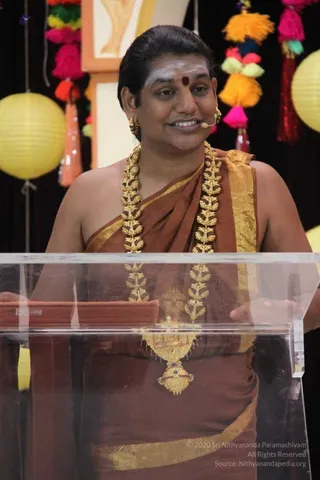
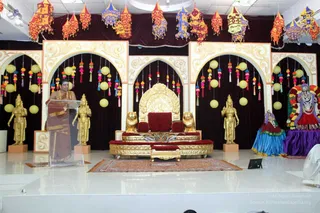
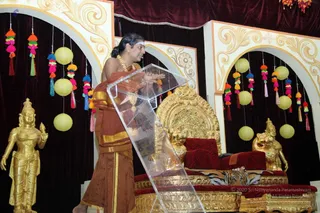
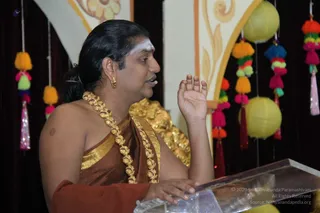
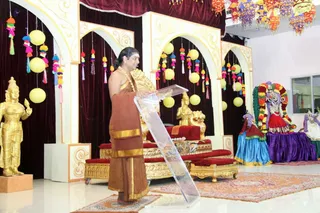
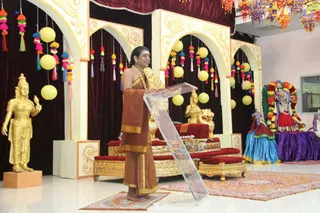
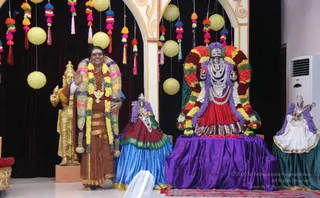
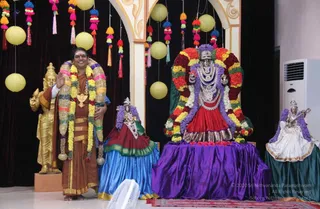
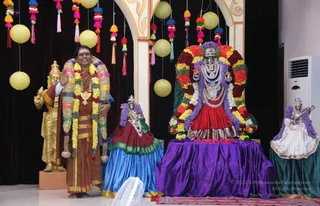
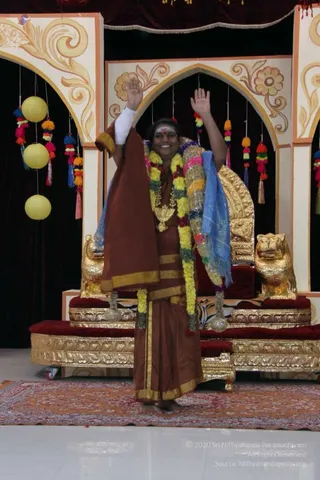
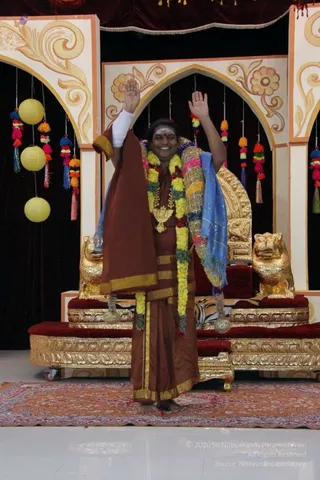
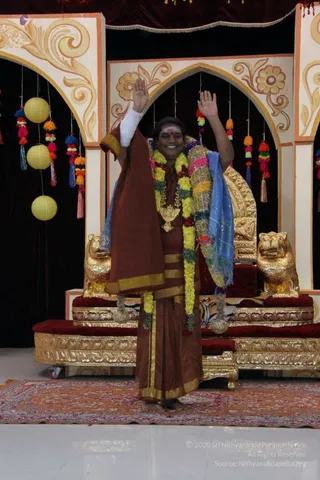
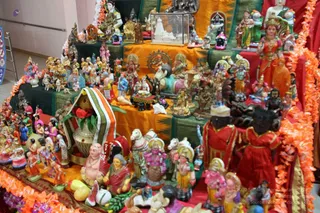
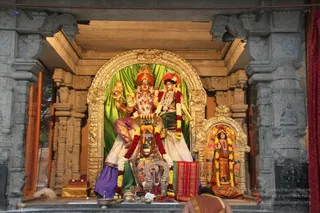
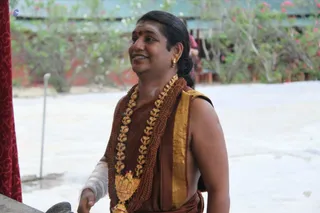
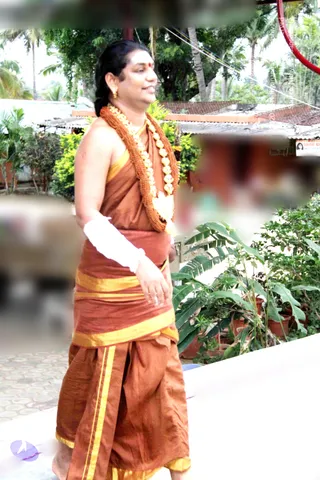
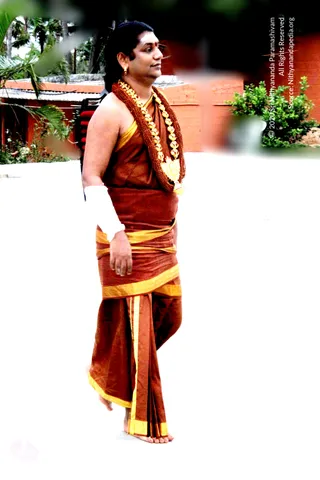
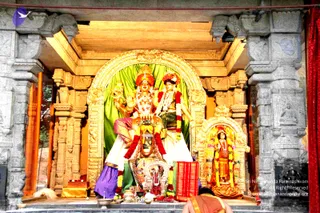
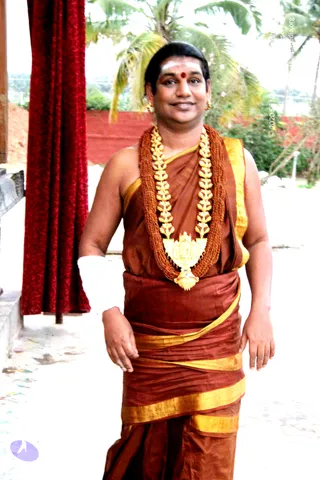
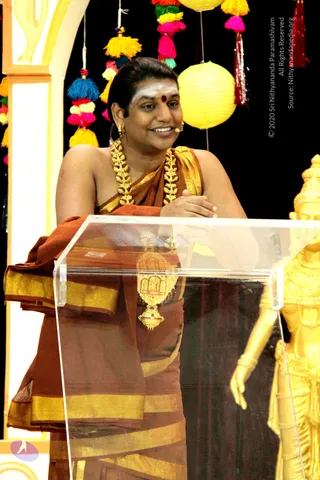
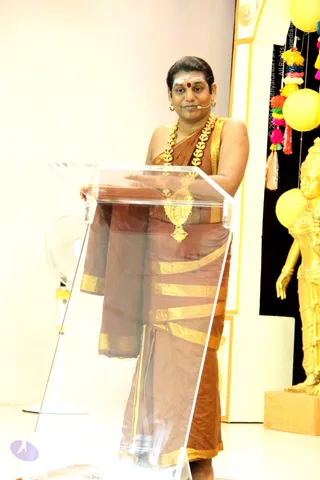
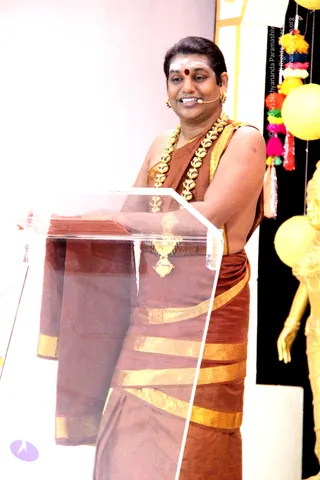
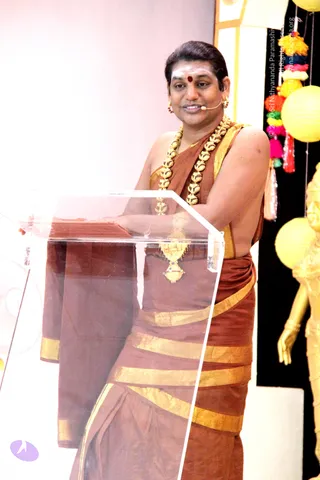
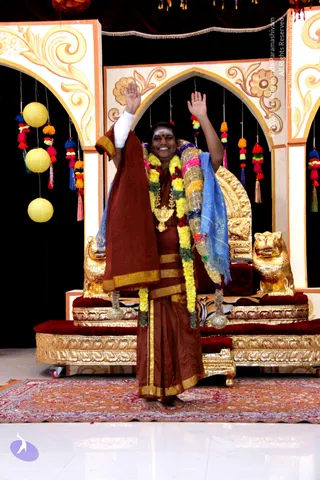
A photograph of a richly adorned deity murti seated on a golden cobra-hooded base, with a gold five-hooded serpent canopy overhead. The central figure wears a tall jewelled crown, heavy silver-white diamond-like necklaces, an emerald pendant, blue velvet sleeves, a magenta blouse and a gold-bordered pink silk dhoti, and holds a silver ceremonial mace. Two smaller attendant figures flank it, wearing green silk garments with gold borders, jewelled necklaces and crowns, and draped in yellow and red marigold and rose garlands. Behind the murti stand two visible devotees, one a woman in the left background, with flowers arranged around the base.A large dark bronze statue of a standing male figure, shown from the front with arms raised and holding long wooden rods in each hand, feet resting on a flat base. The figure has a fierce open-mouthed face and muscular torso. It sits in a workshop or storage area with a striped cloth on a table, a blue bucket behind, and a concrete block wall. Another statue appears partially at the right edge. The statue is a physical object, not a person, so no physical people are present. a person is not depicted as a recognizable candidate.A person in a rust-red and gold-bordered sari stands at a clear acrylic lectern on a stage, speaking with a smile. A short dark-haired figure with a red bindi and gold necklaces. Flanking the lectern are two gold-painted standing figures of deity murti with crowns. Behind is a dark maroon velvet backdrop with arched cream panels, hanging pompom tassels in pink, orange and blue, and round yellow paper lanterns. To the right stands a gold lion-armrest throne with a red cushion and a tiger-skin covering.

October 05 2013

Original wiki page
Contents

Title:

Why Vegetarianism-by the Supreme Pontiff of Hinduism HDH Bhagavan Sri Nithyananda Paramashivam.

Description:

In today’s morning Satsang, Paramahamsa Nithyananda discusses health facts supporting the necessity for a vegetarian lifestyle. He outlines how and why eating non-vegetarian food is not only unhealthy for our body but also our memory, bioenergy, thoughts, emotions, and even the health of our unborn children. Studies show that meat based diets result in more depression, fear, and agitation causing more crime and unrest in society. Eat vegetarian and keep your body pure and your life exciting and joyful!

Link to Video:

VideoAudio

Transcript:

Nithyanandeshwara Samaarambhaam Nithyanandeshwari Madhyamaam | Asmadaachaarya Paryanthaam Vande Guru Paramparaam ||

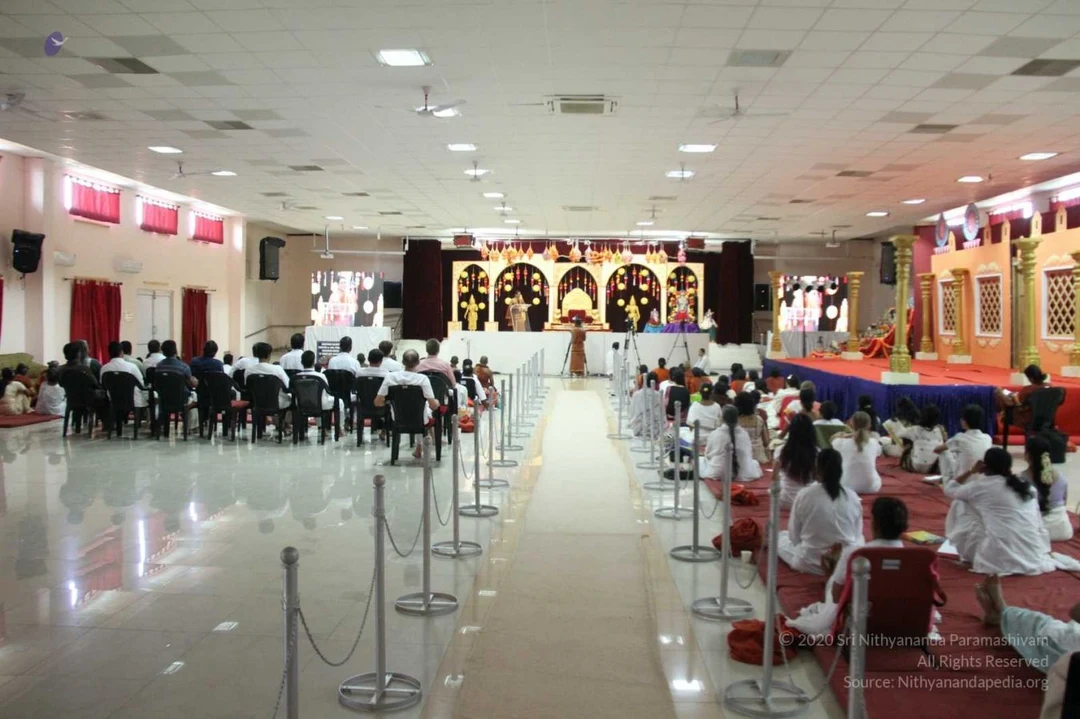
I welcome all the participants of the International Vegetarian Union, Asian Vegetarian Union and Malaysian Vegetarian Society, gathered in Putra World Trade Center, Kuala Lumpur.

I welcome all of you with my love and respects!

I welcome all the important personalities gathered in the Conference: Chairman of the International Vegetarian Union: Marly Winckler, President of the Asian Vegetarian Union: Professor Duo Li, Chairman of the Malaysian Vegetarian Society: Dr. P. Vaidyalingam, Secretary of the Malaysian Vegetarian Society: Mr. Krishna, Treasurer of the Malaysian Vegetarian Society: Mr. Rajkumar Seth, Master Lim Boon Tiam from the Federation of I-Kuan Tao, Association Malaysia, Datto Vaidyalingam: Social Activist, and all other delegates from all over the world, And our devotees, disciples who are sitting with us for the Nithya Satsang.

I welcome all of you with my love and respects!

I am happy to be with you all on the occasion of the 41st International Vegetarian Union, World Veg Fest and the 6th Asian Vegetarian Congress at Kuala Lumpur celebrating the 108th year of the Vegetarian Union!

I will try to present a few facts and truths in front of you. Today’s subject is “AWAKENING THE POTENTIAL BIO-ENERGY, YOUR KUNDALINI ENERGY”.

In Sanskrit we have the word “Kundalini”. The equivalent English word can be, “Awakening the inner potential energy, potential bio-energy”. Through the diet, awakening your potential energy! We need to look into a few truths. Please understand, I am not going to speak about all the benefits of a vegetarian lifestyle, because all of you know enough, and I can give tons and tons of material, the solid researches done by great universities published in many medical journals. But, now I am going to address a very important need for human-beings for their physical, psychological, social fulfillment – awakening their potential energy; the inner potential energy, potential bio-energy; when this energy is awakened, the possibilities which open up for you, and how this can be awakened through the vegetarian diet, sattvic diet.

All of us know the health benefits of vegetarian food. I am not going to get into that now. I am really going to look into what is “inner potential energy”, “bio-energy”.

The first important fact I wanted to present to all of you is: “YOU HAVE MORE POSSIBILITY THAN YOU ARE”! This is the beginning of life. This truth – you have more possibility than you are – is the beginning of life in any philosophy, any way of living, any way of thinking, any way of living, any system of thinking, or any religious thinking tradition. You have more possibility than what you are now. That “more possibility” is what we call bio-energy, inner potential energy.

In Sanskrit, we have the word “Kundalini”. You can see in your own life, when your power of feeling,your power of emotions expressed along with your power of words and power of thinking, the energy you express will be totally different.

I will give you this example. When you utter some words, if your feeling is not associated with it, you know very clearly what kind of impact you create with that word inside you and outside you. Even while you are thinking, if your feeling is not associated with it, what kind of impact that thinking does inside you and outside you! Feeling infuses energy into your thinking and words. There is something in you which infuses energy into your feeling. That is what we call “Kundalini”, “bio-energy”, “bio-memory”,“Inner potential energy”! All these different words are used, but it explains, expresses this one concept – The power which resides in you and gives power to your feeling. All of you can understand how your power gives life to you. You all know, if your feeling is associated with a certain word, how that word becomes alive for you, if your feeling is associated with your thinking, how that thinking becomes alive for you; but, unfortunately, we do not know how our feeling gets empowered.

The energy which empowers your feeling is “inner potential energy”, the “bio-energy”. Now I wanted you to understand how the various diets impact that inner potential energy.

The first truth I wanted to present in front of all of you is: “YOU BECOME WHAT YOU EAT! ANYTHING YOU EAT, THAT BECOMES YOU!”

One part of what you eat becomes your bone, muscle, flesh, blood. One part of what you eat becomes your words. One part of what you eat becomes your thinking. One part of what you eat becomes your feeling. One part of what you eat becomes your being!

So, the first truth I presented is: What is inner potential energy, Kundalini Shakti, what is bio-energy or bio-memory.

The second truth I am presenting in front of all of you; a very important truth, is: YOU BECOME WHAT YOU EAT!

Now, with these two understandings, look at your life. What you are eating, how it is impacting your thinking, feeling, words and finally, actions. Last but not the least, you need to understand that there is no such thing as inanimate in the universe! Whether it is a human-being or a stone in the street, the variation is only in the degree of life, not the existence of life. Please understand, the variation is only in the degree of life, not the existence of life. Whether it is a human body or the stone in the street, is only the degree of life. So, we need to understand, when we kill an animal for our food and consume that as food, what are all the effects happening to our inner potential energy, and if we eat vegetarian sattvic diet – the word “sattvic” means, “pure”; I’ll define that word later – if we eat the pure diet what happens to our inner potential energy.

First, I‘ll try to explain the power, how the non-vegetarian food, the body of any animal, what happens when it is killed, and what happens when you eat that flesh. Please listen.

Our flesh has the capacity to store the memory. All our memories are stored, recorded in our flesh. You can call it by different names. You can call it as muscle, bone-marrow, bone; different names you can give. But it is stored in our body. In that you can give deeper inner names: brain, heart, liver and kidney – different names of the organs. But the ultimate truth I wanted to present to all of you is, memories get stored in our flesh, in our body. That is why certain memories, when they are rekindled in you, certain organs in your body get immediately affected. I can give you an example. If you become upset, start feeling depressed, immediately your stomach will be attacked, you will have stomach upset, because the depression attacks the navel center. In Sanskrit we have a word – “Manipuraka Chakra”, “the energy center”, situated in the navel. So, each emotion, each memory, heals or kills, makes or breaks certain part of your body. Your emotions and your body are very closely connected, because your memories are recorded in your body.

When an animal is killed, the animal is not going to be blessing all of us and the world when it is dying. Naturally, it is going to express so much of hatred, fear, anger, unfulfilled desire for life, a deep incompletion. When it is dying, it is going to release such powerful incompletions into its muscle memory, into its bio-memory, into its body. Please understand, it carries a subtle but very powerful,poisonous toxins. Because, every time you are affected, attacked by the emotions like fear, anger,anxiety, powerlessness, incompletion, you know the amount of adrenalin happens in your life! The amount of toxic chemicals which spreads in your body. When you are raging with anger, you know what happens to your system. When you are agitated, you know what happens to your system. Please understand, the same thing exactly happens to the animal which is getting killed for various reasons. So, the animal is not going to die in the space of Completion, blessing all of us and the whole world. NO! It is going to die leaving so much of incompletion in its body. Please understand, when you eat that body, what are you eating? Poisonous, toxic chemicals, the flesh filled with so much of negative ideas, flesh filled with so much of negative memories, so much of incompletions! So the basic truth is, when you eat food filled with so much of incomplete bio-memory, incomplete bio-energy, incomplete memories, what is going to happen to our muscle-memory and bio-memory, to our body?

Please understand, your muscle-memory or bio-memory is going to be created only out of what you eat. The subtlest part of your food becomes your muscle-memory, the subtlest part of your food becomes your bio-memory. If the subtlest part of your food is associated with so much of fear, anxiety, unfulfilled desire for life, and incompletion, then what kind of bio-memory, muscle-memory it is going to create in your body, you have to decide, you can visualize!

20:18

Sometime people ask me, ‘Then how come people who eat non-vegetarian seems to be leading a so called normal life?’ Who said? Who said they are leading normal life, please understand, look at the depression ratio. Look at the people suffering with the depression and the countries suffering with highest crime rates. You can directly connect both to their diet. There are tons and tons of researches, research papers available in the Internet, you can study. Tons and tons of social surveys available in the net, you can study. You need to understand. See the non-vegetarian food based society and the vegetarian food based society; see the crime rate and their depression. Then you will understand the question itself is wrong. Please understand, vegetarian, all the surveys prove vegetarians are happier than meat eaters and all the surveys prove vegetarians are more non-violent in their thinking and feeling and in their actions than meat eaters. Study in nutritional journal finds vegetarians have lower incidence of depression, anxiety and other mood problems than their meat eating neighbours. So you need to know, you become what you eat.

In Sanskrit we have beautiful verse by one of the great saints, sage, Adi Shankara.“Purifying your food purifies your memory.When your memory is purified, your consciousness is purified.When the consciousness is purified,all the blessings of life is showered on you.”

Please listen, you become what you eat. Based on what you eat, your body is created, your bio-memory is created, your bio-energy is created. So, if you add continuously food filled with incompletion, fear, depression, anxiety, then what are you going to experience constantly inside you? Only that. So, when you see a non-veg food in your plate, be very clear, you are taking plateful of depression, plateful of fear, plateful of anxiety, plateful of chemicals and toxins released during the fear when the animal is being terrorized, and plateful of incompletions. Look with this understanding and then decide whether you should eat this or that.

Second line, I wanted to go to the next truth. Next idea I wanted to present in front of all of you; the pure food, how the vegetarian food is going to help you awaken your bio-memory.

People ask me, ‘How can you say vegetarian food is good? How can you say the vegetarian food is right?’

I face hundreds of questions all over the world about this food because food and our emotions are very closely associated that is why, all over the world, in all cultures, whenever you want to show somebody tell somebody you love them , you share food with them. Sharing food is a very important show of love among the human beings. I can say, even among animals. Even among animals, they share food only when they feel the friendliness, when they wanted to show the friendliness.

I’ll talk about this purity of food and how it directly awakens your bio-memory and bio energy and ultimately the Kundalini Shakti, the inner potential energy.

First things you need to know, your body is naturally designed for vegetarian food. Your body is naturally designed for vegetarian food and the inner mechanisms like your feeling, thinking, words, everything is designed to function with vegetarian food. It is like you have a generator which can handle only 220 Volt, current, or you have a UPS which can handle only 220 Volt current, but you give 20,000 Volts current. What will happen? It will get fused. Same way, if the system is designed by the nature for vegetarian food and you go on dumping non-vegetarian food into it due to ignorance, you have to face the results.

Many people present arguments: ‘No, in the ancient times, human-beings were non-vegetarians.’

No, they were fruit-eaters. They were vegetarians, leaf eaters, fruit eaters. Only when they started killing animals to save themselves, to protect themselves, they started thinking disposing them is a very difficult job, eating them may be a better way of disposal. That is the way first human-beings started making their stomach a graveyard for animals. Understand, originally, we are not designed for meat eating. Basically, our body is designed for vegetarianism.

People ask me, ‘How can you say that?’

I can give you hundreds of reasons.

Look at the jaw movements. There is no vegetarian animal which has the side jaw movement. Please listen, sorry I wanted to correct the statement. All non-vegetarian animals will have only the vertical movement of the jaws, no side movements. All vegetarian animals only will have the side movements. So, human-beings naturally have the side movement of the jaws, the horizontal movements of the jaws. It means we are designed for vegetarian food. Unfortunately we have the freedom to do anything we want and we misuse and abuse the freedom. Vegetarian animals are better, because they do not have the freedom. It’s good in a way sometimes you don’t have the freedom to abuse your body. You can see all the animals, the vegetarian animals, they will have vertical and horizontal, both movements of the jaw but all non-vegetarian animals will have only the vertical movement of the jaw. All the non-vegetarian animals will have only the vertical movement. Vegetarian animals will have vertical and horizontal, both movements.

And the next point I wanted to present to all of you is the length of our intestines, the intestinal tract length and our bowels the way they are designed, it is for vegetarianism because the length is more than ten or twelve times of the body length. The alkaline saliva to pre-digest plant foods, the bowels with pockets for optimal nutrition absorption. All this, our teeth structure with flat molars, all are very clear indications nature has designed our body to be vegetarians, we are born to be vegetarians.

I tell you, if the majority population of countries decides, of society decides, of humanity decides to live with vegetarian food, the agitation human-beings experience, the depression human-beings experience, the fear human-beings experience will drastically drop and that will really help the peace and joy, prosperity of humanity.

Let me come back to the subject of awakening your bio-energy, Kundalini energy, through the proper diet, pure diet.

The food, if it is consumed without fear, anxiety, depression, bio-memories like non-vegetarian food. Please understand, the food without anxiety, fear, depression bio-memories, if they are consumed, the energy with which you think, the energy with which you utter words, the energy with which you act, energy with which you feel, everything will be aligned to the natural source of energy; it will be aligned to your nature which is your inner potential energy. Unfortunately the food with fear, depression, anxiety bio-memory, because of its popularity and availability became a mainstream lifestyle. I can say, this one of the greatest calamity happened to humanity. The non-vegetarian lifestyle is one of the greatest calamity that happened to humanity.

Because when you eat the pure food. Let me define “purity”. The food, in Sanskrit we have three words: Jaathi Dhosha, Nimittha Dhosha, Aashreya Dhosha. Mean a food getting impure “by its nature”, “by its muscle-memory”, and “by the persons handling it”.

Please understand, first by its nature: If it is obtained by stealing or killing, or depriving somebody, it is impure food because, if it is stolen food, even while you eat, you will have the anxiety to quickly grab it, finish it off before it gets snatched away from your hands. By the nature if it is stolen, robbed, after killing, it is impure. In the first level itself, I can say, non-vegetarian food is impure because we steal the flesh of an animal; we steal it after killing it. So it is murder and robbing.

Second, Nimittha Dhosha, the way the food comes to you: When it comes to you the non-vegetarian food comes with so much of anger, fear, depression bio-memories filled in it. So again it can never be near anywhere to the pure food.

Third, Aashreya Dhosha - the people who handle it, touch it. Surely, non-vegetarian food is going to be touched by people who kill the animal? The person who kills the animal is going to handle and make the food for you. Anything which is touched by a murderer is going to carry that energy, that aura, that bio memory in it. So, he adds little more poison as his contribution and understand the impurity, the amount of impurity the non-vegetarian food carries.

40:00

In turn the vegetarian food..

Let us look at vegetarian food. It is a natural part of your whole bio-energy. And, I tell you, I tell you from my experience with myself and my millions of followers and disciples all over the world, your mood swings, the way you decide things in your life, the way you feel about you, the way you feel about the world, everything changes when your diet becomes vegetarian. Because, with the vegetarian diet, the thinking becomes more subtle and settled, the agitation, aggression disappears. I have seen in my life, in my travels all over the world, meeting different cultures, civilization, people, from that I can say very clearly, and I can tell you from my experience, people who live as vegetarians, their bio-energy is very high, their bio-memory is very high. I can give you various deeper understandings about it.

Constantly, the emotions you cherish becomes the source of your bio-energy. Whatever is the source of your bio-energy impacts your thinking. Please understand, it is like a vicious circle. It is like one feeds to the other. If you are constantly agitated, having depression, that becomes your bio-energy. If depression and agitation become your bio-energy, naturally you tend to think towards more depression and more agitation. So, what you think becomes your bio-energy, what is your bio-energy forms the basis for your thinking. With this understanding, you can decide on your own whether vegetarian food leads you to more agitation, depression, or non-vegetarian food leads you to more agitation and depression. You can test on your own body. I tell you, testing it on yourself will be the best way to realize the power of vegetarian food. Testing it on your own is the best way to realize the power of pure food in your life. Never ever eat anything which can feel the emotions in your frequency. Please understand, plants don’t feel the suffering or pain or emotions in your level of frequency, because the degree of life in them is different. And your body is also naturally designed for eating vegetables, fruits and the vegetarian diet. So, you are going with your natural flow.

I can tell you, just the right food, the pure food, which is pure by its nature, by right persons handling it, and right way it is brought to you, this pure food alone is enough to kindle, awaken the natural energy you are carrying, what I call “Kundalini Shakthi” or “inner potential energy” or your “bio-energy”. In India we have a unique tradition. All human-beings who are seeking the higher life is expected to live a vegetarian lifestyle; but specifically, in particular months of a year, everyone is asked to be vegetarian. It is very surprising. Those few months exactly the whole country crime rate goes lower than the level it is in other months!

And when you take vegetarian food, you also awaken your bio-memory to be directly producing food and energy from space directly just like plants and trees. See, plants and trees carries a quality or intelligence. They produce their energy directly from the sun and ether, from air. They directly produce life-energy from the sun, air and earth and water. When you are regularly eating only vegetarian food consciously, your bio-memory, your bio-energy also can awaken the same quality. Please understand, if you can take a little support from the conscious source like meditation or a little yoga, you can see very clearly that possibility in your bio-memory is awakened!

I have seen in my own life, hundreds of yogis, my followers, disciples, start living without even having regular eating habit. They eat once in a while. When I say “once in a while”, may be once in a week. There are some who eat only once in a month; that also they take just a little juice or a little water; with that they are able to live. It is possible if you eat vegetarian food and awaken the same bio-memory, awaken the same bio-energy which plants carry. And many of them, through this lifestyle, have overcome blood-pressure, cholesterol, so many health benefits.

See, ultimately you cannot convince somebody about the benefits of swimming till he jumps into the water! Ultimately, I cannot convince you about the right effects of eating vegetarian food just by my words. You have to start eating and living; that will help you to understand.

I will present just a few of the surveys and scientific studies we have done in my various researches and my journey of teaching people, educating people. We have a program helping people to go beyond the need for food, awakening their bio-memory and bio-energy. We call it “Nirahara Samyama” in Sanskrit – living beyond food, breaking your food patterns, which has active visualization, meditation, breathing process to awaken your consciousness. Through this method which I have initiated thousands worldwide, we have proved scientifically that without food…… See, in the beginning, we request them to have vegetarian diet. Then, after that, we reduce even that very systematically. In this research, we have seen very stable weight loss, and in 90% of the people, cholesterol drastically reduced to a healthy level, increase in Vitamin B1, B2 and B12 levels in 92% of the participants, increase in Vitamin D in 100% participants, 70% gain in hemoglobin level, 85% decrease in urea level! Please understand, whatever I am speaking is the data from the scientific studies and surveys we have conducted. This medical miracles like recovery from serious life-threatening illnesses like cardiovascular disease, diabetes, high cholesterol, conic fatigue, low thyroid and depression; all this is recorded medically when you start practicing this vegetarian lifestyle and moving to the next step – going even beyond food.

Now I will not talk much about going beyond food. I will stop myself, restrict myself to this vegetarian diet. With the vegetarian diet, not only you don’t get wrong bio-memories like fear, depression, anxiety which you get from meat eating, you get the right bio-memory through vegetarian diet. The right bio-memory you get from vegetarian diet is the ability to produce energy directly from space and air, and just through water!

I really, sincerely request all of you to experiment with this vegetarian lifestyle. Starting today, just for a few months, try for next three months, eating only vegetarian food, and see the difference in the way you will feel in life. The way you feel about you, the way you think about you, the way words come out of you, and the words you utter towards you, everything will change drastically. The difference in your physical health, in your mental health, your relationships and even in your wealth and career, you need to know, you need to understand! Life surely becomes much, much better. Especially the way you feel about you becomes totally different with vegetarian lifestyle.

I also wanted to explain these few words for your deeper understanding:

· “Muscle-memory” means, your day-to-day routine patterns like morning you wake up, you take bath, you eat.

· Second, “Bio-memory” means, your pattern of thinking and feeling, your mood swings, how you respond when you face a conflict in life, how you react for a contradictions, how you react for a difficult situations. That is your “Bio-memory”.

I tell you, if you understand this truth – “You become what you eat, what you eat becomes you” – you can see very clearly how the non-vegetarian food, the meat, comes with so much of depression, anxiety, anger, mood swings, which is going to become simply part of your bio-memory and muscle-memory, and how the vegetarian food comes to you with higher intelligences like producing energy directly from ether, air and space, and going to become part of you. You can see experientially by living it.

People ask me sometimes many questions: ‘Swamiji, if we eat meat, are we passing bio-memories of pain and fear to our future generation also?’

‘Yes, you are passing it to your whole generation, because the meat, continuously eating it, it is going to become part of your bio-memory; the anxiety, fear, suffering, torture which the animal experienced while it was killed will become part of your bio-memory, will become part of you, and that bio-memory, that bio-energy which will become part of you will naturally be transferred, the pain and the fear and the anxiety and insecurity.

The subtle grooves which develop in your brain through vegetarian food will give you really the power to think without getting tired, the power to feel without getting tired, the power to utter the right words at the right time in the right space.

So, the essence of this one-hour presentation in front of all of you is:

Vegetarian food by its very nature, the way it comes to you, the way you consume it, awakens your bio-energy, bio-intelligence, bio-memory, and keeps your muscle-memory pure, keeps you more healthy, more alive, more inspired, more intelligent, more excited, more living.

Let you all achieve, experience, live, express, radiate, share and explore in eternal bliss, Nithyananda! Thank you!

Photos

Paduka Puja
Devi Navratri Alankar

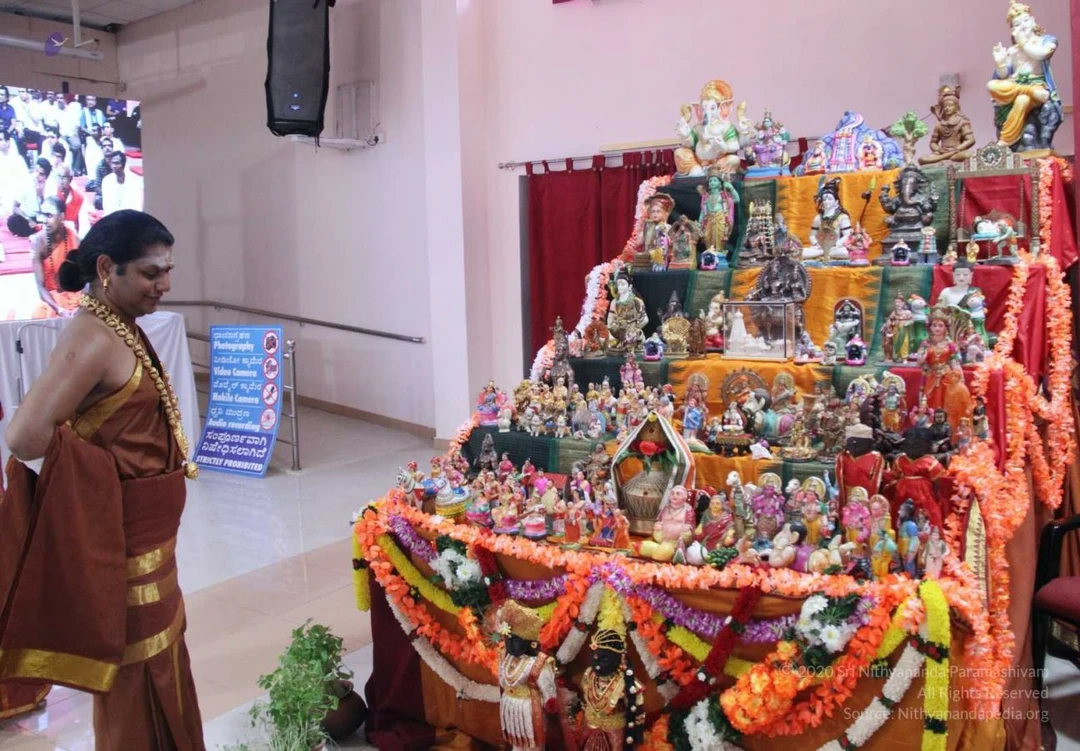
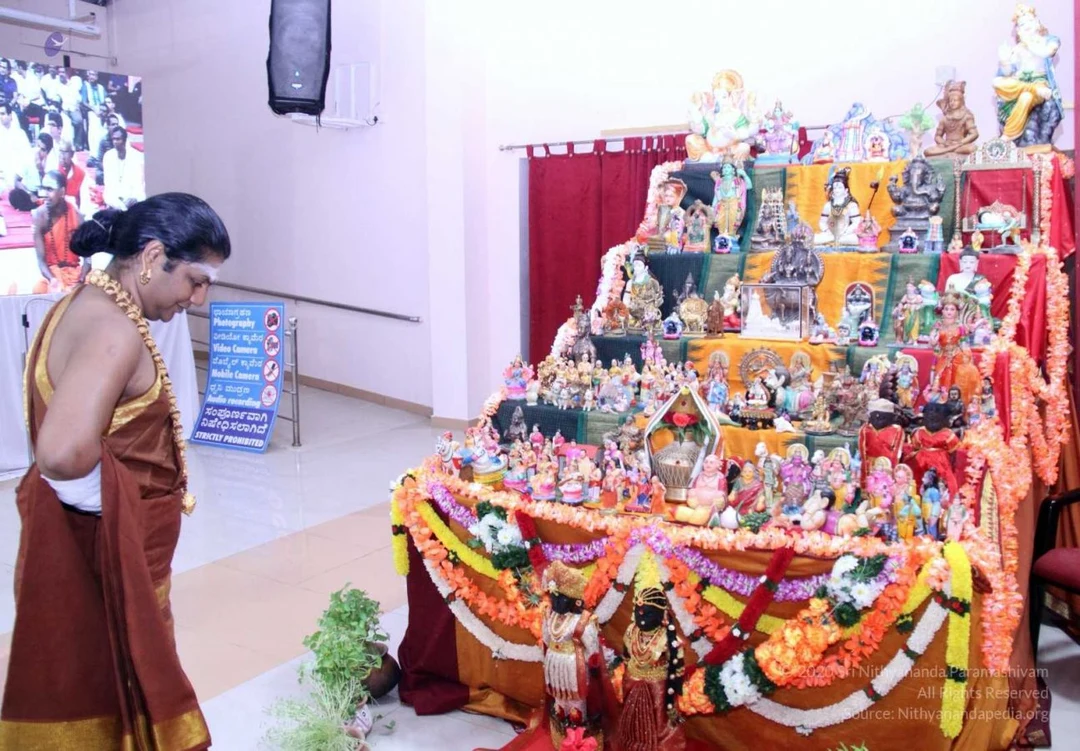
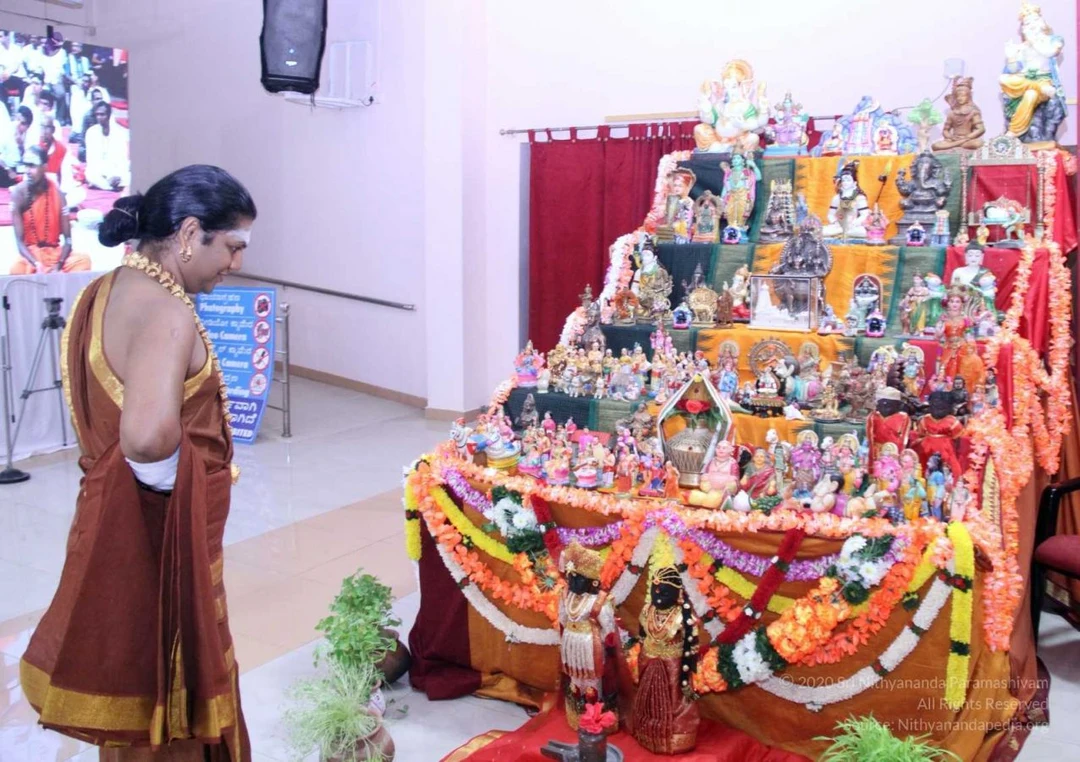
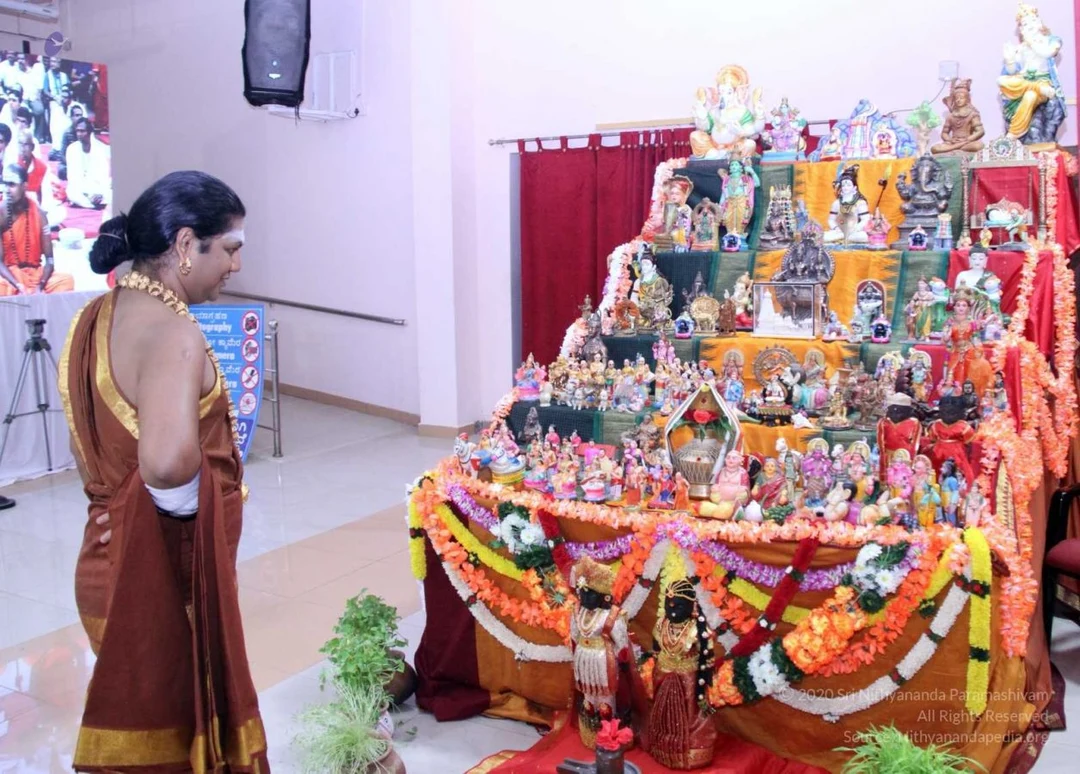
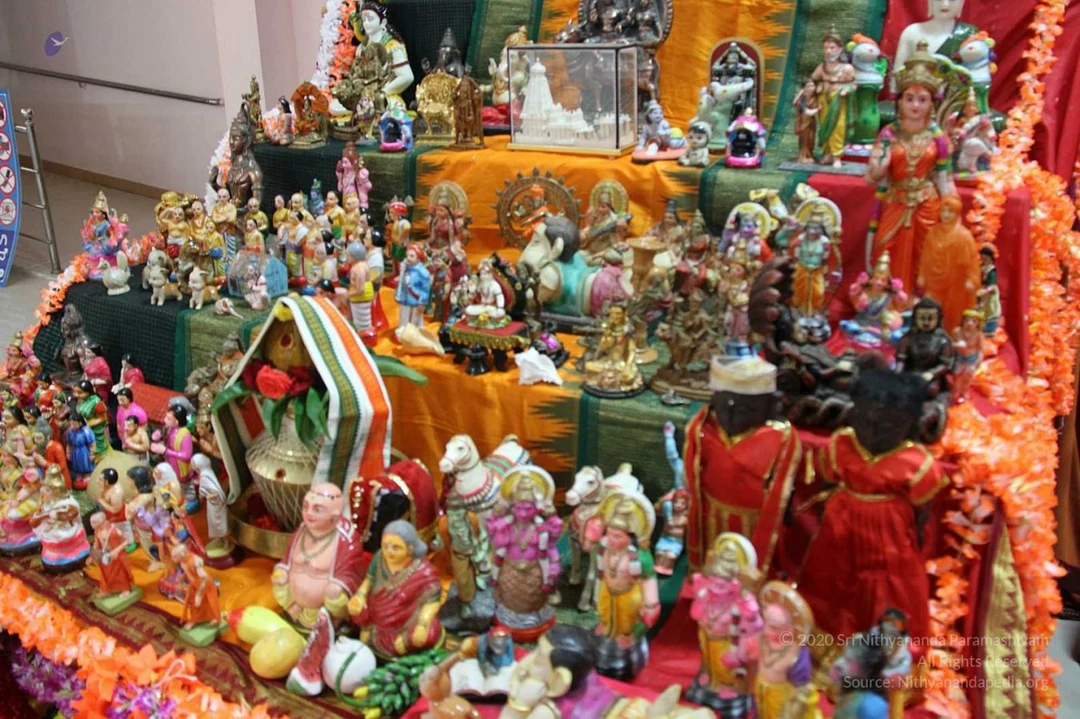
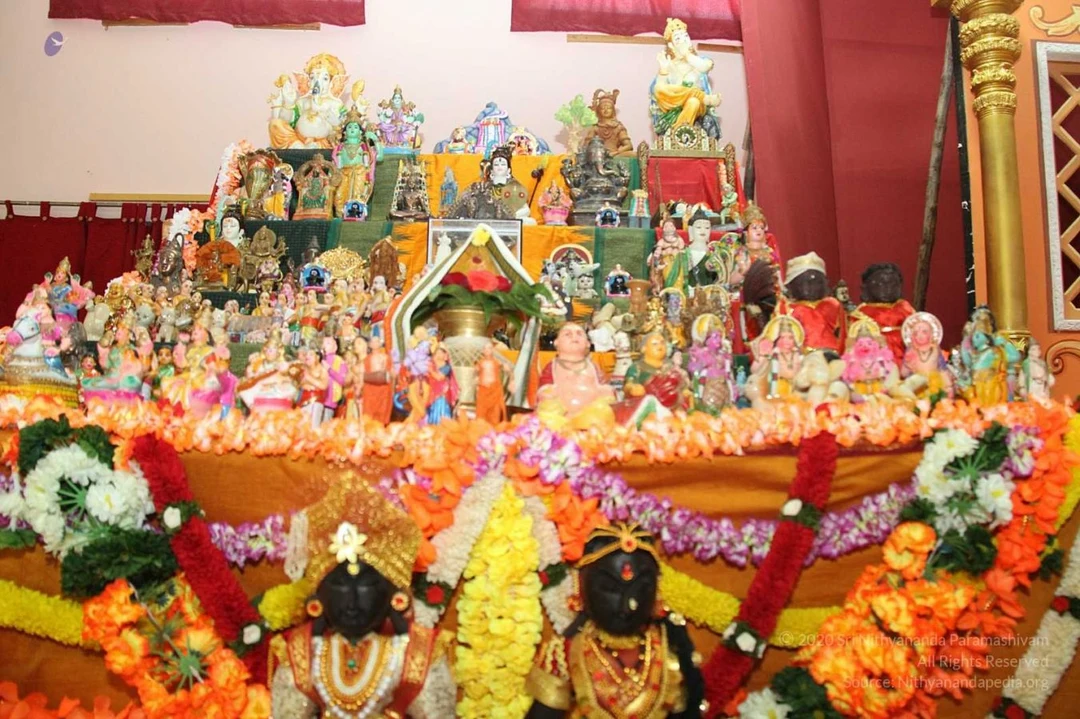
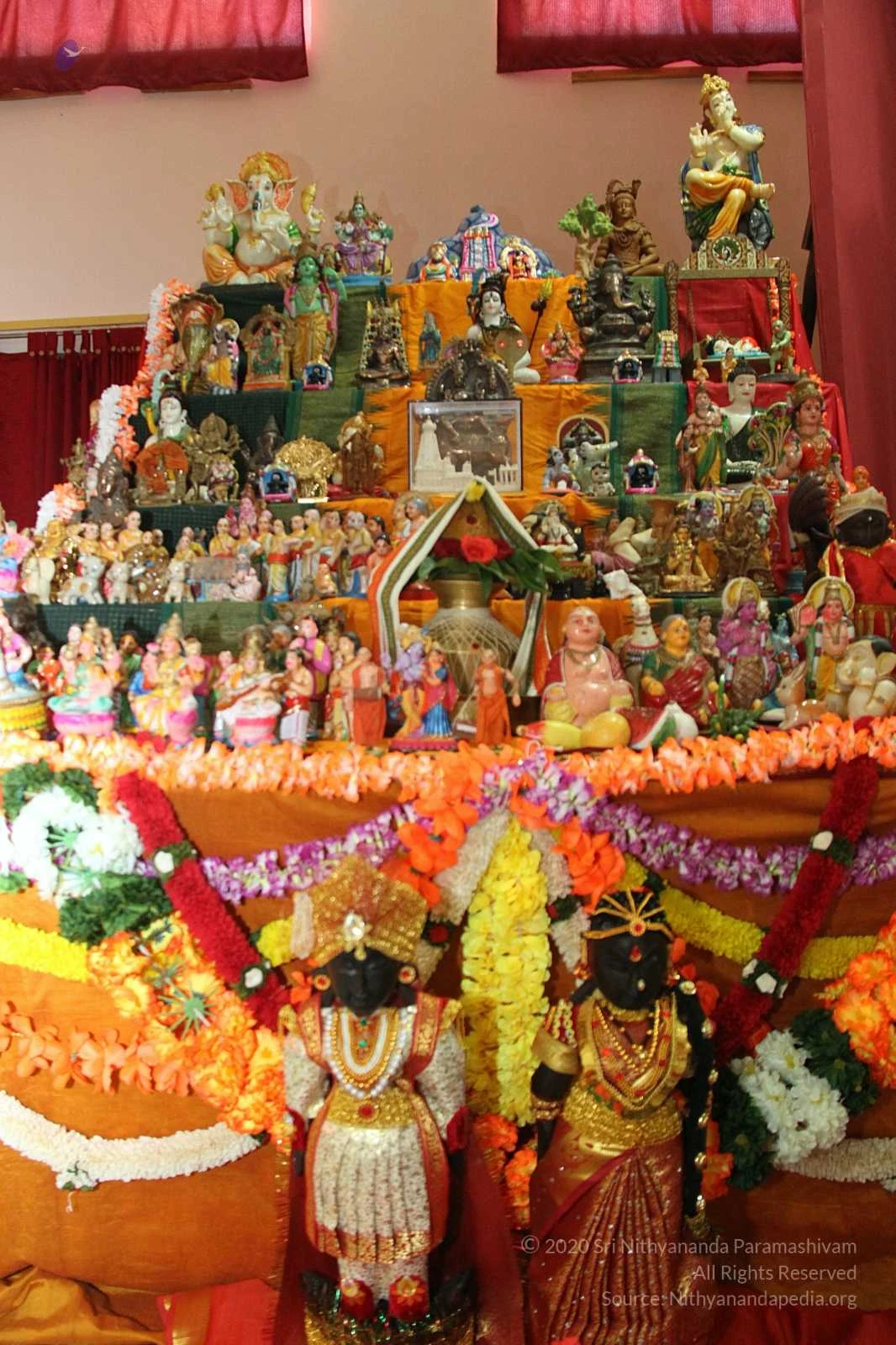
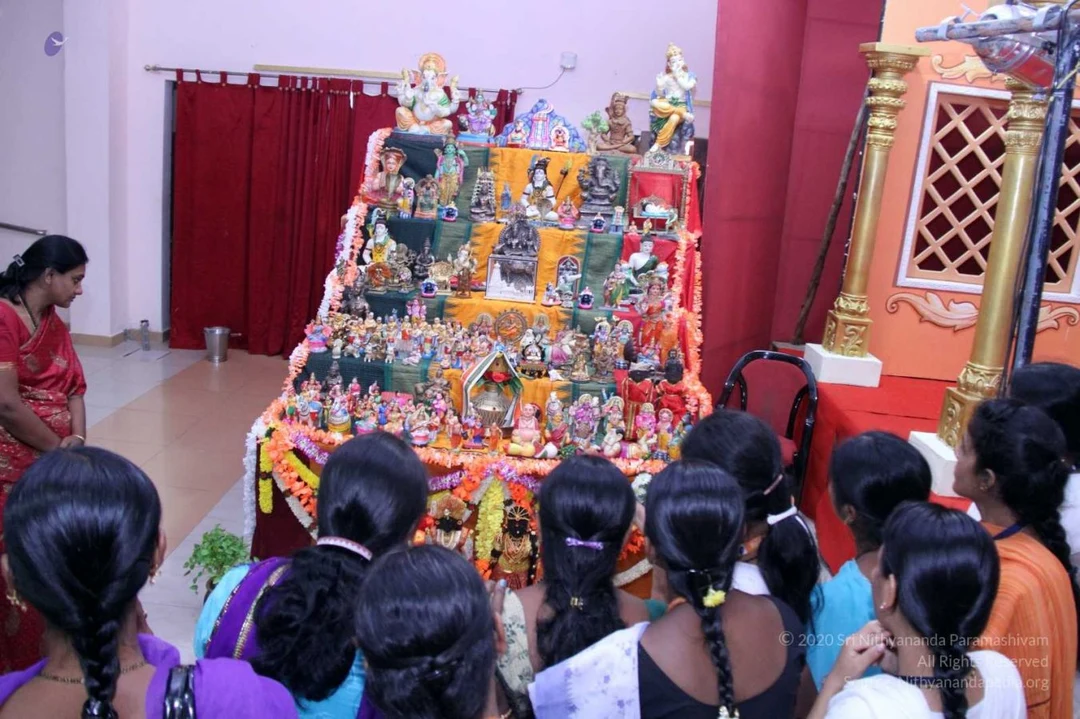
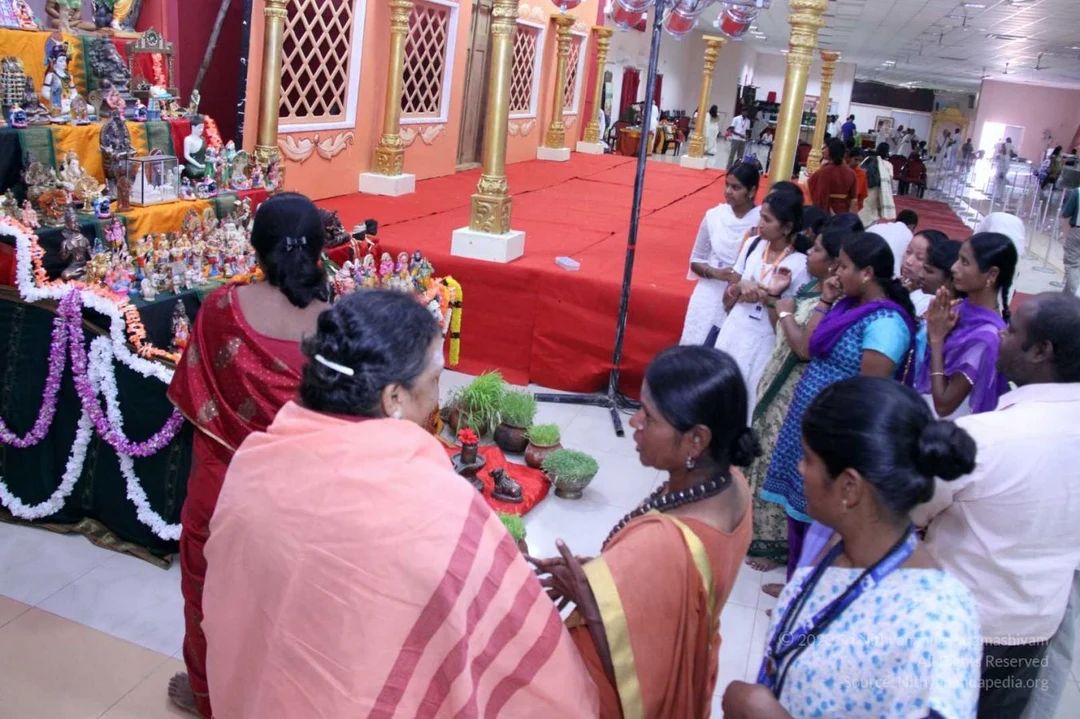
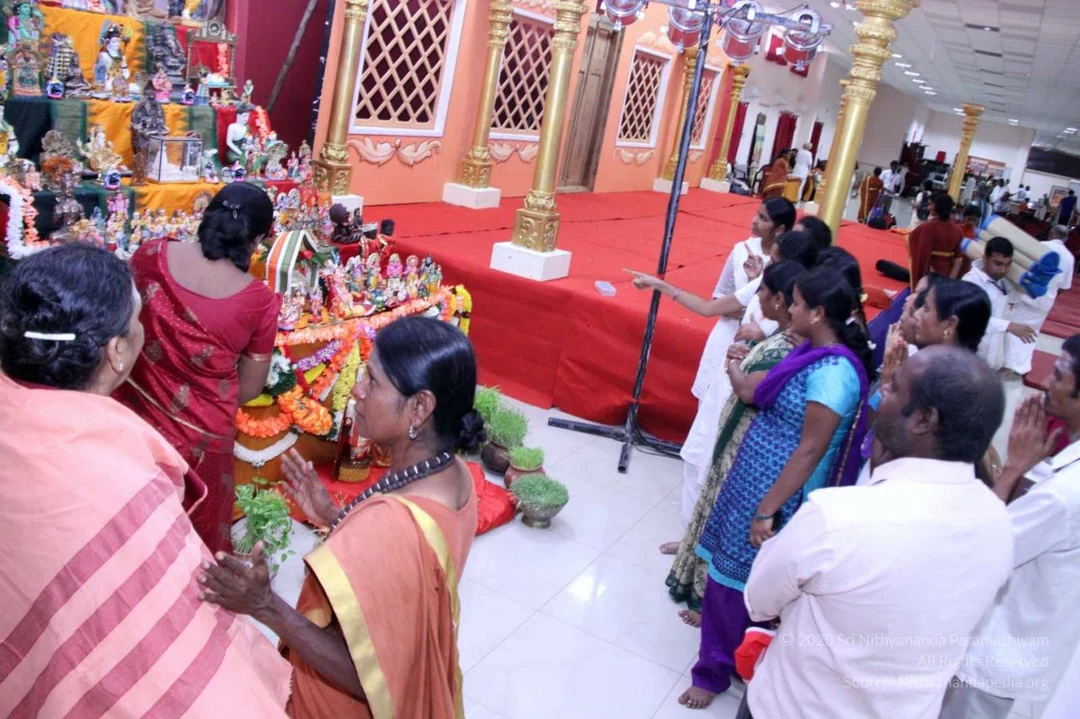
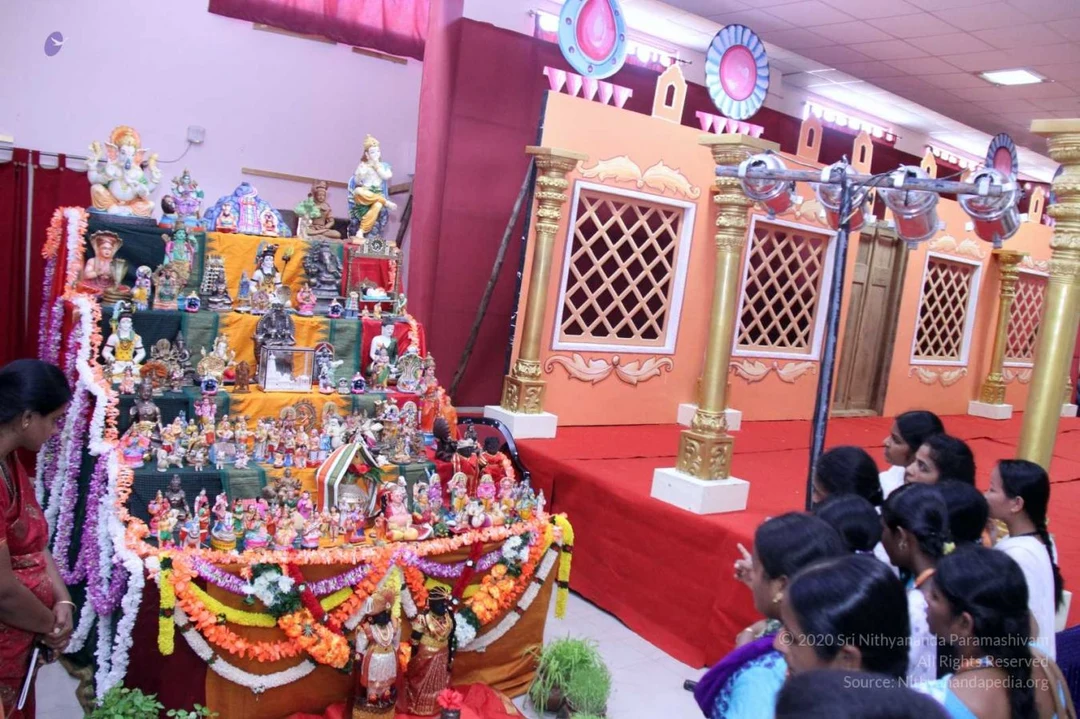
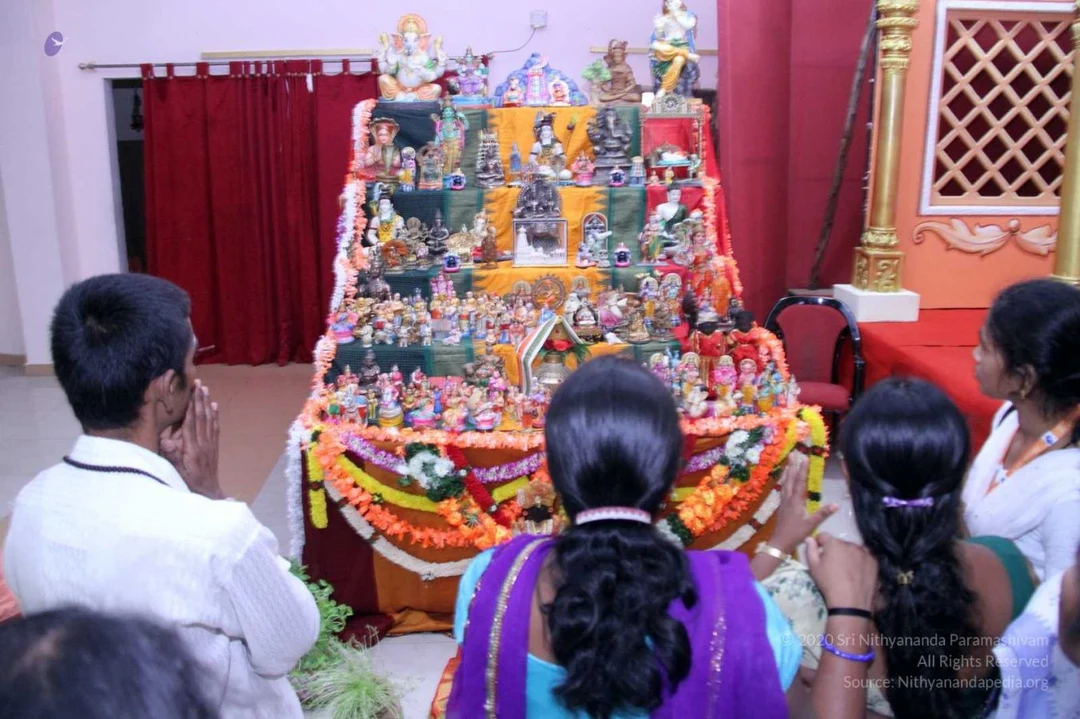
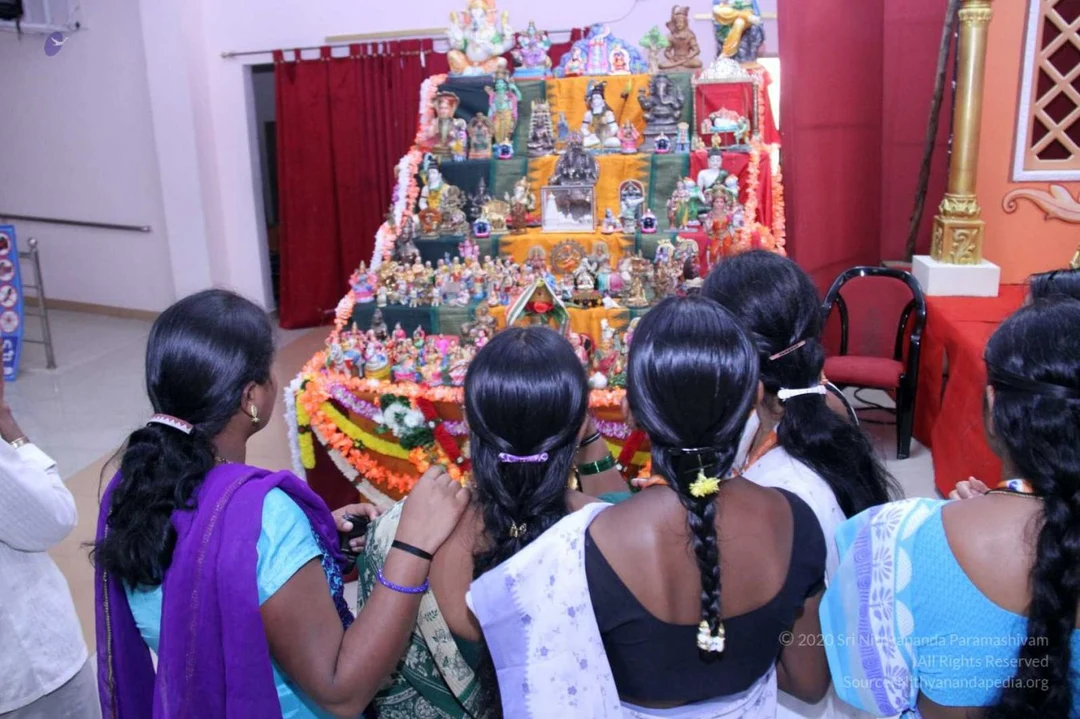
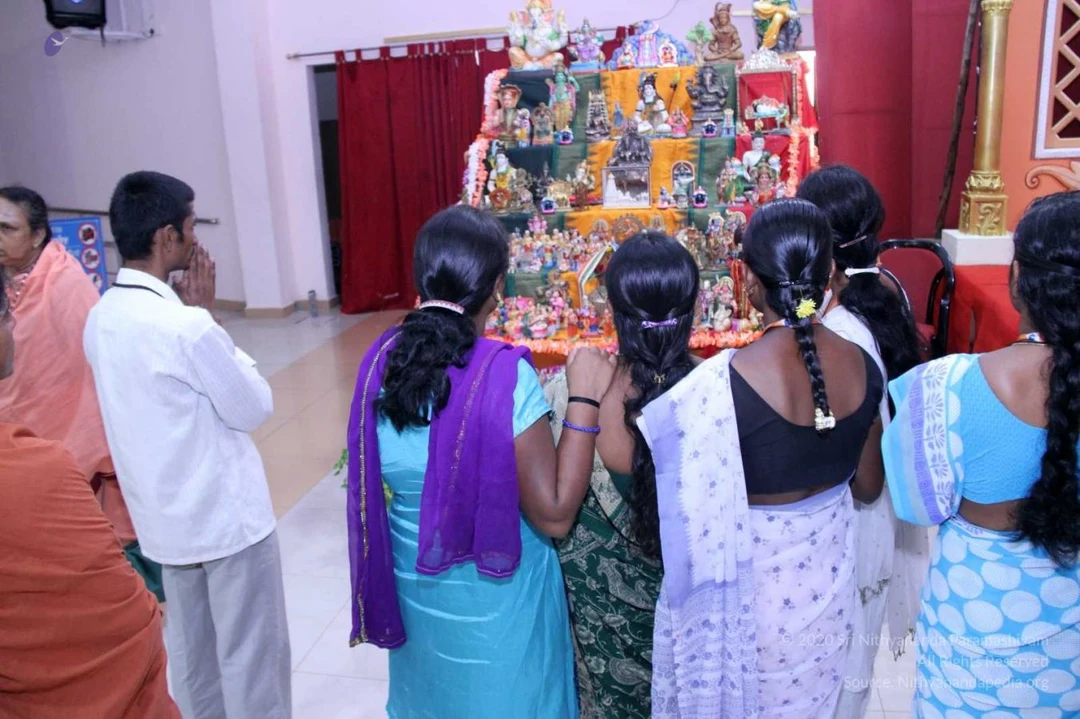
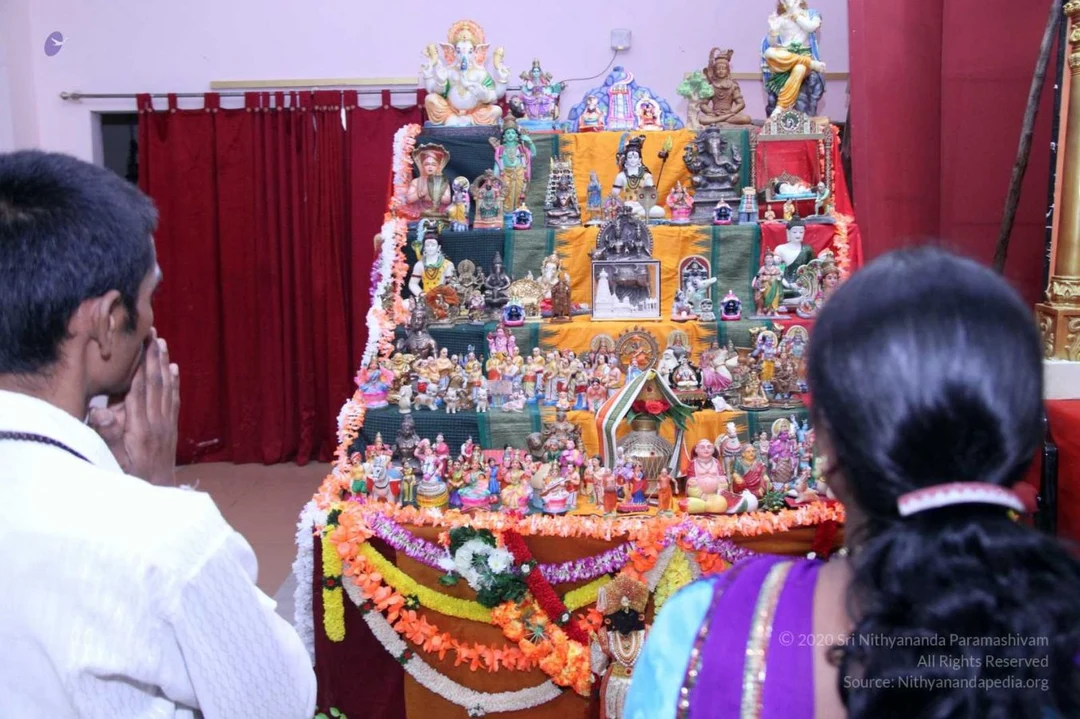
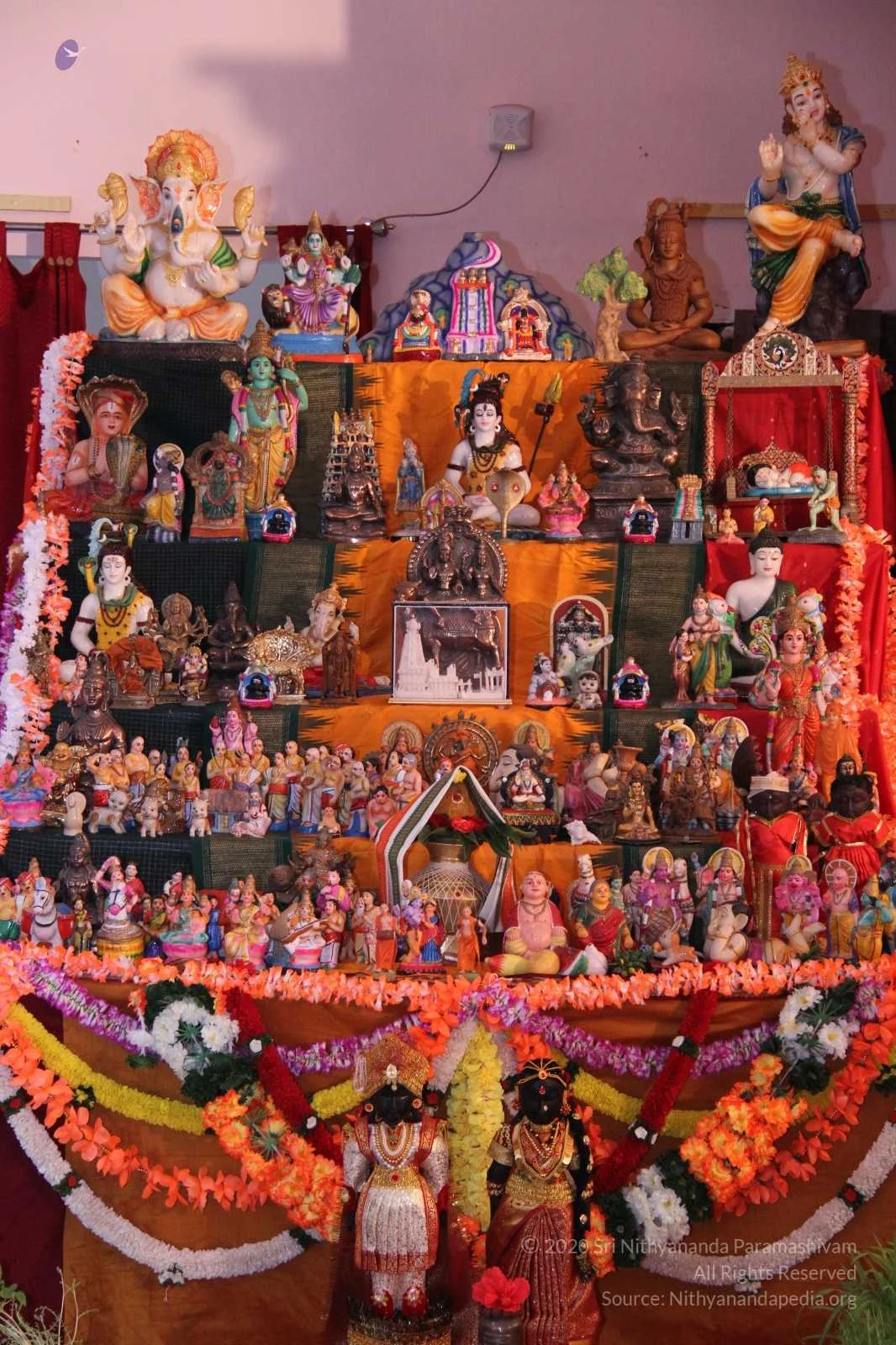
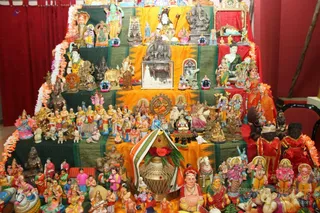
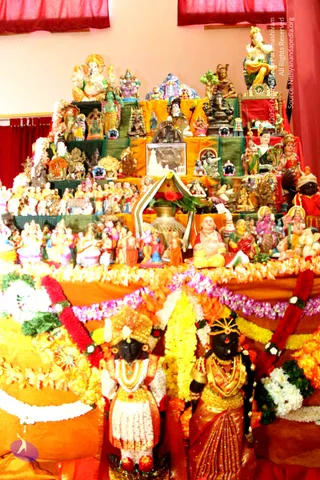
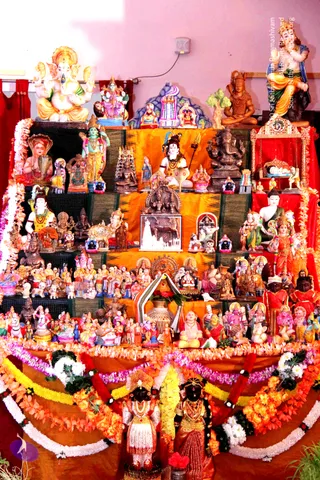
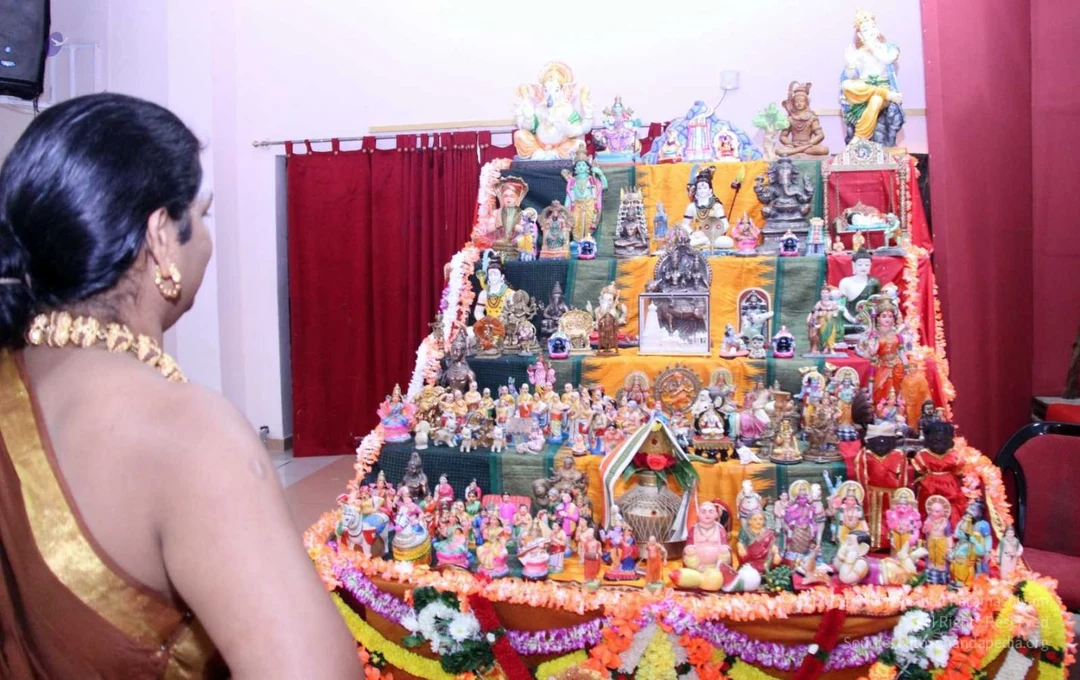
Swamiji with the Golu
Malaysia Veg Fest

Nithya Satsang

Sarva Darshan

Swamiji with the Deities

Final Blessings

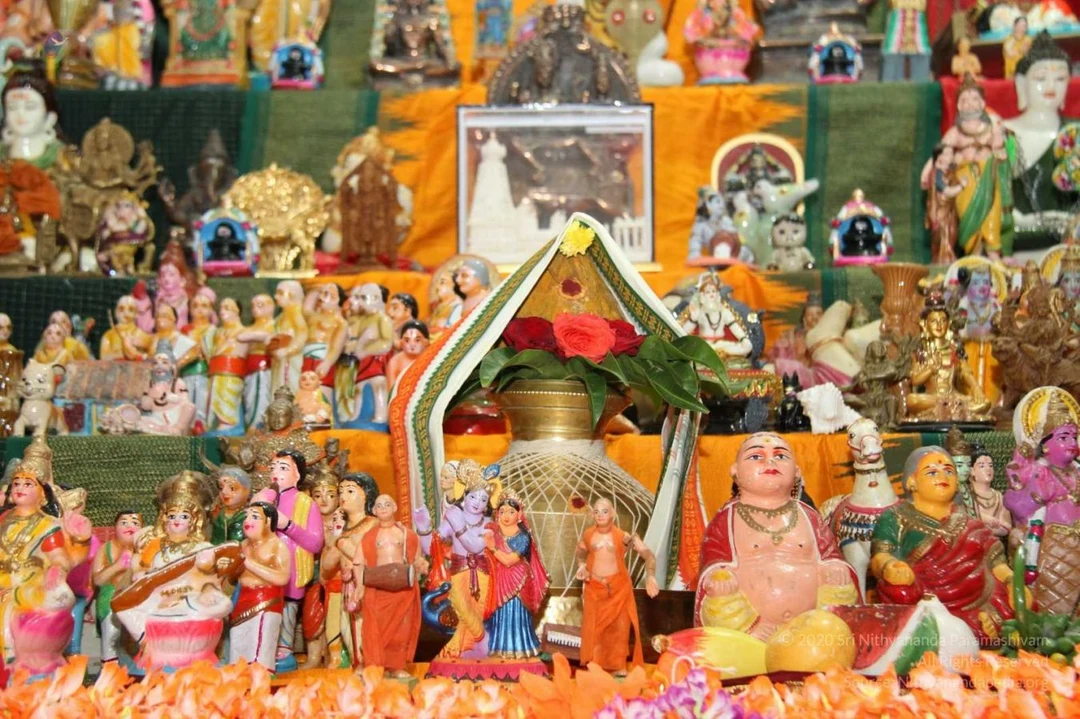
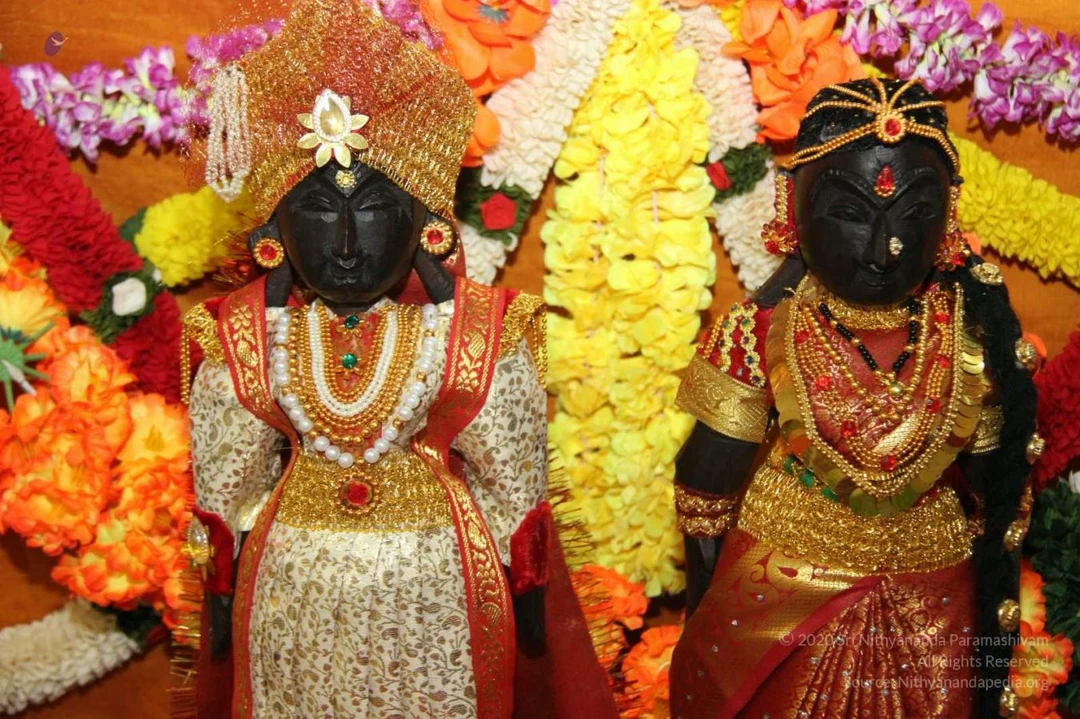
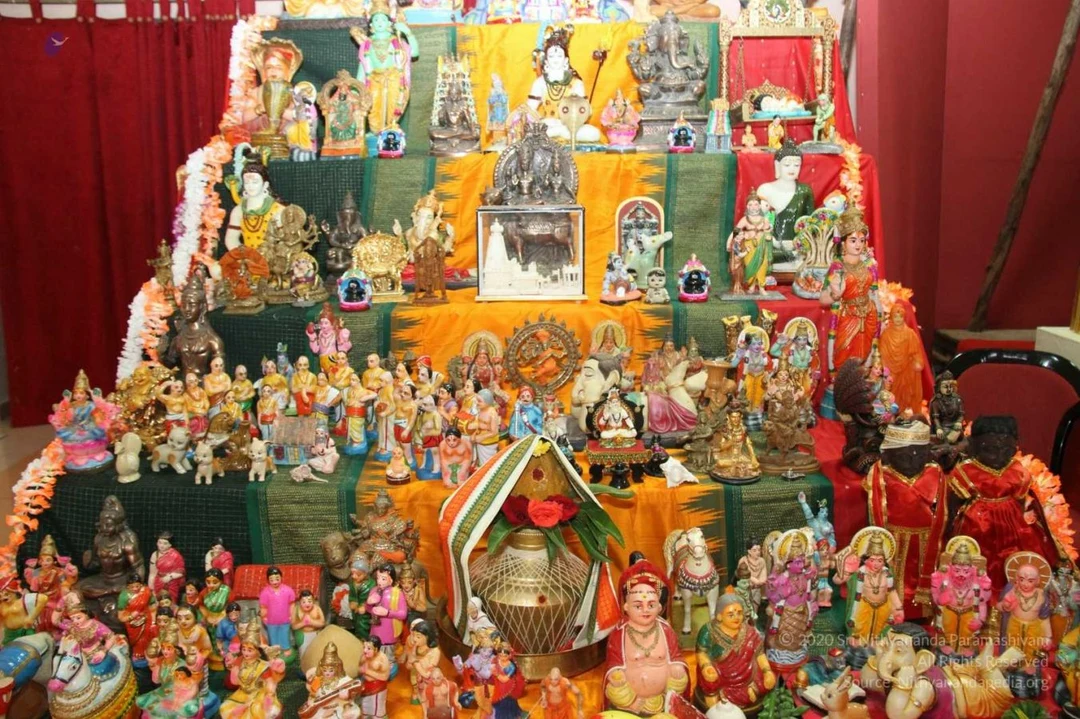
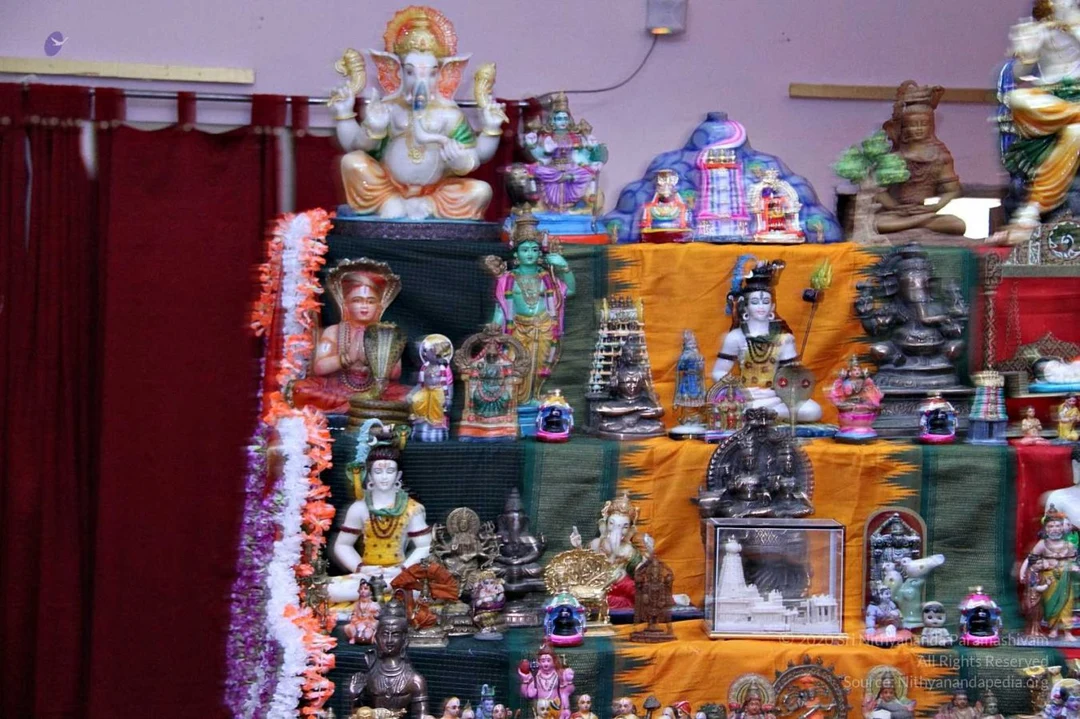
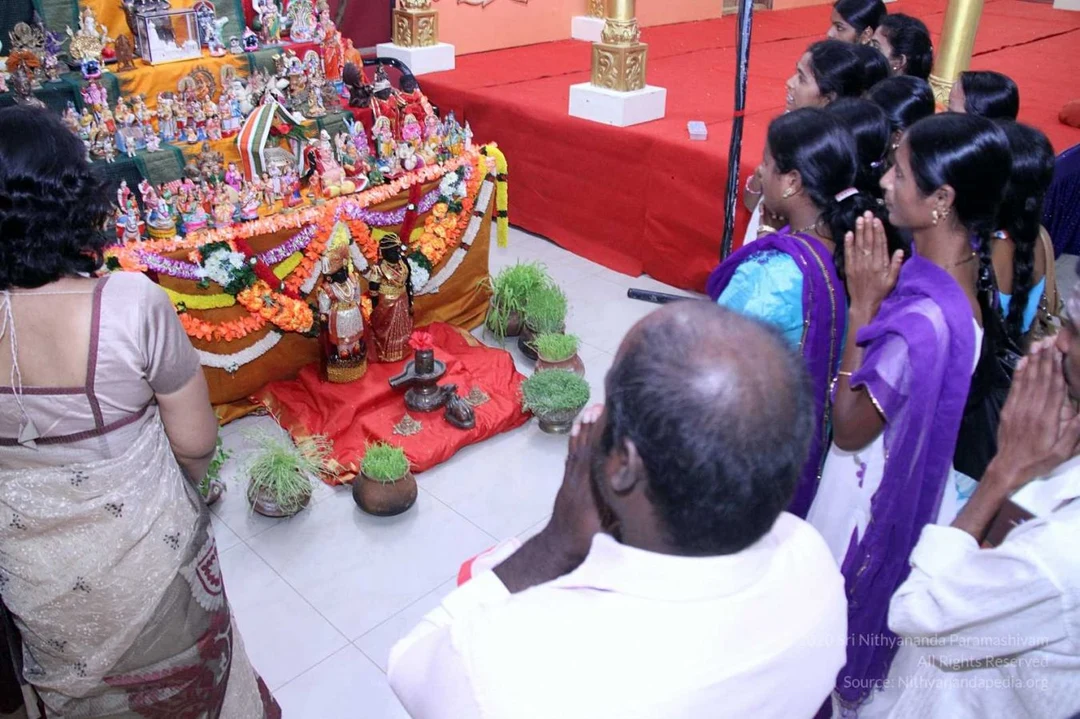
Navratri Golu

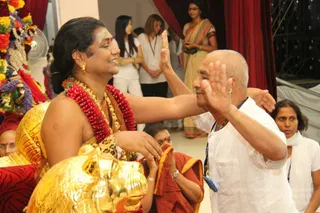
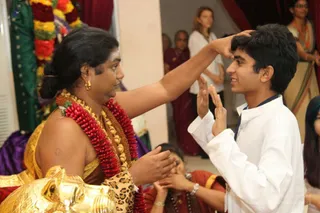
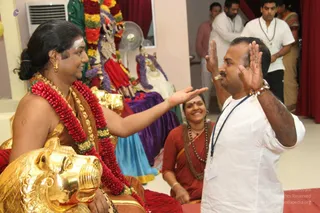
Inner Awakening Darshan

Inner Awakening Session

Temple Brahmotsav

Navratri Darbar

Sacred Arts

Tags:

Paramahamsa Nithyananda, health, vegetarian, lifestyle, food, memory, bioenergy, meat, depression, society.

Photos Of The Day:

12-Temple-Brahmotsav

5-Nithya-Satsang

8-Final-Blessings

9-Navaratri-Golu

Photos from this day

View all 495 photos

Paduka Puja

4 photosSource gallery
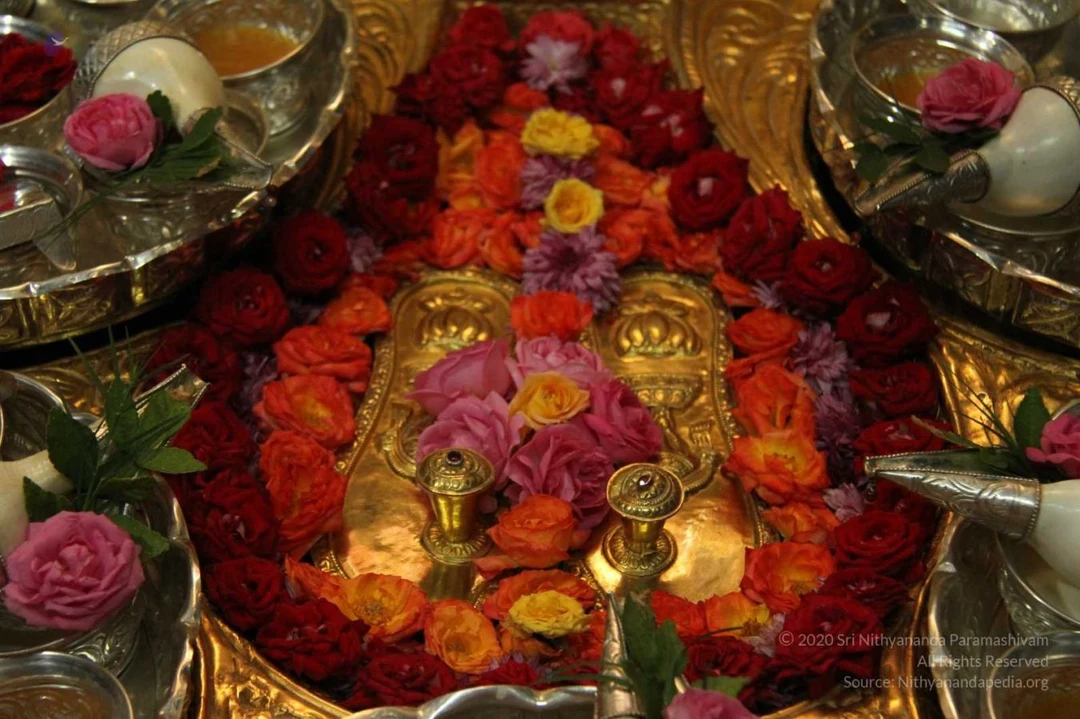
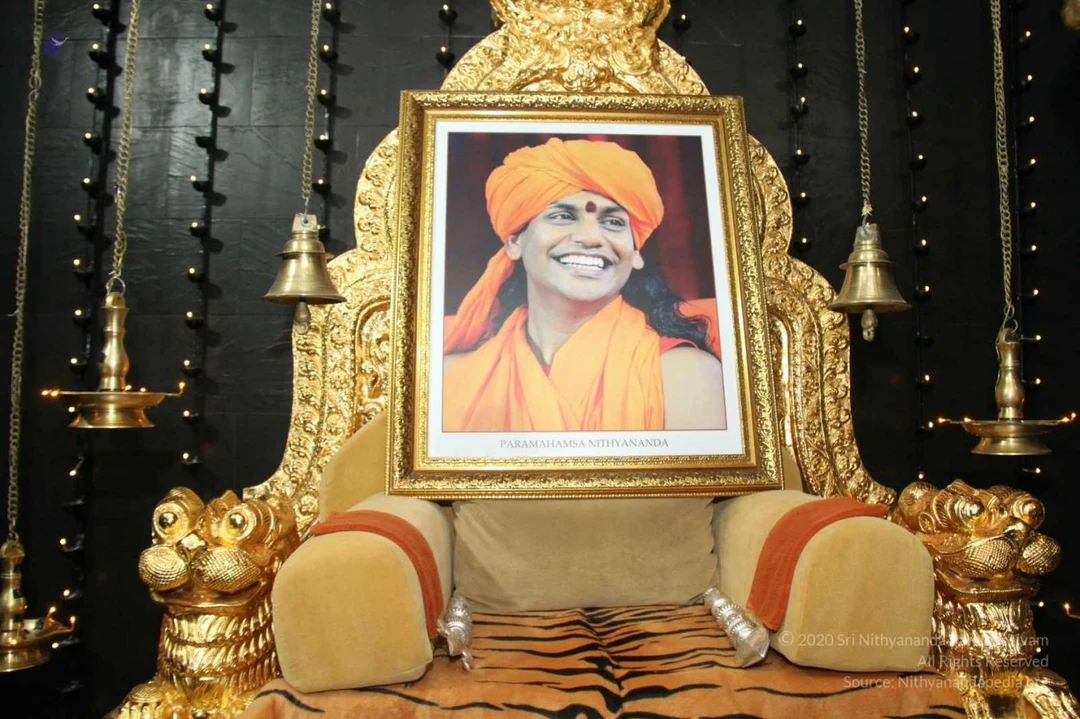
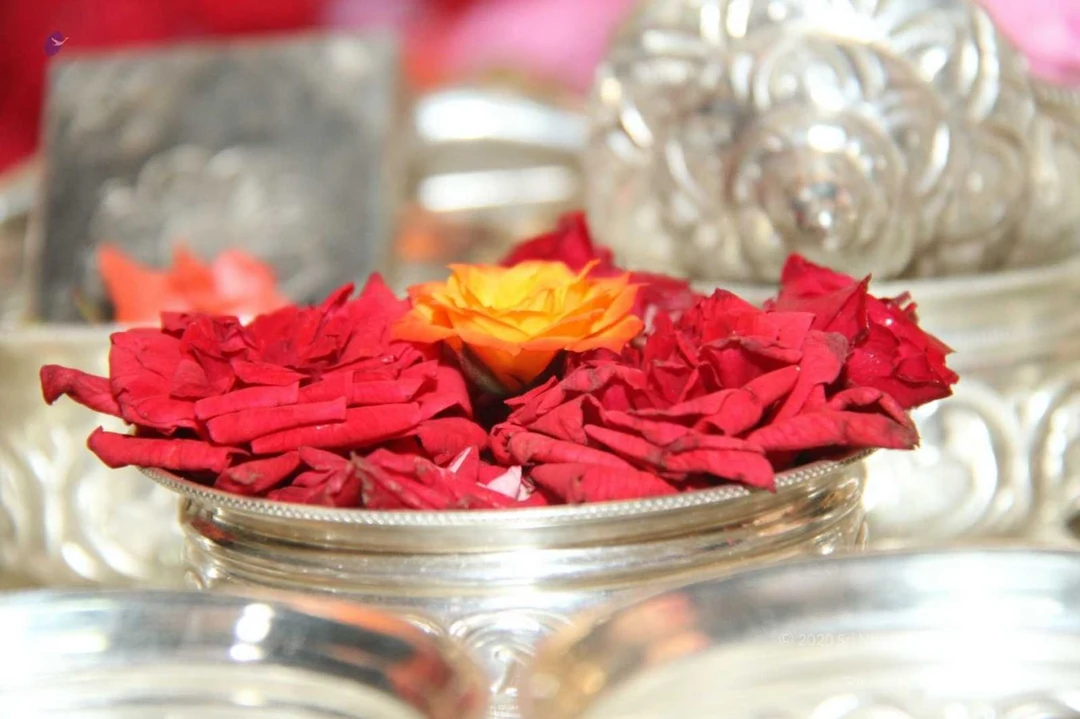
Close-up photograph of a silver bowl filled with red rose petals and one orange-yellow rose at its centre. Behind it sit ornate embossed silver vessels and a silver plate, with blurred red and pink tones in the background. No people are visible; the image shows a floral offering arranged in silverware, typical of puja or ritual setting.Close-up photograph of an ornate silver conch-shaped vessel with embossed floral and lotus-petal relief and a pointed spiral tip, resting on a silver tray amid red and orange marigold petals and a pink rose. The soft-focus background shows more flowers in red, yellow and orange. No people are visible, and the vessel appears to be a ritual object used in a puja setting.Close-up of a golden ritual tray densely covered with red, orange, pink and yellow rose petals and purple chrysanthemum-like flowers. Two small brass or gold lamp stands with domed tops sit at the centre of a golden plate. Silver and white conch-shaped vessels holding rose petals and a yellow liquid, possibly milk or honey, flank the tray at the corners. No people are visible; the scene shows floral offerings arranged for puja or abhishekam.A framed portrait labelled "PARAMAHAMSA NITHYANANDA" sits centred on an ornate gold throne with carved lion-head armrests and a tiger-striped seat cushion. The portrait shows a smiling man in an orange turban and orange shawl with a red bindi, against a red backdrop. Hanging brass bells and brass oil lamps flank the throne against a black wall with rows of small beads. No physical people are present; the figure appears only as a printed portrait.

Devi Navratri Alankar

6 photosSource gallery
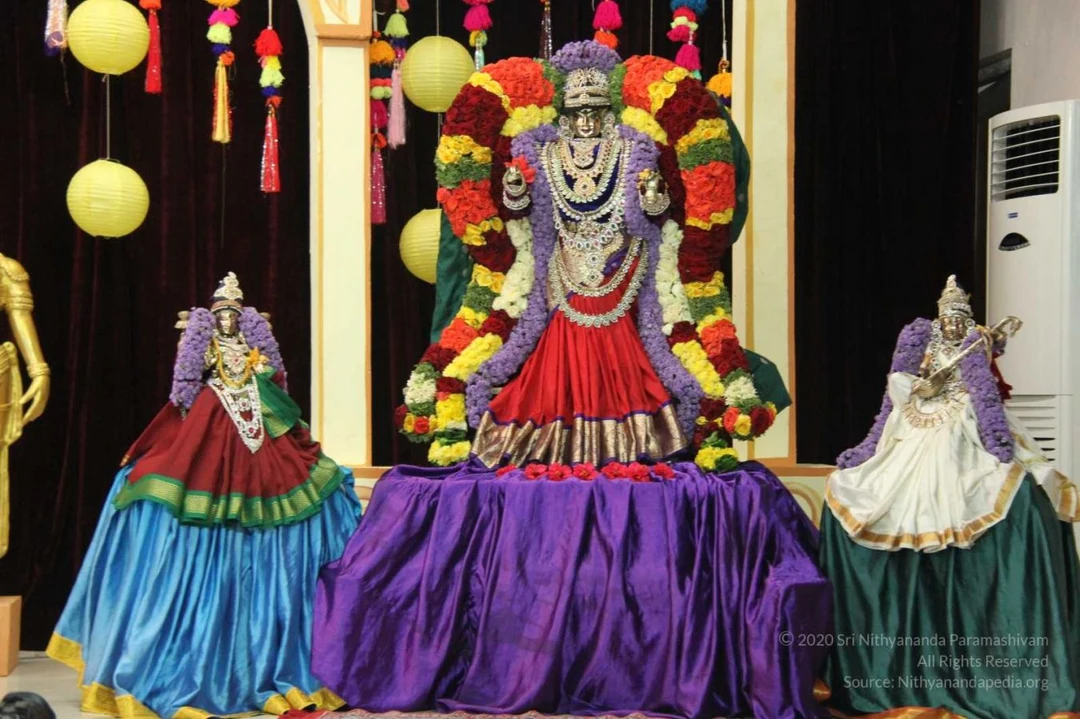
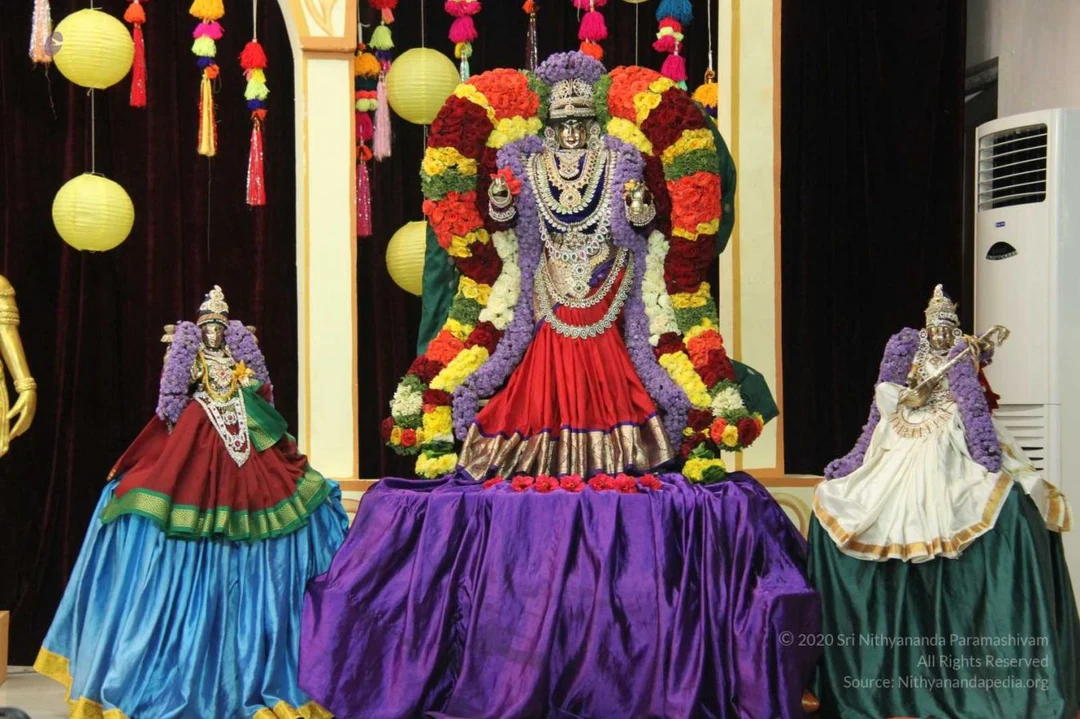
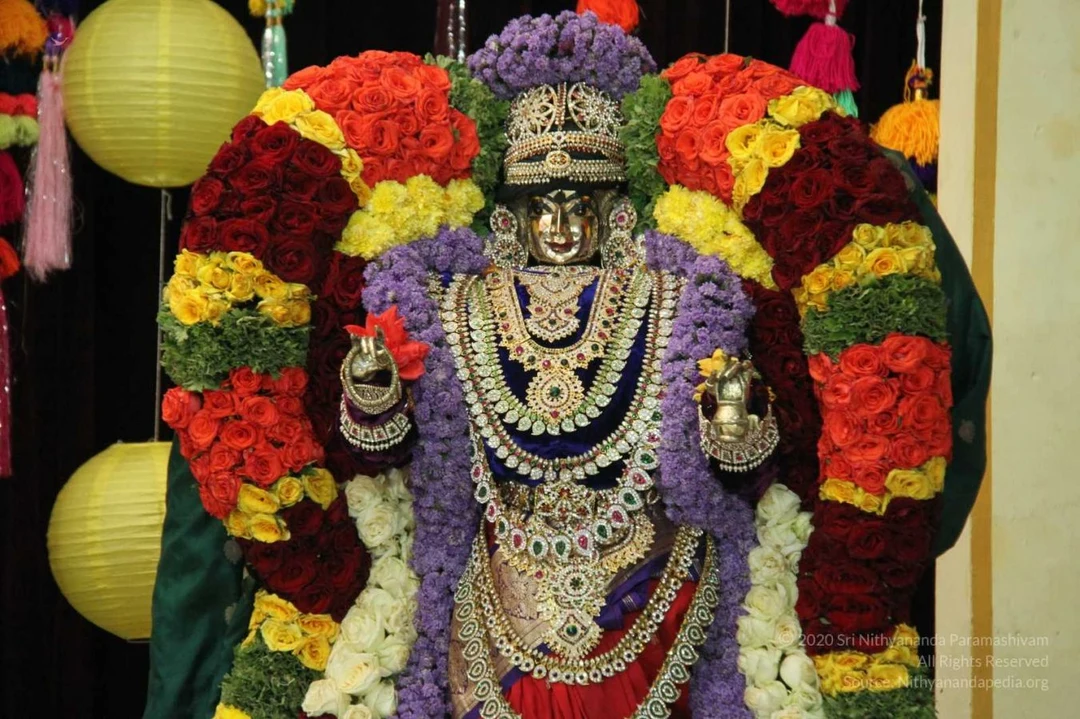
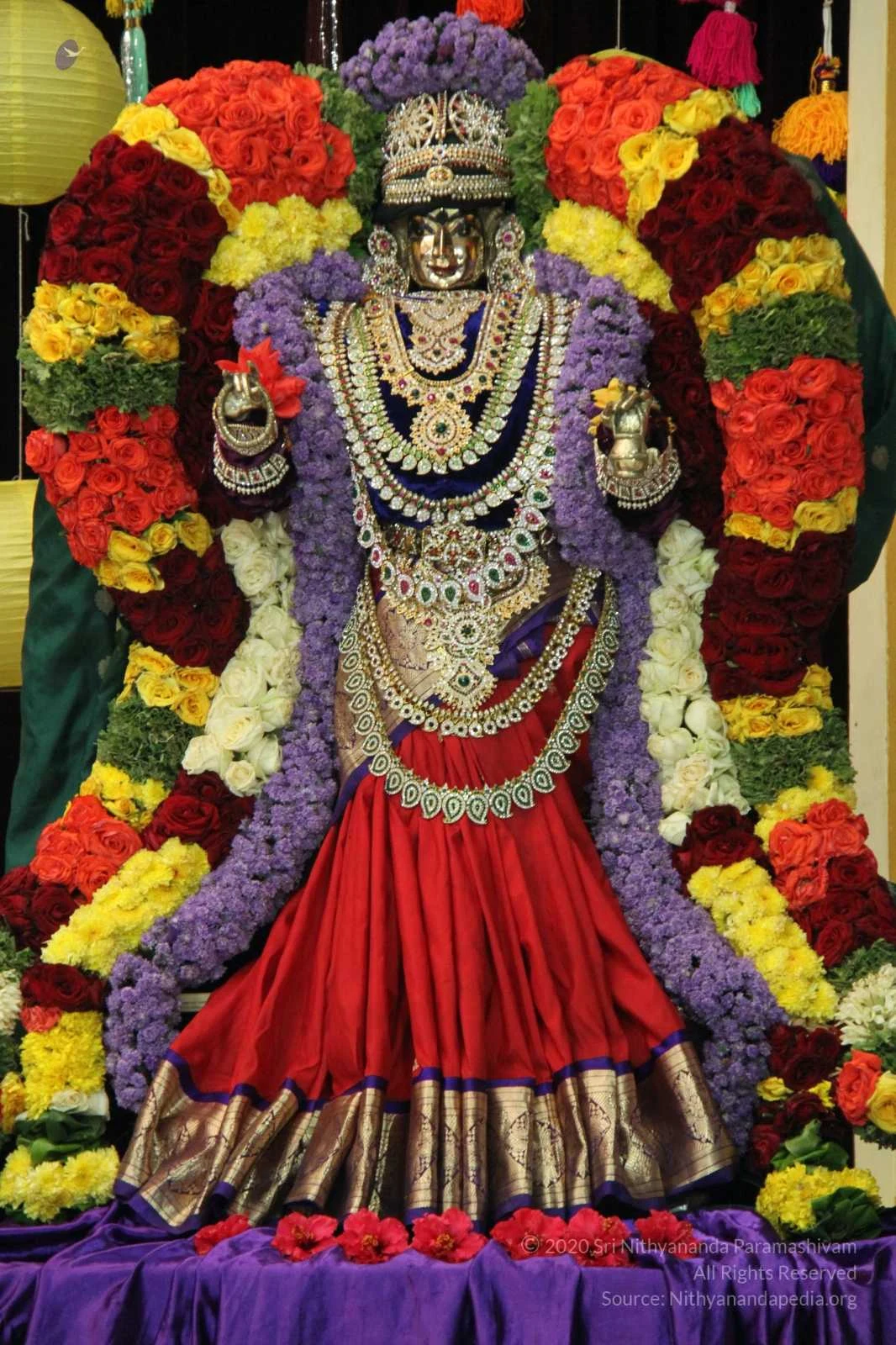
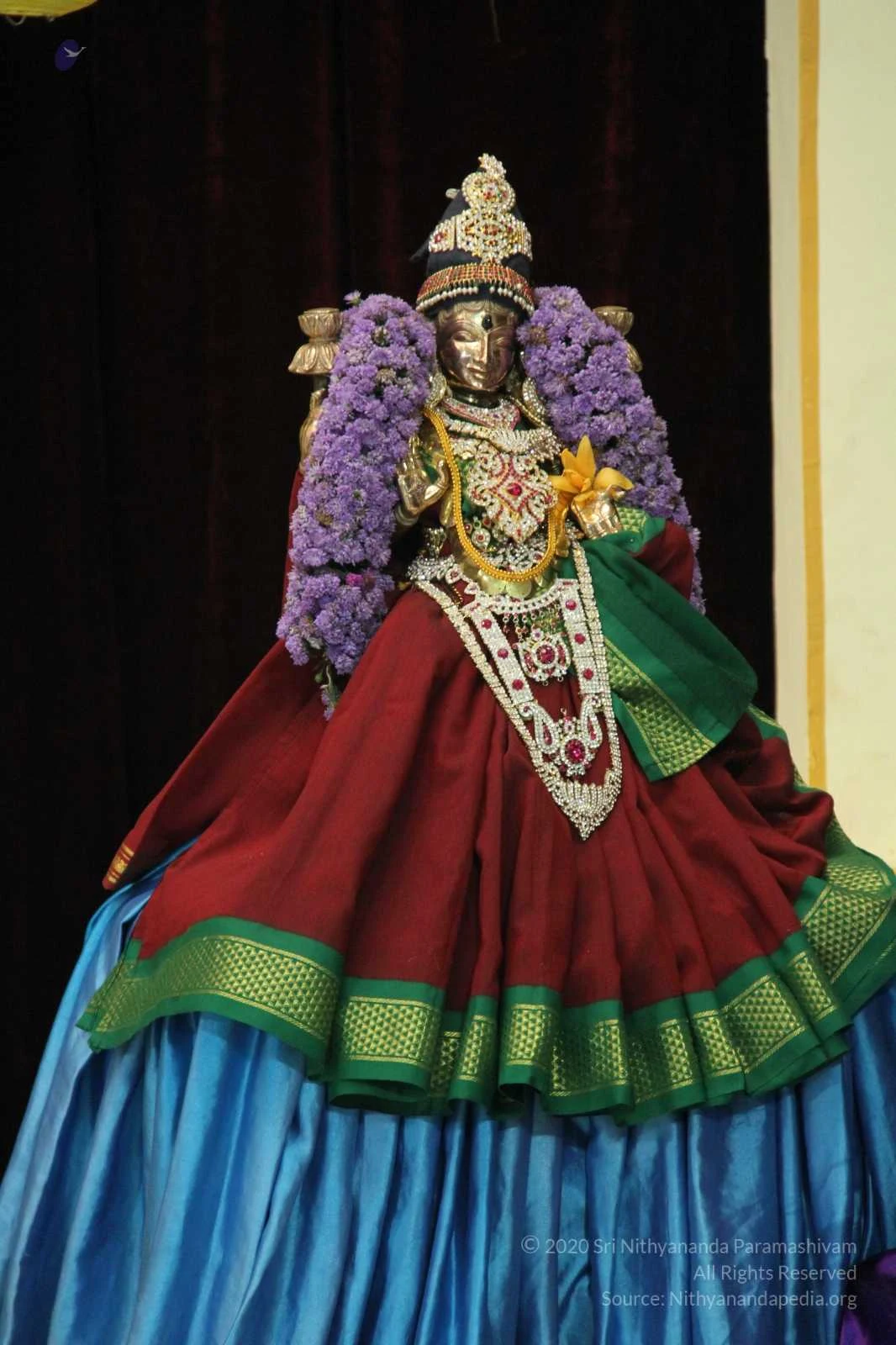
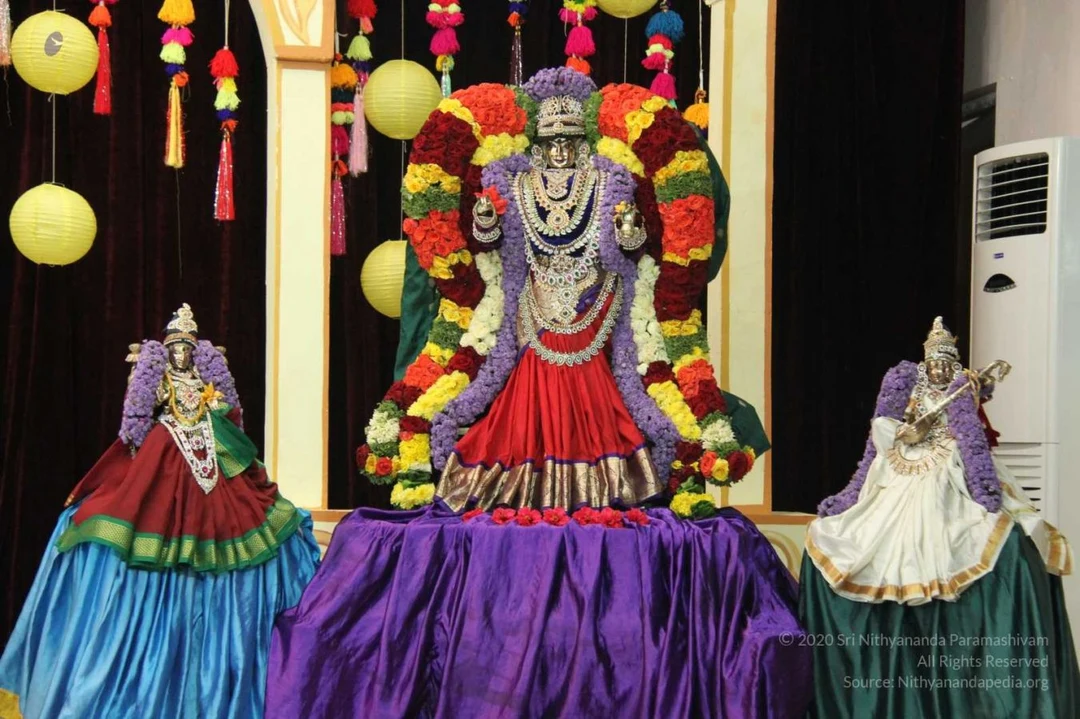
Photograph of a decorated stage with three deity murtis on a purple draped platform. The central murti, a standing goddess figure, is adorned with a dense garland of red, yellow and orange flowers with purple accents, layered silver necklaces and a crown. Flanking figures wear a blue and maroon skirt on the left and a white and green skirt holding a veena on the right. Hanging paper lanterns and tassels decorate the backdrop, with a gold statue partly visible at the left edge and a white air conditioner on the right. No living people are visible.Three decorated deity murtis stand on a purple draped platform before a dark curtain hung with yellow paper lanterns and tassels. The central murti wears a silver crown, layered silver necklaces and a red skirt, and is framed by a large arch of red, orange, yellow and white flowers with purple garlands. A murti to the left wears a blue and maroon skirt with green border, and a murti to the right holds a veena and wears a white and green skirt. A white air conditioning unit stands at the right edge. No physical people are visible.A photograph of a metal deity murti standing against a dark backdrop, decorated with a dense arch of red, orange, yellow and maroon roses and yellow marigold-type flowers, with purple flower garlands falling down the sides and white rose strands at the base. The murti wears a tall jeweled crown, layered gold and multicolored gem necklaces, large earrings, and a red and purple sari-style garment. Its raised hands hold ornate gold implements. Yellow paper lanterns and pink and orange tassels hang at the edges. No physical people are visible.A decorated deity murti stands centrally on a purple cloth draped platform, framed by a large arch of red, orange, yellow and white roses and purple flower garlands. The metal figure wears a jeweled crown, heavy multi-strand gold and gemstone necklaces, and a red silk sari with gold zari border. Red hibiscus flowers lie at its feet. Traditional lanterns hang at the edges. No living people are visible.A decorated metal deity murti stands on a stage before dark maroon drapes. The figure wears a jewelled crown with a dark blue base, layered gold and gemstone necklaces, and a red and green silk sari with gold zari borders over a flared blue skirt. Purple flower garlands hang over both shoulders, and a yellow flower is tucked at the waist. No physical people are visible, and no a person candidate appears in the image.A photograph of a decorated altar with three statues dressed as deities. The central figure is a metal murti in a red skirt and silver ornaments, framed by a large arch of red, yellow and white flower garlands and a purple cloth-draped platform. Statues on either side wear red-and-blue and white-and-green skirts with purple floral garlands; the right figure holds a stringed instrument. Paper lanterns and tassels hang behind, and a white floor air conditioner stands at right.

Swamiji with the Golu
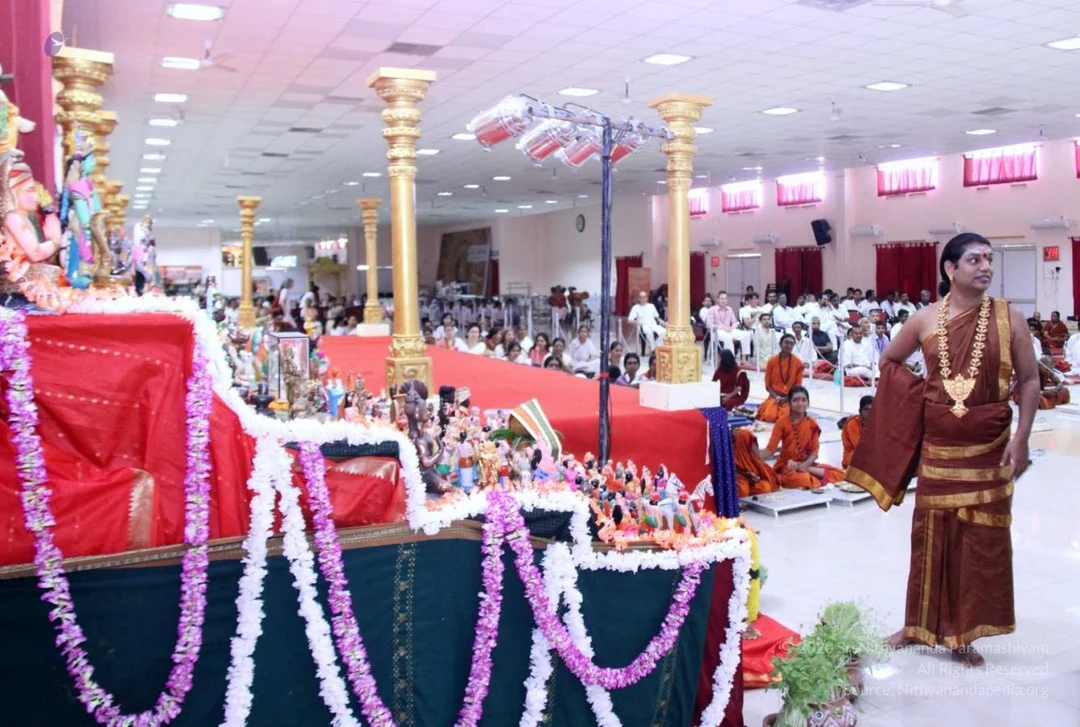
8 photosSource gallery
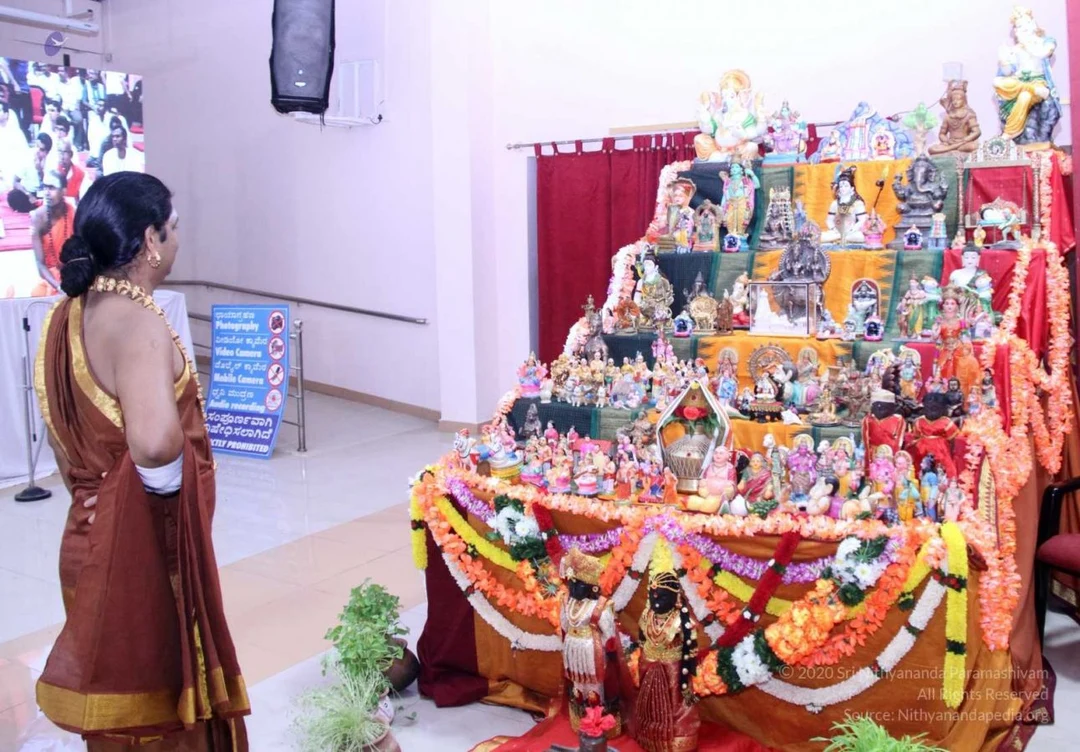
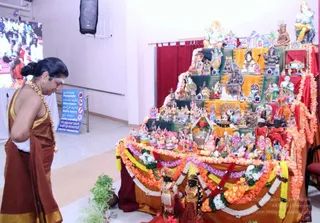
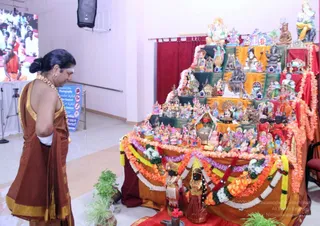
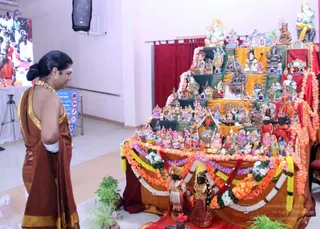
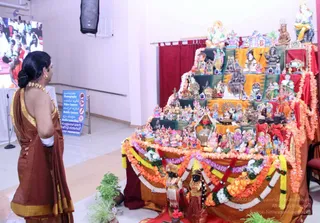
A woman in a rust-orange sari with gold border and a gold necklace stands at left, facing a tiered display of doll-like deity figurines (golden kolu-style arrangement) draped with orange, yellow and purple flower garlands and white blossoms. Ganesha figures appear at the top, alongside painted murtis and a small glass case. A blue sign at left reads Photography, Video Camera, Mobile Camera, Audio recording, Strictly Prohibited. A projection screen at upper left shows a crowd. The scene appears to be an indoor hall with pale walls and red curtains.A person in a rust-brown and gold-bordered sari with a gold-bordered wrap, wearing a long rudraksha-style necklace and a white forehead mark, stands at the left bowing toward a tiered golden-draped display of deity murtis and figurines. The tiers are decorated with orange, yellow and white marigold and flower garlands, small oil lamps, and a central red-and-gold shrine. Two standing figurines in gold and red attire stand at the front base. Behind the display, a wall-mounted sign reads Photography, Video Camera, Mobile Camera and Audio recording, all STRICTLY PROHIBITED. A large screen behind shows a seated crowd in white.A photograph of a person in a rust-brown sari with a gold-bordered hem and a gold necklace, standing at left with their back partly turned and head bowed toward a tiered display of deity murtis. The display is draped with orange, yellow and white flower garlands and sits on a red cloth with a red flower offering at its base. Two dark-skinned murtis in white and red dress stand at the front. Behind the display, a red curtain hangs and a large screen shows a group of people in saffron and white. A rectangular rudraksha-free view of a blue-and-white signboard appears at left. The scene is a home-style puja arrangement in a hall with white walls.A photograph of a person in a brown and gold sari with a gold necklace and white forehead markings stands at left, back partly turned, facing a tiered display of deity murtis, many figurines, and garlands of orange, yellow and white flowers draped over orange and green cloth. Two larger standing figures with crowns and gold ornaments stand in front at lower right, and potted plants sit at the floor. At upper left, a background photo shows a crowd and a figure in orange robes. The scene suggests a puja display in a hall with a microphone and tripod at left.A woman in a brown and gold saree stands with her back to the camera, facing a tiered display of many small deity figurines, murtis and statues draped in orange, green and gold cloth and heavily garlanded with orange marigolds, white flowers and purple blossoms. A woman in a brown saree and gold necklace stands before a tiered altar of many colourful murtis, including Ganesha figures, draped in orange and gold cloth and wrapped in orange marigold and white flower garlands. Potted plants sit on the tiled floor. A printed sign with Kannada text and a photography prohibition symbol stands nearby, and a screen shows a crowd in the background.A woman in a rust-brown sari with a gold border stands at left, seen from behind, facing a large doll display (golu-style) of deity murtis and figurines arranged in tiered steps on a draped orange and green cloth. The display is garlanded with orange, yellow and white flower strands, with a red curtain behind. Small figures in the front include a dark standing figure and a figure in red and gold. Above, a large Ganesha figure and other colourful statues are visible. On the wall at left a screen shows people. A blue sign lists prohibitions on photography, video and mobile cameras in Kannada and English. The photo carries a Nithyanandapedia copyright credit.

Malaysia Veg Fest

3 photosSource gallery
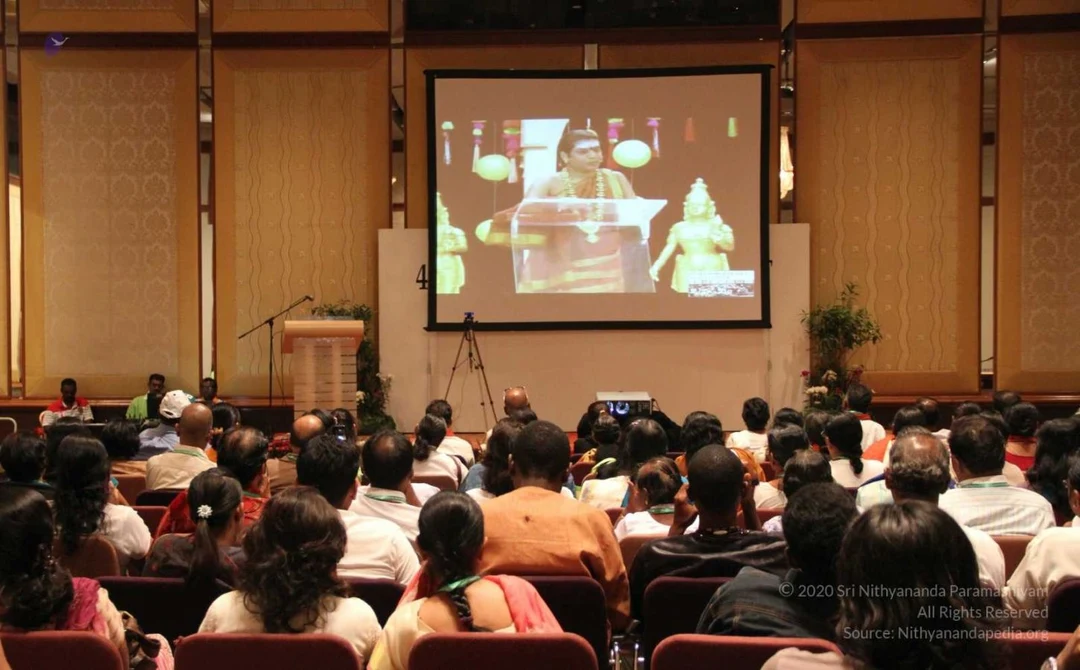
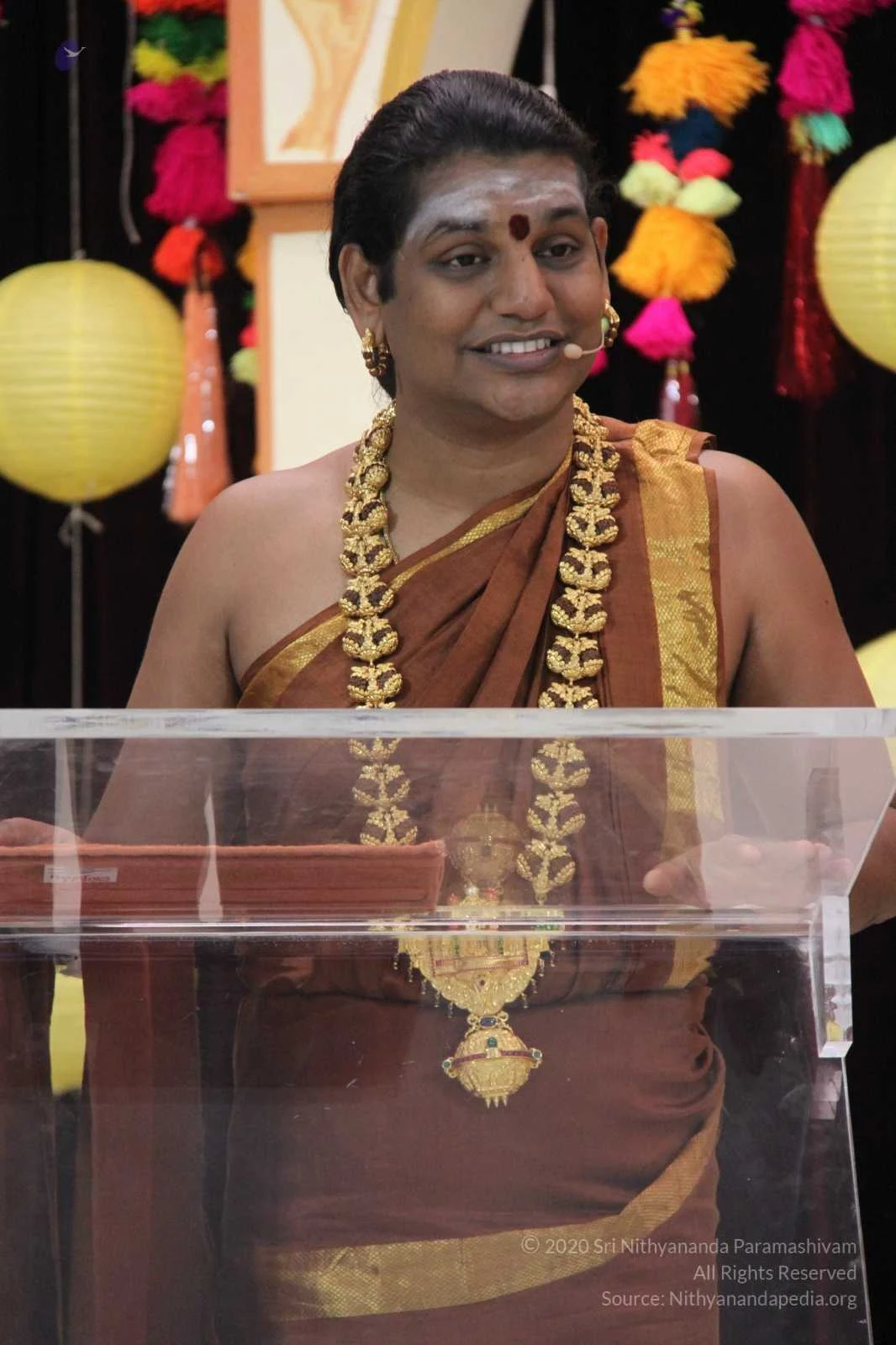
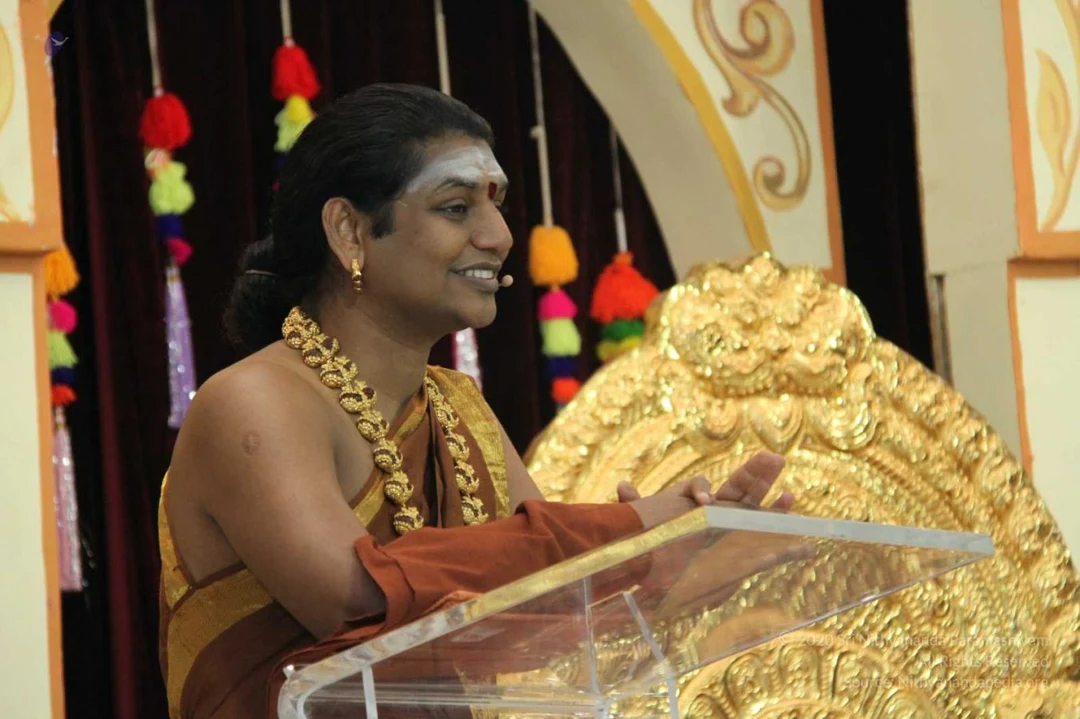
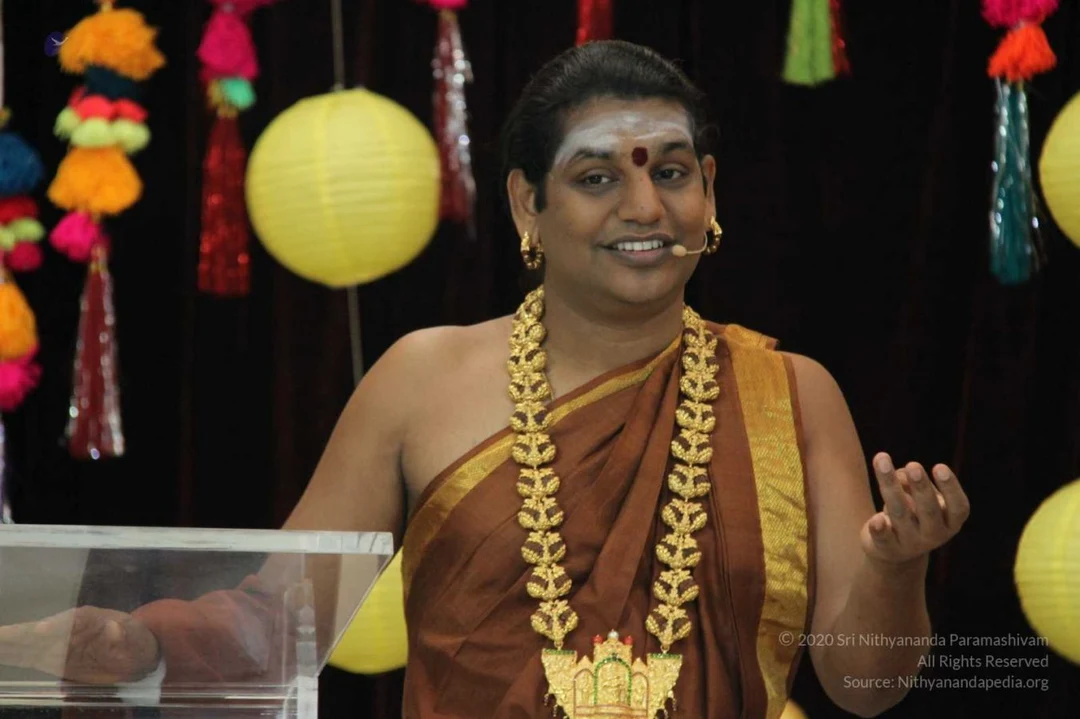
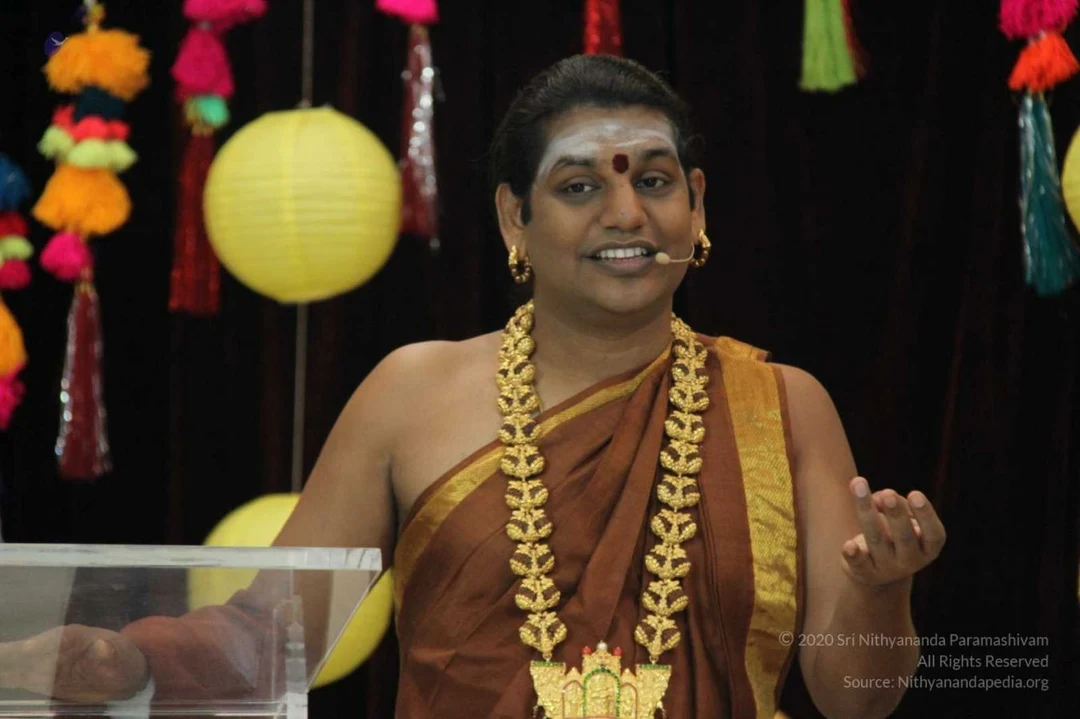
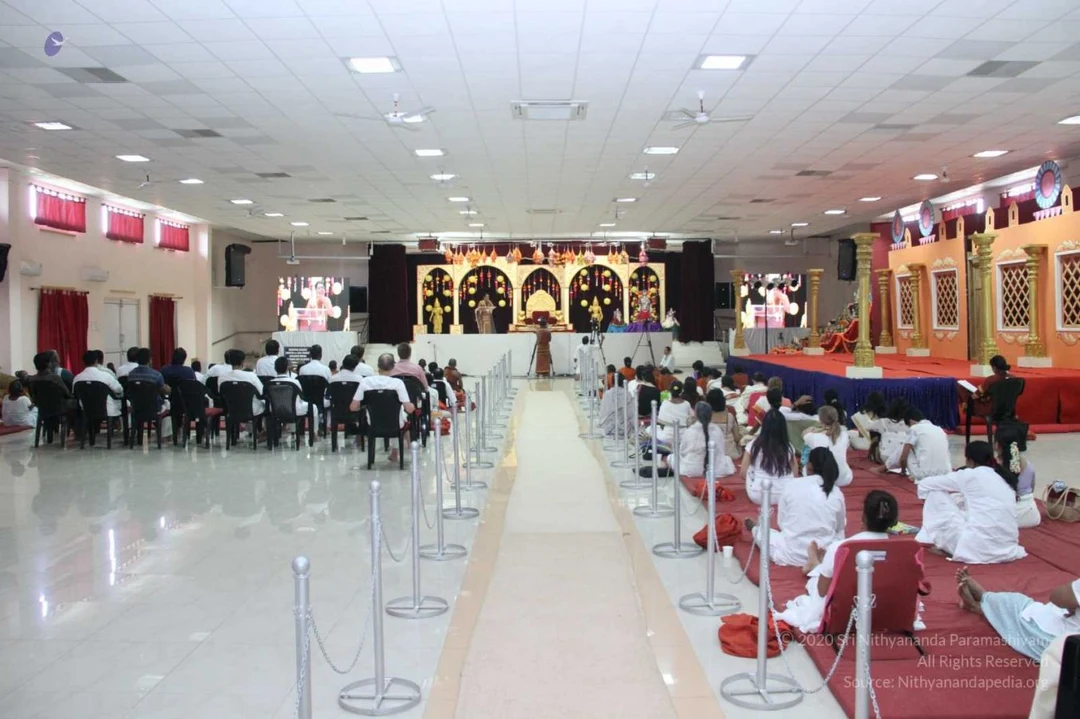
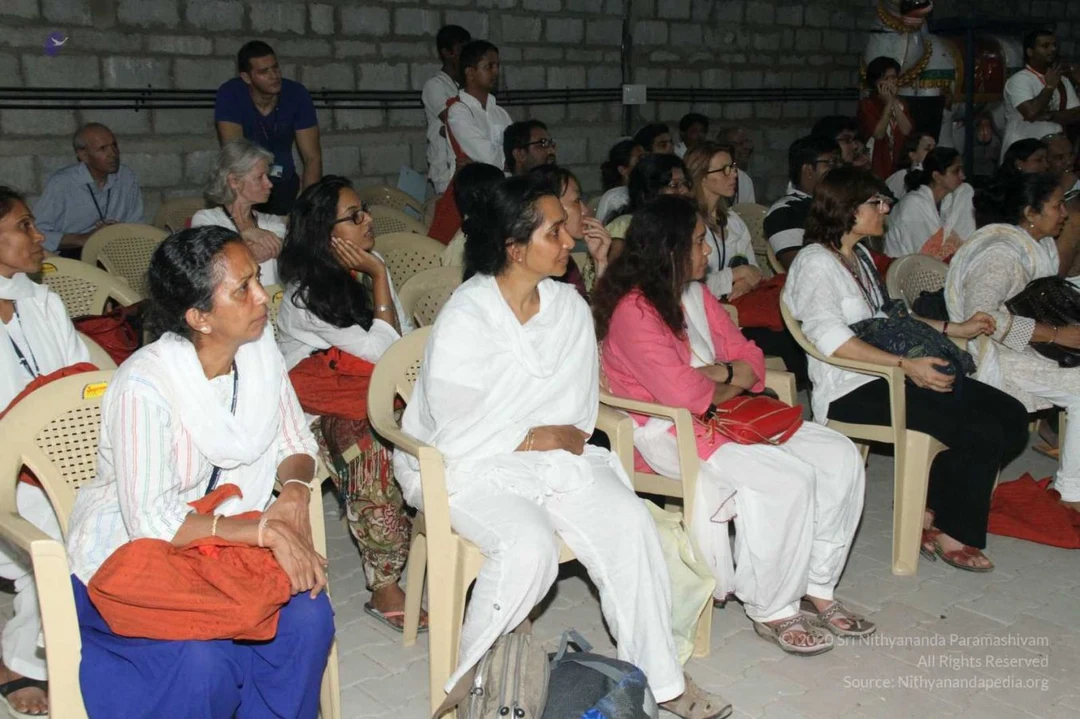
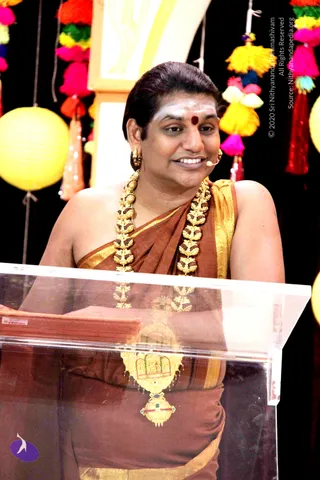
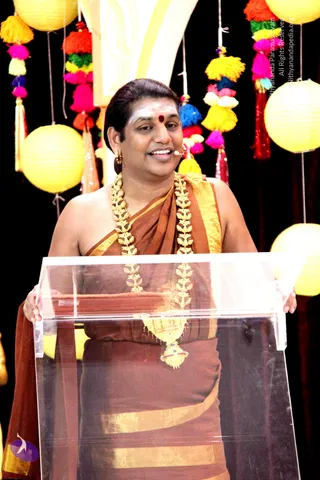
Photograph of an exhibition stall in a wood-panelled hall with a patterned blue and orange carpet and string lights overhead. A tall red-and-white roll-up banner shows a smiling man in an orange turban and orange garments captioned 21-day retreat with rare incarnation, Paramahamsa Nithyananda, with the words inner Awakening beneath. A yellow banner reads The Book They're Trying To Ban. A red-draped table holds brochures and jars, and a young man in a green shirt sits behind it. A man in a dark suit with a white folder stands at left. The banner's portrait is a printed depiction and was not verified as a physical person; the orange-turbaned figure on the banner is described by its clothing only.A large conference hall viewed from the back rows, with a seated audience of many people in chairs facing a projection screen. The screen shows a speaker in orange and gold clothing with a long garland and a gold necklace, standing at a clear lectern beside two gold-coloured standing deity murti figures. Hanging decorative tassels and lanterns appear above the screen. On the stage at left, a few people sit at a table near a microphone stand. Many audience members wear white, pink and patterned saris, kurtas and shirts. The image is a photograph of a presentation event.A person stands behind a clear acrylic lectern, smiling and speaking into a headset microphone. He wears a rust-brown garment with a wide gold border draped over the shoulder, multiple gold and rudraksha-bead necklaces, a gold pendant, gold earrings, white forehead markings and a red bindi. Behind him hang yellow paper lanterns and colourful tassels against a dark backdrop. Appearance-based candidate with compatible cues (ornate gold rudraksha necklaces, distinctive ceremonial garments) in a lecture role, a person, identity uncertain from appearance.

Nithya Satsang
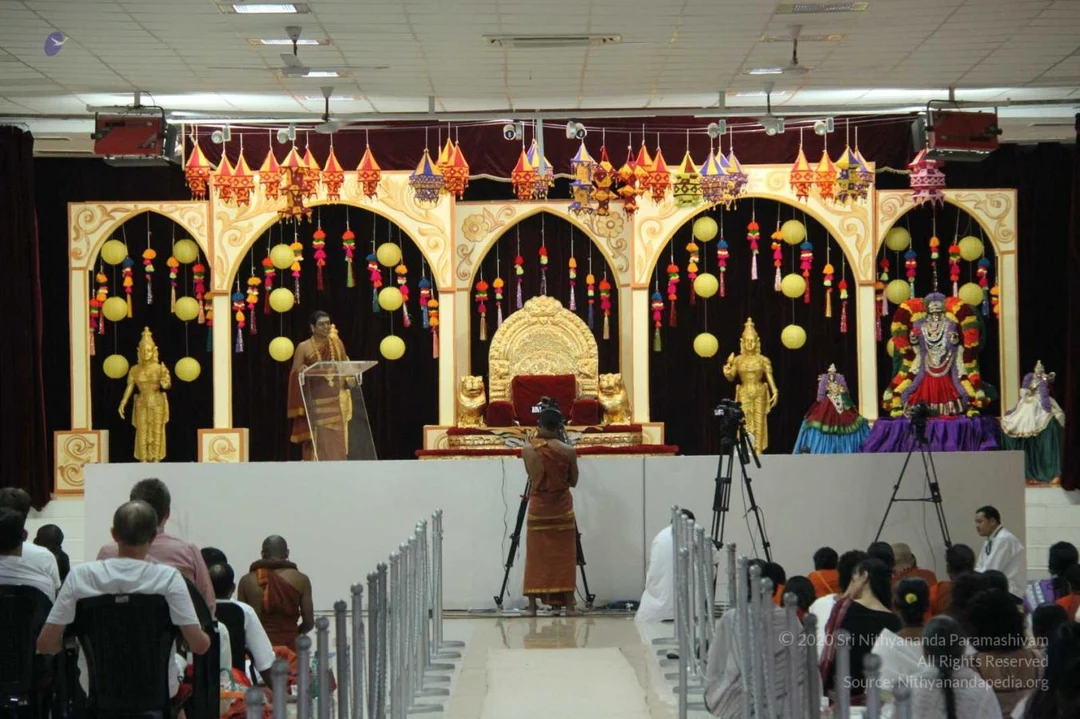
73 photosSource gallery
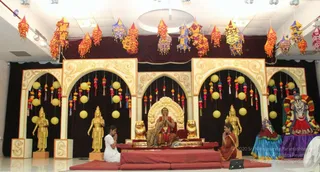
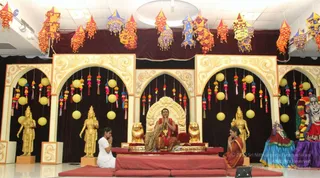
A person in a rust-red and gold-bordered sari stands at a clear acrylic lectern on a stage, speaking with a smile. A short dark-haired figure with a red bindi and gold necklaces. Flanking the lectern are two gold-painted standing figures of deity murti with crowns. Behind is a dark maroon velvet backdrop with arched cream panels, hanging pompom tassels in pink, orange and blue, and round yellow paper lanterns. To the right stands a gold lion-armrest throne with a red cushion and a tiger-skin covering.A photograph of a stage set for an event, with a woman in a brown and gold sari standing at a clear acrylic podium on the left, apparently speaking. Behind her a large gold throne with a red cushioned seat is flanked by two gold lion figures, and gold standing statues of figures stand on either side. Arches draped with hanging yellow spheres and tasselled garlands frame the stage, with paper lanterns in bright colours hanging from above. On the right, a deity murti adorned with flower garlands and a red and purple sari sits beside two figures in blue and red gowns. The stage floor is white with a patterned red and gold rug.A man in an orange-brown dhoti and shawl with a gold-bordered cloth stands beside a clear acrylic lectern, hands joined in front of him, speaking on a stage. He wears a gold necklace and a tilak on his forehead, and his hair is pulled back. Behind him is an ornate gold throne with a red cushion and tiger-skin drape, flanked by gold lion figures. A gold standing deity murti stands at left, and yellow paper lanterns, red and pink tassels and gold-painted arches decorate a maroon velvet backdrop.A man in a brown and gold saffron-toned robe with a gold-trimmed shawl and a long gold ceremonial necklace stands at a clear acrylic lectern, gesturing with one raised hand while speaking. He wears a white vertical forehead mark with a red dot, has hair pulled back, and gold earrings. Behind him hang yellow and orange paper lanterns, pom-pom tassels in pink, green, and orange, and a dark curtain, with a golden figure partially visible. Appearance-based label: Swamiji (probable), in_person, given the long swept-back hair, ceremonial gold necklace, and saffron-toned robe while teaching at a lectern.A photograph of a standing speaker at a clear acrylic lectern on a white tiled stage. He wears a rust-brown dhoti and matching shawl with gold borders, a gold necklace and a tilak on his forehead, with hair tied back. A golden throne with red cushions and a golden lion-form base stands behind him, flanked by gold arches with yellow paper lanterns and colourful tassels. At right, two deity murtis are dressed in red, blue and white saris, one with a flower garland and a purple-draped table. A gold standing figure stands at left. A large floor rug lies beneath the lectern.A photograph of a man in a rust-brown and gold-bordered dhoti and shawl standing barefoot at a clear acrylic lectern on a patterned rug, speaking to an audience. A gold ornate chair with red cushions and a golden lion-like figure stands behind him. Golden standing figures flank the stage on the left, and a decorated deity murti in red and purple garlands with a vibrant blue and red skirt sits on the right. Yellow paper lanterns and colourful tassels hang beneath golden arches draped in maroon velvet. Swamiji (probable) is the apparent presenter, identified by a long swept-back hair, a gold necklace and a saffron-toned shawl over a brown robe, and placed at the lectern as speaker.

Sarva Darshan

34 photosSource gallery
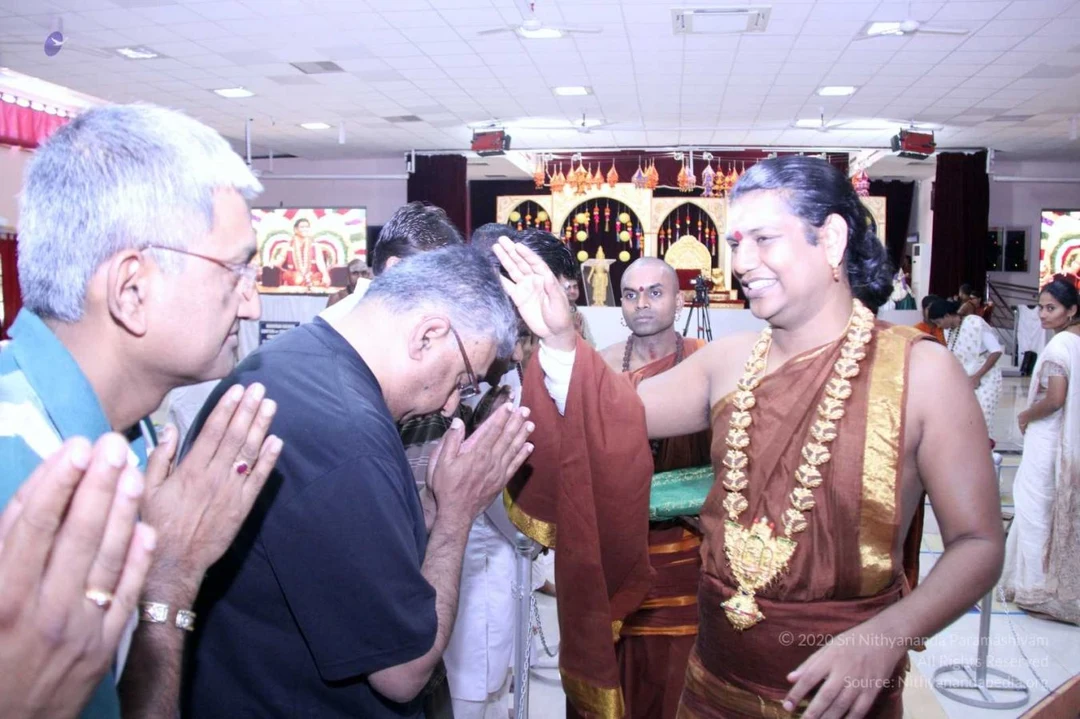
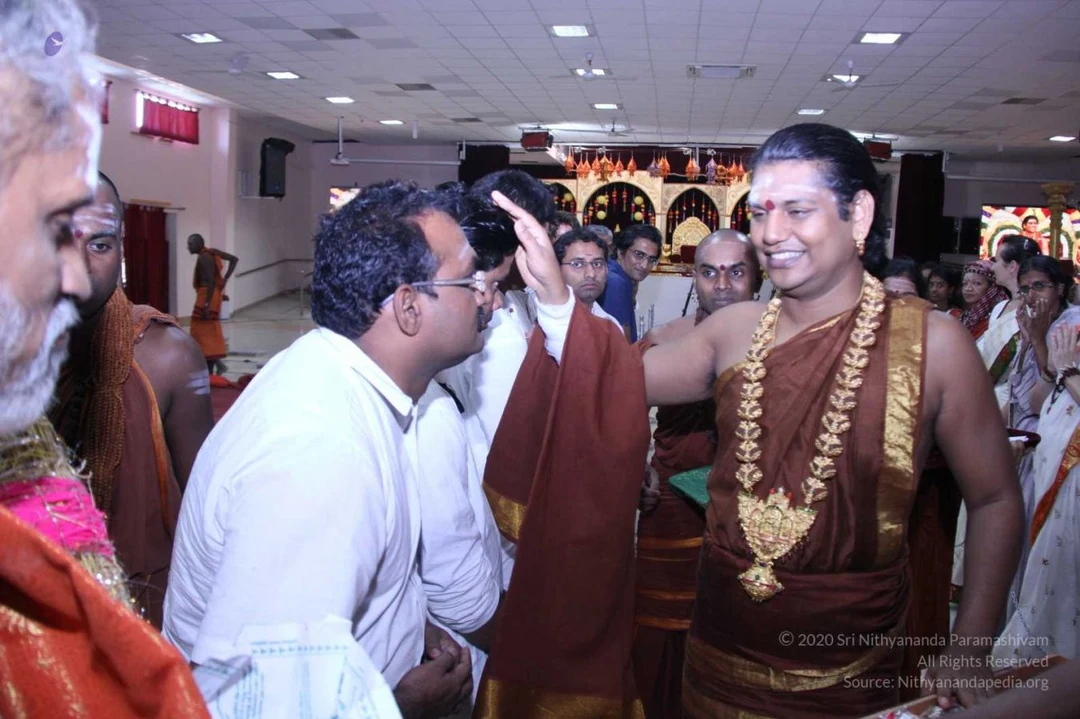
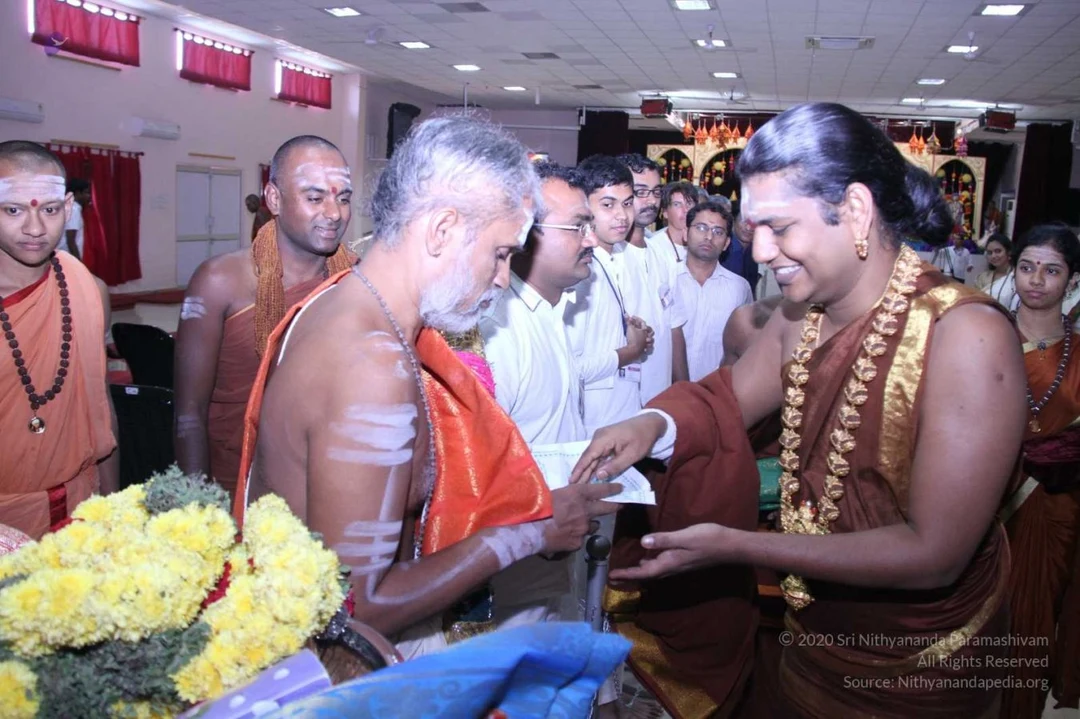
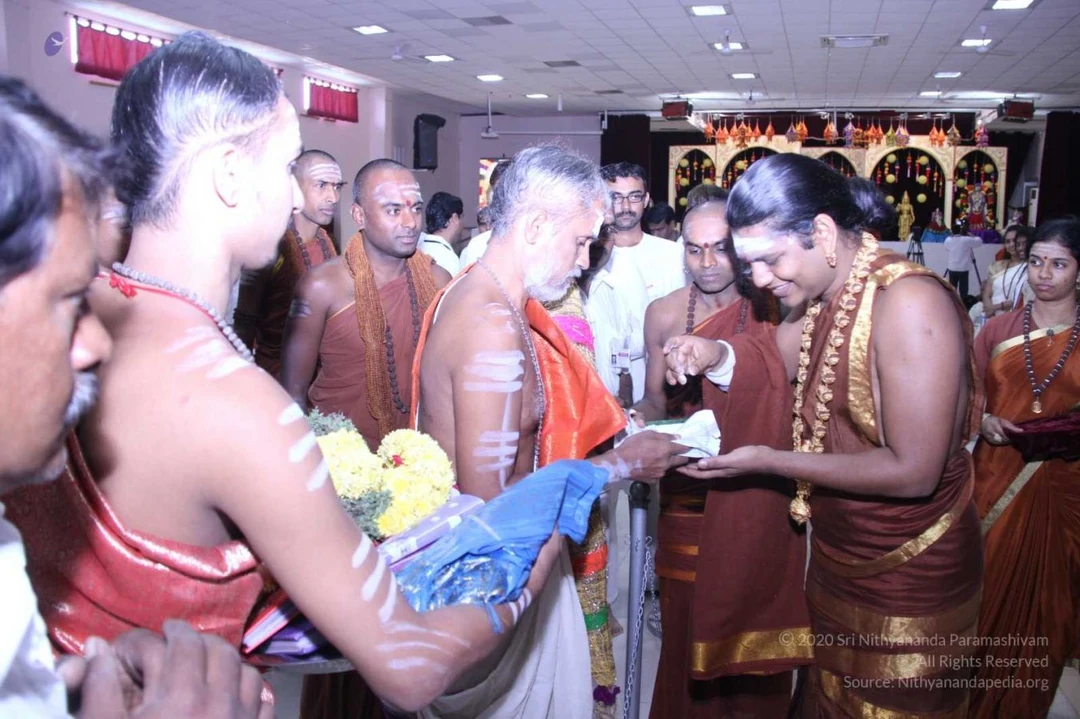
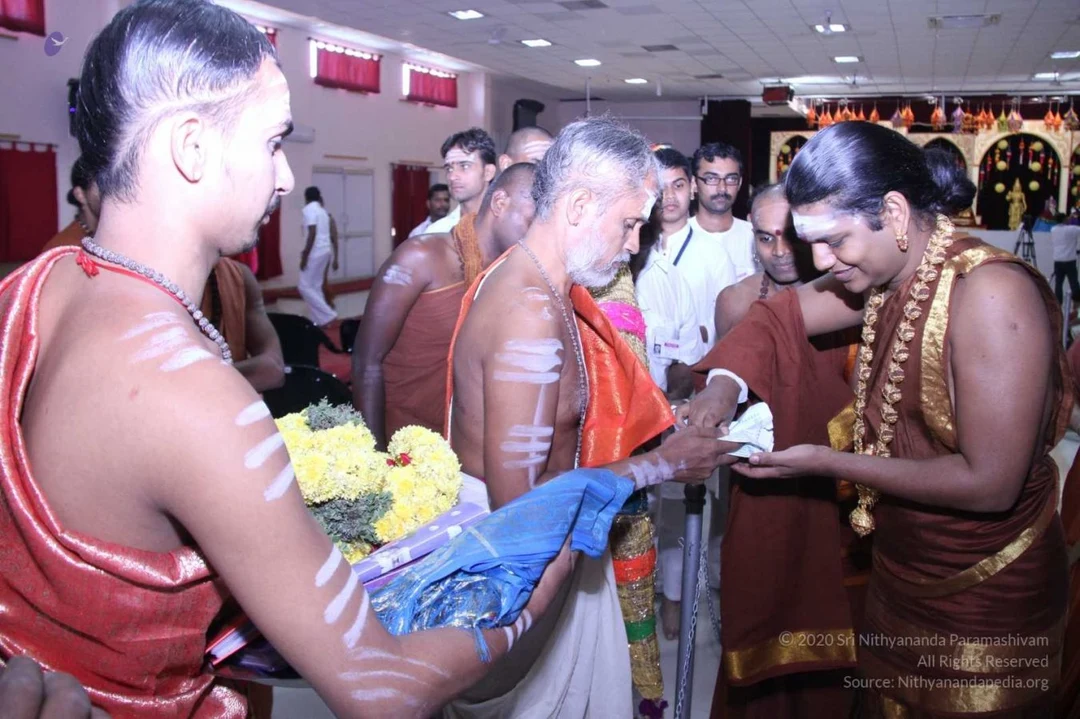
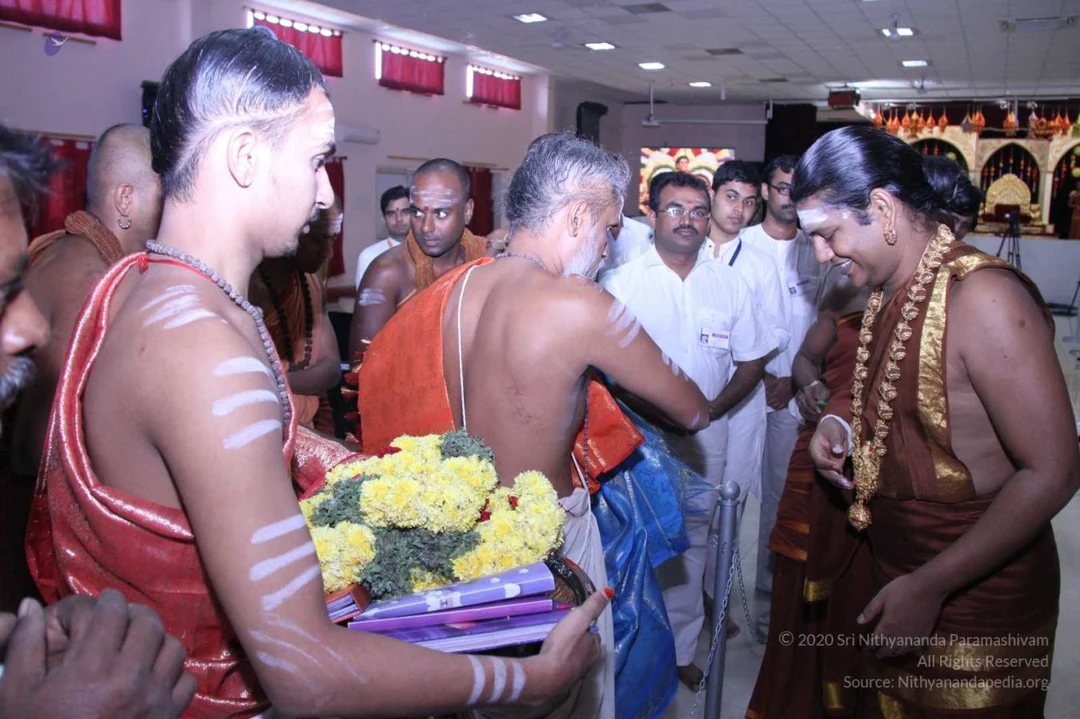
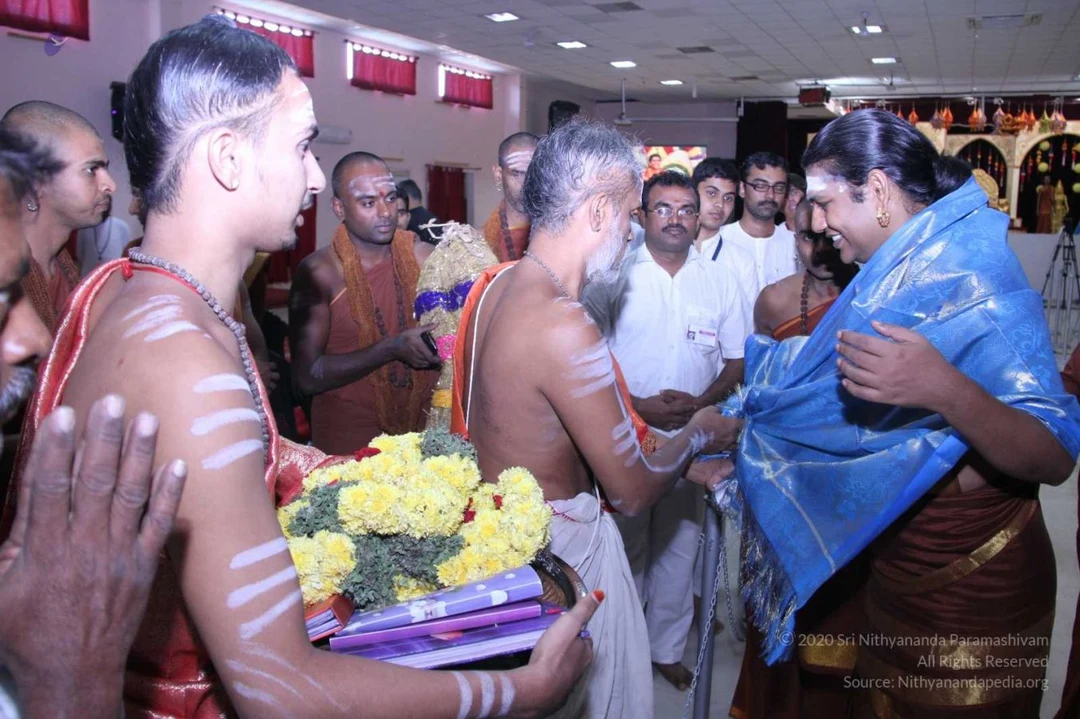
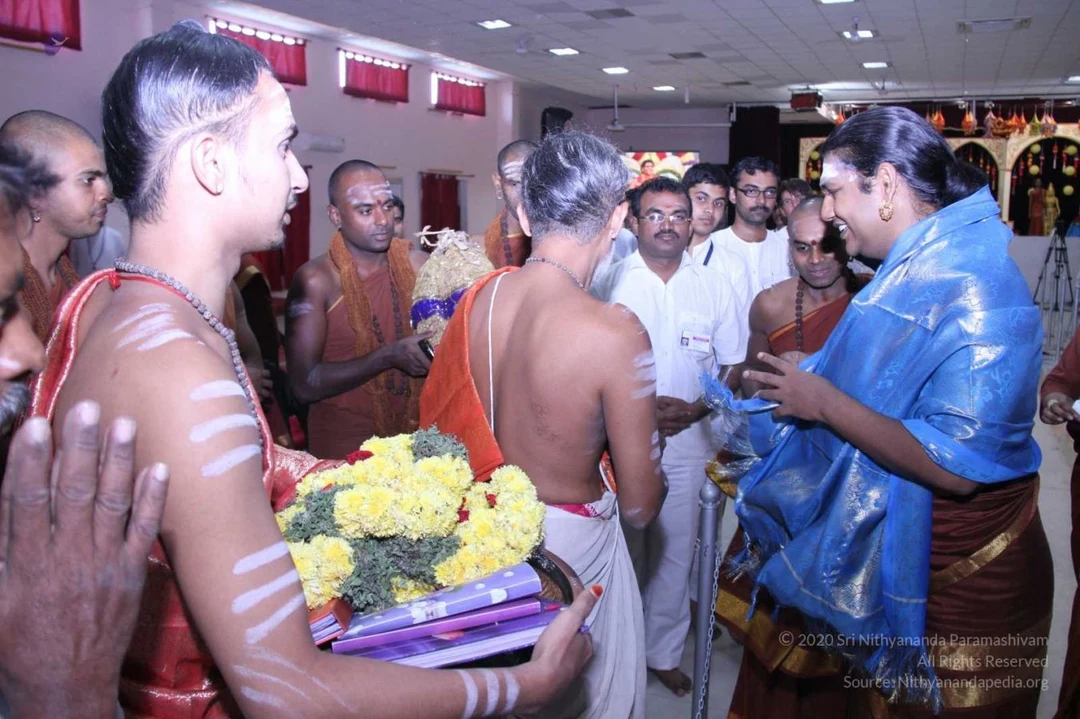
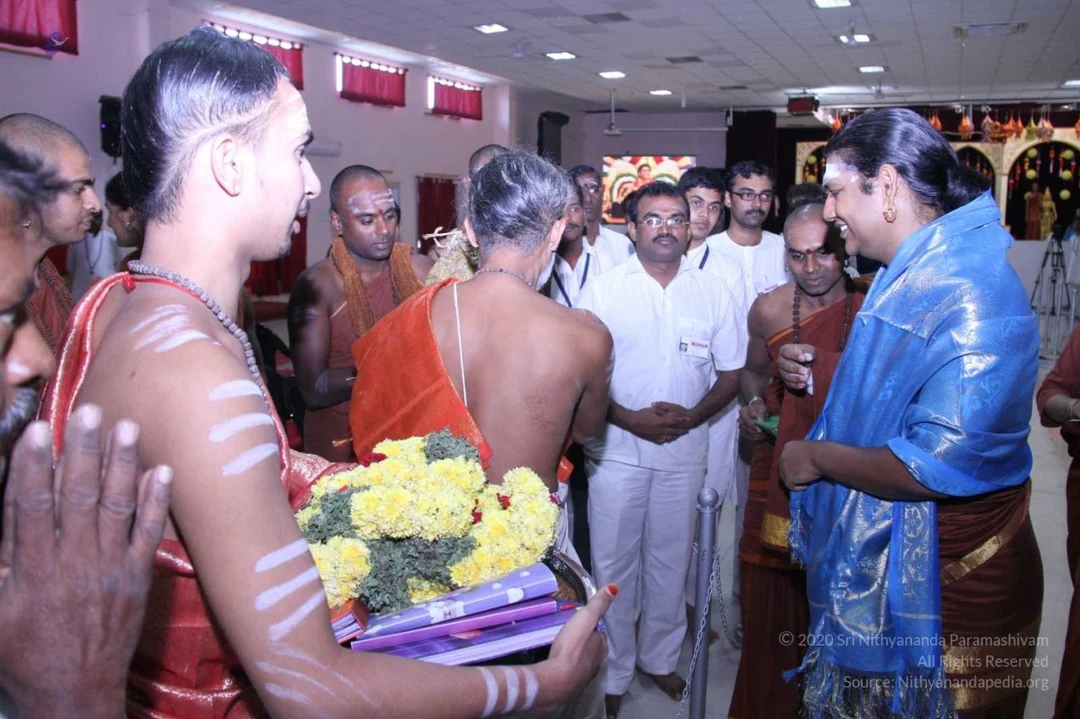
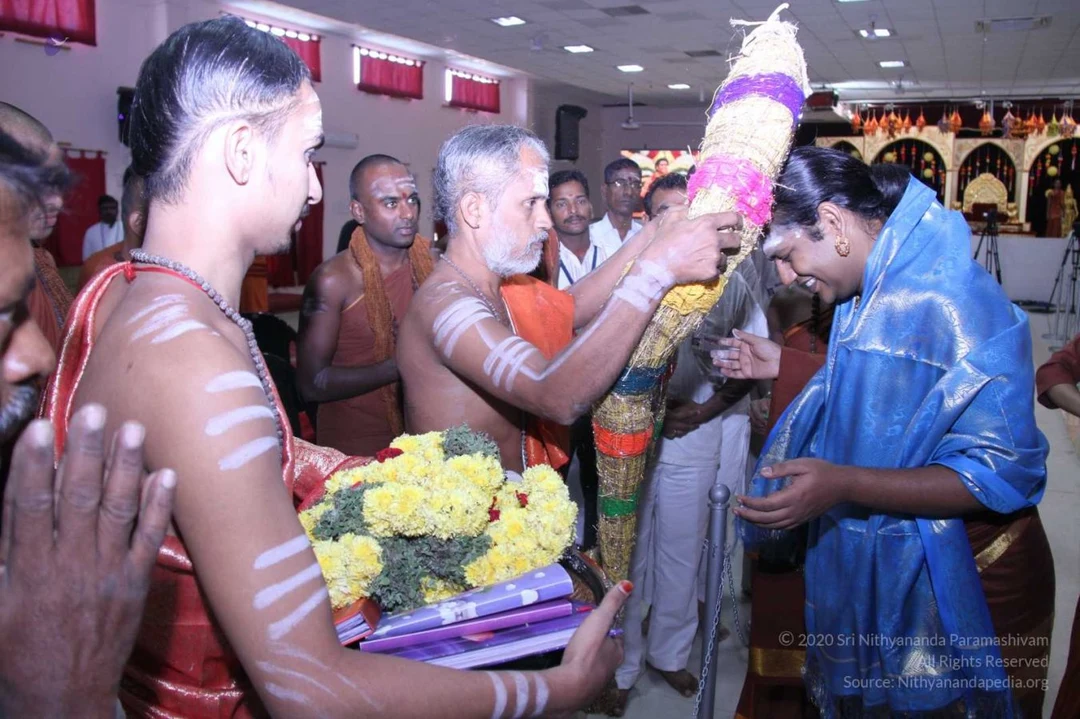
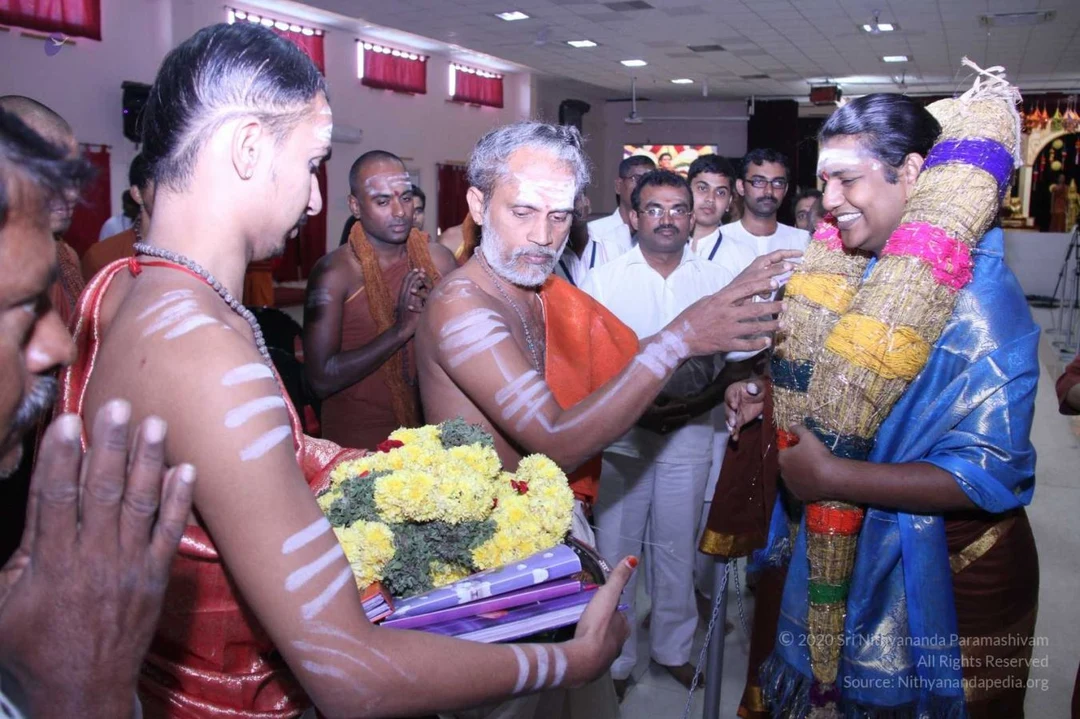
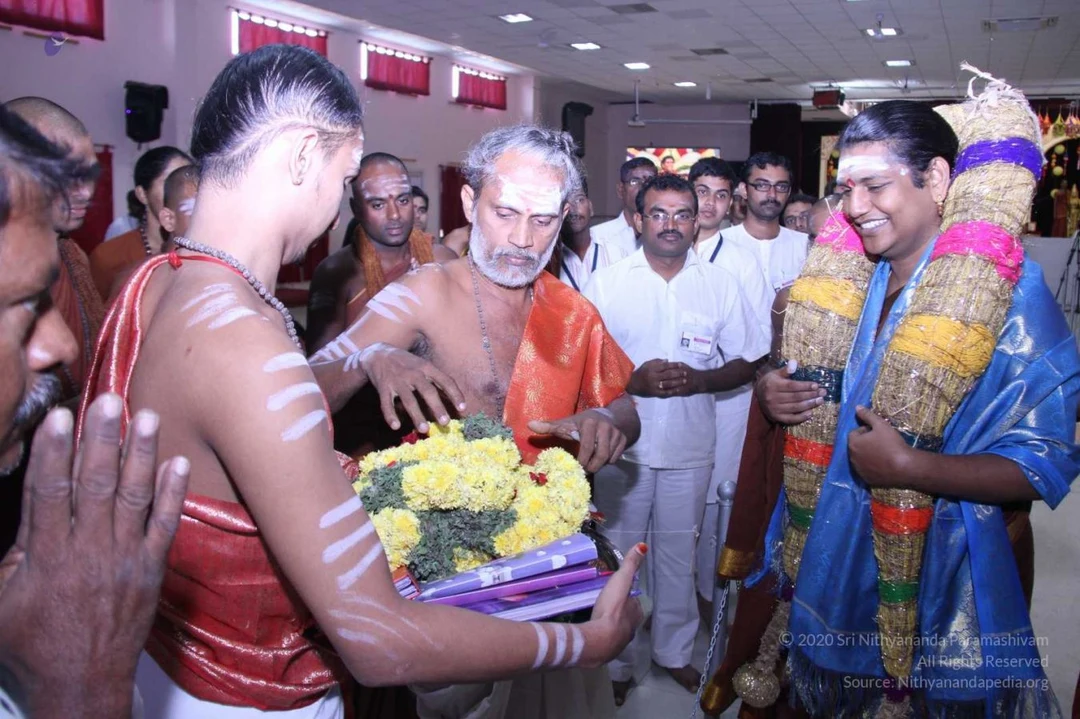
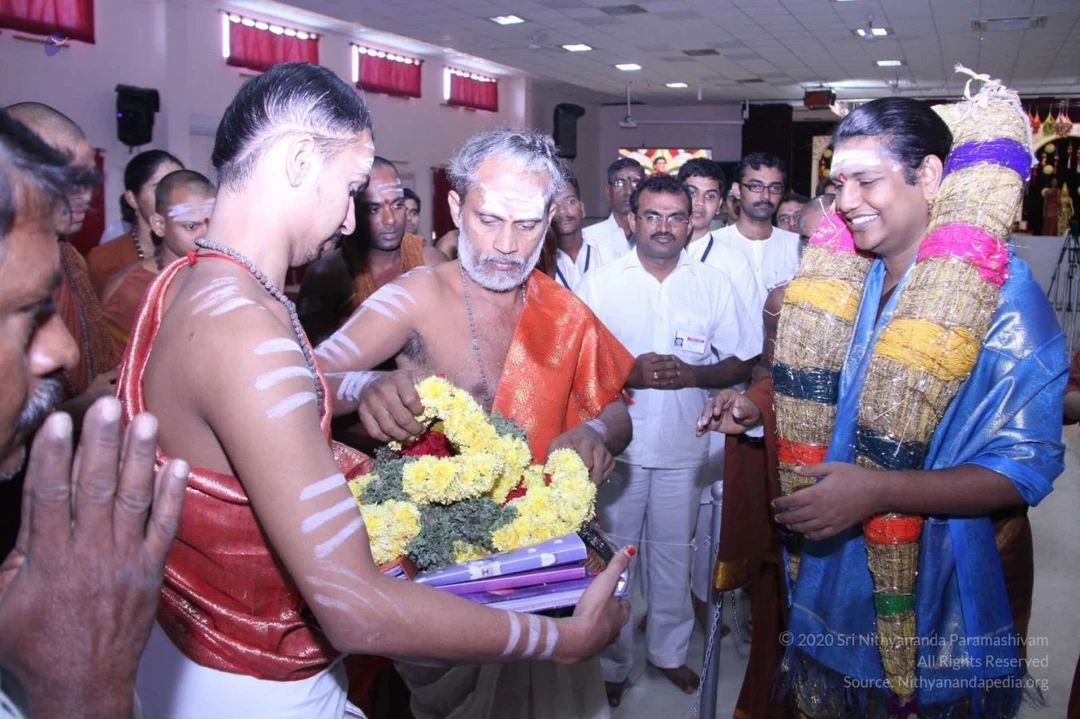
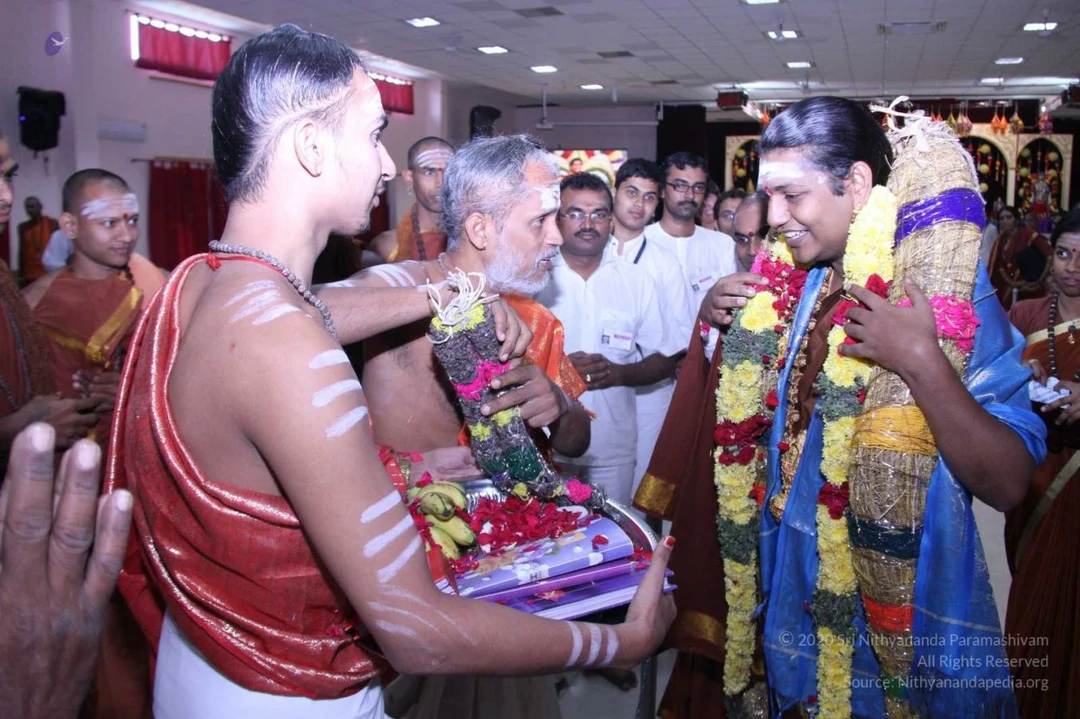
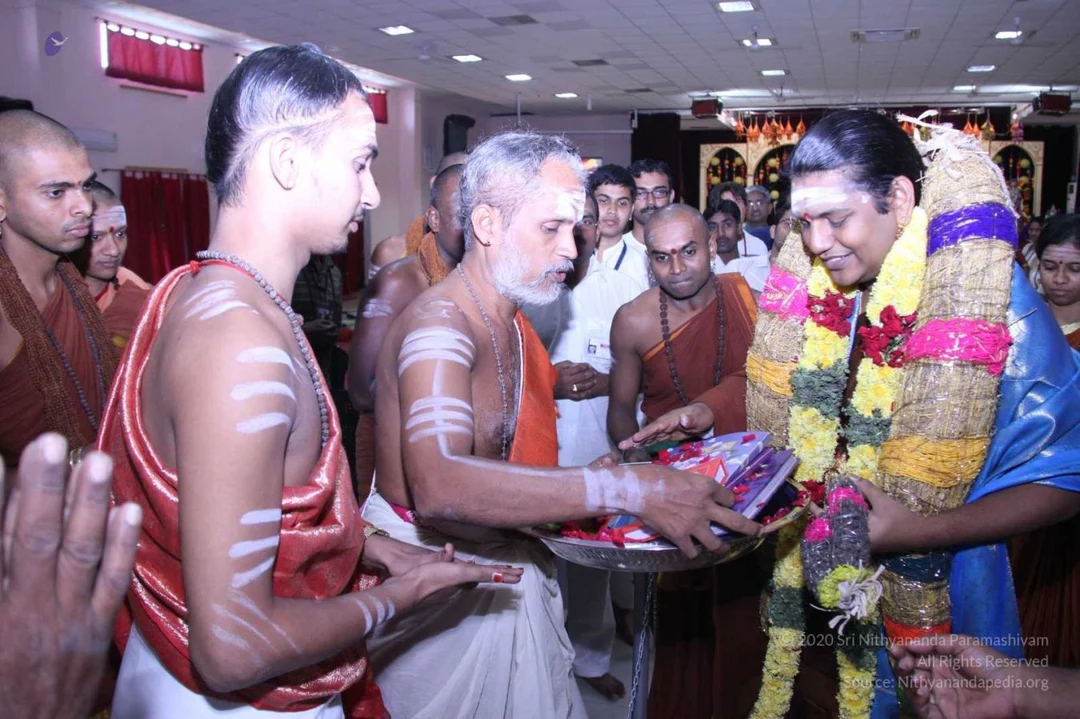
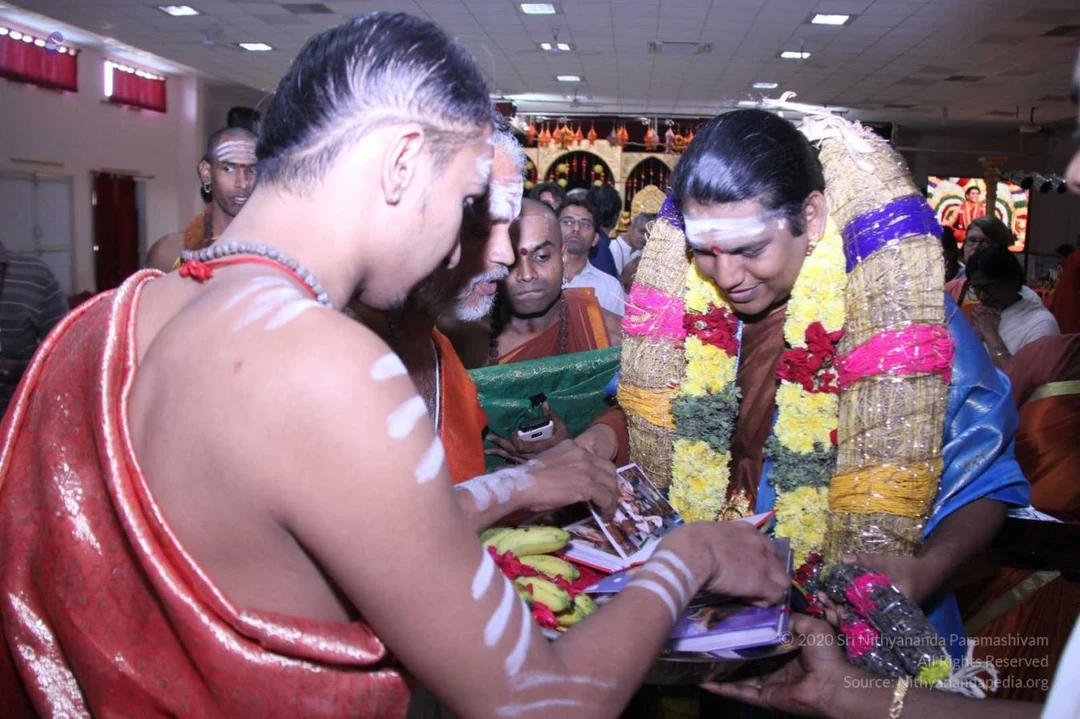
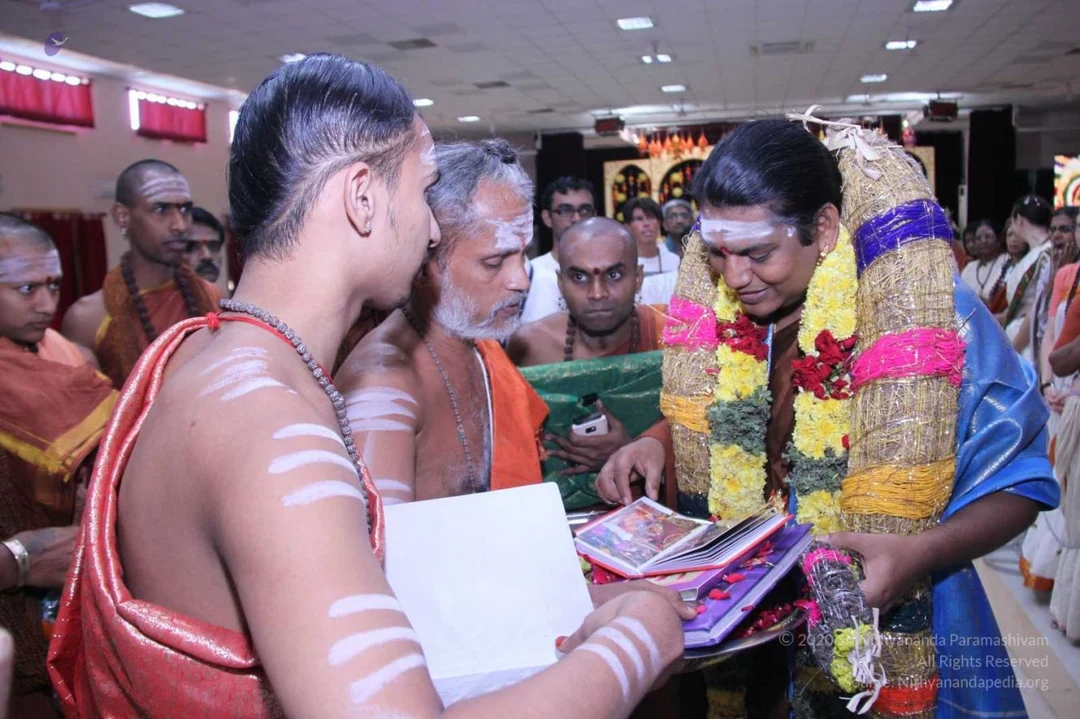
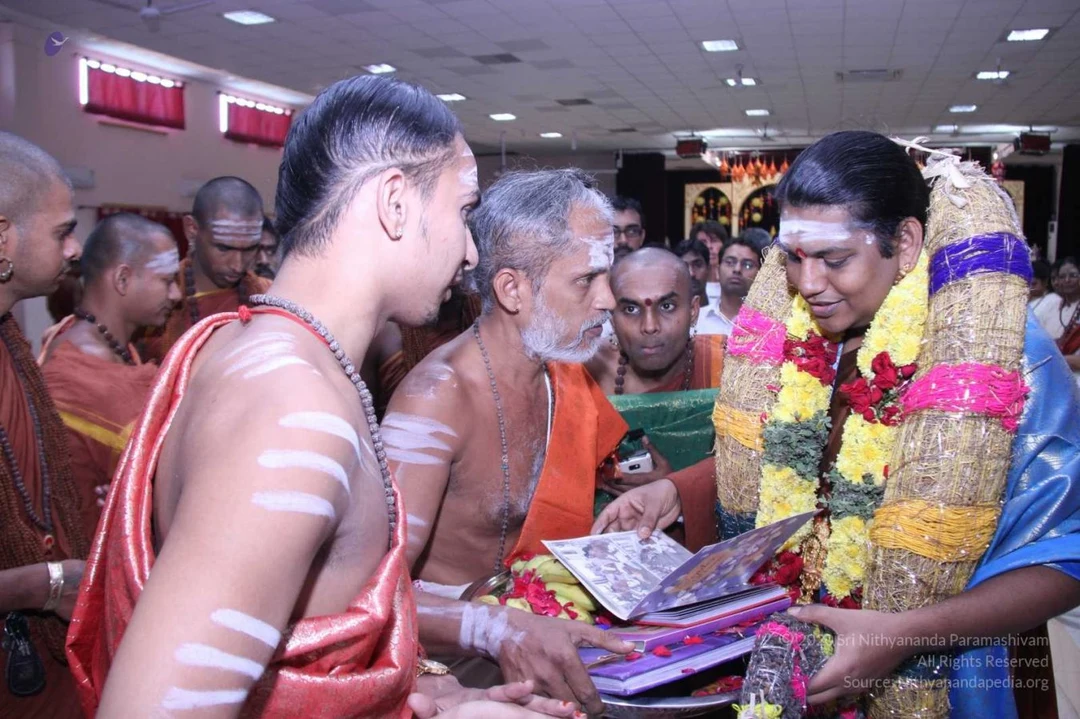
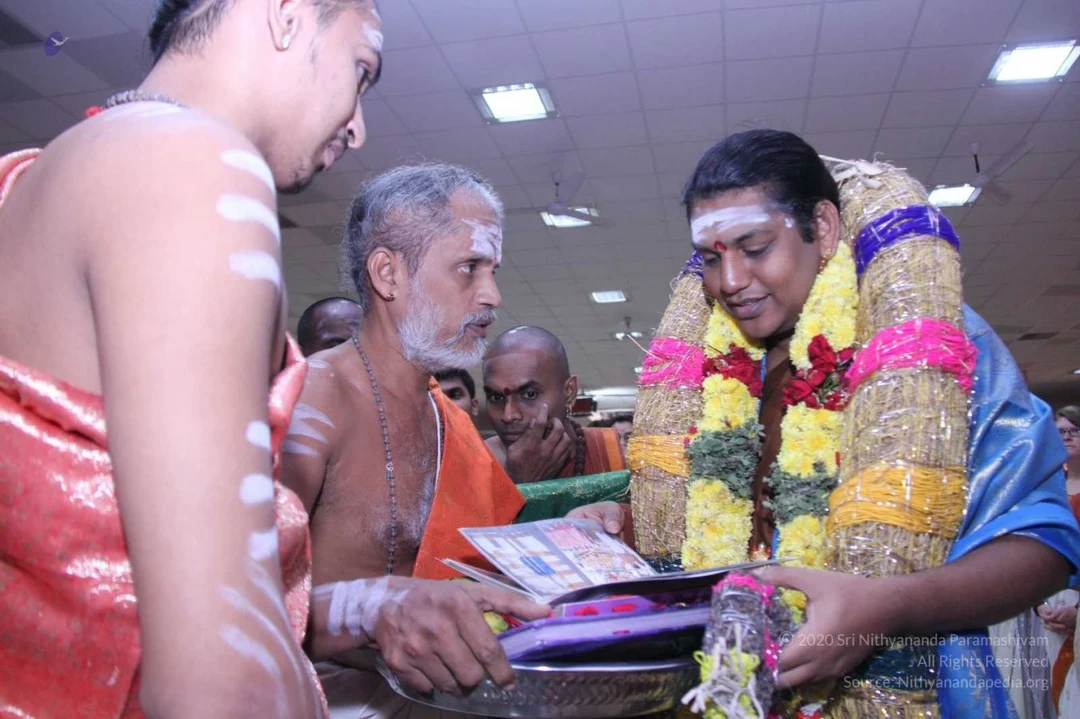
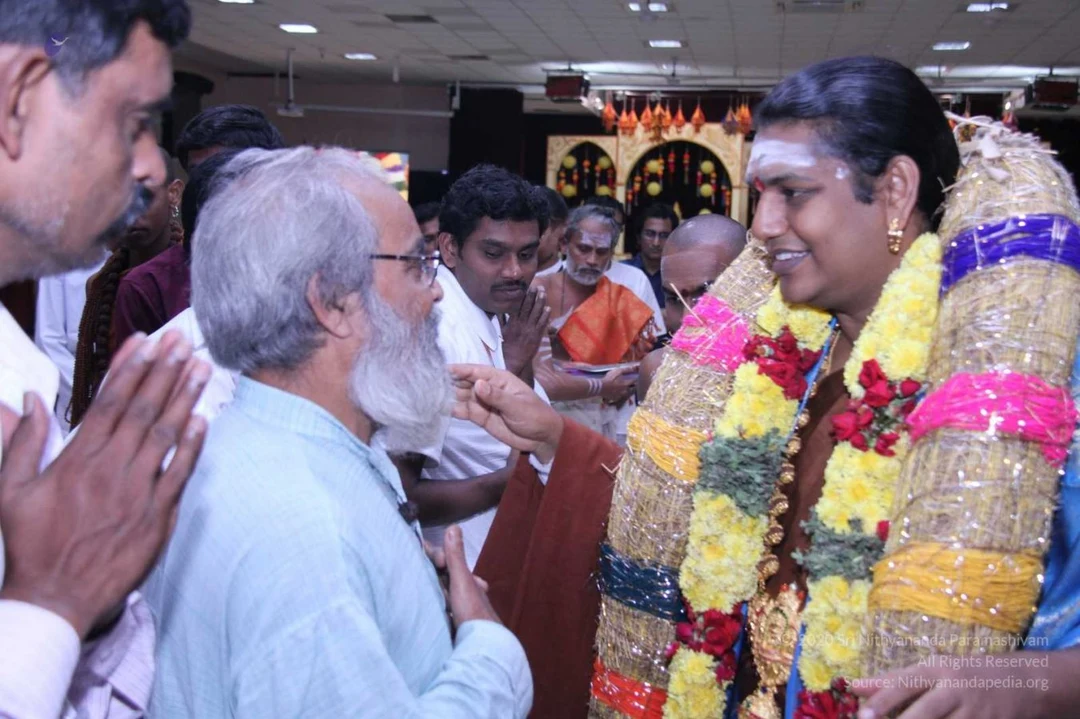
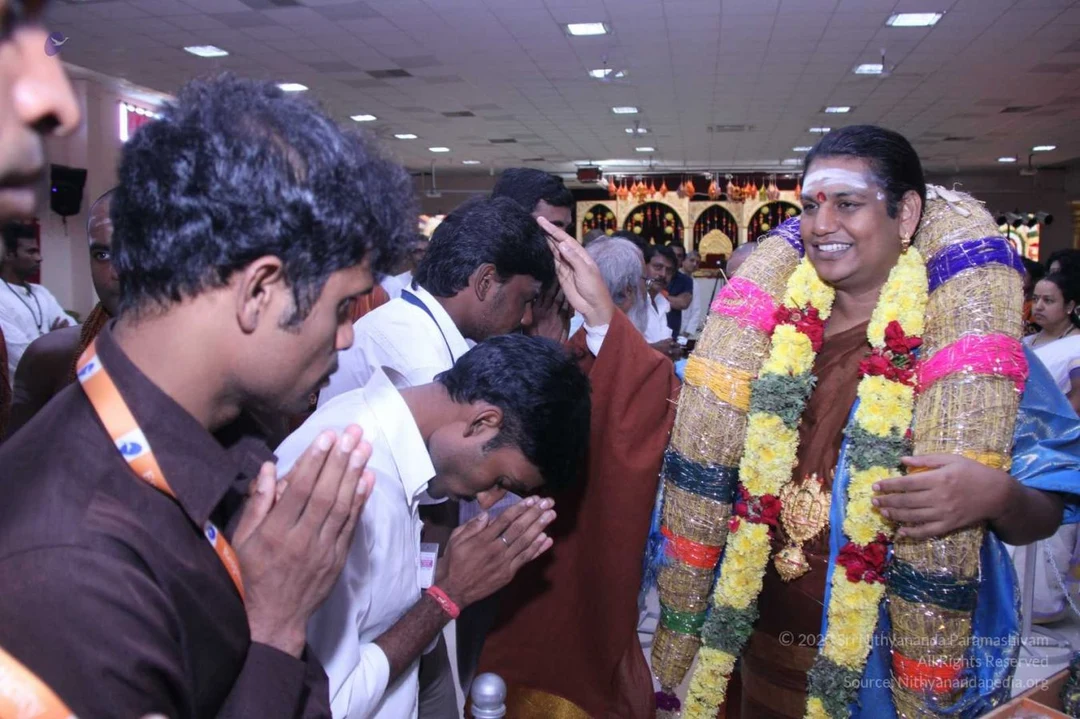
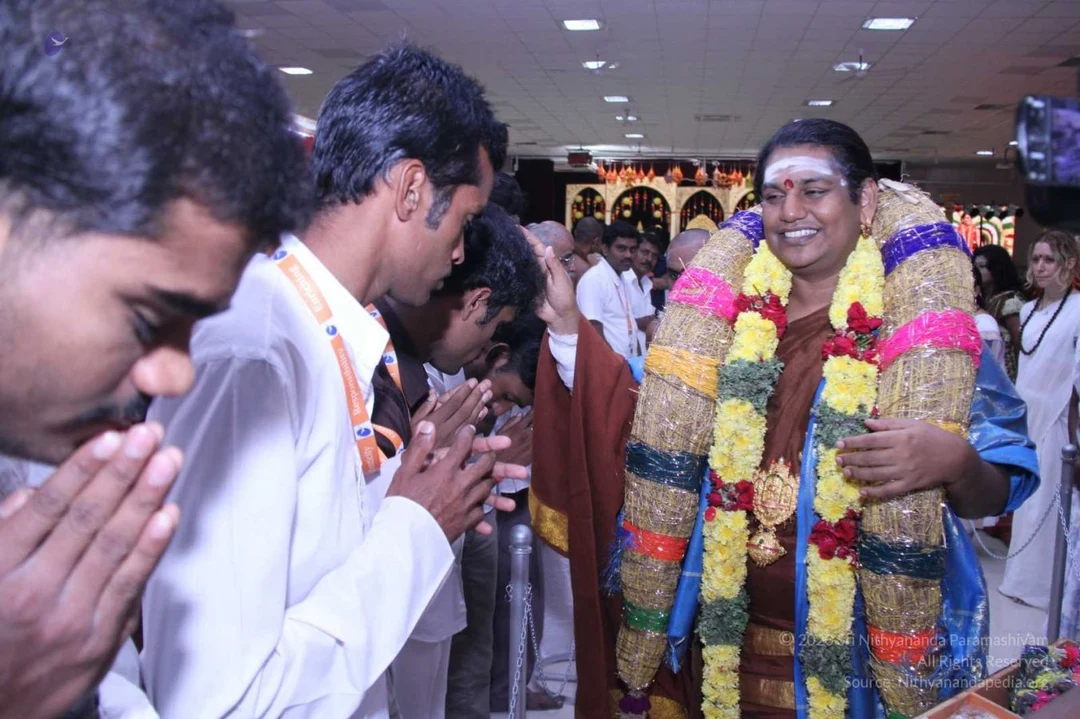
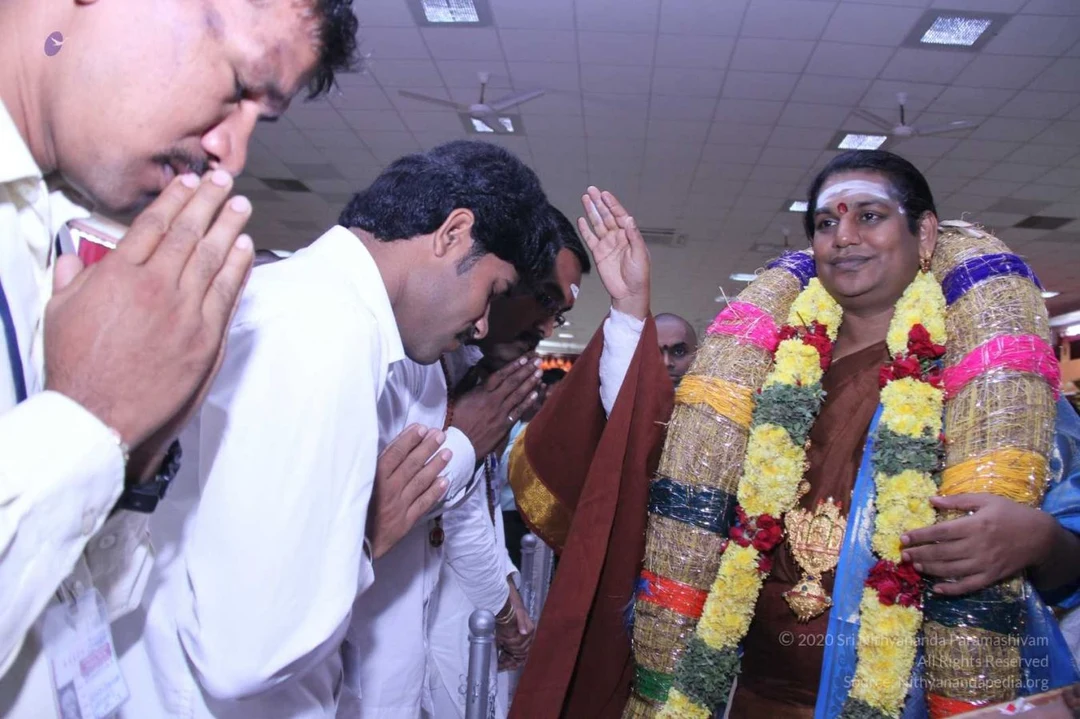
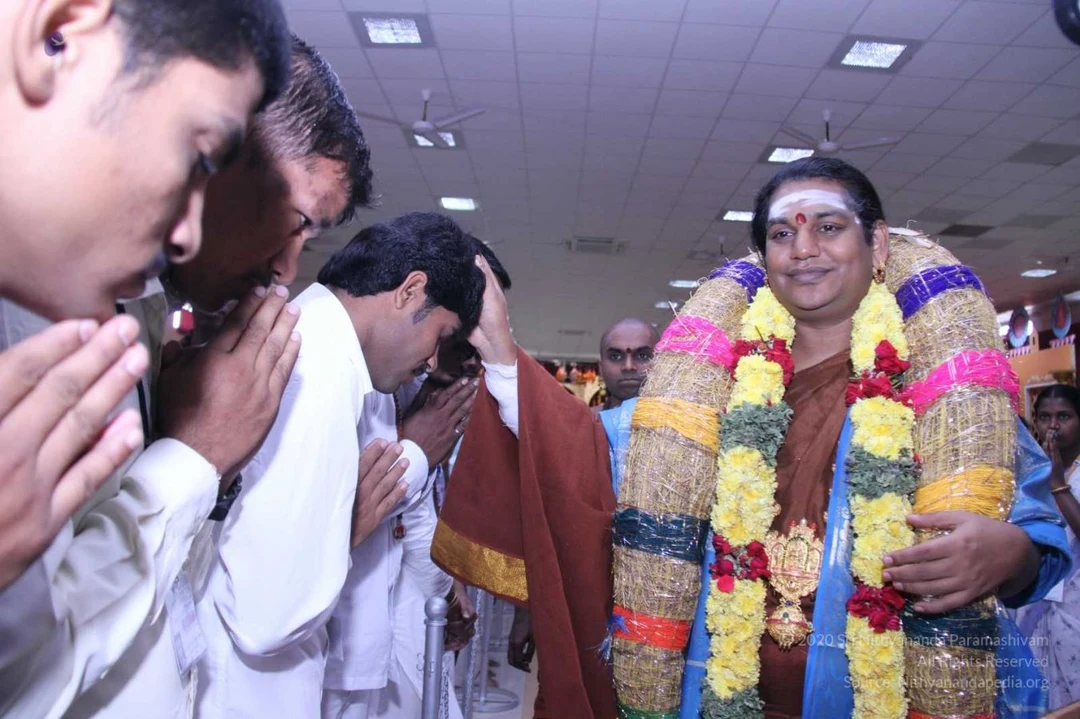
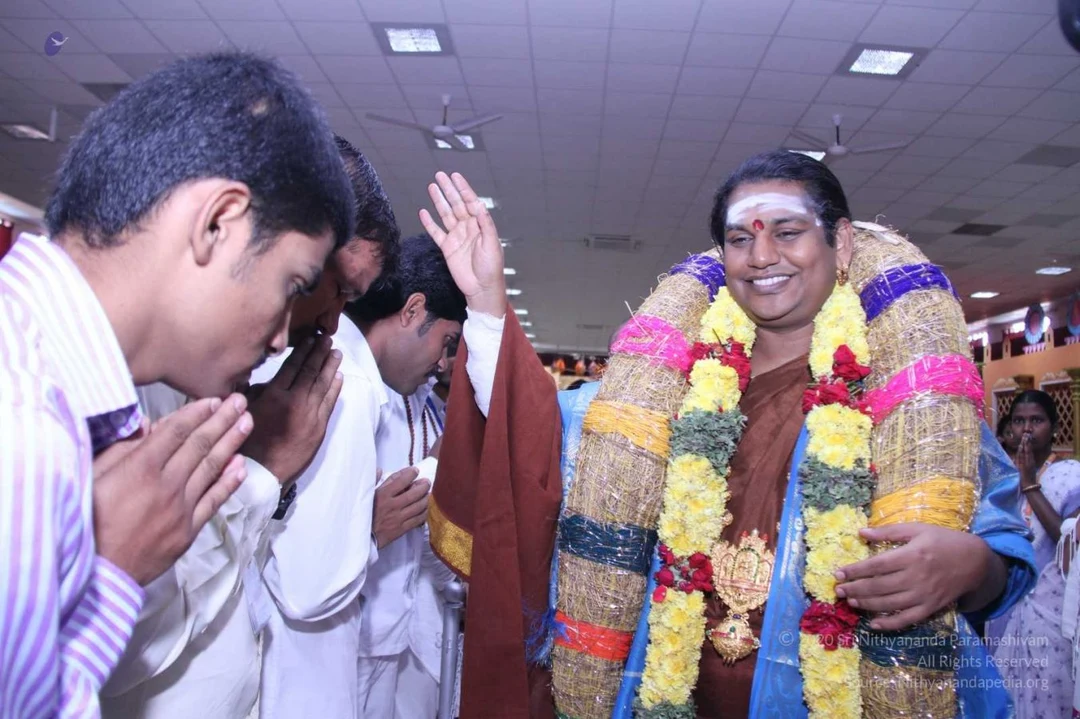
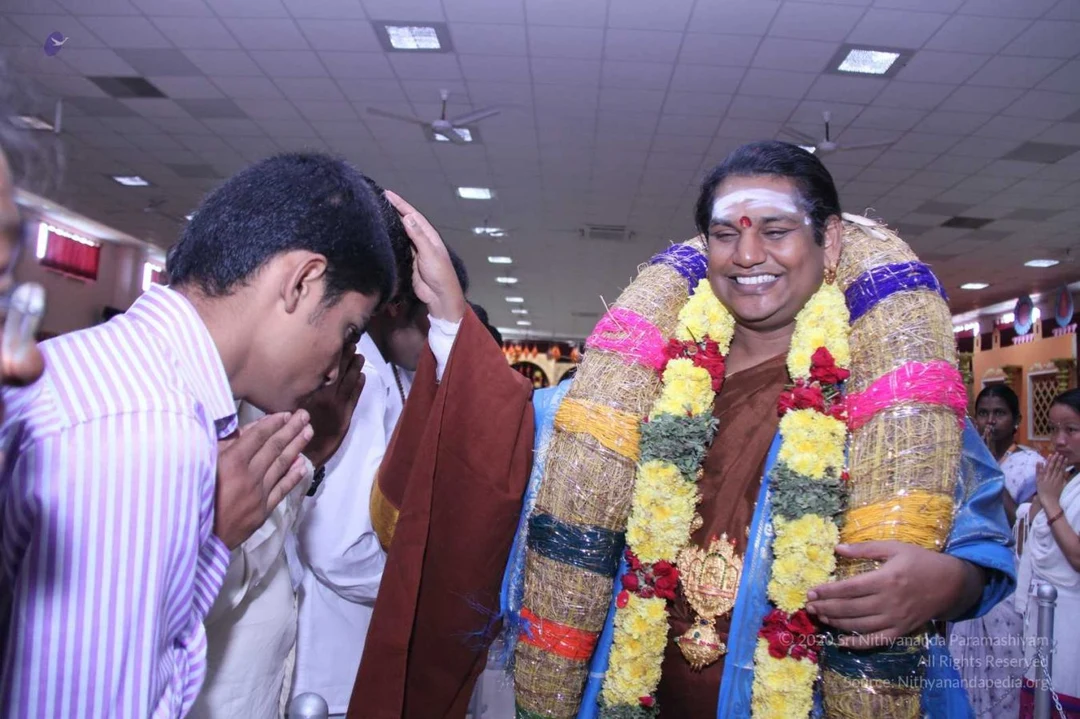
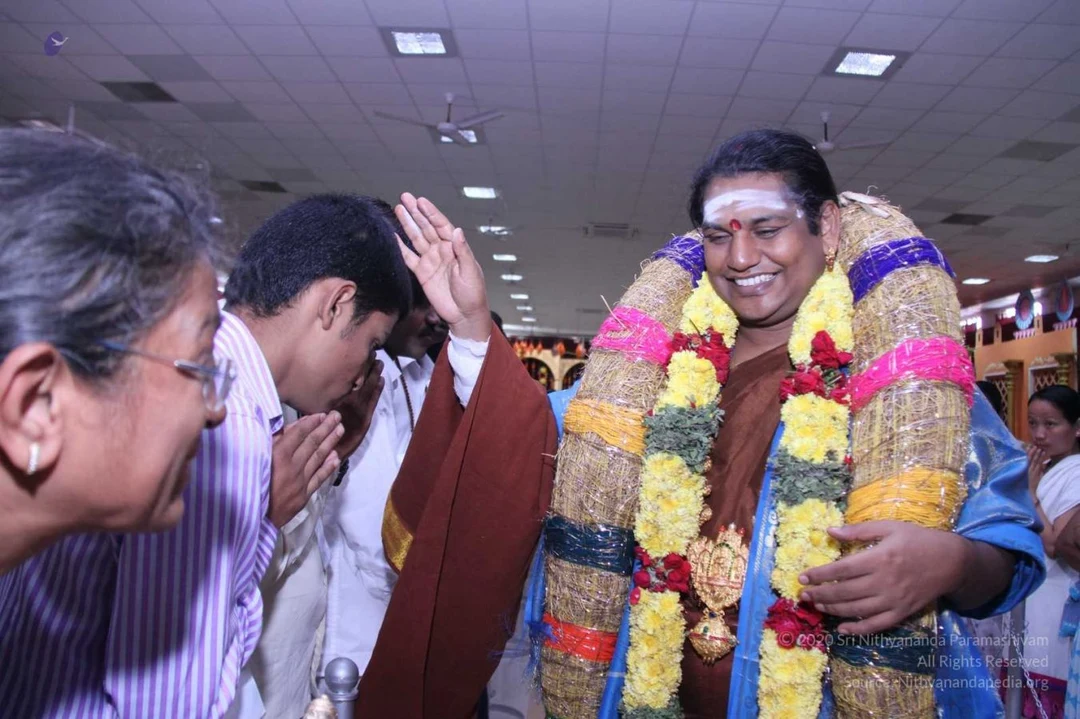
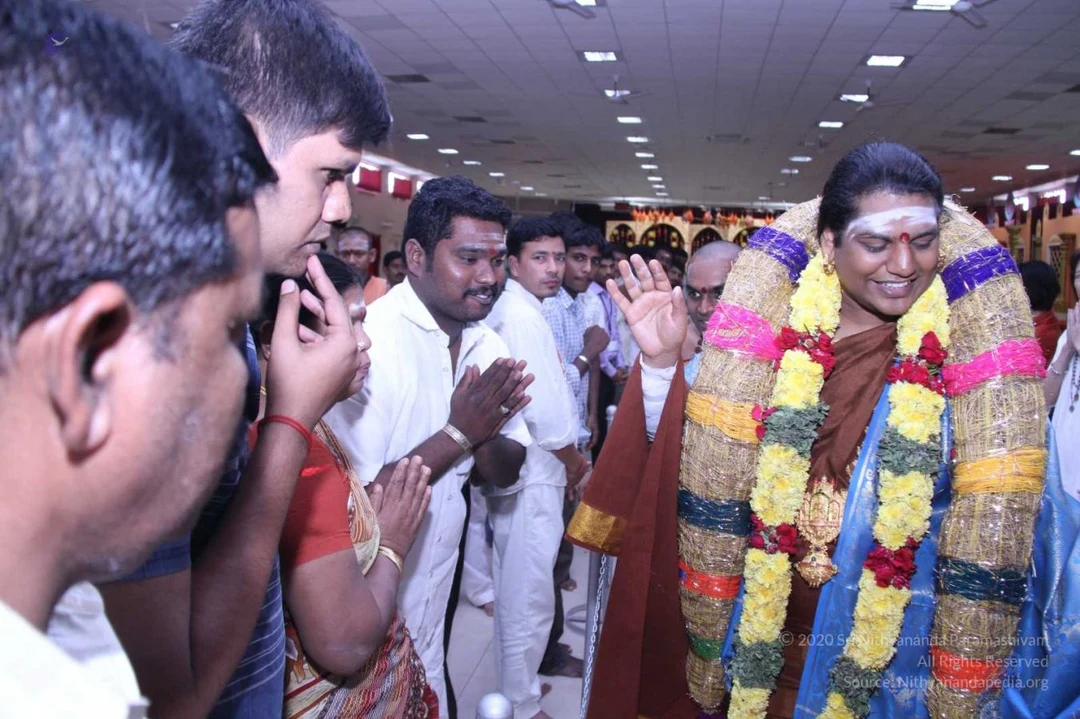
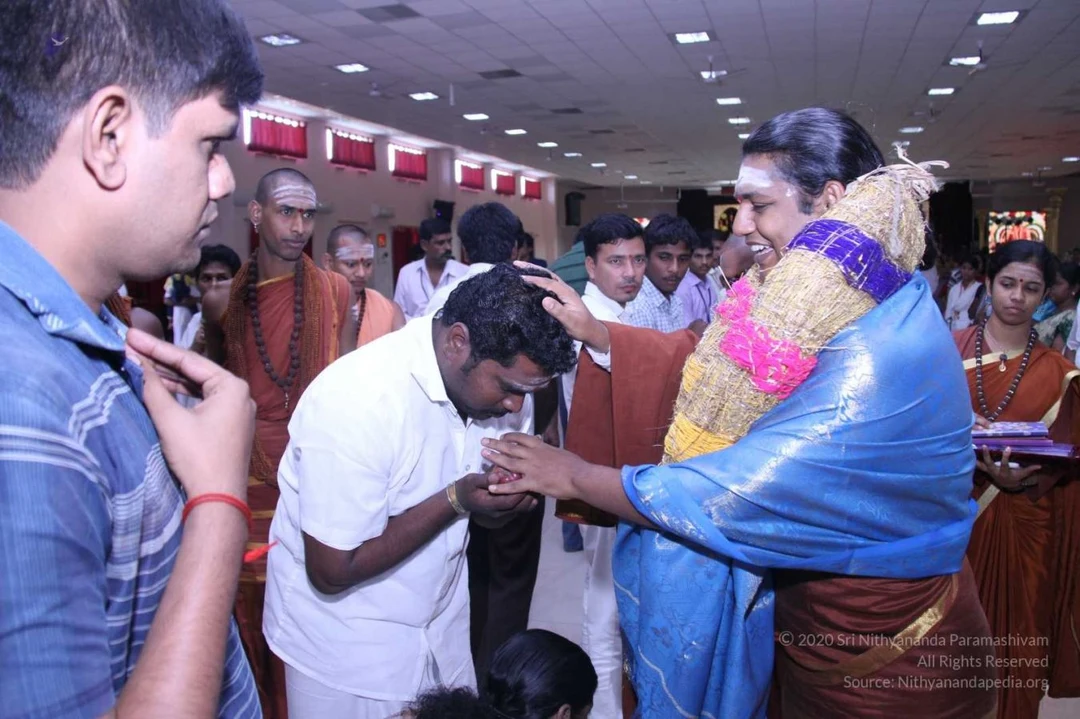
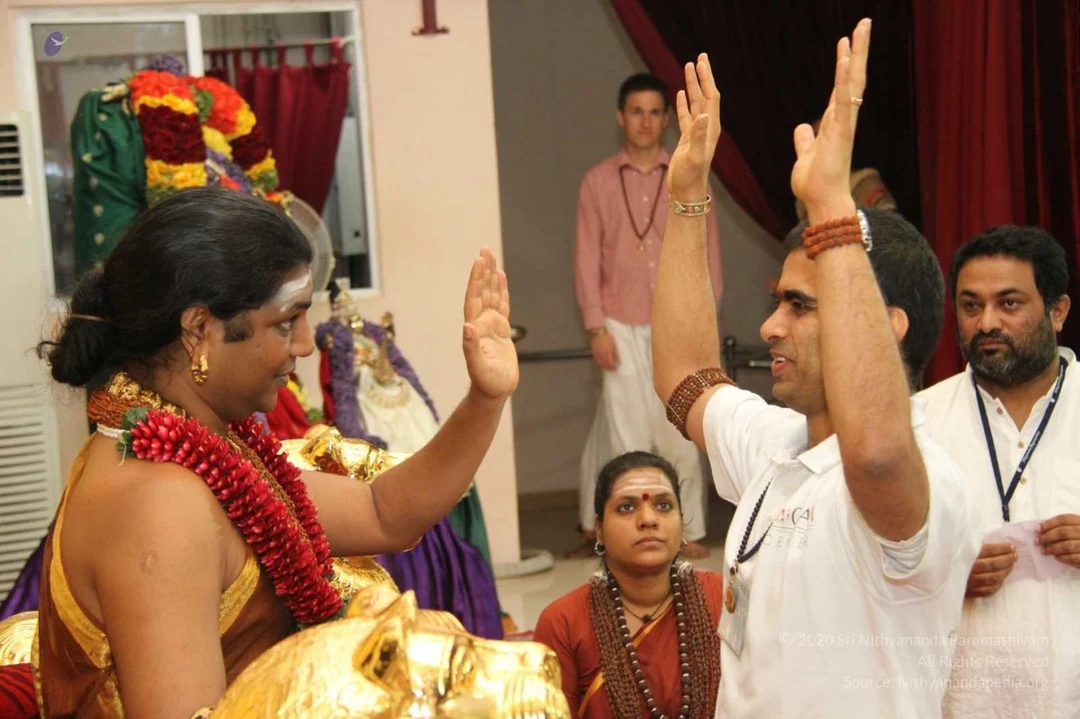
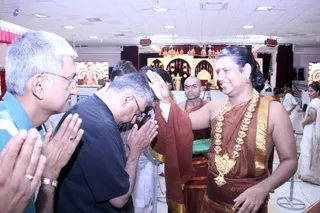
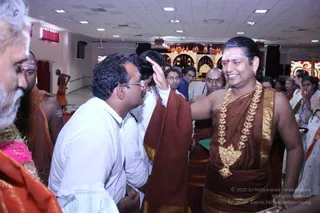
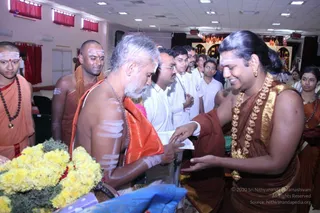
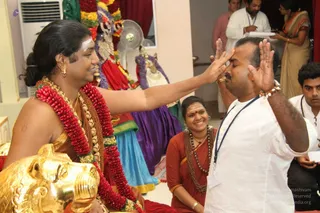
Indoor photo of a ceremonial welcome in a hall with a red-and-gold backdrop, hanging lanterns and a tall stage with a deity image. In the foreground, a bespectacled man in a dark polo shirt bows with palms joined. A smiling figure in a brown-and-gold silk dhoti and shawl, with a heavy gold necklace and long swept-back hair, raises a hand in blessing over the bowed man's head. A shaven-headed priest in saffron-brown robes stands behind, and a man in a light blue shirt with joined hands is at left. a person: the blessing figure has long swept-back hair, gold ornaments and a saffron-gold dhoti, but appearance is only a partial cue, so the label stays probable. Several other people in white and pale clothing stand in the background.Indoor event in a hall with white ceiling lights and a decorated stage backdrop with ornate arches and hanging orange lamps. Centre right, a man with long swept-back dark hair, tilak on forehead and red bindi, wears a dark maroon-brown robe with gold border and a heavy gold ceremonial garland with pendant; he smiles and raises his right hand in blessing toward a man in white shirt with glasses who bends forward with hands folded. Other people in white and maroon robes, a bald man in a maroon shawl, and women in white saris stand around; a shaved-head man in saffron-orange cloth stands at left edge and an older bearded man with white tilak is partly visible at far left. Several people appear to be devotees receiving blessing.A photograph of an indoor hall with red curtains and a decorated backdrop. A long-haired figure in a brown and gold-bordered robe with a heavy gold necklace and gold earrings smiles while reaching out to take a small white paper from an older bearded man in an orange-red shawl with white body markings. Yellow marigolds lie in the foreground. Behind them, young men in white shirts and a few men in orange robes with rudraksha malas stand watching, and a woman in a dark outfit is at the right edge. The long-haired figure matches the a person appearance cues of long swept-back hair and ornate gold adornments, and is receiving the paper in a ceremonial exchange.Indoor photo of a ritual reception in a hall with a decorated backdrop of golden and orange lanterns and deity images. Several men in saffron-brown and orange robes with white forehead markings and rudraksha malas stand close together. A man in a white dhoti with a grey beard and gold-coloured thread-like garland accepts a folded white cloth and a bundle of yellow flowers from a smiling man in brown robes with a gold-bordered shawl and a long gold garland. A woman in brown and a woman in a maroon sari with a rudraksha mala stand at the right edge. Nearby people in white shirts watch. White body markings appear on some arms and chests.A photograph of a ceremonial indoor event in a bright hall with pink walls and red curtains. In the foreground a young man in a red-orange dhoti with a beaded necklace and white horizontal body markings holds a bouquet of yellow marigolds and green leaves. Beside him an older man with white hair and a white beard, bare-chested, wears a saffron-orange shawl, a beaded mala and white horizontal markings, and receives a folded white cloth or paper from a person in brown robes with a gold-trimmed shawl, a long necklace and a white forehead mark. Other attendees in brown and orange robes and white shirts stand around, and a decorated backdrop with orange and gold hangings is visible at right. A small corner logo and copyright overlay appear at top right and bottom right.A photograph in an indoor hall with red curtains and ceiling lights. A bare-chested man in a red silk dhoti-style cloth, with white stripes painted on his arms and chest, carries a tray of yellow marigold garlands and purple-covered books. Beside him a bare-chested man in orange cloth with a grey-bearded face and white body markings stands near a blue cloth. On the right, a smiling man with swept-back dark hair, a gold-trimmed brown garment, a long gold necklace and a white forehead mark is greeted. Several men in white shirts stand behind a metal barrier, and a golden ornate throne and decorations are visible in the background. Several other men in orange and white cloths are also present.

Swamiji with the Deities

10 photosSource gallery
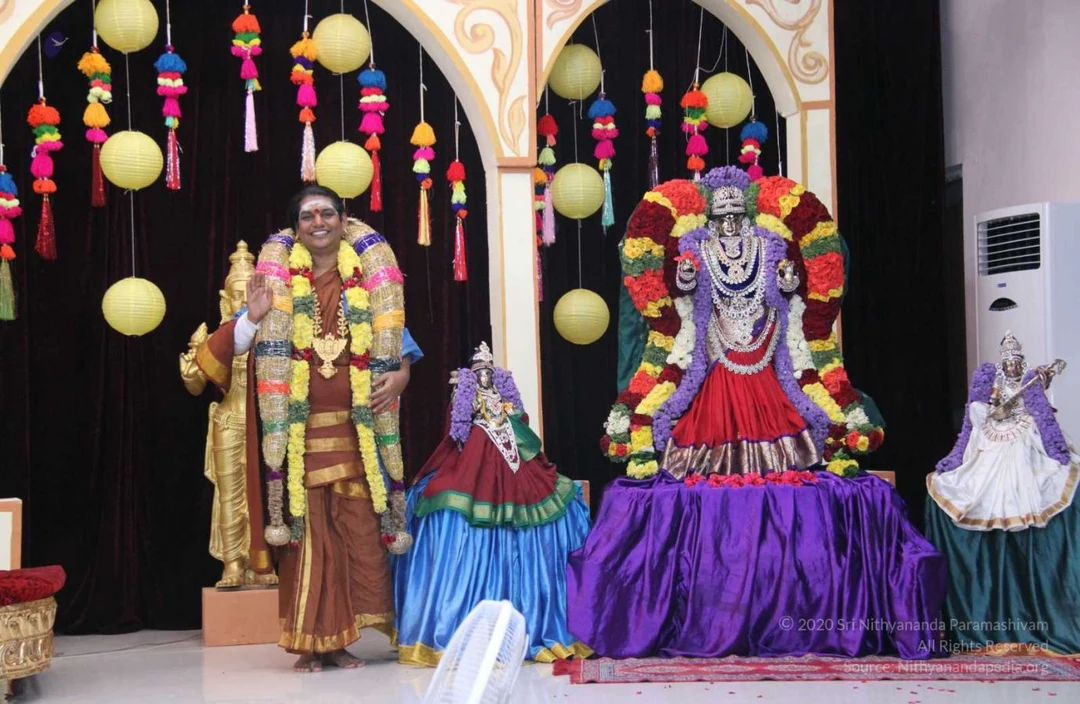
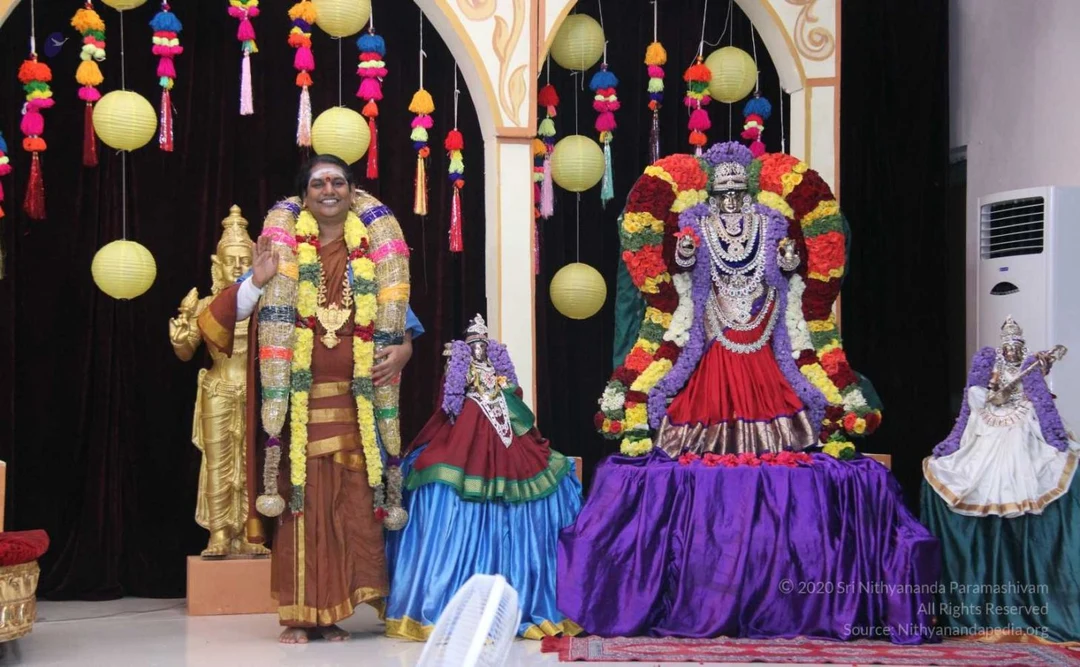
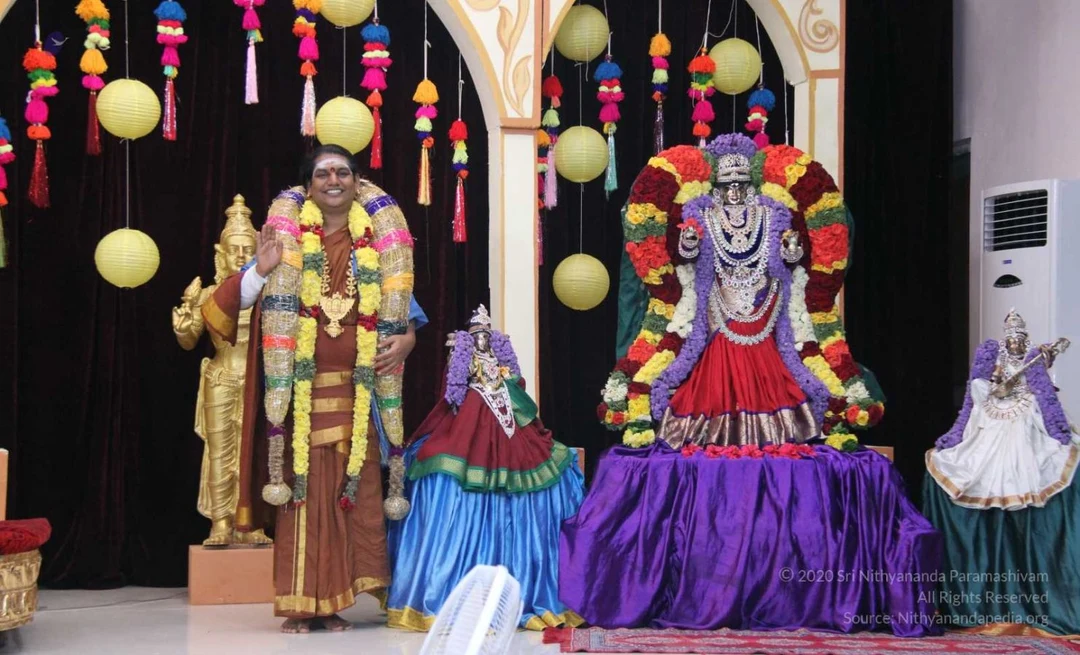
A standing man in a rust-brown dhoti and shawl with a long multicoloured flower garland and a gold pendant waves his right hand on a stage. Behind him are a golden standing deity statue, a red and blue draped sitting figure, a large adorned deity murti in red and gold with purple drapery, a red and gold floral arch, a white-clothed sitting murti holding a veena, and hanging paper lanterns and tassels. A white pedestal fan and a purple cloth-covered stage complete the scene.A smiling person stands on a stage in front of a decorated backdrop, waving with one hand. They wear a rust-brown dhoti and a multicoloured flower garland with tassels, plus a gold pendant and a red-and-white forehead mark. Beside them stands a golden statue of a male deity holding a staff. Behind them, a large deity murti in a red garment and purple-draped stone platform is adorned with garlands of red, orange, yellow and purple flowers and layered silver necklaces. Smaller deity figures in blue and green robes flank the scene, with yellow paper lanterns and colourful tassels hanging above. Right side shows a floor fan and an air conditioning unit.A photograph of a figure in an ochre-brown and gold dhoti-style garment, wearing a multicoloured garland of flowers and tassels and a gold necklace, standing on a stage and smiling while raising one hand in greeting. A forehead mark is visible. Beside him stands a golden statue of a male deity holding a staff, and to the right a large deity murti with silver and pearl necklaces is adorned with red, yellow and purple flower garlands on a purple draped platform. Another female murti in a blue skirt and a white murti with a veena sit nearby. Paper lanterns and tassel decorations hang from an arch behind the stage, and a floor fan is visible at the bottom. a person cues are the garland, gold necklace and ochre clothing of the central figure, who appears to be giving a greeting.A person stands on a stage decorated with colourful tassels and paper lanterns, smiling and waving with one hand. The person wears a brown-orange robe with gold border, a thick multicolour flower garland, a gold pendant and a red-and-white tilak on the forehead. Beside them stands a golden statue of a male deity with a raised hand. To the right, a large silver-faced deity murti is dressed in red and white garments with layered silver necklaces and is adorned with red, orange and purple flower garlands and a purple cloth on a stand. Further right, a figure in a white and teal costume holds a veena, and a smaller deity figure in blue and green stands near the center. A pedestal fan sits at the bottom. Copyright text is in the lower right corner.A man in a stage setting stands at left smiling and waving, wearing a rust-orange dhoti and shawl, a multicoloured flower garland, a gold pendant necklace and a red-and-white tilak on his forehead; he is barefoot. Behind him are a gold-coloured standing deity statue, yellow paper lanterns and hanging tassel decorations. At right, a large ornately adorned deity murti in red and silver dress and layered silver and pearl necklaces sits on a purple draped platform, framed by a big arch of red, orange and yellow flowers. Smaller decorated murtis in blue, maroon and white saris stand beside it, and a white floor fan is in the foreground.A photograph of a person standing on a stage in front of a decorated altar, waving with one raised hand. The person wears a saffron-orange dhoti and shawl, heavily garlanded with multicolored flower and tinsel garlands, and a gold pendant necklace; the head is bare with a red tilak on the forehead. To the right stands a large decorated deity murti, adorned with red, yellow and purple flower garlands, layered silver-and-pearl jewelry, and a red and gold skirt, seated on a purple draped platform strewn with flowers. Beside it are two smaller decorated murtis, one in blue and red robes and one in white with a veena, and a golden standing figure stands on the left. Paper lanterns and colorful tassels hang from the arch above, and a white air-conditioning unit is at the right edge. A copyright overlay appears at the lower right.

Final Blessings

7 photosSource gallery
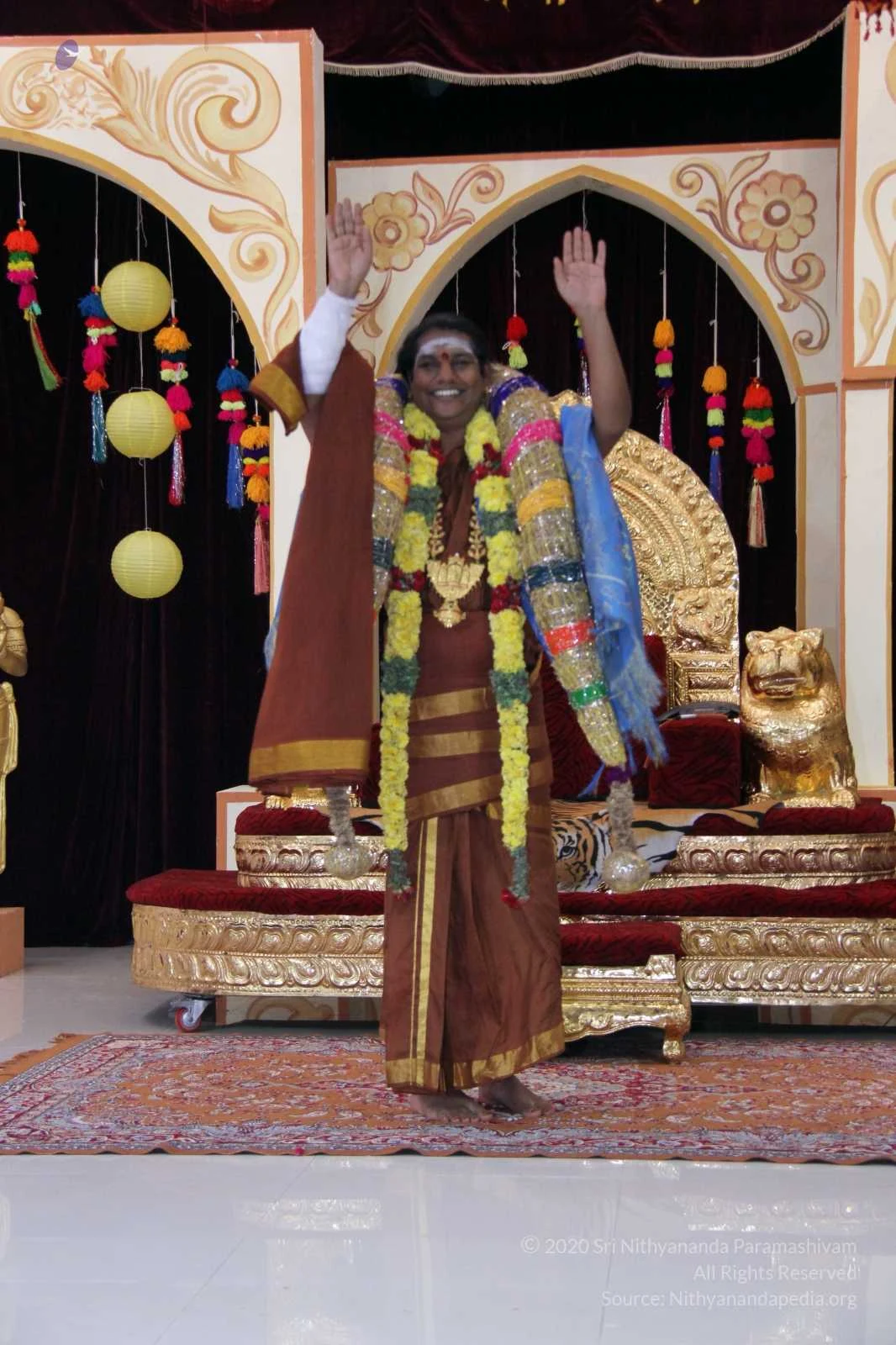
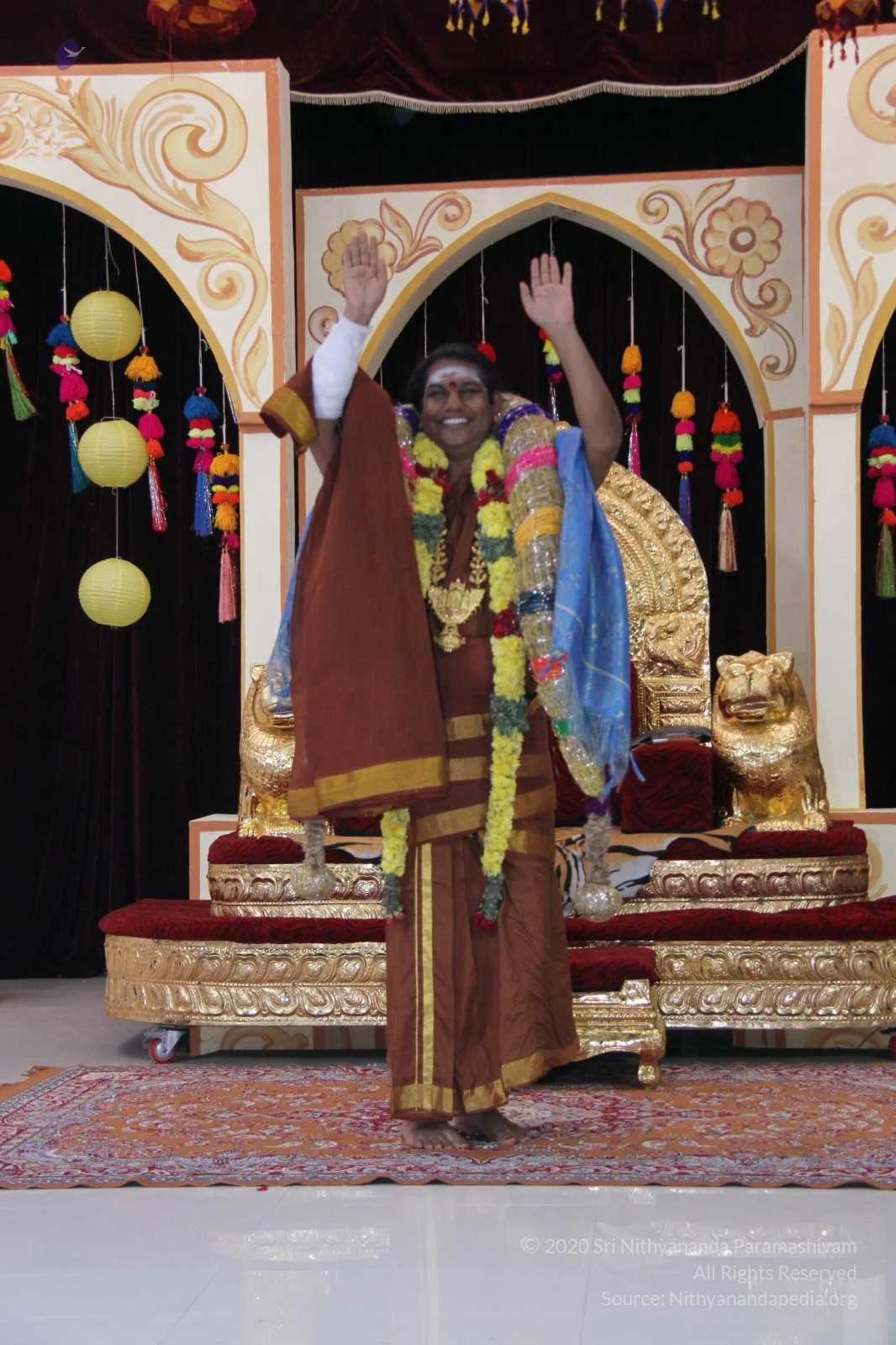
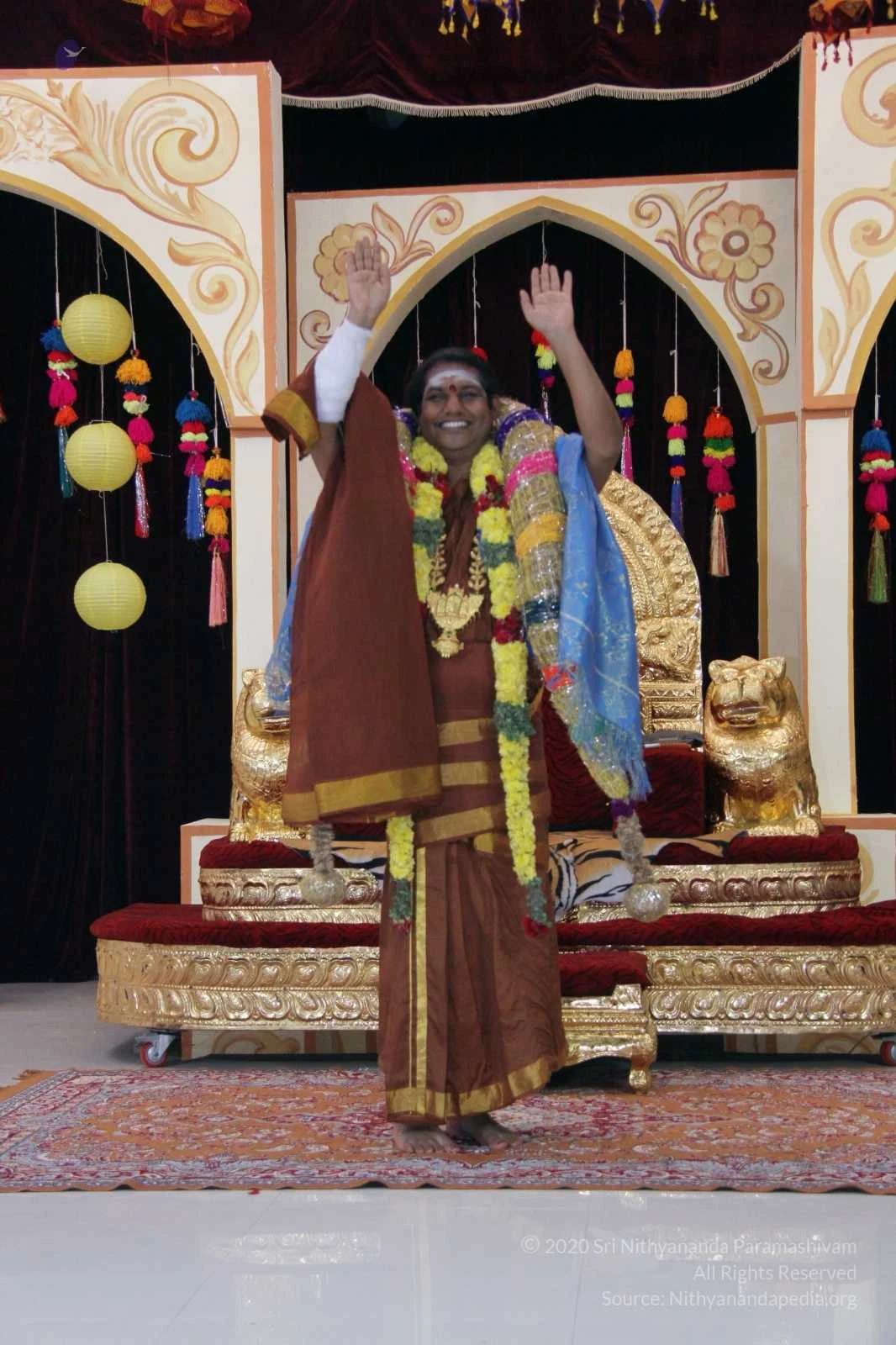
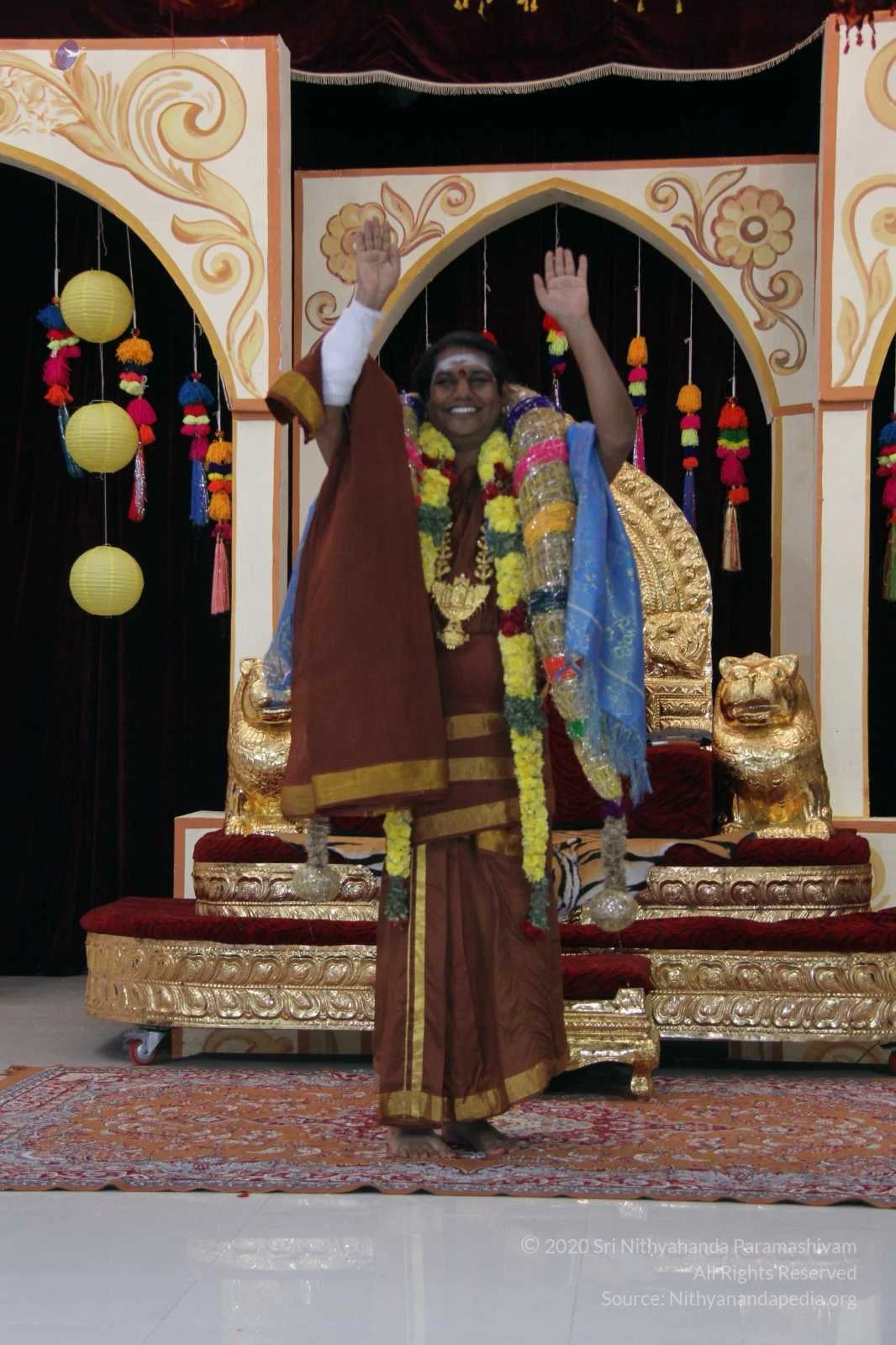
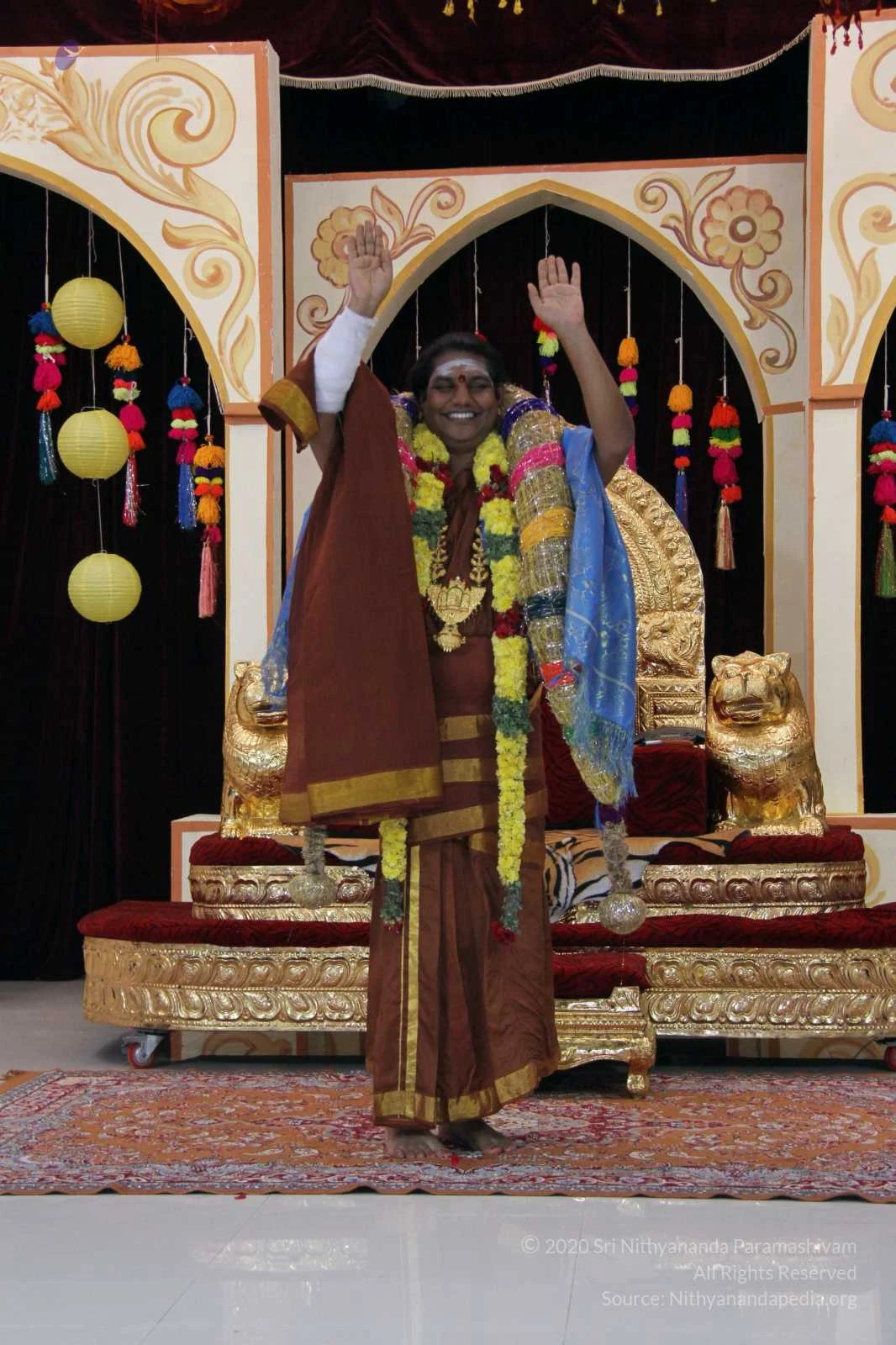
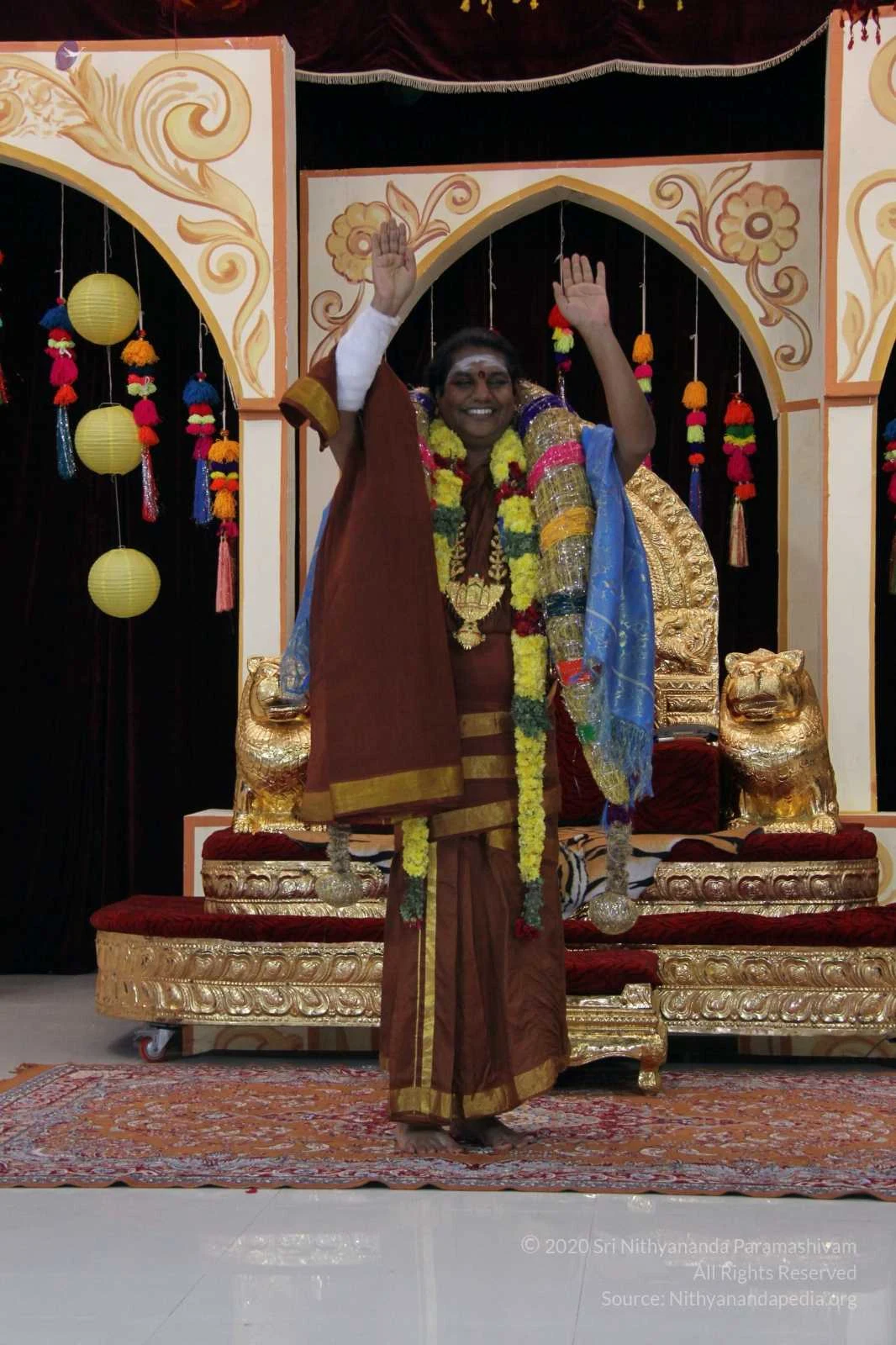
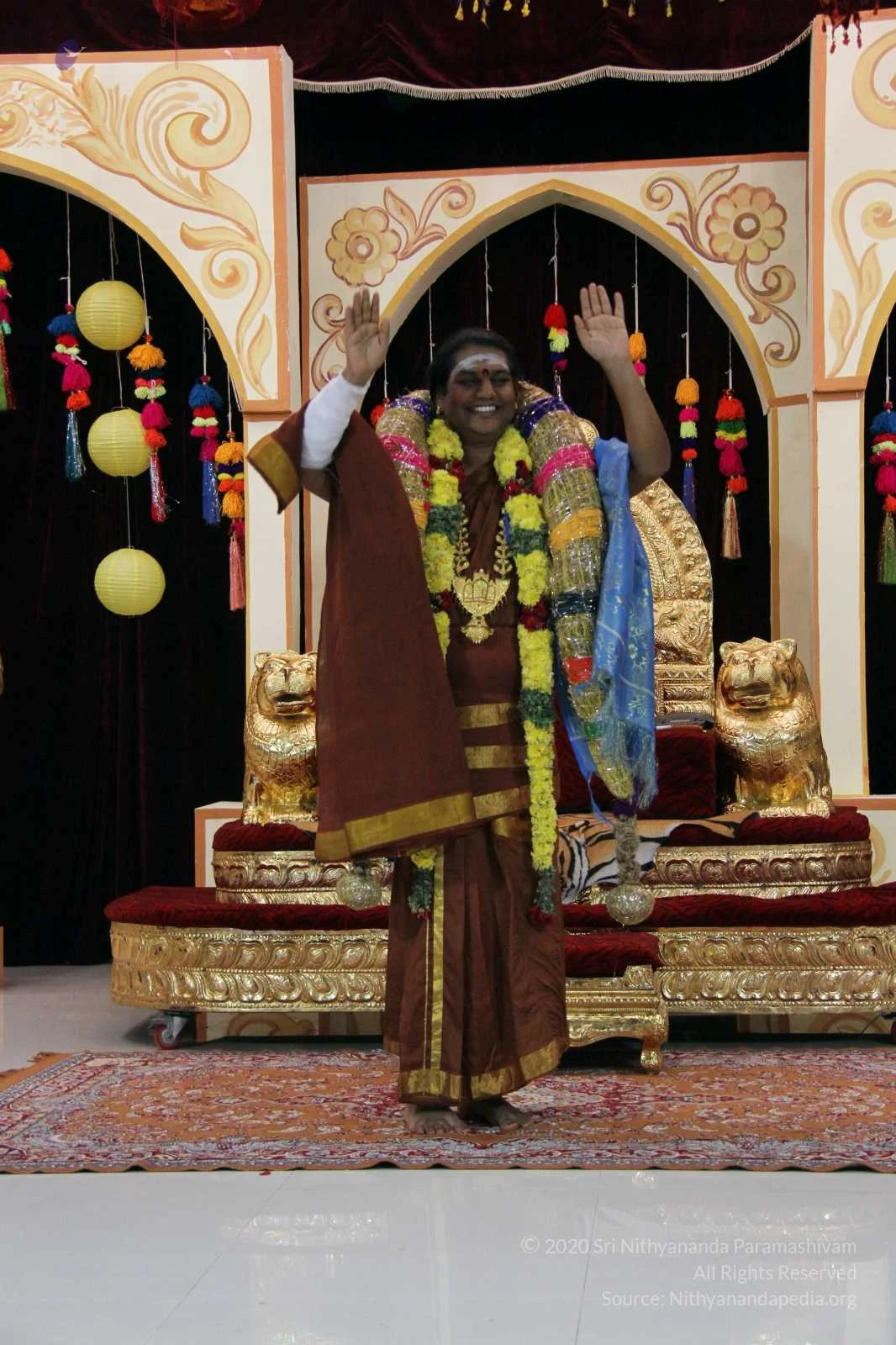
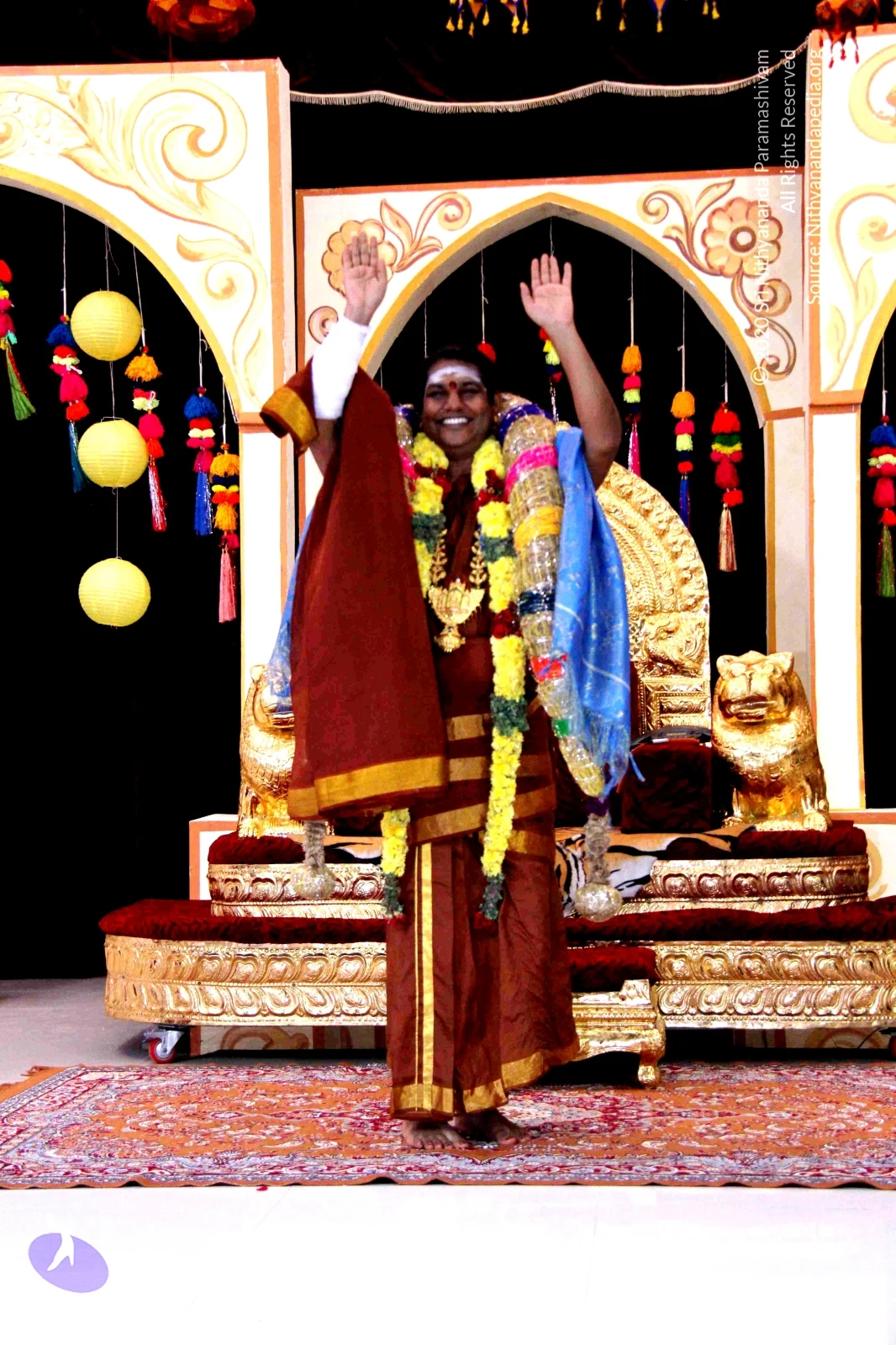
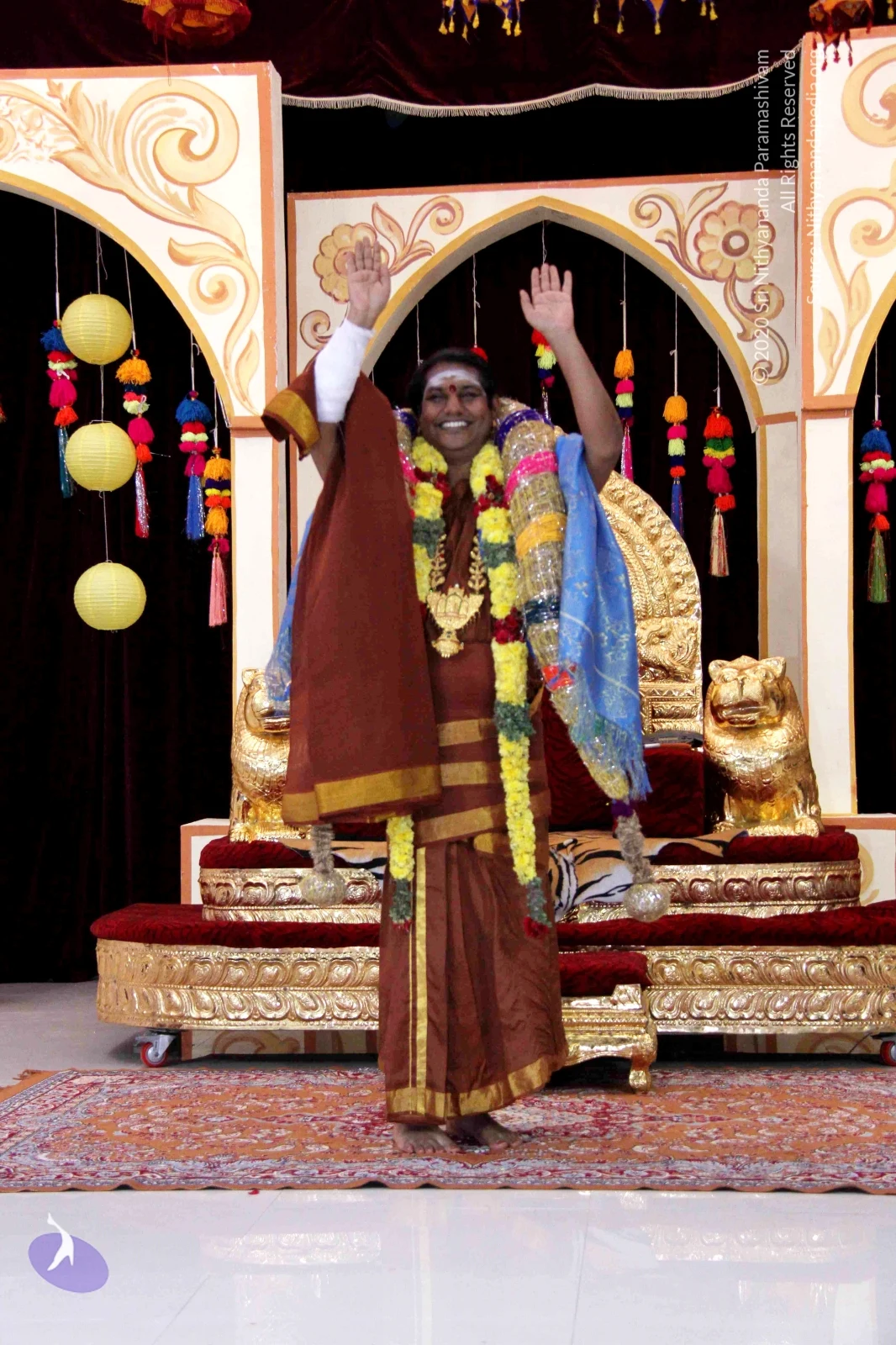
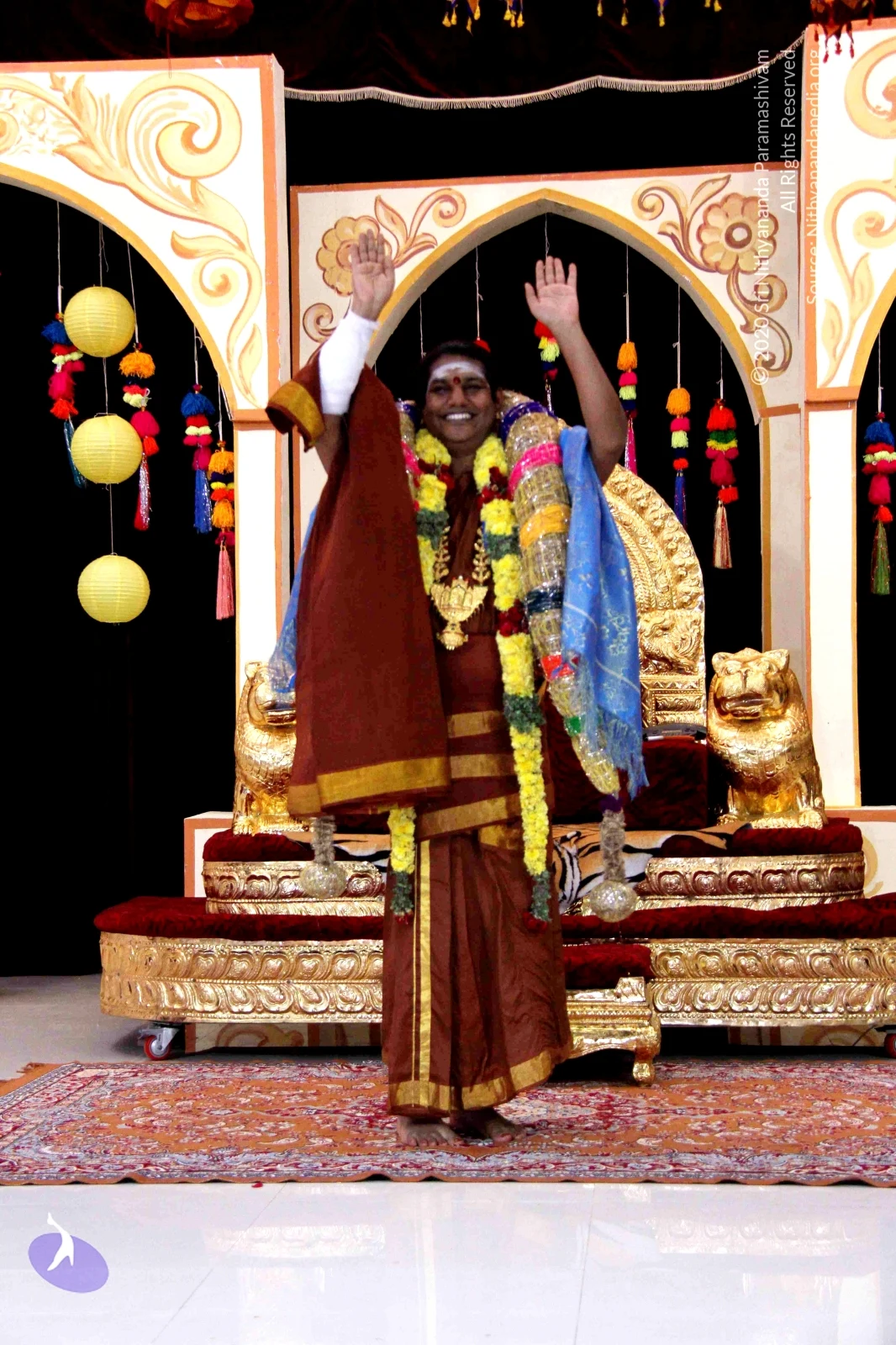
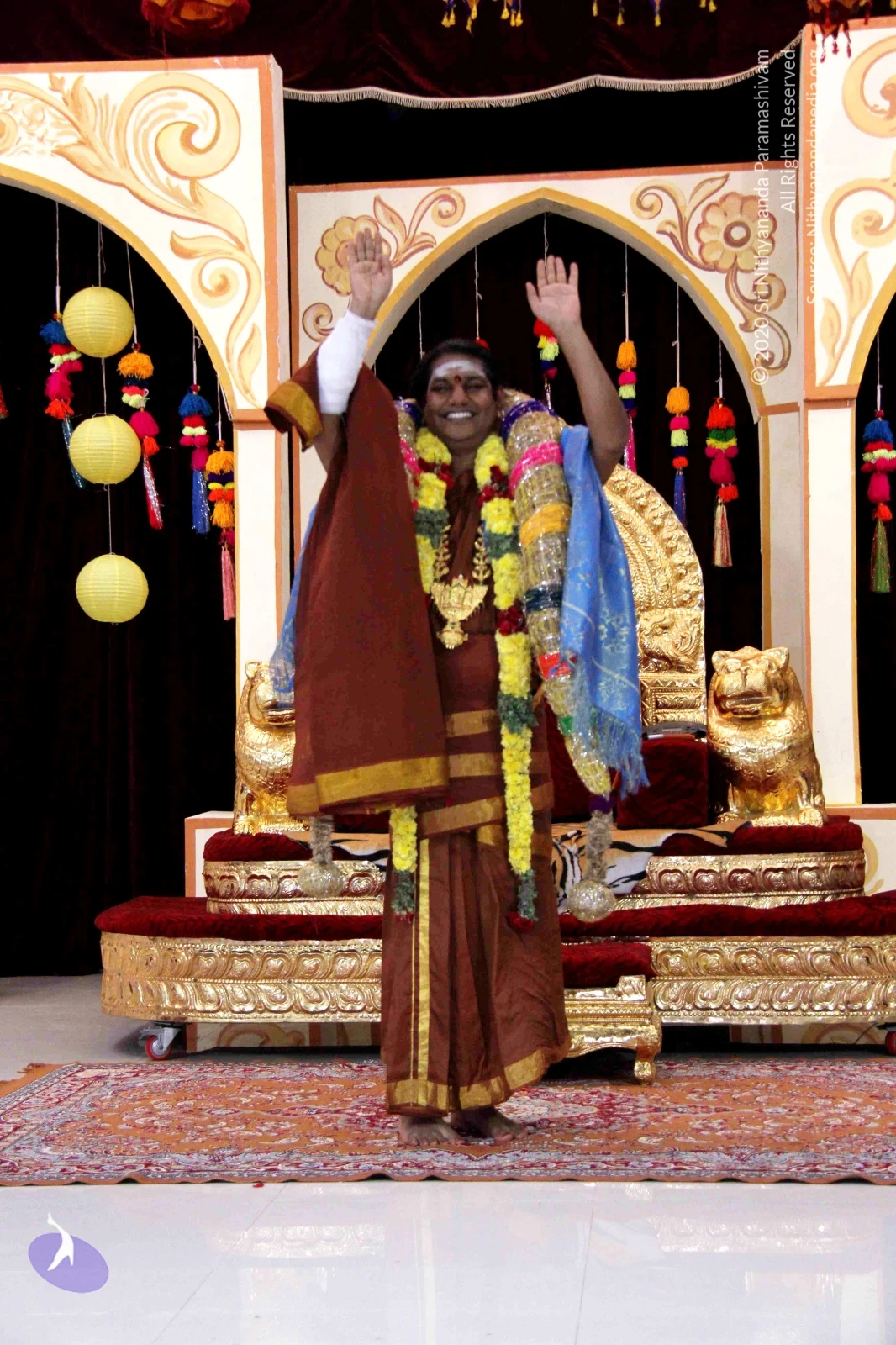
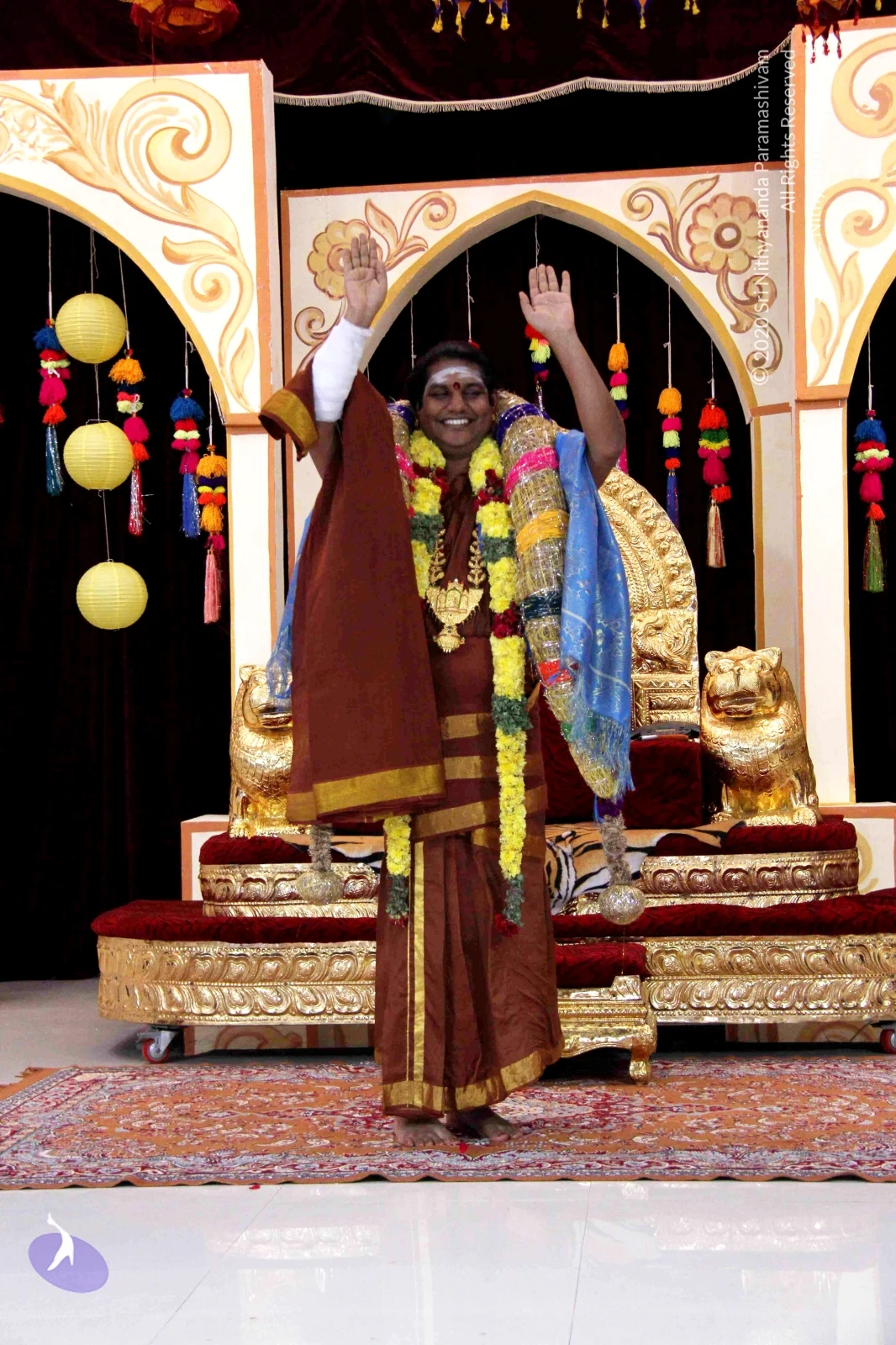
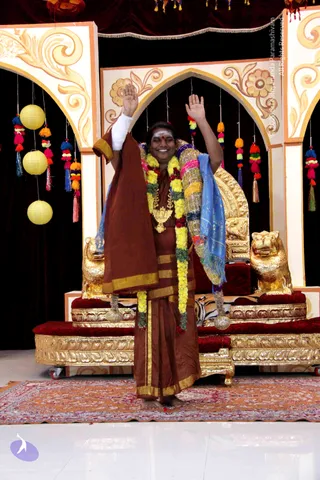
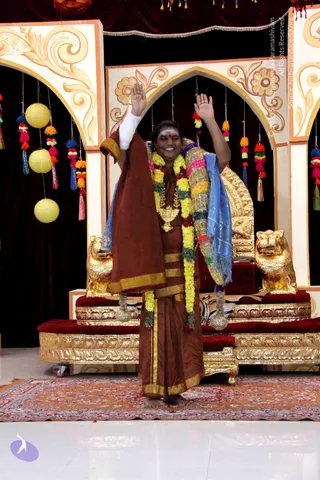
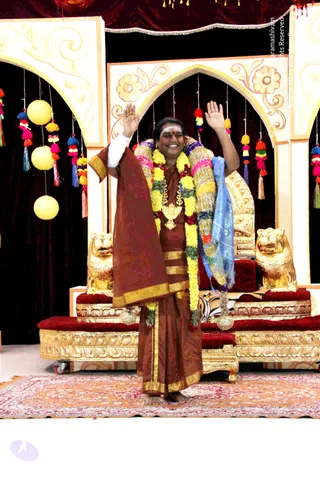
A standing man in a rust-brown dhoti and shawl, barefoot on a patterned rug, raises both hands in greeting before an ornate gilded throne with a golden lion figure and a tiger-striped cover. He wears a long multicolour garland of yellow marigolds and beaded strands, a gold pendant, and a white tilak on his forehead. The backdrop has cream arches with gold scrollwork and hanging yellow paper lanterns with tassels. The page indicates this is a person, but his appearance is not sufficiently distinctive to confirm identity from the image alone.A person stands barefoot on a white stage raising both arms in greeting, smiling, wearing a rust-brown dhoti-style garment with gold borders and a matching brown shawl, a blue shawl draped over one shoulder, a white forearm bandage, a multi-strand gold necklace, a red-and-yellow flower garland and a vibhuti forehead mark. Behind, a gold-trimmed throne with carved golden lion figures and red cushions sits under an arched backdrop painted with gold scrollwork, with colourful tassels and yellow paper lanterns hanging on the sides. A patterned orange carpet lies in front of the throne. a person: the figure wears distinctive ornate gold jewellery and a garland before a royal throne, but face and appearance are not clearly sufficient for certainty.A photograph of a smiling man standing barefoot on a patterned red carpet, arms raised in greeting. He wears a rust-brown dhoti-style garment with gold borders, a white armband on one arm, a gold necklace, and a long garland of yellow and multicoloured flowers, with a blue shawl draped over his shoulder. A red mark is visible on his forehead. Behind him stands a gold and red throne flanked by golden lion figures, with yellow paper lanterns and colourful tassels hanging from the ornate cream and gold arches. Swamiji (probable): the figure has long swept-back hair and a rudraksha-style gold ceremonial necklace, with the saffron-toned attire and throne setting consistent with the page's claim, so the appearance-based label is used.A smiling person stands barefoot on a red and cream patterned rug in front of an ornate golden throne with lion-shaped armrests and red cushions. Both arms are raised in a wave. They wear a rust-brown garment with a gold border, a blue shawl over one shoulder, a large gold necklace, and multiple garlands of yellow, red and green flowers and beads. A red kumkum mark is visible on the forehead. Behind them, painted gold arches, yellow paper lanterns and colourful tassels decorate the stage.A standing man in a brown dhoti and brown shawl with gold border raises both hands in greeting on a stage. He wears a long garland of yellow and green flowers, a gold pendant necklace, and a white vibhuti/tilak mark on his forehead. Behind him is an ornate gold throne flanked by gold lion sculptures, draped with a tiger-skin cloth, under a cream arched backdrop with floral gold painting. Yellow paper lanterns and colourful tassels hang at the sides, and a red patterned rug covers the floor. a person: long swept-back hair and gold ornamentation, standing before the throne in a staged reception.Photograph of a smiling man standing barefoot on a patterned red rug before an ornate golden throne flanked by golden lion figures, with yellow paper lanterns and tassels hanging behind. He raises both hands in greeting, wearing a rust-brown dhoti and shawl with gold borders, a long multicolour garland of yellow and red flowers, a gold necklace and a blue silk sash. A red bindi and white markings are on his forehead, and a white bandage is wrapped on one forearm.

Navratri Golu

17 photosSource gallery
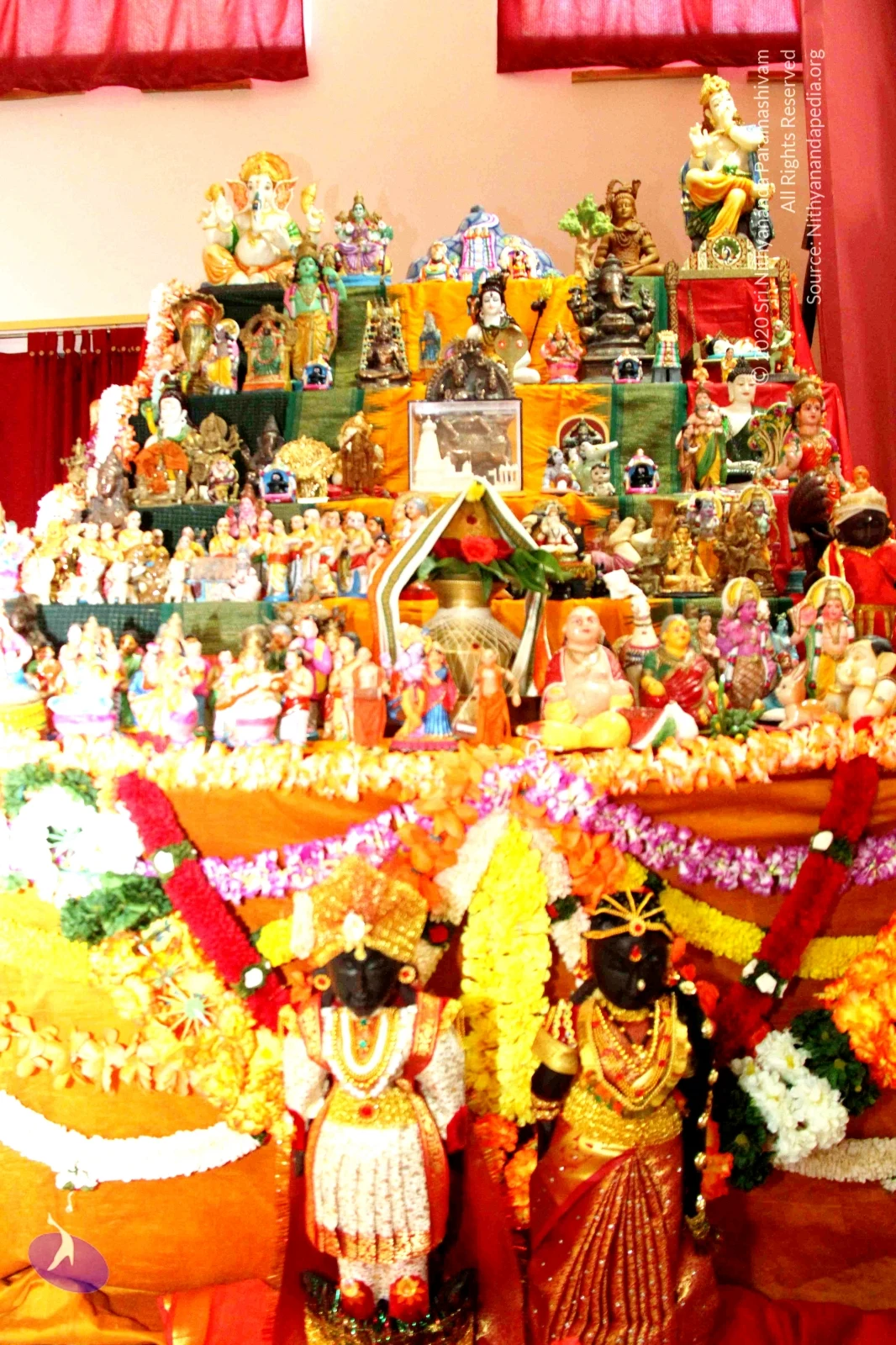
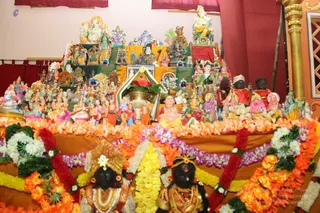
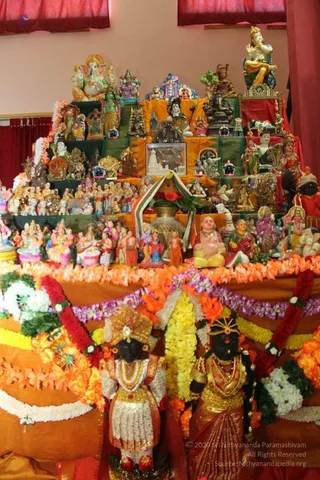
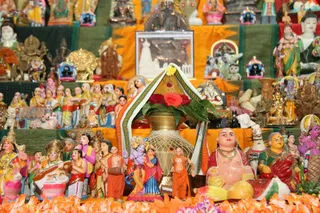
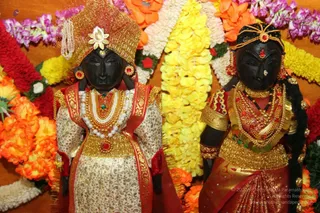
A dense display of many small painted clay and plaster figurines arranged in tiers on orange and green draped cloth, resembling a Golu-style doll arrangement. Figures include deity murtis, a seated deity with a crown and red garment at right, dancers, animals such as white horses and a bull, and devotional figures. Orange and white flower garlands frame the display. In the centre-right a glass case holds a small white temple model. A tall dark-skinned figure in a red garment with gold trim stands at right. No living people are visible.A photograph of a tiered display of many deity statues and figurines, arranged on a stepped platform draped with orange and green cloth and heaped with marigold, rose and jasmine garlands. Two dark stone murtis in gold-trimmed ornaments and crowns stand in front, with a Ganesha figure at upper right and a central bronze-coloured figure seated before a small shrine with a red flower. A gold column and red curtains frame the hall. No people are visible.A photograph of a tiered golu-style display of many painted clay and metal deity figurines, arranged on stepped platforms draped in orange, green and red cloth. Two dark-skinned figures in front, dressed in gold-embroidered garments and crowns and garlanded with marigold and jasmine strands, are prominent at the base. Ganesha figures, a seated Shiva-type image and numerous small devotional figures fill the upper tiers, with a framed picture and a kalasha-like vessel with red flowers in the centre. No physical people are visible.A photograph of a crowded golu-style display of painted clay and metal figurines arranged in tiers on green and orange cloth. Central foreground shows a small devotional figure in orange robe with a dome-shaped canopy holding red roses above a golden kalasha on a wire-mesh base, and a seated figure in red and pink with gold ornaments. Surrounding figures include Krishna with a flute beside Radha, a musician with a veena, deity murti in gold and blue, and a framed photograph of a white temple at the top centre. Orange marigold garlands line the bottom edge. No living people are visible.Two dark-stone deity murtis stand side by side, dressed in rich ceremonial costume and heavily garlanded. The figure on the left wears a tall gold crown with a white flower ornament, a white and gold patterned garment with a red border, and layered pearl and gold necklaces. The figure on the right wears a red and gold sari, a gold headpiece with red stones, multi-strand gold and bead necklaces, and a red bindi. Behind them are marigold, orange, yellow and purple flower garlands. No people are visible.A photograph of a tiered Golu-style display arranged on green and gold cloth steps against a red curtain, crowded with dozens of deity figurines, dolls and statues. A brass kalasha with red roses and green leaves sits at the centre of the lower tier. Upper figures include a Shiva-type figure with a crescent, a Ganesha figure and a Buddha-like seated figure; a Nataraja bronze appears mid-display. Small painted dolls, a white horse and a picture frame showing a temple are also visible. There are no physical people, only statues and figurines.

Inner Awakening Darshan

10 photosSource gallery
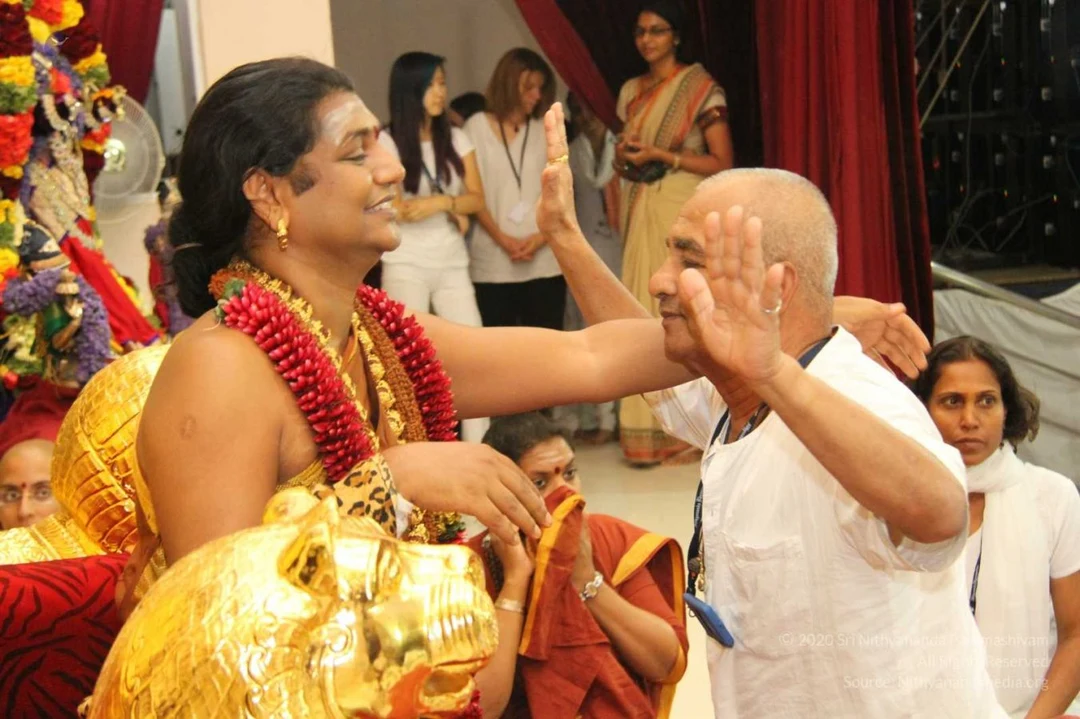
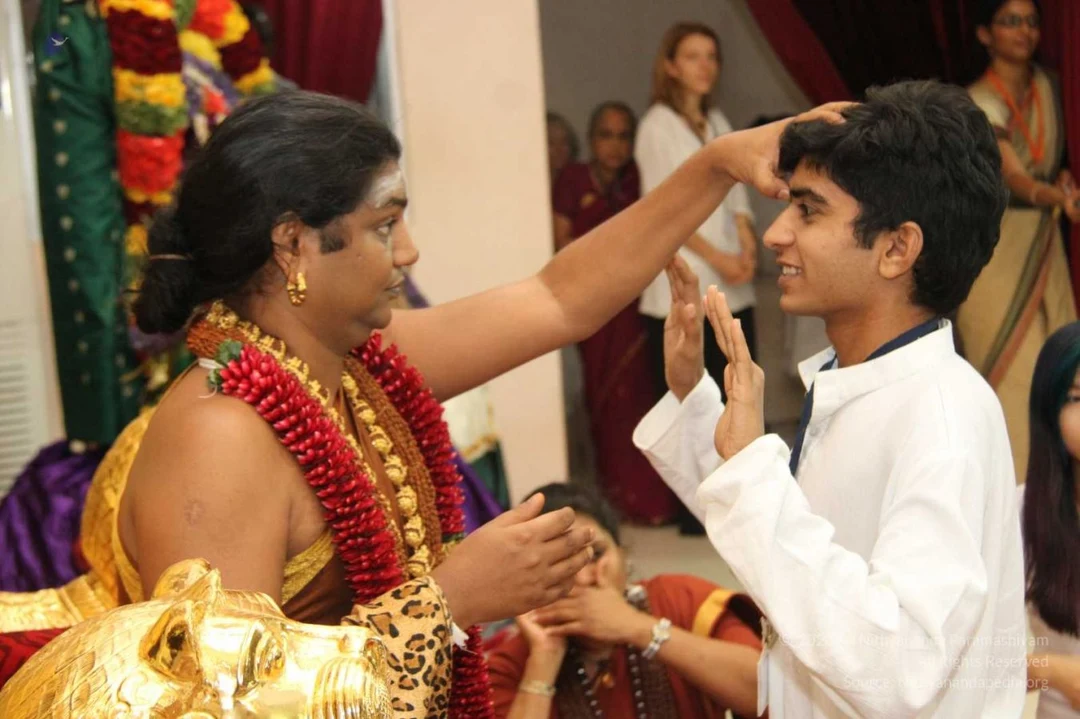
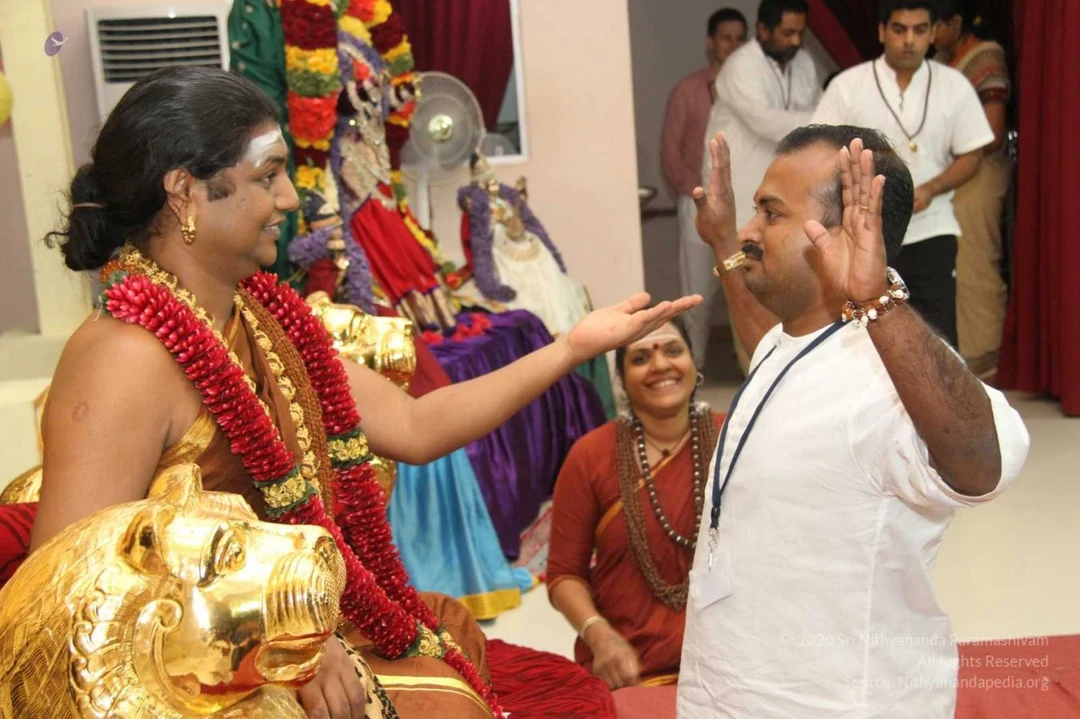
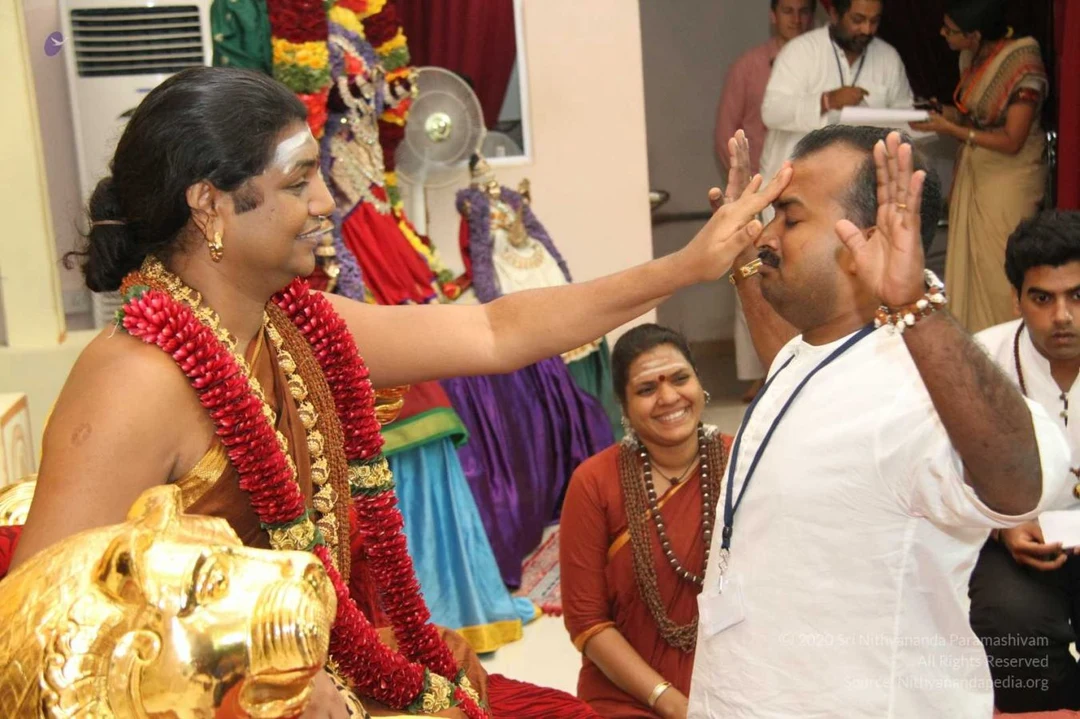
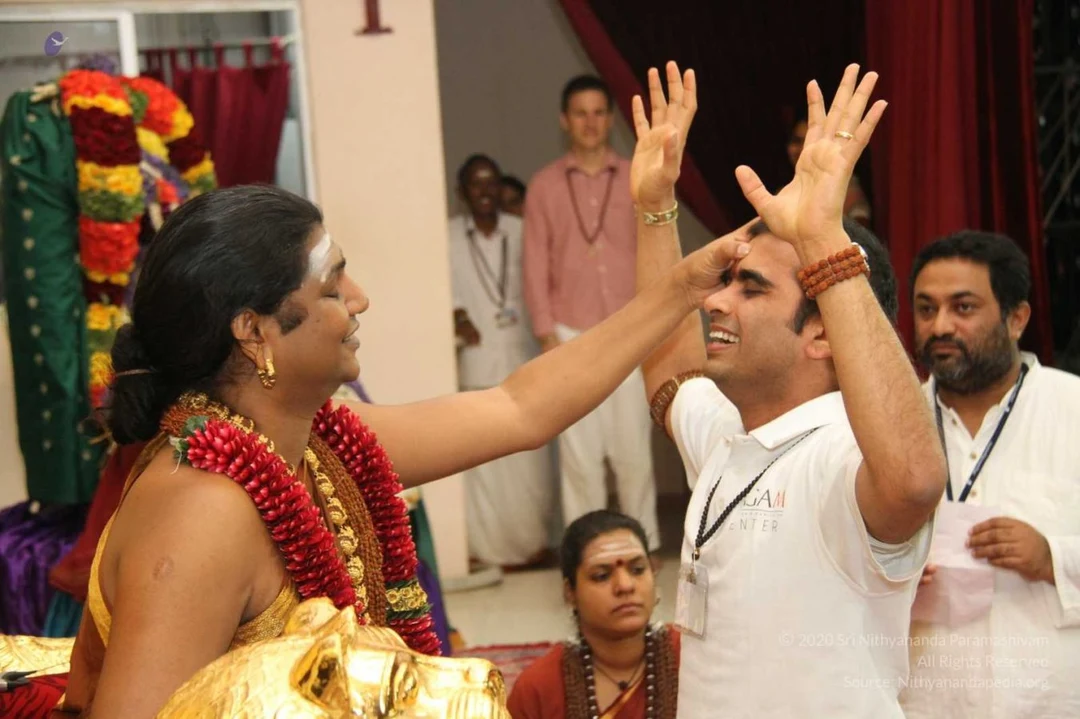
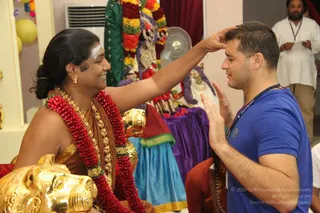
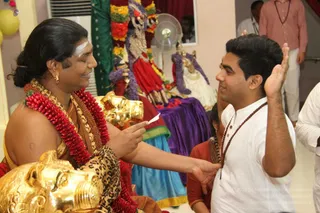
Indoor event photo: a figure with long swept-back dark hair, a red-and-white flower garland, gold jewellery and a bare upper body stands on a golden lion-headed throne, raising one hand in greeting. Facing them, a bald older man in a white shirt and a lanyard raises his palm in return. Behind them a red deity murti is garlanded with orange and yellow flowers, and a woman in a cream sari and others in white stand in the background. Red curtains and stage equipment frame the room.A photograph of a seated figure with short-cropped hair wearing a red and white beaded garland, gold necklaces and a gold-and-brown patterned blouse, extending a hand to the forehead of a young man in a white kurta with a dark collar who has his palms pressed together in greeting. Behind them, a gold lion or animal statue, a green and red floral garland hangs on a pillar, and several people in red and orange saris and white clothing stand in the background. Another devotee kneels at lower right. The seated figure has a white vibhuti mark on the forehead; the scene appears to be a blessing or greeting in an indoor hall with draped red curtains.Photograph of a seated figure on a golden lion-headed seat, wearing a red and orange garland of flowers, gold necklaces, a brown-and-gold garment and a white vibhuti mark on the forehead, extending a hand toward a man in a white kurta with a blue lanyard who has his palms raised. A smiling woman in a red-orange sari with a rudraksha mala sits behind them. Behind is a row of deity murti dressed in purple, blue and red cloth with garlands, and several men in white stand in the background. a person: the seated figure has a long swept-back hairstyle, ornate gold jewellery and a red garland, consistent with the page's reference to a satsang blessing. Ritual blessing setting.A photograph of a seated figure with a white tripundra on the forehead, wearing a long red and red-beaded garland, gold necklaces and earrings, and a brown-gold garment, pressing a palm to the forehead of a man in a white shirt with a blue lanyard and wrist beads. The seated figure sits beside a golden seated animal sculpture. Behind them, a smiling woman in a rust-red sari with a bindi and brown bead necklace watches, and colourful draped deity murti with garlands stand in the background. Several people in white and pastel clothes sit at the right edge, one holding a phone. The setting looks like an indoor ritual blessing or darshan.A photograph of a seated person in a brown and gold garment wearing layered red and yellow flower garlands and gold ornaments, with a white tilak on the forehead, placing a hand on the forehead of a man in a blue t-shirt with a lanyard who holds his hand up in receptive gesture. Behind them stand purple and blue draped cloths, a golden deity figure, and a standing person in white kurta holding papers. The seated figure's garlands and ornaments match a presentation consistent with a person, though the face is not used for identification; the role shown is blessing a devotee.A photo of a seated figure with swept-back dark hair, a white tilak on the forehead, a red and white flower garland, layered gold necklaces and a brown-orange robe, holding a small white card while extending a hand toward a younger man. The younger man wears a white kurta, a rudraksha mala, a small tilak and raises his right palm in greeting. Gold lion-head ornaments sit in the foreground. Behind them stand deity murti decorated with garlands, colourful silk cloths in red, purple and blue, and a standing man in a pink shirt.

Inner Awakening Session

11 photosSource gallery
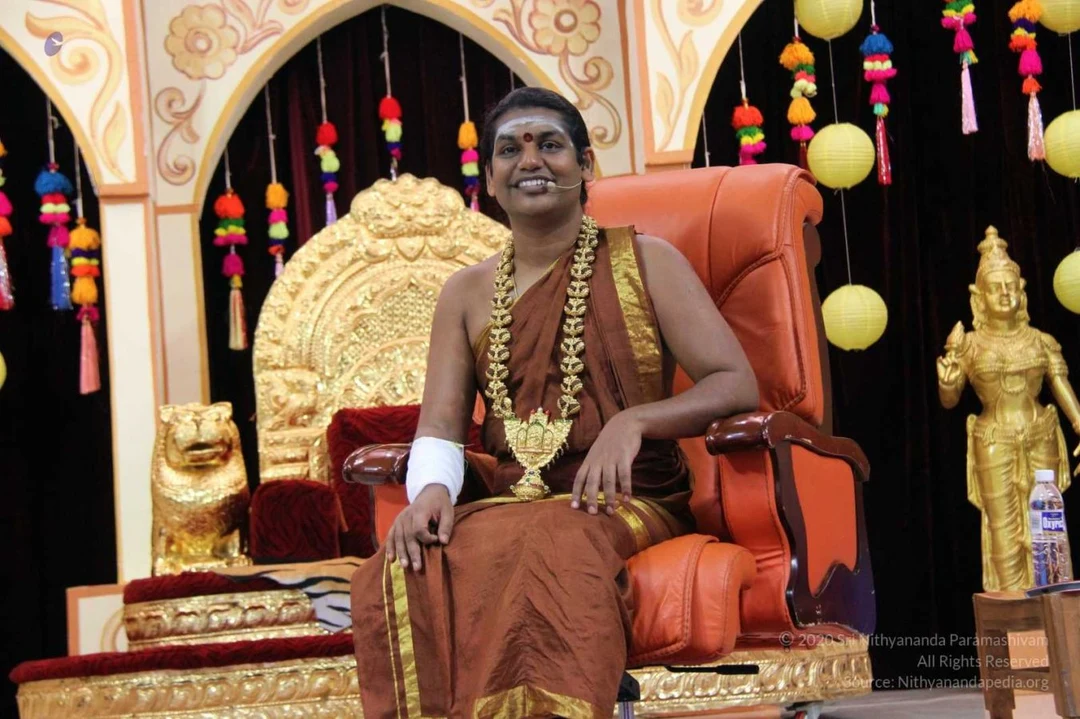
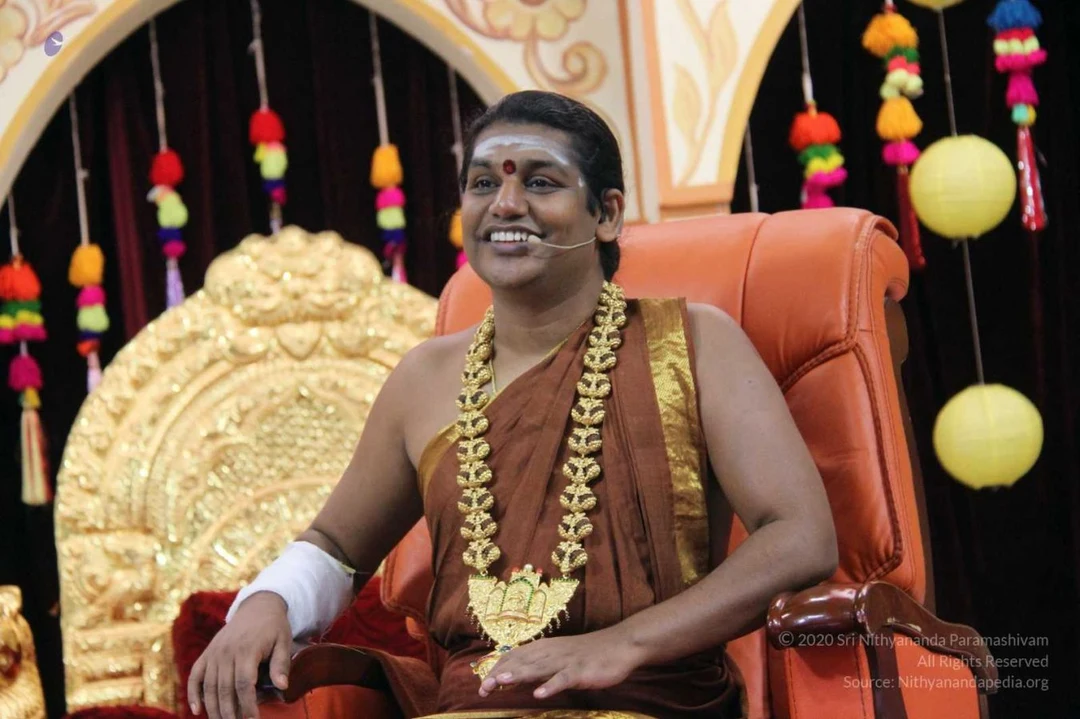
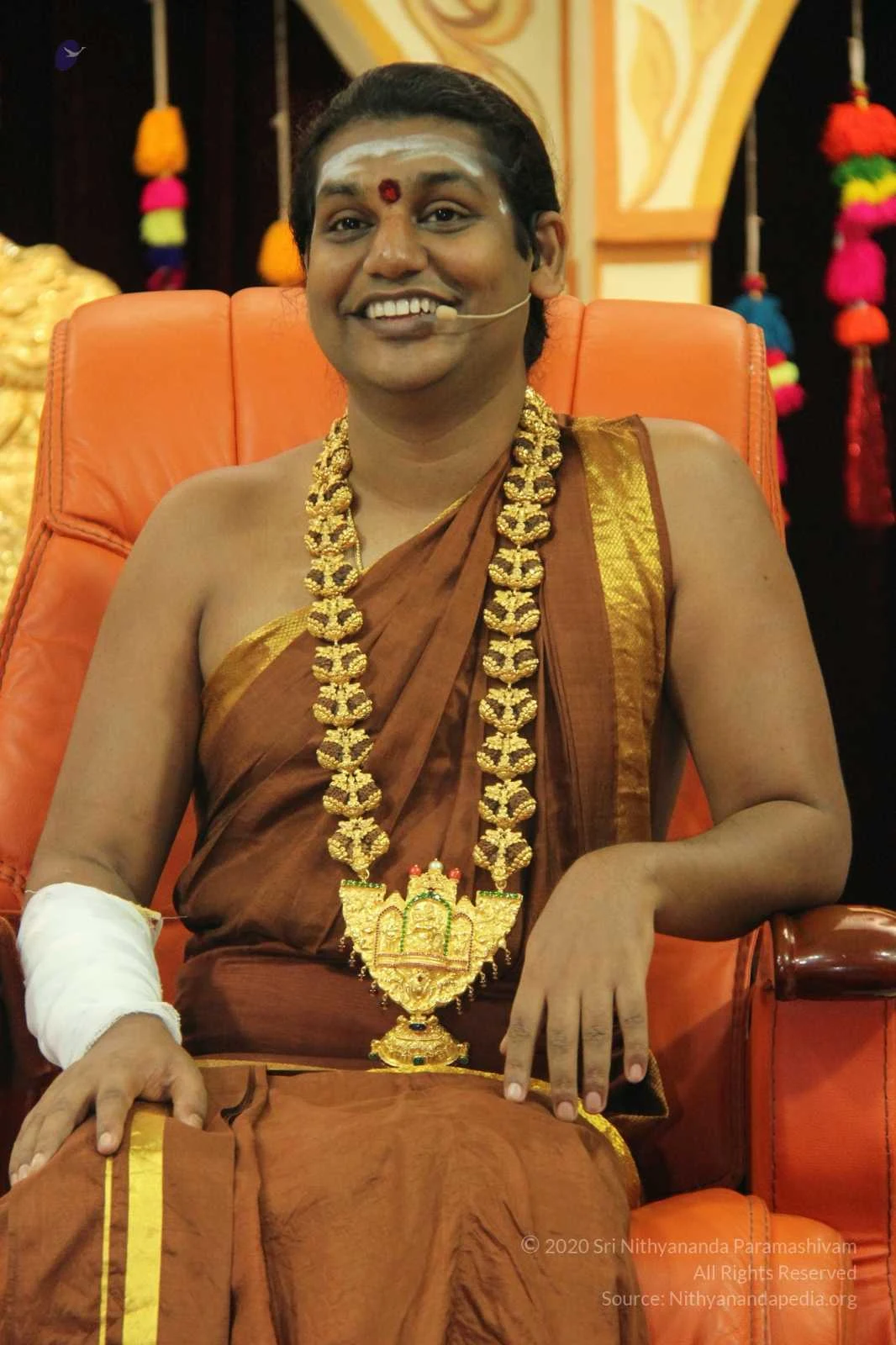
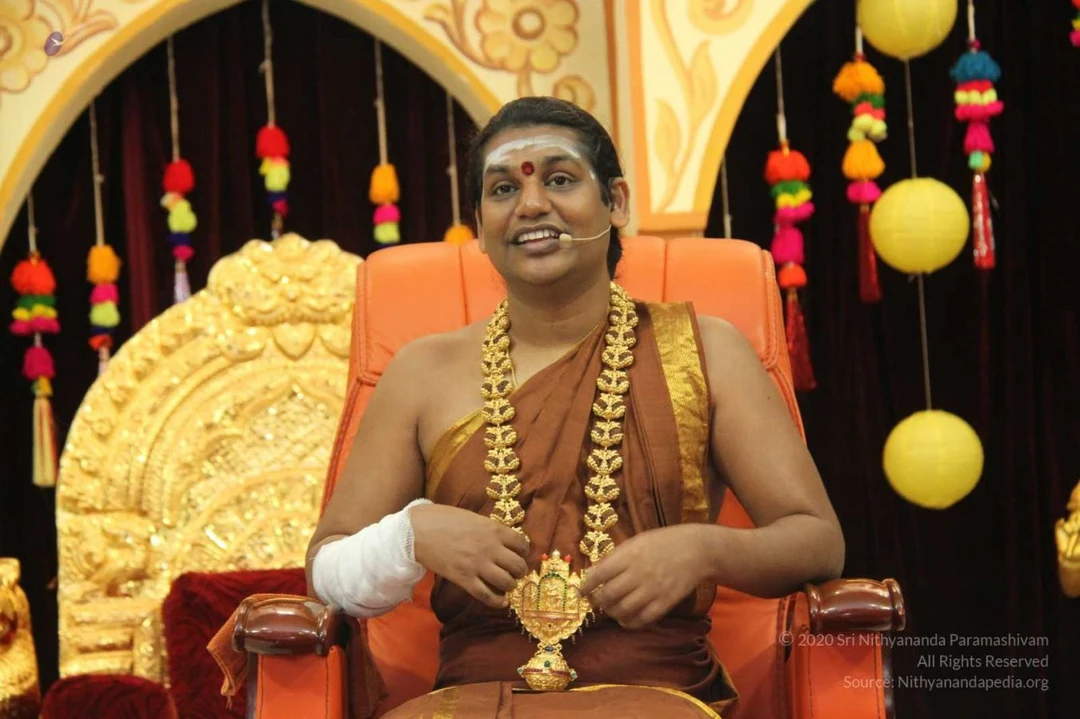
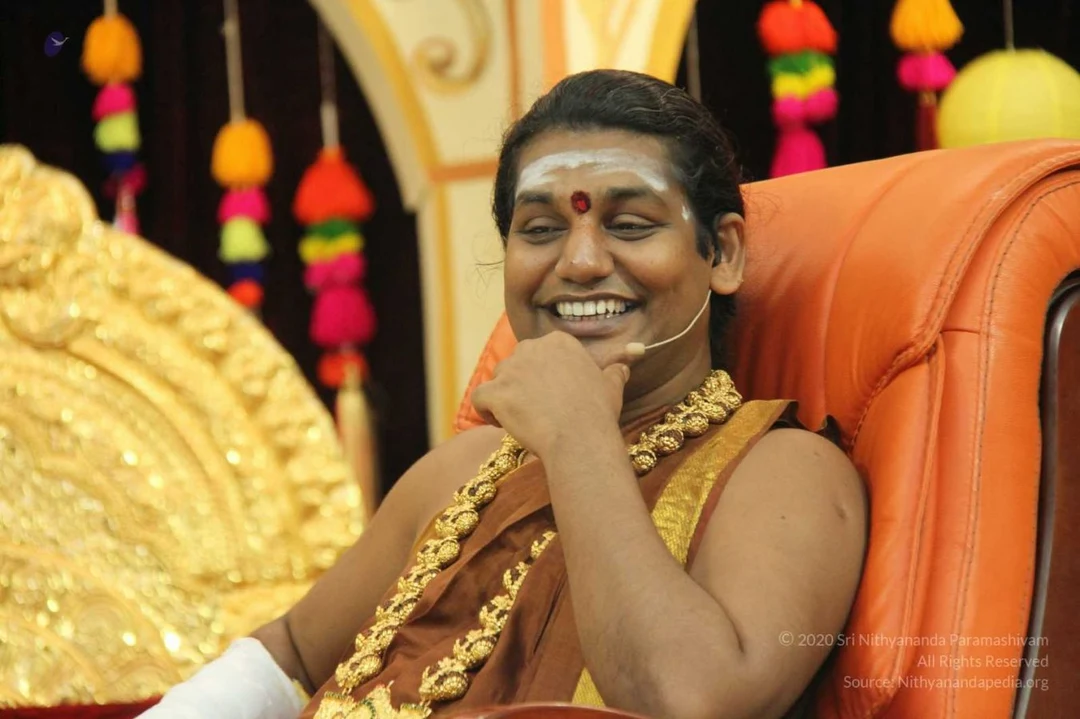
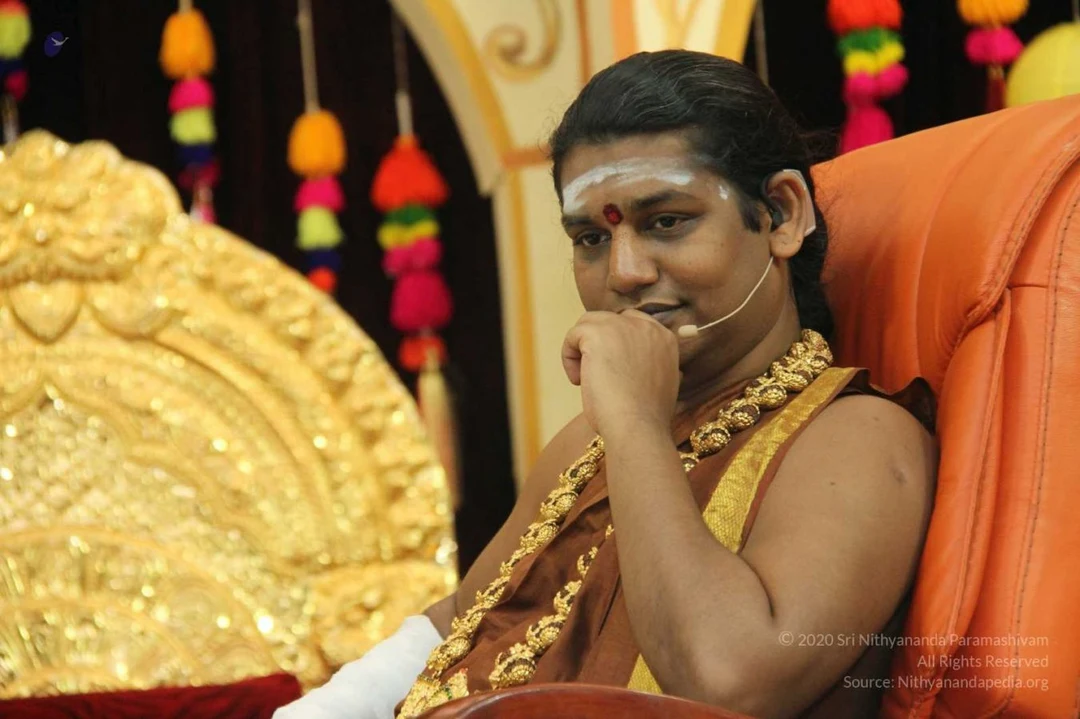
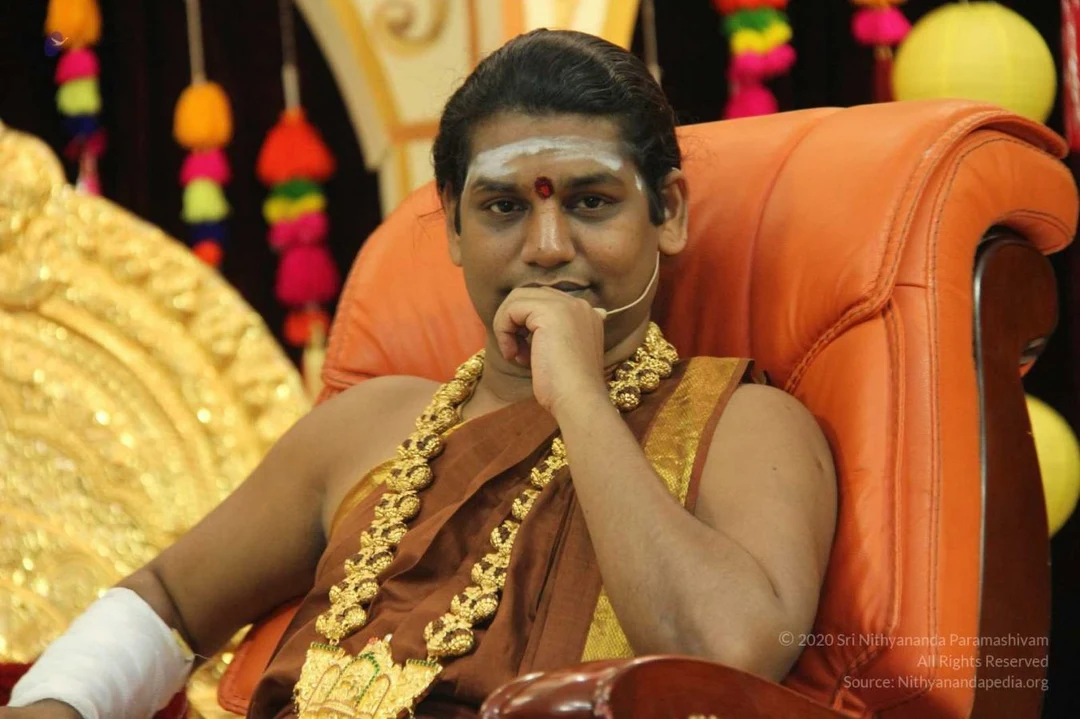
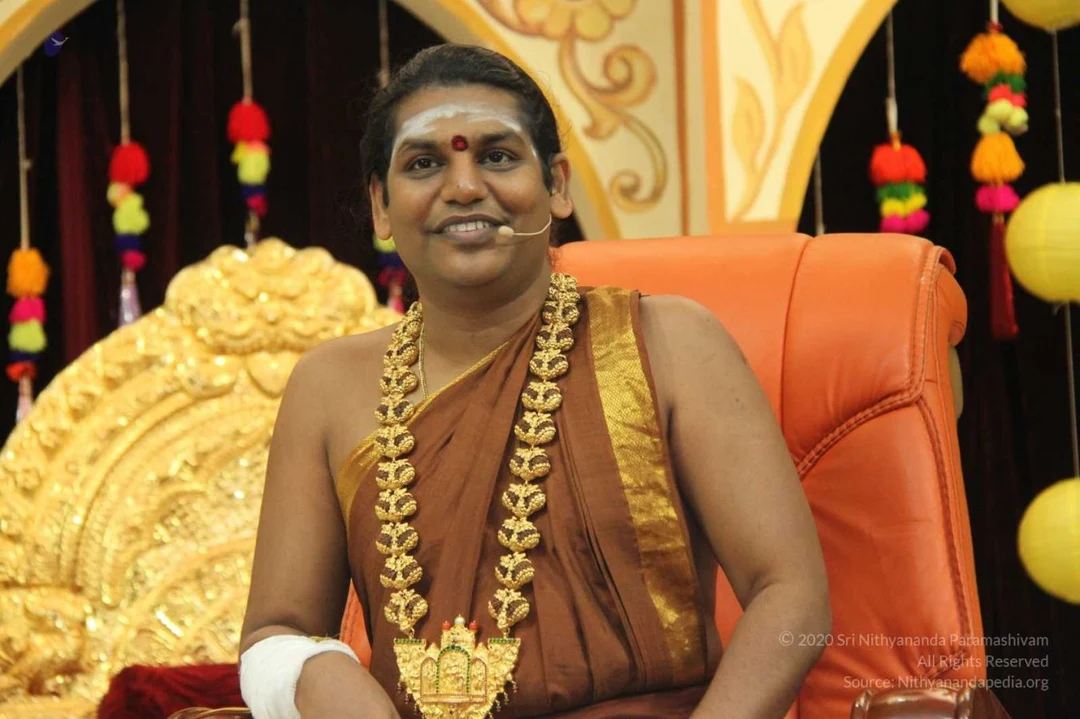
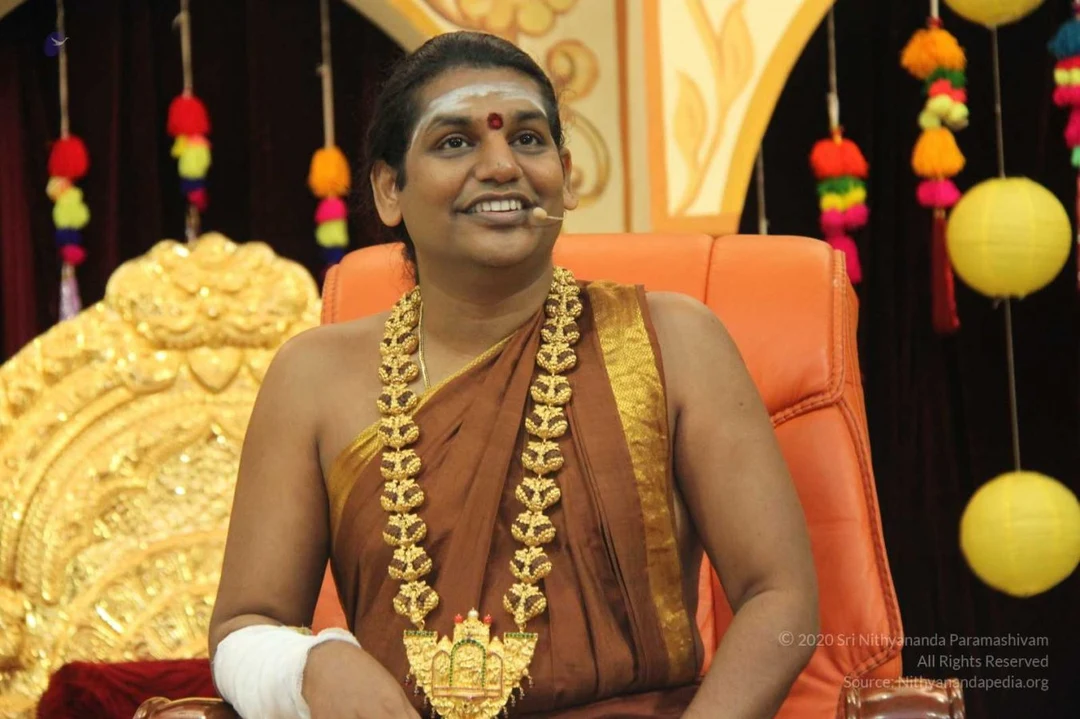
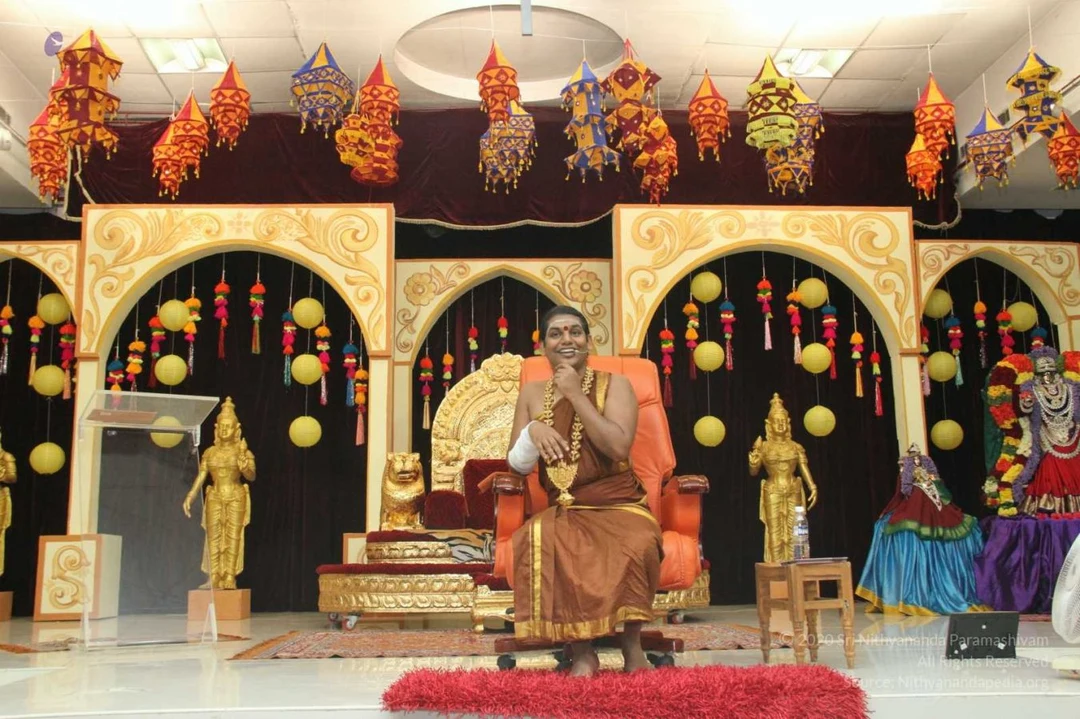
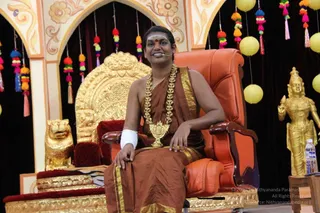
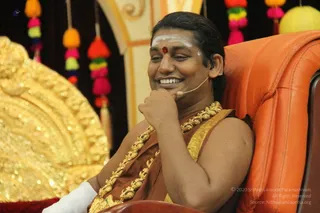
A smiling man seated on an orange leather armchair before a decorated stage with colourful tassels and paper lanterns. He wears a rust-brown robe with gold border, a heavy gold necklace with a pendant, a white bandage on his left wrist, and a white tilak with a red dot on his forehead, with a small head microphone. Beside him is a golden lion carving and a gold standing deity murti with a raised hand. A water bottle sits on a side table at right. a person, a seated speaker in a saffron-brown robe with ornate gold necklace and a sannyasi tilak, presiding at a satsang-style event.A man seated in an orange leather chair on a stage, smiling, wearing a brown and gold-bordered dhoti-style garment with a heavy gold garland and a large gold pendant. He has white sacred ash markings on his forehead and a red dot at the centre, and a small microphone is clipped near his face. His left arm is wrapped in white bandage. Beside him stands an ornate gold throne-like chair, and behind him are a dark curtain, yellow paper lanterns and colourful tasselled hangings. a person: the saffron-brown robe, the gold garland and pendant and the ornate throne setting are appearance cues for the central speaker, who is seated and speaking in a satsang setting.A smiling man sits in an orange leather throne-style chair before a golden decorated backdrop with hanging tassels in pink, green, yellow and orange. He wears a brown silk shawl with gold borders over bare shoulders, a brown dhoti with gold border, and a long gold necklace of rudraksha beads with a large gold pendant depicting a deity figure. A white vibhuti tripundra marks his forehead with a red kumkum dot, and a headset microphone is clipped to his face. His left forearm is wrapped in white bandage and his hands rest on his lap and chair arm. The photo is a candid portrait from a seated talk setting; the printed caption identifies the photo's copyright and archive source.A seated man in a brown and gold dhoti-style garment with a gold-bordered shawl sits on an orange upholstered chair before a gold-carved throne back. He wears a heavy gold necklace of ornate links and a gold pendant with a deity figure, holds the pendant with both hands, and has white vibhuti lines and a red kumkum dot on his forehead. A wireless microphone is clipped near his face. His left forearm is bandaged in white. Behind him hang colourful tassels and yellow paper lanterns against a dark red drape. The setting appears to be a satsang stage.A smiling man sits in an orange leather chair with a gold-carved throne visible at left and colourful tassel decorations hanging behind him. He wears a brown and gold silk garment, a heavy gold ceremonial necklace, a white vertical forehead marking and a red bindi, and a small clip-on microphone is attached near his chin. His hand rests against his chin.A smiling man sits in a large orange leather armchair beside an ornate gold carved throne, his hand raised to his chin. He wears a brown and gold garment, a heavy gold necklace, a white forehead marking and a red bindi, and a small headset microphone is clipped to his ear. Colourful tassel decorations hang in the background.

Temple Brahmotsav

85 photosSource gallery
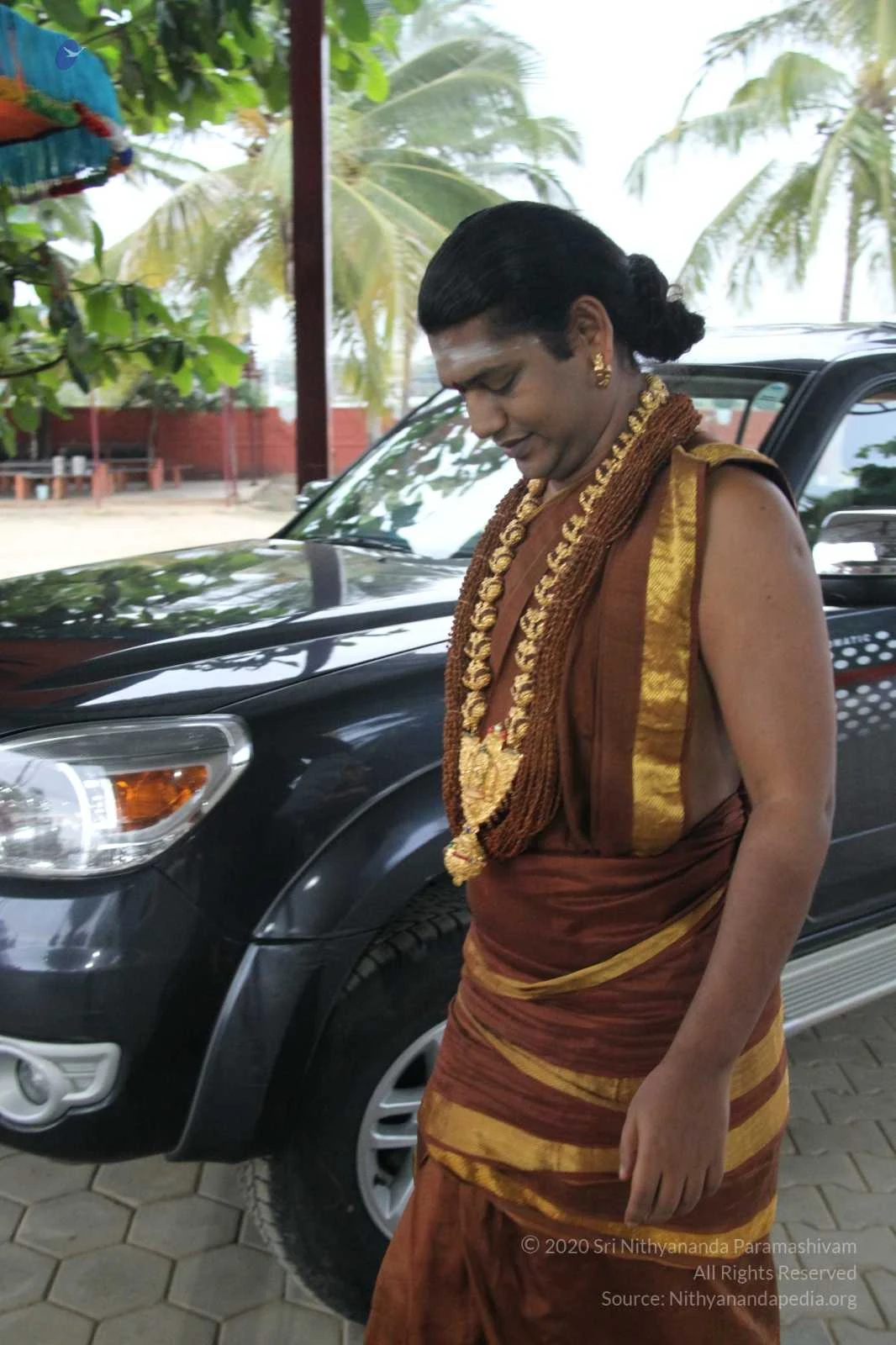
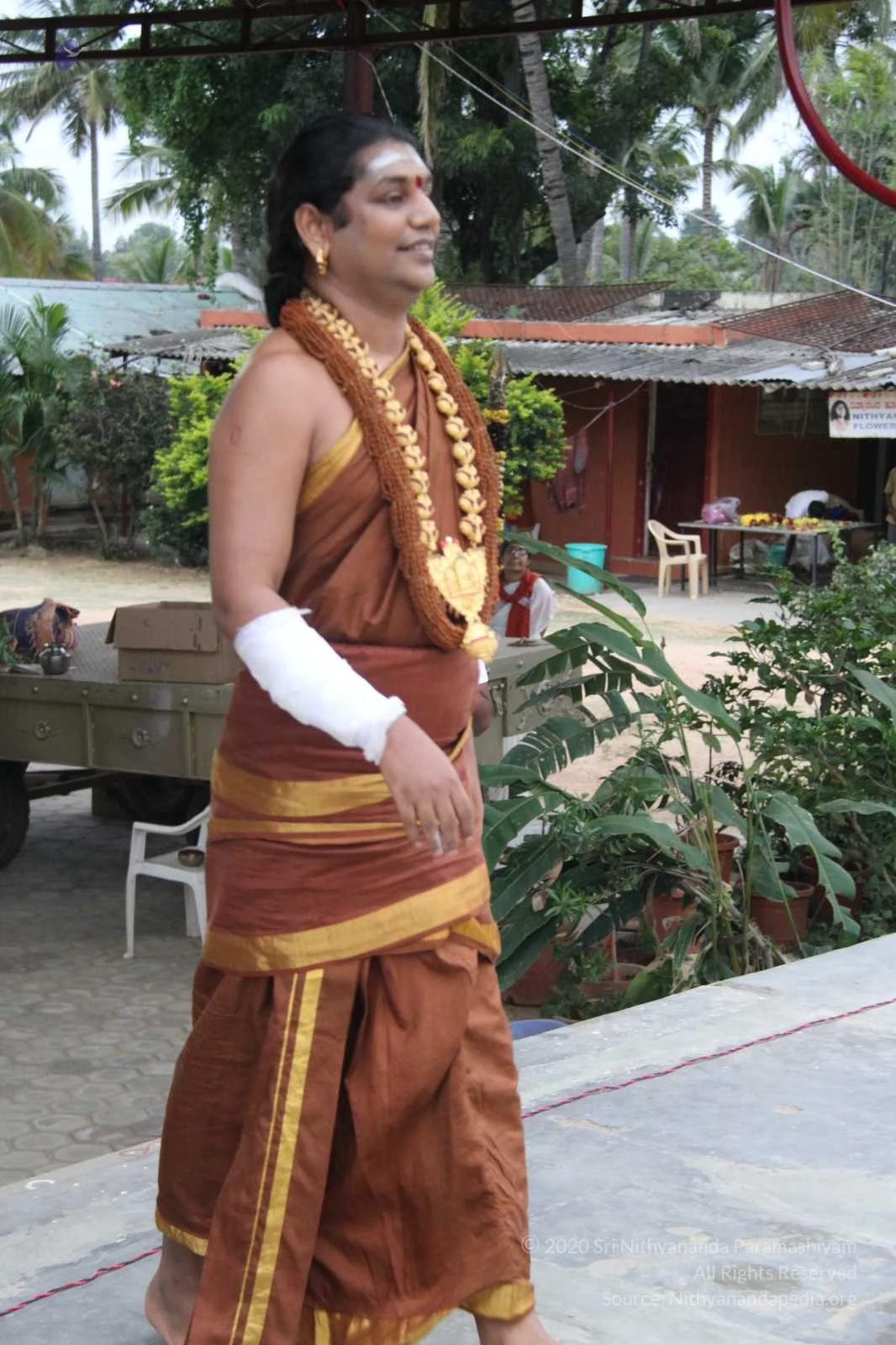
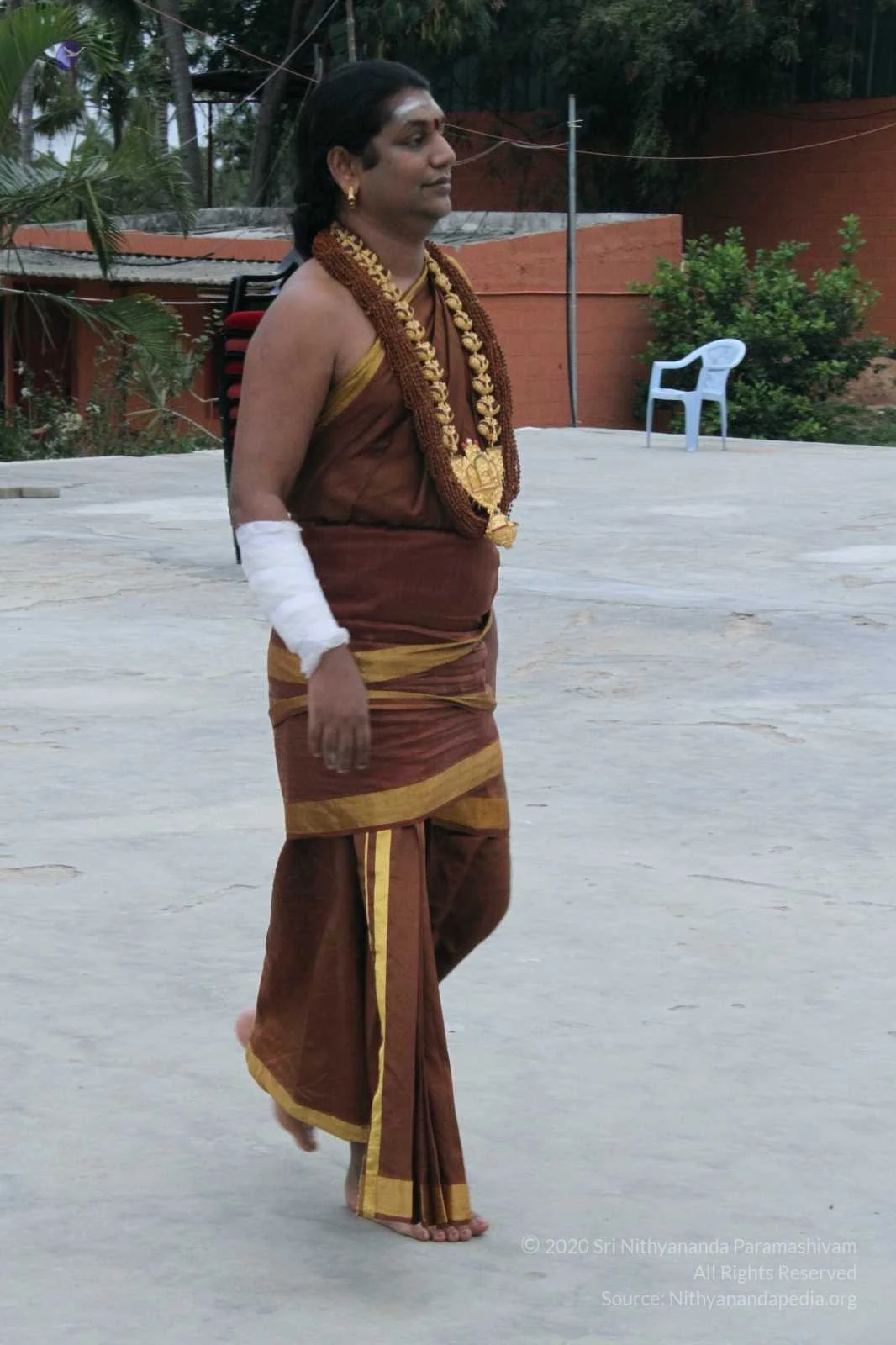
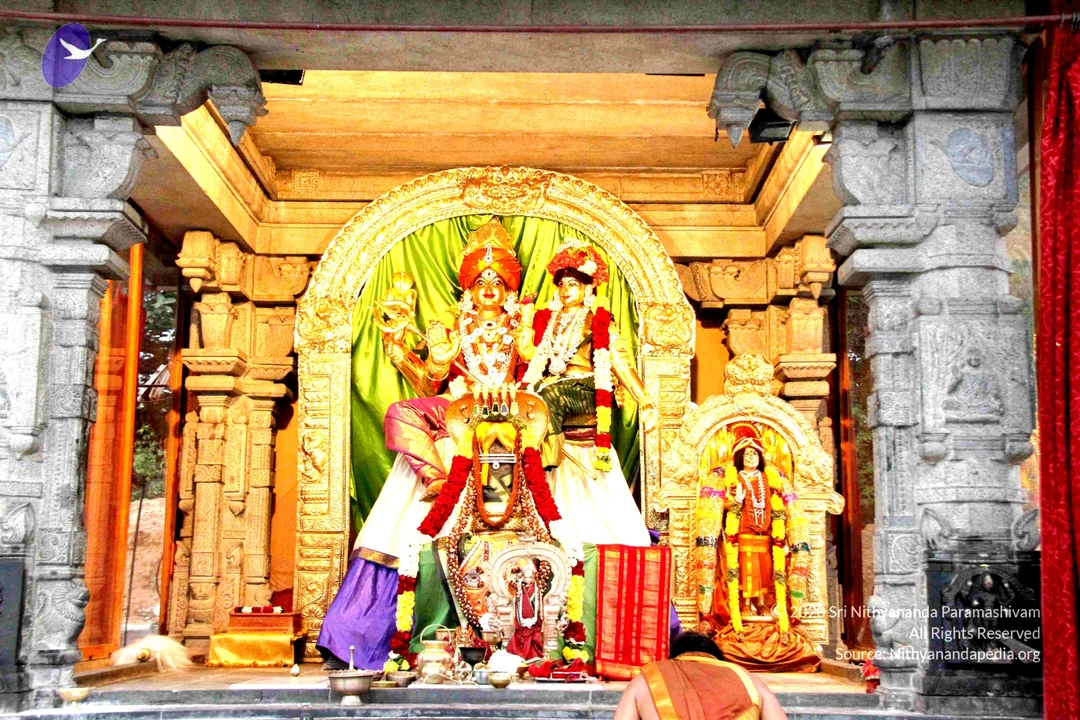
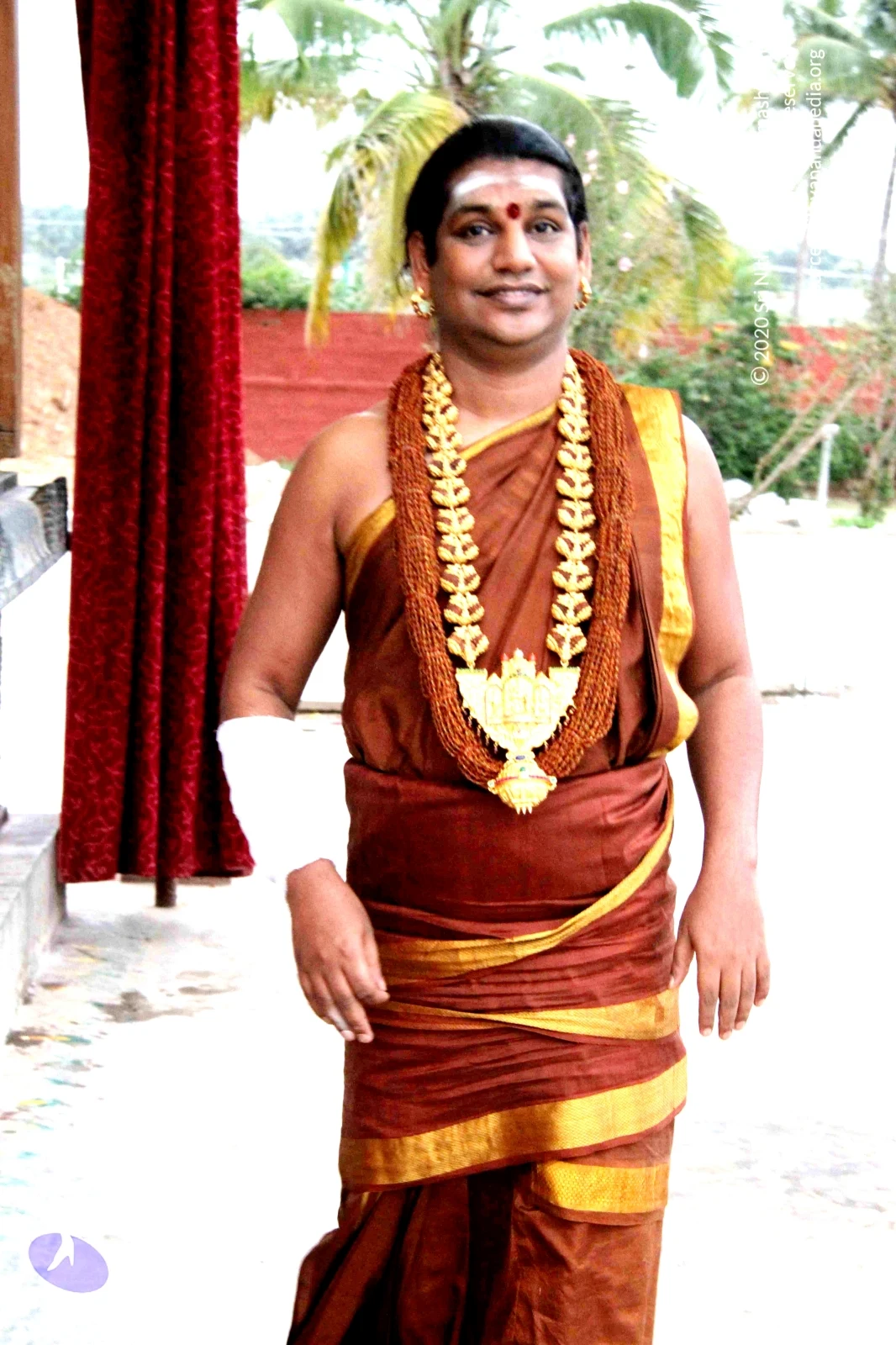
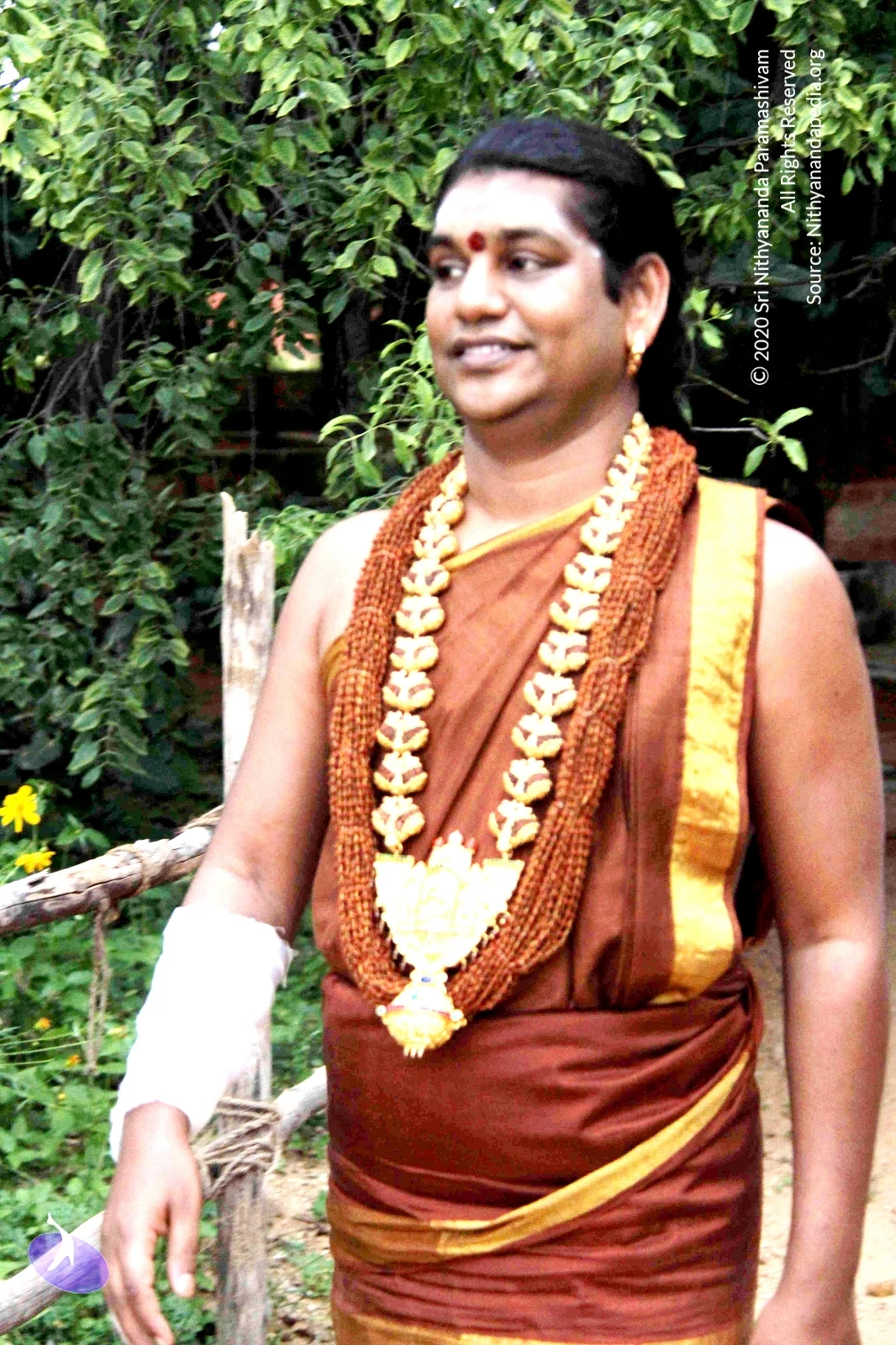
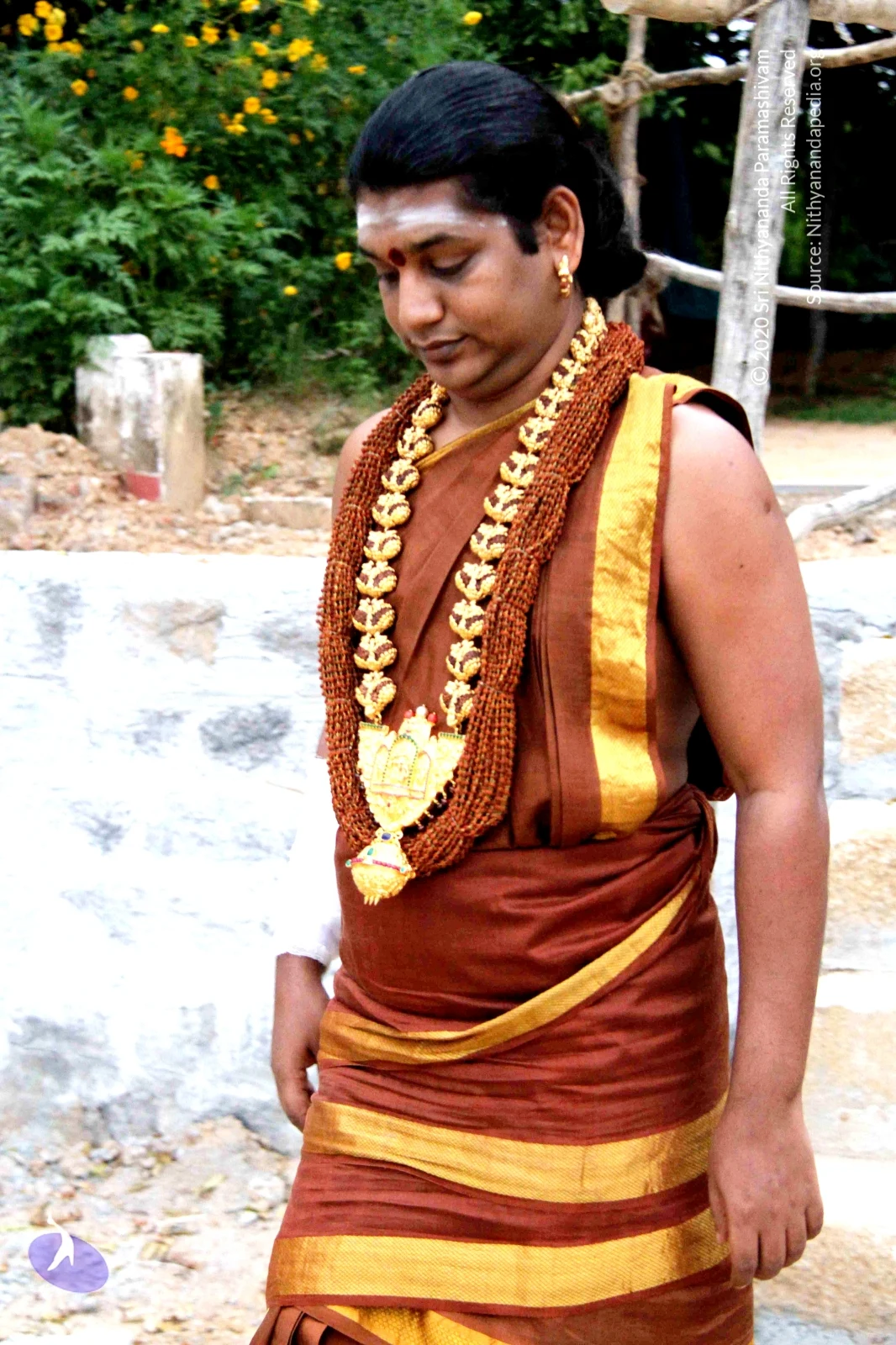
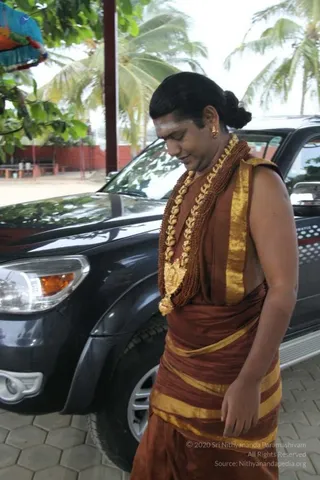
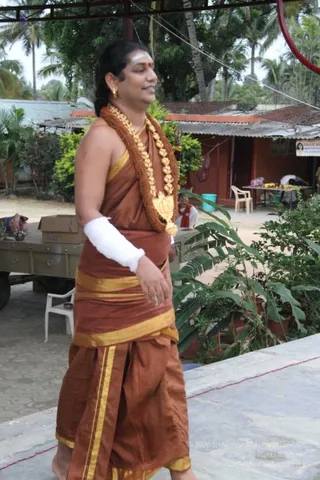
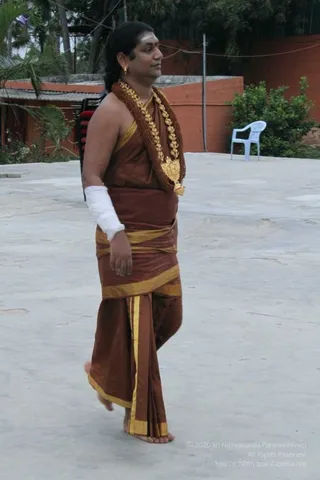
A dark grey Ford Endeavour SUV is parked on a dirt lot in front of a low terracotta-coloured compound wall with palm trees behind. The vehicle's front grille, Ford oval badge and bonnet lettering are prominent, with a Tamil Nadu registration plate reading TN 25 AE 4005. To the left, a yellow-and-black auto-rickshaw and a silver hatchback are parked. No people are visible in the scene.A photograph of a man standing outdoors beside a dark grey pickup truck, with palm trees and a red wall behind him and a patterned awning edge at the top left. He wears a rust-brown sleeveless garment with wide gold borders, a rust-brown wrap around the waist, a thick rudraksha-style brown bead mala with a large gold ceremonial necklace and pendant, and a gold earring. His hair is swept up into a bun, and he has a white forehead marking. He looks downward while walking.A man walks barefoot across a concrete stage outdoors, wearing a rust-brown unstitched robe with gold borders wrapped over the shoulder and a matching dhoti-style lower garment. He has a gold-and-brown beaded necklace with a large gold pendant, gold earrings, a white forehead mark with a red dot, and a white bandage on his right forearm. Behind him are a green utility truck, potted plants, palm trees and a small red building with a white signboard, and a person in white with a red shawl sits in the background.A photograph of a barefoot man walking across a pale concrete courtyard toward the left. He wears a rust-brown draped garment with broad gold borders wrapped at the waist and over the left shoulder, a rudraksha mala with a large gold ceremonial pendant around his neck, and a gold earring. A white bandage covers his right forearm and wrist. His hair is pulled back and he has a red dot and a white tilak on his forehead. Behind him are an orange-red boundary wall, a white plastic chair, green shrubs and palm trees. The image is a candid photo with no readable event signage visible. One physical person is present. The appearance is consistent with the page's a person reference, but the features are not clear enough to confirm identity from appearance alone, so the candidate is marked unsure.A temple shrine photograph showing a large deity murti of Shiva and Parvati seated together under a gilded arch with a green cloth backdrop. The figures are adorned with flower garlands, rudraksha-style beaded necklaces and a red-and-gold crown on the male figure. Below, a small Ganesha murti and a kalasha-like offering sit among marigold garlands and red cloth, with brass lamps and vessels in front. A stone pillared temple structure frames the scene, and a devotee in a brown garment kneels at the lower edge. Two statues appear on the right side, one garlanded and one standing figure in orange garments. No living a person candidate is clearly visible; the figures are sculpted deities and statues.A man stands outdoors smiling to the side, wearing a brown and gold-bordered cloth wrapped over one shoulder with bare chest and arm visible. He wears a long multi-strand rudraksha mala and a heavy gold ceremonial necklace with a large pendant, plus gold earrings, a red dot on the forehead and white markings. His long dark hair is swept back into a bun, and a white bandage covers one forearm. Behind him are a white paved courtyard, flowering pink and white shrubs and a red wall, with a red curtain at the left edge.

Navratri Darbar

50 photosSource gallery
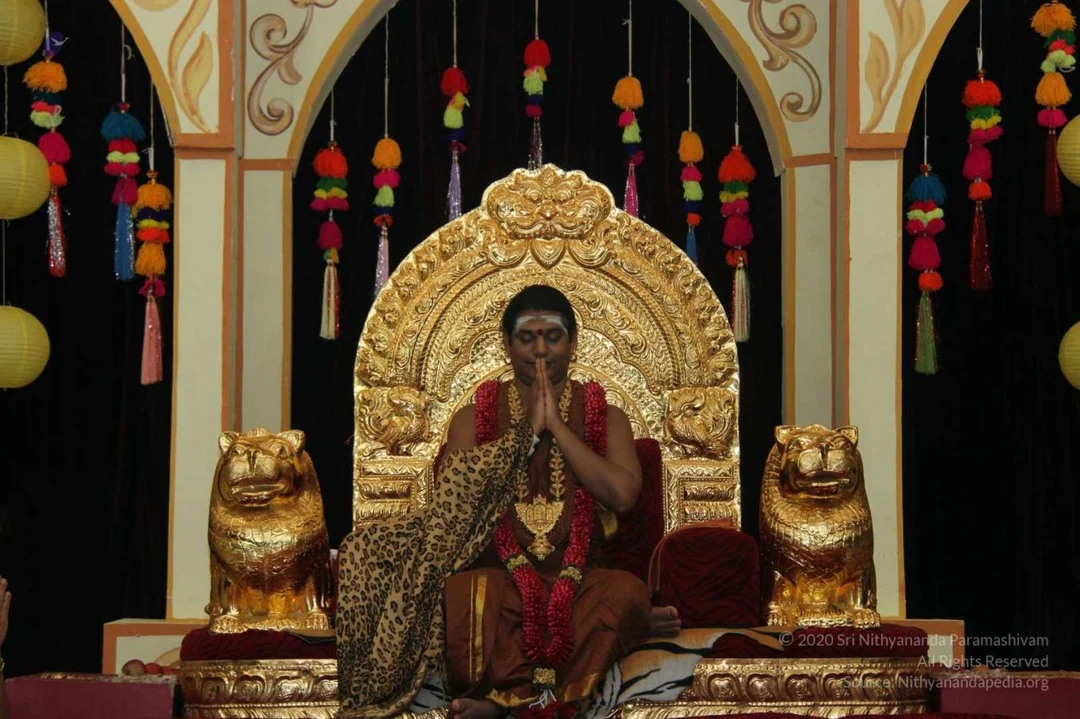
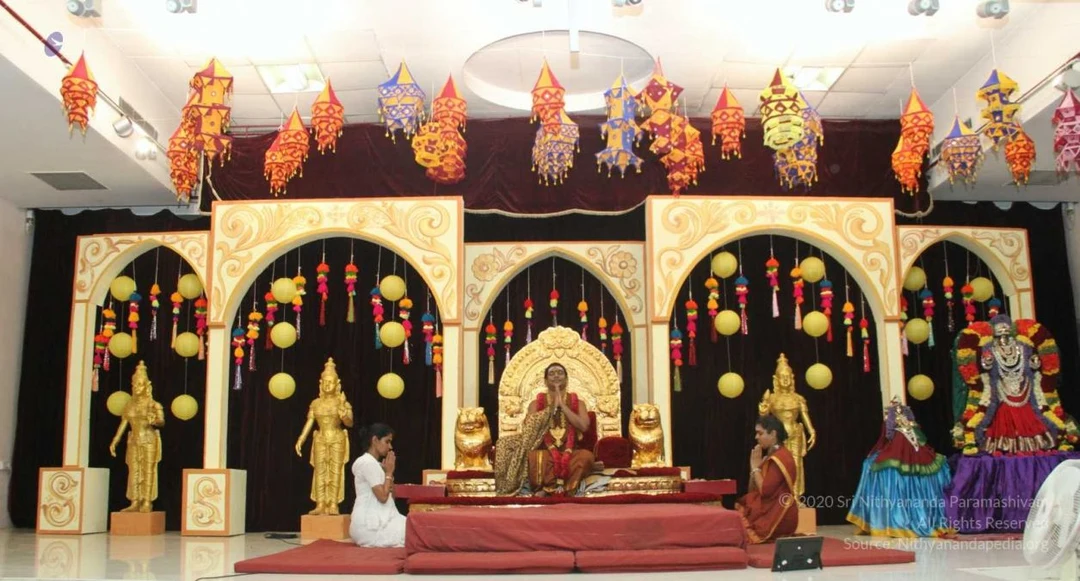
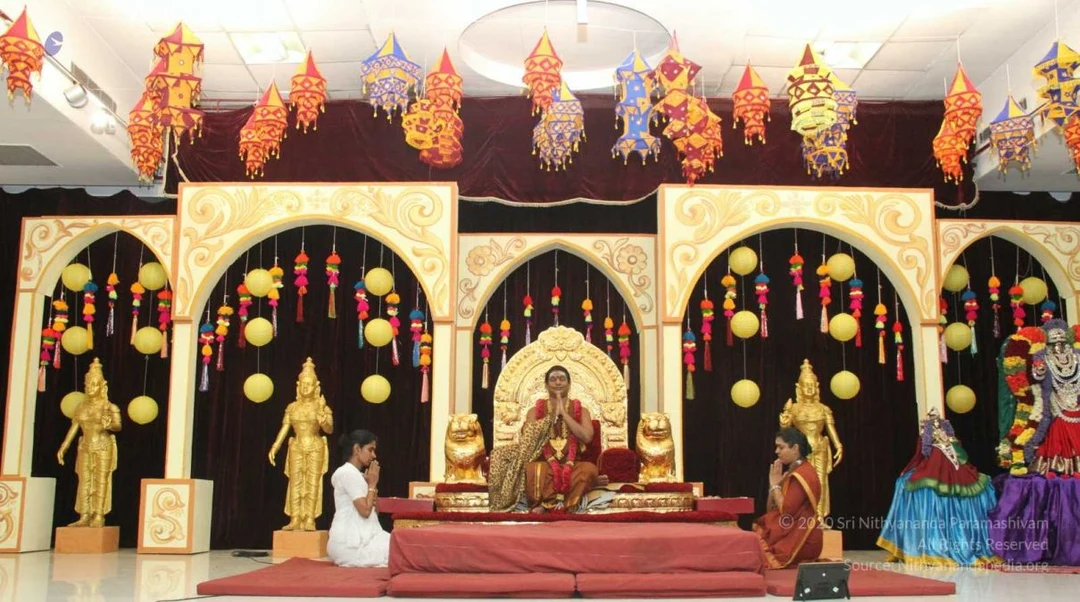
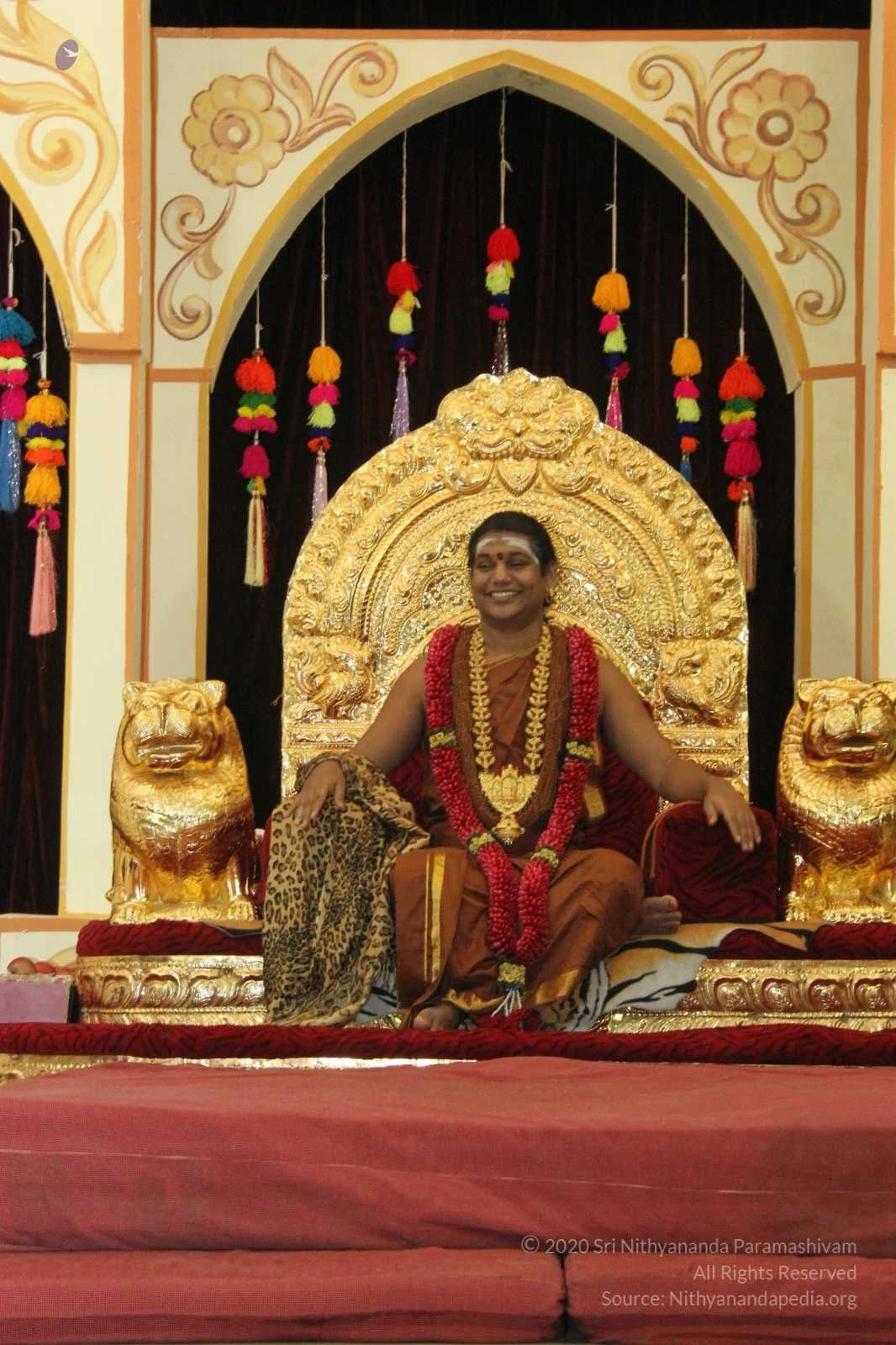
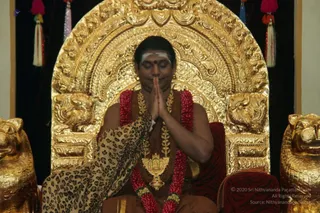
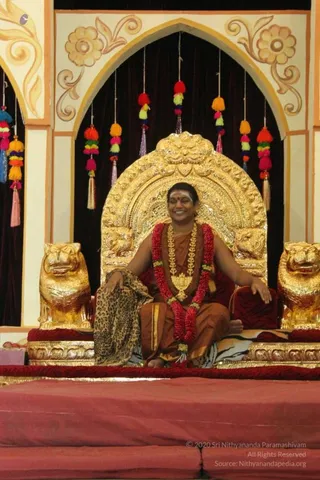
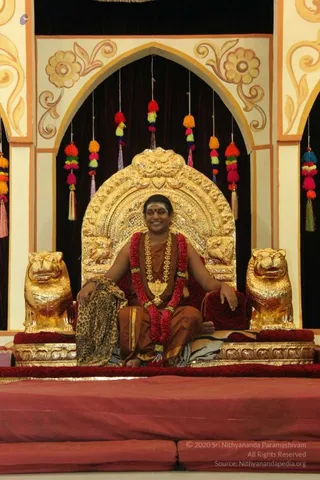
A seated man with folded hands in namaste sits on an ornate gold throne with carved arch and lion-head armrests. He wears a leopard-print shawl over one shoulder, a red beaded garland, layered gold ceremonial necklaces, and white and red forehead markings. His eyes are closed in prayer, and red and white tassels hang at the top of the frame. A gilded lion figure stands at each side of the throne. a person cues are the ornate gold throne, the leopard shawl, and the red garland with gold necklaces; the page indicates his presence at this event.A seated man in a reddish-brown robe sits with palms pressed together in anjali mudra on an ornate gold throne flanked by two gold lion sculptures. He wears a red and white flower garland, a gold necklace, a leopard-print shawl draped over his left shoulder, and a white-and-red forehead mark. Behind him hang black drapes with colourful tassels and paper lanterns. The seat is covered with a tiger-striped cloth and red cushions, and the figure appears to be sitting in stage-like seating for an assembly. a person is seated on the throne, with the leopard shawl, garland and gold ornaments as qualifying cues, though appearance alone leaves this uncertain.A decorated indoor stage with gold-painted arches draped with yellow balls, tassels and hanging paper lanterns in orange, purple and blue. A central figure with long hair and a crown-like headpiece sits on an ornate golden throne wearing a red garment with a leopard-print cloth, hands raised in greeting. Two golden lions flank the throne. Gold-painted standing deity statues stand on each side, with a garlanded deity murti in red and gold at the right. A young person in white kneels with palms joined at lower left, and a woman in a red sari kneels with palms together at lower right.A decorated stage with golden arches, maroon drapes and hanging yellow spheres and tasselled garlands. A figure seated on an ornate golden throne with lion armrests, hands joined in greeting, wears an orange-red garment, a leopard-print shawl and a red garland; the figure's appearance matches a person given the saffron-toned clothing, garlanded posture and central throne placement, though the face is not used for identification. A woman in white kneels at left with hands folded, and a woman in an orange sari kneels at right with hands folded. Golden standing deity statues flank the arches, and draped colourful deity murti figures with floral garlands stand at right. Paper lanterns hang from the ceiling.A seated man sits on an ornate gold throne with carved lion-head arms flanking him, backed by a dark curtain and a painted arch decorated with colourful tassels. He wears a rust-brown robe, a red and white flower garland, and a gold necklace, with a red mark and white tilak on his forehead, smiling while resting his hands on a leopard-print cloth. He sits on a red-draped dais with a tiger-striped cloth beneath him. Whether this man is the a person named on the page cannot be confirmed from appearance, so he is described by role and clothing only.A seated man sits on an ornate golden throne with a carved arched backrest, flanked by two gilded lion figures. He wears a rust-orange garment with gold border, a red and white flower garland, a gold ceremonial necklace and a leopard-print shawl draped over his arm. He has a red tilak mark on his forehead and smiles. Colourful tassels hang from the arch behind him, and a red cloth covers the stage in front. Appearance-based: a person seated on the peetha throne, identified only by the page; visible cues include the ceremonial gold necklace, garland and orange clothing.

Sacred Arts

108 photosSource gallery
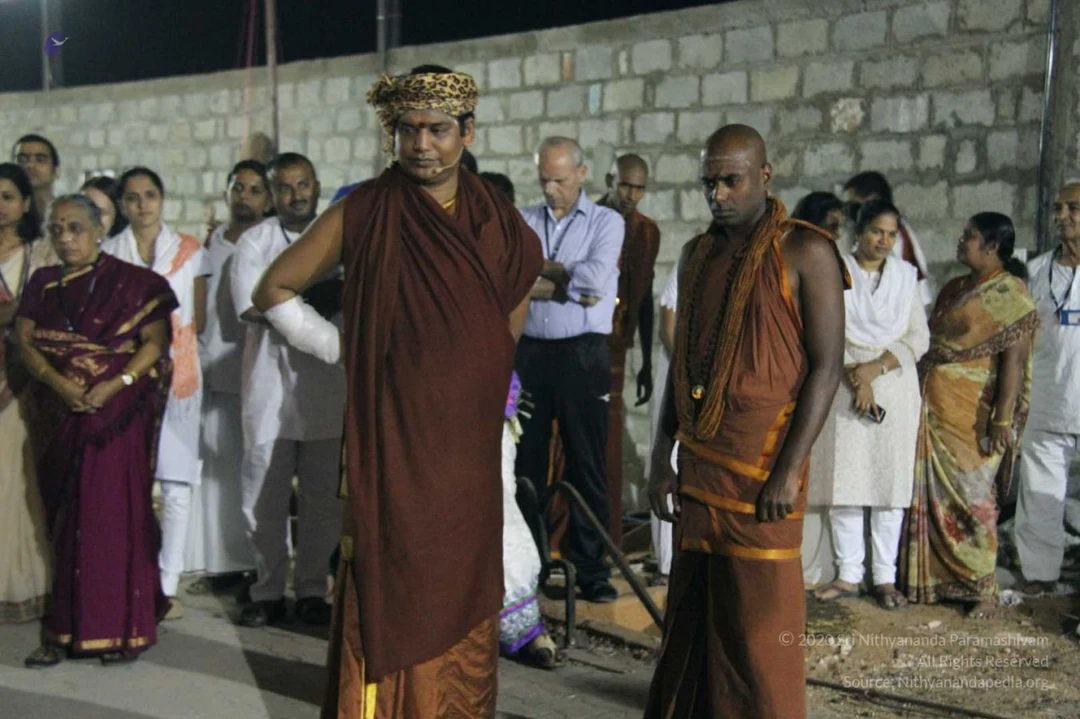
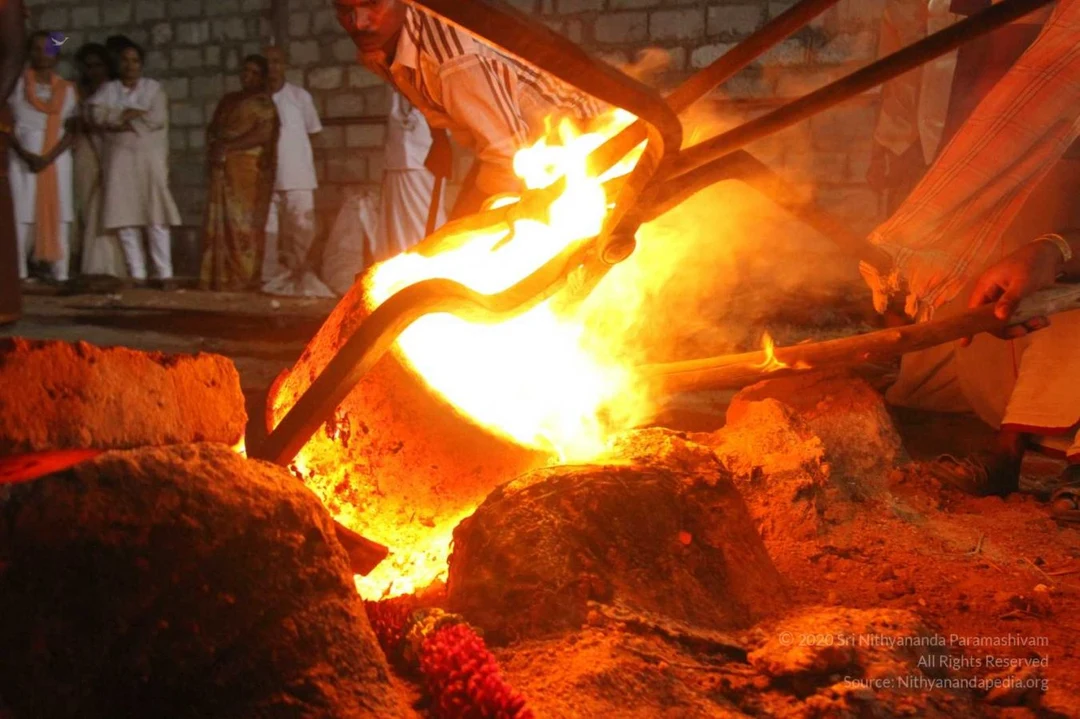
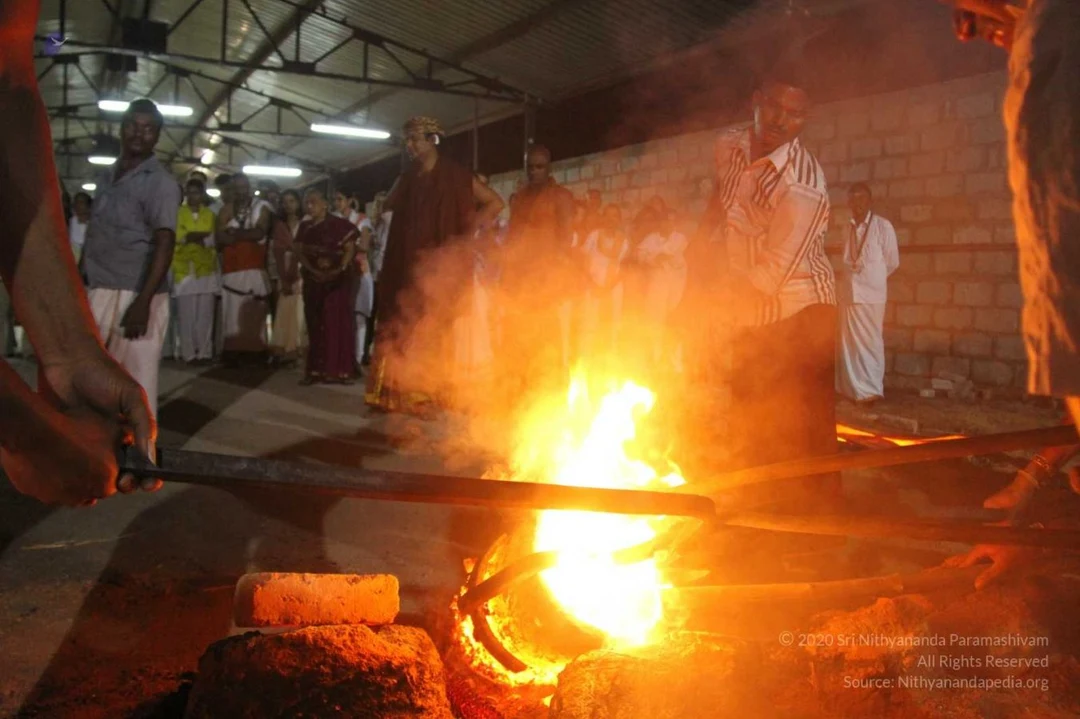
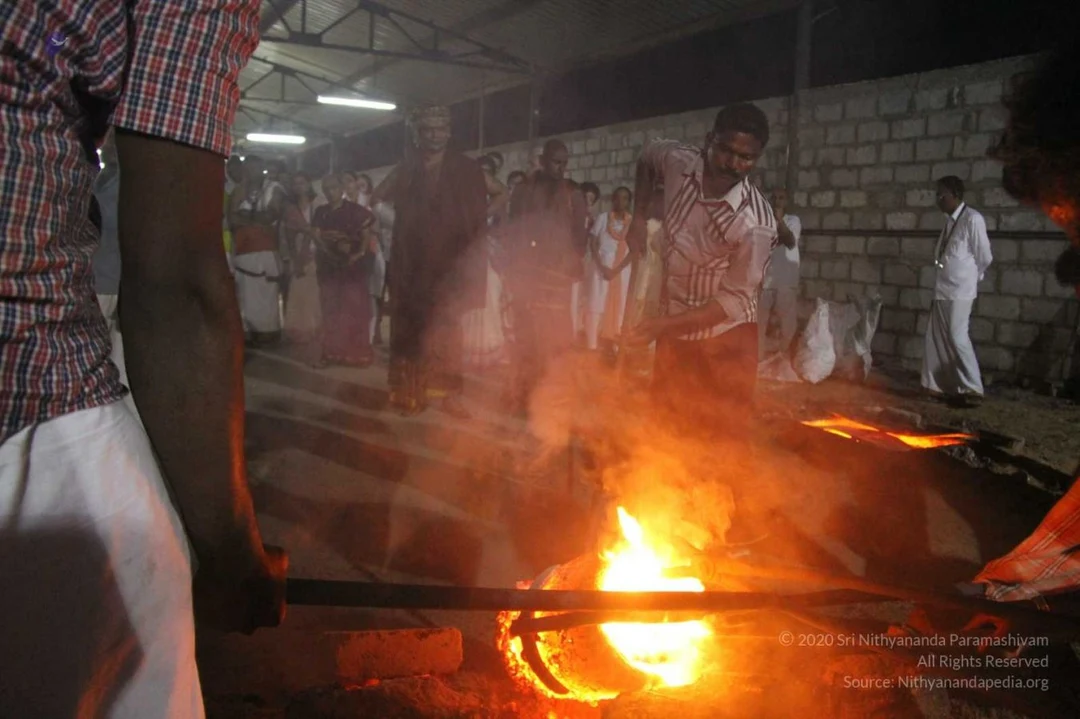
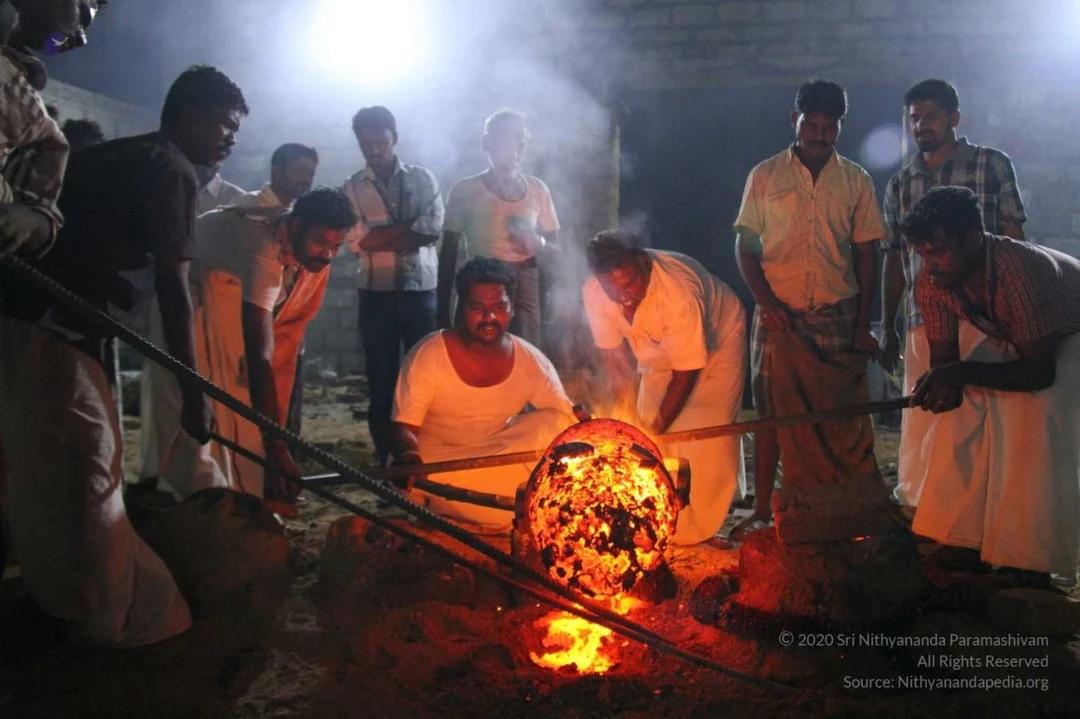
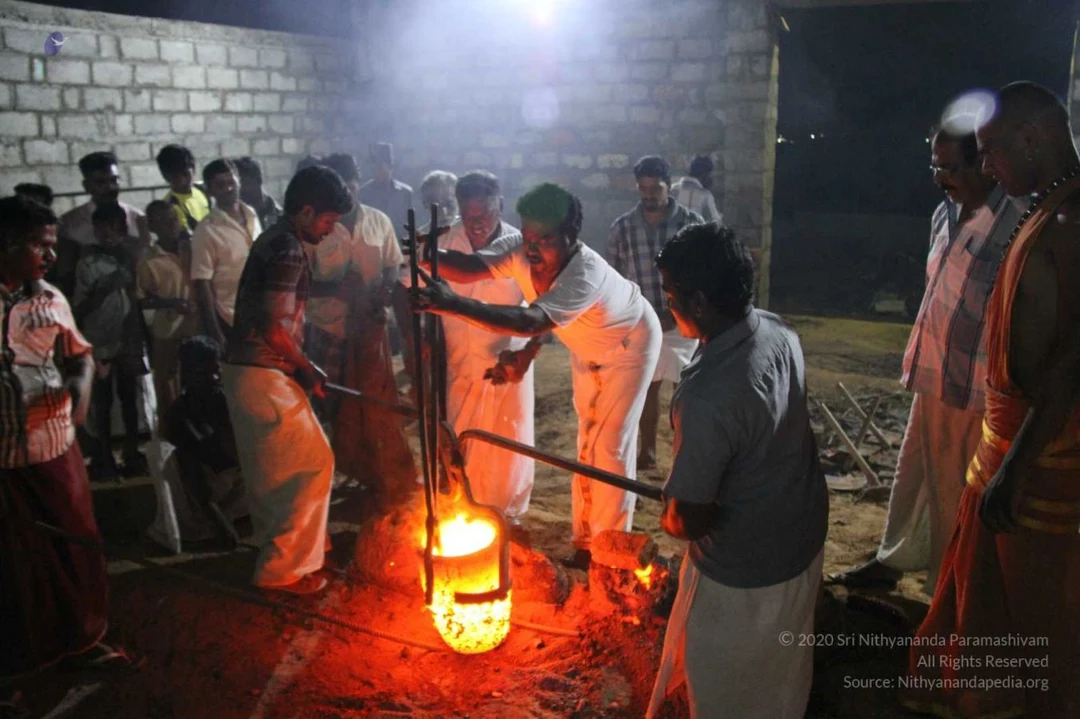
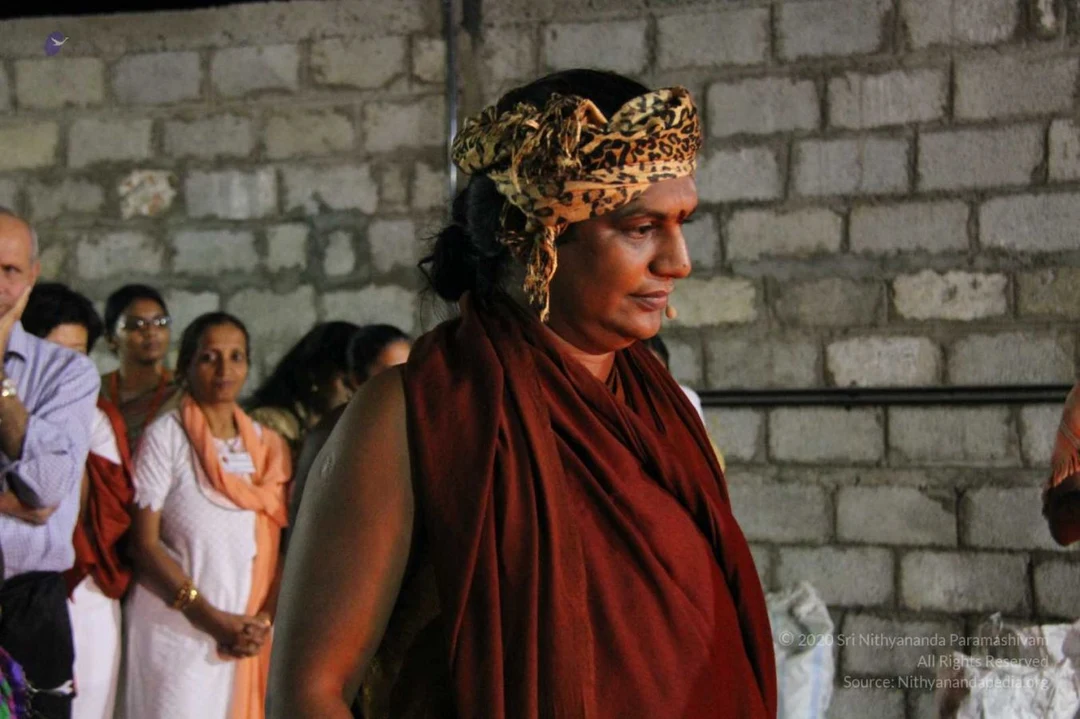
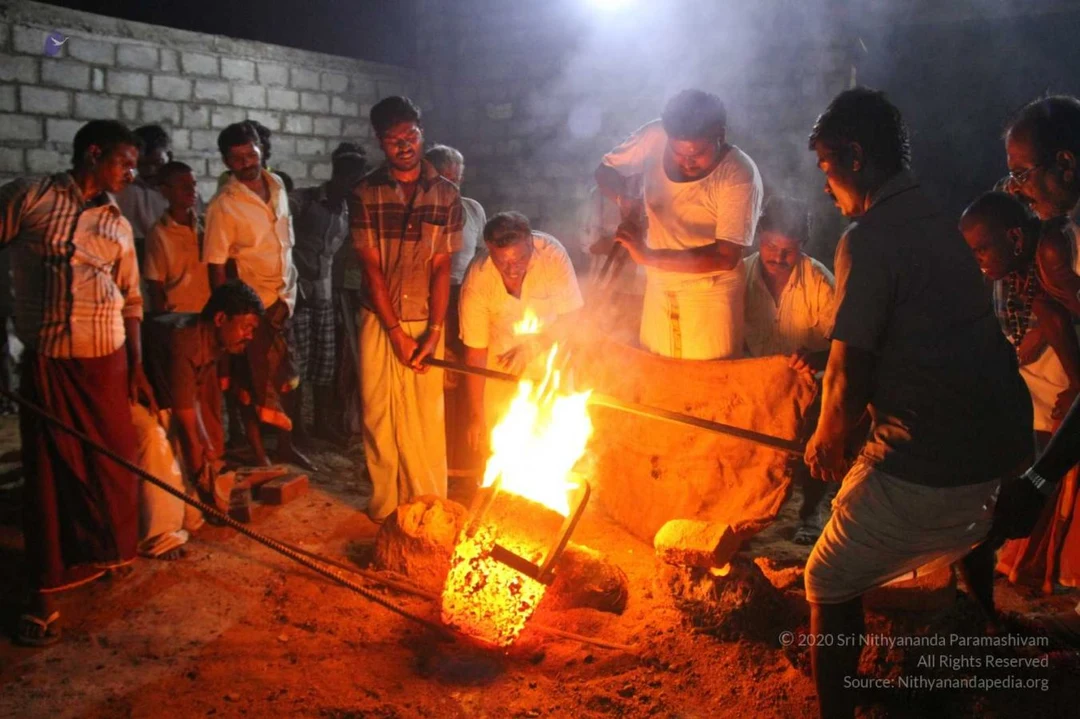
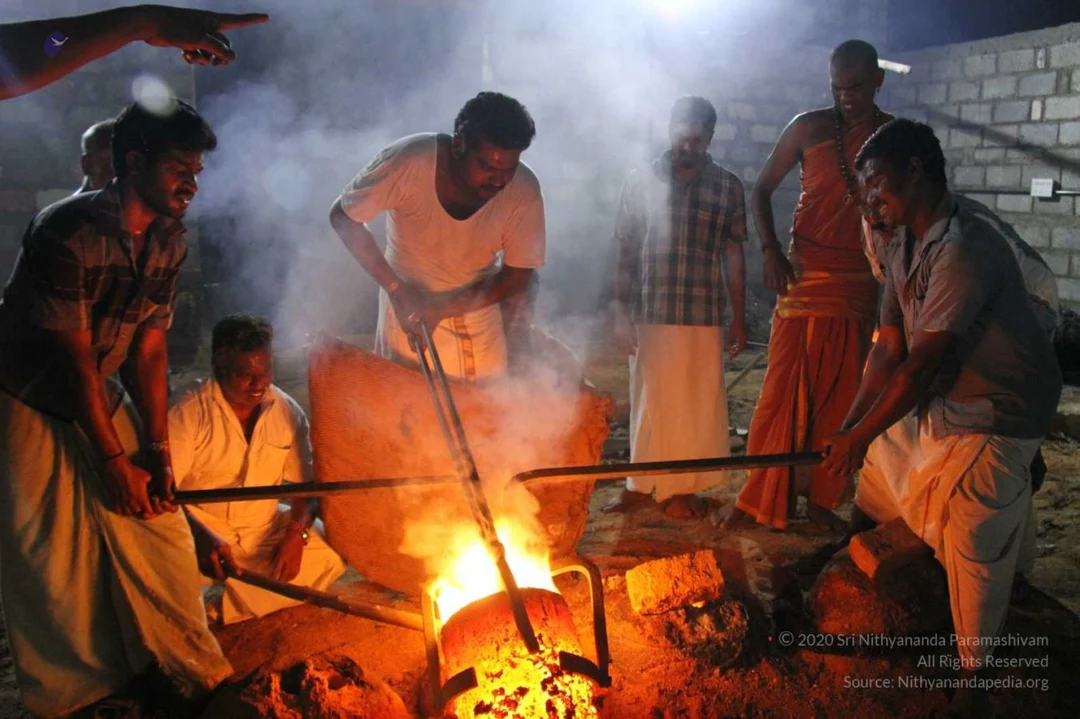
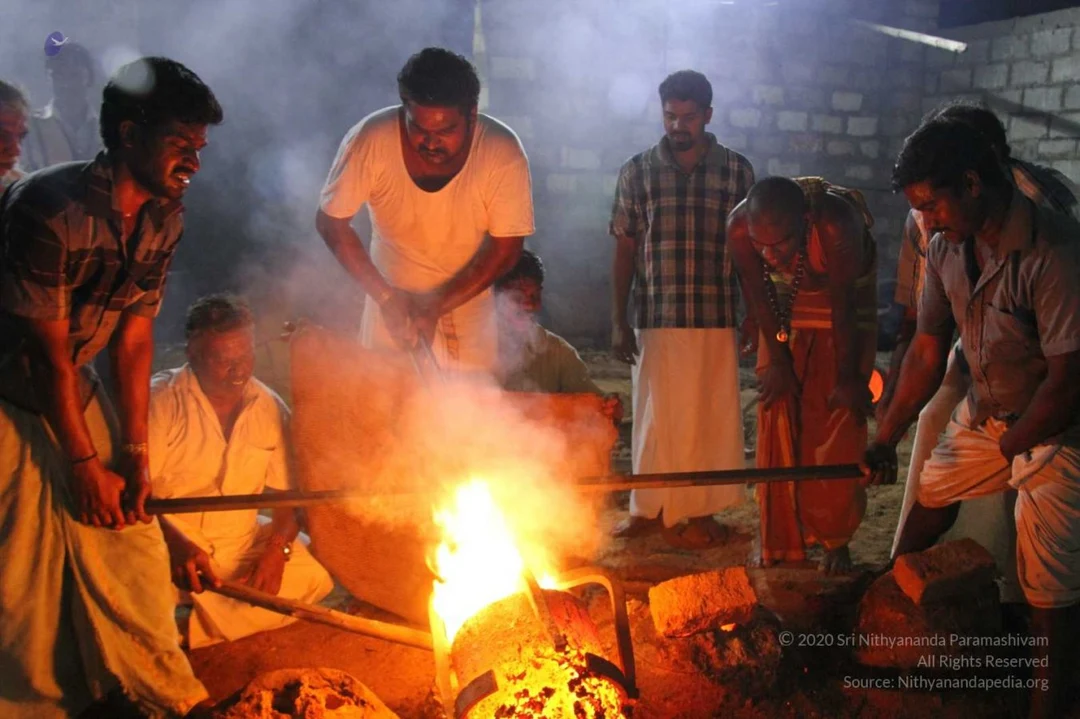
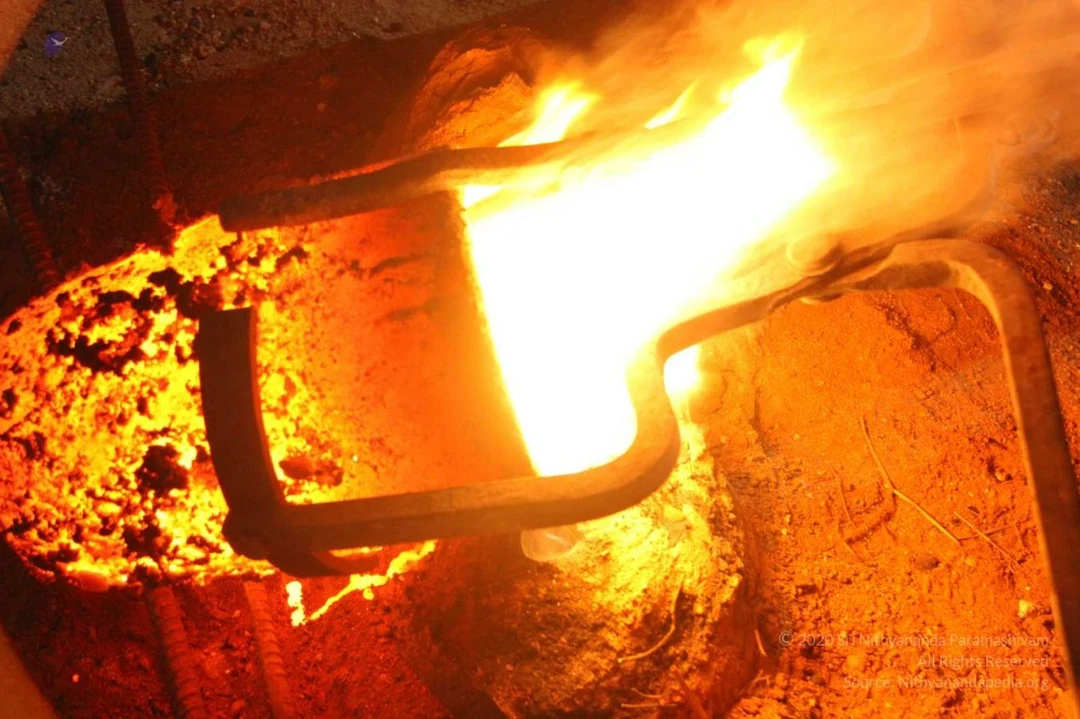
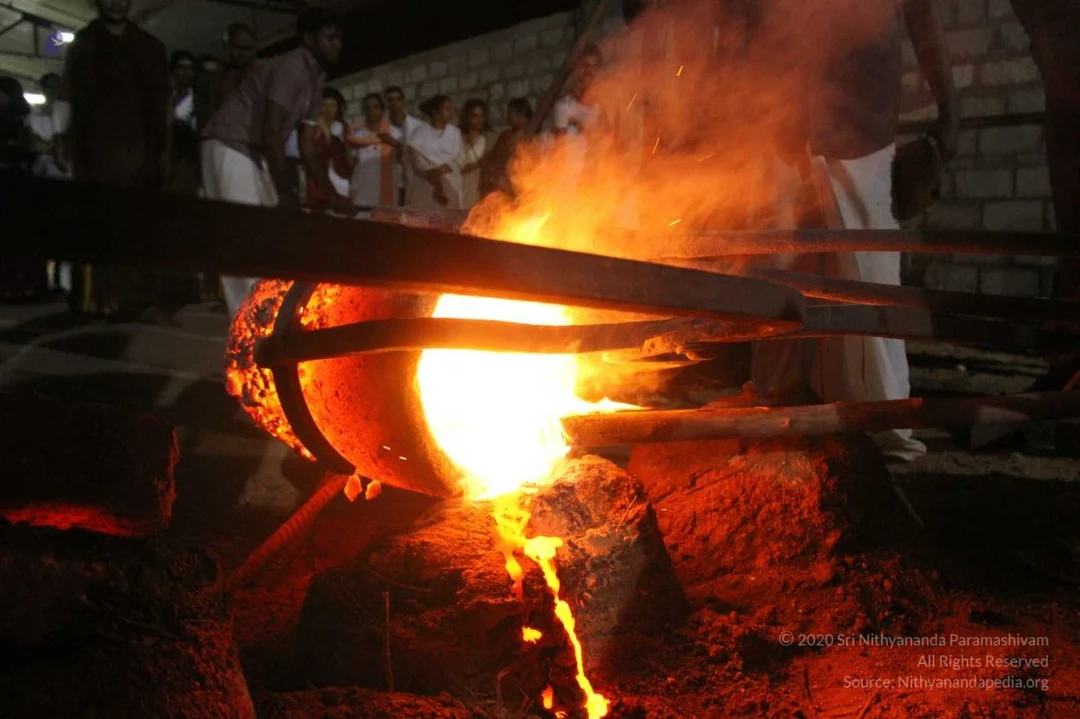
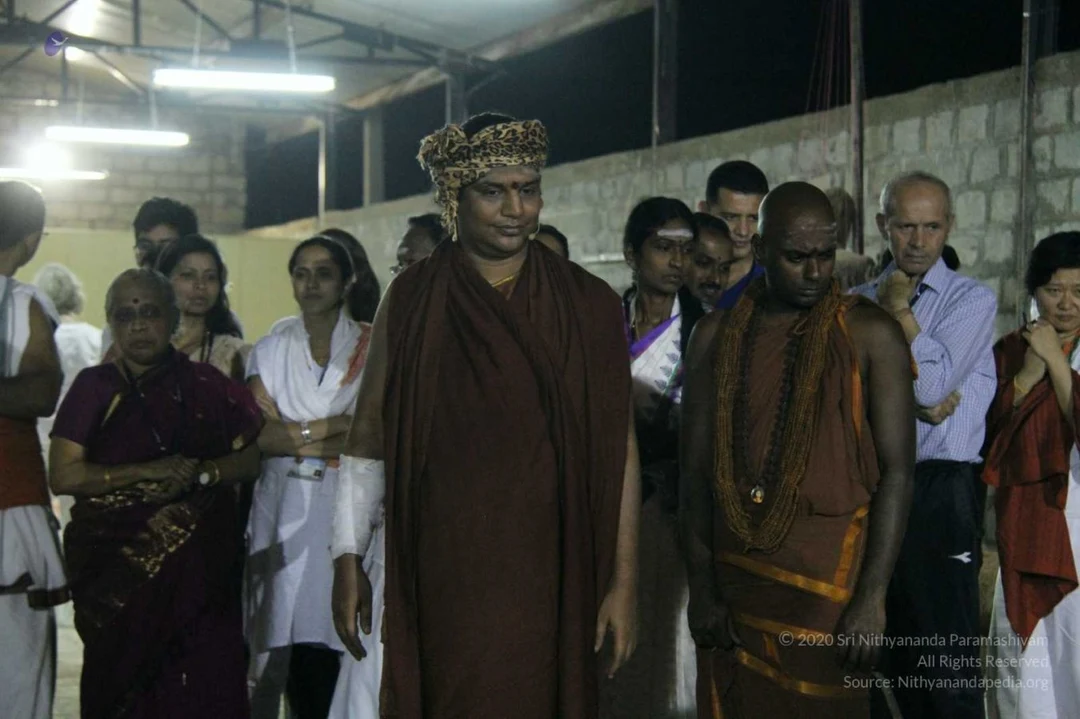
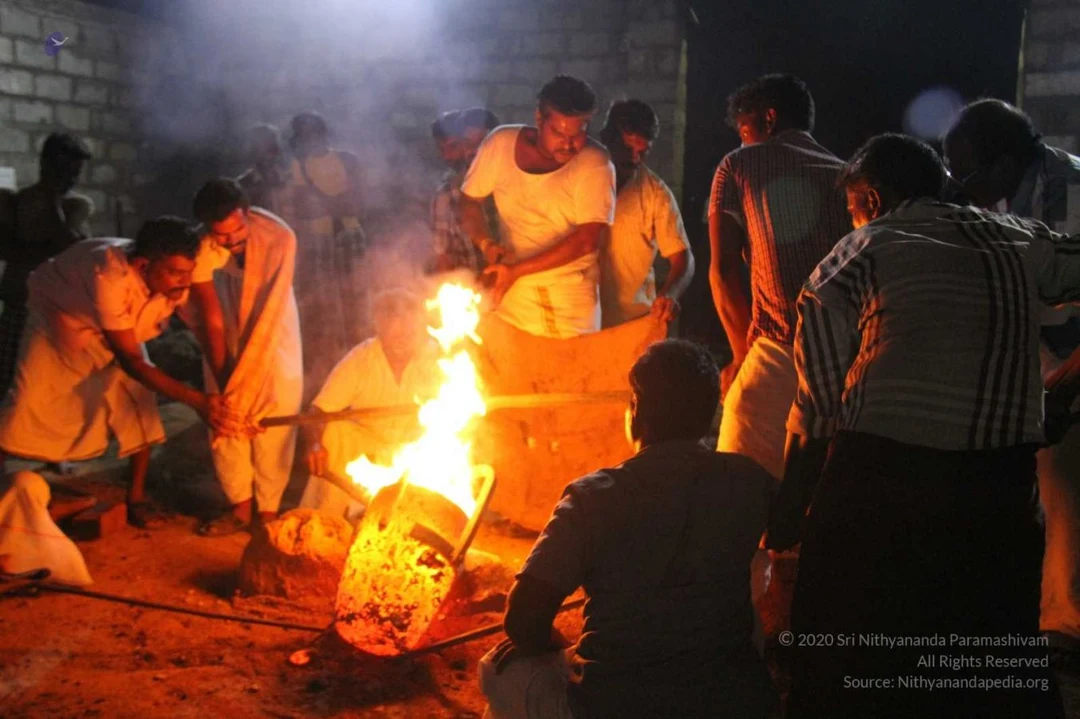
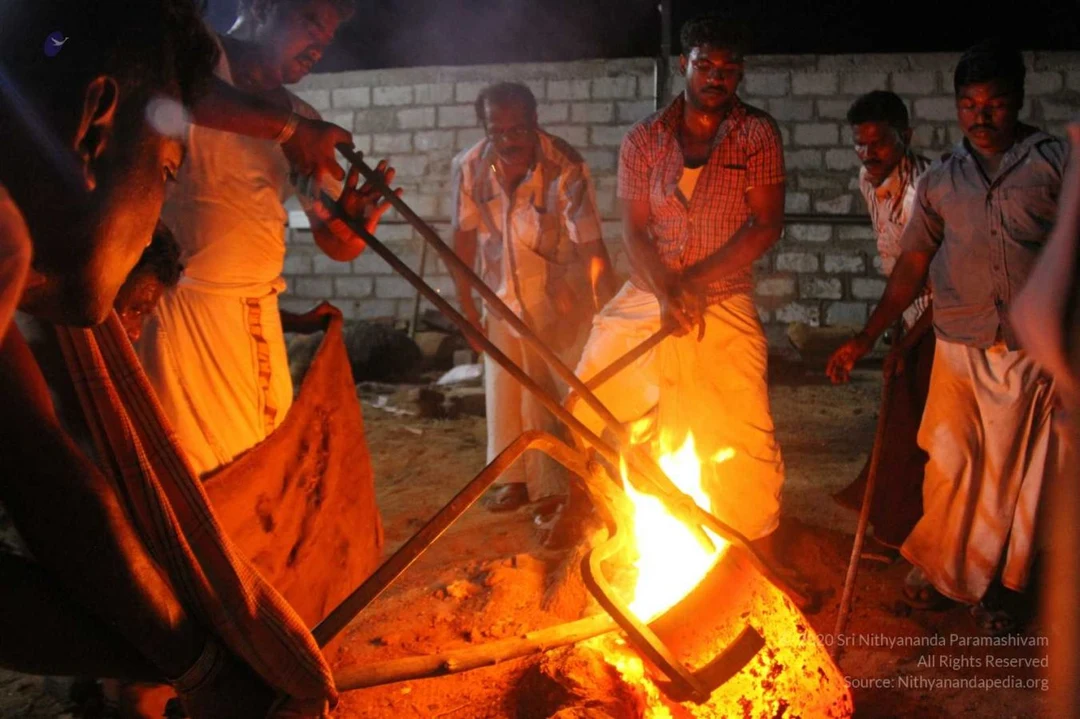
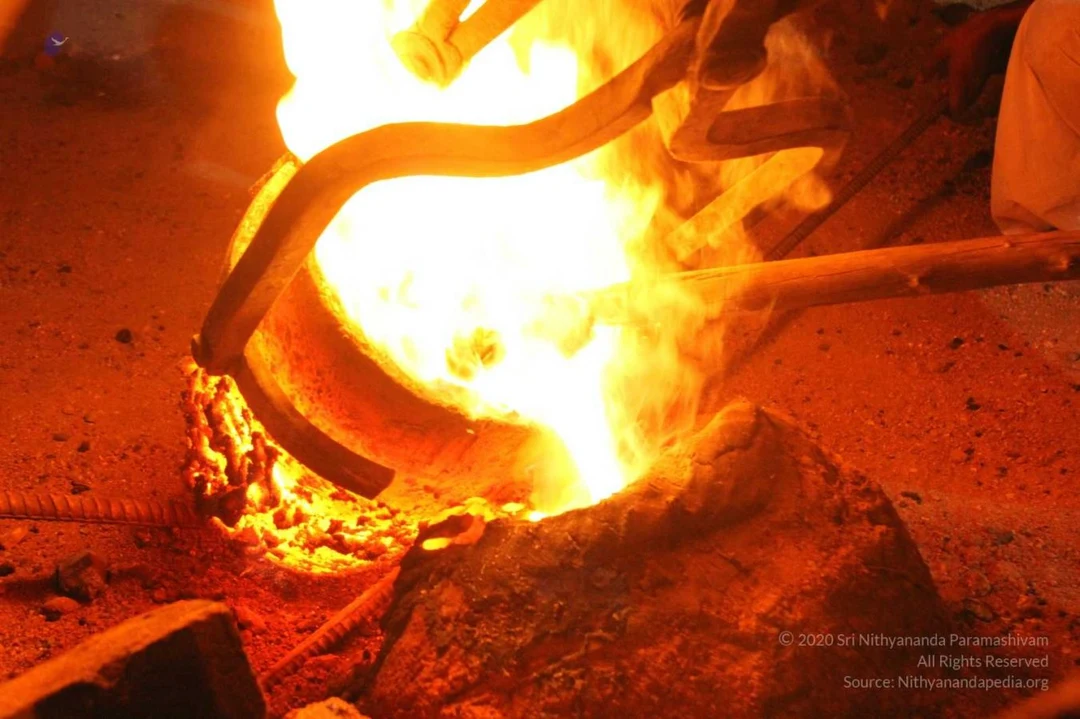
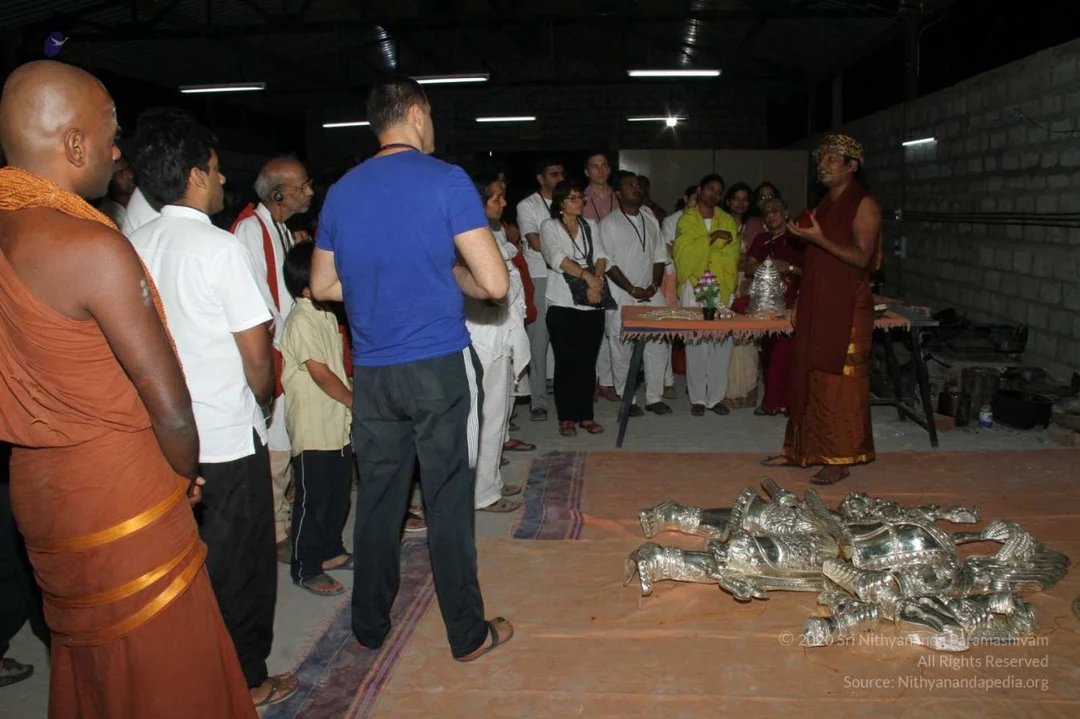
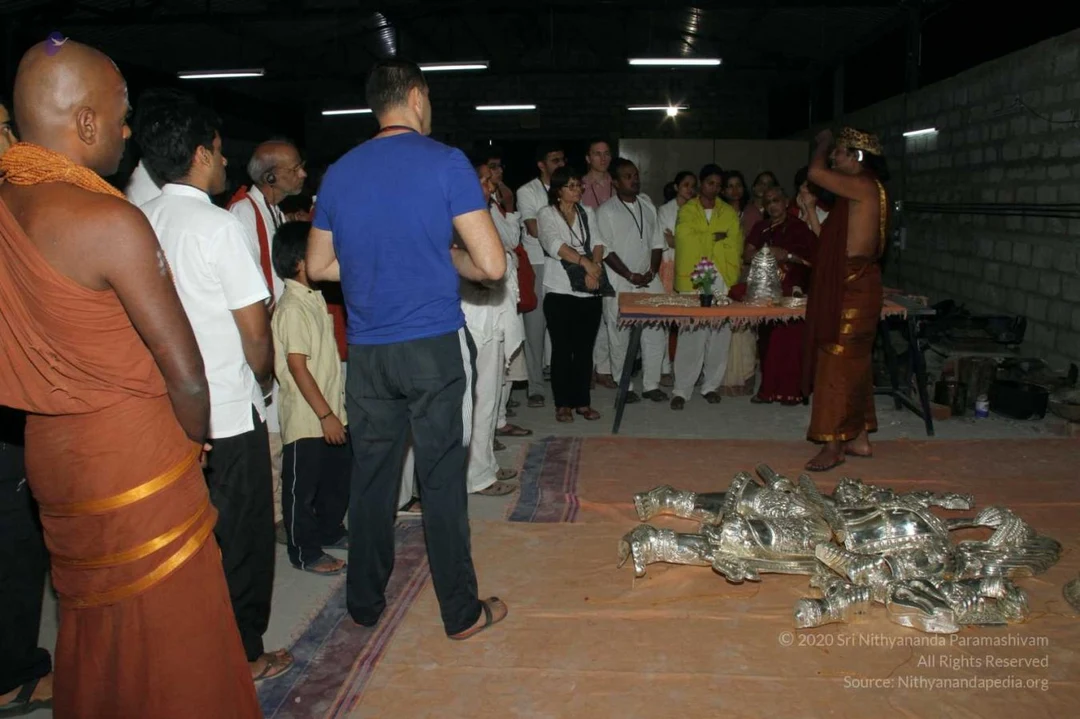
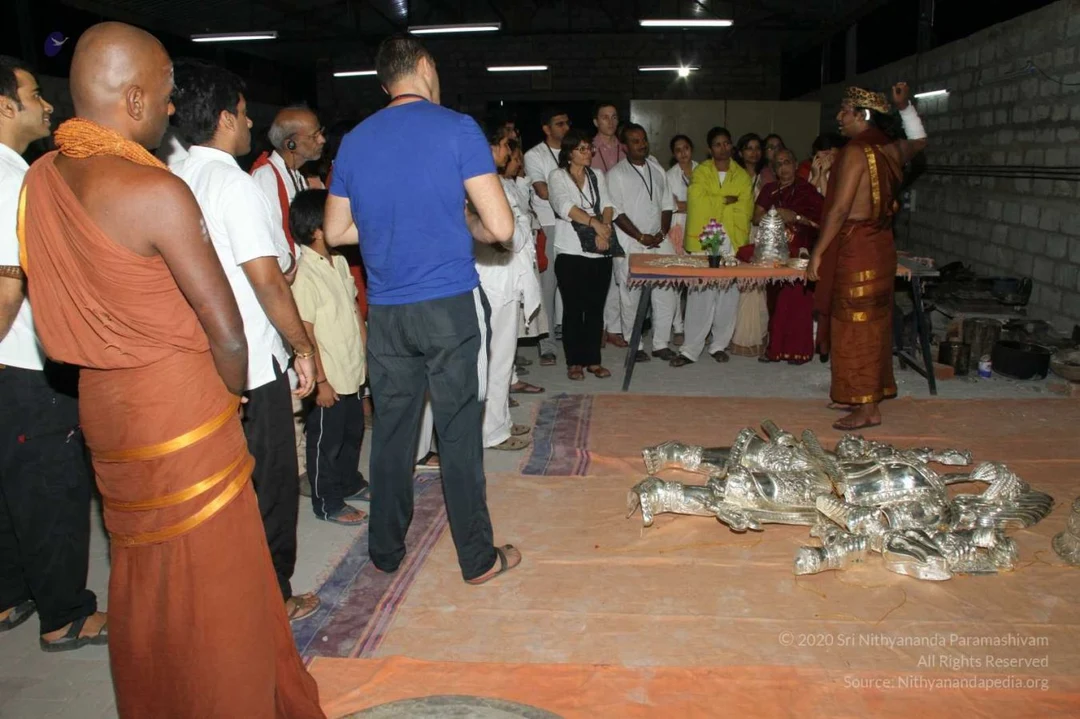
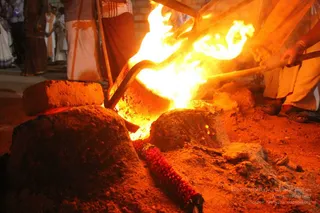
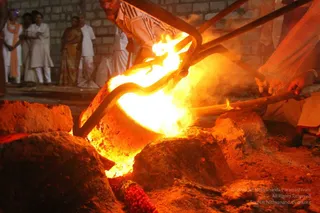
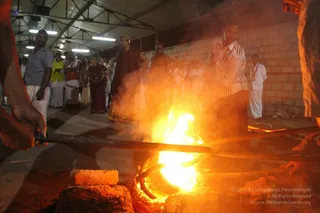
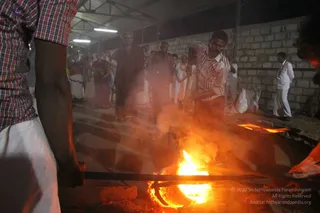
Night outdoor gathering in front of a grey breeze-block wall. Two men in rust-brown and maroon robes stand at centre: the man on the left wears a patterned gold and brown headwrap and a wrapped maroon shawl, with a white bandage on his forearm; the bald man on the right wears a brown robe with gold trim, a dark rudraksha-style mala and a shawl over one shoulder. Behind them, a crowd of devotees in white kurtas and sarees, including a woman in a maroon saree on the left and a woman in a yellow-green patterned saree on the right, stands watching. A man in a light blue shirt with arms folded stands in the middle background. The scene is lit by night lighting.Close photograph of a glowing metal-smelting crucible or vessel sitting in hot coals, with bright orange flames rising beside it and molten material dripping down into the embers. A thin metal rod or tong extends in from the upper right through smoke. No people are visible; the frame shows only the furnace, fire and ash-covered ground.A night-time fire ritual photographed close up. Large flames rise from a fire pit built of mud or clay blocks on bare earth, and a long iron or wooden implement reaches into the blaze. A red-and-white garland or cord lies on the ground beside the pit. Behind the fire, two or three partially visible men in white dhotis and a man in an orange-brown cloth stand near the flames, and a few other people in light clothing are visible at the edge of the frame. The scene suggests a homa or yagna fire ceremony, though no names or specific deities are visible.A night-time photograph of a metal-casting or furnace pour: a man in a striped shirt and white dhoti tilts a long iron tong over an earthen mould, with bright molten orange fire and sparks rising from the opening. Clay mounds and a red garland lie in the reddish earth in the foreground. Behind, a few onlookers stand before a brick wall, a woman in a saffron-bordered sari and others in white clothing.A photograph of an evening fire ritual. A bright open fire burns in a shallow pit on the ground, with smoke rising. Two long iron rods rest across the fire, and a man in the foreground at left holds one of them. A group of about a dozen people stands behind the fire, including a man in a maroon robe with a tall headwrap, a woman in a deep red sari, and several people in white dhotis and light clothing. A man in a striped white shirt stands at right near the fire. Bricks surround the pit.Photograph taken at night of a fire pit burning in an open-sided shed with a concrete block wall behind. A man in a pink and white striped shirt and dark lungi leans over the flames, tending the fire with an iron rod. Behind him a group of people in white dhotis and saris stands watching, including a figure in a dark cloth and another in a maroon shawl. Sacks lie against the wall at right and a fluorescent tube light hangs under the roof. Smoke rises from the burning logs in the foreground.

12-Temple-Brahmotsav

38 photosSource gallery
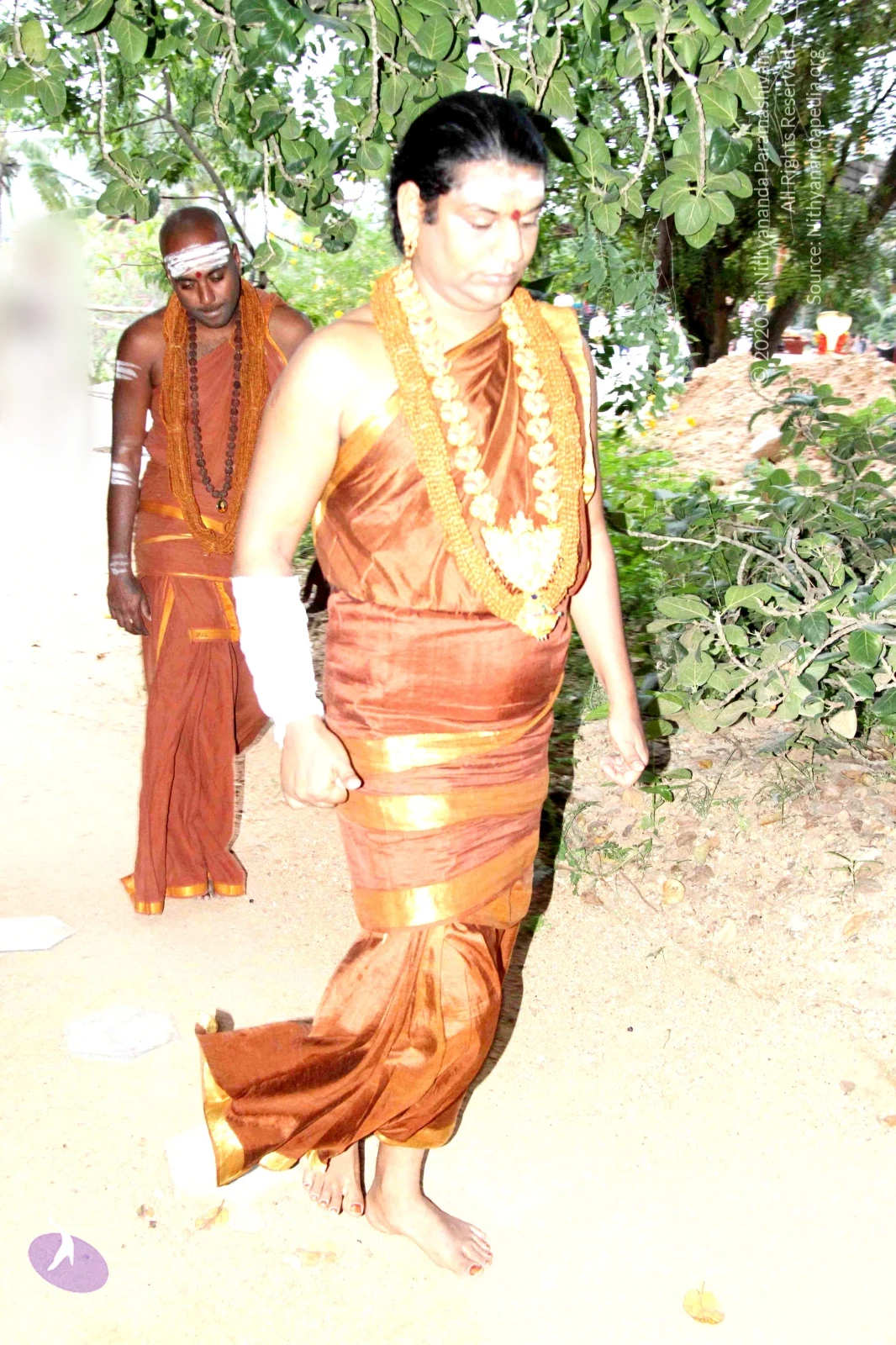
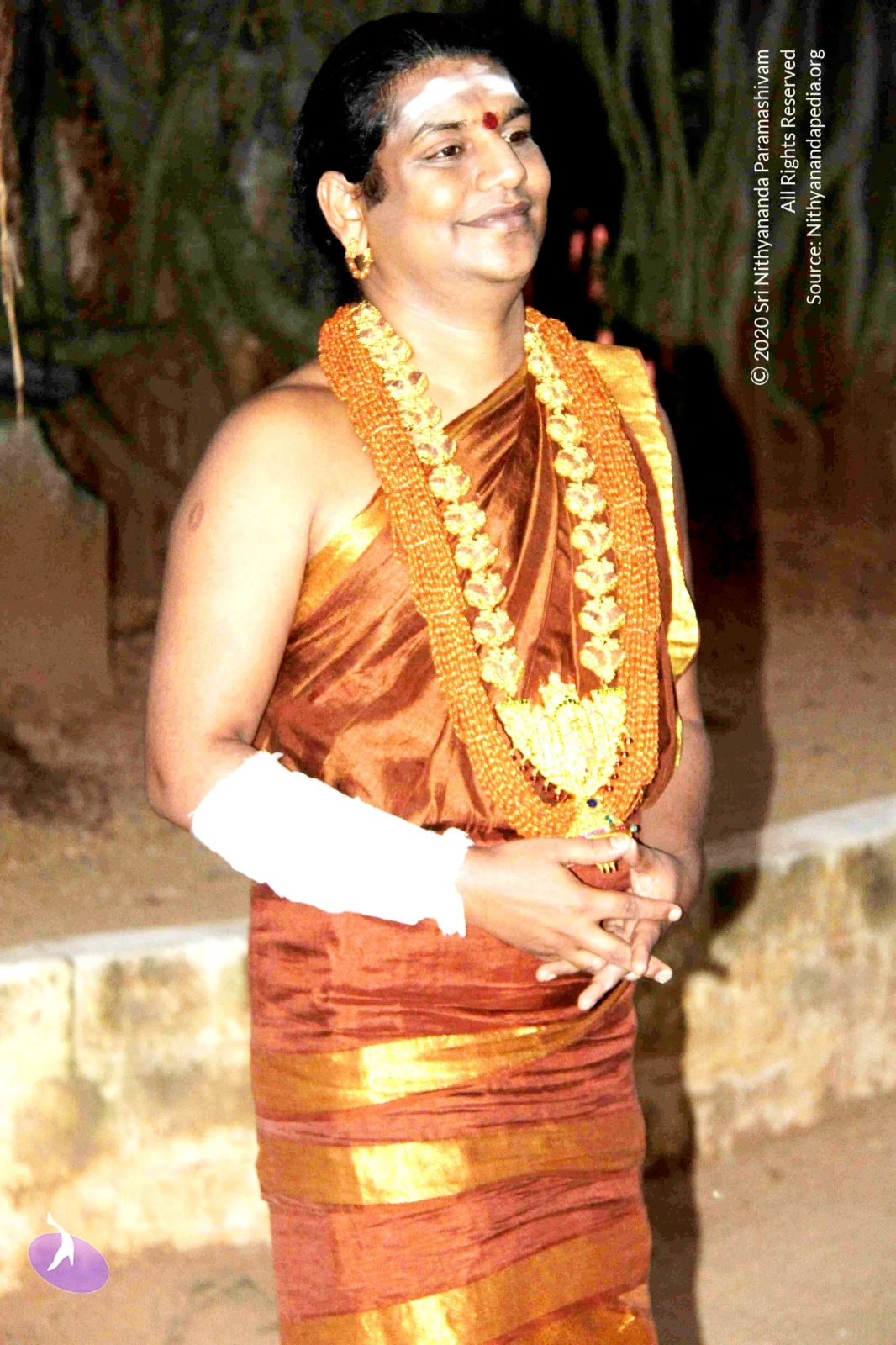
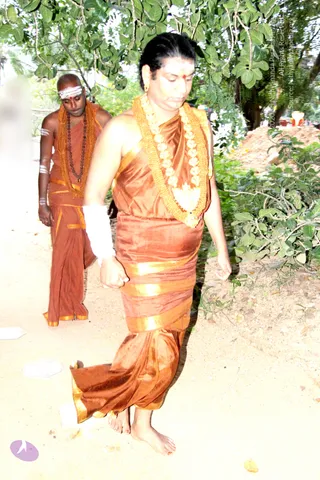
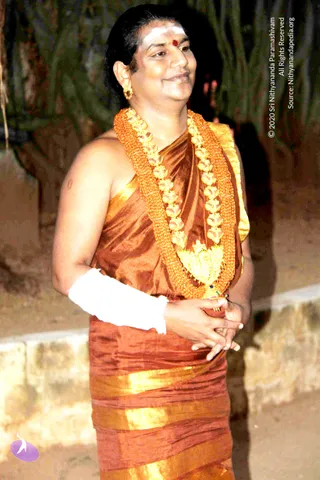
A standing man in a rust-orange ochre garment with gold-bordered dhoti and upper wrap walks outdoors past potted plants and palm trees. He wears a long multi-strand necklace of beads and a large white flower-like pendant, a red bindi on his forehead, and gold earrings; his hair is swept back into a bun. A white bandage covers one forearm. Corrugated roofs and tiled paving are visible behind him.A standing man in a brown silk-look dhoti and upper wrap with gold borders, barefoot on a white paved ground. He wears a thick rudraksha mala with large gold ornamental beads and a gold pendant, and a red bindi on his forehead. A white bandage covers his right forearm. Green shrubs, palm fronds and an orange-red building form the background. Appearance-based a person, wearing saffron-brown ceremonial clothing with rudraksha mala and gold necklace, shown in profile.A temple shrine photographed from the front, with a golden arched frame around a central deity murti of a standing and seated pair of divine figures. The main figure wears a red crown and a white dhoti with a purple cloth, and holds a hand raised; the consort figure beside wears a red flower crown and a green-and-gold sari. Both are draped in garlands of red and white flowers and beads. Below them sits a small ornate panel with a smaller murti and a red-and-gold cloth. To the right, a smaller figure in orange-and-gold clothing stands with a garland. Brass pots, a kalasha-like vessel, oil lamps and offerings sit on the stone platform, and a devotee in white clothes is visible at the bottom edge of the frame.A standing man in a rust-brown dhoti-style garment with gold-bordered wrap stands on a pale paved terrace beside a red curtain, with palm trees and a red wall behind him. He wears a heavy rust-coloured rudraksha mala layered with a large gold necklace with a lotus-shaped pendant, has a white vibhuti line and red kumkum dot on his forehead, and gold earrings. A white bandage covers his left forearm. Appearance-based label: a person, with the saffron-brown robes, gold ornaments, rudraksha mala and gold chains as the qualifying cues, shown as a standing devotee-style figure rather than a seated teacher.A man in a rust-orange silk dhoti and shawl with gold borders walks barefoot on sandy ground beneath a leafy tree. He wears a thick gold-coloured beaded garland with a large floral pendant, a red tilak on his forehead, and a white bandage on his right wrist. Behind him a shaved-headed attendant in matching orange cloth, with a white tripundra on his forehead and a rudraksha mala, follows. A small red-and-white structure appears in the background among bushes.A standing person in a brown and gold silk garment with a wide gold border wrapped over one shoulder, wearing a thick orange beaded necklace with a large gold ornamental pendant and gold earrings. Their hair is swept back, with white vertical marks on the forehead and a red dot between the brows. A white bandage is wrapped around the right forearm, and both hands are clasped at the waist. The background shows dark foliage and a low stone wall at night. The face is turned slightly to one side with a faint smile. Appearance-based label: a person, shown in person wearing ceremonial saffron-toned silk, rudraksha-style orange mala and gold necklace.

5-Nithya-Satsang
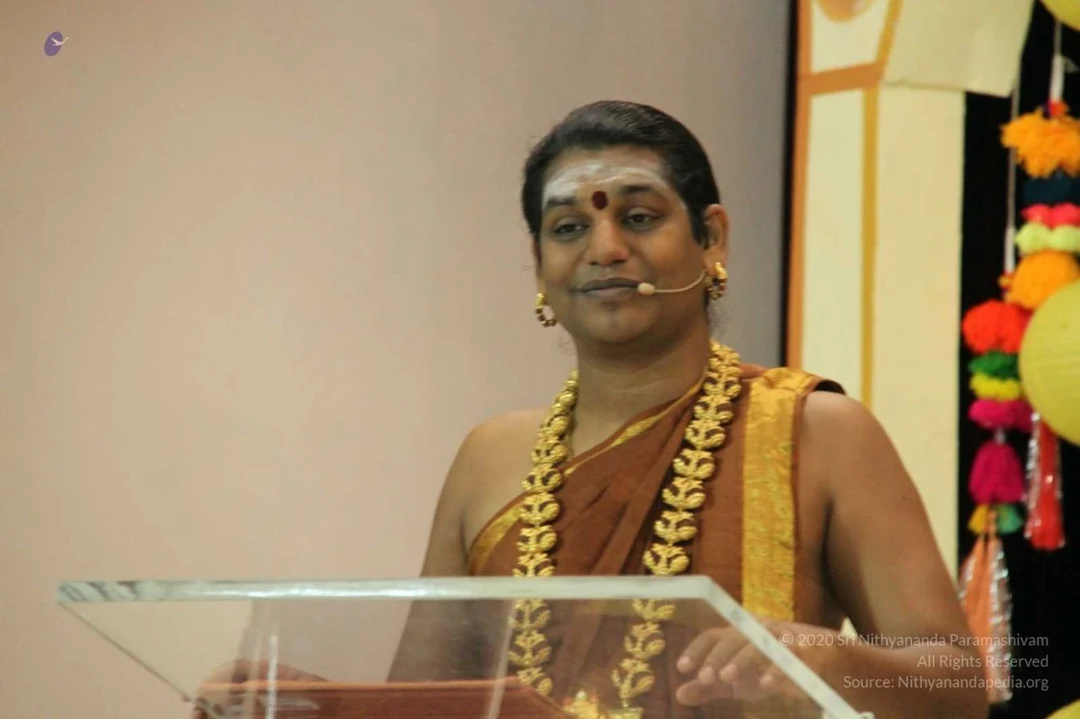
25 photosSource gallery
A smiling person stands behind a clear acrylic lectern on a stage, with palms joined at the chest. They wear a rust-brown and gold-bordered garment draped over the shoulders, heavy gold ceremonial necklaces, gold earrings, white vertical forehead markings and a red dot on the forehead, with a small microphone at the ear. A golden deity statue stands to the right of the lectern, and yellow paper lanterns and colourful tassel decorations hang in the background.A person stands behind a clear acrylic lectern on a stage, speaking into a headset microphone. They wear a brown and gold-bordered silk garment draped over one shoulder with a gold-bordered dhoti style lower wrap, a heavy multi-strand gold necklace with a large gold pendant, and gold earrings. A red dot and white markings are on the forehead, and the hair is pulled back. Behind them hangs a decorative string of yellow lanterns and colourful tassels, and a golden statue stands at the right edge. A white pedestal fan is visible at left.A man stands behind a clear acrylic lectern on a stage, smiling and speaking into a small headset microphone. He wears a rust-brown dhoti-style garment with gold-zari borders wrapped over one shoulder, a heavy gold ceremonial necklace with a pendant, gold earrings, a white sacred ash line and a red bindi on his forehead. Behind him hang yellow paper lanterns and pink and yellow tassels, and a gold statue is partly visible at the right edge.A man stands behind a clear acrylic podium on a stage, smiling, wearing a headset microphone. He wears a brown and gold-bordered dhoti-style garment draped over one shoulder, a thick gold necklace of beaded links, a gold pendant, gold earrings, a red bindi and white forehead markings. Behind him to the right is a large golden statue of a standing deity and hanging yellow paper lanterns with colourful tassels against a dark backdrop.A photograph of a person standing behind a clear acrylic lectern, speaking into a headset microphone at an event decorated with yellow paper lanterns and colourful tassel hangings. The person wears a brown and gold-bordered shawl draped over the shoulder, multiple gold-toned rudraksha necklaces with a gold pendant, and gold hoop earrings, with white horizontal lines and a red dot on the forehead. The lectern holds a brown cloth. No other physical people are visible.A man in a brown and gold-bordered draped garment stands behind a clear acrylic lectern on a stage, smiling and speaking into a headset microphone. He wears a heavy gold necklace of ornamental beads and a gold pendant, gold earrings, a red dot on his forehead and white markings on his brow. Behind him hang yellow paper lanterns and colourful tasselled decorations in pink, red, green, blue and yellow. The scene suggests a conference or satsang talk. Appearance-based a person, with a rudraksha-style gold necklace and ornate ceremonial clothing; the lectern and stage setting show him as a speaker at the event.
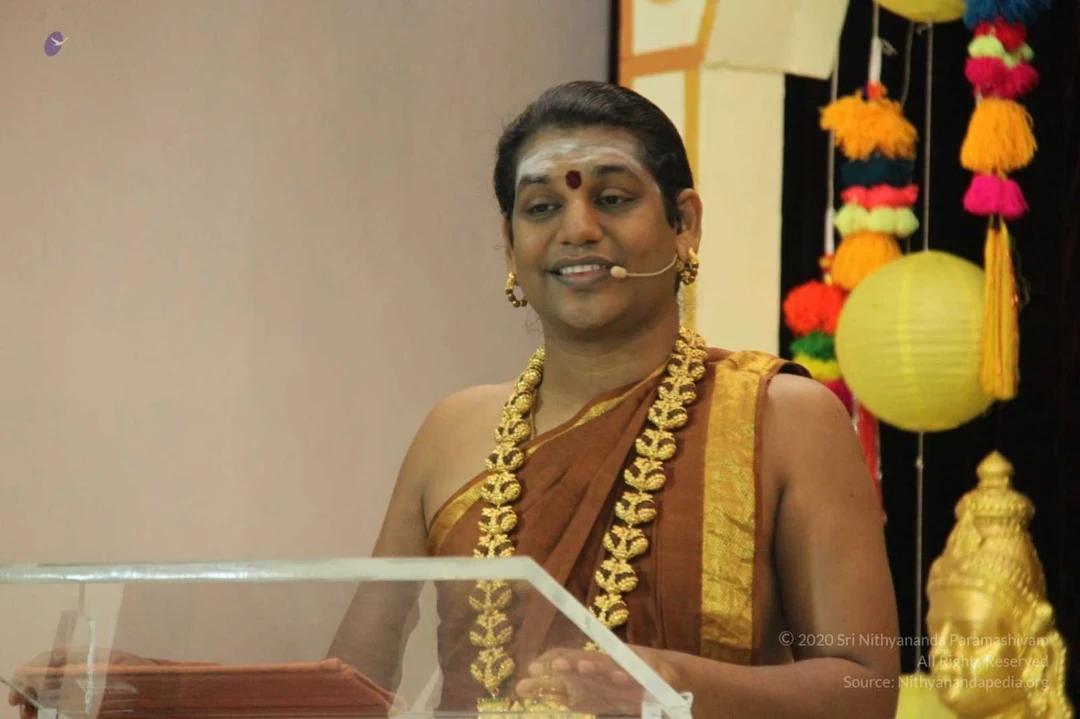
8-Final-Blessings

4 photosSource gallery
A smiling man in a maroon-brown robe with gold borders stands barefoot on a patterned carpet in front of an ornate golden throne flanked by golden lion figures. He raises both hands in greeting, wearing layered garlands of yellow and multicoloured flowers, a gold necklace and a blue shawl draped over one shoulder, with a white forehead marking and a red bindi. Yellow paper lanterns and tasselled decorations hang beside a cream arched backdrop with gold floral scrollwork. Compatible cues are present but the face and overall appearance are not clear enough to confirm identity, so the person is described by role and presentation only.A smiling person stands barefoot on a white floor and a patterned red-and-orange rug, arms raised with palms open in greeting. They wear a rust-brown robe with gold borders, a white bandage on one forearm, a gold lotus pendant, and multicoloured garlands of yellow and red flowers over a blue shawl. A white tilak mark with a red dot marks the forehead. Behind them is an ornate golden throne with lion-shaped armrests, draped in a tiger skin, under a cream arch with gold floral scrollwork and hanging yellow paper lanterns and tasselled pompoms.A smiling person in a rust-brown robe with gold borders stands barefoot on a patterned carpet before an ornate gilded throne flanked by golden lion figures on red cushions. Both arms are raised in greeting, the right arm bandaged in white. A yellow-and-multicolour garland hangs around the neck, with a blue silk shawl draped over the shoulder and a sparkling gold-and-colourful staff-like decoration held behind. A gold pendant necklace and a white tilak mark the forehead. Behind is a stage with cream arches painted in gold scrollwork, hanging yellow paper lanterns and tassels.A man stands barefoot on a patterned carpet before an ornate golden throne flanked by two golden lion figures and draped with red velvet cushions. He smiles and raises both hands in greeting. He wears a rust-brown dhoti-style garment with gold borders, a brown shawl, a gold necklace, and layered garlands of yellow, green and red flowers, with a blue silk cloth draped over his arm. A white forehead marking and red bindi are visible. Behind him hang yellow paper lanterns and tassels in pink, blue and orange on a dark red backdrop with gold-painted arches.
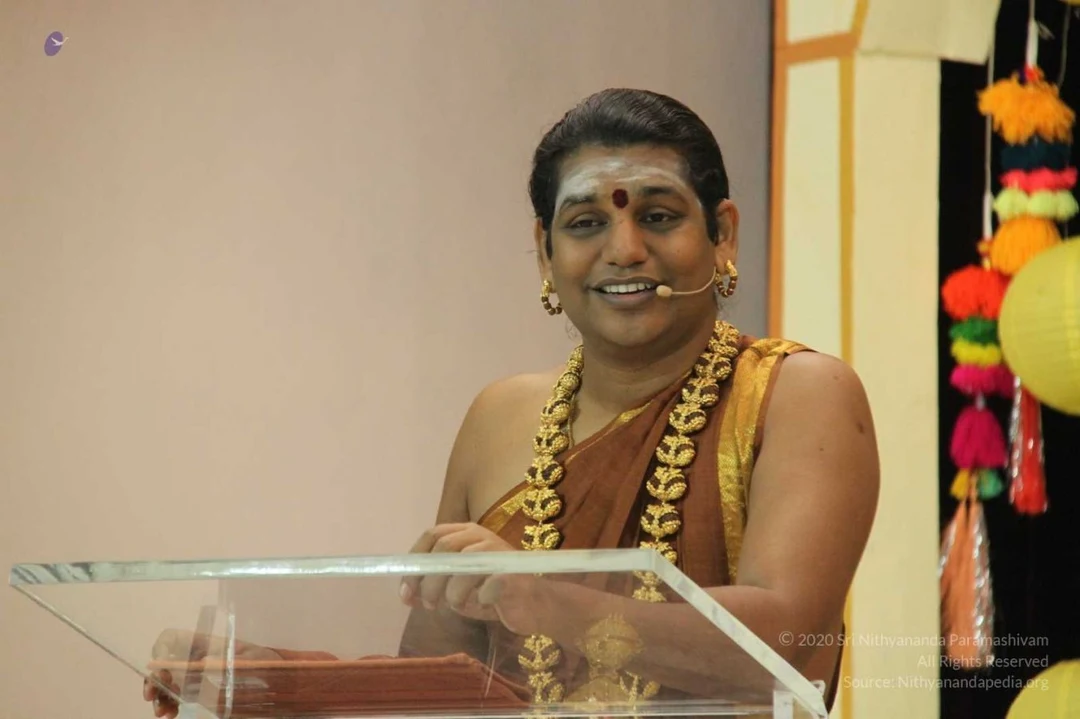
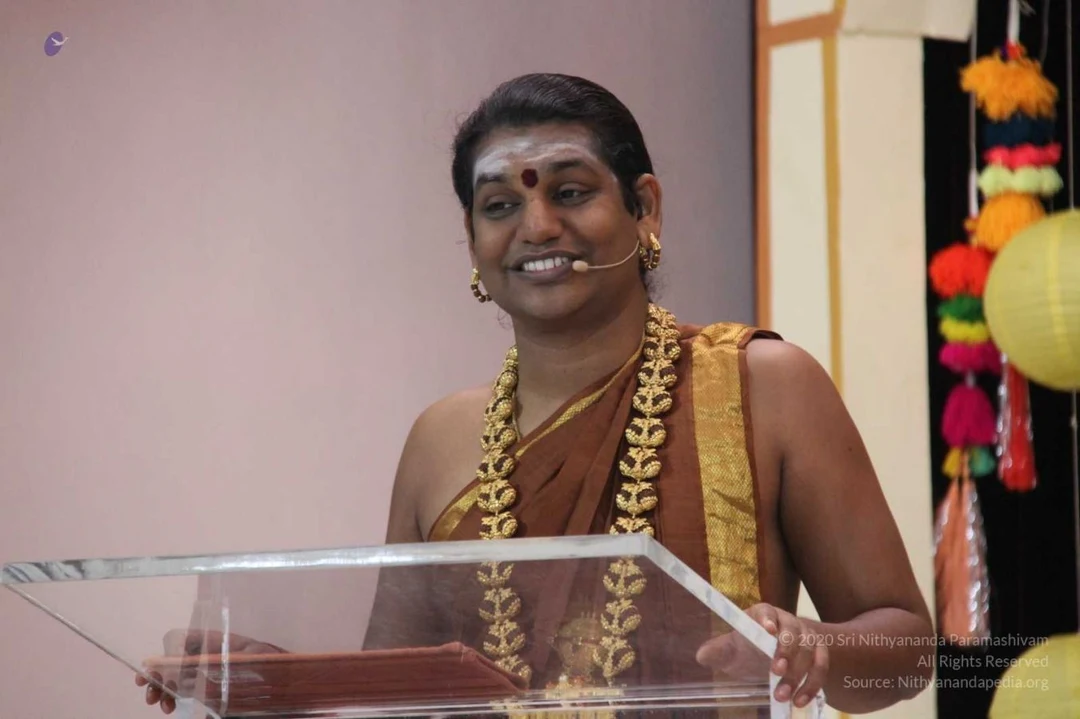
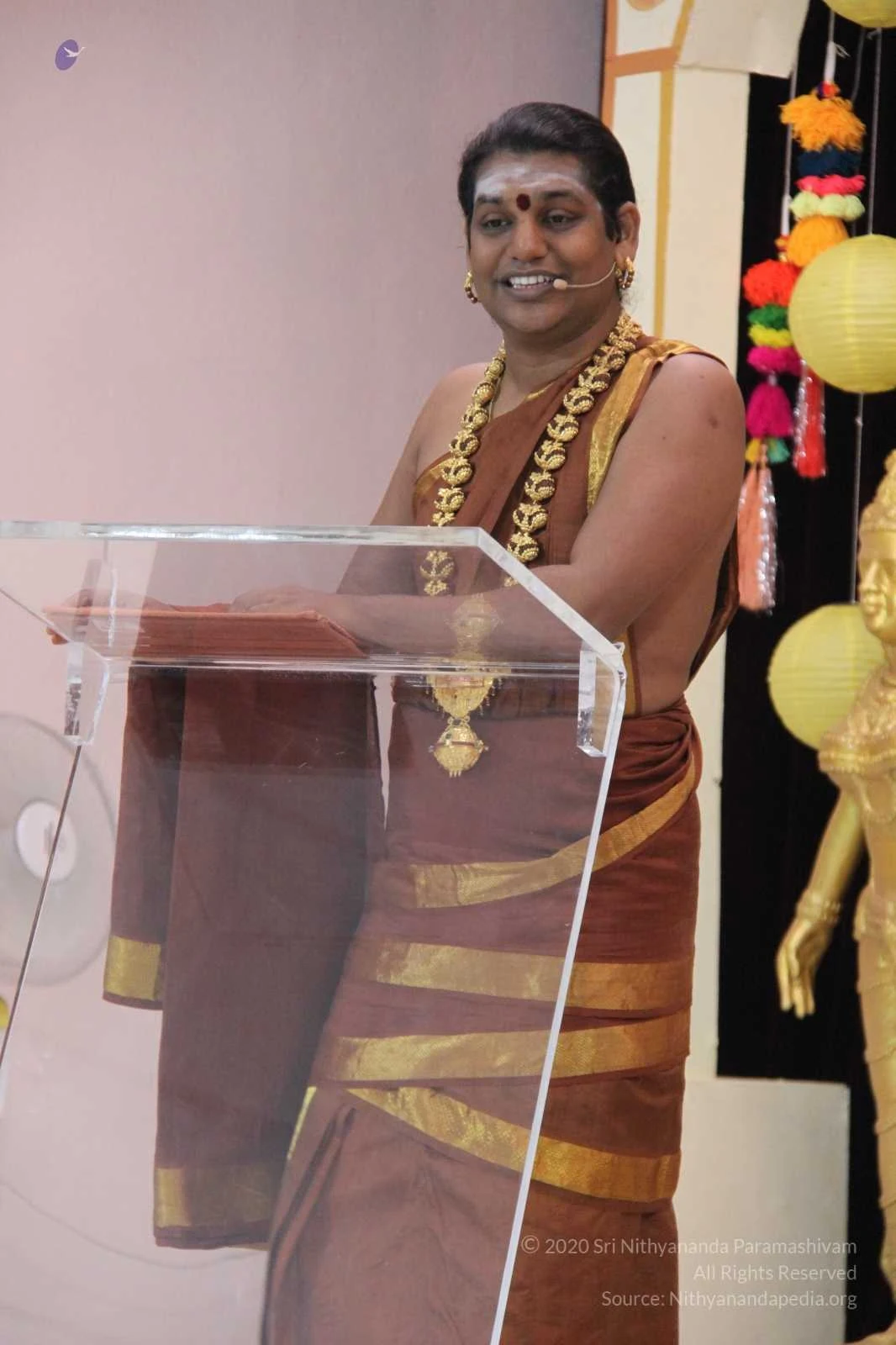
9-Navaratri-Golu

2 photosSource gallery
A tiered golu display of many painted and clay deity figurines arranged on orange and green draped steps for Navaratri. Garlands of marigold and white and purple flowers wrap the lower tier. Two dark-faced figures in gold and red silk saris and gold jewellery stand in front. A central figure seated in meditation sits at the top with ganesha figures nearby. No physical people are visible.A photograph of a tiered golu display of many painted and bronze deity figurines arranged on stepped shelves draped in orange and green cloth and garlanded with marigolds, white jasmine and yellow flower strings. A large seated Ganesha stands at the top left and a seated Shiva with trident and cobra sits at the centre-top. Other figures include Vishnu-like blue and green figures, a seated Buddha, a cobra-hooded figure, and a small framed picture of temple architecture. At the bottom front two dark-skinned wedding-style figures in embellished red, gold and white dress stand among flowers, and a kalasha with mango leaves is set in the middle. No physical people are visible in the scene.