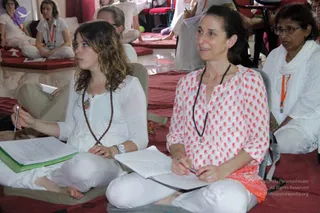
Skip to content
Sunday

17 March 2013

Get A Permanent Solution

Dated photos
223
Source pages
1
Media
3
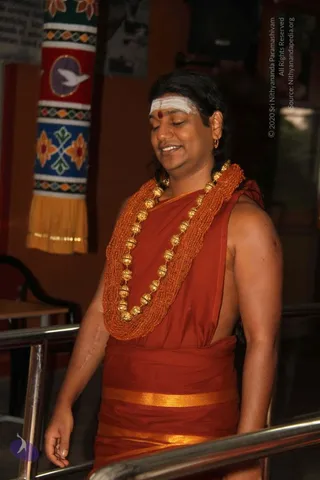
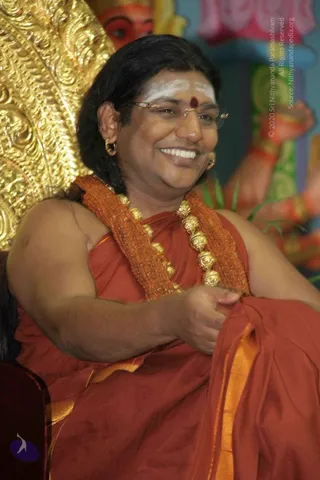
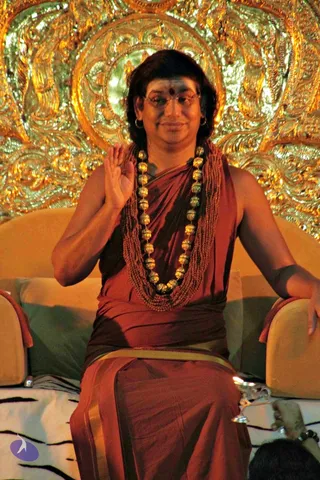
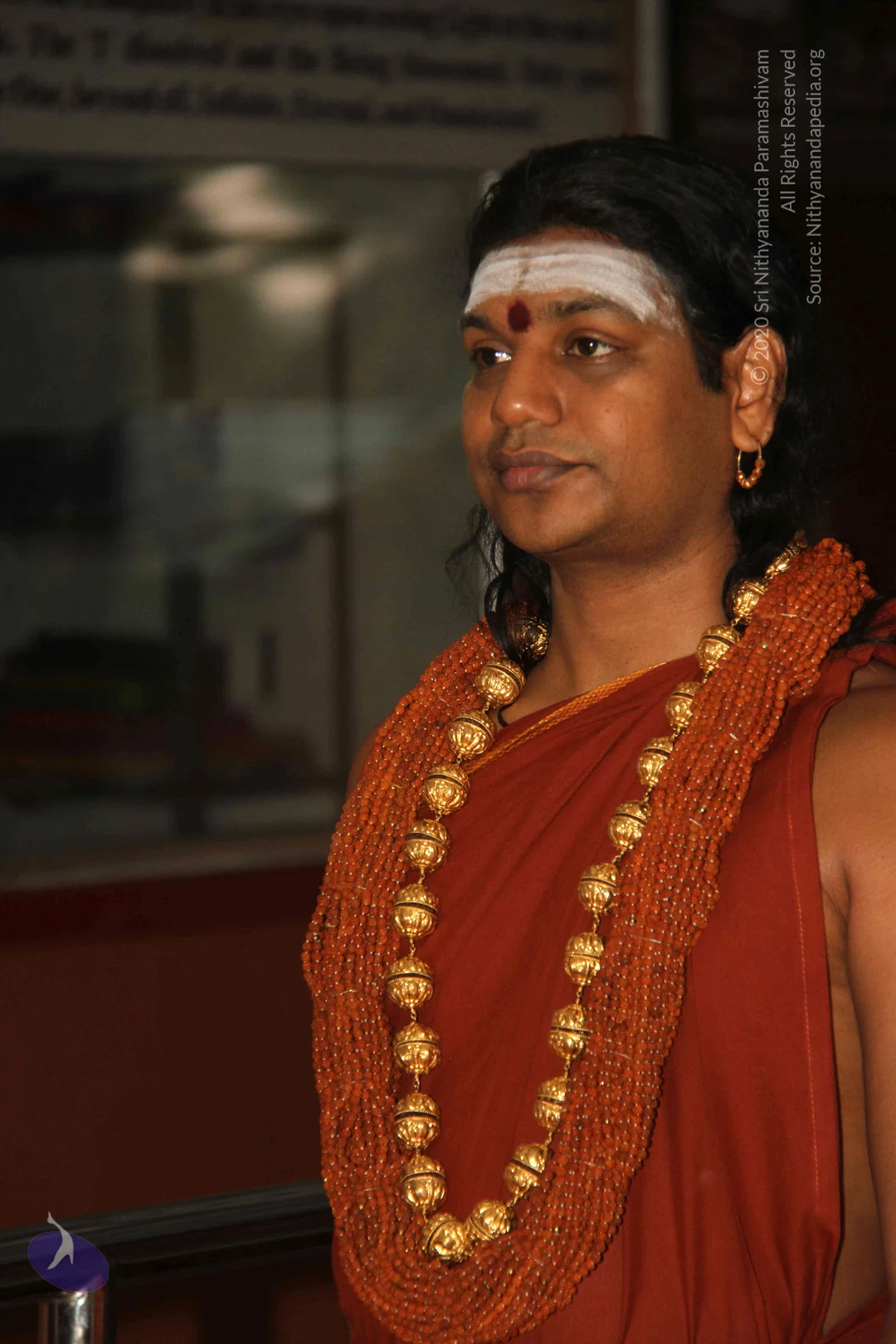
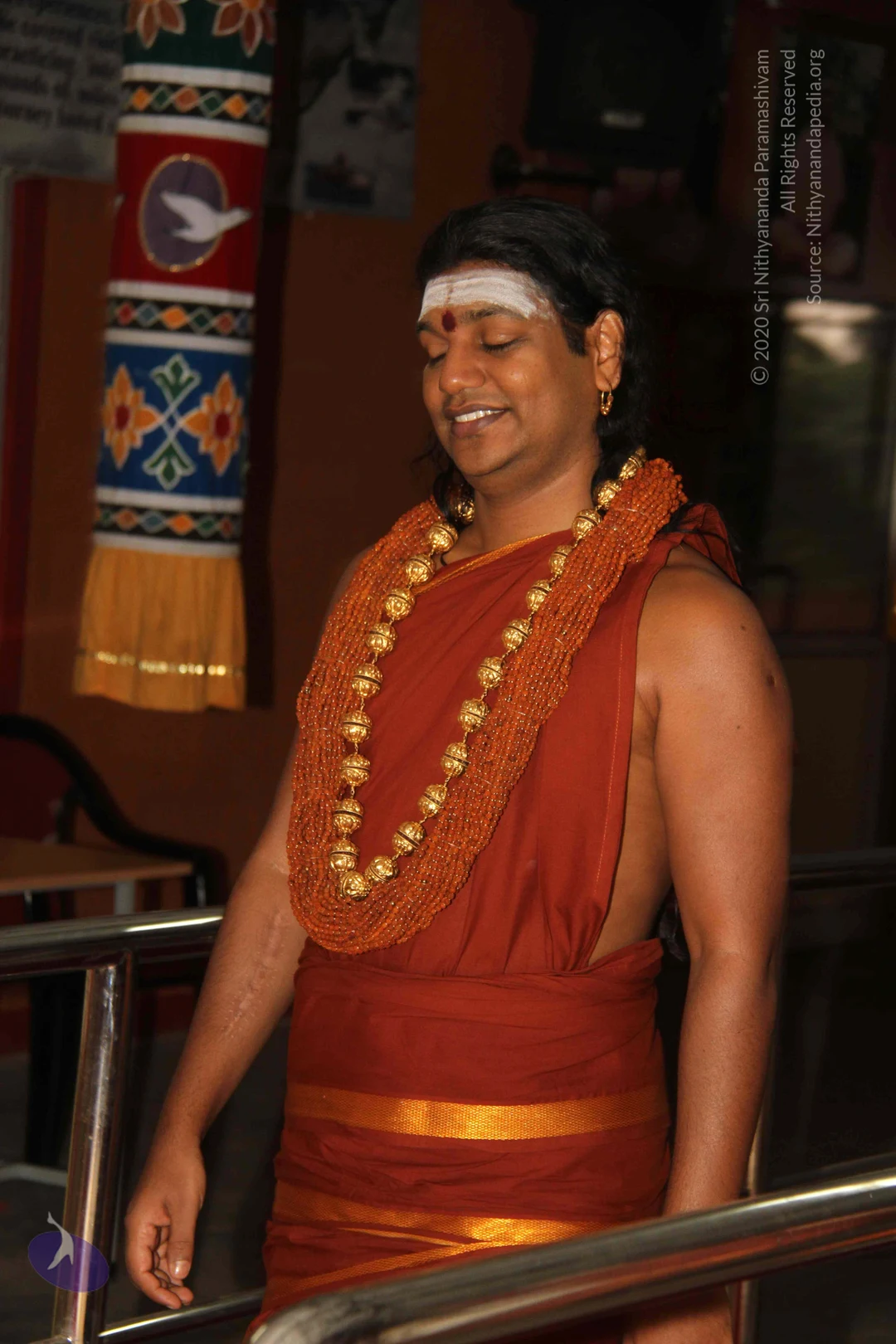
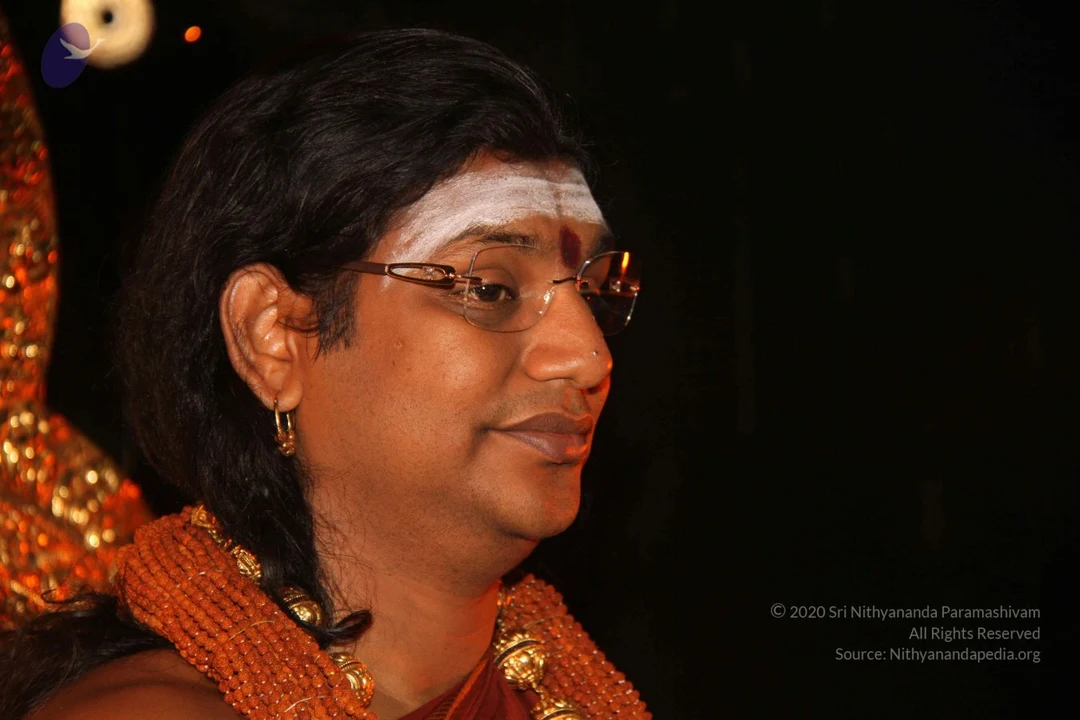
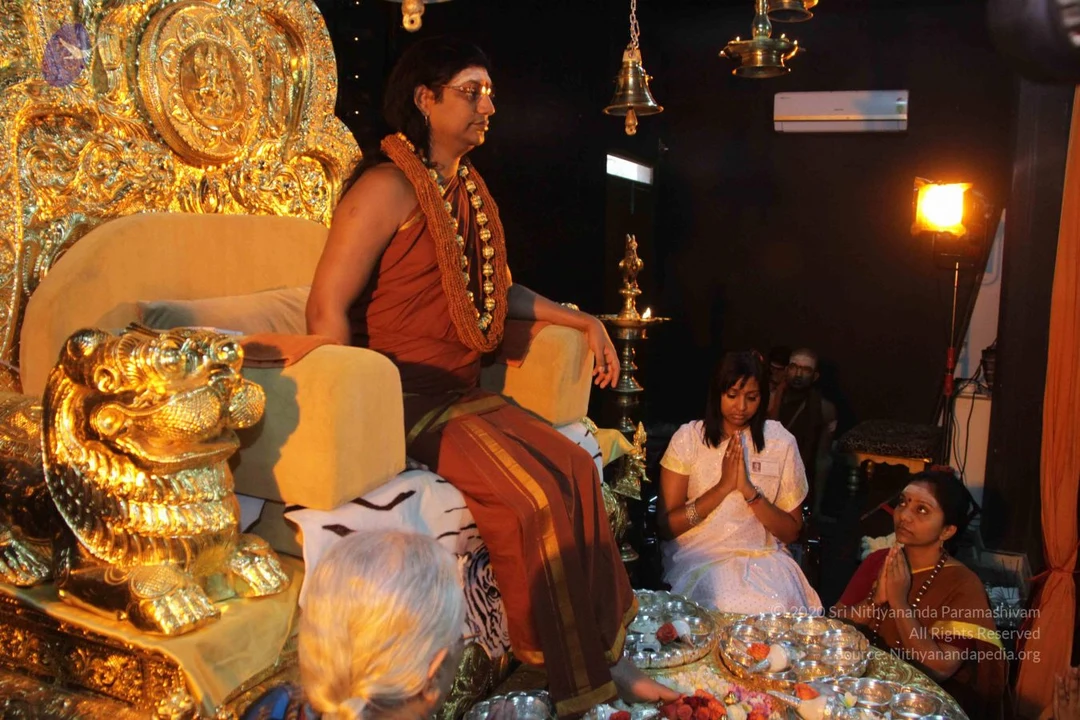
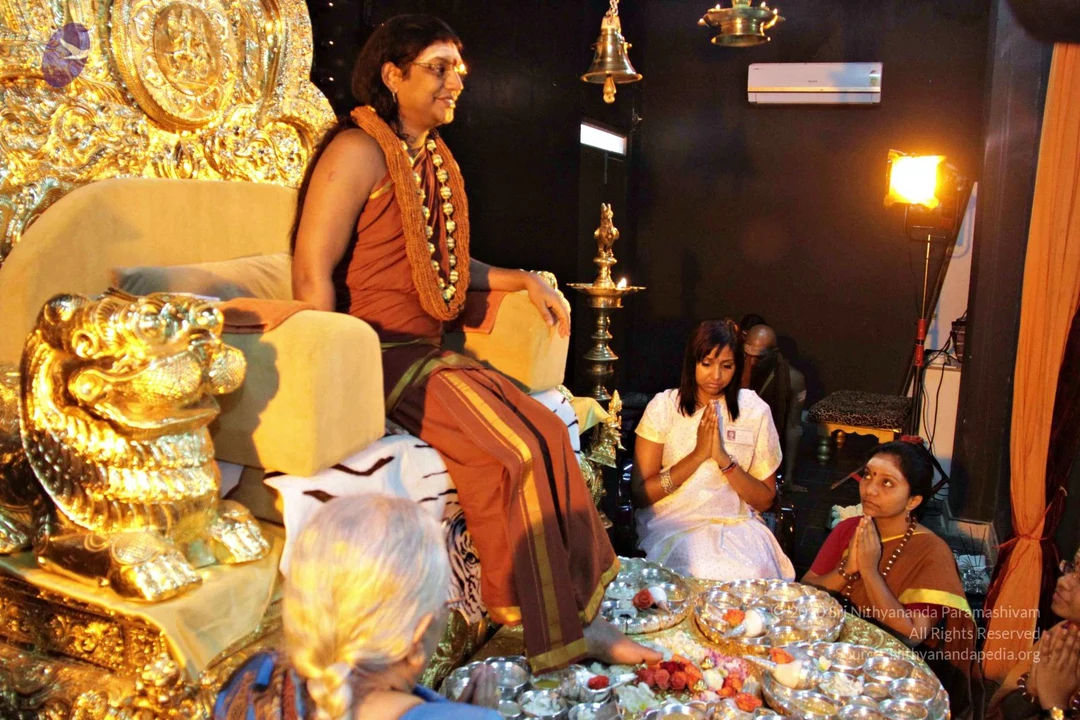
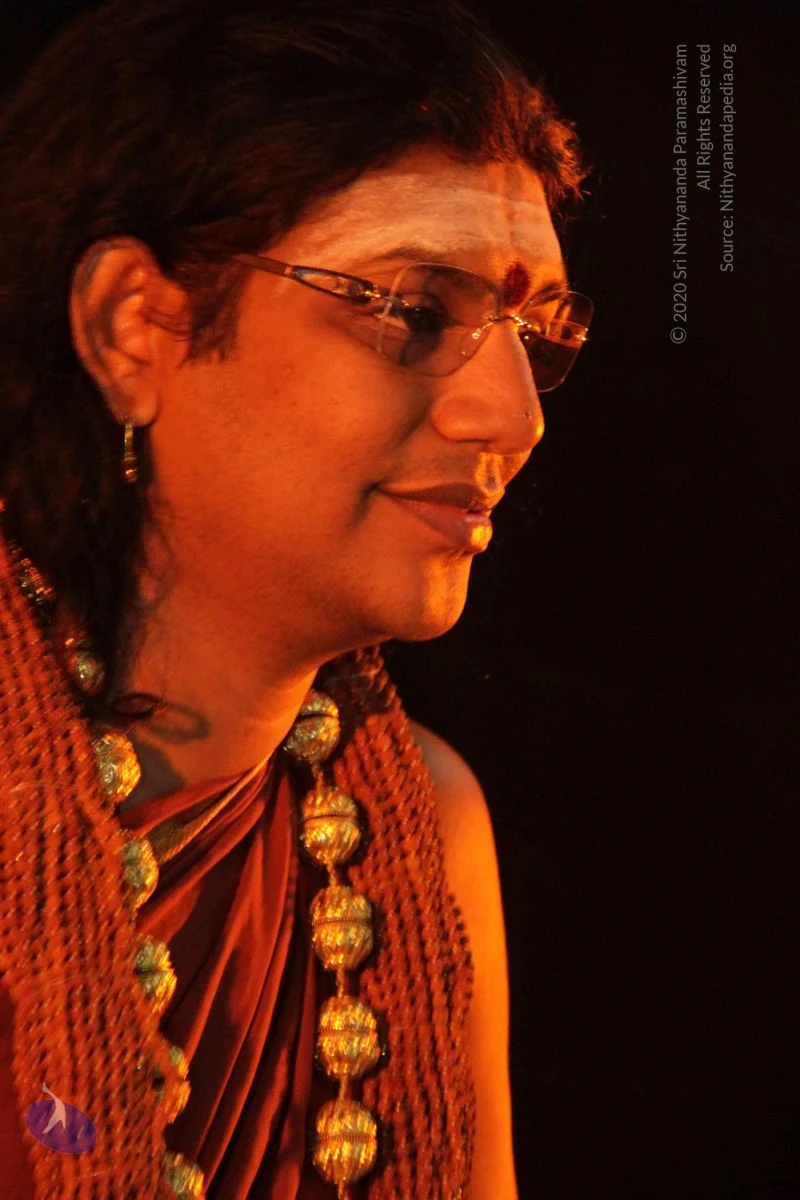
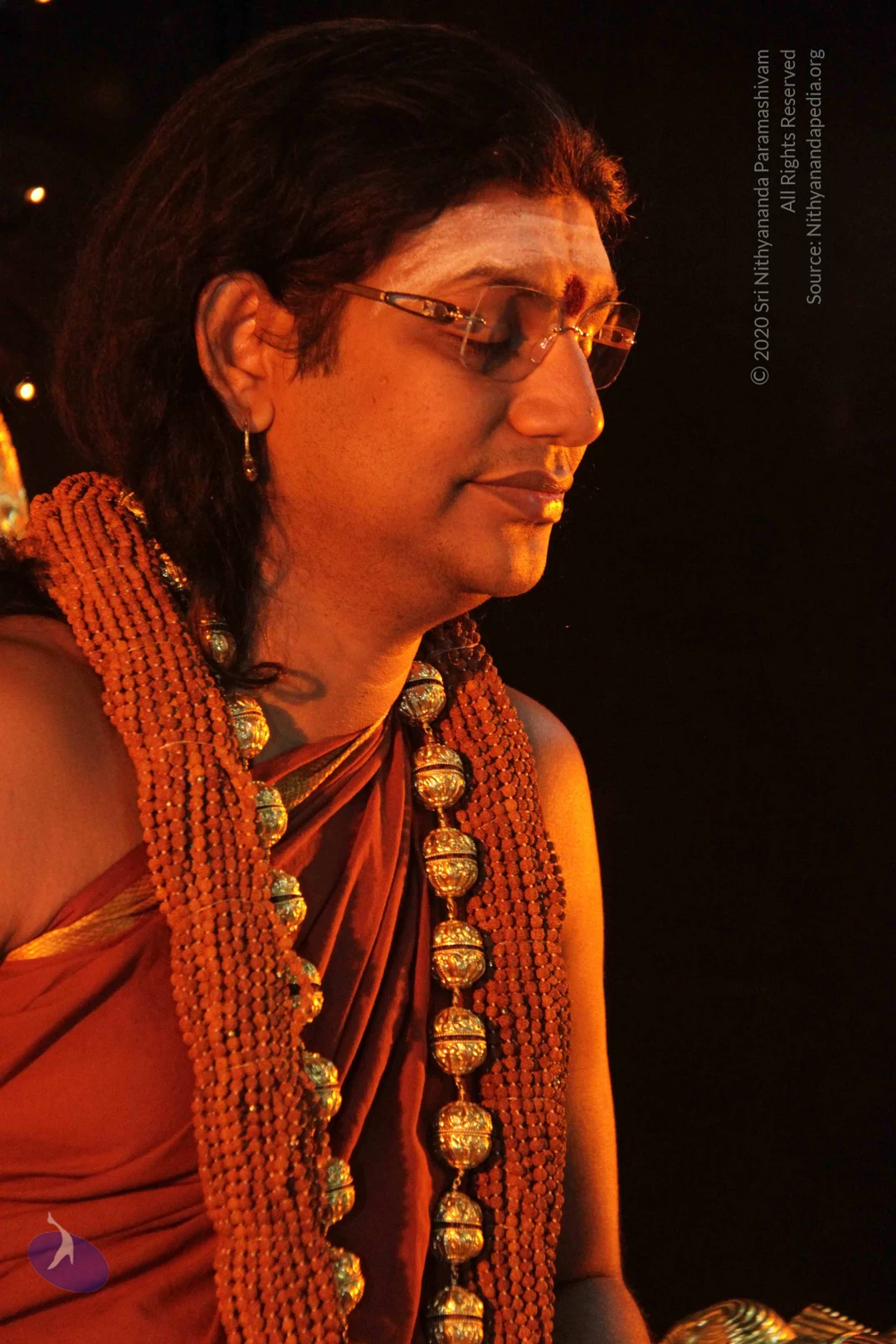
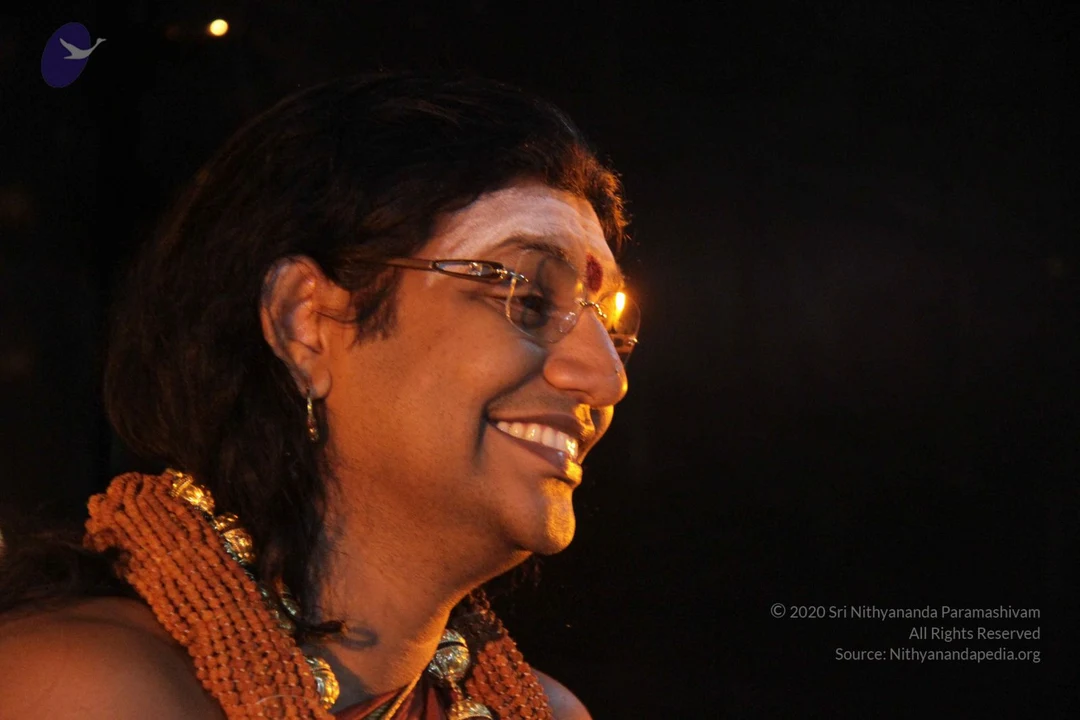
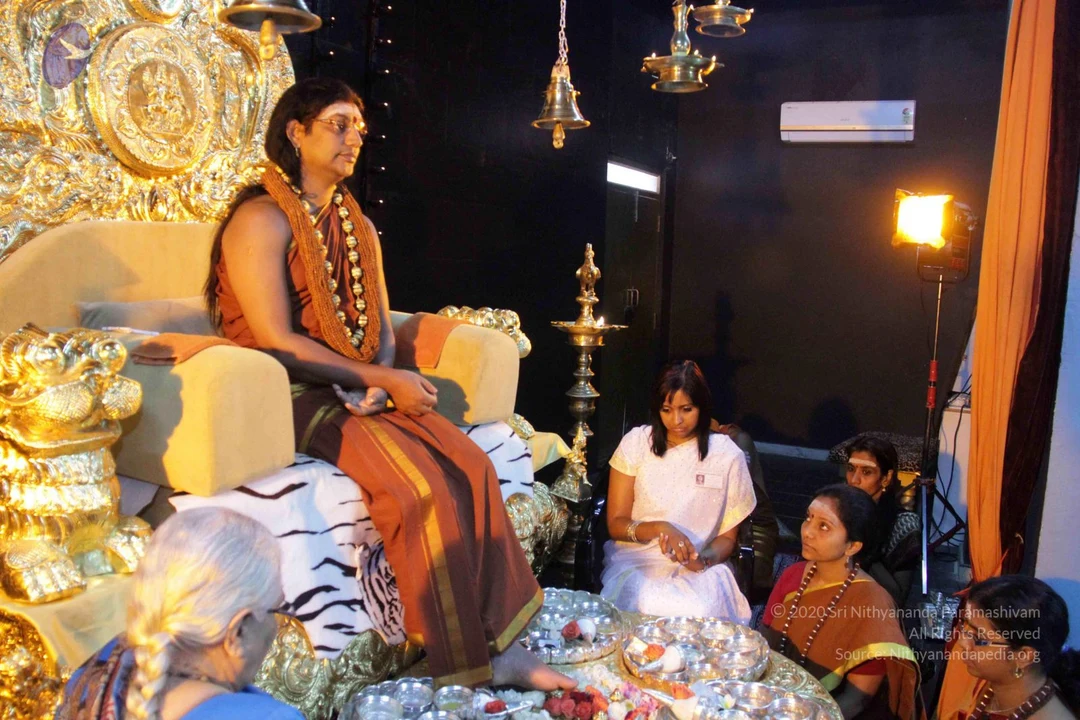
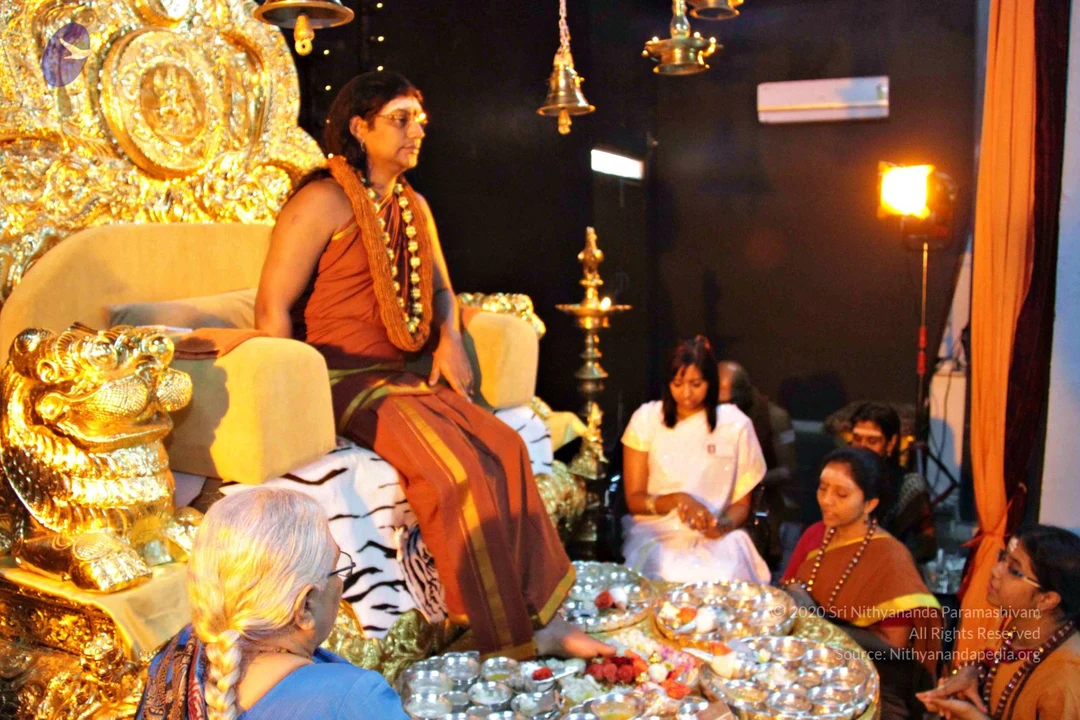
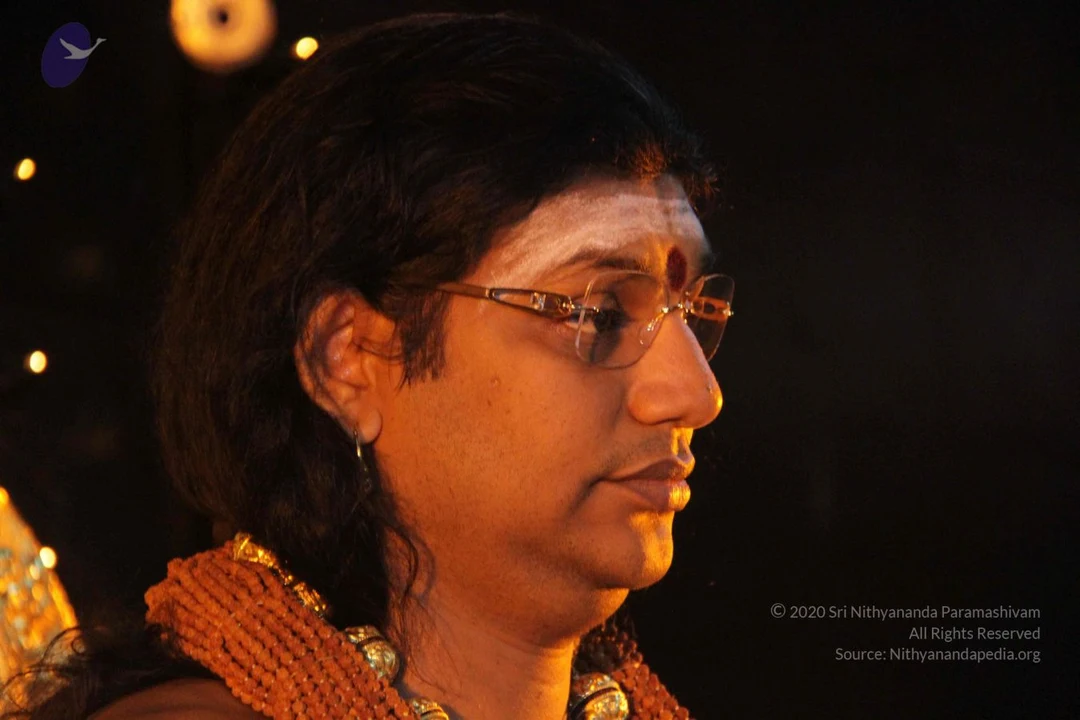
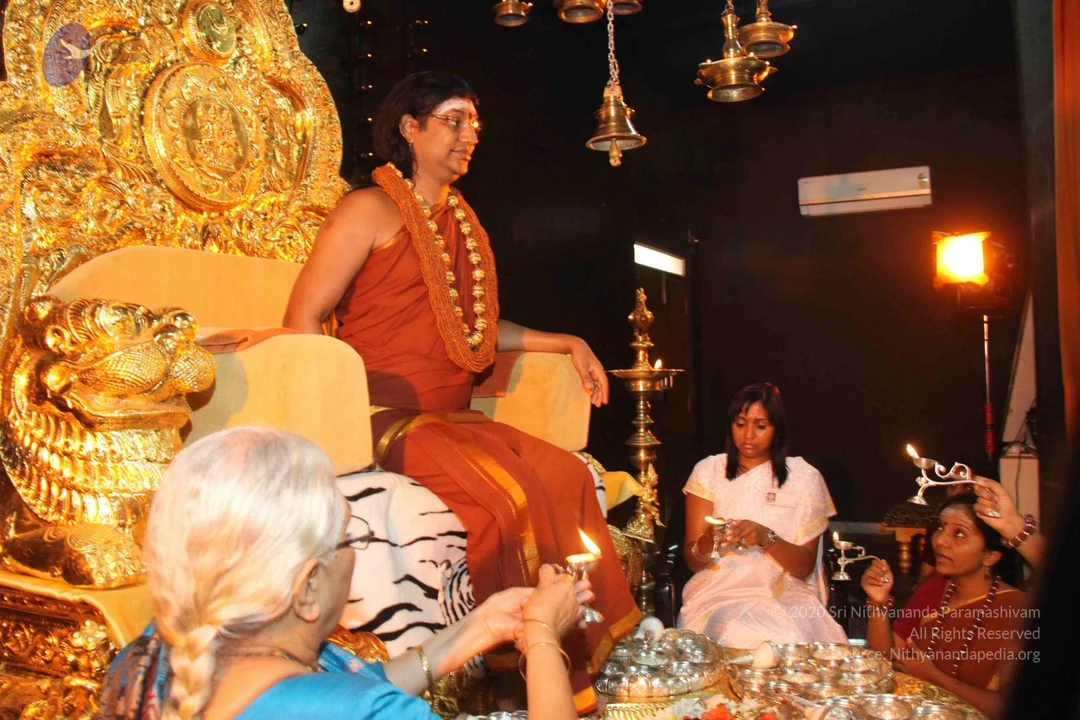
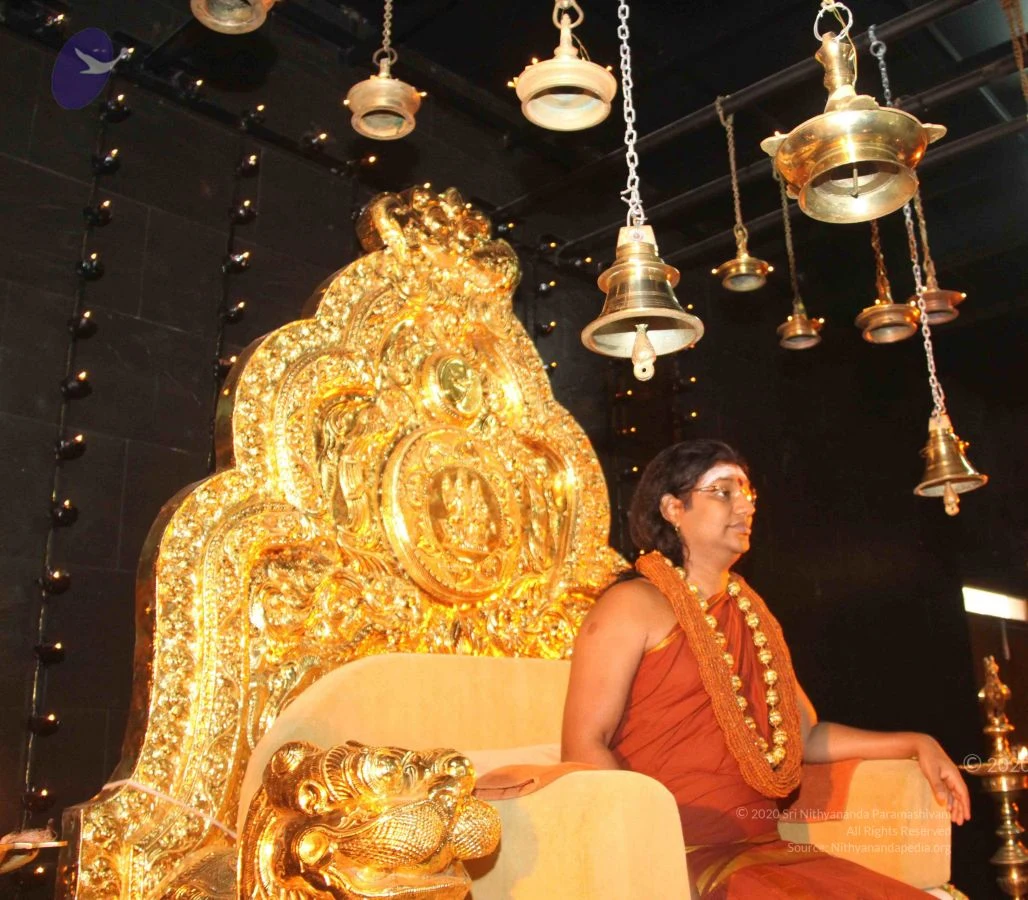
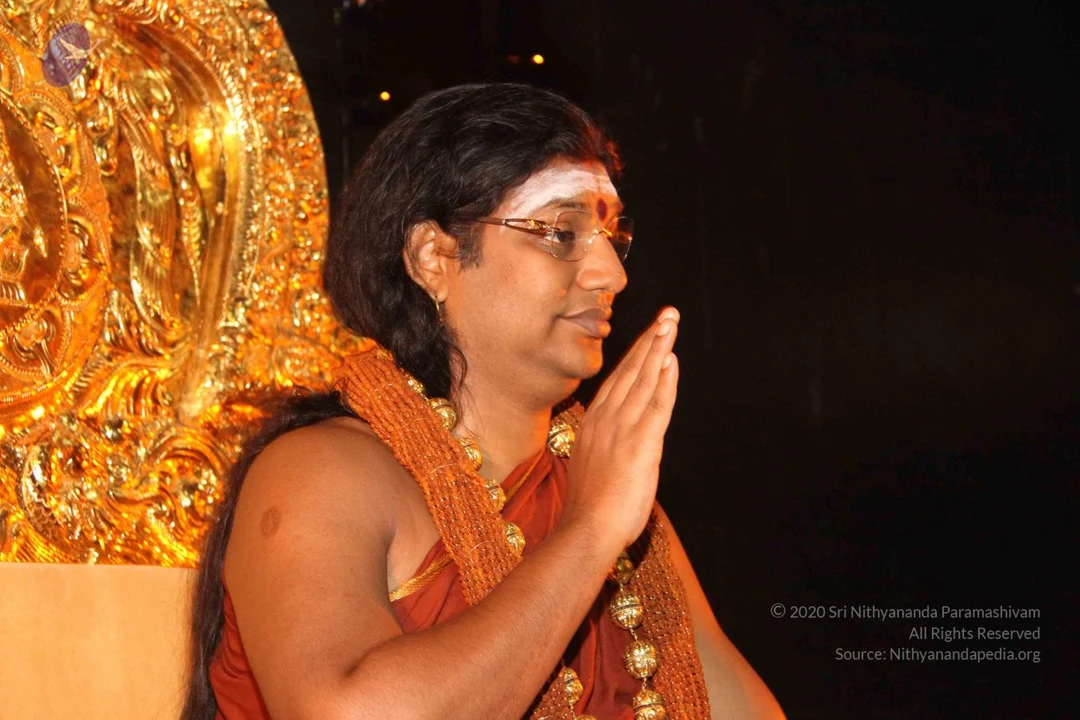
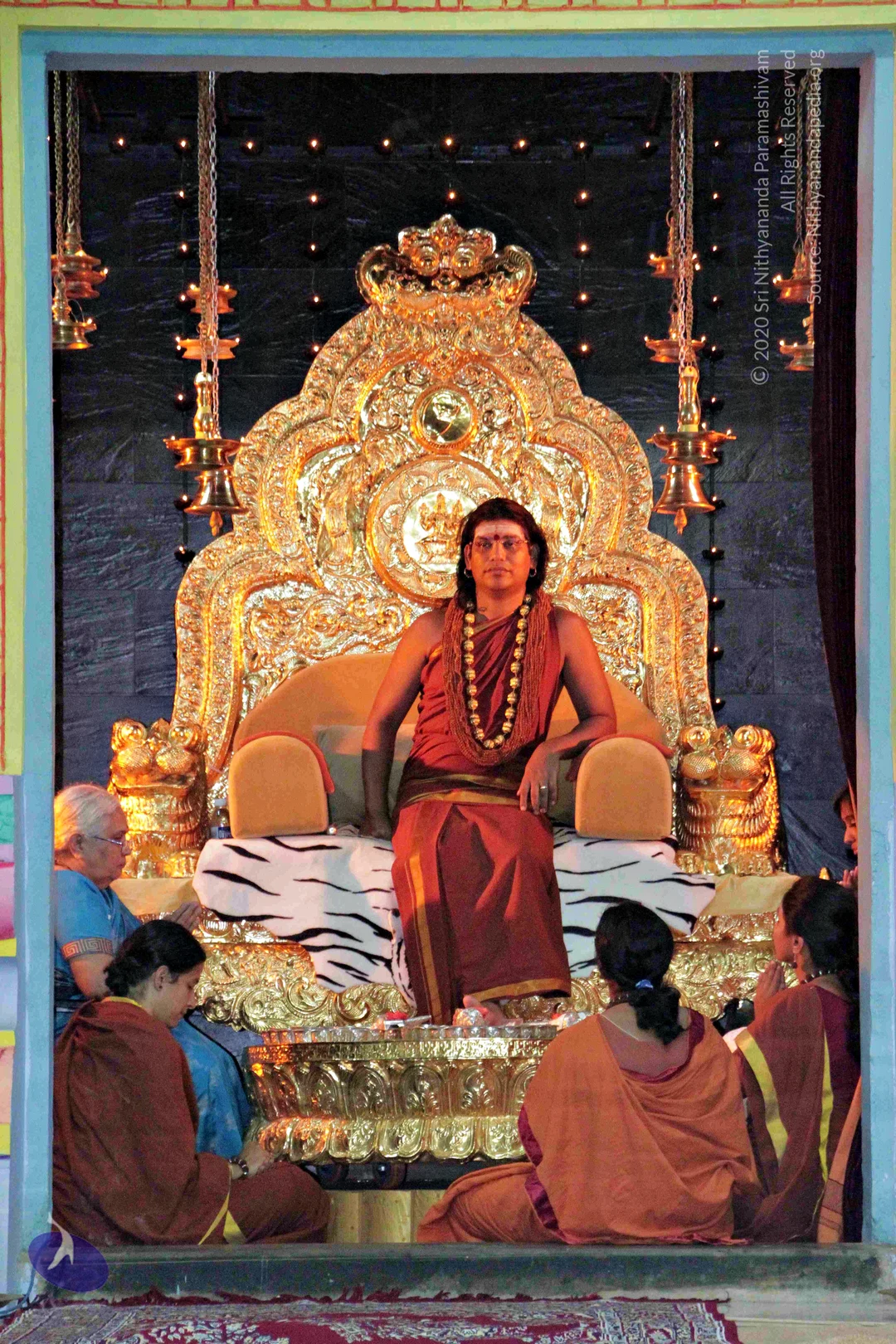
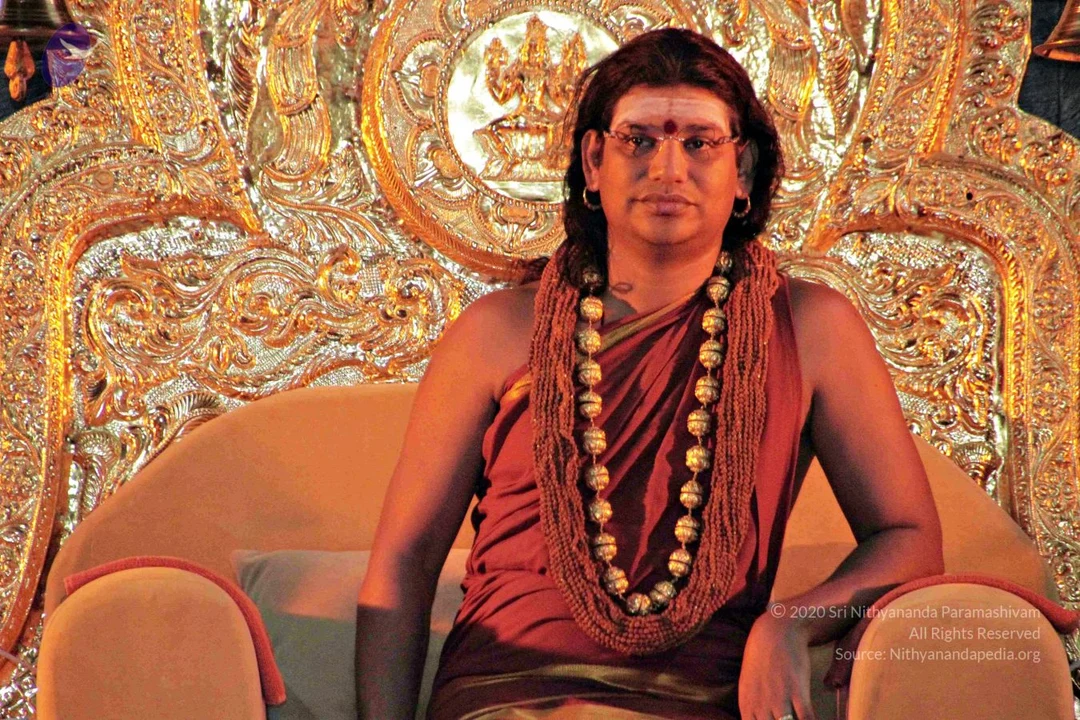
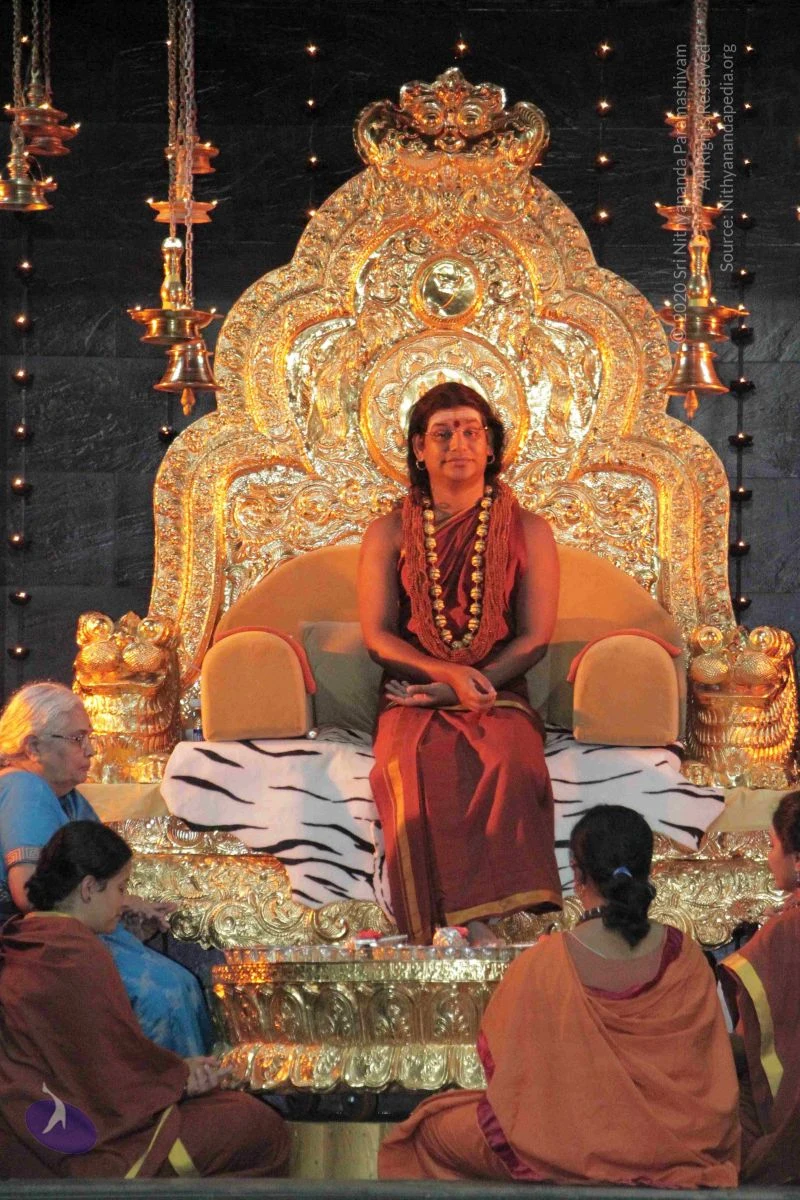
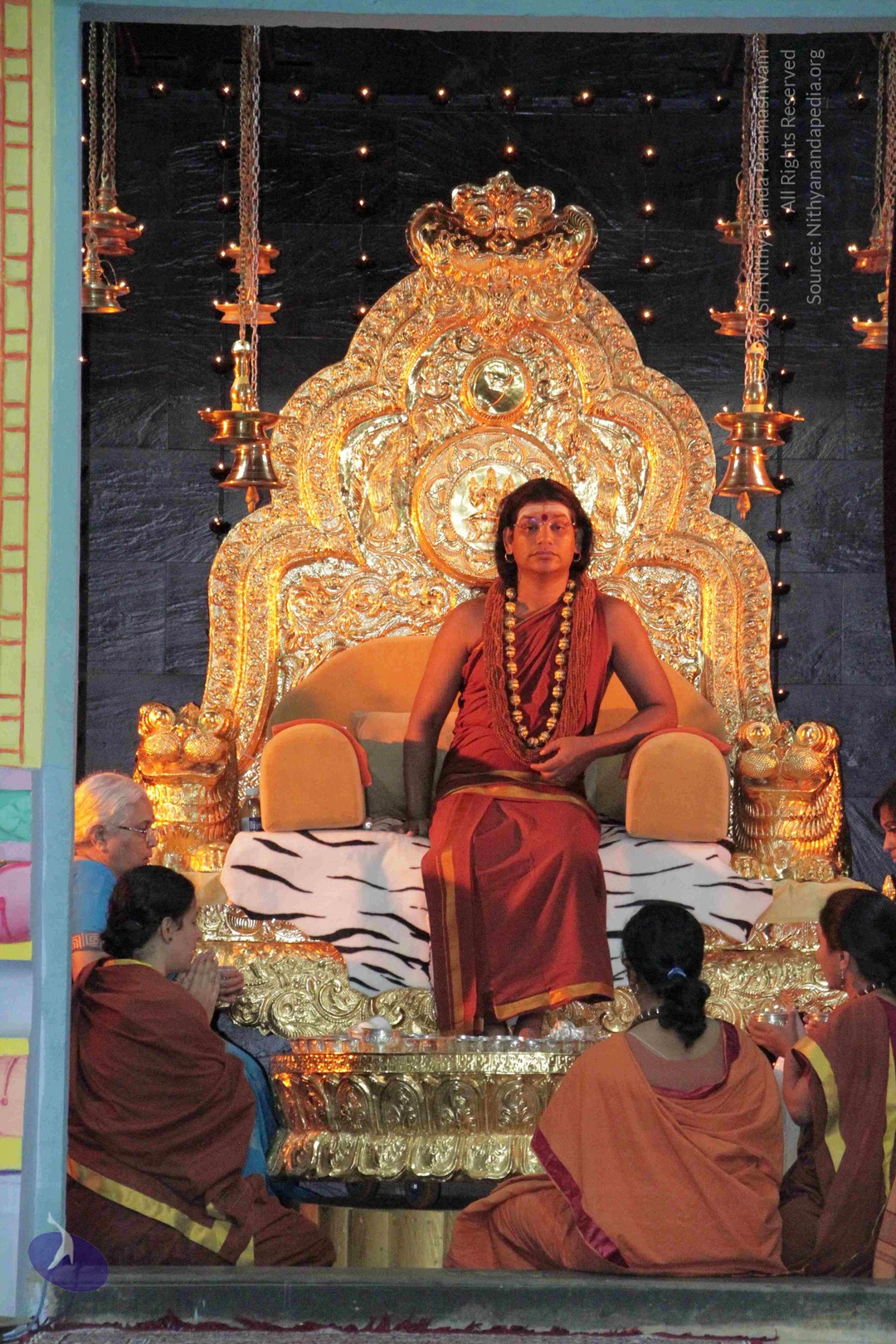
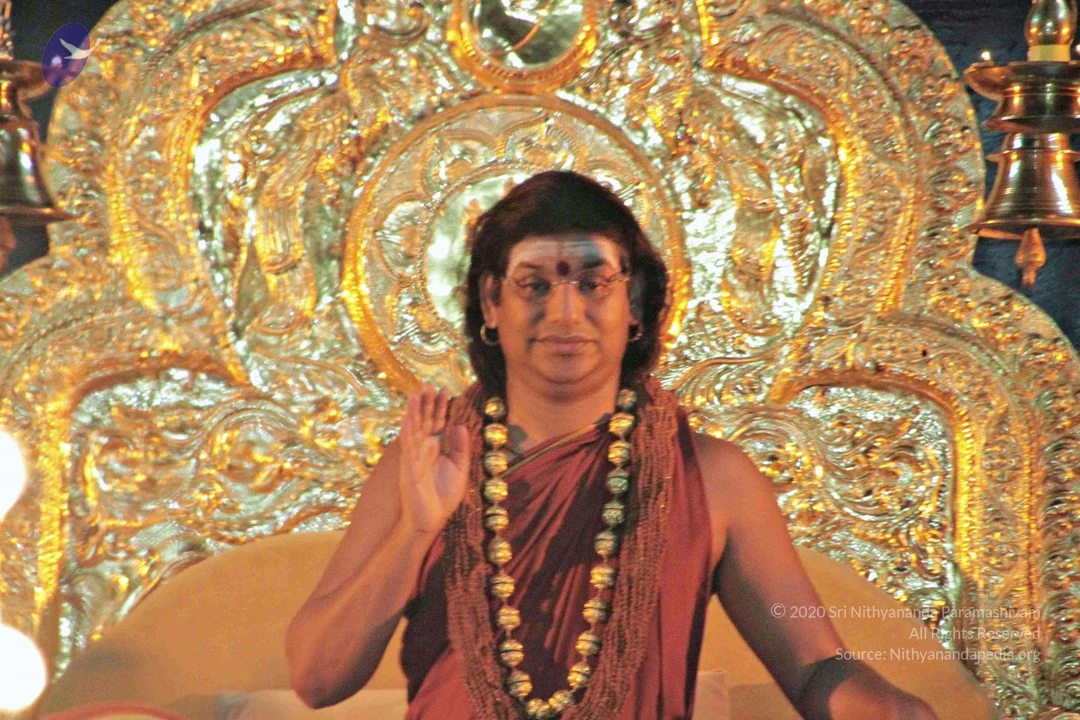
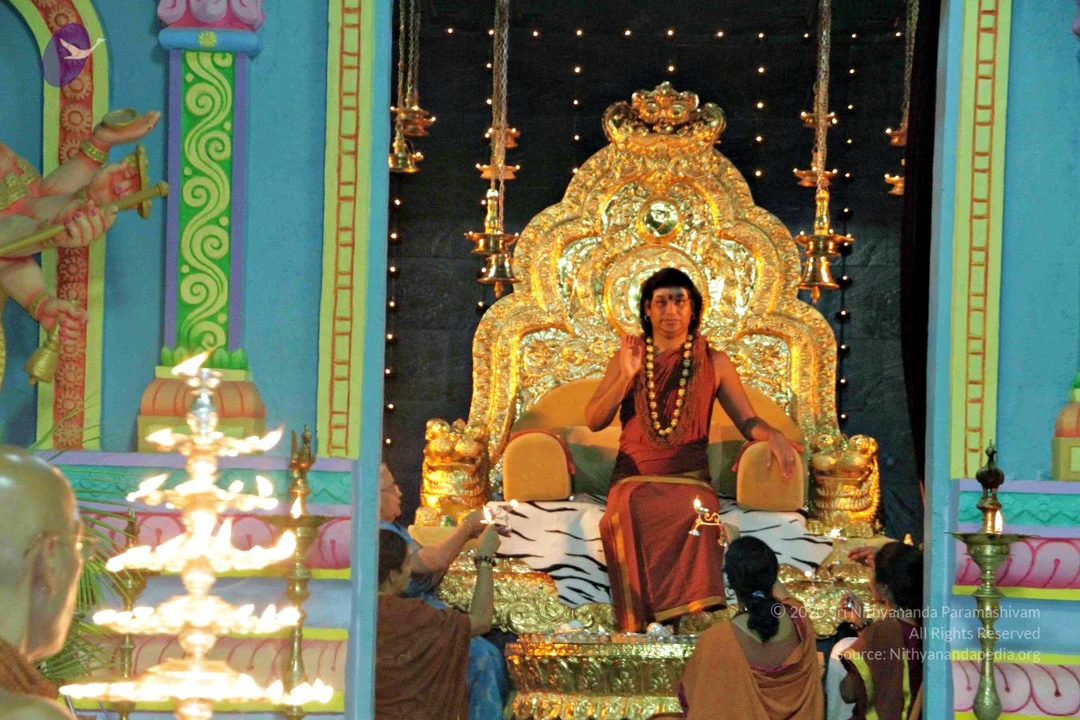
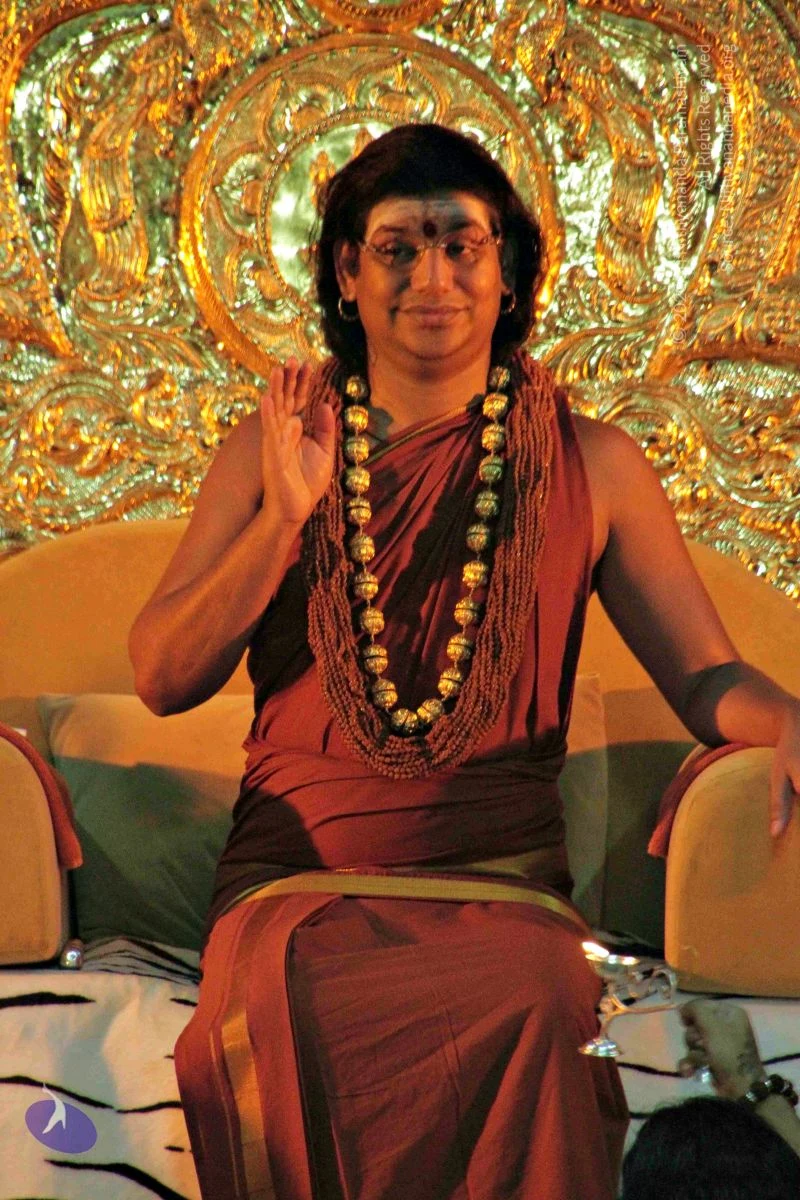
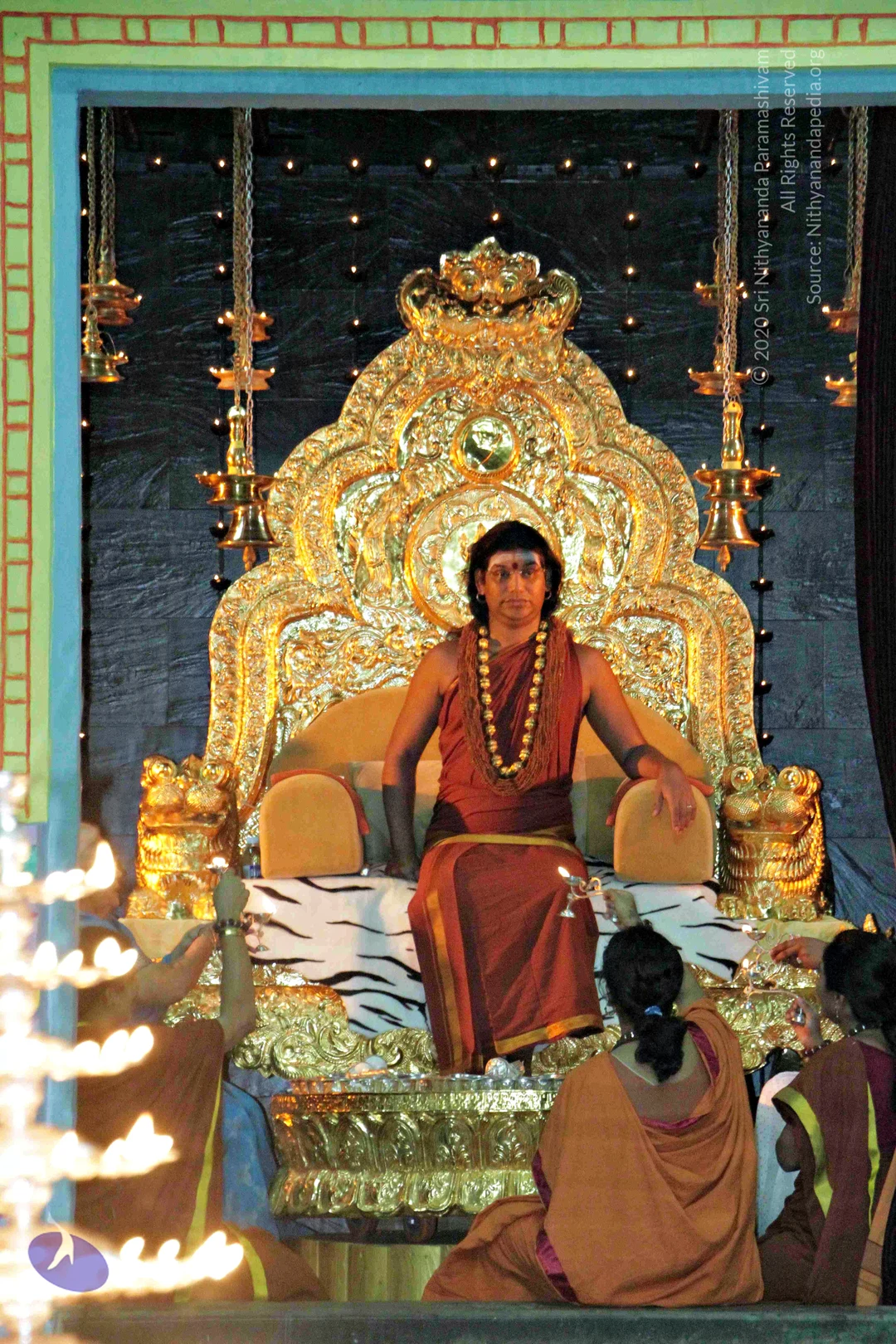
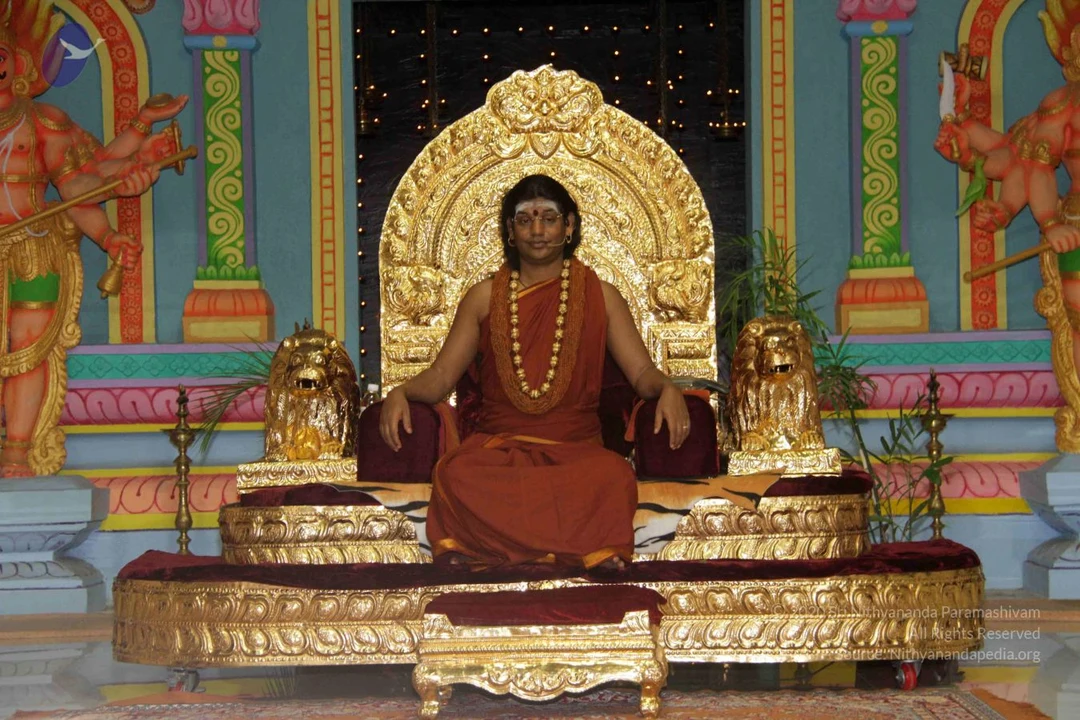
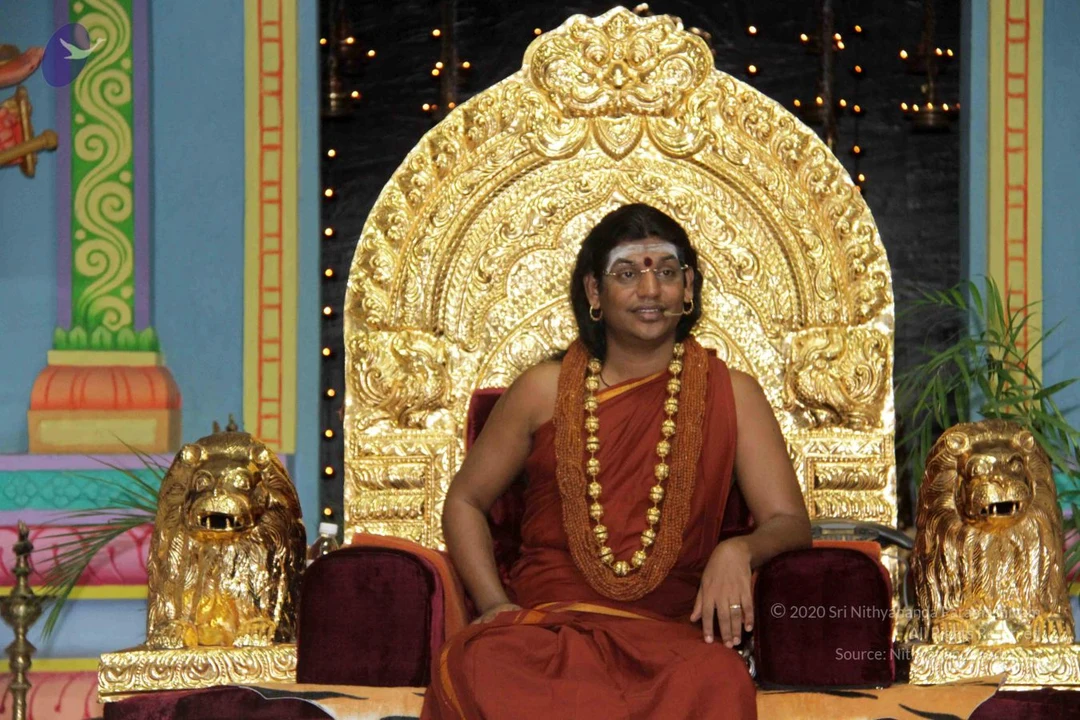
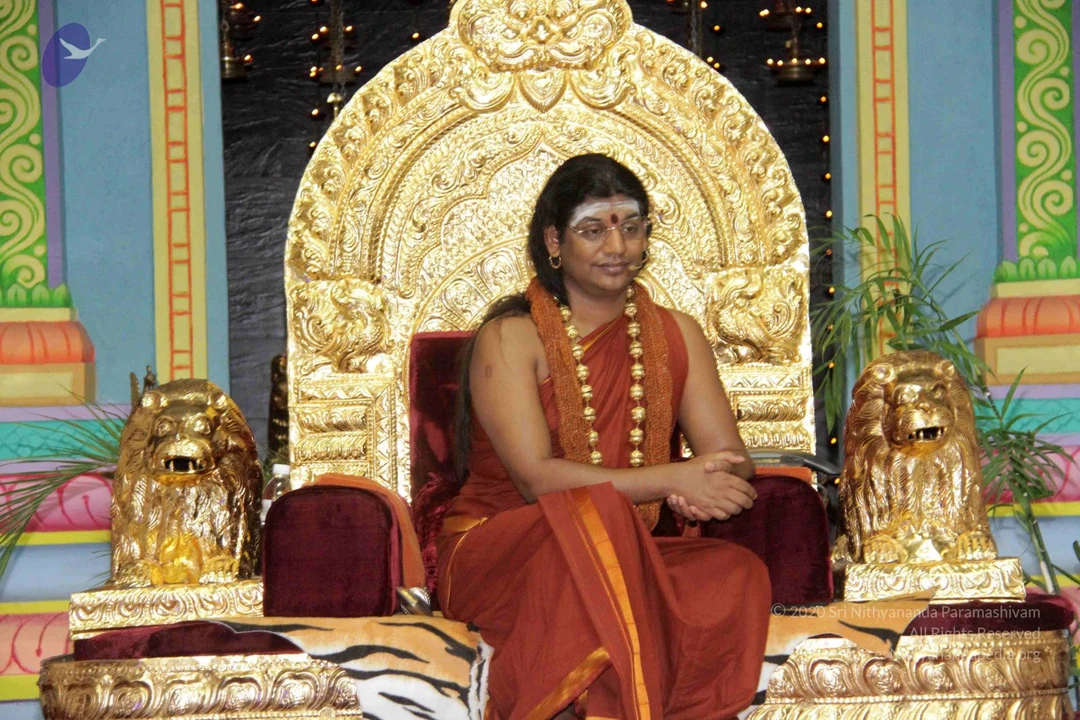
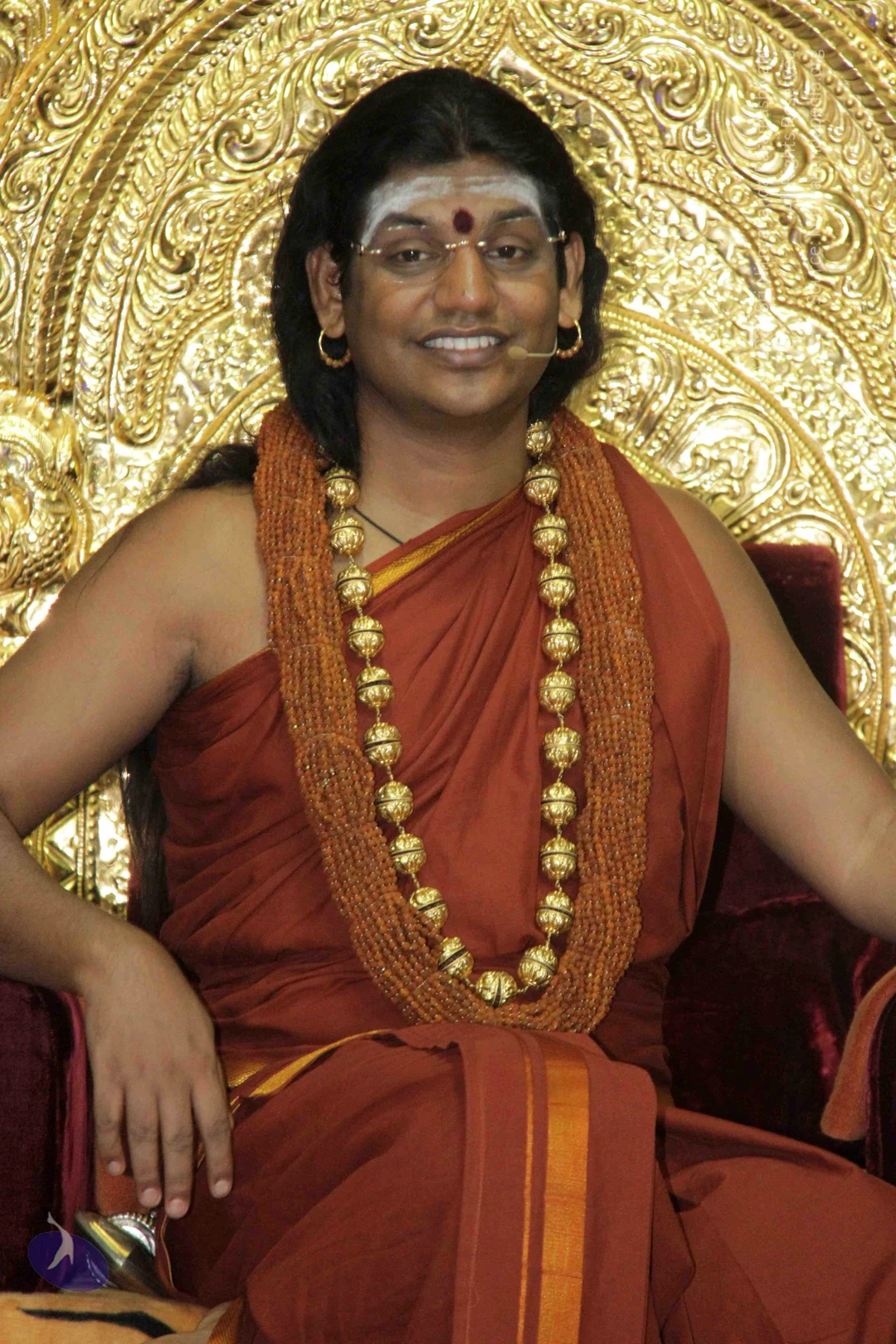
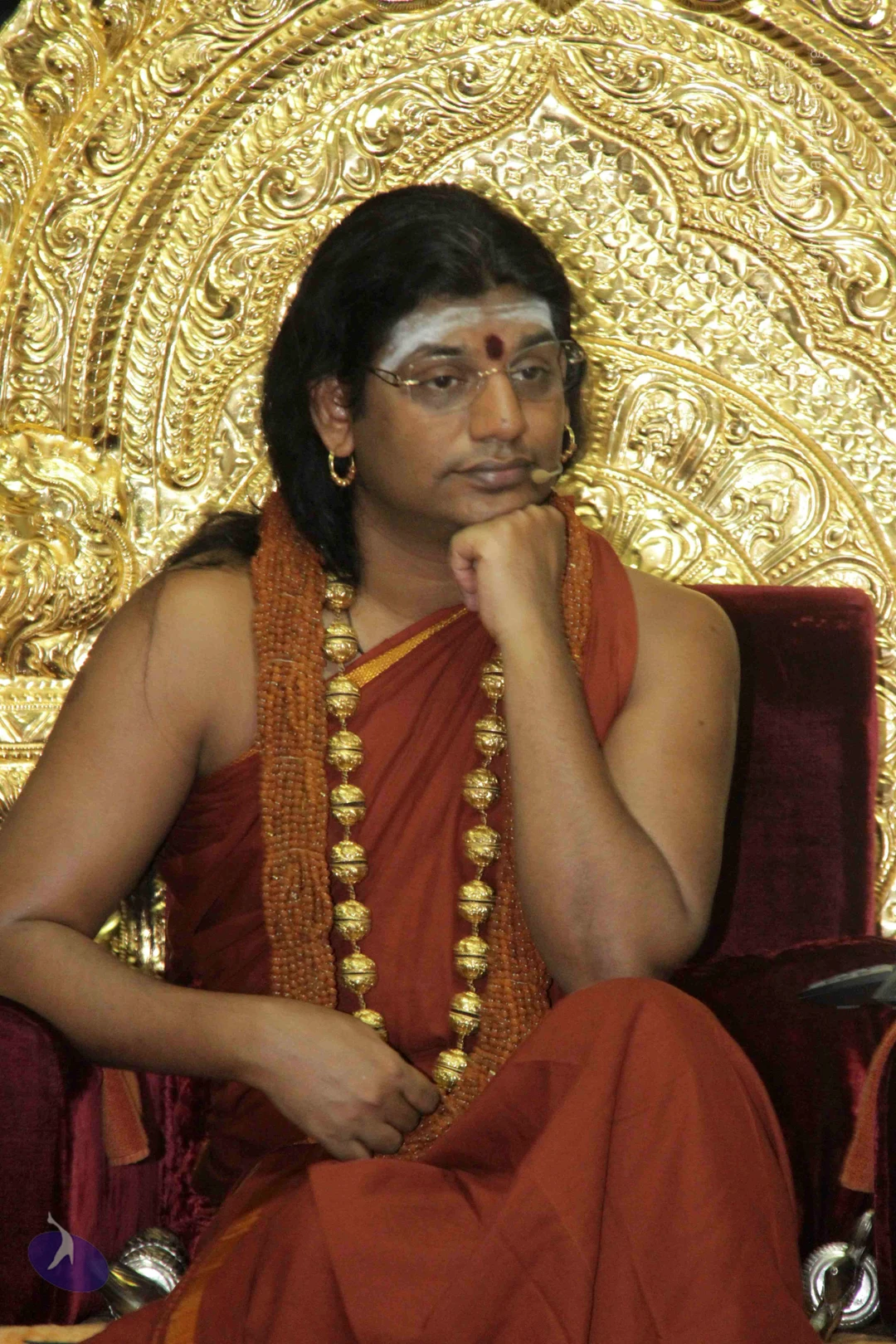
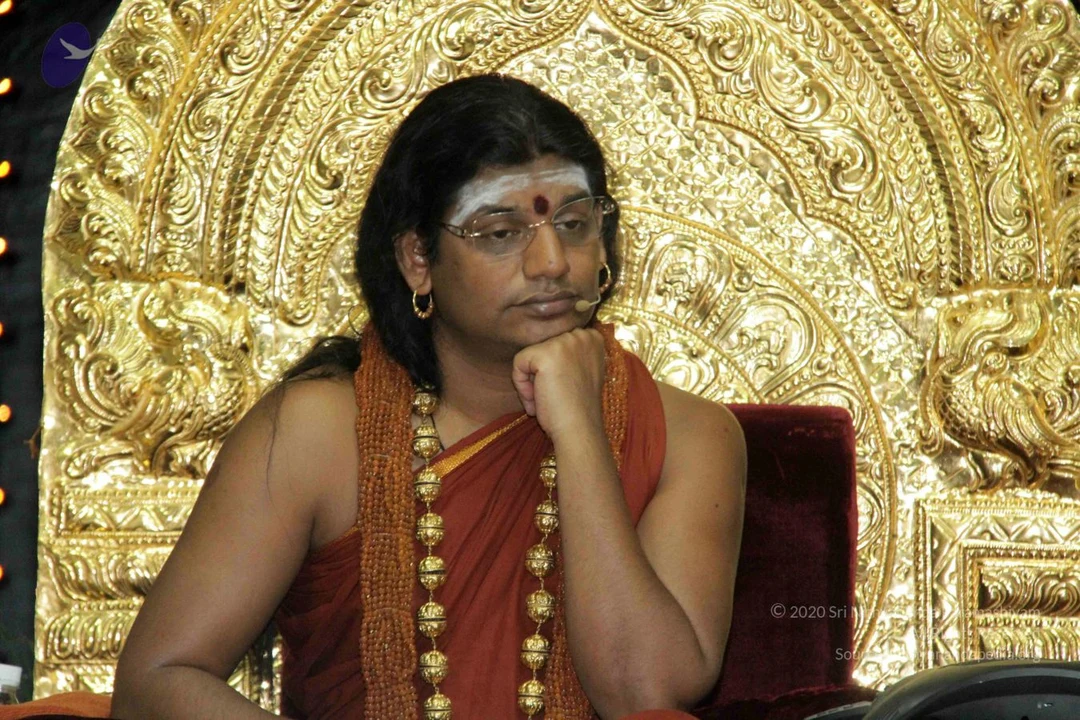
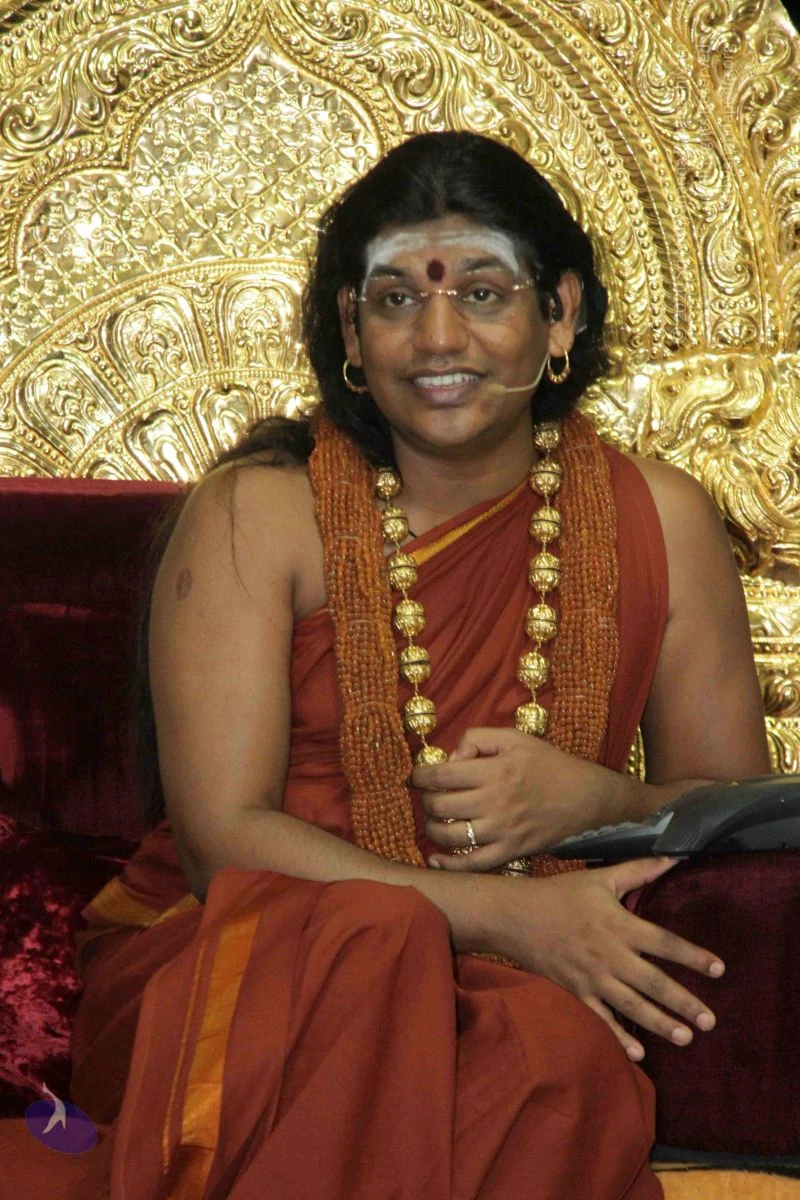
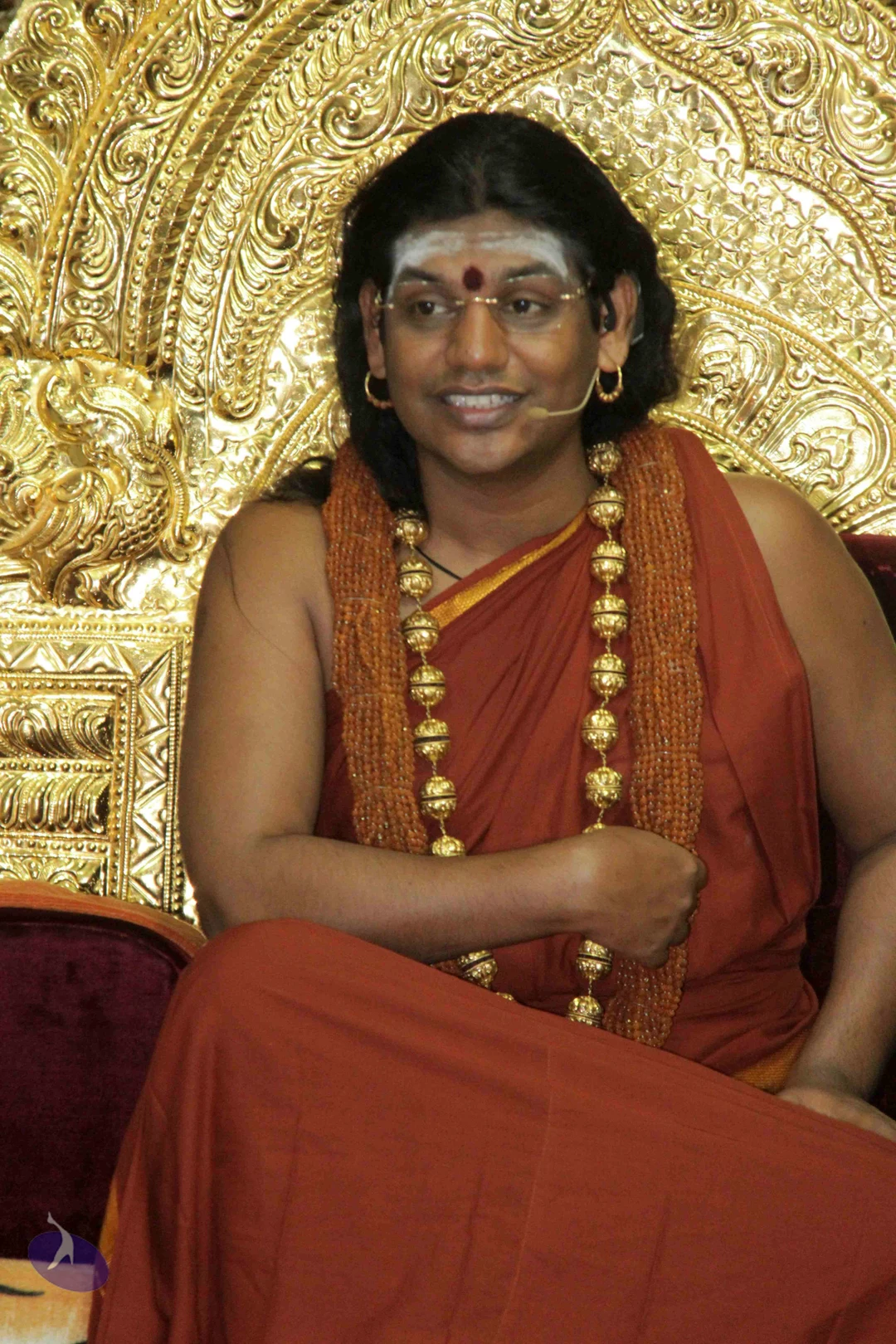
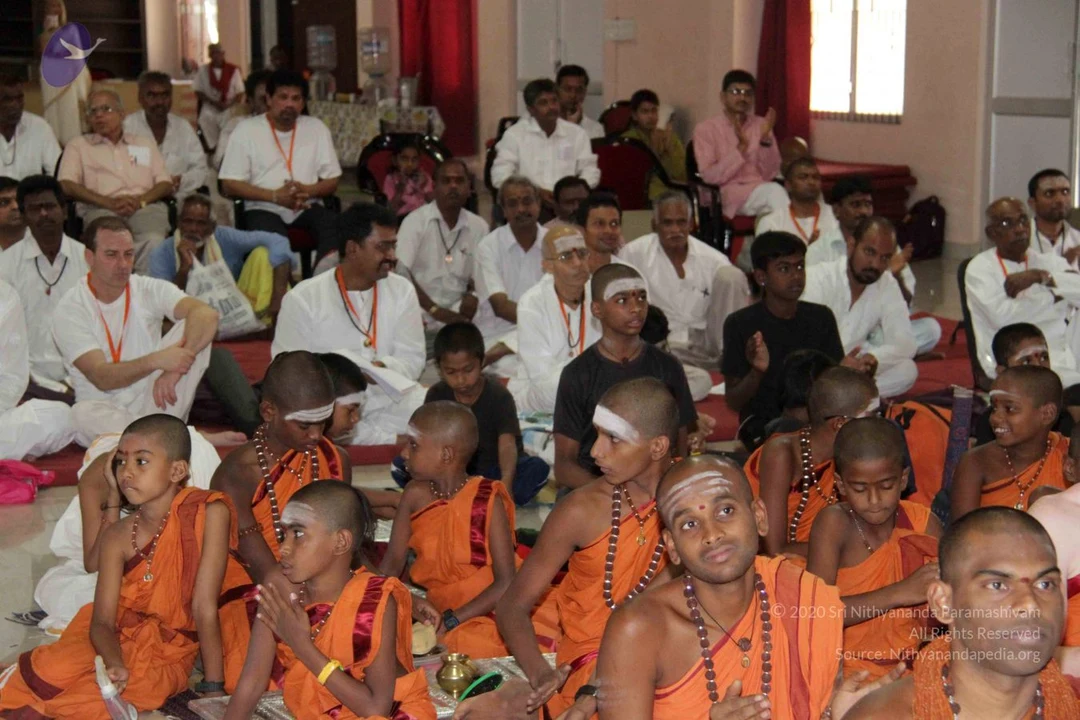
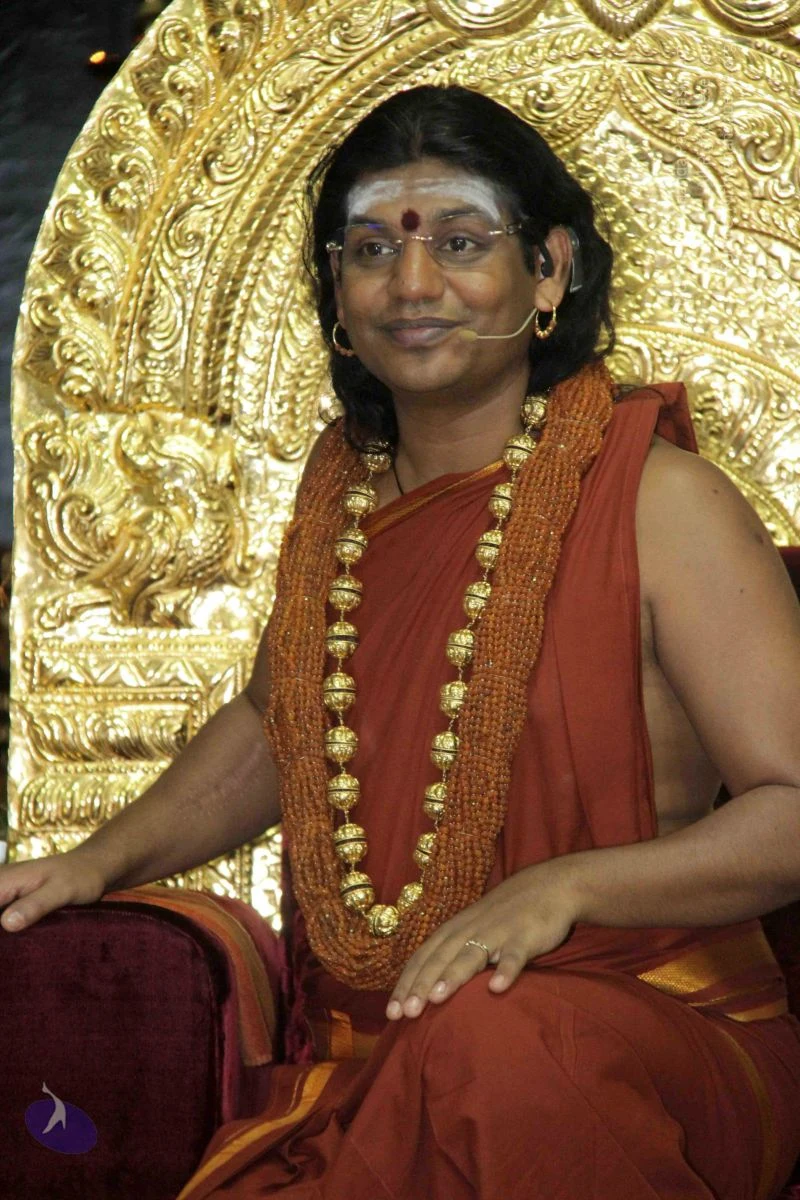
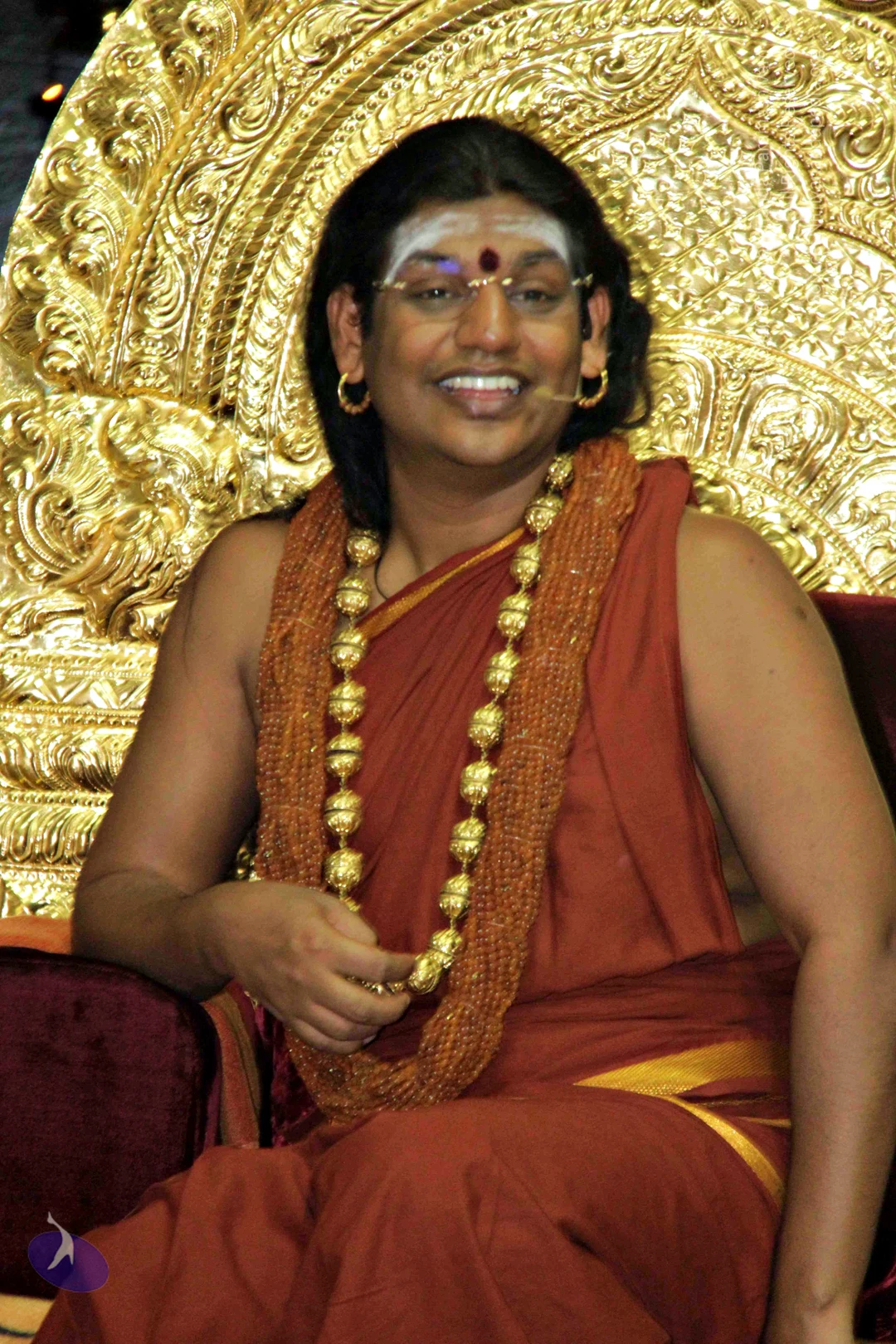
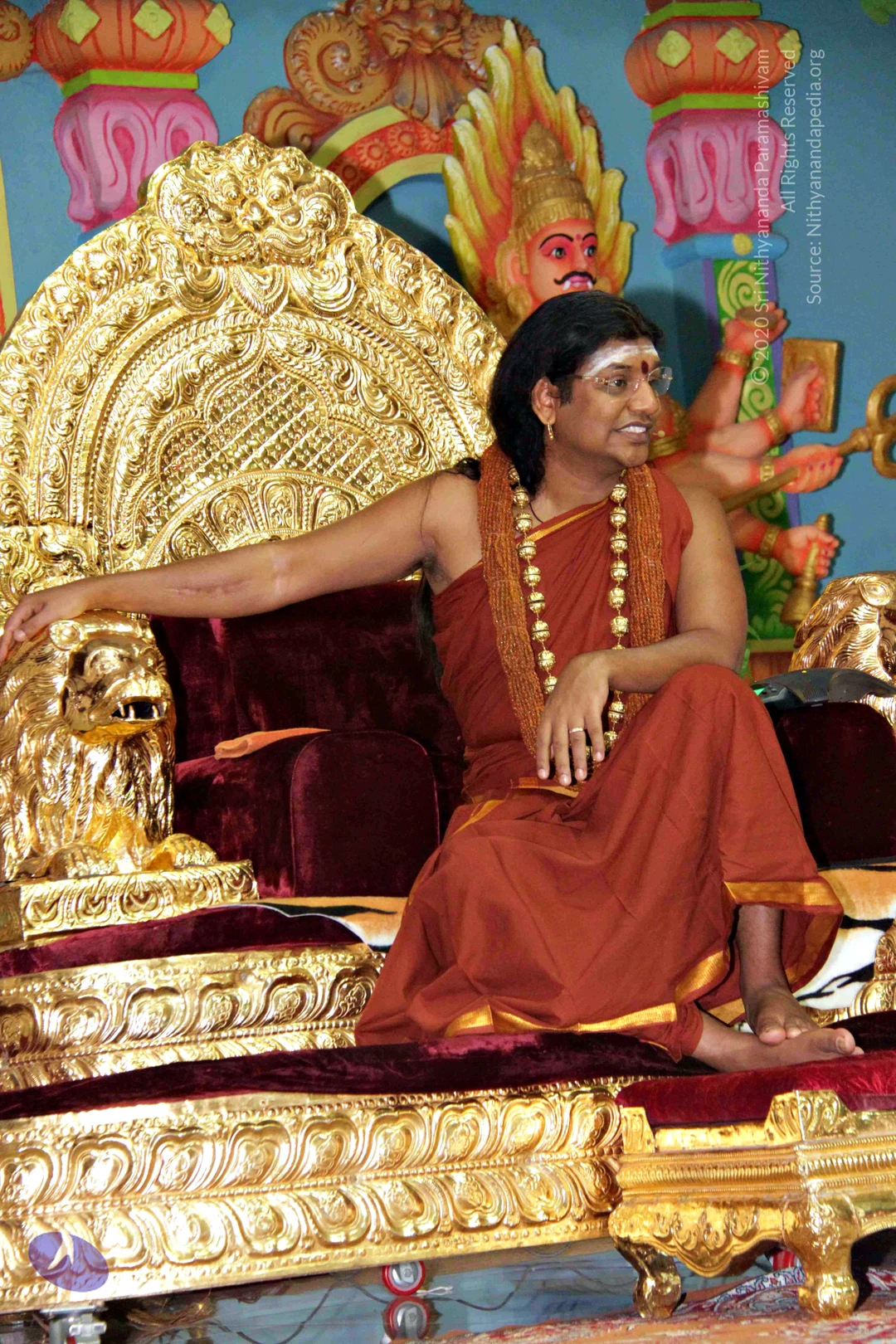
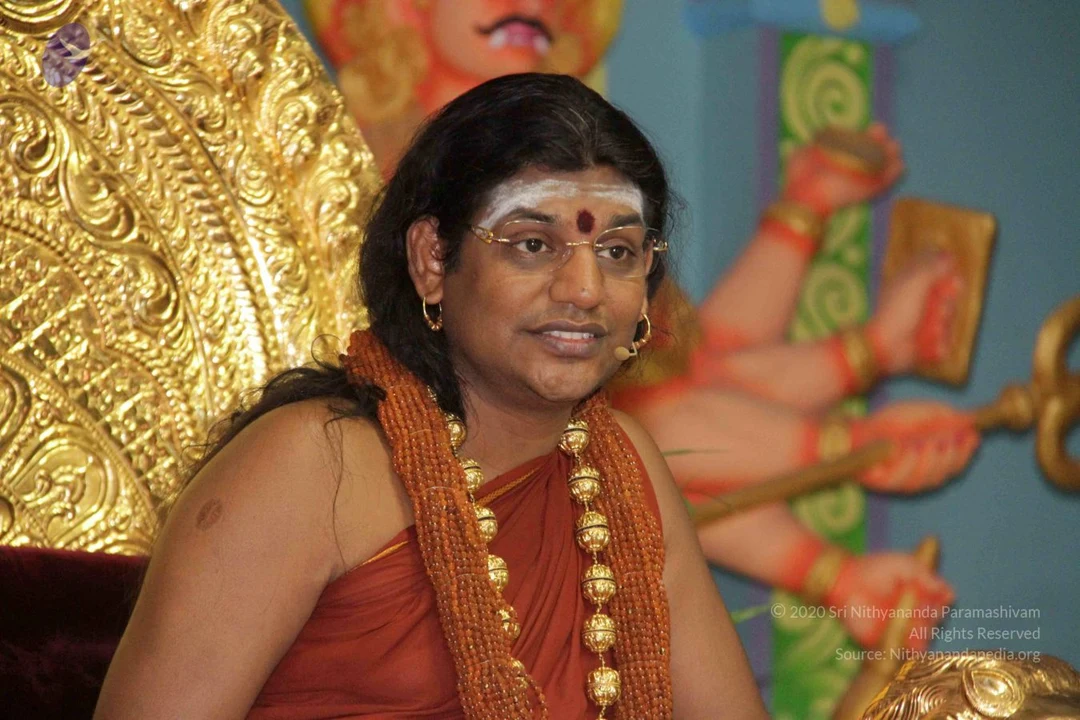
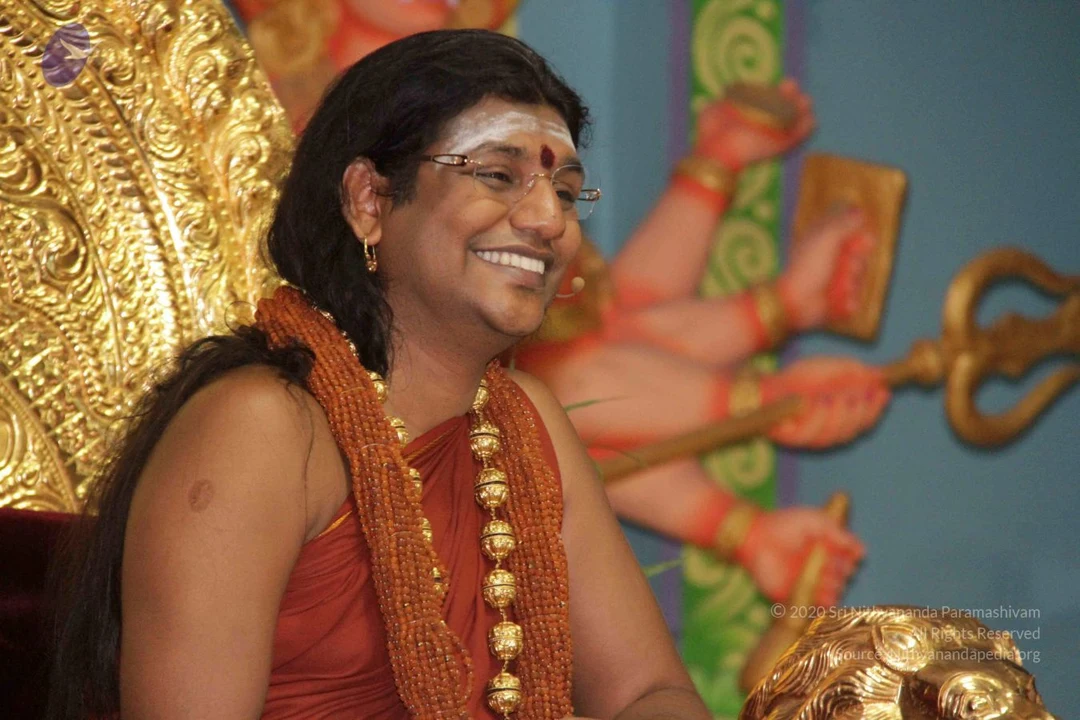
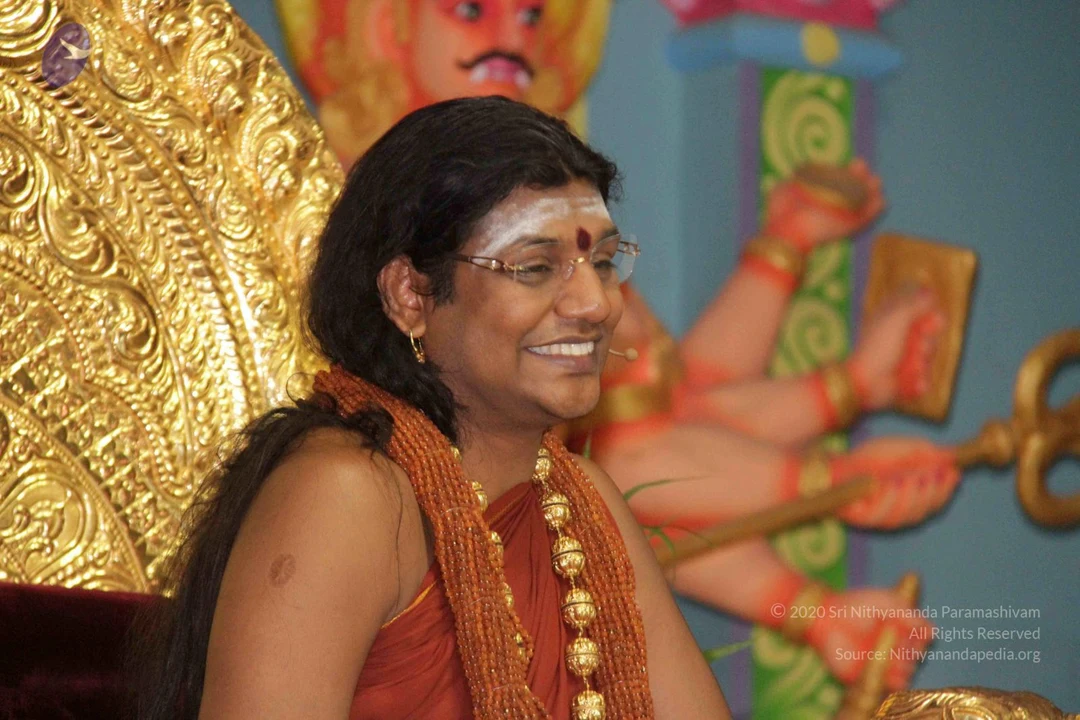
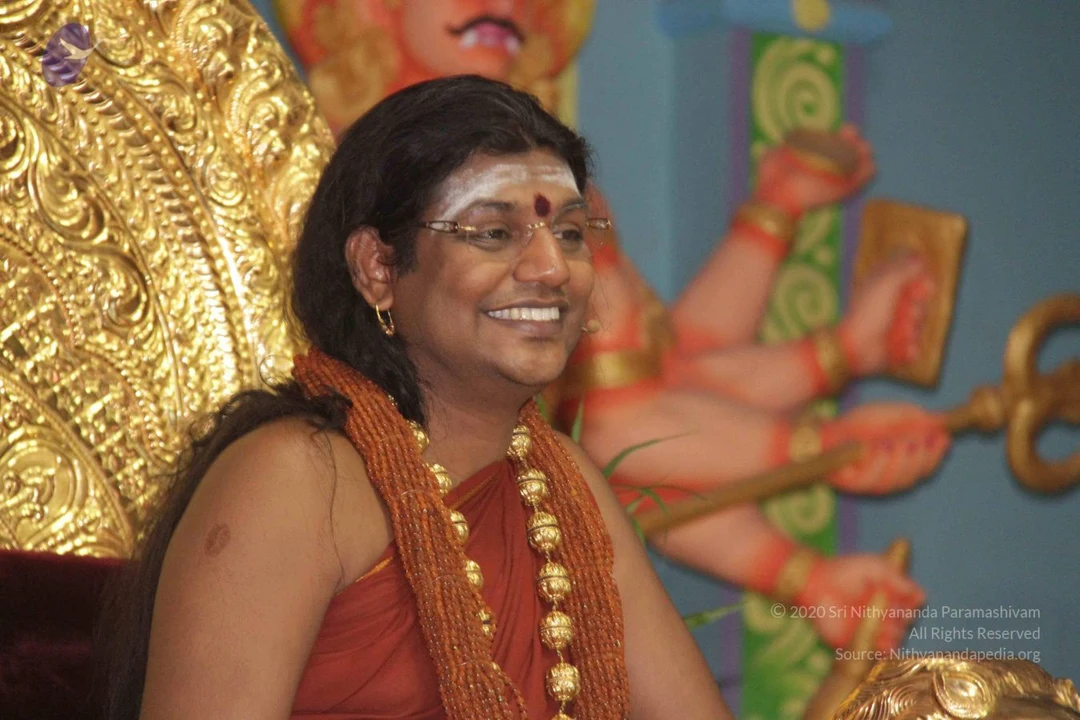
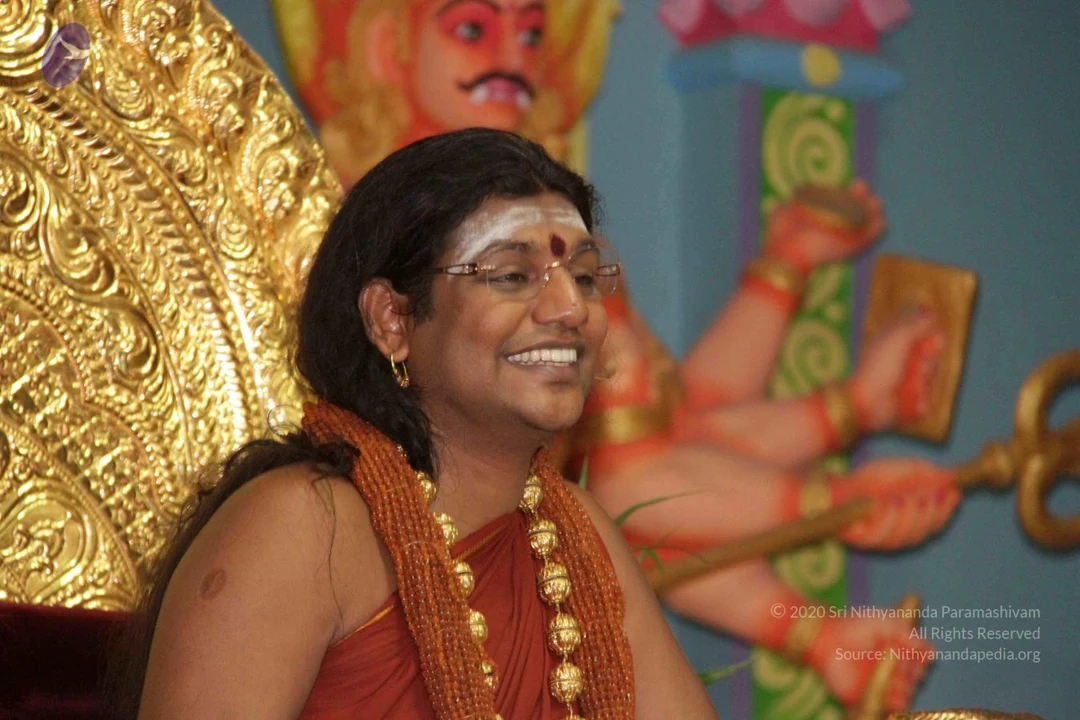
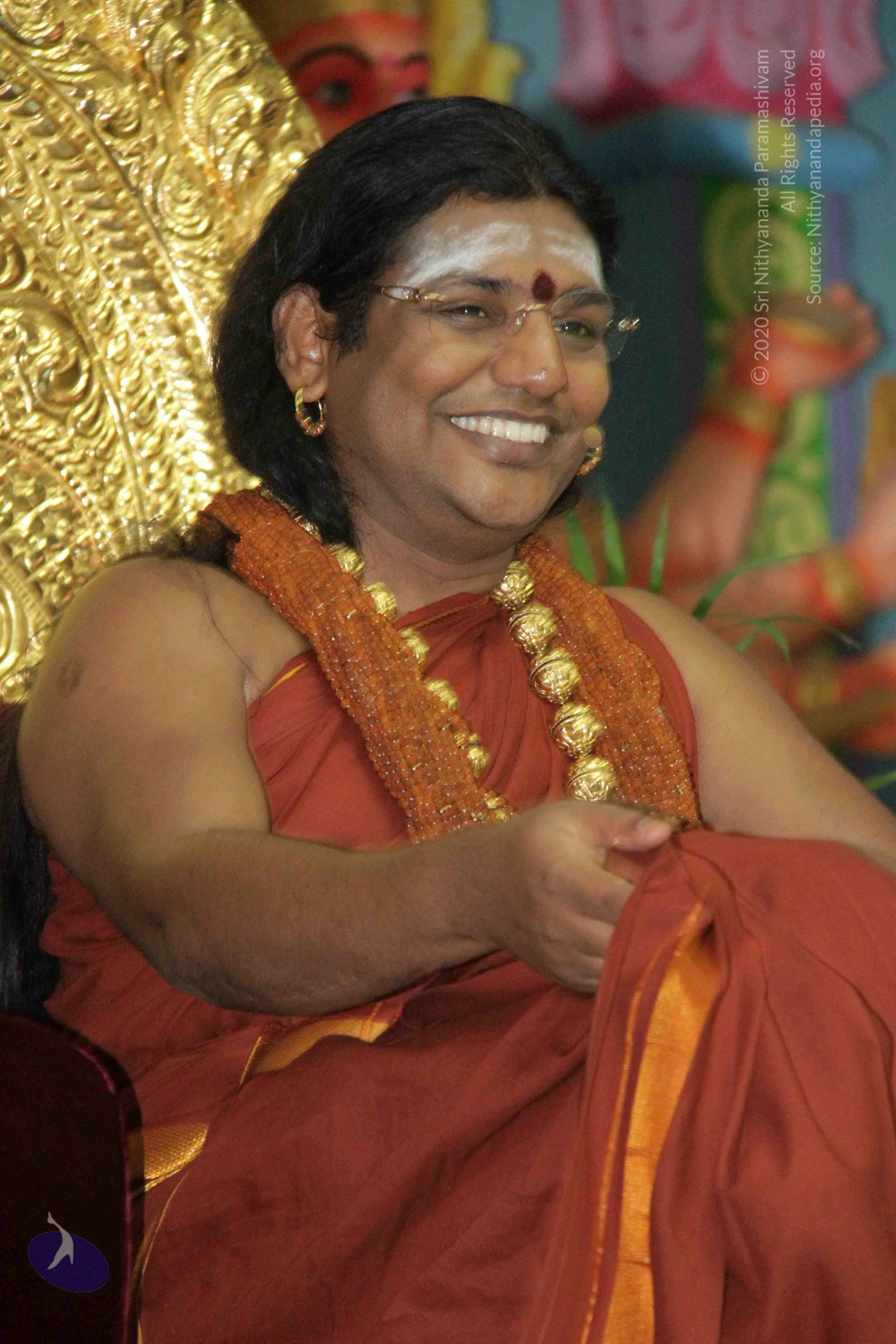
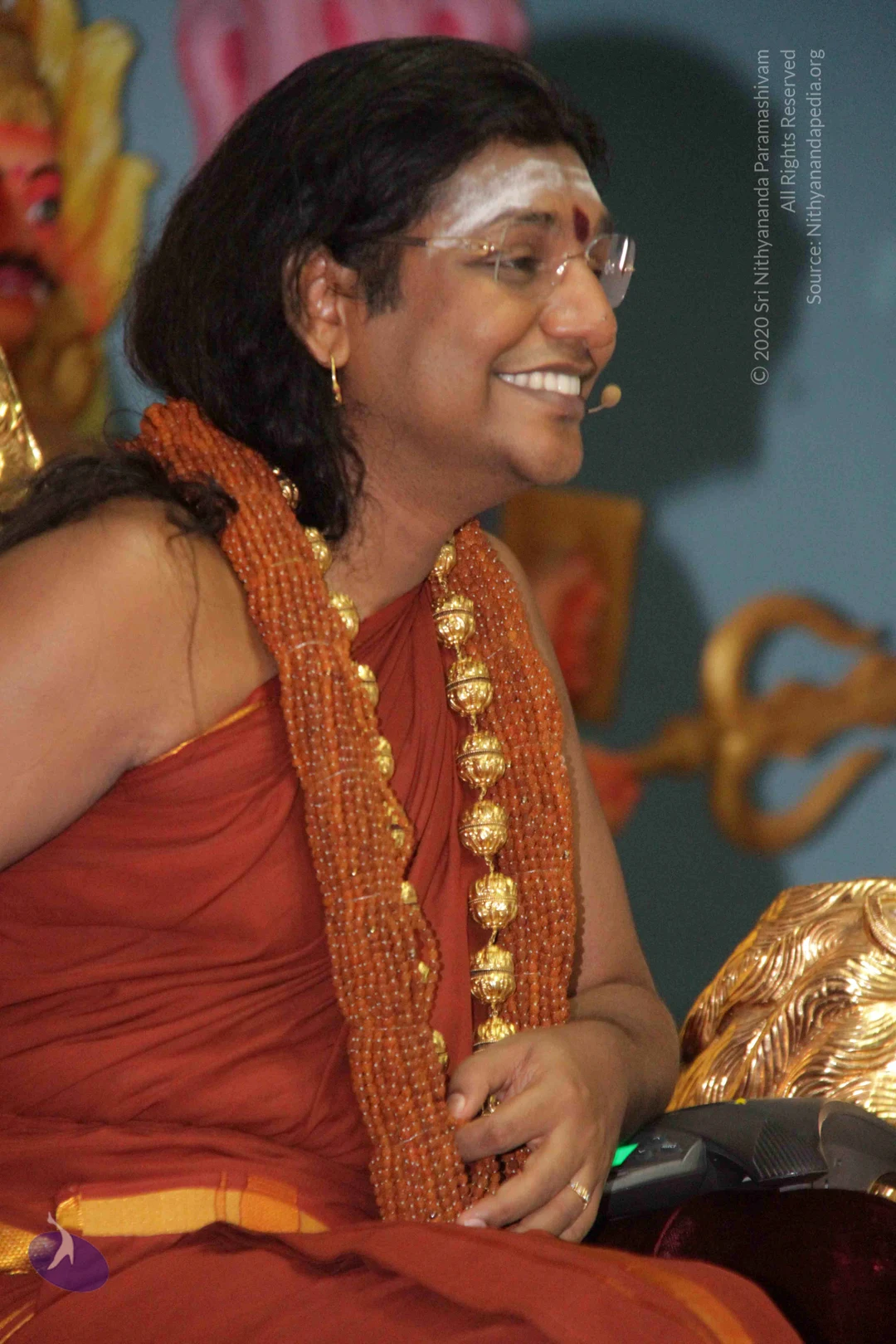
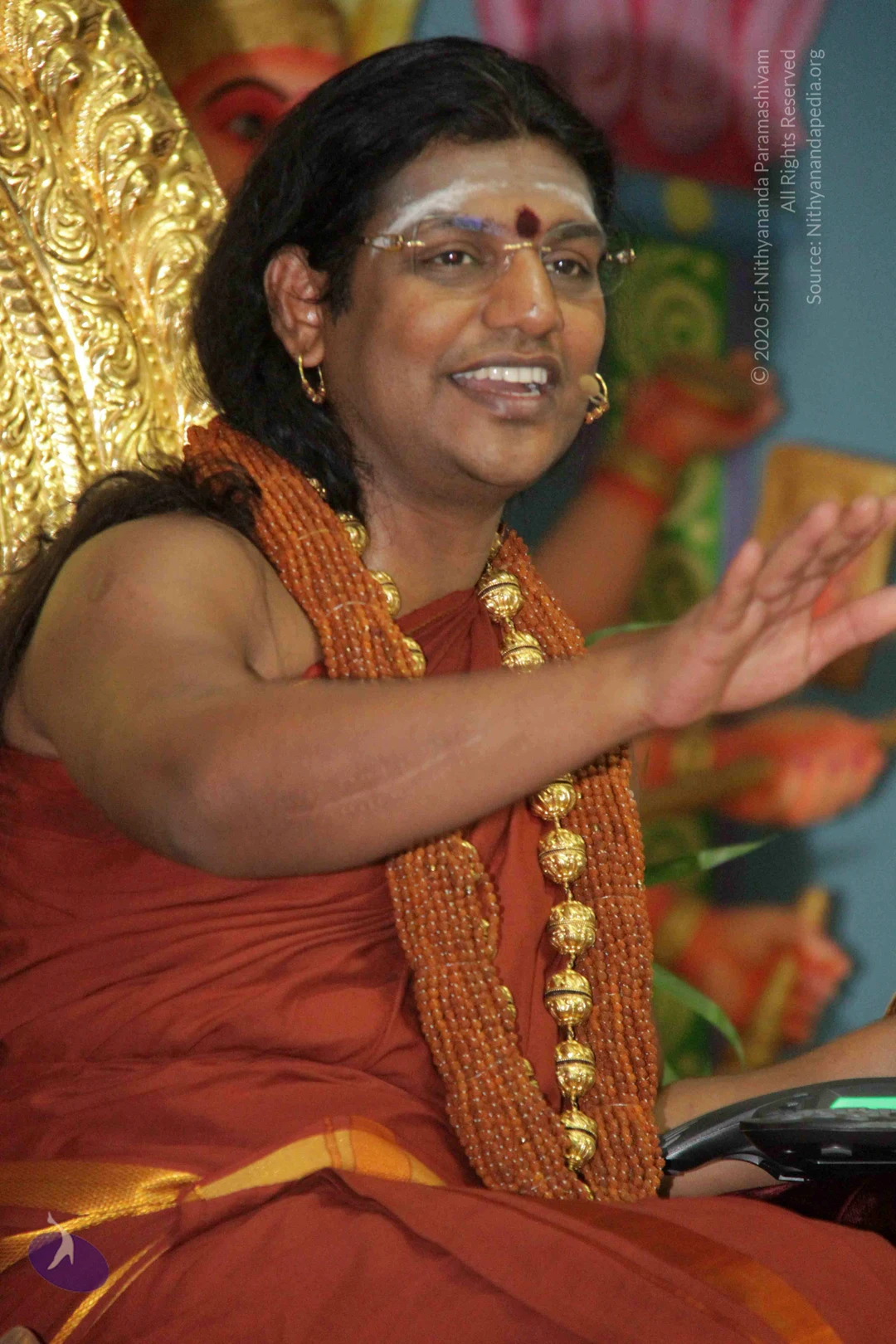
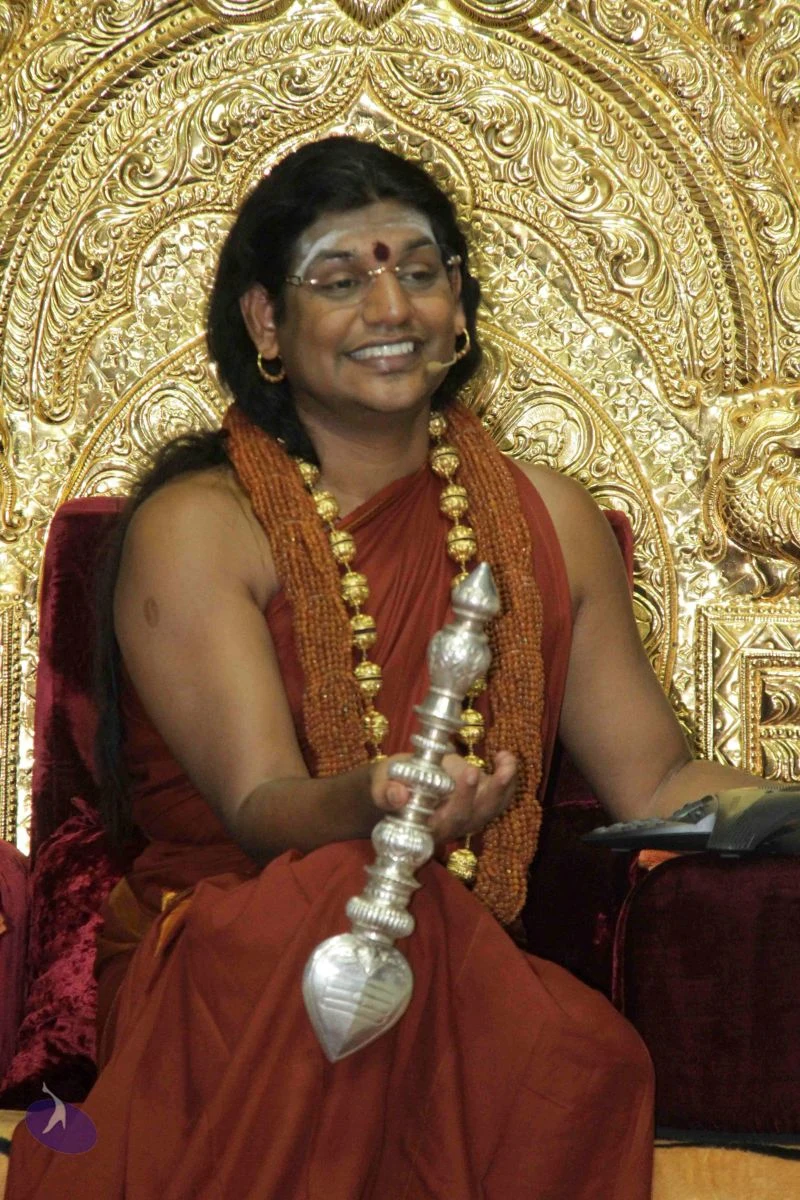
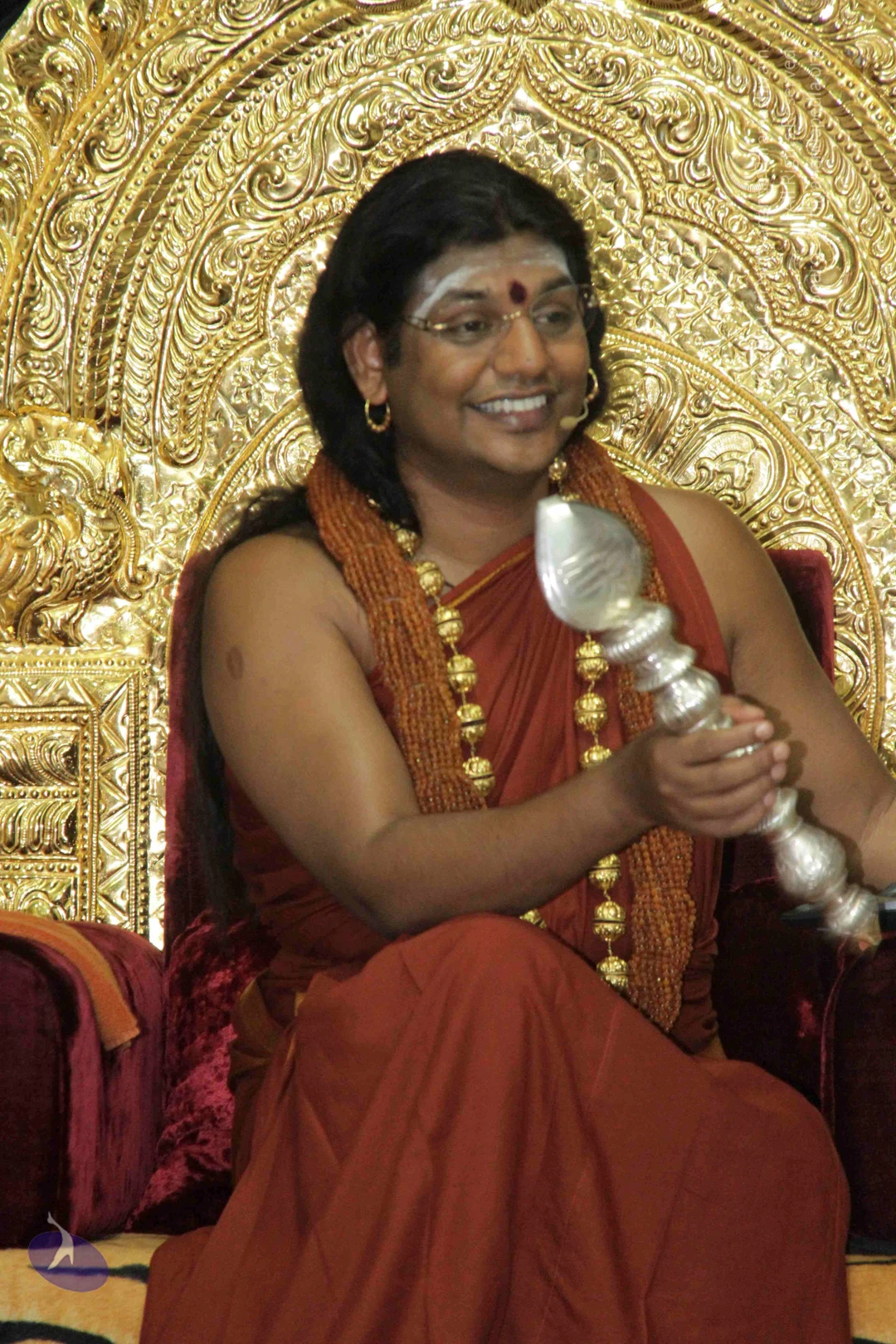
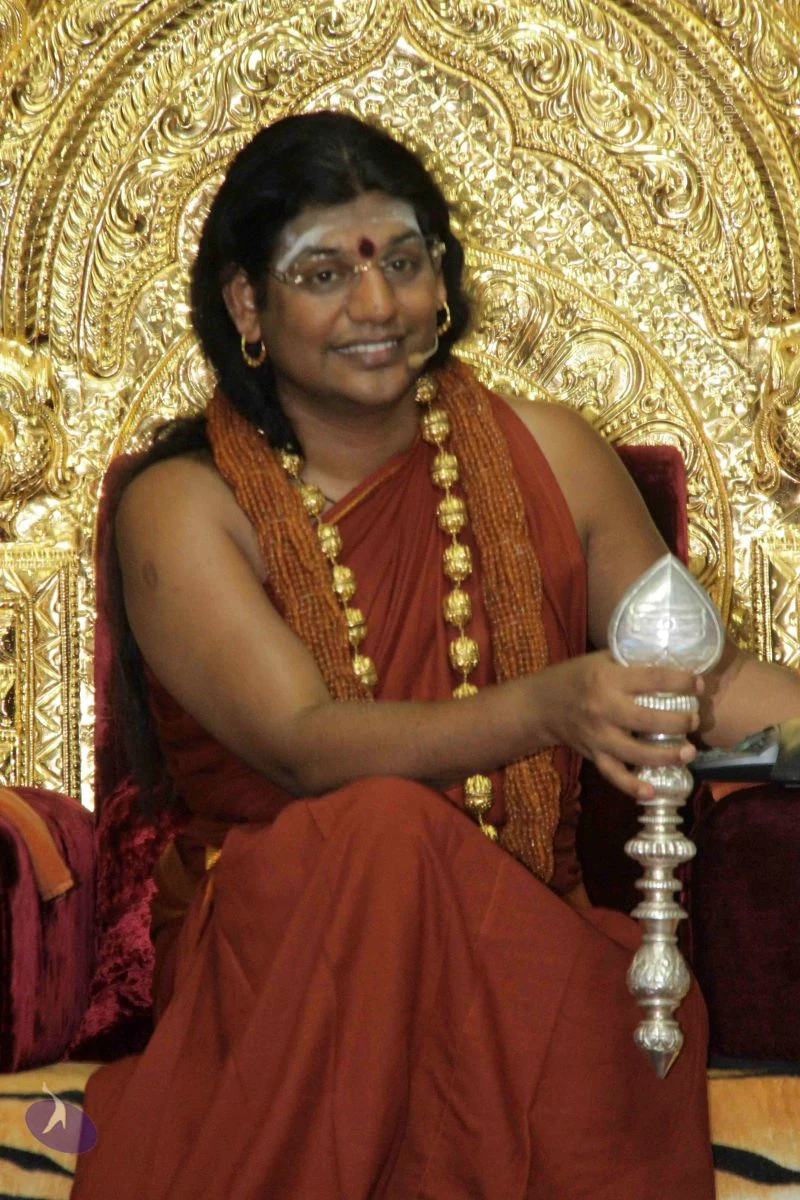
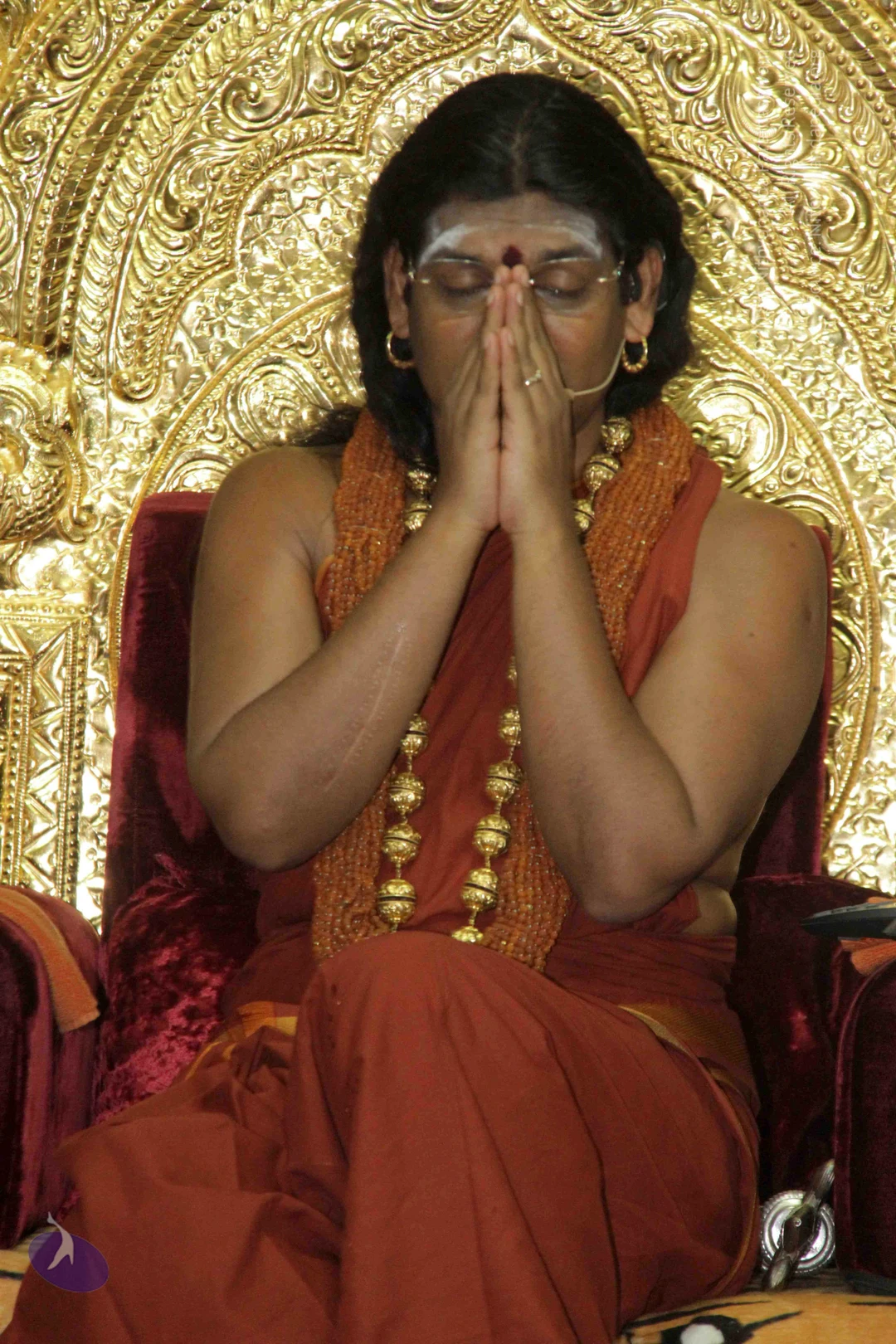
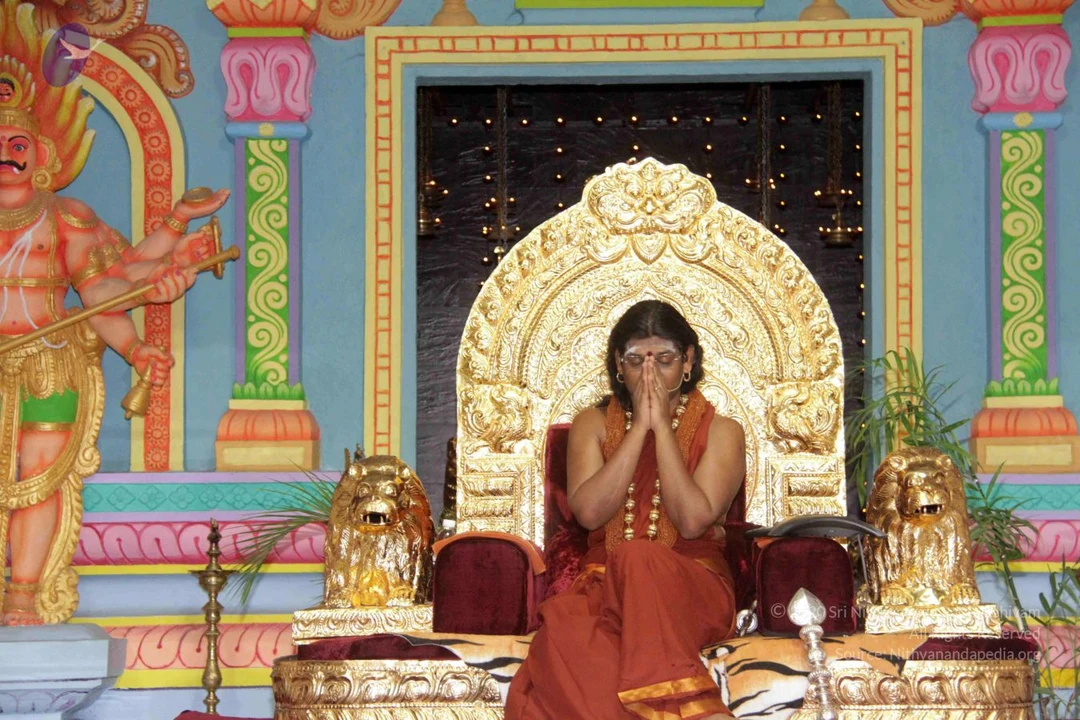
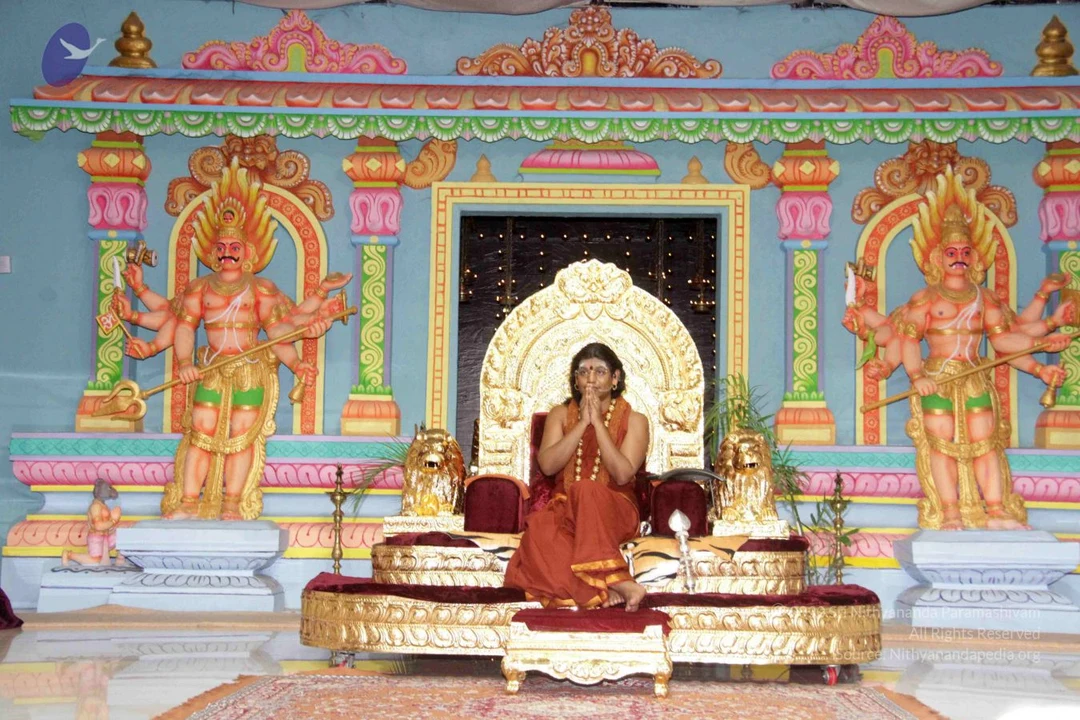
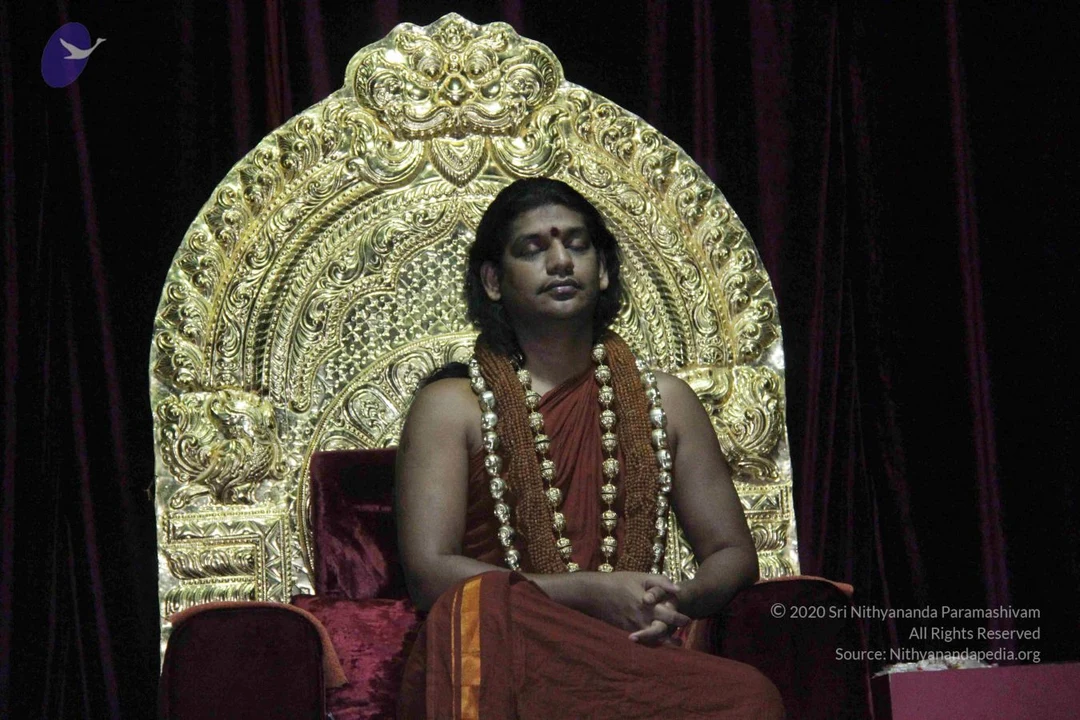
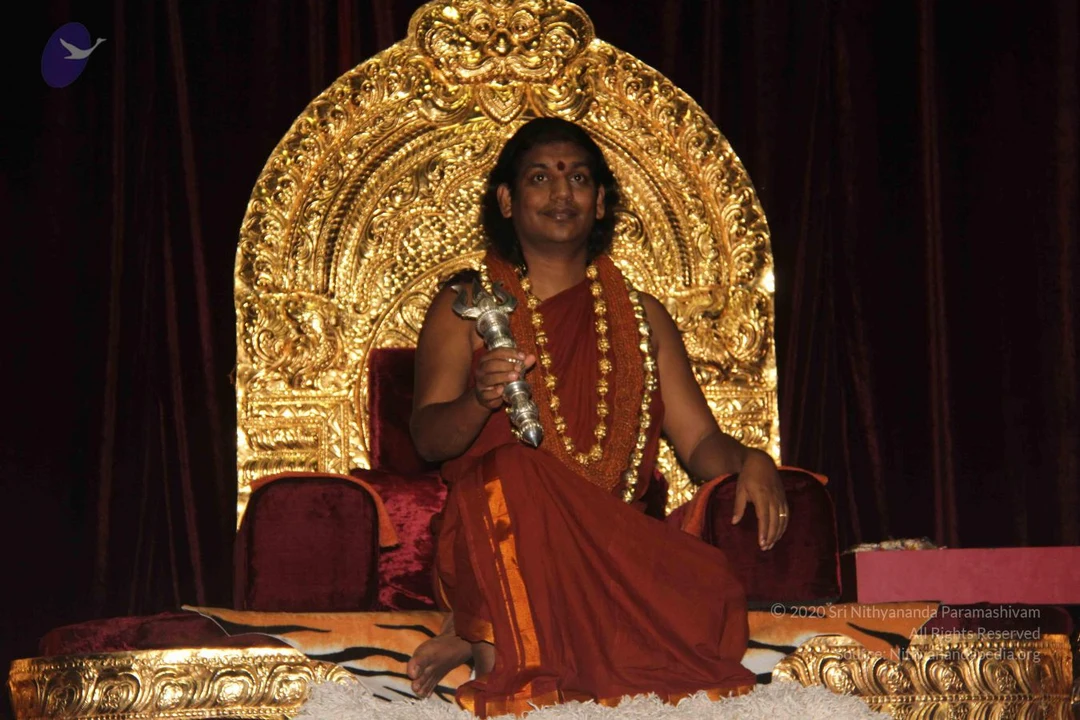
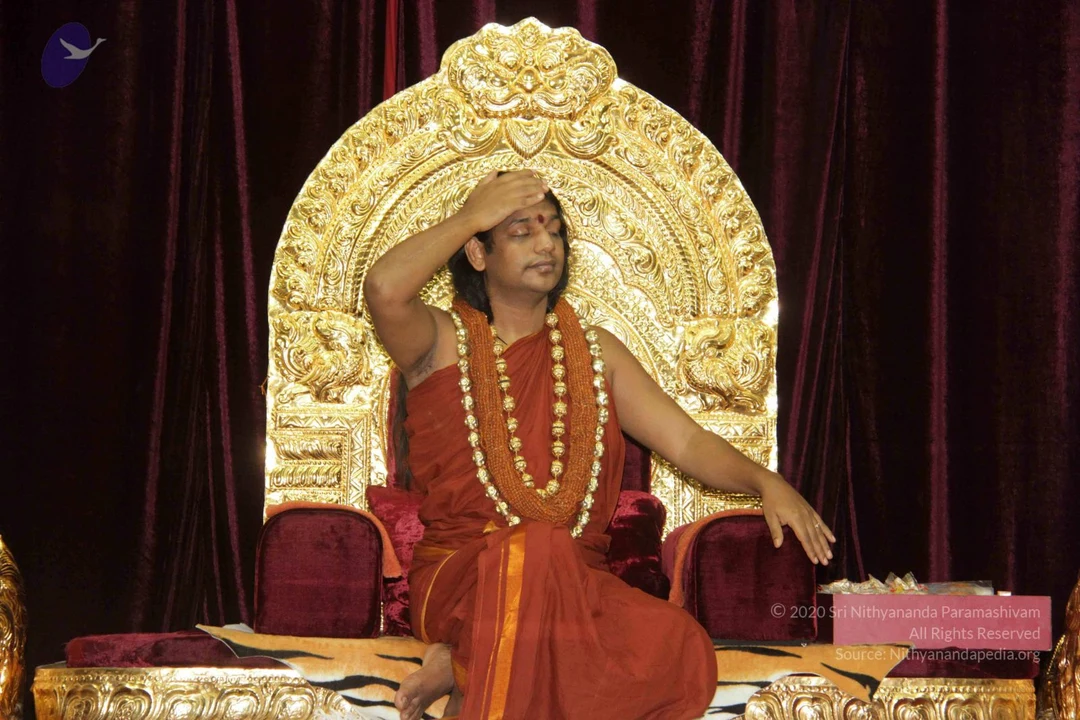
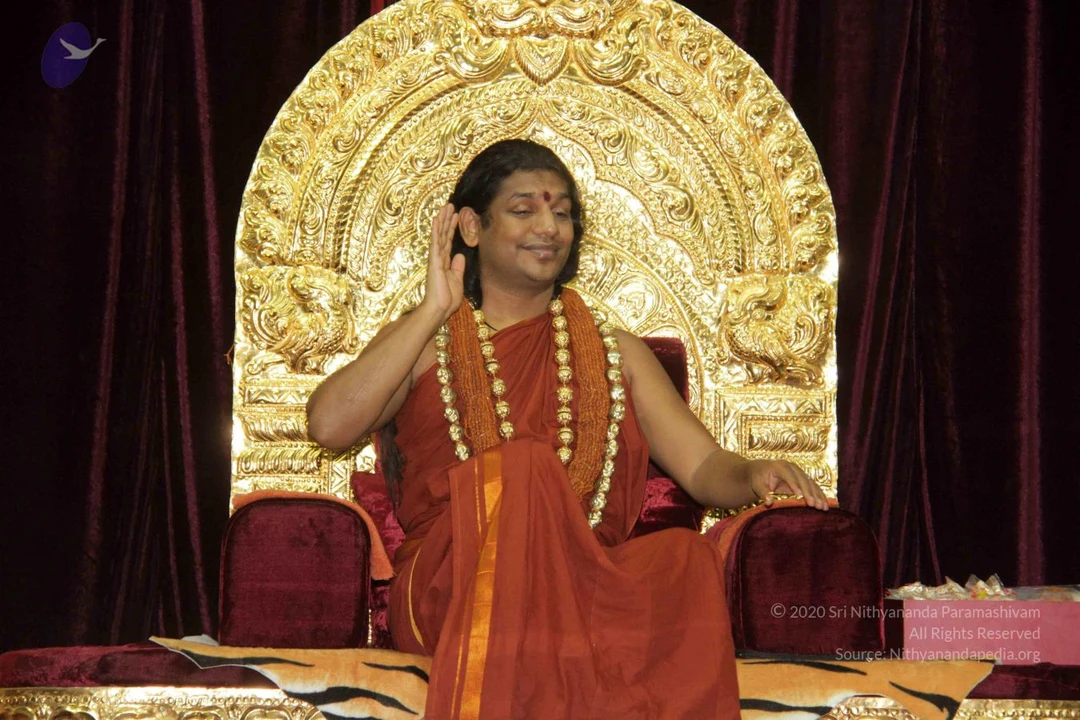
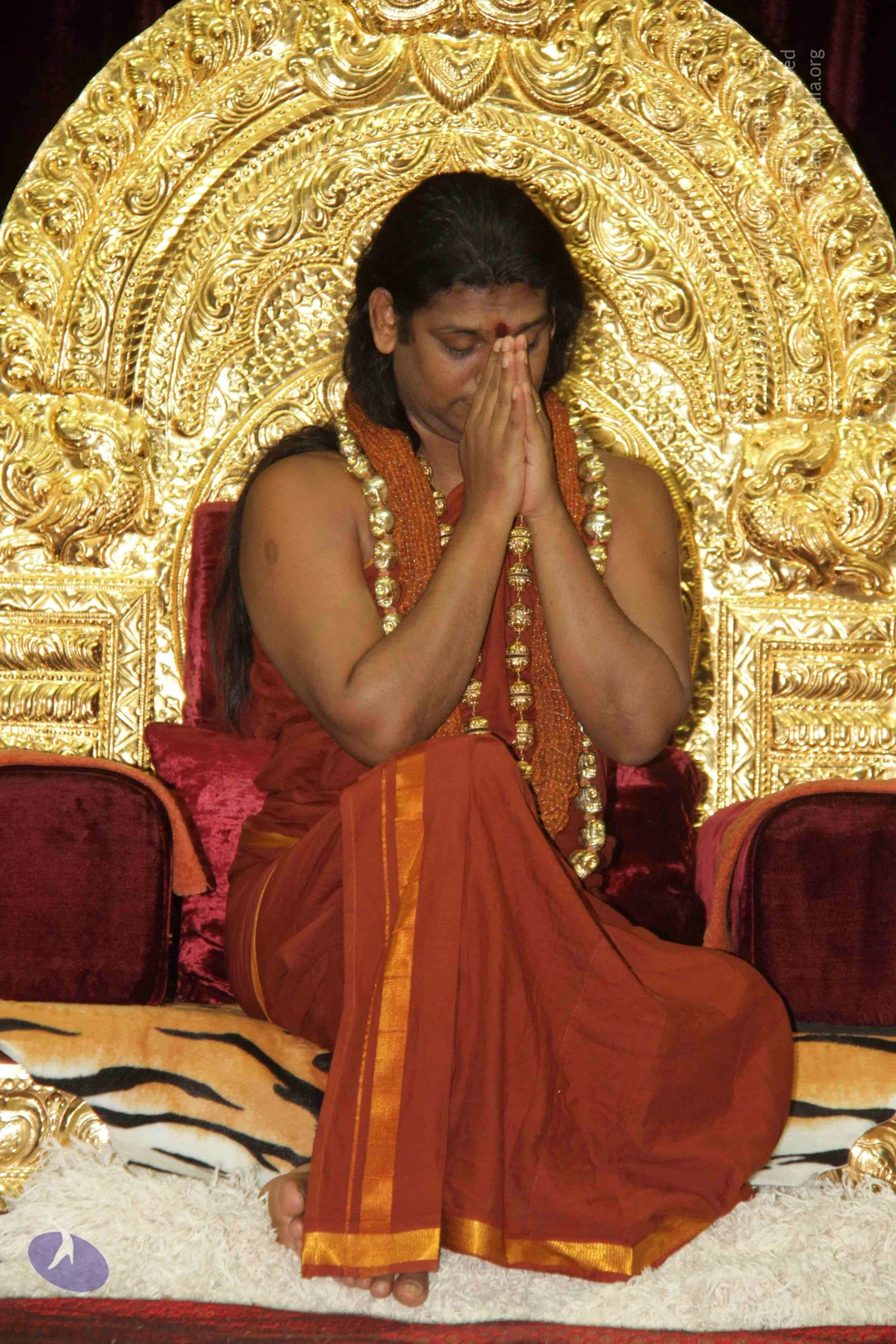
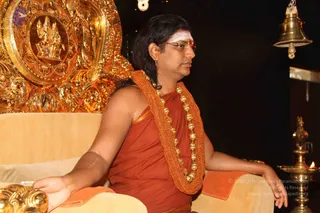
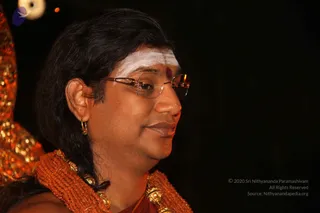
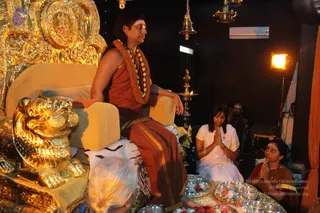
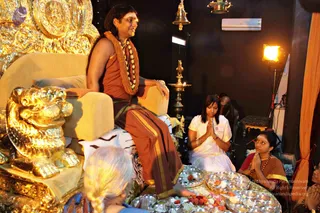
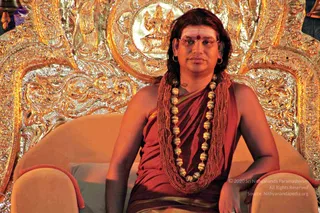
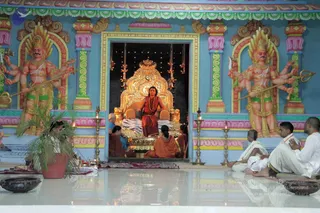
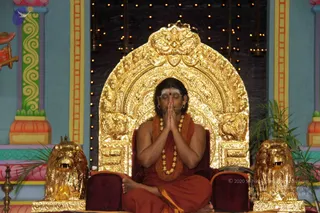
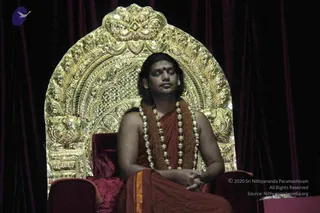
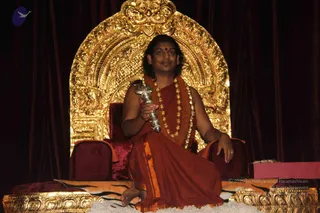
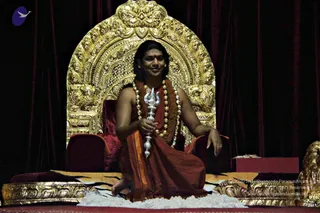
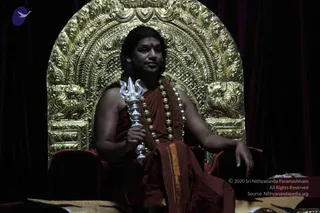
A man stands indoors with eyes closed and a slight smile, wearing a rust-orange sleeveless wrap with a gold-bordered waist cloth. He has a white vertical tilak with a red dot on his forehead, a gold hoop earring, and a multi-strand orange-beaded necklace with large gold bead spacers. A metal railing is in front of him and a colourful patterned textile hangs on the wall behind.A smiling man sits on a gold ornate throne-style chair in front of a painted colourful backdrop with a green figure and pink arches. He wears a saffron-orange draped robe with a gold-bordered edge, an orange beaded rudraksha-style mala with gold bead ornaments, gold hoop earrings, rimless glasses, a white forehead marking and a red bindi. His long dark hair is swept back. He holds the fabric of his robe in one hand. Appearance-based label: a person, seated in a satsang-style setting.A man seated on a golden cushioned chair in front of an ornate gilded backdrop with floral and scrollwork patterns. He wears a rust-red and maroon robe draped over one shoulder with a gold-bordered waistcloth, and a long multi-strand rudraksha mala with large gold-toned beads. He has a red bindi on his forehead, swept-back dark hair, eyeglasses and small earrings, and raises his right palm in a blessing gesture while smiling. His left arm rests on the armrest. A zebra-striped cloth covers the seat, and at the lower right a brass vessel and a partly visible person's hand appear.

March 17 2013

Original wiki page
Contents

Title

Get A Permanent Solution

Description:

In today's Satsang, Paramahamsa Nithyananda (Swamiji) continued to speak about integrity being a profound, most powerful and immediate solution to expand your relationship with yourself and others. Completion with you makes the possibility for creating new, new diseases disappears. All the diseases you create newly is from the source of incompletion. Integrity stops you creating new, new diseases. Authenticity heals even the diseases you created earlier. When you start thinking with Integrity, with awareness, every word you give to you becomes commitment you give to you. It means, every desire you have is a commitment you have given to you. When you know every word you give to you is a commitment you make with yourself and you have to honor them, you will make only conscious commitments to you, conscious words to you. The conflicts in the life will drastically drop, the conflicts in the life will drastically drop. Success happens in life, fulfillment happens in life when the conflicts reduce. When the conflicts reduce, life energy starts oozing in you. Bringing Integrity with others is the only way relationships can be created, and it is not long-term process, long-term solution; it is immediate solution, permanent solution. We think always long-term solution means executing also is very difficult, which is not so. Here Integrity is a permanent solution and immediate solution which you can practice now!

Link to Video:

VideoAudio

Transcript:

Nithyānandeśvara samārambhām Nithyānandeśvari madhyamām asmat āchārya paryantām vande guru paramparām

[01:06]

Sadhana TV ke sabhi darshakon aur bhakto ko mera prem evam ashirvaad sahith swagath. Today I will speak on how being in integrity expands your relationships with others. Aaj mein aapko bataoonga ke kaise sampoorthi ki stithi aapke anya logon ke saath sambandhon ka visthaar karta hai. Integrity, yesterday I was expanding how the integrity directly creates relationship with you. Please listen, relationship is of different levels. One: able to sit with yourself and able to be in peace with you and completion with yourself.

[03:06]

Dhyan se suniye. You need to understand integrity. I will expand once more the definition. Krupaya punah suniye. Sampoorthi ka arth hai aap swayam ko aur anya logon ko diye huve vichaar evam vaakya ko purna kare aur swayam aur jeevan ke saath purnatva stithi ka anubhav kare. Listen integrity - profound, most powerful immediate solution. Kal main vivaaran kar raha tha kaise sampoorthi seedha aapke sambandh ko banaathi hai. First integrity makes you feel comfortable with you because the completion makes you feel comfortable with you. When you are complete with you, so many wonderful things can start happening. First, completion with you means the possibility for creating new, new diseasess disappears. All the disease you create newly is from source of incompletion.

[05:22]

Listen. Integrity stops you creating new, new disease. Authenticity heals even the disease you created earlier. When you start thinking with integrity, with awareness every word you give it to you becomes commitment you give it to you. It means every desire you have is a commitment you have given it to you. …… anekon sthar mein visthaar karta hai ki aap apne sath purnatva ke saath sambandh rakh sakte hai. So listen, krupaya suniye, when you know every word you give it to you is a commitment you make with yourself and you have to honor them, you will make only conscious commitments to you, conscious words to you.

[07:21]

It’s really unfortunate; you have so much knowledge and awareness about so many things happening in so many places around the world. It is so unfortunate you do not have knowledge about what is happening inside you. You are not aware of what is happening inside you. When you bring integrity in your thinking, first thing you will know what is happening inside you. Integrity makes you feel comfortable with you because the completion makes you feel comfortable with you. The words you give it to you, if you have not honored, they remain as a hangover in you and continues to burn you with incompletion. If you don’t honor the words you give it to you, you lose self confidence and self respect. If you don’t honor the word you gave it to others you will lose others confidence over you, their respect over you.

[09:18]

Listen, everything in your life is totality of honoring the words you give it to you and to others, because the respect you carry for you and the respect others carry for you, the confidence others have for you and the confidence you have on you, these two put together is your life. Jab aapko pata hai ke aapko apne har shabd ko nibhana padega tab aap apne har shabd ko jagruta ke saath bolenge. Listen, when you honor the word you give it to others not only they will have confidence and respect over you, only then the relationship exists. Please understand each human being carries so much of energy, even if you have an integrated relationship with only one human being, your life can be different; because, listen, every person with whom you have a integrated relationship adds strength to you - not just mentally like a confidence moral boost or social power - consciously they add strength to you. Listen, if you are having integrated relationship with your mother - consciously she adds strength to you, if you have a integrated relationship with your father - consciously he adds strength to you. Every individual with whom you have integrated relationship, those people consciously enrich you.

[12:30]

Aatma vishwas jo aapko doosro ke upar hai, aur atma vishwas jo aapko apne aap par hai, in dono ke sammelan hi jeevan hai. suniye, Aatma vishwas jo aapko doosro ke upar hai aur atma vishwas jo aapko apne aap par hai, in dono ke sammelan hi jeevan hai. Keval jab aap doosron ko diye huve aapke har shabd ko nibhayenge tabhi doosron ko aapke upar vishwas rahega aur tabhi vah sambandh visthaar ho sakta hai. You need to know relationships are not something external. It is expression of yourself - how you feel with you. The relationship you carry with you will only be projected as the relationship with the world. Just visualize everyone who relates with you if they are with integrity how happy your life will be. When they are not integrated how much you have suffered. Sambandh aapke bahar nahi hai sambandh aapke andar ke stithi ka prateek hai. When you bring integrity, means either honoring or completing the word you give it to others, so much of confidence others will have over you, you will have over others. The conflicts in the life will drastically drop. Dhyan se suniye, the conflicts in the life will drastically drop. Success happens in the life, fulfillment happens in the life when the conflicts reduce. When the conflicts reduce life energy starts oozing in you.

[16:22]

Listen, when you have incompletion with your mother there is every possibility left part of your body will be paralyzed in your later parts of the year. If you have incompletion with father right part can get paralyzed because it is their bio memory, mother’s bio memory and fathers bio energy you are carrying in your body. Jab aap sampoorthi ki stithi laate hai tab doosron ko aapke upar vishwas rahega aur aapke jeevan mein sangharsh samaapth hoga. I can tell you sangharsh samaapth hoga. Aap apne aap ke liye kaisa mehsoos karthe hai, jo sambandh aap swayam ke saath rakhthe hai, vohi keval duniya ke saath sambandh ke roop mein pesh hoga.

[18:23]

Unfortunately human beings don’t look for permanent real solutions. They only want consolations not solutions. I tell you, solutions, permanent solutions are easy and quick than temporary solutions. The mind which goes for temporary solutions has certain sickness and will not execute even the temporary solutions. If you are asking for temporary solutions that itself shows your mind is not intelligent enough and suffers with the laziness pattern, boredom pattern, will not allow you to practice even simple temporary solutions. Durbhagya se maanav sthir samadhaan ke liye tayaar nahi hai. Veh keval alp kaalik samaadhaan ko dhundthe hai. Durbhagya se maanav sthir samadhaan ke liye tayaar nahi hai. Veh keval alp kaalik samaadhaan ko dhundthe hai. That is a main reason the teachers, gurus give temporary solutions are more popular. It feels more like a instant food restaurant, instant food restaurants like Mc Donalds, KFC, pizza huts; especially mc donalds you know the effect of that on your body, what it can do to your body. Yahi kaaran hai ki guru evam adhyapak alpkaalik samaadhaan ko hi dethe hai.

[22:08]

I tell you, the permanent solutions even though looks like it may take time, if you start living, they are the real instantaneous; they give result immediately. And short term solutions because of the loopholes in them and the mind which asks for short term solutions have a innate laziness and boredom to transform themself, they will not allow you to practice even short term solutions How many of you picked up yoga or gymming or running as a short term solution for certain problem? You will see you will not be doing it more than few days. I can guarantee you. Dhyan se suniye, sthir samaadhan agar vakth bhi lag jaaye, agar aap unhe jeene lagte hai, ve aapke sangharsh ko turanth suljha saktha hai. Dhyan se suniye, sthir samaadhan agar vakth bhi lag jaaye, agar aap unhe jeene lagte hai, ve aapke sangharsh ko turanth suljha saktha hai. When integrity become your thinking style you will enjoy so much of others confidence over you, your own confidence over you and the confidence of the cosmos over you. Listen jo dimaag asthahi samaadhaan ko apnaatha hai usme nishchit hi koi bimari hoti hai aur vah asthahi samadhan ka bhi paalan nahi karega.

[25:28]

I am giving you permanent but instantaneous immediate solutions. Listen. These words are not the words you need to practice for years to get result. Start the integrity now. From today you will see the confidence of others on you, your confidence on you, because integrity is such powerful process, the moment you are integrated everyone around you know you are living in integrity. Jab sampoorthi aapke sochne ka vidhaan ban jaaye, tab aapko swayam ke upar, doosron ko aapke upar, vishwas visthaar ho jaatha hai. Listen, permanent solutions are easy and quick than temporary solutions because the mind from which you receive temporary solutions, that mind itself is not in integrity; so any solution they give will not be a solution. Stahi samaadhan asthahi samaadhaan se kahi tvarith aur aasaan hai. Bring yourself, bring yourself to the solutions only based on solving the problem eternally. I tell you, when you bring integrity with your relationship with others, honoring the words you gave or completing the words you gave, the way others look at you will be transformed immediately. How many of you experience this in your life - when you restored integrity with others, immediately the way they look at you has transformed - raise your hand. And the way you look at you is transformed. Relax.

[29:51]

Integrity directly restores the way you look at you and the way you look at others. Lack of integrity makes even institution as individual, lonely, alone, people. Integrity makes even an individual organized organization. Listen, lack of integrity makes even an organization broken alone individuals. Integrity can make even an individual an organized organism organization. When you live integrity, you in your view and you in others view you go on expanding. Sampoorthi aapko swayam ke drishti mein aur anya logon ki drishti mein visthaar kartha hai. How many of you felt so much of self confidence and self respect when you have started living in integrity with you and others? Raise your hand. Can you imagine, this self confidence is called atma bala, completion with your self is the strength of the atman. Relax. When you bring integrity in yourself the way they look at you will transform immediately. Integrity brings so much of strength and power in you.

[32:42]

In maha nirvana akhada, this time we saw three sadhus; in maha nirvani two sadhus, one sadhu from niranjani, keeping the hands raised for 12 years 8 years 10years, one hand raised. I spoke to one sadhu, of course not in these three; some other sadhu in earlier kumbhas. One sadhu was keeping his hand always up. I asked him, ‘Why did you take up this tapas? There are so many ways of tapas - who doesn’t lie down and sleep, there is a sadhu who stands in one leg for last 12 years. Why did you take up this tapas?’ He said he was studying Bhagavad Gita under his guru. During the class he slept and his guru told him keep your hands raised so that you will not fall asleep. So the guru gave the instruction. He kept the hands up so that he will not fall asleep. Suddenly before ending the class, guru had a heart attack and attained maha Samadhi; he passed away. ‘Because guru has not told me to drop the hand I cannot drop the hand. He told me to keep the hands up.’ That’s it. And still he is keeping the hands up. And he says, ‘I conquered sleep completely.’ When I met him he must be around 60. He must be keeping his hands up for last 30 years. Of course I did not meet this sadhu this time. This sadhu I don’t know whether he came to kumbha mela or not this time. But earlier I met him. I could see one thing in him so much of the power of integrity. I could see his tongue had a vaak siddhi. He is a siddha purusha, vaak siddhi. Because of his commitment to himself, his integrity, he had vaak siddhi developed in course of his tapas period.

[36:11]

I tell you these are extremes. I am not even asking you to go those extremes. All I am saying you is when you bring integrity, honoring the words you give it to others and you in your relationships with others, suddenly the friendliness in your relationships increase; demands in your relationships breaks the relationships and makes it dry. Friendliness in our relationships adds juice to the relationship and keeps it stable and growing. Above all the relationships become worthy of living. Sampoorthi ka shakthi aapko siddha purush bana saktha hai. Keval yahi nahi sampoorthi aapke sambandhon mein mitrata laata hai. Keval yahi nahi sampoorthi aapke sambandhon mein mitrata laata hai. Integrity, when you bring it in the relationship with others it goes on expanding you. Integrity is nothing but conscious planning for completion of your life. As on now your life is like you are driving without GPS. You don’t know where you have to reach and you don’t know which direction you have to go; because you have vehicle from which you cannot get down, you are driving. Even if you reach it is more like an accident. Integrity is you know the direction, you know the goal, you have the GPS and you are driving it consciously, 100% you know for sure you will reach it. If you are not reaching, it is an accident. Without integrity, if you are reaching, it is an accident.

[38:54]

Sampoorthi aapke jeevan me lagaathaar sampoornatha laane ka adbuth saadhan hai Without integrity you don’t even know where you are driving, what speed you are going. You see a huge hill in front of you; if you drive, continue to drive, you may go and hit at the hill. But still you are imagining you are reaching a beach to have a vacation. In integrity the possibilities you are creating and the will you are having both are not only aligned, travel in opposite directions. You try to realize paradoxes as paradises. In lack of integrity you do not know difference between paradise and paradox. Sampoorthi ke bina aapko apne jeevan ke raftaar ke bare mein jaankaari nahi hogi. Sampoorthi aur kuch nahi par aapke jeevan ki yojana jaagratha ke saath banana hai. I tell you only when you bring integrity you will even know the real purpose of your life. real purpose of each relationships in your life, real purpose of why you should have money, why you should have relationships, why you should have meditation, why you should have a guru, why you should have what all you need to have; that will become clear only when you have integrity.

[42:01]

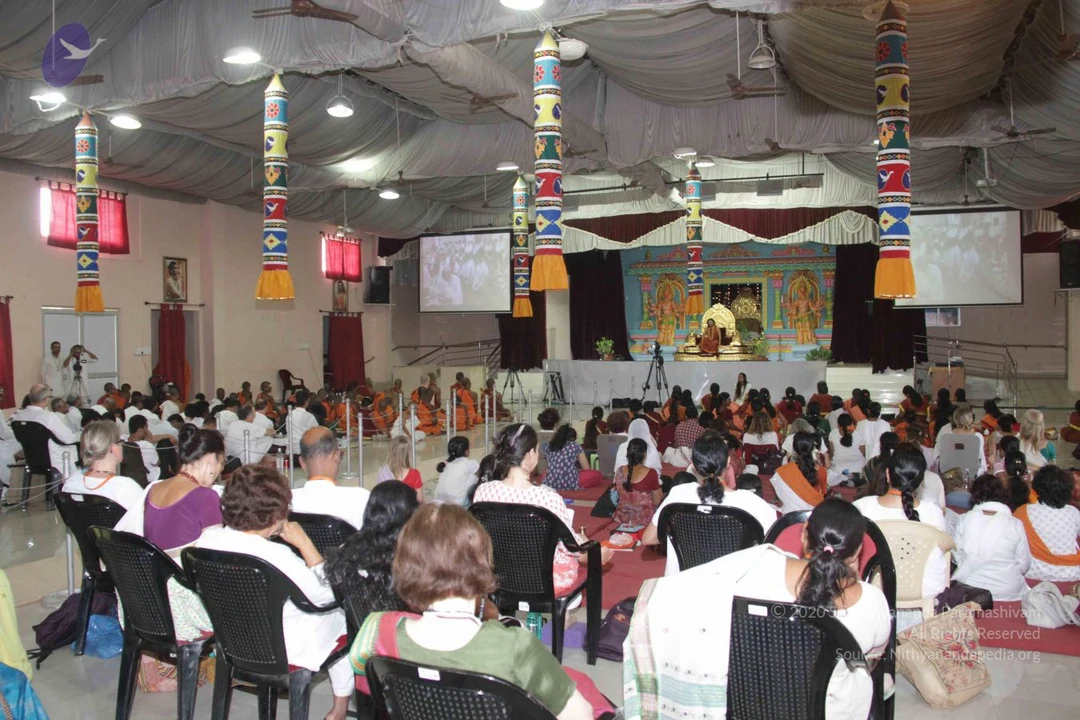
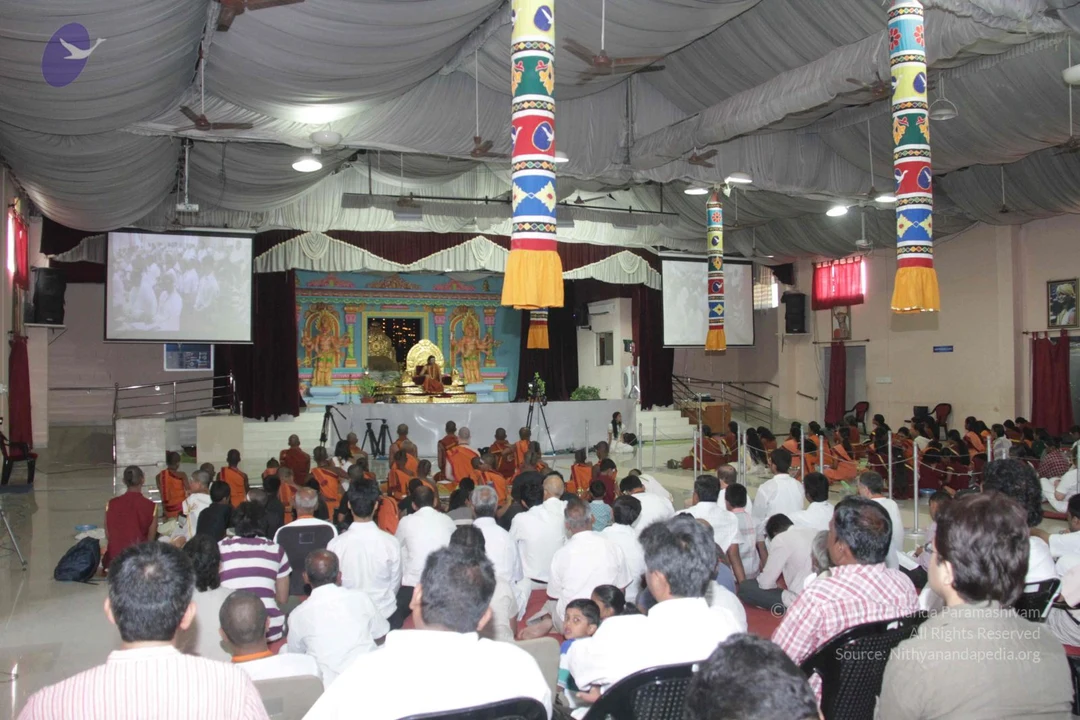
Essence of today what I wanted to share with you all - bringing integrity with others is the only way relationships can be created; and it is not long term process, long term solution, it is immediate solution, permanent solution. We think always long term solution means executing also is very difficult which is not true. Here integrity is the permanent solution and immediate solution which you can practice now. Aaj ke satsang ki saaransh hai keval sampoorthi ke saath hi aap apne jeevan ka uddesh ko jaan sakthe hain. Keval sampoorthi ke saath hi aap swayam ko evam doosron ke saath sambandhon ka… My blessings to Singapore center! Today 50 visitors and devotees have gathered. My blessings to all of you! My message for all of you is learn this 4 principles of life: Integrity, Authenticity, Responsibility and Enriching. Go on practicing it. Only when you start living them in your life, when you pull these tattvas into your life, life starts happening in you. Please all of you understand these 4 tattvas and start living. All My blessings are with you. Let all of you have successful relationships, wealth, health, space of positivity, possibility, leadership and space of enlightenment. I am with you all.

[44:25]

Photos From The Day:

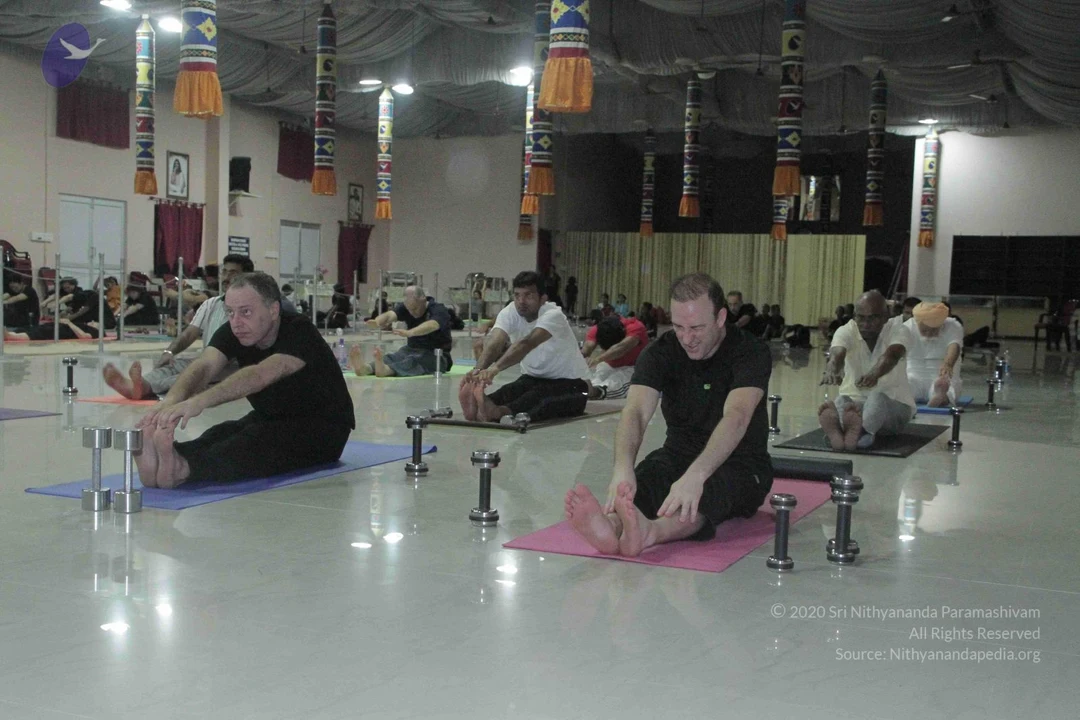
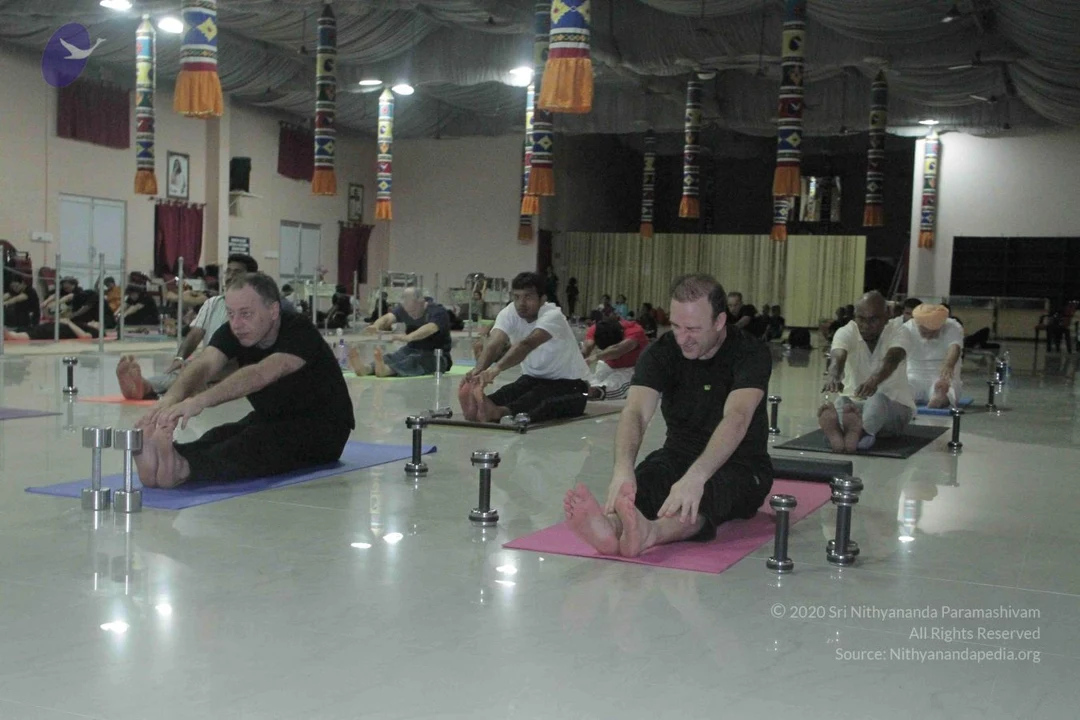
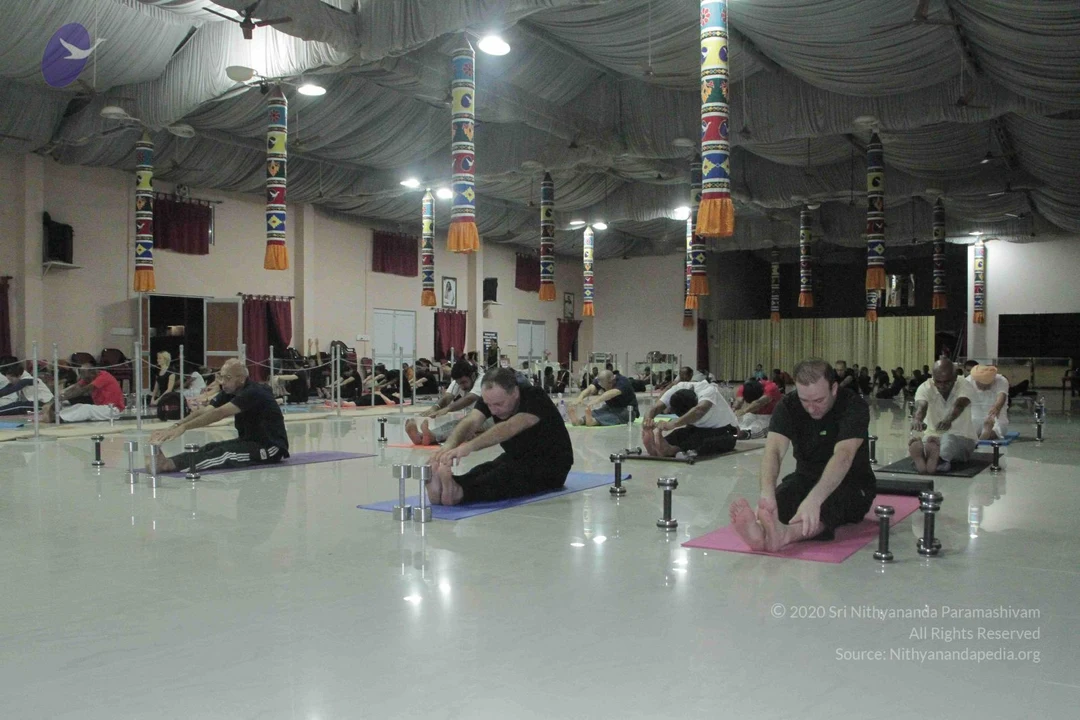
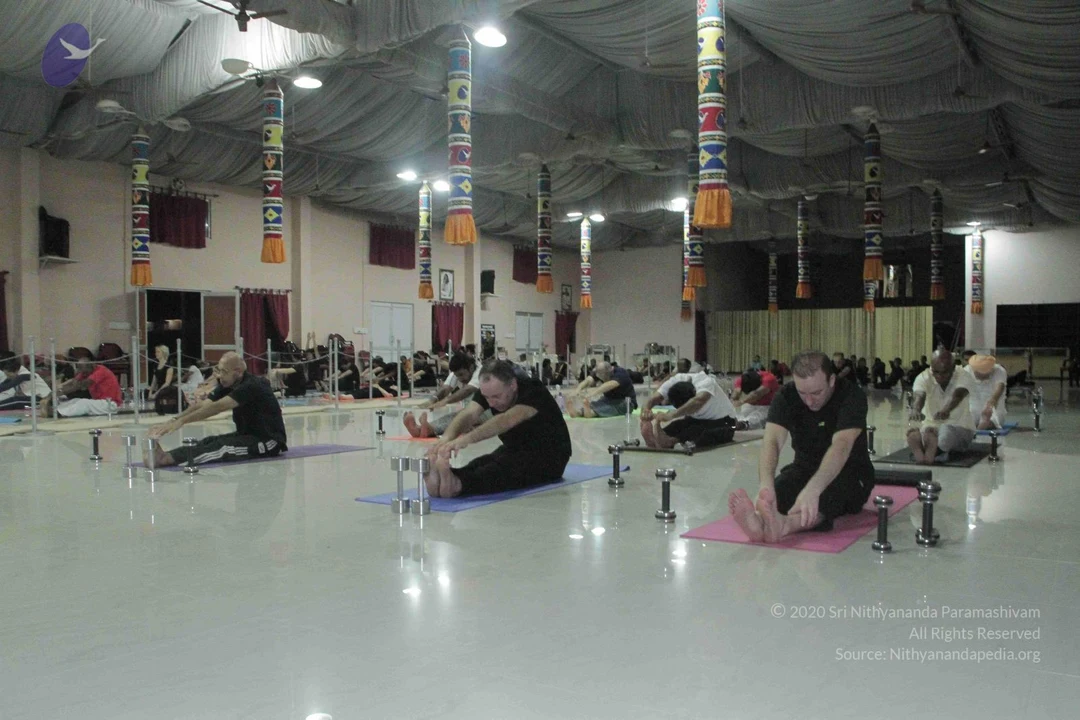
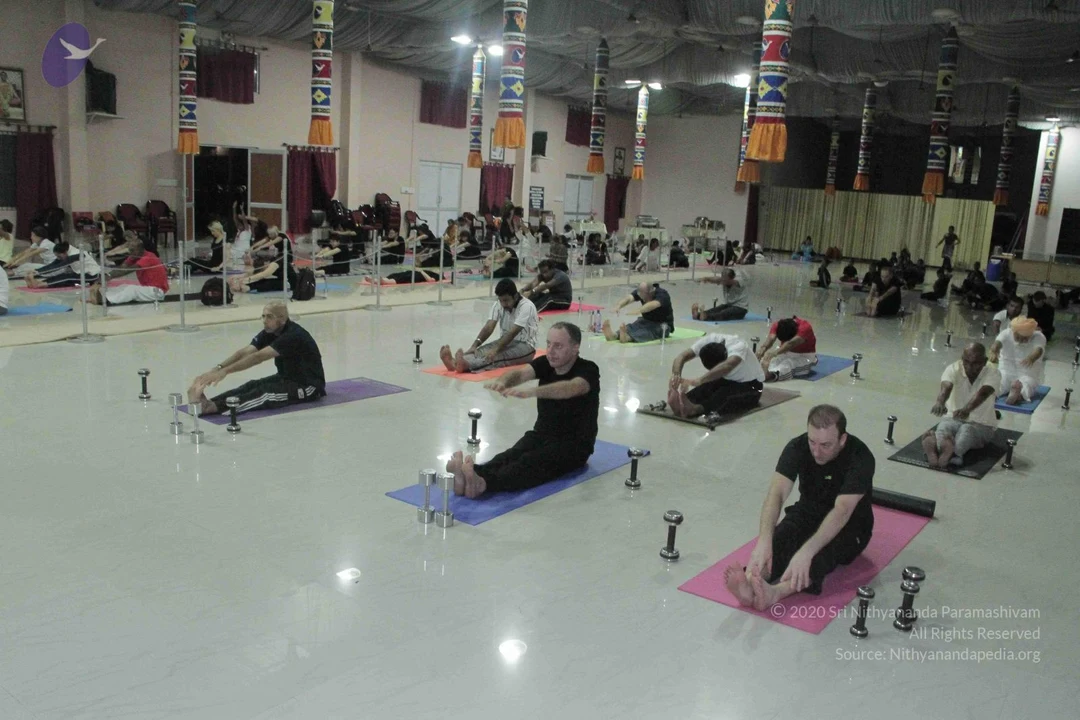
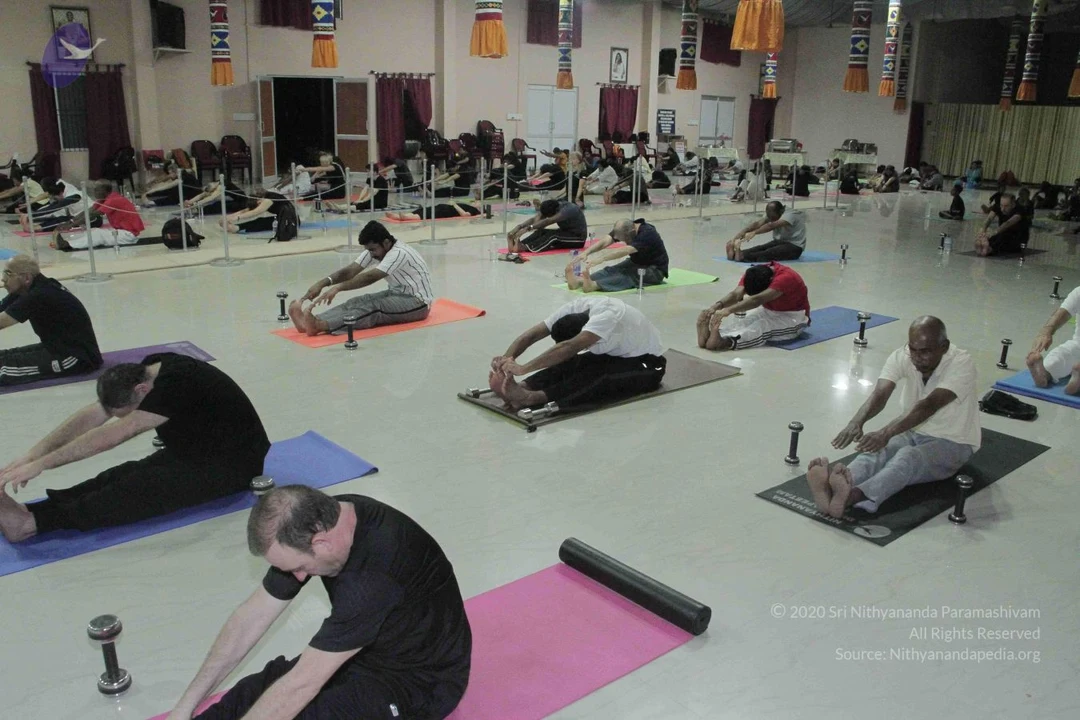
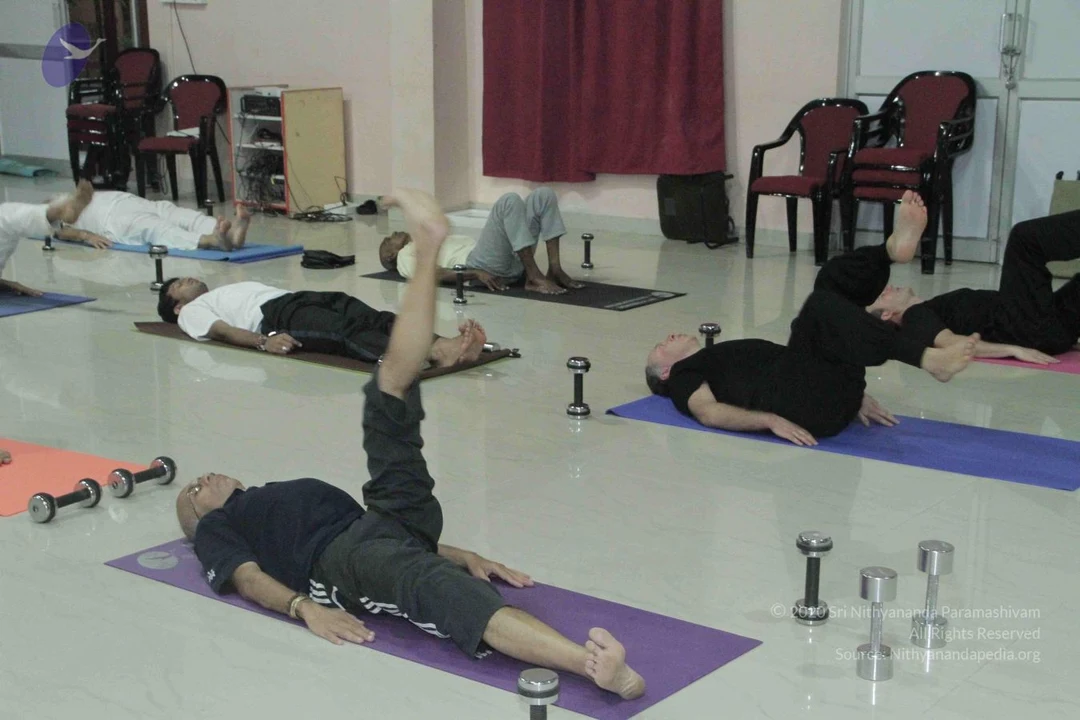
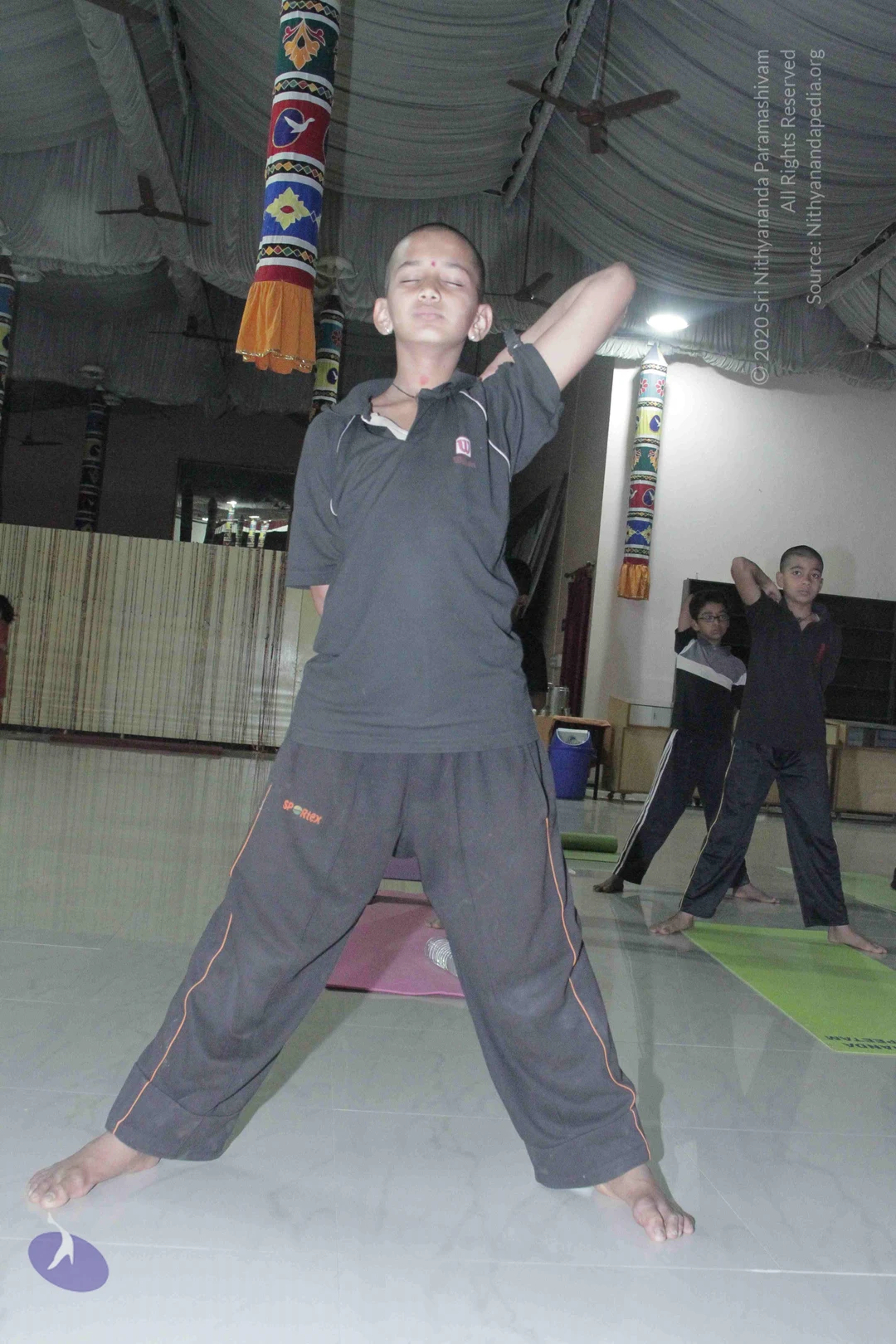
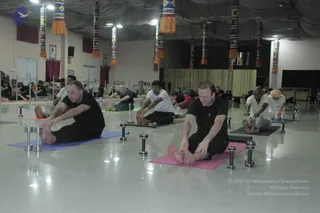
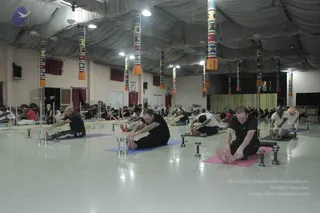
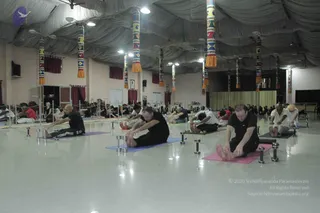
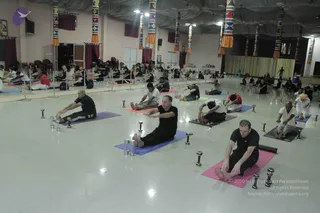
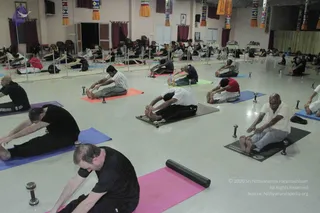
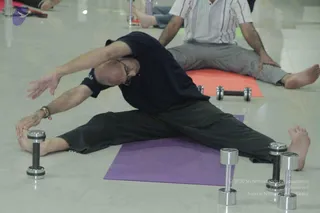
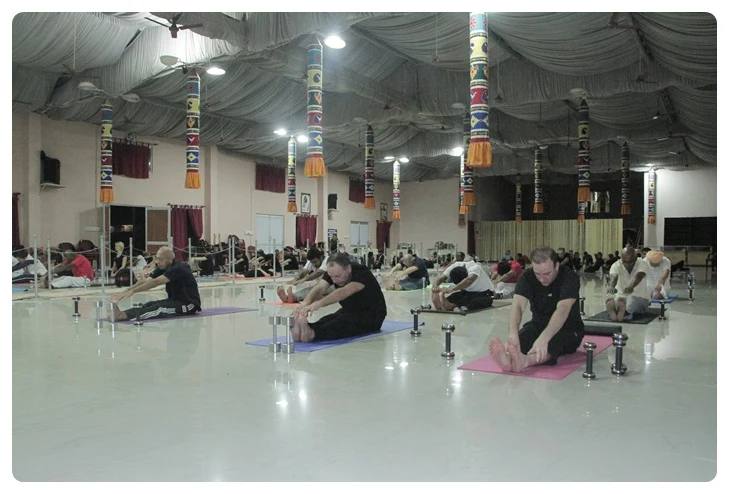
Morning Yoga by Inner Awakening Participants
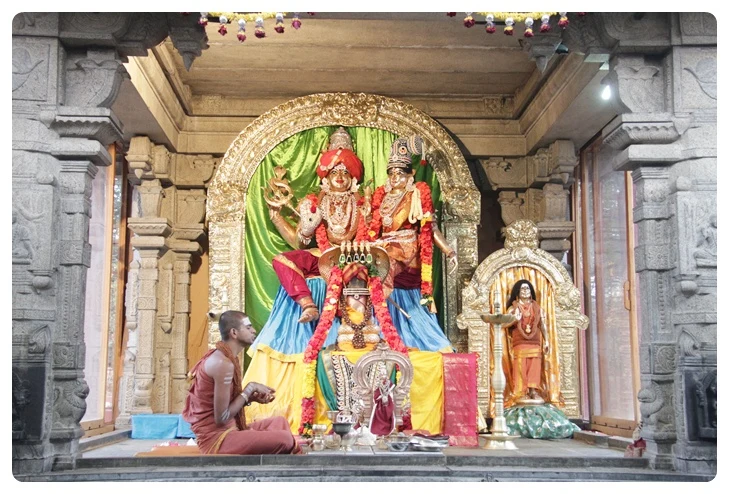
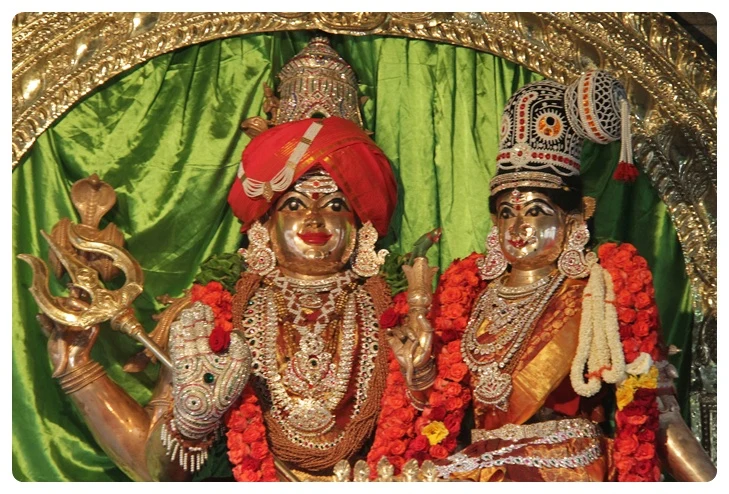
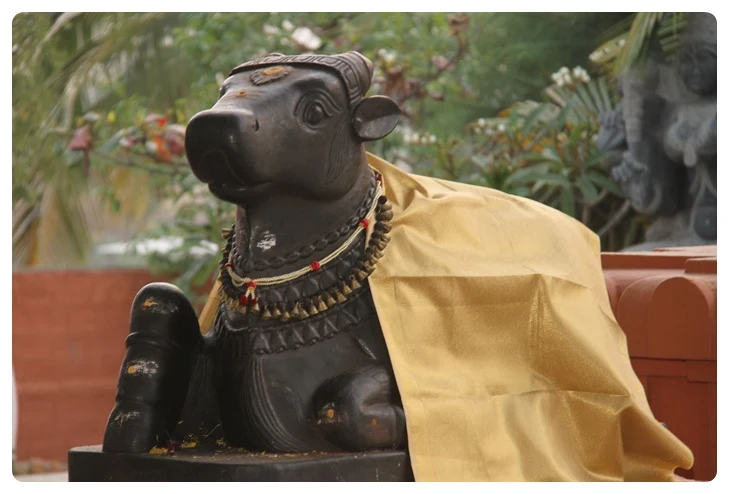
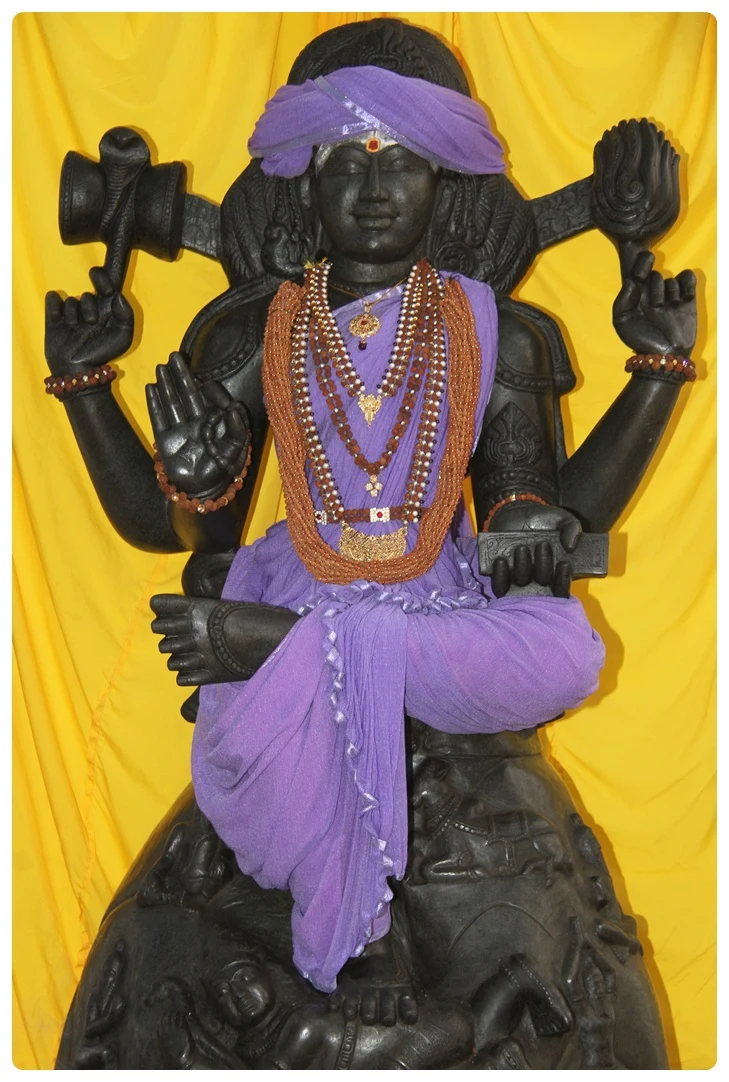
Temple Glimpses

Morning PadhaPuja

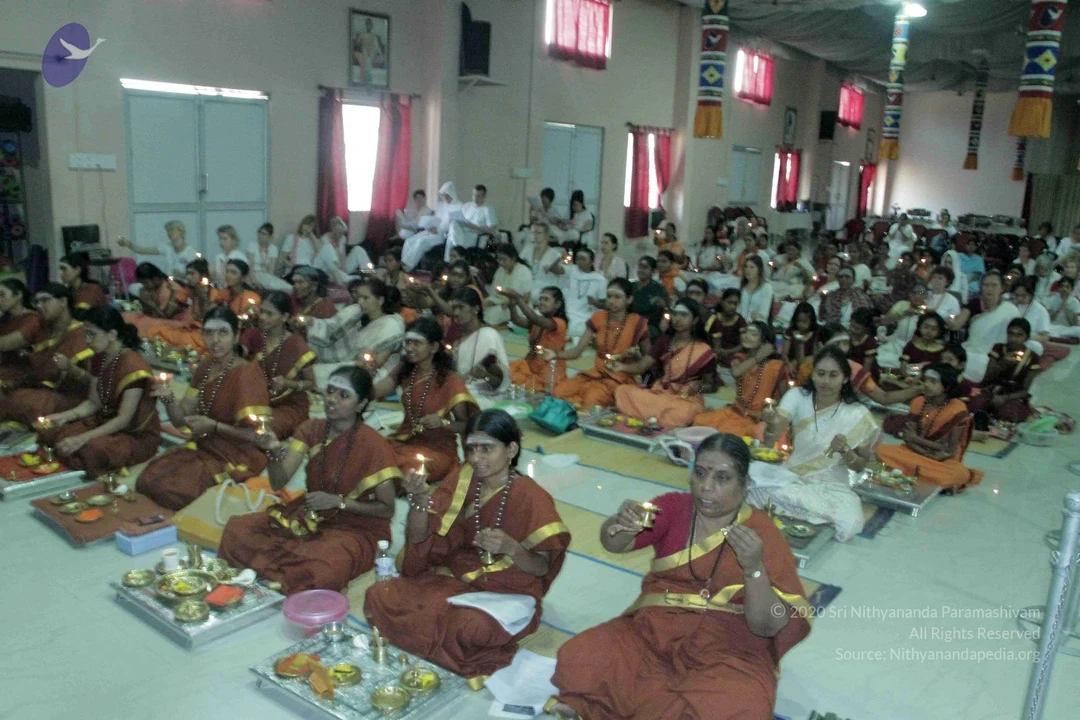
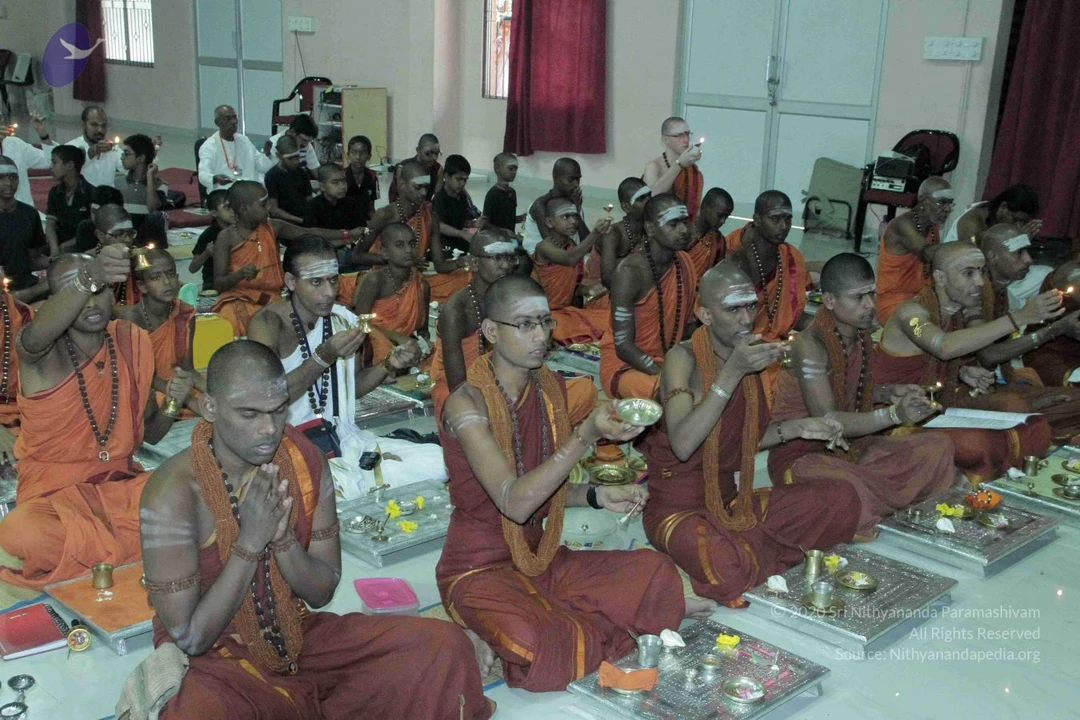
Blessing During Swasthi Mantra

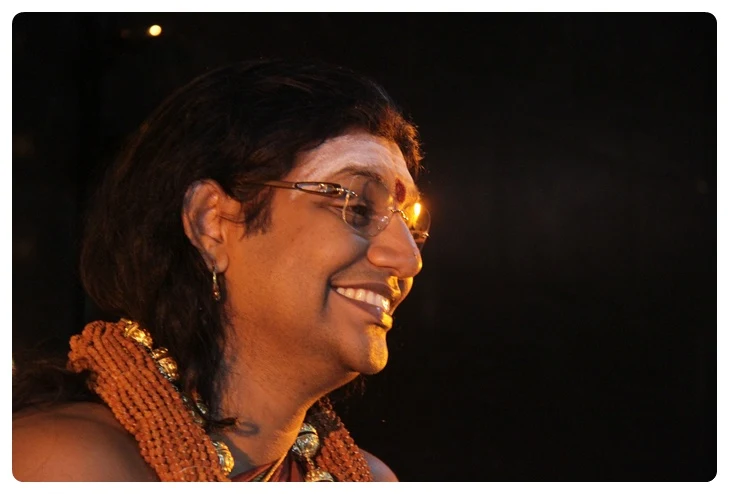
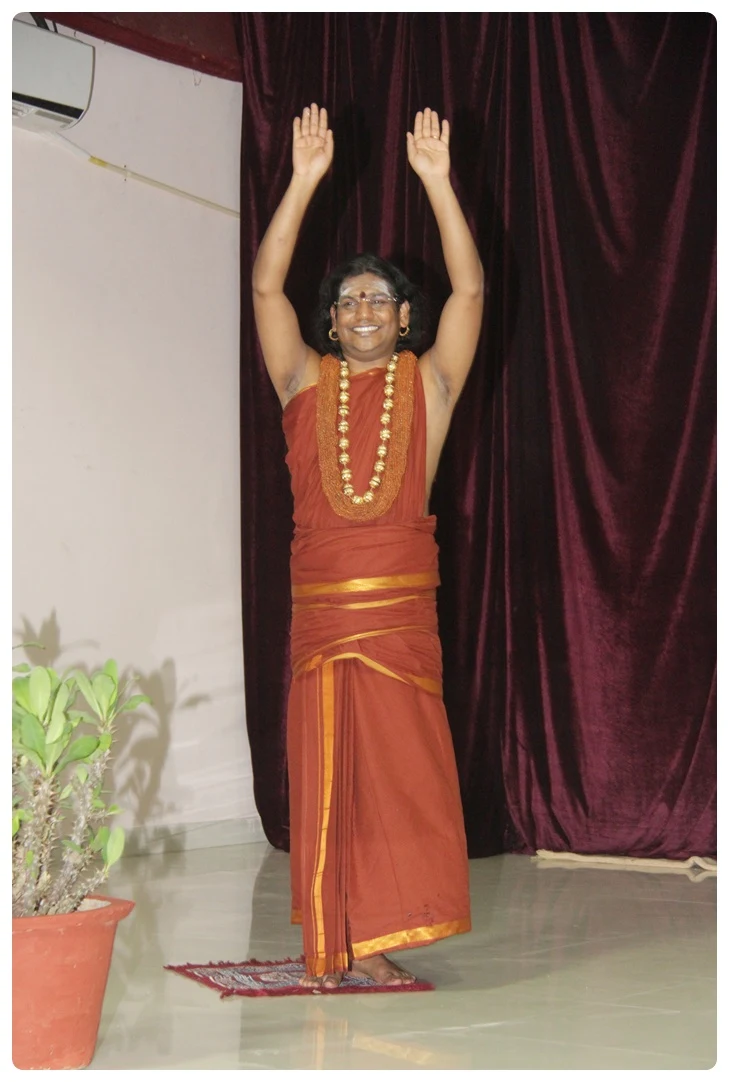
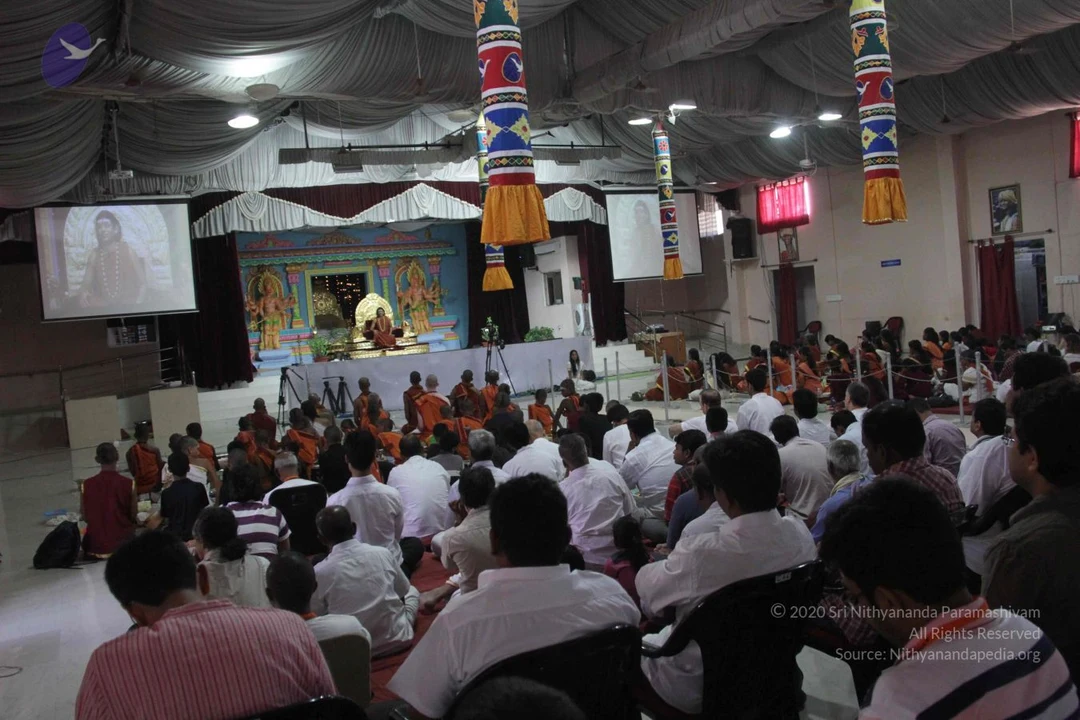
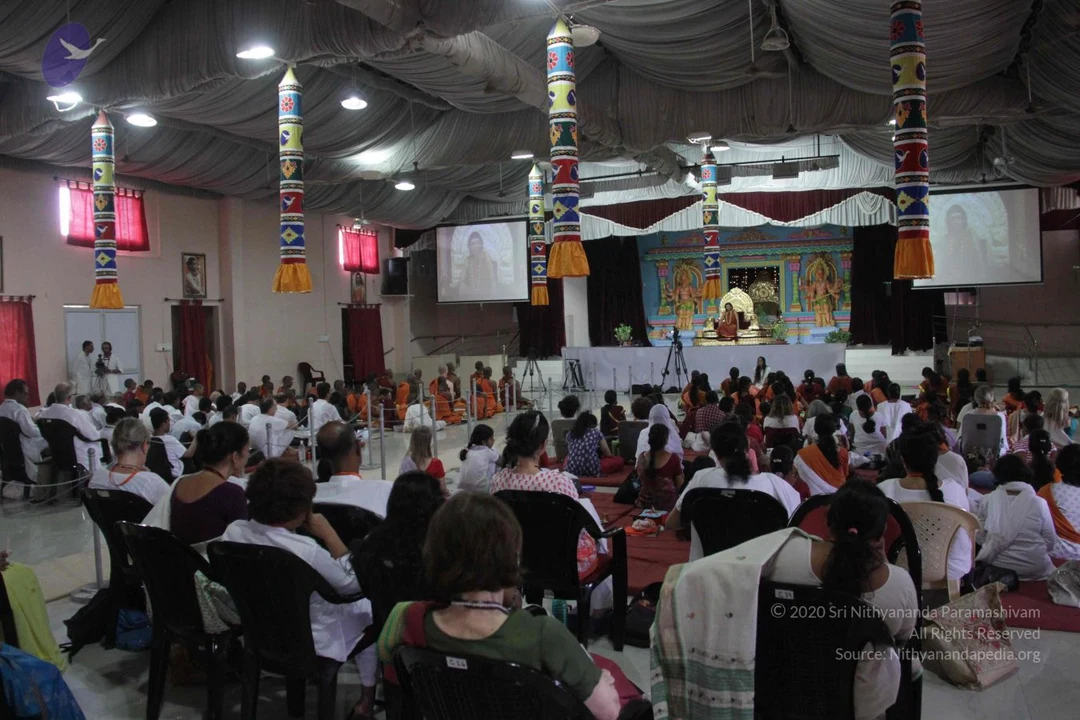
Morning Satsang

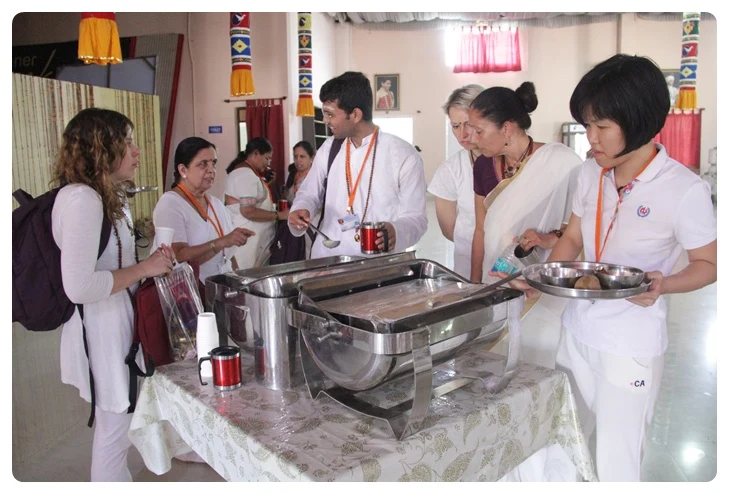
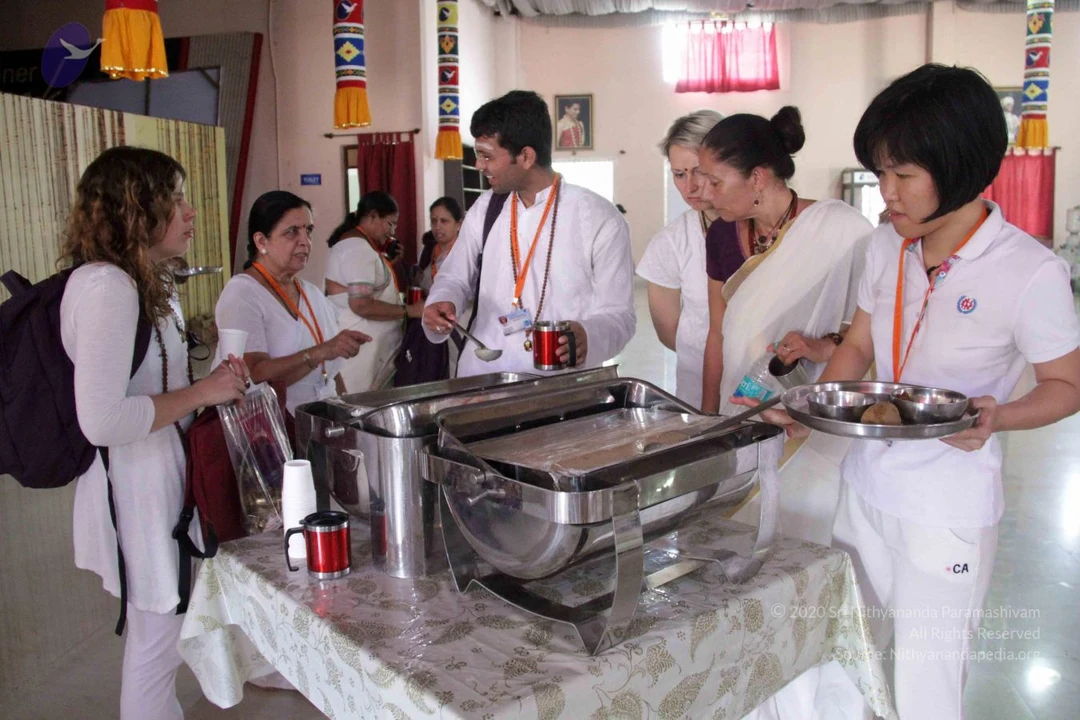
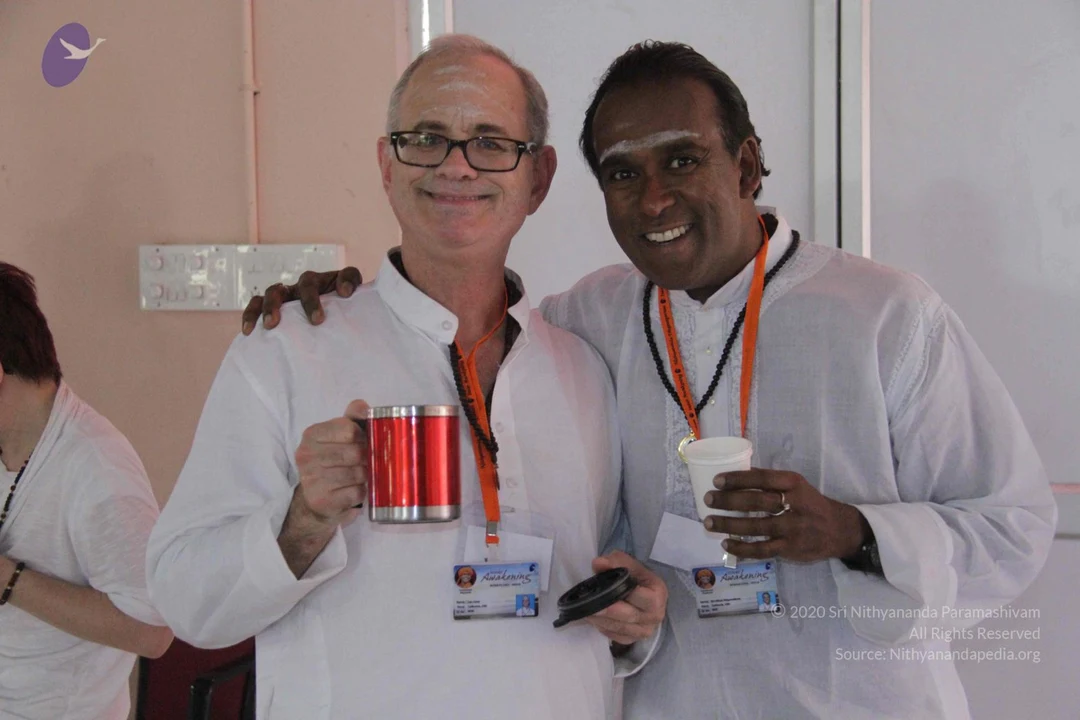
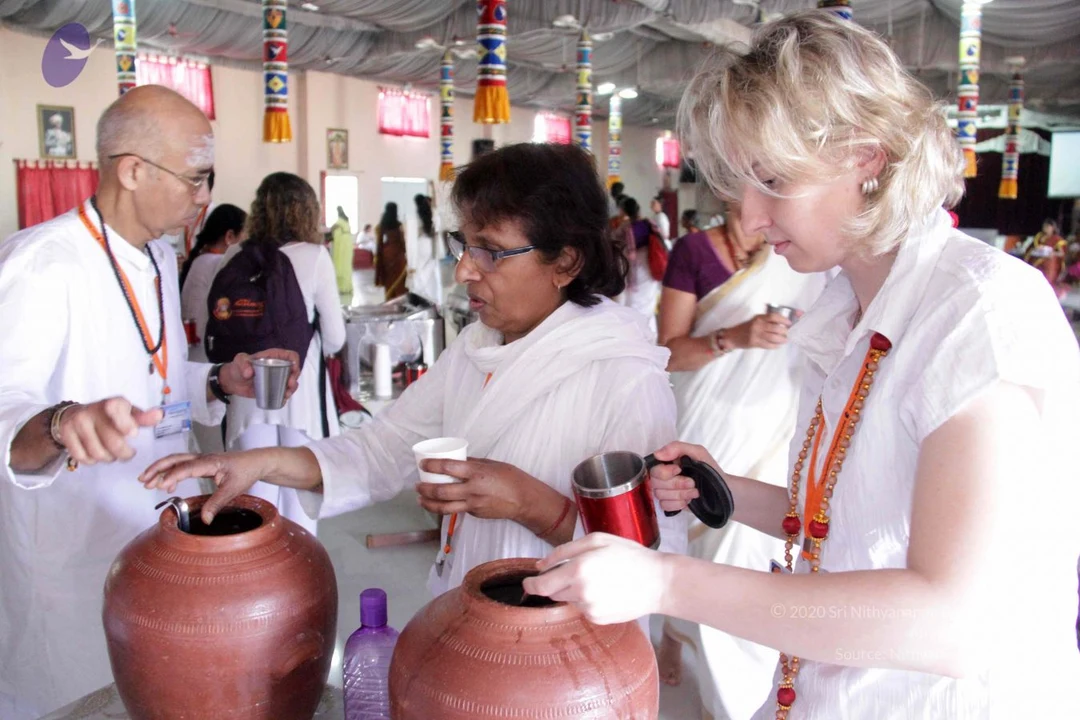
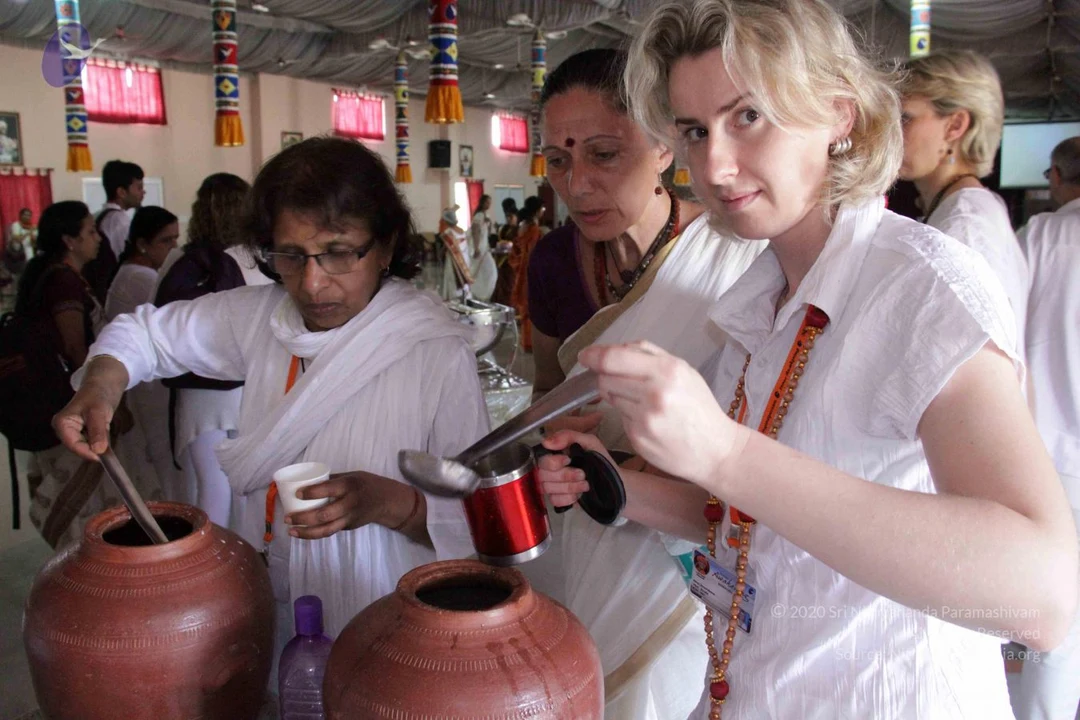
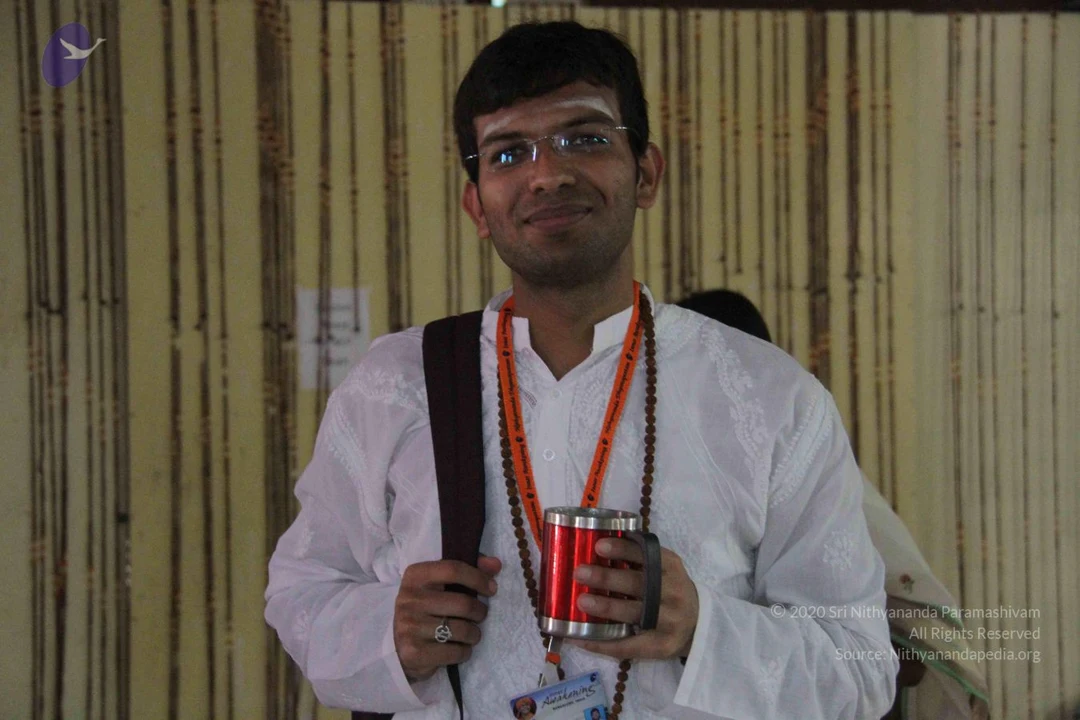
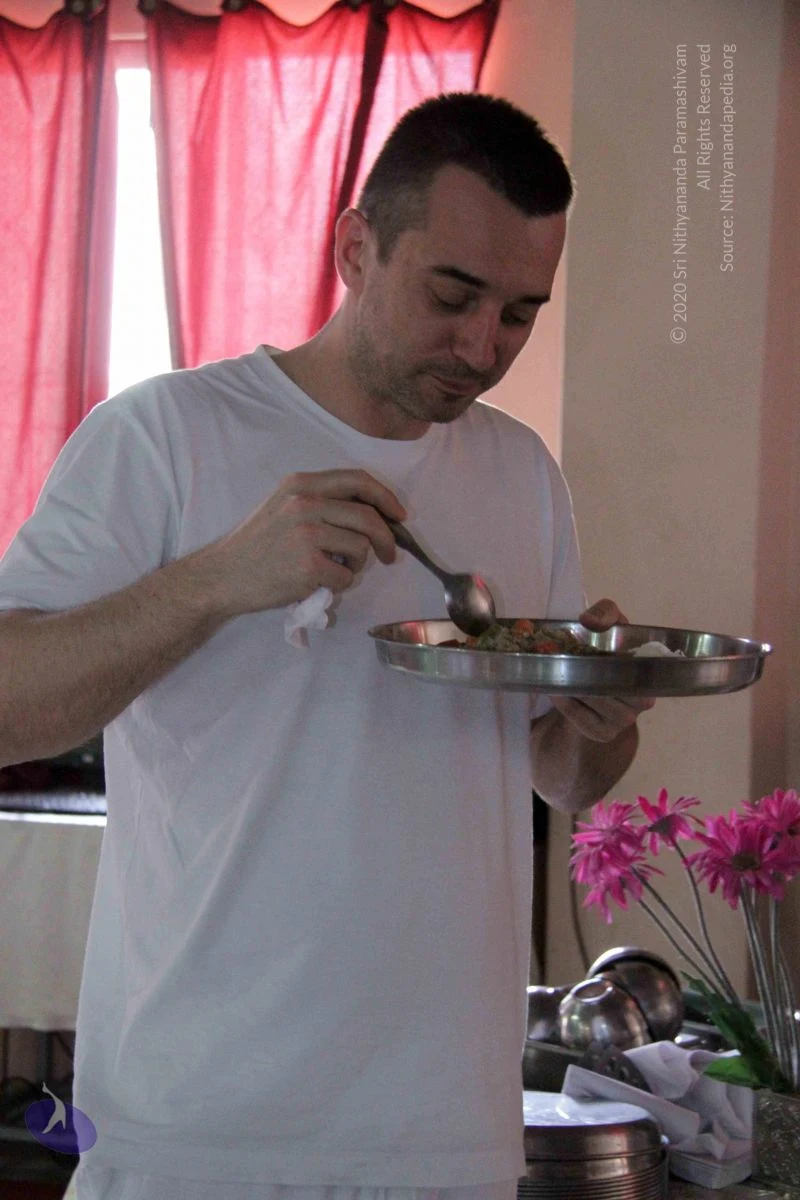
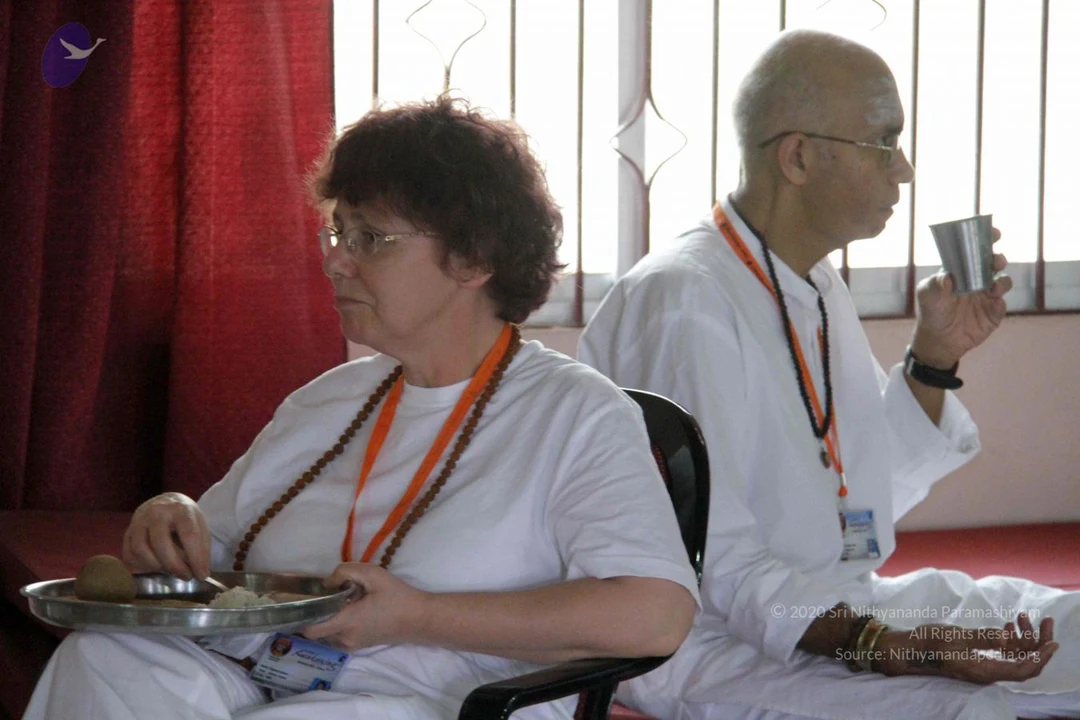
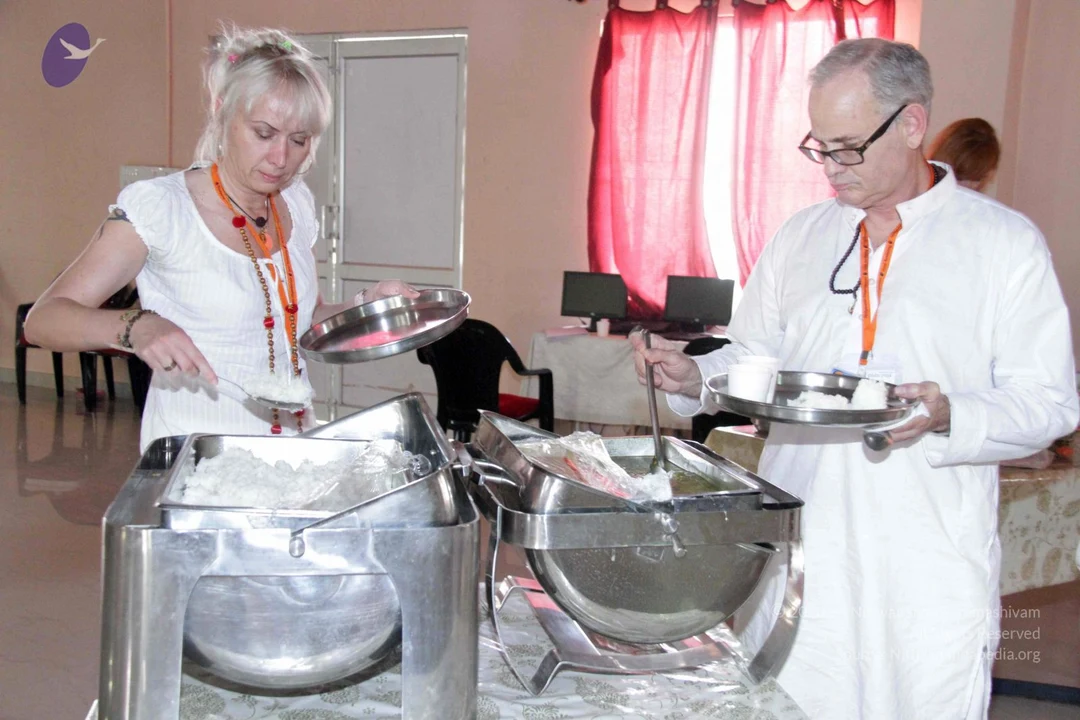
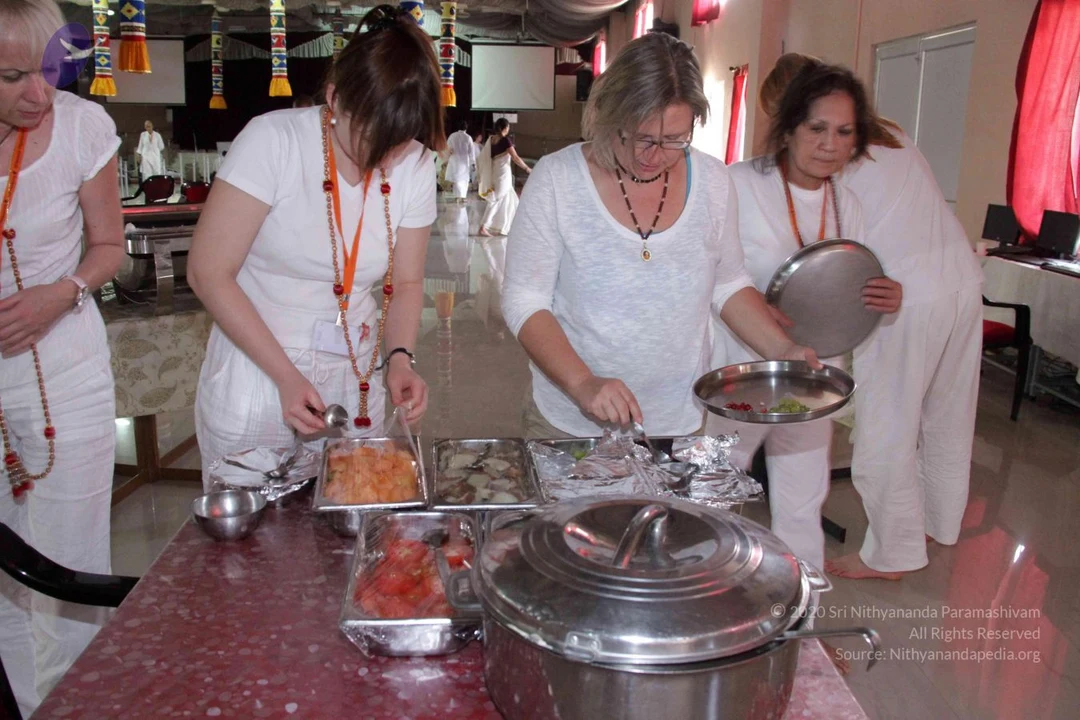
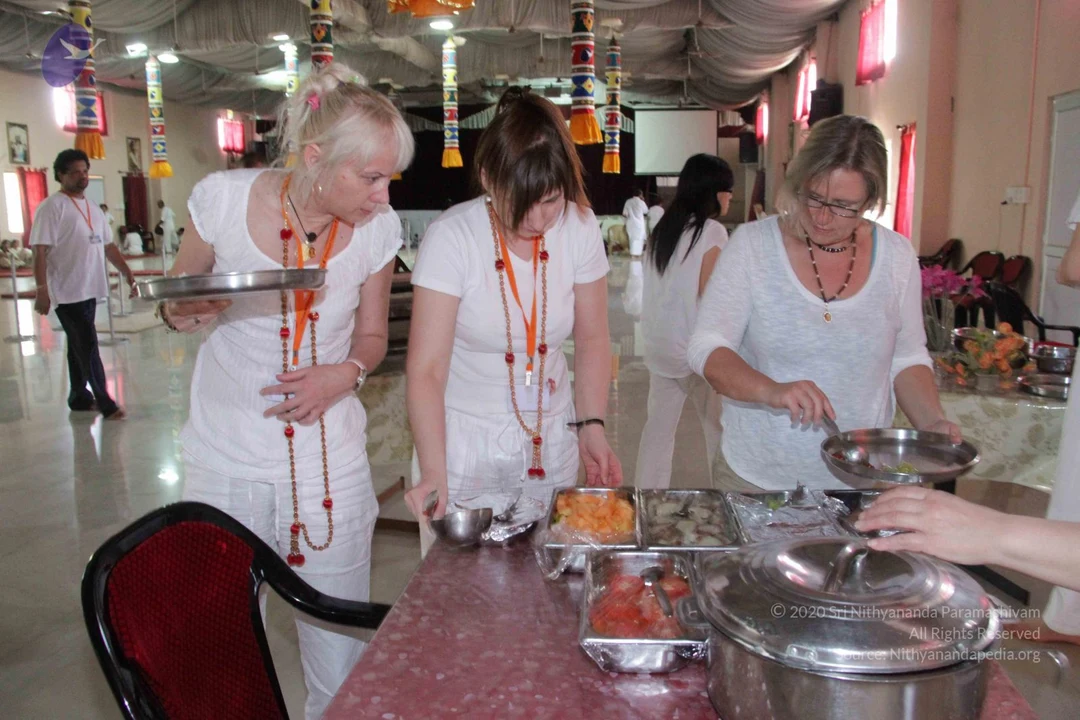
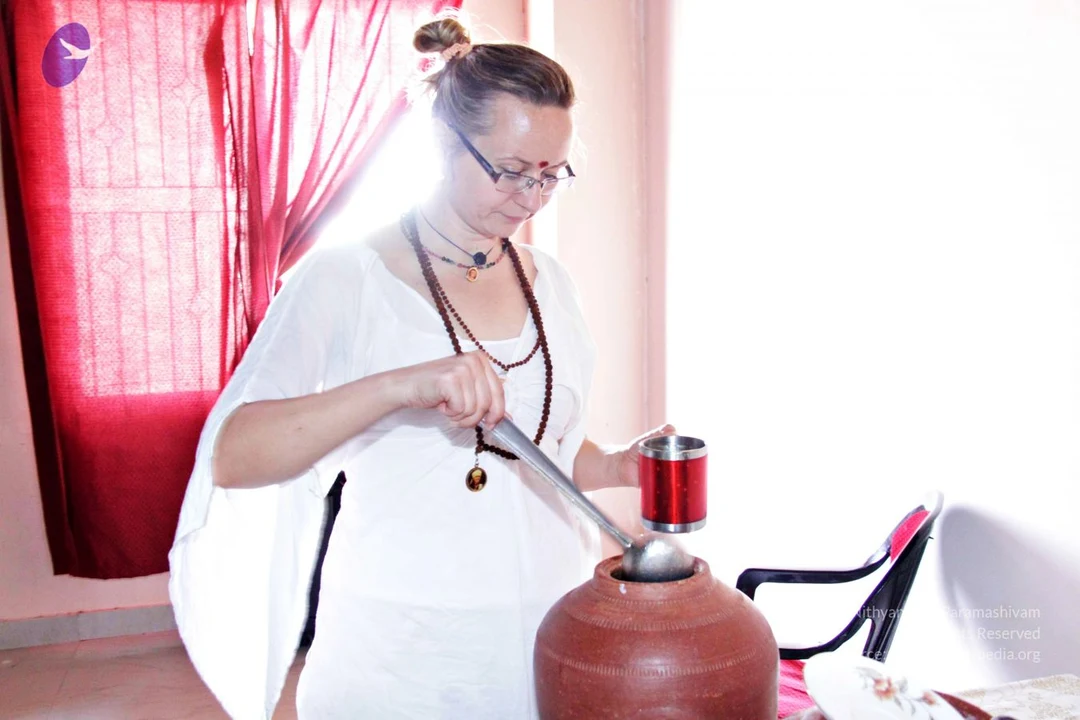
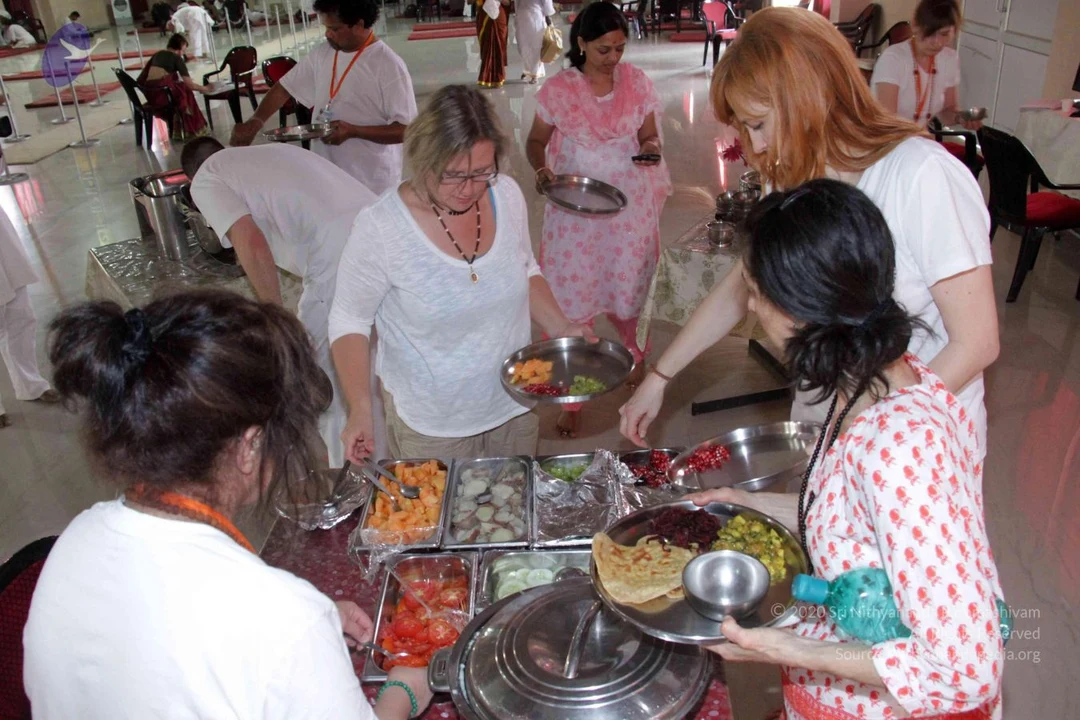
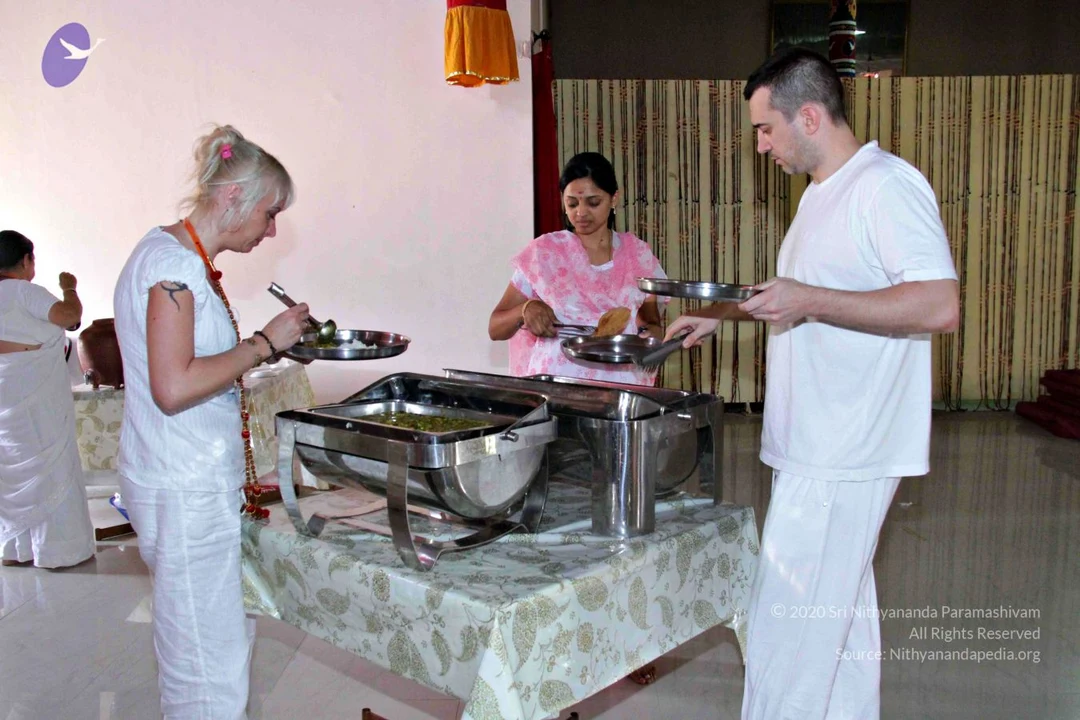
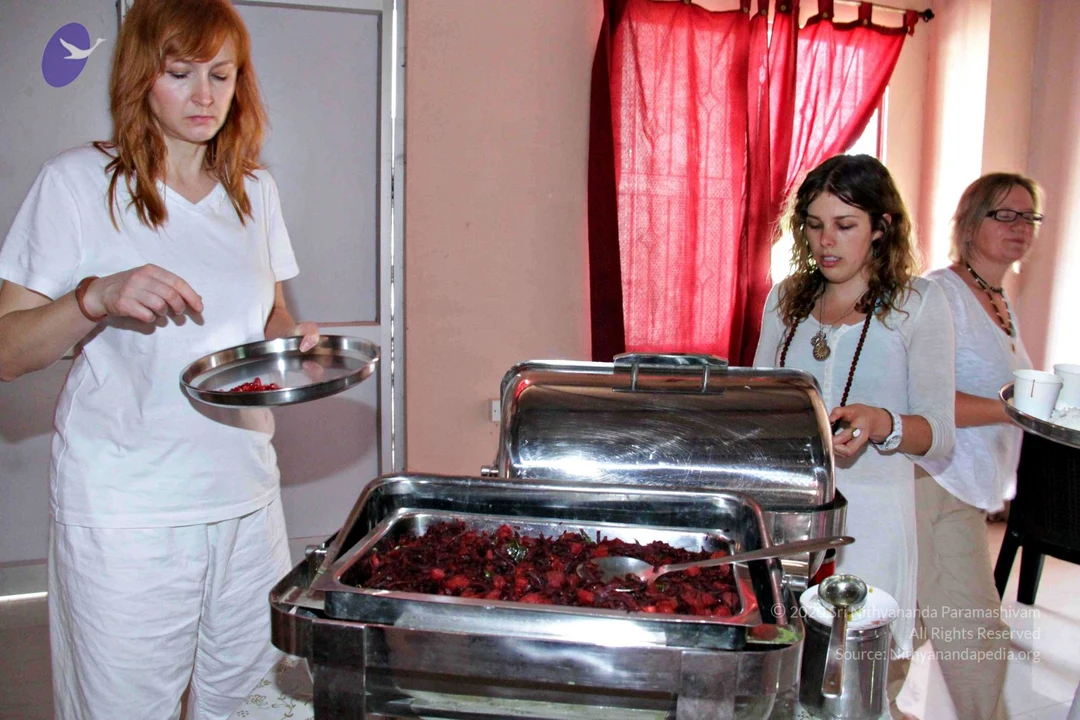
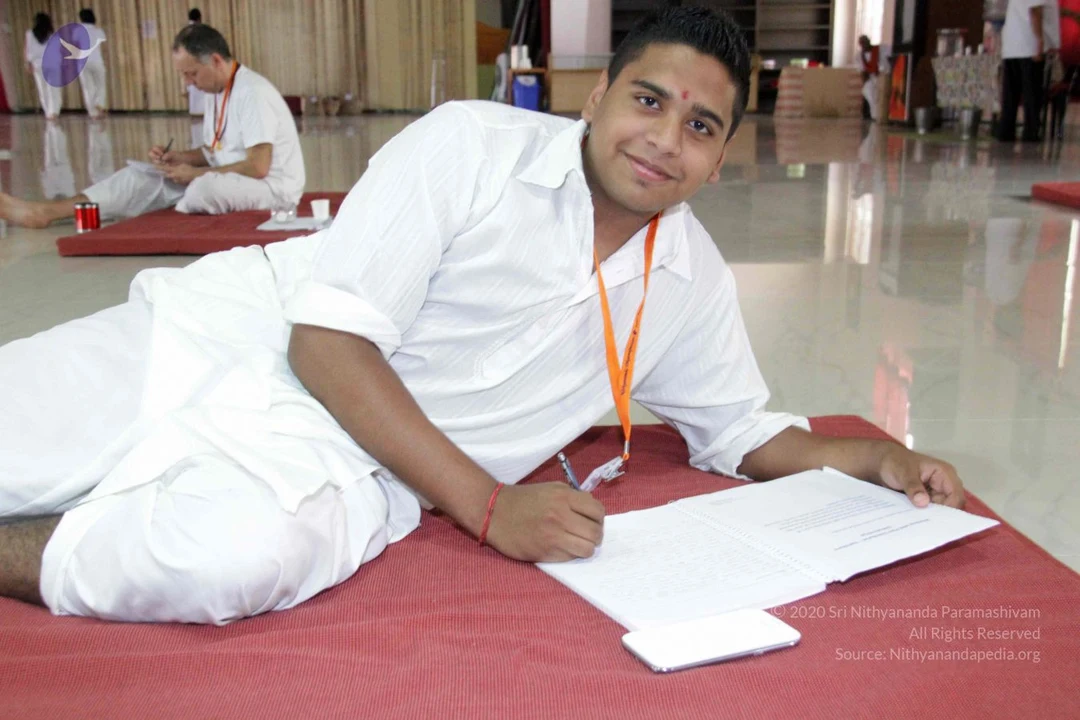
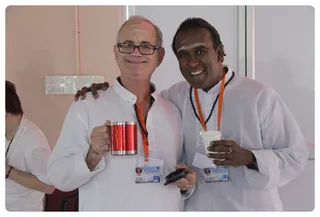
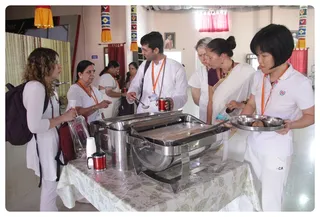
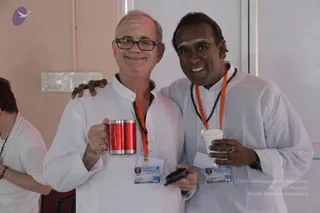
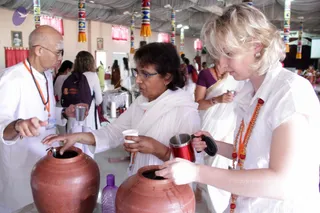
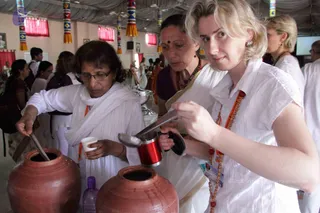
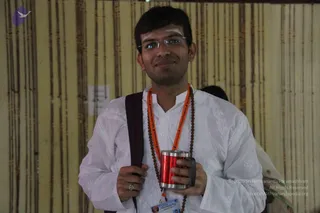
Inner Awakening Particpants enjoying Breakfast

Sakshi Pramana:

Sharing from San Jose- MaduraiTemple 

Tags:

Paramahamsa Nithyananda. relationship, success, integrity, solution, authenticity, disease, confidence, conscious, conflict, permanent, long-term

Photos Of The Day:

Yoga

Temple-Swamiji

Pada-Puja

Aarati

Nithya-Satsang

IA-Darshan

SarvaDarshan

IA-Breakfast

IA-Session

Photos from this day

View all 223 photos

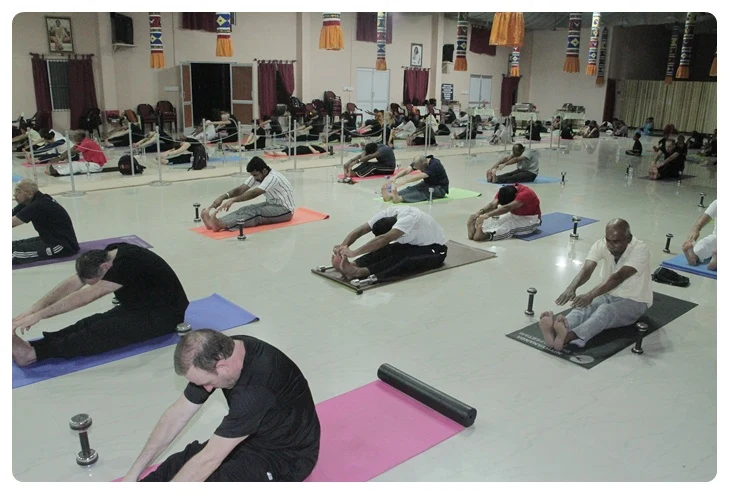
Morning Yoga by Inner Awakening Participants
2 photosSource gallery
A large hall with a polished white floor and a draped grey fabric ceiling, decorated with tall painted pillars in red, yellow and blue geometric patterns. Many people sit on mats doing forward-bending seated stretches, reaching toward their feet. In the foreground a man in a black t-shirt and dark shorts sits on a pink mat, and another in black sits on a blue mat. Others, some in white clothing, stretch in rows along metal stands. Curtains and a wall-mounted screen line the back of the room. No specific ritual, deity or dais is visible.A photograph of a large indoor hall with a polished white floor where many people are doing seated forward-bend stretches on coloured yoga mats, mostly purple, pink, orange, blue and black. Men in black, white and red t-shirts and light trousers reach toward their feet, some with dumbbells placed beside them. Rows of white folding chairs and maroon curtains line the walls, with decorative banners hanging from the ceiling. The scene appears to be a group yoga or exercise session. No person is clearly identifiable as a person.

Temple Glimpses

8 photosSource gallery
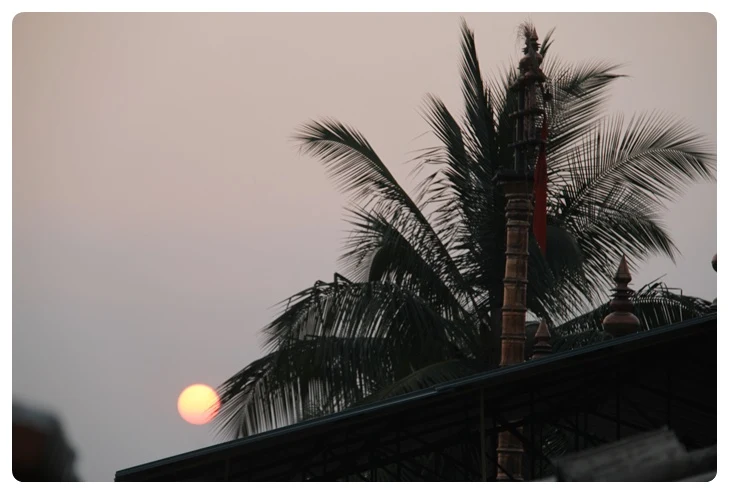
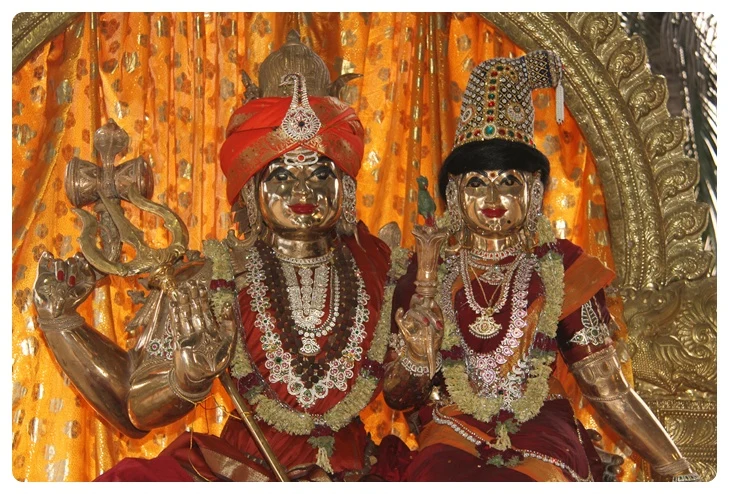
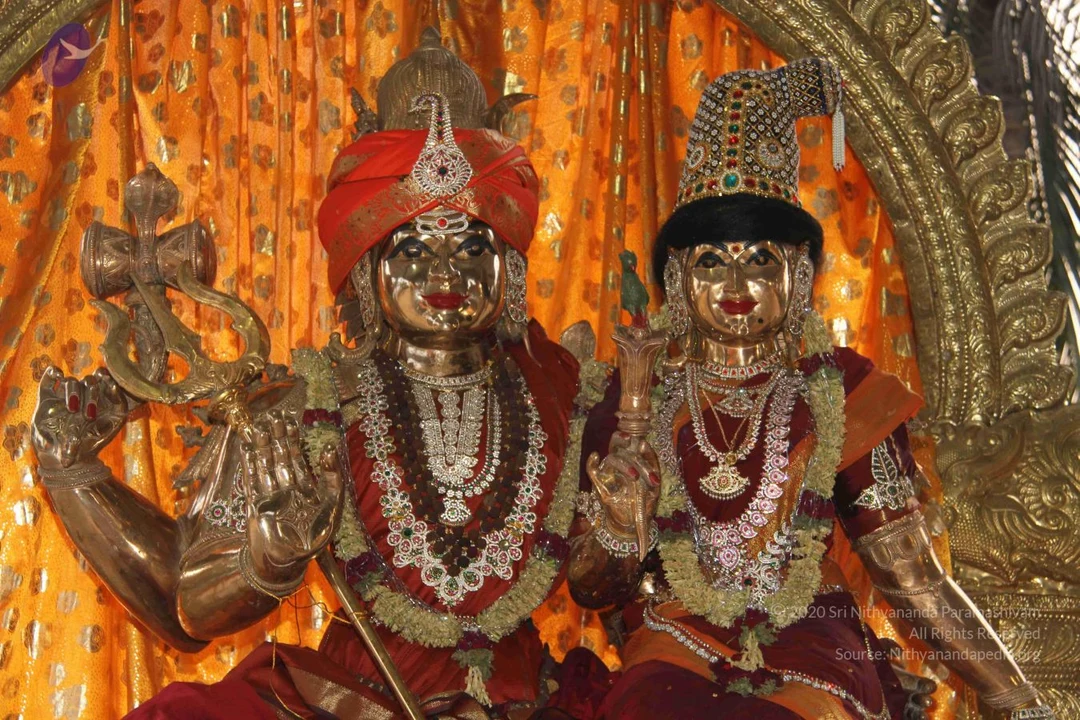
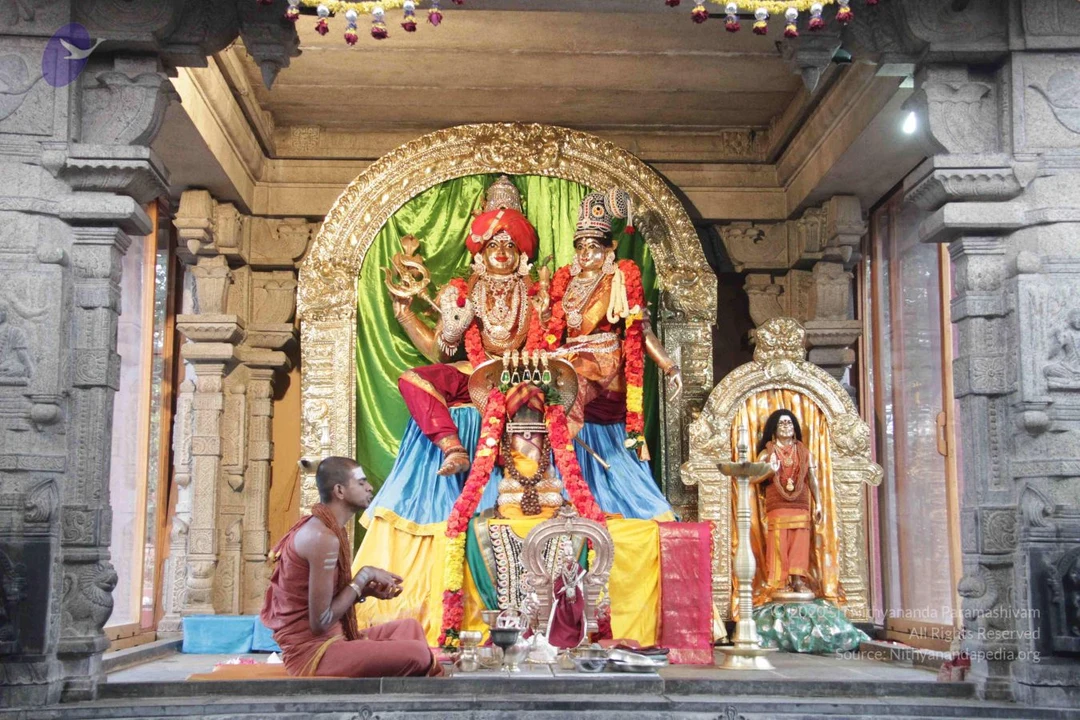
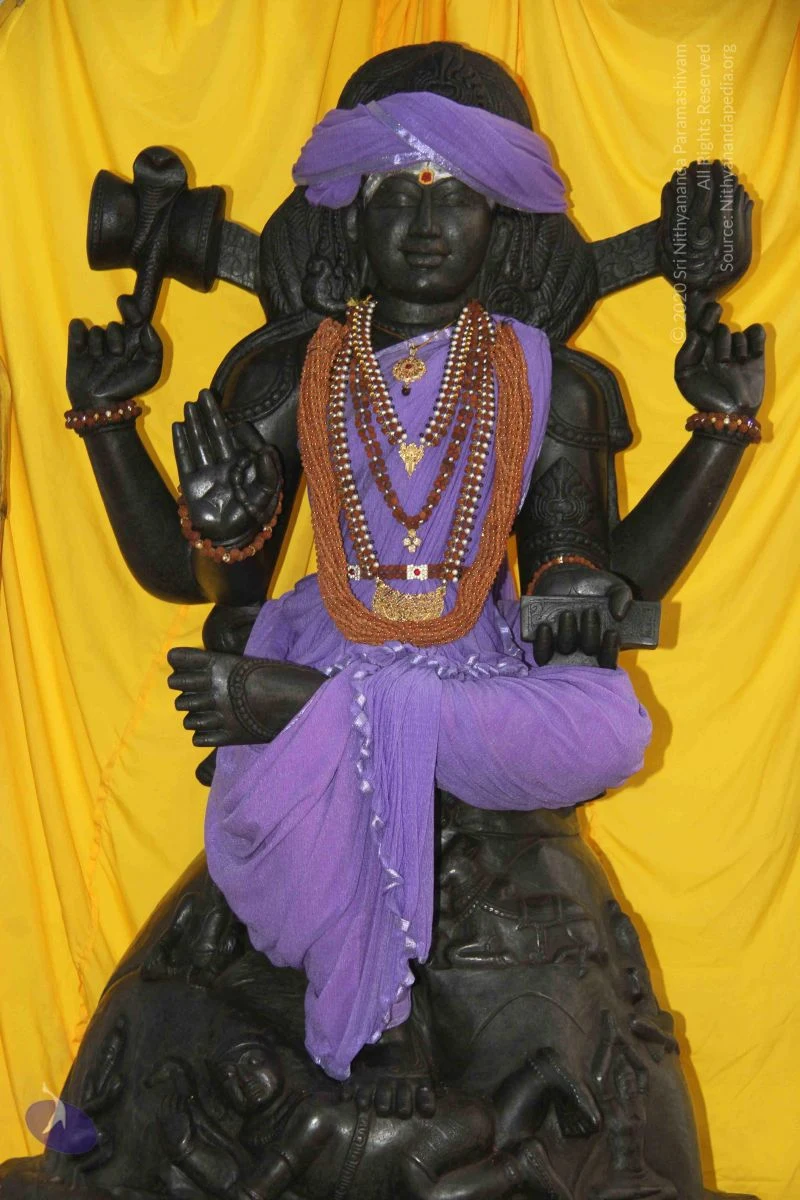
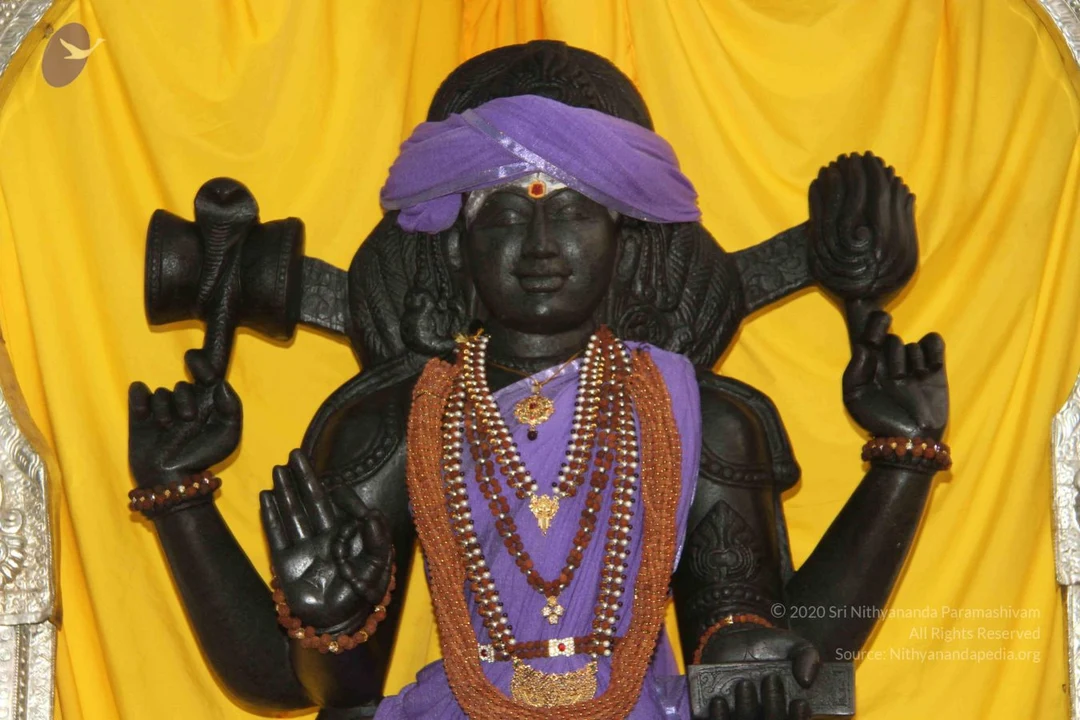
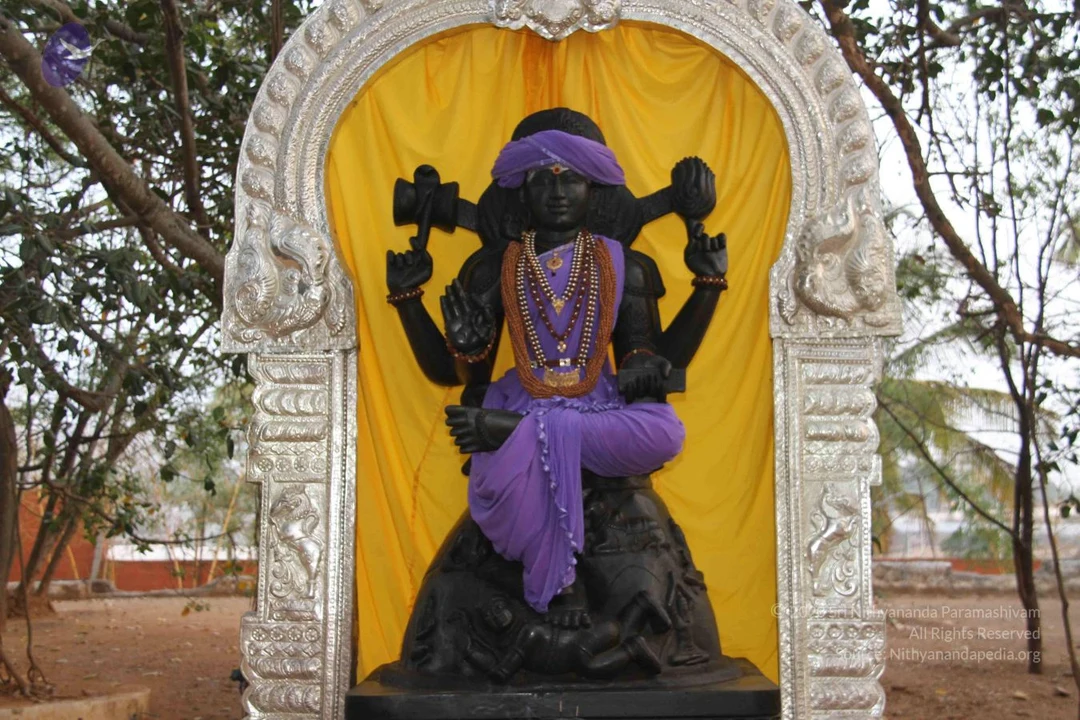
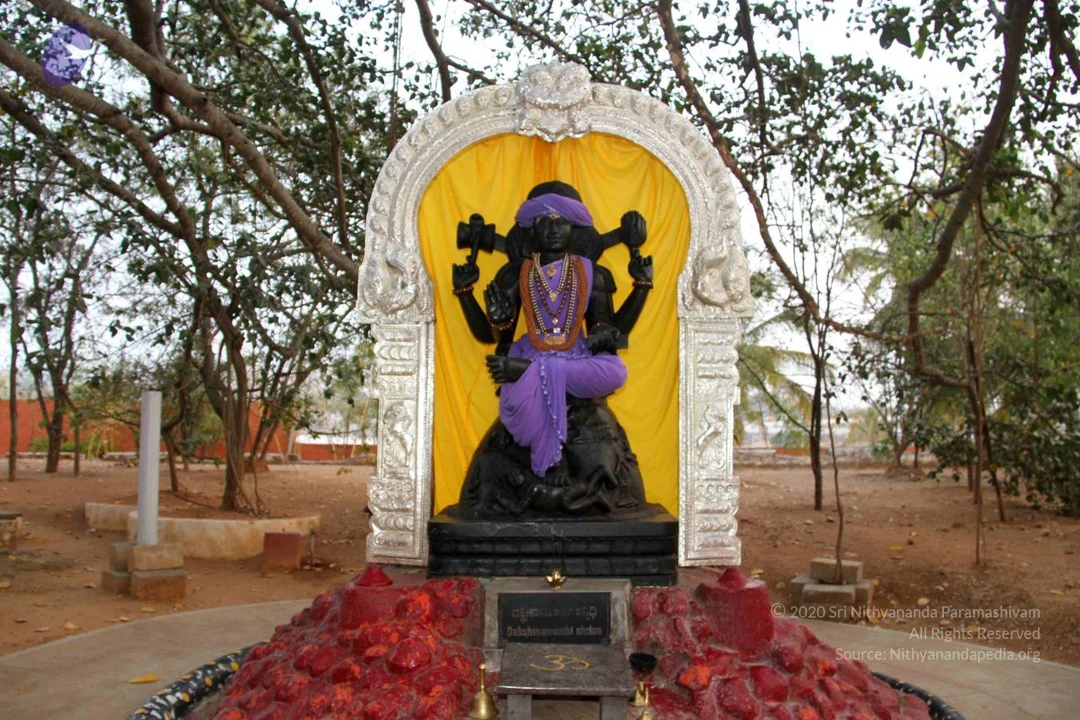
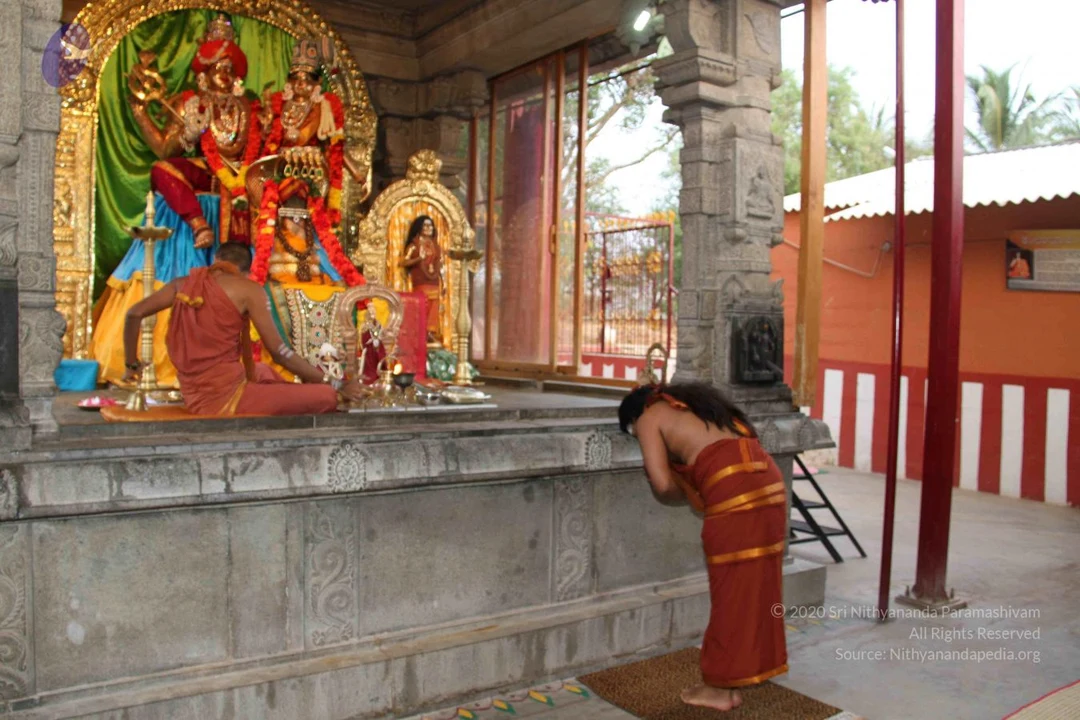
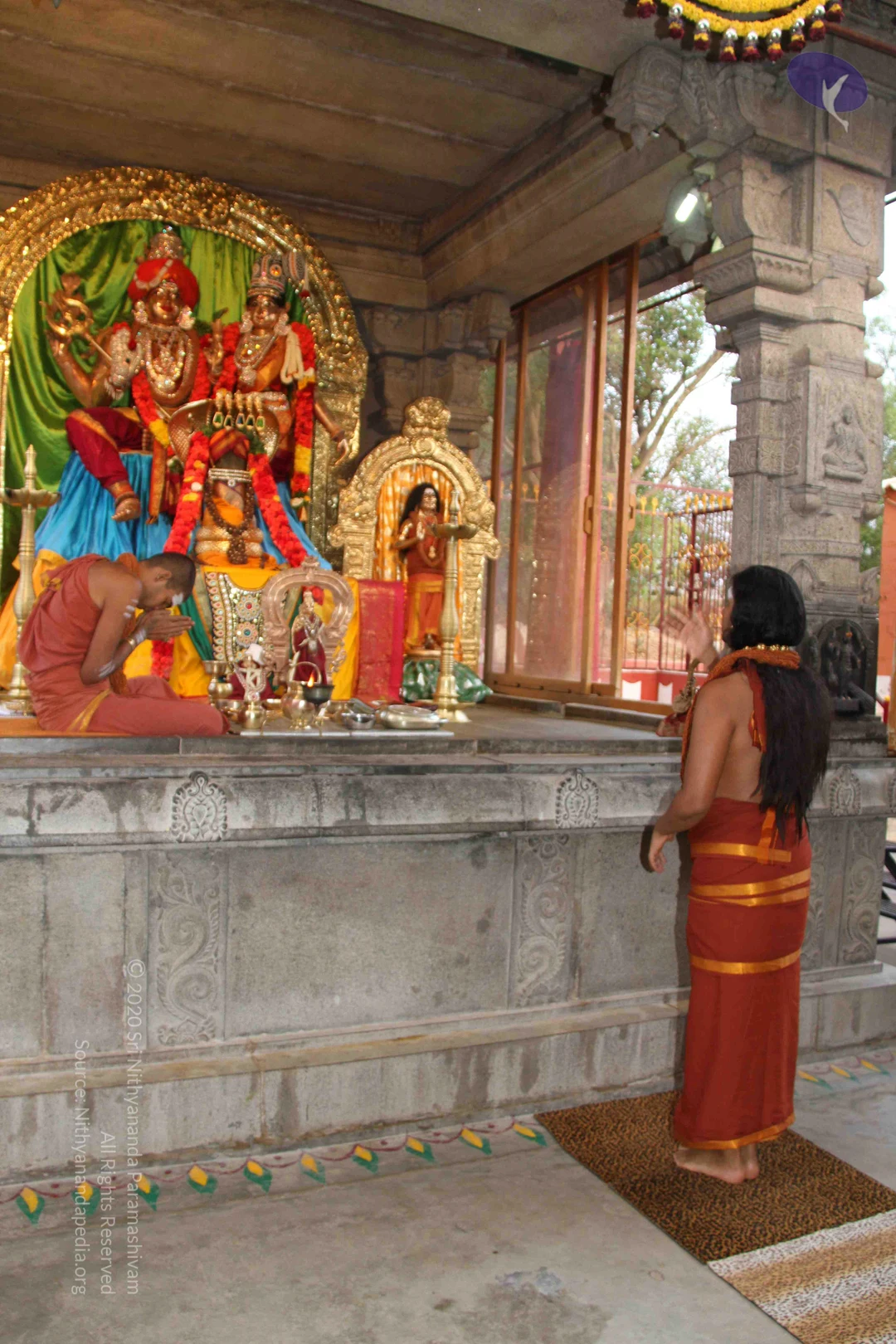
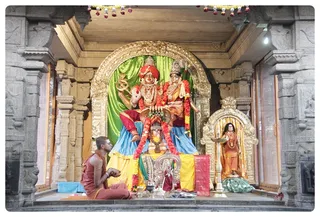
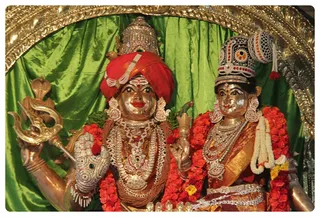
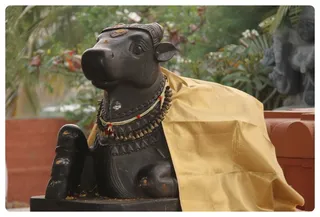
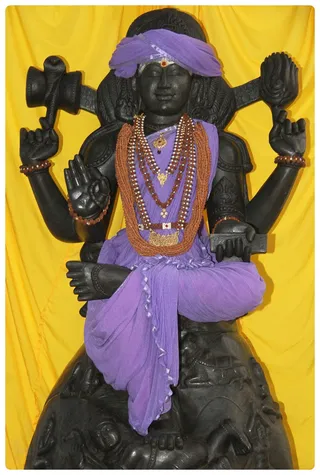
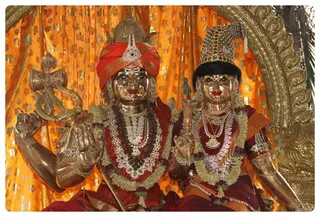
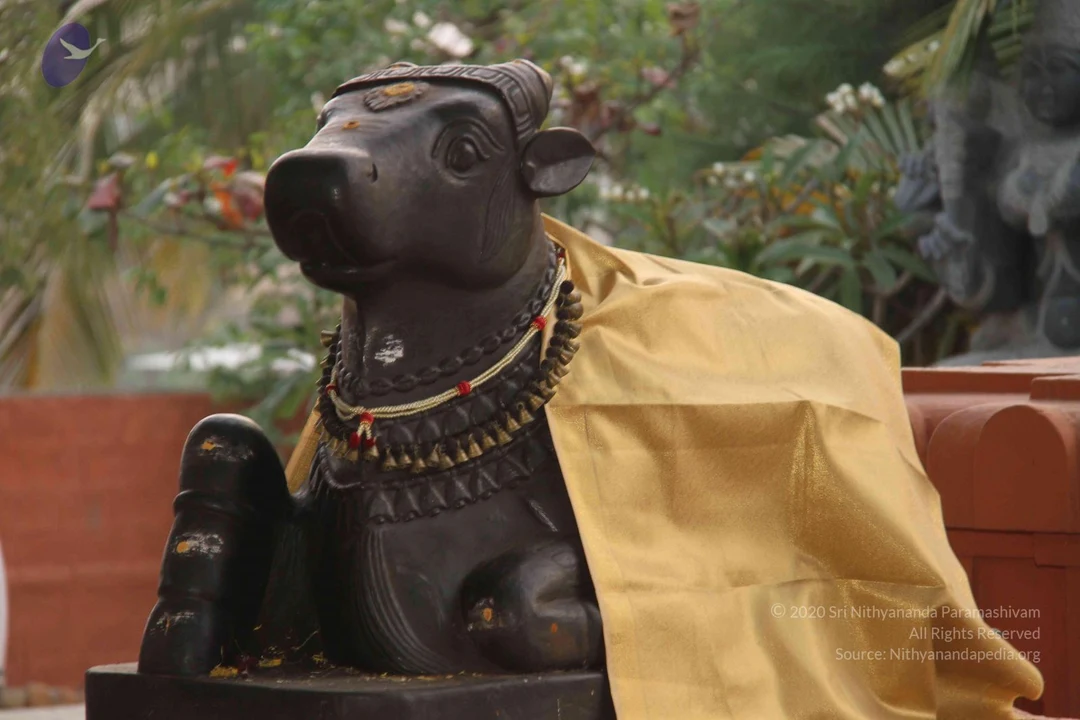
Dusk photograph of a temple roof edge with a tall wooden flagstaff, carved with rings and a finial, rising beside a coconut palm. A red flag or cloth hangs from the pole. A pale orange sun sits low on the left over a hazy pinkish sky. Ornamental finials decorate the dark roofline. No people are visible.A photograph inside a stone temple shrine. Two large deity murtis sit on a yellow-and-blue draped platform before a gilded arch and green backdrop, one wearing a red crown and holding a drum-like instrument, the other with a tall crown and garlands of red flowers. A small standing figure in orange garments with a garland stands to the right beside an ornate lamp stand. A shaven-headed priest in a red-brown dhoti sits cross-legged at lower left with his hands together, beside brass puja vessels and a kalasha. Hanging marigold and flower strings decorate the ceiling. The priest is not clearly recognizable as a person.A photograph of two ornate metal murti statues of a deity couple, gilded and decorated, standing before a green draped cloth with a gold-framed arch. The left figure wears a red and gold turban, a trident in one hand, with heavy silver necklaces and red rose garlands. The right figure wears a decorated headdress with red tassel, silver jewellery, a gold-orange sari and a white flower garland. Fresh rose garlands drape both figures. No physical people are visible.A dark stone Nandi bull statue sits on a black pedestal, draped with a shimmering gold cloth. It wears a beaded necklace with red tassels and a pendant, with a vermilion mark on its forehead. Lush green foliage and flowering plants fill the background, with a grey stone figure partly visible at the right edge. No people are visible in the scene.A large black stone sculpture of a four-armed deity seated in a meditative posture on a carved pedestal, dressed in a lavender draped cloth wrapped as a turban and garment. Multiple strands of beads, including rudraksha, pearl and orange seed malas, hang over the chest with a gold pendant and gold ornament. Its hands hold a trident-like staff, a drum and other ritual objects, against a bright yellow backdrop. The figure is a statue, not a living person, and shows a red tilak on the forehead.Two metallic deity murtis seated side by side against a gold and orange draped backdrop with ornate gilded framing. The figure on the left, with a red turban and a trident held in one raised hand, wears a red garment and layered white and jewelled necklaces with a green-and-red garland. The figure on the right wears a jewelled conical crown and a red sari-style garment with a multi-strand necklace and garlands, holding a small object in one hand. Both have painted faces and are adorned with flower garlands. No physical people are visible.

Morning PadhaPuja

2 photosSource gallery
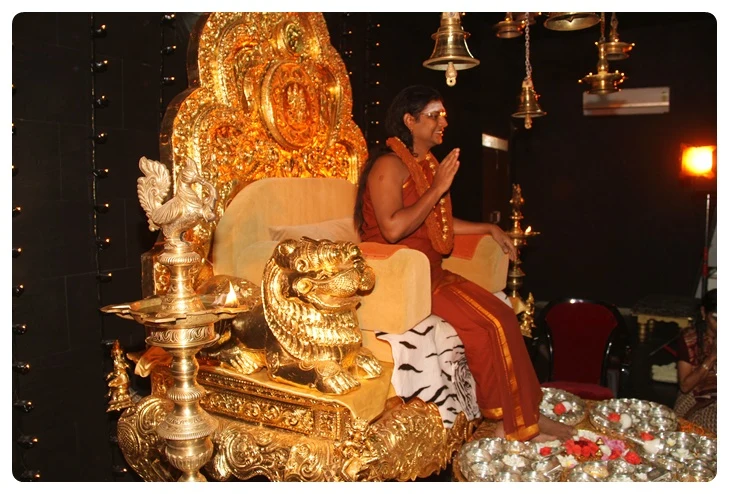
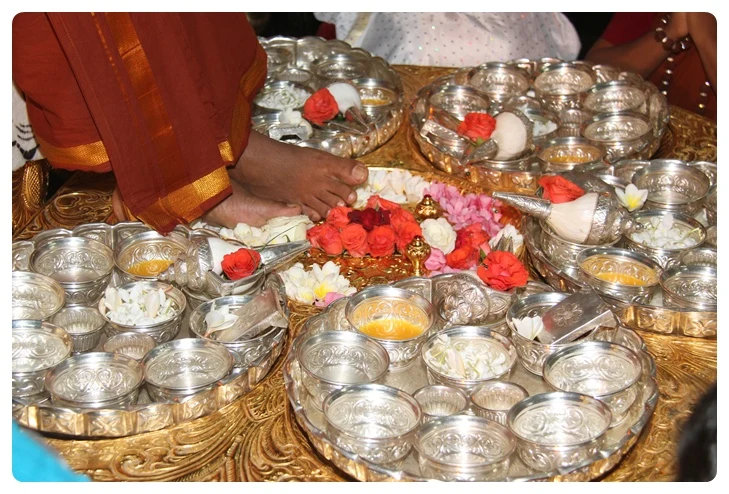
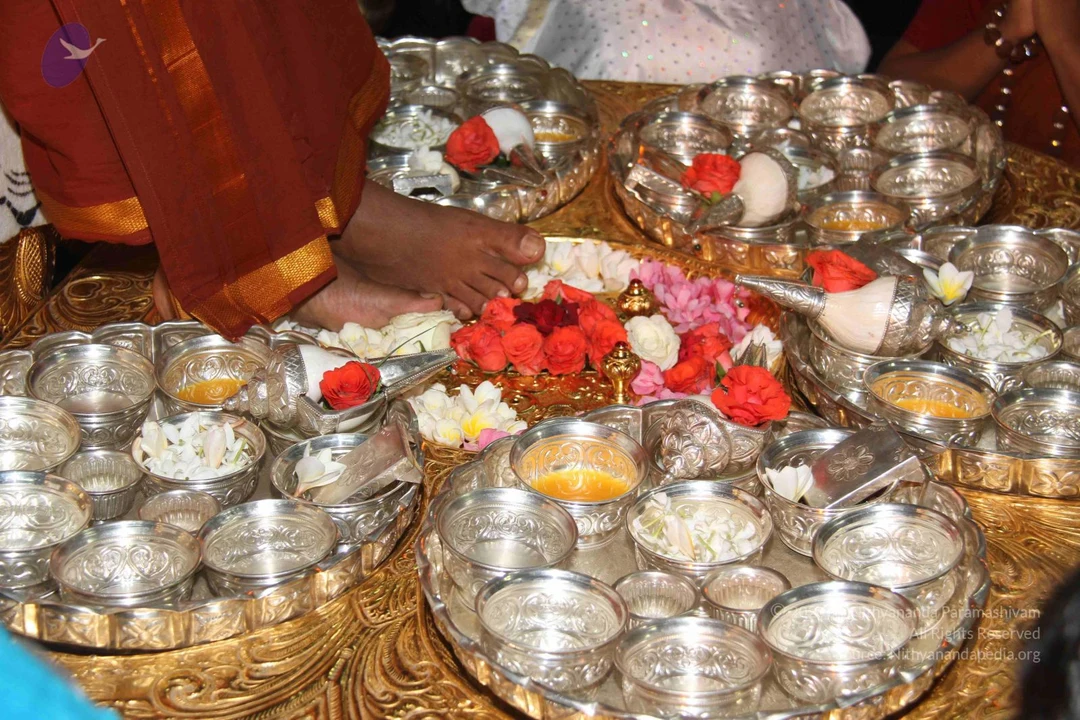
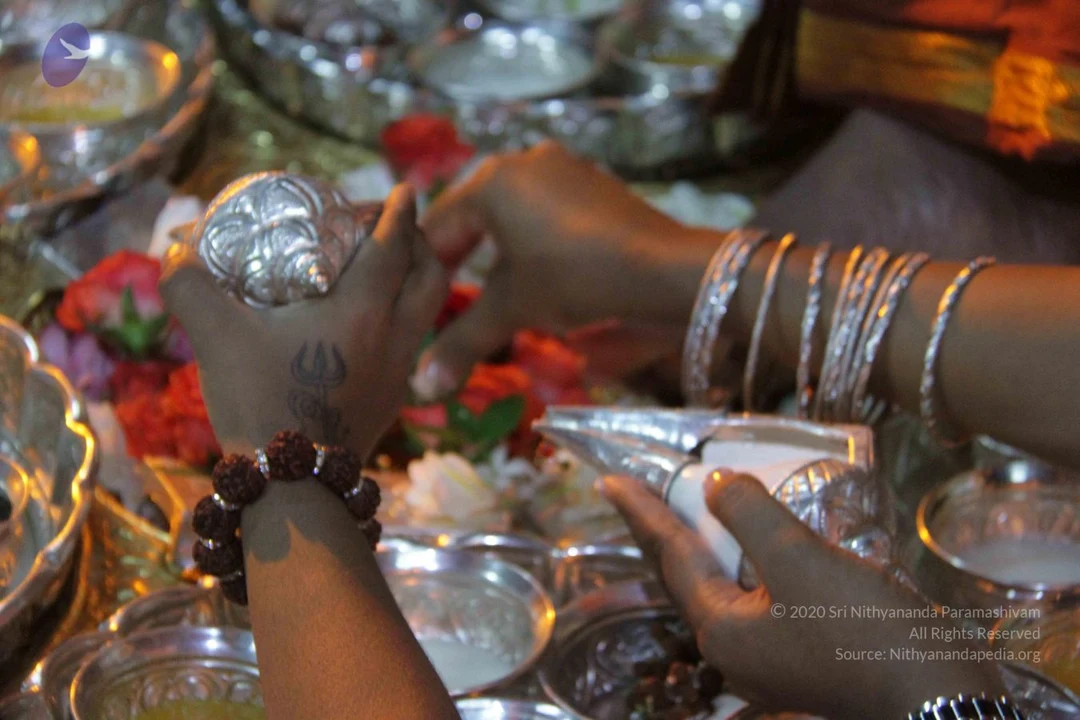
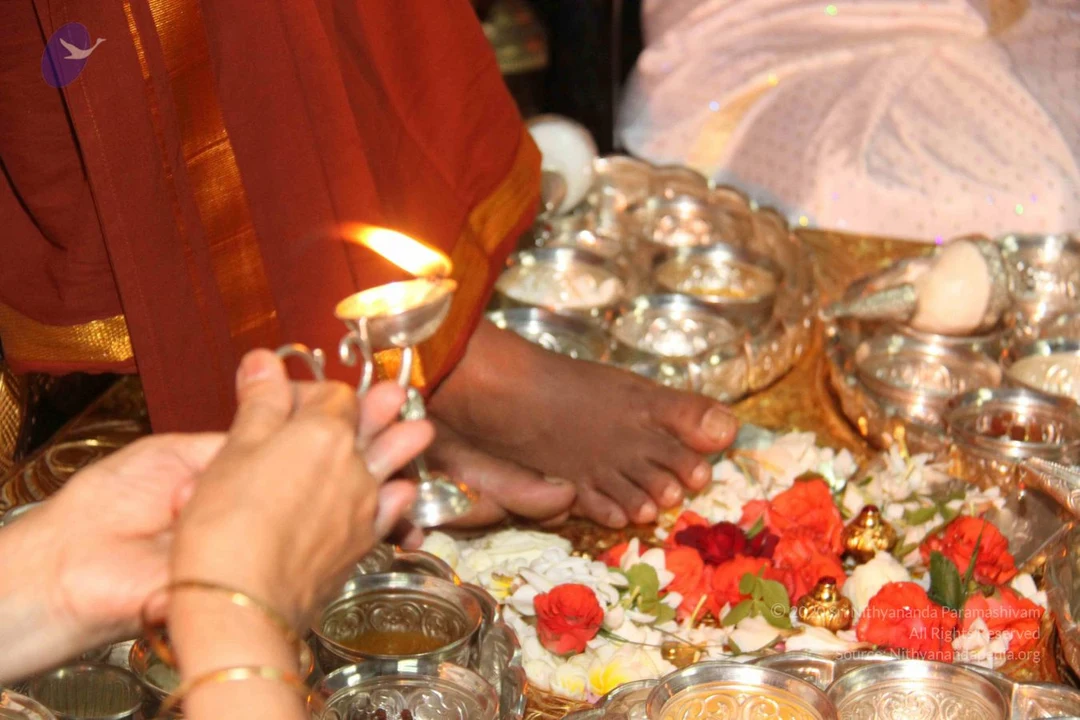
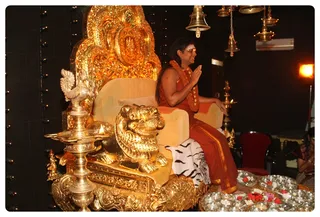
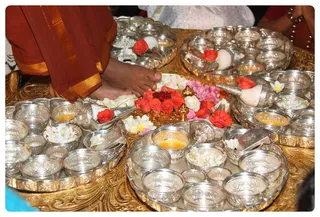
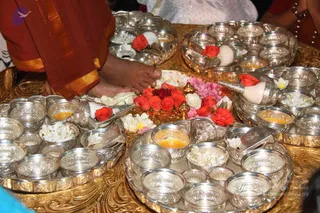
A seated figure on an ornate gilded throne with a carved lion-shaped armrest and a cushioned yellow seat, draped with a striped tiger-print cloth. The person wears an orange-red robe with a gold border and a garland of orange flowers, with palms pressed together in greeting. Brass oil lamps, hanging bells and a gold-framed carved backdrop surround the throne. Trays of rose petals and flowers sit on the floor in front, and a partly visible person in red and gold sits to the right. Ceremonial setting resembling a satsang or darshan. The figure matches the Swamiji (probable) cues of an orange robe, long hair and garland on a throne.A photograph of a padapuja-style offering. Bare feet rest on a golden tray in the upper centre, and the person's lower body wears a red-brown silk dhoti with gold borders. Around the feet are ornate silver bowls and plates filled with white flowers, red roses, pink petals, yellow turmeric paste, and white coconut halves, along with a small brass kalasha or lamp. Several other silver-rimmed thalis surround the central tray. No face is visible, and the photo shows only ritual items and bare feet. No one else's face or full figure is clearly visible.

Blessing During Swasthi Mantra

2 photosSource gallery
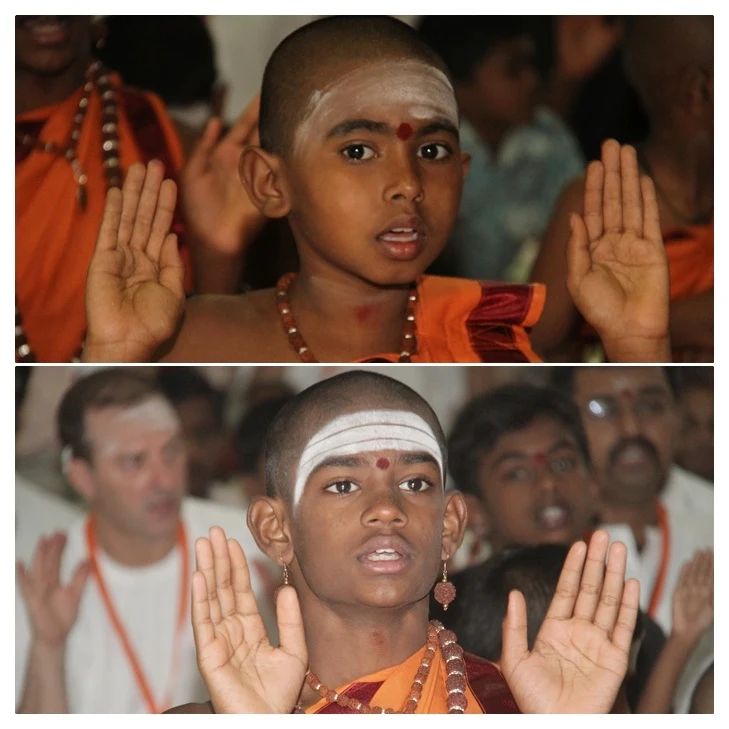
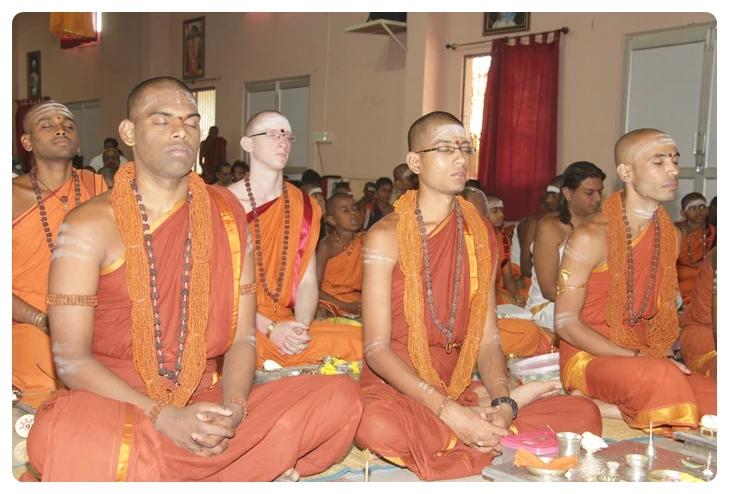
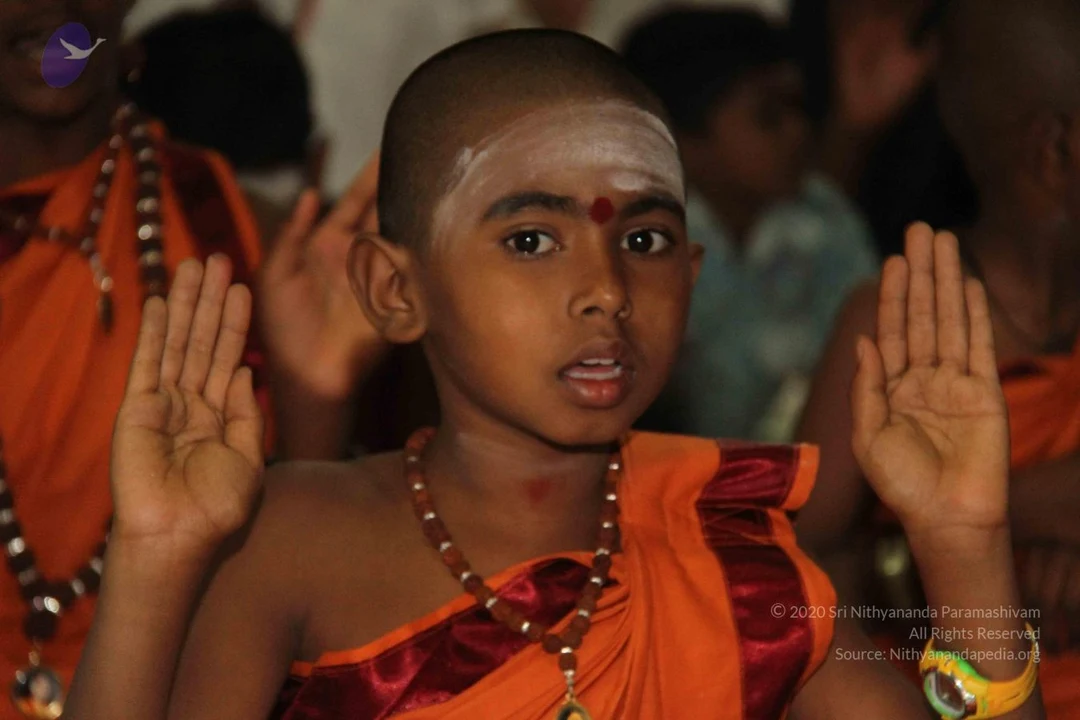
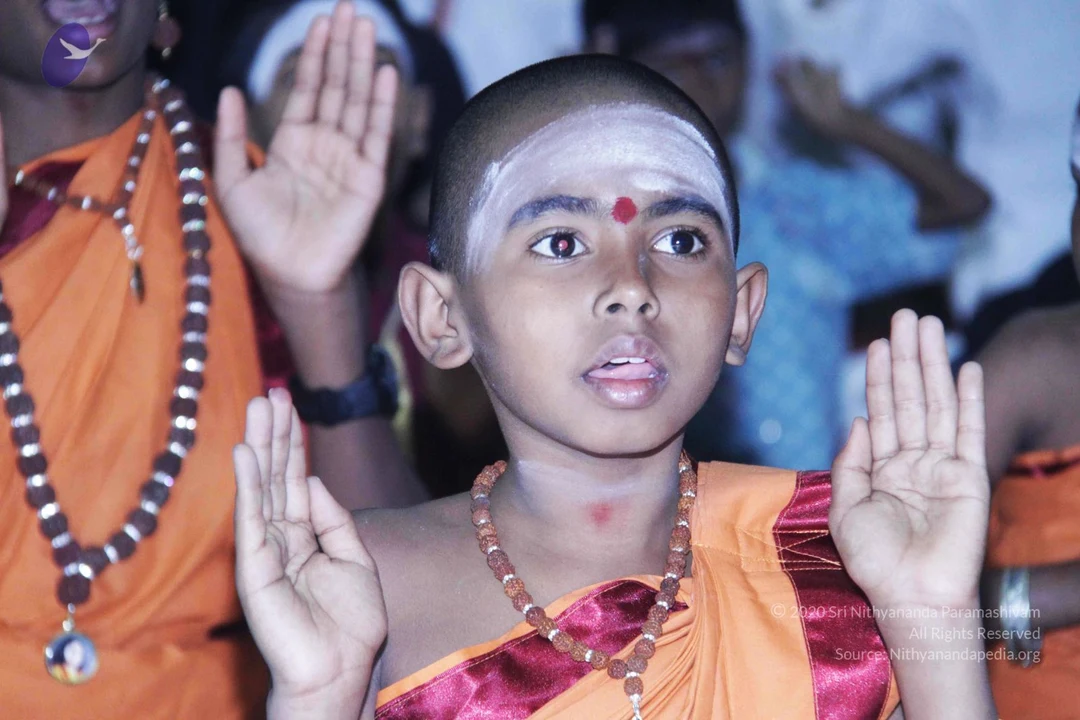
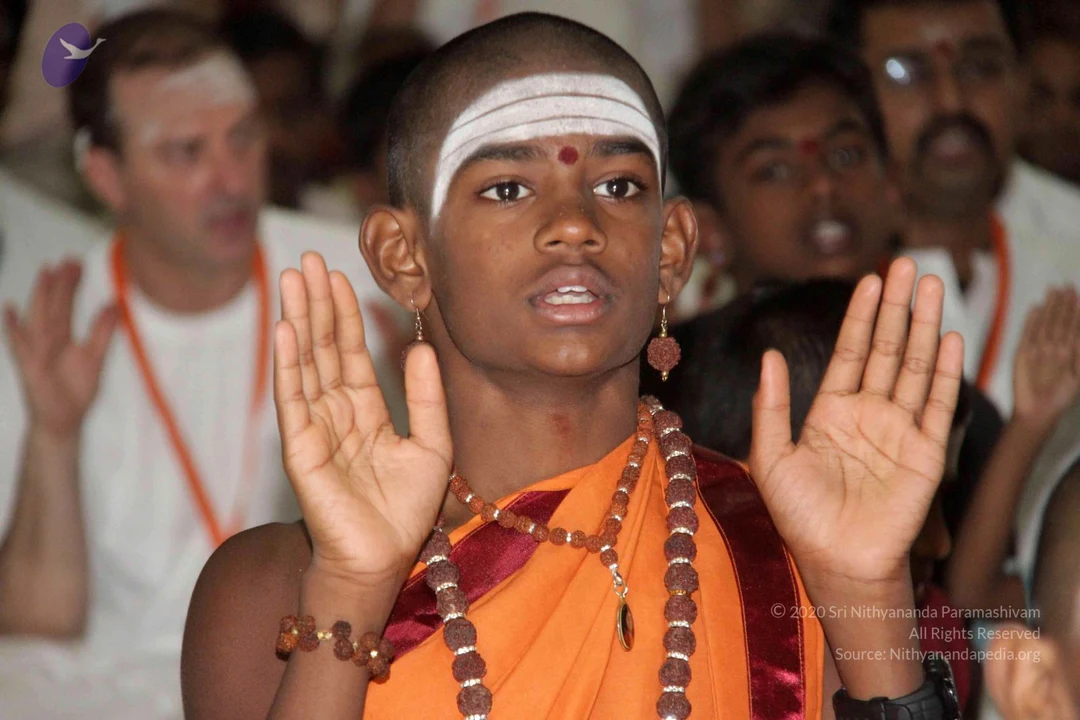
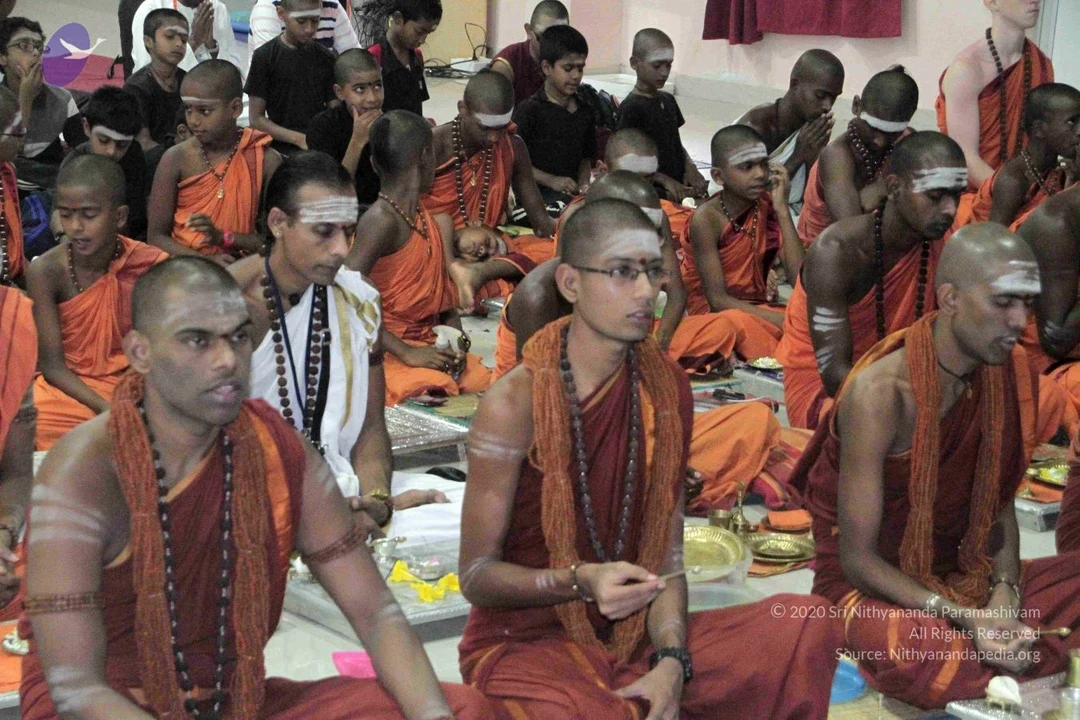
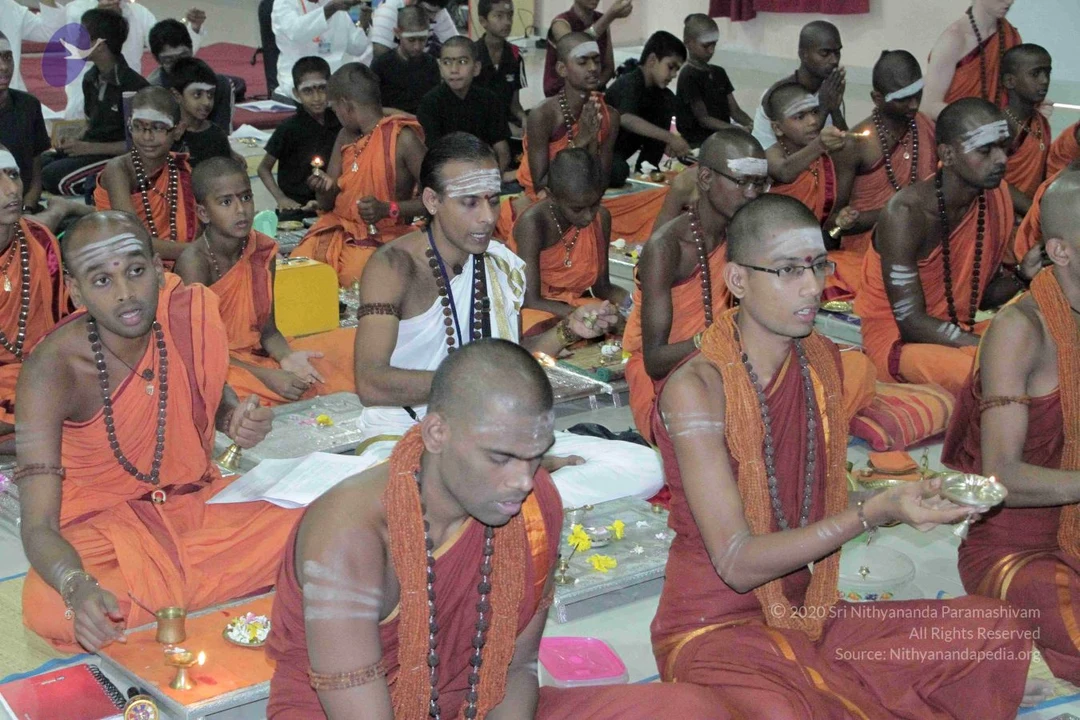
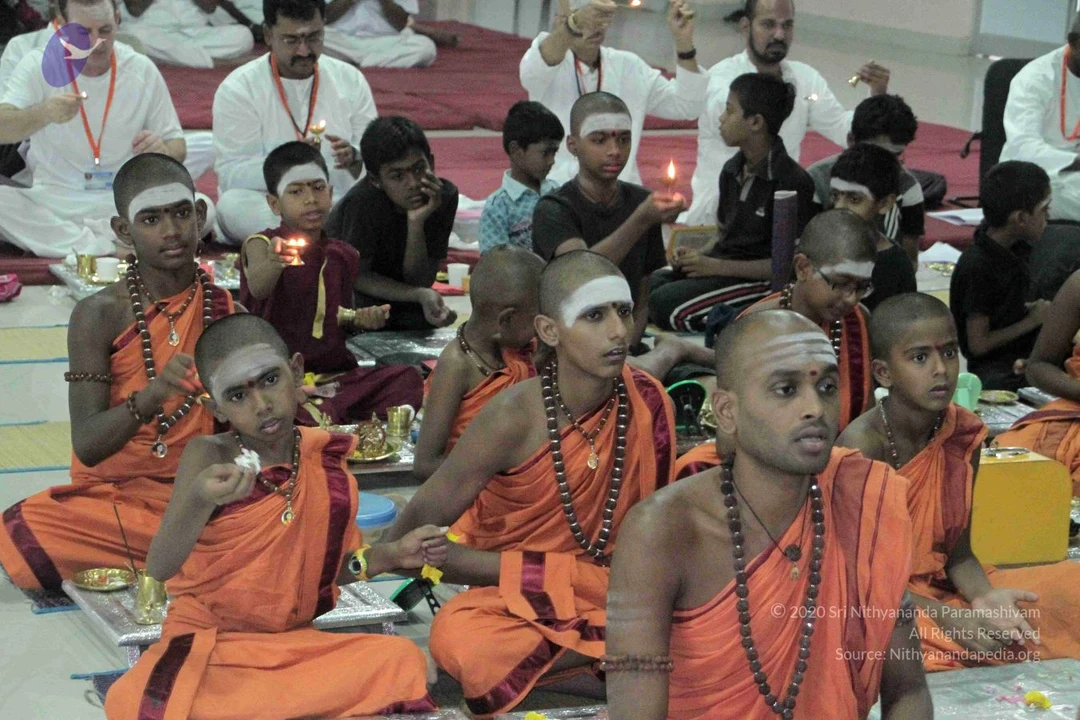
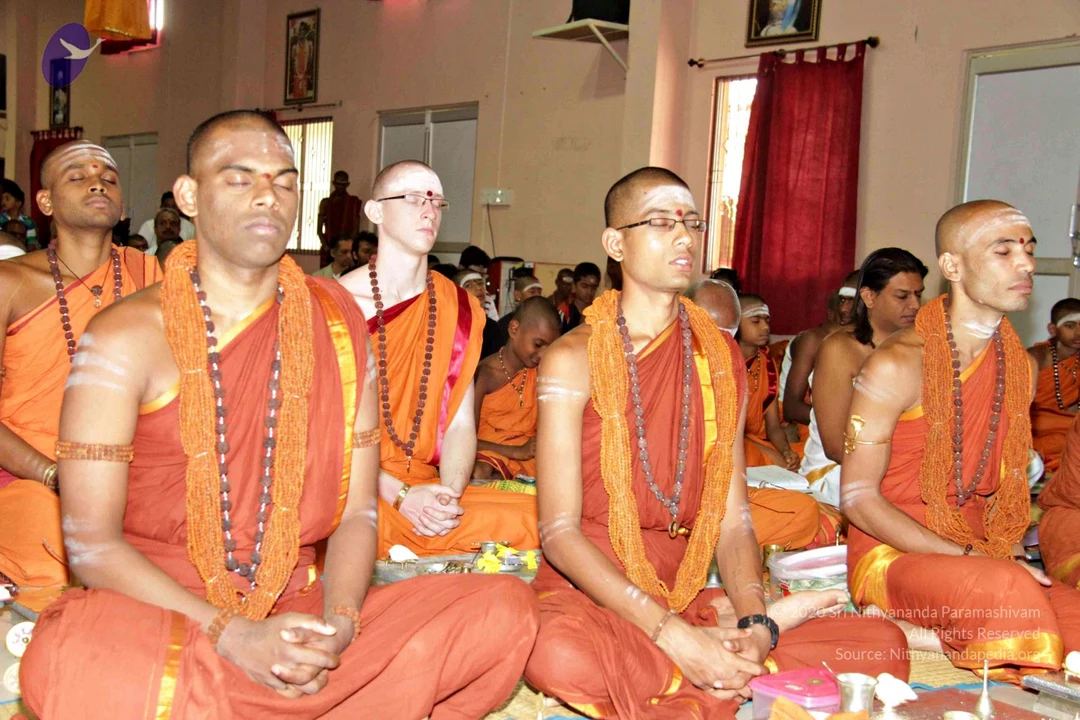
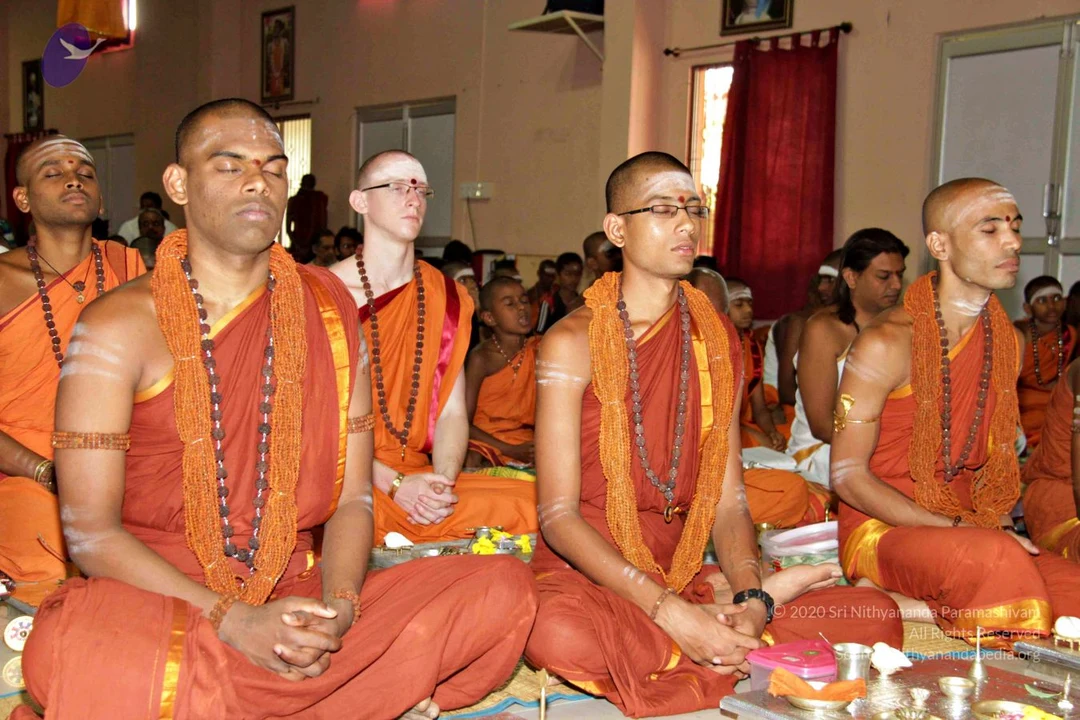
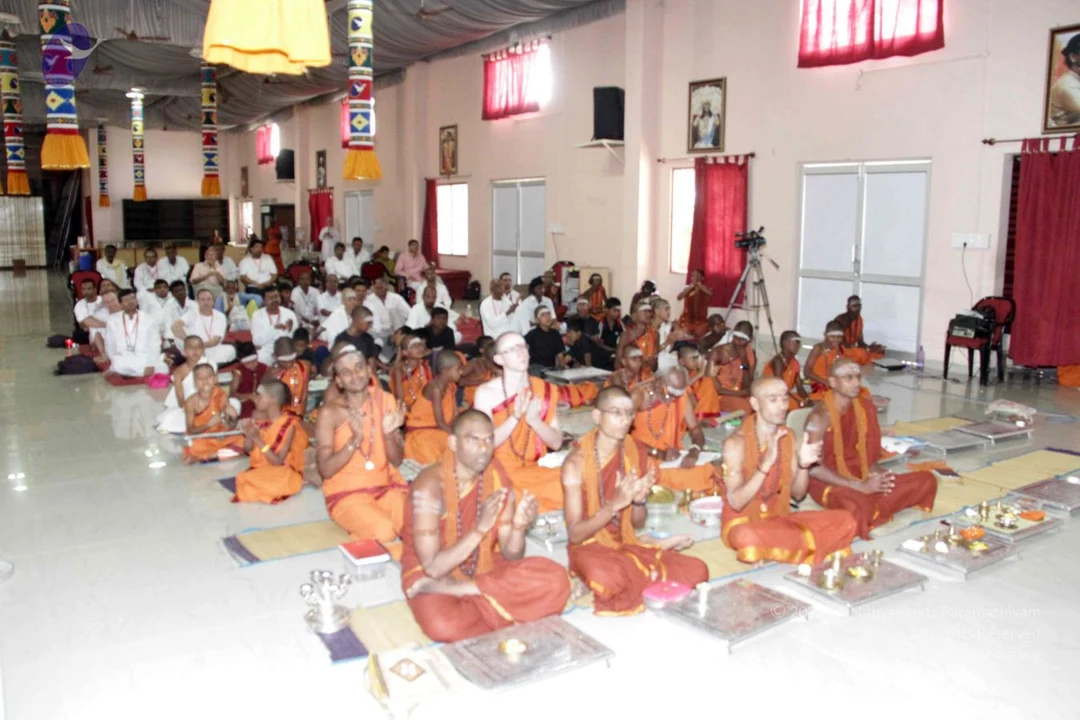
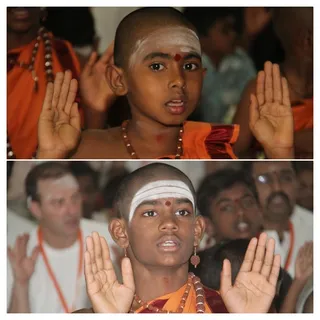
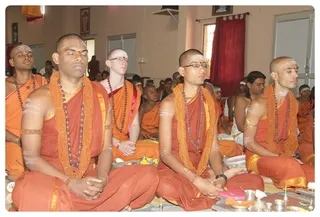
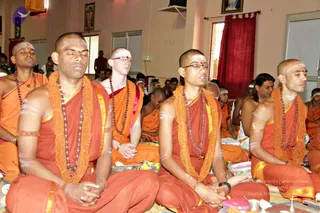
A two-panel collage of two young boys performing chanting with raised palms in a crowded hall. Both boys shave their heads, wear white tripundra lines and red bindi marks, and sit in orange-saffron robes with rudraksha malas around their necks. The top panel shows one boy at close range with a crowd of orange-robed people behind him. The bottom panel shows the second boy with dangling earrings beside a man in a white shirt with an orange lanyard and other devotees behind him.A photograph of a seated group of saffron-robed men in an indoor hall during a ritual. In the foreground, several men sit cross-legged on a cloth with eyes closed or lowered, wearing orange-saffron dhotis and shawls, rudraksha malas, and white tilak and body markings. Brass vessels, small bowls and a lit oil lamp sit before them. A red curtain hangs at the window behind, and framed pictures hang on the wall. Roughly a dozen or more seated and standing participants are visible in the background, all in saffron or white. No individual here is presented with distinctive a person cues, so no identification is made.

Morning Satsang

3 photosSource gallery
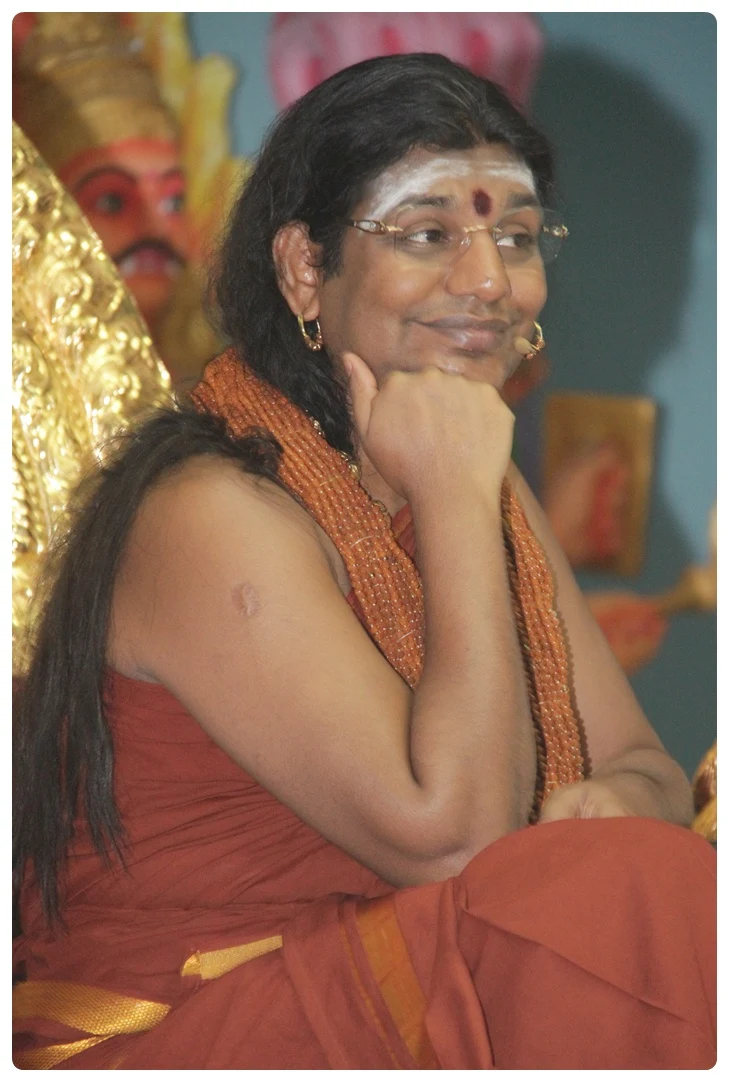
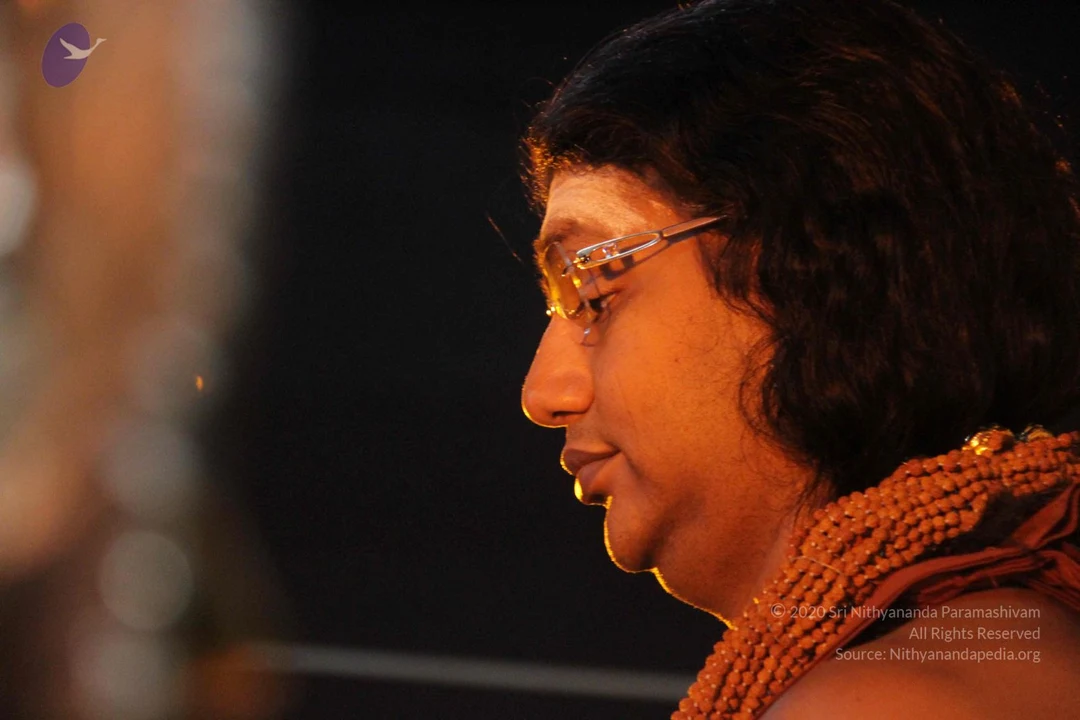
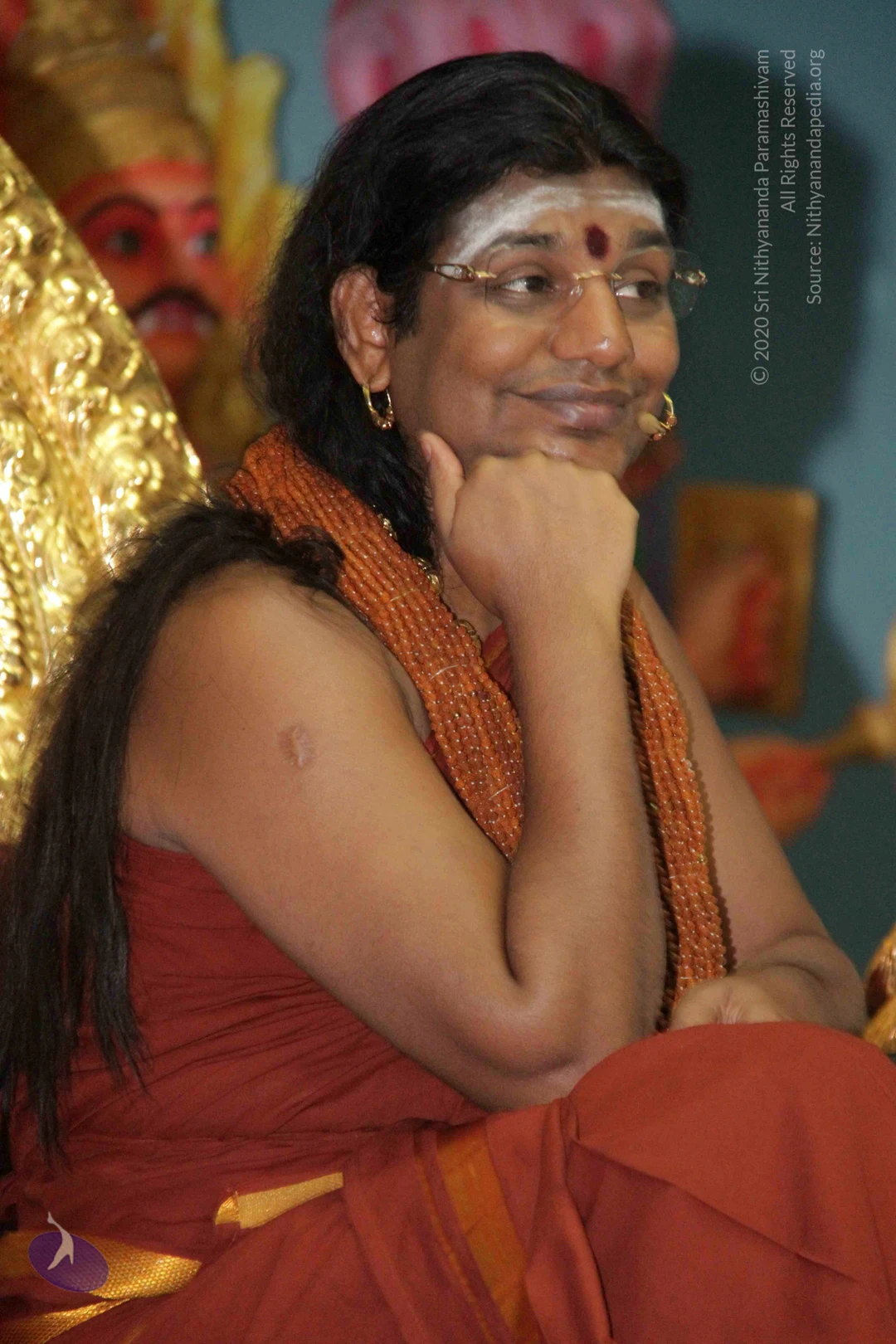
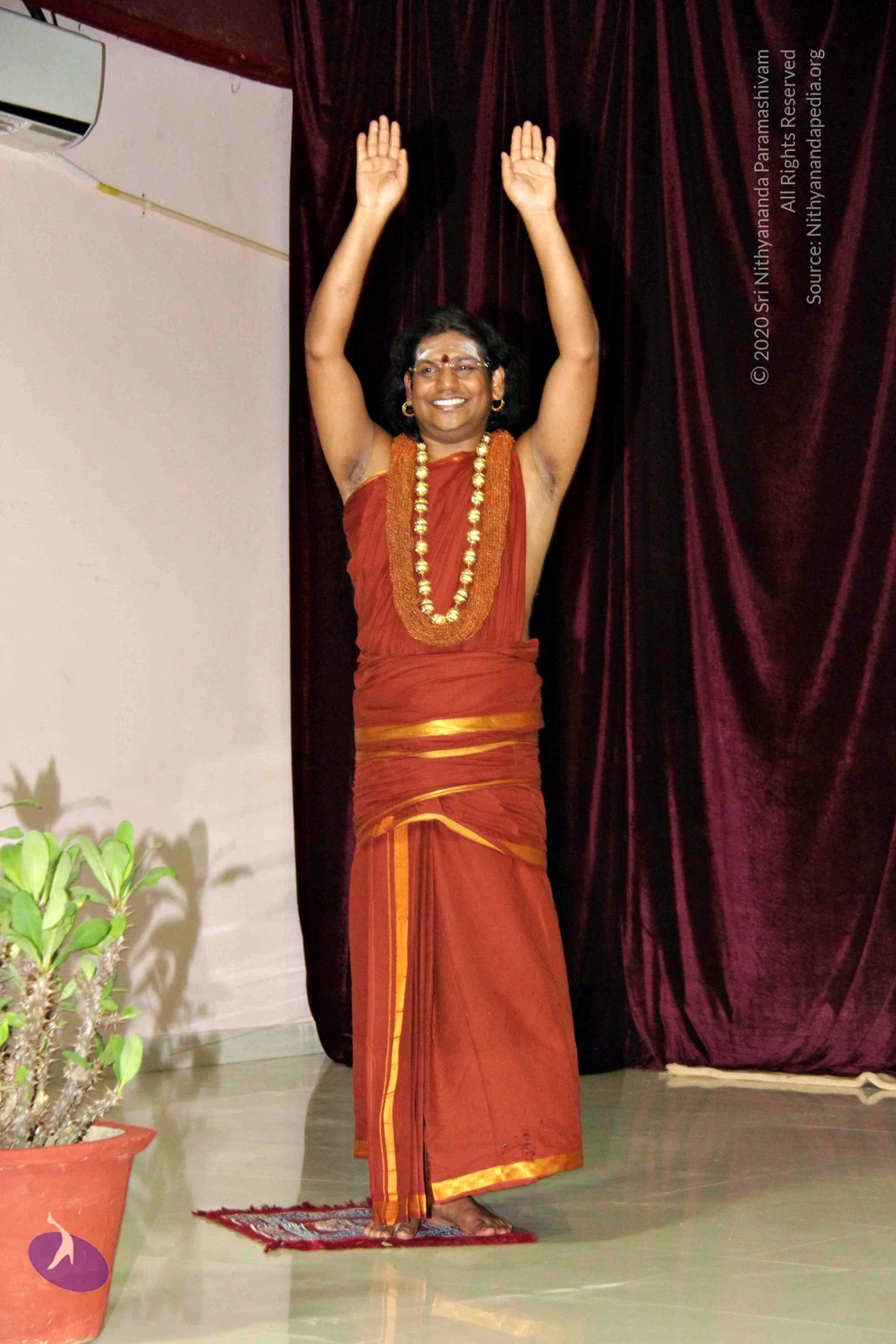
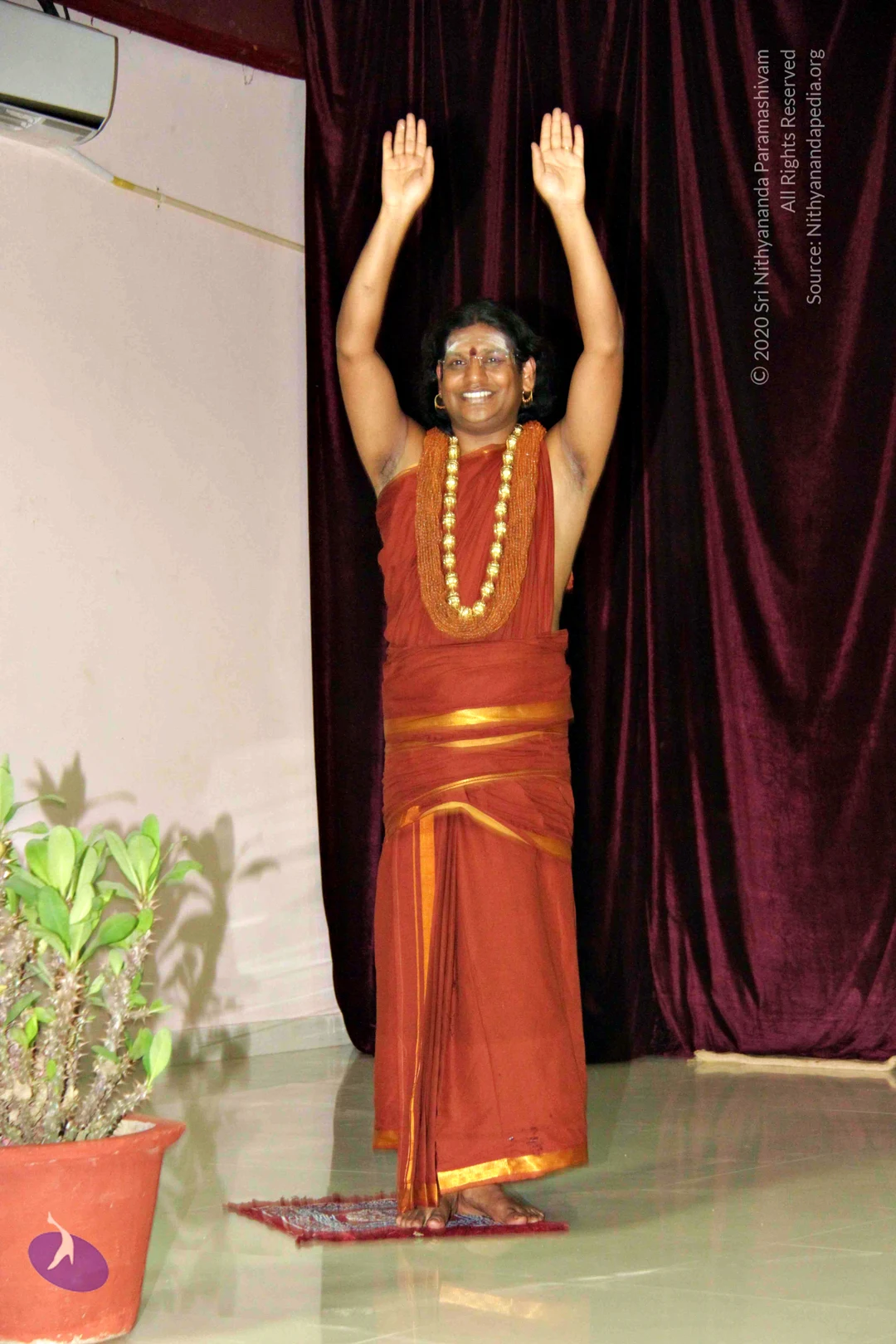
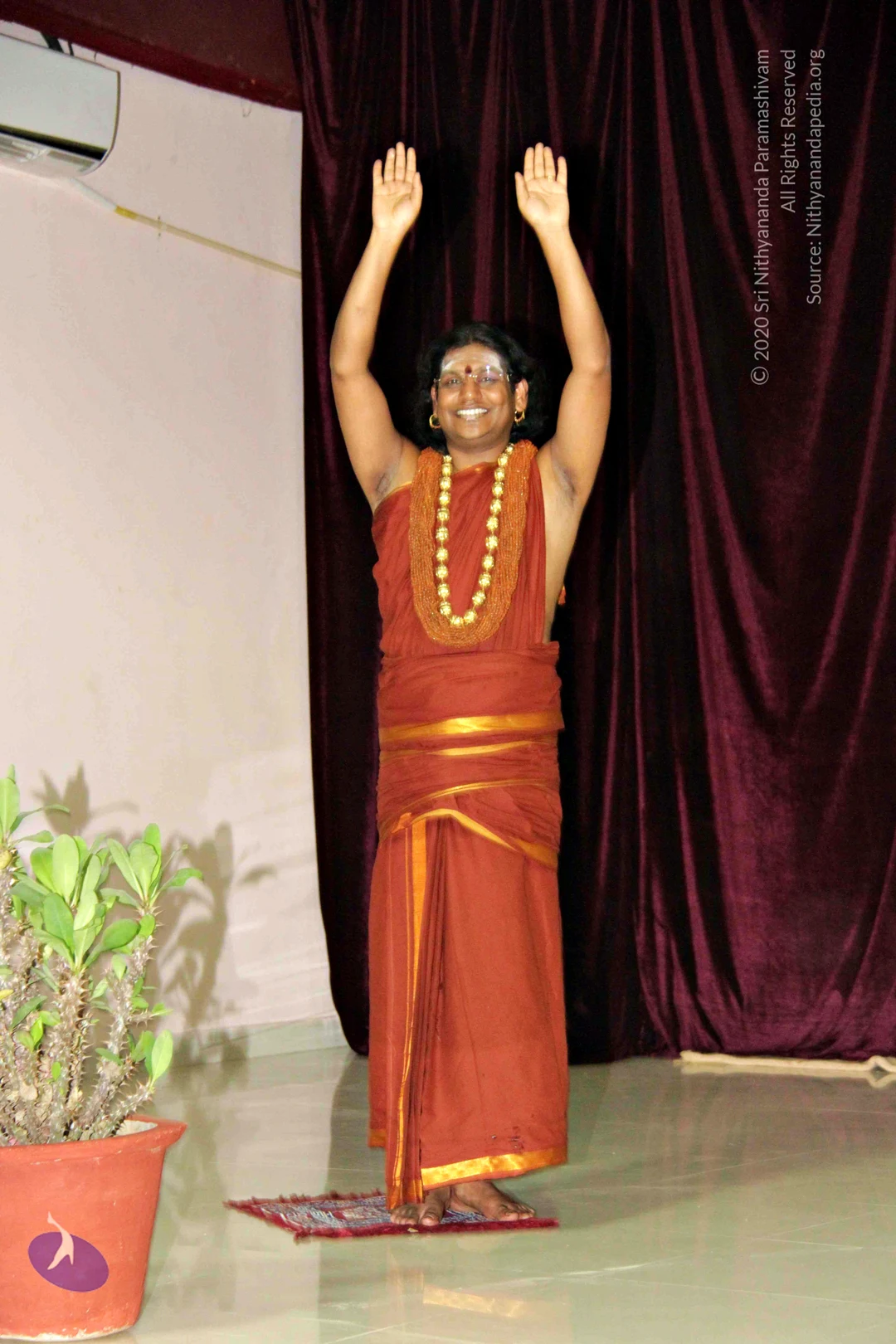
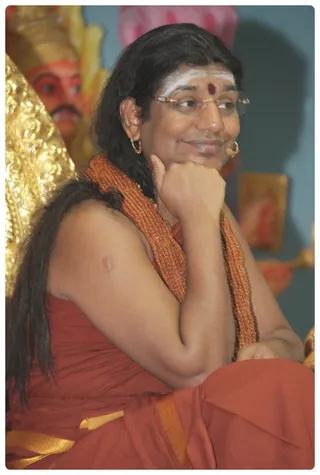
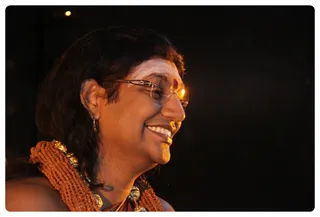
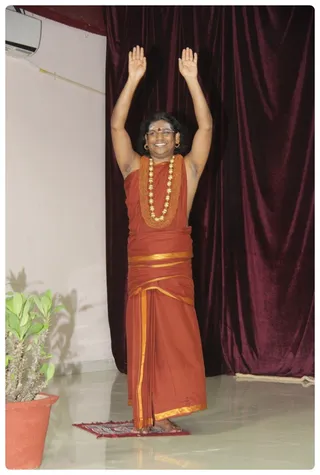
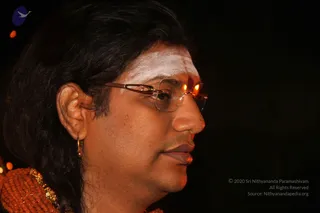
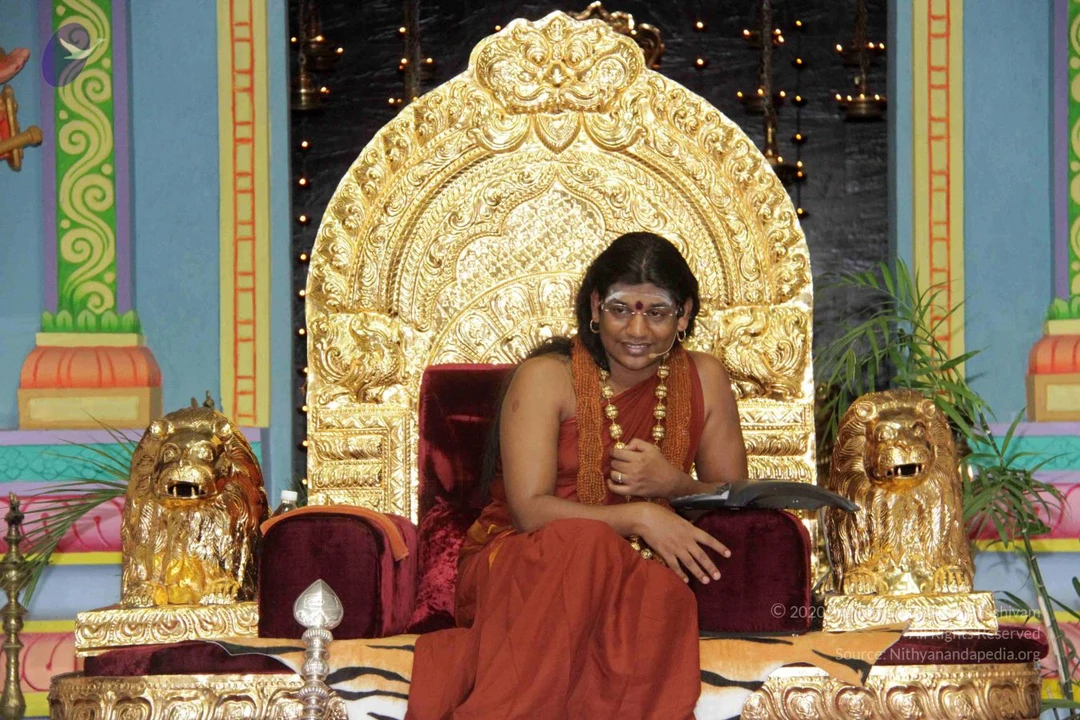
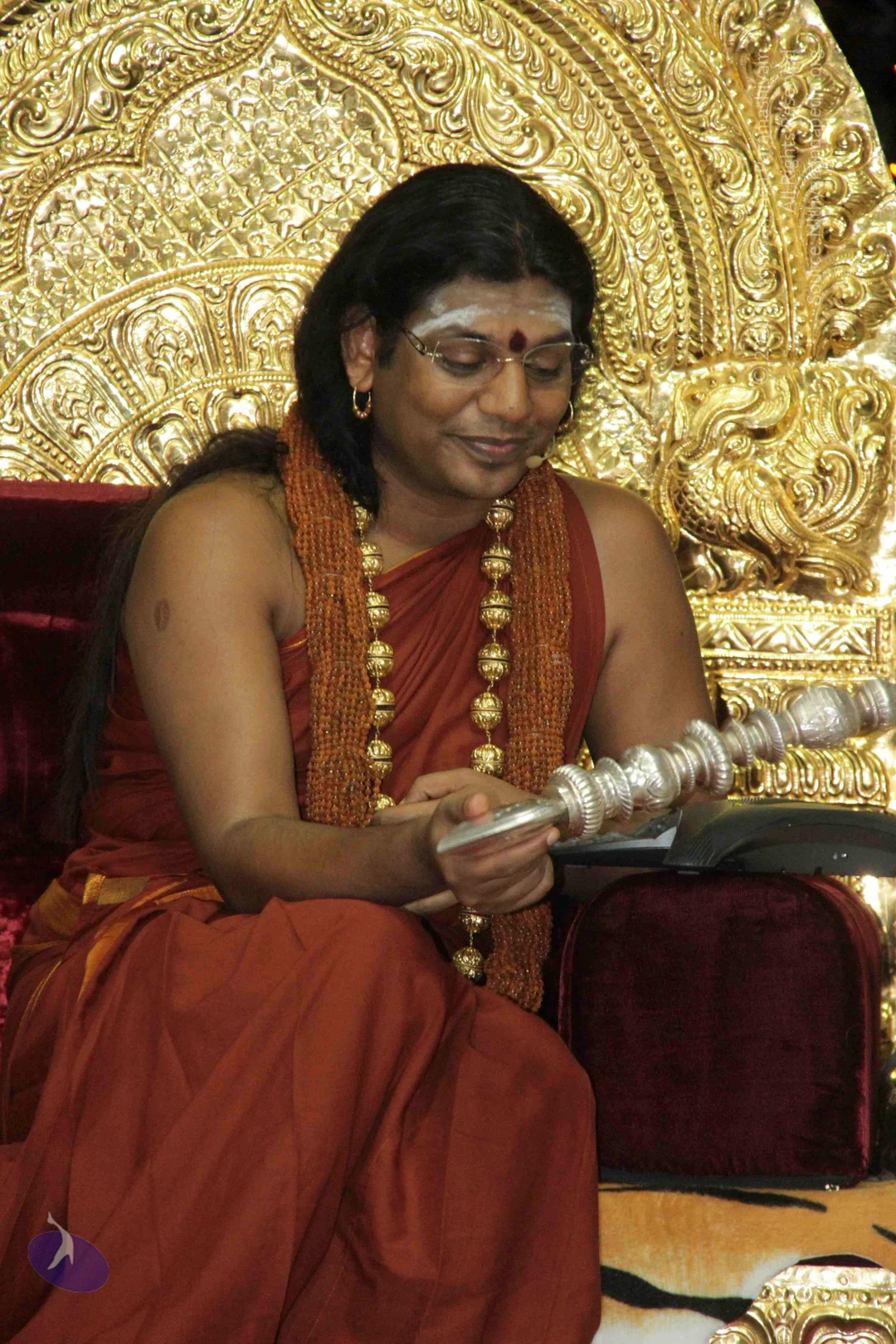
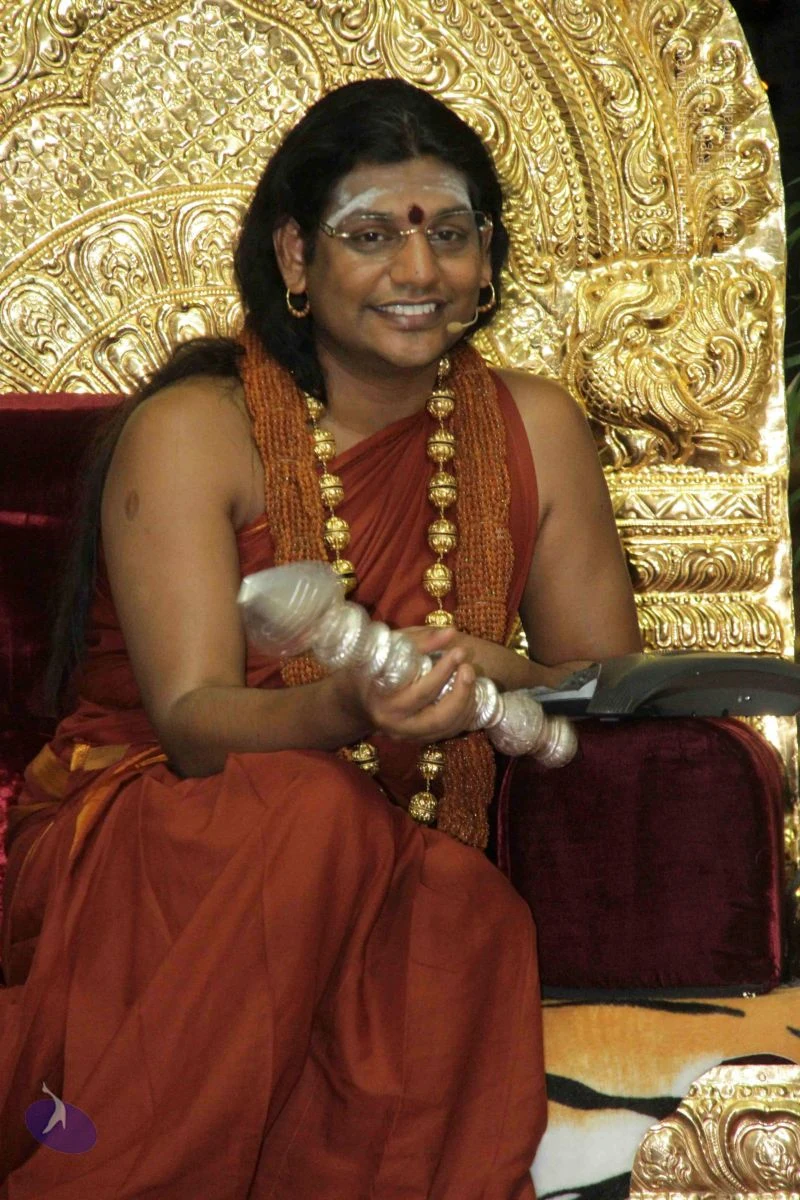
A person with long dark hair, white forehead markings and a red bindi, wearing rimless glasses, gold hoop earrings, and a multi-strand orange beaded necklace over a rust-orange draped garment, sits on a gold ornate seat with chin resting on one hand and a slight smile. Behind, a painted deity figure with a red face and mustache and a teal wall are visible.Close profile photograph against a dark background of a smiling man with long swept-back dark hair, wearing rimless glasses, a small red bindi and white sacred ash on the forehead, a small earring, and thick orange-brown rudraksha malas with gold ceremonial ornaments on his neck and bare shoulder. Warm lamplight falls on his face.A person stands barefoot on a small patterned mat on a polished floor in front of a maroon velvet curtain, arms raised overhead with palms open. They wear a rust-red sannyasi-style robe with gold-bordered drape, a rust-red shawl with a beaded collar, and a long gold bead necklace. A red bindi marks the forehead, and small gold hoop earrings are visible. To the left, a potted succulent plant and a wall-mounted air conditioner appear. The person is smiling and appears to be leading a gesture or posture practice. a person: the person wears saffron-toned robes and a ceremonial gold necklace, but face-based identity is not established, so the appearance cue is treated as uncertain.

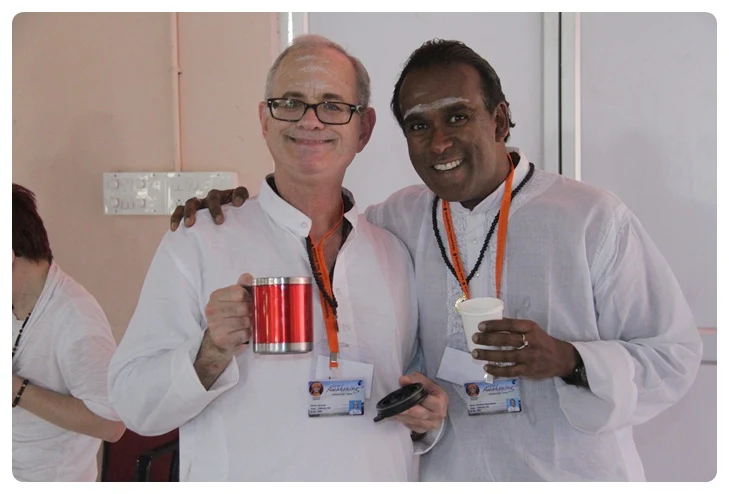
Inner Awakening Particpants enjoying Breakfast
2 photosSource gallery
Two smiling men pose side by side in white ashram-style kurta clothing with orange lanyards and ID badges. The man on the left wears glasses and holds a red steel tumbler; the man on the right has a vertical white tilak on his forehead, black rudraksha-style beads around his neck, and holds a white paper cup. A third person in white is partly visible at the far left edge, and a white wall and light switch plate form the background.A serving table covered with a green floral tablecloth holds two stainless steel chafing dishes and a few red thermos flasks. A young man in white with an orange lanyard badge ladles food from a chafing dish, while a woman in white on the left holds a clear bag and a cup. On the right, a woman in a white sari with a dark shawl and a young woman in a white polo shirt with an orange lanyard carry a metal bowl of food. Two more women in white stand behind them, and hanging paper decorations and a framed picture appear on the hall wall.

Yoga

8 photosSource gallery
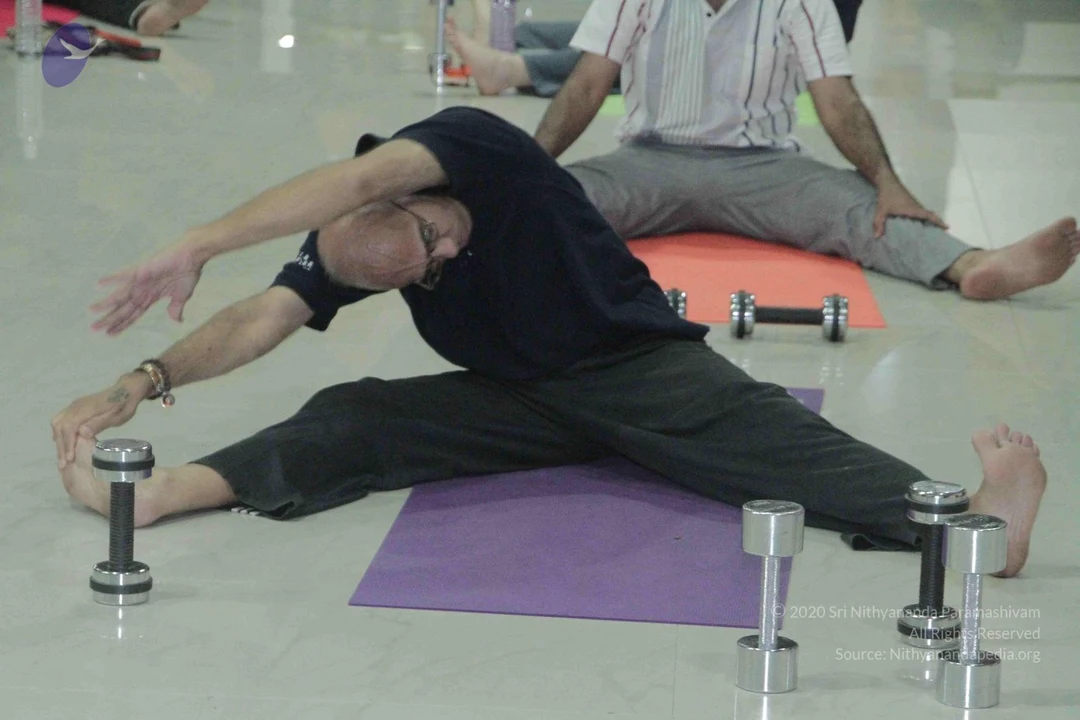
A photograph of a yoga or exercise session in a large hall with a polished white floor. Several people sit on coloured mats in forward-bend stretches, reaching toward their feet. In the foreground, a man in a black shirt and black pants sits on a blue mat, and beside him another man in a black shirt sits on a pink mat, both holding their feet. Metal dumbbells lie between the mats. Behind them, more participants in white and dark clothes stretch on mats, and decorative multicoloured tassel banners with orange fringes hang from the ceiling. No clearly identifiable a person figure is visible.A large hall with a polished white floor and a draped grey ceiling, decorated with tall colourful pillars wrapped in multicoloured patterns with orange tassels. Many participants sit on blue, pink and purple exercise mats performing forward-bend stretches, reaching toward their feet. Men in black tracksuits and white clothing are prominent in front, with metal dumbbells placed beside the mats. Behind them, rows of other attendees continue the same stretching practice. The scene is a yoga or fitness session.A large hall with a glossy white floor and a draped grey ceiling hung with colourful striped cloth pillars. Many participants in black, red and white exercise clothes sit on coloured yoga mats in a seated forward-bend stretch, reaching toward their feet beside metal stands. Two men in front wear black tops and black pants, one with shaved head. Background rows of people continue into the room, and the page indicates a satsang event, though no a person candidate is clearly visible.A large indoor hall with a polished white floor where many people sit on coloured yoga mats performing forward-bend stretches. In the foreground a man in a black top and black trousers sits on a pink mat, another in black on a blue mat, and a man in a grey shirt on a green mat. Steel dumbbells are placed between the mats. Tall decorative pillars wrapped in multicoloured fabric line the room, and a curtain and a row of chairs appear at the back. The participants are dressed in mostly dark or white athletic clothing. No identifiable a person figure is visible in this scene.A large hall with white tiled floor where many participants are seated on colourful yoga mats performing forward-bend stretches, reaching toward their feet. Participants wear black, white, red and grey clothing. Small black dumbbells sit beside the mats, and a black foam roller lies on the floor. Hanging decorative banners with orange and patterned tassels decorate the ceiling, and maroon curtains line the walls. Rows of chairs are visible at the back of the room. Yoga practice session in progress. No single identifiable a person figure is clearly visible in this scene.A photograph of a bald man in dark navy t-shirt and black trousers performing a wide-legged side stretch on a purple mat on a glossy white floor, one arm reaching toward a small chrome dumbbell, a bracelet on his wrist. Behind him, another man in a white-and-red striped shirt and grey trousers sits on an orange mat with his legs apart.

Temple-Swamiji
33 photosSource gallery
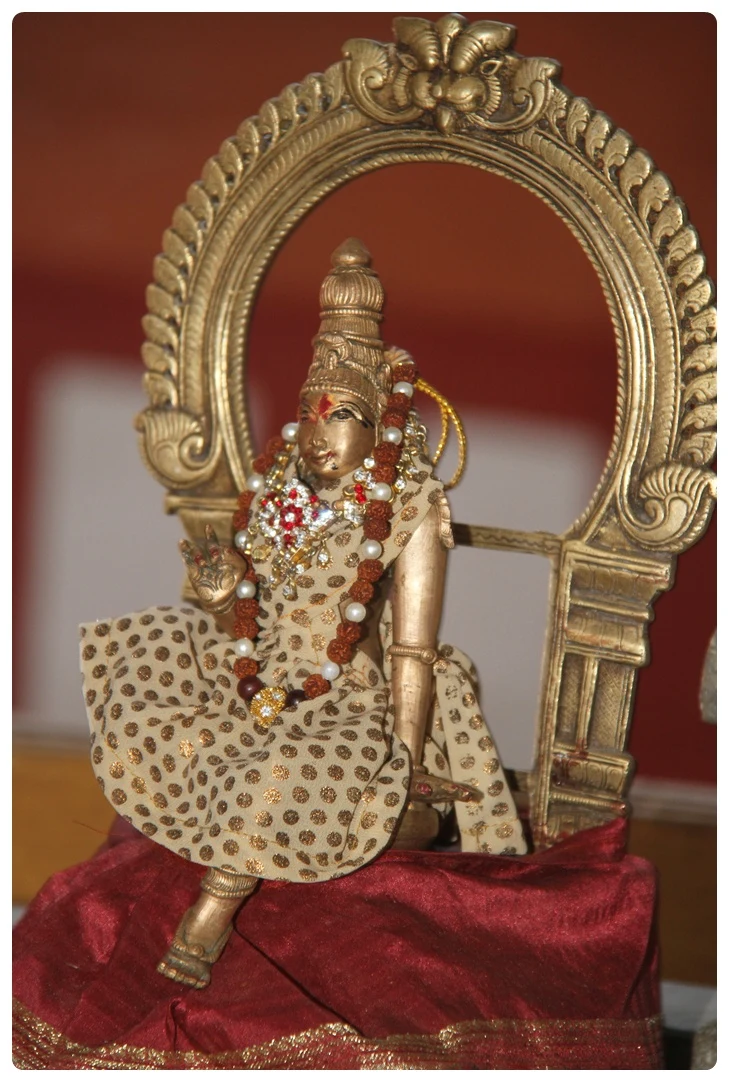
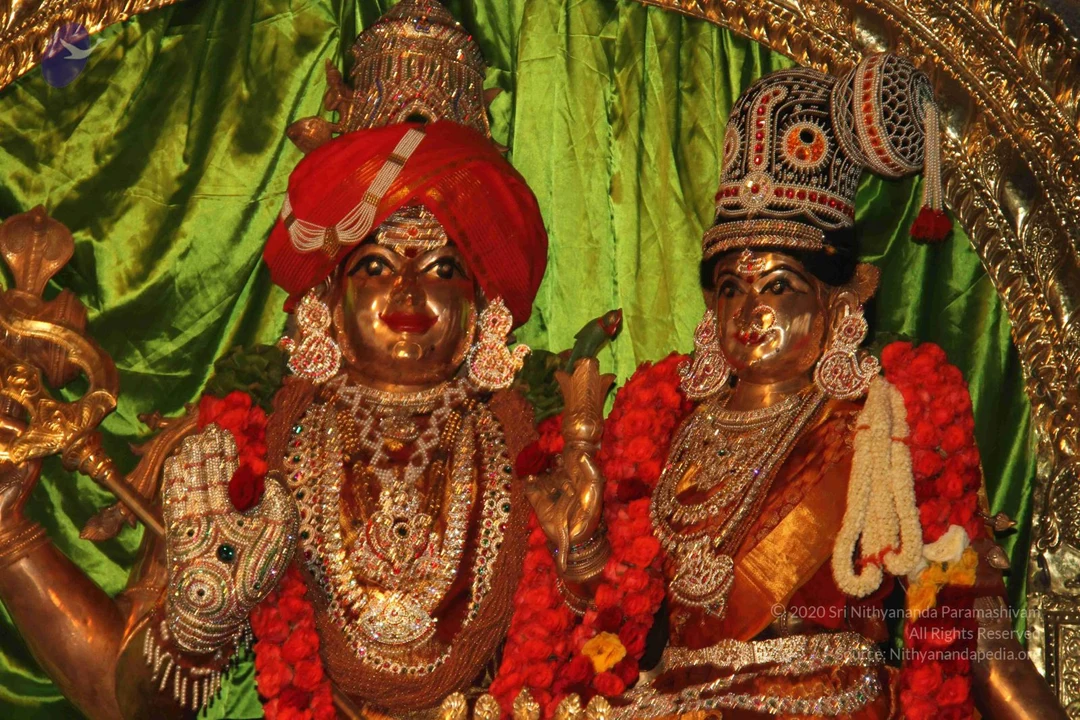
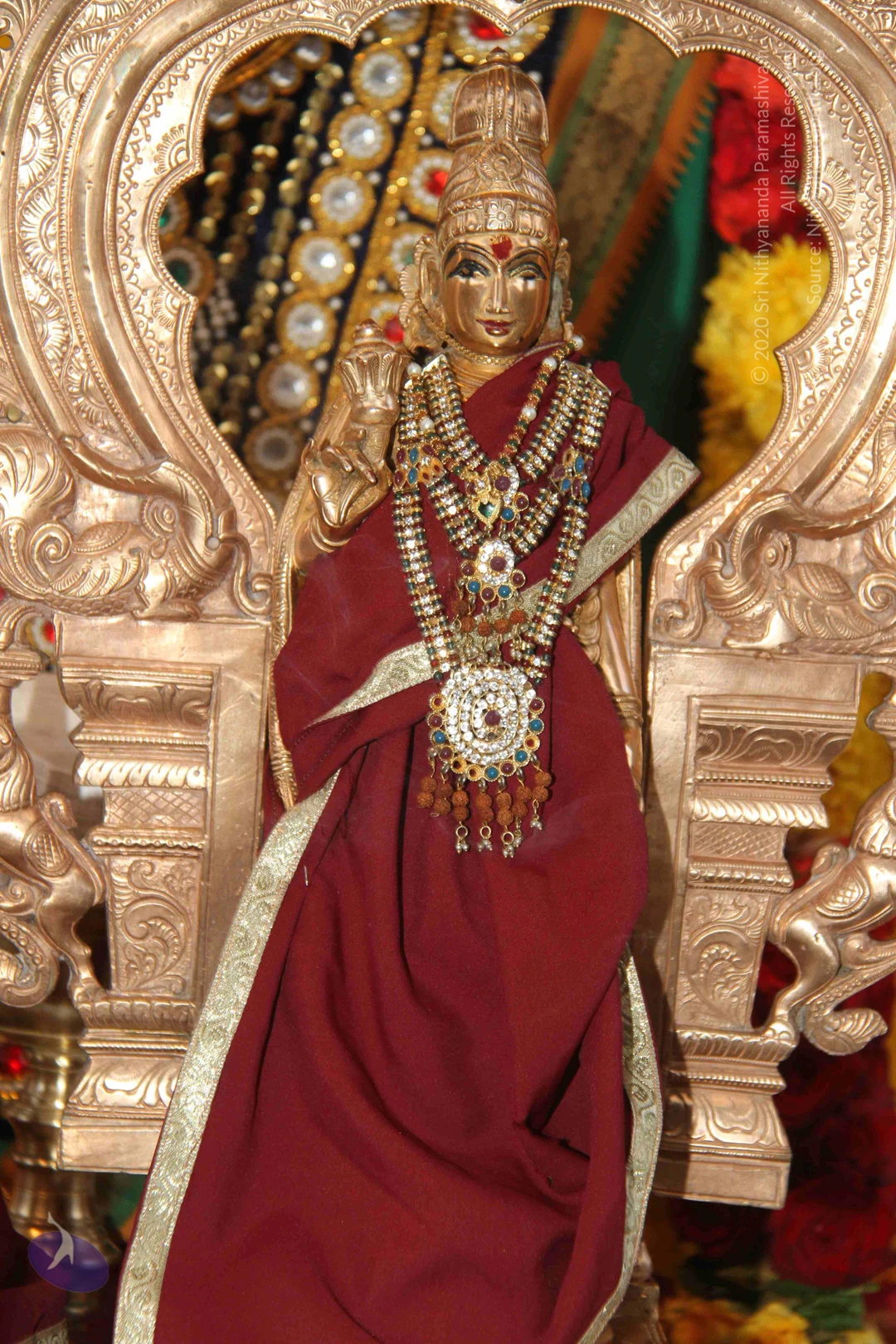
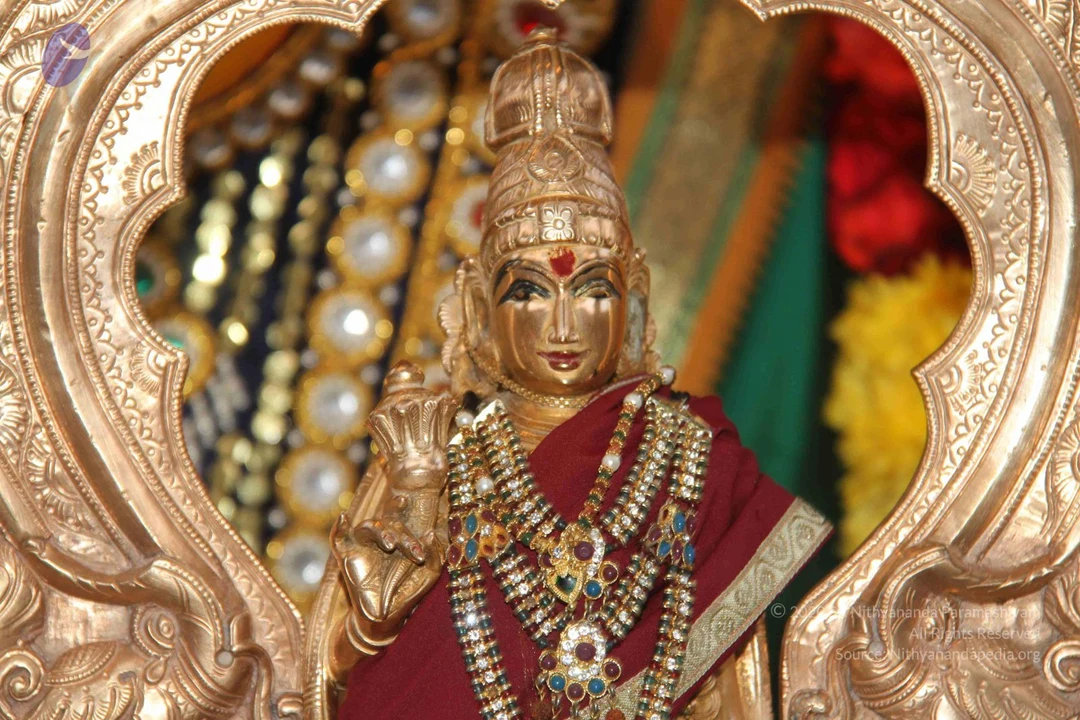
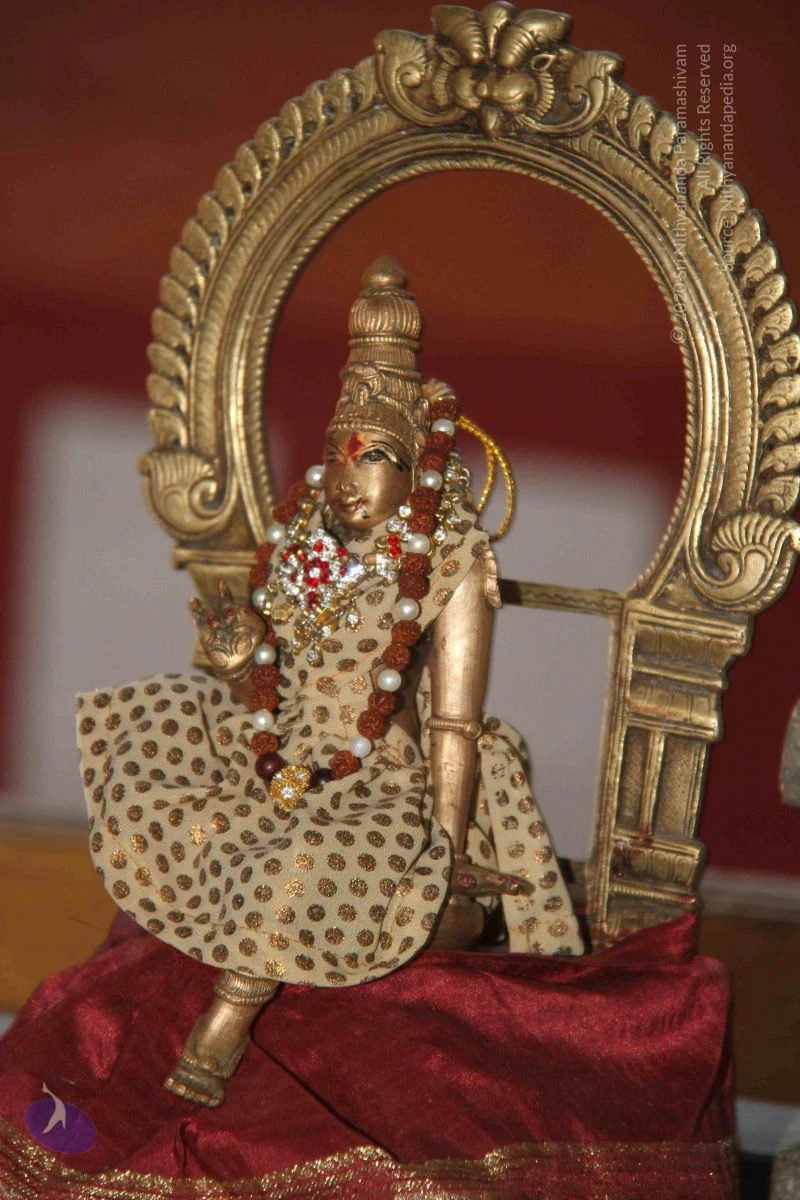
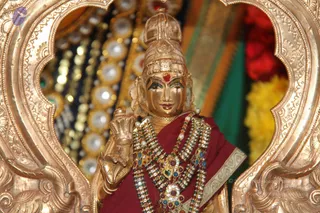
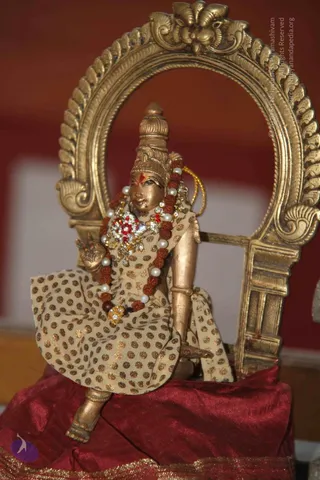
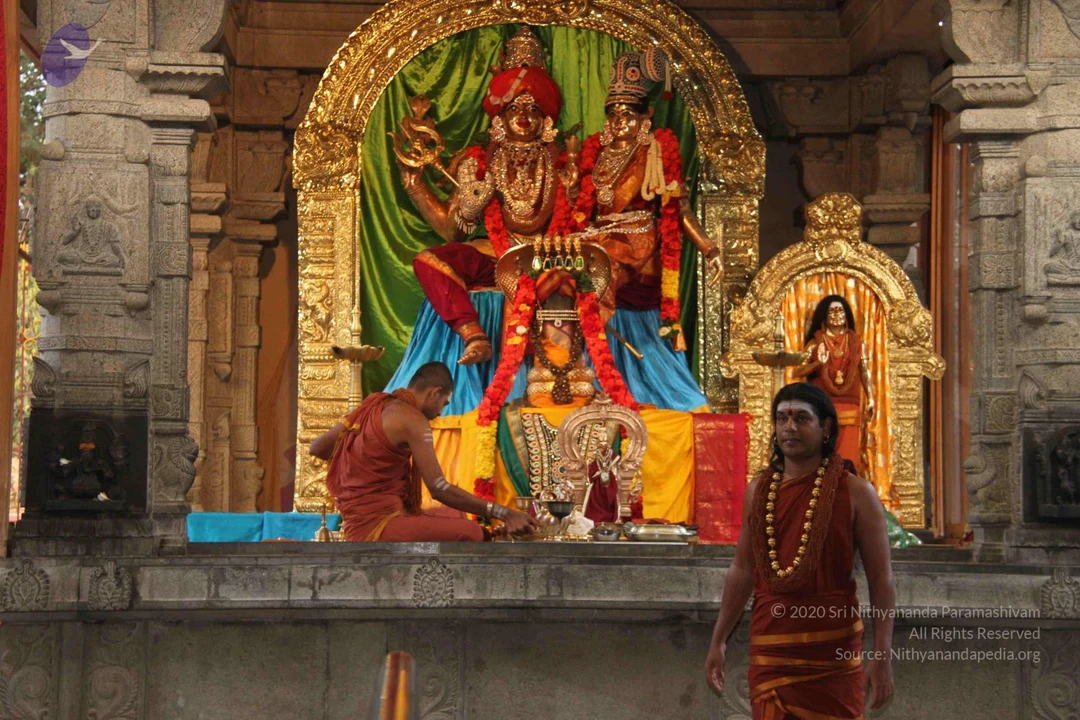
Photograph of a pair of golden-bronze metal murtis seated against an orange and gold brocade backdrop with gilded arch. The left figure is a male deity with a red turban, a trident held in one raised hand, and a rudraksha-style bead mala and garlands. The right figure is a female deity wearing a jewelled crown with a black fabric base, a maroon sari, layered gold and silver necklaces, and a flower garland. A small green parrot perches on her raised hand, and she holds a lotus-like staff. Both figures are decorated with white and red garlands and ornate jewellery. No physical people are visible.Two gilded deity murti stand before a green silk backdrop framed by ornate gold filigree. The figure on the left wears a red turban, a heavy jewelled necklace, large earrings and a jewelled armlet, and holds a golden trident-like staff. The figure on the right wears a tall beaded and jewelled crown, a nose ring, layered gold necklaces and a golden sari. Both are draped with red and white garlands of flowers, and a small red flower is held in one hand. Their faces are glossy gilded, and the setting suggests a temple alankaram display. No living people are visible.Photograph inside a stone temple shrine showing a large deity murti group on a raised platform. Two standing figures with red turbans and gold ornaments stand atop a seated figure with a golden face and a red-and-white garland, framed by a golden arch and green drape. A seated priest in saffron-orange cloth with bare shoulder and sacred markings sits at the left, hands together. A standing figure in orange robes stands in a side niche at right beside a brass oil lamp. Garlands of red flowers adorn the murtis, and brass vessels and offerings sit on the platform.A gilt metal deity murti stands within an ornate golden arched frame with lion-like carved supports. The figure wears a tall crown, a maroon sari with a gold border, and layered necklaces of white and coloured stones with a large central pendant strung with rudraksha beads. One hand holds a lotus bud near the chest. Behind it, a gold and mirrored embroidered backdrop, a green cloth and red and yellow flower garlands are visible. The image is a photograph of a statue, with no physical people present.A golden deity murti stands framed inside an ornate gilded arch with carved floral borders. The figure wears a tall decorated crown with a red tilak on the forehead, a maroon garment with a gold-bordered edge, and layered necklaces of green, red and white stones and beads. The raised right hand holds a small ritual object, and behind the murti hang strands of white-and-gold beads, red and yellow flower garlands and green fabric. No physical people are visible.A small gold-toned metal murti of a seated deity sits before an ornate golden arch-shaped frame on a red satin cloth. The figure wears a tall conical crown, a red tilak on the forehead, a gold-and-cream dotted sari-like garment, and a long necklace of rudraksha beads interspersed with white pearls, with a jewelled pendant at the chest. One hand is raised in a gesture, and the figure is seated on a red cushion. The background is blurred reddish-brown. No physical people are visible.

Pada-Puja

28 photosSource gallery
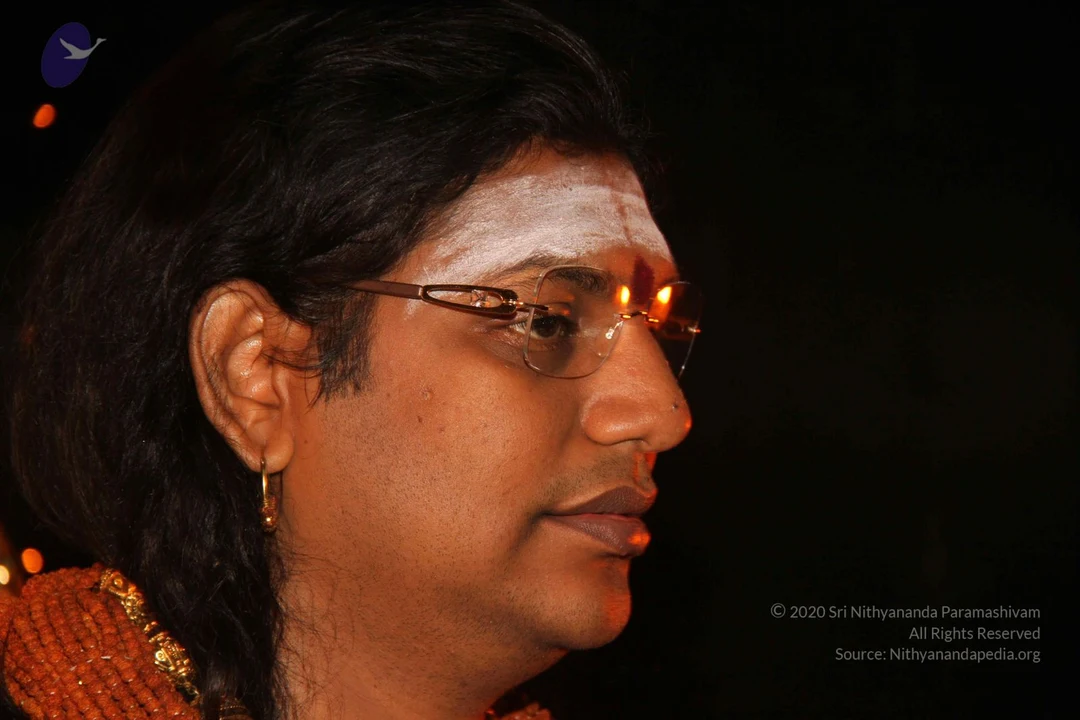
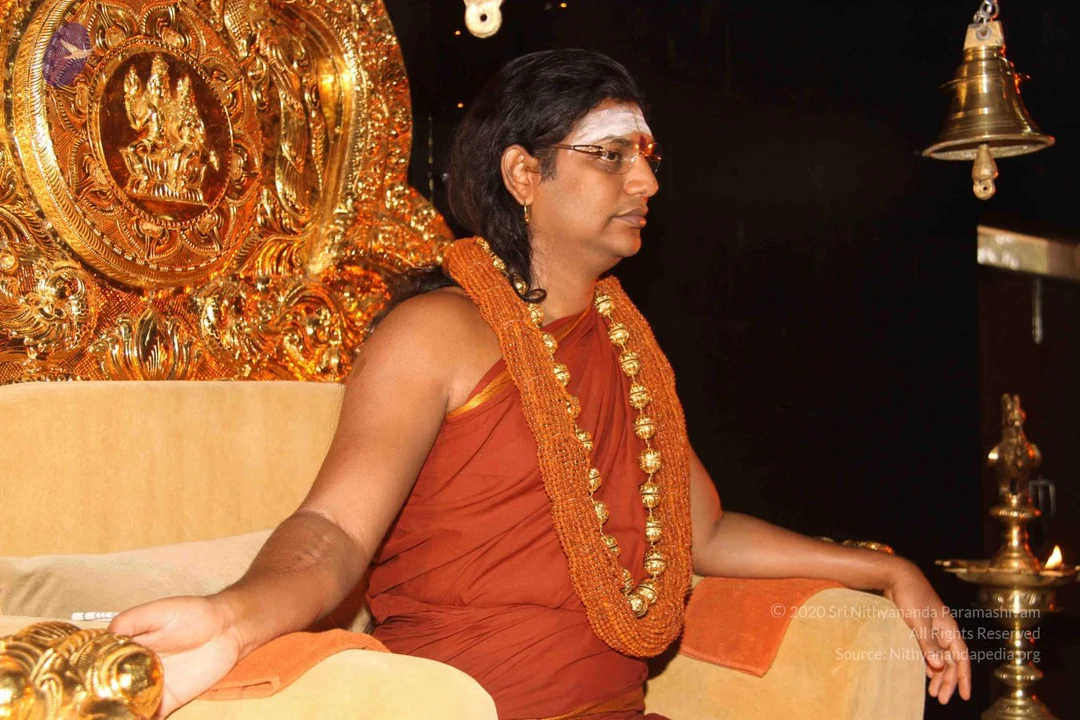
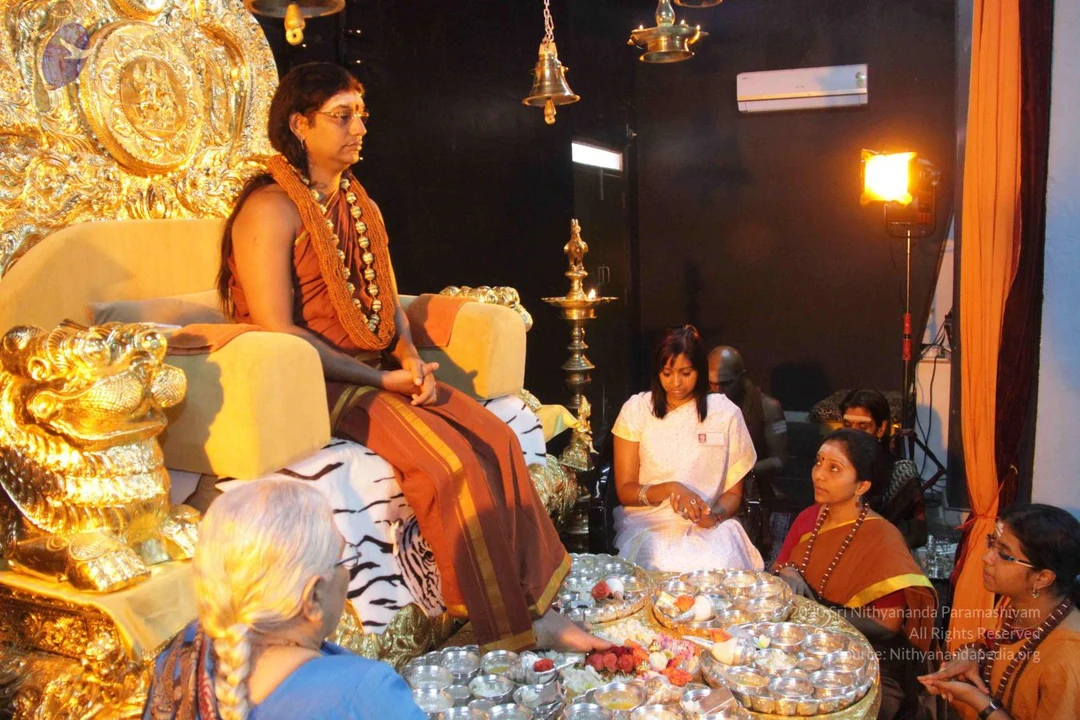
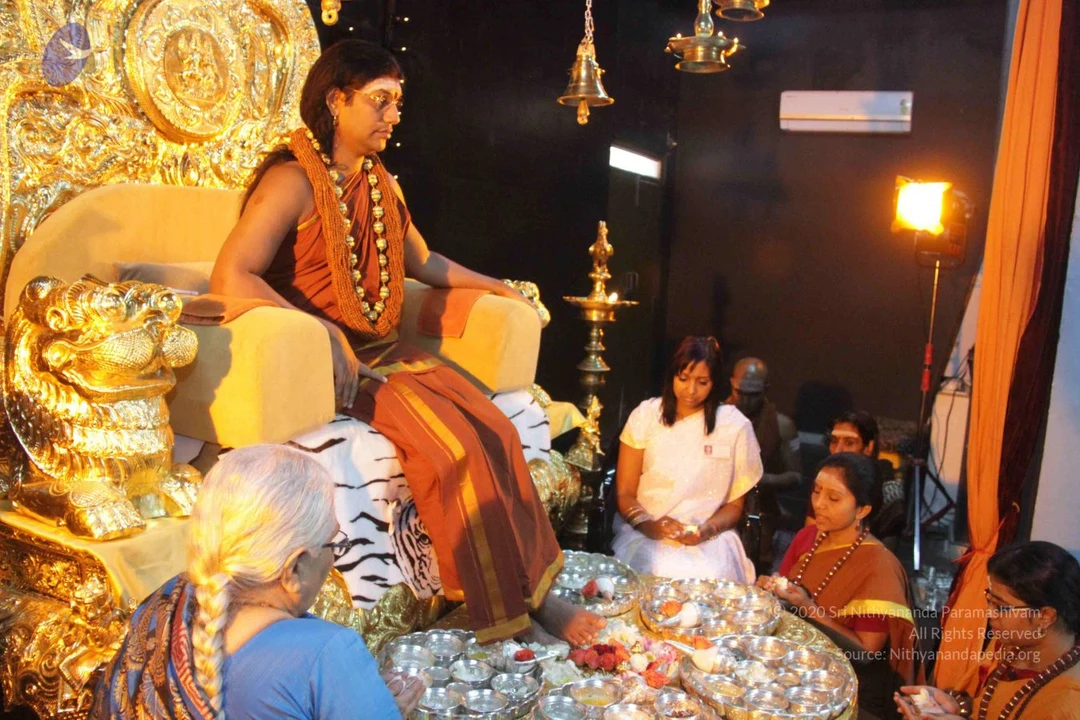
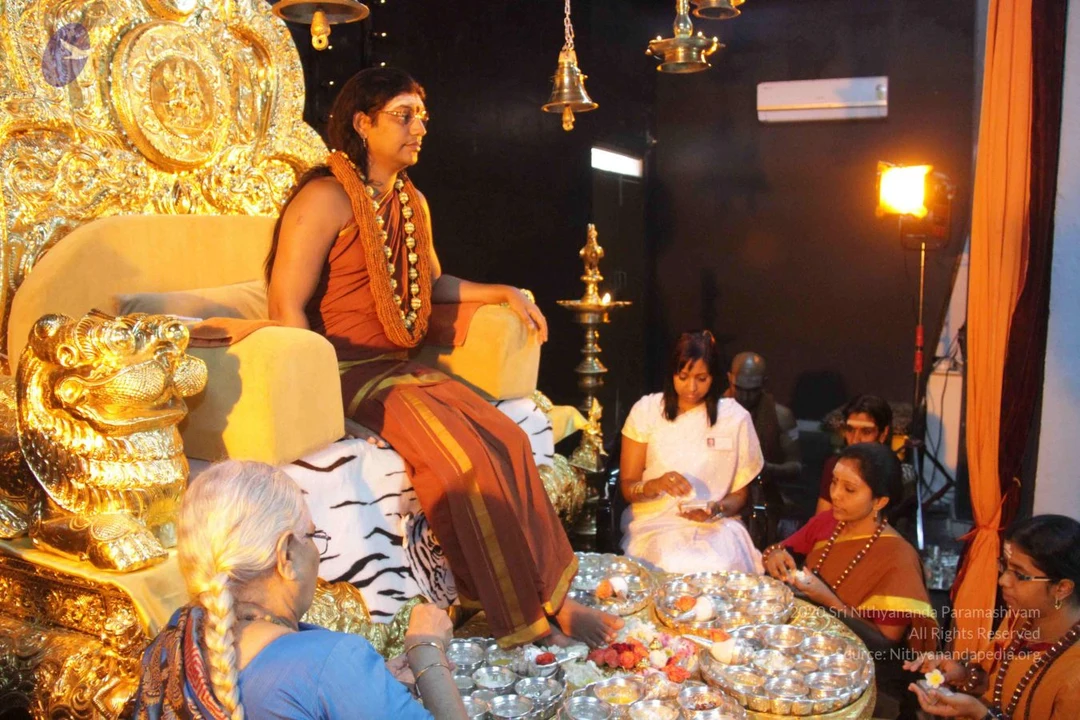
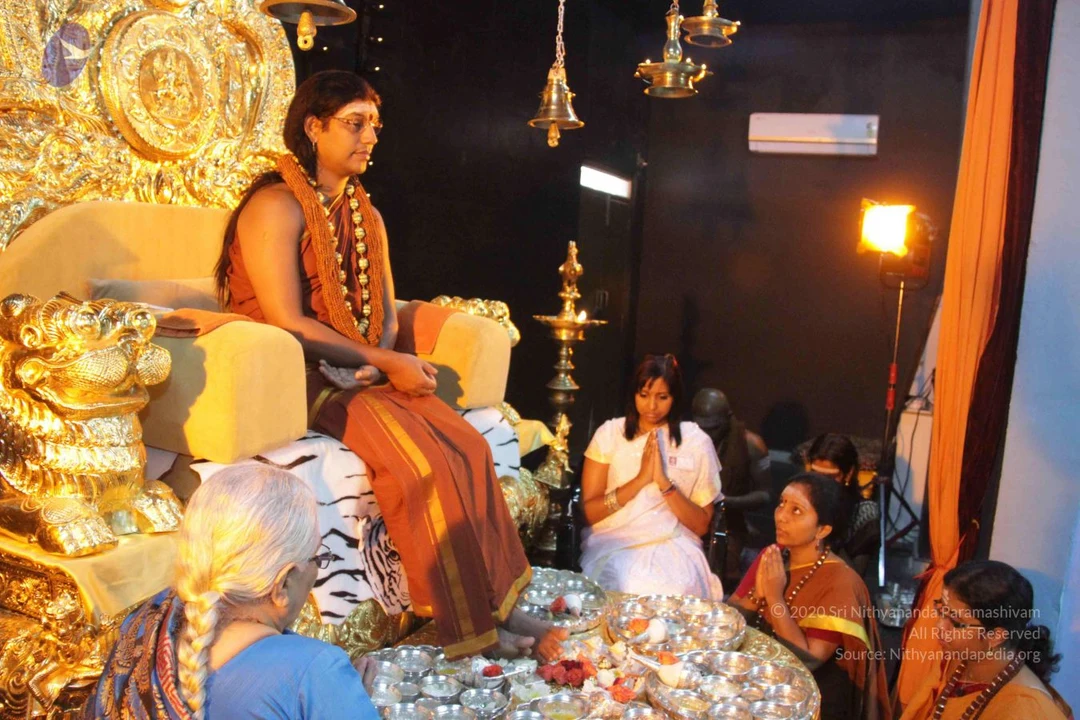
Close view of a padapuja ritual: a pair of bare feet in a reddish-brown garment with gold border rests on a golden tray surrounded by many ornate silver bowls holding yellow liquid, white flowers and vibhuti-like paste. Red roses, white blossoms and pink petals are scattered among the bowls, and a silver kalasha-style vessel with a spout sits at the right. Only the feet and lower garment are visible, so no face or identity can be determined, and the a person field is unsure because no candidate's appearance is shown. Ornate gold tray and silver puja vessels fill the frame.Close side-profile photograph against a dark background of a man with long, swept-back black hair, rimless glasses with brown temple arms, and a gold hoop earring. A white vertical tilak runs up his forehead with a red mark between the brows. He wears an orange-brown garland of beads. Warm points of light from small lamps glow near his face and at the left edge.A man in a saffron-orange robe sits on a cream upholstered throne in front of an ornate gold repoussé backrest that shows a deity figure. He wears a long multi-strand orange-beaded mala with gold bead accents, a white vibhuti mark with red kumkum on his forehead, and thin-framed glasses. His hair is long and swept back, and his hand rests on a gold armrest. A brass hanging bell and a brass oil lamp with a lit flame stand at right on a dark background. Appearance-based label: a person, seated in person on the throne.Close-up profile photograph of a man with long, swept-back dark hair wearing rimless glasses, a white horizontal tilak across the forehead with a red mark between the brows, and a gold hoop earring. He wears layered orange-red rudraksha malas and gold ornamental beads around the neck, with a reddish-orange cloth over the shoulder. The background is dark, with a blurred gold ornamental object at the left edge. A faint , , in the lower right.A seated figure on an ornate gilded throne with a golden lion-headed armrest sits in a dark room, wearing a rust-orange wrap, a long orange-and-gold sash, and a rudraksha-style mala necklace with a ceremonial gold collar. a person is seated in the centre, wearing glasses and with long dark hair swept back, appearing to be the presiding teacher. A woman in a white dress with gold-trimmed cuffs sits in front with her palms pressed together in namaste. Another woman in a red and orange sari with a beaded necklace also sits with palms joined. An older person with white hair is visible in the lower left foreground. Brass oil lamps stand nearby, a brass bell hangs from the ceiling, and trays of offerings with flowers and fruit are arranged in front. A tiger-patterned cloth draped over the throne and a studio light complete the scene.A seated figure in a saffron-orange robe with a cream-and-gold shawl and a beaded rudraksha-style necklace sits on an ornate gold throne carved with lion-head armrests, with a white cushion behind. Visible appearance cues include long dark hair swept back and ceremonial beads, so this is a person. Nearby, a woman in a white sari with a pink and gold border sits with palms joined in namaste, another woman in a maroon sari and beaded necklace also joins her hands, and a white-haired person in a blue top is seen from behind at the bottom left. Silver trays holding flowers, fruit and small bowls are arranged on the floor in front of the throne, and a brass oil lamp and hanging brass bells appear in the background. A studio light and wall air conditioner are visible, with a dark backdrop and orange curtain at right.

Aarati

25 photosSource gallery
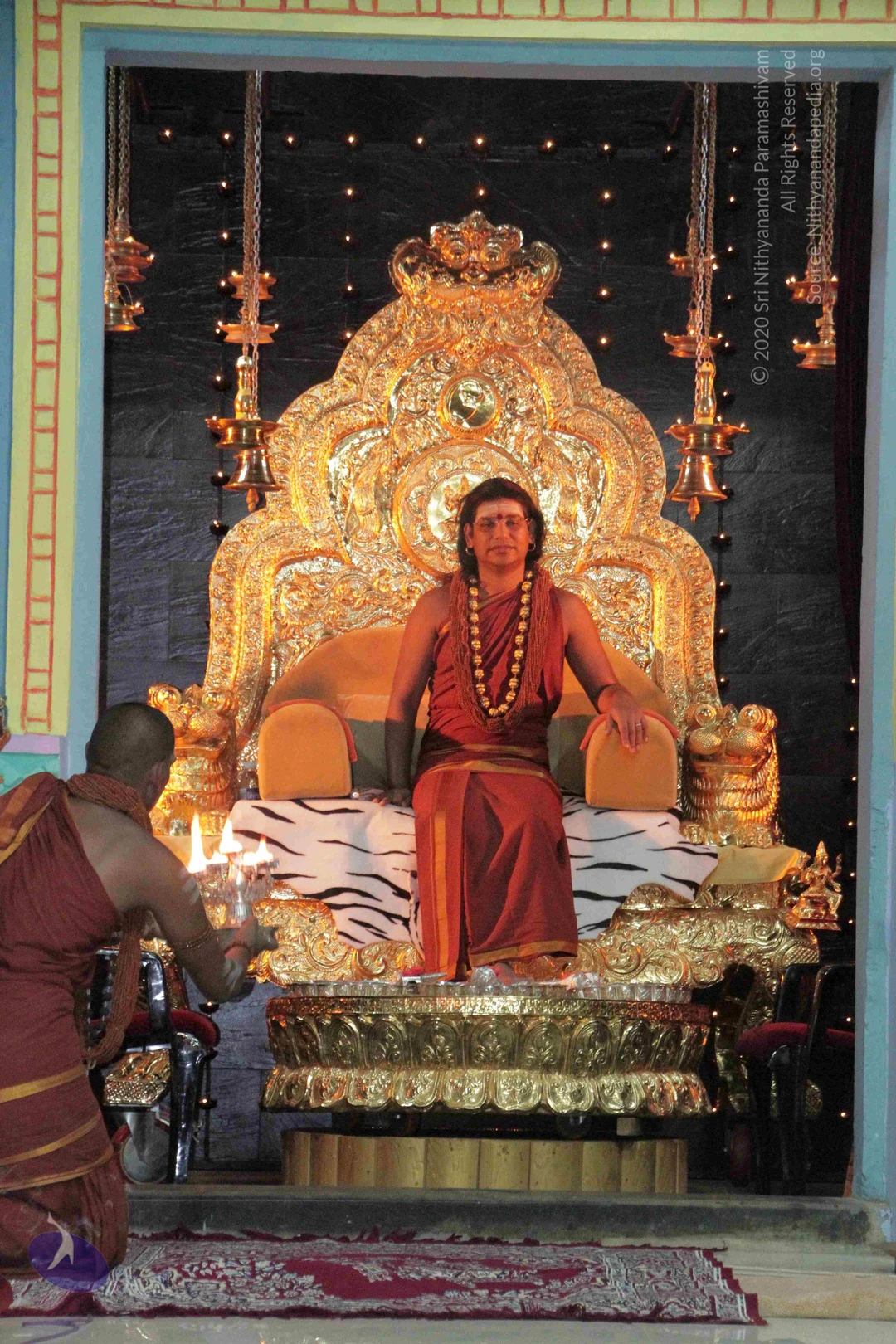
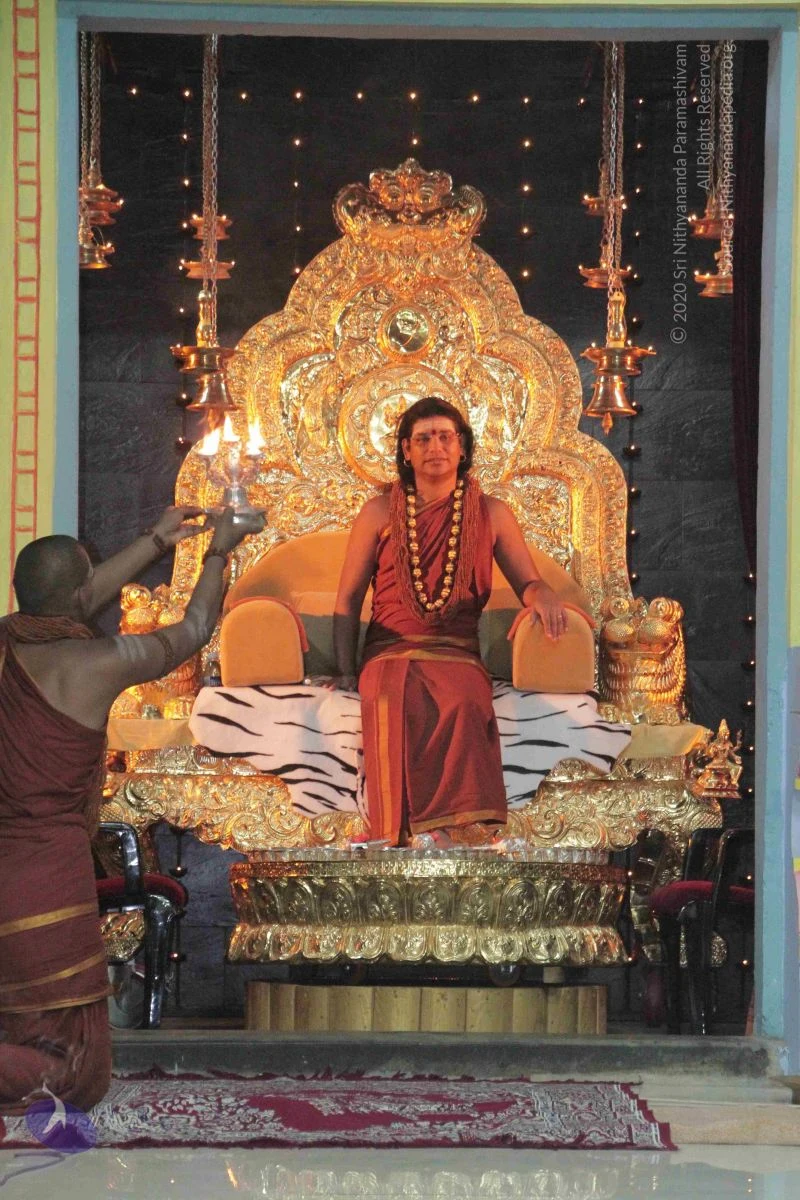
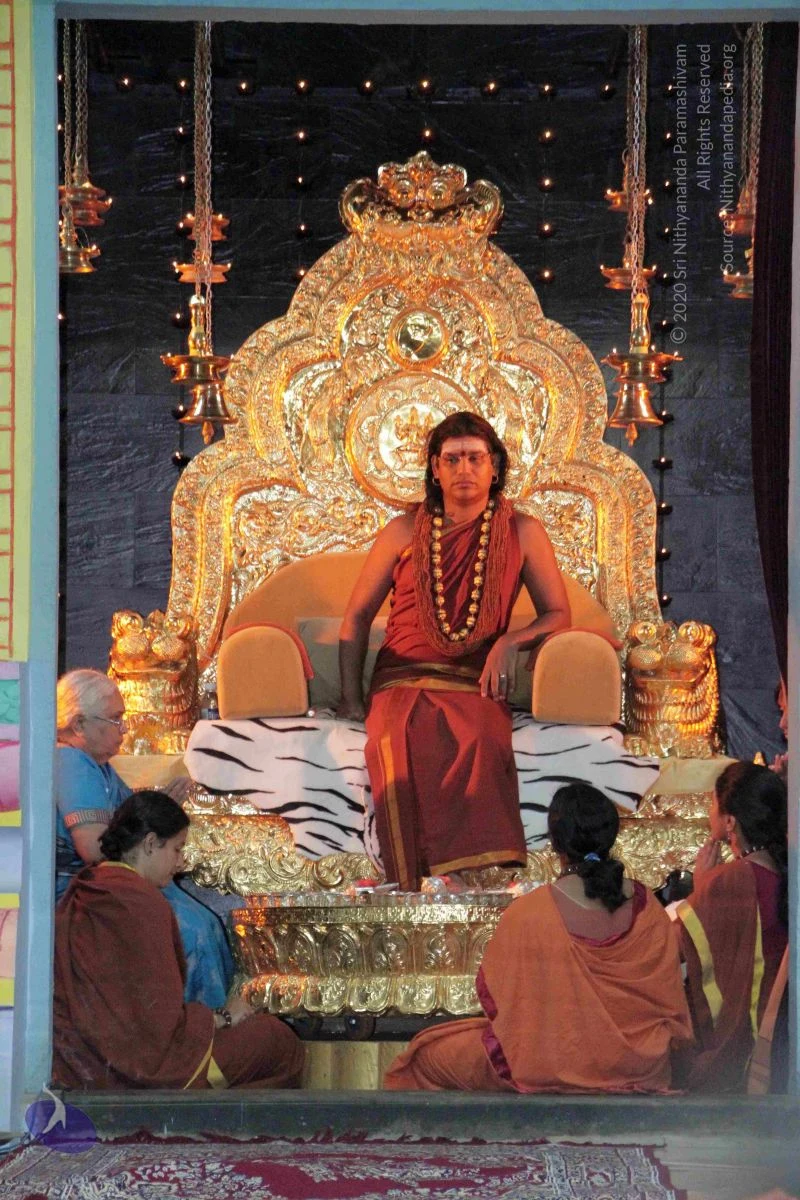
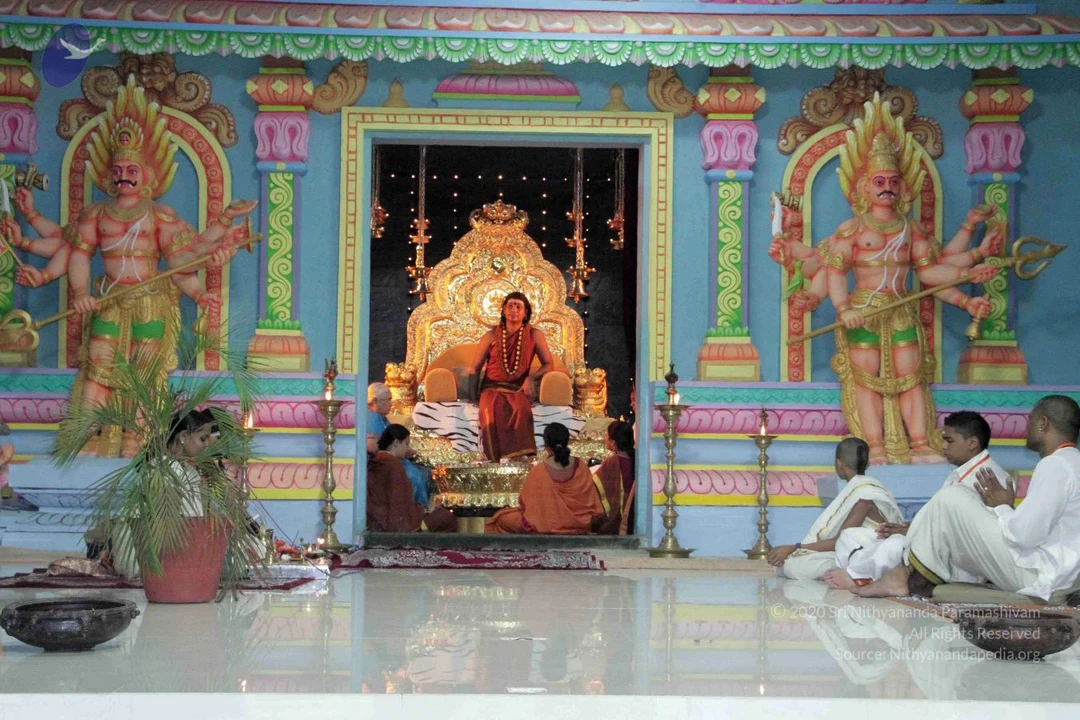
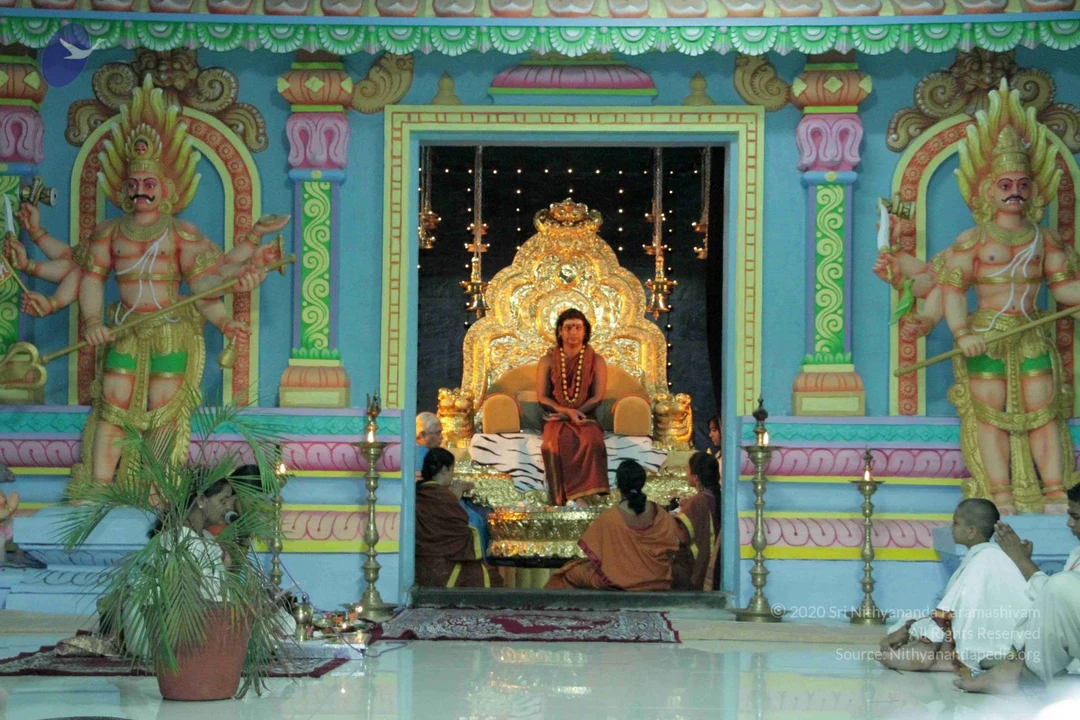
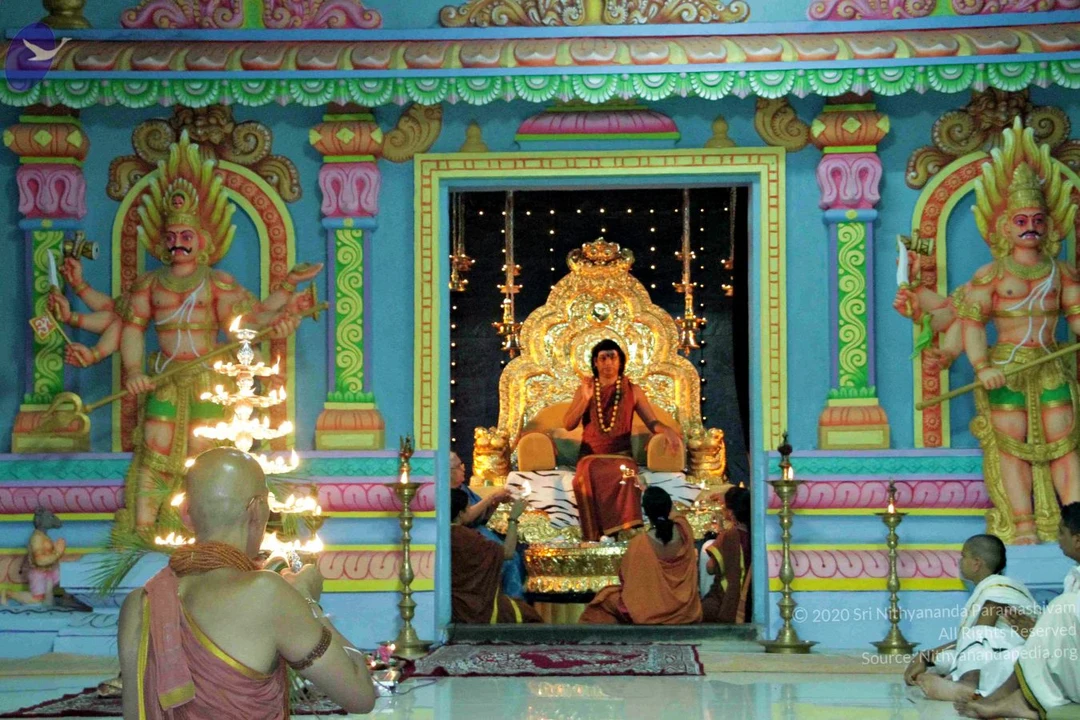
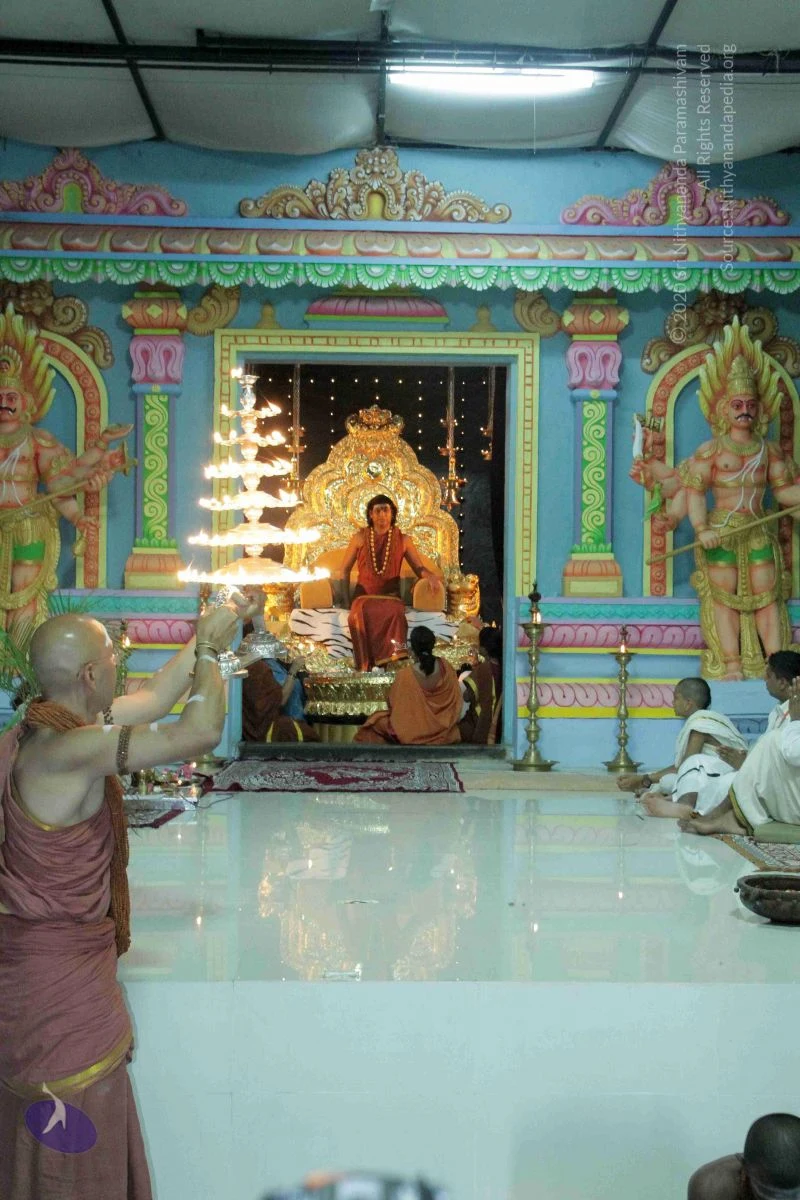
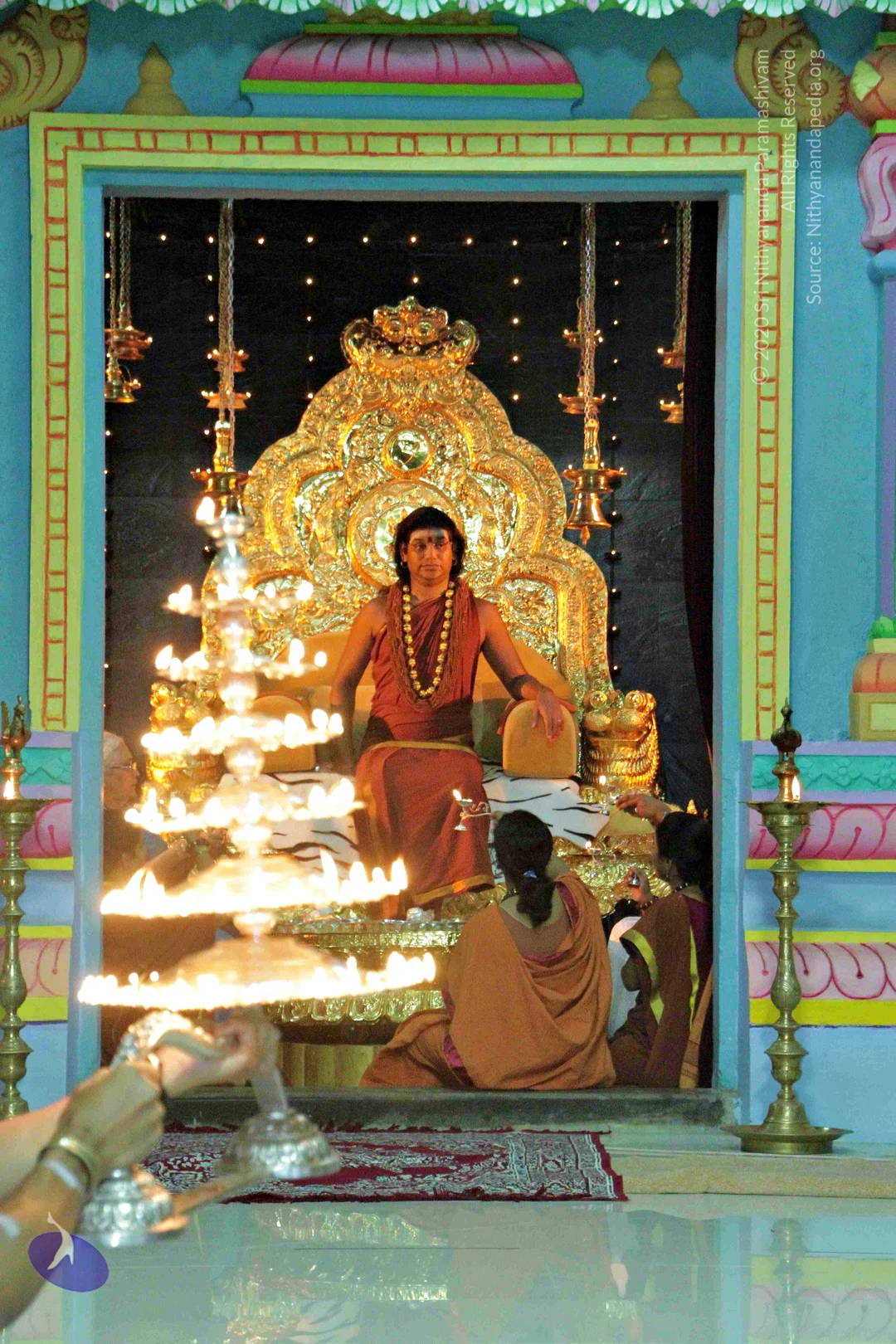
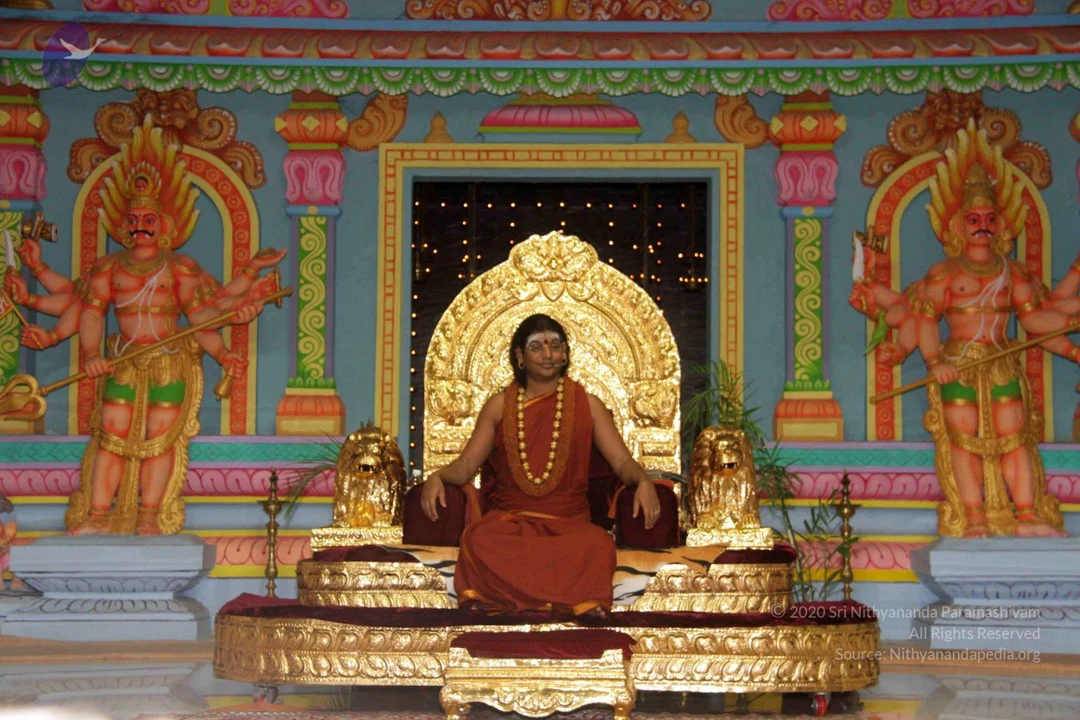
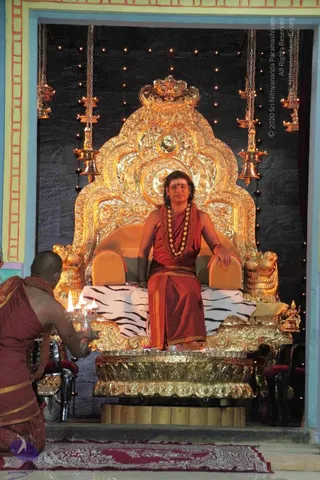
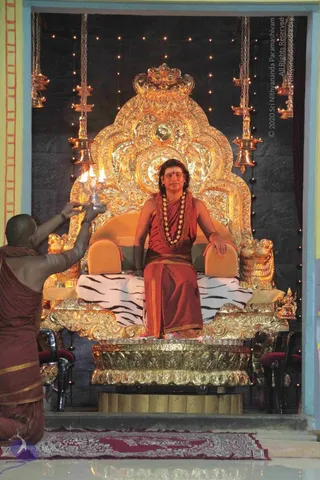
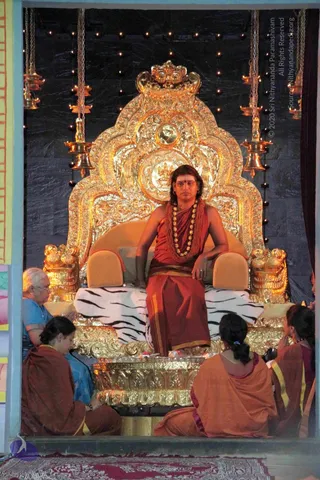
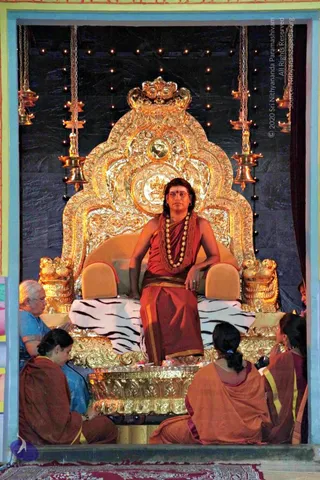
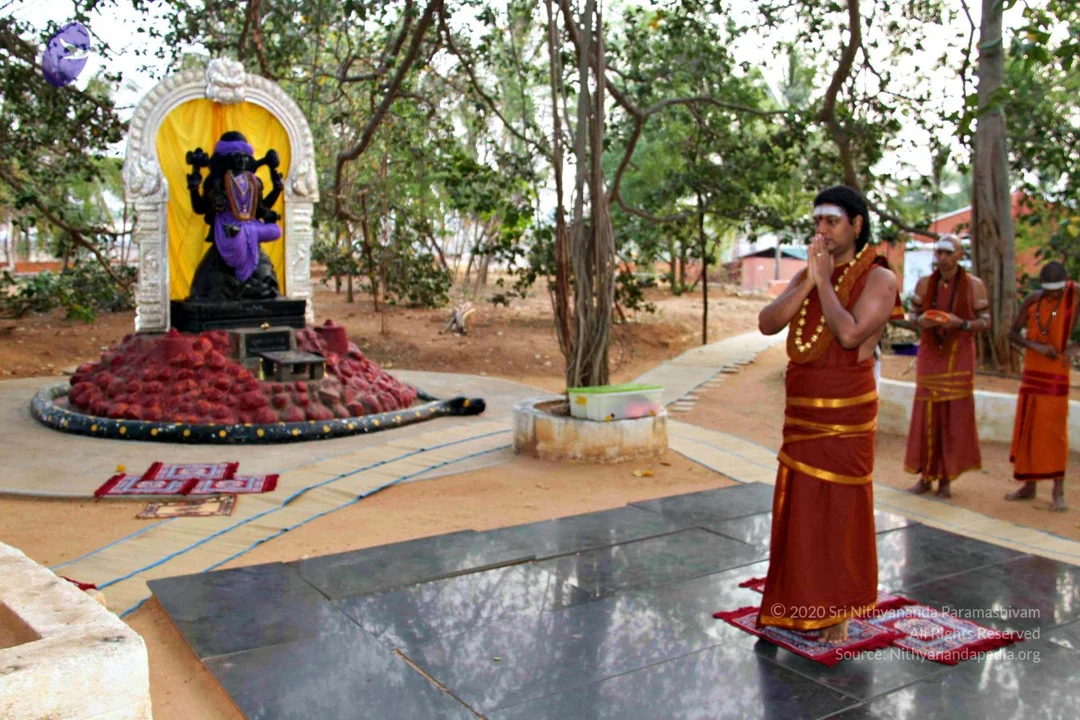
A seated man in a maroon-red robe and matching shawl sits on an ornate gilded throne with a tiger-striped cloth draped over the seat and a golden crown-like canopy above. He wears a long beaded rudraksha-style necklace with gold beads, a red-stained forehead mark, and his hair is long and swept back. Hanging brass oil lamps and dark beaded strings frame the golden throne in a shrine-like room. In the lower left, a kneeling attendant in a maroon robe holds a lit oil lamp toward the throne. Brass lamps and a small golden deity murti are visible at the edges, and a red patterned rug covers the floor.A seated man in a maroon-red saffron-toned robe with a long rudraksha-style bead mala draped over his chest sits on an ornate gold throne with a zebra-striped cloth on the seat and gold lion-like armrests in front of a dark backdrop with hanging brass lamps. Another man in a reddish-brown robe kneels at left, holding a lit oil lamp aloft toward the seated figure. A red patterned carpet lies at the foot of the dais. The seated man has long swept-back hair, a red mark on his forehead, and a shawl-like wrap over one shoulder, which are appearance cues matching the page's description of Swamiji (probable); the kneeling man is a devotee or priest performing an aarti with a lamp. Two people are visible.A seated man on an ornate gilded throne with a tiger-skin cushion, wearing a rust-red robe over one shoulder, a long rudraksha mala and a gold-toned necklace, with a red-and-gold patterned wrap. Swamiji (probable): the seated figure has long swept-back hair, rudraksha and ceremonial gold necklaces, and saffron-toned clothing, consistent with the satsang setting. Four women in orange and red saris sit on the floor before the throne, and an older woman in a blue top sits to the left. Brass oil lamps hang from chains above, and a patterned red mat lies on the floor.A seated man in a rust-red sannyasi garment and dhoti with a gold-bordered cloth, wearing a rudraksha mala and a long beaded ceremonial necklace, sits on an ornate gold throne with a tiger-striped cloth draped over the seat. Behind him, a large gold-plated backrest with carved motifs rises against a dark stone wall, with brass hanging lamps on each side. In front of the throne, four people sit on the floor in orange and rust clothing and a blue top, with hands folded or offering items on a gilded tray. The scene looks like a satsang or darshan setting. Swamiji (probable) is identified by the long swept-back hair, rudraksha mala, ceremonial beads and saffron-red robes, seated in a throne-like position.A seated man in a maroon-red sleeveless wrap and a thick rudraksha mala with large beads sits in a cushioned tan armchair before an ornate gold-toned throne backdrop with embossed floral scrollwork and a circular medallion showing a deity. He wears glasses, a red bindi and a vertical tilak on his forehead, and small hoop earrings, with shoulder-length dark hair. Swamiji (probable): long swept-back hair, rudraksha mala and red-orange clothing match the page's identification, but appearance alone is not decisive. He sits calmly with hands resting on the armrests. Only one person is visible.A seated man in an orange-red robe with a red-and-white beaded rudraksha mala sits on an ornate golden throne with a tiger-skin cushion in a temple shrine. Two large painted guardian figures with multiple arms and tridents flank the shrine on blue and pink walls. Devotees in white and orange sit on the floor before the throne, including a shaved-headed man in white dhoti and a younger man in white clothes with orange sashes, while a woman in white sits near a potted palm and brass lamps stand on the polished floor. The image shows a satsang and darshan setting.
Nithya-Satsang
47 photosSource gallery
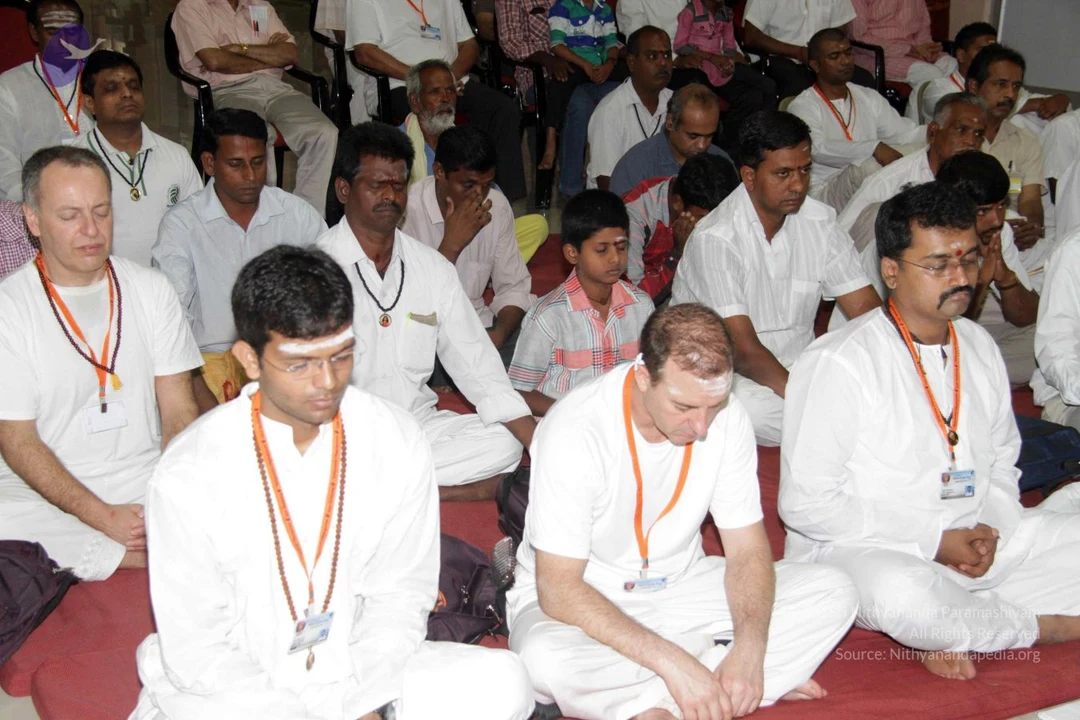
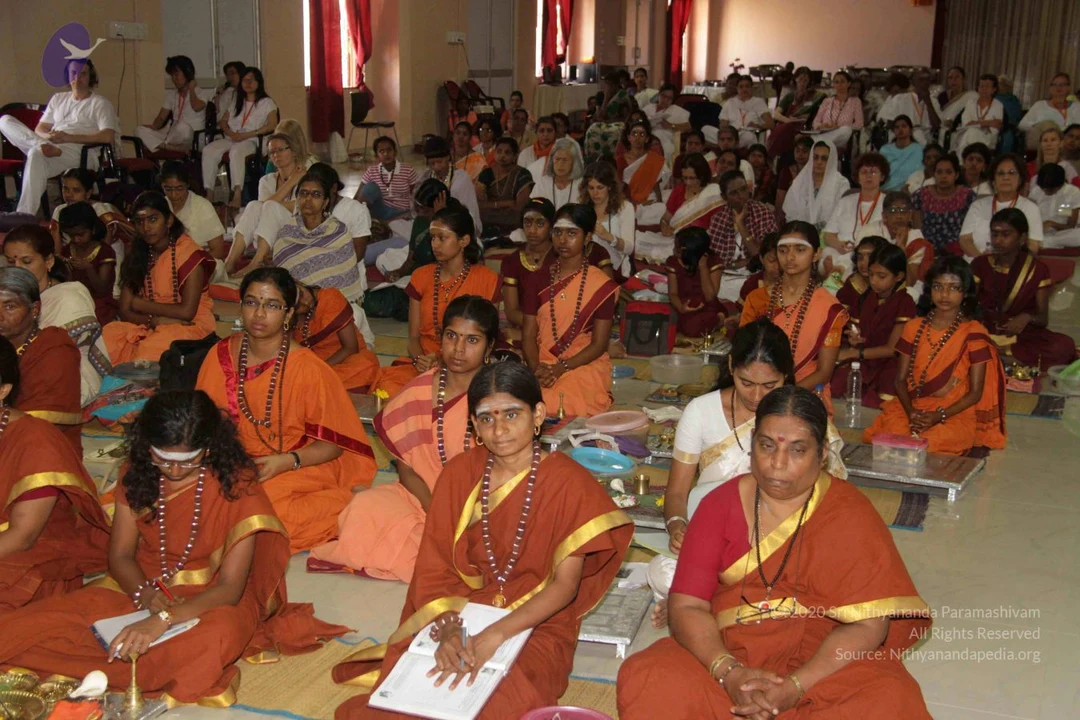
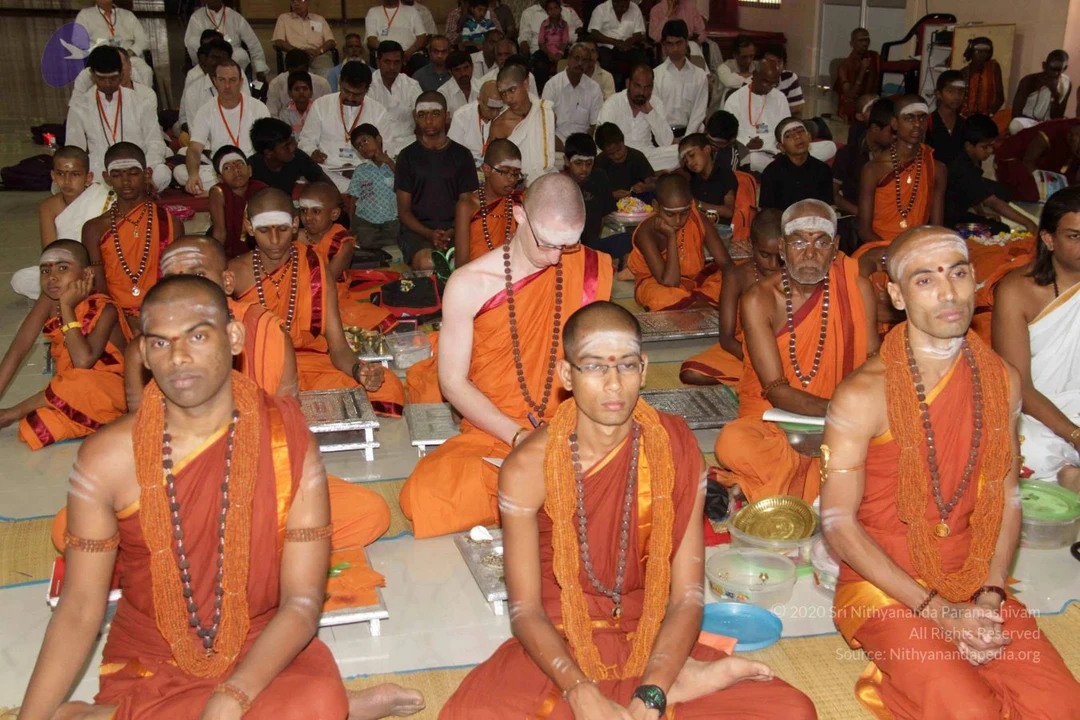
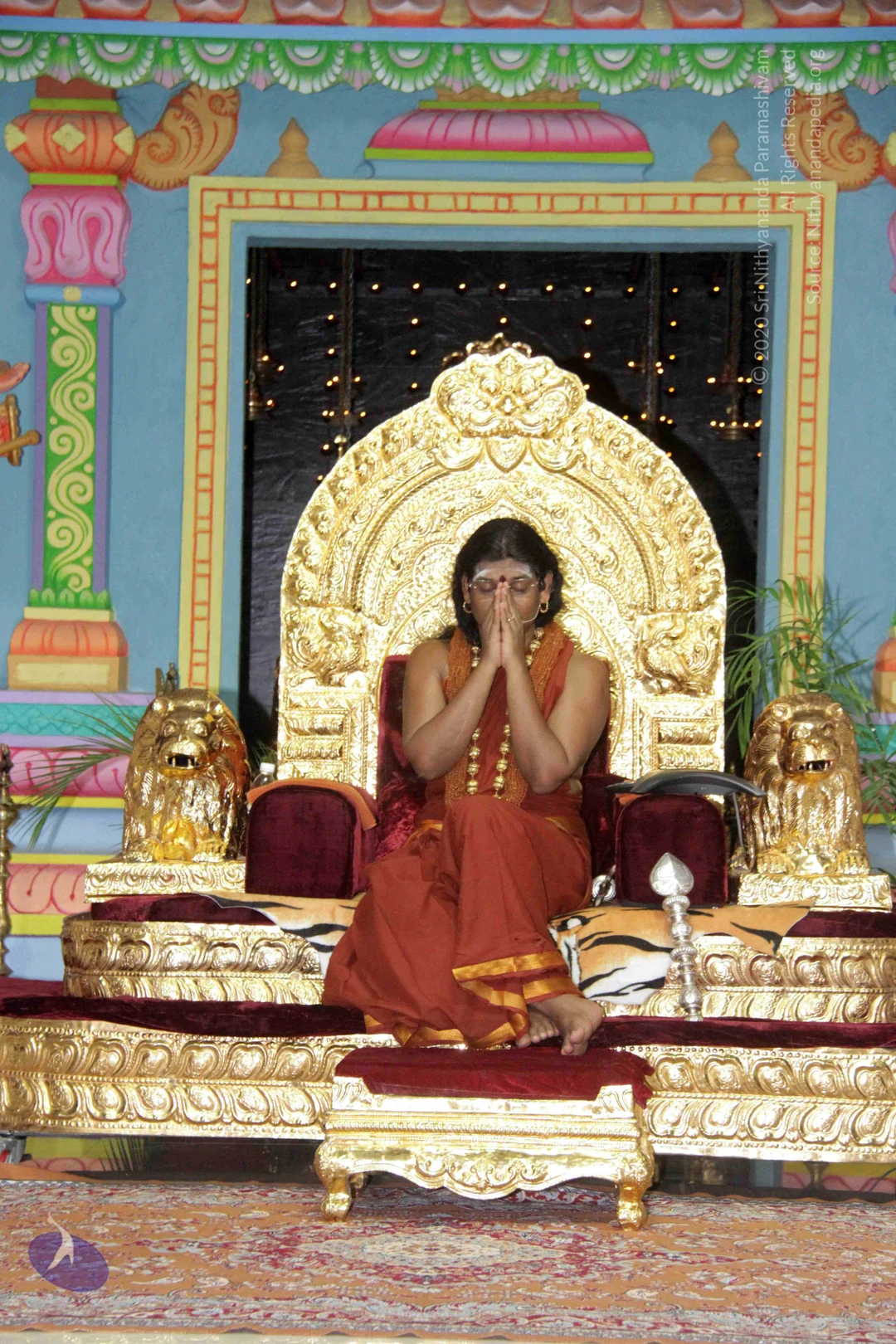
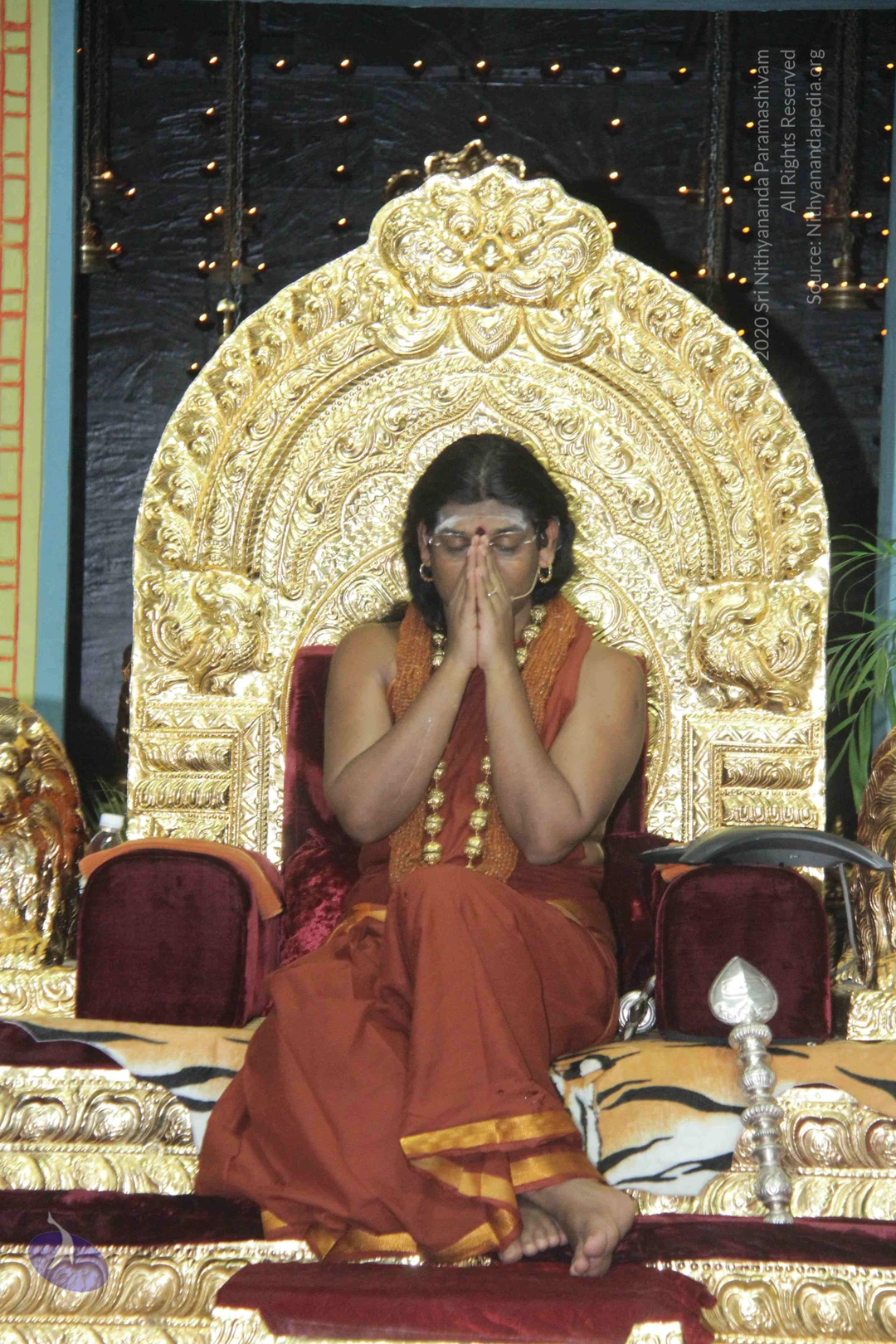
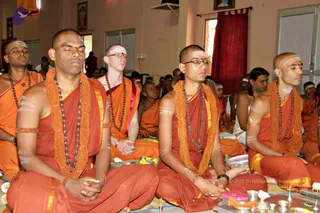
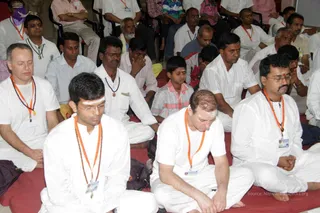
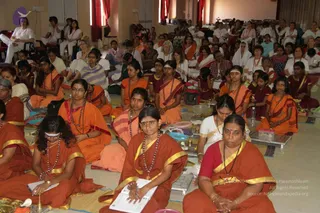
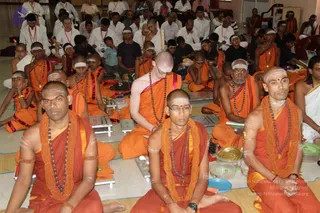
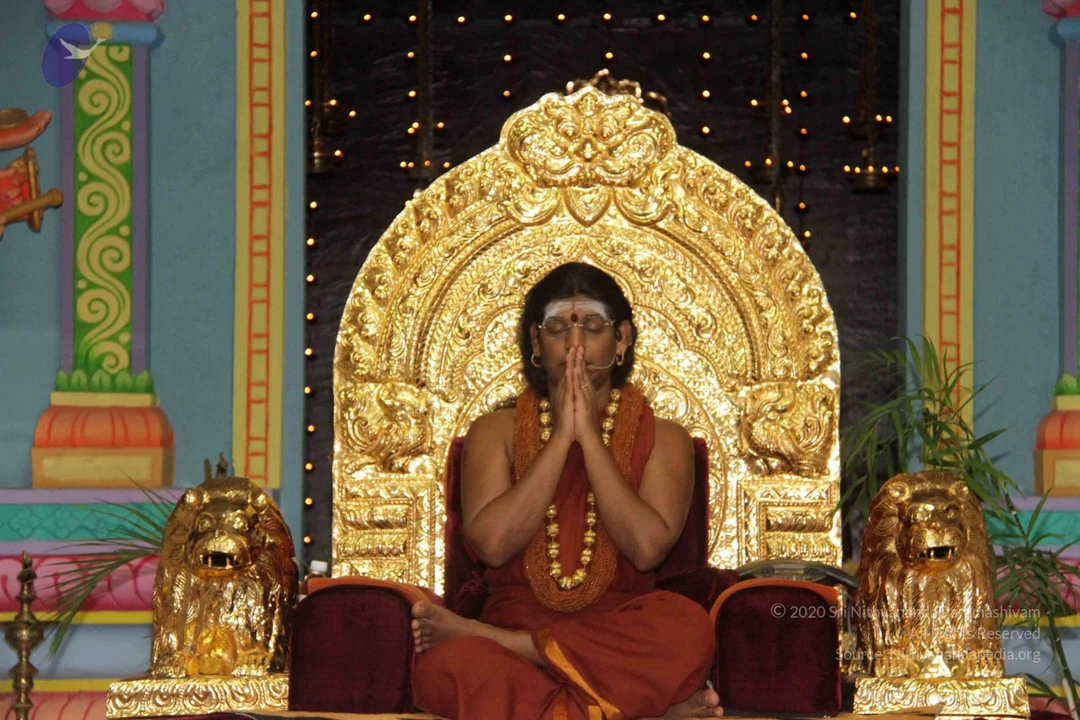
A seated man in saffron-orange robes sits cross-legged on a large ornate gold throne with a gilded arched back, flanked by two golden lion sculptures on pedestals. He has his palms pressed together in namaste, eyes closed, a red bindi and white forehead markings, a rudraksha-style mala and a heavy gold necklace. Behind the throne are gold-lit lamps and a dark backdrop, with green-and-yellow painted columns on the sides and potted plants at the right. The appearance is a person (a person) given the throne, saffron robes and gold ornaments, and this is an in-person presence on the throne.A photograph of a group of shaved-headed men in saffron-orange robes seated cross-legged on a floor during a satsang or meditation session in a plain hall with cream walls and red curtains. Several men wear orange shawls with gold borders, rudraksha malas and tilak marks on their foreheads and white ash markings on their arms, several with eyes closed. A small brass plate of offerings and a pink container sit in front of them. Behind them more seated devotees are visible. The men are in the foreground and a few are partly visible behind, with several more people seated in the background.A photograph of a group of shaved-headed monastic men in saffron-orange robes seated cross-legged on the floor in a hall, eyes closed in meditation. The foreground men wear orange shawls with beaded rudraksha malas, white sacred ash marks on their foreheads and arms, and metal bangles. Brass plates, small oil lamps and flower petals sit before them on a low tray. Red curtains and framed pictures hang on the walls behind.A seated satsang audience sits cross-legged on red mats in a hall, many with eyes closed in meditation. Foreground figures wear white kurta-style clothing; several have orange lanyards with ID badges and rudraksha malas, and some have white vibhuti or tilak marks on the forehead. A man at left in a white shirt wears an orange lanyard and rudraksha mala, and a man at right in white with a moustache wears an orange lanyard. Behind them, men and boys in shirts sit in rows, some with hands folded. No speaker or a person candidate is visible in this frame. Roughly twenty physical people are visible.Photograph of a large seated audience inside a hall with red curtains and white walls, attending a satsang. Most attendees wear orange or saffron saris and kurtas with gold borders and rudraksha malas, with some in white and red. A young woman in the foreground wears a red-bordered orange sari, holds an open notebook and pen, and sits on a mat beside brass lamps and small offering trays. Another woman in a red blouse and red-and-gold sari sits at right with folded hands, and a man in white stands at upper left. No single figure is clearly identifiable as a person, so no candidate is named.A seated group of saffron-robed sannyasis with rudraksha malas and white forehead markings sits on a white mat in a hall, many with orange shawls draped over their shoulders, the foreground ones with orange garlands. Behind them, men and boys in white shirts and orange lanyards and more devotees in dark clothing sit in rows. Brass plates, a bowl and small ritual items lie before the group, consistent with a puja or satsang. A bald figure in the centre wears an orange robe with a red-and-white border, wire-rimmed glasses and a rudraksha mala, and a red-and-yellow shawl; no specific identification is made from appearance.
IA-Darshan

32 photosSource gallery
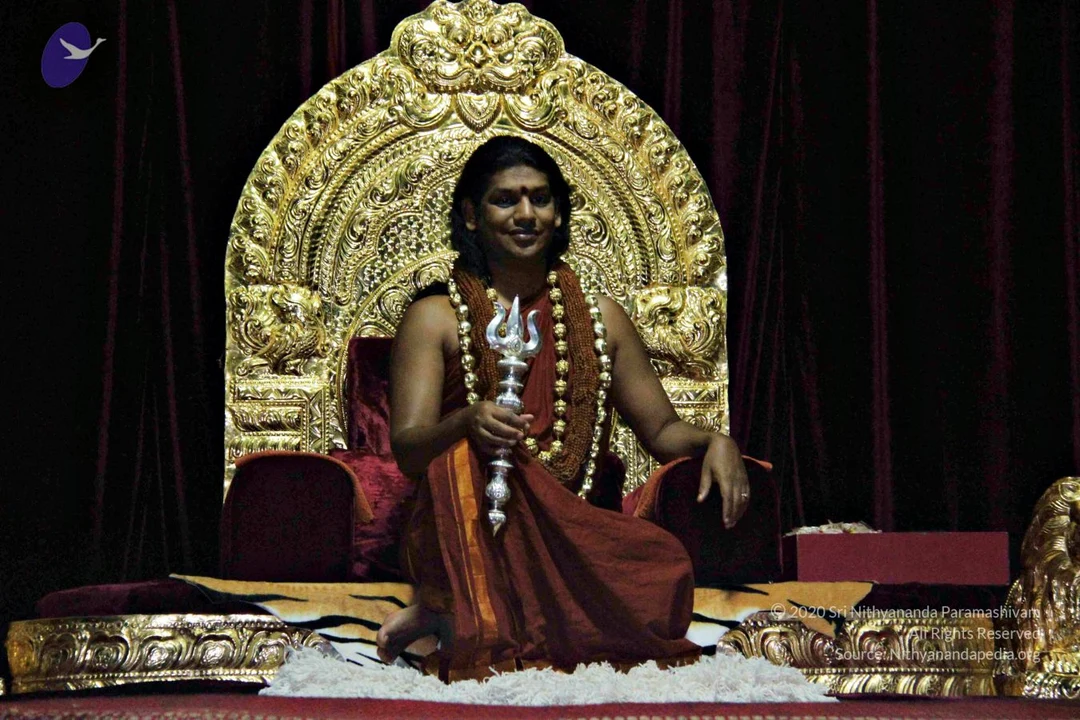
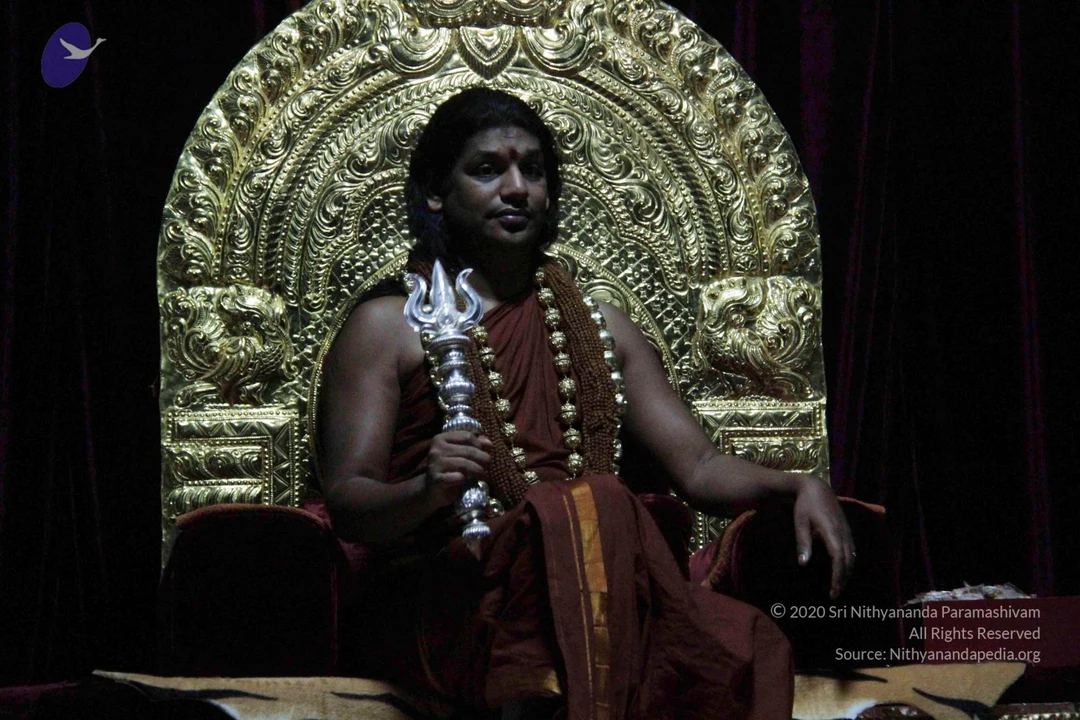
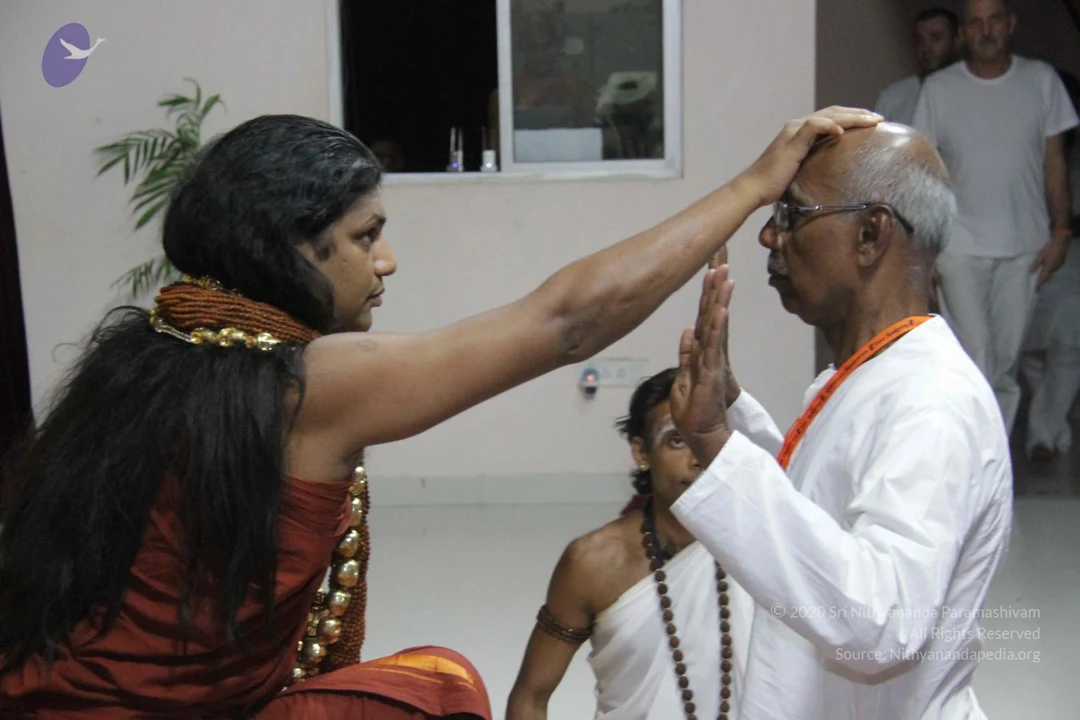
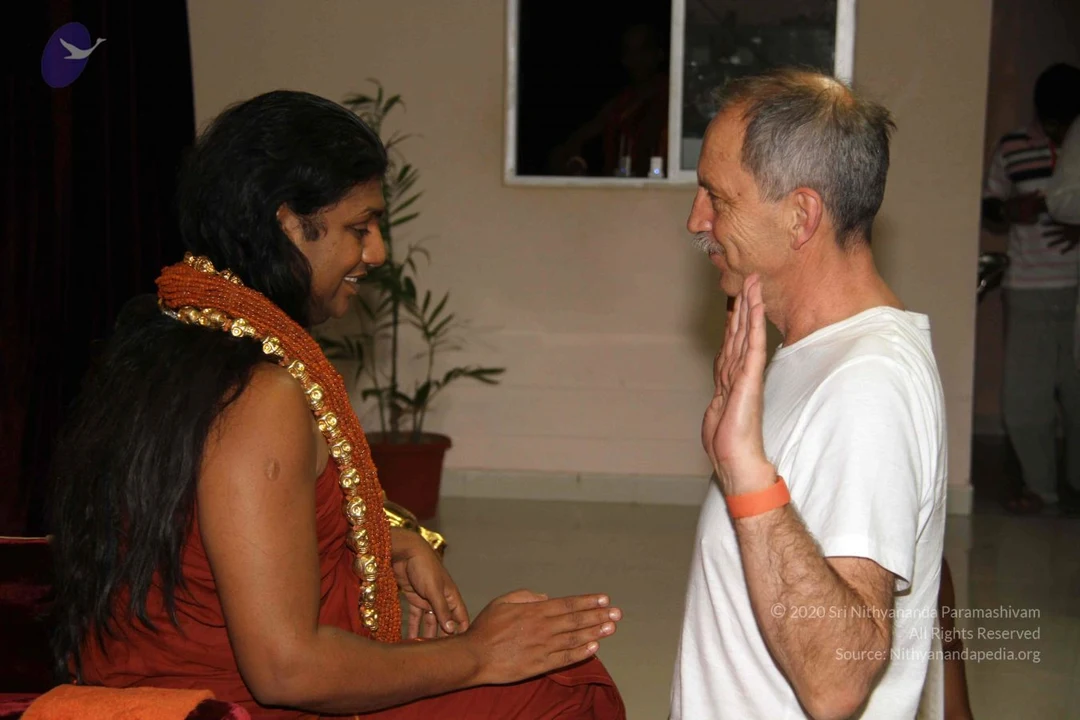
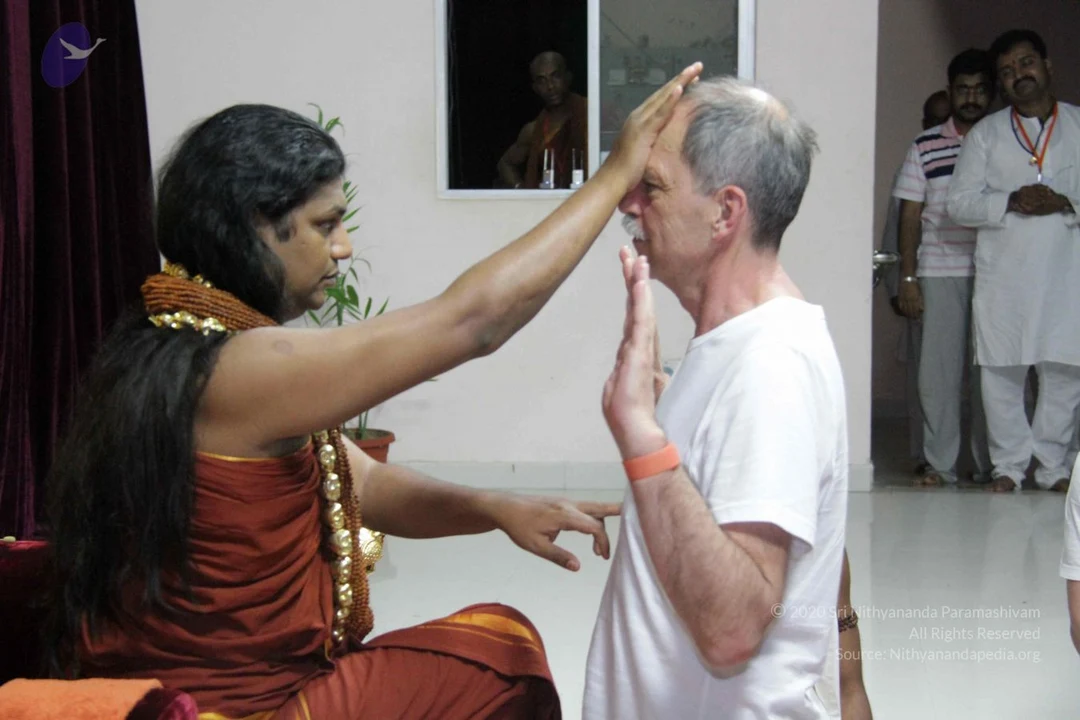
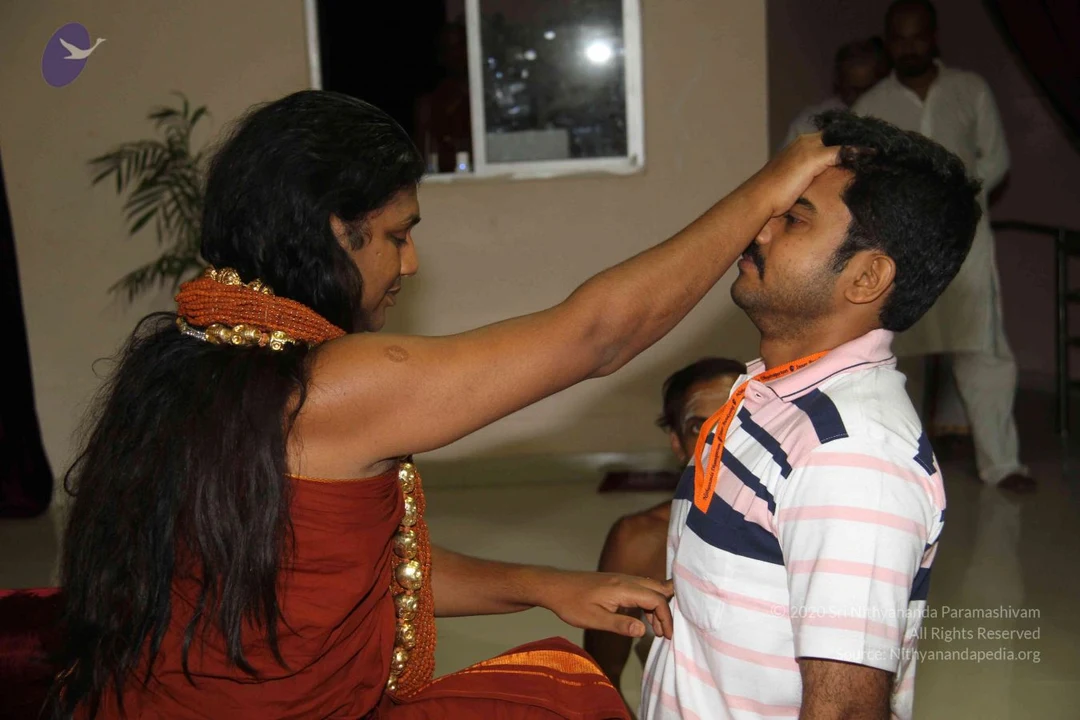
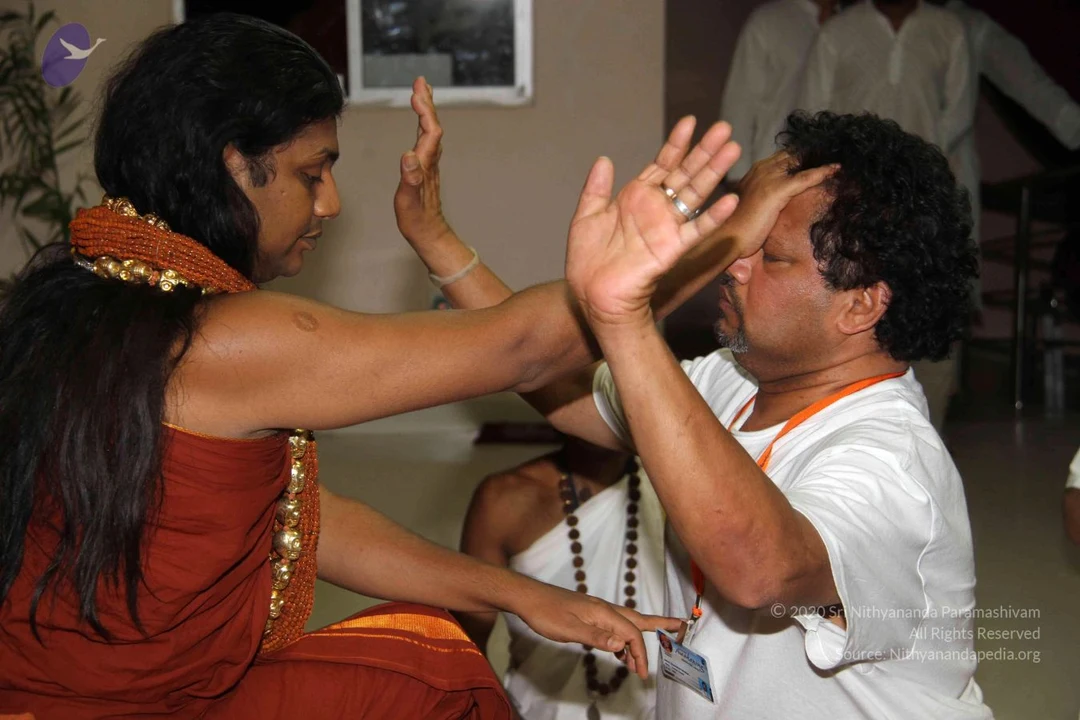
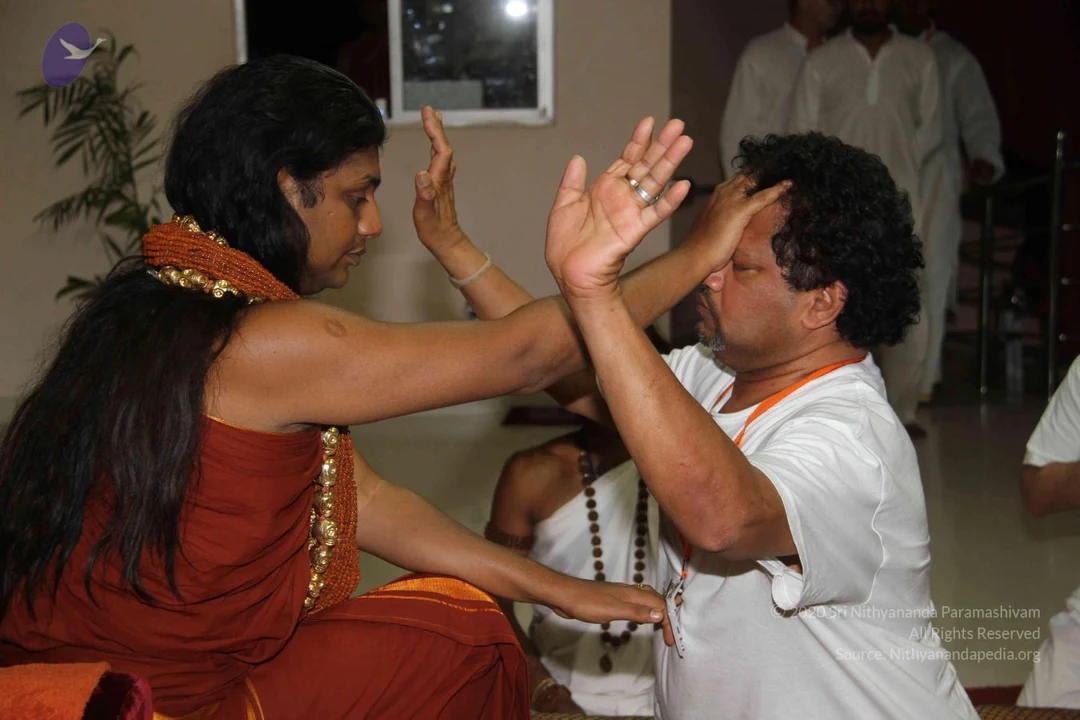
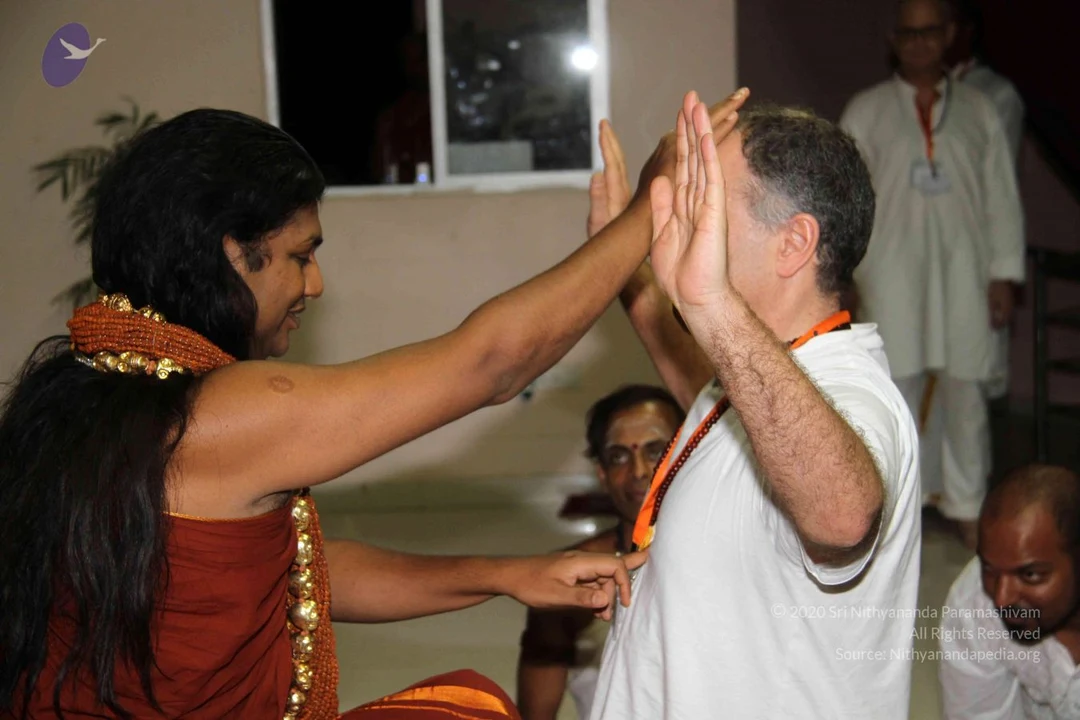
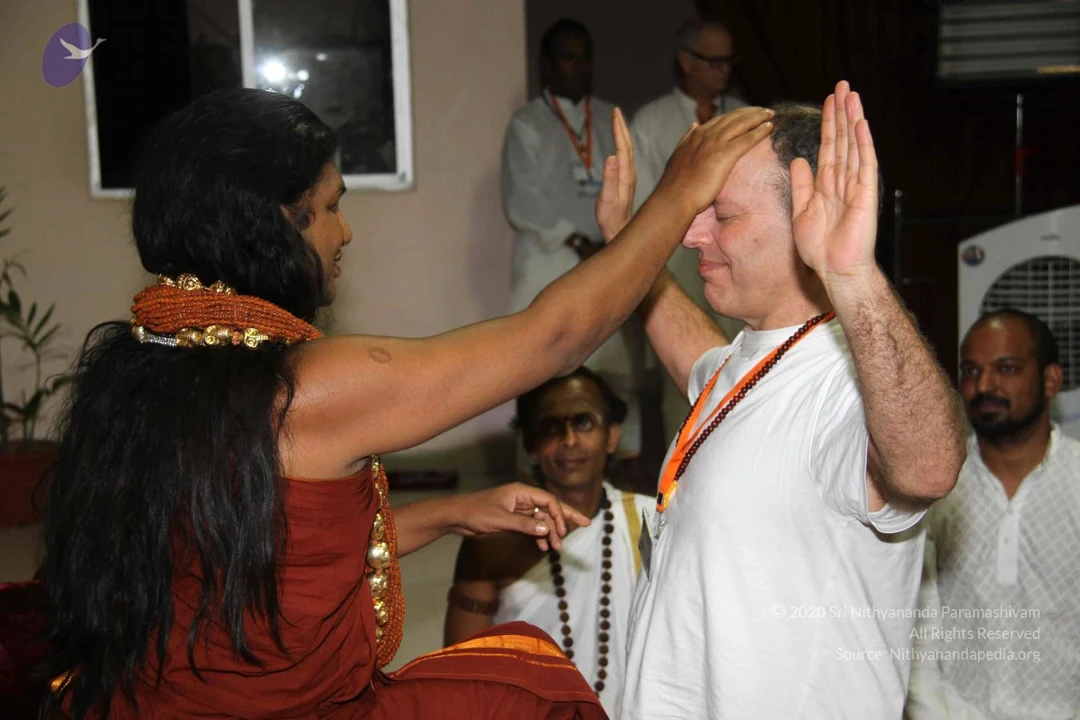
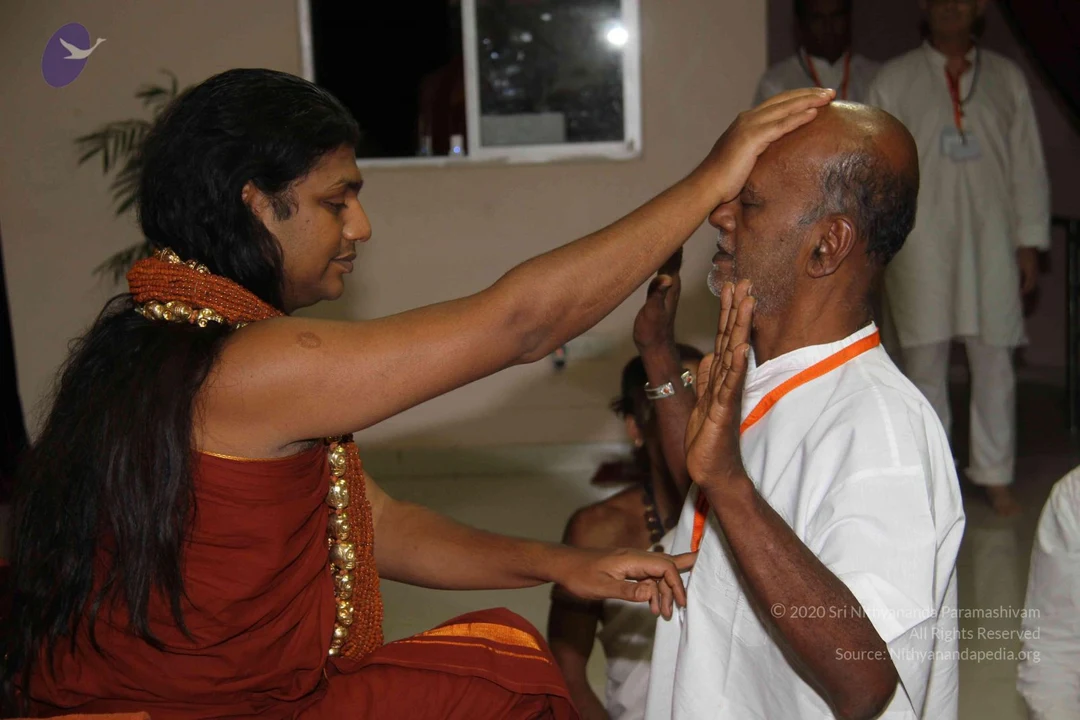
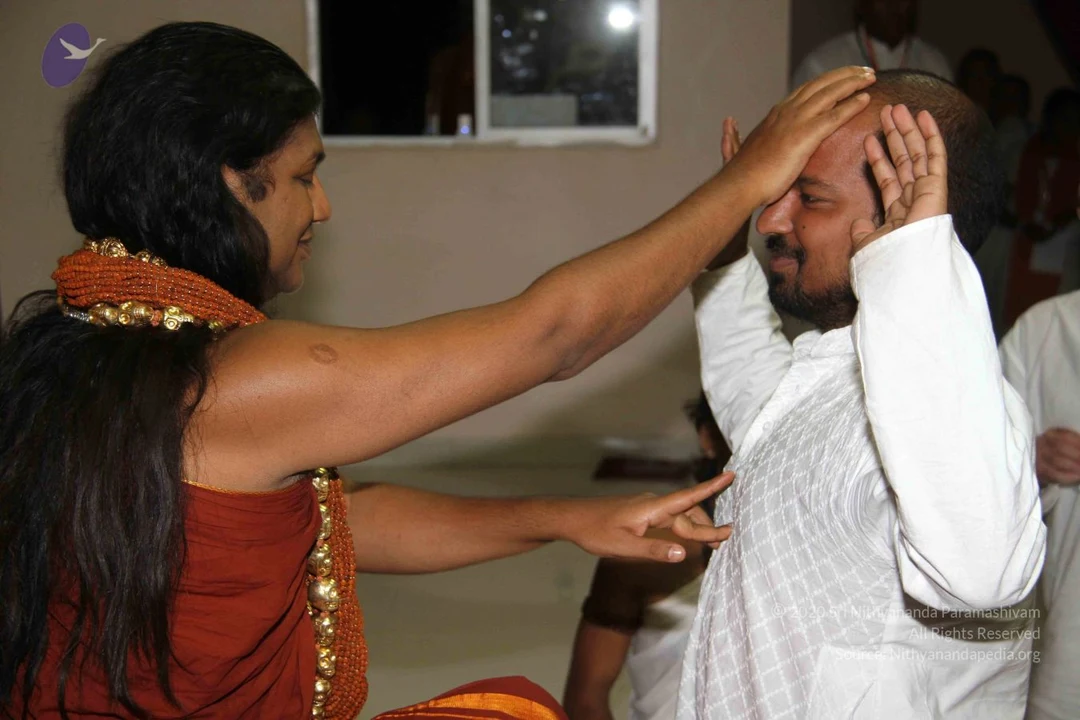
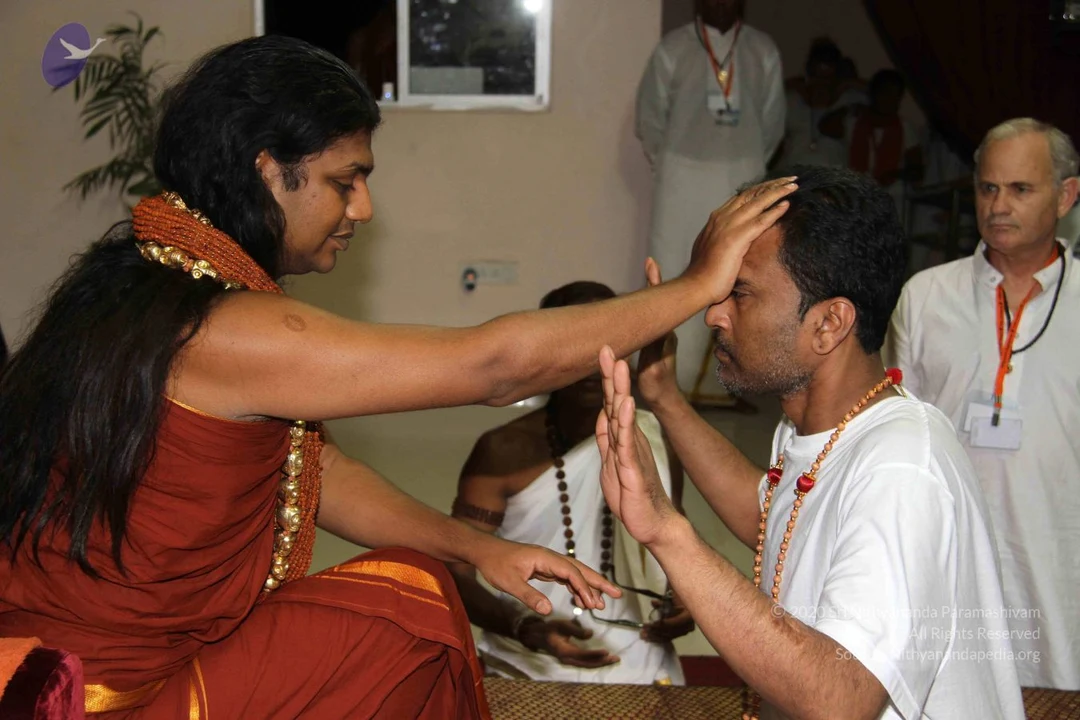
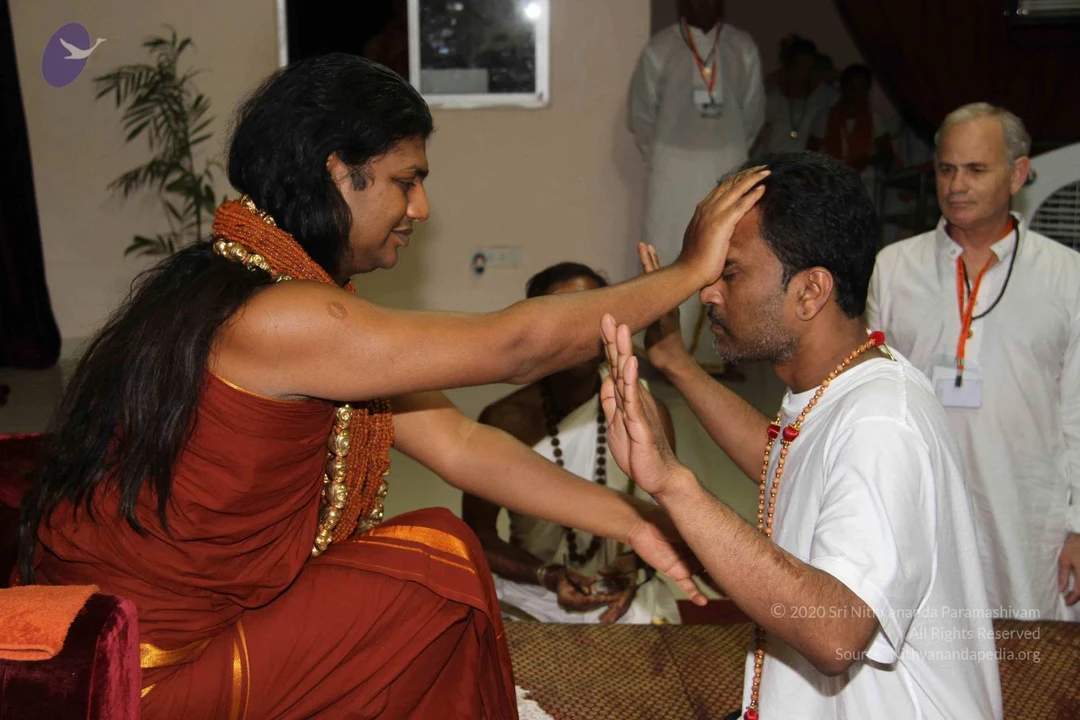
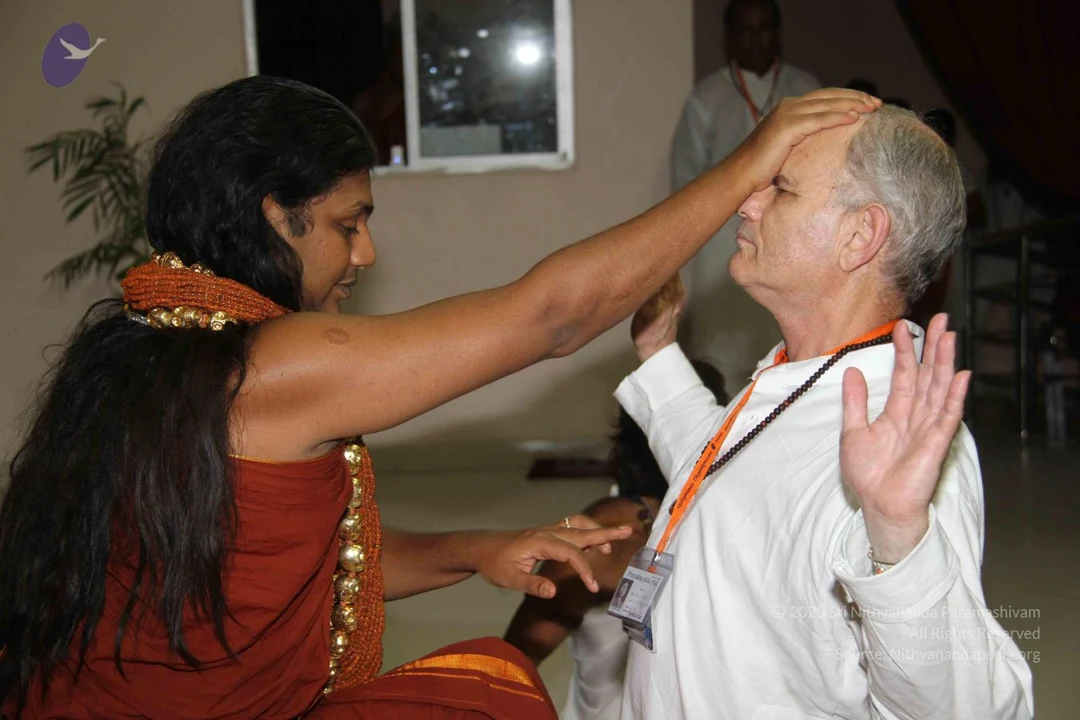
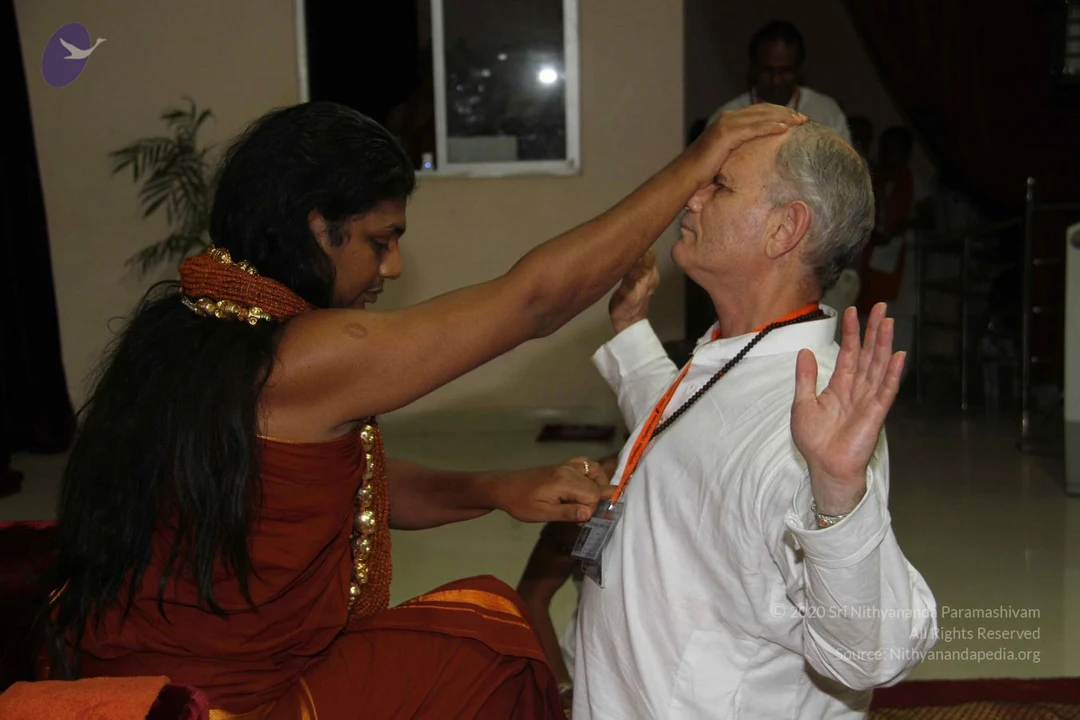
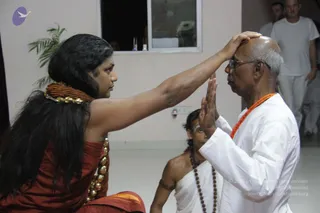
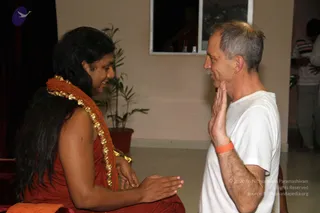
A seated man in a rust-red sannyasi-style dhoti and shawl sits eyes closed in meditation on an ornate gold repoussé throne with a carved lion-head motif, against dark maroon drapery. He wears layered rudraksha malas and a long pearl-and-gold ceremonial necklace, with a red bindi on his forehead and hands resting folded in his lap. Probable Swamiji (long swept-back hair, rudraksha malas, ornate gold necklace and saffron-red attire on a throne). A velvet-covered armrest and cushion are visible beside him.A seated man in an ornate golden throne with an arched backrest, draped in a rust-orange robe with gold trim and wearing long beaded necklaces with a red rudraksha-style mala. He has long swept-back hair and a red bindi, and holds a silver ceremonial staff in his right hand while sitting on a tiger-striped cushion over a white fur rug. Dark maroon velvet drapes form the backdrop.A seated man in a saffron-orange dhoti and matching shawl sits cross-legged on a tiger-striped cloth before an ornate gold throne with carved arch and lion-head finials against dark red drapery. He wears long swept-back hair, a red tilak on the forehead, a rudraksha mala and a gold beaded necklace, and holds a silver trident (trishul) upright in his right hand while smiling. Silver-white flowers lie on the floor in front of him. The setting suggests a satsang or discourse stage. Appearance-based probable Swamiji (probable) with long hair, saffron clothing, rudraksha and ornate gold necklace, seated on a throne in a teaching role.A man with shoulder-length dark hair and a small red tilak on his forehead sits on an ornate golden throne with elaborate repoussé carvings and lion-like side motifs. He wears a rust-red saffron-toned cloth draped over his bare shoulder and a striped orange border, with a long rudraksha mala of brown beads and a ceremonial gold-bead necklace. He holds a silver trident staff upright in his left hand while his right hand rests on the armrest. Dark maroon drapes form the background. a person is shown seated in a ceremonial setting, appearing in person on the throne.A photograph of a long-haired figure in a rust-orange robe with a rudraksha mala and ornate gold beaded necklace leaning forward to press a hand on the forehead of an elderly bald man with glasses, white kurta and orange shawl, who holds palms joined in greeting. Behind, a seated devotee in white dhoti with a rudraksha mala and a standing man in white clothes watch in a plain white-walled room with a potted plant. Probable Swamiji (long swept-back hair, rudraksha mala, ornate gold necklace, saffron-orange clothing) performs a blessing gesture as a priest figure.Indoor photo of a seated long-haired person in a saffron-orange robe with a thick orange-and-gold beaded necklace, smiling and extending a hand toward a grey-haired man in a white t-shirt and orange wristband who raises his palm in greeting. A potted plant and a window sit behind them, with other people faintly visible at the right edge.
SarvaDarshan

9 photosSource gallery
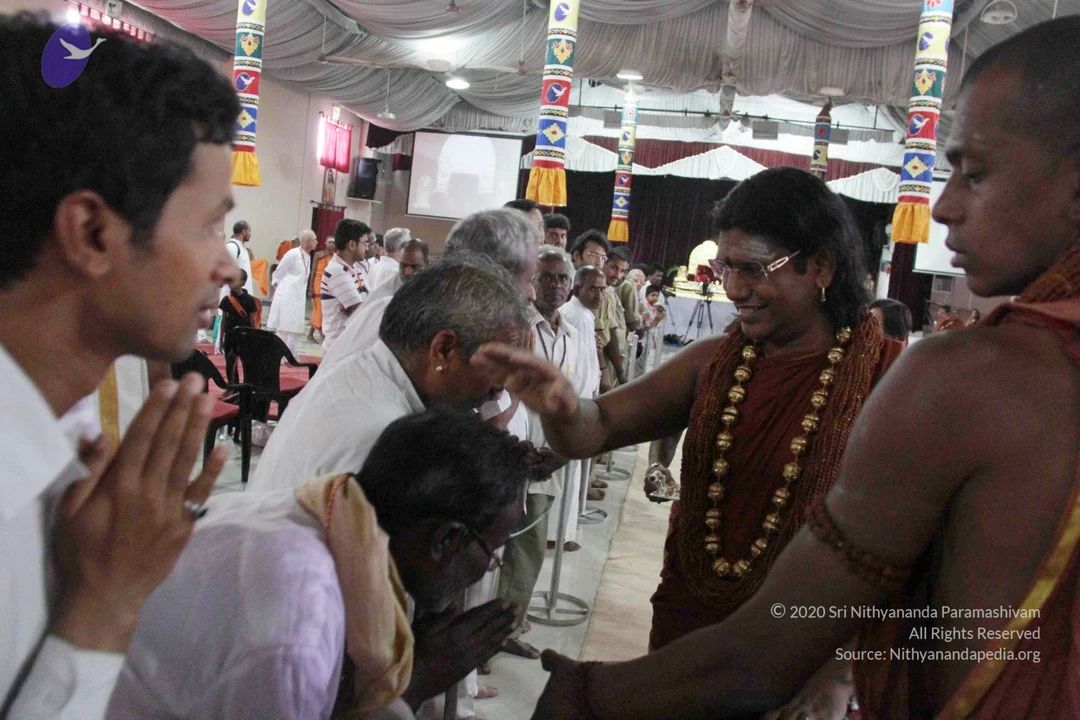
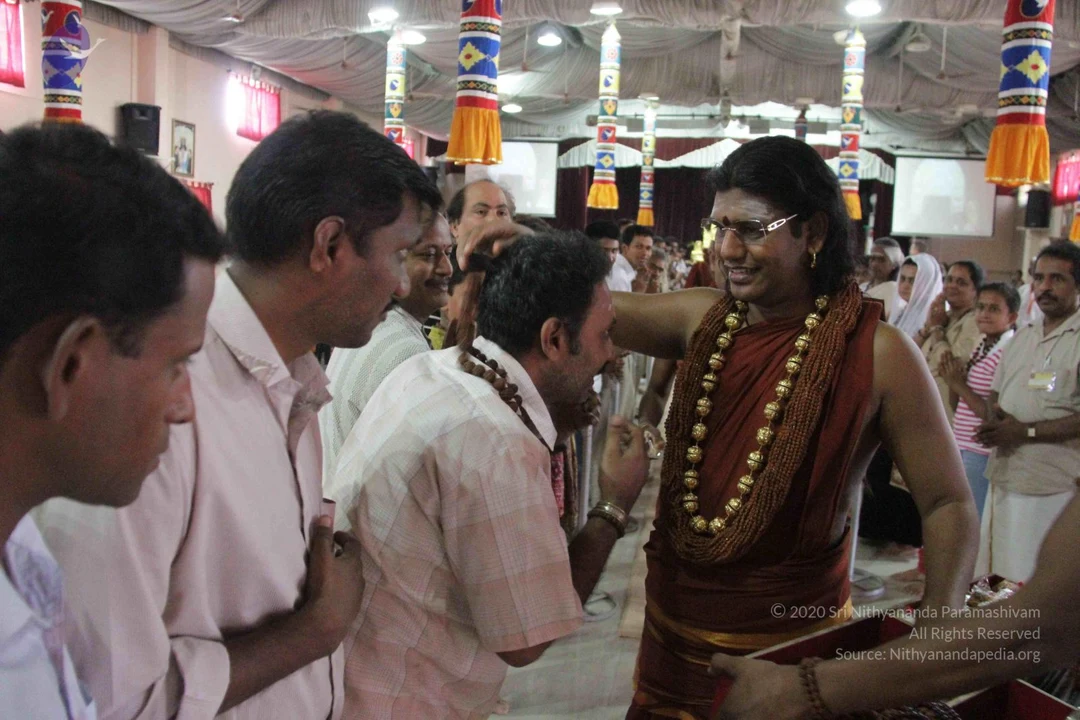
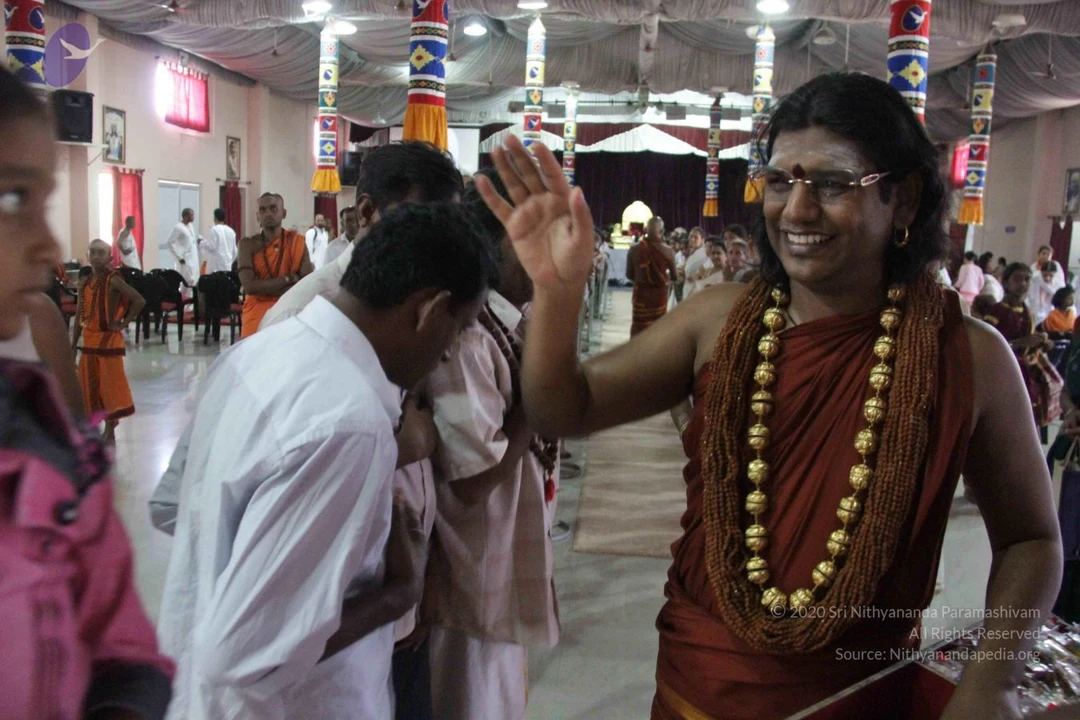
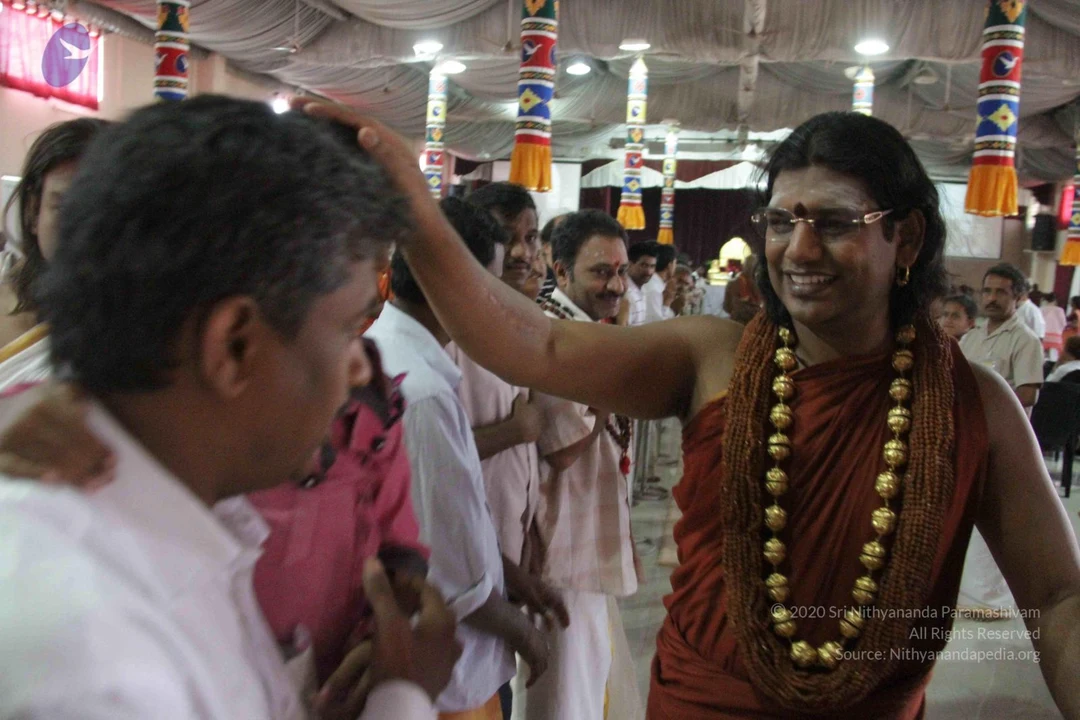
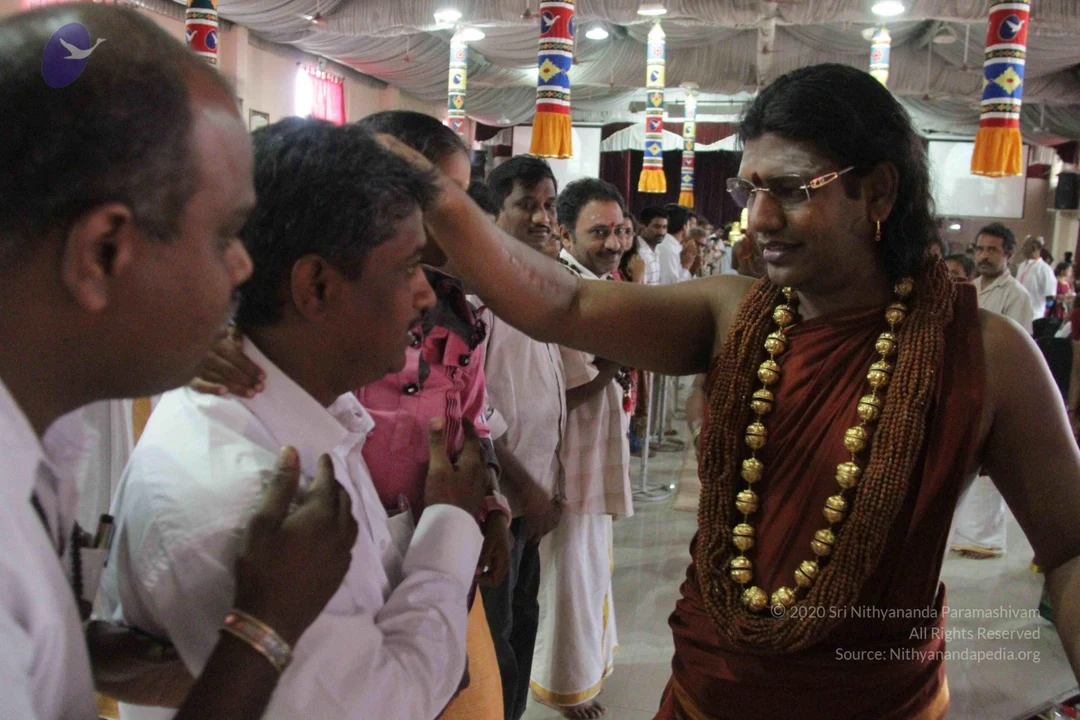
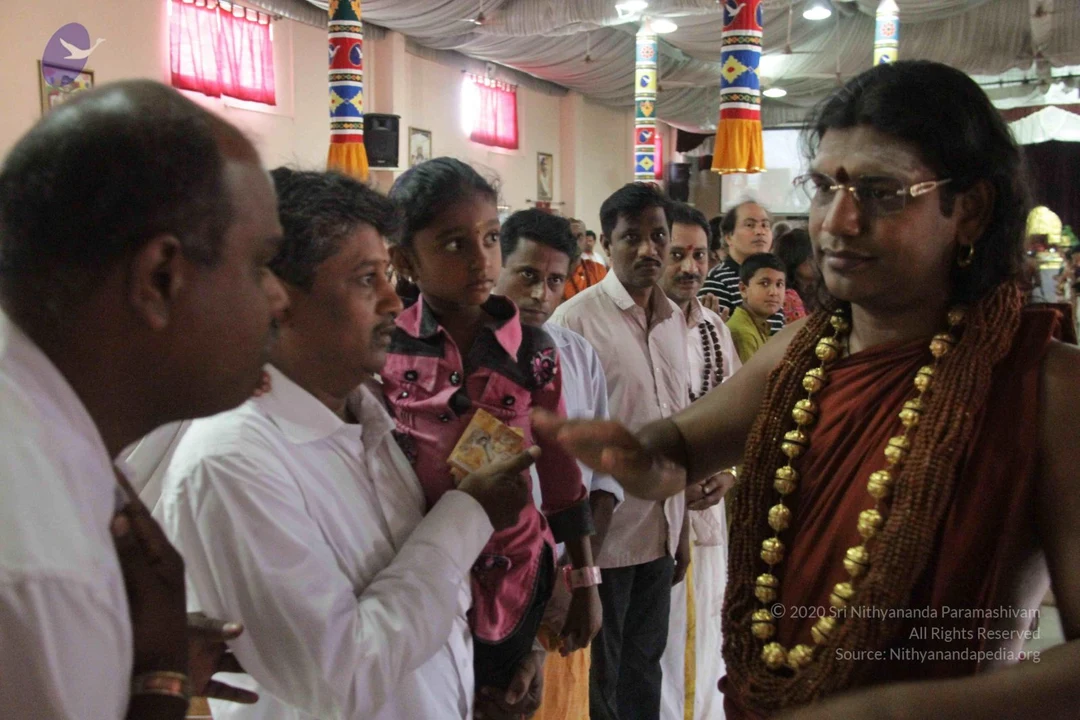
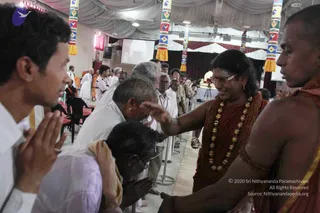
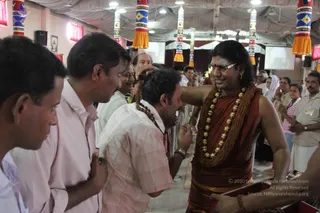
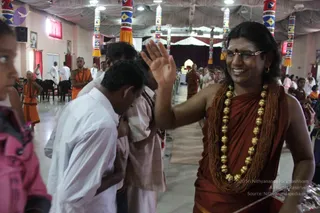
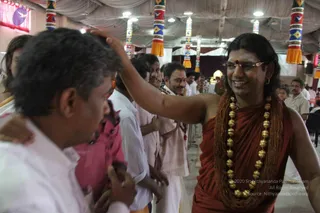
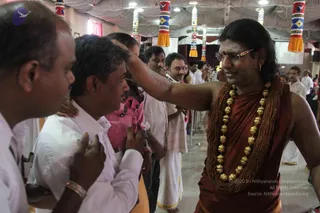
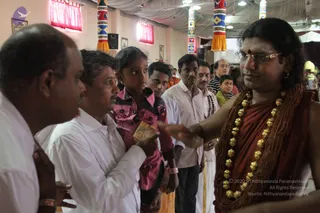
A photograph inside a decorated hall with white draped ceiling and tall striped pillars with gold tassels. A man with swept-back dark hair, glasses, multiple gold-toned beaded necklaces and a rust-orange robe stands at right, extending his hand in blessing toward a kneeling devotee in white clothes with bowed head. To the left, a man in white with palms pressed together in namaste watches. Another man in white kneels in front of the blessing figure. Behind them, devotees in white and orange stand along a barrier, and a decorated altar with flowers and lamps is visible in the background.A photograph of a hall with striped ceremonial pillars in orange, blue and yellow and a white draped ceiling. A figure with long swept-back dark hair, rudraksha beads and a heavy gold bead necklace, wearing a rust-red wrap, leans forward smiling and touches the head of a man in a pink-and-white checked shirt wearing a rudraksha mala, who bows. Several men in white and pink shirts stand at left watching, a woman in a white sari and other devotees stand behind, and a projector screen is visible at top. Swamiji (probable): the long hair, rudraksha, gold necklace and saffron-red wrap are the cues for the central figure, who is blessing the bowing devotee.A photograph of a satsang hall decorated with a white canopy and colourful striped pillars with yellow tassels. On the right, a smiling man with long swept-back dark hair, a red bindi, rimless glasses, gold hoop earring, and a rust-red robe over a large gold-bead necklace on a rudraksha mala raises one hand in greeting; the figure has distinctive long hair, ceremonial gold necklace and rudraksha cues consistent with a Swamiji (probable) candidate. Nearby, a man in white shirt bows with hands folded, and other devotees in white and orange saffron robes stand and sit in the hall, with a pink-jacketed child at the left edge.A photograph of a satsang hall with a striped fabric canopy and tall decorative poles in red, blue, white and yellow with orange tassels. A man in a rust-orange robe with a long gold bead necklace and rudraksha beads, wearing glasses and a red vertical tilak, smiles while placing his right hand on the head of a man in a white shirt in the foreground. Other devotees in white and pink shirts stand in line behind them, and a lit altar area is visible at right. Roughly six to ten people are visible.A photograph of a crowded indoor hall with a decorated ceiling draped in white fabric and hanging colourful striped pillars with orange tassels. In the foreground, a man with long swept-back dark hair, wire-framed glasses, a gold earring, a dark brown-red robe and a thick rudraksha mala with large gold beads places his hand on the head of a man in a white shirt, who has his hands raised. Several other men in white dhotis and shirts stand nearby, and a man in a pink shirt is visible. The man in the red-brown robe is a probable Swamiji by appearance: long swept-back hair, saffron-toned robe, rudraksha mala and gold beaded necklace.Indoor photo of a satsang-style gathering in a hall with pink and white draped ceiling, colourful striped pillars and framed pictures on the wall. On the right, a man with swept-back long hair, rimless glasses, a tilak, a red-orange shawl and a heavy gold-beaded rudraksha necklace gestures with his right hand while speaking to a line of devotees. Probable Swamiji with distinctive long hair, saffron-orange shawl and ornate gold-bead necklace, speaking to devotees. Devotees stand around him: a man in a white shirt holds a small card, a girl in a pink top looks on, and men in white shirts and dhotis stand behind. A boy in green appears at right.
IA-Breakfast

15 photosSource gallery
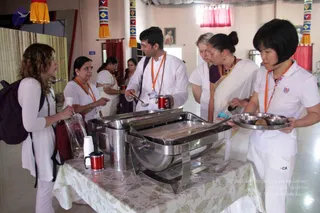
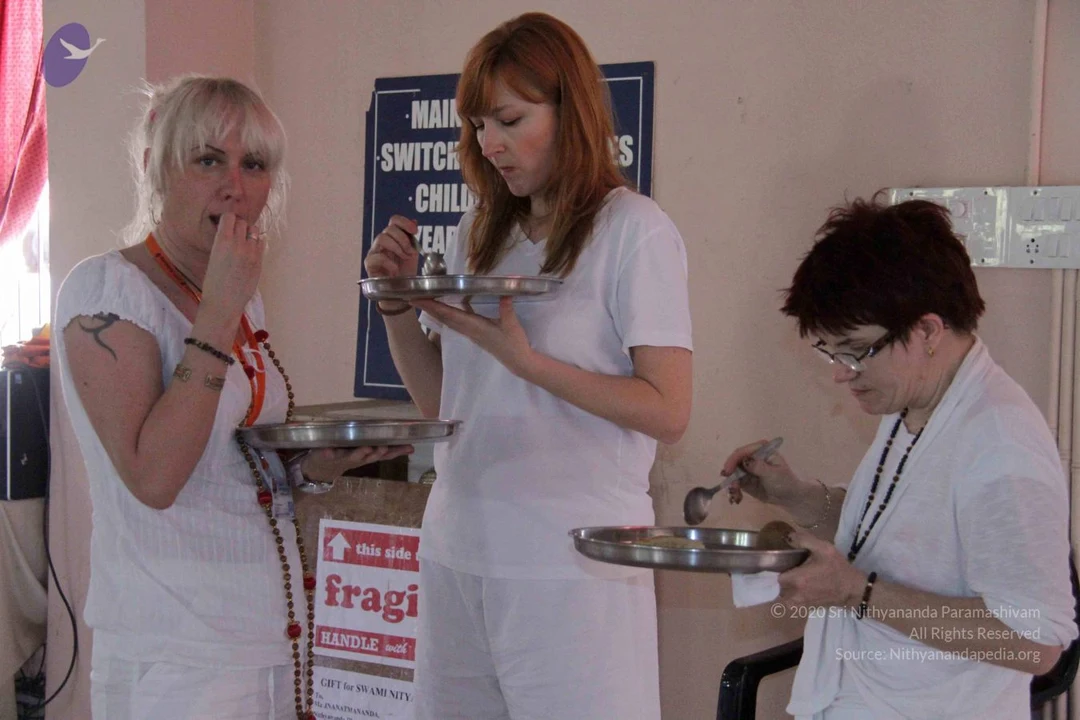
Three women in white clothing serve food from steel plates in an indoor room with pale walls. The woman on the left, with platinum-blonde hair, wears white and a rudraksha mala with an orange cord, and lifts food to her mouth. The middle woman with long auburn hair in a white t-shirt holds a steel plate and spoon. The woman on the right with short dark-red hair and glasses wears a white top and dark beaded mala while ladling food onto a plate. Behind them a blue sign and a cardboard box labelled as a gift for Swami Nithyananda sit beside a cabinet. No deity, throne or a person depiction is visible.A photograph of a buffet serving area inside a hall with pale walls and tiled floor. Stainless steel chafing dishes with lids sit on a table covered in a cream floral cloth. A man in white kurta with an orange lanyard and rudraksha-style beaded mala holds a ladle and a red steel mug. A woman in white on the left holds a red mug and a white cup, and another woman in white with orange lanyard stands behind. On the right a woman in a white polo shirt with an orange lanyard carries a metal tray of bowls. Beyond them, a woman in a white sari with a red-brown top and a woman in white stand near the buffet. Framed portraits and colourful hanging panels decorate the wall behind.Two smiling men in white kurta-style shirts stand close together at an indoor event. The man on the left, with glasses and short grey hair, holds a red stainless-steel travel mug. The man on the right has a white vibhuti mark on his forehead, a black beaded mala and an orange lanyard, and holds a white disposable cup. Both wear orange lanyards with conference ID badges reading Awakening. A white wall and pink wall are behind them, and a partly visible person in white stands at the left edge.A photo inside a white-walled hall with striped hanging decorations and red curtains. In the foreground, a bald man in white clothes with orange and rudraksha beads and a white forehead mark stands beside a woman in white with glasses and a white shawl, both reaching toward two large terracotta pots on a table. A blonde woman in a white shirt with orange and bead necklace holds a red steel flask. Other people in white clothes move in the background near a steel dispenser. A small framed portrait hangs on the left wall.Women in white ritual clothing serve drink from large terracotta pots at an indoor hall with pink curtains and colourful striped hanging decorations. In the foreground, a woman in a white shawl and orange-beaded necklace scoops from a clay pot with a ladle, while a blonde woman in a white shirt, rudraksha-style orange beaded mala and an event badge ladles from a red steel vessel. A woman with glasses and a white shawl holds a small white cup. Another woman in a maroon top and beaded necklace stands nearby, and other devotees in white are visible in the background.A smiling young man in a white chikan-embroidered kurta stands before a bamboo-slat wall, holding a red stainless steel tumbler in one hand and a dark strap over his shoulder with the other. He wears orange lanyards, a rudraksha mala, a ring, and clear-framed glasses, with a white tilak on his forehead. A visible event badge hangs from his lanyard. A partly visible person stands behind him at right.

IA-Session

7 photosSource gallery
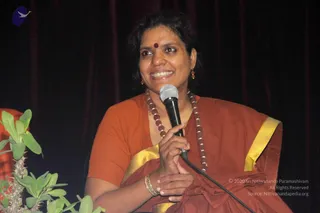
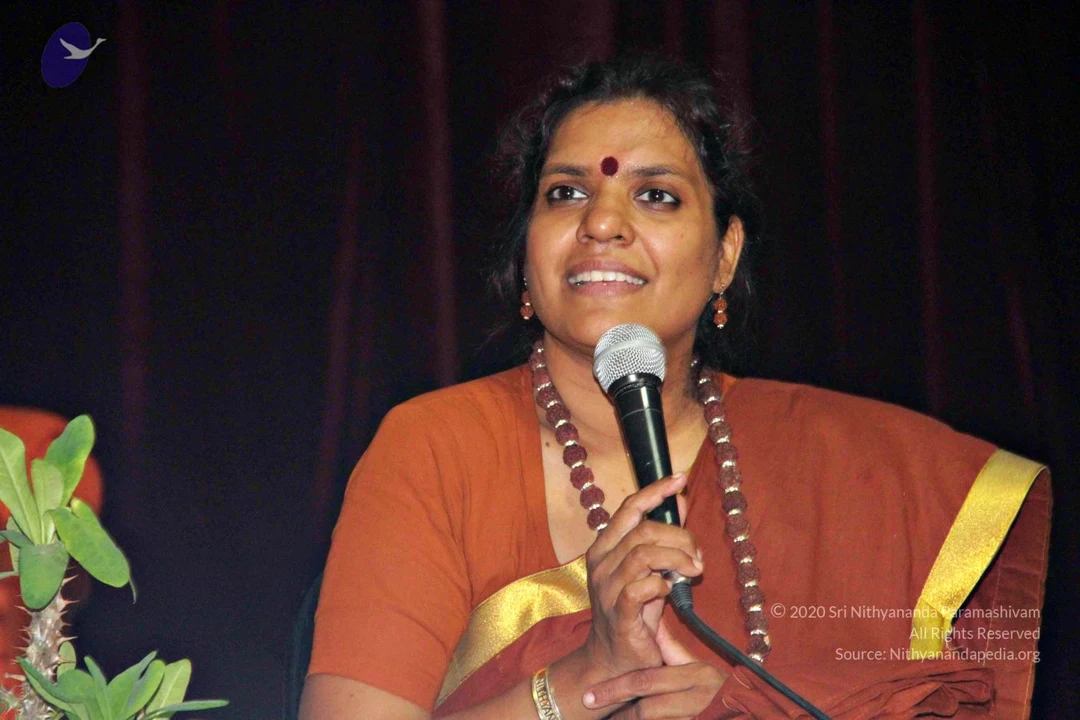
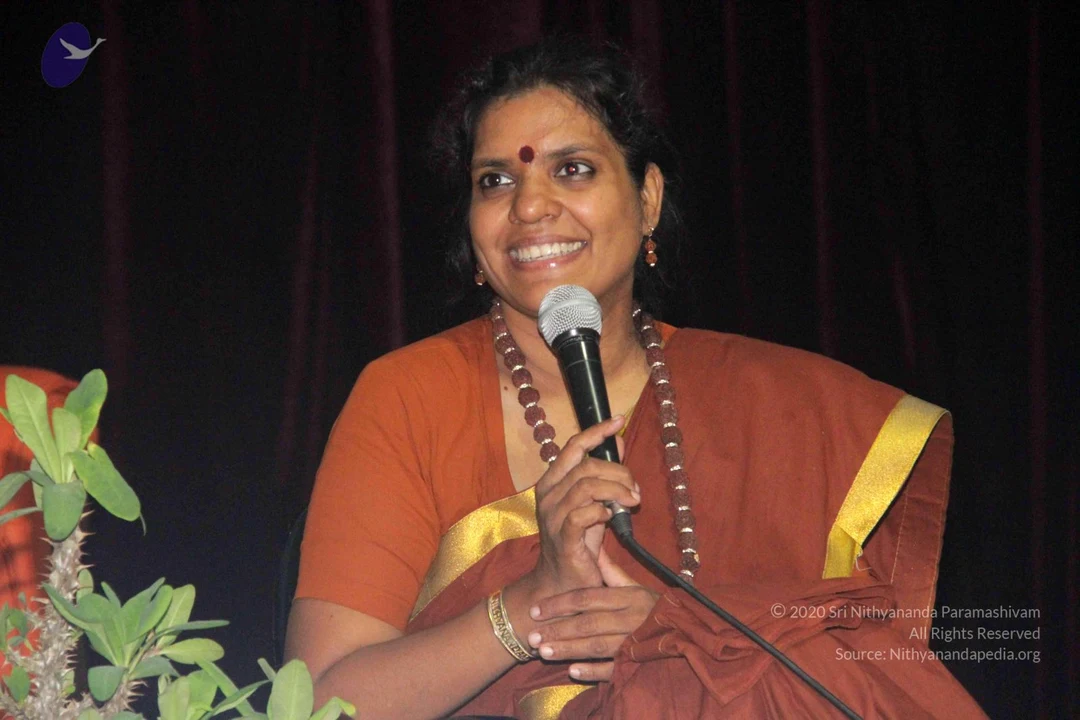
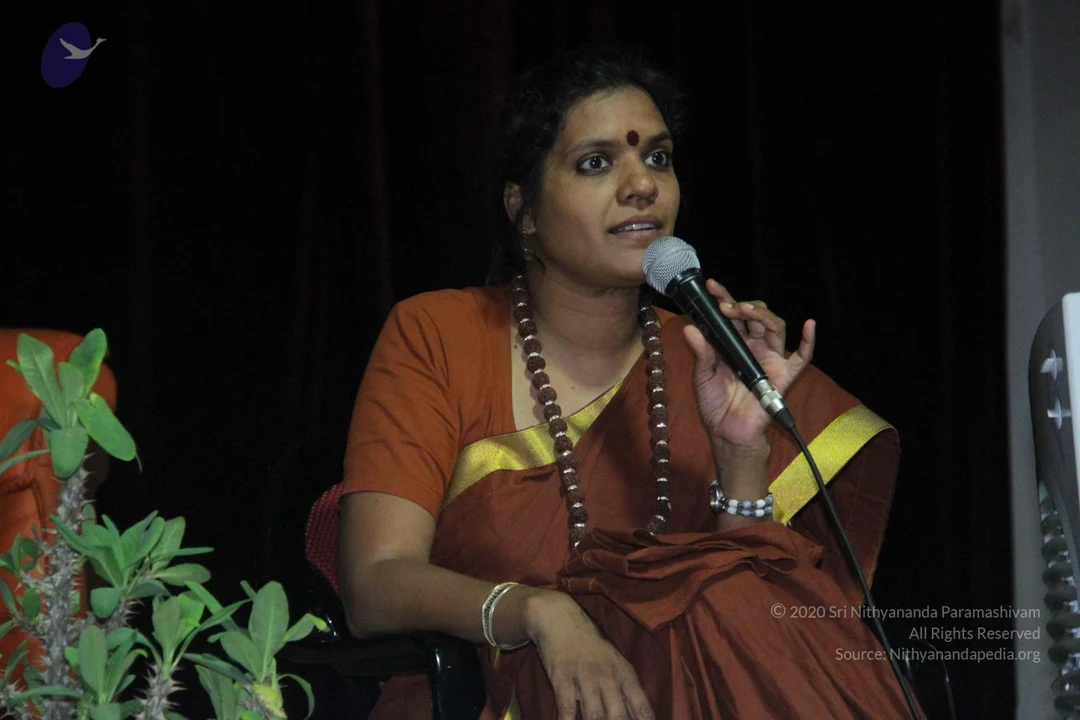
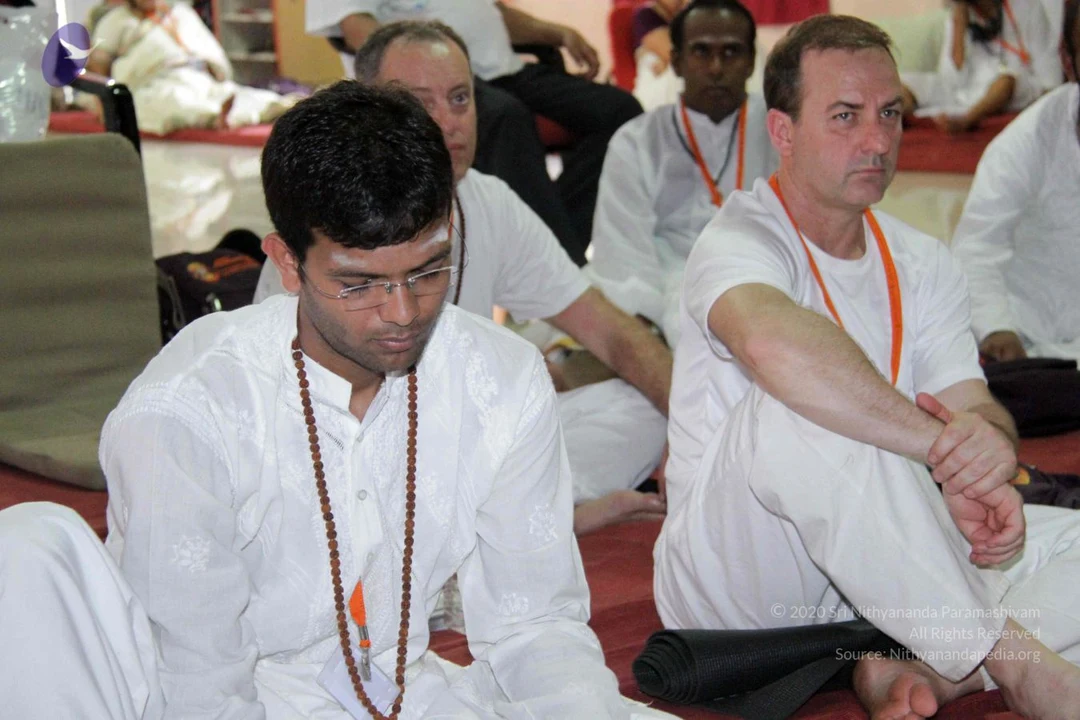
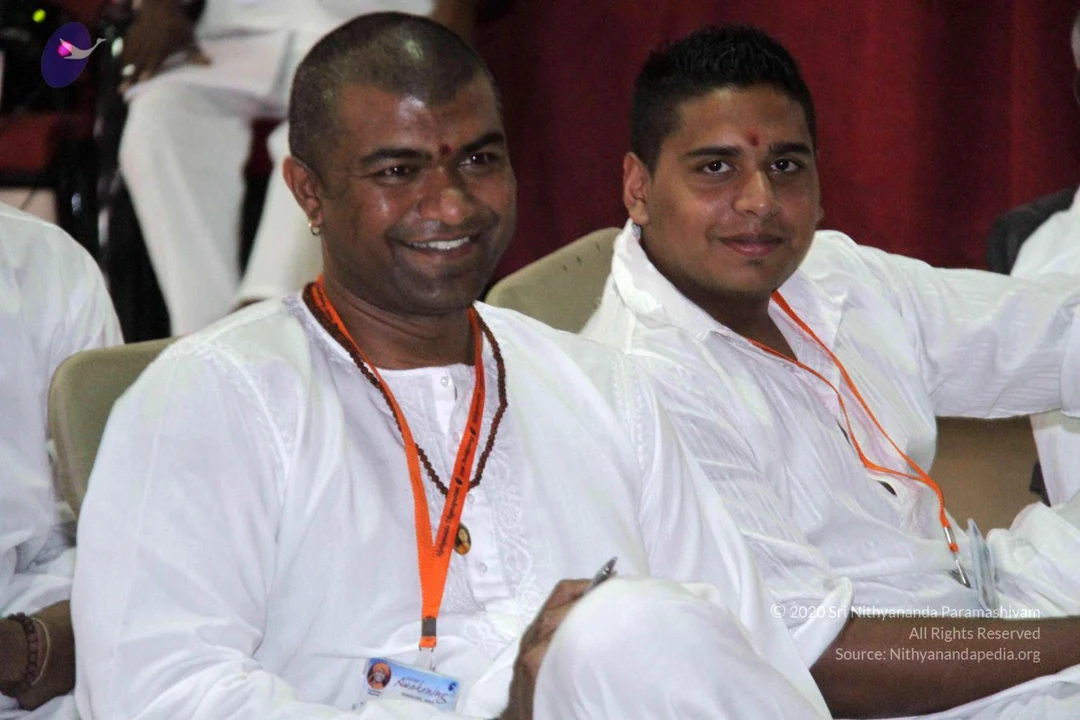
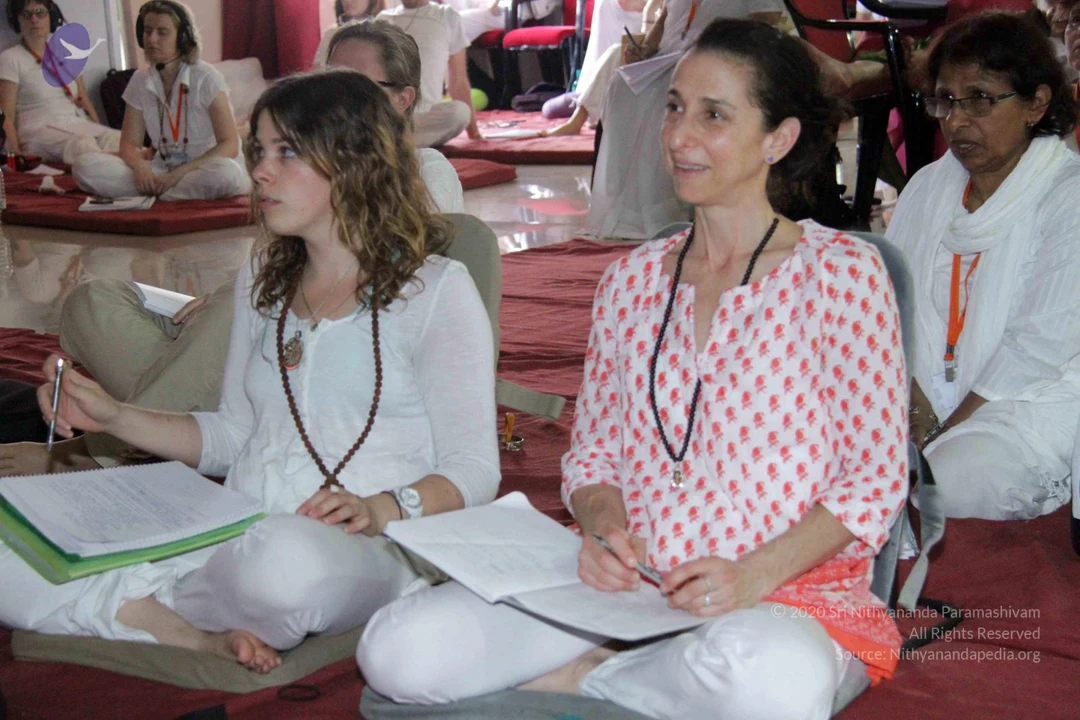
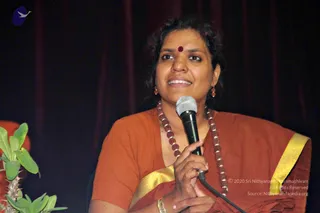
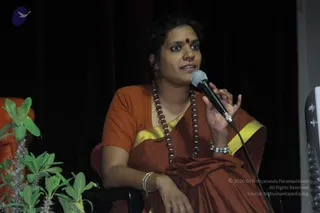
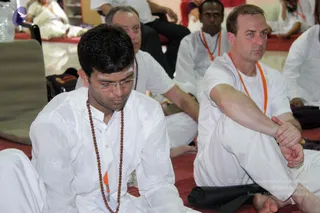
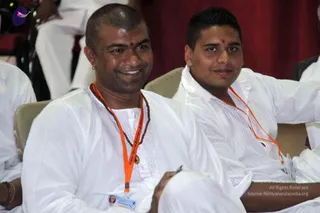
A woman with dark hair pulled back and a small red bindi speaks into a black handheld microphone at a satsang-style event. She wears an orange-rust blouse and matching sari-style drape with a gold border, plus a rudraksha mala necklace with silver beads and orange-brown earrings. A bangle is visible on her wrist. Behind her is a dark red curtain, with a potted succulent plant at the left edge. She is the only person visible.A smiling woman speaks into a handheld black microphone during a satsang-style talk in front of a dark red curtain. She wears an orange-and-rust sari with gold borders, a rudraksha-style bead mala around her neck, gold bangles, drop earrings and a red bindi. A leafy green plant stands at the left edge of the frame. No candidate for a person is identifiable from appearance, so she is described only by role as a speaker.A woman seated in a chair speaks into a handheld microphone during a satsang-style talk. She wears an orange-red sari with a gold border, a matching orange blouse, a red bindi, a long beaded rudraksha-style mala, and white bangles. Behind her are dark drapes, a potted succulent plant with spiky leaves on the left, and an orange chair. The setting appears to be an indoor hall. Her role is speaker or discourse participant. Her hand gestures as she talks.Seated devotees in white clothing listen to a satsang on a red floor covering. In the foreground, a young man in a white embroidered kurta wears a rudraksha mala and orange-tasselled lanyard badge, with eyes lowered. Beside him, a man in a white t-shirt with an orange lanyard sits with his arm resting on a knee. Other white-clad participants and a bolster-like black mat are visible behind them. No identifiable a person figure is visible in this frame.Two men in white ritual-style kurta clothing sit side by side in a seated audience at a satsang-style gathering. The man on the left, with short hair, a small red tilak on his forehead and a rudraksha mala with an orange lanyard and ID badge, smiles broadly and holds a pen. The man on the right, with short dark hair and a red bindi, wears a white shirt with an orange lanyard and smiles toward the camera. Behind them is a deep red curtain, and partially visible people in white sit at the edges of the frame. The scene suggests a seated discourse or satsang audience.A seated satsang audience on red mats in a hall. In the foreground a young woman with long wavy brown hair wears a white top, brown beaded mala and pendant, and holds a pen over a notebook on her lap. Beside her a woman in a red-and-white patterned blouse with a dark bead necklace holds a pen and papers. At right an older woman with glasses wears white with an orange lanyard. Behind them more attendees in white clothes sit on cushions with notebooks and headsets visible. No a person candidate is visible in the frame.