Skip to content
Wednesday

27 February 2013

Your Word is Your Life

Dated photos
178
Source pages
1
Media
2
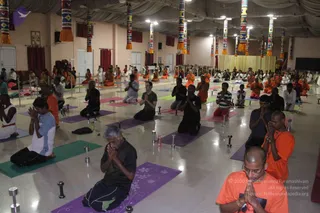
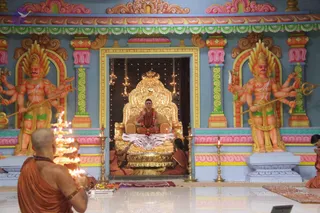
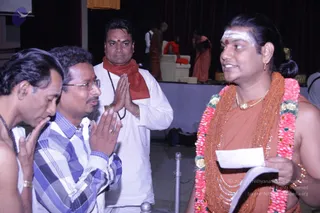
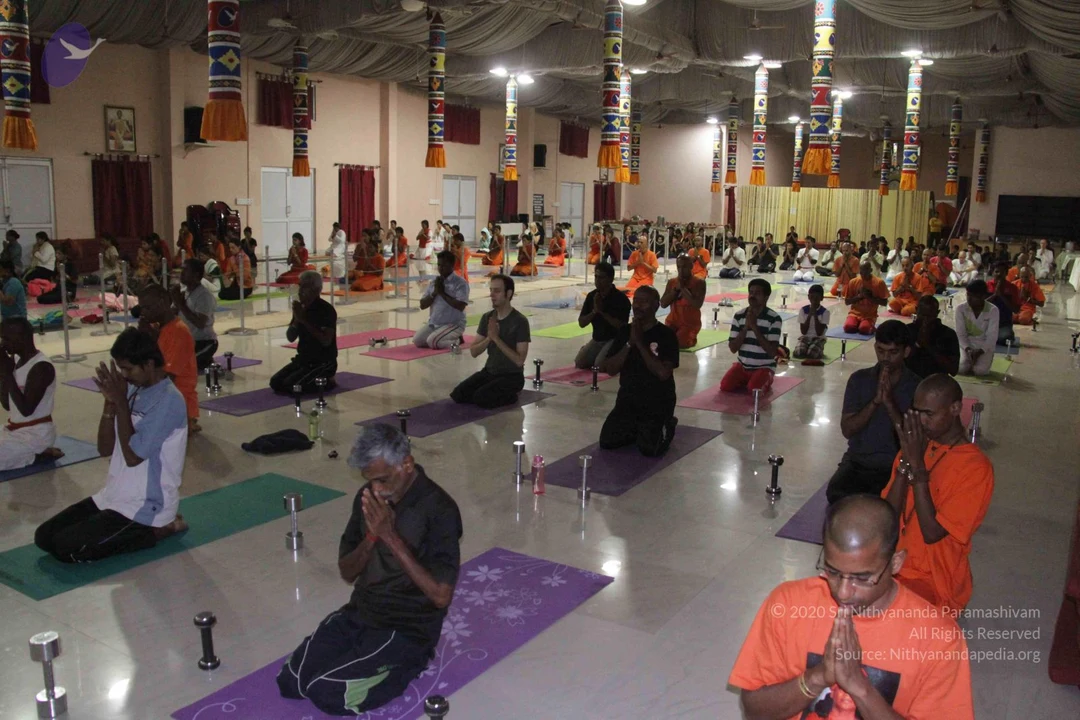
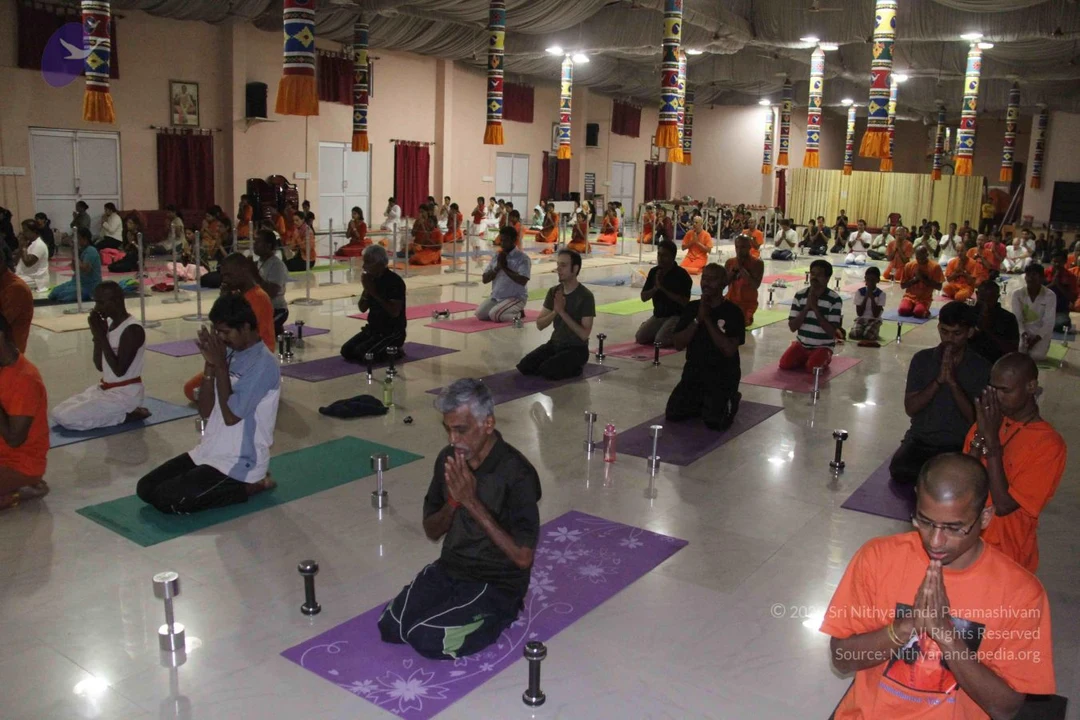
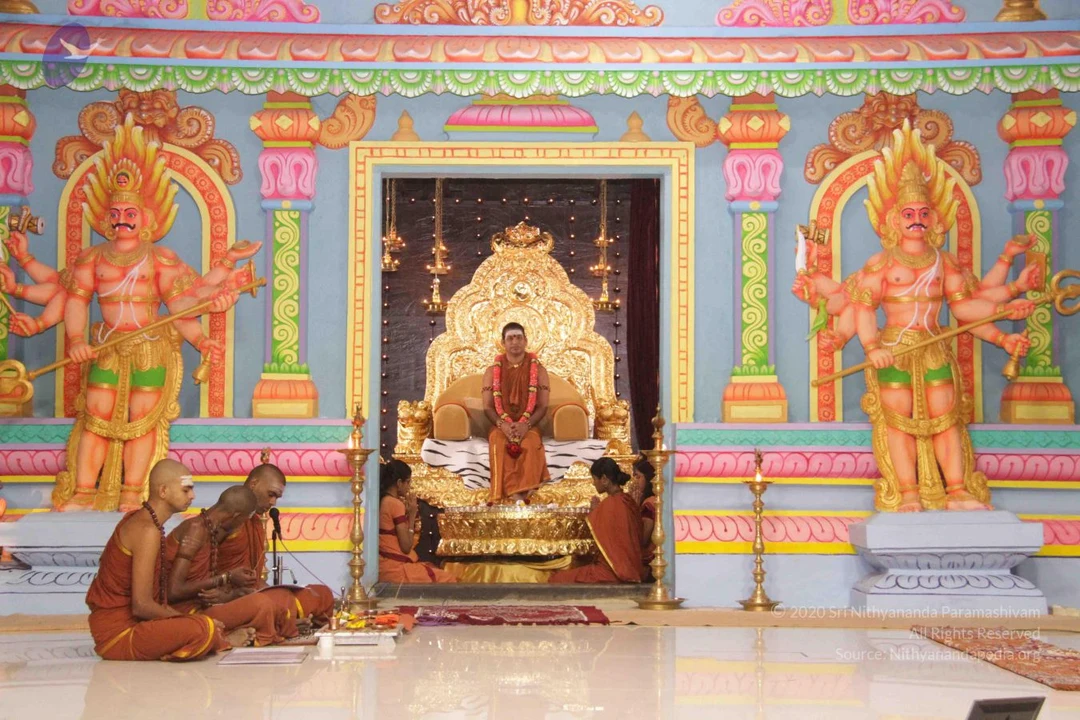
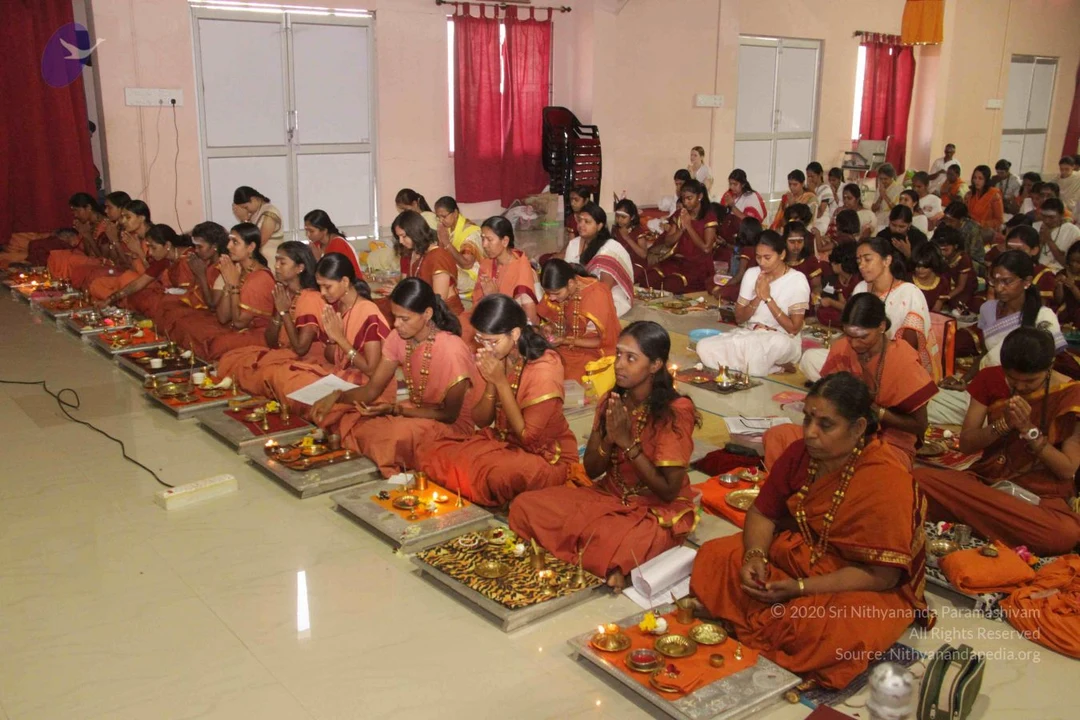
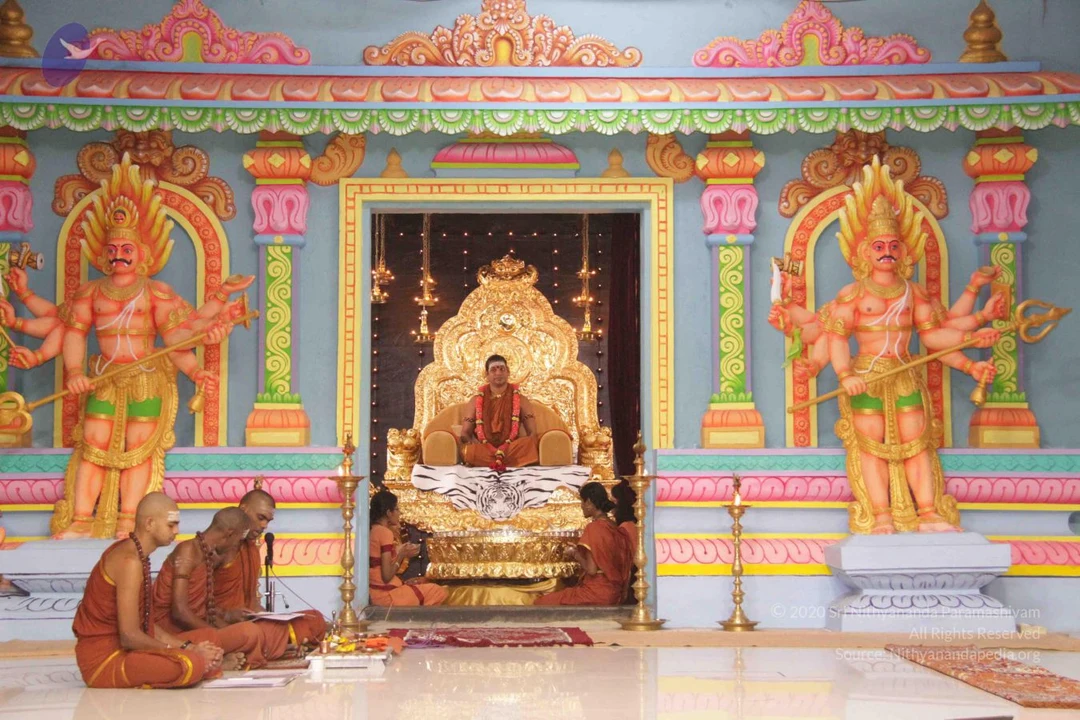
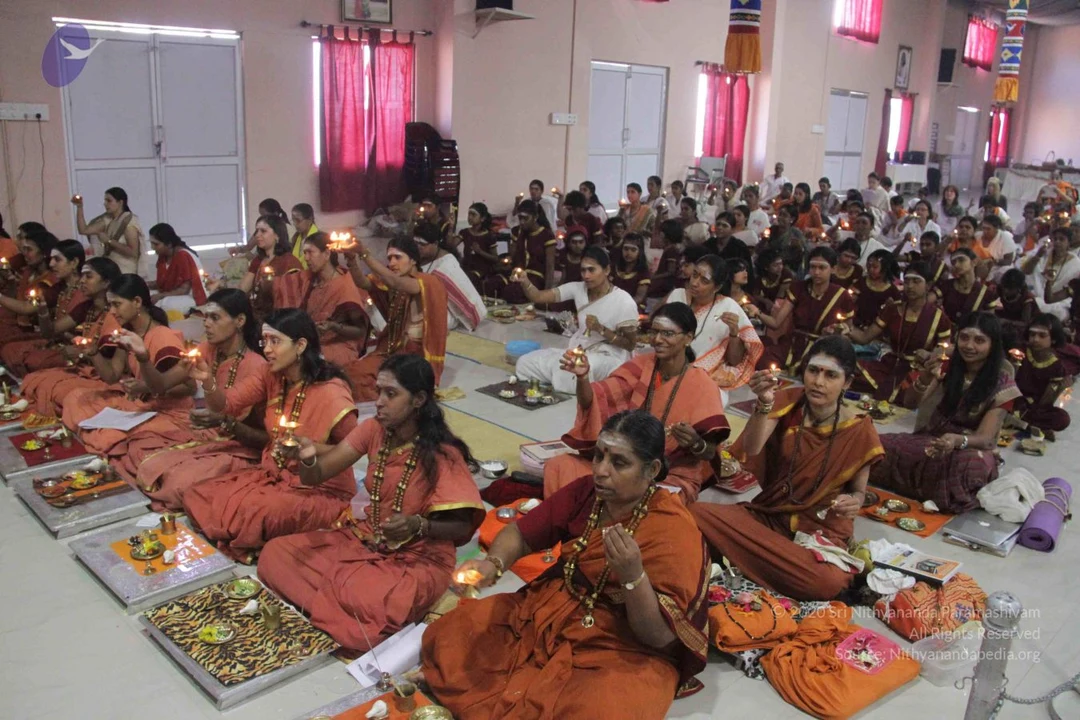
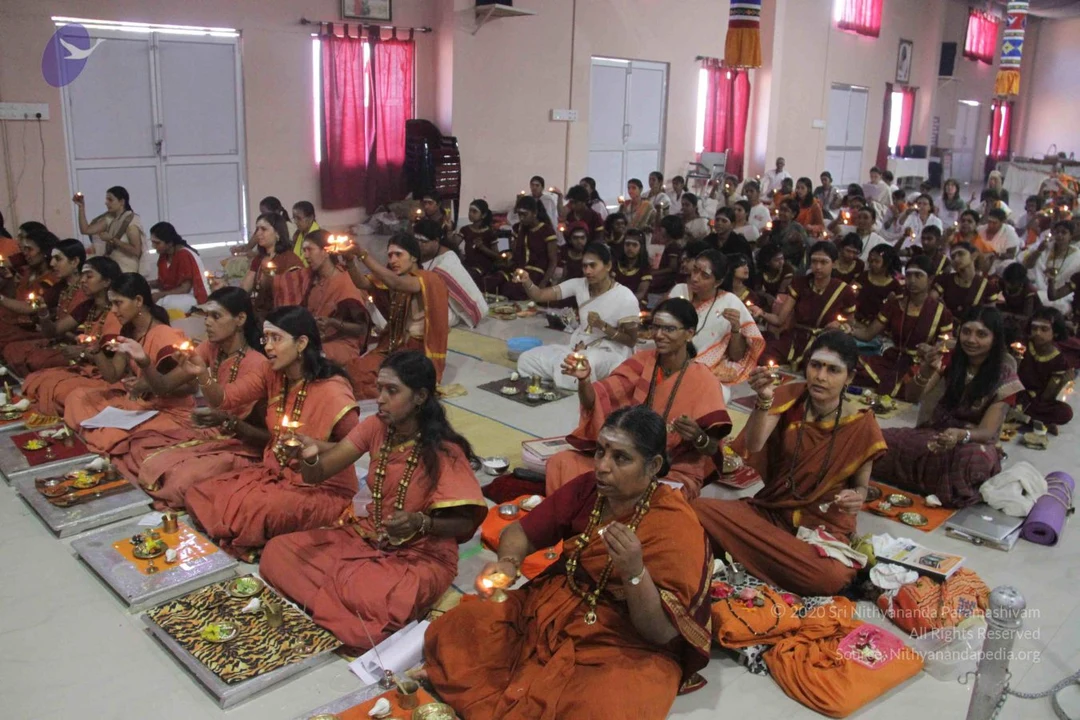
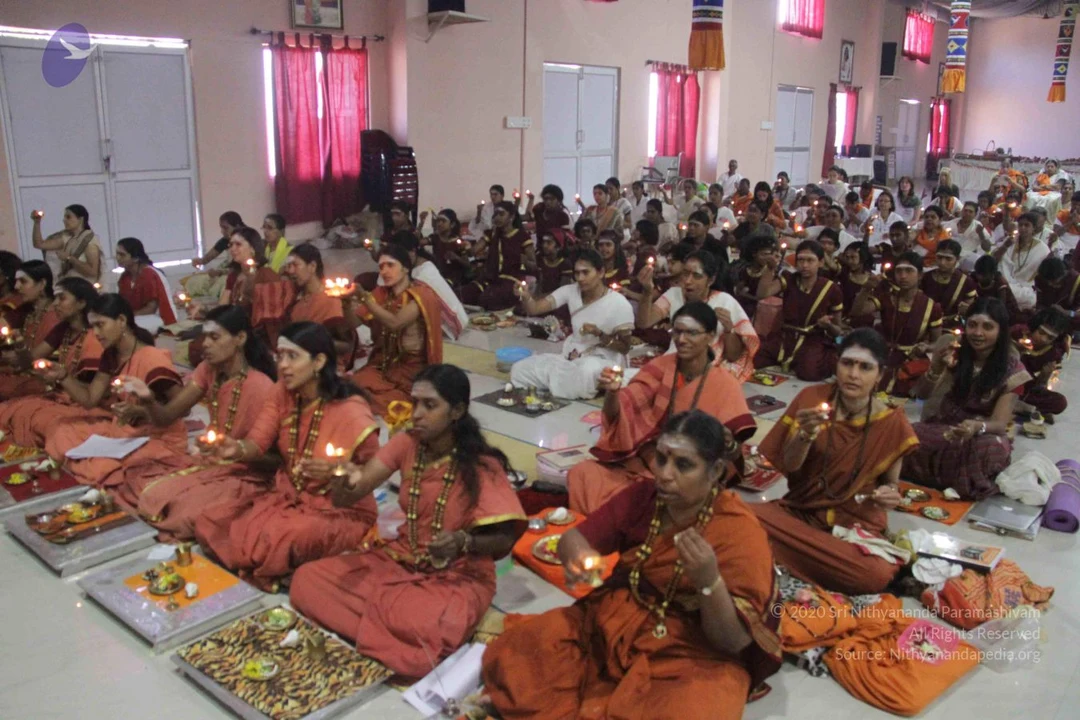
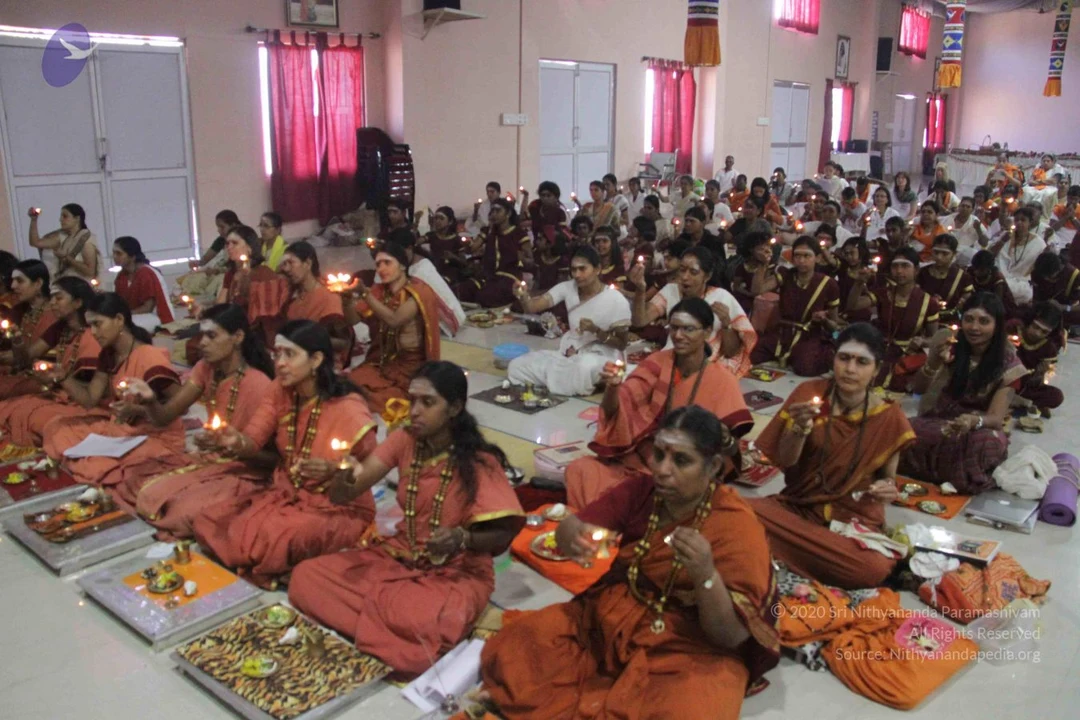
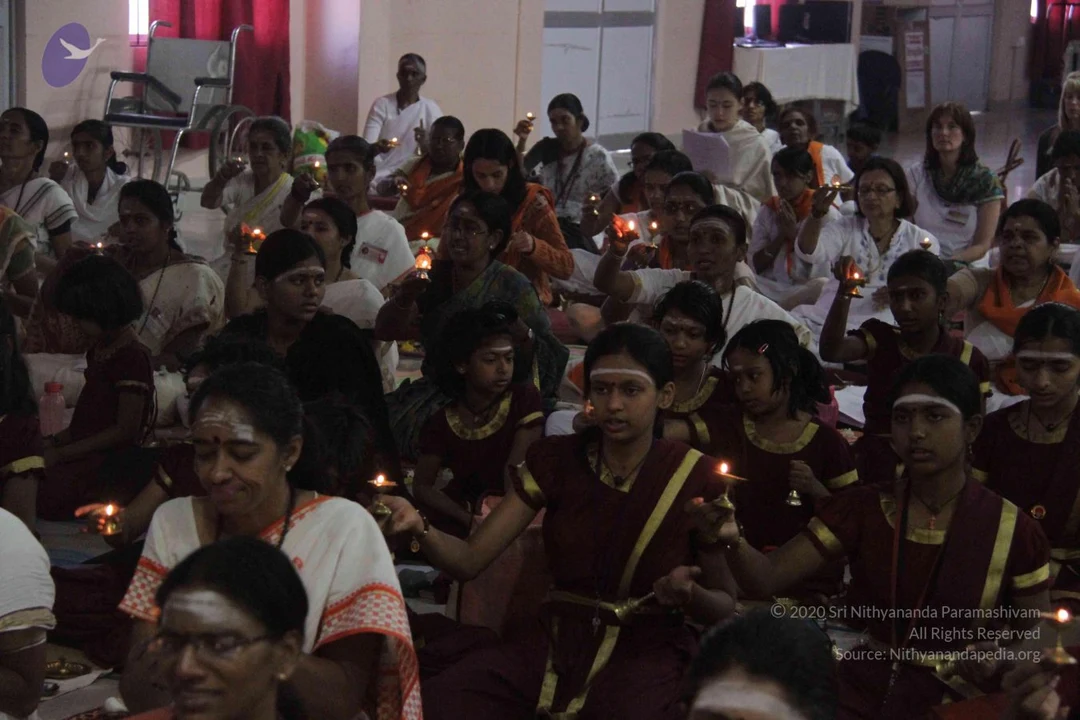
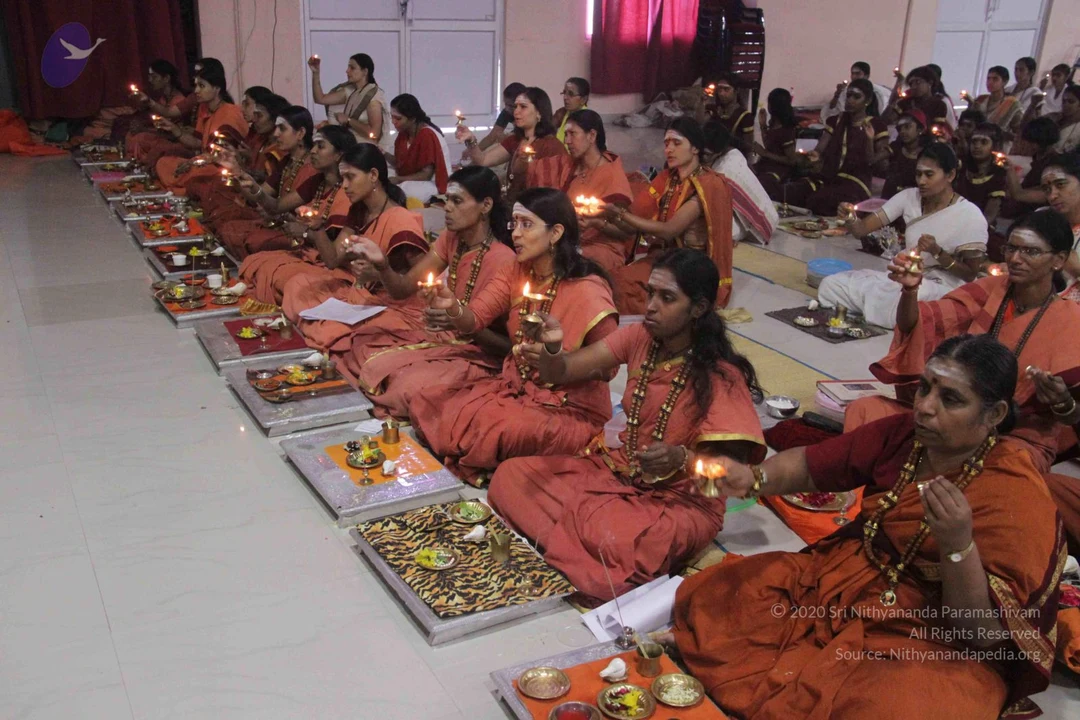
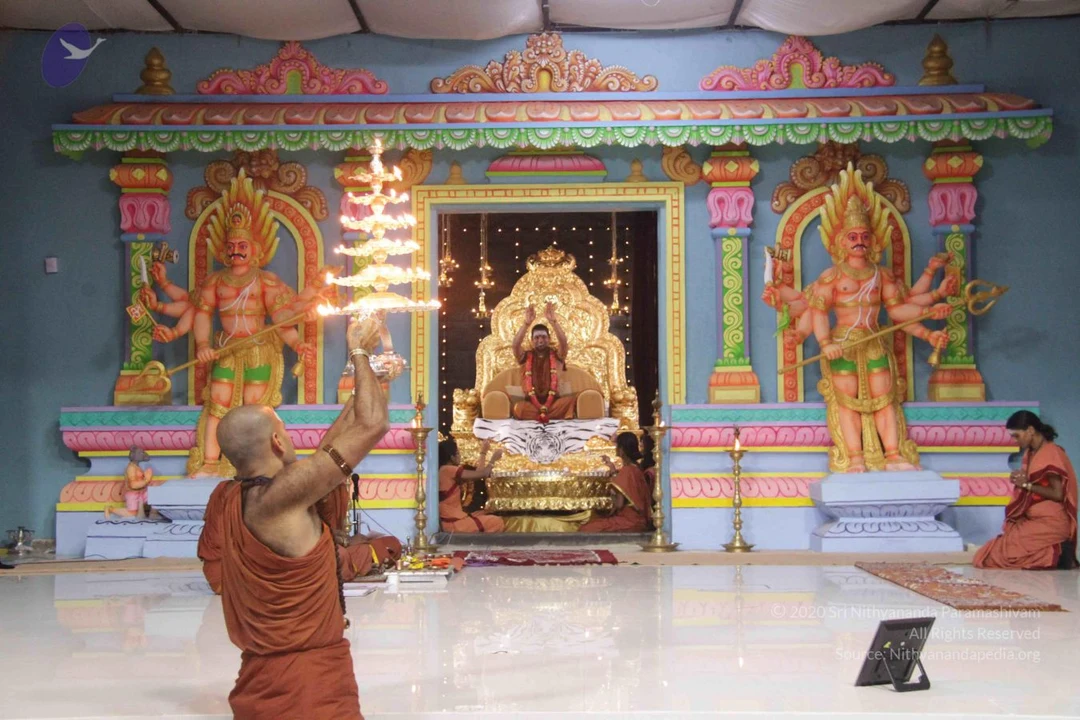
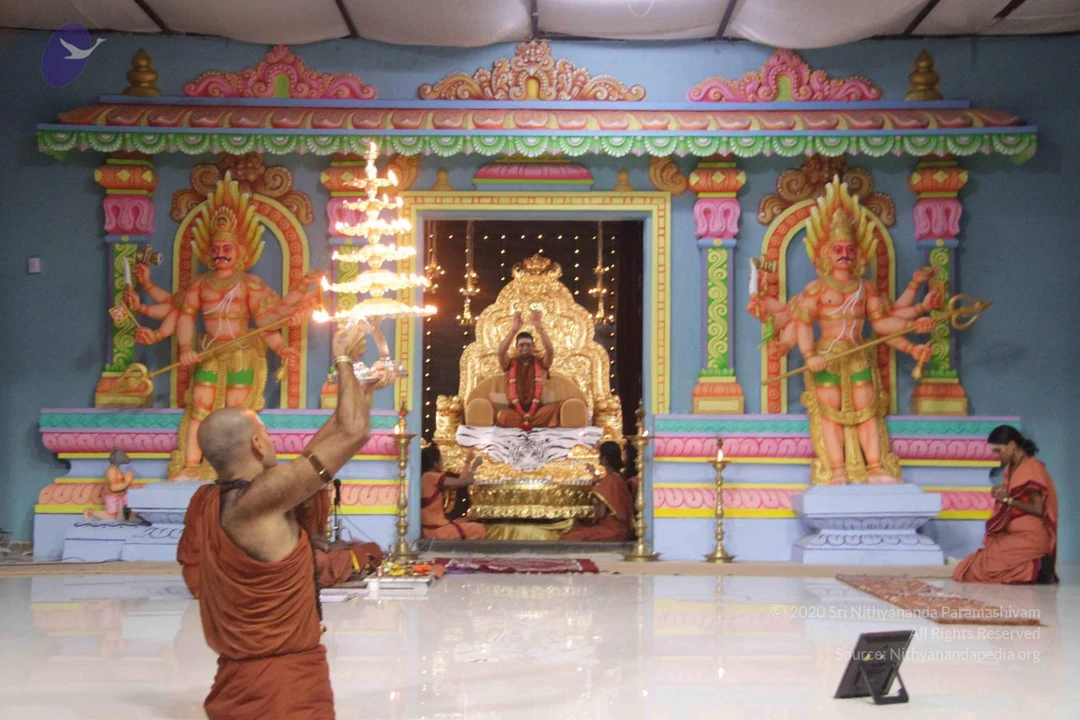
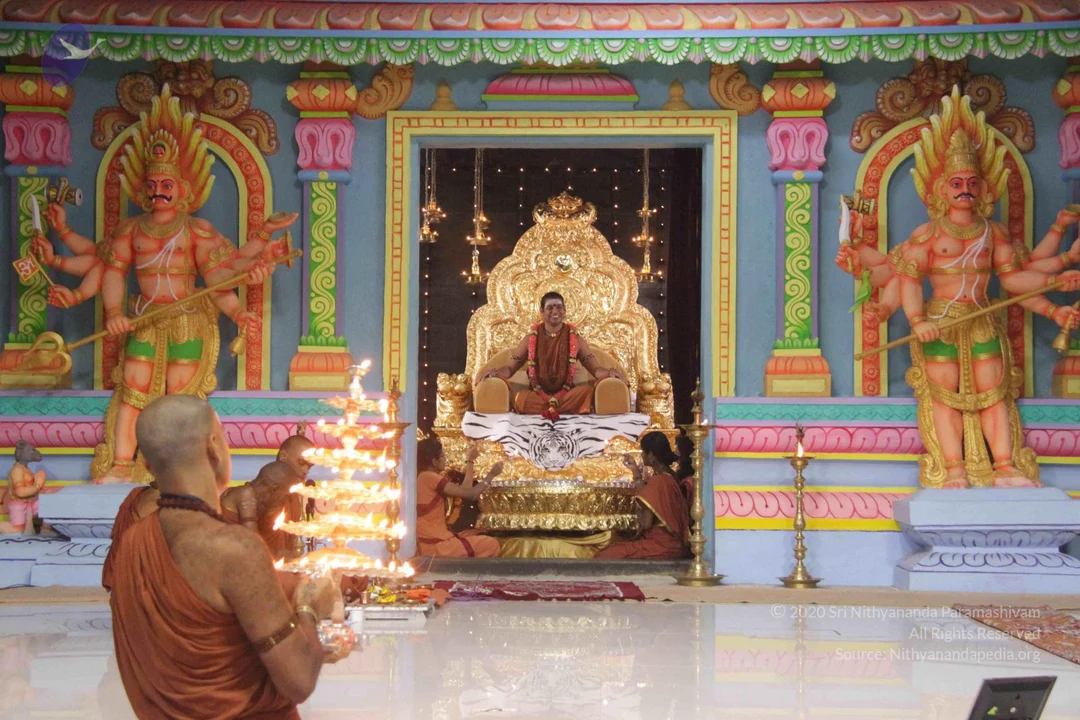
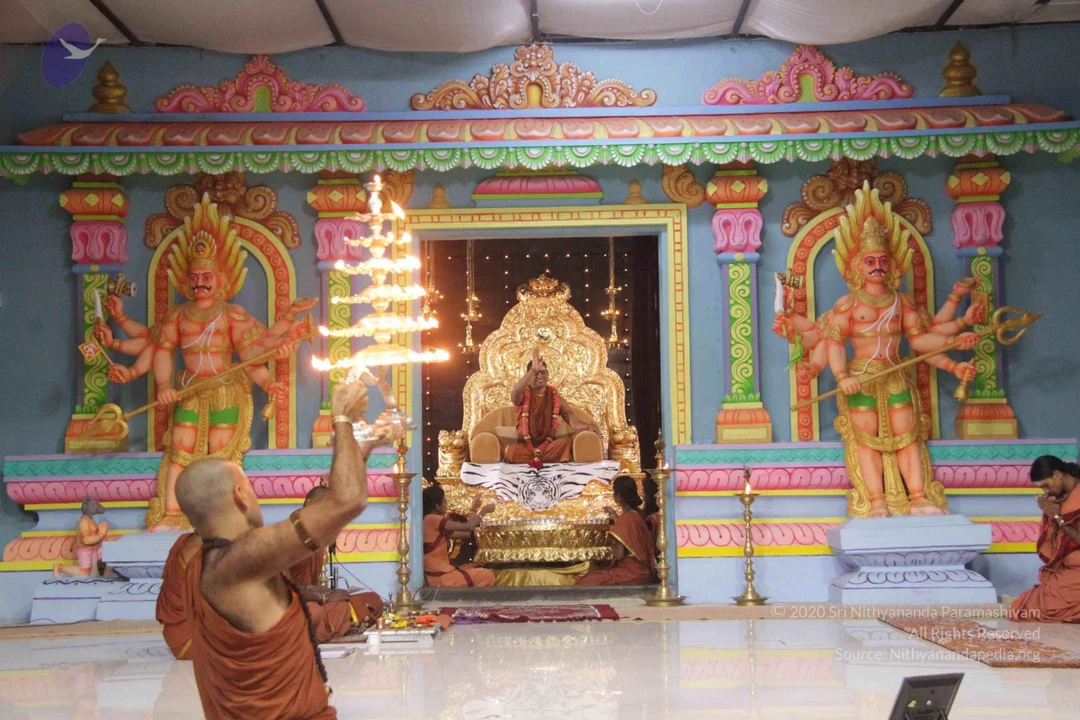
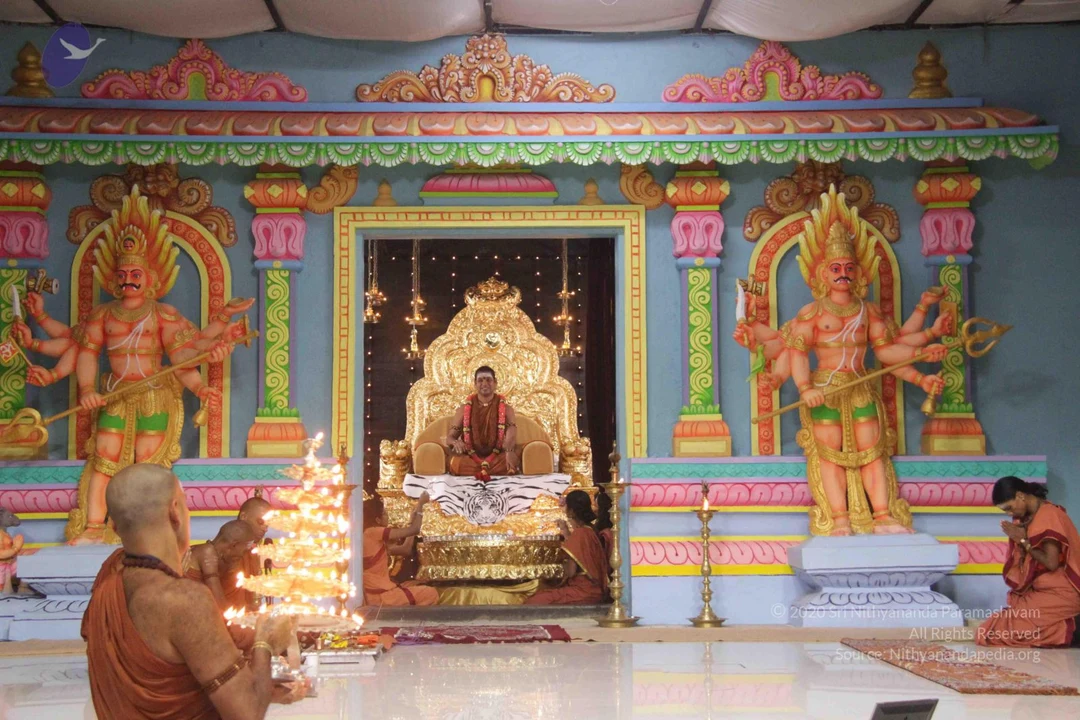
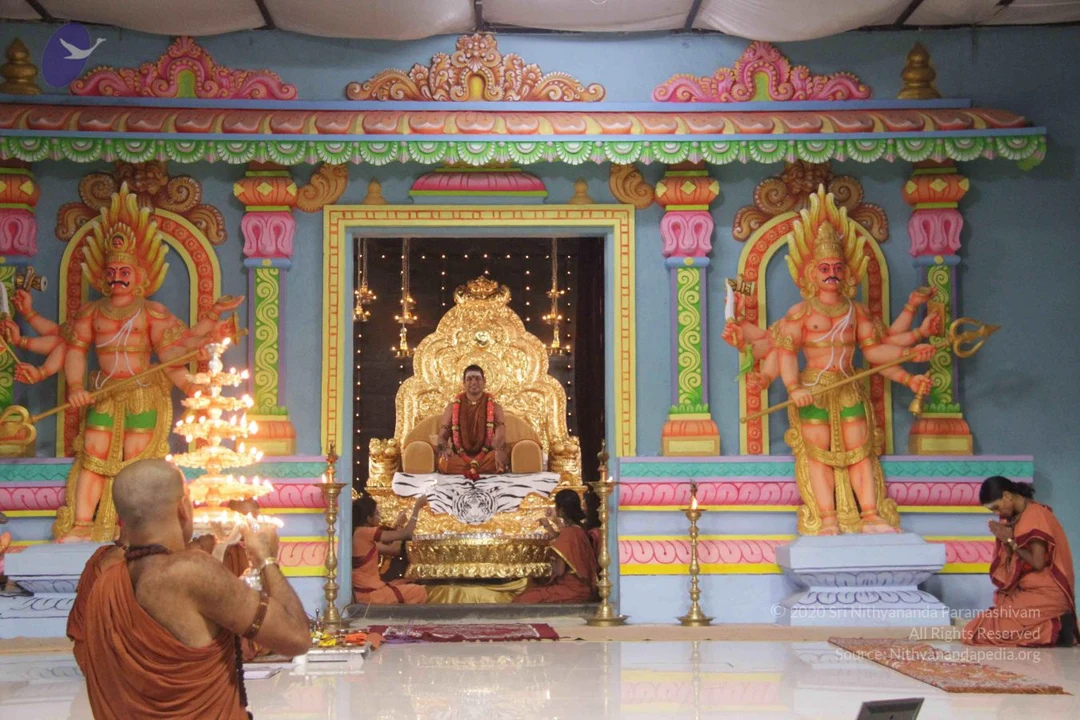
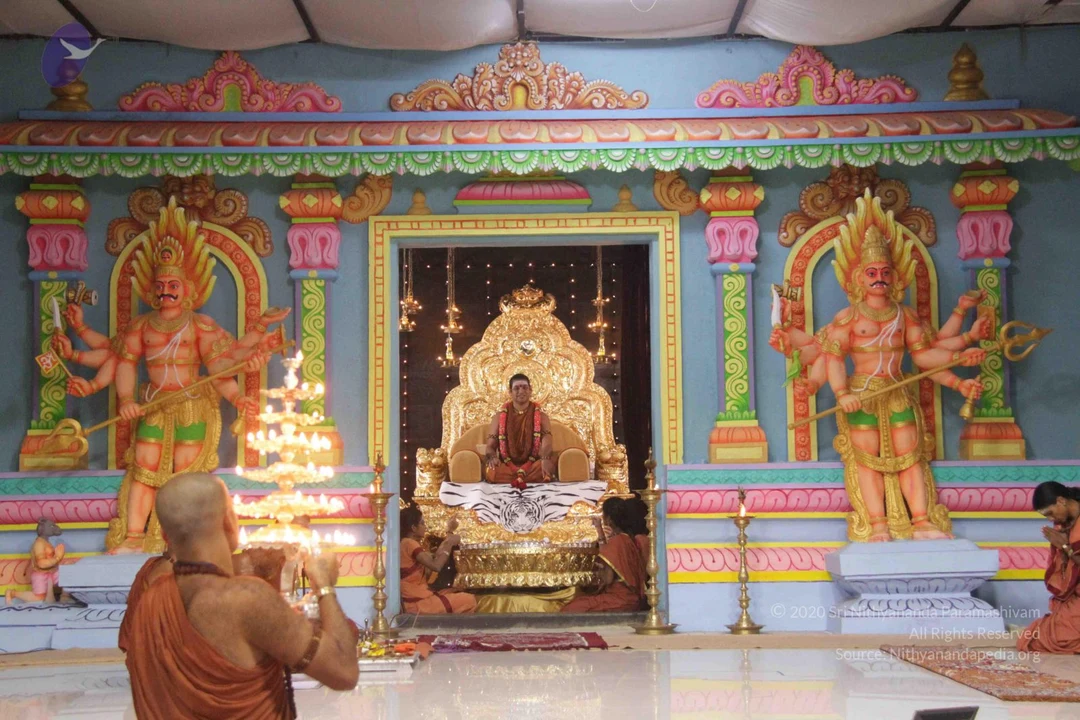
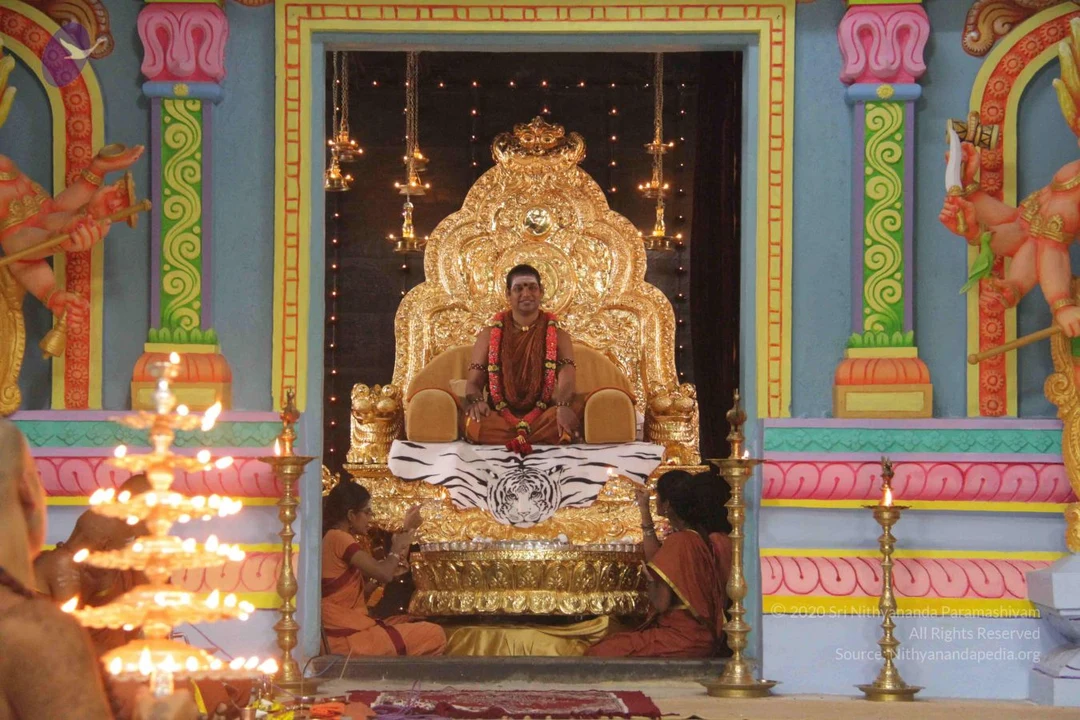
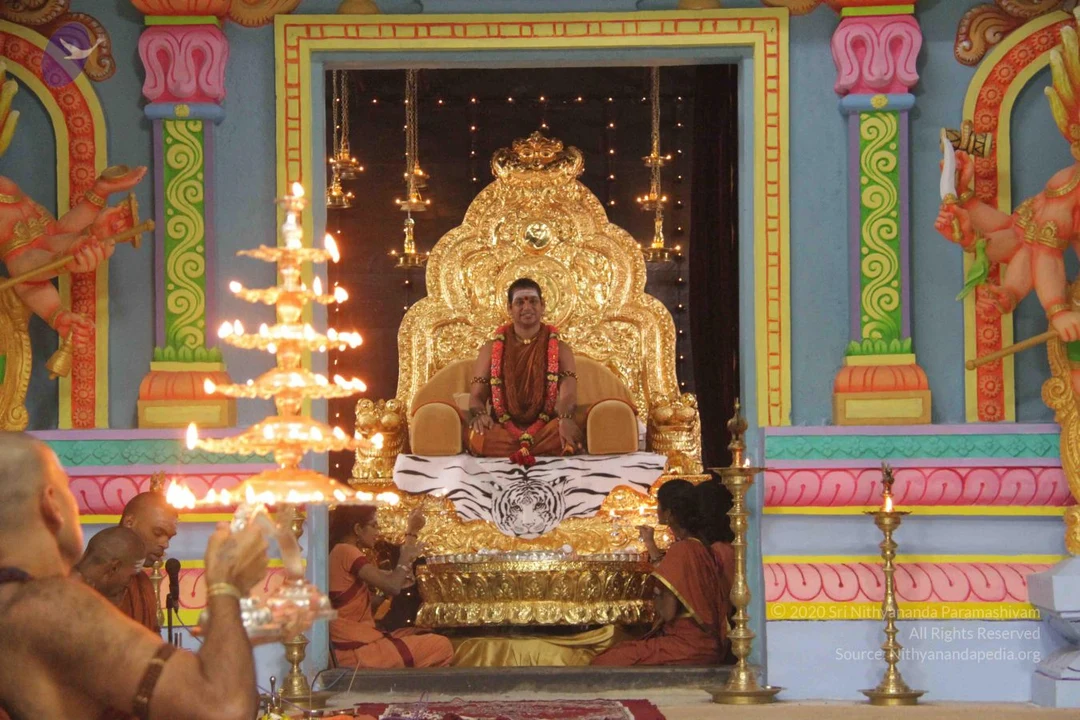
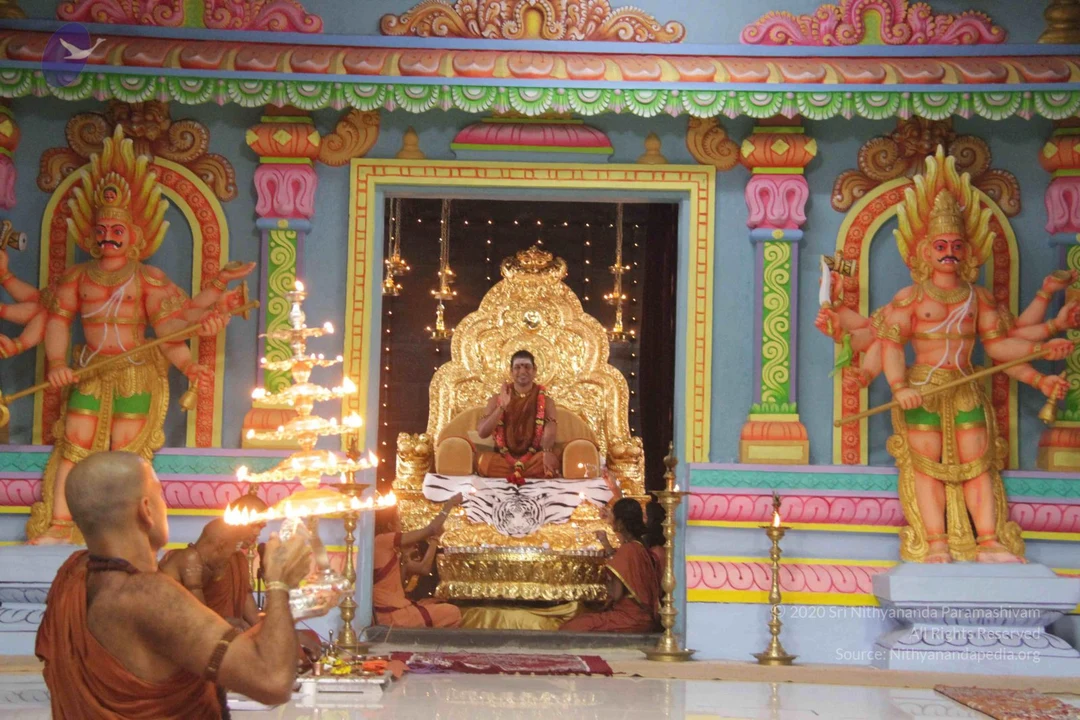
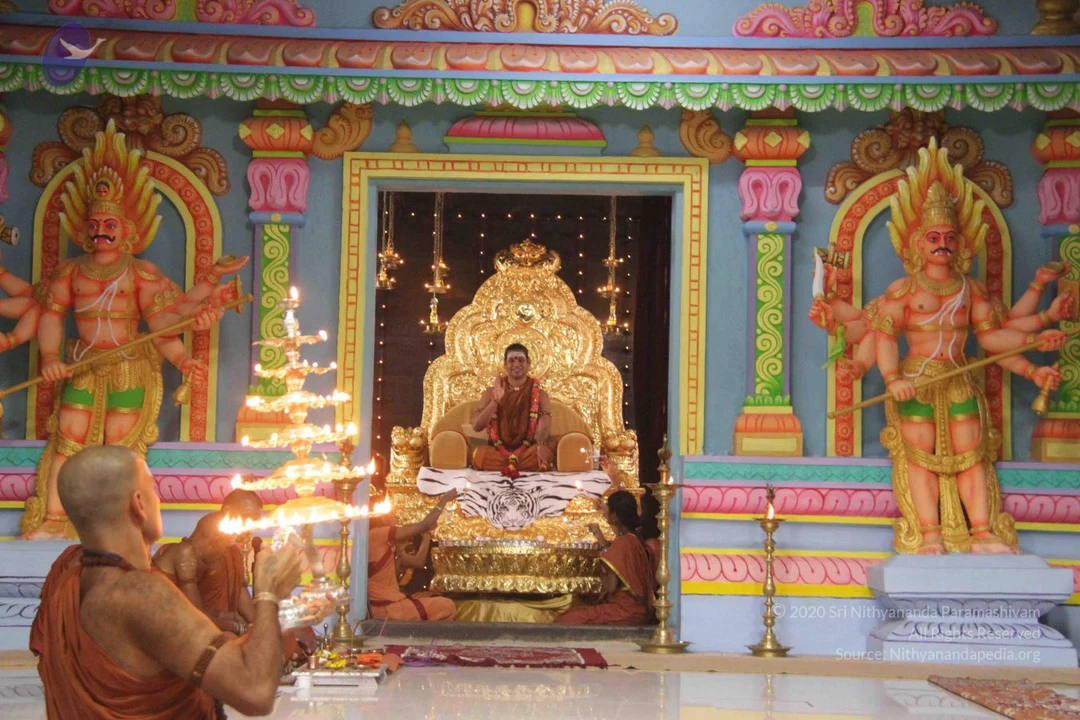
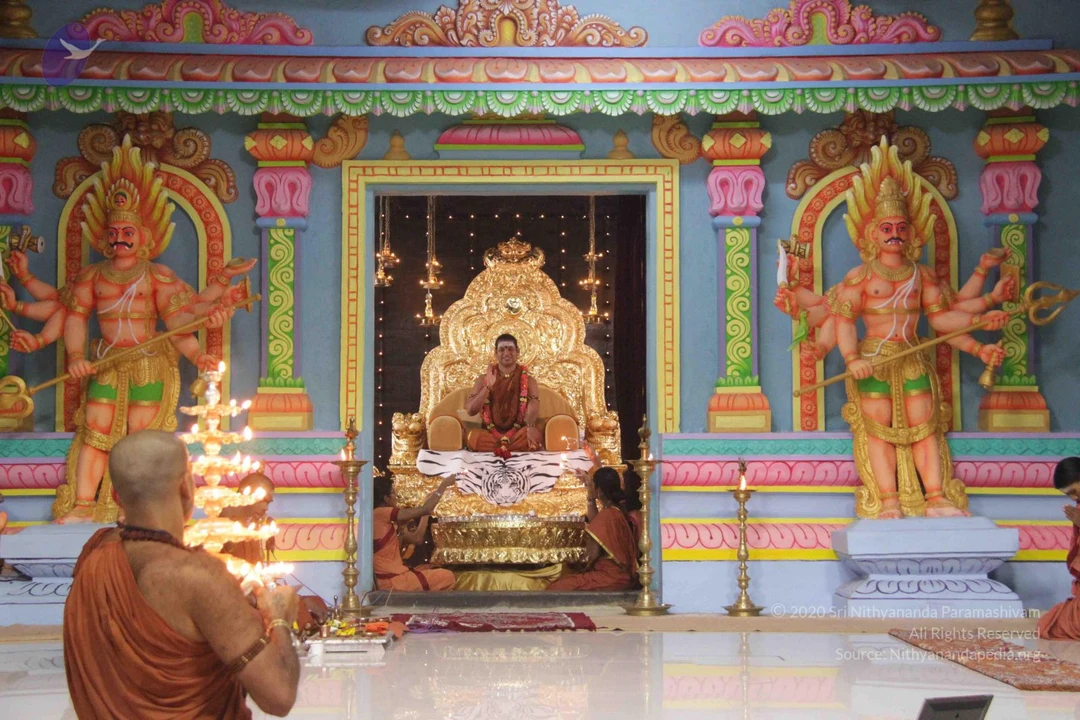
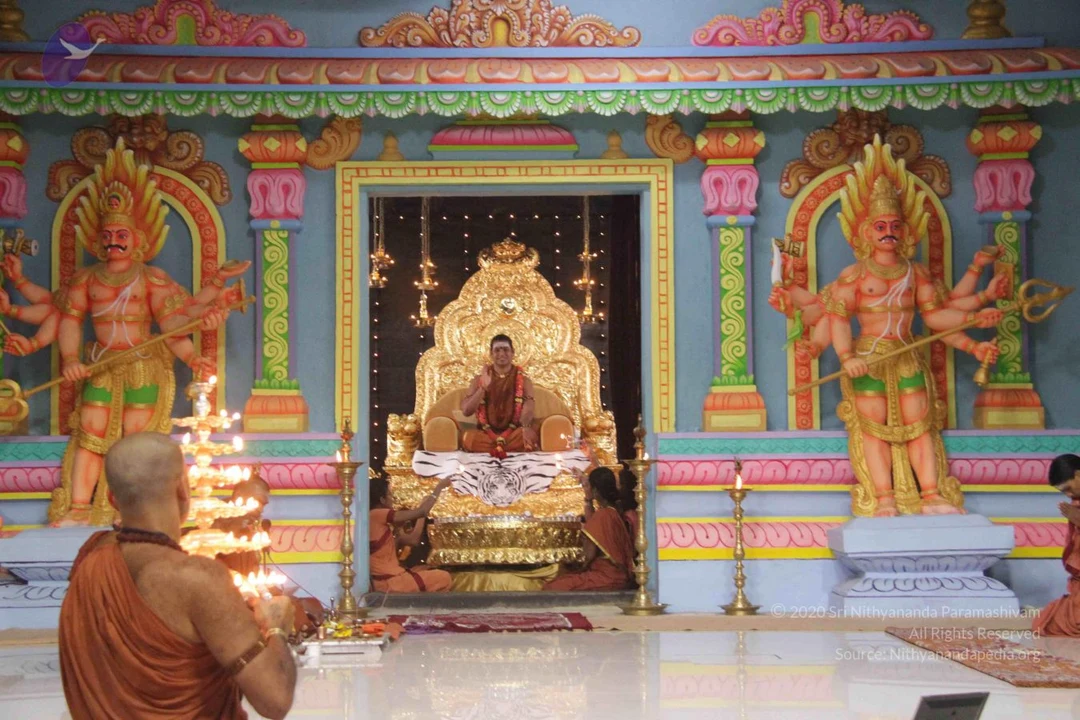
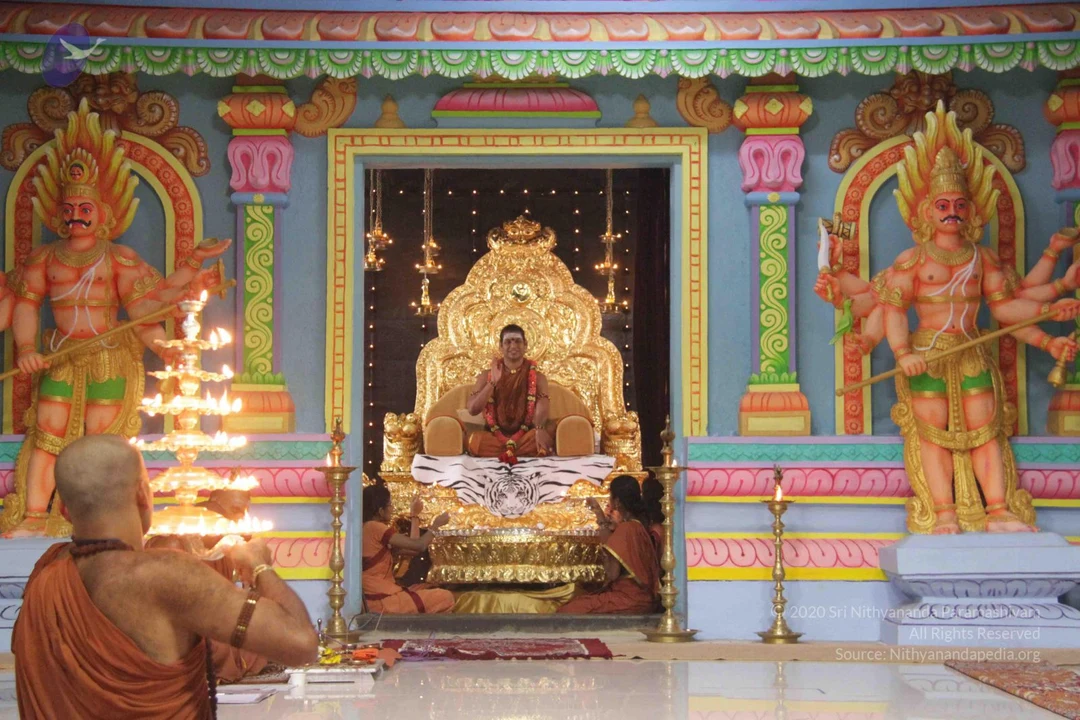
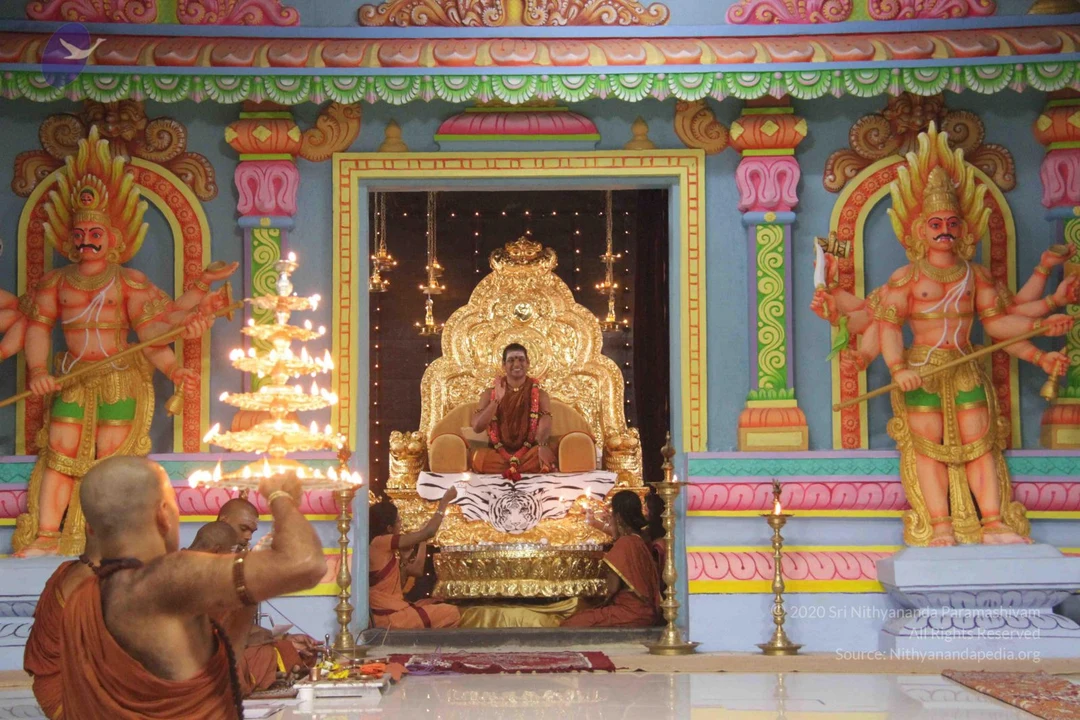
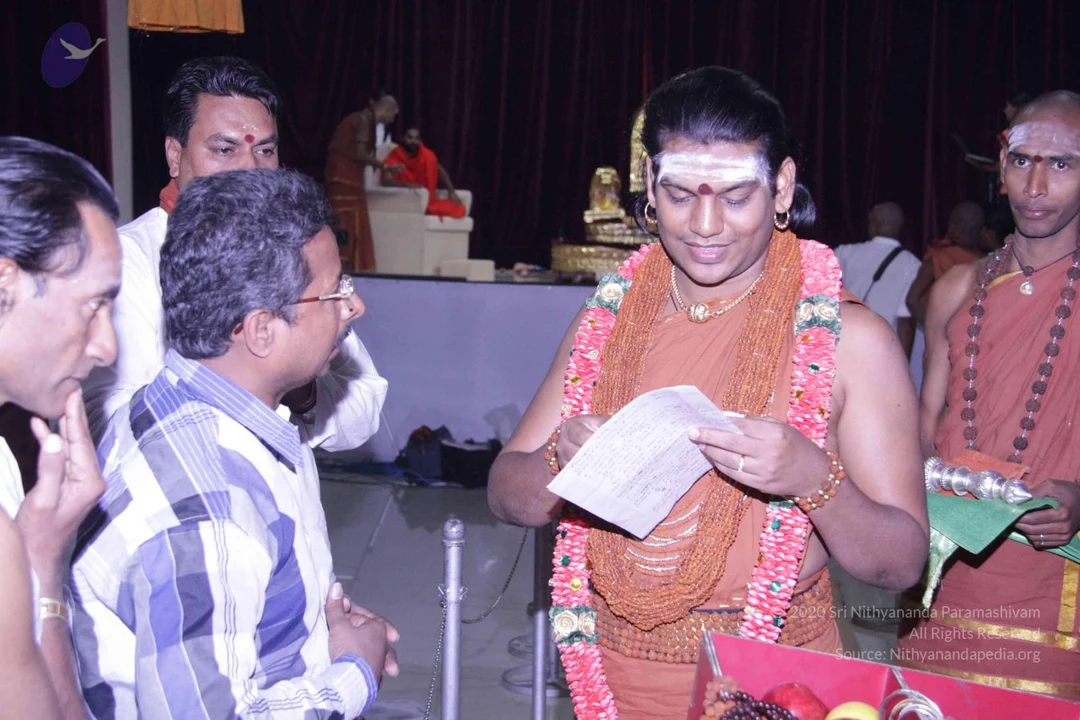
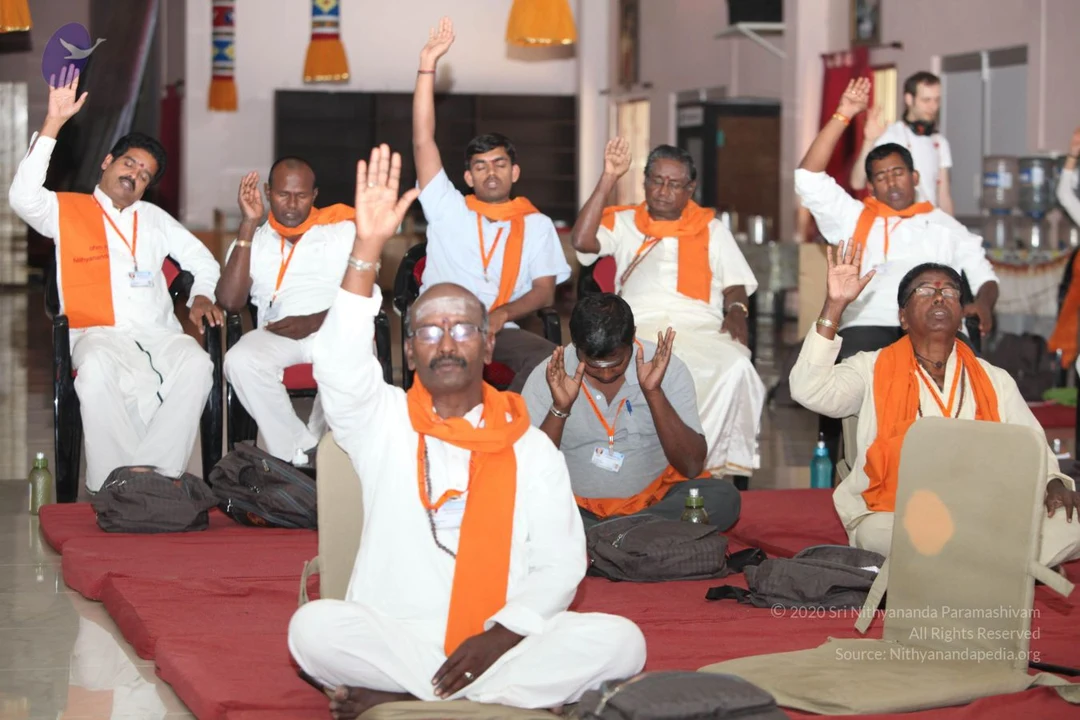
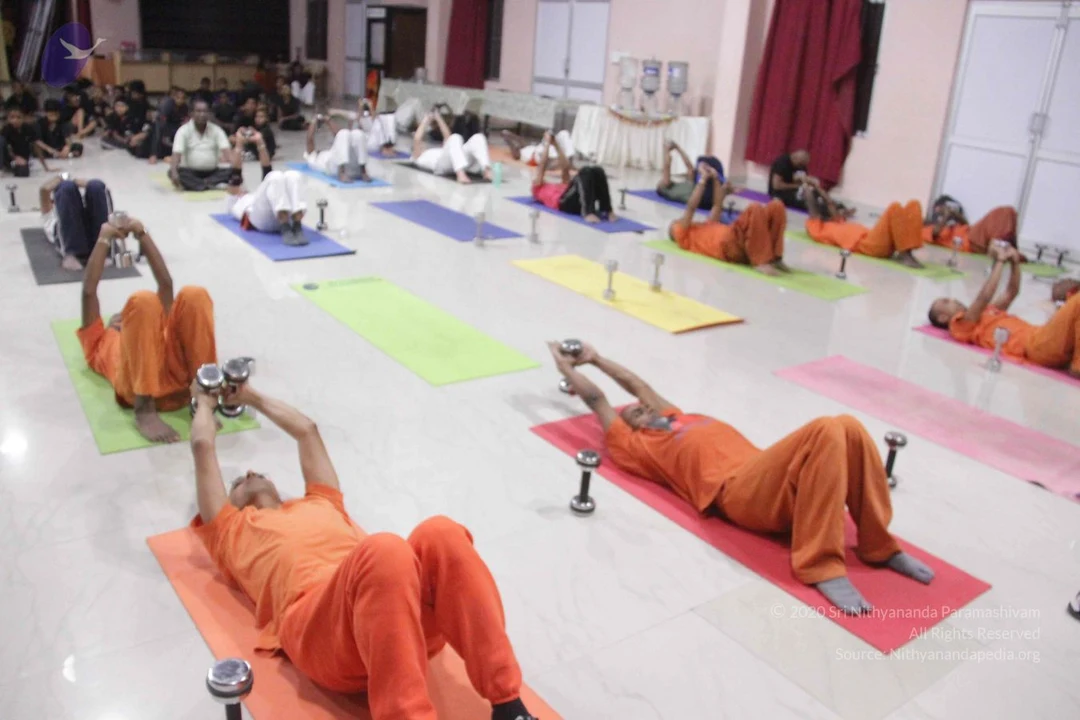
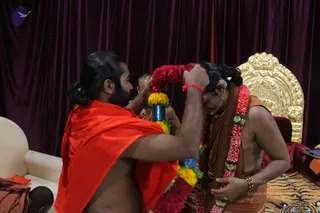
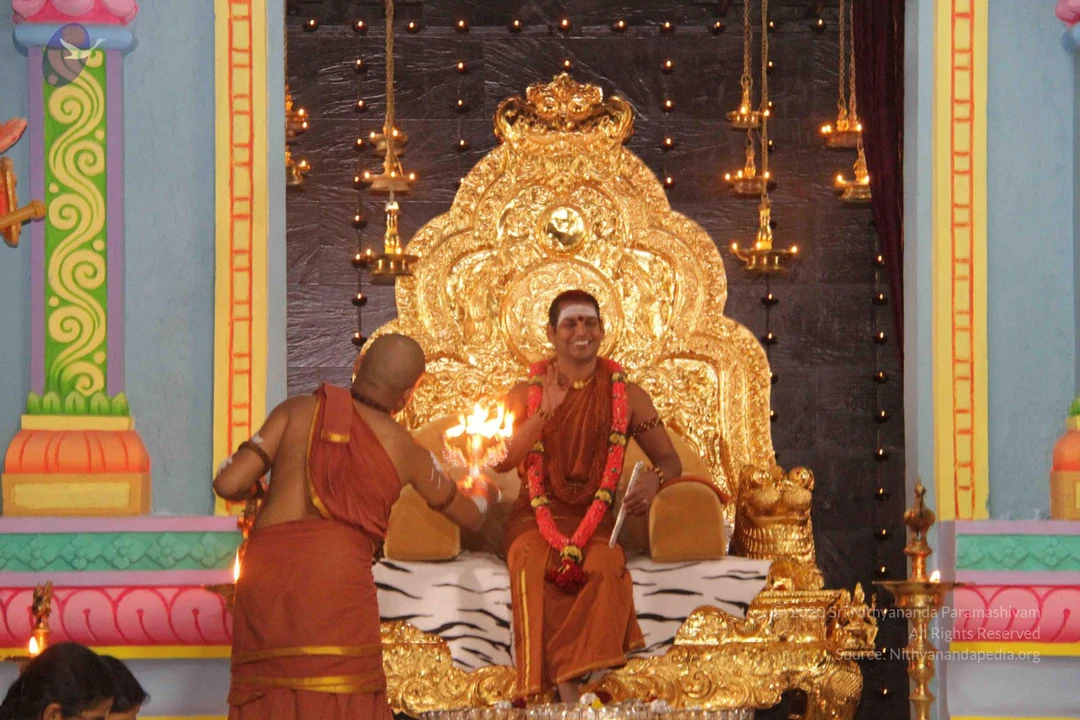
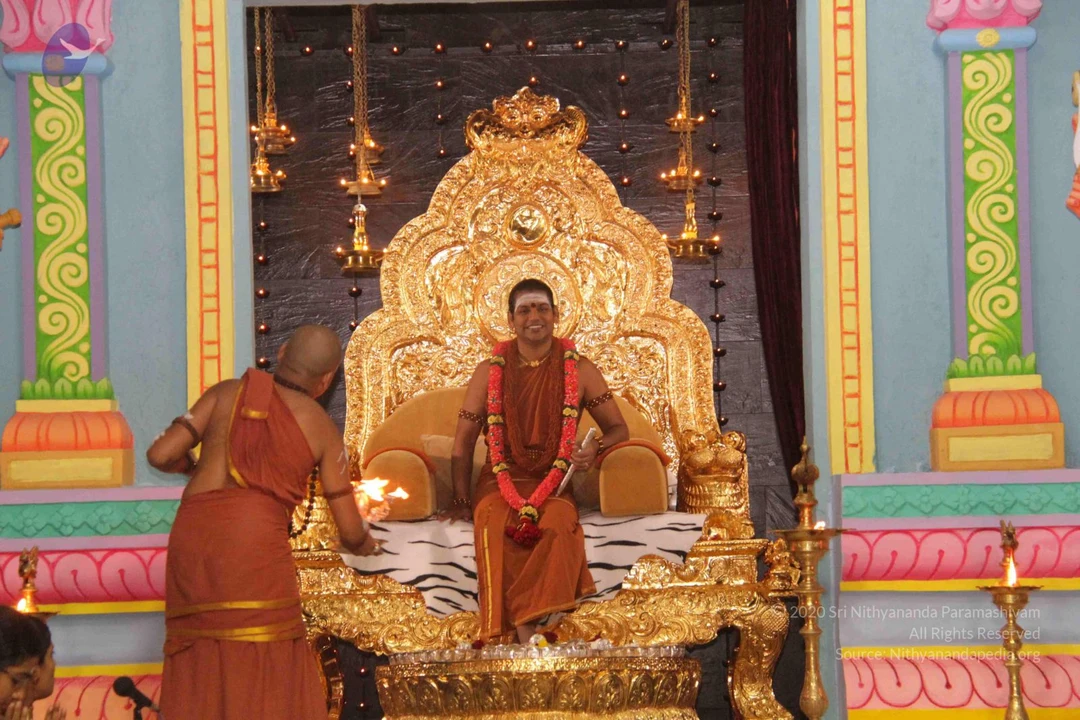
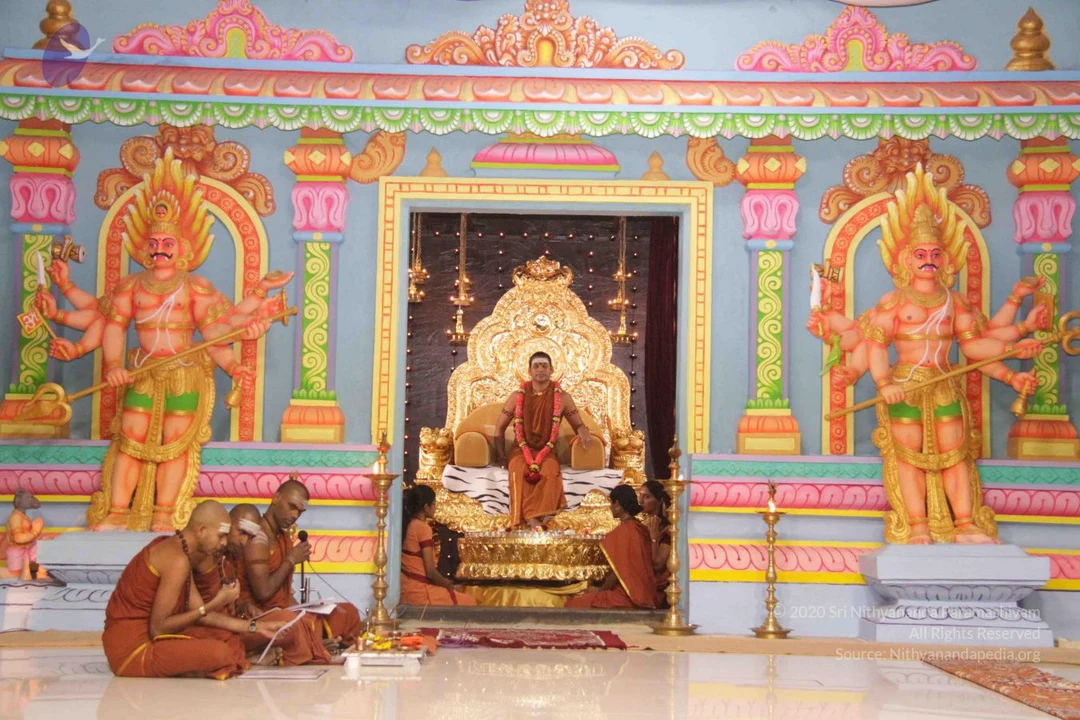
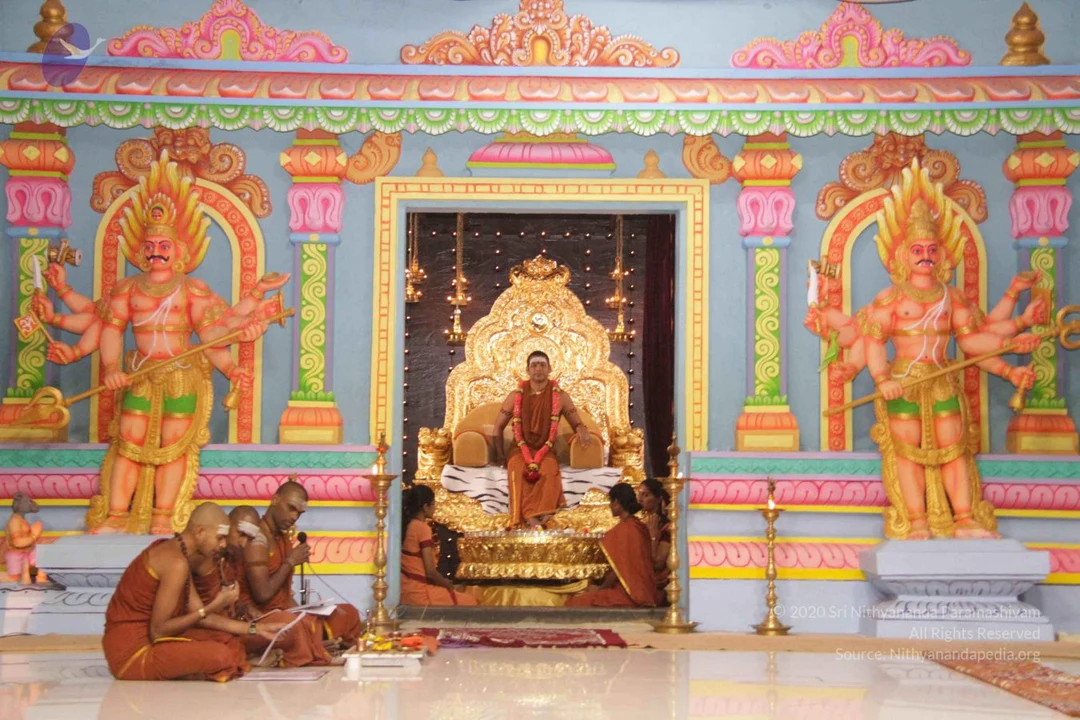
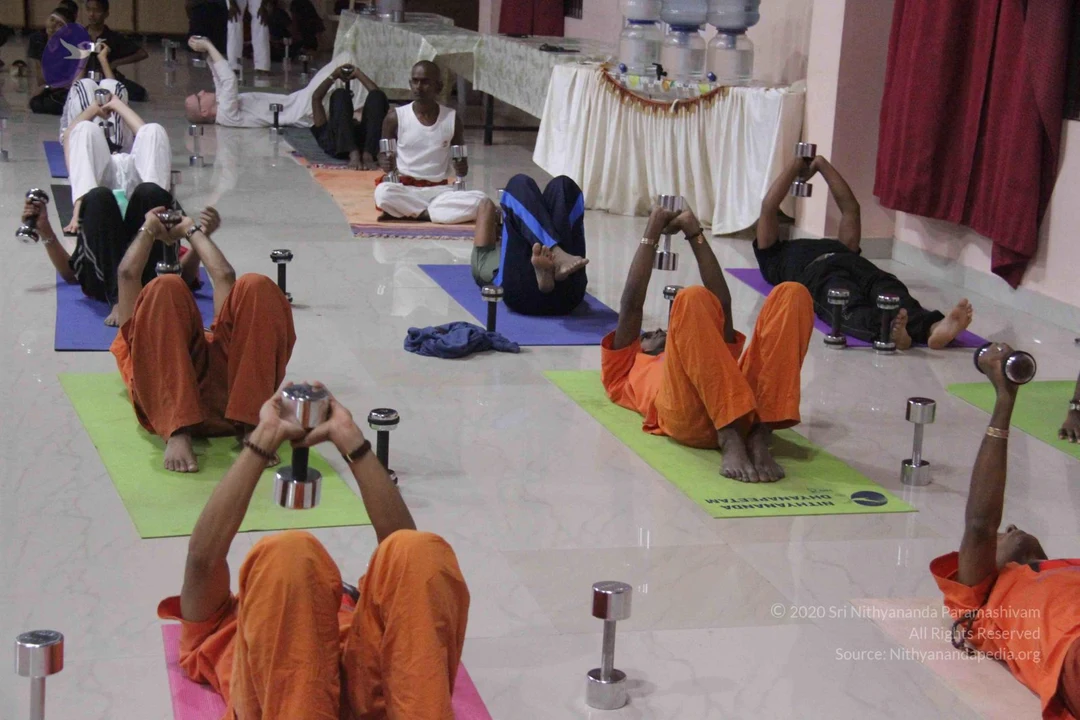
A large hall with a polished white floor where many people sit kneeling in prayer pose with palms pressed together, on purple, green and pink mats. Several wear orange or saffron robes, others wear black, grey or white clothes. Dumbbells lie between the mats. Colourful hanging tassel pillars and draped white fabric decorate the ceiling. In the foreground a bald man with glasses in an orange t-shirt sits with hands in anjali mudra. Some people sit in a row near the front wall, and a golden curtain hangs at the far end.A photograph inside a brightly painted temple-style hall. A seated figure in orange robes and a red flower garland sits on an ornate gilded throne draped with a white cloth bearing a tiger motif, raising one hand in blessing. Flanking the entrance are two large painted deity murti with orange-red skin, multiple arms, gold crowns and gold ornaments, one holding a trident. In the foreground a bald man in an orange shawl holds a multi-tiered oil lamp lit with flames, and other figures in orange robes sit near the throne. Brass lamps and hanging lamps decorate the scene, and an aarti-style lamp ceremony appears to be underway.Photo at an indoor event with a man in orange-brown robes and a pink-and-green flower garland at right, a white tilak on his forehead and a red dot between his brows, holding a folded paper and a notebook while speaking. Beside him a man in a plaid blue shirt with glasses presses his palms together in namaste, and a man on the far left with his hand near his face leans in. Behind them a bearded man in white kurta with a red shawl and rudraksha mala stands with hands joined in prayer, and orange-robed figures and a white chair are visible in the background stage area.

February 27 2013

Original wiki page
Contents

Title

Your Word is Your Life

Description:

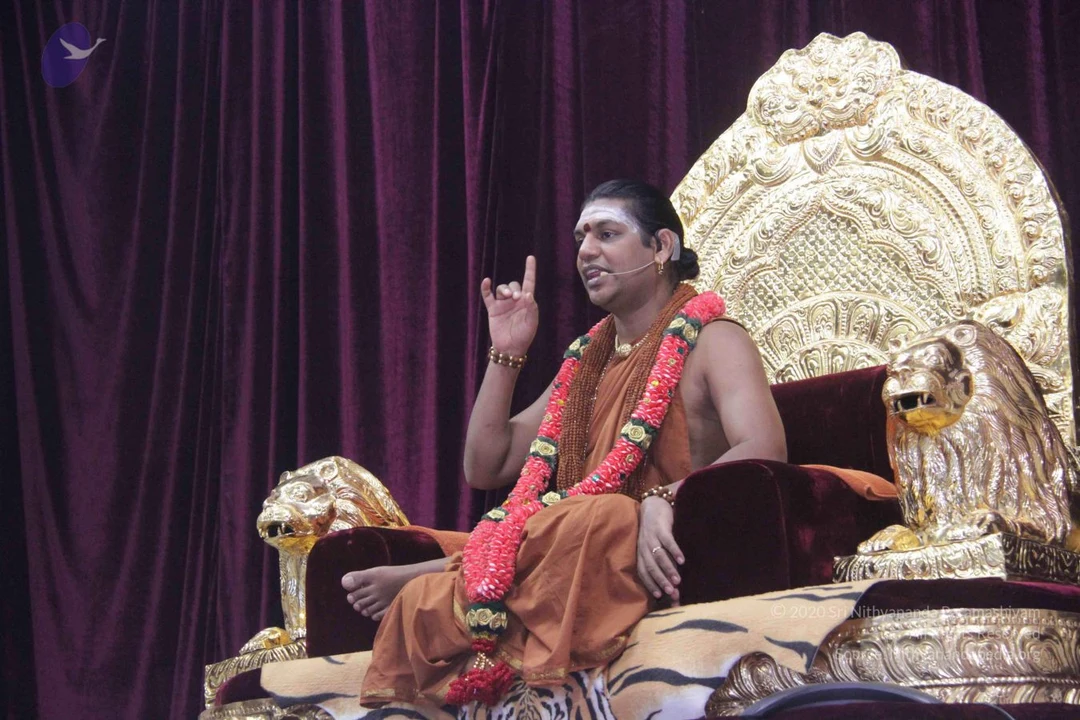
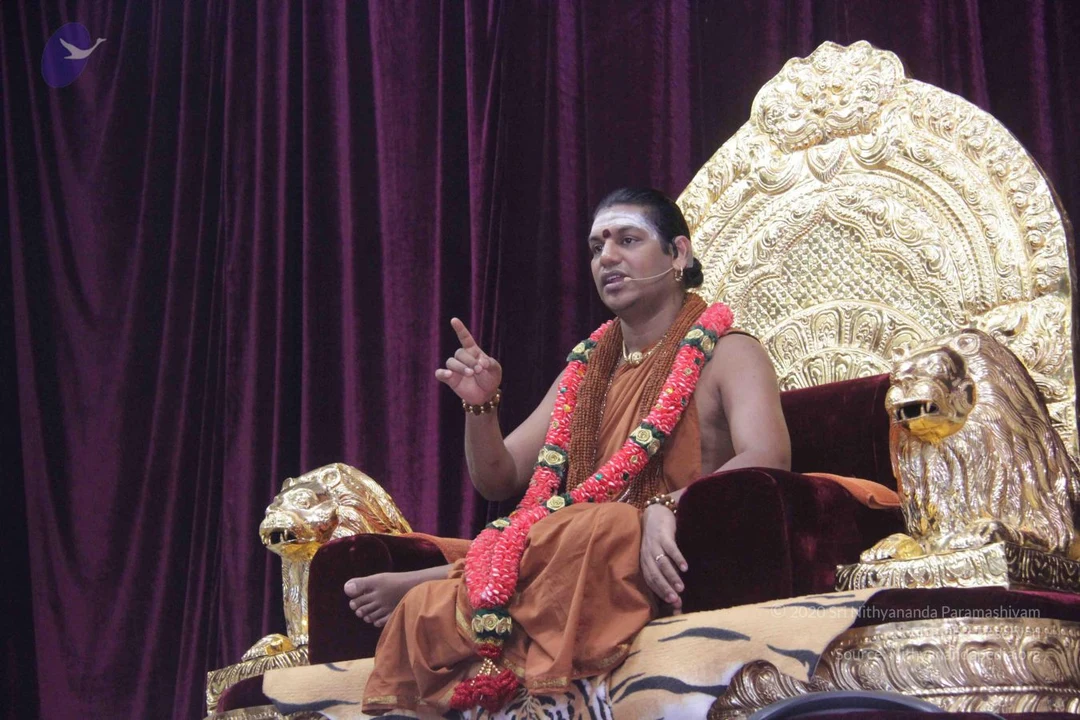
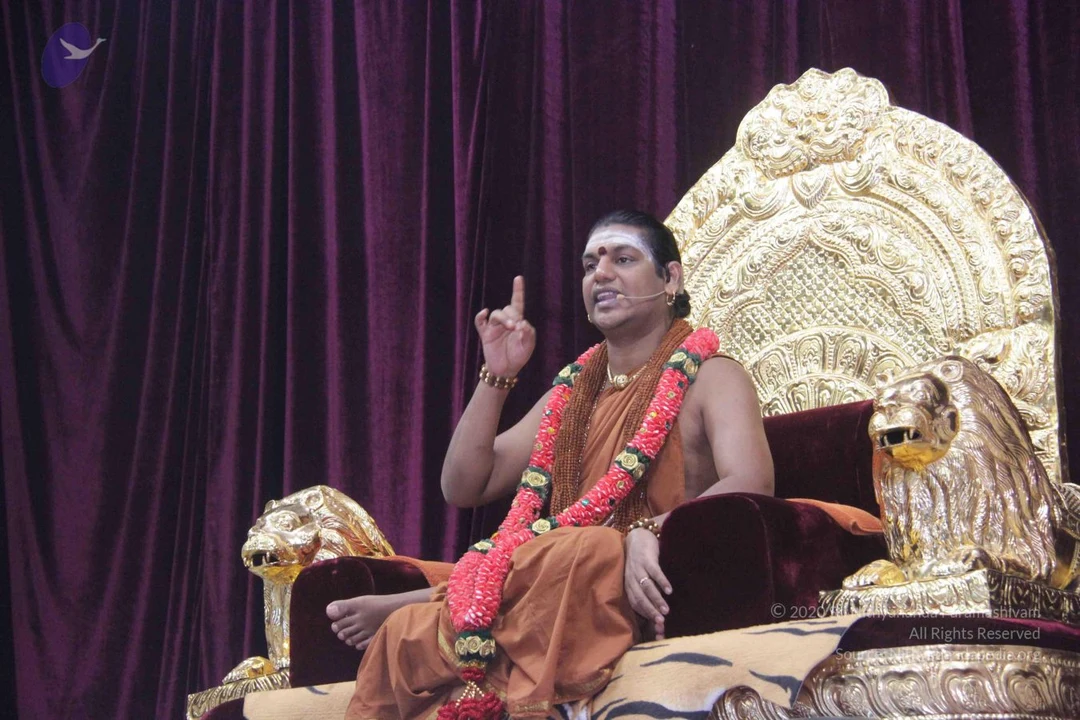
In today’s morning satsang, Paramahamsa Nithyananda redefines the Four Noble Truths. Integrity is the bone structure on which we build our lives. Integrity is based on our words, on what we commit to and what we say. If we do not keep our word, our lives grow perverted and crooked. When we fulfill our commitments, we create success. Integrity forms the roots of our Tree of Life. Authenticity is the tree itself. It means aligning our perceptions of ourselves with how others perceive us. Then they can understand what to expect of us, and we can answer their expectations. Responsibility is the fruit of the tree. With responsibility we pluck from the tree the best it has to offer. We enjoy the fruit ourselves, and we Enrich Others by sowing the fruit’s seeds as widely as possible, creating new trees and new fruit with which to nourish the world.

Video

VideoAudio

Transcript

(00:09)

Integrity is fulfilling the word and thought you give it to yourself and to others, and experiencing a state of completion, Poornatva, with yourself and with life. Listen, when you give a word to yourself or to others, that is the bone structure of your life. That is the bone structure of your life. If you continuously break the bones of your life, how your life will be? Full of pain, distorted, vakra, perverted. The word you give it to you, is the bone structure of your inner personality. The word you give it to others is the inner structure of your success, life. If you are constantly breaking your bones, and breaking the bones of your life, life will be painful, suffering, torture.

(01:37)

It is based on the word you give it to you and to others, you start functioning. Am I right? It is based on the words, everything starts. So the word you give it to you and to others is life. Literally, life. The word you give it to you and to others you have to fulfill it as your very life. If you’re really sure you can’t fulfill it, at least do the bone transplantation. Don’t fracture the bone. Do bone transplantation. Means, complete that word, by declaring you will not be able to fulfill that word, finally complete it. For example, if you’ve given a word you will give a million dollar to somebody, it is like your life, you have to fulfill that word. If you’re very sure you’re not a you’ll not be able to fulfill that word, at least complete with them saying “I will not be able to fulfill it. I am taking that word back. Please, you look to some other source.” So even this is a completion. But this second choice should be used like a bone surgery. Will you do bone surgery on yourself everyday? No. Only rarely you will do the bone surgery. Bone surgery cannot be done everyday.

(03:27)

Same way, just completing it by taking the word back cannot be done everyday. While you give the word itself you should be aware enough, that you’re going to fulfill it. Only rarely surgery is allowed. But there should be nothing without fulfilling or completing.

(03:57)

Experiencing a state of Poornatva, completion with yourself and with life. How many of you do more completion, less fulfilling? Means, giving the word then taking back the word, completing it than fulfilling it. You are all living in unconscious, you are all living in utter unconsciousness. Because while you give the word, you are not aware of what you are doing.

(04:34)

Integrity is you fulfilling the word and thought, you give it to yourself and to others, and experiencing a state of Poornatva. Completion with yourself and with life. If you give a word, be very clear, already your life is started getting built. You’ve started building the life. You have to fulfill it. It is your life. Dropping the word and completing should be like a pulling down the structure and rebuilding. Are you, how many times you do pulling down the structure and rebuilding? If you build hundred buildings maybe one will be pulled down and rebuilt. If you give hundred words, ninety-nine is pulled down and rebuilt. It means what? Still you have no respect for your life. You have no respect, you are not aware of what you are doing. Still you need to become sincere. And need to have the courage of authenticity, before you give a word.

(06:06)

And you should ensure your authenticity is kept alive, to keep your excitement alive. I tell you, authenticity is death for your boredom, excitement for your life. Because authenticity kills the old way of living. It is a death for you. And it is an intense excitement to live.

(06:41)

Applying the sacred ash on your forehead means, you declare, you commit, “all my decisions will be just based on this one truth of authenticity because nothing else should interfere in my decision making other than authenticity. Everything else is only ash, it is going to be turned out only as ash…. So all these things that are going to become ash, should not be part of my strategy planning. My strategy for my life, my strategy for my success, everything should be from authenticity.” That is what you commit. You, when you apply (Swamiji gestures applying sacred ash].

(07:36)

I have a question: “In some mood we commit something and then after few days don’t feel we need to do that. Should we do it just because we gave the word? Without the spirit behind the word? Can we drop that commitment in this case?” No. If you have given a word it has to be just lived. Just lived. Word is life.

(08:02)

Photos From The Day:

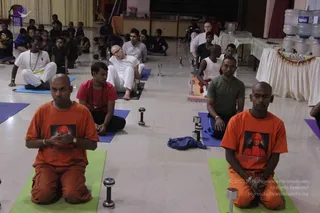
Morning Yoga
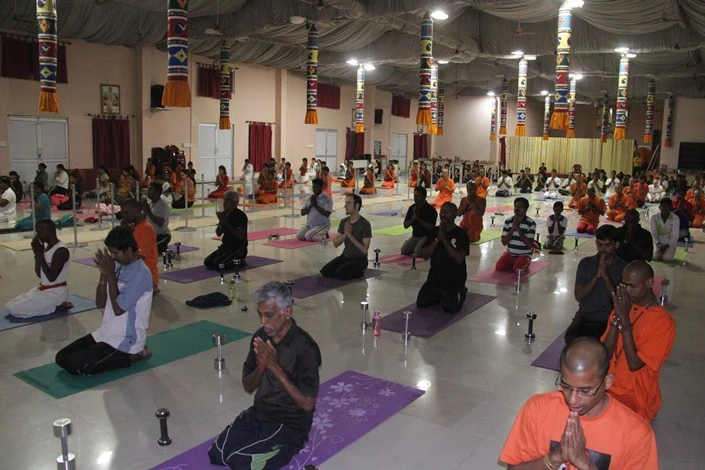
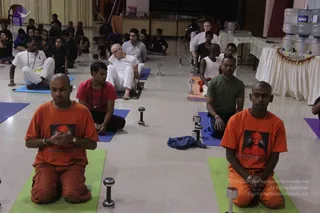
Morning Yoga

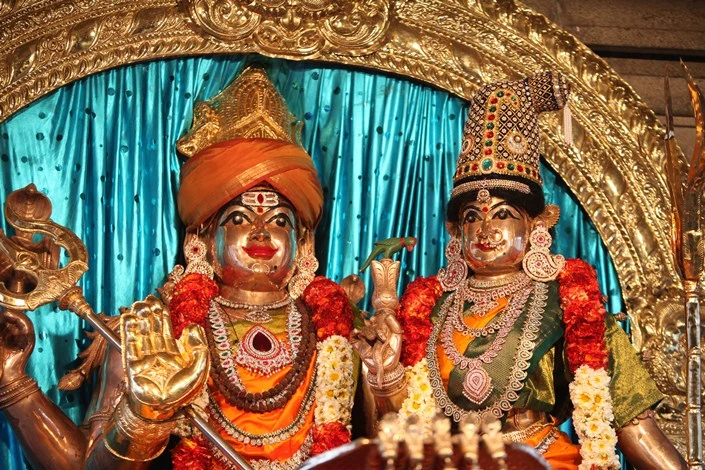
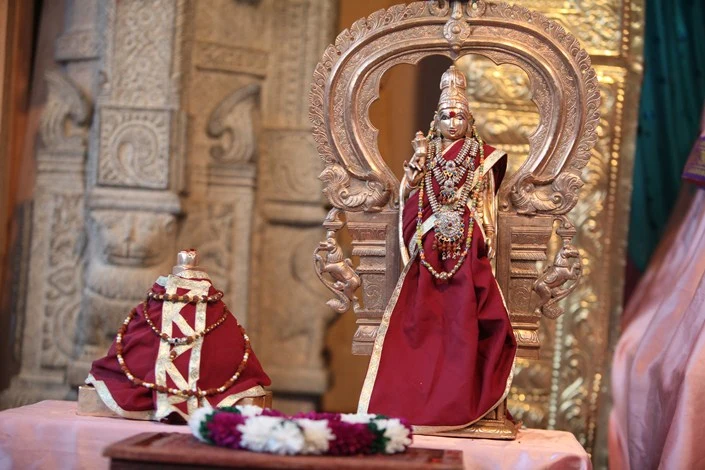
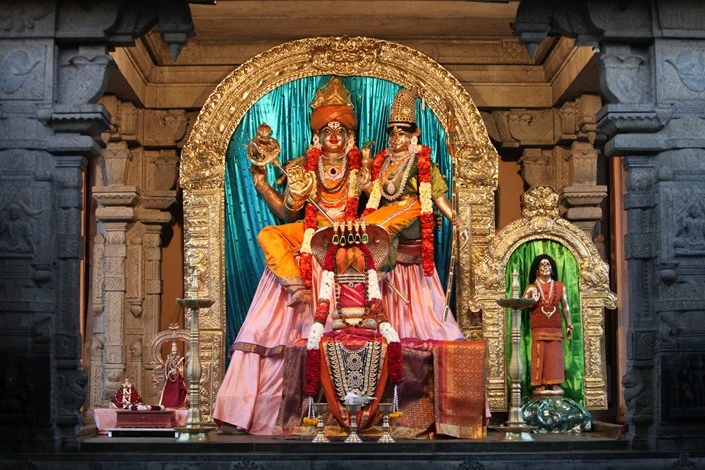
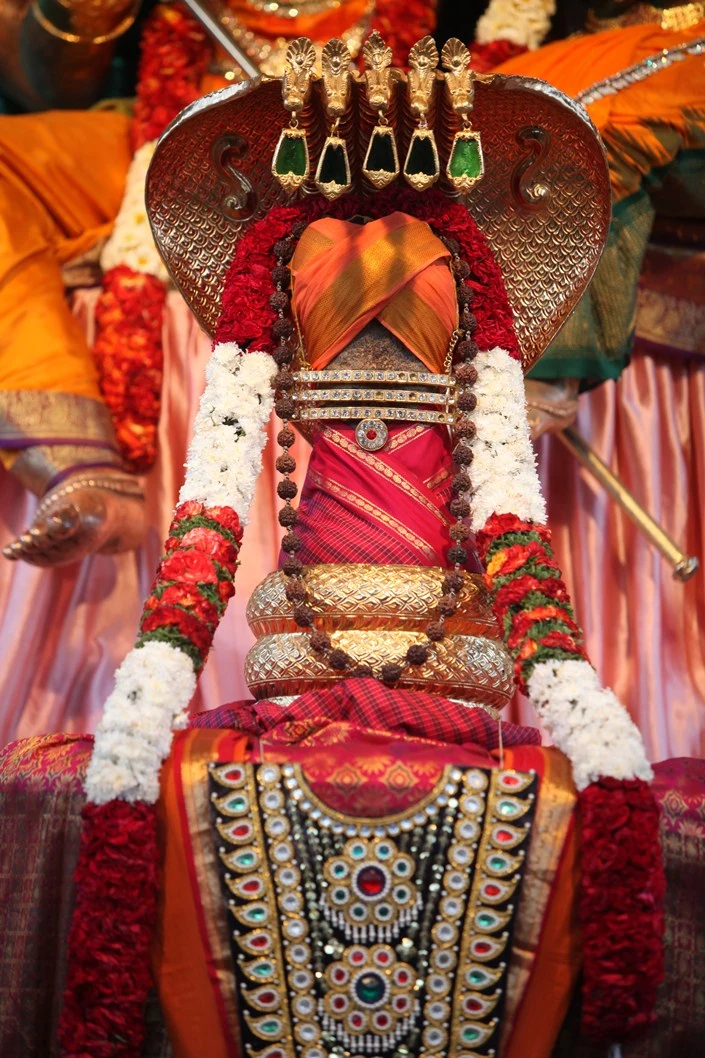
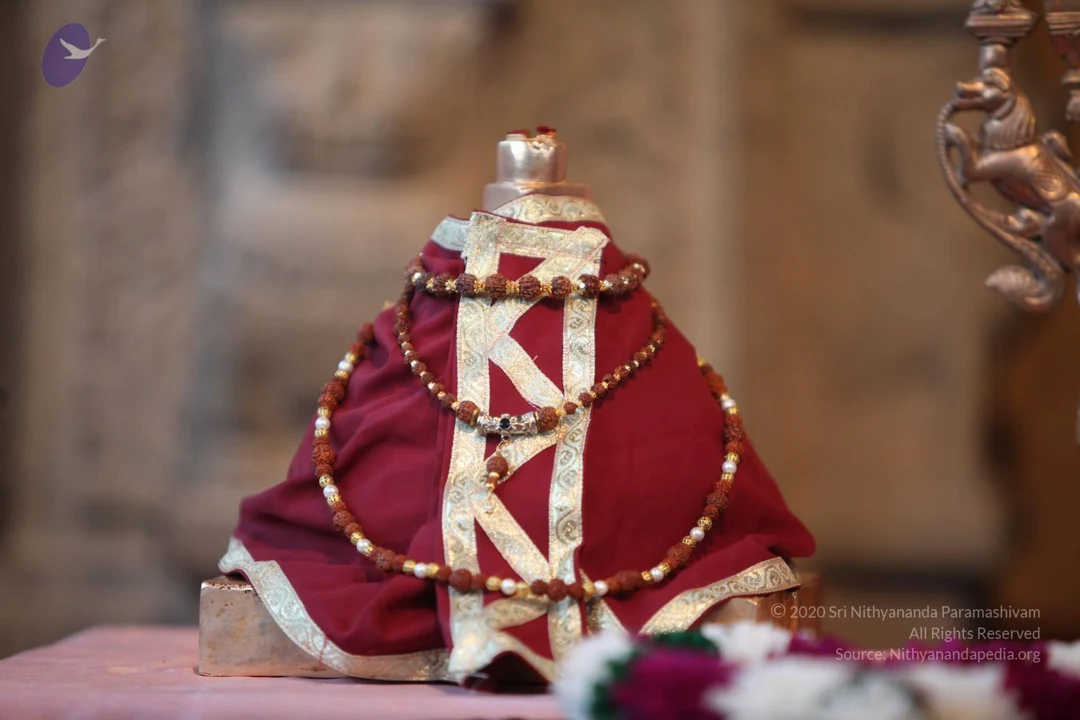
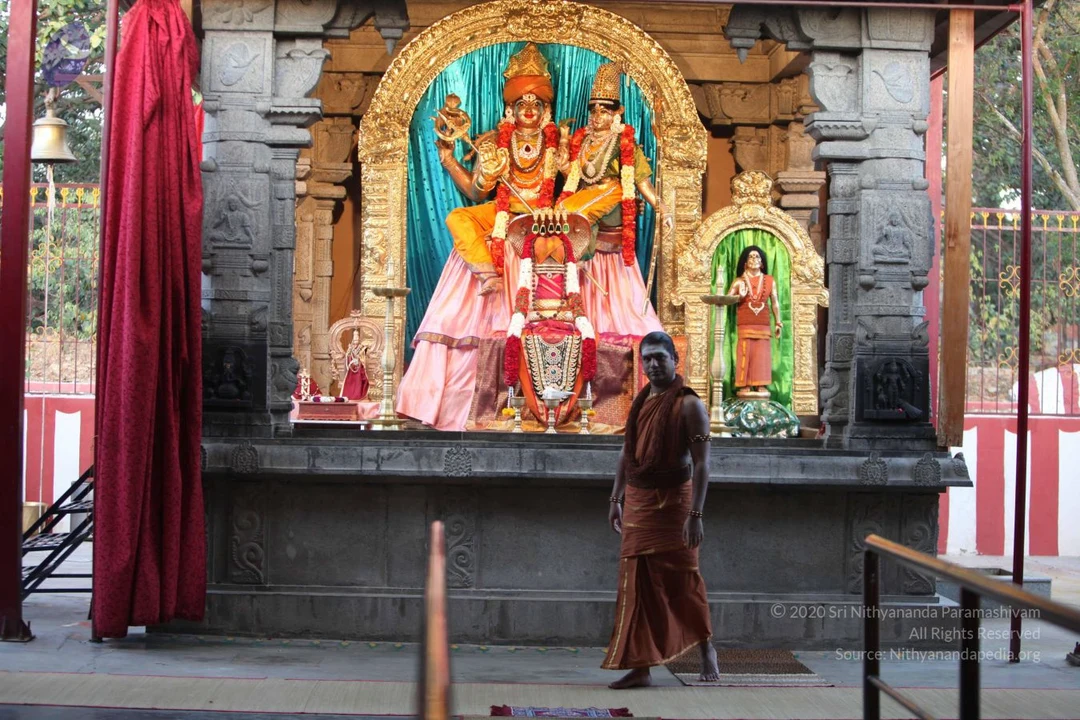
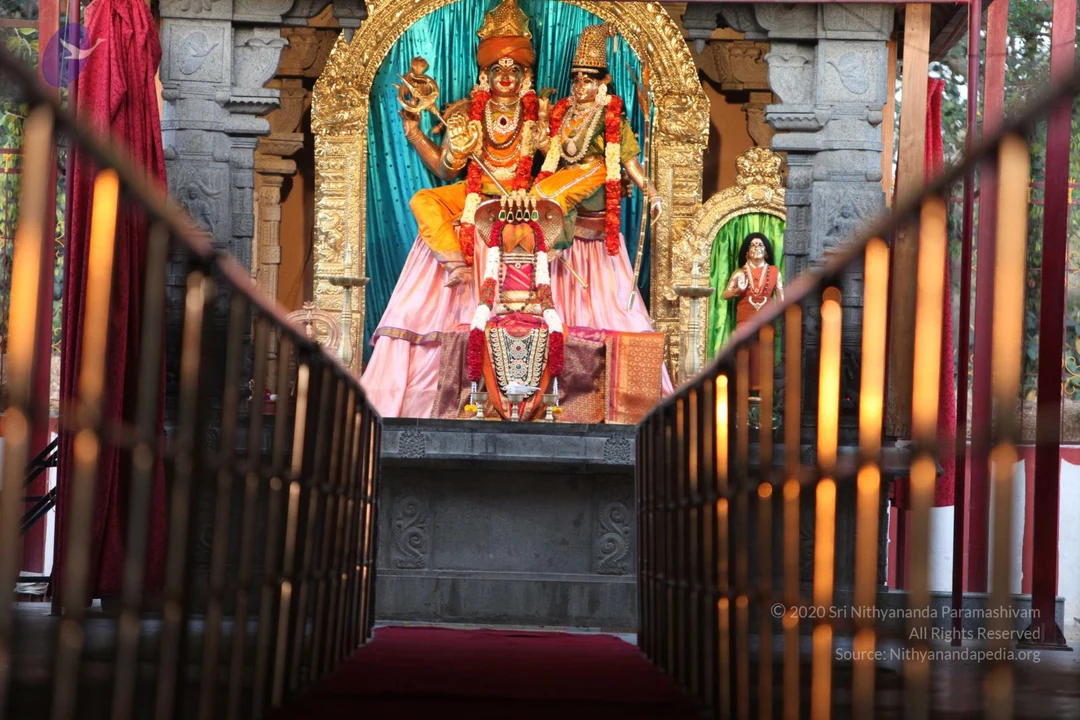
Temple Glimpses

Paada Puja
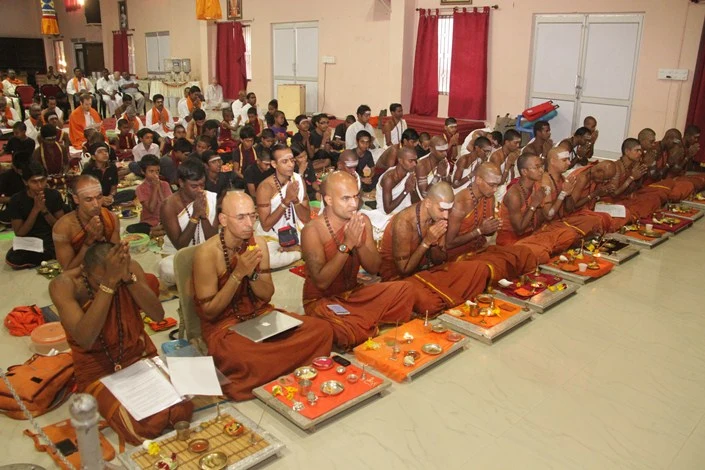
Satsang
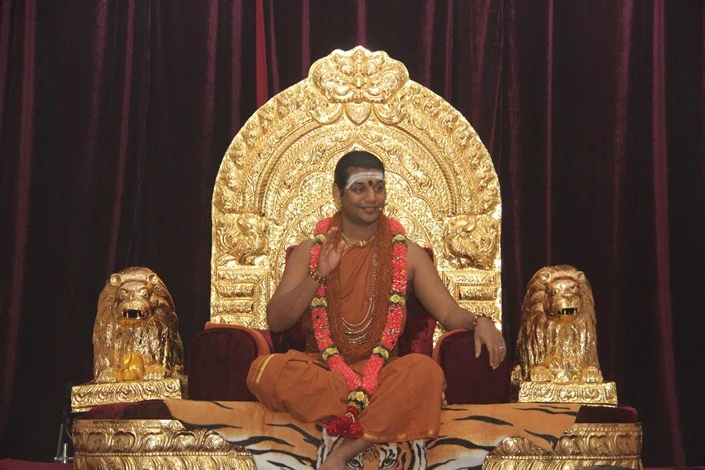
Shwaasaguru Sri Vachanand Swamiji
Tags:

Paramahamsa Nithyananda, Four Noble Truths, bone structure, commit, create, success, Tree of Life, understand, expectations, enjoy, nourish, world.

Photos Of The Day:

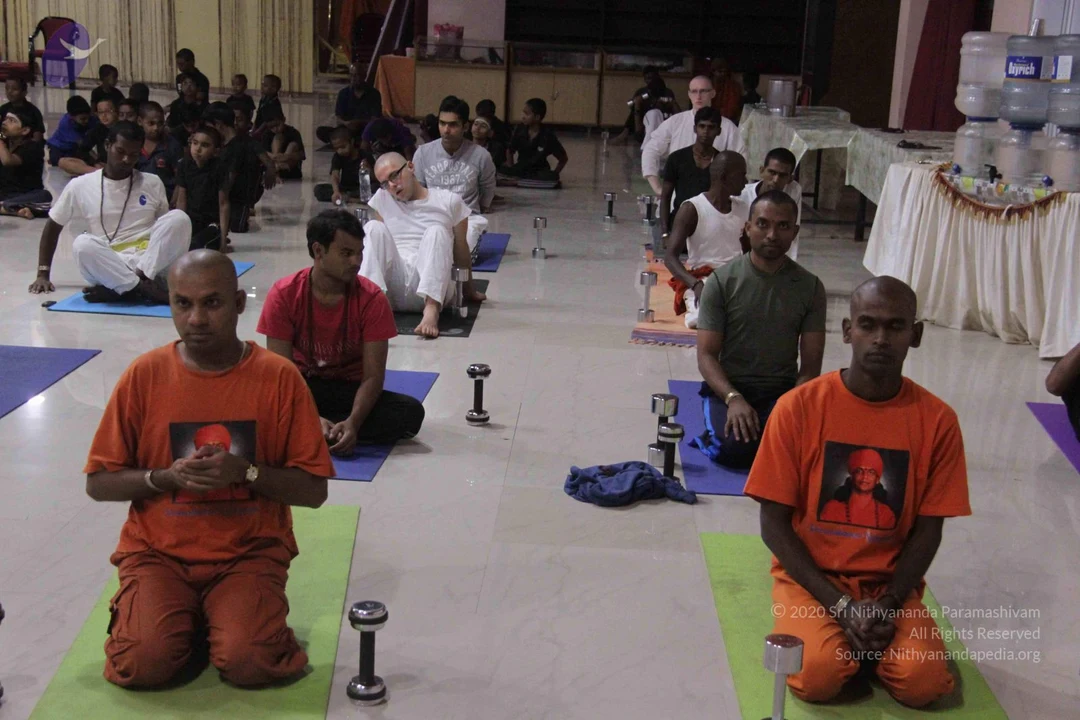
Morning-satsang
VIP-visit

Tamil-IA-Session

Darshan

Photos Of The Day:

MorningSatsang

VIPVisit

Tamil-IA-Session

Darshan

Photos from this day

View all 178 photos

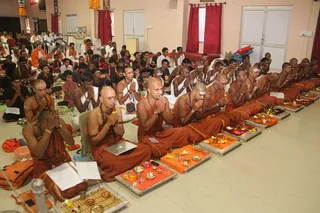
Paada Puja

1 photoSource gallery
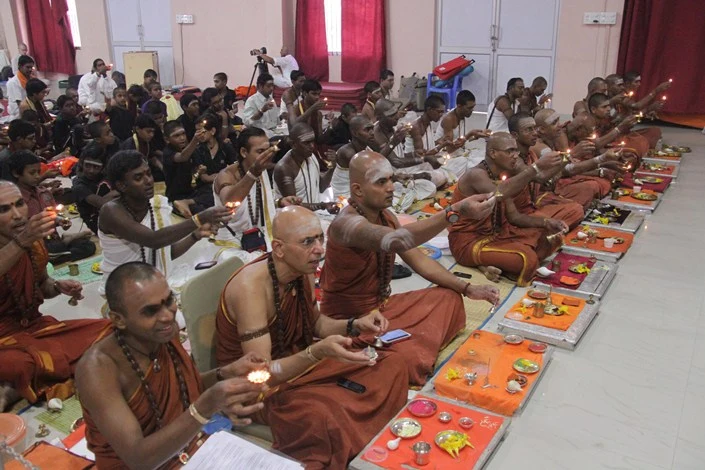
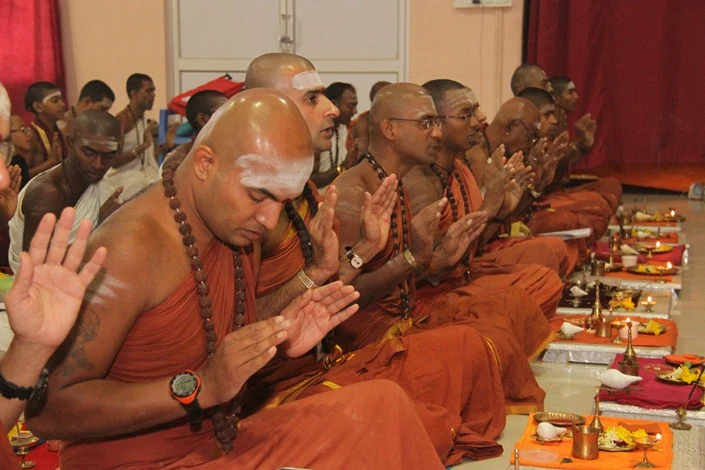
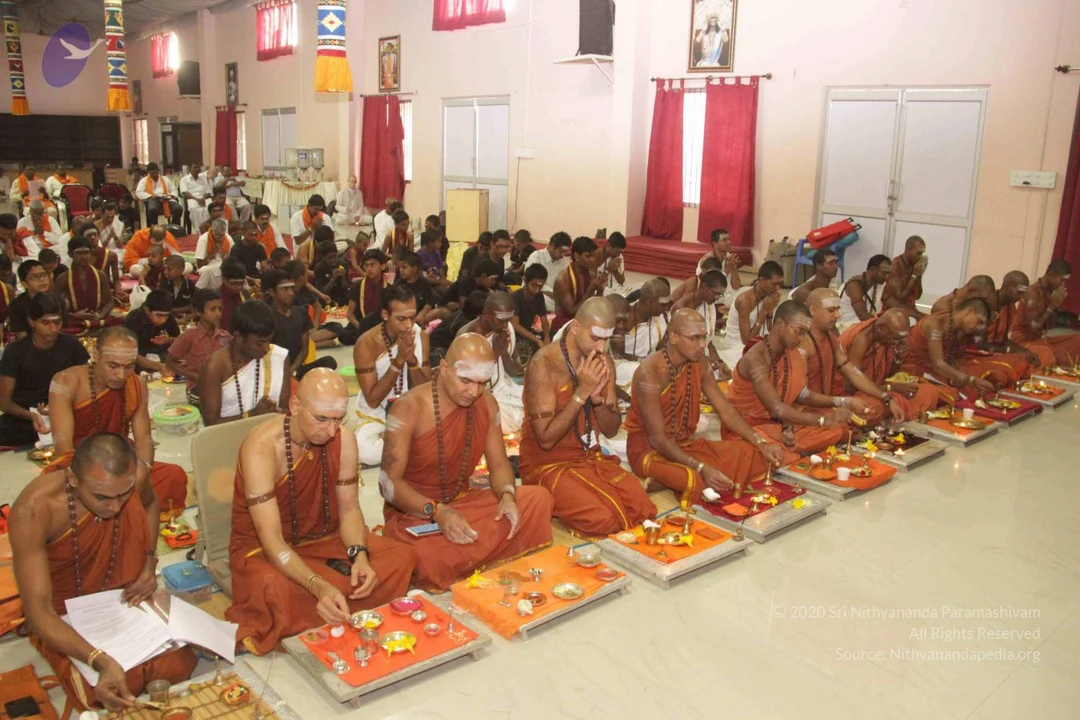
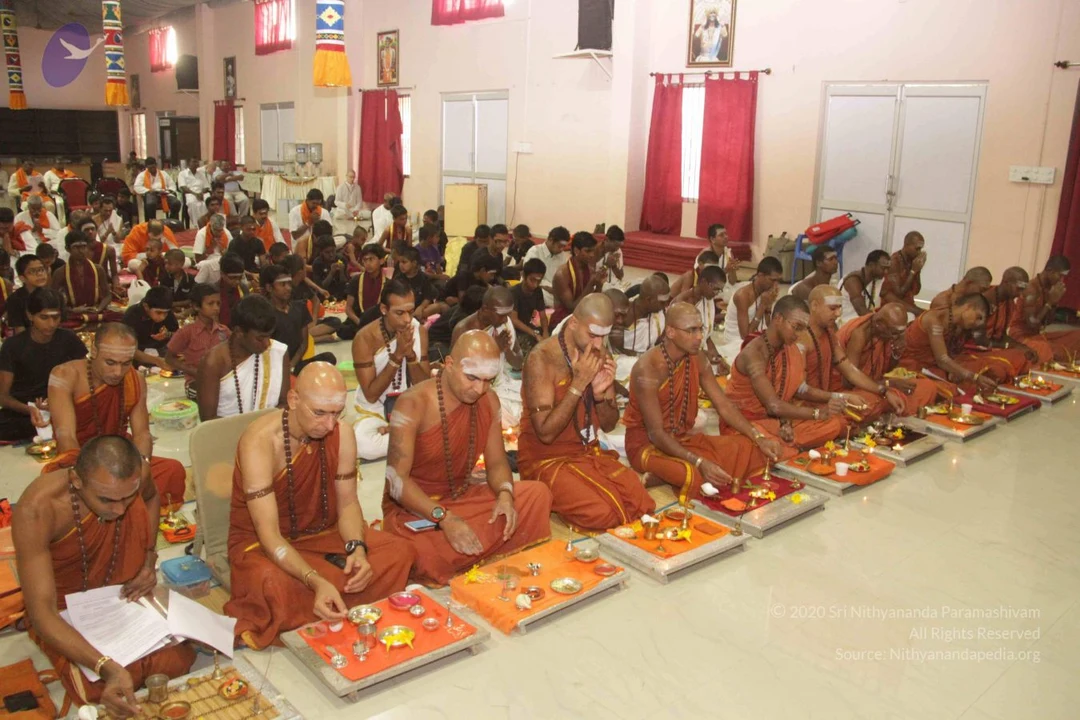
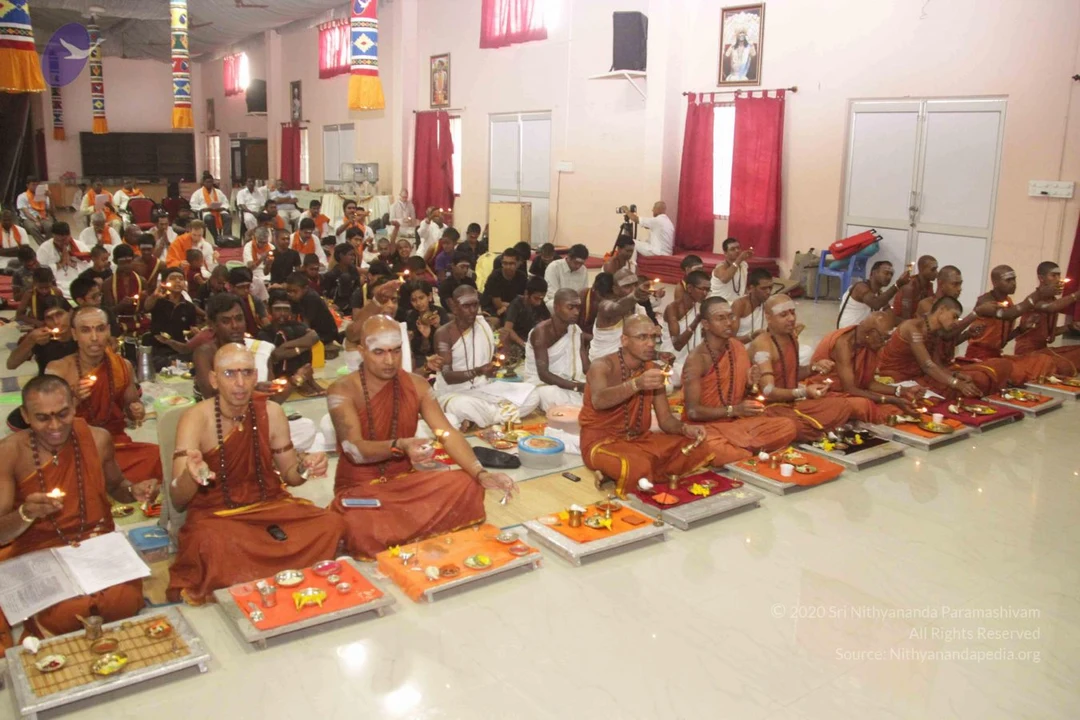
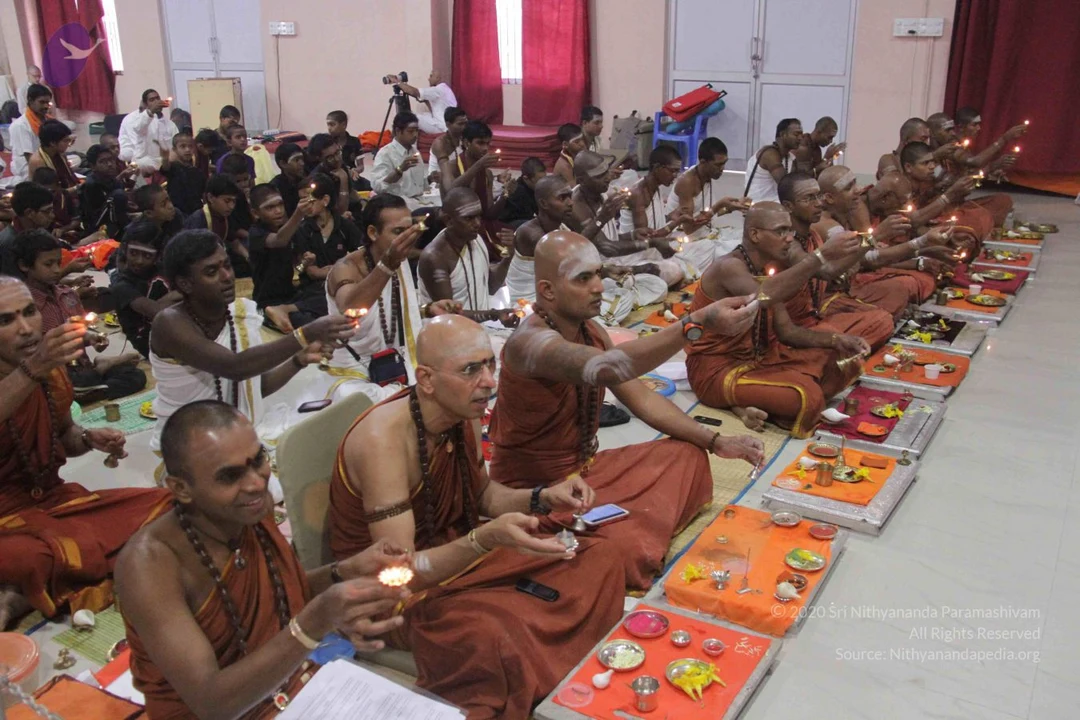
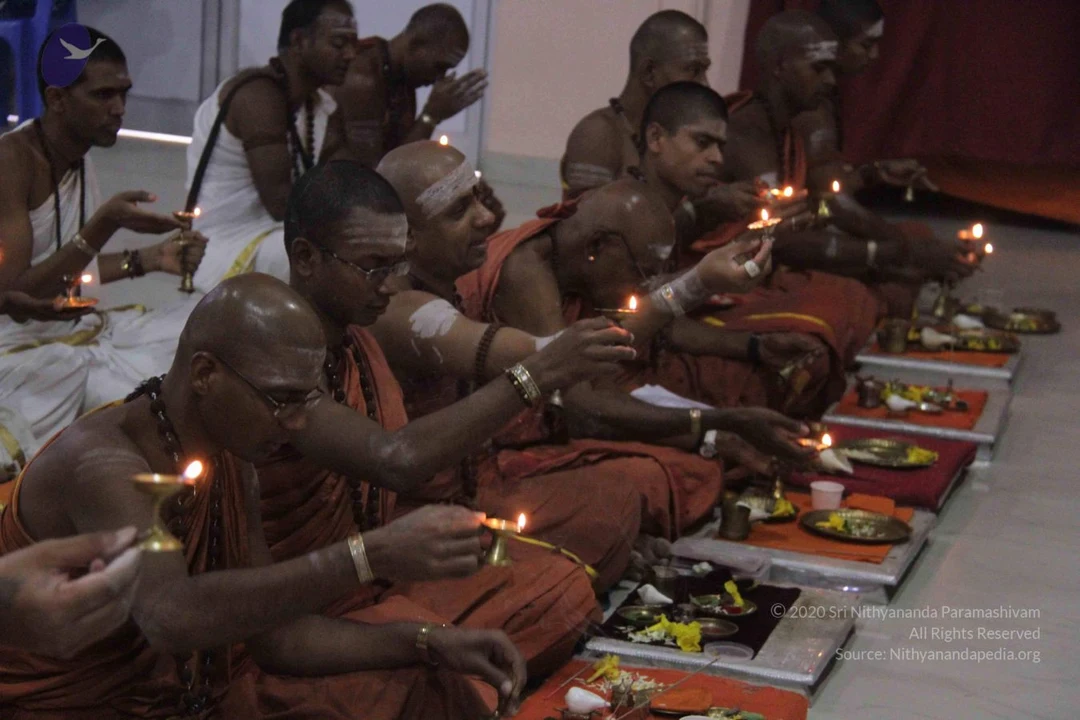
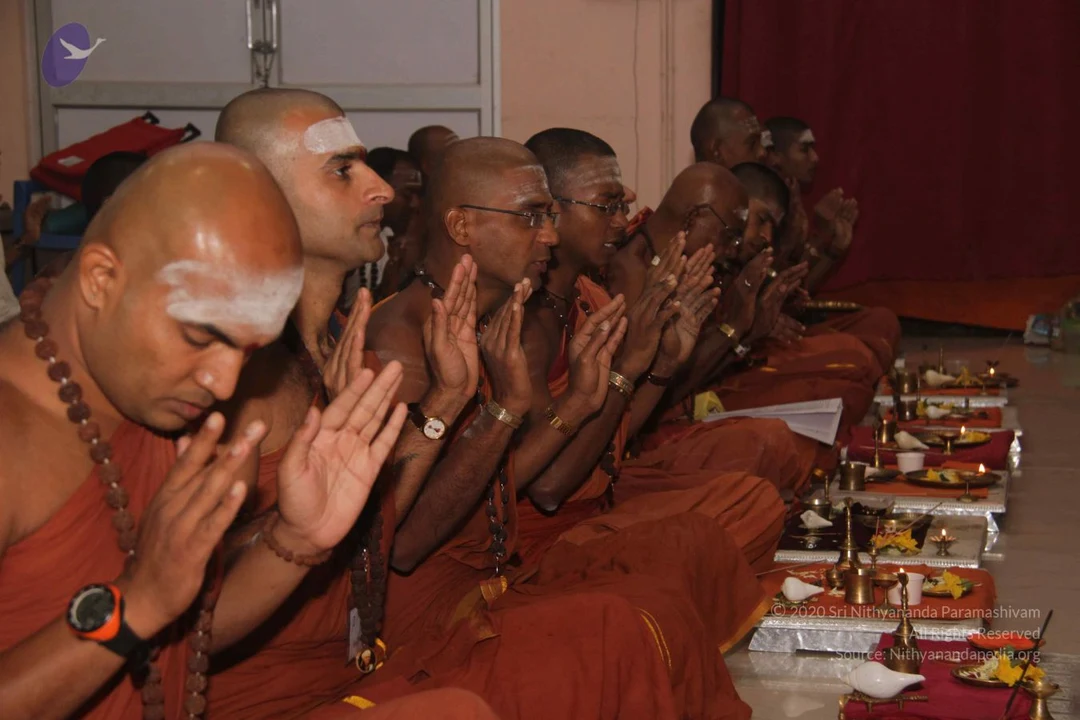
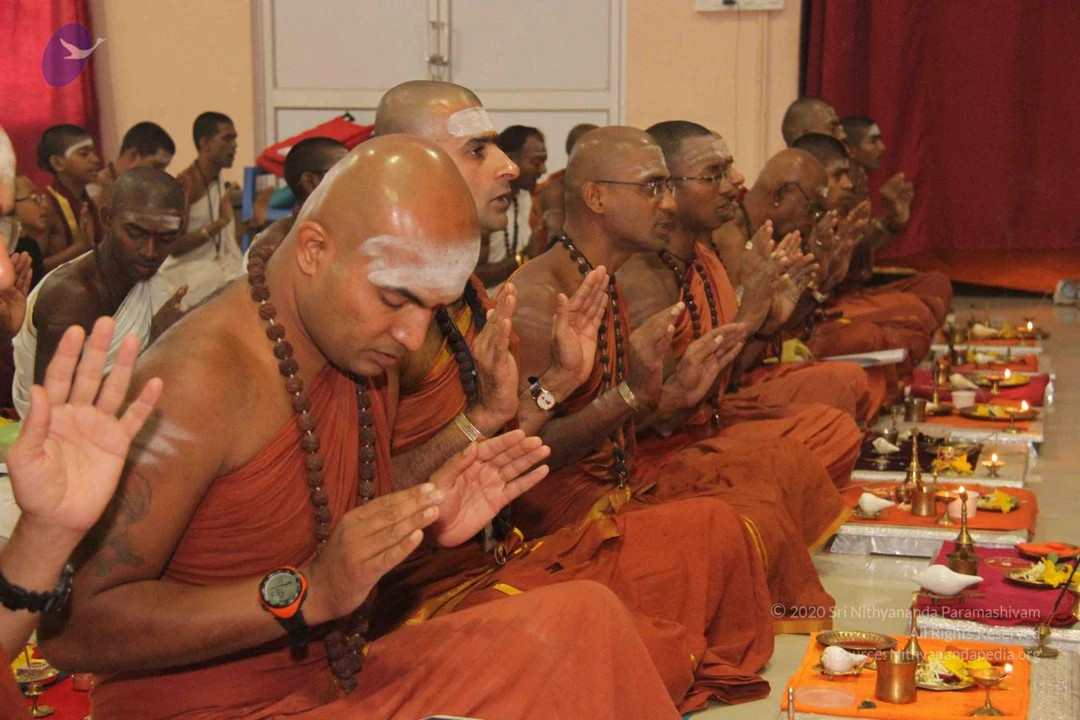
A seated group of saffron-robed sannyasis, many with shaved heads and rudraksha malas, sit in rows on a pale tiled hall floor facing a front area, their hands joined in namaste. In front of each sits a small tray with brass plates, bowls, flowers and fruit on orange cloth, and a laptop rests near the lower left. Behind them more devotees in white dhotis and mixed-colour clothing sit or stand, and red curtains hang at the back wall. Several saffron flags are visible on the far wall.

Satsang

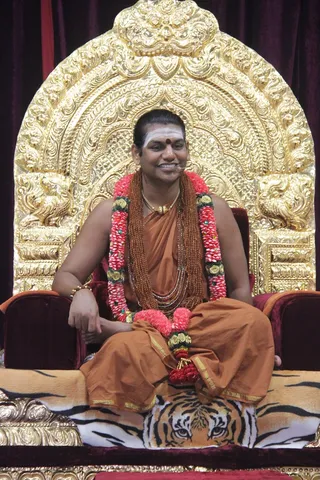
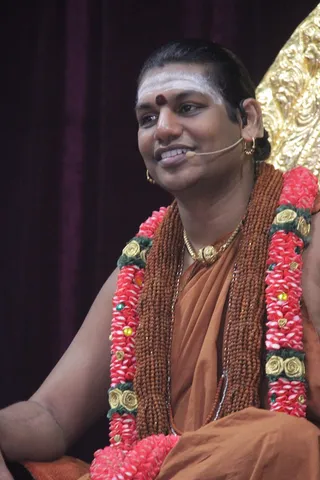
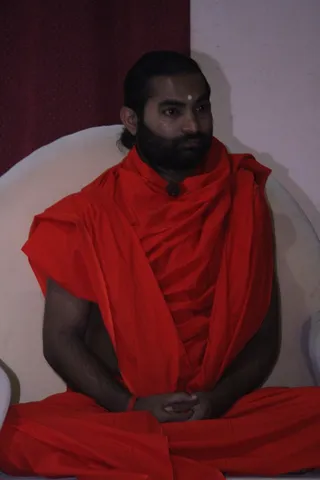
3 photosSource gallery
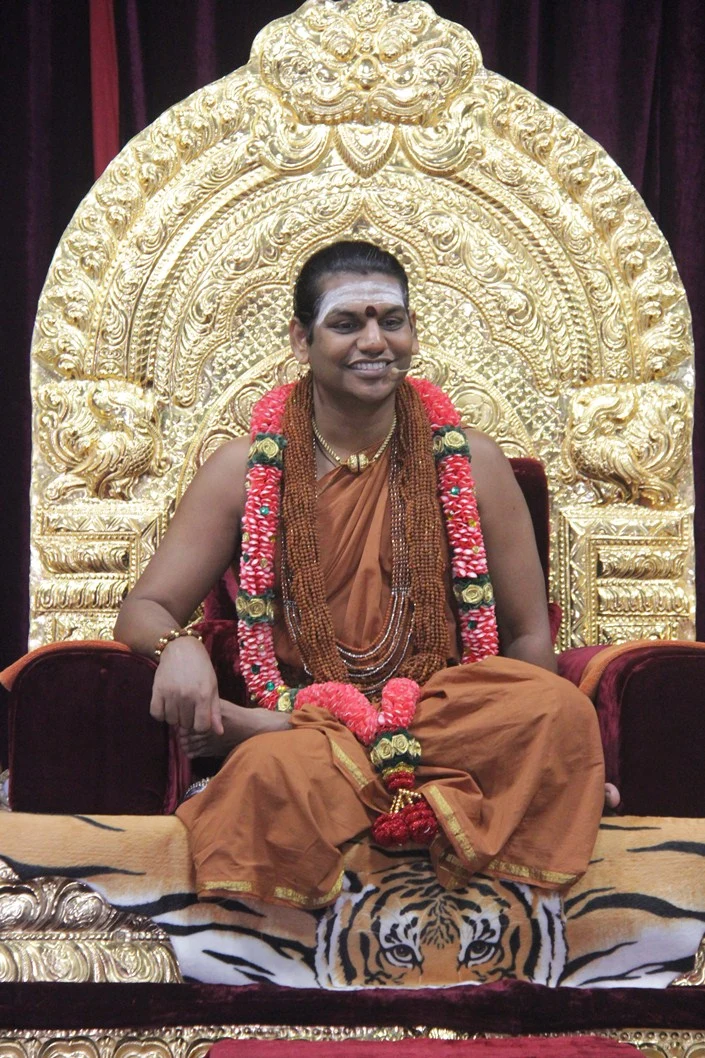
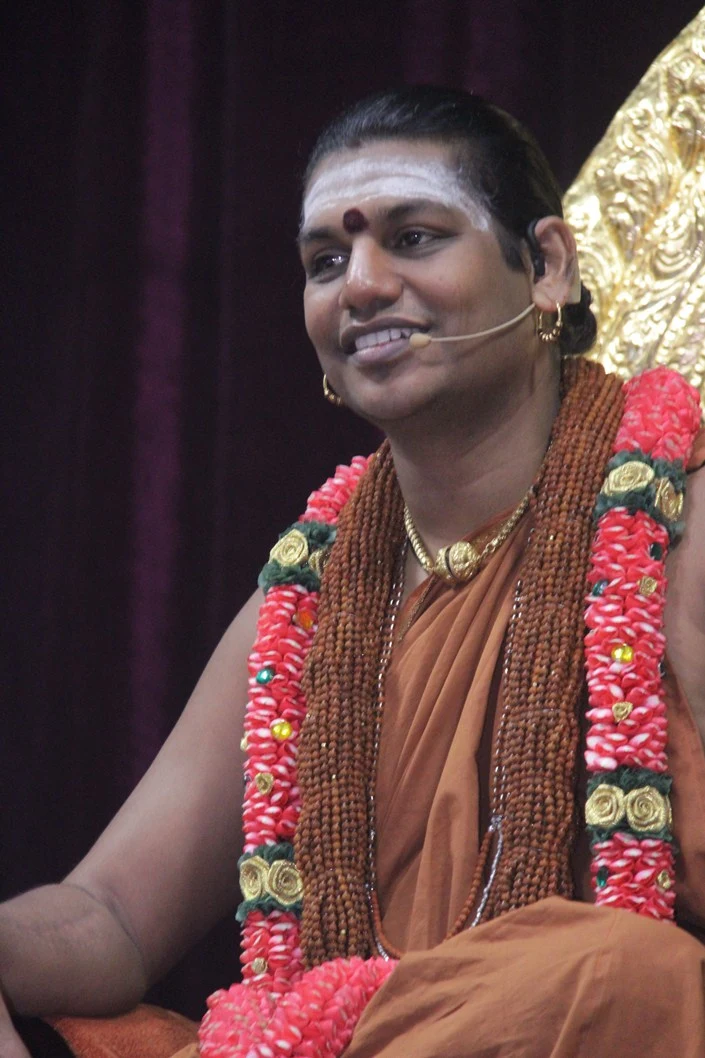
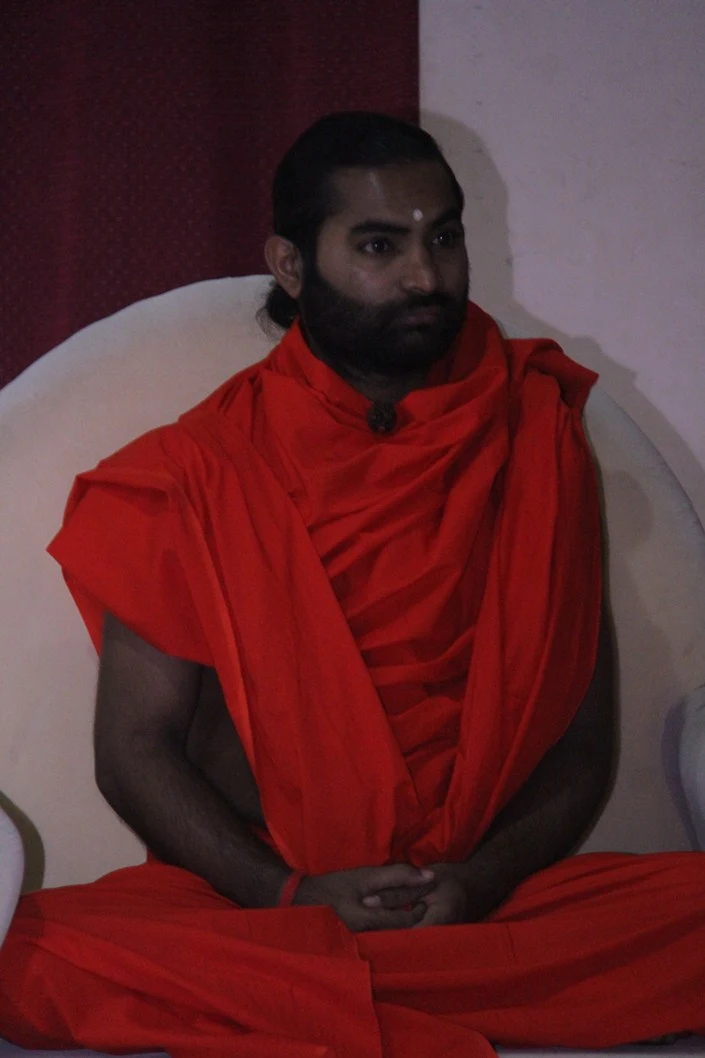
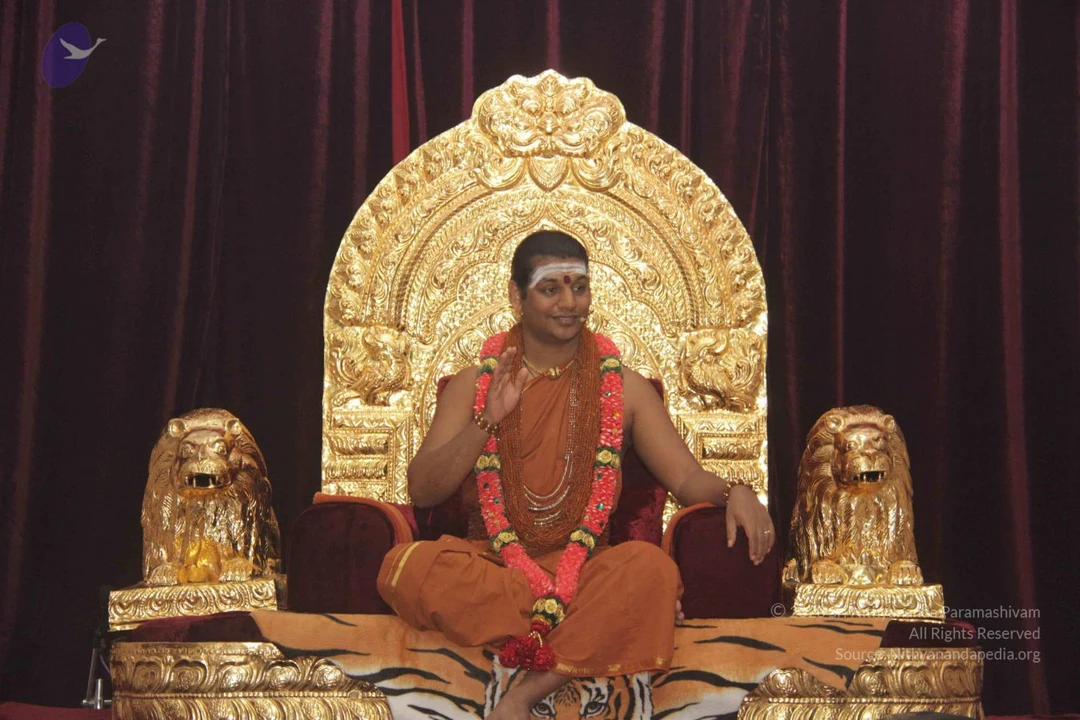
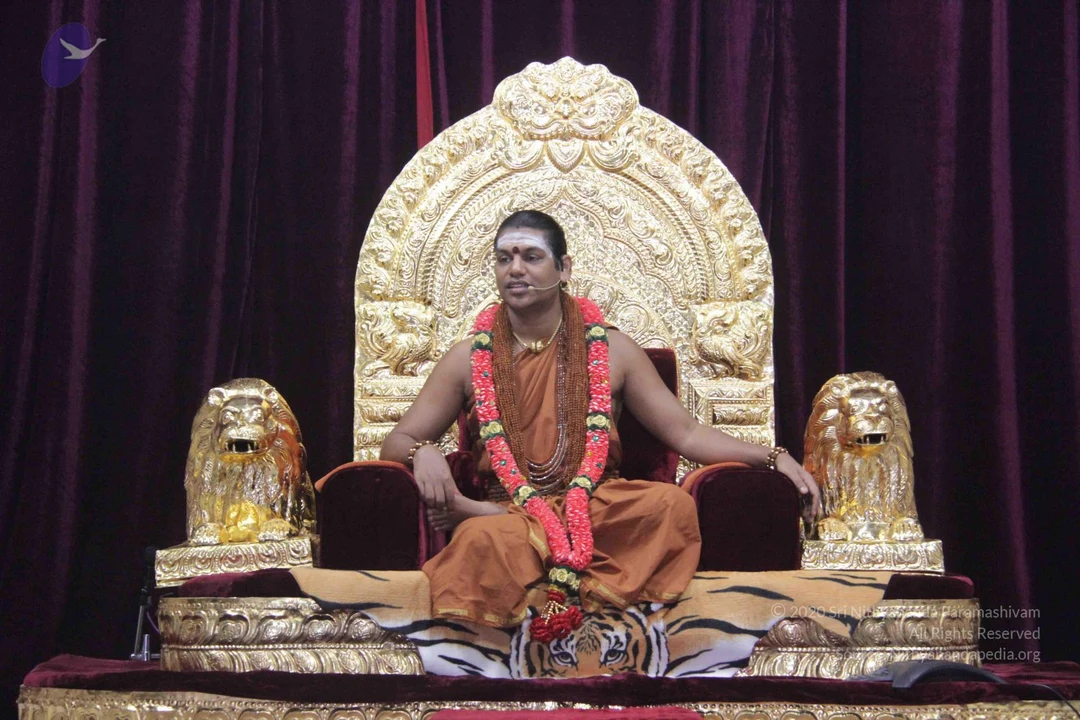
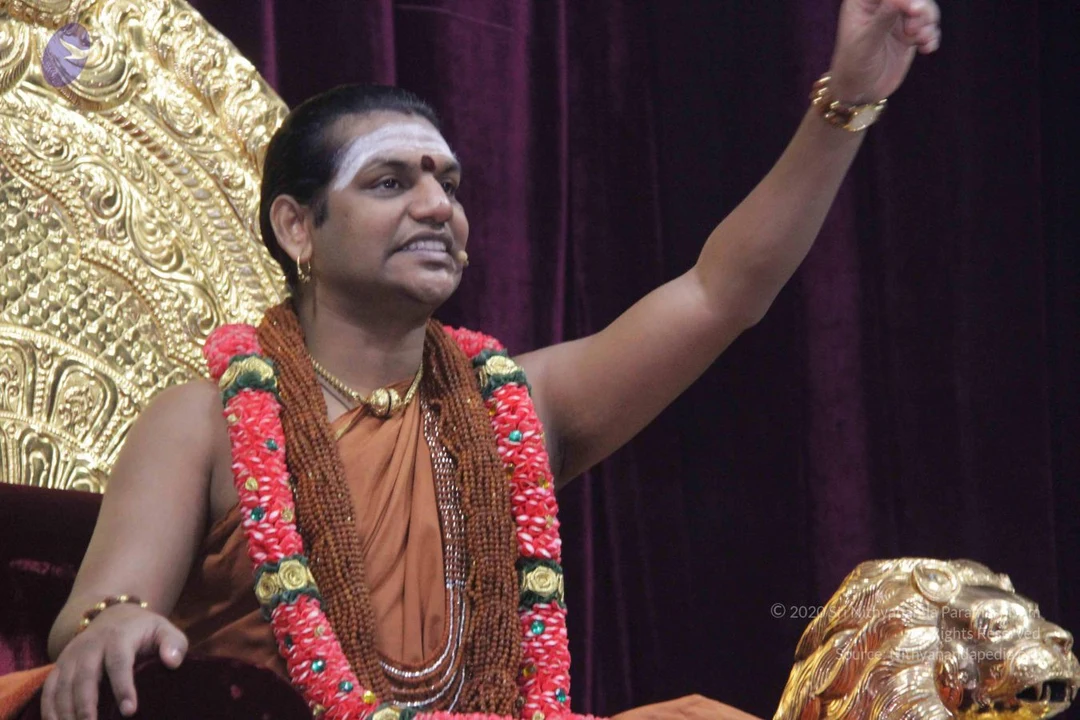
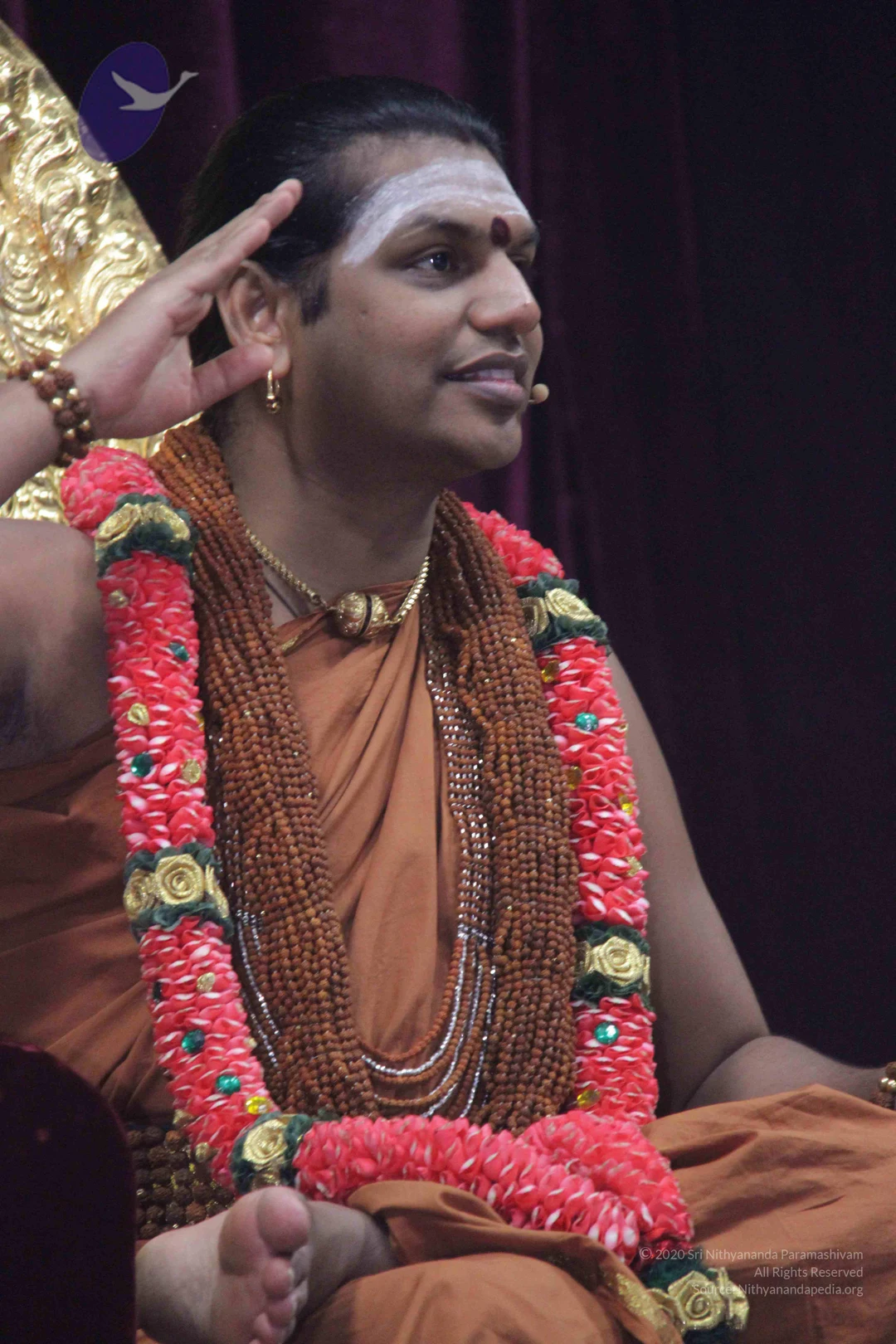
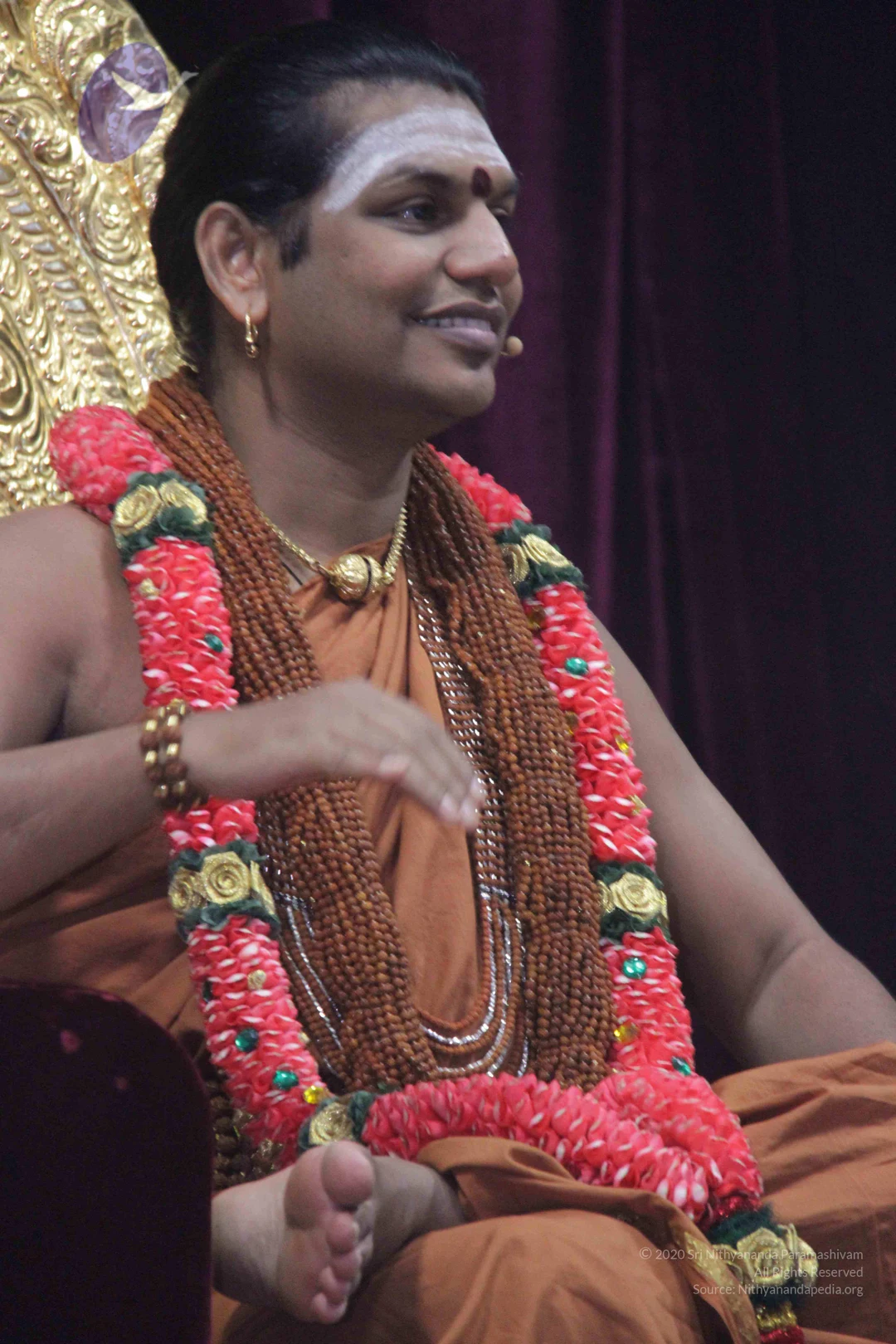
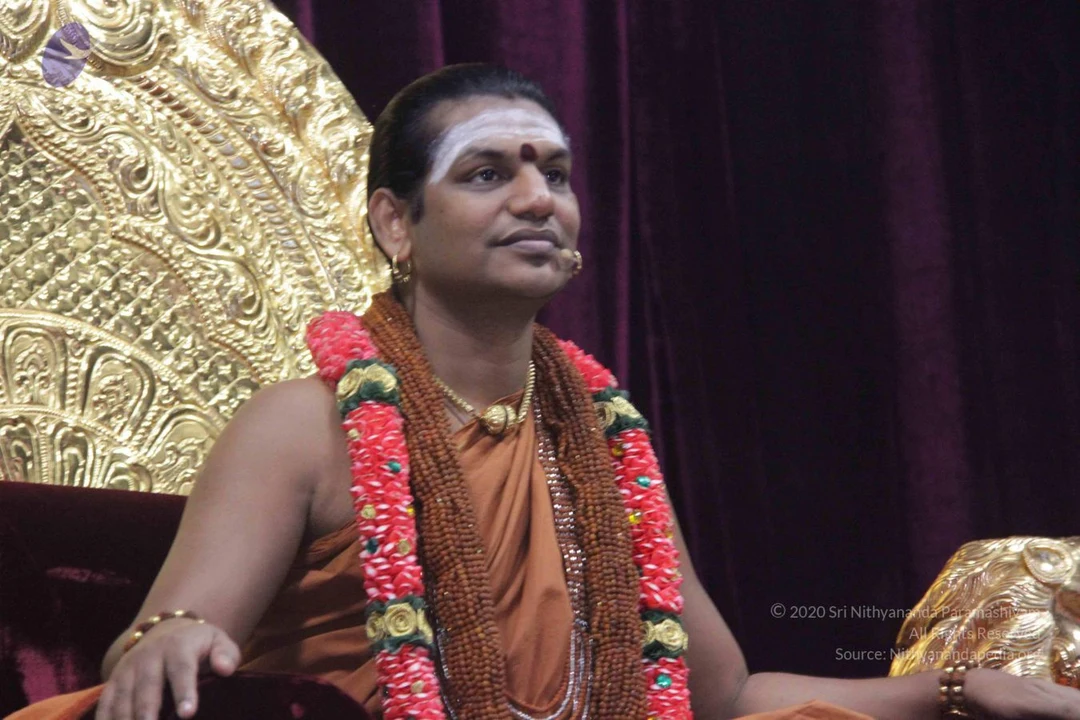
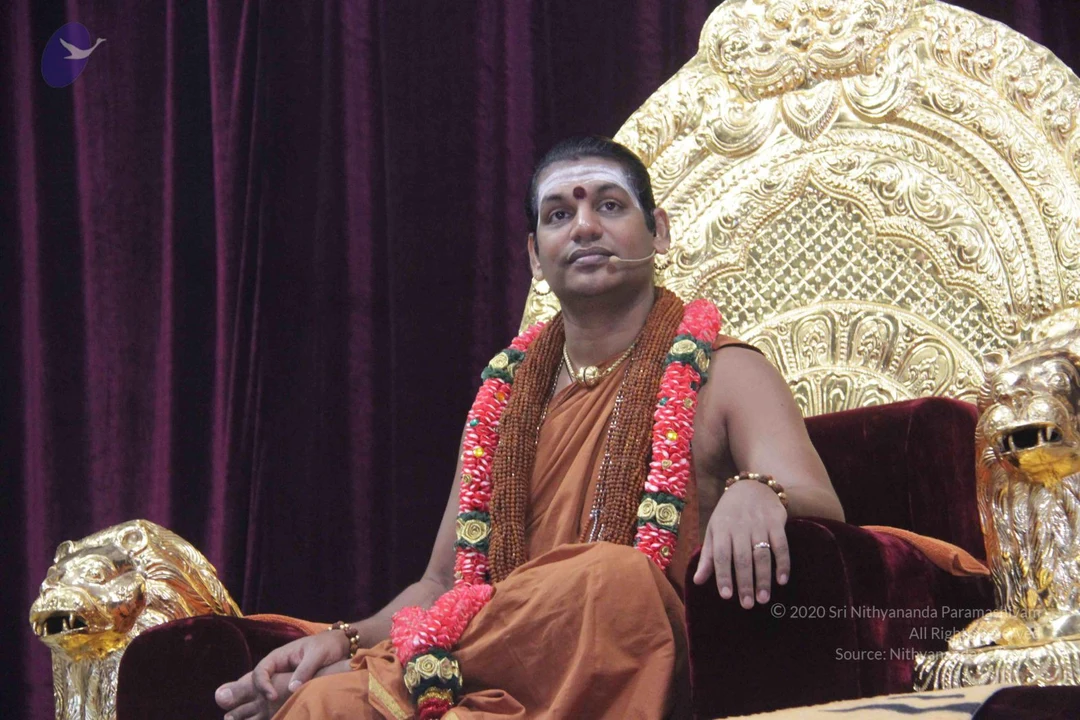
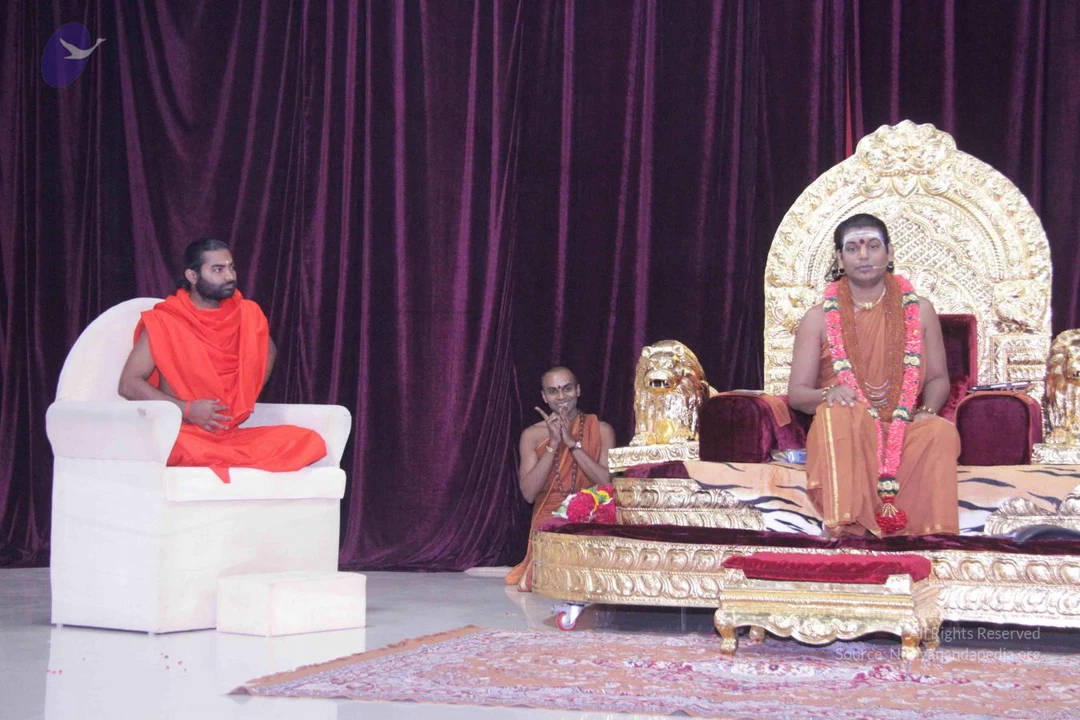
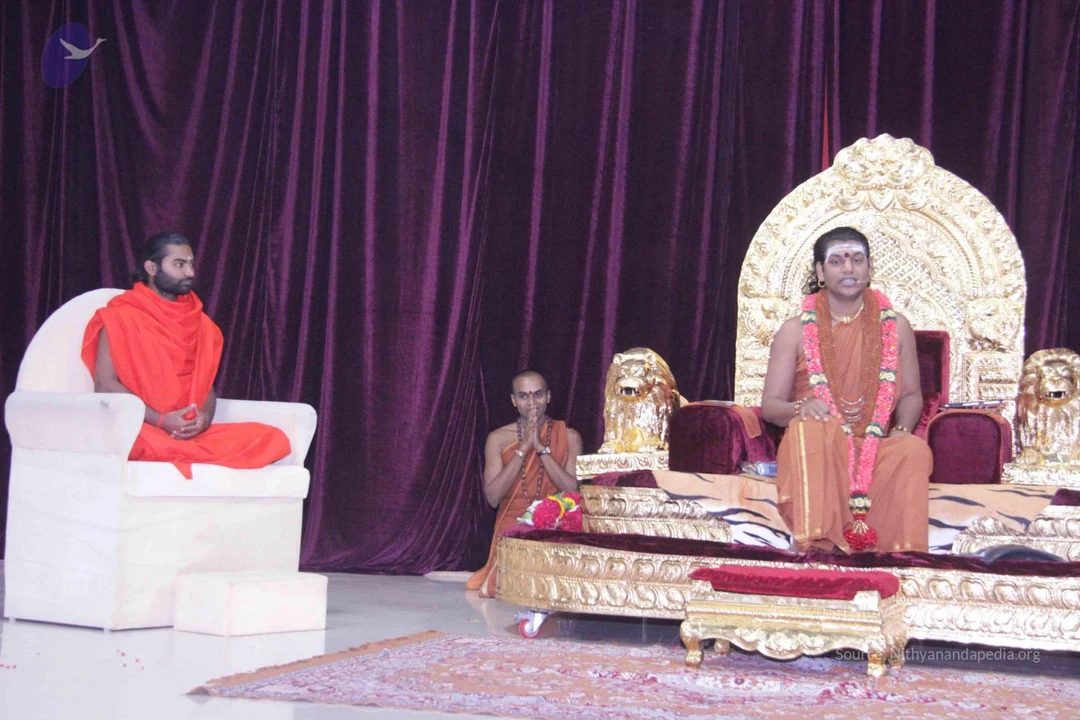
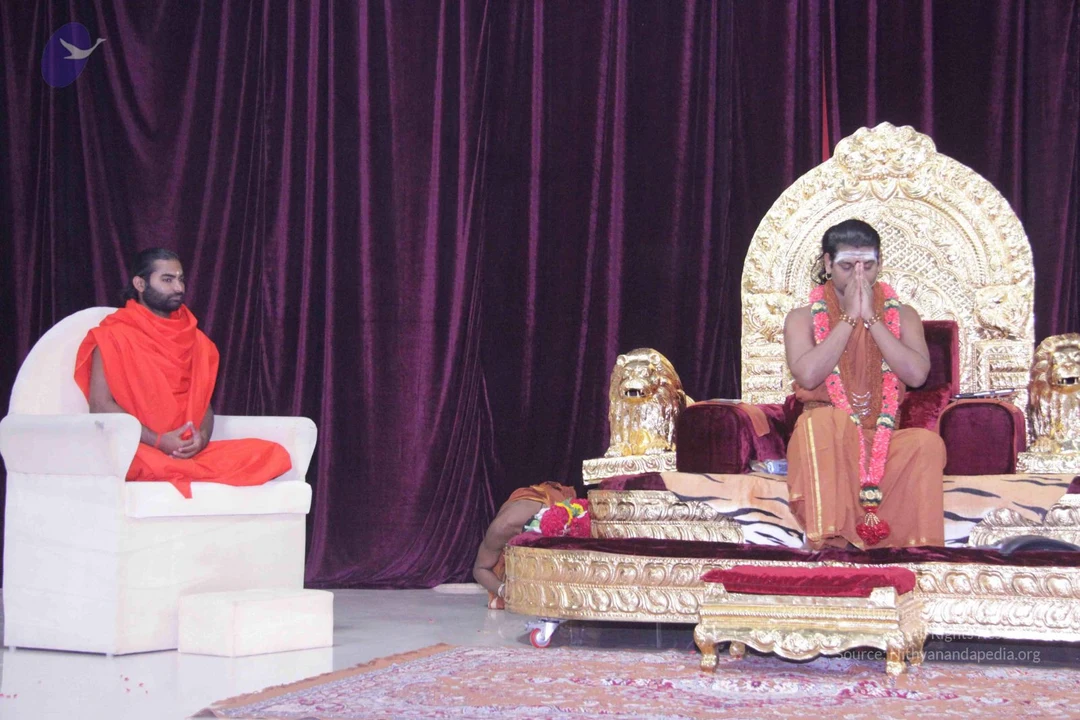
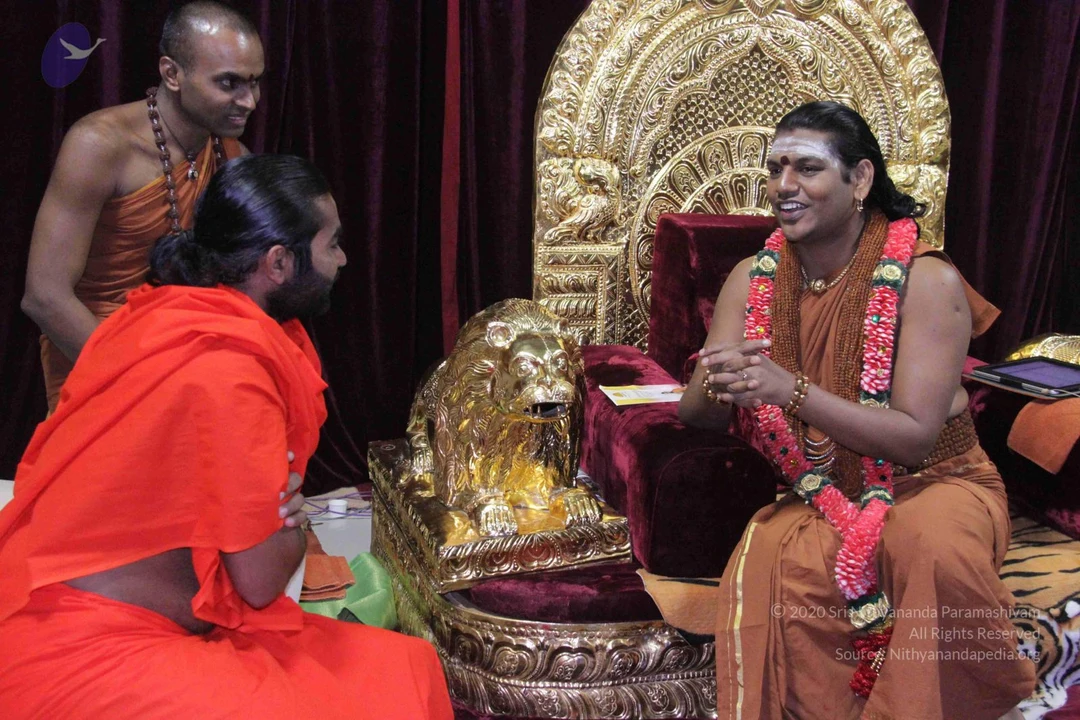
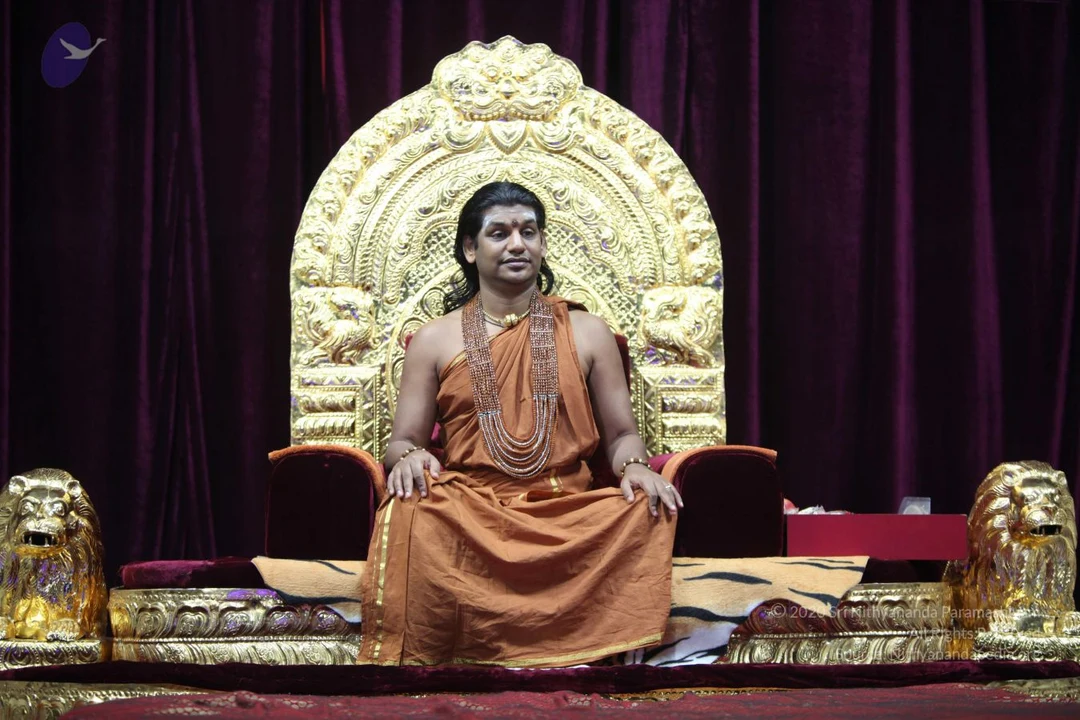
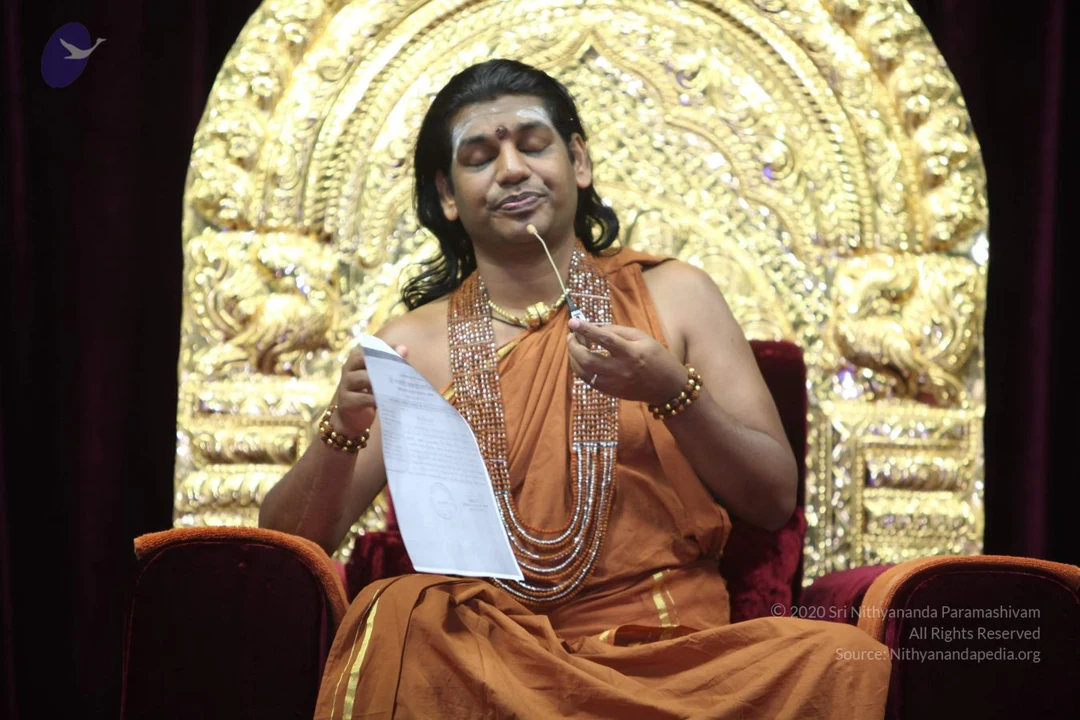
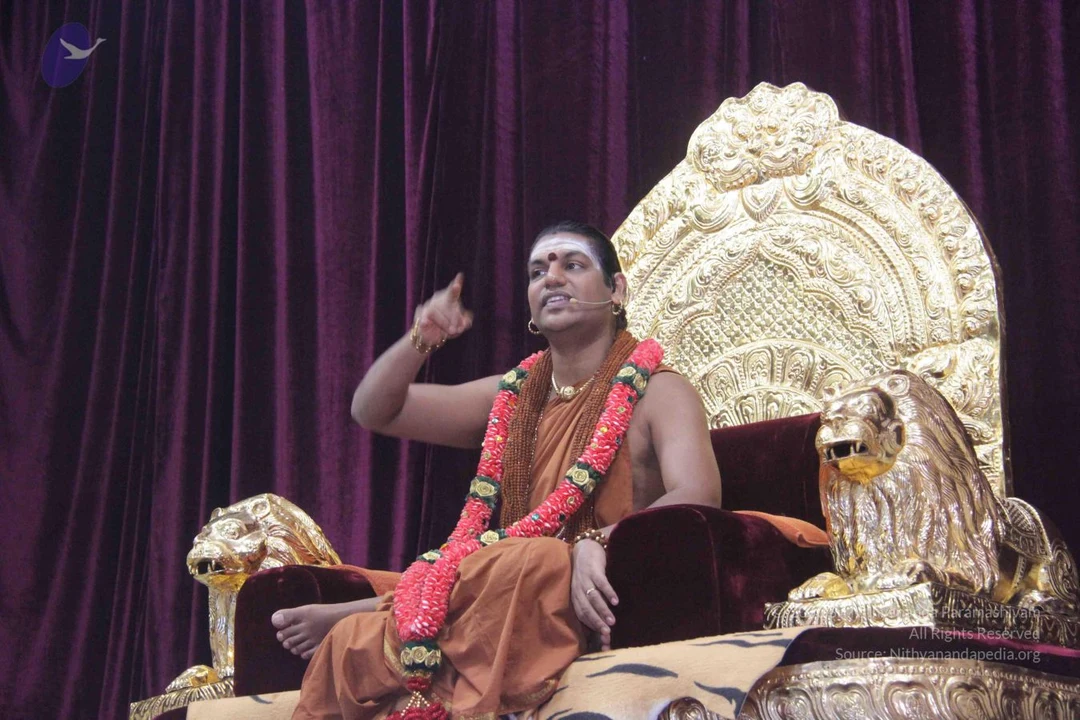
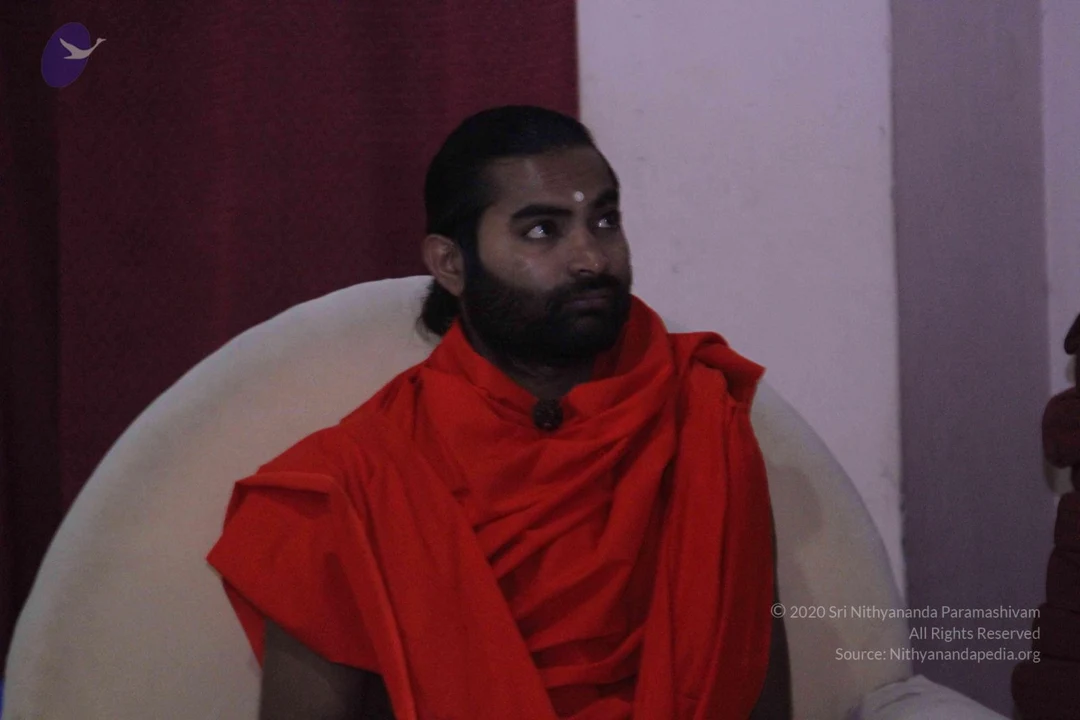
A seated man sits on an ornate gold-carved throne with a deep red velvet backdrop, smiling. He wears an orange-saffron cloth draped over his body, multiple strands of brown rudraksha beads and a gold necklace, and a large red and white flower garland with gold-accented blossoms draped across his lap. A tiger-striped cloth covers the platform beneath him. A white tilak marks his forehead with a red dot, and a small microphone is clipped near his face. The scene appears to be a satsang or discourse setting. Appearance-based identity is probable, as the figure shows long swept-back hair, saffron clothing, rudraksha malas and ceremonial gold necklace on a throne, so this is a Swamiji (probable) in person.Close photo of a smiling man seated on a golden throne before a deep maroon curtain. He wears a saffron-orange robe, multiple strands of brown rudraksha malas, a gold ornamental necklace, gold hoop earrings and a headset microphone. A red-and-white flower garland with gold rosette accents drapes over his shoulders. He has white horizontal tilak marks and a red bindi on his forehead, and his hair is swept back.A seated man in a plain red-orange sannyasi wrap sits cross-legged with his hands folded in his lap against a white curved chair and a maroon curtain. He has short dark hair tied back, a full beard and a small white forehead mark. Only one person is visible.

Morning-satsang
94 photosSource gallery
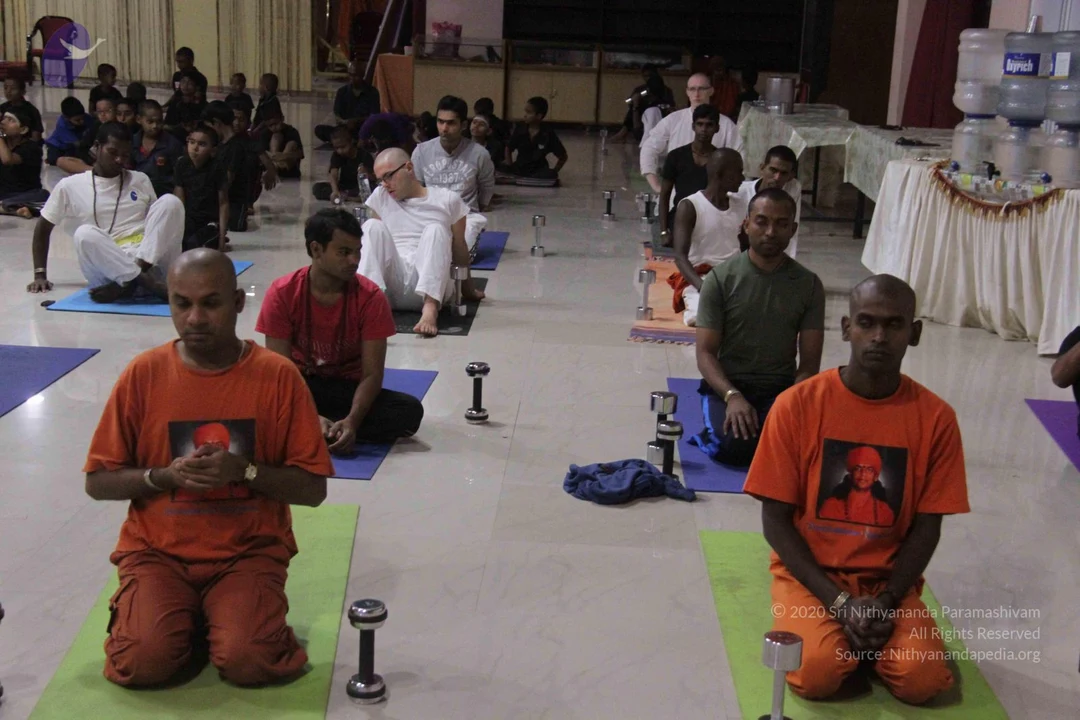
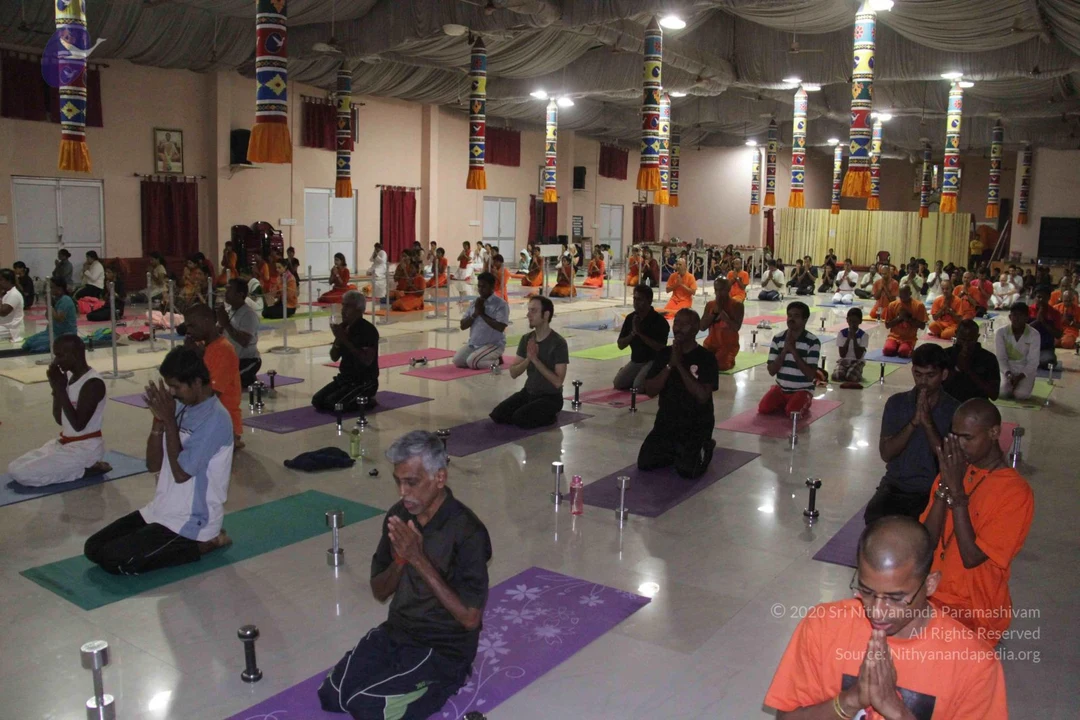
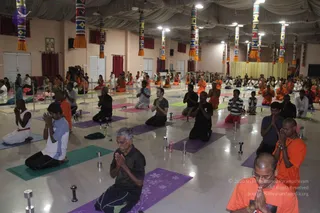
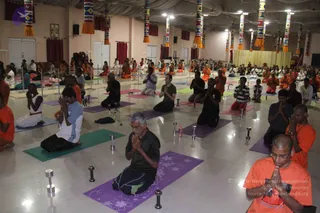
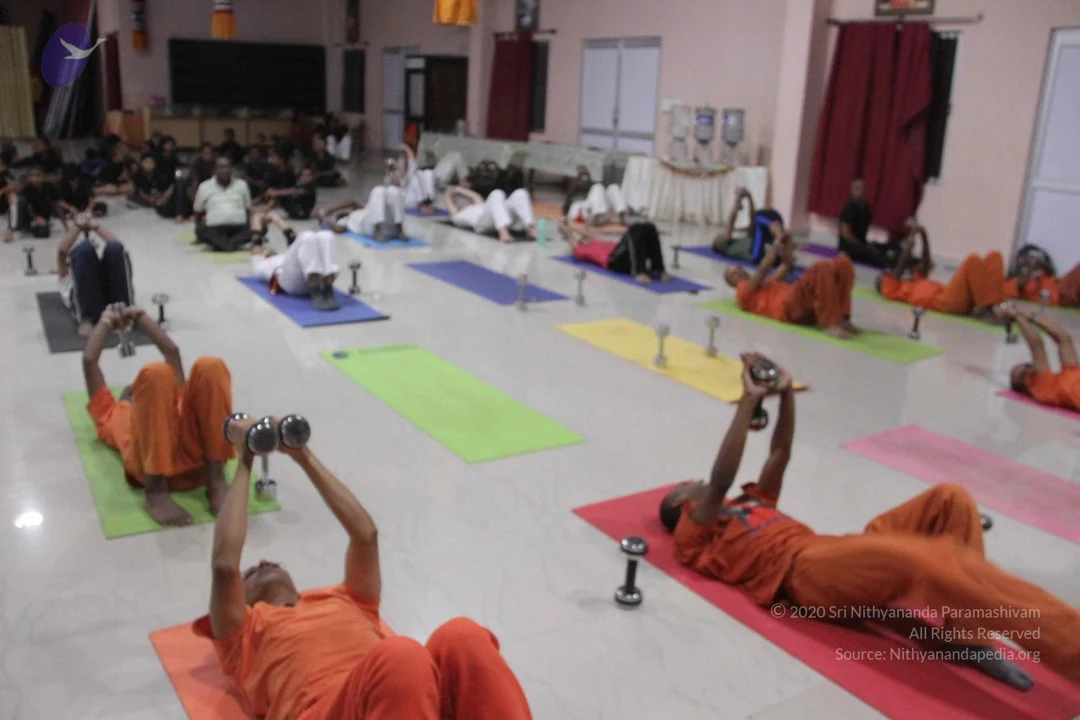
A large indoor hall with a white tiled floor where a seated group sits on blue and green yoga mats, with small metal dumbbells placed between them. In the foreground two men in orange t-shirts printed with a red-robed figure kneel with hands folded in prayer, one at left wearing a wristwatch and the other at right. Behind them rows of seated participants wear white, grey and dark clothing, and a shaved-headed man in a white outfit sits near the centre. A white draped table with water bottles lines the right side, and a bank of people sits in the background near curtains.A large indoor hall with polished light floor where many people sit on blue and green yoga mats in a seated meditation posture. In the foreground two men kneel with hands folded in prayer; both wear orange t-shirts printed with a portrait of a saffron-robed figure and orange trousers. Behind them a man in a green t-shirt and a bald man in a white kurta sit on mats, and small steel dumbbells lie on the floor between the mats. Along the back wall a table with a green cloth holds water jugs and cups, and a crowd of seated participants in black and white clothing fills the background.A large hall with a polished white floor where many people sit kneeling in prayer pose with palms pressed together, on purple, green and pink mats. Several wear orange or saffron robes, others wear black, grey or white clothes. Dumbbells lie between the mats. Colourful hanging tassel pillars and draped white fabric decorate the ceiling. In the foreground a bald man with glasses in an orange t-shirt sits with hands in anjali mudra. Some people sit in a row near the front wall, and a golden curtain hangs at the far end.Photograph of a large hall where a group sits kneeling on yoga mats with palms pressed together in namaste, apparently at a satsang or meditation session. In the foreground a bald man in an orange robe and a man in a black shirt kneel in prayer, and a man in a grey shirt kneels on a green mat beside them. Behind them rows of people in orange and white garments sit on purple, pink and green mats, with small dumbbells placed between mats. Hanging colourful cylindrical banners decorate the ceiling and pillars, with a draped cloth ceiling overhead and curtains on the walls. Several people in the rows wear orange and white clothing, and the room is brightly lit.A large hall with white marble floor and cream walls hung with colourful striped cloth pillars and fabric drapes. Many people sit with palms pressed together in namaste on purple, green and pink yoga mats, some with small metal dumbbell weights placed beside them. Most are dressed in saffron-orange robes, while others wear white, grey and dark clothing. In the foreground, a bald man in an orange robe with a gold bracelet sits with eyes closed and hands folded. A group meditation or satsang session is underway, with a few visible framed portraits on the left wall.A small yellow and red commercial airliner flies across a dark blue-grey sky, seen from below, with a faint bird-in-oval logo in the upper-left corner. No people are visible. The aircraft is the only subject, centred against an empty sky.
VIP-visit

40 photosSource gallery
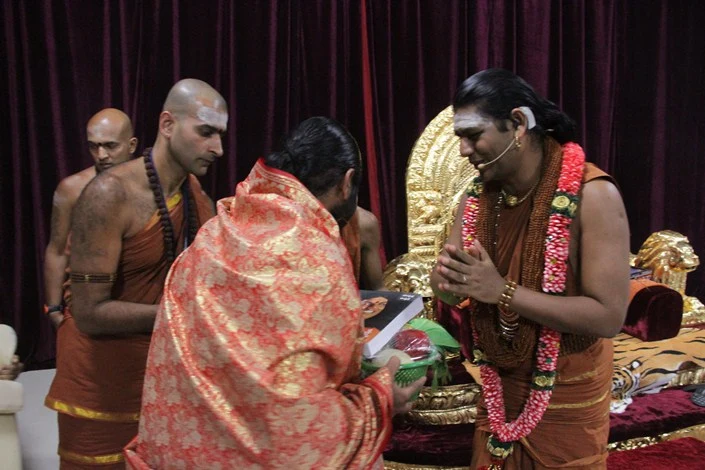
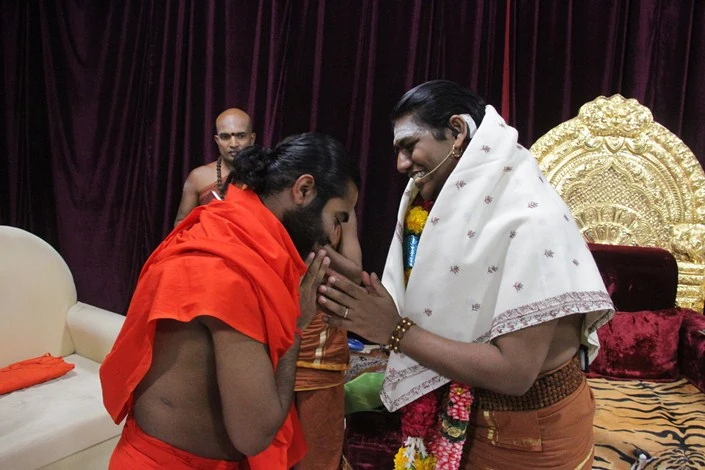
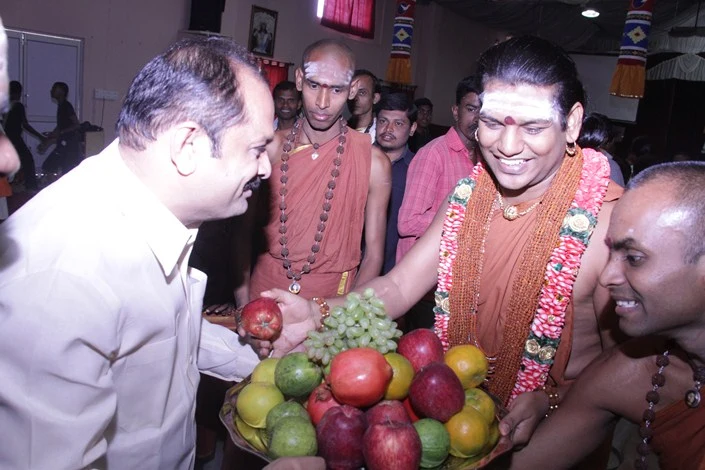
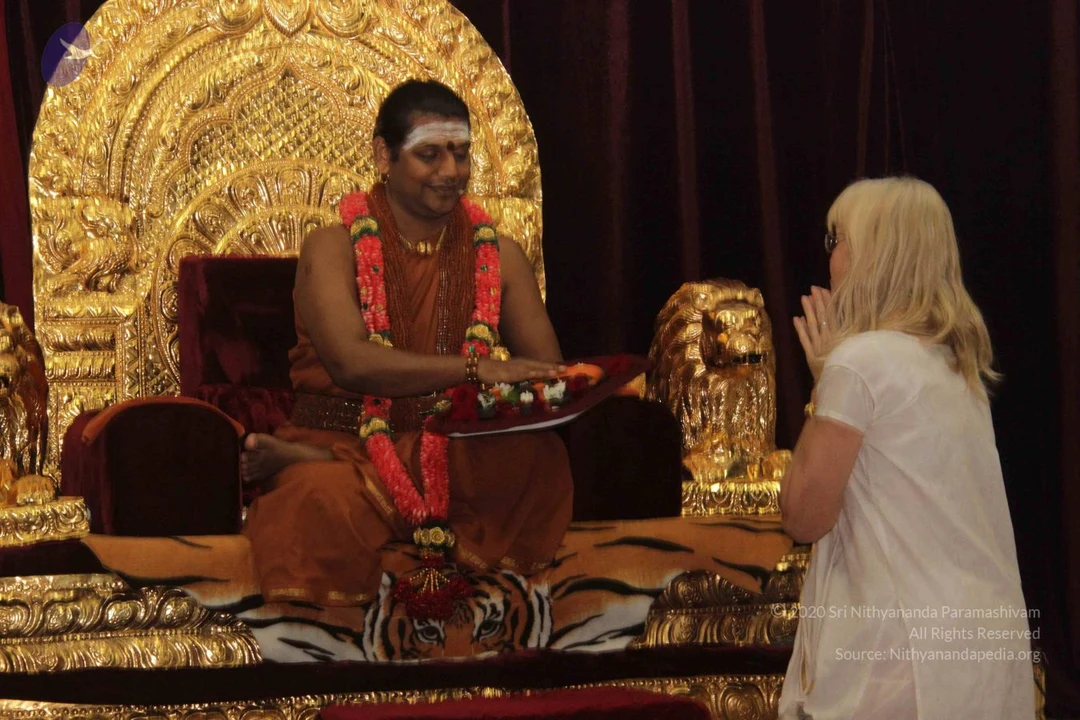
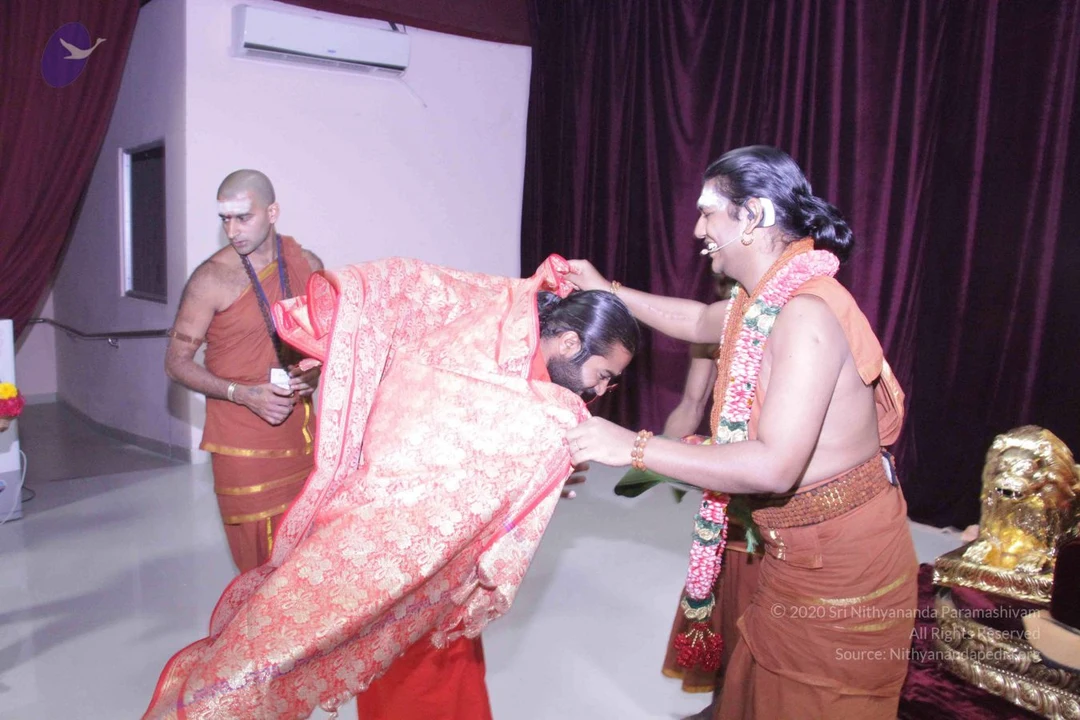
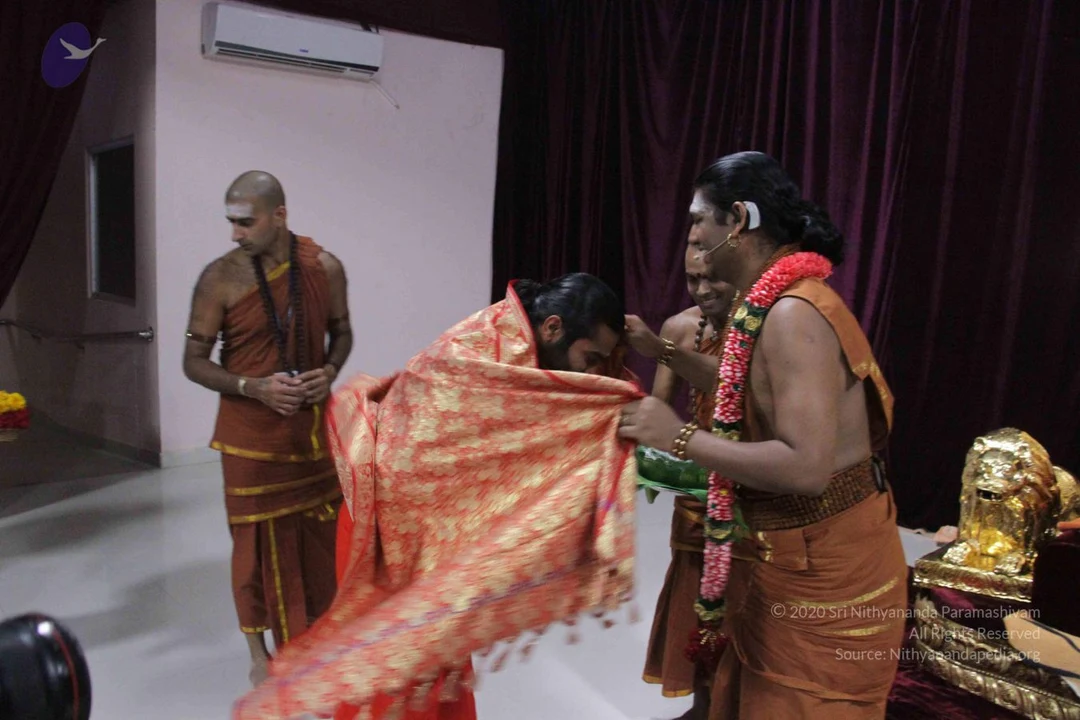
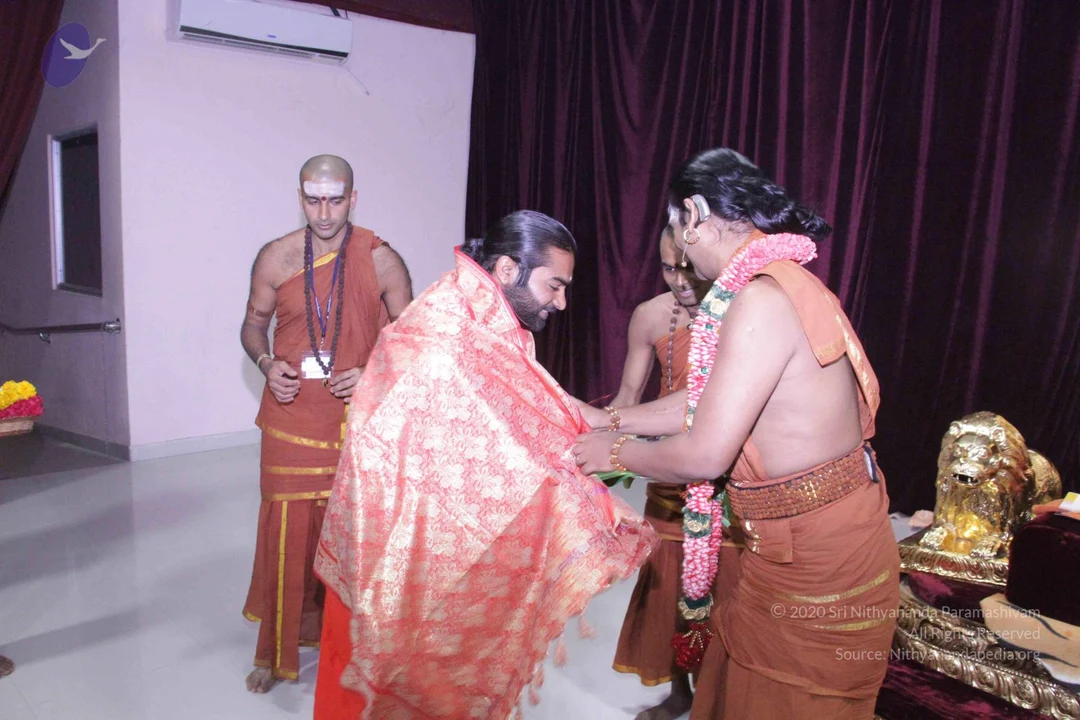
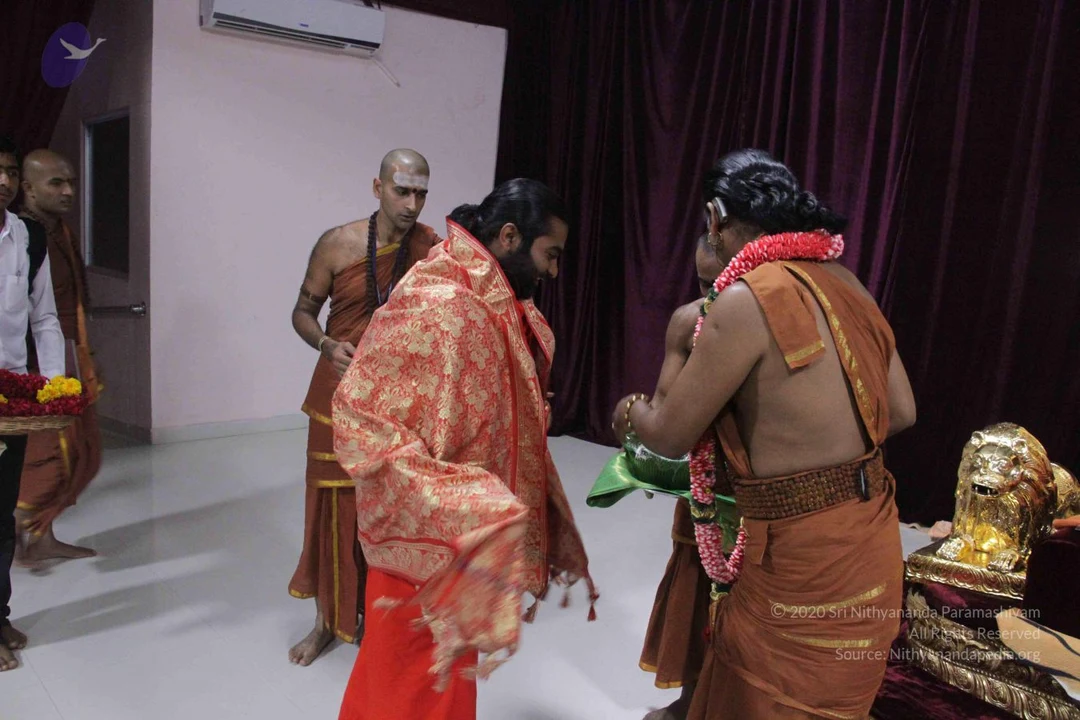
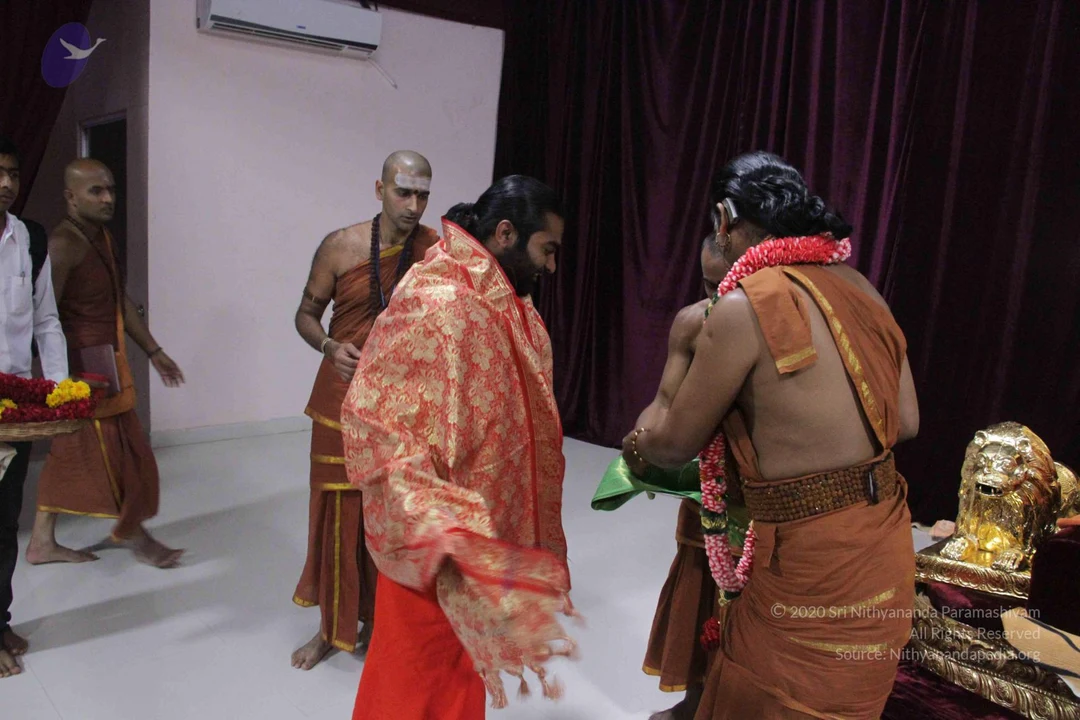
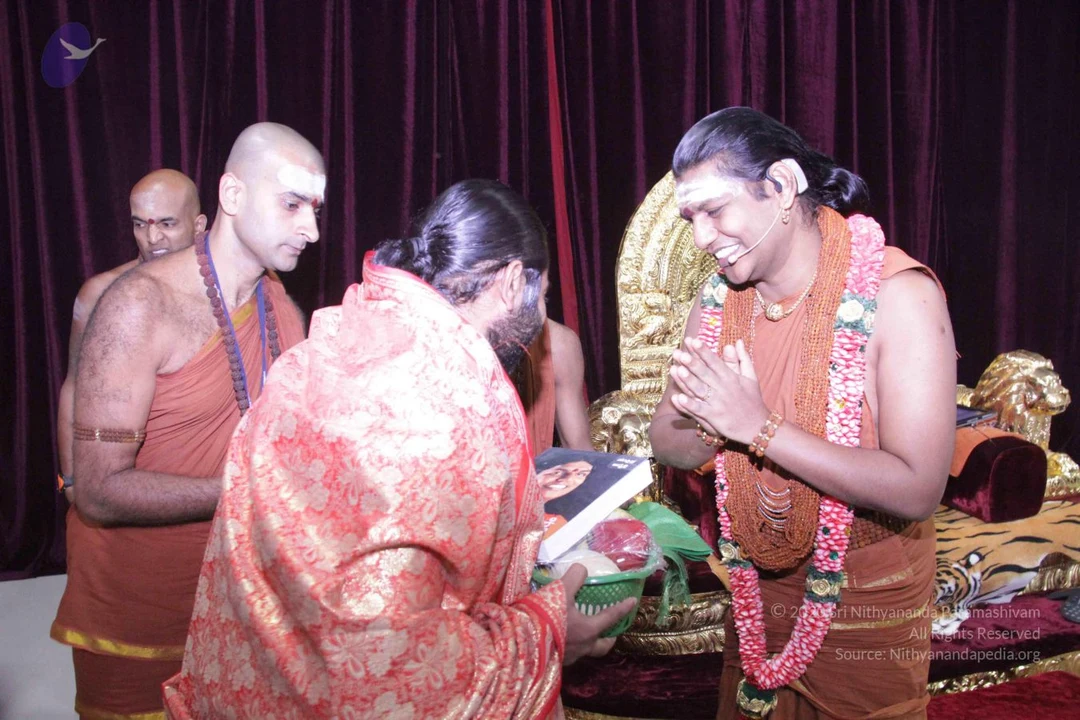
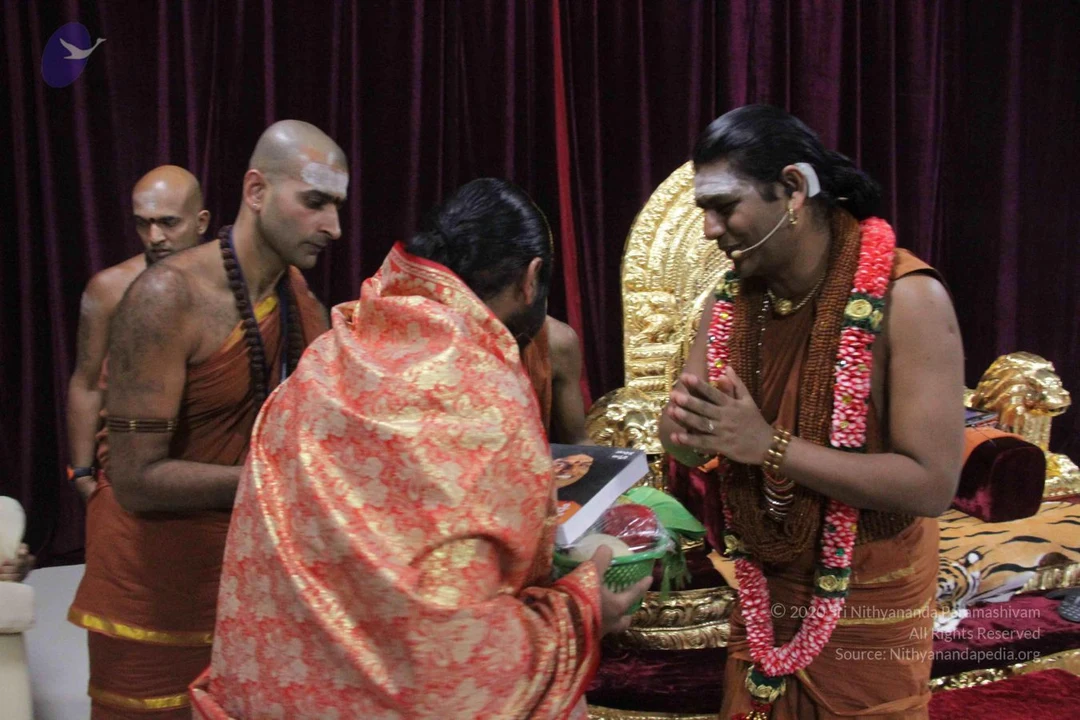
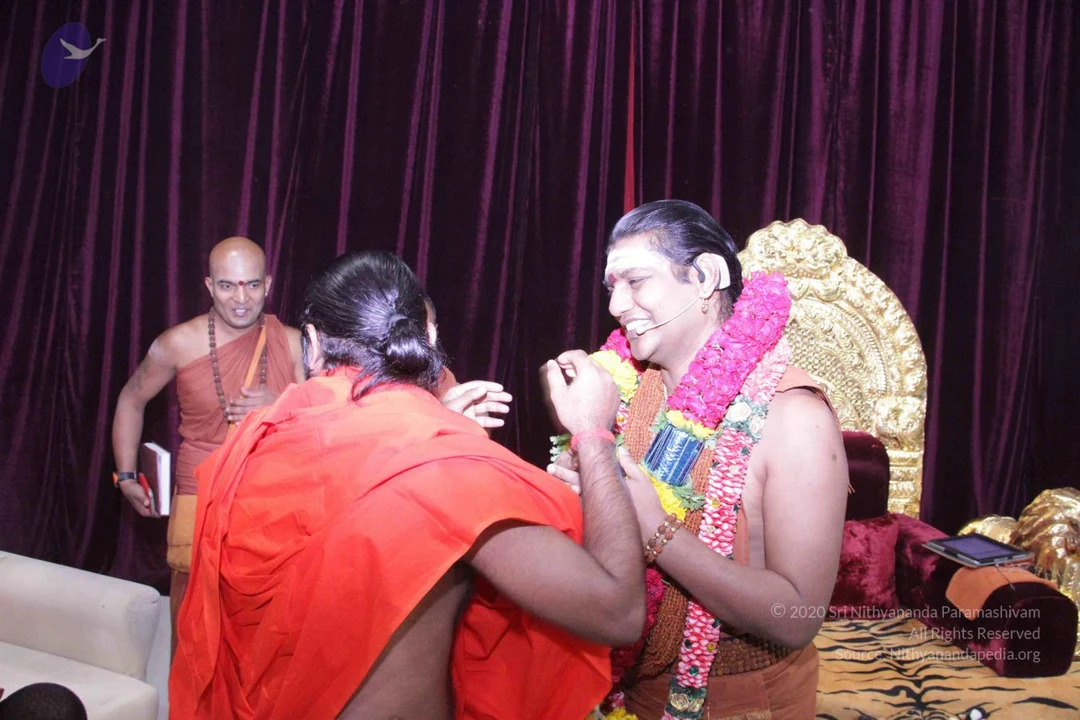
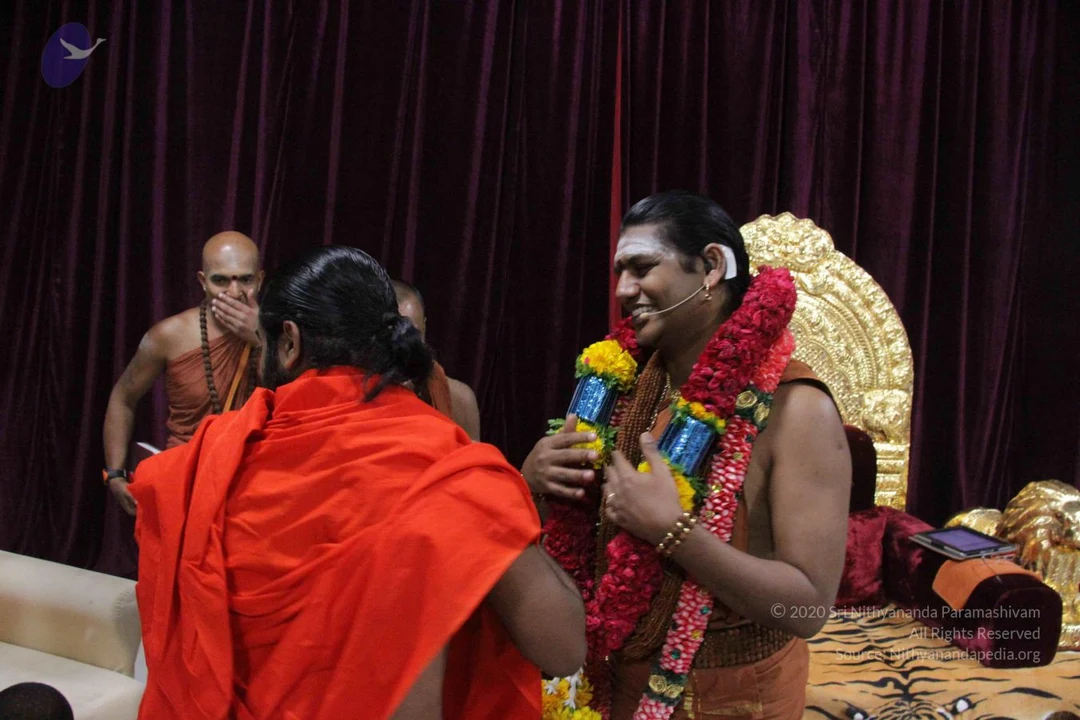
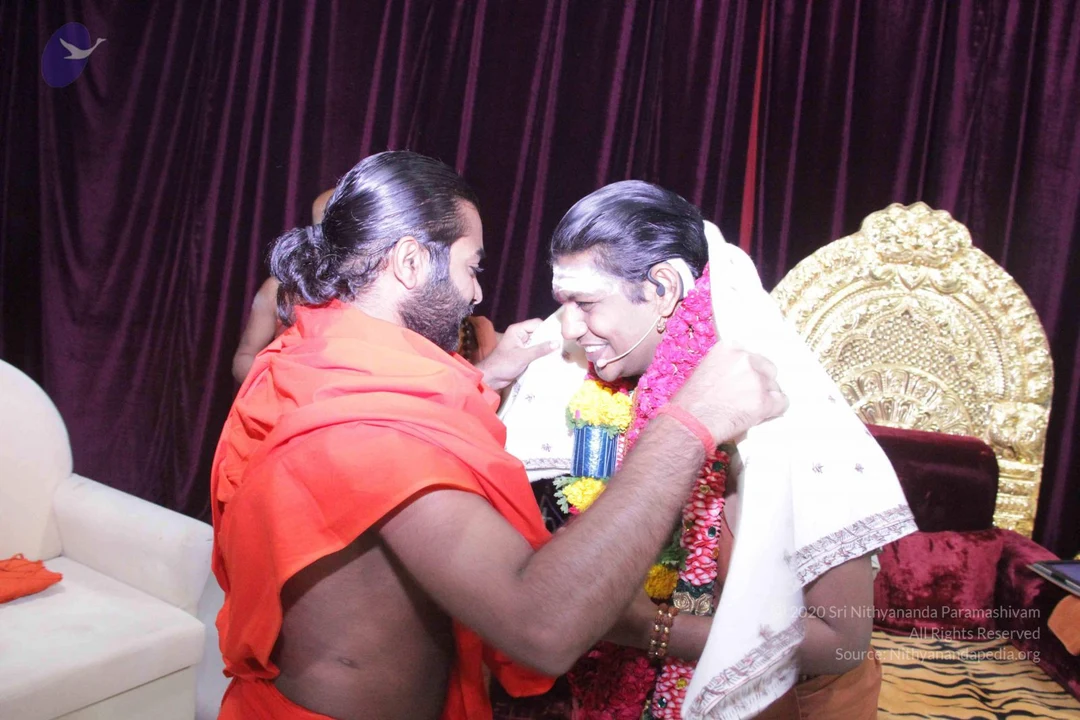
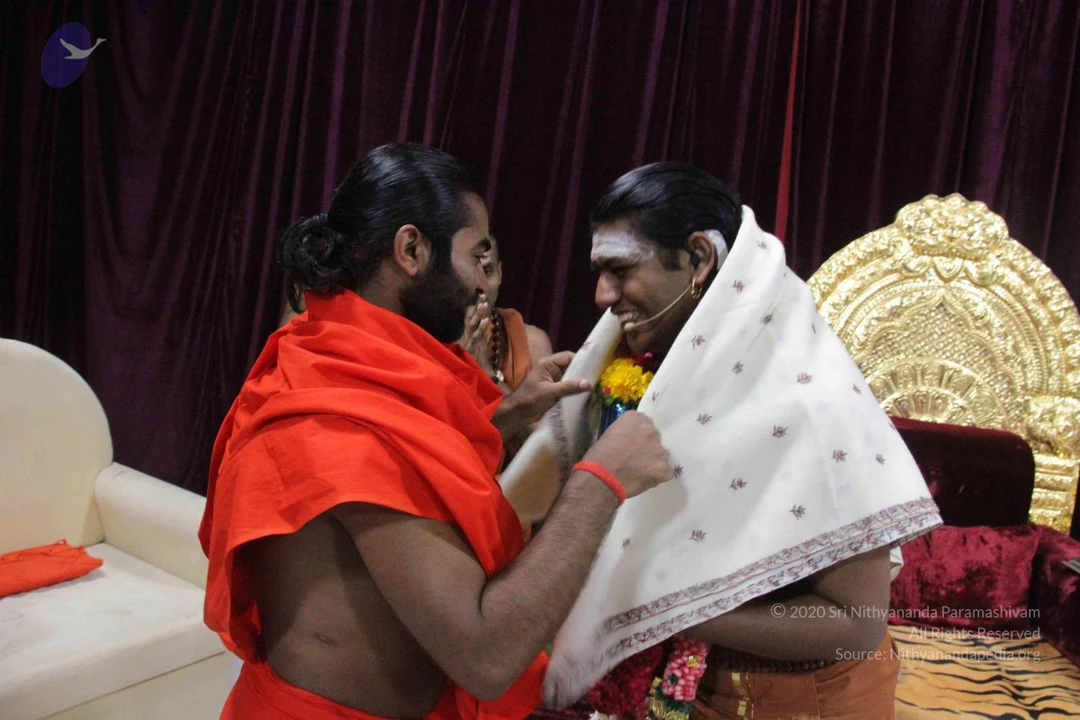
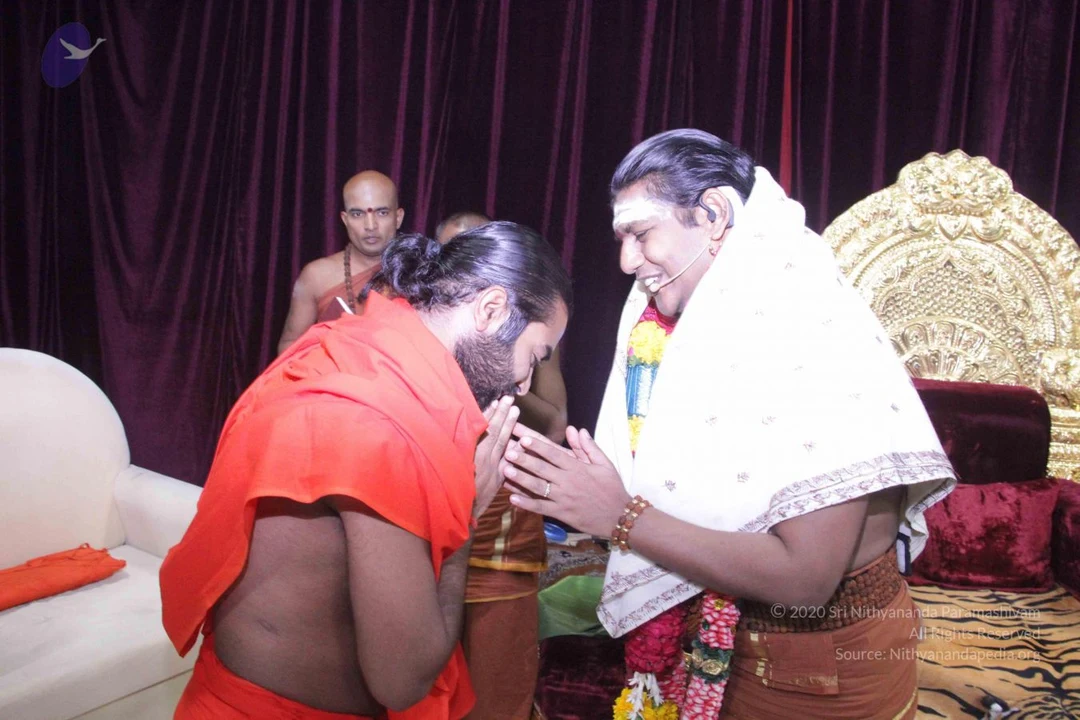
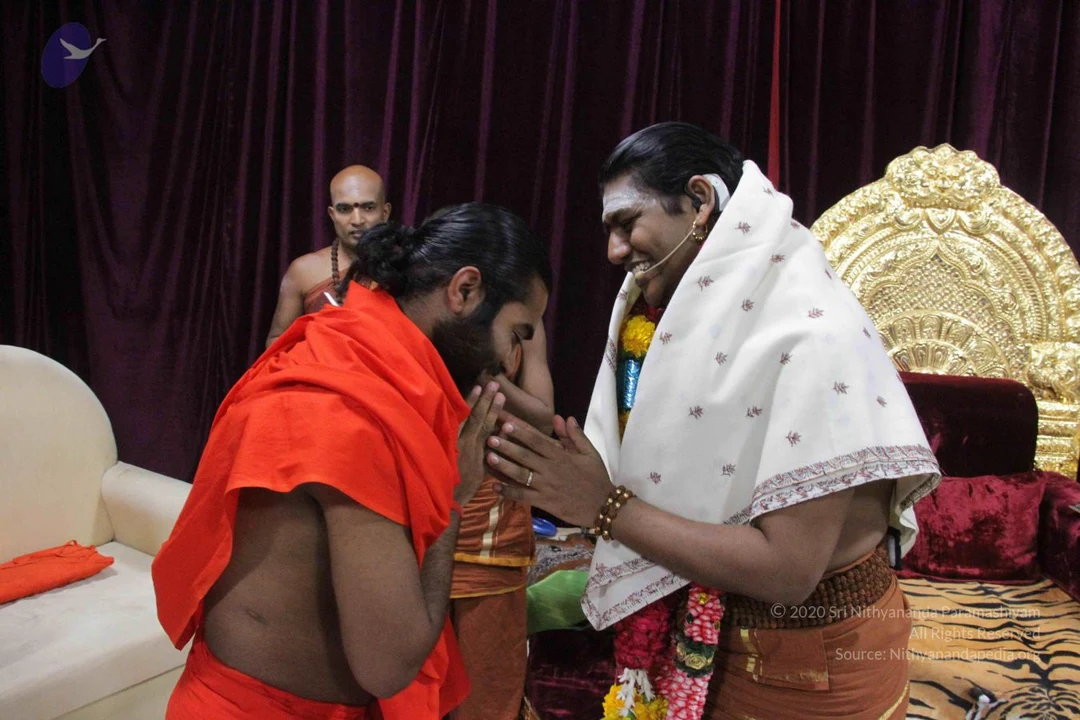
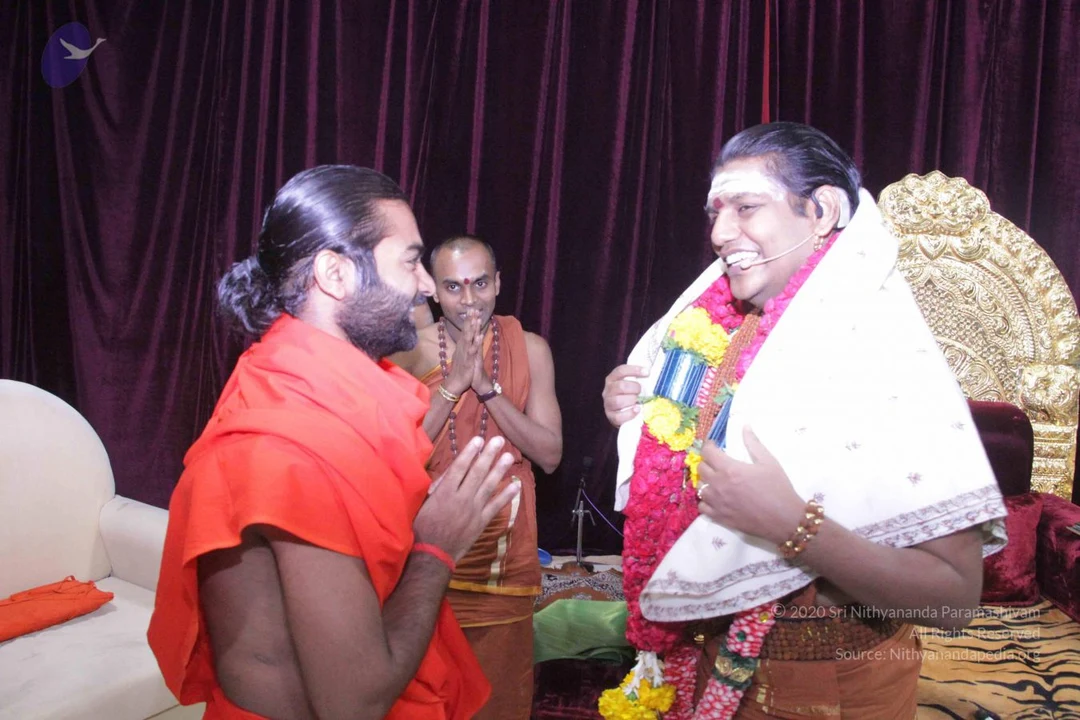
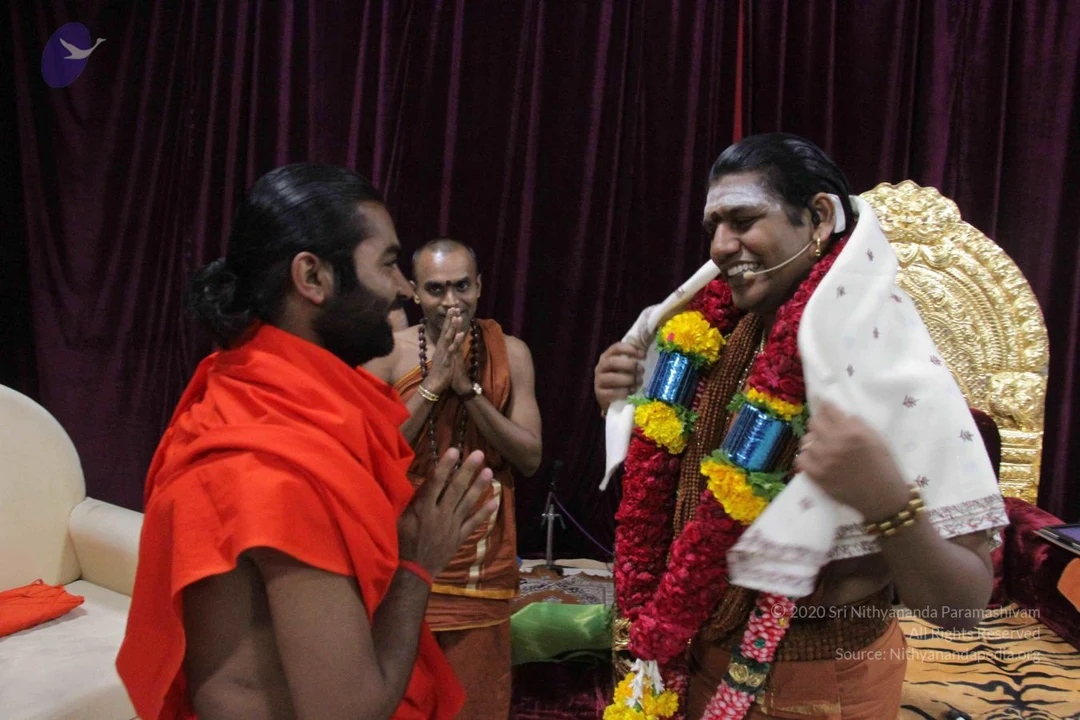
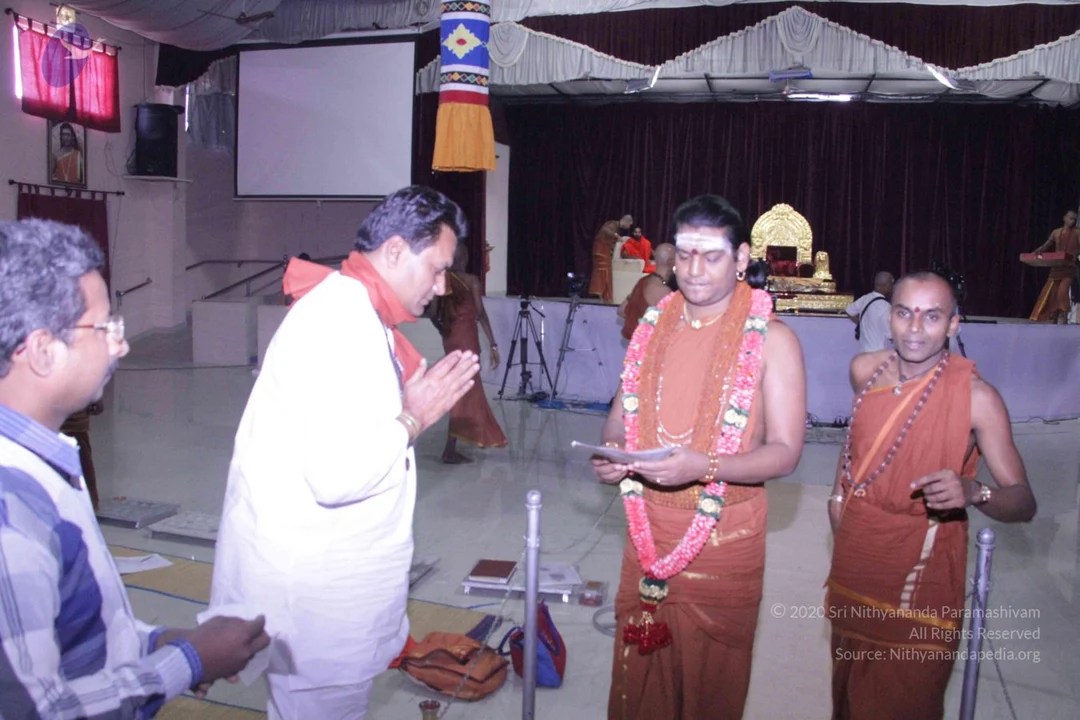
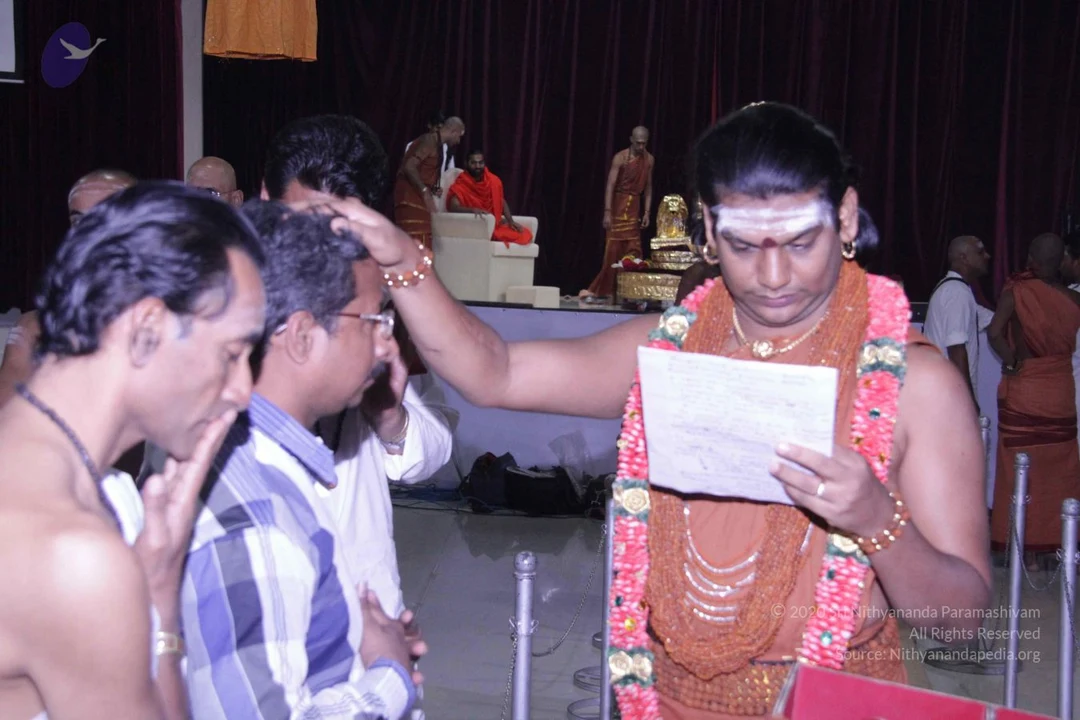
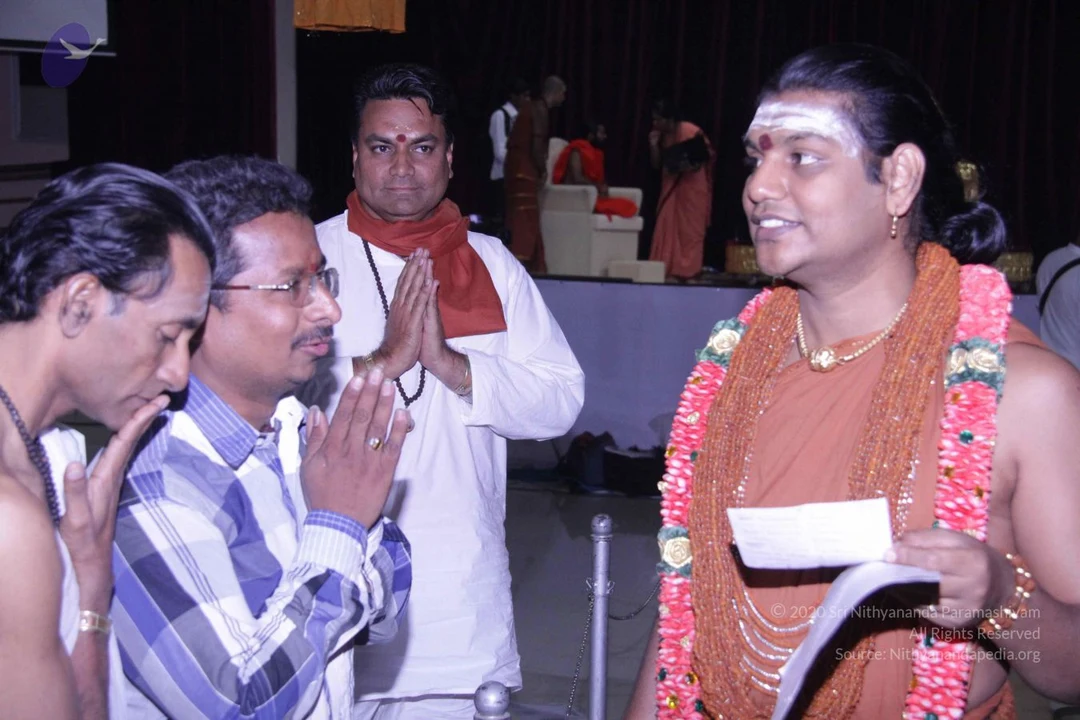
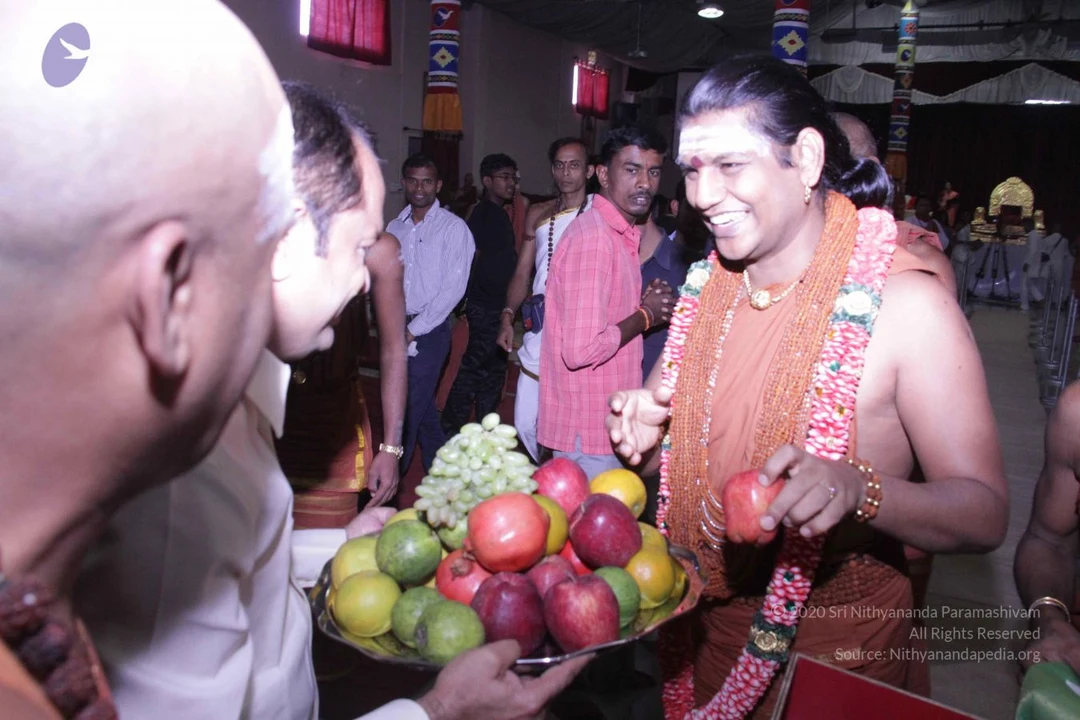
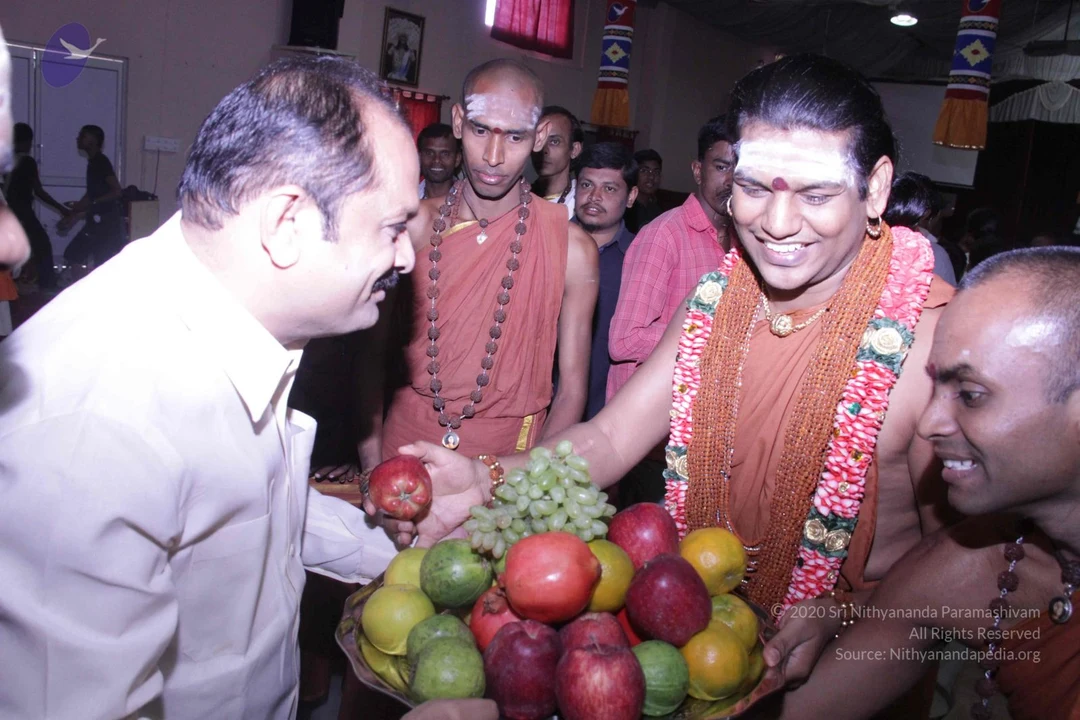
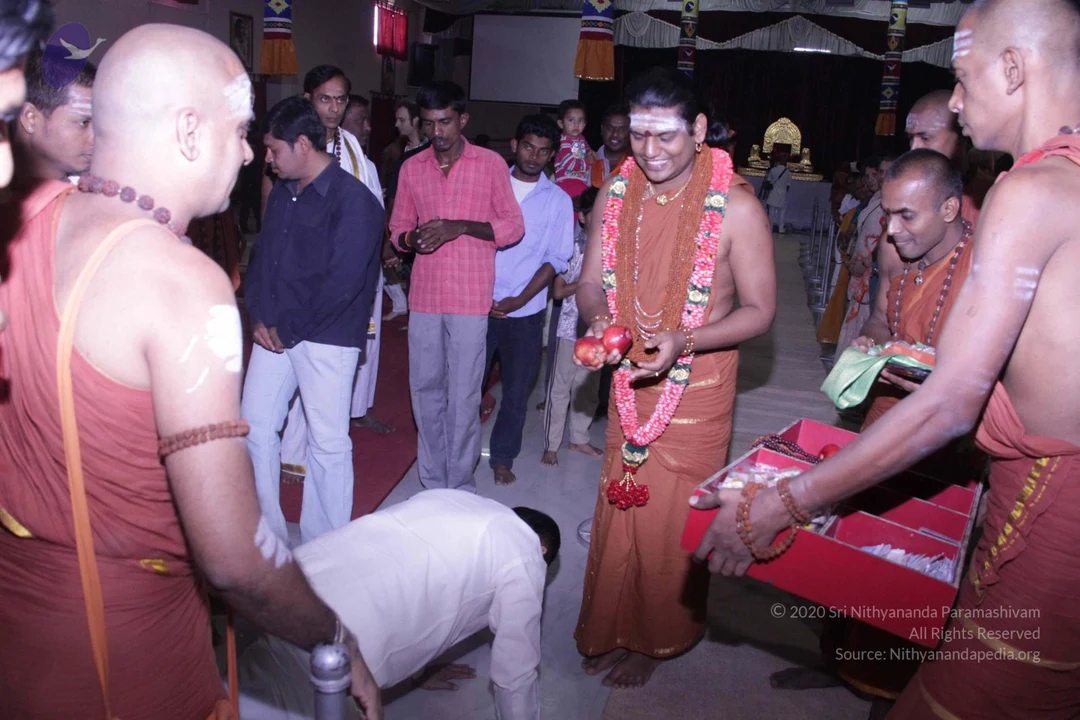
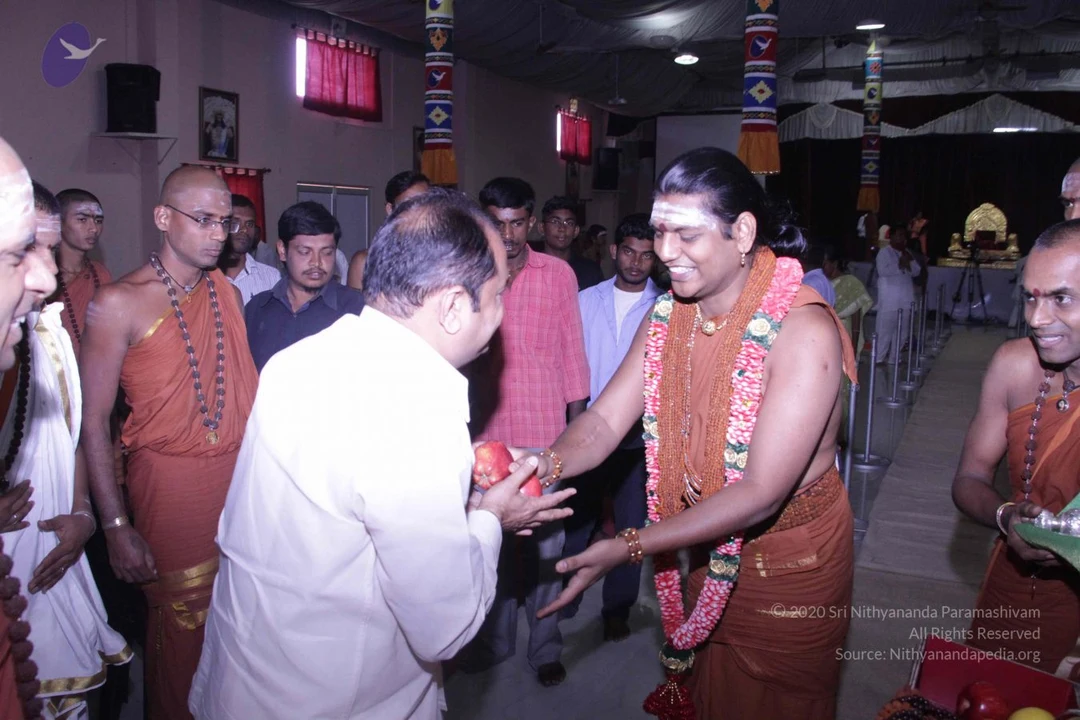
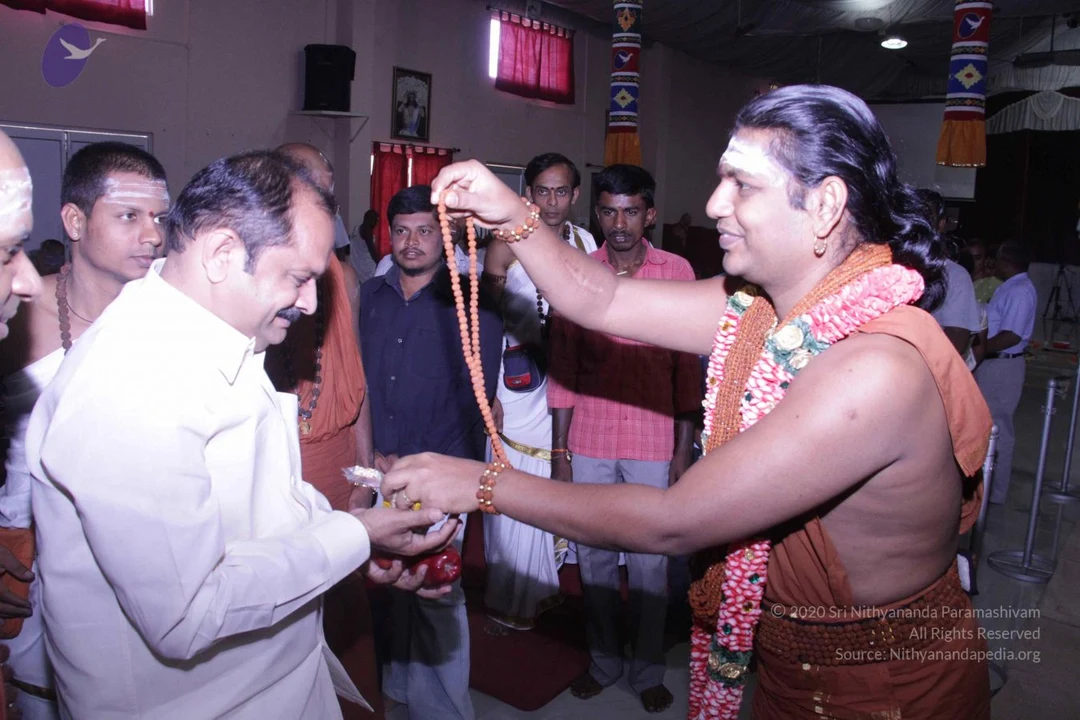
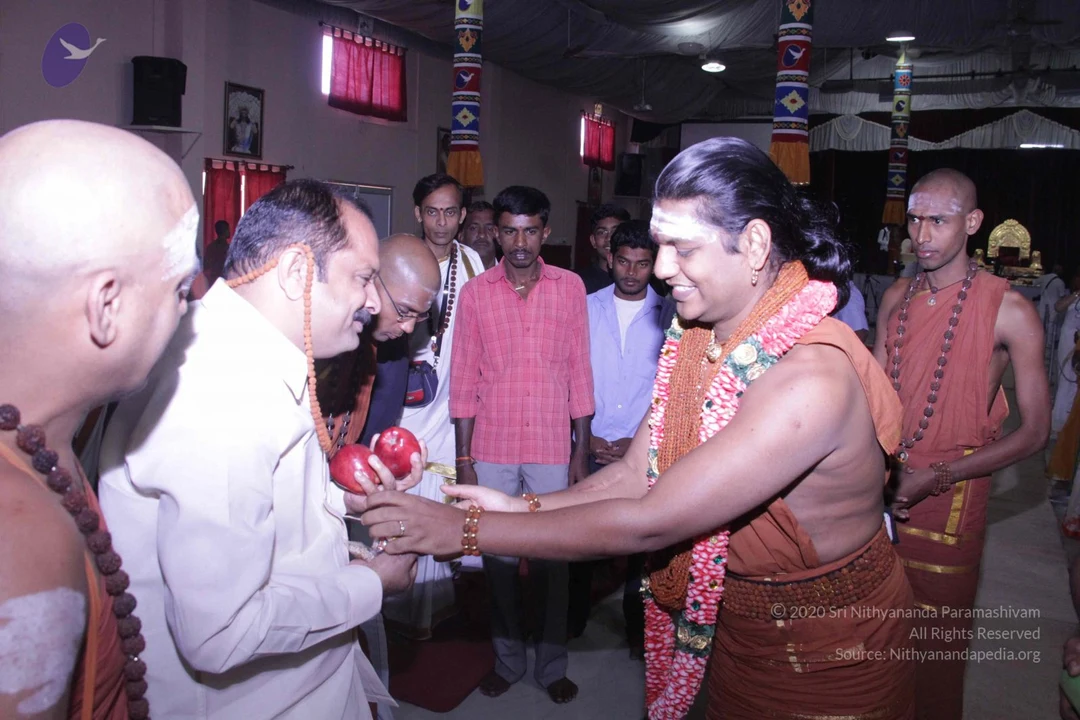
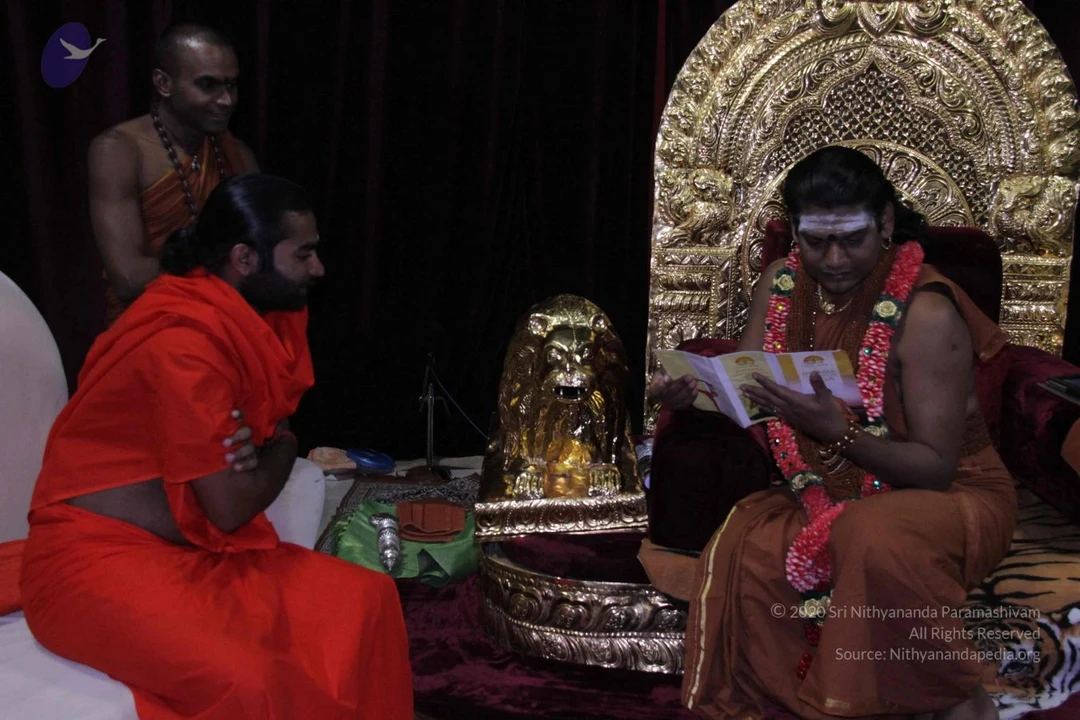
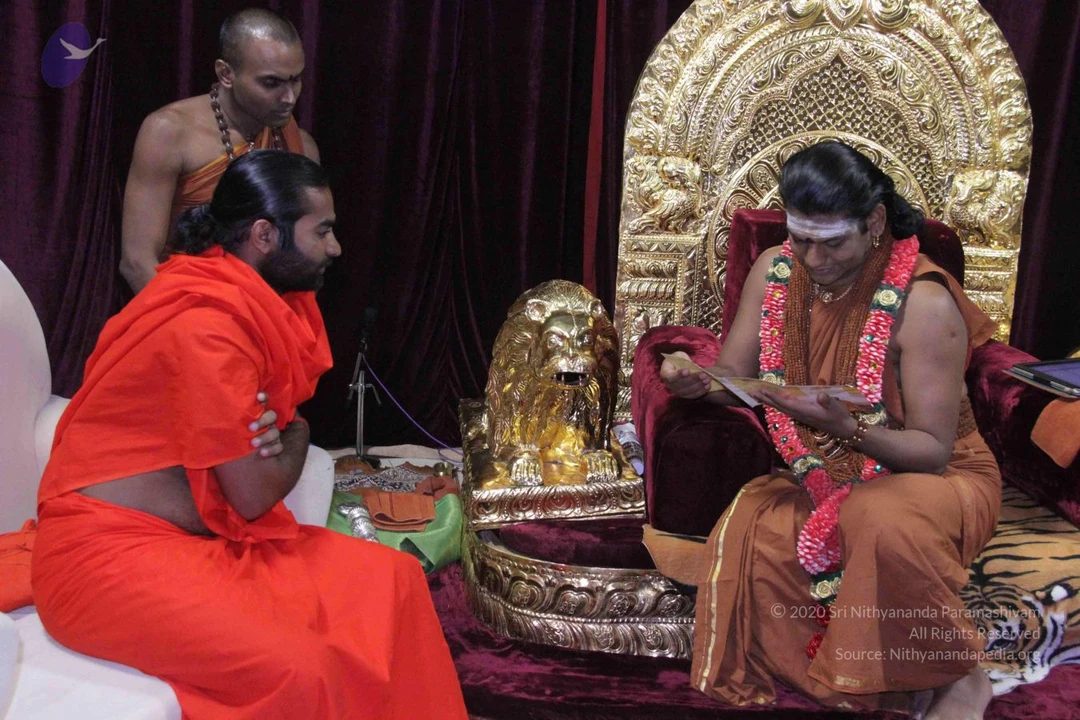
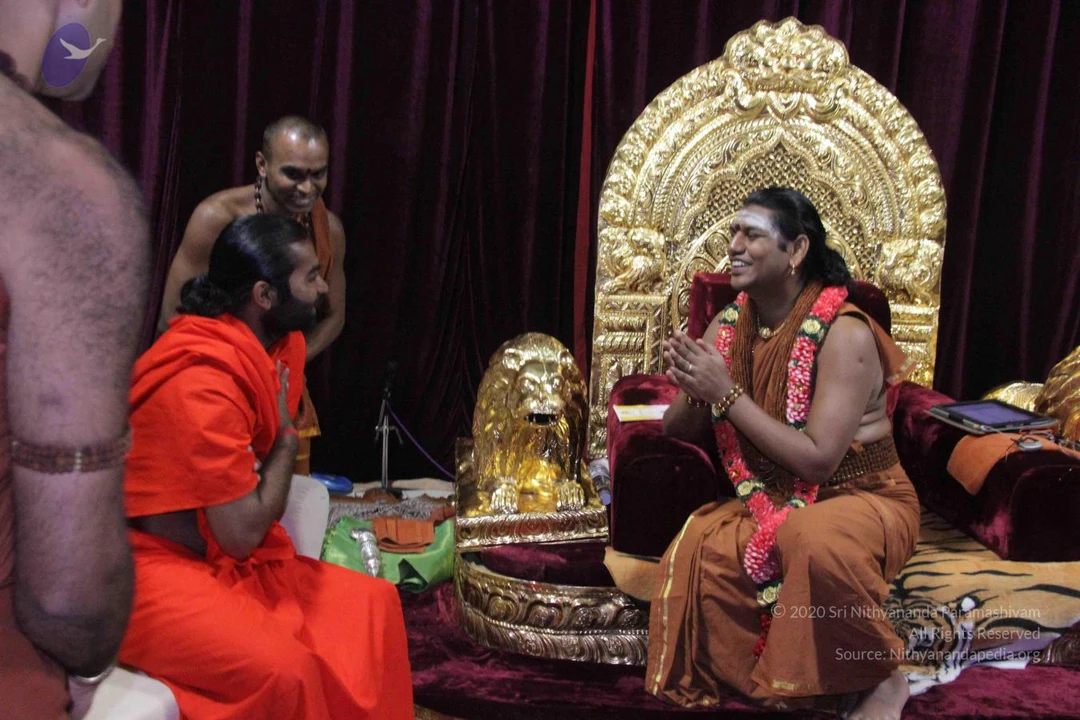
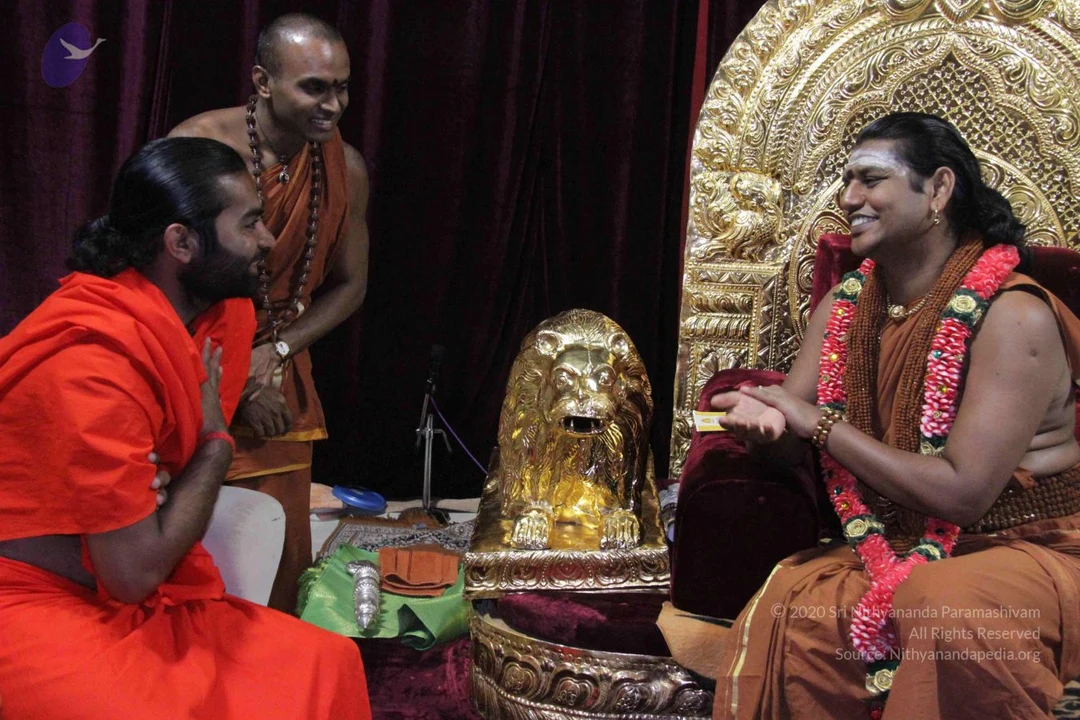
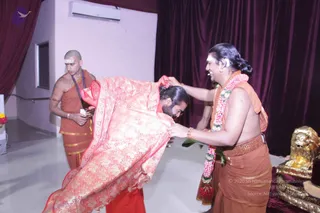
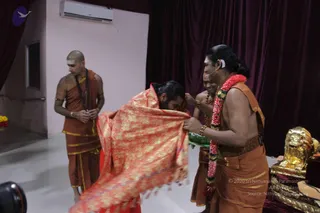
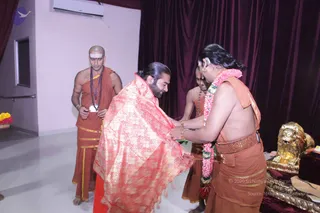
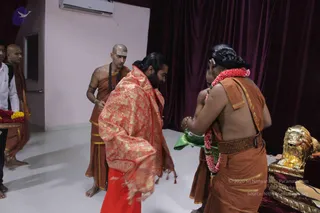
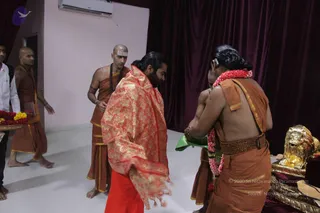
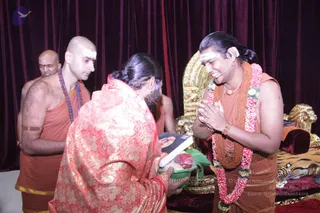
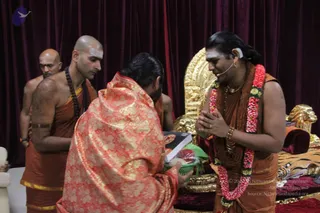
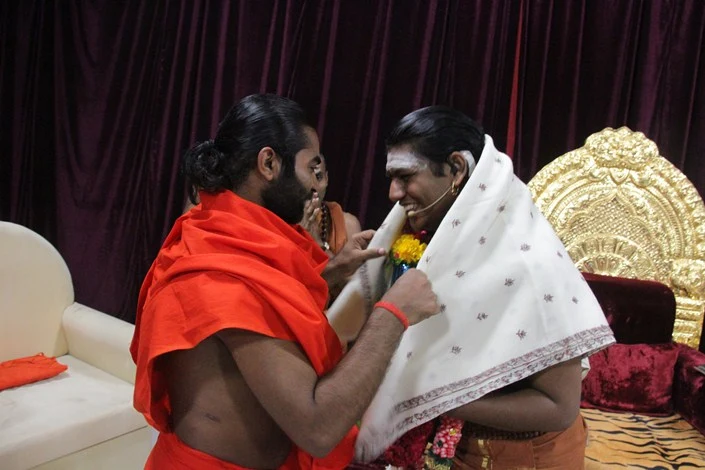
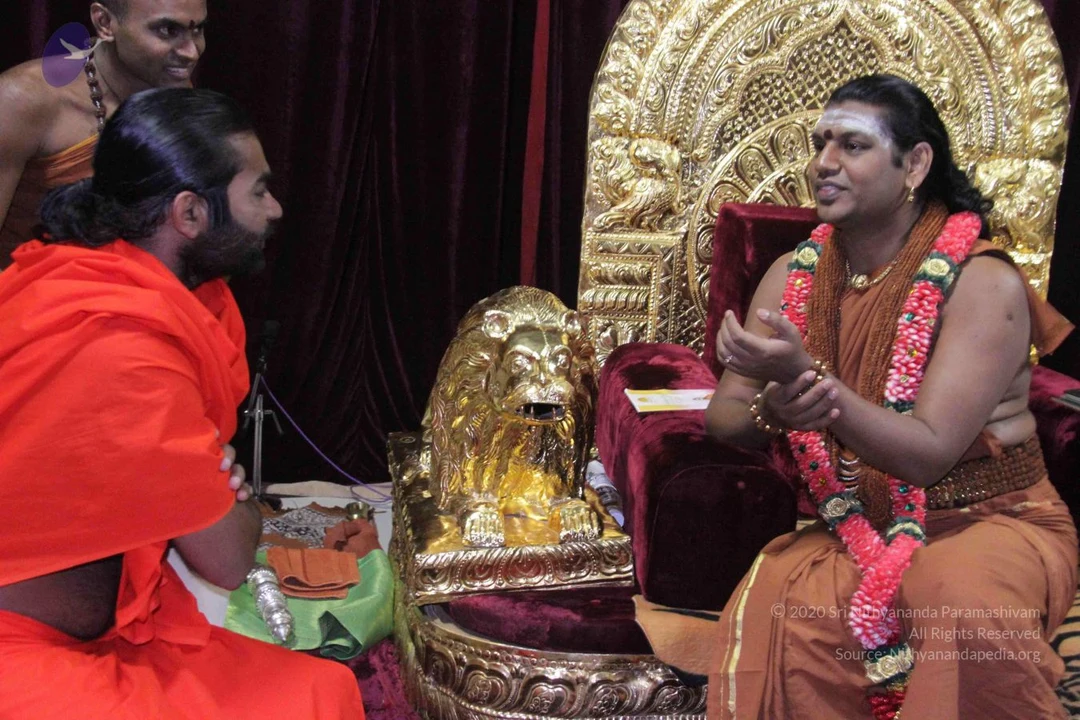
A photograph in an indoor hall with plum velvet drapes and a white wall with an air conditioner. A man in a pink and gold brocade shawl bows forward while a robed figure in a saffron-orange dhoti with a crisp white shawl drapes or places the shawl over him. The standing figure on the right, bare-chested with a rudraksha mala and a pink and white flower garland, has long swept-back hair and a headset microphone, and holds the shawl with both hands. Another robed attendant in orange stands behind, and a golden lion statue sits at the right edge on a draped table with a small flower arrangement. This appears to show a shawl-honouring gesture. Swamiji (probable): the flower-garlanded figure on the right has long swept-back hair, a mala and an orange garment, consistent with the page's reference, though identification is by appearance only.A photograph of a ceremonial honouring in an indoor room with burgundy drapes and a white wall with an air conditioner. A man in an orange-red and gold brocade shawl bends forward with his head lowered toward a person in front of him. That person, wearing a long-haired style, a rudraksha-adorned figure with bare upper body, a red and white flower garland, and orange cloth around the waist, holds the shawl and places a hand on the bowing man's head. Behind them stands a shaved-headed man in orange robes with a rudraksha mala, hands folded. A golden lion sculpture sits at the right edge beside a green leaf tray. The image is a photo of a blessing or honouring moment with no visible fire or deity shrine.A photograph of a room with purple curtains and a golden lion statue at right. A bearded man in a red-and-gold brocade shawl bows forward while a monastic in saffron-orange robes with a pink and green flower garland places a hand on him. A second saffron-robed monastic with a shaved head, white forehead markings and a rudraksha mala stands at left, and another saffron-clad figure stands behind. Garlands lie on a tray at left, and a wall air conditioner is visible at top. The garlanded monastic has long swept-back hair and gold ear ornaments, and the central man receives the honour of the shawl.A photograph of a temple-style room with purple drapes and a golden lion seat at the right edge. A man in a red and gold brocade shawl over red dhoti is bowing or approaching, while a shaved-headed priest in orange-ochre robes with a white tilak stands behind him. A priest on the right, bare-shouldered in orange cloth with a red garland, holds a green leaf plate, with flower garlands and an orange-and-yellow flower tray at the left edge. Two attendants in orange garments stand nearby. An air conditioner is mounted on the white wall above.Indoor ceremonial scene in a room with plum velvet drapes and a white wall with an air conditioner. In the centre, a man in a red and gold brocade shawl over a red garment stands with his head bowed, facing a seated figure partly visible at right who is draped with a pink and white flower garland. Behind him a bald priest in saffron-orange dhoti and shawl with white forehead marks and a rudraksha mala walks past, and another attendant in orange carries a tray of red and yellow flower garlands at left. A golden lion figure sits on a dark cushioned seat at right. The setting suggests a devotional reception or satsang gathering.Indoor photo in front of deep purple draped curtains and a gilded throne with a carved golden lion and a tiger-striped cushion. A man on the right with long swept-back hair, a crown-like white headpiece with a tilak, a long ornate rudraksha and gold bead necklace, and a pink and white garland, both hands in namaste, smiling. In the foreground a man in a red and gold brocade shawl bows and offers a tray with fruit and sweets and a book. Behind them, two men in orange robes with white tilak stand; one on the left wears a rudraksha mala. Looks like a devotee's offering or darshan.
Tamil-IA-Session

21 photosSource gallery
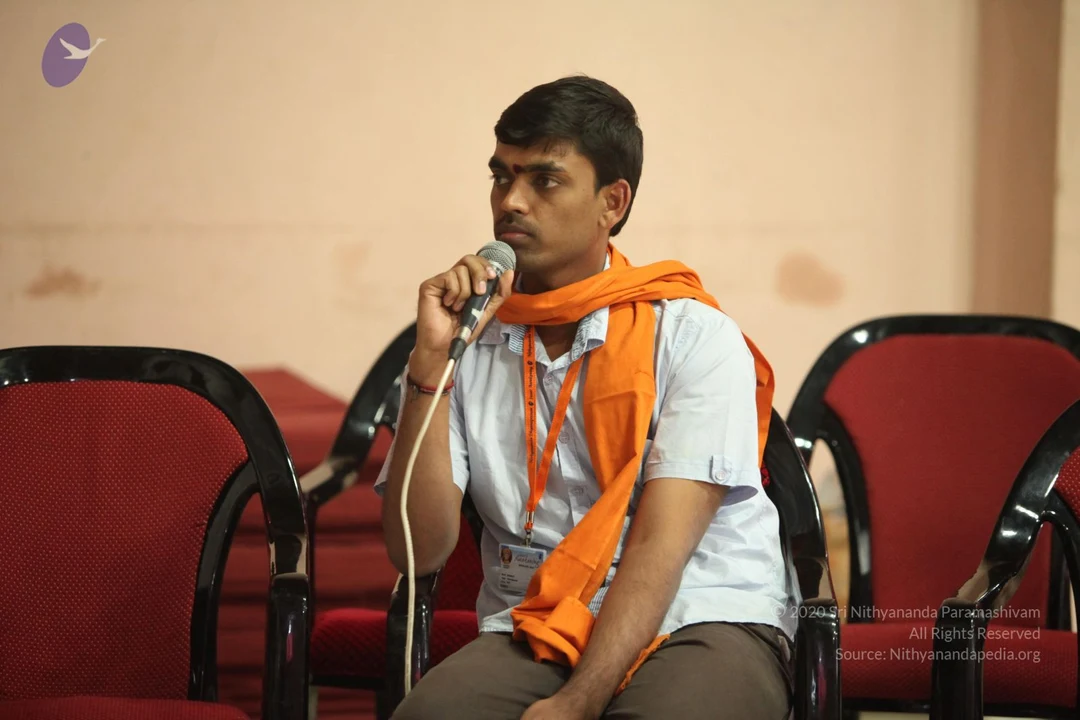
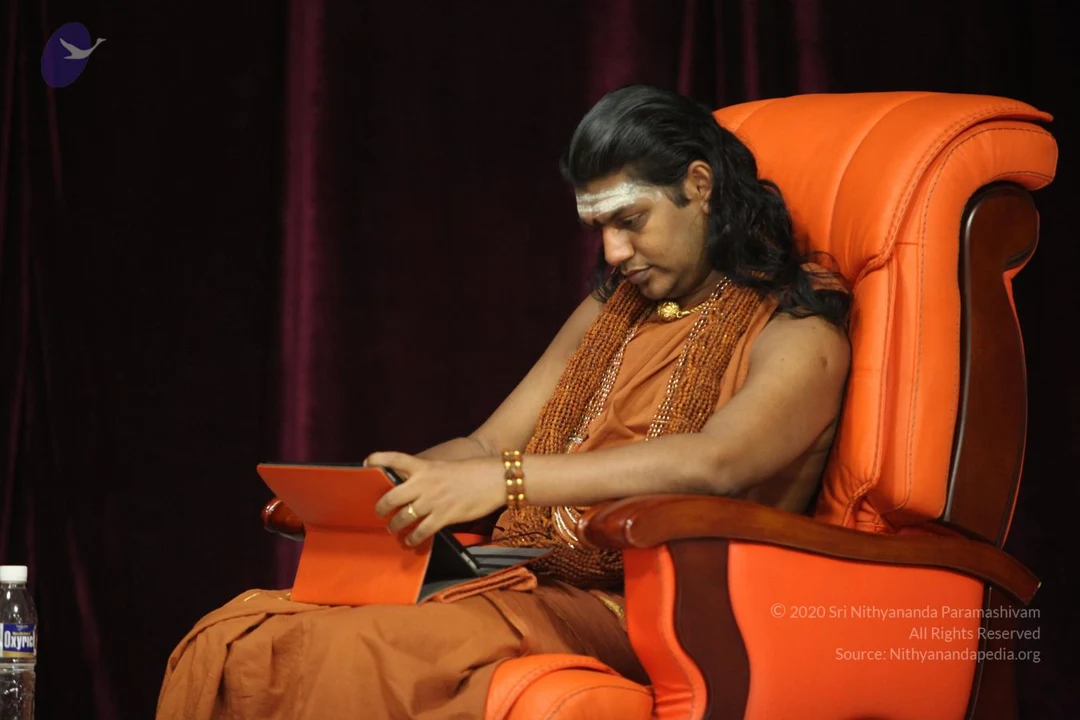
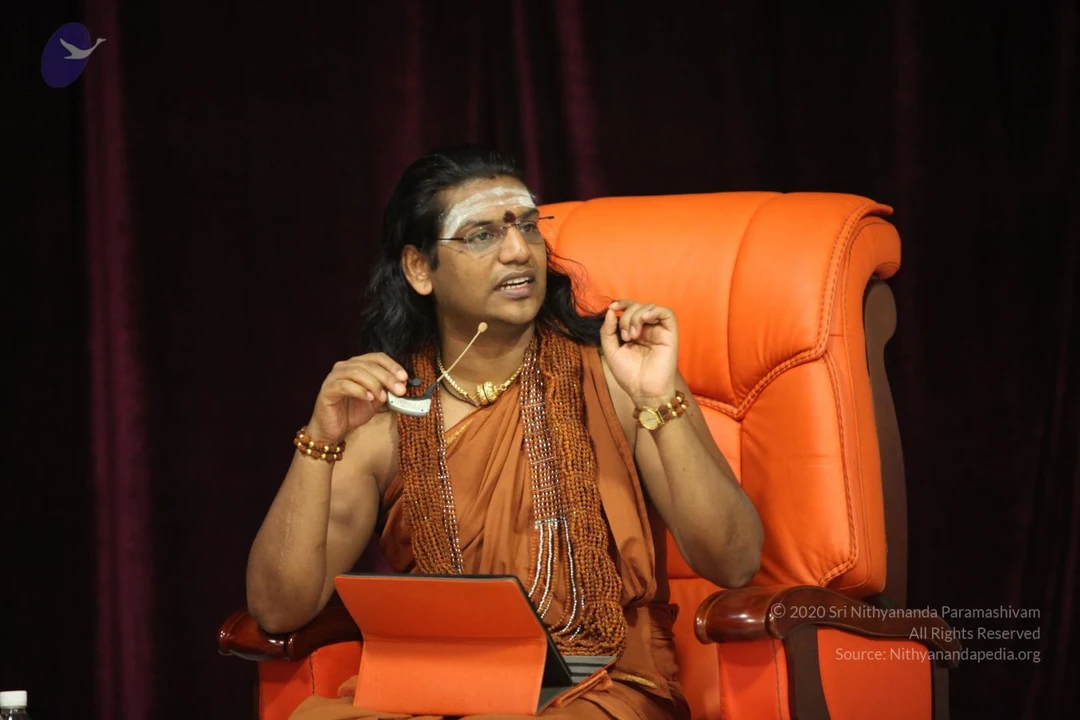
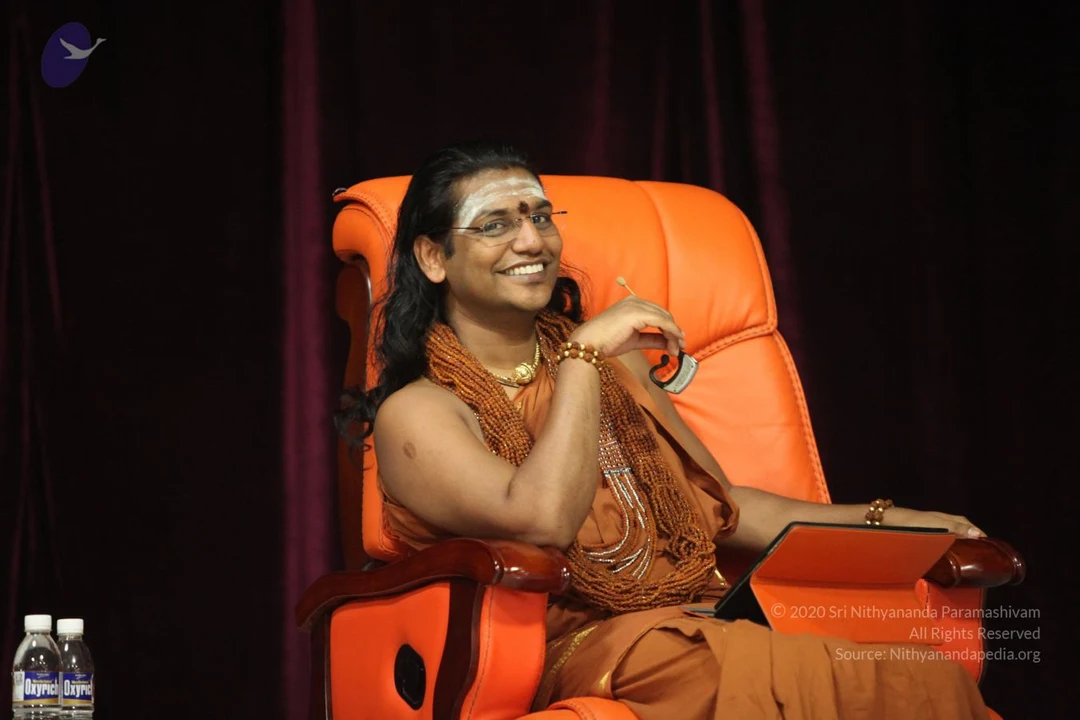
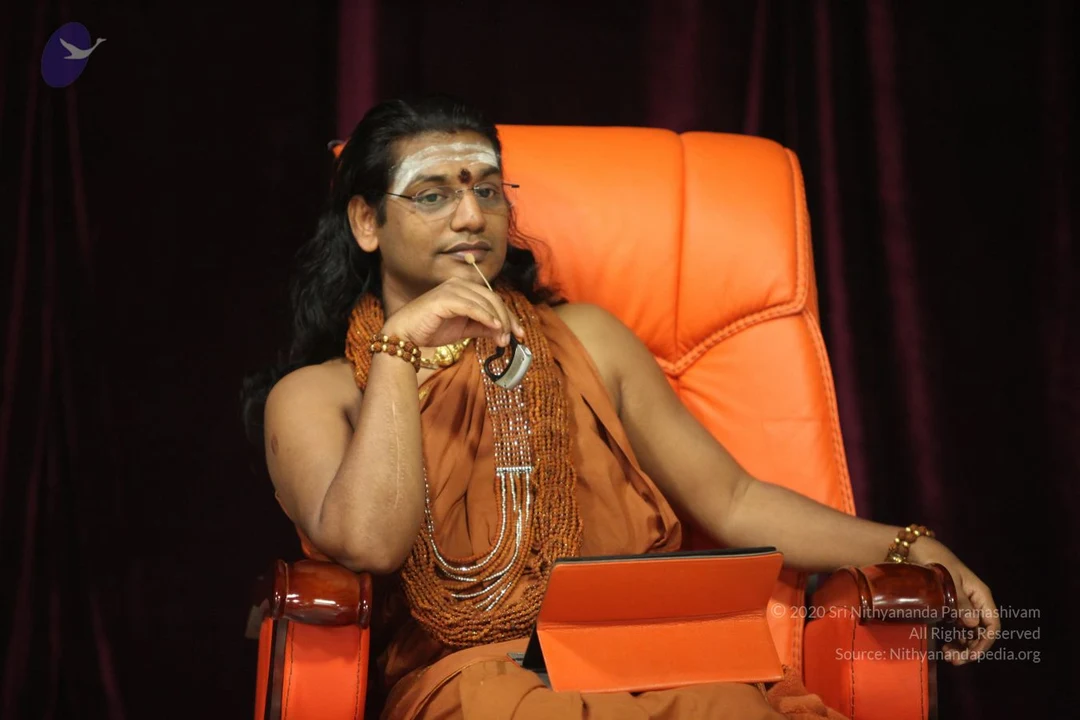
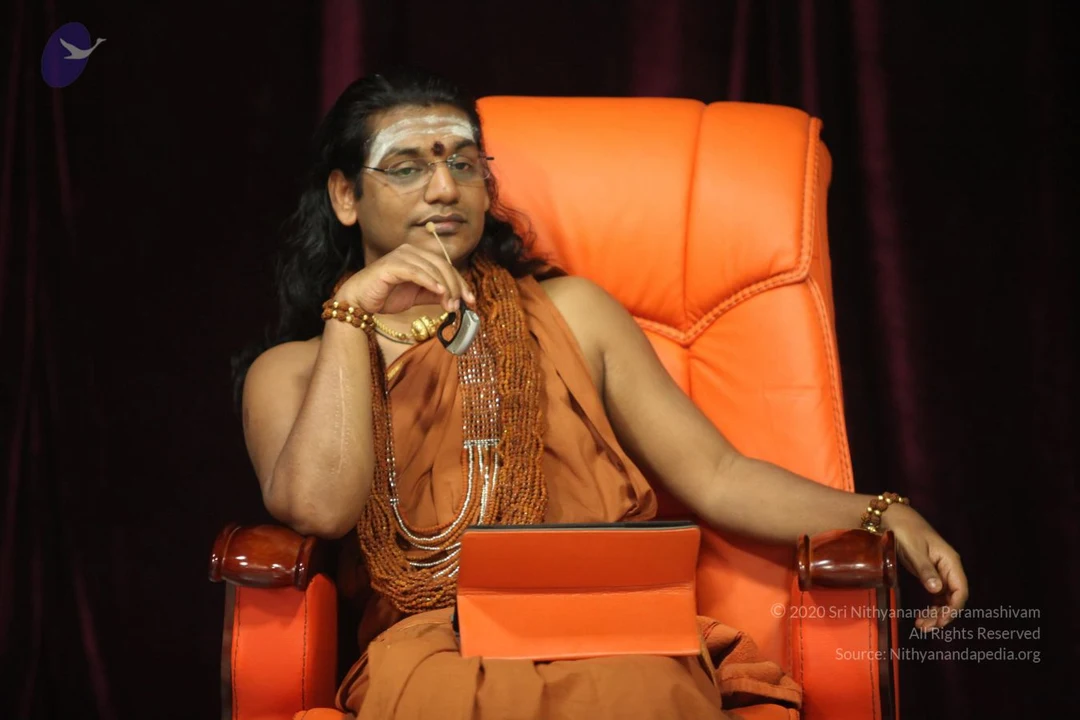
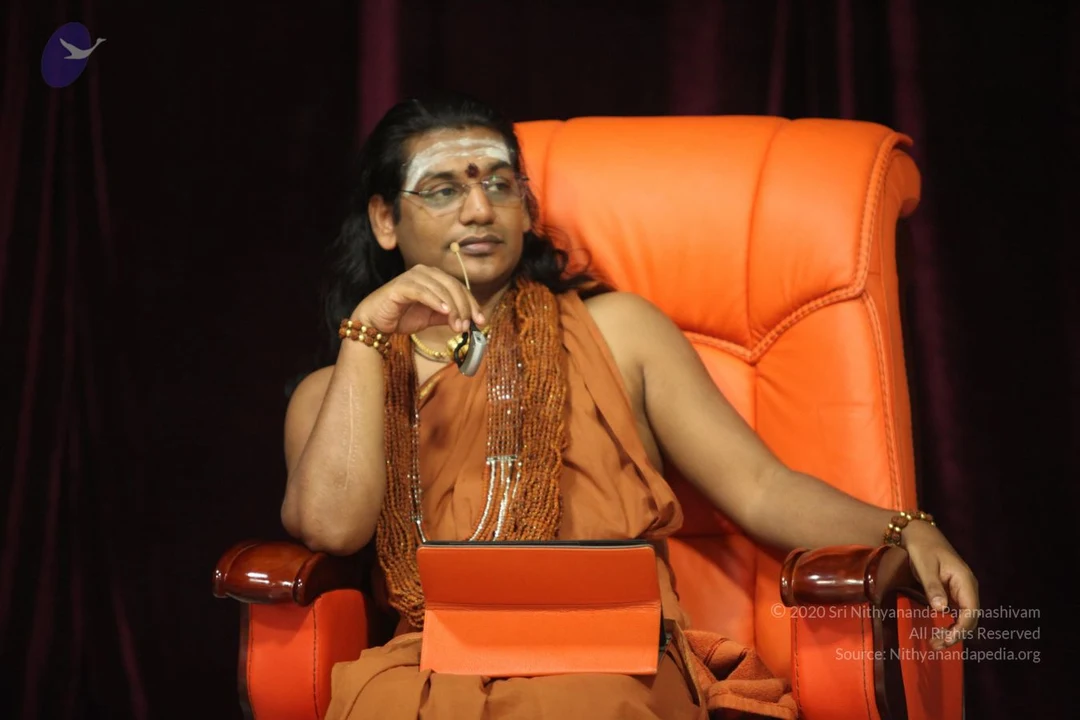
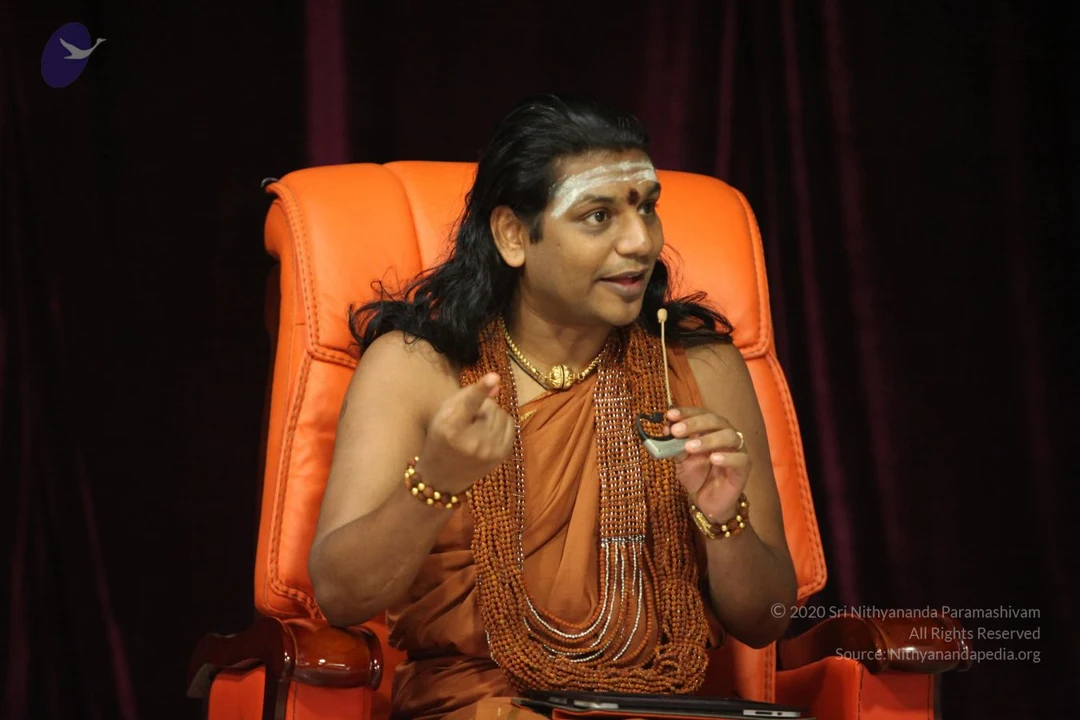
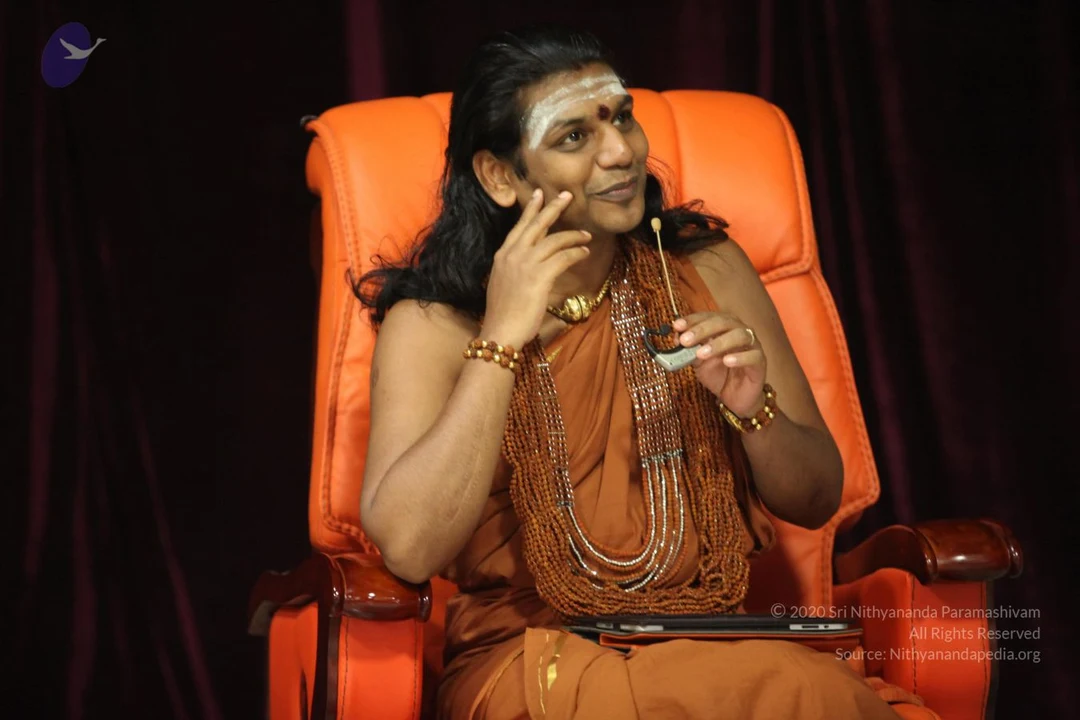
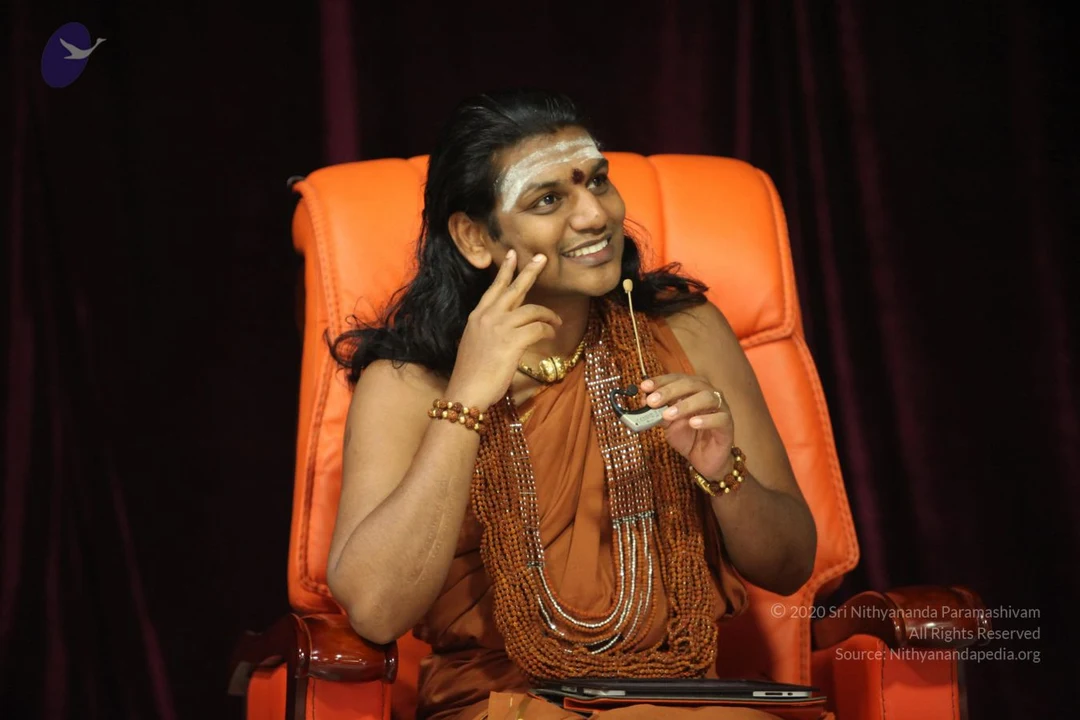
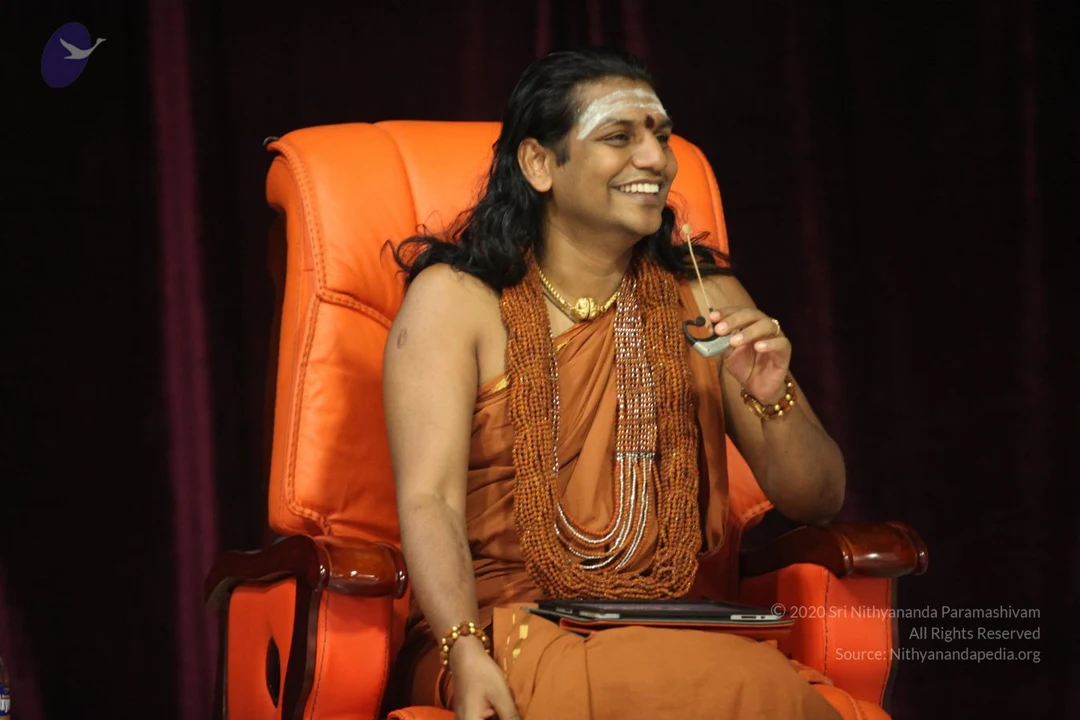
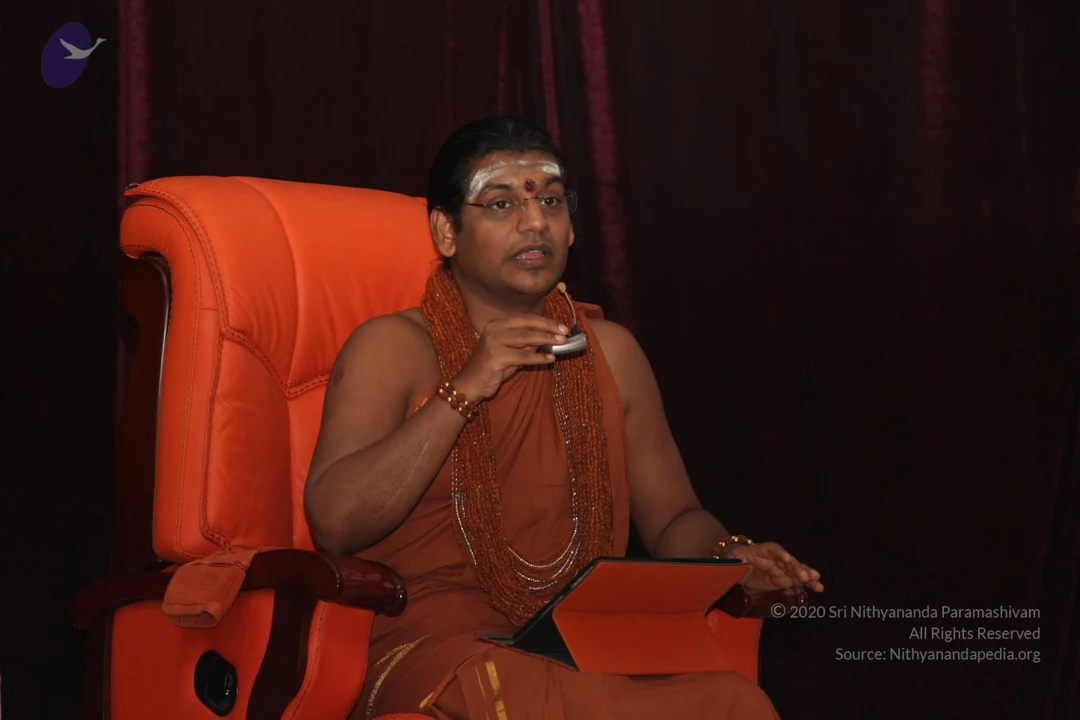
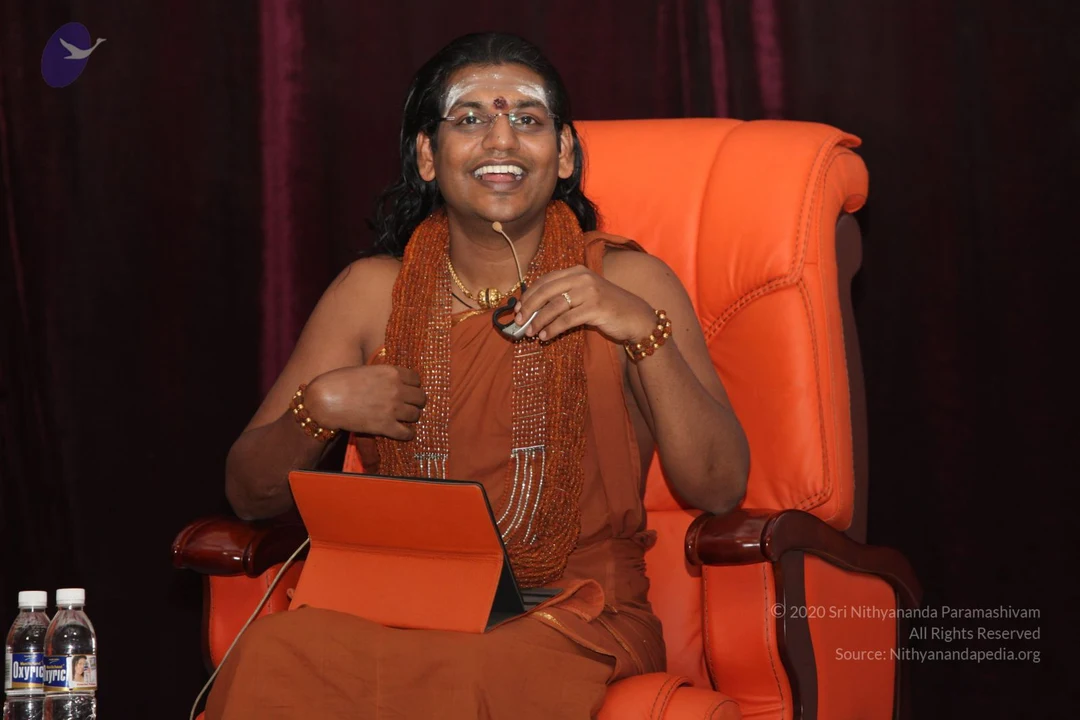
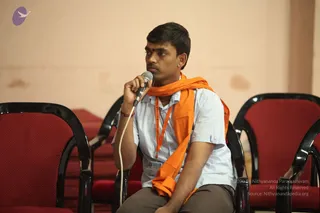
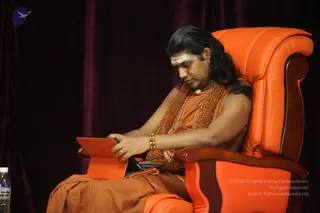
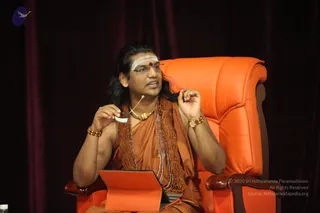
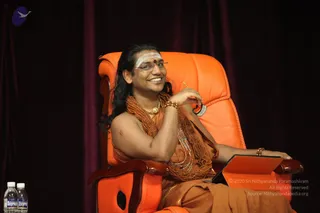
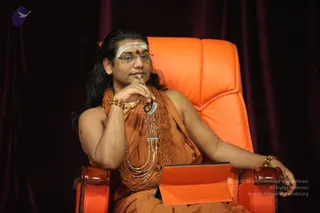
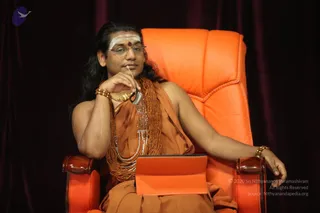
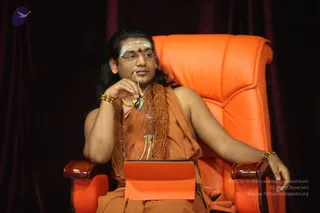
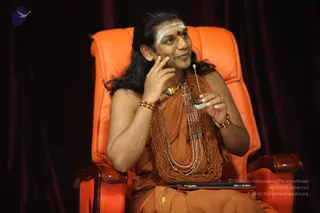
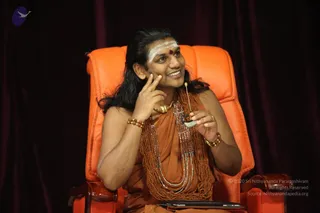
A photograph of a single young man seated in a red-upholstered chair in a plain room with pale pink walls. He wears a white collared shirt, brown trousers, an orange scarf draped over one shoulder and an orange lanyard with an ID badge. He holds a handheld microphone to his mouth with his right hand and looks off to the side, apparently speaking. Empty red chairs surround him.A man in saffron-orange robes sits in a large orange leather armchair with wooden armrests against a dark maroon velvet curtain. He has a white vertical tilaka on his forehead, long dark hair swept back, a gold pendant and layered rudraksha malas around his neck, and a gold bracelet. He looks down and works on a small orange tablet resting on a stand across his lap. A clear water bottle with blue label sits at the left edge of the frame. Swamiji (probable): the saffron clothing, long swept-back hair, rudraksha malas and gold necklace match the page's claim, and he is seated on a stage-like chair during an event.A man seated in a large orange leather armchair against a dark maroon curtain speaks while holding a small white card and a stylus-like pen in one hand and gesturing with the other. He wears orange-saffron robes, a long rudraksha mala draped across his chest, layered beaded necklaces and a gold chain, a gold wristwatch, and orange-beaded bracelets. He has white vibhuti horizontal lines on his forehead with a red kumkum dot, and wears clear-framed glasses. Long dark hair falls past his shoulders. An orange tablet case sits on his lap and a water bottle is at the lower left edge. The setting suggests a seated discourse or satsang.A smiling man with long dark hair sits in a large orange leather armchair on a stage in front of dark maroon drapes. He wears an orange garment, a thick orange rudraksha mala with a gold pendant, a bracelet and a white and red forehead mark, and holds a small device in one hand while resting the other on a tablet on the armrest. Two bottled water bottles sit at the lower left. A probable Swamiji appearance is seen: long swept-back hair, orange ornate clothing and rudraksha malas, seated on the stage in a discourse setting.A man sits in a large orange leather armchair against dark maroon drapes, holding a pen to his chin in a thoughtful pose. He wears an orange-saffron shawl, a thick orange rudraksha mala and a silver-beaded necklace, with a gold bracelet on his wrist, white vibhuti lines and a red bindi on his forehead, and wire-rimmed glasses. An orange tablet case rests on his lap. Probable Swamiji (long swept-back hair, saffron ornate clothing, rudraksha mala and ceremonial silver necklace), seated in a discourse setting. The page indicates a satsang talk. Only one physical person is visible.A man with long dark hair and a white-and-red forehead marking sits in an orange leather armchair against a dark maroon curtain. He wears clear-framed glasses, an orange-saffron robe, layered rudraksha and beaded necklaces, and bead bracelets with a gold band on one wrist. He rests his chin on one hand while holding a small silver object and an orange folder sits on his lap. The setting suggests a seated satsang discourse.
Darshan

17 photosSource gallery
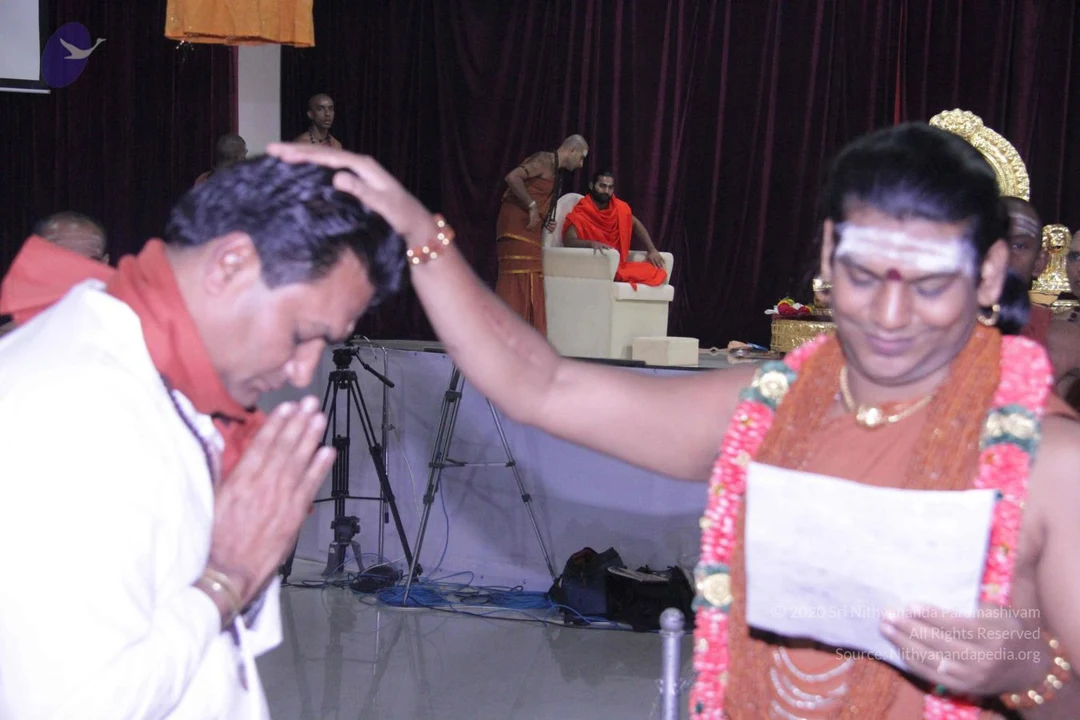
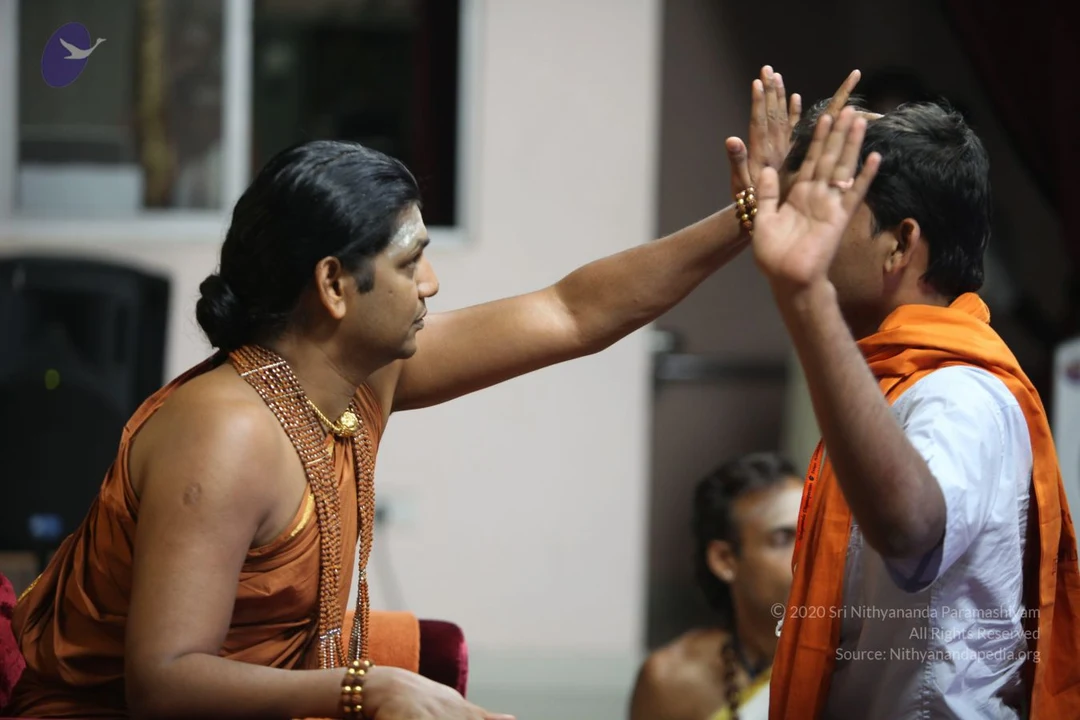
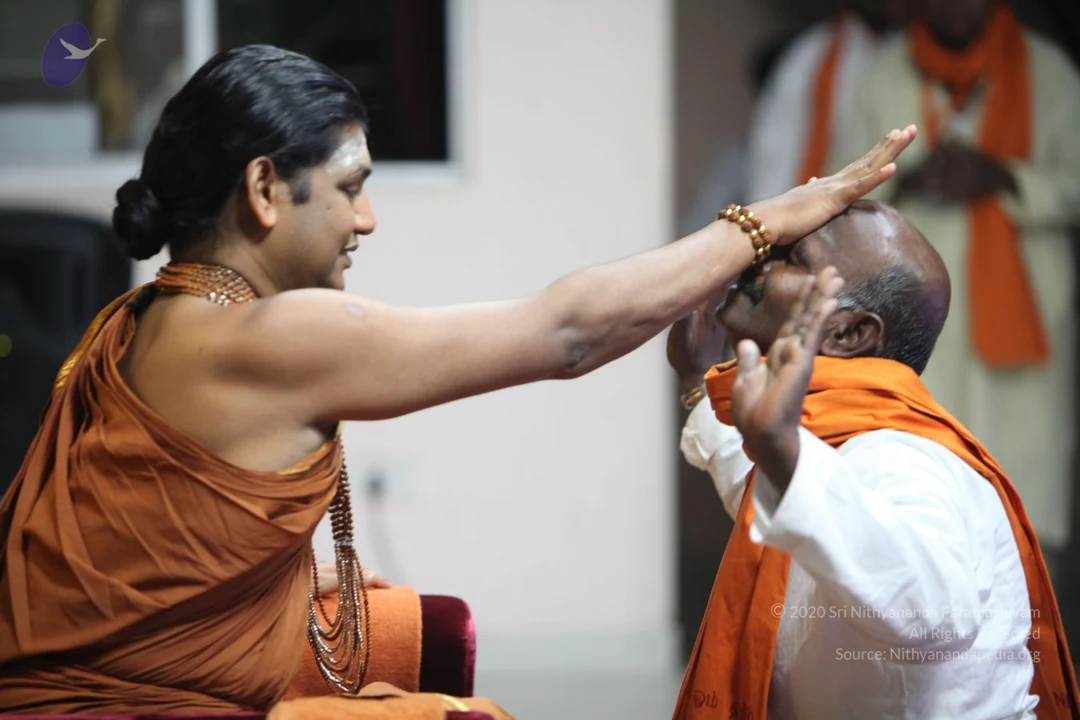
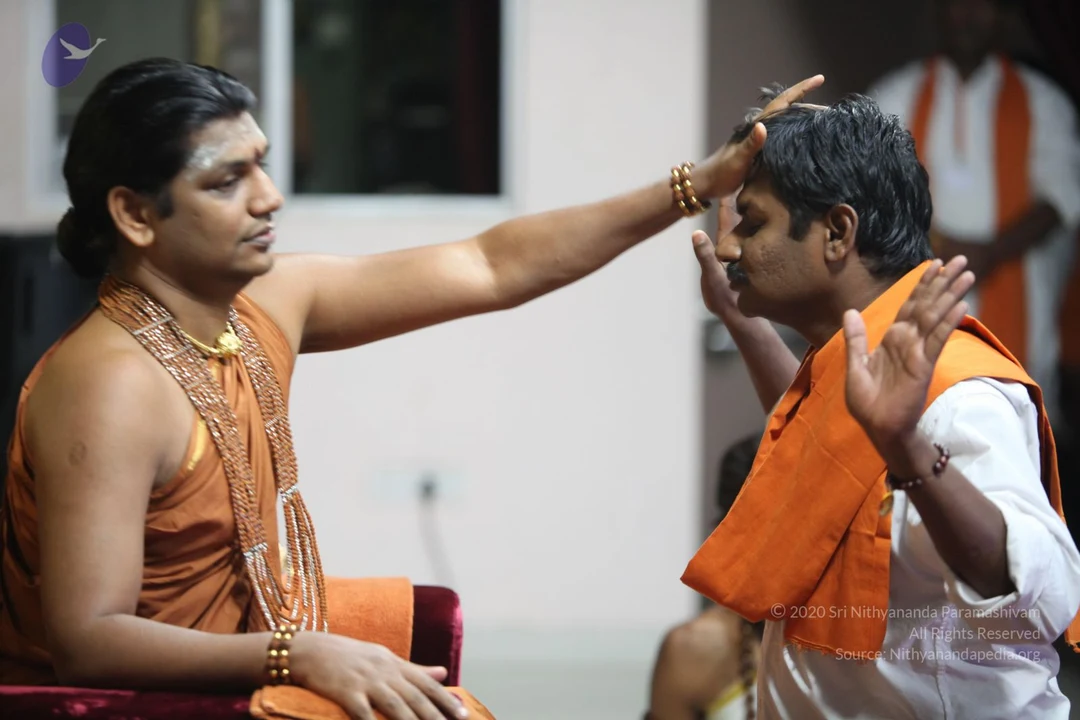
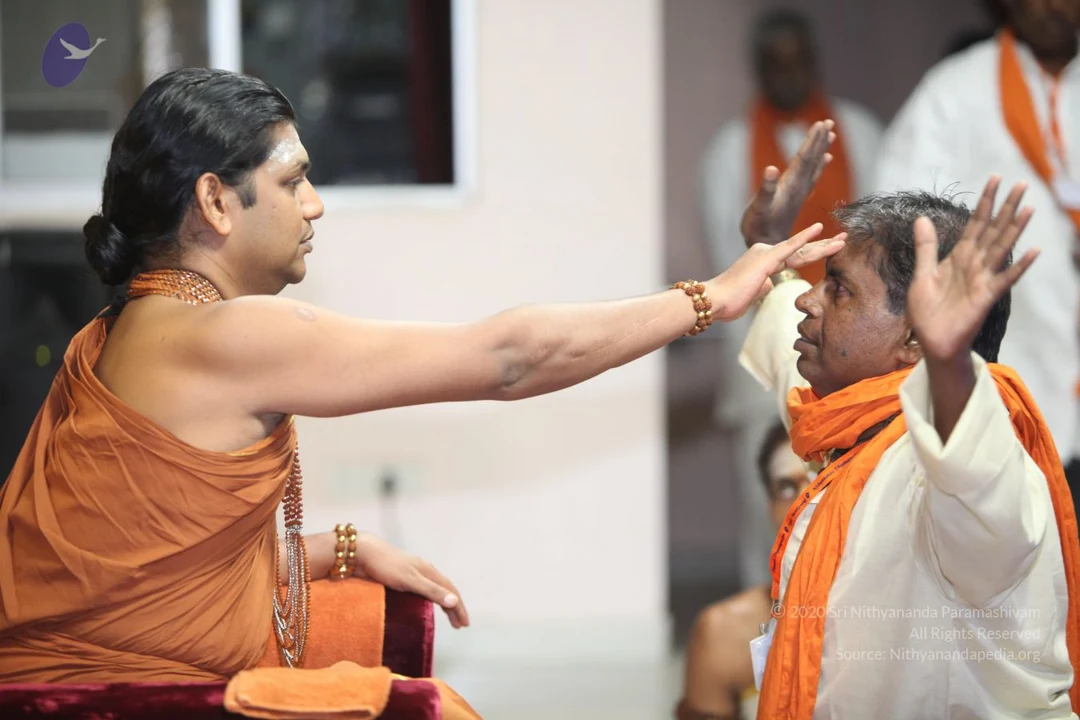
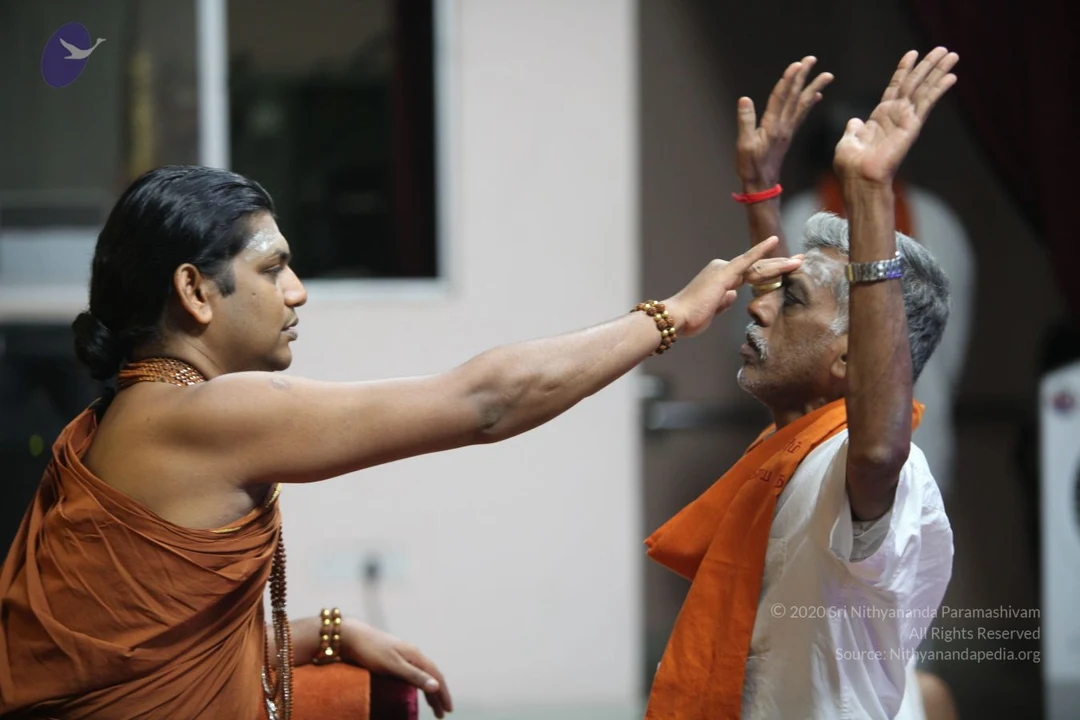
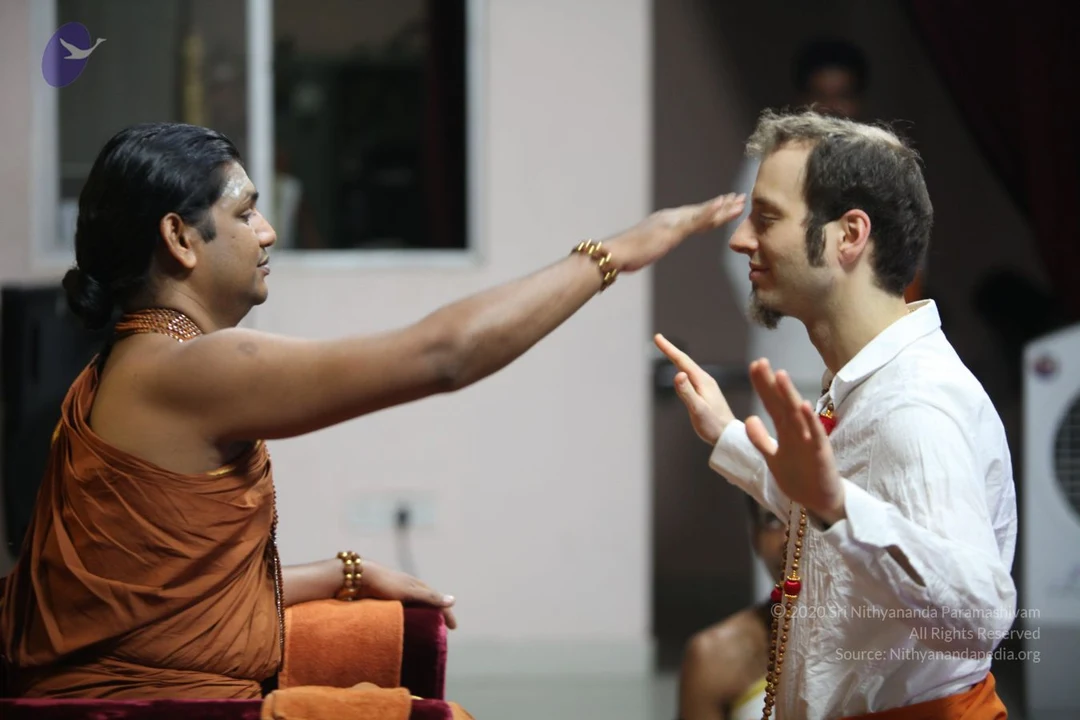
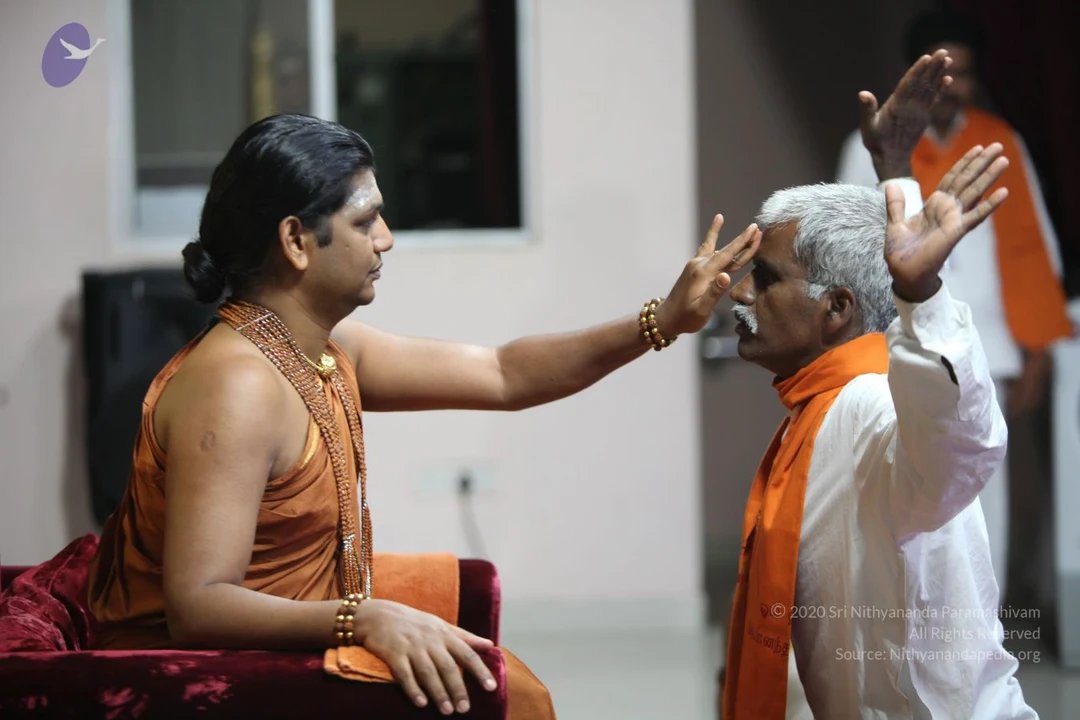
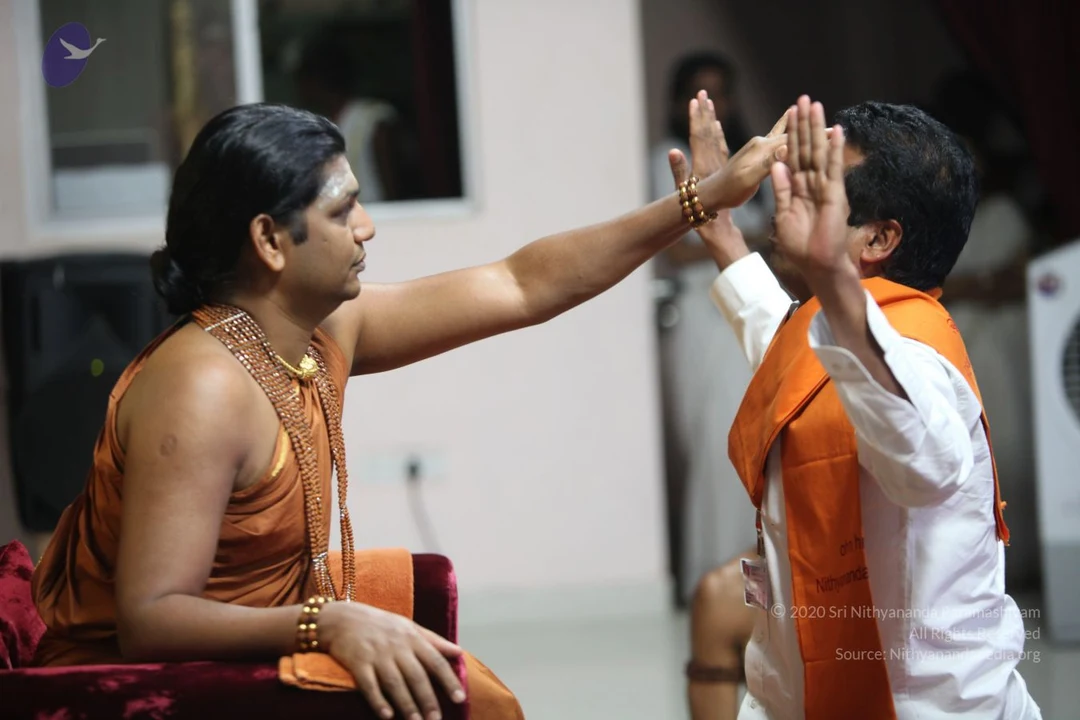
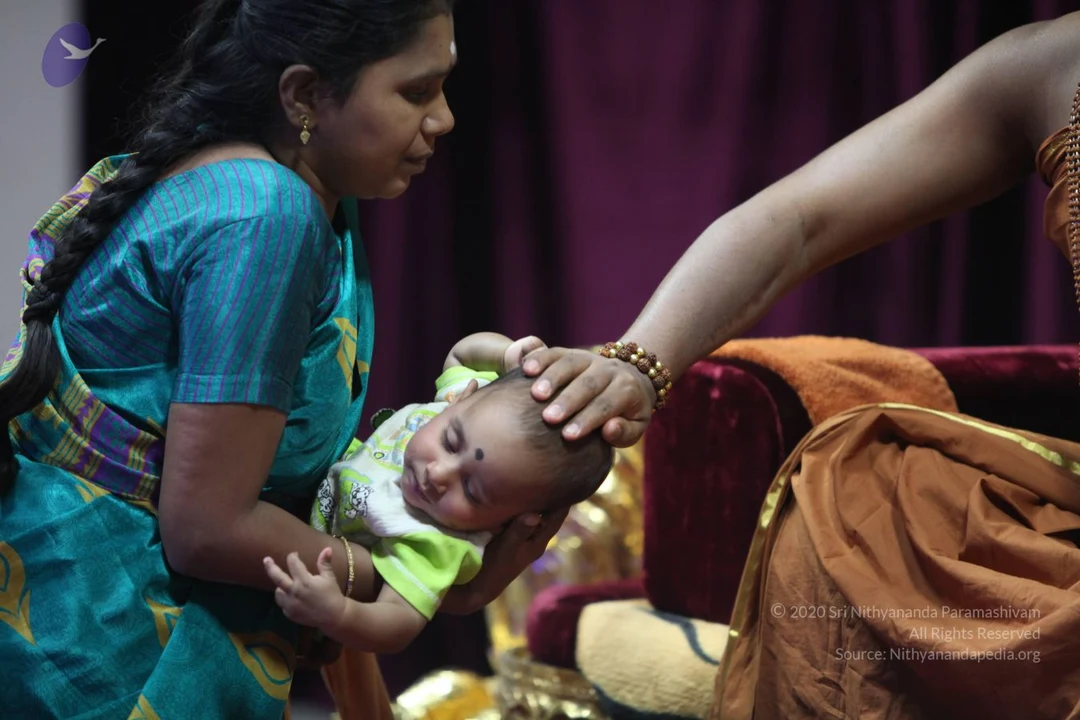
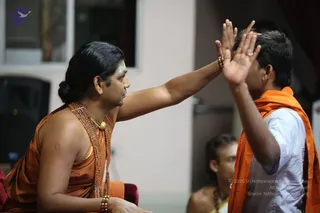
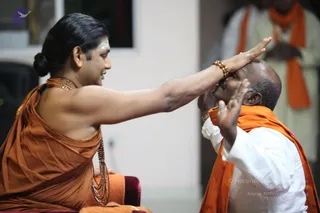
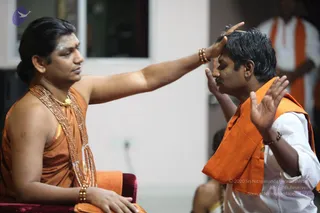
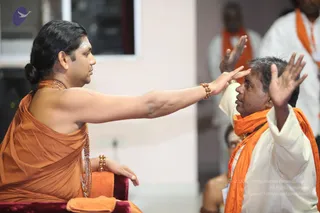
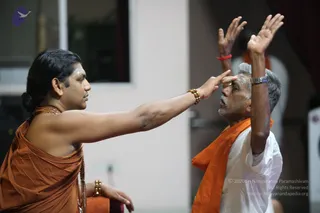
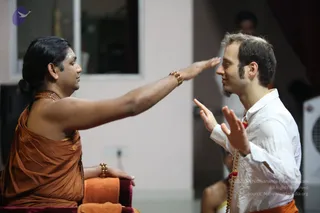
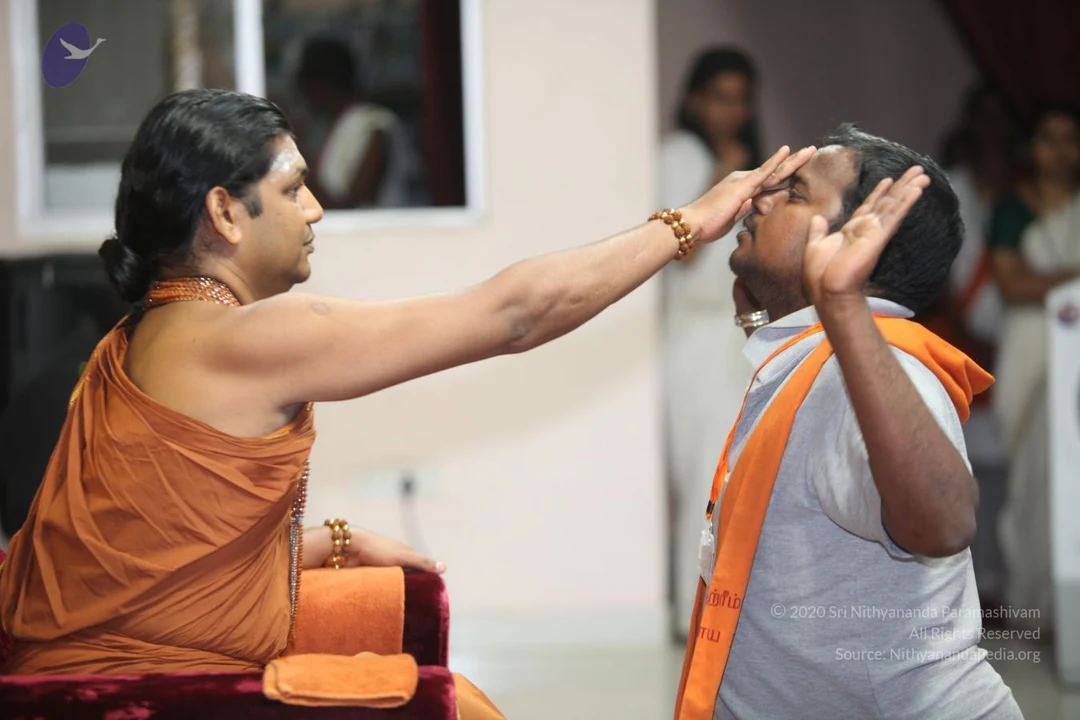
Indoor photo of a seated figure in saffron-orange robes with a long swept-back hair knot, rudraksha-style beaded malas and gold ornaments, extending his hand to bless or touch the head of a younger man in an orange shawl over white clothes who raises his palm in response. A white vibhuti mark is visible on the seated man's forehead. A second seated person is partly visible in the background, and a white wall and window frame a satsang-style setting. Swamiji (probable) appears as the seated figure with long hair, saffron robes and ornate malas, performing a blessing gesture.A seated man with a swept-back dark bun, white tilak on his forehead, rudraksha-style beaded necklaces and bracelets, and an orange saffron cloth draped over his shoulder and torso, extends his right hand toward the forehead of a bald older man in a white shirt with an orange shawl. The older man bows his head with his palms raised in devotion. In the blurred background, another person in an orange scarf stands with hands folded. The setting appears to be an indoor satsang.A seated man in saffron-orange draped cloth, a gold pendant and layered rudraksha-style beaded necklaces, with copper bangles on his wrist, touches the forehead of a devotee kneeling before him. His hair is swept back in a bun and his forehead bears white markings. The devotee wears a white shirt with an orange shawl and holds his palms open in reception. Behind them a window, a pale wall and another figure in orange and white sit in the background. Probable Swamiji by appearance cues: swept-back hair, ornate beaded necklaces and saffron clothing, seated in a ritual blessing.A seated man in saffron-orange robes with long swept-back dark hair, a white forehead mark, and a rudraksha mala with ceremonial beads, extends his right arm toward a devotee's forehead in a blessing gesture. The seated figure rests on a red-cushioned seat. The devotee, a man with short grey hair wearing white kurta and an orange shawl, raises both palms in reception. Other devotees in white and orange stoles stand behind. The seated figure matches the Swamiji (probable) cues of long hair, saffron clothing and rudraksha beads, so the candidate is in_person.A photograph of a man in an orange saffron shawl and rudraksha malas blessing a seated older man with grey hair and a moustache. The blessing man stands in profile at left, bare-shouldered in orange cloth with a gold chain and wooden beads, his right hand pressed to the older man's forehead. The older man, in white clothes with an orange shawl and a wristwatch, raises both hands upward in devotion. Ashram-like background with a window and a red curtain. The image appears to show a blessing or diksha-style gesture rather than a formal puja.Photograph of a seated man in an orange-saffron robe with a rudraksha mala and gold bracelets, his long hair tied back, extending his right arm toward a clean-shaven-and-bearded man in a white shirt and orange-trimmed garment, who holds his palms up in front of him. A red-and-white mala hangs on the second man's chest. Two more people are partly visible in the background, and a maroon cushioned seat and a white appliance are in view.
MorningSatsang

67 photosSource gallery
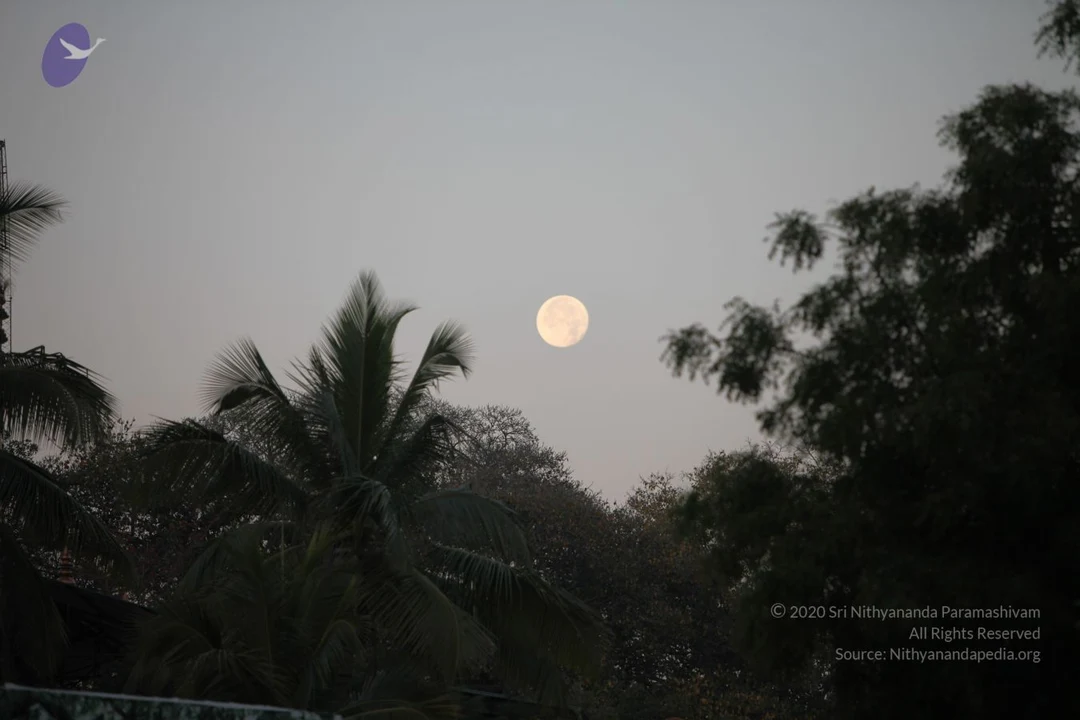
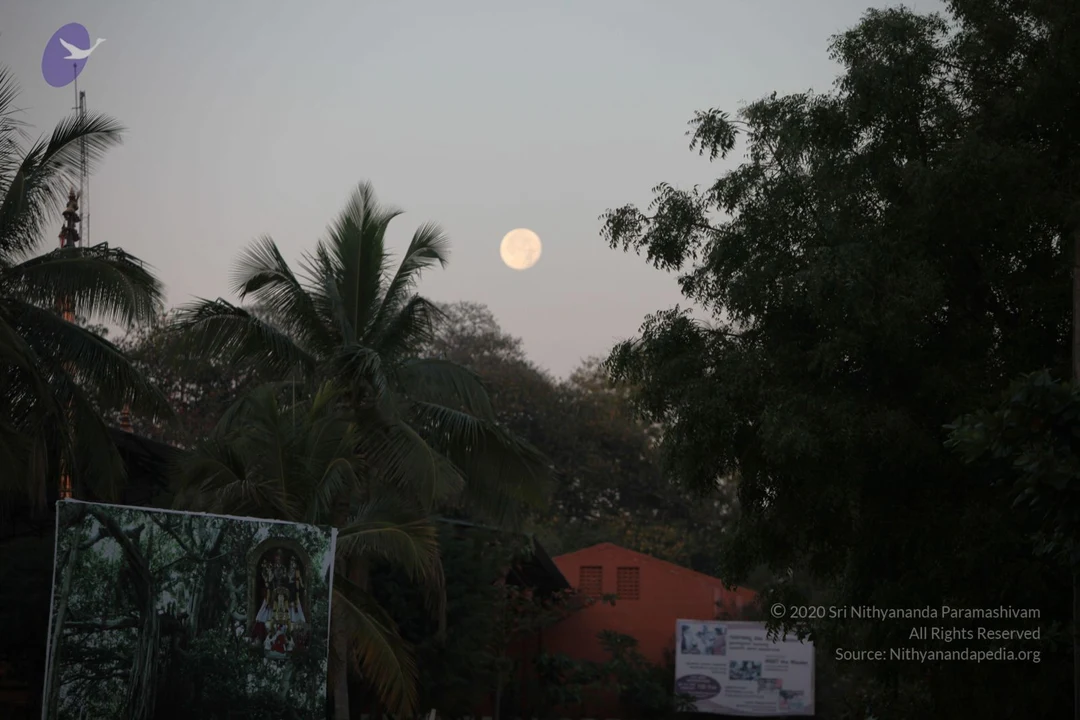
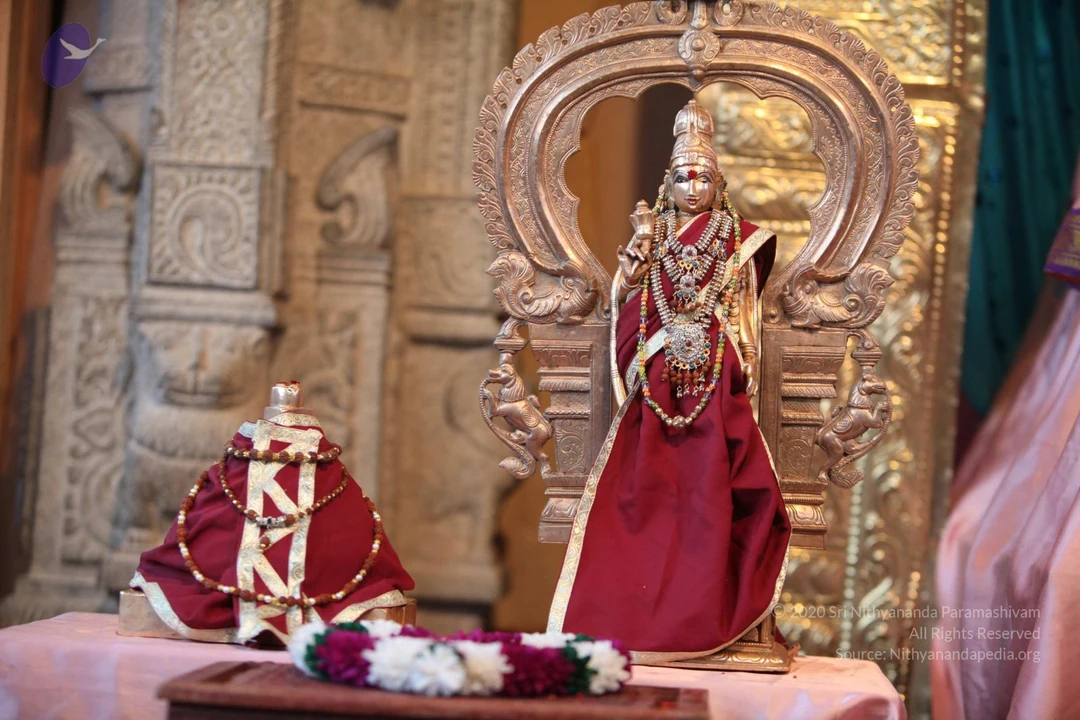
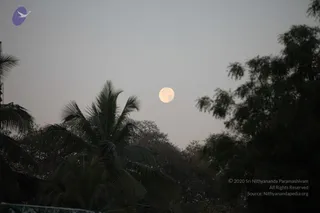
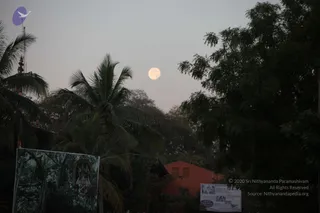
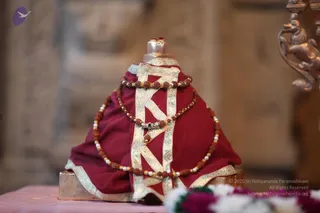
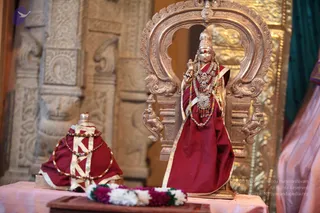
A large indoor hall with polished light floor where many people sit on blue and green yoga mats in a seated meditation posture. In the foreground two men kneel with hands folded in prayer; both wear orange t-shirts printed with a portrait of a saffron-robed figure and orange trousers. Behind them a man in a green t-shirt and a bald man in a white kurta sit on mats, and small steel dumbbells lie on the floor between the mats. Along the back wall a table with a green cloth holds water jugs and cups, and a crowd of seated participants in black and white clothing fills the background.A large hall with a polished white floor where many people sit kneeling in prayer pose with palms pressed together, on purple, green and pink mats. Several wear orange or saffron robes, others wear black, grey or white clothes. Dumbbells lie between the mats. Colourful hanging tassel pillars and draped white fabric decorate the ceiling. In the foreground a bald man with glasses in an orange t-shirt sits with hands in anjali mudra. Some people sit in a row near the front wall, and a golden curtain hangs at the far end.A pale full moon rises in a dusky grey-blue sky above silhouetted palm fronds and dense dark tree canopies. The lower foreground shows a tiled roof edge and a green-tinted wall. No people are visible, and no ritual, discourse or ashram activity is shown.A dusk photograph of a full moon rising in a pale sky above silhouetted palm fronds and dark tree canopies. In the lower left, a large printed banner shows green foliage and a framed deity murti or devotional picture in a niche. Behind it, an orange-walled building and a telecom tower are visible. In the lower right, a smaller white sign with a blue and red border carries printed photographs and text. No people are visible.Close-up photograph of a ceremonial garment draped over a silver-toned object. The deep maroon-red fabric has gold-and-cream embroidered borders and a cross-shaped gold trim pattern at its centre. Several strands of rudraksha beads alternate with gold-tone and white pearl beads, arranged across the garment. In the foreground, blurred white and magenta flowers suggest a garland arrangement. A carved bronze or brass figure of an animal appears at the upper right, and the blurred stone background suggests a temple setting. No people are visible.A photograph of a metal deity murti standing on a golden ornate throne-like arch, wearing a crown, a red silk garment with gold border, layered beaded necklaces and a jewelled pendant, holding a small ritual object in one hand. In front on a pink-draped table is a smaller covered red cloth form with gold lettering and beaded garlands, beside a white and magenta flower garland. Behind are carved stone pillars and gold-patterned panels with a teal curtain at the edge.

VIPVisit

27 photosSource gallery
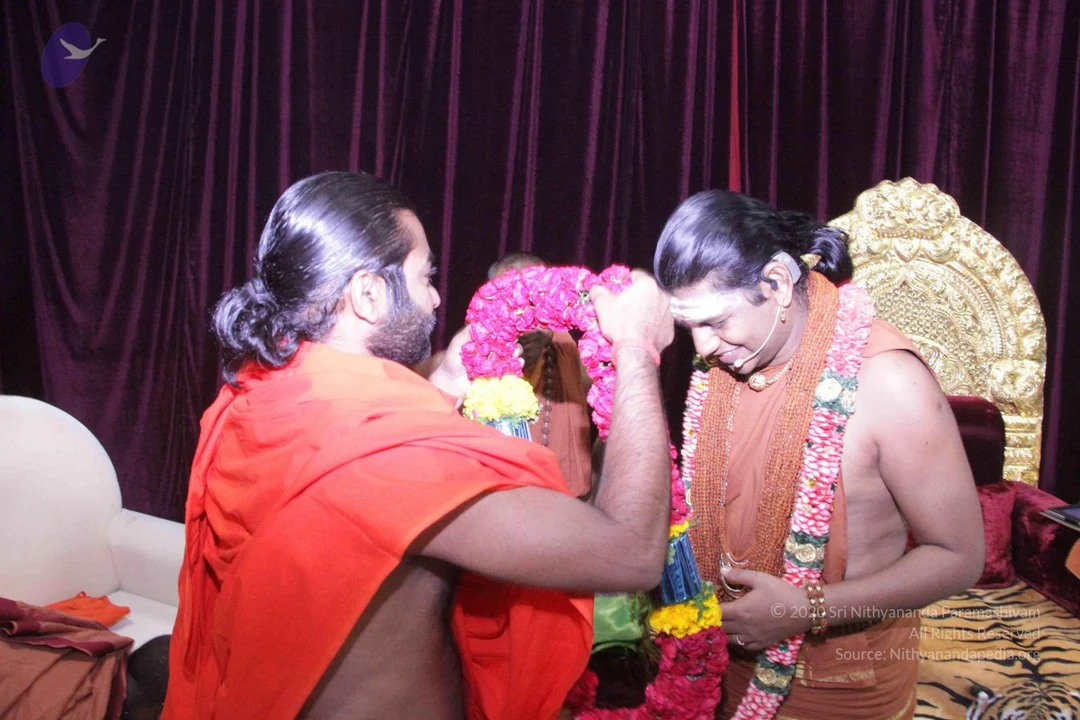
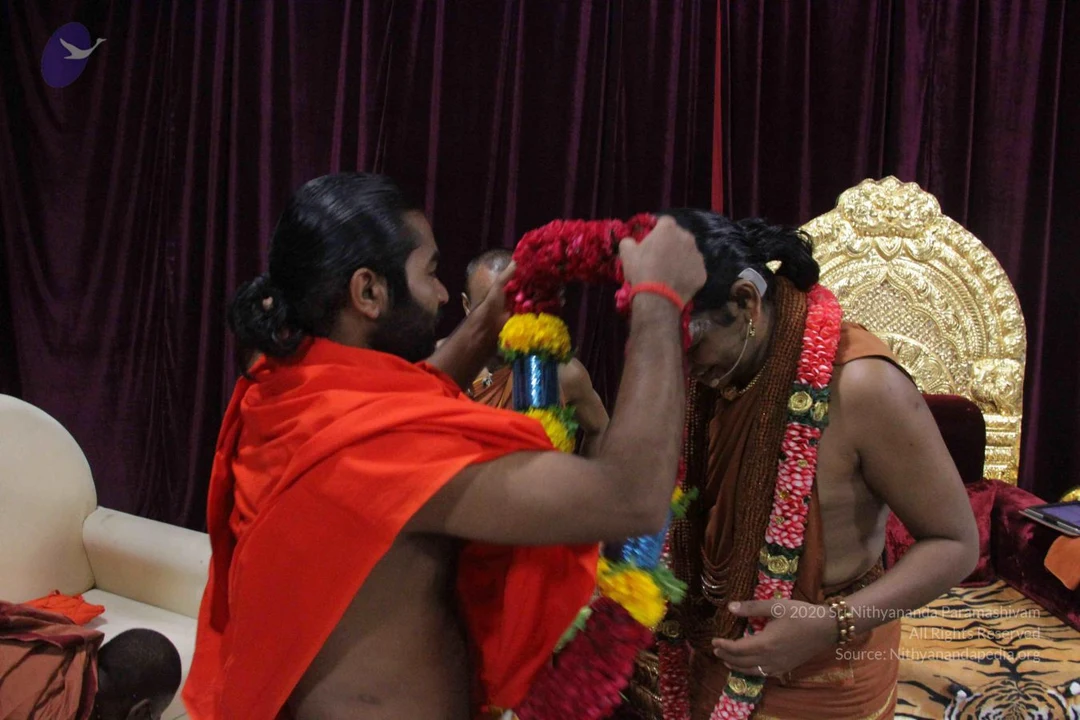
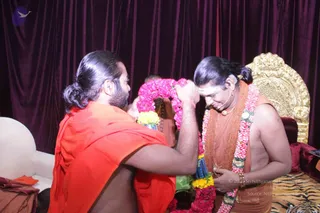
A photograph in an indoor hall with plum velvet drapes and a white wall with an air conditioner. A man in a pink and gold brocade shawl bows forward while a robed figure in a saffron-orange dhoti with a crisp white shawl drapes or places the shawl over him. The standing figure on the right, bare-chested with a rudraksha mala and a pink and white flower garland, has long swept-back hair and a headset microphone, and holds the shawl with both hands. Another robed attendant in orange stands behind, and a golden lion statue sits at the right edge on a draped table with a small flower arrangement. This appears to show a shawl-honouring gesture. Swamiji (probable): the flower-garlanded figure on the right has long swept-back hair, a mala and an orange garment, consistent with the page's reference, though identification is by appearance only.Indoor ceremonial scene in a room with plum velvet drapes and a white wall with an air conditioner. In the centre, a man in a red and gold brocade shawl over a red garment stands with his head bowed, facing a seated figure partly visible at right who is draped with a pink and white flower garland. Behind him a bald priest in saffron-orange dhoti and shawl with white forehead marks and a rudraksha mala walks past, and another attendant in orange carries a tray of red and yellow flower garlands at left. A golden lion figure sits on a dark cushioned seat at right. The setting suggests a devotional reception or satsang gathering.Indoor photo in front of deep purple draped curtains and a gilded throne with a carved golden lion and a tiger-striped cushion. A man on the right with long swept-back hair, a crown-like white headpiece with a tilak, a long ornate rudraksha and gold bead necklace, and a pink and white garland, both hands in namaste, smiling. In the foreground a man in a red and gold brocade shawl bows and offers a tray with fruit and sweets and a book. Behind them, two men in orange robes with white tilak stand; one on the left wears a rudraksha mala. Looks like a devotee's offering or darshan.Photograph of a seated figure with long swept-back dark hair, wearing rudraksha malas, ceremonial gold necklace and a saffron shawl, with pink and white floral garlands, hands joined in greeting before a gold throne with a lion-head armrest and tiger-striped cushion. Swamiji (probable) based on the long swept-back hair, multiple rudraksha malas, ornate gold jewellery and saffron clothing. Three saffron-robed attendants stand behind, one with a white tilak on the forehead and a rudraksha mala. In the foreground a man in red and gold brocade bows and offers a book and a green gift basket.Photograph of a garland ceremony in a draped room with deep purple velvet curtains. On the left, a bare-chested man in a saffron-orange cloth and long swept-back hair drapes a pink and yellow flower garland over the head of a seated man on the right. The seated man has long dark hair tied back, a white forehead mark, a rudraksha mala and a gold necklace, and wears an orange-brown robe over bare shoulders. Behind him is an ornate gold throne with red cushions and a tiger-print cloth. A small white sofa and orange fabric sit at the left edge.A man in a bright orange shawl, bare-chested and with hair tied back, places a long garland of red and yellow flowers over the head of a seated figure. The seated figure has long swept-back dark hair, a crown-like ornate gold chair behind, a brown-orange garment, and gold necklaces and bangles; a gold-embossed throne with purple velvet drapery stands in the background. A second person is partly visible at left. The scene resembles a garlanding honour at a satsang setting; the seated figure matches the visual cues described for a person, with long swept-back hair, ceremonial gold ornaments and a throne.
Tamil-IA-Session

13 photosSource gallery
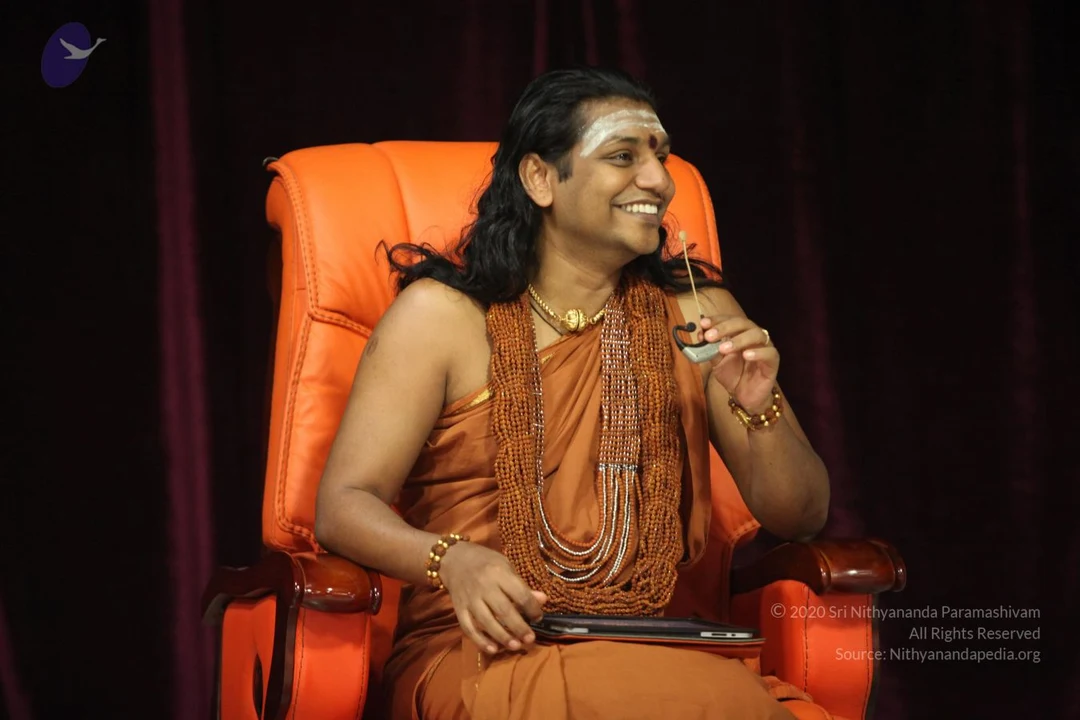
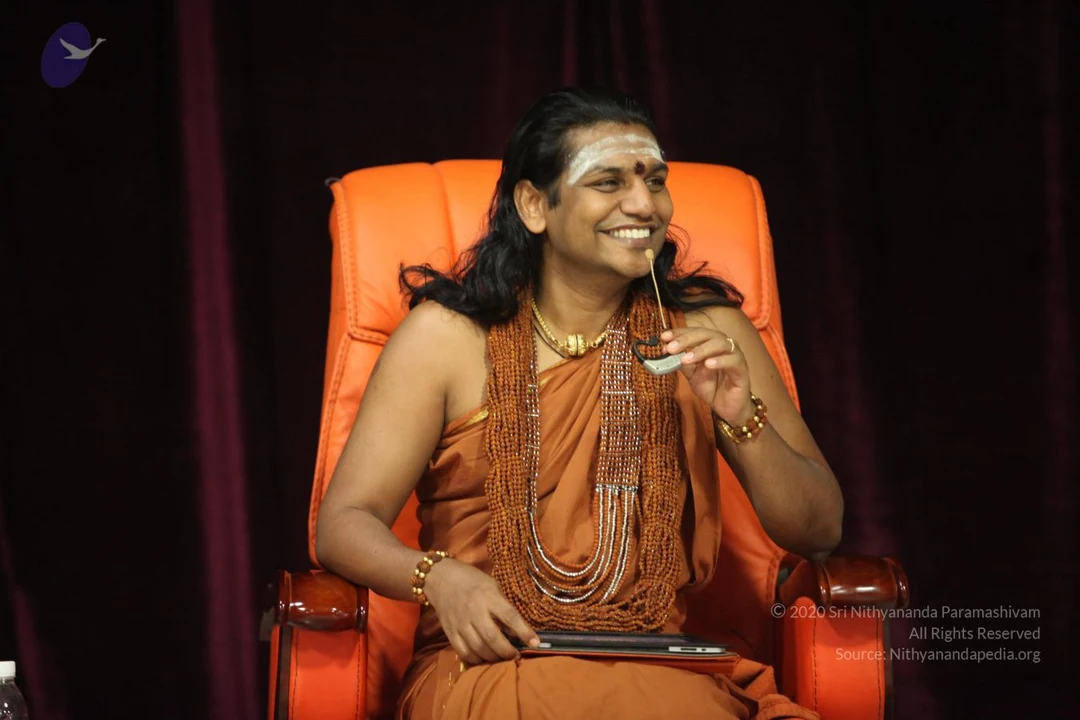
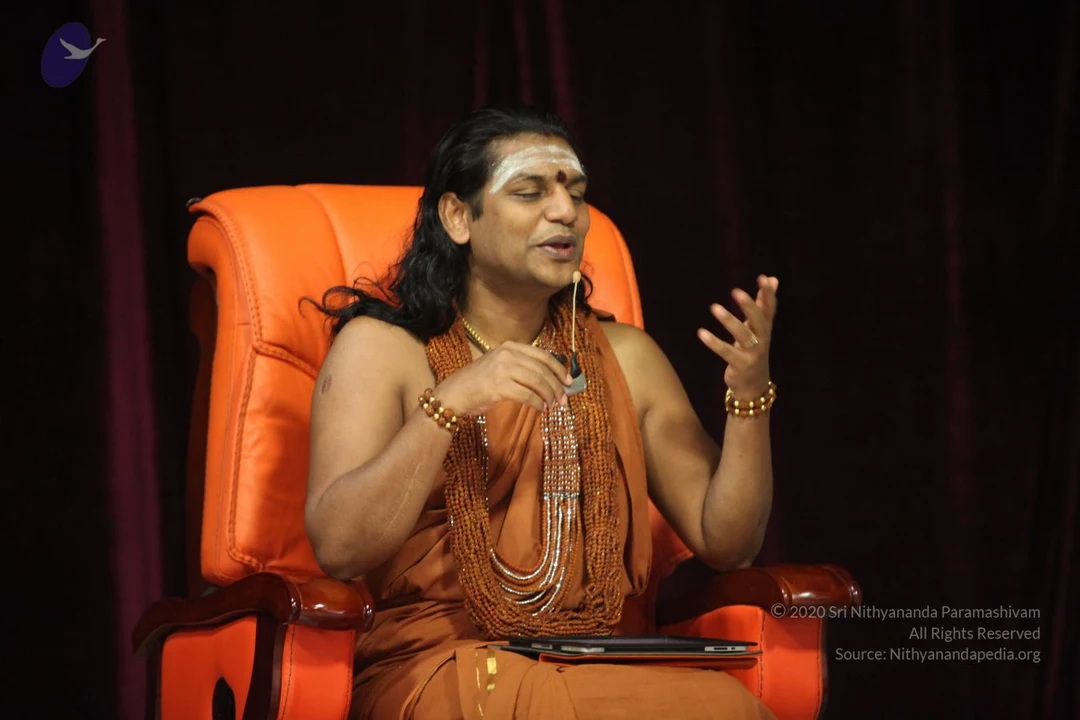
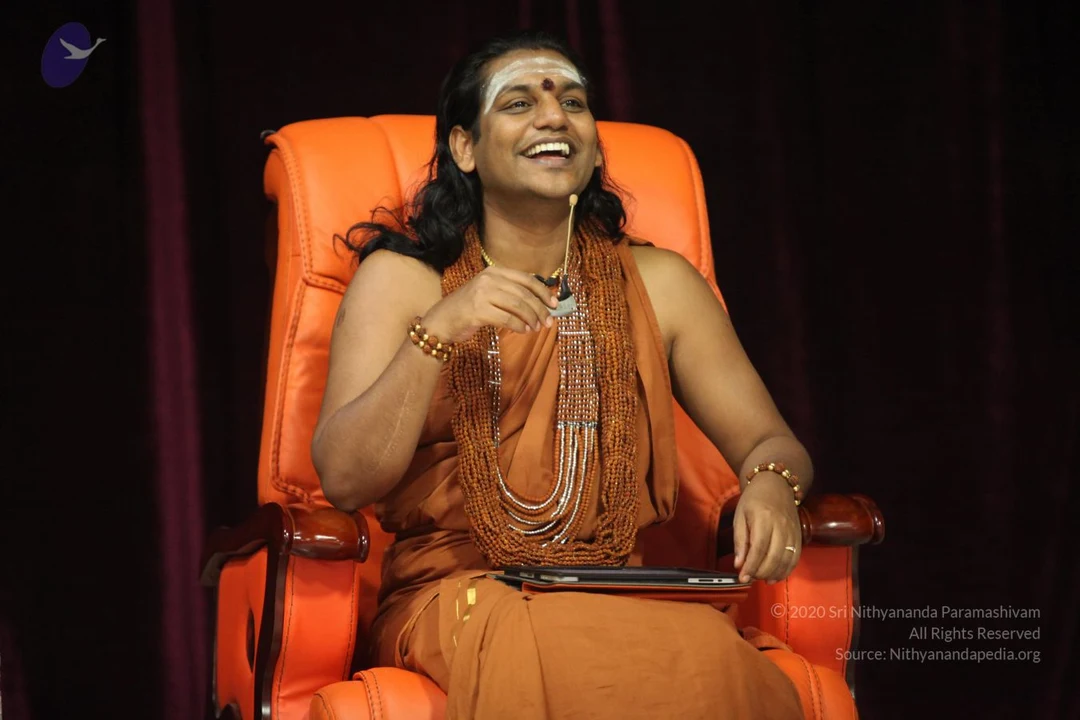
A man in saffron-orange robes sits in a large orange leather armchair with wooden armrests against a dark maroon velvet curtain. He has a white vertical tilaka on his forehead, long dark hair swept back, a gold pendant and layered rudraksha malas around his neck, and a gold bracelet. He looks down and works on a small orange tablet resting on a stand across his lap. A clear water bottle with blue label sits at the left edge of the frame. Swamiji (probable): the saffron clothing, long swept-back hair, rudraksha malas and gold necklace match the page's claim, and he is seated on a stage-like chair during an event.A smiling man with long dark hair sits in a large orange leather armchair on a stage in front of dark maroon drapes. He wears an orange garment, a thick orange rudraksha mala with a gold pendant, a bracelet and a white and red forehead mark, and holds a small device in one hand while resting the other on a tablet on the armrest. Two bottled water bottles sit at the lower left. A probable Swamiji appearance is seen: long swept-back hair, orange ornate clothing and rudraksha malas, seated on the stage in a discourse setting.A man sits in a large orange leather armchair against dark maroon drapes, holding a pen to his chin in a thoughtful pose. He wears an orange-saffron shawl, a thick orange rudraksha mala and a silver-beaded necklace, with a gold bracelet on his wrist, white vibhuti lines and a red bindi on his forehead, and wire-rimmed glasses. An orange tablet case rests on his lap. Probable Swamiji (long swept-back hair, saffron ornate clothing, rudraksha mala and ceremonial silver necklace), seated in a discourse setting. The page indicates a satsang talk. Only one physical person is visible.A man seated in a large orange leather armchair before dark maroon drapes, sitting in a relaxed pose with one hand raised to his chin holding a small silver pen-like object. He wears an orange saffron robe, long orange-brown beaded rudraksha malas across his chest, a gold chain and a bracelet on his wrist. He has long dark hair, a white tilak with a red dot on his forehead, and wears eyeglasses. A small orange folder rests on his lap. The scene appears to be a seated discourse or satsang setting.A photograph of a single man seated in an orange leather armchair before a dark maroon curtain, speaking during a satsang. He has long swept-back dark hair, a white vertical tilak with a red dot on his forehead, and wears an orange-brown ochre robe draped over bare shoulders. Multiple strands of wooden and silver-toned beaded malas hang across his chest, with a gold pendant necklace and beaded bracelets on his wrists. He gestures with one hand near his cheek while holding a small object and a pen-like stick in the other, a laptop rests on his lap. Probable Swamiji: long swept-back hair, saffron-ochre robes, rudraksha malas and gold necklace are visible, and he is seated as the speaker.A smiling man with long dark swept-back hair sits in a bright orange leather armchair before a dark maroon curtain. He wears an orange-saffron shawl, layered rudraksha malas, a gold necklace and wrist beads, with white vertical tilak and a red bindi on his forehead. He raises one hand to his cheek and holds a small microphone-like device, while a laptop rests on his lap. Probable Swamiji by visible cues: long swept-back hair, saffron clothing, rudraksha malas and gold ceremonial necklace, seated as a satsang speaker.
Darshan
7 photosSource gallery
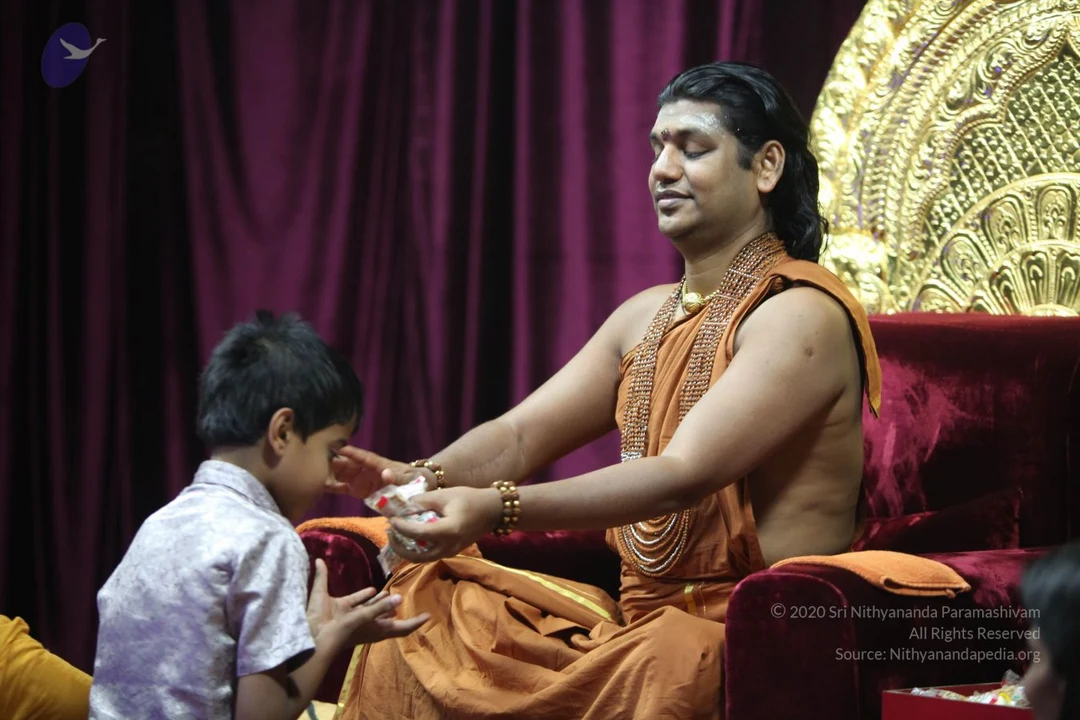
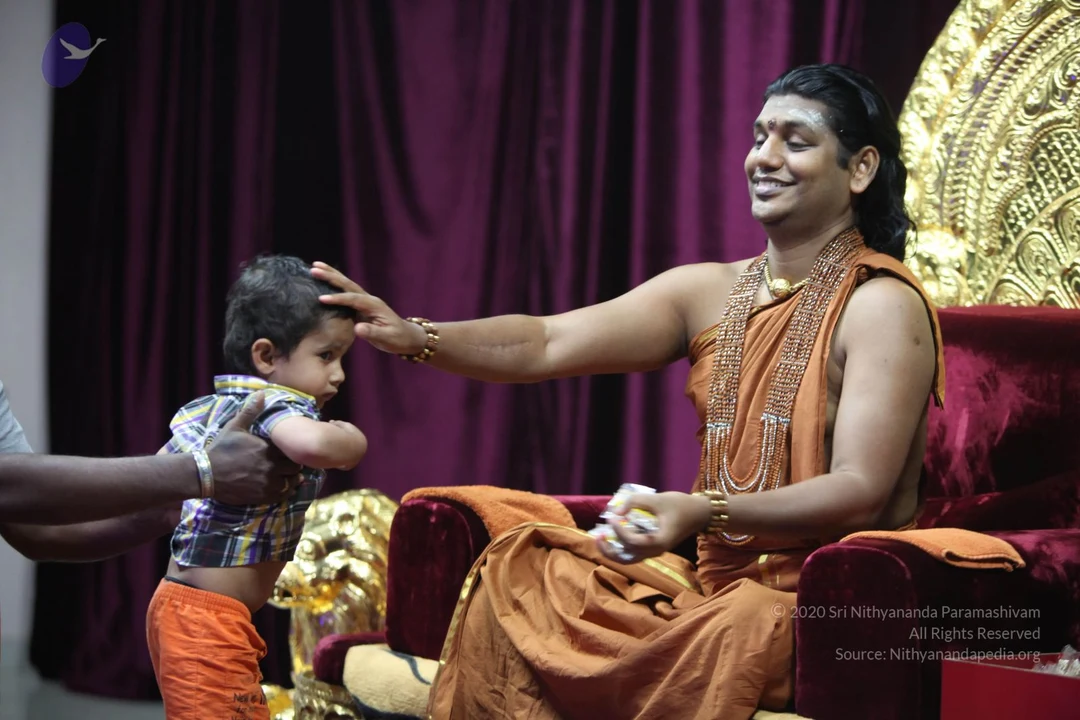
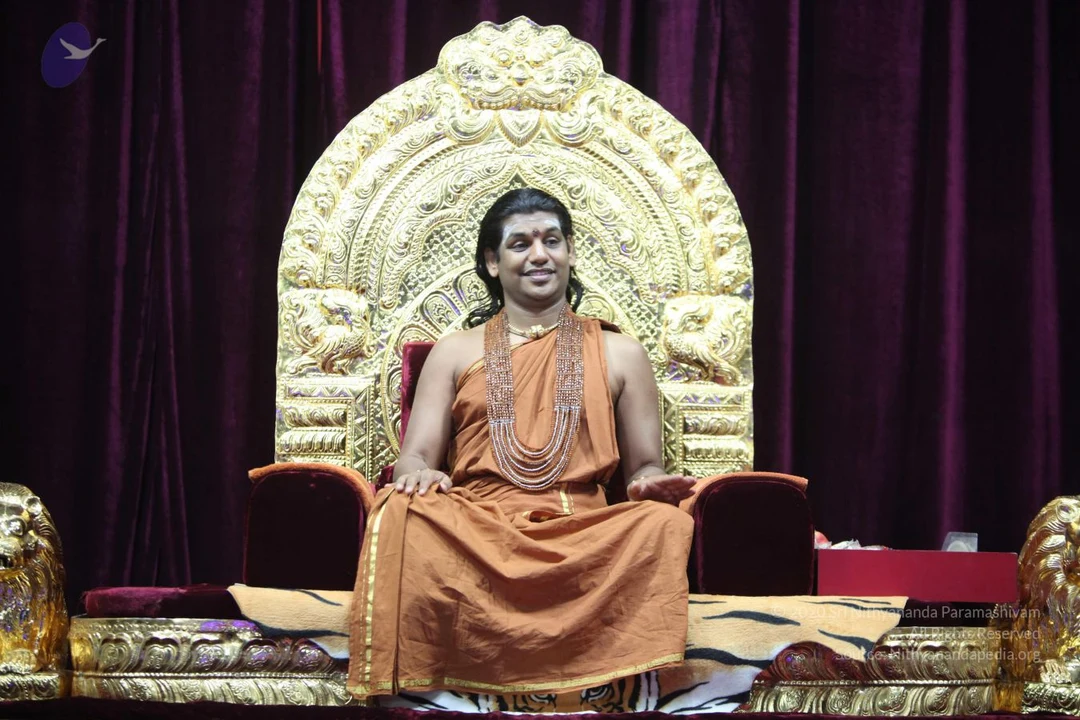
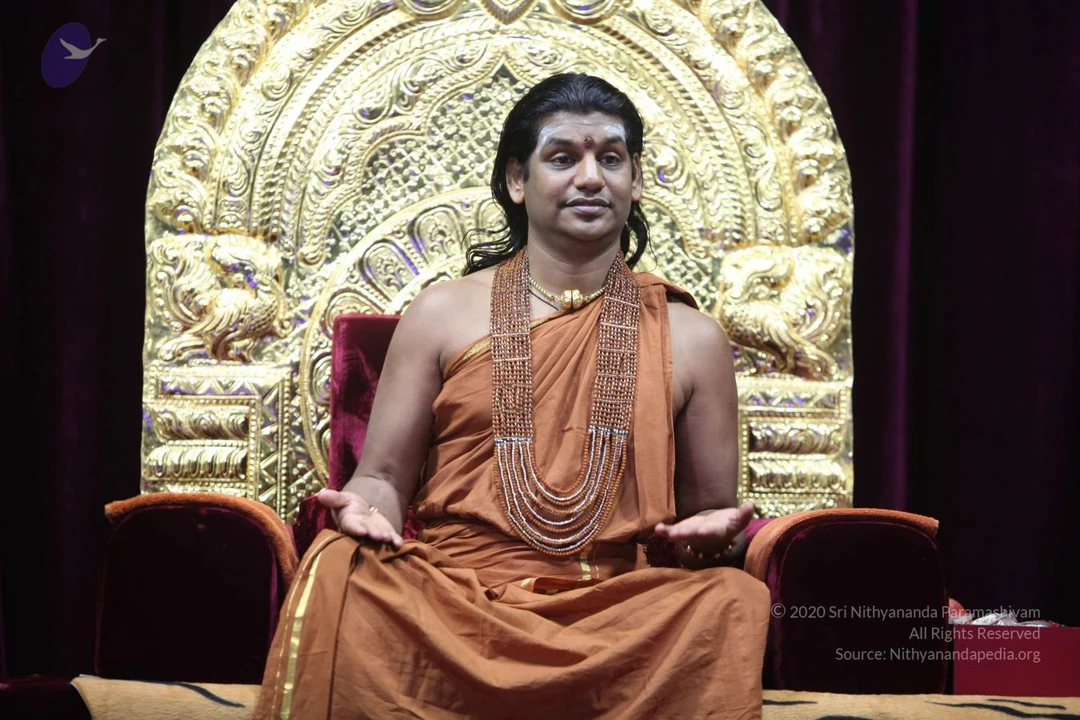
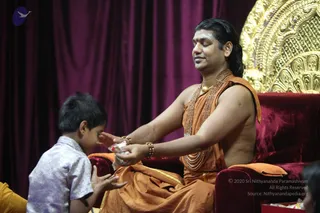
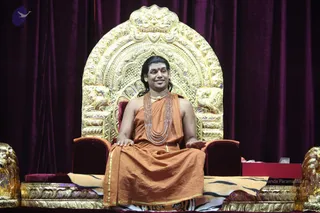
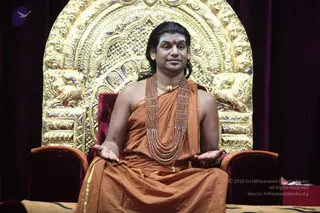
A seated man with a swept-back dark bun, white tilak on his forehead, rudraksha-style beaded necklaces and bracelets, and an orange saffron cloth draped over his shoulder and torso, extends his right hand toward the forehead of a bald older man in a white shirt with an orange shawl. The older man bows his head with his palms raised in devotion. In the blurred background, another person in an orange scarf stands with hands folded. The setting appears to be an indoor satsang.A seated man in saffron-orange robes with long swept-back dark hair, a white forehead mark, and a rudraksha mala with ceremonial beads, extends his right arm toward a devotee's forehead in a blessing gesture. The seated figure rests on a red-cushioned seat. The devotee, a man with short grey hair wearing white kurta and an orange shawl, raises both palms in reception. Other devotees in white and orange stoles stand behind. The seated figure matches the Swamiji (probable) cues of long hair, saffron clothing and rudraksha beads, so the candidate is in_person.A photograph of a man in an orange saffron shawl and rudraksha malas blessing a seated older man with grey hair and a moustache. The blessing man stands in profile at left, bare-shouldered in orange cloth with a gold chain and wooden beads, his right hand pressed to the older man's forehead. The older man, in white clothes with an orange shawl and a wristwatch, raises both hands upward in devotion. Ashram-like background with a window and a red curtain. The image appears to show a blessing or diksha-style gesture rather than a formal puja.A seated man in saffron-orange robes with a rudraksha mala and a gold pendant necklace sits on a red velvet throne before a gold-embossed backdrop and maroon drapes. He has long swept-back hair, eyes closed, and holds small packets in both hands, giving them to a young boy in a light lilac collared shirt who leans in with his hands cupped. The man's appearance with long hair, saffron clothing and layered ceremonial beads matches Swamiji (probable), shown here as the seated giver of offerings to a child.A seated man sits on an ornate gold throne with a carved arched back featuring lion figures, set before dark purple velvet drapes. He wears a saffron-orange robe with gold trim, multiple strands of beaded rudraksha-style necklaces, and a red-brown mark on his forehead, with long dark hair swept back. He rests his hands on the armrests and smiles while looking to the side. A tiger-striped cloth covers the platform beneath him, and a red box sits to the right. a person is seated centrally, identified by saffron robes, long swept-back hair and multi-strand rudraksha malas on a throne.A man with long dark hair sits cross-legged on a maroon velvet seat before an ornate gold-carved arched backrest with lion motifs. He wears an orange-saffron dhoti-style wrap and a long multi-strand rudraksha mala with a central gold ornament, plus a small red bindi on his forehead. His palms are open in a gesturing, teaching posture as he speaks. Red-and-gold drapes frame the stage behind him. Swamiji (probable): long swept-back hair, saffron clothing, rudraksha mala and gold necklace, seated on a throne.