Skip to content
Thursday

28 February 2013

Power of Responsibility

Dated photos
334
Source pages
1
Media
2
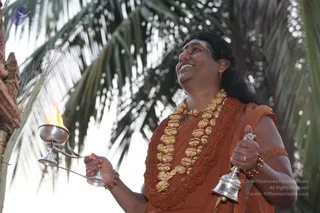
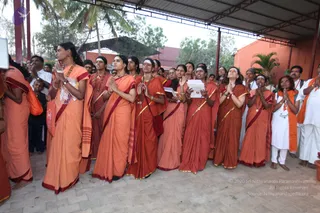
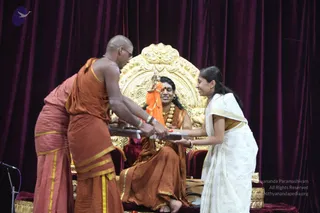
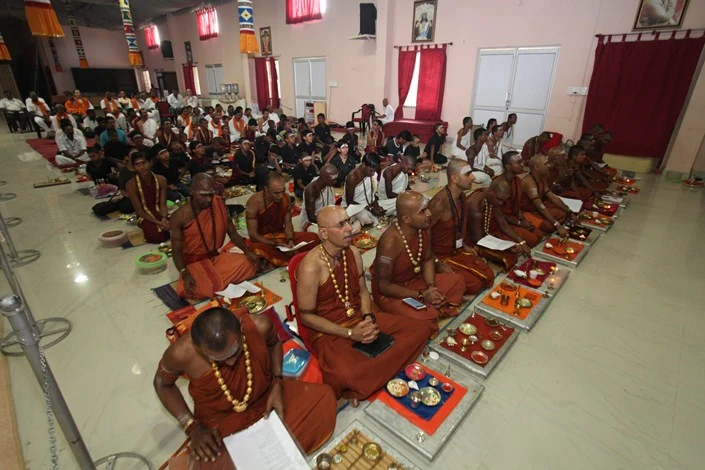
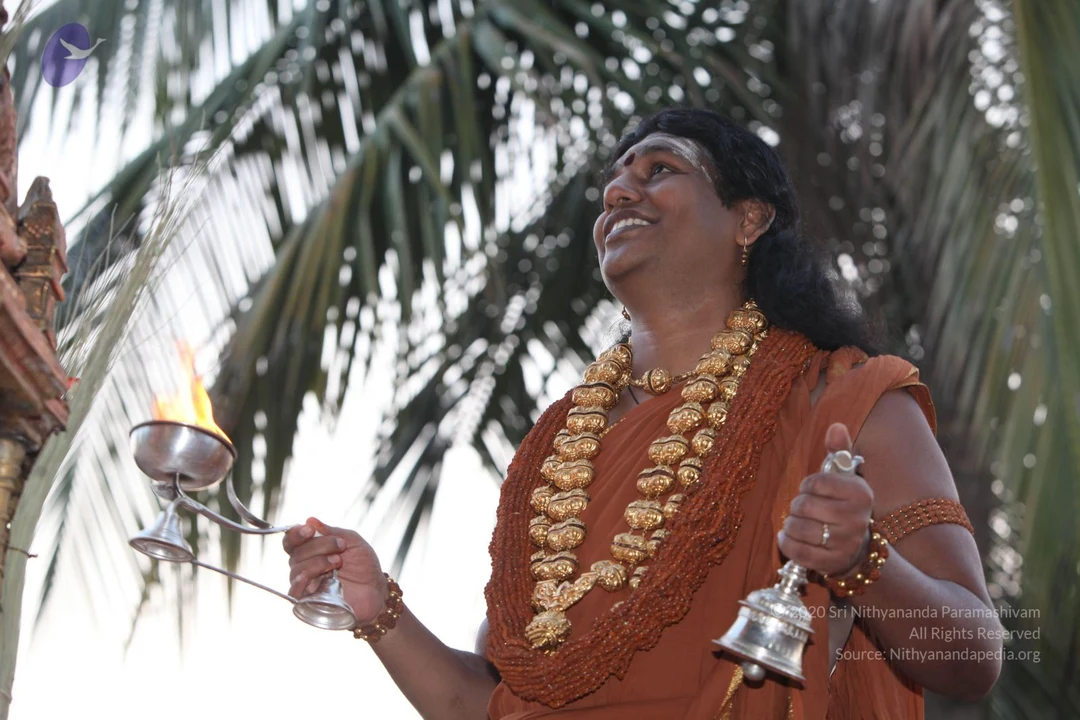
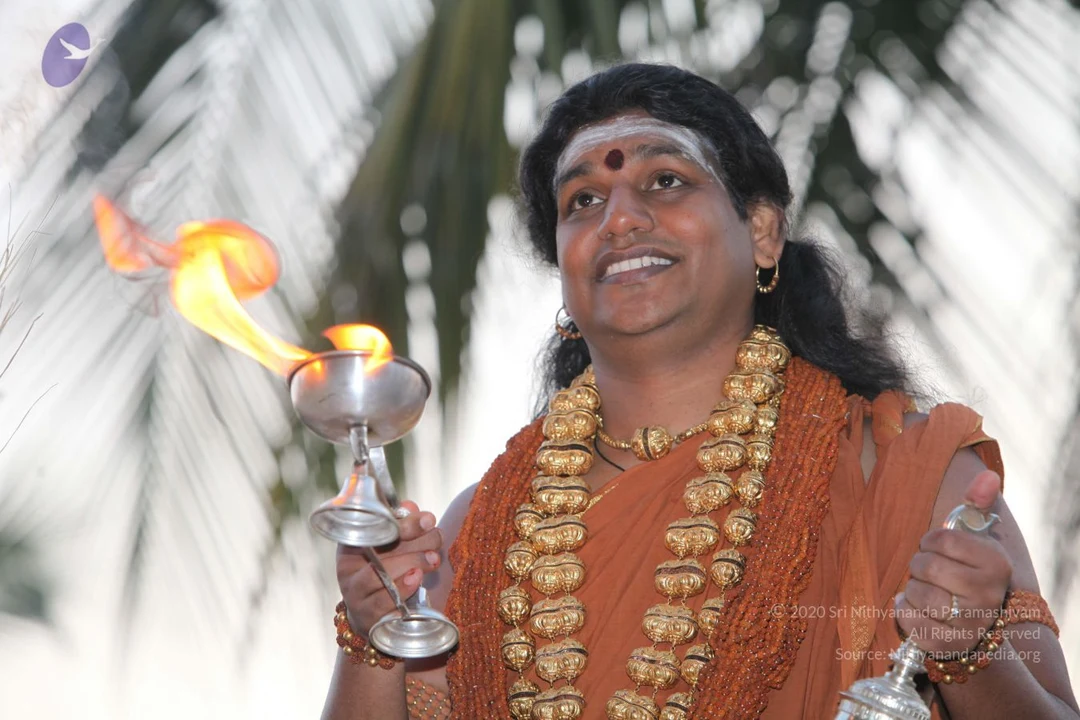
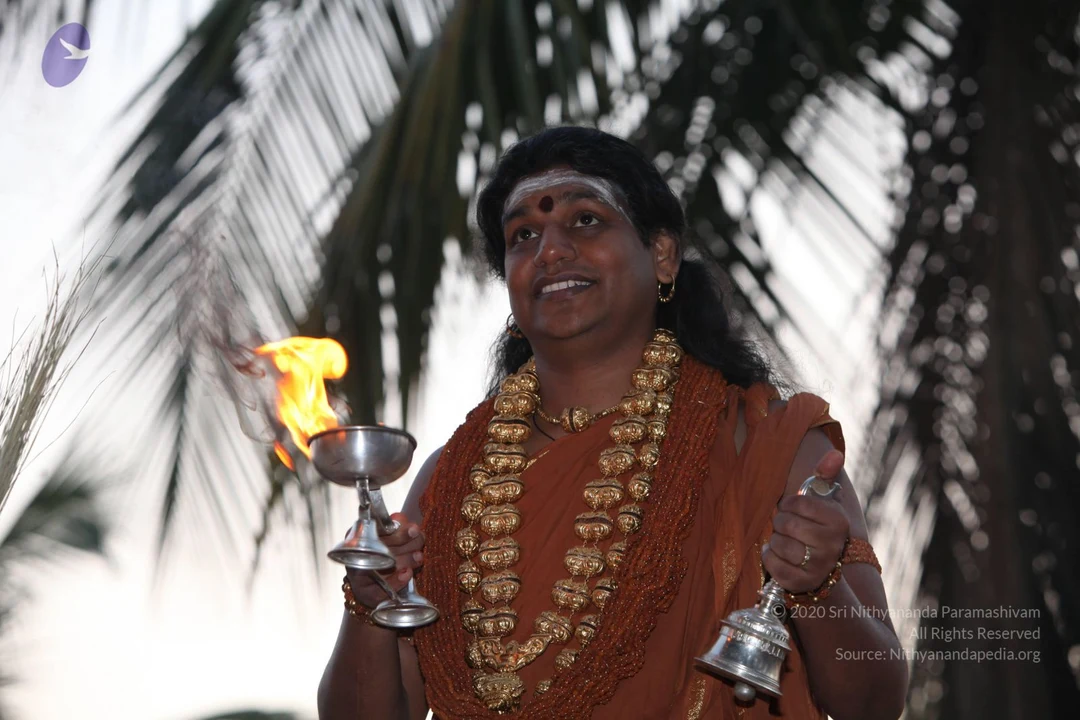
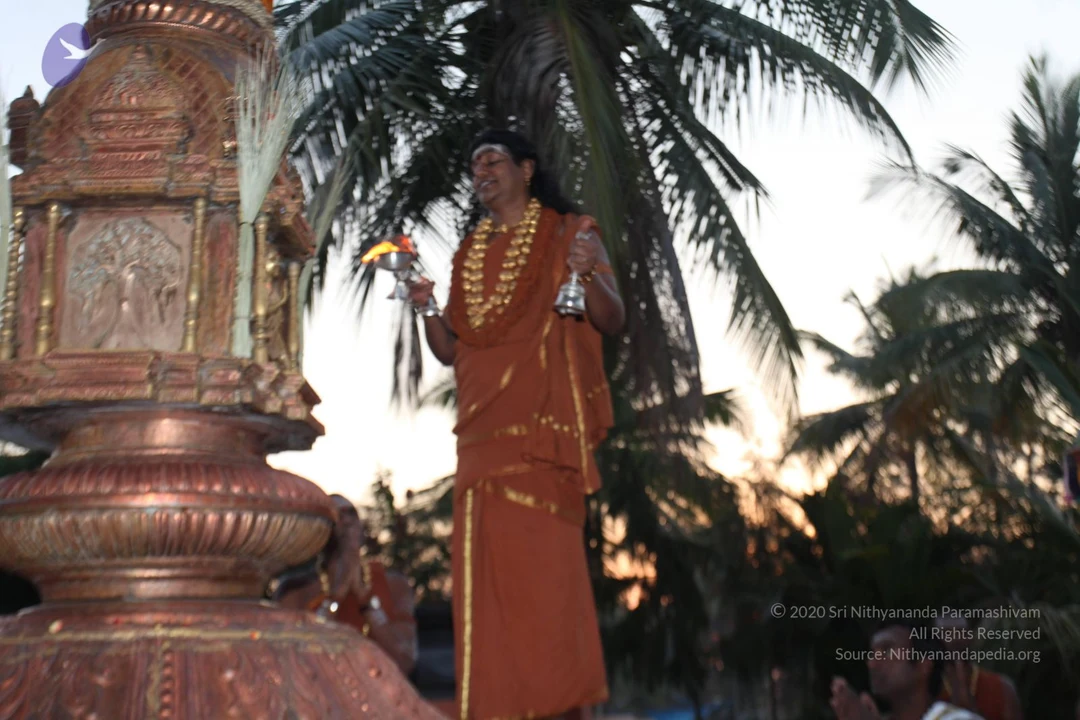
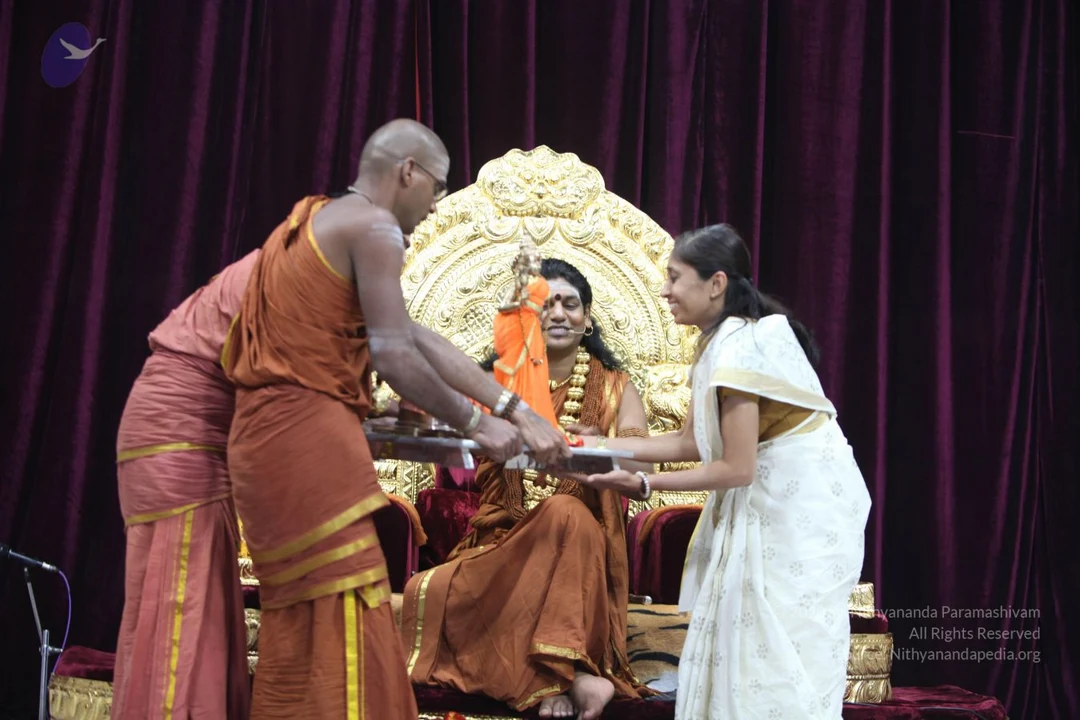
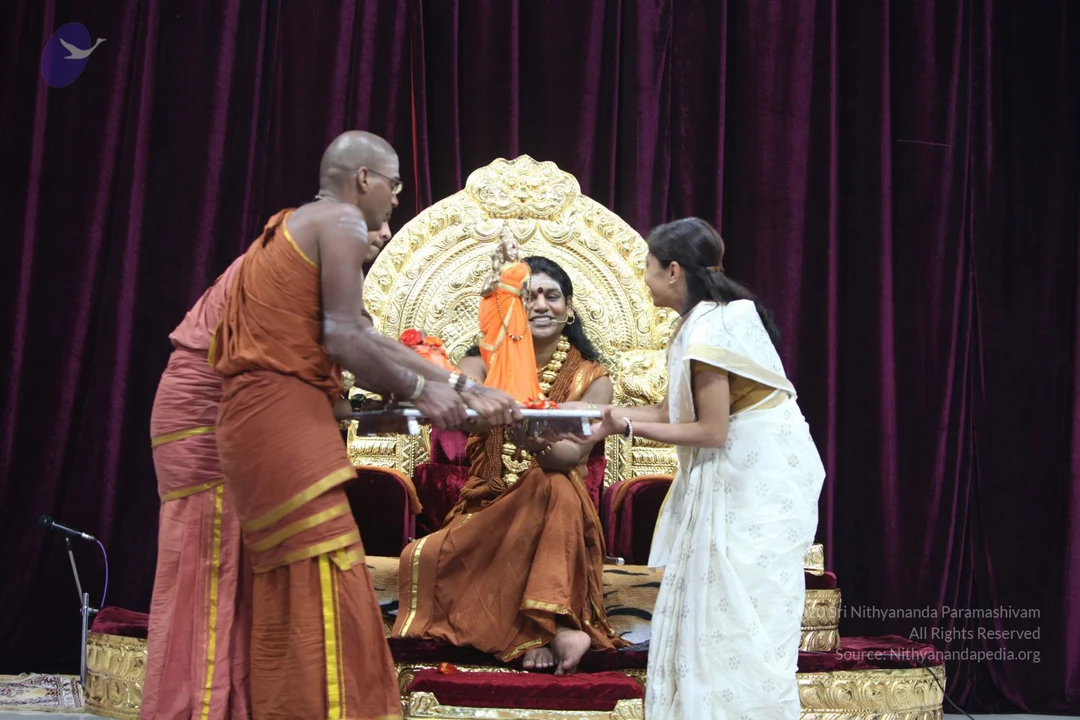
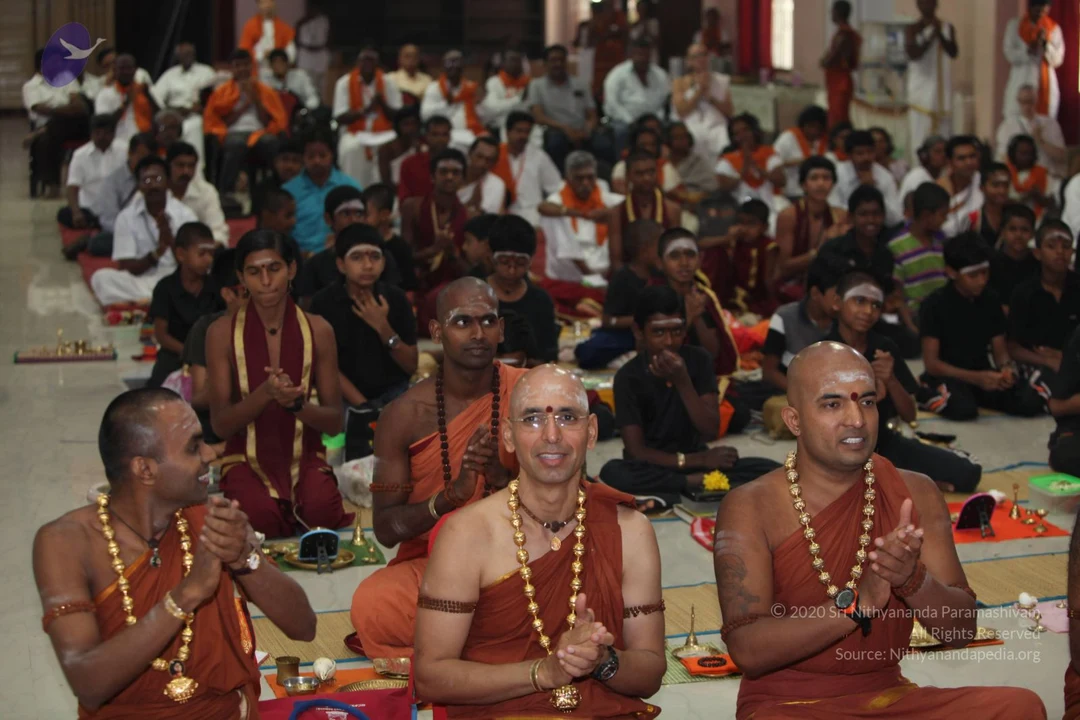
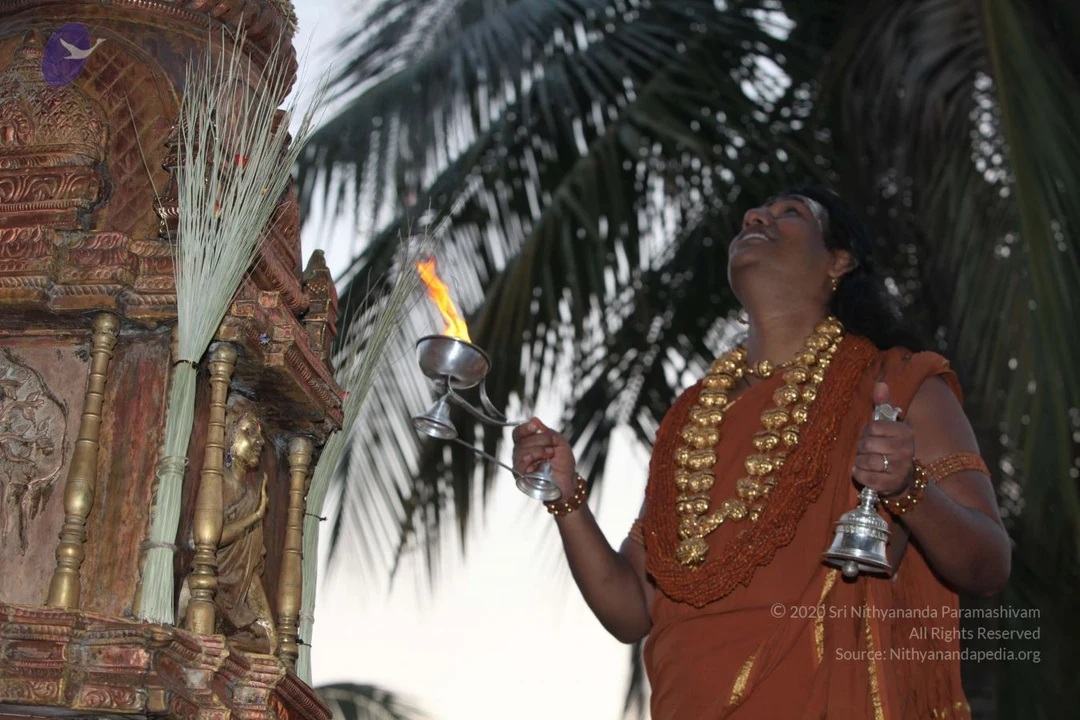
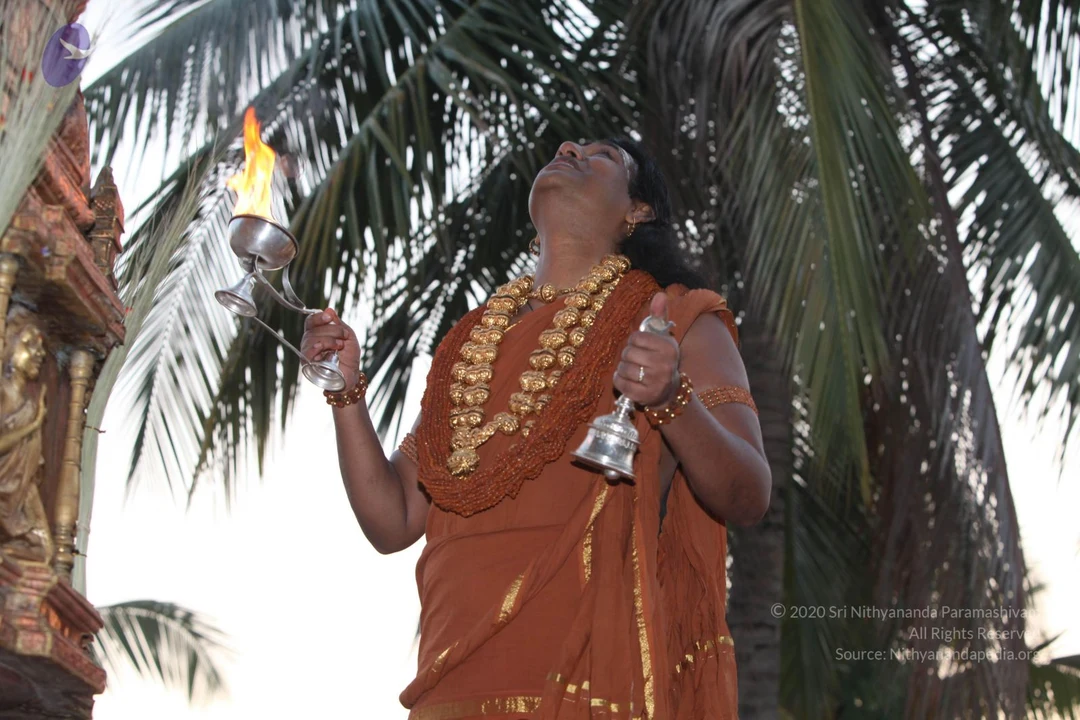
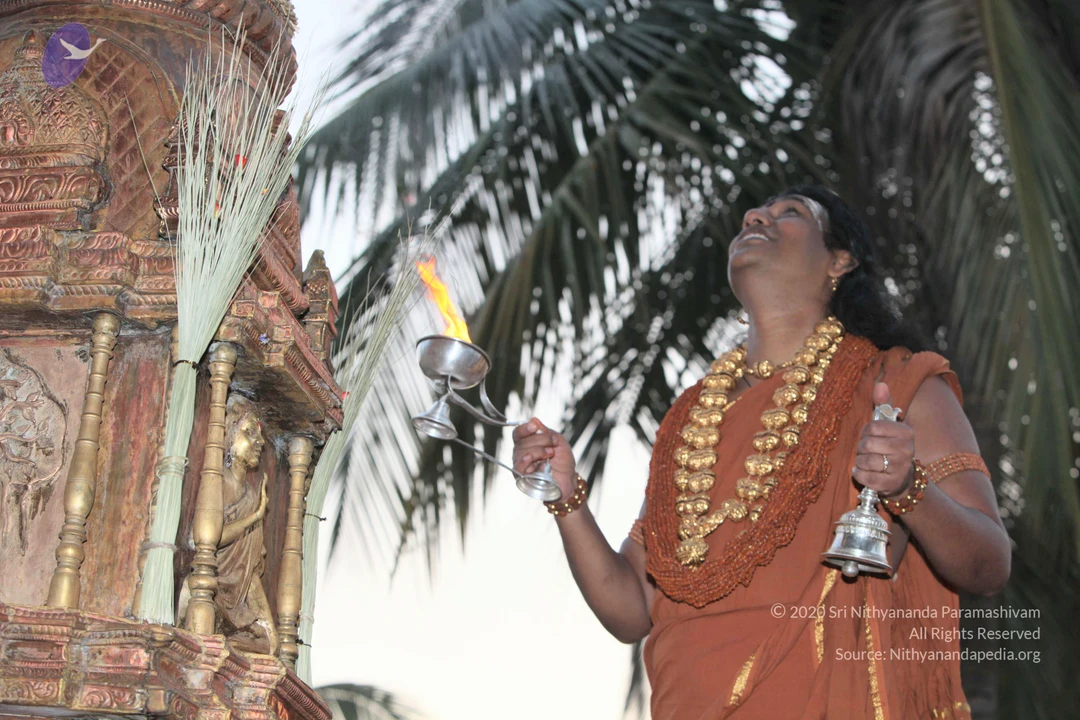
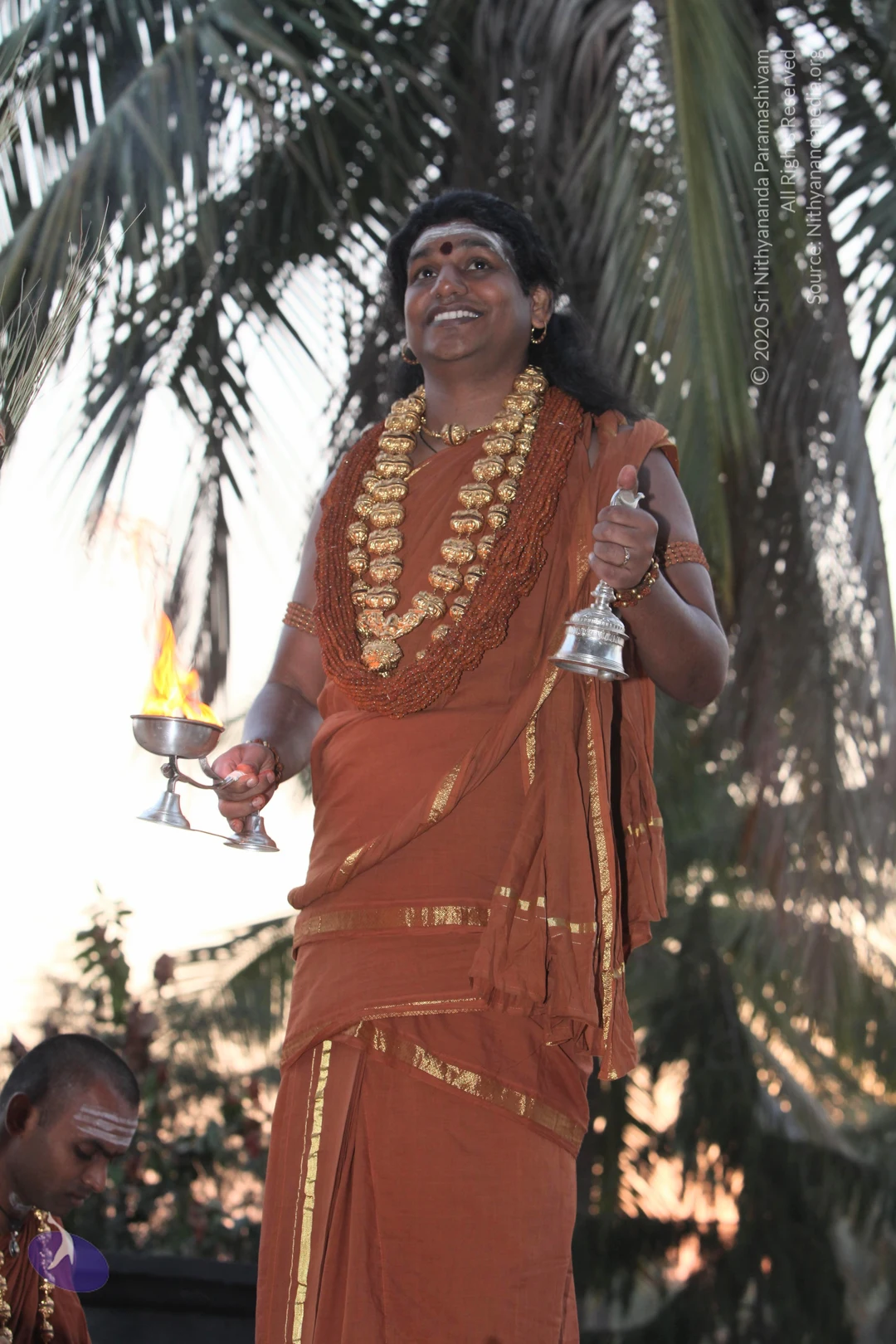
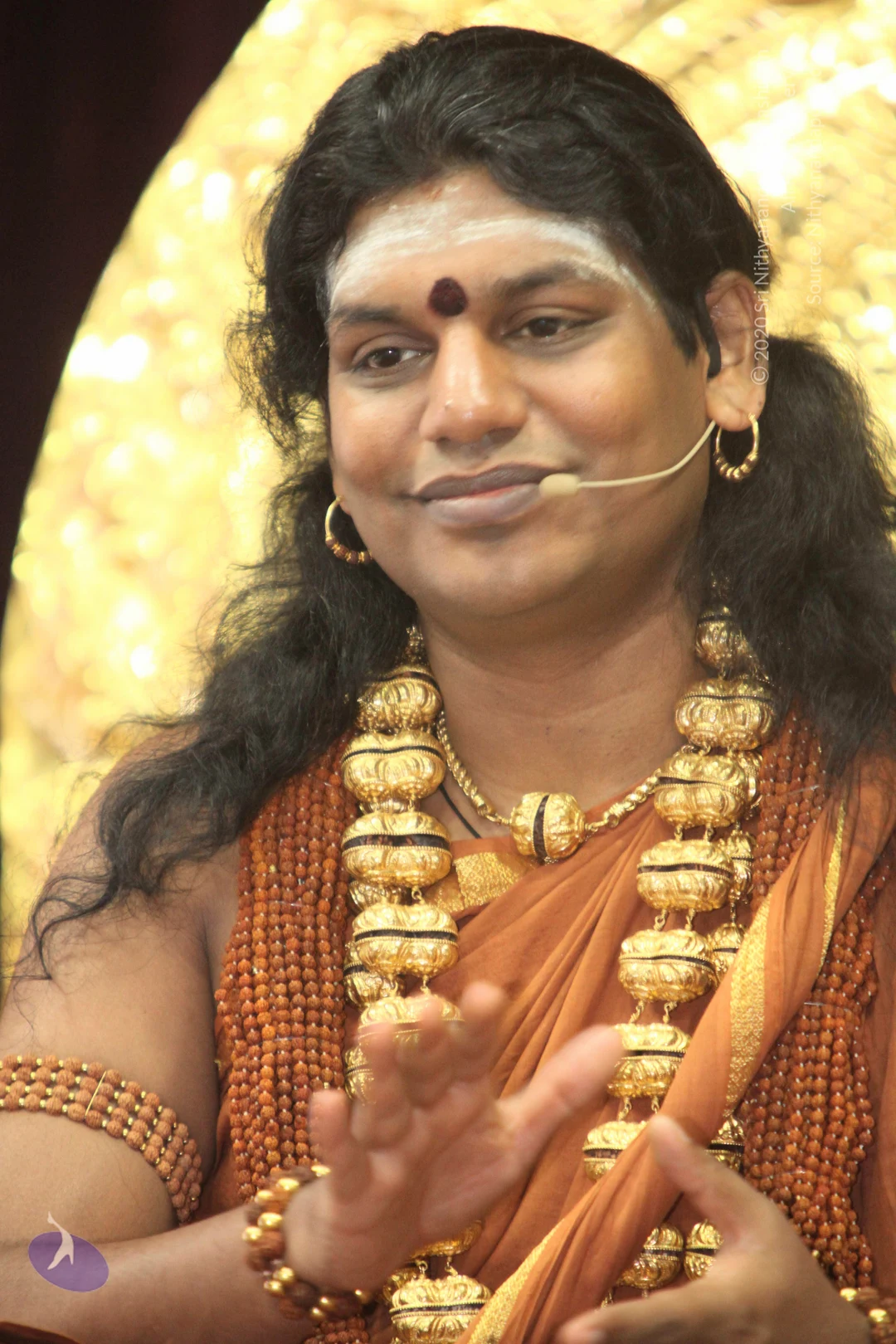
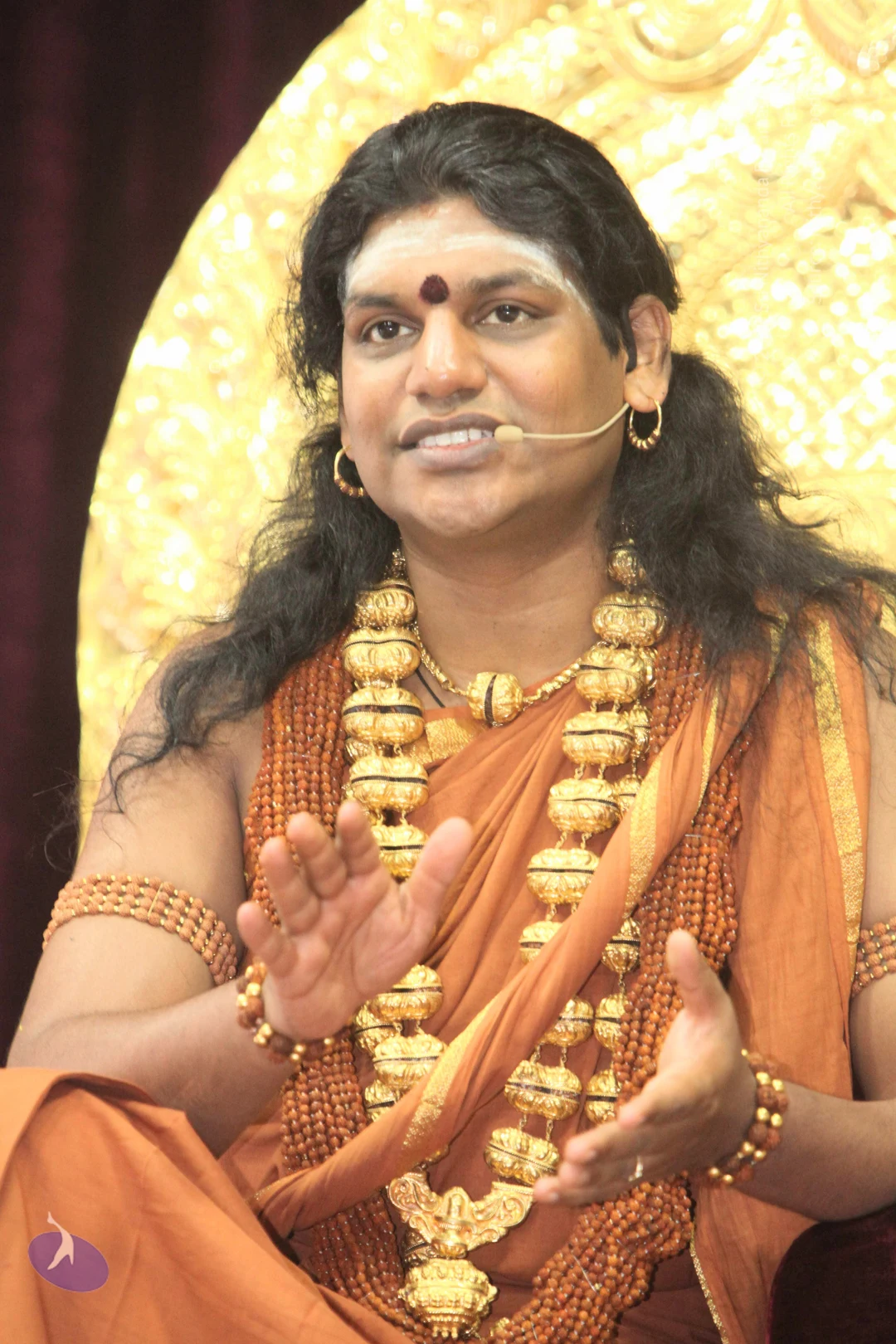
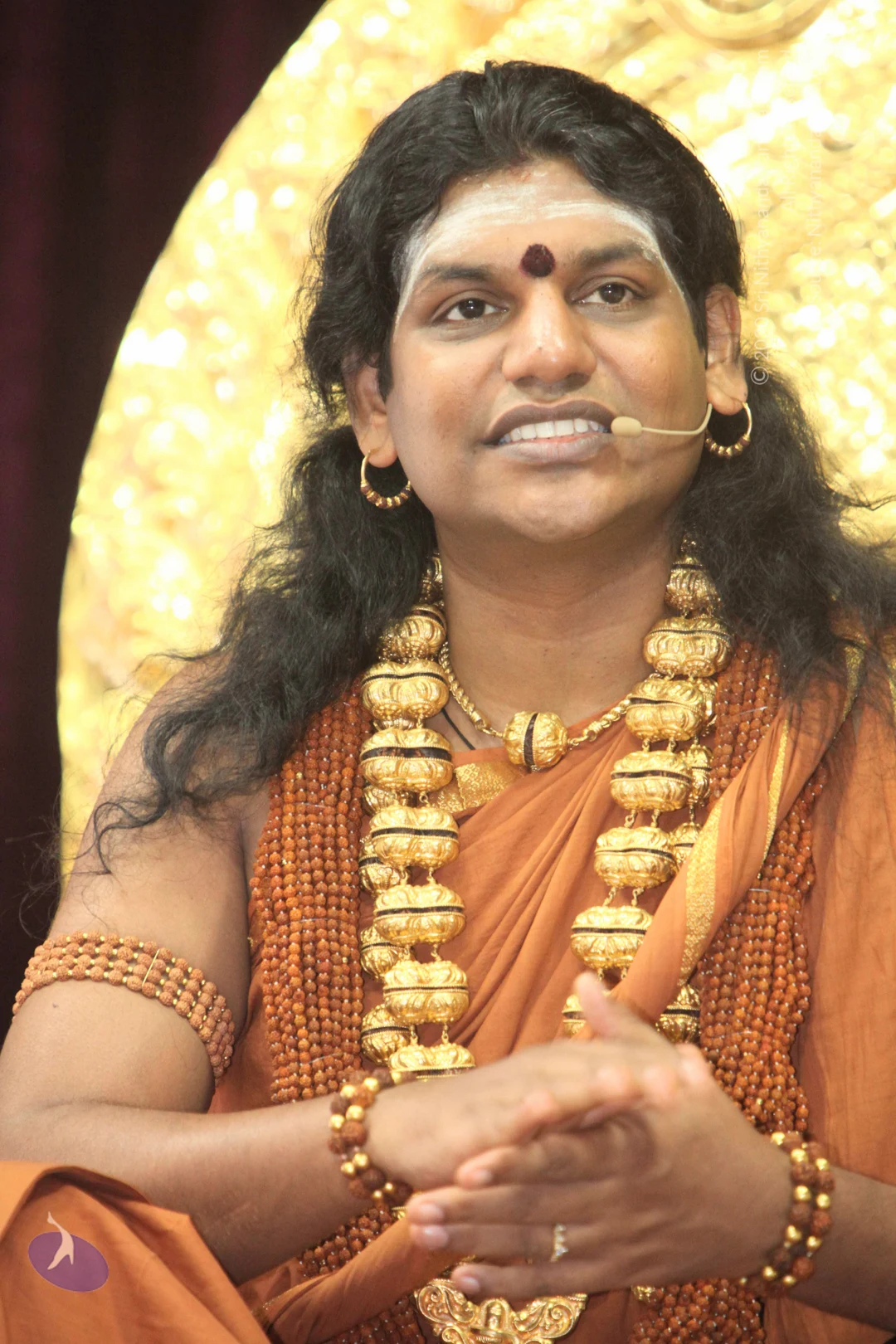
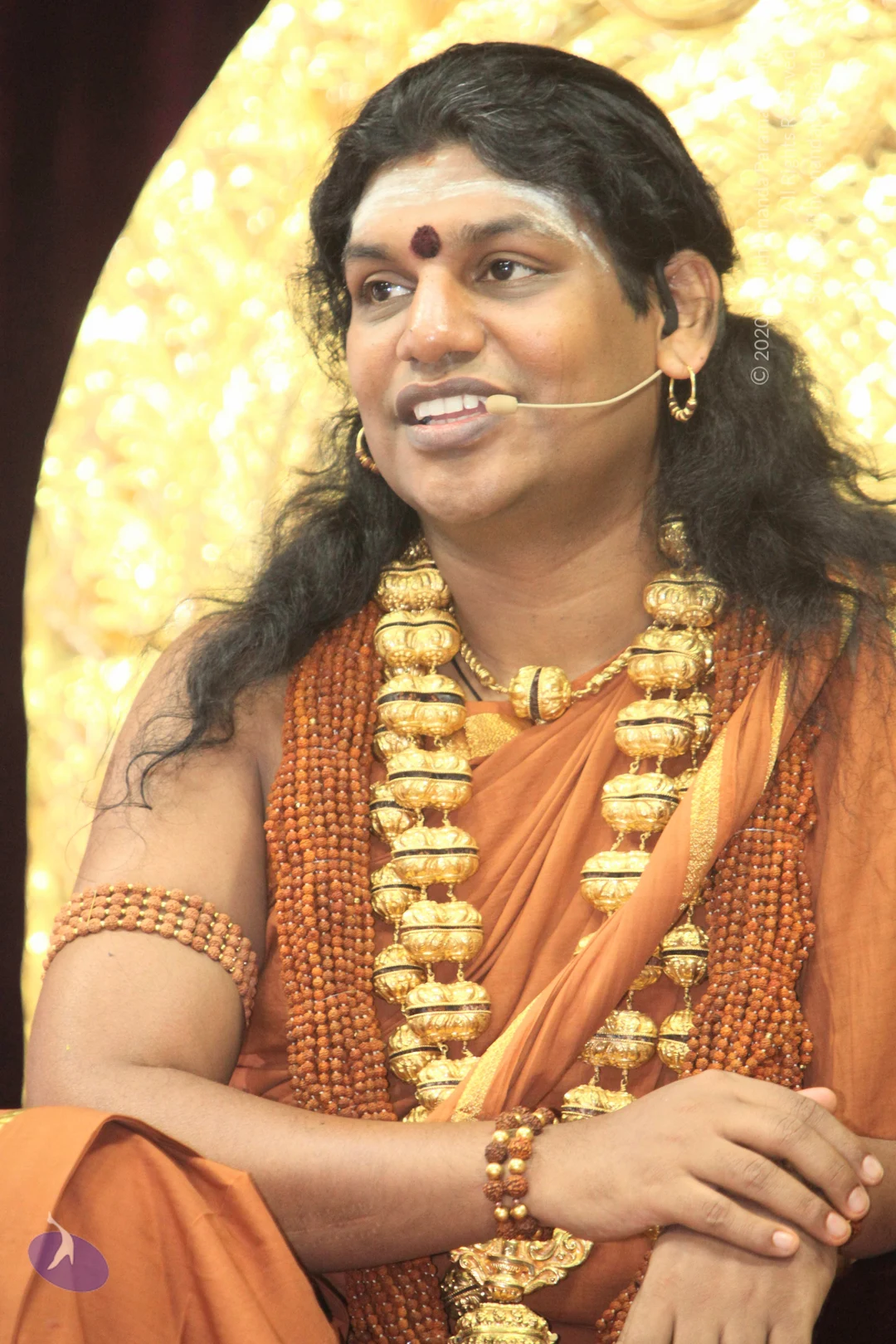
A smiling person in an orange-saffron garment stands outdoors beside a palm tree and a carved temple structure at left. They wear a large gold-toned bead necklace over orange rudraksha-style beads, a bangle and a ring. In the left hand they hold a silver oil lamp with a lit flame, and in the right a silver handbell. Their hair is long and dark, with a light forehead marking and a red bindi. The setting is open-air with palm fronds behind.A photograph of a row of women in orange and deep red saris with dark red borders, standing with palms pressed together in namaskar at a covered open-air courtyard with brick paving. Several women wear rudraksha-style beaded necklaces and bindis, and one holds a white booklet or paper. Behind them stand a few men in white and orange shawls, and a corrugated metal roof, palm trees and an orange brick wall are visible. Some women have eyes closed in devotion. No clearly identifiable a person figure is visible in the frame.A photograph taken on a stage before a deep maroon velvet curtain. Two attendants stand at left in saffron and rust-coloured dhotis, one bald and bare-chested with a shawl, the other with a saffron wrap, both leaning forward to present a silver tray. A young woman in a white sari with a gold border, smiling, reaches out to receive the tray at right. A small microphone stand is at the left edge.

February 28 2013

Original wiki page
Contents

Title

Power of Responsibility

Link to Video:

VideoAudio

Transcript:

(00:00:22)

…………………………sambandha madhyamām Asmadācharya paryanthām vande guru paramparām.

(00:00:59)

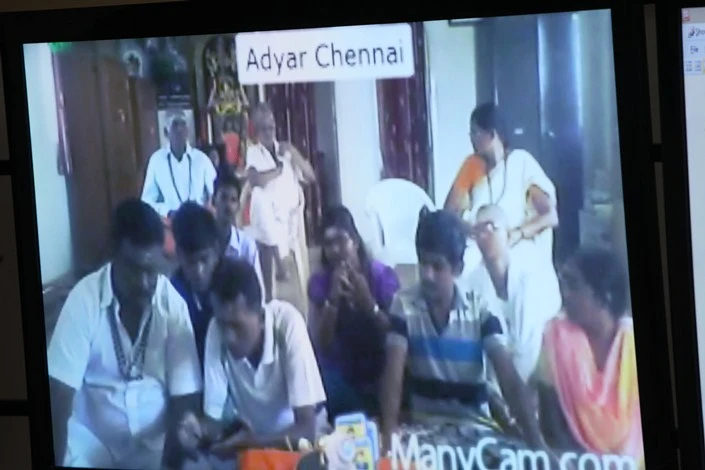
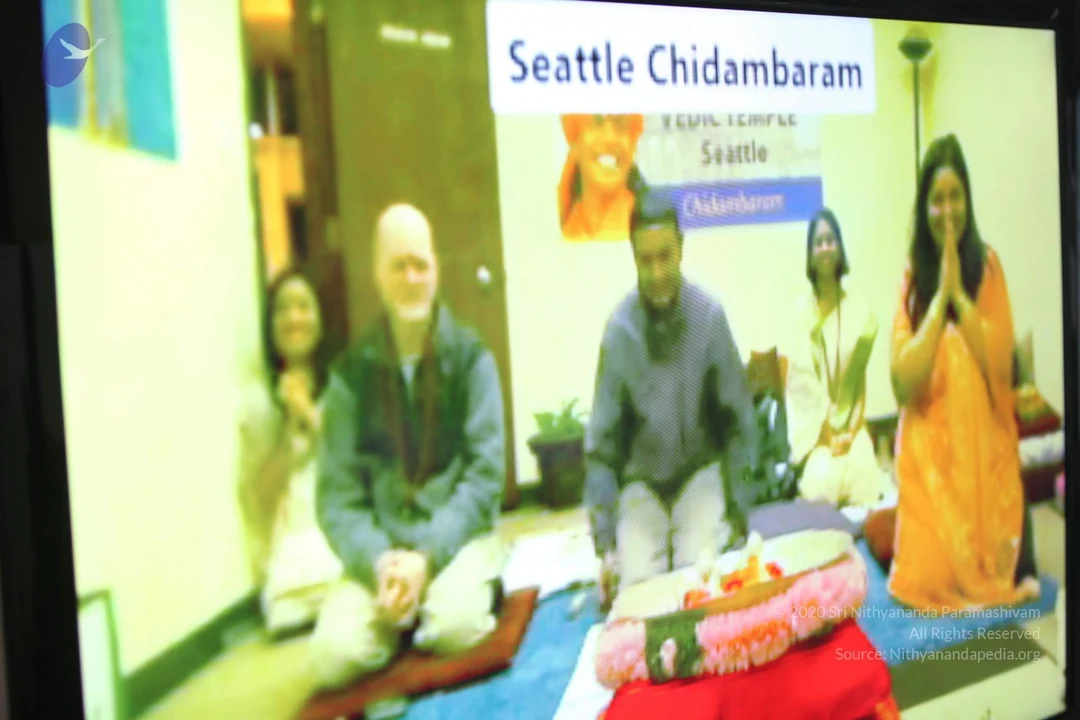
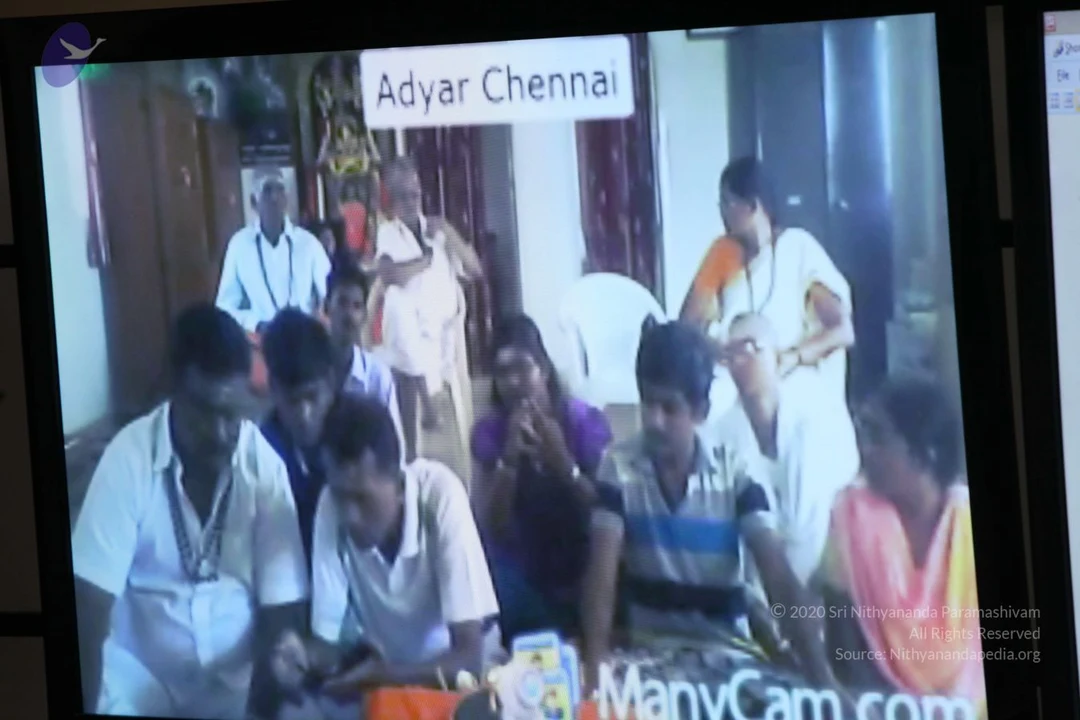
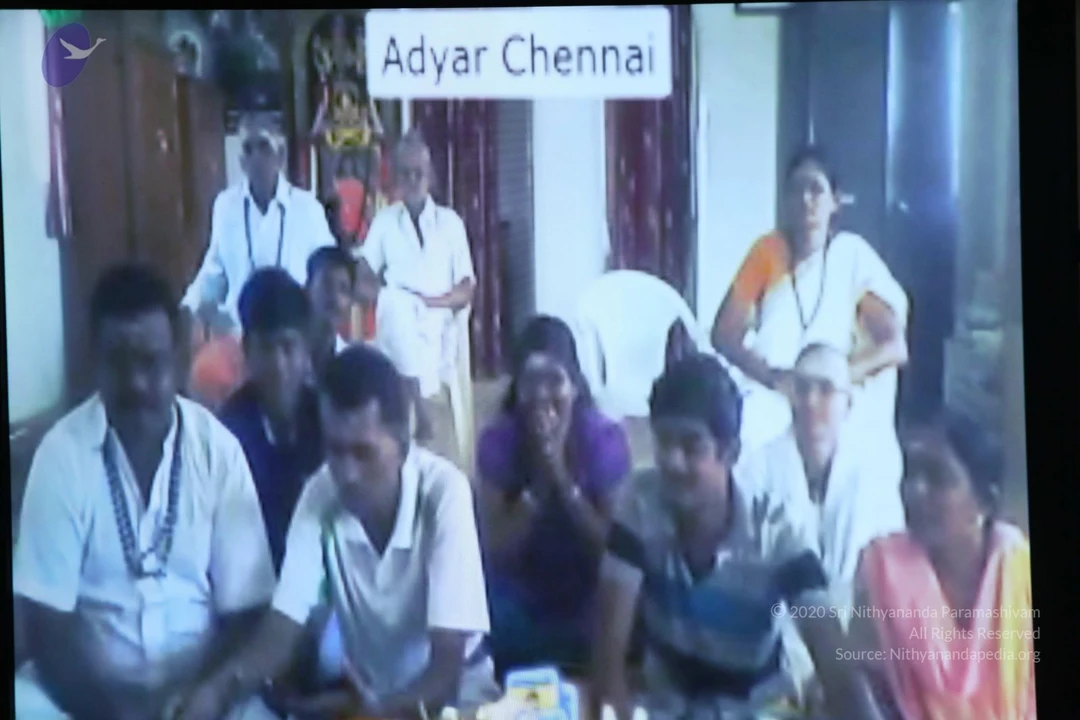
I welcome you all with My love and respects. I welcome all the devotees, disciples, Samajis, Satsangis sitting with us around the world at this moment in 482 places through Nithyananda TV, 31 places two-way video conferencing having Nayana Deeksha, 36 places two-way video conferencing having Nayana Deeksha, in 241 cities and 24 countries around the world as per the statistics. Cities sitting with us in two-way video conferencing having Nayana Deeksha are San Jose-Madurai, Alwarpet-Chennai, Malaysia-Pazhani, Toronto-Kailasam, Oklahoma-Somanatham, Madrid-Spain, Guadeloupe-Rameshvaram, Seattle-Chidambaram, Ohio-Prayag, Sharjah, Tiruvannamalai, Los Angeles-Arunachalam, Adyar-Chennai, Hyderabad- Bahyanagaram, Bengaluru-Nithyananda Vidyalaya, Black Diamond-Canada, Hollywood-Los Angeles, Oman-Sivagangai, Priyankananda-Malaysia, Hong Kong-Seerkazhi, Hyderabad Sri, East London-UK, Dubai-Thirukovilur, Bengaluru-Nithyananda Vidyalaya and New York-Varanasi, Vancouver-Puri, Singapore-Singapuram, Charlotte-Srisailam, Devon-UK, Austin, Vancouver-Puri, Bangalore- Marathahalli, Bangalore-North, Paris-France, Dakota-Dunes, Chicago-Srirangam and Port Washington-New York..that's it.

(00:03:12)

I welcome all of you with My love and blessings. I request all the two-way video conferencing cities please put the name in your camera in your screen webcam itself, how to do it you would have received a email. Still there are some cities not done. Black diamond Canada you have not done. Toronto-Kailasam, they have not done properly. Ma, Toronto-Kailasam also did not do properly. And Sharjah you have not done. Guadeloupe-Rameswaram has not done, Madrid-Spain has not done. Dubai-Tirukovilur you did not do. And Chicago-Srirangam has not done. Austin has not done. Devon-UK has not done. Charlotte-Srisailam has not done. New York-Varanasi has not done. Dakota Dunes not done. Port Washington has not done. Hyderabad Sri has not done.

(00:04:18)

Tomorrow I will not read out your names if you have not done. Understand. And I also wanted to change some of the names, spiritual names and names of the cities. Thiruvannamalai will be called as Nithyananda Nagar Thiruvannamalai. And Hyderabad BahyaNagaram will be called as Nithyananda Nagar-Hyderabad. Some more city names I will be changing after they do the collective responsibility meeting. Jyothi Asnani, Dubai I accepted your Pada Puja. I will talk to you during the Dial the Avatar and bless you.

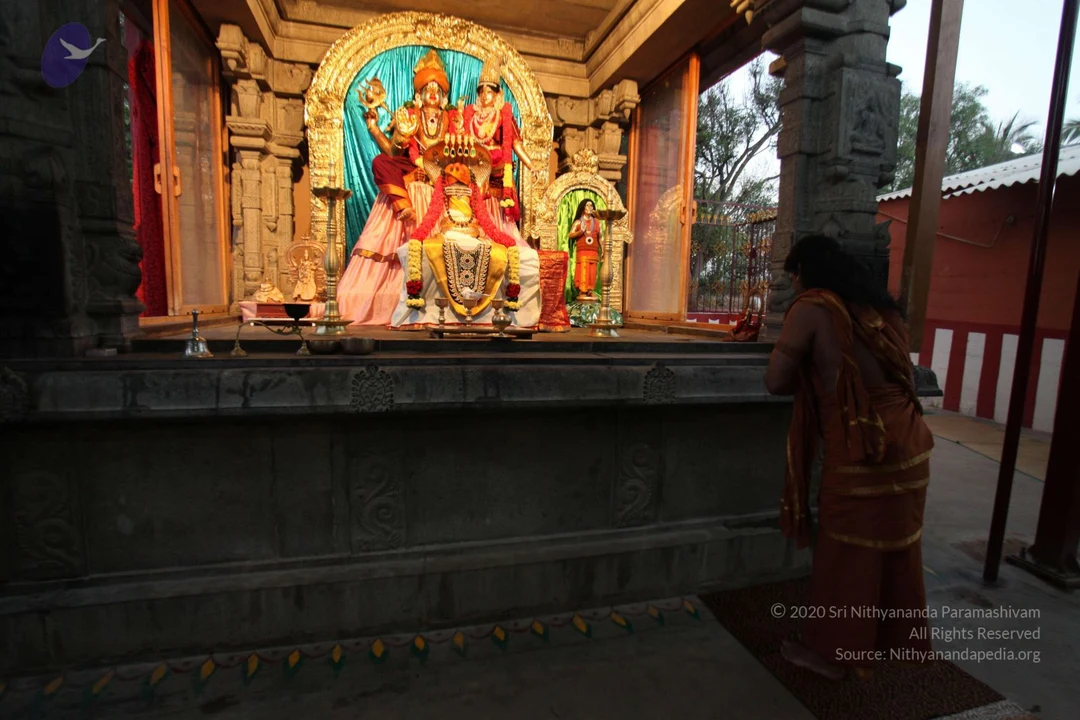
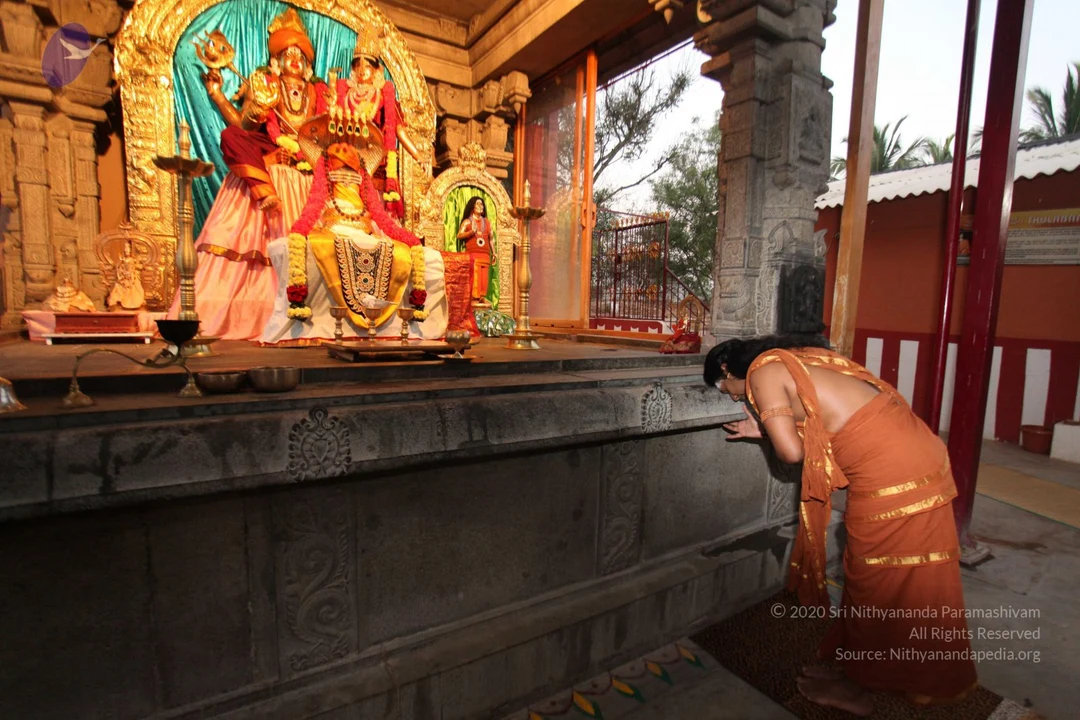
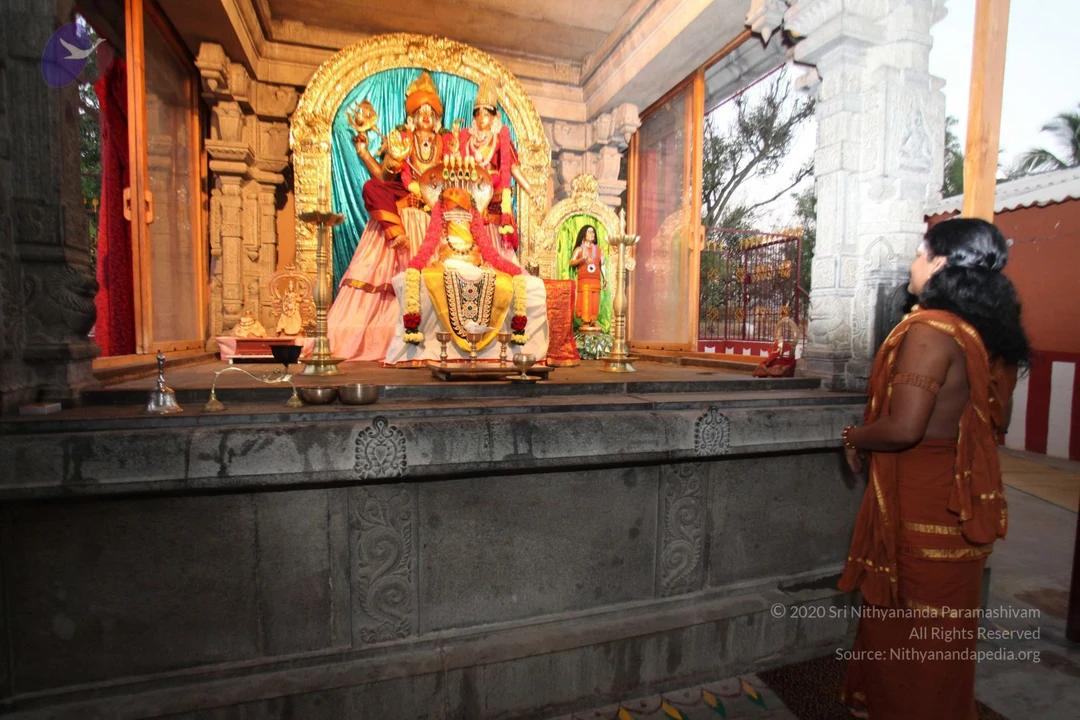
And today fourth batch THE Samyama twelfth day, fifteenth Inner Awakening, twelfth eN-genius twelfth day. Wow! Tiruvannamalai has changed immediately; Nithyananda Nagar-Tiruvannamalai. Great. And today an important happening, we are accepting Charlotte Srisailam as a temple officially by giving Meru and Ambal. Ma Chirantana.

Go Brahmanebhya subhamastu nityam Lokas samasto sukhino bhavantu Kale varshatu parjanya, Prithivi sasya shalini Deshoyam kshobharahitaha Brhamana santu nirbhayaha

Blessings. Charlotte will have a huge temple and our University. Temple and University. Blessings! Charlotte, Blessings! Blessings! Great.

(00:08:53)

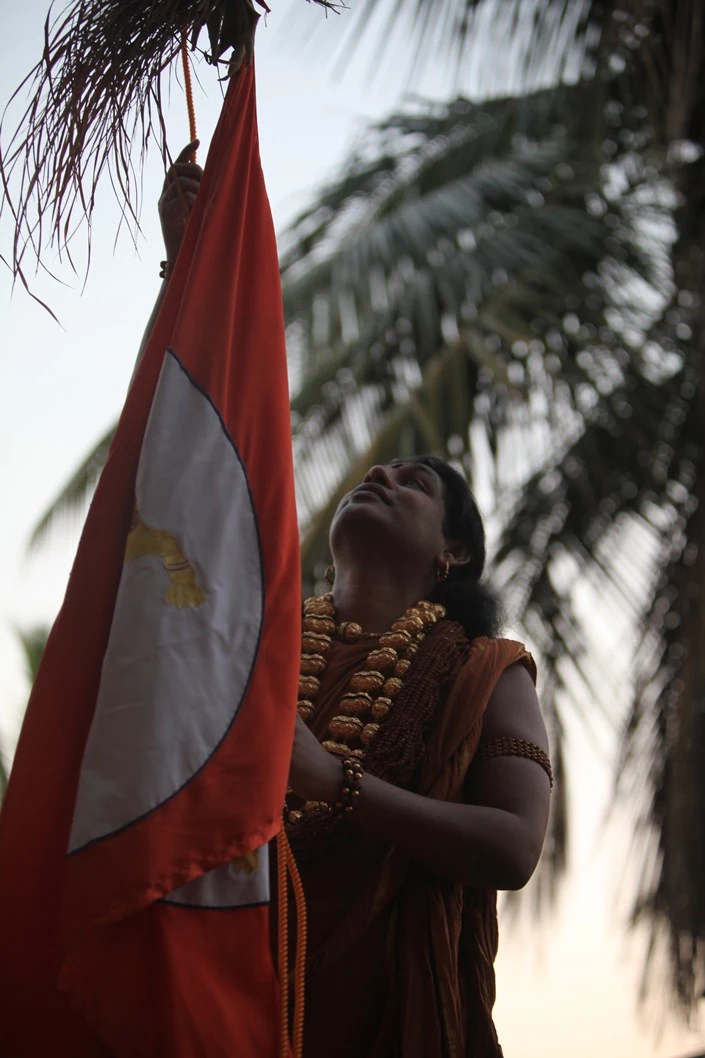
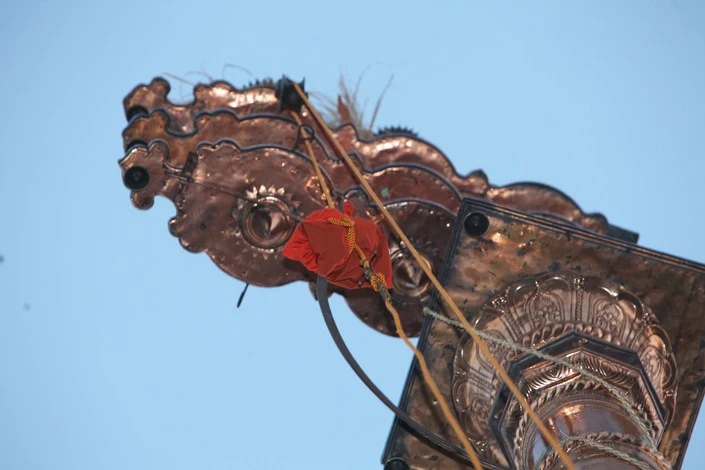
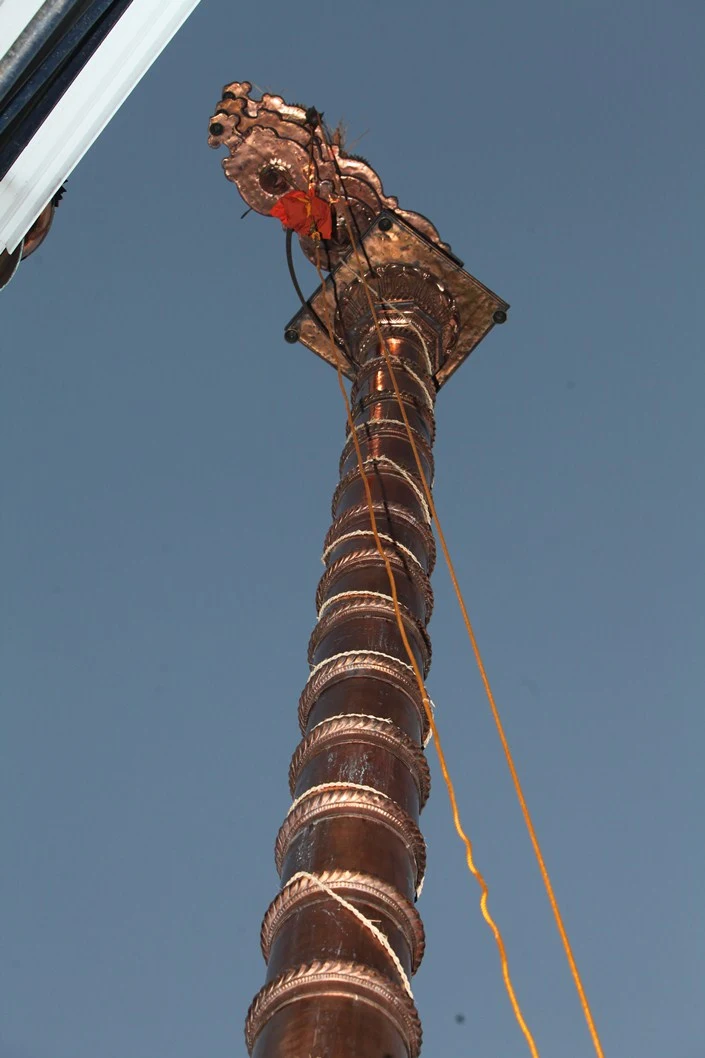
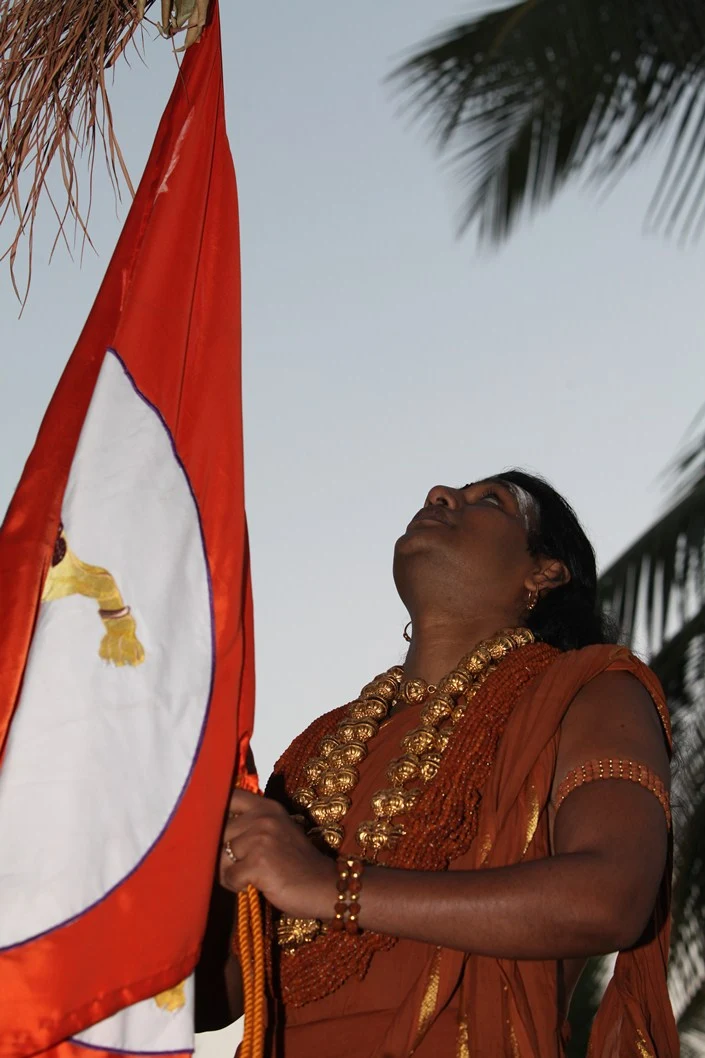
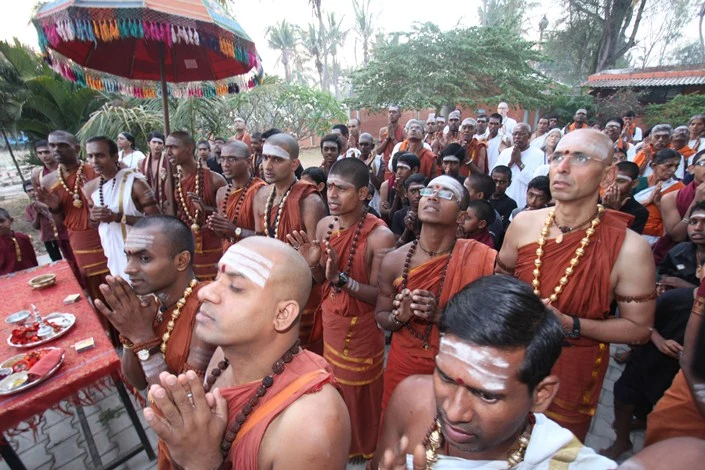
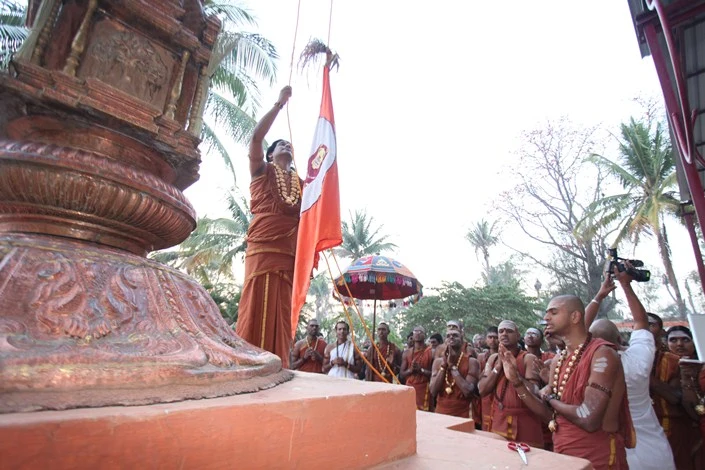
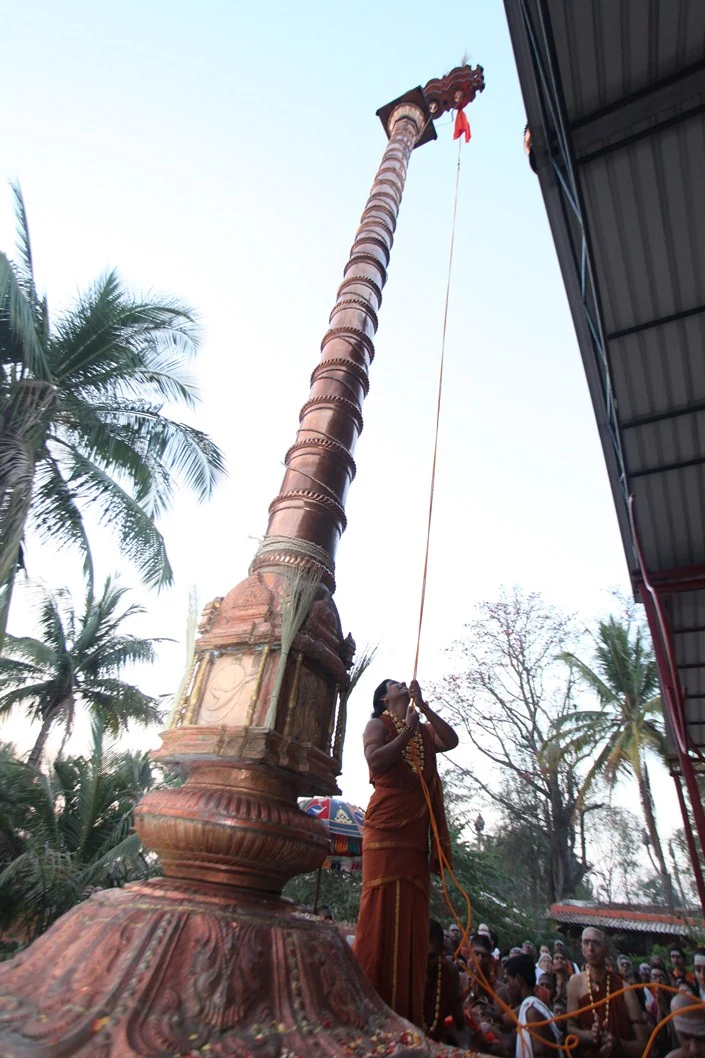
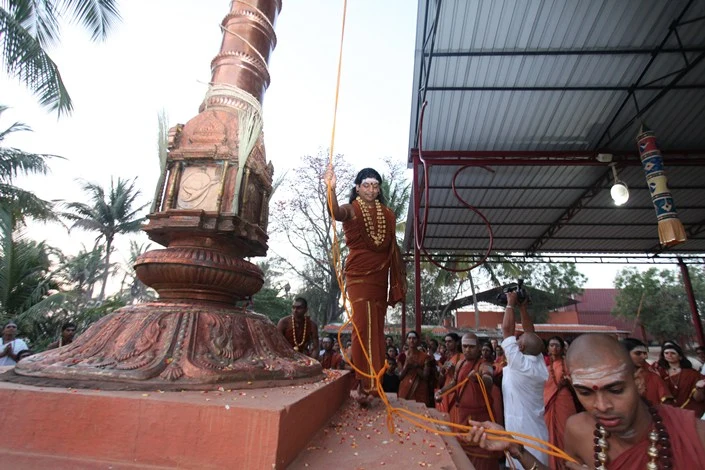
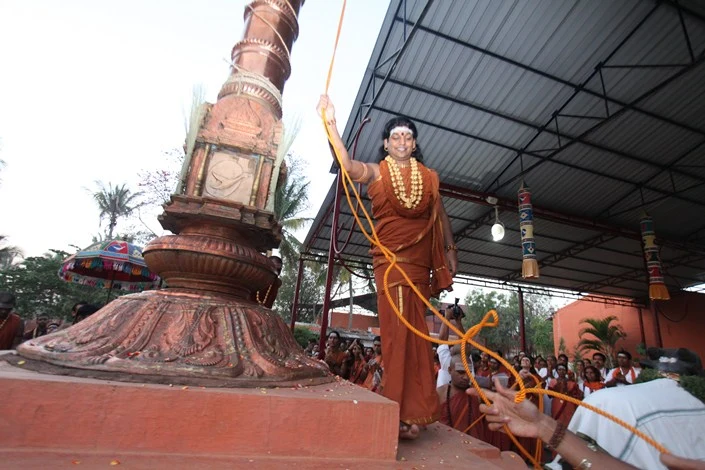
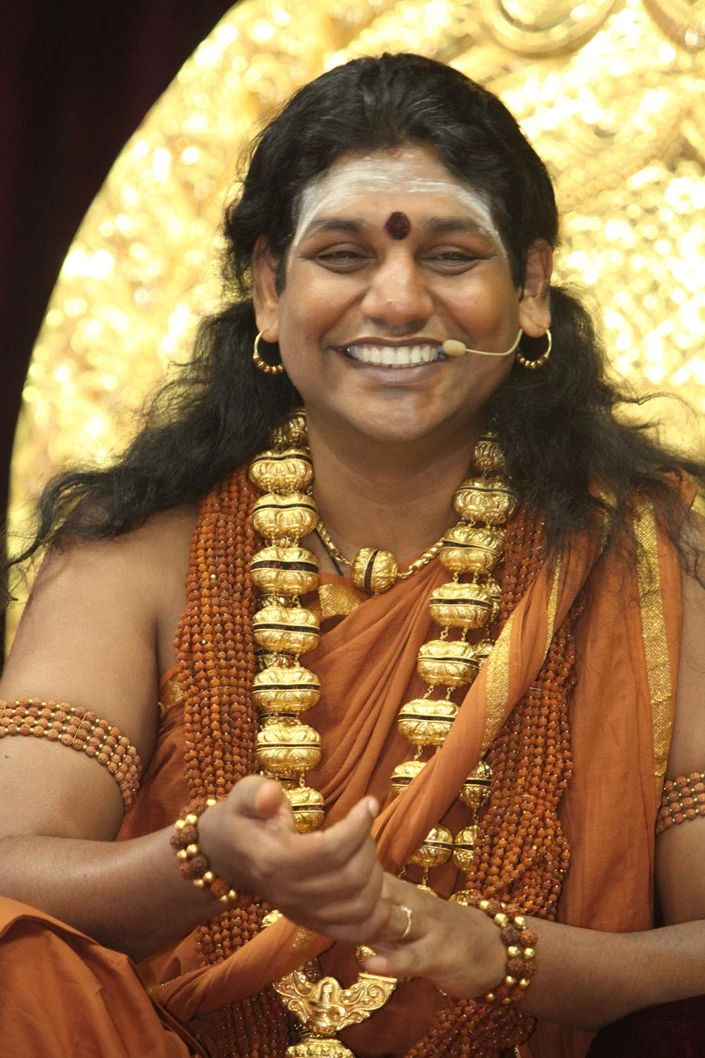
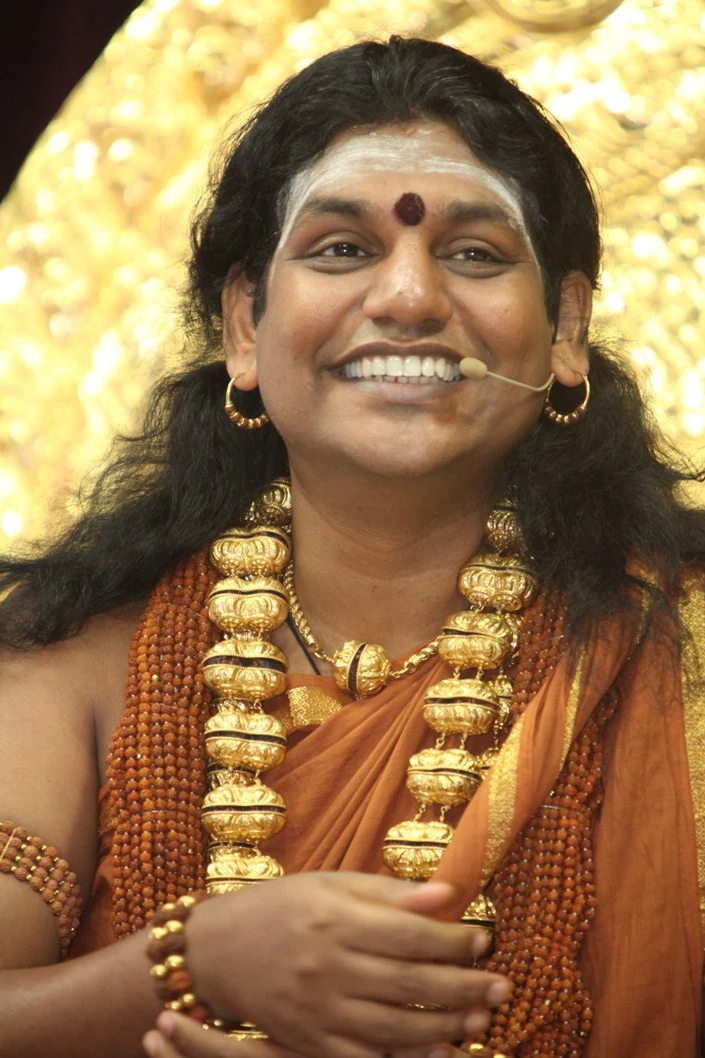
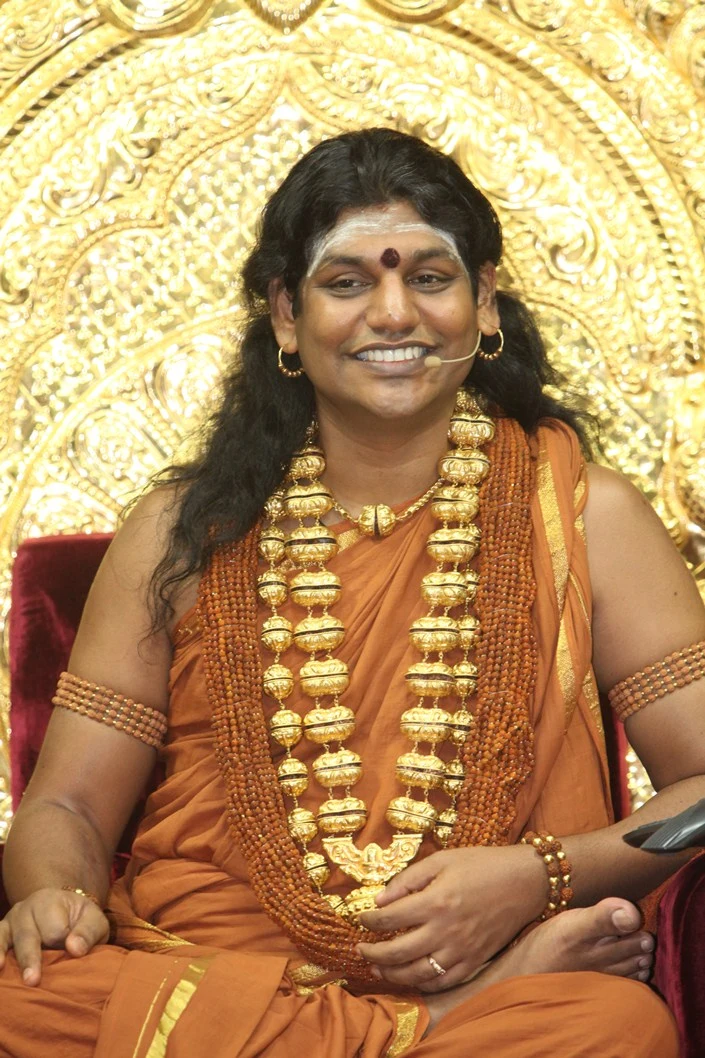
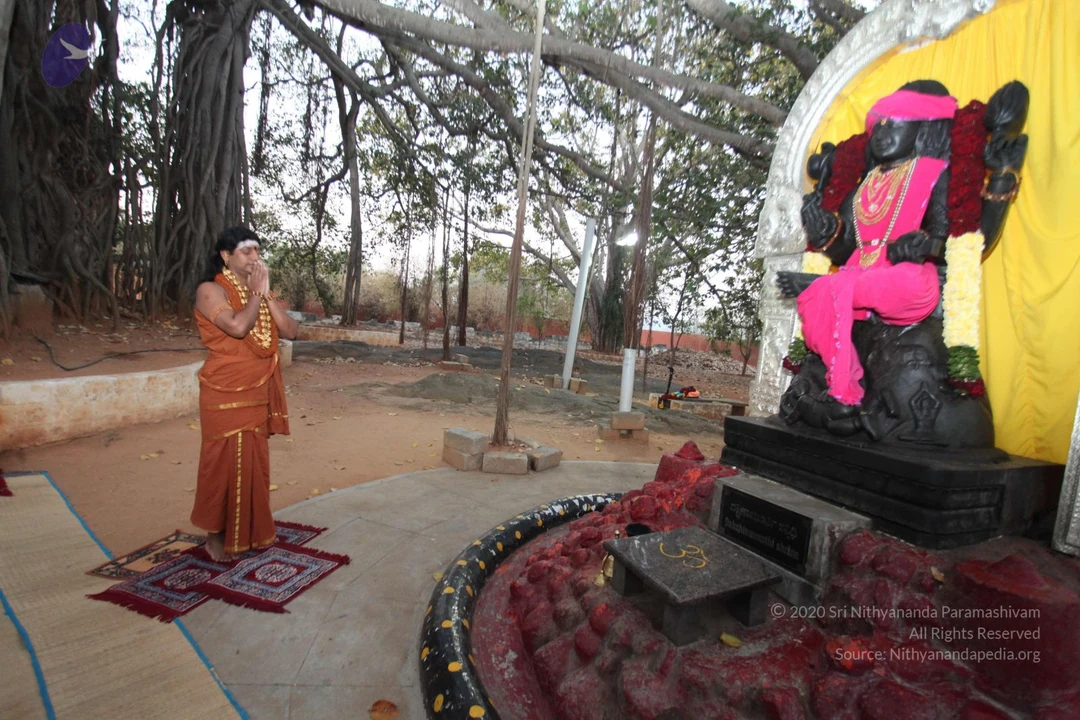
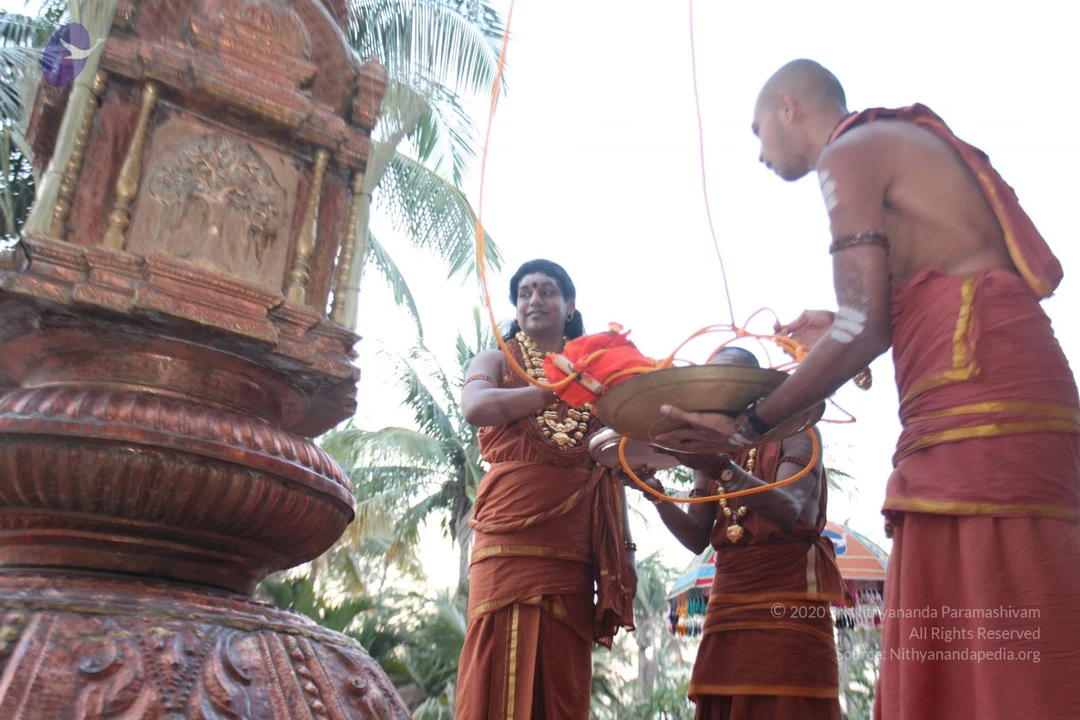
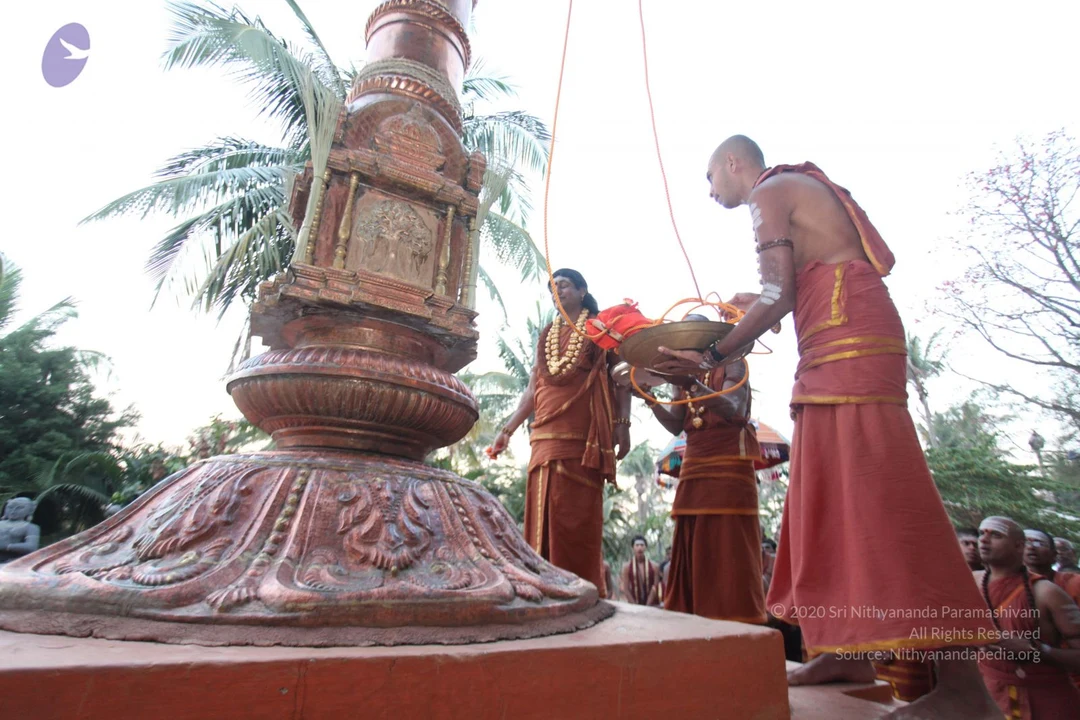
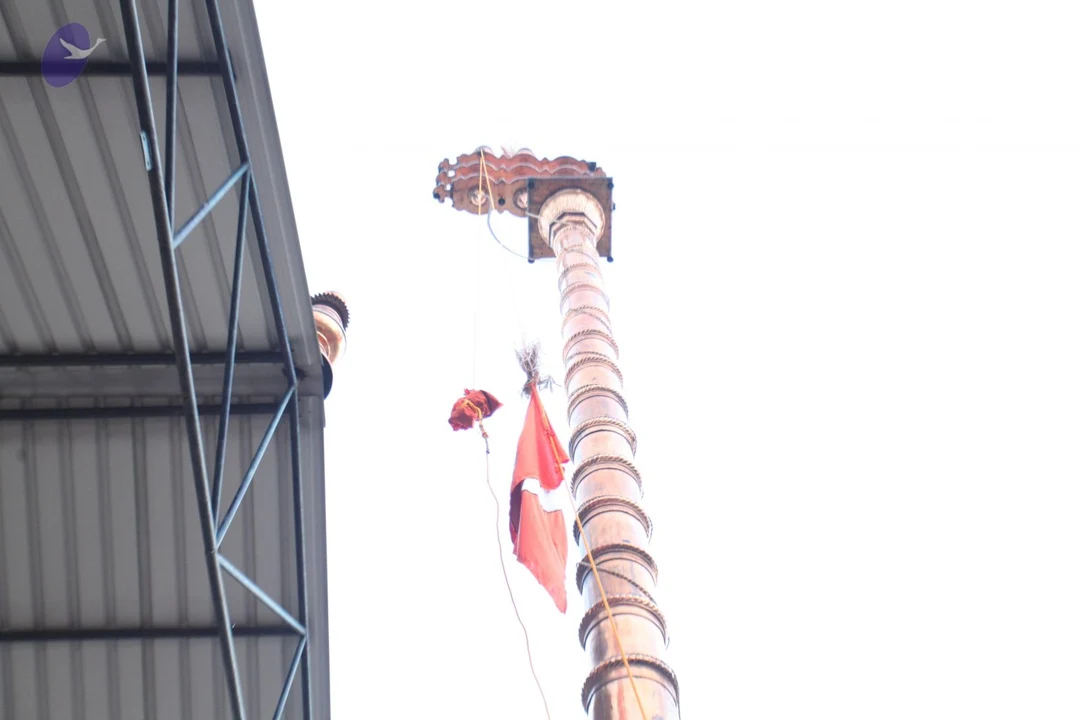
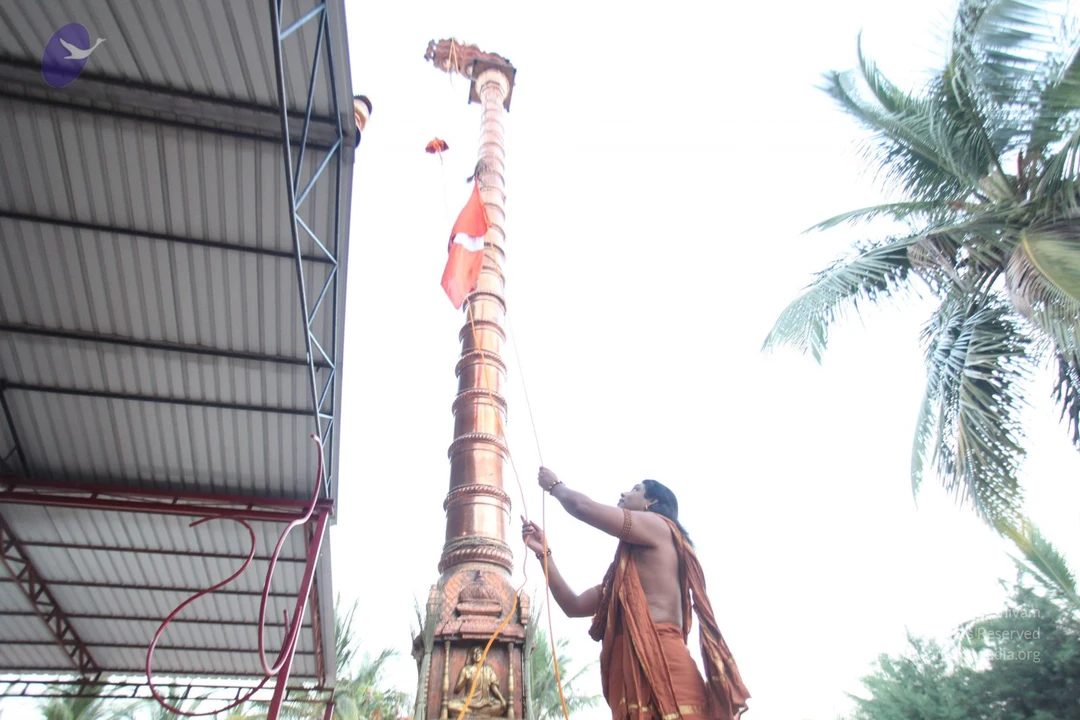
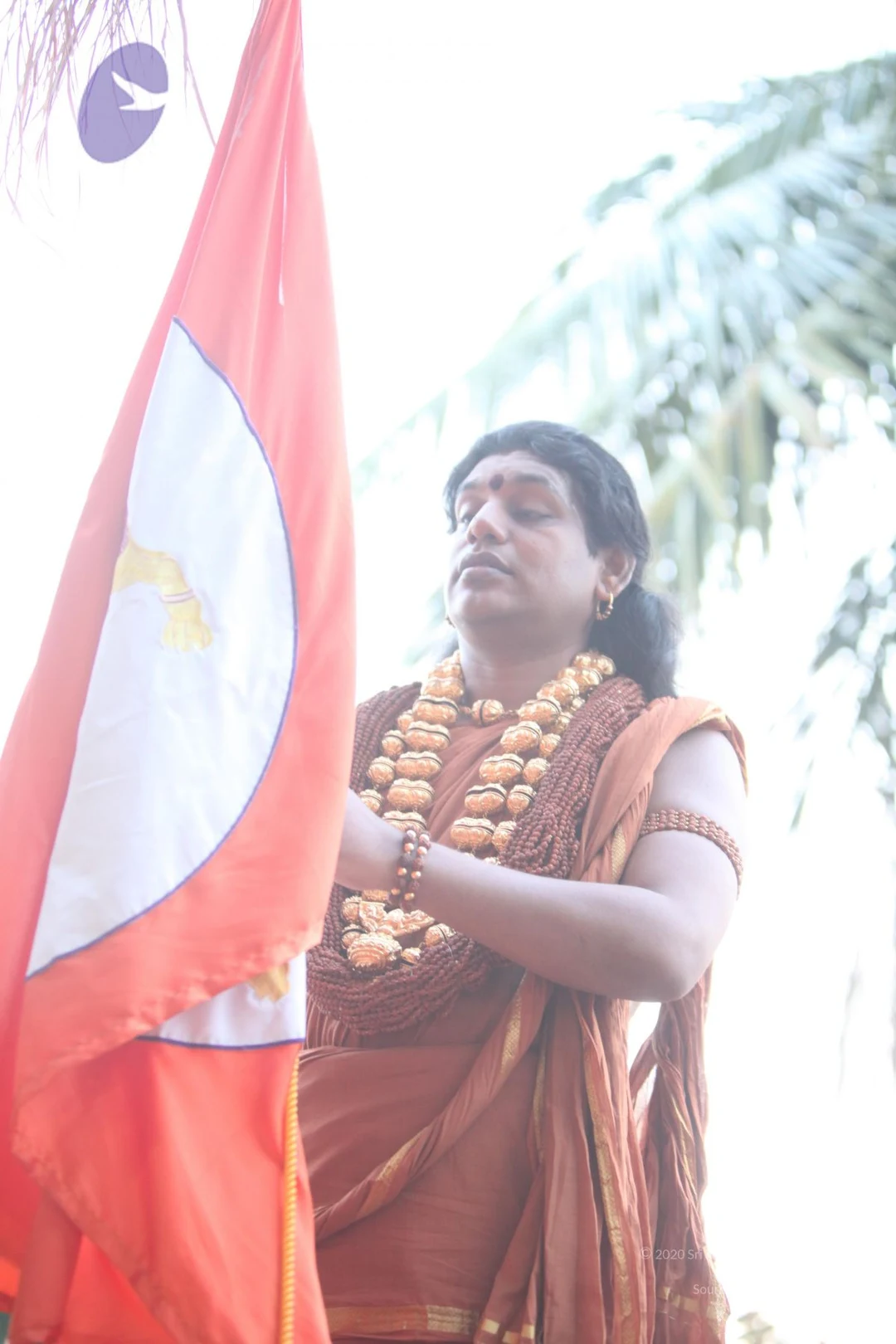
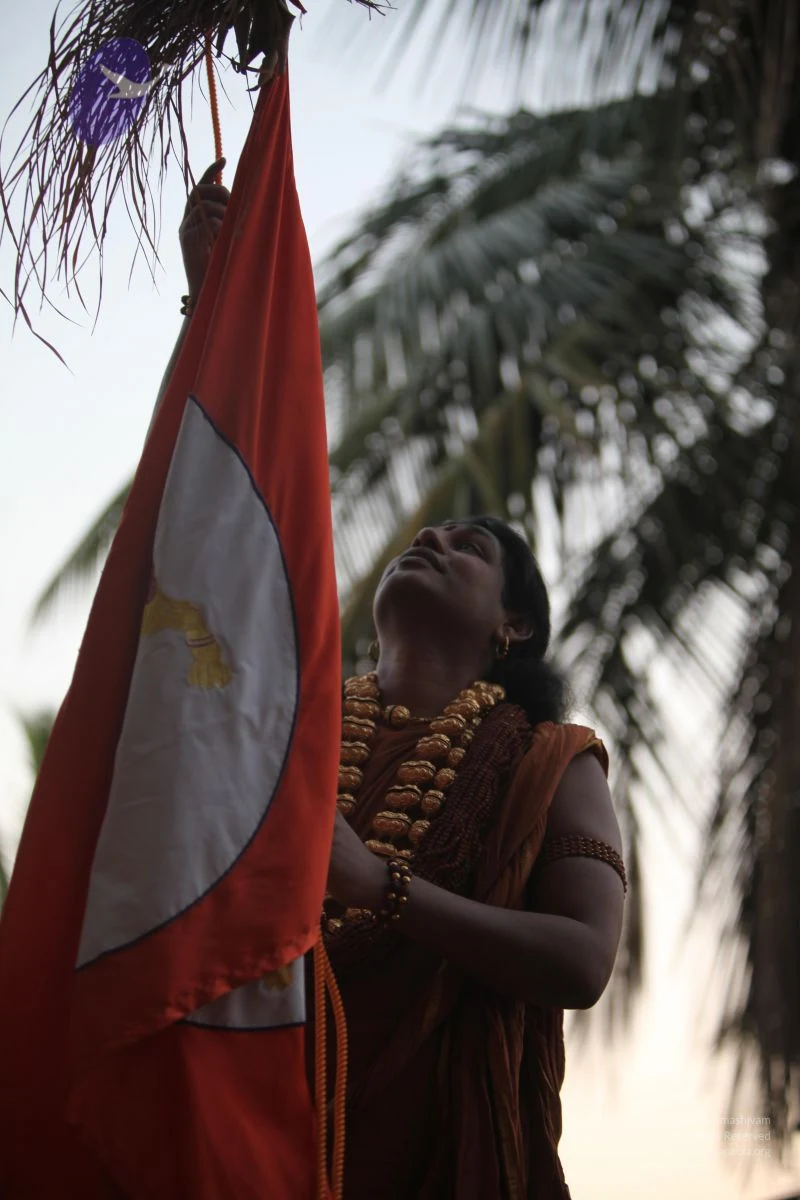
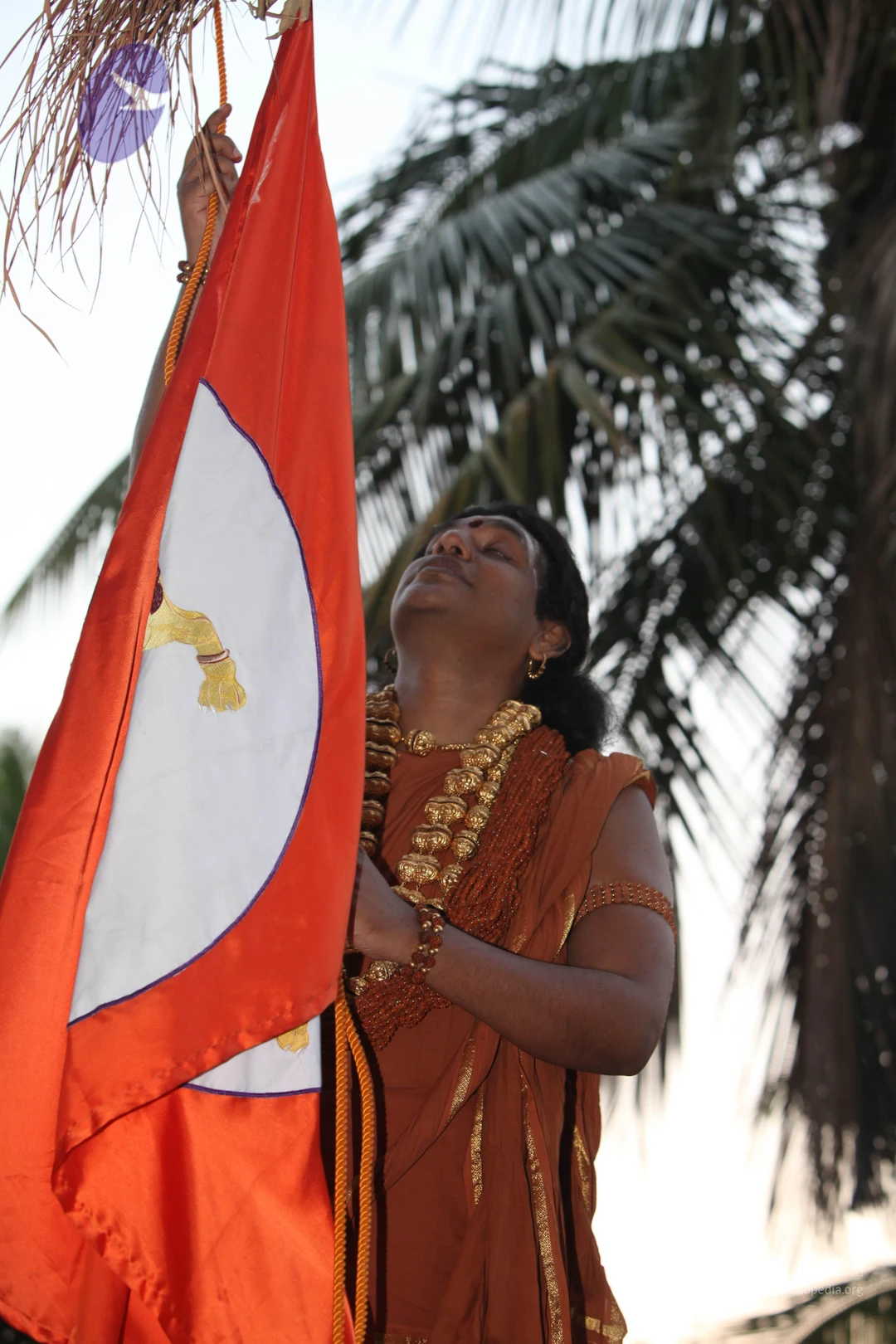
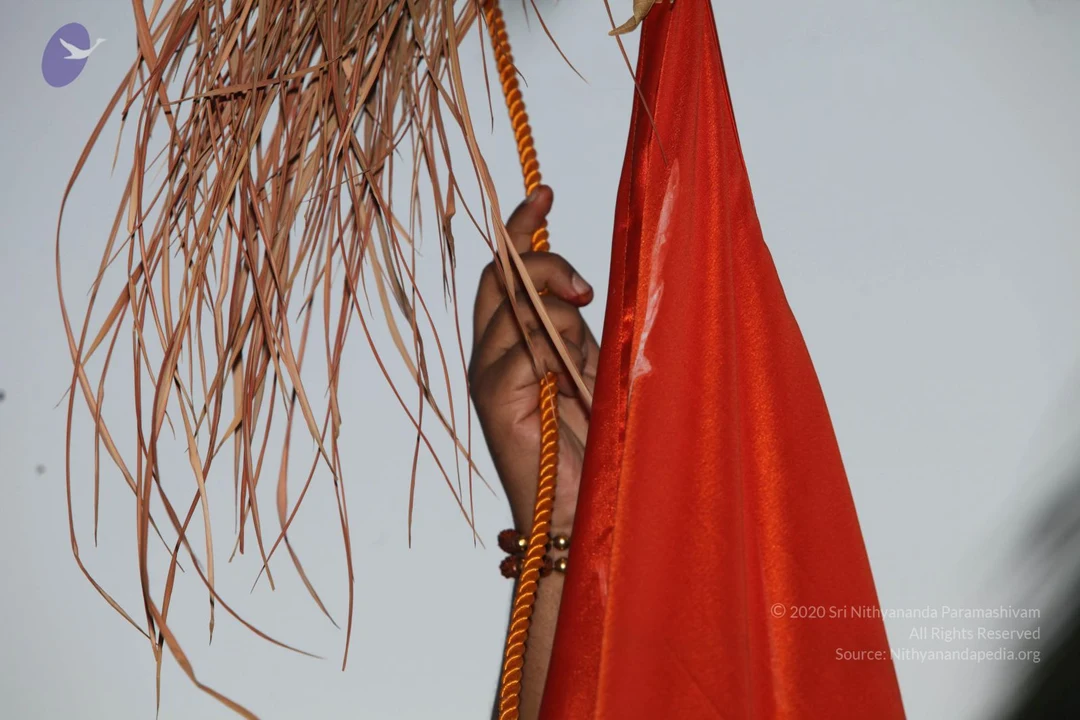
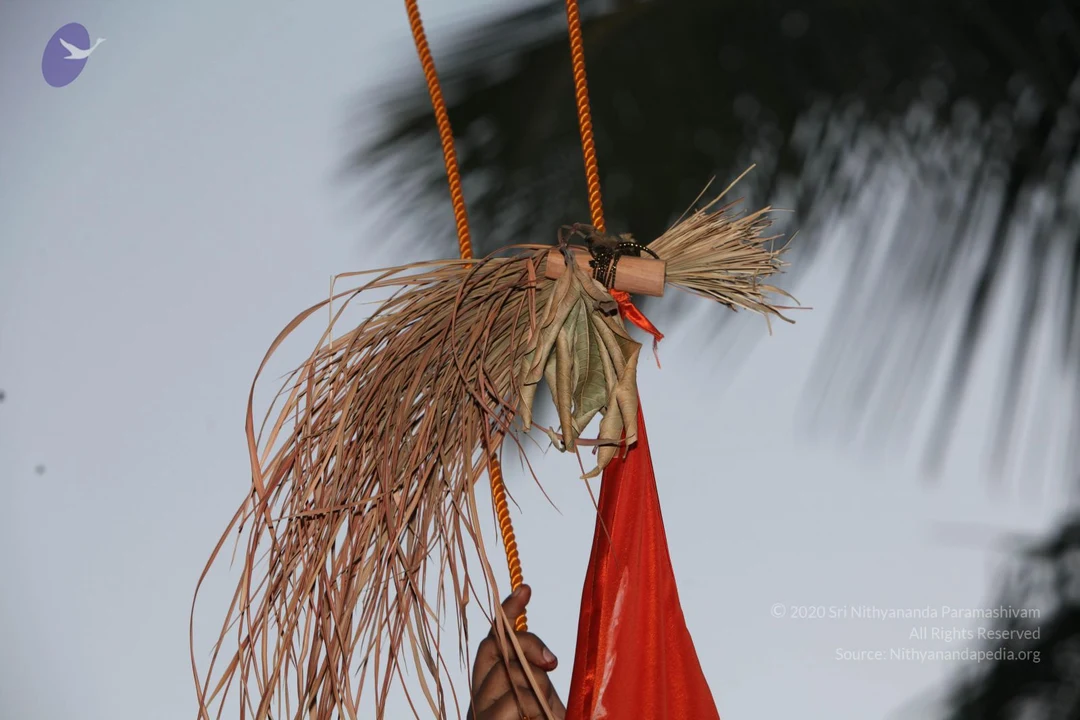
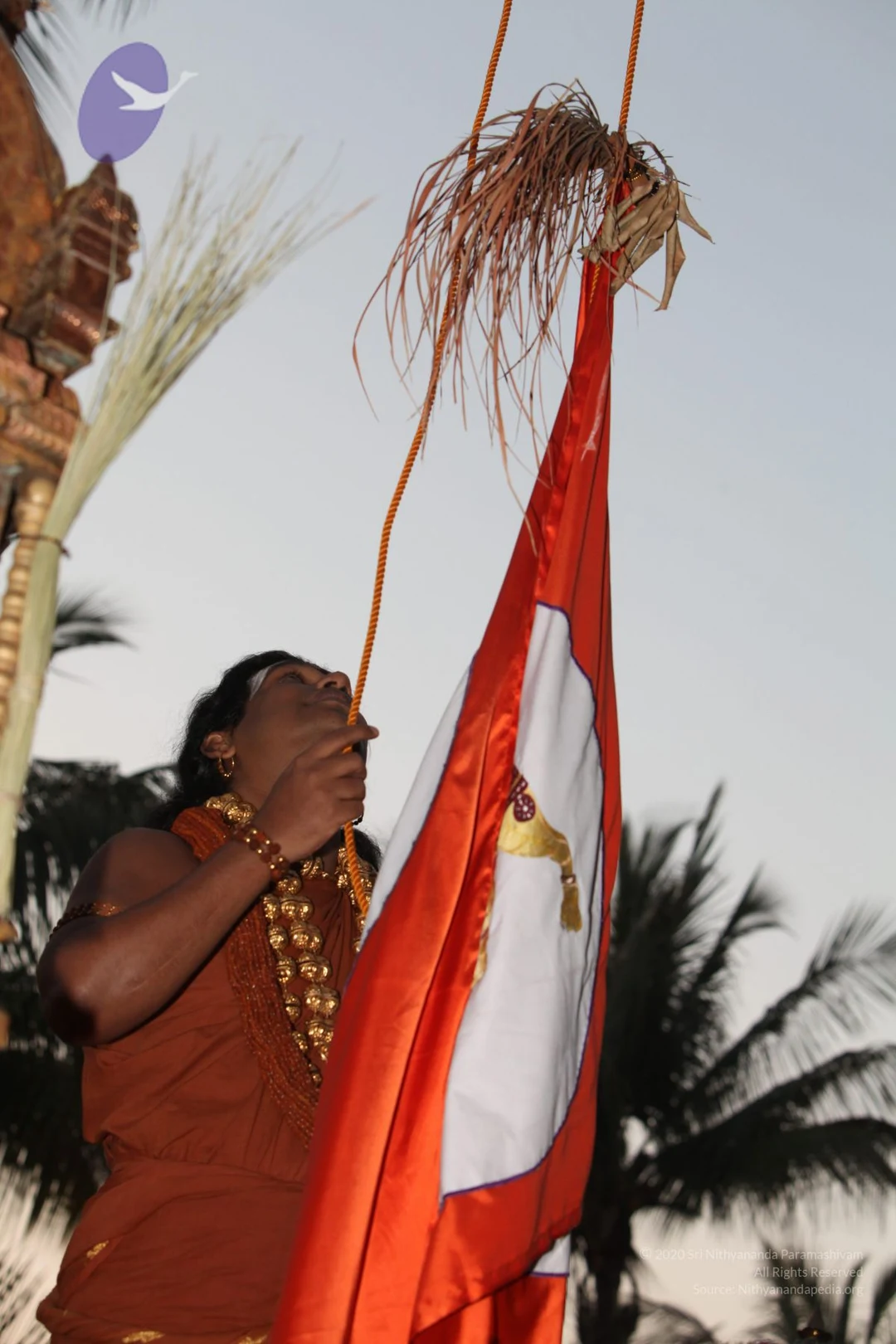
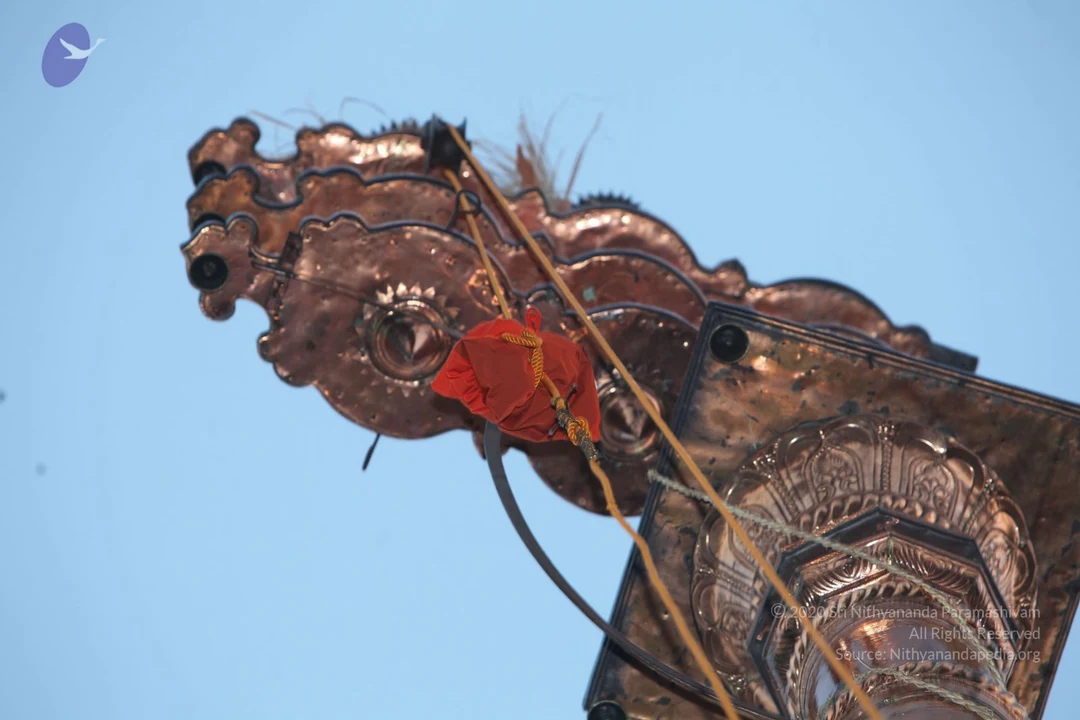
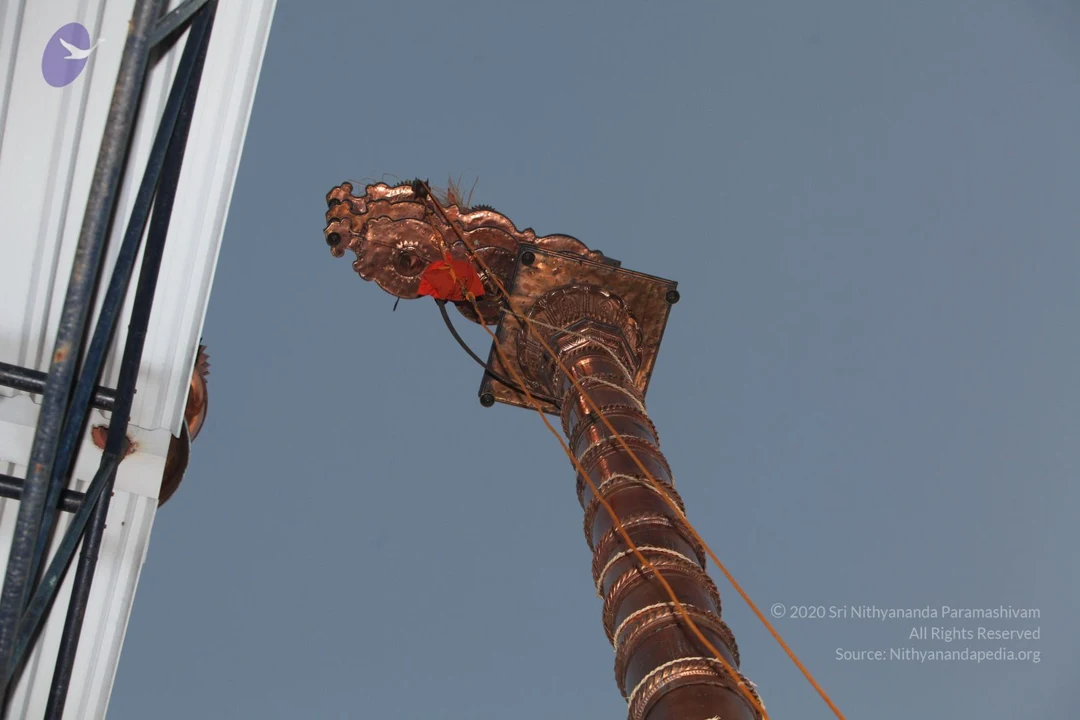
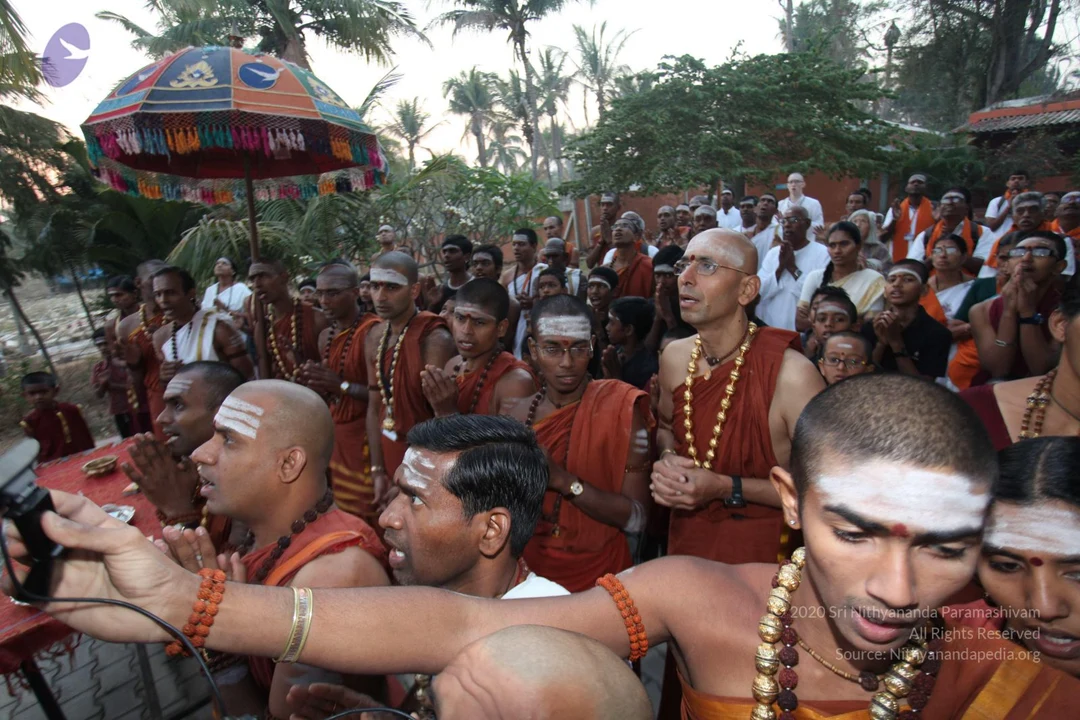
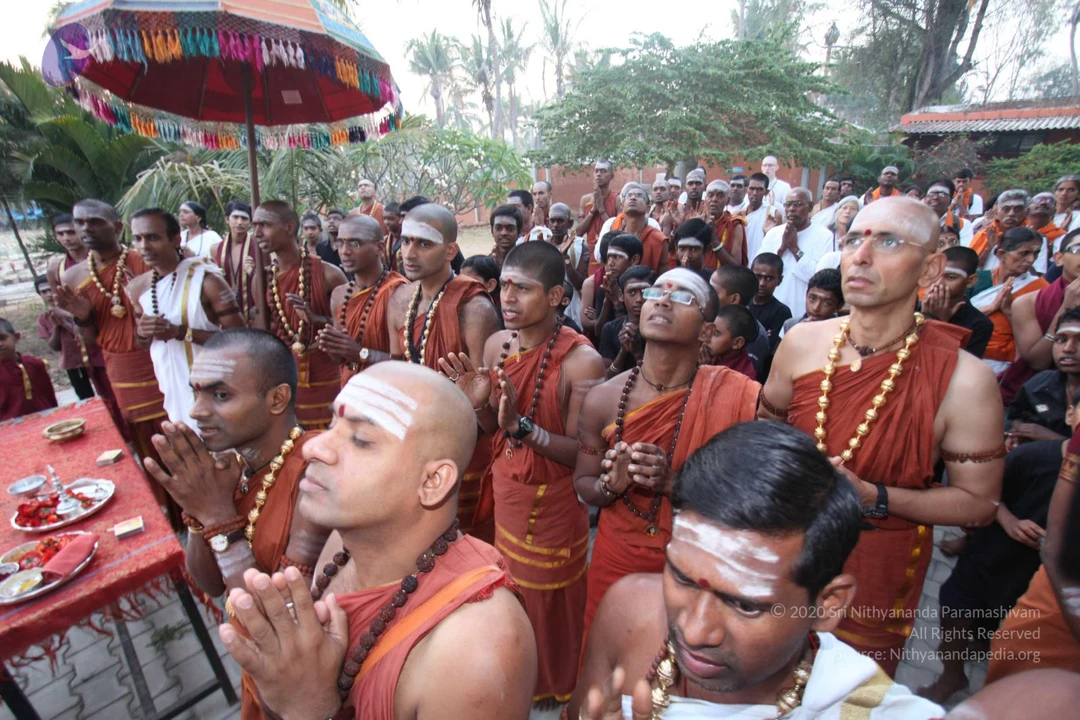
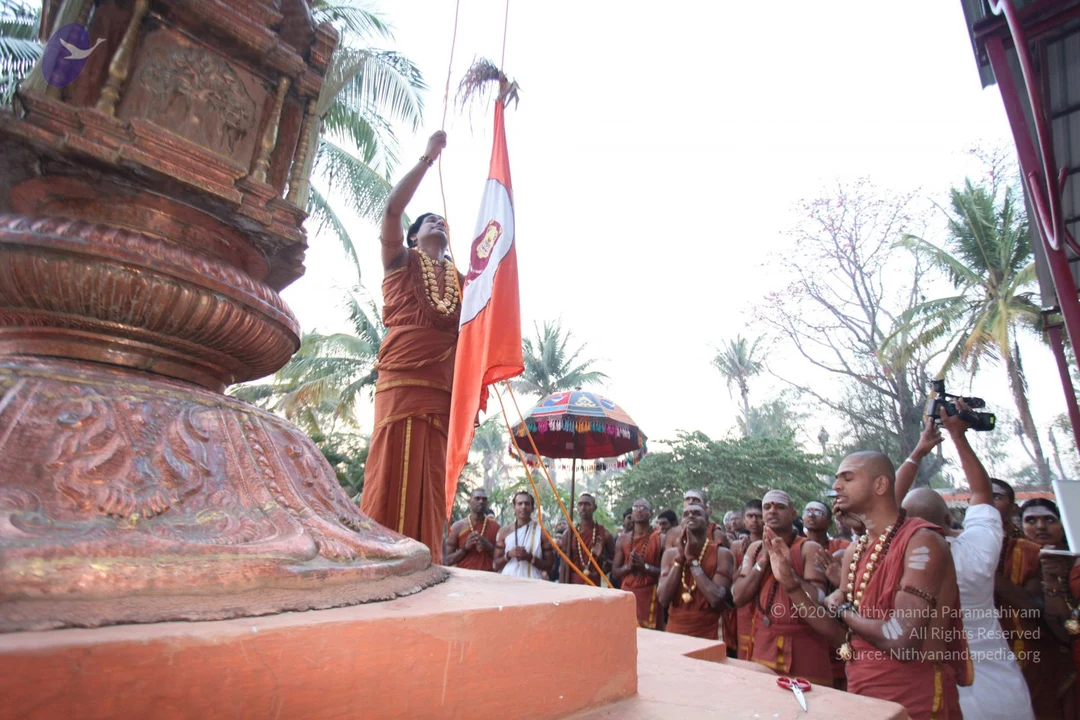
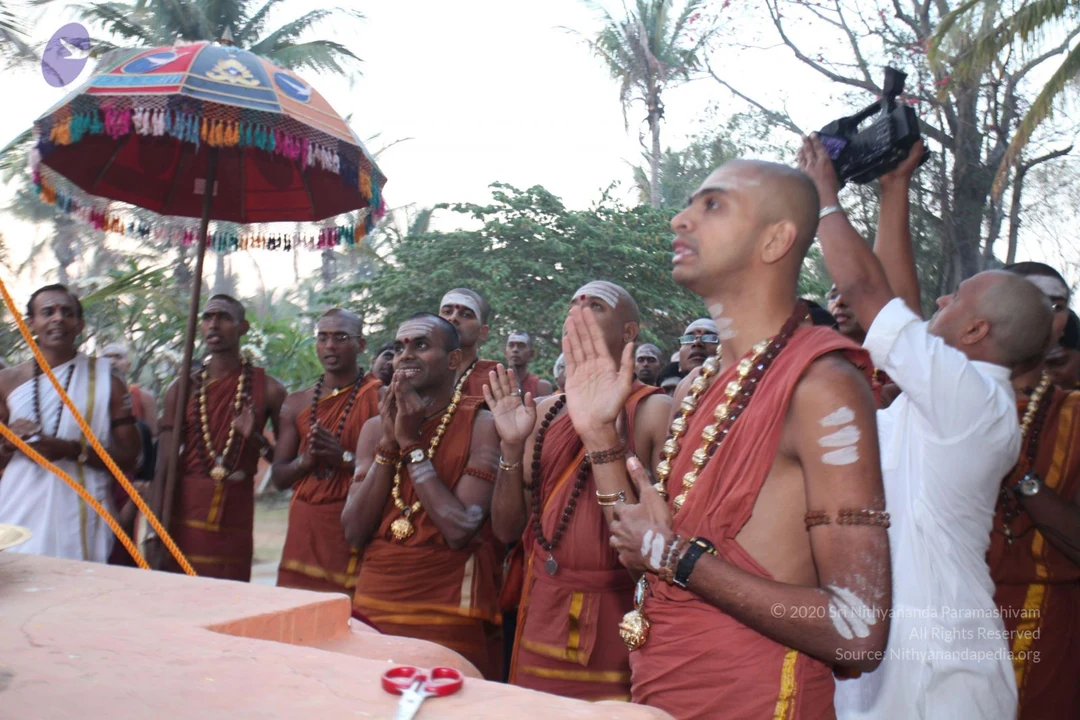
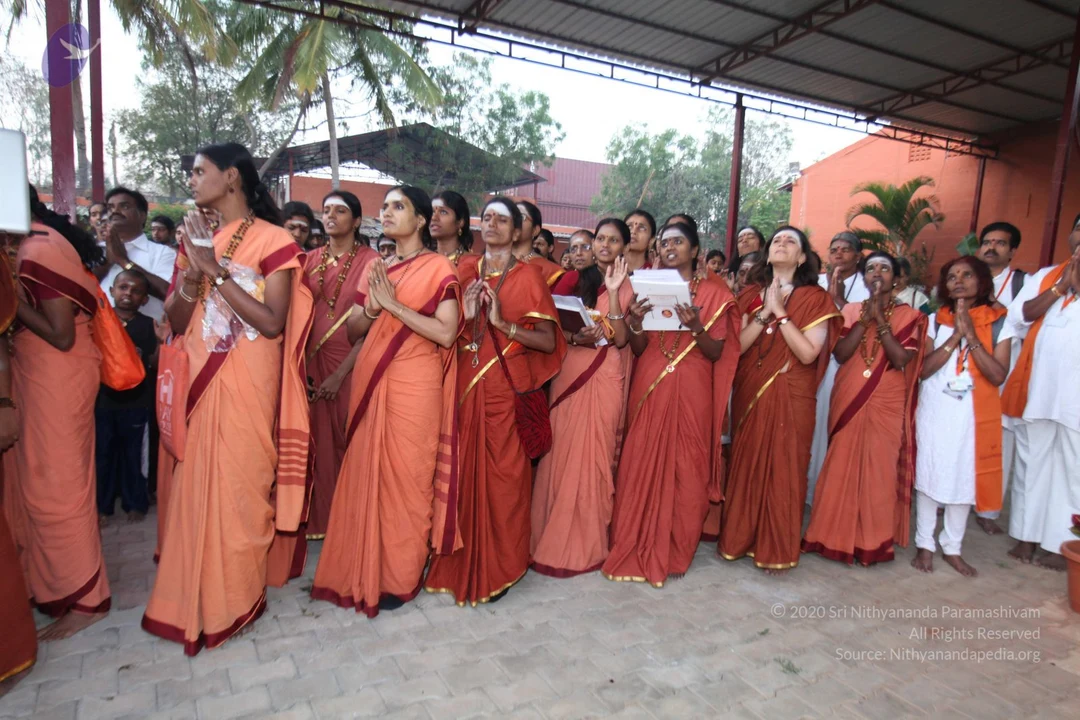
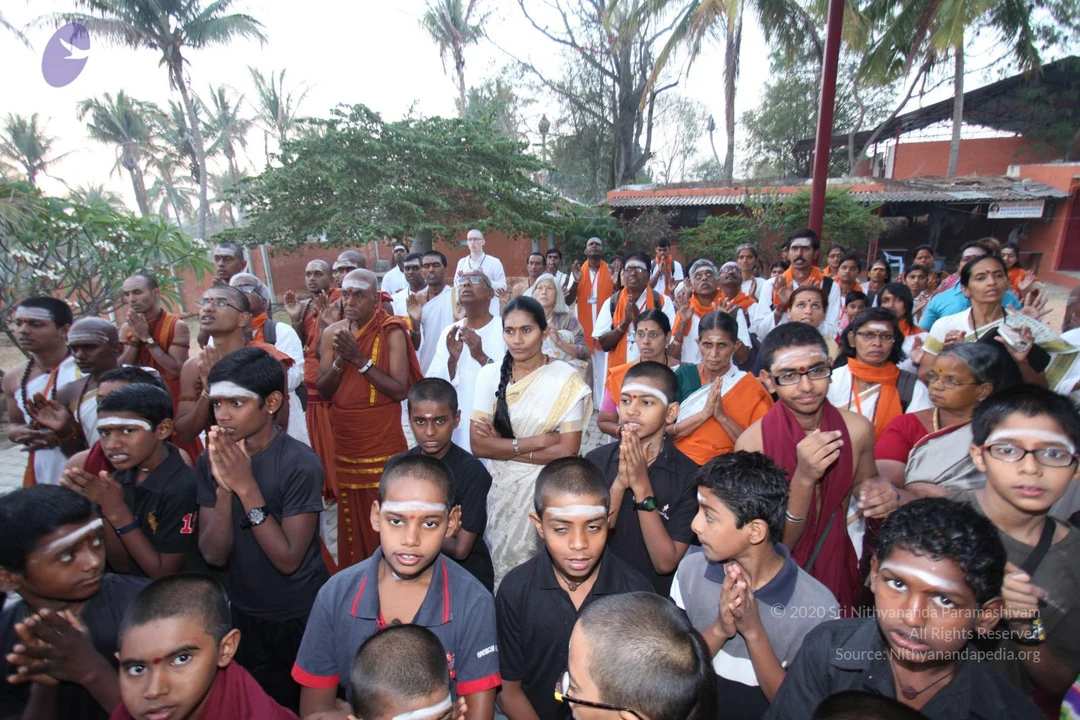
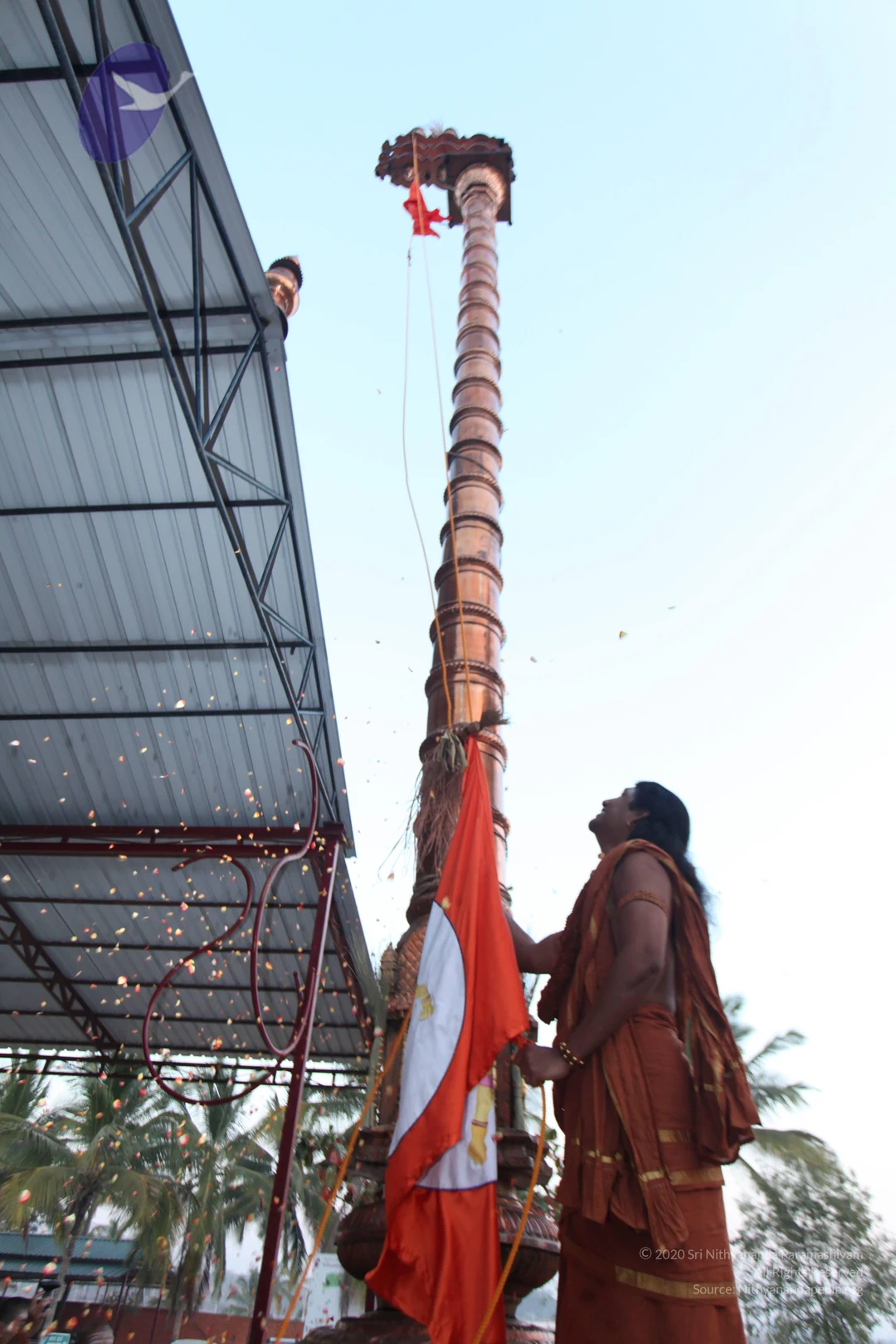
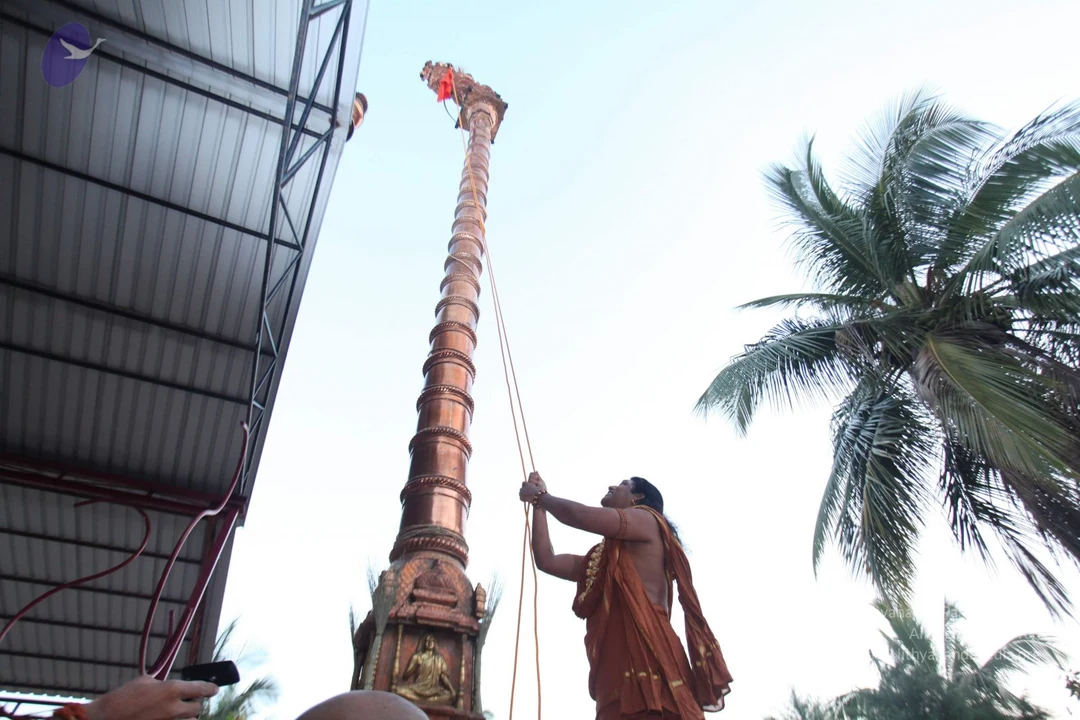
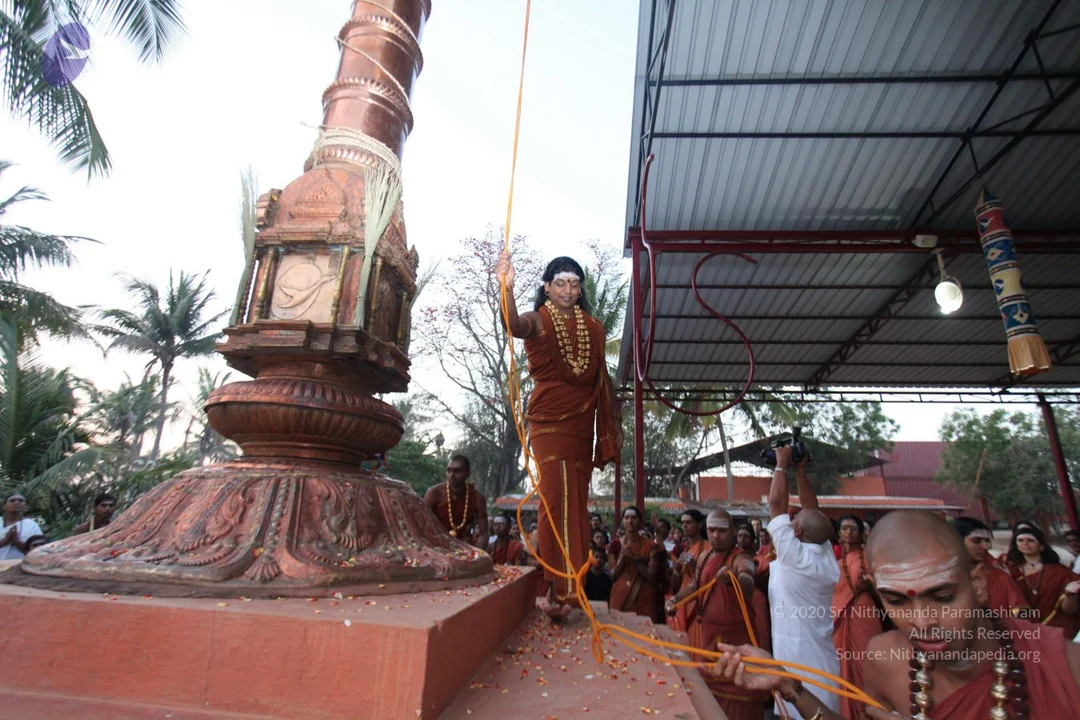
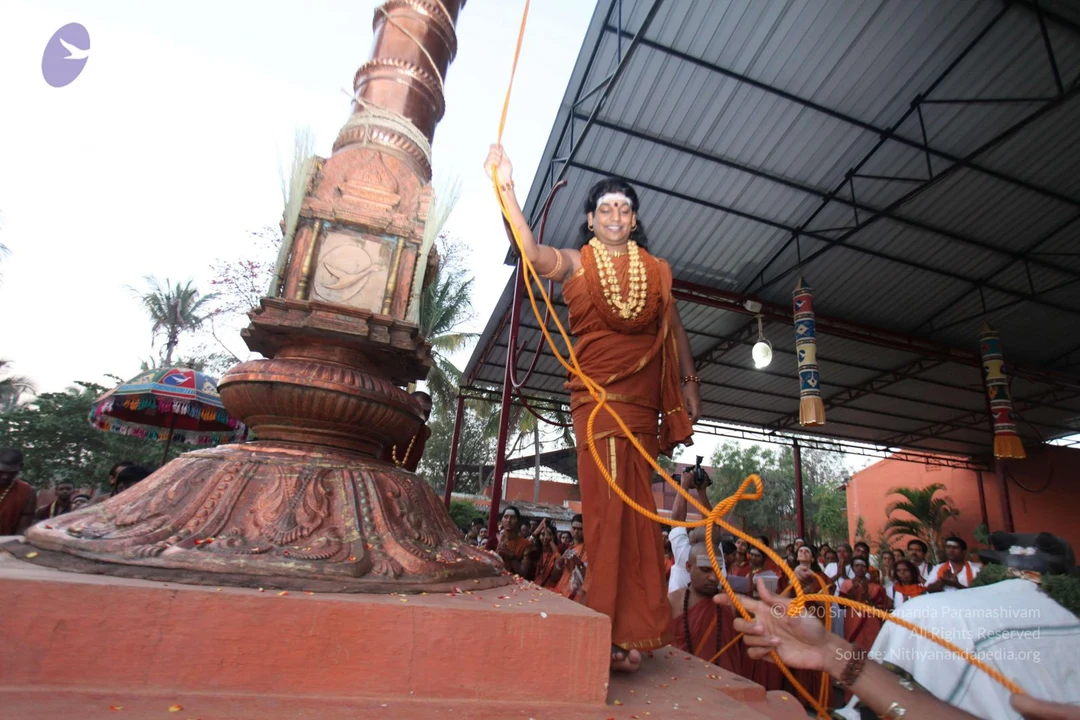
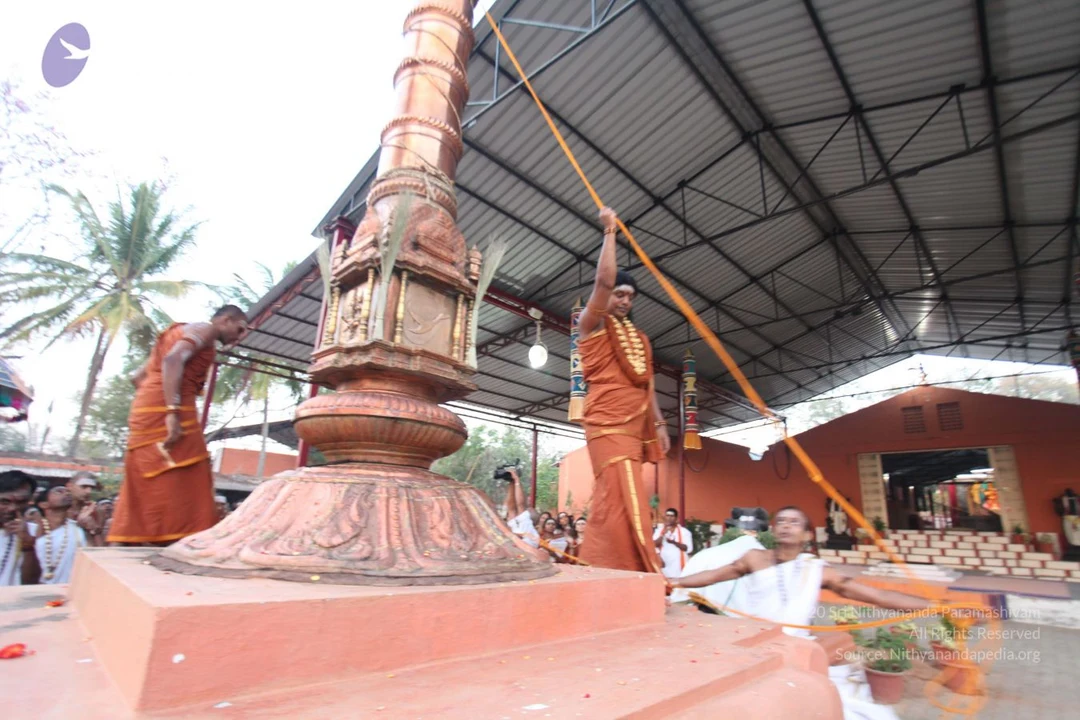
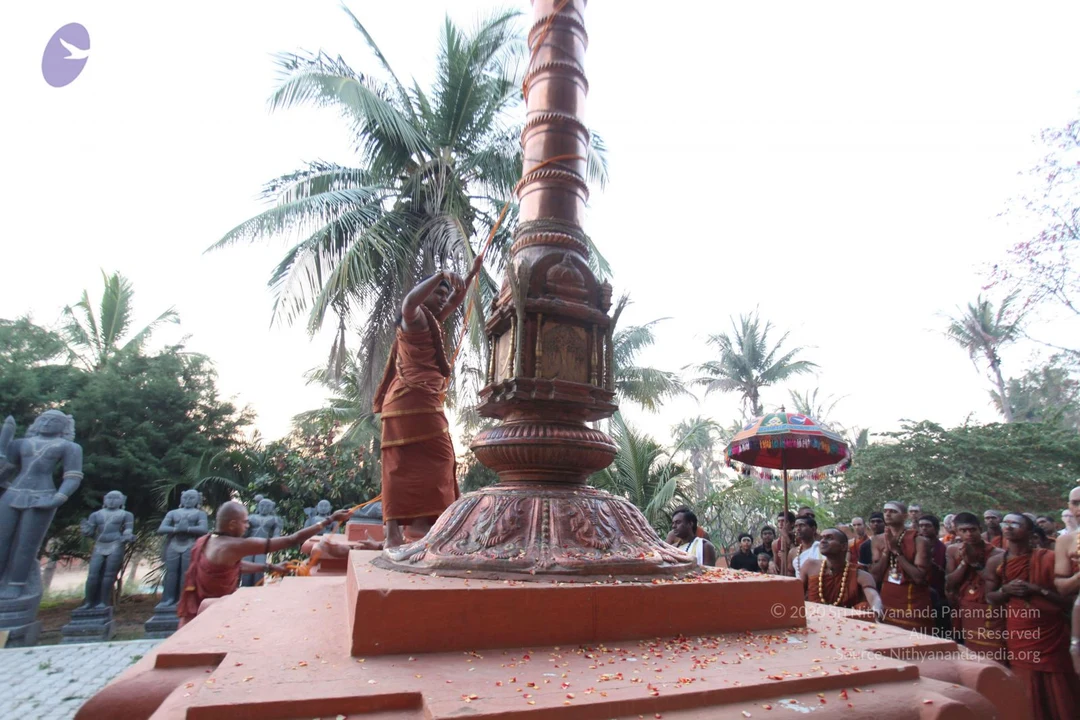
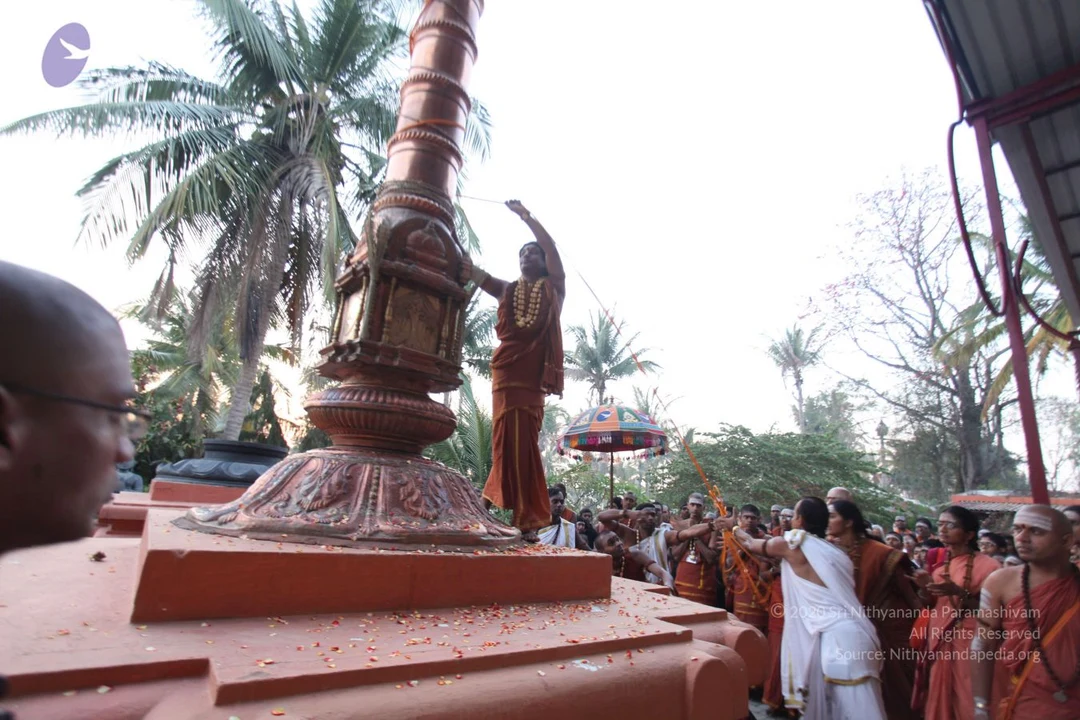
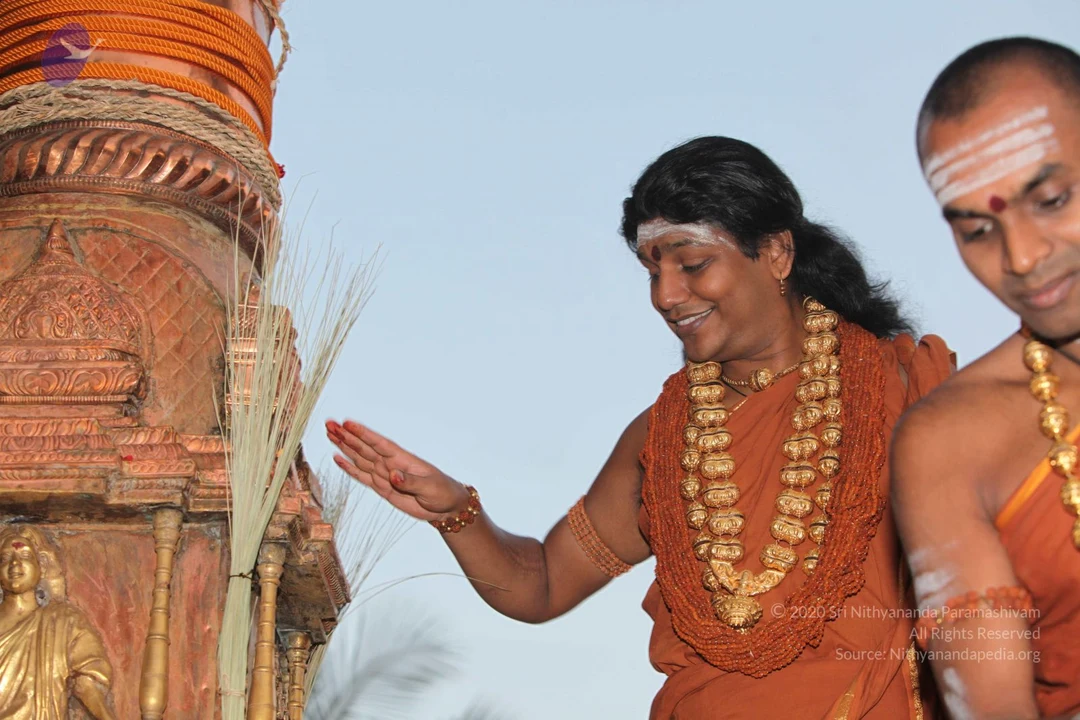
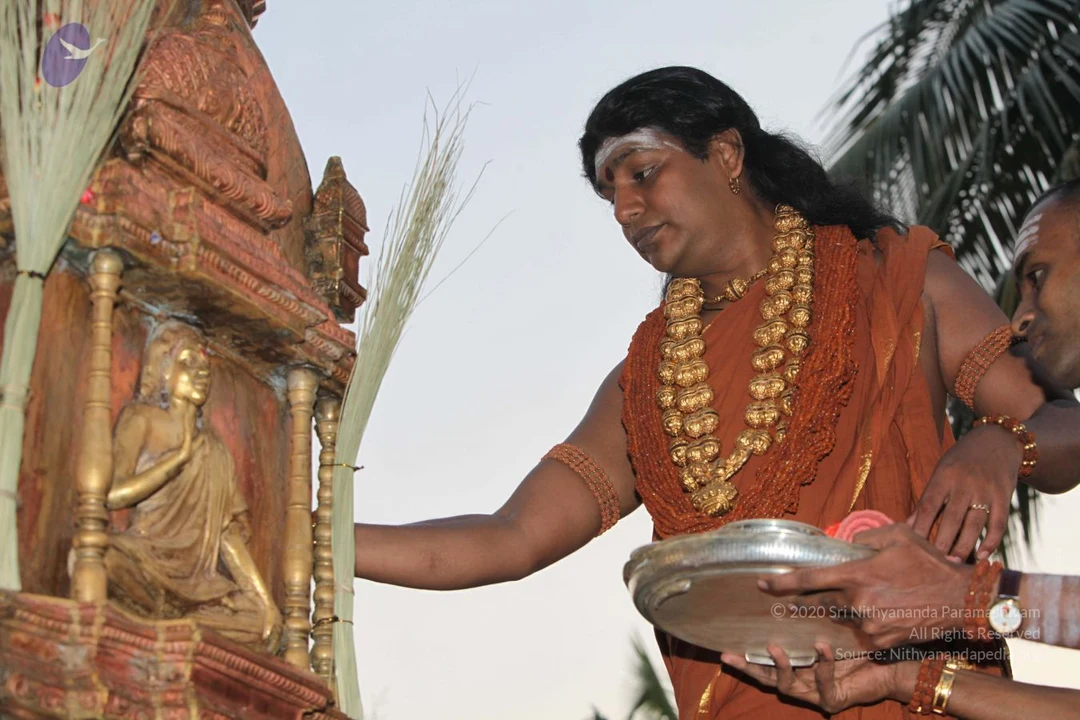
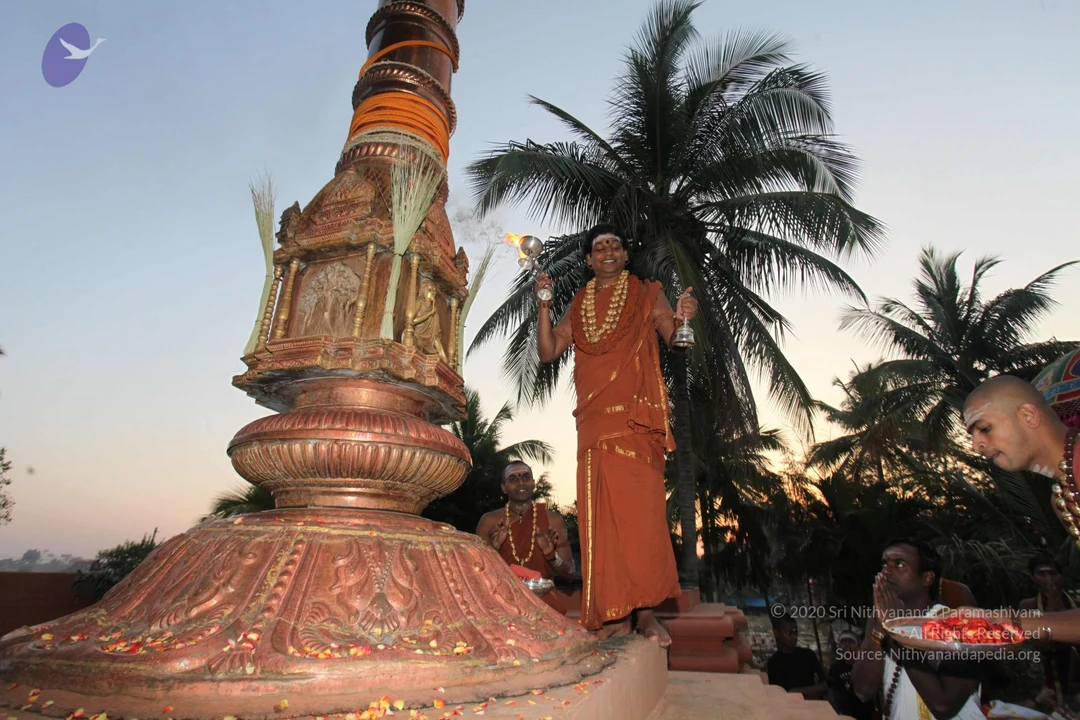
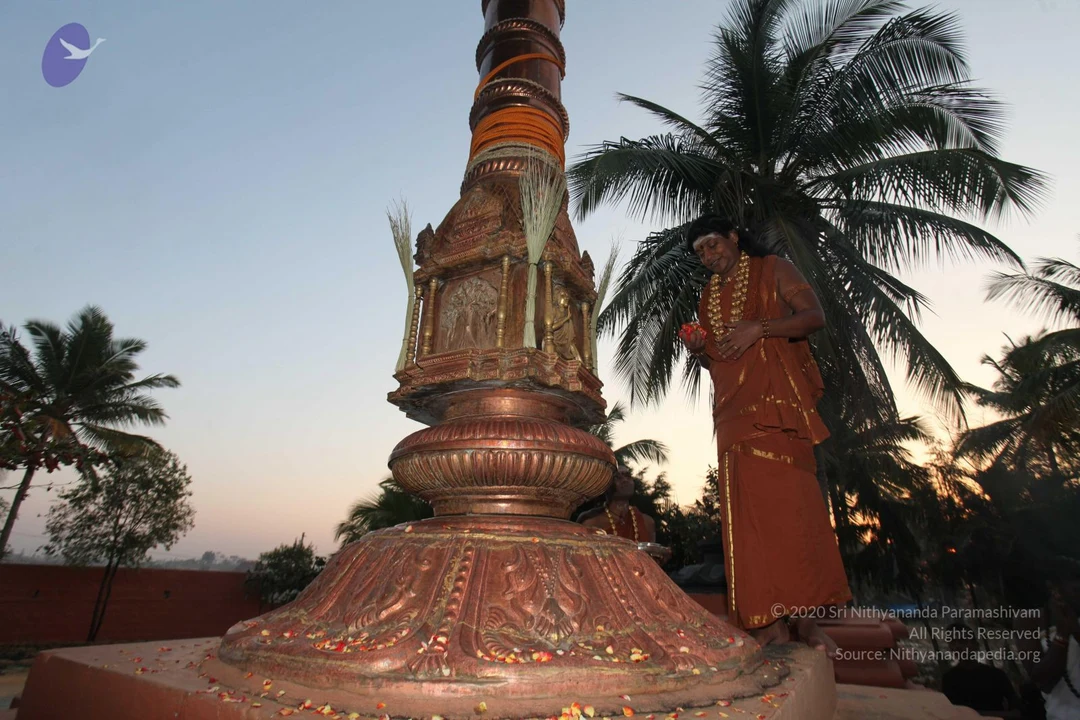
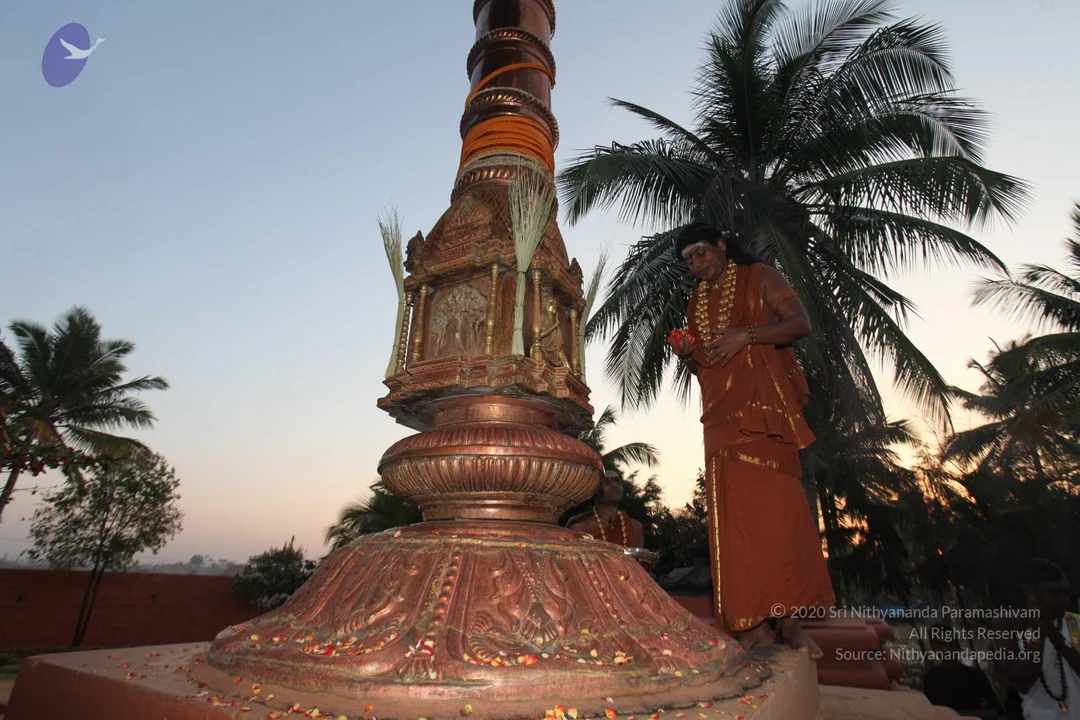
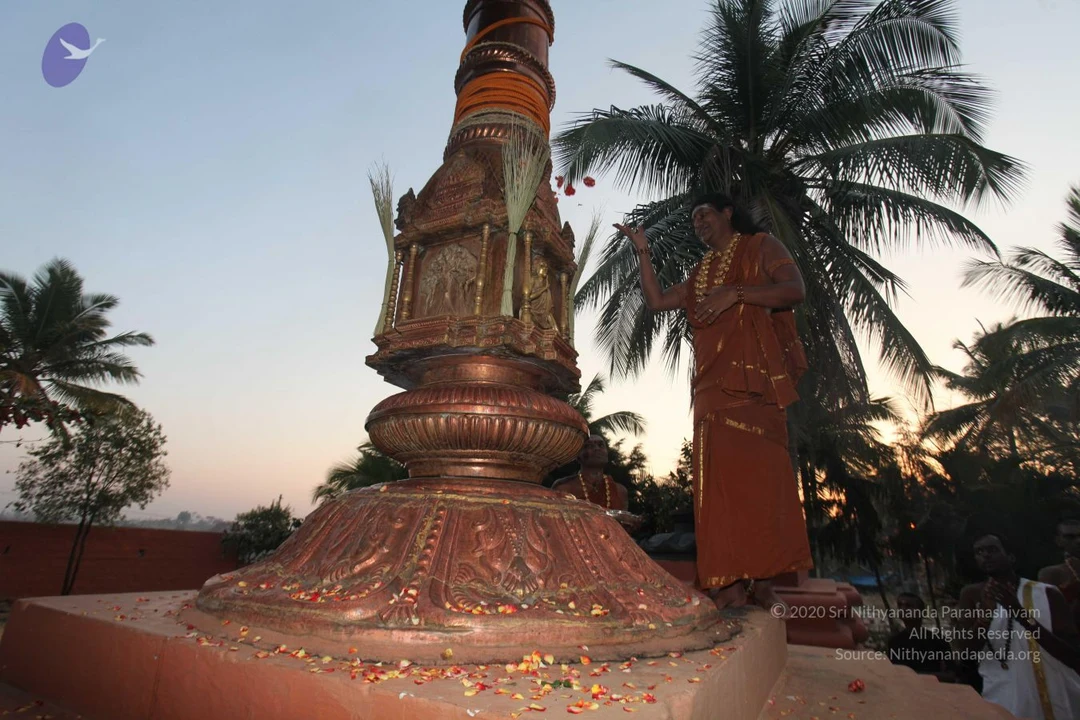
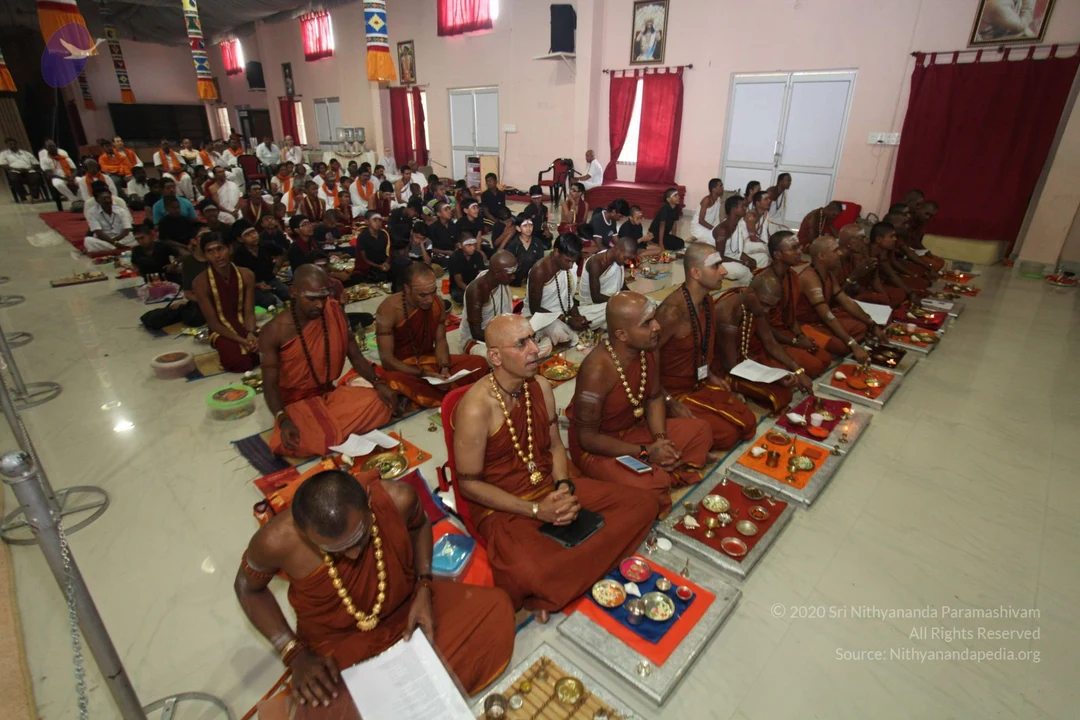
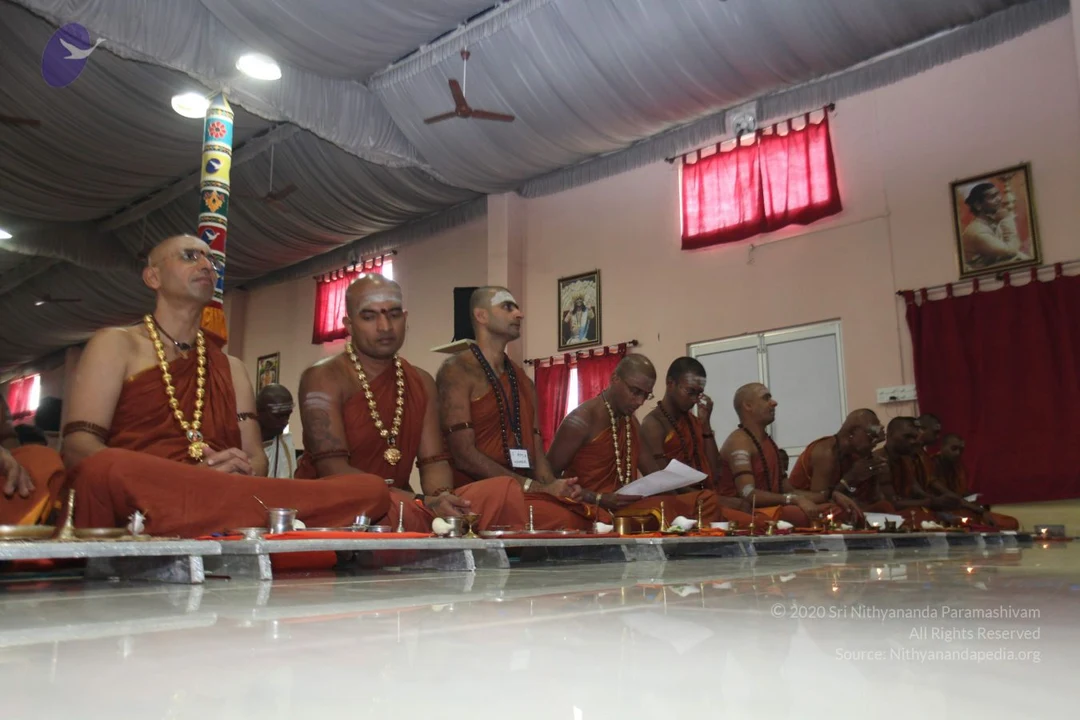
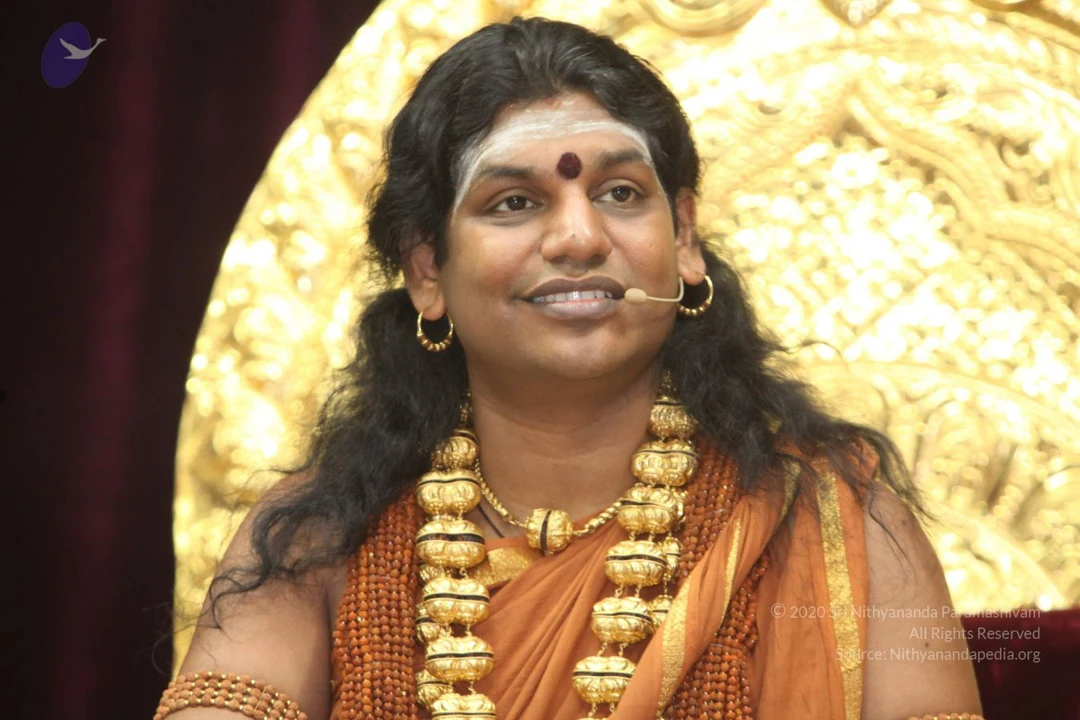
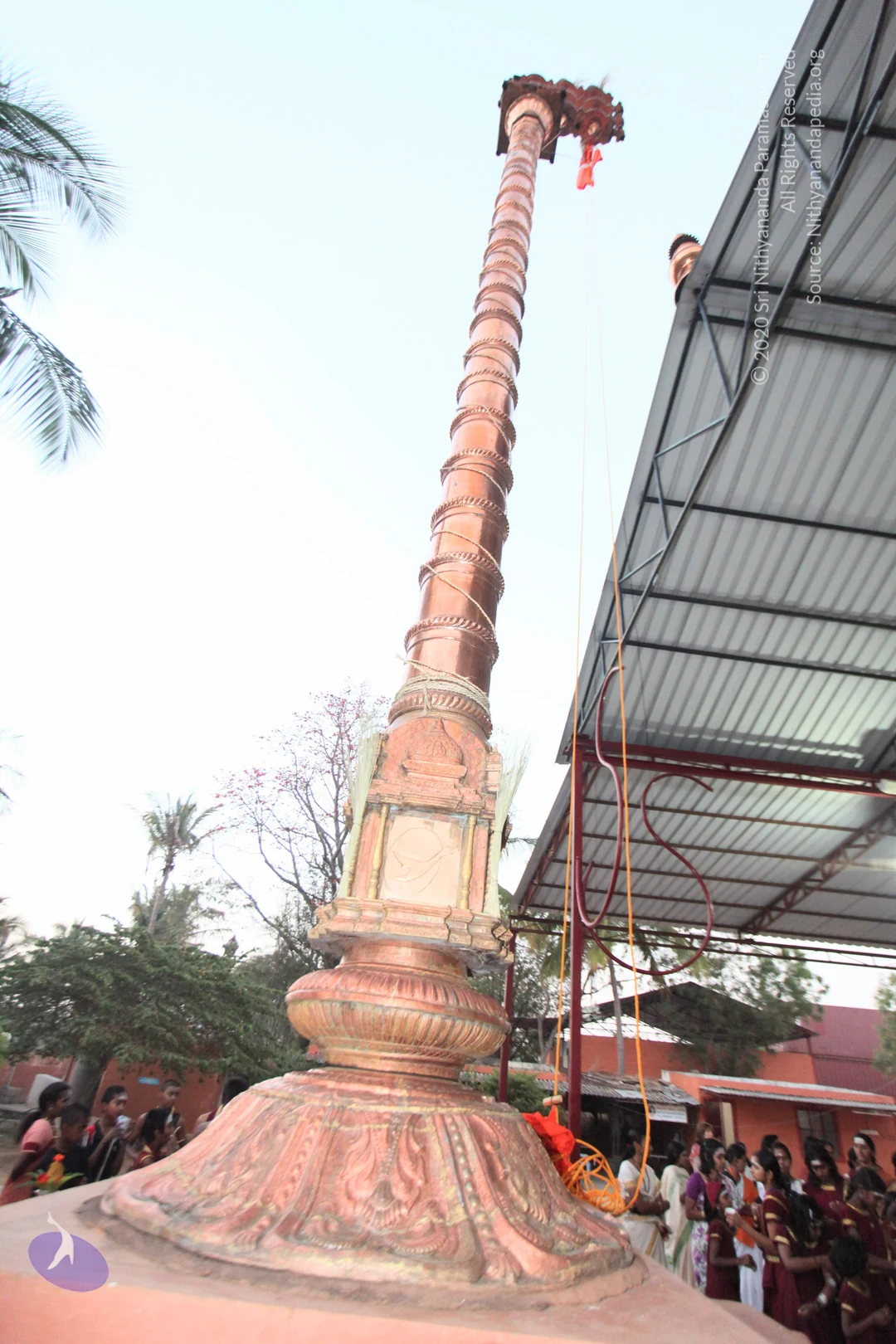
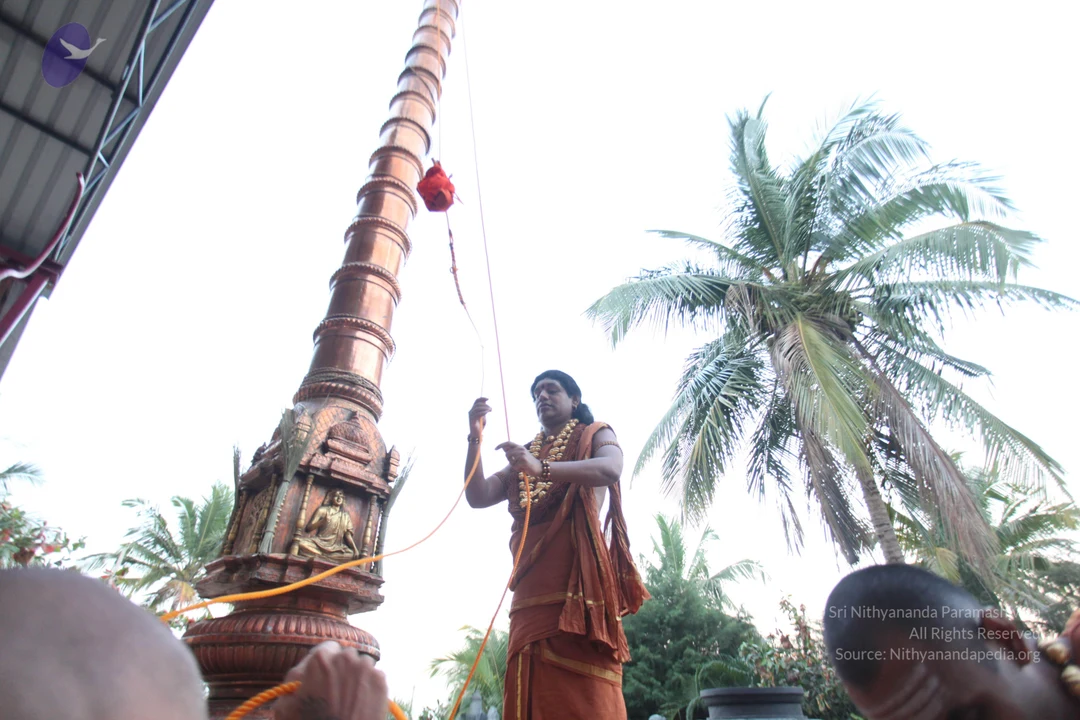
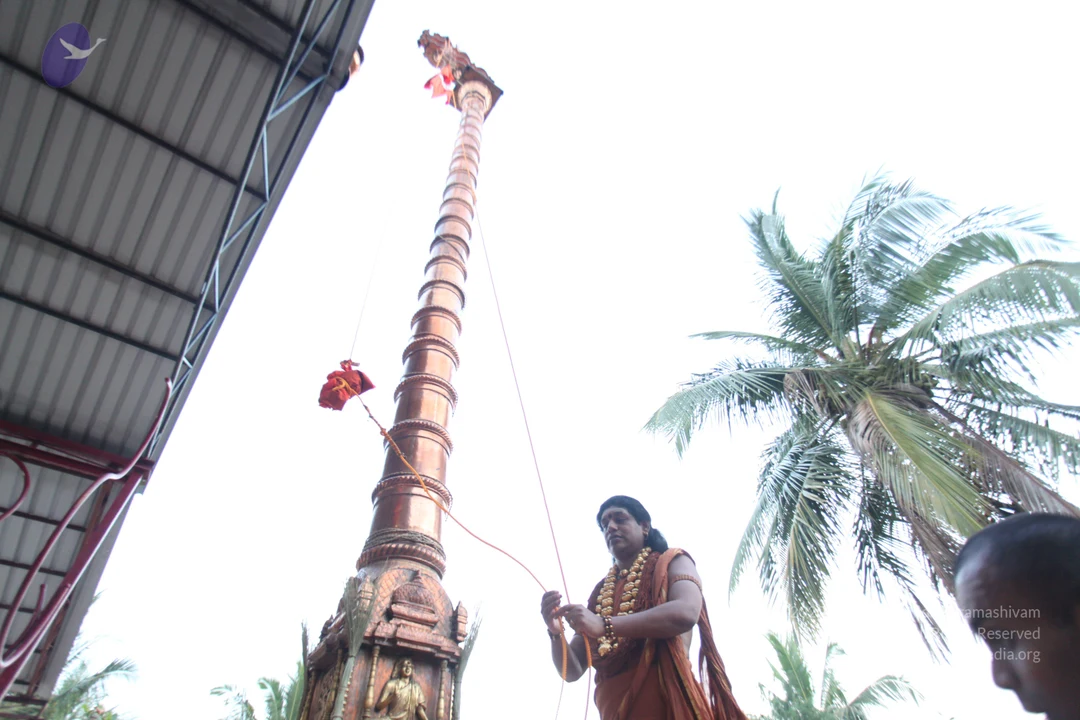
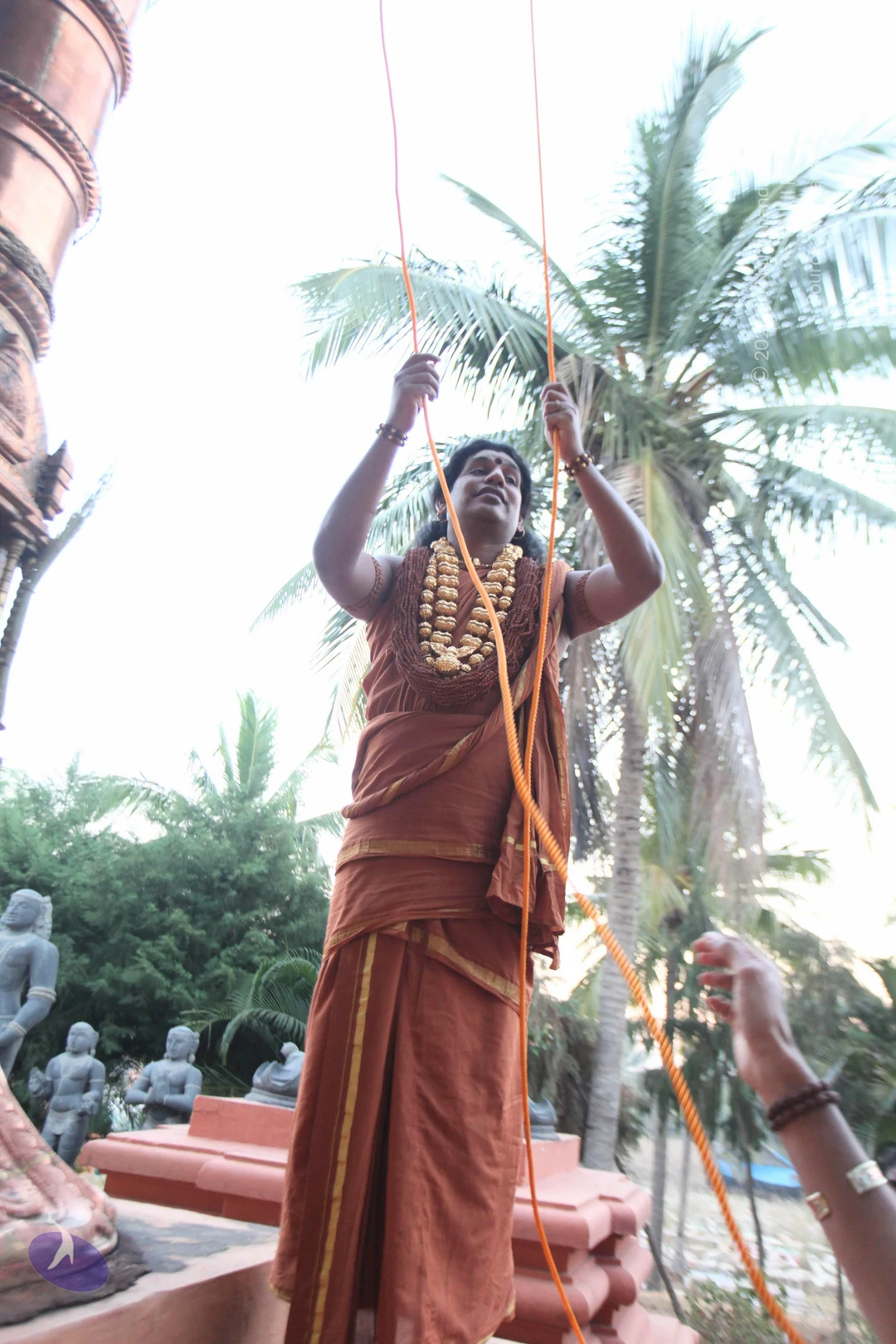
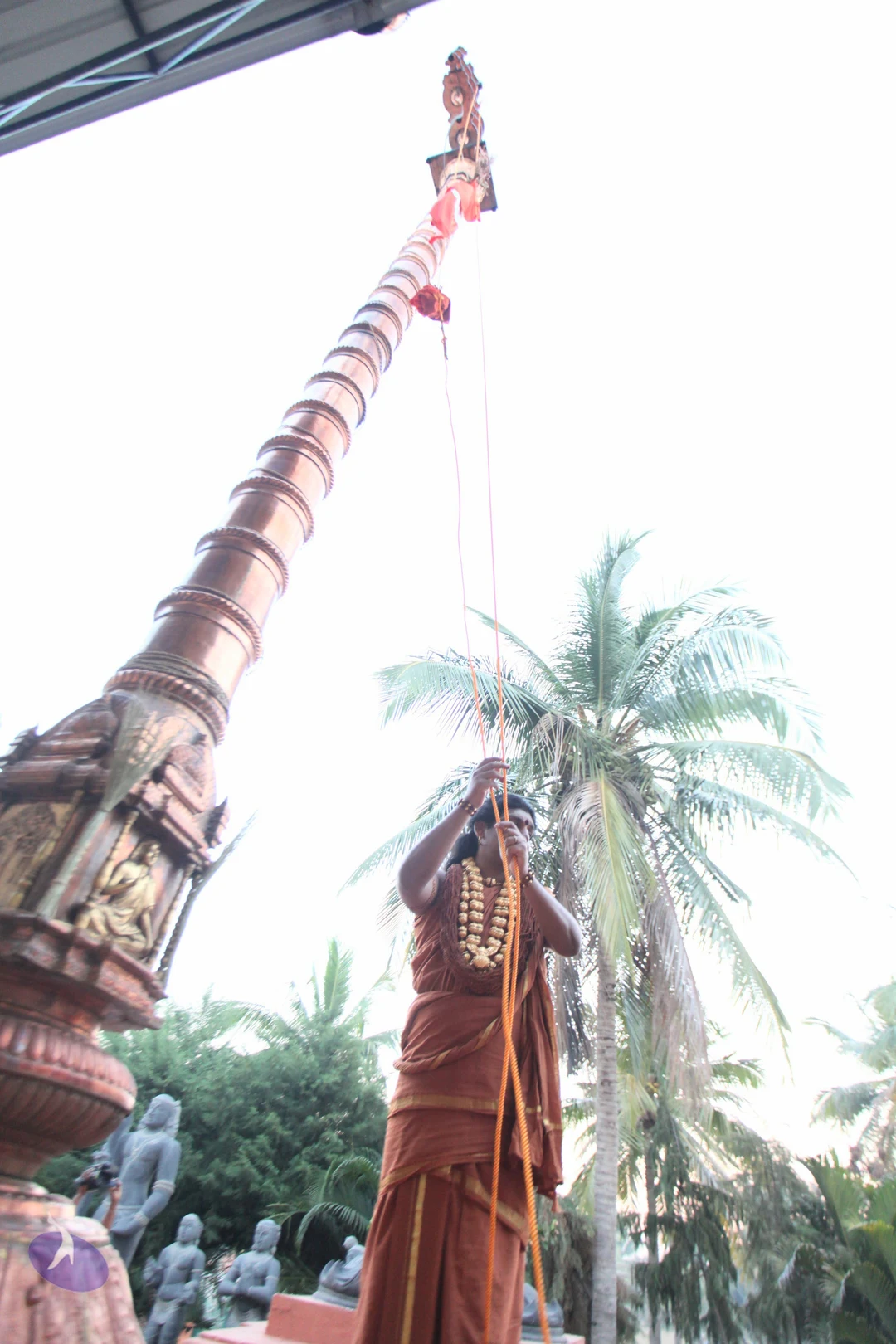
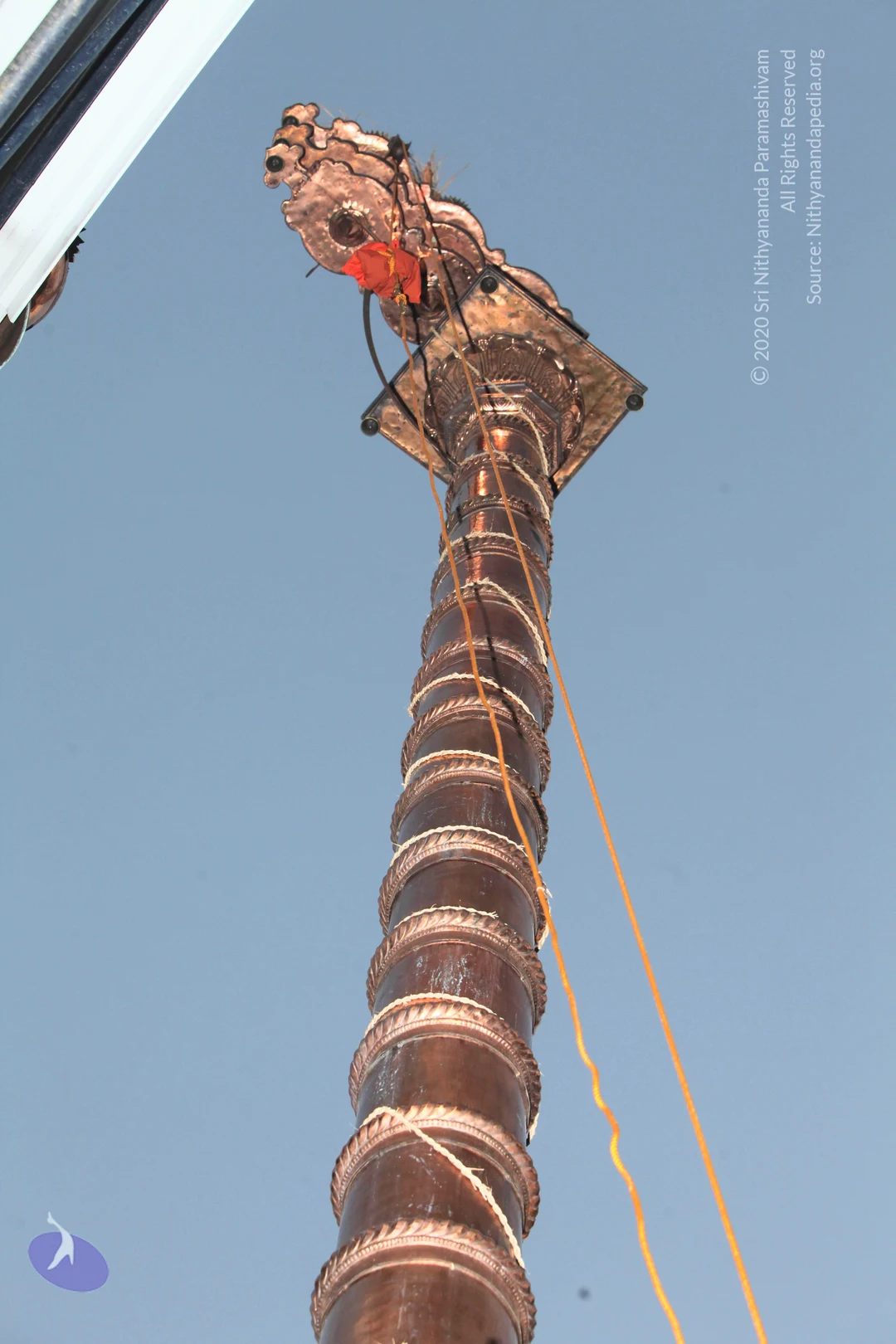
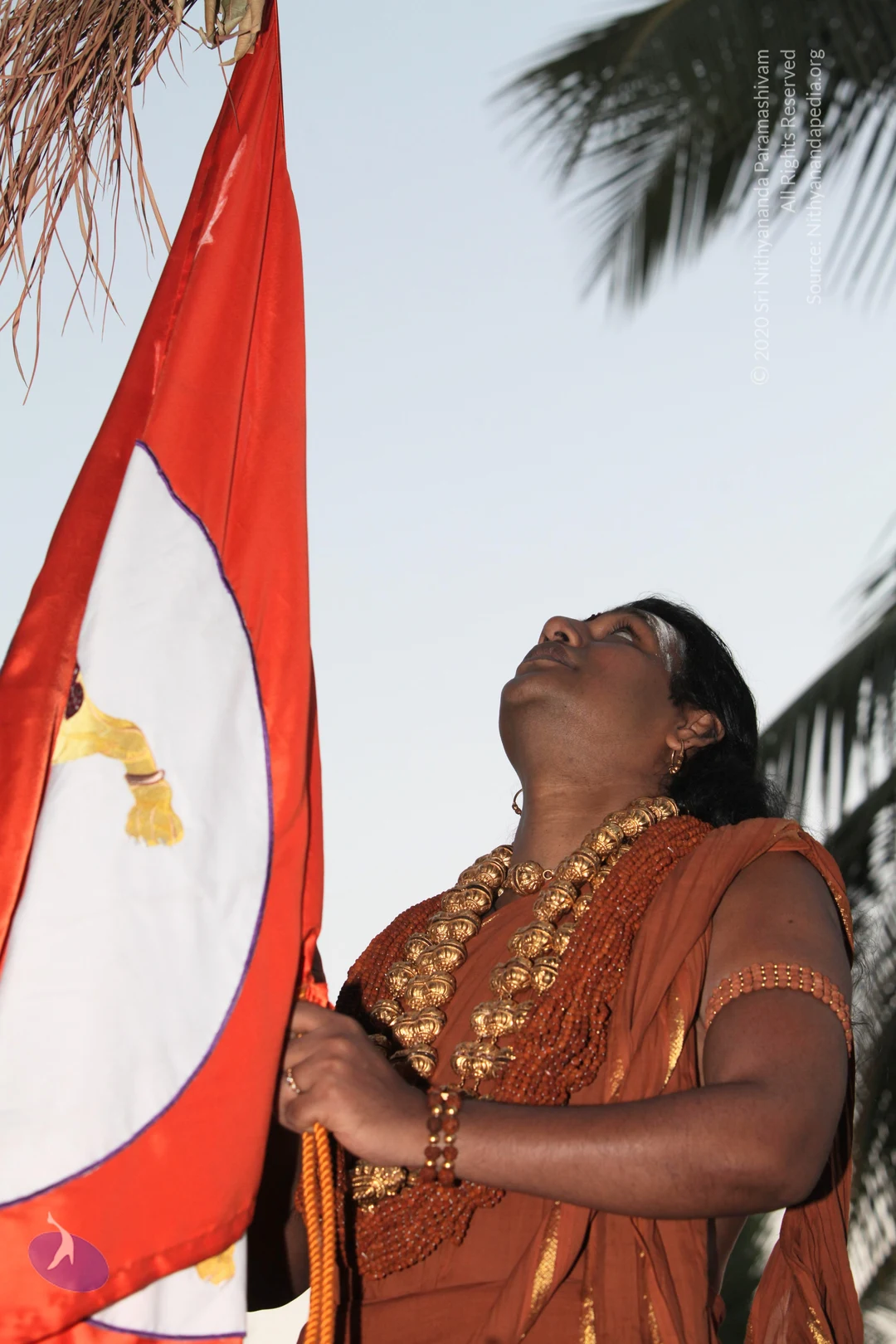
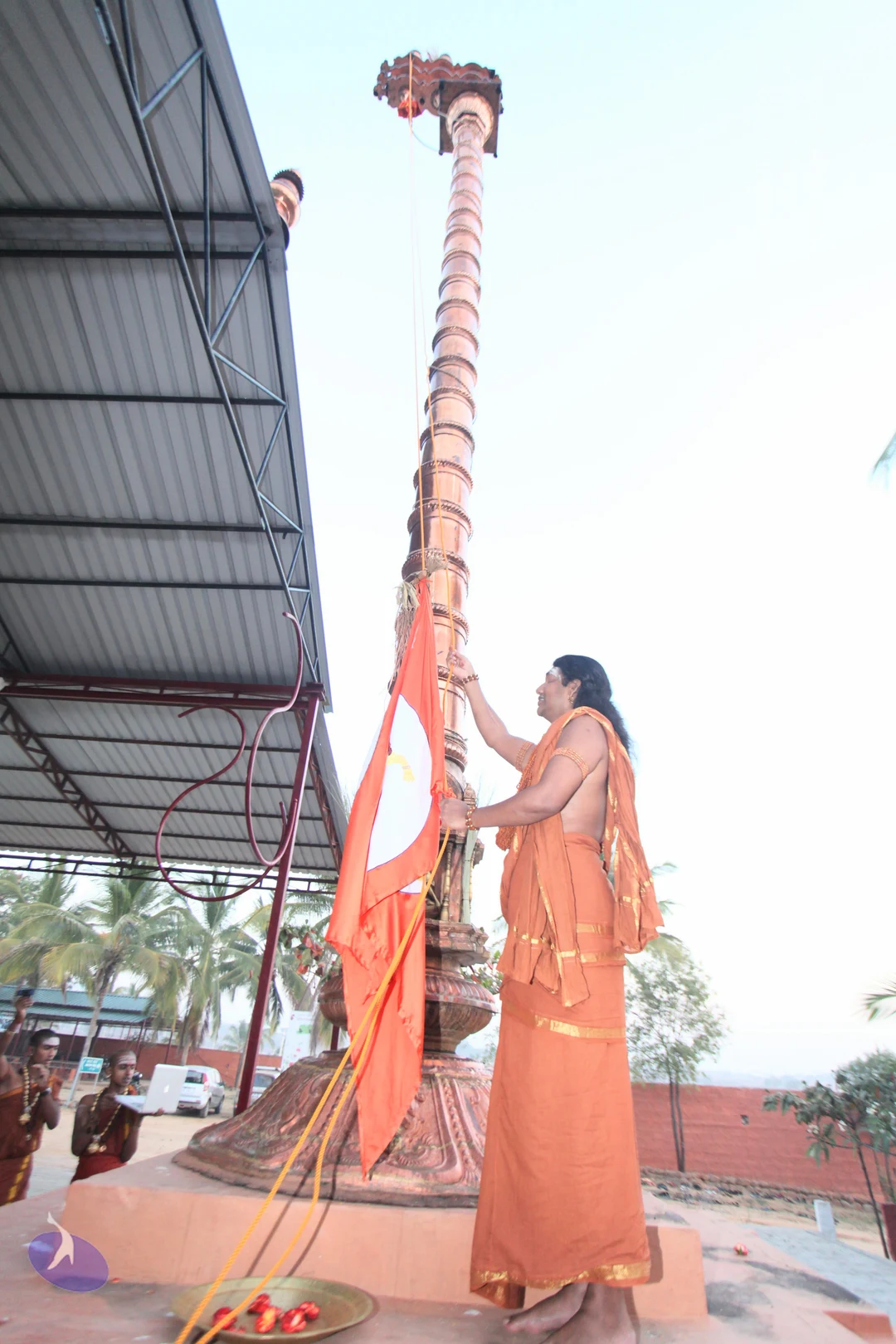
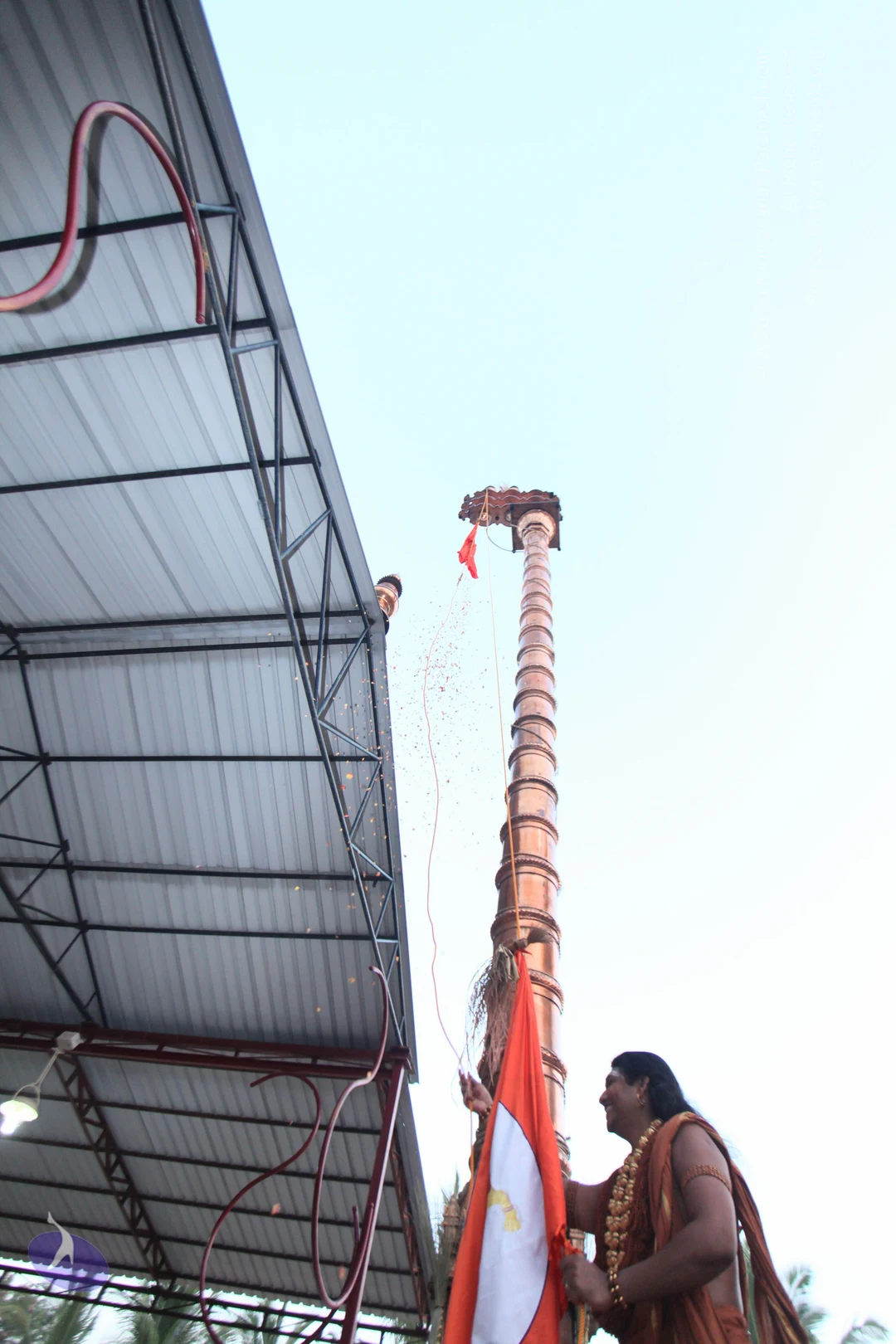
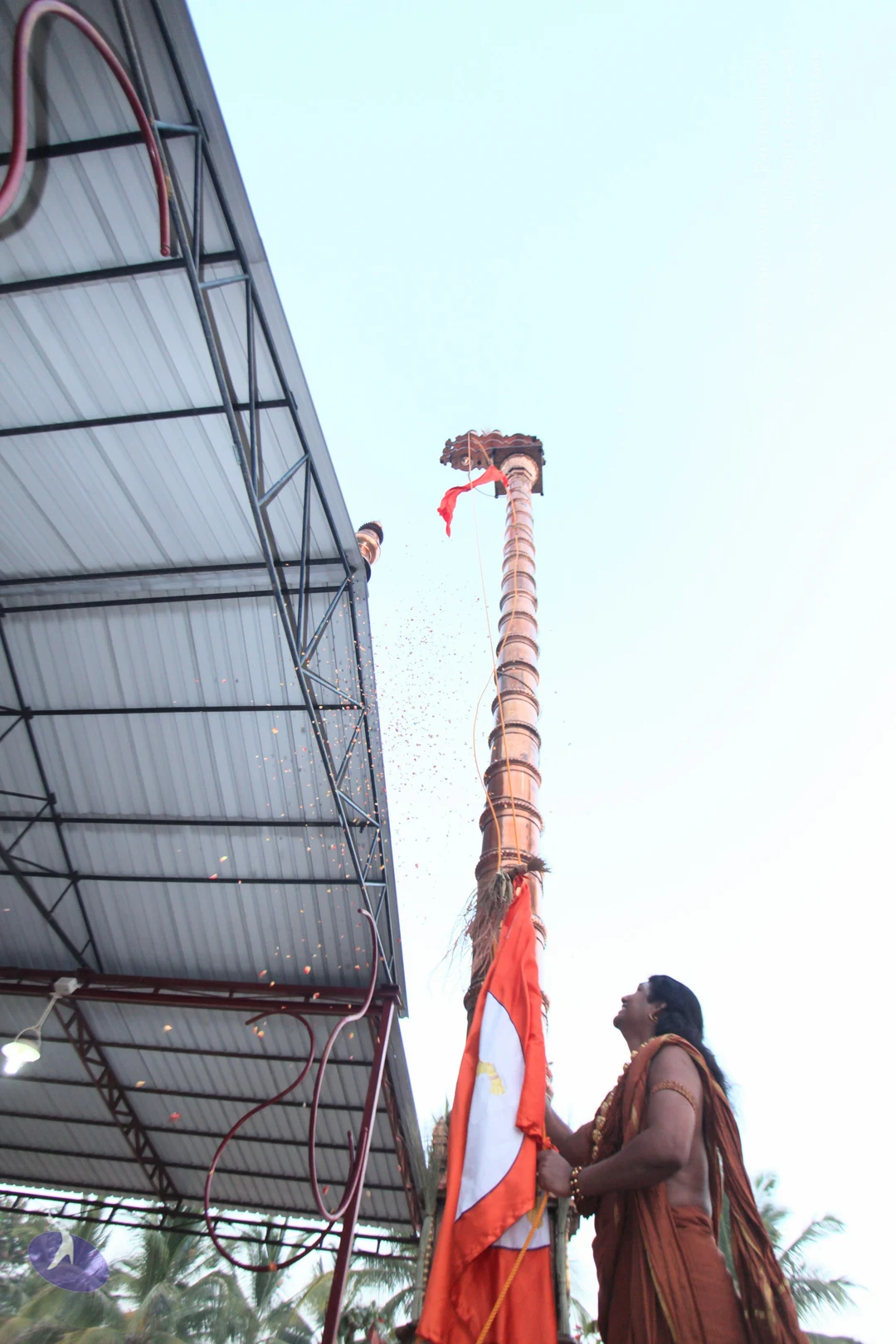
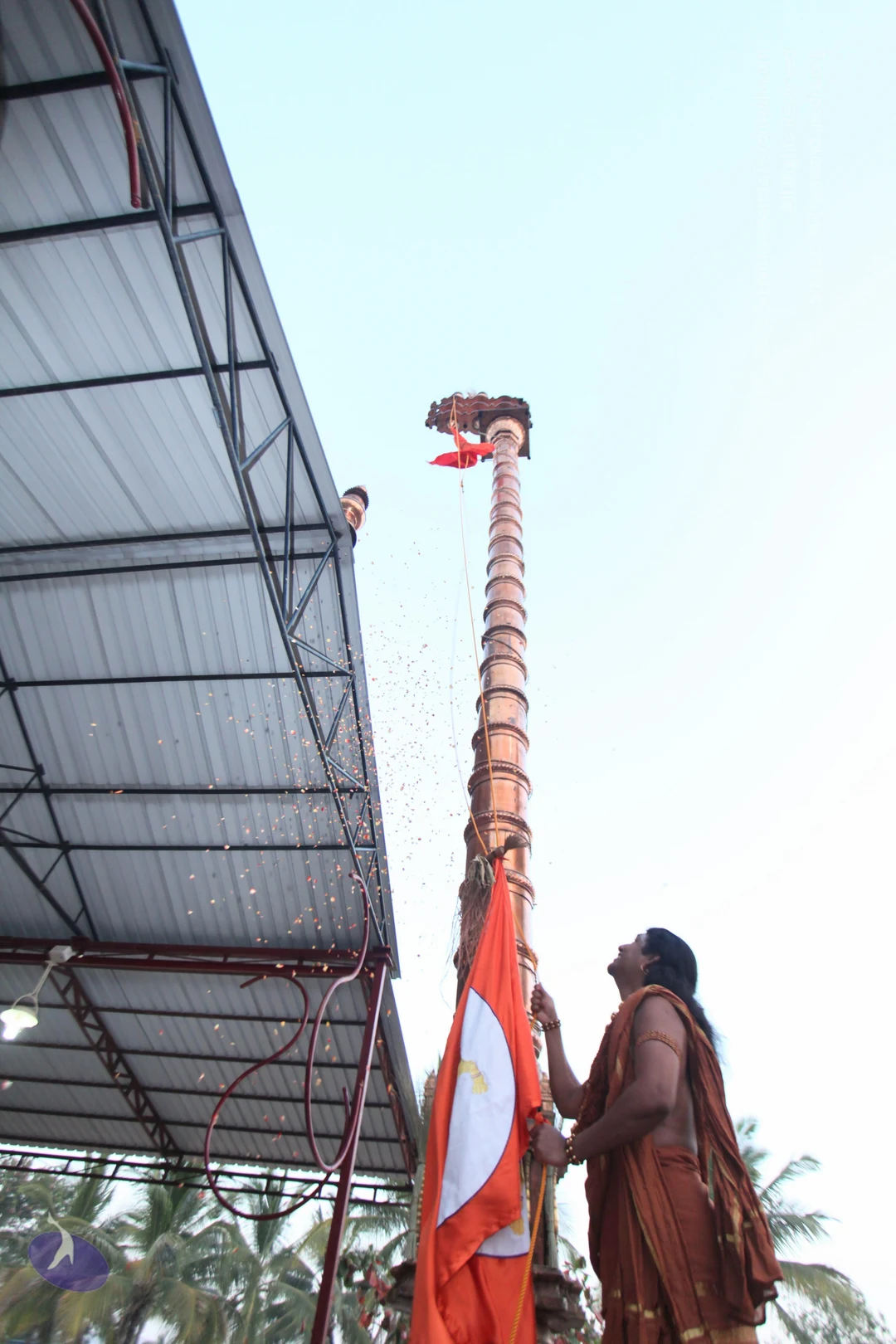
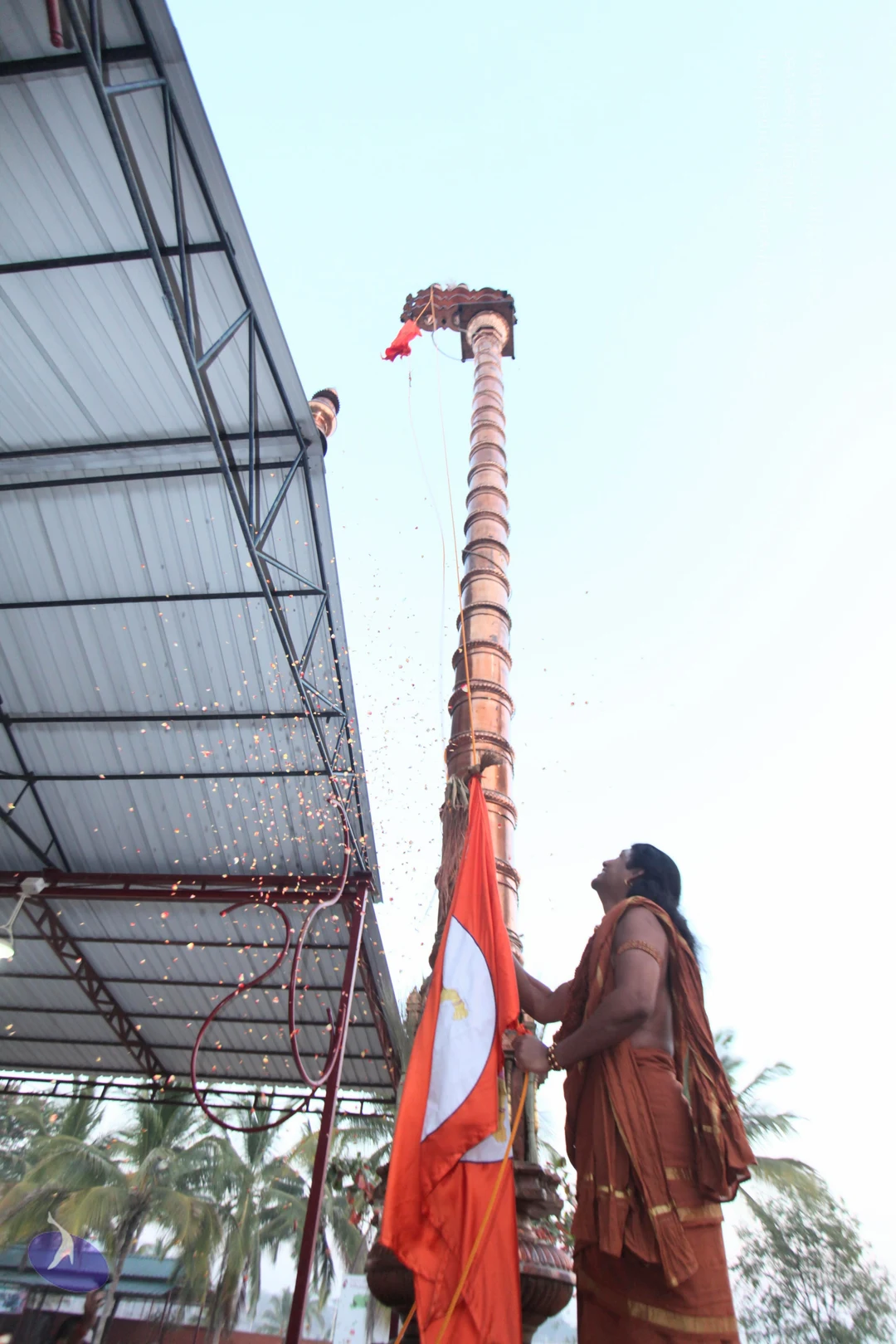
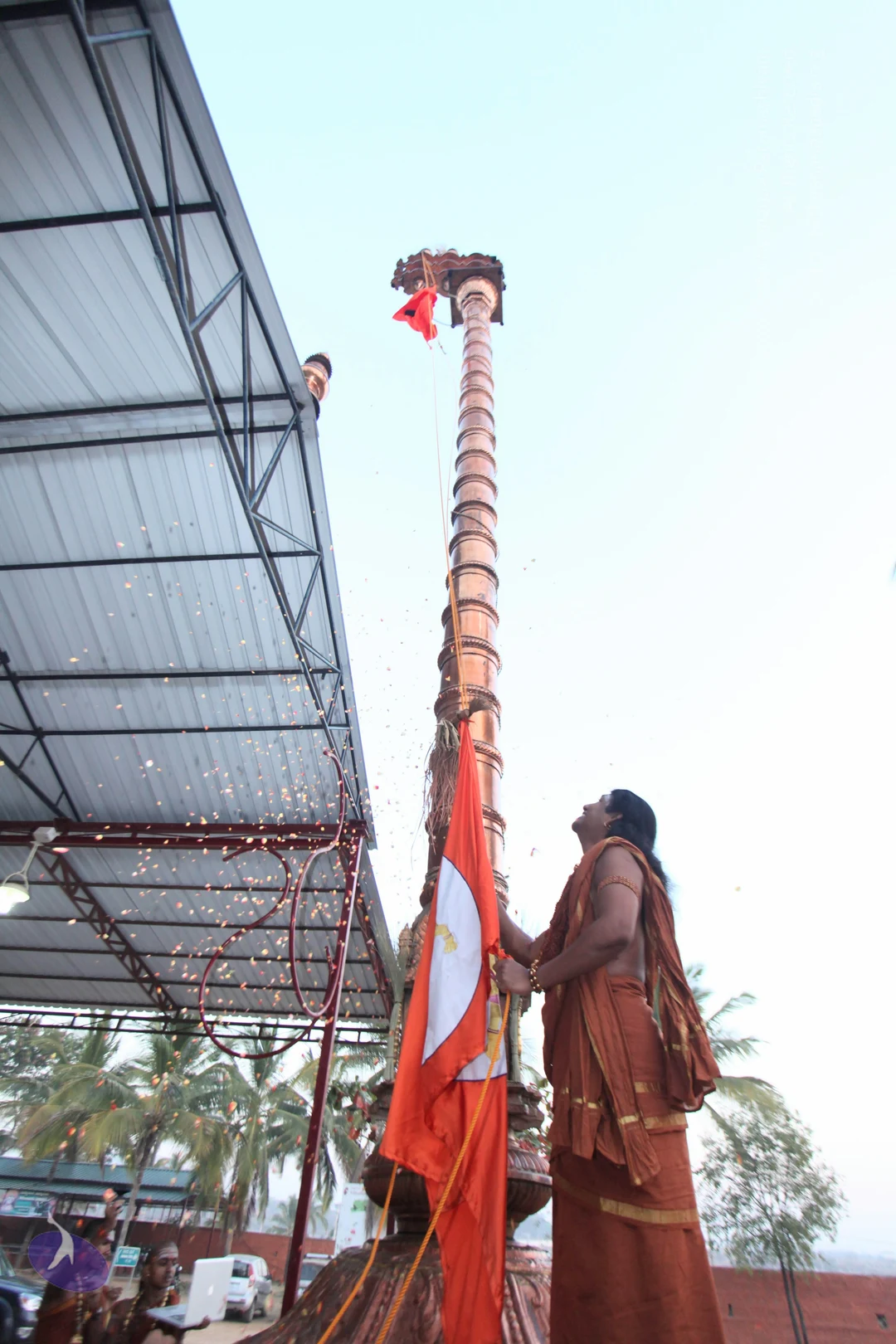
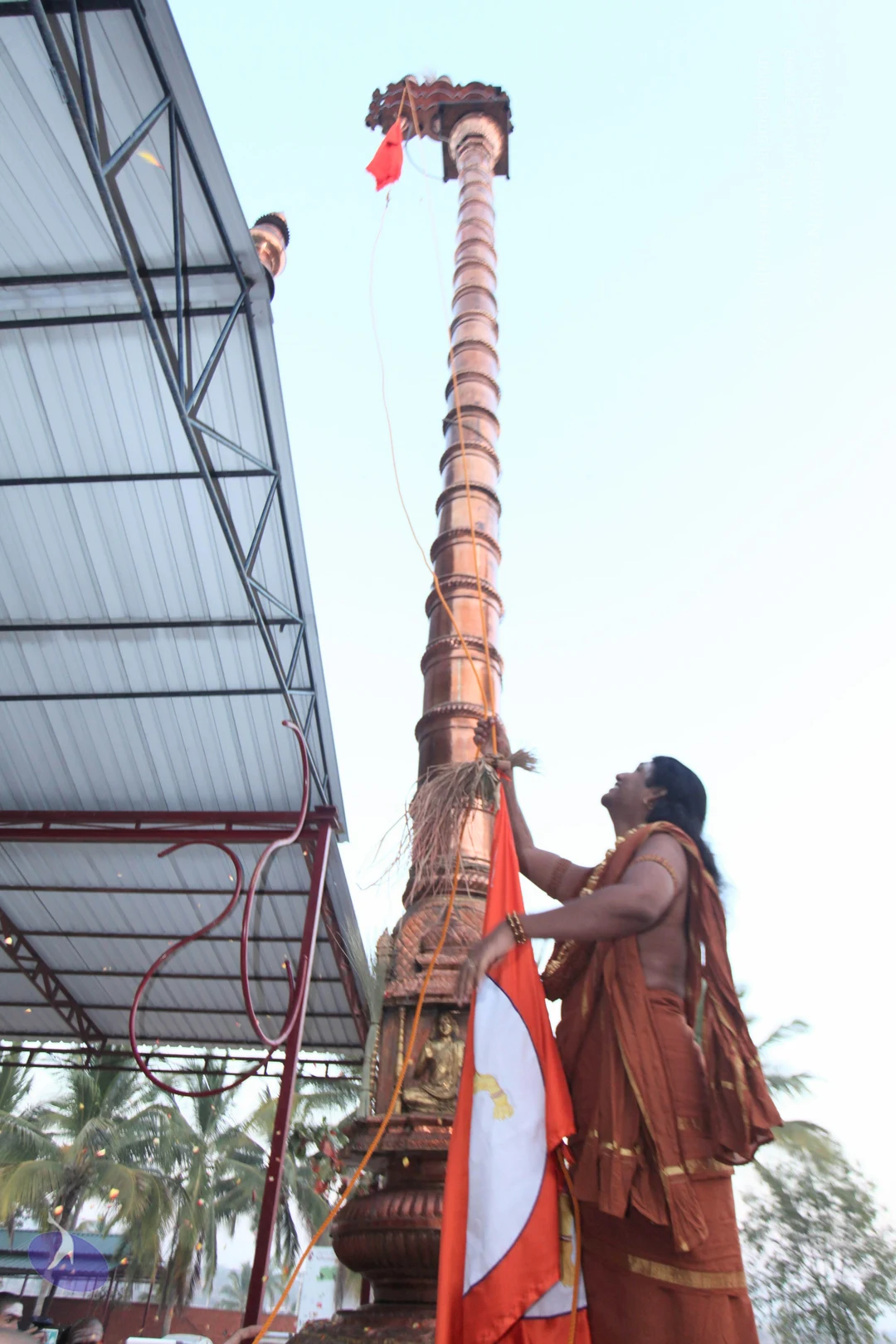
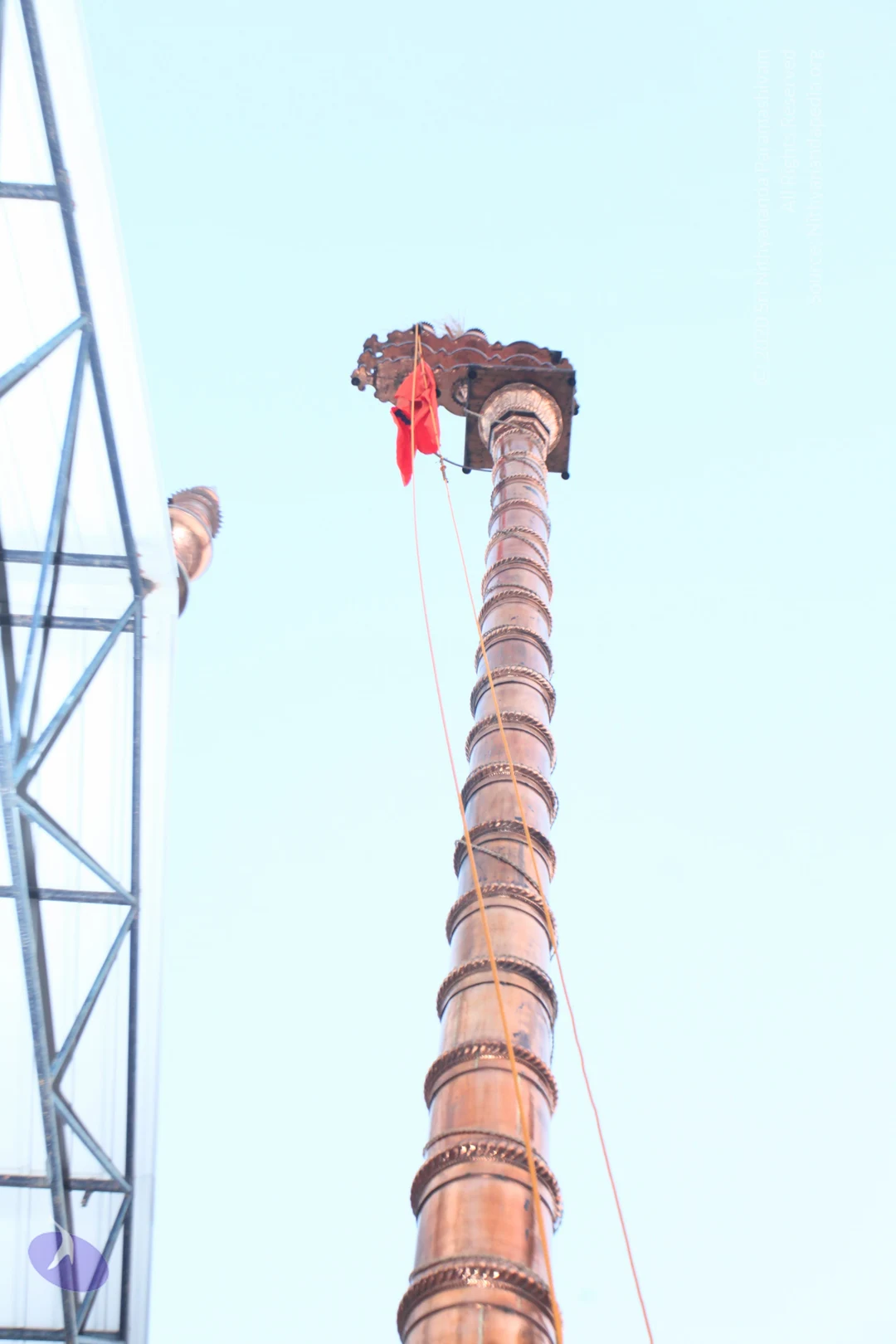
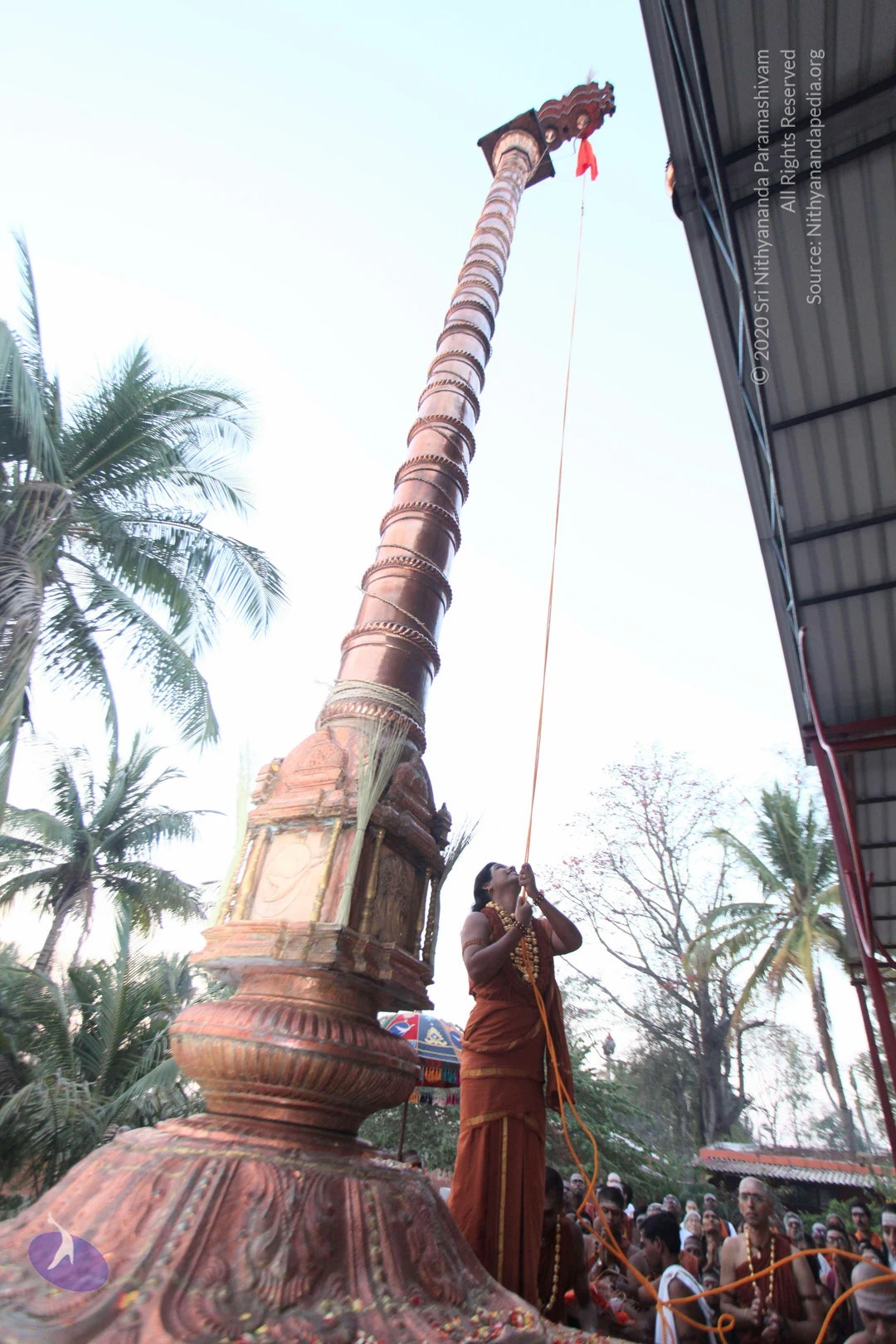
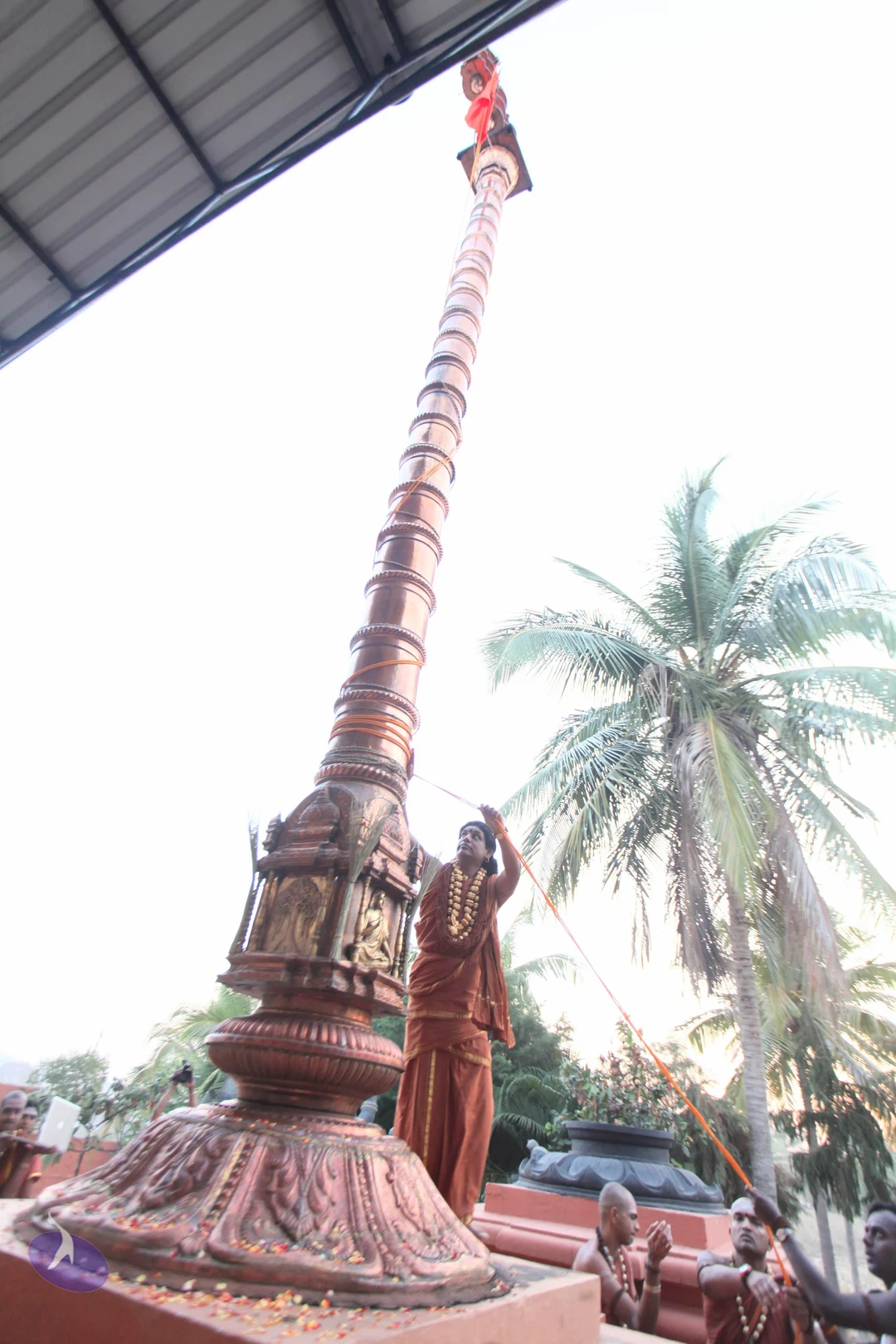
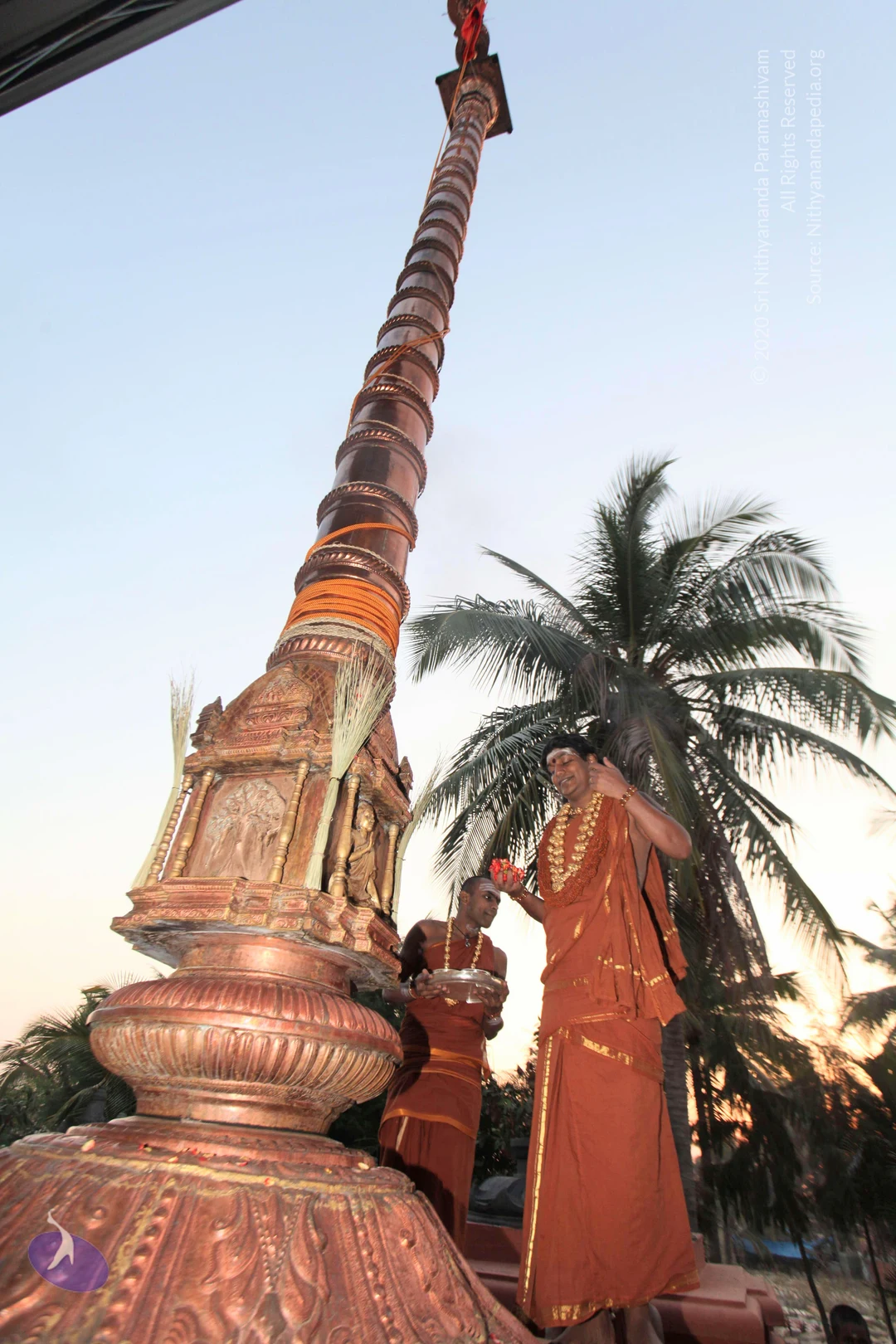
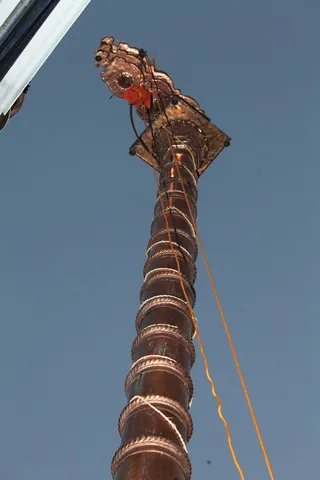
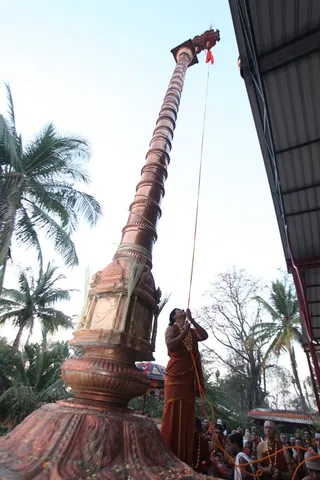
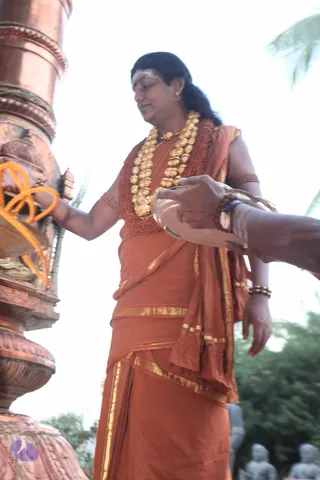
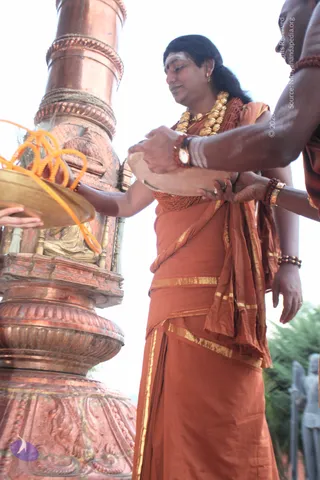
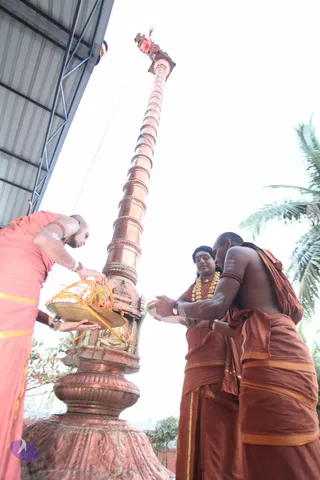
From today morning, somehow, I am feeling that new energy is happening, from today morning. I don’t know, even the celebration we had a small celebration. A flag hoisting. From today morning, somehow, I am feeling a kind of new energy is happening. We are entering into a new positive phase, our Sangha. Great. And today by raising the Nityotsava Flag, Eternal Celebration Flag Nityotsava Dwajarohanam, we also begin the celebrations officially for Mahashivarathri. Officially the Maha Shivaratri celebration is beginning. This time Maha Shivarathri, Tattva we are going to live as Satya is Swadesho Bhuvana Trayam. Listen. Matha cha Parvathy Devi, Pitha devo Maheswaraha, Bandhava Shiva Bakthascha, Swadeso Bhuvana trayam. Mother is Parvathi, Father is Shiva. Relatives are the devotees of Shiva and all the three worlds is our own country. So, the concept is Swadesho Bhuvana Trayam - means, Centers all over the world should take this beautiful occasion of Mahashivaratri, to invite and welcome and enrich all donors who had contributed to our Sangha. Even if they had bought one book, one Mala, one bracelet they are donors. Listen, they are donors. I think more than the word Swadesho Bhuvana Trayam, the word Bandhava Siva Bhakthascha will match. Bandhava Siva Bhakthaascha will be the Tattva for this Shivarathri. Okay. Bandhava Siva Bhakthascha means all Shiva's devotees are our friends and relatives. So, this Shivaratri is to enrich people calling all of them, inviting all of them and celebrating and enriching all of them with the great Prasada of four Tattvas, with the great Prasada of four Tattvas.

(00:12:49)

Next I have a message from Seattle. I will read out that and reply to them. They asked. It’s a very beautiful question. Seattle is asking, “Swami's Guruvak was that we enrich a hundred thousand lives with the four Tattvas. He also said, ‘excited hard work is Guruvak for you guys.’ We are really excited and we have started our enriching hundred thousand lives with the four Tattvas. One question that came up is, how to make it measurable? With Swami's approval and blessings we would like to Enrich lives through the website dedicated for the four Tattvas if Swami thinks this is a good idea. We commit with Integrity, Authenticity, Responsibility and Enriching others and ourselves to build this website.” Listen. Now I wanted to make it very clear. I want whatever I am giving is a spiritual instruction. First thing all of you need to know, because legally, I am not the member of Seattle Sangha but as a spiritual guide, I can give a spiritual instruction. Listen. Seattle Sangha, listen. I am very happy that you wanted to create a website for four Tattvas. You are asking the question, “How to make it measurable”? If all hundred thousand come and attend Inner Awakening and get initiated, that is the measurable way. Please understand.

(00:14:32)

Any number who come here, get initiated into those four Tattvas and start living it, that is the measurability. Muktha, clear? Swati, clear? Yes, so please understand that is measurability. So, all of you guys getting it? Muktha, getting it? That is what is real making impossible into possible. Okay? All right. You see, only if hundred thousand people come to Inner Awakening and make these tattvas as part of their life…. Hey video, what happened? It’s working? Then project the Seattle. Only if hundred thousand lives are enriched through Inner Awakening, they start living these Tattvas, only then the energy which is needed to create Nithyananda city will happen and only then Nithyananda city is useful. Understand. We don't want dead cities. Understand. There are many dead cities. We don't want dead cities. We want a living cities. If Nithyananda Nagar, Nithyananda city in Seattle, if it has to be alive city, people just need to live these Tattvas. At least a hundred thousand people should be living these Tattvas, only then it will be alive city, okay.

(00:16:48)

So, Medha Mayi, Archana Gurung, Swati, Muktha, all you guys are understanding? Yes, so it's beautiful. You guys have given a detailed plan. The website is great. Go ahead and do it. The site has definitions of four Tattvas. The website enriches Life by giving Life Solutions based on these four Tattvas. Example, if people face some problem at work how to handle it using this truth, great. Go ahead. You are on right direction. Blessings. How to handle raising children based on these Truths. Great. Go ahead. The website links to morning satsangs on the four Tattvas and also add LBP videos which talk about chakras, emotions based on these four Tattvas. Great, go ahead. Project, project ma. So it's beautiful. Go ahead. You guys were already taking up a project called Guaranteed Solutions, na? You can now do all that 108 meditations. Whatever you took it up in the 2012 project. You can now connect all that along with the, this website itself. How will you name the website? You have to give a very beautiful name, the highly searched keyword, keyword is our language, official language. So, blessings. And they are asking, “We will also request Swamiji to provide deeper understanding of other Concepts based on these four Tattvas, so that we can add them to this website. How does love, love for one's self, love for their own highest potential, love for what's around us, love of life, love of God, love for others relate to these four Tattvas”? Great. I'll go on be speaking, you just put all these questions, I will go on speaking. “Enrich lives by inviting the world to share their experiences on how they tackle their problems with these four Tattvas and add them to the website. This website can be a collective responsibility of people around the world.” Great, yes. I declare this website is the collective responsibility of Nithyananda Sangha. Sure.

(00:19:28)

We will start this website and invite the world to enhance it. Blessings. Go ahead. “When we go out to enrich people we will link to this website.” Yes, right. That's beautiful, right. You are right. Let this website talk only about four Tattvas as a first priority. Let even founder be the second priority. Understand. So, first priority is just these four Tattvas. That's great. When we … and then... “So, even if we have ads on buses or flyers, the number of unique visitors to this site will go give us some measure of enrichment.” You are right. But when I say enriching, I mean they should be coming attending the Inner Awakening, directly getting Initiated. That is the number so when I said a hundred thousand, I meant that. Yes. “Beyond that, the number of people who come to us as volunteers for programs to learn further and…. will tell us how we are enriching people beyond the website.” Yes. You are right. Blessings, great blessings. Cheth Harvey, blessings for you also. I was trying to recollect your name. Blessings. I was just trying to recollect your name. Blessings. I am with you also. So, great. So, Ma.. questions... go to the message. Great, My Blessings for all you guys. So, understand the principle. You understood. Great. Muktha done? Done, yes. Great.

(00:21:49)

Next. This is from one of My favourite daughters, Supriya. That's why I gave her the name favourite. Supriya means actually My own favourite. So, this is the message from her. It's beautiful. I'll read out and answer: “To create a core group of volunteers to actively participating in enriching our university.” Yes. Please understand. This idea of University we have started, we are working, but still we need to put more energy into it to make it alive. Before that, I have a beautiful announcement for you guys.

(00:23.13)

Swamiji enjoys the song played on ‘Sri Ranganathar’.

(00:26:35)

I will continue to read out this message and then answer. Please understand. We need to put more of our energy into this university project to make it alive and useful to people. We have to enrich the world through this University. Yes, when we start our work automatically everything comes. …. I will complete this and then tell you guys. See, just like 2012 project we had a dedicated devotees group doing it. I wanted to create now 2013 project, dedicated devotees group who will work on all these projects, mainly university project. Mainly university project. This year, this group of devotees should work on university project, which I Myself personally guiding. Please listen. We should have a dedicated group of devotees; whoever want to volunteer, you can sign up after I completely describe. In many languages to give every day Swamiji's morning satsang as University syllabus including pictures, assignments, by the end of that day, coming with the title based on Life Solutions so, we will be prepared with syllabus to launch our University in all countries by next year. And after all we are an educating organization. So, our organization is the definition, the more appropriate most appropriate definition for our organization will be religious University. That will be the best appropriate definition, non-profit religious University. So, now each .. as per each country's law you can define. In India, we are a different Trust; religious services are done in separate Trust and the educating part is done in a separate Trust. So, in each country as per their law you can mold it. Basically we are a non-profit religious University, having multiple programs, classes, education happening.

(00:30:31)

So, we should organize. We need devotees, volunteers to put this whole thing in an organized way and encouraging our devotees to do PhD on these Tattvas. Yes, every program will have a clear certification and the title. If you have completed Healers Initiation, HR can be the title for you and same way if you've completed teachers training the TR will be the title for you. And if you have completed Puja Acharya Training, PR will be the title for you. And sameway if you have completed Yogacharya training, you will have the title YTR. We will have clear title and certifications designed, developed. Vice Chancellor will be leading, Vice Chancellor, Ma Nithya Maneeshananda will be leading this project. Ma Maneesha, you are catching it? Including Inner Awakening, LBP level 1, level 2, everything should become certification program. And even the Satsangs should be the semester. And I also encourage our devotees to do PhD on these four Tattvas, through our University. And like many of My unique contributions are there; Kriyas, many specializations… meditation, many are there. So, that people start learning and we start enriching people with their…. with their lives.

(00:32:40)

And 2012 project we can have a separate, just like 2012 project, I wanted to have a dedicated separate group for this one year. I call this as 2013 University project. 2013 University project. We can start, we should start preparing syllabus, everything beautifully. We should have five types of, five levels of syllabus. Syllabus for the age zero to seven; and seven to physical maturity; and after physical maturity to twenty one; and twenty one to death; and separately specialization. Listen. Zero to seven… no,we can… I think… sorry… Zero to physical maturity. That should be one. Physical maturity to twenty one, that should be second. Twenty one to till death, that should be third. The fourth will be specialization. Like becoming yoga teacher, becoming sanyasi, becoming Healer - the specialized courses, special courses. Fifth one will be PhD, separate PhDs. So, we should start developing syllabuses. Zero to physical maturity: Ma Advaith, you will take the responsibility. And physical maturity to twenty one: who will take the responsibility? Youth.. Atma and Bhairavika and Supriya. All three of you guys will take the responsibility. And twenty one to till death, Ma Maneesha, you will take the responsibility. And no it is needed, it is needed. And then... Gurusmarana, first you complete all your inauthenticities. You should not have taken the Kaavi with so many incompletions. First complete all that and do Prayaschitta for all that. Only then I can include you into anything. You have to complete all that and doing Prayaschitta for all that has to be done.

(00:35:44)

So now… and then this specialization. Ma, specialization courses who will design? Okay. And then PhD, I think all the three you have to manage. Hmm Yes. So, Seattle Chidambaram, you guys can also contribute material and take material from this. Lot of things will be almost similar, you understand? Ma, whatever material you create will be many way useful for every one of them. Common pool, the think - tank … common think tank and Collegium. Use right words. Nithyananda Collegium of universities. And the university guys, you should think continuously in the language of University. Even Annalaya is your Extension Center. Maneesha, you are listening? Even, every Ashram, every temple is your extended campus. Even our Annalayas is your Extension Center. Yes, hmm, hmm. we are a non-profit, religious University. If you are interested in enriching yourself and others by participating in this project: 2013 university project, please send email to [email protected] 2013 university… [email protected] Come on, let Me see. How many of you are… Please listen, if you have already become part of the Annamandir, Annalaya project do not commit now. If you are that authentic you will be able to do both, then commit. So, how many wants to commit for this? Listen. But remember you have to be in integrity if you commit. How many of you want to commit for this 2013 university project? Raise your hand. Wow. Good number. Ma Maneesha, stand up and just look around. You should know. I will not be able to tell.

(00:39:22)

So, 2013 university project? All the people who are committing, please send an email today to this mail ID: [email protected] okay. Even Nithyananda Publishers will become part of Nithyananda University. Please listen. Just like Oxford publishers, each University have their own Publishers. They have their own publisher, what they called. They have a unique name. So, take the Responsibility. Each University has their own publishers, just like that, Nithyananda Publishers also will be part of the… this University. Wonderful. In a way if we align everything and with all our energy bring ourself to enriching ourself and to others, we will be the largest religious University in the world. And these four Tattvas are so powerful. If you live, you can enrich anybody's life just with these four Tattvas. From any background... he may be a beggar to prince. So, be very clear, we can enrich anybody with these four Tattvas in their life.

(00:41:44)

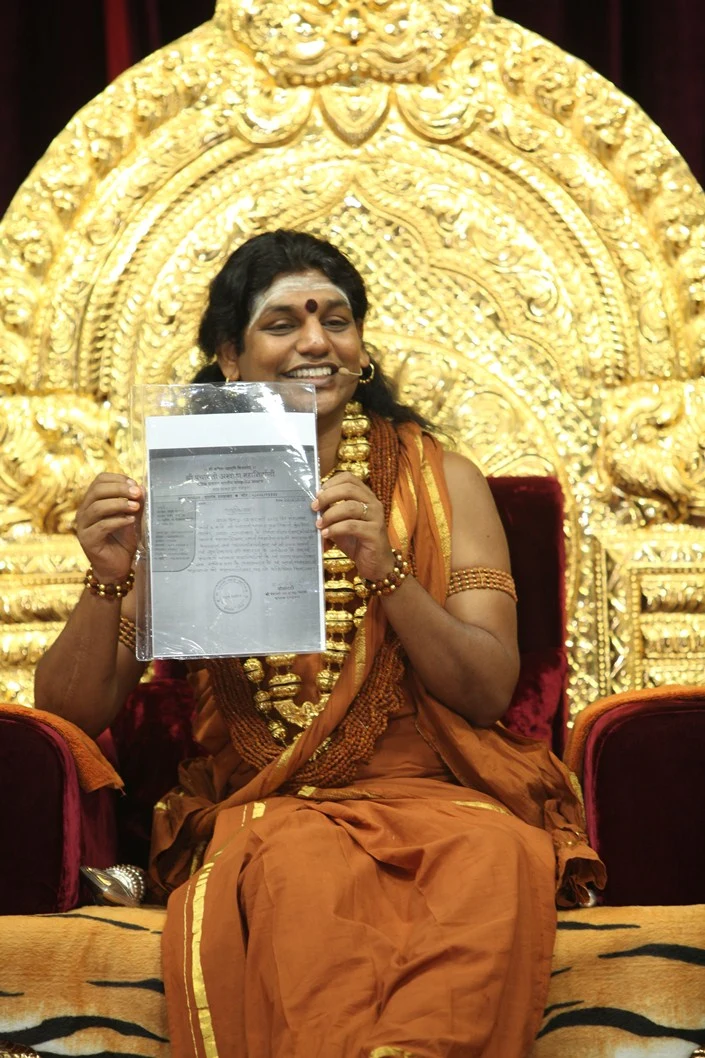
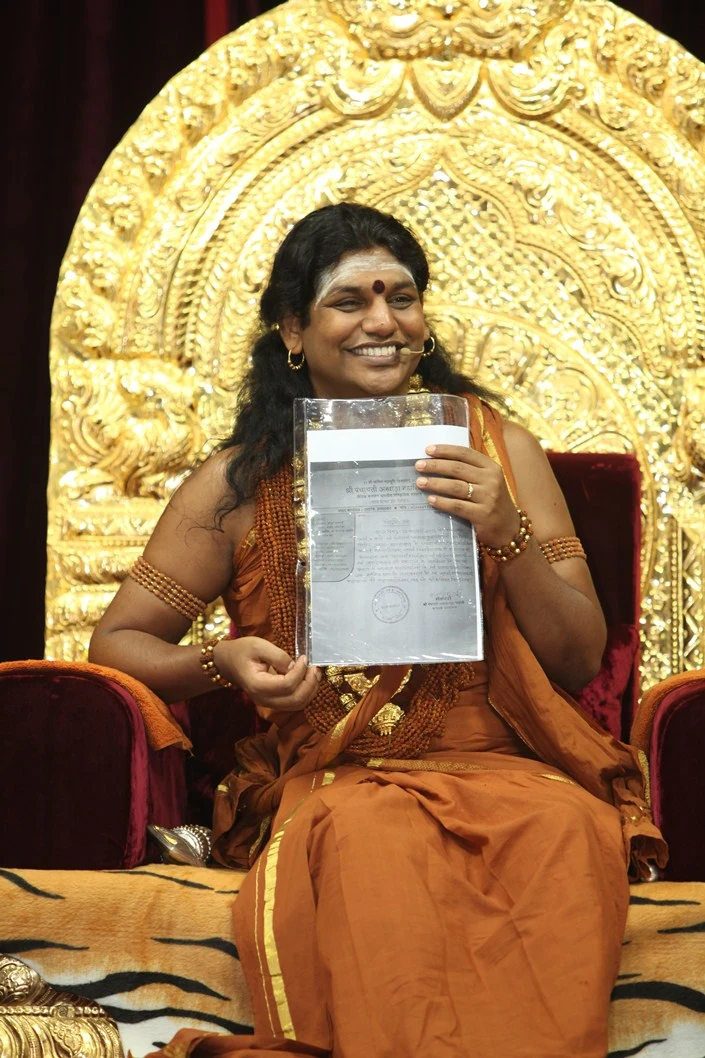
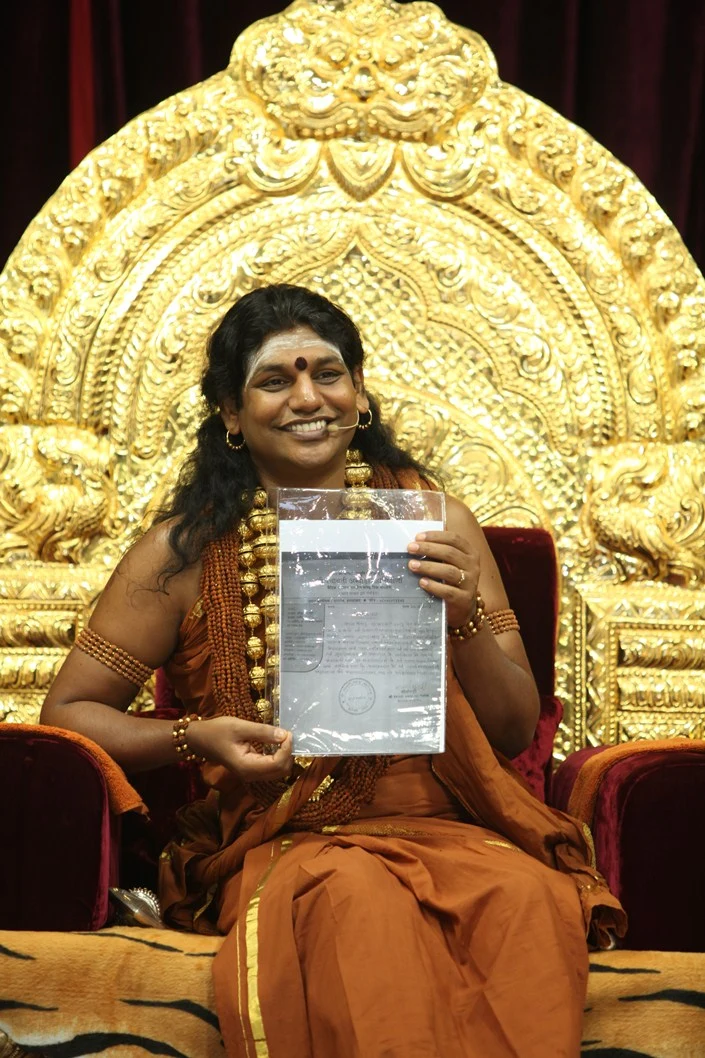
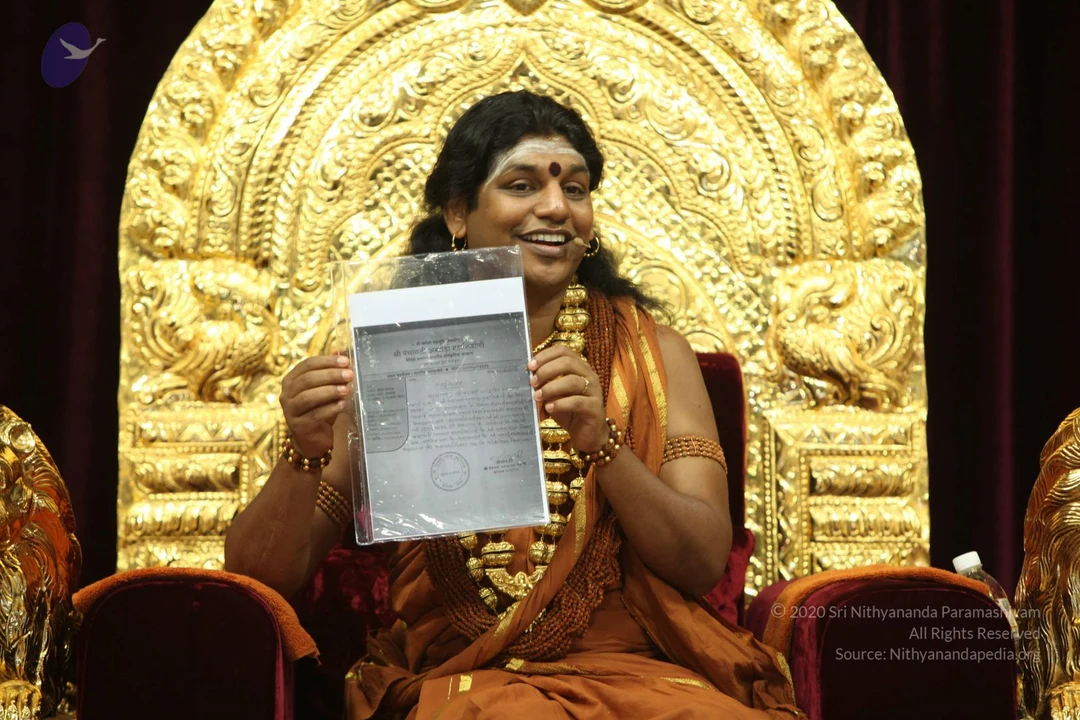
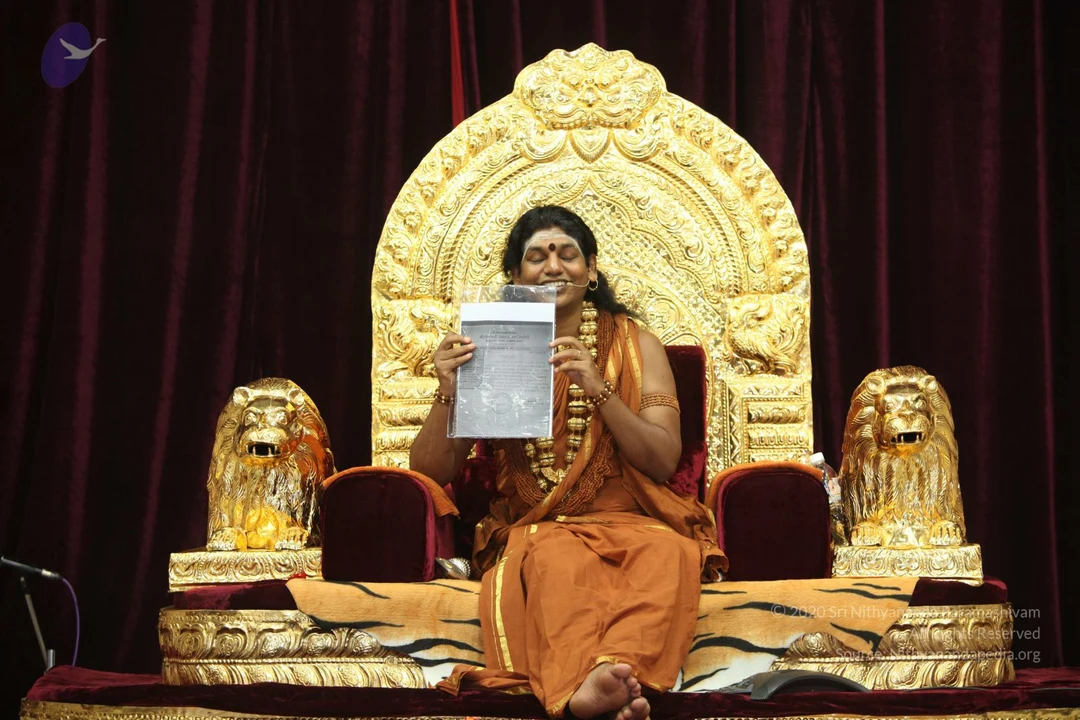
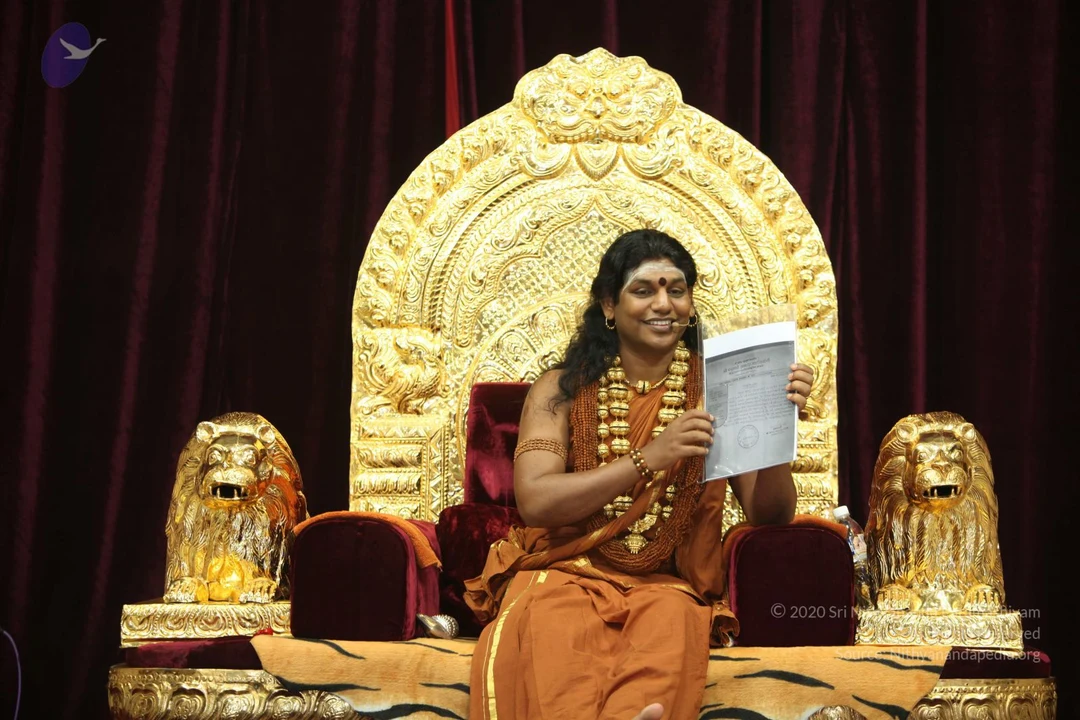
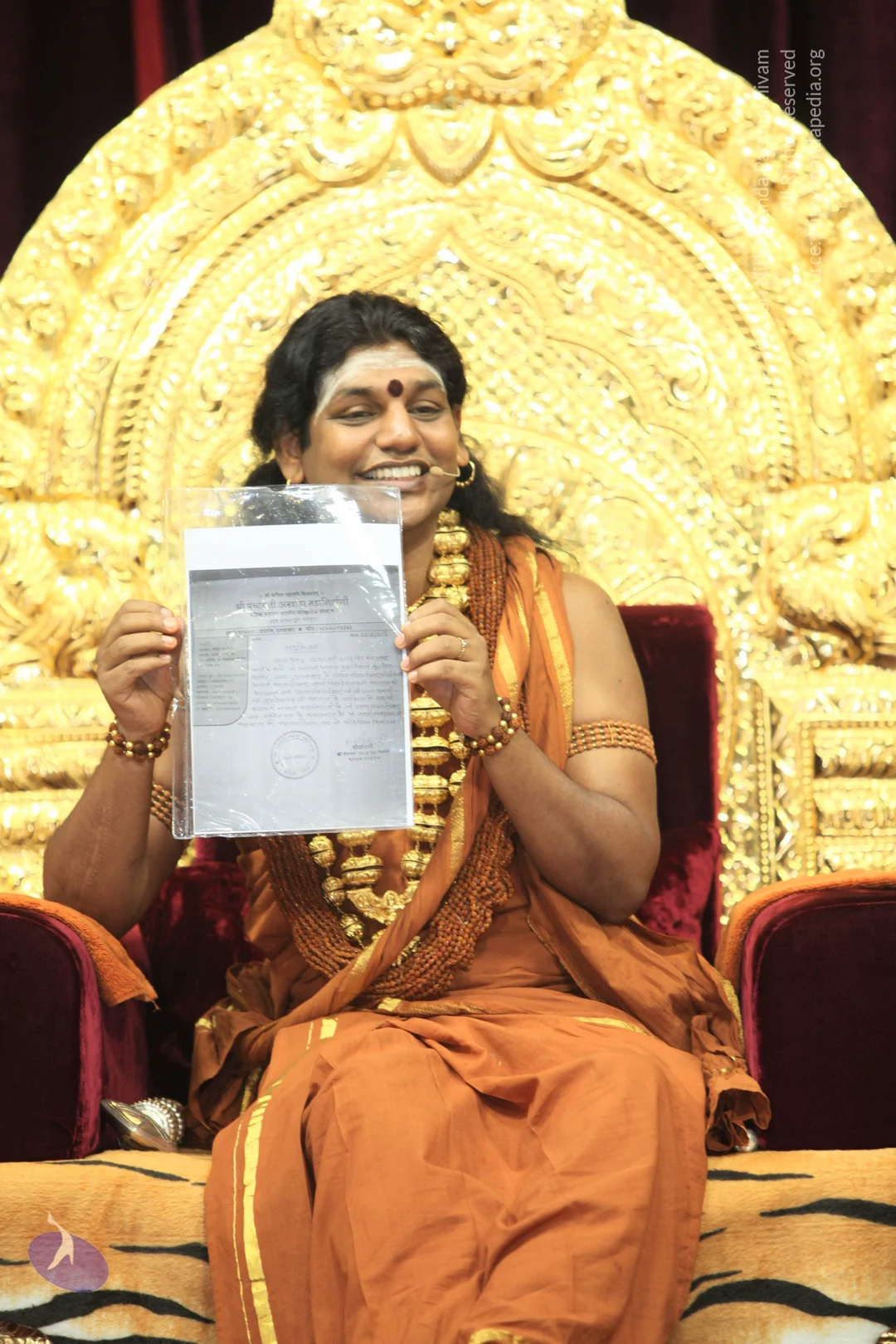
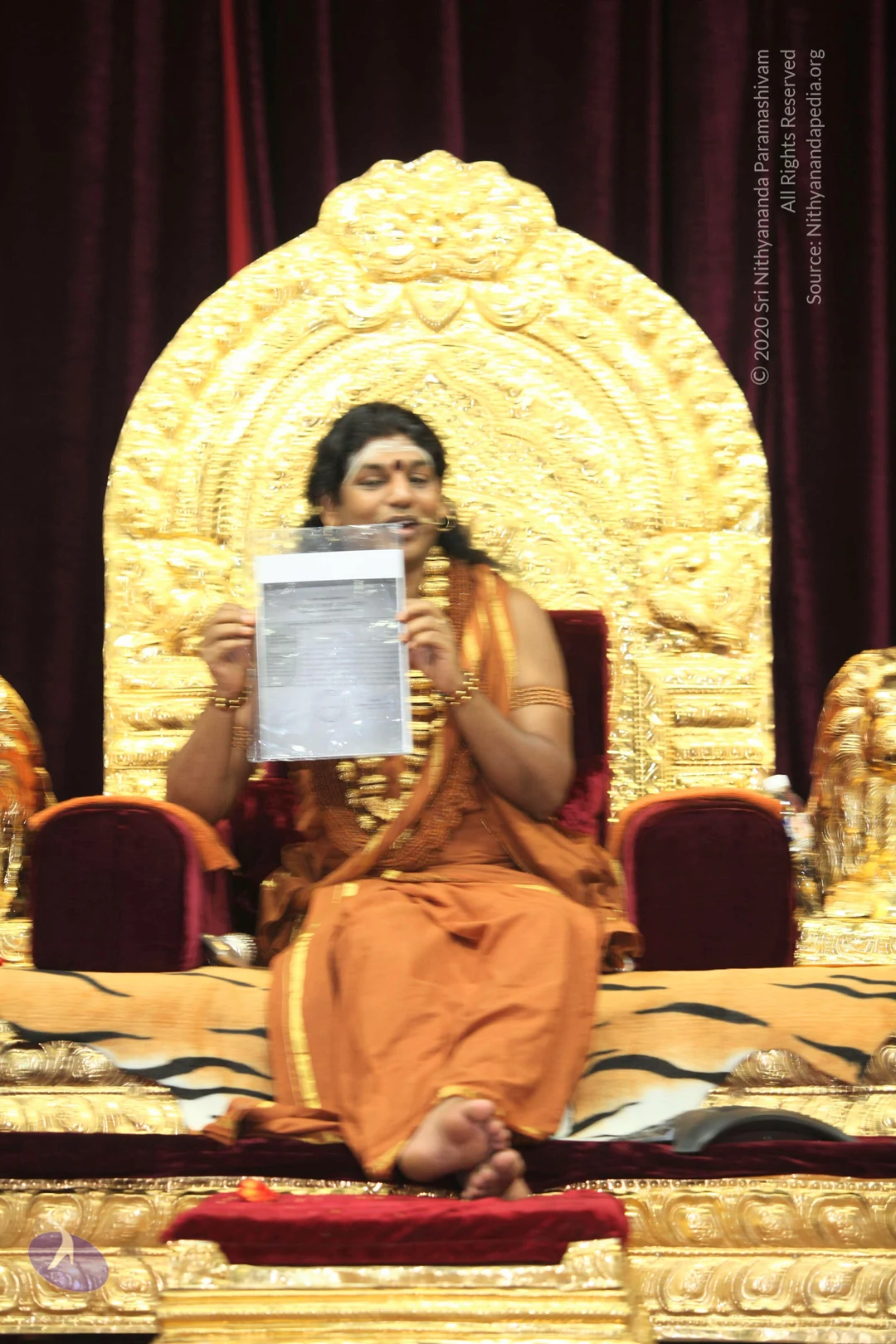
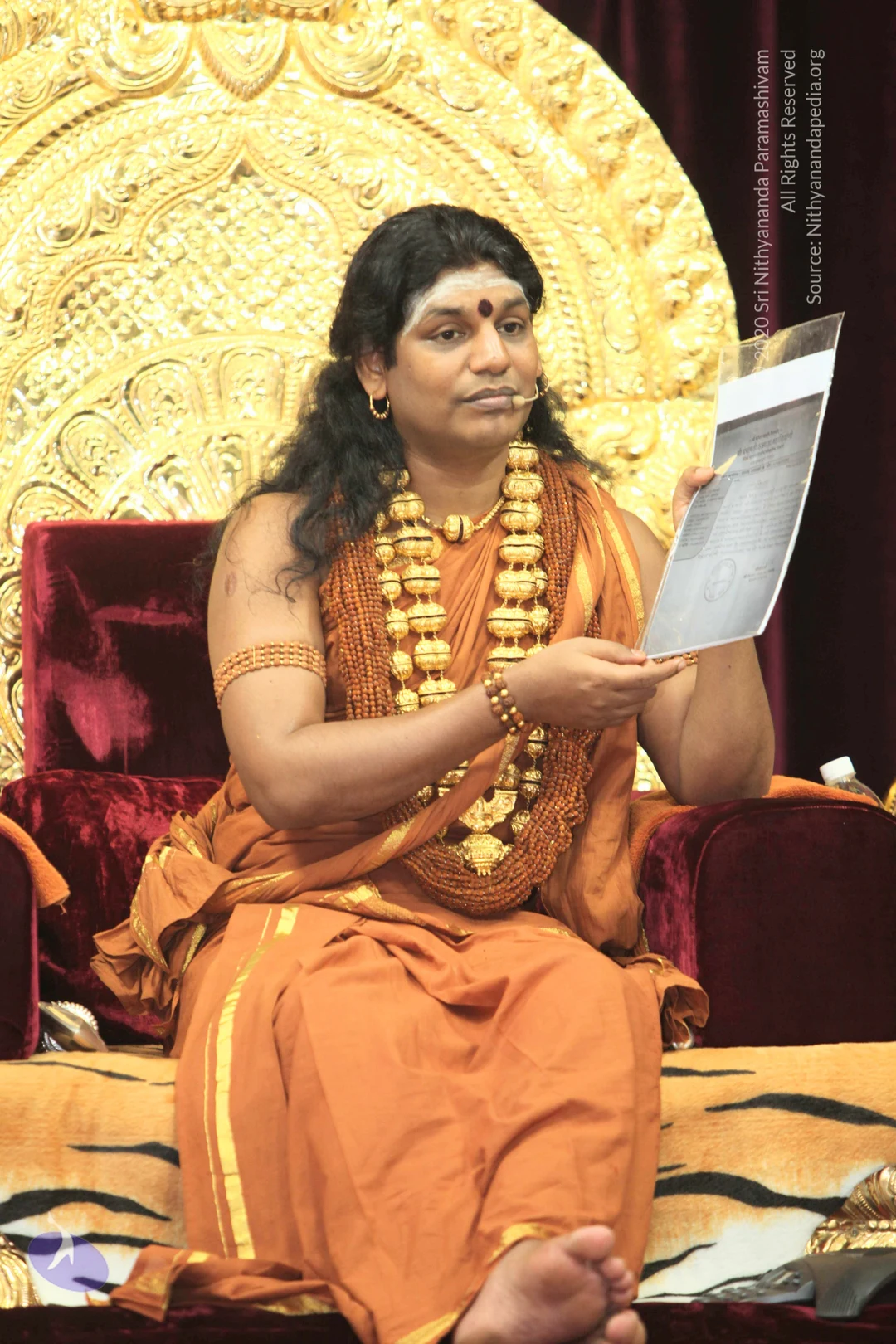
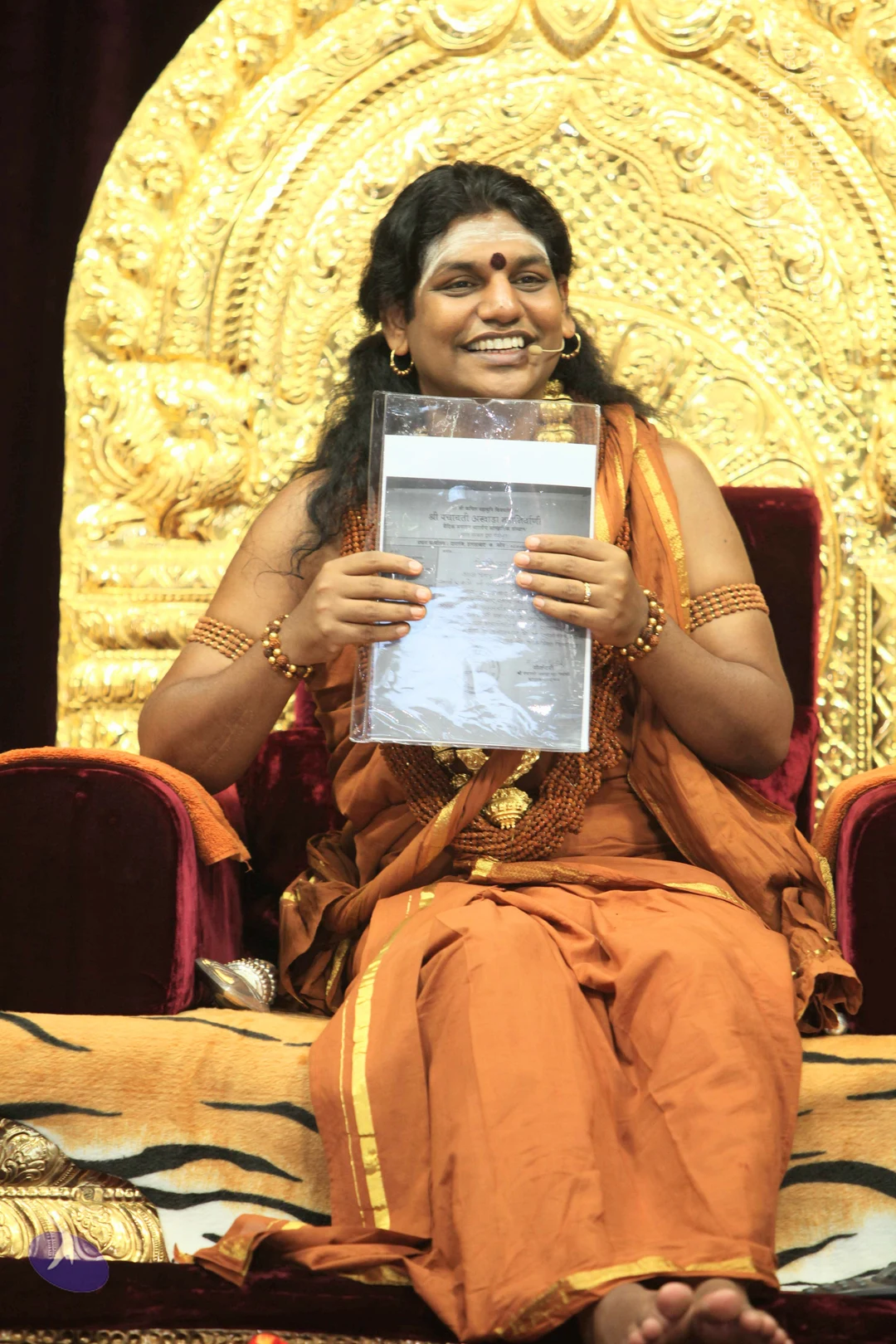
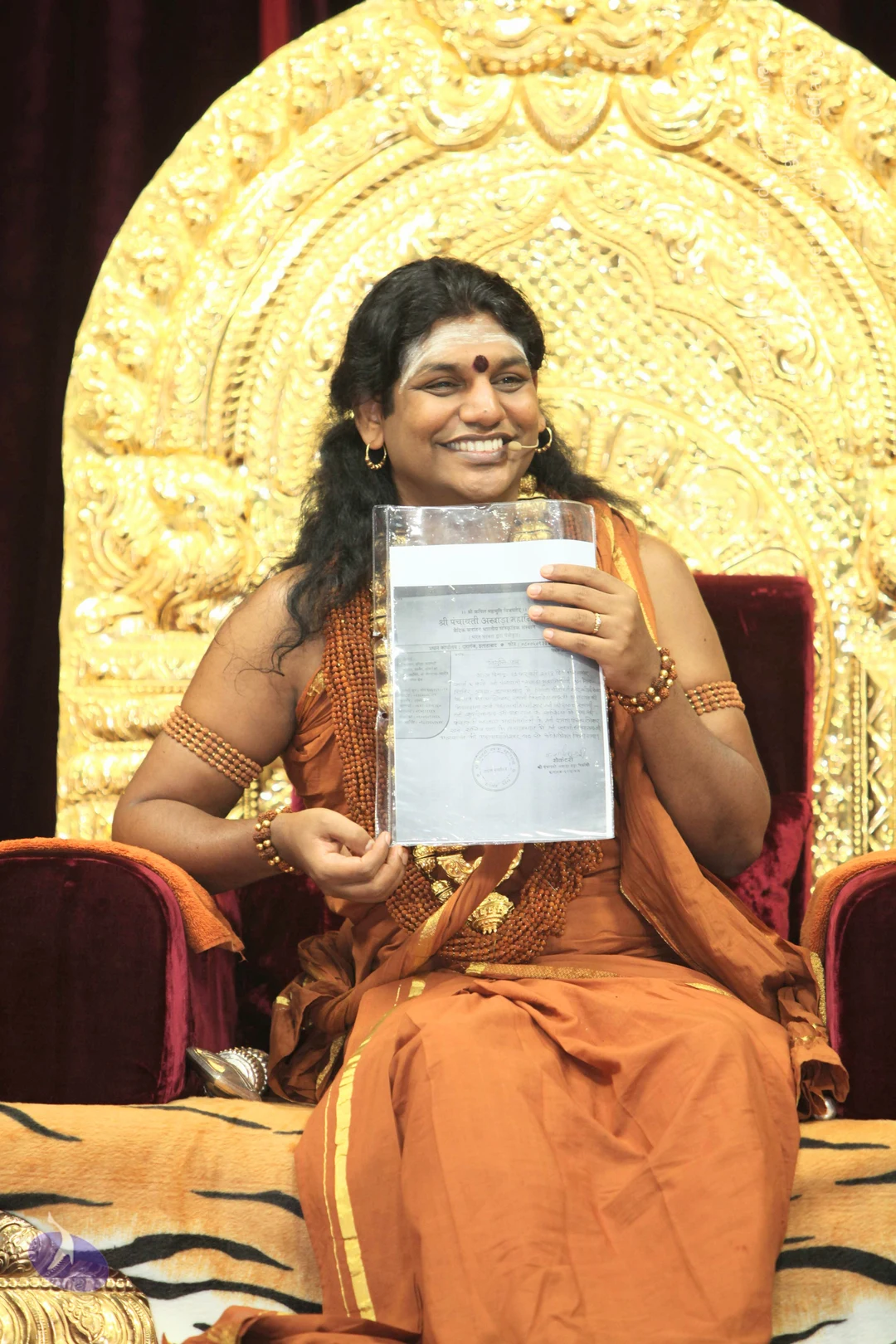
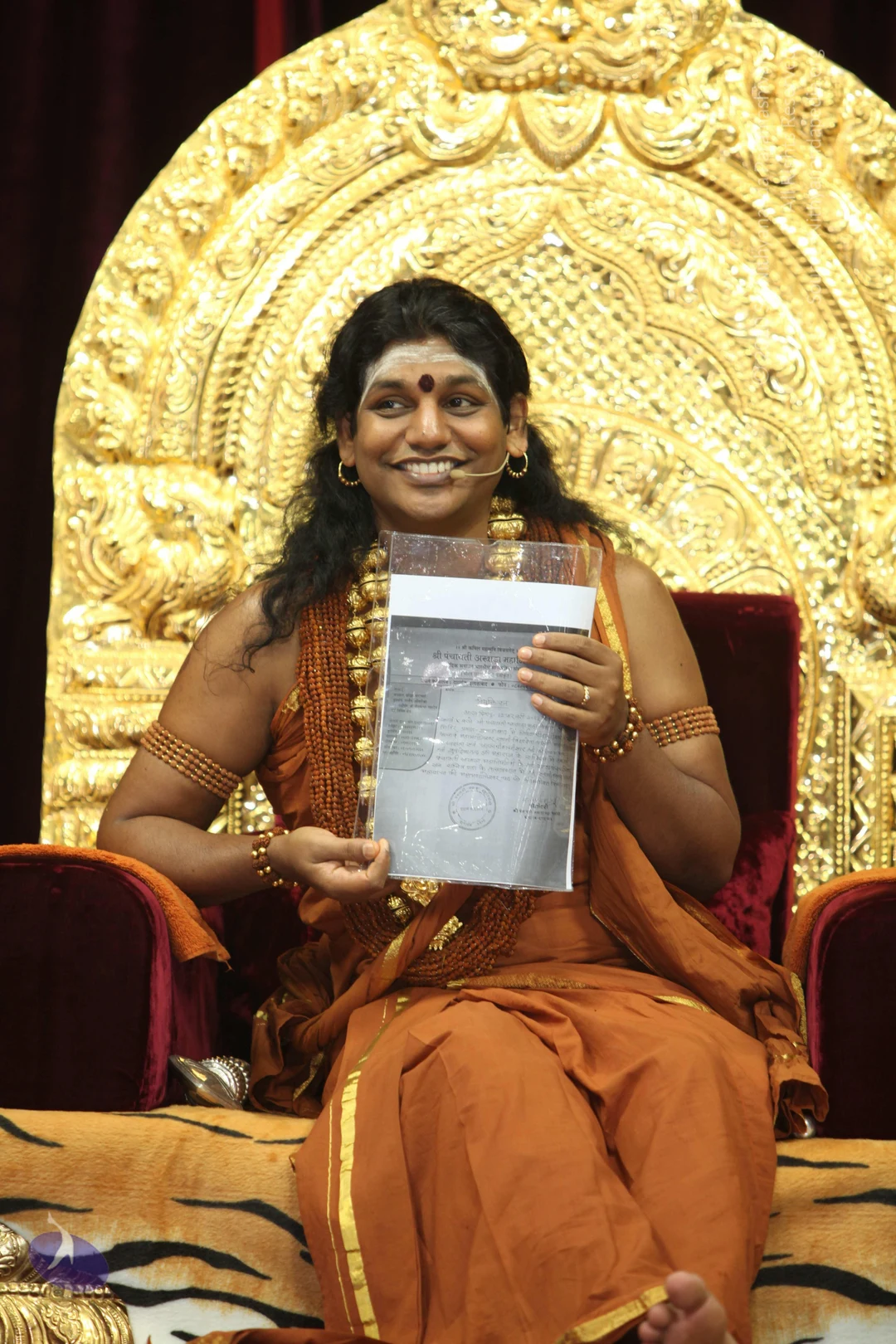
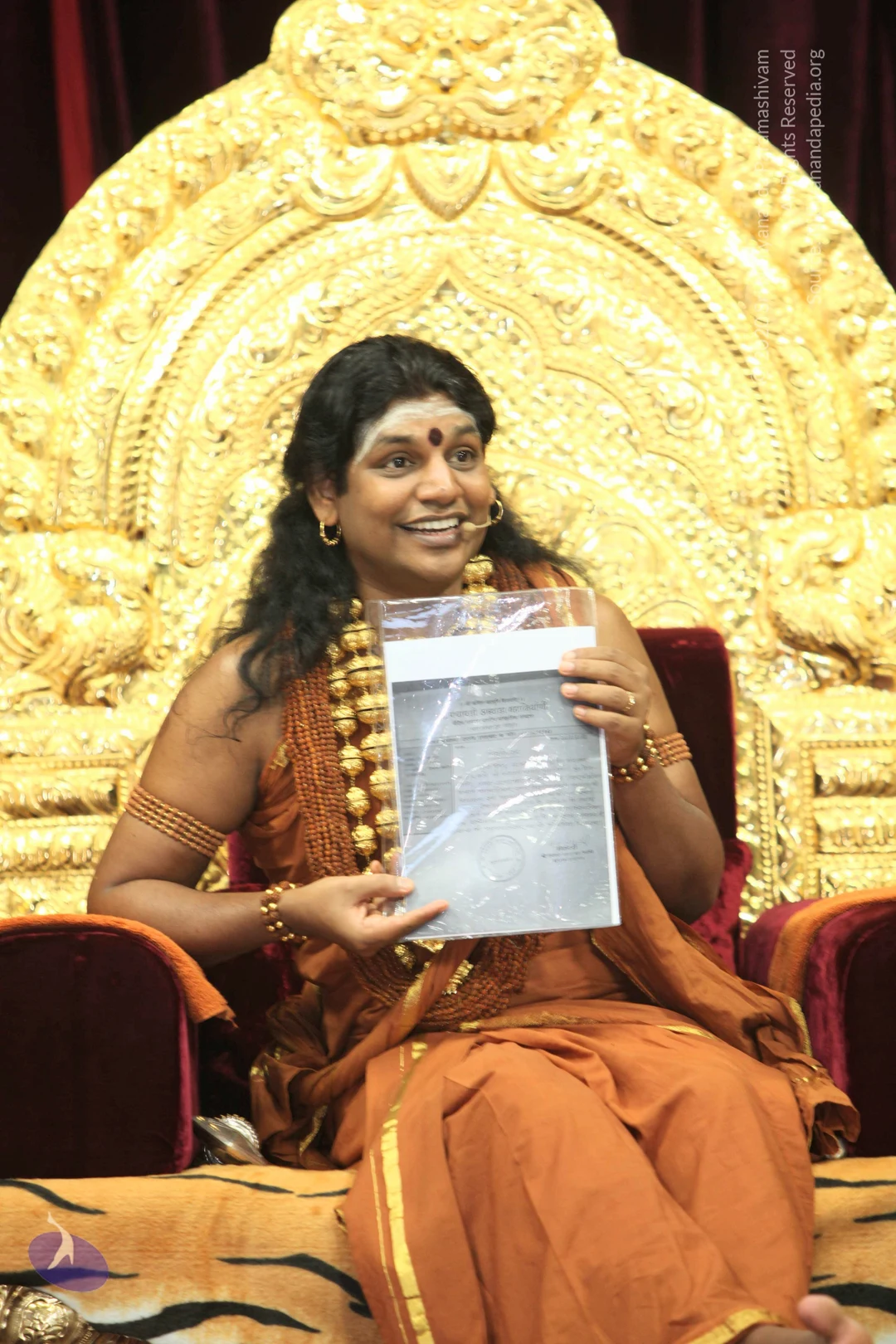
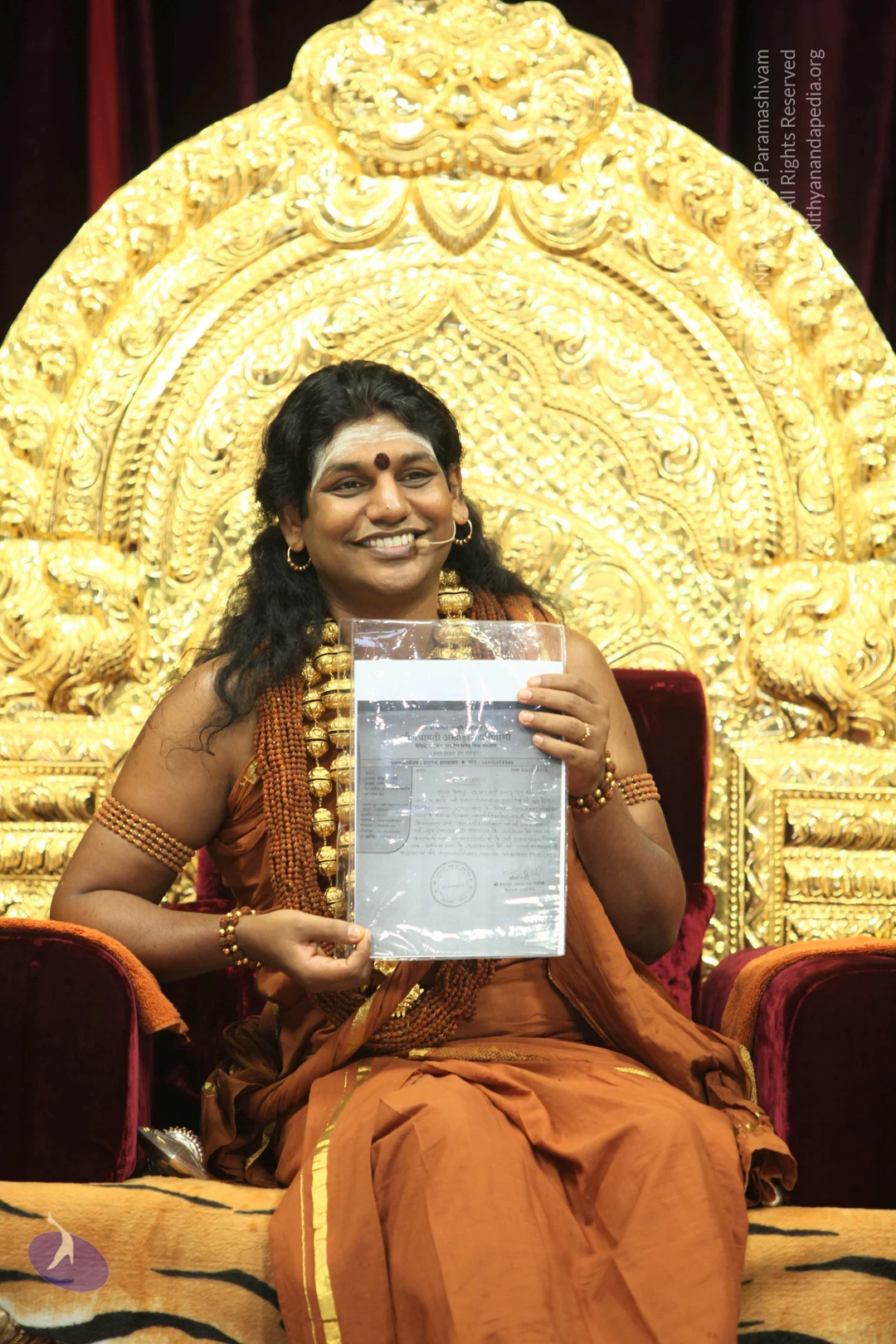
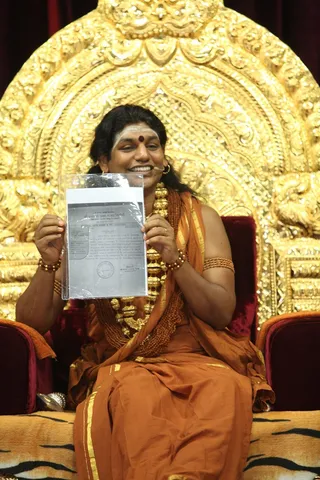
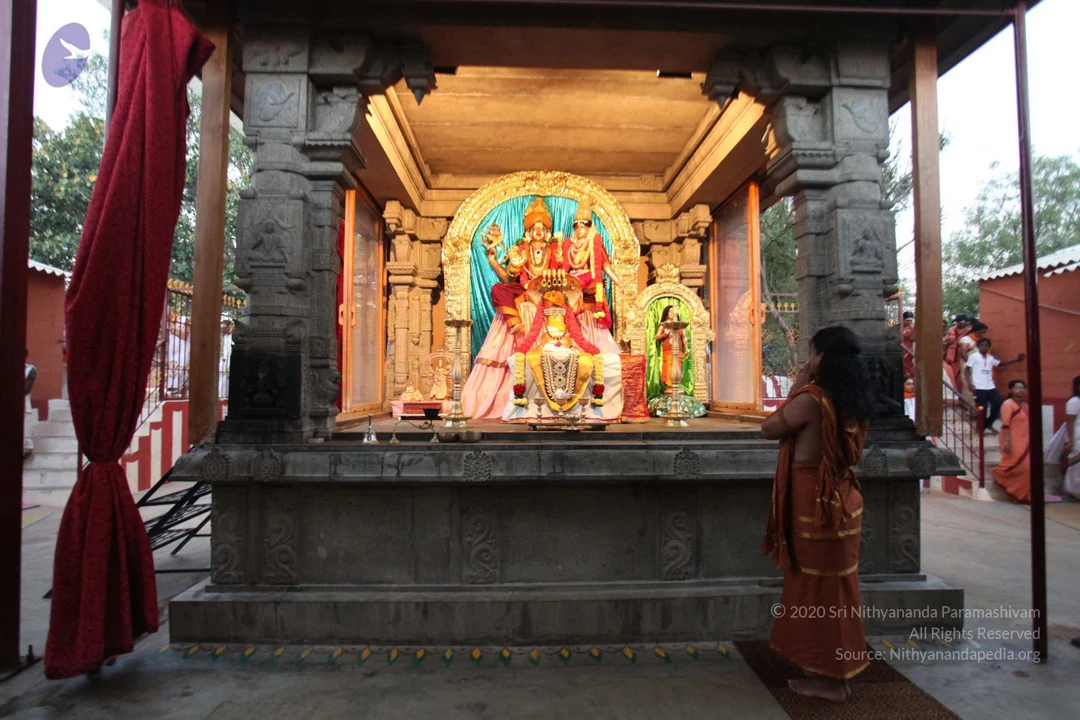
So, each university has their own University Press. We will also have our Nithyananda Publishers as.. We will rechange, we will change the name into Nithyananda University Press. I have a beautiful thing to show you guys. This is the official letter from Mahanirvani Akhada, accepting us as Mahamandaleshwar, and declaring Paramahamsa Nithyananda as their 44th Mahamandaleshwar. And it is signed by secretary, Sri Panchayati Mahanirvani Akhada. Mahanirvani Peetha. Yes, you can all see and it reads out clearly, “To Acharya Mandleshwar. Mahanirvani Akhada and Atali Akhada. Both Acharya Mandaleshwars personally conferred the title Mahanirvani Akhada's Mahamandaleshwar to Paramahamsa Nithyananda after the election and selection, voting of unanimously. Unanimously voting, and selecting Him as Mahamandaleshwar.” It reads out the date, time and all that. Sri Panchayatya Akhada Mahanirvani Kumbha Mela Shibir, Prayag Allahabad, Nirvan Peethadheeshwar Sri Sri Sri 1008 Acharya Mahamandaleshwar Swami Vishwadevananda ji Maharaj's Presidency and Atal Peethadeeshwar Sri Sri 1008 Swami Sri Sukadevananda ji Maharaj's presence and Sri Panchayati Akhada Mahanirvanis Sri Panch Parameshwar - Means that is the Ministry, Cabinet - Panch Parmeshwar and secretary team's guidance; means the whole, all of them unanimously. Sri Swami Nithyananda ji Maharaj has been coronated with the post of Mahamandaleshwar. That is the meaning, Read of the letter. So, now we are officially part of the age-old Vedic Hindu tradition. And we are officially part of the oldest apex body of Hinduism.

(00:45:30)

Dhyan Se suniye. Mein phir se char tattvon ka paribhasha de raha hoon. I'll again give the essence of four Tattvas. Especially I have to today expand on Responsibility and Integrity. I also wanted to share these few things about Viraja Homa and Sannyas and everything. Listen. Every time when you take a new steps like a going through certain ritual like taking Kaavi, taking Brahmacharya, taking Sannyas, going through Viraja Homa, there is a big possibility for your transformation. Taking jump into the next level of consciousness. If you take it without preparation, you will set a very low standard for you. I am not going to say, “No”. The moment you ask I am going to give. But if you set a low standard for you, you are missing one more door opening. So, practice Integrity, Authenticity, Responsibility Enriching intensely. Don't give place for your greed for Sannyas. Greed for that possession. Greed for that color. Greed for your fantasies. No. Decide consciously. ‘Am I going to use this door? When I do the door Viraja Homa I should literally disappear into the four four Tattva fire, jnanagni. In that way should I take Shivaratri or Guru Purnima?’ Contemplate. Plan. When I open it to all, I throw the responsibility back on you. With incompletion if you jump into these rituals you miss one of the possibilities. Complete. Complete with Integrity and Authenticity, then take the jump. So, whoever has applied for Krama Brahmacharya, Naishtika Brahmacharya, Sannyasa, all of you first and foremost work: work on your root patterns, complete them. After completing with the base of the root patterns, then only the possibility of Sannyas can be experienced through you authentically. It is a space of Sanyas. Understand. The space of Sanyas. Krupaya suniye. Please listen.

(00:50:13)

So, listen. Before you take up Kaavi, Viraja Homa, Sannyas Initiation or requesting for Rishi order, create the space of Sannyas in you. Don't take it up just because of greed. When you become head of a organization, you are responsible for others inauthenticity also. If others do churning of the ocean without your permission, even then, if poison comes you are responsible for it. They have not taken Shiva's blessings or permission to churn the ocean. But when poison came who took the responsibility? Shiva took the responsibility. That is what is the leader and leadership consciousness. So, listen. Every human being, actually every human body becomes human being only when you start living these four Tattvas. As I said life happens when you... when you take Responsibility. Life happens when you start Enriching. I will give you the definition of Responsibility once more. Listen. Living and responding to life from the truth that you are the source of and therefore you are responsible for all happenings in and around you. In the space of Responsibility, life flowers. Even this building, because these pillars are taking the responsibility, they are standing on it. Any bridge stands because pillars take the Responsibility.

(00:53:24)

Kripaya suniye. Upayanam ka arth hai, jeevan ke is satya ke saath jeena aur pratikriya vyakth karna ki aapke andar evam aapke bahar sabhi taraf hone wale sabhi paristithiyon ka mool kaaran evam uttardaayi aap khud hai

(00:53:57)

Cognizing for everything happening in and around you, you are the source and taking responsibility for it. How many of you are cognizing this? Tejoroopan Adayar, kya aap sun rahe hai? Are you listening, putting your head down? In the space of Responsibility only life flowers in you.

(00:55:22)

Keval upayanam ki stithi mein hi aap mein jeevan vikasith hota hai aap mein jeevan vikasith hota hai Only then Life flowers in you. Only when you take the Responsibility, life flowers in you.

(00:56:31)

Jeevan ko is satya ke saath jeena aur paratikriya vyakth karna ki aapke andar evam aapke bahar, sabhi taraf hone wale sabhi paristithiyon ka mool kaaran evam uttardaayi aap khud hai Only with Responsibility, when you take Responsibility, life starts happening in you. I tell you for any disease taking Responsibility is a Sarvaroga Nivarani. I declare to this world for any disease from migraine to cancer, headache to headlessness, brain fever to brain fewer, brain tumor to brain doomer, for any disease, taking Responsibility can be amazing cure. Listen. Amazing cure. I am giving this not as a process for healing. Listen. I am giving this as a process for curing. Listen to the word I am using CURING. I am responsible for what I am uttering. I know, with responsibility you can change the way your heart pumps, the way your body functions, the way you behave to your body. Just do not stop with the attitude, it is okay. Please listen again. Krupaya phir se suniye. Koi bhi rog ke liye upayanam ya zimmedari ek adbhut chikitsa ho sakta hai. Responsibility is a amazing cure for any disease, for any disease. Listen.

(01:00:36)

Upayanam ka arth hai jeevan ke is satya ke sath jeena aur paratikriya vyakth karna ki aapke andar evam aapke bahar, sabhi taraf hone wale sabhi paristithiyon ka mool kaaran evam uttardaayi aap swayam hai With Responsibility, life happens to you. When you take the Responsibility for whatever is seen and experienced by you, whatever is unseen or unexperienced by you takes Responsibility for you. Listen. When you take responsibility for whatever is seen and experienced by you, whatever is unseen and unexperienced by you takes Responsibility for you. When you take Responsibility for Vyakta, Avyakta takes Responsibility for you. Because Avyakta functions, Avyakta moves on the spindle center of Responsibility. If the center of the spindle is mass, it attracts mass. That is gravitation theory. If the center of the spindle is consciousness, it attracts all Consciousness. I tell you center of the spindle of the Cosmos is Responsibility. So, it attracts responsible people towards it. If you take Responsibility for Vyakta, Avyakta takes responsibility for you. If you take Responsibility for all the known things, unknown takes Responsibility for you. If you take Responsibility for the known part of the God, world, the unknown part of the world, God takes Responsibility for you. When God takes responsibility for you, you are God, you are Incarnation. Incarnation is a being who takes responsibility for everything.

(01:04:01)

Avyaktam vyaktimapannam अव्यक्तं व्यक्तिमापन्नं Vyakthi and Avyakti, Vyaktha and Avyakta, perceived and unperceived, experienced unexperienced. Avyakta moves on the spindle center of the Vyakta.

(01:05:04)

Jo avyakth hai wo jo vyakth hai uski dori ke kendra pe chatha hai Avyaktha moves on the spindle center of the Vyaktha and Vyaktha moves in the spindle center of the Avyaktha. You say, “Earth moves around the sun.” I say, “Sun moves around the earth.” Dhyan se suniye. Krupaya Dhyan se suniye. You say, “Earth moves around the sun based on your time.” I say, “Sun moves on the earth based on My time.” You see few years. I see few yugas. In few years, earth goes around the sun. In the few yugas, sun goes around the earth. Because this whole galaxy itself is moving, going around. Then wherever the earth is, sun is going to go round the earth once. Listen. Avyaktha goes round the Vyakta. Vyakta goes round Avyaktha. When you say Vyakta goes around Avyaktha, you are materialist. When you say Avyaktha goes around Vyakta, you are spiritualist. I tell you. When you take Responsibility for Vyaktha, Avyaktha takes Responsibility for you. So, with this, I will move to the next segment of the morning satsang: Dial The Avatar.

(01:07:54)

Photos From The Day:

Morning Routine
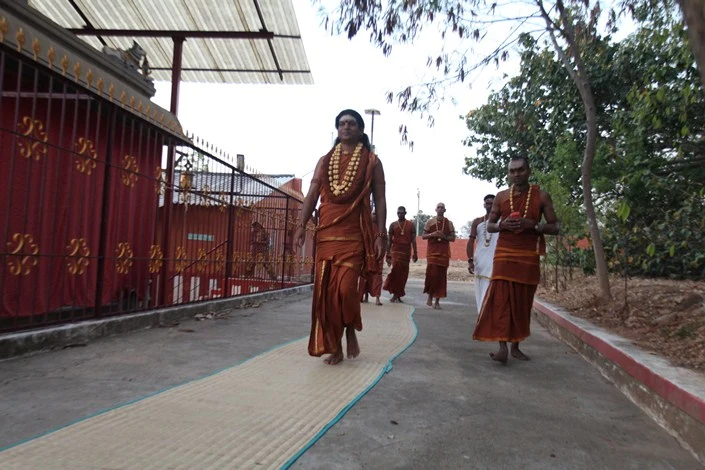
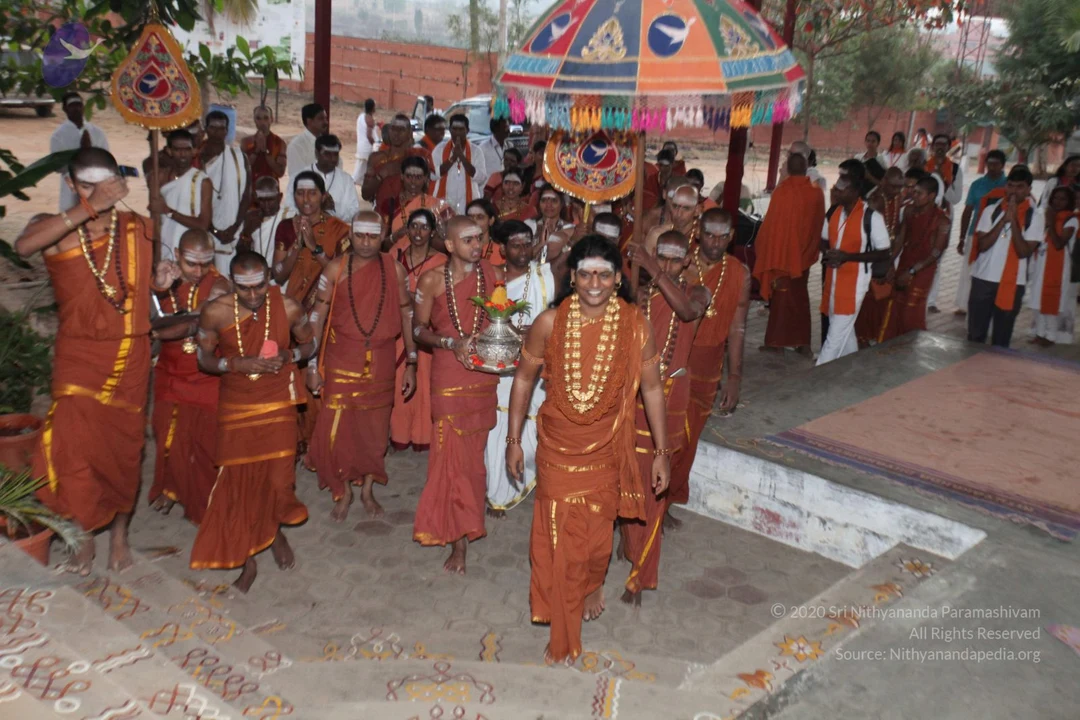
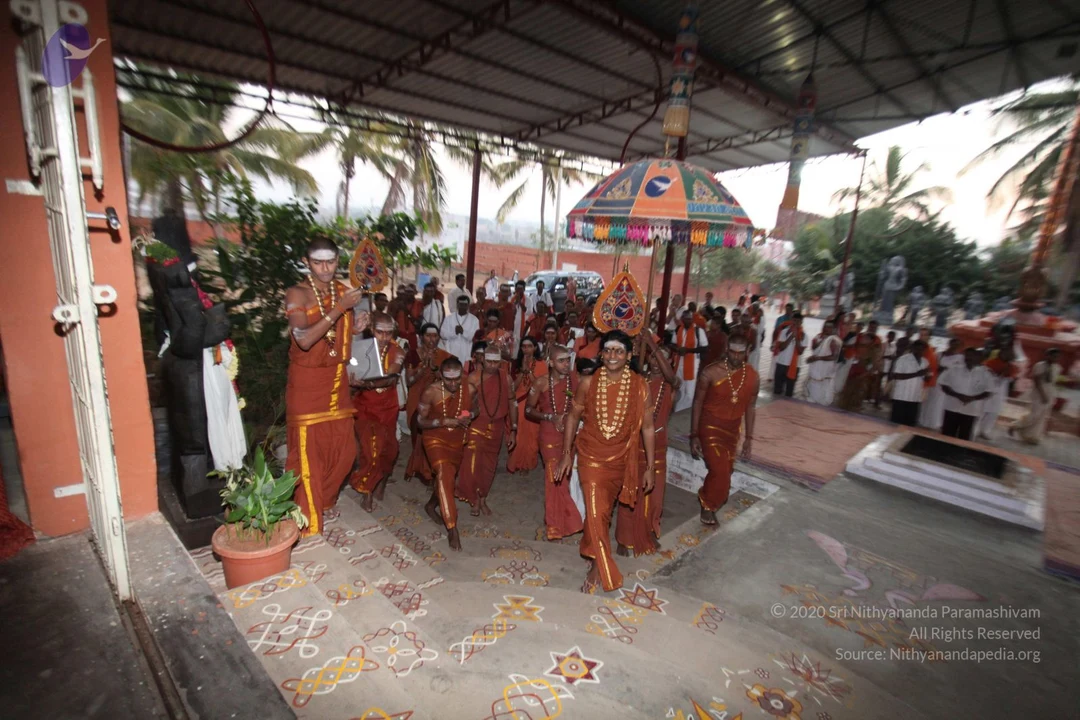
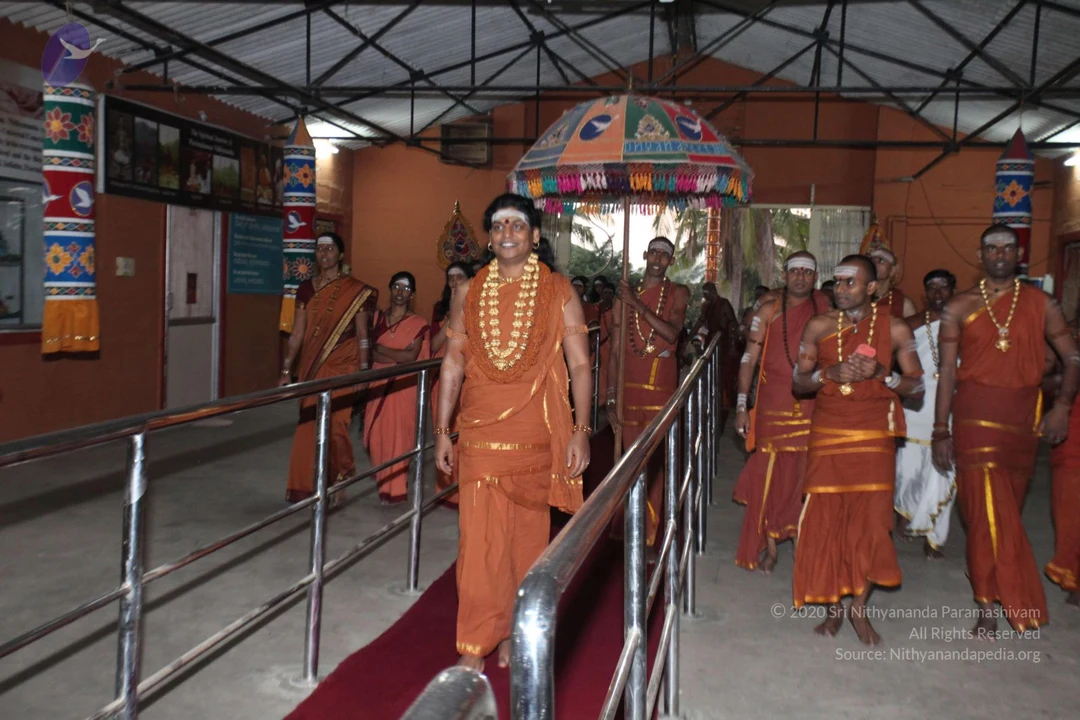
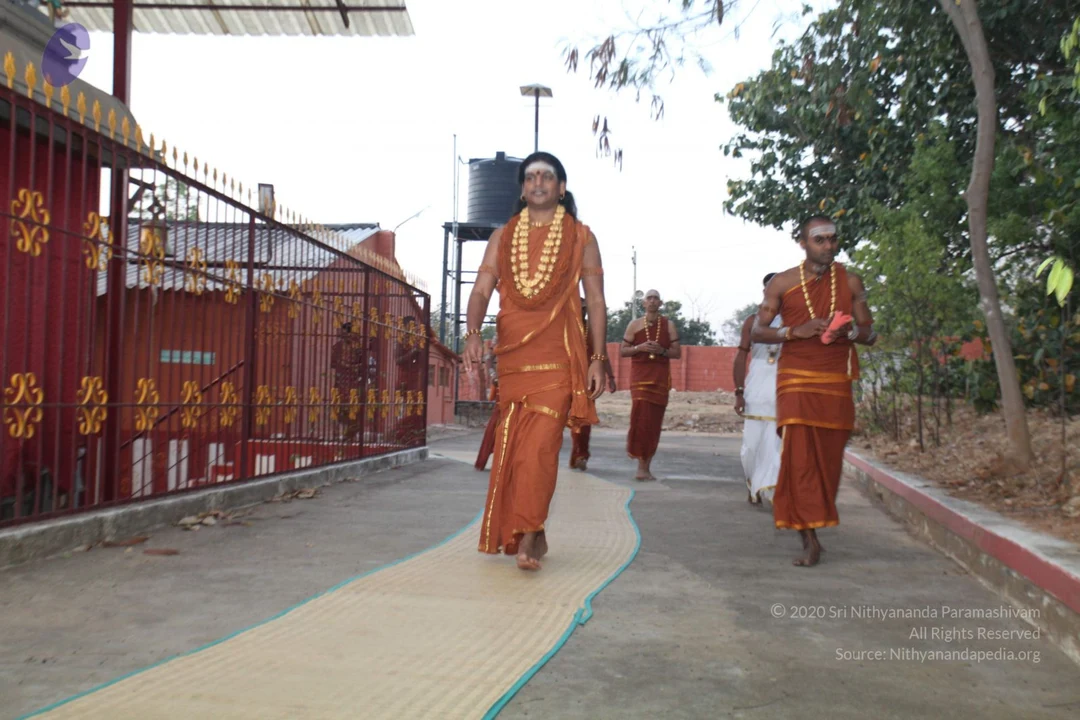
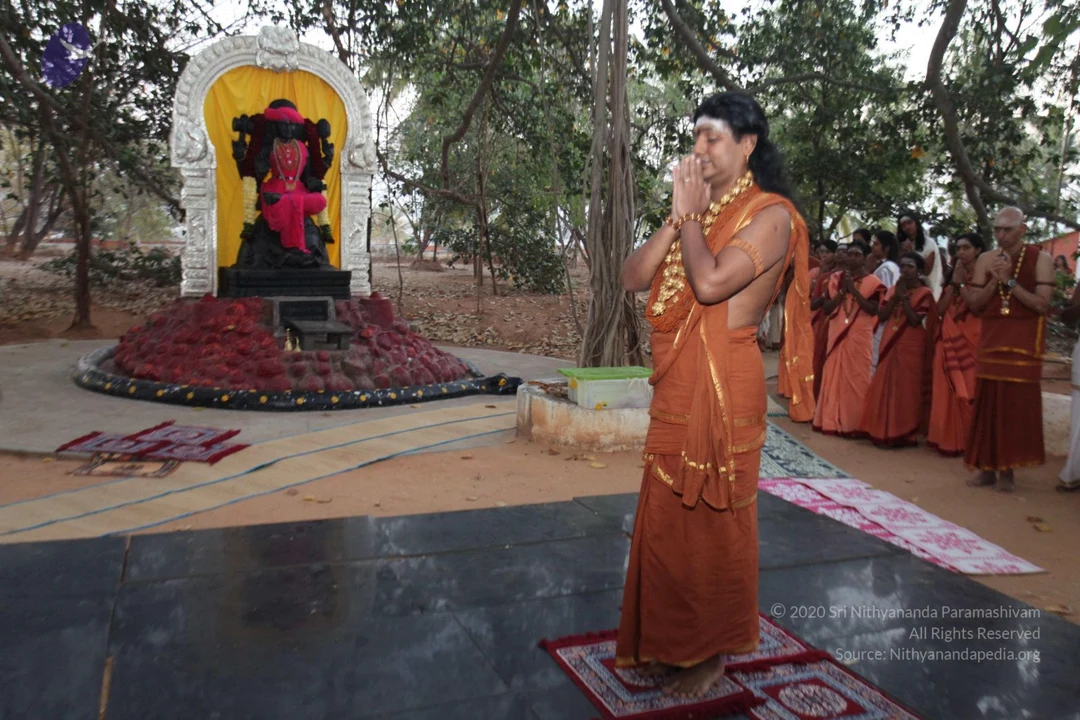
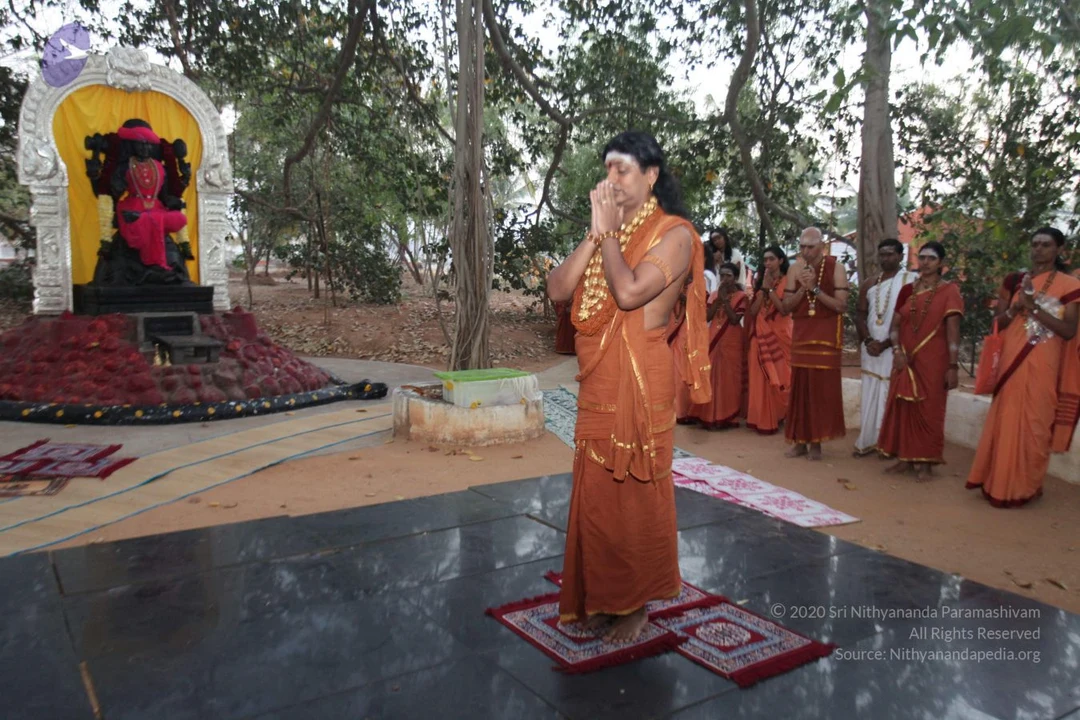
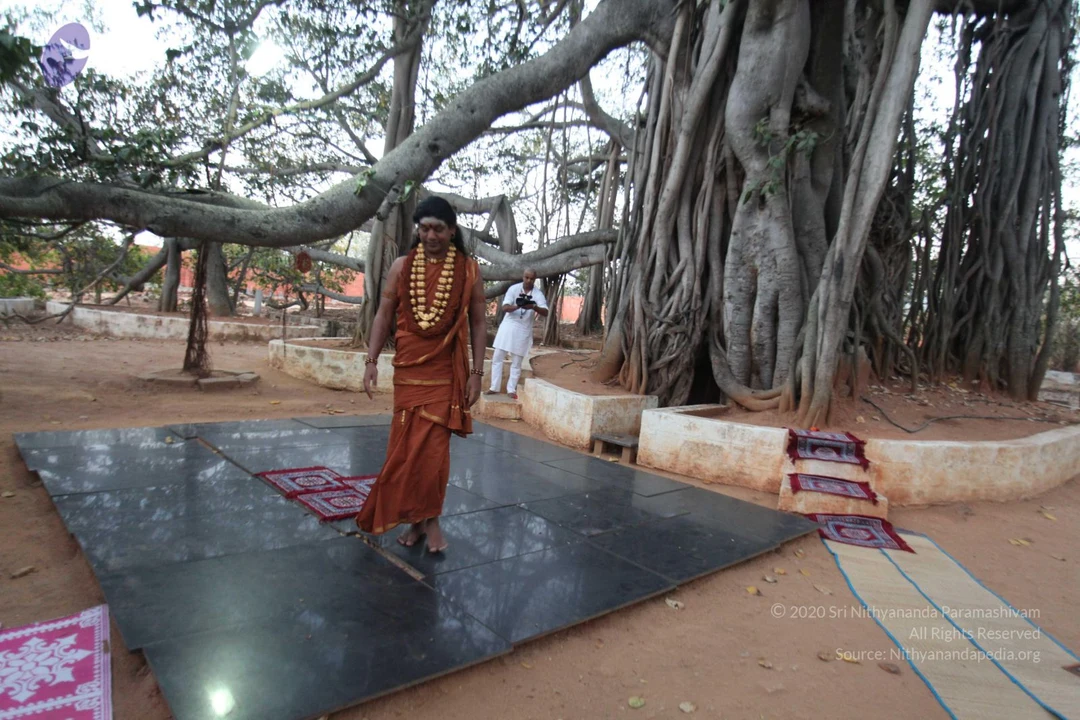
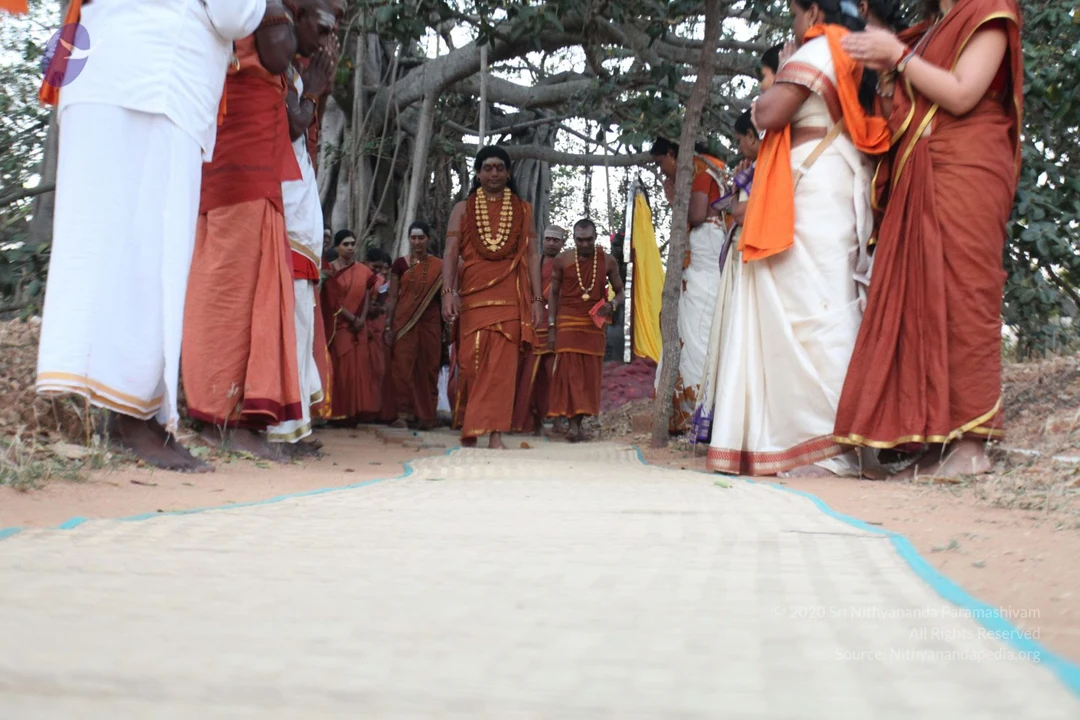
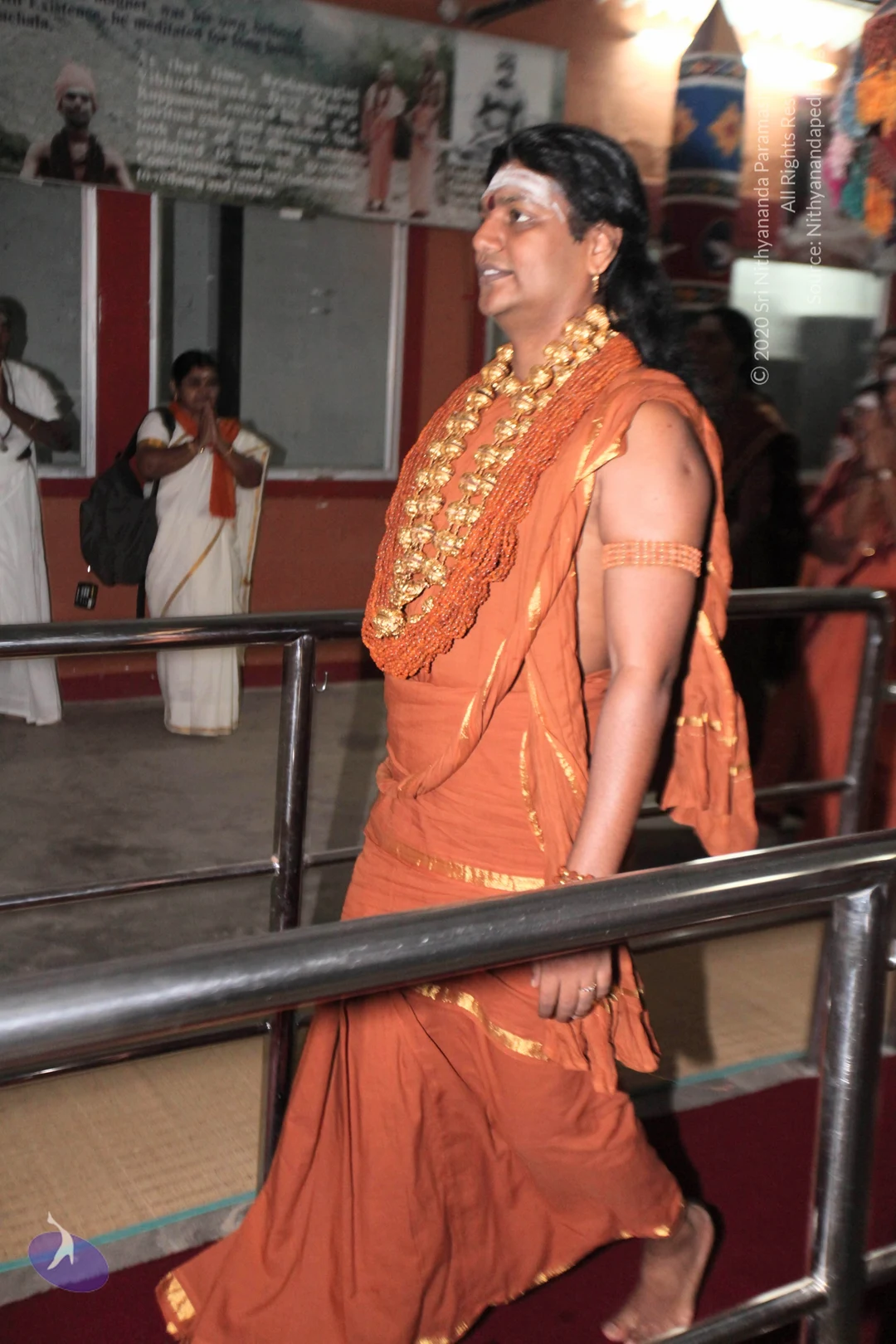
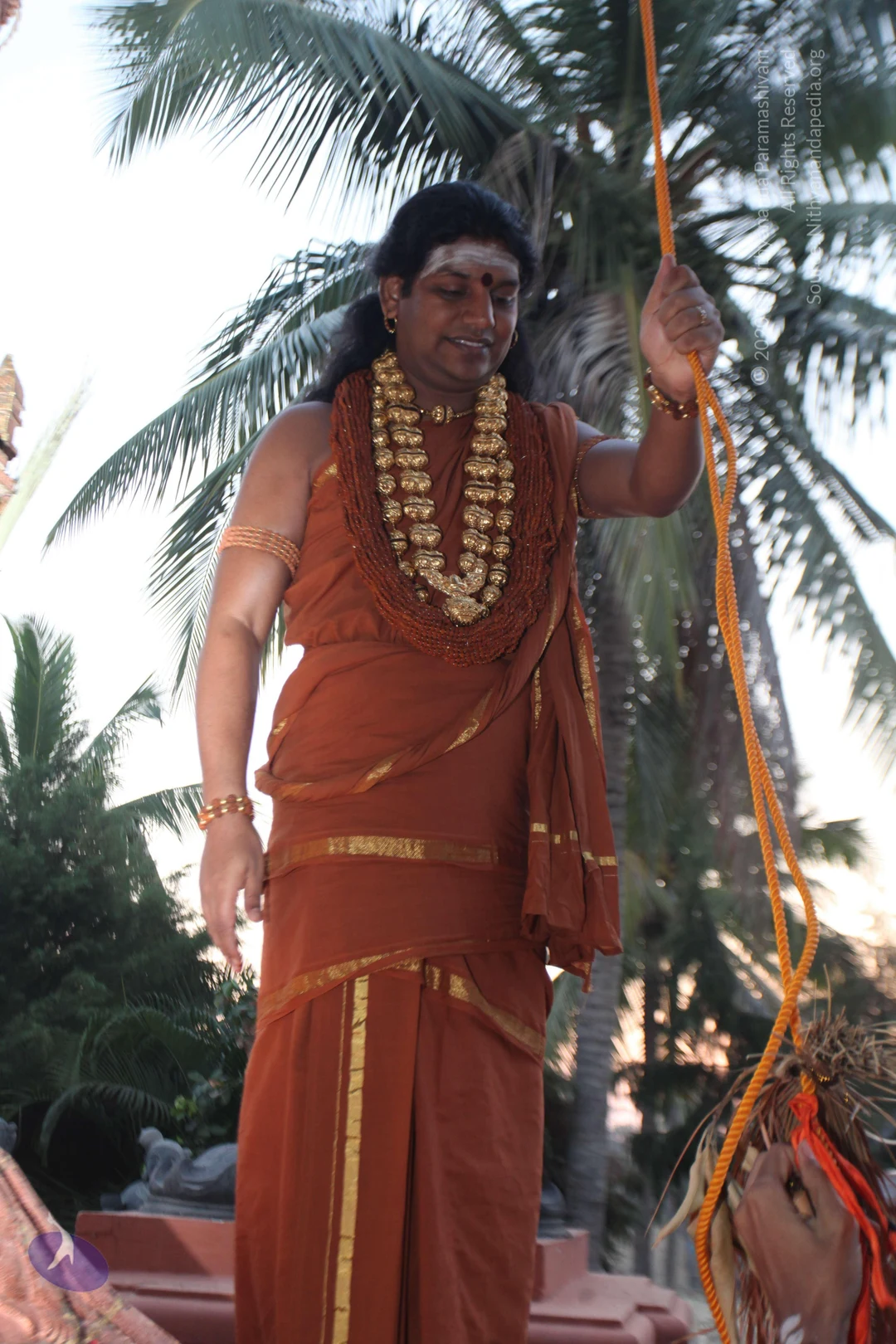
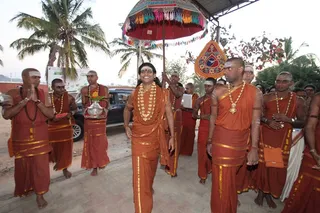
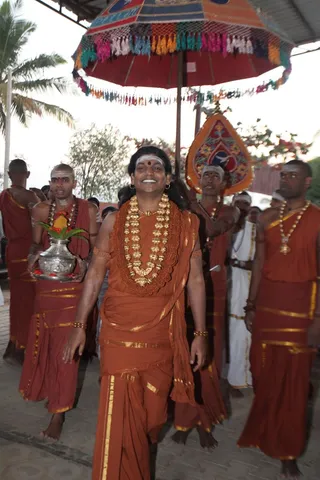
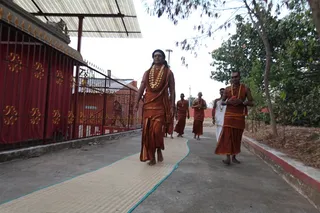
Swamiji proceeding towards Temple for Dwajarohana
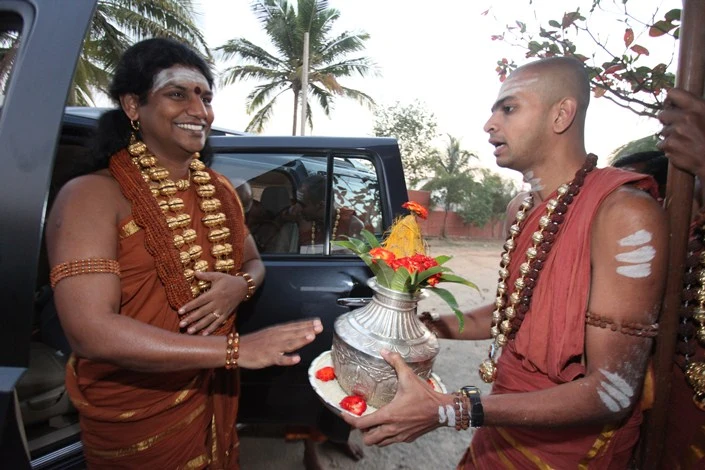
Paada Puja

Satsang

Sarva Darshan

Photos Of The Day:

Yoga

Temple-Flag-Hoisting

Morning Sathsang

Tamil-IA-Session

Dharshan

Photos Of The Day:

Yoga

Temple-FlagHoisting

MorningSatsang

Tamil-IA-Session

Darshan

01-TEMPLE-FLAG-HOISTING

02-MORNING-SATSANG

03-TAMIL-IA-SESSION

20130228_Photo_1001_1WwX4Z-4n79oDoX0JxcftzXCQ9vRZv1ze

04-DARSHAN

Photos from this day

View all 334 photos

Morning Routine

2 photosSource gallery
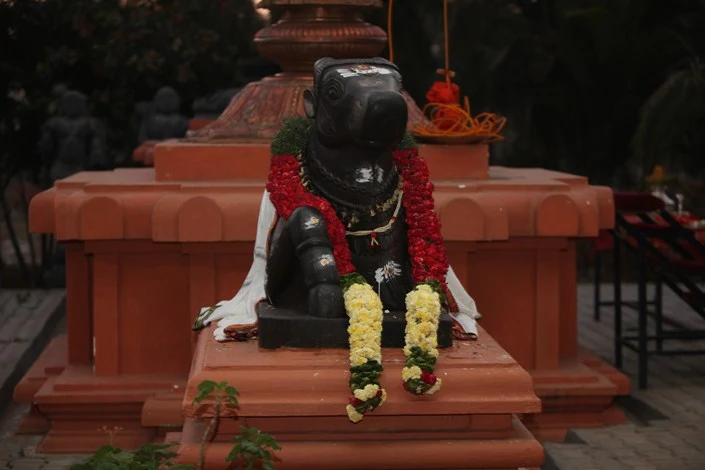
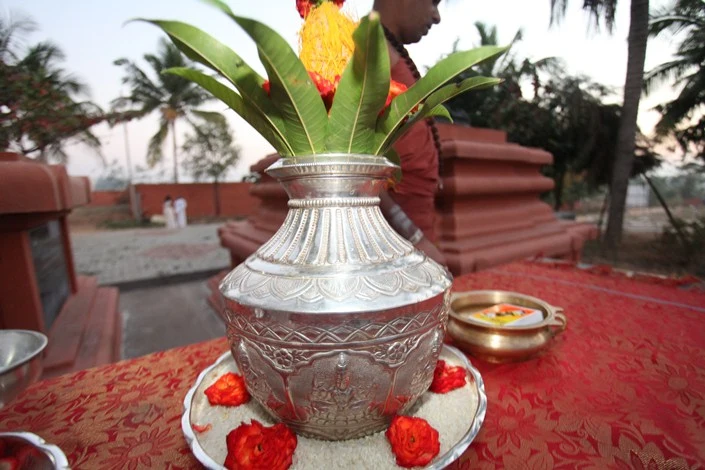
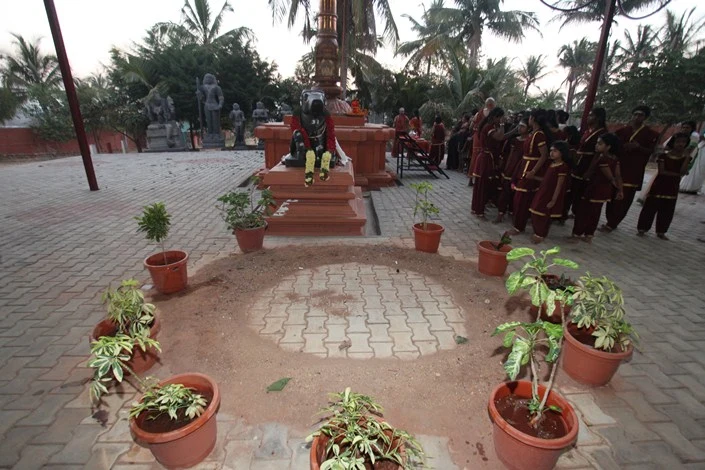
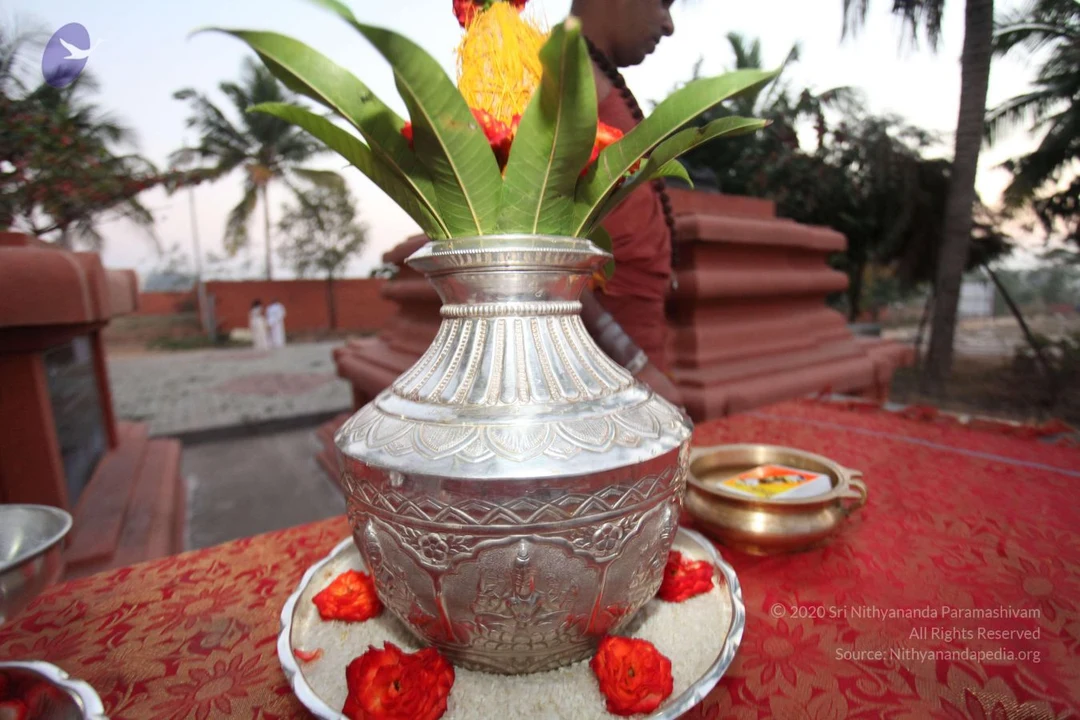
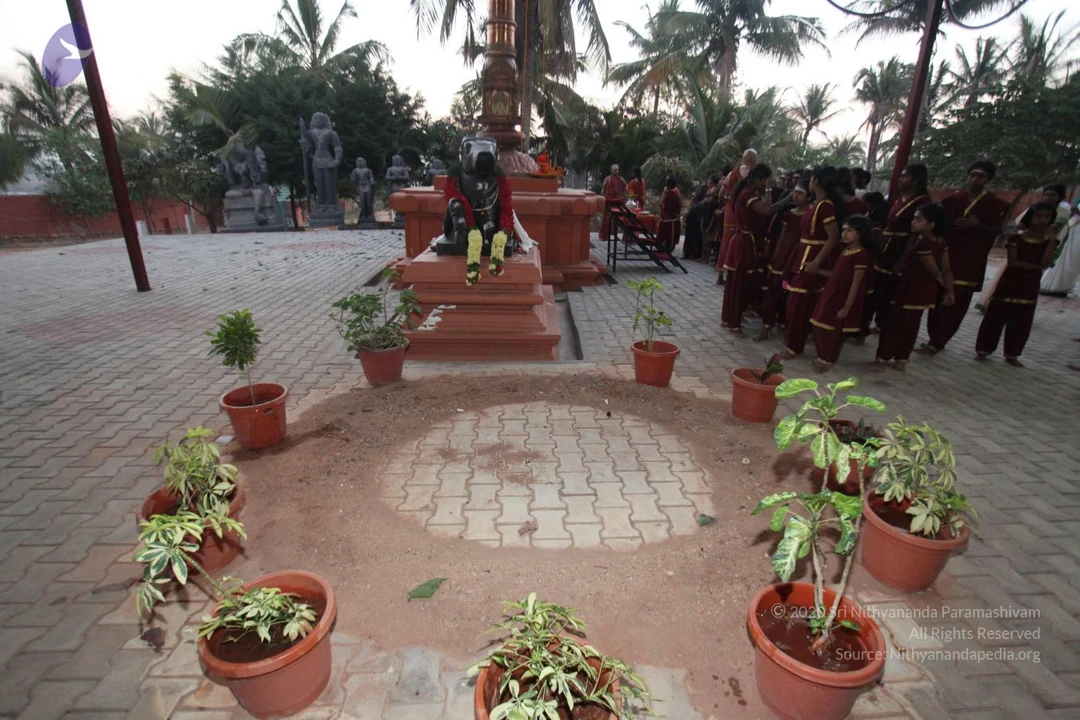
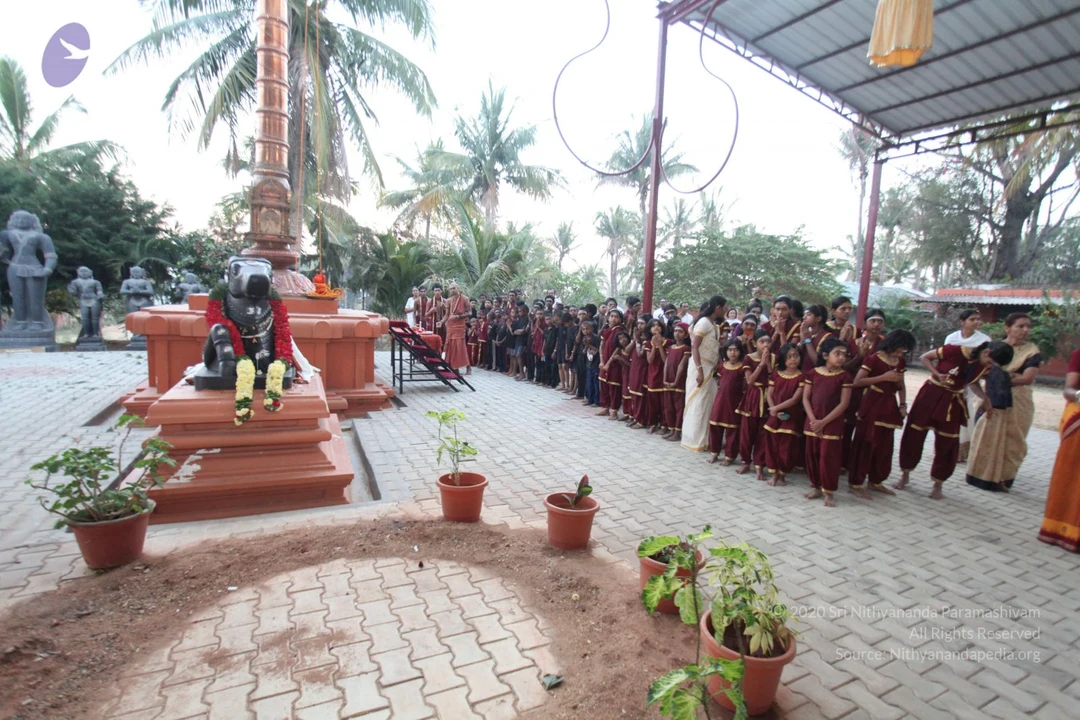
A black stone Nandi bull statue sits on a terracotta-coloured pedestal in an outdoor temple courtyard. The Nandi is garlanded with red and yellow flower strands and has a white cloth draped over its back. Tilaka markings are visible on its forehead, and a bell-shaped stone structure and a small orange-and-white offering stand behind it. No people are visible in the scene.Photograph of a ceremonial silver kalasha placed on a red and gold brocade cloth at an outdoor temple setting with red stone walls and palm trees behind it. The embossed silver pot holds mango leaves and a yellow flower at its mouth, and orange marigold blossoms sit on a silver tray of rice in front. A brass vessel with a small sticker stands on the cloth to the right. A partially visible person in a reddish-orange garment stands behind the kalasha, and two figures in white appear faintly in the distance.

Swamiji proceeding towards Temple for Dwajarohana
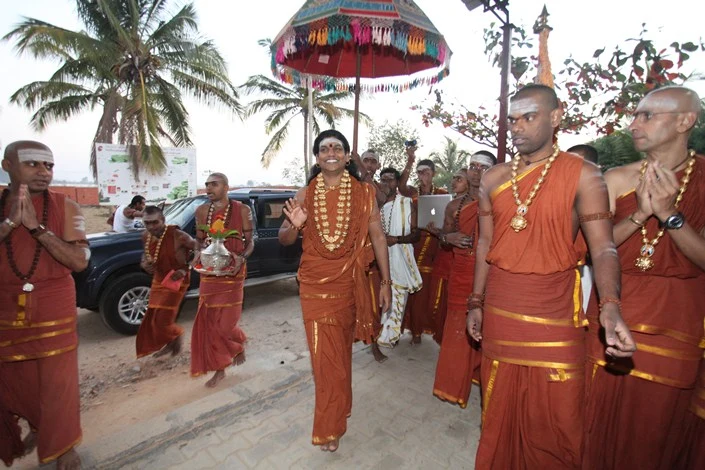
6 photosSource gallery
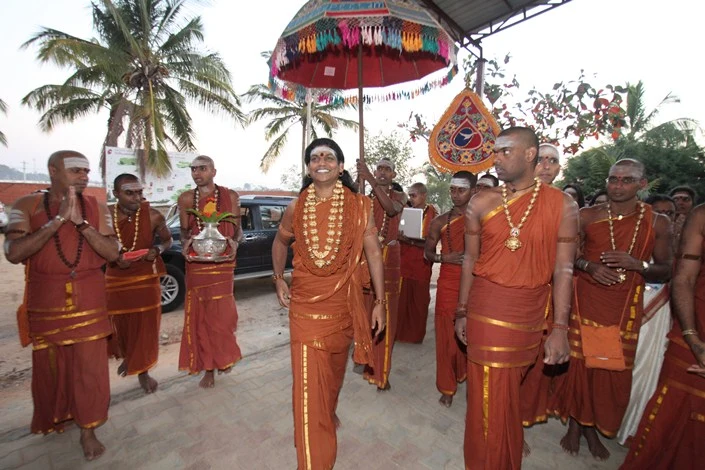
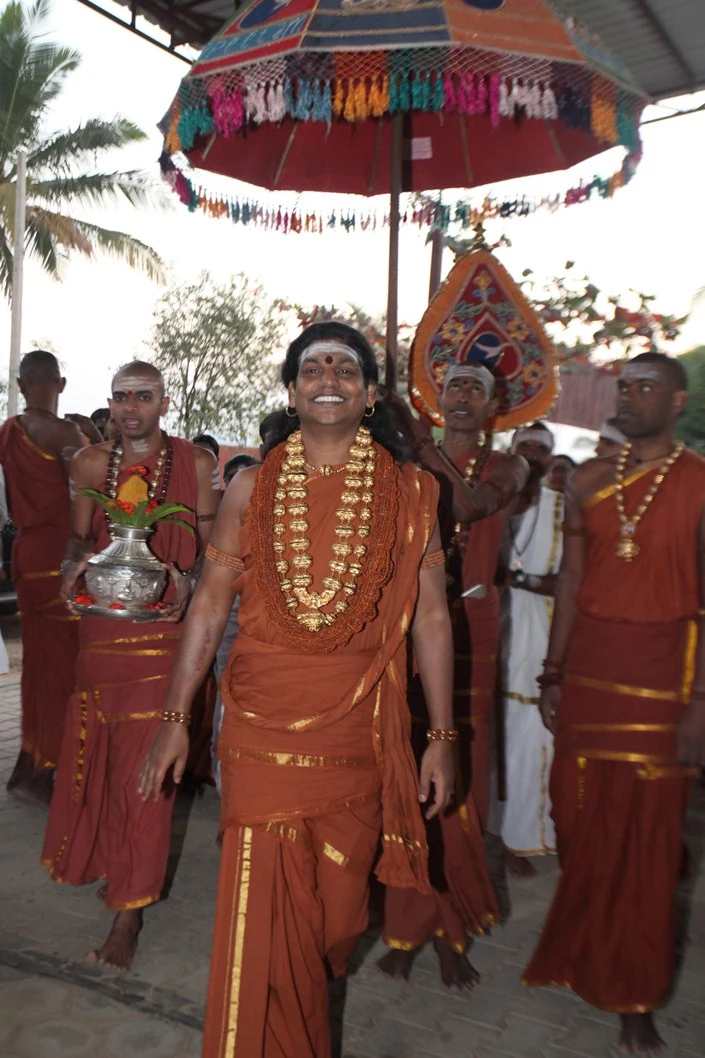
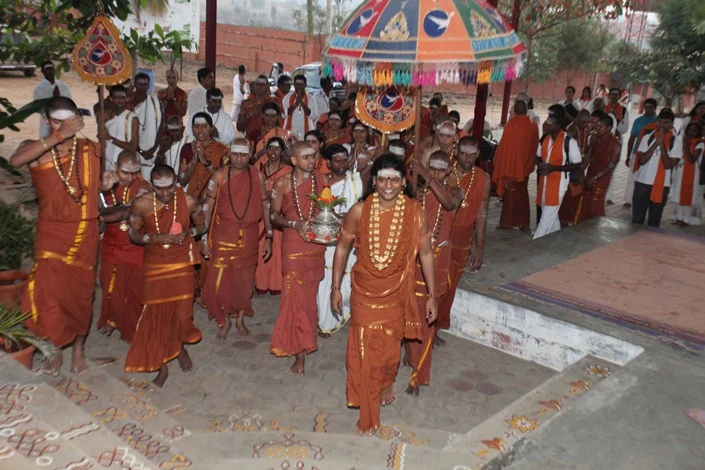
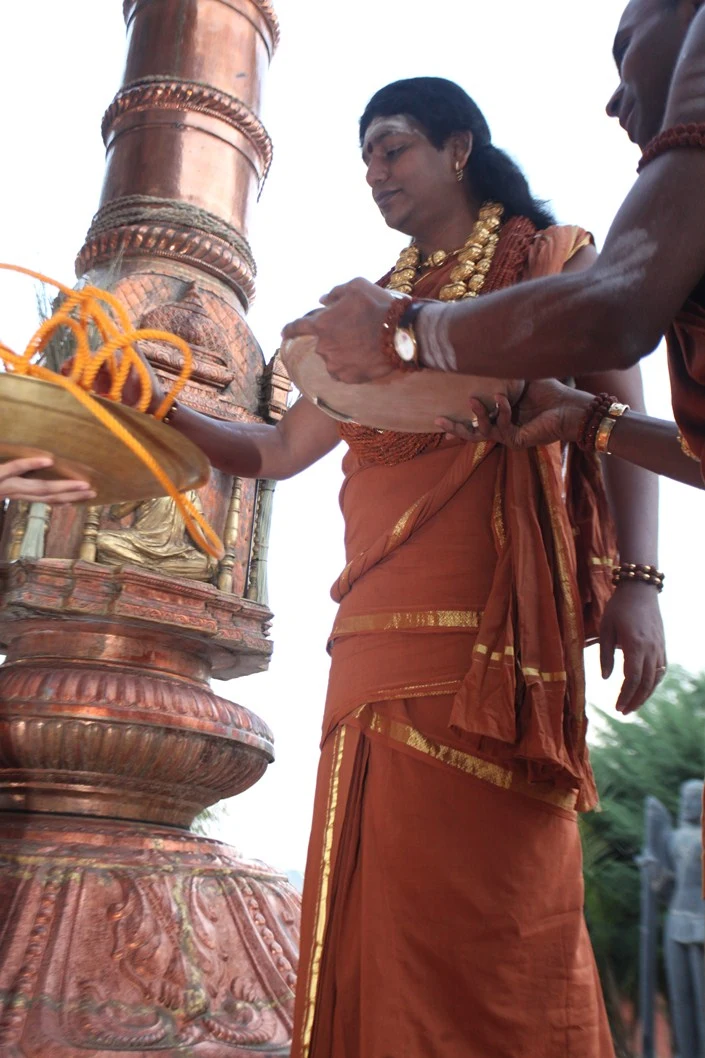
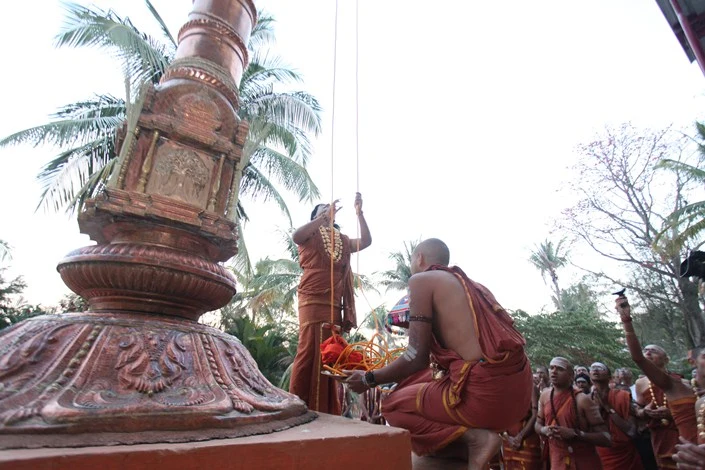
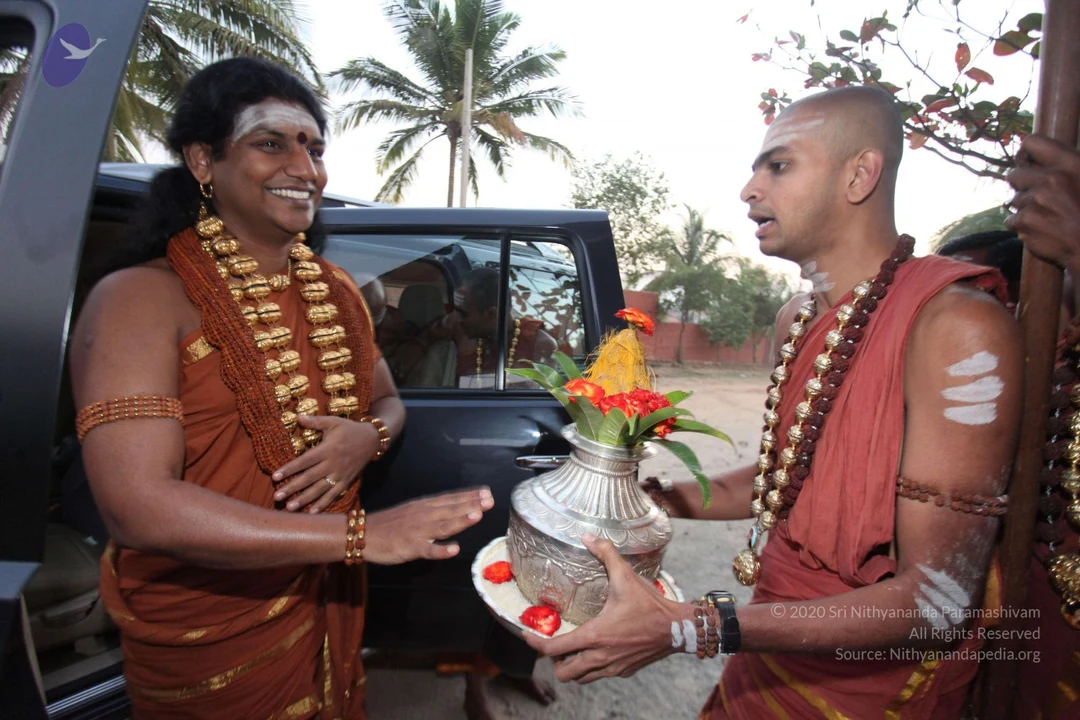
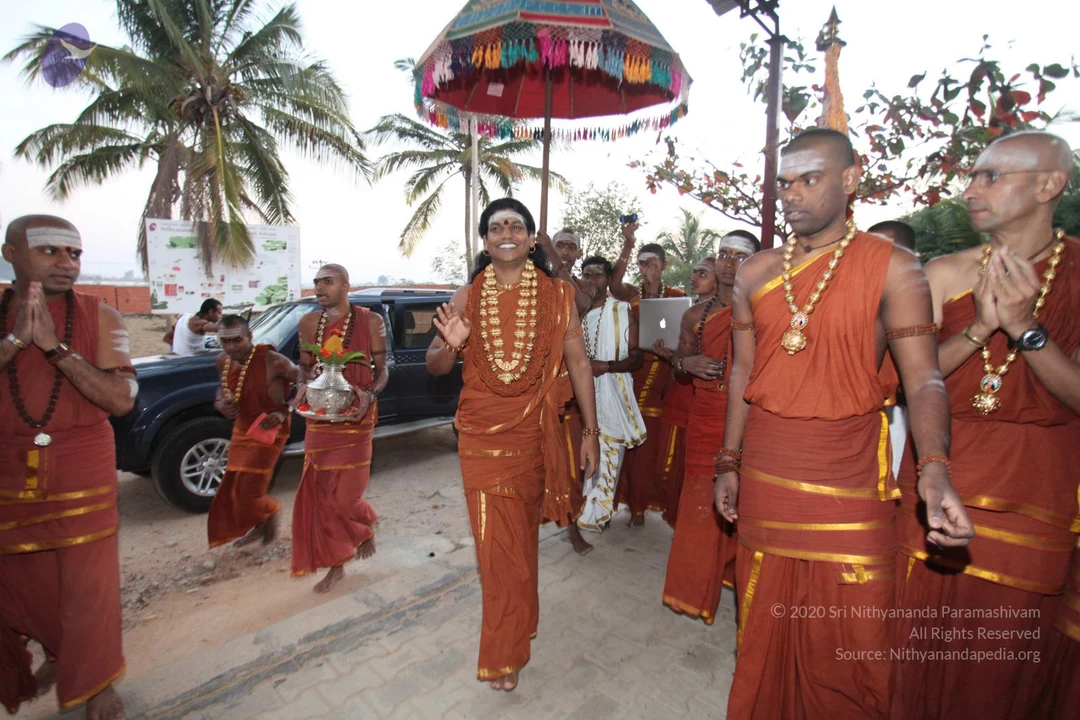
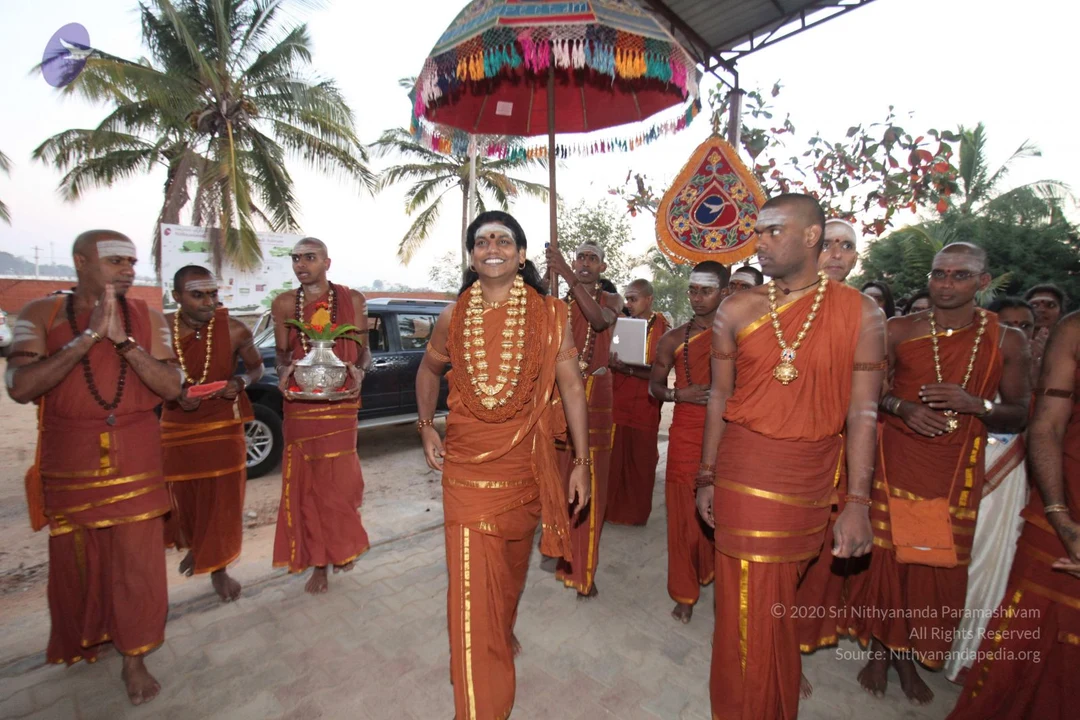
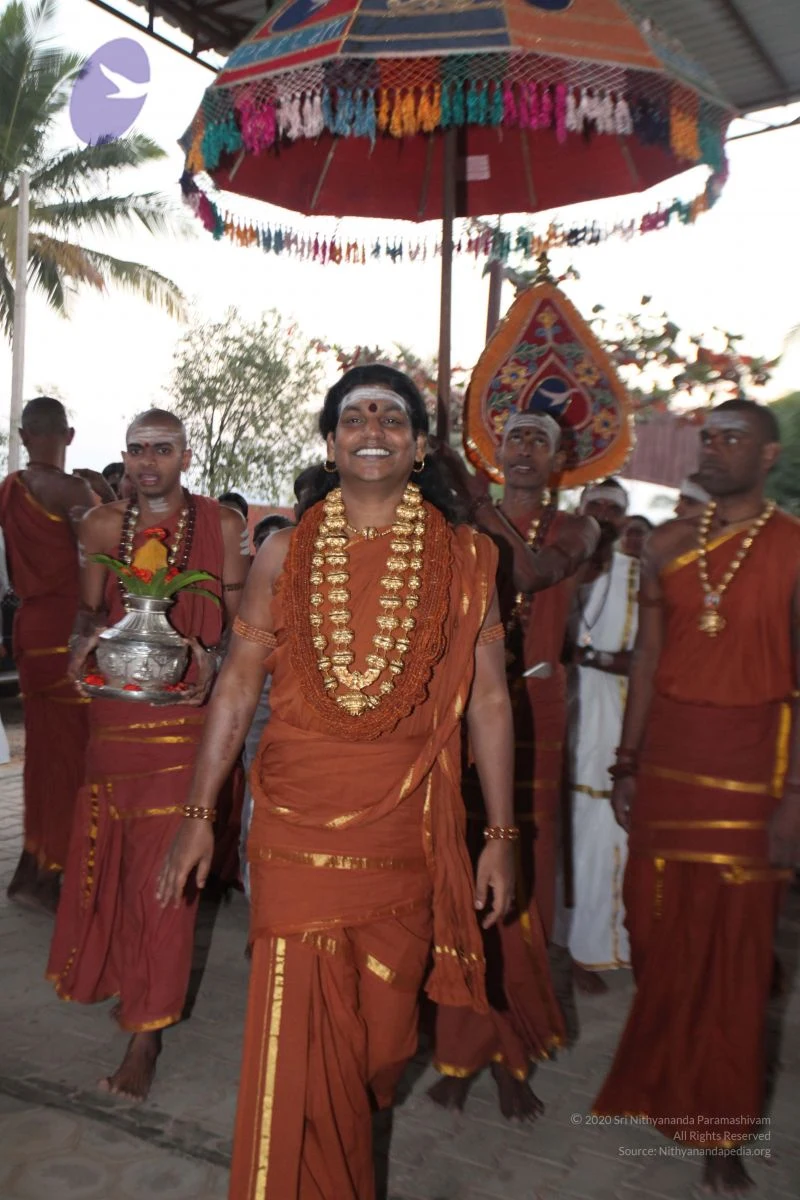
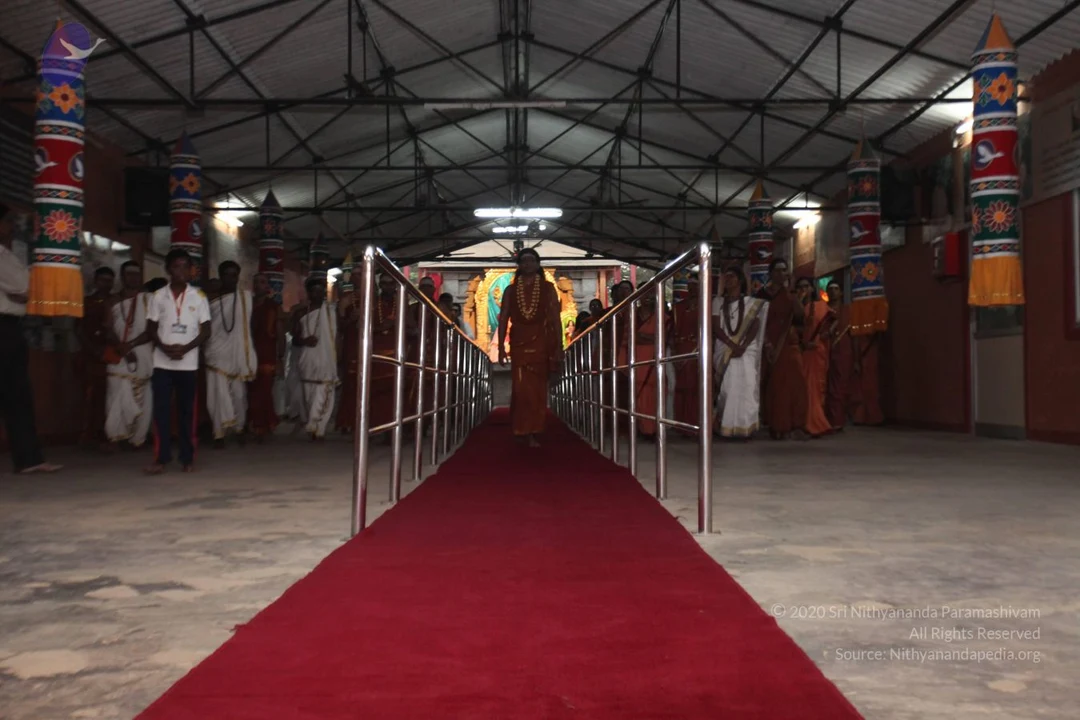
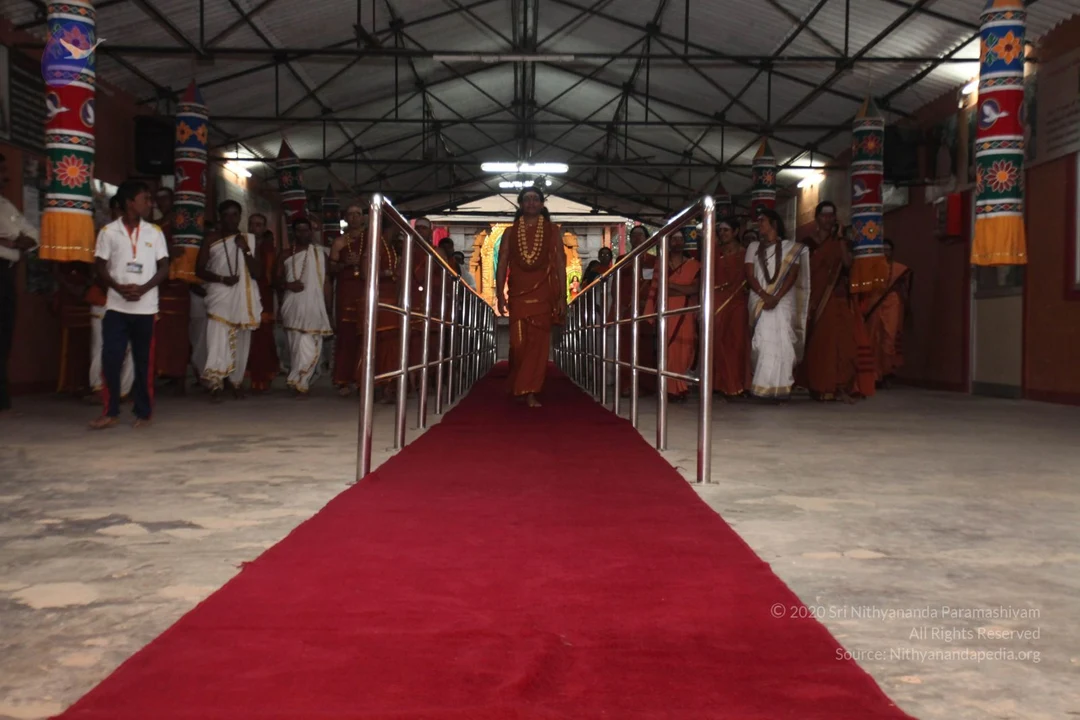
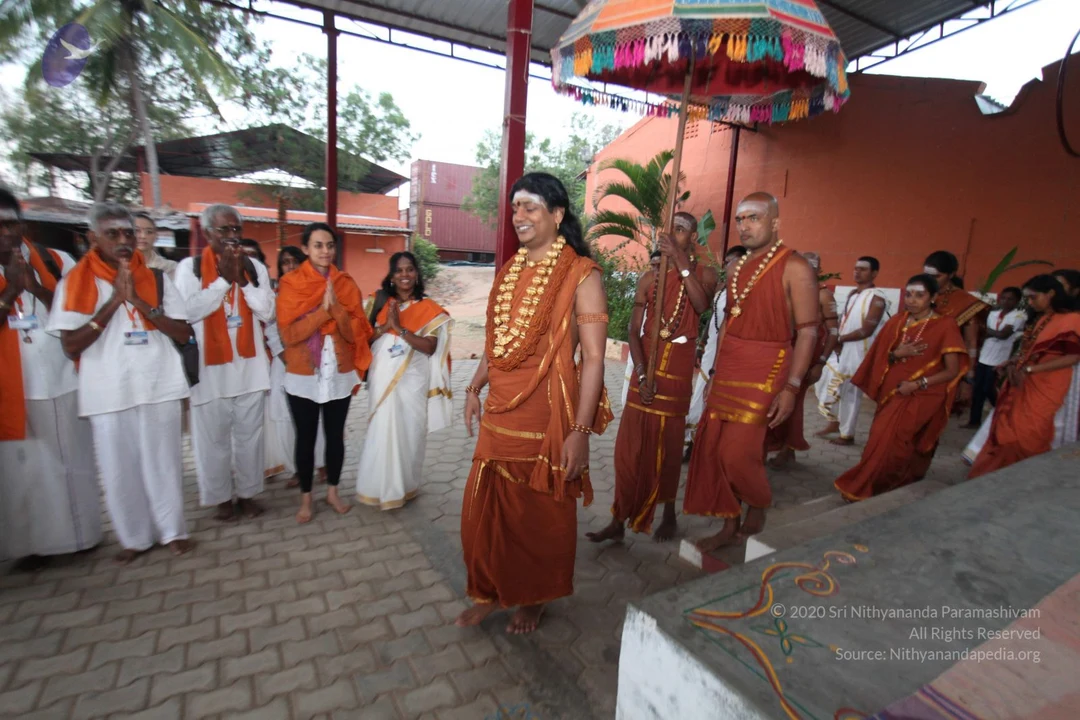
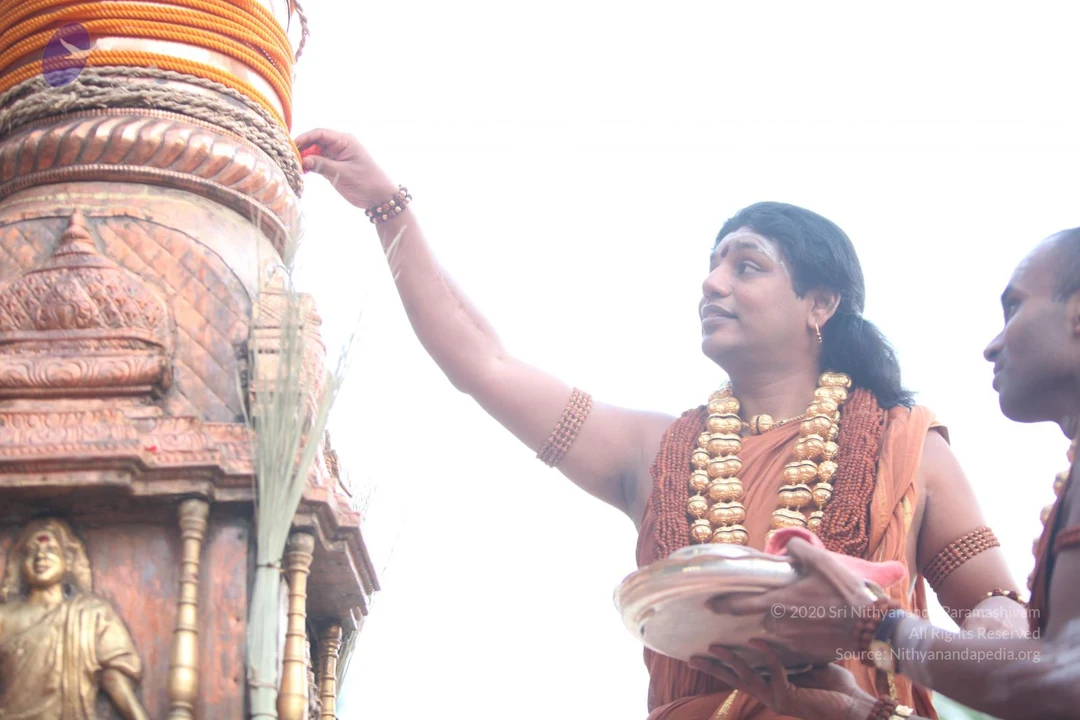
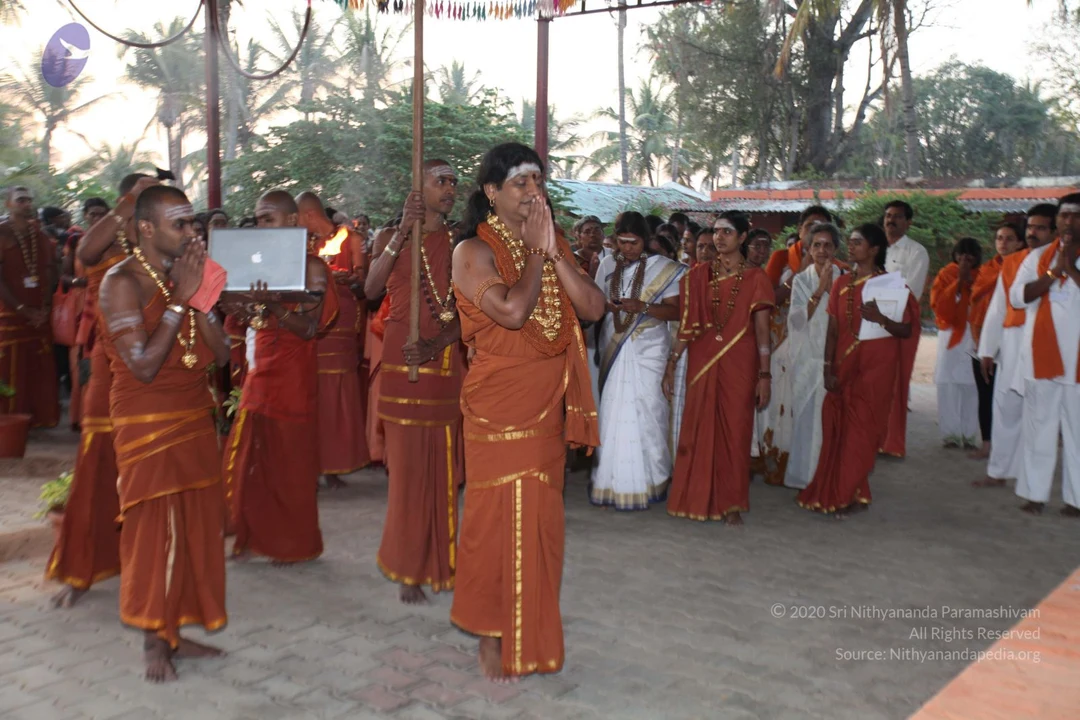
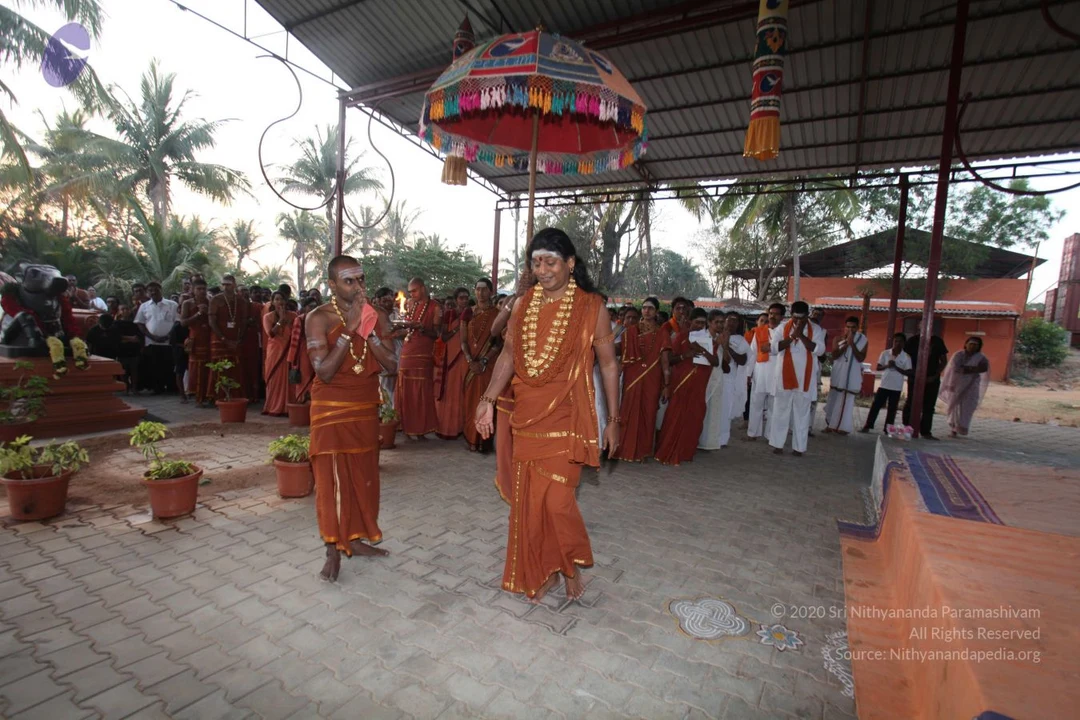
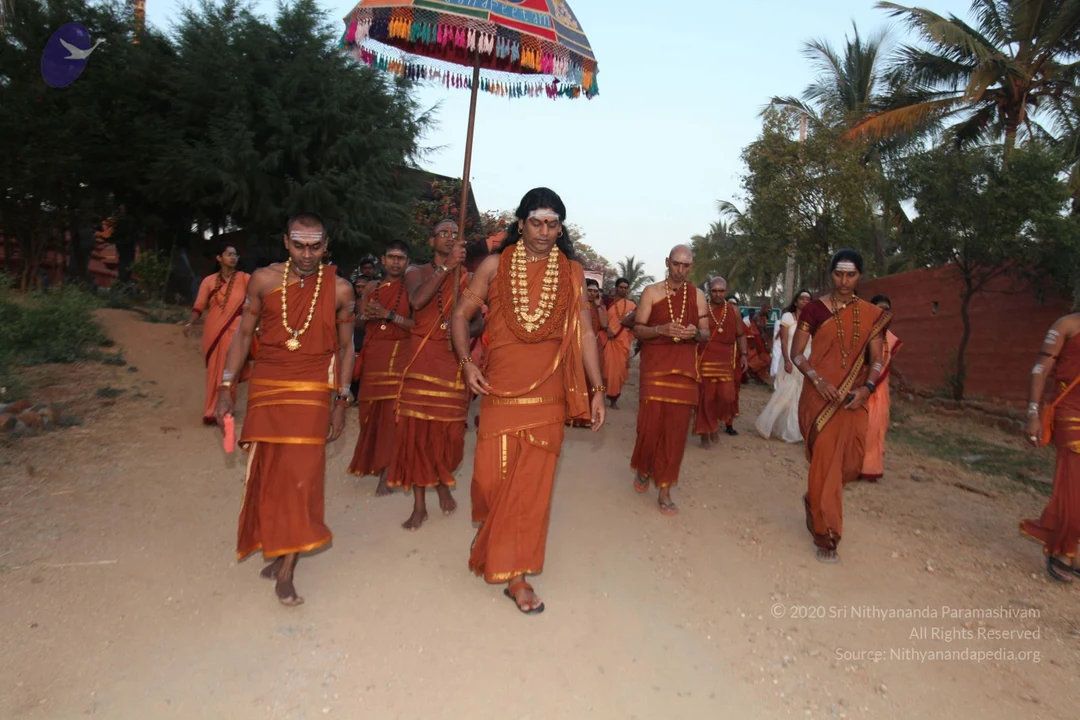
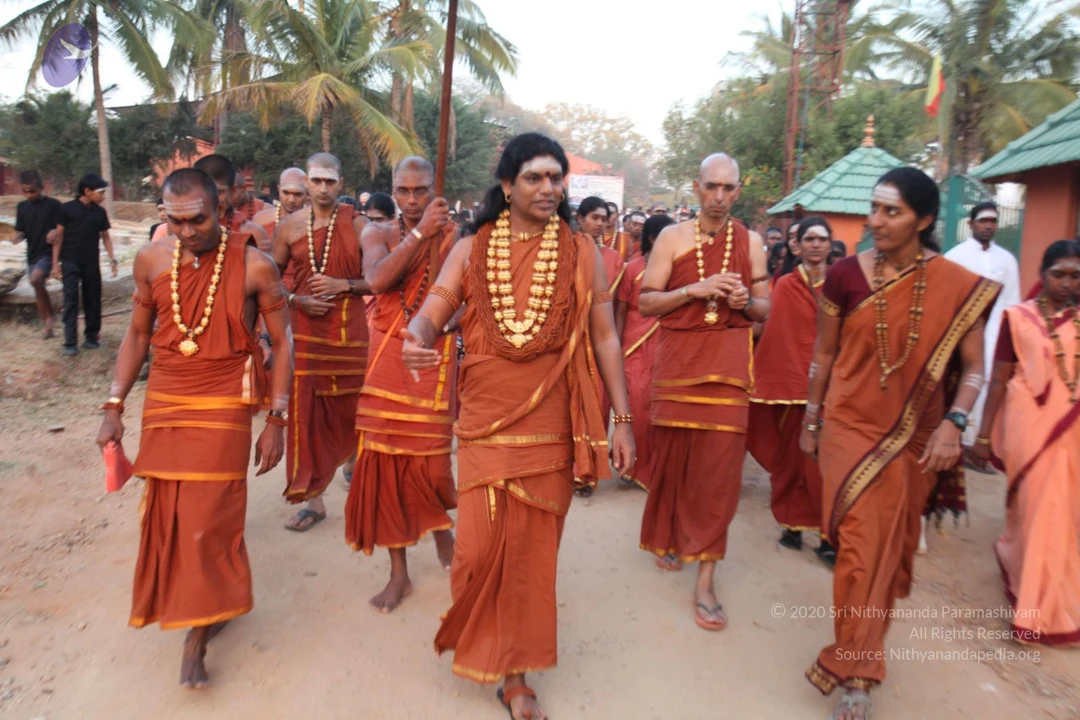
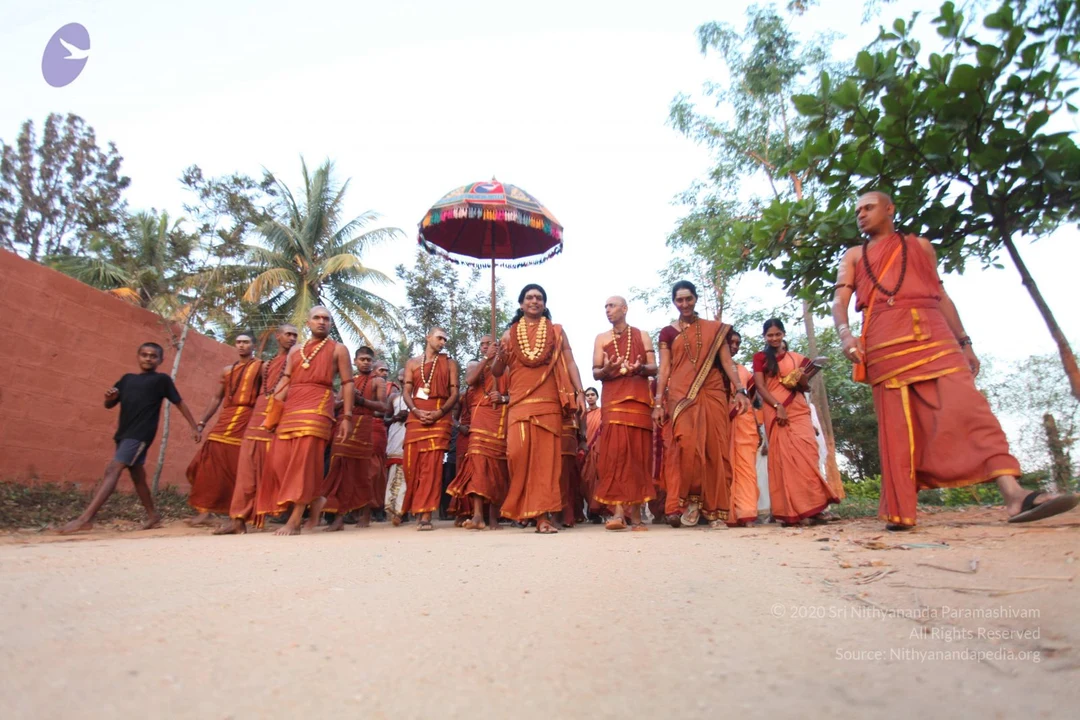
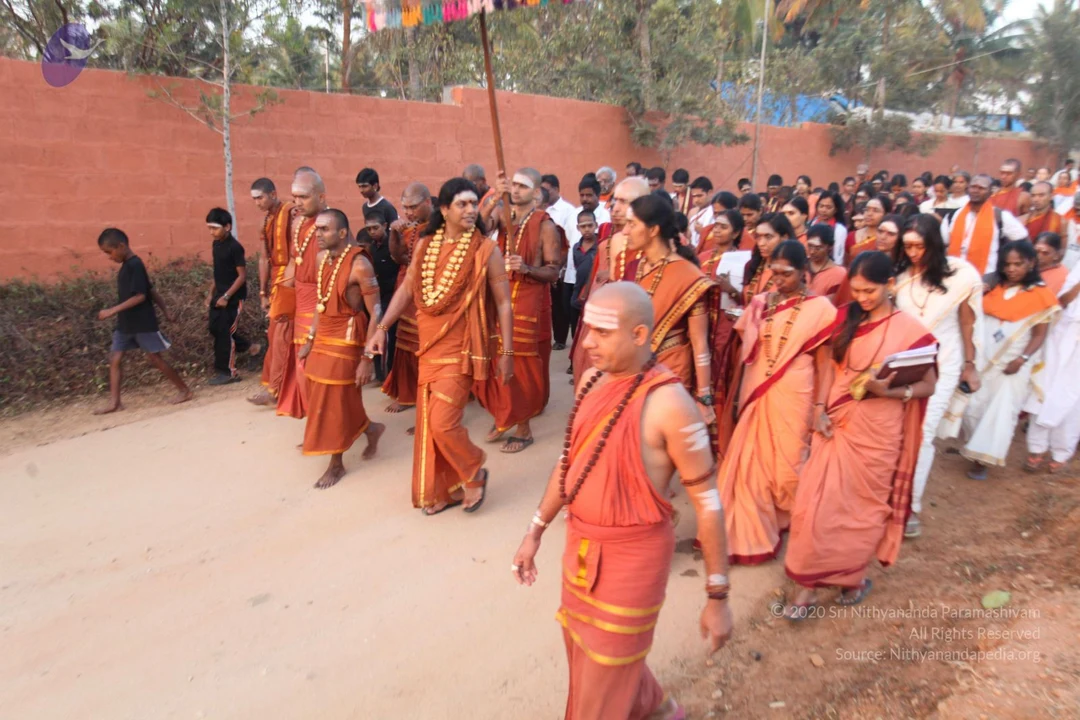
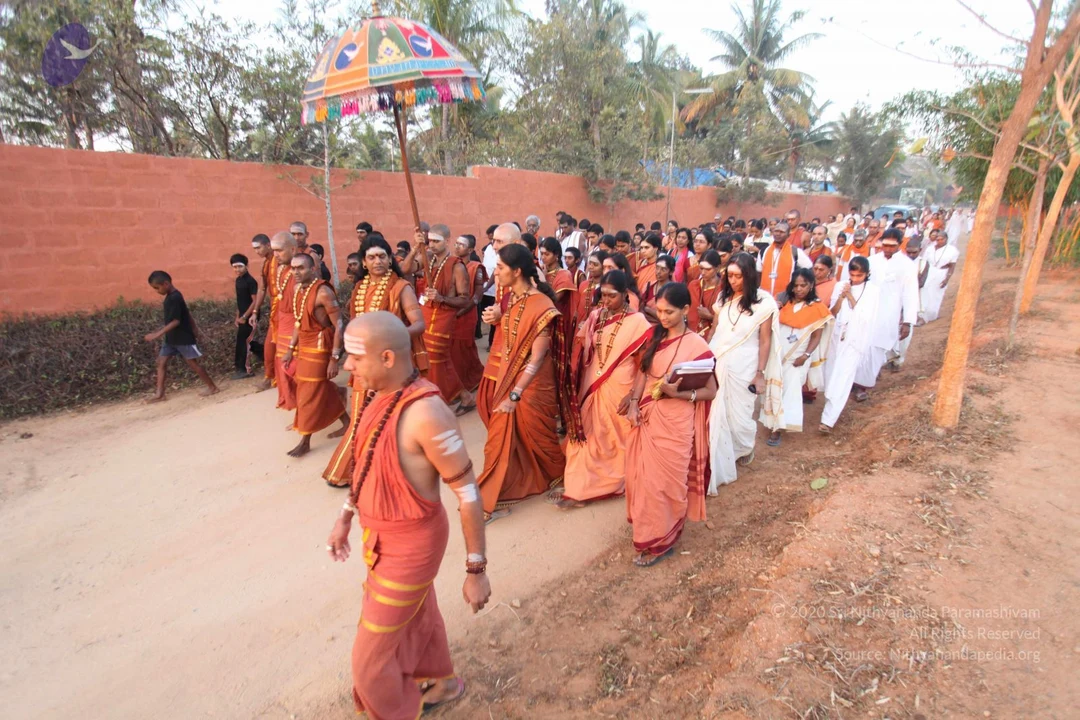
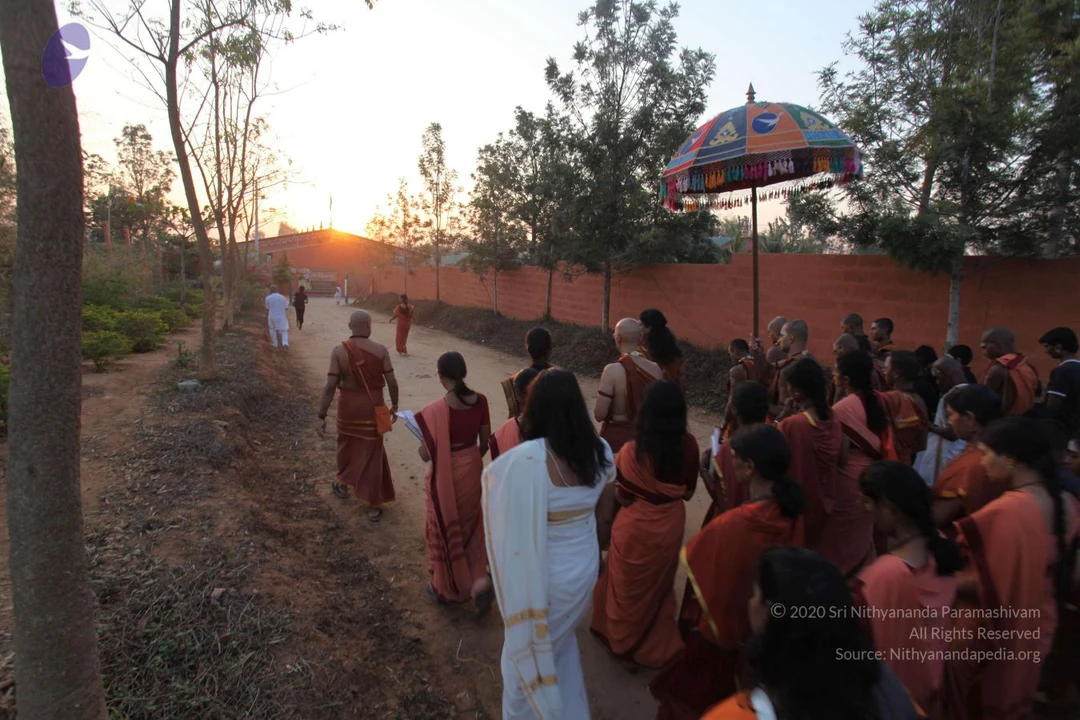
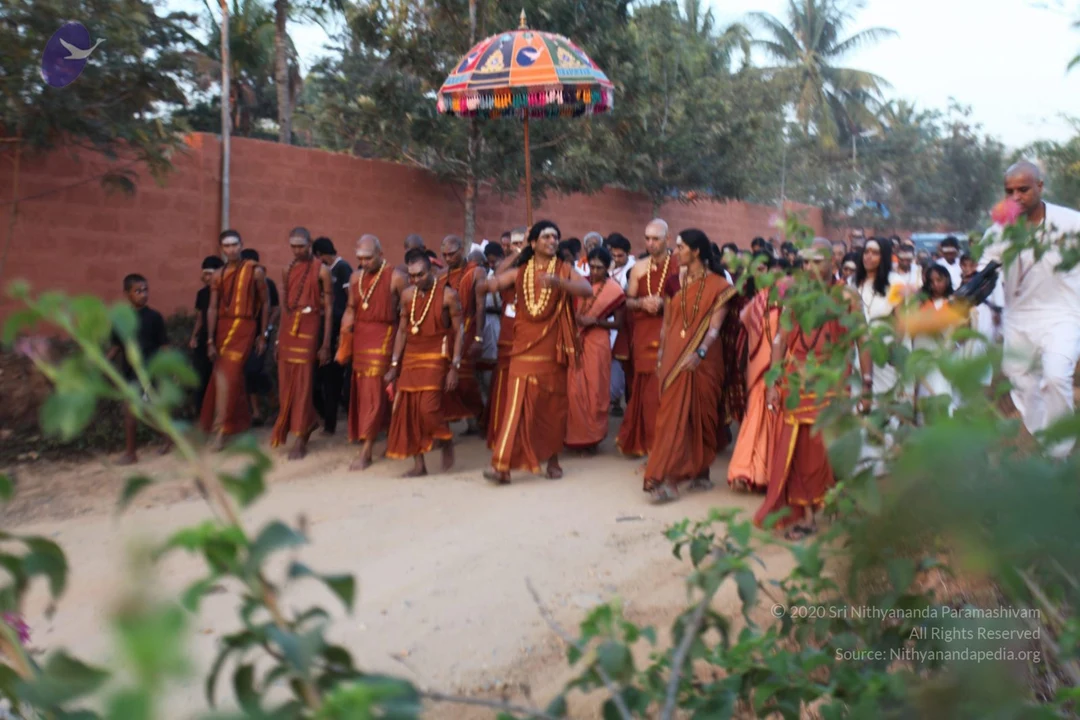
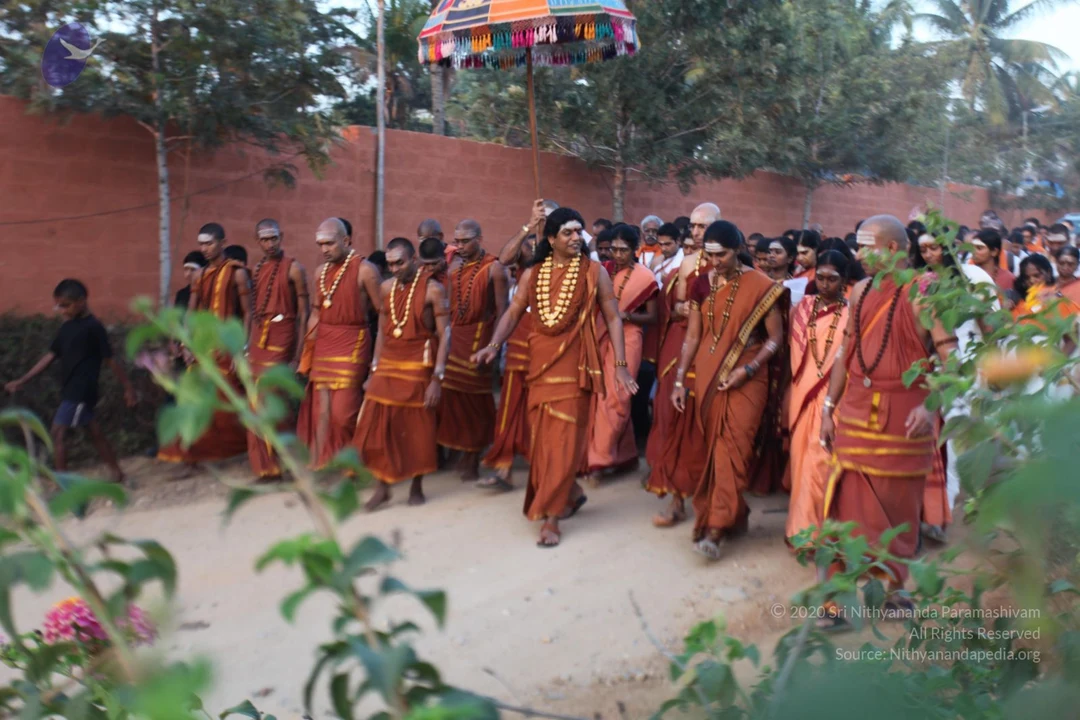
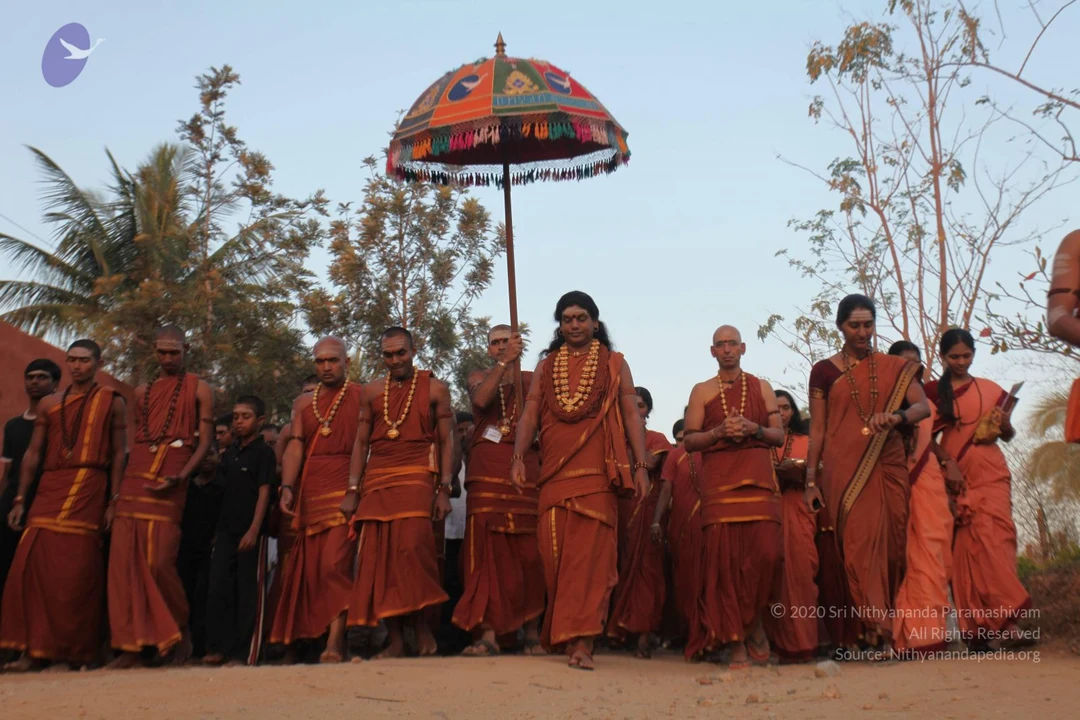
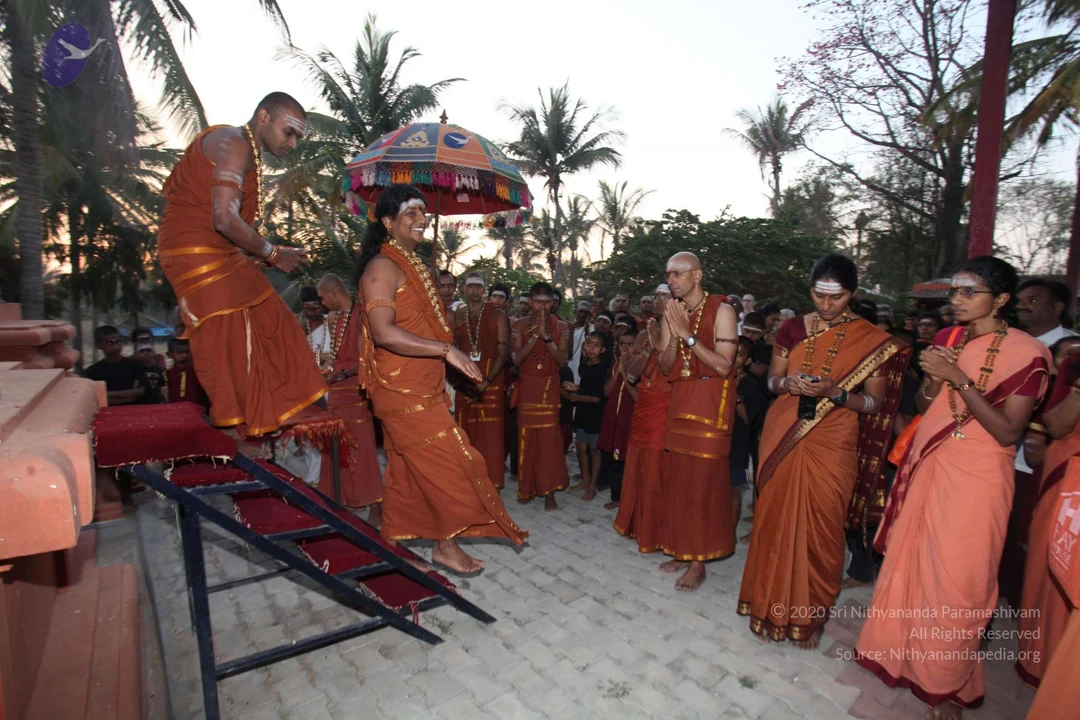
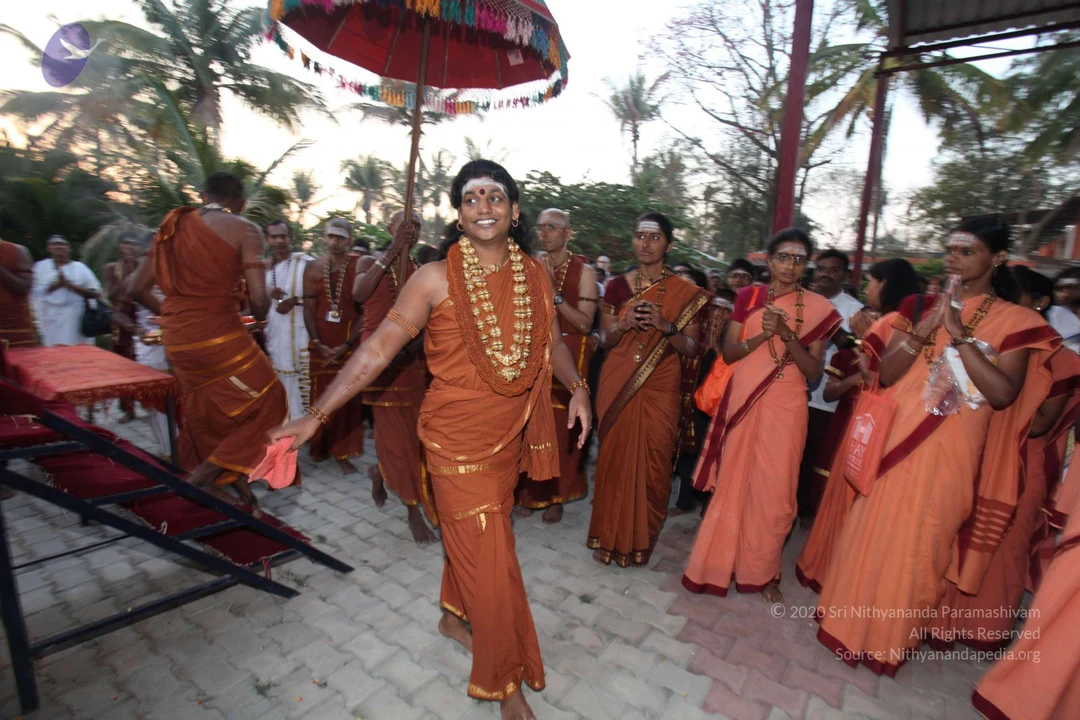
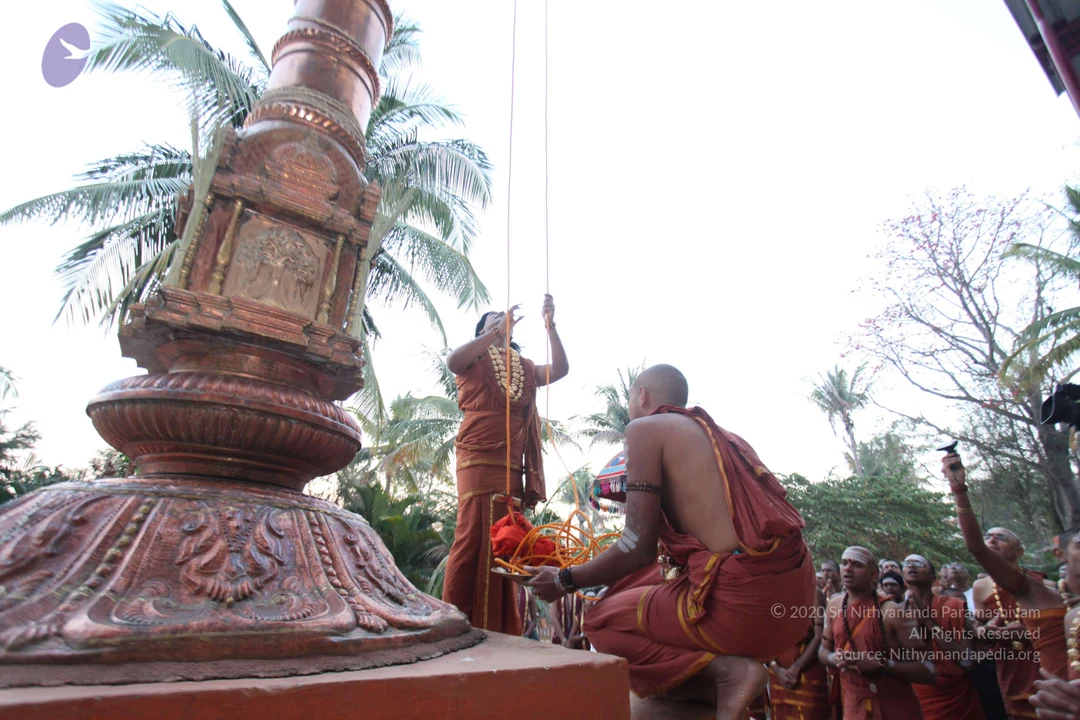
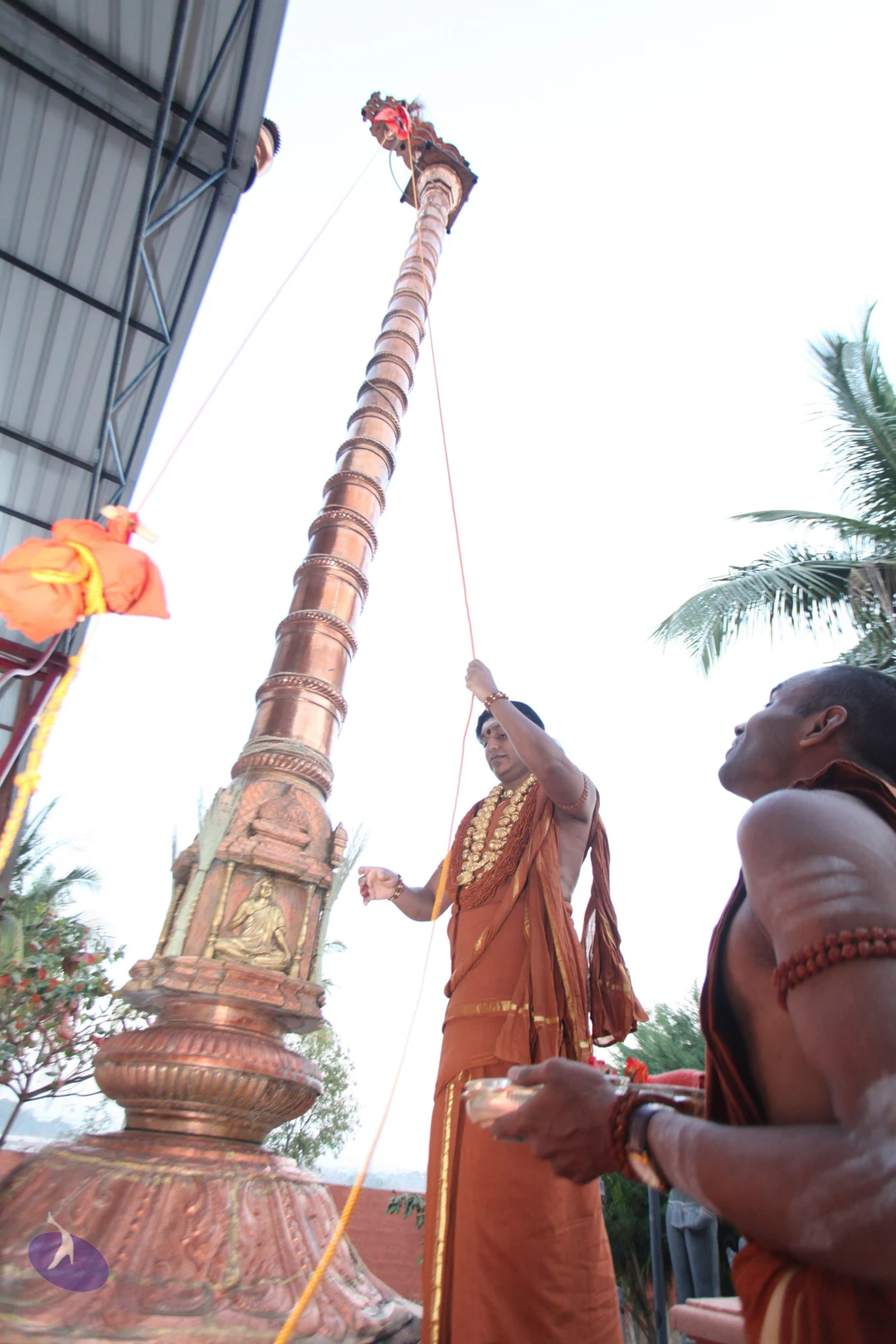
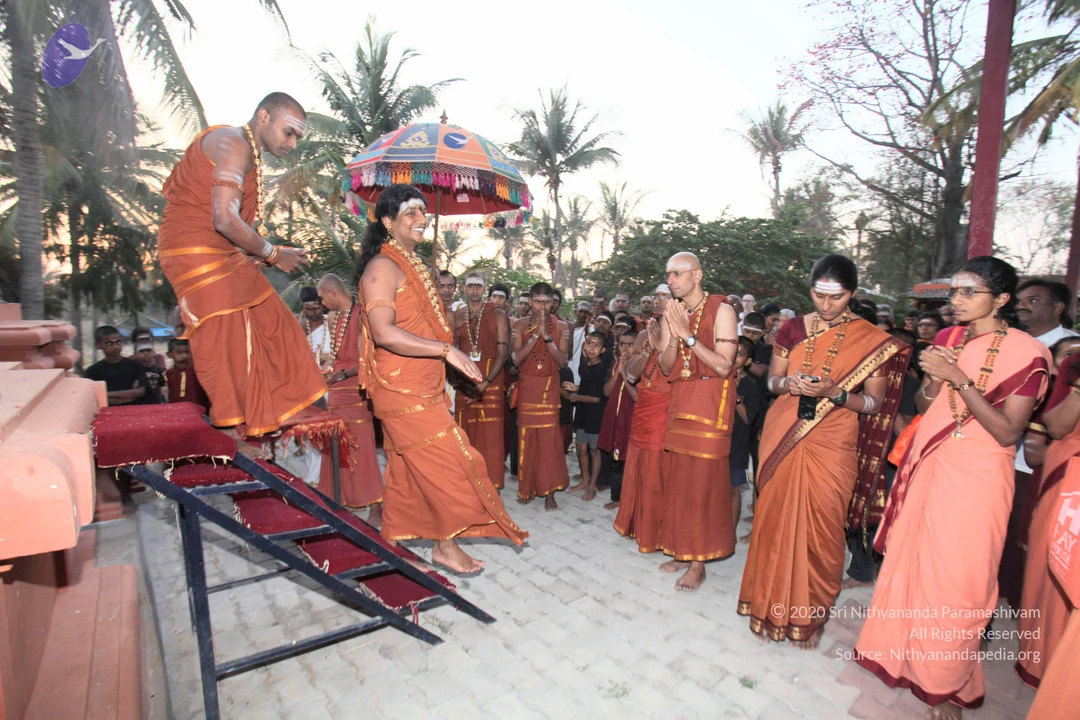
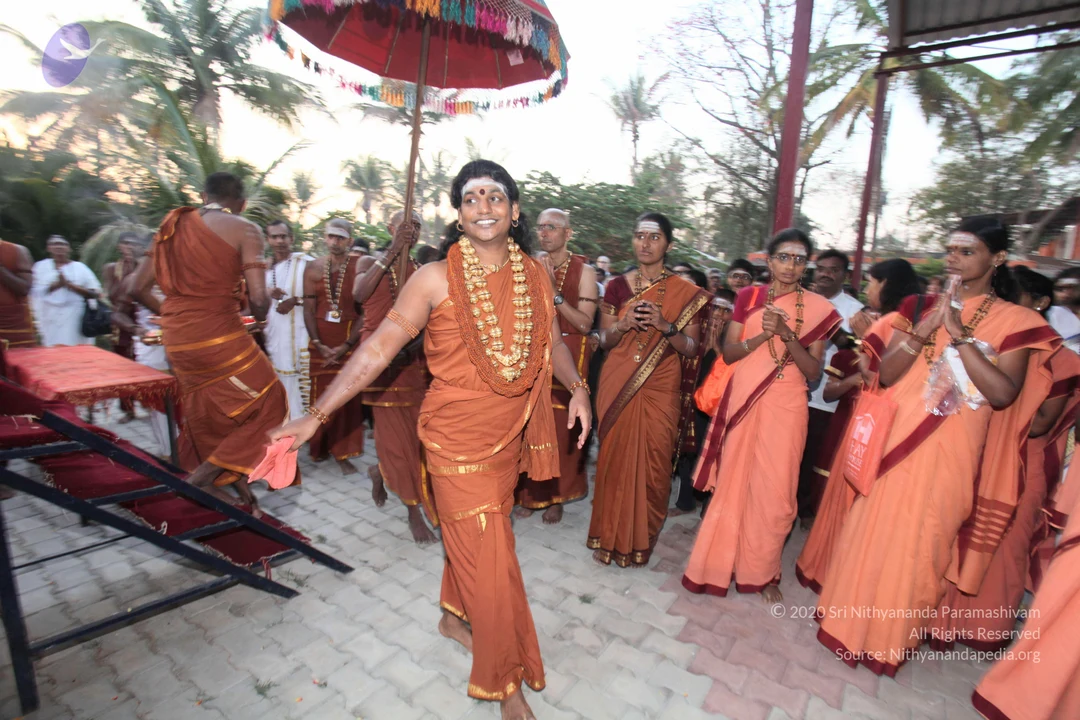
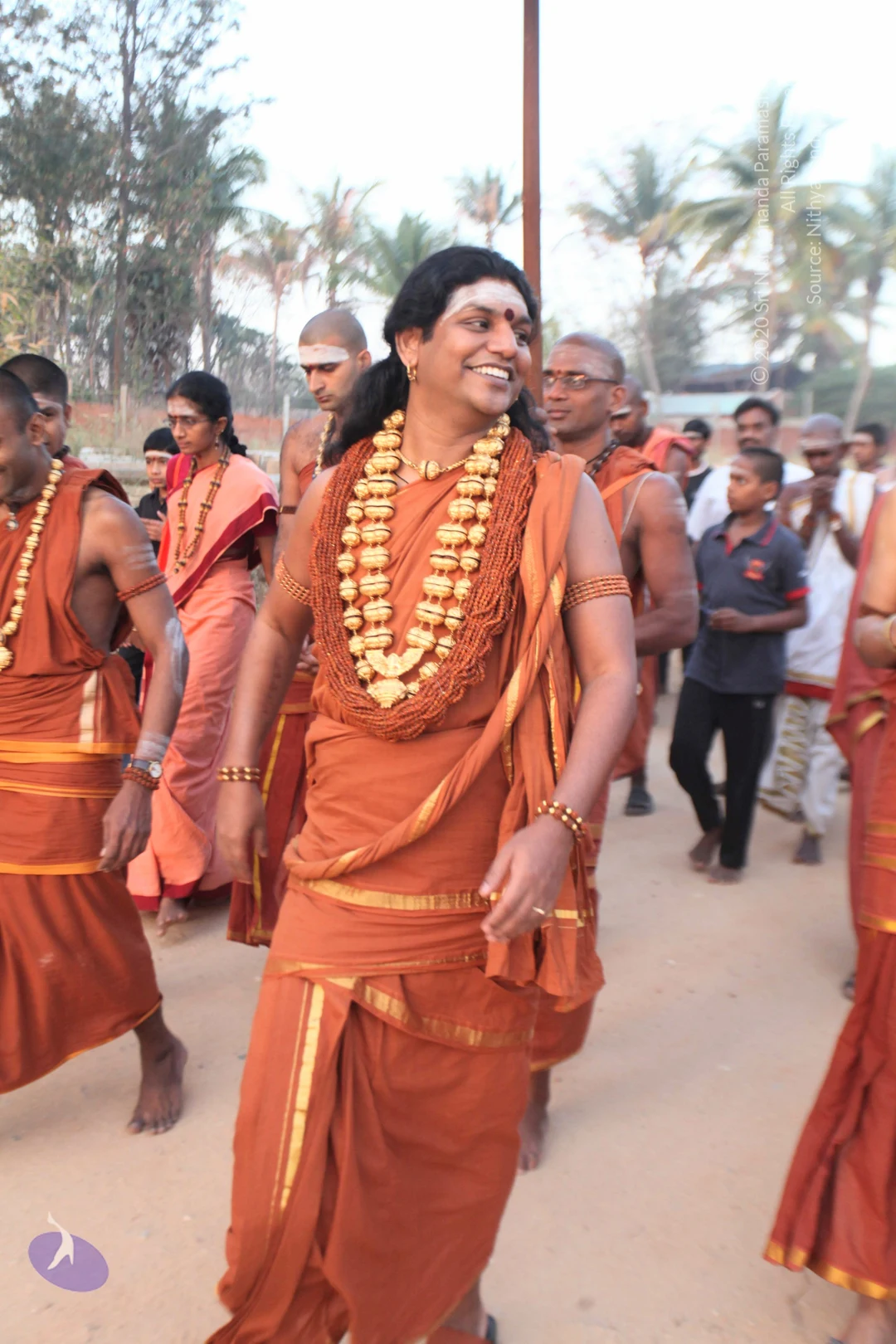
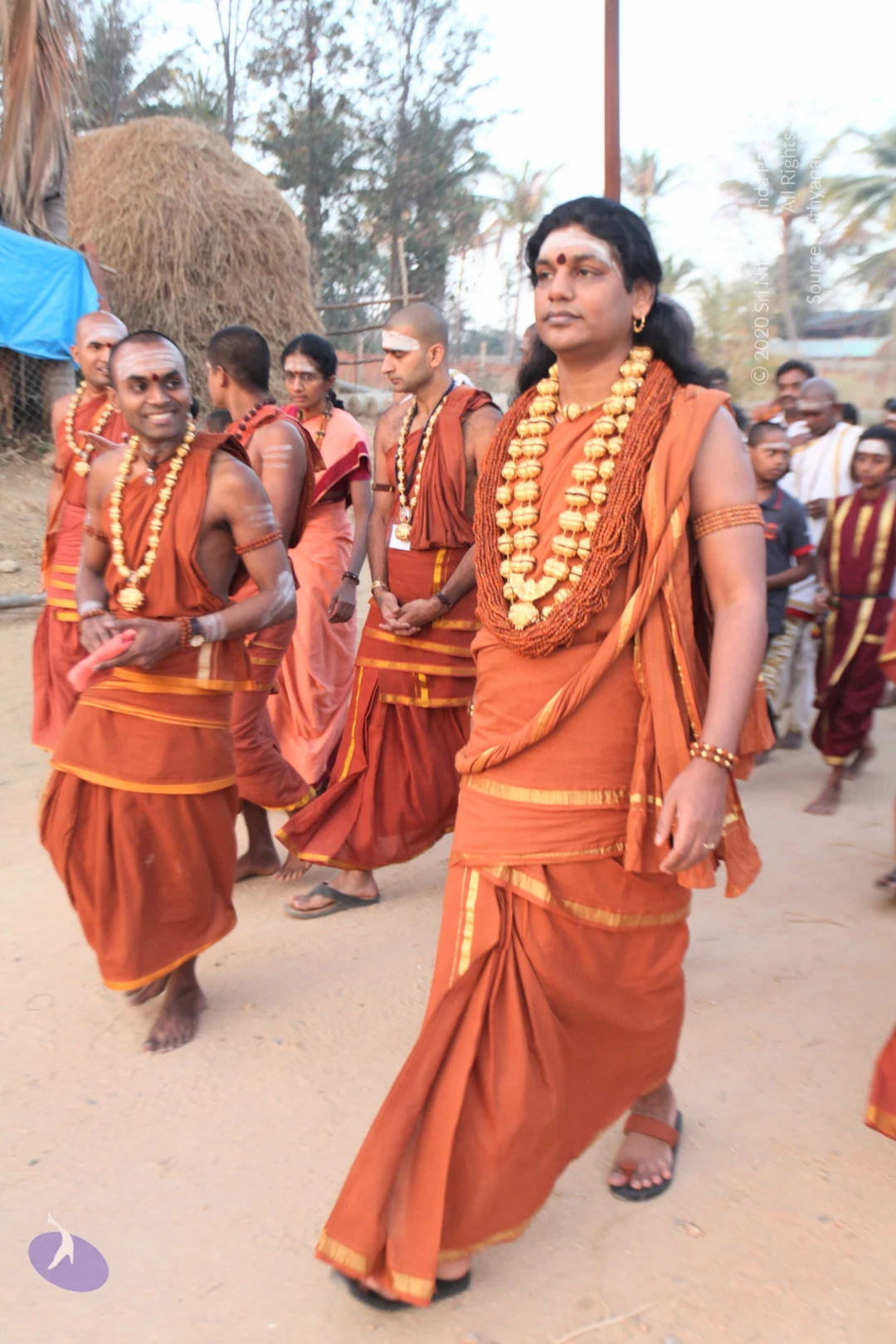
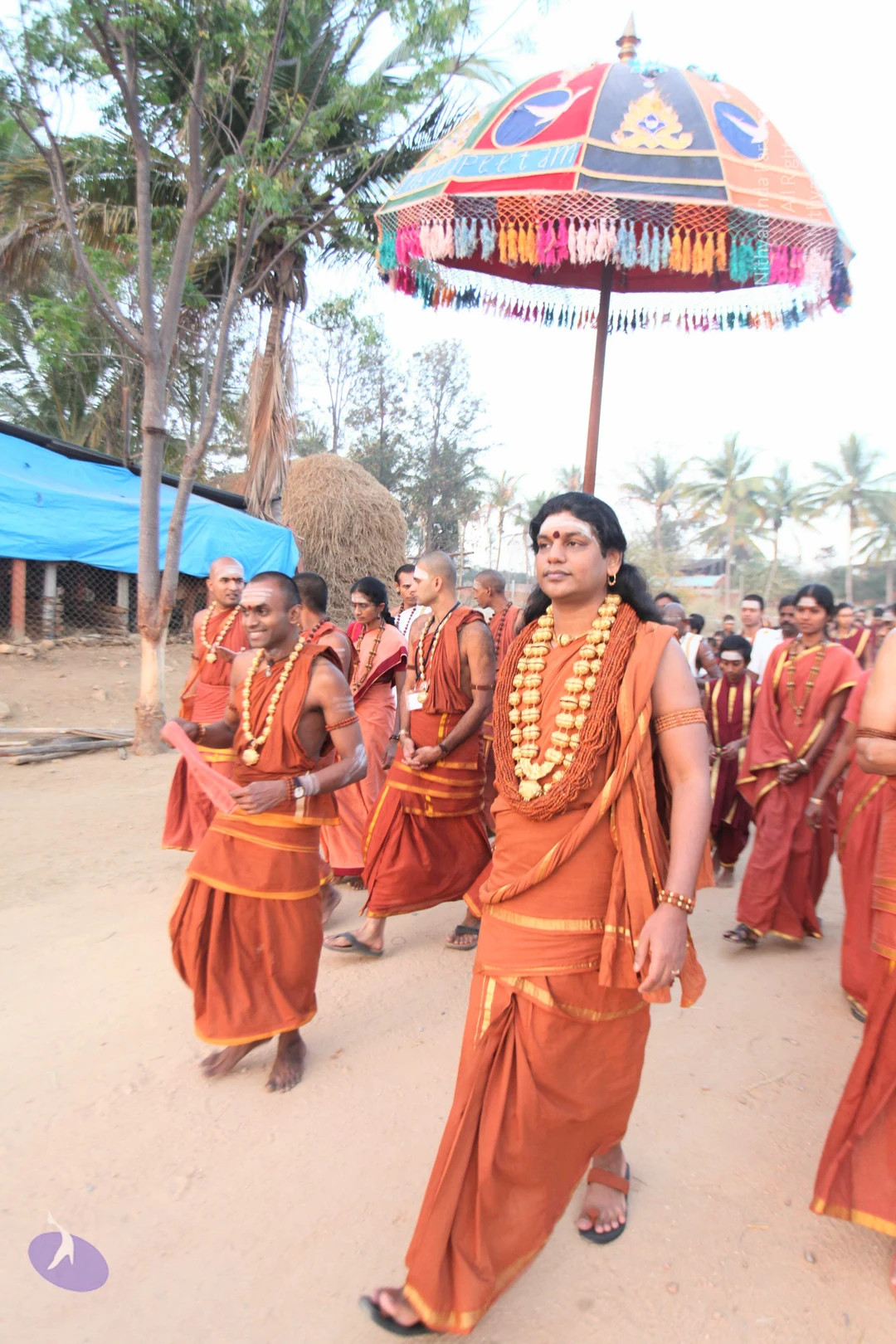
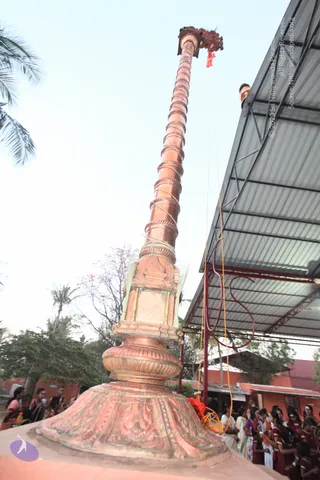
Outdoor procession under a red and gold parasol with colourful tassels, a palm-lined street behind. A long-haired man in the centre wears a saffron-orange garment with a gold-threaded shawl and a white garland, hands folded in front of him. Around him, bare-chested men in saffron dhotis with gold bands and gold chains walk barefoot, several holding a silver kalasha, a small offering plate and a white cloth. Some have white and red forehead marks and rudraksha malas. Parked black cars and a white building edge the paved path. Swamiji (probable): the centre figure has long swept-back hair, saffron clothing, a garland and gold necklace, consistent with the page's reference to Swamiji at this event.Photograph of a procession outdoors under a red canopy hung with colourful tassels and a palm tree behind. A smiling man in the centre wears an orange-saffron dhoti and shawl, a thick gold-toned ceremonial necklace, a red kumkum mark and white vibhuti on his forehead, and walks forward with his hands at his sides. Around him, saffron-robed men with white forehead markings and beaded rudraksha-style malas walk barefoot; one carries a silver tray of flowers and offerings, and another holds a decorated orange-and-red ceremonial banner. Behind them, a man in white dhoti walks among the group, and a figure in white carries a small object. The setting suggests a ritual procession with attendants carrying ceremonial items.Outdoor photo of a group of saffron-robed sannyasis walking barefoot along a paved path beside a red gated temple wall with gold decorative motifs. In the foreground, a figure with long dark hair and a dark head covering wears an orange-saffron wrap and a long garland of yellow-orange flowers, walking toward the camera. Beside him, a man in an orange dhoti and shawl holds his hands together in front of his chest and wears a red-and-white flower garland. Behind them, several more robed men in orange walk along the path, and a man in white dhoti stands further back. A striped mat runs along the walkway, and trees and a metal-roofed canopy frame the scene.A photo of a person in a saffron-orange sari with gold border and a gold-bead necklace, hair pulled back, holding a shallow brass plate near a tall copper ritual pillar with an embossed gold deity murti at its base. Orange-and-yellow cord is draped over the plate's rim. A second person's arm and hand, wearing red beaded bracelets, steadies the plate from the right. The scene suggests a ritual offering at an outdoor temple setting, with greenery and stone figures in the background.Low-angle photo of a tall copper-coloured ritual flagstaff rising against a clear blue sky. The pole is wrapped in bands of copper or brass ornamental rings and rope, and its top holds an ornate copper finial with a red cloth tied to it. Orange ropes run alongside the pole. A small part of a white frame is visible at the upper left edge. No people are visible in the frame, and no a person candidate appears in the image.Outdoors under a pale sky with palm trees, a tall tapering copper-coloured ritual pole rises from an ornate pedestal base carved with floral motifs. A devotee in an orange-red dhoti and shawl stands beside the pole, pulling a long orange rope attached to its top, gazing upward. Behind and around them, a crowd of people in saffron and white clothing watches from beside a metal-roofed structure, with a red ceremonial flag fluttering from the pole's top. The scene suggests a pole-raising ritual.

Paada Puja

4 photosSource gallery
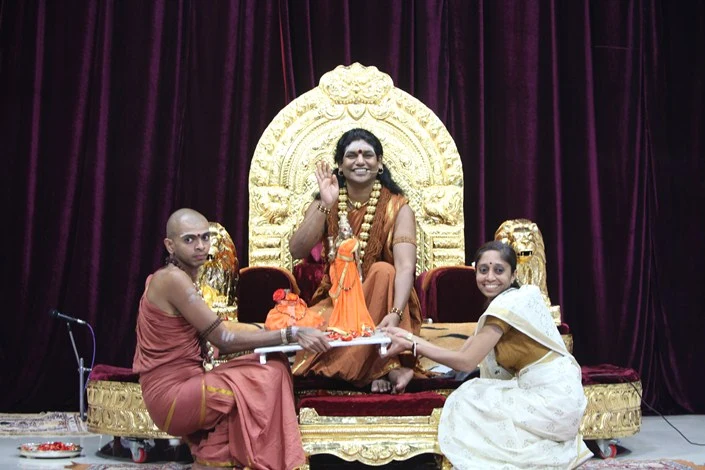
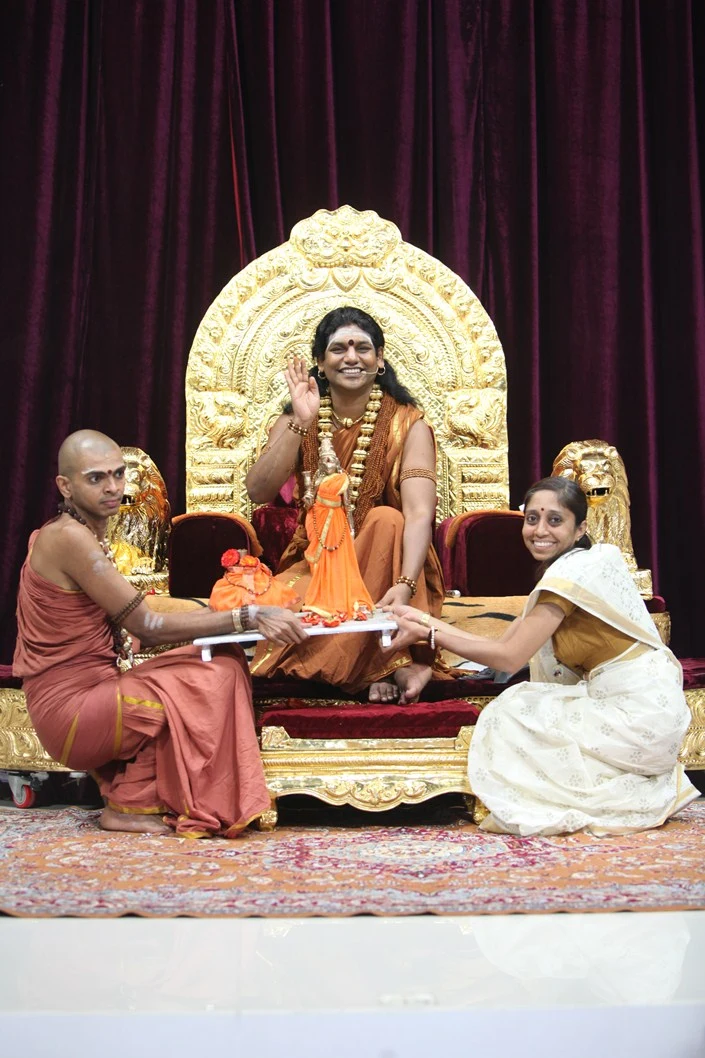
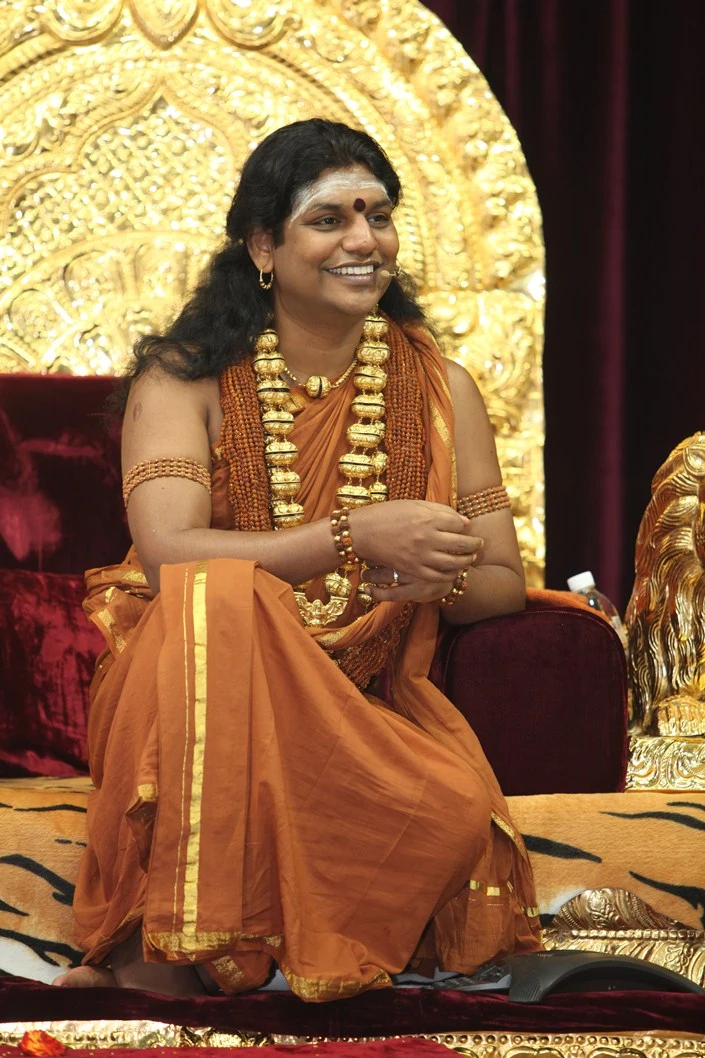
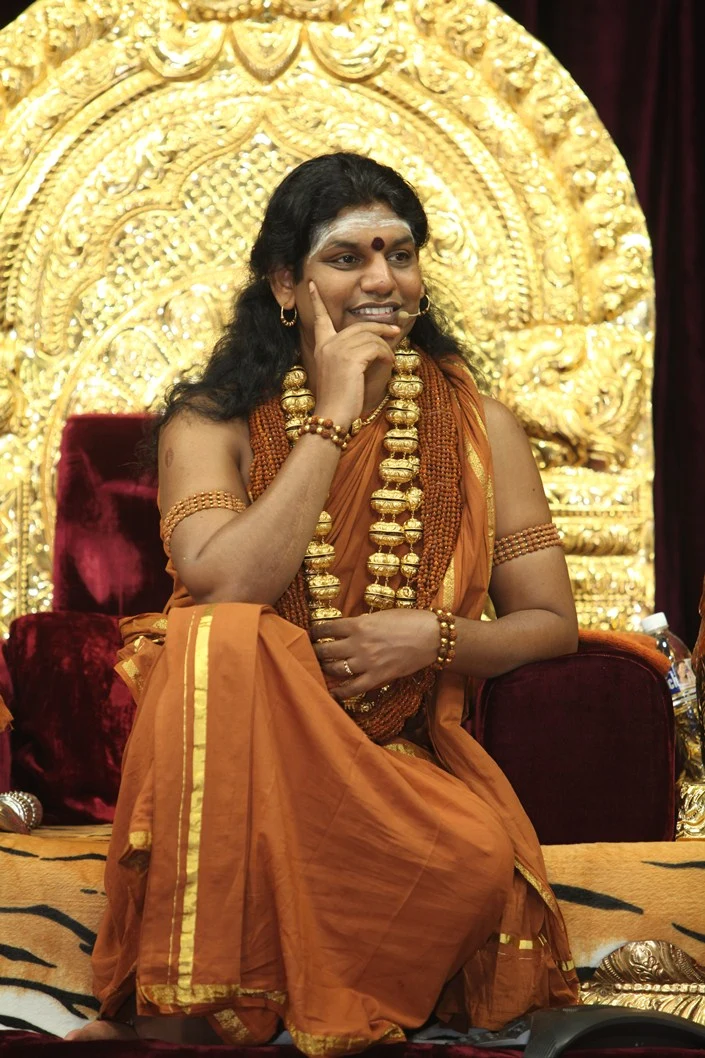
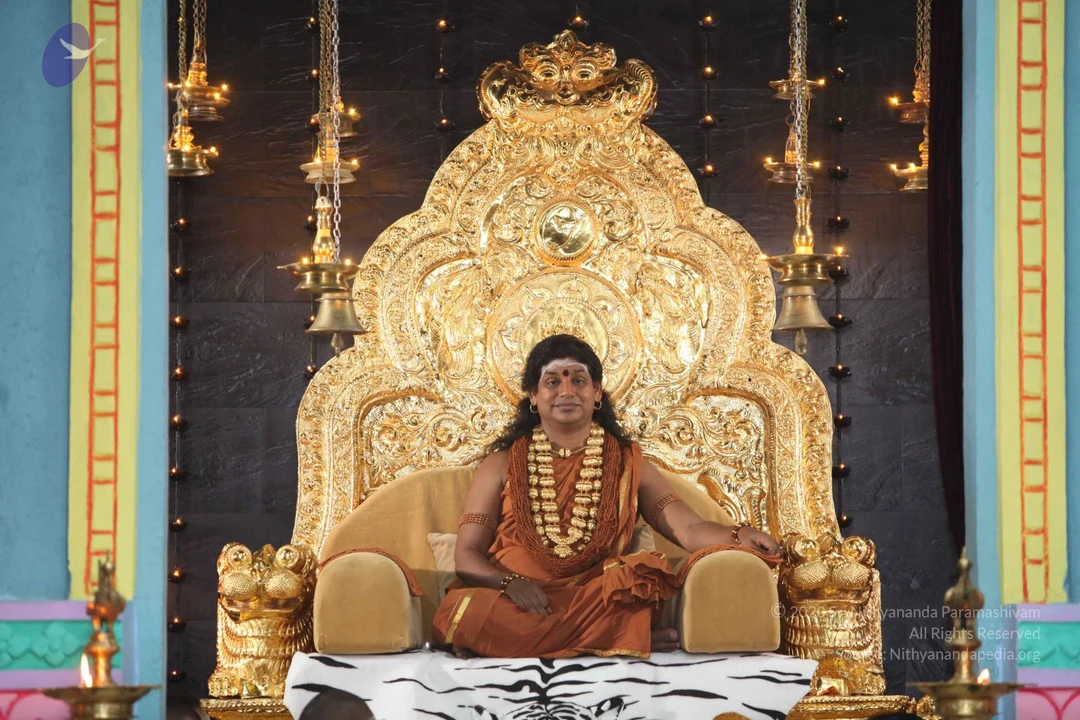
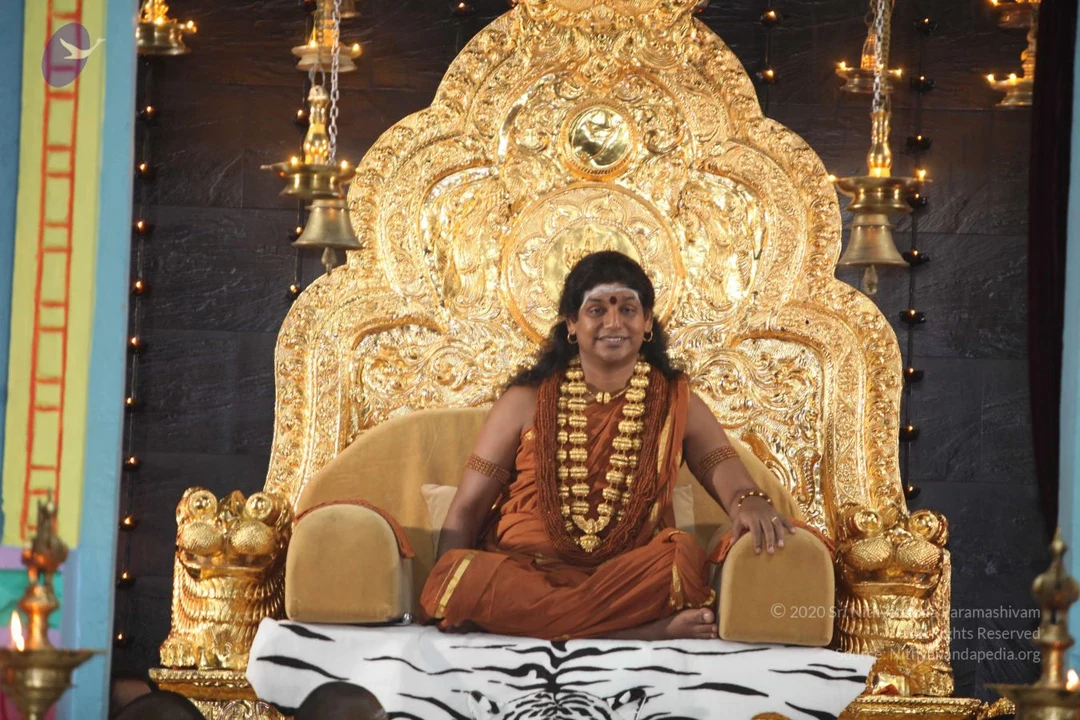
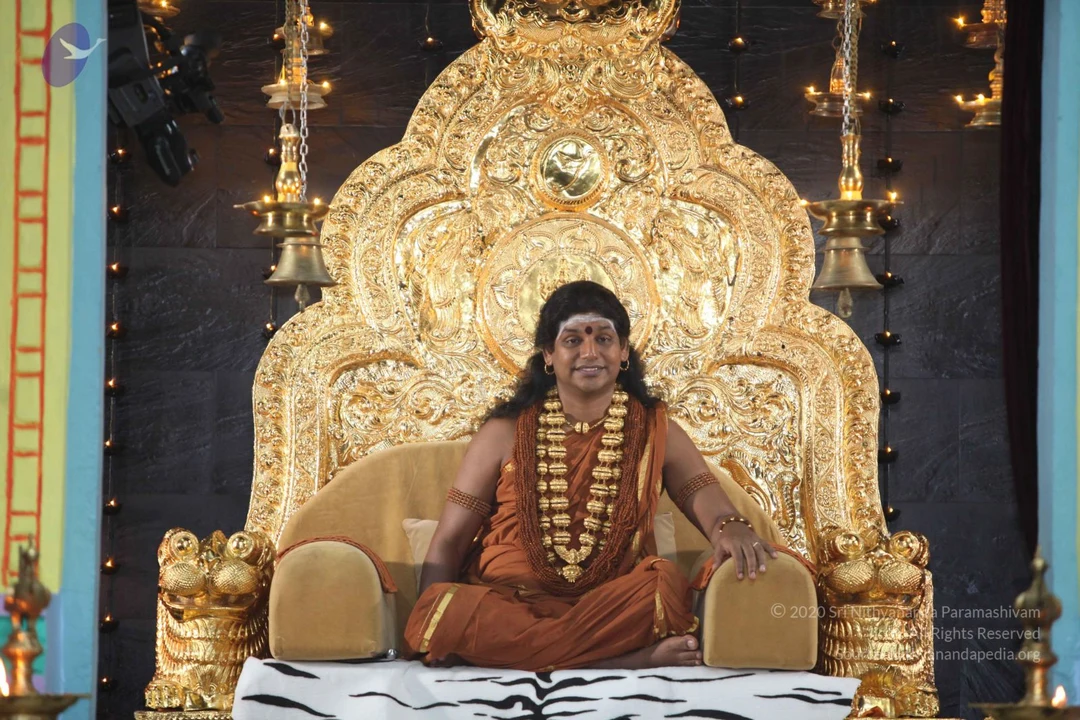
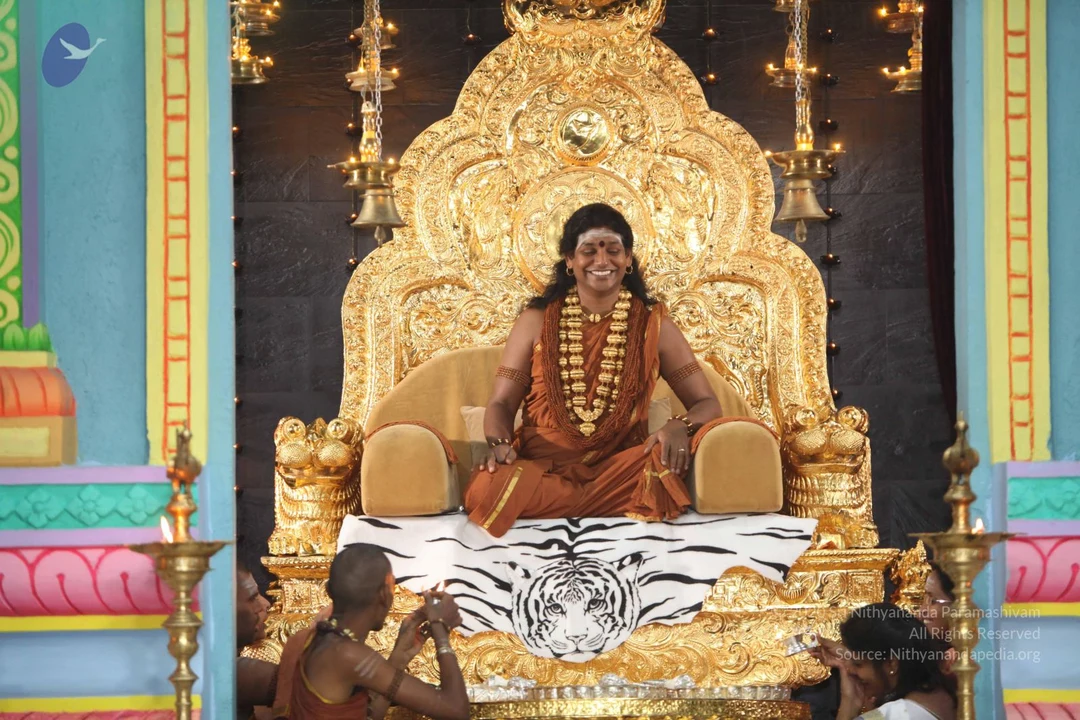
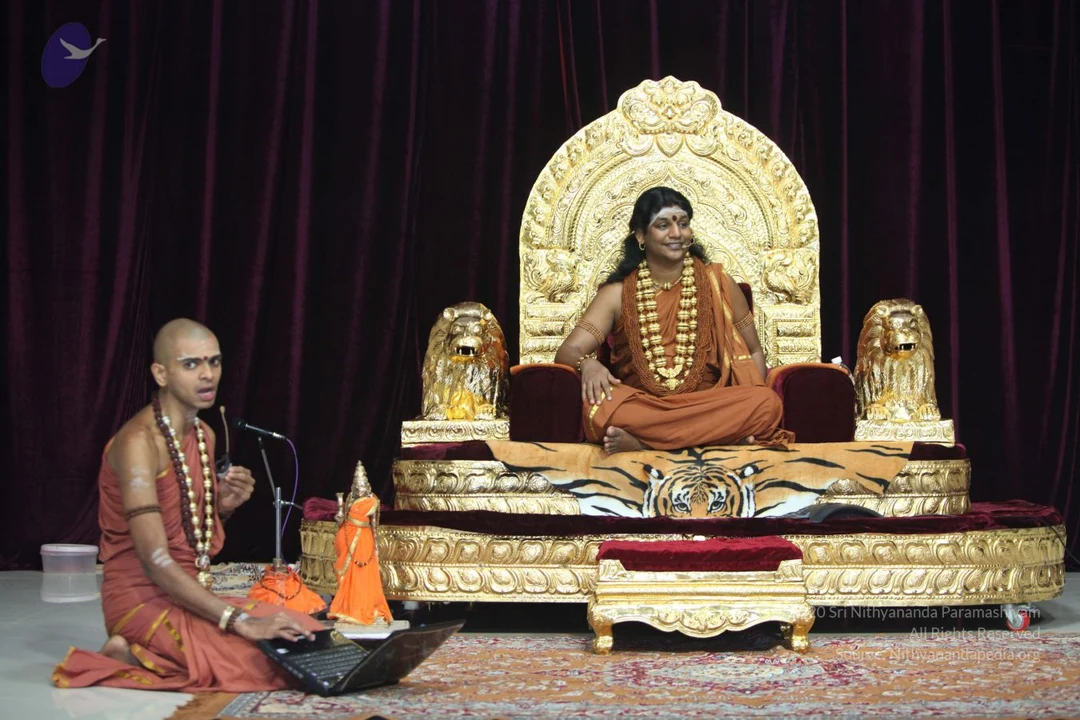
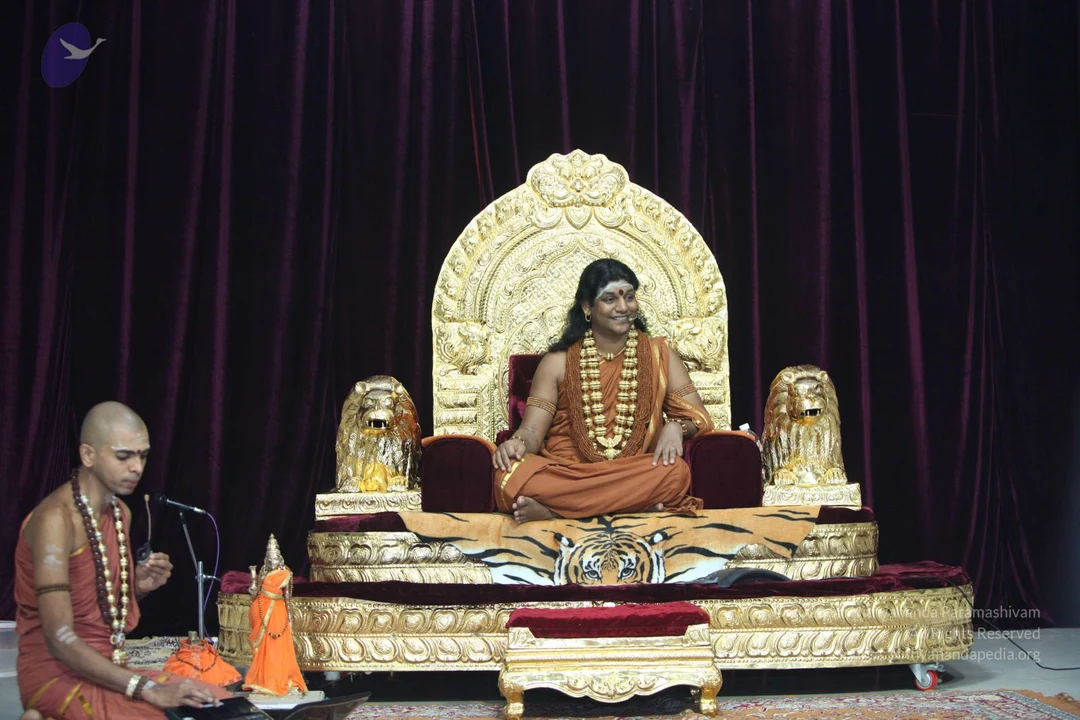
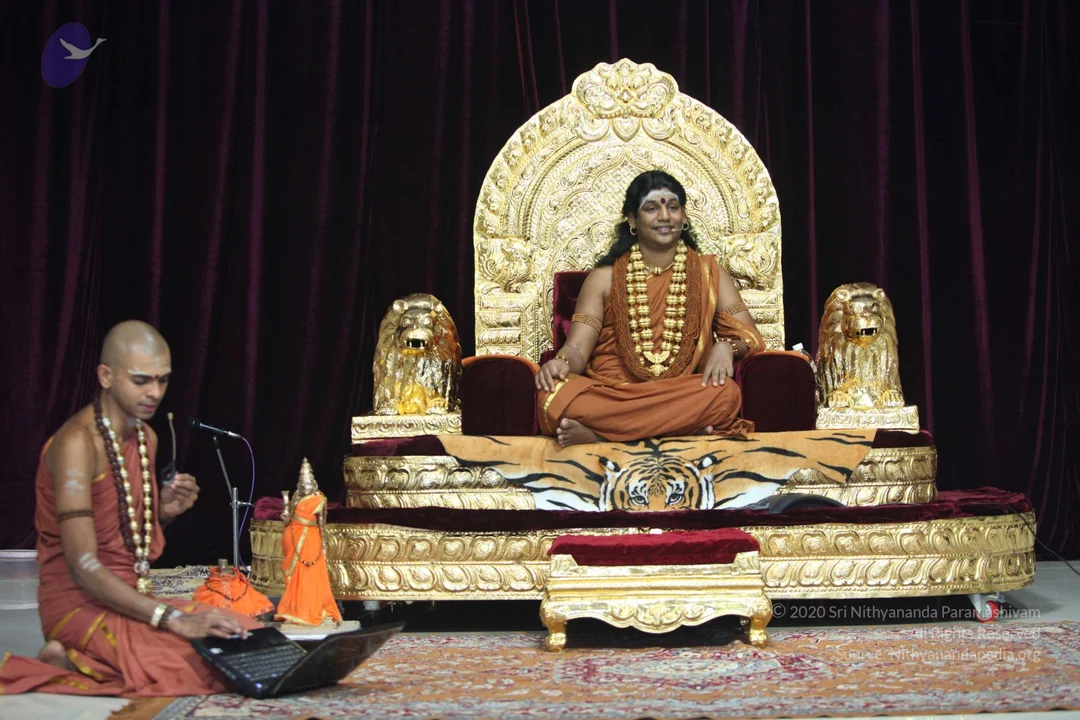
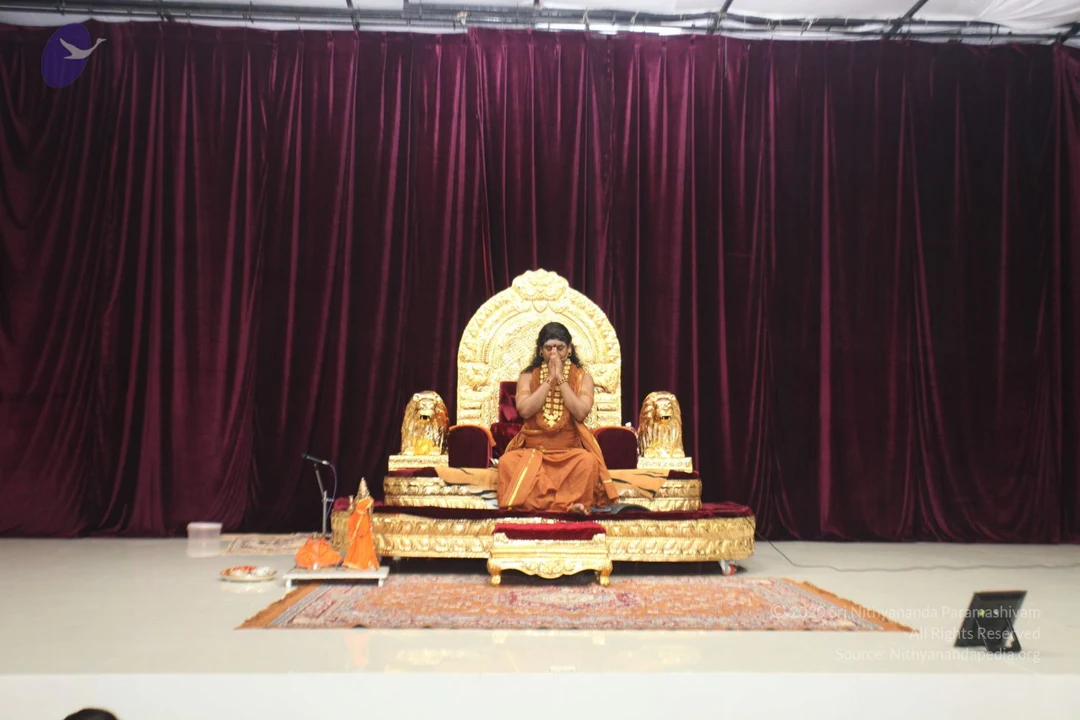
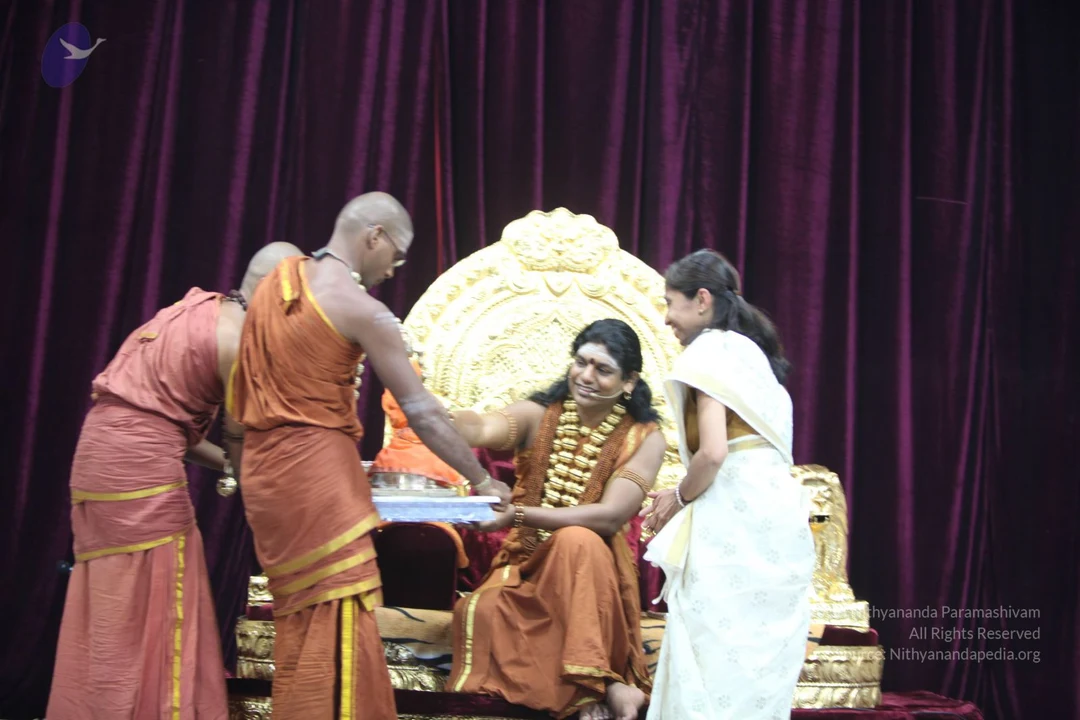
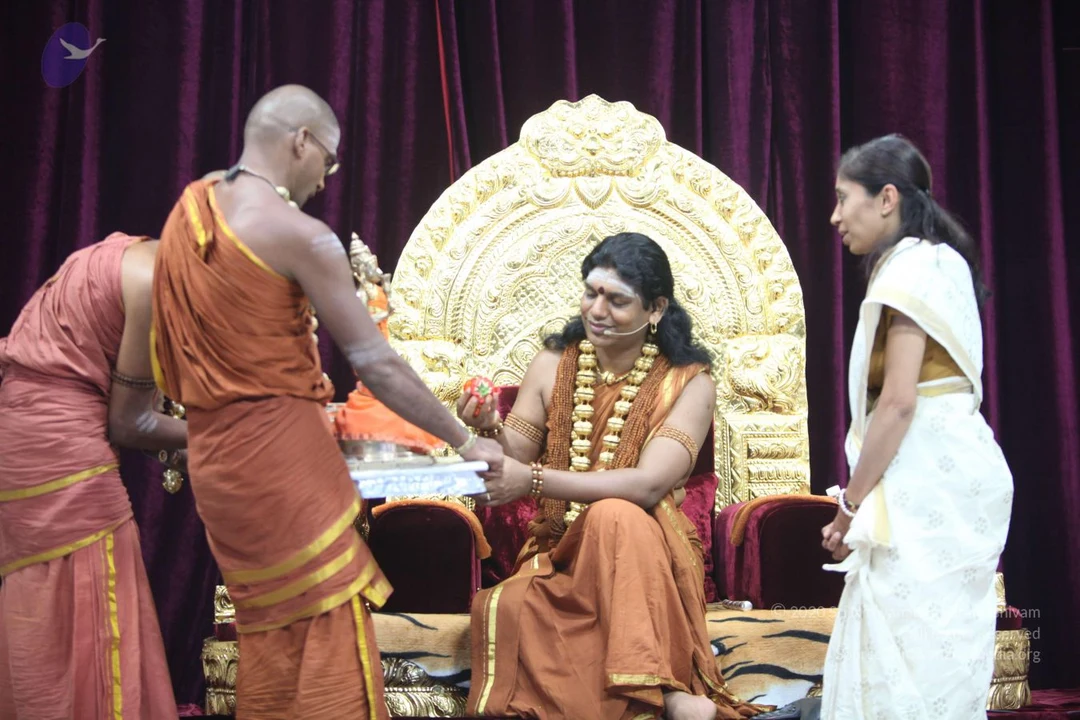
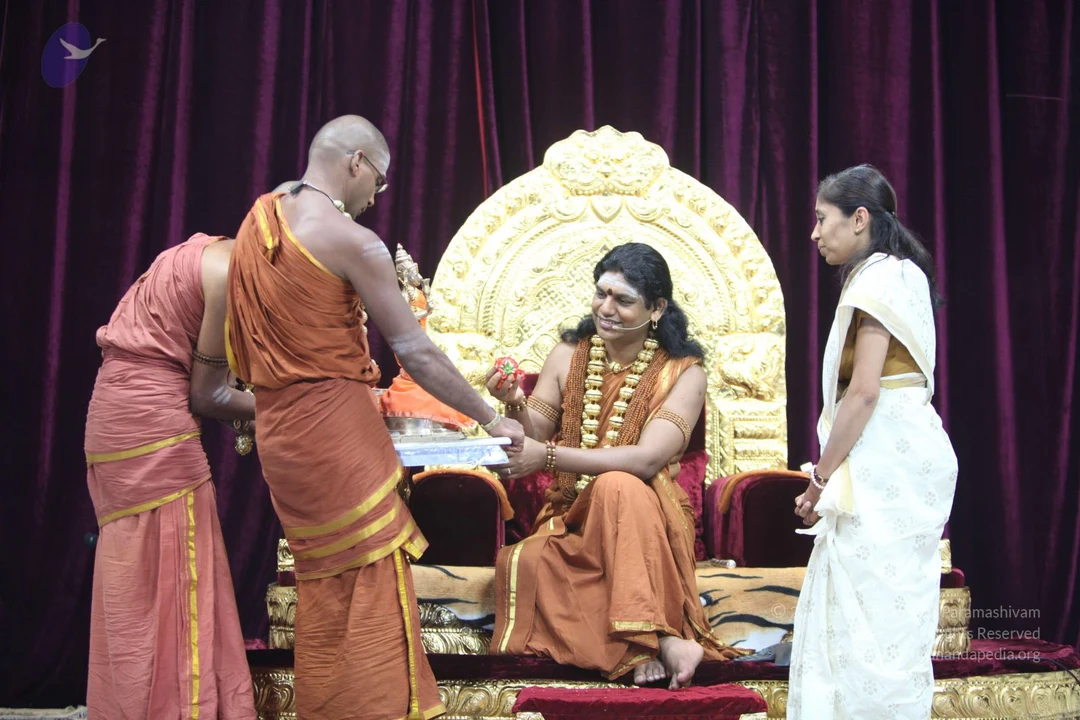
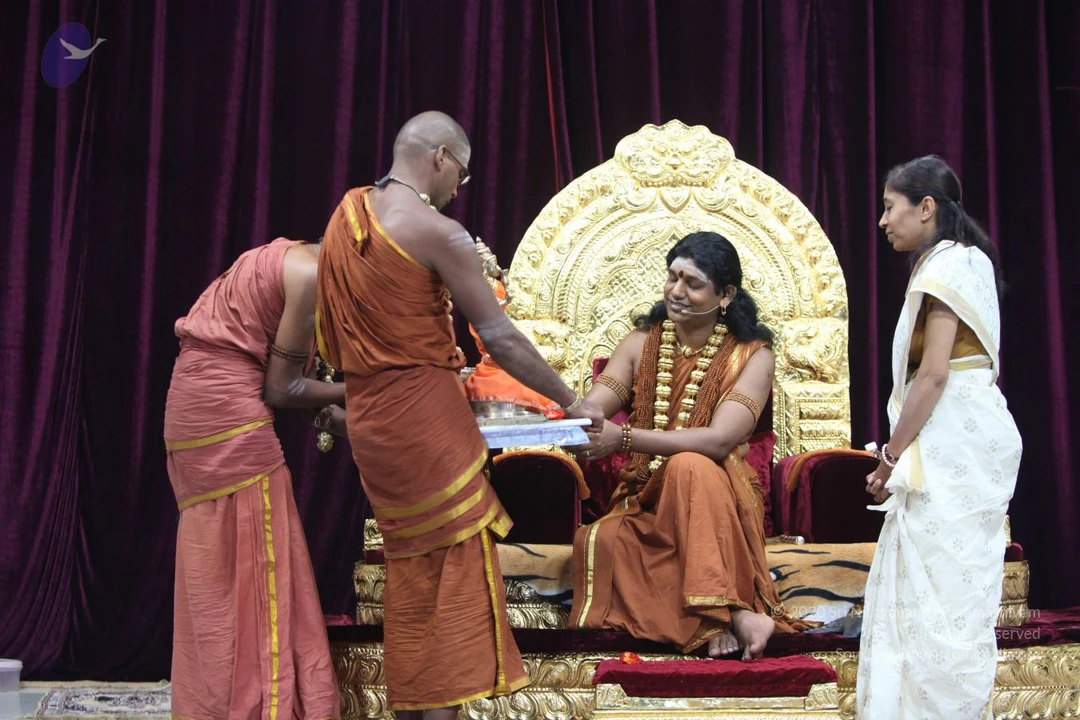
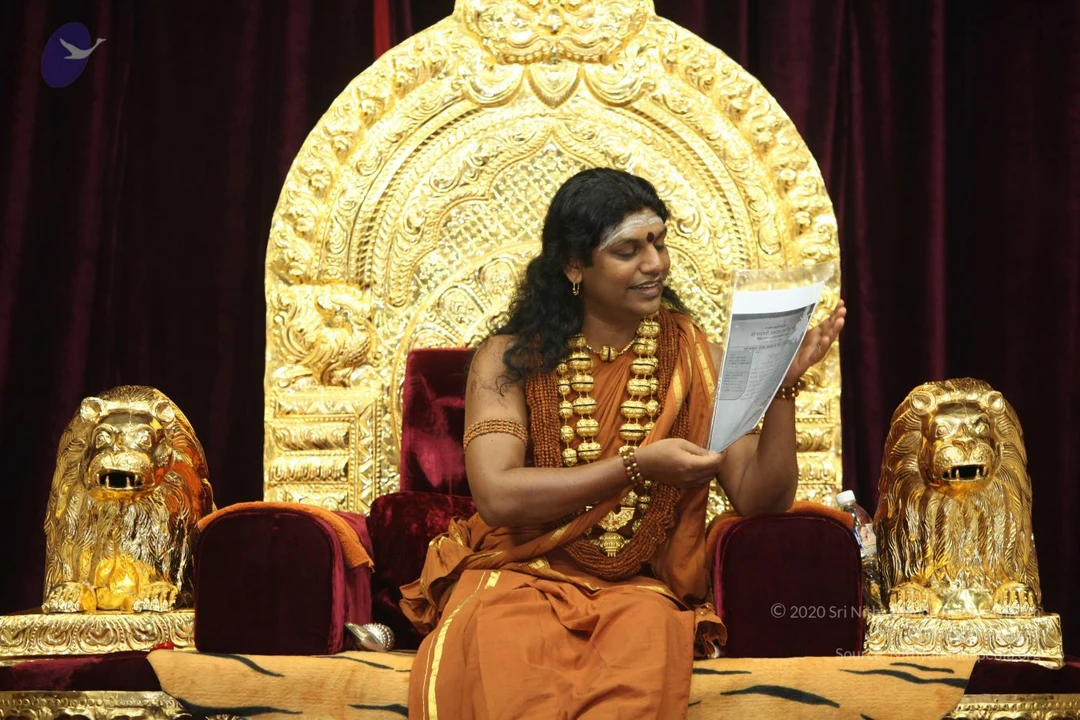
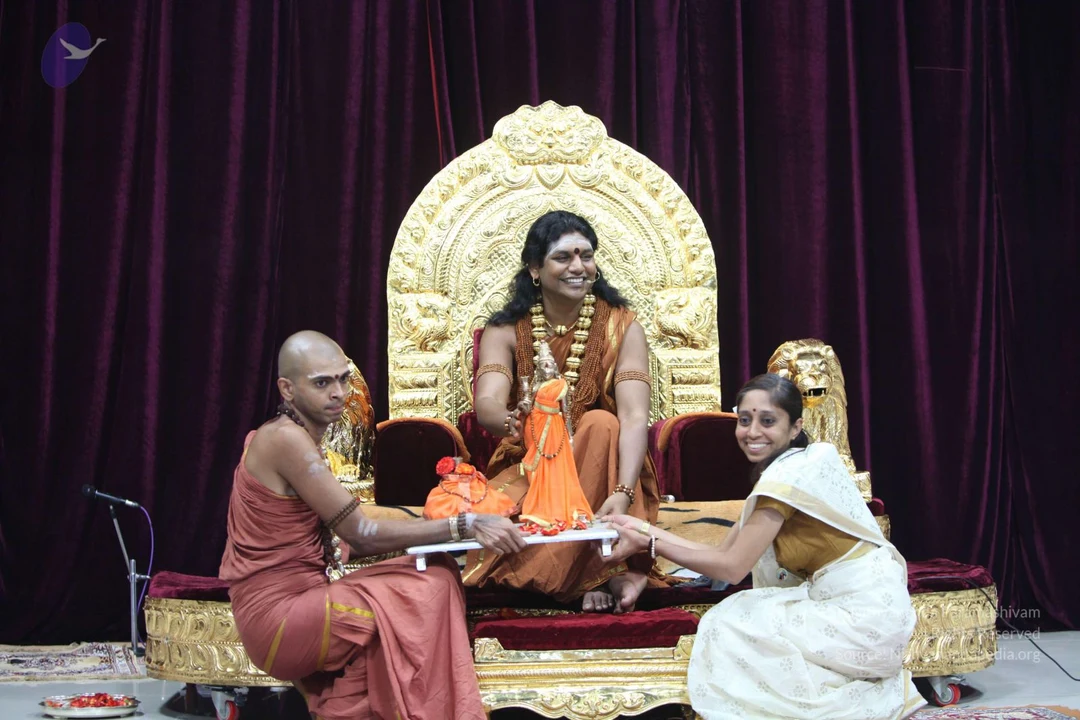
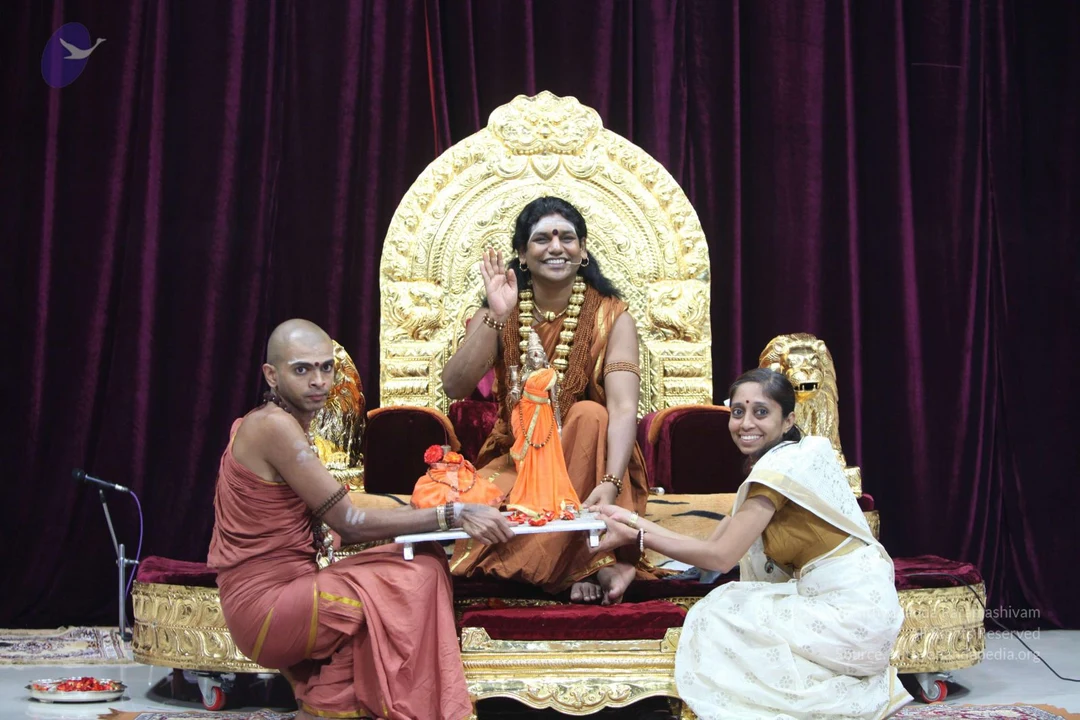
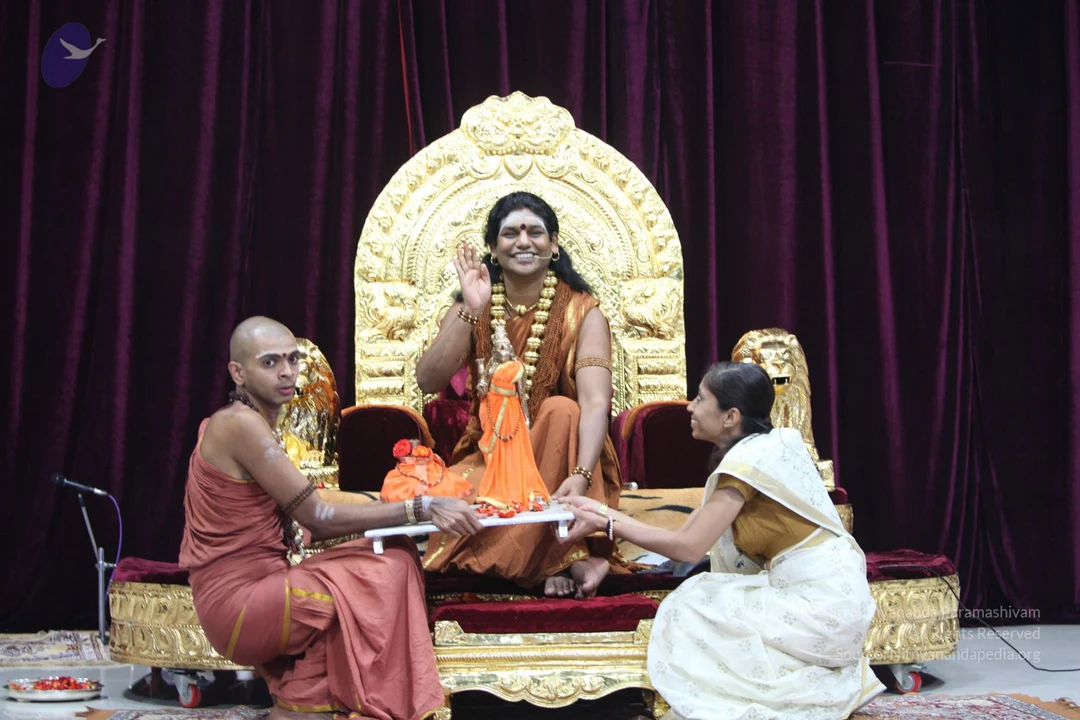
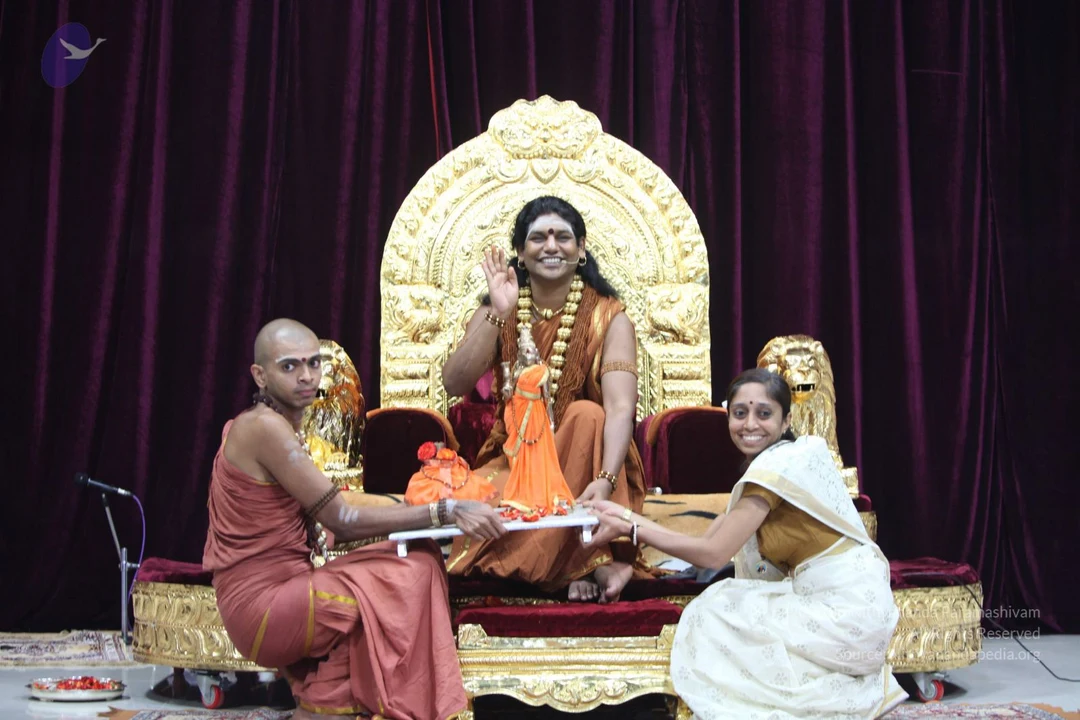
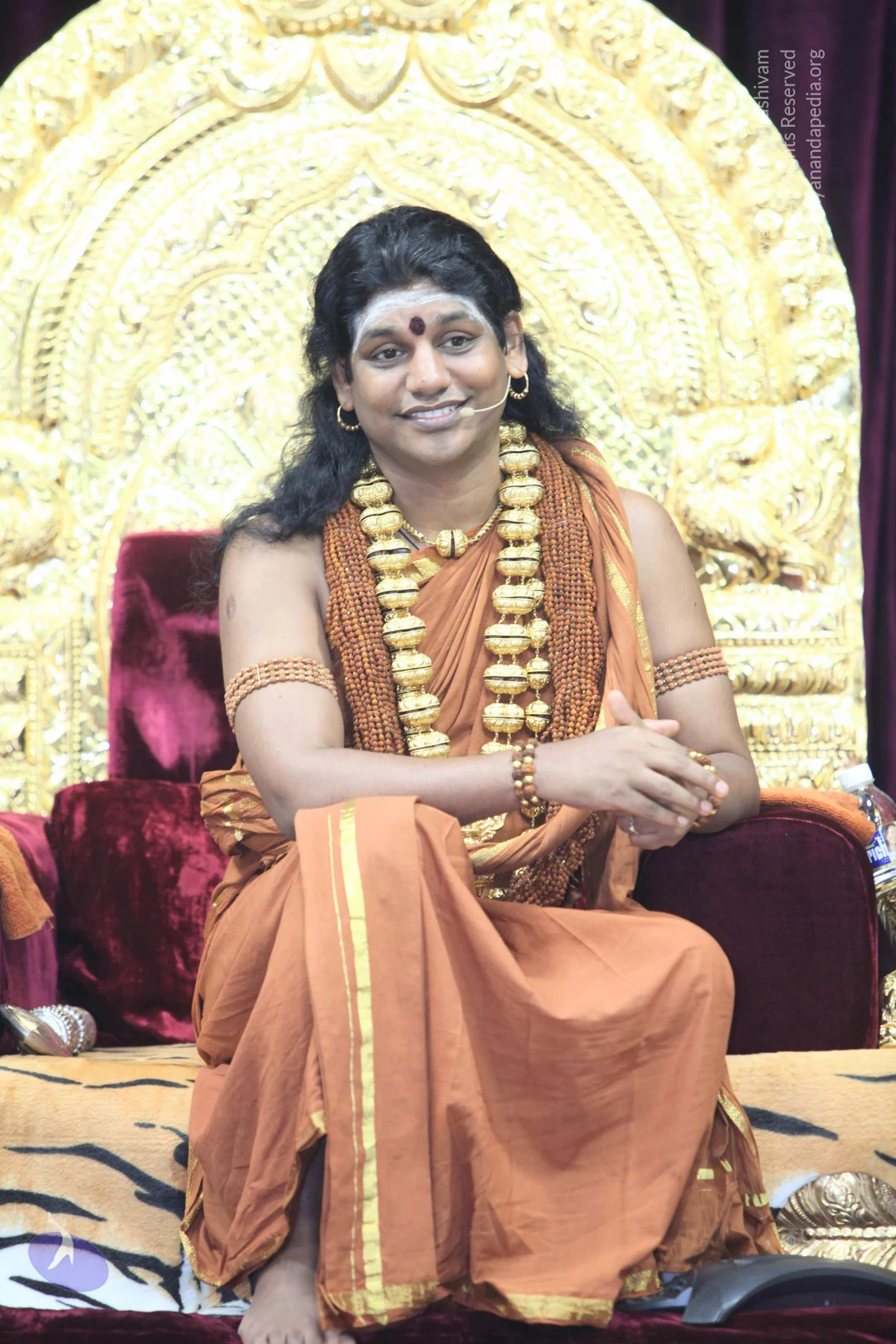
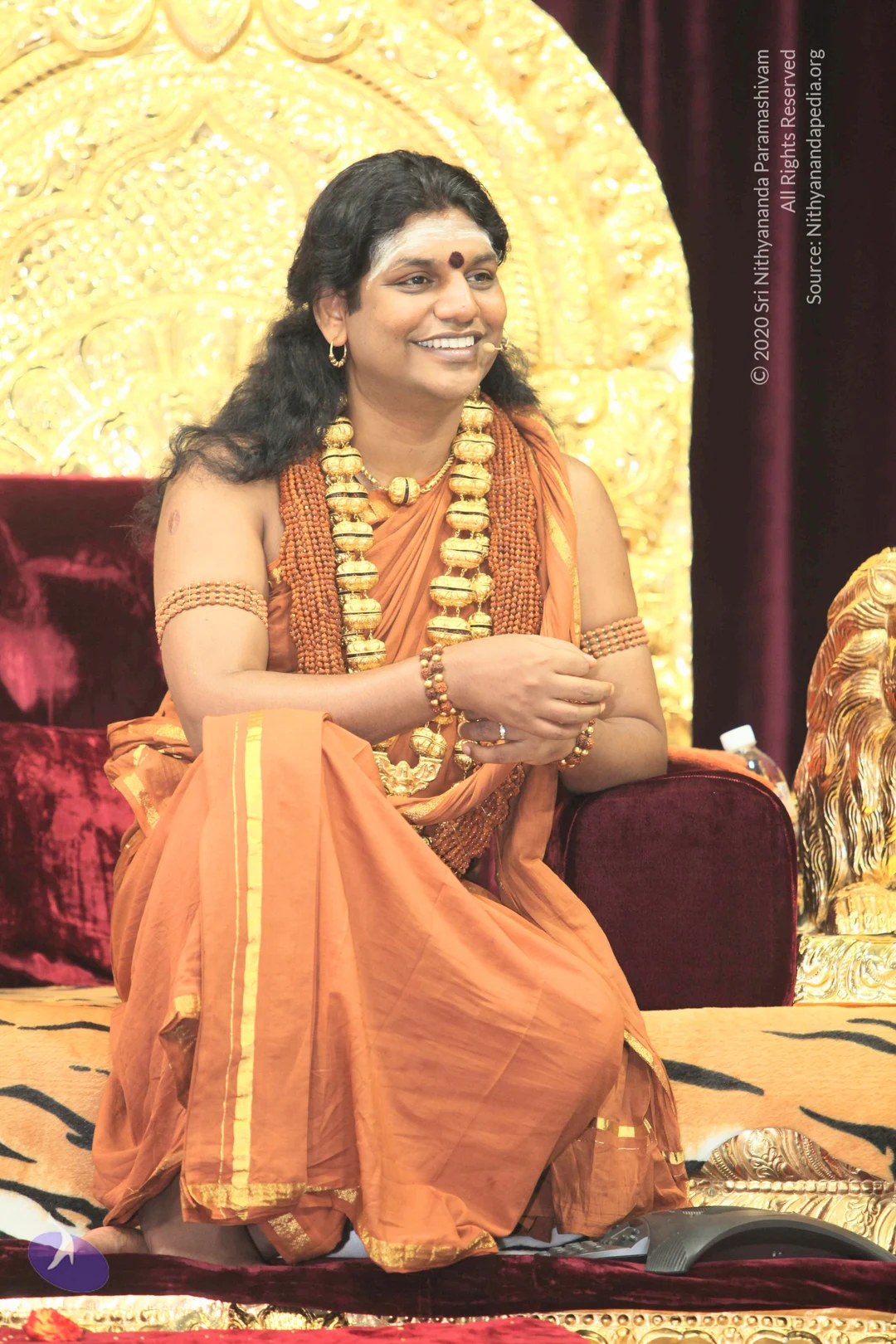
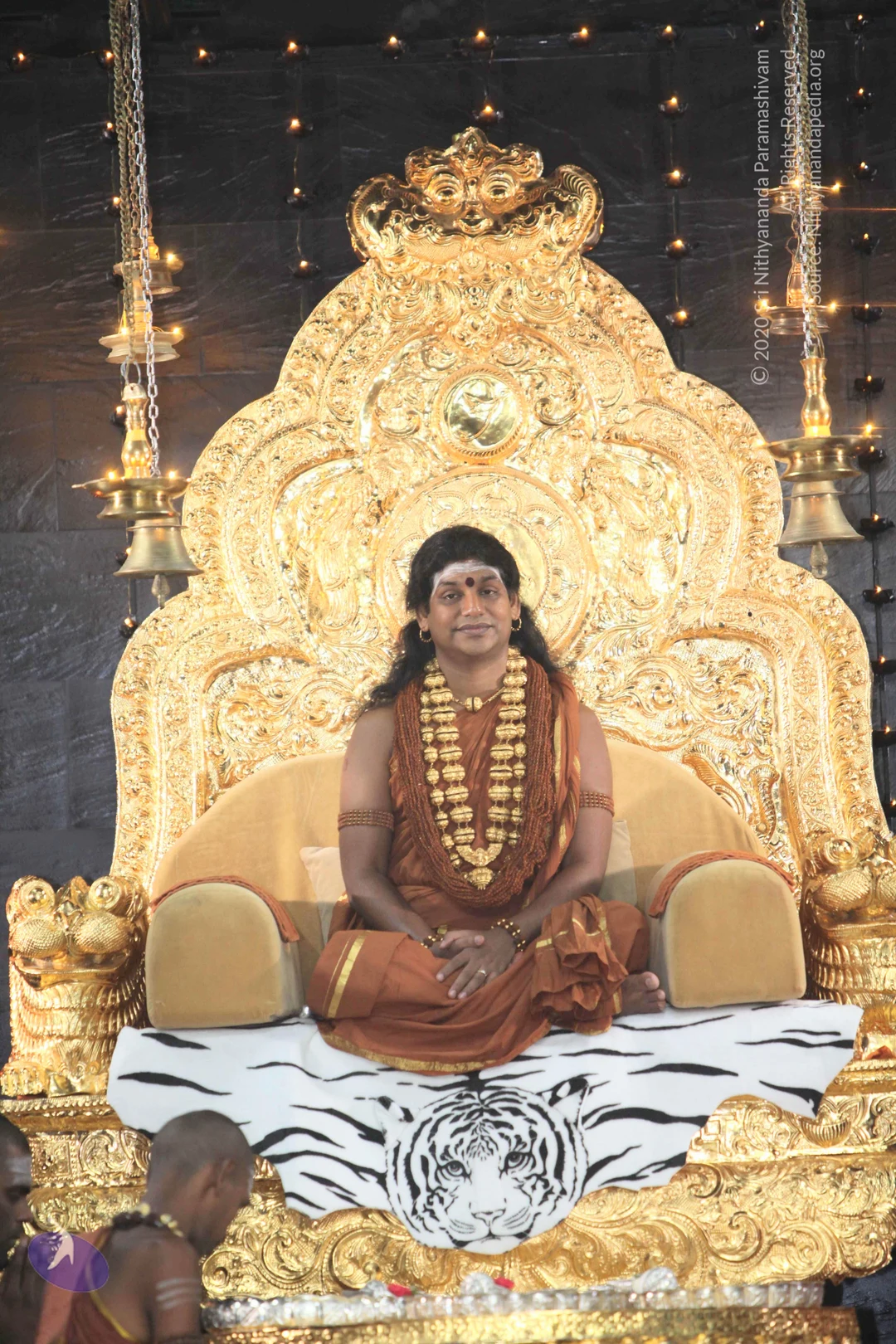
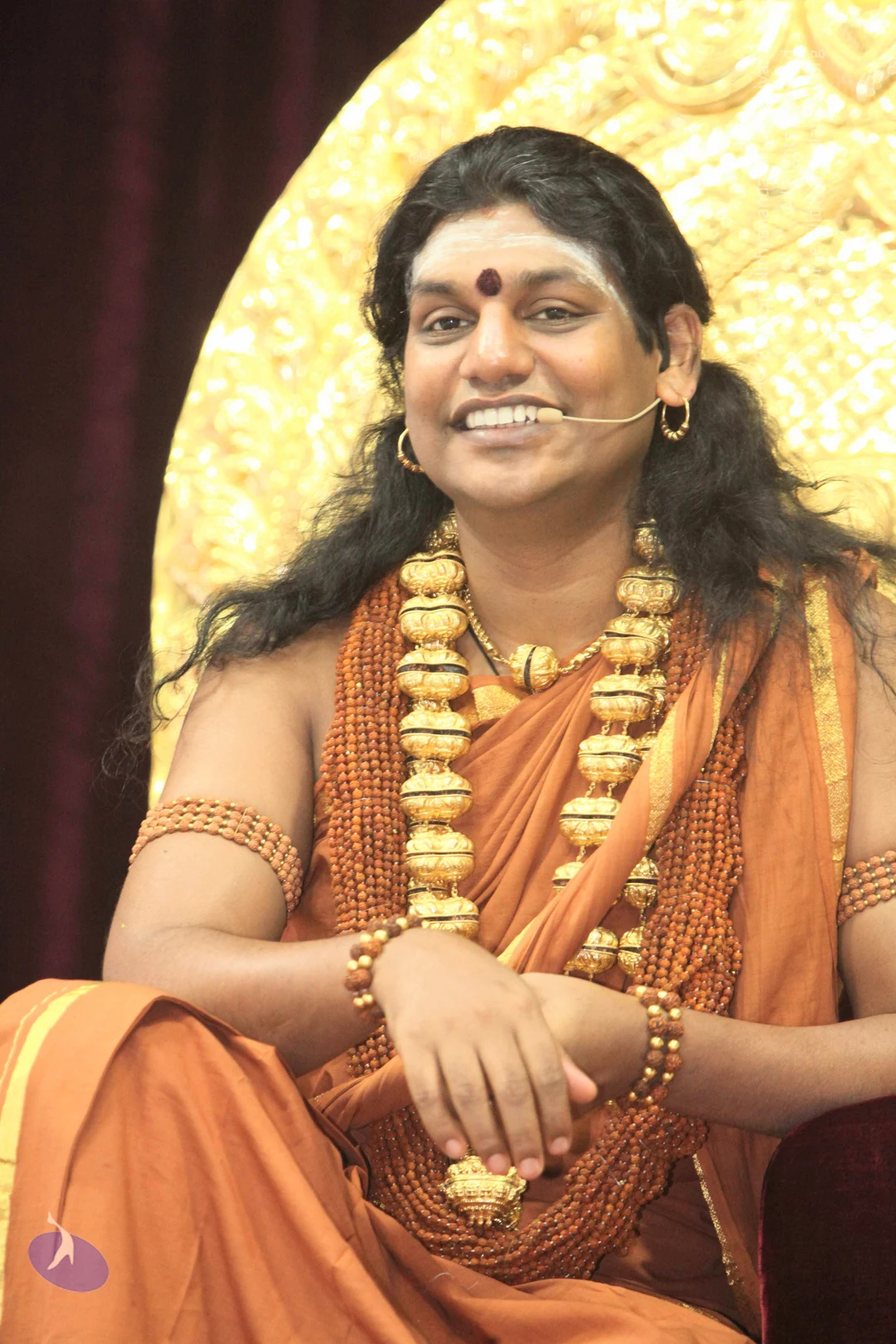
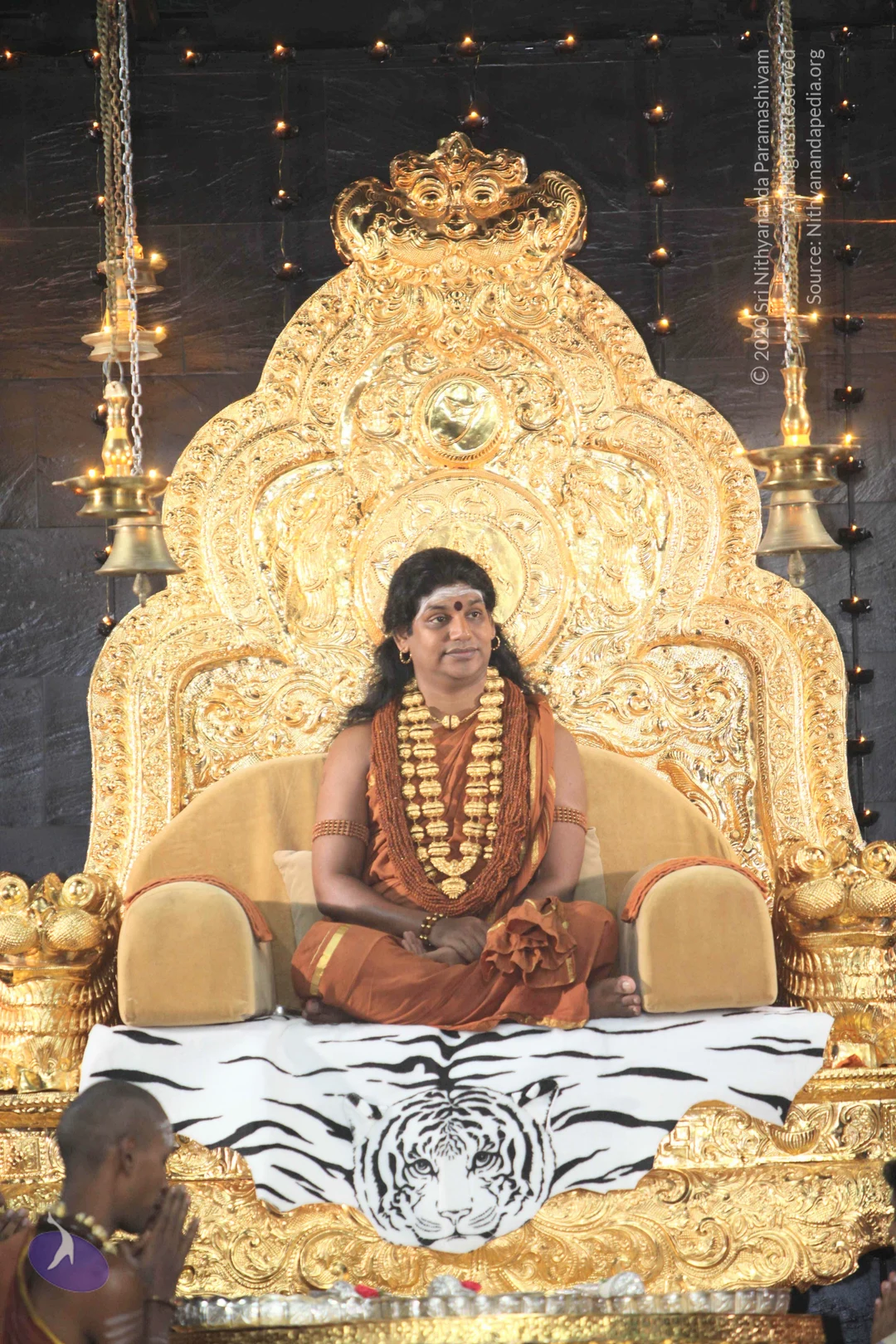
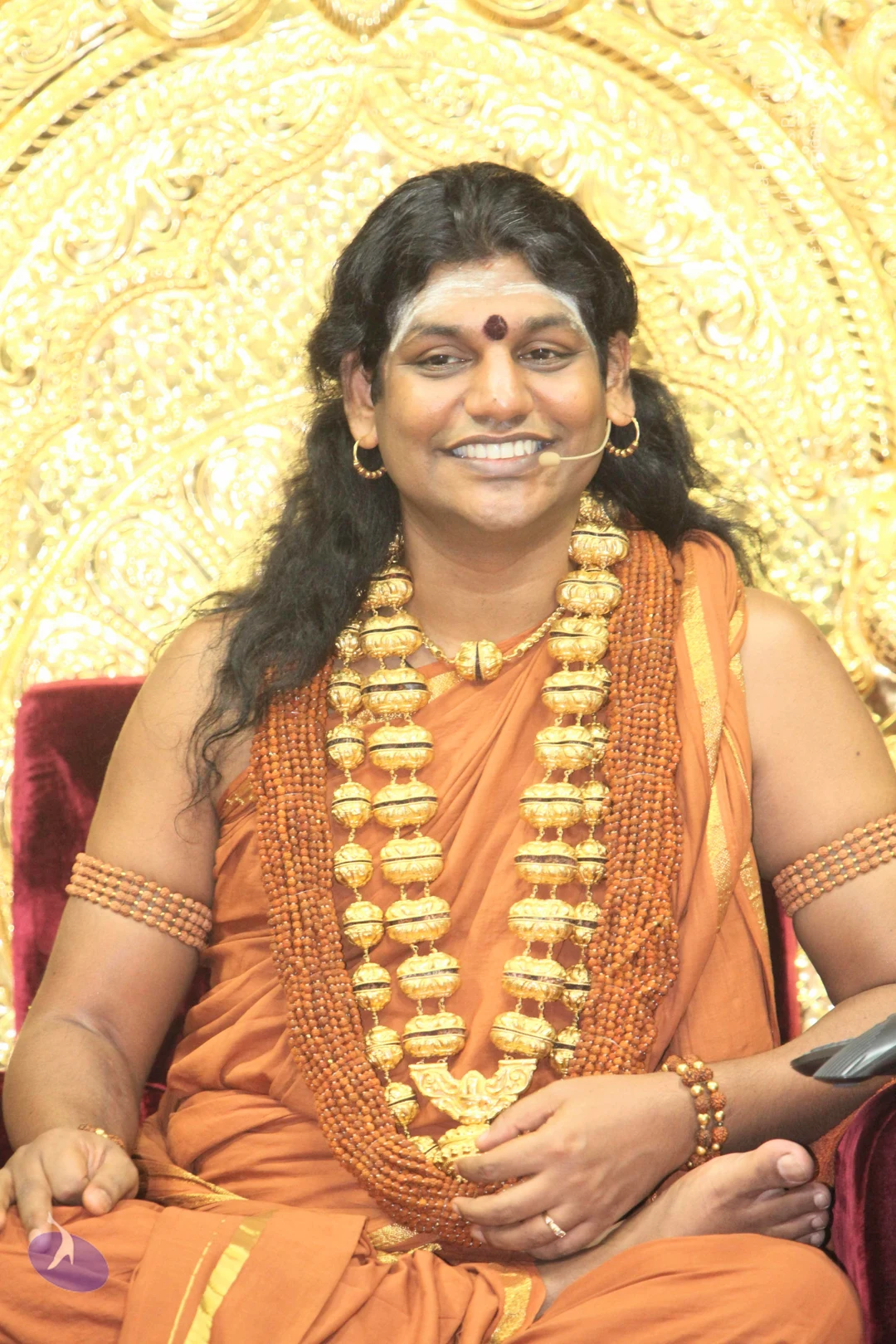
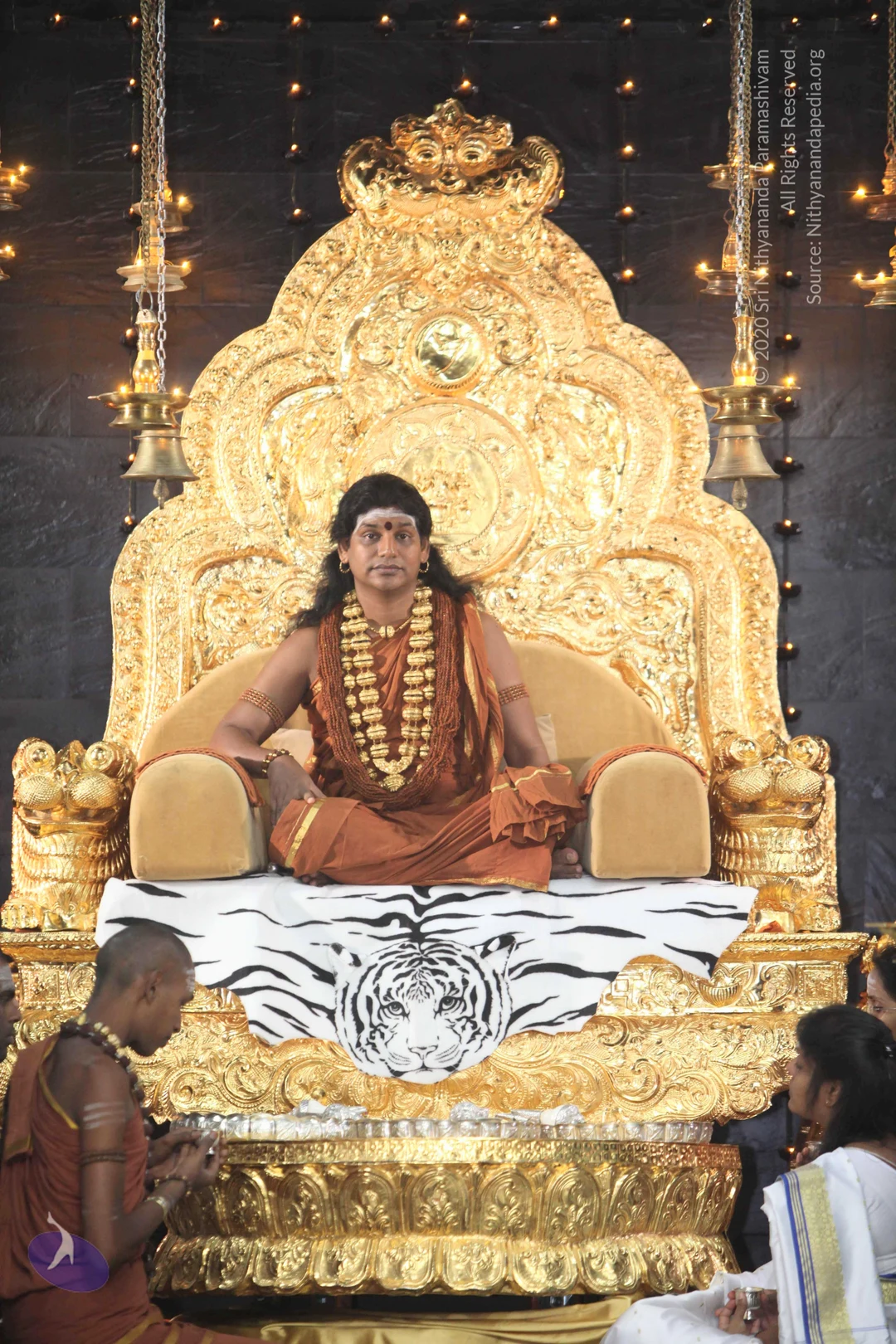
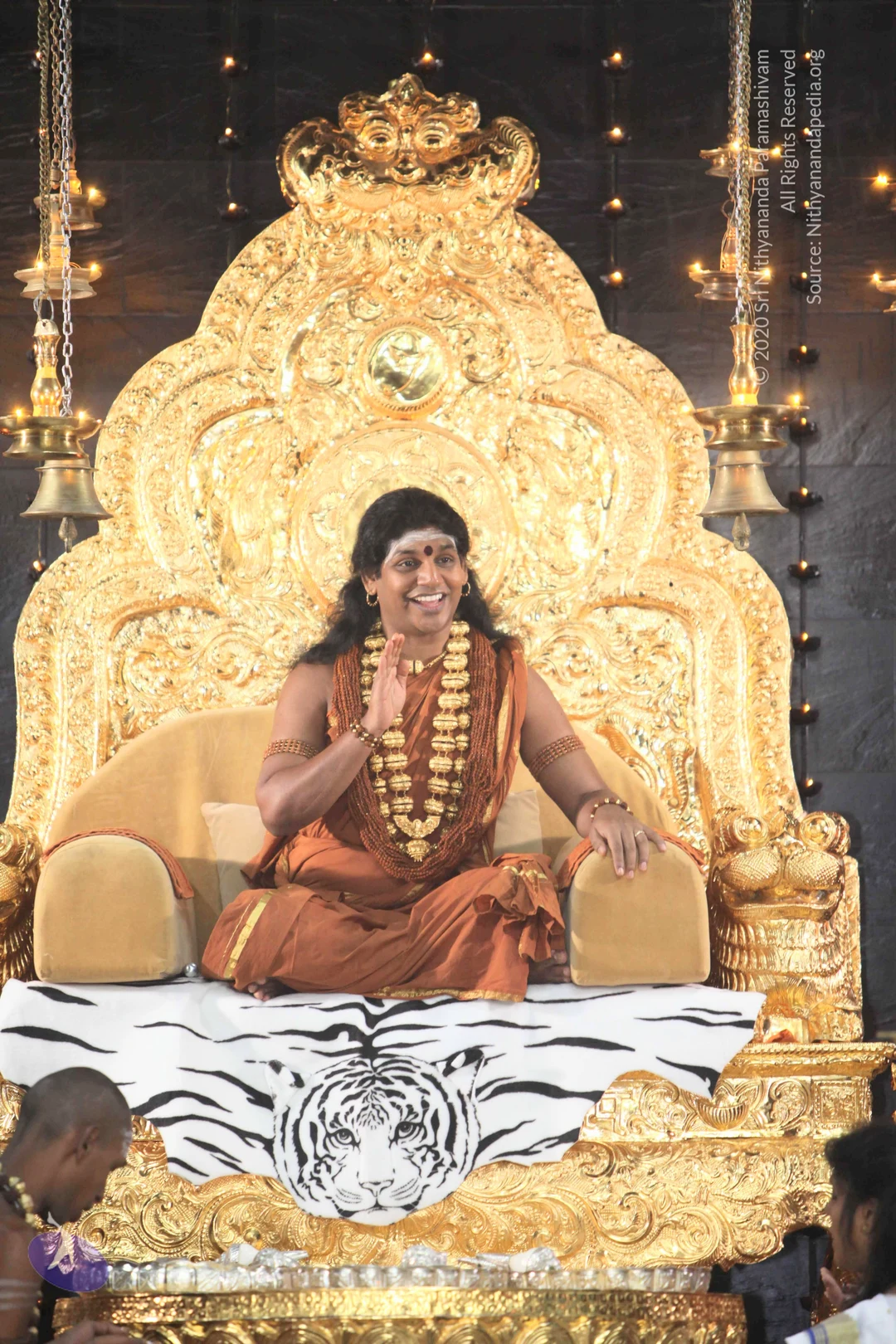
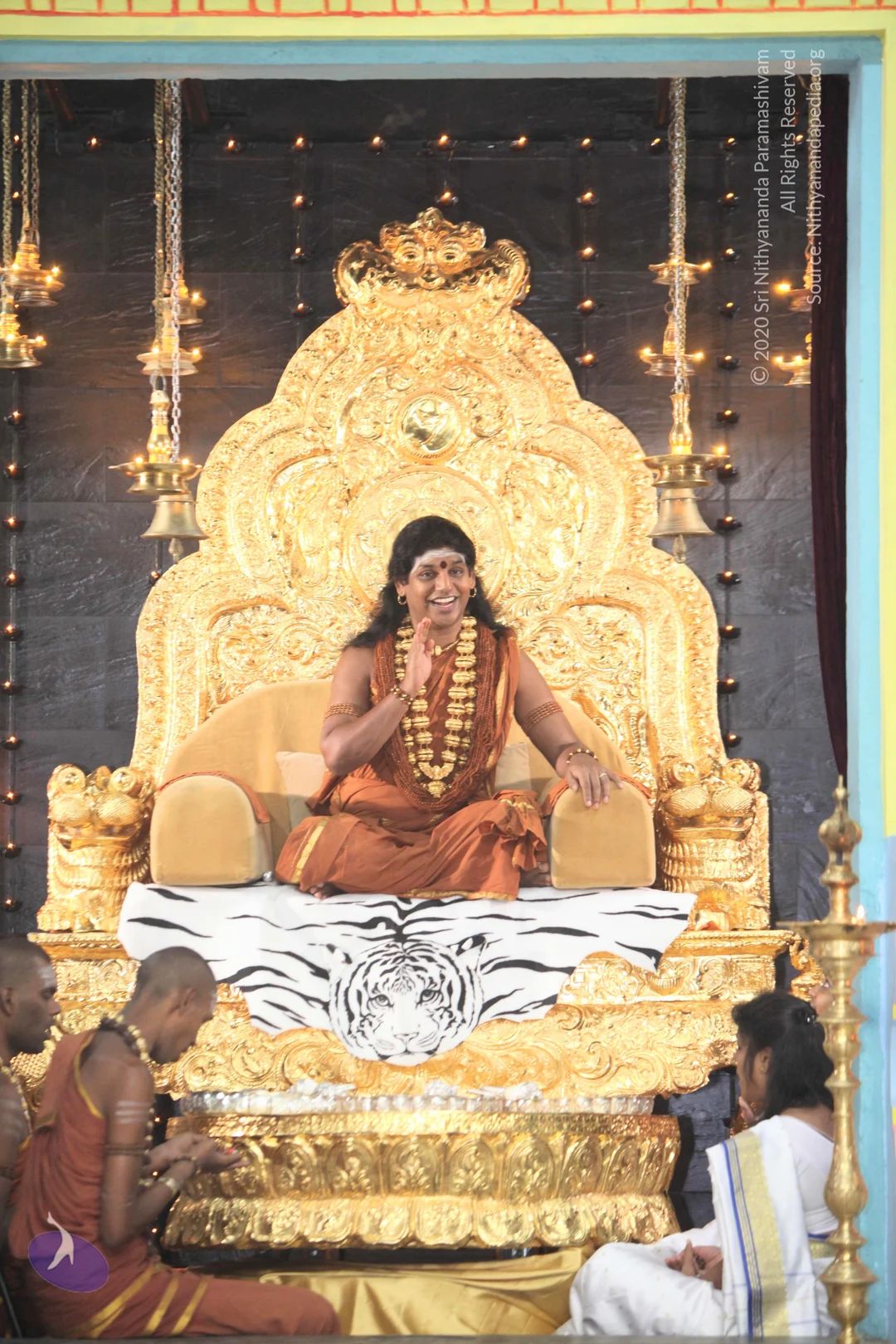
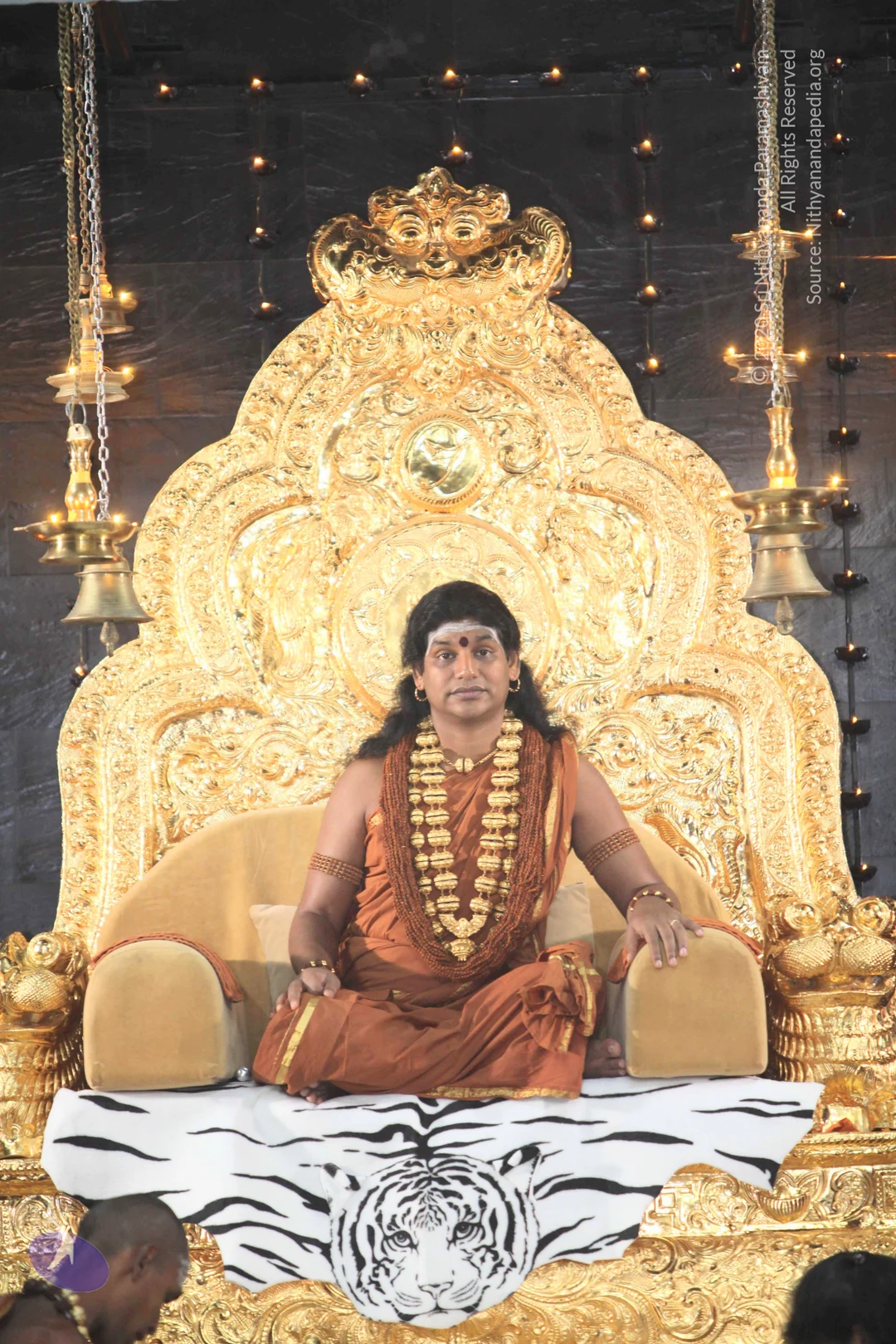
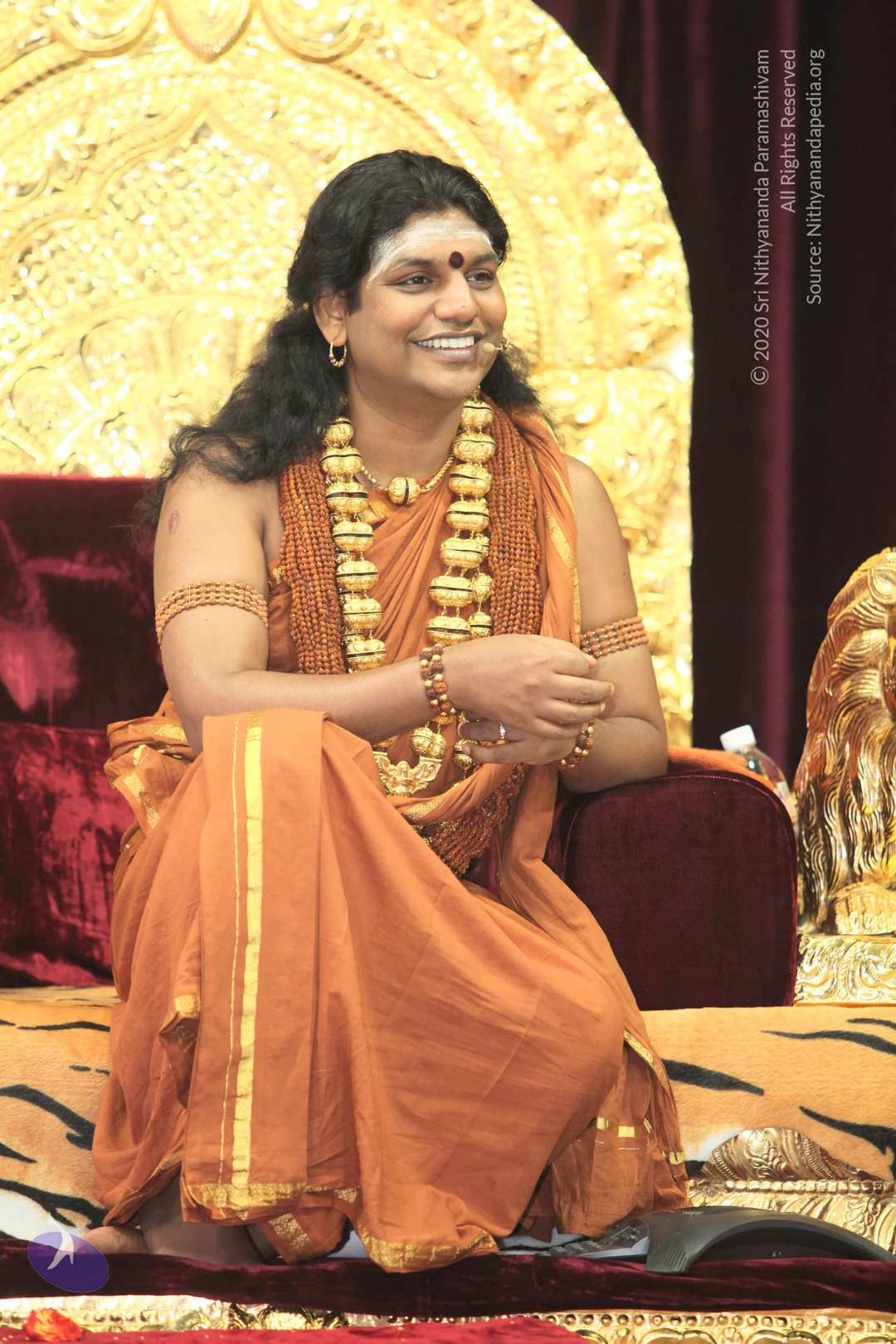
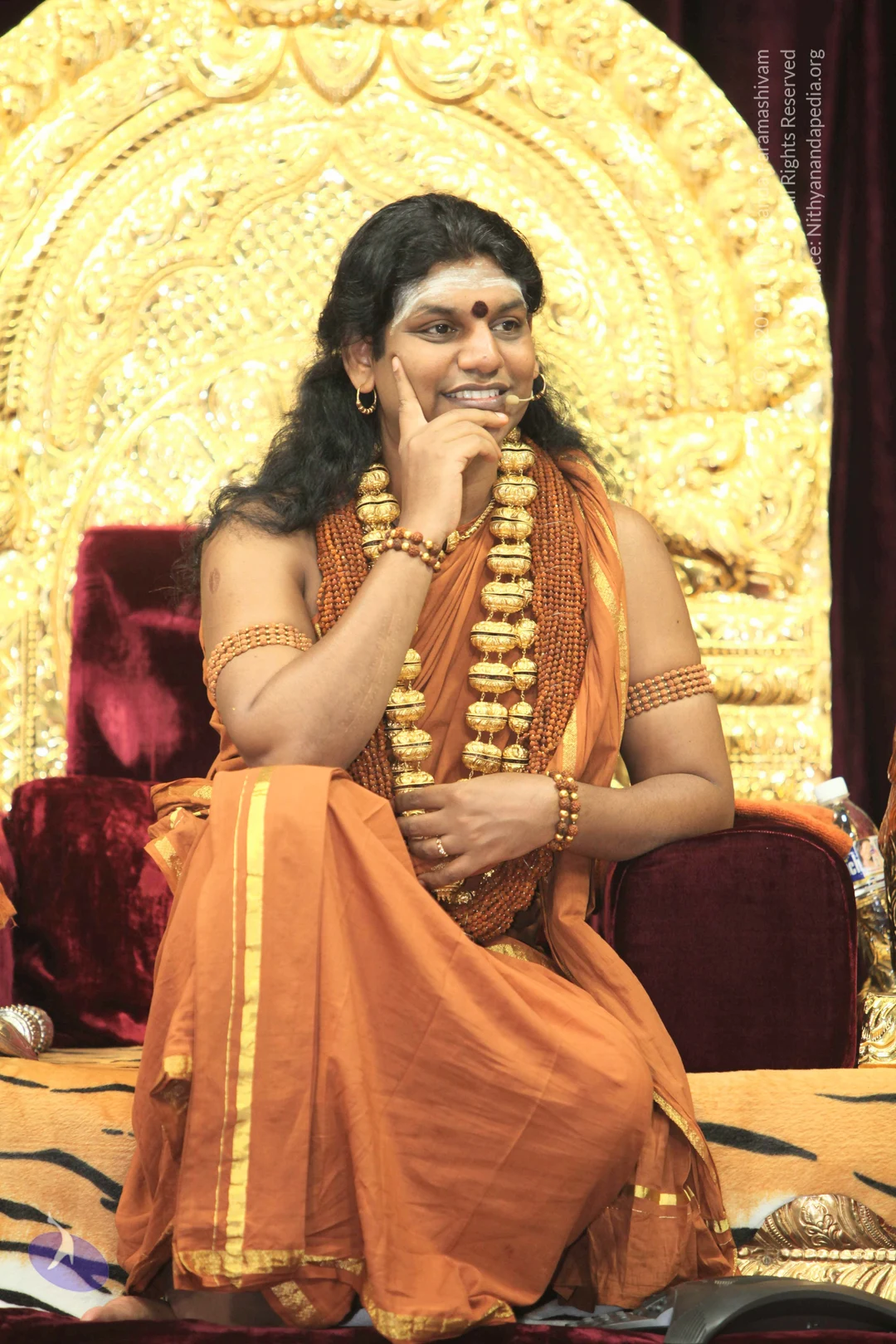
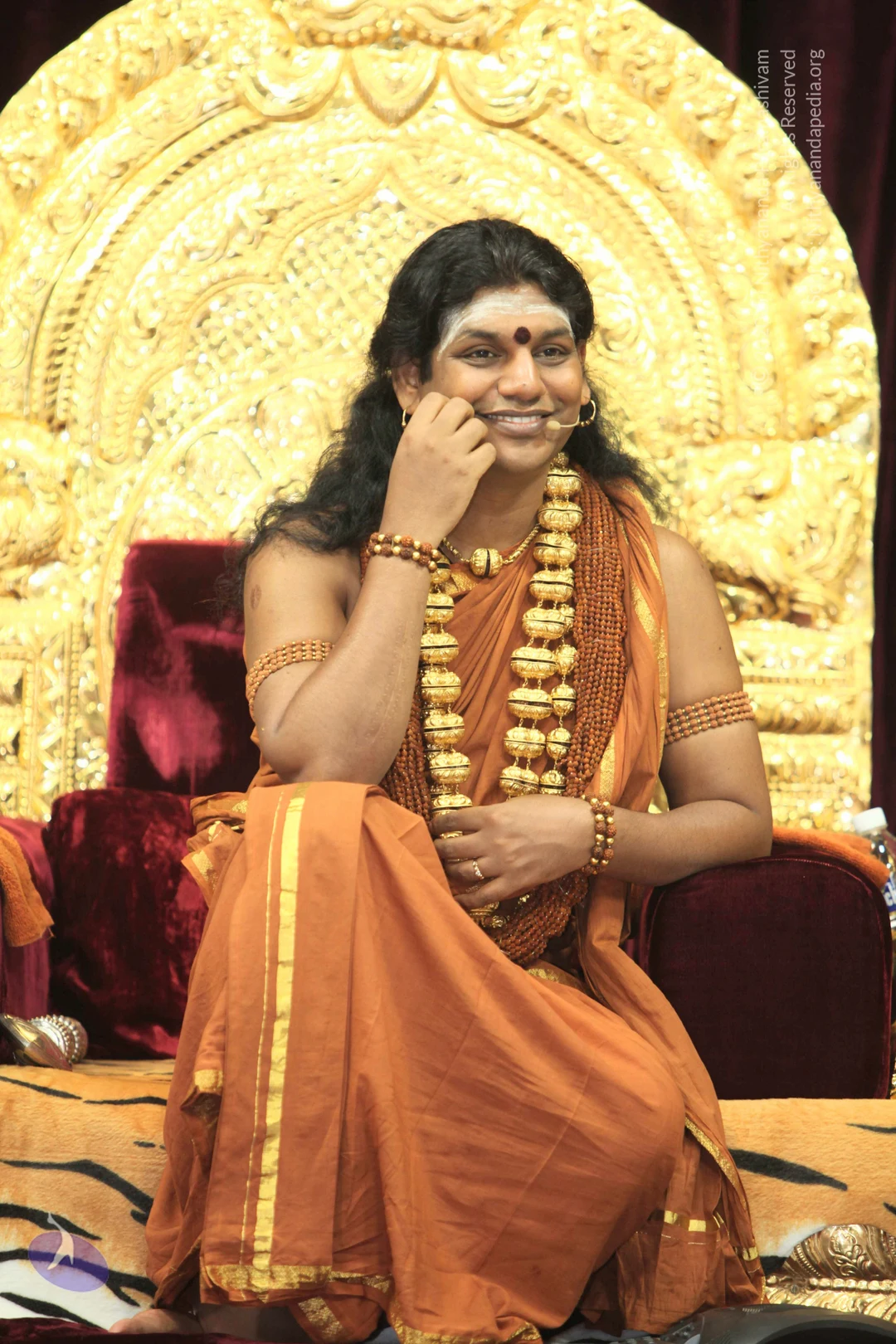
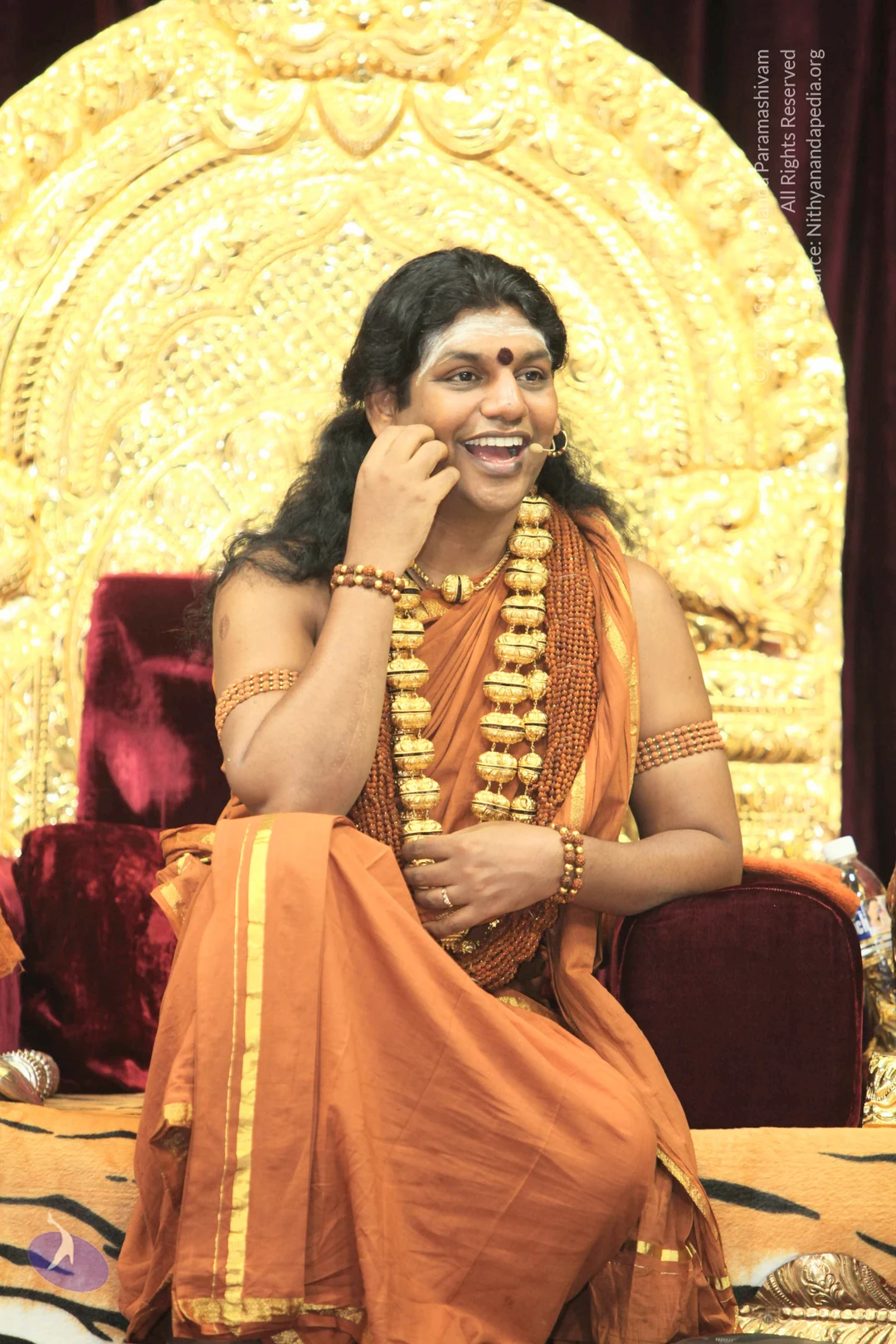
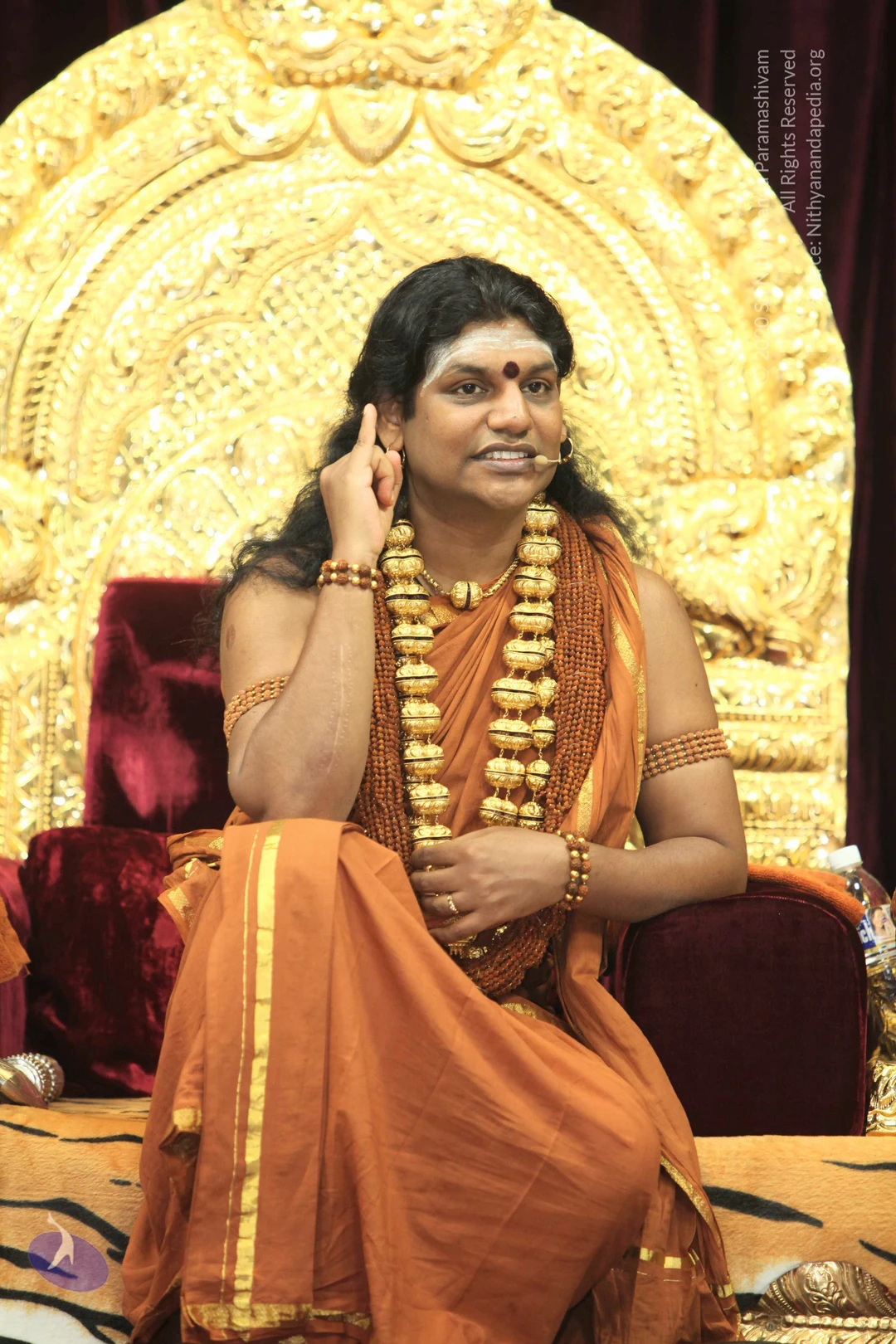
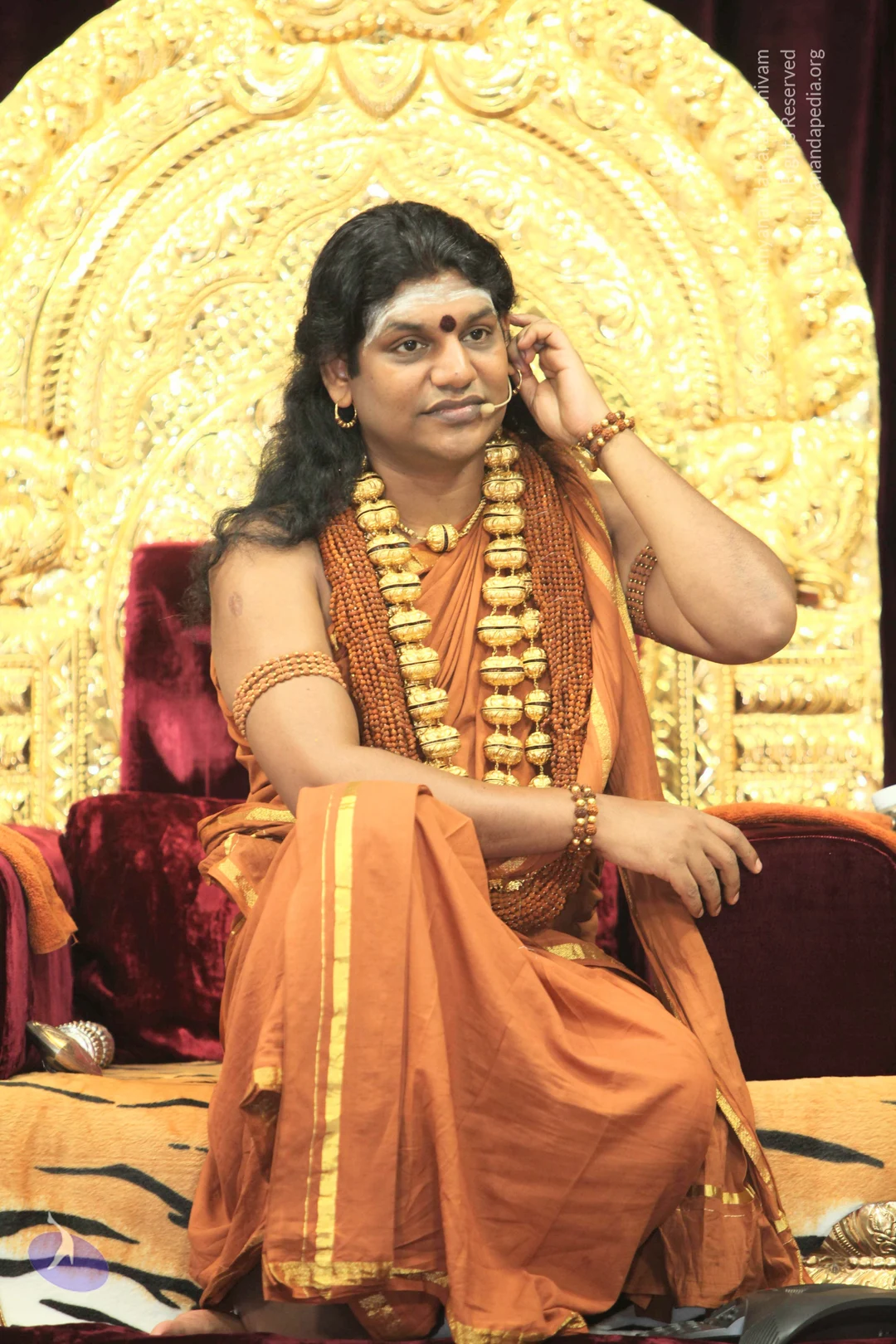
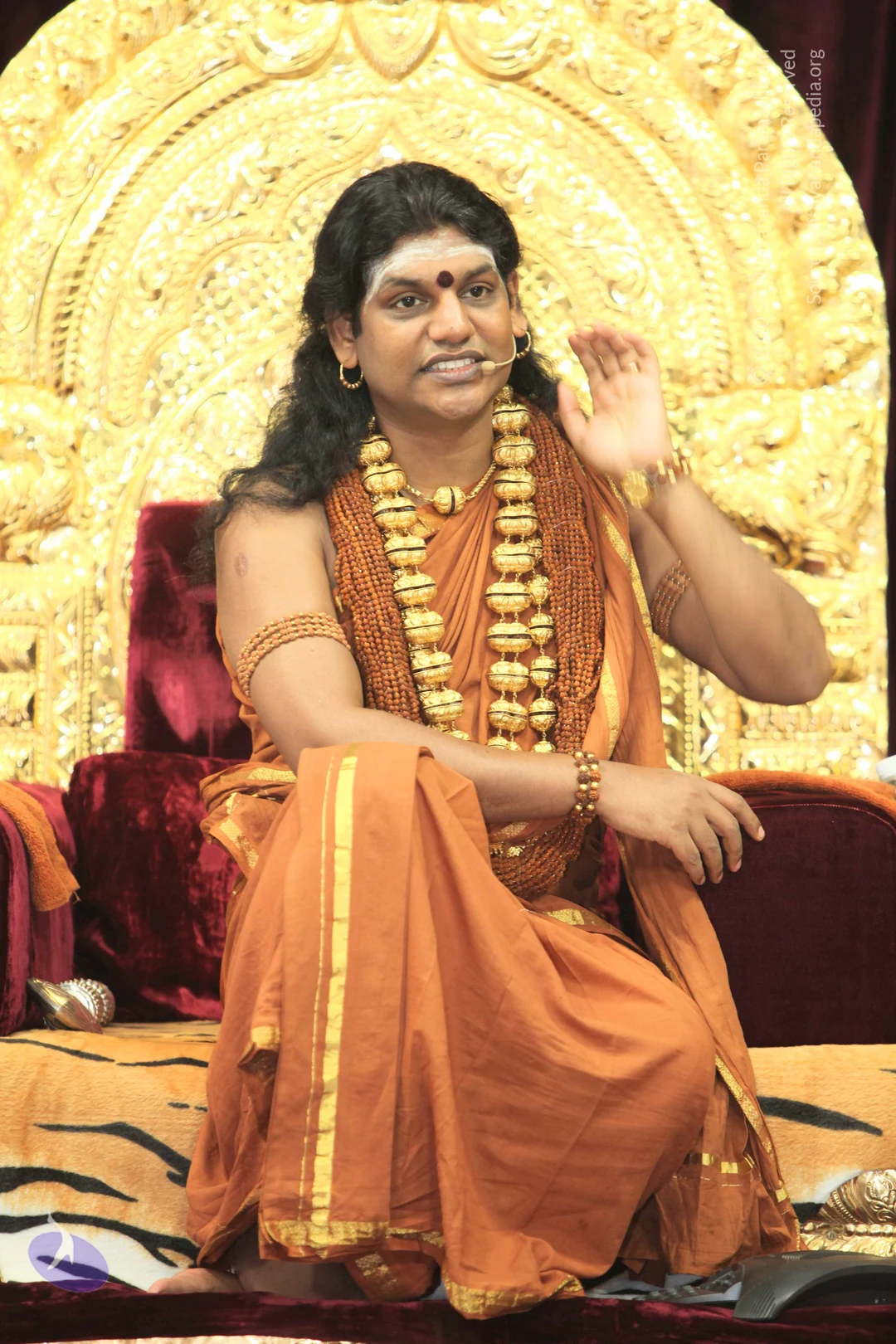
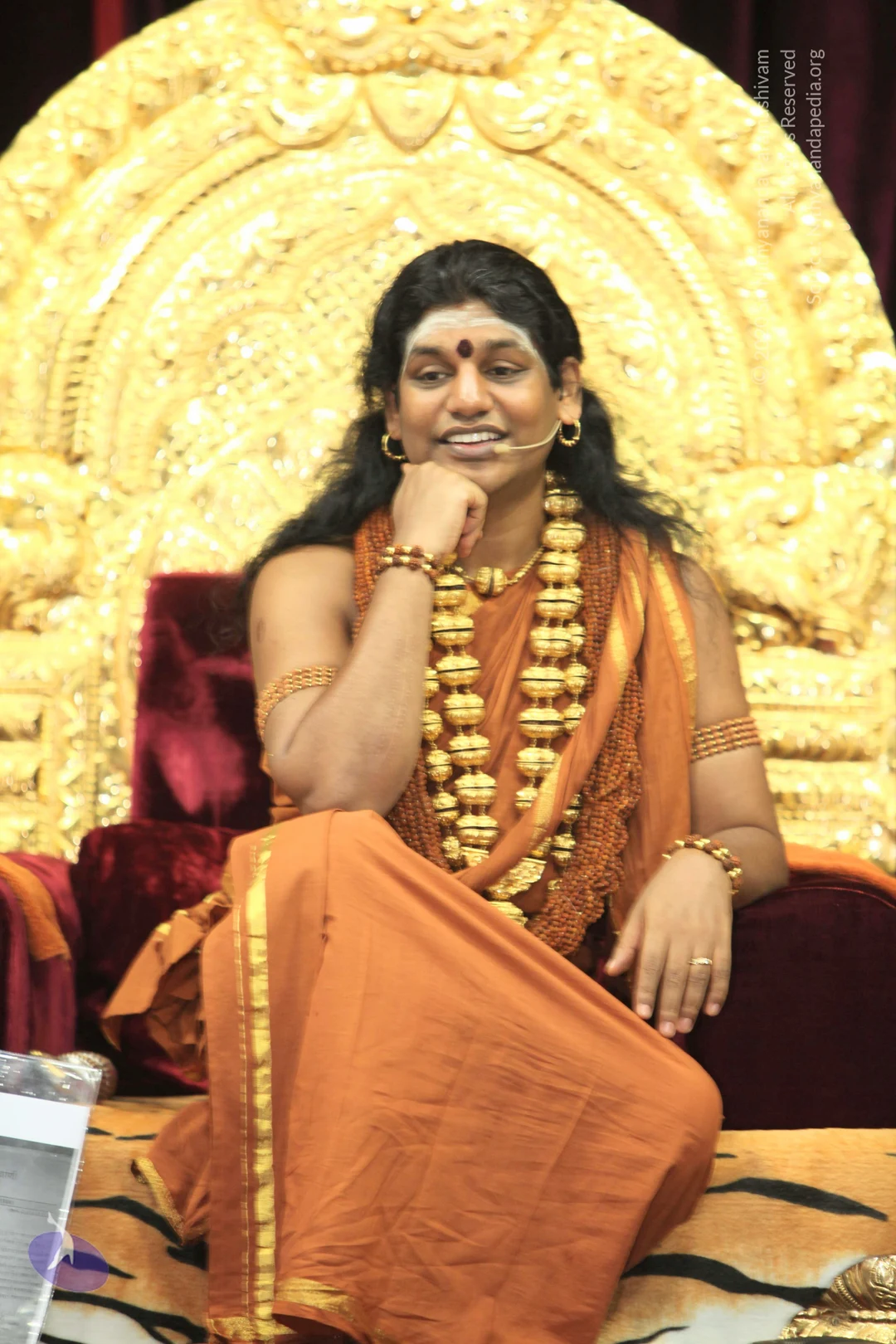
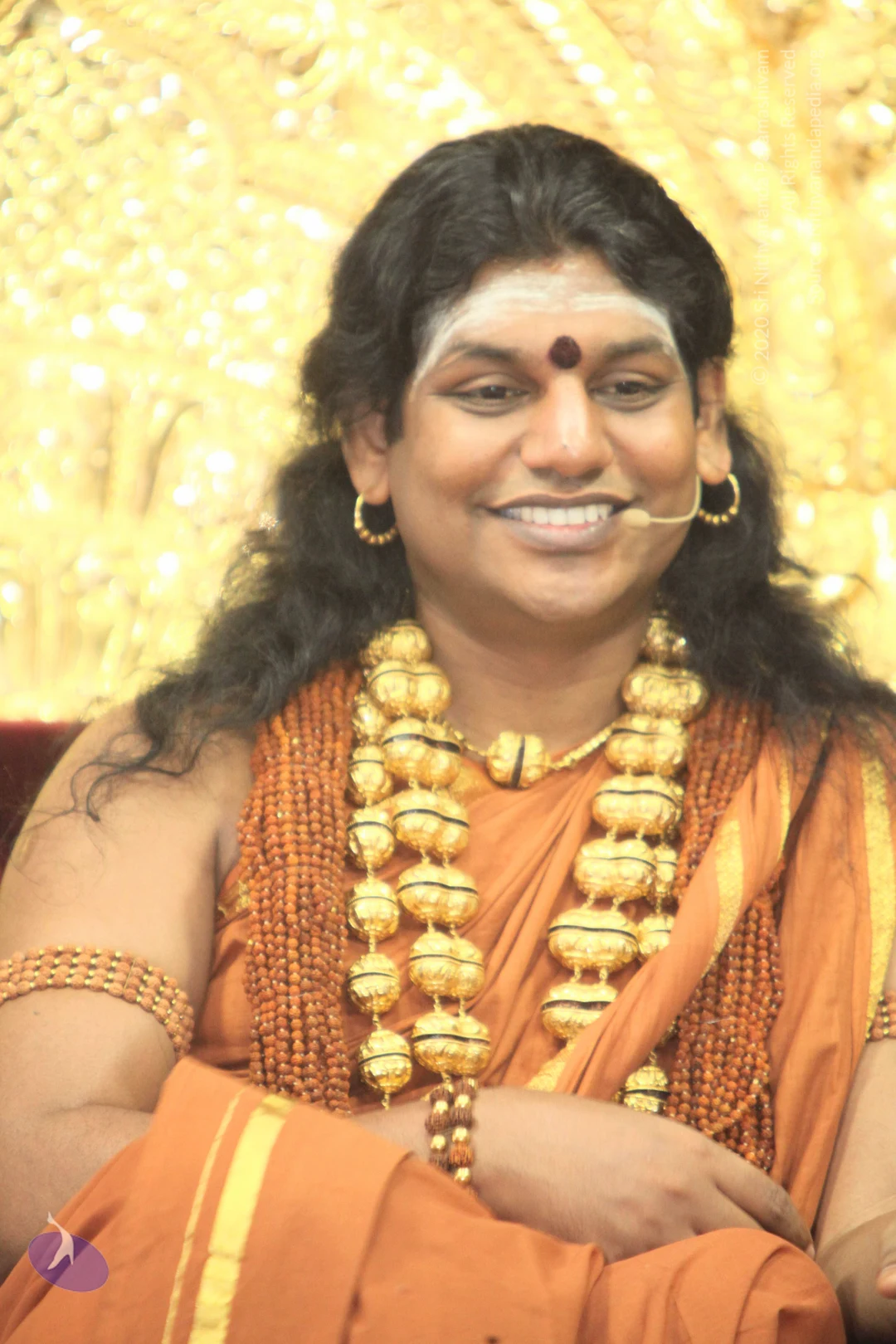
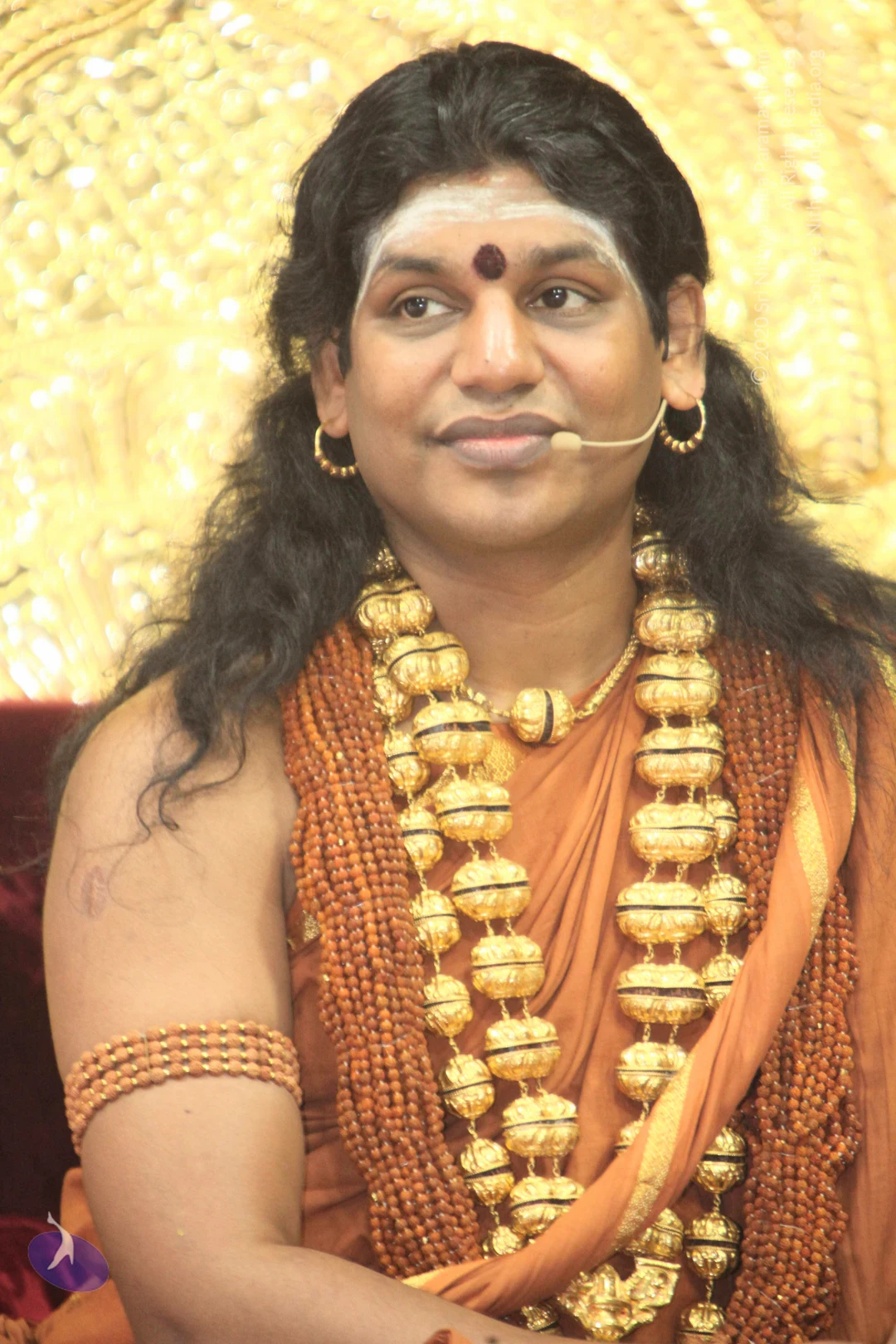
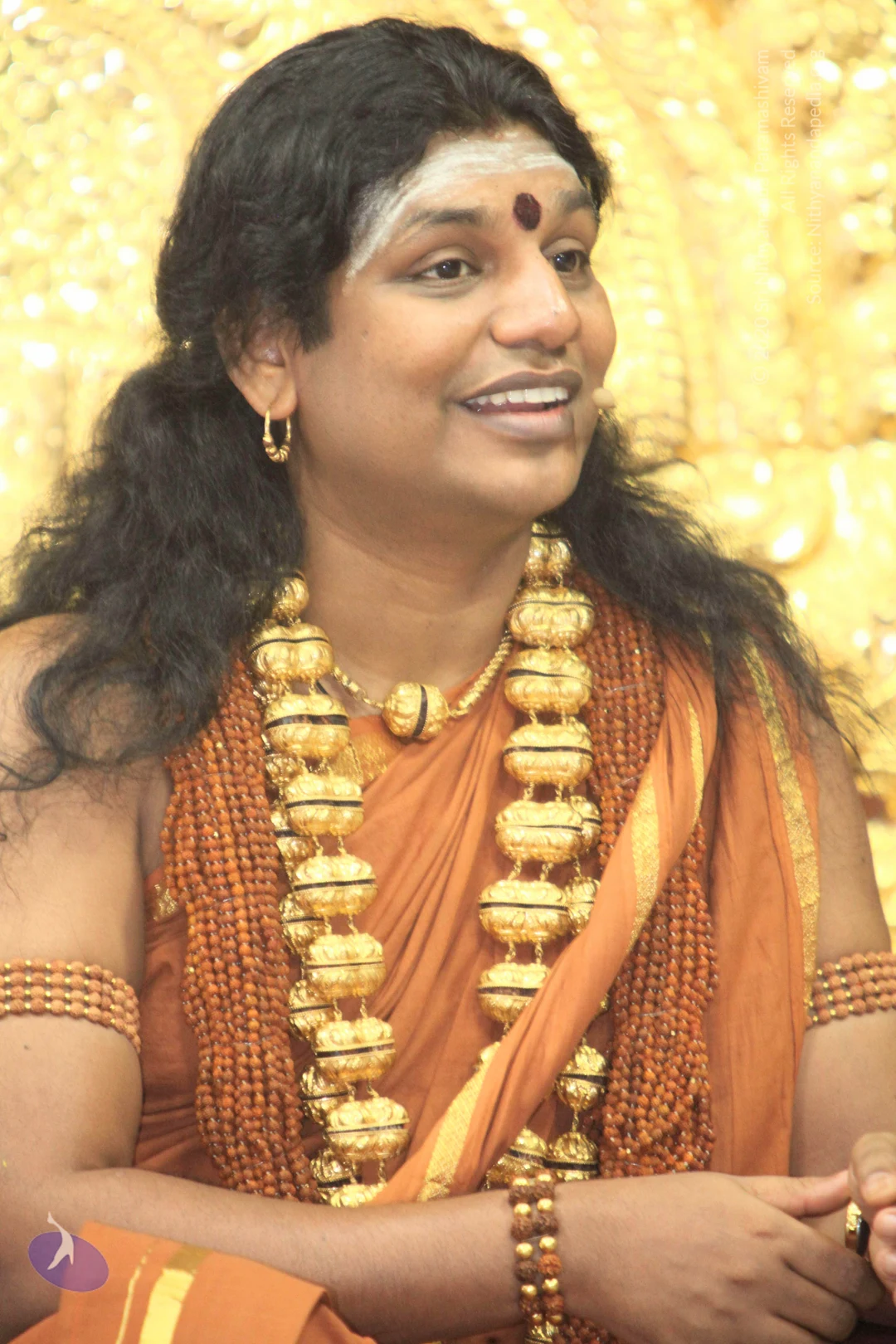
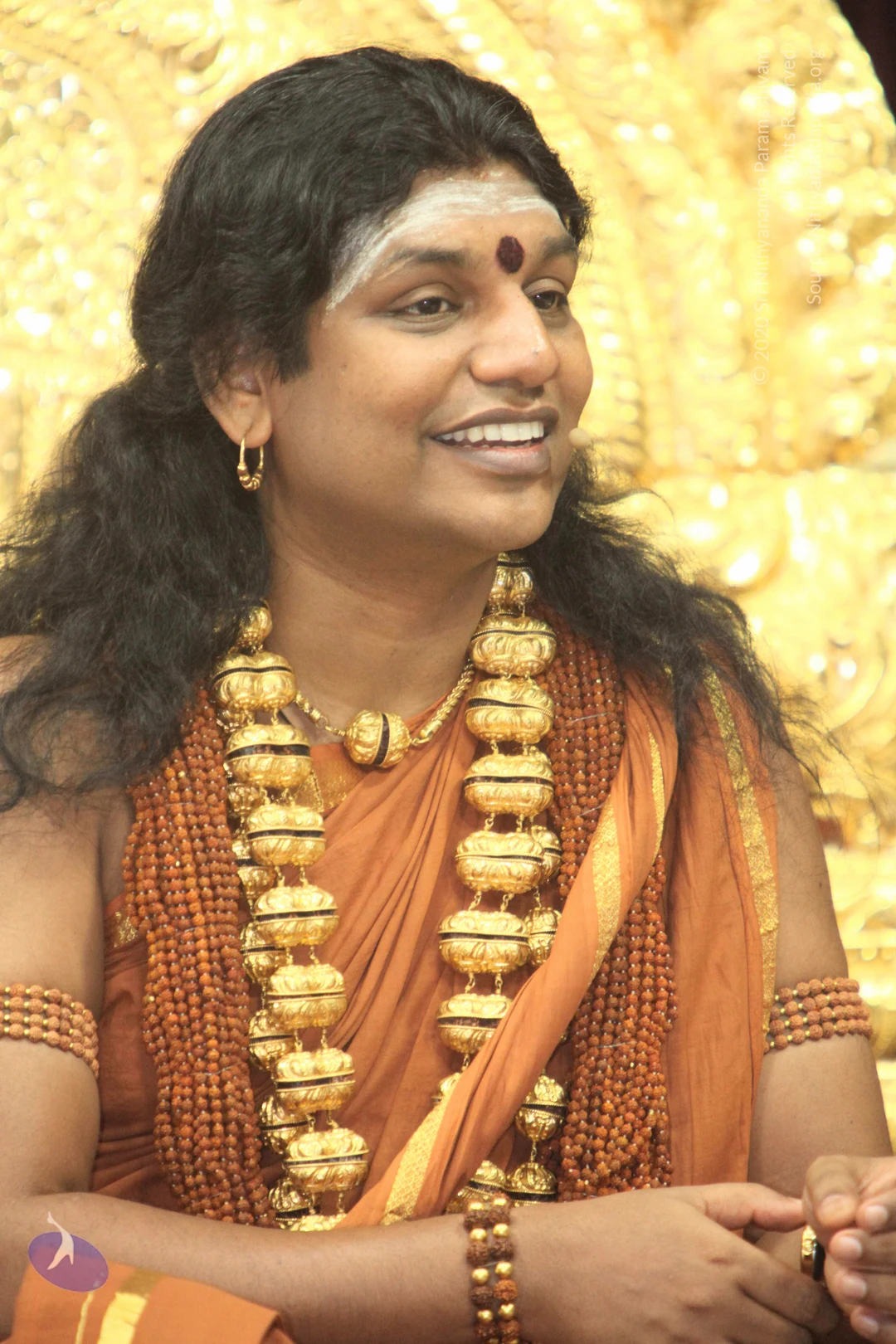
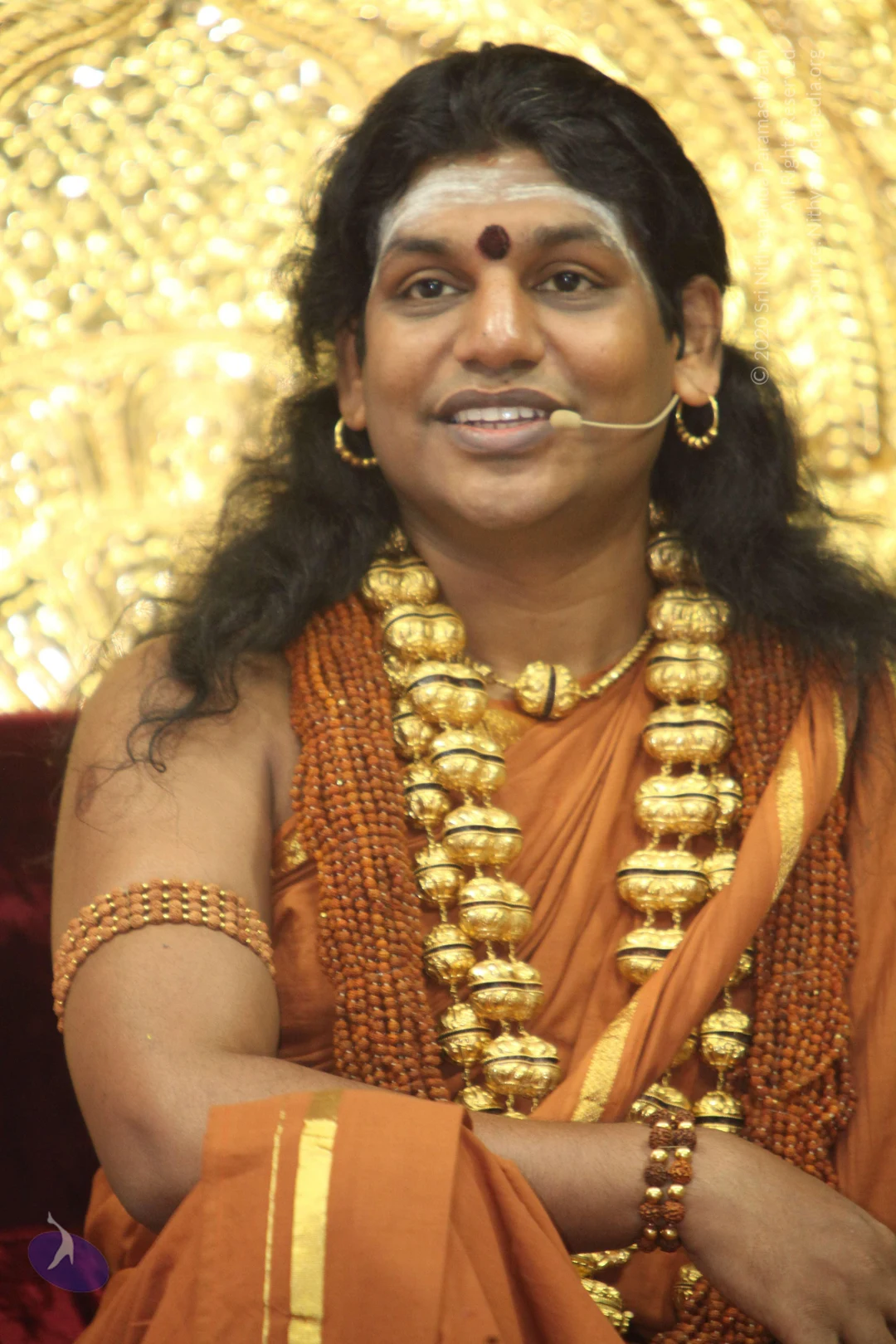
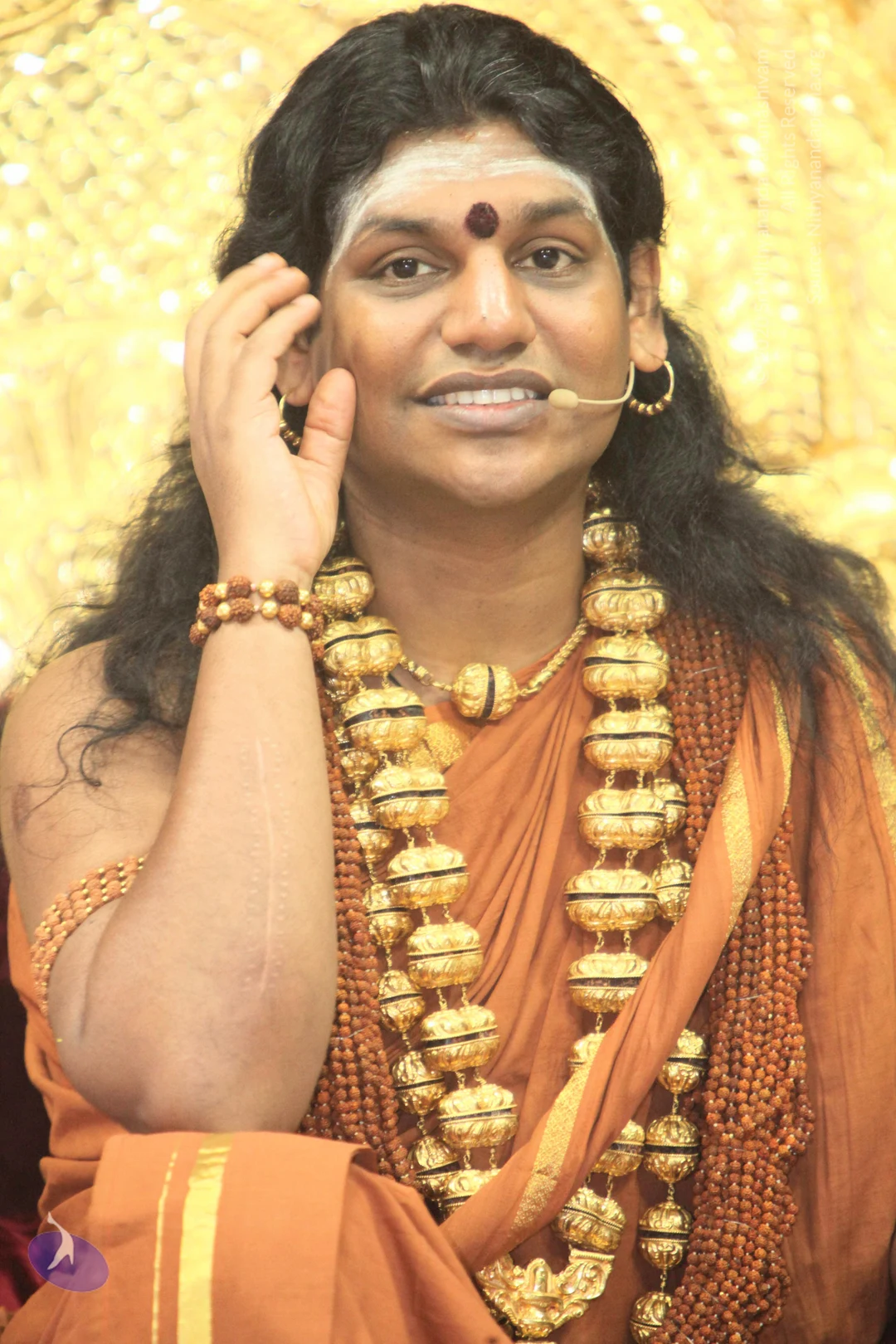
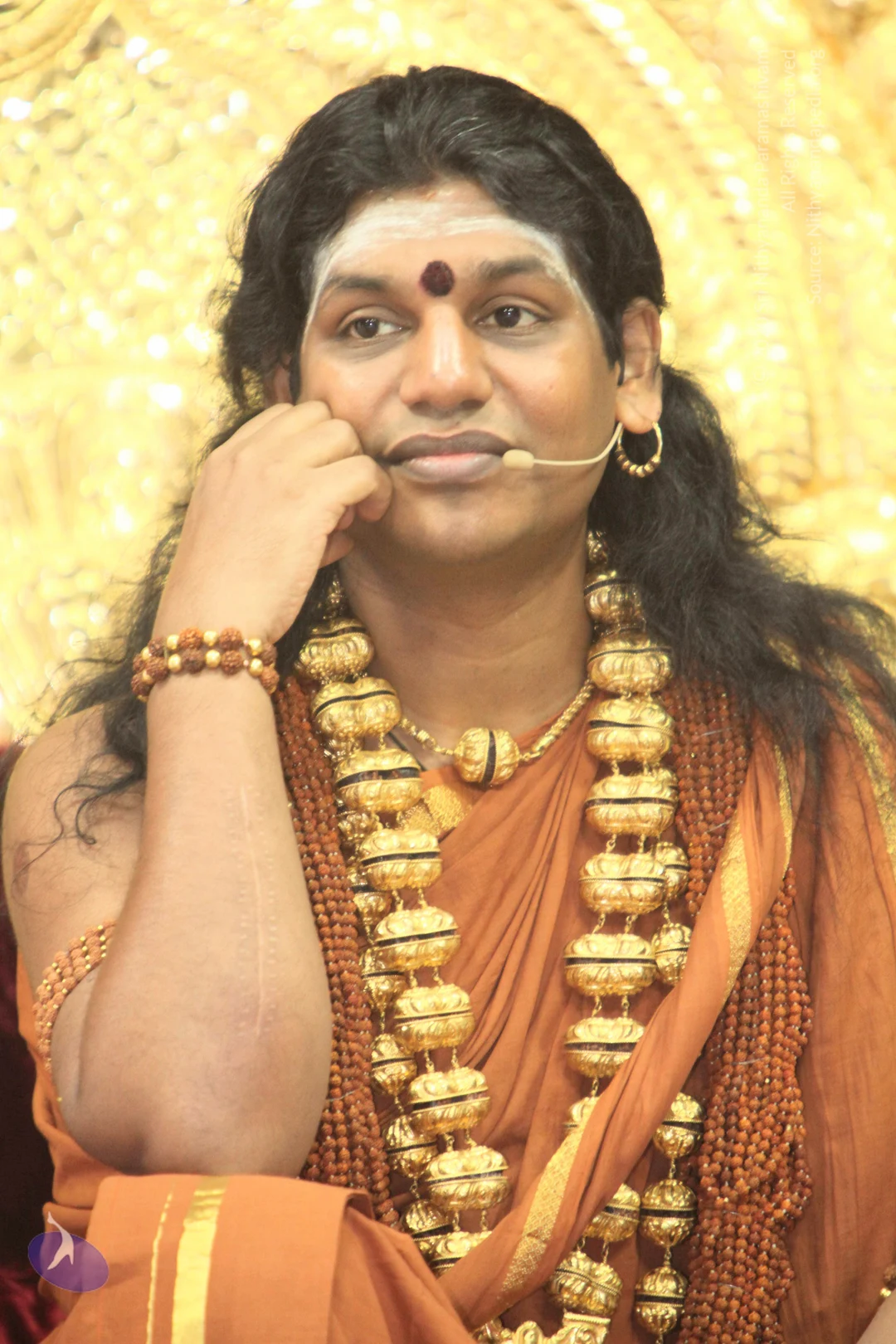
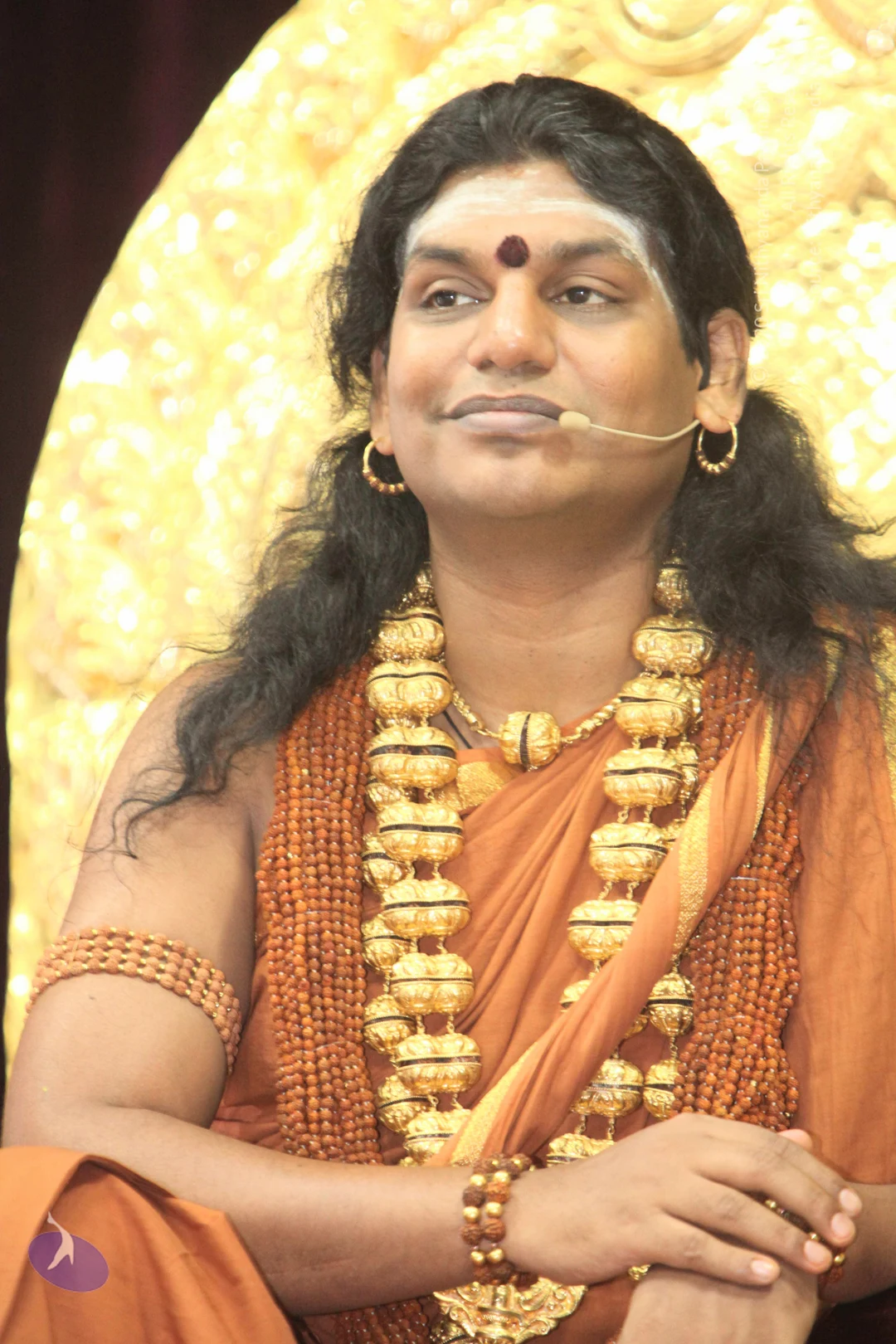
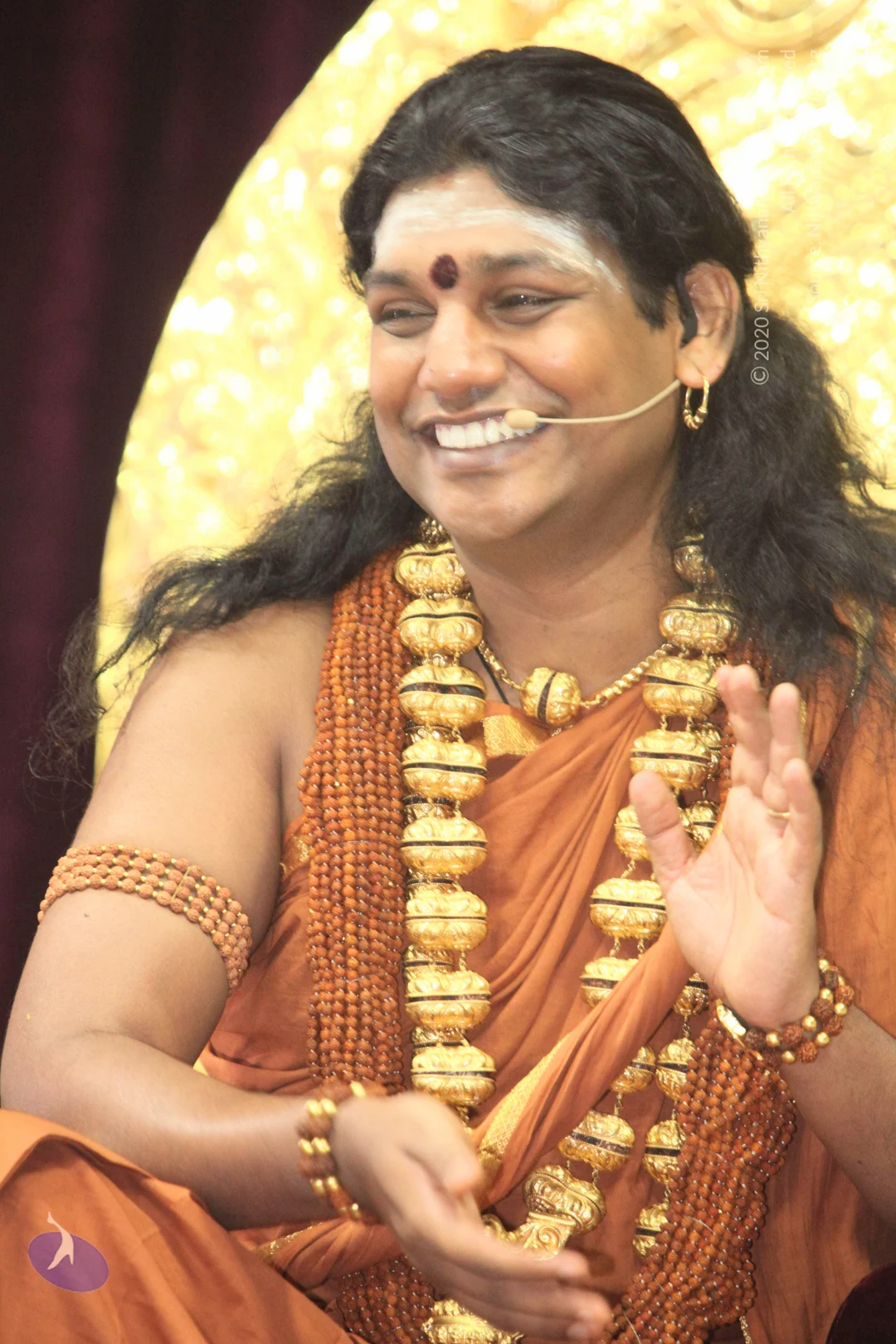
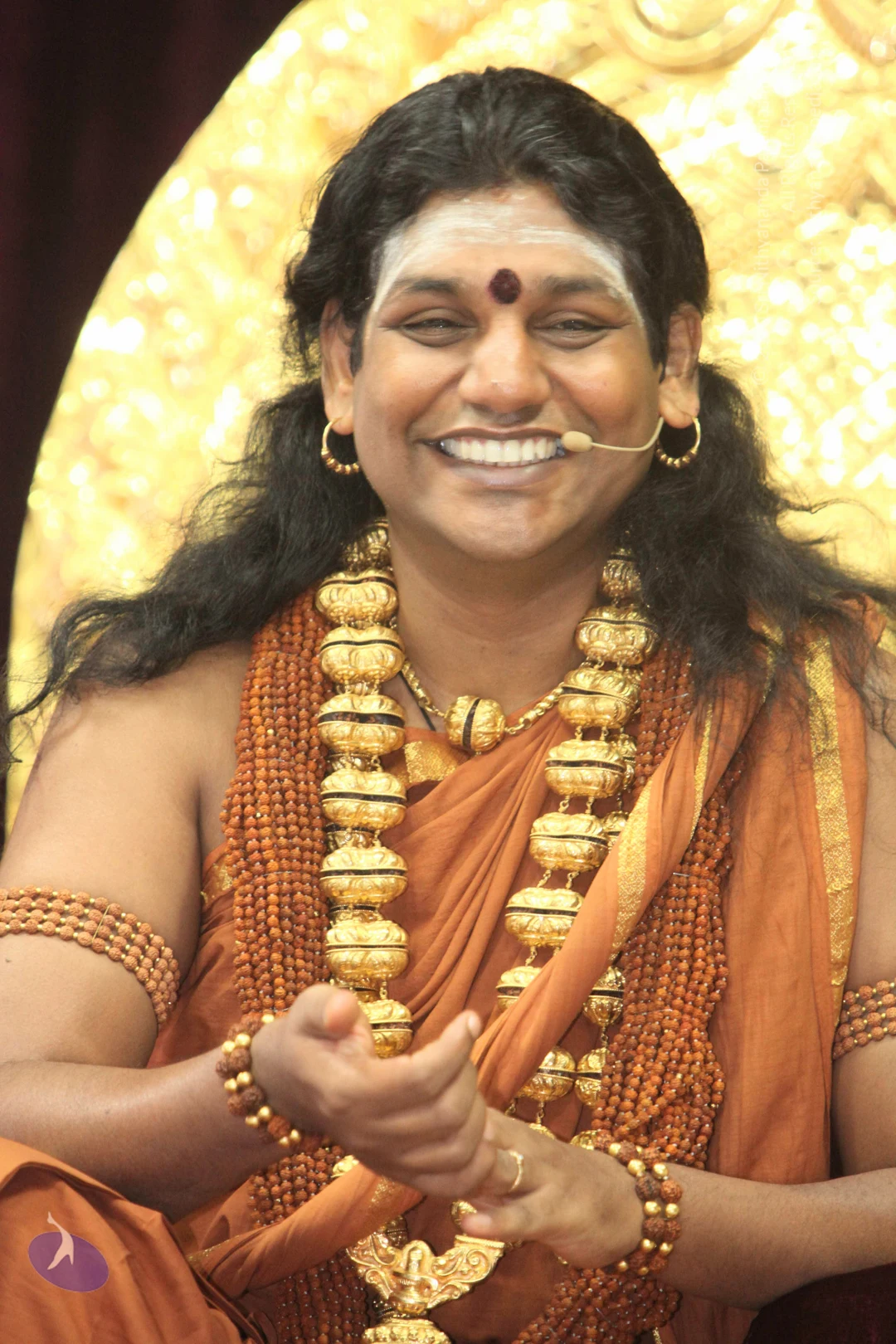
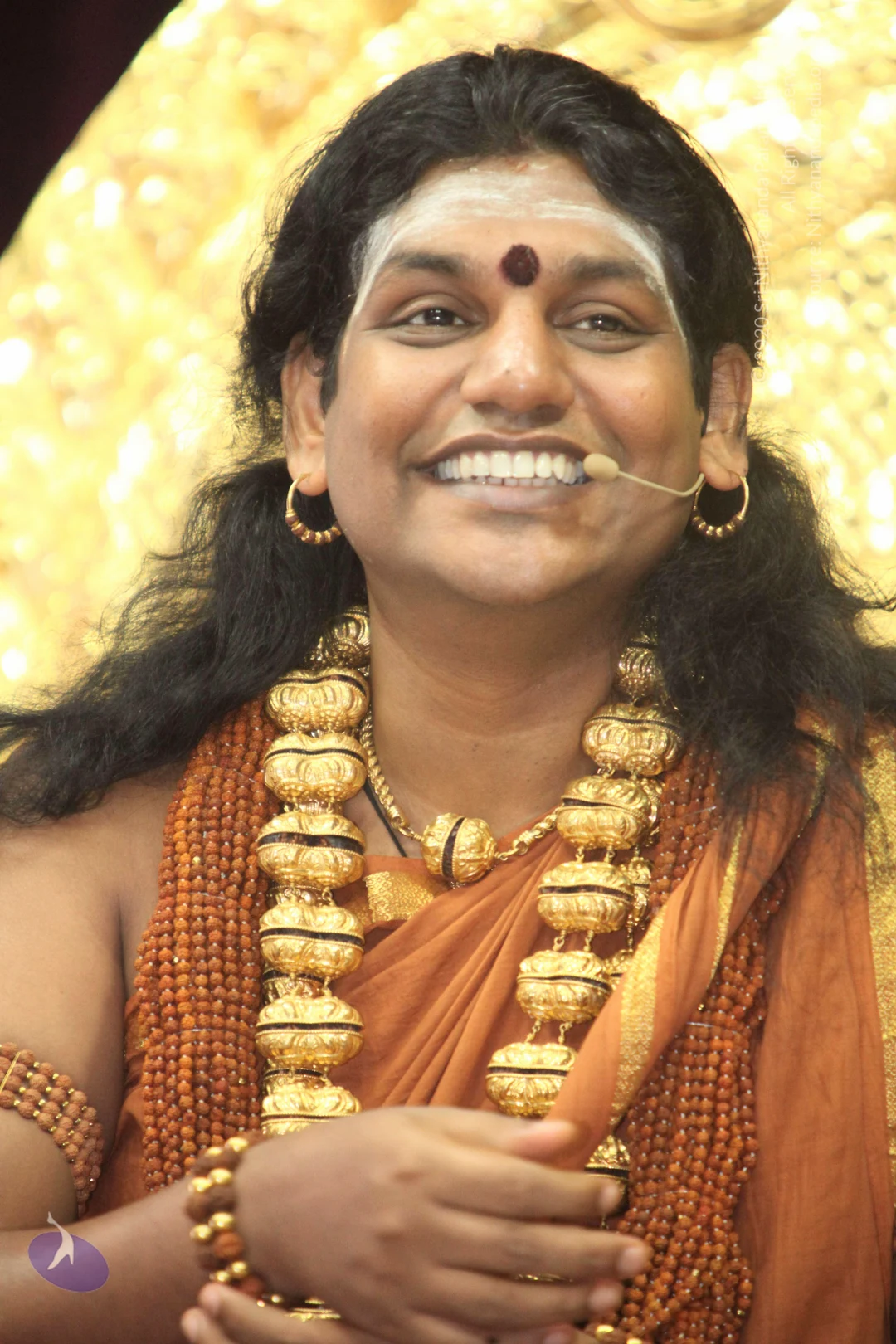
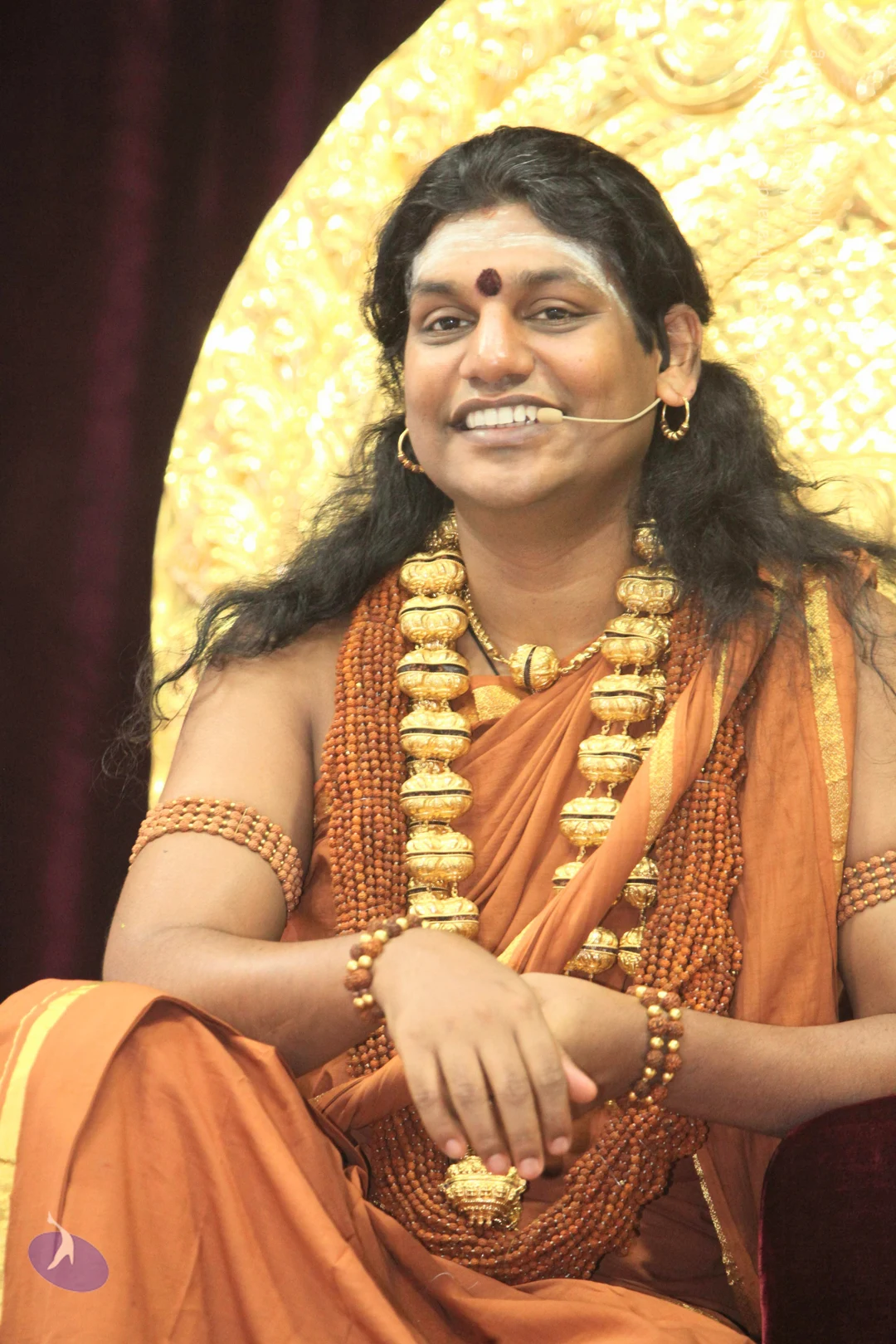
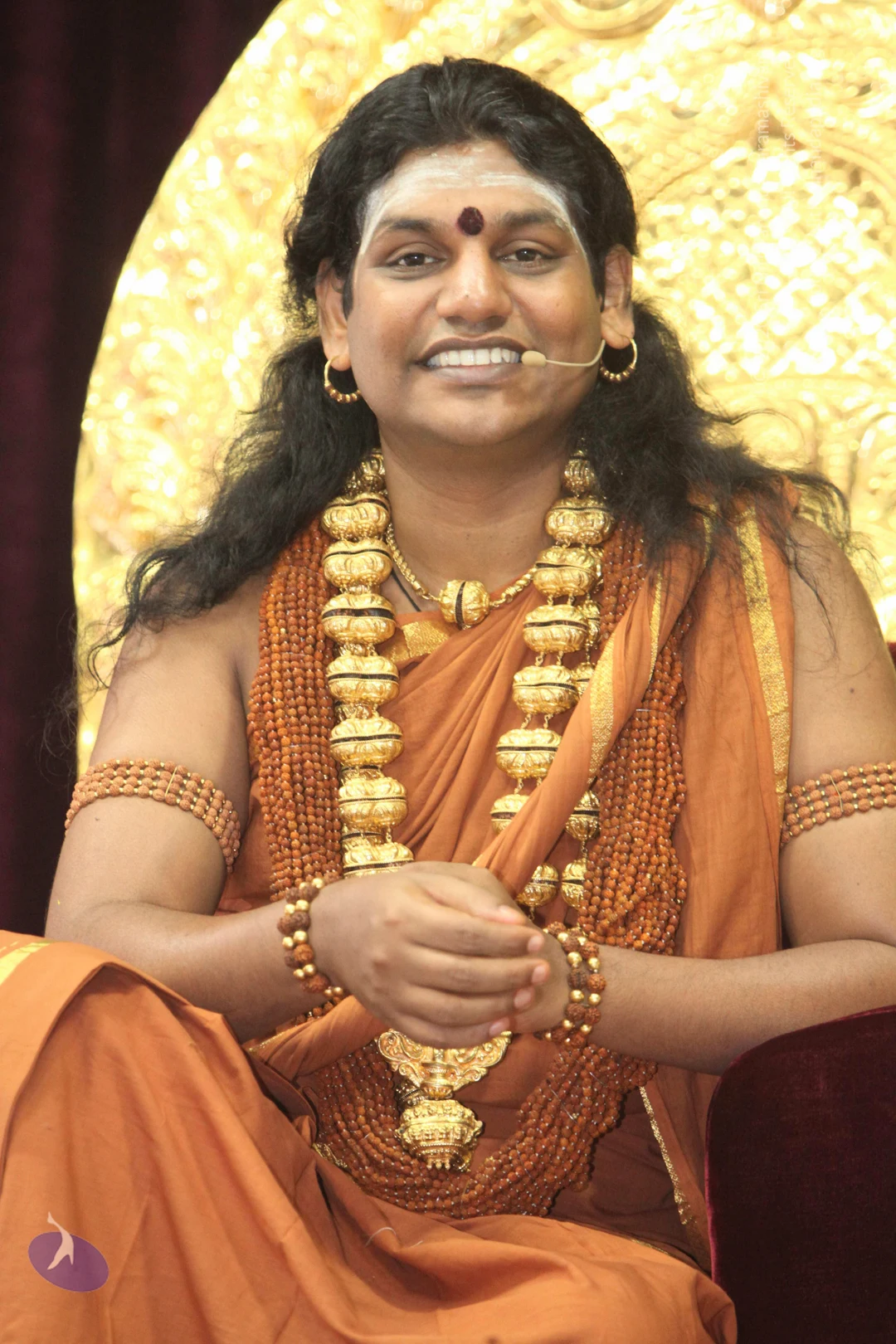
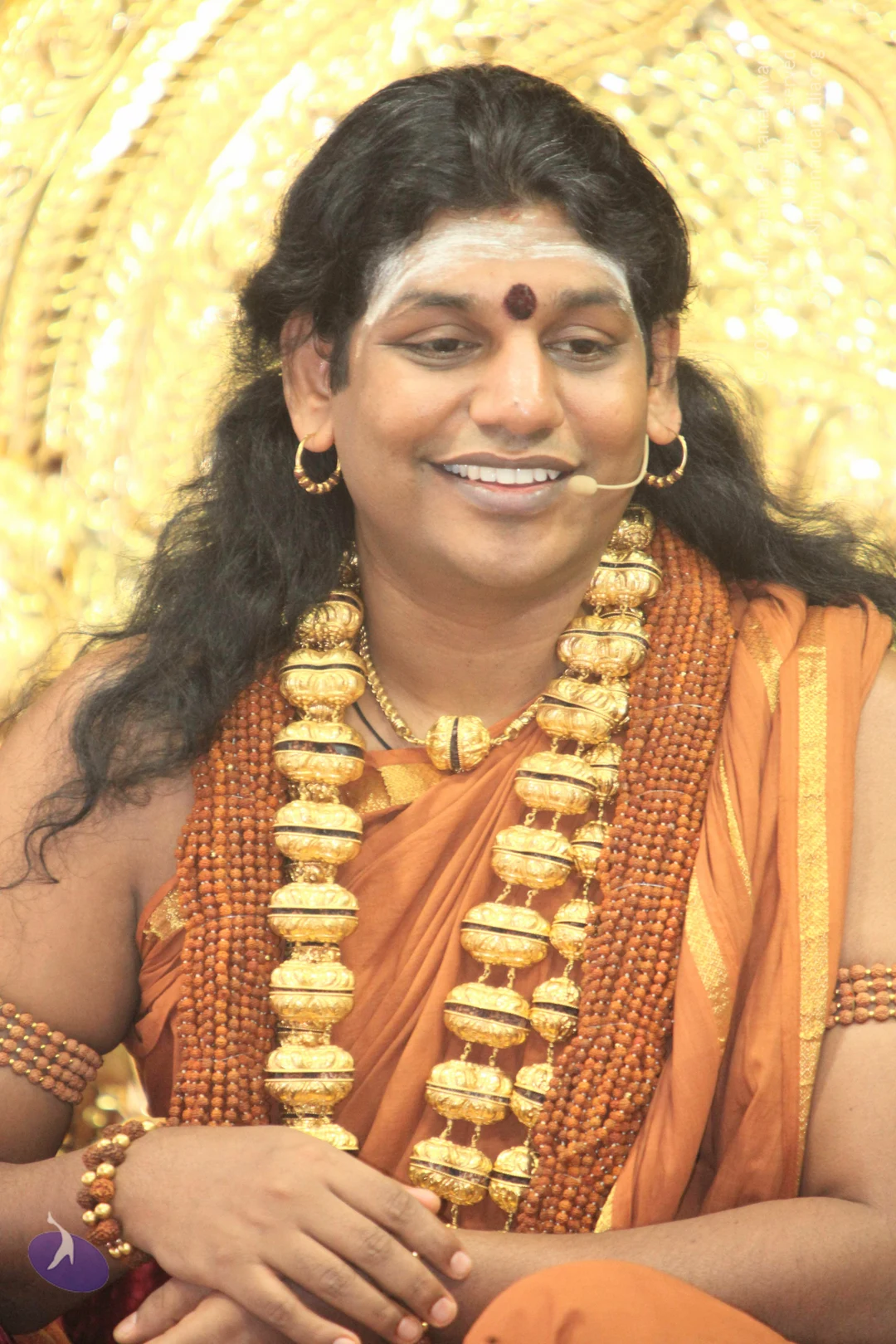
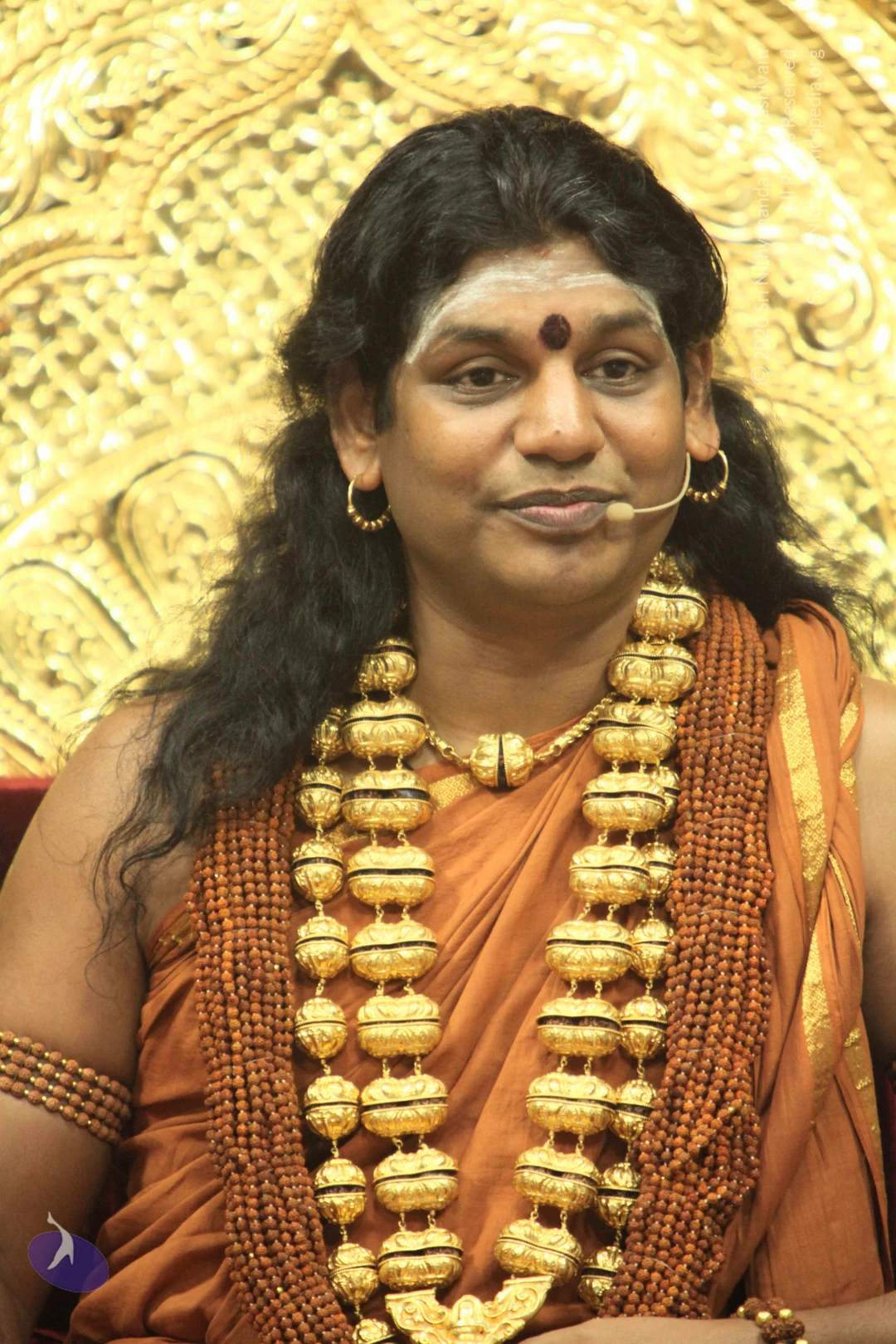
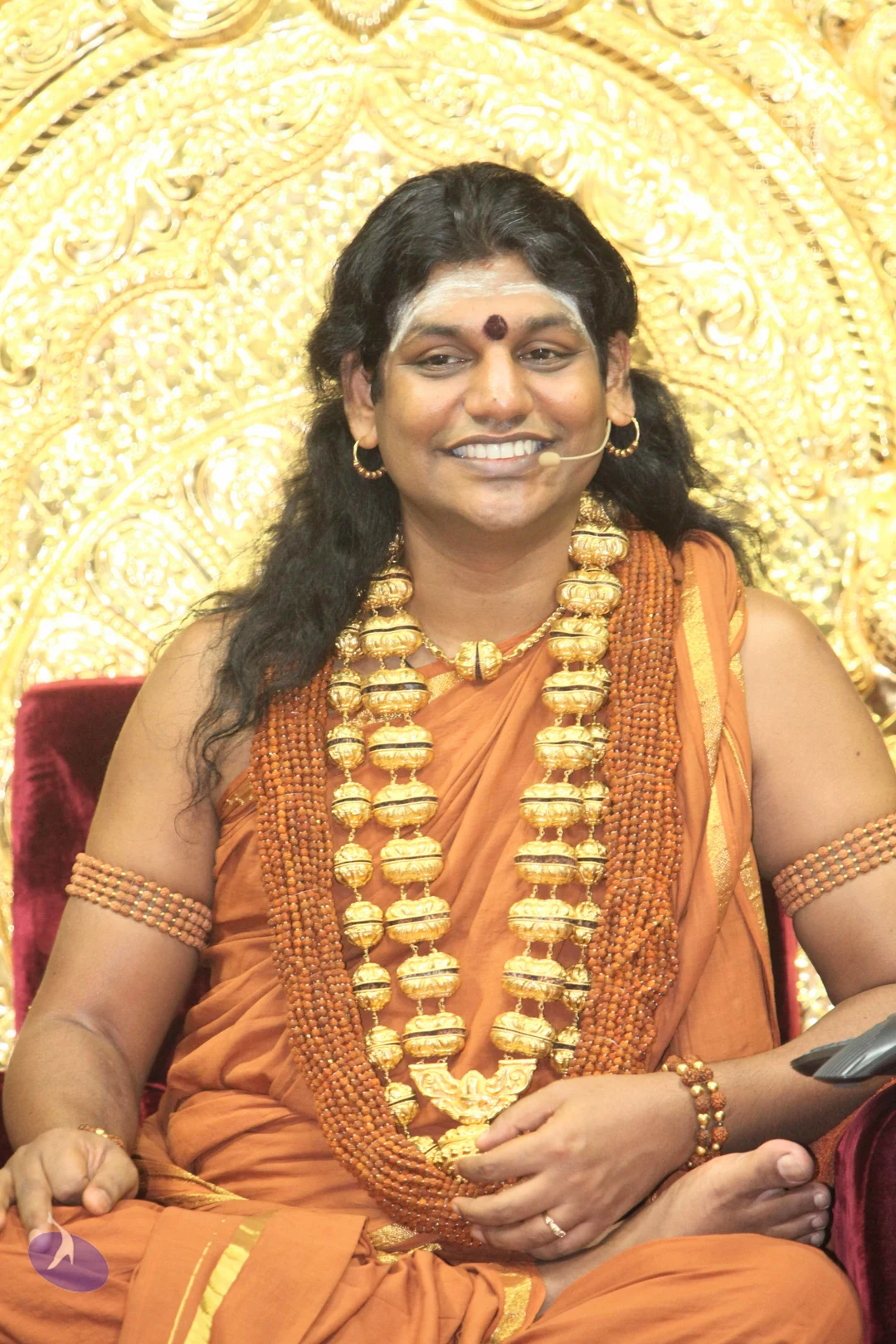
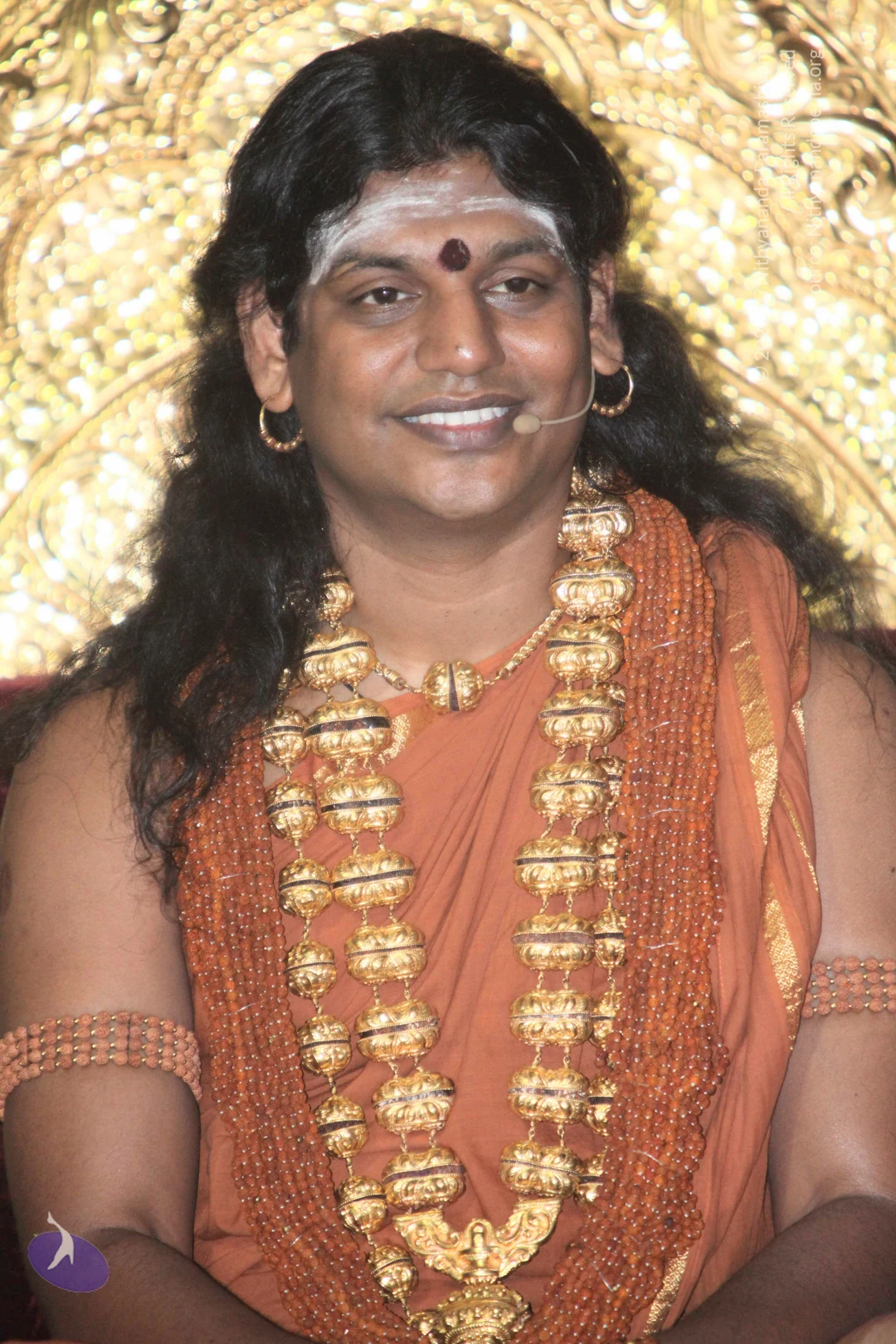
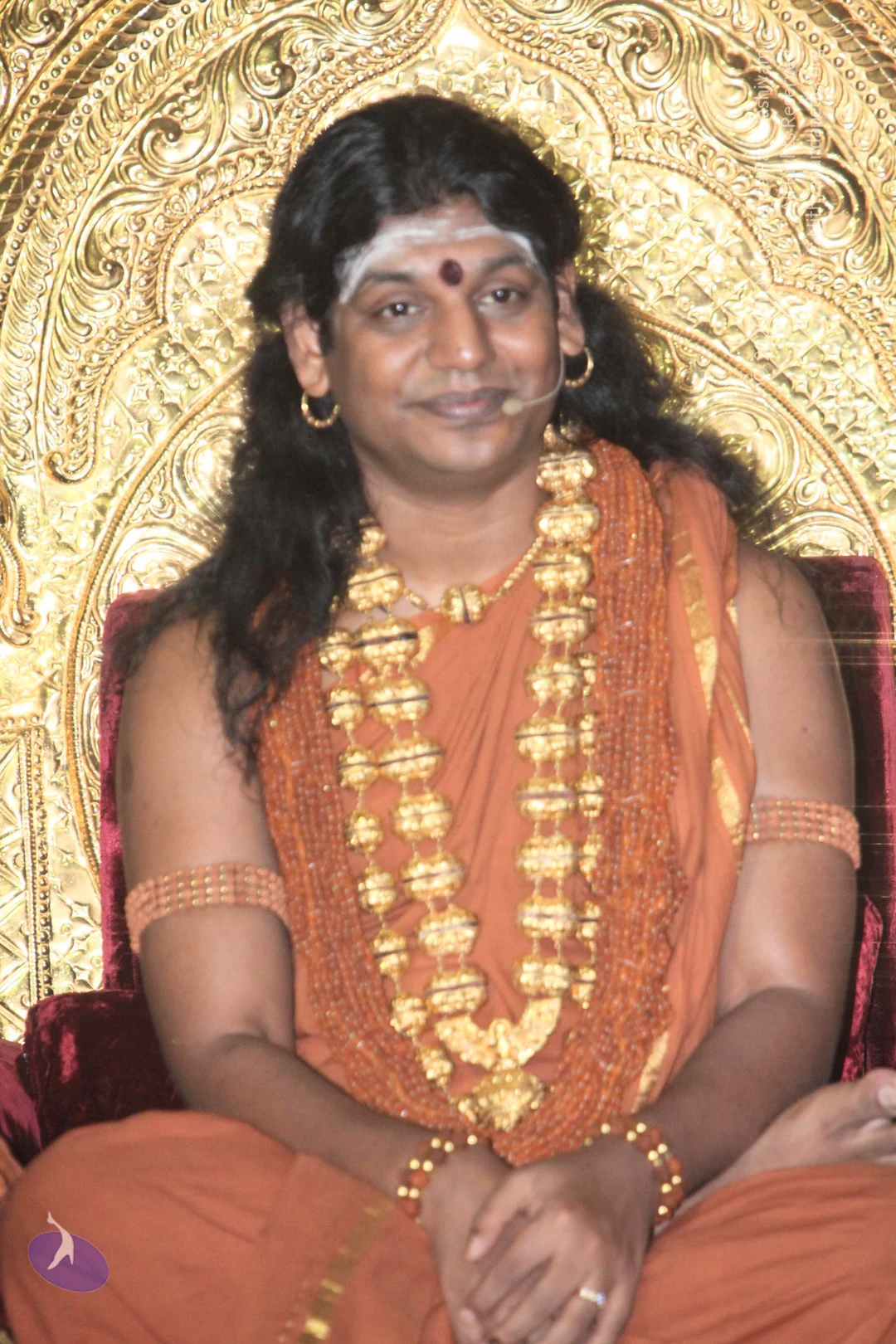
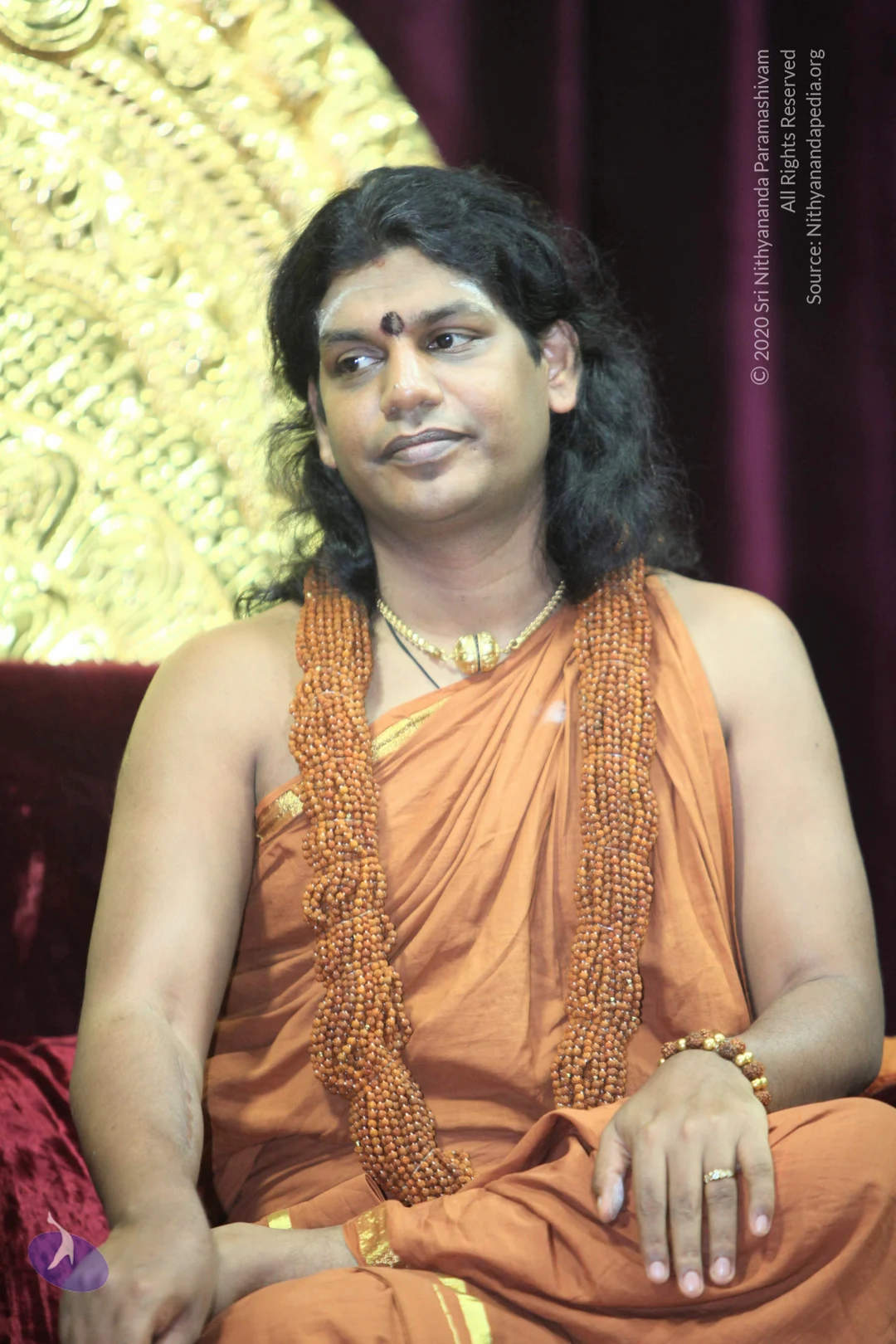
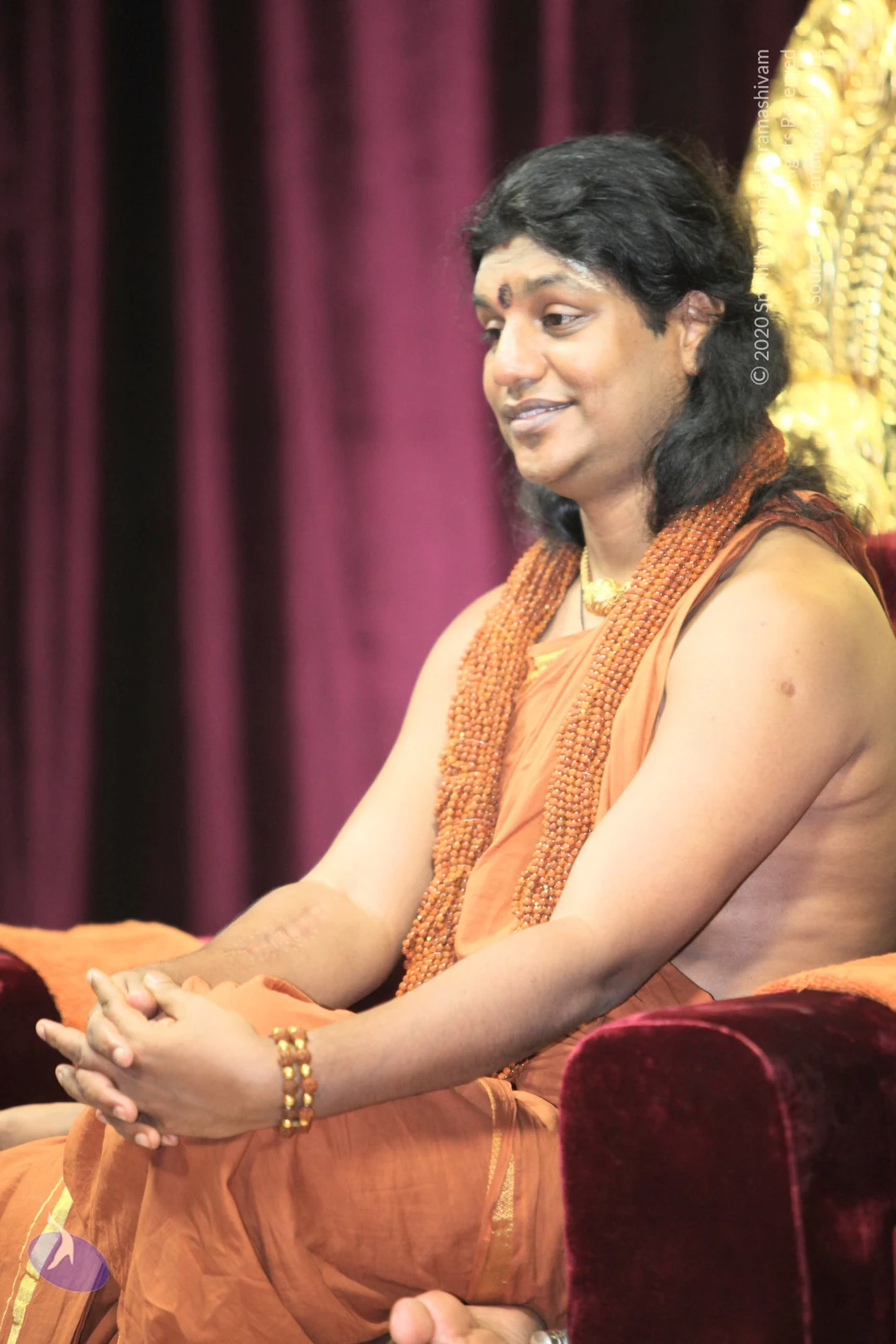
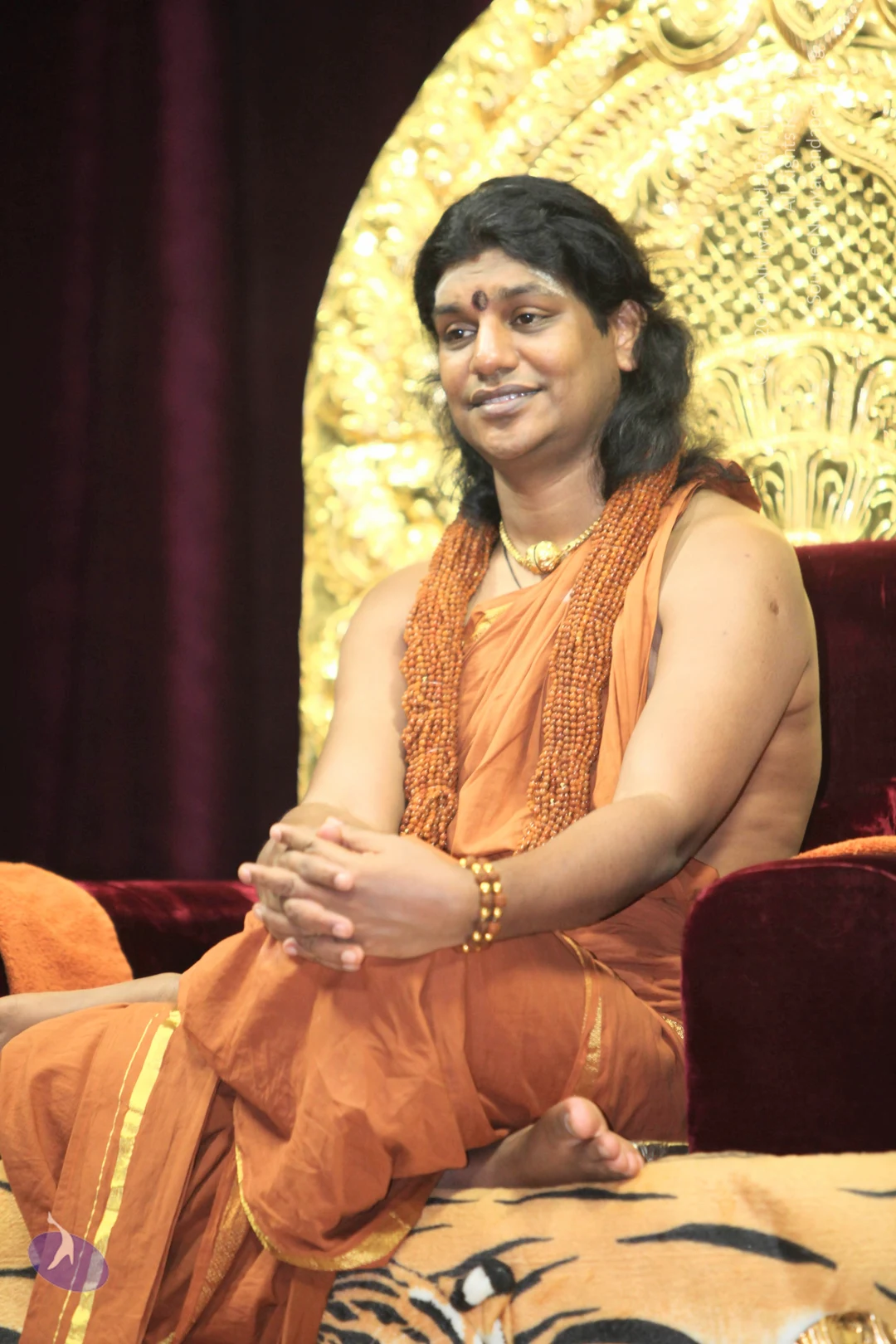
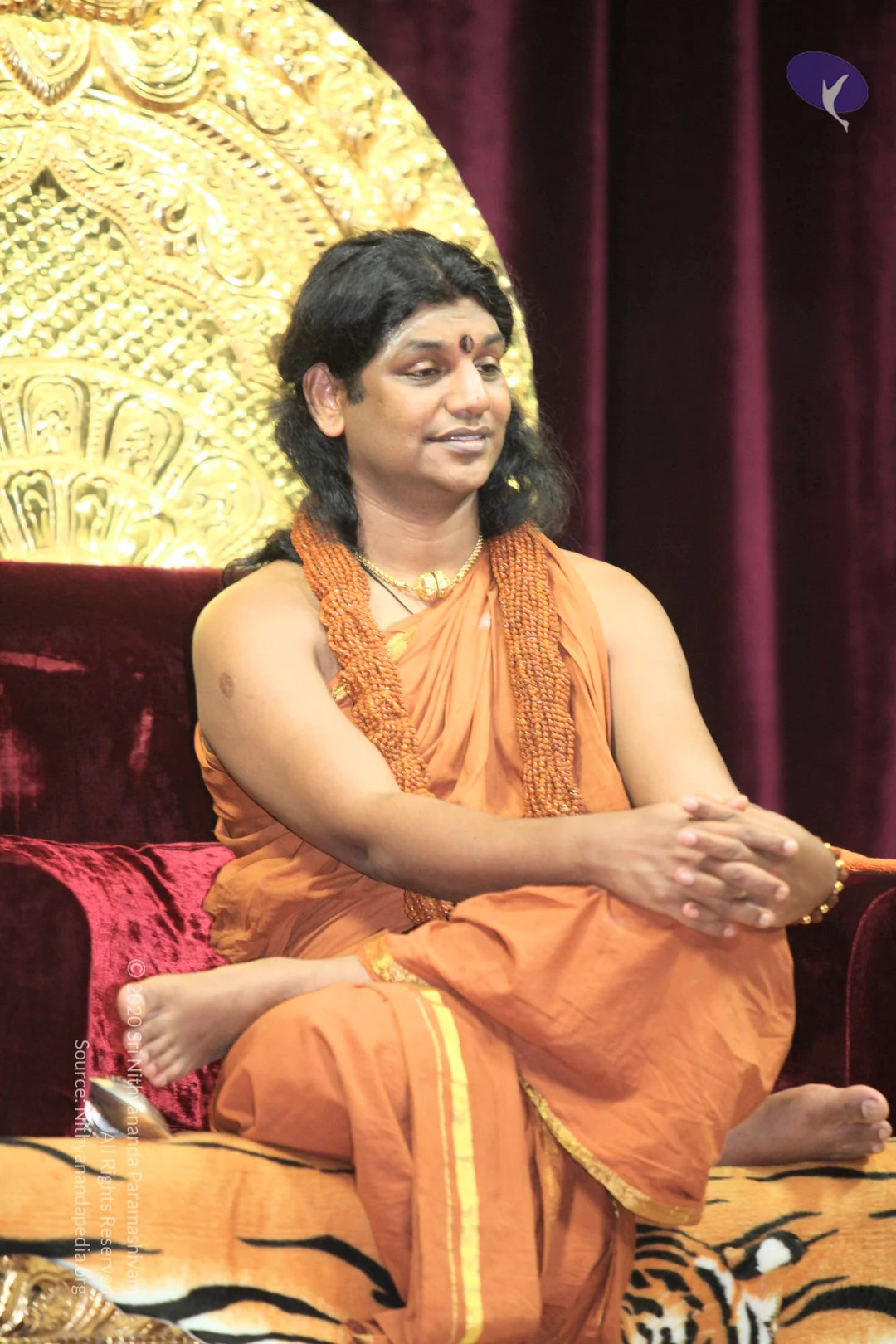
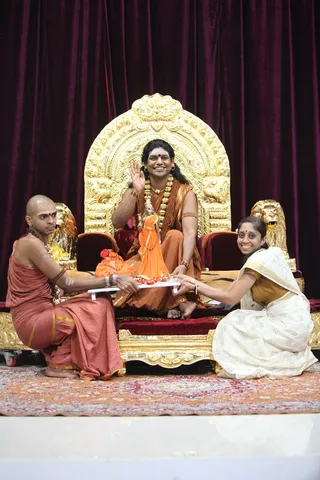
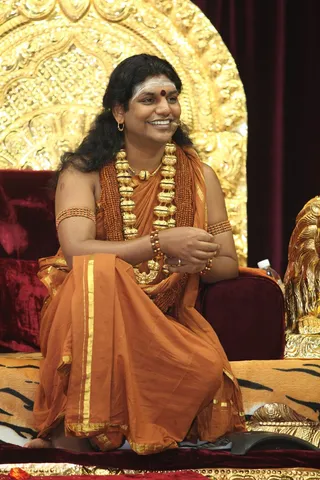
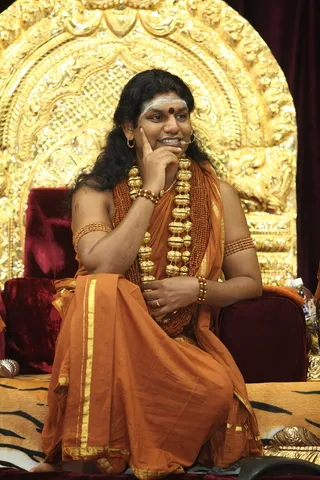
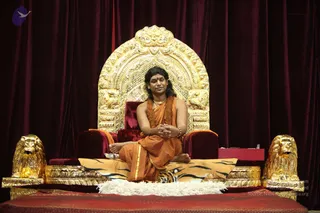
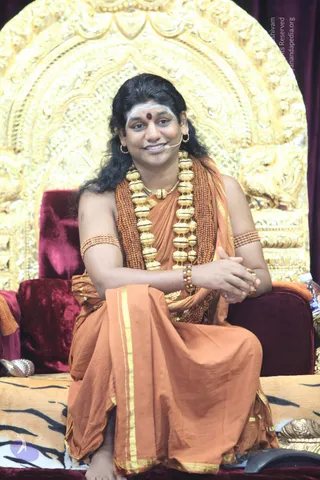
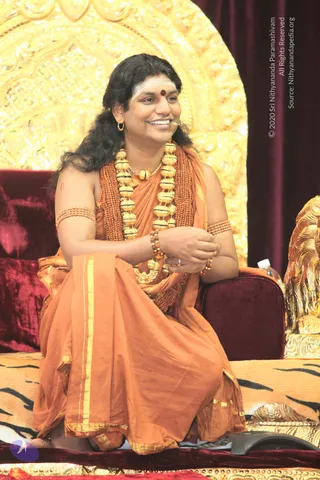
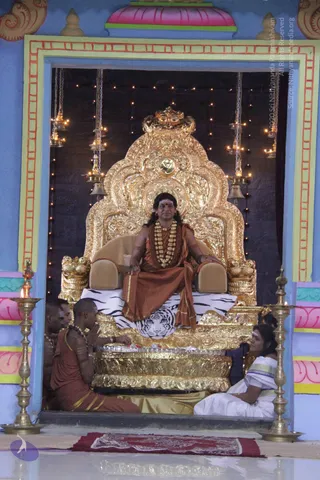
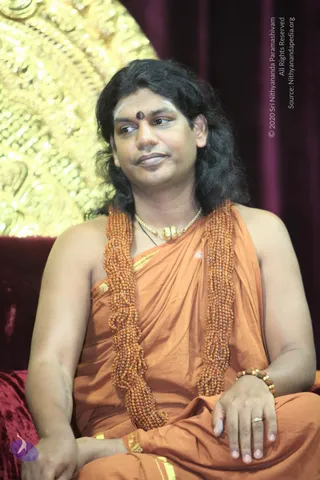
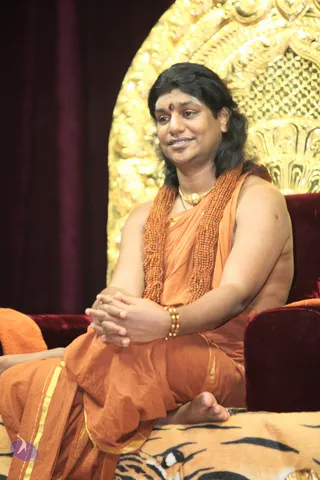
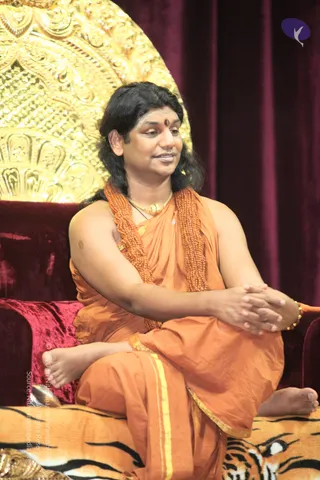
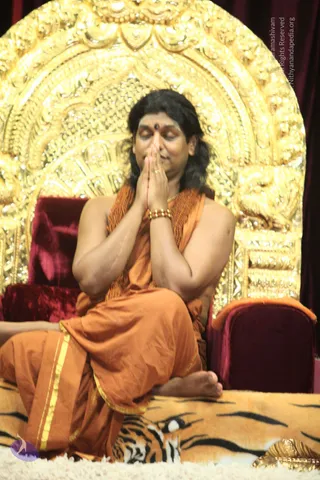
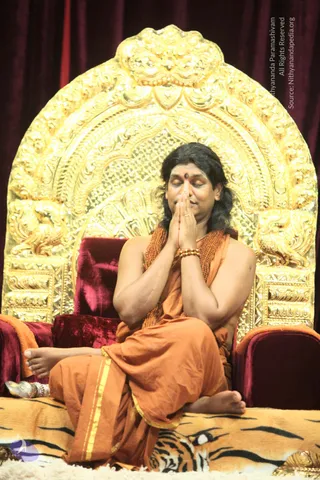
Three people on a stage before a deep maroon velvet curtain. A man seated on an ornate gold throne with carved lion armrests raises one hand in blessing and smiles, wearing an orange robe, a rudraksha mala and a long ceremonial gold necklace, with a forehead mark. a person based on the throne, saffron robe, rudraksha and ornate gold necklace. Beside him sits an orange-clad figure. On the left, a bald man in a rust-red dhoti and shawl kneels and offers a white tray of flowers and petals. On the right, a smiling woman in a white and gold-bordered sari kneels and reaches toward the same tray. The carpet is patterned in red and orange tones.A smiling man with long dark hair sits on a red velvet and gold seat in front of an ornate gilded throne backdrop. He wears saffron-orange robes with gold borders, a thick rudraksha mala and layered ceremonial gold necklaces, plus gold bangles and a rudraksha armband. A white vibhuti marking and red kumkum dot are on his forehead, and a small microphone is at his mouth. A golden lion statue and a tiger-striped cloth are beside him. Swamiji (probable) is seated centrally, with long hair, saffron clothing and rudraksha and gold adornments as the qualifying cues.Photograph of a smiling person seated on a tiger-striped cushion before an ornate gold repoussé throne backdrop with a deep red velvet armrest. The person has long swept-back dark hair, a white vertical forehead marking with a red dot, and wears an orange-saffron dhoti-style garment with gold border, multiple gold beaded necklaces, rudraksha malas, and rudraksha armlets. The right hand rests thoughtfully against the chin while the left hand rests on the lap, and a small headset microphone is visible near the ear. Appearance-based label: a person, seated as a teacher in discourse before a golden throne.A smiling man in orange saffron robes and a swept-back dark hairstyle sits on an ornate gold throne with a red velvet seat, holding up a framed printed document in clear plastic sleeve. He wears a long rudraksha mala and heavy gold necklaces, bead bracelets, a red bindi and white forehead markings, and a small headset microphone. The tiger-striped cloth draped on the seat and the ornate gold backdrop complete the stage setting. The document shows printed text and an official-looking seal.

Sarva Darshan

1 photoSource gallery
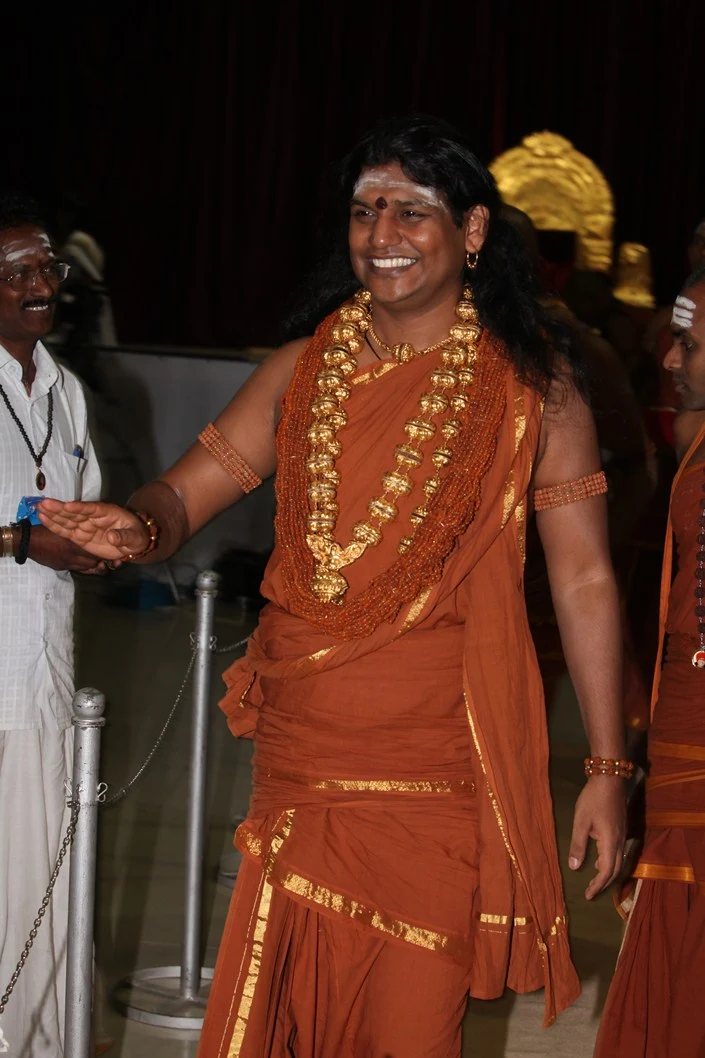
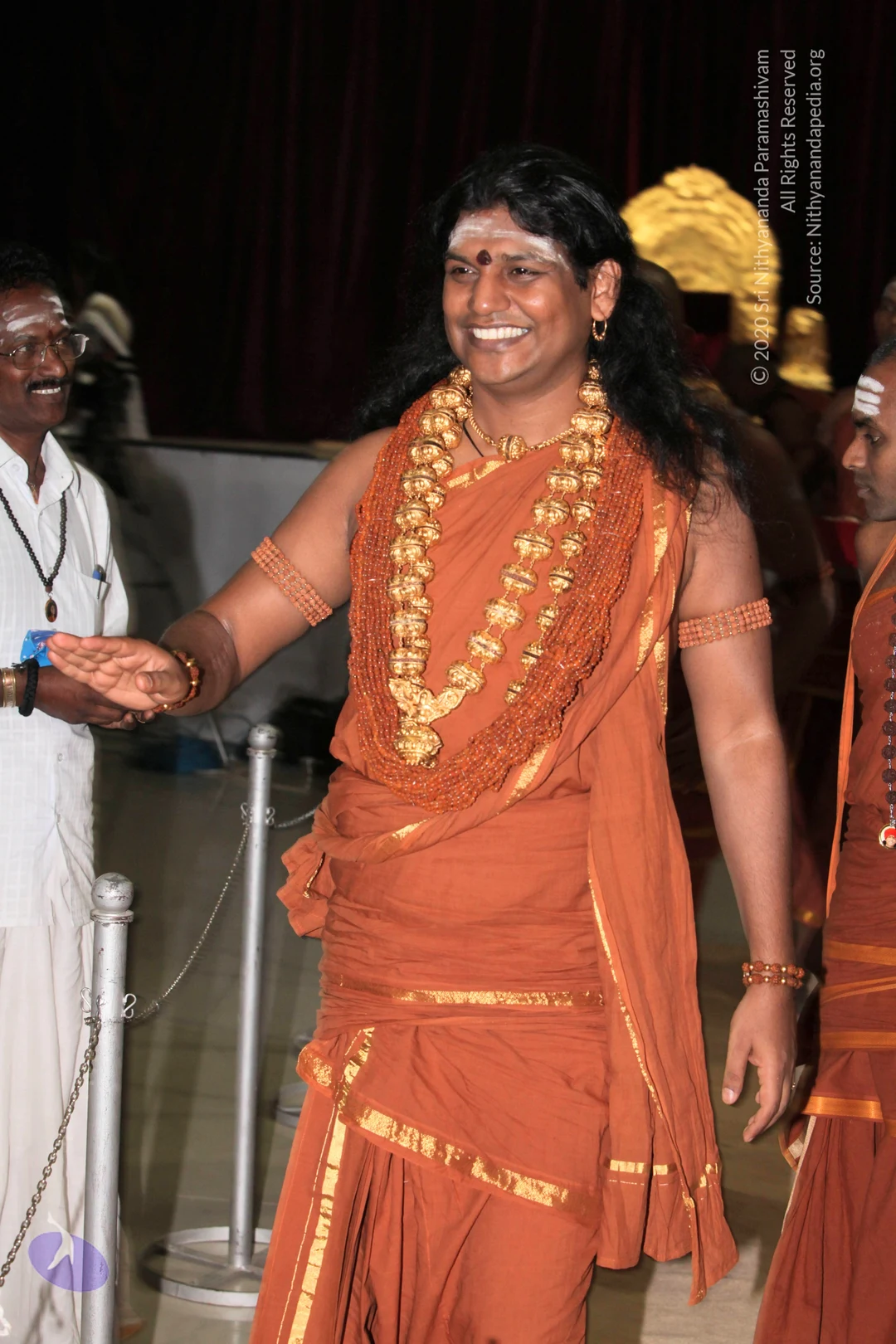
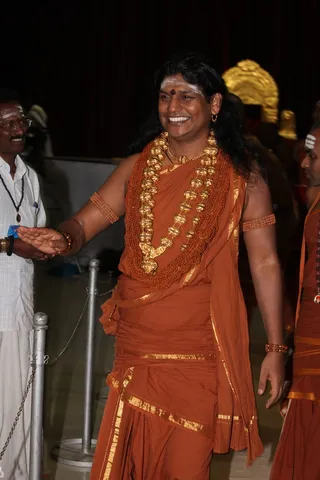
A smiling man with long swept-back black hair wears saffron-orange robes with gold-edged borders, a thick gold-beaded necklace over an orange rudraksha mala, and orange beaded armlets. He wears white vertical lines and a red dot on his forehead and extends his right hand toward a man at left in white shirt and white dhoti with a mala and glasses. A second man in orange robes stands at right. Metal stanchions and a chain divide the area, and a gold ornamental backdrop is visible behind. The appearance matches the Swamiji cues of swept-back hair, saffron clothing and ceremonial gold necklaces, so this is a probable in-person candidate.

Yoga

4 photosSource gallery
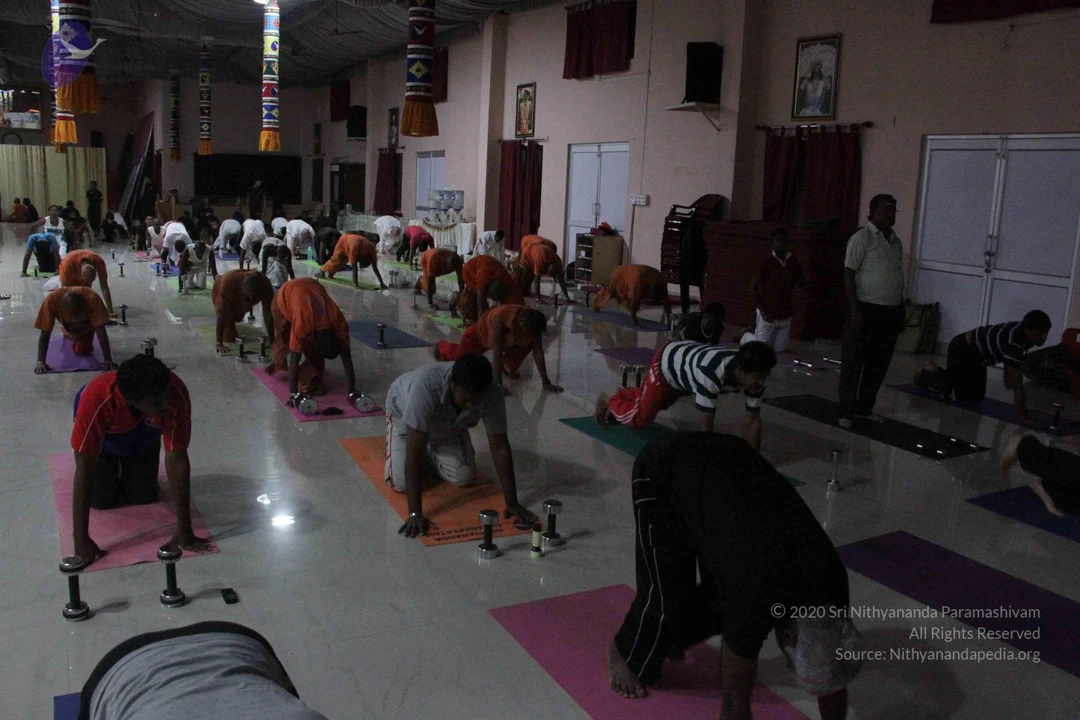
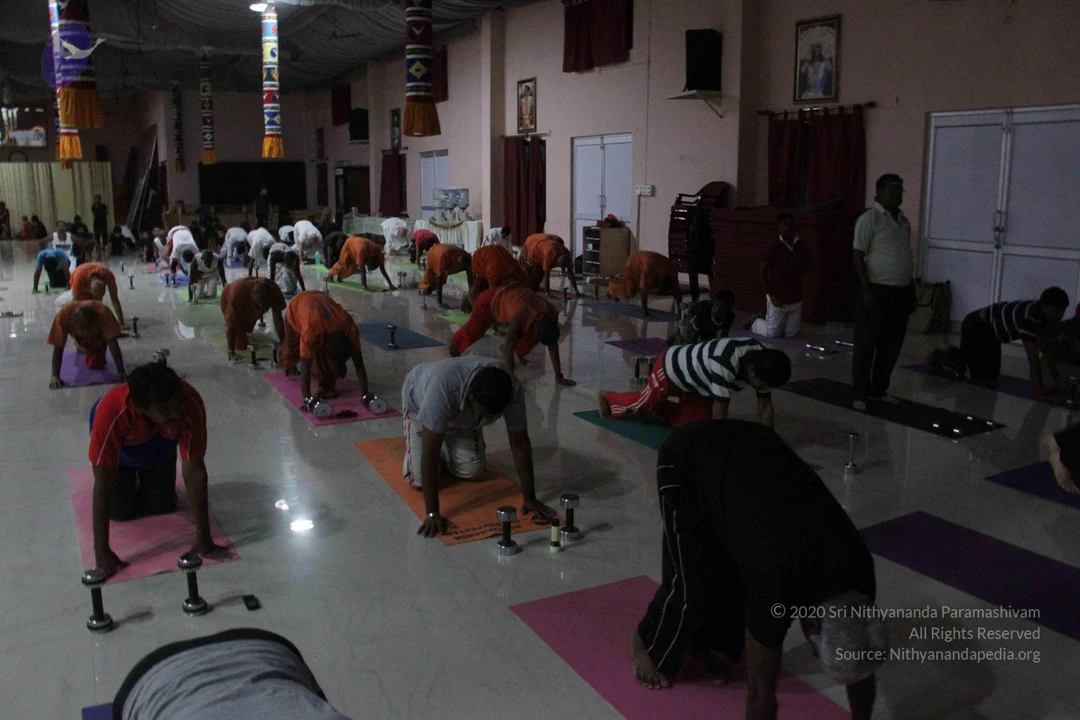
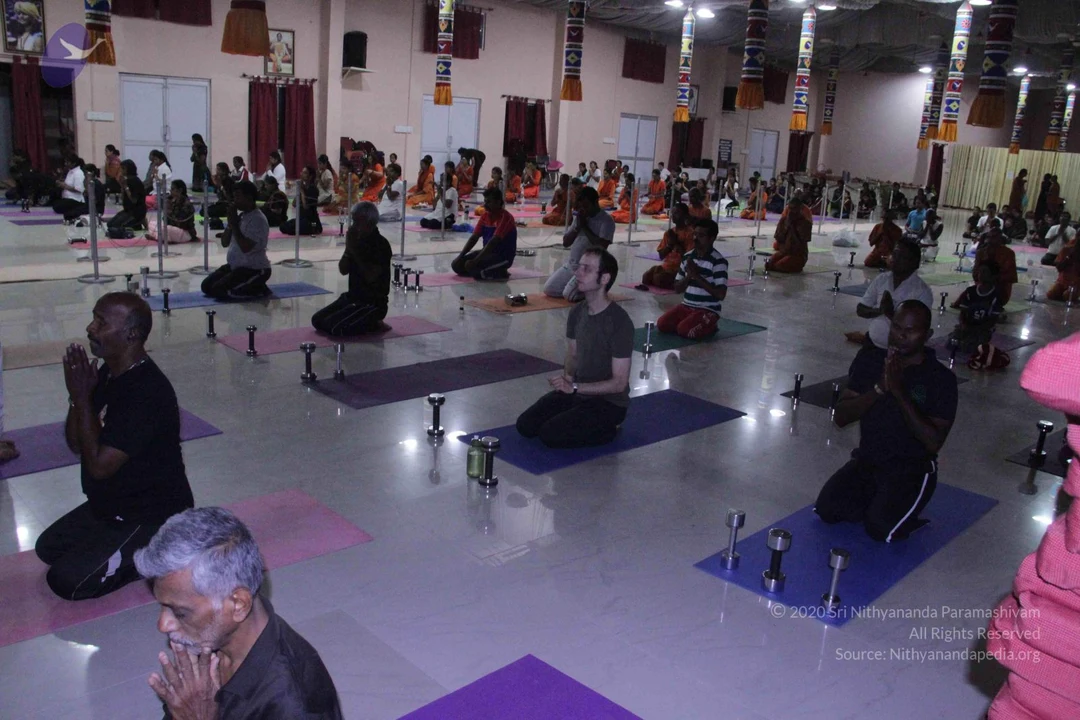
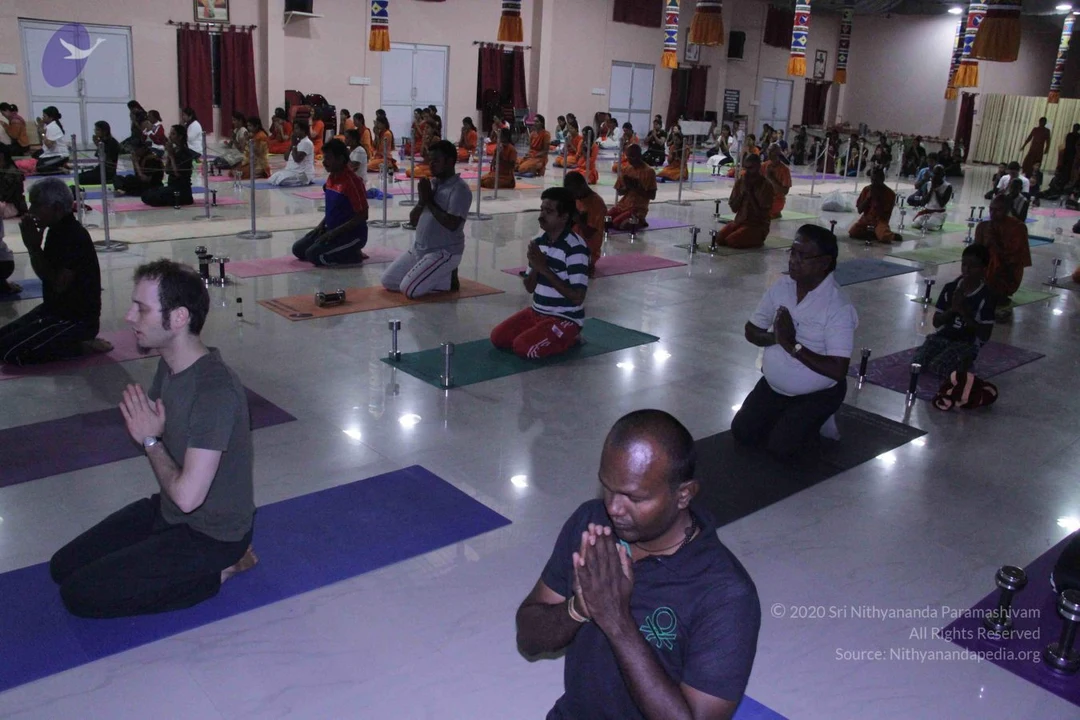
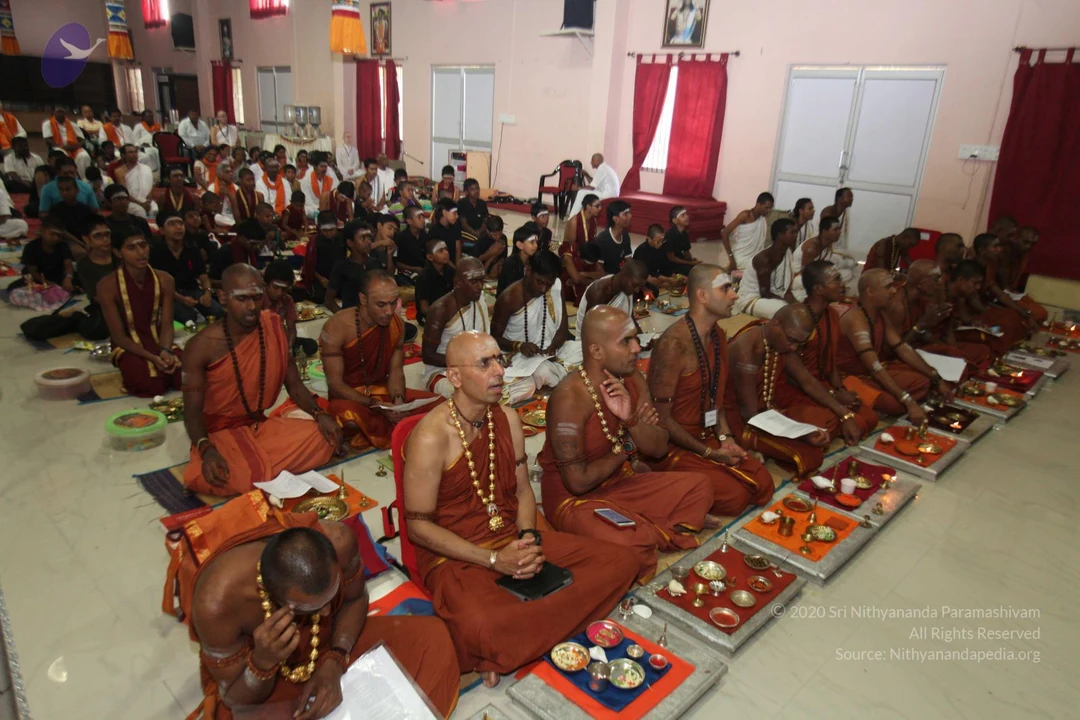
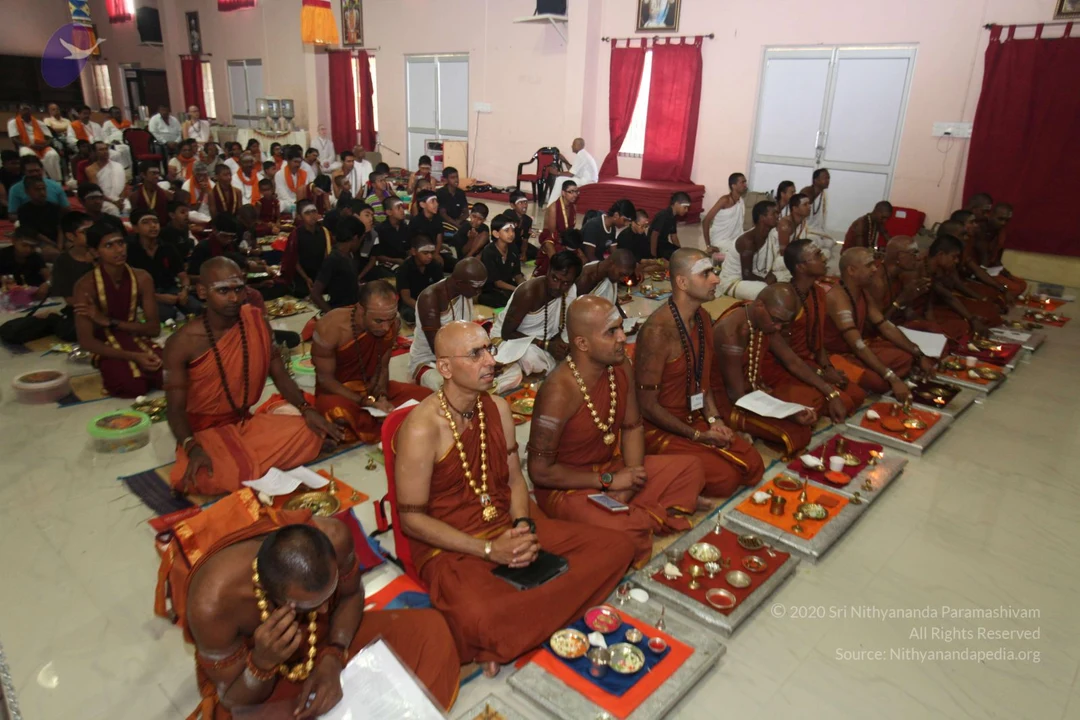
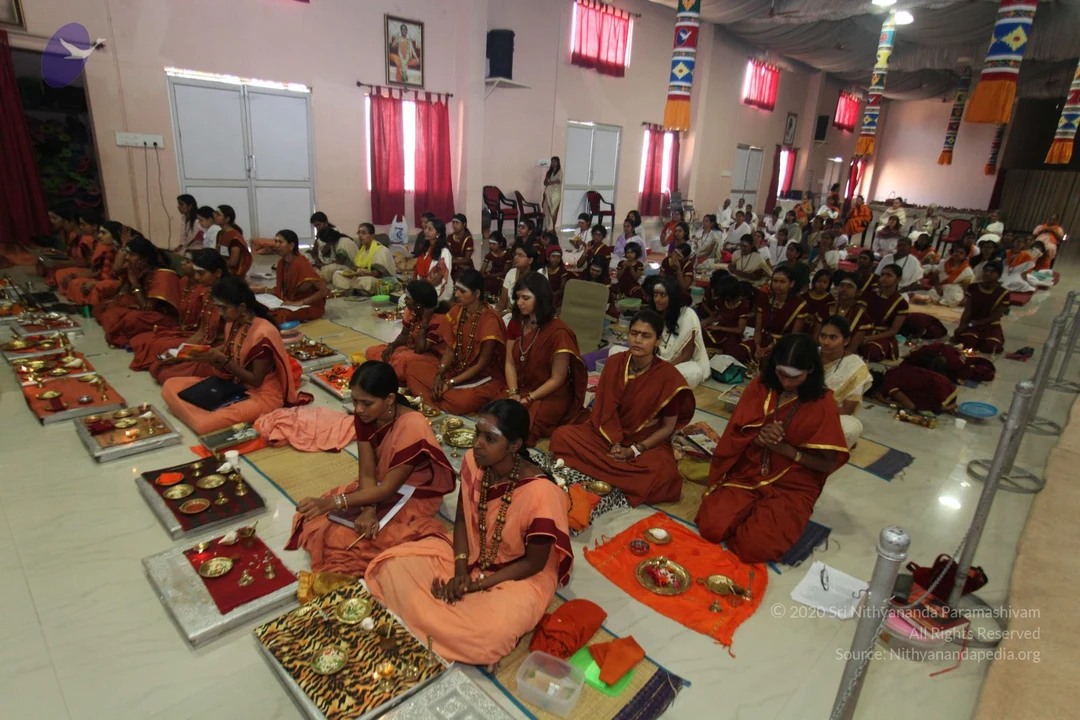
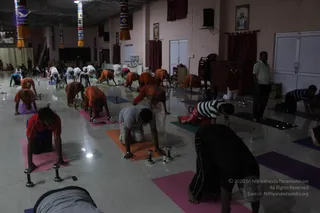
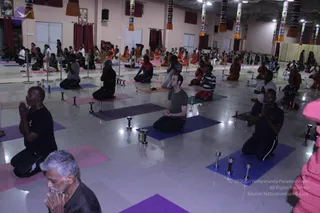
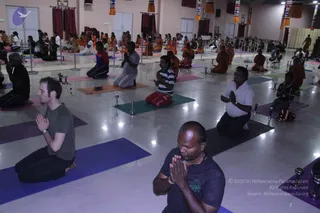
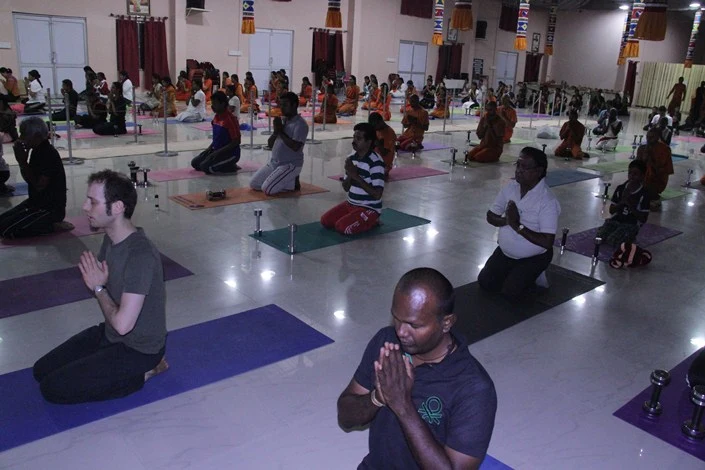
A large indoor hall with glossy white floor where many people in orange and white clothing and colourful sports wear perform yoga exercises on mats. Several participants bend forward with hands on the floor, some with dumbbell-like weights placed beside them on purple, pink, green and orange mats. A standing instructor in a light green shirt and dark trousers watches near the right side. Colourful striped hanging decorations hang from the ceiling, and a framed portrait hangs on the back wall beside a pair of white doors. The scene reads as a group yoga session in an ashram-style hall.A photo of a large hall where many people in yoga practice are bent forward with hands on mats, several on pink, orange, purple and green mats. Most wear orange or saffron clothing, while others wear grey, black-and-white striped or red tops. A man in a light green shirt stands at the right edge, and a framed picture hangs on the back wall. Metal dumbbells sit on the floor beside several mats, and colourful striped pillars hang from the ceiling.A large indoor hall with pale pink walls and tall decorated pillars hung with colourful banners. Many devotees kneel on yoga mats in rows, palms pressed together in prayer, some in orange and saffron clothing, others in dark tracksuits or white. Metal dumbbells and small stands are placed between the mats. In the foreground a grey-haired man in black kneels with hands folded, and a man in a grey t-shirt sits in the middle distance. No a person candidate is clearly identifiable in this view.A large hall with a polished white floor where many people kneel in prayer posture on coloured yoga mats, palms pressed together in namaste. In the foreground a man in a dark grey t-shirt and a man in a navy shirt with a striped top and red trousers kneel at the front. Behind them rows of people wear saffron-orange robes, and others wear white shirts and grey clothing. Metal stanchions and small dumbbells line the mats, and red and cream decorative banners hang from the ceiling. Several figures in saffron robes are visible, but no one is clearly identifiable as a person from appearance.

Temple-Flag-Hoisting
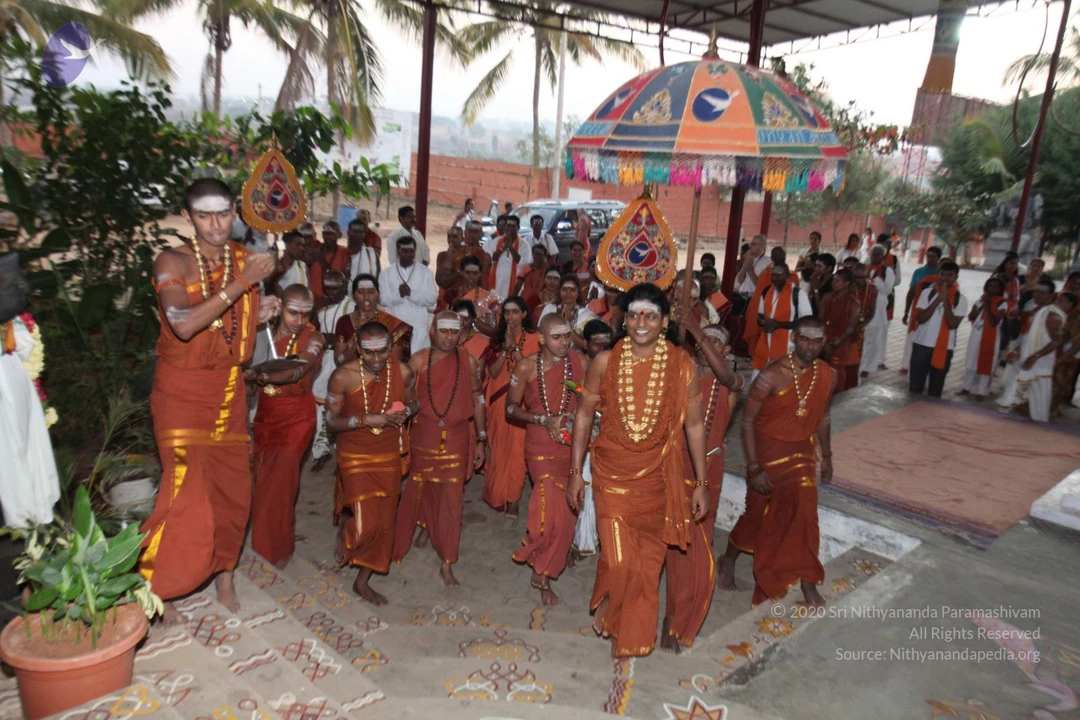
95 photosSource gallery
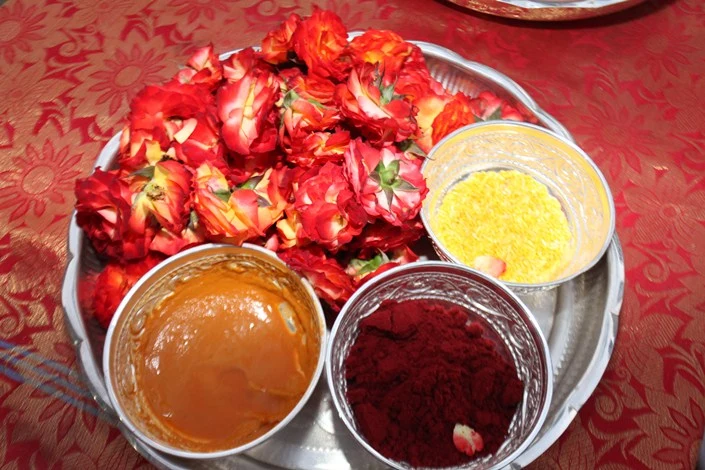
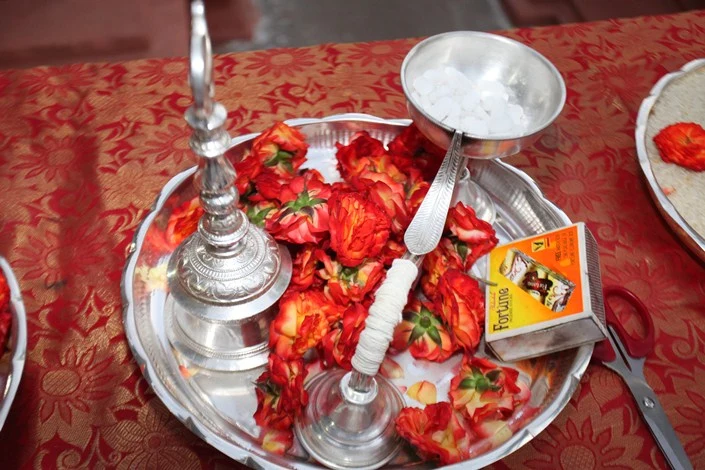
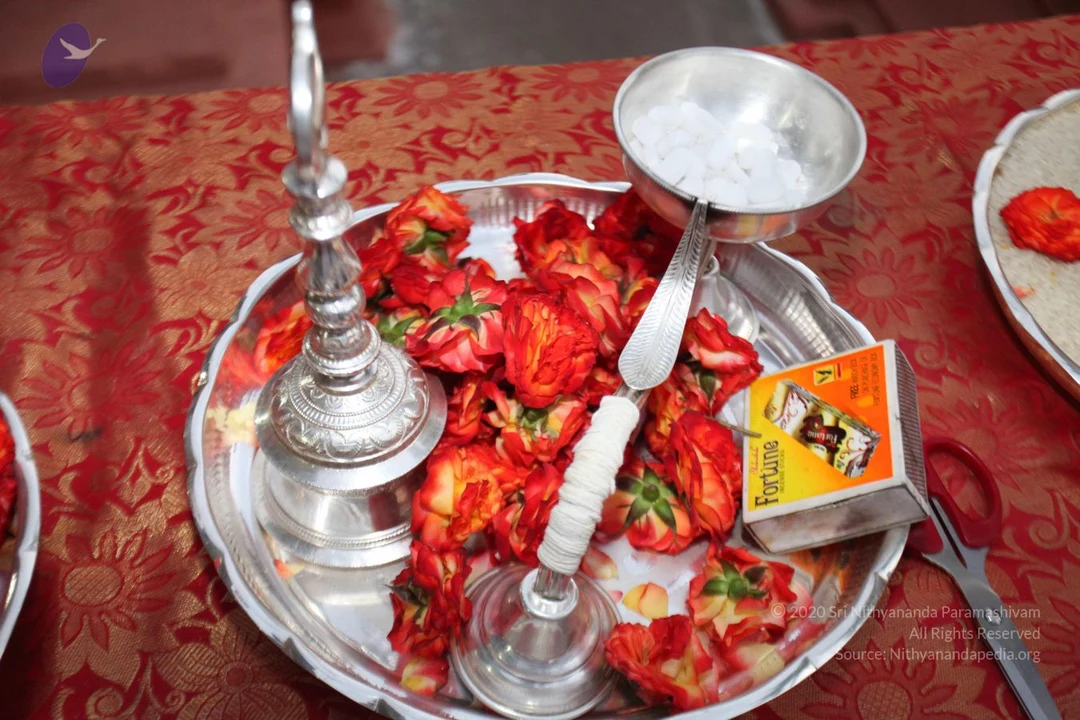
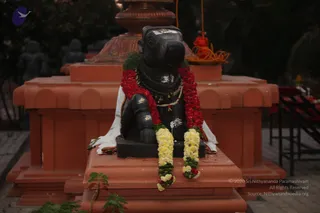
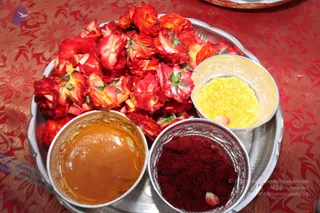
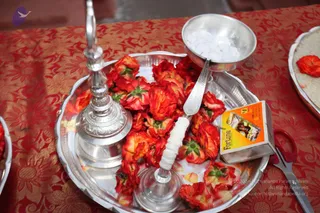
A pale full moon glows in a grey dusk sky, with blurred green leaves and branches in soft focus across the lower right and right edge of the frame. No people are visible in the scene.A pale, glowing full moon sits in a dusky grey-blue sky on the right side of the frame. In the foreground, out of focus, dark green leafy branches of a tree fill the left side. Thin power lines run faintly across the lower right. No people are visible.A black stone Nandi bull statue sits on a terracotta-red pedestal in an outdoor courtyard. The Nandi wears a red flower garland and a yellow and white marigold garland draped down its front, with white tilak markings on its head and body. A white cloth is draped beneath it, and an orange-red offering or kalasha-like object with orange threads sits behind. No people are visible.Close-up photograph of a ritual table draped in red patterned cloth. On a polished silver tray sits a silver kalasha-style vessel with a tall stem, surrounded by bright red-orange flower petals and a small silver bowl. Behind, a larger ornate silver container with engraved decoration. In the foreground, a silver dish holds yellow turmeric or kumkum powder, and a bowl of red flowers blurs in the front left. No people are visible; only puja offerings and implements are shown.A close overhead photo of a polished silver puja plate resting on a red and gold floral brocade cloth. Red and orange roses fill the upper left of the plate. Three small silver bowls hold, from left, a smooth orange-brown paste, a deep red powder, and a bright yellow powder, with a few rose petals scattered among them. No people are visible, and no one is shown performing a ritual.A silver puja thali sits on a red-and-gold floral brocade cloth. It holds a tall silver kalasha-style lamp stand, a silver bowl of white crystals, a silver spoon wrapped with white thread, and many red-orange roses scattered across the tray. A matchbox lies to the right, and a pair of red-handled scissors is at the edge. No people are visible.

Morning Sathsang

69 photosSource gallery
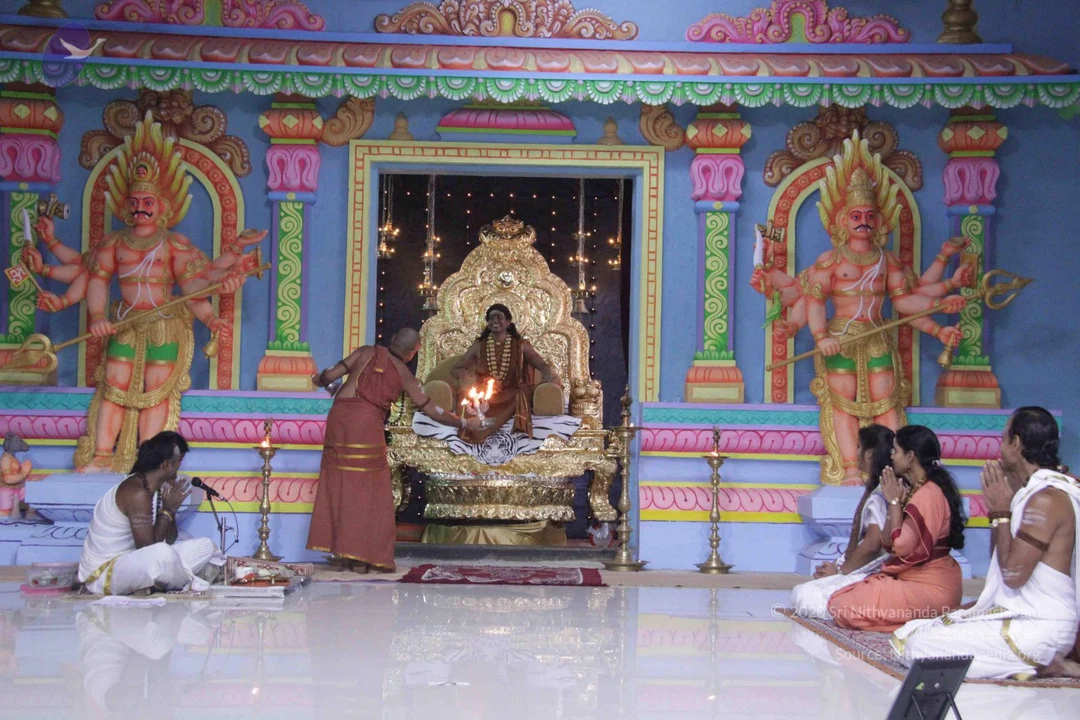
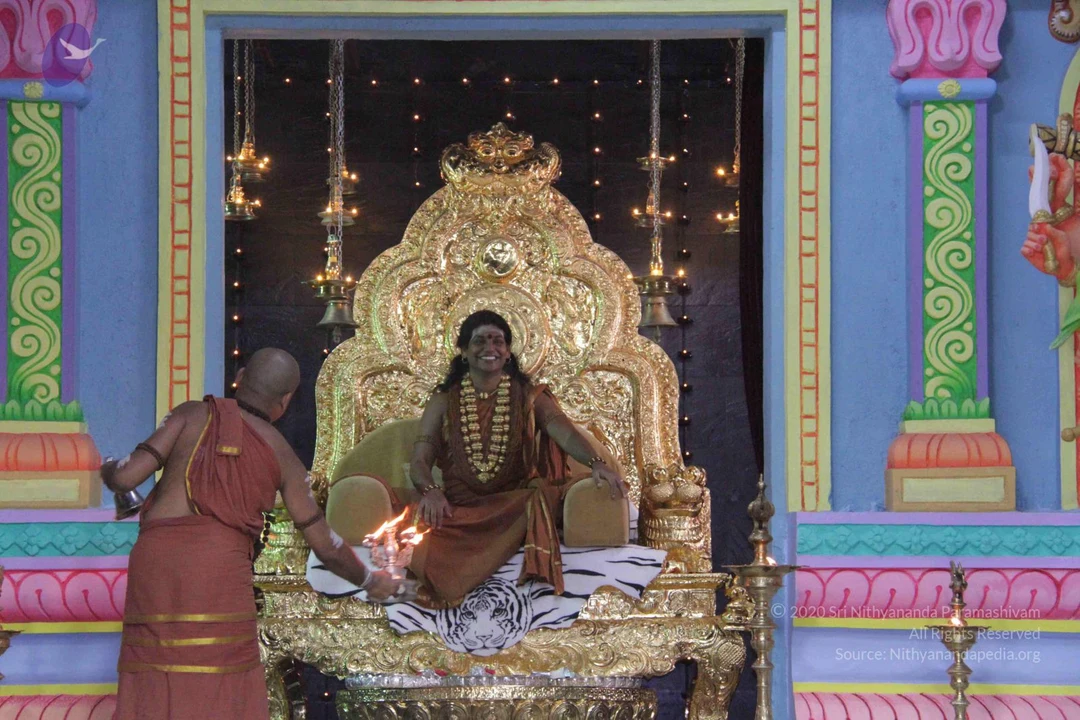
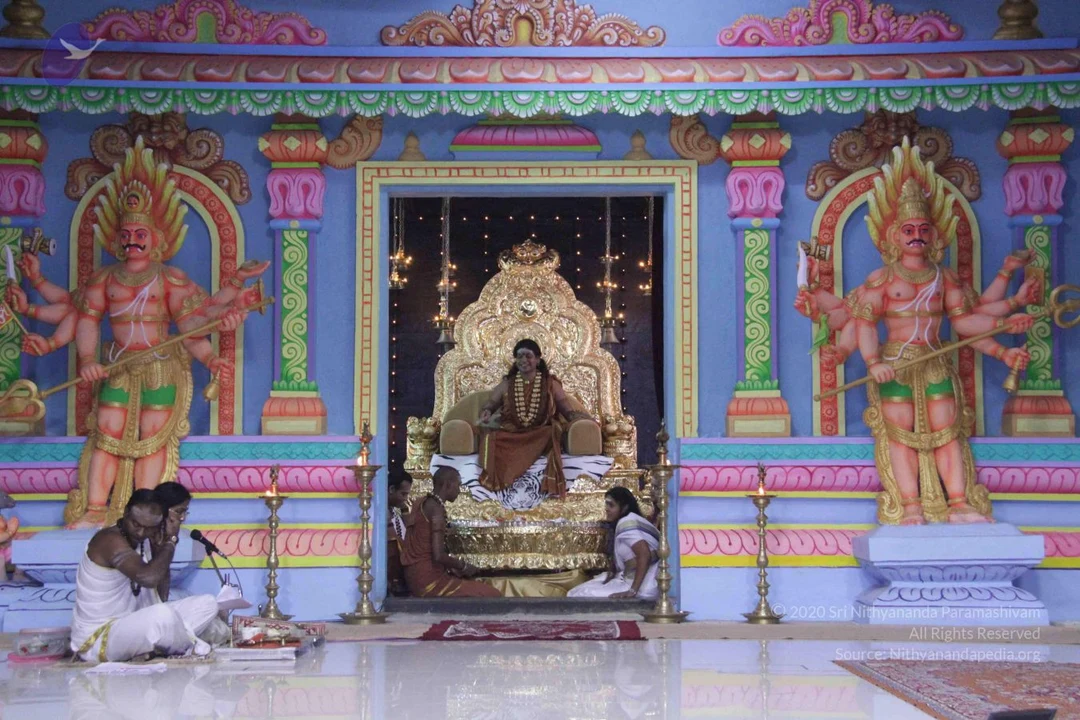
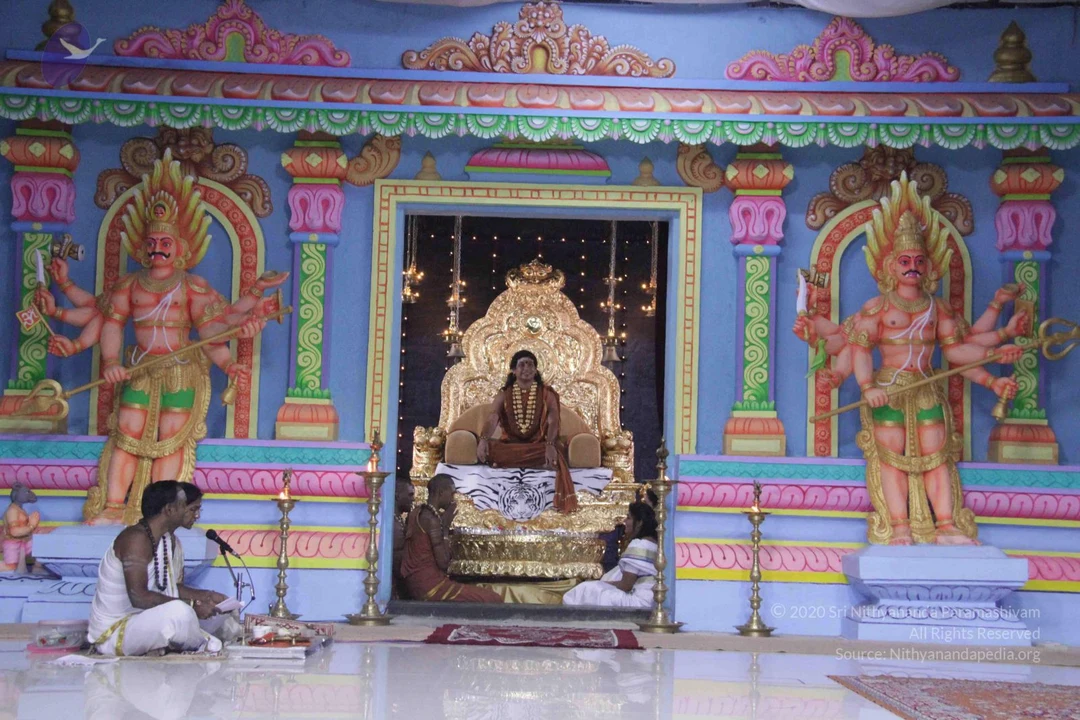
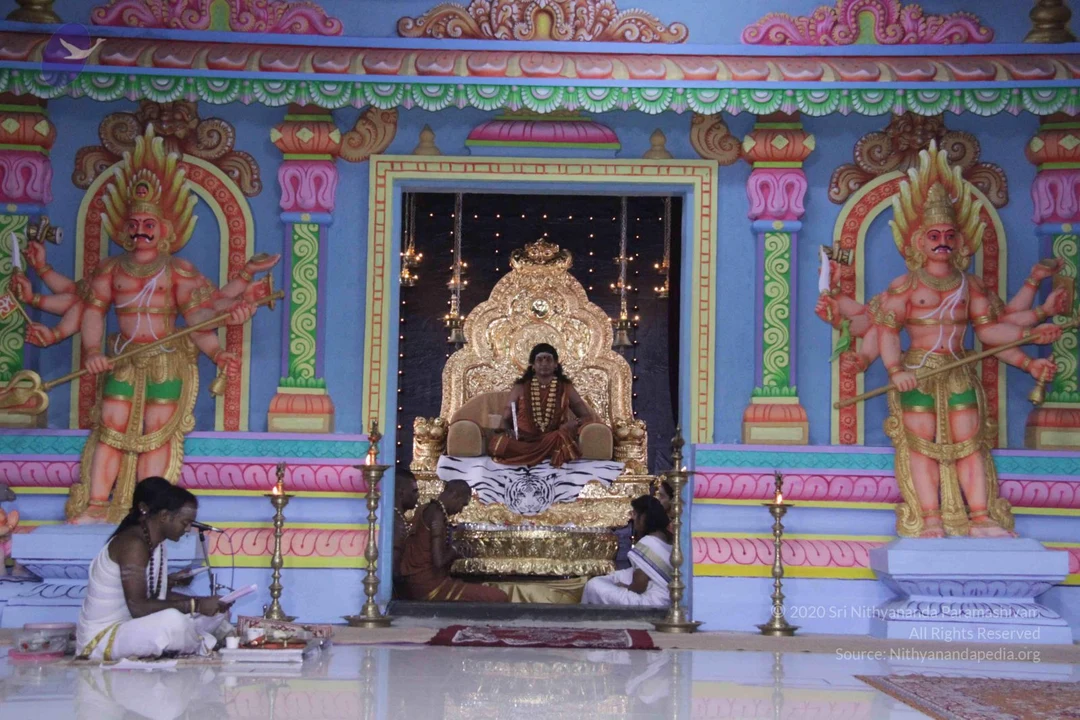
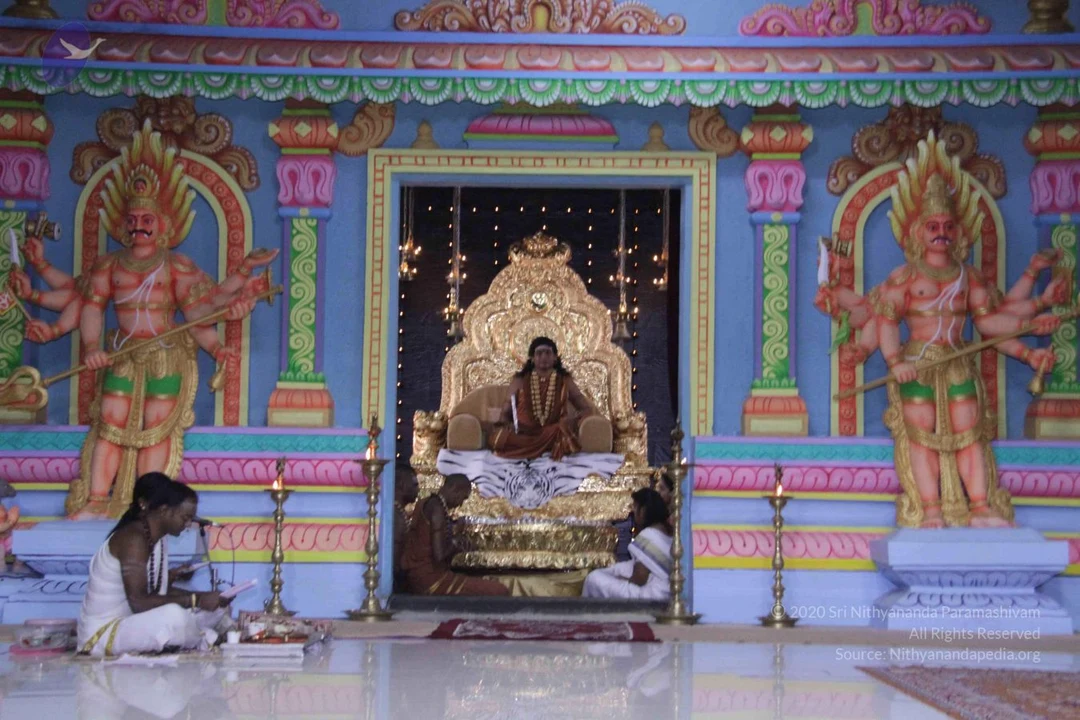
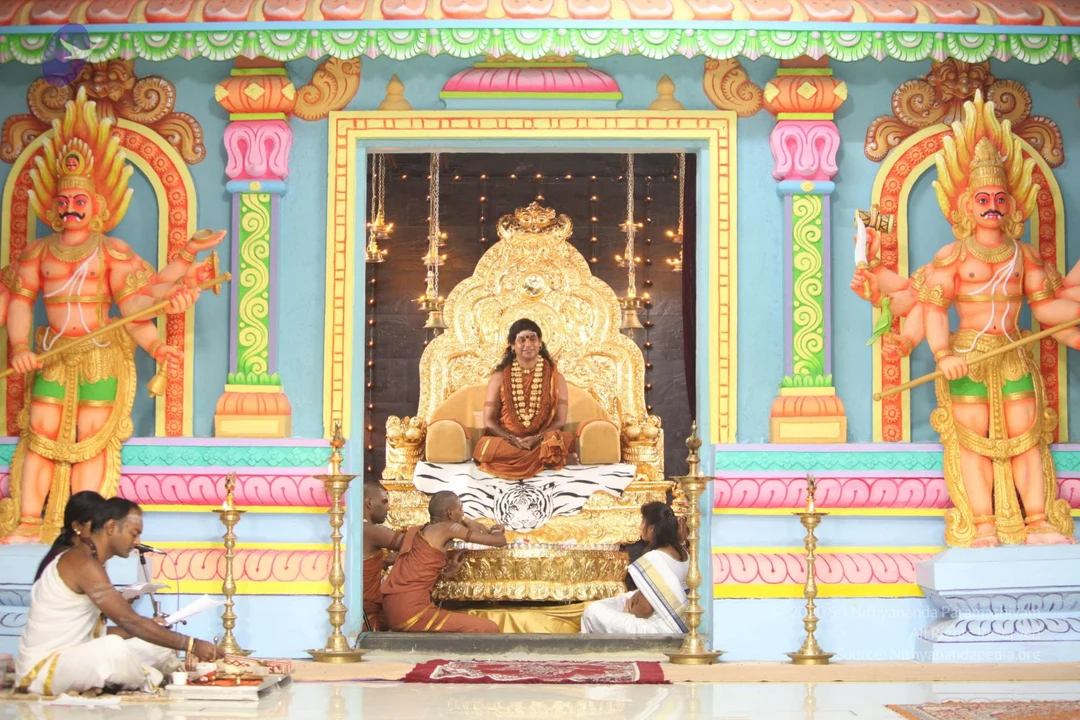
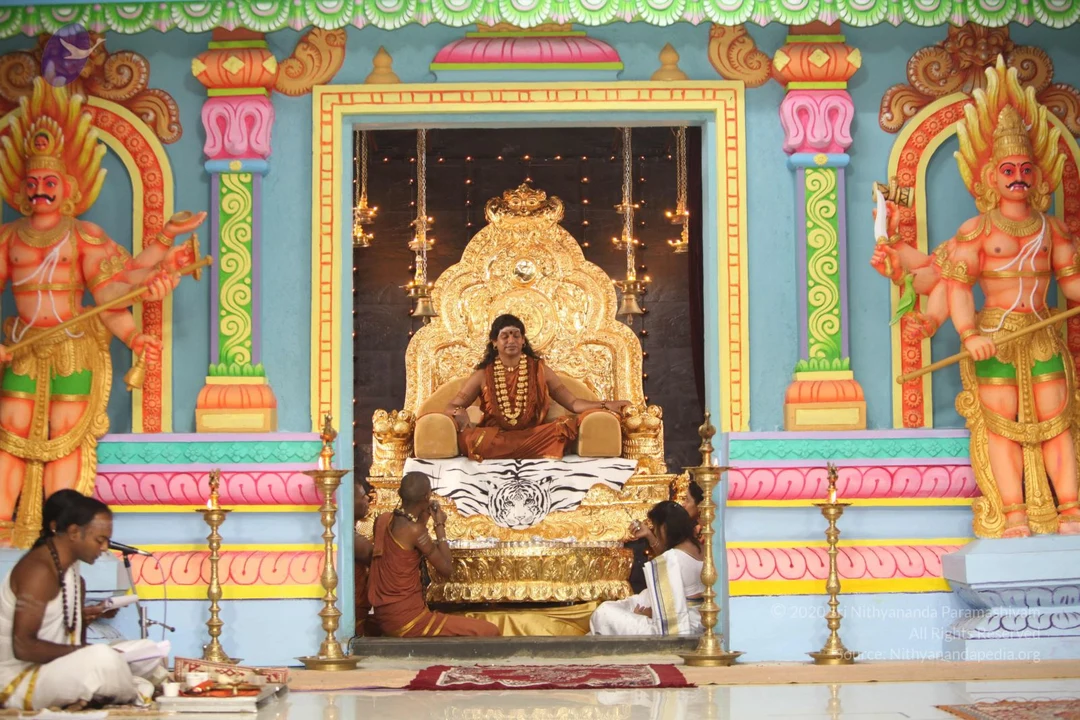
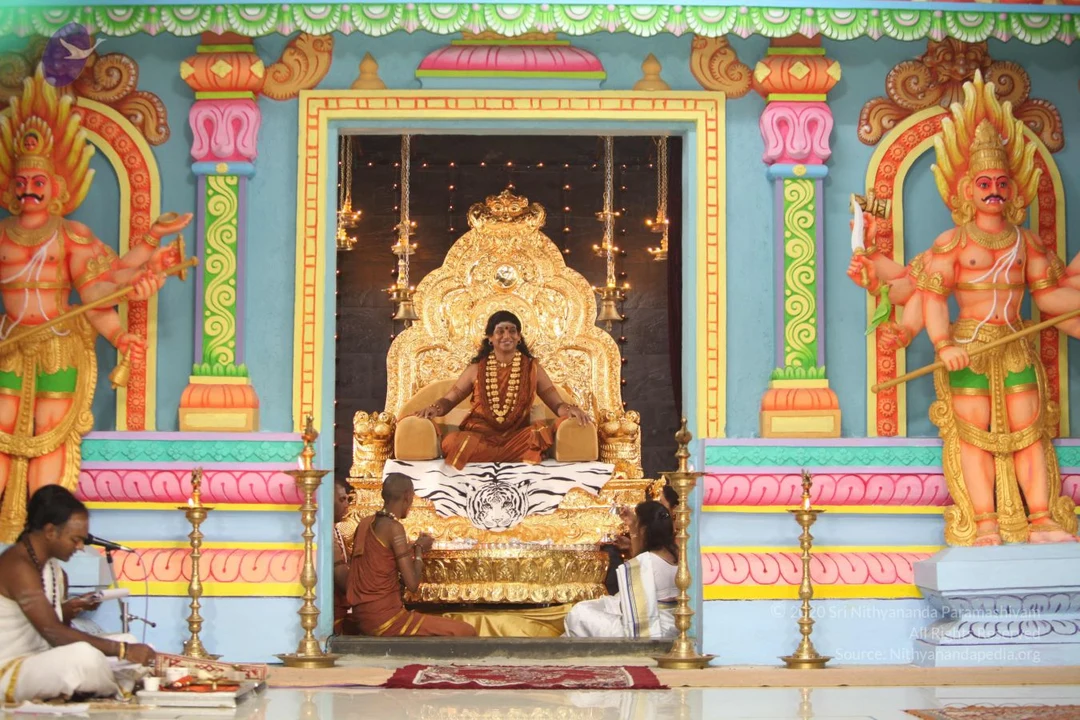
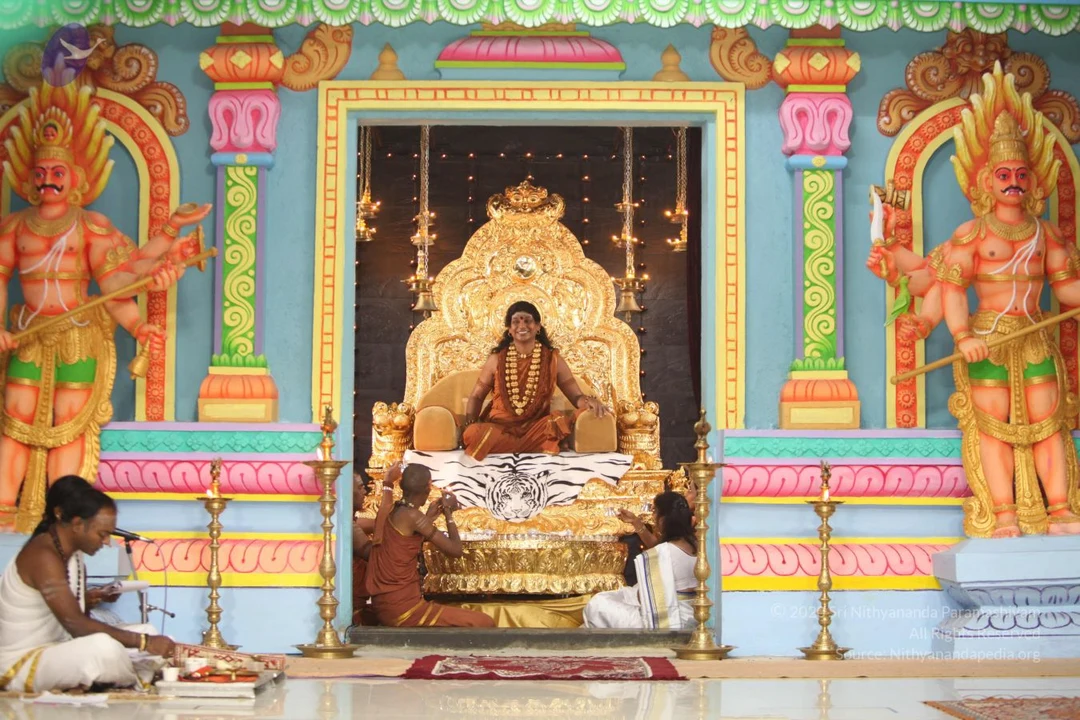
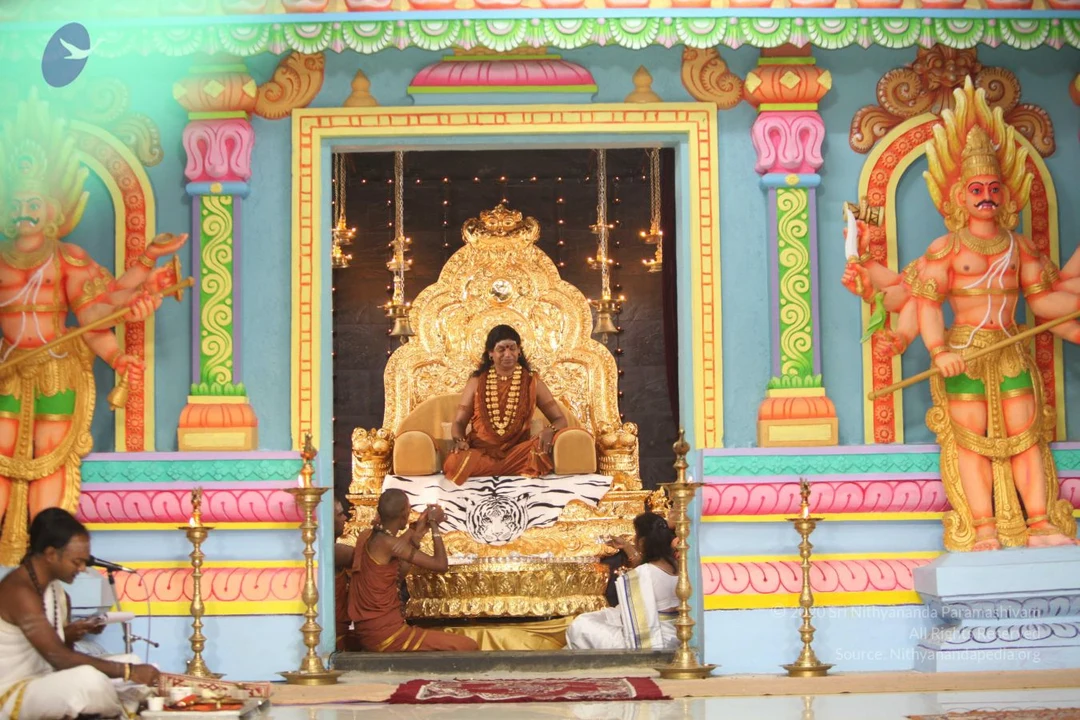
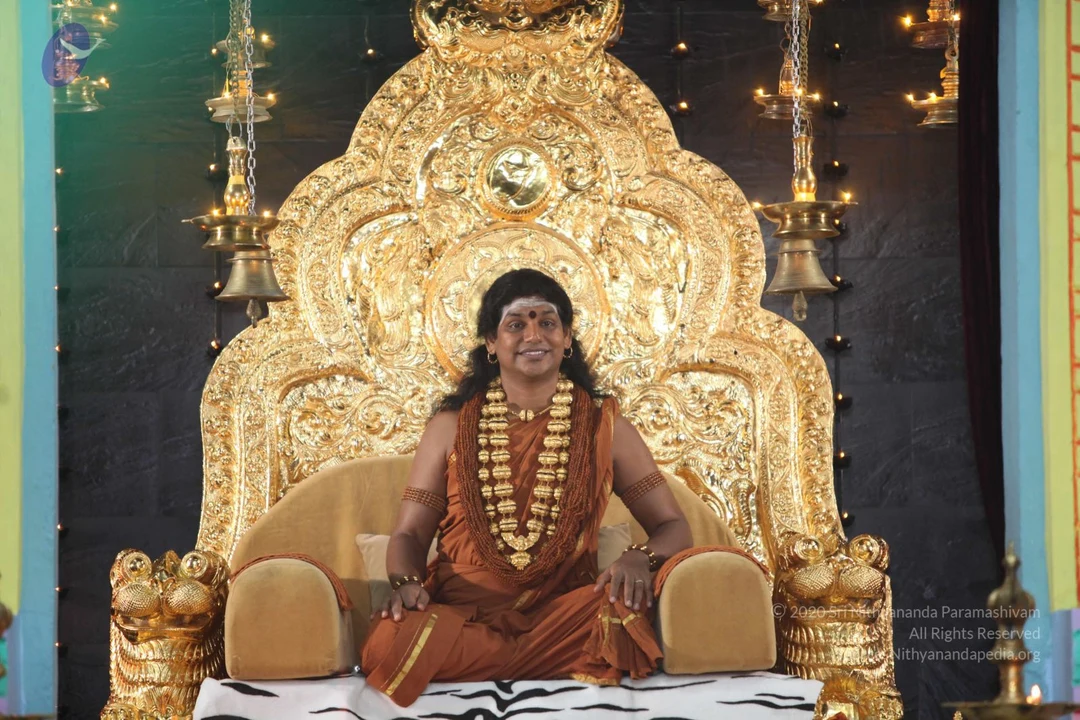
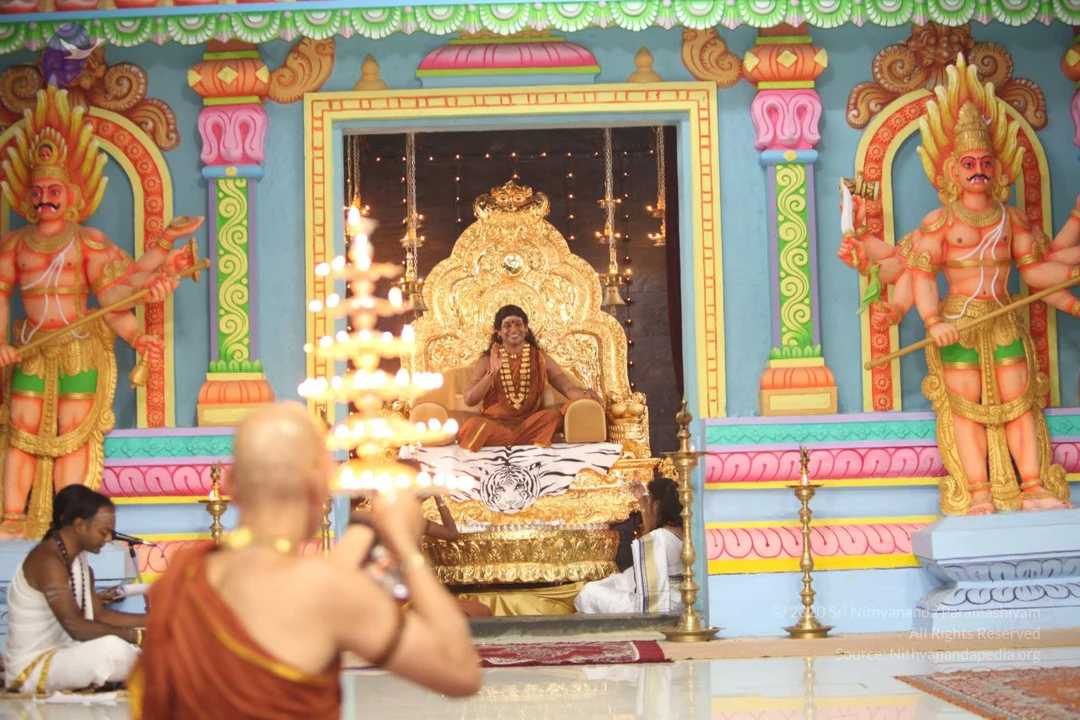
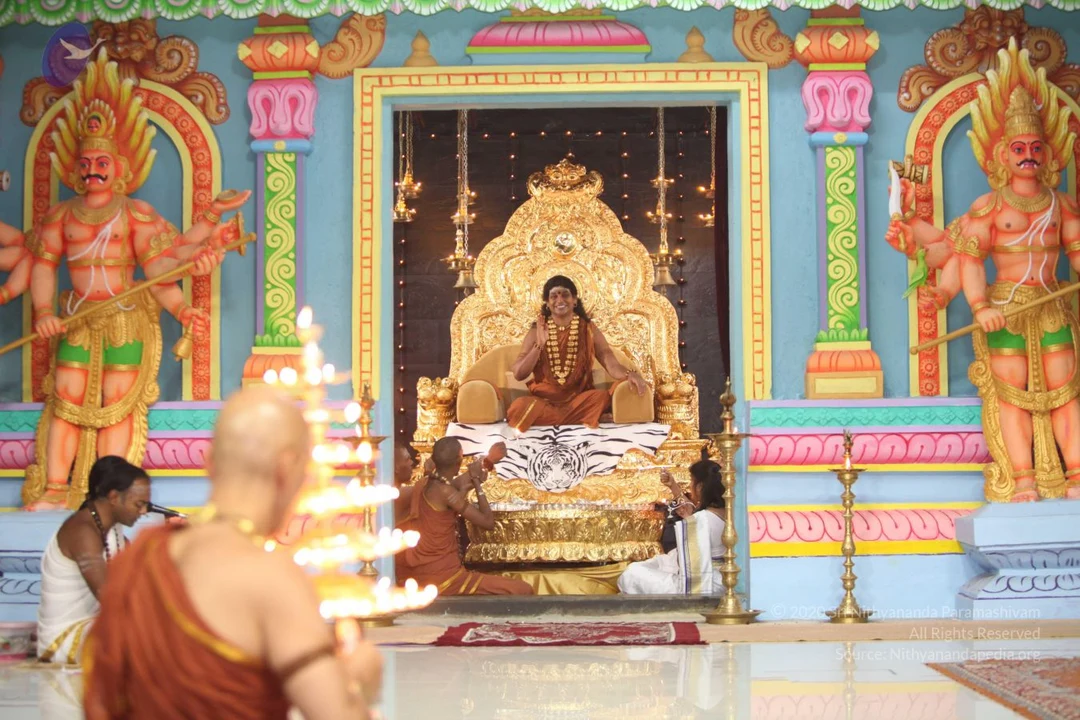
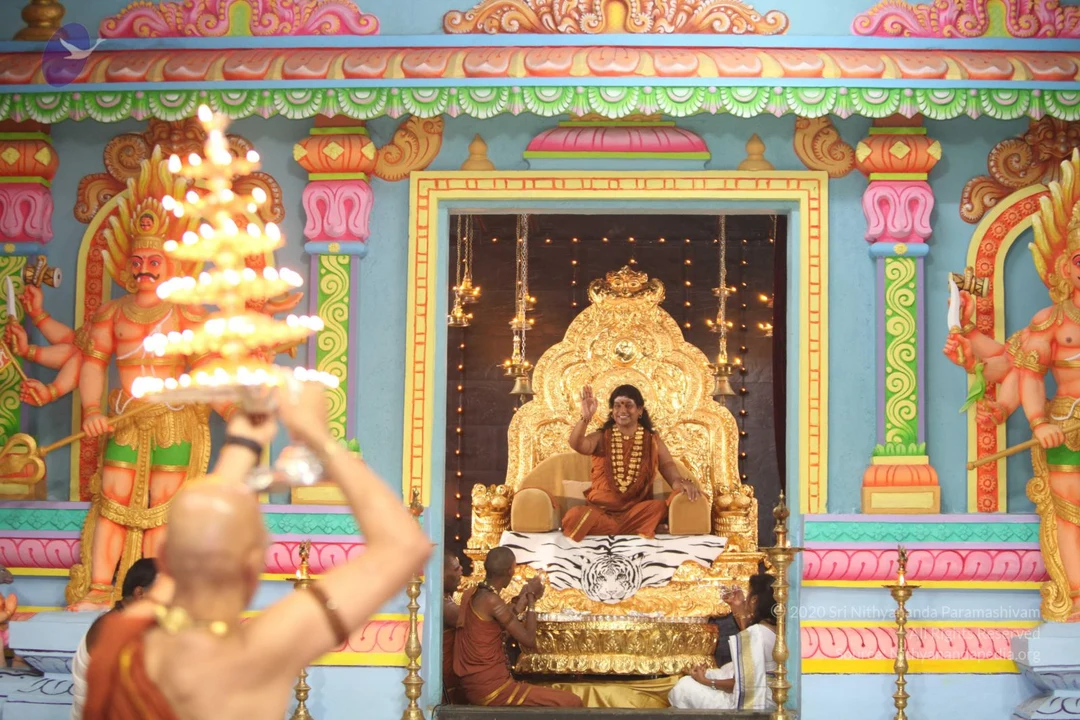
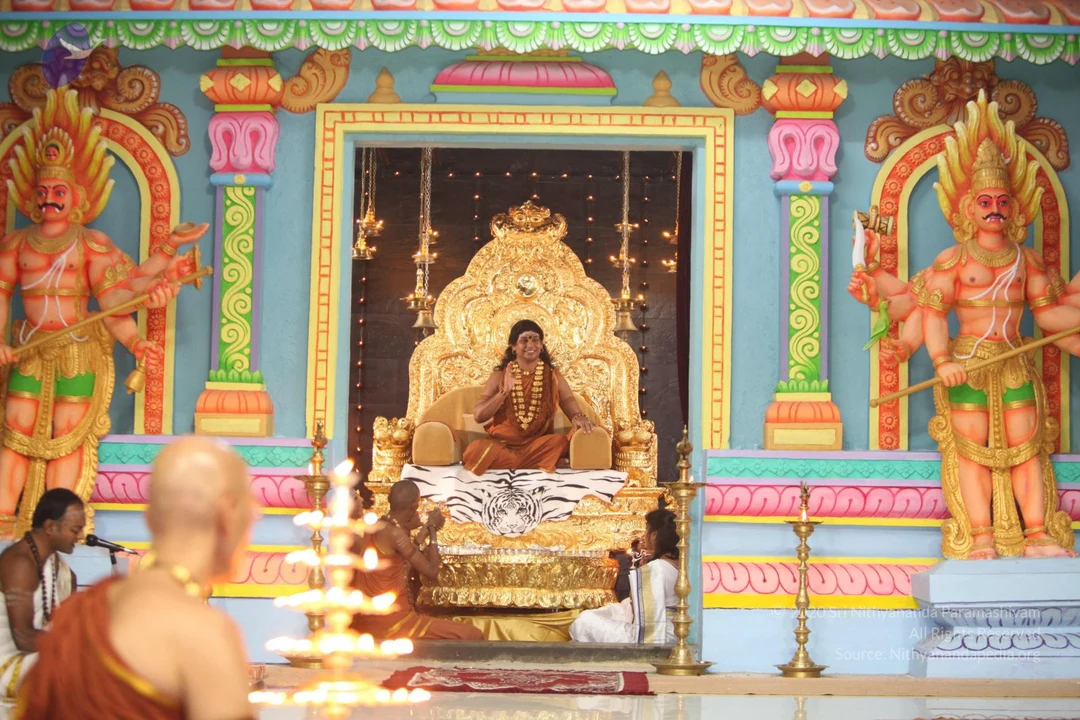
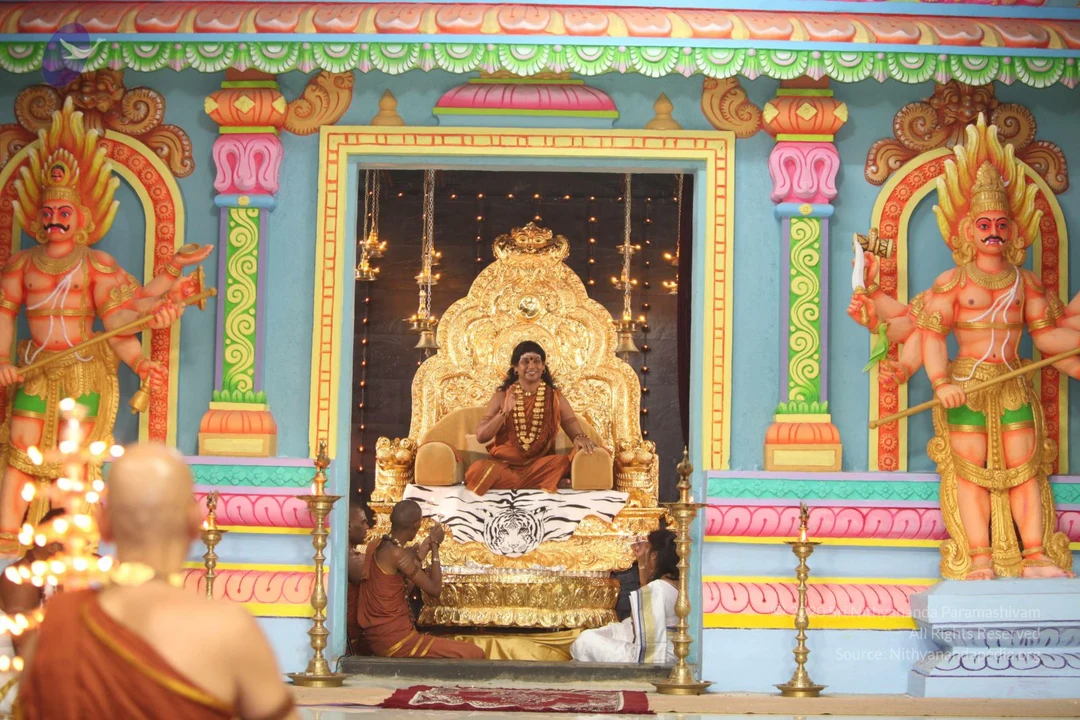
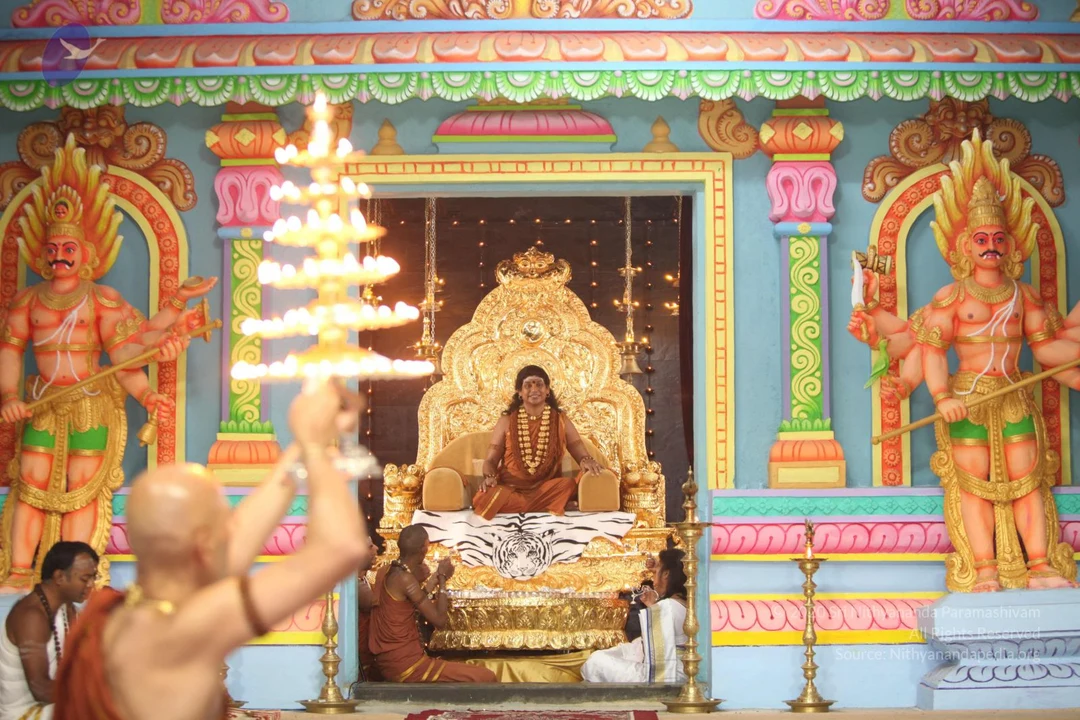
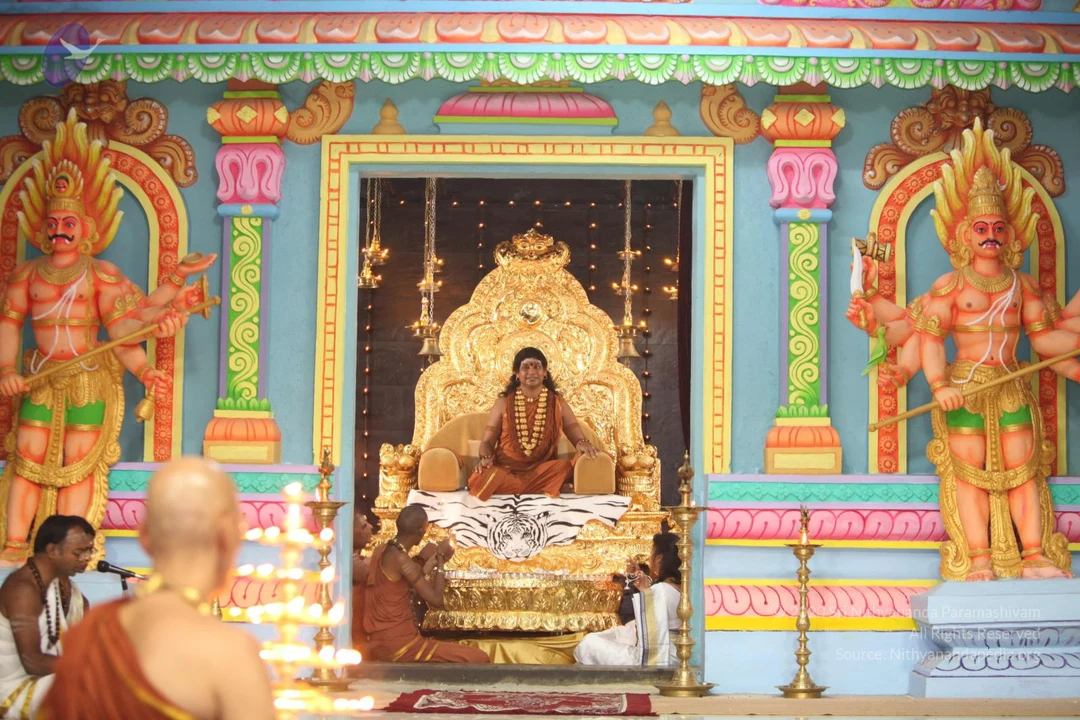
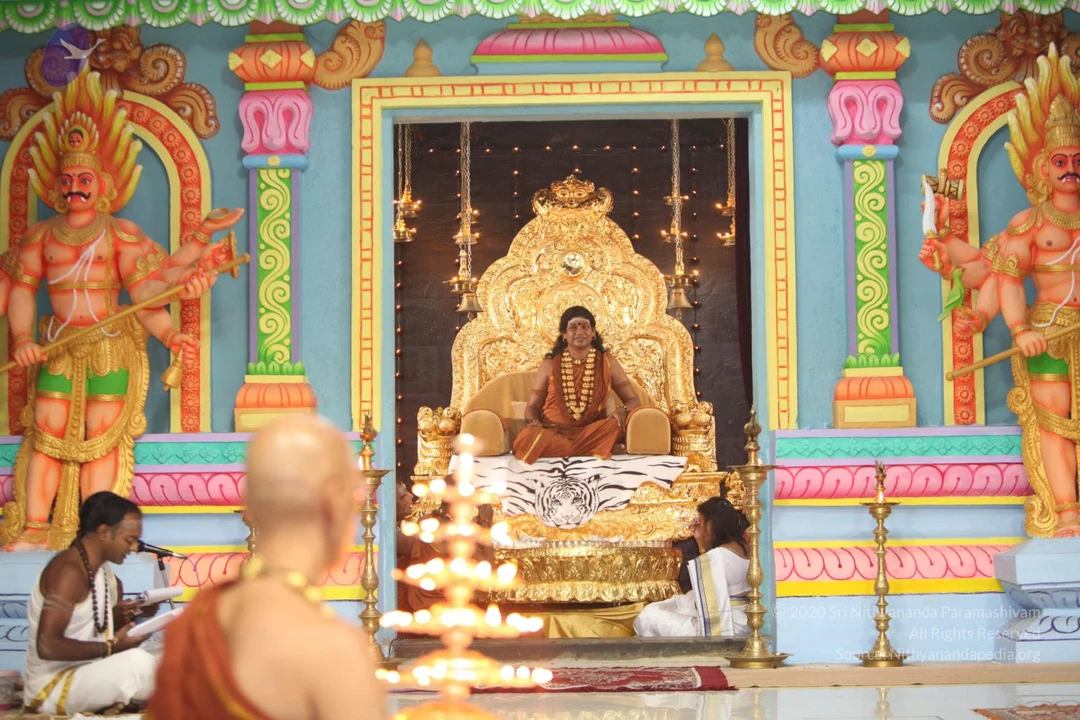
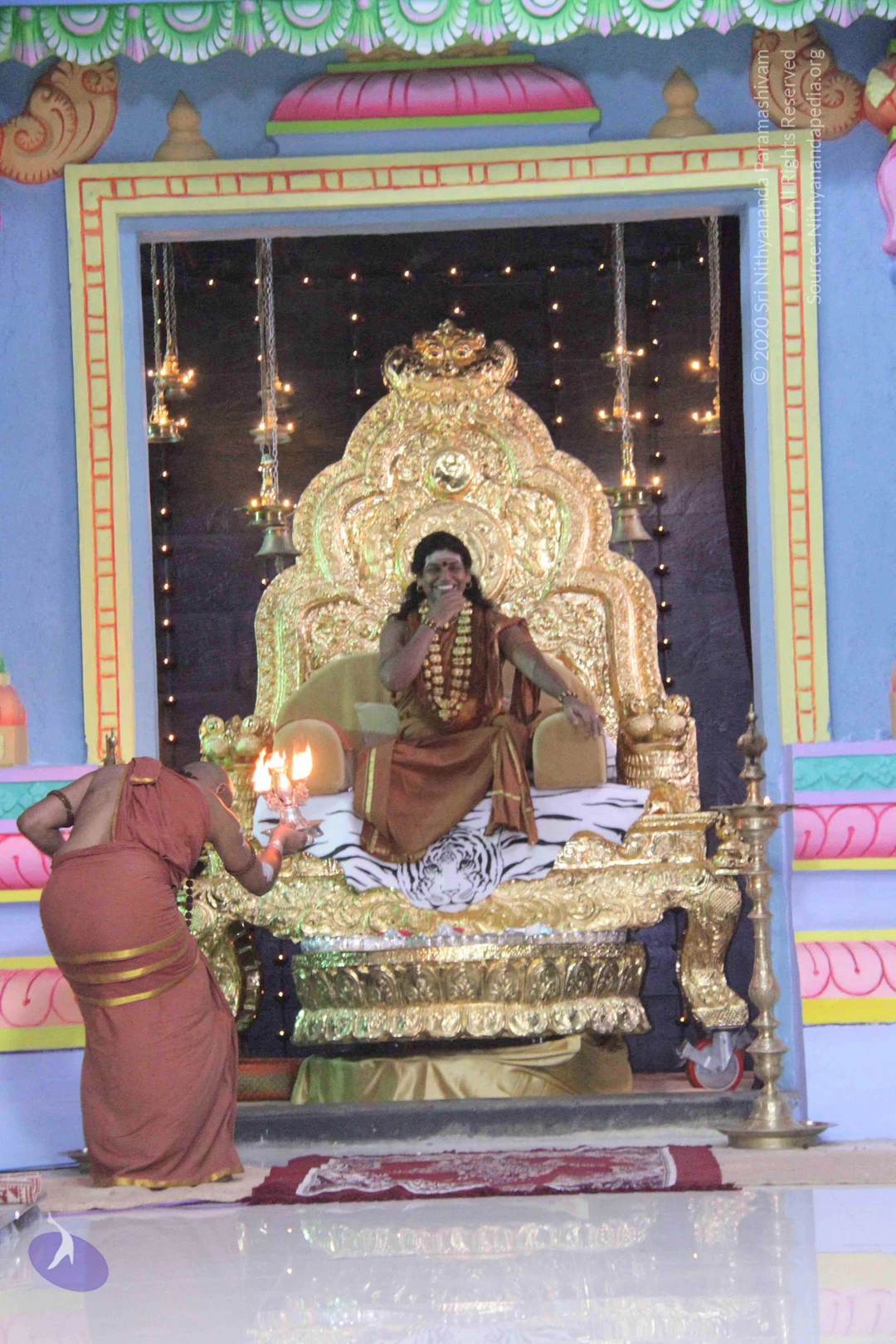
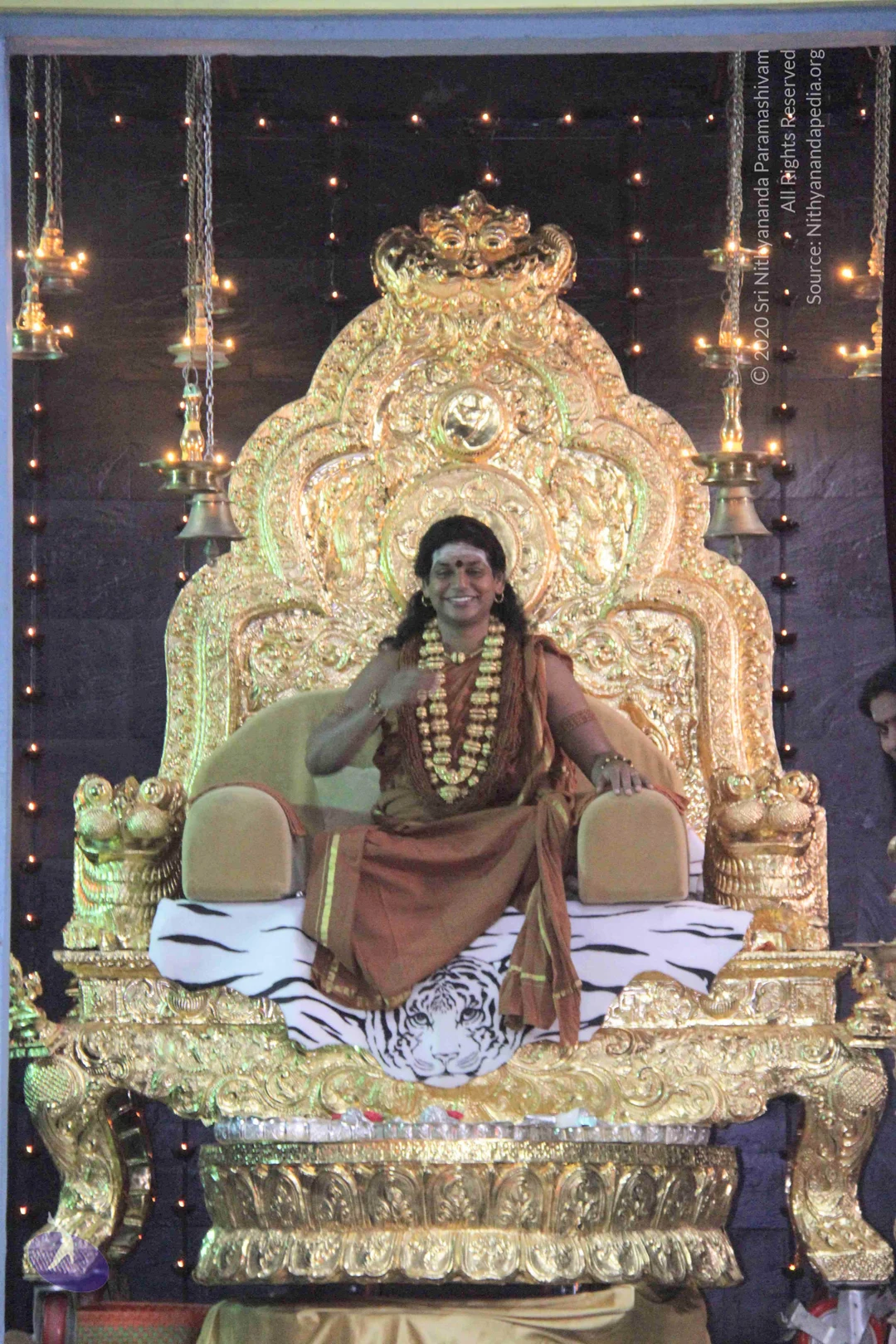
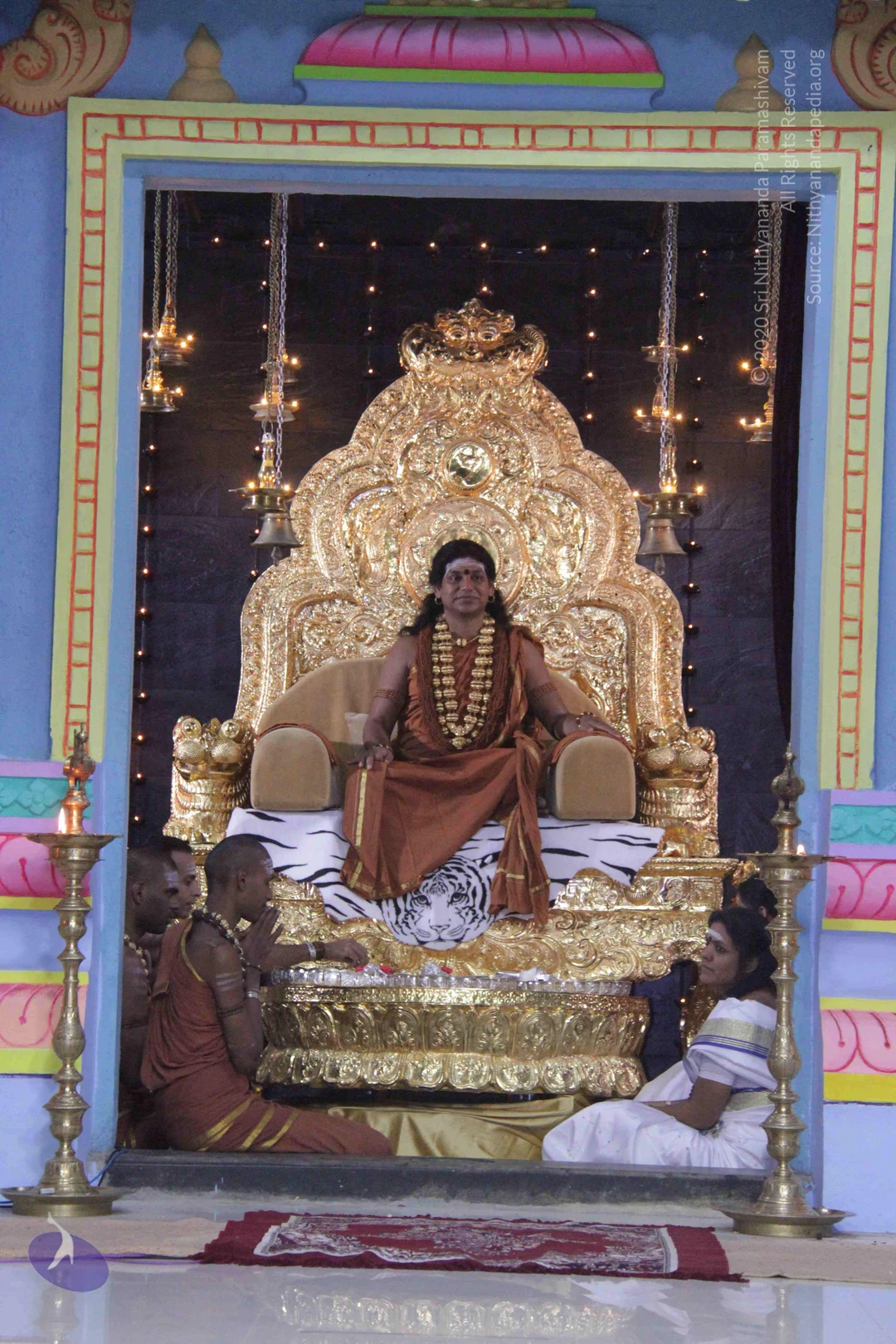
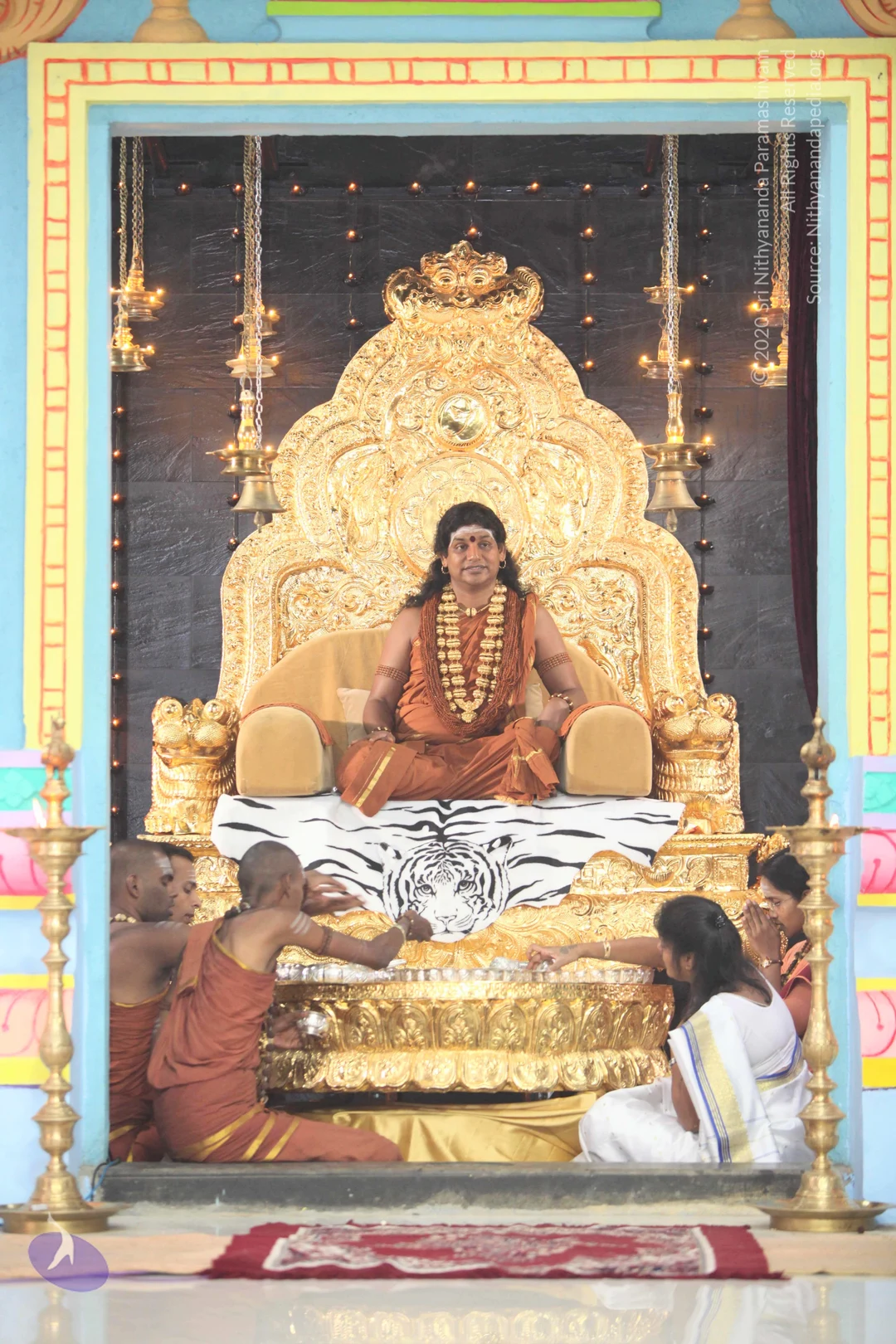
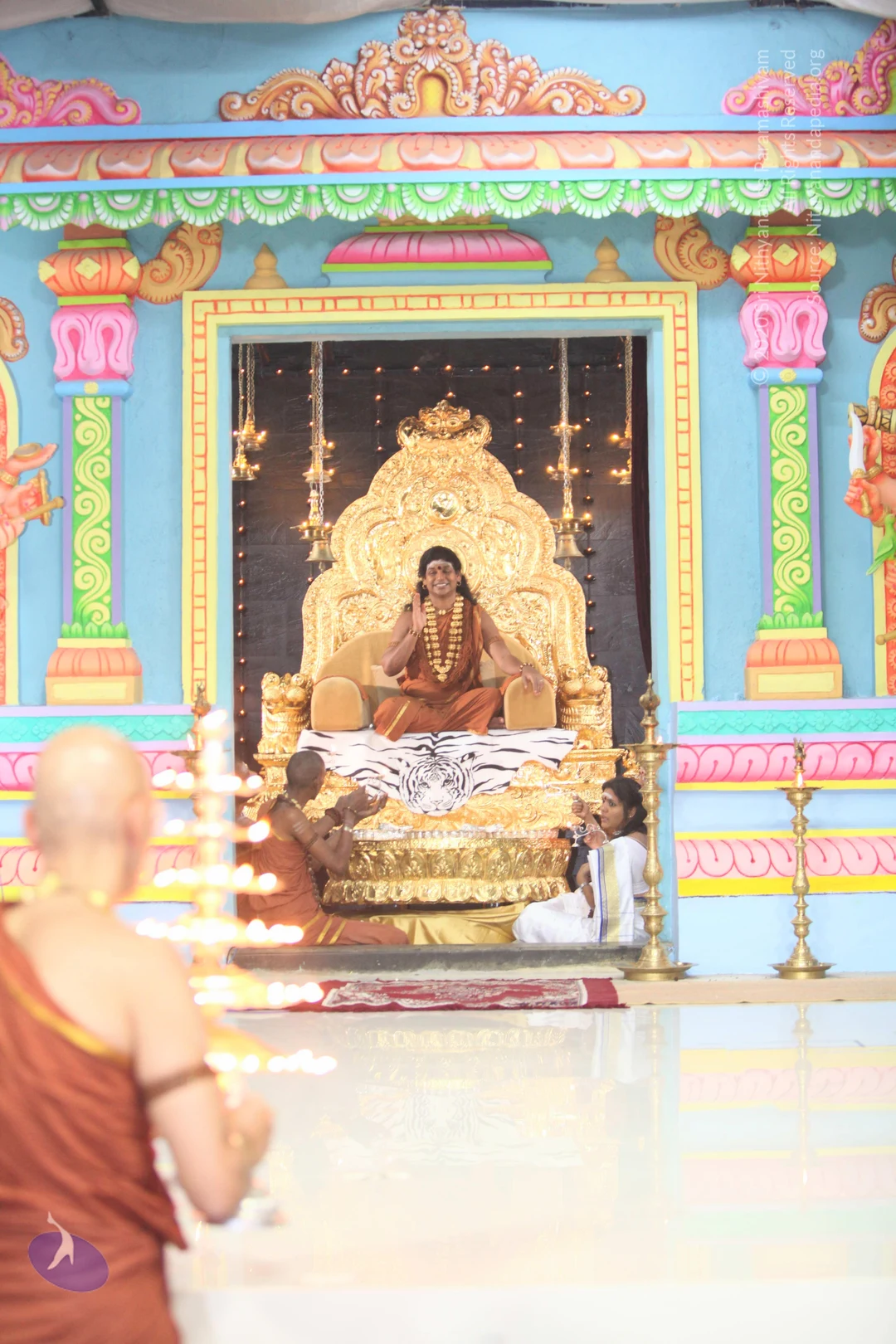
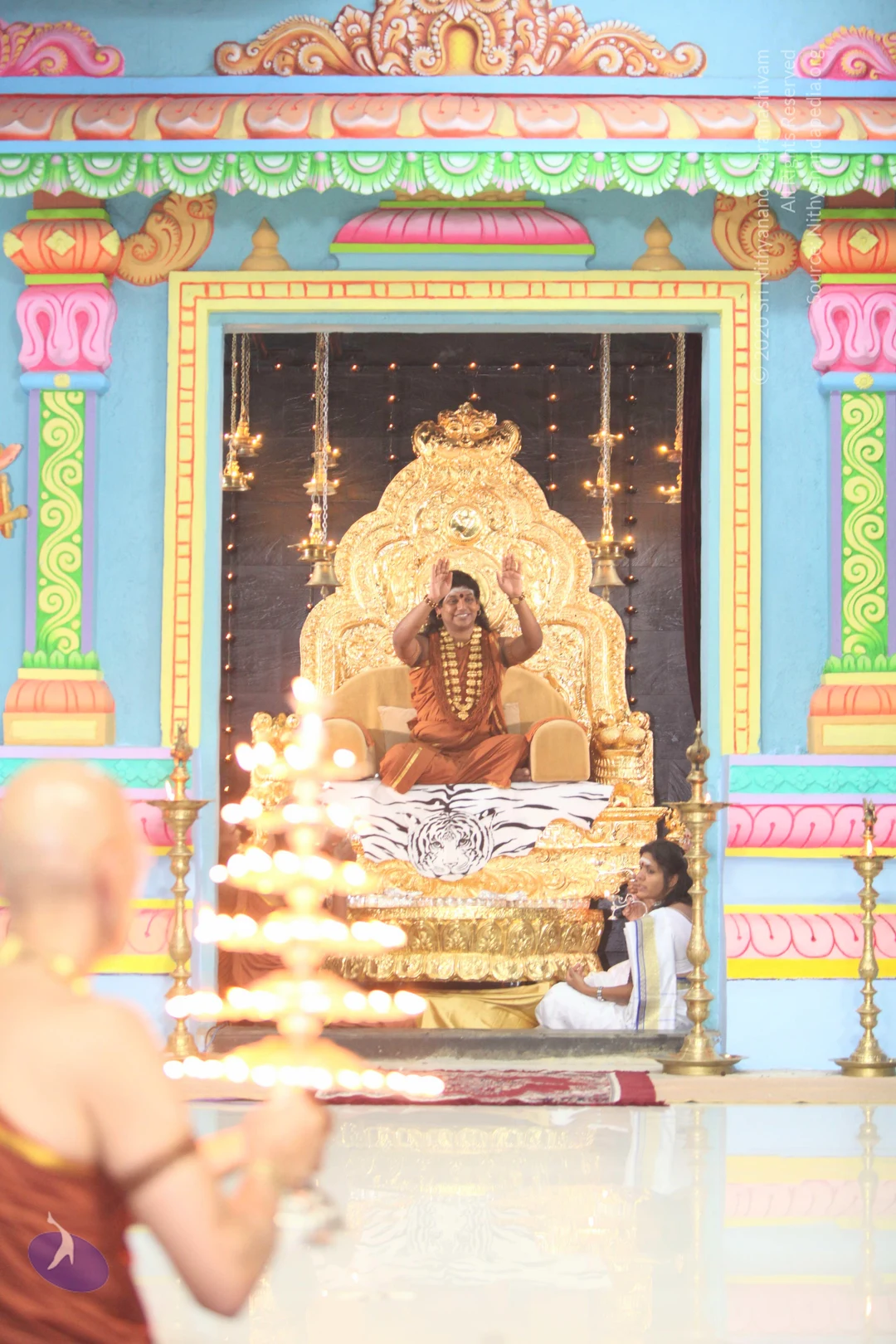
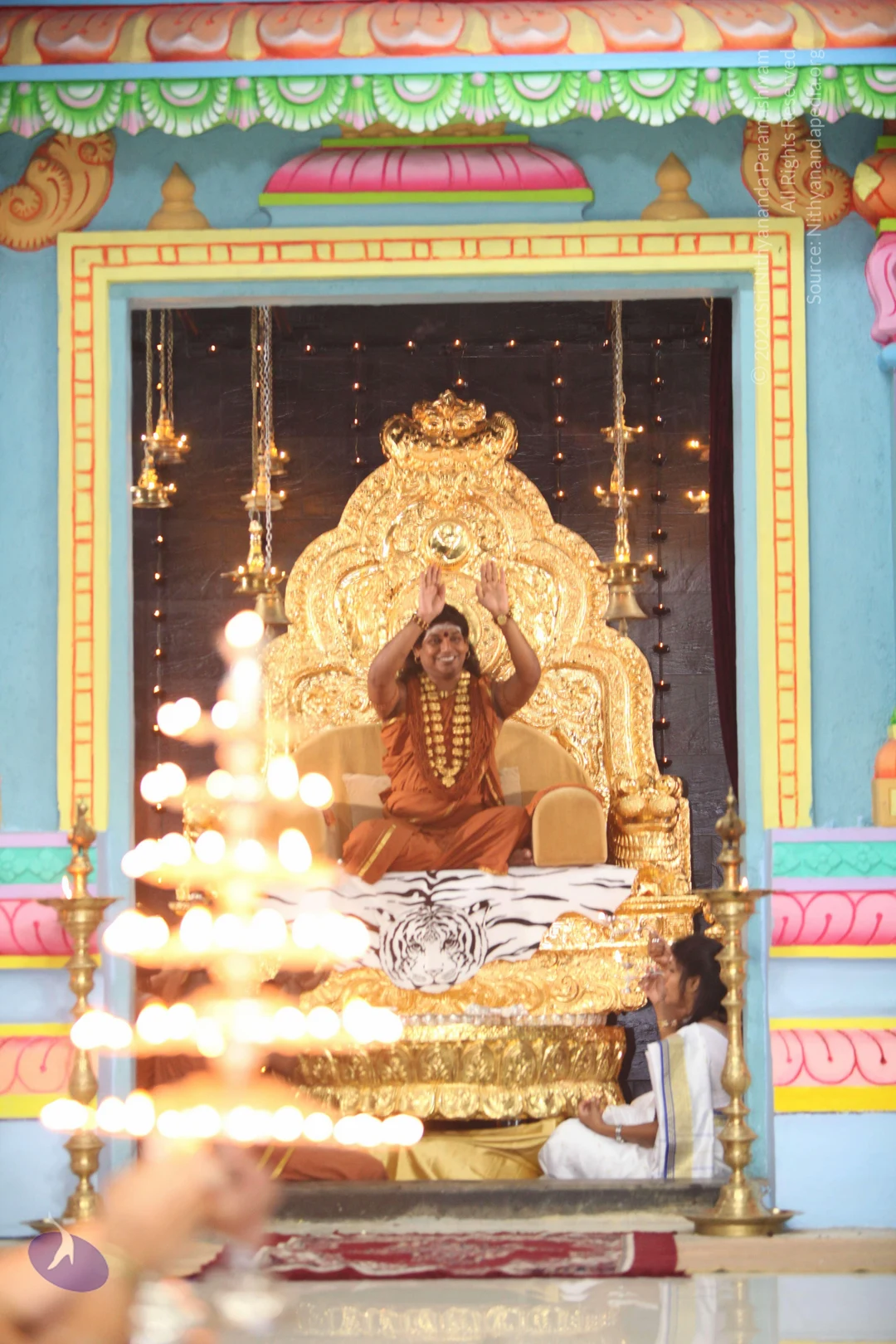
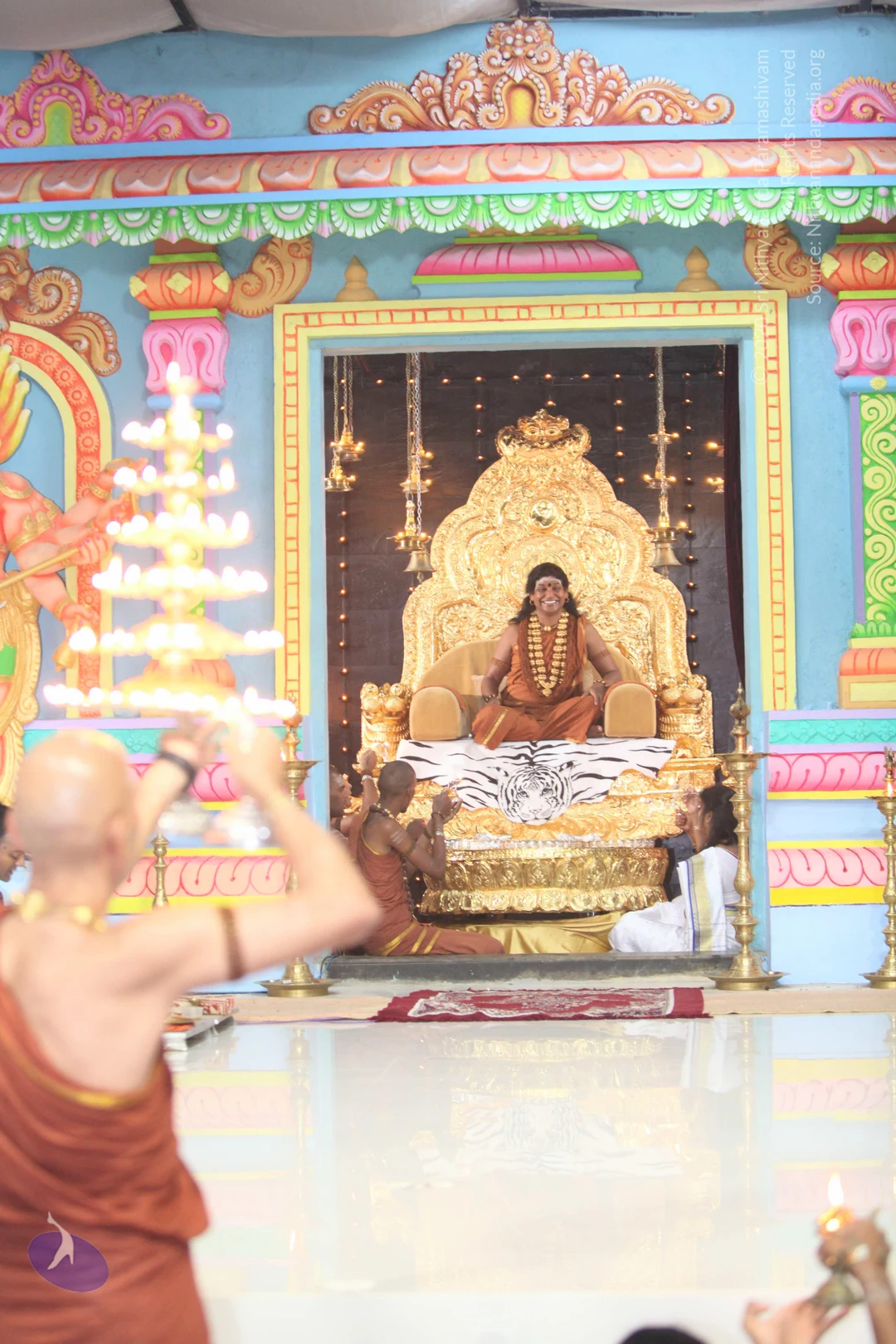
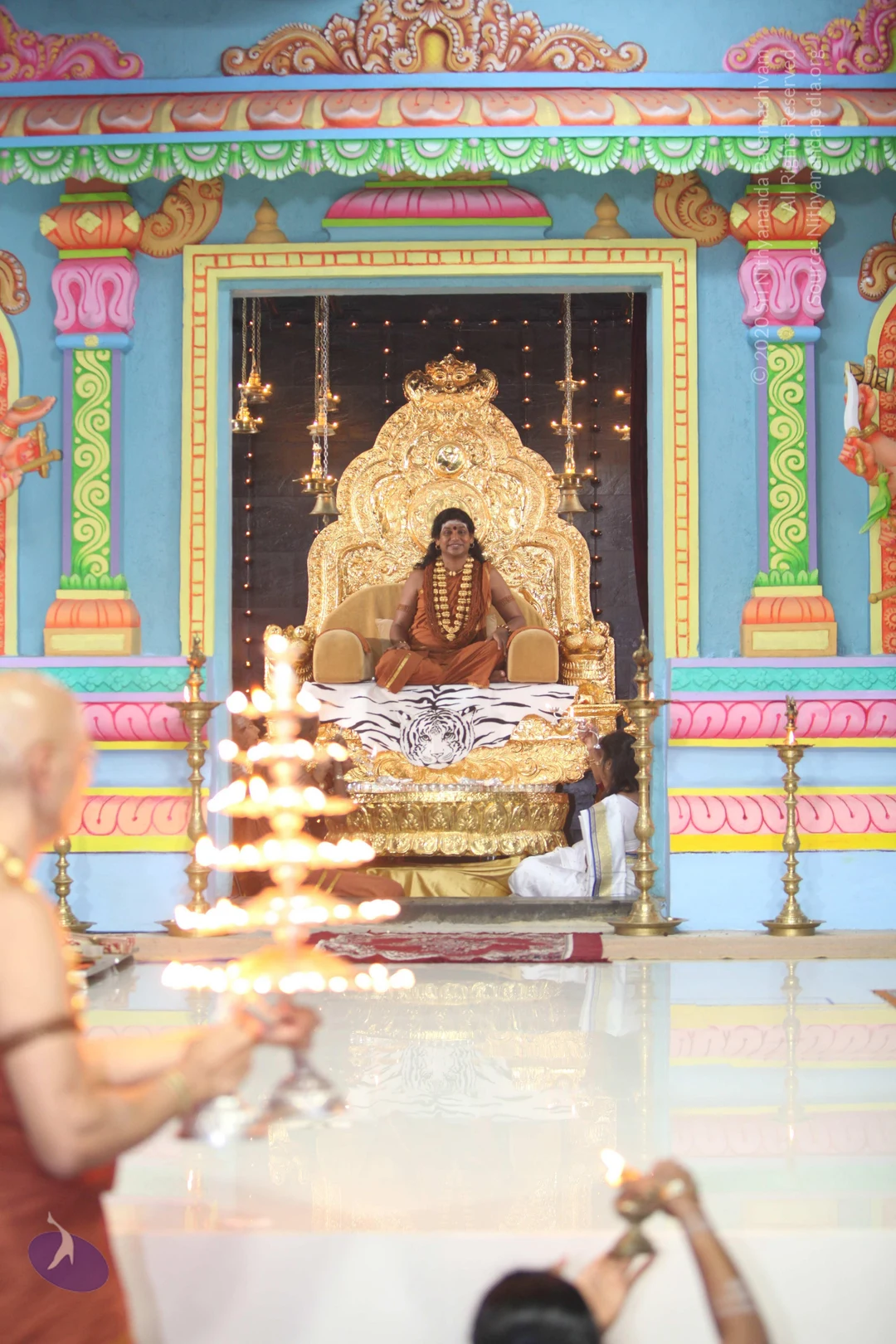
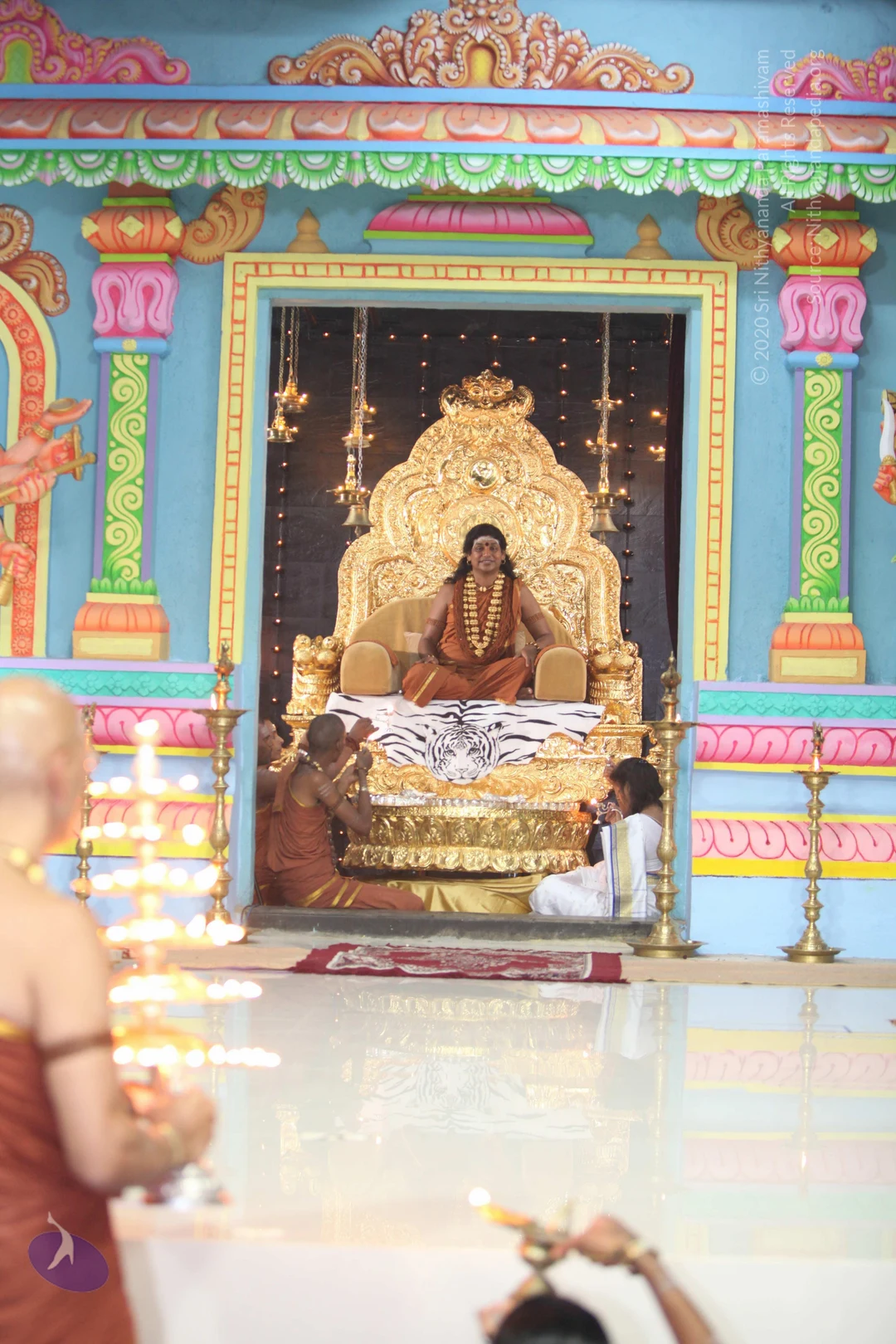
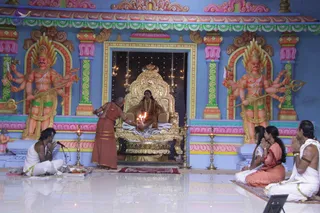
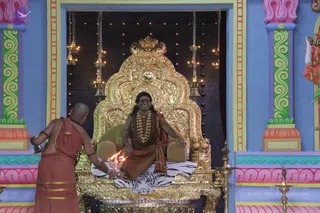
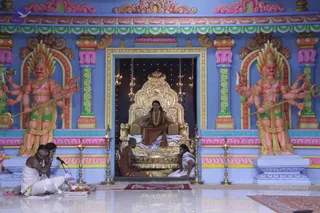
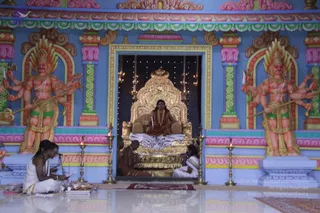
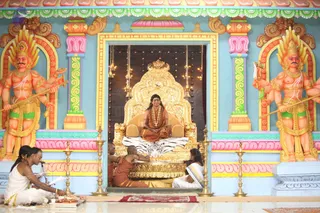
Indoor temple-style ritual in a blue hall decorated with painted pink and green pillars. Two large painted guardian figures with multiple arms holding tridents flank a gilded throne in an arched shrine. A seated figure on the golden throne wears a rudraksha mala and sits on a white cloth, while a man in a rust-orange robe performs a lamp-lit aarti with a flame in front of the throne. Brass oil lamps stand on the glossy white floor. On the left, a bare-chested man in white dhoti sits with folded hands before a microphone, and on the right two women in orange and a man in white dhoti sit with hands folded in devotion. Garlands and a red carpet are visible near the throne.A seated figure on an ornate gilded golden throne with a crown-like finial, draped in a tiger-print cloth, wears an orange-saffron robe, layered rudraksha malas and a gold chain, with long dark hair and a broad smile. A shaved-headed priest in a saffron cloth and bare upper body stands at left, holding a lit oil lamp or flame toward the seated figure and a brass bell in his other hand. Brass lamps hang from chains above, with string lights behind the throne, and a brass lamp stands at right against a blue and pink painted shrine wall with a painted deity figure at the edge. a person is seated on the throne, identified by the rudraksha malas, saffron robe and ornate gilded throne cues.A photograph inside a temple-like hall with blue walls and pink and green painted pillars. A seated figure in an ornate gold throne with a carved back and crown finial sits on a white tiger-striped cloth, wearing a saffron-orange robe, a rudraksha-style garland, and a red tilak on the forehead, with long dark hair, smiling and gesturing with raised hands. Hanging brass oil lamps and strings of lights decorate the backdrop. In the foreground at left, a shaven-headed man in an orange-red dhoti and shawl holds a lit lamp toward the throne. Brass lamps stand at the right edge. a person is seated on the throne with a rudraksha mala and saffron clothing, and the priest is an attendant performing aarti.Photograph inside a temple-style hall with brightly painted blue and pink walls. Two large painted dvarapala guardian figures with multiple arms, crowns and tridents flank a doorway. Within the doorway, a figure in saffron-orange robes and a long rudraksha mala sits on an ornate gold throne with a crown-like canopy, with string lights hanging behind. Foreground: a seated priest in white dhoti and shawl with folded hands before a microphone, a seated assistant in orange, a woman in white sitting at the gold platform, brass oil lamps and a red mat on the marble floor. The seated figure on the throne has long swept-back hair, a rudraksha mala and saffron clothing, a probable Swamiji (probable) appearance, seated as a teacher giving a discourse on the throne.A photograph inside a richly painted shrine hall with blue walls, pink and green decorative borders, and two large painted guardian figures with multiple arms holding tridents and staffs flanking the entrance. In the centre, a seated figure in saffron-orange robes and a beaded rudraksha necklace sits on an ornate gold throne draped with a white tiger-print cloth, with hanging lamps behind. Two men in white dhotis sit on the floor at left, one speaking into a microphone, and a figure in white sits at right. Brass oil lamps stand on the glossy floor.A photo of a satsang inside a temple hall decorated with pink, blue and green painted pillars. Two large painted dvarapala guardian figures with multiple arms, holding maces and tridents, flank a doorway. Seated in the doorway on a gilded throne draped with a tiger-skin cloth is a figure in orange and saffron robes with a rudraksha mala, appearing to be a person, giving a discourse. In front, a seated man in white ritual clothes with a sacred thread reads or chants from a book, and two more seated devotees in white and orange sit nearby. Brass oil lamps stand on the polished floor, and string lights hang behind the throne.

Tamil-IA-Session

21 photosSource gallery
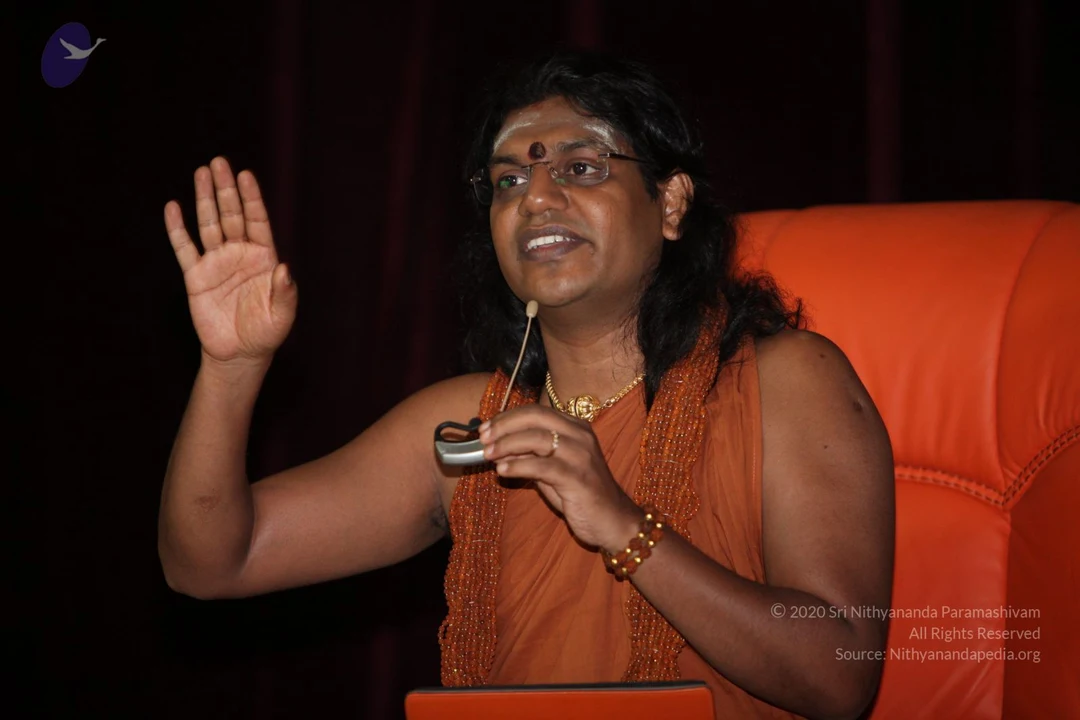
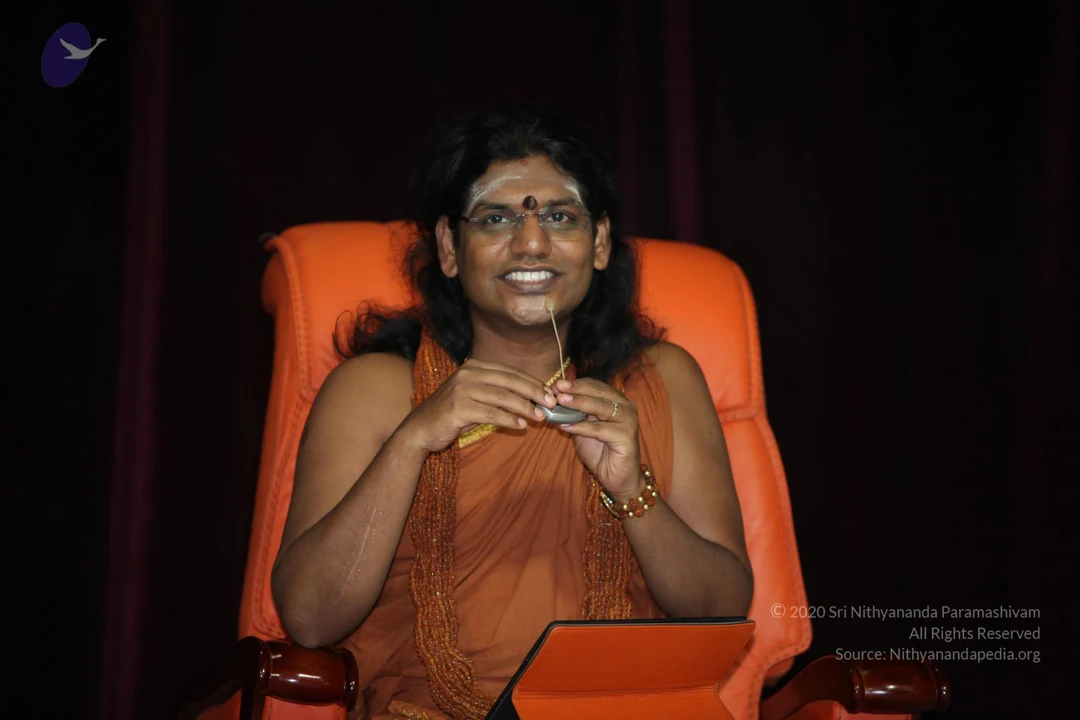
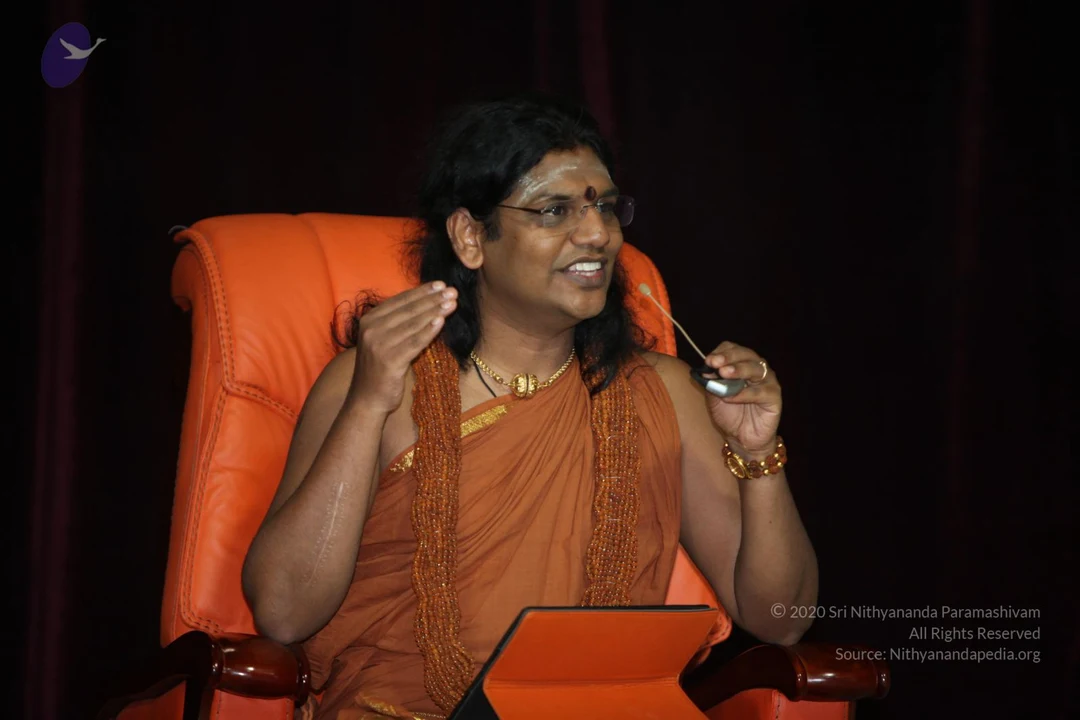
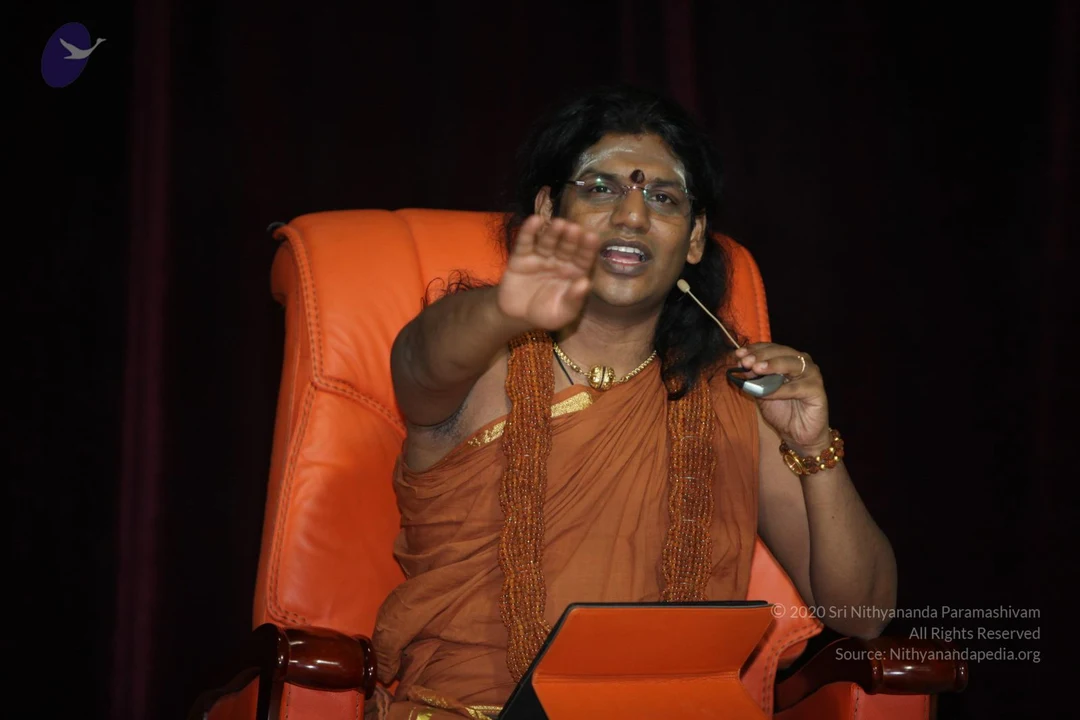
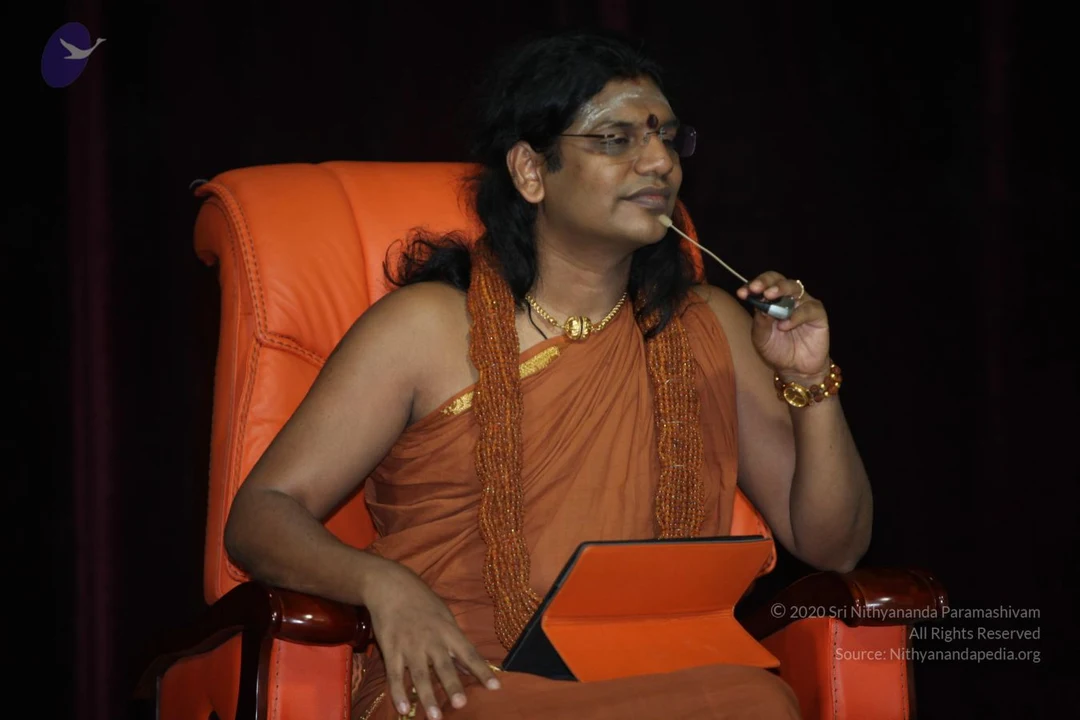
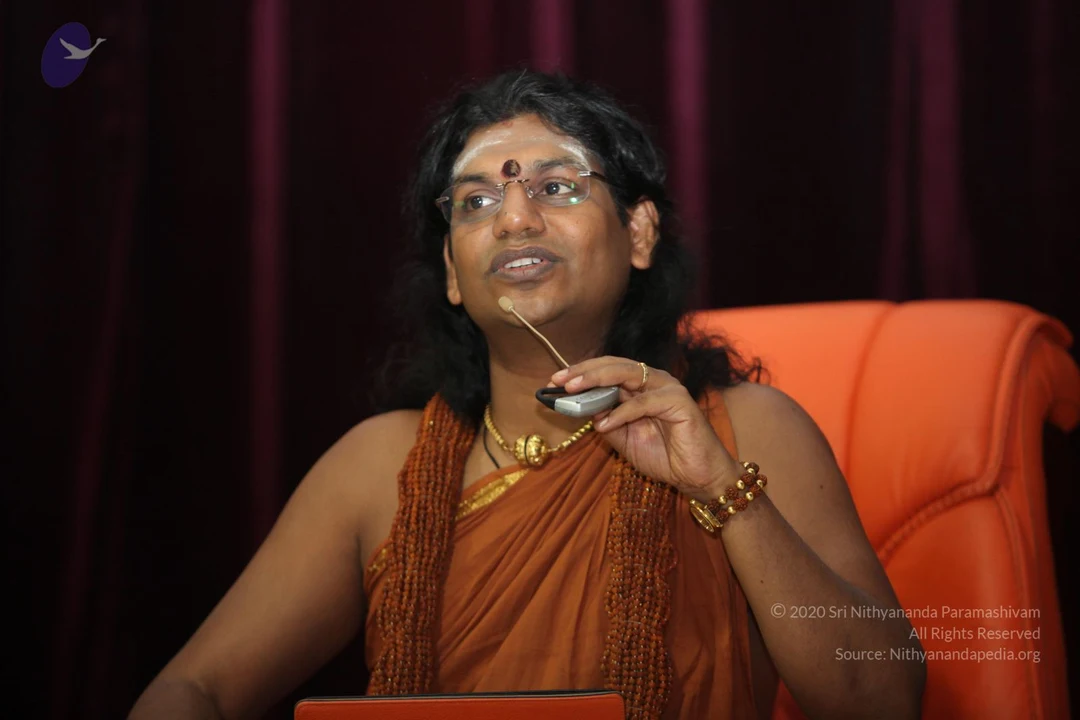
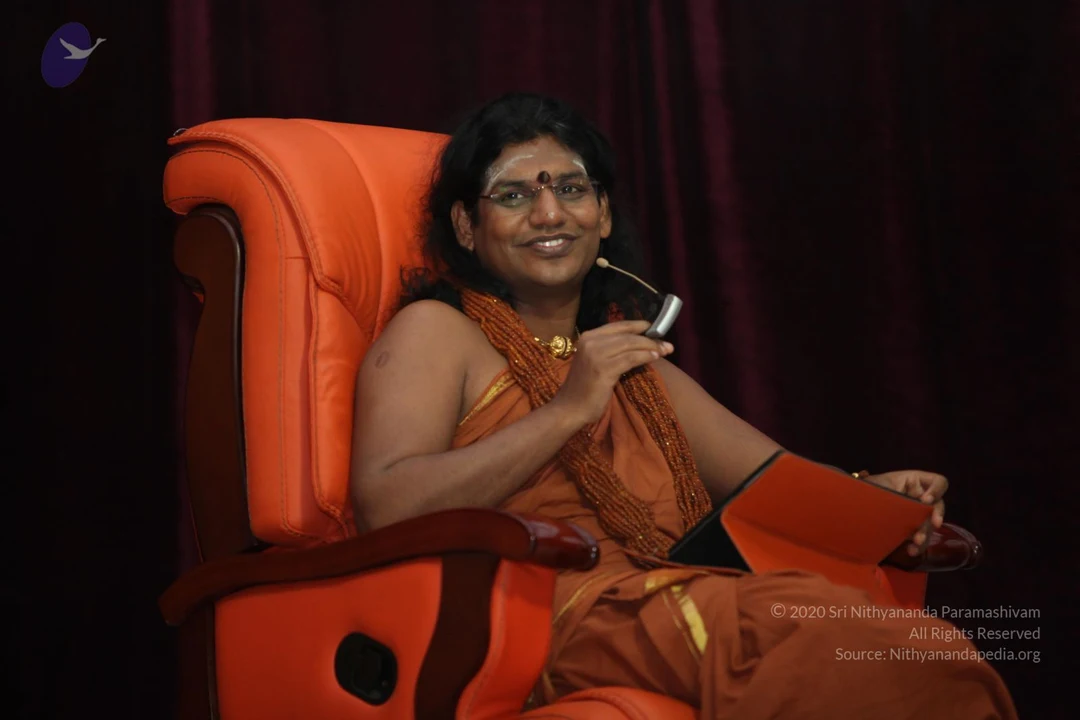
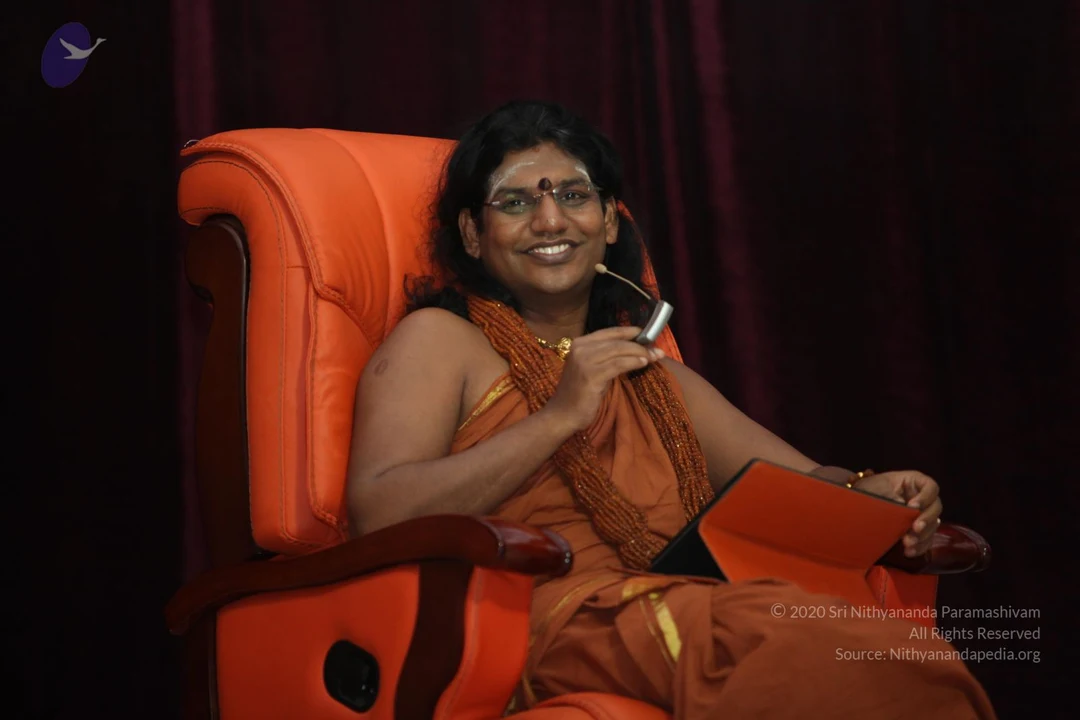
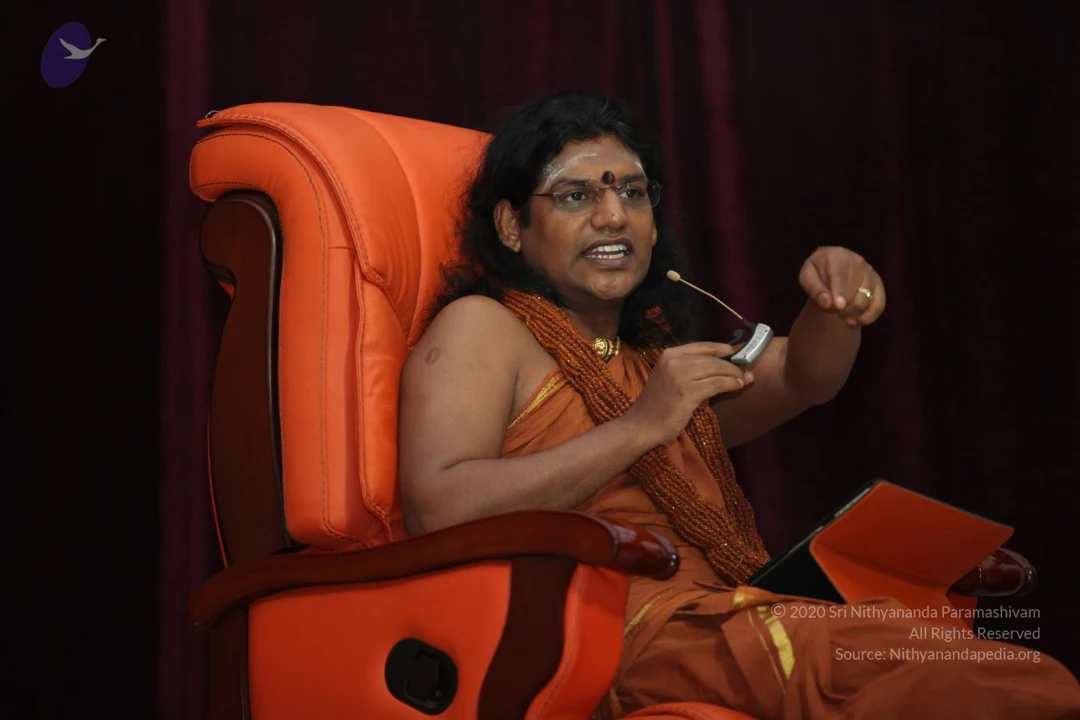
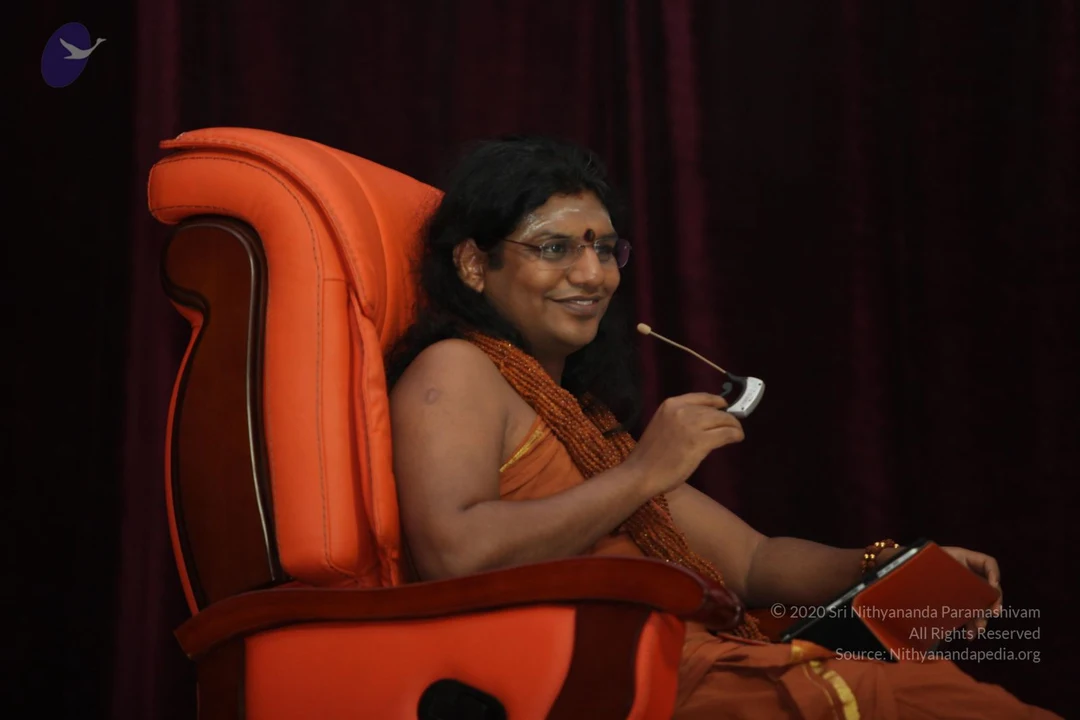
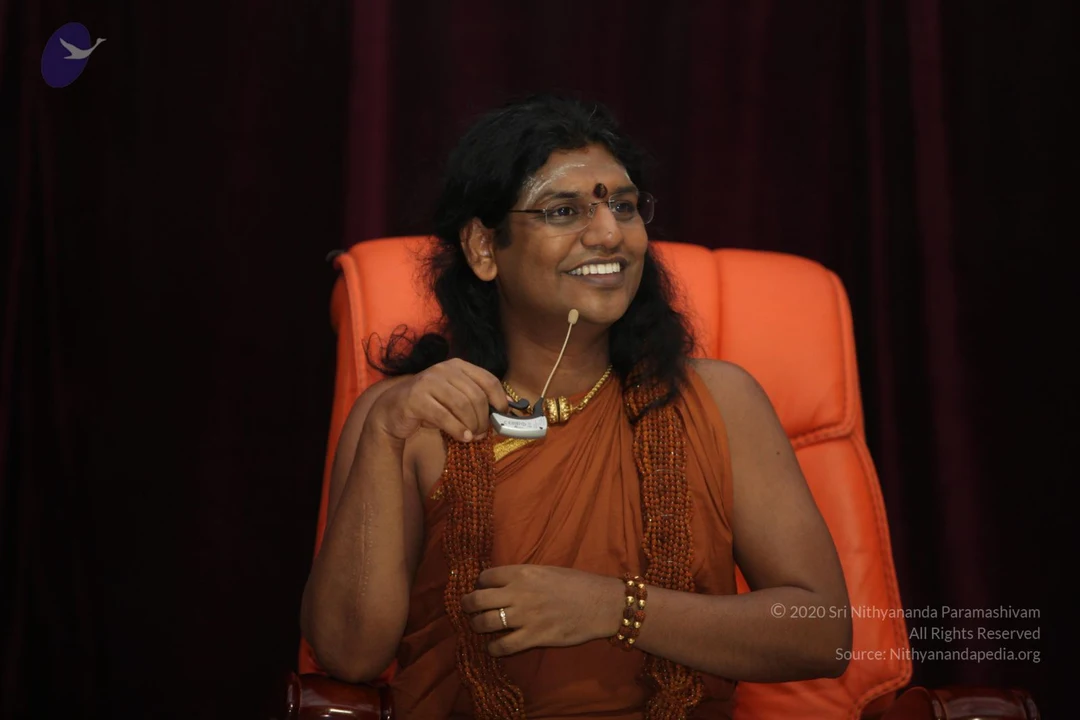
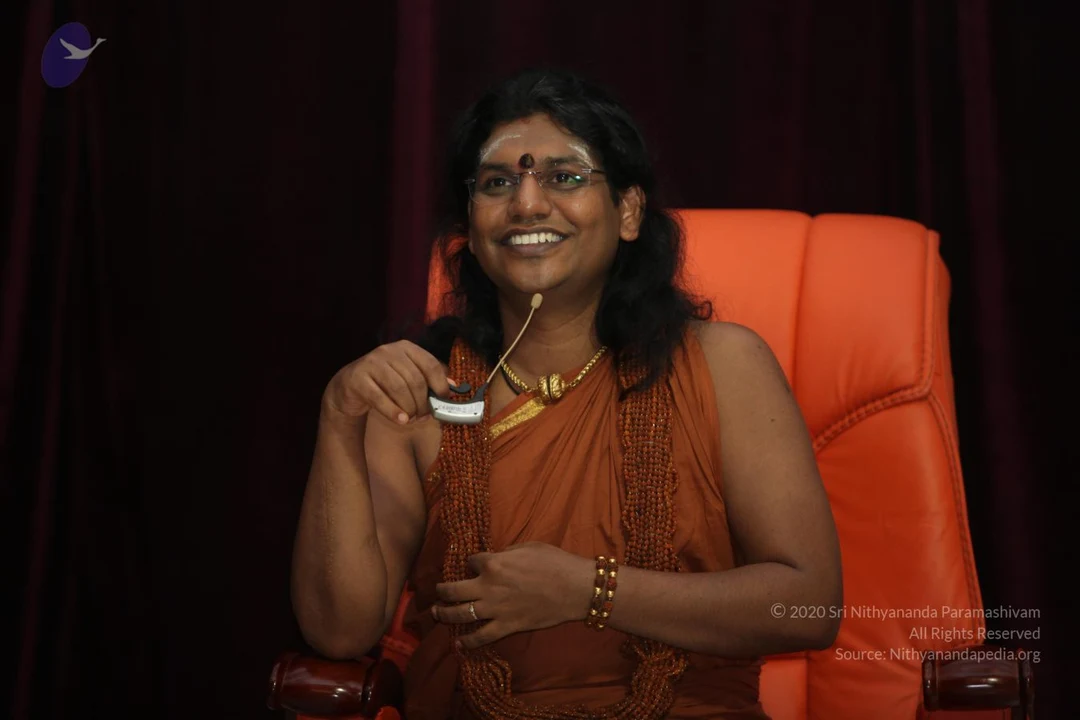
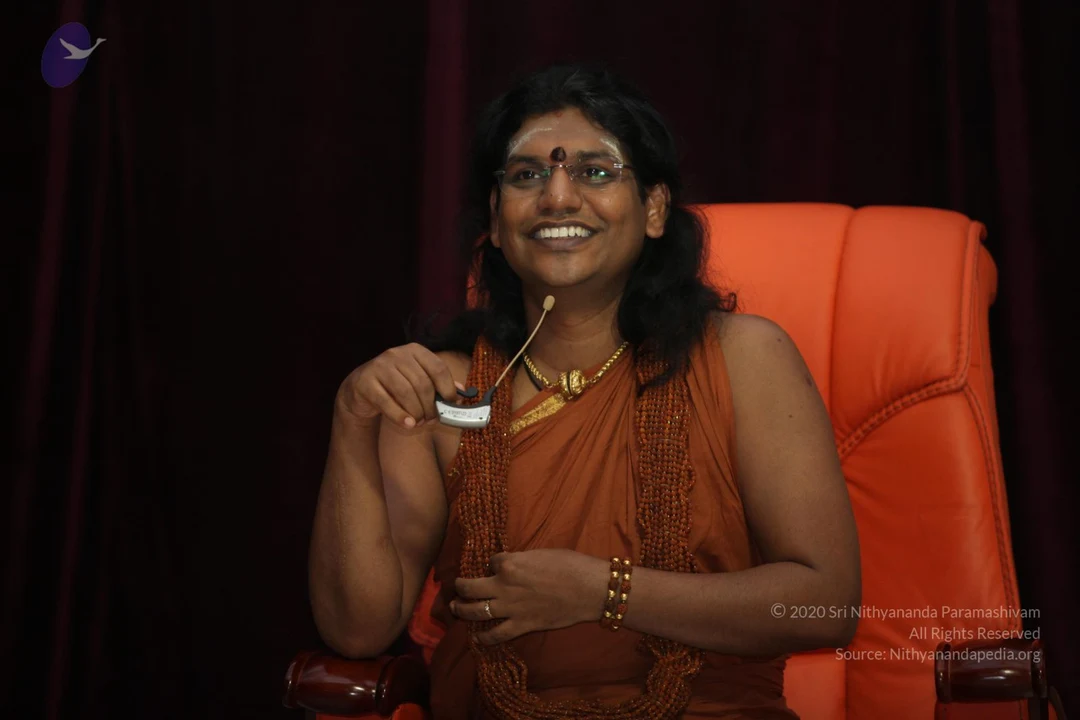
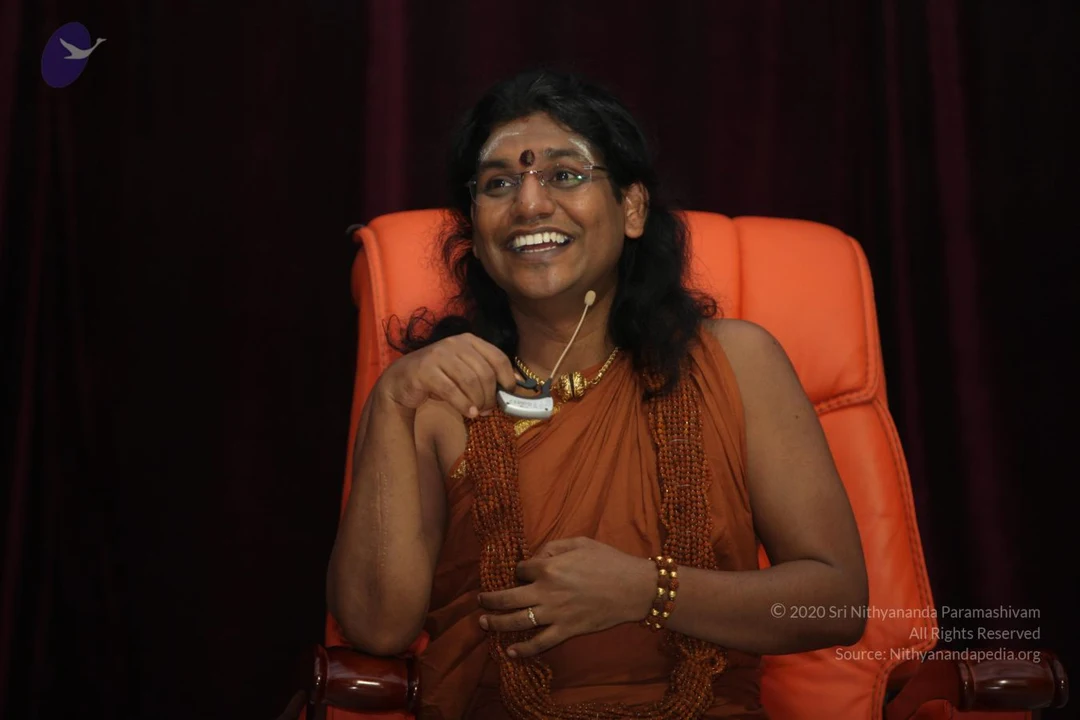
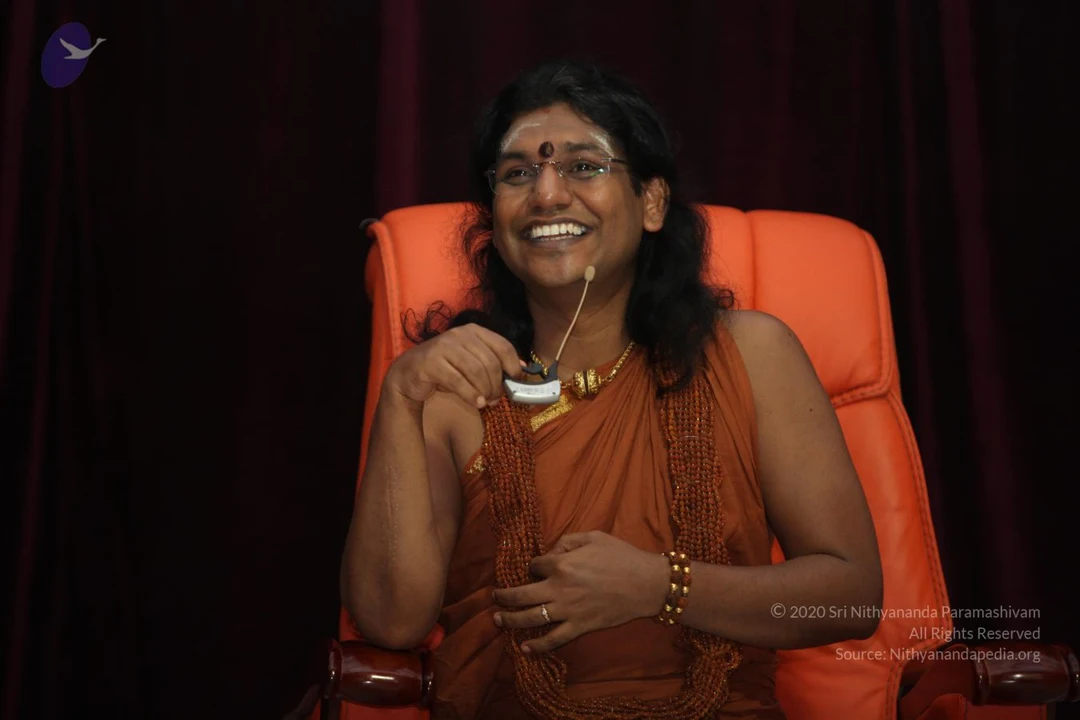
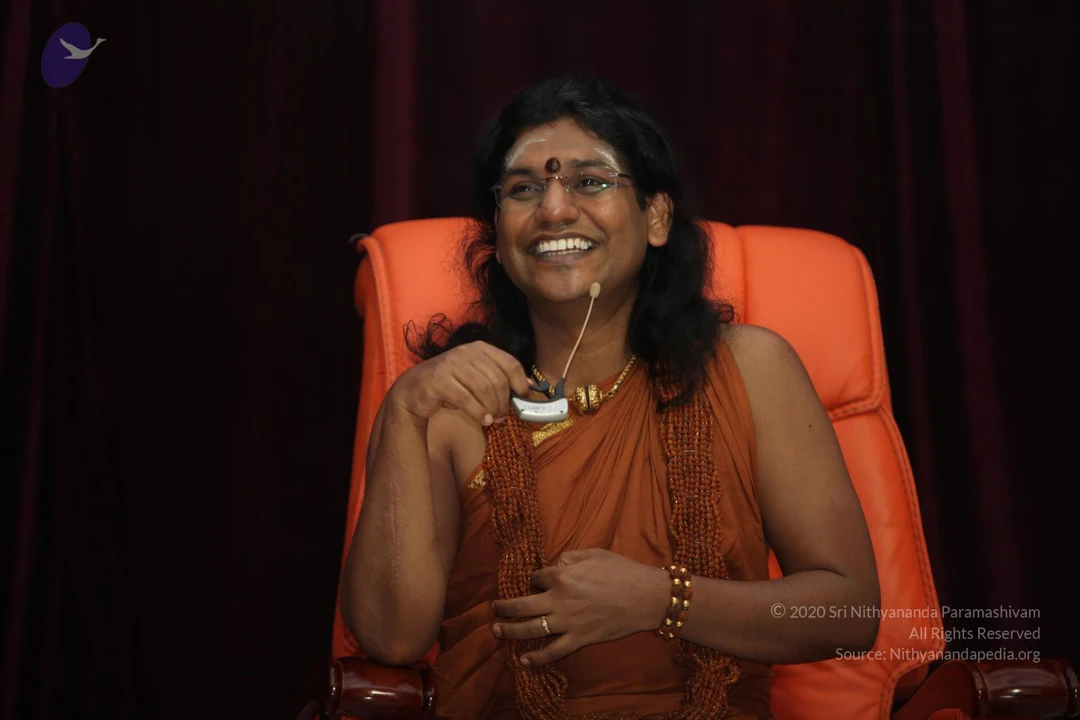
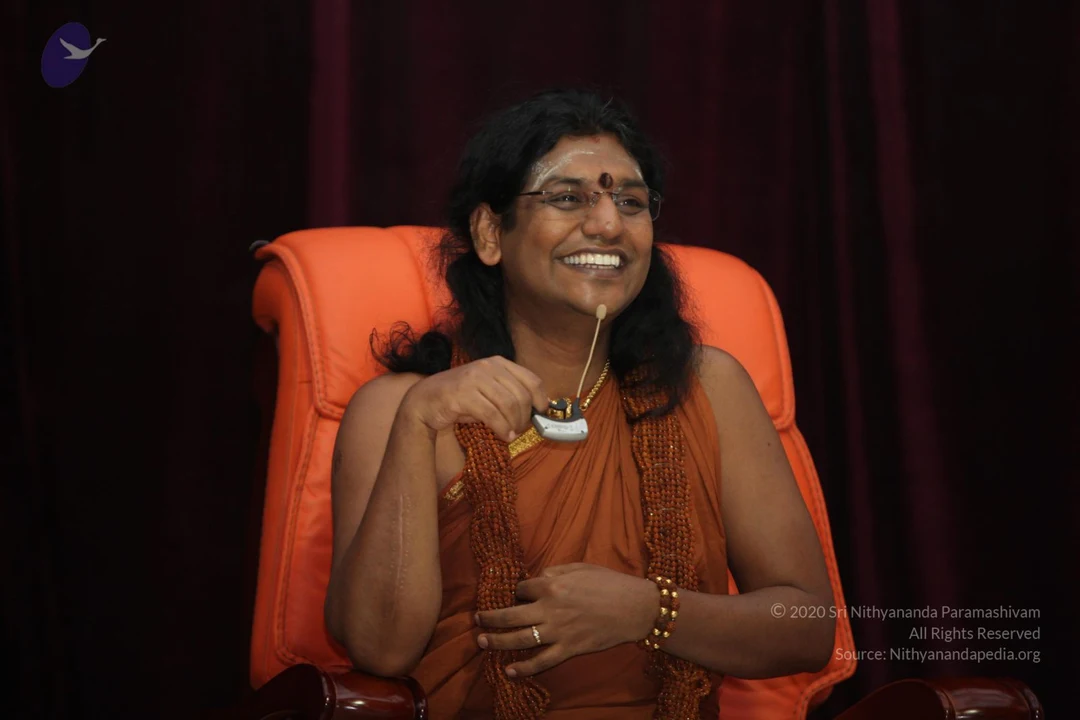
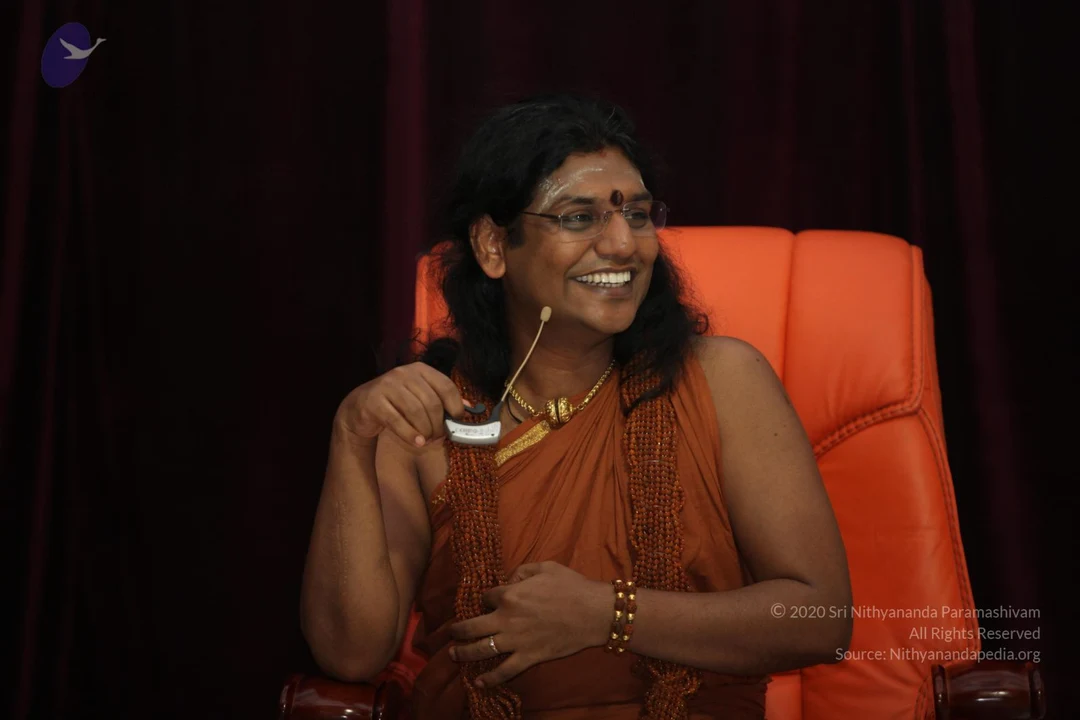
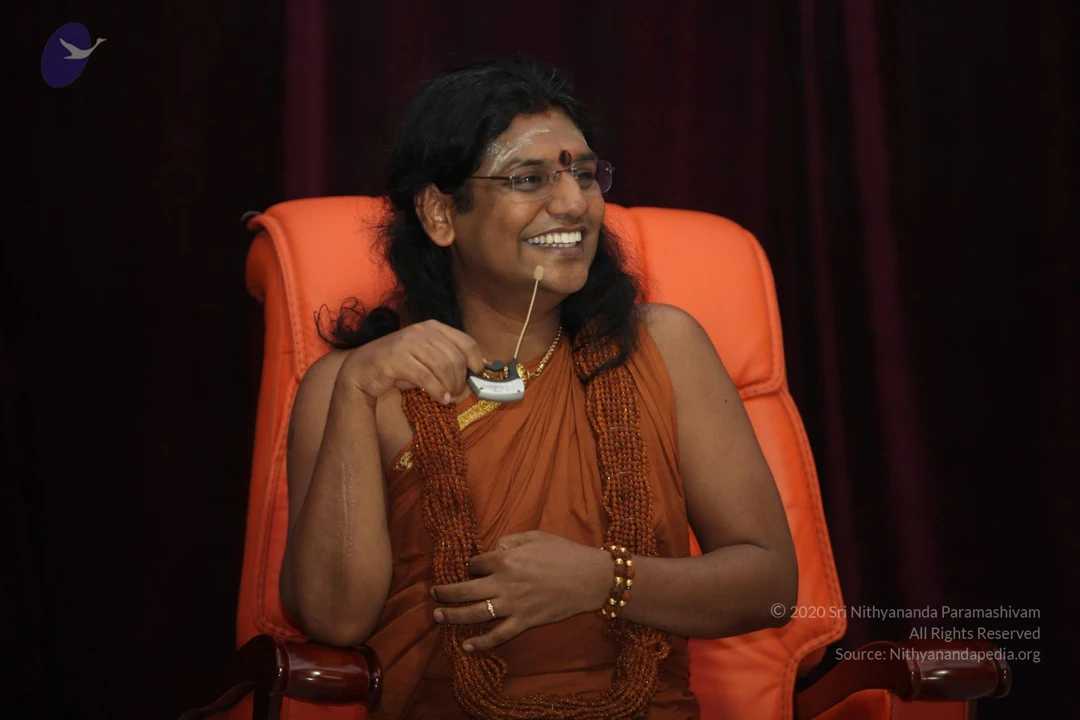
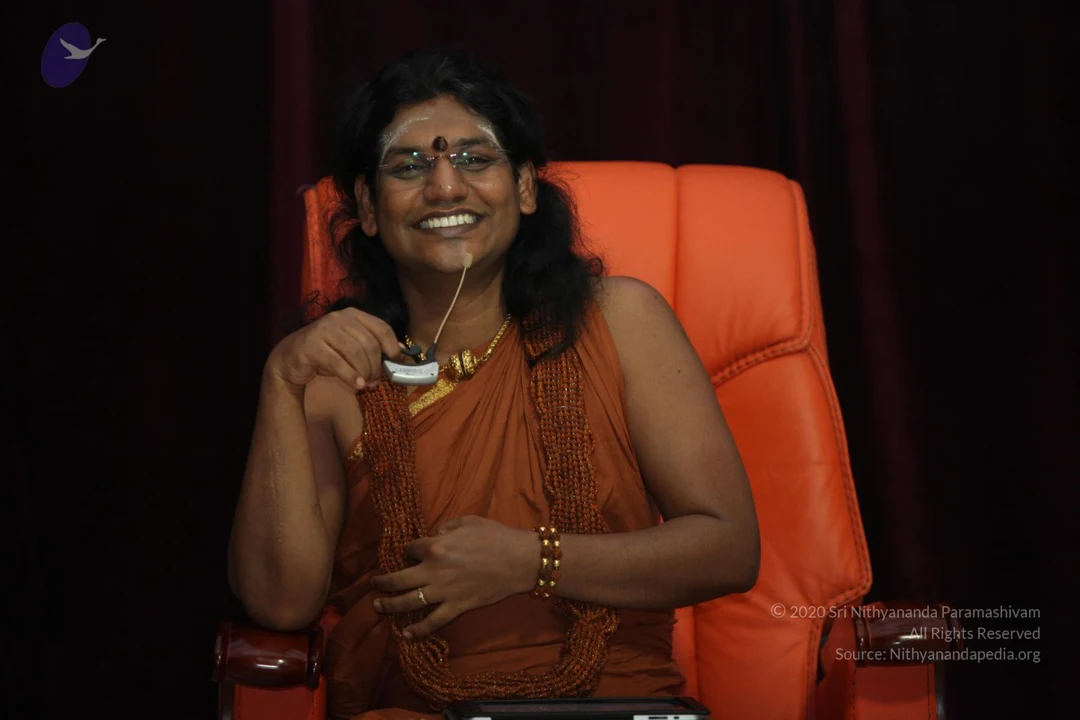
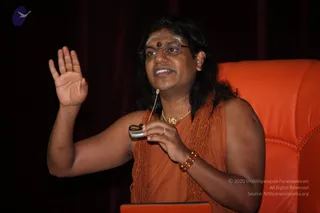
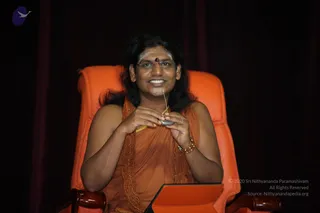
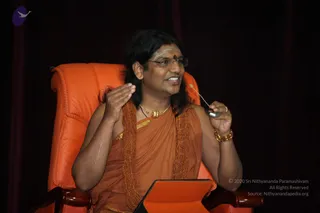
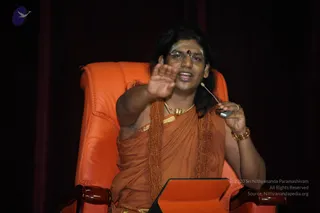
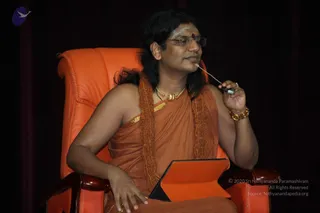
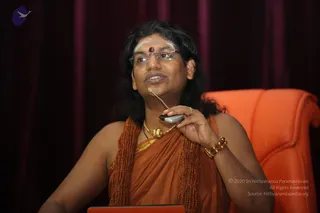
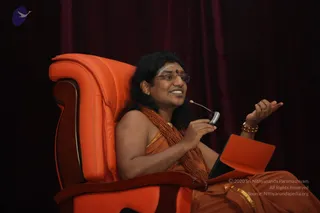
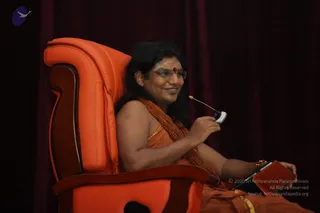
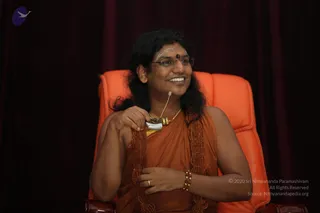
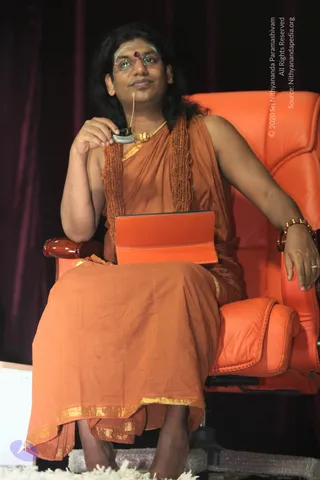
A photograph of a man seated in a large orange leather chair against a dark maroon curtain, speaking into a headset microphone while raising his right hand palm-out. He wears an orange robe, a beaded orange-red rudraksha-style mala across his chest, a gold ornate pendant necklace, a red bindi and white forehead markings, rimless glasses and a bracelet of beads. His long dark hair is swept back. A small orange tablet or book sits on a stand in the foreground.A smiling man with long dark hair, white vibhuti marks and a red bindi sits in a large orange upholstered armchair against a dark background. He wears an orange saffron-coloured robe and a beaded orange mala with a gold-toned necklace, holding a small silver bowl and a thin stick near his mouth. A wooden bracelet is on his wrist, and an orange tablet rests on a low table in front. Appearance-based label: a person, seated in an orange throne-like chair with saffron robes and rudraksha-style beads, giving an in-person presence.A man seated in an orange leather armchair against a dark red curtain, speaking with a raised hand and holding a small microphone in the other. He wears an orange saffron-coloured robe, a long multi-strand rudraksha-style bead mala draped over his shoulders, a gold necklace and a gold bracelet, rimless glasses, and a red bindi with white ash marks on the forehead. A small orange tablet rests on his lap. Appearance-based candidate: a person, shown in person as a seated speaker at a discourse.A man seated in an orange leather armchair against a dark red curtain, speaking and gesturing with his right hand raised, palm open. He wears an orange-saffron cloth draped over his shoulders, a long rudraksha mala of orange beads, a gold ceremonial necklace, and a beaded bracelet. He has long dark hair, a white vibhuti marking and a red bindi on his forehead, and wears glasses. A small clip microphone is attached near his face and he holds a microphone. An orange tablet case rests on a small table in front of him. The image is a photograph of a seated discourse.A man seated in a large orange leather armchair against a dark curtained backdrop, wearing an orange-saffron cloth draped over his shoulder with a gold border, multiple strands of orange beaded rudraksha-style mala around his neck, a gold ornate pendant necklace, and a beaded bracelet on his wrist. He has long swept-back dark hair, a red bindi and white forehead markings, and thin-rimmed glasses. He holds a small microphone device to his mouth with one hand while the other rests on an orange tablet case on his lap. Visual cues include long hair, saffron clothing, malas and gold ornaments, consistent with the Swamiji (probable) label for this sitting figure.A man seated in an orange leather chair before dark maroon drapes speaks into a small clip-on microphone held near his chin. He wears a saffron-orange robe draped over his shoulders, a thick rudraksha-style bead necklace, a gold ceremonial necklace, and a beaded bracelet. He has long swept-back dark hair, rimless glasses, a white tilak with a red bindi, and a gold ring. Resting on the lap in front of him is a red-covered notebook.

Dharshan

14 photosSource gallery
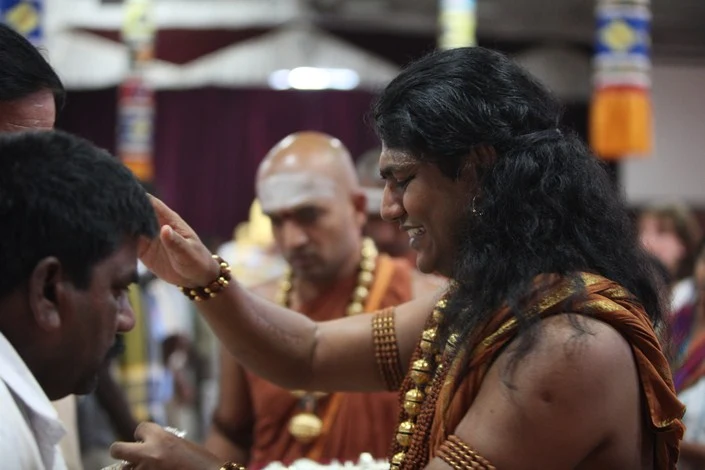
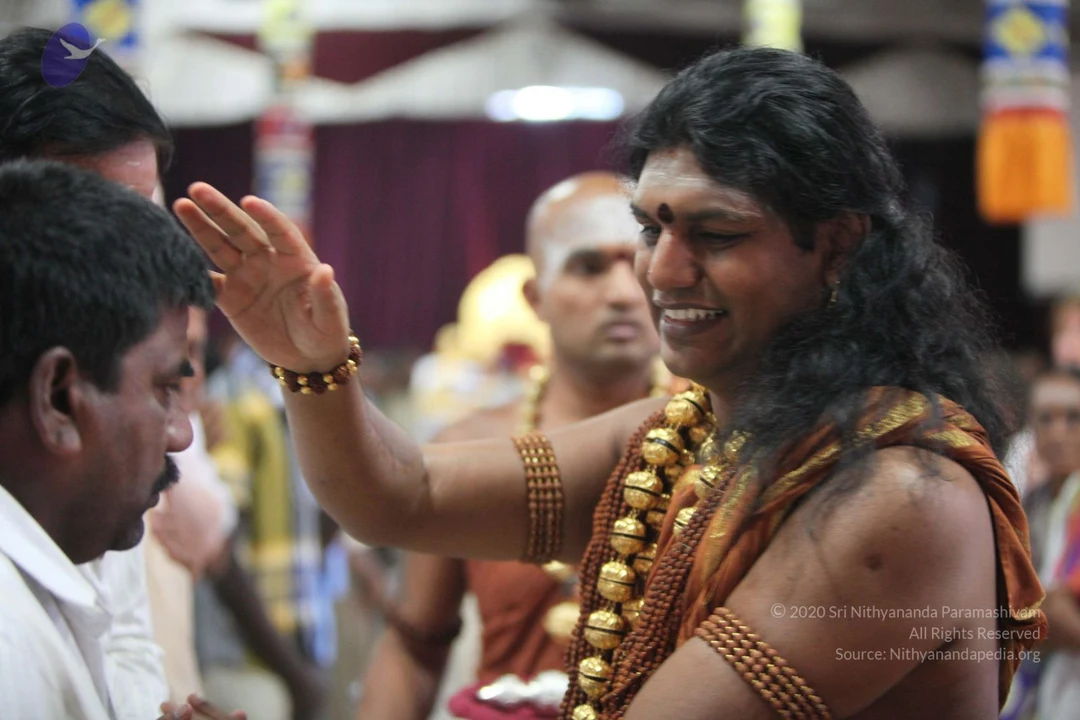
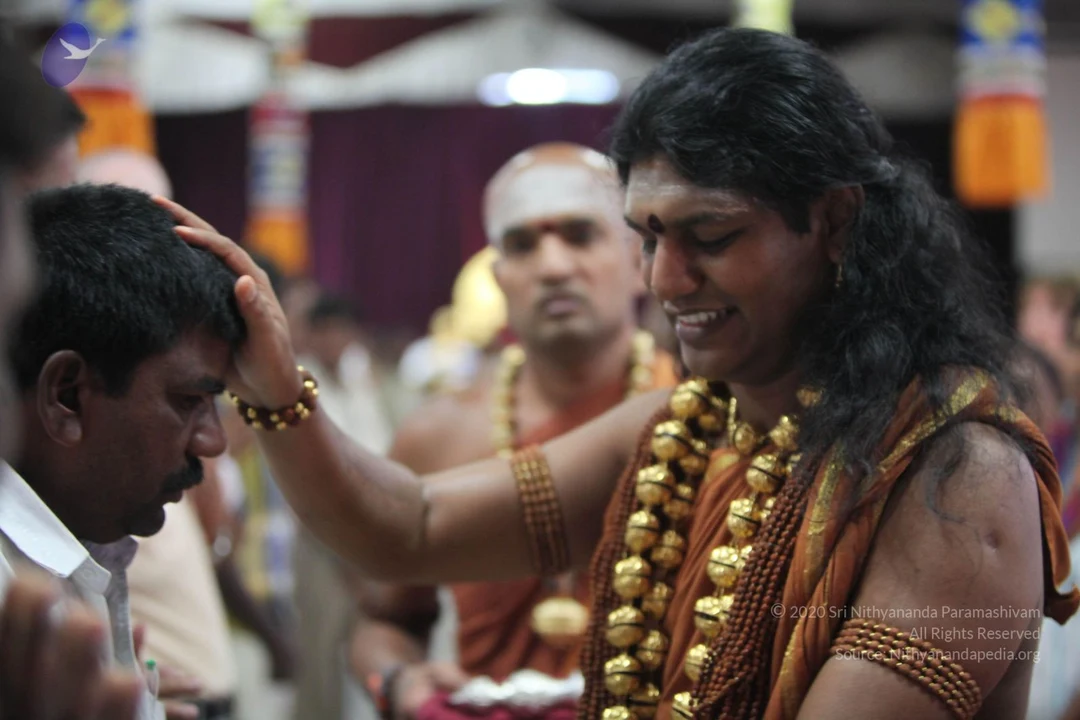
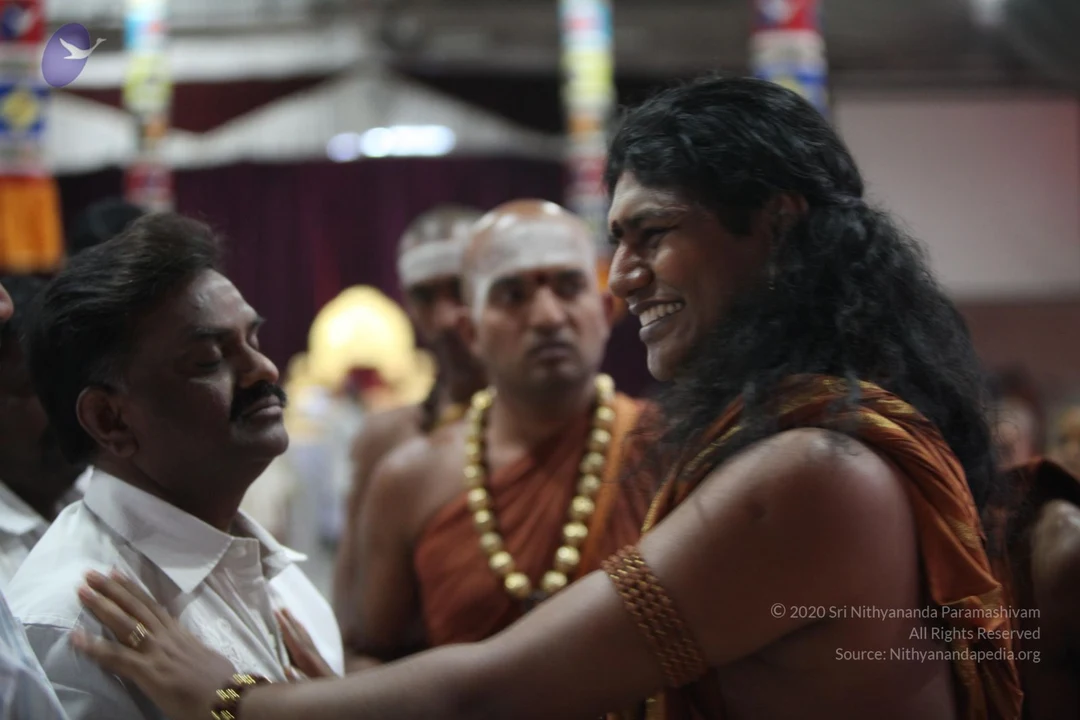
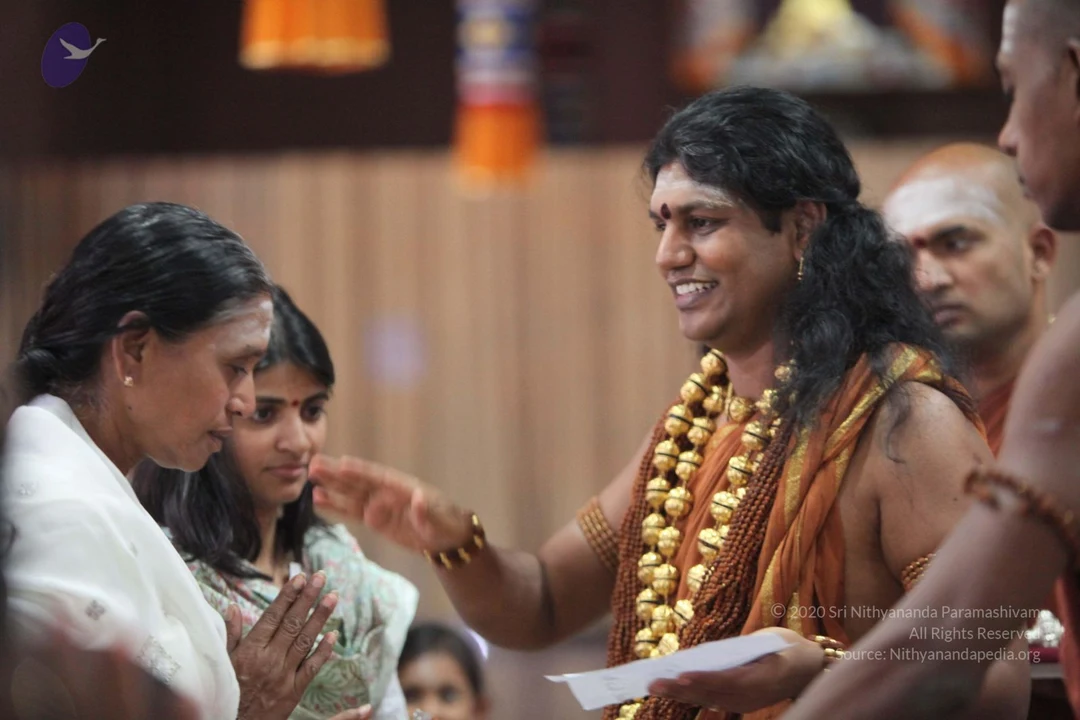
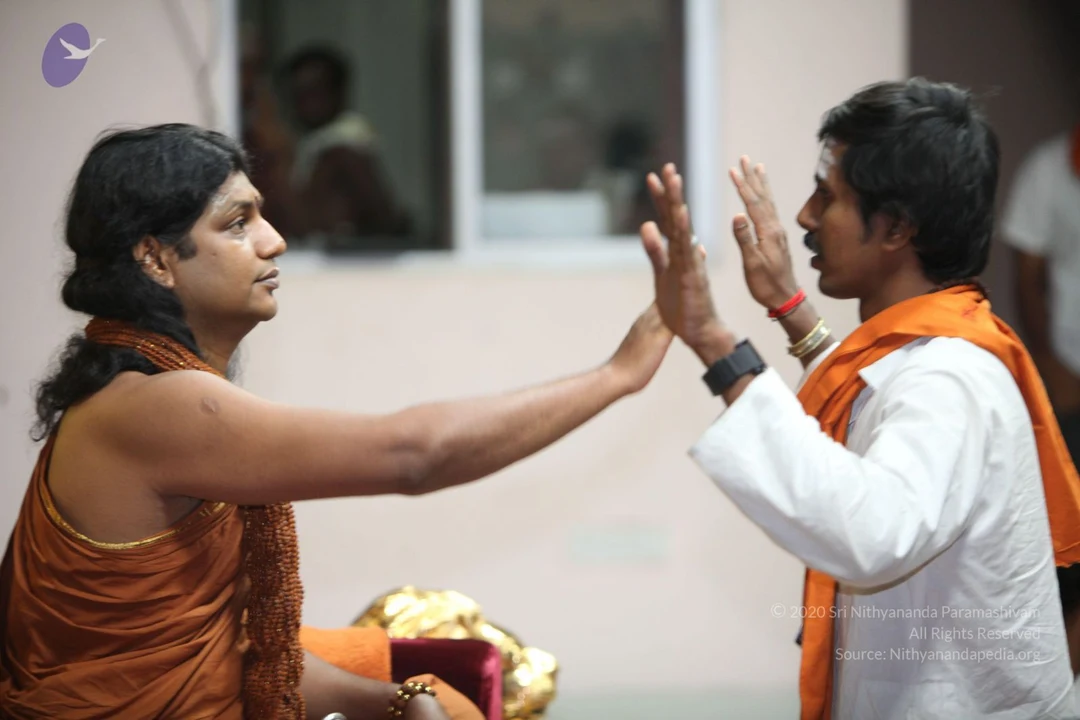
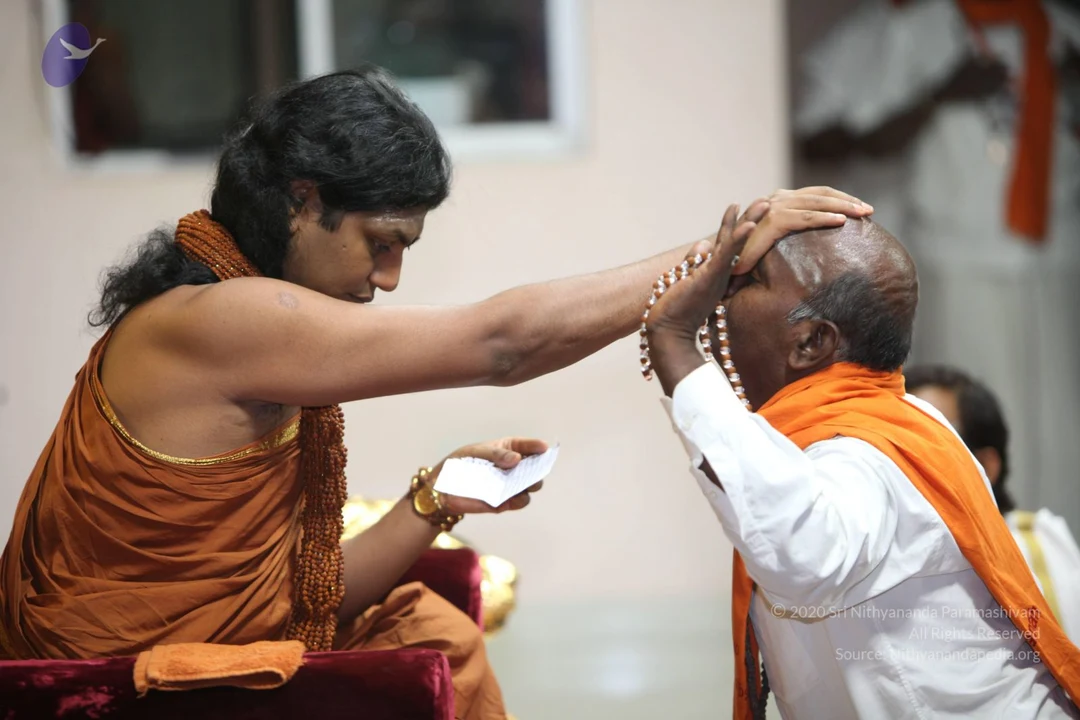
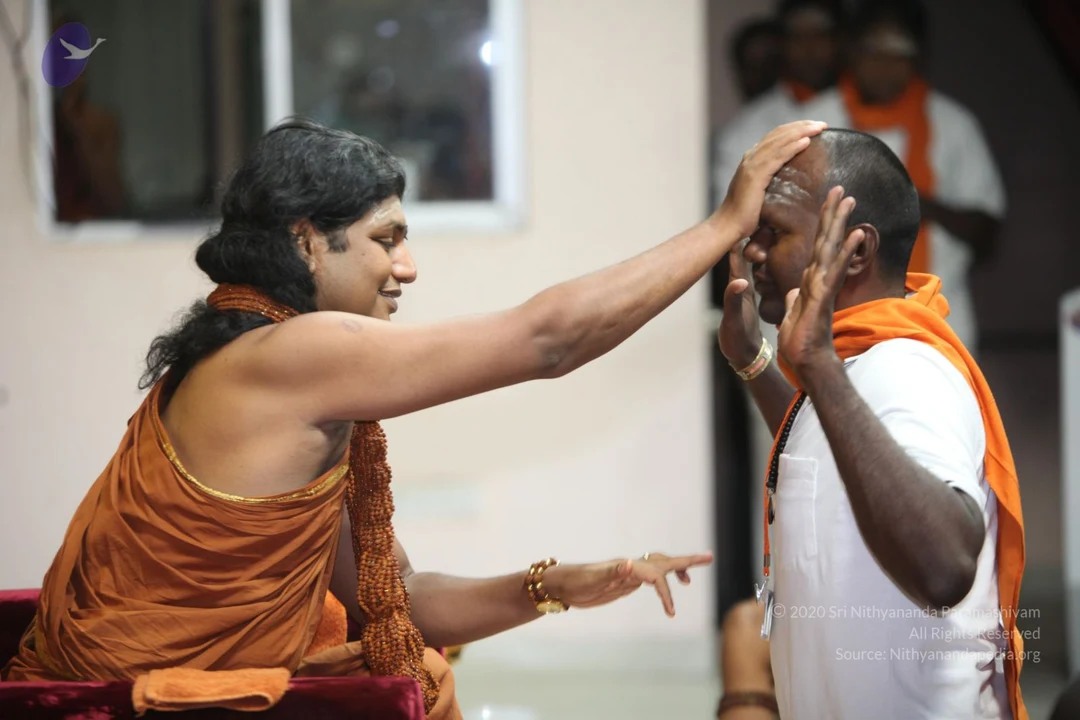
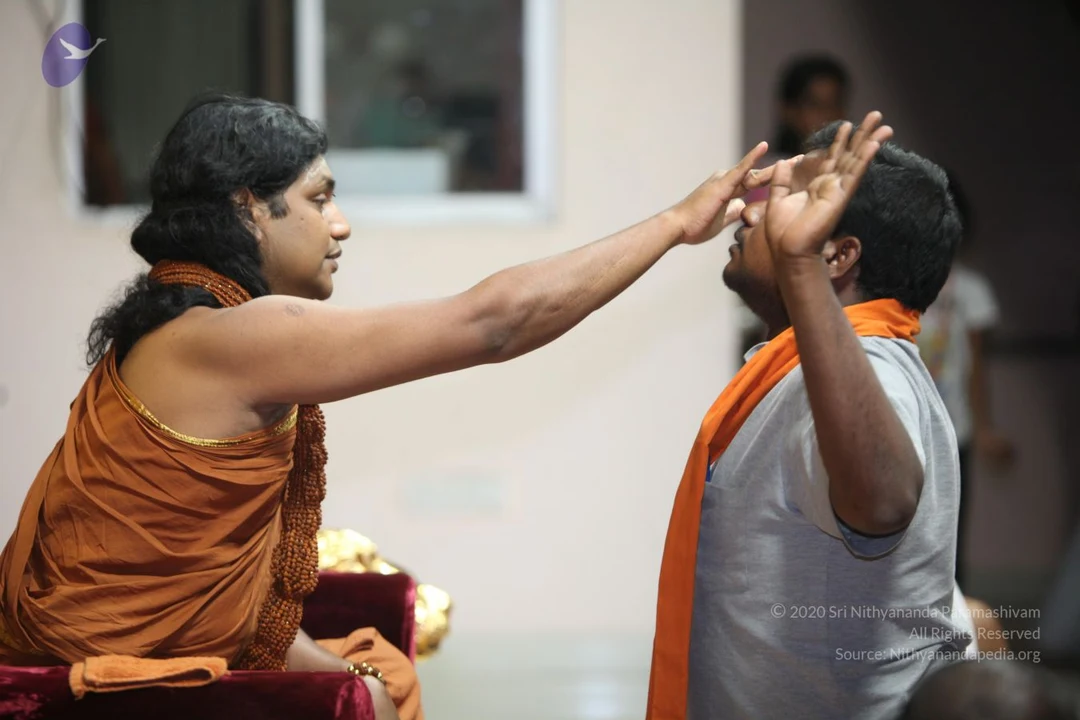
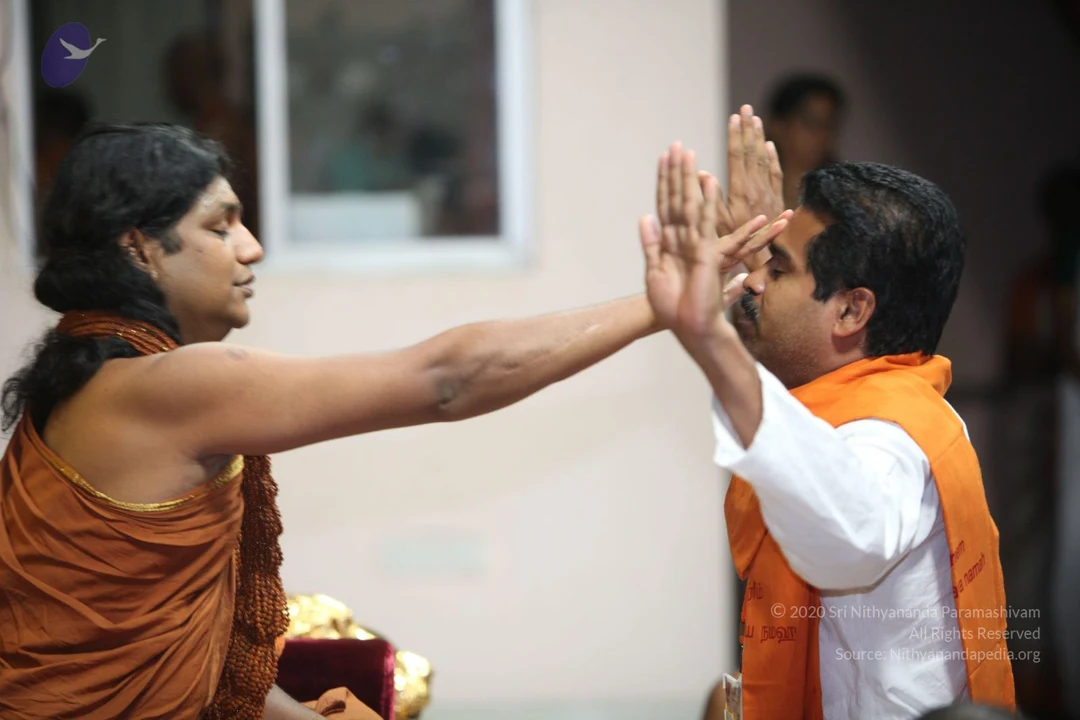
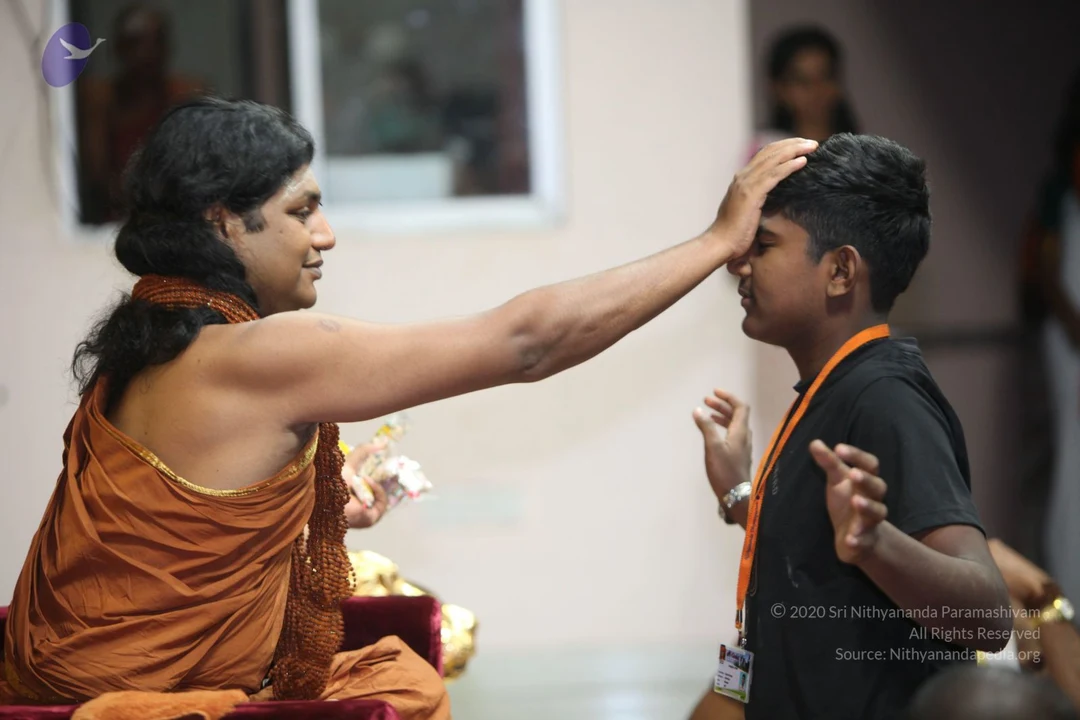
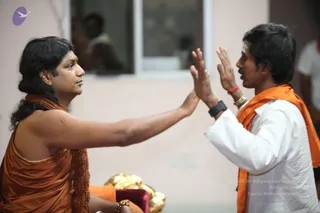
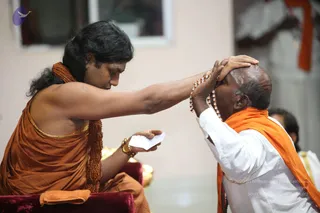
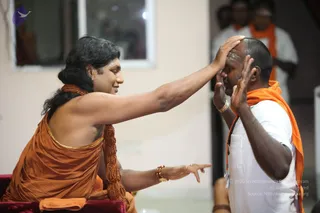
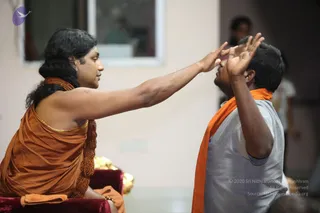
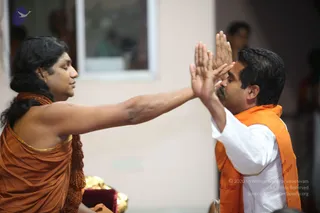
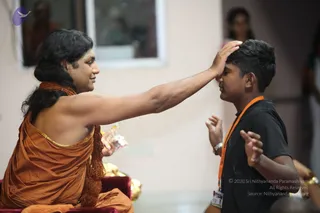
A photograph of two men facing each other closely with palms raised toward one another in a energy-transmission style gesture. The man on the left has long dark hair swept back, wears an orange-saffron shawl draped over a bare torso, a rudraksha-style beaded necklace in orange and brown, and a gold bangle on his wrist. He sits with a gold-colored object and a red cushion near his lap. The man on the right, with short dark hair and a mustache, wears a white kurta and an orange shawl, with a red thread on his wrist, gold bangles and a black wristwatch. A window and a blurred figure are visible in the background against a pale pink wall.A photograph of a seated figure in an orange cloth wrap with a rudraksha mala and a bead necklace, long dark hair swept back, placing one hand on the bald head of a kneeling older man in a white shirt and orange shawl. The seated figure holds a folded white paper in the other hand and rests on a red velvet cushioned seat beside a golden surface. A rudraksha mala drapes over the kneeling man's hands. Behind them, another person in white and an orange scarf is partly visible. The setting is a plain pale wall with a window.A seated figure in orange robes with long swept-back dark hair and a rudraksha mala with a gold-toned bracelet reaches out to touch the forehead of a shaved-headed man in a white shirt and orange shawl, who has his palms raised in reverence. a person is the seated figure, giving a blessing as a devotee receives it; the scene appears to be darshan or blessing, with a red-cushioned seat and blurred onlookers in white and orange in the background. Visible text reads 2020 Sri Nithyananda ParamashivamA photograph of a long-haired man in saffron-orange robes and a rudraksha mala seated on a red velvet chair, extending his right arm and hand toward the face of a man in a grey sleeveless top with an orange shawl. The recipient tilts his head back with eyes closed and his palms raised near his forehead, receiving the blessing. A purple bird logo appears at the top left, and a background figure stands in a doorway.Two men in close greeting at an indoor setting with a pale pink wall and a window behind them. The man on the left wears a saffron-orange wrap over bare shoulders, has long dark hair pulled back, and a rudraksha-style bead necklace; he extends one arm forward. The man on the right wears a white kurta and an orange-saffron shawl with Tamil script printed on it, and presses his palms together in anjali mudra toward him. A gold-coloured item and red cloth are visible at lower left. Another person stands blurred in the background.A seated man in a saffron-orange shawl wrapped over his shoulder, wearing a long rudraksha mala and a gold-edged garment, places his right hand on the forehead of a young boy in a black polo shirt with an orange lanyard and ID badge. The boy stands with hands raised palm-out in a receiving gesture. The man has long dark hair swept back and holds a small object in his left hand. A pale pink wall and window with a figure behind glass form the background. Swamiji (probable) is identifiable by the long swept-back hair, saffron shawl and rudraksha mala, seated and blessing the boy.

Yoga

4 photosSource gallery
A large indoor hall with glossy white floor where many people in orange and white clothing and colourful sports wear perform yoga exercises on mats. Several participants bend forward with hands on the floor, some with dumbbell-like weights placed beside them on purple, pink, green and orange mats. A standing instructor in a light green shirt and dark trousers watches near the right side. Colourful striped hanging decorations hang from the ceiling, and a framed portrait hangs on the back wall beside a pair of white doors. The scene reads as a group yoga session in an ashram-style hall.A photo of a large hall where many people in yoga practice are bent forward with hands on mats, several on pink, orange, purple and green mats. Most wear orange or saffron clothing, while others wear grey, black-and-white striped or red tops. A man in a light green shirt stands at the right edge, and a framed picture hangs on the back wall. Metal dumbbells sit on the floor beside several mats, and colourful striped pillars hang from the ceiling.A large indoor hall with pale pink walls and tall decorated pillars hung with colourful banners. Many devotees kneel on yoga mats in rows, palms pressed together in prayer, some in orange and saffron clothing, others in dark tracksuits or white. Metal dumbbells and small stands are placed between the mats. In the foreground a grey-haired man in black kneels with hands folded, and a man in a grey t-shirt sits in the middle distance. No a person candidate is clearly identifiable in this view.A large hall with a polished white floor where many people kneel in prayer posture on coloured yoga mats, palms pressed together in namaste. In the foreground a man in a dark grey t-shirt and a man in a navy shirt with a striped top and red trousers kneel at the front. Behind them rows of people wear saffron-orange robes, and others wear white shirts and grey clothing. Metal stanchions and small dumbbells line the mats, and red and cream decorative banners hang from the ceiling. Several figures in saffron robes are visible, but no one is clearly identifiable as a person from appearance.

Temple-FlagHoisting
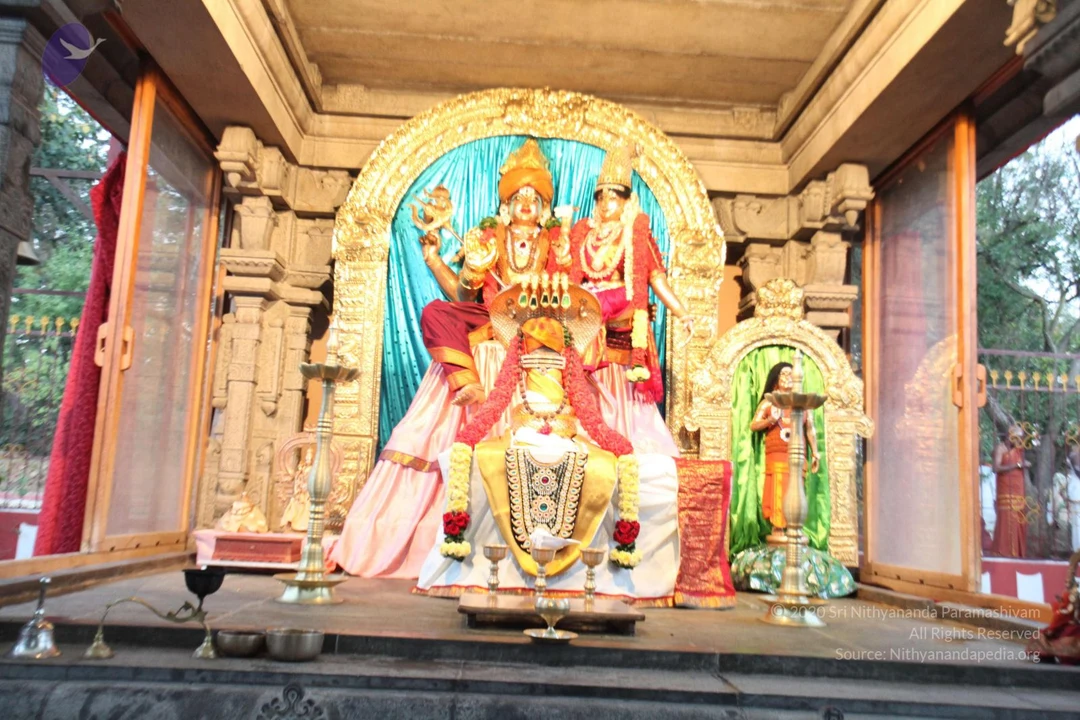
84 photosSource gallery
A pale full moon glows in a grey dusk sky, with blurred green leaves and branches in soft focus across the lower right and right edge of the frame. No people are visible in the scene.A pale, glowing full moon sits in a dusky grey-blue sky on the right side of the frame. In the foreground, out of focus, dark green leafy branches of a tree fill the left side. Thin power lines run faintly across the lower right. No people are visible.A black stone Nandi bull statue sits on a terracotta-red pedestal in an outdoor courtyard. The Nandi wears a red flower garland and a yellow and white marigold garland draped down its front, with white tilak markings on its head and body. A white cloth is draped beneath it, and an orange-red offering or kalasha-like object with orange threads sits behind. No people are visible.Close-up photograph of a ritual table draped in red patterned cloth. On a polished silver tray sits a silver kalasha-style vessel with a tall stem, surrounded by bright red-orange flower petals and a small silver bowl. Behind, a larger ornate silver container with engraved decoration. In the foreground, a silver dish holds yellow turmeric or kumkum powder, and a bowl of red flowers blurs in the front left. No people are visible; only puja offerings and implements are shown.A close overhead photo of a polished silver puja plate resting on a red and gold floral brocade cloth. Red and orange roses fill the upper left of the plate. Three small silver bowls hold, from left, a smooth orange-brown paste, a deep red powder, and a bright yellow powder, with a few rose petals scattered among them. No people are visible, and no one is shown performing a ritual.A silver puja thali sits on a red-and-gold floral brocade cloth. It holds a tall silver kalasha-style lamp stand, a silver bowl of white crystals, a silver spoon wrapped with white thread, and many red-orange roses scattered across the tray. A matchbox lies to the right, and a pair of red-handled scissors is at the edge. No people are visible.

MorningSatsang

55 photosSource gallery
Indoor temple-style ritual in a blue hall decorated with painted pink and green pillars. Two large painted guardian figures with multiple arms holding tridents flank a gilded throne in an arched shrine. A seated figure on the golden throne wears a rudraksha mala and sits on a white cloth, while a man in a rust-orange robe performs a lamp-lit aarti with a flame in front of the throne. Brass oil lamps stand on the glossy white floor. On the left, a bare-chested man in white dhoti sits with folded hands before a microphone, and on the right two women in orange and a man in white dhoti sit with hands folded in devotion. Garlands and a red carpet are visible near the throne.A seated figure on an ornate gilded golden throne with a crown-like finial, draped in a tiger-print cloth, wears an orange-saffron robe, layered rudraksha malas and a gold chain, with long dark hair and a broad smile. A shaved-headed priest in a saffron cloth and bare upper body stands at left, holding a lit oil lamp or flame toward the seated figure and a brass bell in his other hand. Brass lamps hang from chains above, with string lights behind the throne, and a brass lamp stands at right against a blue and pink painted shrine wall with a painted deity figure at the edge. a person is seated on the throne, identified by the rudraksha malas, saffron robe and ornate gilded throne cues.Photograph inside a temple-style hall with brightly painted blue and pink walls. Two large painted dvarapala guardian figures with multiple arms, crowns and tridents flank a doorway. Within the doorway, a figure in saffron-orange robes and a long rudraksha mala sits on an ornate gold throne with a crown-like canopy, with string lights hanging behind. Foreground: a seated priest in white dhoti and shawl with folded hands before a microphone, a seated assistant in orange, a woman in white sitting at the gold platform, brass oil lamps and a red mat on the marble floor. The seated figure on the throne has long swept-back hair, a rudraksha mala and saffron clothing, a probable Swamiji (probable) appearance, seated as a teacher giving a discourse on the throne.A photo of a satsang inside a temple hall decorated with pink, blue and green painted pillars. Two large painted dvarapala guardian figures with multiple arms, holding maces and tridents, flank a doorway. Seated in the doorway on a gilded throne draped with a tiger-skin cloth is a figure in orange and saffron robes with a rudraksha mala, appearing to be a person, giving a discourse. In front, a seated man in white ritual clothes with a sacred thread reads or chants from a book, and two more seated devotees in white and orange sit nearby. Brass oil lamps stand on the polished floor, and string lights hang behind the throne.A photograph inside a colourfully painted temple hall. Two large painted guardian figures with multiple arms and fierce moustached faces, holding staffs and weapons, flank a central golden throne draped with a white and black tiger-striped cloth. A seated figure in saffron-orange robes and a long beaded necklace sits on the throne beneath hanging string lights and an ornate golden canopy. In front, two white-clad women sit on the floor with notebooks, and a seated man in orange robes sits nearby. Brass oil lamps with lit flames stand on the polished white floor, and the setting is a pink, blue and green decorated ritual space.A seated man in orange robes and a long garland of beads sits on an ornate gold throne with a tiger-striped cloth draped over its seat, in a temple hall painted in bright pink, green and blue. Two large painted guardian figures with flaming crowns, moustaches and clubs flank the throne on either side. Brass oil lamps stand on the marble floor, and a tall lamp with hanging chains hangs in the background. Two men in orange robes sit before the throne, one handling offerings on a gold tray, while a man in white dhoti and a woman in white sari sit at the lower left and right. A probable Swamiji matches the central figure's long swept-back hair, orange robes and rudraksha garland, seated in an honoured position. Four or five people are visible in total.

Tamil-IA-Session

15 photosSource gallery
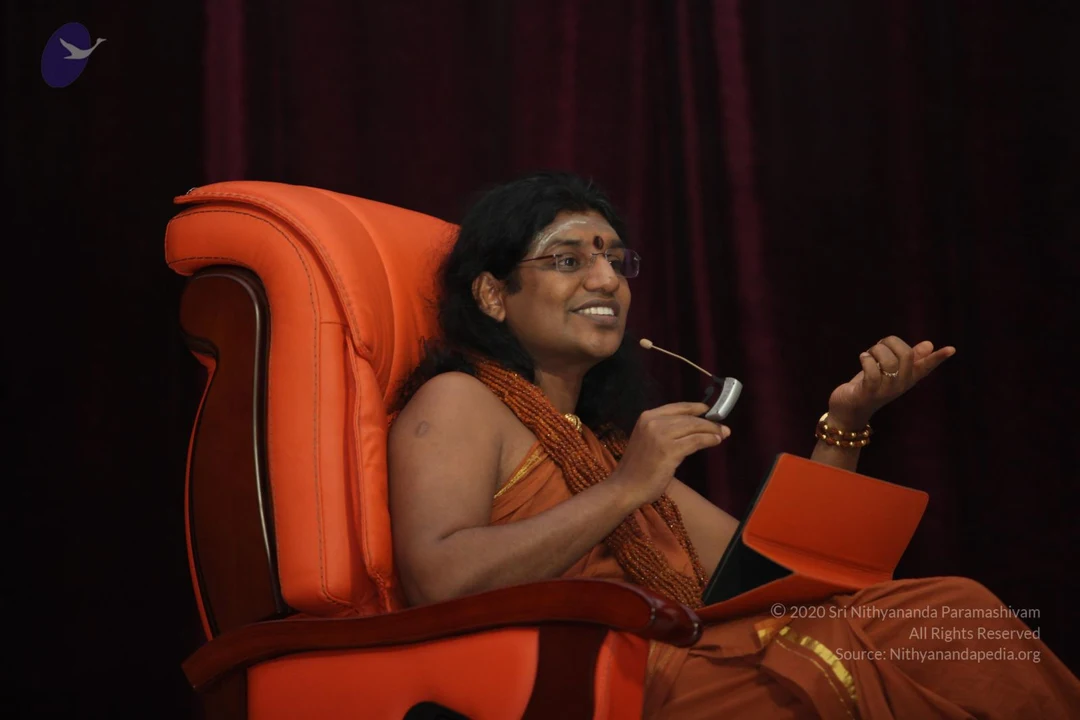
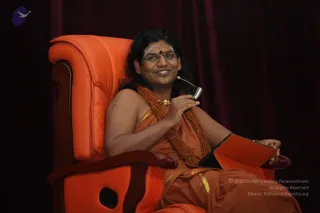
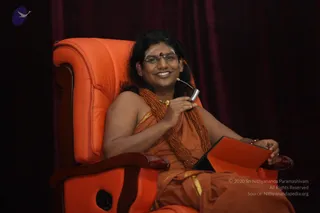
A smiling man with long dark hair, white vibhuti marks and a red bindi sits in a large orange upholstered armchair against a dark background. He wears an orange saffron-coloured robe and a beaded orange mala with a gold-toned necklace, holding a small silver bowl and a thin stick near his mouth. A wooden bracelet is on his wrist, and an orange tablet rests on a low table in front. Appearance-based label: a person, seated in an orange throne-like chair with saffron robes and rudraksha-style beads, giving an in-person presence.A smiling man with long dark hair, white and red forehead markings, and thin-rimmed glasses sits in a high-backed orange leather chair against a dark red curtain. He wears an orange garment with gold-trimmed edges and multiple strands of orange beaded necklaces, and a gold bracelet on his wrist. He holds a small silver microphone in one hand while the other hand gestures outward, and an orange tablet rests on his lap. The setting suggests a seated discourse or satsang on stage.A man seated in a large orange leather armchair with wooden armrests against a dark maroon curtain. He wears orange and saffron robes with gold-edged borders, a long rust-orange rudraksha mala draped over his shoulders, and a gold necklace. He has long dark hair, a white vertical tilak and a red bindi, and glasses. He holds a small handheld microphone near his mouth and rests an orange folder on his lap, smiling as he speaks.A smiling person with long dark hair sits in a large orange leather armchair with dark wooden armrests against a deep maroon curtain. They wear orange saffron-coloured robes with a gold border, a long multi-strand orange beaded mala around the neck, glasses, a white forehead marking and a red bindi, and hold a small microphone near the mouth while resting an orange folder on the lap. a person appears in the seated speaker role, identified by long swept hair, saffron robes, a rudraksha-style mala and ornate gold necklace cues. A small purple logo sits in the upper left corner.A photograph of a person seated in a large orange leather armchair with dark wooden armrests against a deep maroon curtain. The person wears an orange-saffron garment with a bare left shoulder, a long orange-beaded mala necklace, a red bindi, white ash markings, and rimmed glasses. Long dark hair falls past the shoulders. They smile while holding a small handheld microphone to their mouth and rest an orange-covered book on their lap.A smiling person with long dark hair sits in an orange leather armchair before a dark red drape. They wear an orange-saffron garment, a red bindi on the forehead, rudraksha mala beads across the chest, a gold ceremonial necklace, gold bangles and a ring, and a small clip-on microphone on the collar. One hand holds a small silver device near the chest while the other rests on the lap. The appearance matches the Swamiji (probable) cues of long hair, saffron clothing, rudraksha malas and gold necklace, though identity is uncertain. Purpose is a seated talk or discourse.

Darshan

8 photosSource gallery
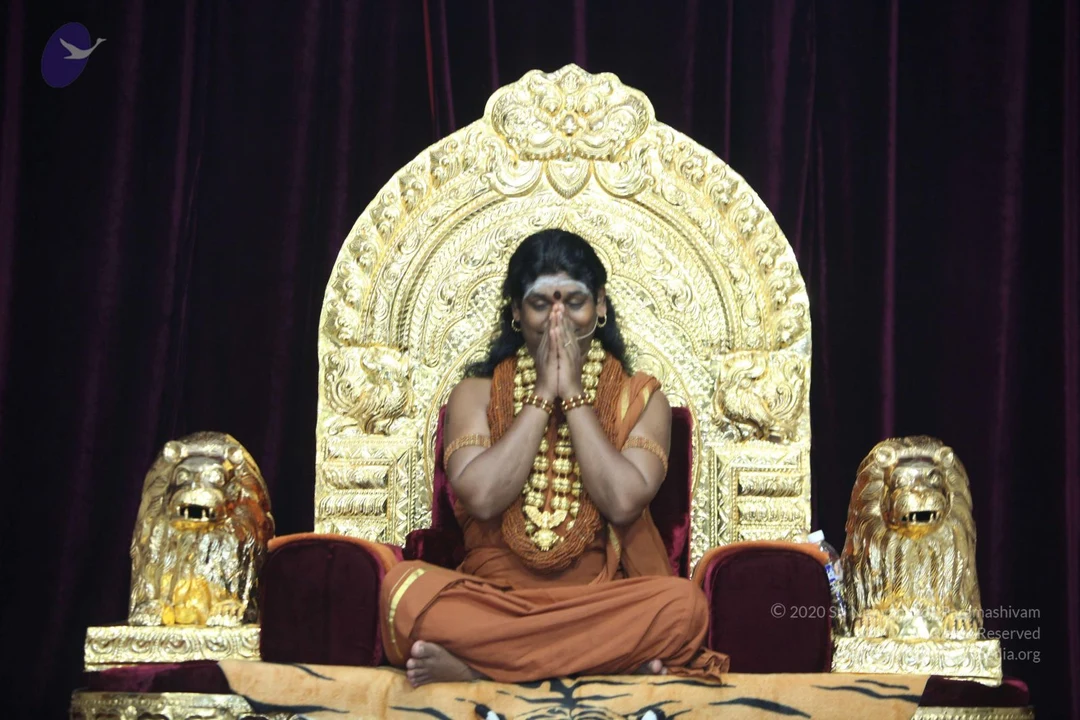
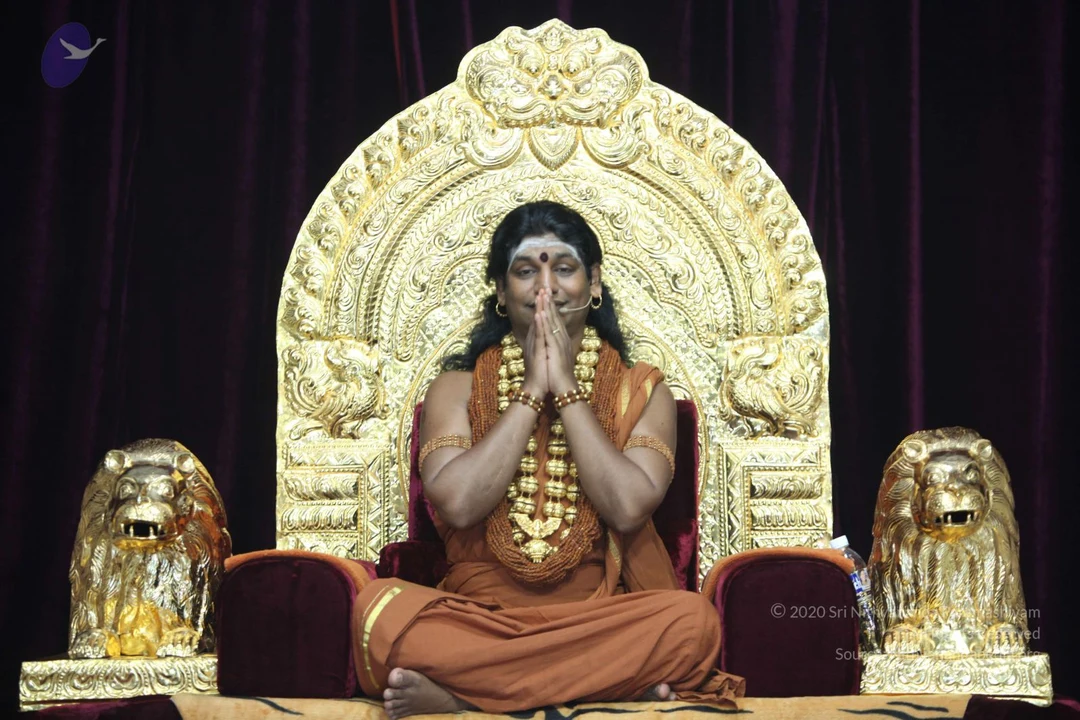
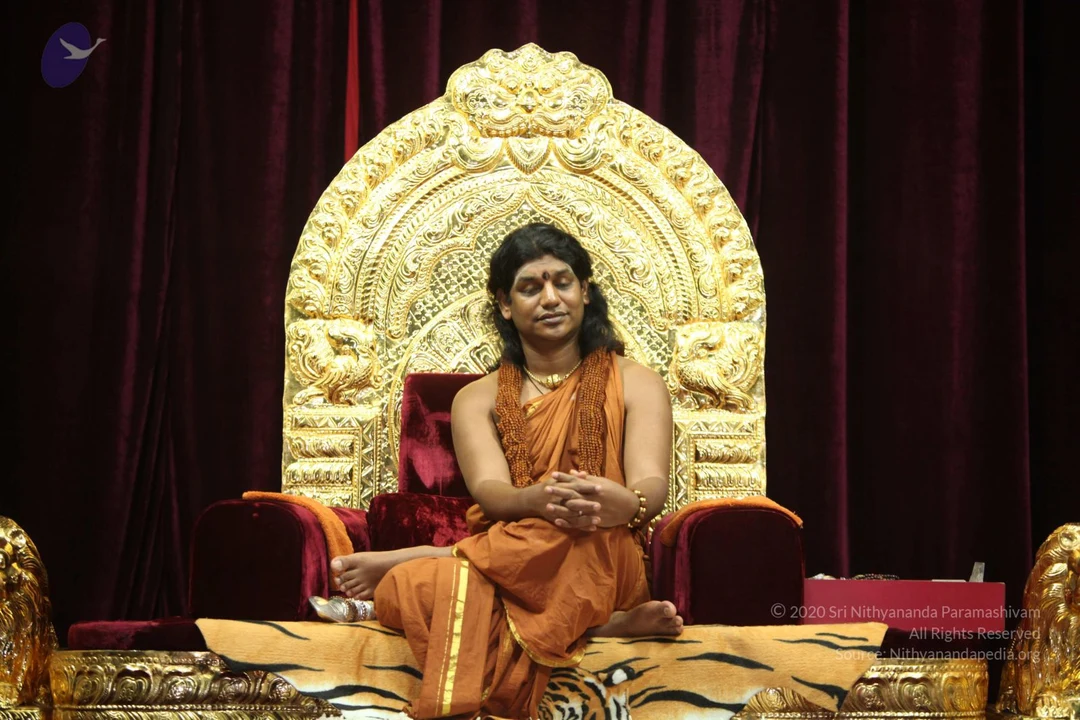
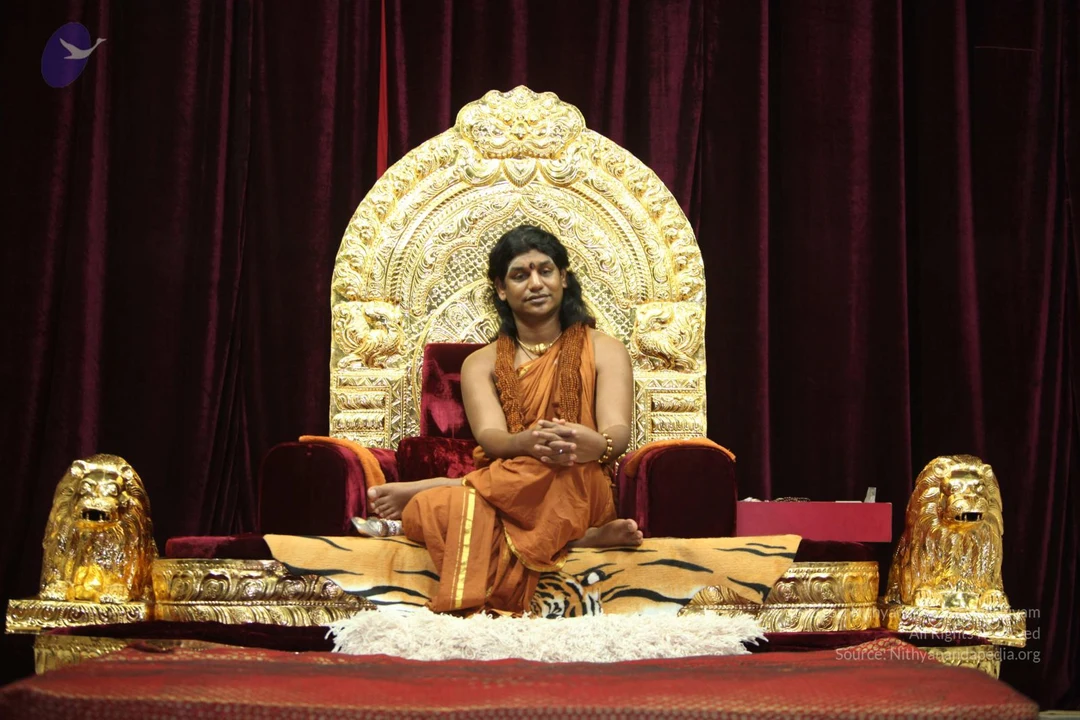
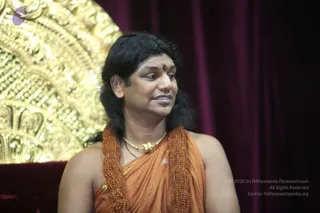
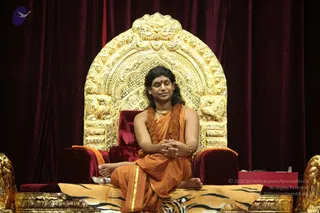
A photograph of a seated figure in an orange cloth wrap with a rudraksha mala and a bead necklace, long dark hair swept back, placing one hand on the bald head of a kneeling older man in a white shirt and orange shawl. The seated figure holds a folded white paper in the other hand and rests on a red velvet cushioned seat beside a golden surface. A rudraksha mala drapes over the kneeling man's hands. Behind them, another person in white and an orange scarf is partly visible. The setting is a plain pale wall with a window.A photograph of a long-haired man in saffron-orange robes and a rudraksha mala seated on a red velvet chair, extending his right arm and hand toward the face of a man in a grey sleeveless top with an orange shawl. The recipient tilts his head back with eyes closed and his palms raised near his forehead, receiving the blessing. A purple bird logo appears at the top left, and a background figure stands in a doorway.A seated man in a saffron-orange shawl wrapped over his shoulder, wearing a long rudraksha mala and a gold-edged garment, places his right hand on the forehead of a young boy in a black polo shirt with an orange lanyard and ID badge. The boy stands with hands raised palm-out in a receiving gesture. The man has long dark hair swept back and holds a small object in his left hand. A pale pink wall and window with a figure behind glass form the background. Swamiji (probable) is identifiable by the long swept-back hair, saffron shawl and rudraksha mala, seated and blessing the boy.A man with long, swept-back black hair sits before a gold ornate carved backdrop and deep magenta velvet drapes. He wears an orange saffron shawl draped over his bare shoulders, multiple rudraksha mala beads around his neck, and a gold ceremonial necklace. A red bindi marks his forehead. He looks off to the side with a slight smile. Appearance-based candidate: a person, seated in person at a stage event.A seated man in saffron-orange robes with a bare chest and orange shawl sits cross-legged on an ornate gold throne with a large gold arched back and lion-head carvings, on a tiger-striped cushion. He has long dark hair, a red tilak on his forehead, a rudraksha mala and a gold necklace, with hands clasped in his lap and eyes closed. Burgundy velvet drapes form the background and a red box sits to the right.A seated figure sits cross-legged on an ornate gilded throne with a tall arched back carved with floral and scroll motifs, flanked by two golden lion sculptures on red-draped platforms. The figure wears a saffron-orange garment, a rudraksha mala and a gold necklace, with hands clasped in the lap and bare feet resting on a striped tiger-skin cloth. Deep maroon velvet drapes form the backdrop. The figure appears to be Swamiji (probable), based on the saffron and ornate clothing, long swept-back hair and gold necklace, with the page noting his presence at this event.

01-TEMPLE-FLAG-HOISTING

39 photosSource gallery
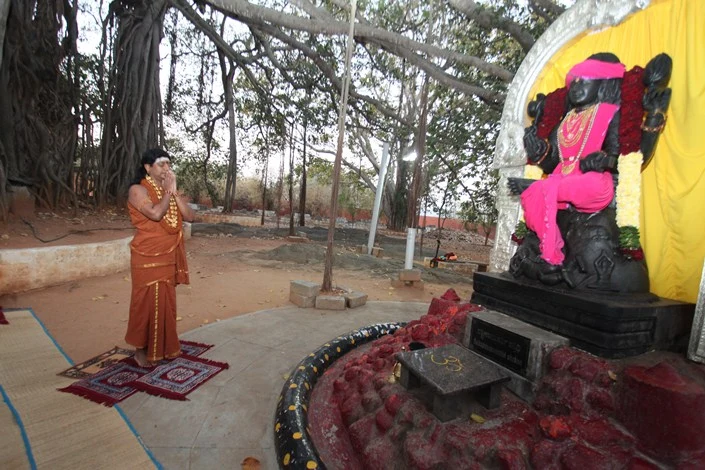
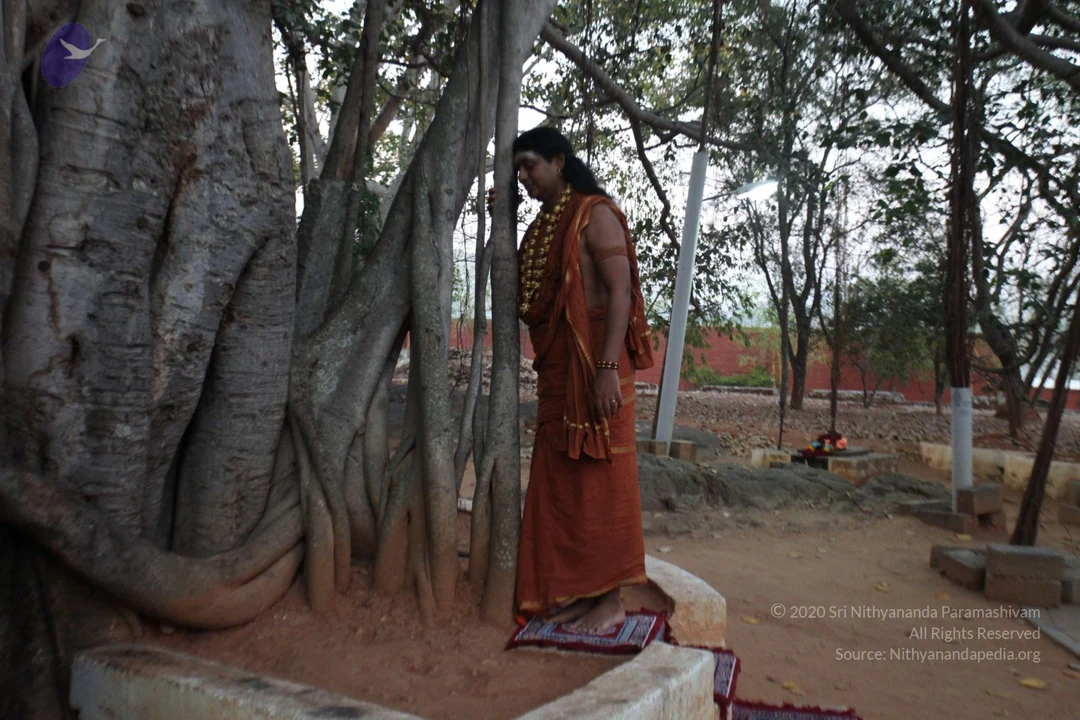
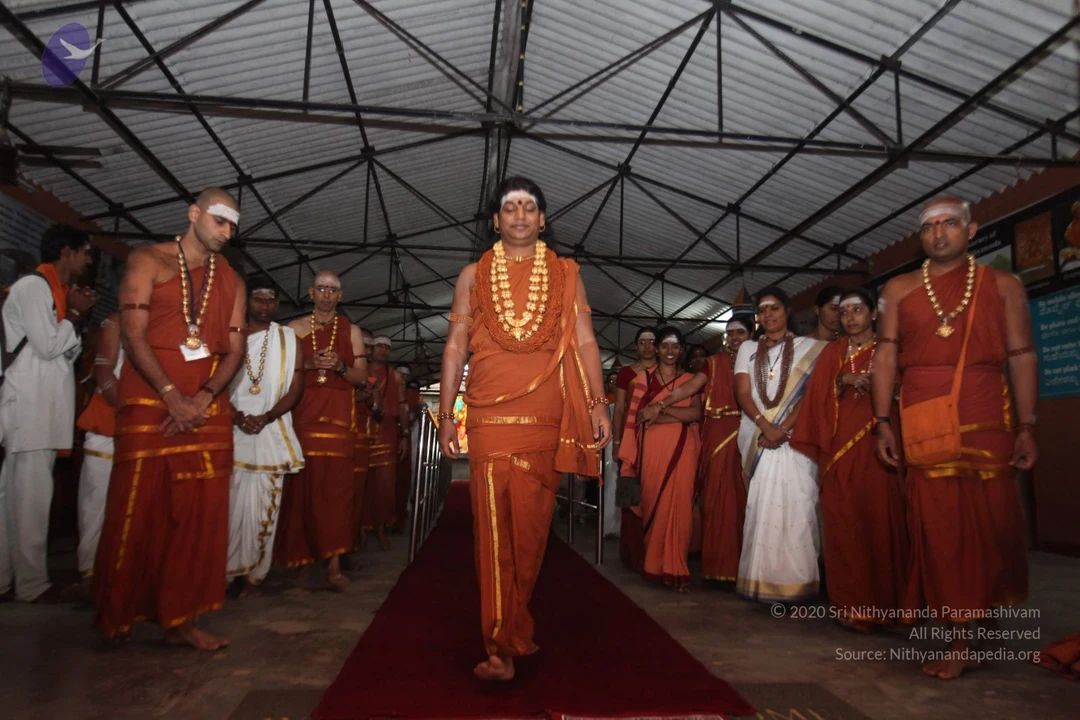
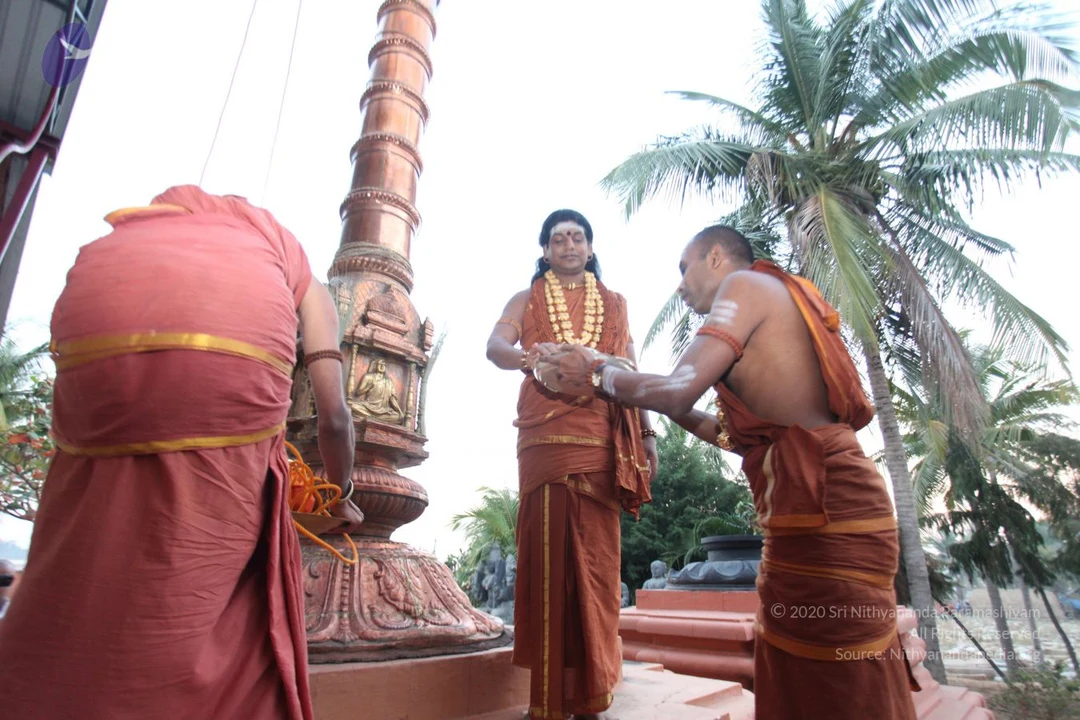
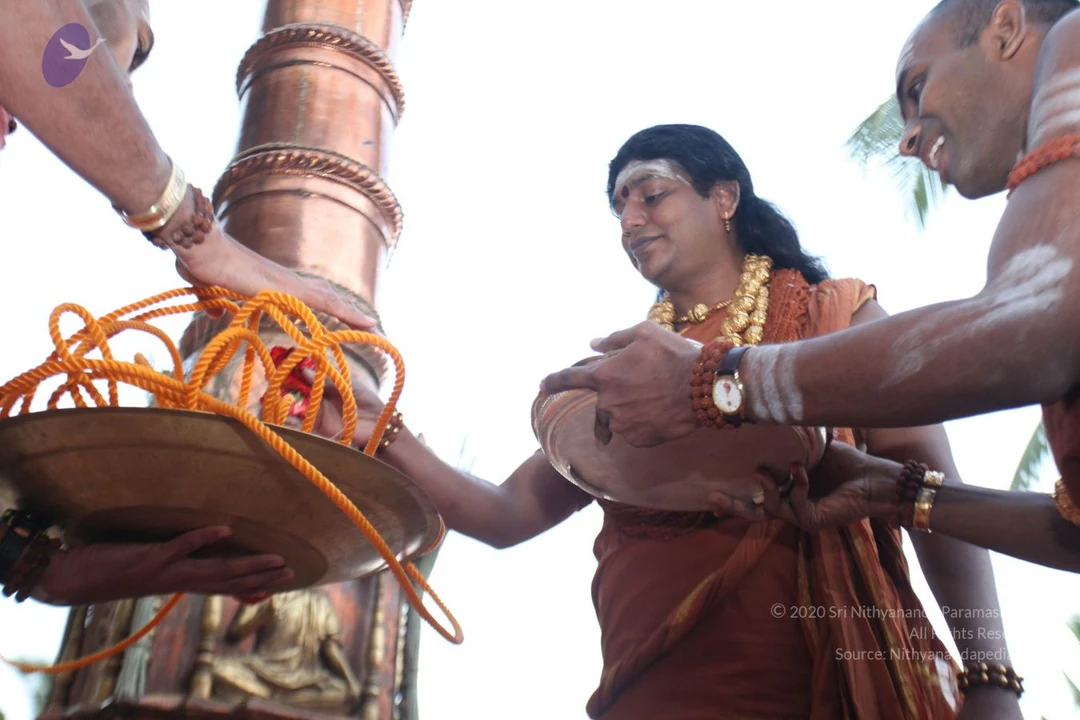
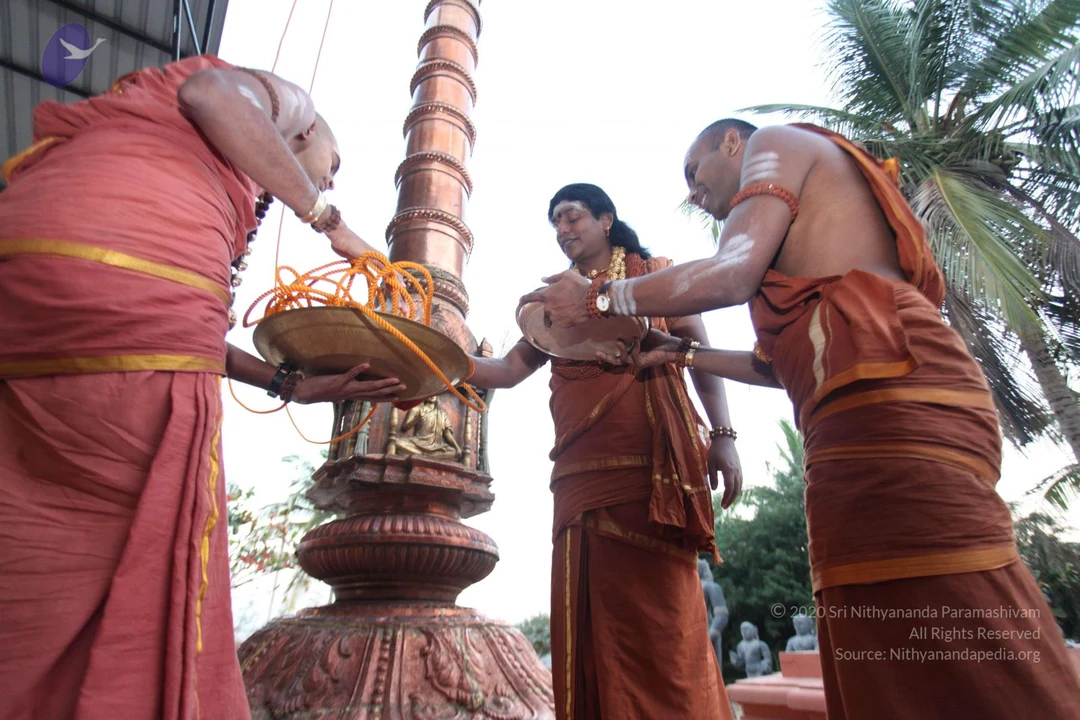
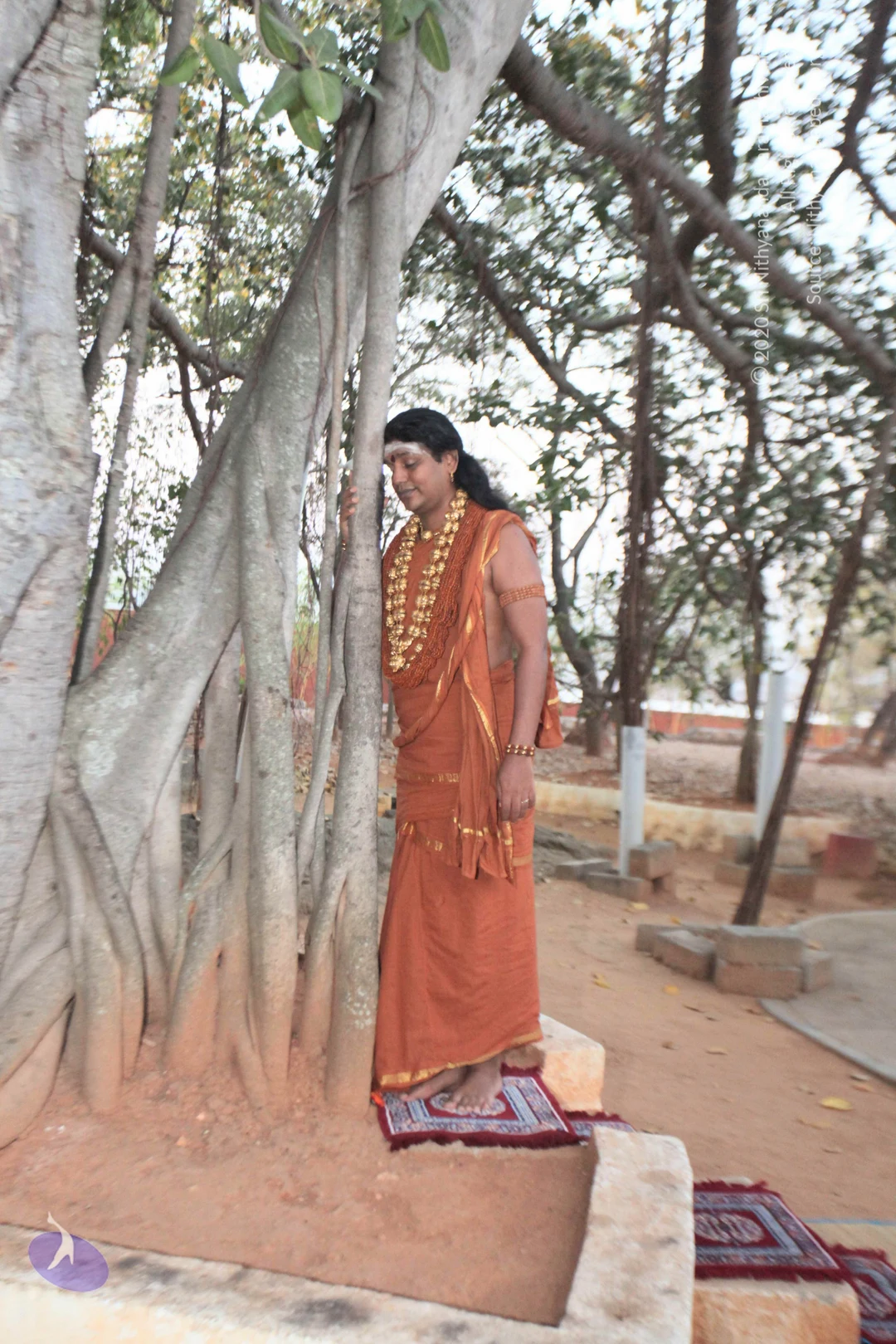
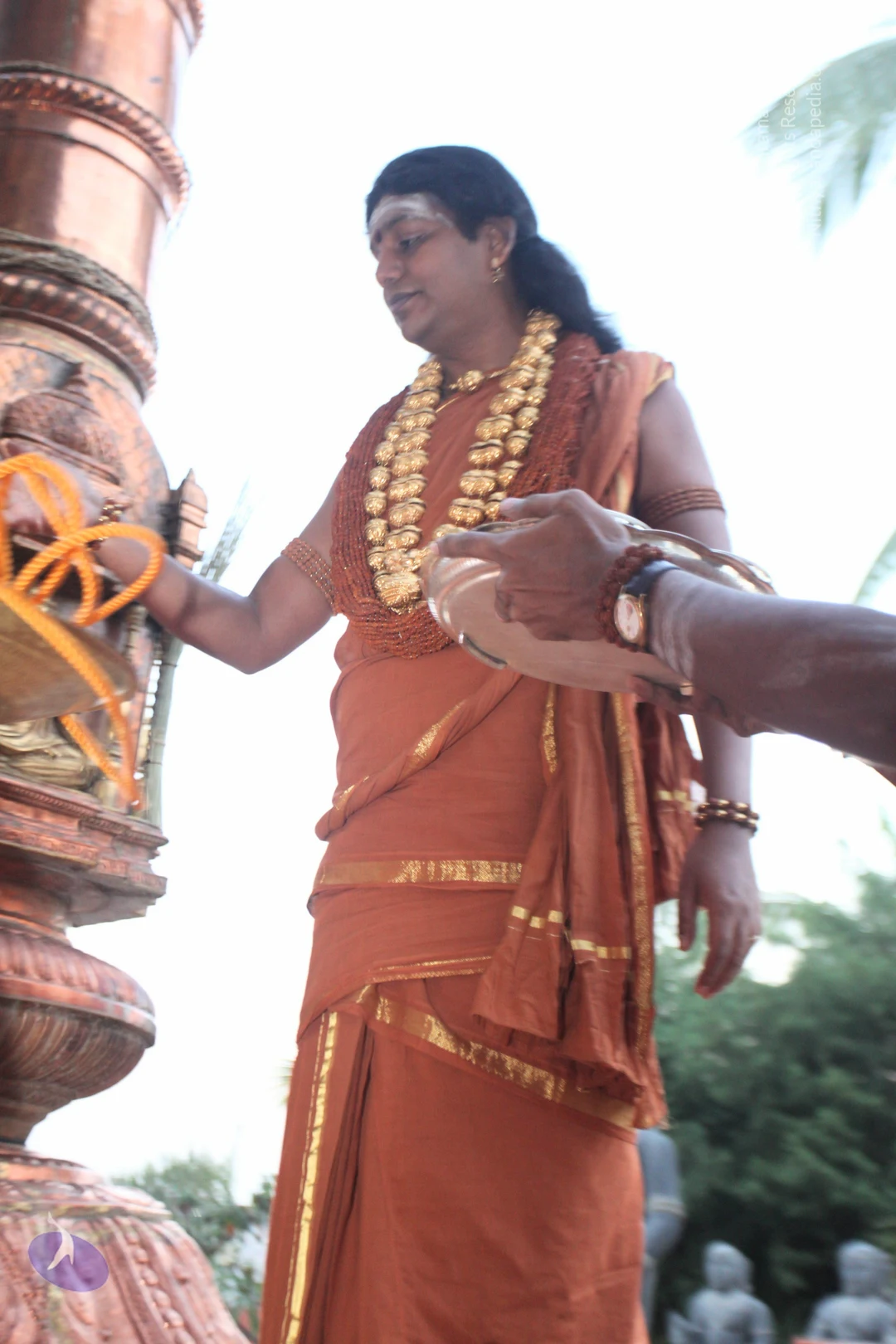
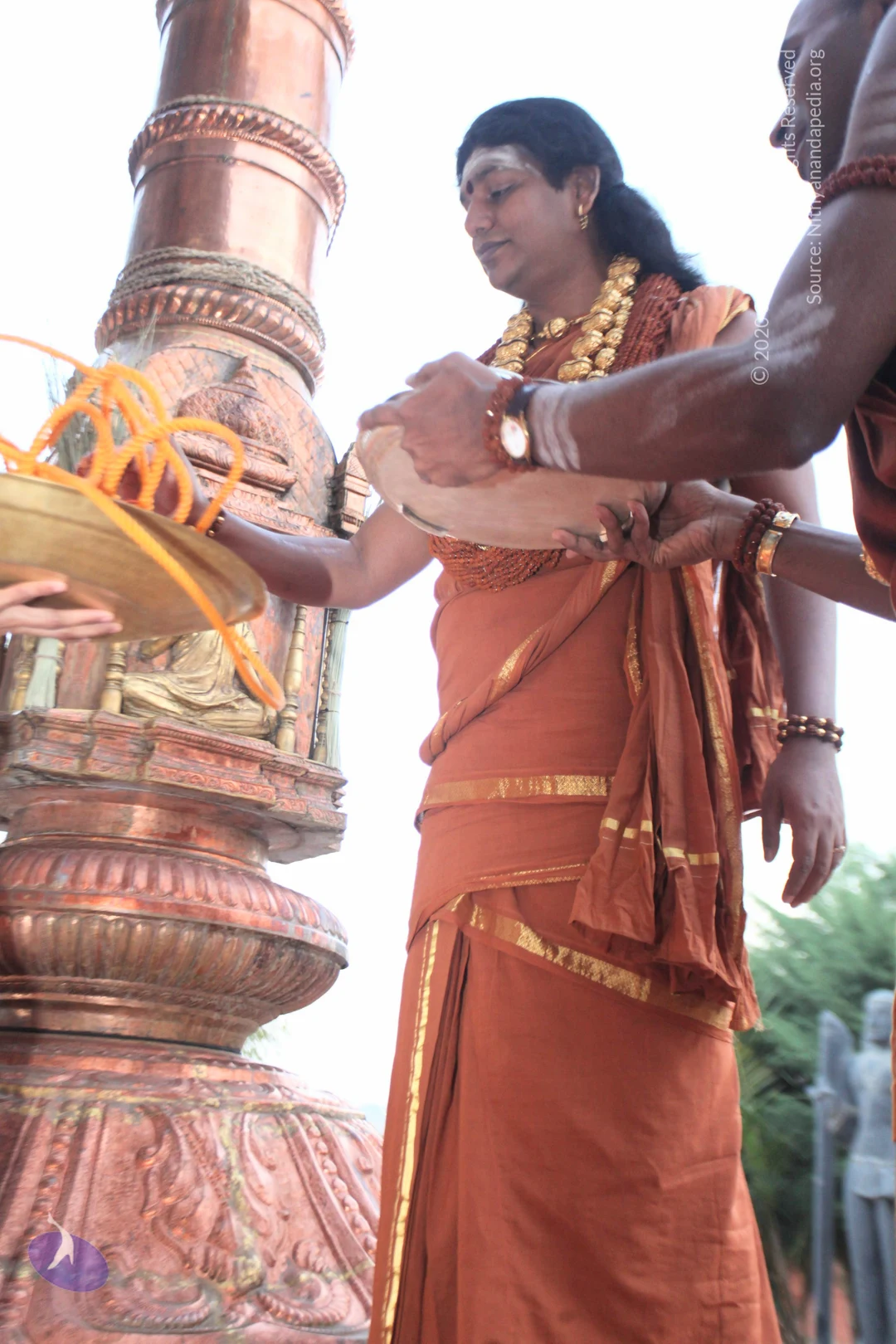
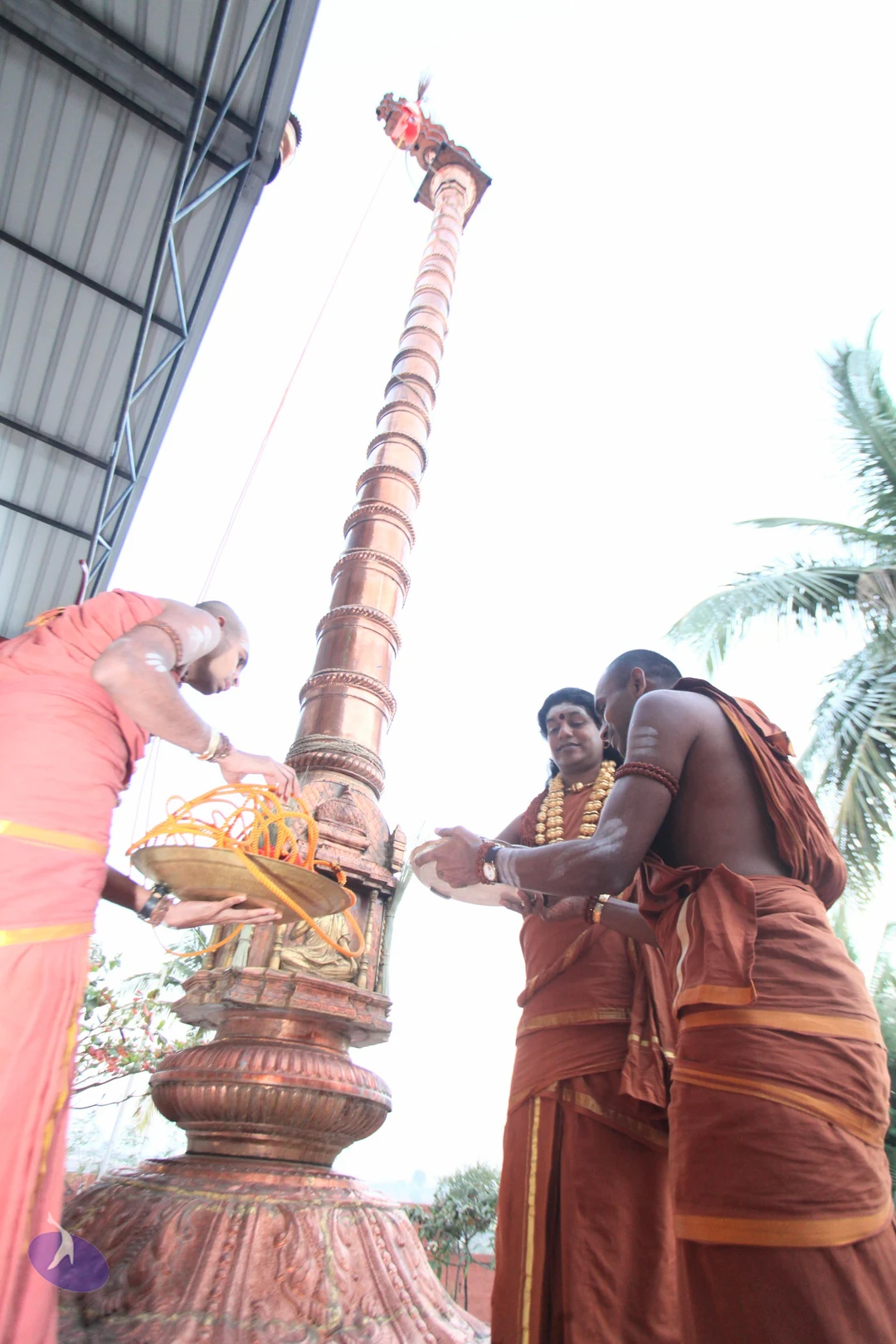
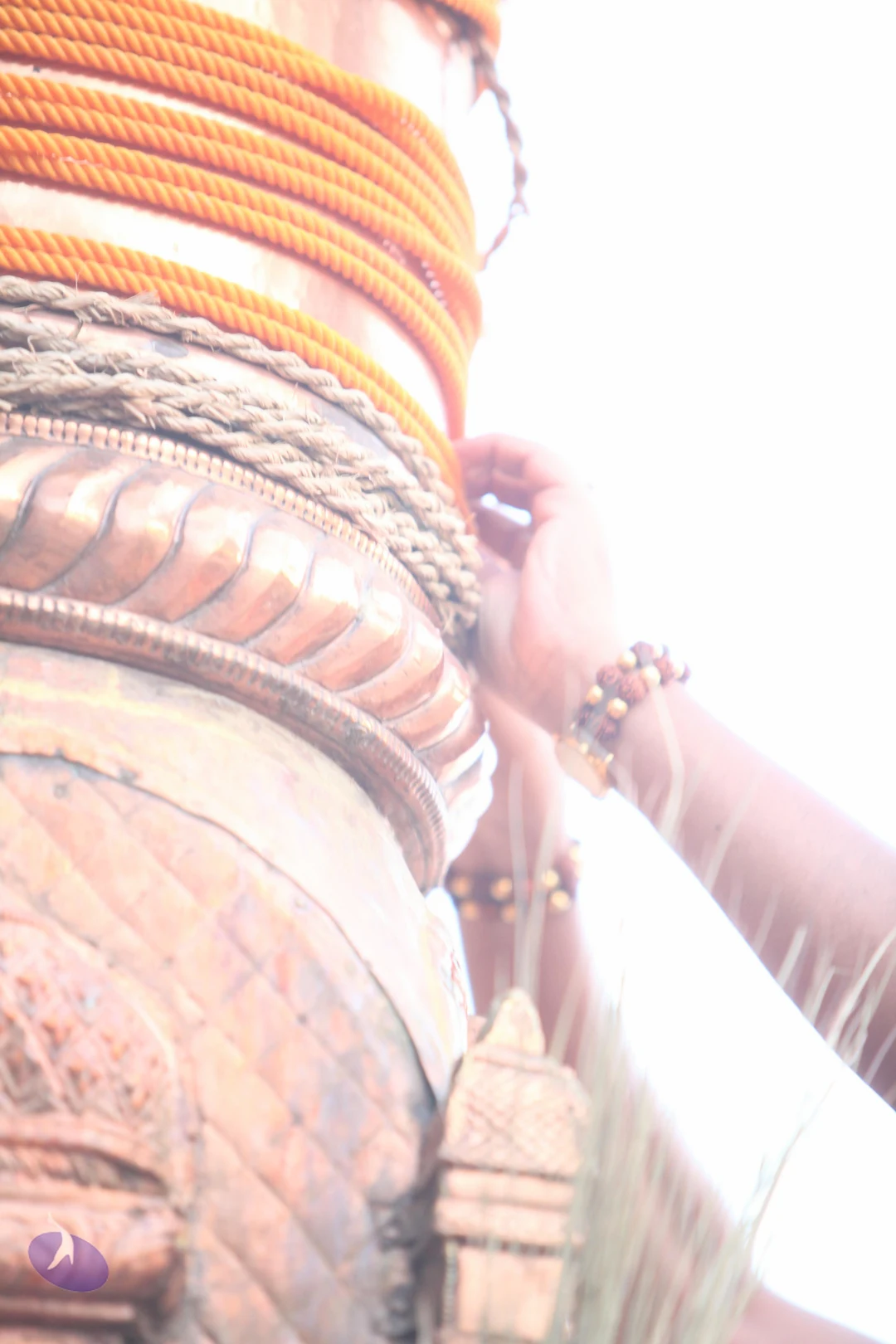
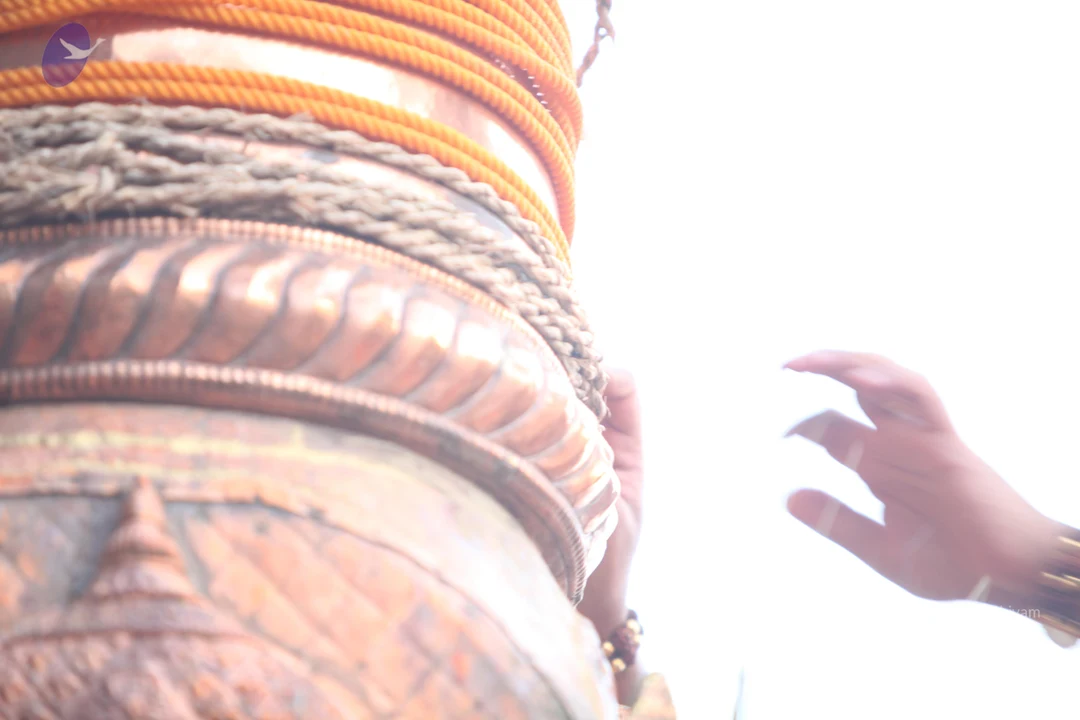
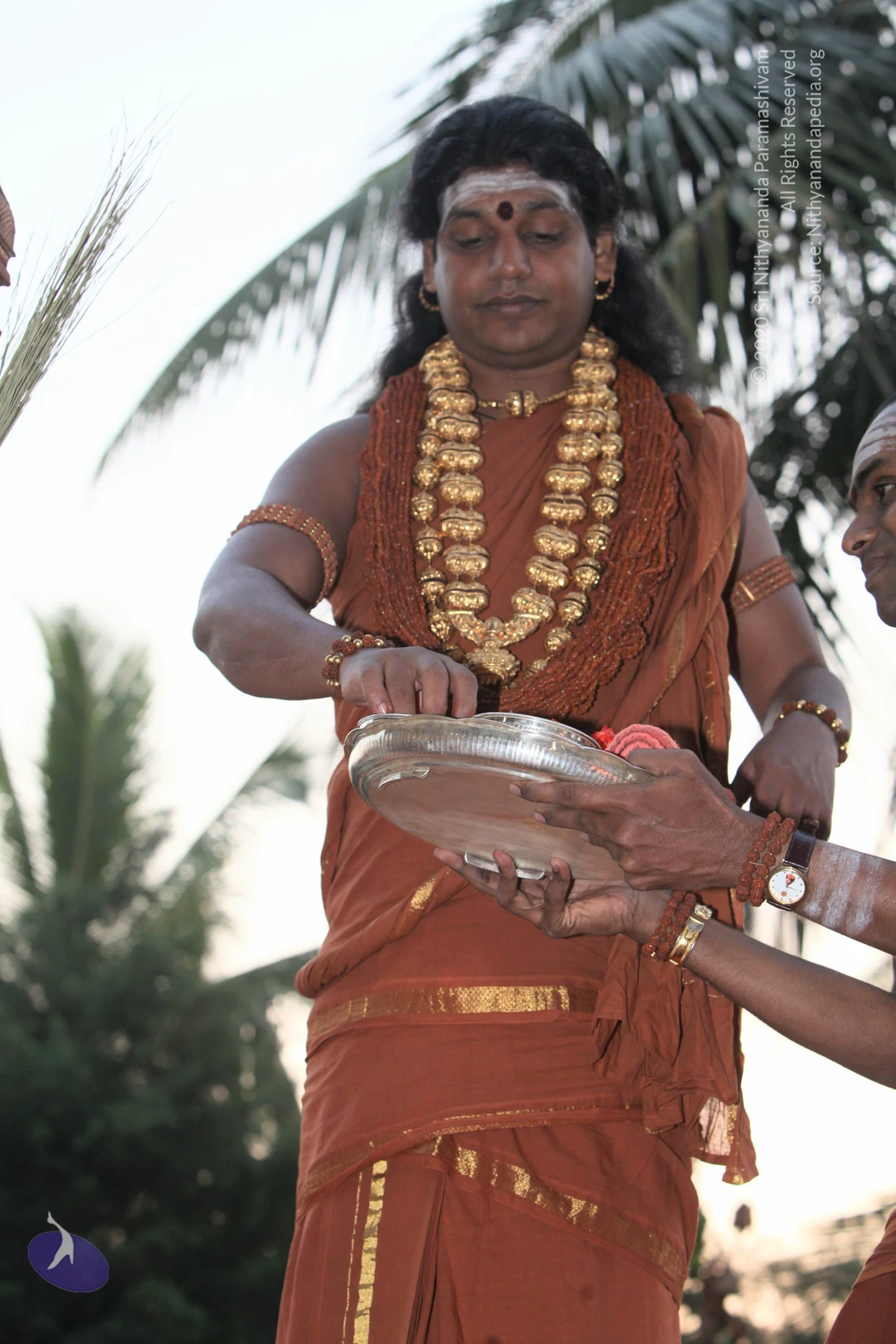
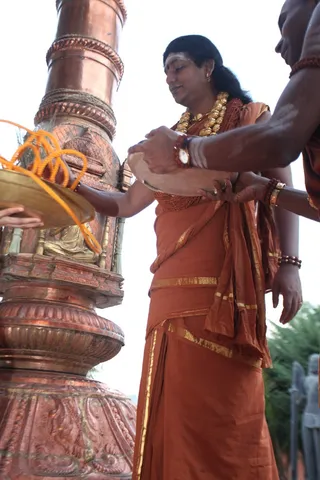
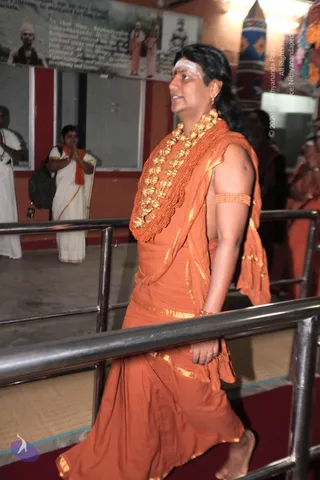
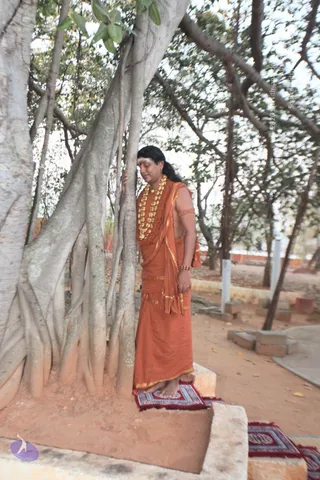
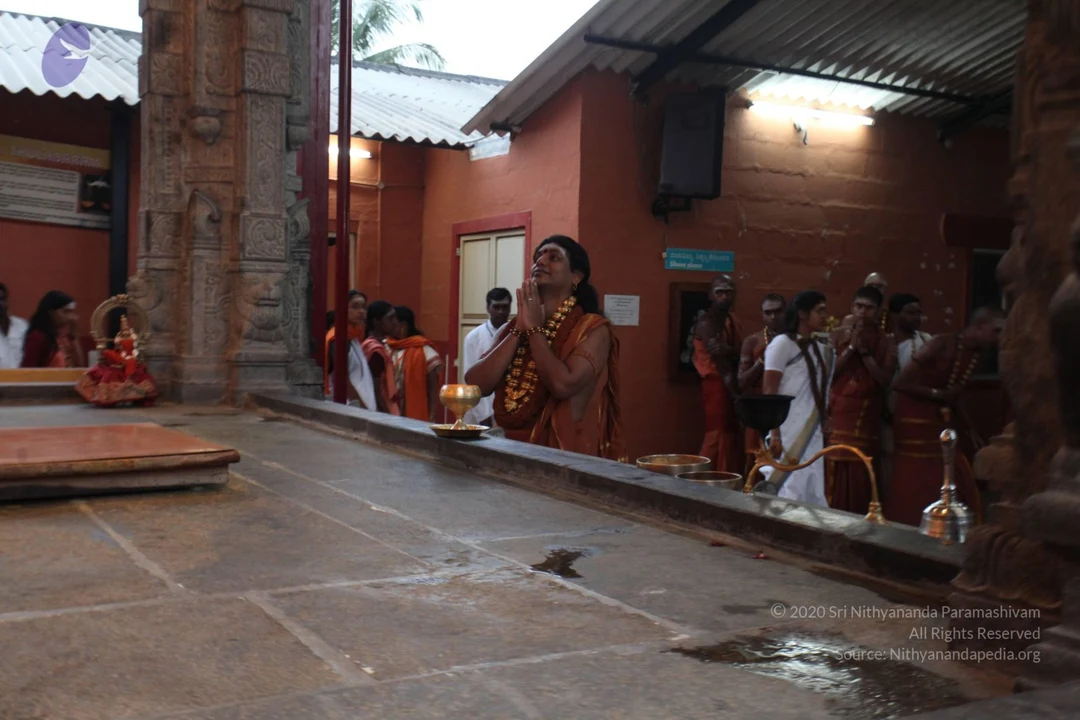
A tall copper flagstaff (dhvaja stambha) rises from an ornately carved copper-clad base on a raised stone platform, with a small red-and-orange flag fluttering at its top. Orange rope runs down the pole. To the right, a corrugated metal roof shelters the courtyard, and a row of people in white and maroon clothing stands at the edge of the frame, a few visible in front of the base. Palm trees and a small orange-roofed building fill the background under a pale sky.A photograph of a man walking along a metal railing indoors, wearing saffron-orange draped robes with gold-trimmed borders, a layered orange beaded necklace with large gold beads, a gold armlet, and a white vertical mark with a red dot on his forehead. Behind him, a woman in white with an orange shawl stands with hands pressed together in namaste, and a man in white stands at left; other people in orange are partly visible at right. A banner with printed text and photographs is on the back wall. Swamiji (probable): the long dark hair, saffron robes, rudraksha-style gold and orange necklace cues fit the page's identification, so the figure is recorded as in person, though this is appearance-based only.A person in orange-saffron robes with gold-embroidered edges stands barefoot on a red patterned mat beside a large banyan tree, leaning against its thick aerial roots with one hand while looking downward. He wears a long gold-and-bead garland, a rudraksha-style mala, a gold armlet and bangles, a white vibhuti line with a red kumkum dot on the forehead, and long dark hair swept back. Sandy ground, low stone platforms and smaller red mats surround the tree in an outdoor setting. Appearance-based: Swamiji (probable), standing in person beneath the tree; the cues are long swept-back hair, saffron ornate clothing, rudraksha mala and ceremonial gold necklace.A man in saffron-orange robes stands beside a copper-coloured temple flagstaff, his hand resting on an orange cord wound around its base. He wears layered gold beaded necklaces, a rudraksha mala, a beaded red-orange shawl, gold-edged dhoti and a watch, with a vibhuti tilak on his forehead and long dark hair tied back. Another person's hand offers a silver plate or bowl from the right. Carved stone figures stand in the background among trees. a person appears in person, identified by his saffron clothing, rudraksha mala and ornate gold necklaces during the flag-hoisting ritual.A photograph of a figure in saffron-orange draped clothing with gold-bordered cloth and a large gold necklace of beads, standing beside an ornate copper temple flagstaff or kalasha-like pillar. The figure holds a brass or copper plate, while another person's arm and hand reach in from the right holding a plate of offerings. An orange cord or rope wraps around the copper pillar, and a small gilded deity figure sits in a niche at its base. Rudraksha beads and a white sandalwood mark on the forehead are visible. A plain white sky and a blurred green tree form the background, with a grey statue partly visible at right.A tall copper flagstaff with ring-patterned shaft and a carved finial rises against a bright sky beside a metal-roofed shed and a palm tree. At its base stands a carved stone pedestal. Three men in rust-orange and saffron dhotis stand at the flagstaff. The man on the left in pink-orange cloth leans in and holds a brass plate of orange and yellow garlands up toward the pole. The bare-shouldered man on the right holds a brass plate and white flower offerings. Between them stands a man with a gold garland and rudraksha bracelets, wearing a rust-orange cloth and a red bindi, looking down at the offerings. This appears to be a flag-hoisting ritual with offerings to the flagstaff.
02-MORNING-SATSANG

65 photosSource gallery
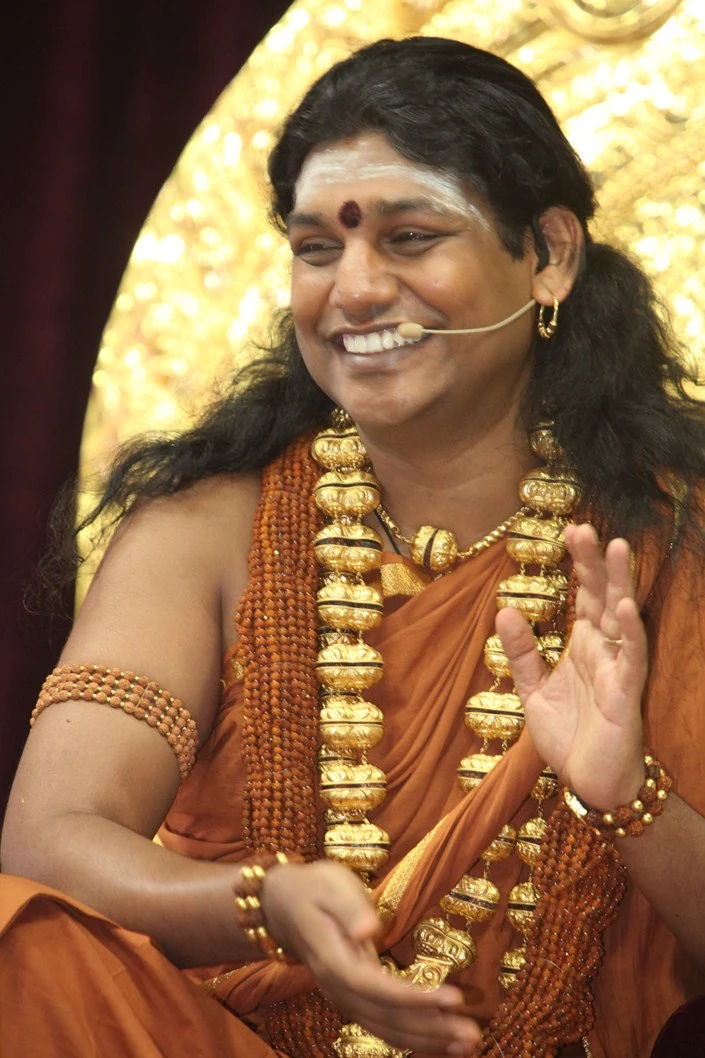
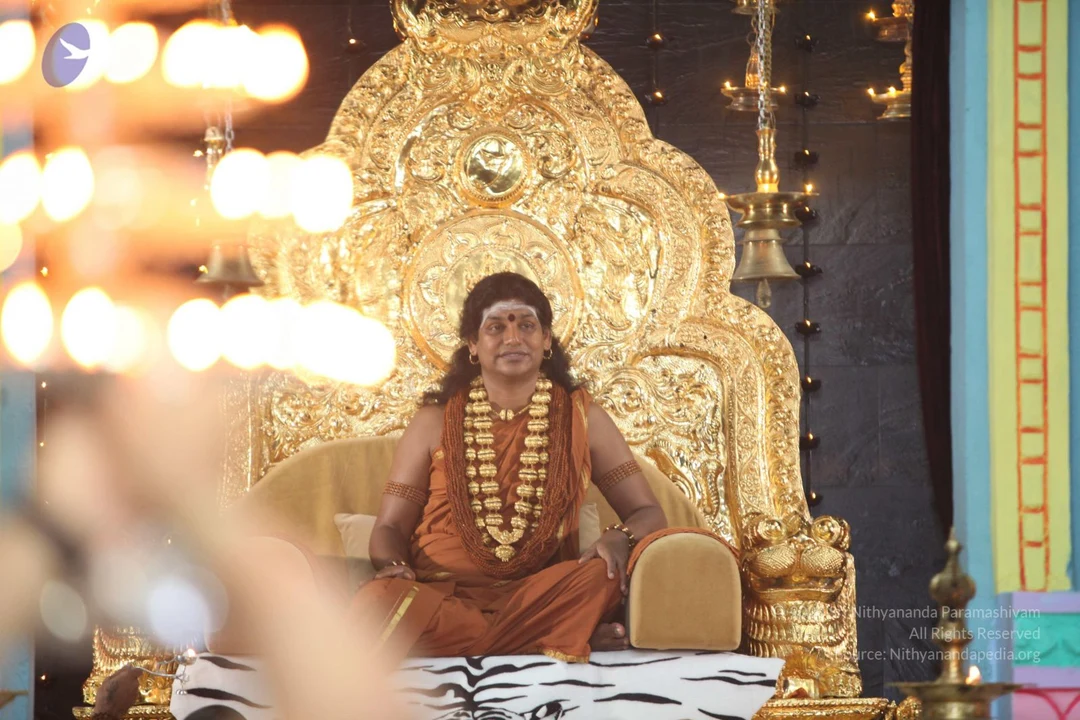
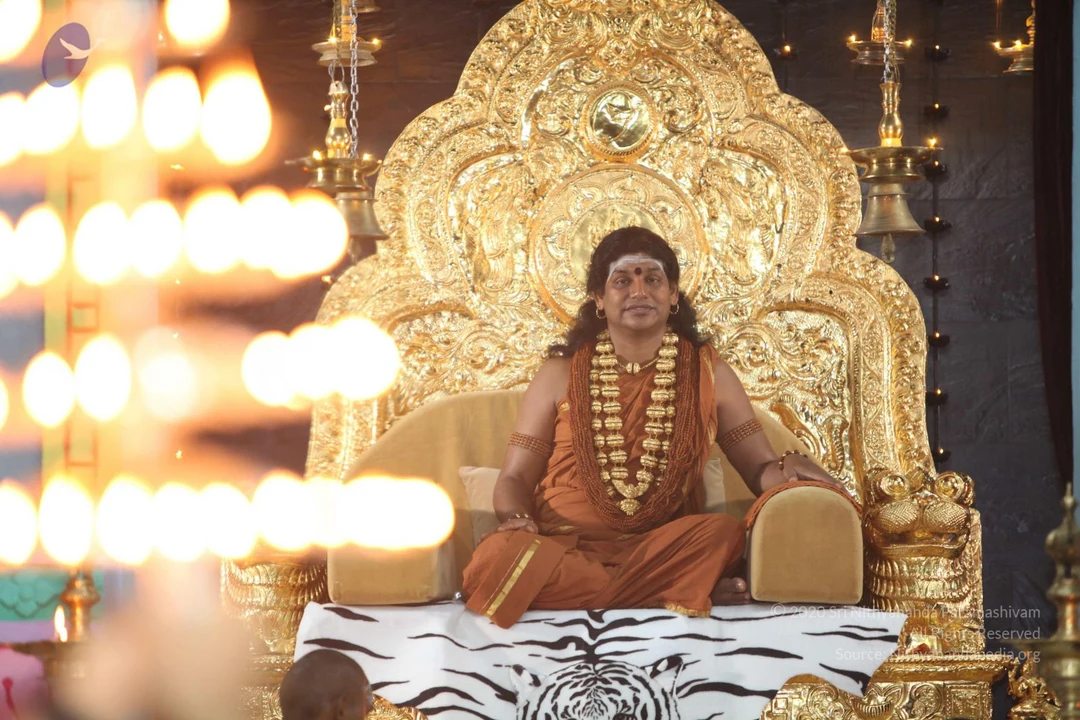
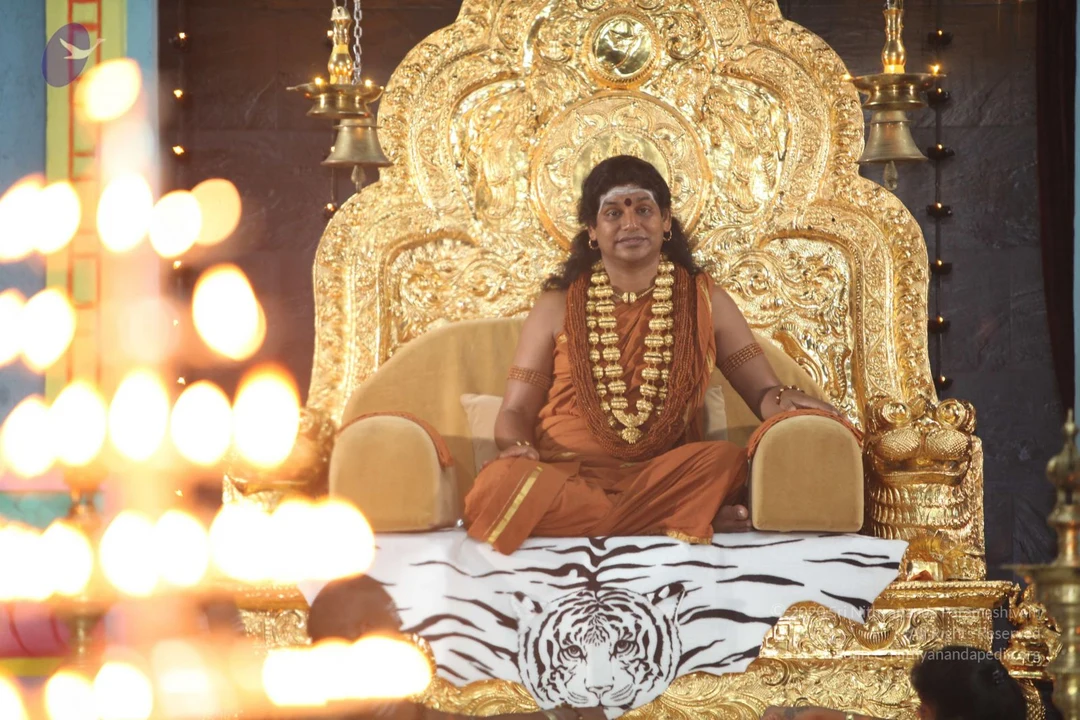
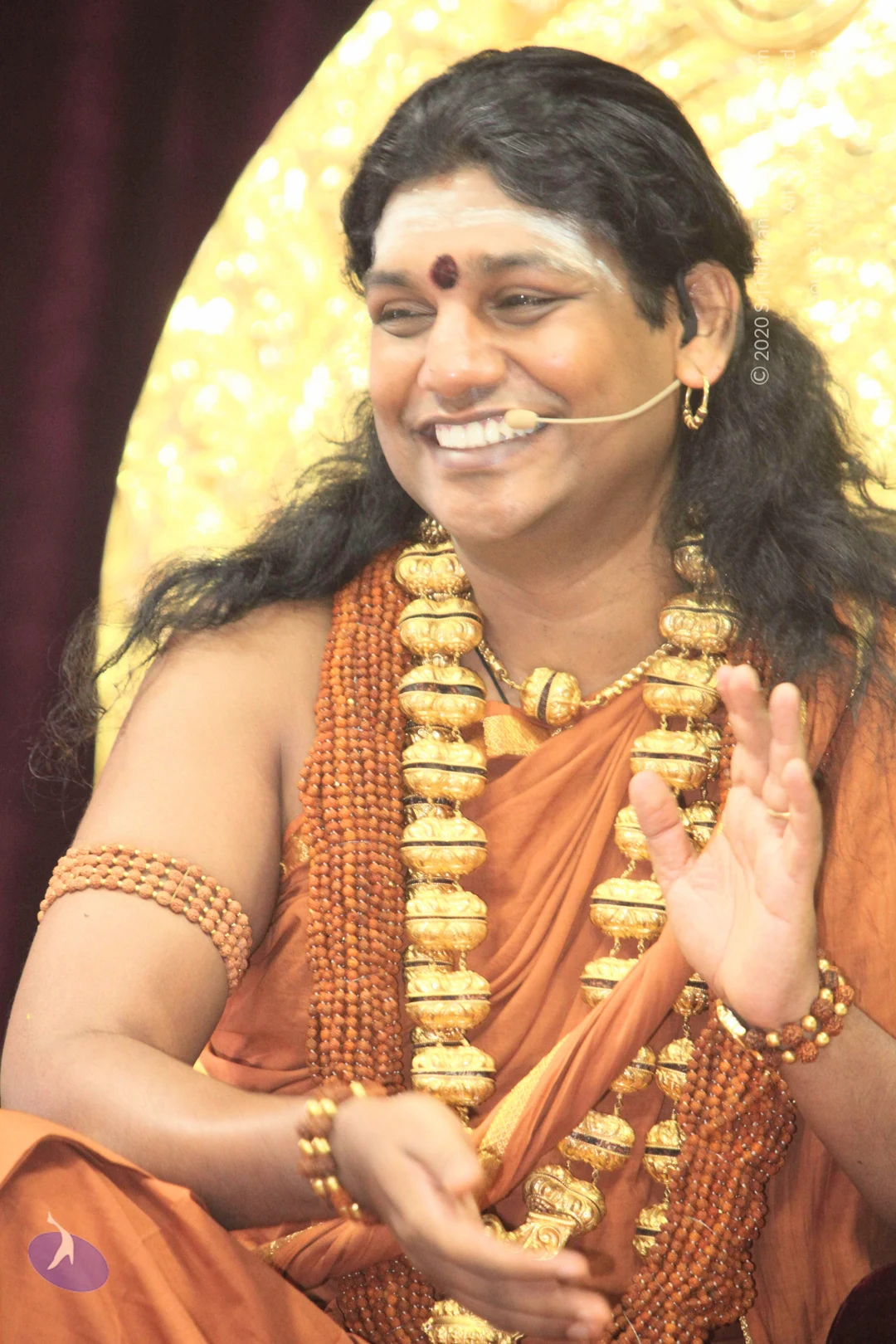
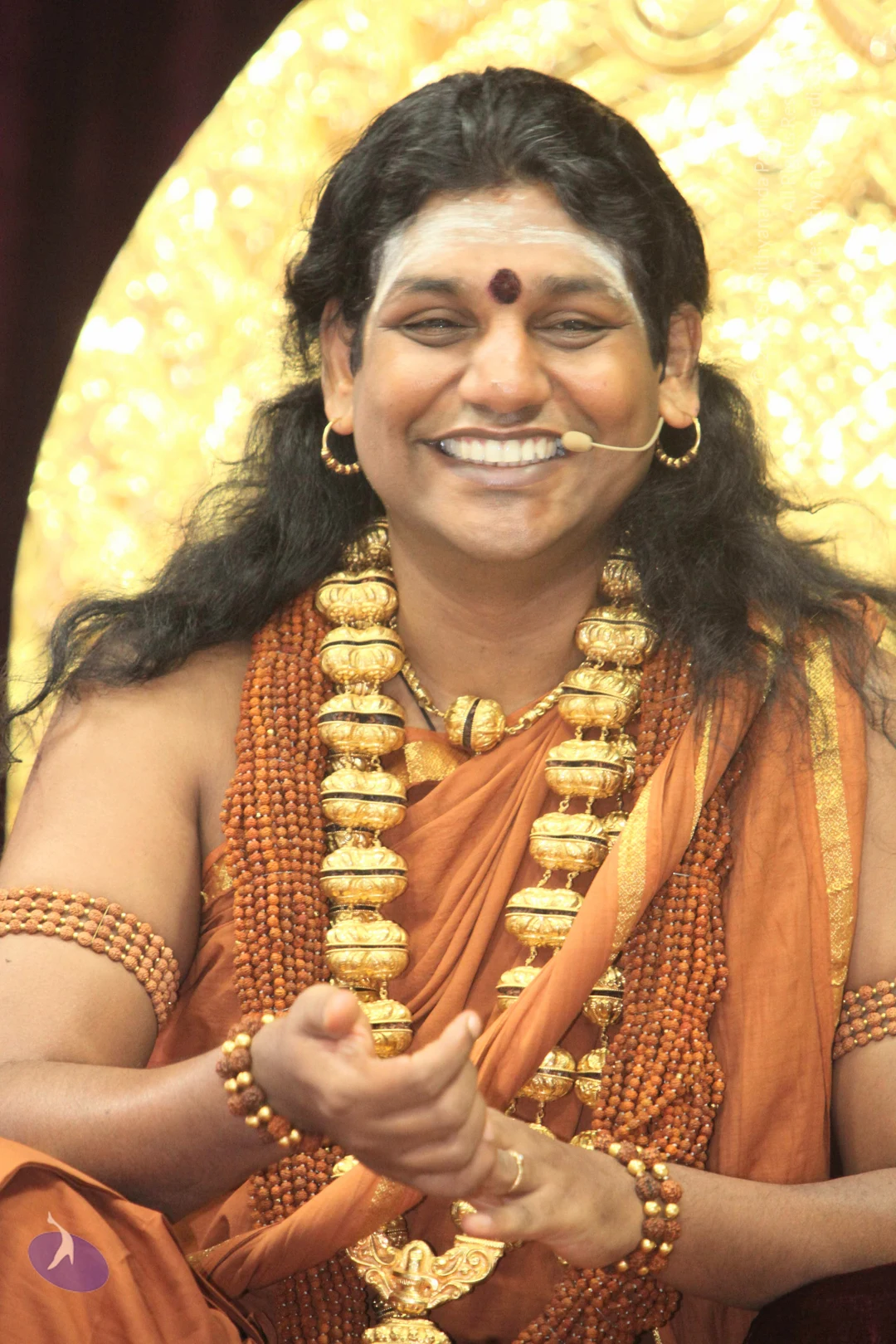
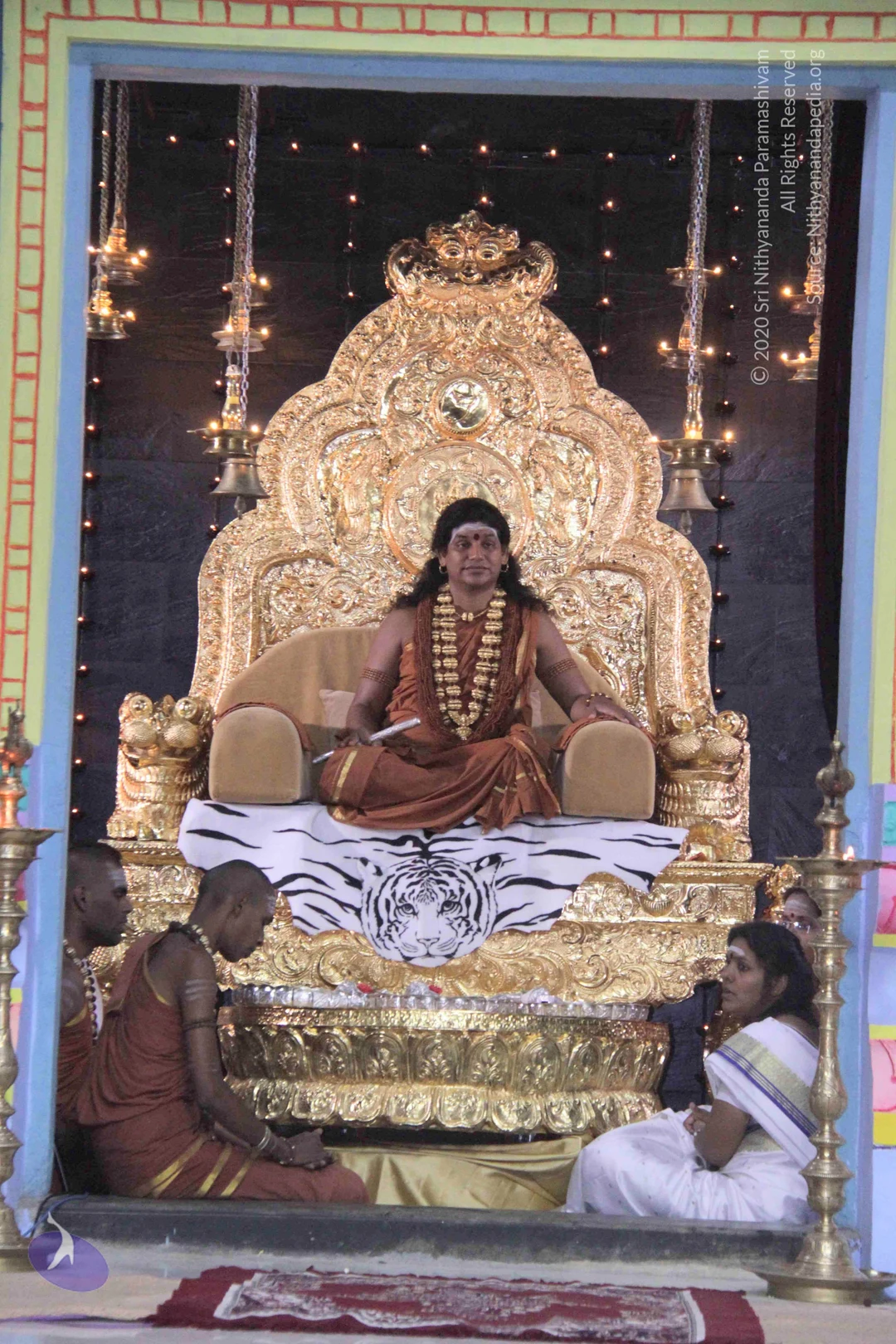
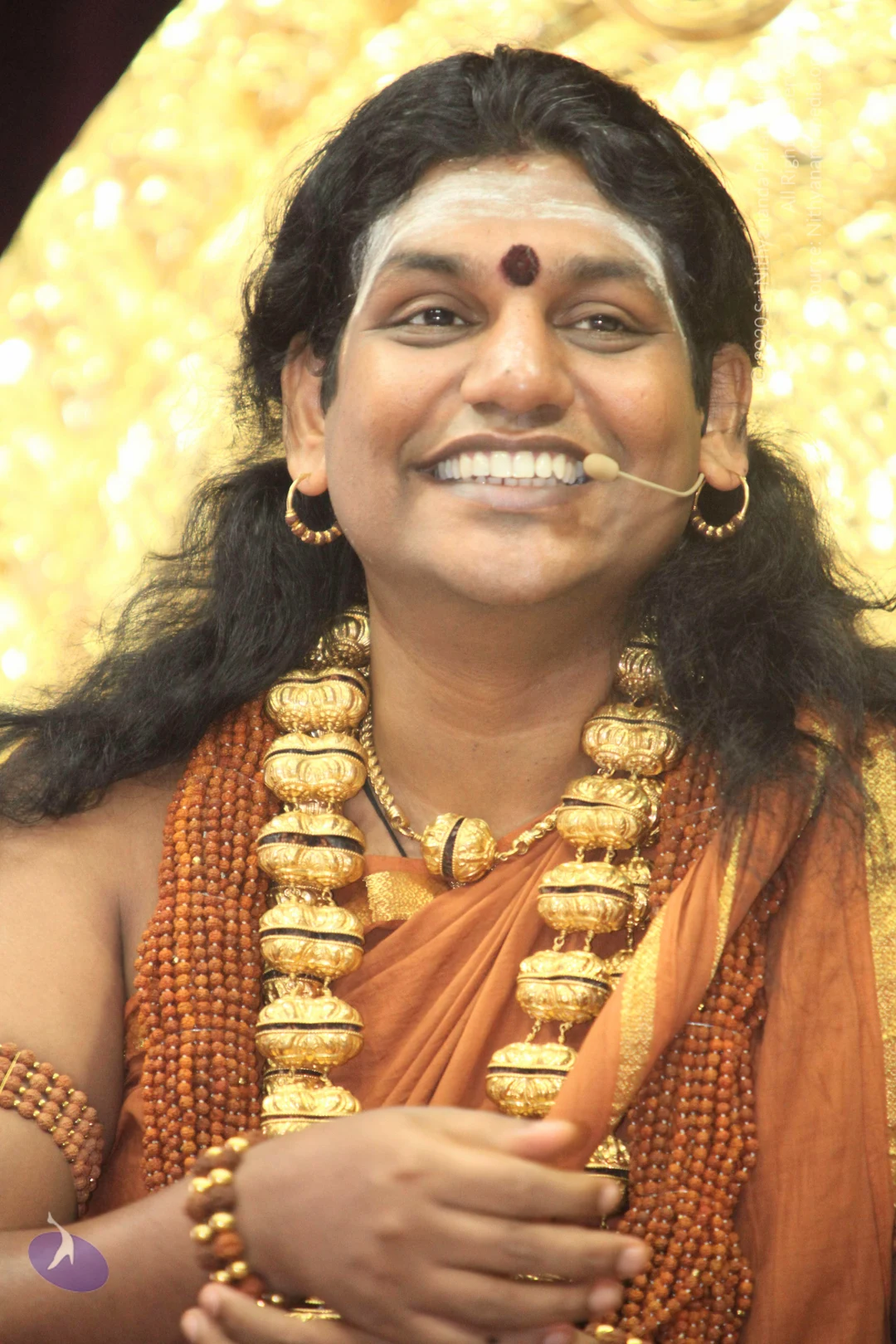
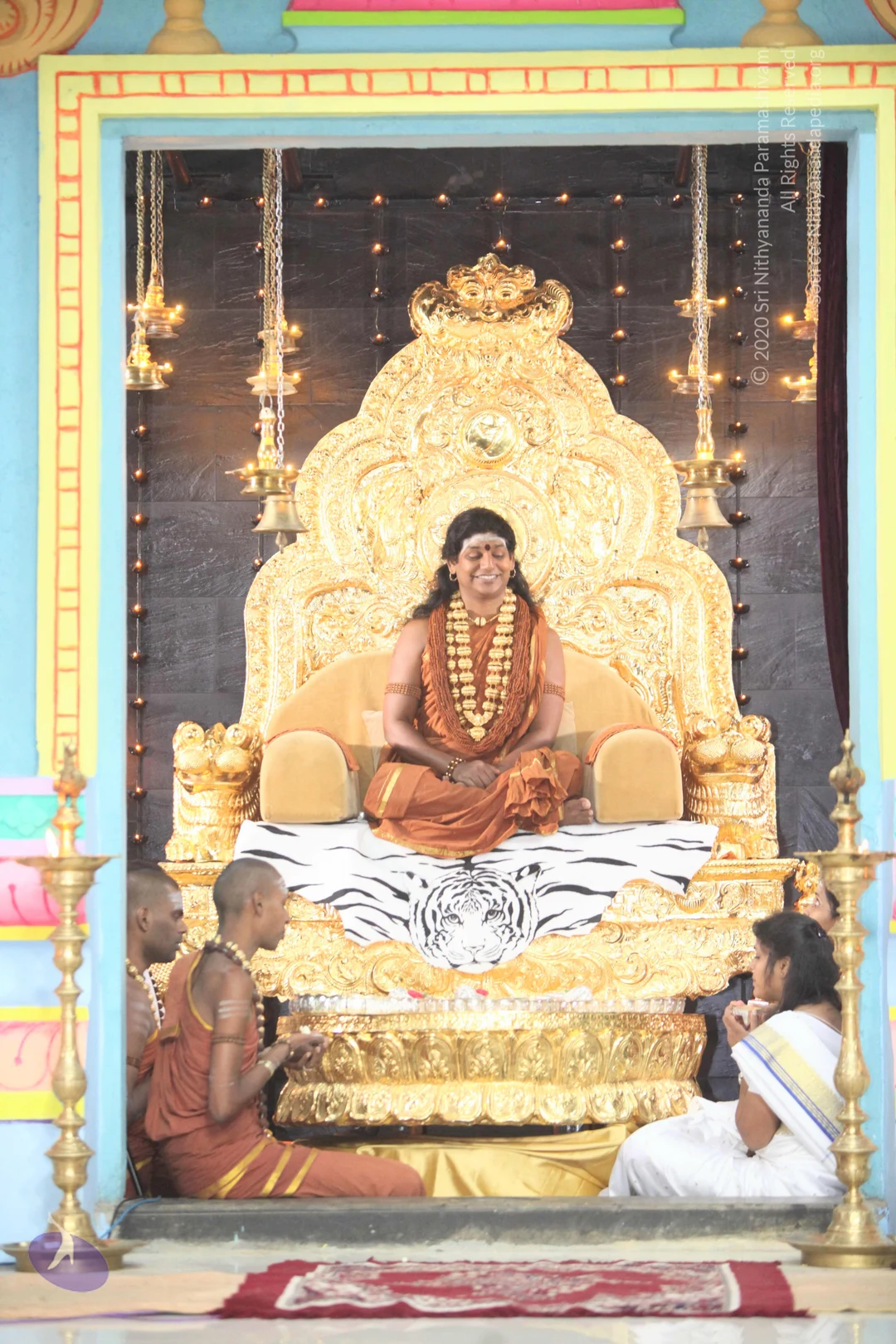
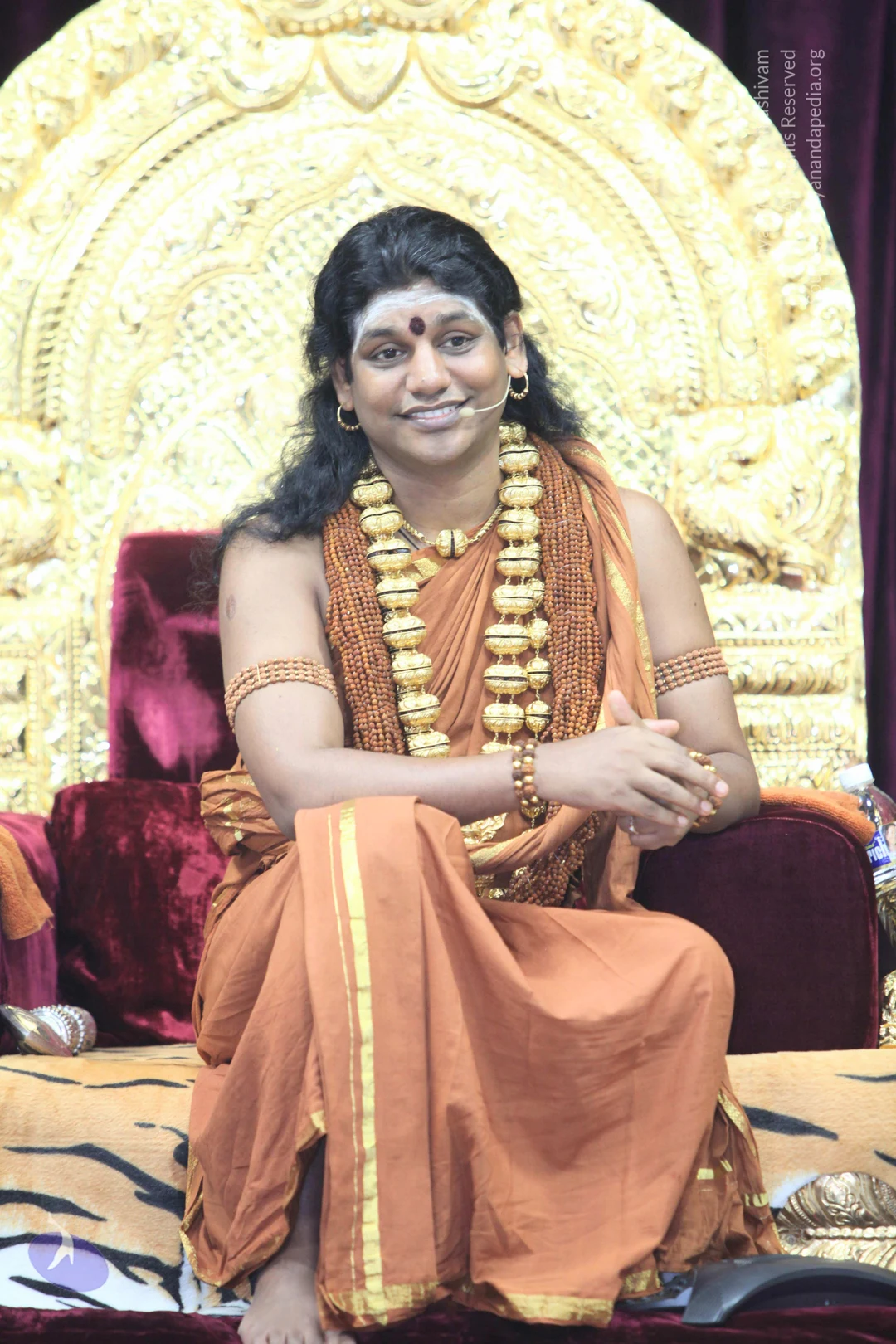
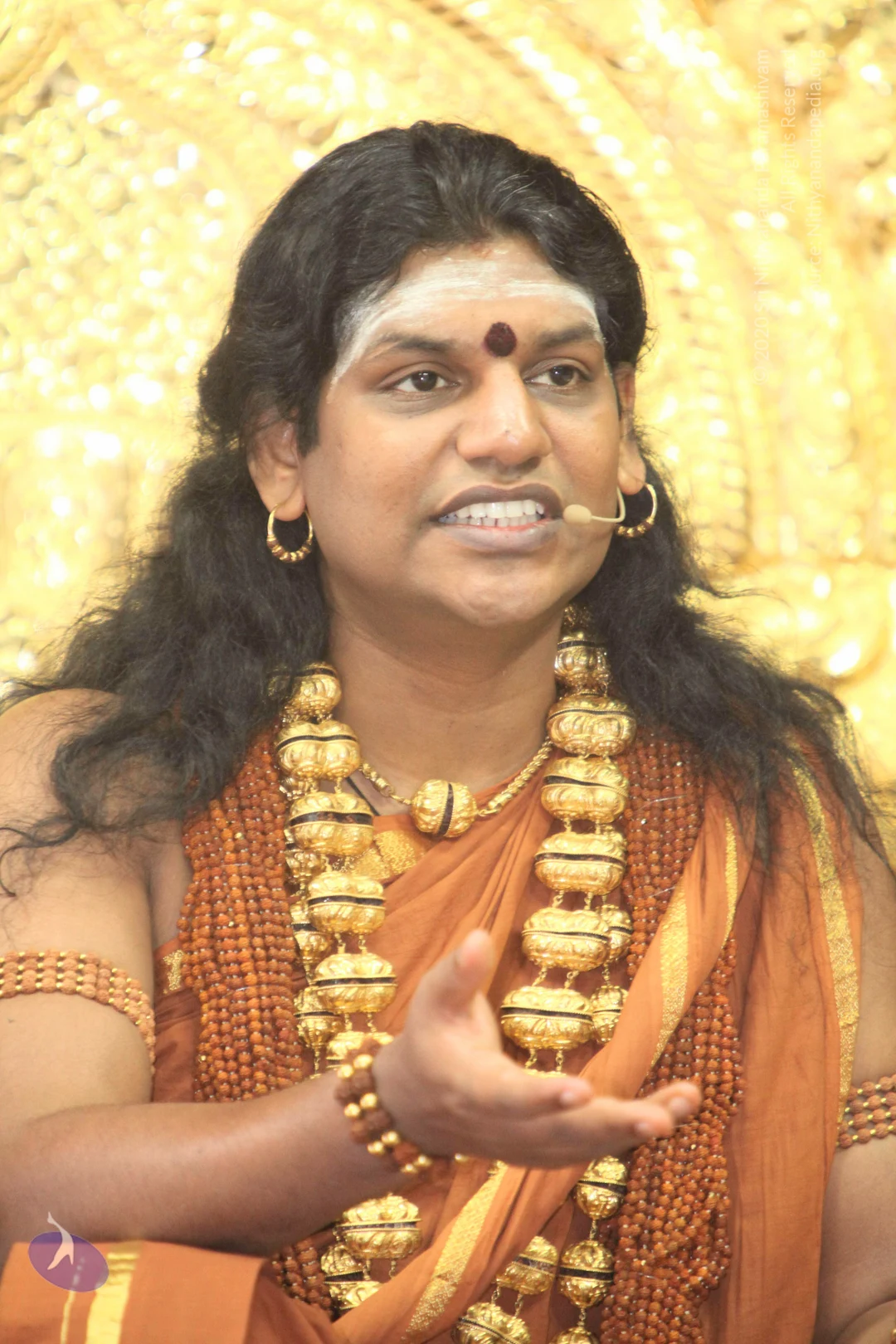
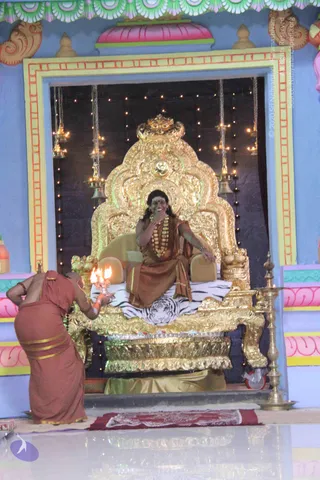
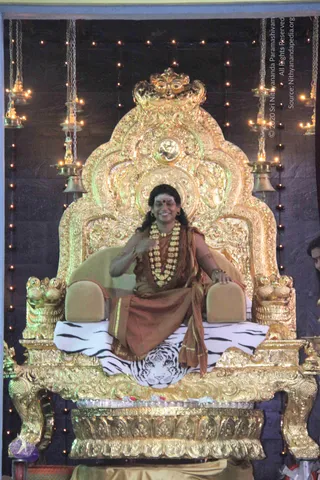
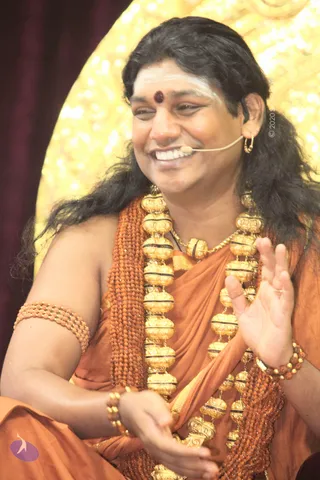
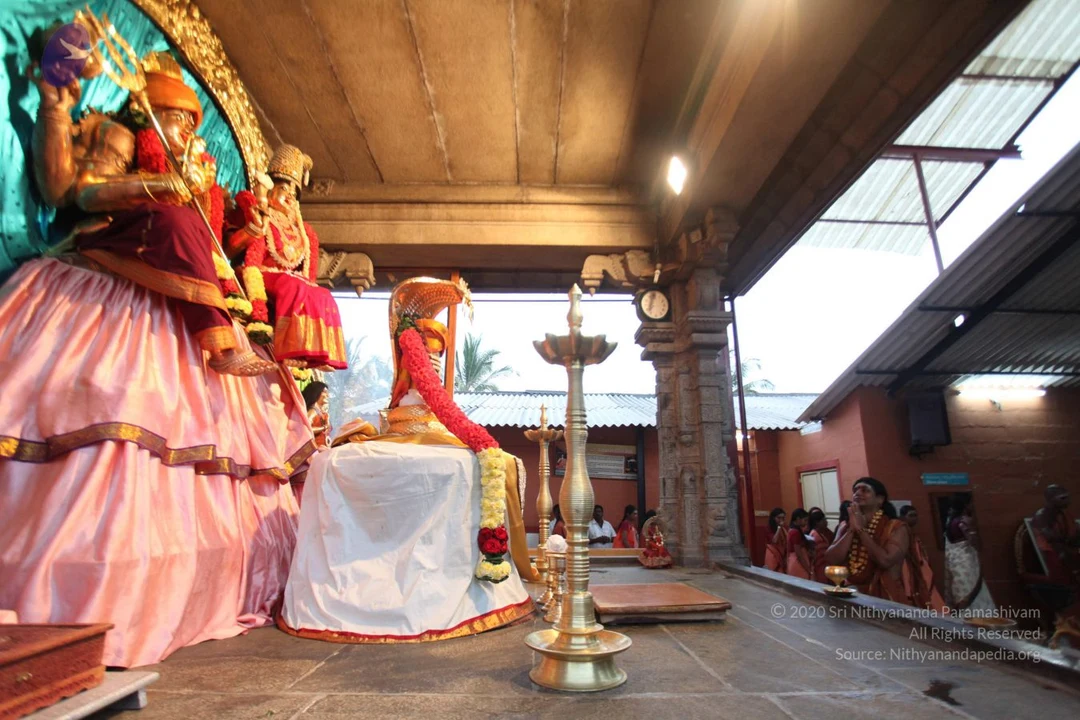
A seated person in an ornate gold throne with a tall arched back and a white tiger-skin cloth sits in a shrine-like setting with blue walls and pink painted borders. The seated figure wears an orange-brown robe, a long gold-beaded necklace and a red forehead mark, with a hand raised near the face. A standing attendant in a rust-coloured dhoti leans forward at the left, holding a lit lamp with flames toward the throne. Brass oil lamps hang from chains and a tall brass lamp stands at right. Strings of small lights decorate the dark backdrop.A seated man in an orange-saffron robe with gold-bordered edges sits on a maroon velvet throne-style chair in front of an ornate gilded arched backdrop. He wears layered gold bead necklaces, a dark rudraksha mala across his chest, rudraksha bracelets on his wrist and upper arms, and gold hoop earrings, with a red dot on his forehead and white markings above it. He has long dark hair, smiles, and rests his hands clasped on his knee, with a small microphone attached near his face. A tiger-striped cloth covers the seat beside him. The visible person is the only one present; a water bottle sits at the edge of the frame. a person appears as the seated speaker, identified by long swept hair, saffron clothing, rudraksha malas and ceremonial gold necklaces.A smiling man with long dark hair, white forehead markings and a red bindi sits on a crimson velvet seat before an ornate gold-embossed backdrop. He wears an orange saffron shawl with gold border, a thick gold bead necklace over rudraksha malas, rudraksha armbands and bracelets, and small gold earrings. A gold lion sculpture stands at right and a tiger-striped cloth covers the platform. A small microphone is clipped near his face. Swamiji (probable): the appearance cues are long swept-back hair, saffron clothing, rudraksha malas and ceremonial gold necklaces, seated in a presenter's position on a throne-like seat.A seated figure with long dark hair, a red bindi and layered green-gold beaded necklaces sits on an ornate gilded throne with lion-headed armrests and a tiger-skin cloth draped over the seat. He wears a rust-orange shawl and orange-brown robe, raising one hand in a gesture while smiling. Behind him rise carved gold back panels and a suspended row of brass oil lamps lit with flames, along with a dark wall studded with small lights. A second person's edge is visible at the right margin. a person seated in the satsang hall.Close photo of a smiling man with long dark hair, white forehead markings and a red bindi, wearing a headset microphone and a small gold hoop earring. He wears an orange-saffron shawl over his shoulder, layered rudraksha malas and large ornate gold beaded necklaces, plus a rudraksha armlet and beaded bracelets. He gestures with one raised hand while seated before a glowing golden backdrop. Swamiji (probable): long swept-back hair, saffron clothing, rudraksha malas and ceremonial gold necklaces, appearing in person as a speaker at a satsang.A photograph of a seated figure on an ornate gilded throne with a tiger-skin cloth draped over the seat, in front of a blue and pink painted shrine arch with hanging brass oil lamps. A man in saffron-orange robes with a large gold-beaded necklace and bindi sits centrally with hands resting on the armrests, and a dark backdrop with small lights frames him. Two men in saffron clothing kneel at the lower left beside a silver offering tray, and a woman in a white sari with a border sits at the right. a person seated in the centre wearing saffron robes, a gold garland and rudraksha-style adornment. Brass lamps flank the floor and a red rug lies in front of the platform.
04-DARSHAN

6 photosSource gallery
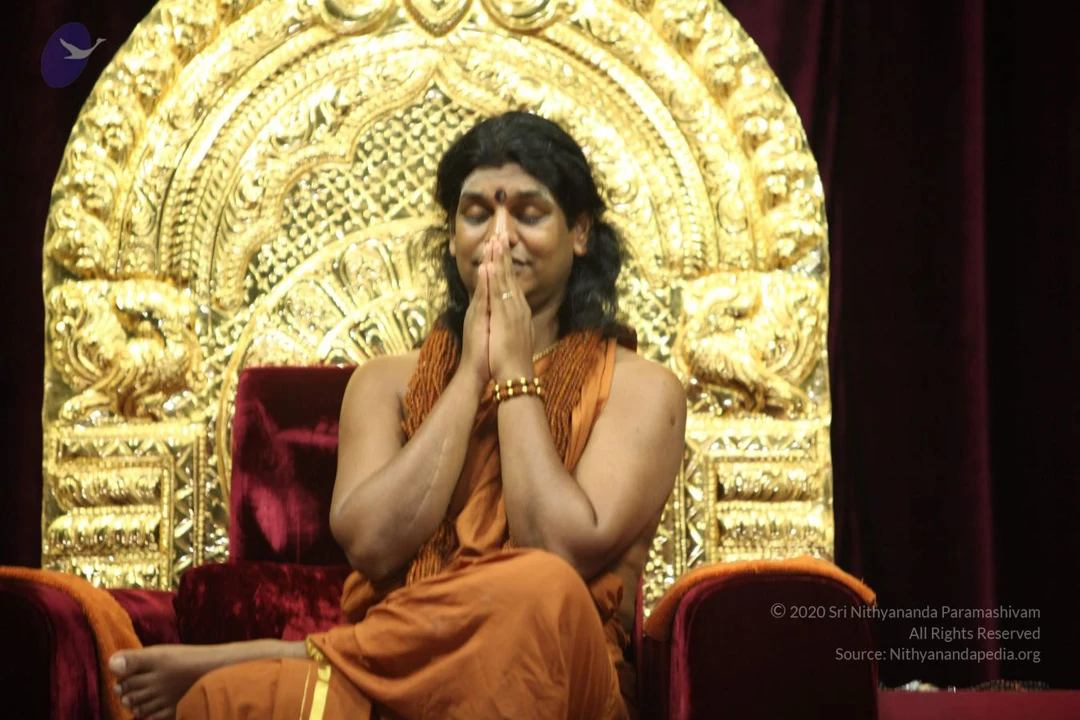
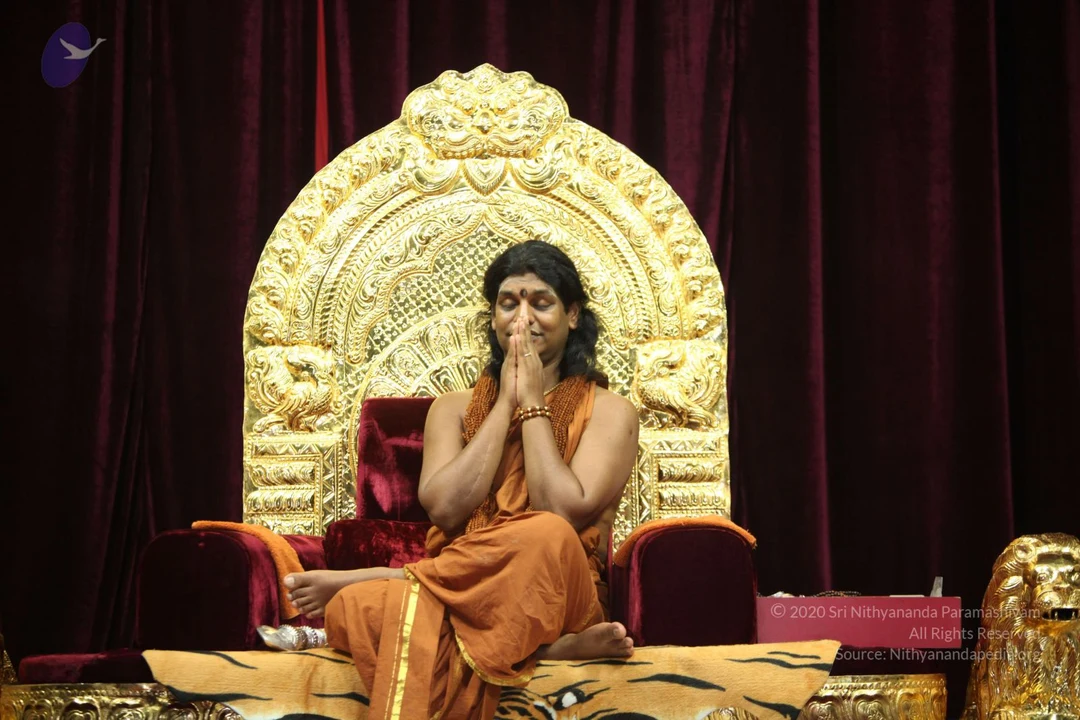
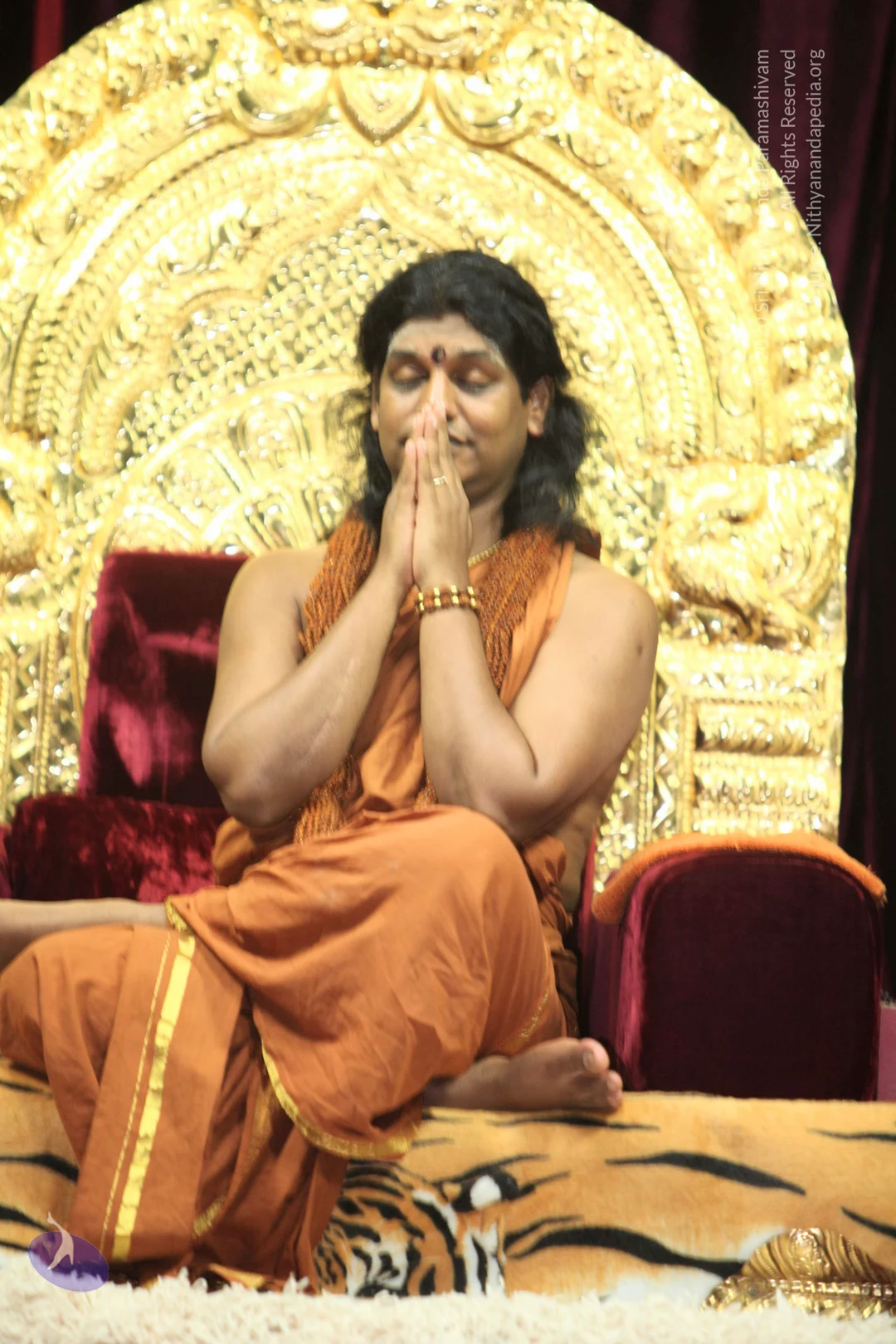
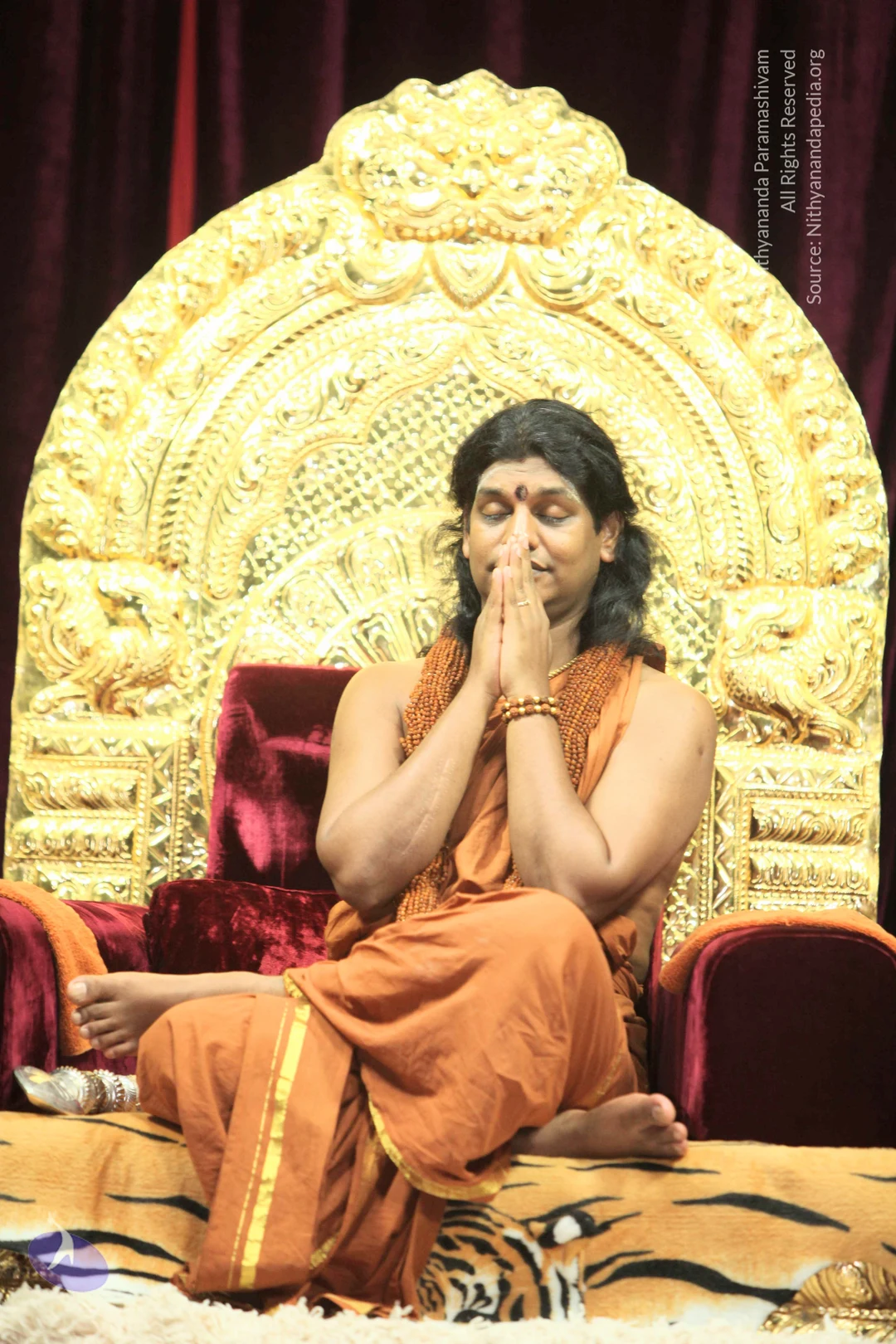
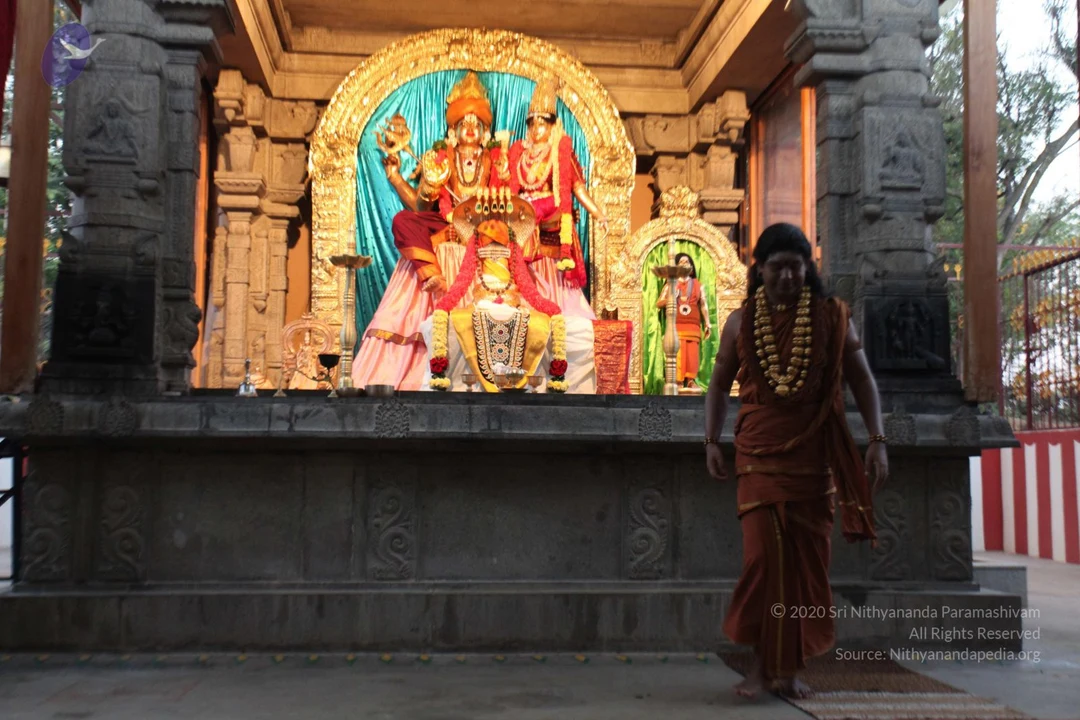
A photograph of a seated man with long, swept-back dark hair, wearing an orange-saffron wrap draped over his shoulders with gold borders, multiple strands of rudraksha malas around his neck, a gold necklace, a rudraksha bracelet and a ring. He has a red bindi and white forehead markings and sits in front of an ornate gold-embossed backdrop and maroon curtain. Appearance-based candidate: Swamiji (probable), as a seated person in the centre of the frame wearing the qualifying cues of long hair, saffron clothing, rudraksha malas and gold ornaments.A seated man in saffron-orange robes and a long rudraksha mala with ornate gold necklace sits on a red velvet throne-like chair before a deep magenta velvet curtain. He has long swept-back dark hair, a red bindi, and holds his hands clasped in his lap with a rudraksha bracelet on one wrist. A gilded carved element is visible at upper right. The watermarked-free photo shows him smiling slightly, appearing to listen or speak in a satsang setting. Appearance-based candidate: Swamiji (probable), with long hair, saffron clothing, rudraksha mala and gold necklace as cues, seated in a discourse setting.A seated man in saffron-orange draped clothing sits on a red velvet throne-like chair with a tiger-striped cloth on the floor, against a gold ornate backdrop. He wears long dark hair, a red bindi and a multi-strand rudraksha-style mala with a gold necklace and beaded bracelet, hands clasped in his lap, smiling as he looks to the side. Only one person is present.A man with long swept-back dark hair and a red bindi sits cross-legged on a red velvet seat in front of an ornate gold backdrop, with a tiger-striped cloth draped over the seat. He wears an orange saffron wrap and a long orange rudraksha mala, a gold necklace, and a gold bracelet, with his hands clasped on his knee. Swamiji (probable) appears as a seated presenter in orange robes and rudraksha mala, with the cues of long swept-back hair, saffron clothing and rudraksha beads. Red velvet drapes hang behind him.A man seated on an ornate gold-embossed throne with red velvet armrests, a tiger-striped cloth draped over the seat in front. He wears an orange-saffron cloth draped over his shoulders with a gold-bordered orange dhoti, plus a red bindi on the forehead and a beaded bracelet. His palms are pressed together in namaskar with eyes closed. Behind him hang deep maroon curtains.A person seated on a red velvet throne with an ornate gold arched backrest, hands pressed together in namaskar with eyes closed. He wears an orange-saffron cloth draped over the shoulders and body, a long rudraksha bead mala, and a bracelet of beads on the wrist. Dark hair falls to the shoulders and a red bindi marks the forehead. Feet rest on a tiger-striped cloth covering the platform. Probable Swamiji by appearance cues: long swept-back hair, saffron clothing and rudraksha malas, seated as a teacher while greeting devotees.
February 28 2013

1 photoView all
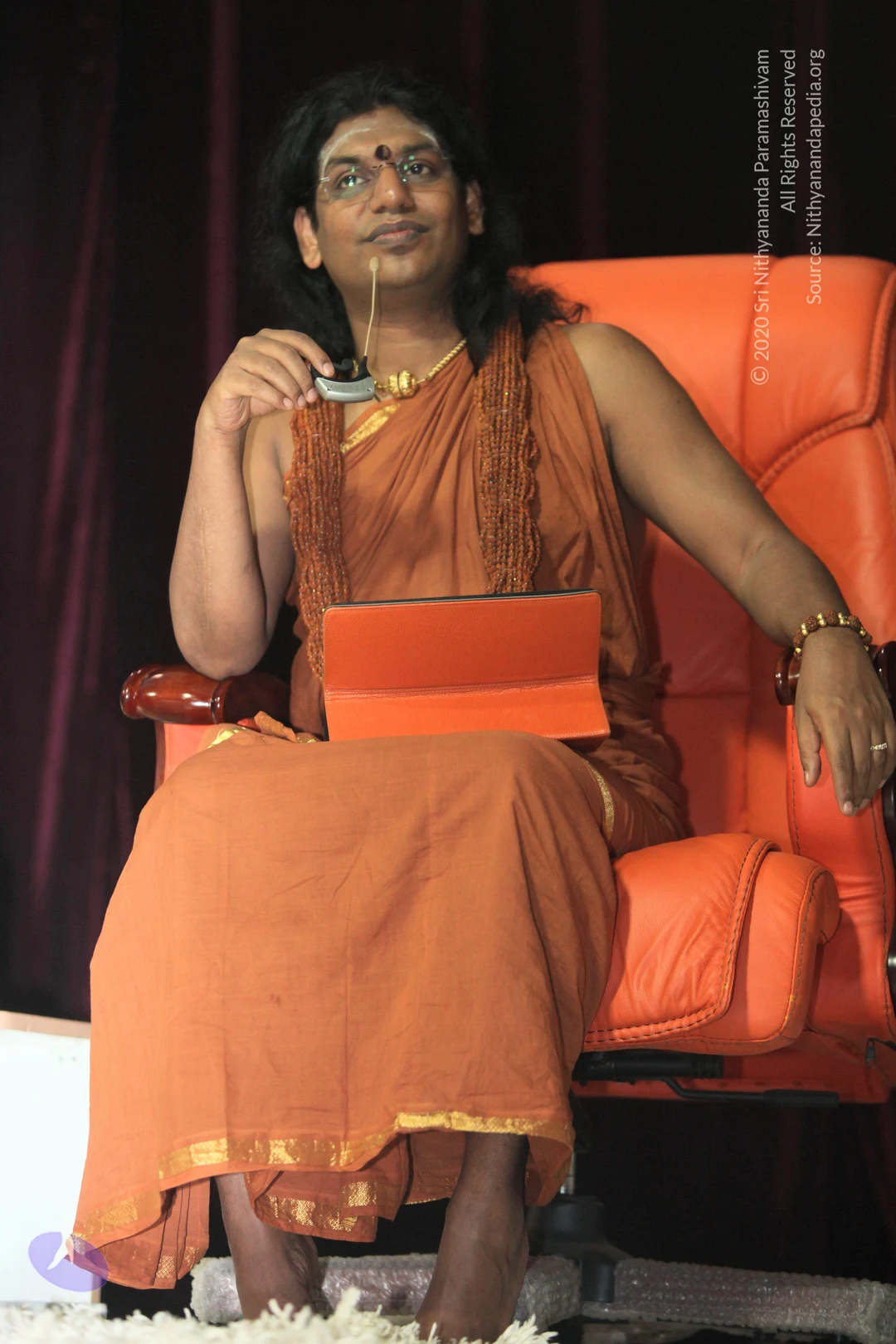
A photograph of a person seated in an orange leather armchair on a small stage before a dark maroon curtain. He wears an orange saffron-coloured dhoti and shawl with gold-bordered edges, long swept-back dark hair, a red bindi and tinted-lens glasses. A rudraksha mala hangs across his chest with a gold necklace, and a rudraksha bracelet is on one wrist. He holds a small remote in one hand and a lapel microphone is clipped near his mouth; an orange leather folder rests on his lap. Swamiji (probable): long swept-back hair, saffron clothing, rudraksha malas and ceremonial gold necklace, seated as the speaker.