Skip to content
Tuesday

28 February 2017

Nithyananda Peetham, Bengaluru Aadheenam | Inner Awakening - Day 3 | Inner Awakening Sessions: Genesis of Reality, Creating Identity

Dated photos
266
Source pages
1
Media
4
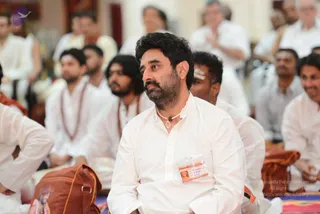
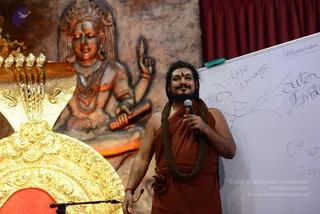
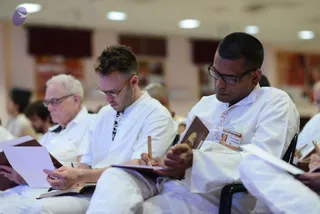
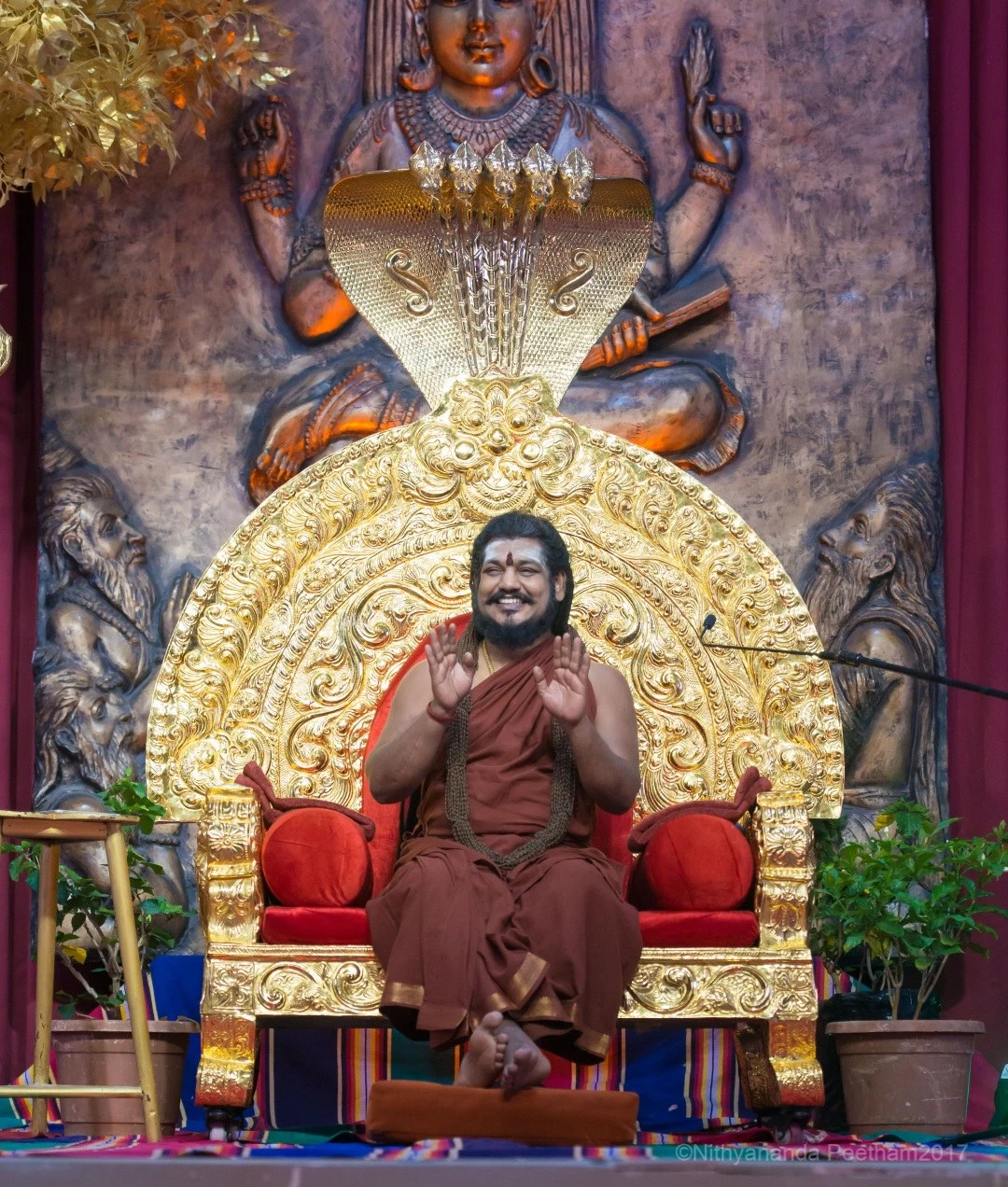
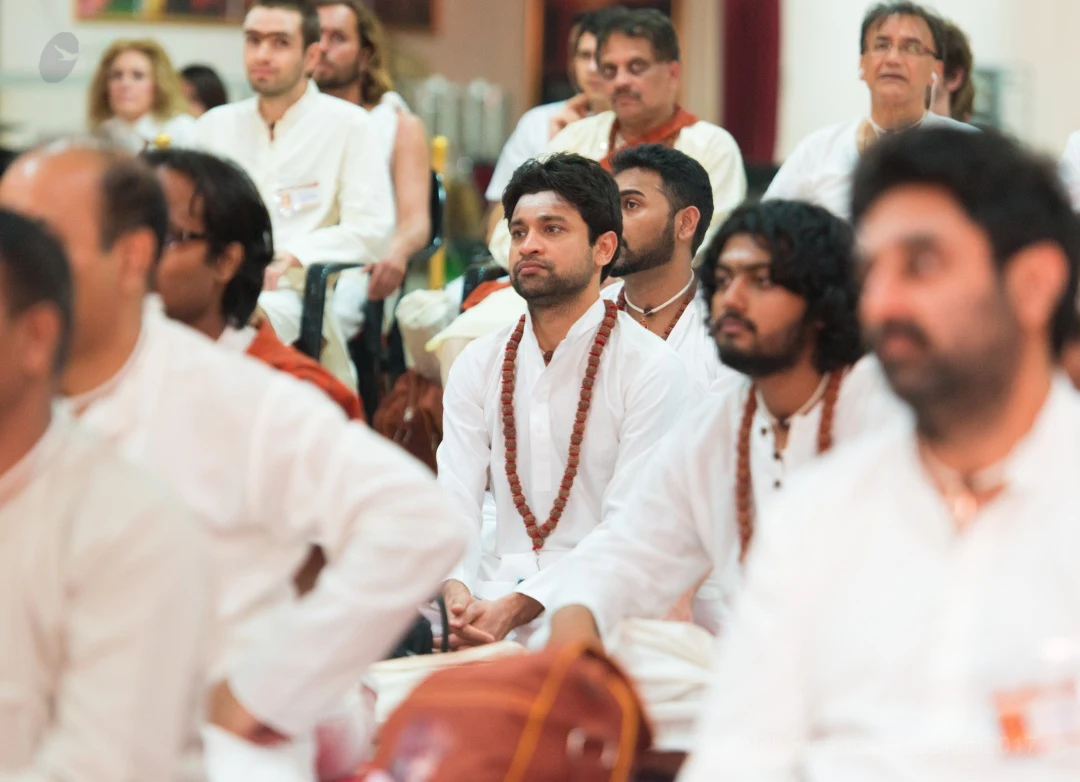
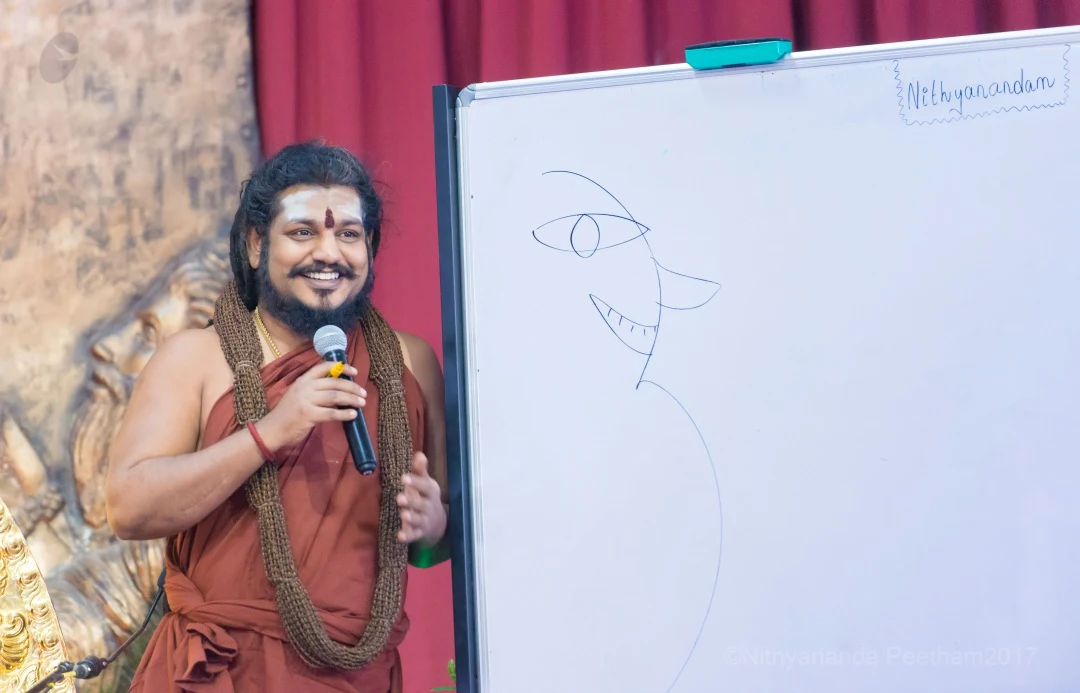
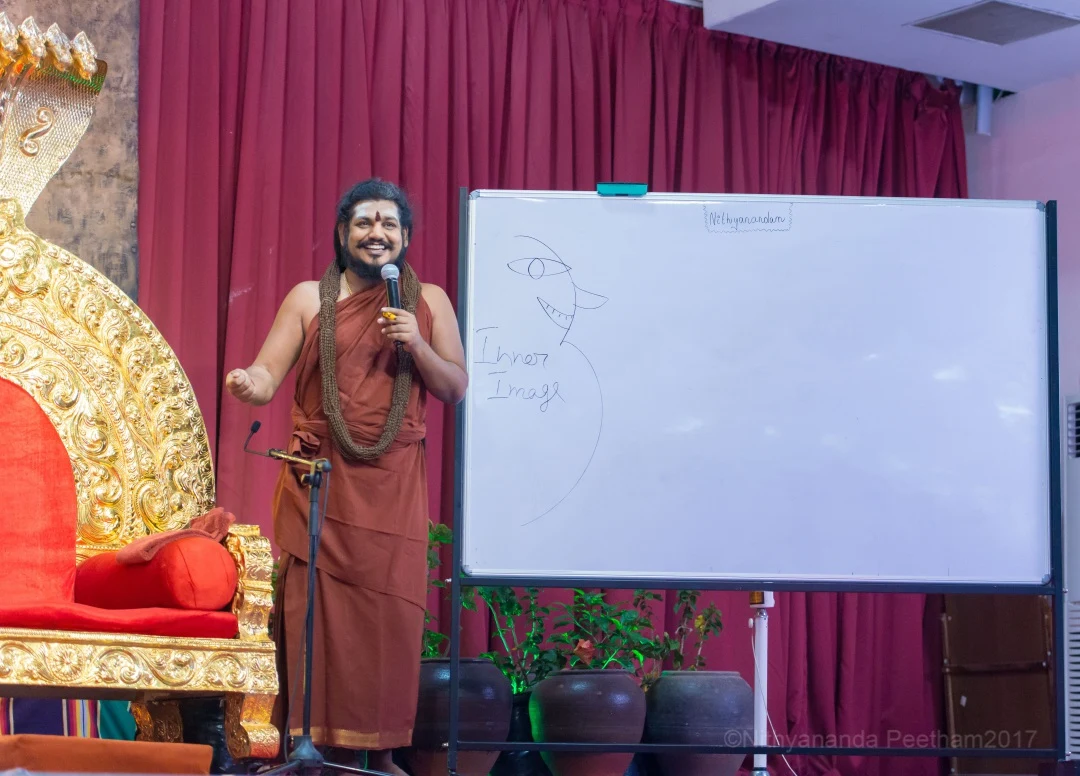
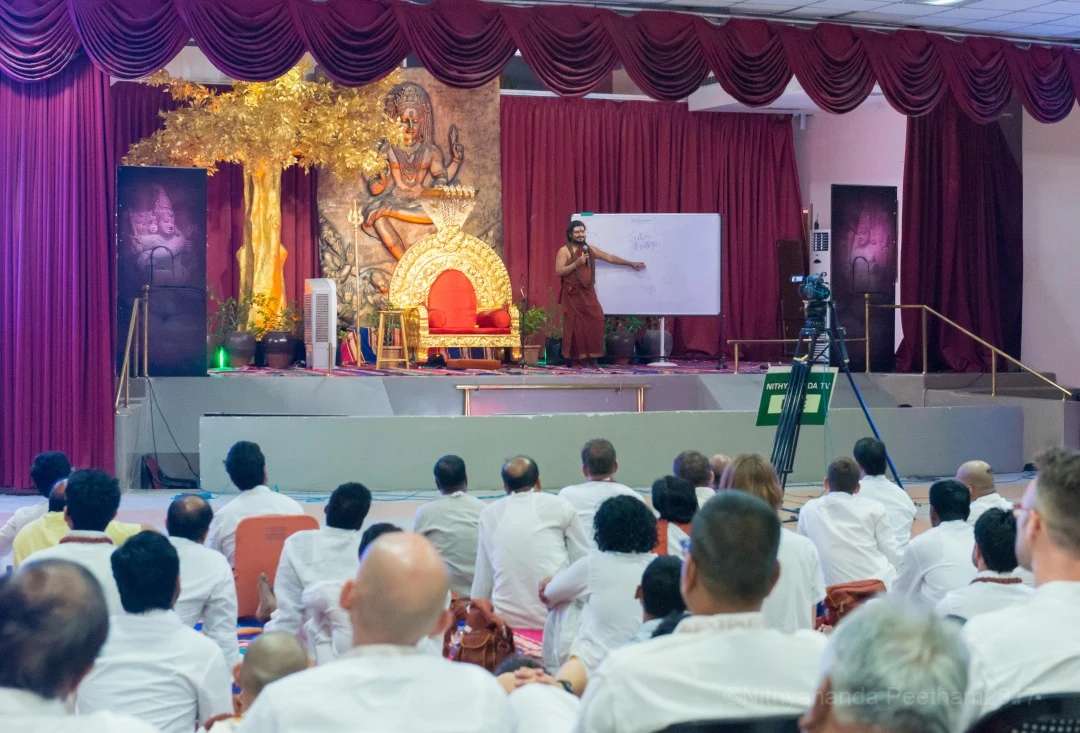
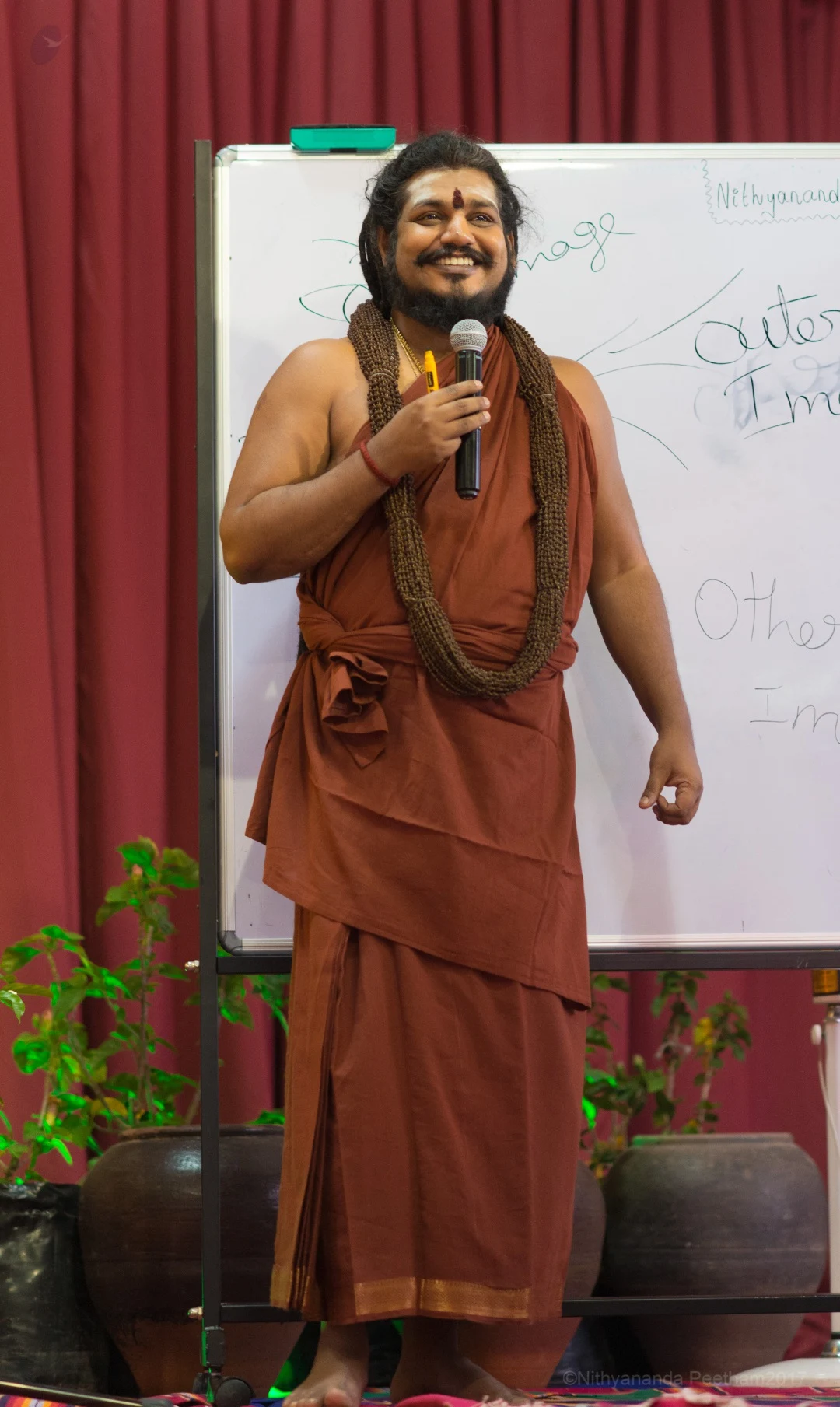
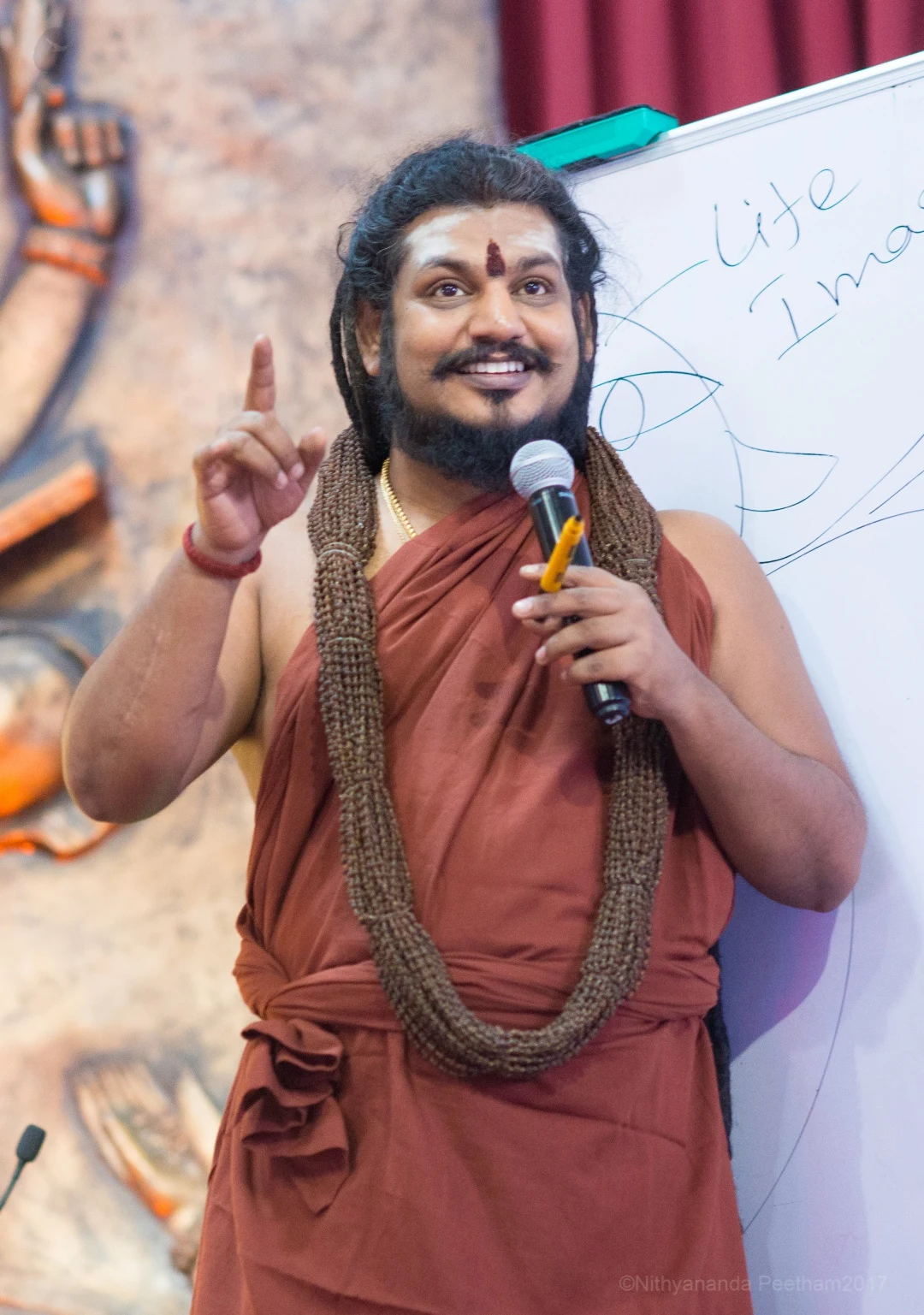
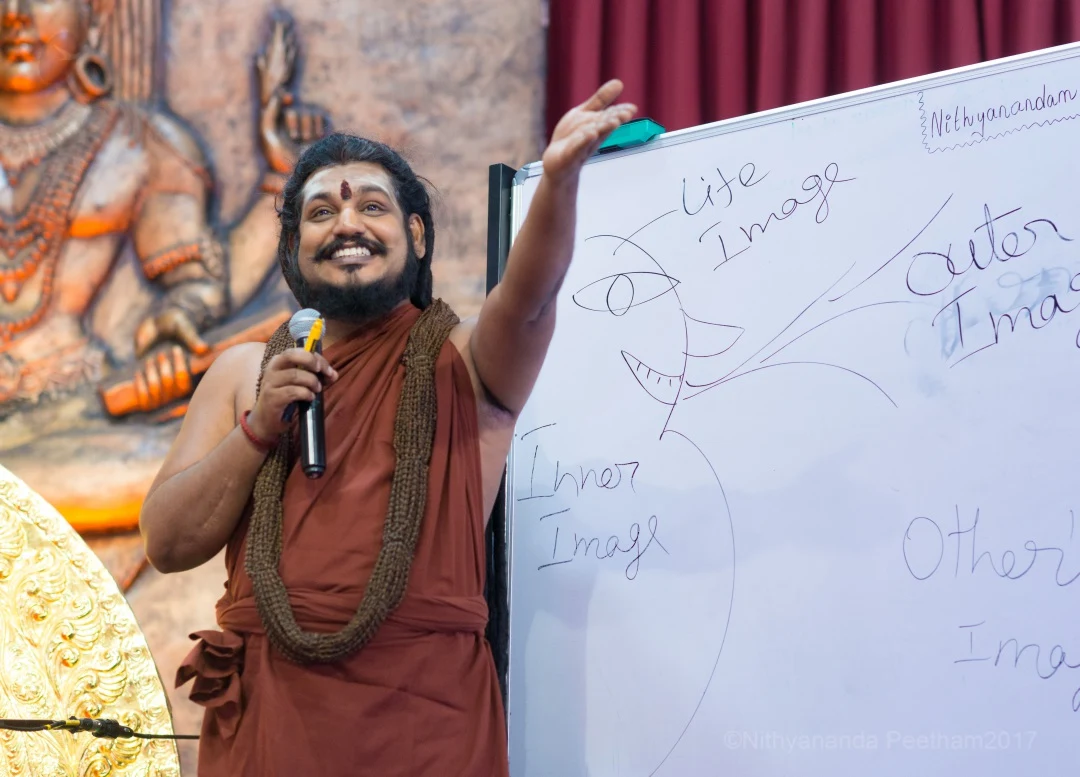
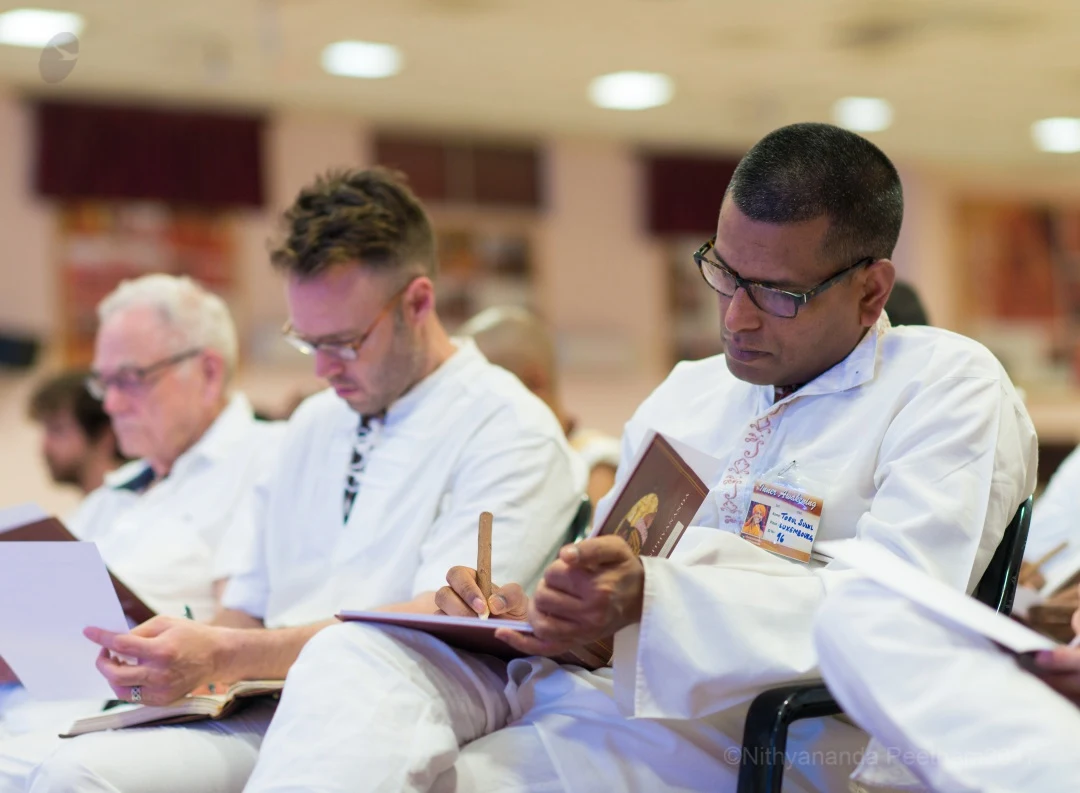
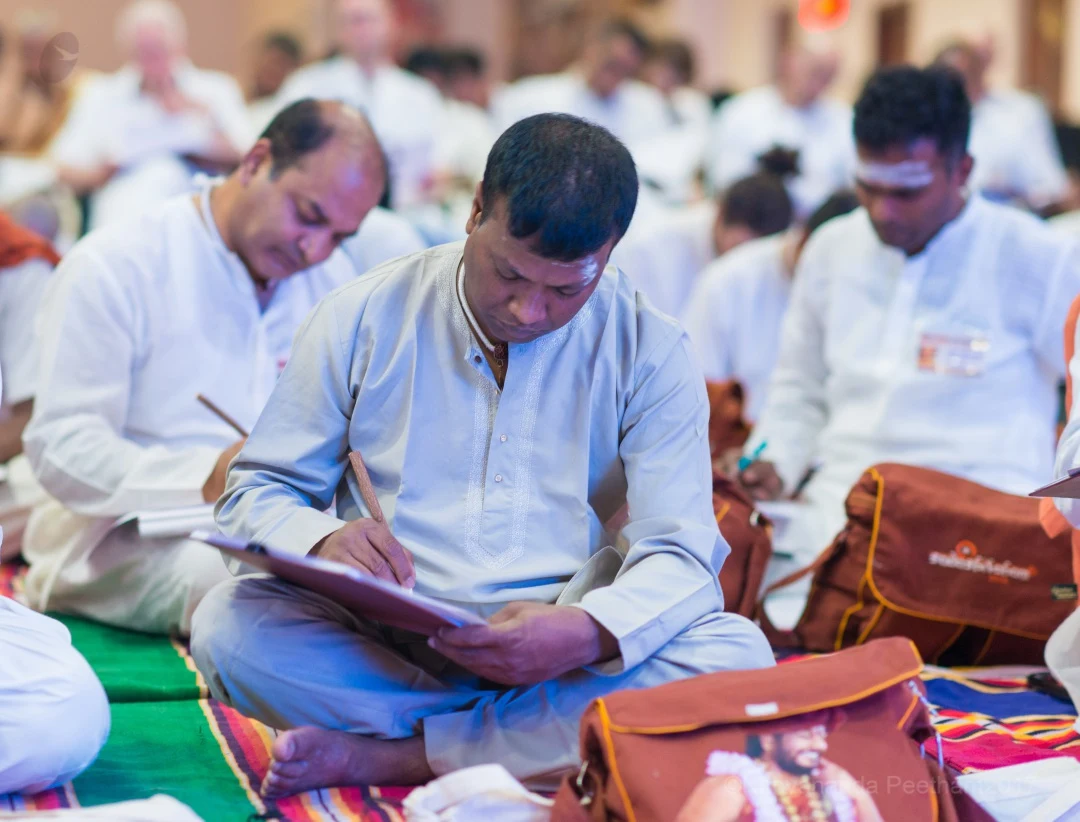
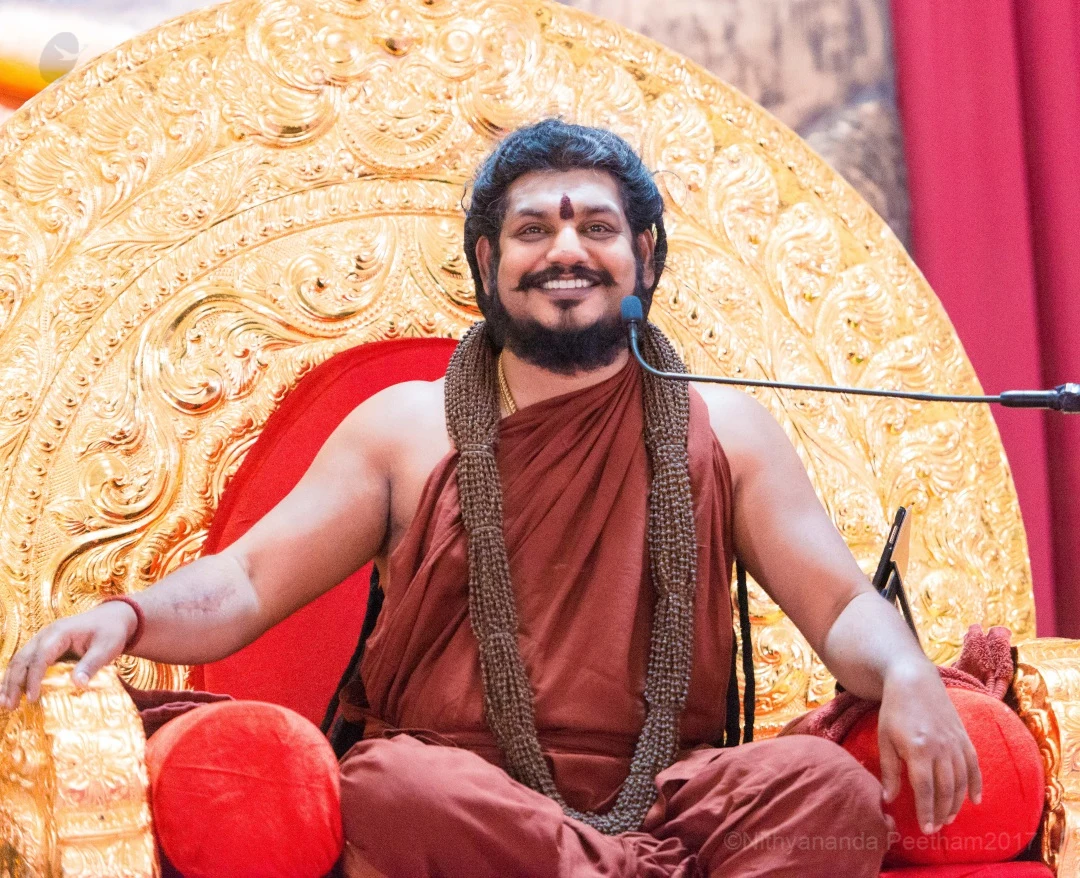
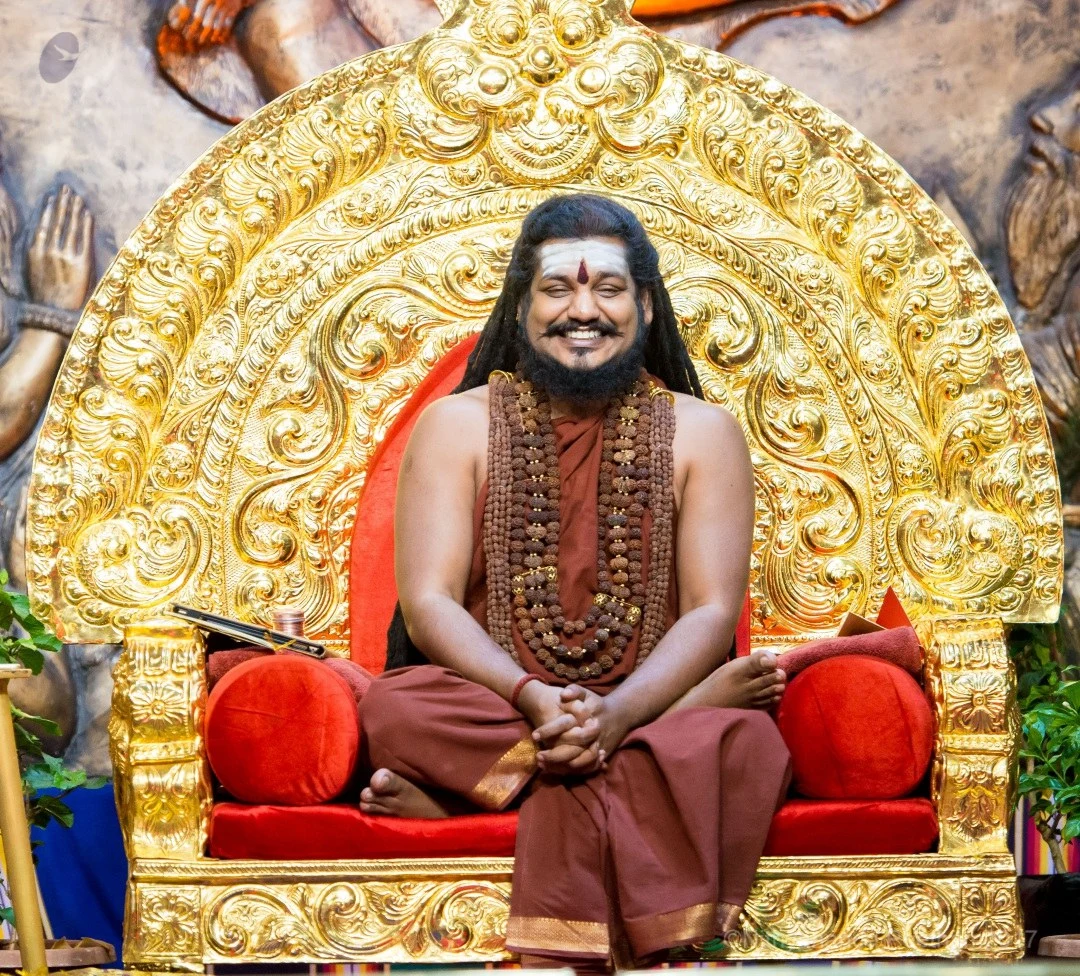
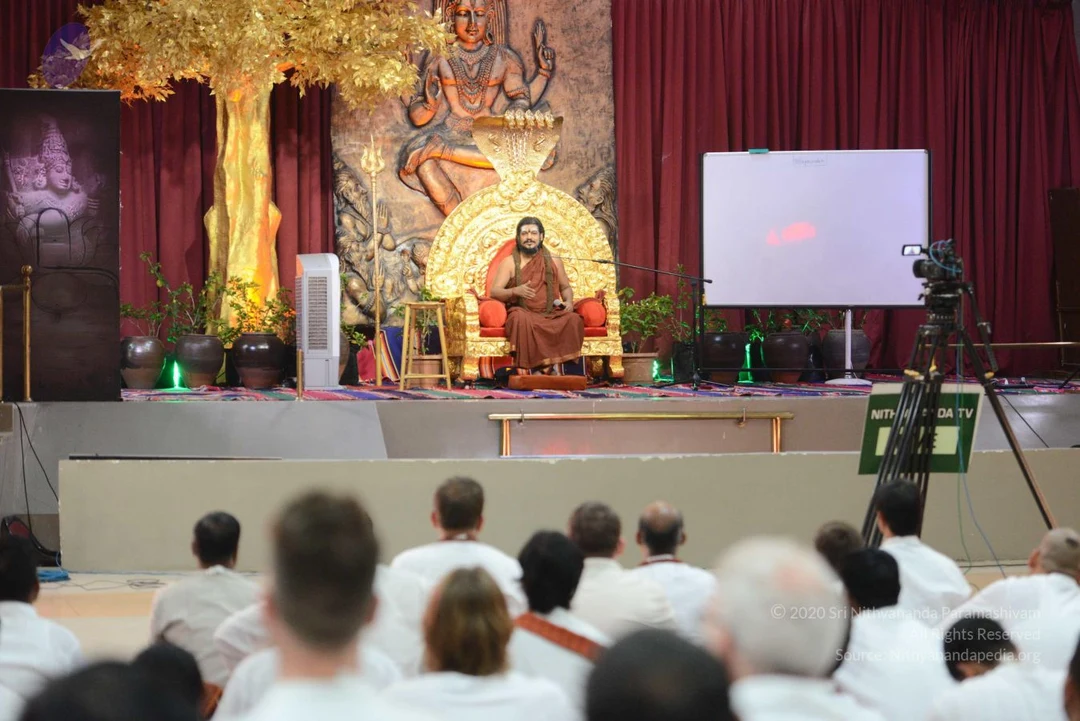
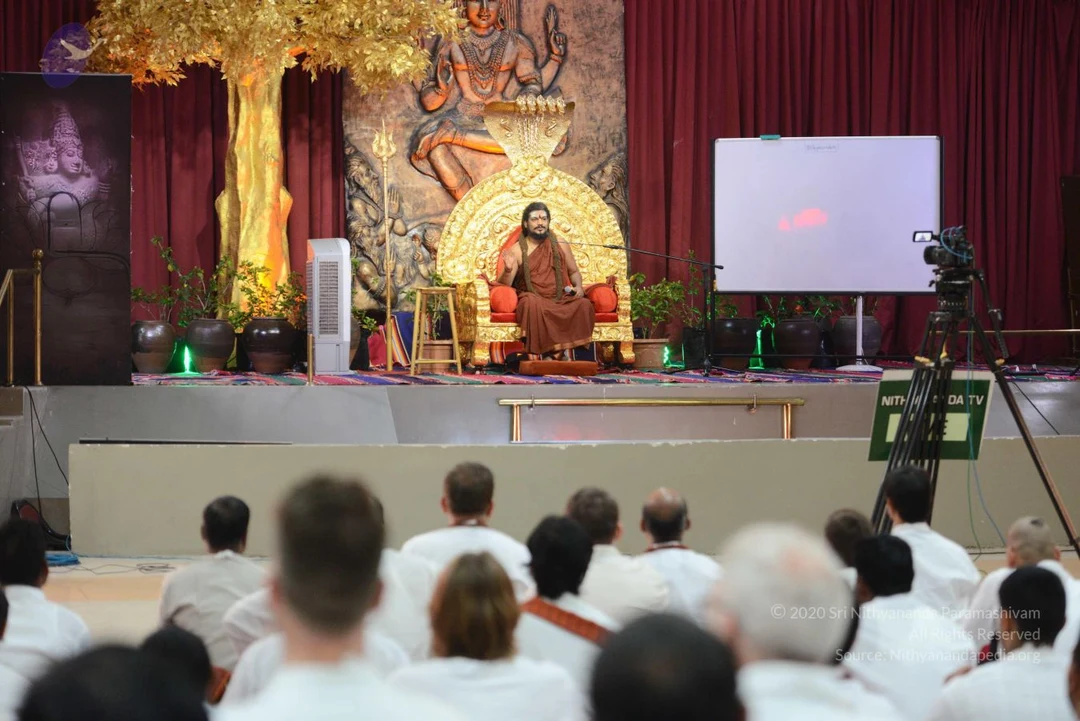
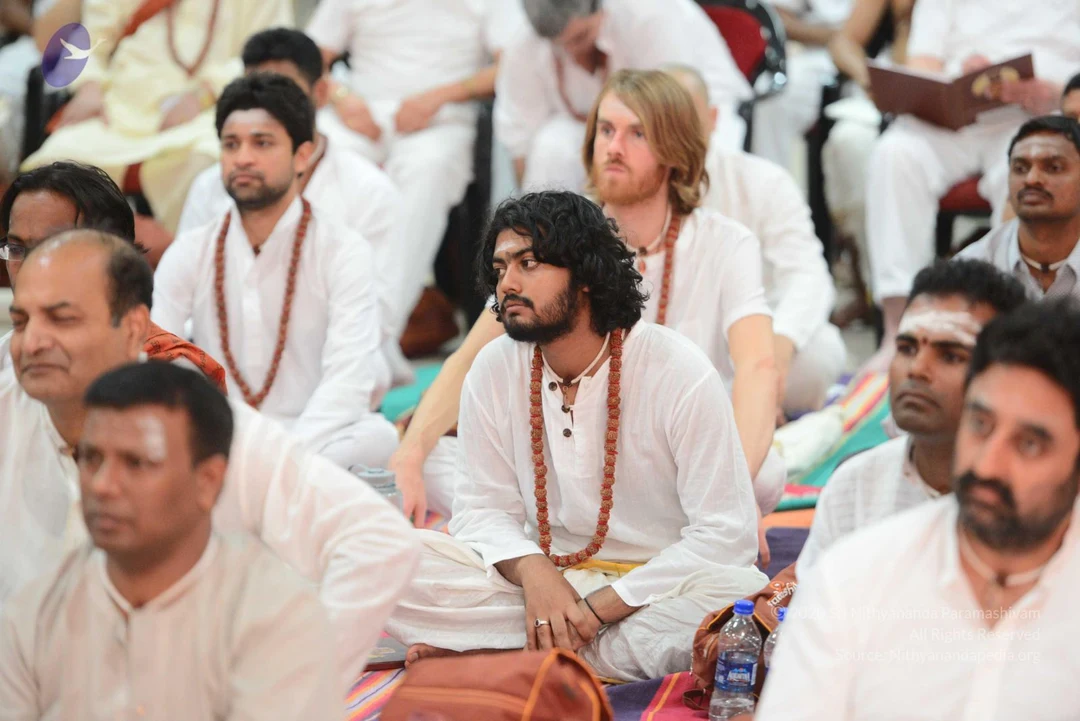
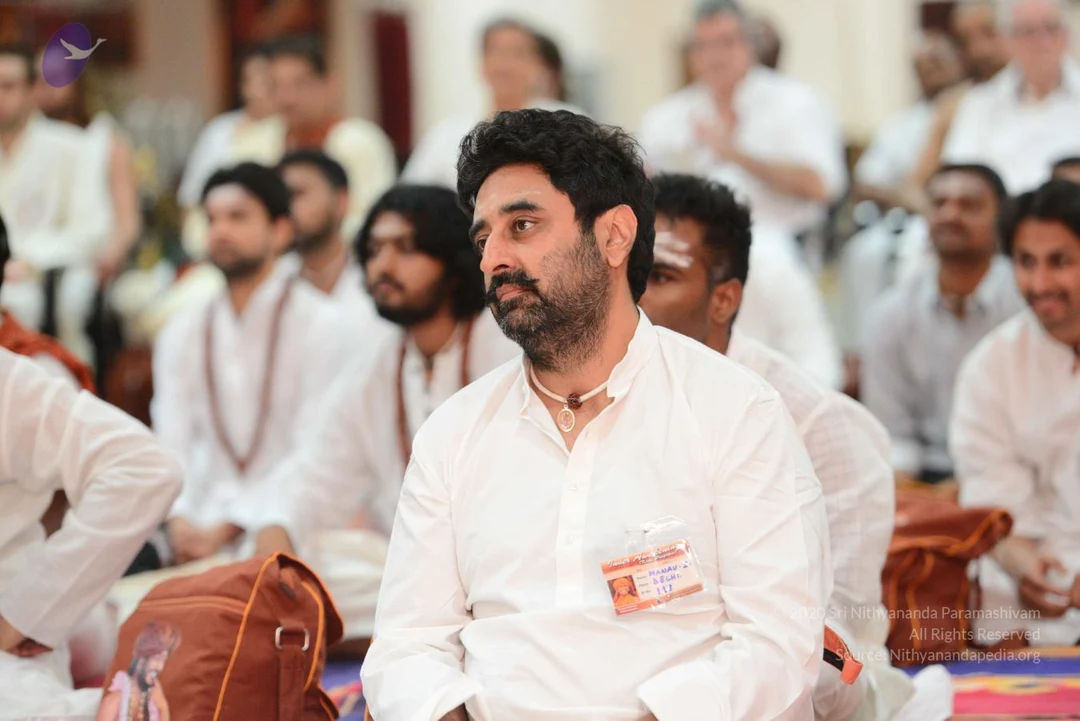
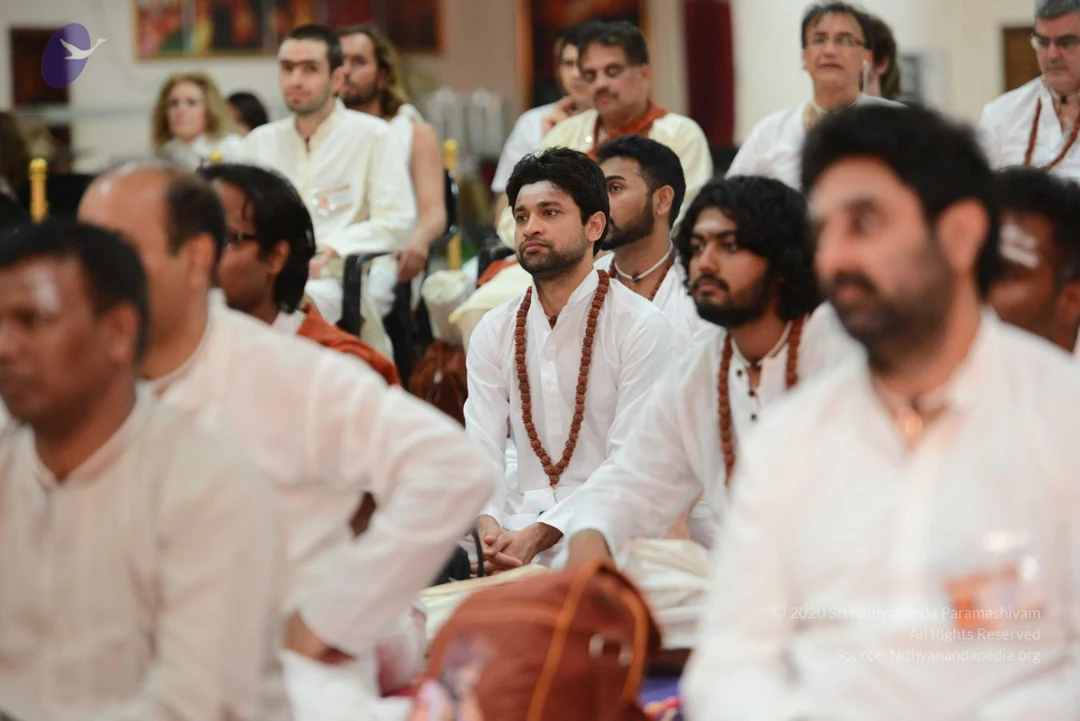
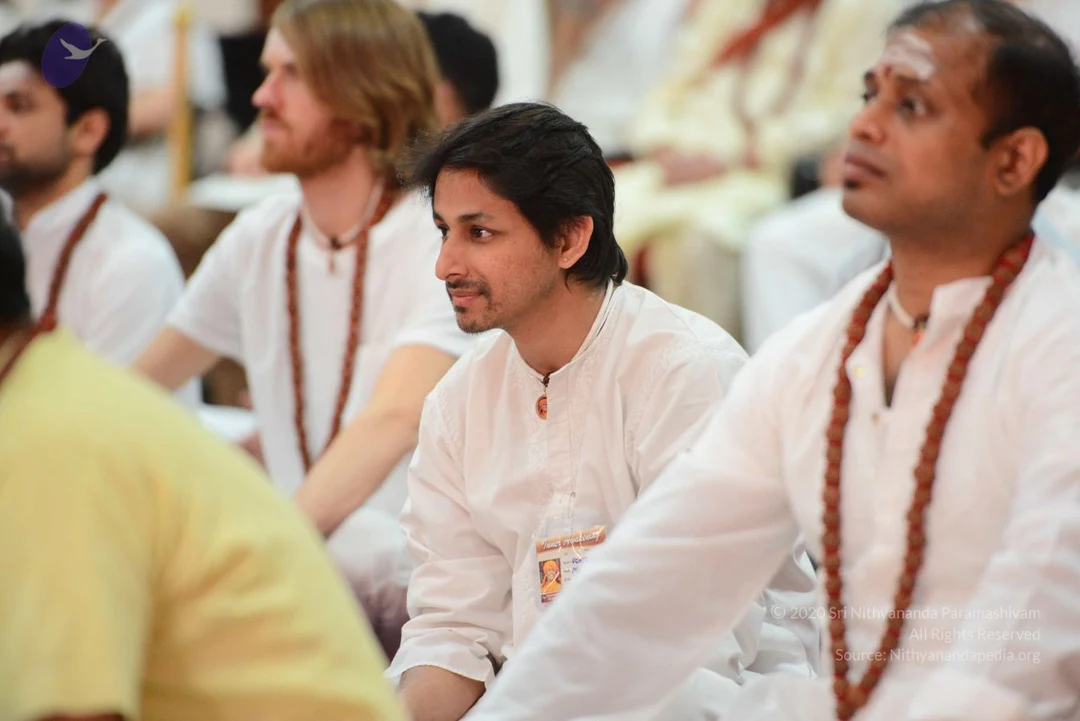
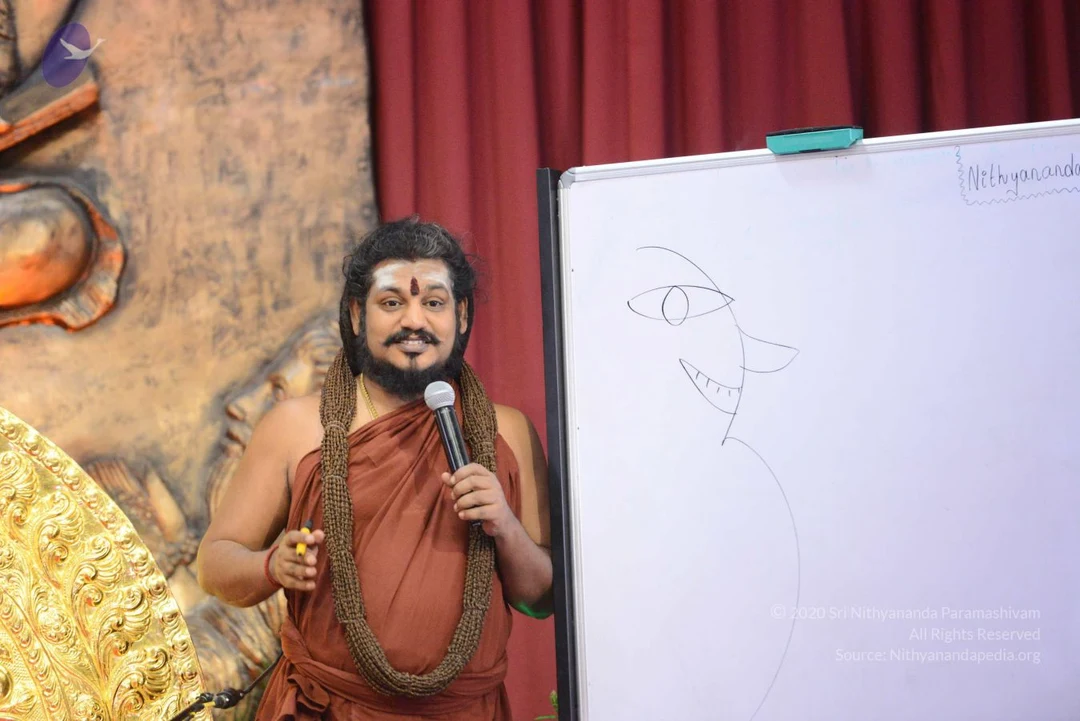
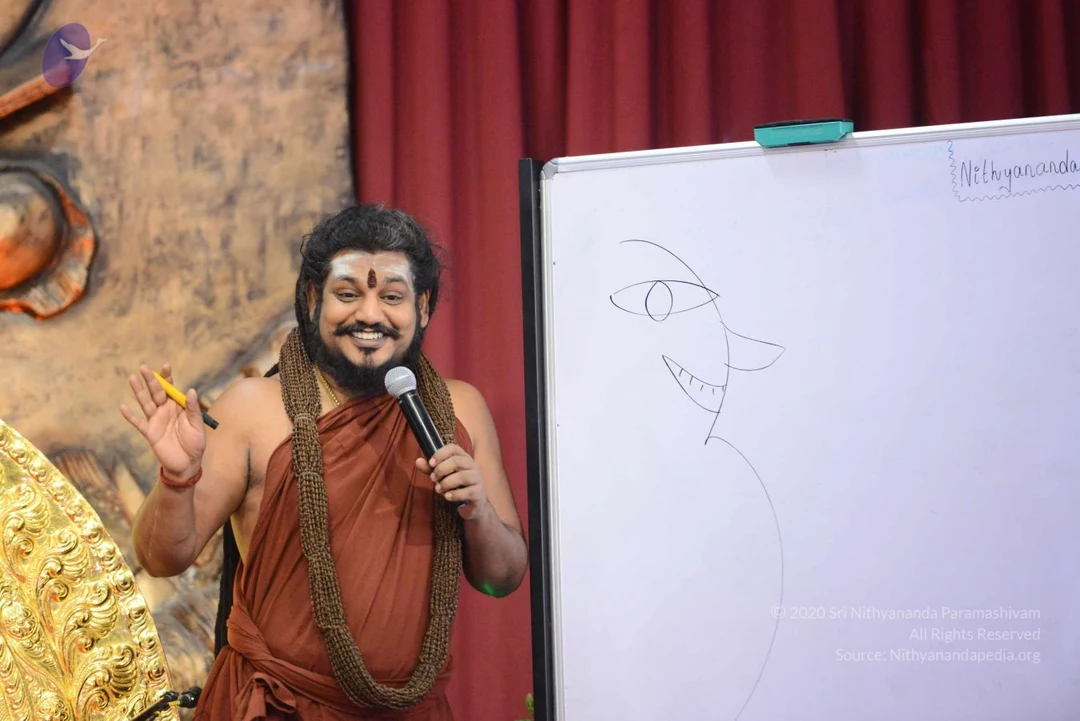
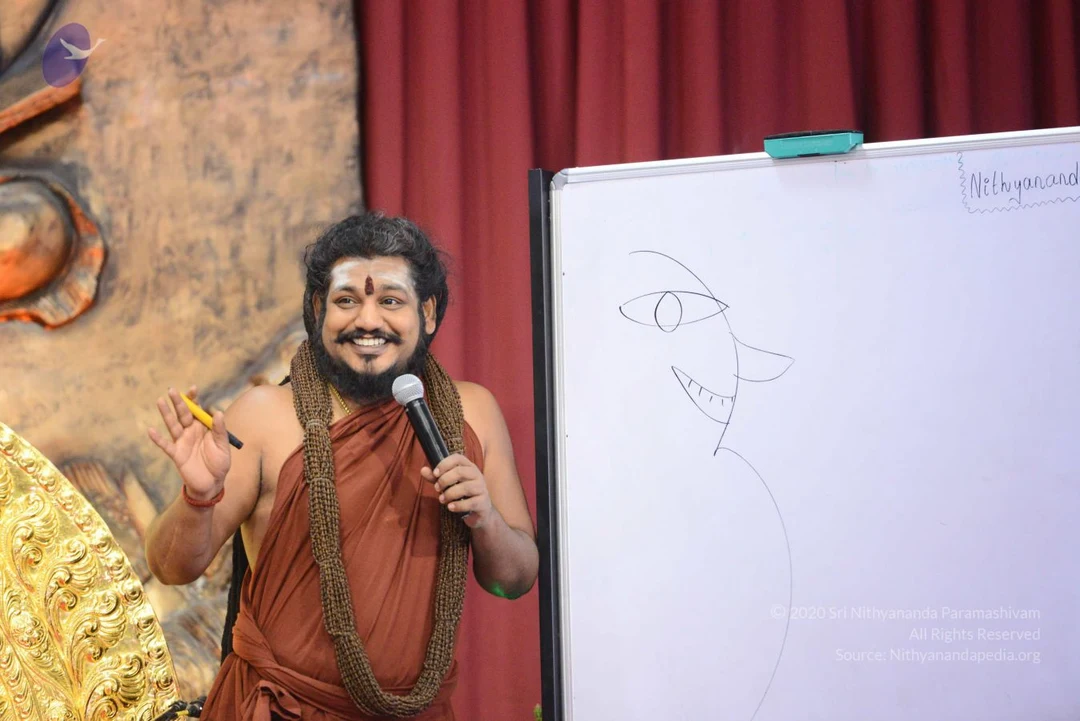
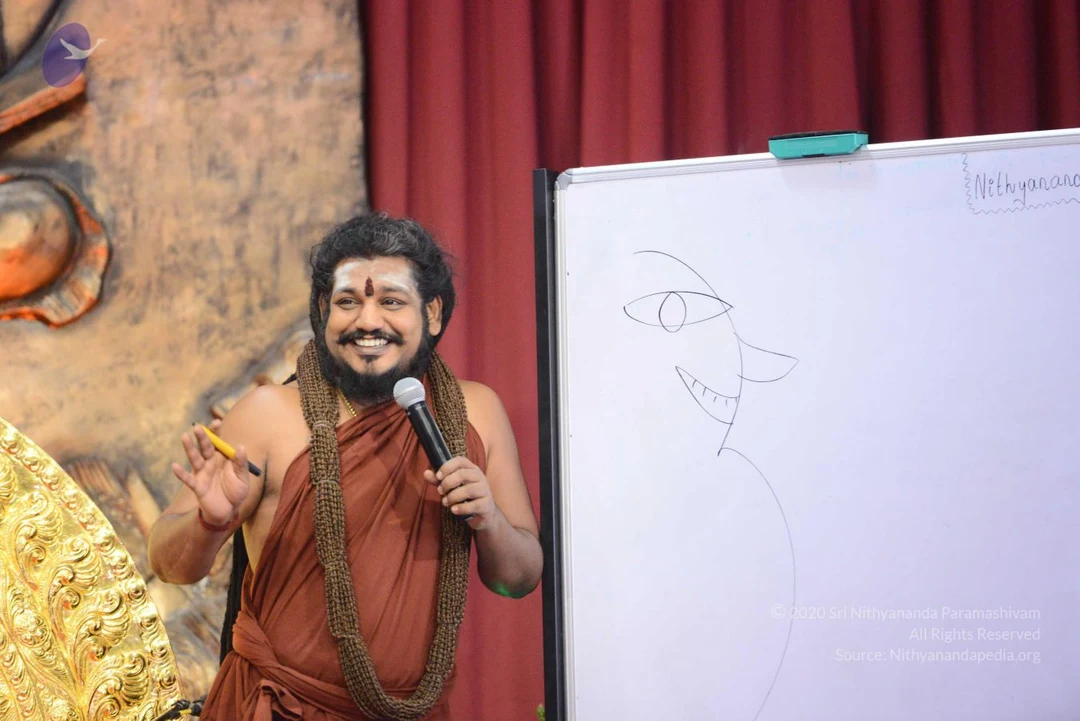
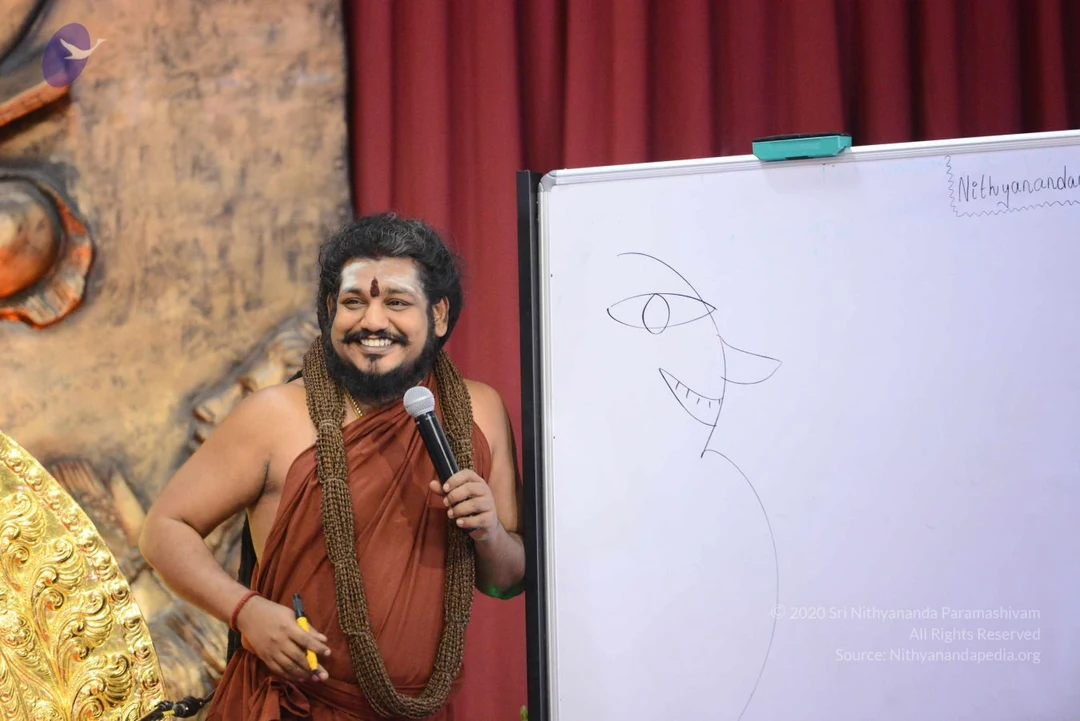
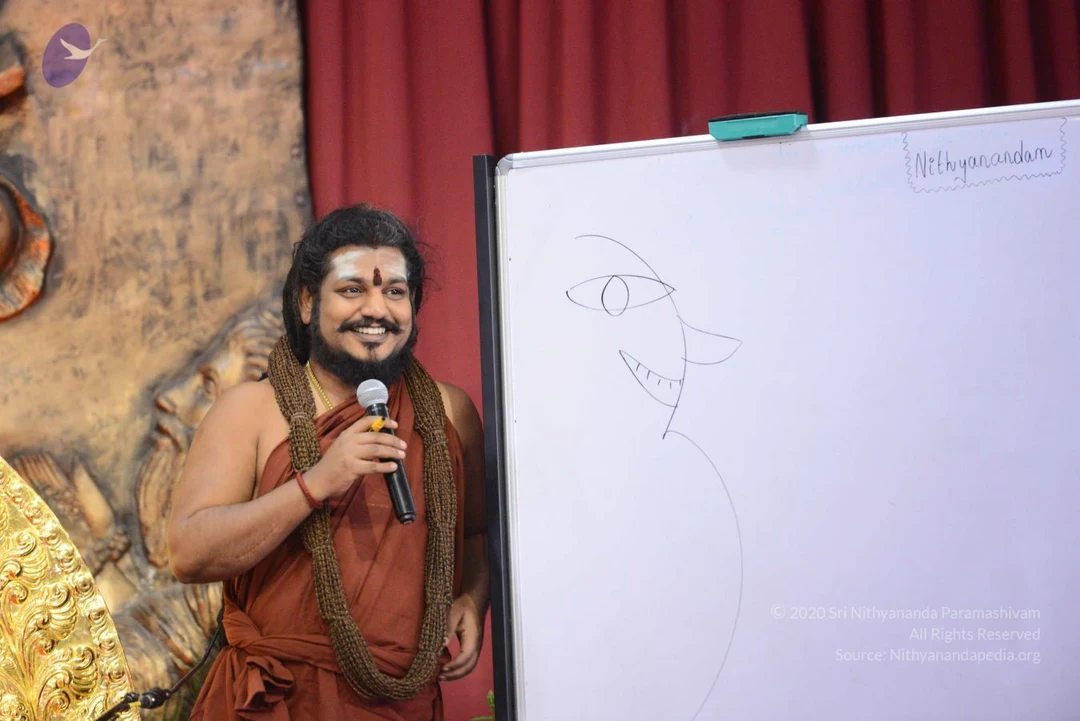
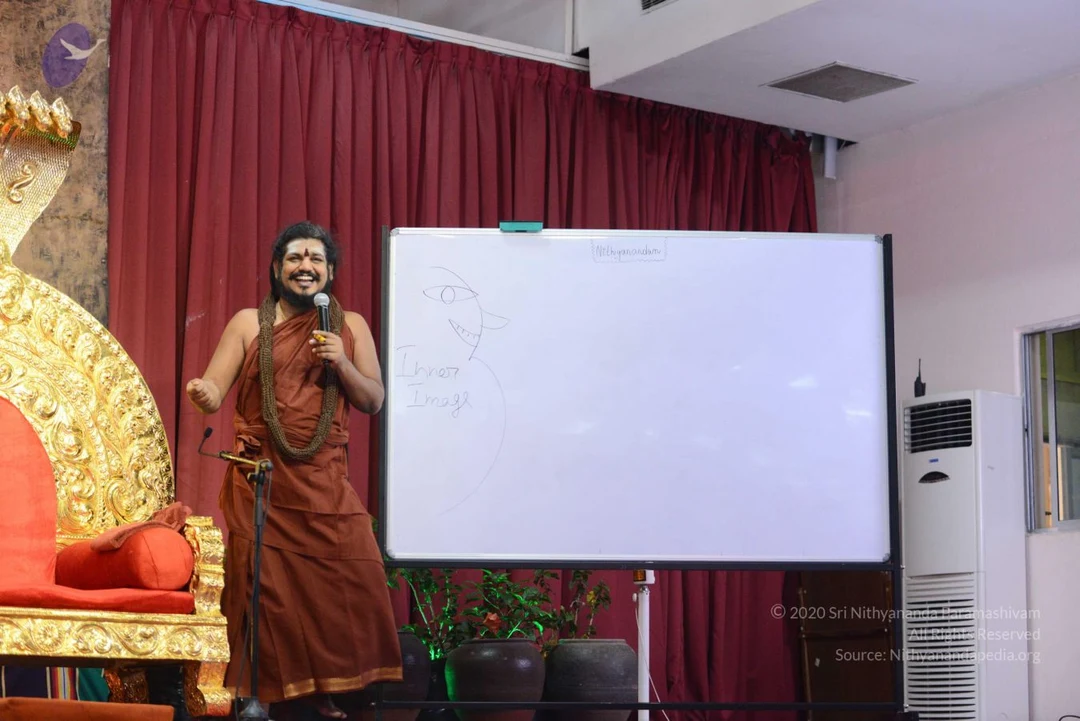
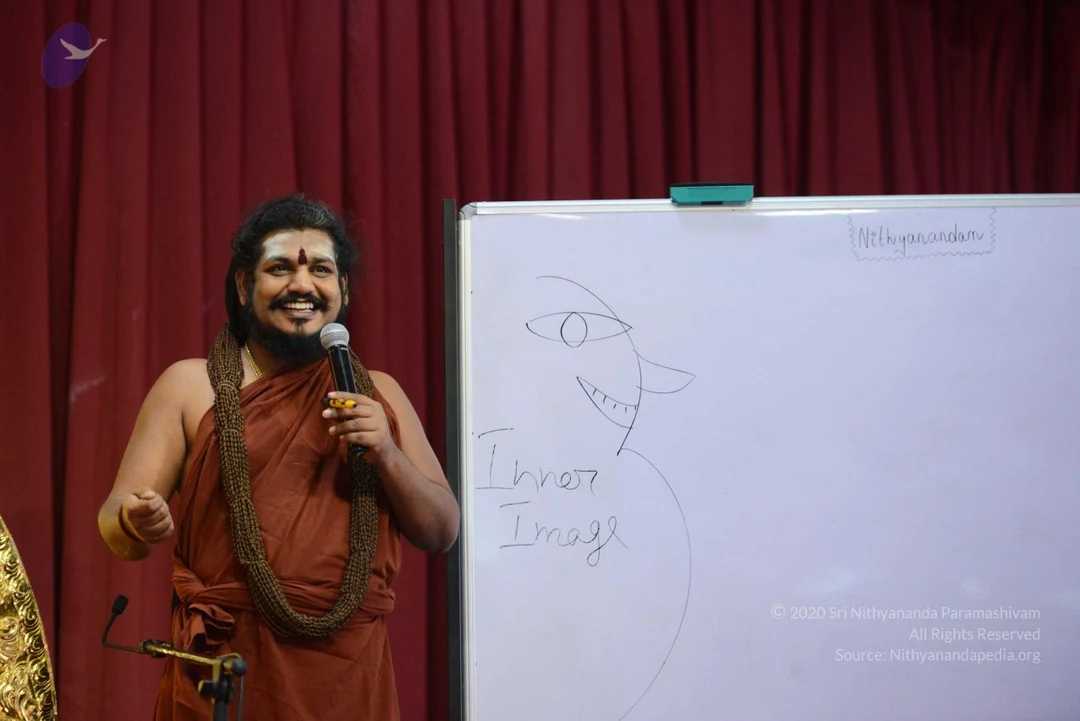
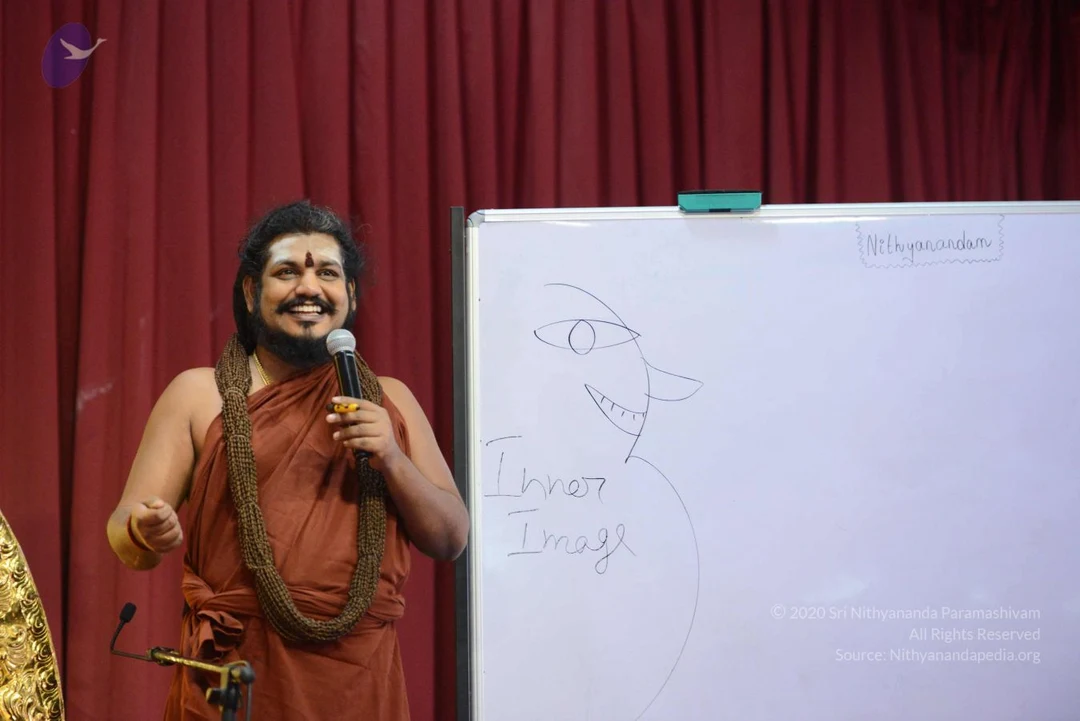
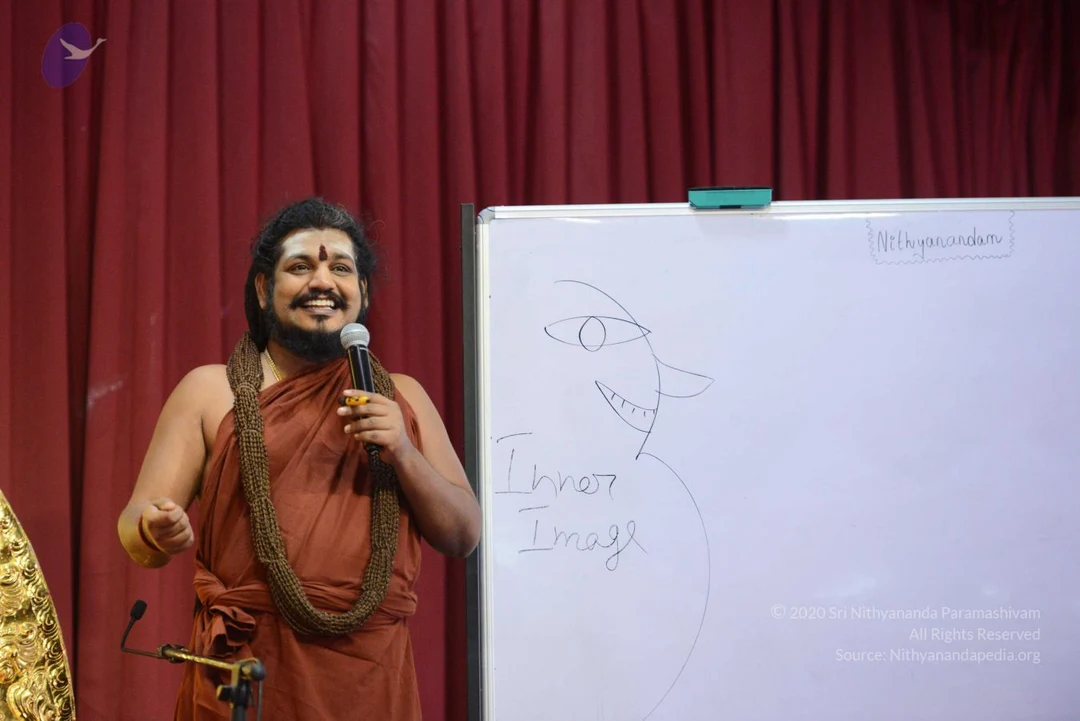
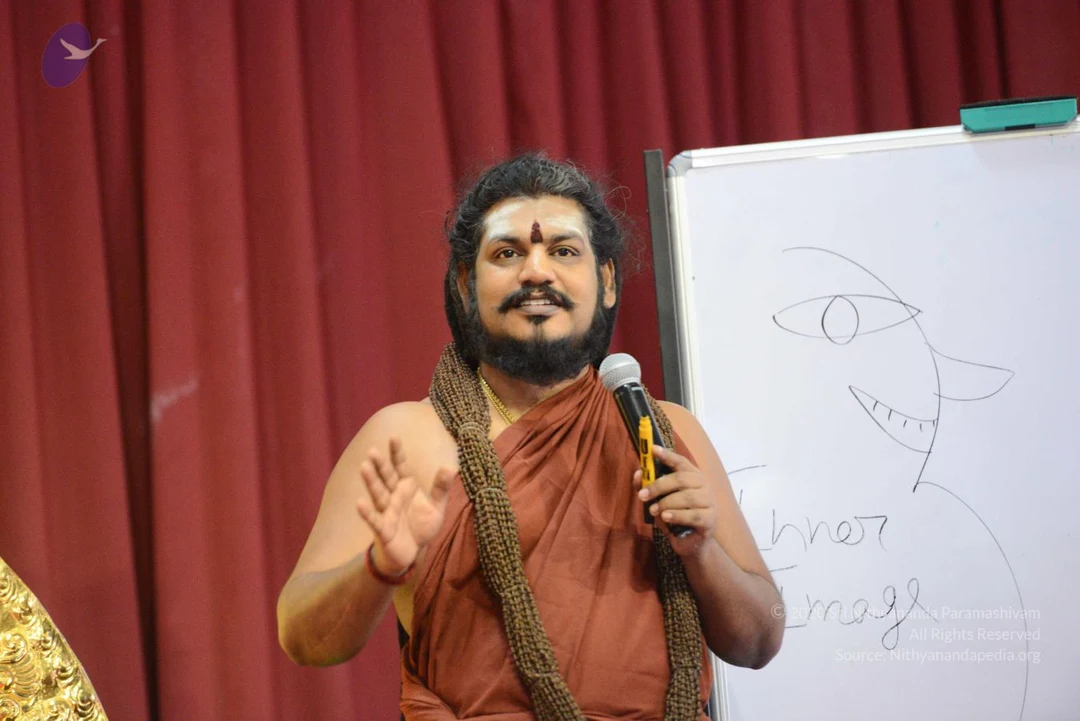
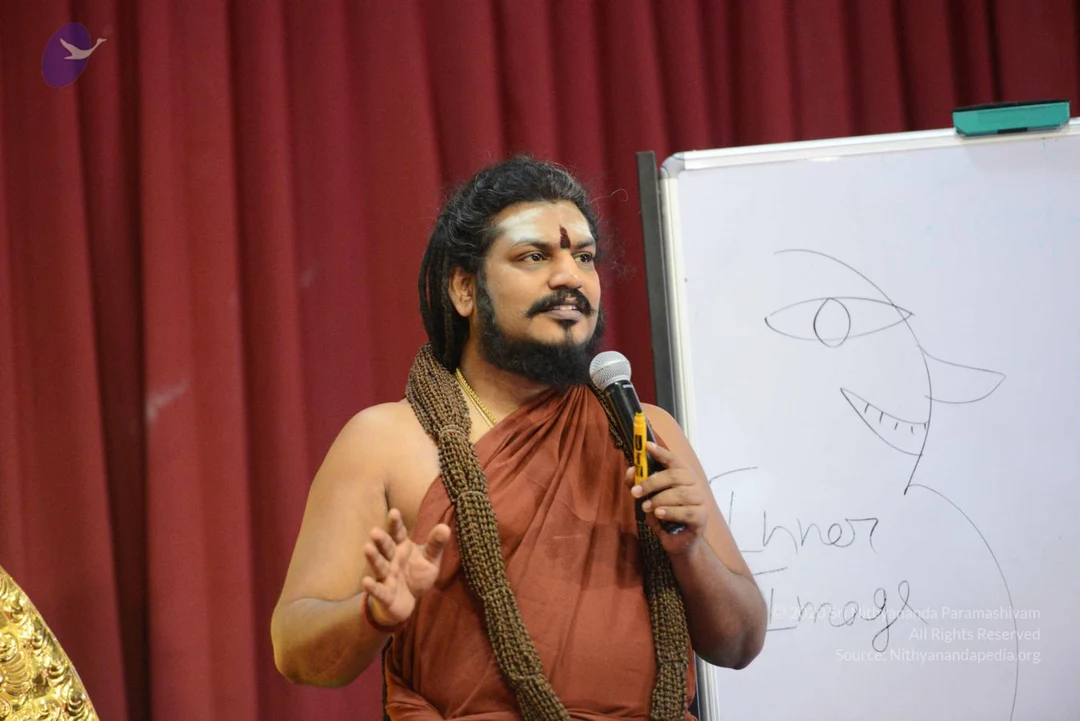
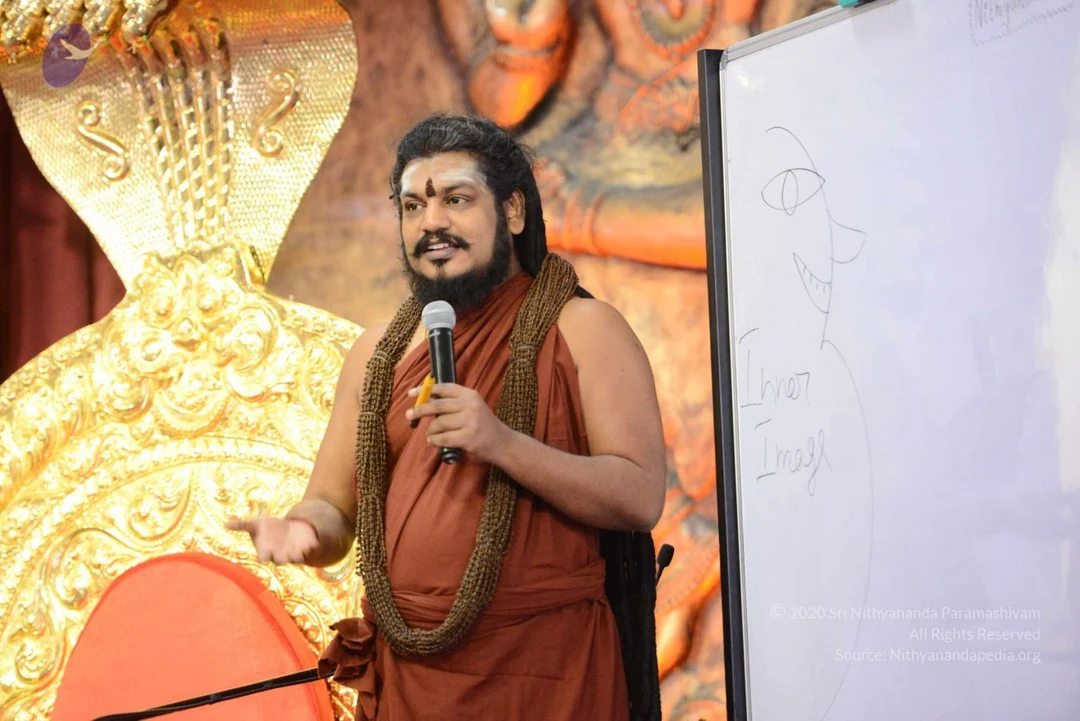
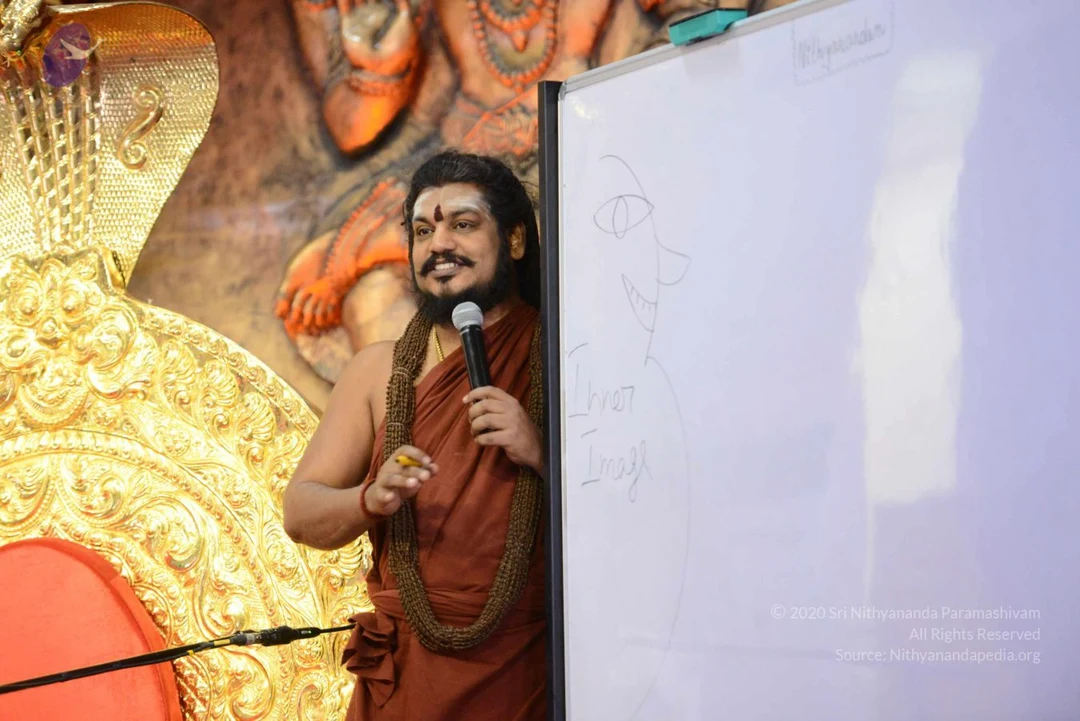
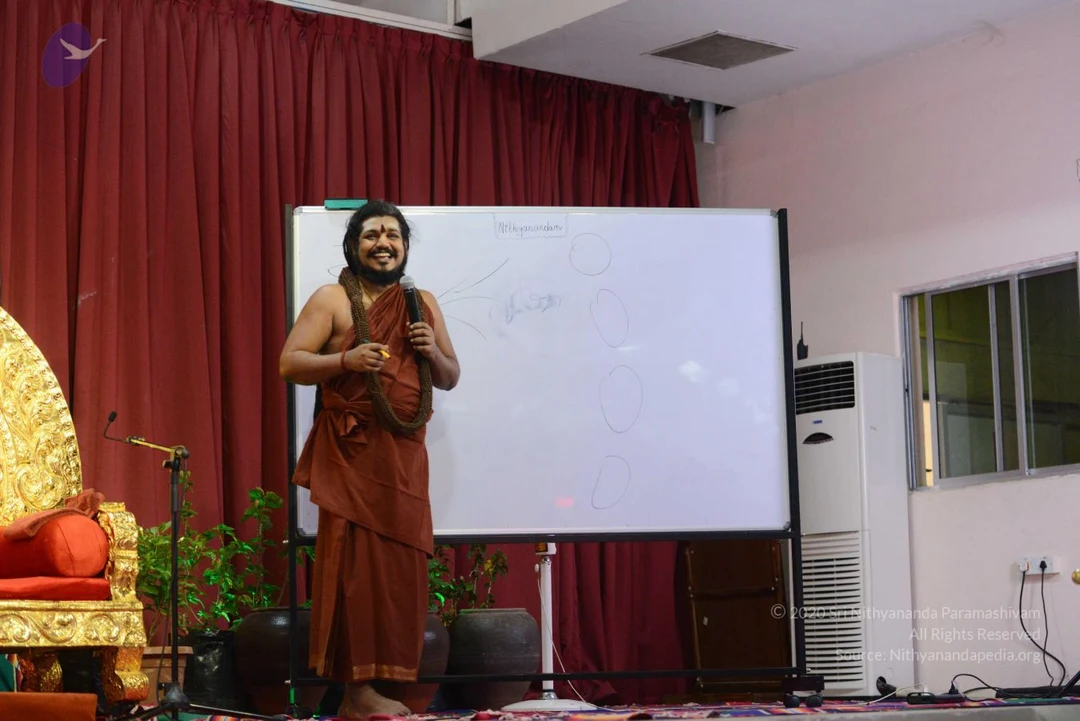
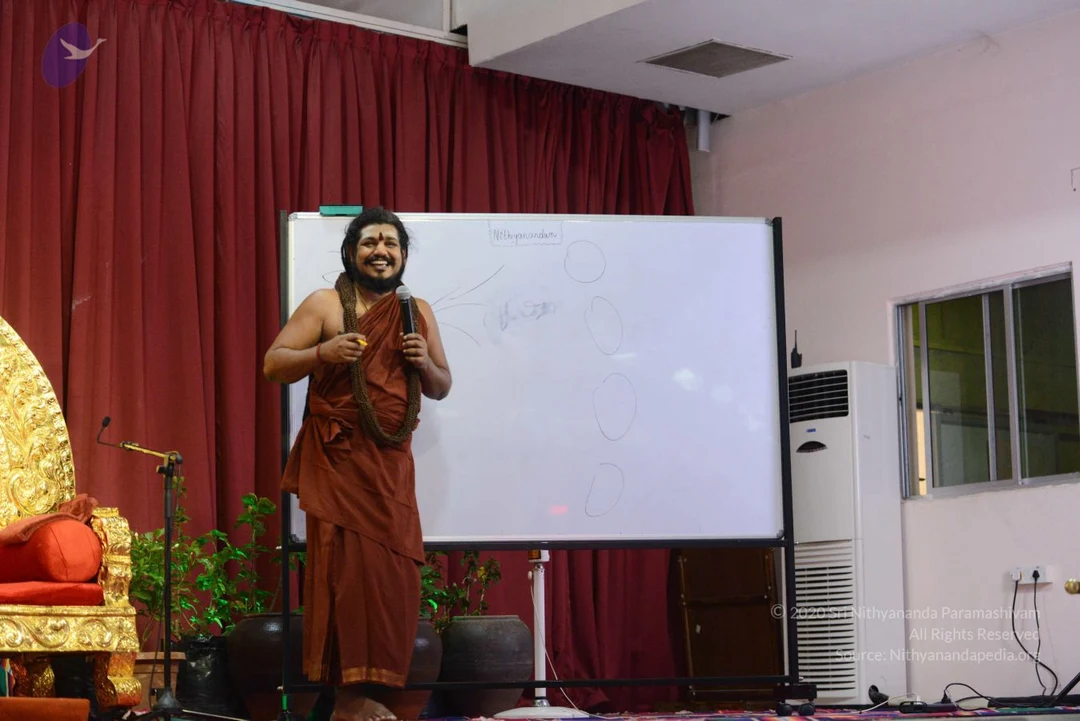
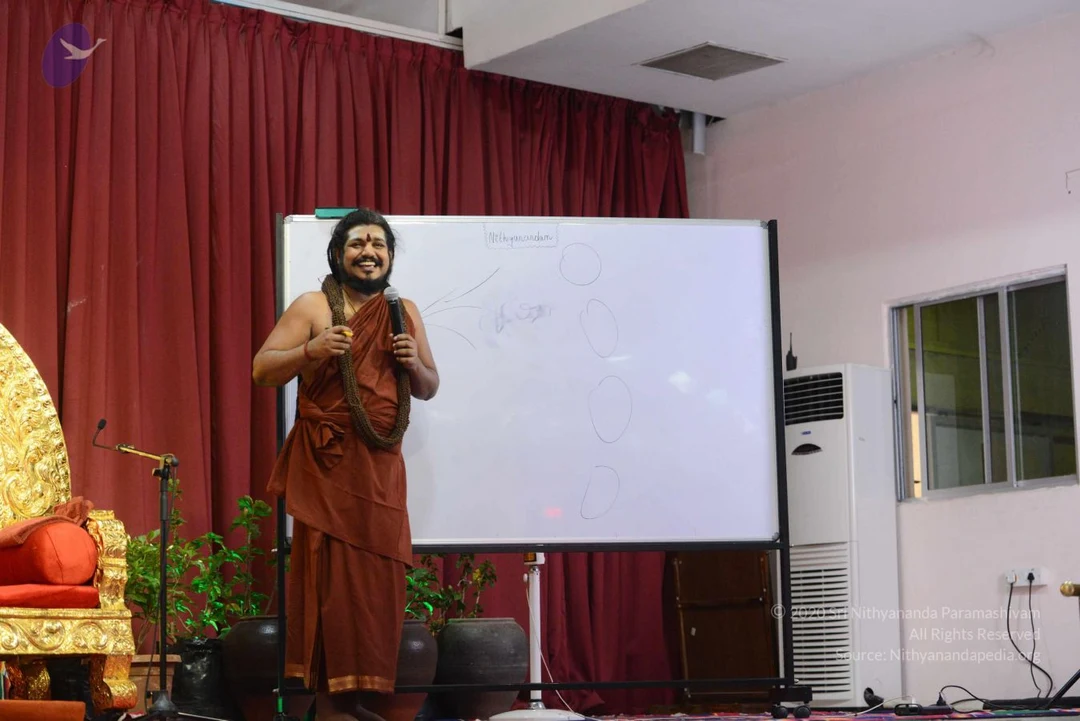
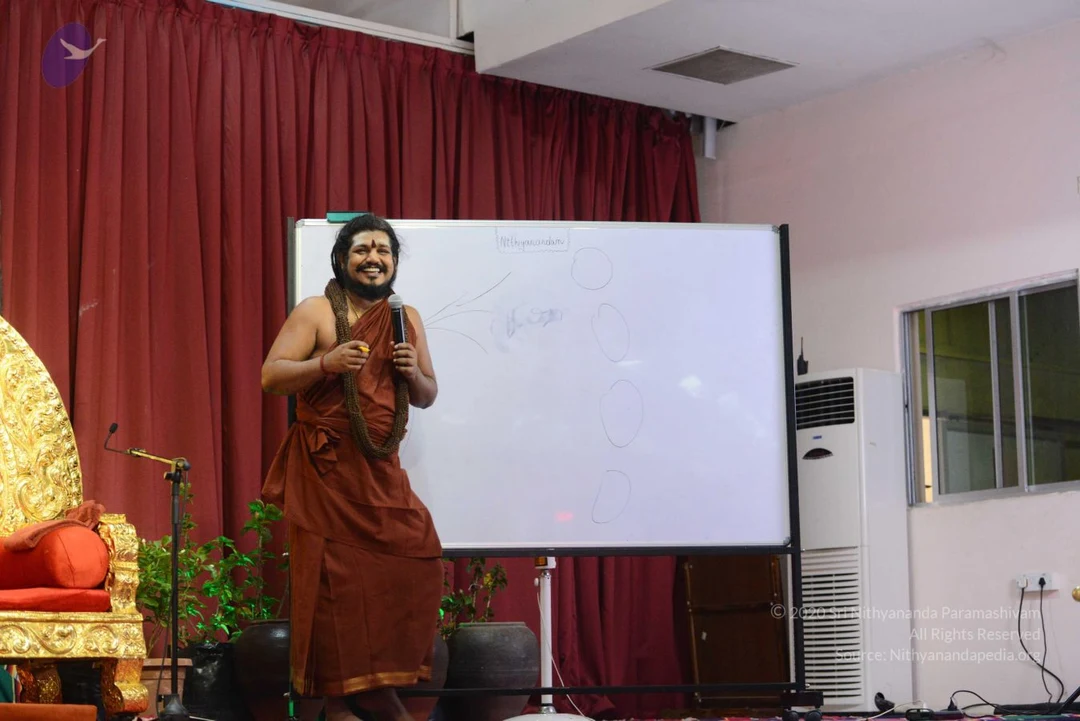
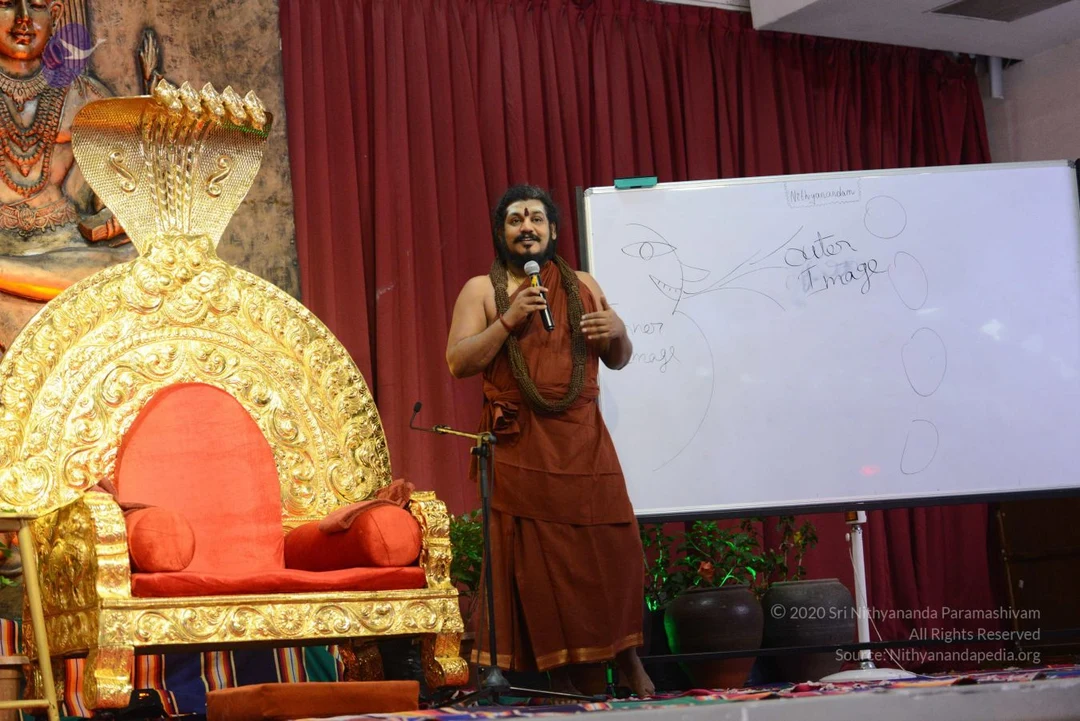
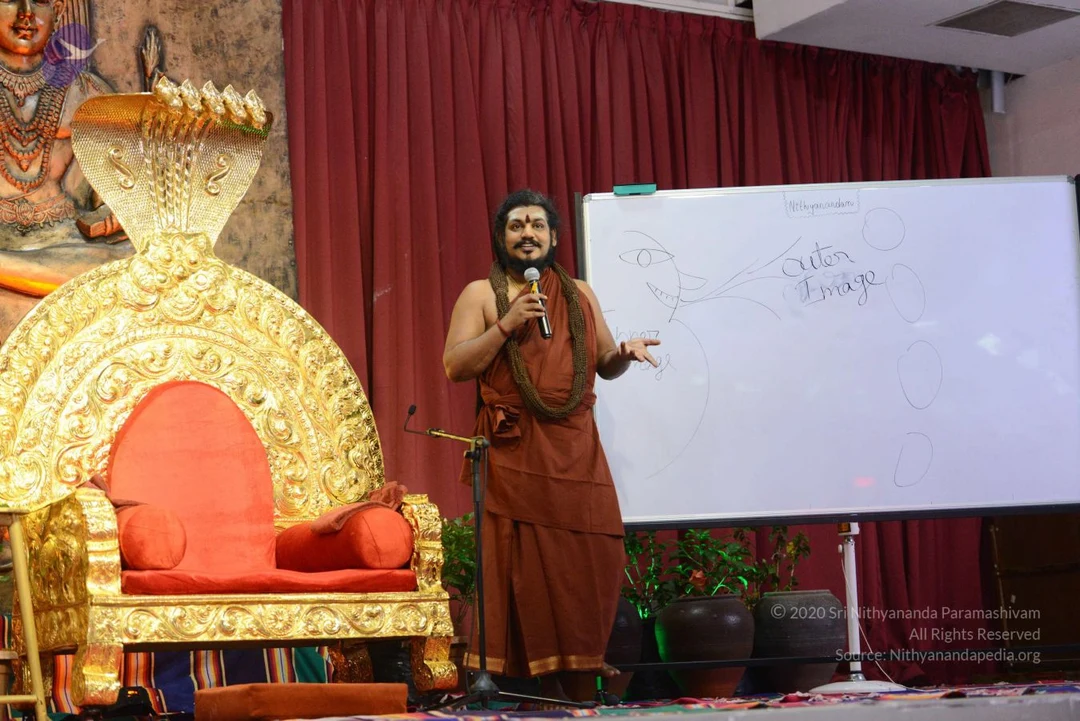
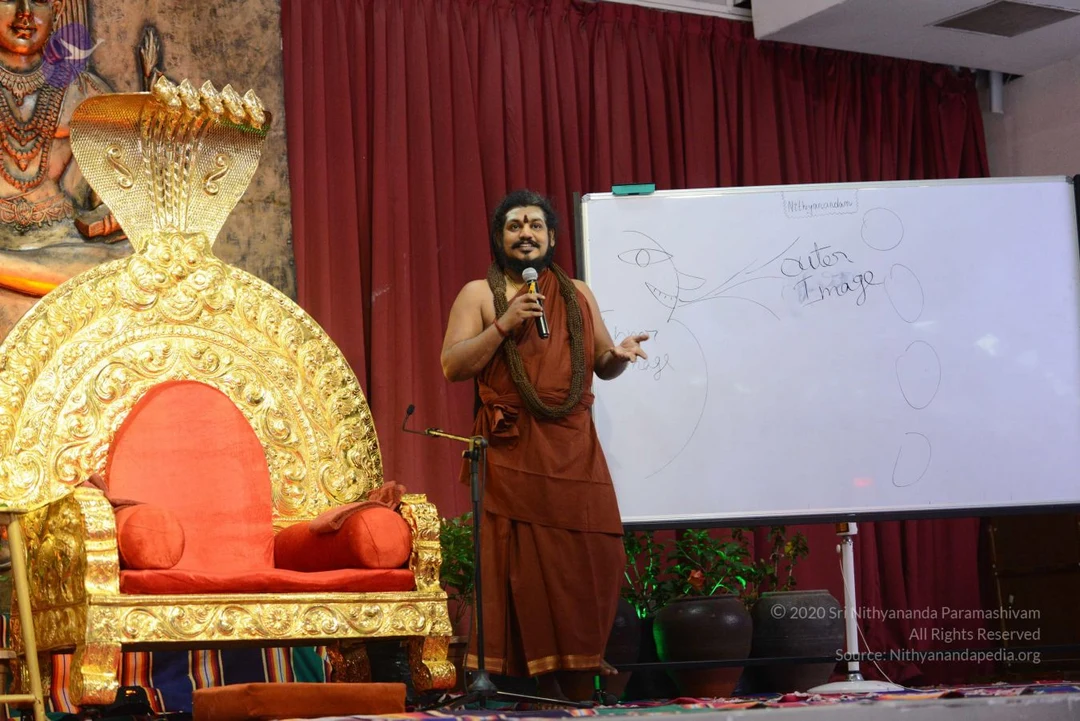
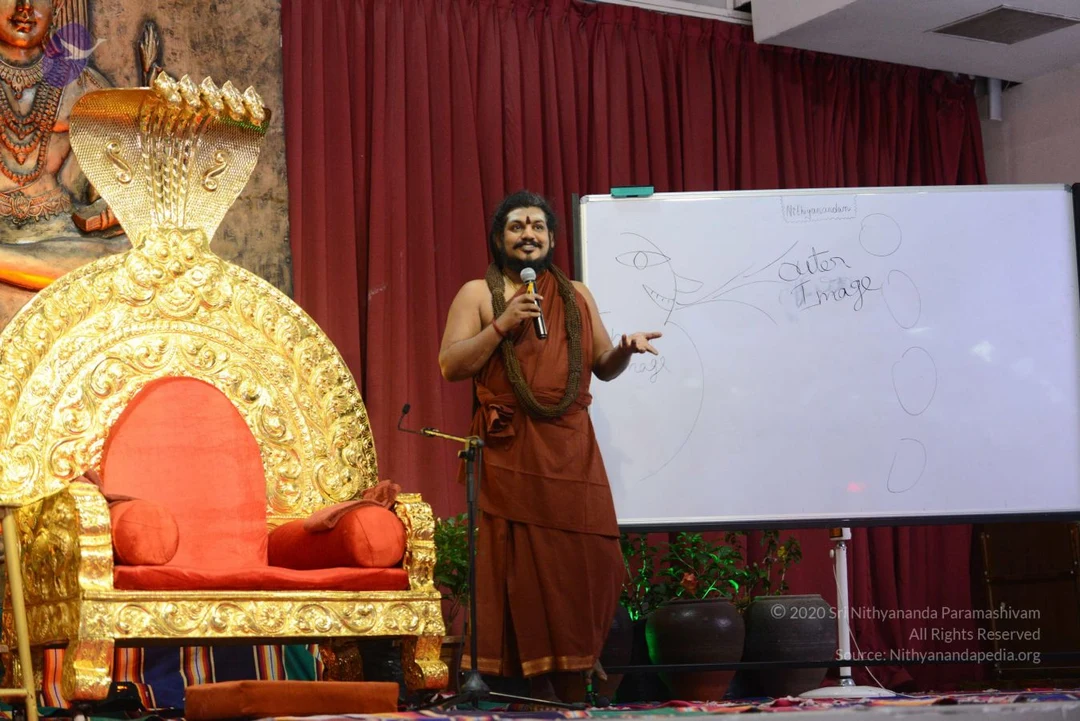
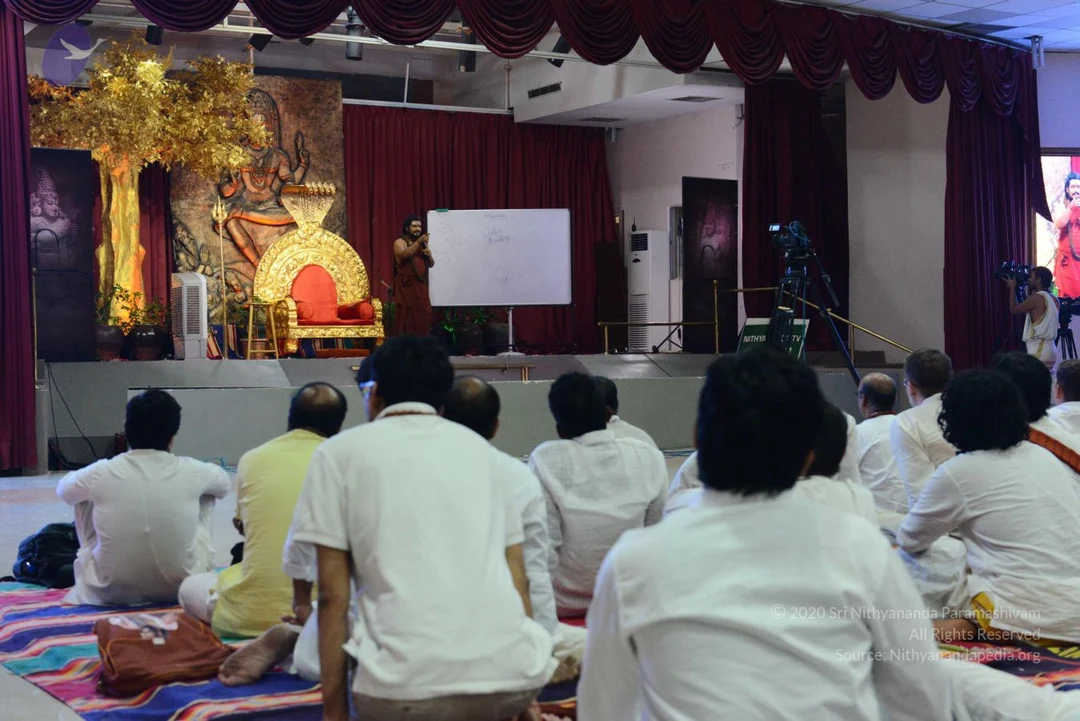
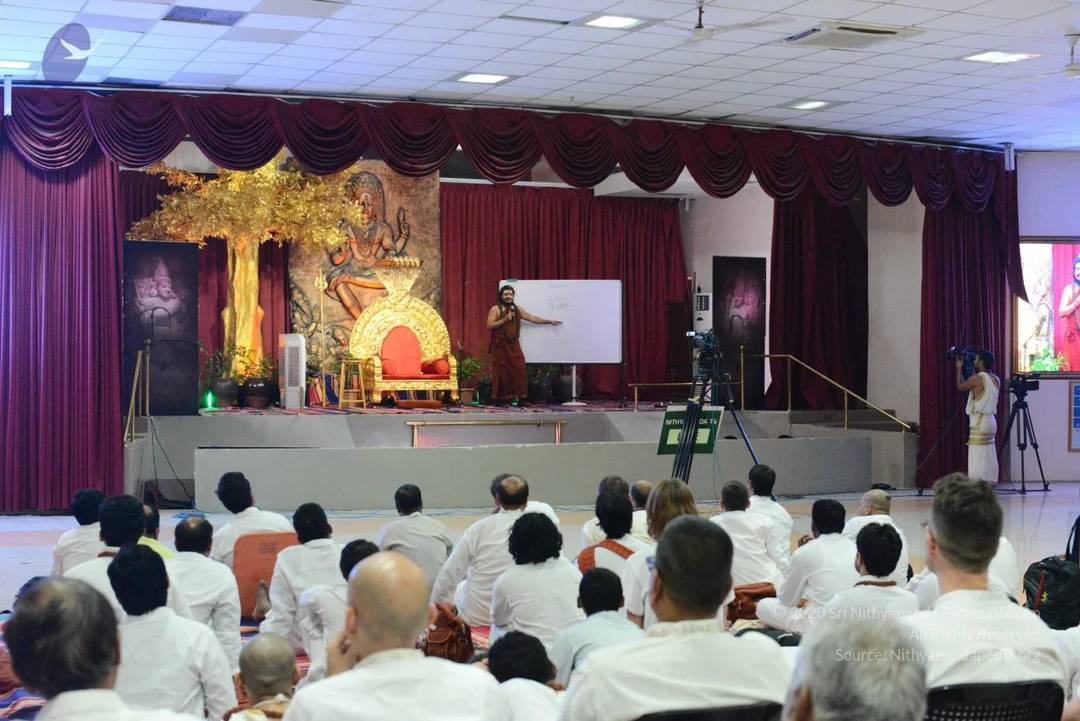
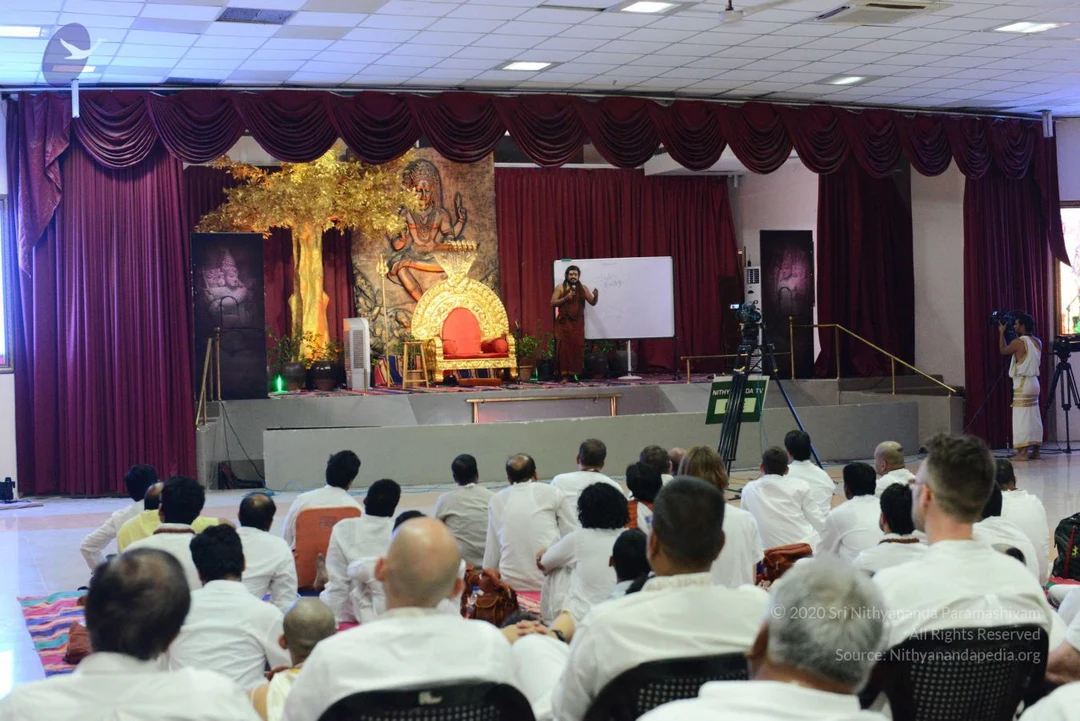
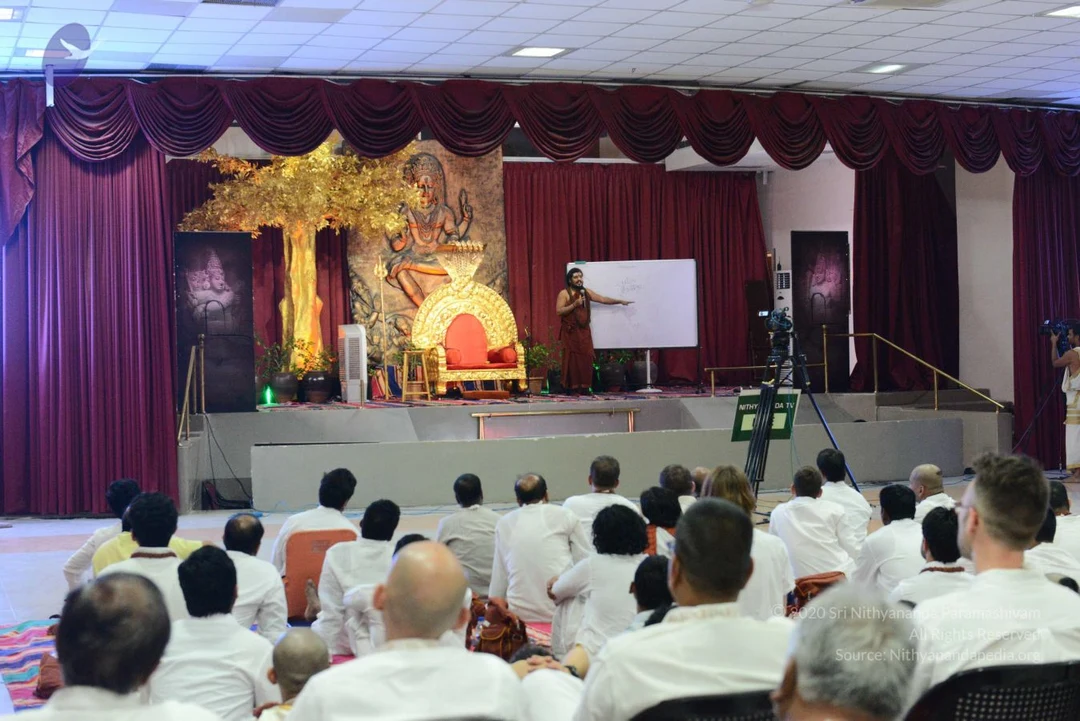
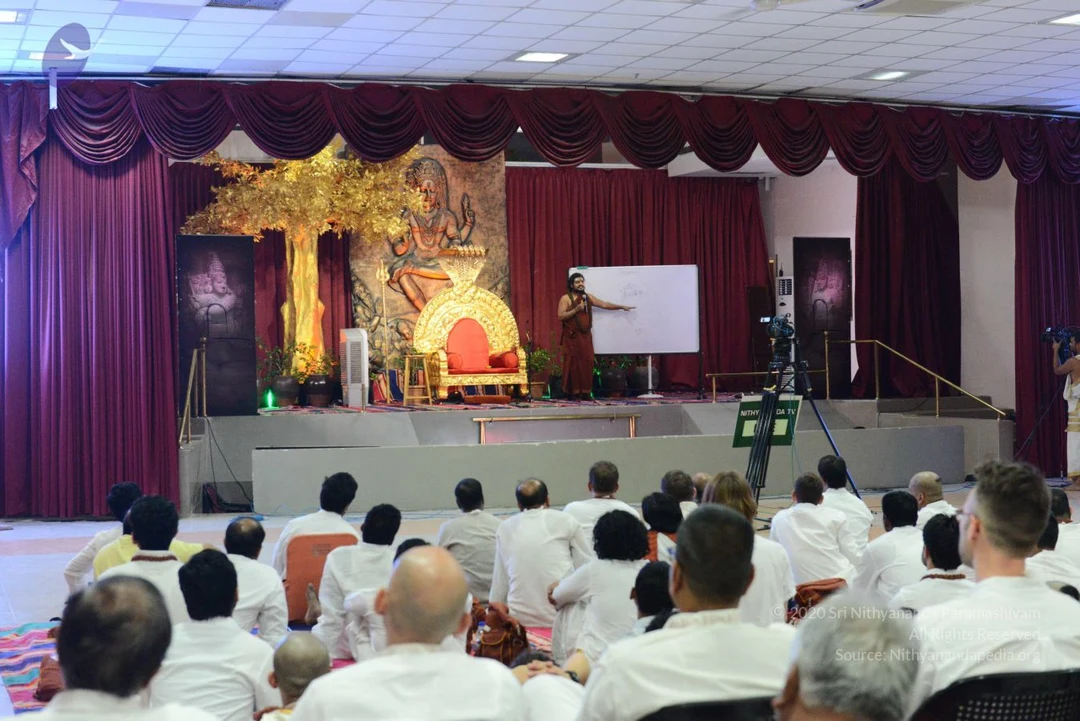
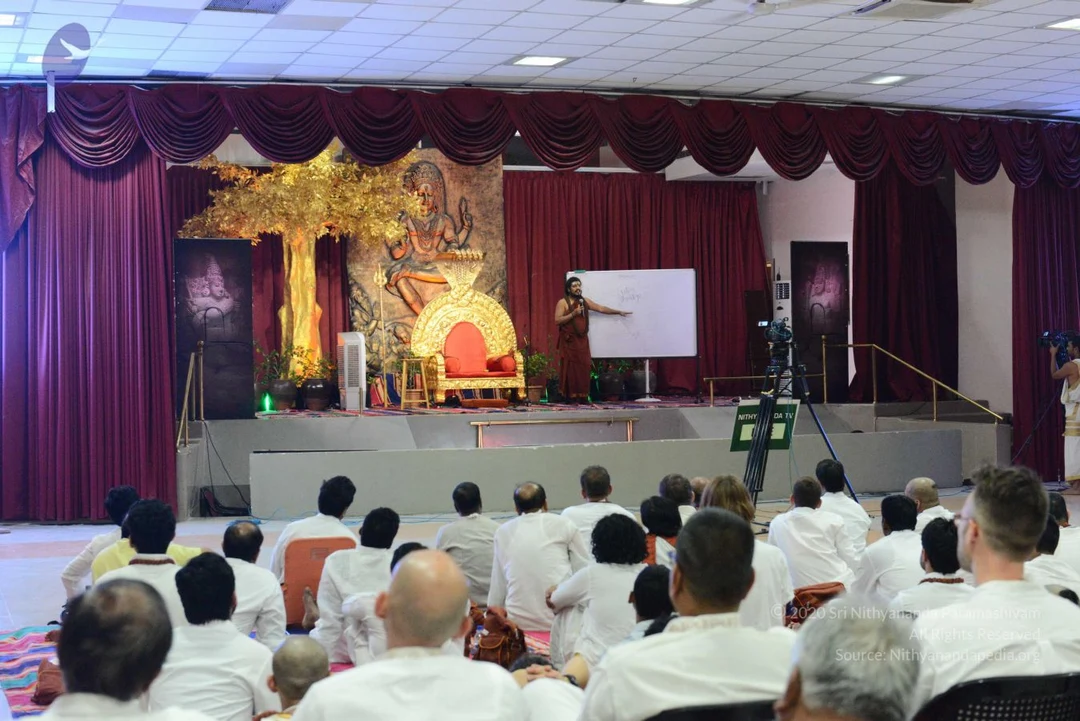
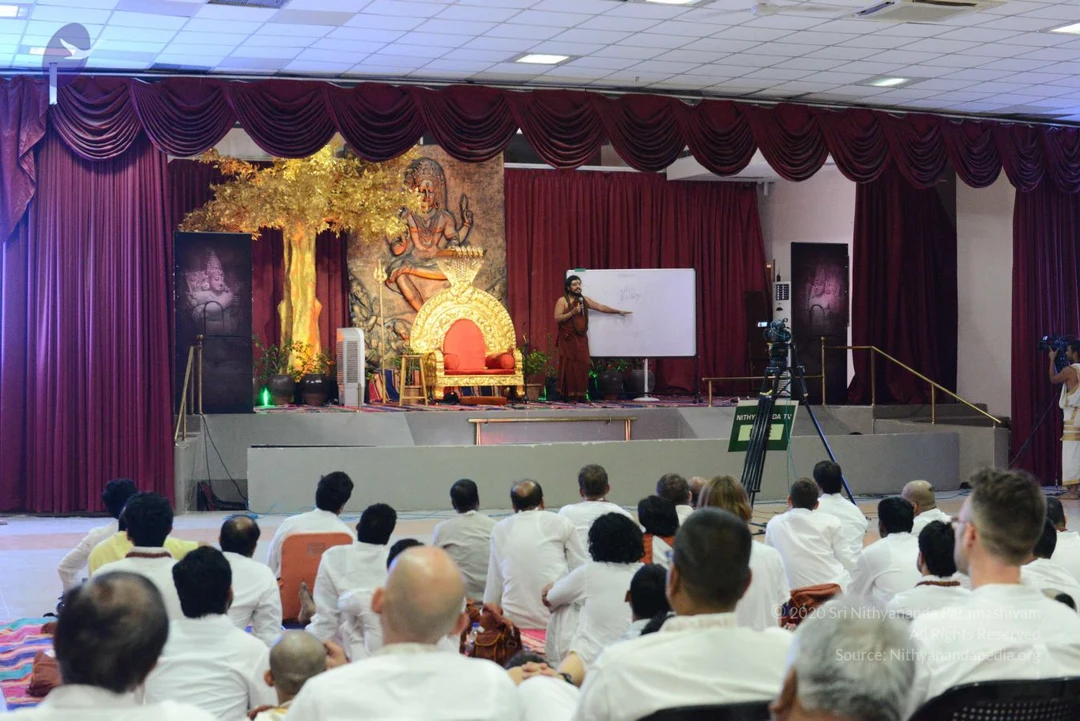
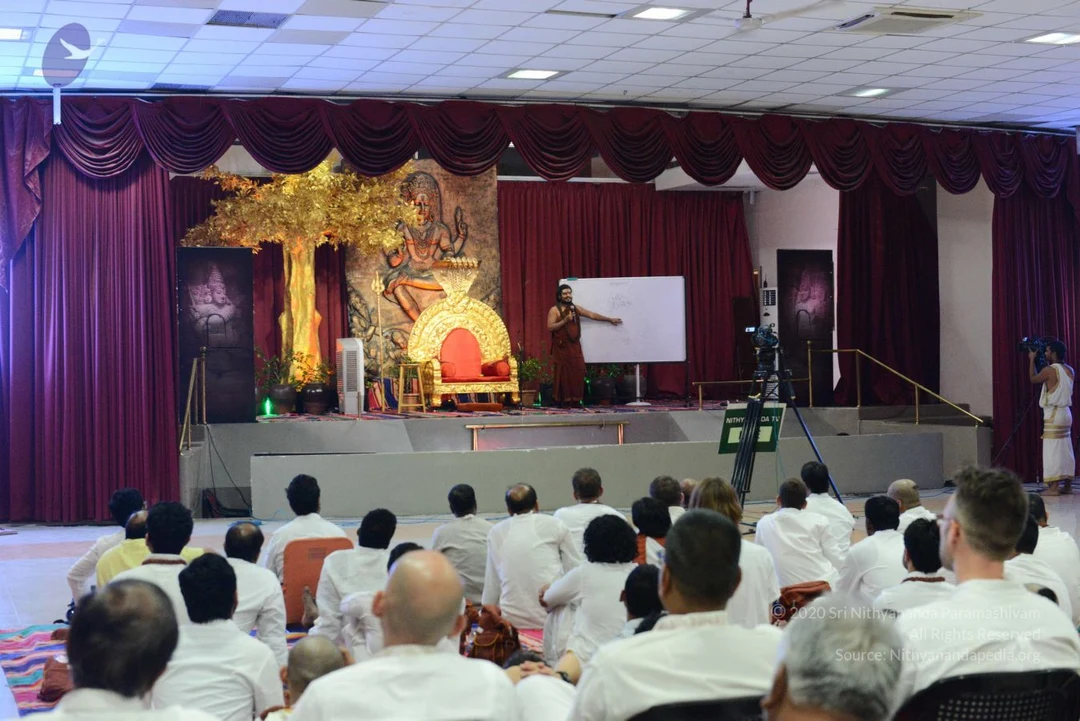
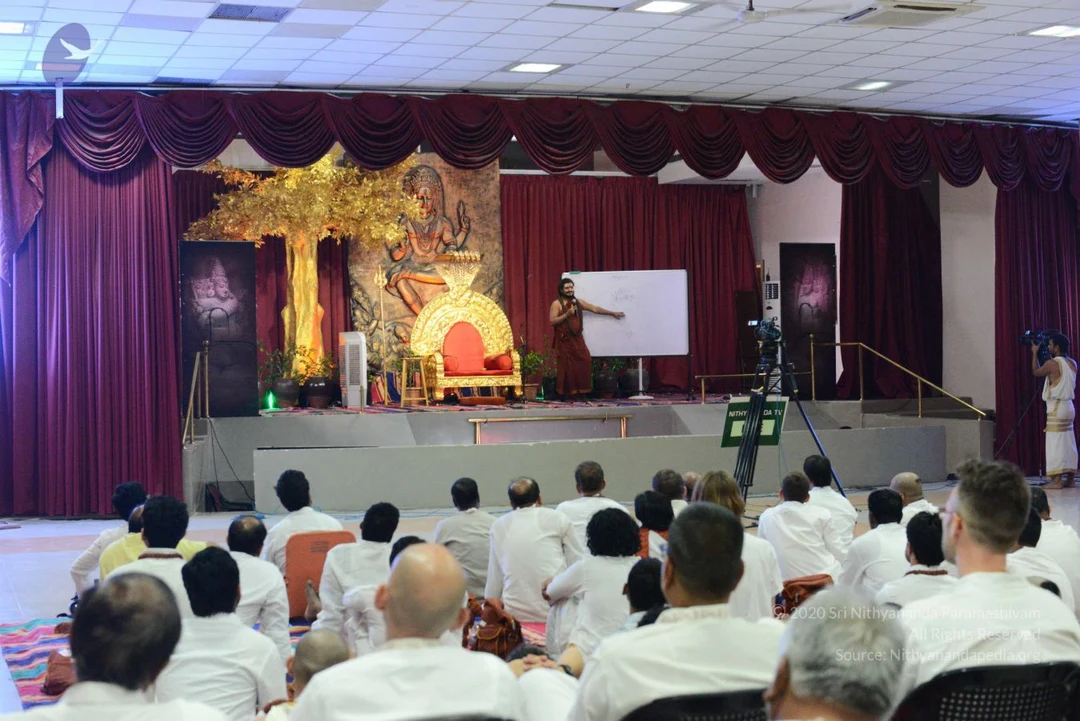
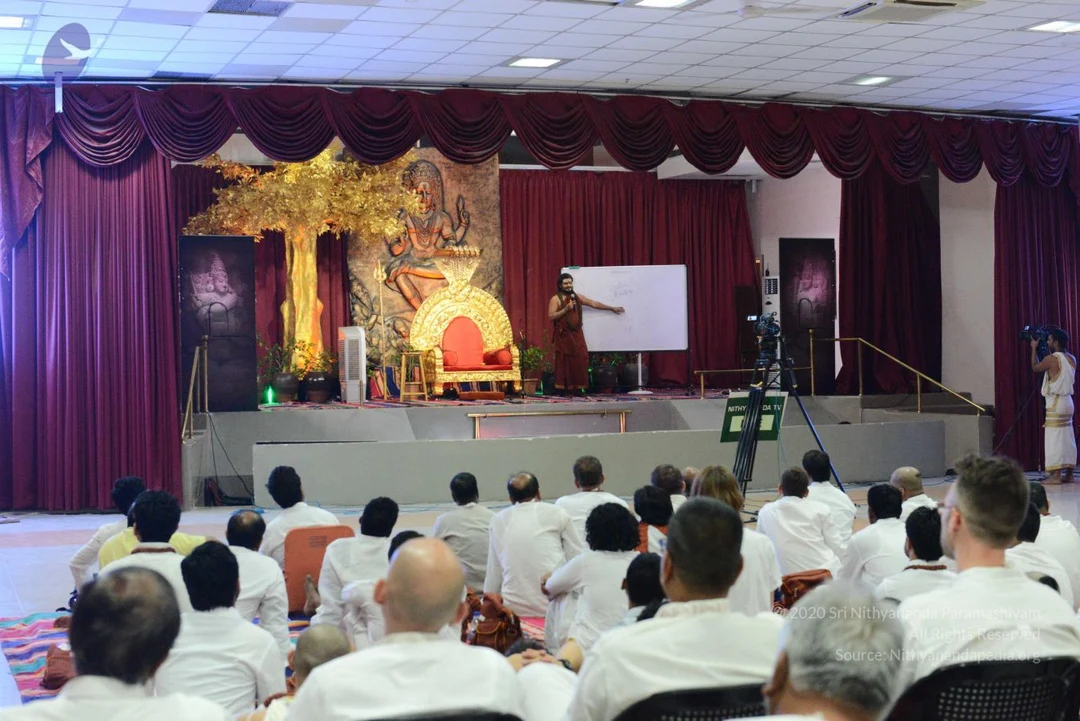
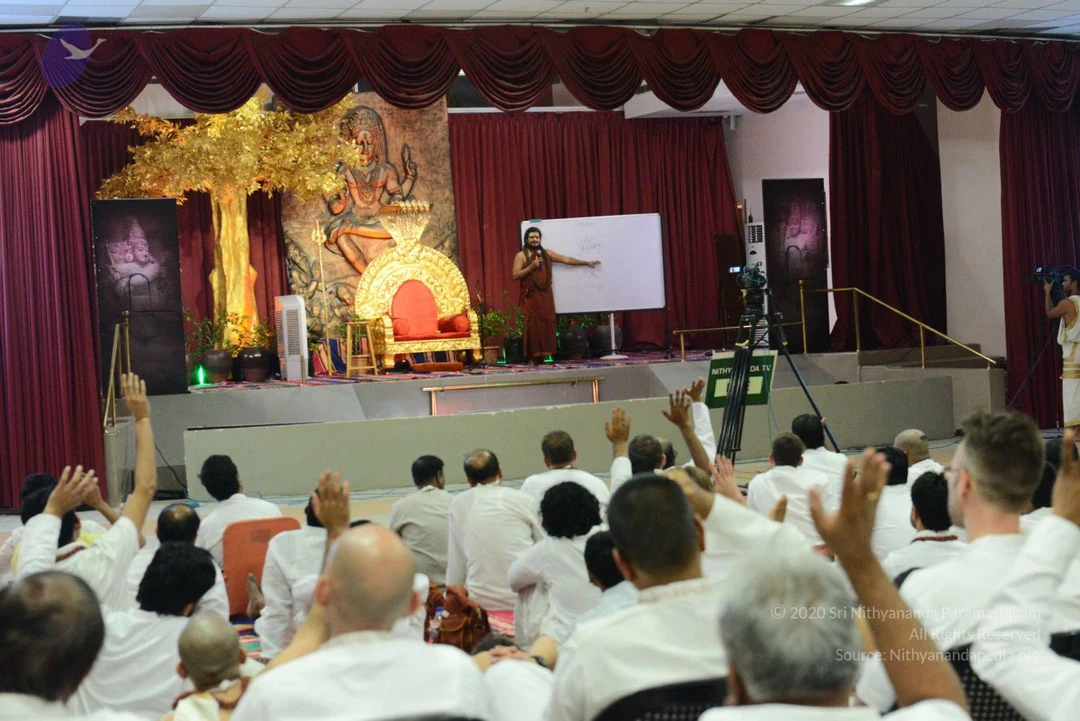
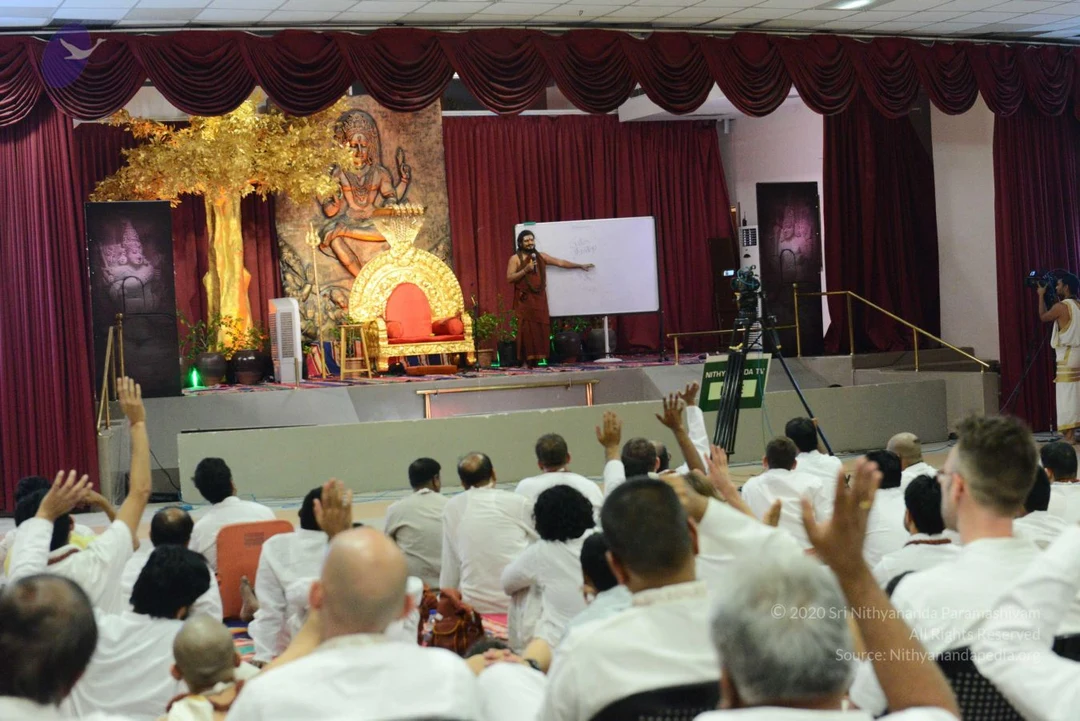
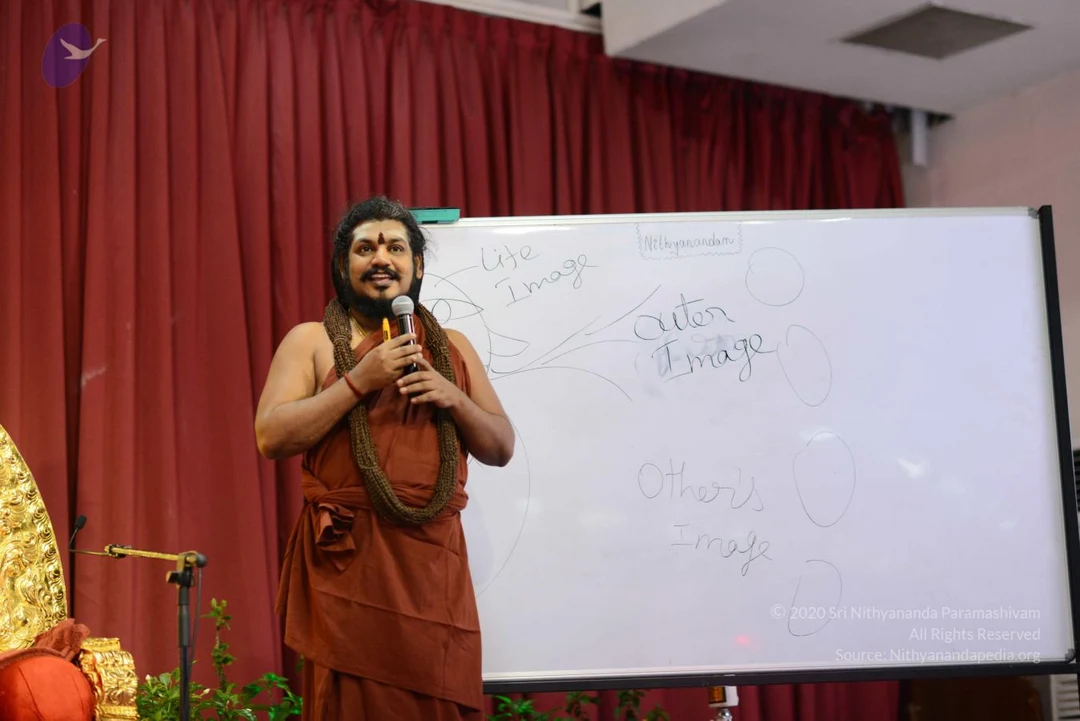
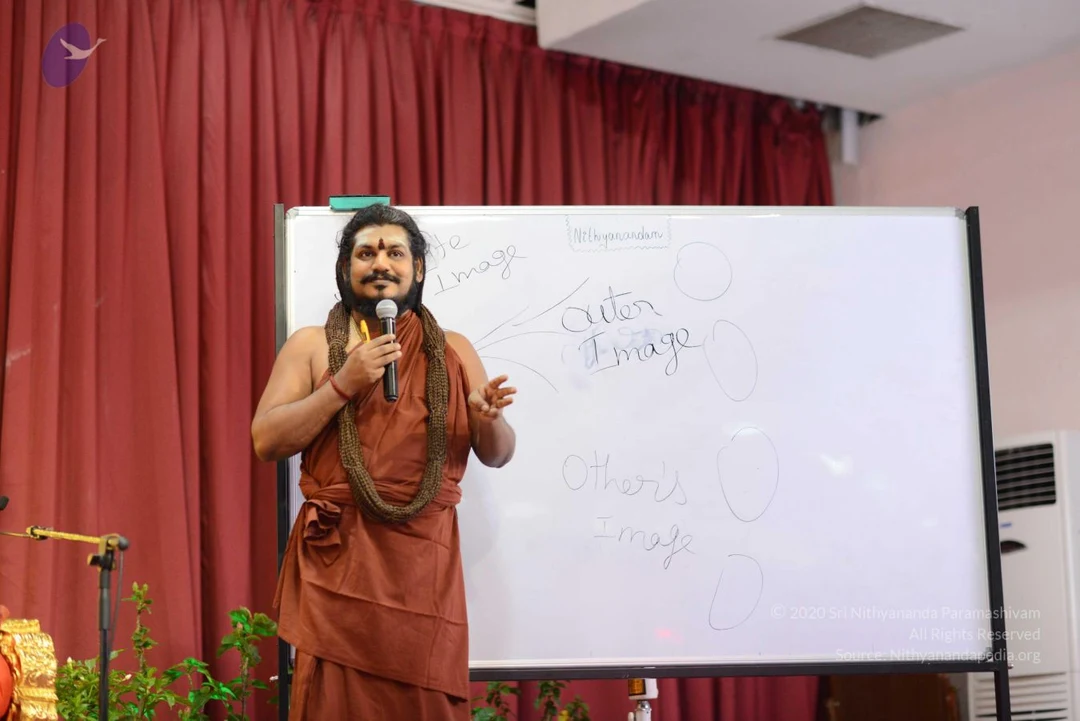
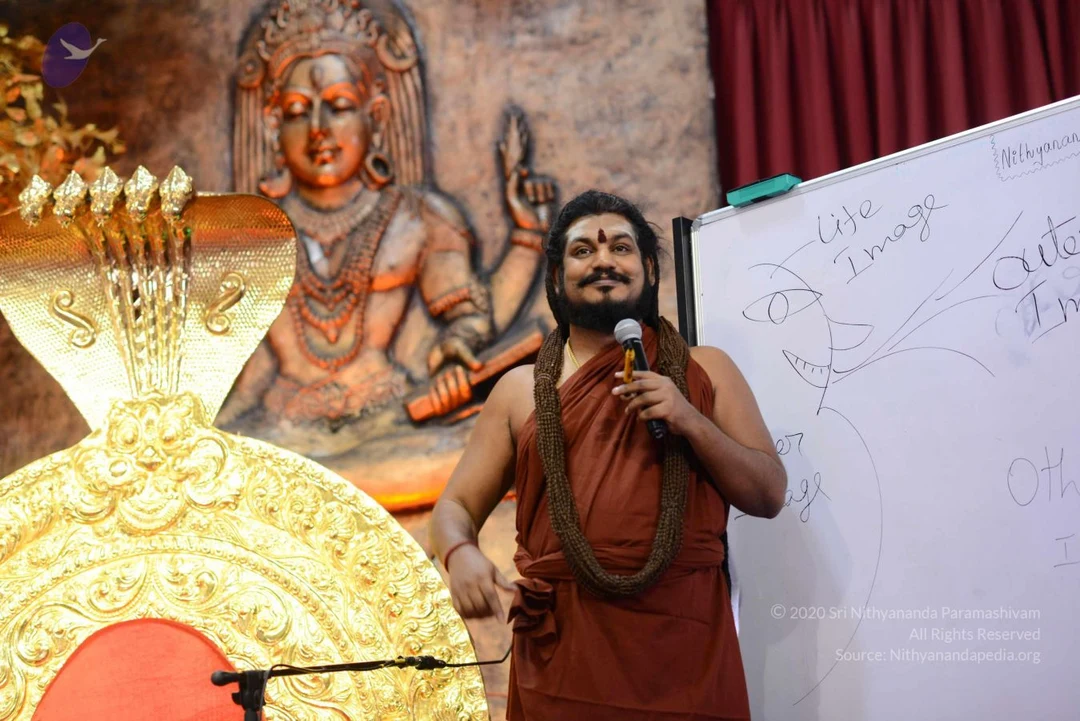
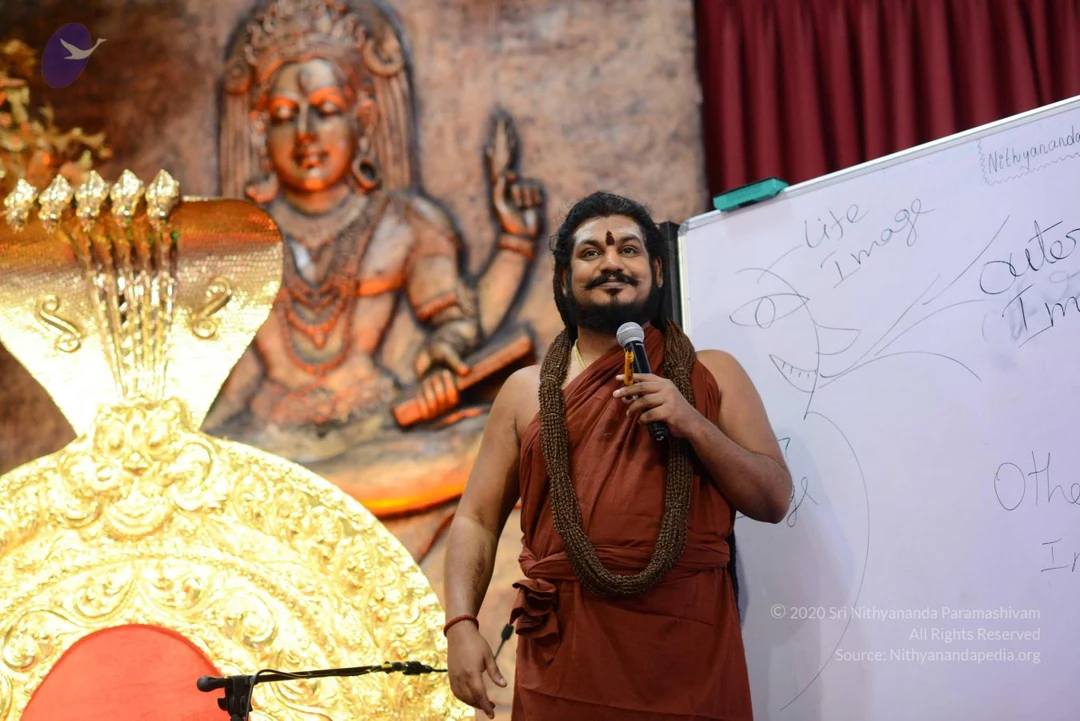
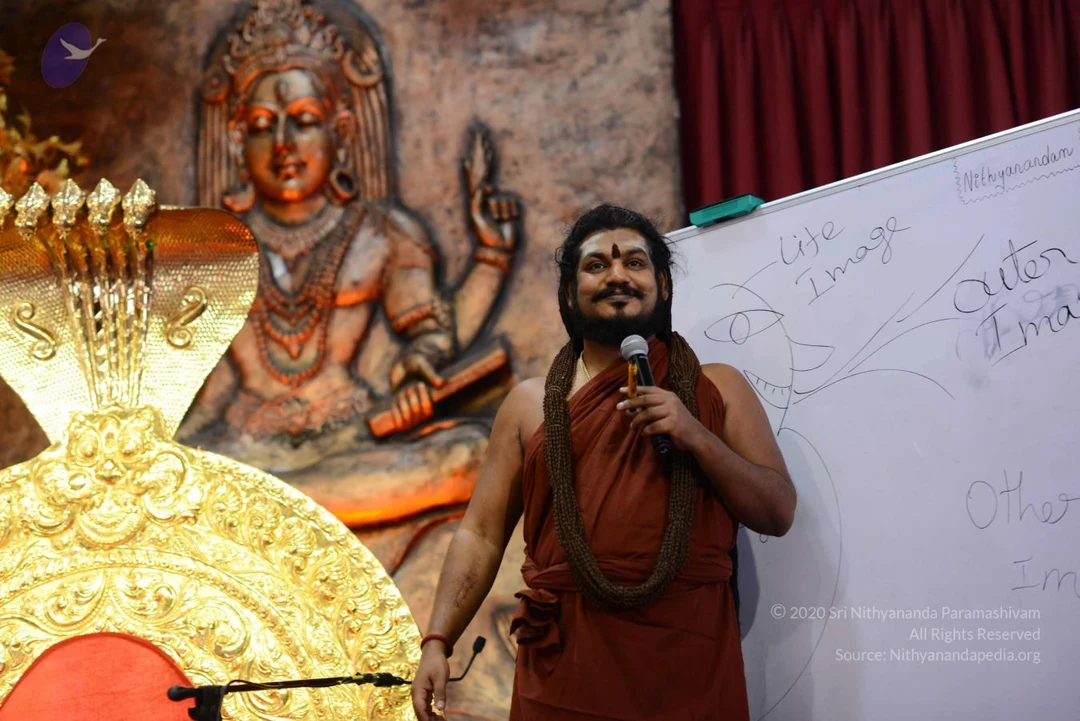
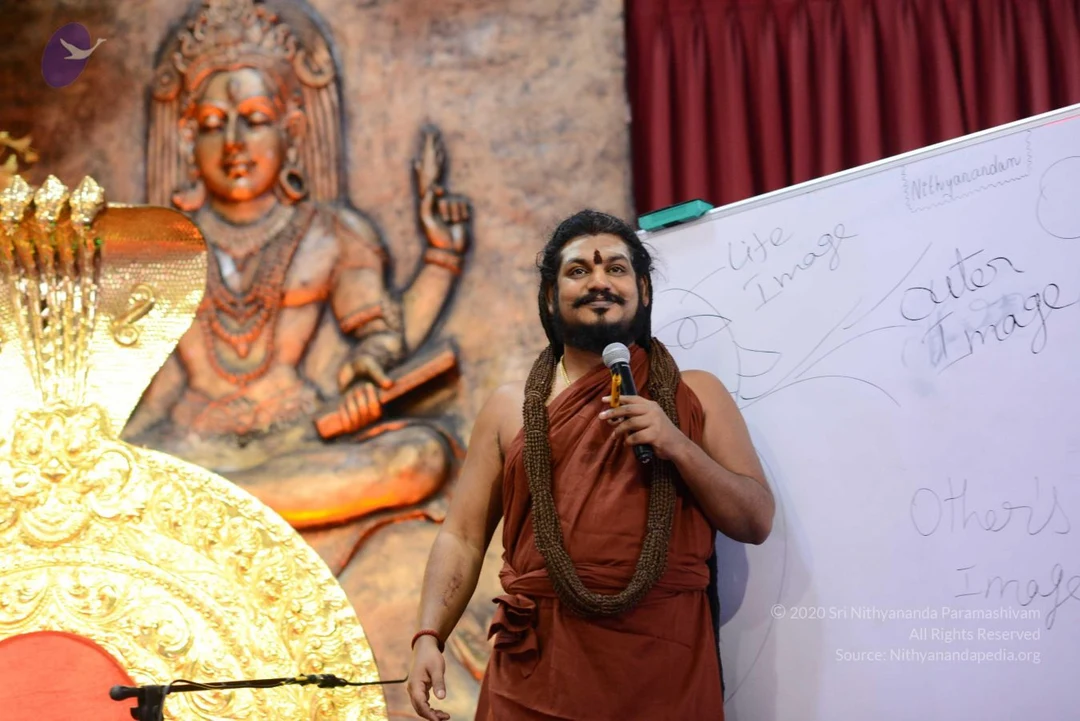
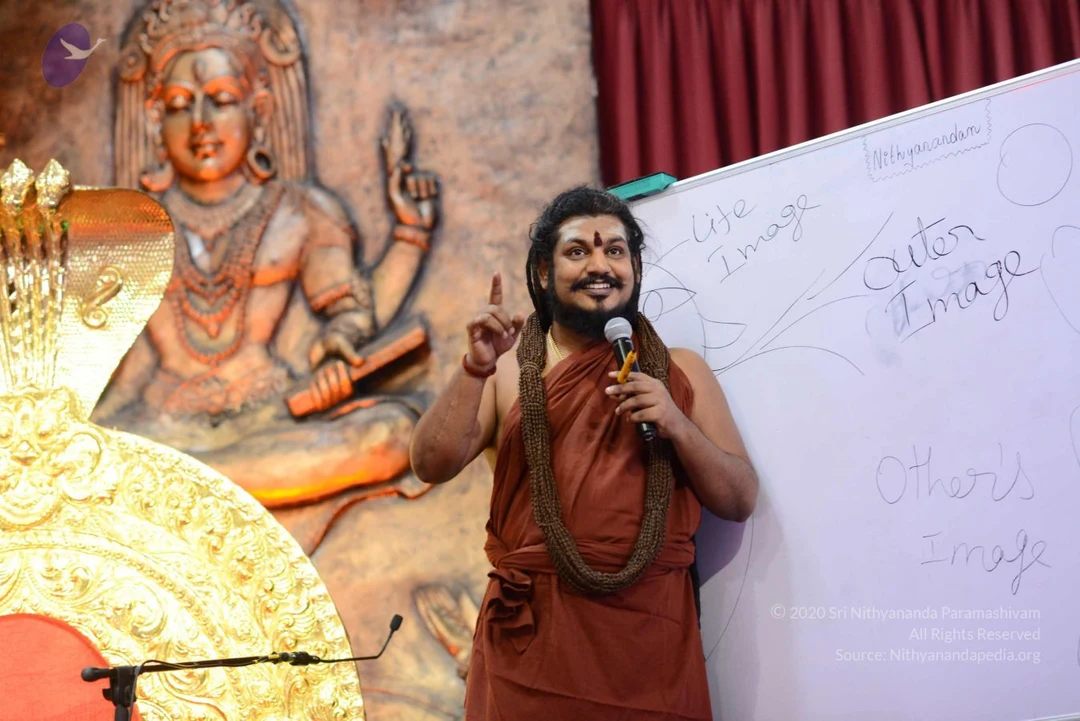
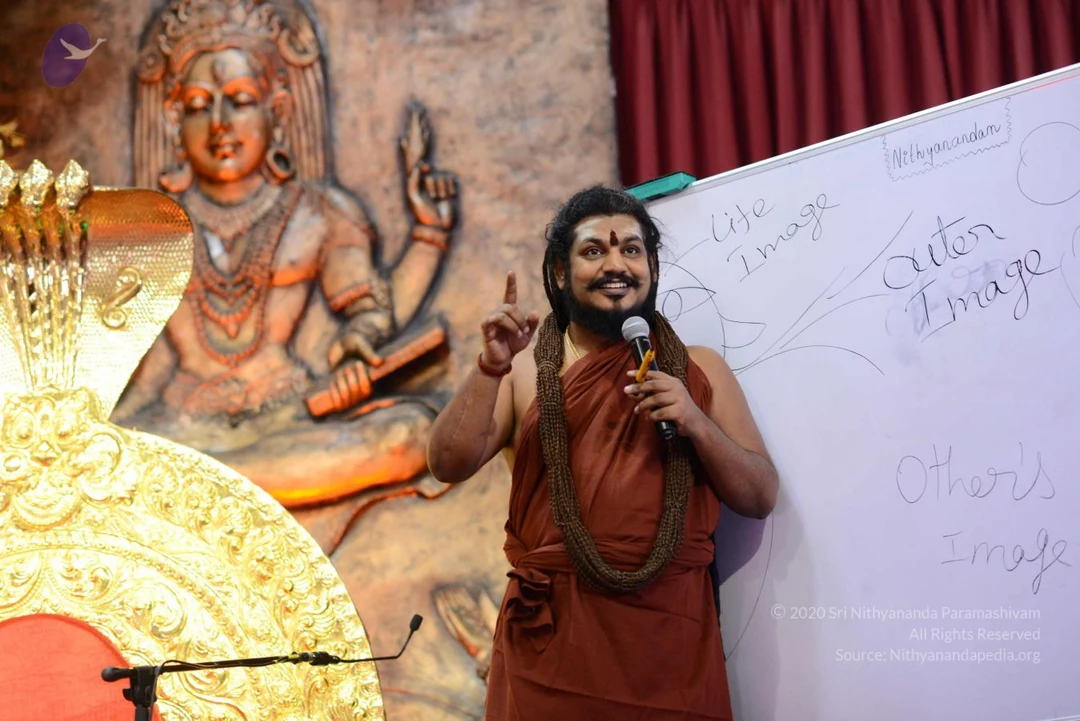
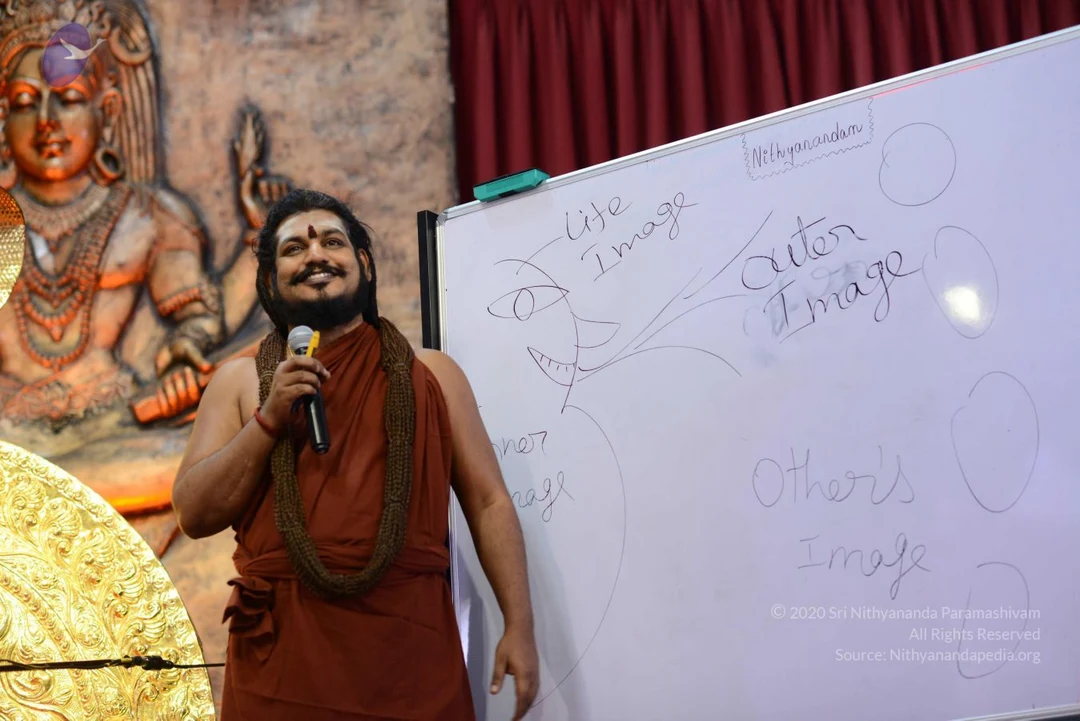
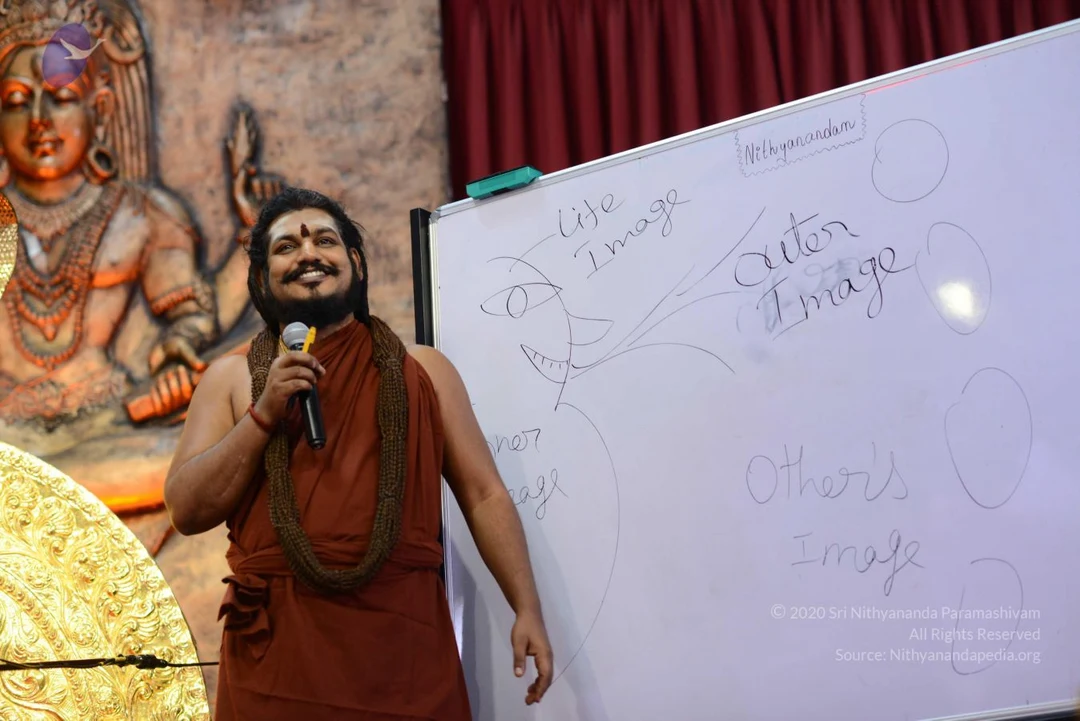
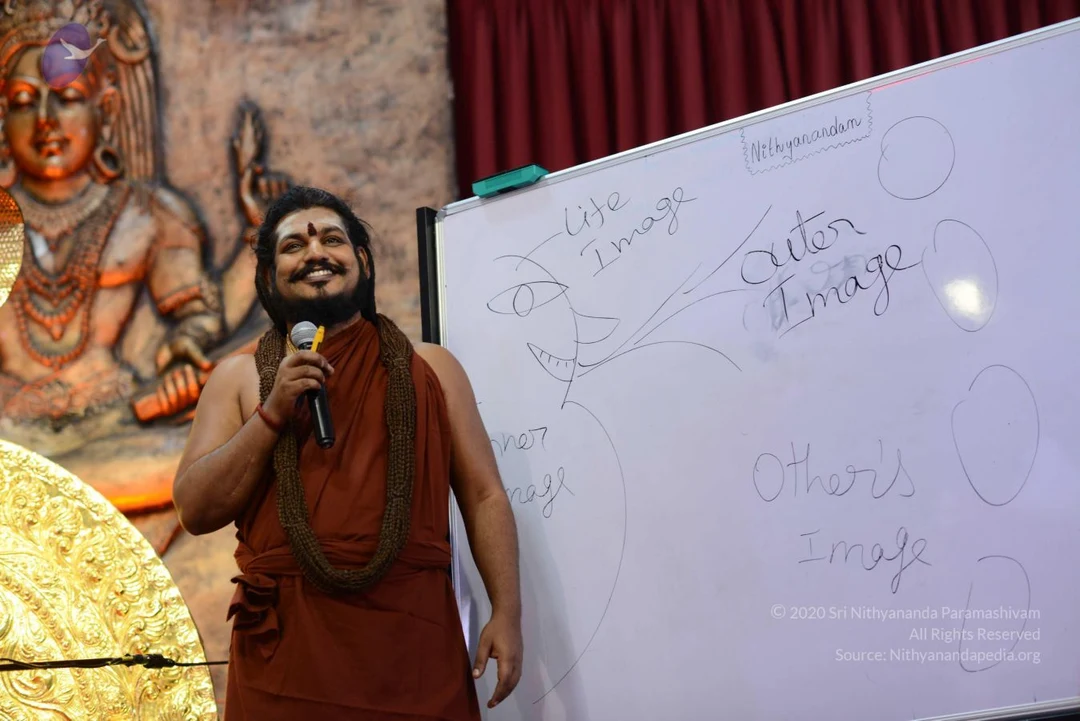
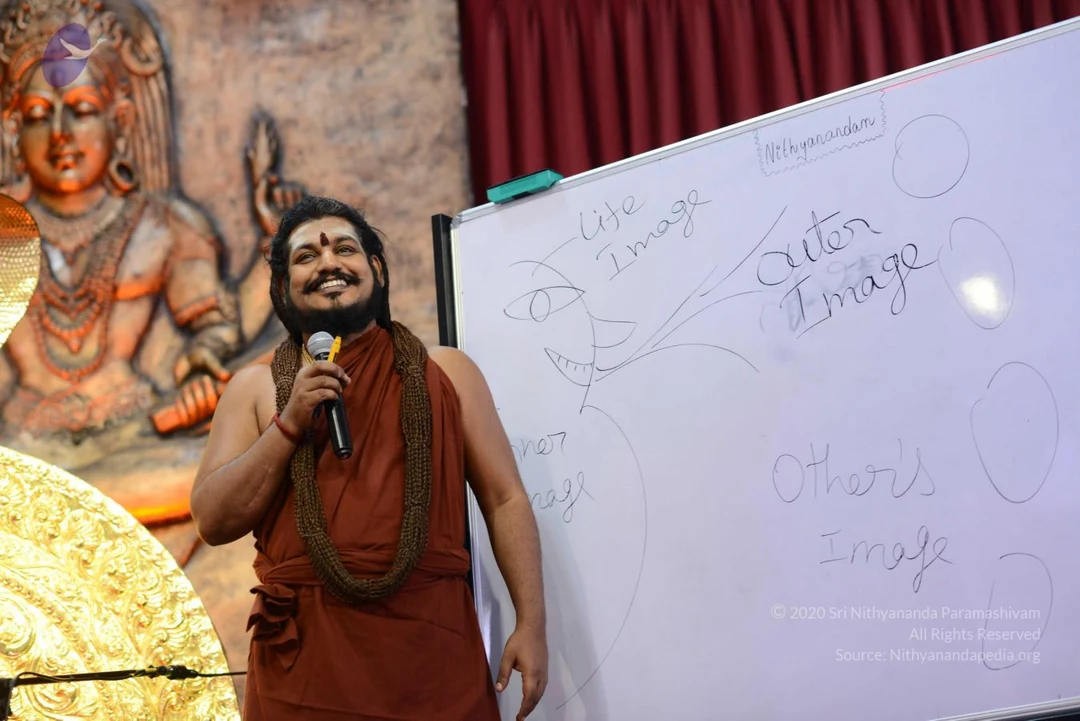
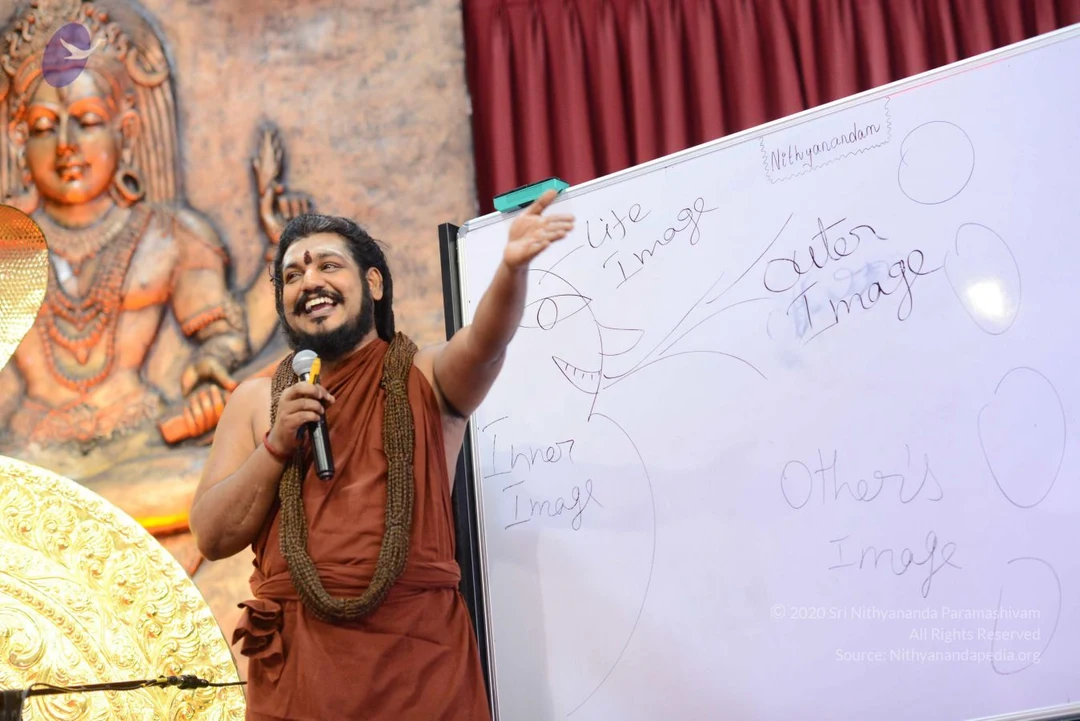
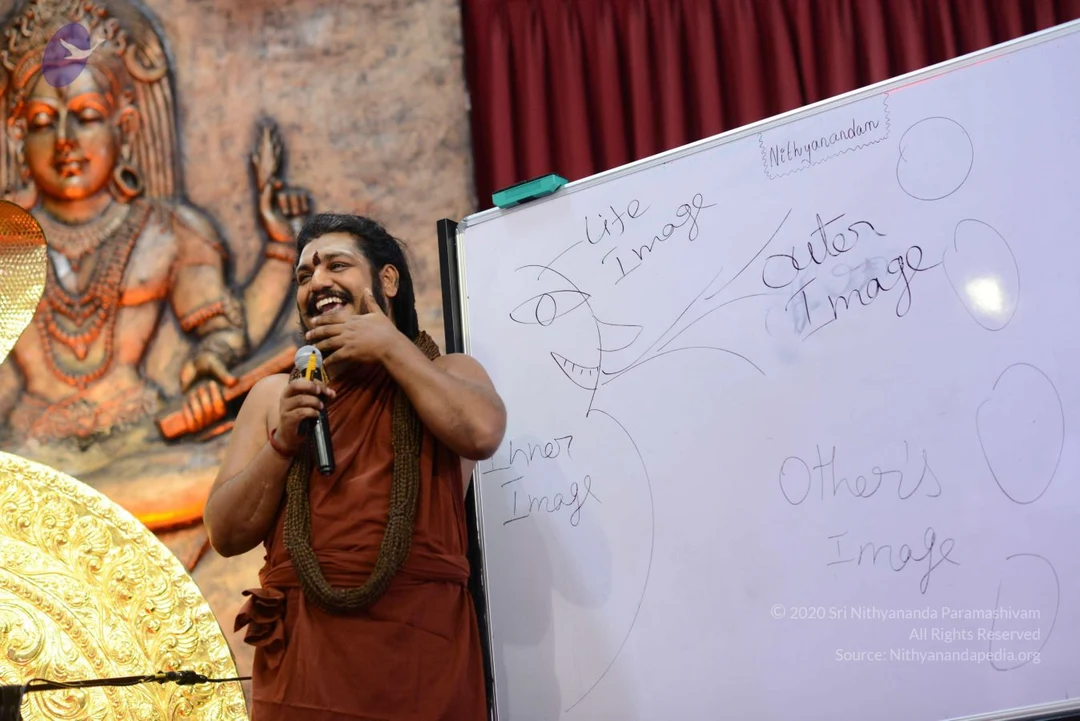
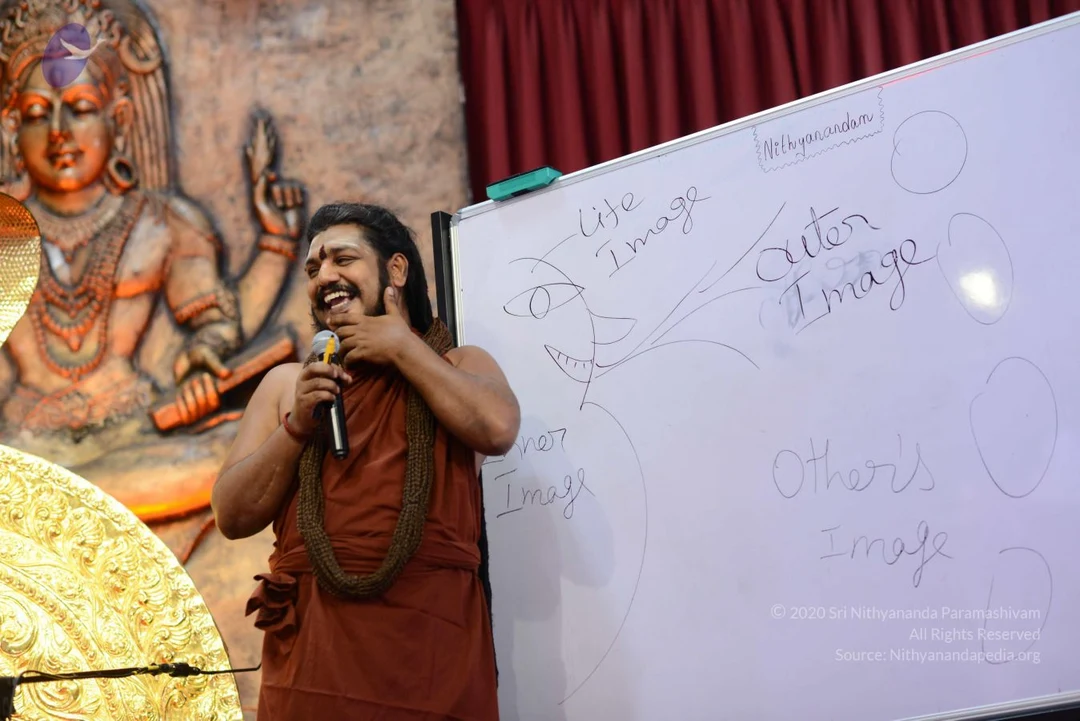
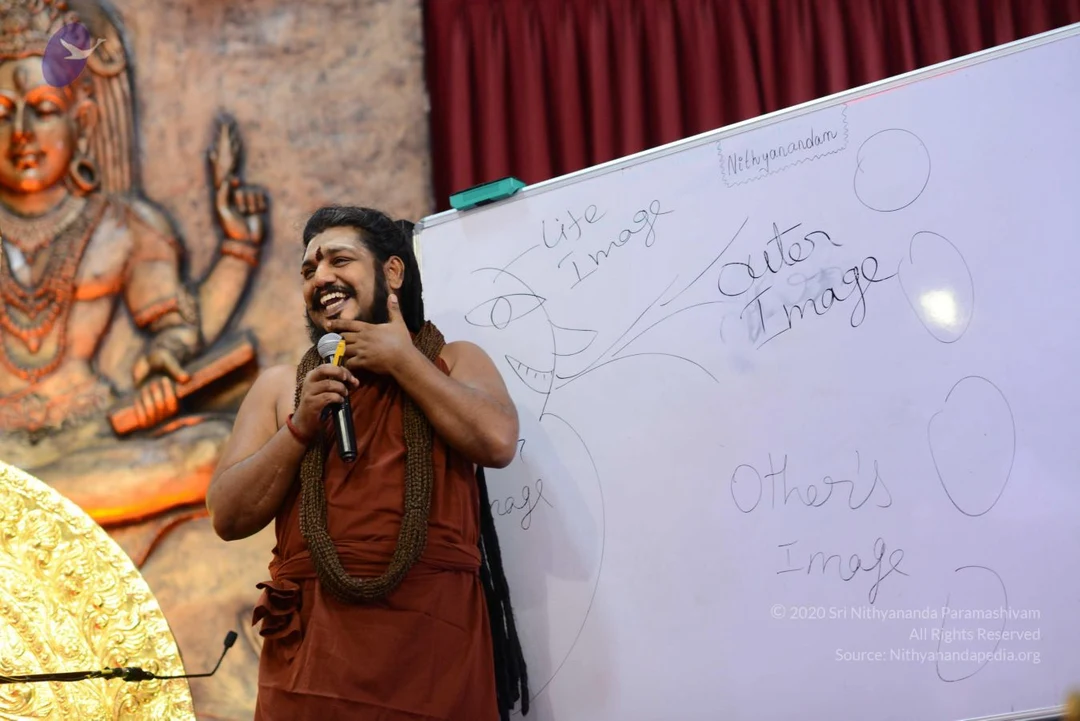
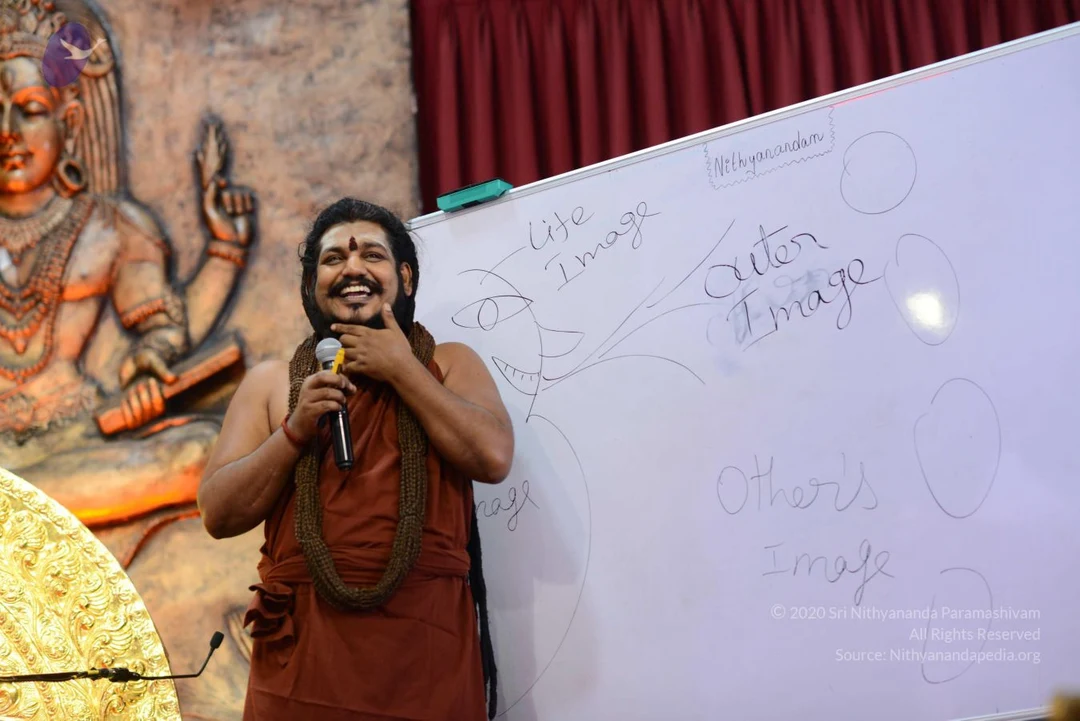
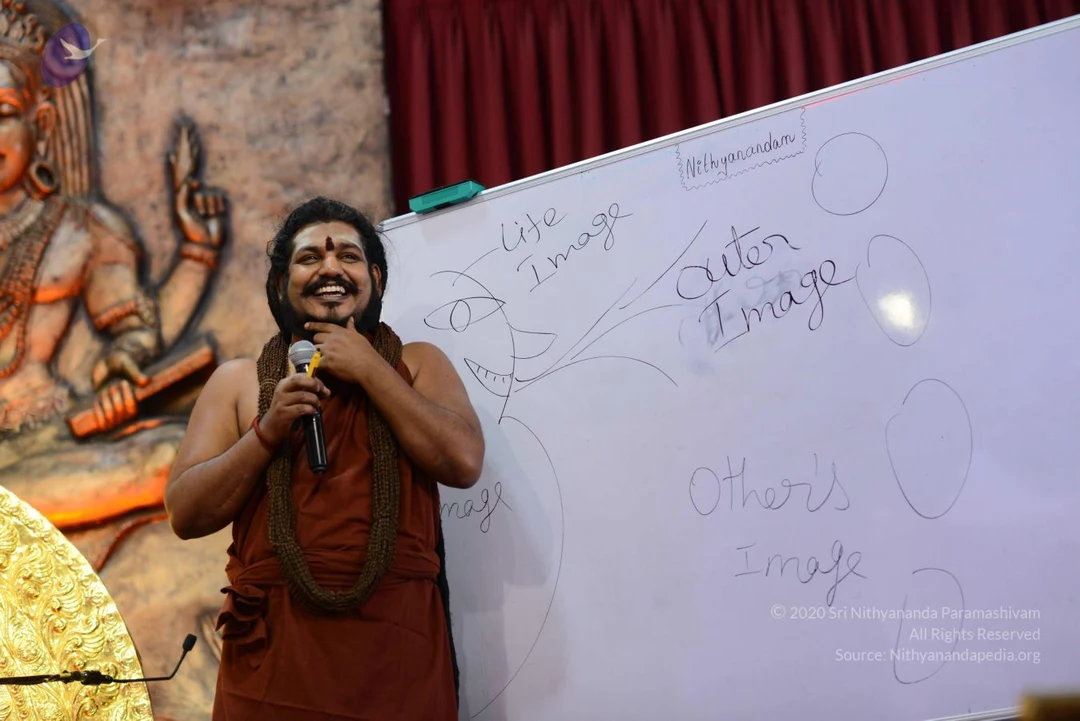
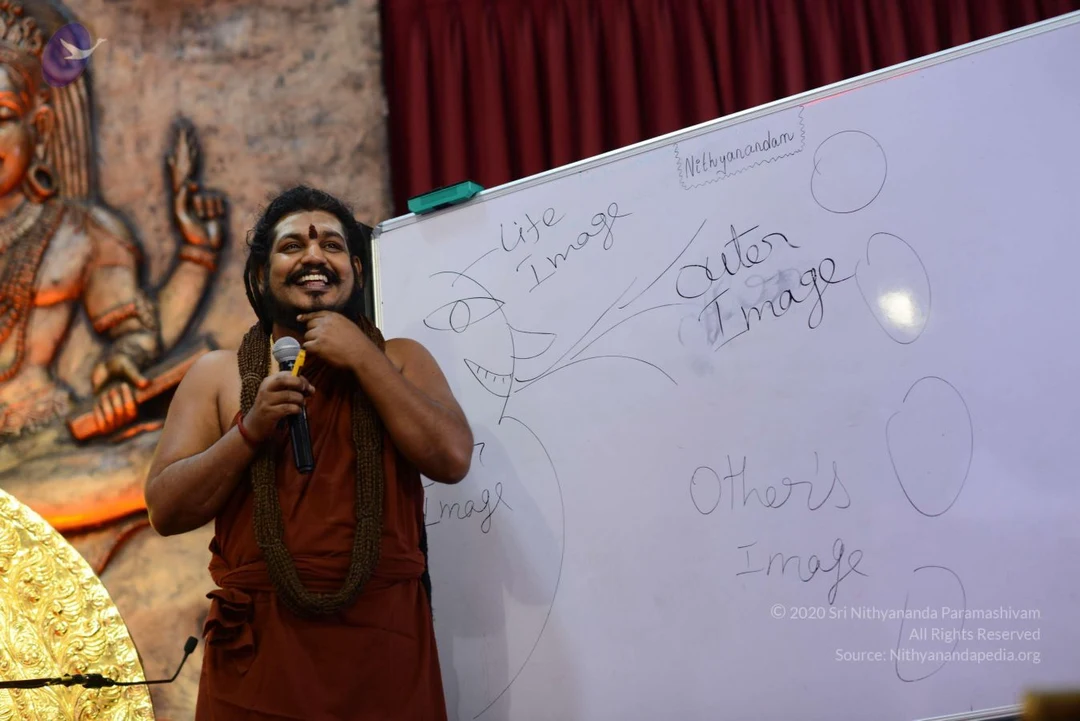
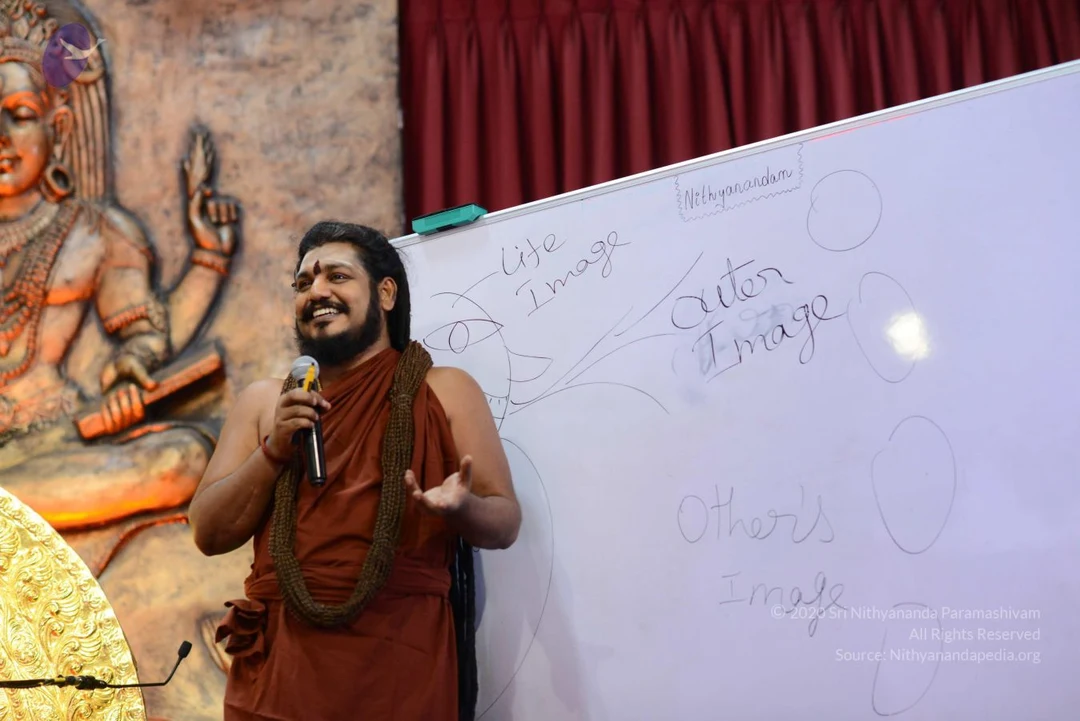
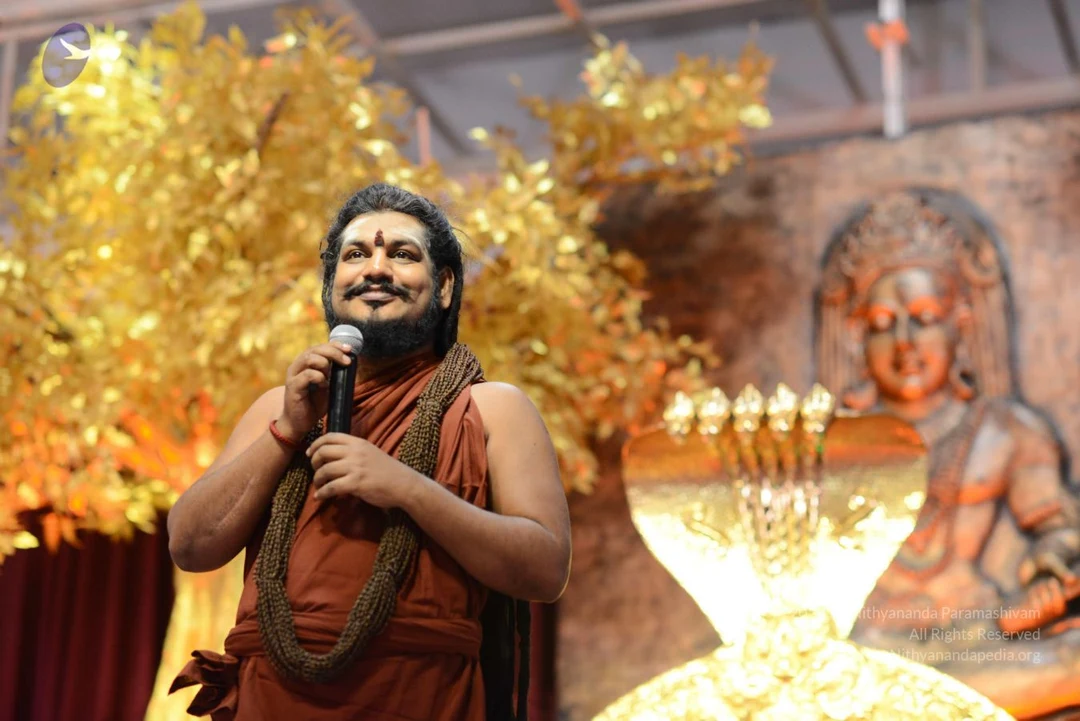
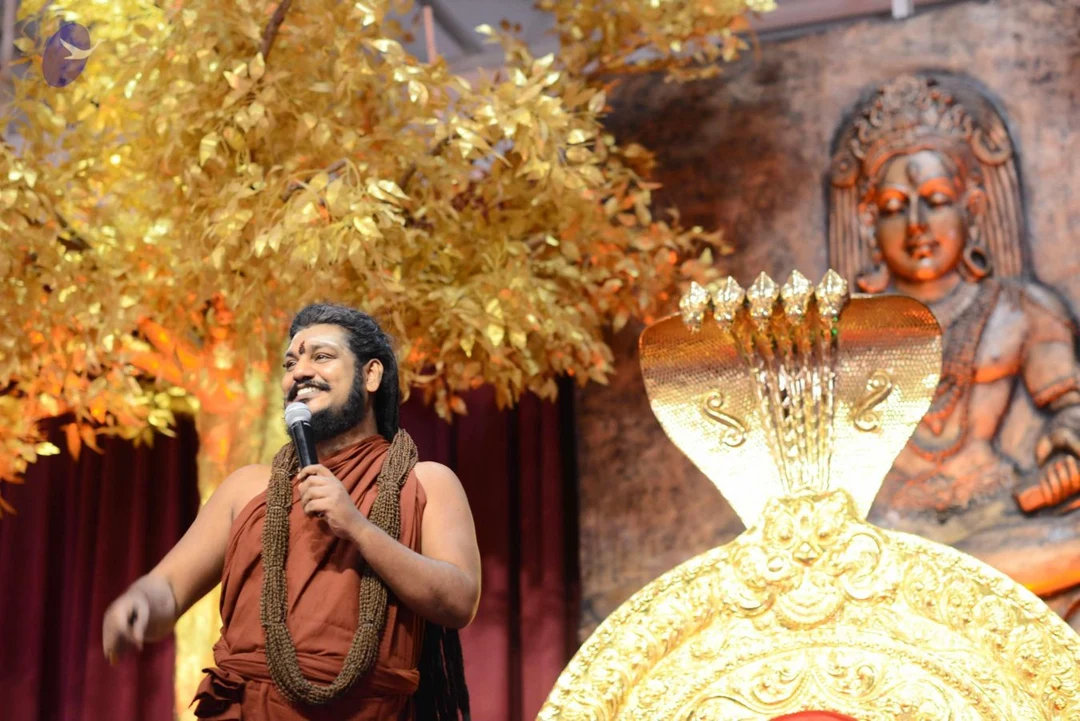
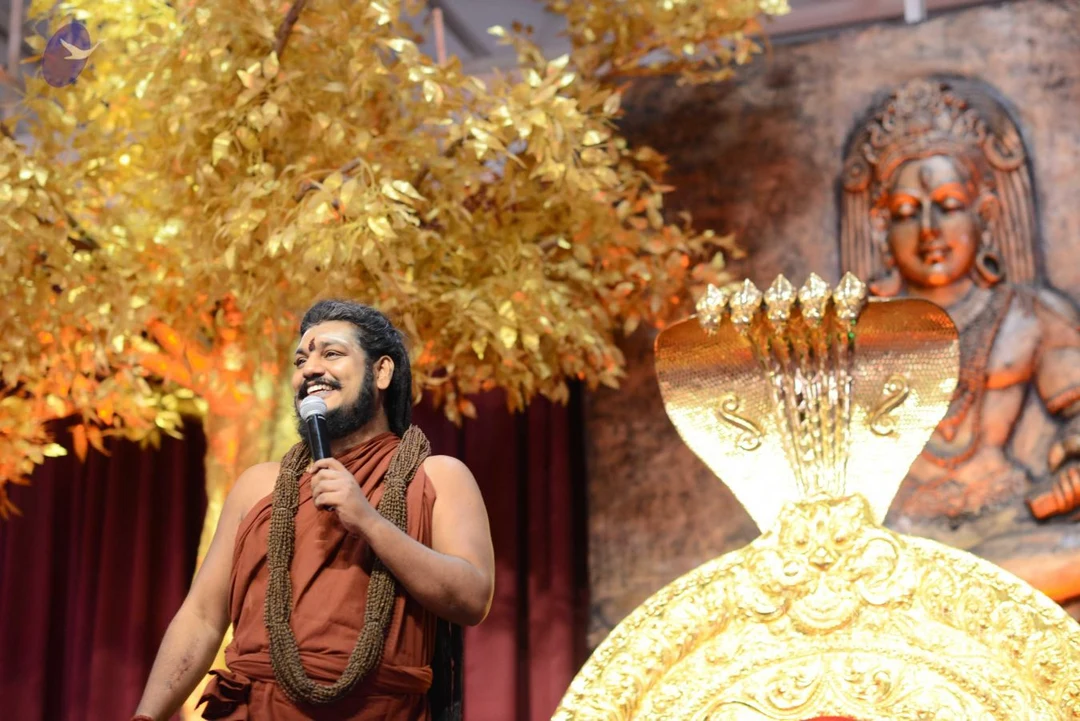
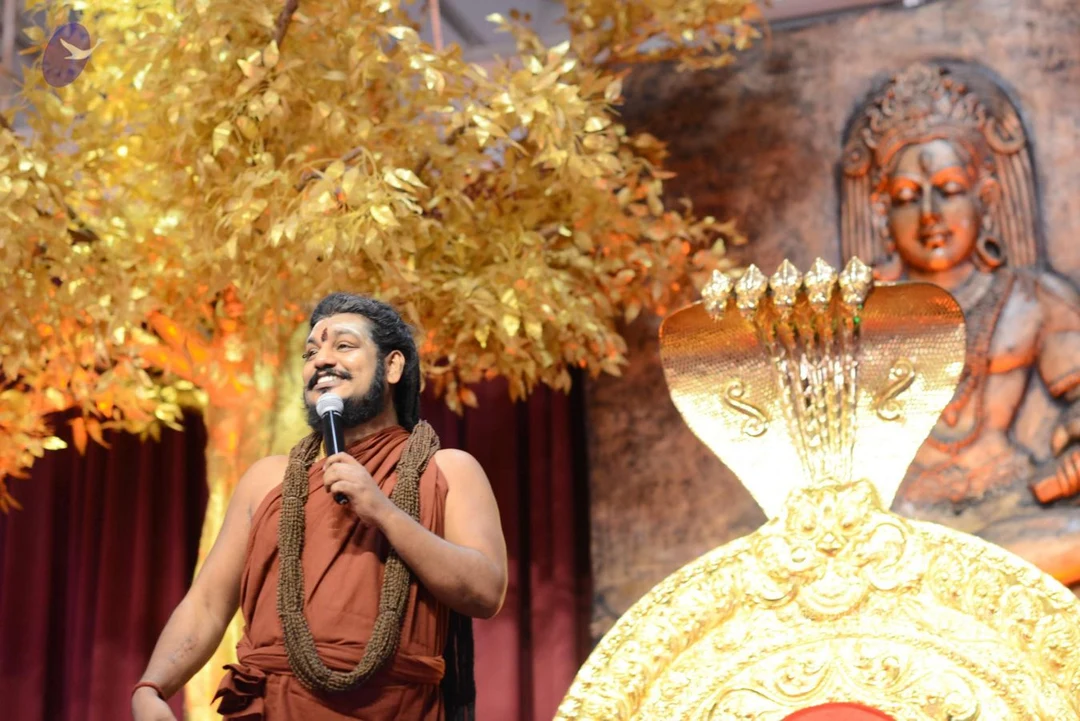
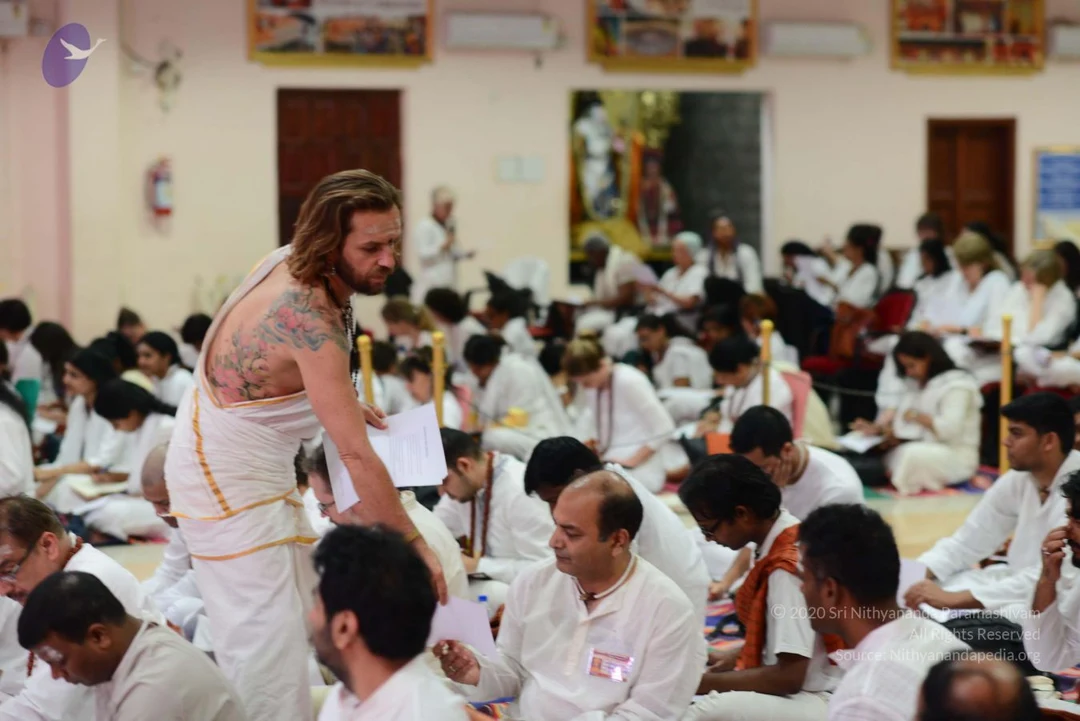
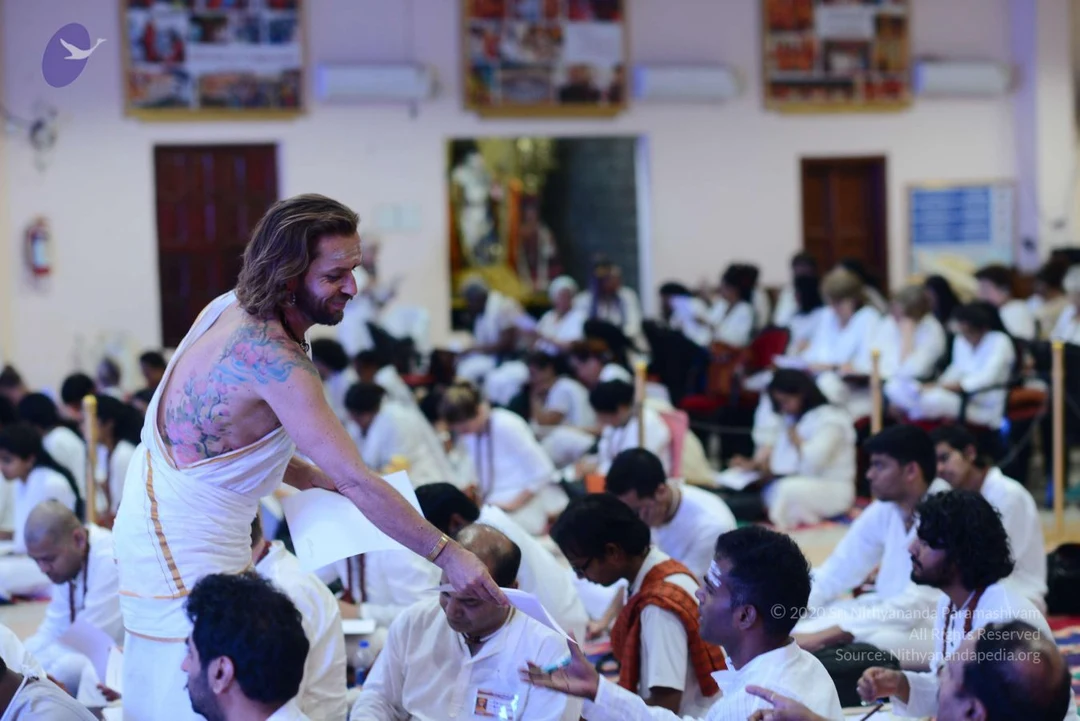
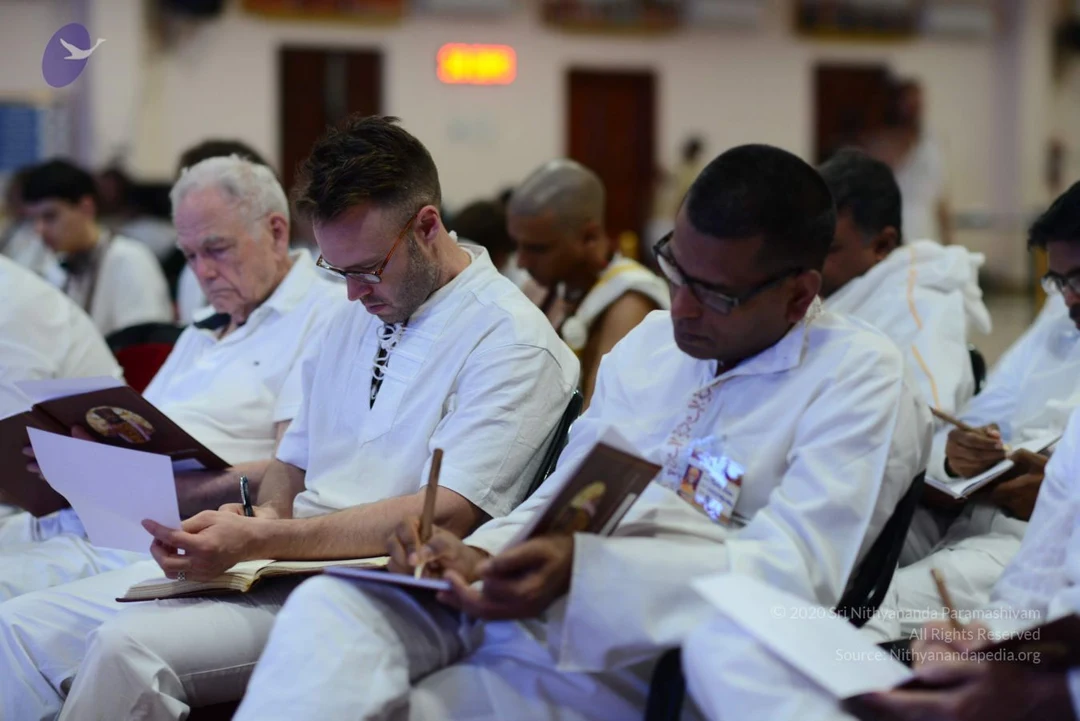
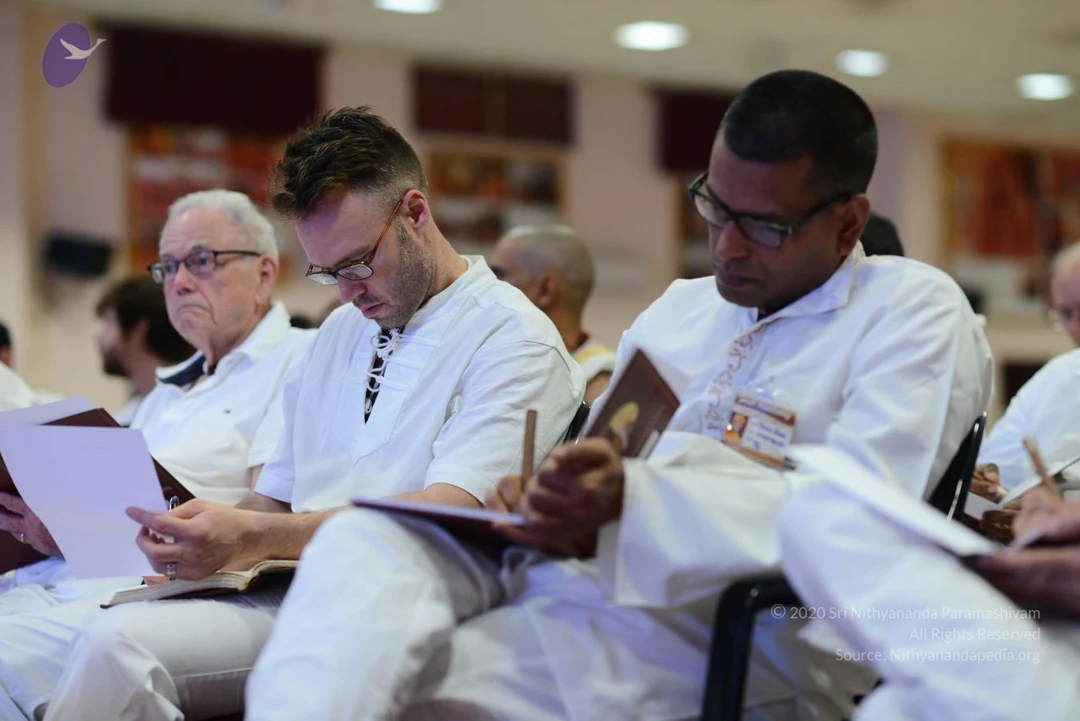
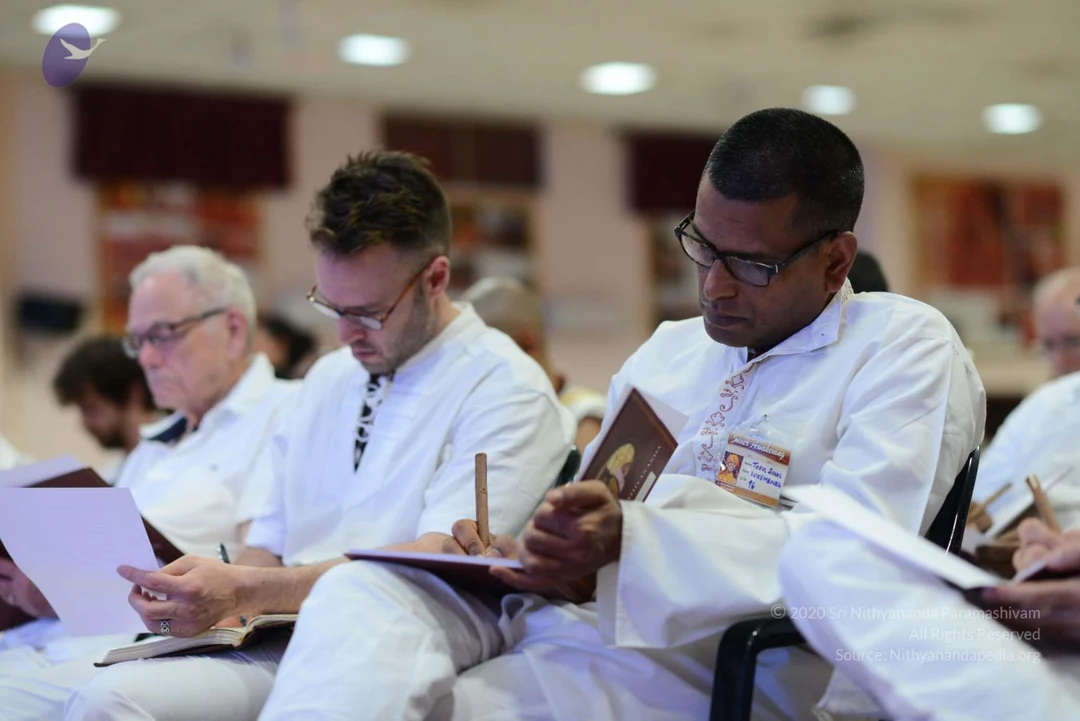
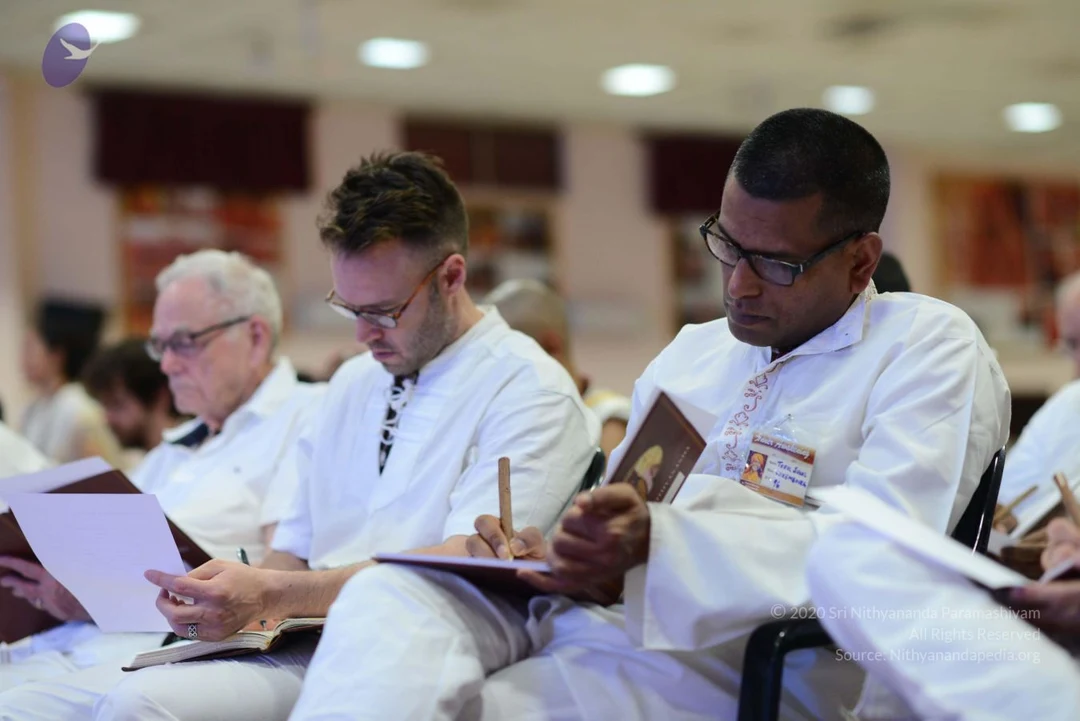
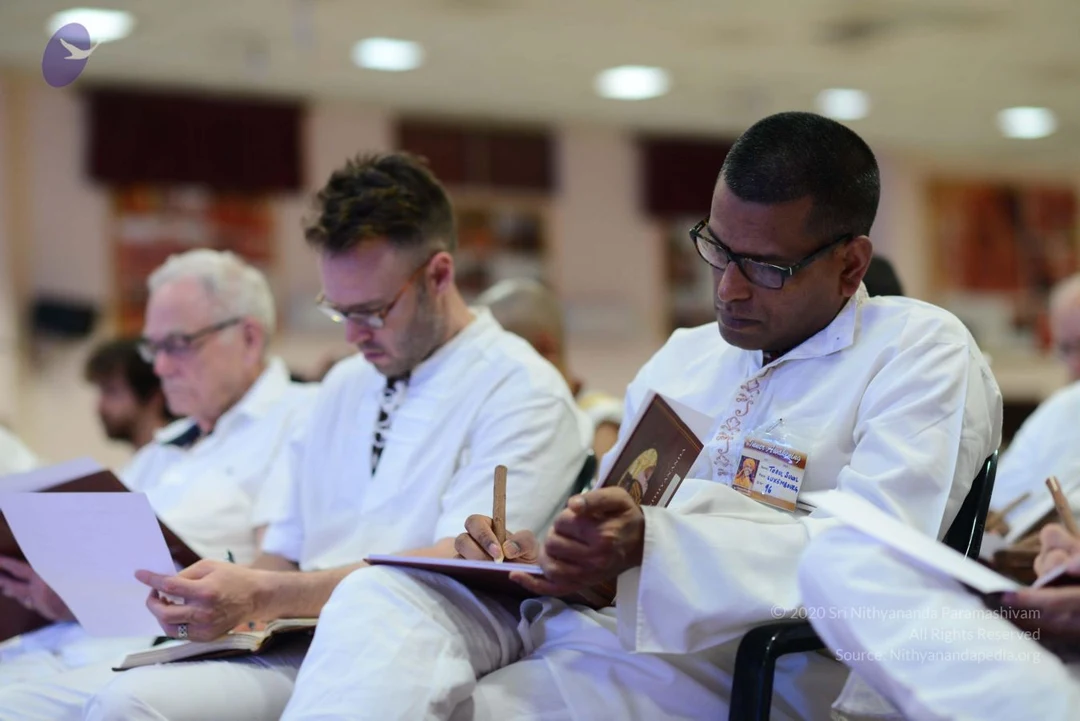
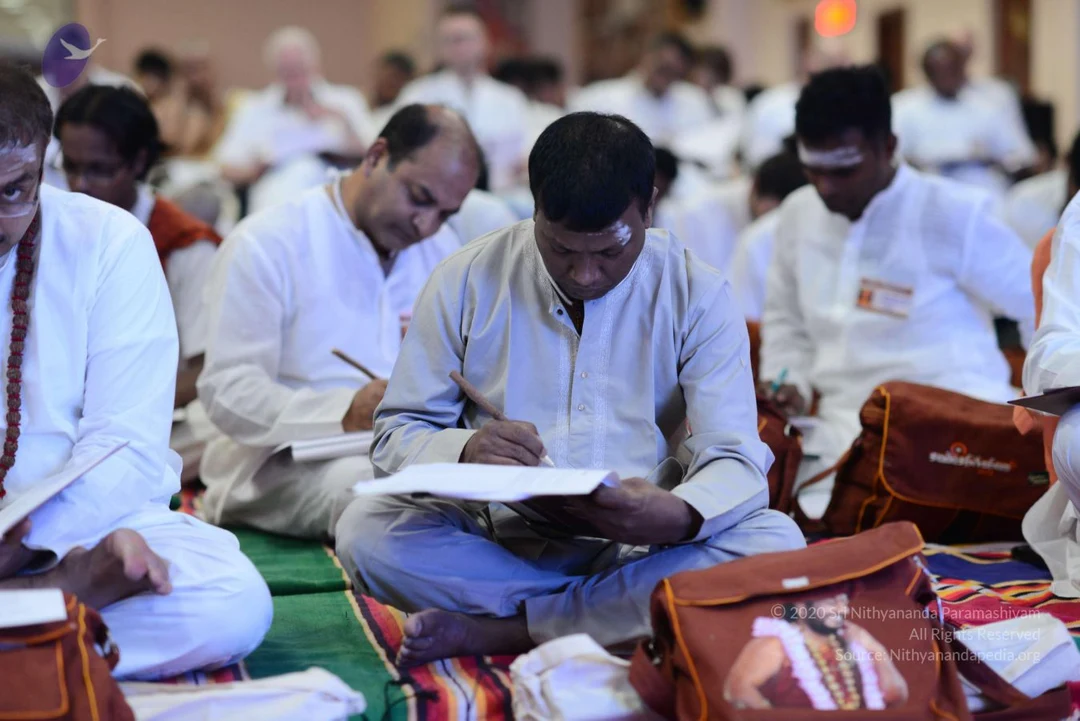
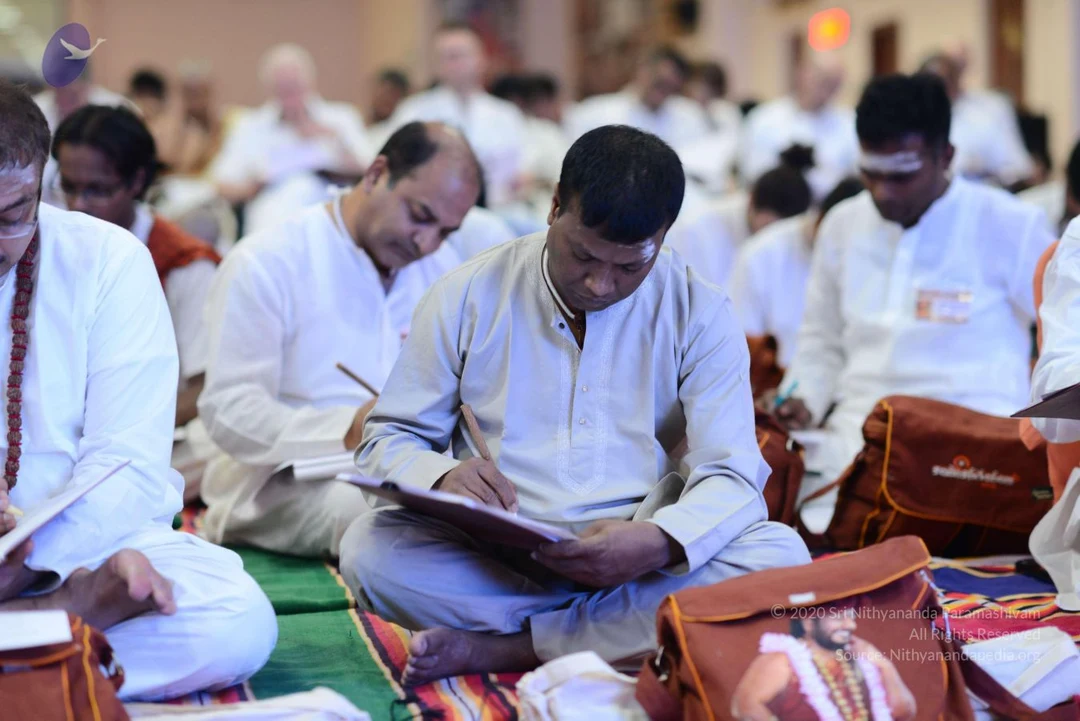
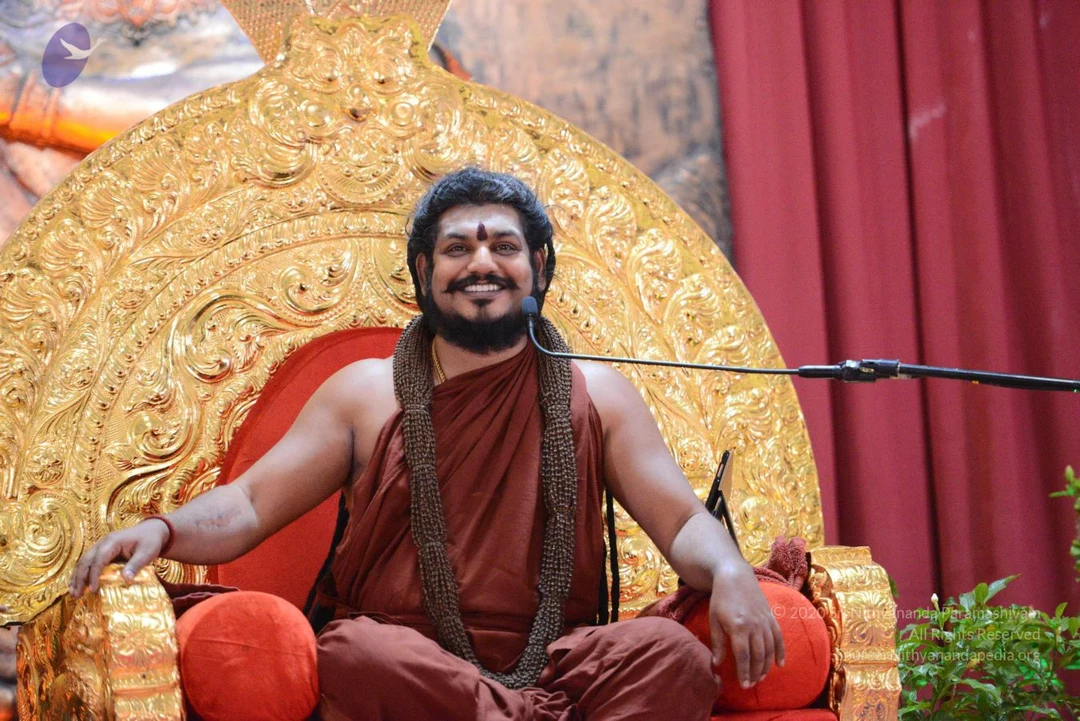
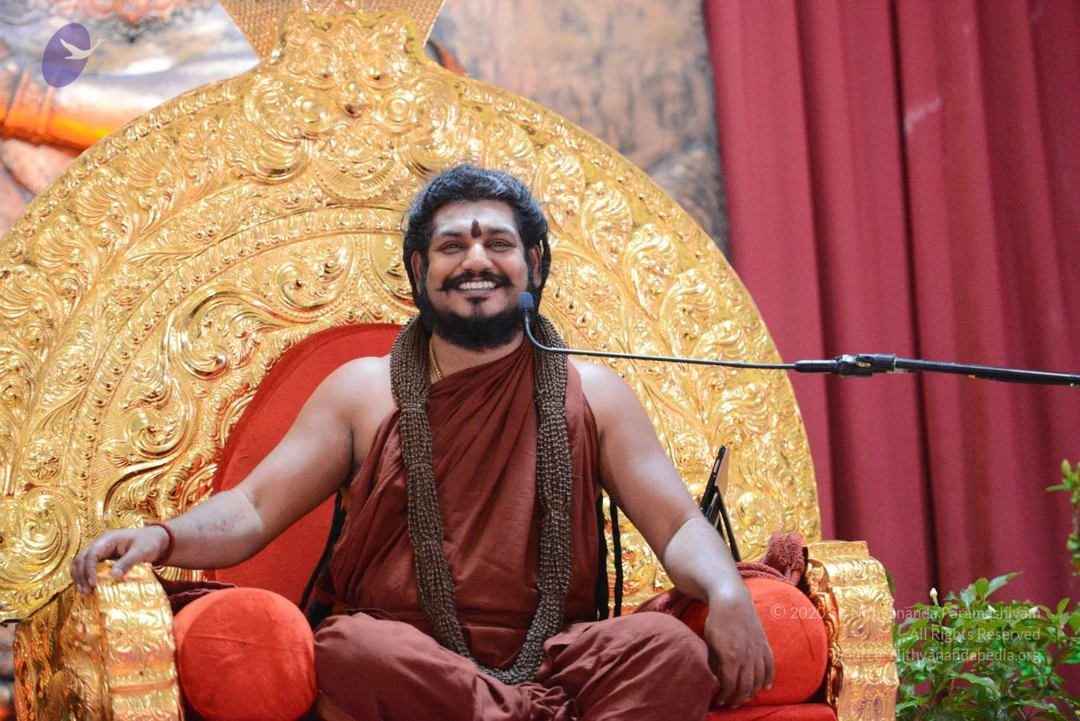
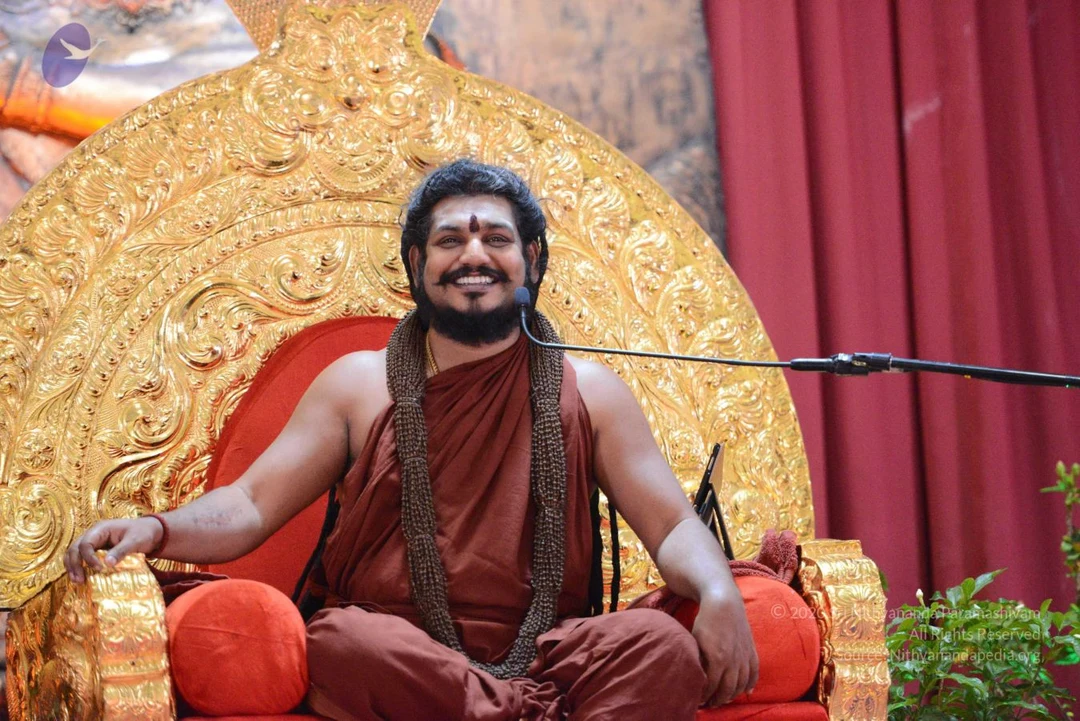
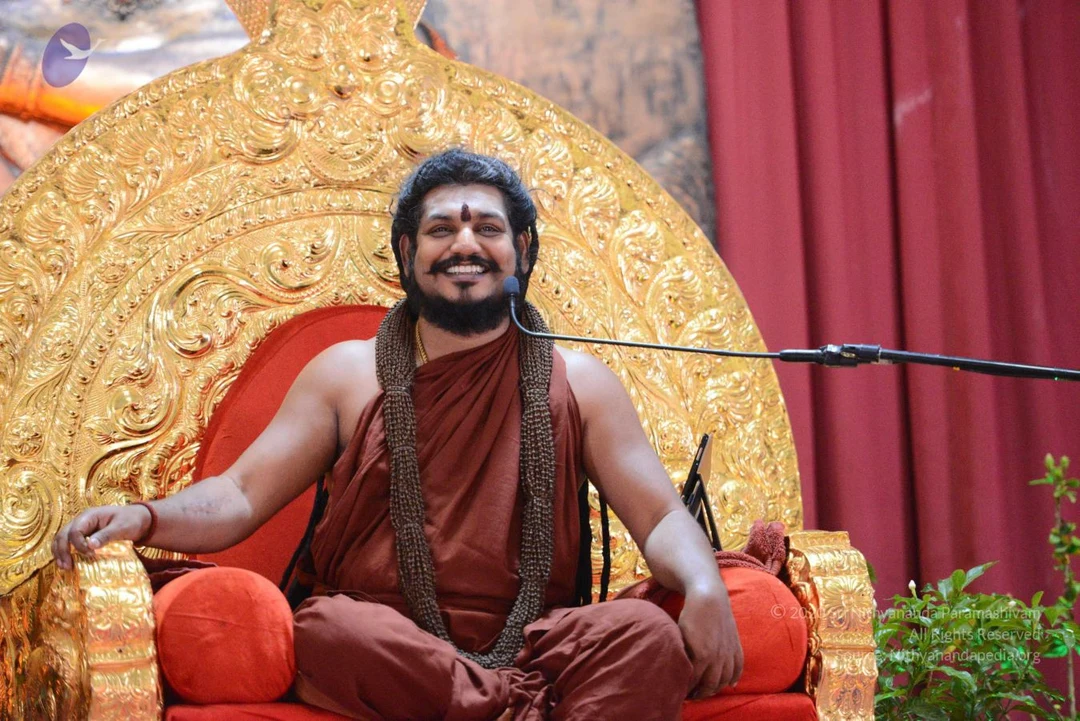
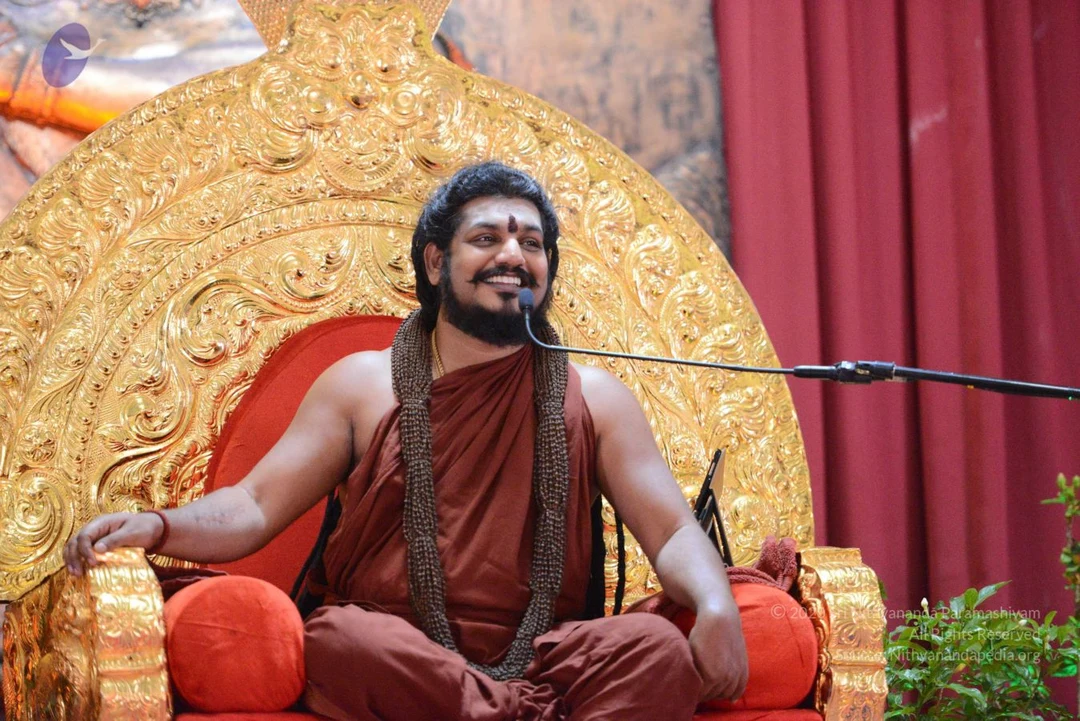
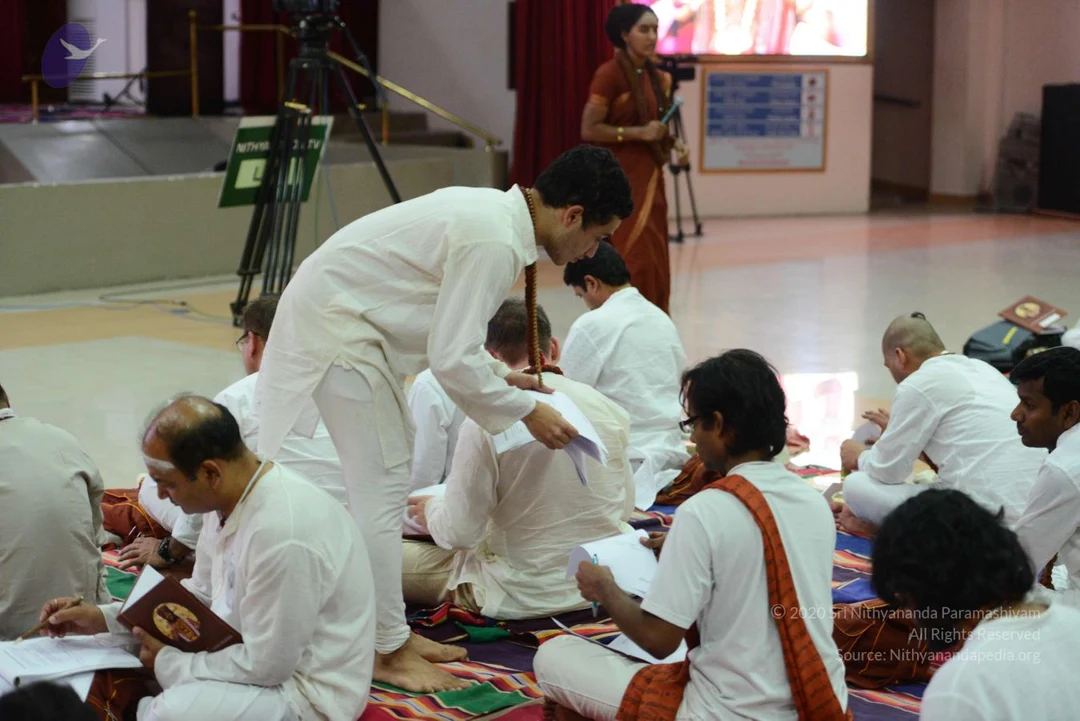
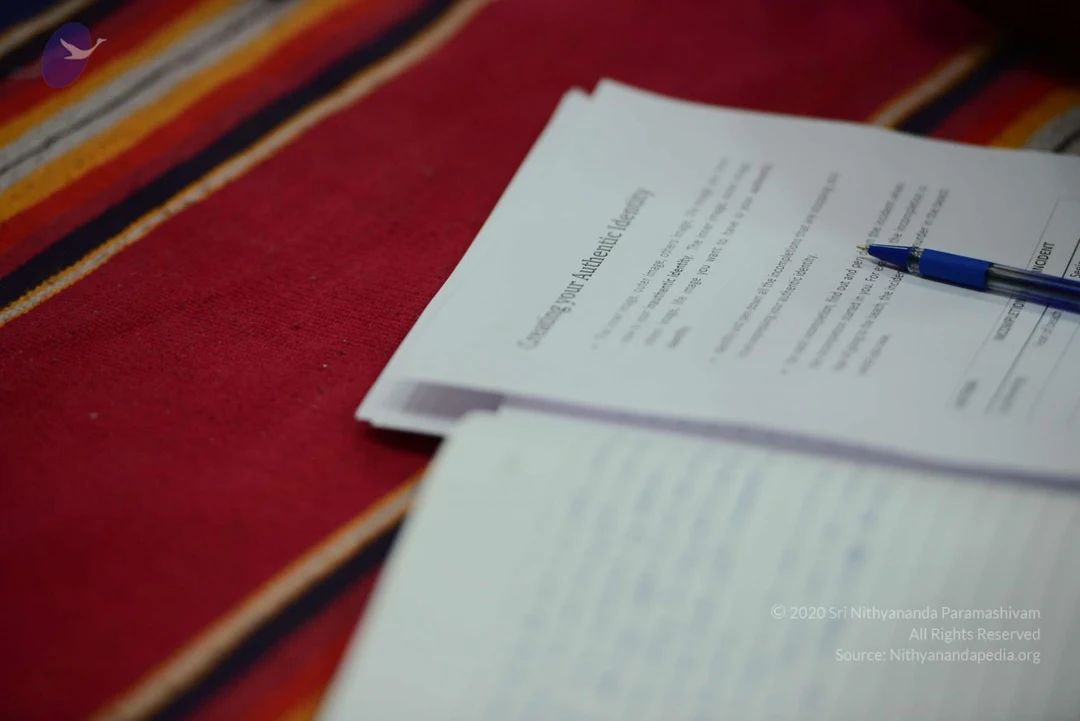
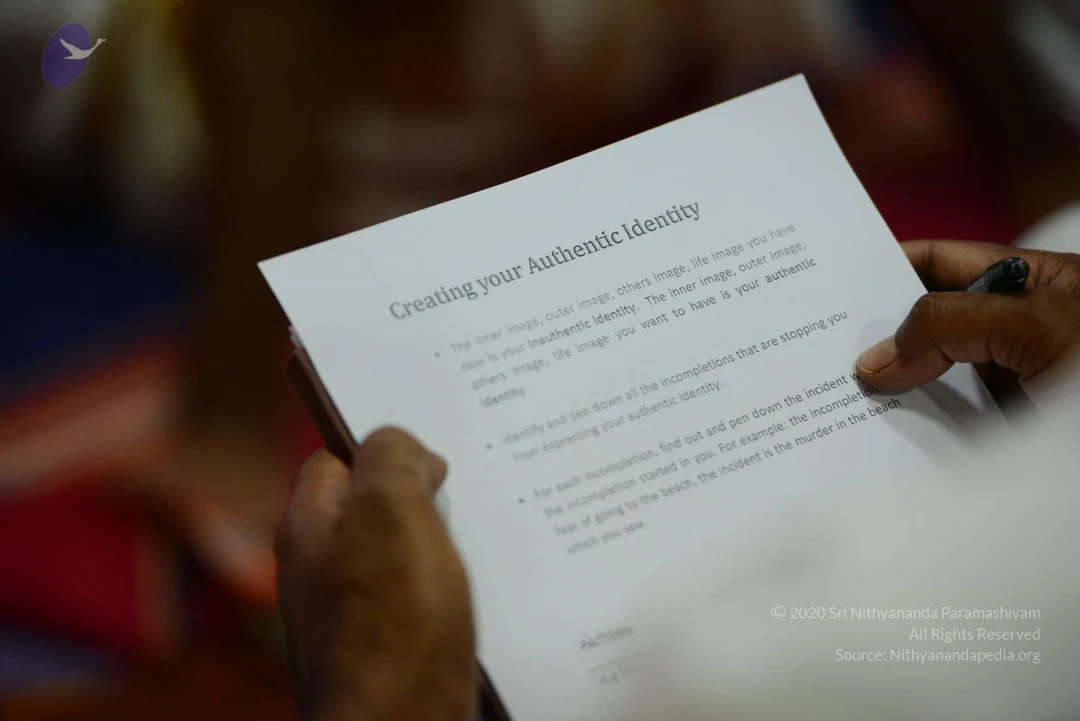
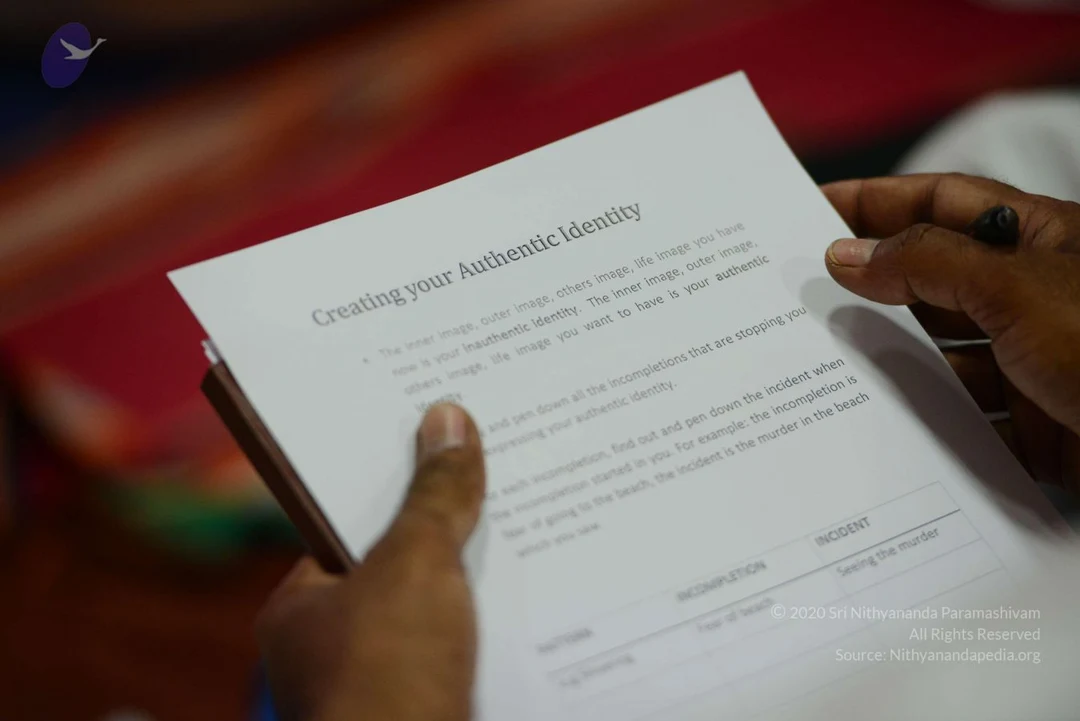
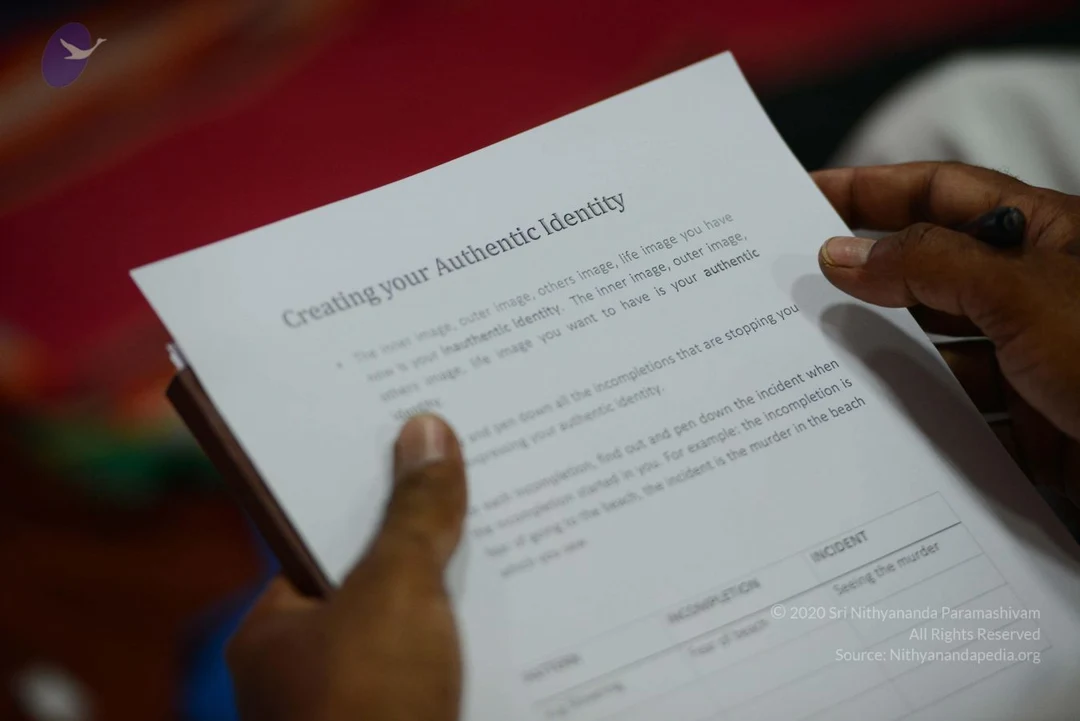
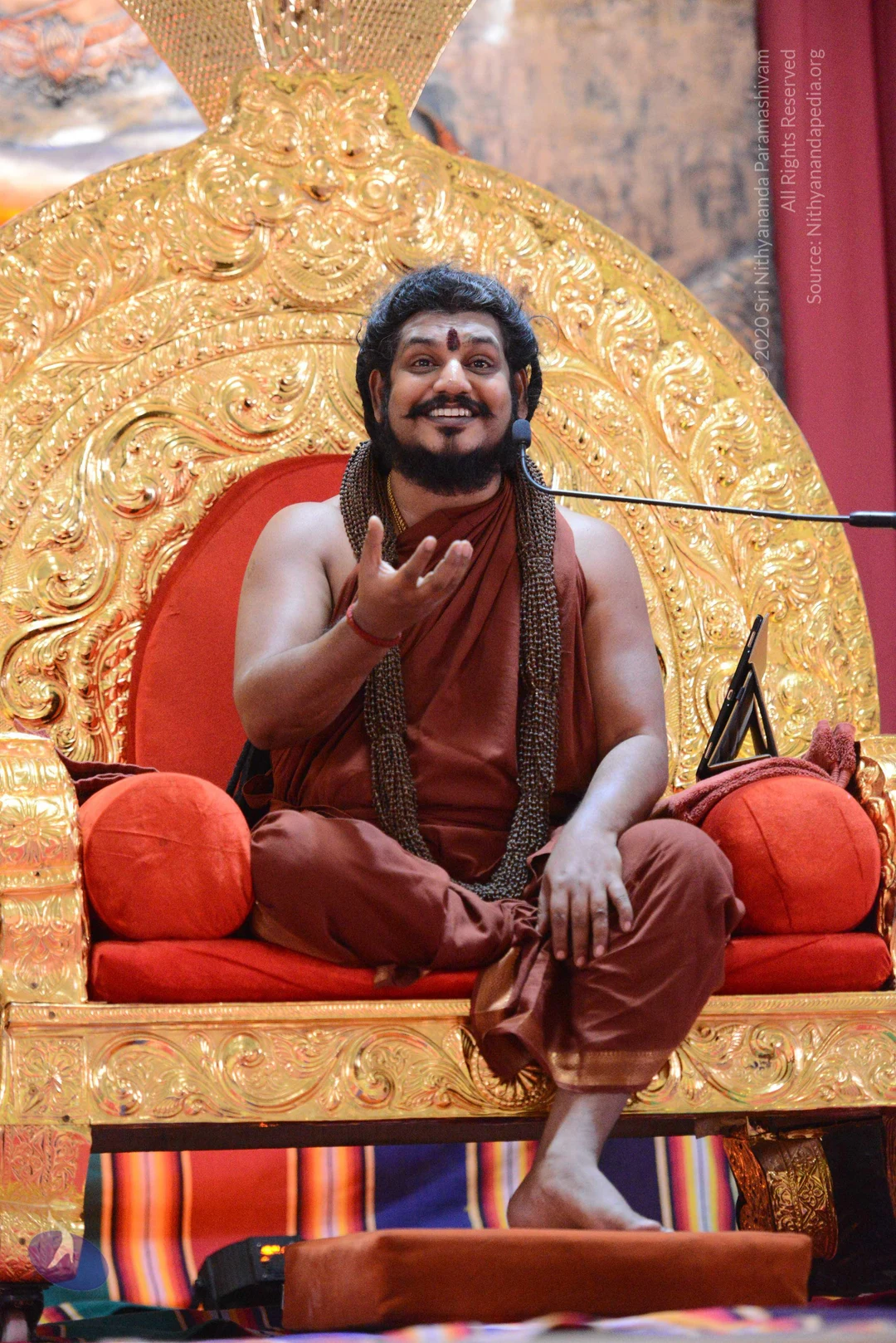
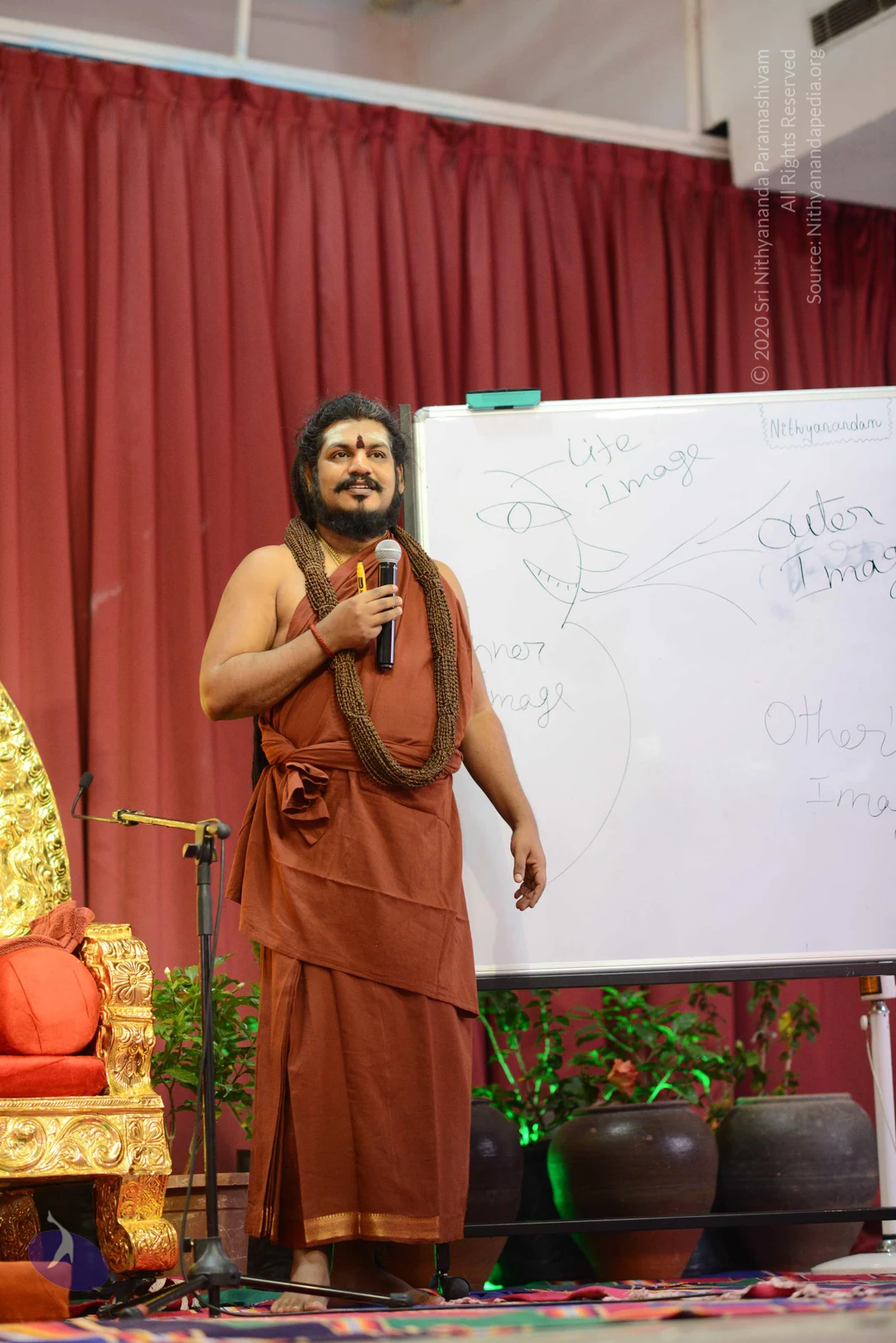
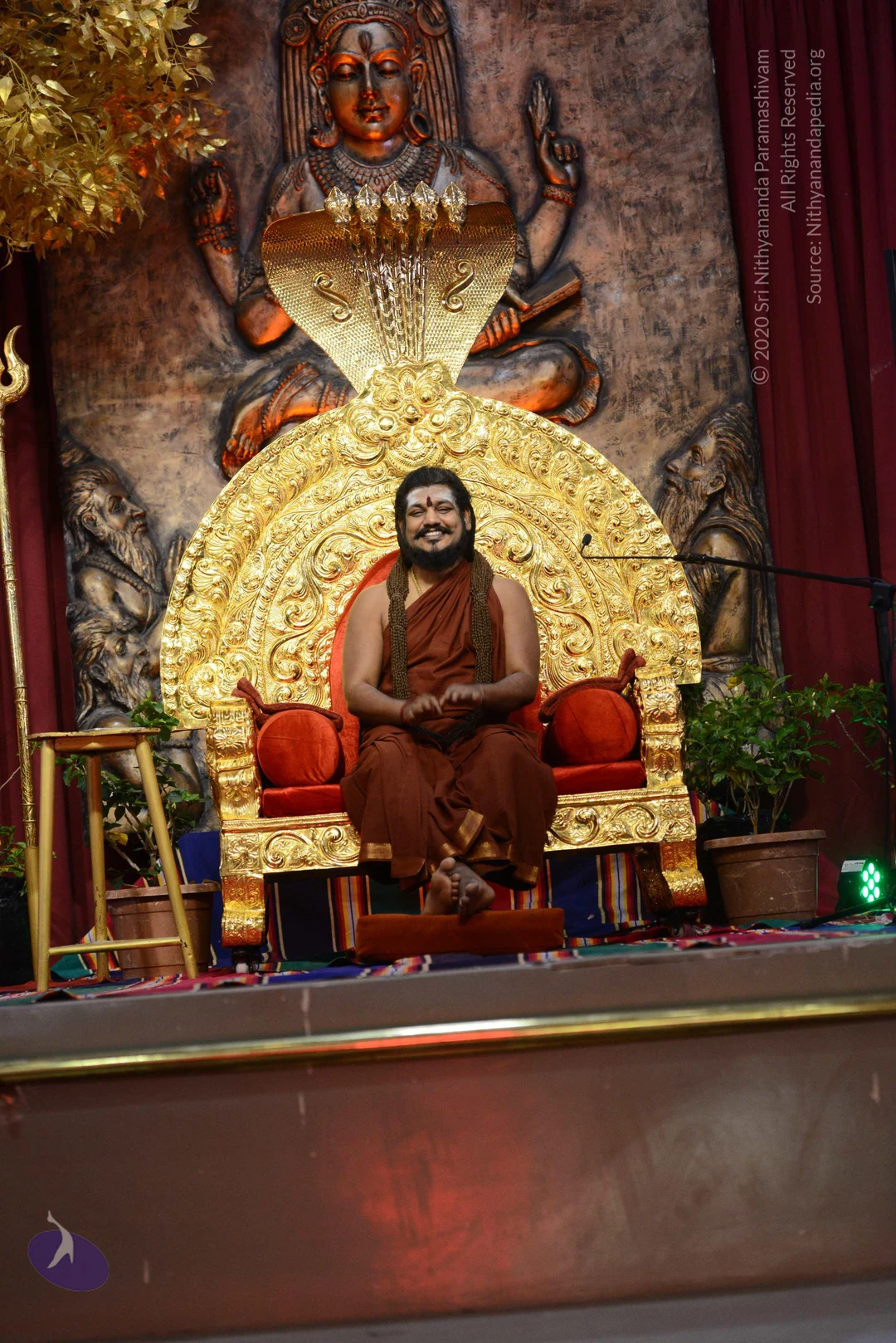
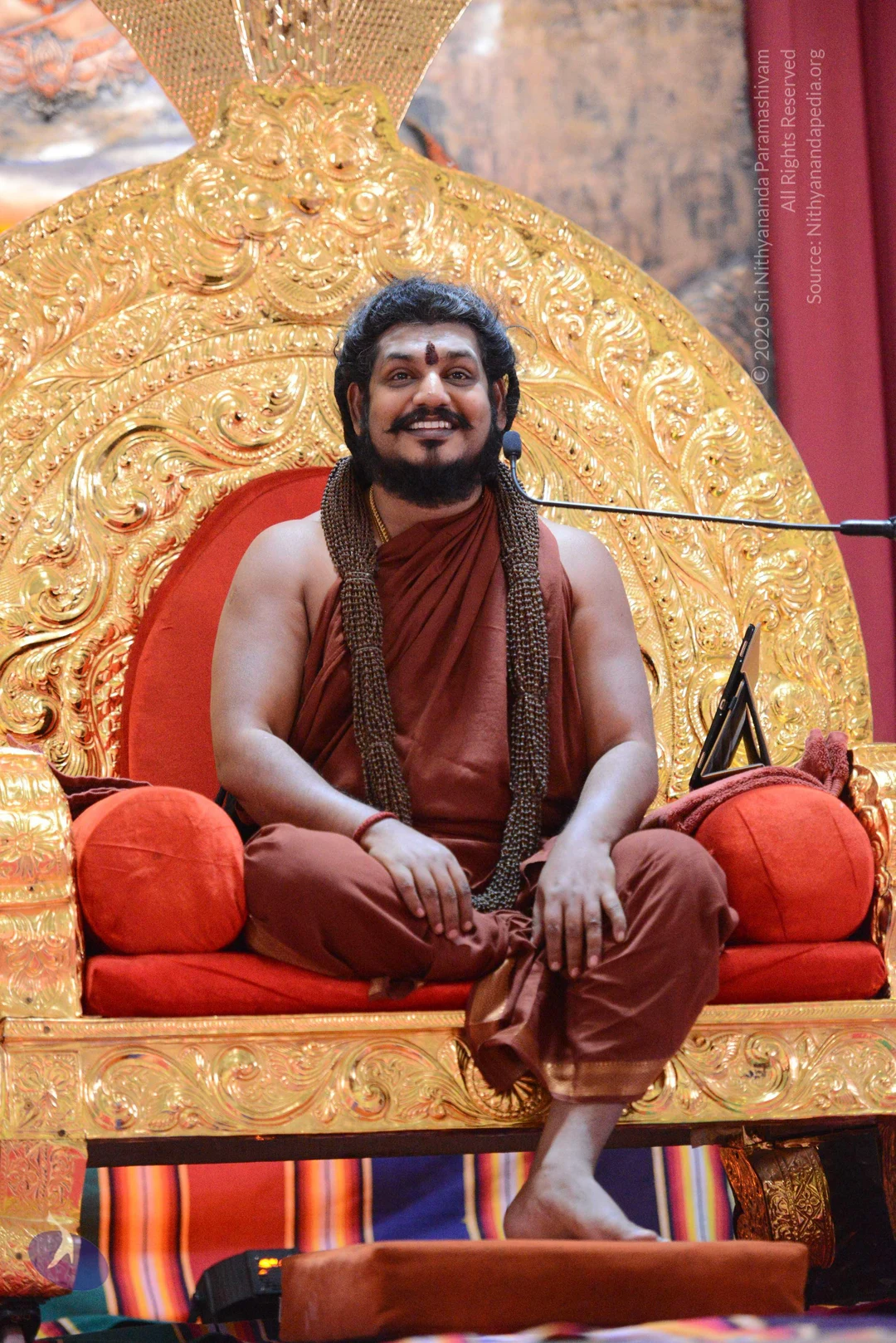
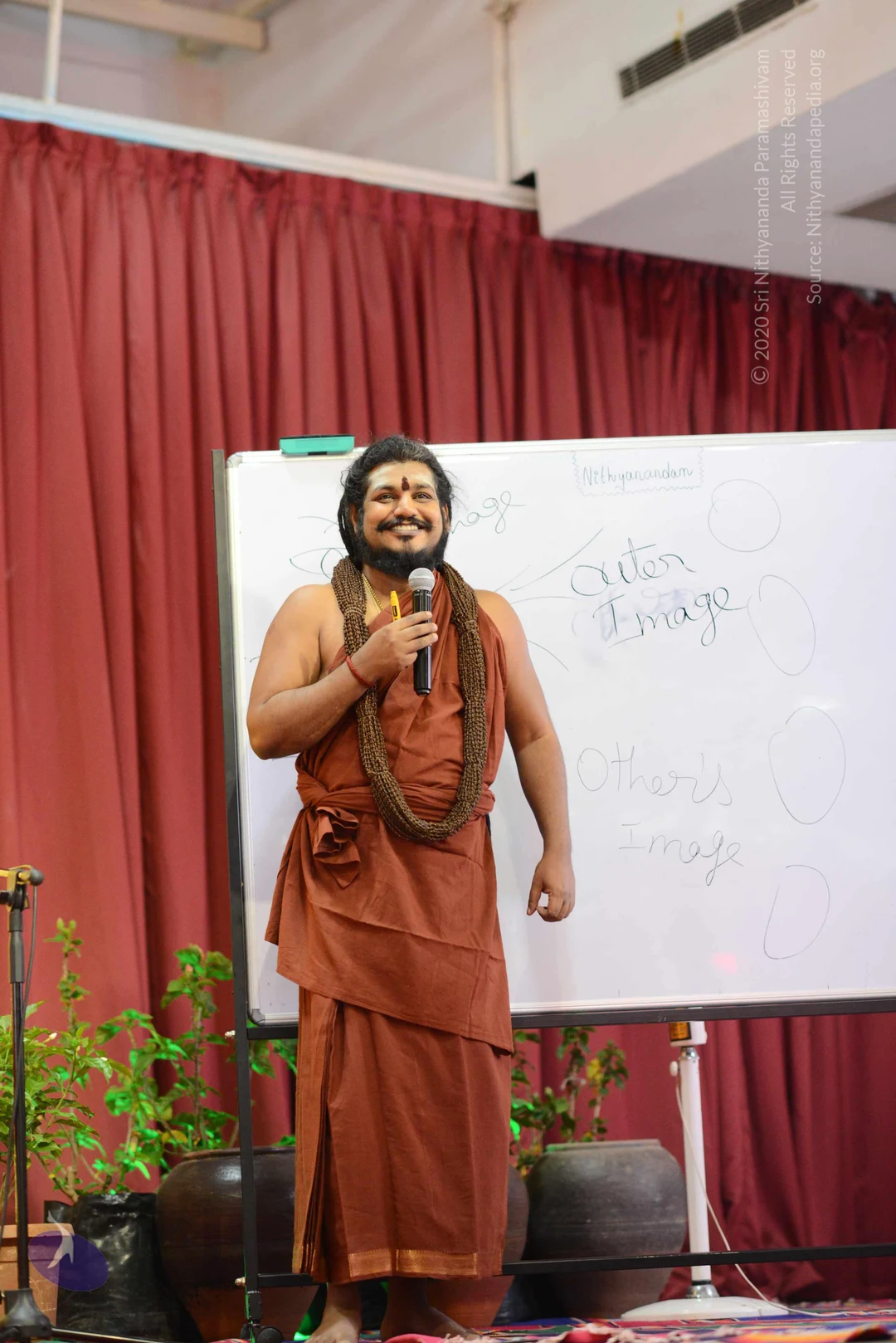
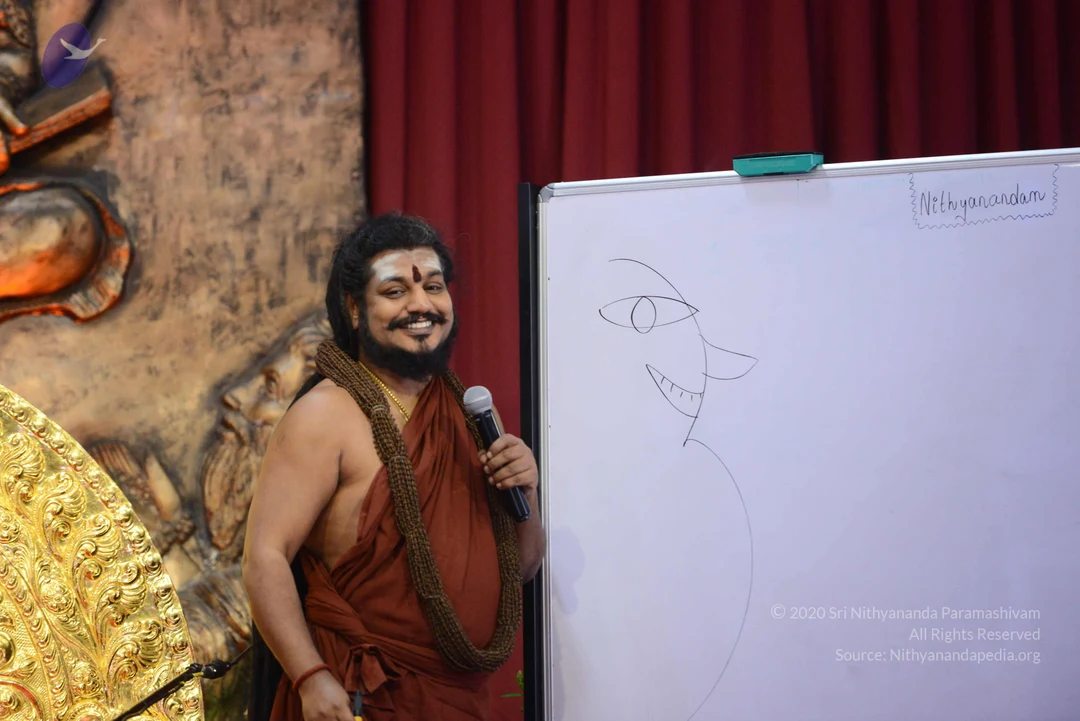
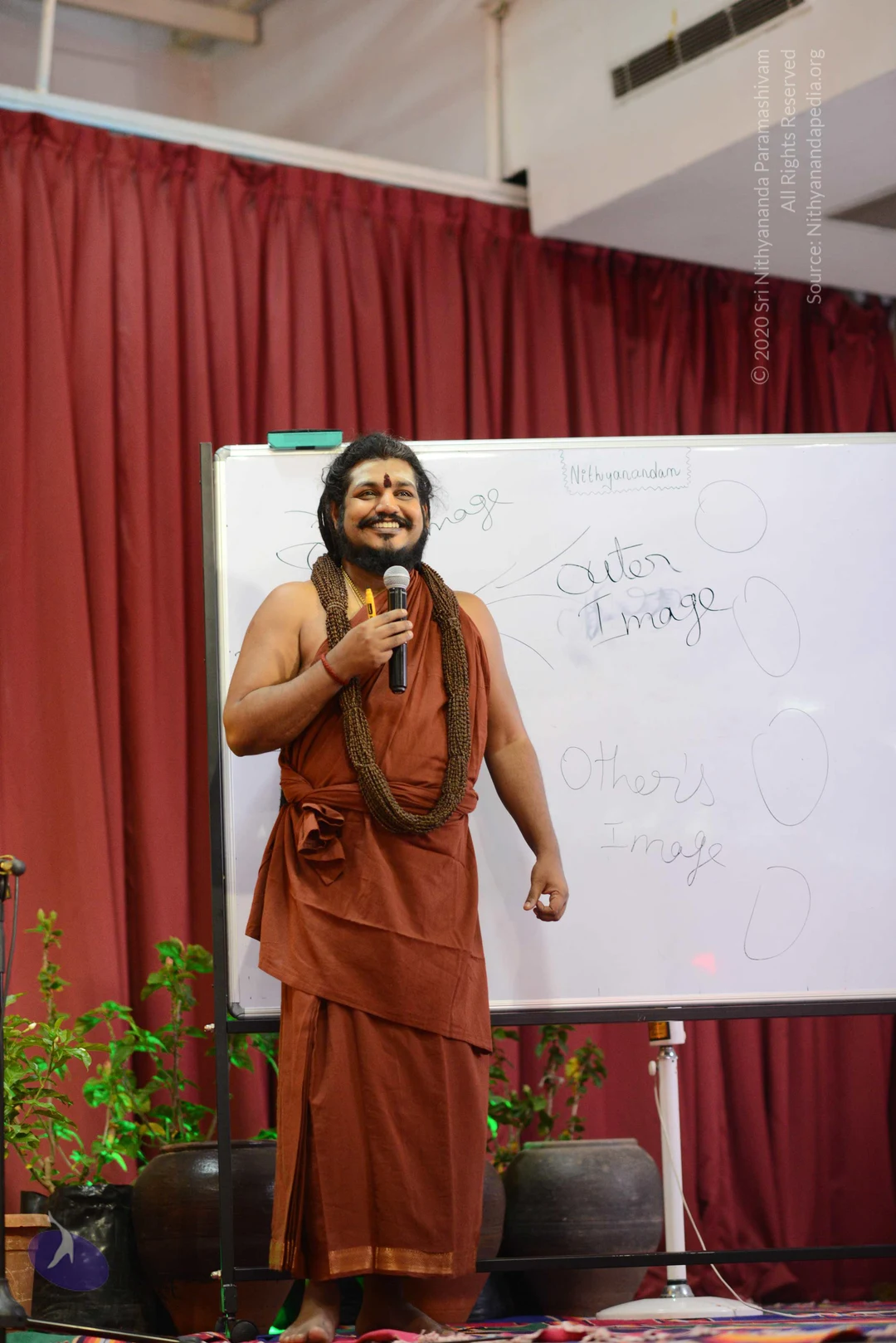
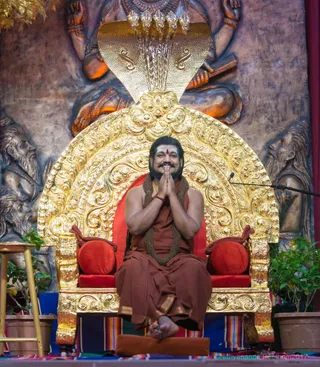
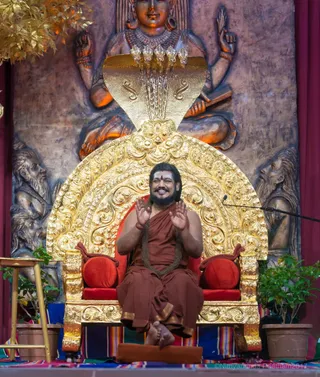
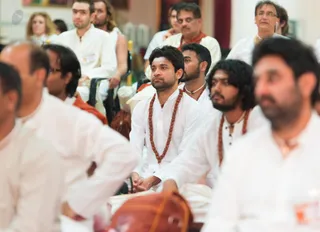
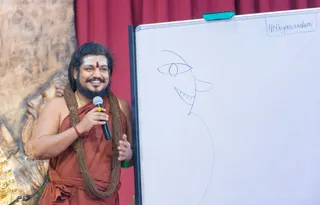
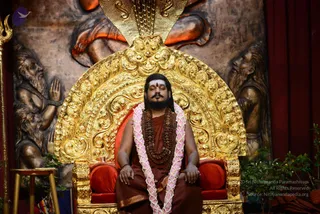
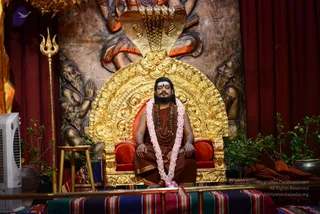
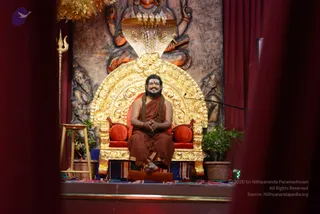
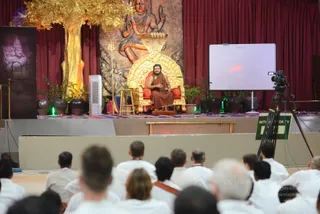
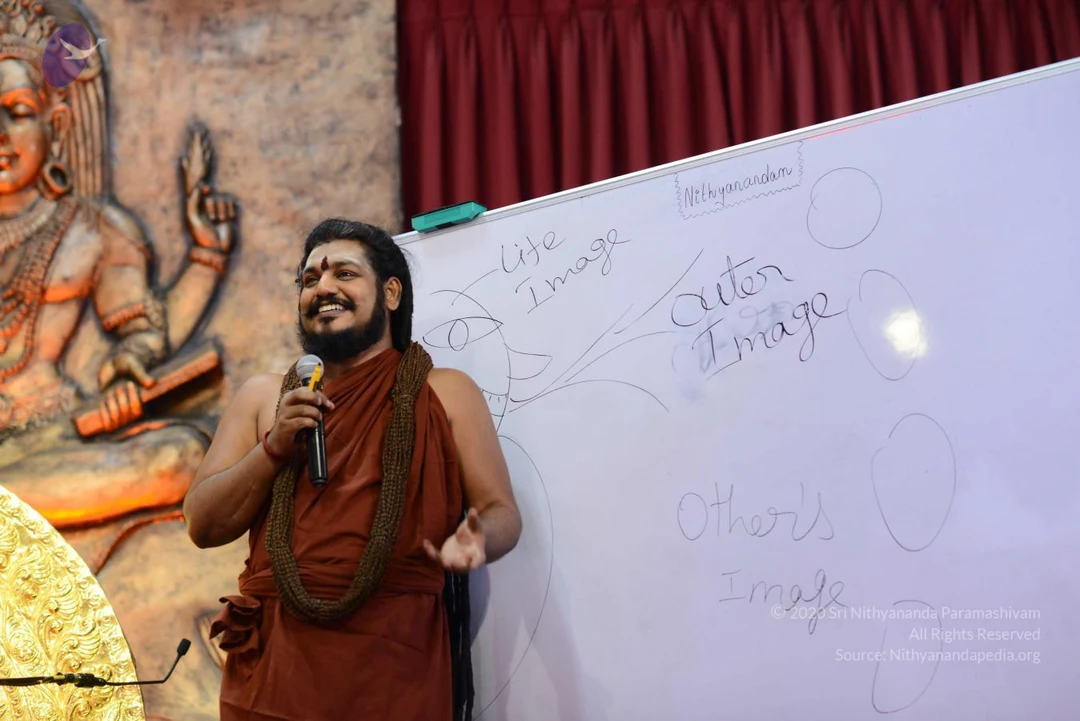
A seated audience at an Inner Awakening session in a white-walled hall. In the foreground a bearded man in a white kurta sits with a small pendant on a cord and a name badge on his chest, gazing forward. Around him, other attendees in white kurtas and dhotis sit on the floor; some wear rudraksha malas and vibhuti on the forehead, and brown canvas bags lie nearby. The participants are seated attentively, with a blurred row of onlookers behind them.A man in a rust-red ochre wrap and matching garment stands at a whiteboard holding a microphone, speaking to an audience. He wears a brown rudraksha mala with a bead-dense rope style around his neck and a red tilak on his forehead, with long dark hair and a beard. Behind him is a large copper-toned relief of a deity with four arms, one hand raised, wearing layered beaded necklaces and a crown. To the left is an ornate gold-leaf seat with a hooded serpent-like canopy. The whiteboard shows handwritten words reading Life Image, Outer Image and Other Image, with a rough face sketch. A red curtain hangs at the upper right.A seated group of participants in plain white clothing sits in rows at an indoor session, reading and writing in brown-bound notebooks. In the foreground, a man with short dark hair and glasses wears a white kurta with red embroidered trim and a name badge, holding a pen over an open notebook. Beside him, a man with glasses in a white shirt with a black lace-up collar writes with a pencil. To the left, an older man with grey hair and glasses reads loose white pages. The background shows out-of-focus walls with wall hangings and ceiling lights.

February 28 2017

Original wiki page
Contents

Title

Nithyananda Peetham, Bengaluru Aadheenam | Inner Awakening - Day 3 | Inner Awakening Sessions: Genesis of Reality, Creating Identity

Narration

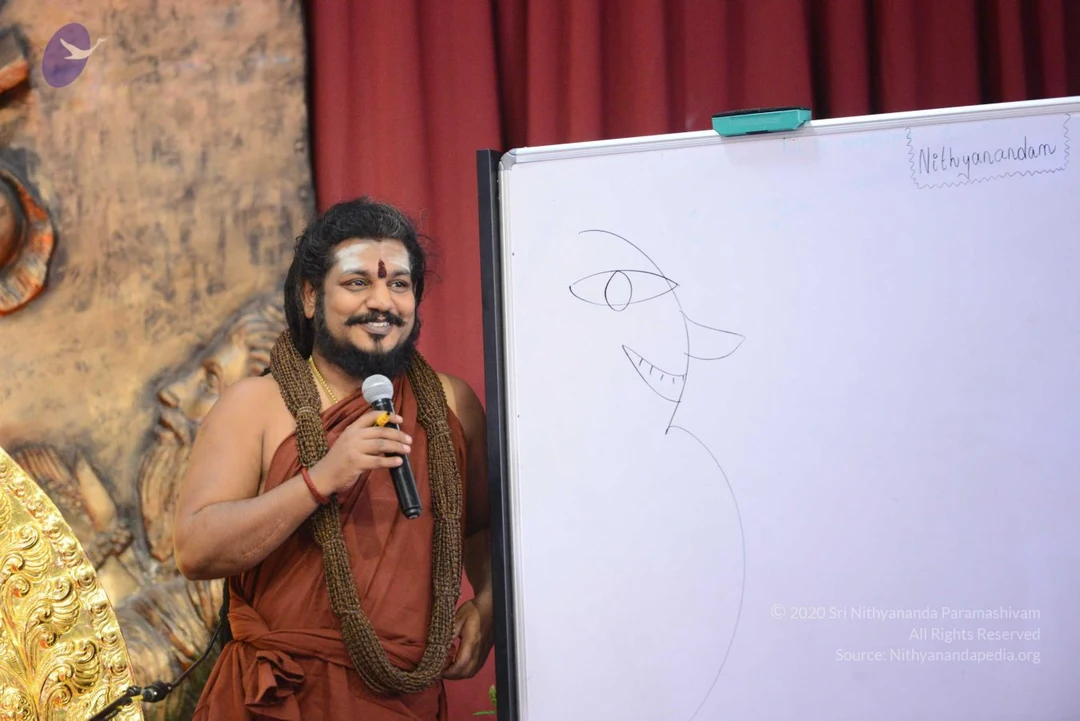
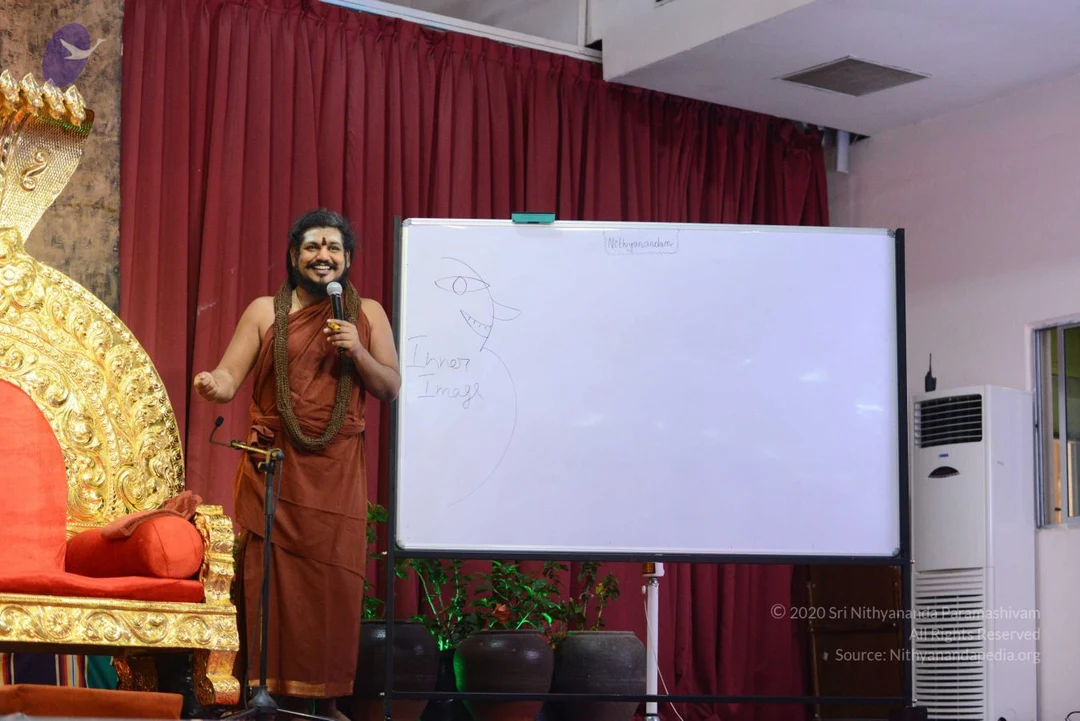
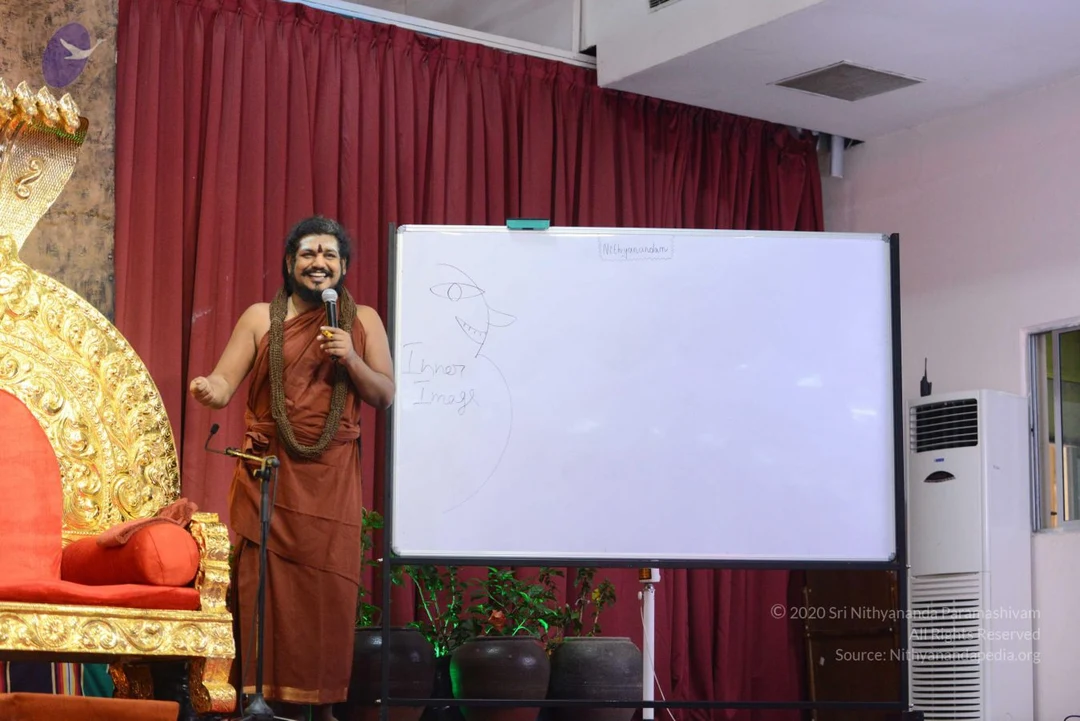
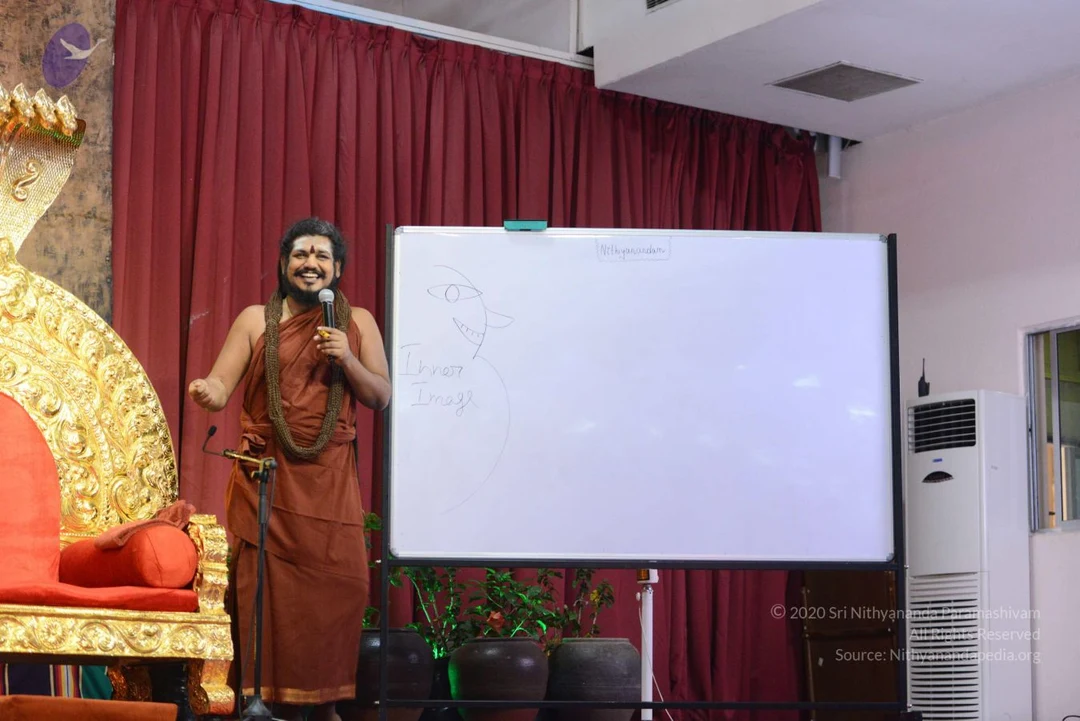
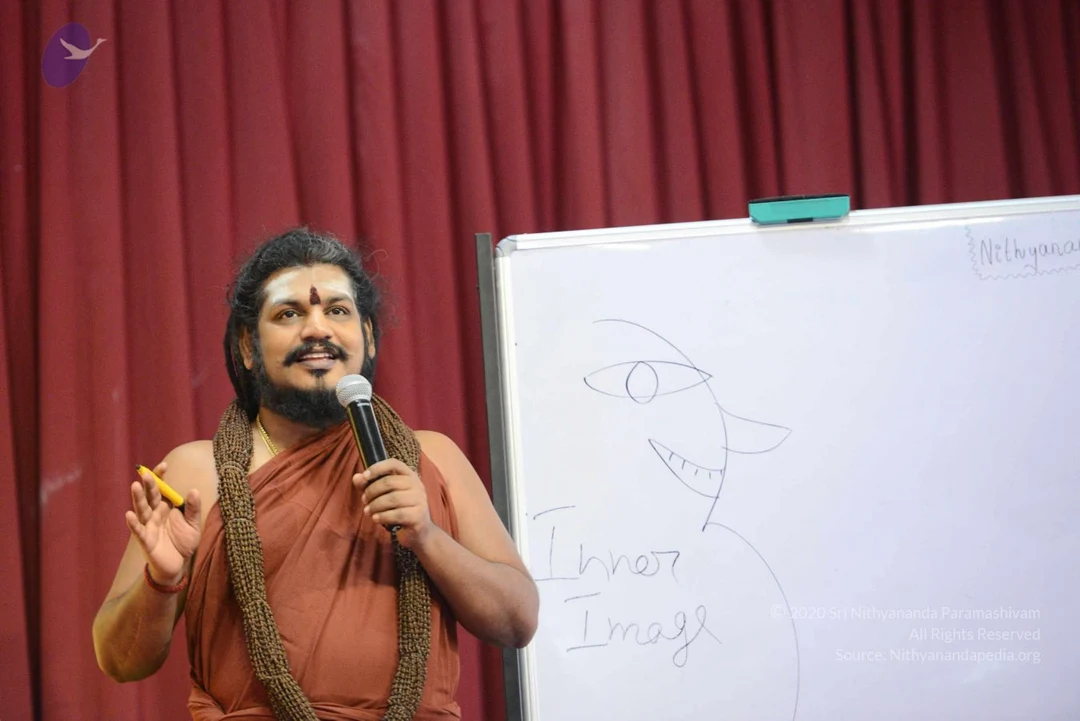
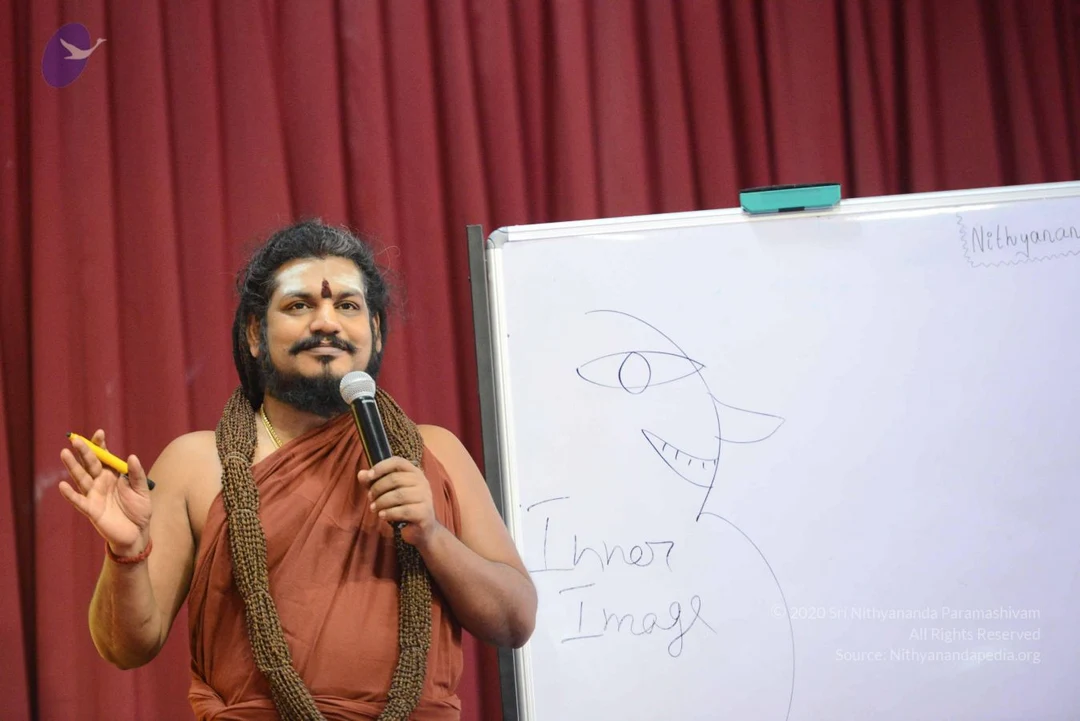
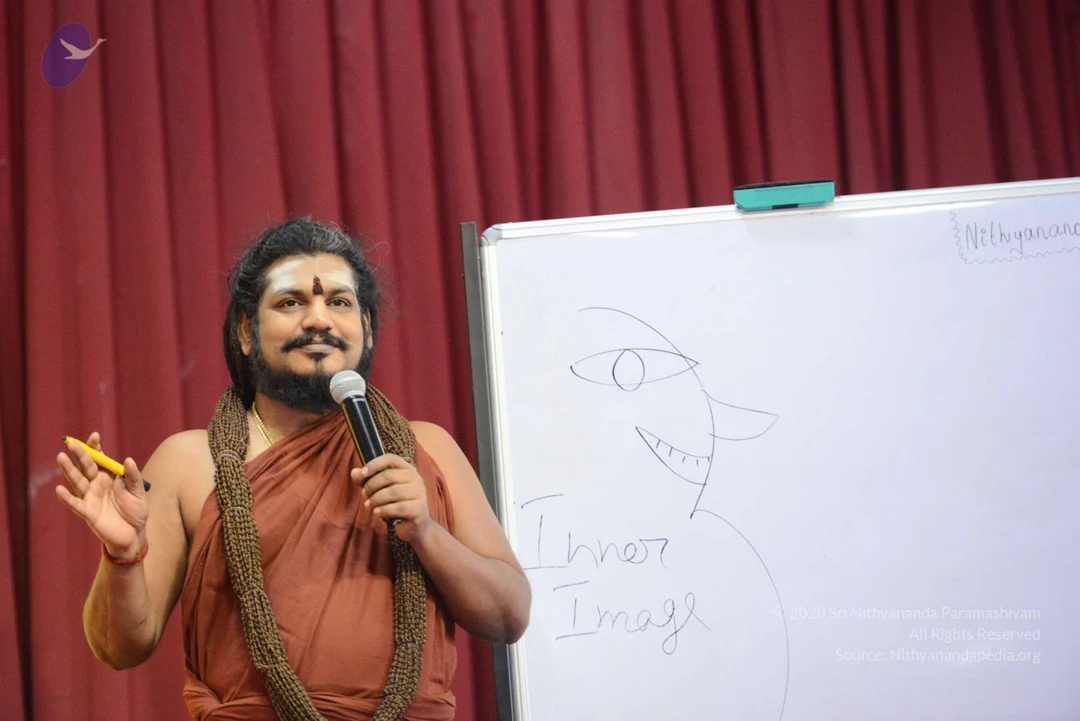
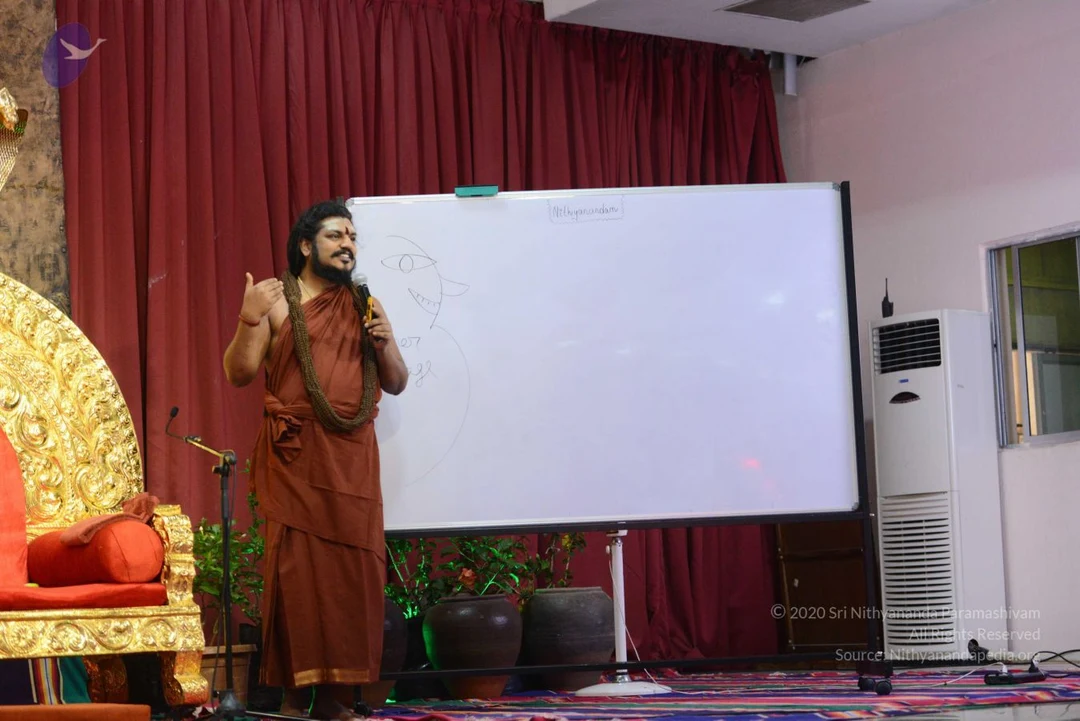
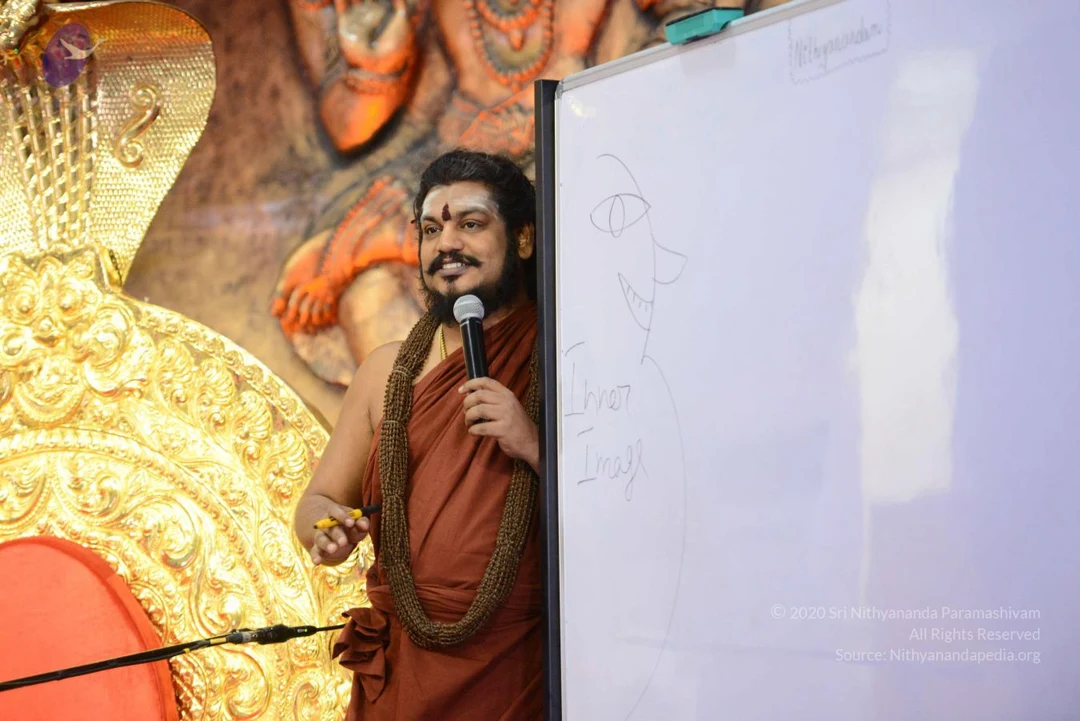
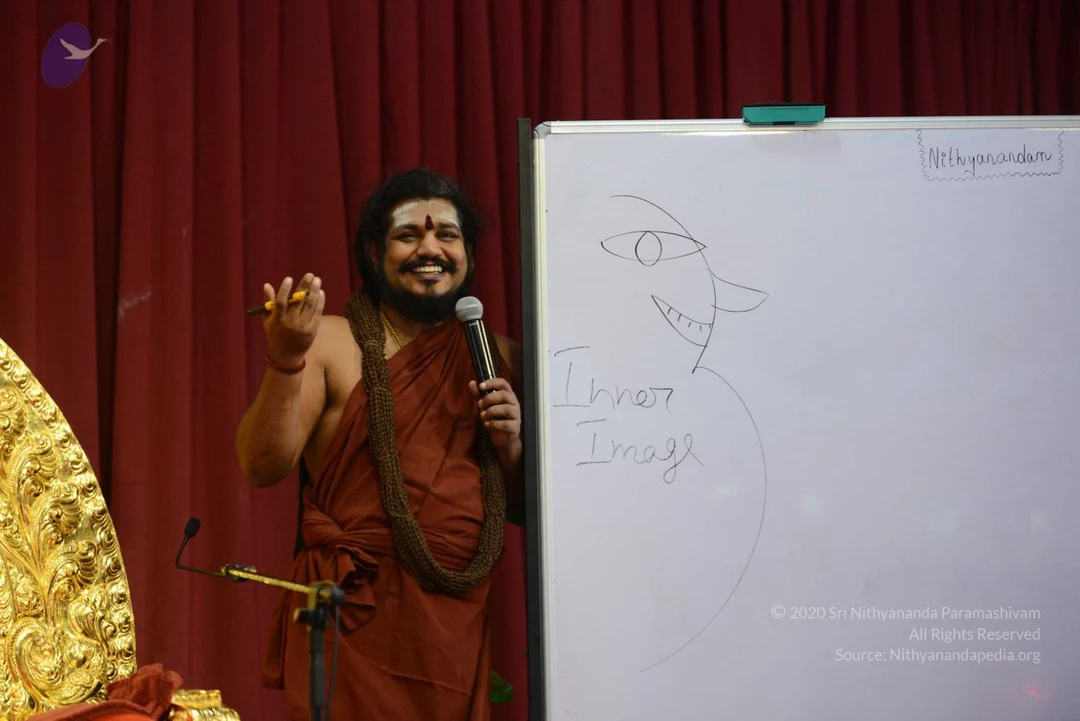
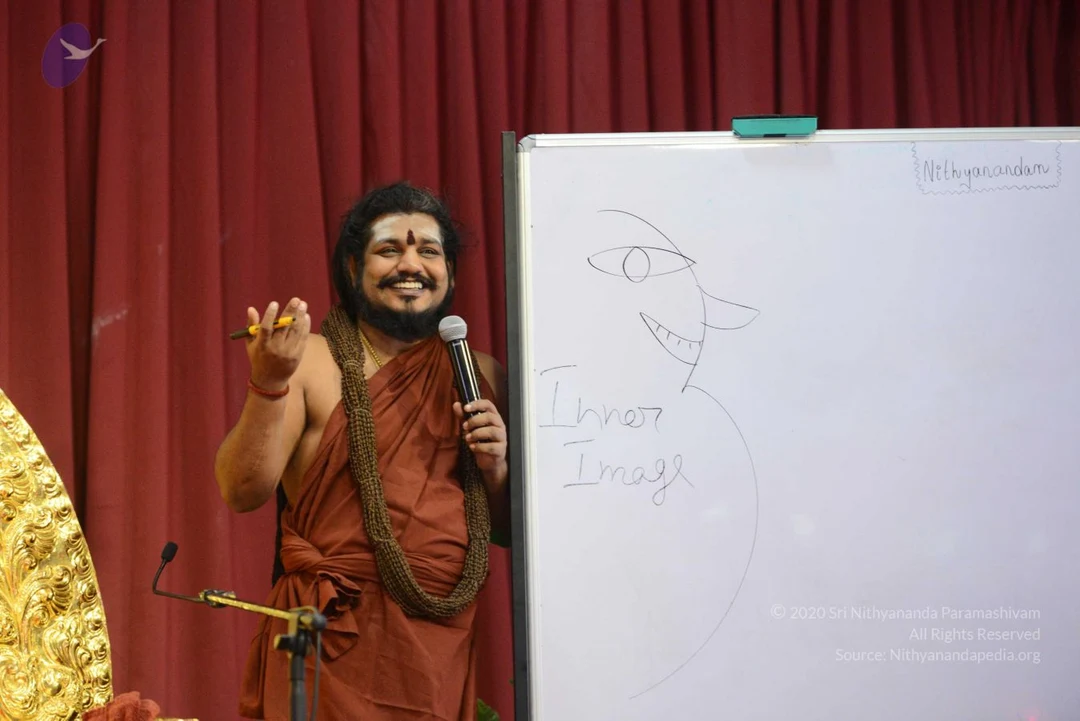
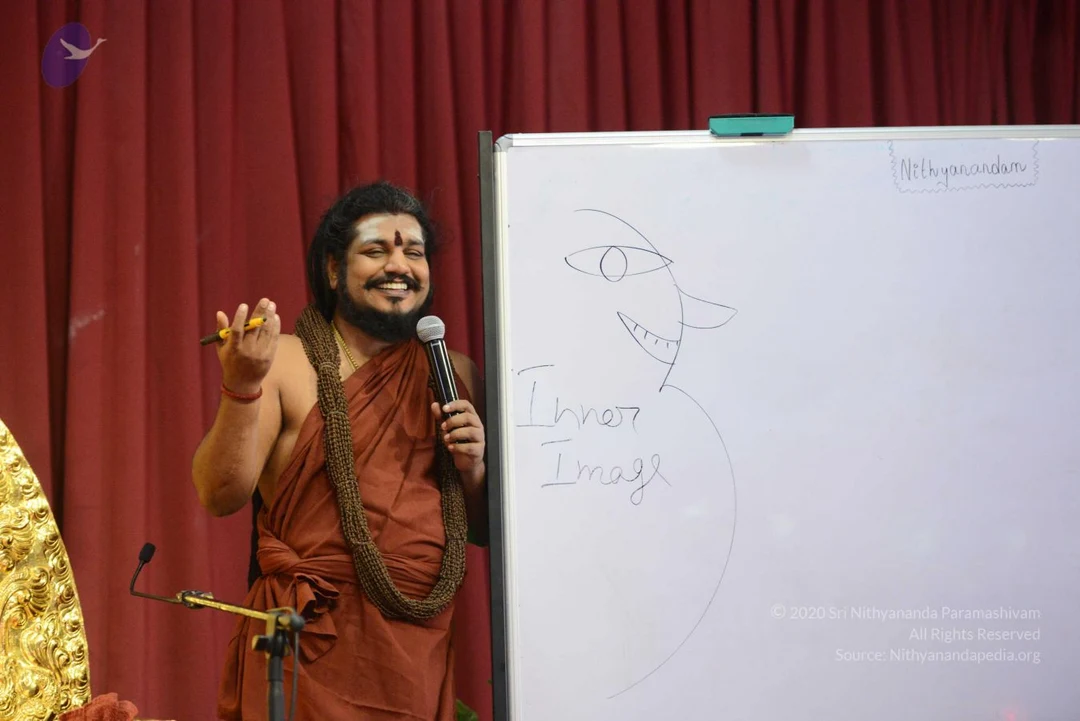
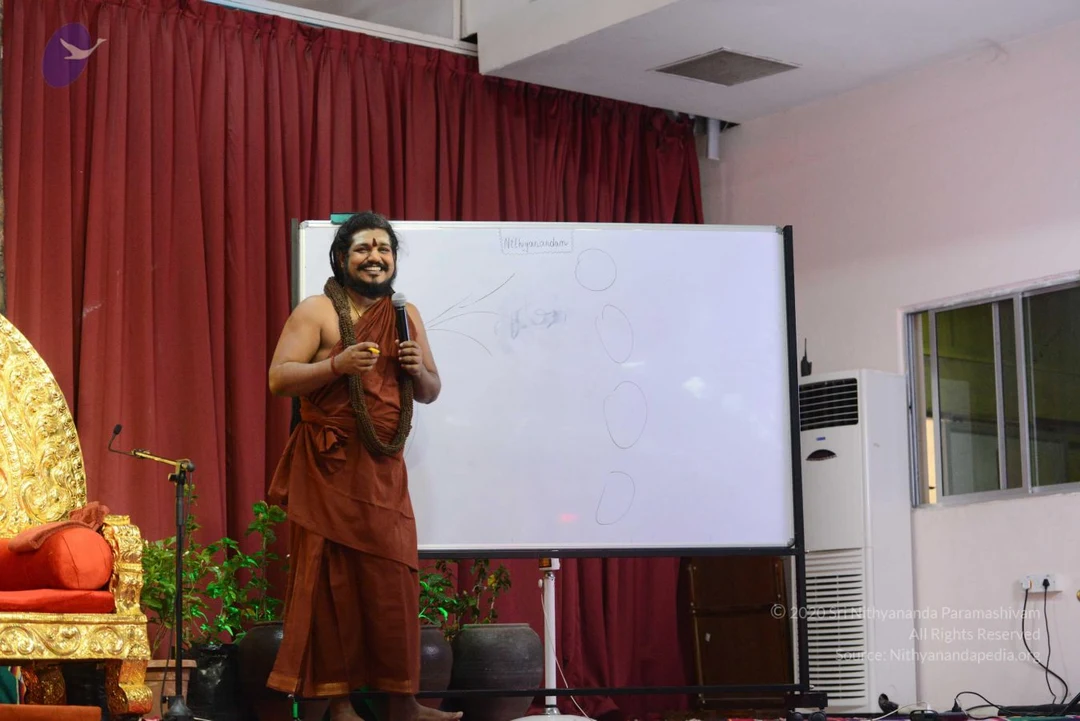
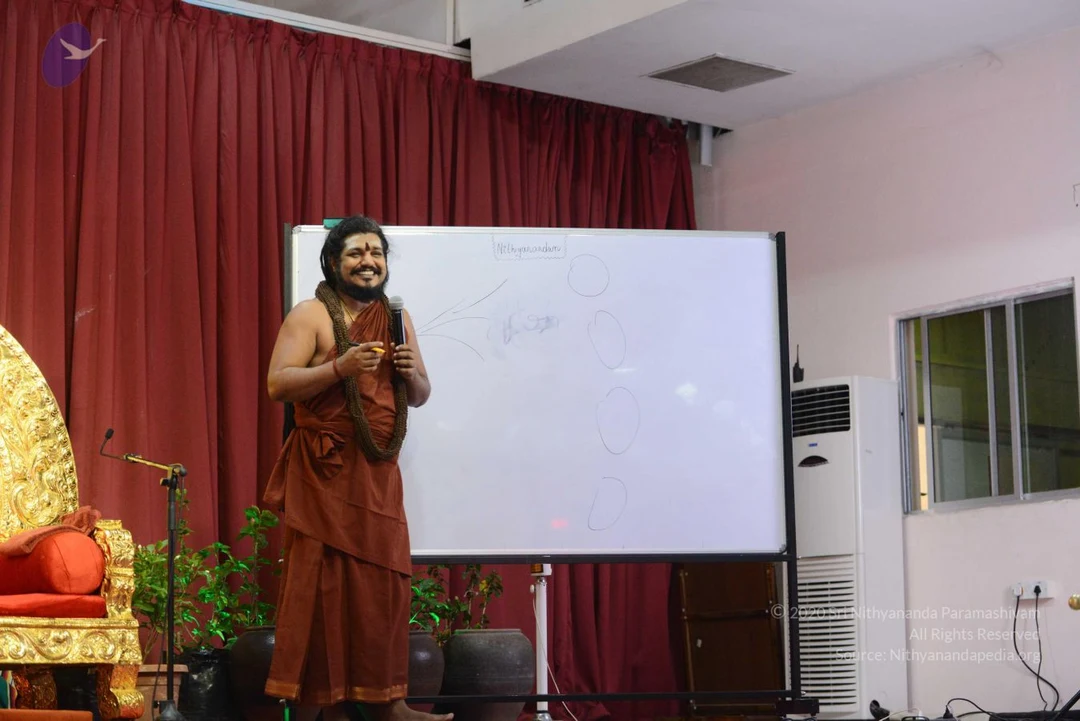
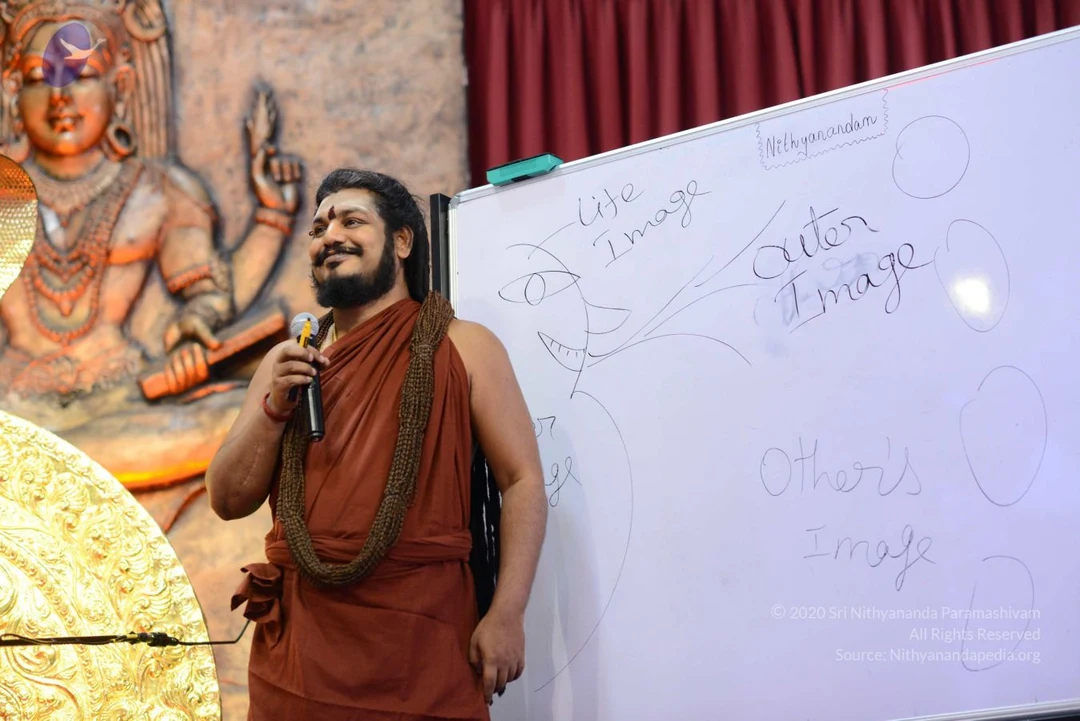
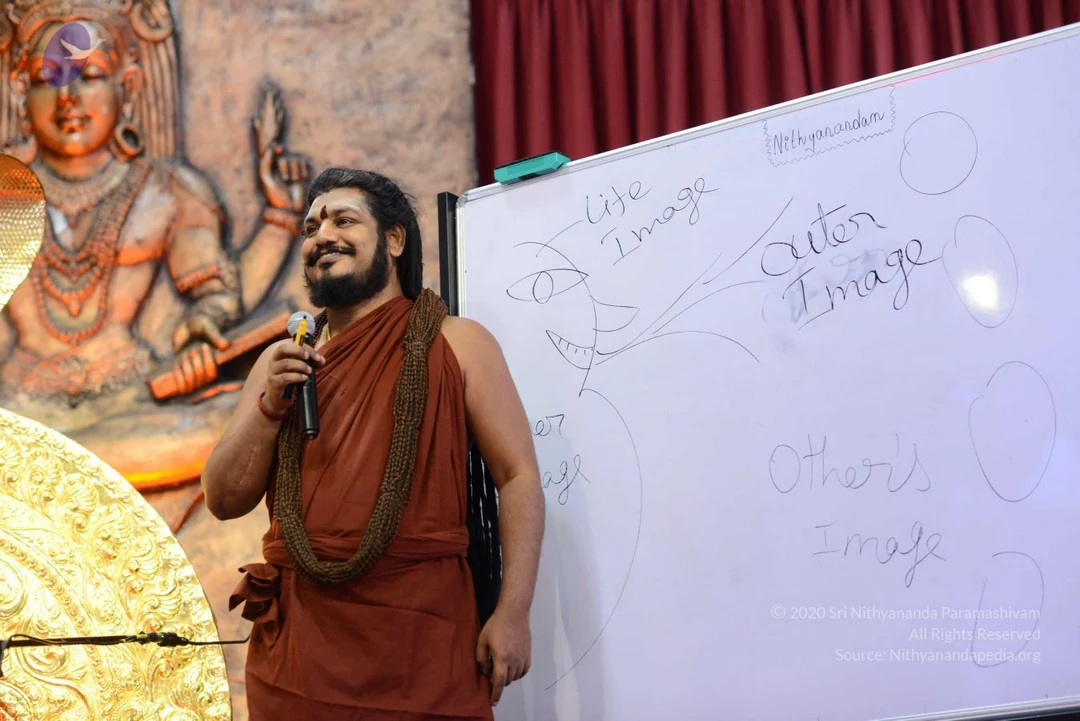
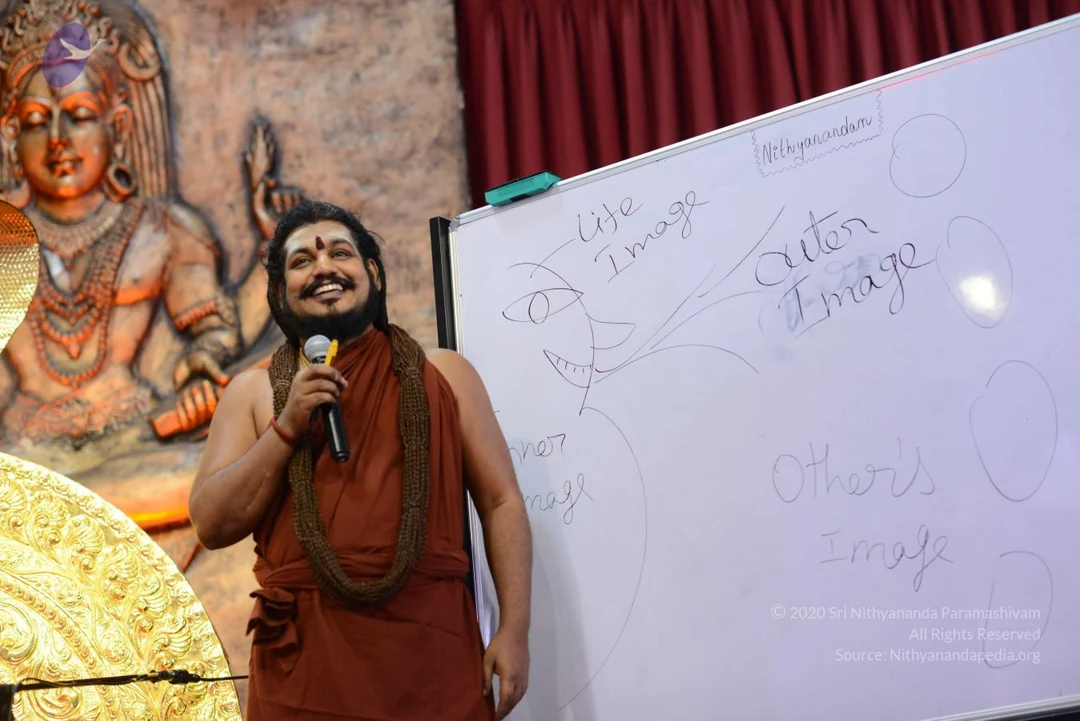
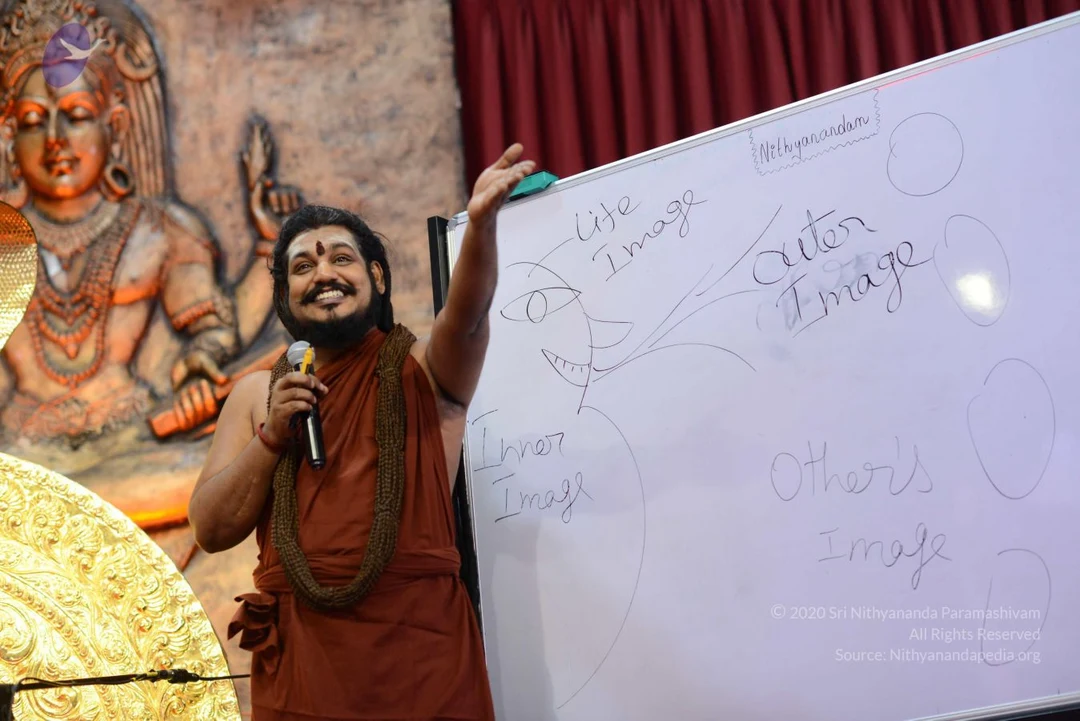
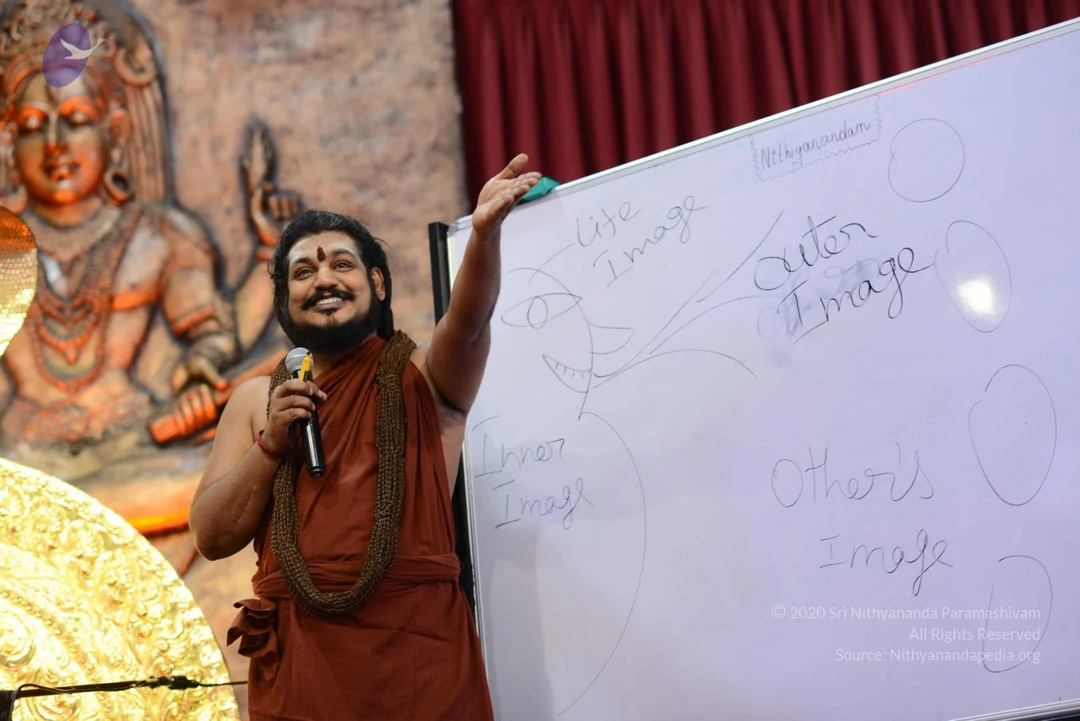
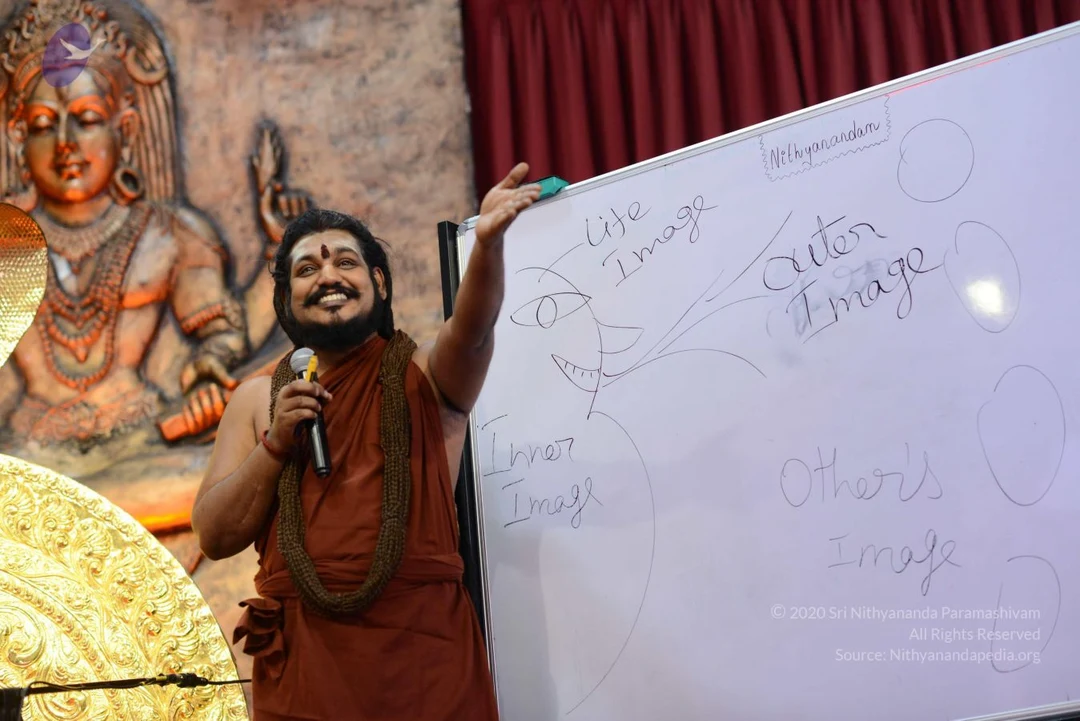
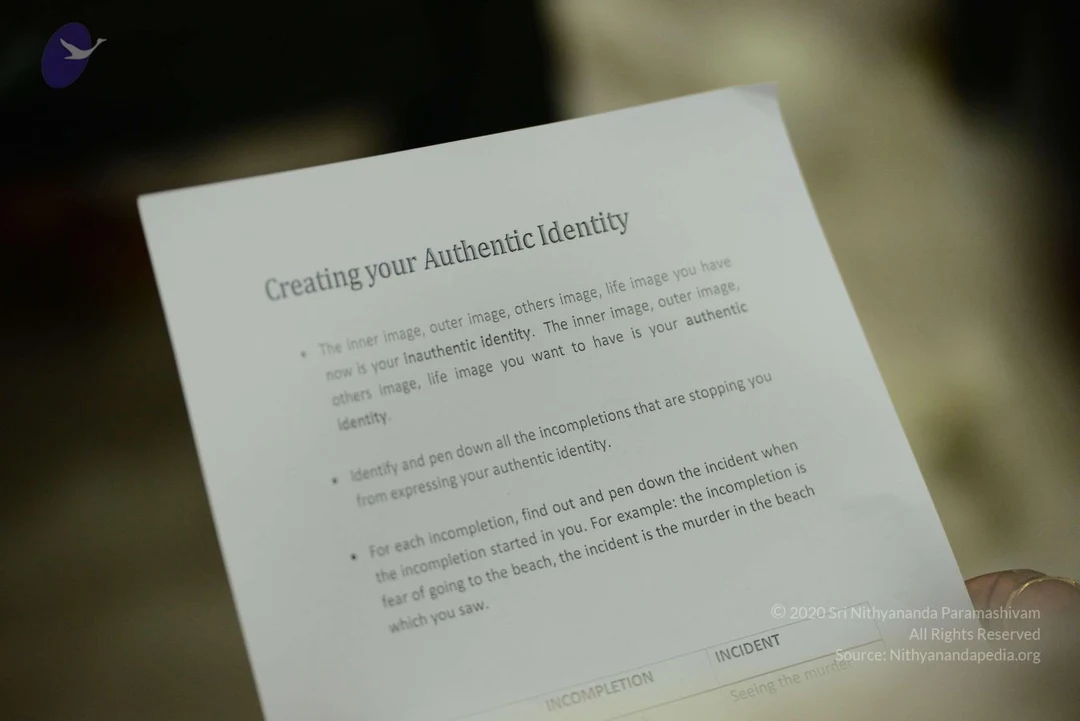
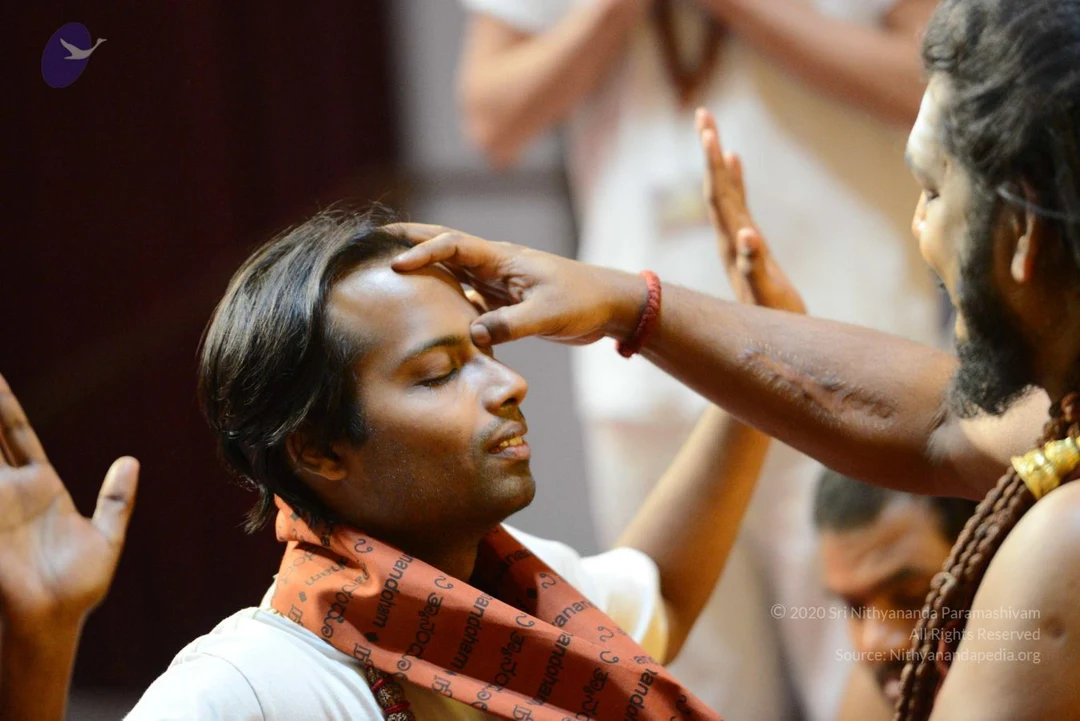
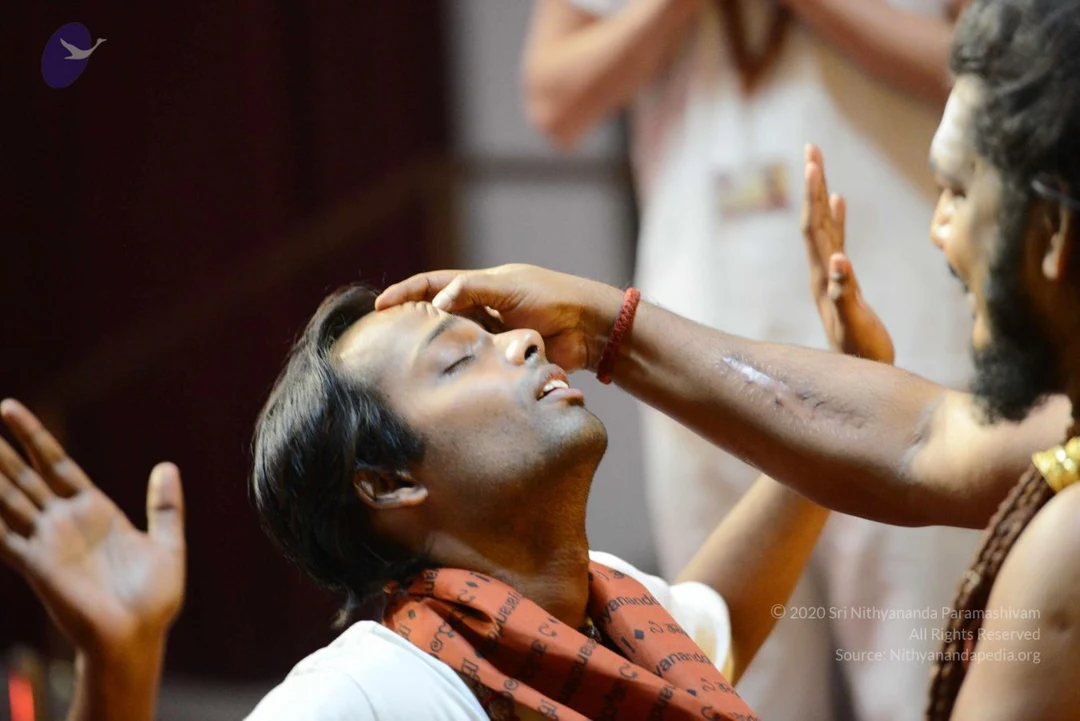
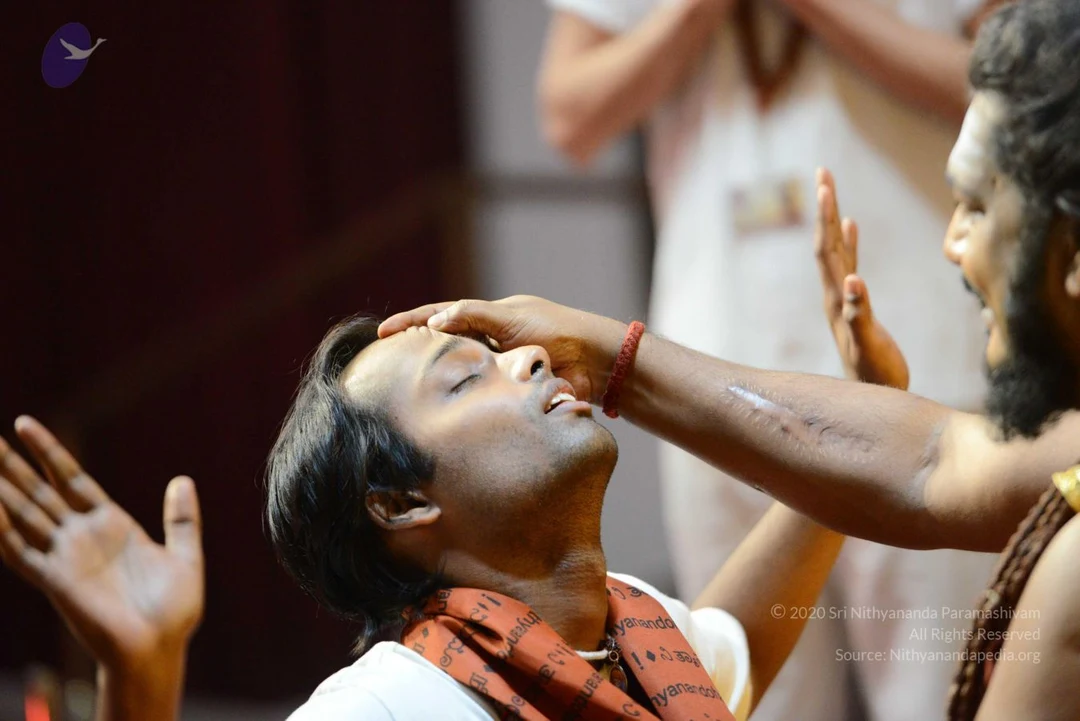
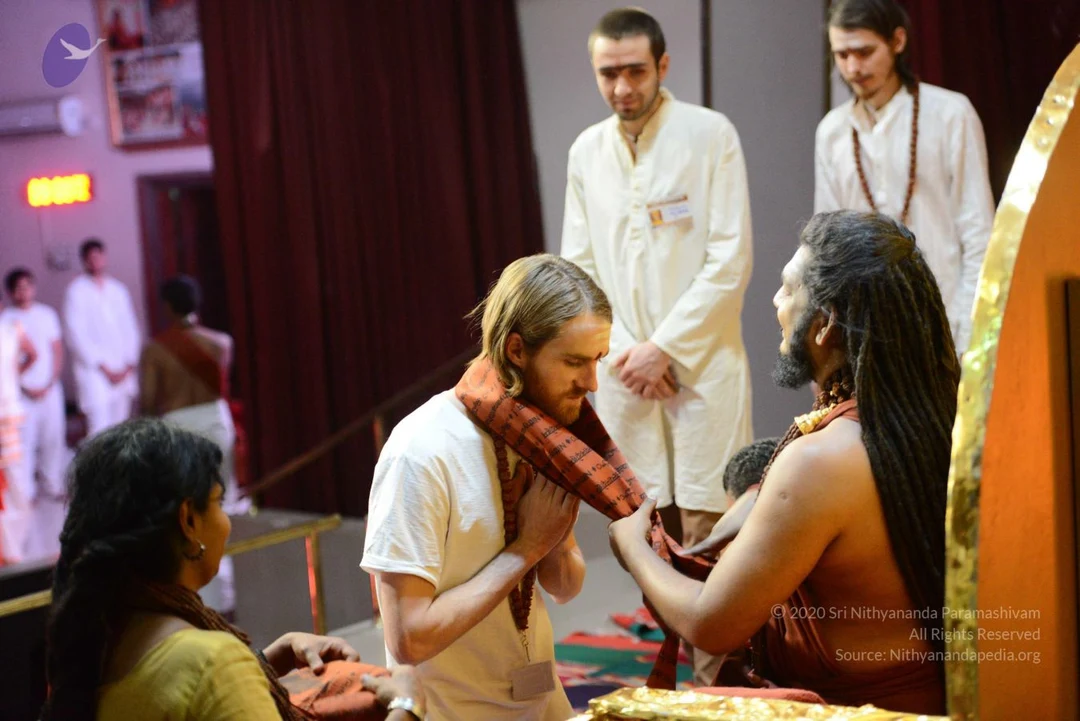
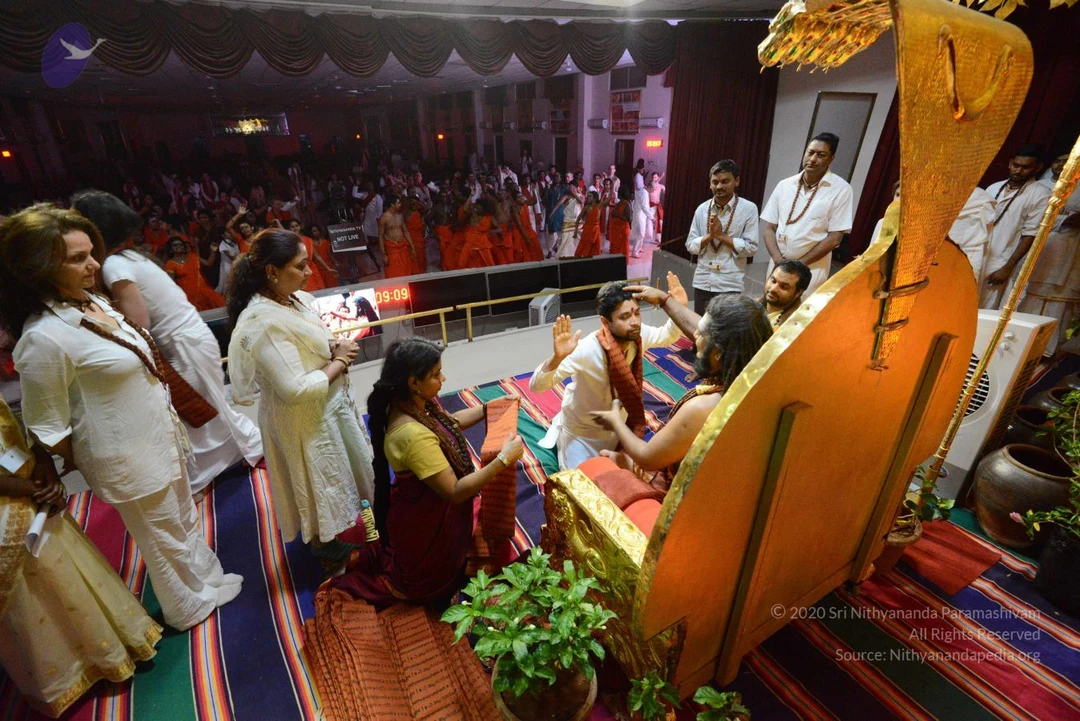
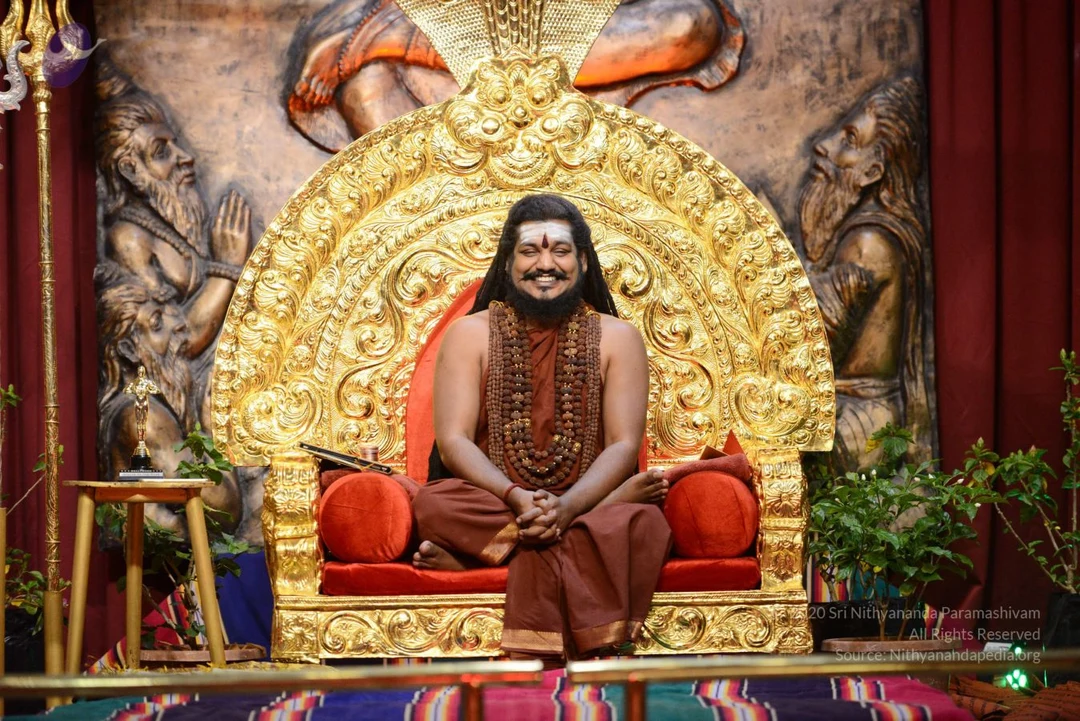
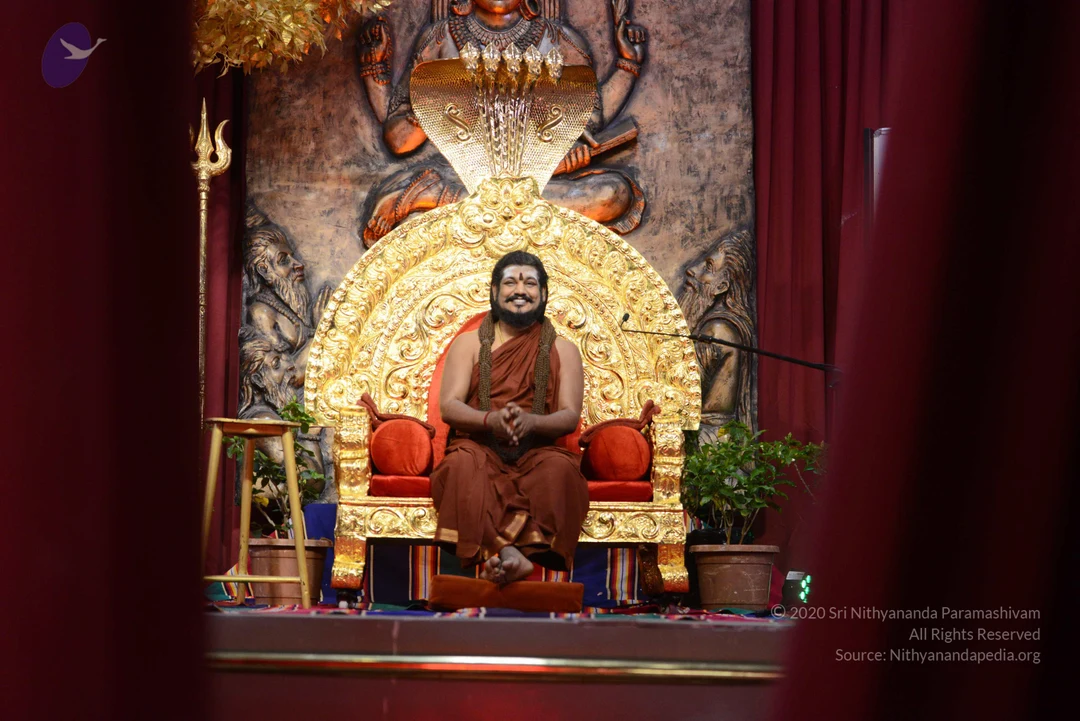
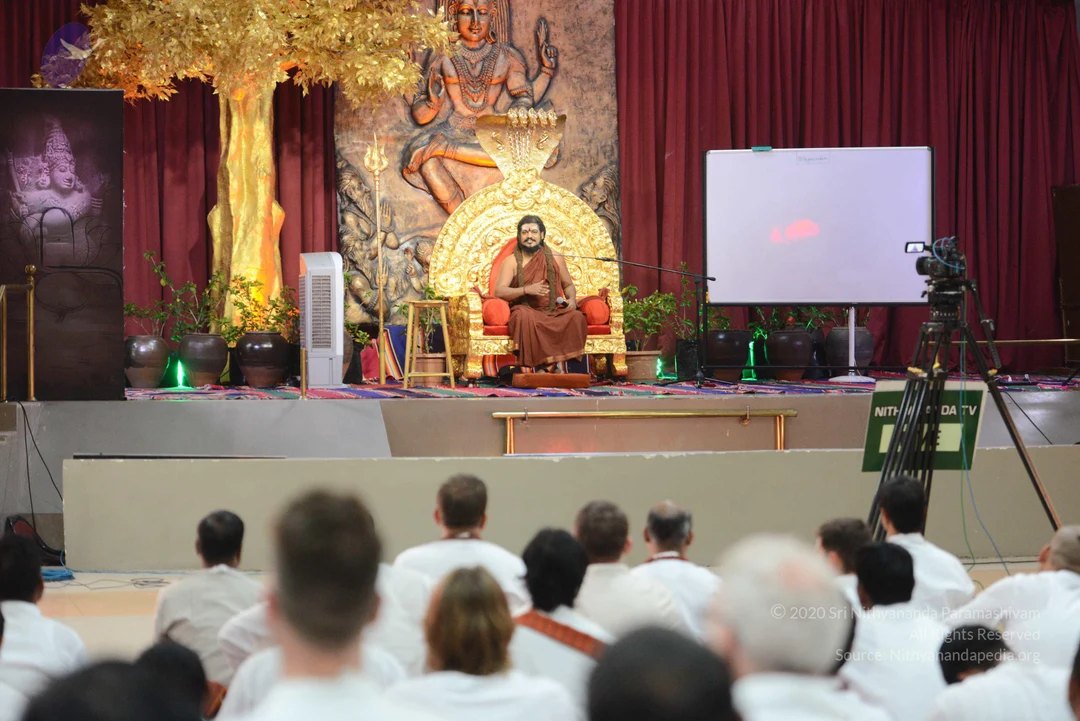
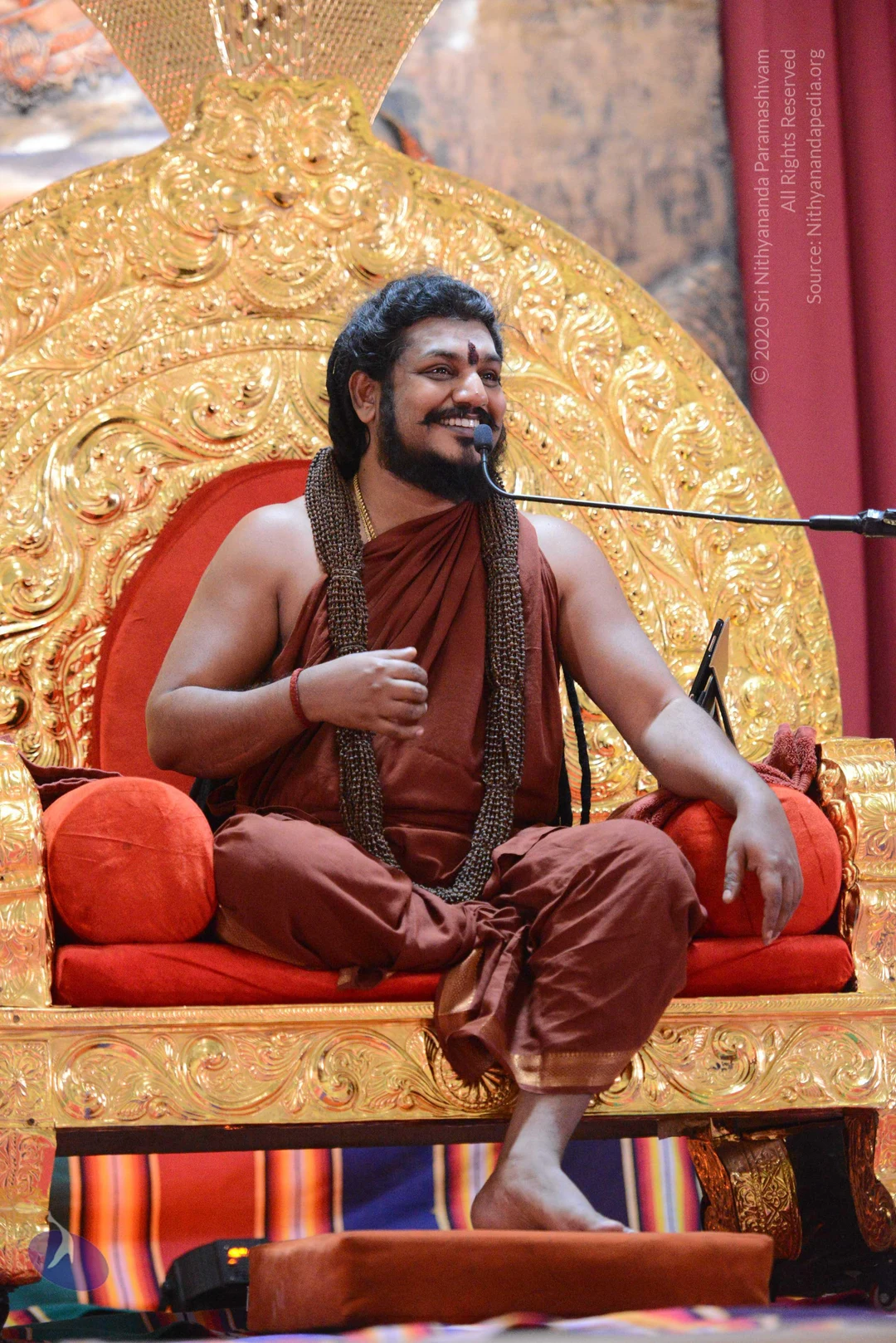
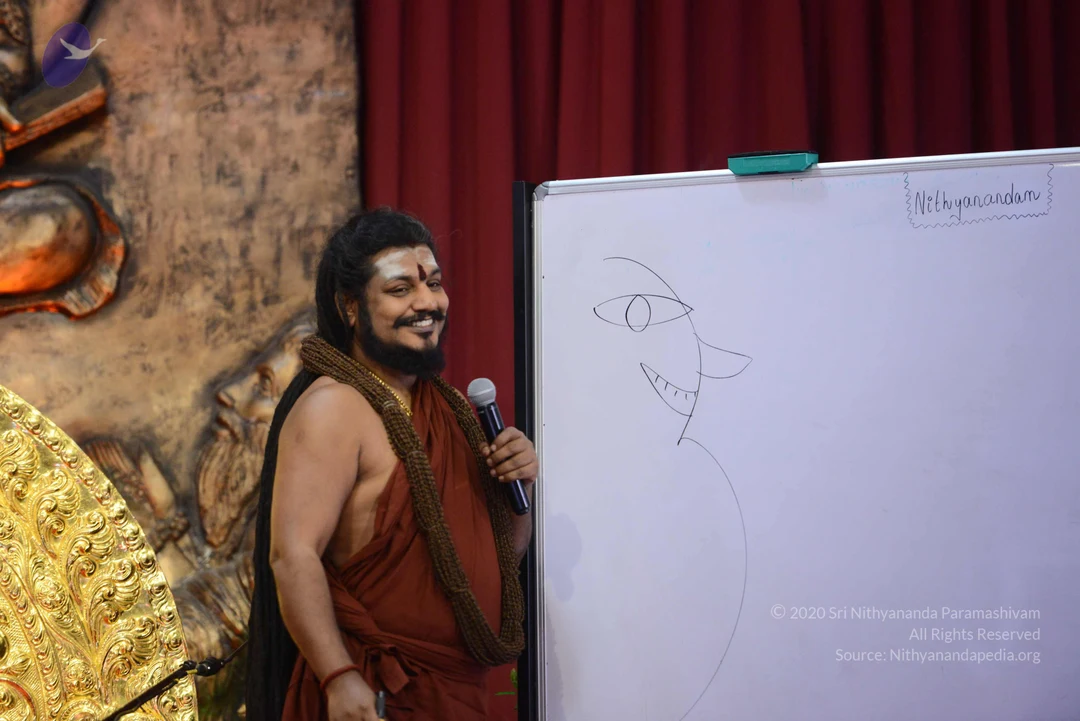
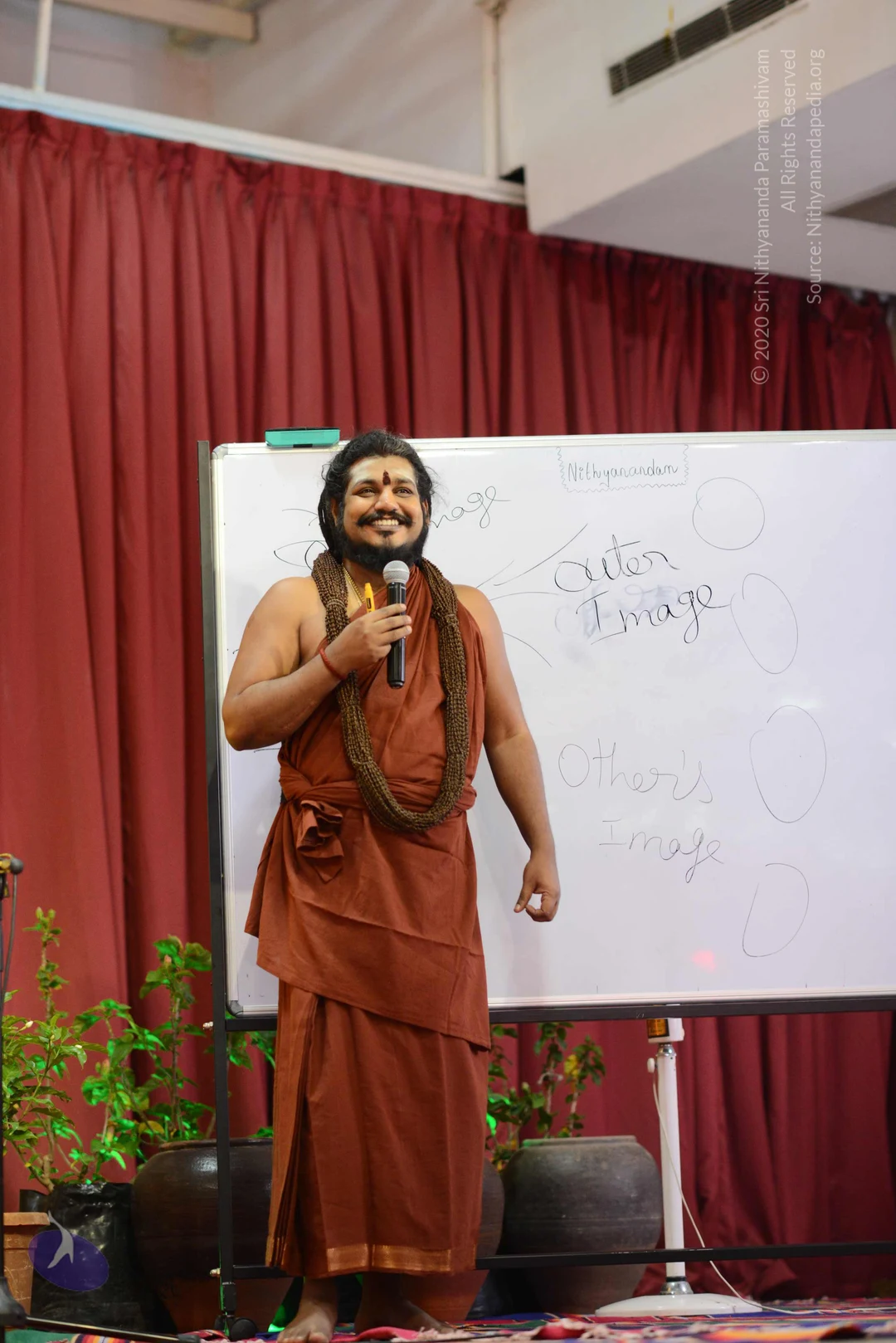
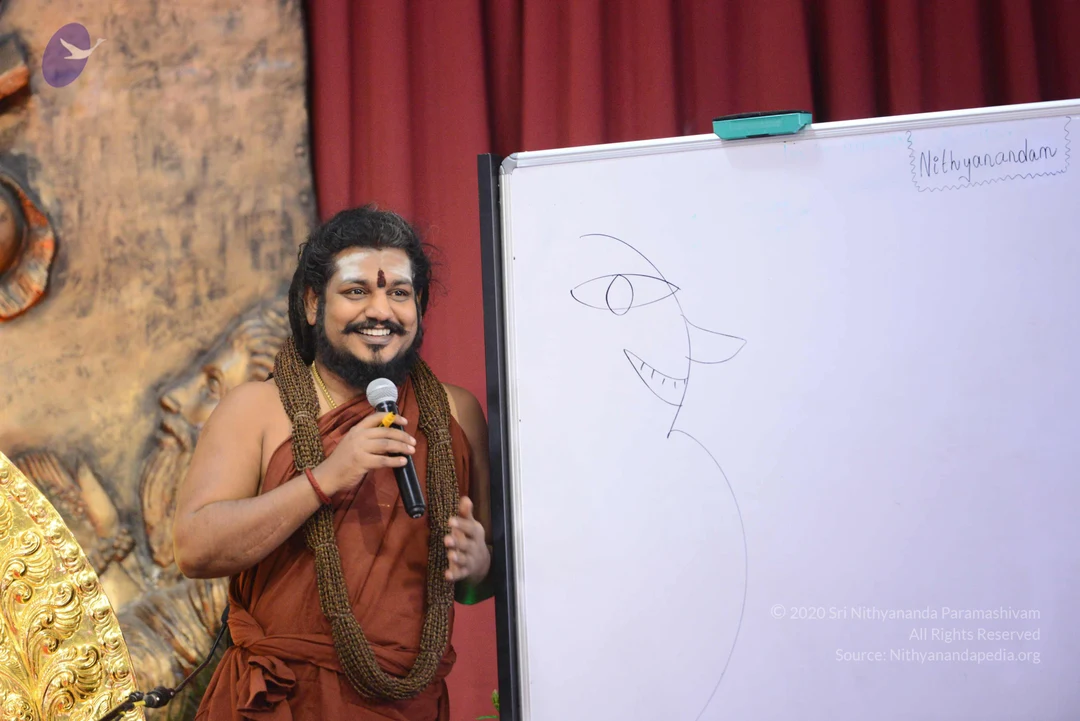
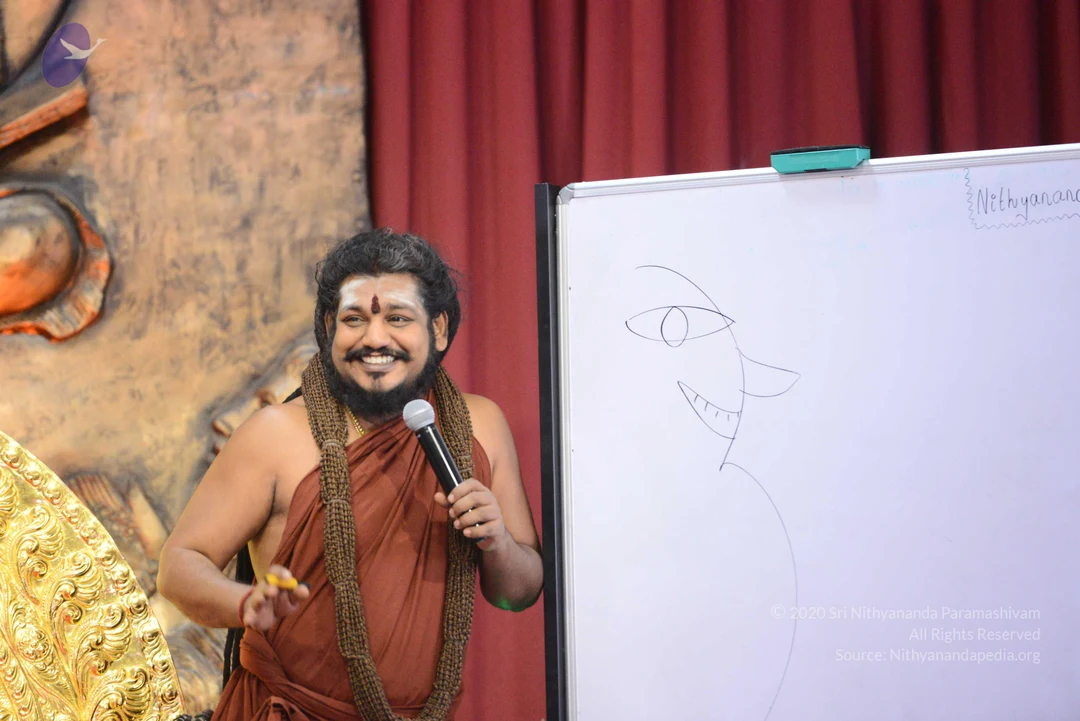
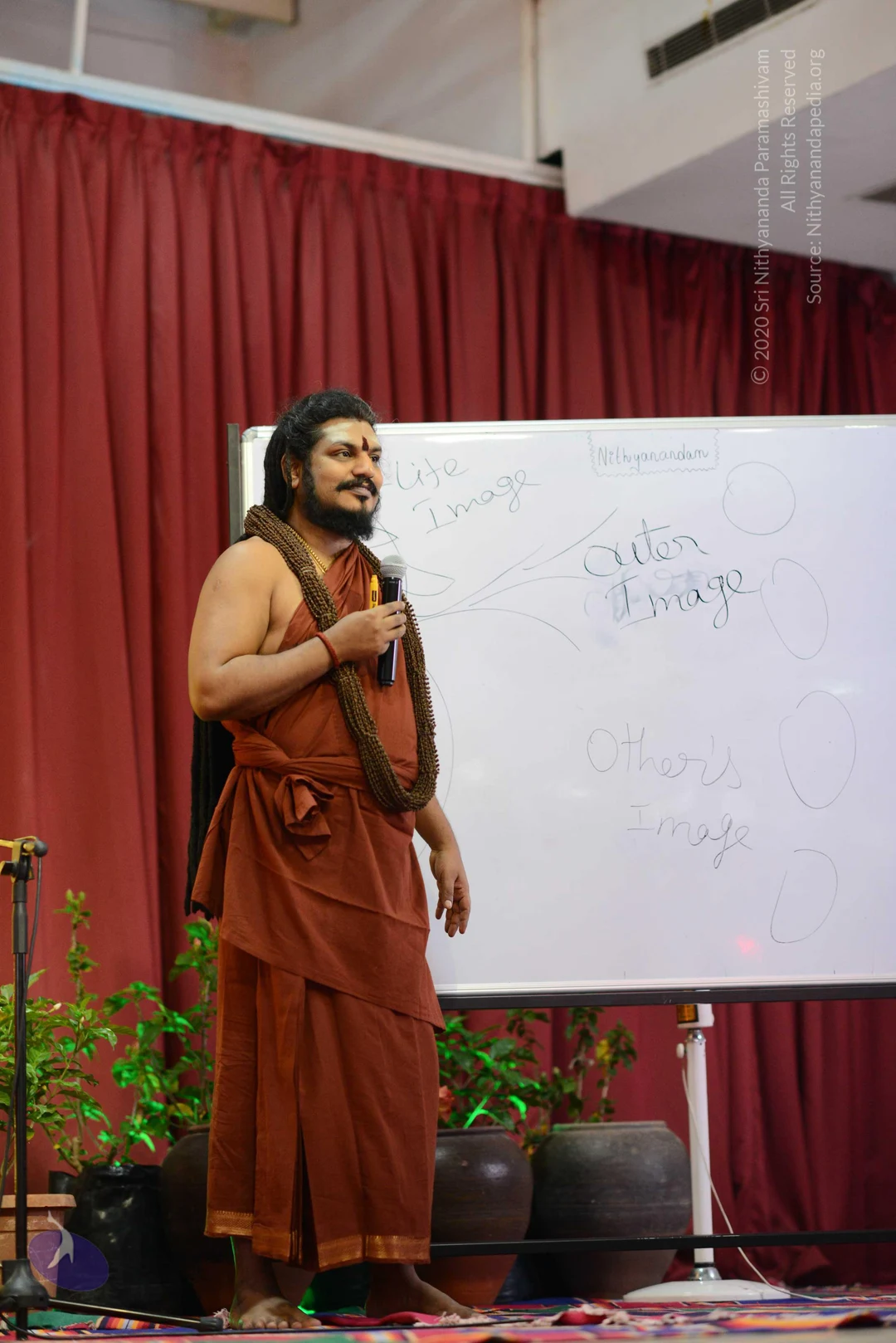
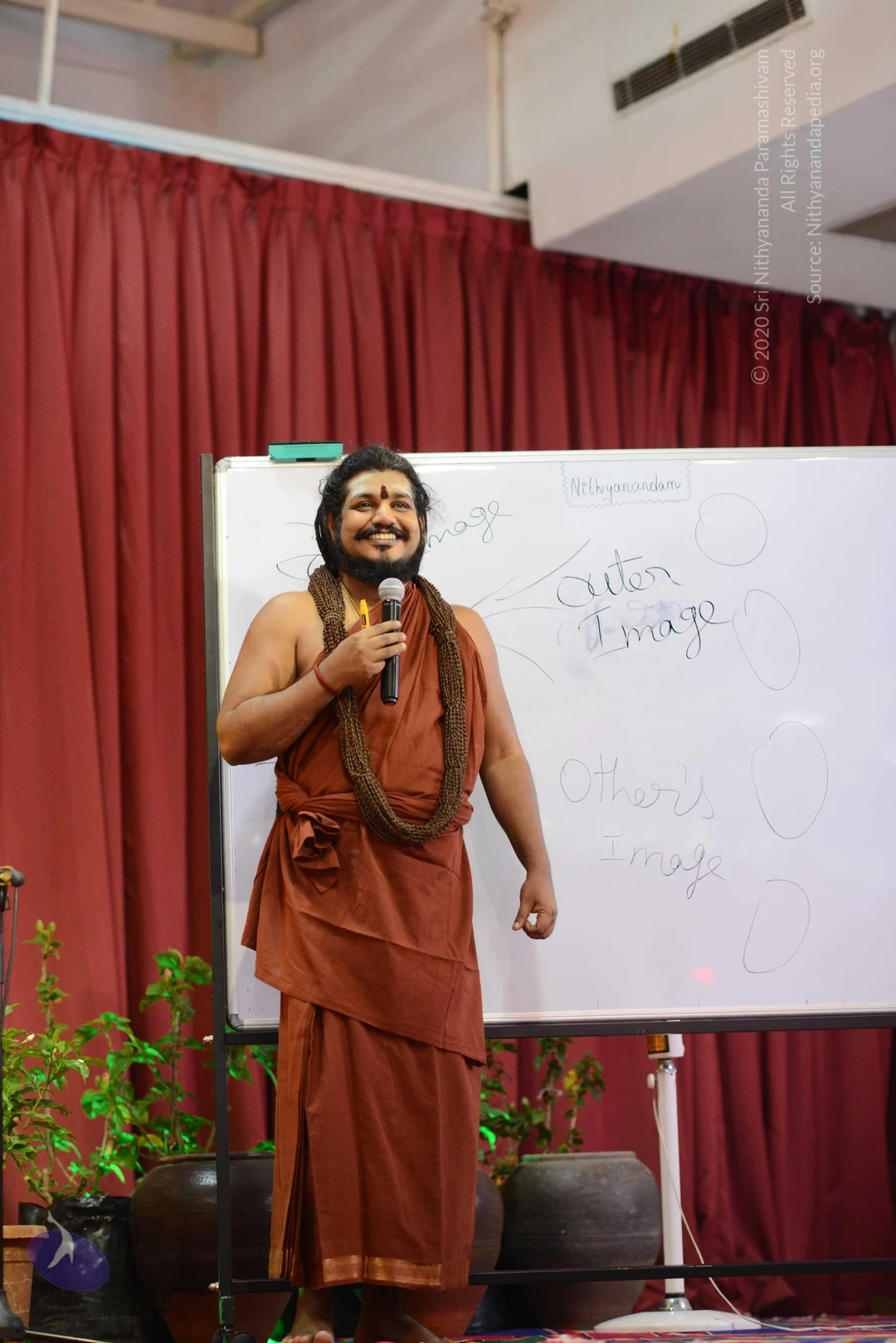
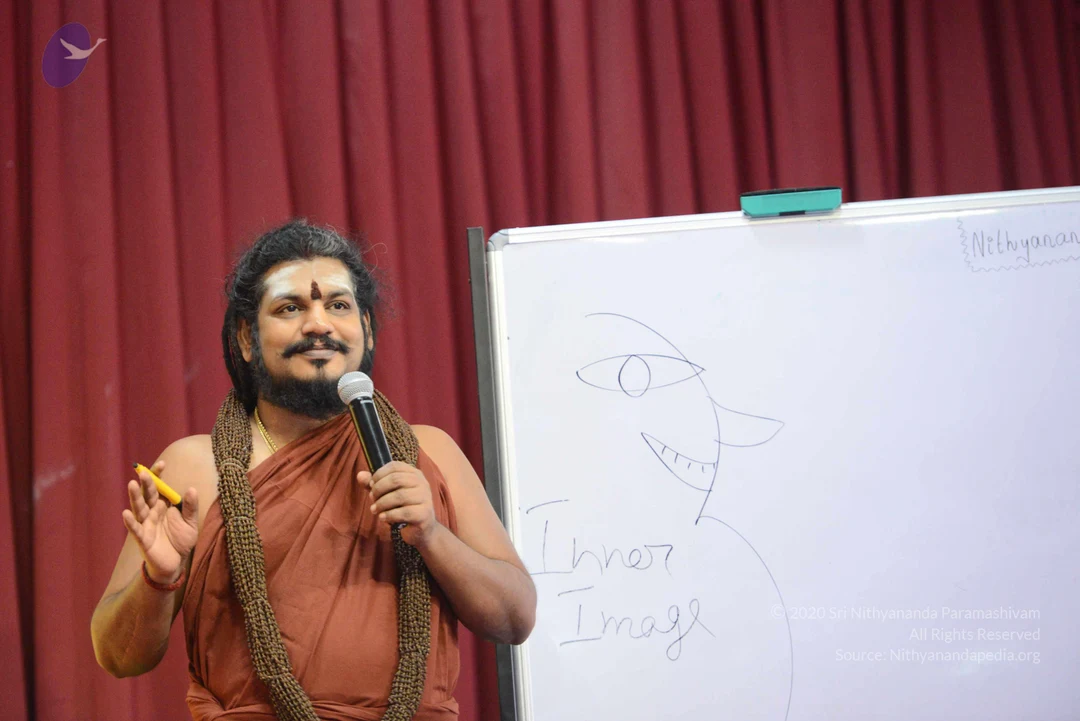
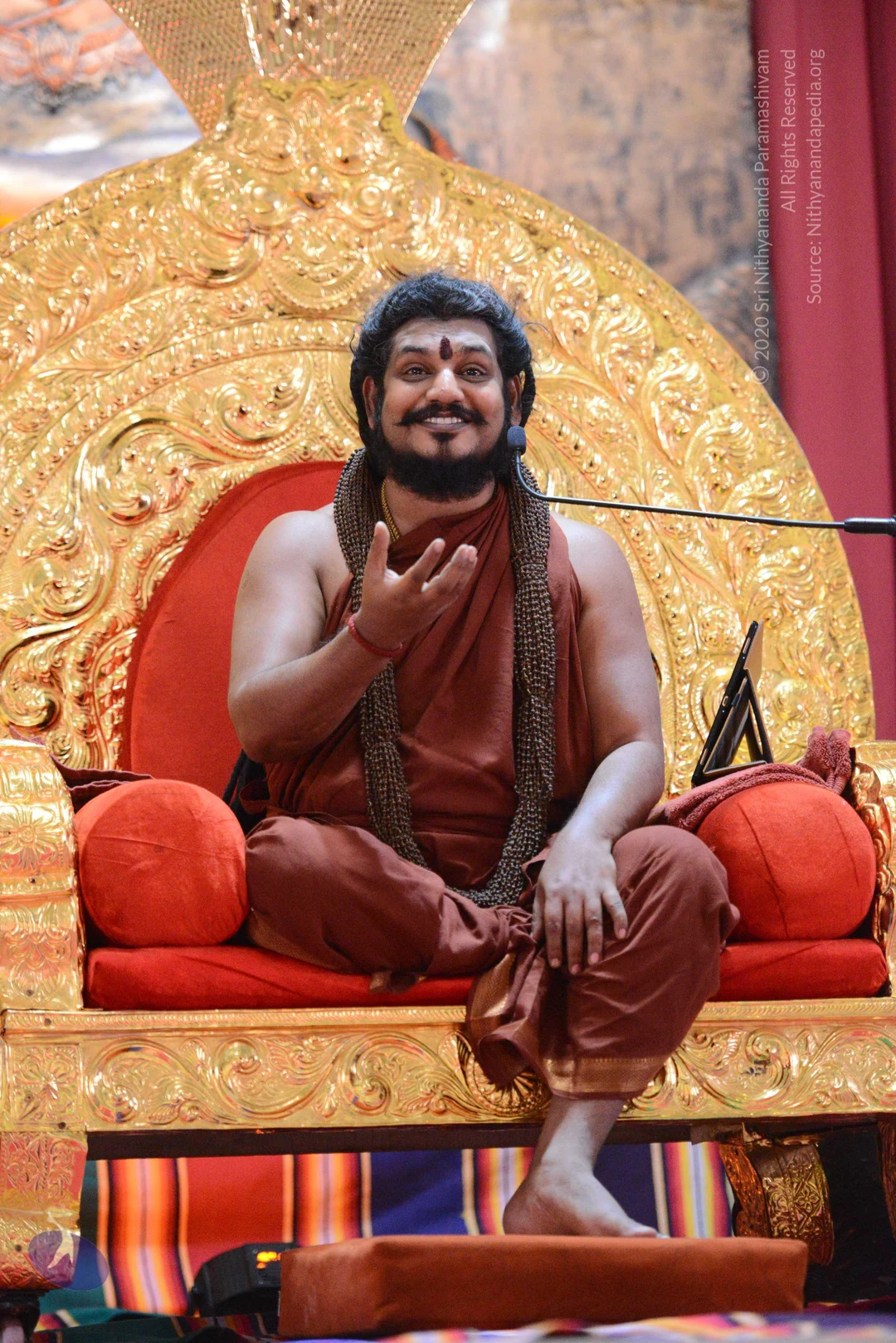
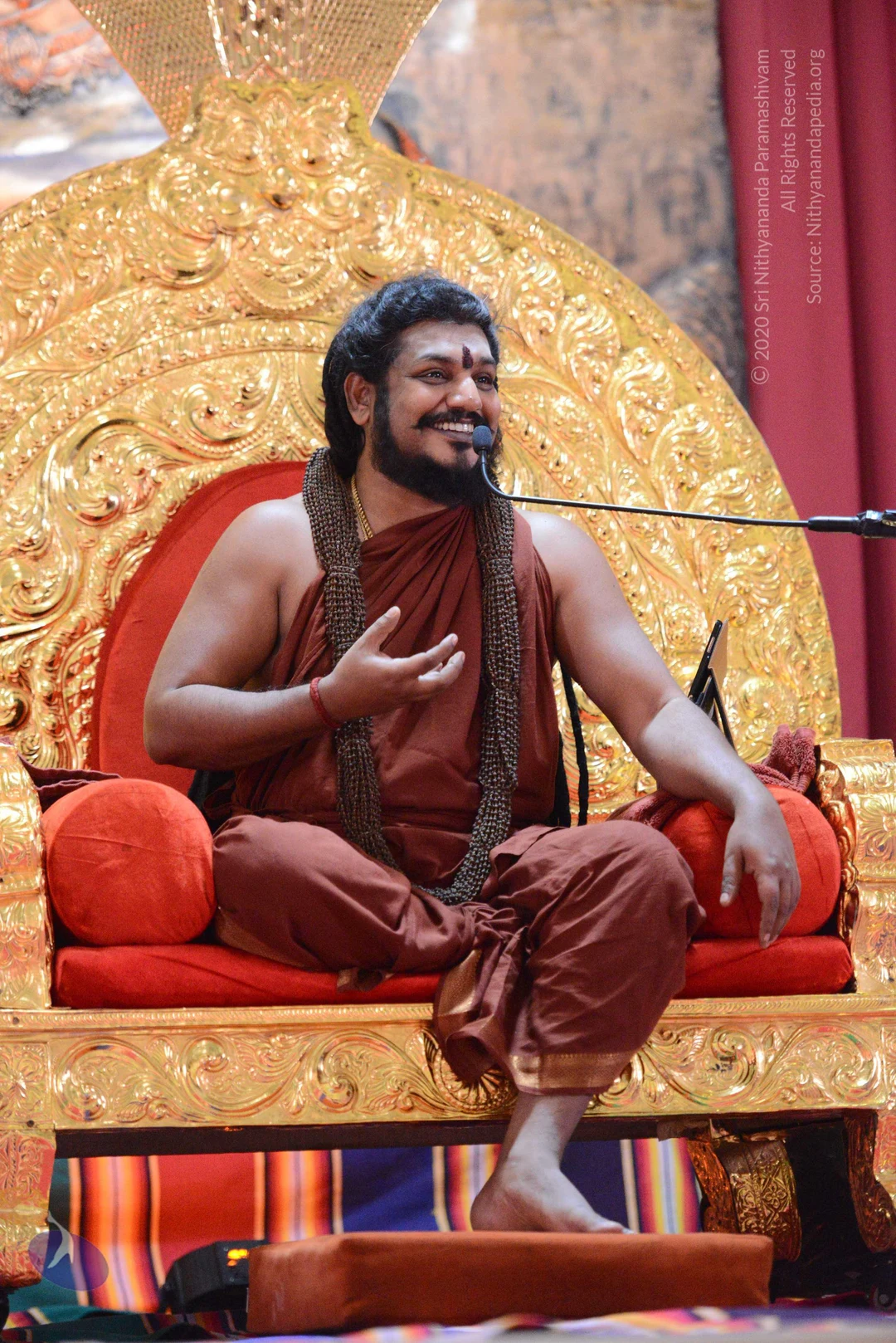
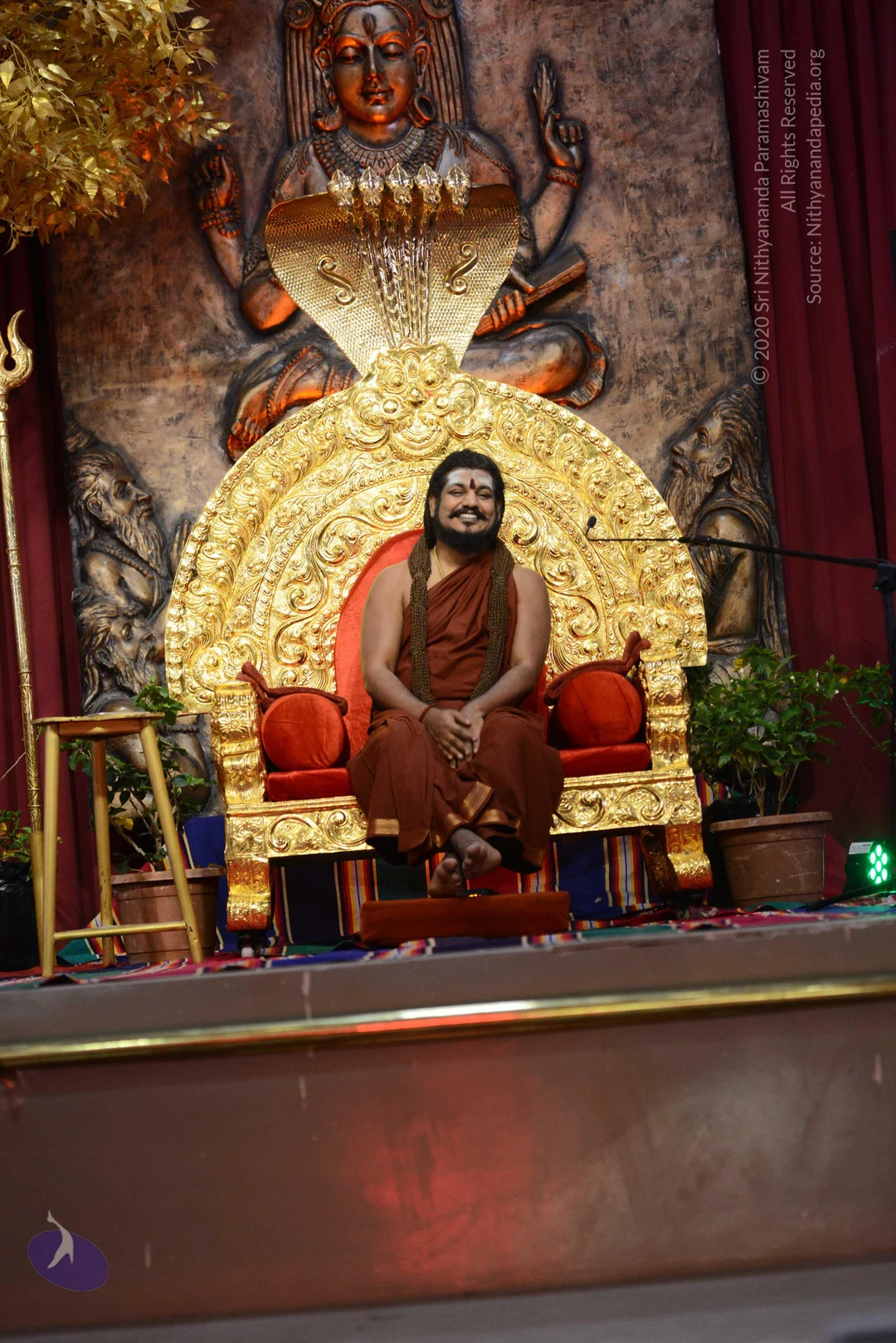
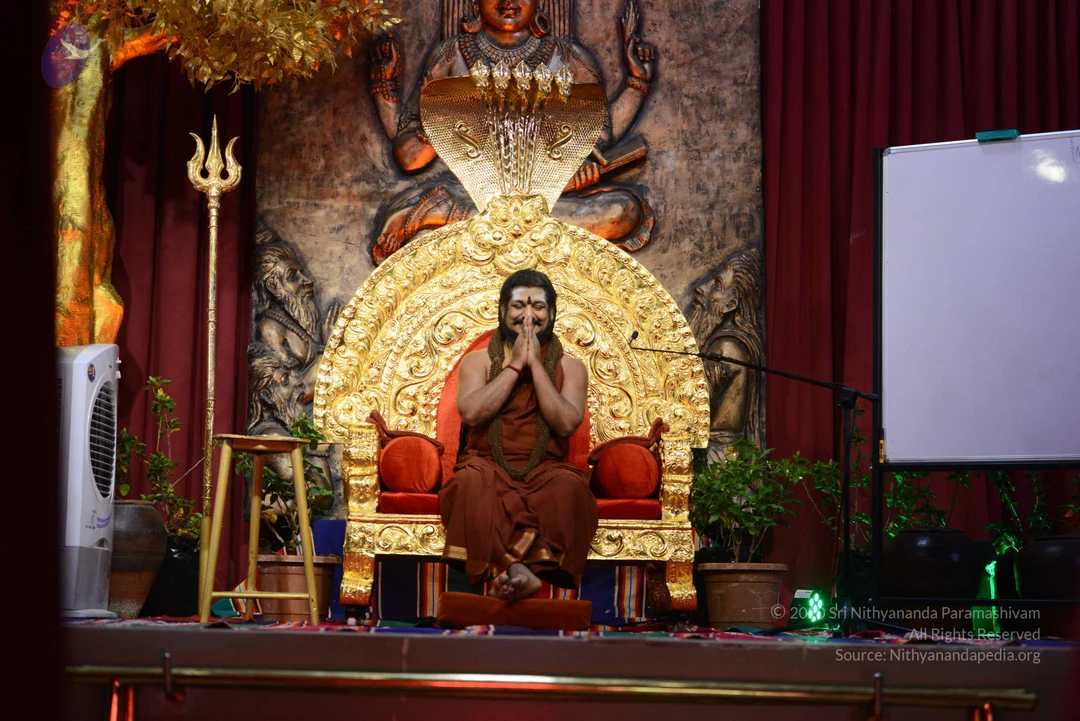
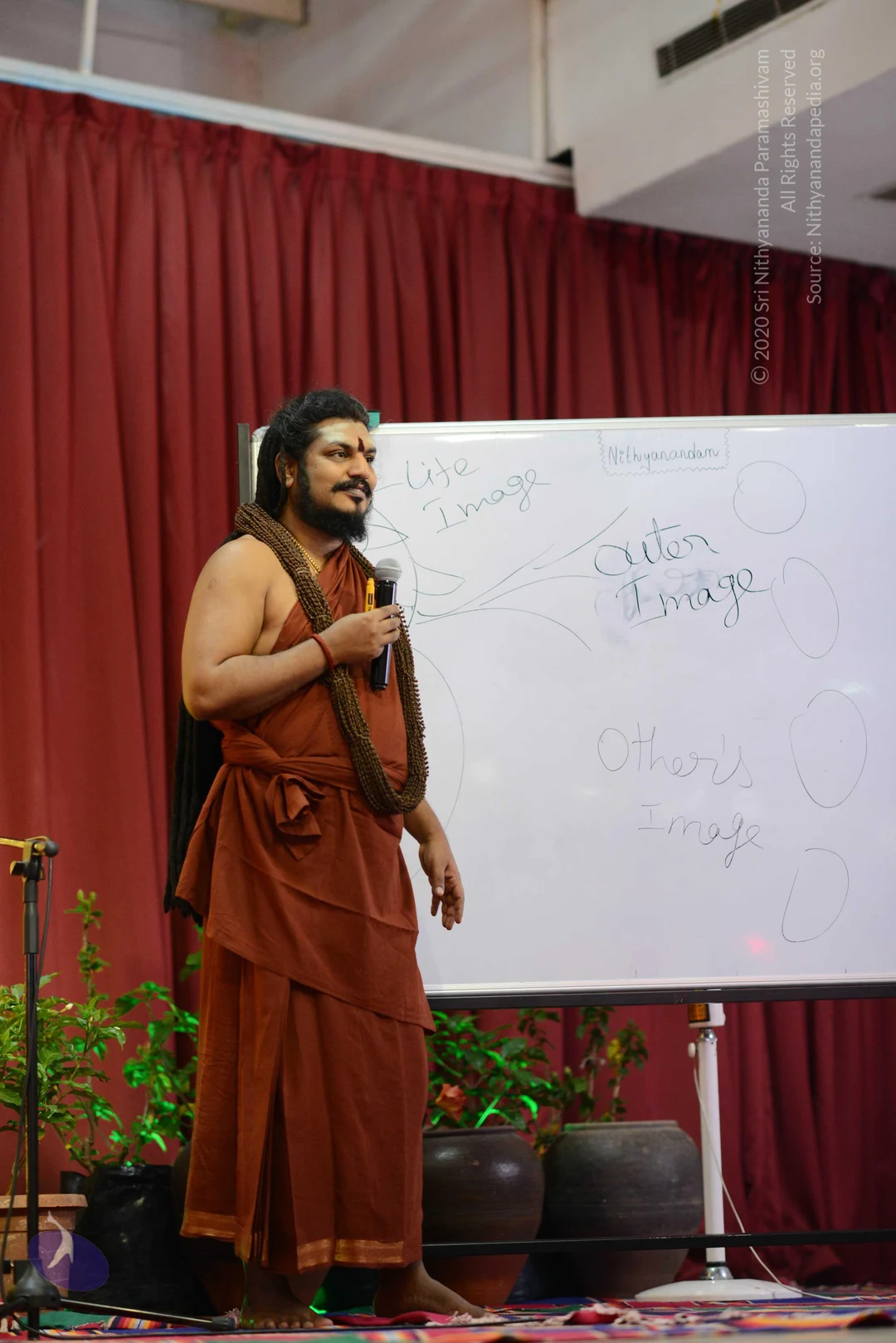
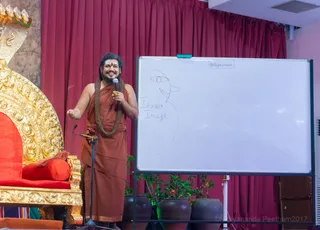
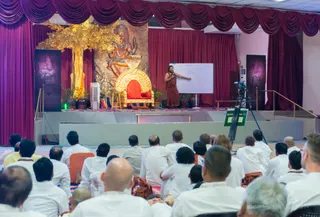
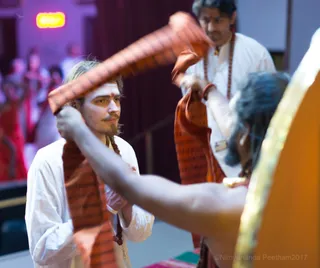
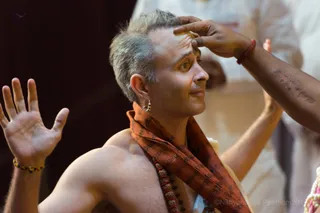
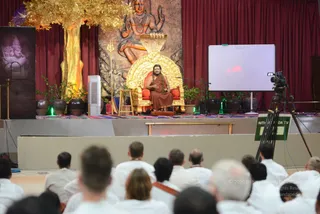
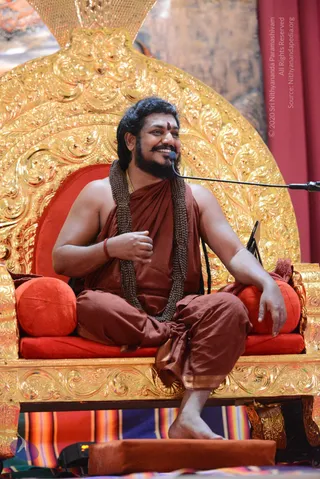
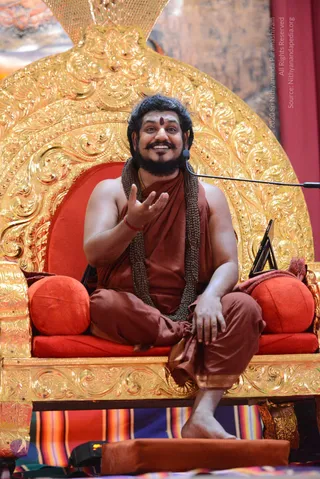
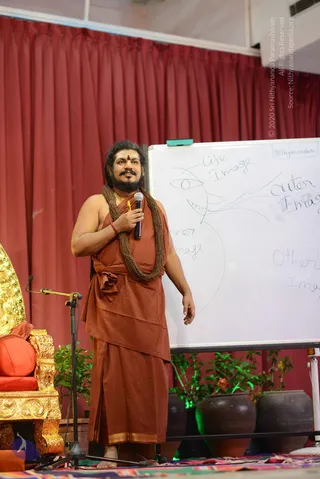
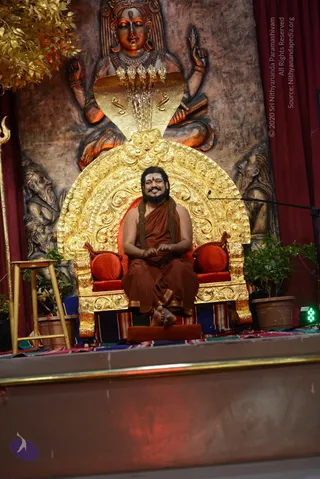
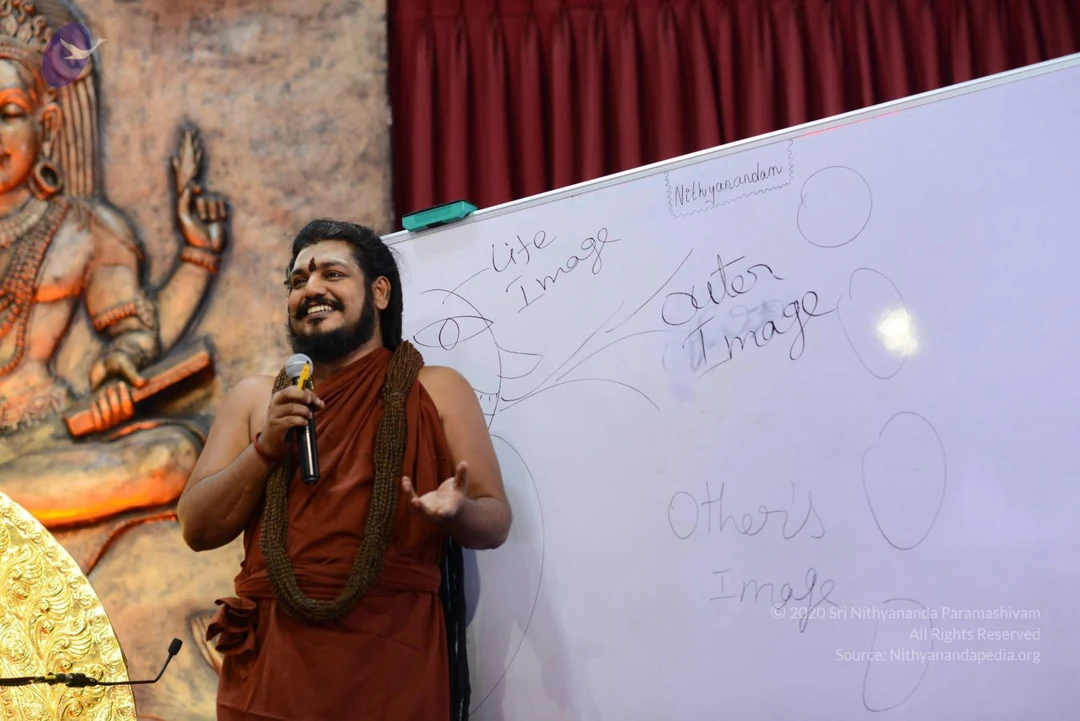
IA participants had a session with Swamiji explaining the concepts of “Inner Image”, the idea we have about us. Second, “Outer Image” – the idea we project about us to others. In Sanskrit, Inner Image is Mamakaara – Outer Image is Ahankaara. And, “Others’ Image” – what others expect from us. In Sanskrit we call it Anyakaara. “Life Image” – is what idea we carry about life and others – Swa-Anyakaara. Later in the day the participants also had an energy darshan.

Title

How to be authentic || Part 1 || IA || 28 Feb 2017

Description

Name Of The Convention : Inner Awakening Title: How to be authentic Part 1 Session on: Genesis of Identity Date : 28 February 2017 Venue : Adi Kailasa, Bengaluru, Karnataka, India

In this video, the Supreme Pontiff of Hinduism HDH #Nithyananda Paramashivam speaks to delegates of the program Inner Awakening about genesis of identity. There is a gap between our inner image and how we project ourselves externally and between this and the way others hold us. The same gap exists between our life image, world image and how things really are. This is because incompletions are running our life. By identifying and completing with our negative patterns, we can let go of the inauthentic images and bridge those gaps.

The Supreme Pontiff of Hinduism Jagatguru Mahasannidhanam His Divine Holiness Nithyananda Paramashivam (HDH) is the reviver of #KAILASA - the ancient enlightened civilization and the great cosmic borderless Hindu nation. Revered as the incarnation of Paramashiva - the primordial Hindu Divinity, HDH has a following of 2 billion Hindus worldwide with de facto spiritual embassies in over 150 countries. He has worked untiringly for over 26 years for the revival of Kailasa, for global peace and to give super conscious breakthrough to humanity. He has survived the worst persecution of multiple assassination attempts on person and on character by anti-Hindu elements. He is collecting, organising, preserving, time capsuling, decoding, spreading and reviving 20 Million source books of Hinduism and the 64 sacred arts & sciences like Ayurveda, music, dance, sculpting, astrology, vastu and much more. Close to 20,000 hours of HDH’s timeless talks have been recorded till date (Sep 2020), which are a treasure trove of powerful cognitions to solve individual and global problems of any kind.

Link to Video:

VideoAudio

Title

How to be Authentic || Part 2 || IA || 28 Feb 2017

Description

Name Of The Convention : Inner Awakening Title: How to be authentic Part 2 Session on: Genesis of Identity Date : 28 February 2017 Venue : Adi Kailasa, Bengaluru, Karnataka, India

In this video, the Supreme Pontiff of Hinduism HDH #Nithyananda Paramashivam speaks to delegates of the program Inner Awakening about genesis of identity. There is a gap between our inner image and how we project ourselves externally and between this and the way others hold us. The same gap exists between our life image, world image and how things really are. This is because incompletions are running our life. By identifying and completing with our negative patterns, we can let go of the inauthentic images and bridge those gaps.

The Supreme Pontiff of Hinduism Jagatguru Mahasannidhanam His Divine Holiness Nithyananda Paramashivam (HDH) is the reviver of #KAILASA - the ancient enlightened civilization and the great cosmic borderless Hindu nation. Revered as the incarnation of Paramashiva - the primordial Hindu Divinity, HDH has a following of 2 billion Hindus worldwide with de facto spiritual embassies in over 150 countries. He has worked untiringly for over 26 years for the revival of Kailasa, for global peace and to give super conscious breakthrough to humanity. He has survived the worst persecution of multiple assassination attempts on person and on character by anti-Hindu elements. He is collecting, organising, preserving, time capsuling, decoding, spreading and reviving 20 Million source books of Hinduism and the 64 sacred arts & sciences like Ayurveda, music, dance, sculpting, astrology, vastu and much more. Close to 20,000 hours of HDH’s timeless talks have been recorded till date (Sep 2020), which are a treasure trove of powerful cognitions to solve individual and global problems of any kind.

Link to Video:

VideoAudio

Photos

Inner Awakening

Darshan

Flyer

Facebook Link

https://www.facebook.com/ParamahamsaNithyananda/photos/a.293803880707469/1242906879130493,

Photos Of The Day:

Genesis-of-Identity
Poornatva-Vastra-Energy-Darshan

01-Genesis-of-Identity

02-Poornatva-Vastra-Energy-Darshan

Photos from this day

View all 266 photos

Inner Awakening

13 photosSource gallery
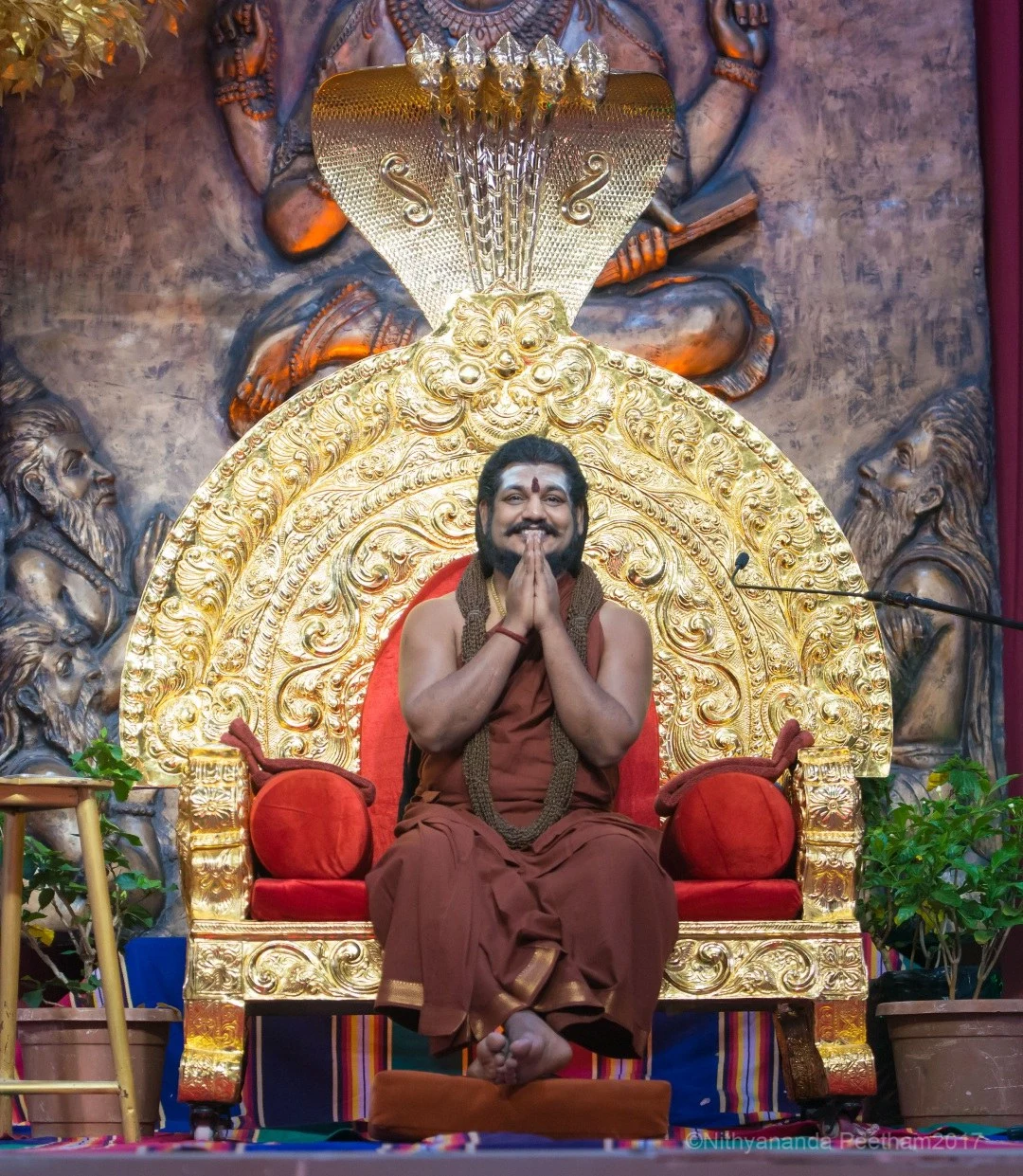
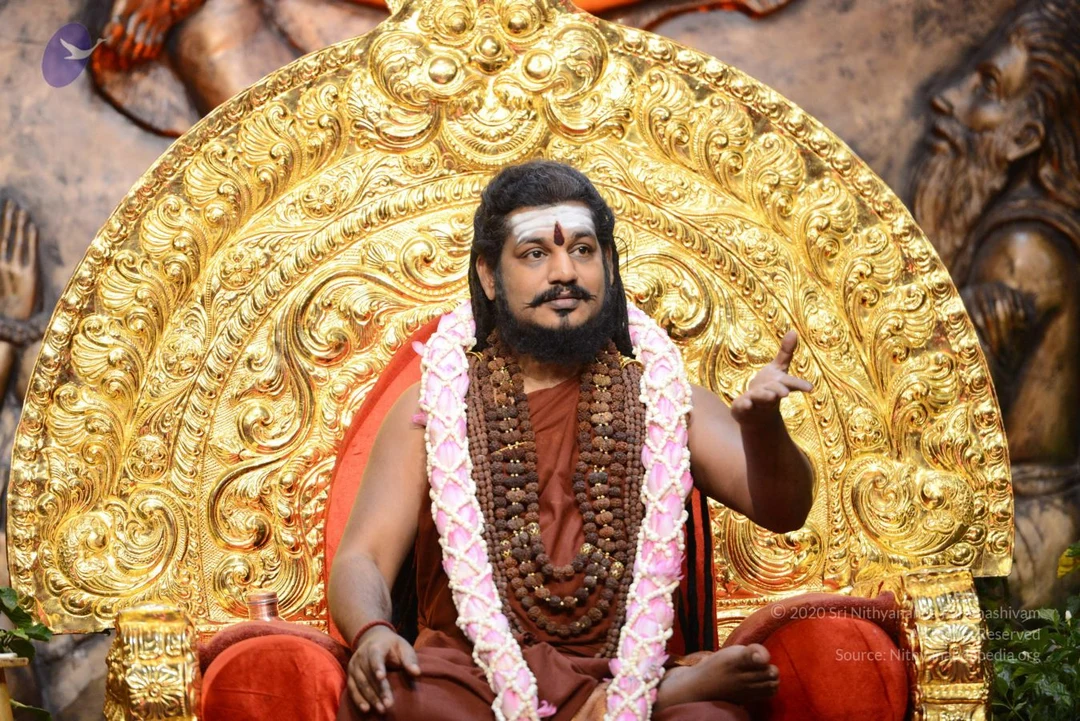
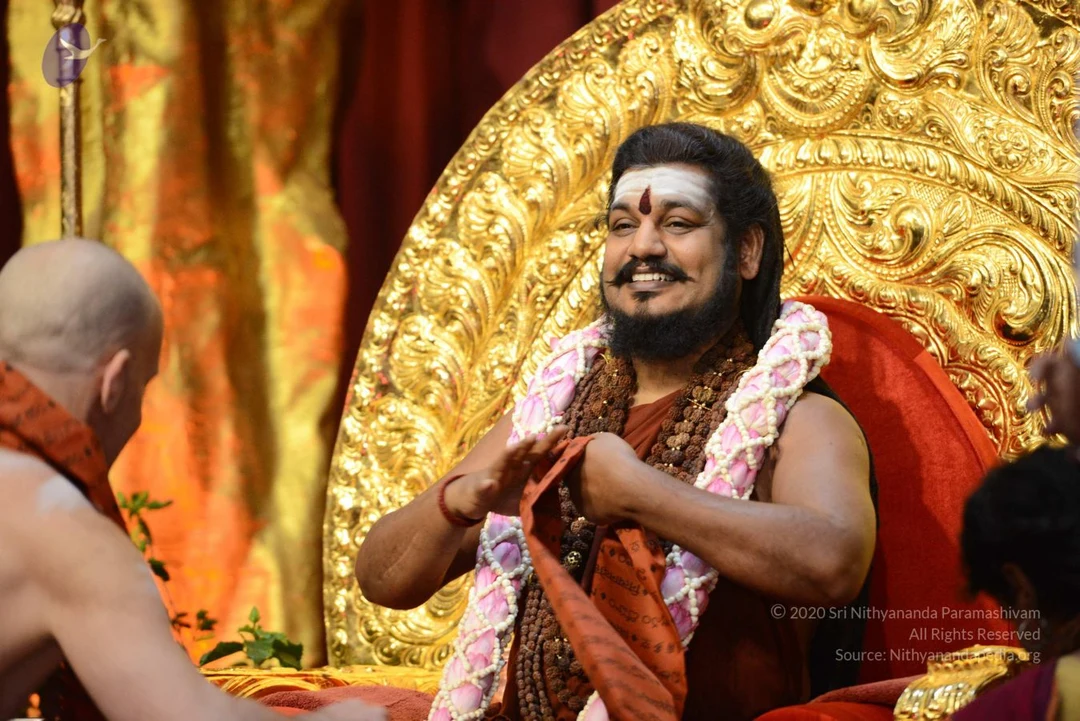
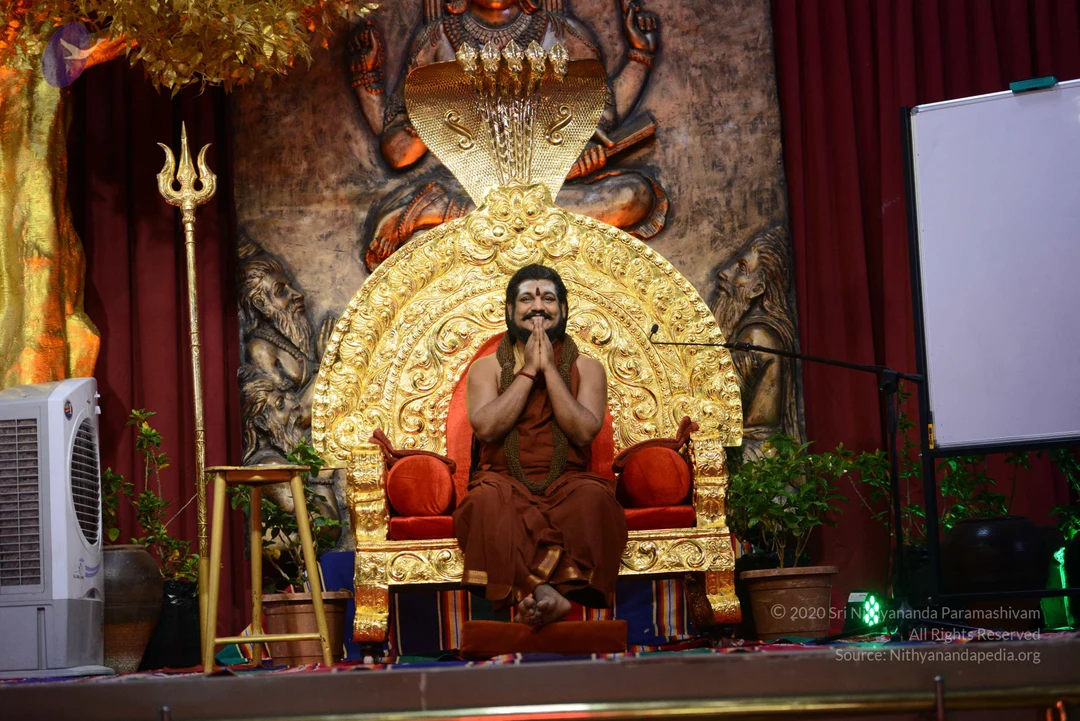
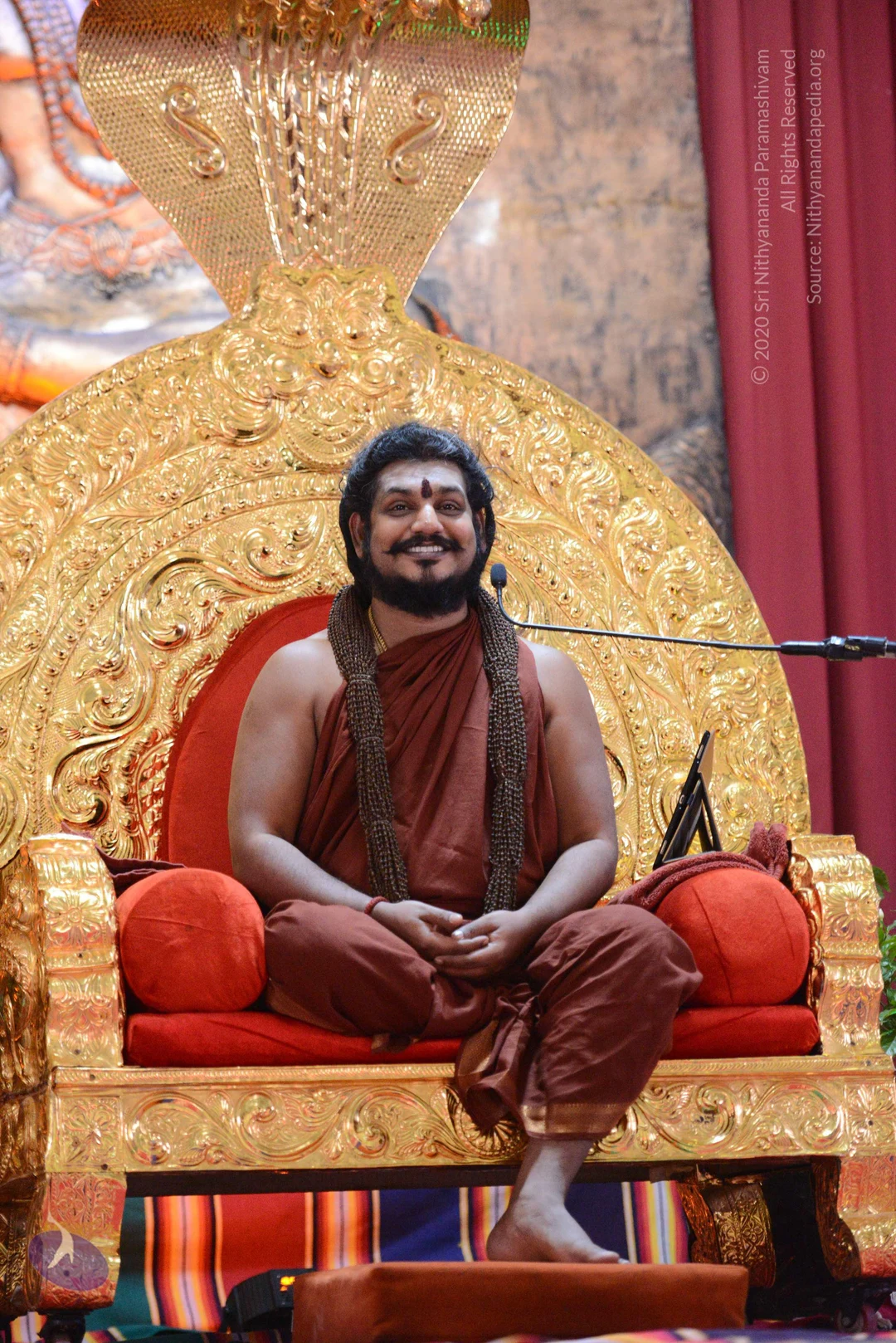
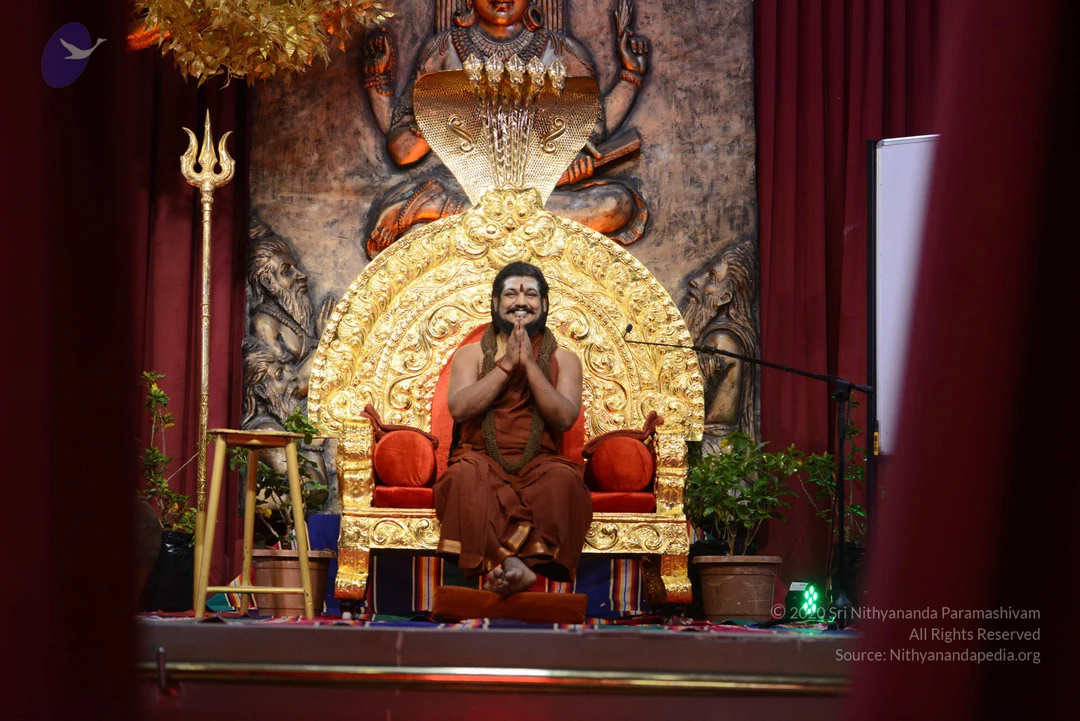
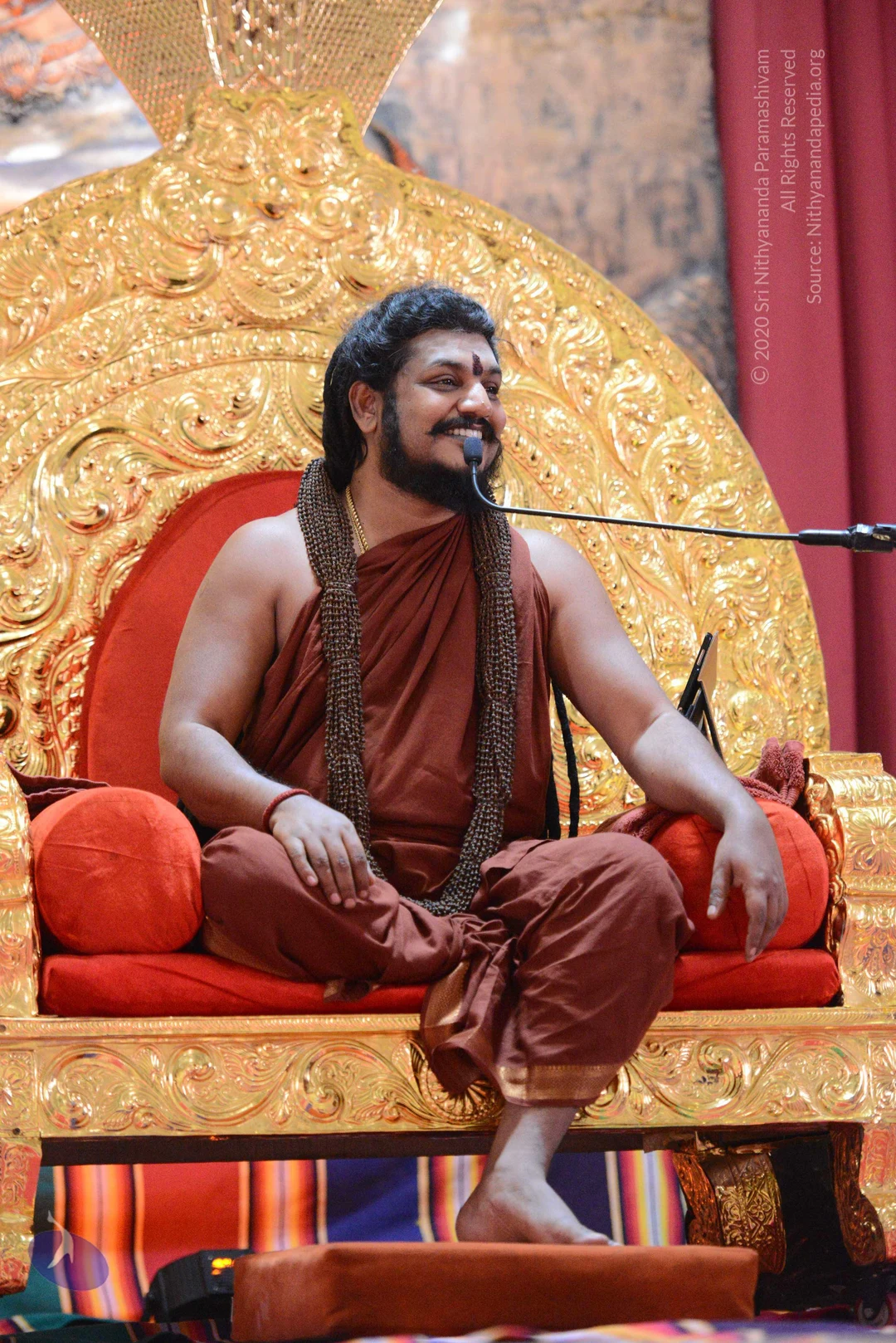
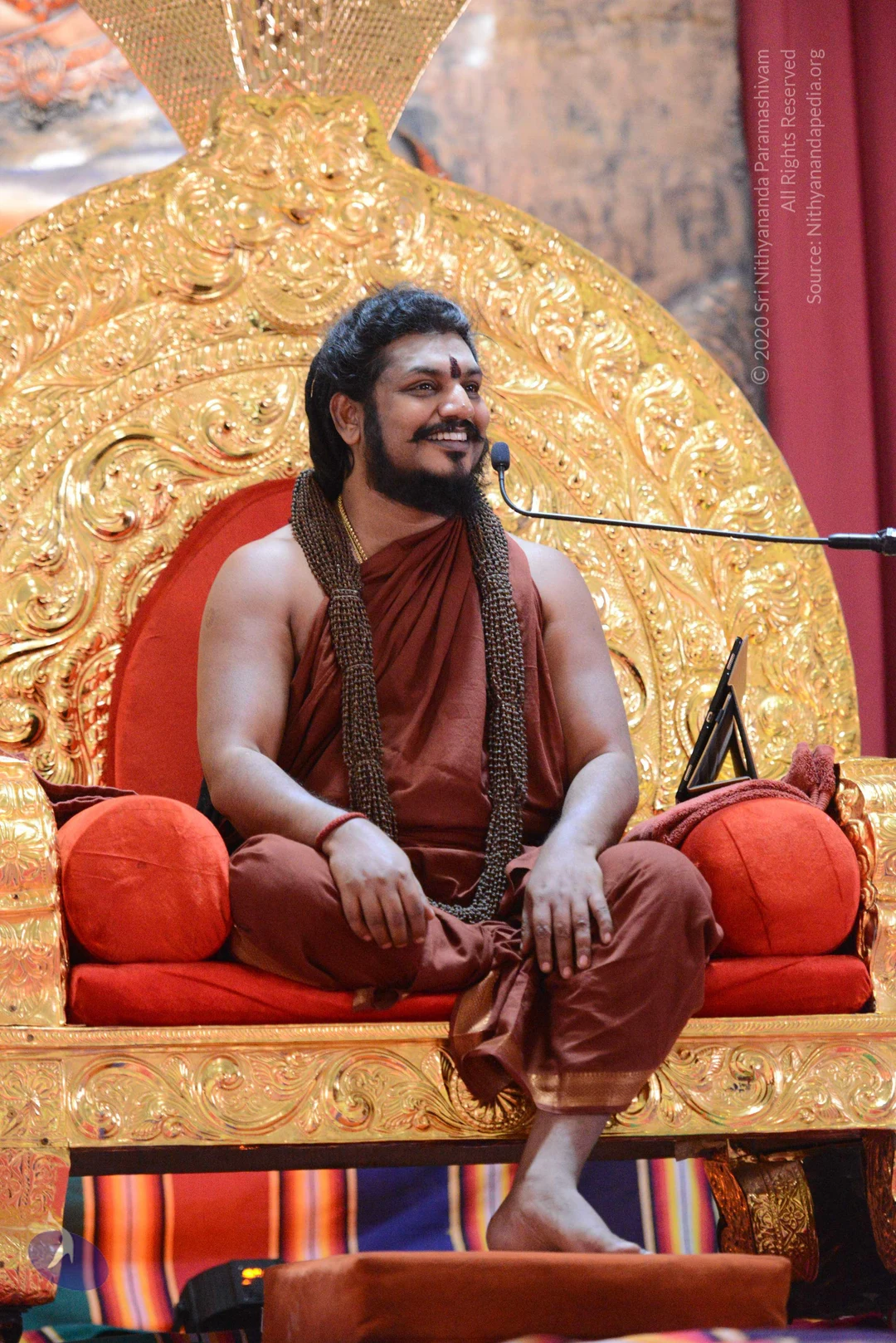
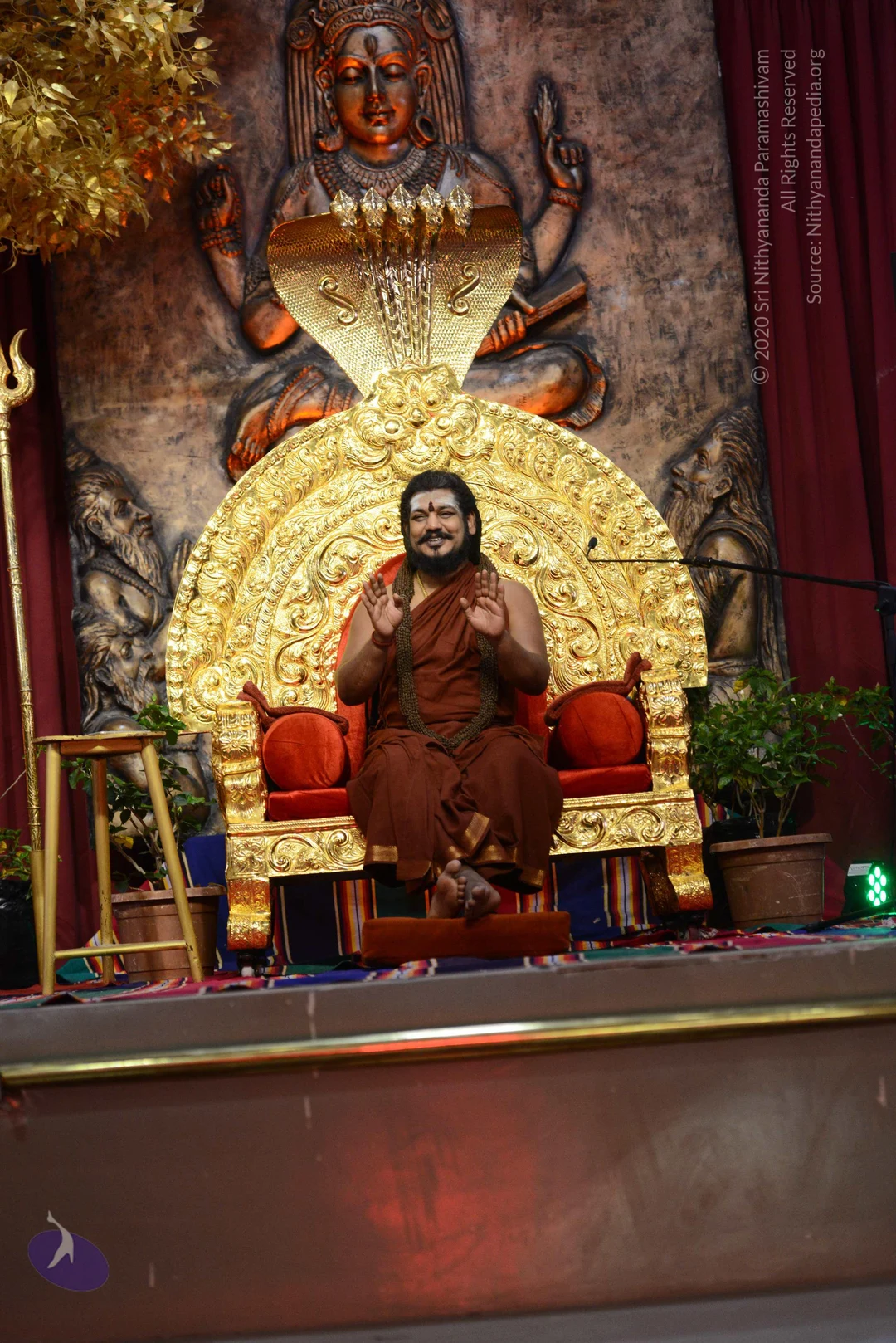
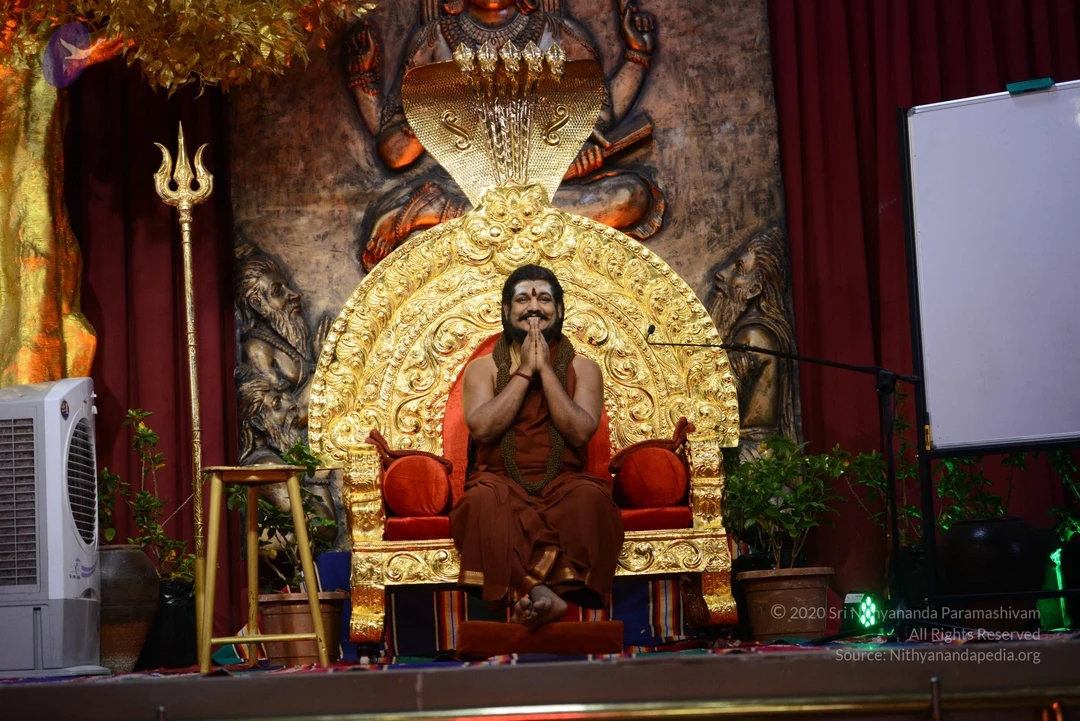
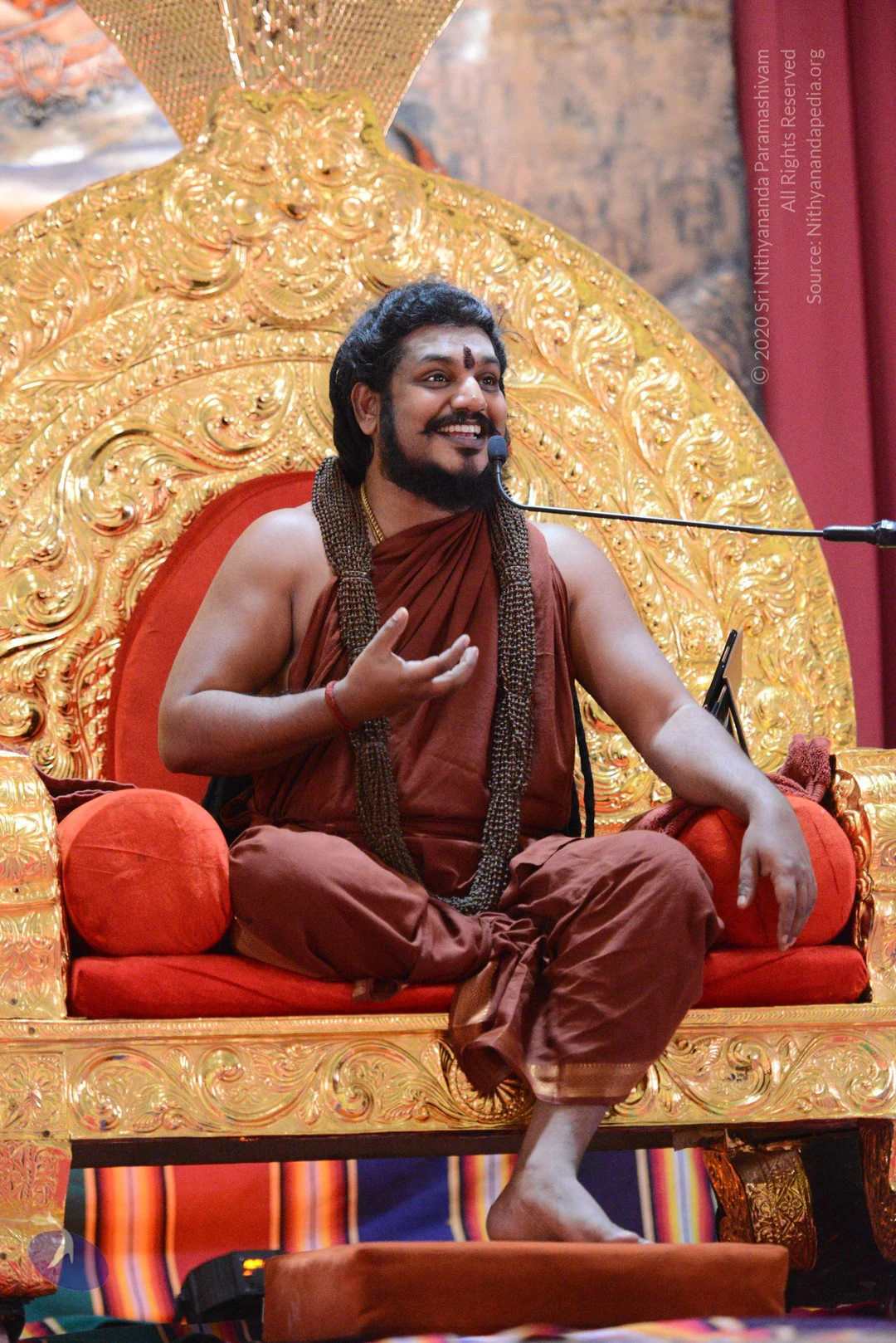
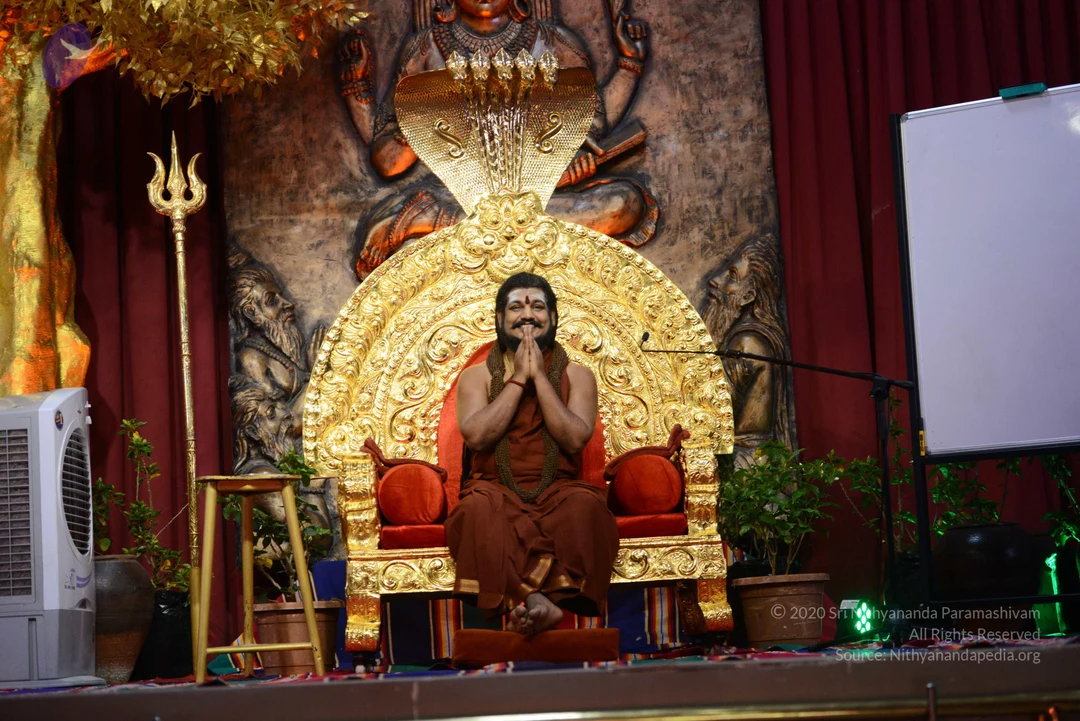
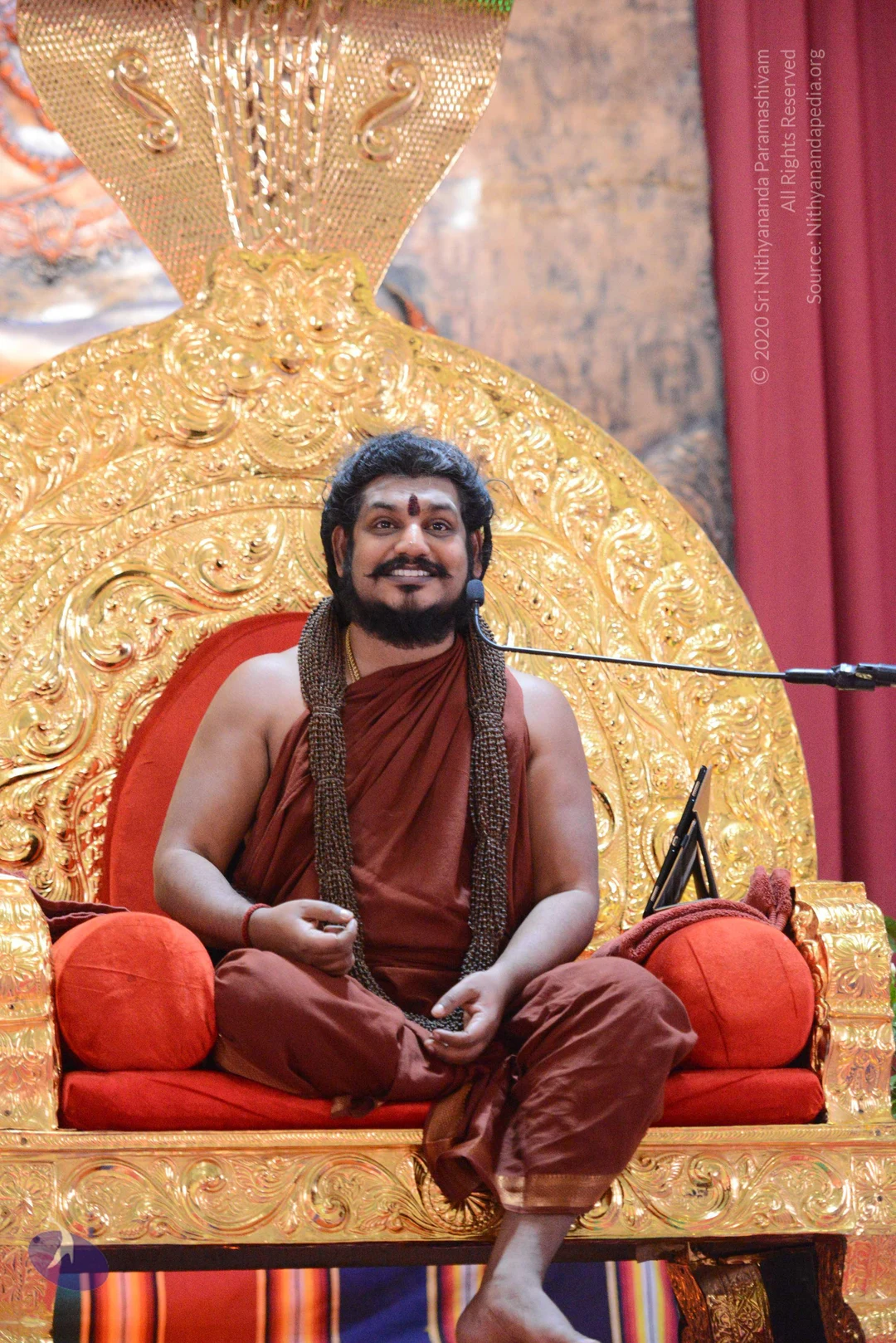
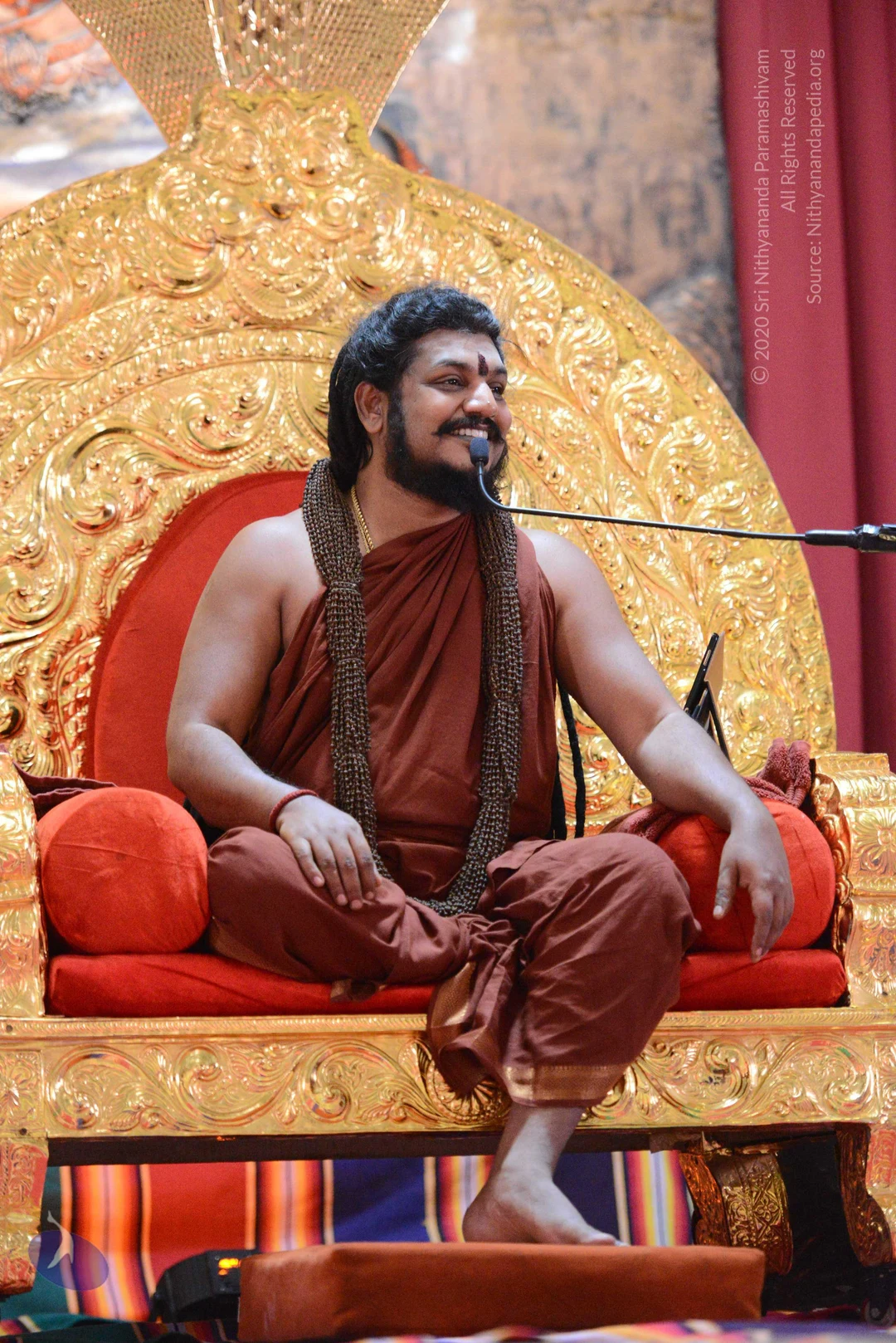
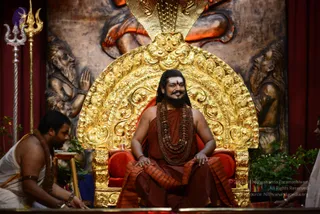
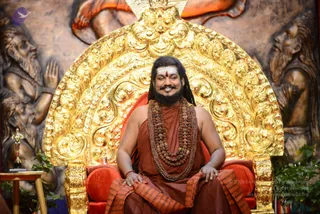
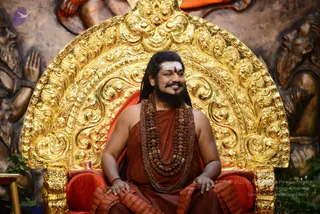
A photograph of a man seated on an ornate gold throne with a cobra-hood canopy, in front of a relief sculpture backdrop of a seated deity and two sages. He wears a rust-red robe, a long brown rudraksha mala, a red bindi and tripundra marks, and sits with palms pressed together in namaskar. Potted plants and a microphone stand flank the throne. Swamiji (probable): the man has long swept-back dark hair, rudraksha mala and a red-and-ochre robe on a ceremonial throne, consistent with the page's description of a session with Swamiji.A man with long dark hair and a full beard sits on an ornate gold throne with a carved cobra hood and red velvet cushions on a stage. He wears a rust-orange robe, a rudraksha mala, and a red tilak on his forehead, and raises both palms in an animated, smiling gesture. Behind him, a large carved relief shows a deity with multiple arms holding objects, flanked by carved sages. Potted plants, a small side table, and a colourful striped rug surround the stage. Swamiji (probable) is seated at the centre as the speaker, with long hair, a rudraksha mala, and saffron-red clothing, teaching in a satsang setting.A seated audience of Inner Awakening delegates, mostly men in white kurta-style clothing, attending a session in a bright hall with red-draped seats and a faint plaque in the upper left. In the centre, a young man with short dark hair and a light beard wears a white outfit and a long rudraksha mala, hands clasped, gazing toward the front. Beside him, others sit in white with rudraksha beads or pendant necklaces, and blurred figures in the foreground and background include a woman with light hair. No a person candidate is clearly visible among the delegates.A man in a rust-orange ochre garment with a rope-like rudraksha mala draped over his shoulders stands beside a whiteboard, holding a microphone and smiling while gesturing with his other hand. He has long dark hair, a full beard and a white tilak with a red dot on his forehead, and wears a gold chain. On the whiteboard is a simple line drawing of a face with an eye, nose and smile, and a small label reads Nithyanandam. Behind him hangs a deep red curtain and a carved golden panel is visible at the left edge. The setting suggests a teaching session.A man in saffron-orange robes stands beside a whiteboard during a talk, holding a microphone in his right hand and gesturing with his left. He has long dark hair, a short beard and a red bindi, and wears a thick rudraksha-style mala around his neck. Behind him, a golden ornate throne with a red cushion sits to the left, with a red curtain backdrop and potted plants below the whiteboard. The whiteboard shows a hand-drawn face and the words 'Inner Image'. Visible appearance cues of distinctive saffron robes, a mala and long hair make him a probable Swamiji seated-speaker figure at this discourse. One person is visible.A photograph of a seated audience at an indoor hall session. A standing man in a rust-orange robe points at a whiteboard on the right of the stage, with a small Tamil-script note visible on the board. Behind him stands a golden throne with a red cushion, below a large carved deity murti holding a trident and a golden tree backdrop. Dark red drapes and a green a person TV sign frame the stage. Many audience members in white clothes sit cross-legged on the floor facing the stage, with a camera on a tripod at the right. The man in orange resembles the a person candidate by appearance and role cues, but these cues are only partial, so identity is uncertain.

Darshan

8 photosSource gallery
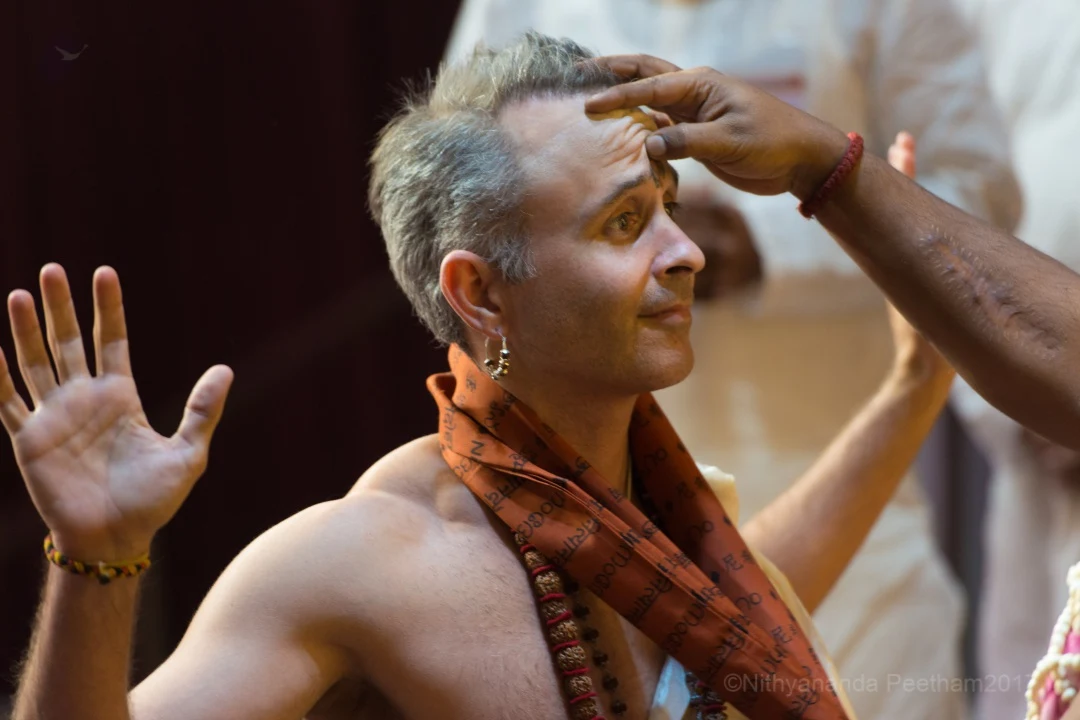
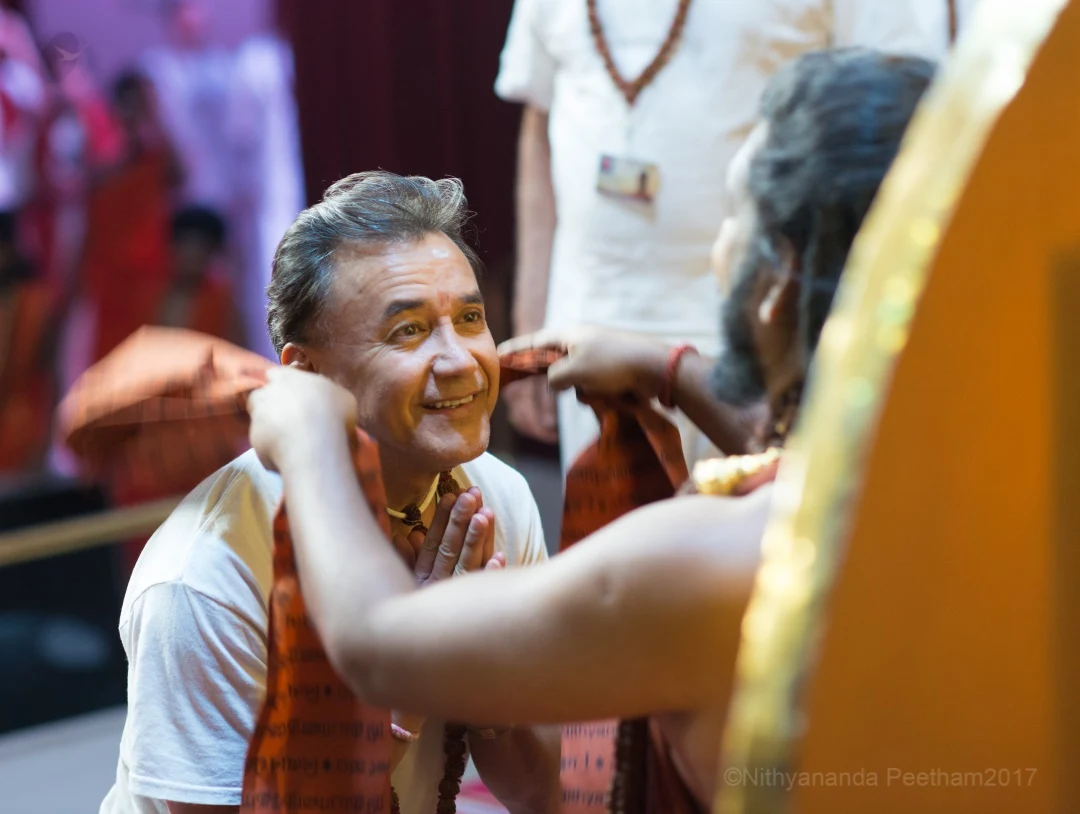
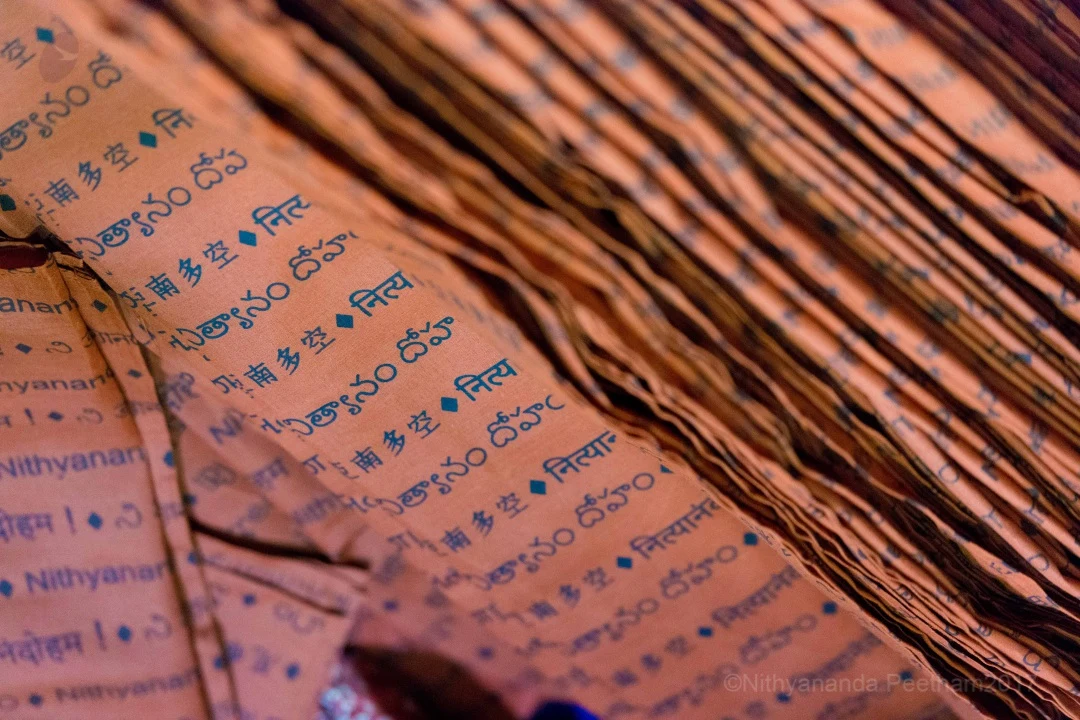
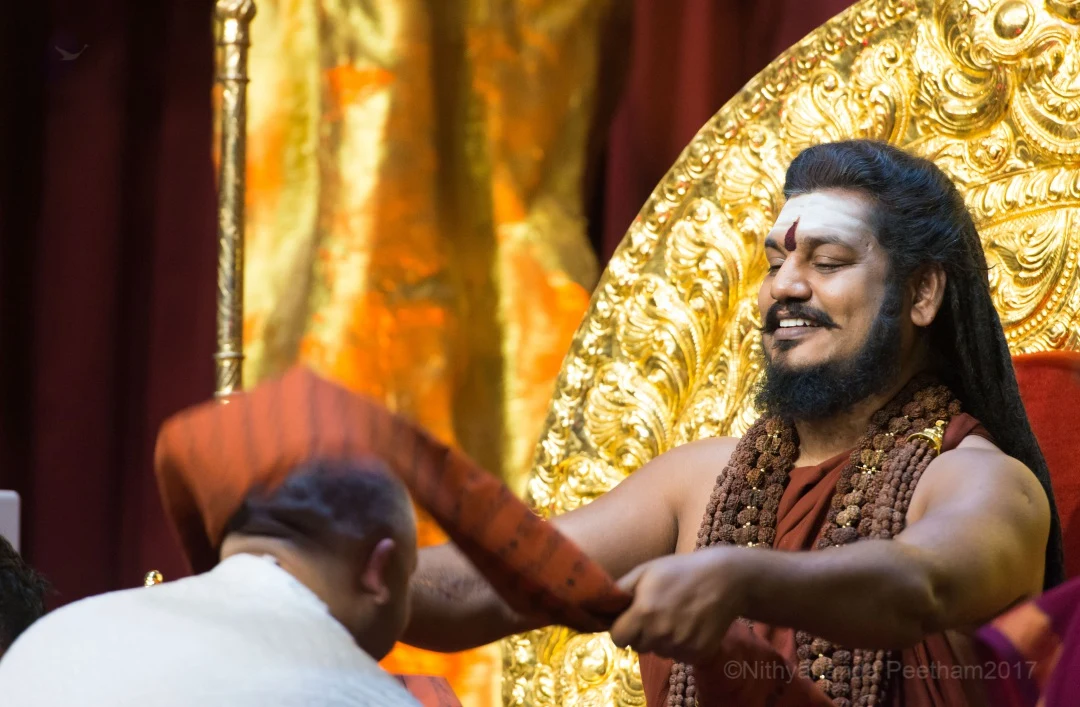
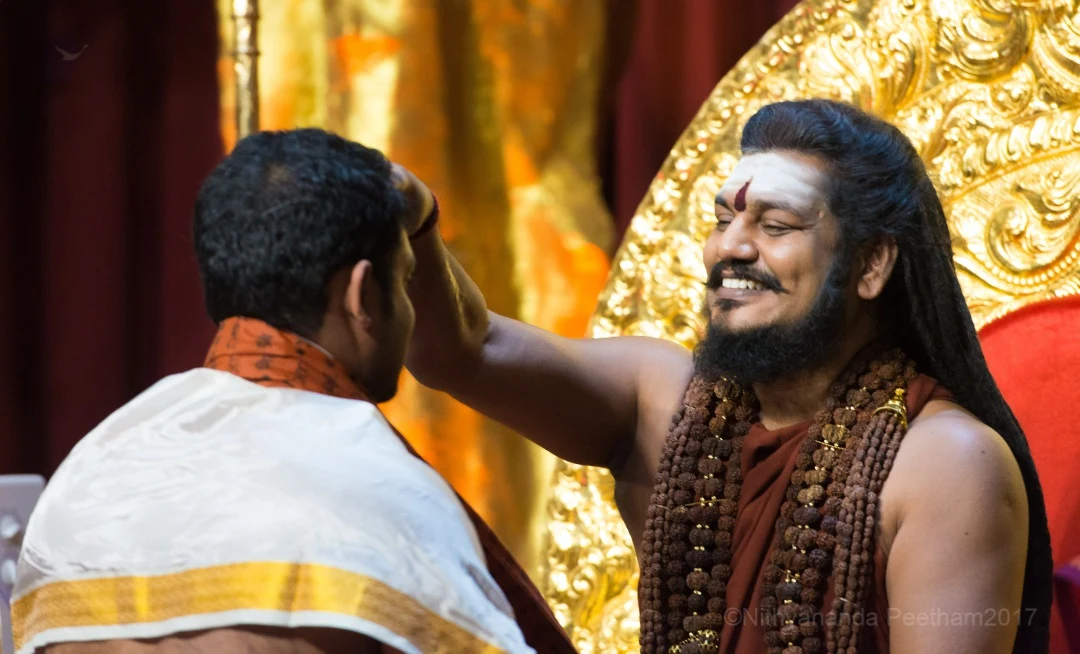
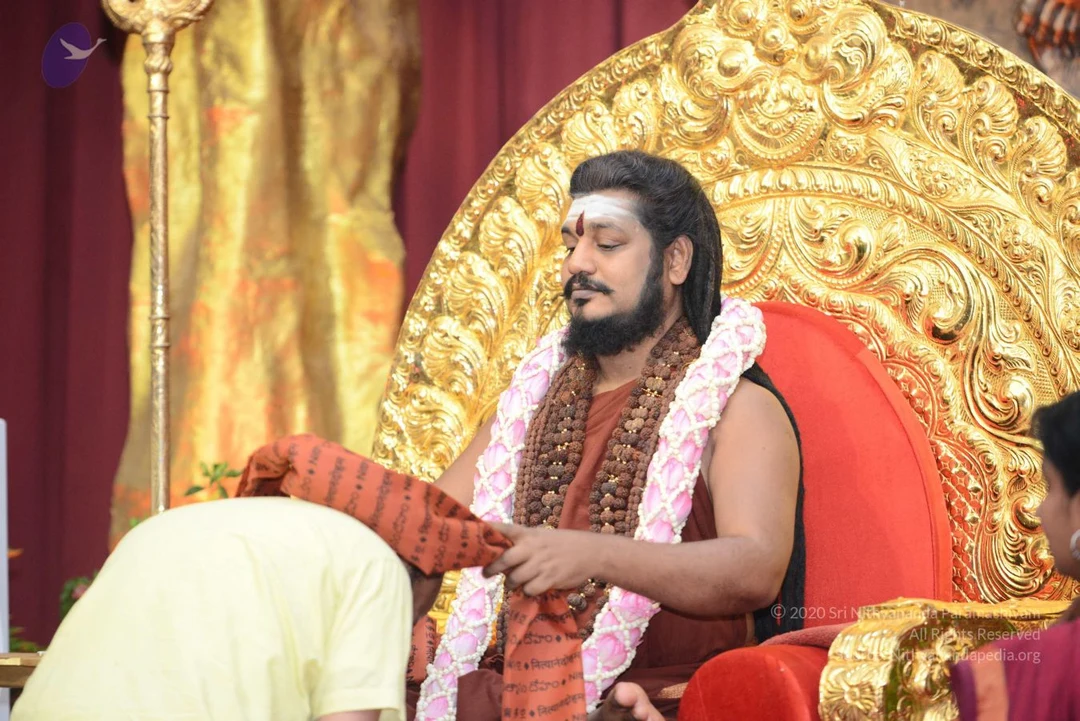
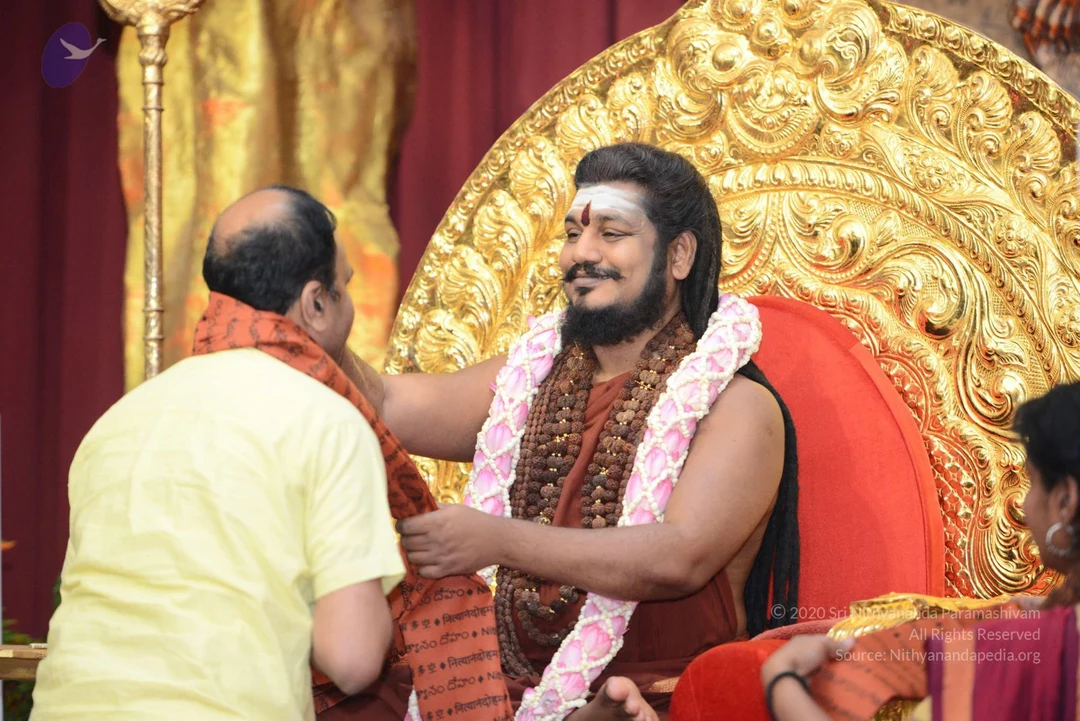
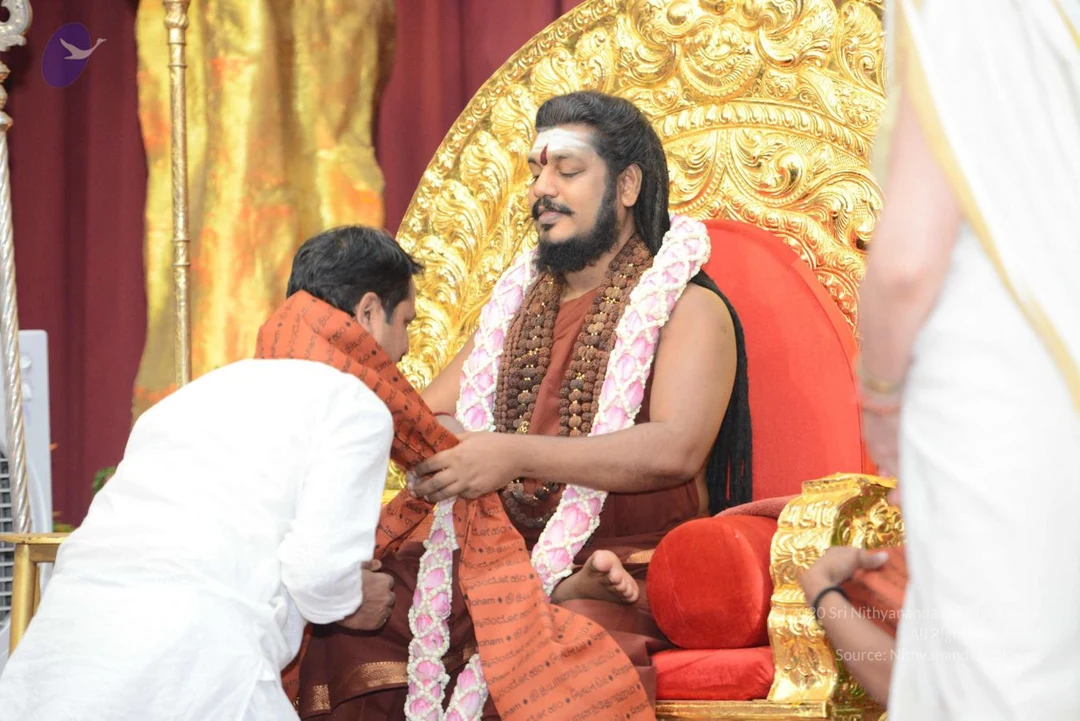
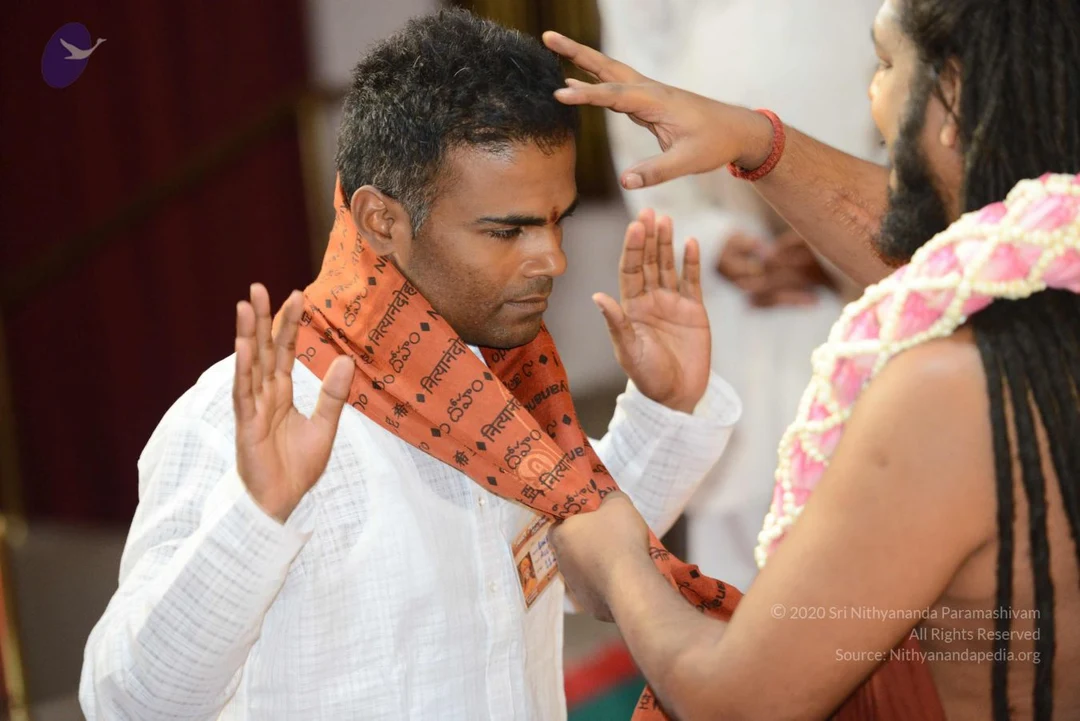
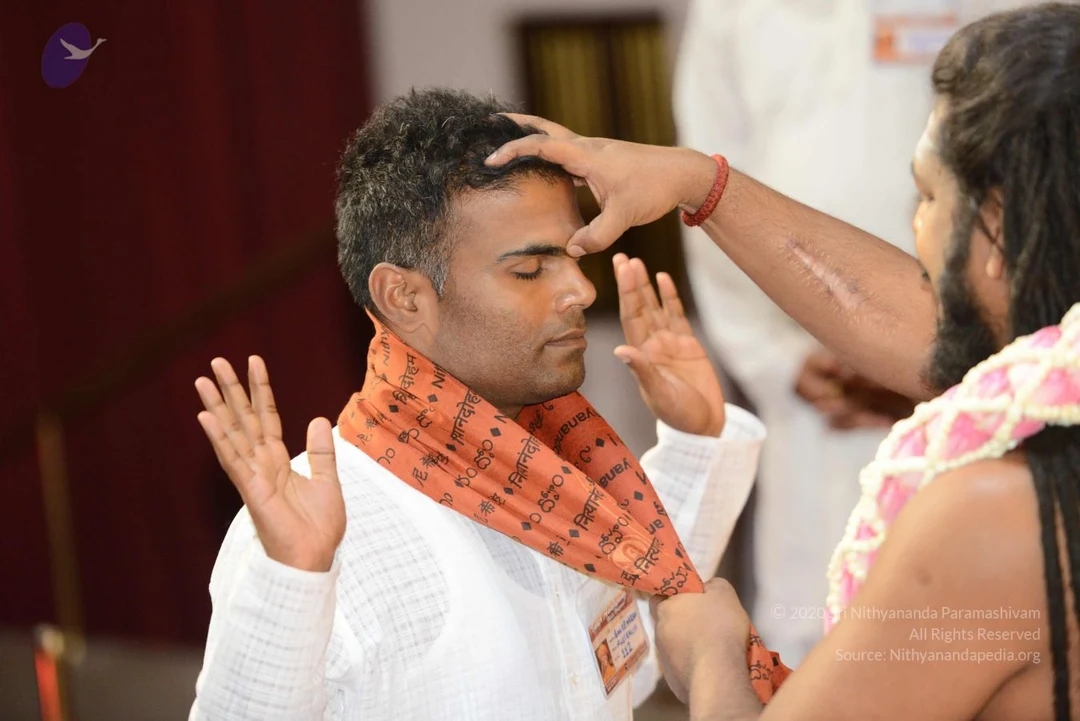
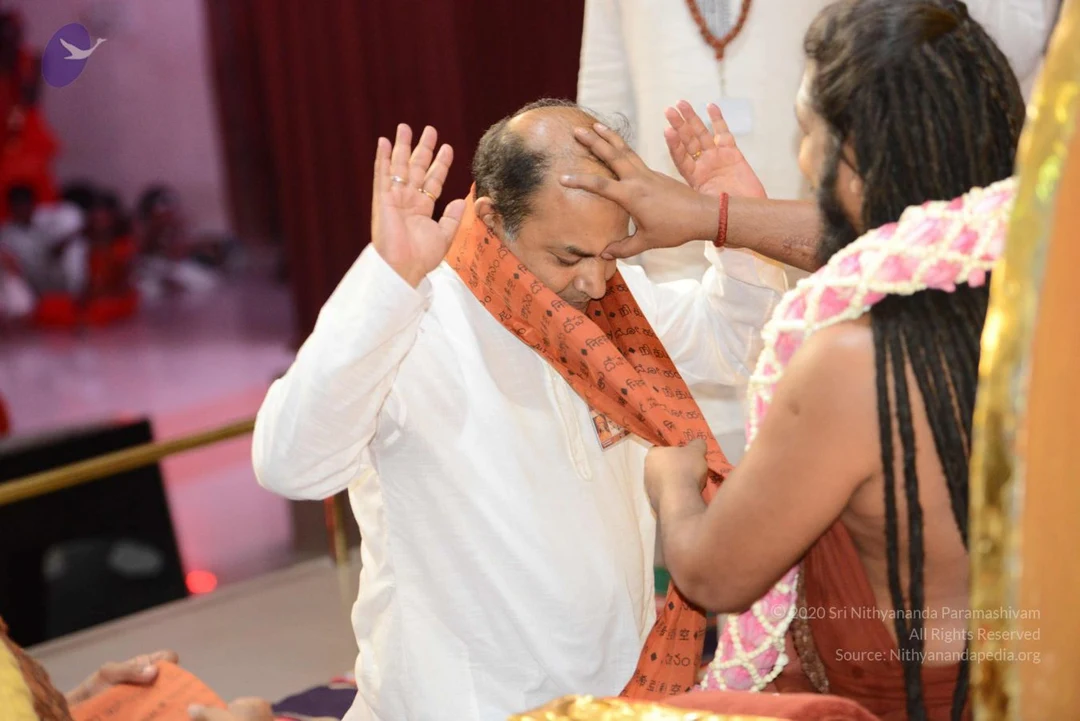
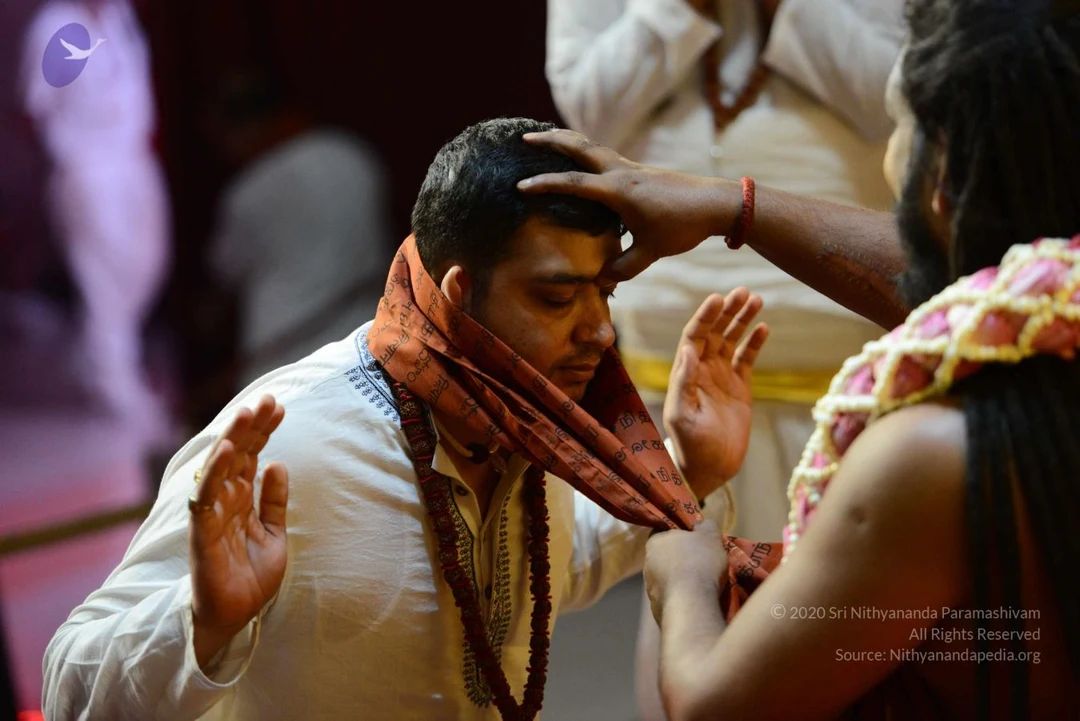
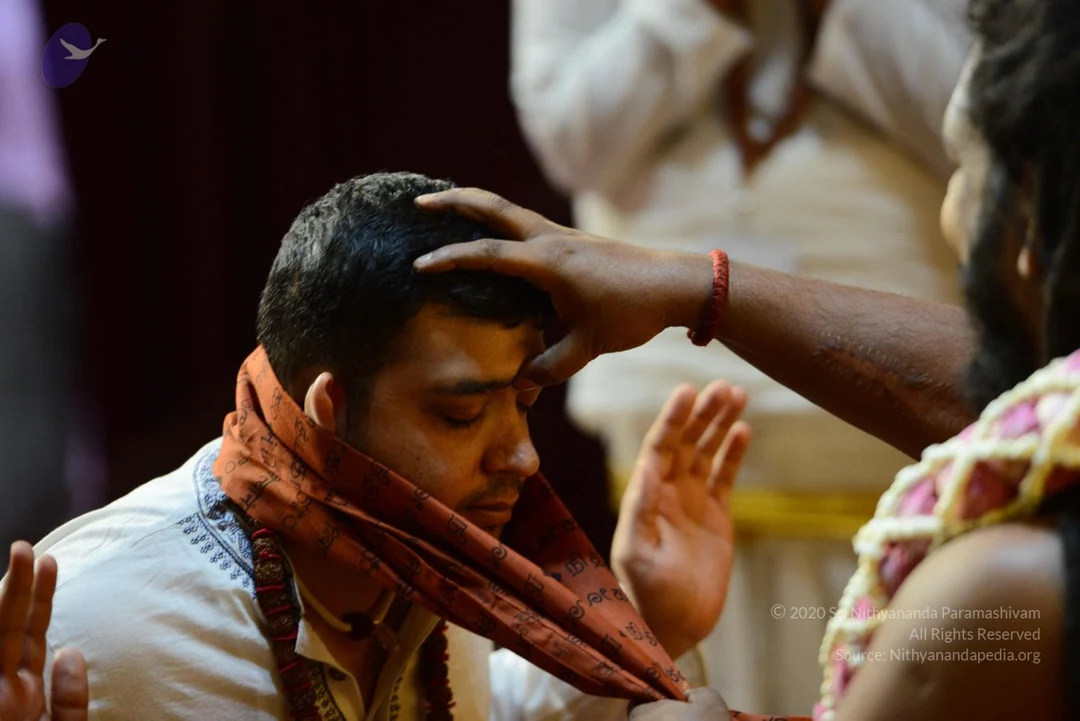
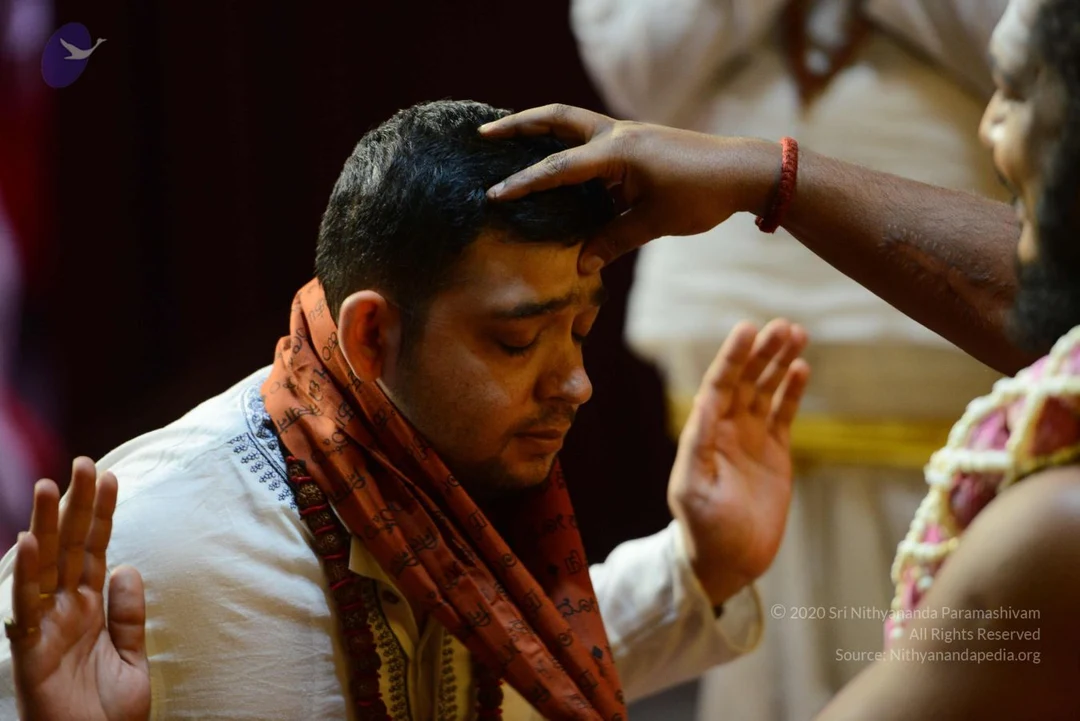
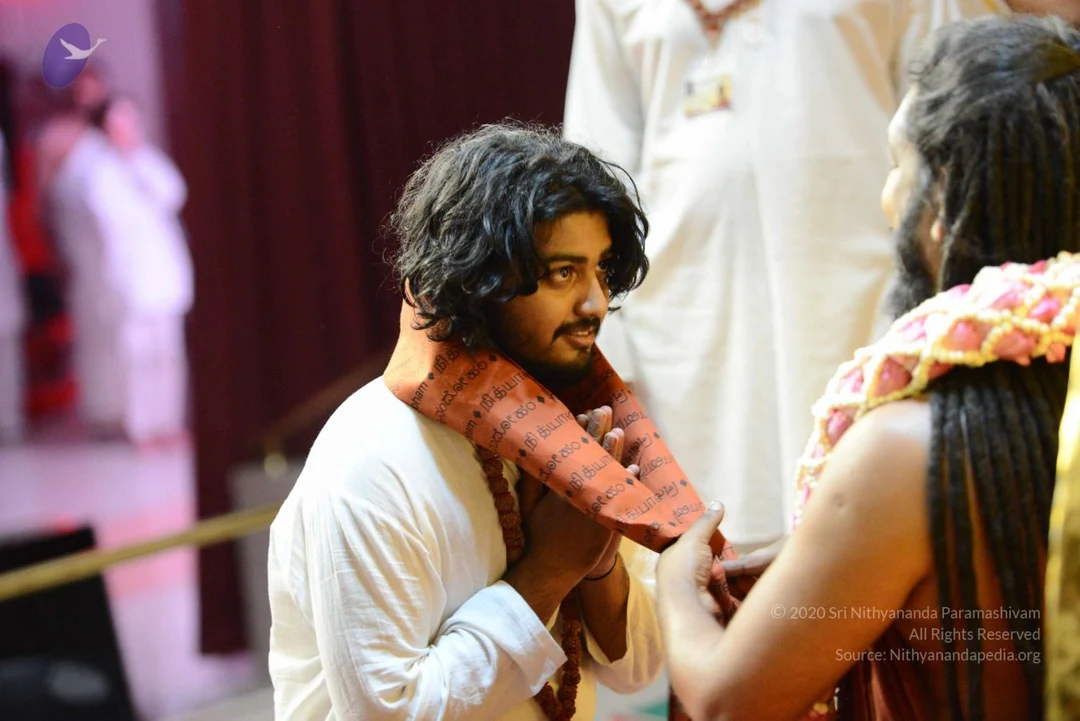
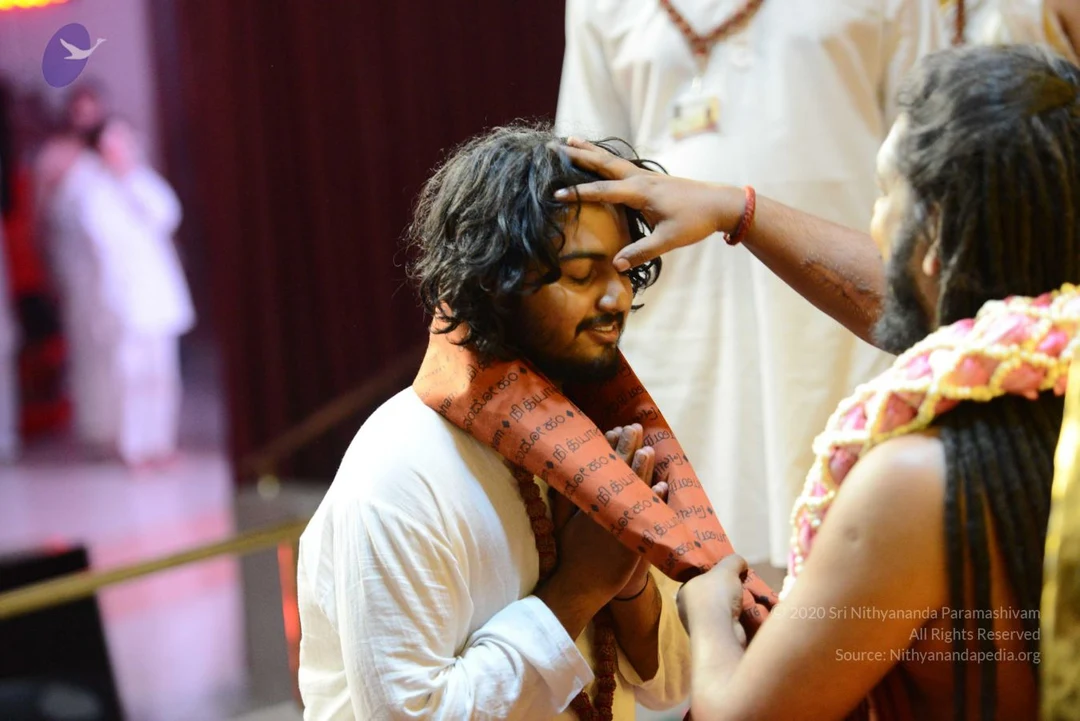
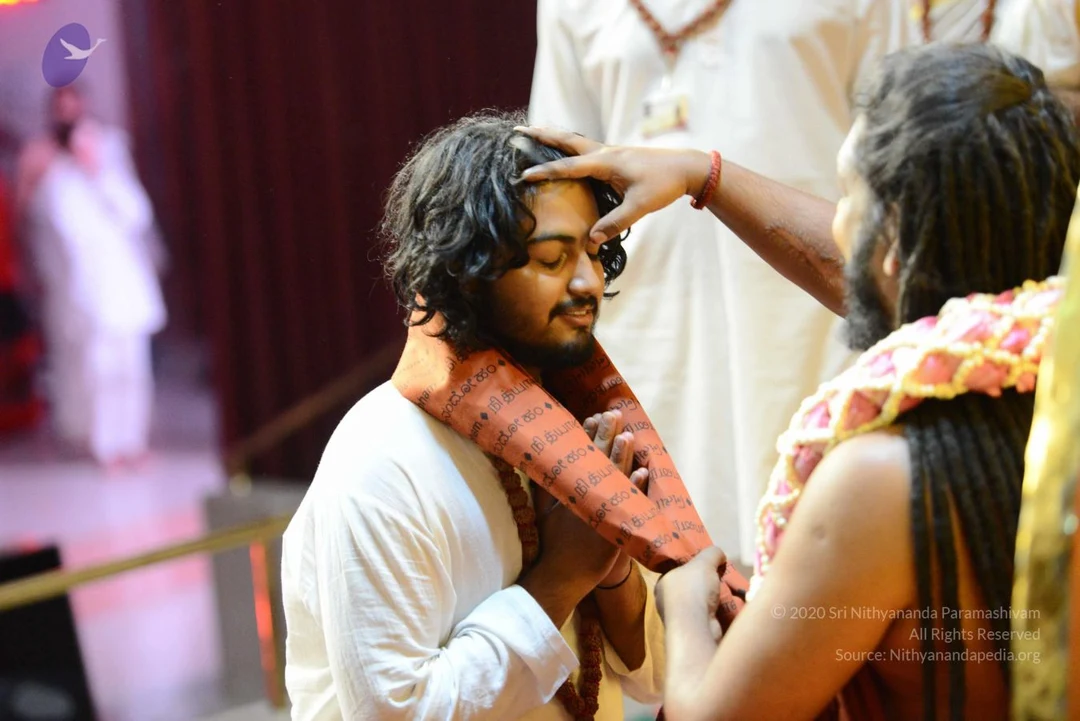
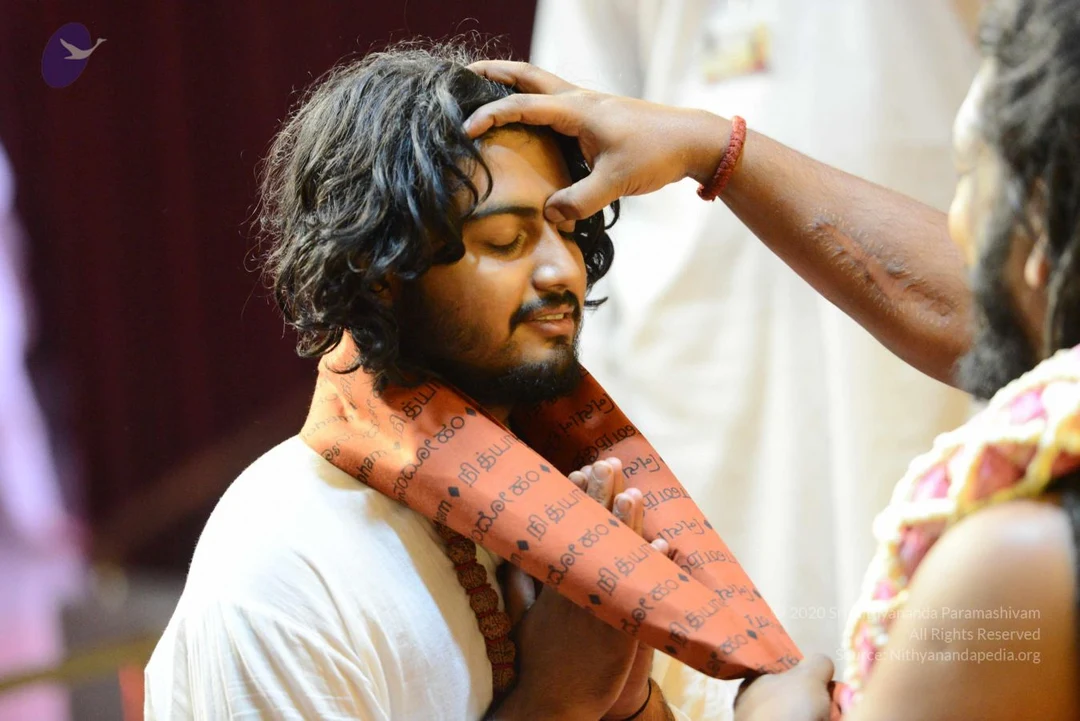
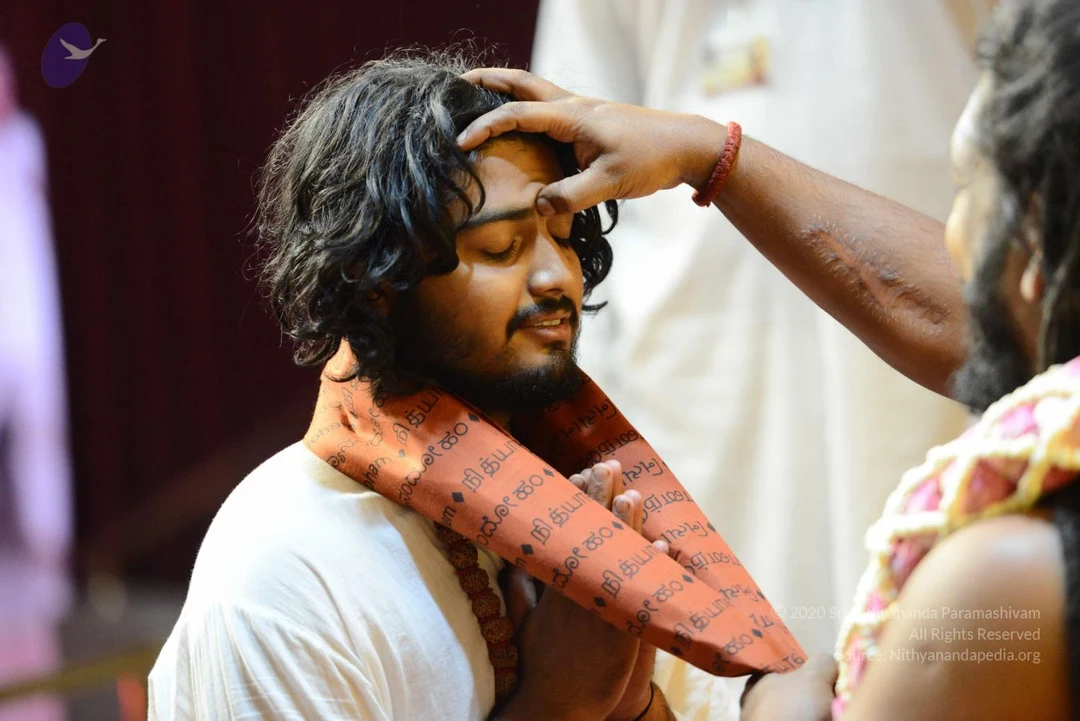
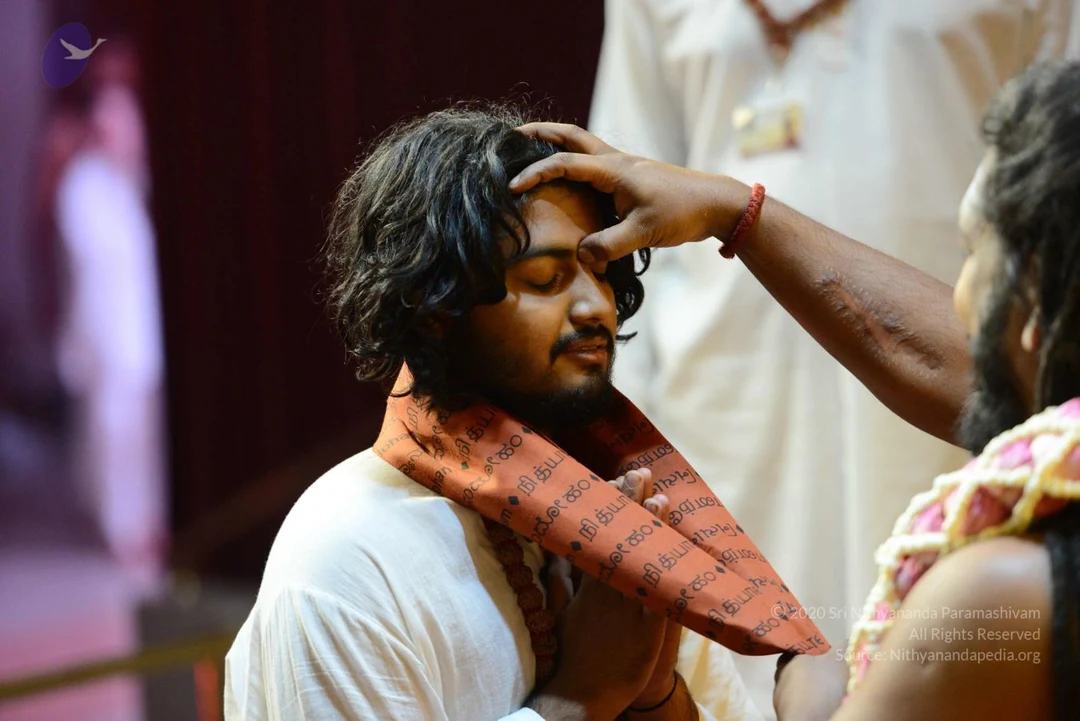
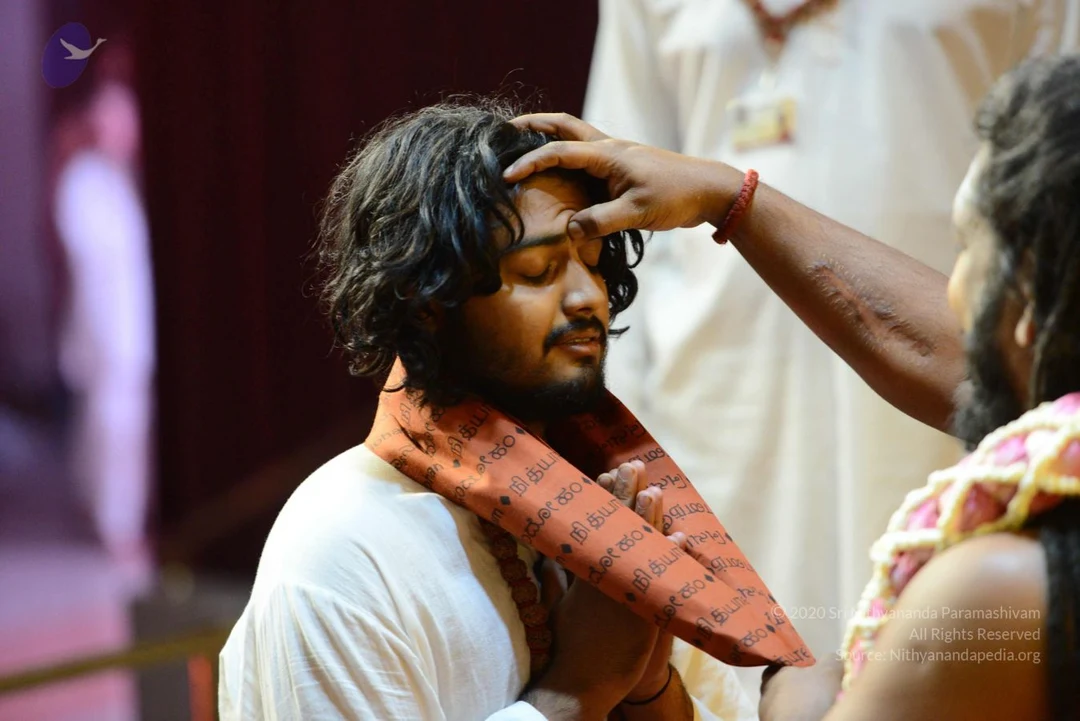
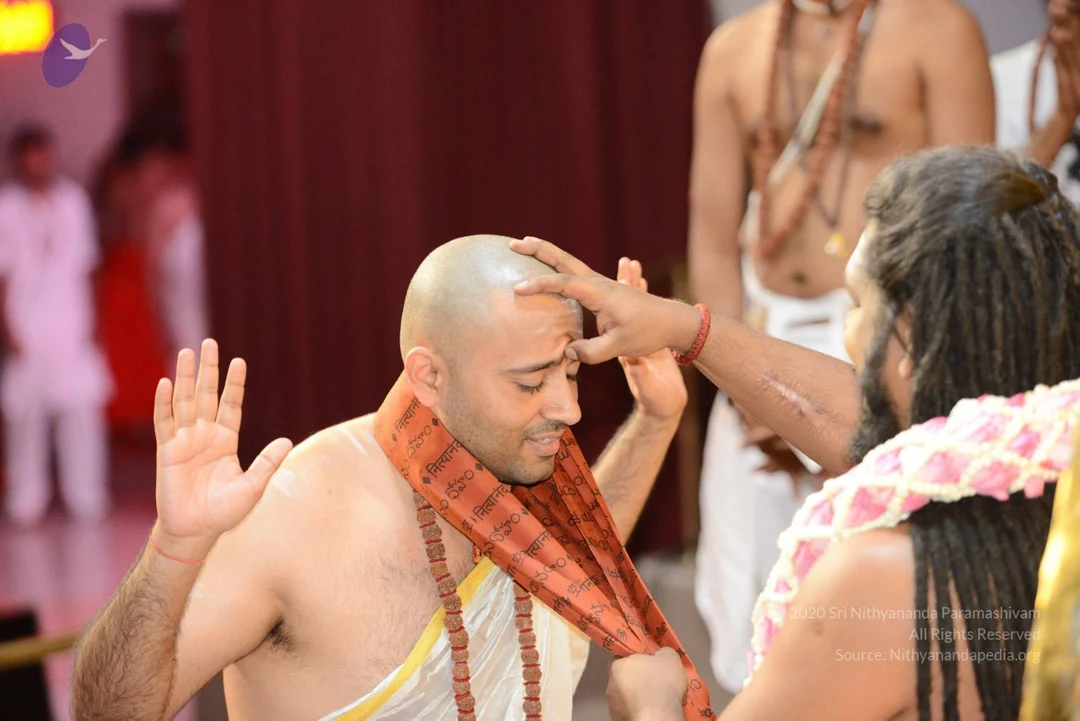
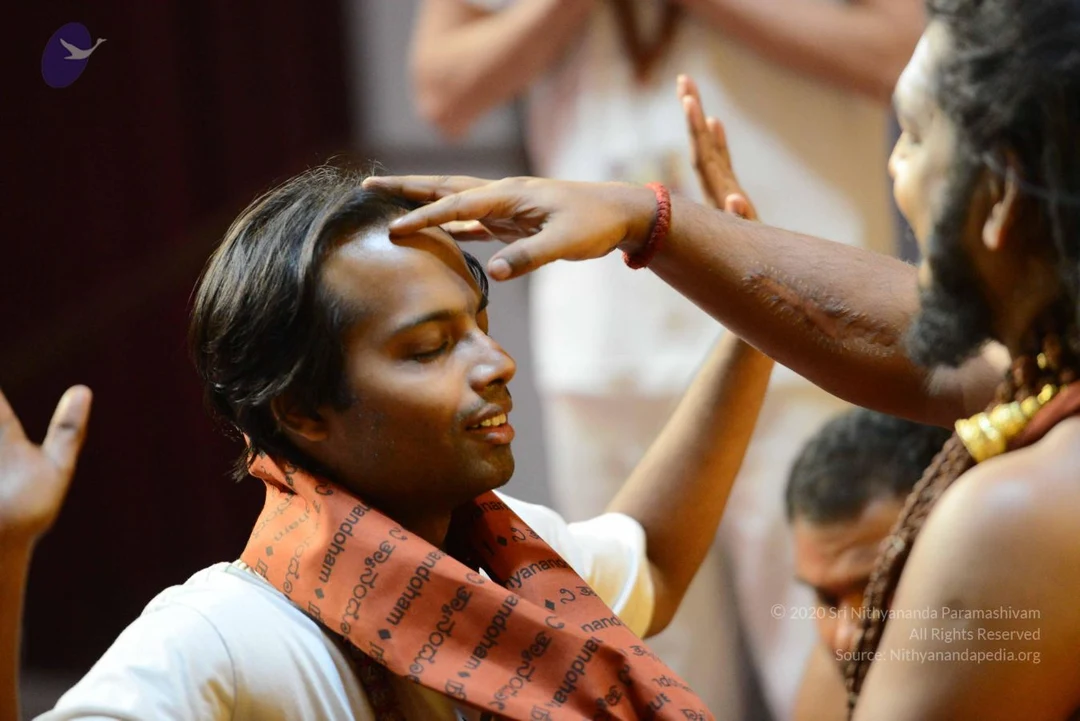
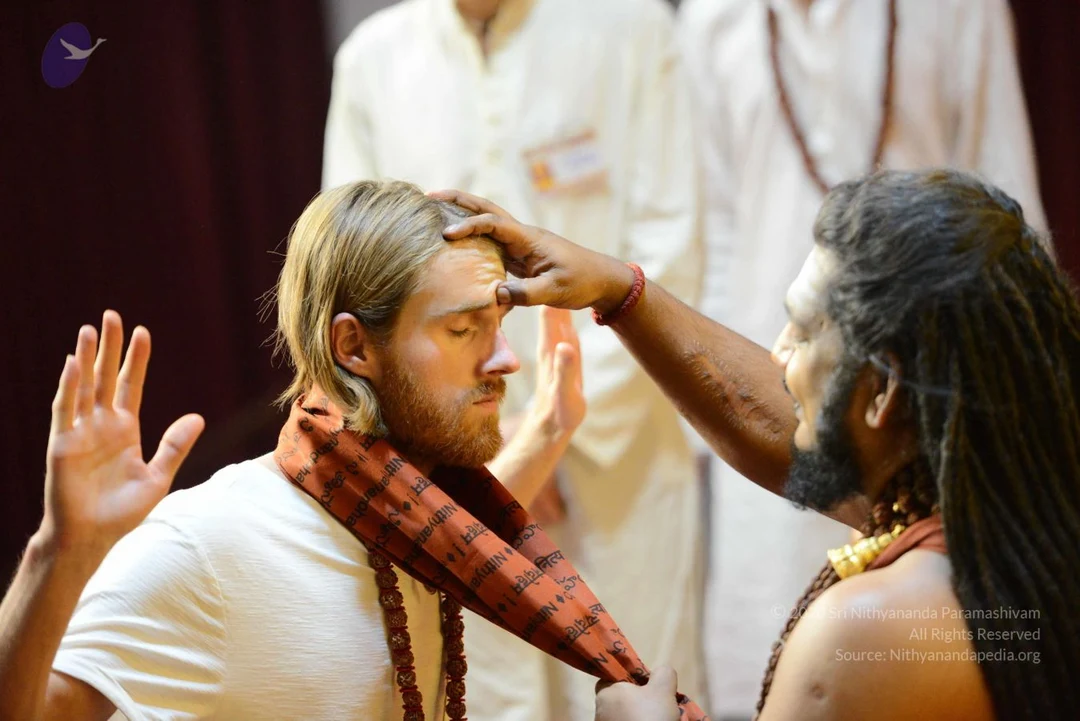
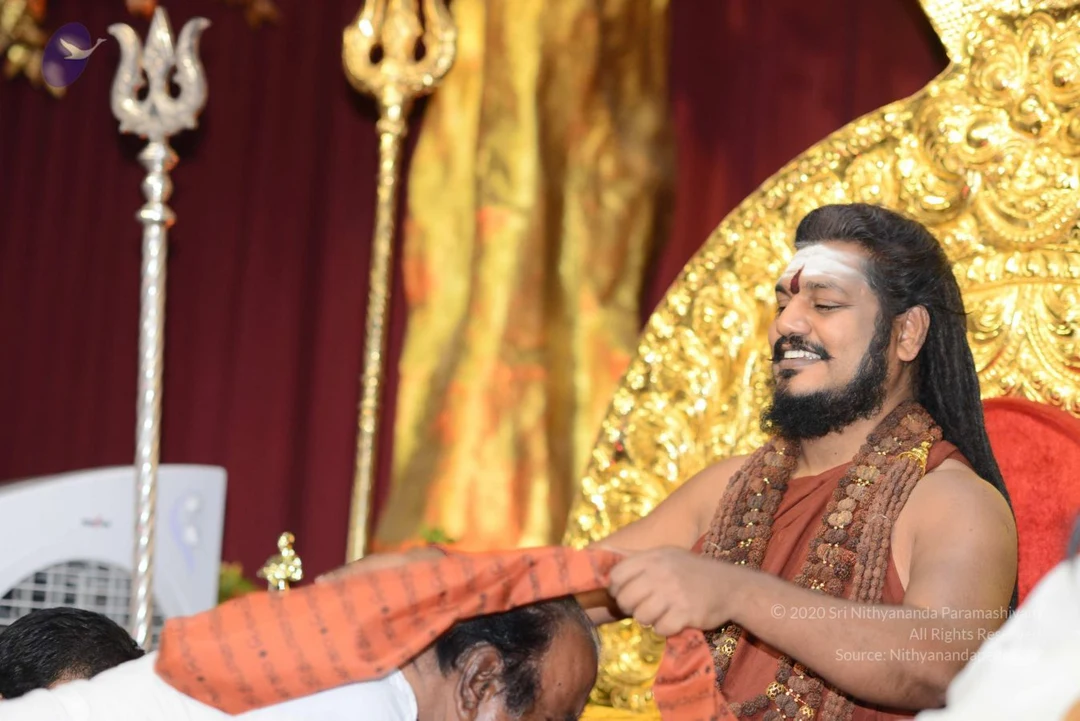
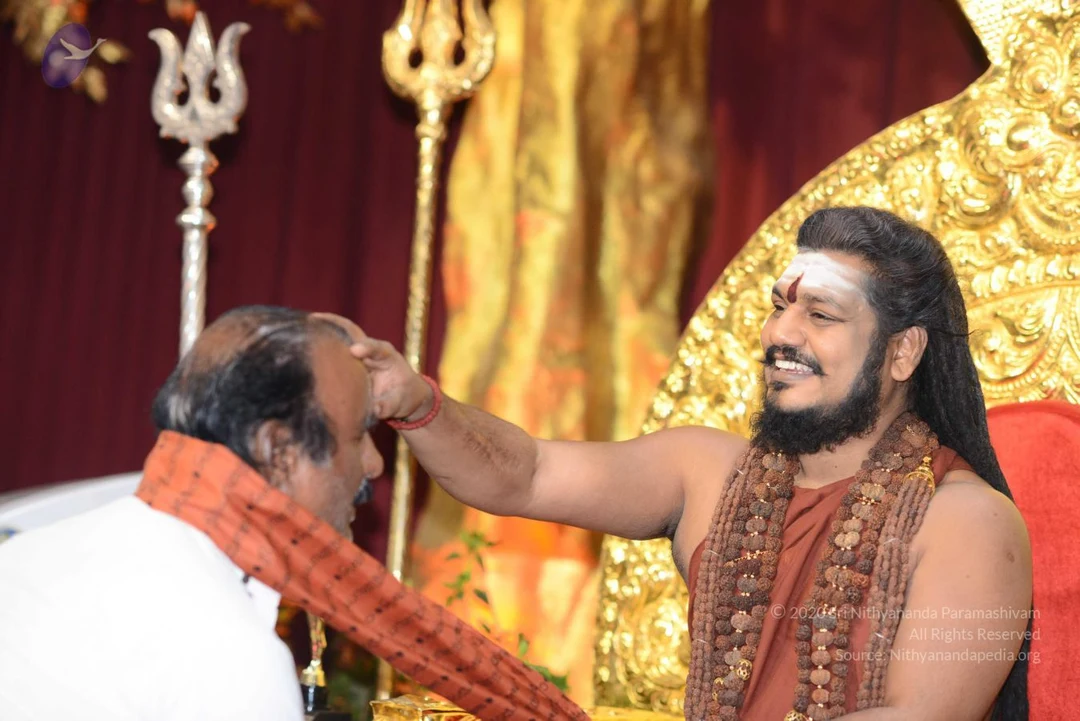
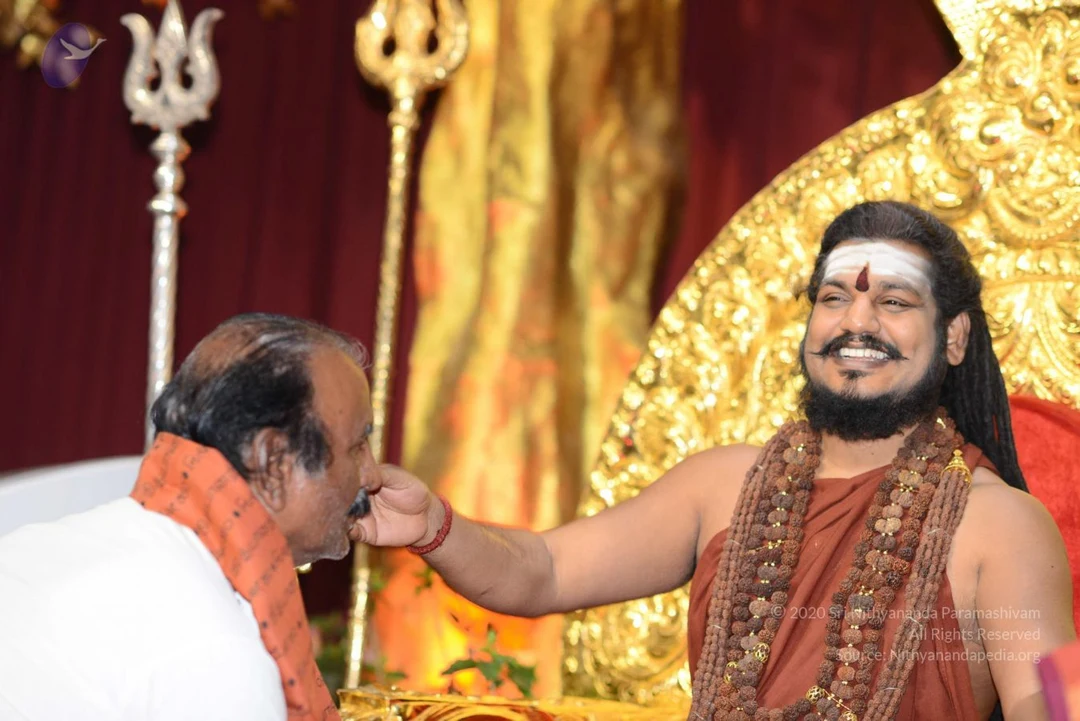
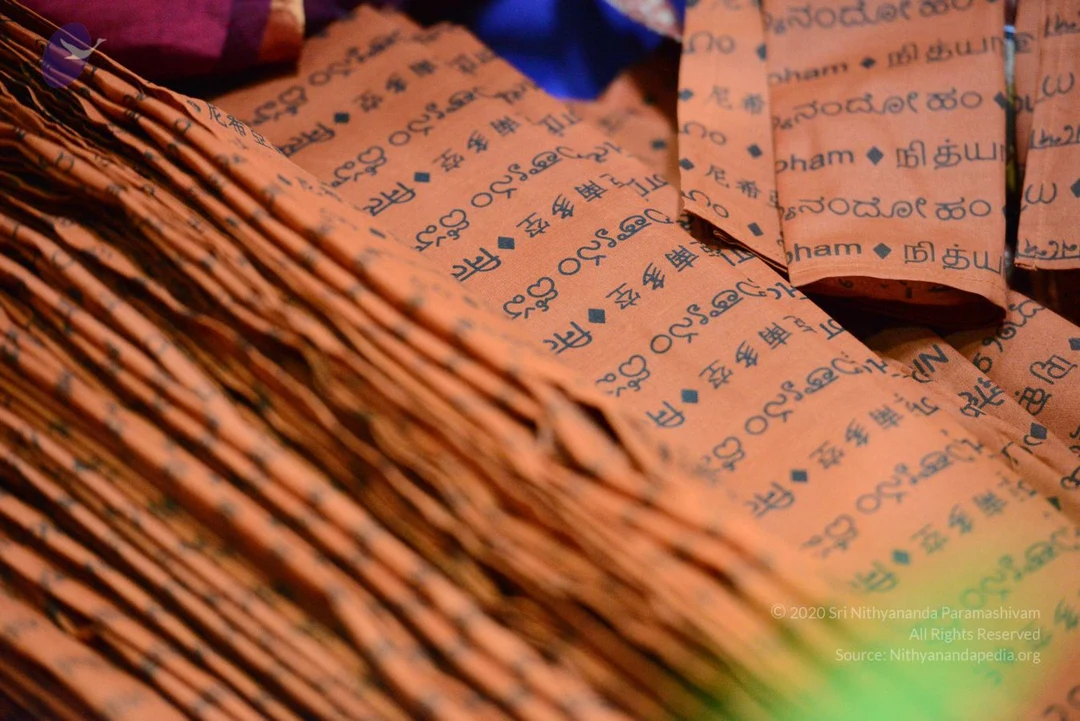
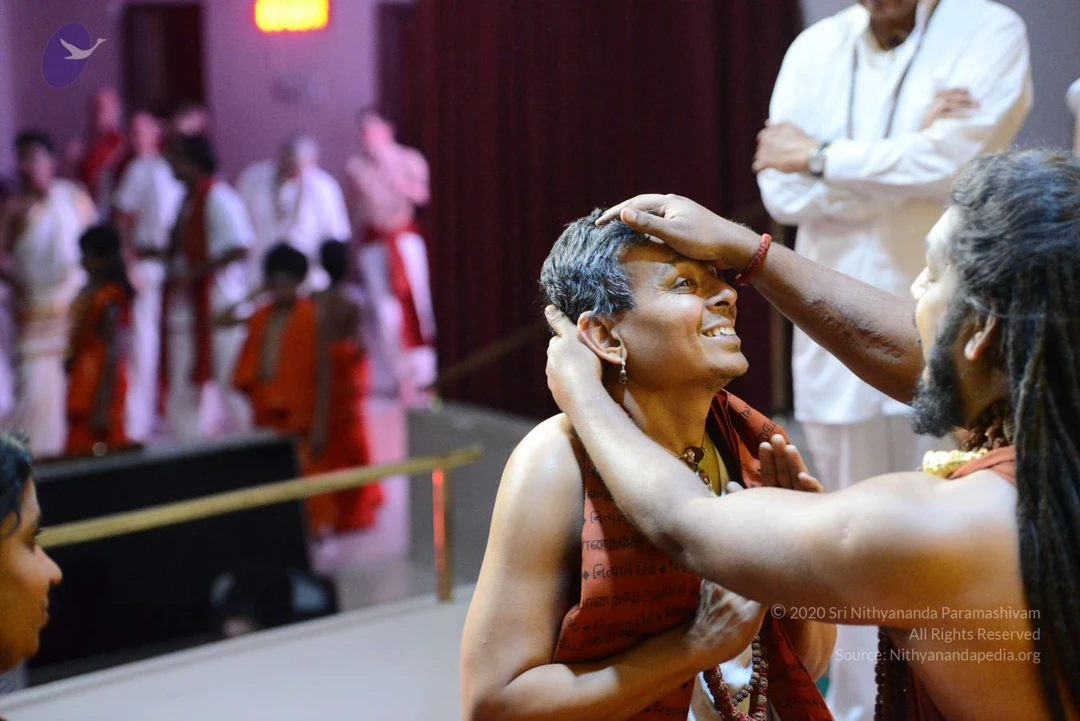
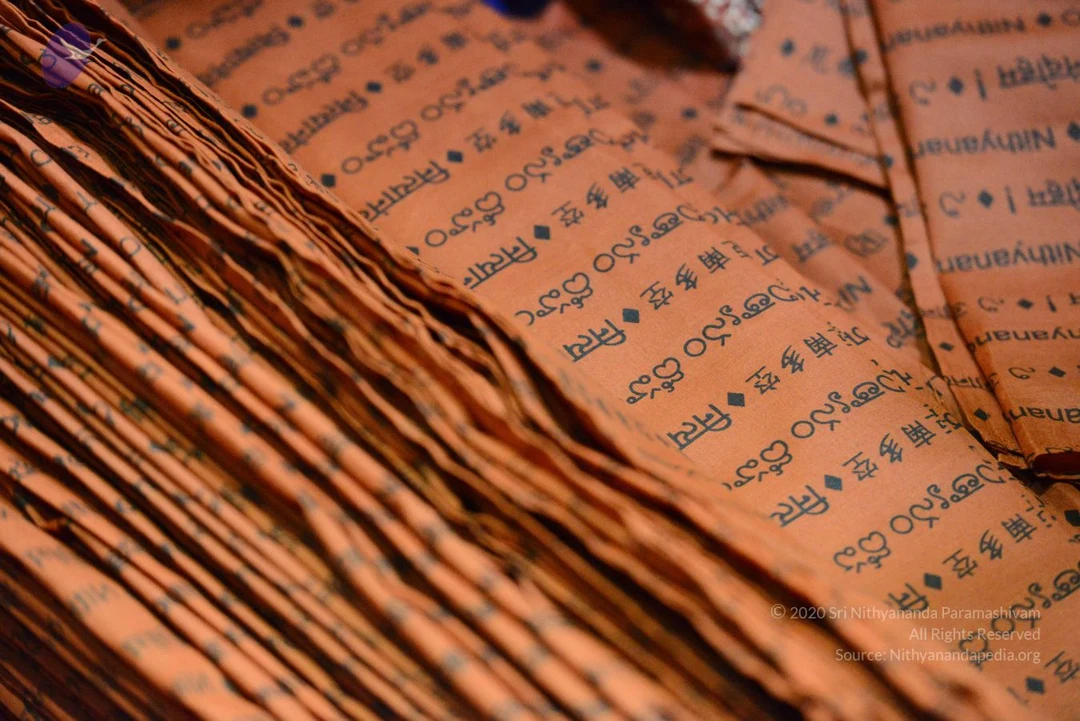
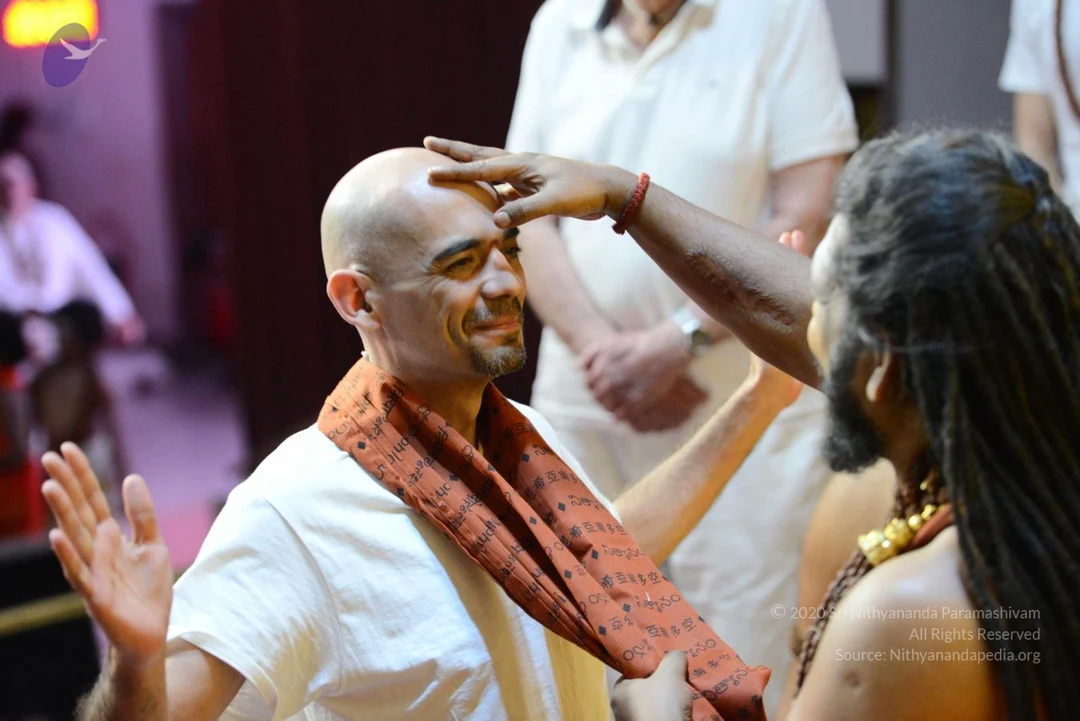
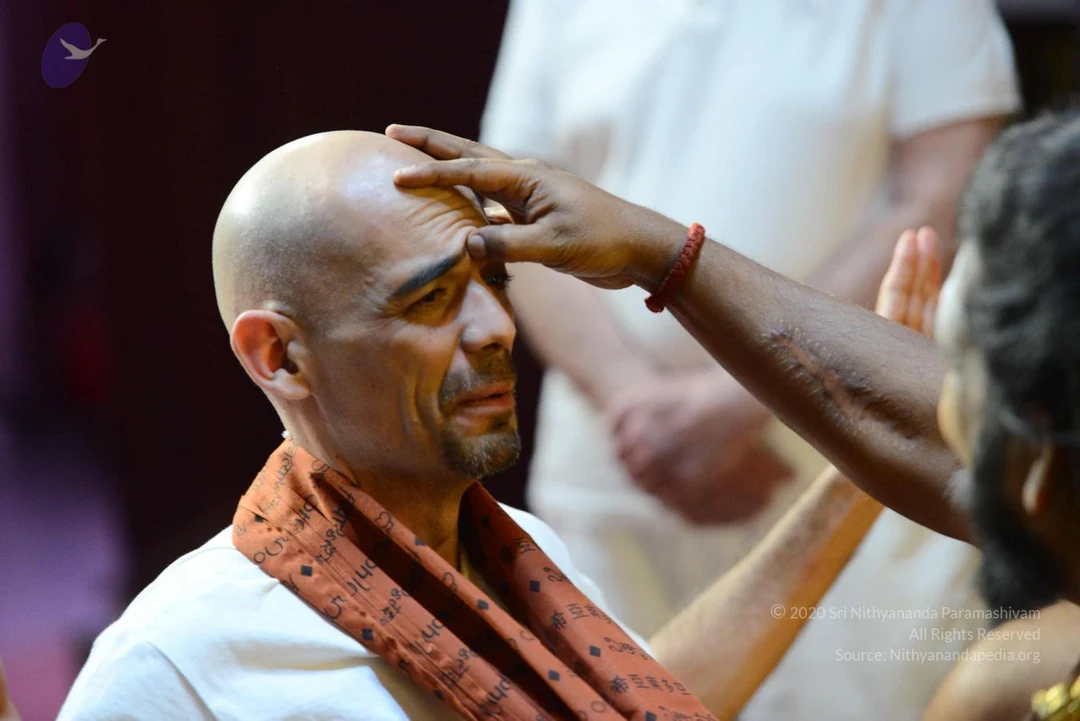
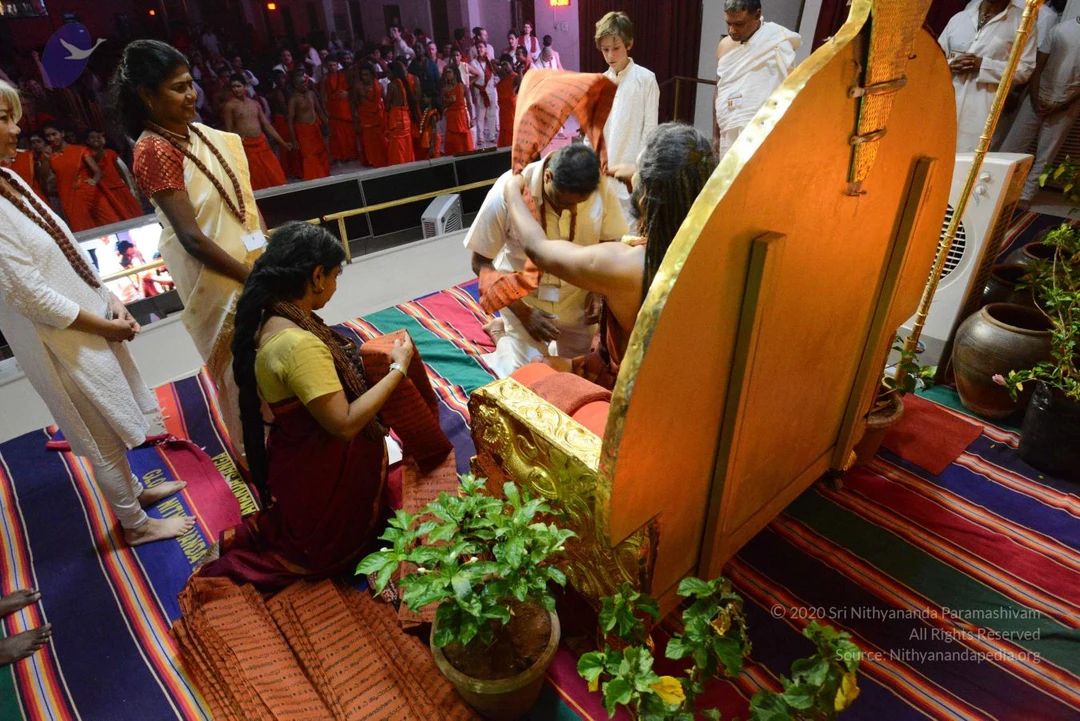
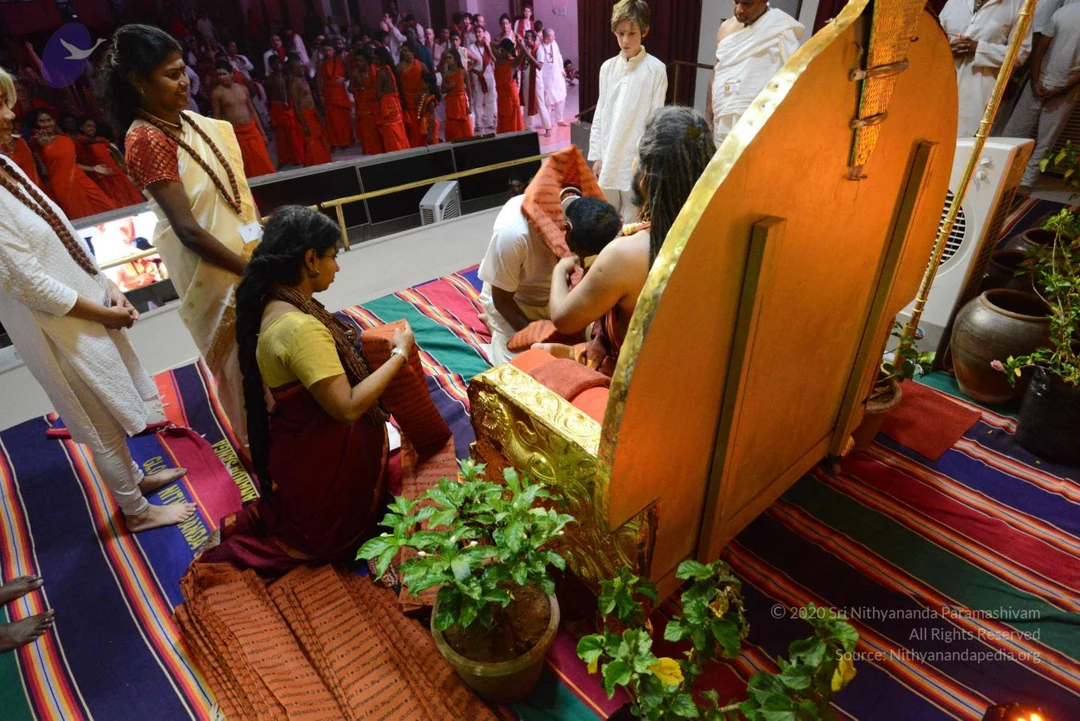
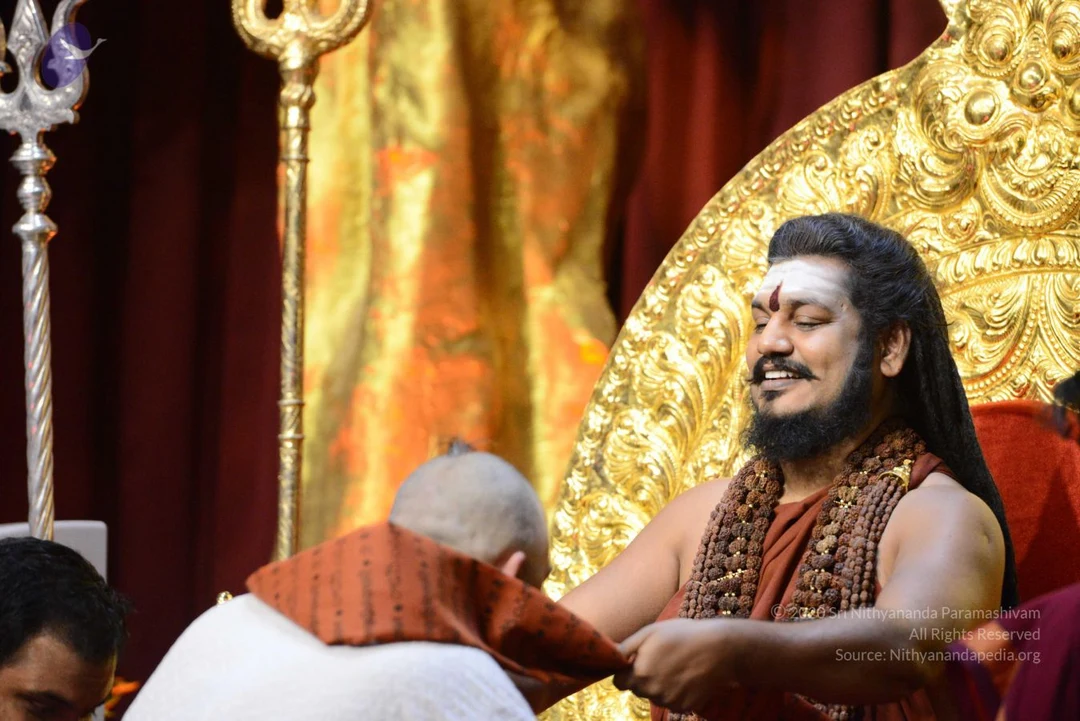
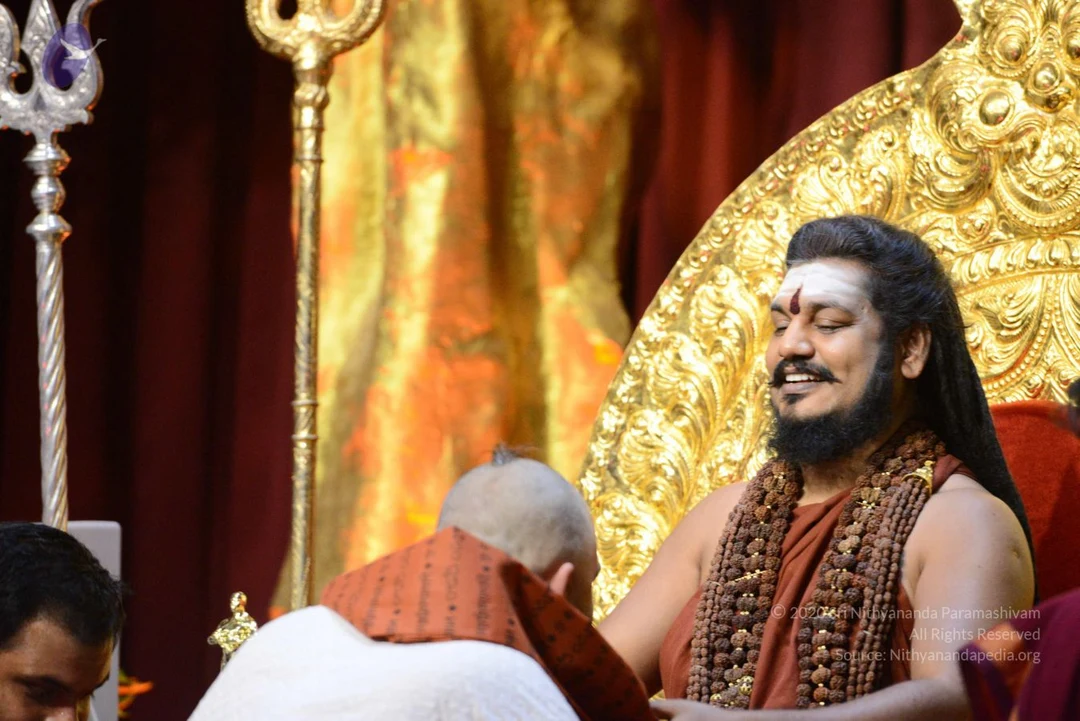
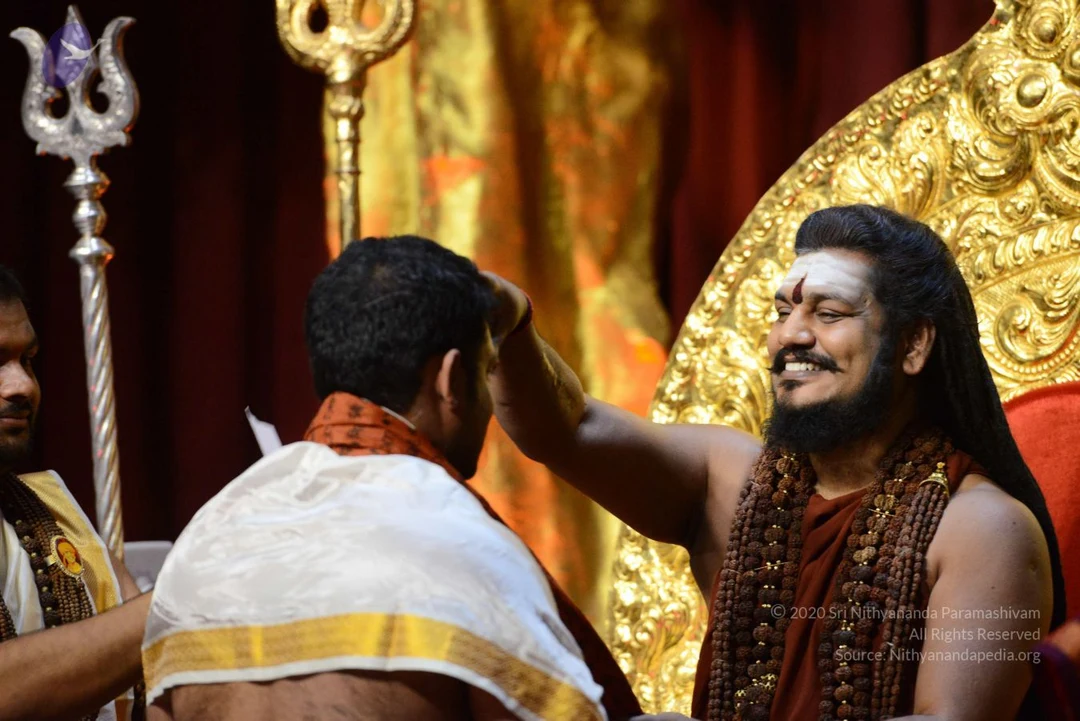
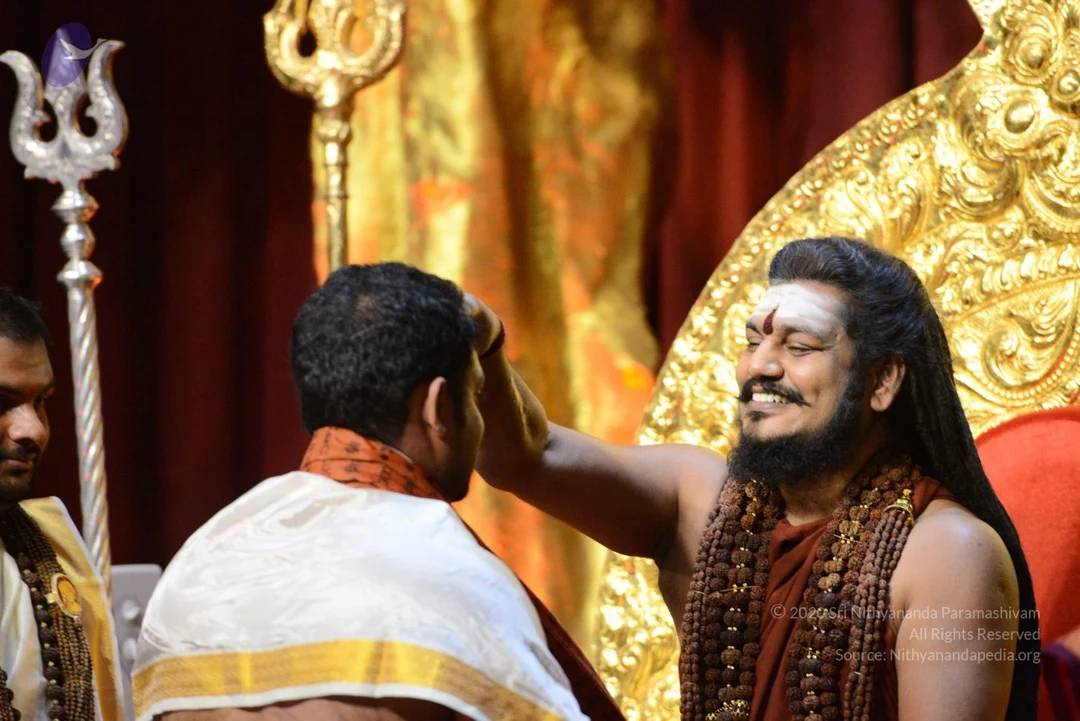
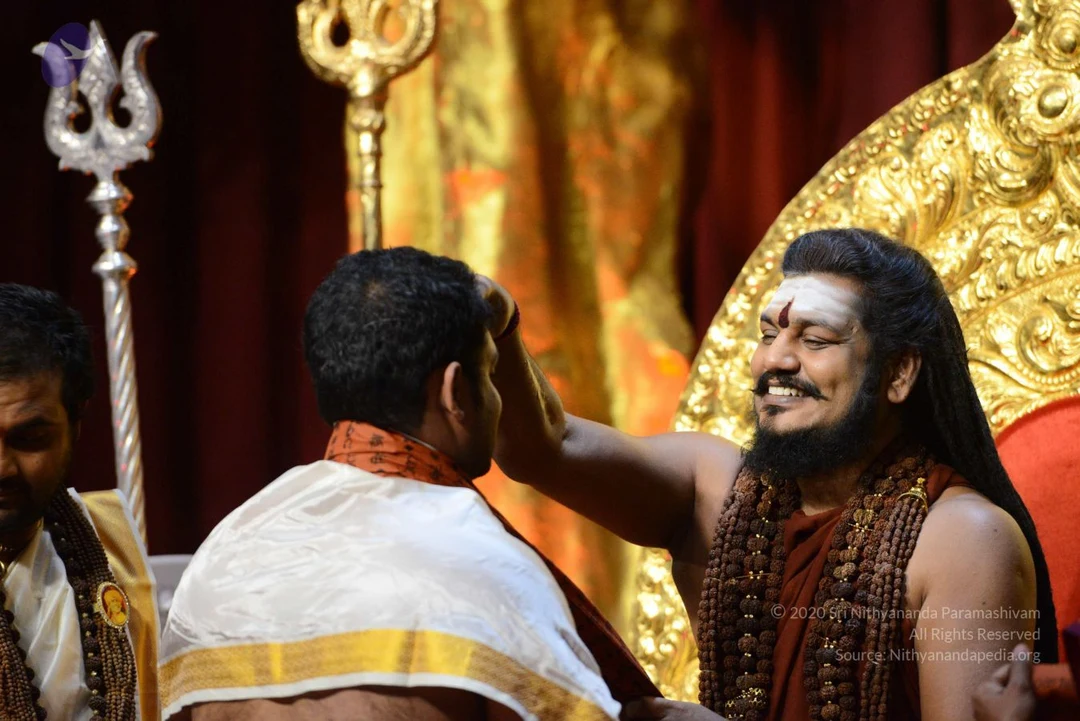
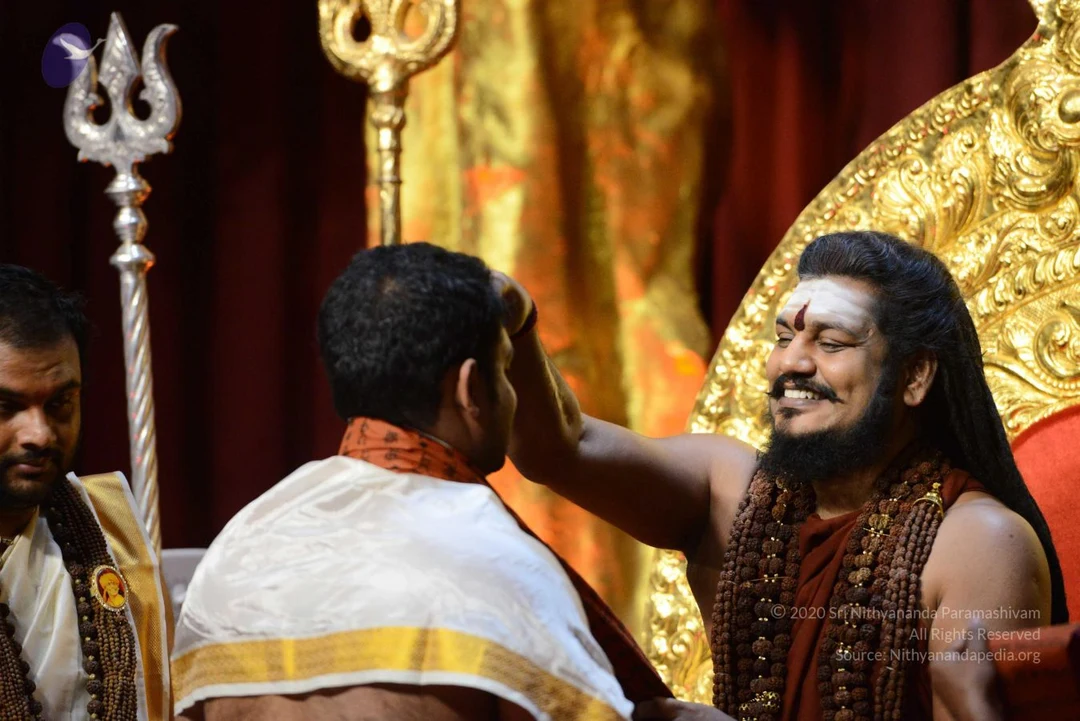
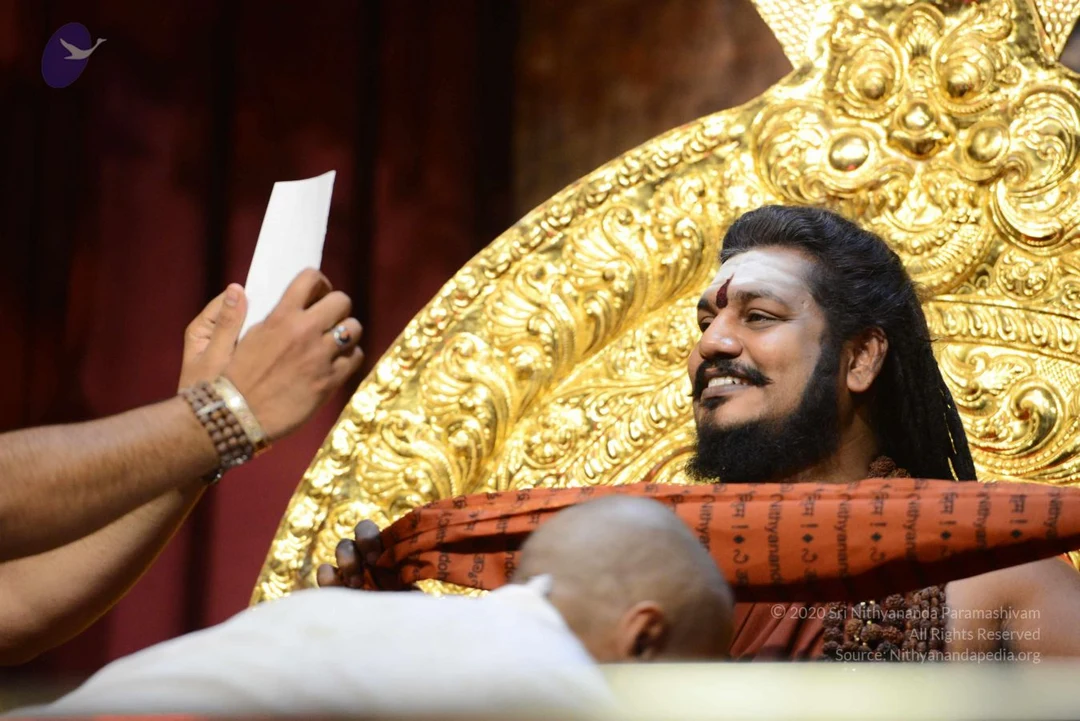
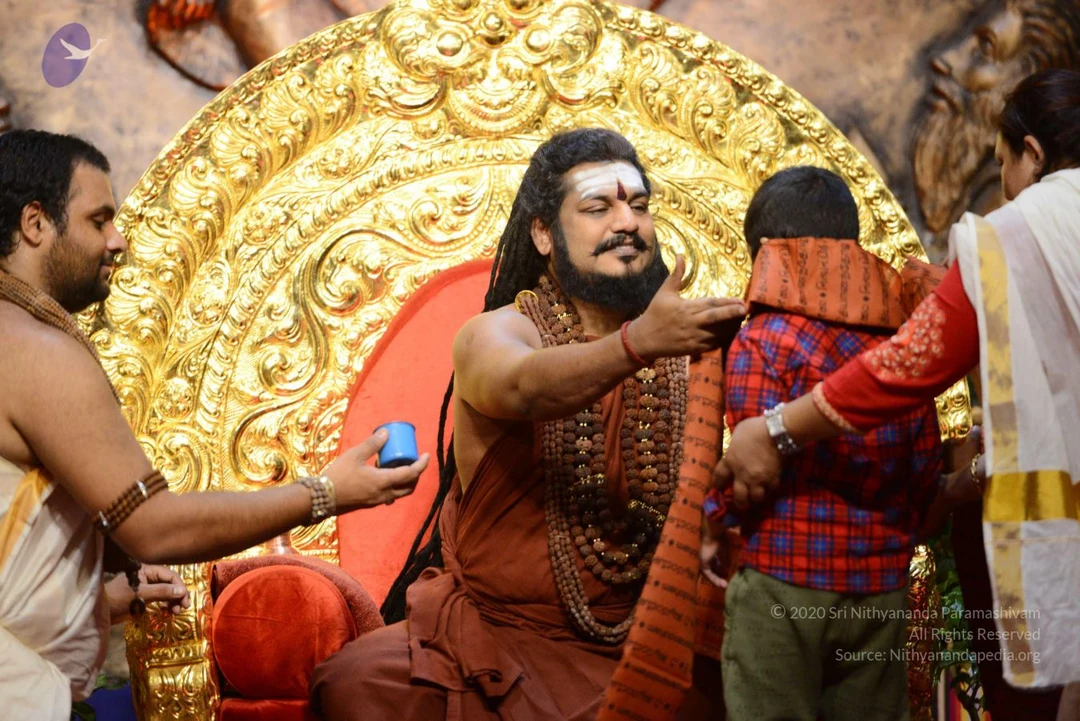
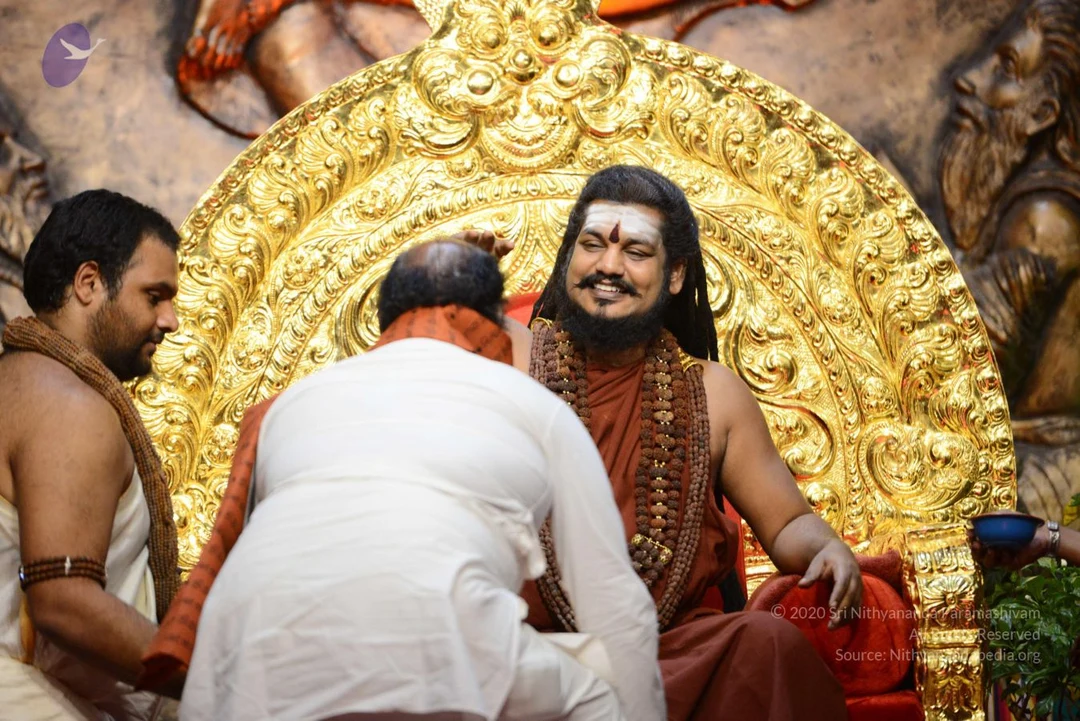
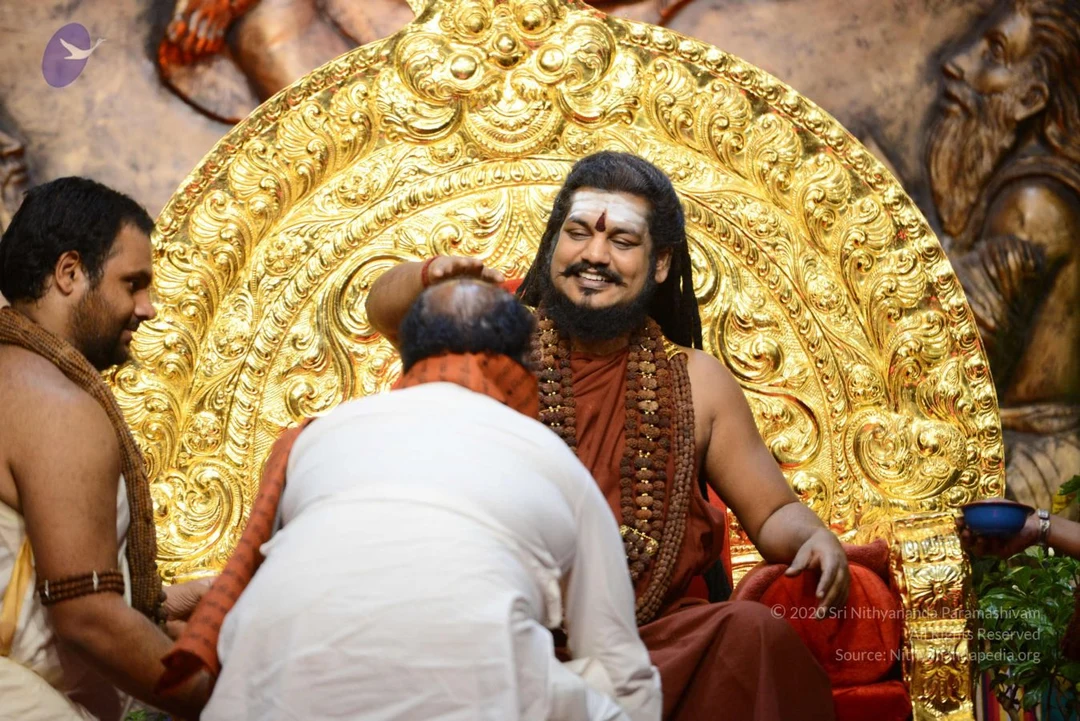
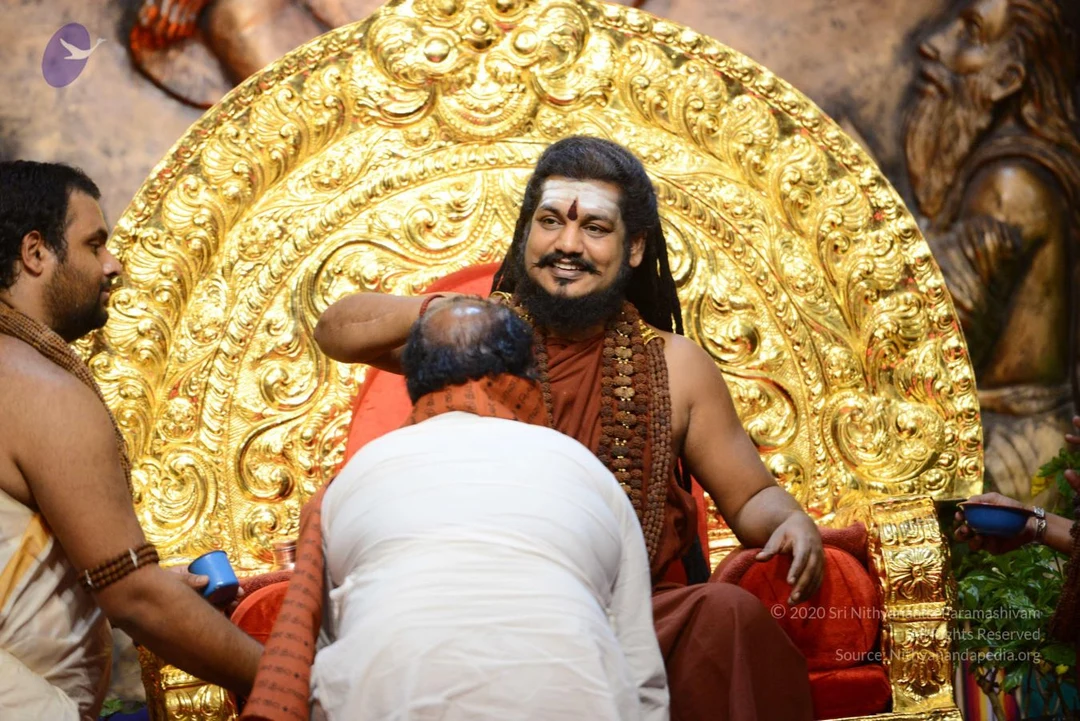
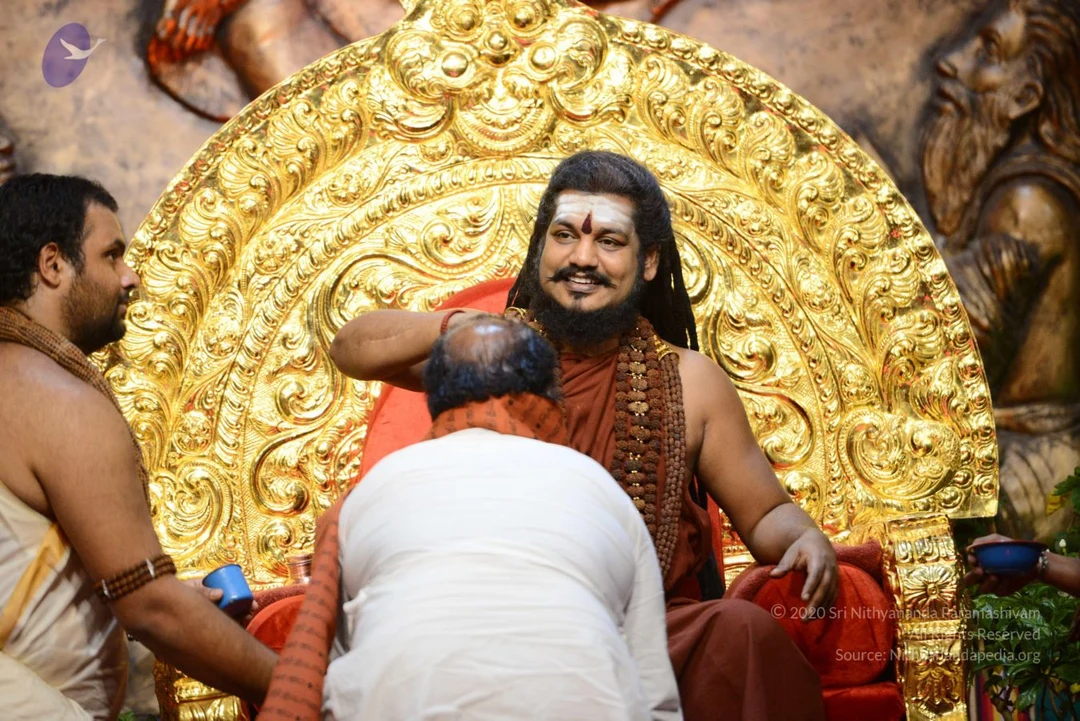
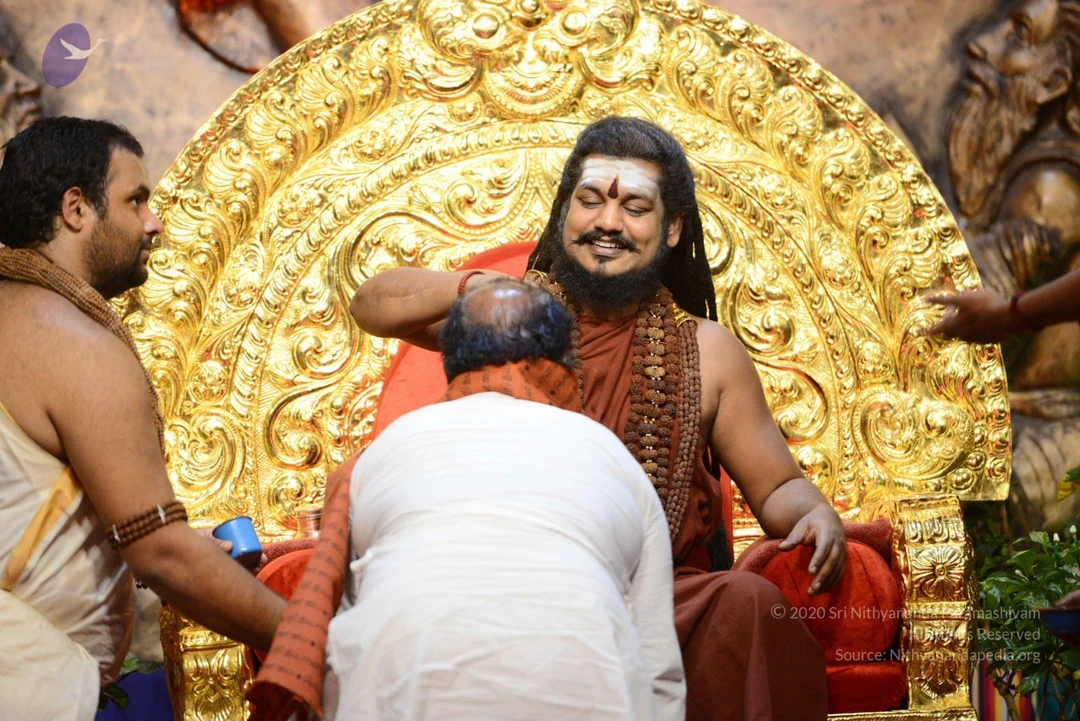
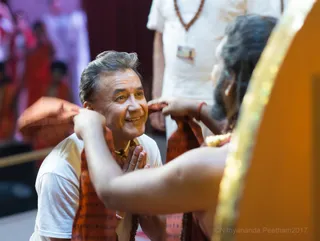
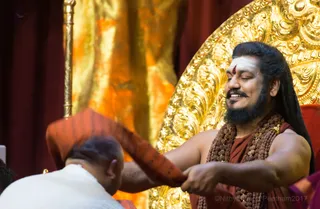
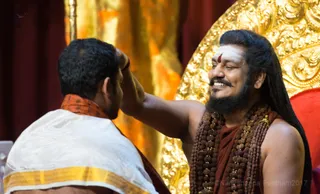
Photograph of a ceremonial moment on a stage at an indoor event. In the foreground, a young man with light hair, a beard and a red tilak on his forehead wears a white kurta and a rudraksha mala. A figure in the right foreground, seen from behind with long greying hair and a rudraksha mala, holds up an orange-red shawl and drapes it over the young man's head and shoulders. Behind them, a man in a white kurta with a rudraksha mala stands holding a second orange shawl. Blurred figures in red and white clothing stand in the background under a dark red curtain and a pink-lit wall.A close photograph of a grey-haired man with short silver hair, bare-chested and wearing an orange-brown shawl printed with Sanskrit mantra text, around his neck. He wears a rudraksha mala over his chest and a small hoop earring. His right hand is raised palm-outward and another person's hand touches his forehead, as if applying a blessing or marking. Behind him, blurred figures in white clothing stand in a warm-lit hall with a dark red curtain on the left.Photograph of a smiling man with short greying hair in a white t-shirt, hands joined in anjali namaskar, being draped with an orange saffron shawl printed with white text by a person in orange at the right edge. Behind him, a man in a white shirt wears a rudraksha mala and an ID badge, and orange-robed people stand in the blurred background near a red curtain. The setting appears to be a stage during a felicitation, with a gold-edged orange cushion in the foreground.Close-up photograph of a stack of orange-brown paper sheets fanned out diagonally, each printed with blue text in Sanskrit-style script and Devanagari-like characters, with small blue diamond bullets between lines. Shallow depth of field blurs the edges of the pages. No people are visible; the sheets appear to be printed ritual or chanting texts.A photograph of a seated man with long dark hair, a white and red tilak on his forehead, a thick beard and moustache, wearing rudraksha mala beads and a rust-orange robe with a bare upper body. He smiles while holding the end of an orange-red cloth draped over the head of a bald man in white clothing in the foreground. The seated man sits before an ornate gold throne with carved floral patterns, with red curtains and gold drapery behind. Swamiji (probable): the seated man has long swept-back hair, rudraksha malas and a saffron robe on a golden throne, a presentation consistent with the page's identification of Swamiji.A photograph of a long-haired, bearded man seated on a gold ornate throne with a red cushion, smiling as he places his hand on the forehead of a man in a white shawl with gold border. The seated man is bare-shouldered in saffron-maroon cloth, wearing multiple tiers of rudraksha mala necklaces and a gold pendant, with white vibhuti and a red tilak on his forehead. The other man wears a white dhoti-style garment with a gold-bordered shawl and an orange-brown scarf. Gold and red draped curtains form the backdrop. a person seated in a ceremonial role blessing a devotee.

Genesis-of-Identity
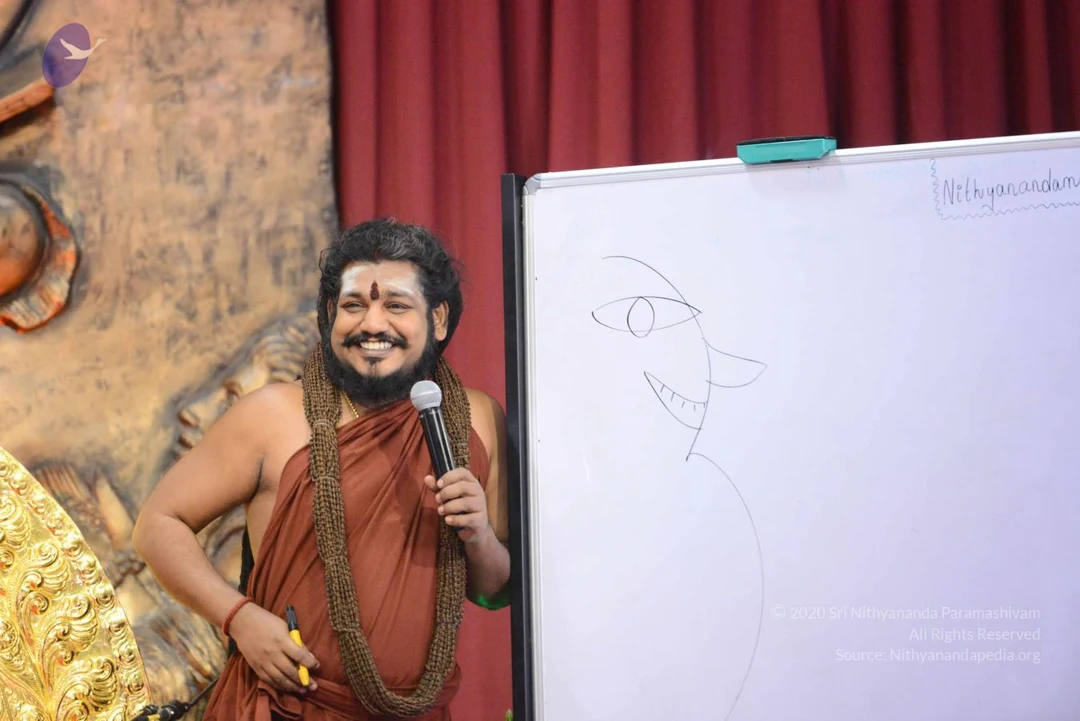
114 photosSource gallery
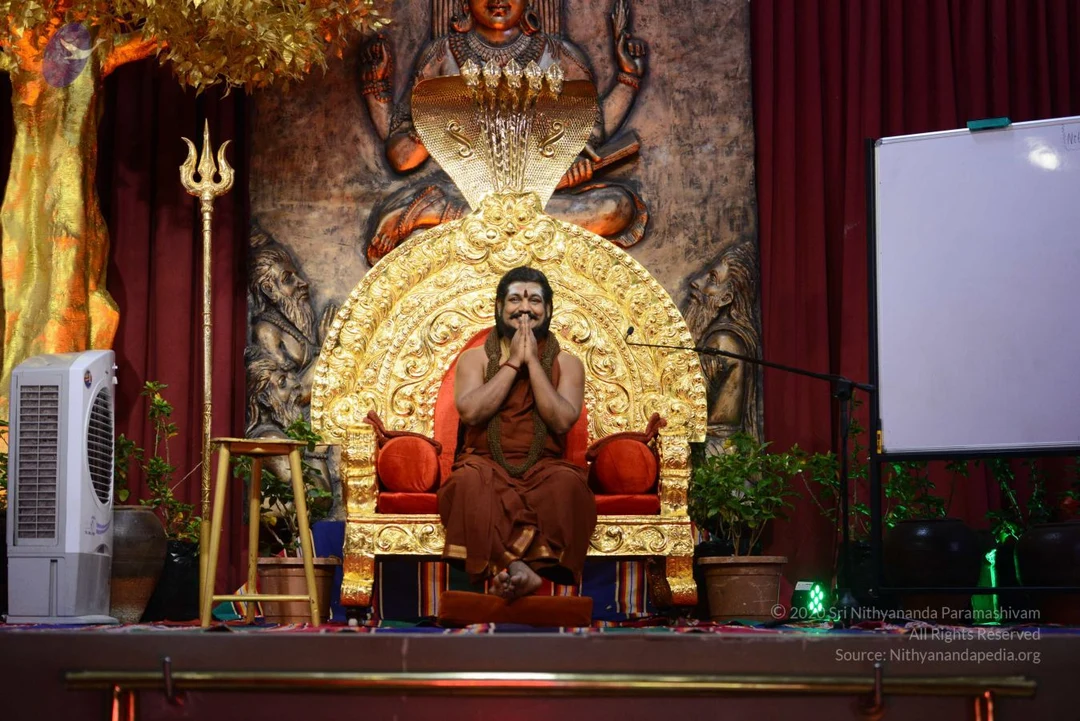
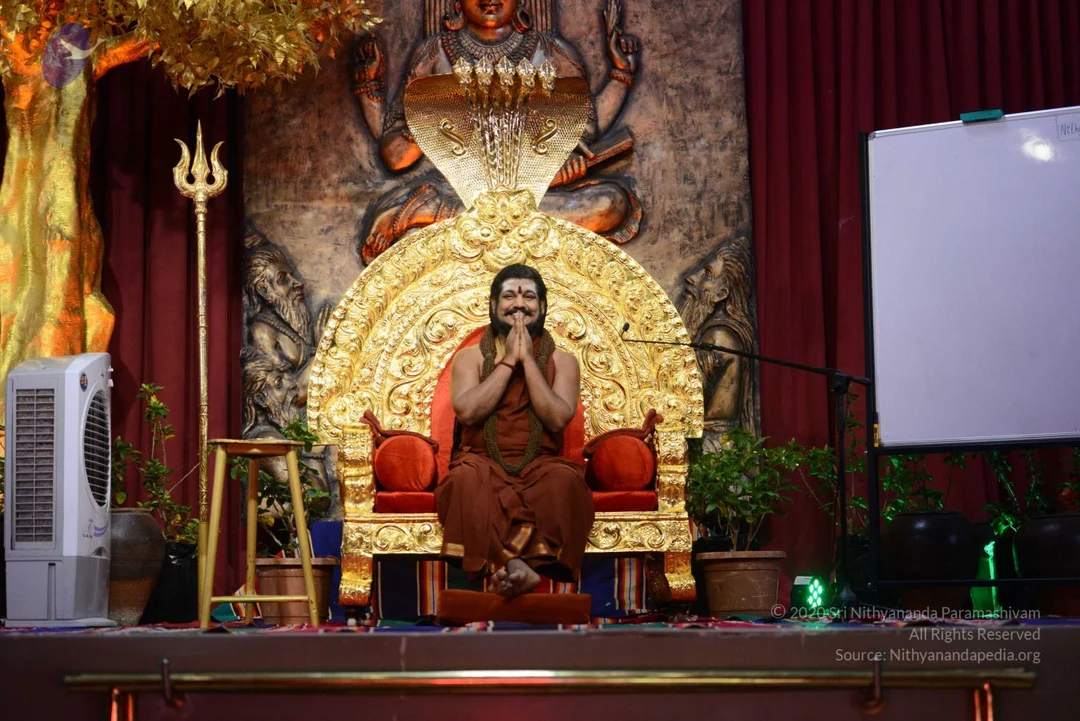
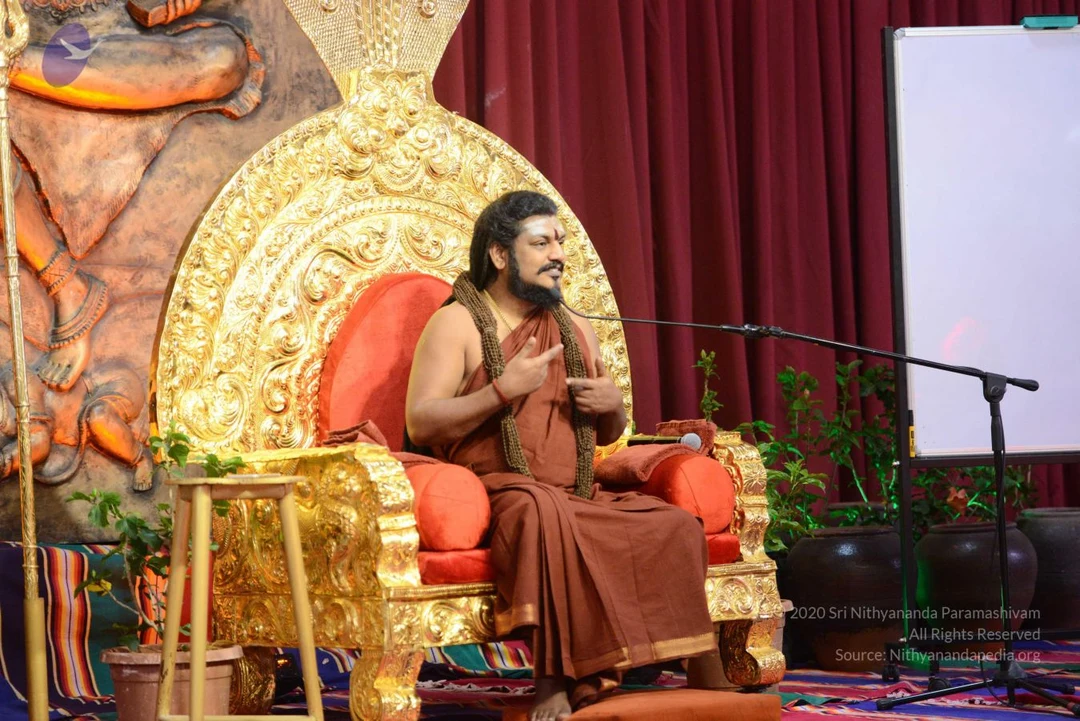
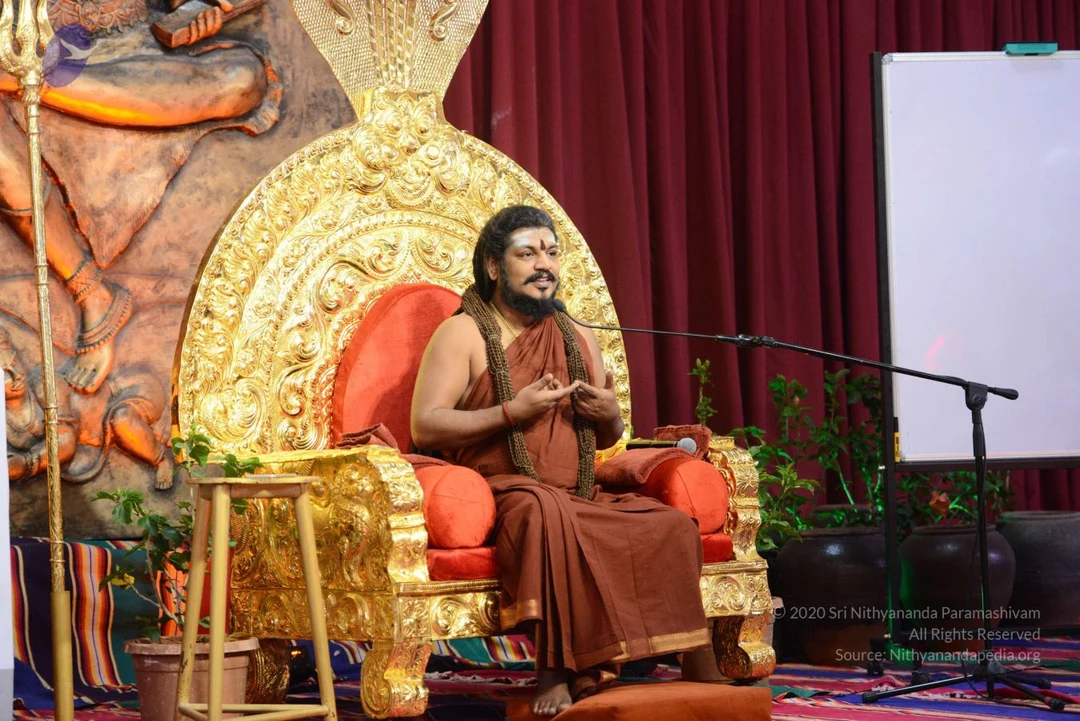
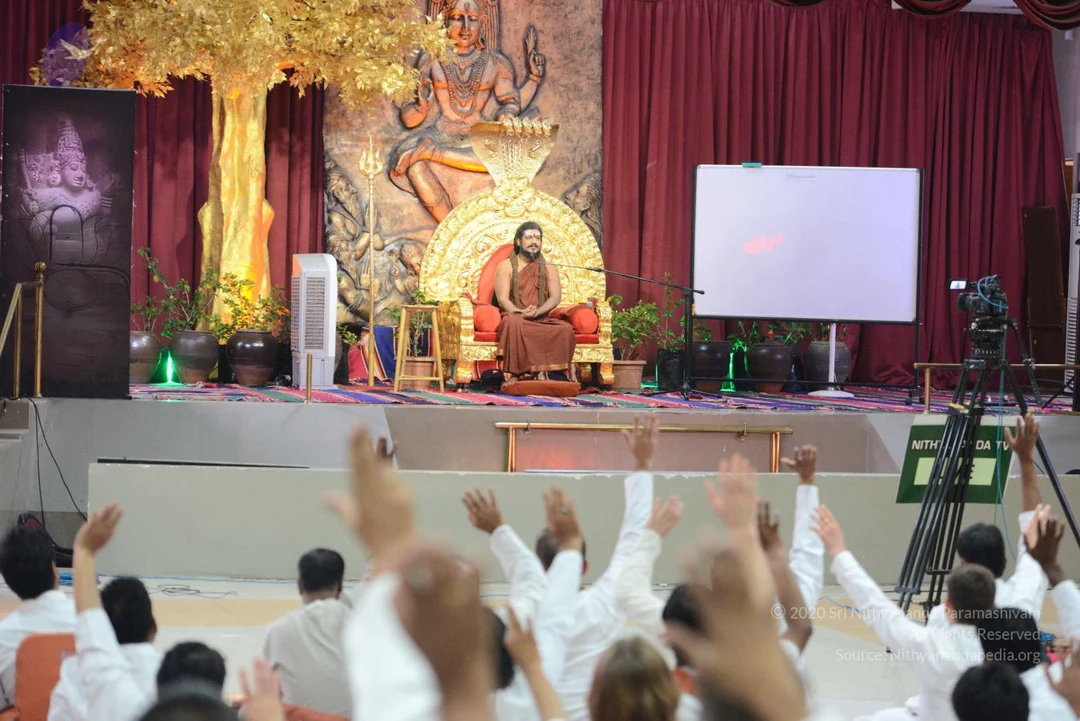
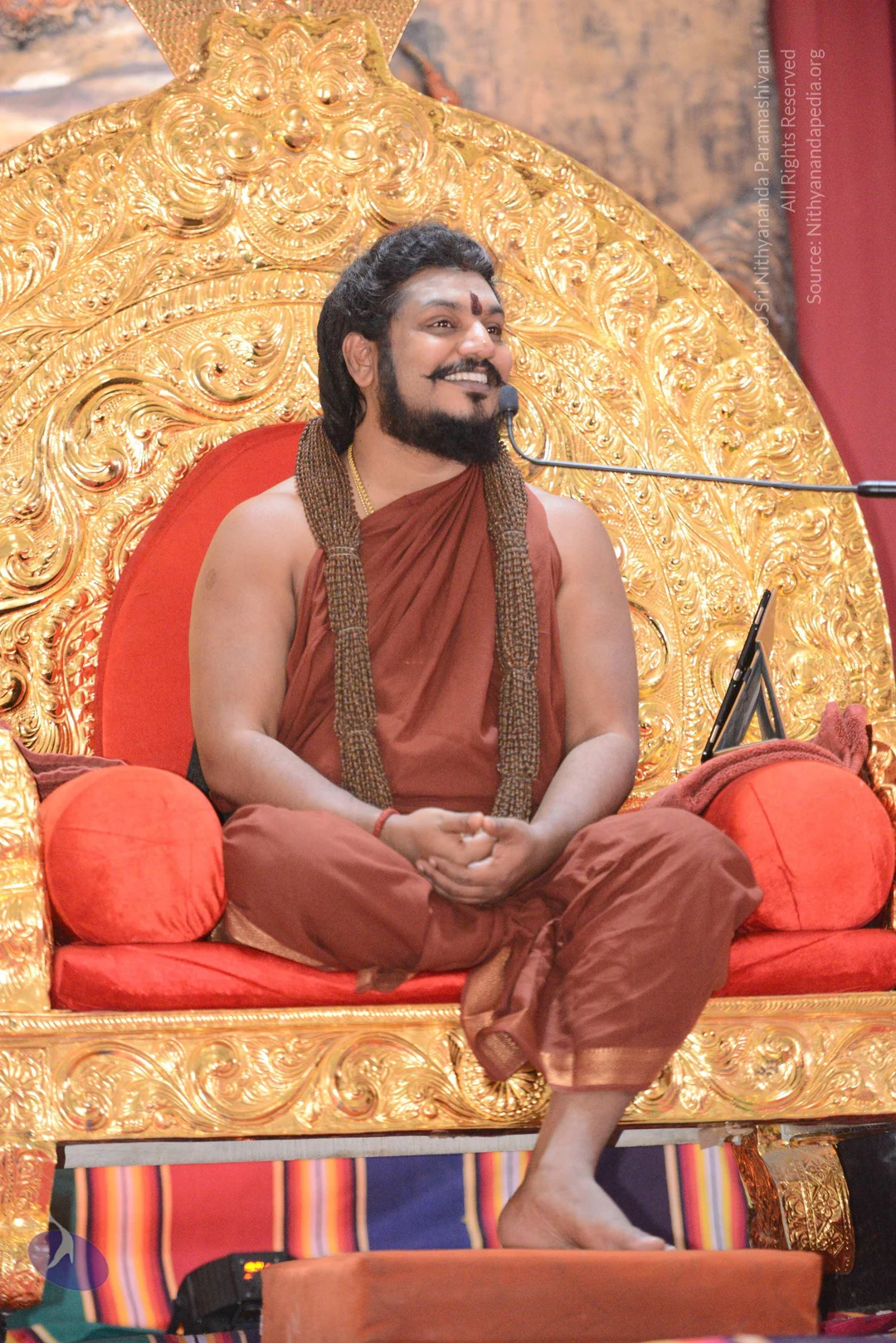
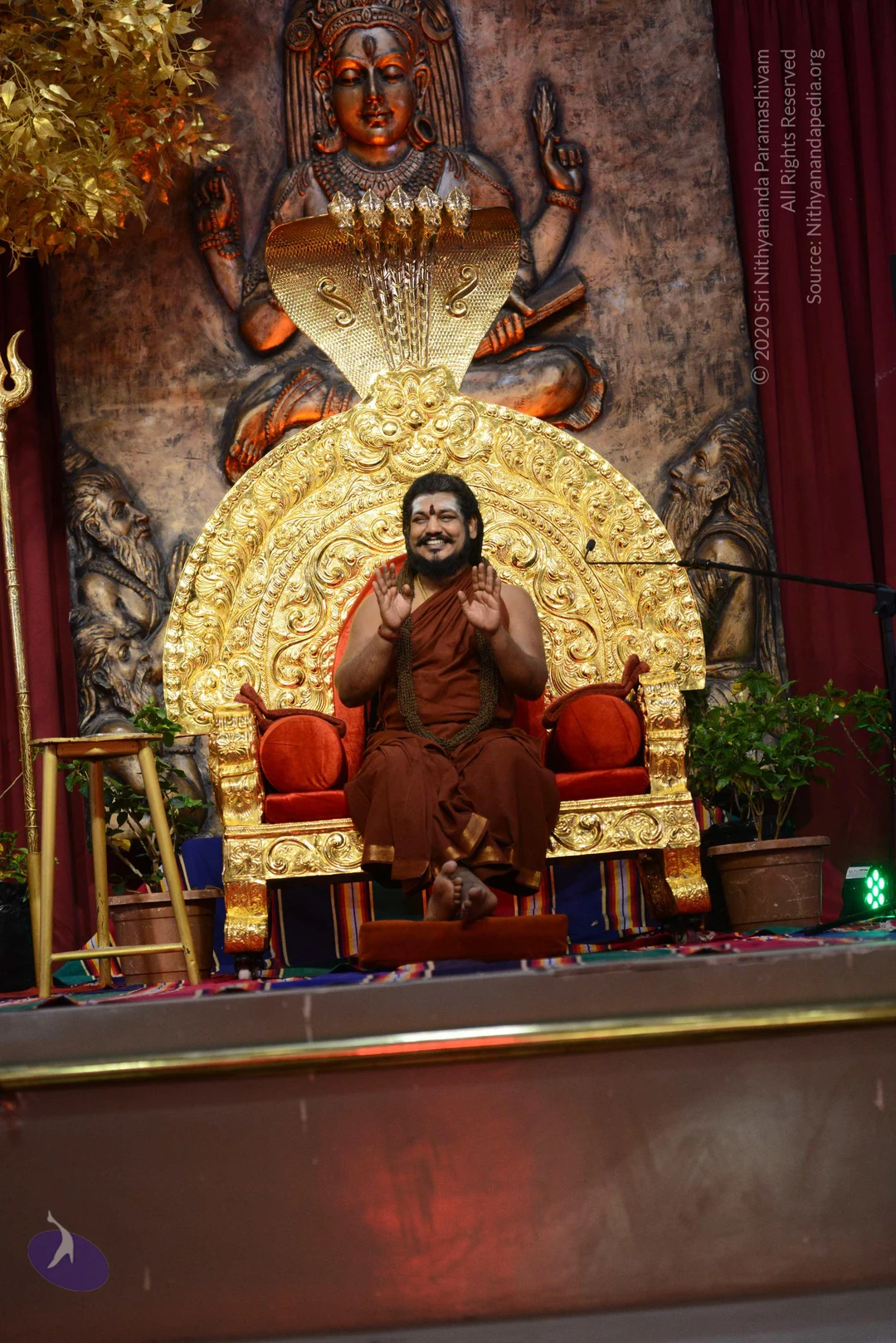
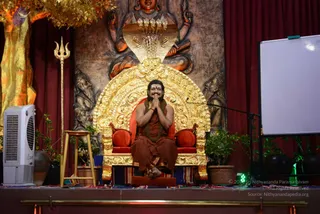
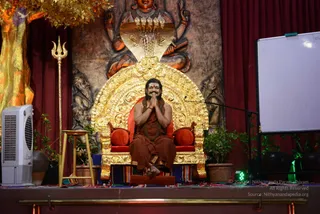
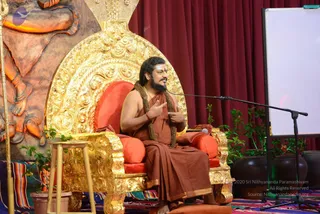
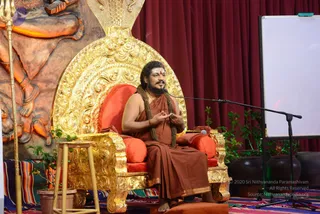
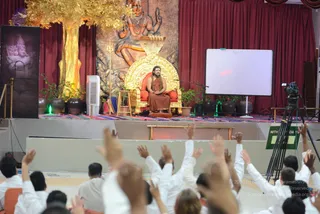
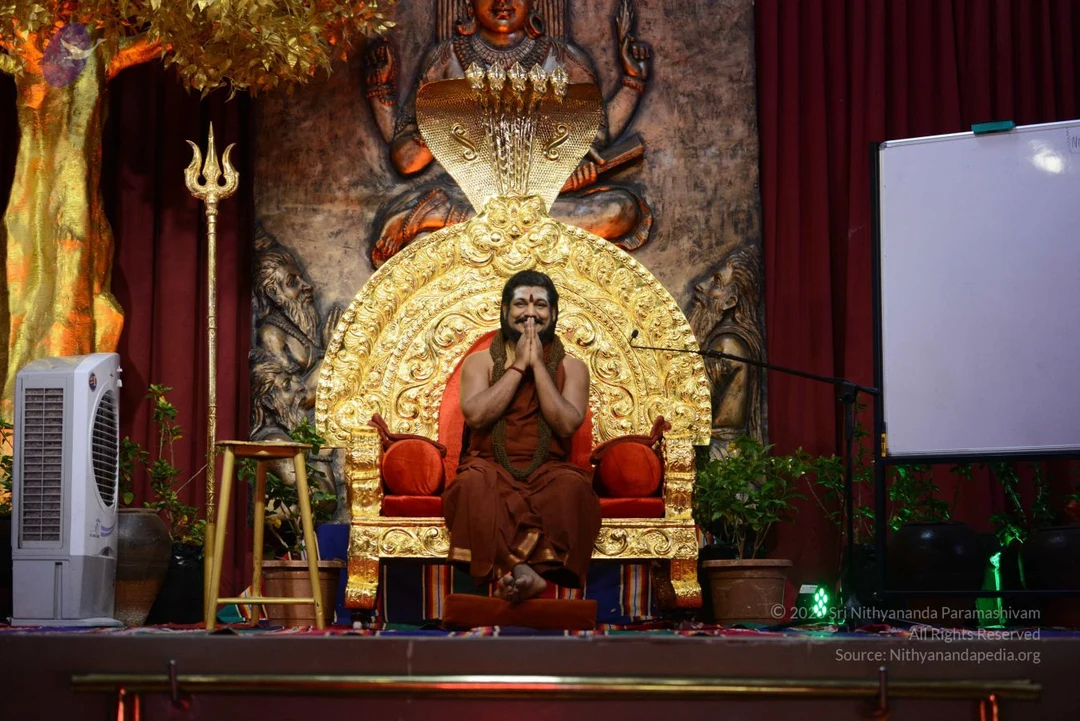
A seated man in a rust-orange robe with a rudraksha mala draped over his shoulders sits on an ornate gold throne with red cushions, hands pressed together in namaskar. He wears a red-orange tilak and has long dark hair. Behind him hangs a large painted backdrop of a deity seated with a trident and kamandalu, flanked by carved sages. A golden trident stands to the left beside a small wooden stool, potted plants, a cooler and a whiteboard on the right, with red drapes framing the stage.A seated man in saffron-orange robes sits on an ornate gold throne with red cushions on a stage, hands pressed together in namaste and smiling. He has a tilak on his forehead and a rudraksha mala around his neck. Behind him hangs a large painted backdrop of a deity with multiple arms holding ritual objects, flanked by painted sage figures, with a gold-leaf tree and a brass trident to the left. Potted plants, a cooler, a whiteboard and a microphone stand surround the stage, and a red curtain frames the backdrop. Appearance-based probable Swamiji (probable): long hair, saffron robes, rudraksha mala and ceremonial throne, seated as a speaker during an Inner Awakening session.A man with long swept-back dark hair, a full beard and a red tilak on his forehead sits on an ornate gold throne with a red cushioned seat and backrest. He wears rust-orange robes and a long rudraksha mala draped over his shoulders, and gestures with both hands while speaking into a microphone on a stand. Behind him is a golden relief carving of a deity figure, a red curtain, a whiteboard and potted plants. The floor is covered with colourful woven rugs, and a wooden stool stands at the left. a person is seated as the speaker, giving a discourse to the seminar audience.A bearded man with long swept-back dark hair sits on an ornate gold throne with a red cushioned seat, speaking into a microphone while gesturing with both hands in a mudra. He wears a rust-brown saffron-toned robe with a gold border, a long rudraksha mala draped over his shoulders, a red tilak on his forehead and a gold necklace. Behind him a gold-and-red deity murti relief and a golden trident stand to the left, a red curtain hangs at the back, and a whiteboard, potted plants and a patterned rug complete the stage. Swamiji (probable) appears to be the seated speaker, based on distinctive long hair, rudraksha malas, saffron-toned clothing and the ceremonial throne.Photograph of a seated session in a hall with red curtains and a large golden tree behind the stage. A man with long dark hair and a beard, wearing an orange-brown robe, sits on an ornate gold-and-red throne before a carved deity murti panel. Potted plants flank the stage and a whiteboard hangs at right. In the foreground, many delegates dressed in white clothing raise their hands, and a camera on a tripod is at right. Swamiji (probable) is seated on the throne in an orange-brown robe, with long hair and a beard, as the speaker of the session.Indoor satsang hall where a man in an orange-brown robe sits on a large gold-and-red throne on a raised stage, with a gold-framed carved relief of a multi-armed deity murti behind him and a golden tree at left. Red velvet drapes frame the stage, potted plants sit at its edges, and a whiteboard and camera on a tripod face the audience. Seated delegates in white clothes fill the foreground, viewed from behind. A green NITHYANANDAPEDIA TV sign hangs at right. The seated man is a probable Swamiji by his long swept-back hair, orange-brown robe and gold-throne setting, so the swamiji value is in_person. Roughly twenty-five people are visible in the foreground.

Poornatva-Vastra-Energy-Darshan

84 photosSource gallery
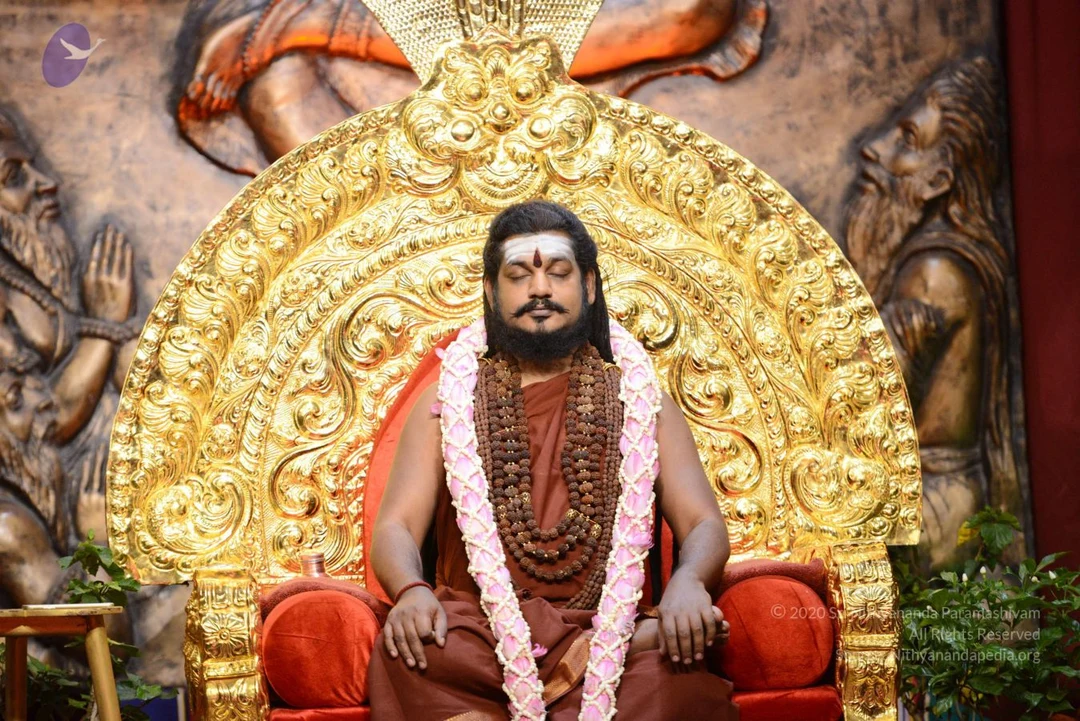
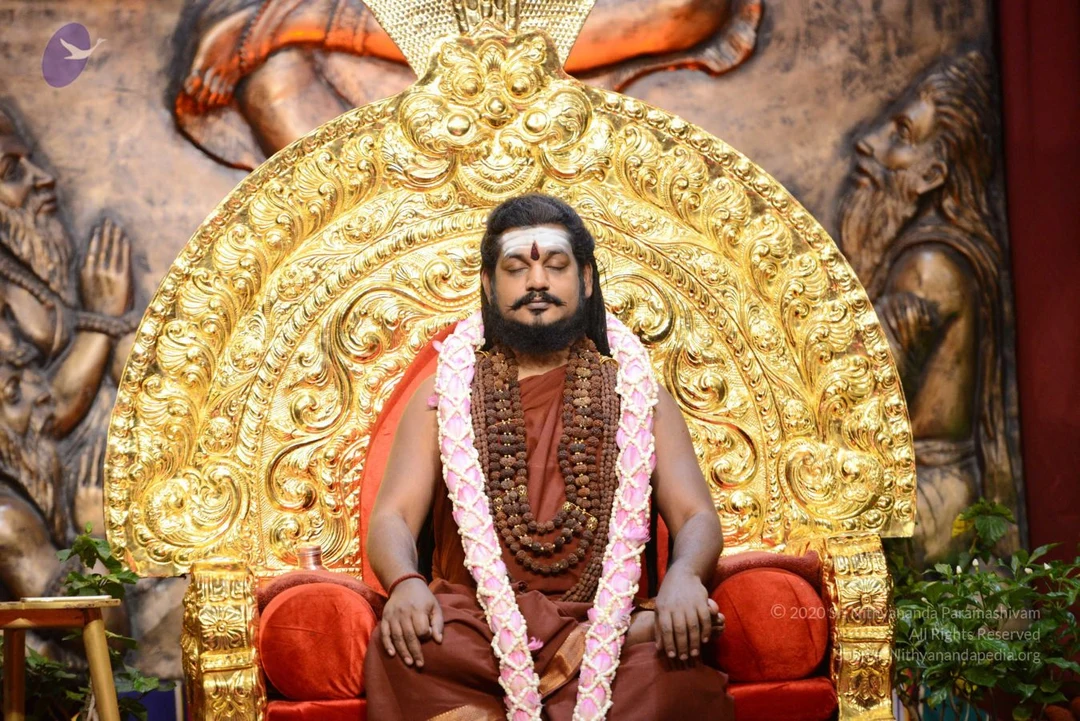
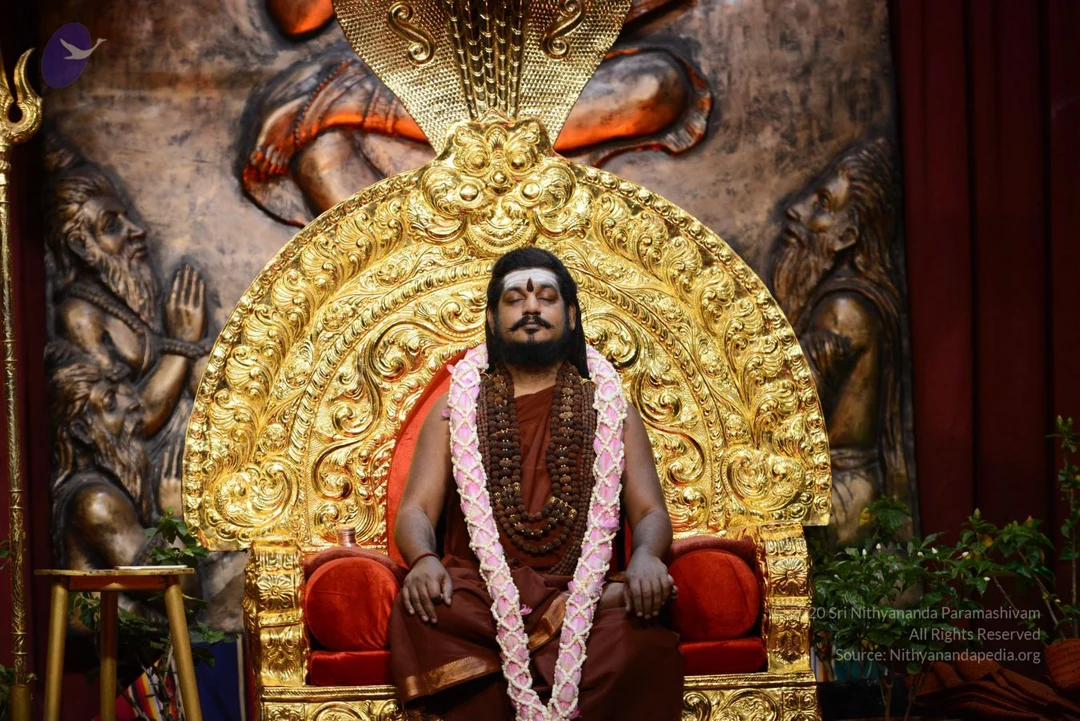
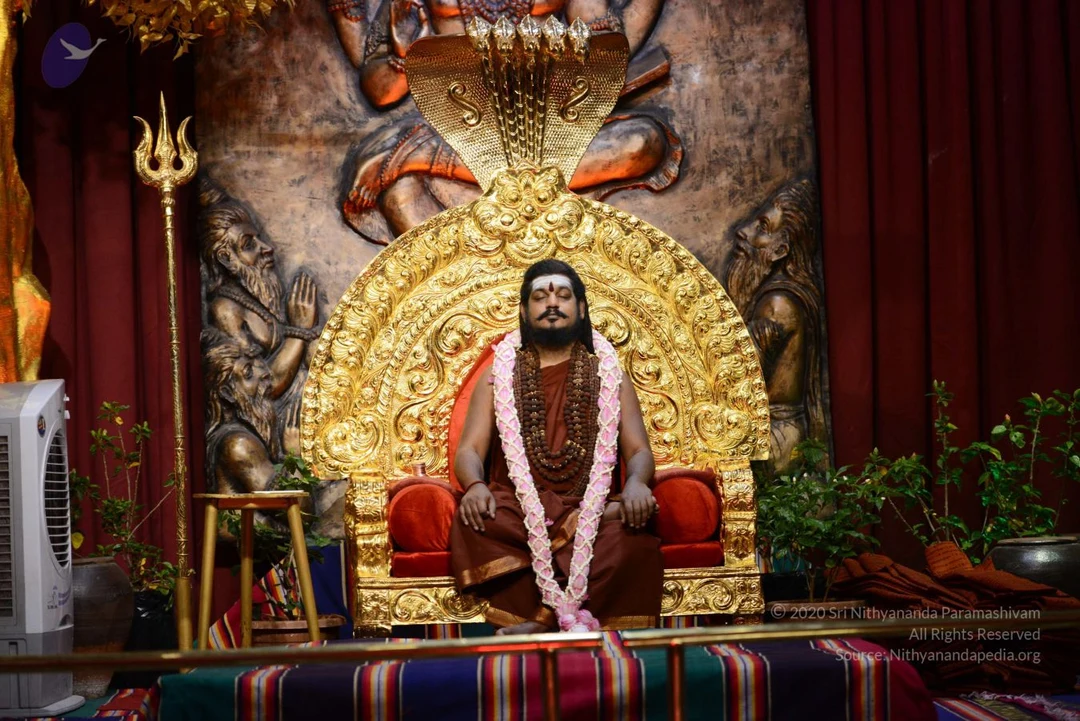
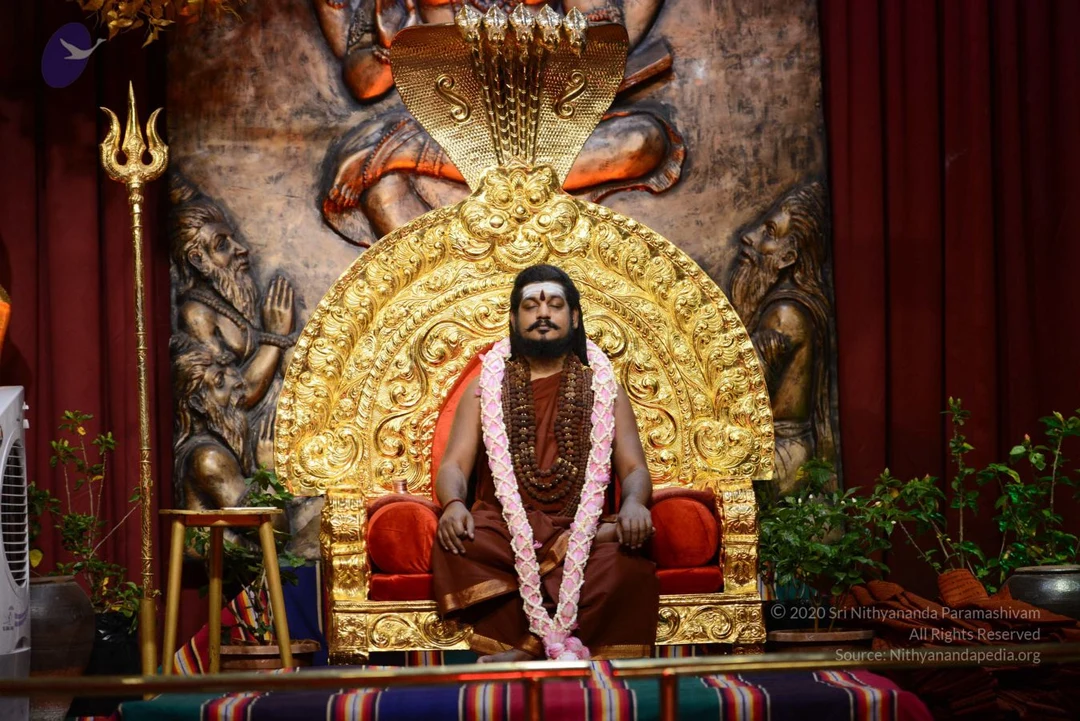
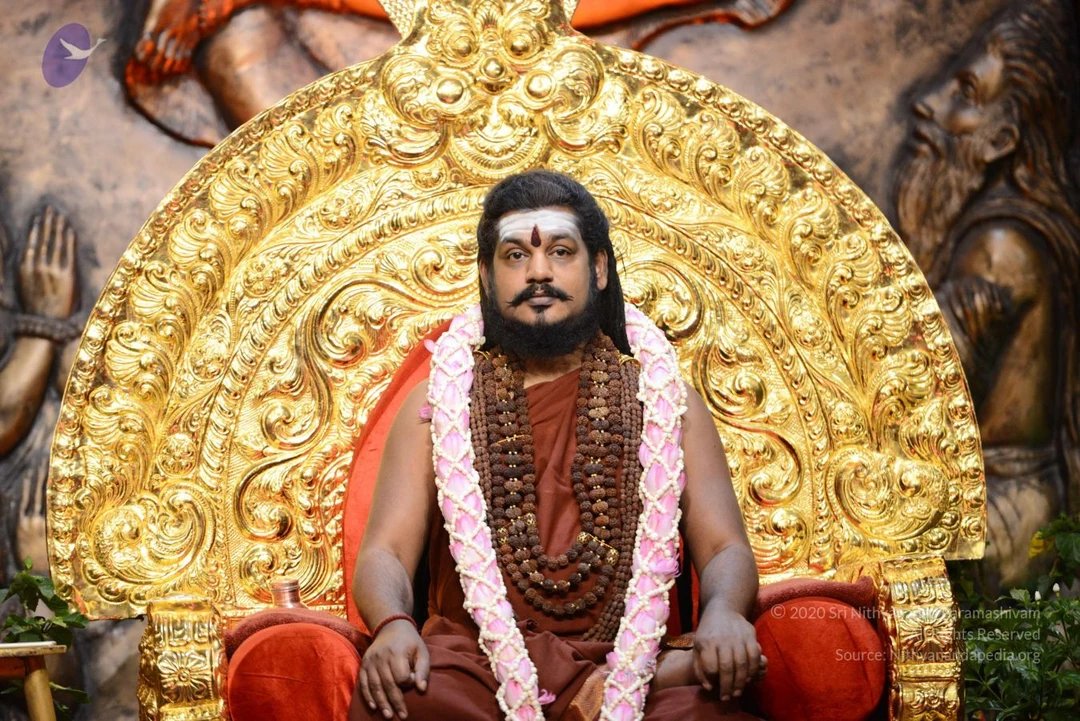
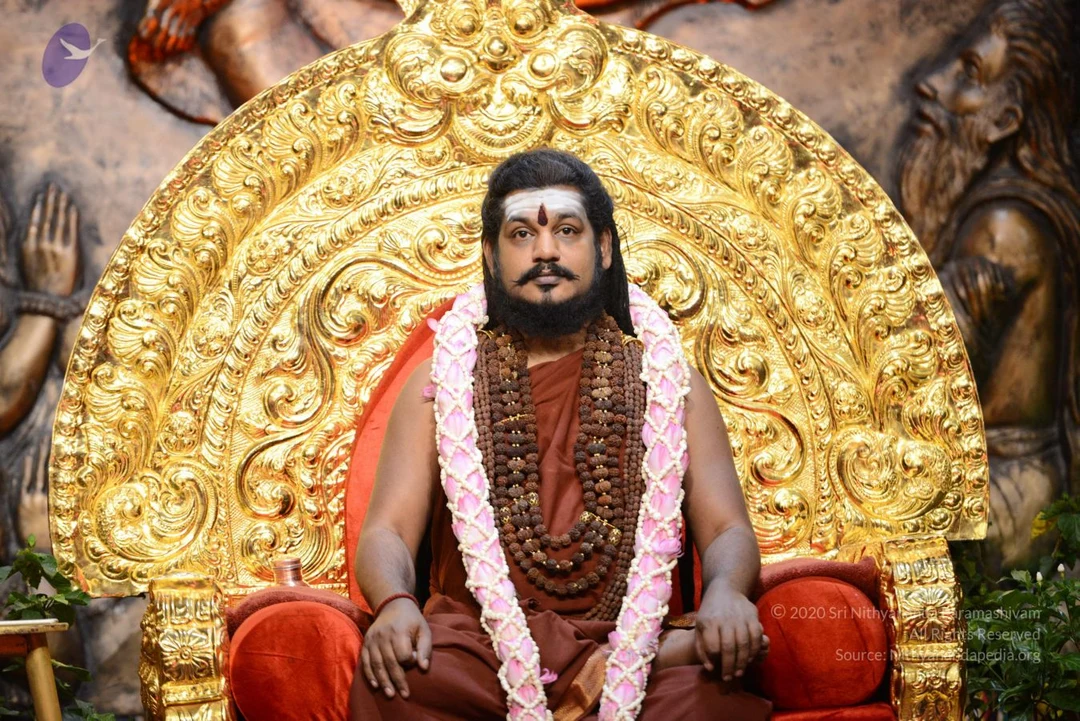
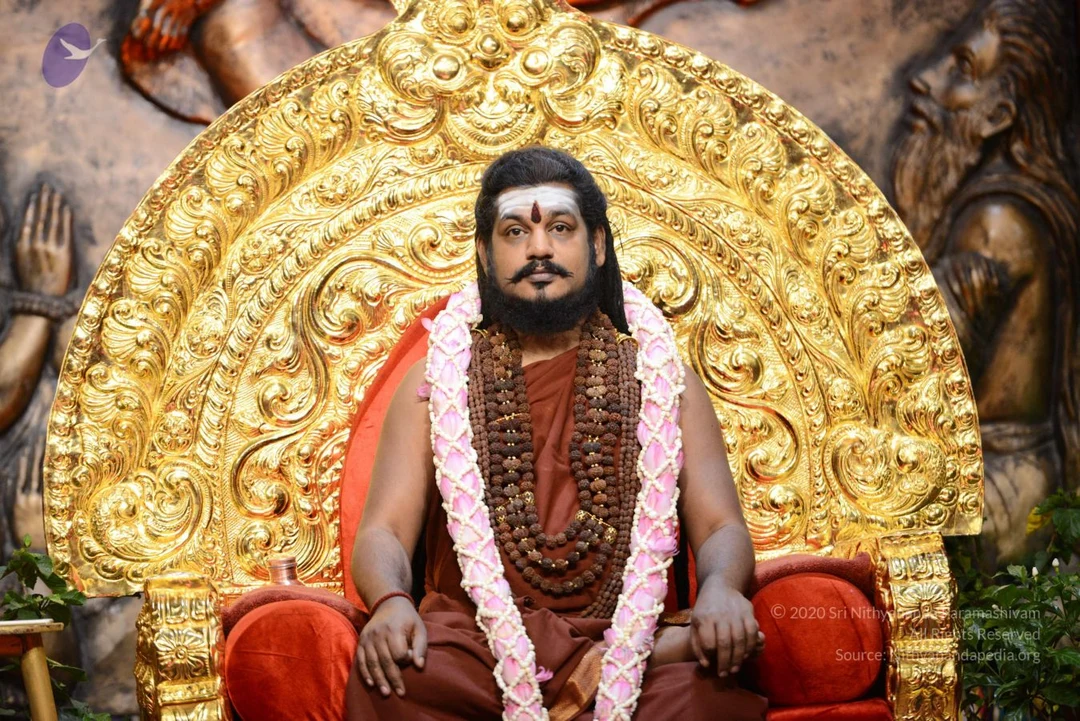
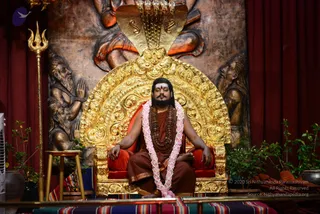
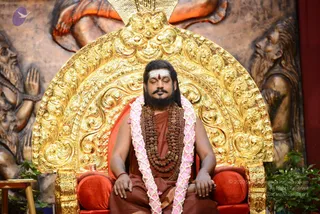
A seated man in a rust-brown robe sits on an ornate gold throne with a red cushion, a pink and white garland draped across his chest and layered rudraksha mala beads around his neck. A tilak mark is on his forehead and his eyes are closed. Behind the throne a large relief sculpture shows a golden hooded naga canopy above carved figures, and a golden trident stands to the left beside a small wooden stool. Potted plants, red drapes and a striped rug frame the stage. a person: the long dark hair, rudraksha malas and ceremonial throne are the qualifying cues for the seated teacher, though the appearance is only partly visible. Placed in a throne-and-garland discourse setting.A seated man with eyes closed sits on an ornate gold throne with a cobra-hood canopy, in a brown-orange robe with a pink-and-white flower garland and a dark rudraksha mala. He has a tilak on his forehead and hands resting on the armrests. Behind him a large relief panel shows a reclining deity and two standing ascetics with hands folded, flanked by red drapes, a golden trident and potted green plants. A ceiling fan is at left.A seated man with eyes closed sits on an ornate gilded throne with a large arched backrest carved in foliate scrollwork, upholstered in red velvet armrests. He wears a rust-orange robe, layered rudraksha mala beads, and a long pink-and-white flower garland, with a white tripundra and red bindi on his forehead and a red thread on his wrist. Behind him, a carved stone-coloured relief panel shows figures with raised hands. A potted green plant sits at right and a small side table at left. Swamiji (probable): long swept-back dark hair, rudraksha malas and a saffron-toned robe, seated on a throne in a meditative pose.A seated man with closed eyes sits on an ornate gold throne with a carved arched back and red cushions, in front of a golden-brown relief wall with carved figures. He wears a rust-brown robe, a pink and white flower garland, and multiple rudraksha mala strands across his chest, with white tripundra ash and a red bindi on his forehead. Potted green plants stand beside the throne. a person: the seated man wears rudraksha malas, a garland and ceremonial throne seating, though his appearance is consistent rather than distinctive, so the identity is uncertain.A seated man with closed eyes sits on an ornate gold throne with a tall gold canopy, wearing a rust-brown robe, a pale pink and white flower garland, and multiple dark rudraksha malas around his neck. He has a white tilak on his forehead and a long dark beard. He rests his hands on his lap in meditation. Behind him is a large carved panel of seated sages in dark bronze tones, and potted green plants stand to the right. The scene suggests a satsang or darshan setting. Swamiji (probable): long dark hair, rudraksha malas and a flower garland are visible cues.A seated man with eyes closed sits on an ornate gold throne with red cushions, wearing a rust-brown robe, a long rudraksha mala and a pink-and-white flower garland, with a red tilak on his forehead. A gold trident stands to the left, potted plants flank the throne, and a large carved relief of a deity and two bearded sages in gold-tinted wood forms the backdrop beside red curtains, with a striped mat in the foreground.

01-Genesis-of-Identity
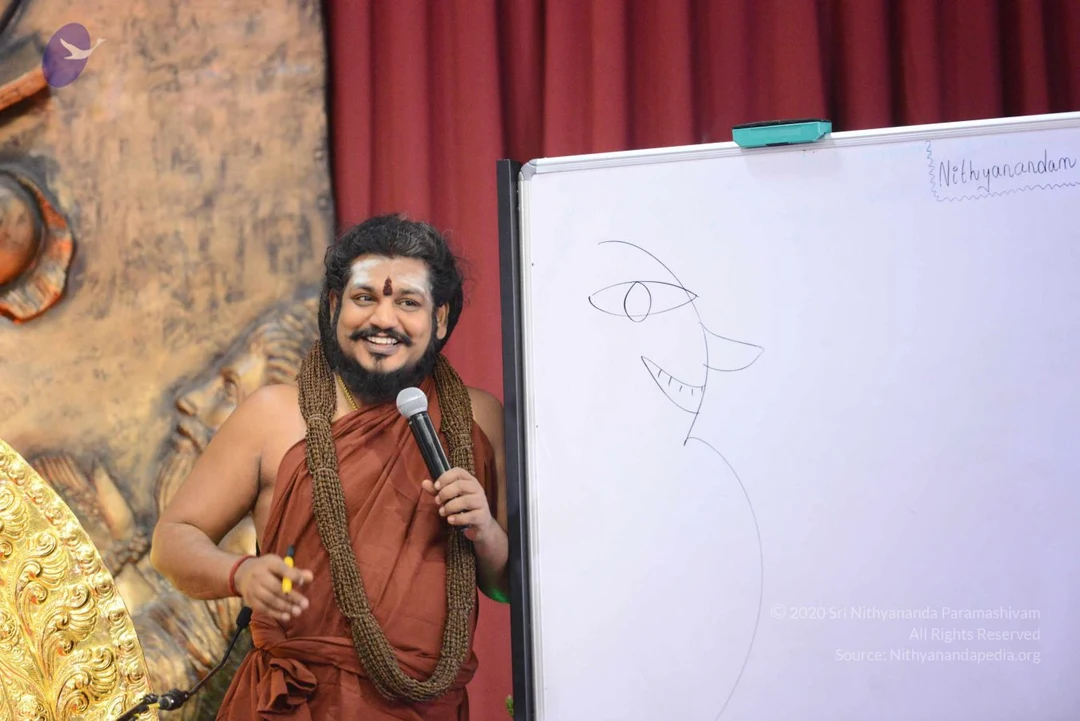
40 photosSource gallery
A photograph taken through red velvet curtains of a seated man on an ornate gold throne on a stage. He wears a rust-orange robe, a beaded necklace and has a red tilak on his forehead, with hands folded in his lap and feet bare on a cushion. Behind the throne is a large carved relief of a seated deity with a crown, and on either side carved sages. A gold trident stands at left, potted plants flank the throne and a microphone stand is visible. Swamiji (probable): a long-haired figure in orange robes and rudraksha beads seated on the gold throne as the speaker.A photograph of a discourse hall stage with a man seated on an ornate gold-and-red throne, wearing an orange-brown shawl over his body, holding a microphone and speaking. Behind him hangs a large painted panel of a deity murti with a trident-like weapon and crown-like headdress, flanked by a golden tree backdrop and red drapes. Potted plants and a small stool sit on the stage, with a whiteboard and a camera on a tripod at right. In the foreground, a seated audience of mostly white-clad participants faces the stage, with some people turned away showing their backs and heads. A green a person TV sign is visible on the stage edge.A man with swept-back dark hair, a short beard and a red tilak on his forehead sits cross-legged on an ornate gold throne with red cushions, smiling and speaking into a microphone. He wears a rust-brown robe over one shoulder, brown trousers and a long brown rudraksha mala with a gold chain at the neck. His bare right foot rests on a low orange cushion. Behind him are a red curtain and a colourful striped mat. a person: the swept-back hair, rudraksha mala and ceremonial gold necklace match the page's claim, but the appearance cues are only moderately distinctive, so this is recorded as unsure.A man stands on a stage holding a handheld microphone in his right hand, speaking to an audience while gesturing toward a whiteboard. He has long, swept-back dark hair, a full beard and a red tilak on his forehead, and wears a rust-red unstitched robe with a loose wrap across the chest and a thick brown rudraksha mala around his neck. A red velvet curtain hangs behind him, and potted plants and large terracotta pots stand at the stage edge. At left, a gilded throne with a red cushion is partly visible. The whiteboard holds hand-drawn diagrams of a face with labels for Inner Image, Outer Image, Other's Image and Life Image, and a logo appears in the top right corner of the board.A man with long swept-back hair, a full beard and a red-orange vibhuti mark on his forehead sits cross-legged on an ornate gold throne with red velvet cushions and a cobra-hood canopy. He wears a rust-orange saffron robe and rudraksha malas, and sits on a stage with potted plants and a microphone stand. Behind him a large relief carving shows a multi-armed deity holding a trident and kalasha, flanked by sage figures. A gold stand with a trident sits to the left. Probable Swamiji's appearance matches the page's claim, with long swept-back hair, saffron clothing and rudraksha malas, seated on a throne in a stage setting.
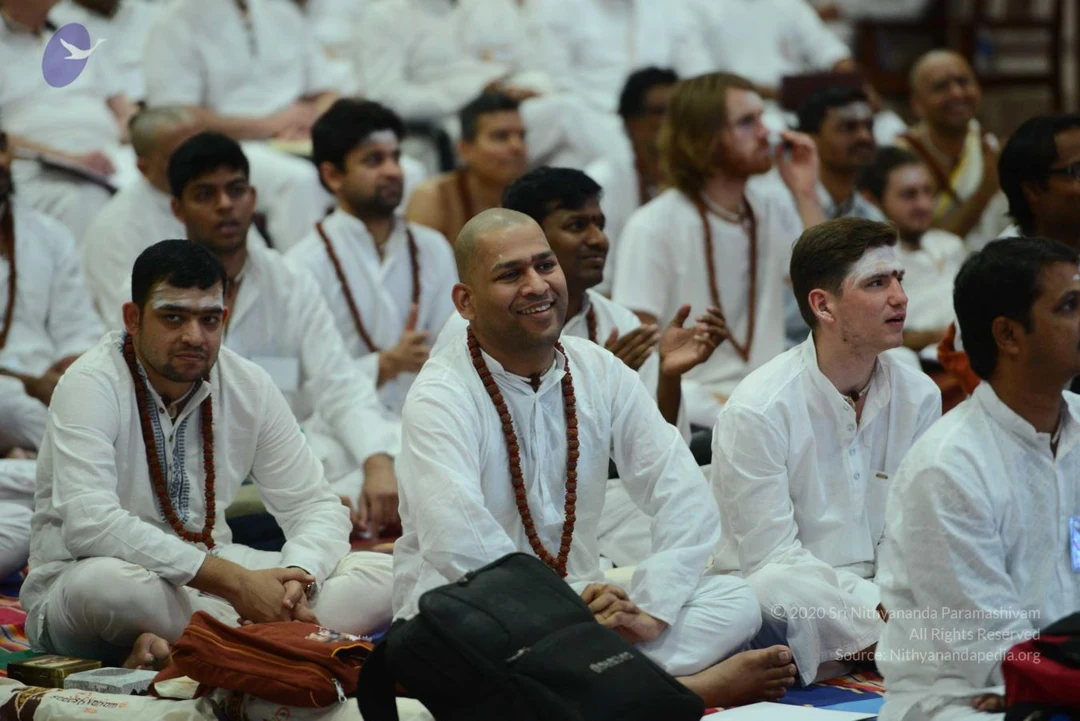
02-Poornatva-Vastra-Energy-Darshan

6 photosSource gallery
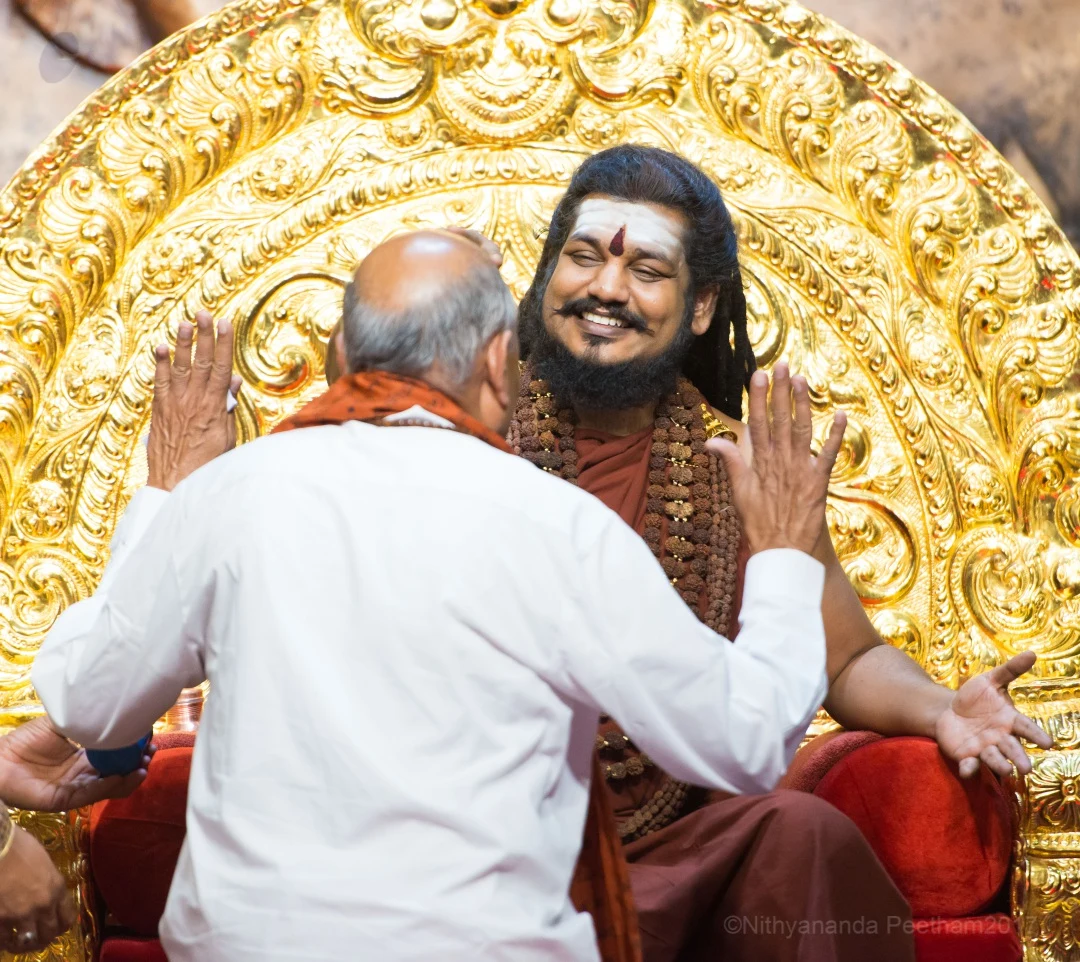
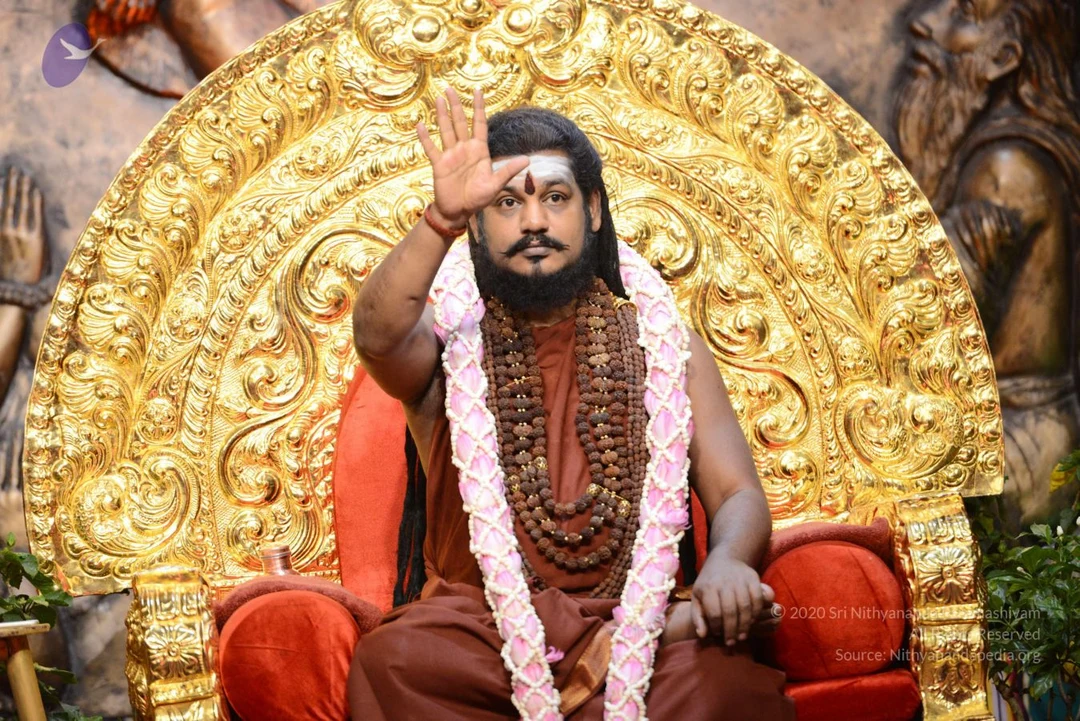
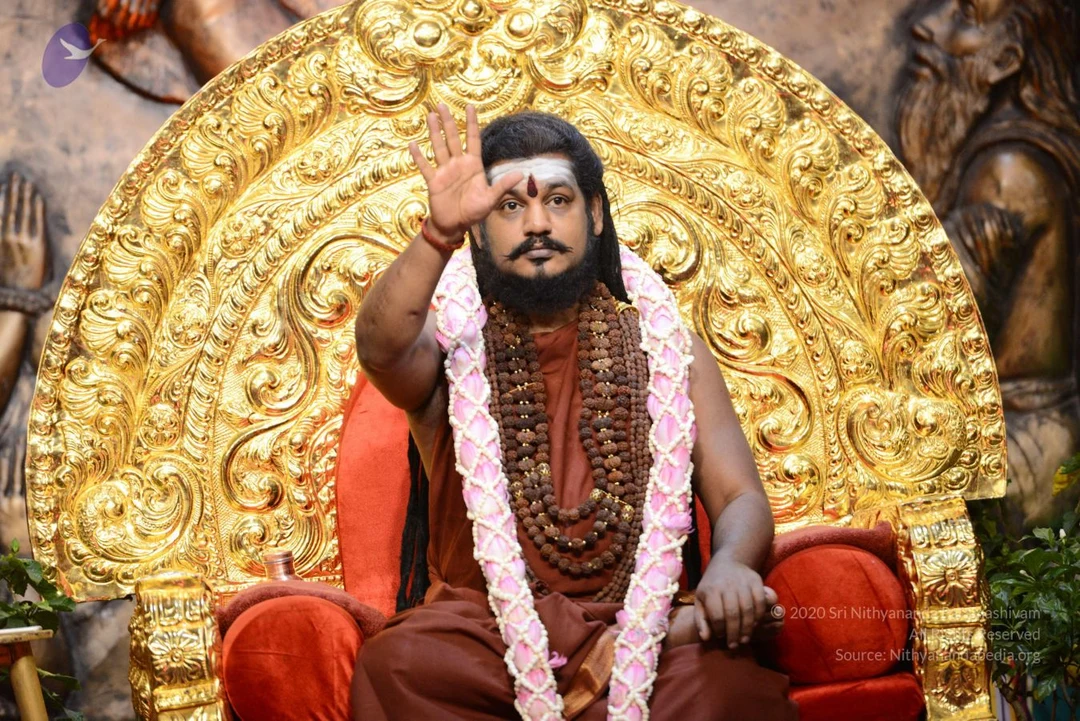
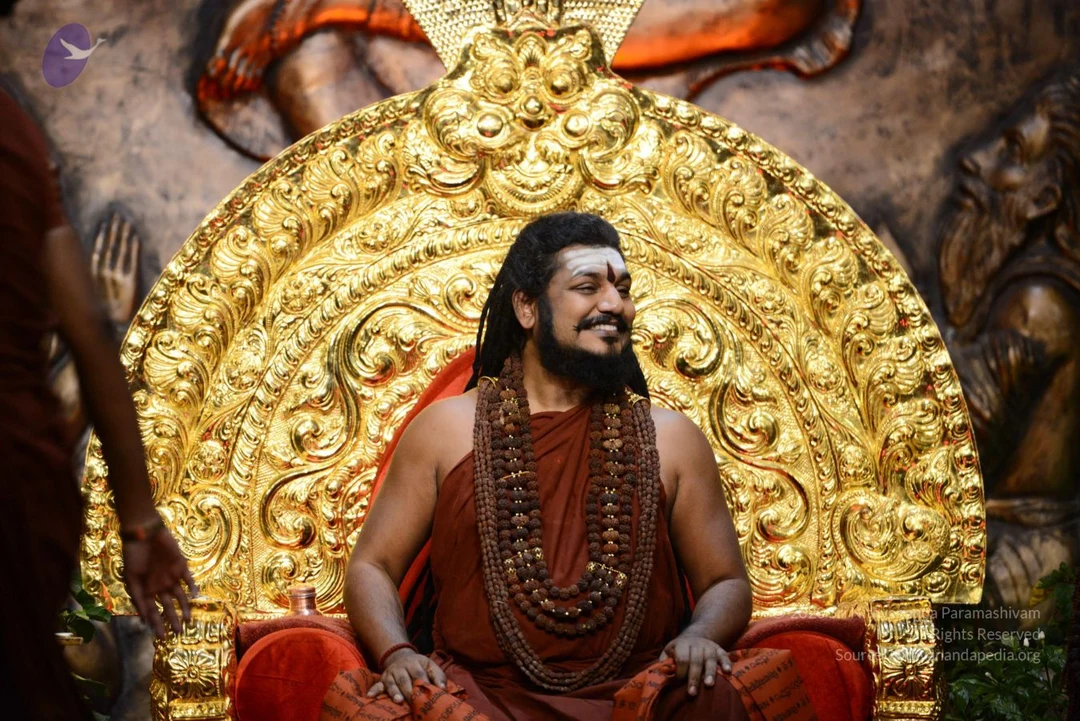
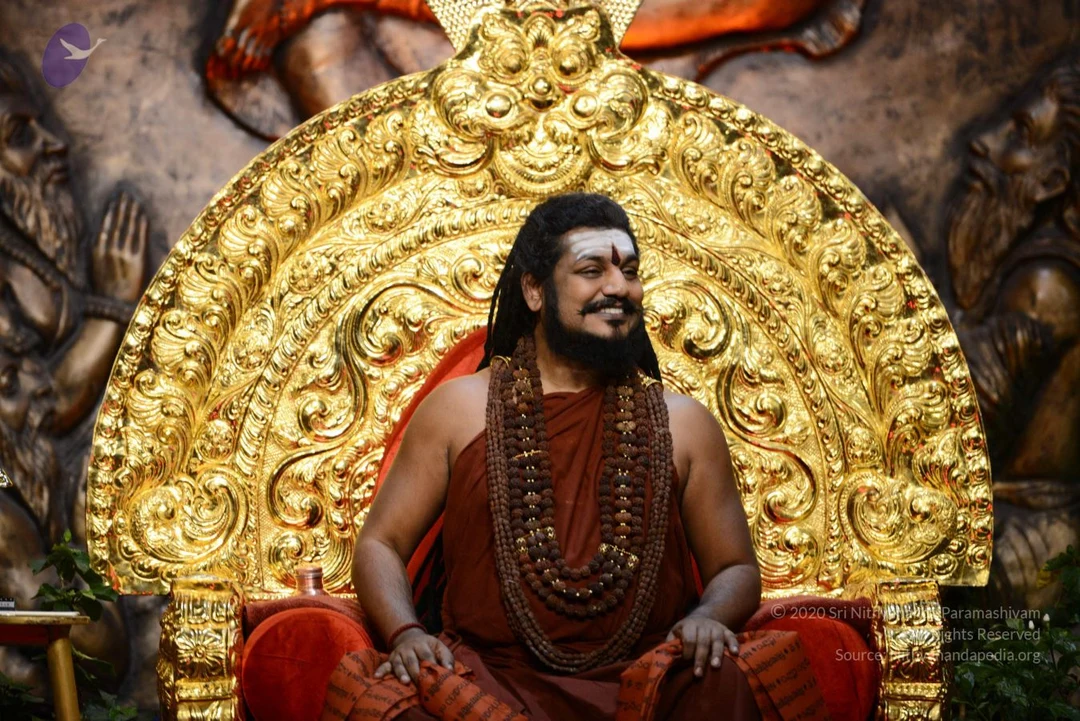
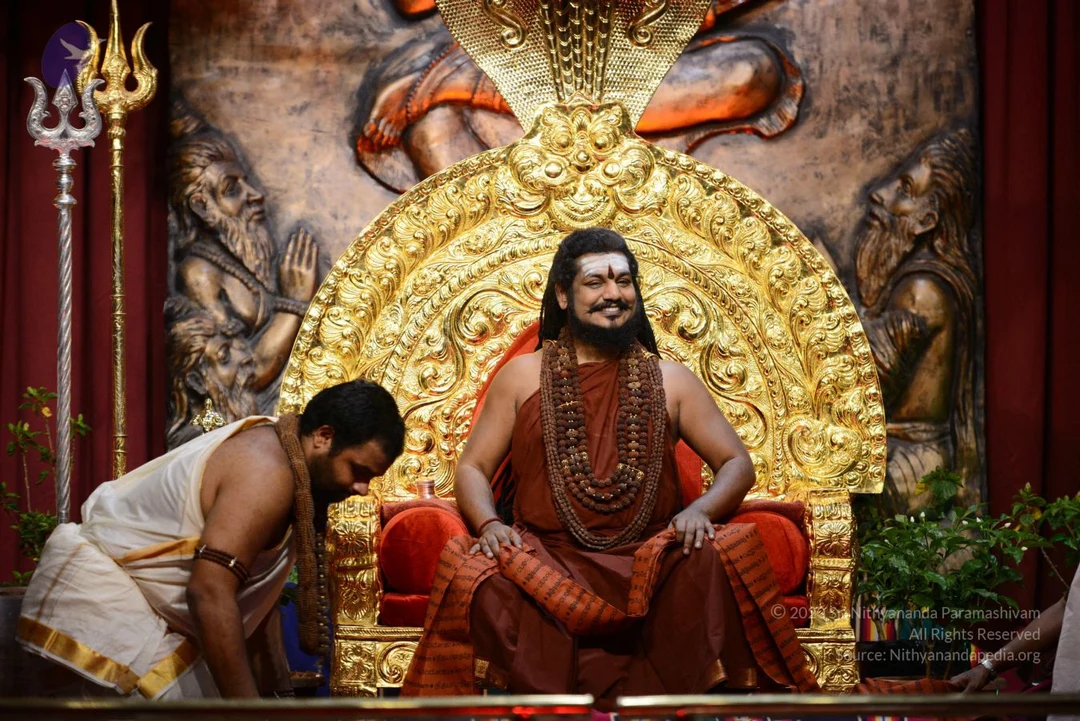
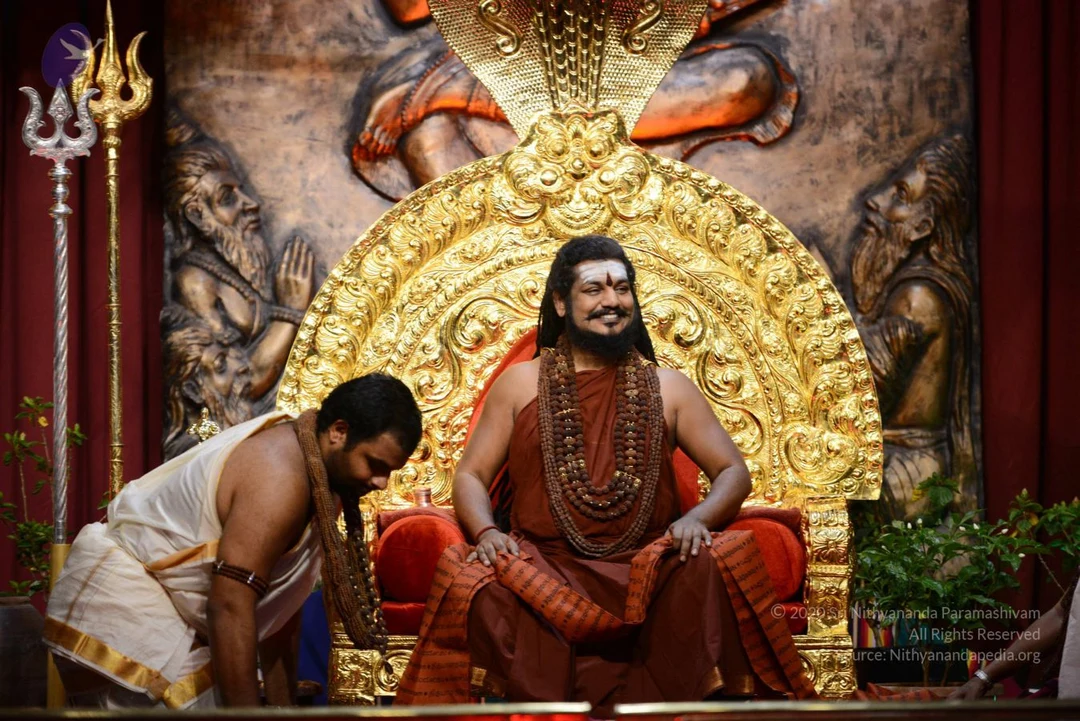
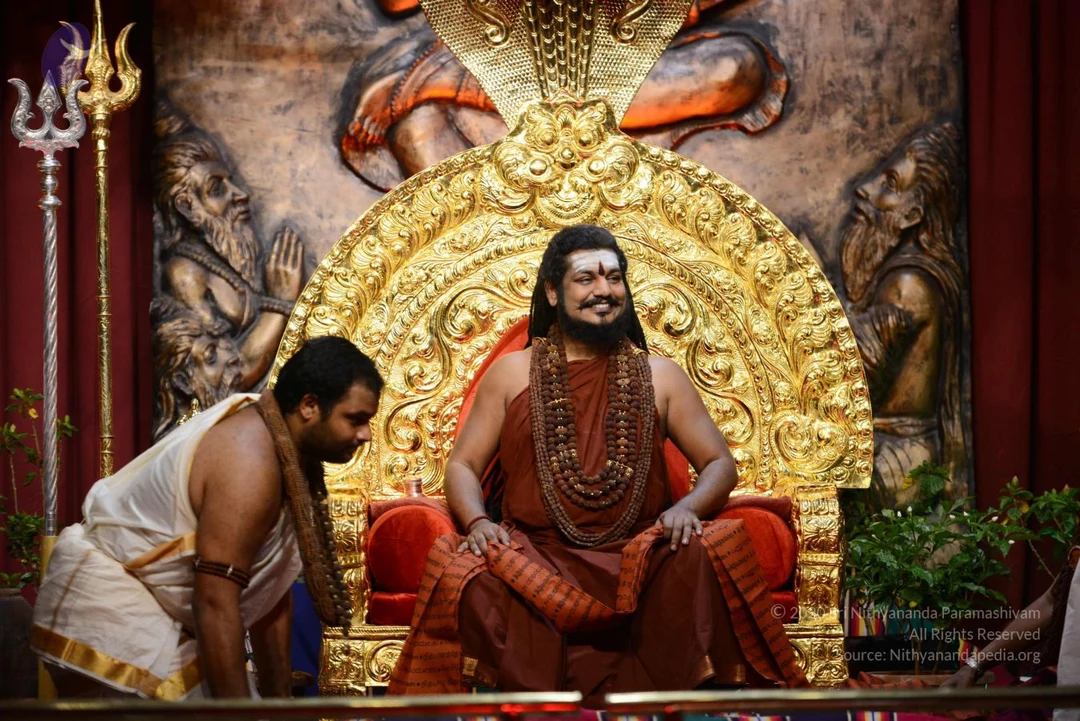
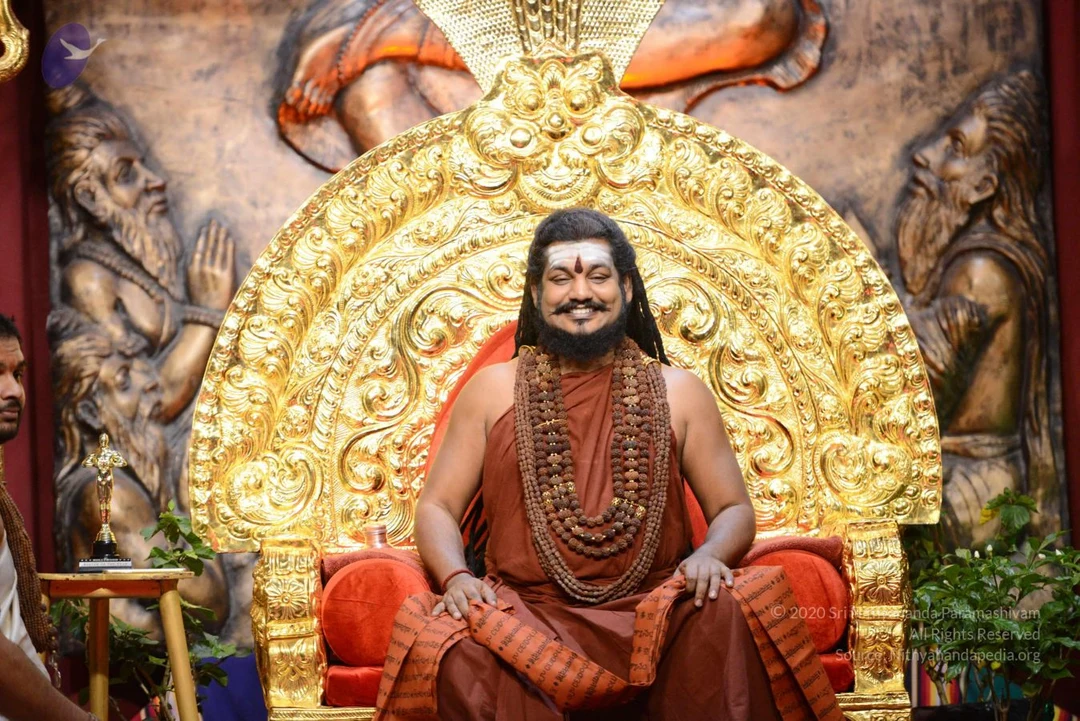
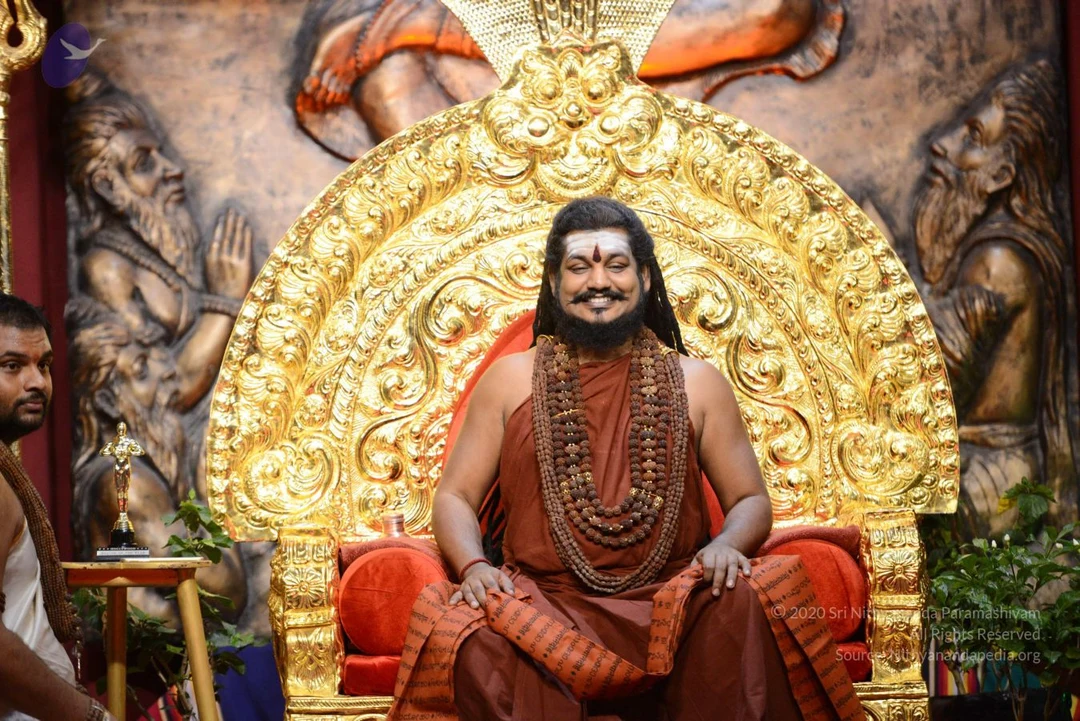
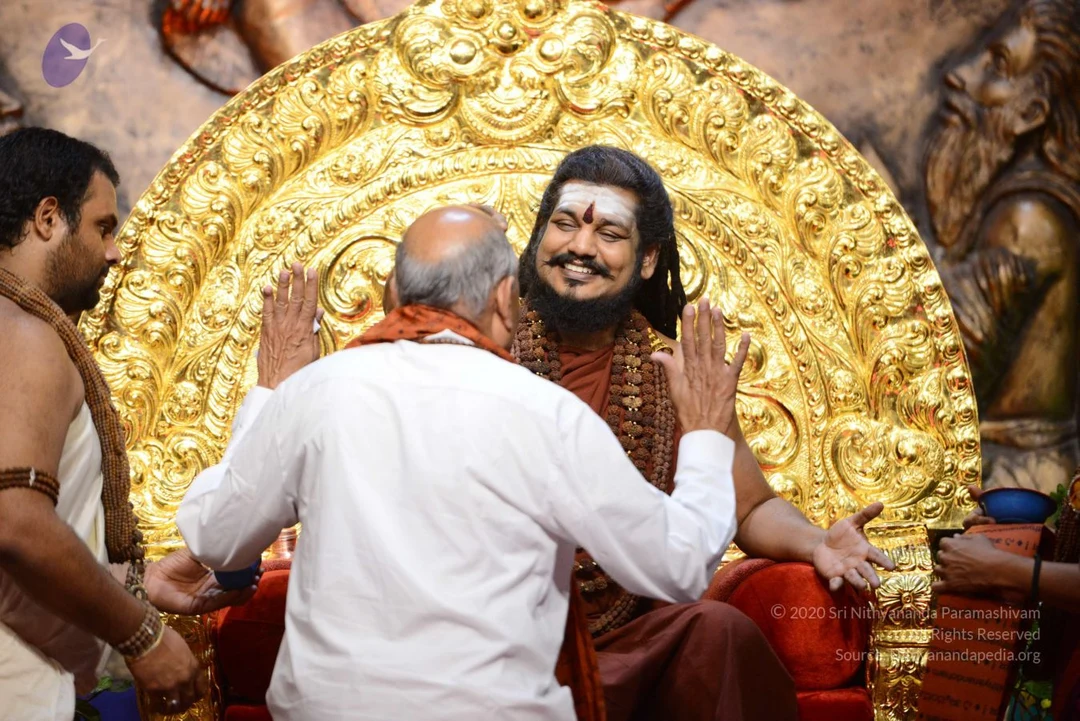
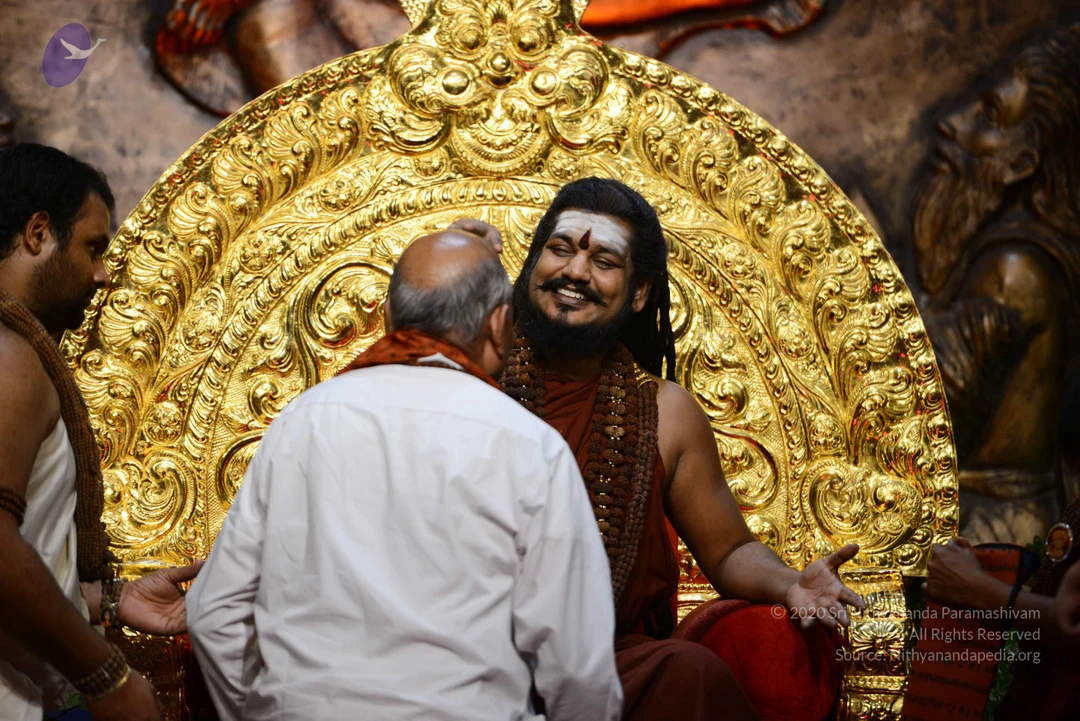
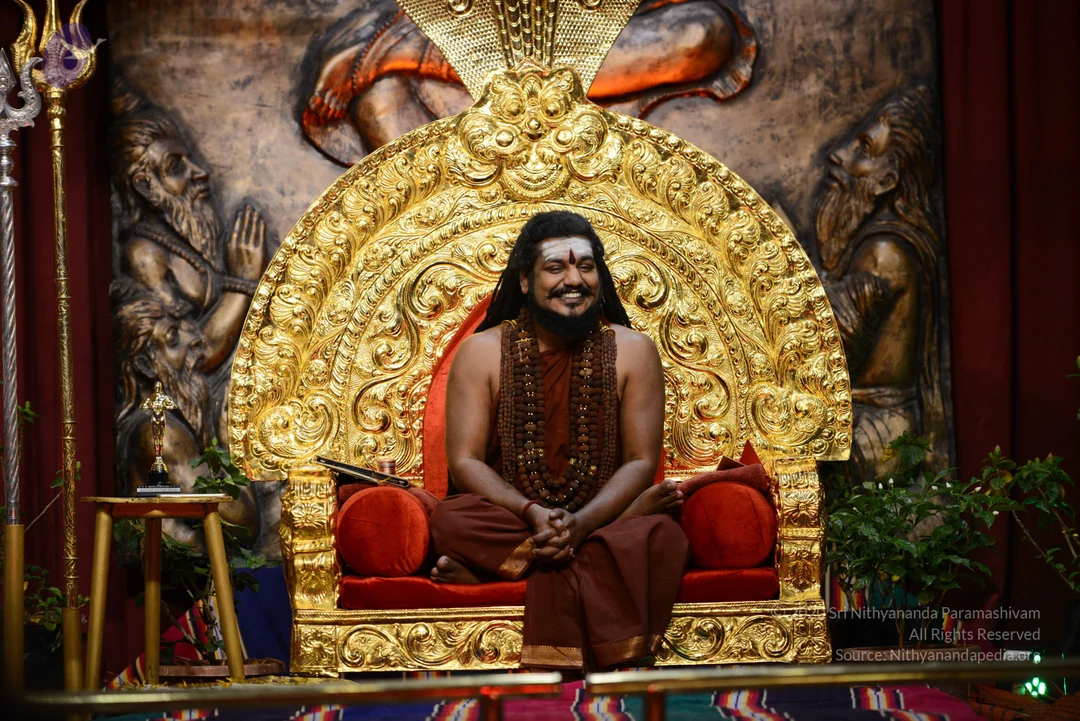
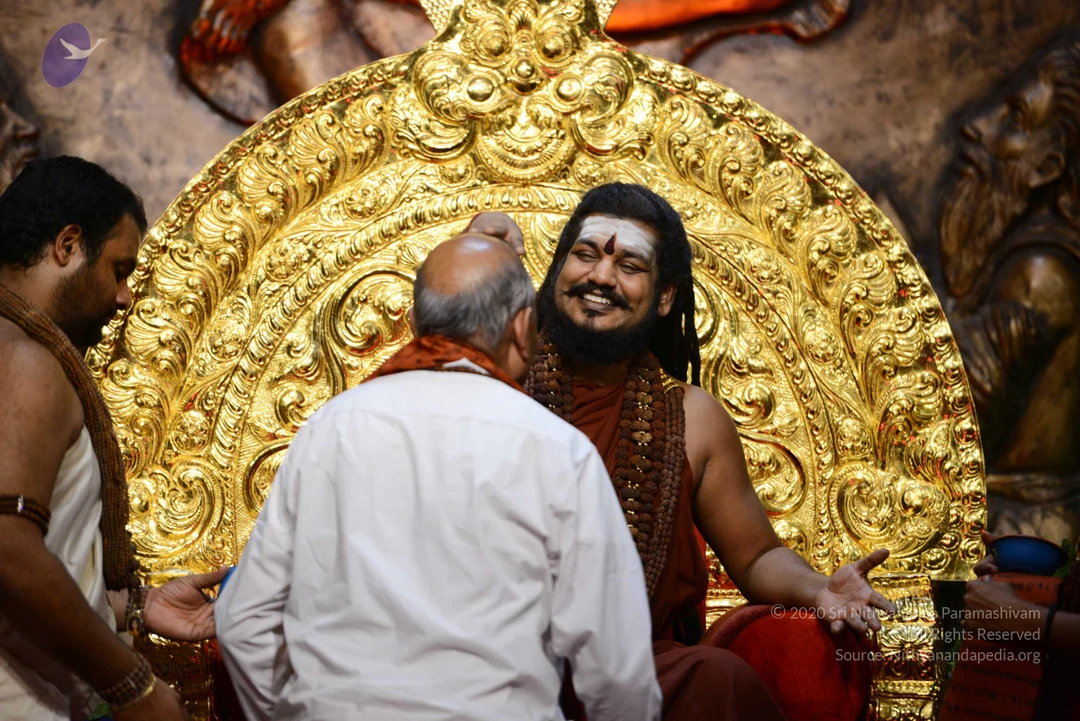
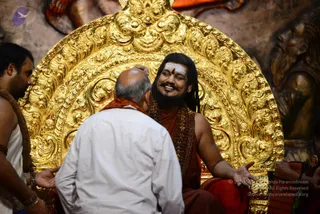
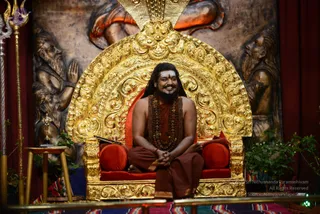
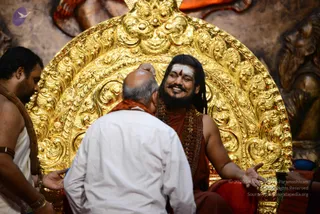
A bearded man with long swept-back dark hair sits on an ornate gold throne with a red cushioned seat and a gold cobra-hood canopy. He wears a saffron-orange robe and shawl, a long rudraksha mala, and a white tripundra mark on his forehead, and smiles toward the camera. Behind him, a bronze-toned relief panel shows seated sages with hands folded. To the left, a seated man in white ritual dress with a brown shawl attends at a low table, and a silver and gold trident stands beside the throne with potted green plants nearby.A photograph of a bearded man with long dark hair seated on an ornate gold throne with a large gold arched backrest and red cushions. He wears a rust-orange robe, a multi-strand rudraksha mala necklace, a white and red tilak on his forehead, and an orange patterned shawl draped across his lap. Potted green plants and a small gold trophy-like object sit on a side table at left, and carved wooden figures decorate the wall behind him. No other physical people are visible.A photograph of a seated man on a large ornate gold throne with intricate repoussé scrollwork, wearing orange-red robes, a long beaded rudraksha mala and a white horizontal forehead marking with a red dot. He smiles broadly, long dark hair falling behind him, one hand raised open. In front, a bald older man in a white shirt with an orange-red shawl bends forward, leaning toward him, while a man in white ritual clothing with a brown sacred thread stands at left. Carved figures and a red cushion are visible in the background.A bearded man with long dark hair and a vibhuti-marked forehead sits cross-legged on an ornate gold throne with a red cushioned seat, hands folded in his lap, smiling with eyes closed. He is bare-chested in a rust-brown cloth with a dense multi-strand rudraksha mala draped over his shoulders. Behind the throne are carved gold-toned panels showing two bearded sages with palms joined in namaste, and a golden trident and a small table with a brass lamp stand at the left. Green plants and a colourful striped mat frame the lower scene. Swamiji (probable) is seated on the throne, identified by long swept-back hair, rudraksha malas and the ornate throne setting; the figure is present in the photograph.A photograph of a bearded man with long dark hair, a white and red tilak on his forehead, and a wine-coloured shawl over a rust-brown robe, seated on an ornate gold throne with a repoussé floral back and red cushions. He wears multiple strands of rudraksha beads, smiles and rests his hands on his knees. Carved stone reliefs of sages with raised hands line the wall behind the throne, and green foliage sits at the edge.A photograph of a seated man in saffron-orange robes with long swept-back hair, a white and red forehead marking, and a beaded rudraksha mala with ornate gold pendant necklaces, smiling broadly while a bald older man in a white shirt bows forward to touch or be blessed at his head. He sits before an ornate gold-leaf throne with a large floral and scrolled backrest. Two assistants in white dhoti-style garments stand at left, one with bare chest and a bead necklace; a brass bowl sits at right. Swamiji (probable): the seated saffron-robed figure with long hair, rudraksha and gold necklaces. Background carved wall panels show deity and figurative reliefs.
February 28 2017
1 photoView all
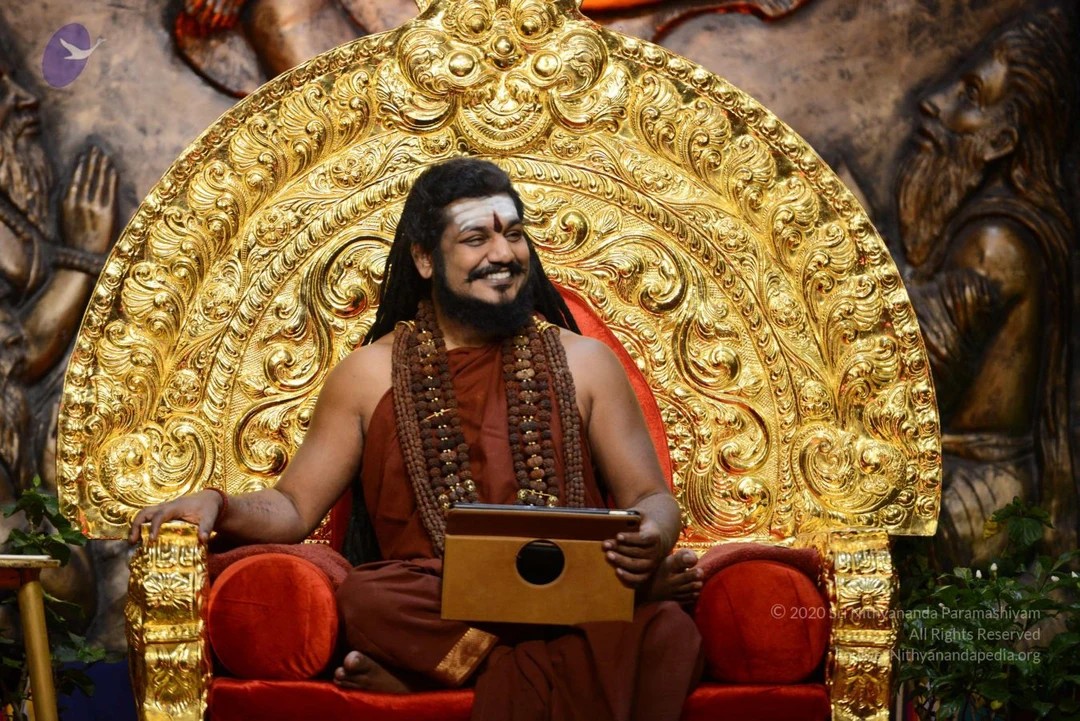
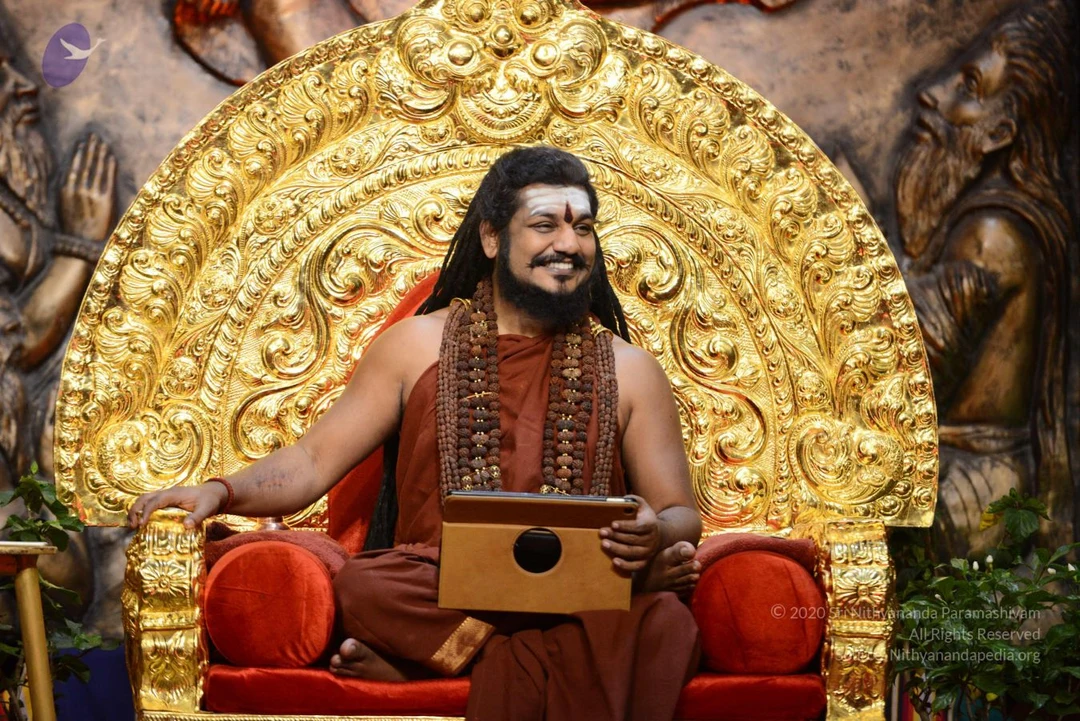
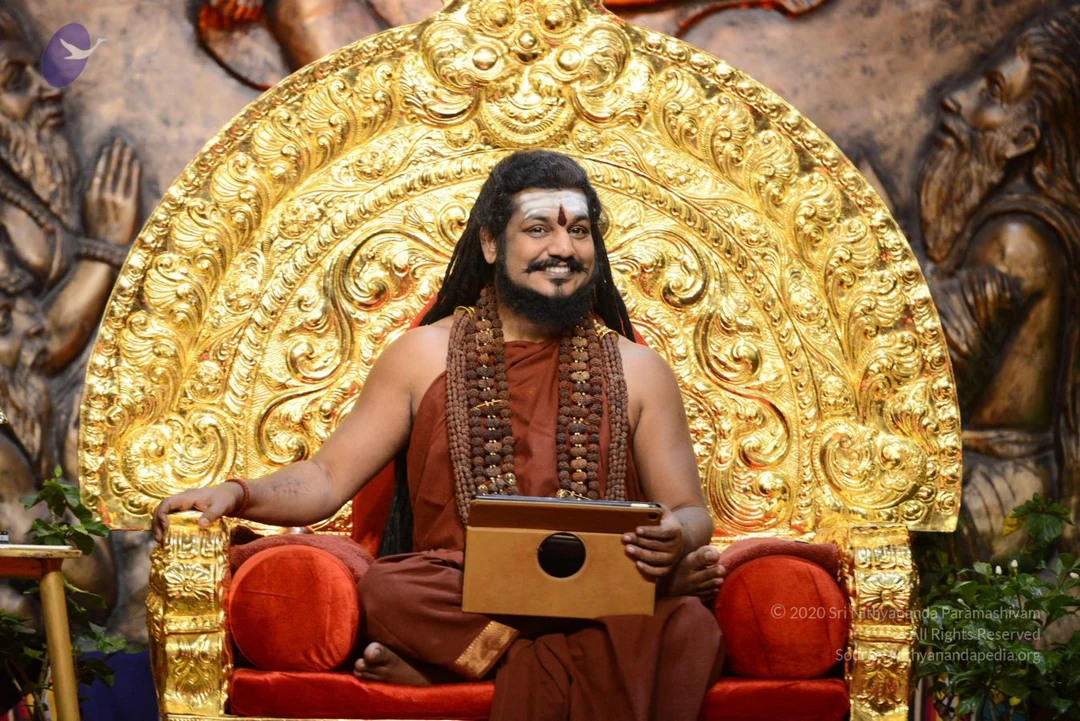
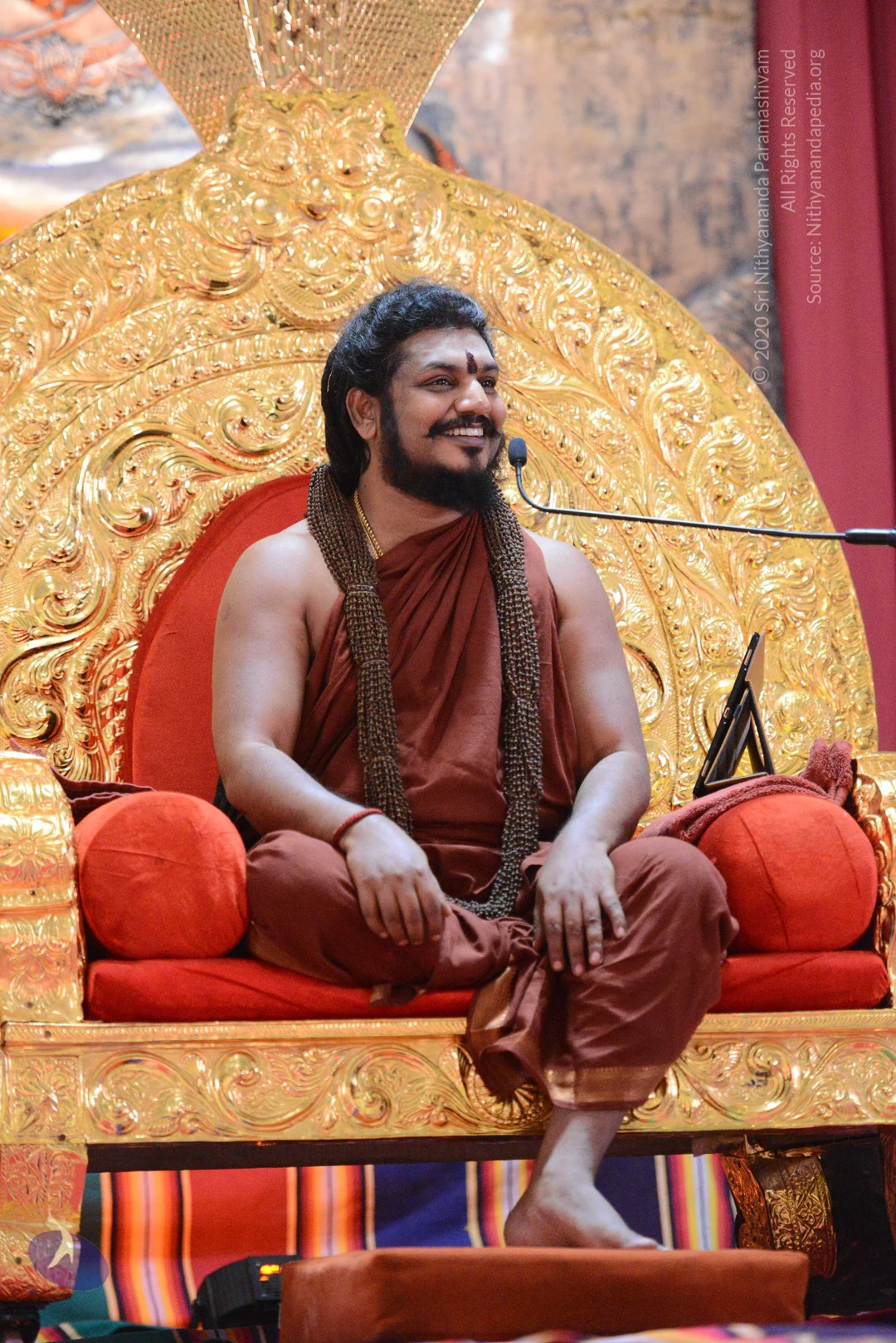
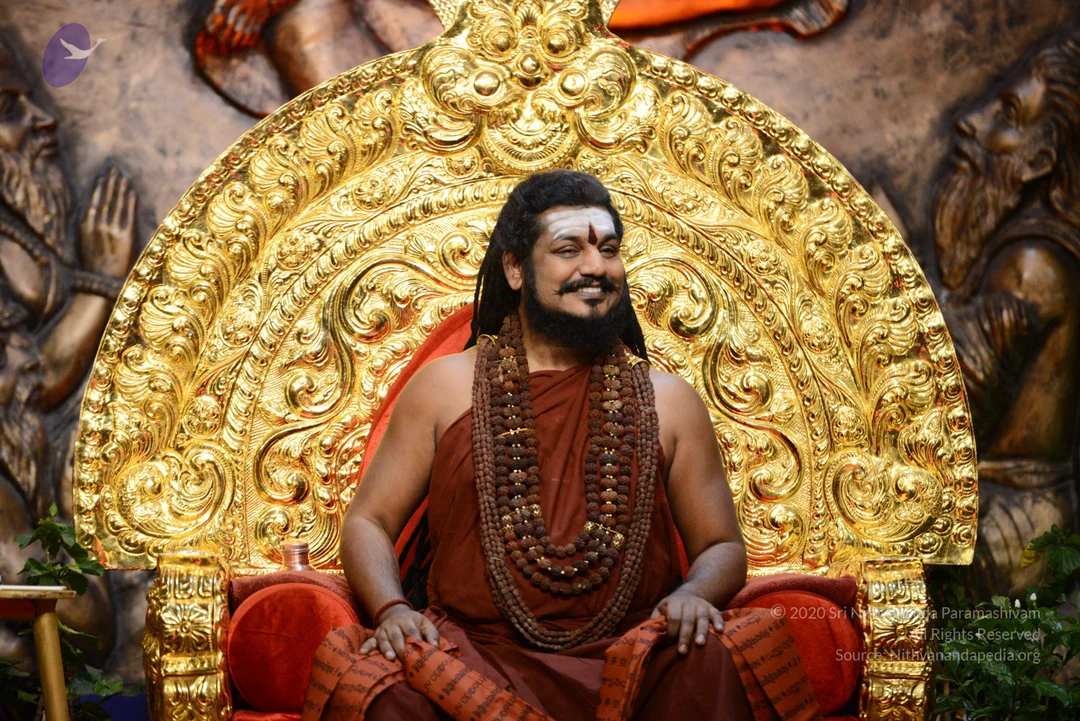
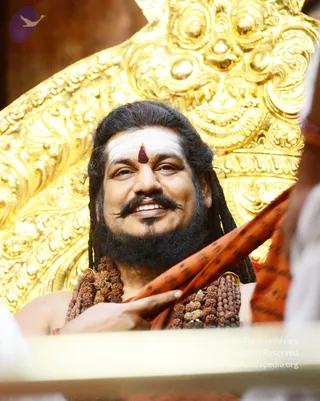
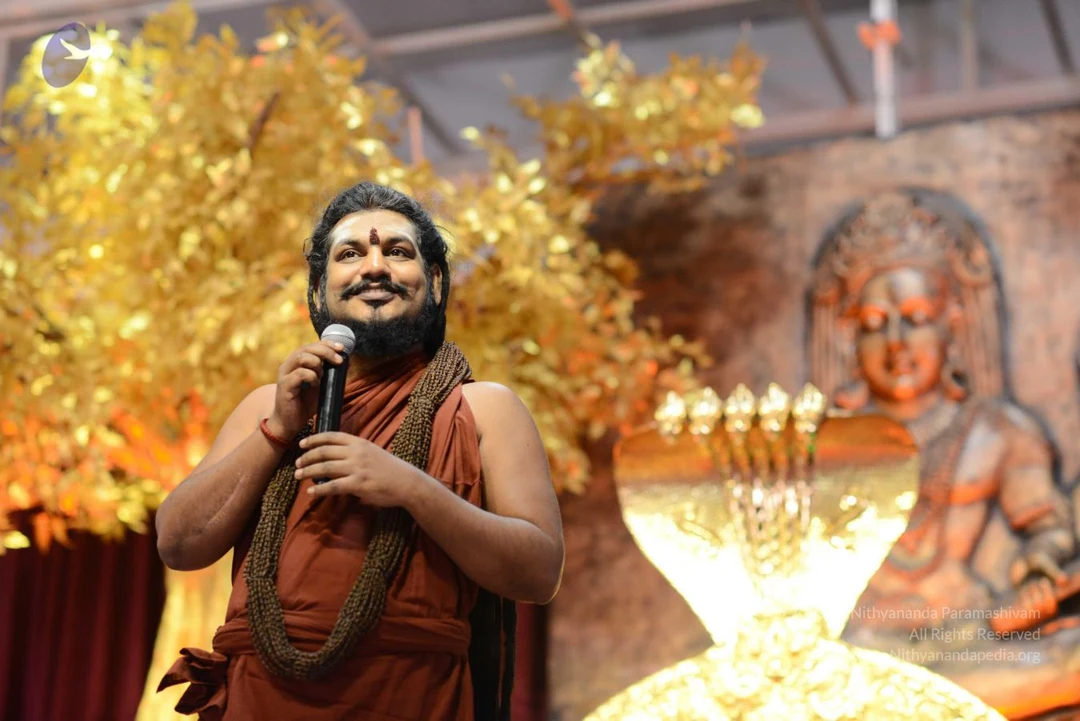
Close-up photograph of a smiling man with long dark hair, a full beard and moustache, wearing a white tilak with a red bindi-style mark on his forehead. He wears layered rudraksha mala necklaces and an orange-saffron cloth draped over his shoulder, seated before an ornate gold-embossed throne with repoussé scrollwork. Only one person is physically visible.