Skip to content
Friday

1 March 2013

Dated photos
309
Source pages
1
Media
3
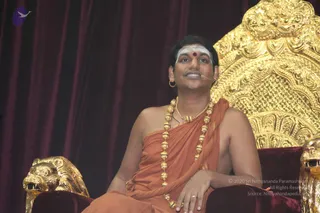
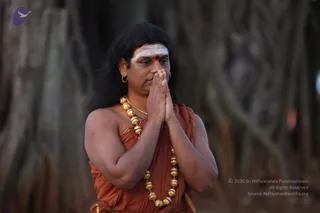
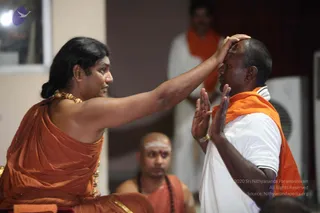
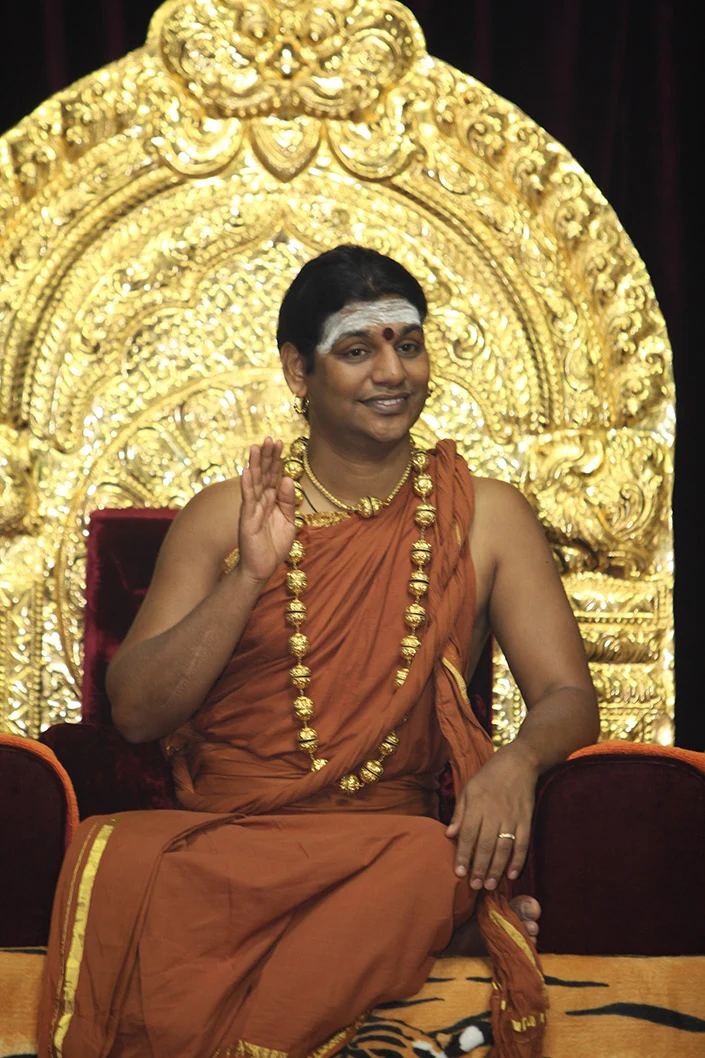
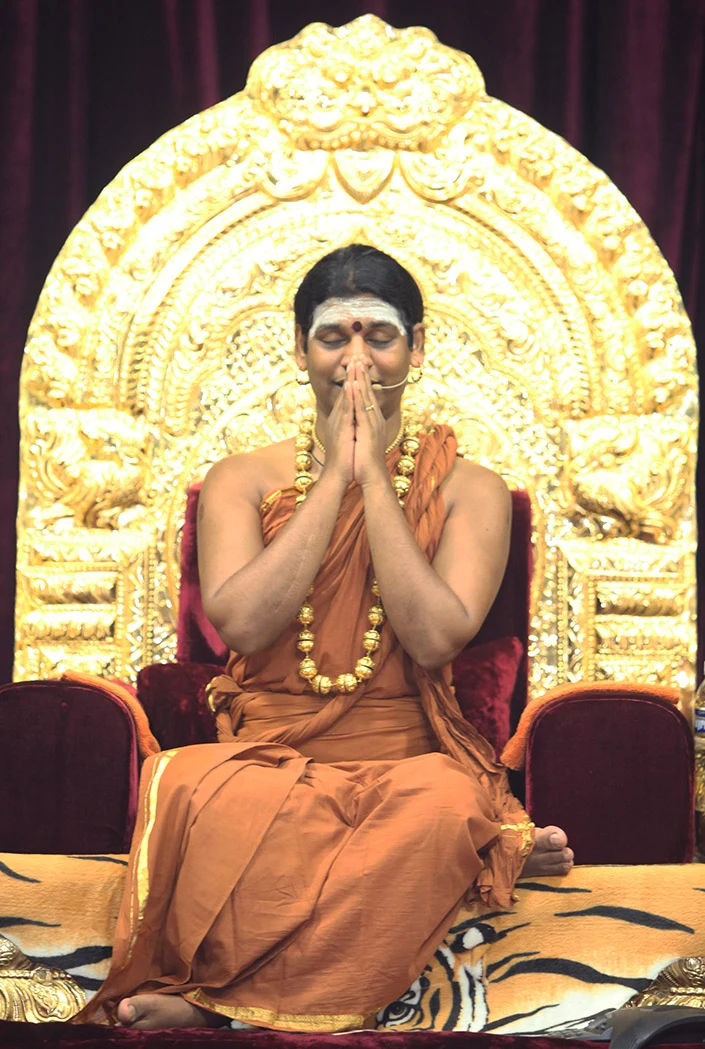
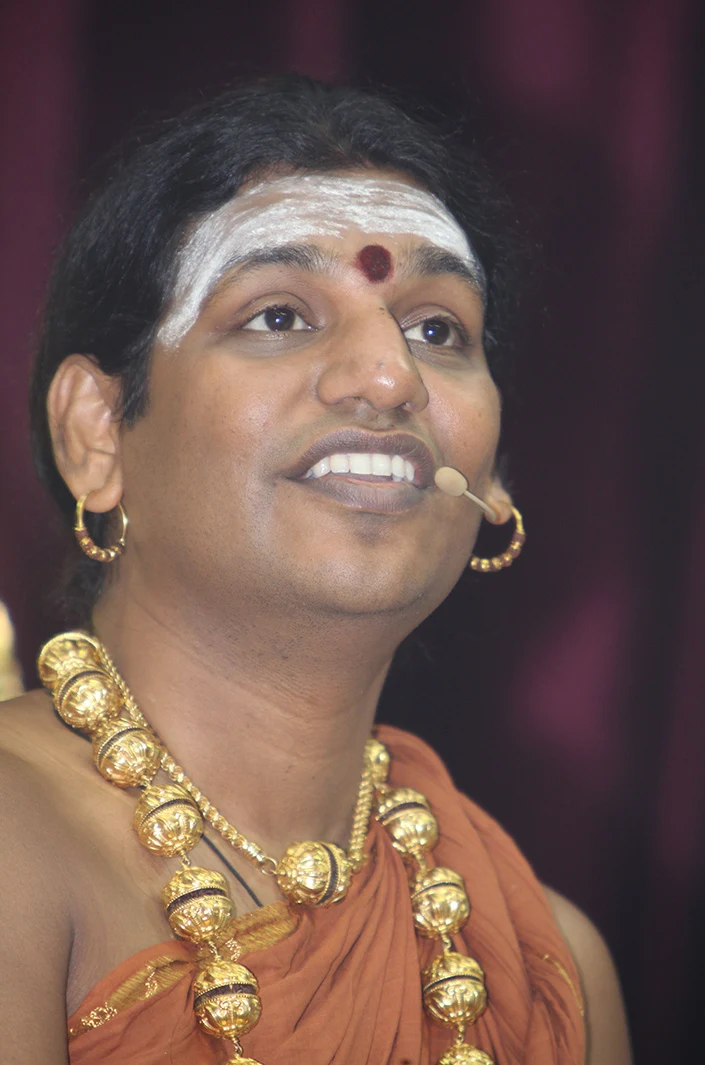
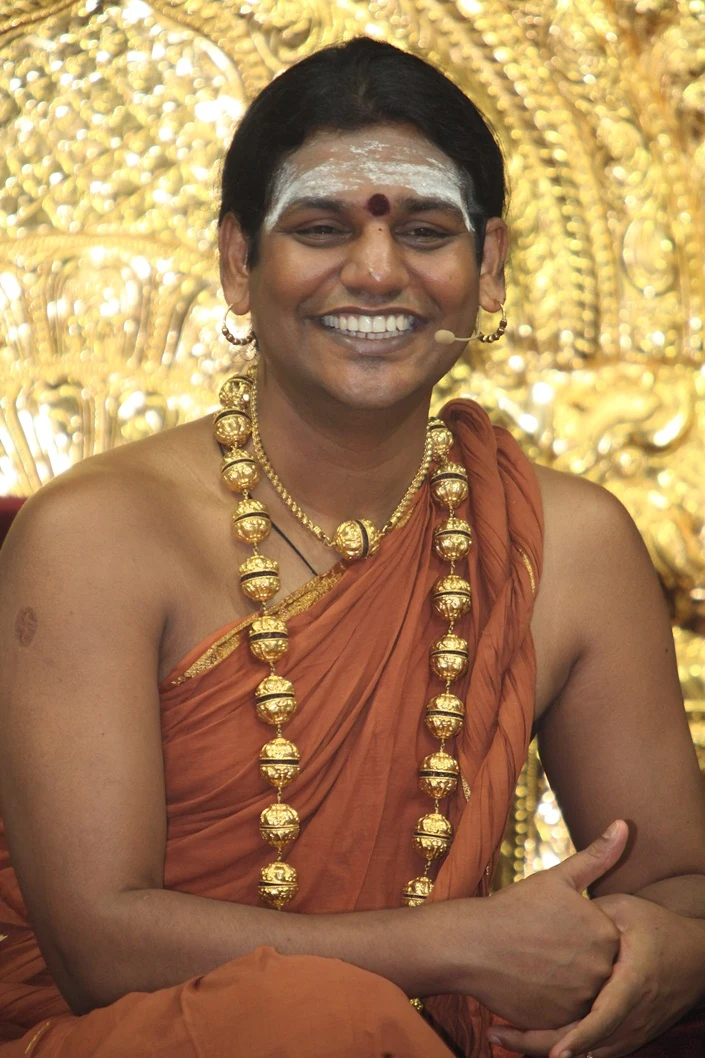
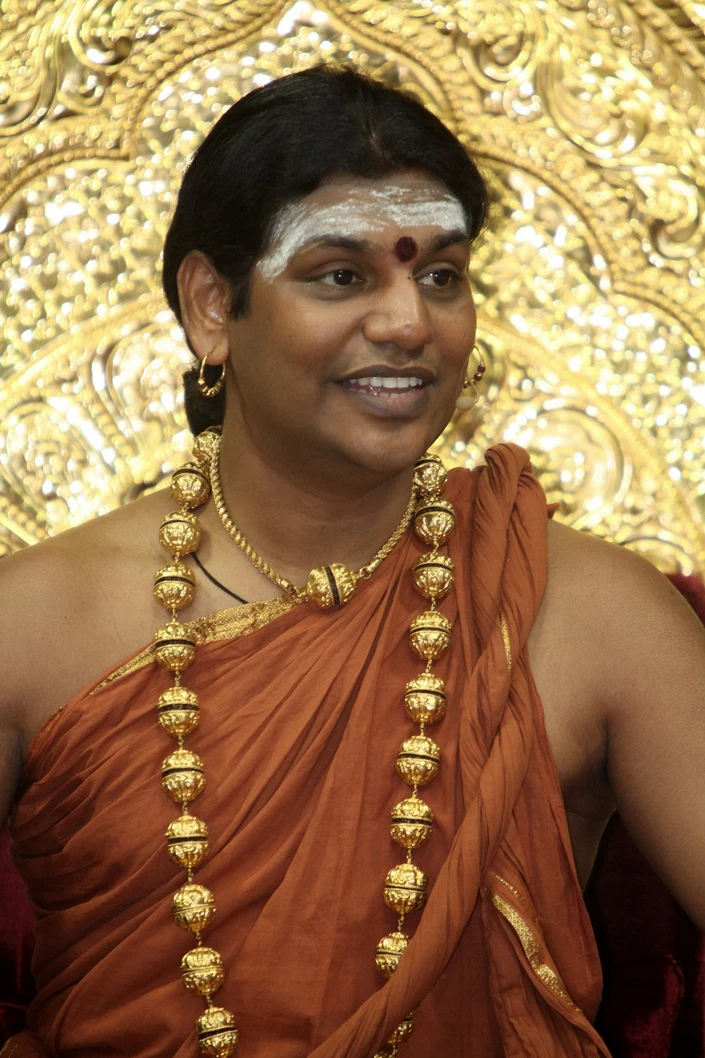
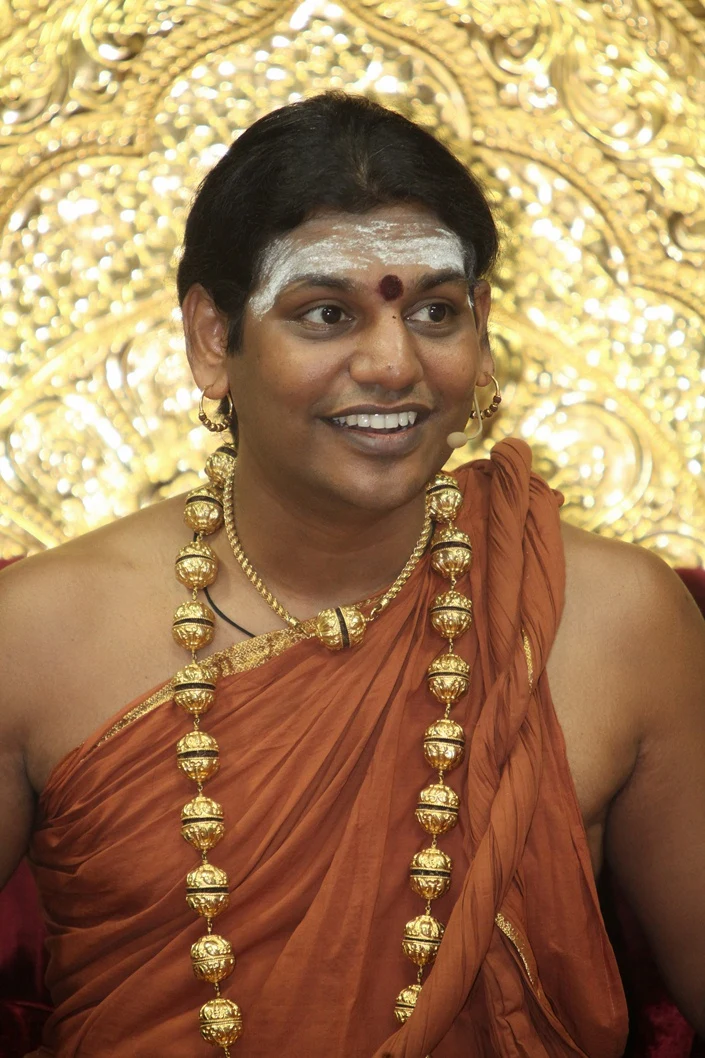
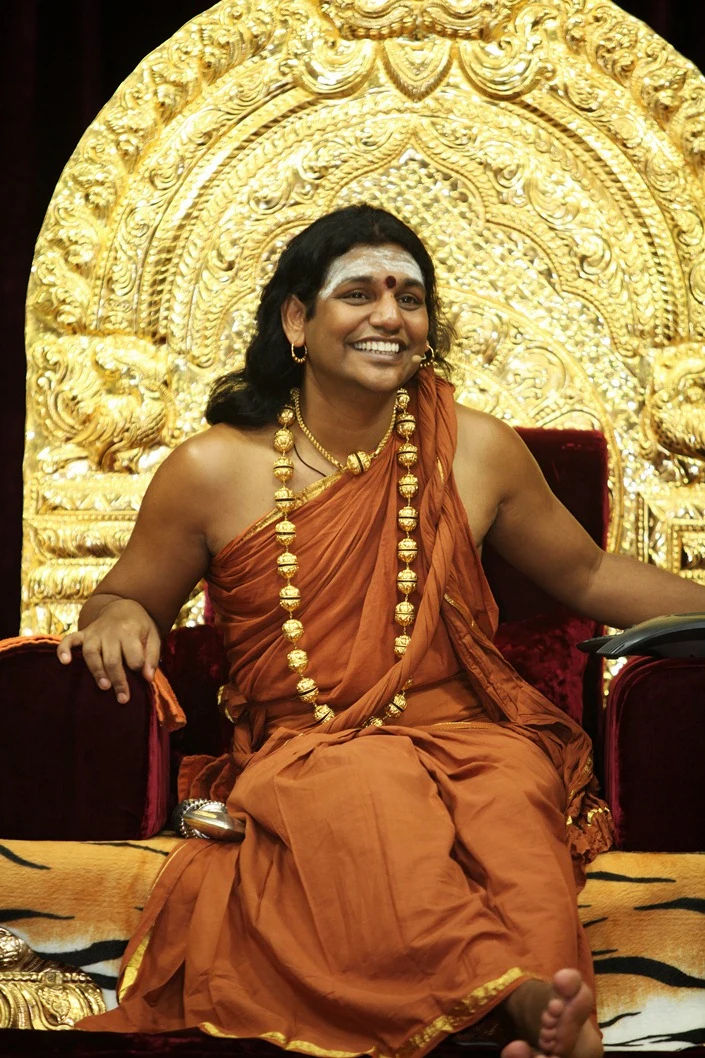
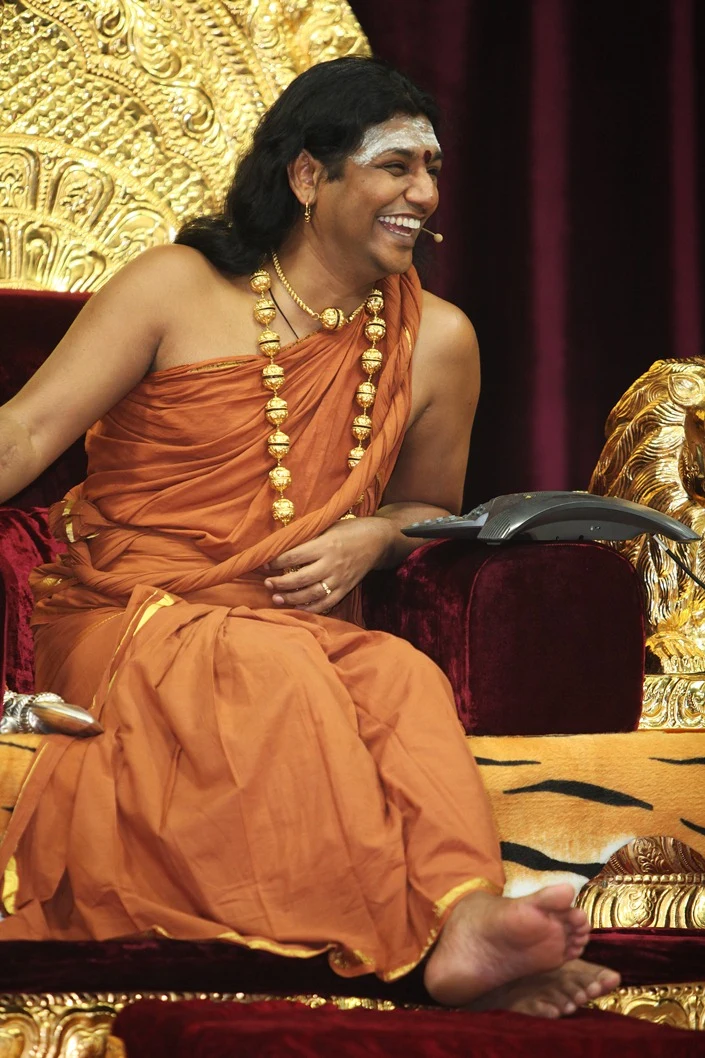
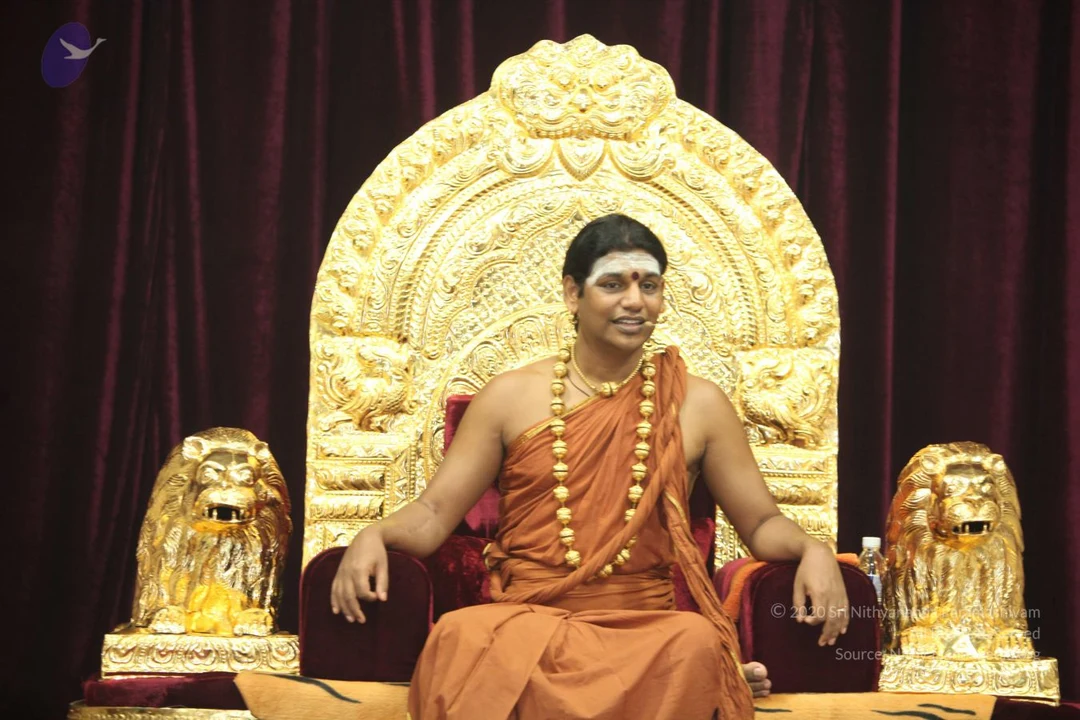
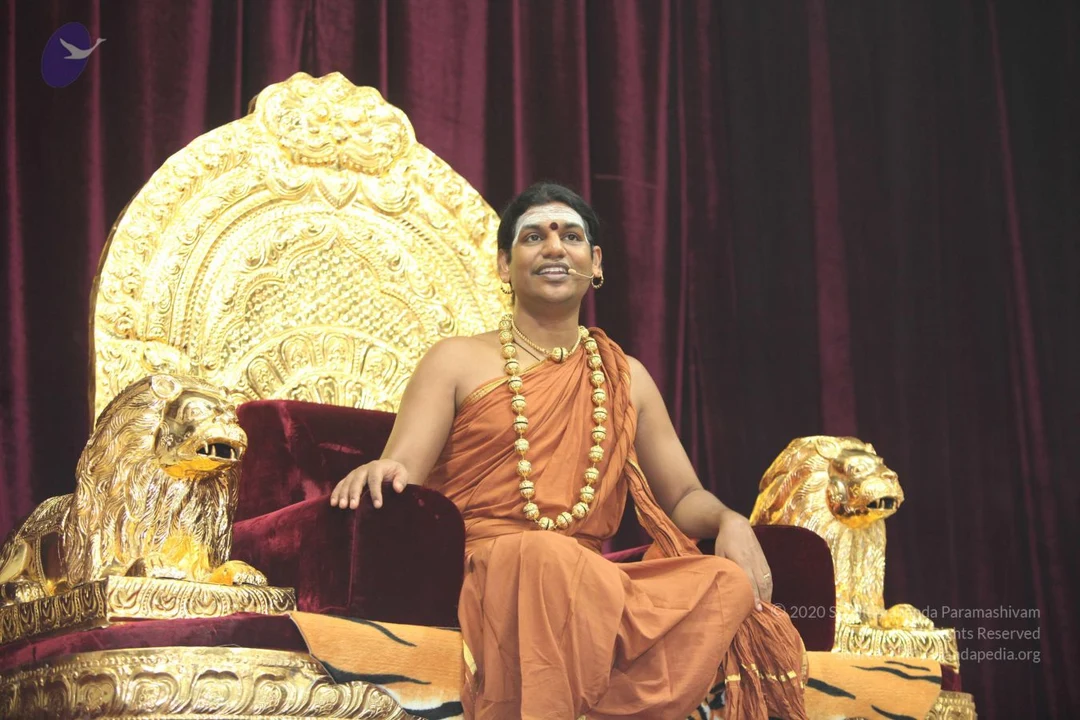
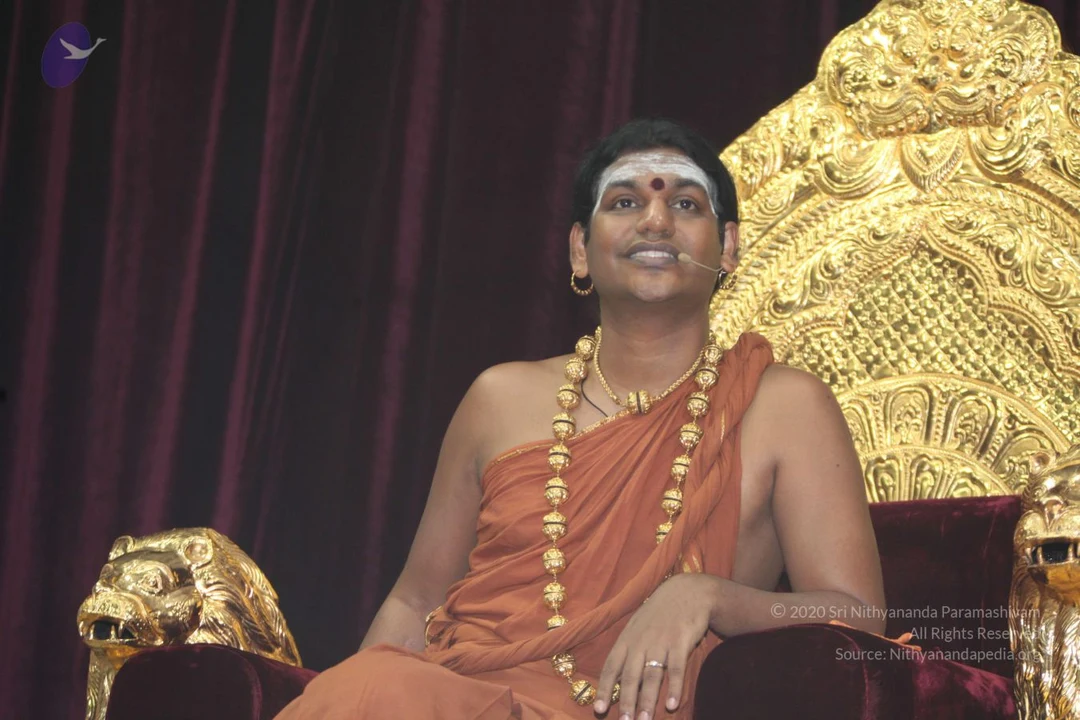
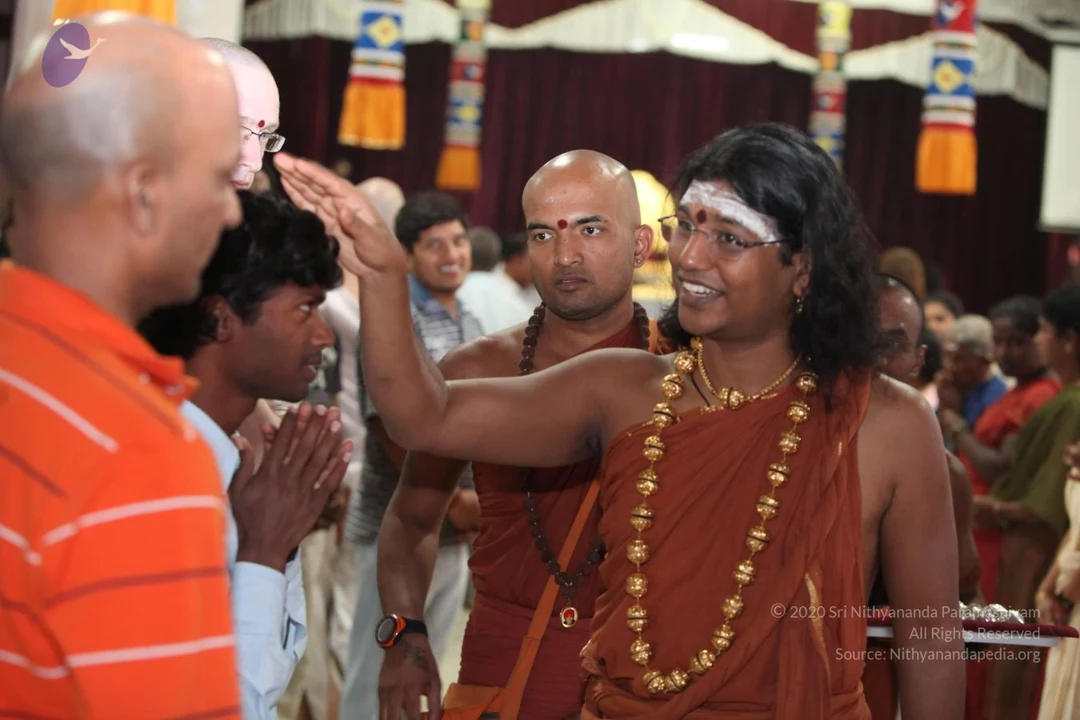
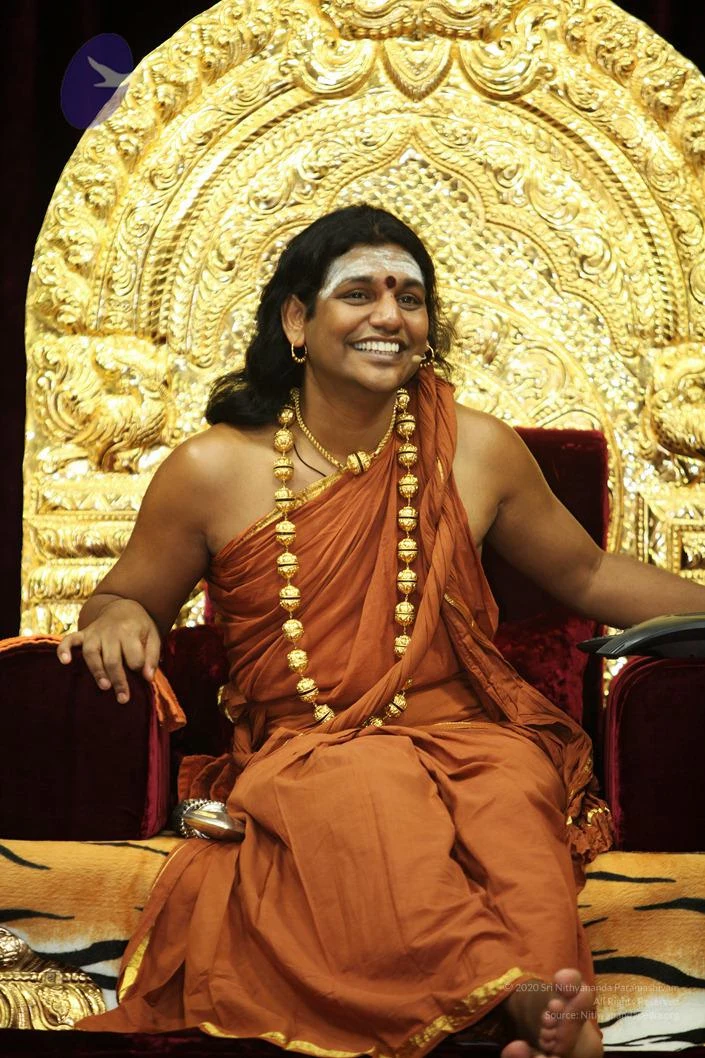
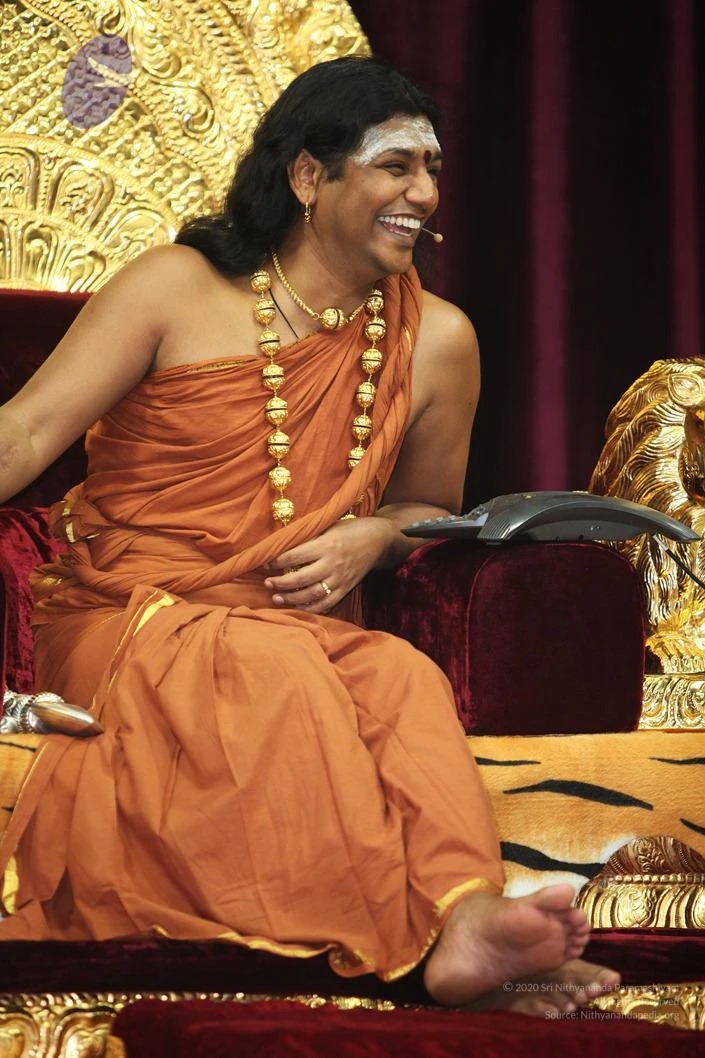
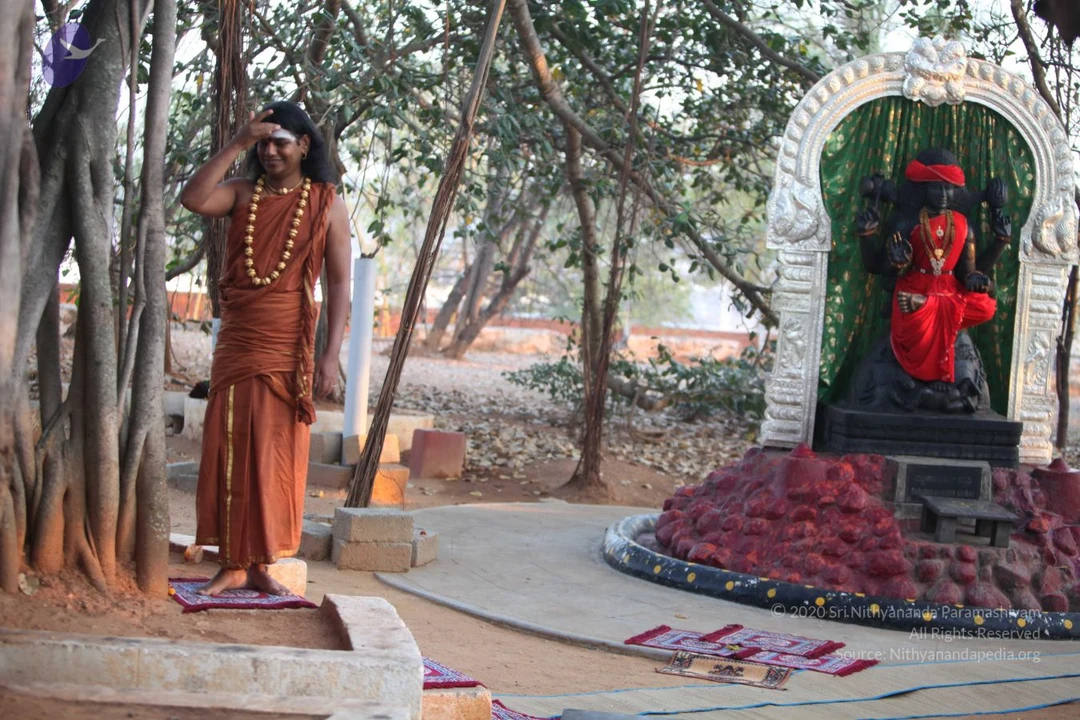
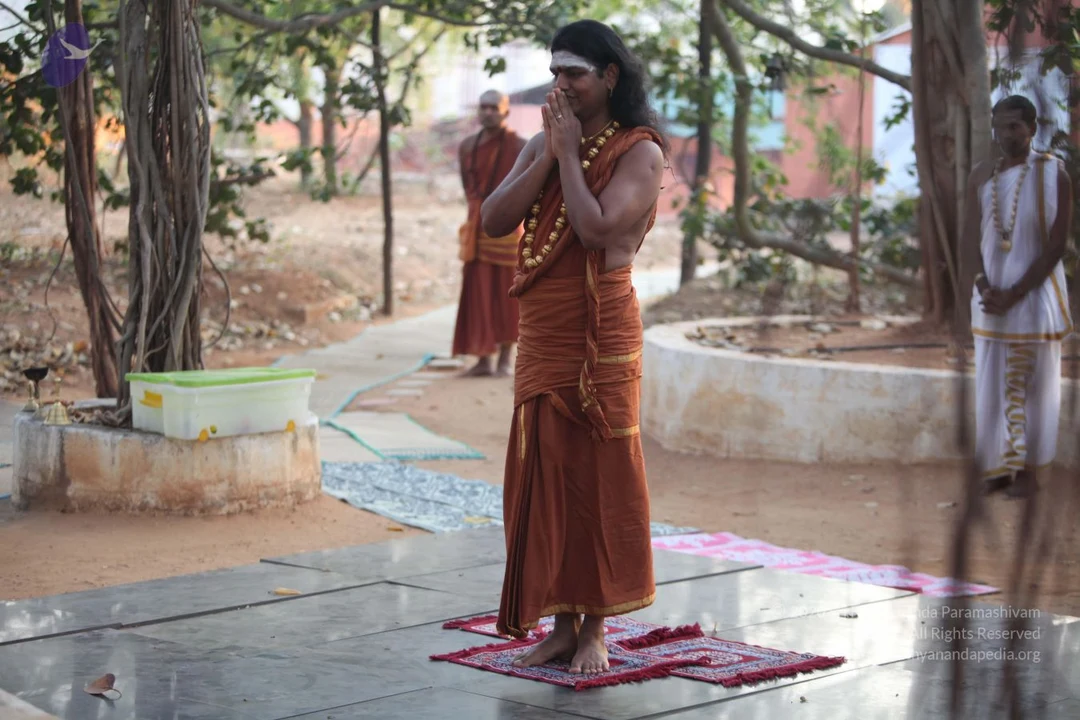
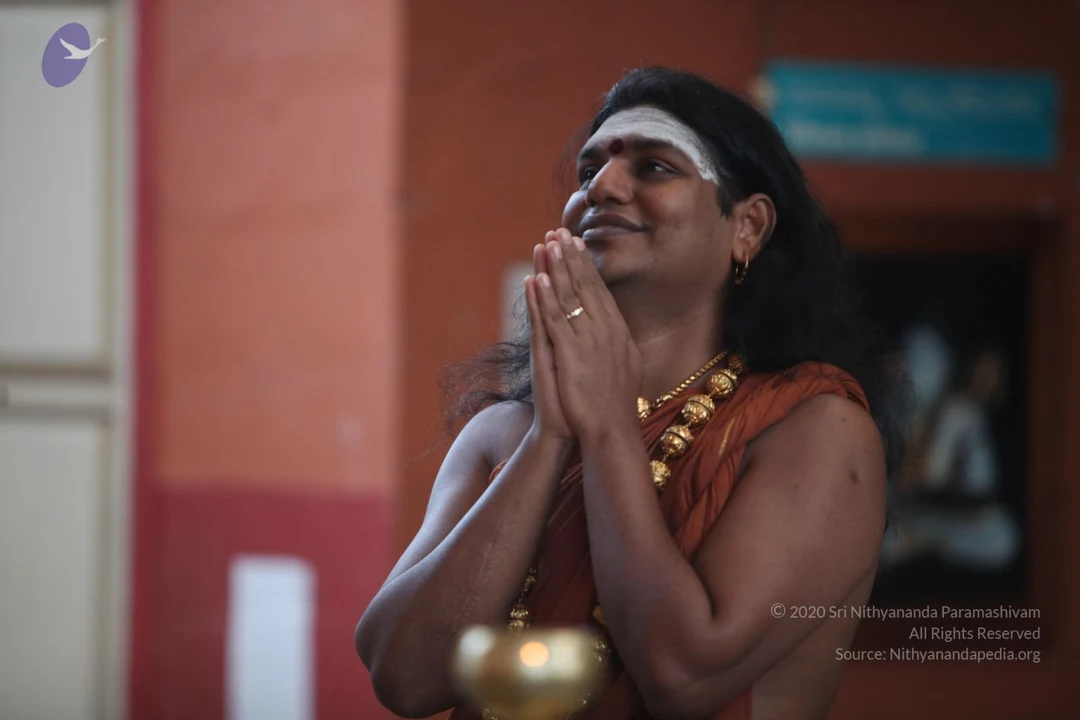
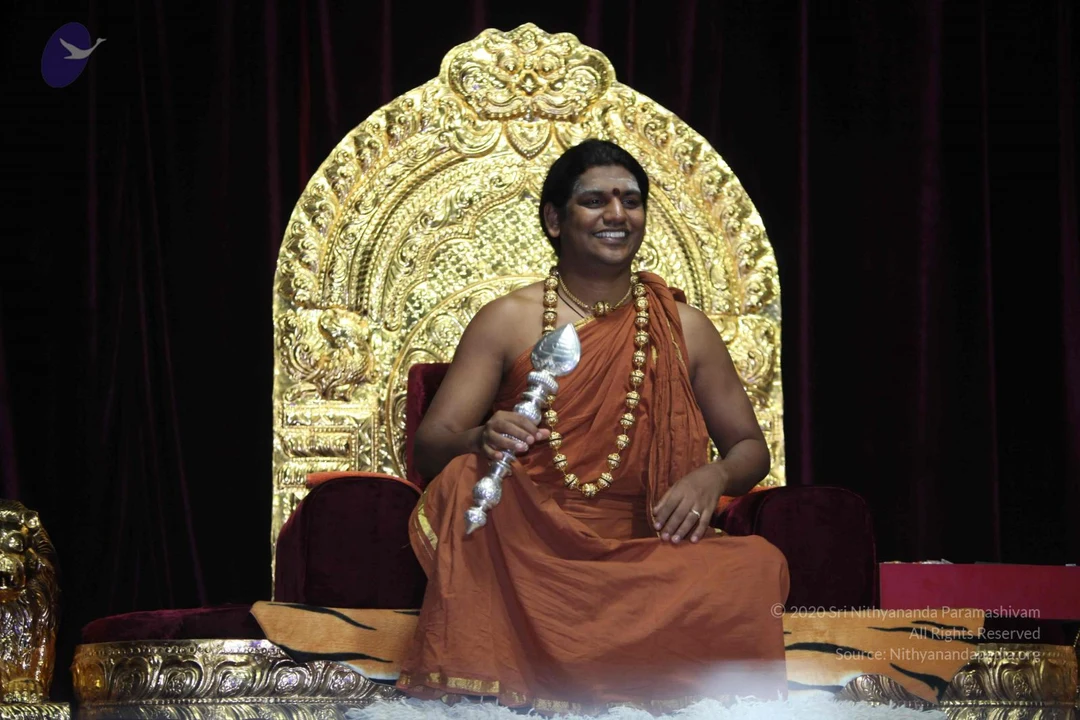
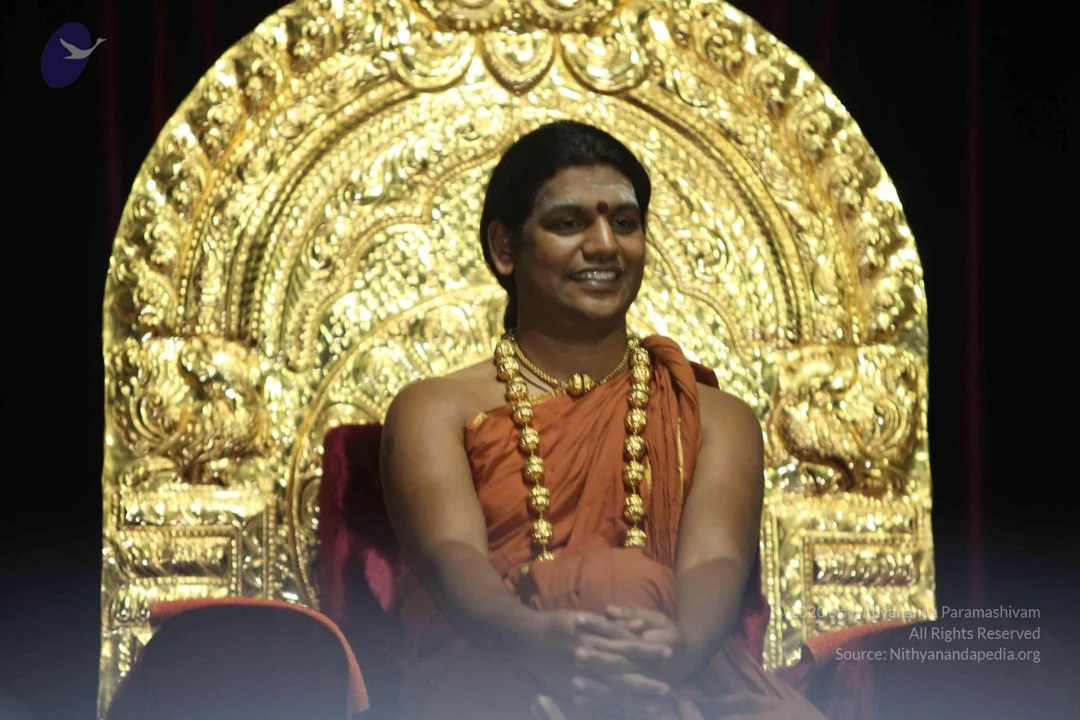
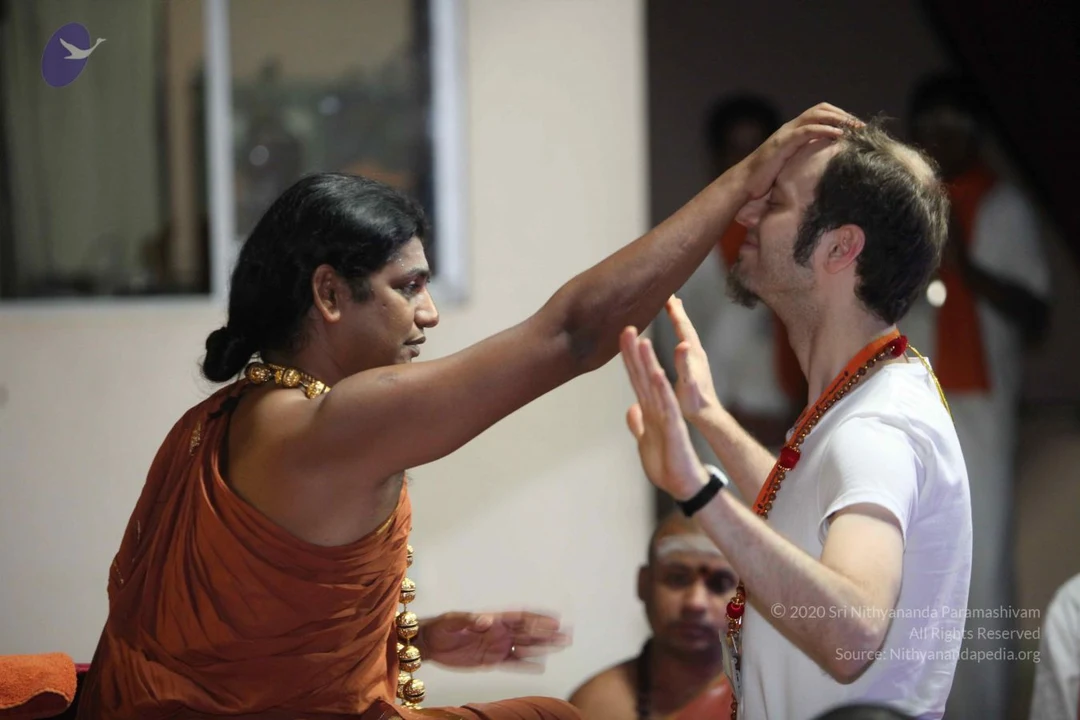
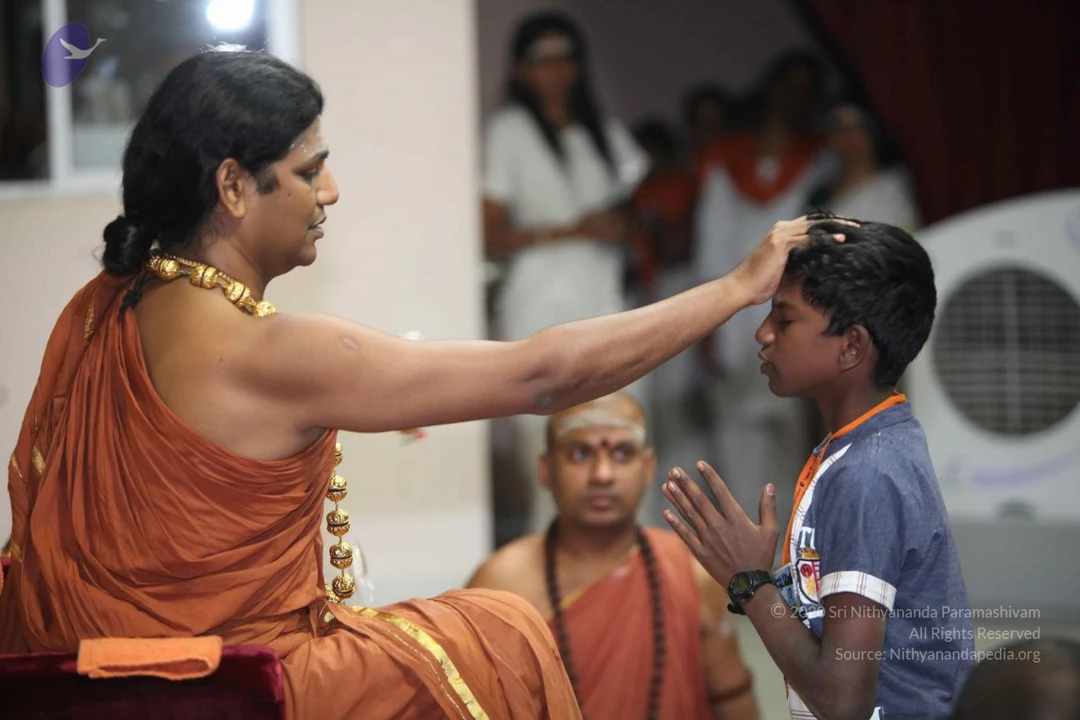
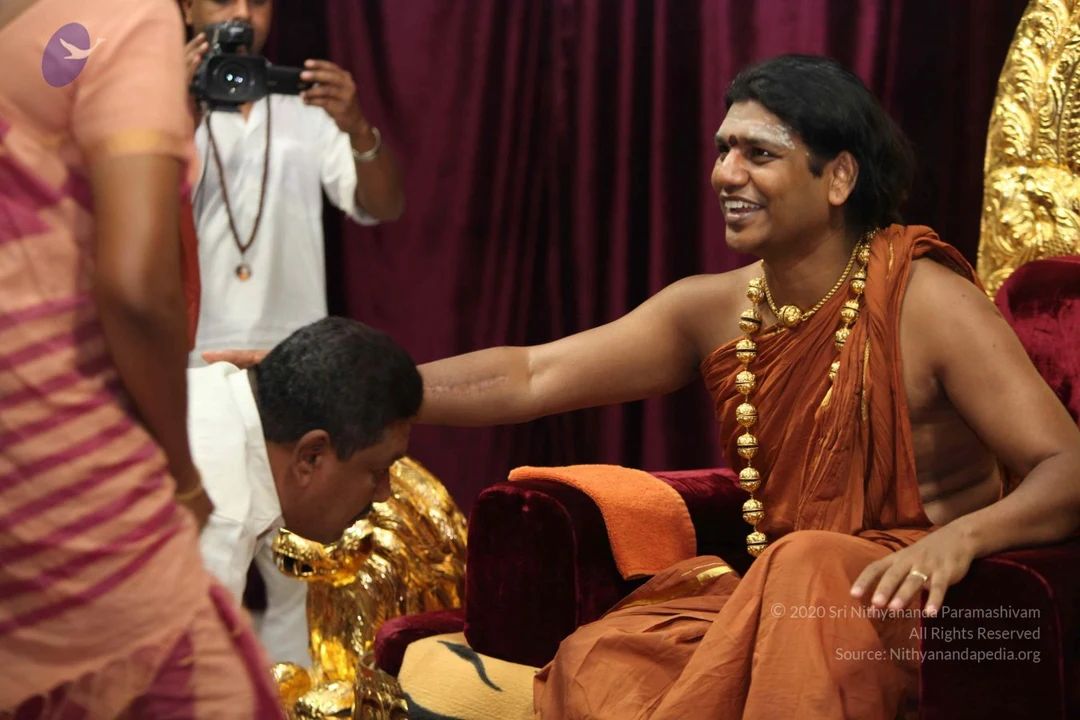
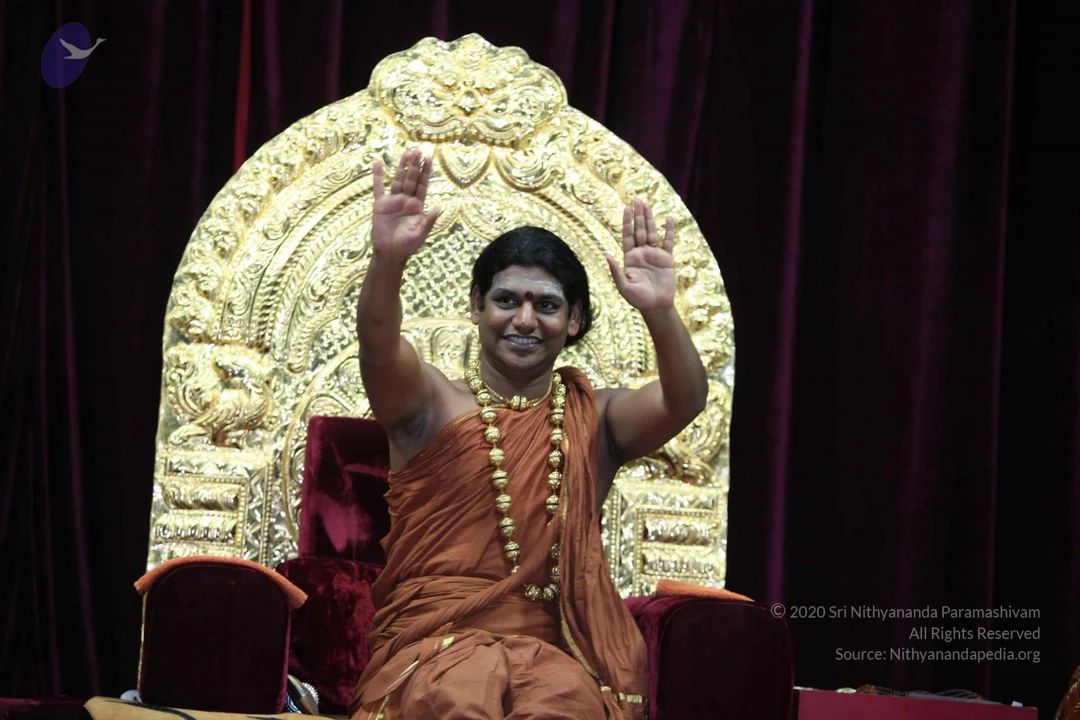
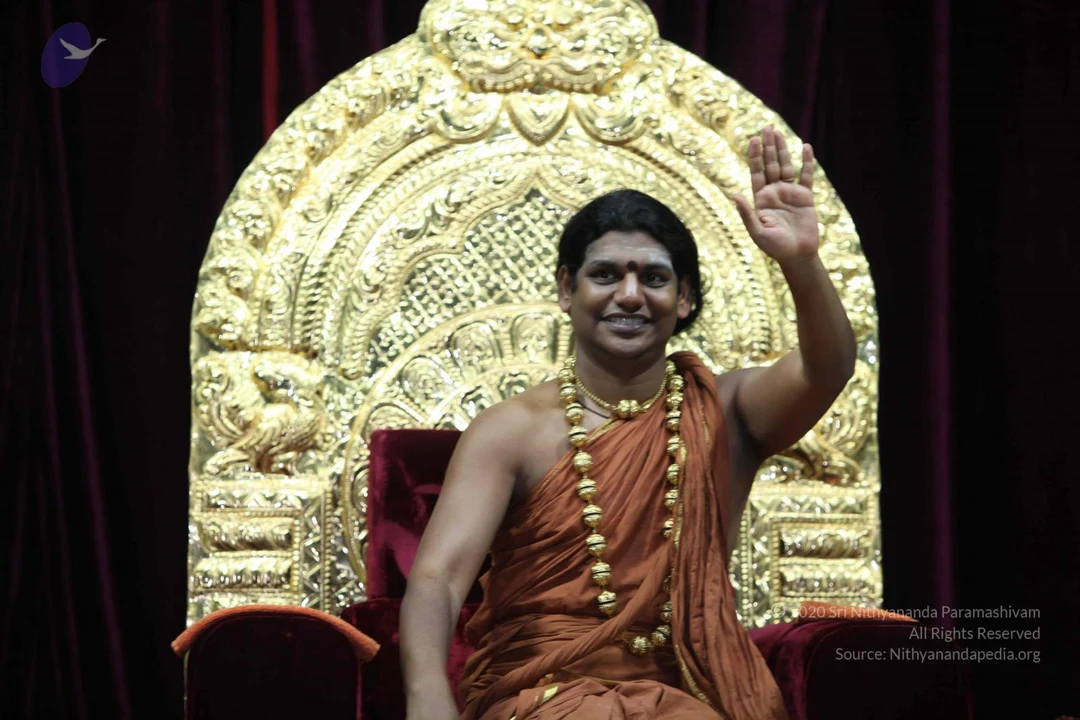
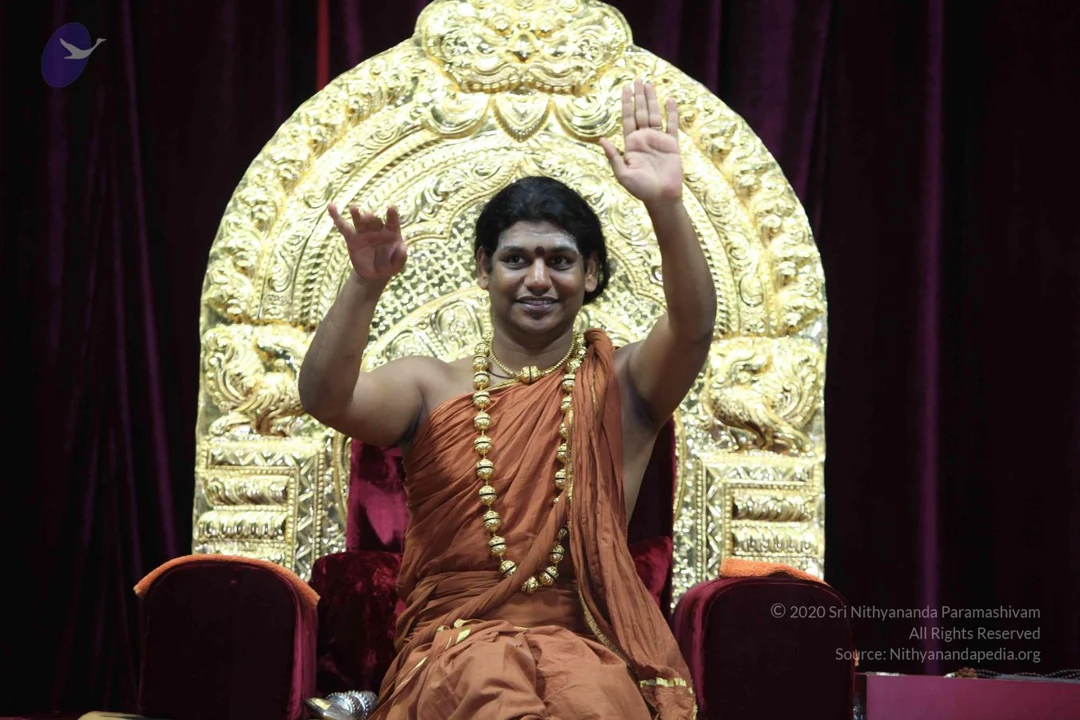
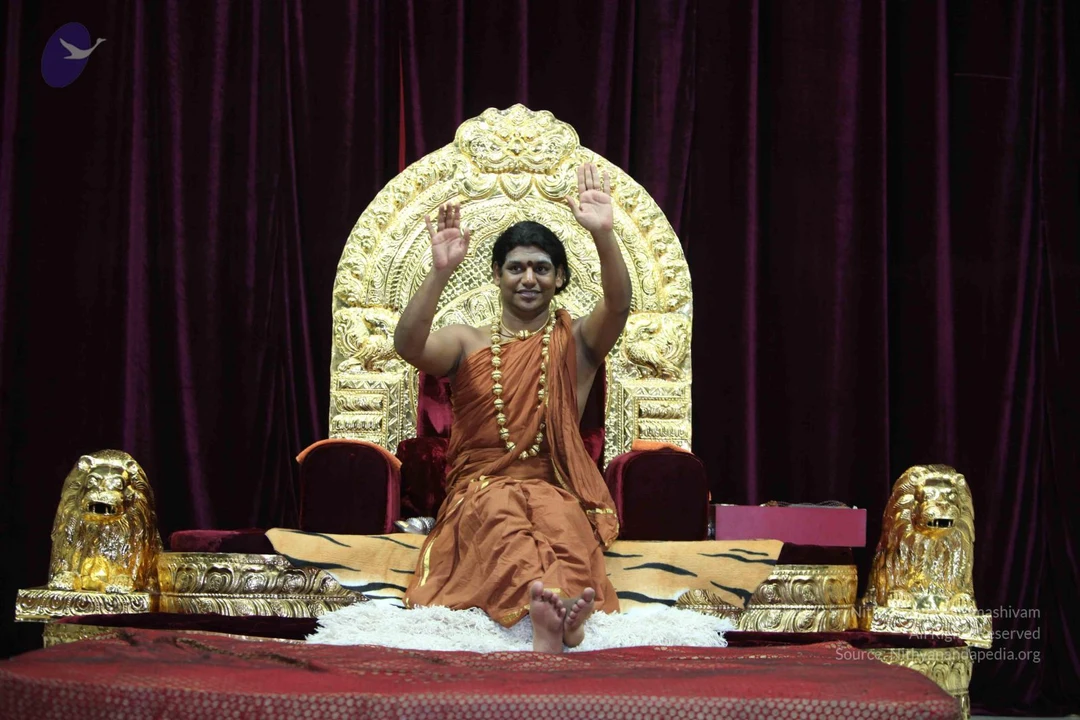
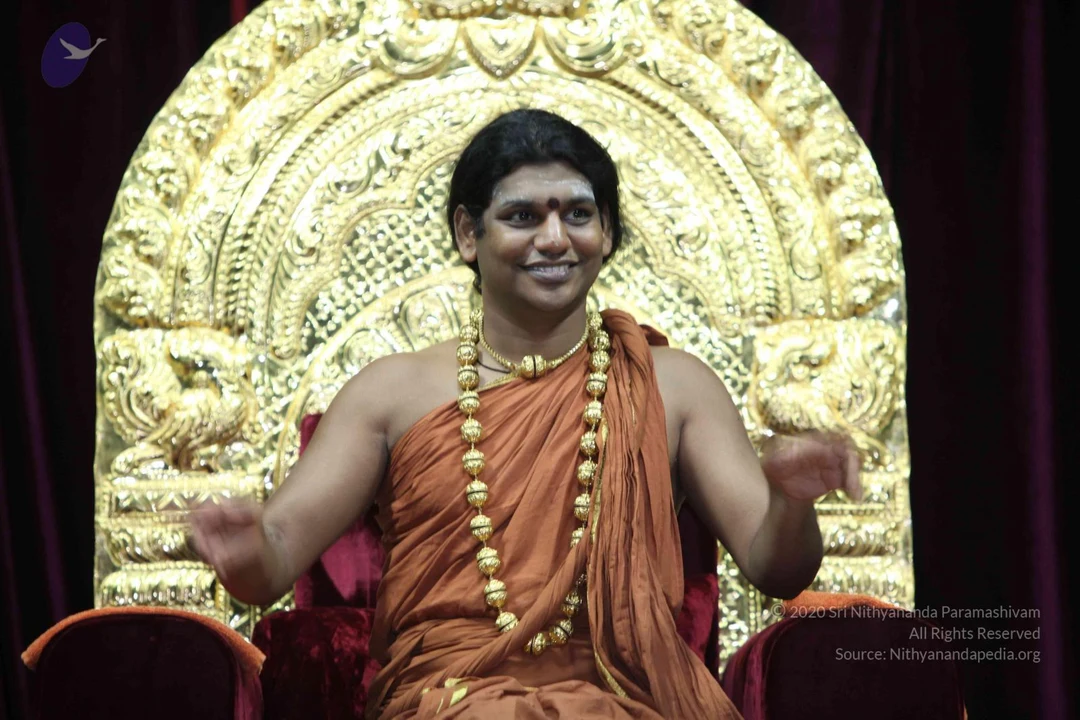
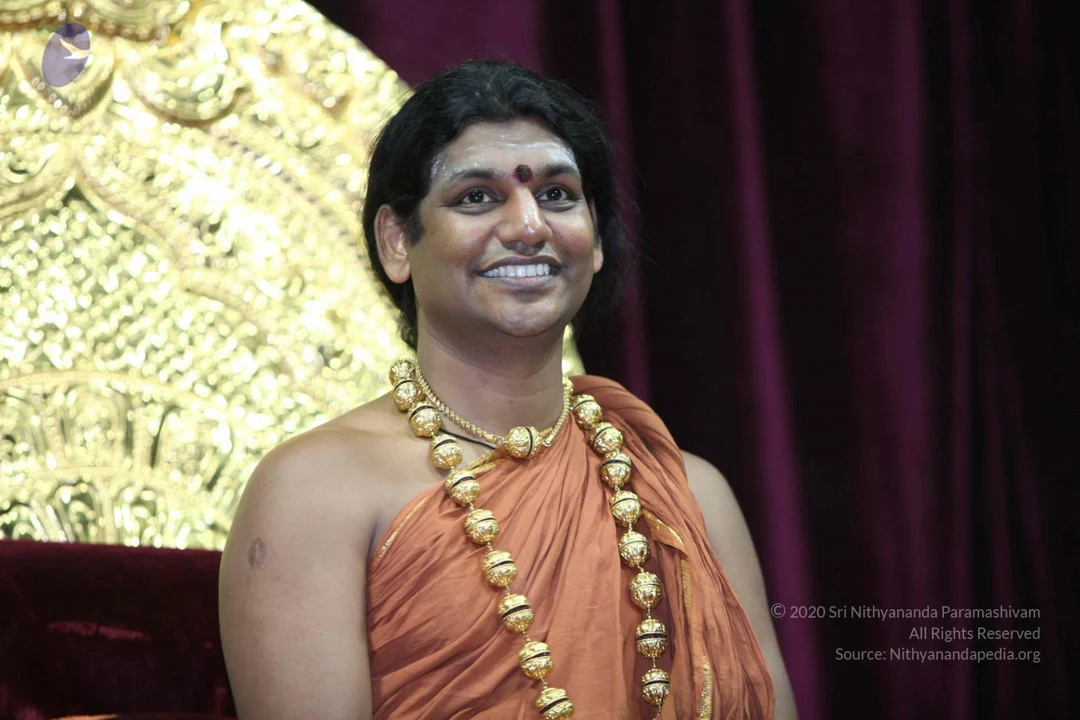
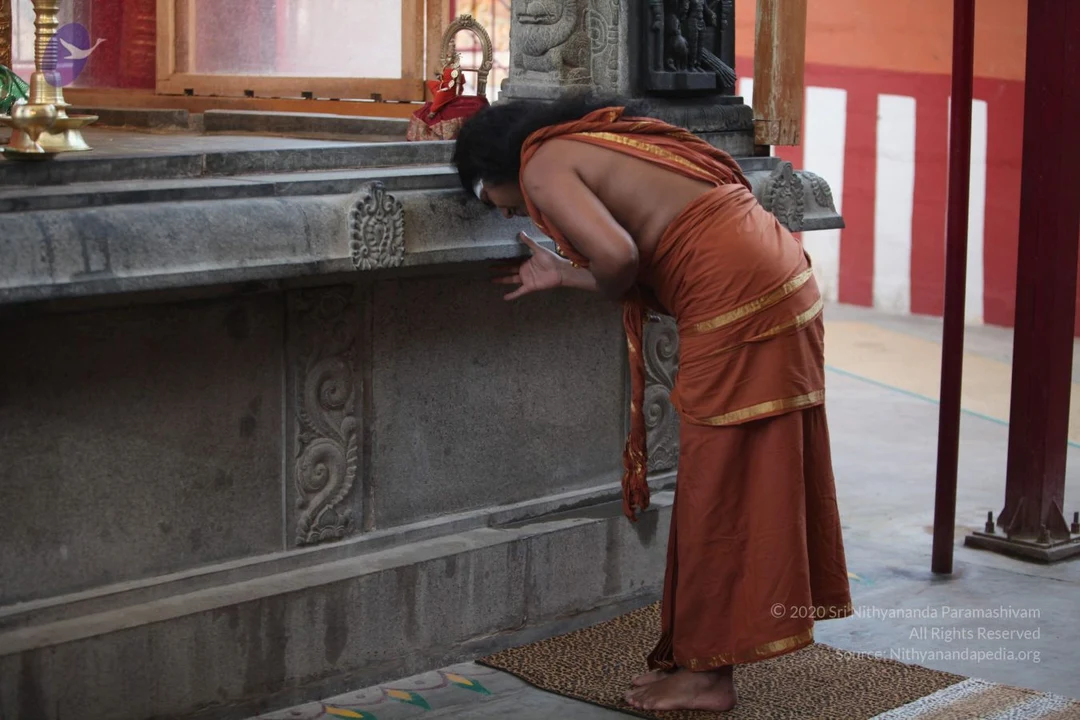
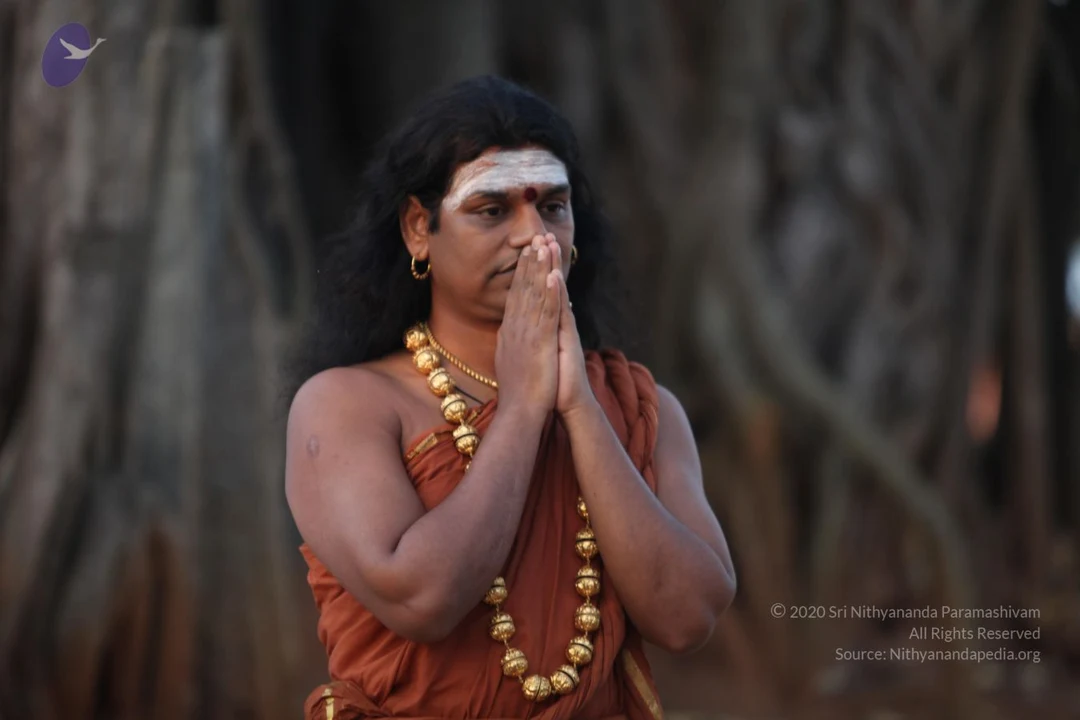
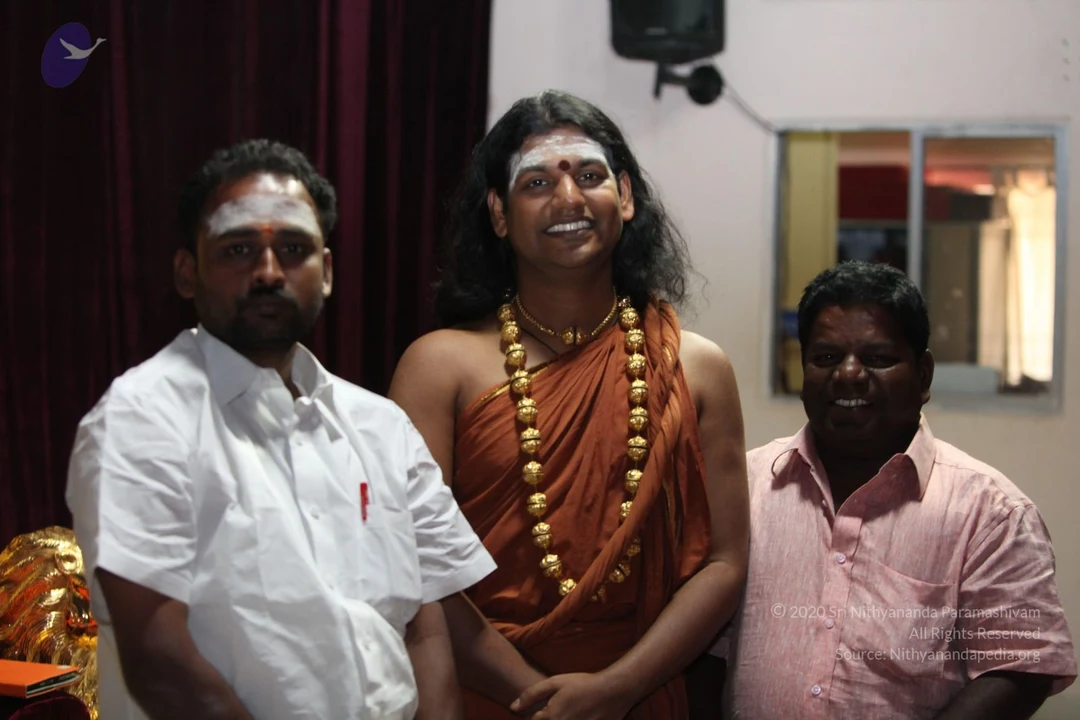
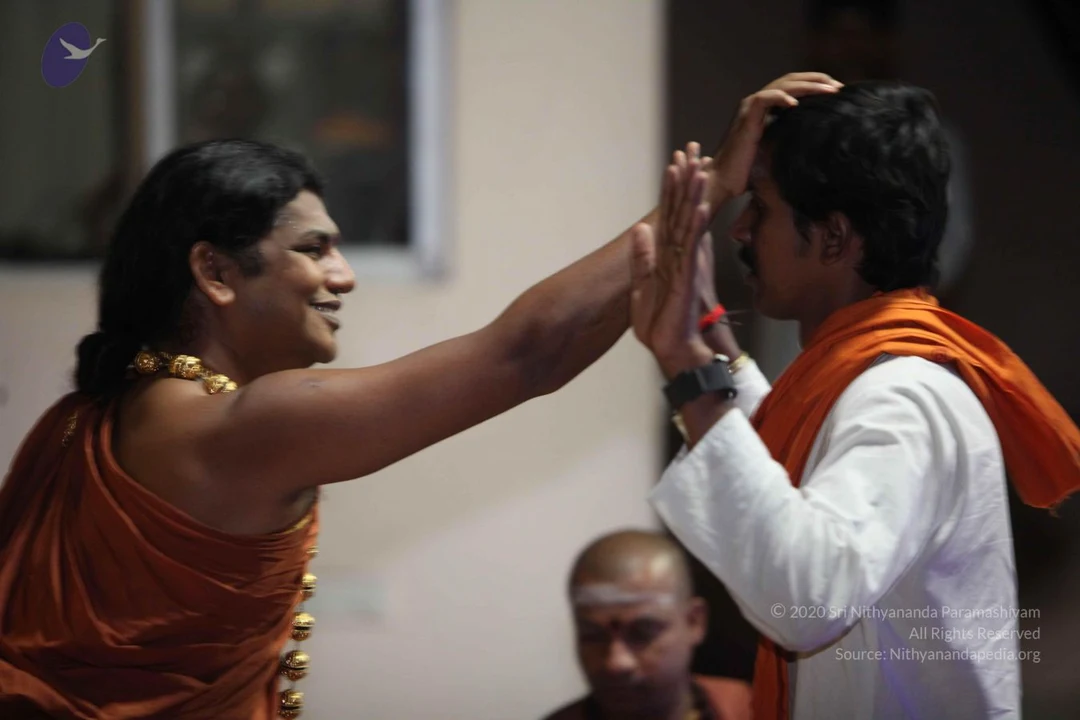
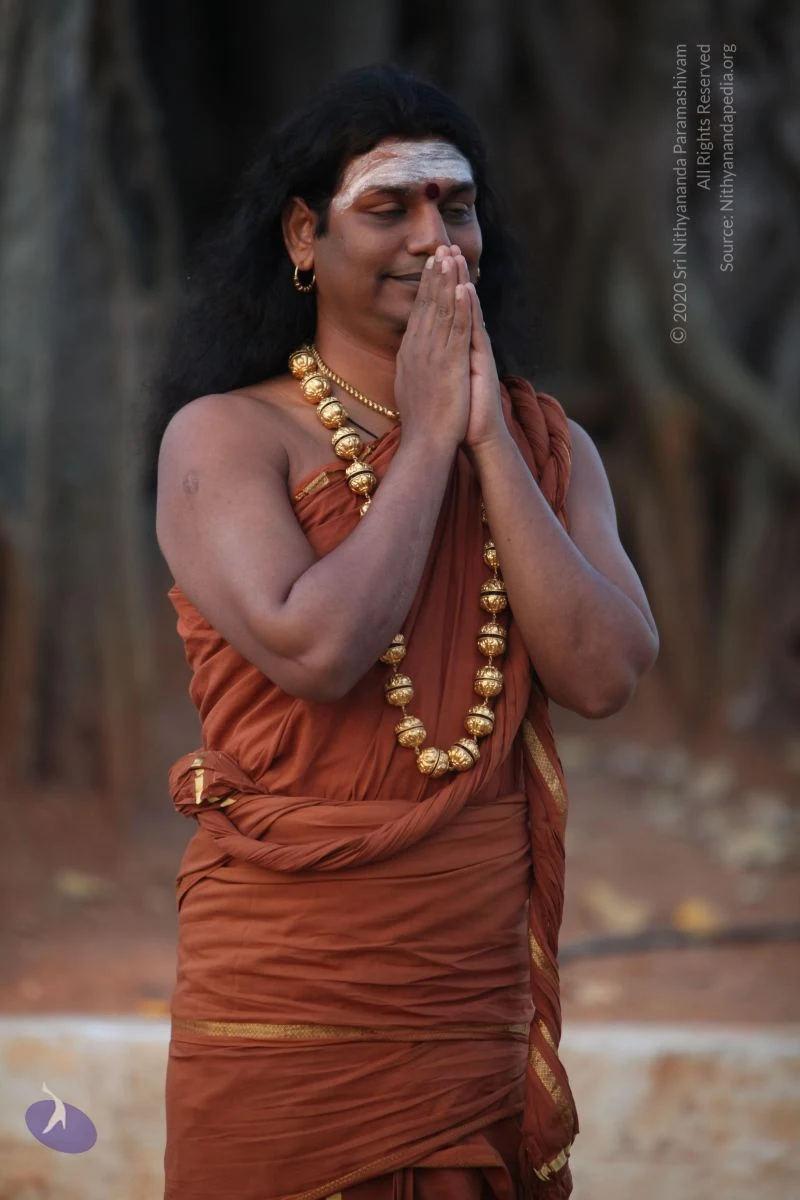
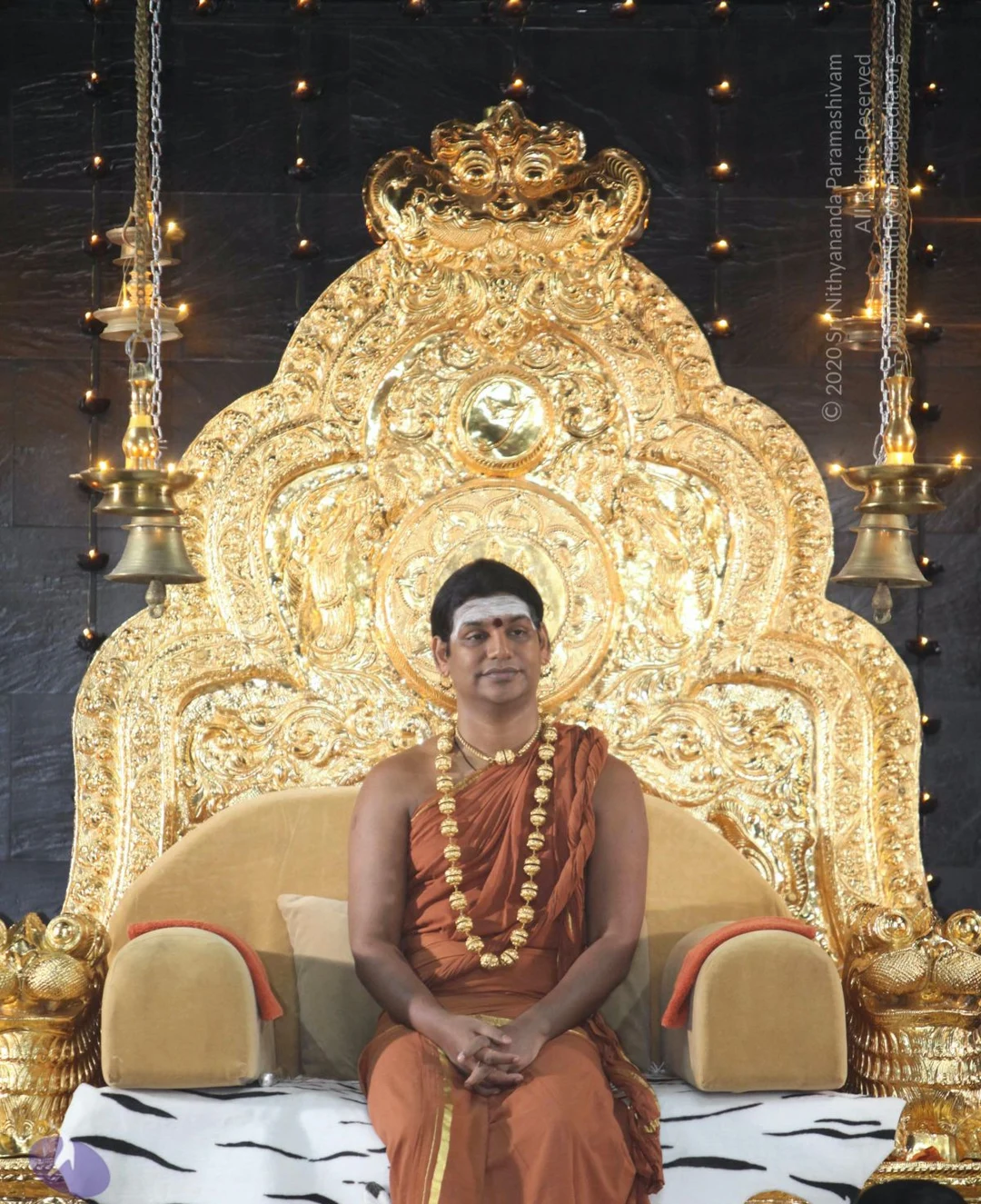
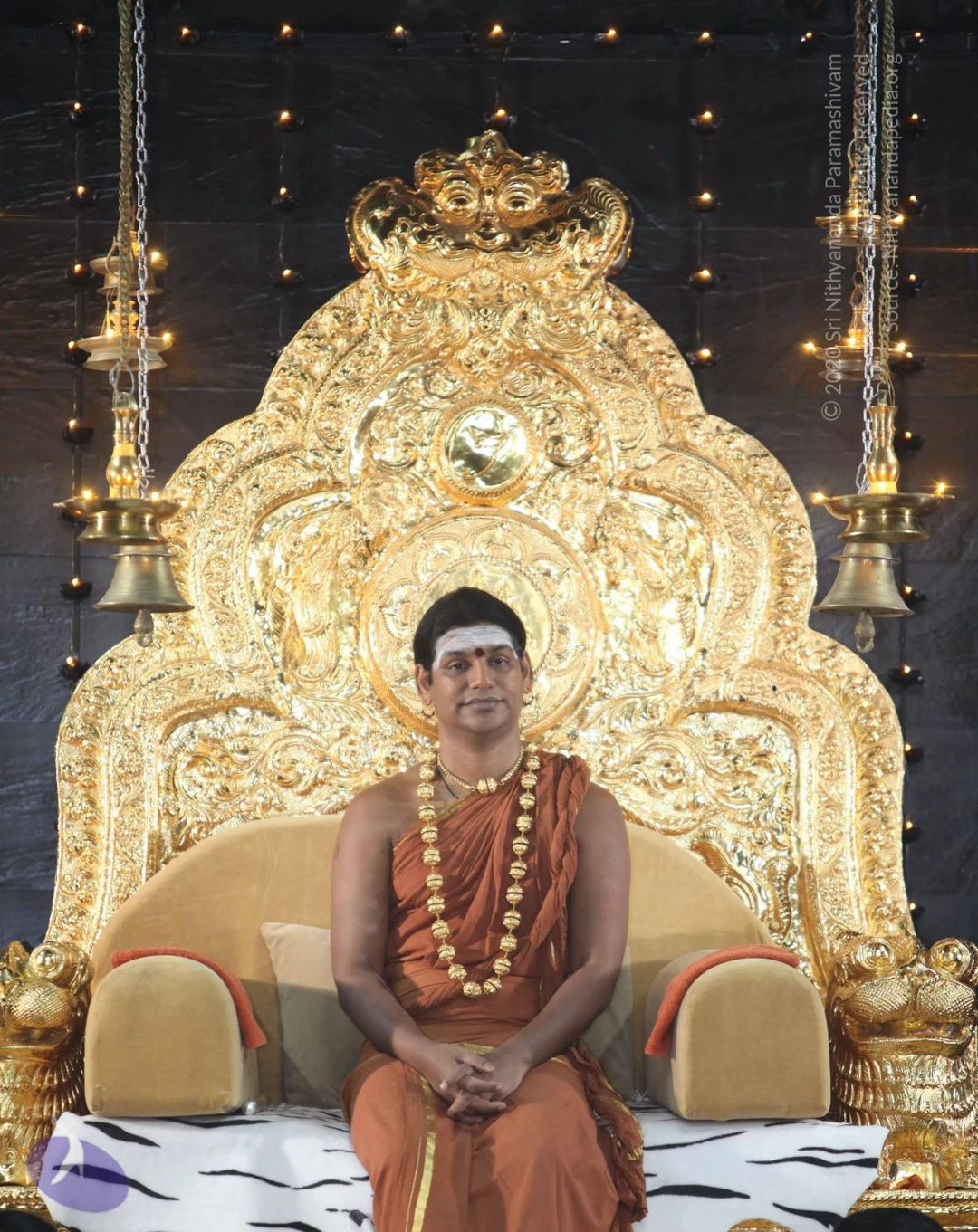
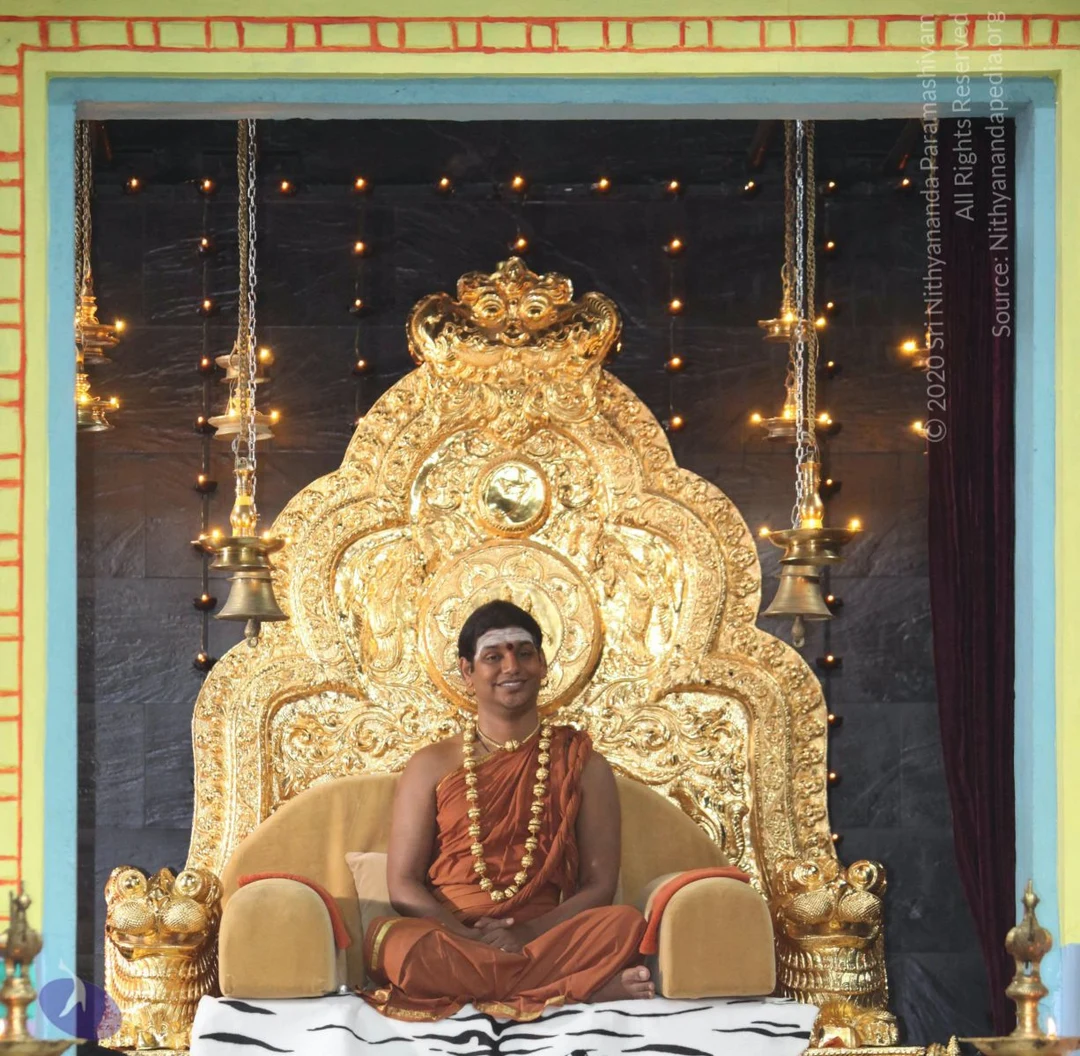
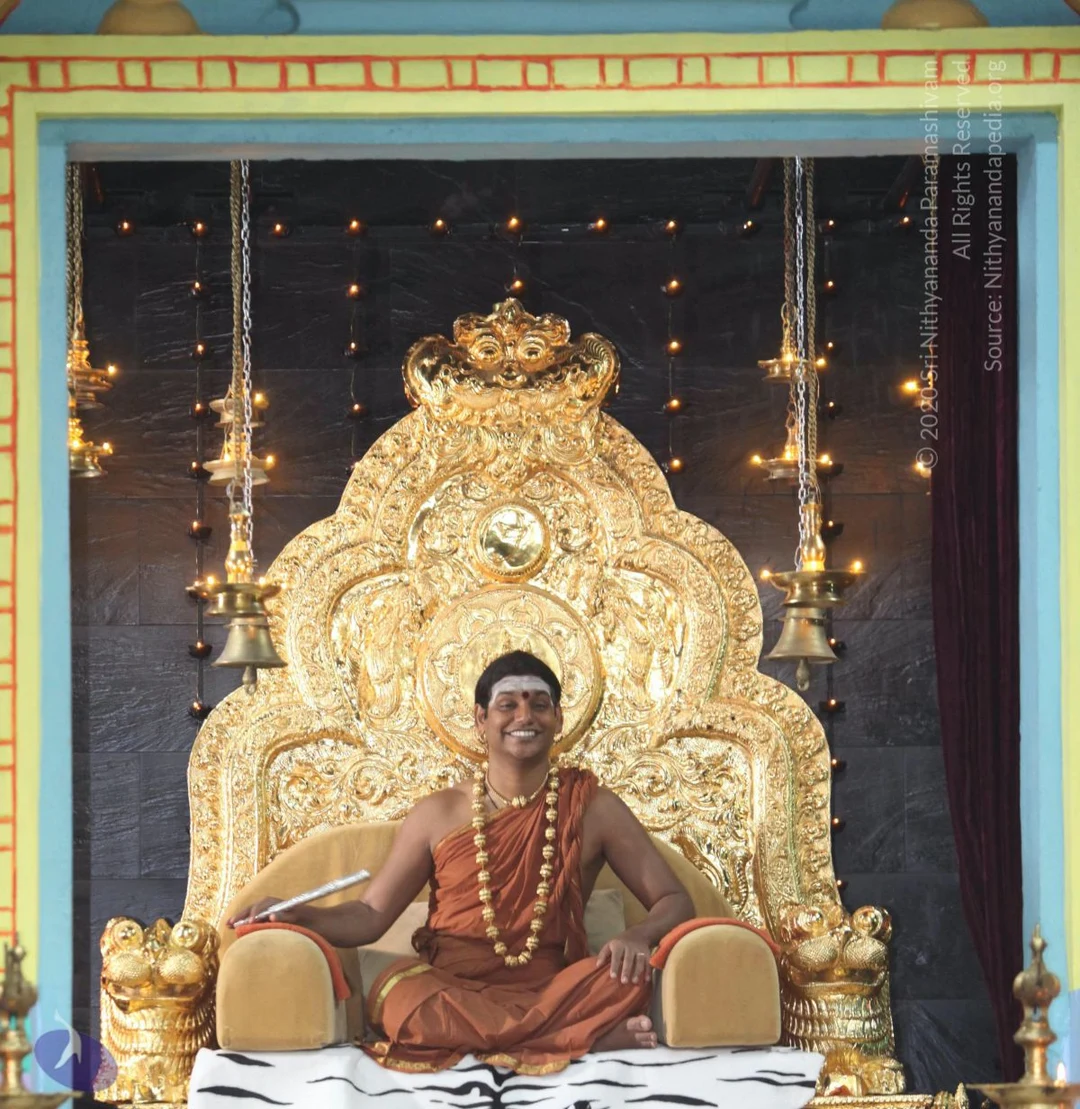
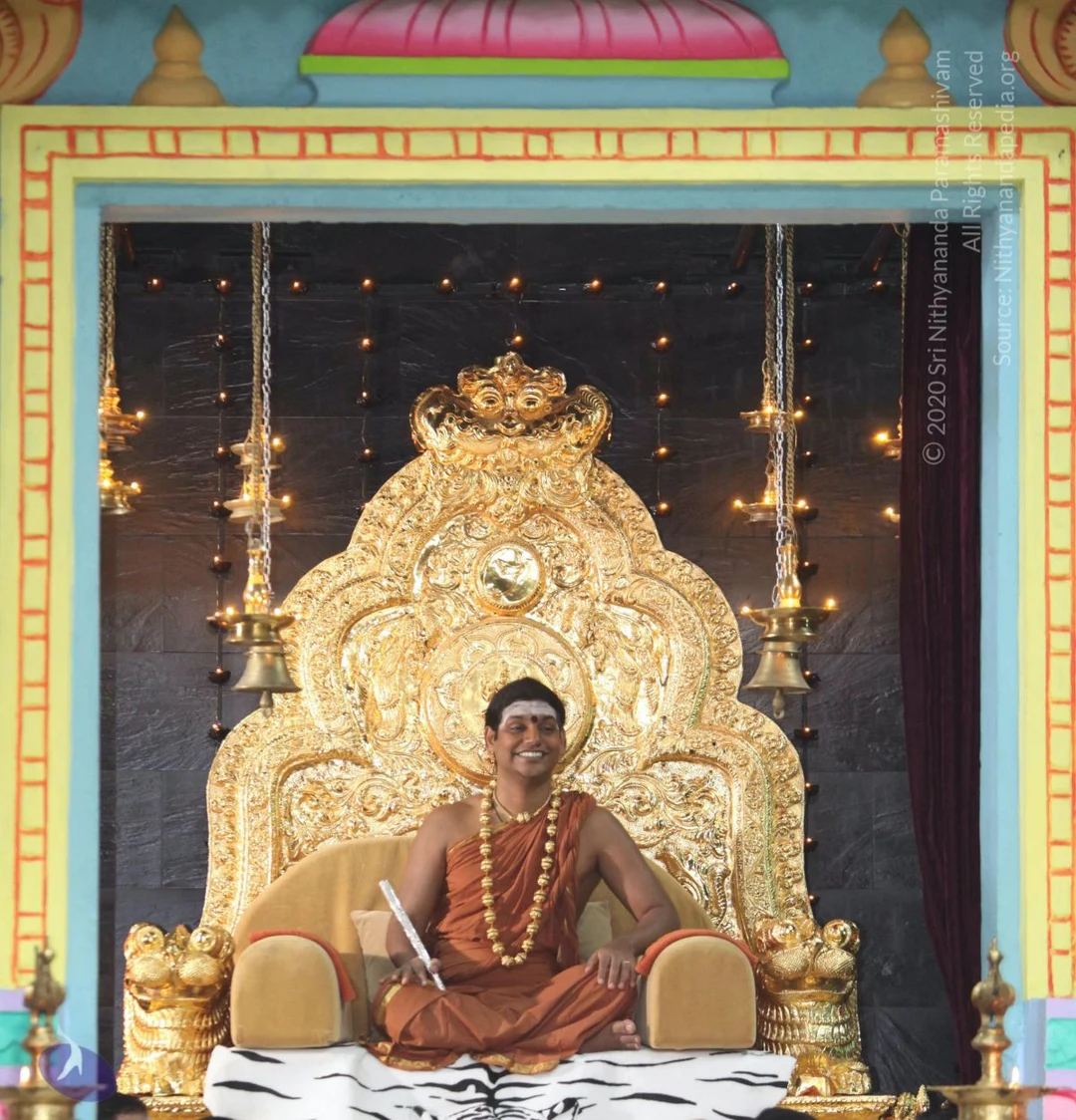
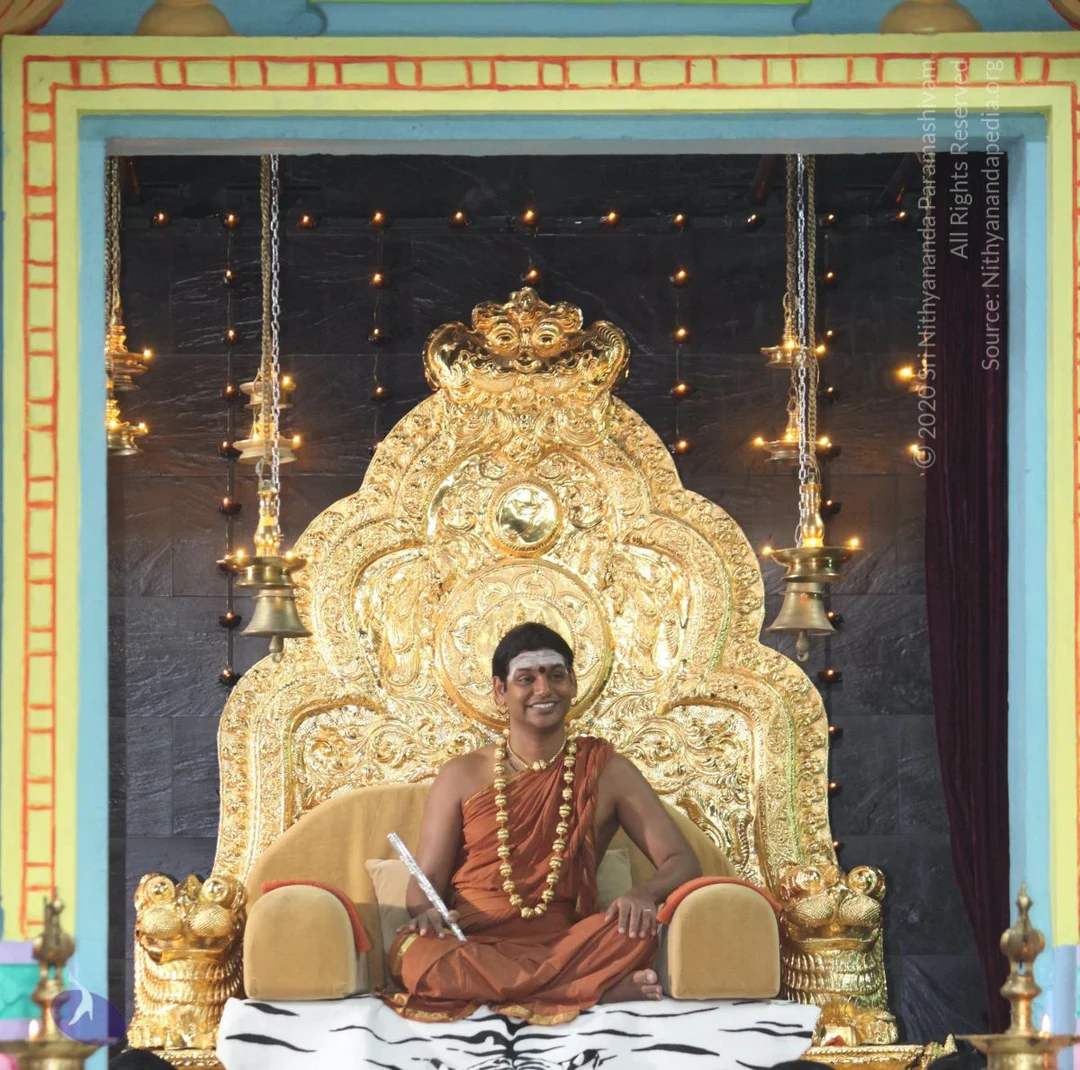
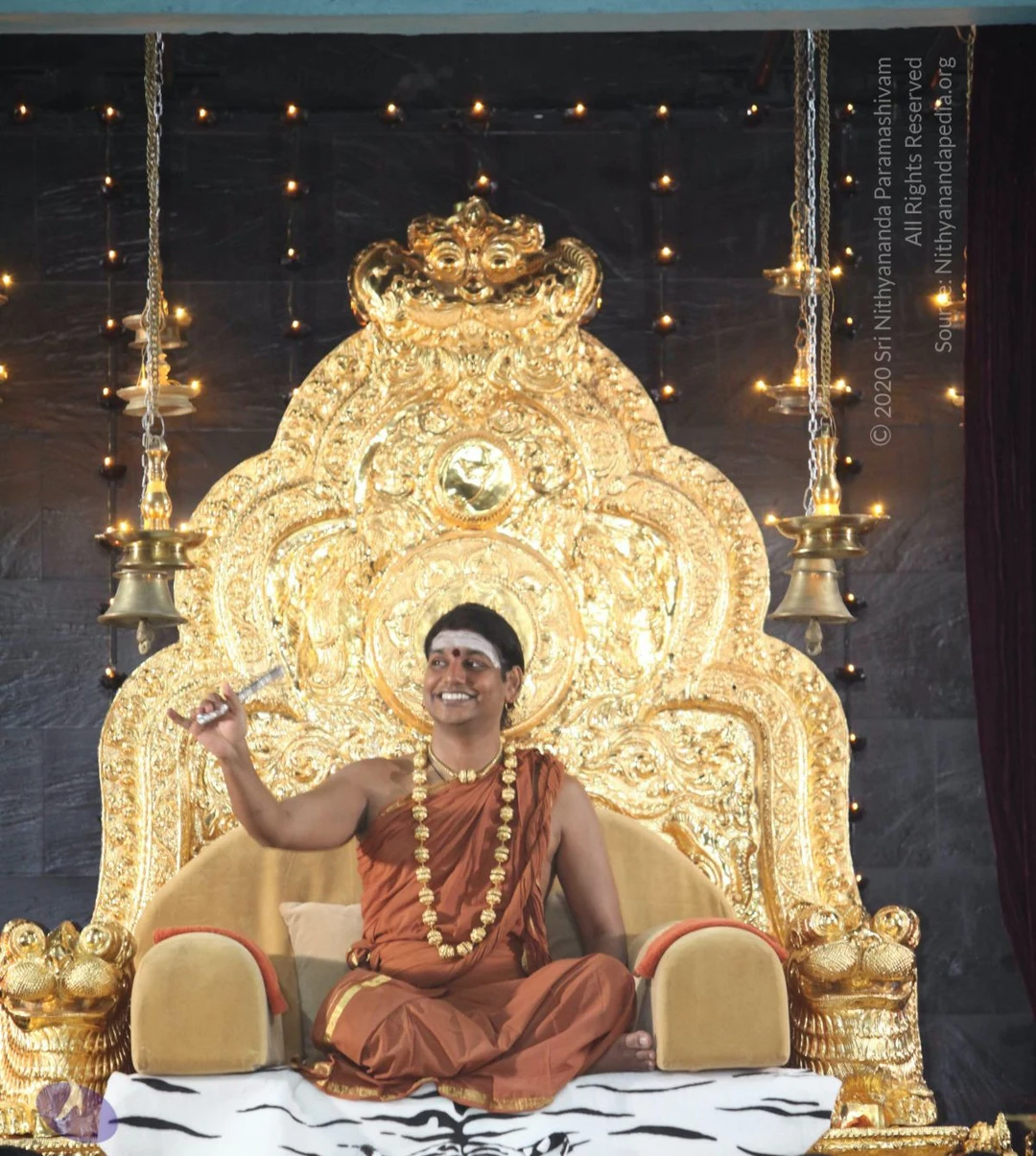
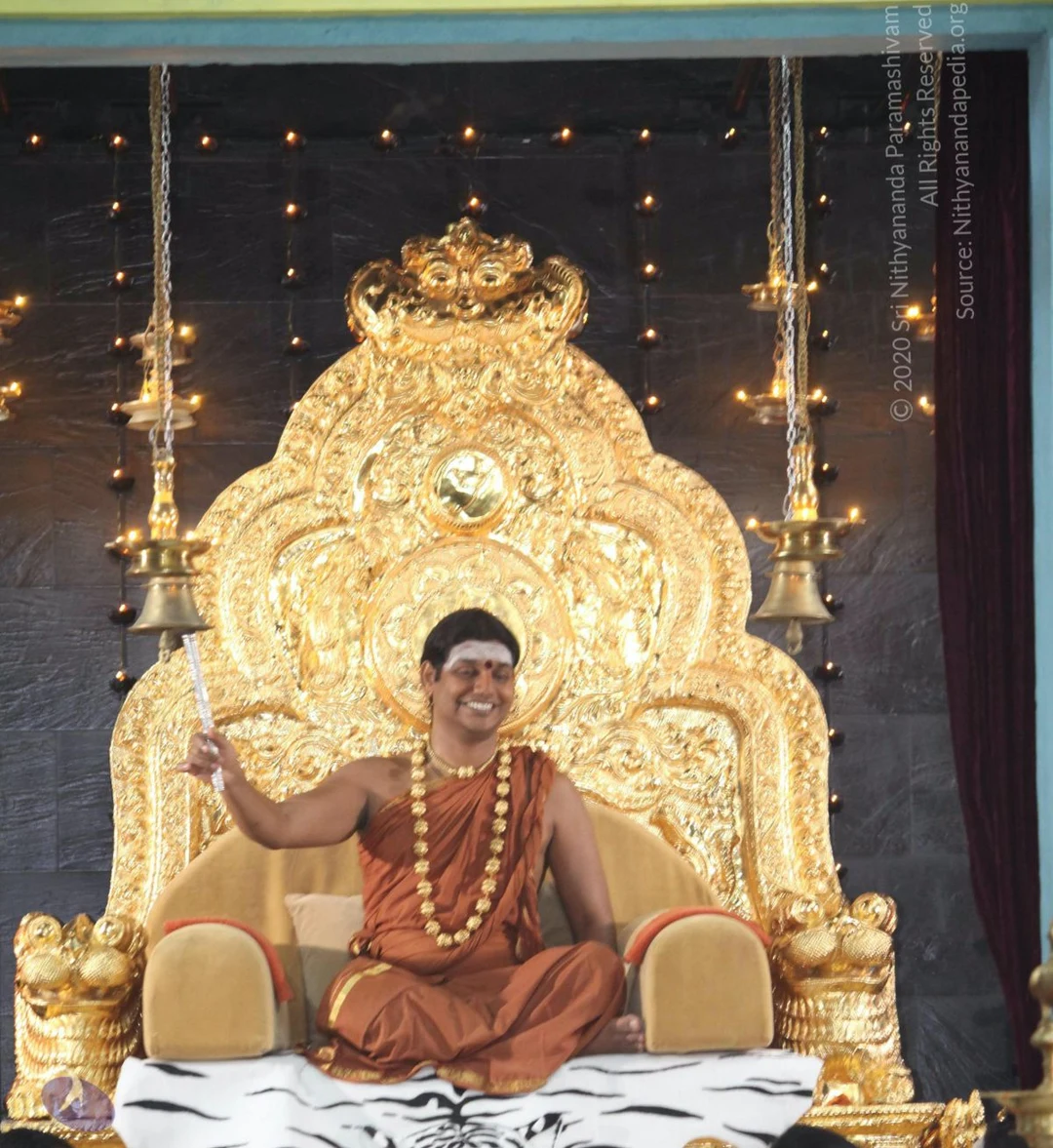
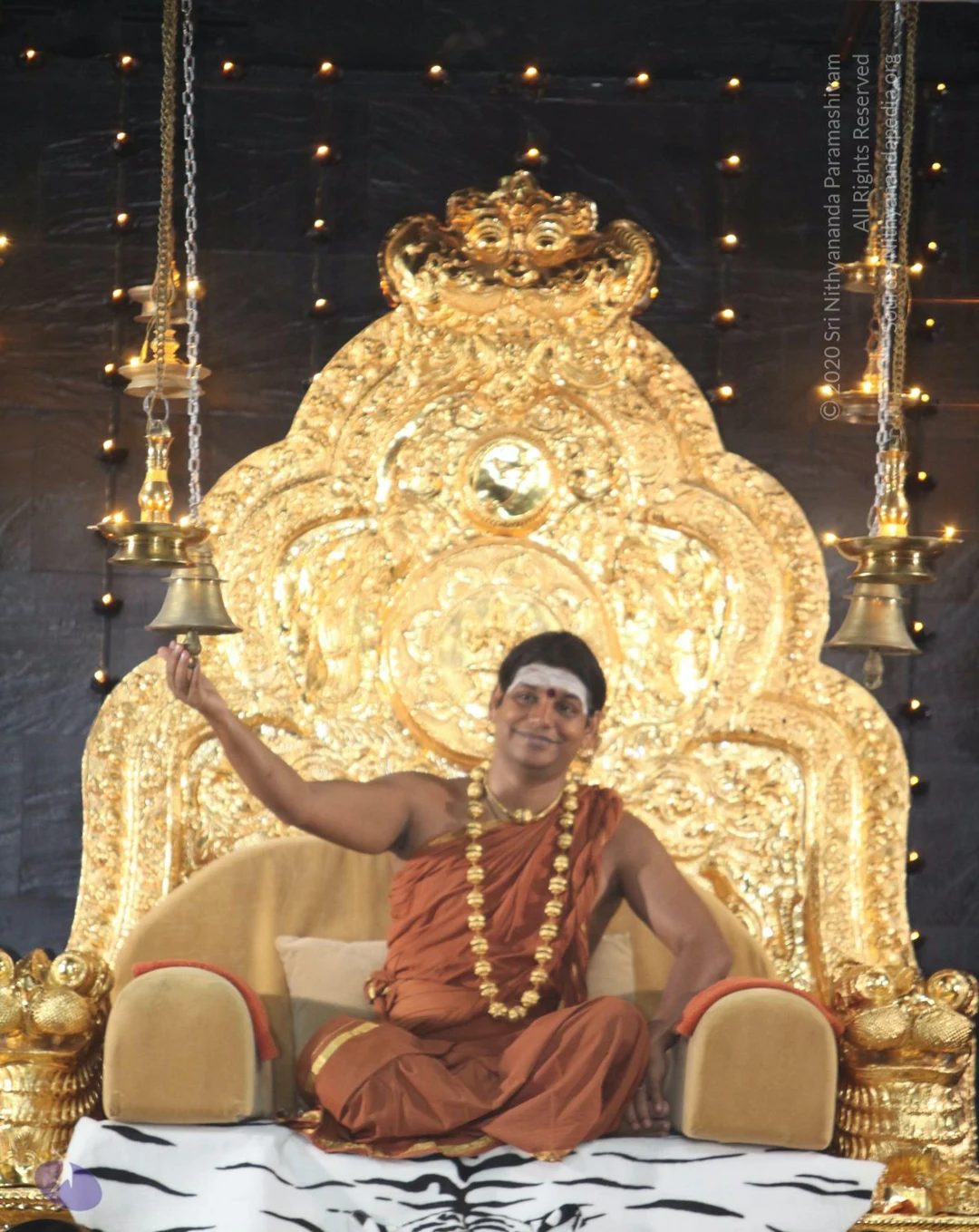
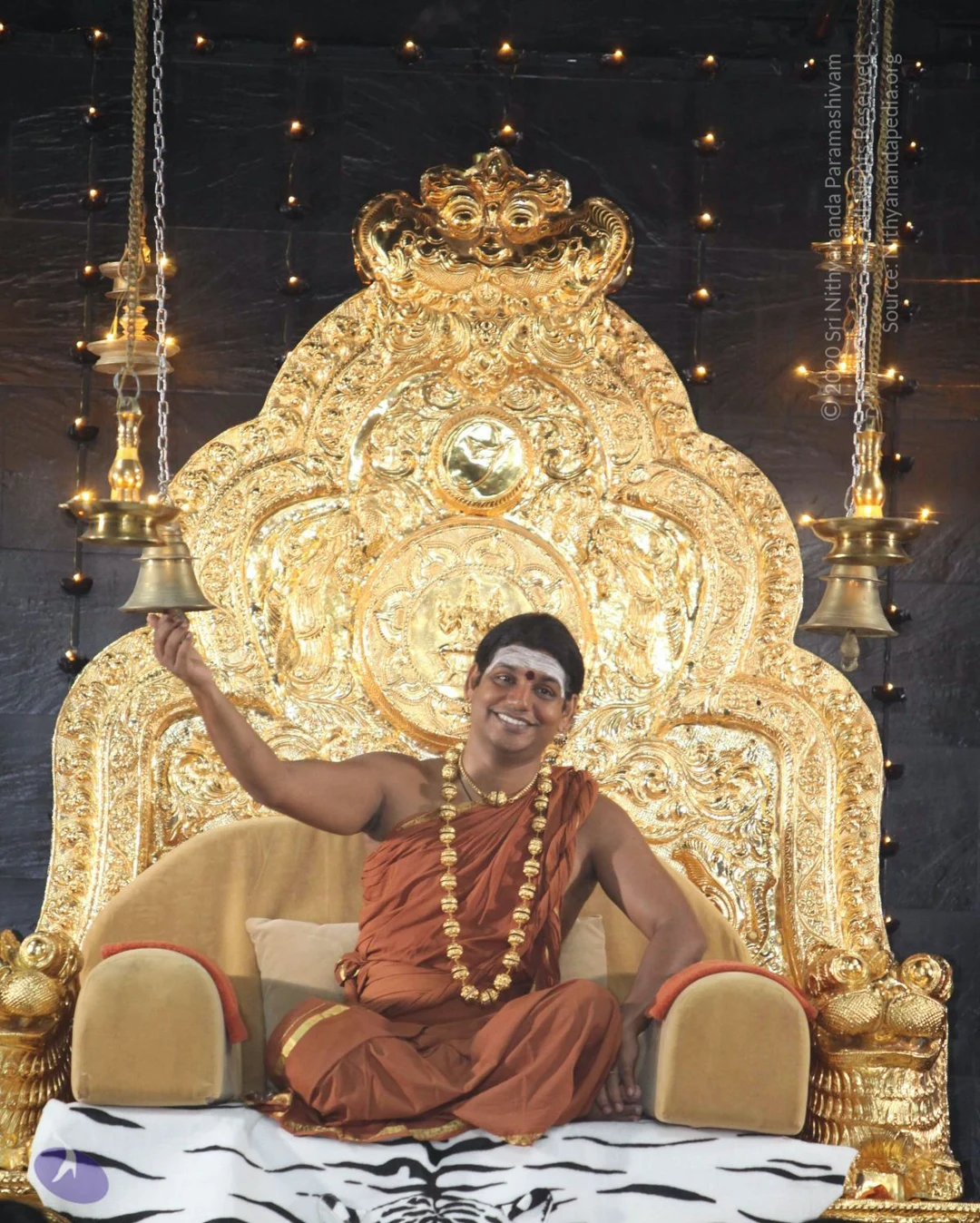
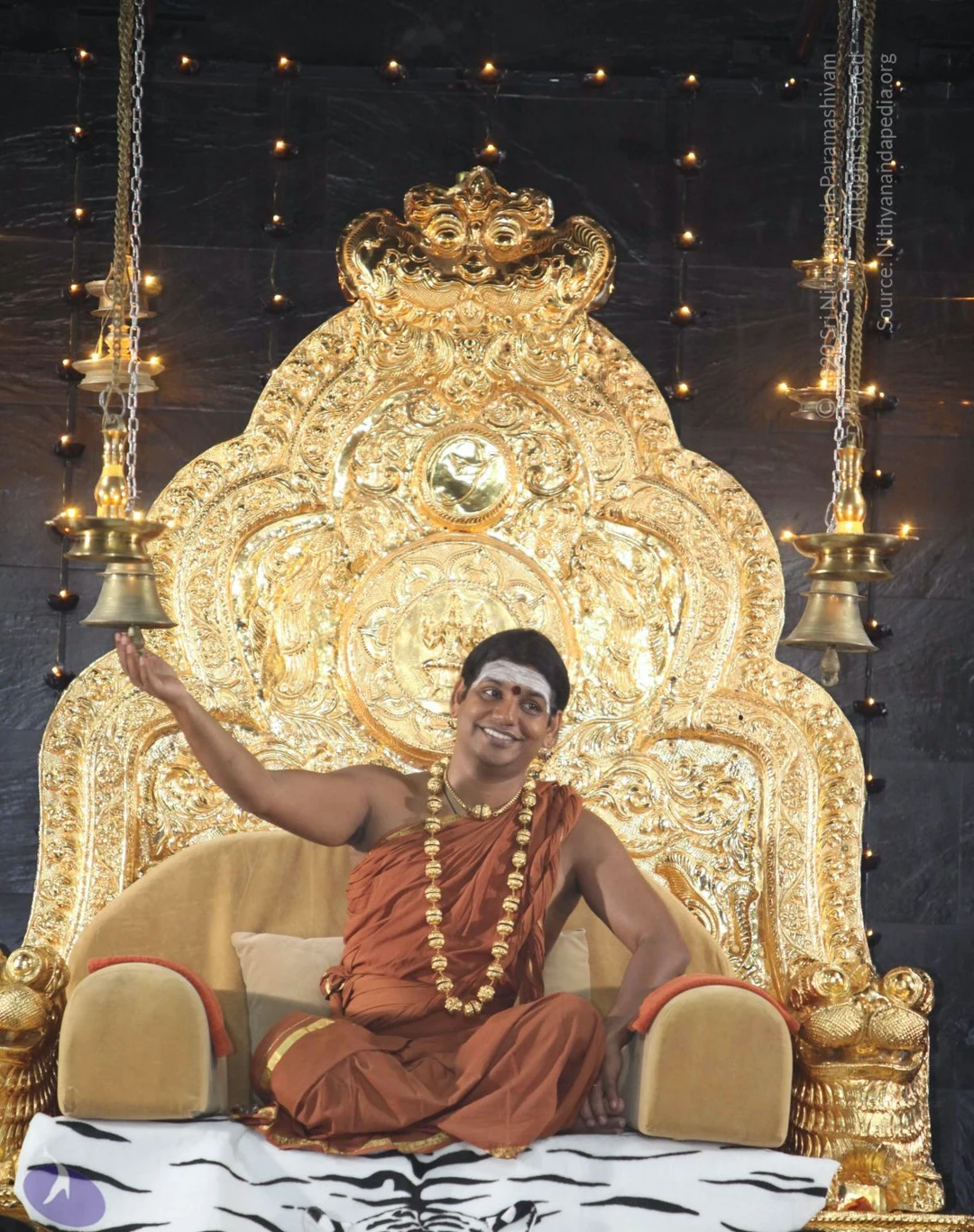
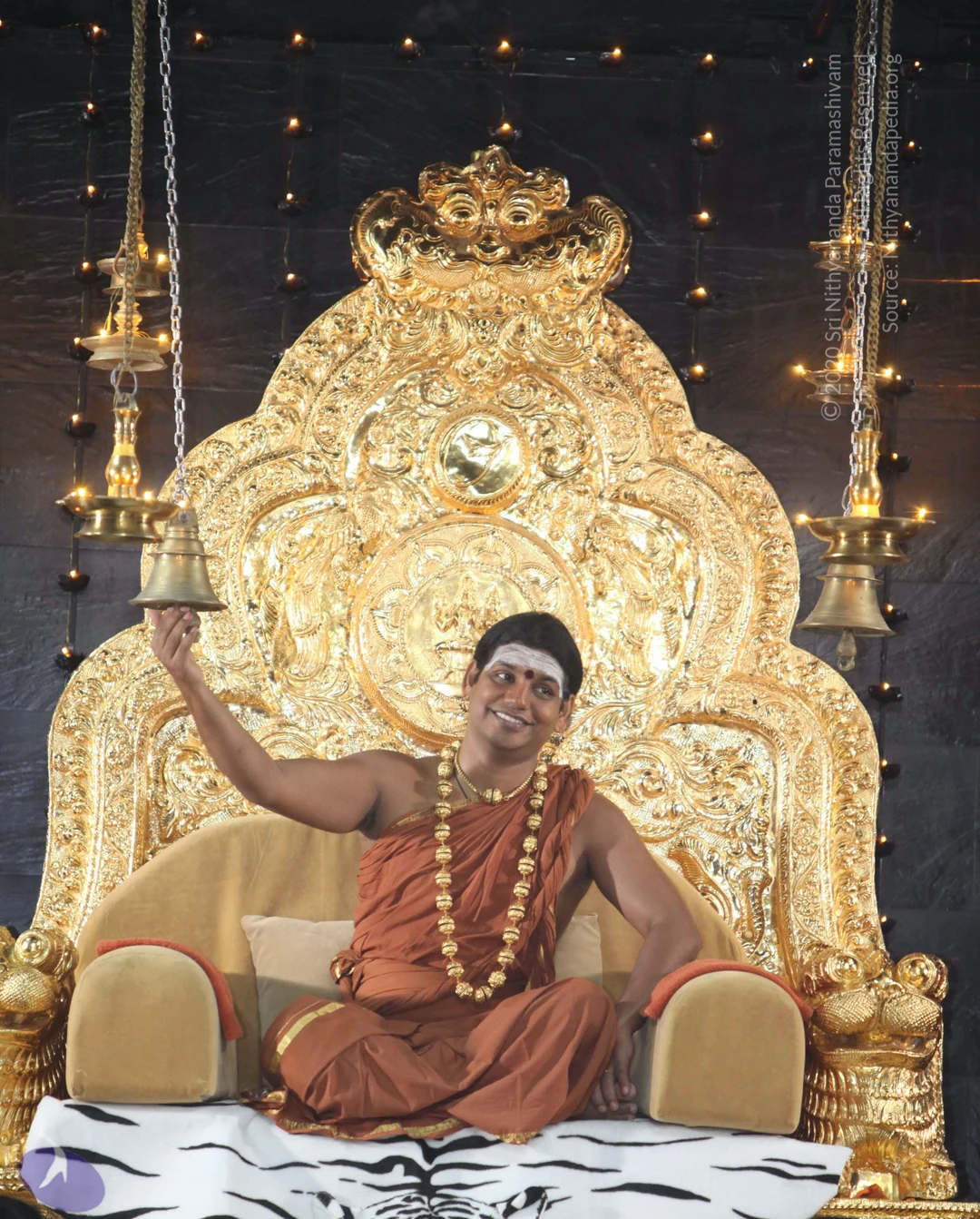
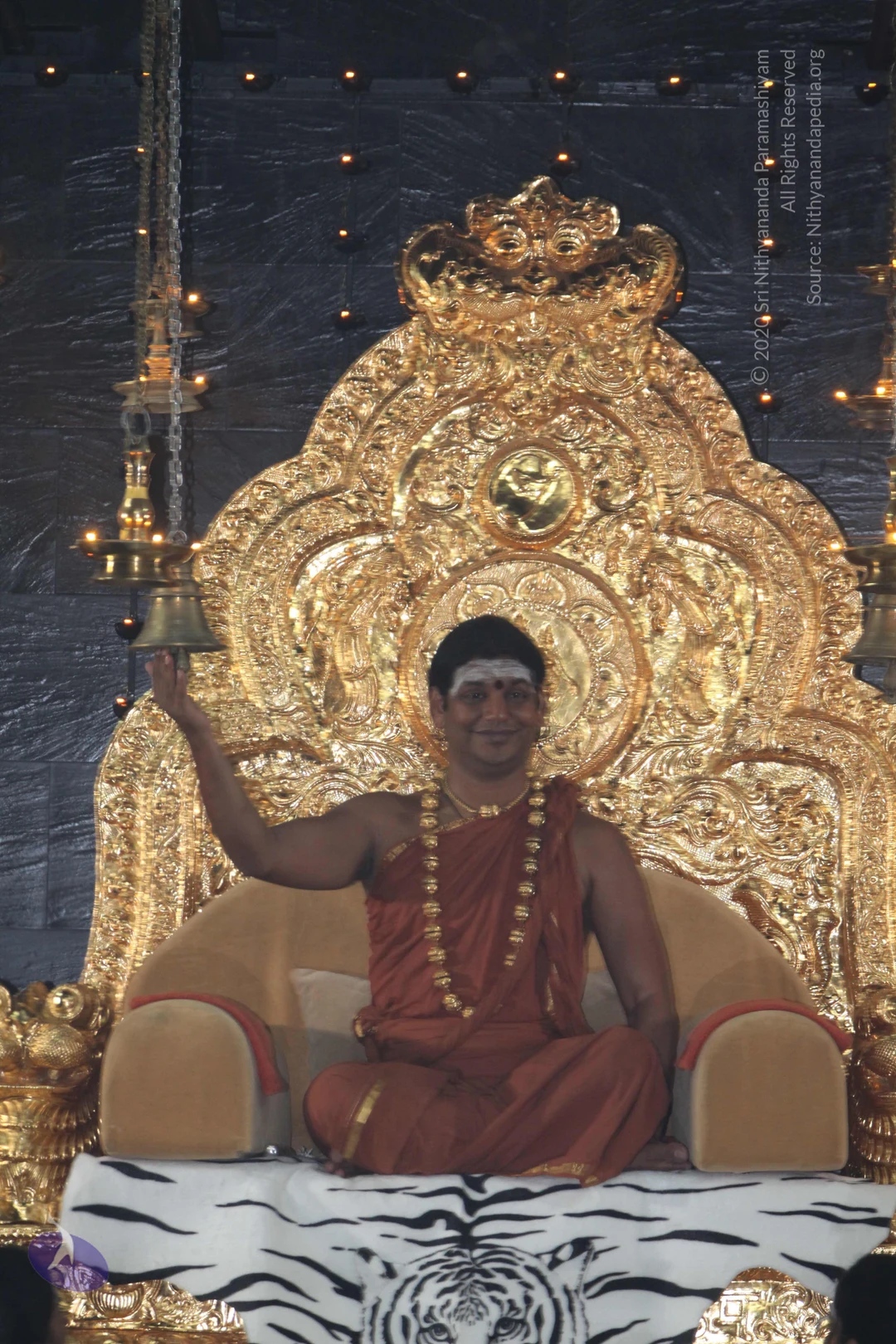
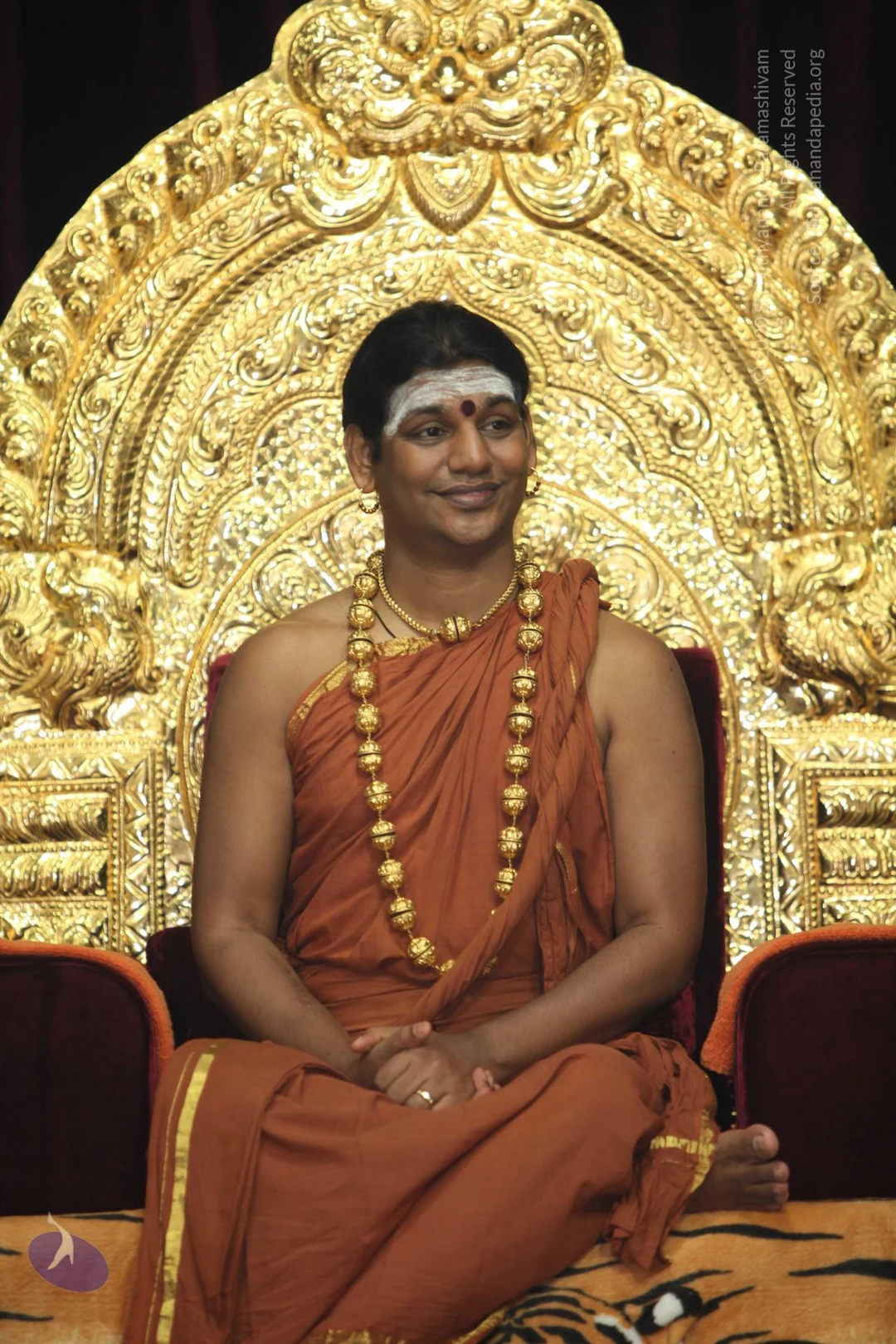
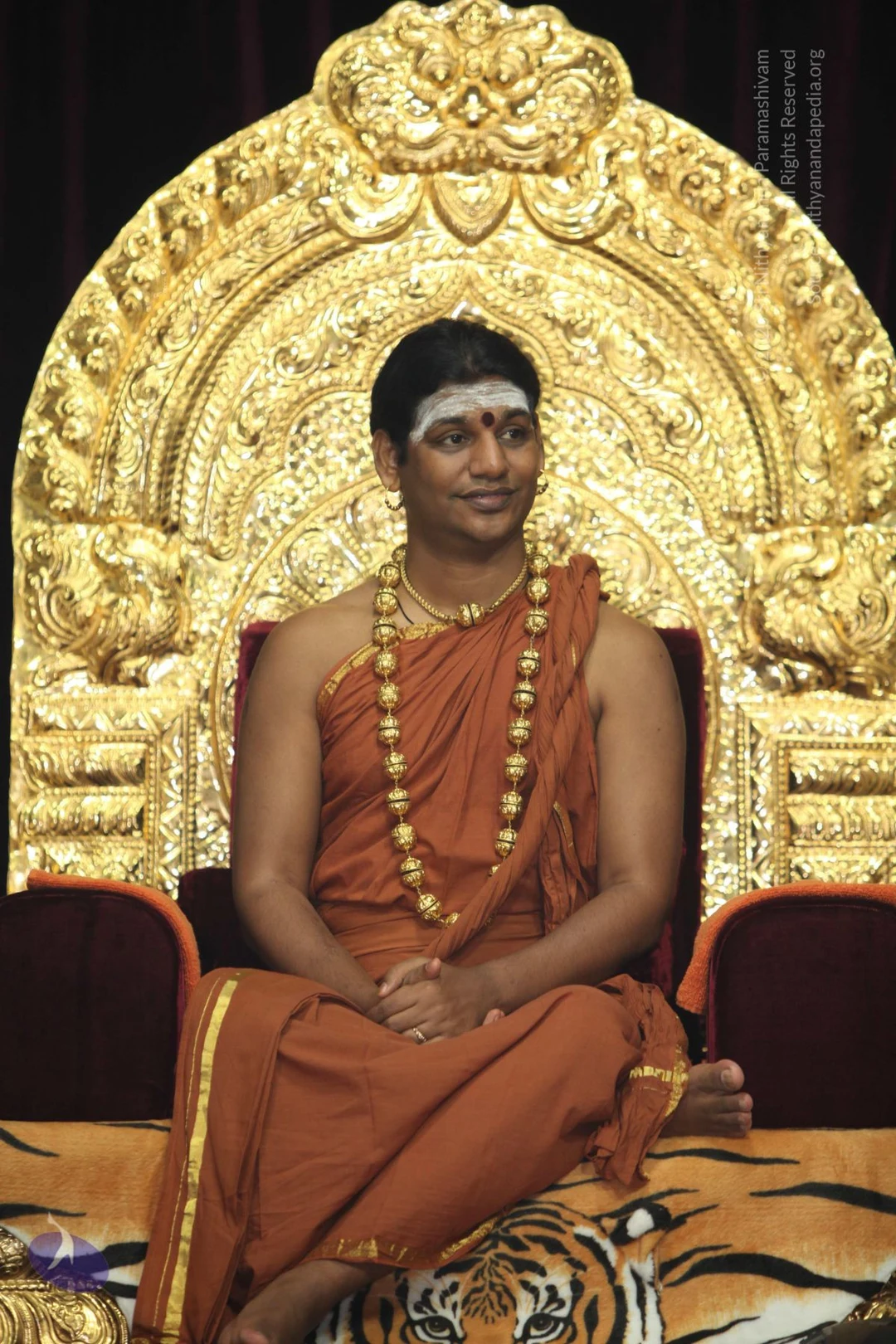
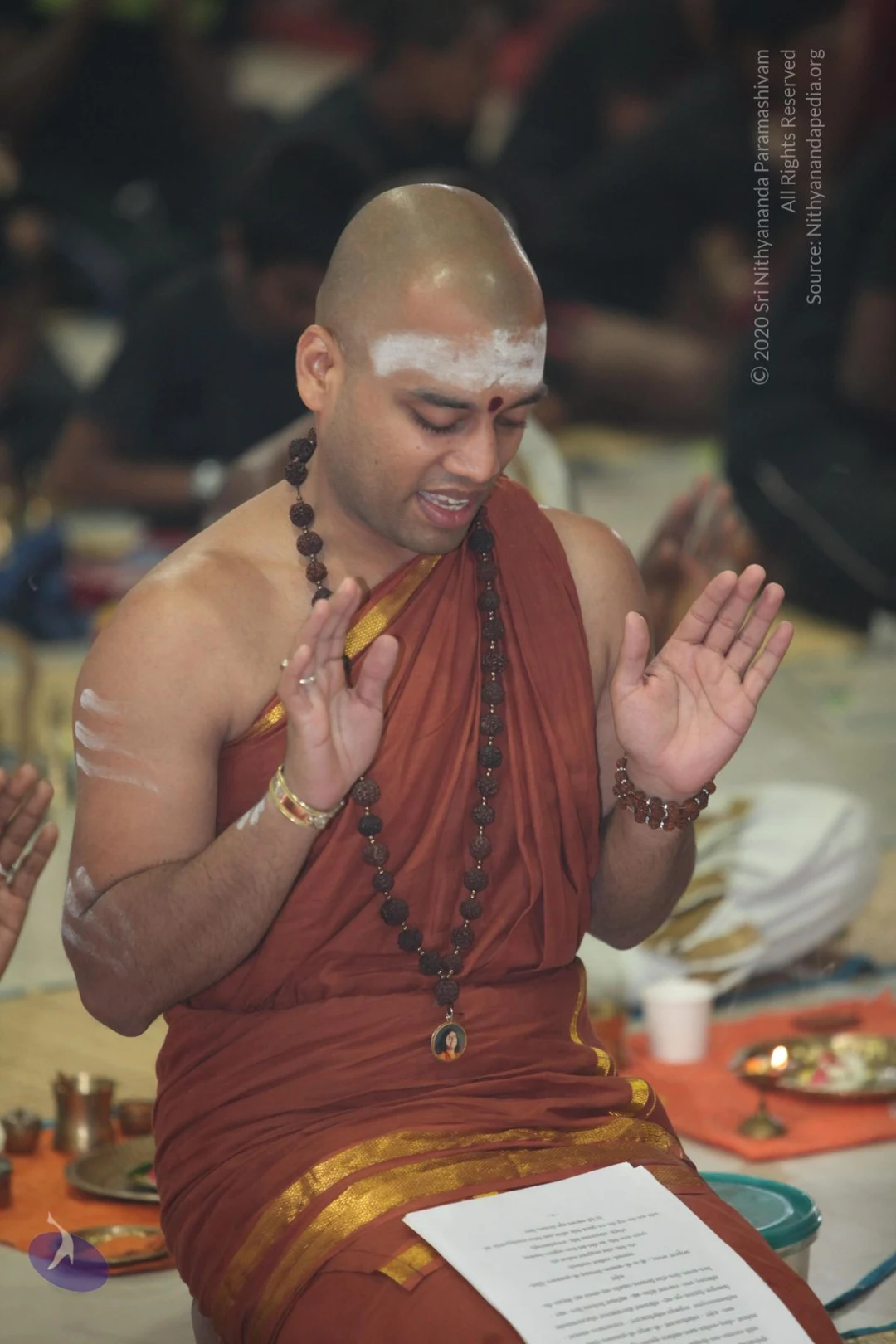
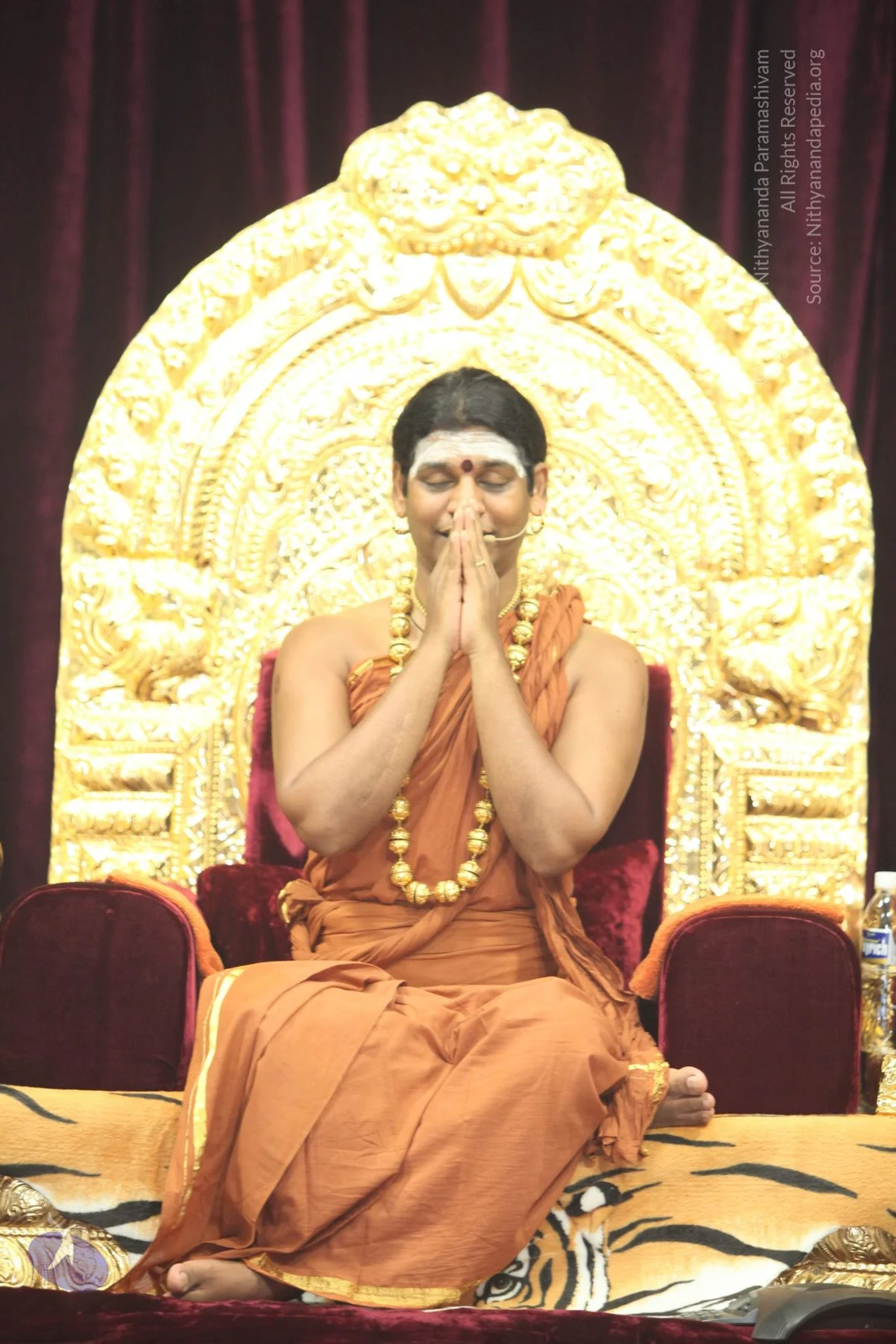
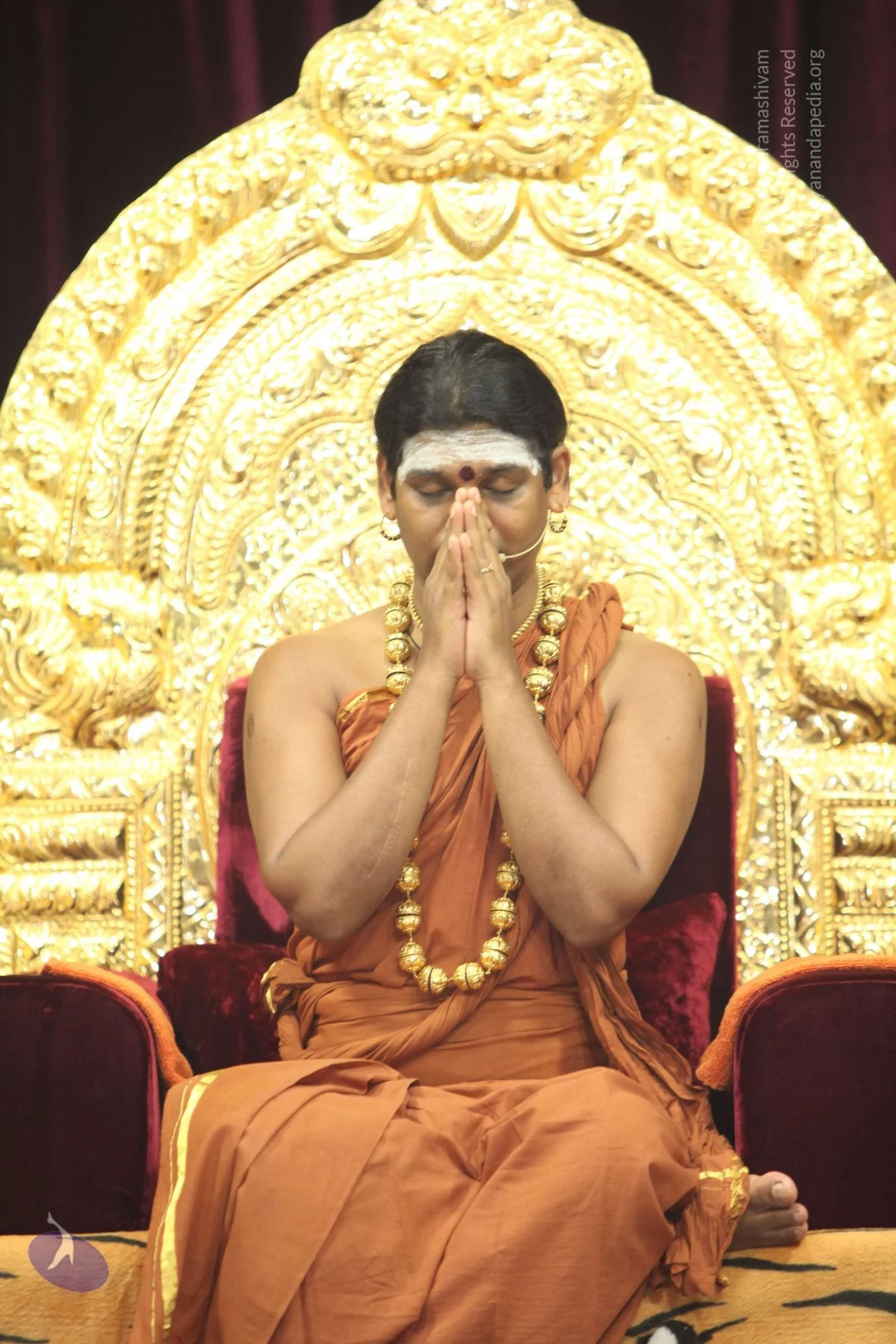
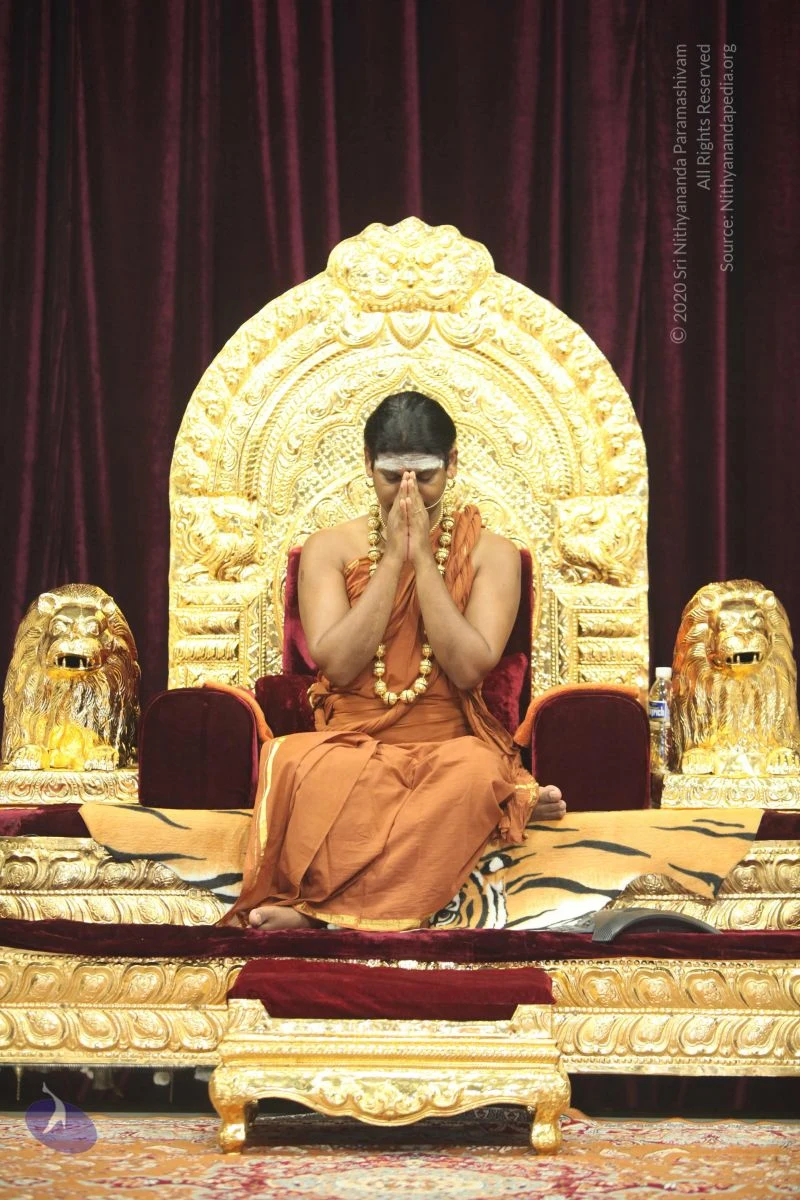
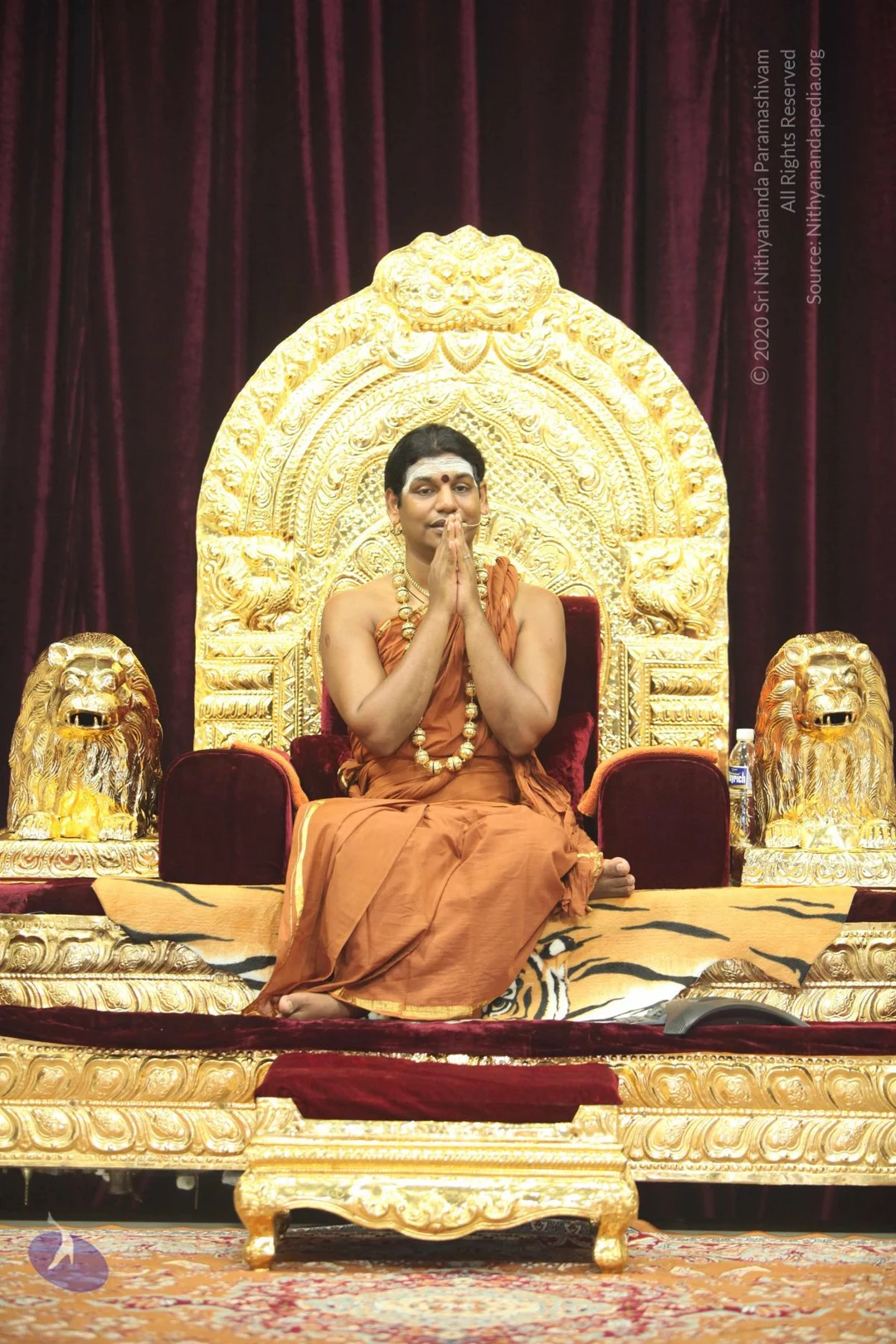
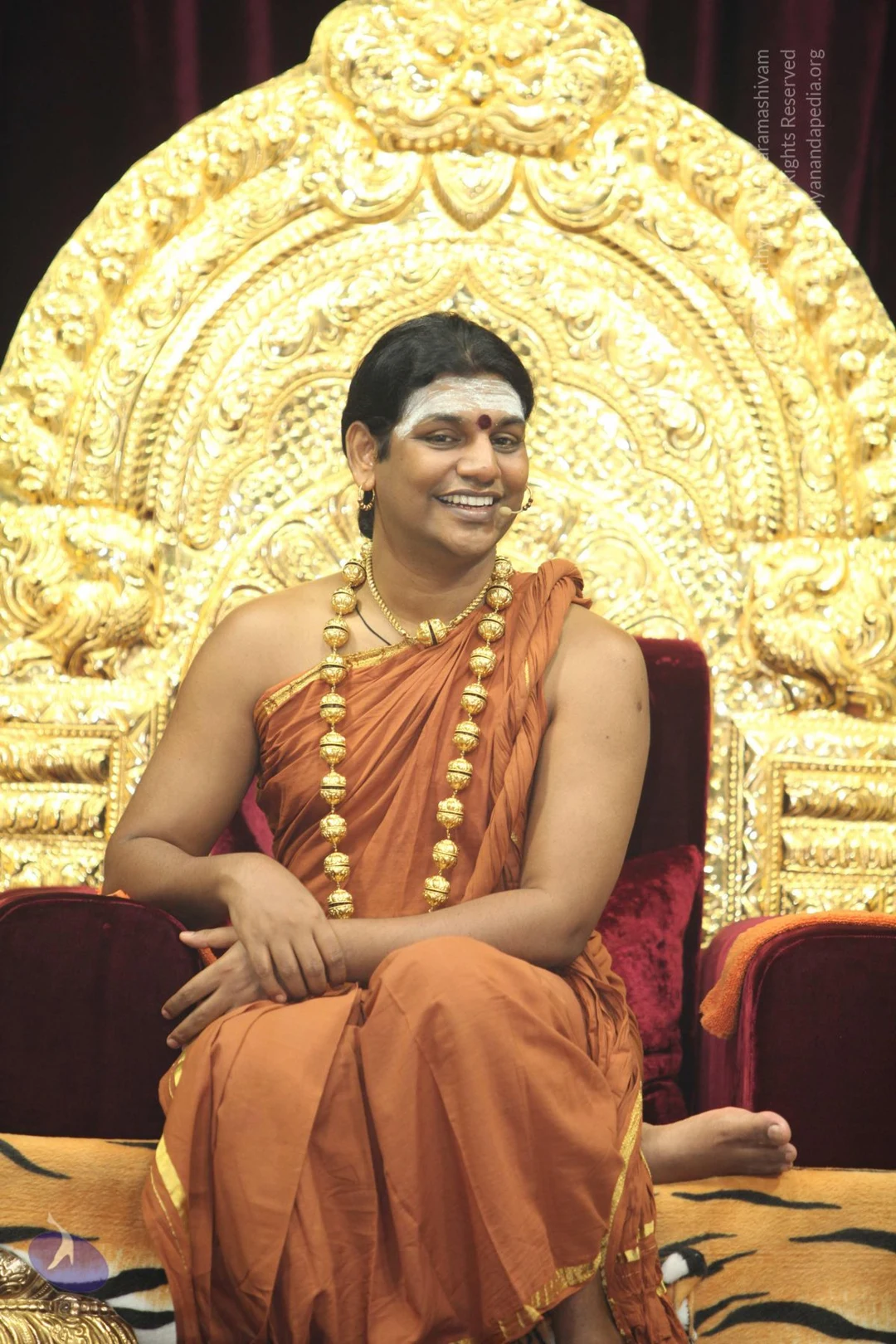
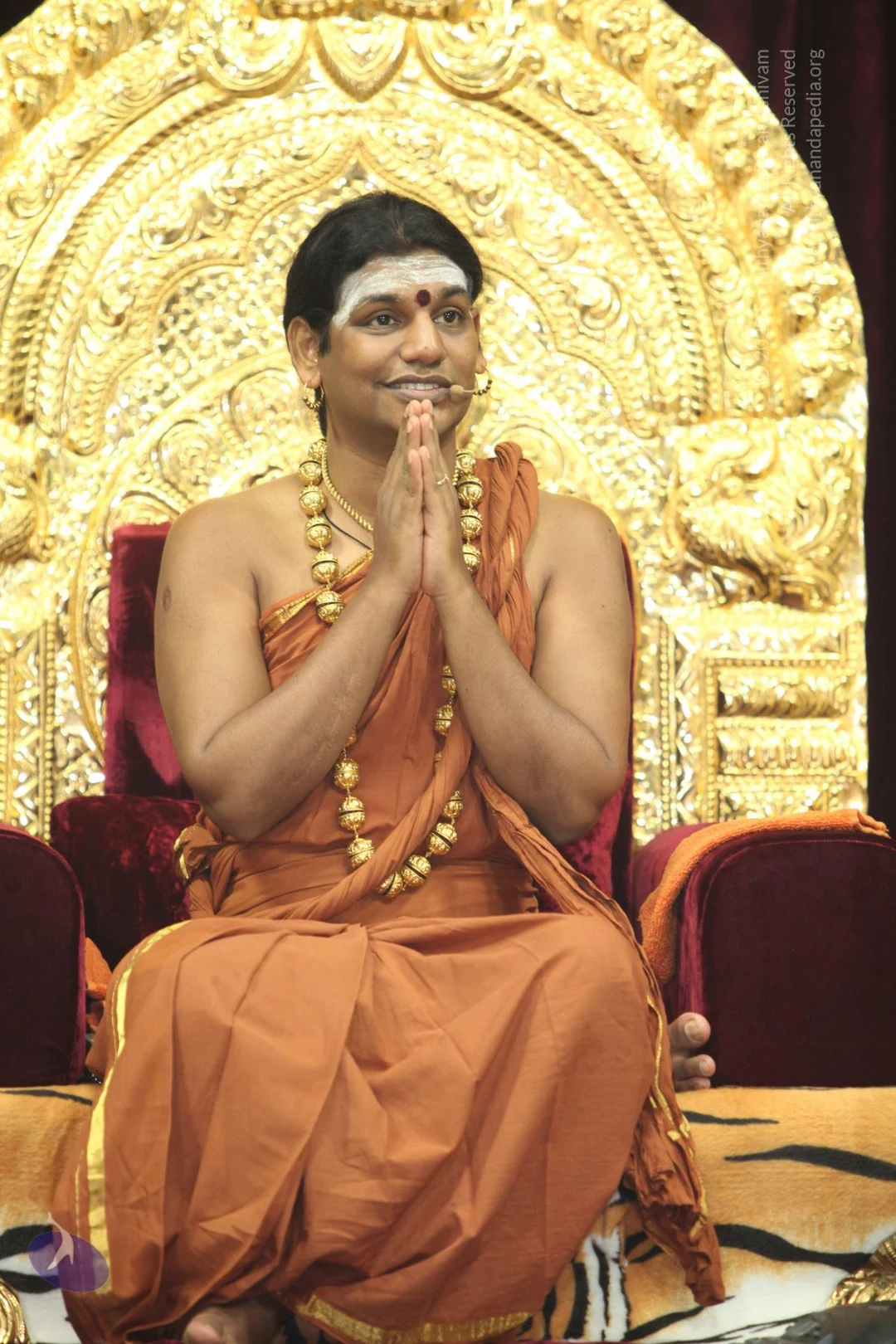
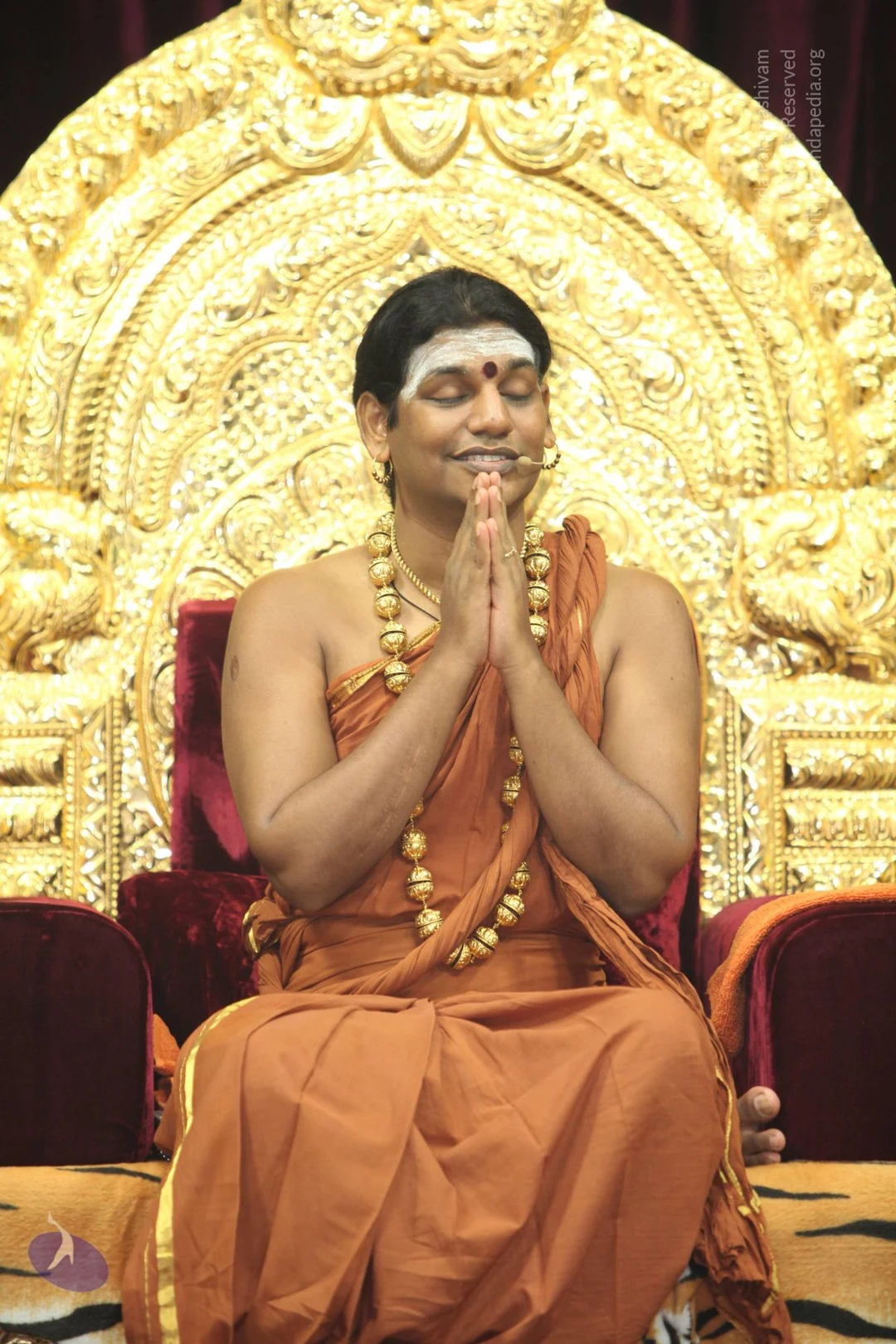
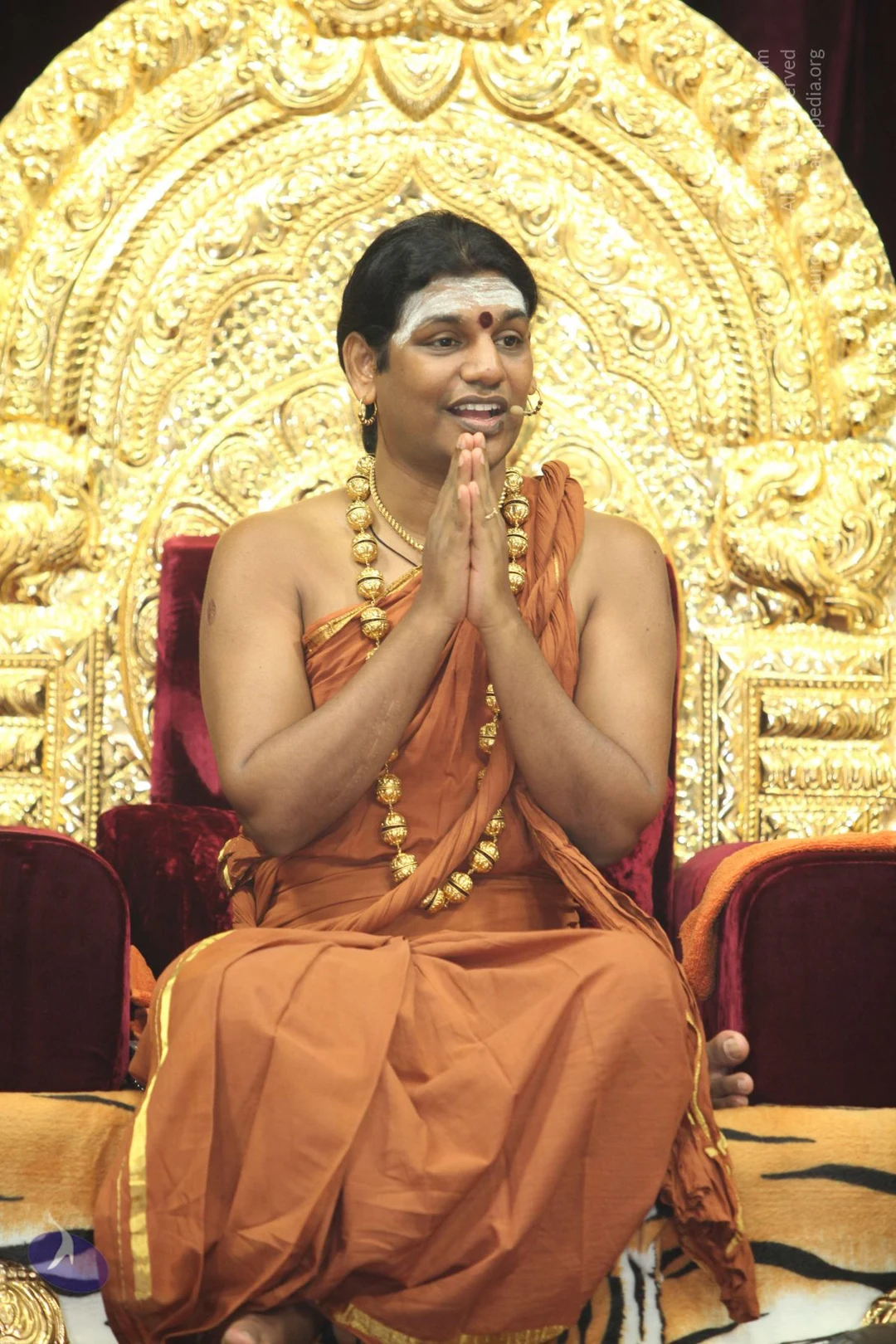
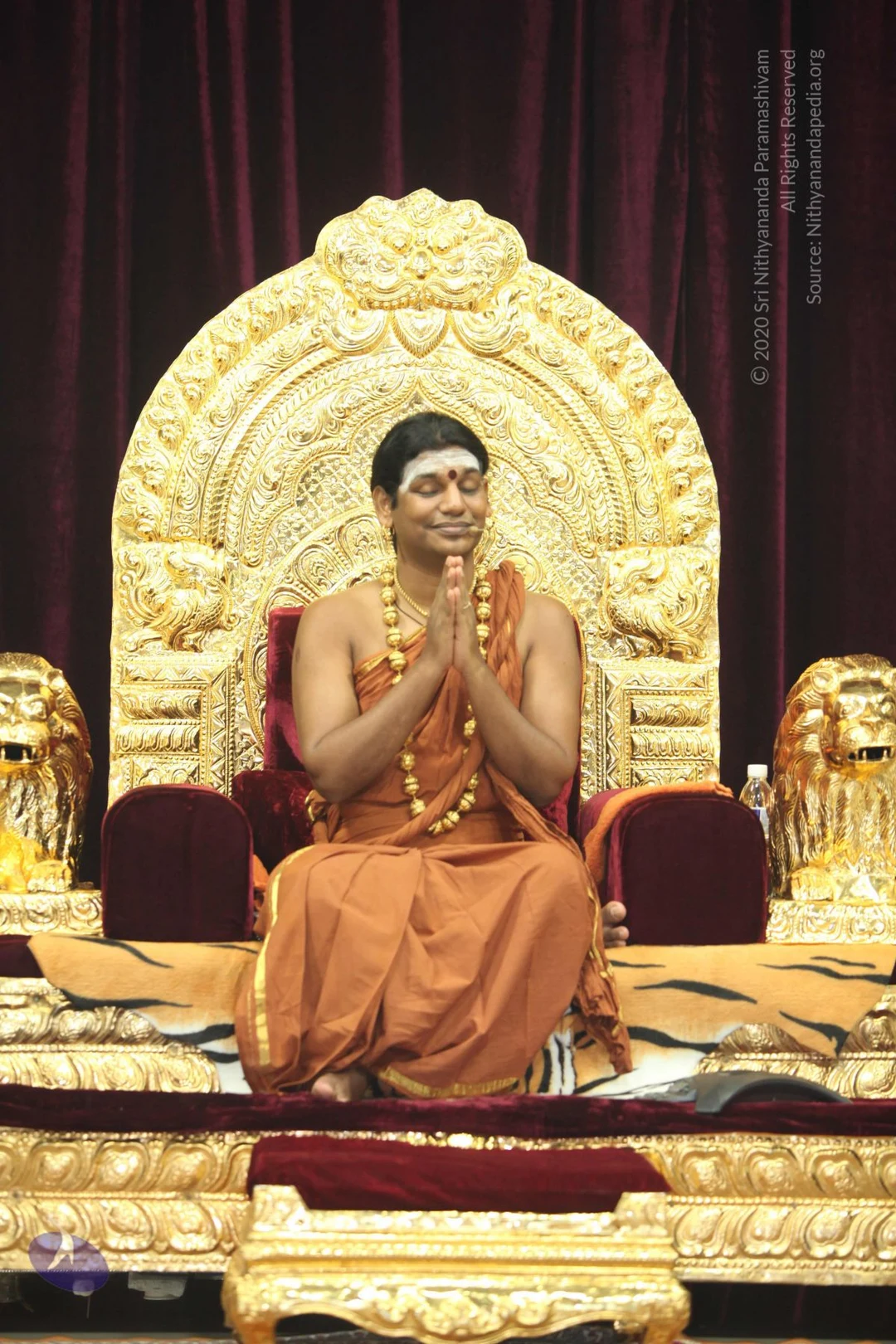
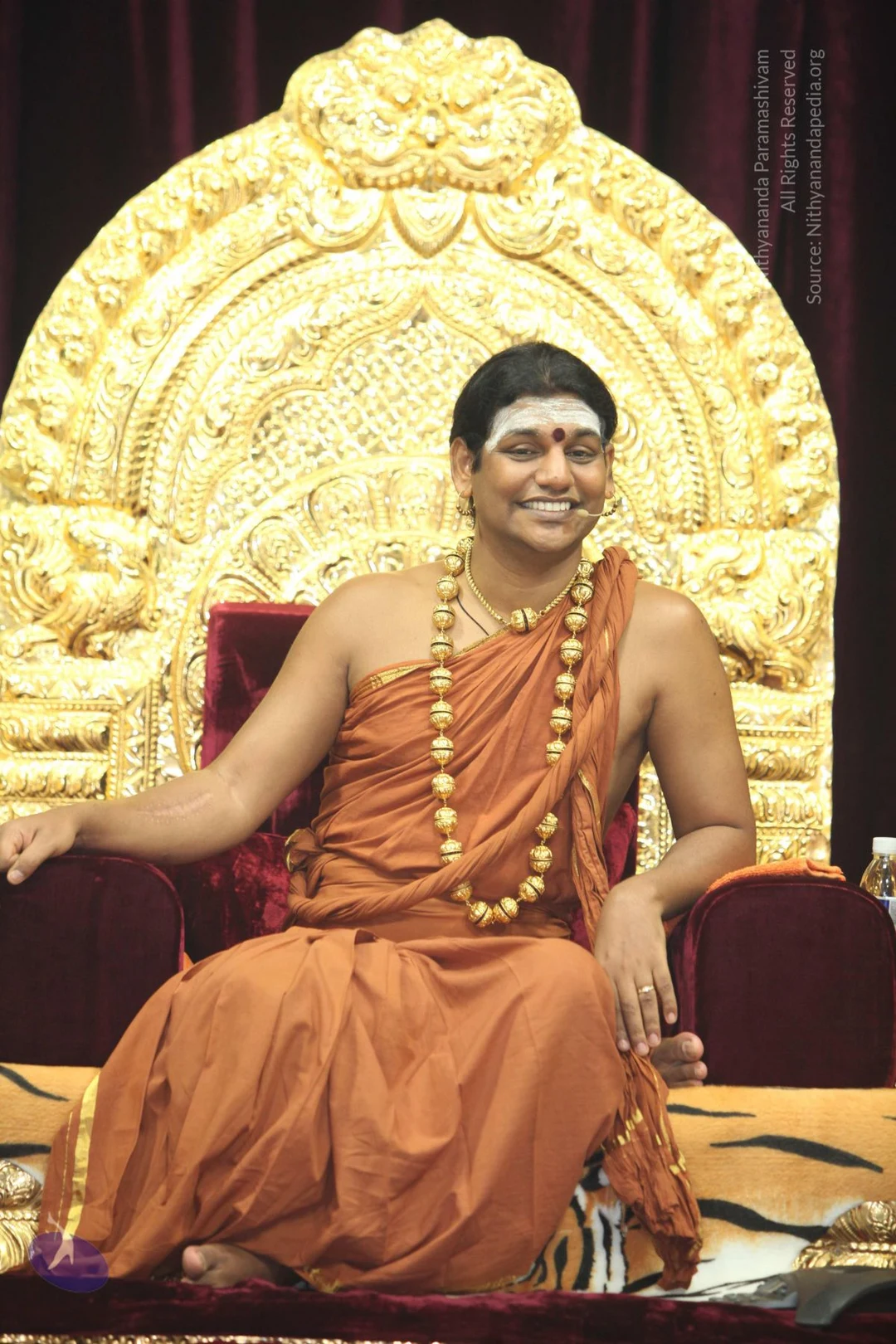
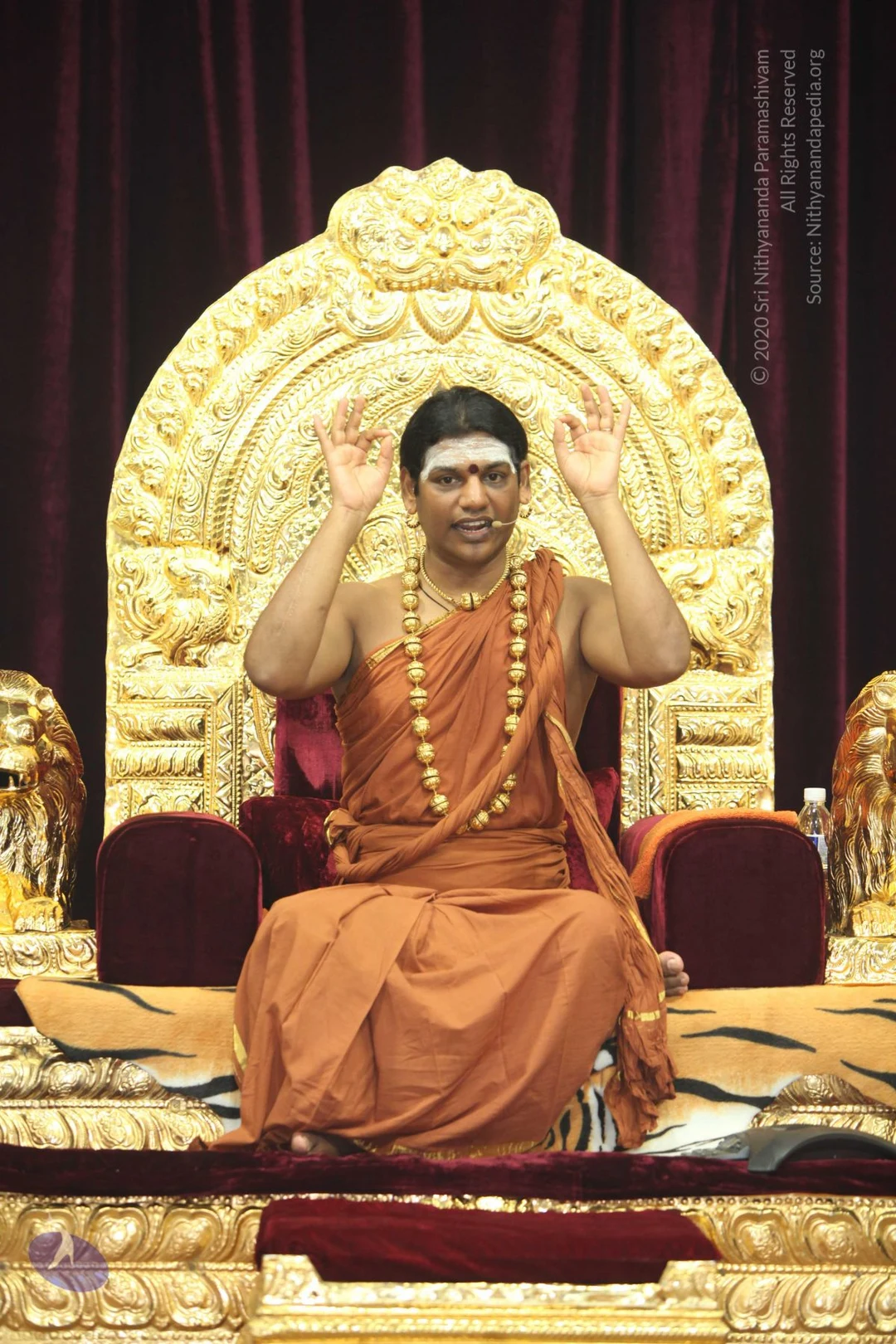
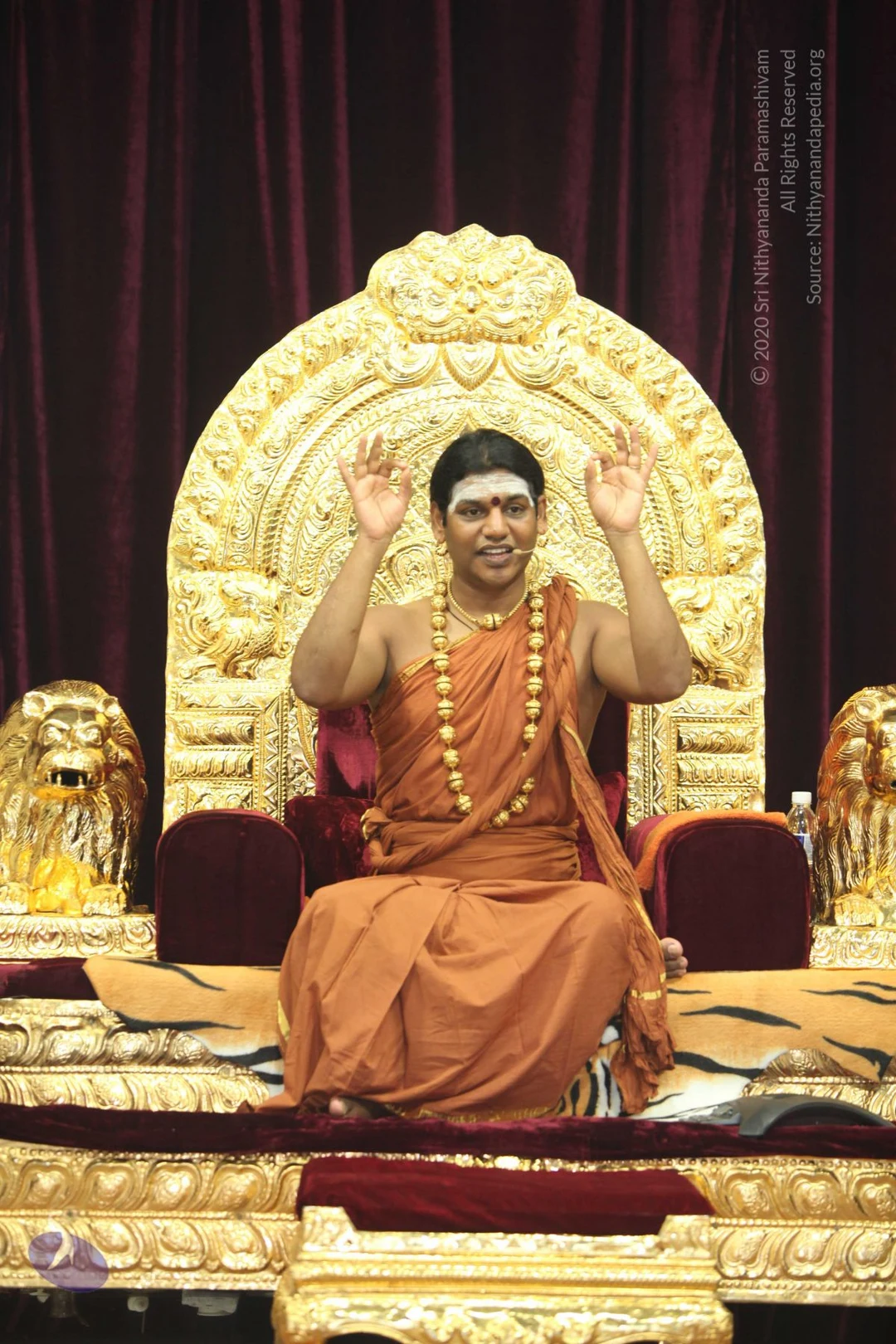
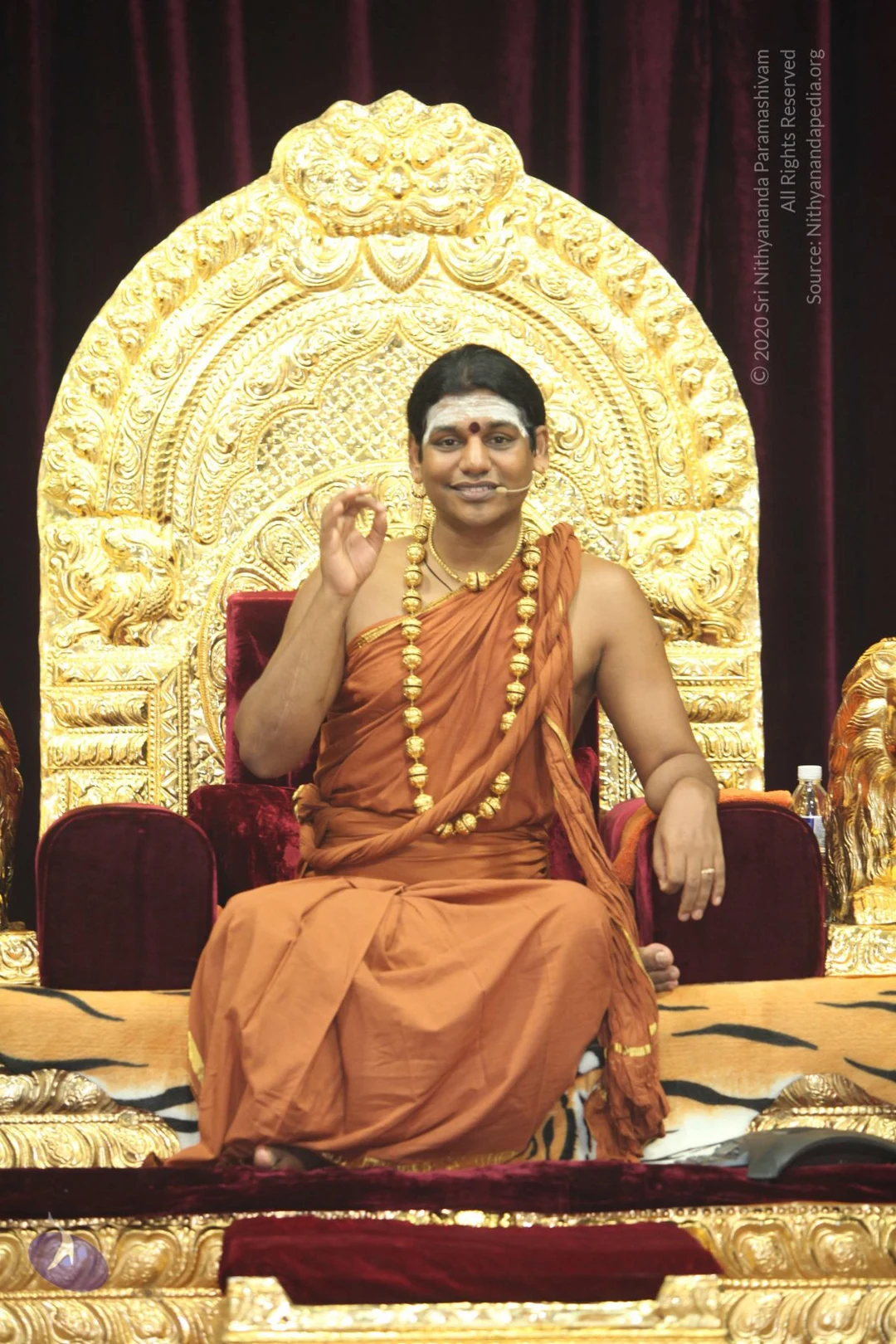
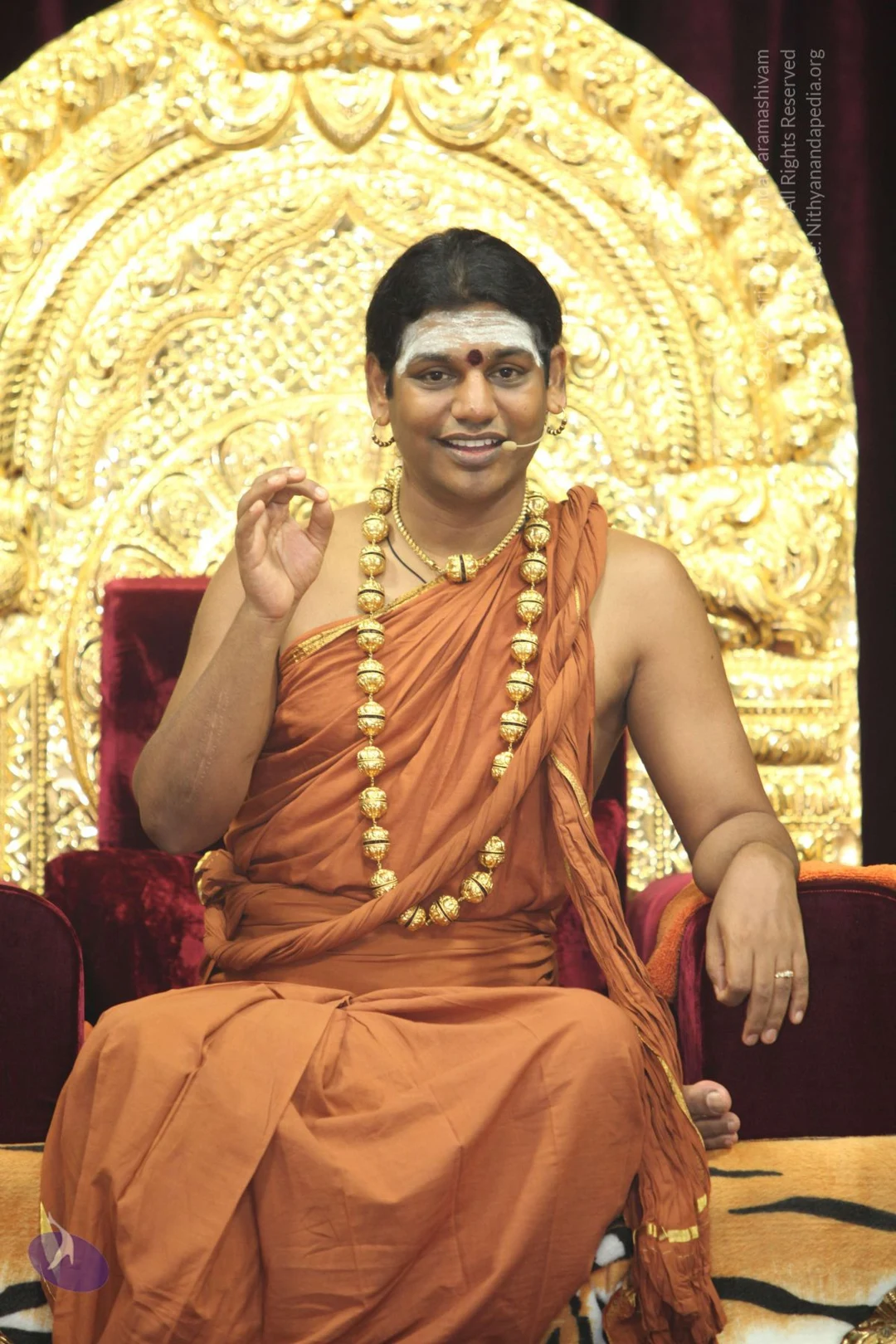
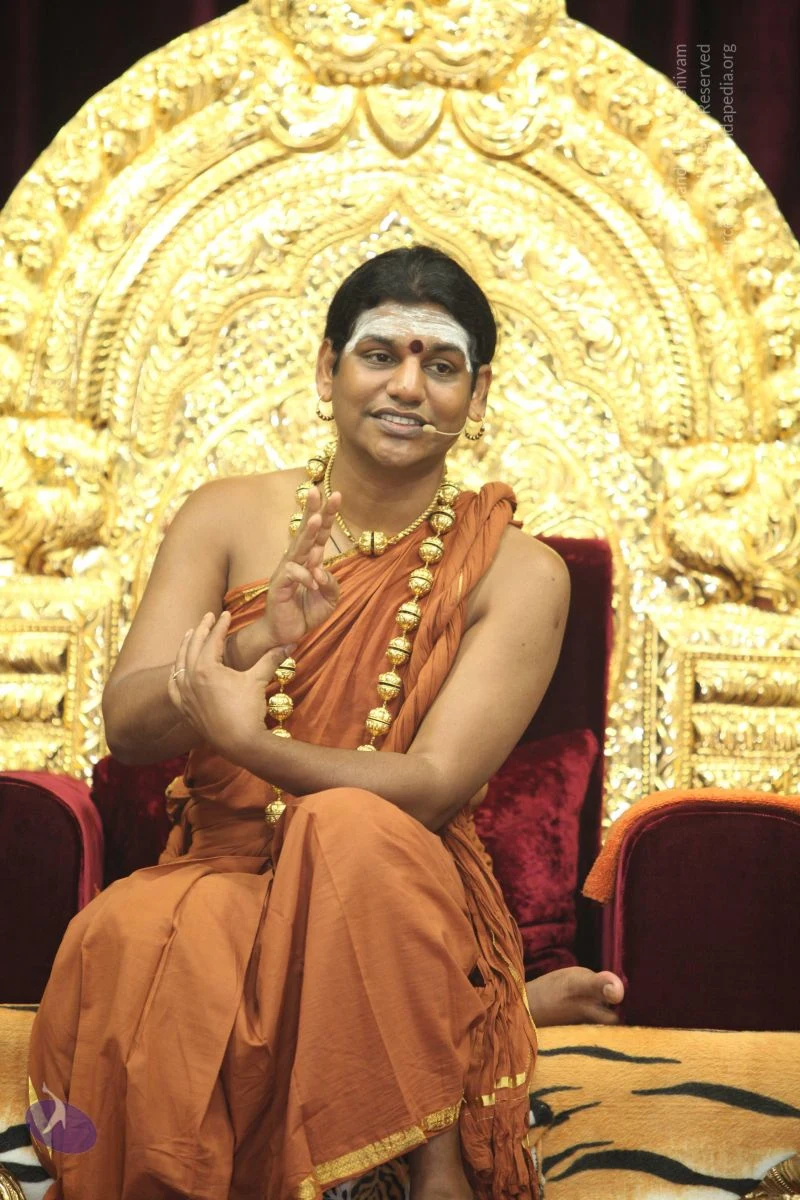
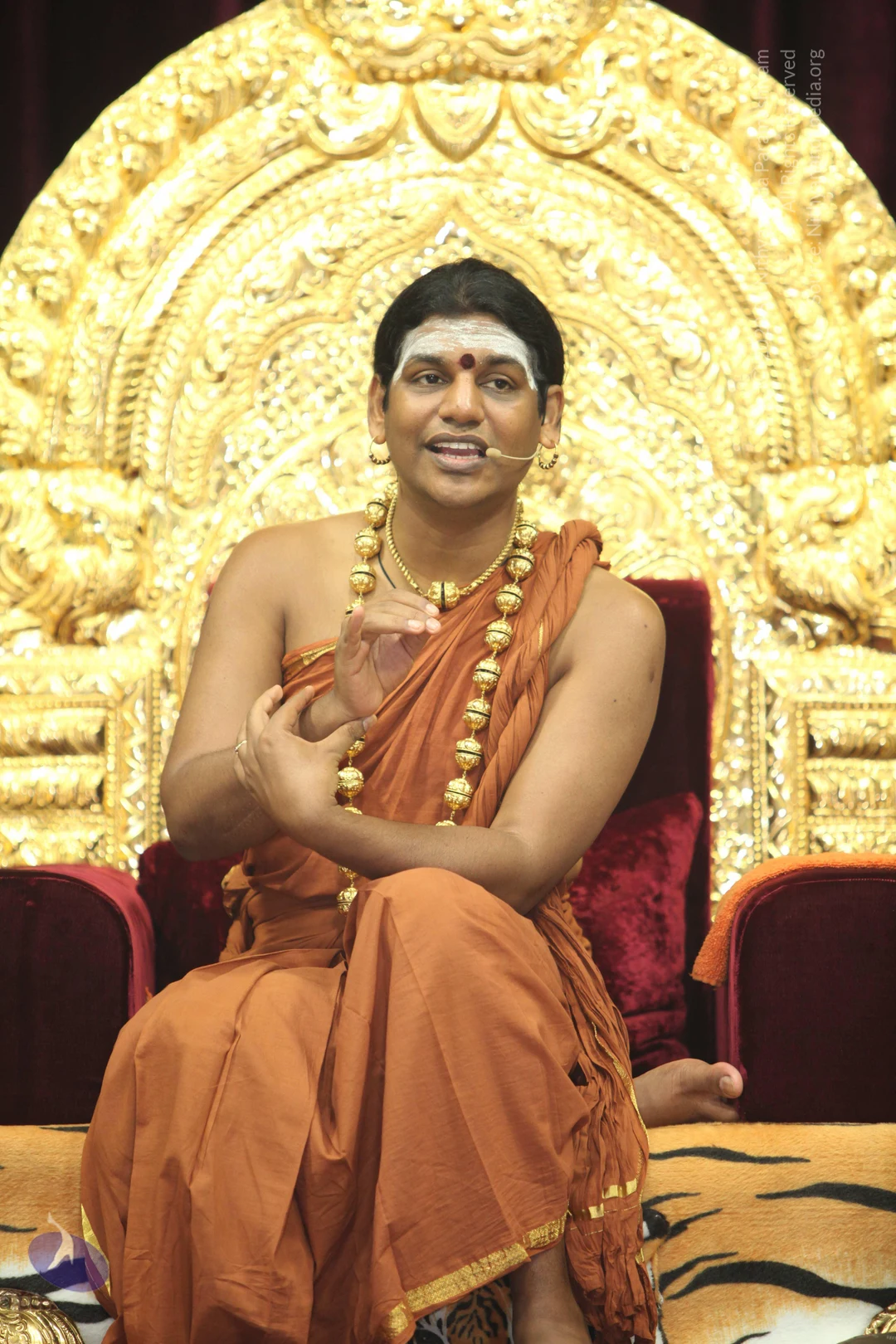
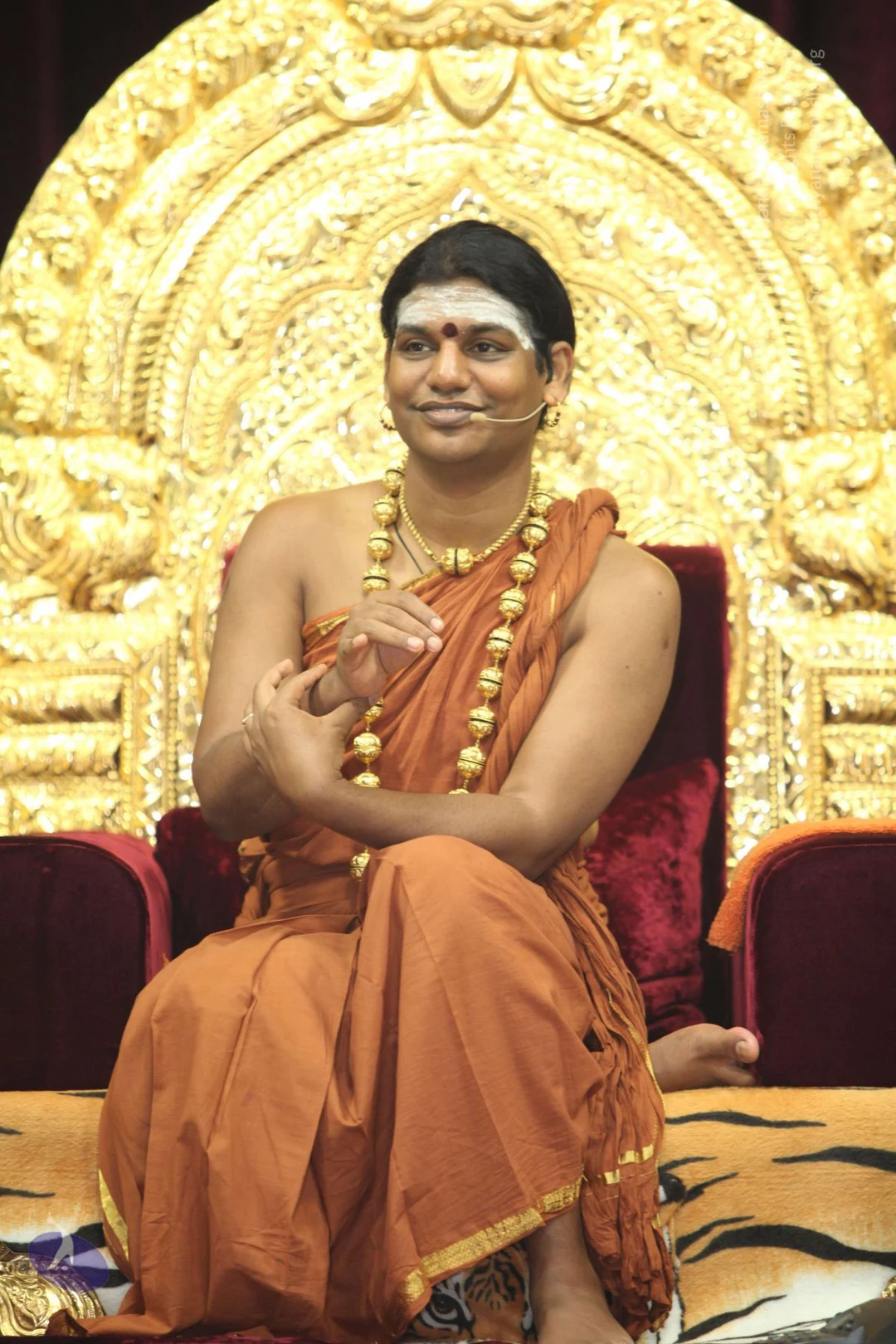
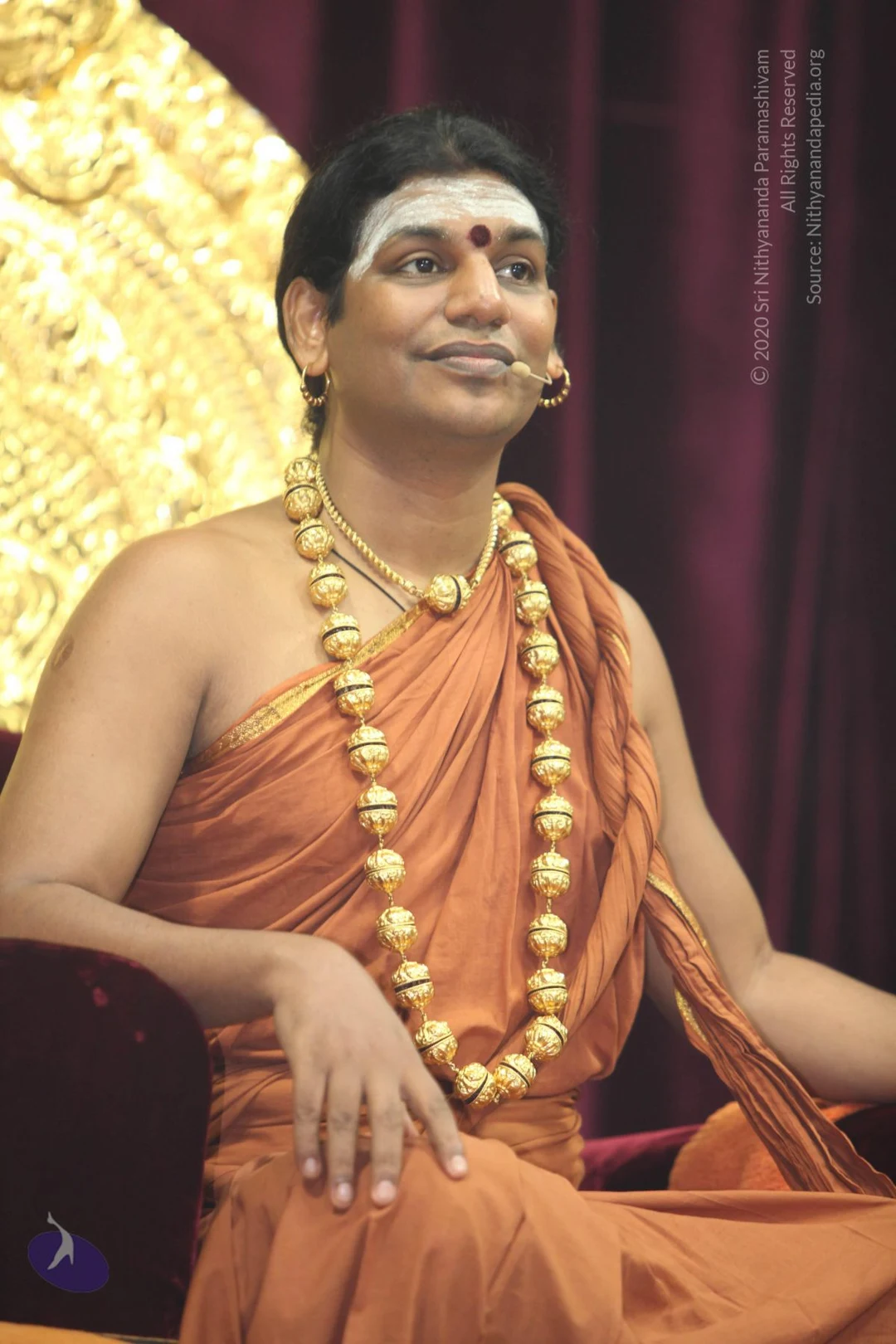
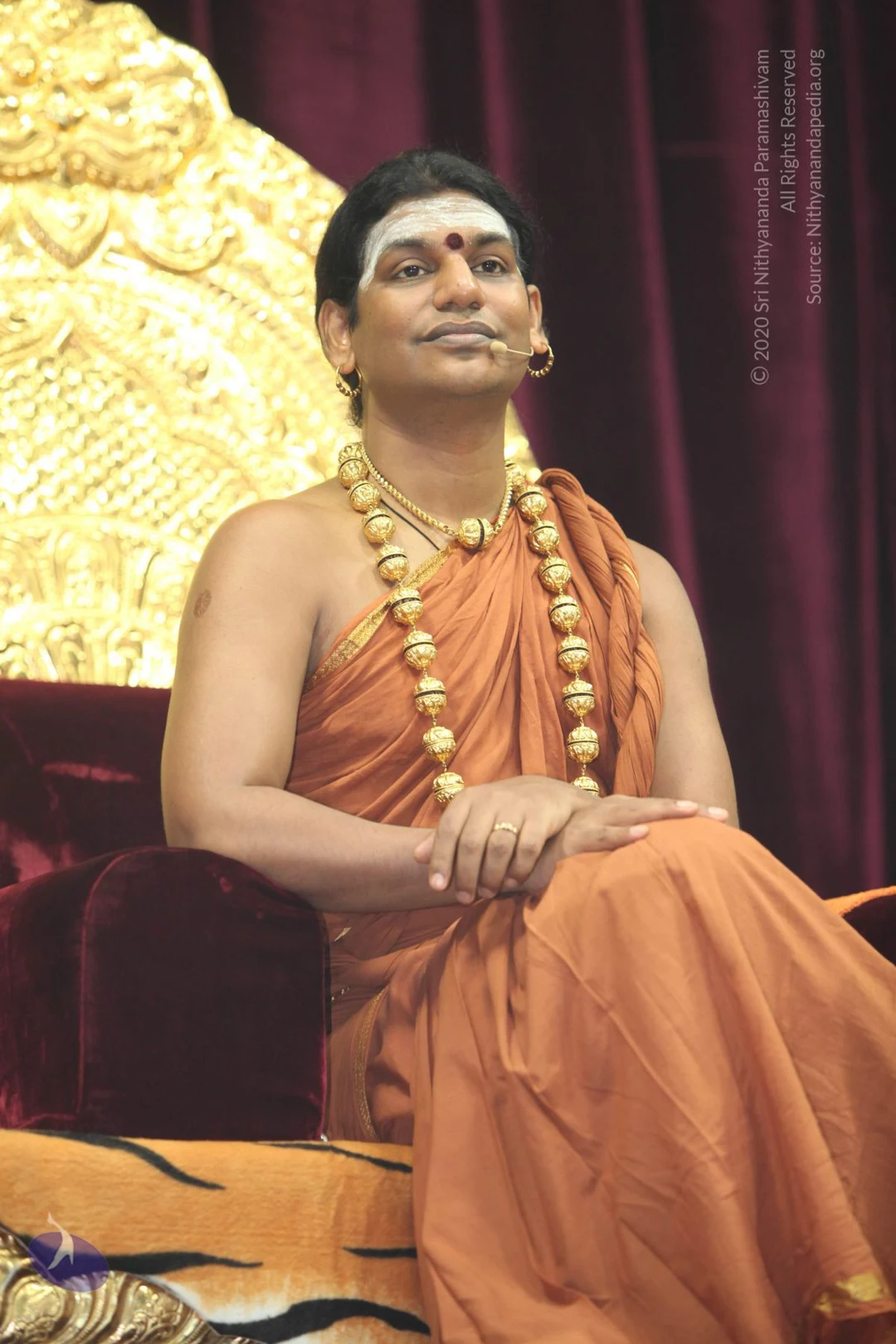
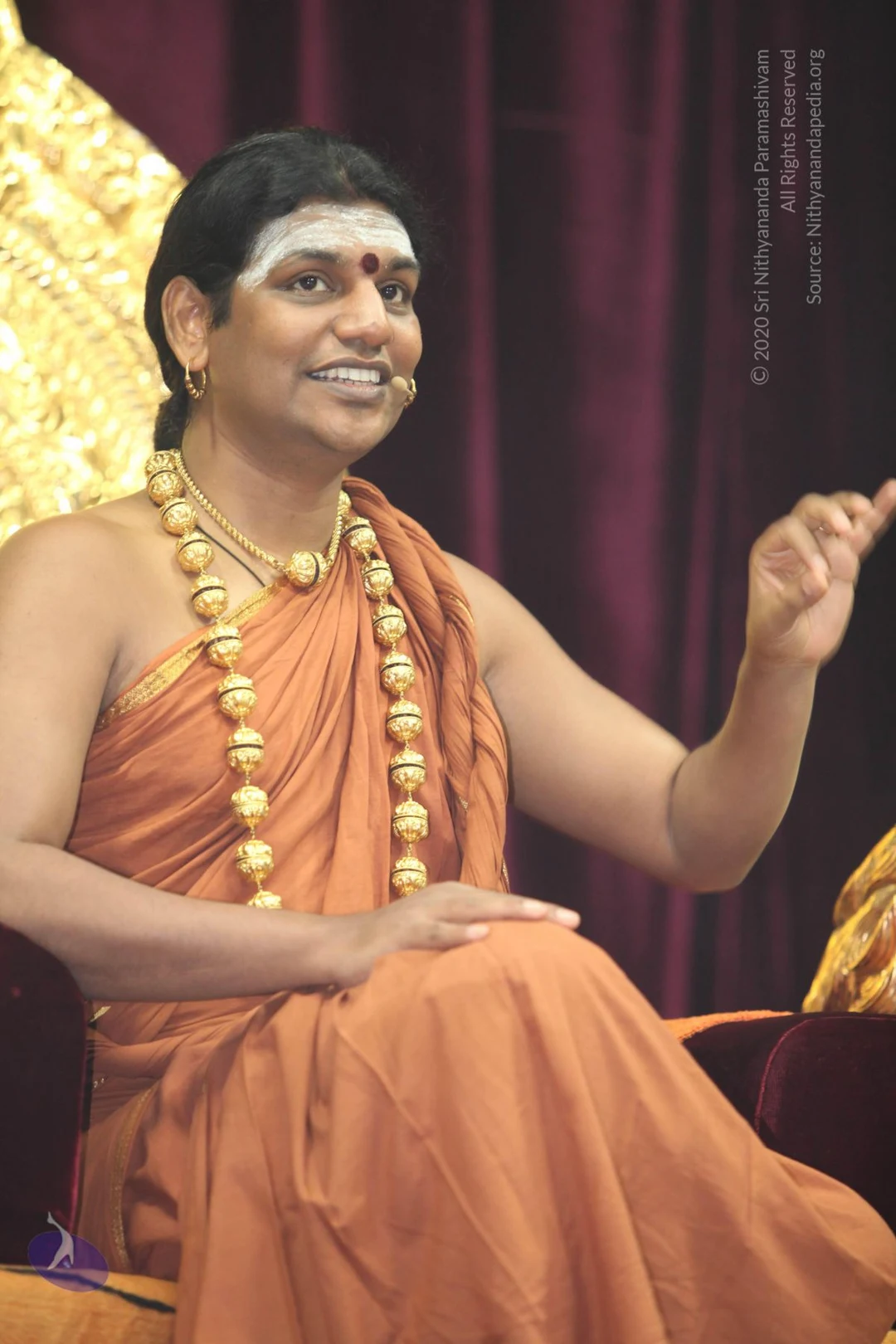
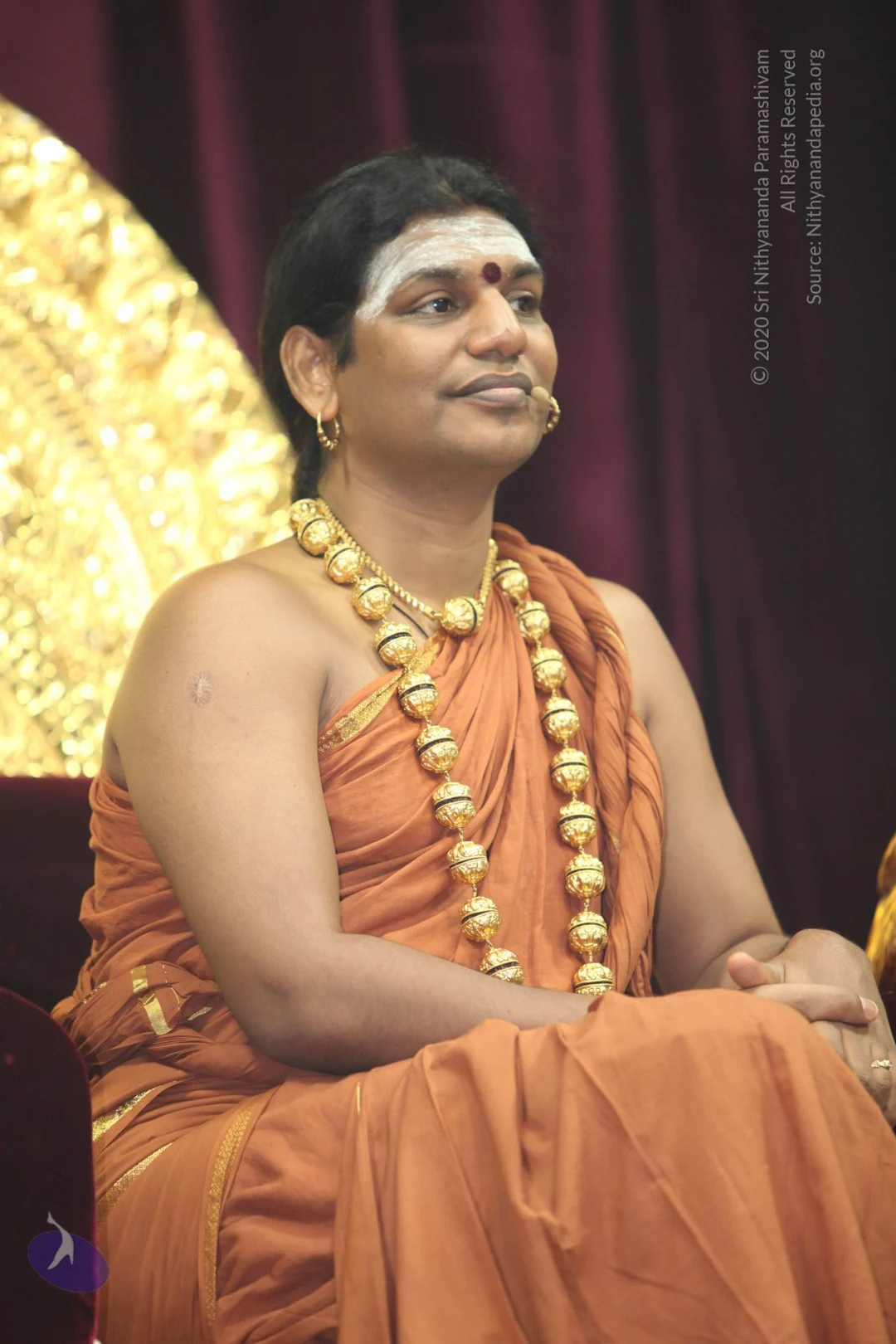
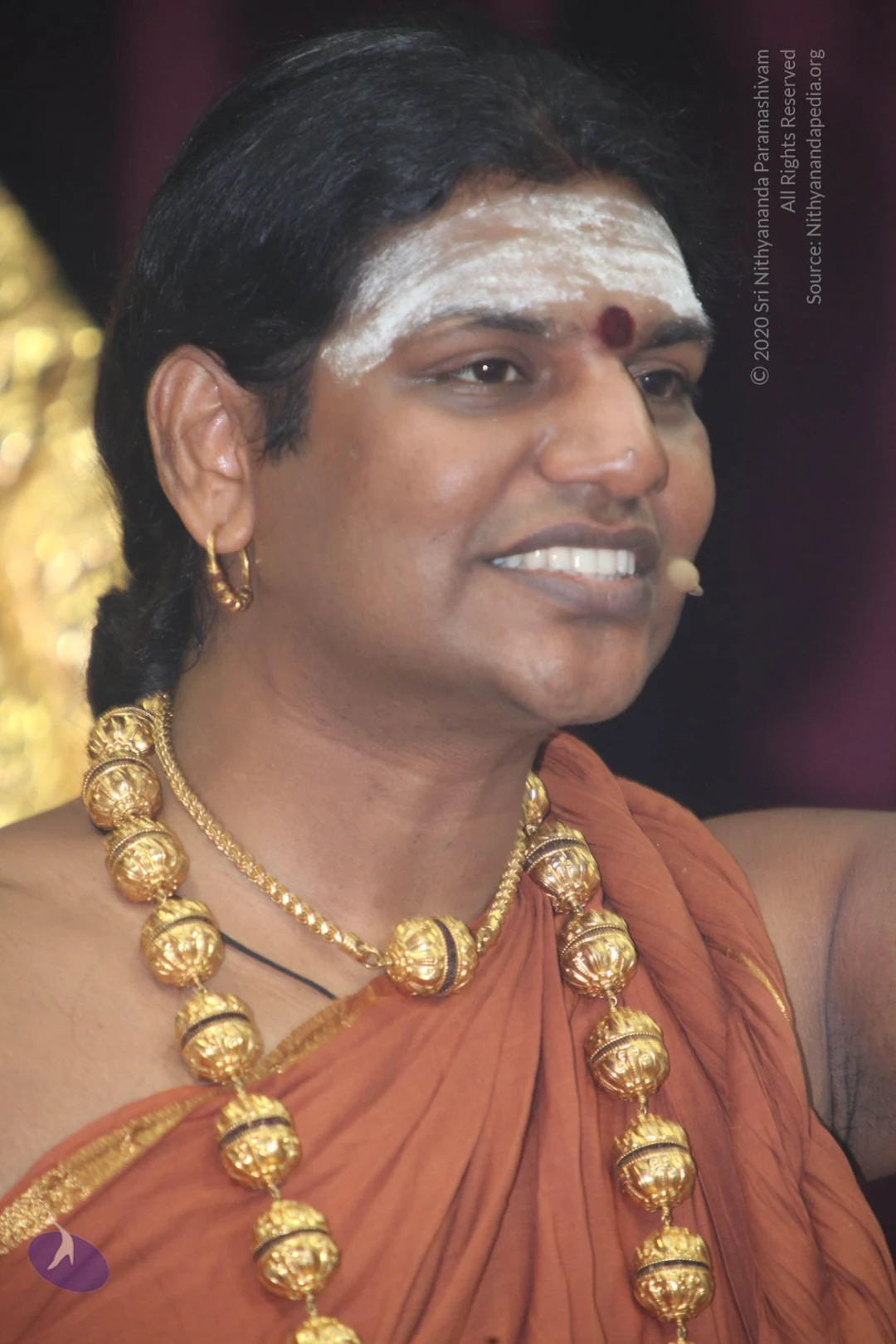
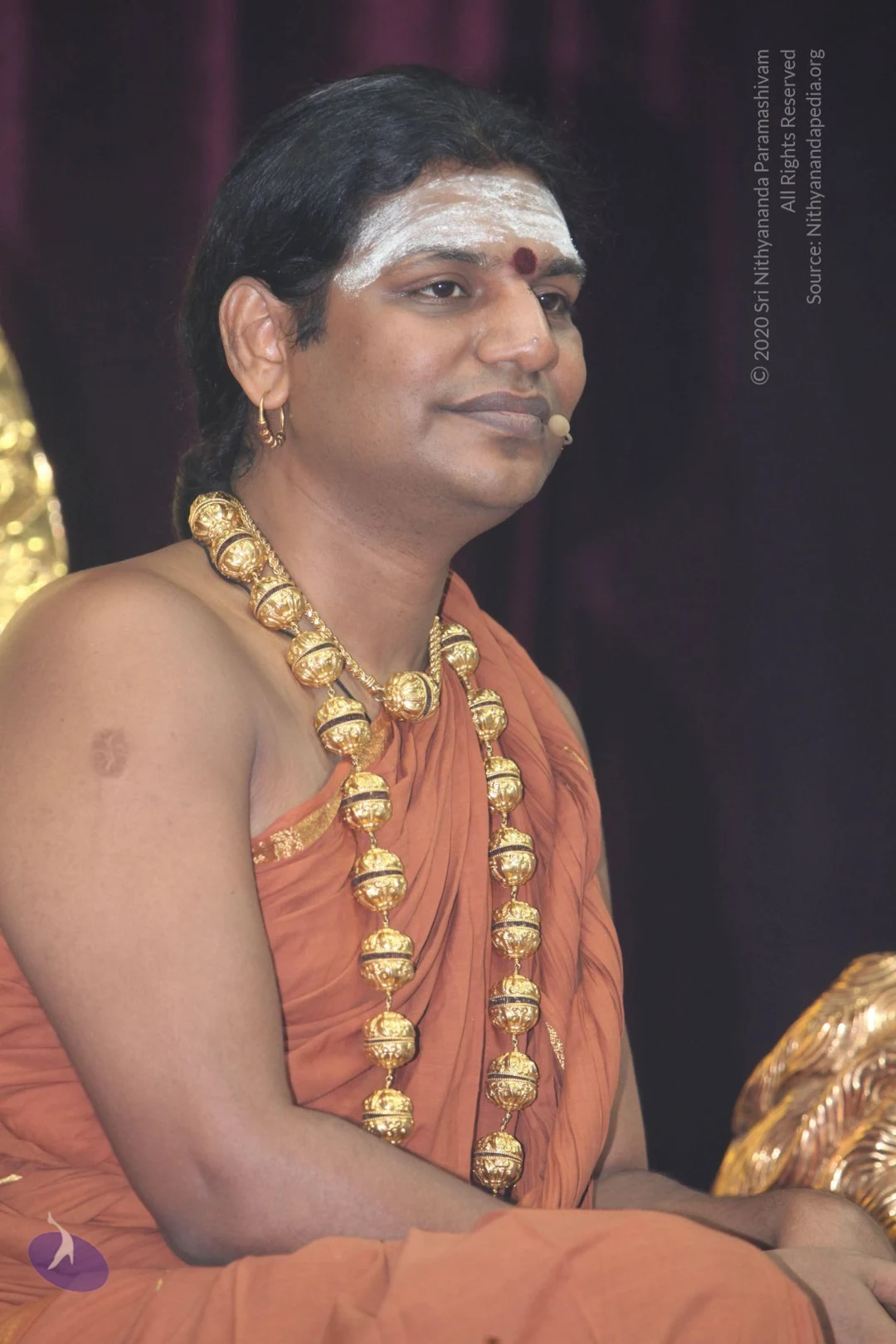
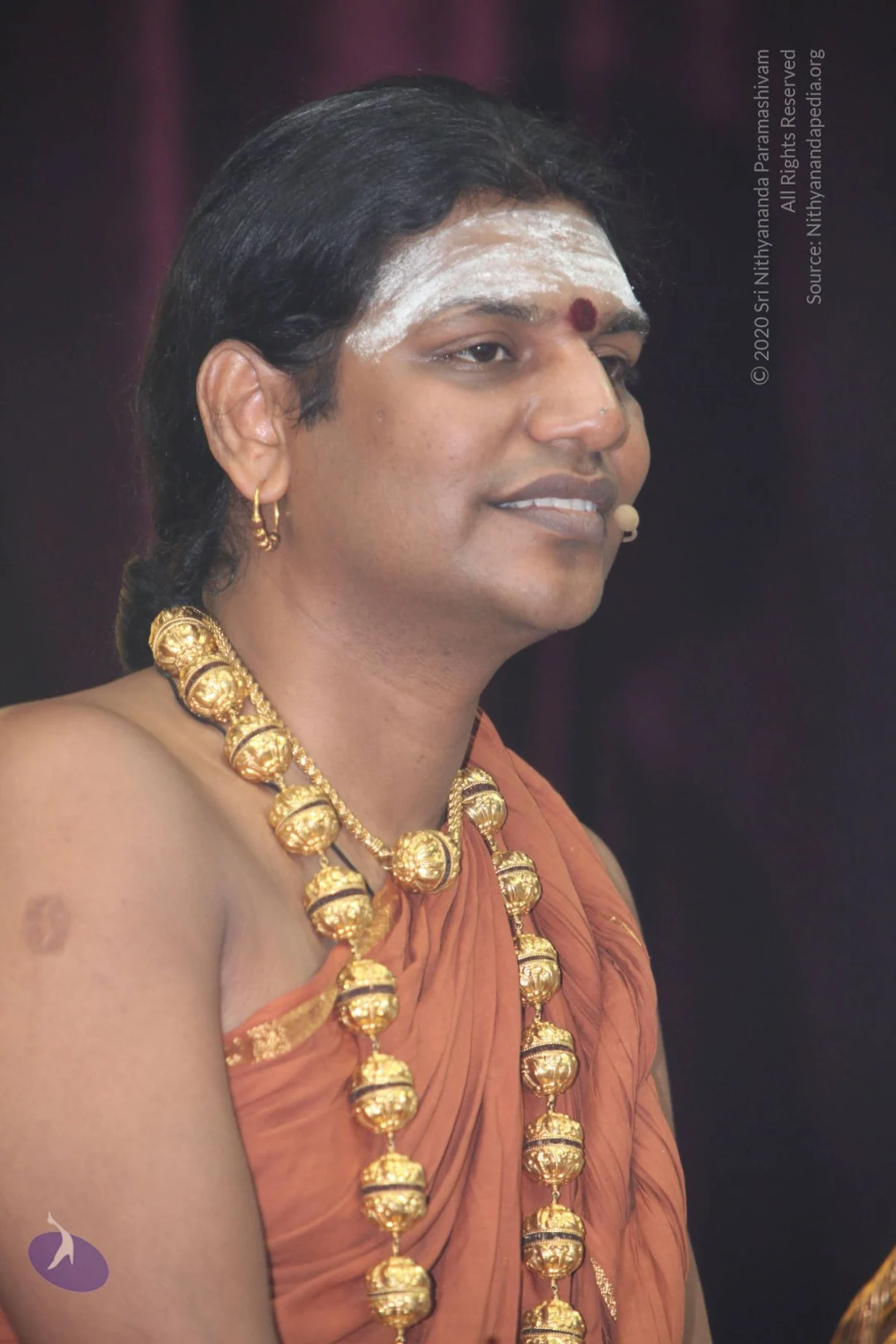
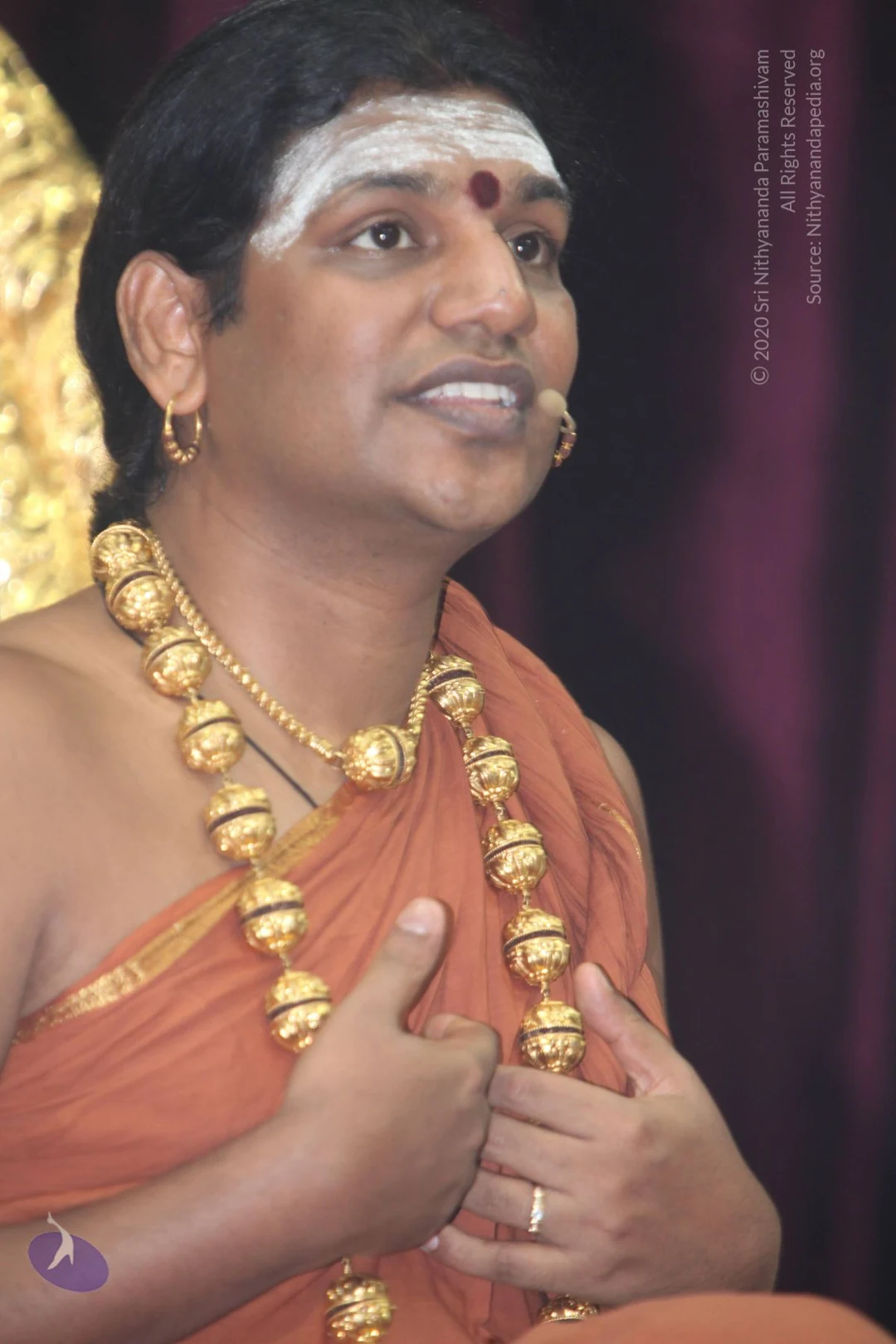
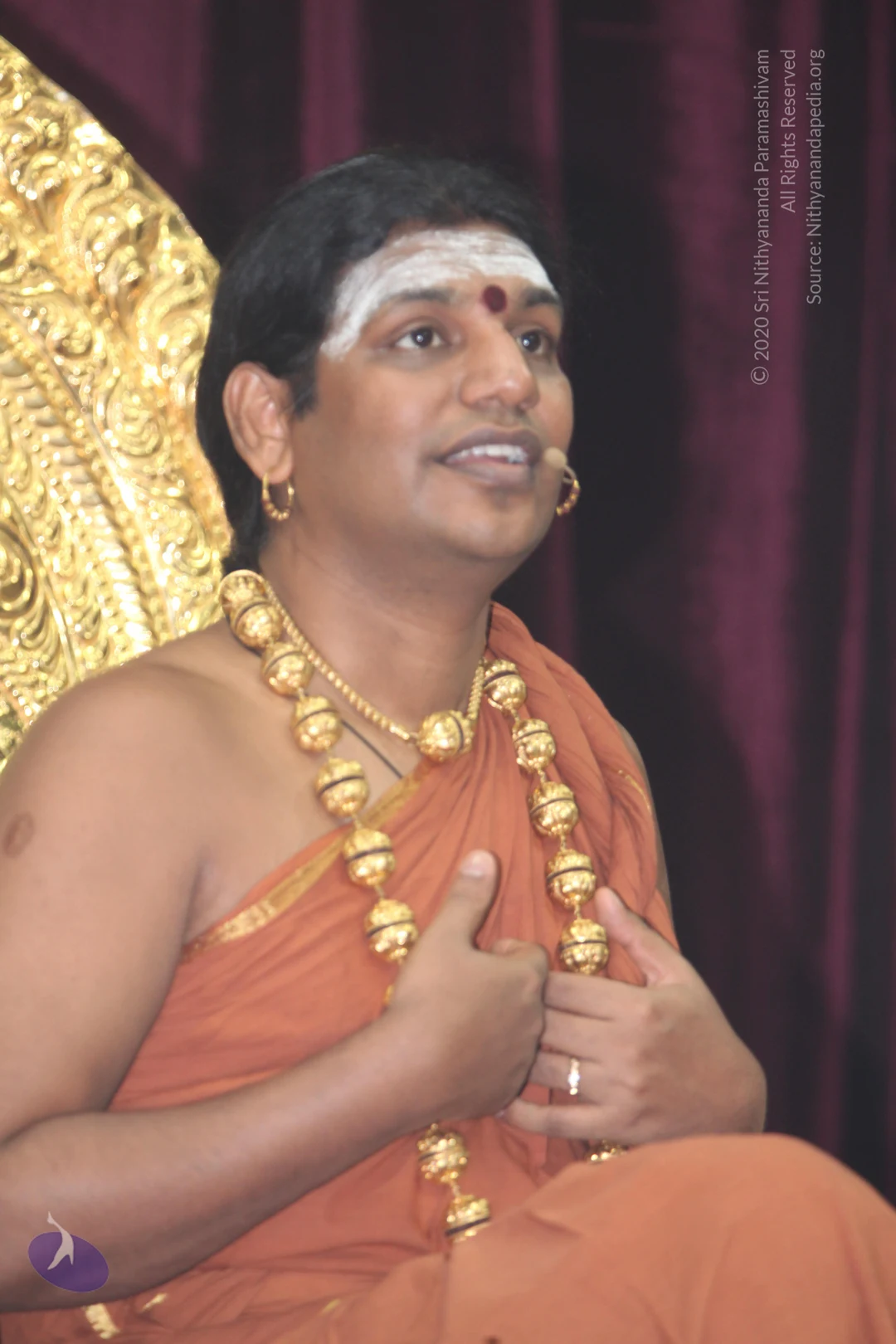
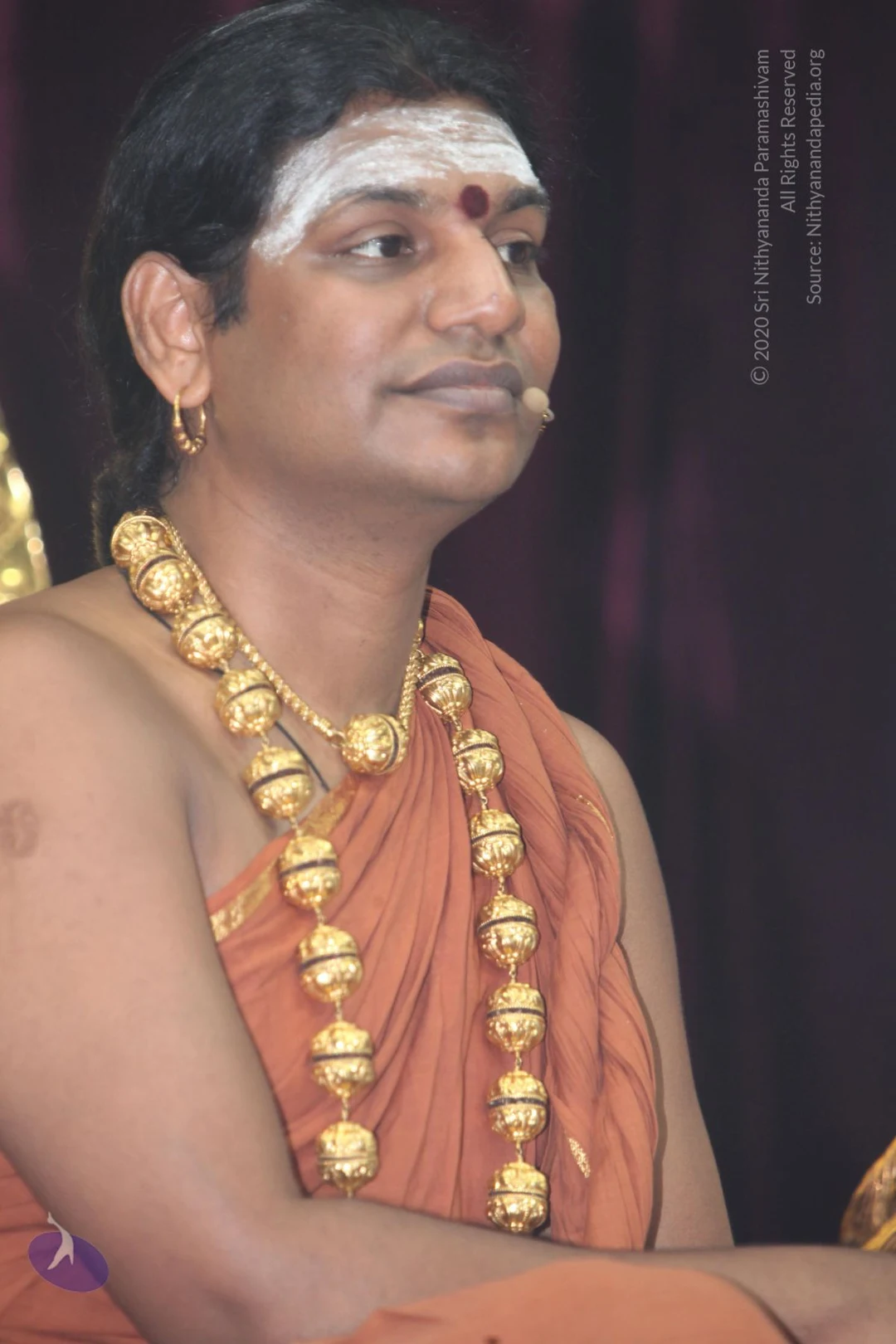
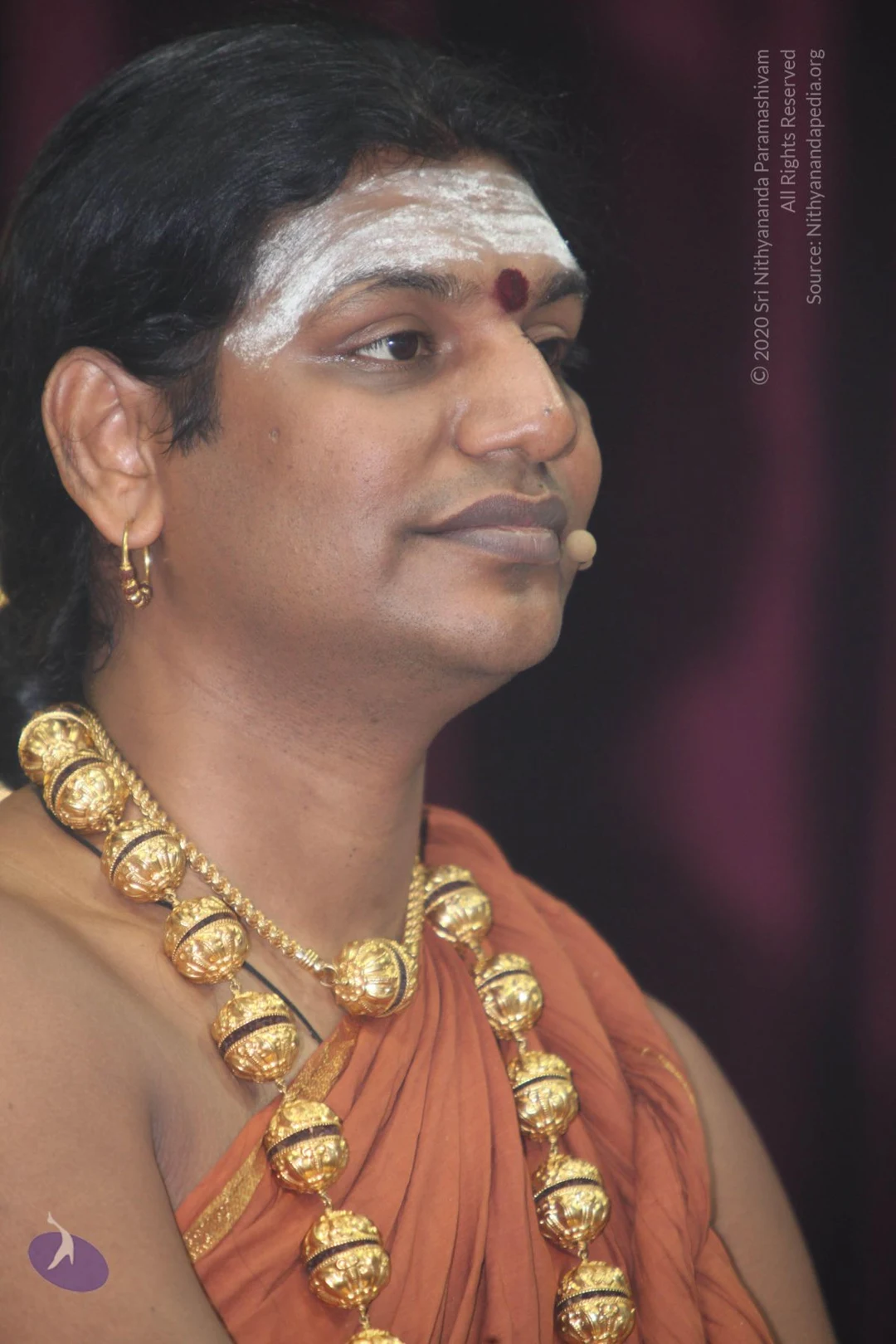
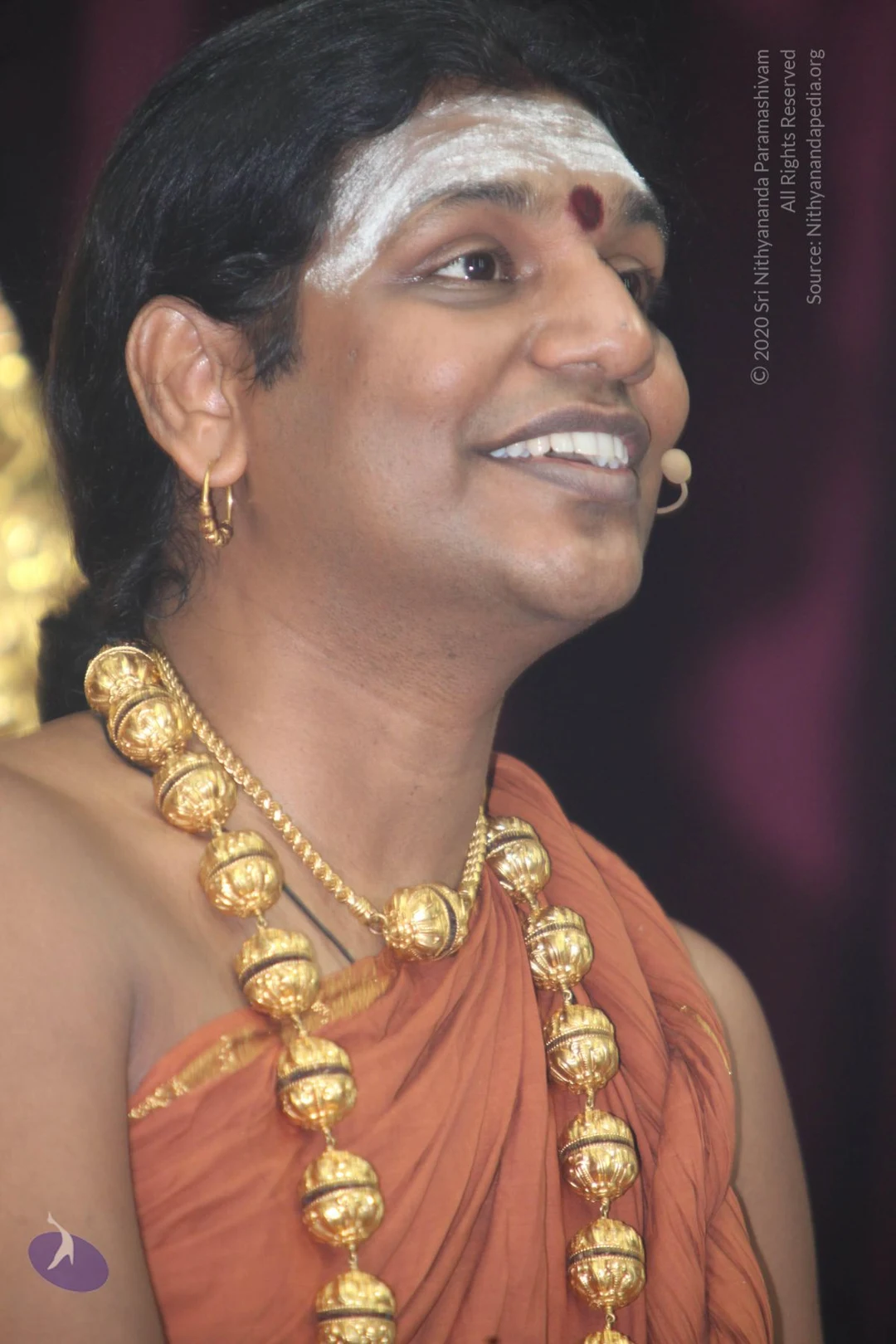
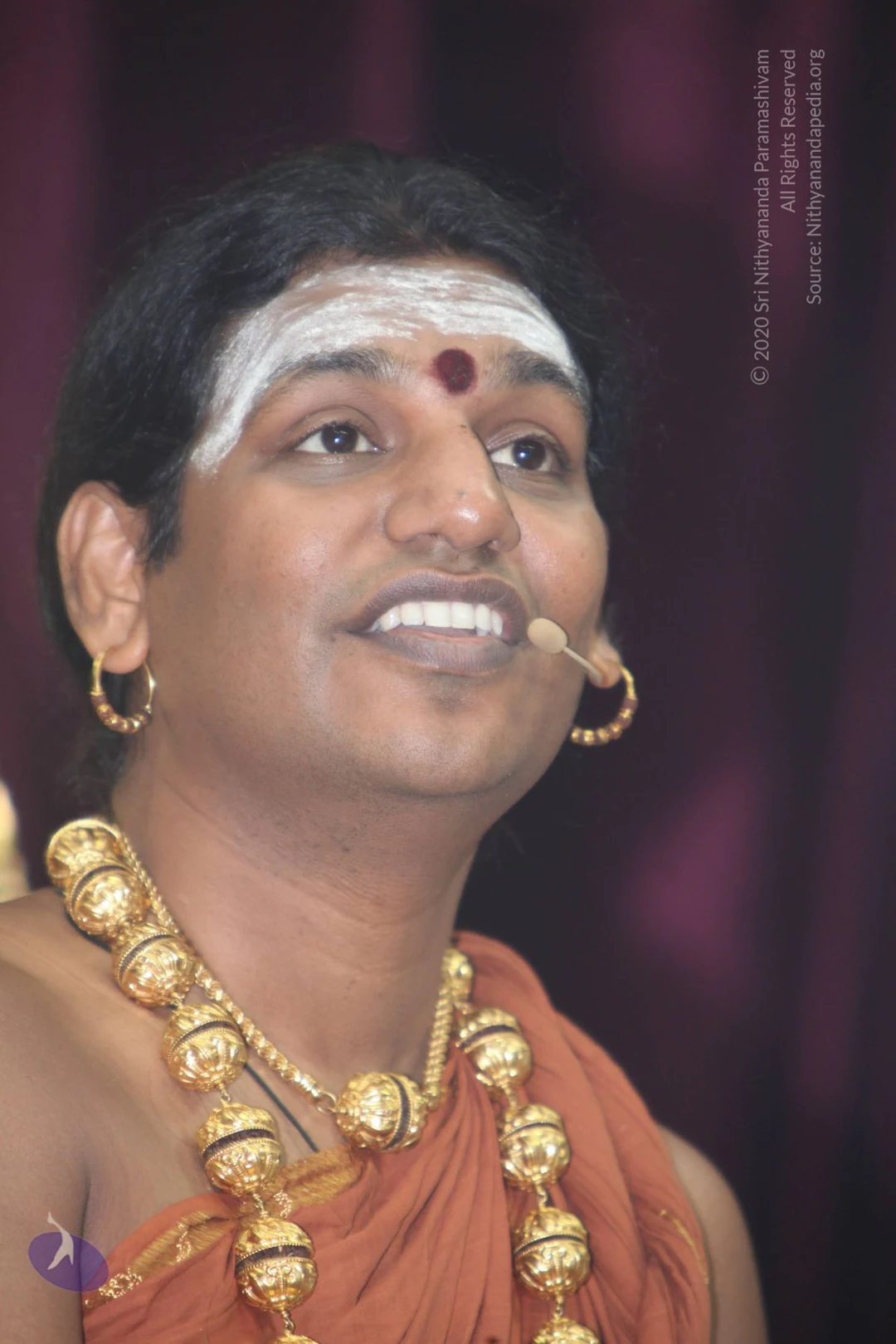
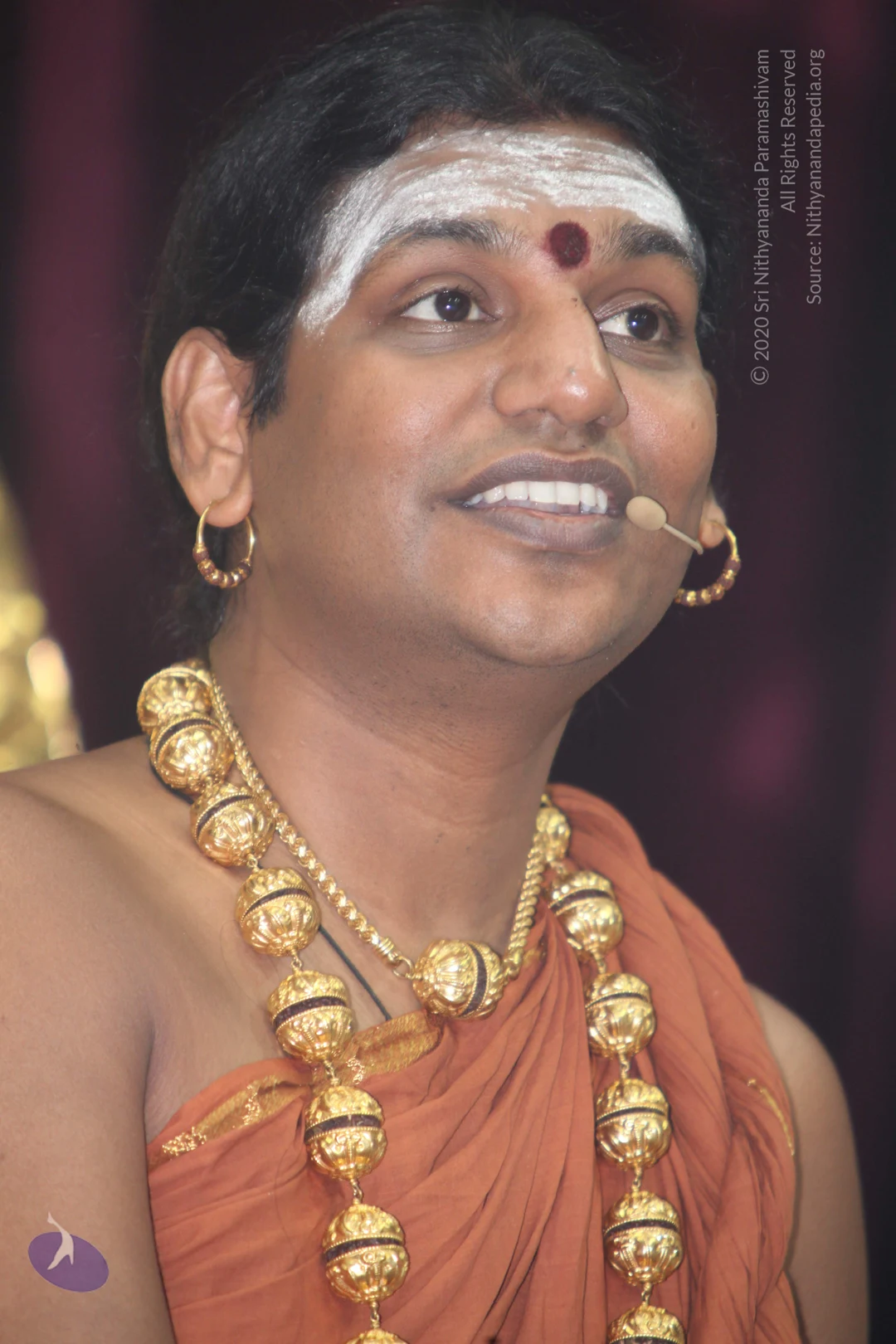
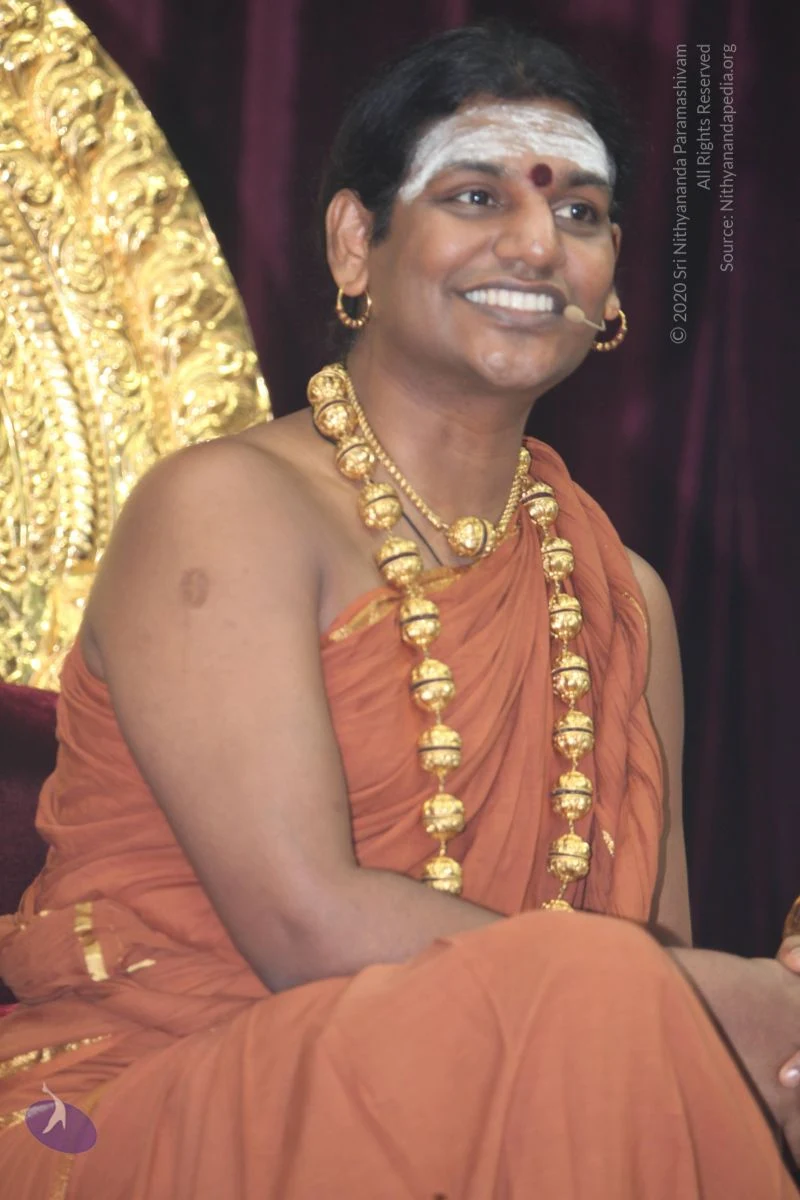
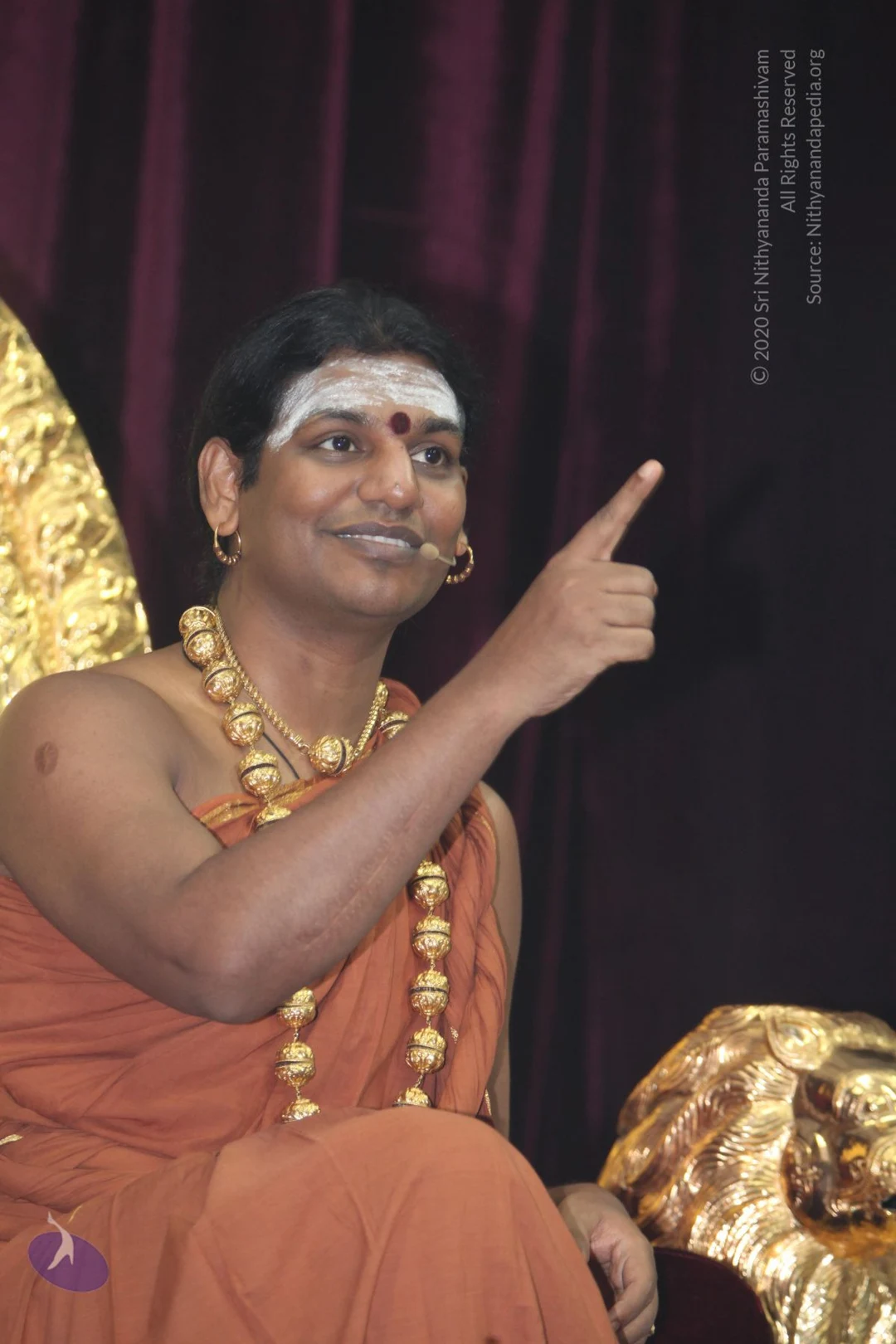
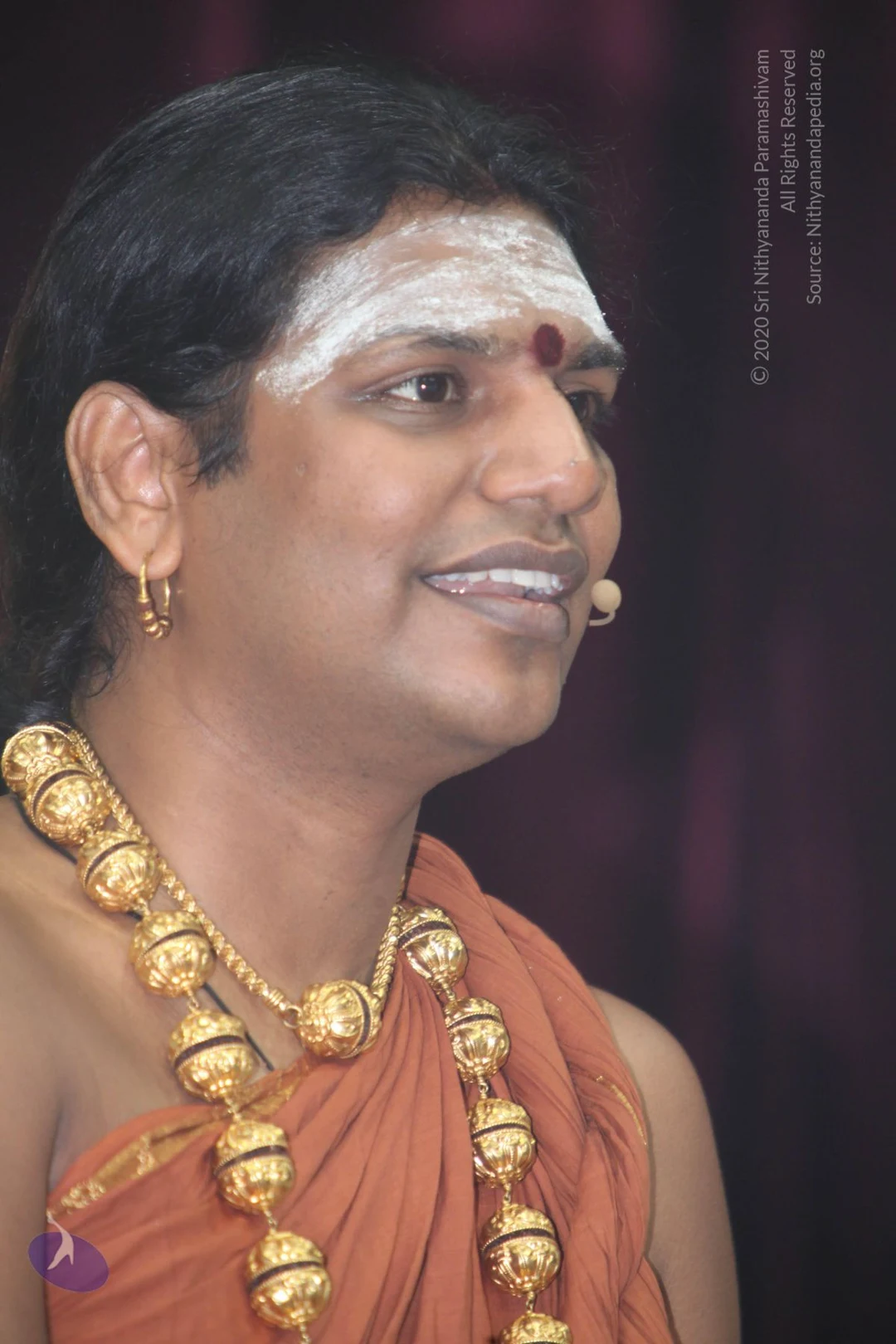
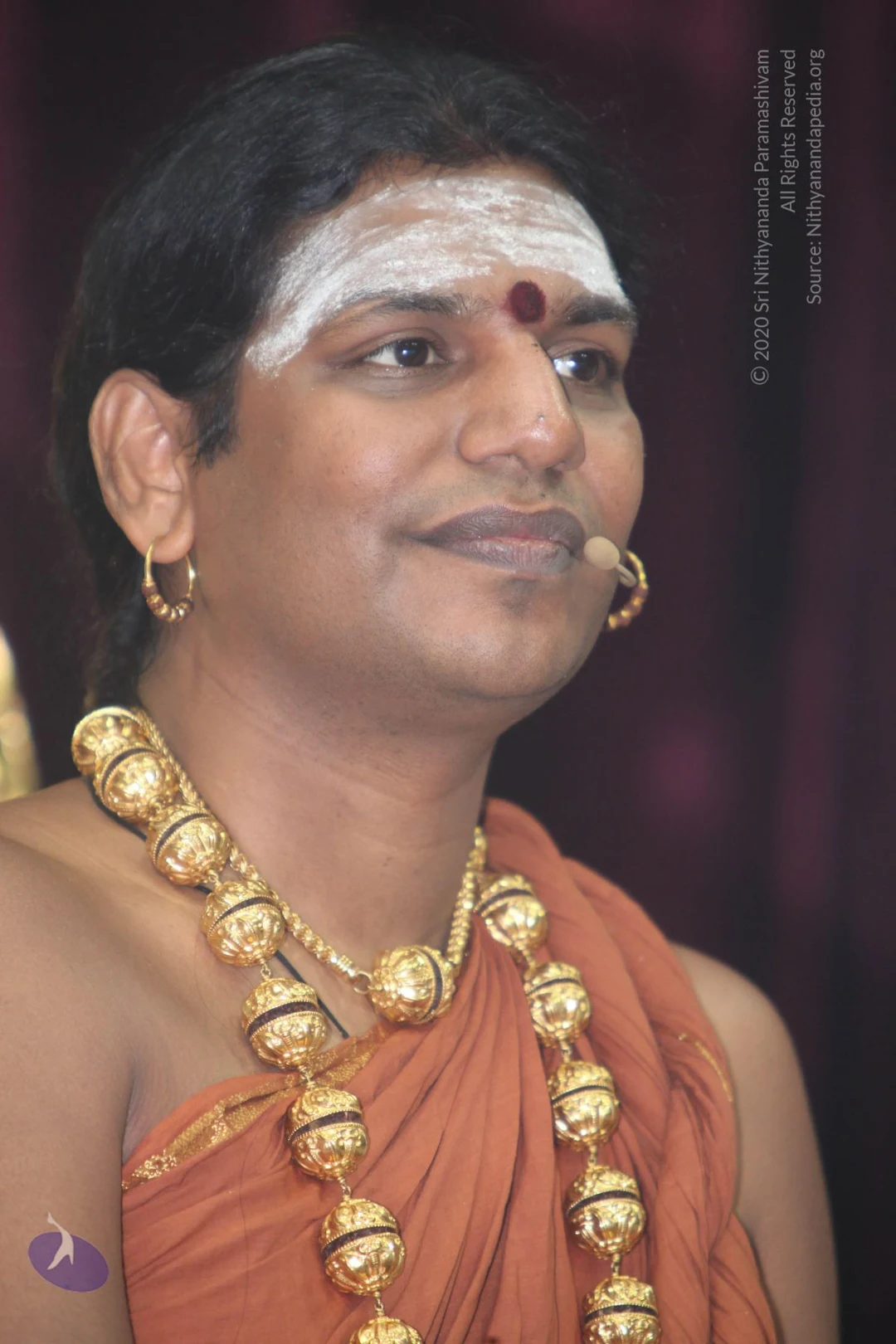
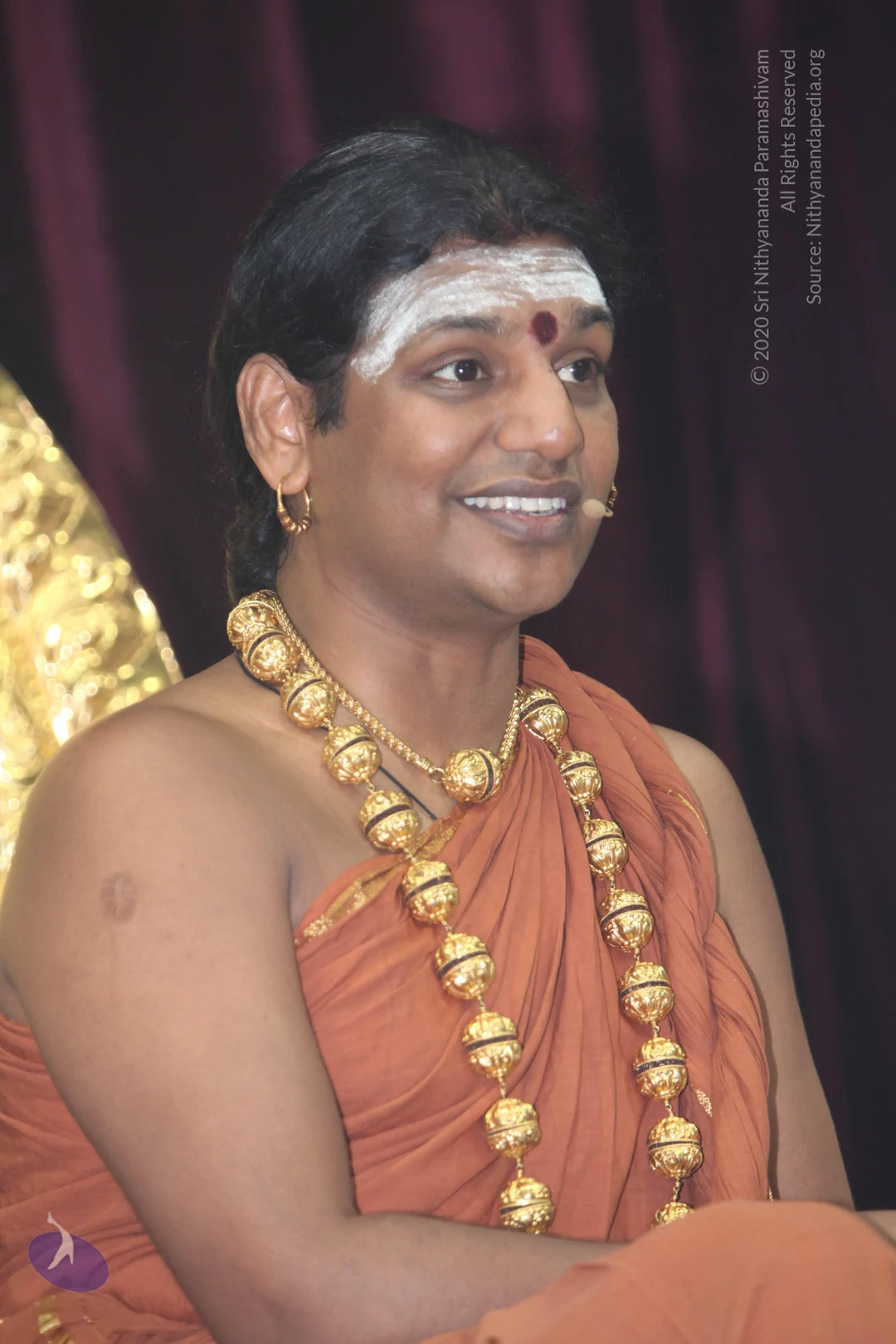
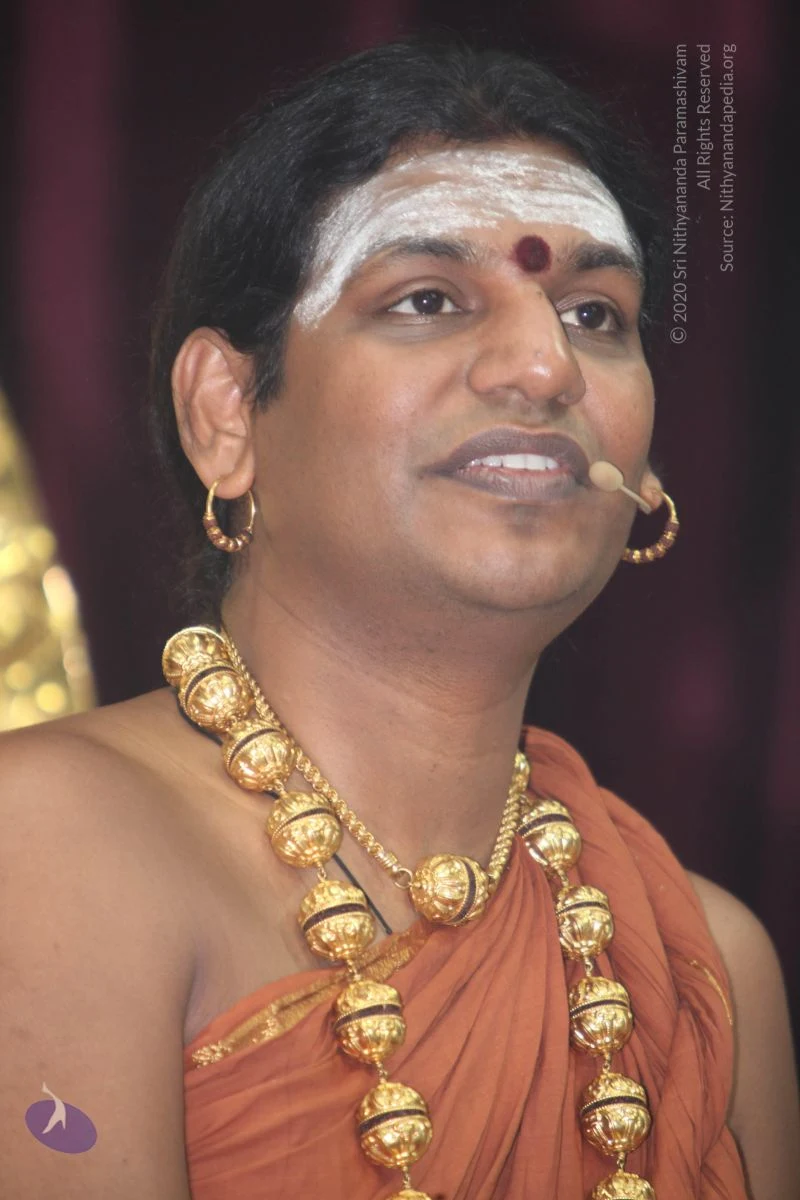
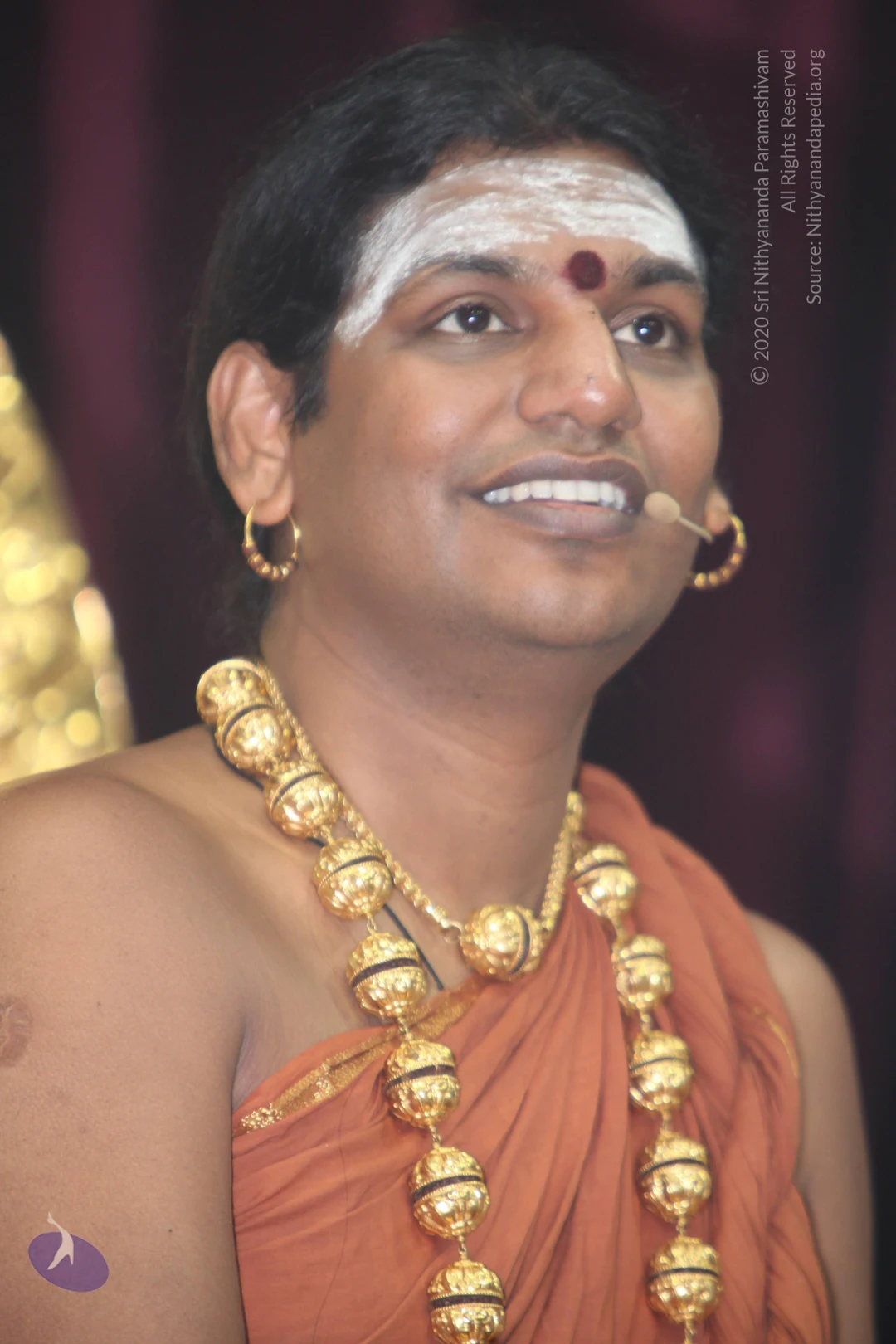
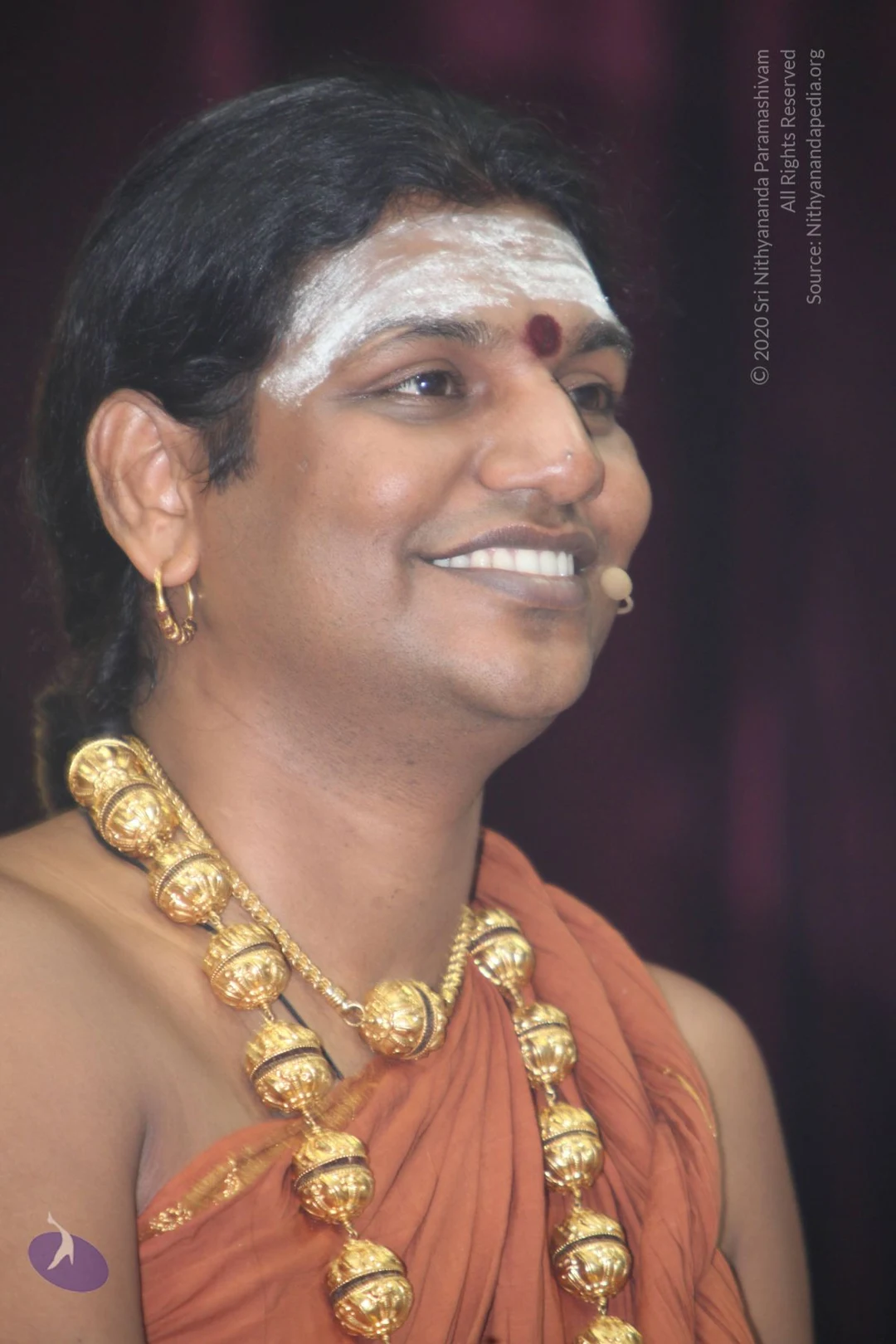
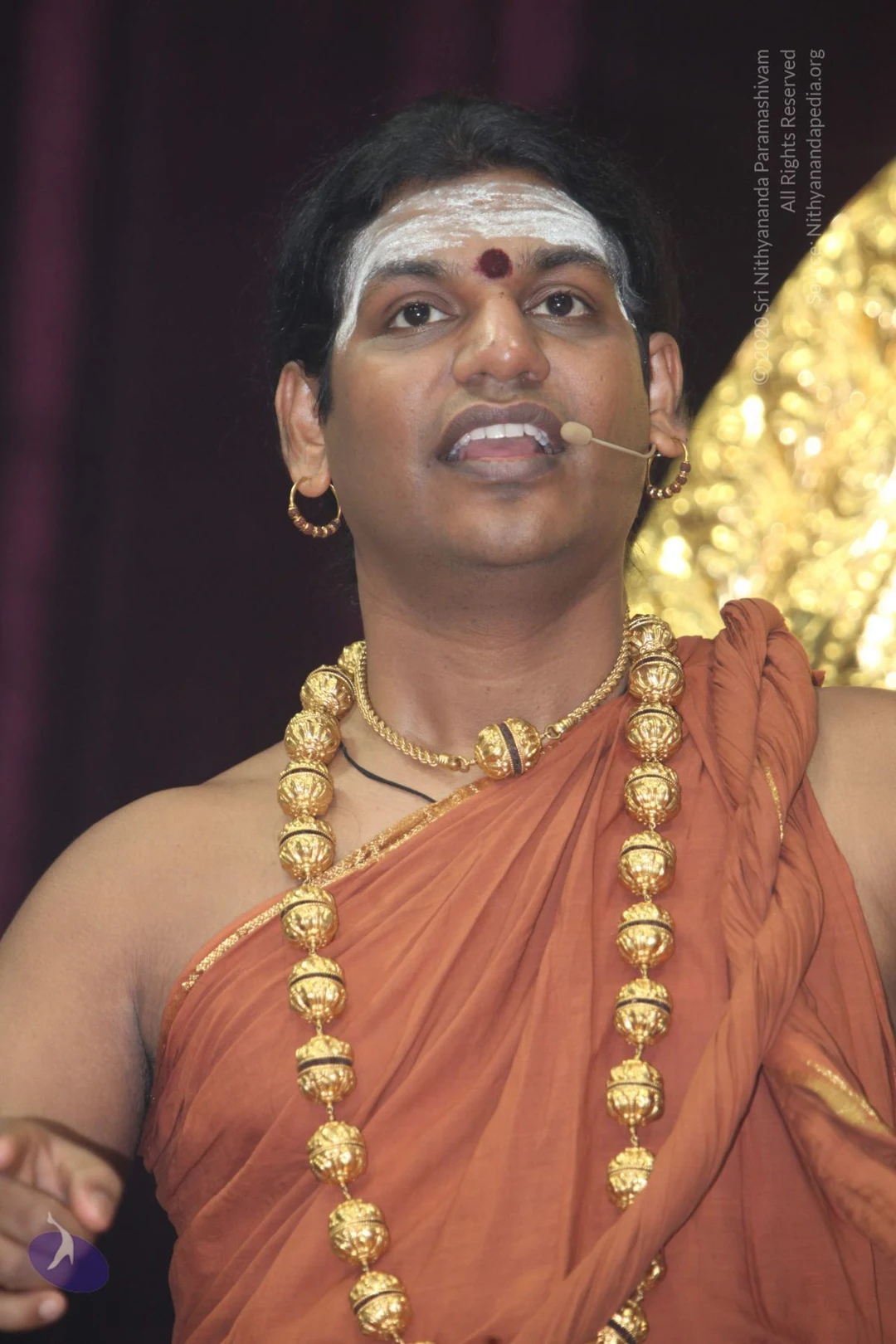
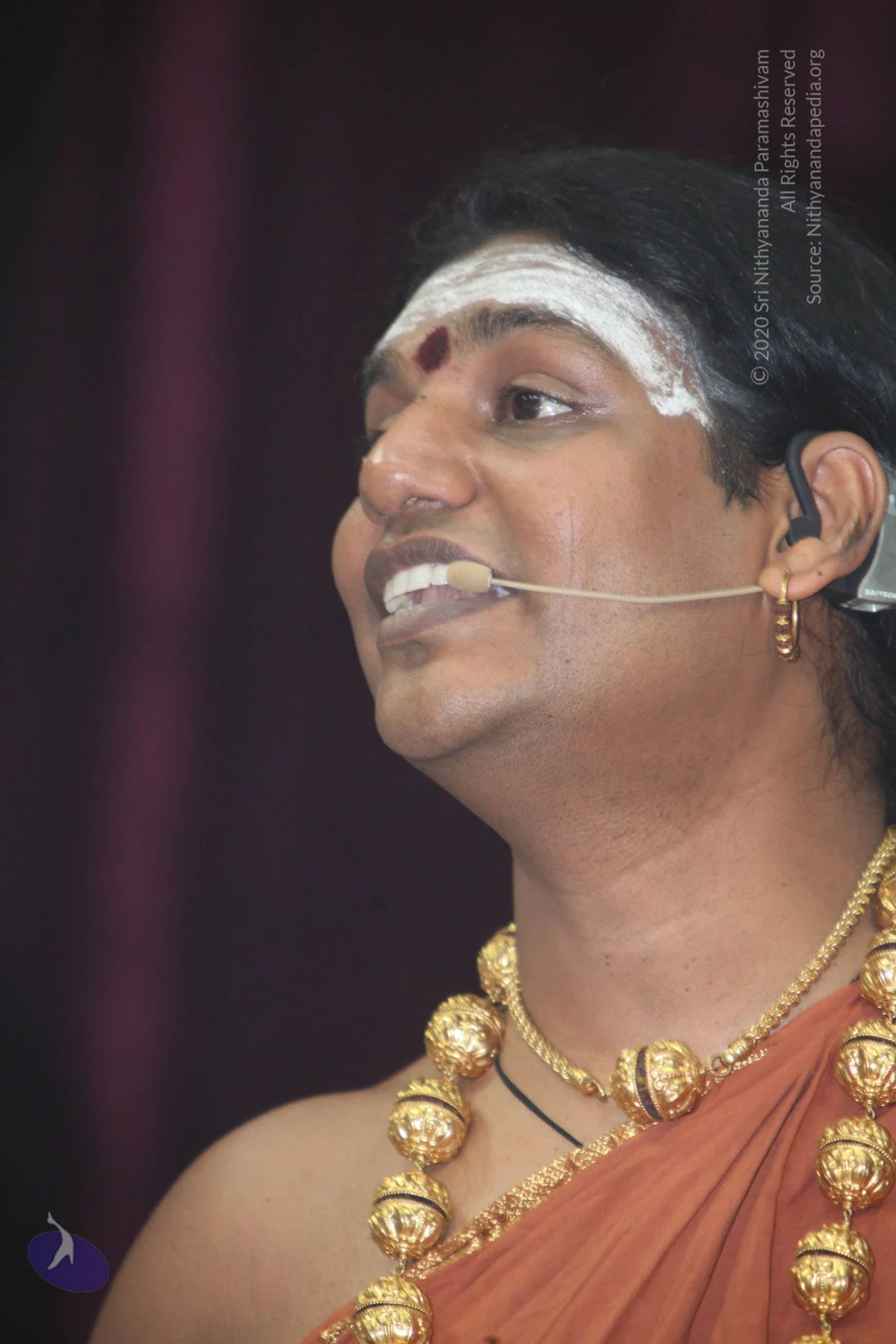
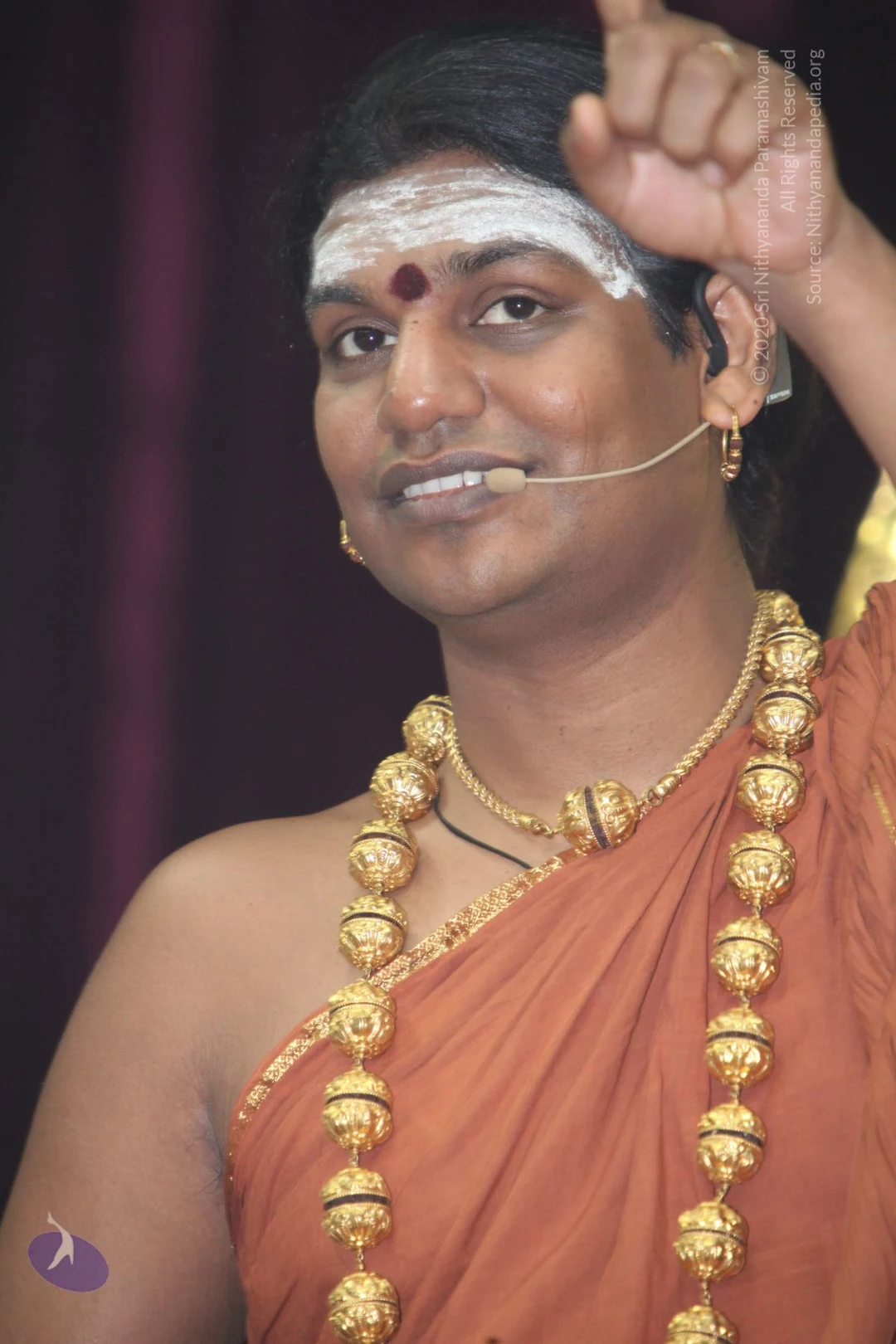
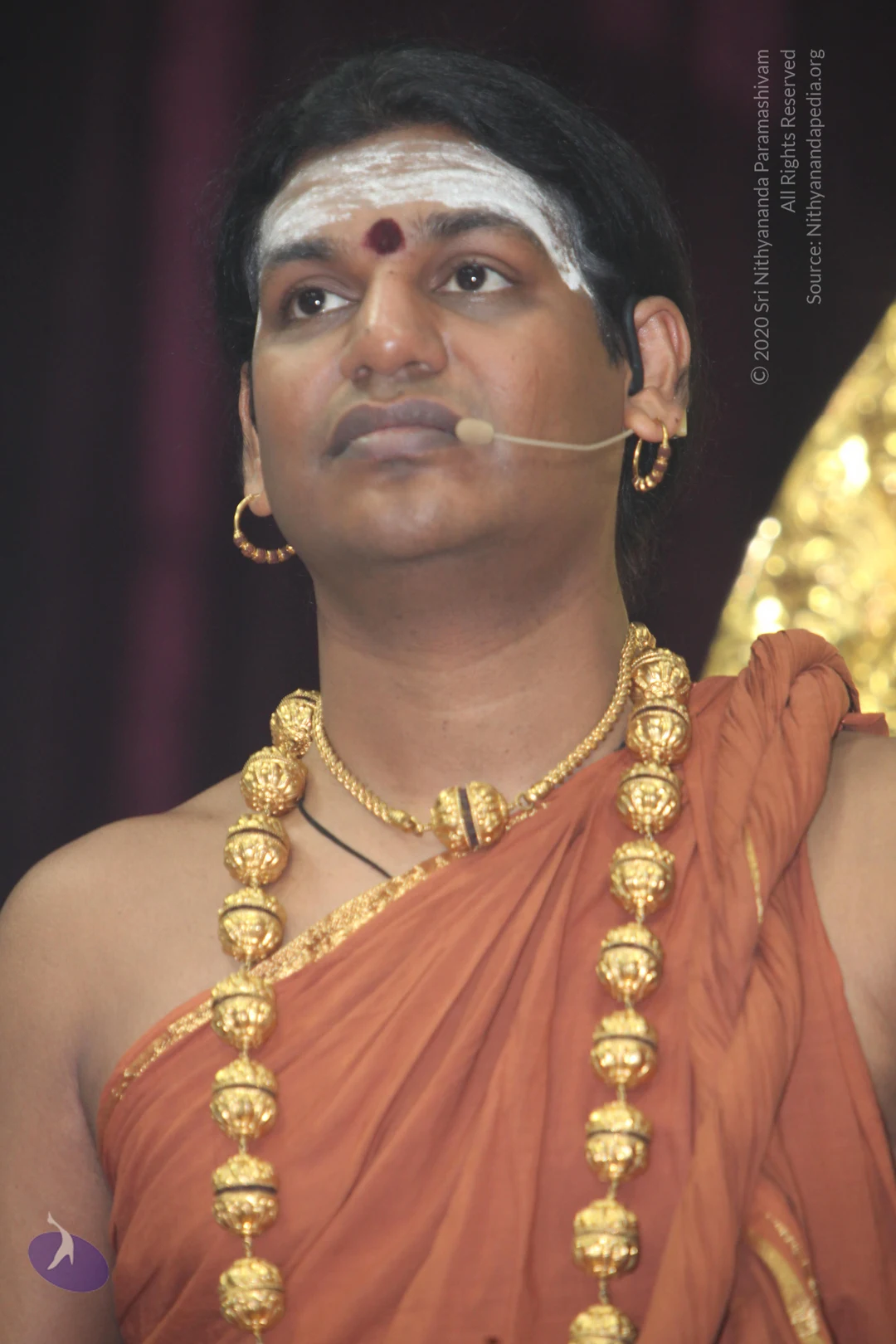
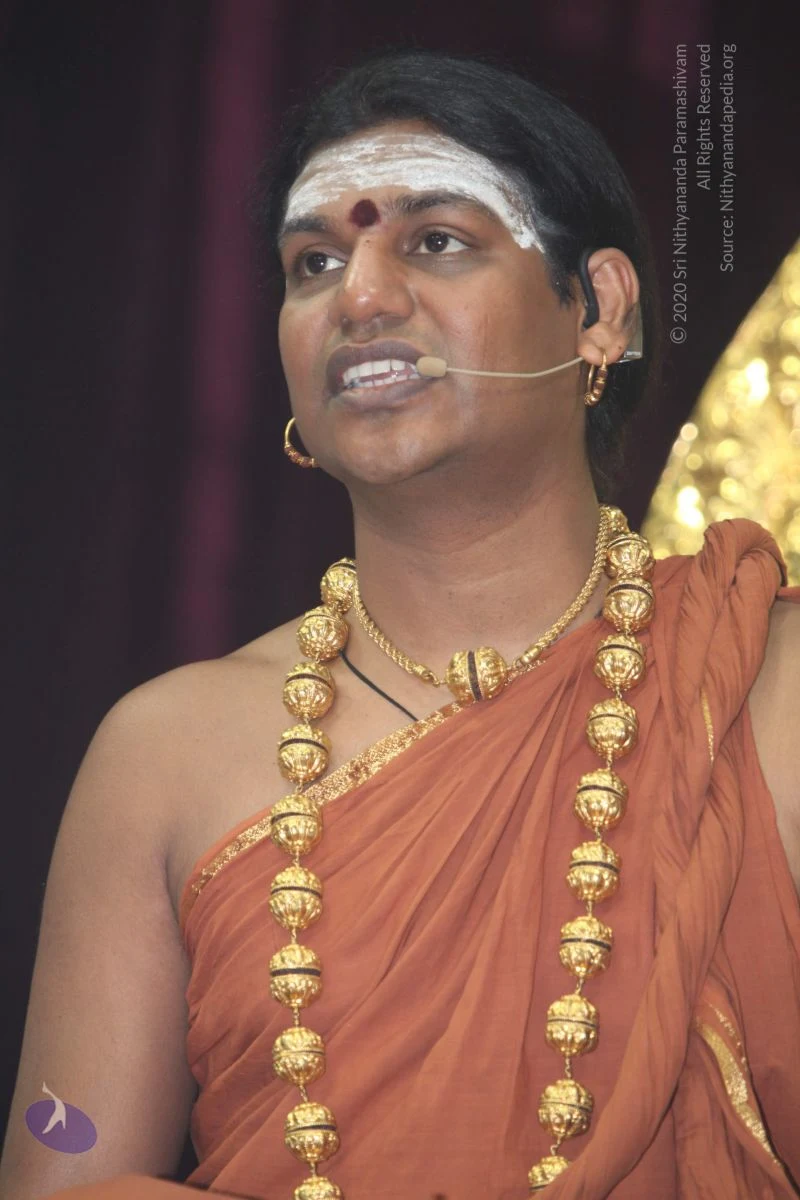
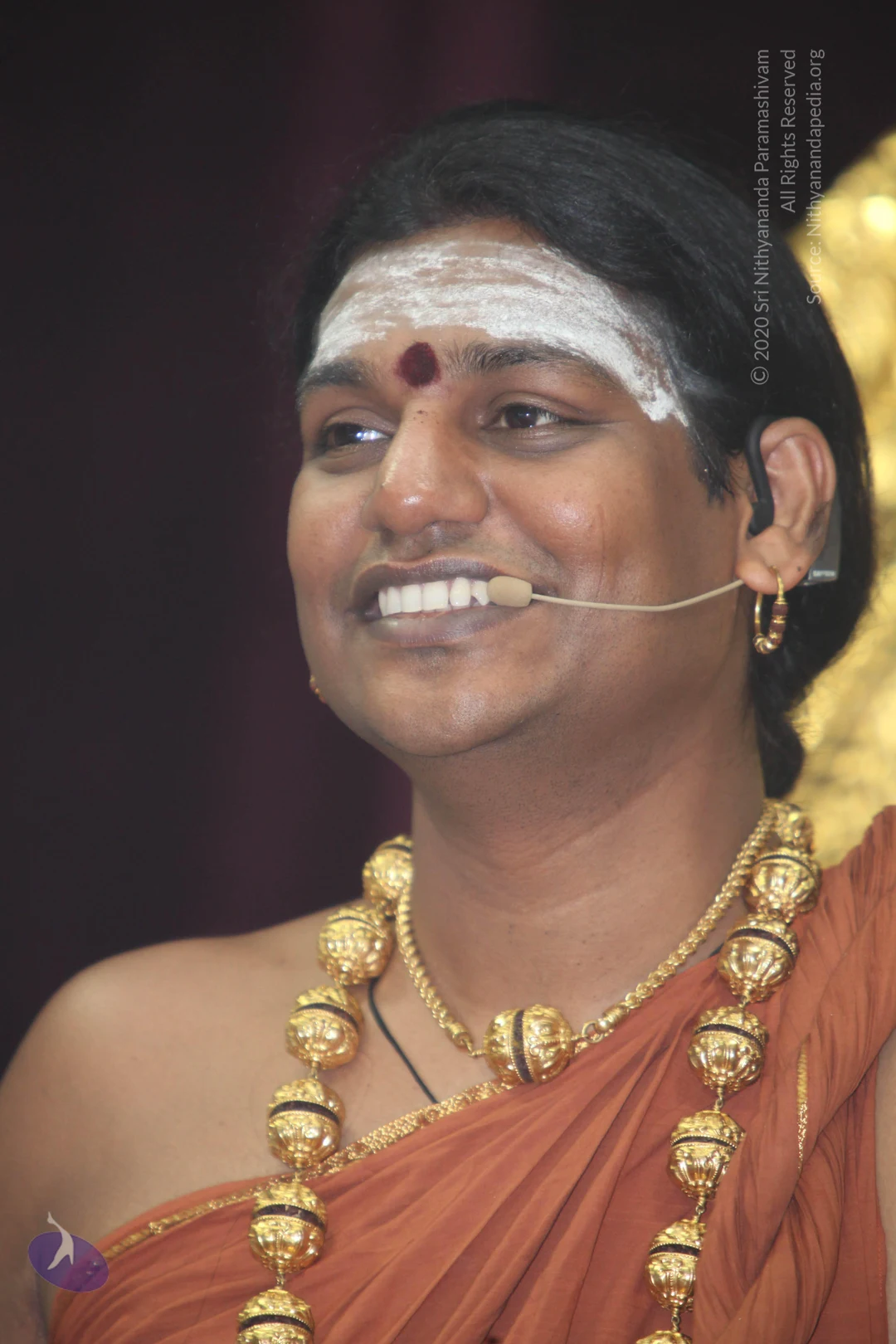
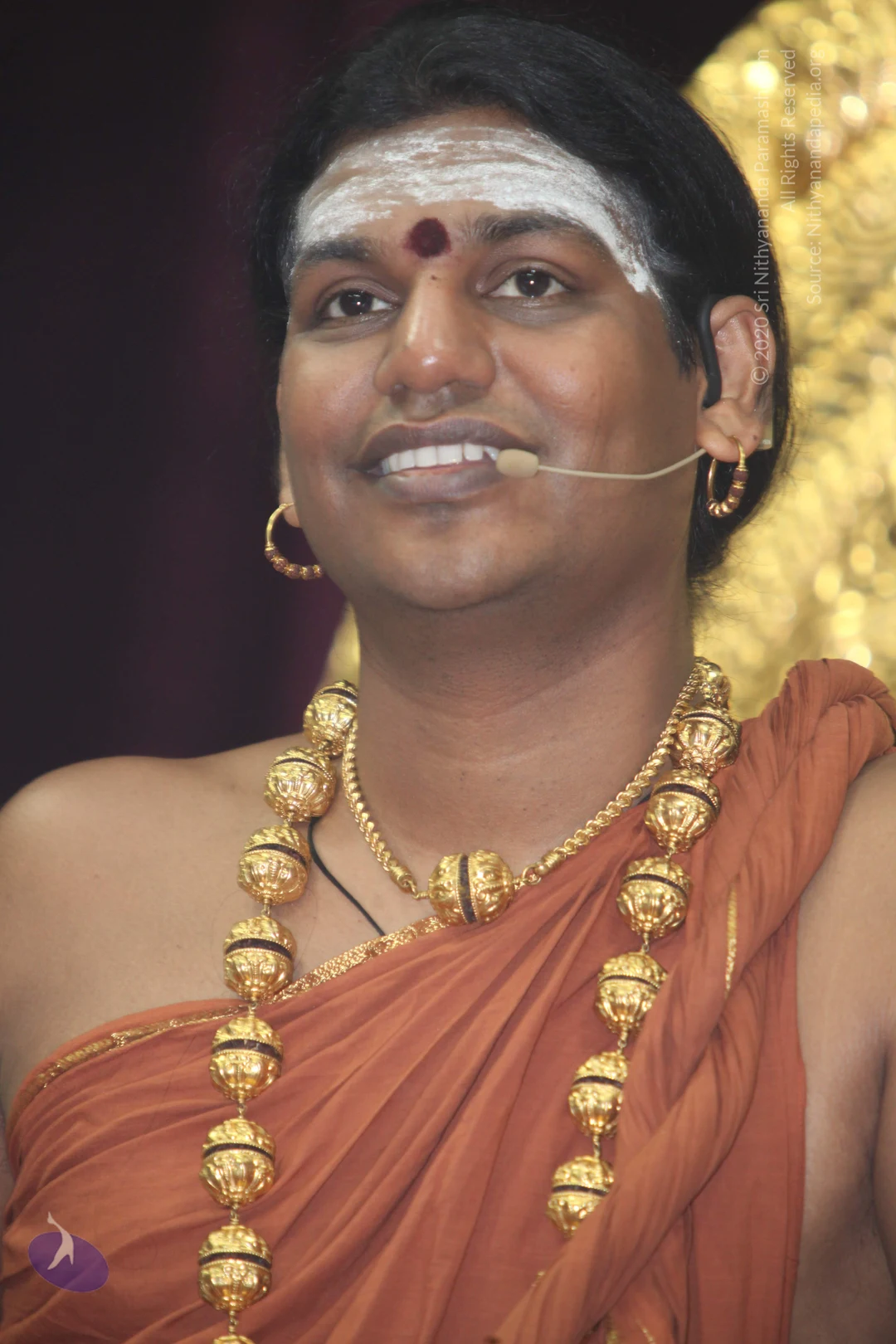
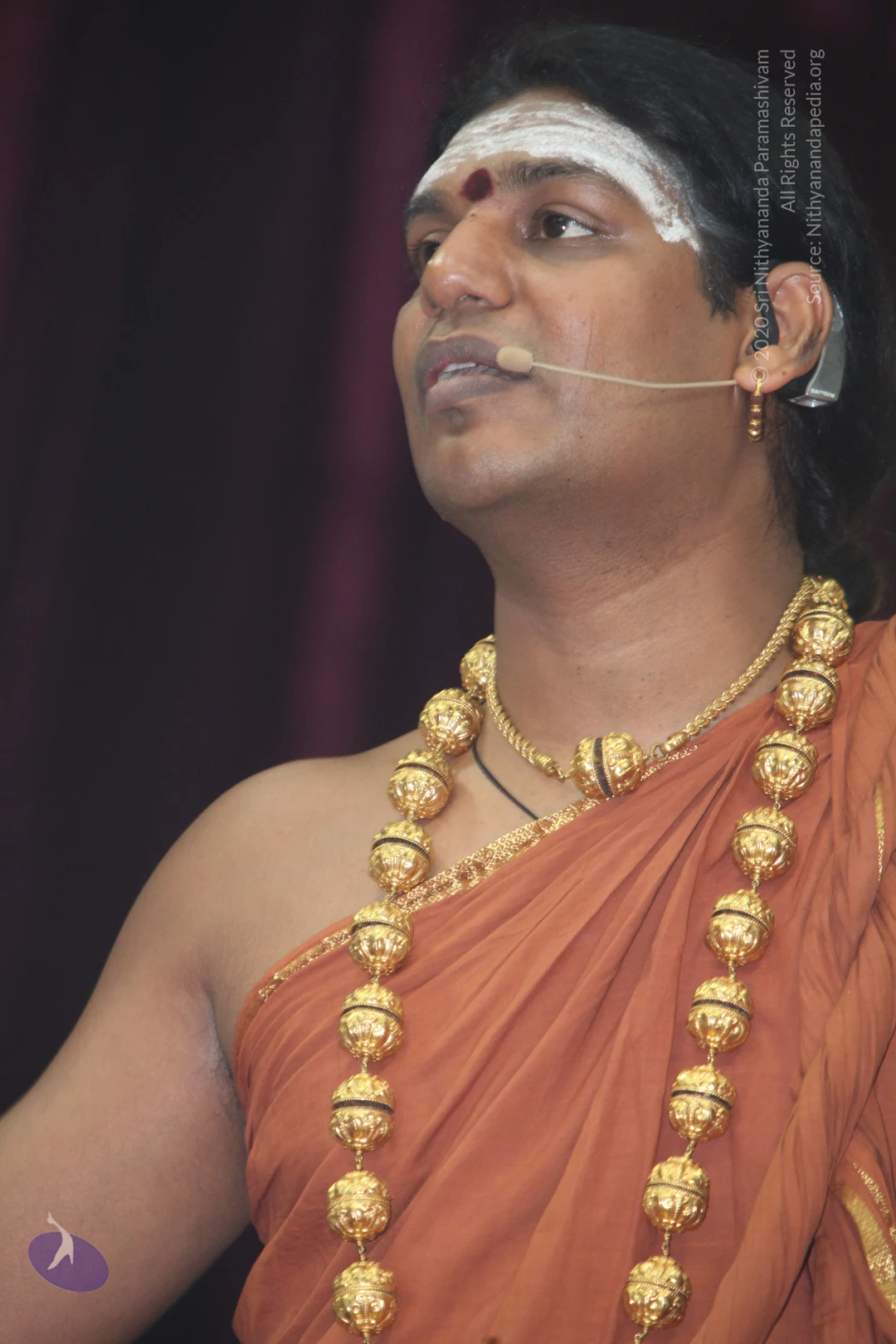
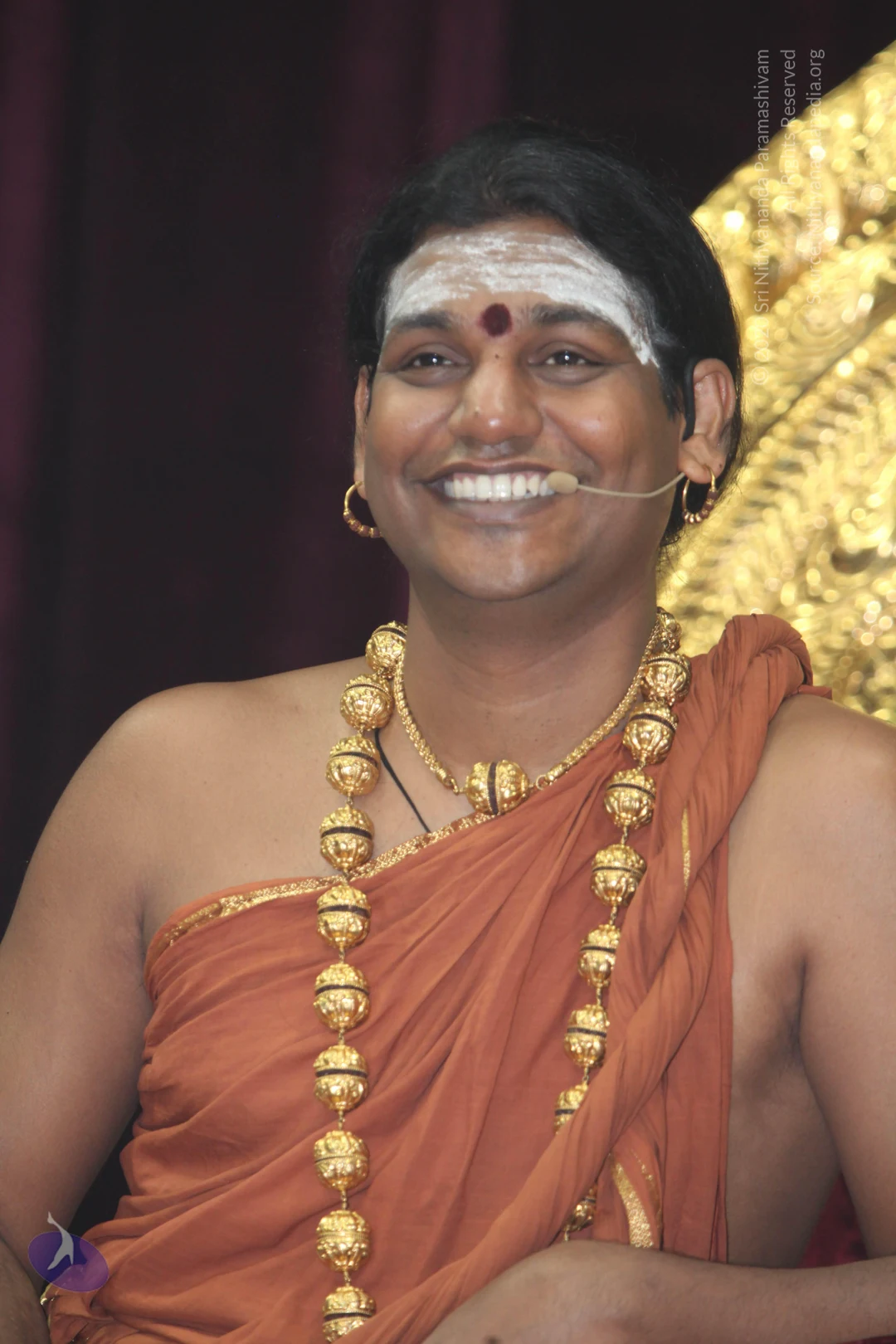
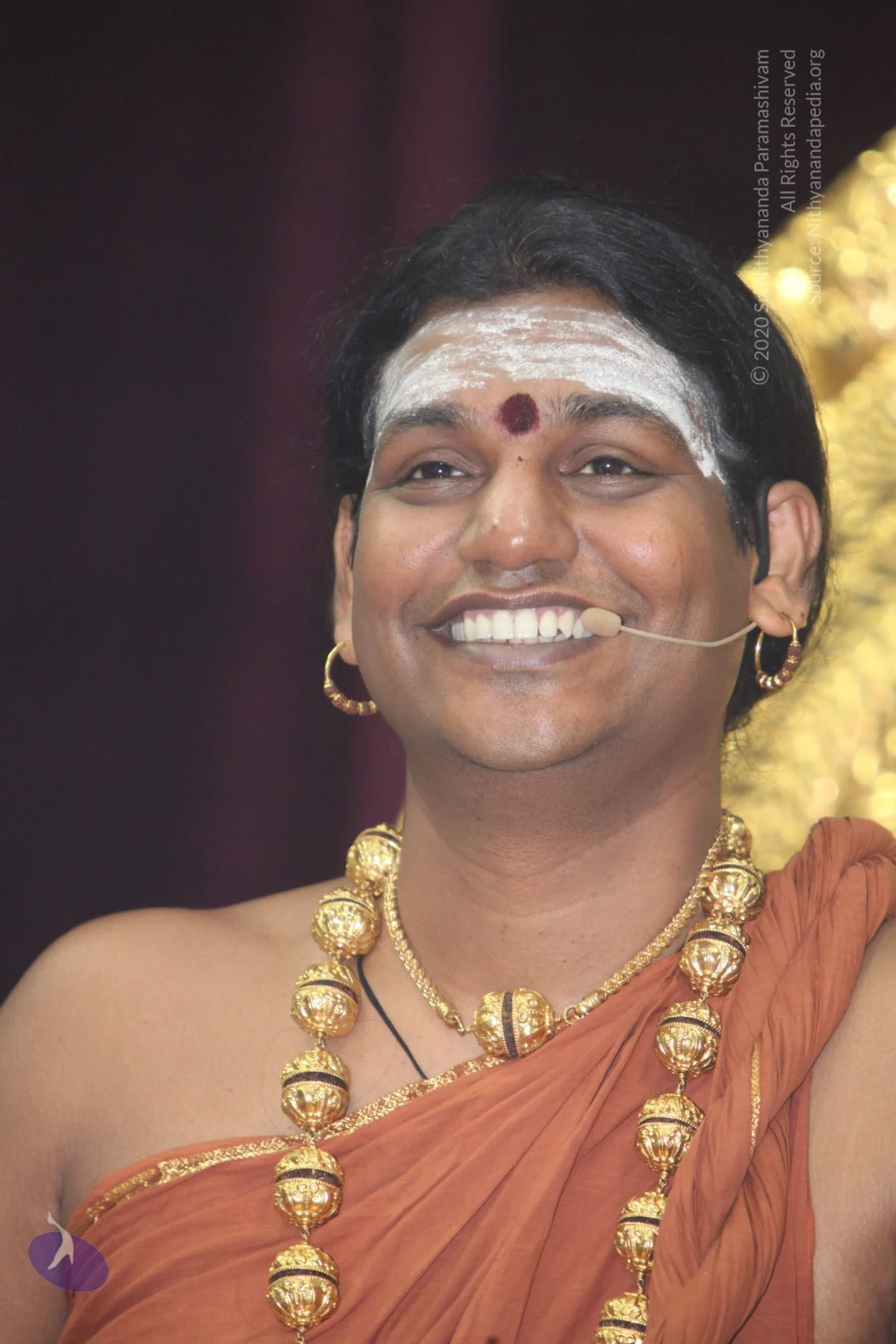
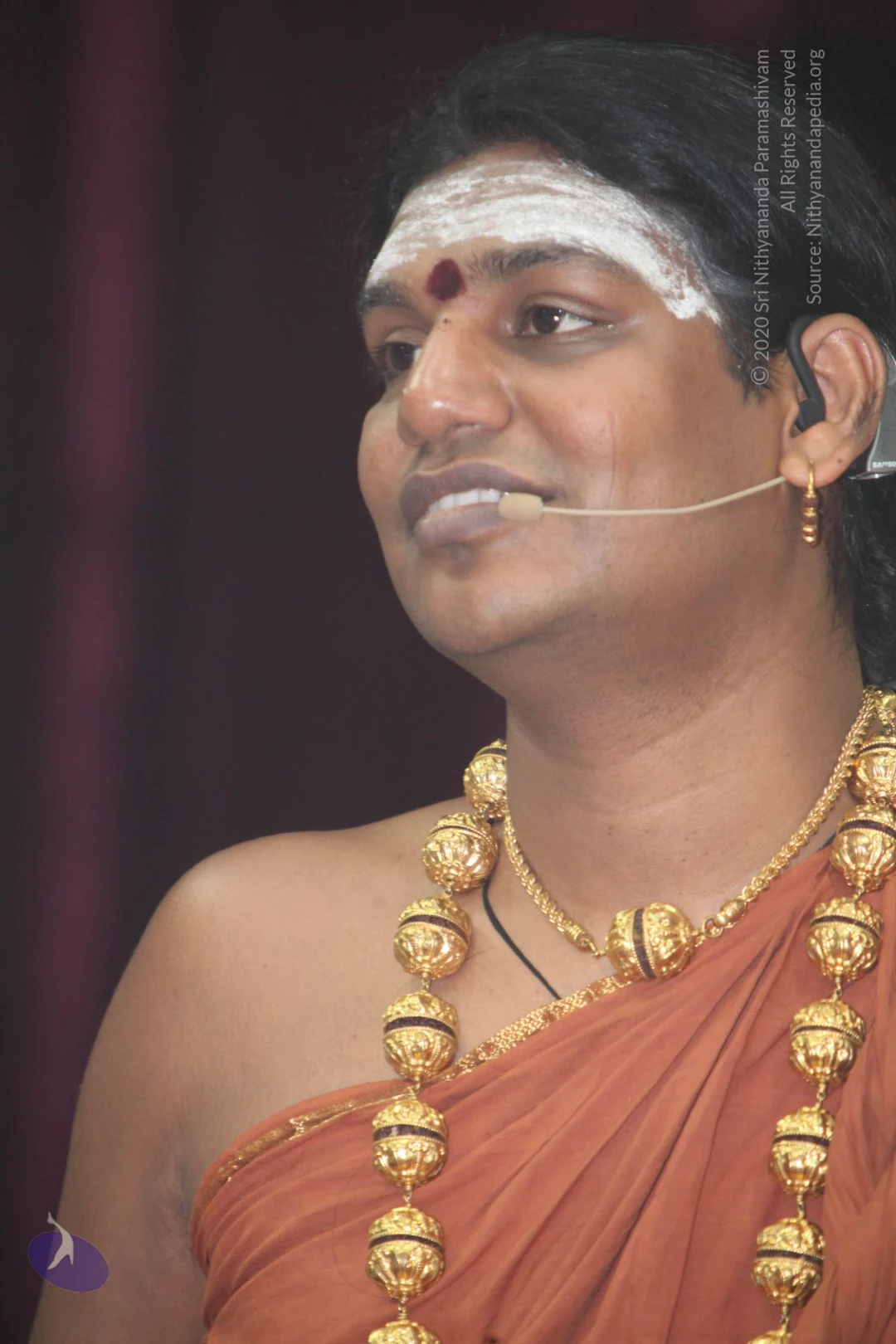
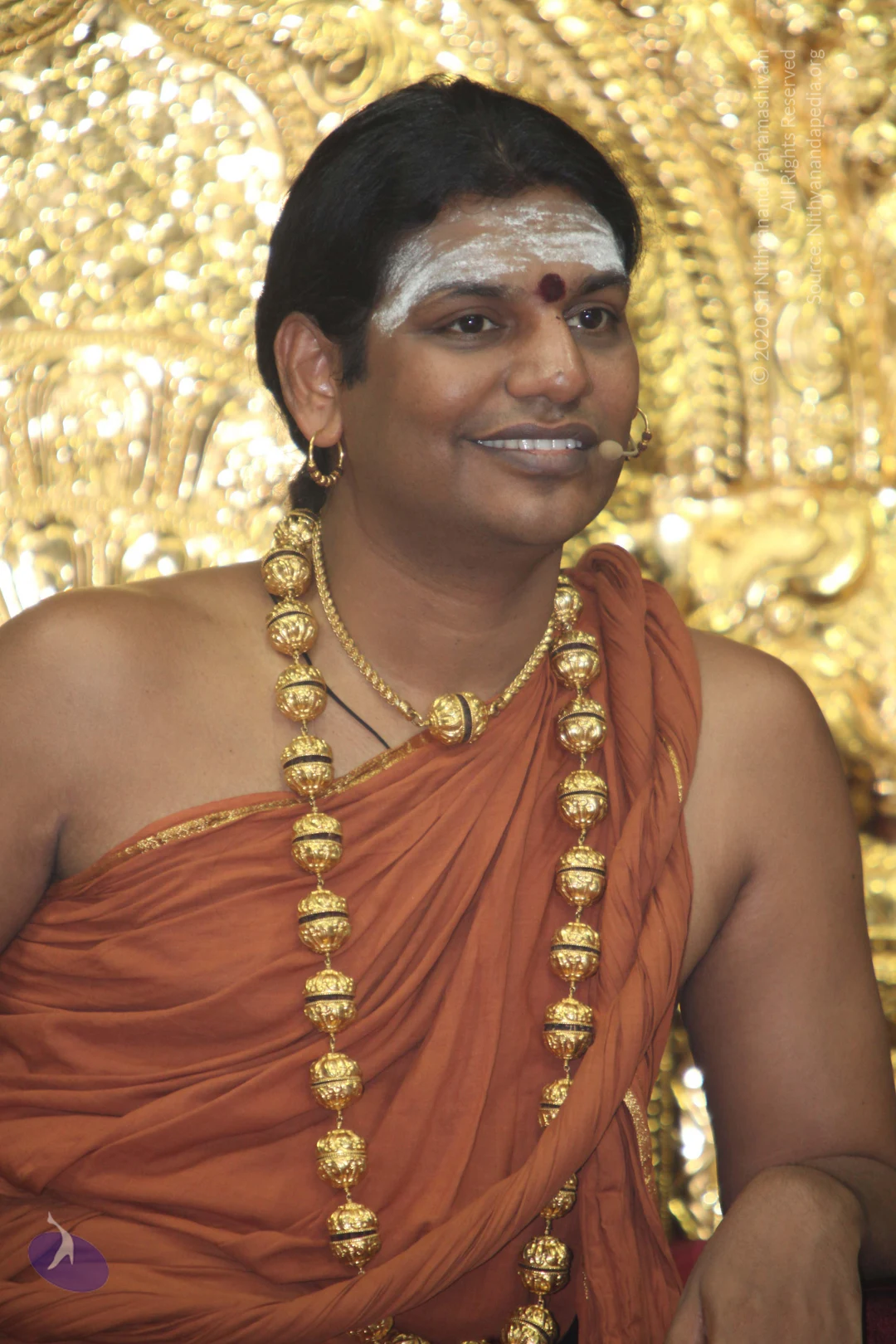
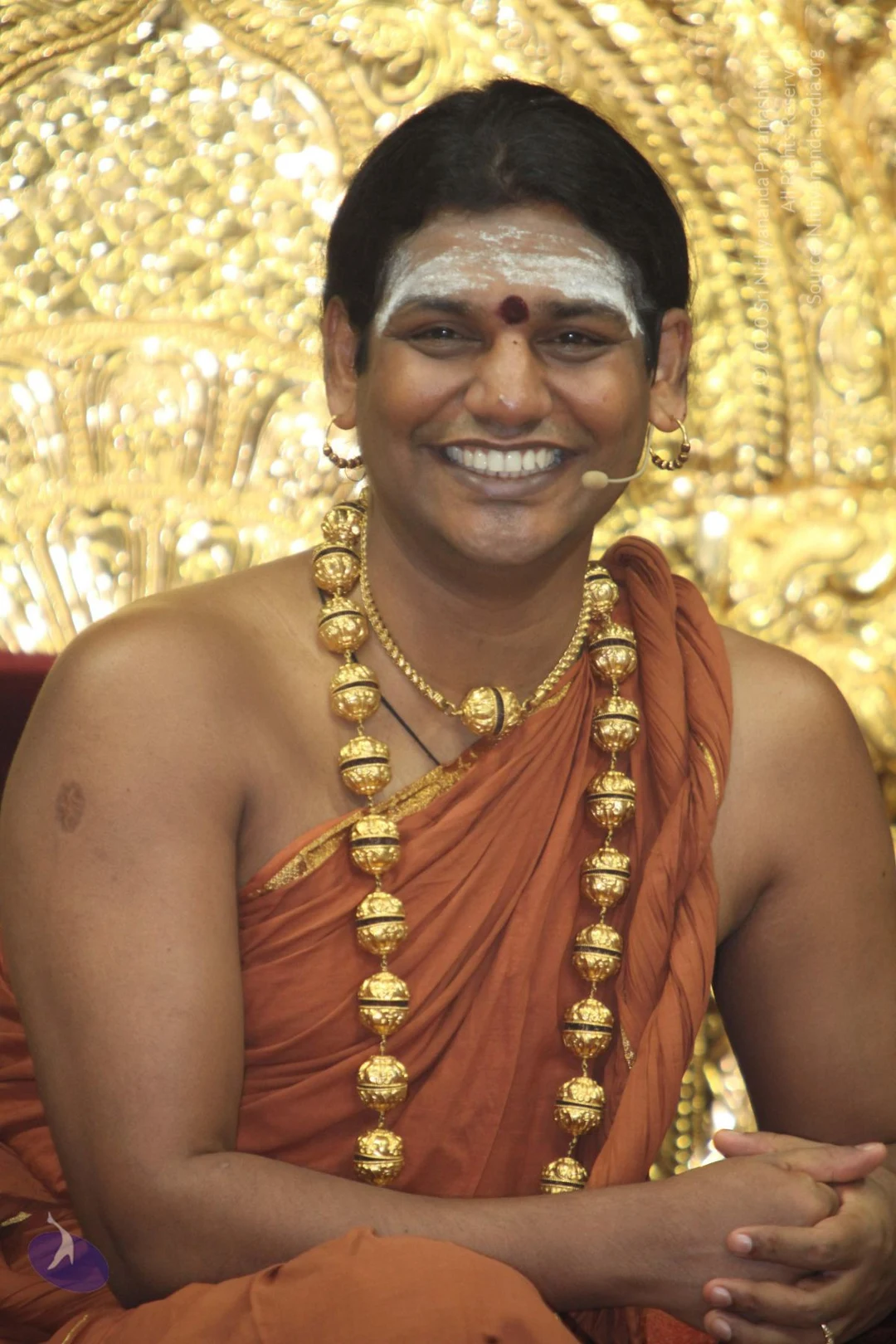
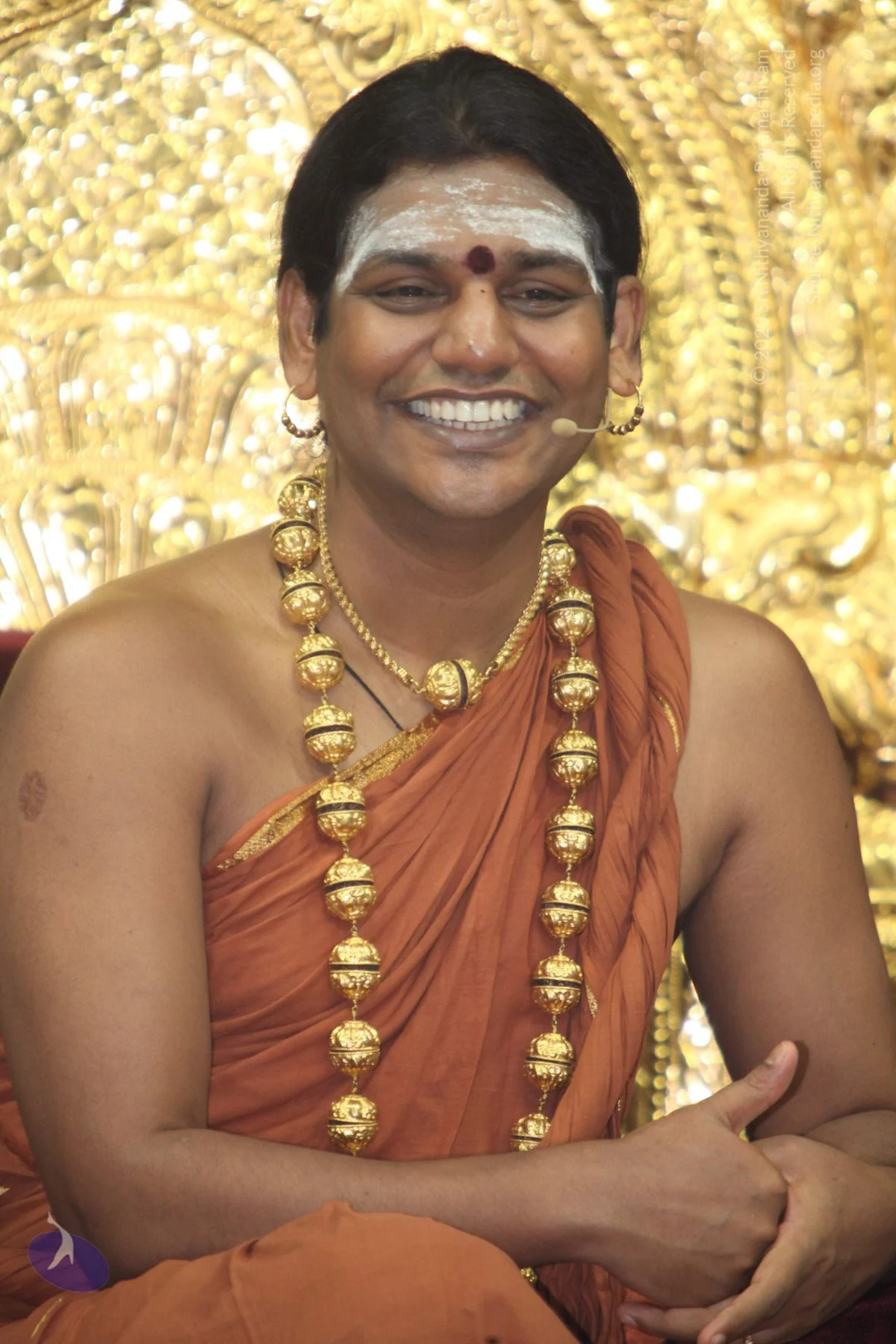
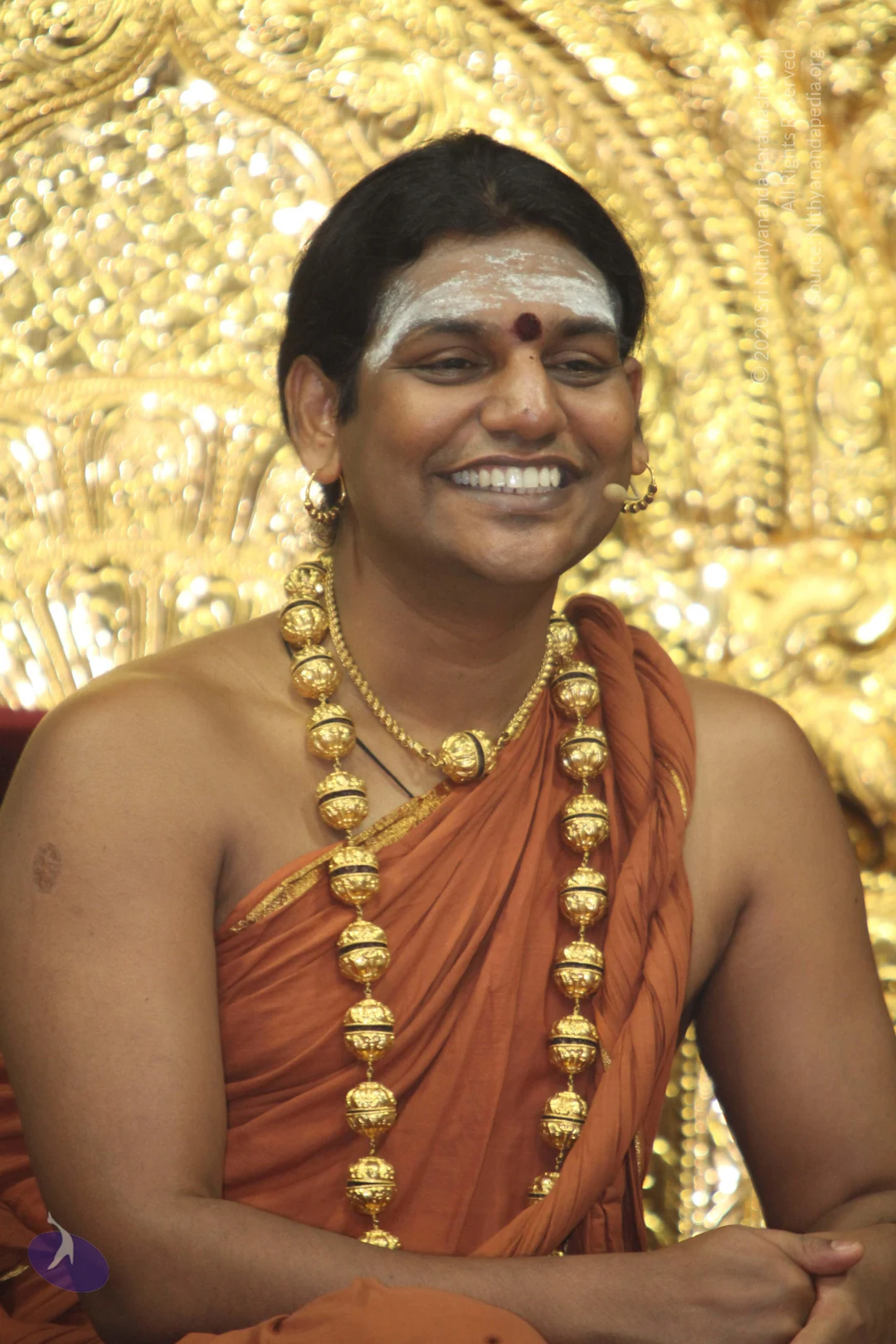
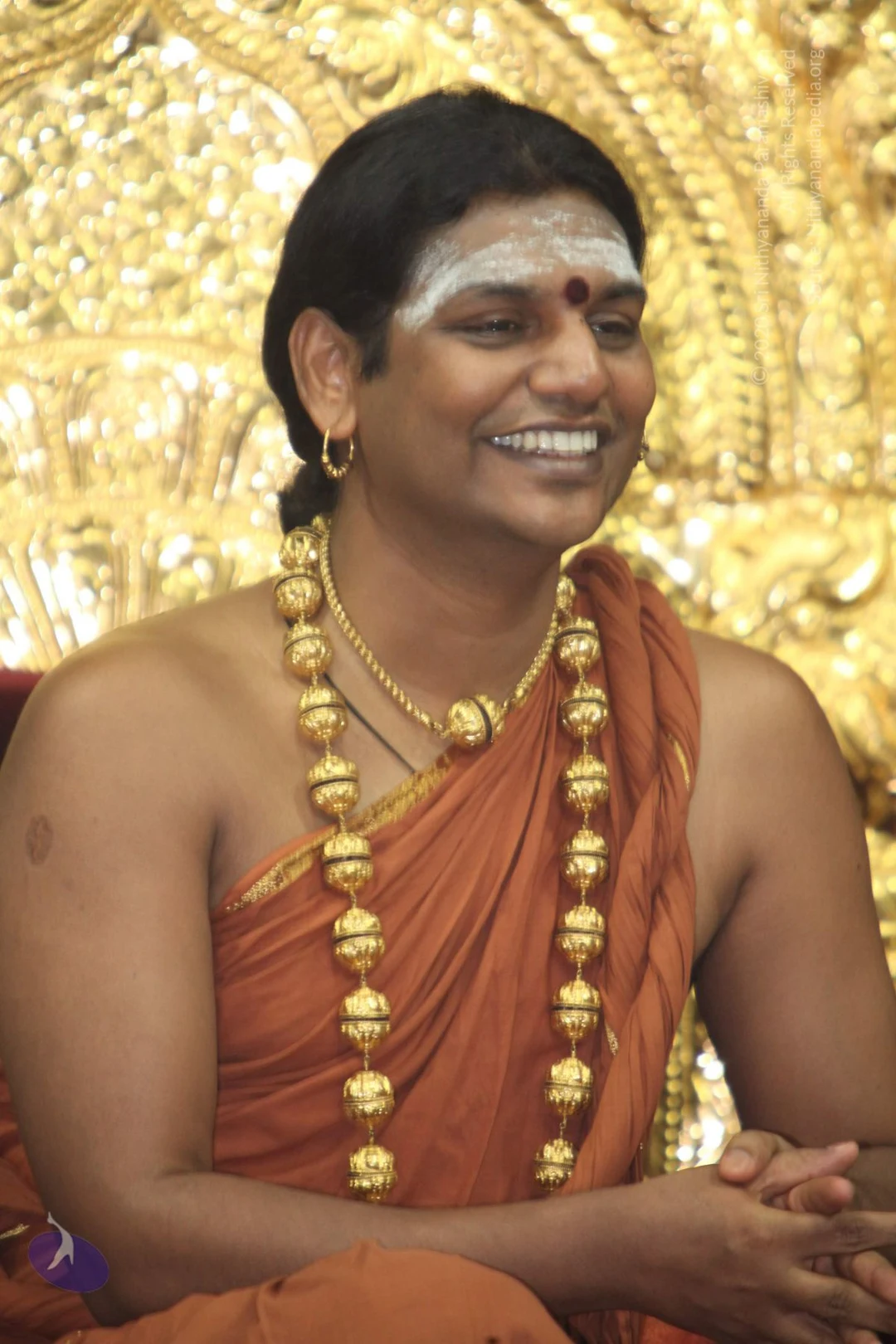
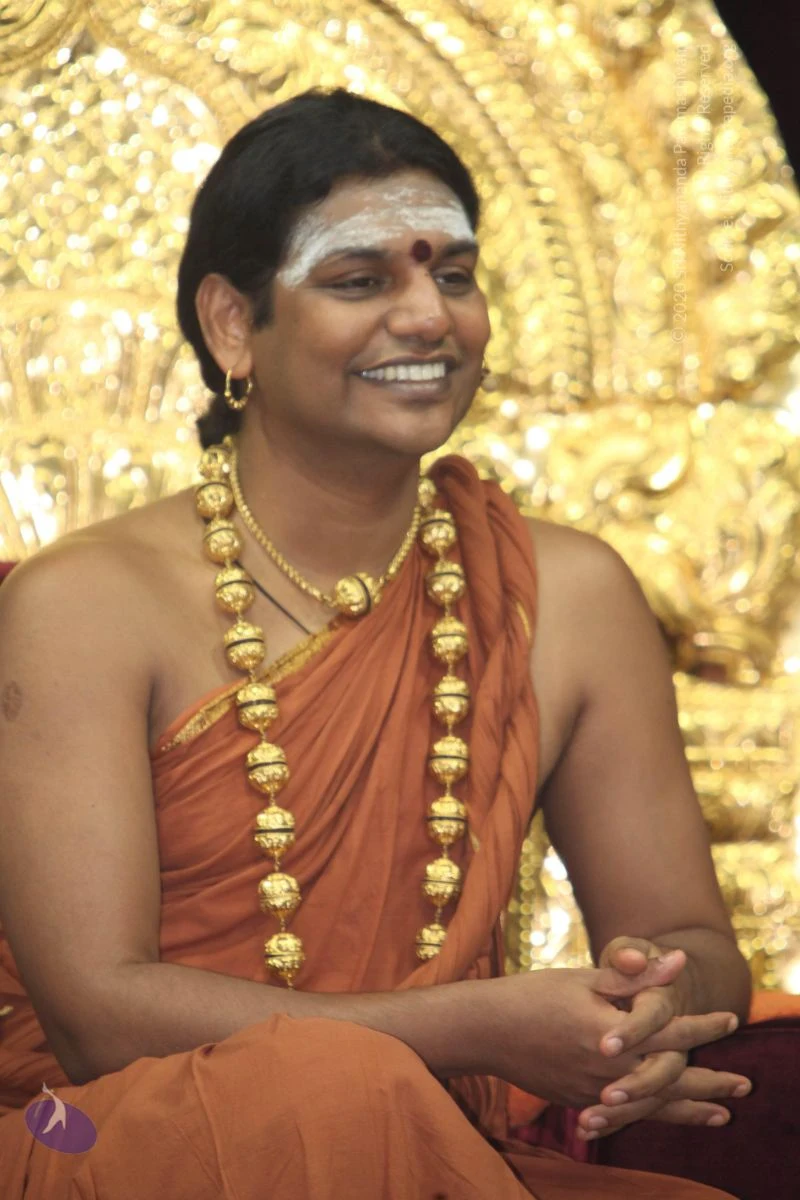
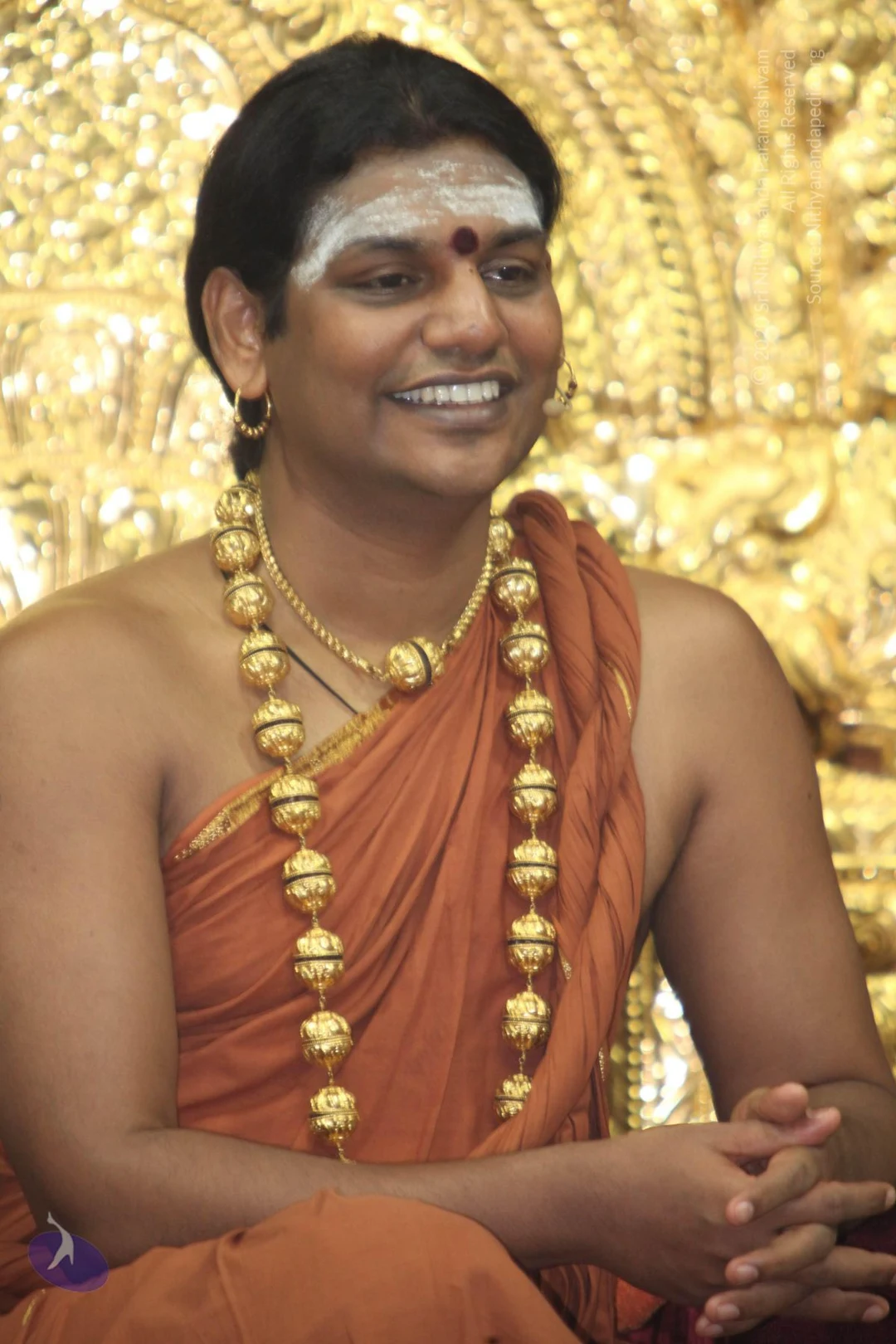
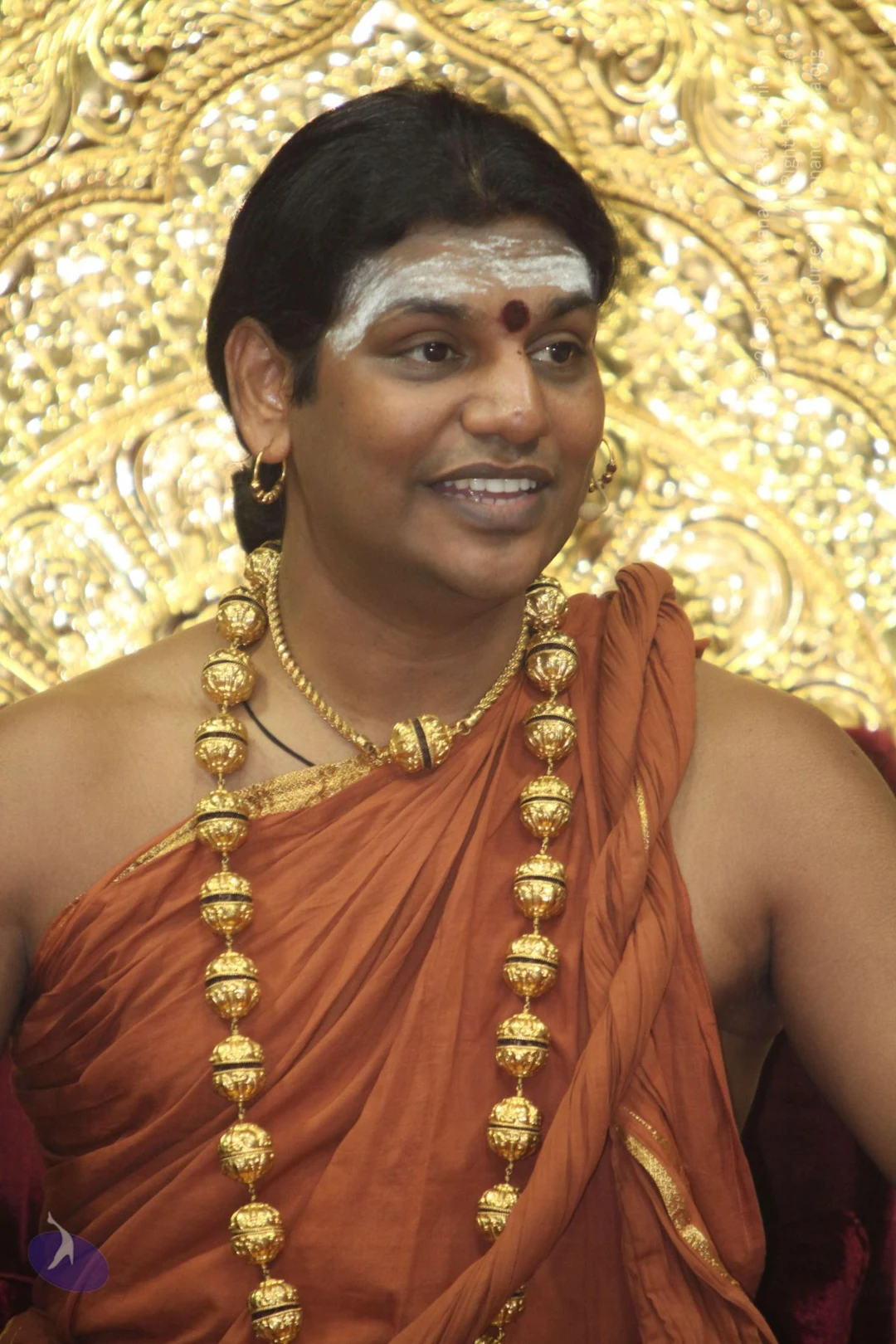
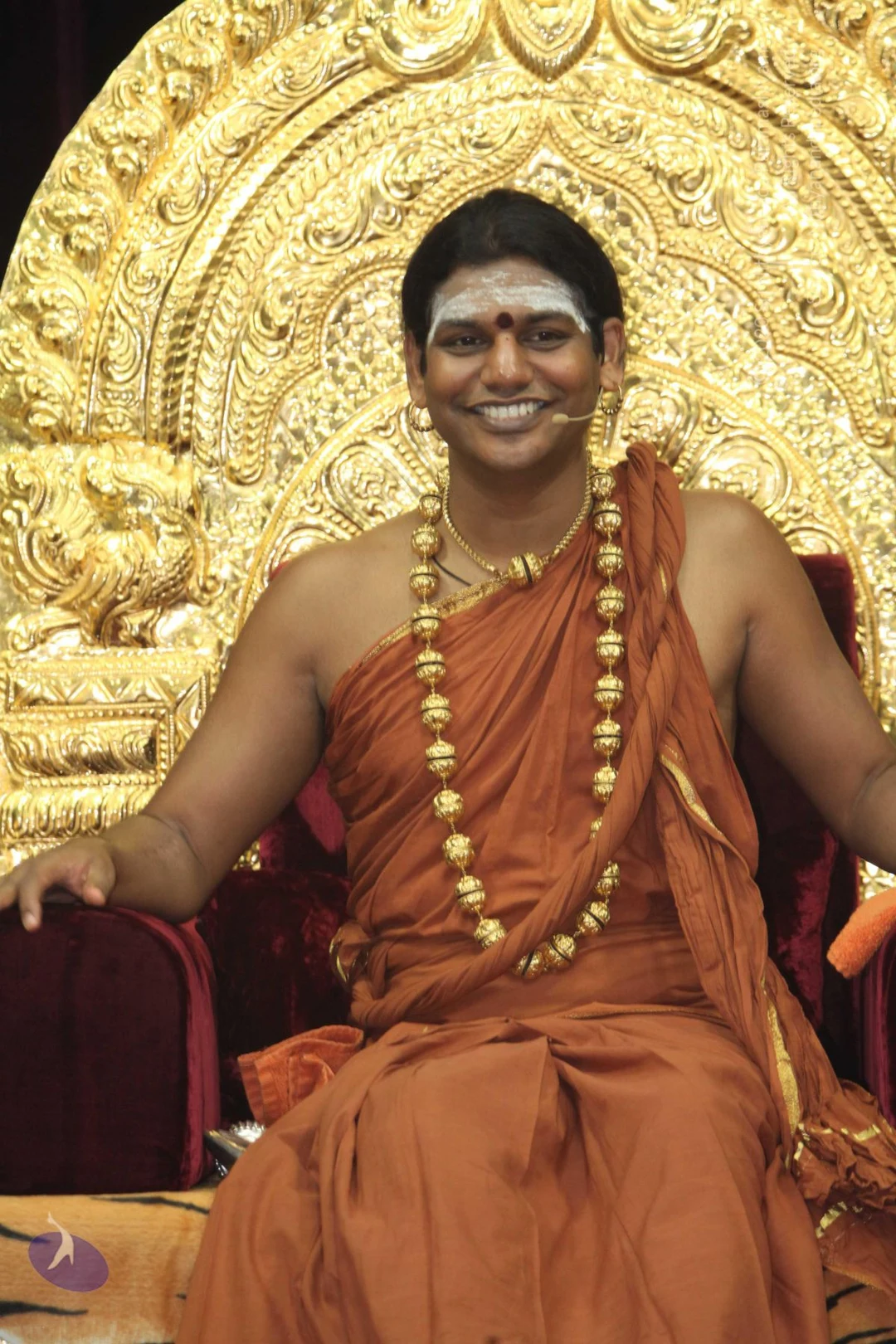
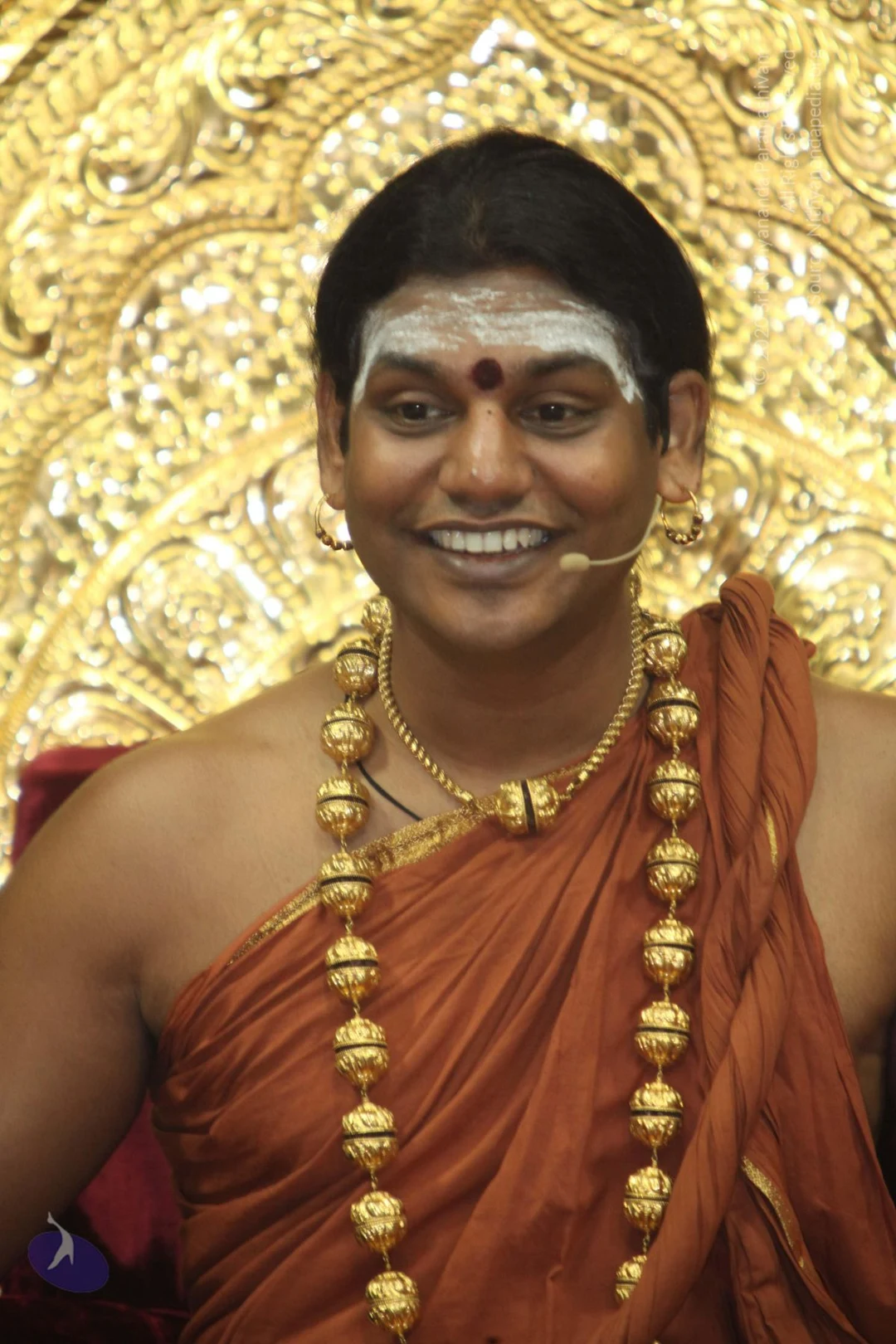
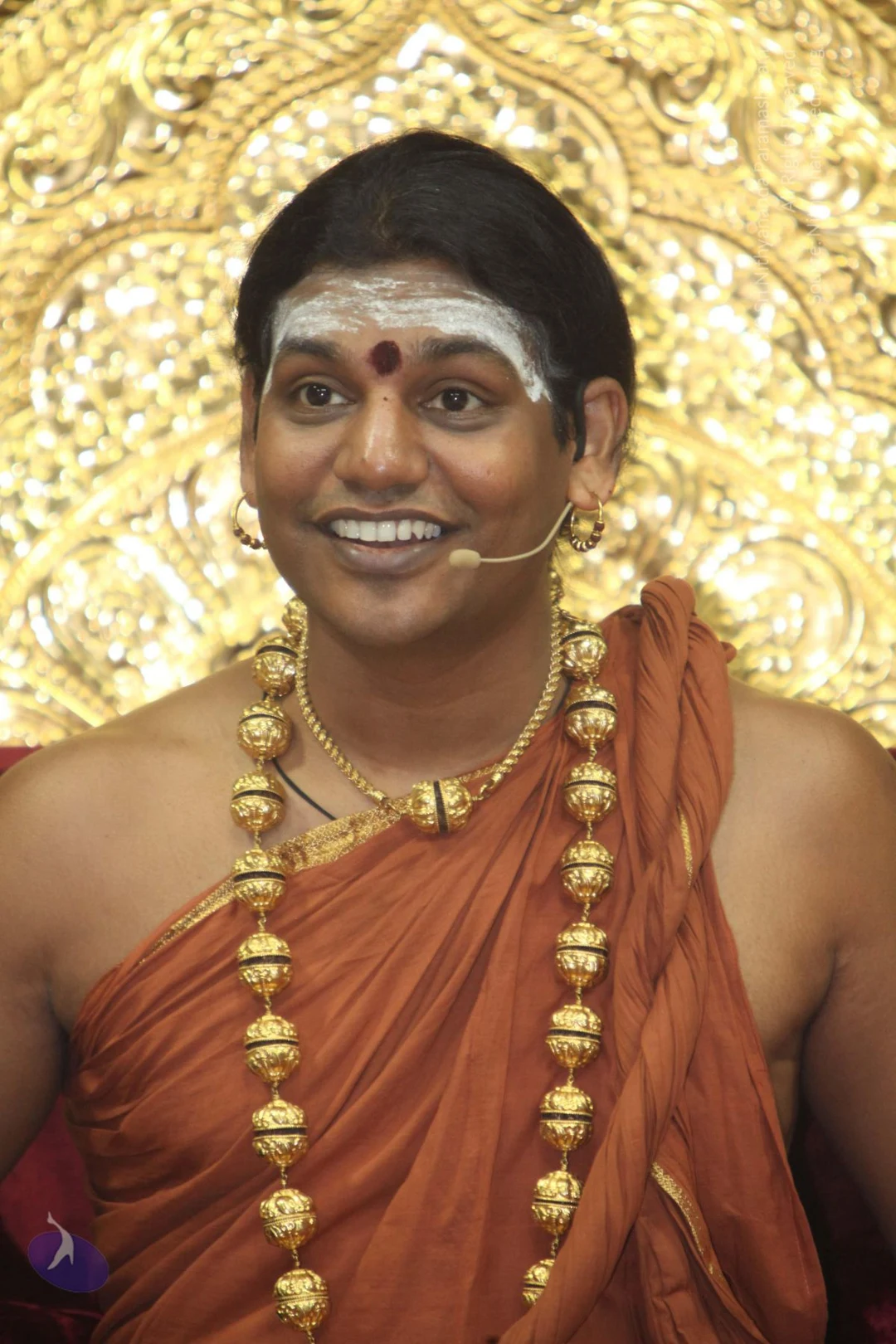
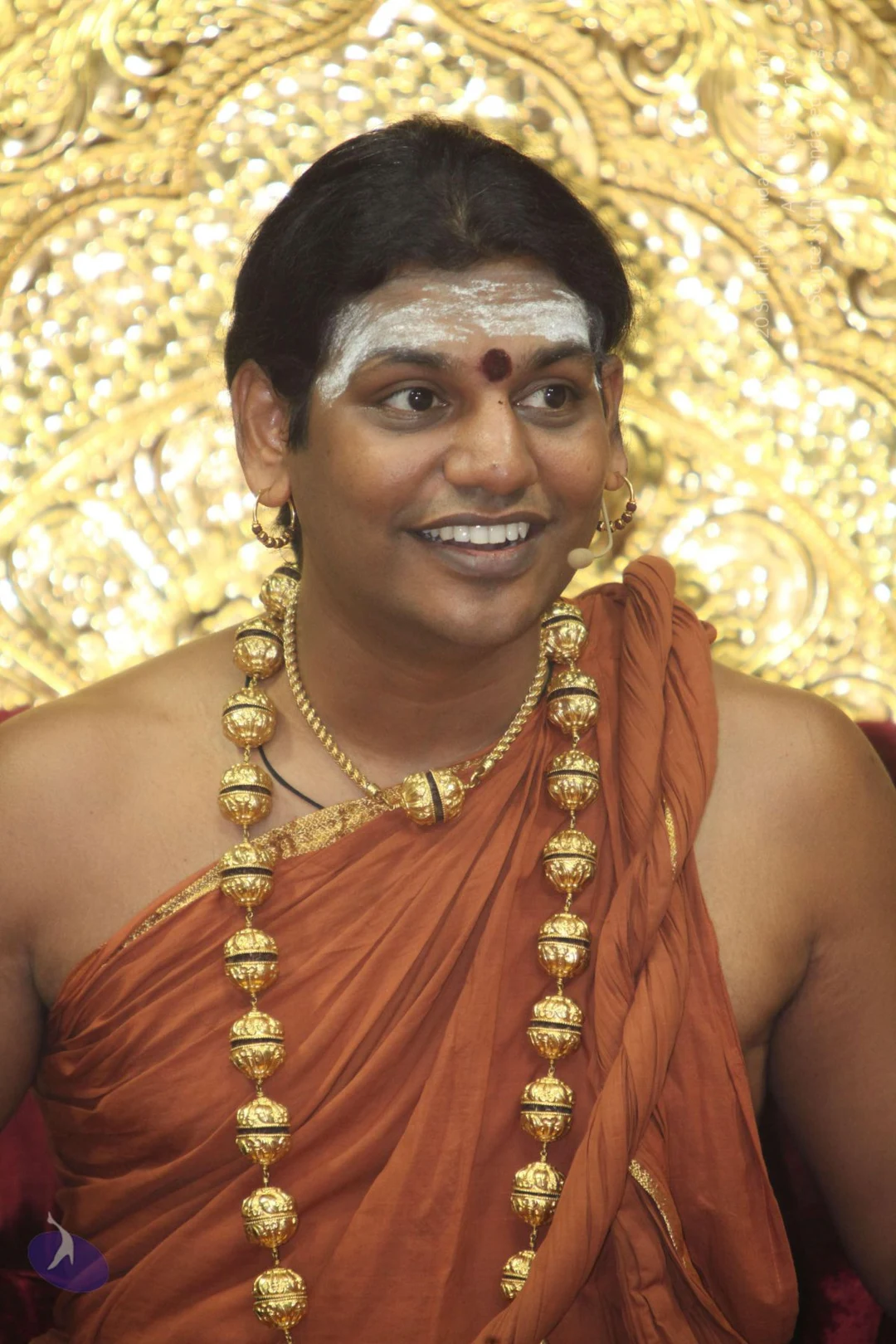
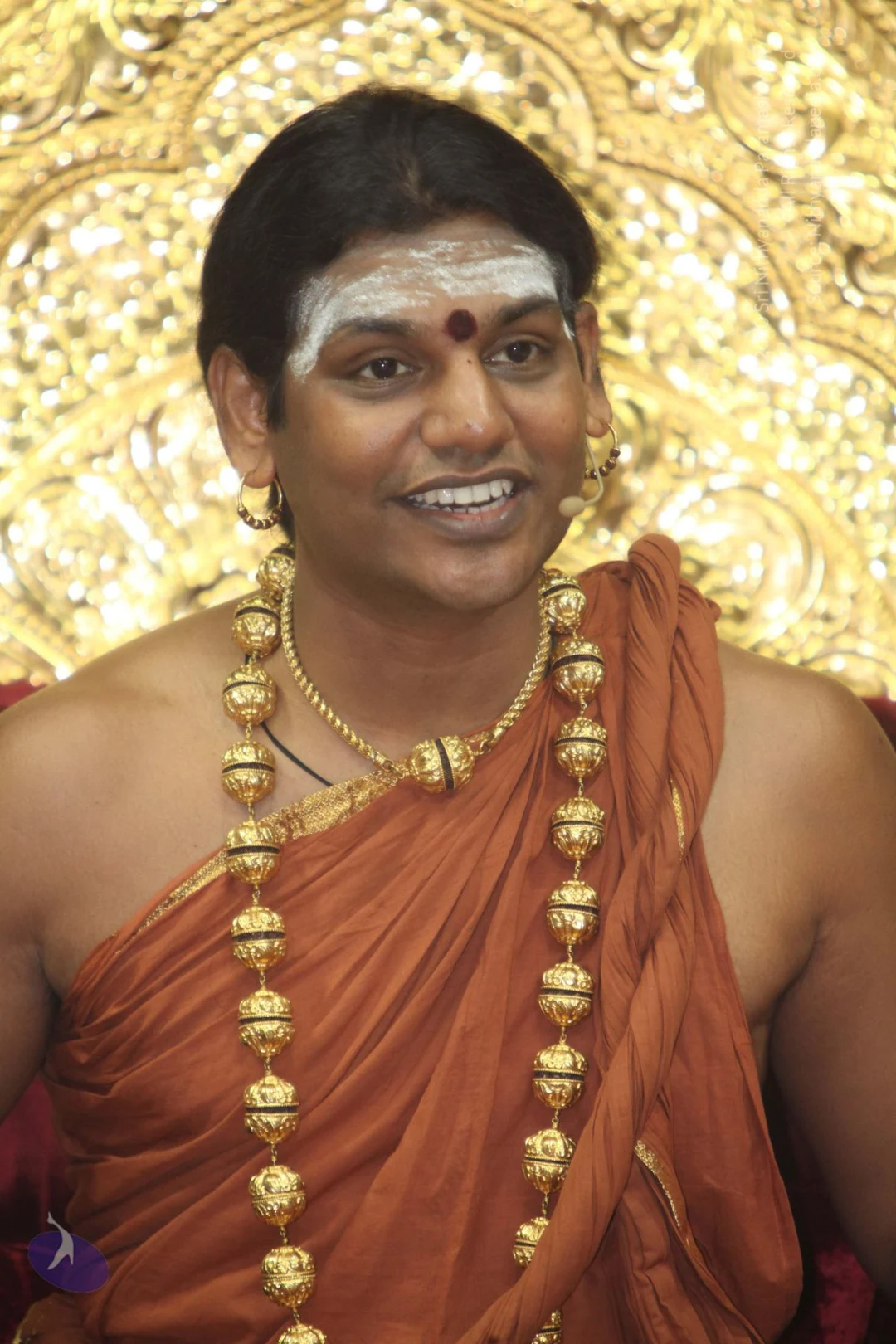
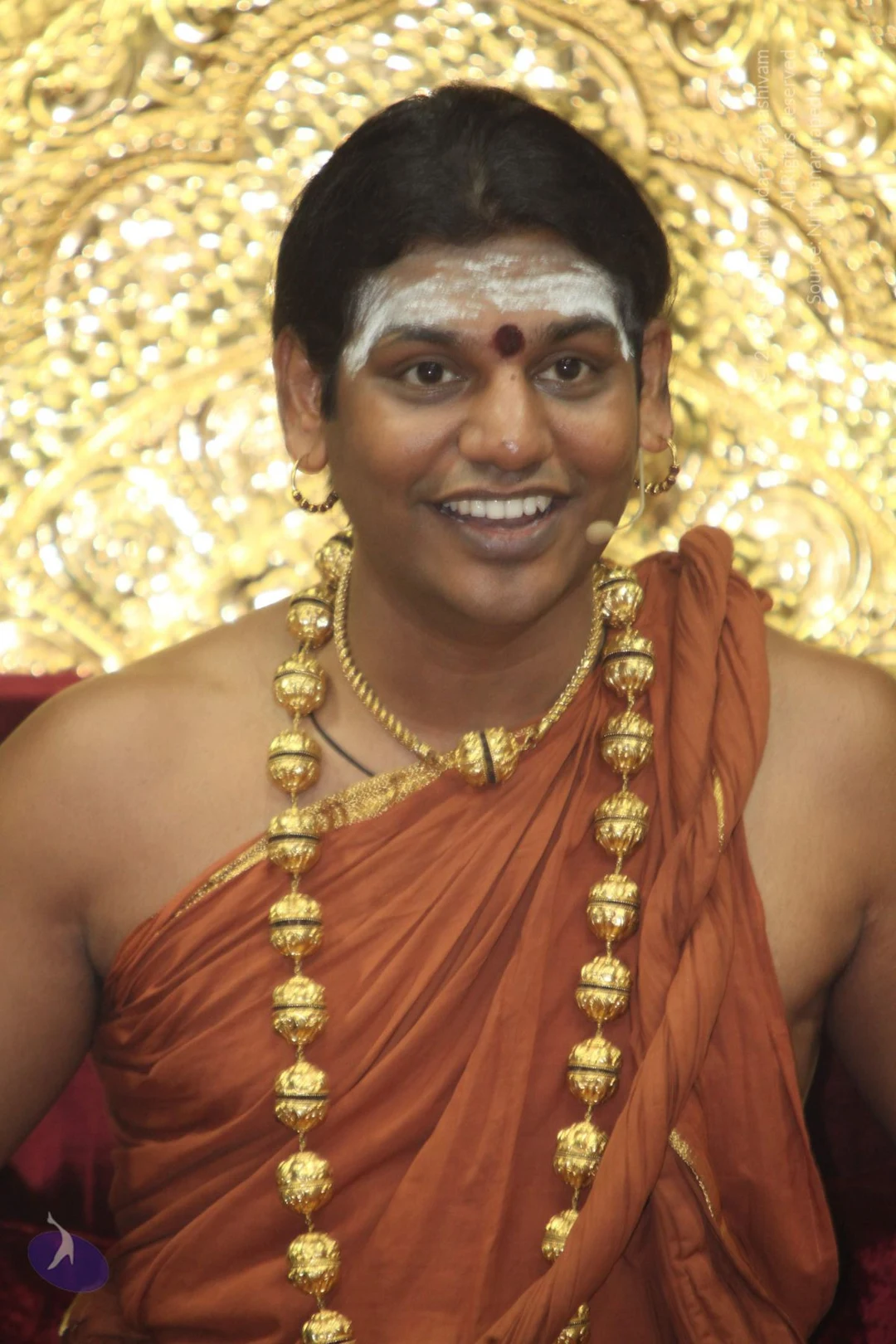
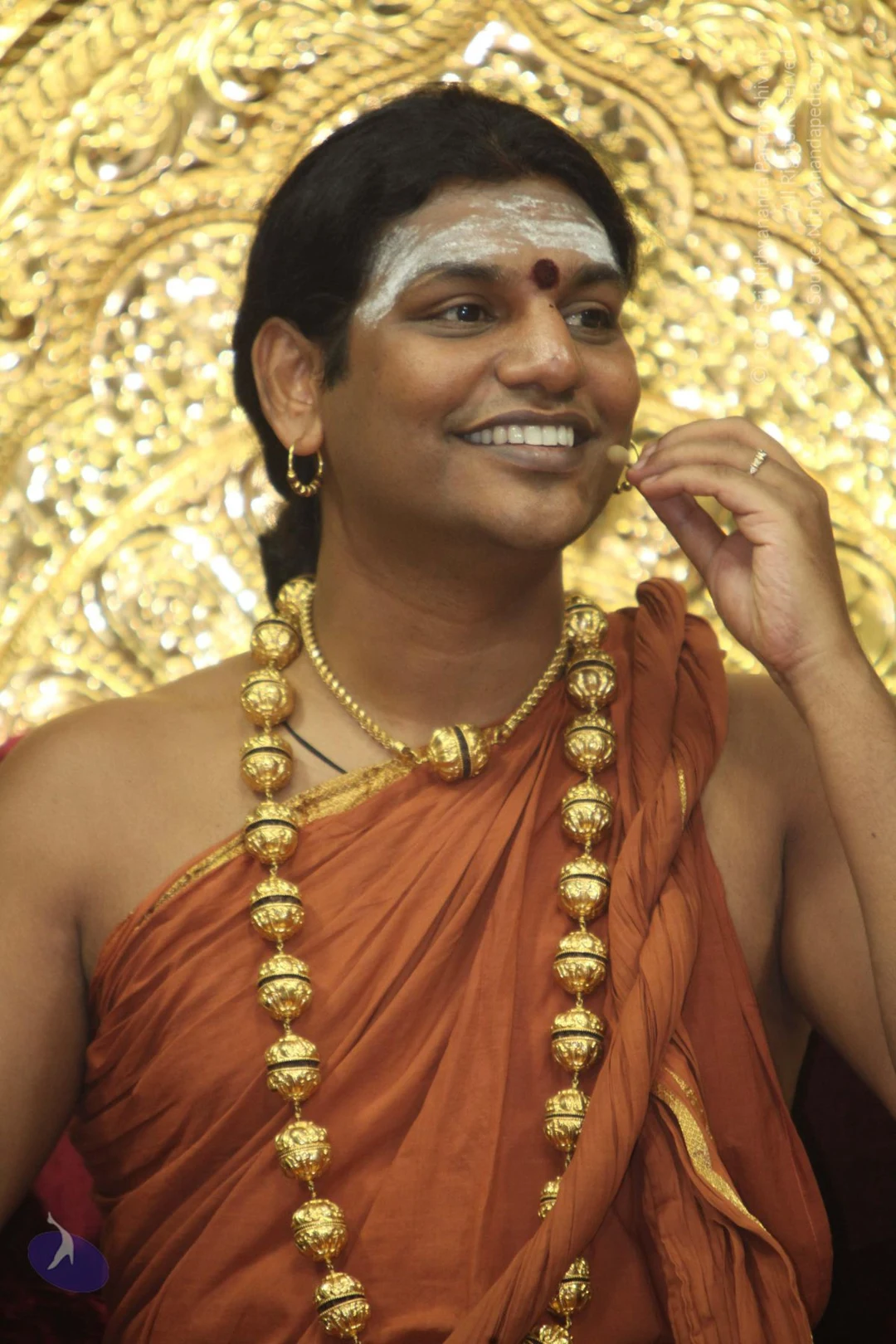
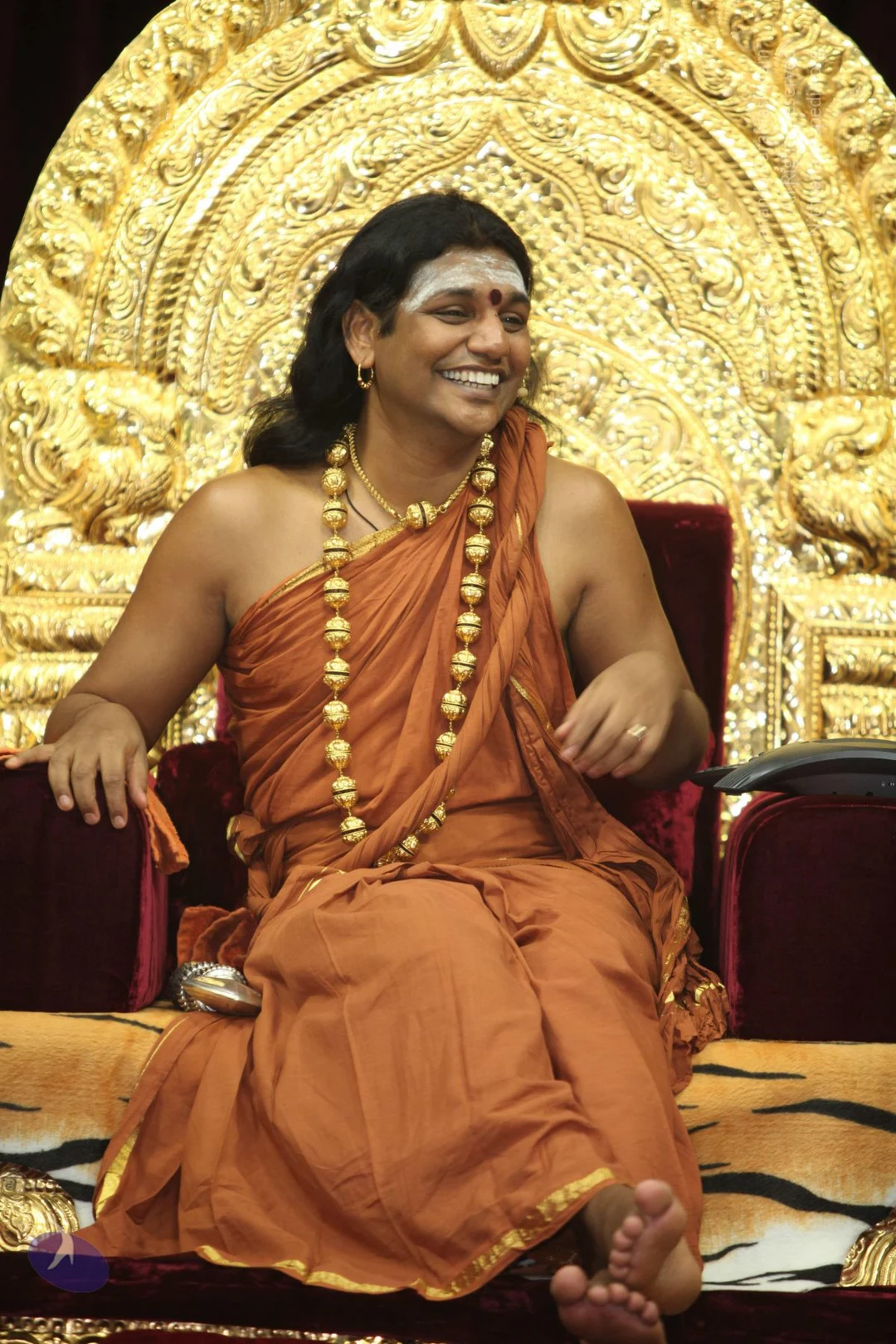
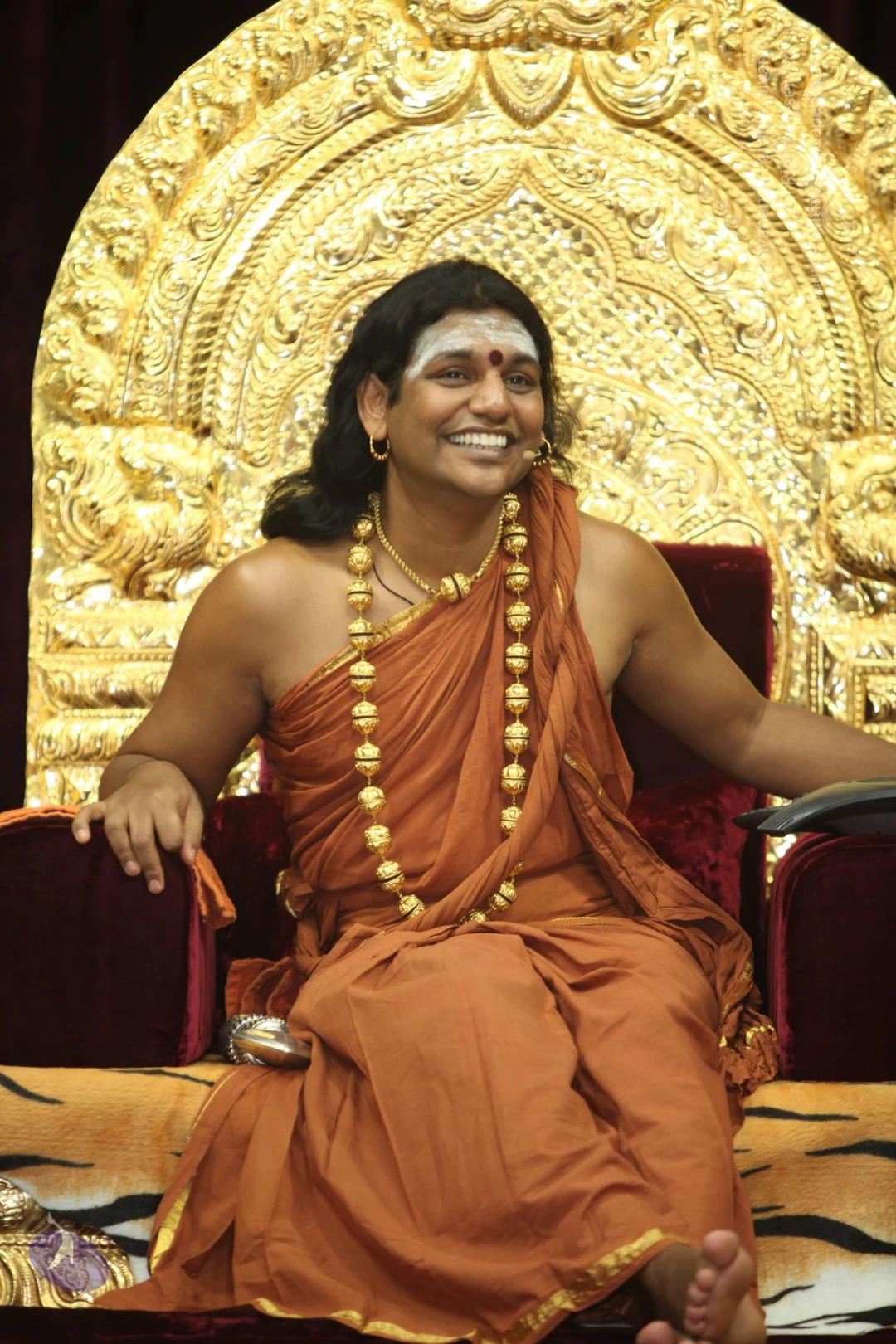
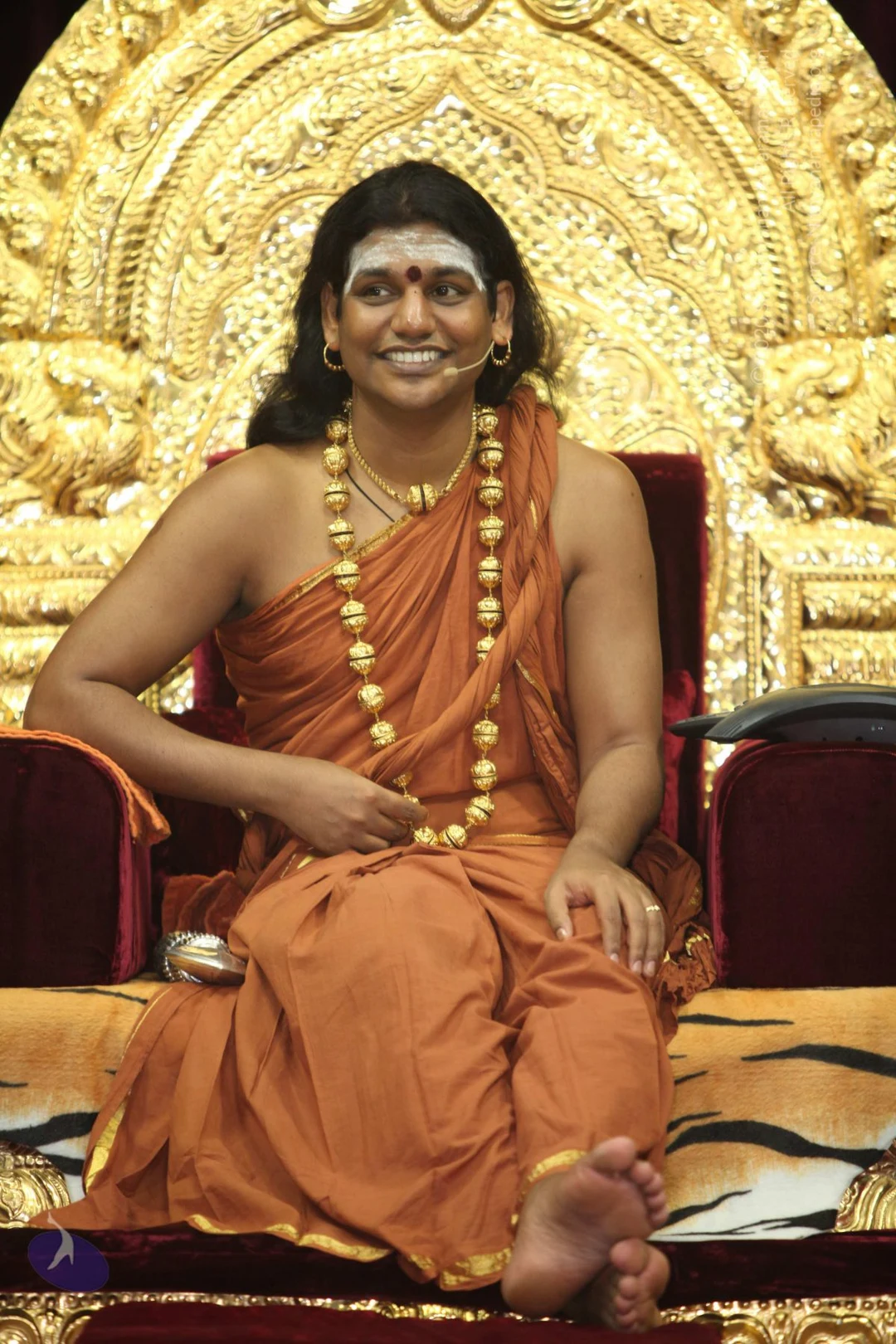
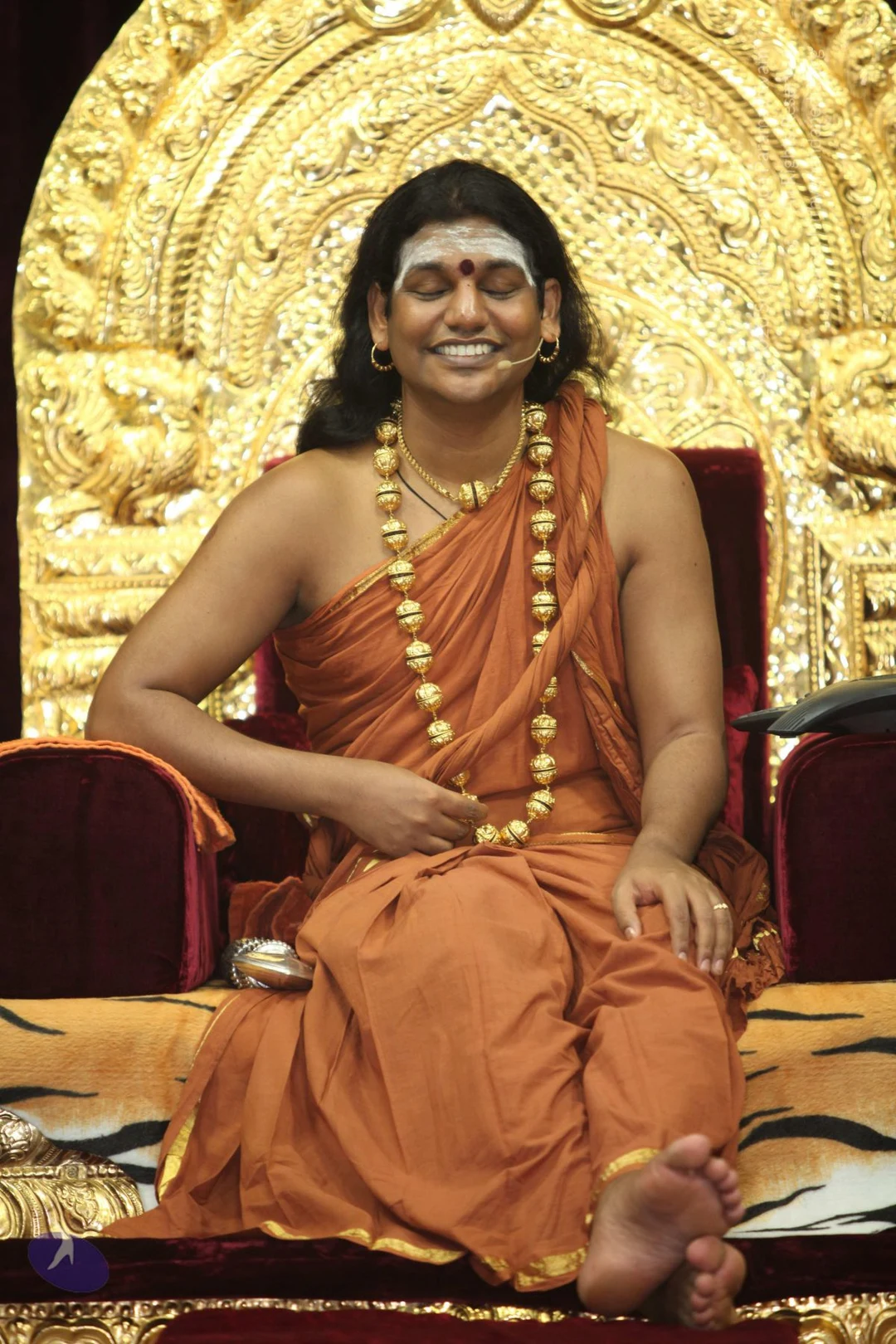
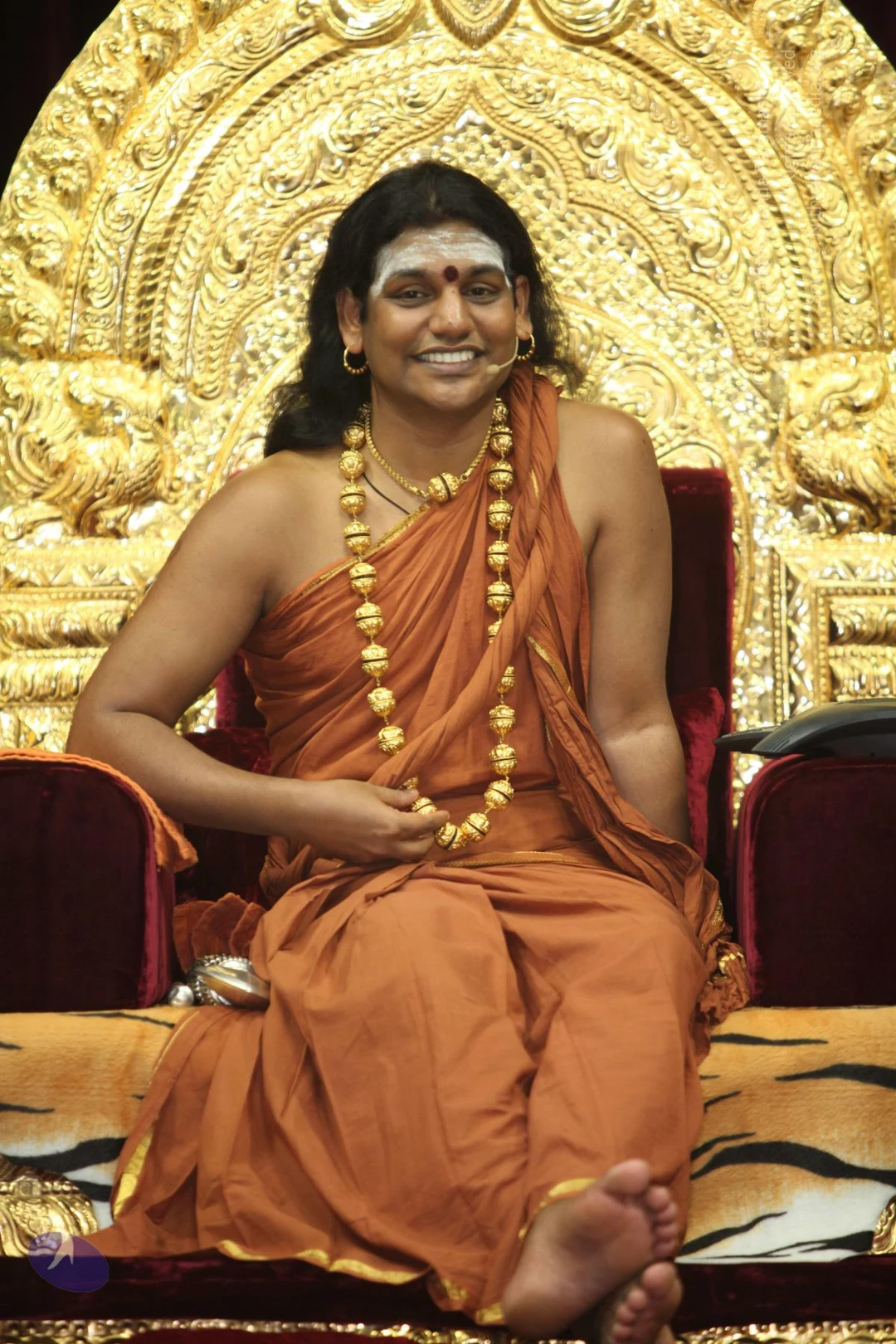
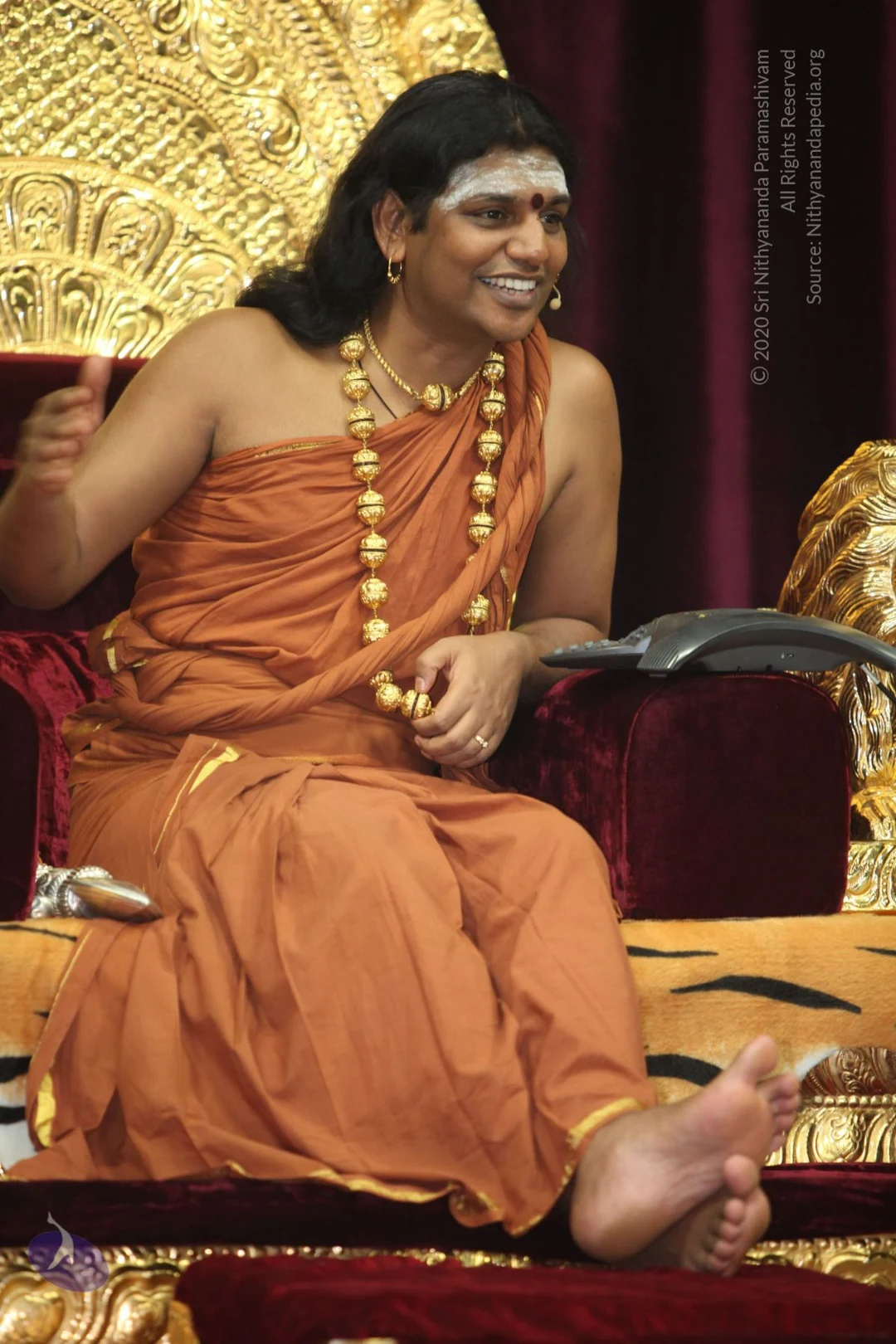
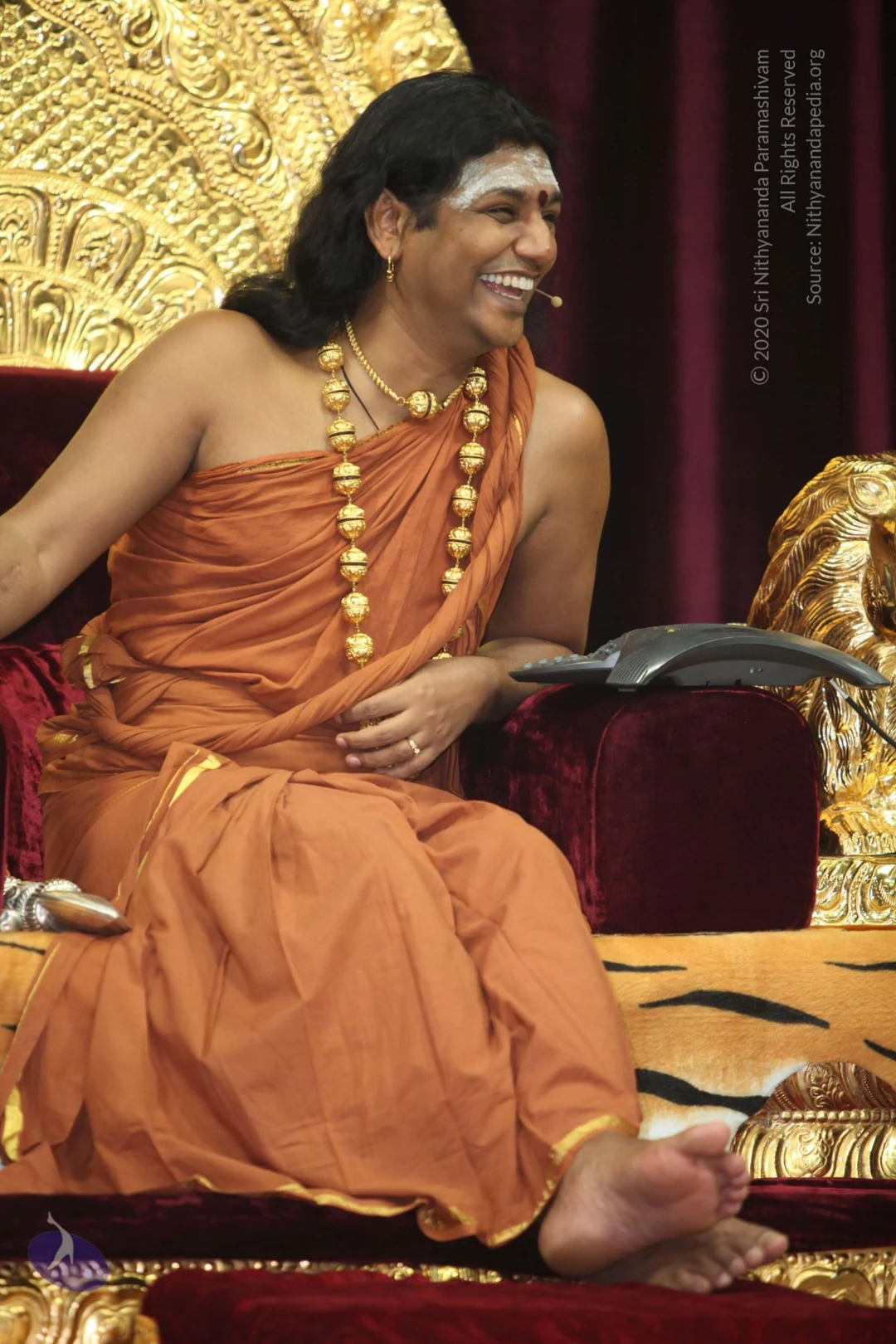
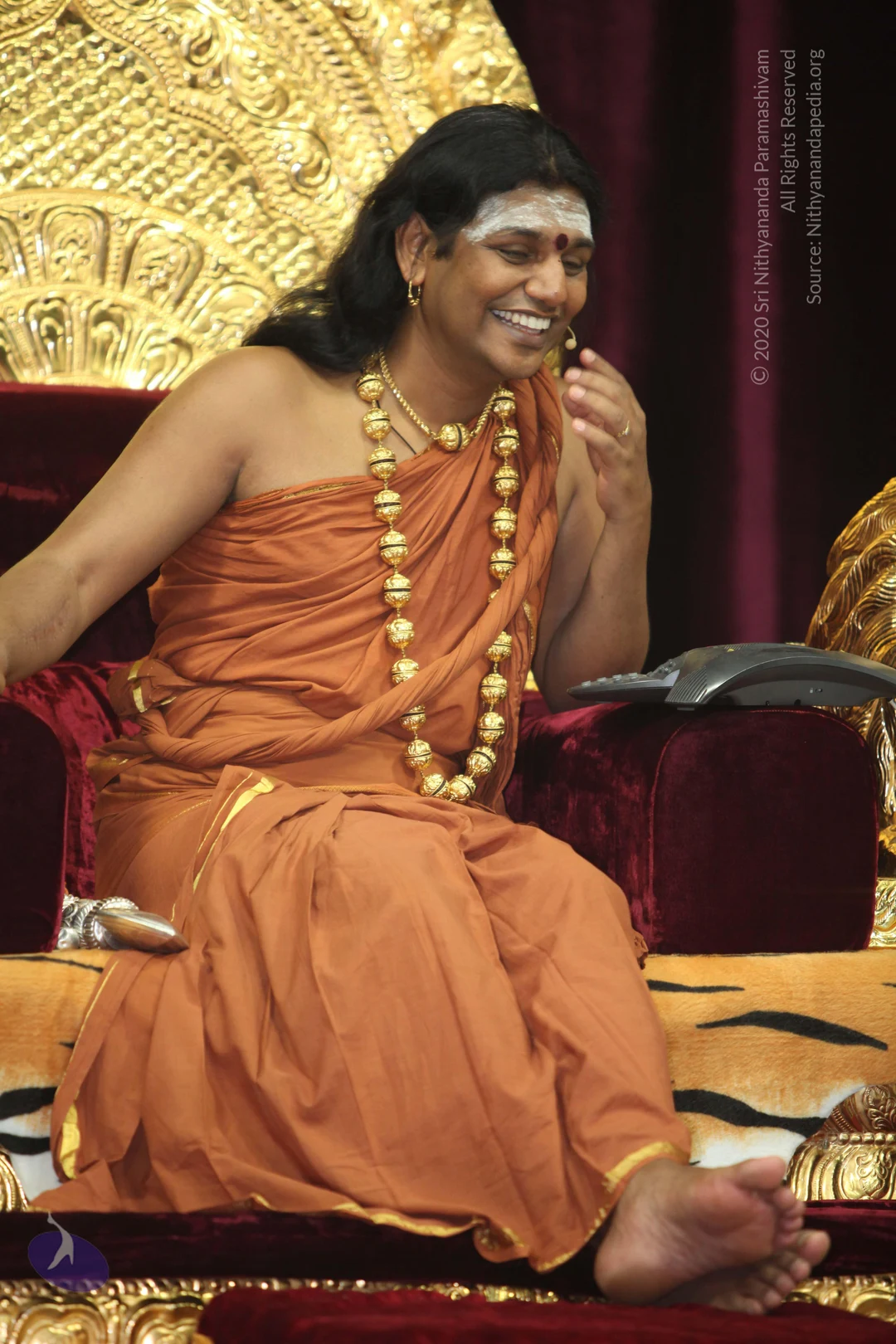
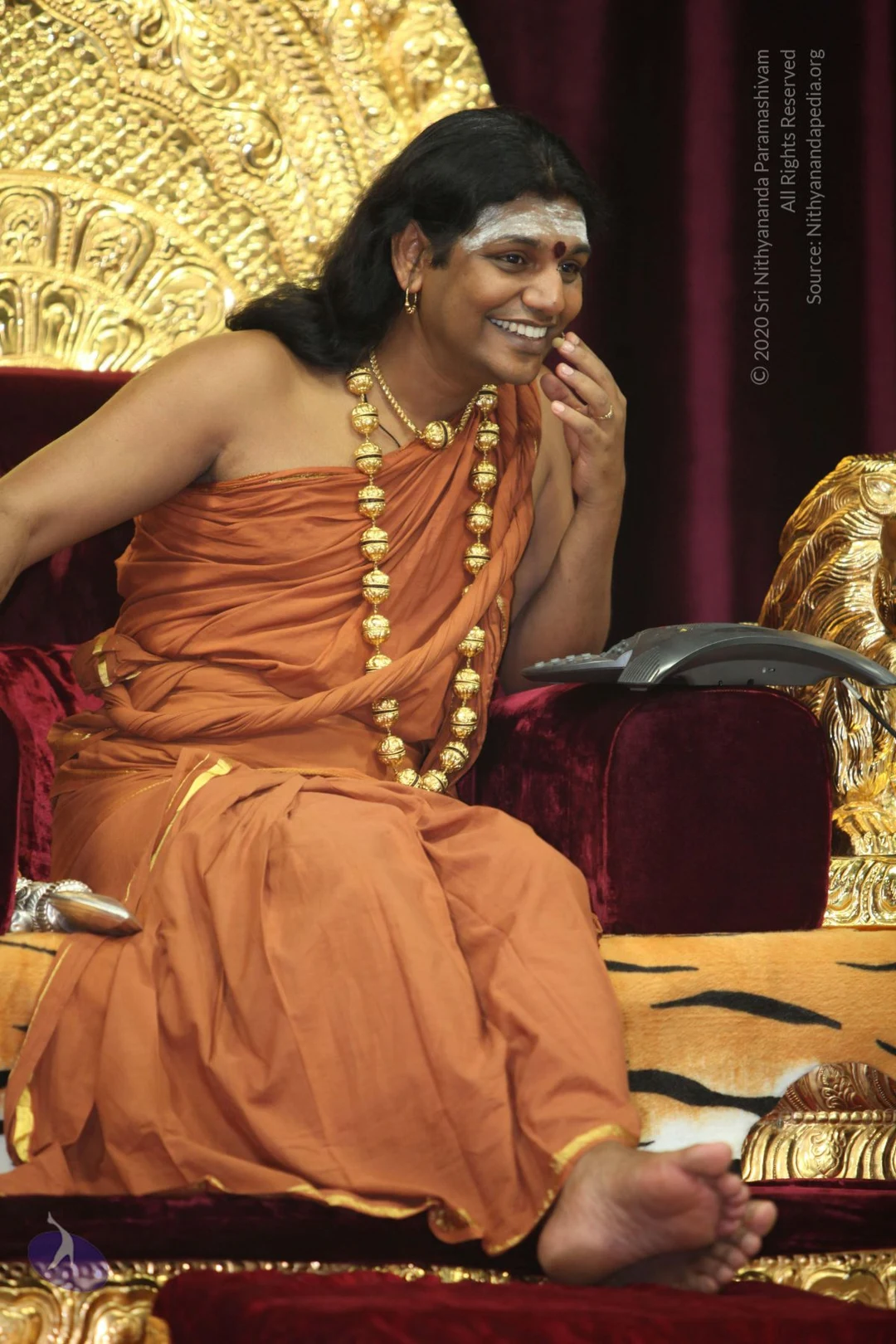
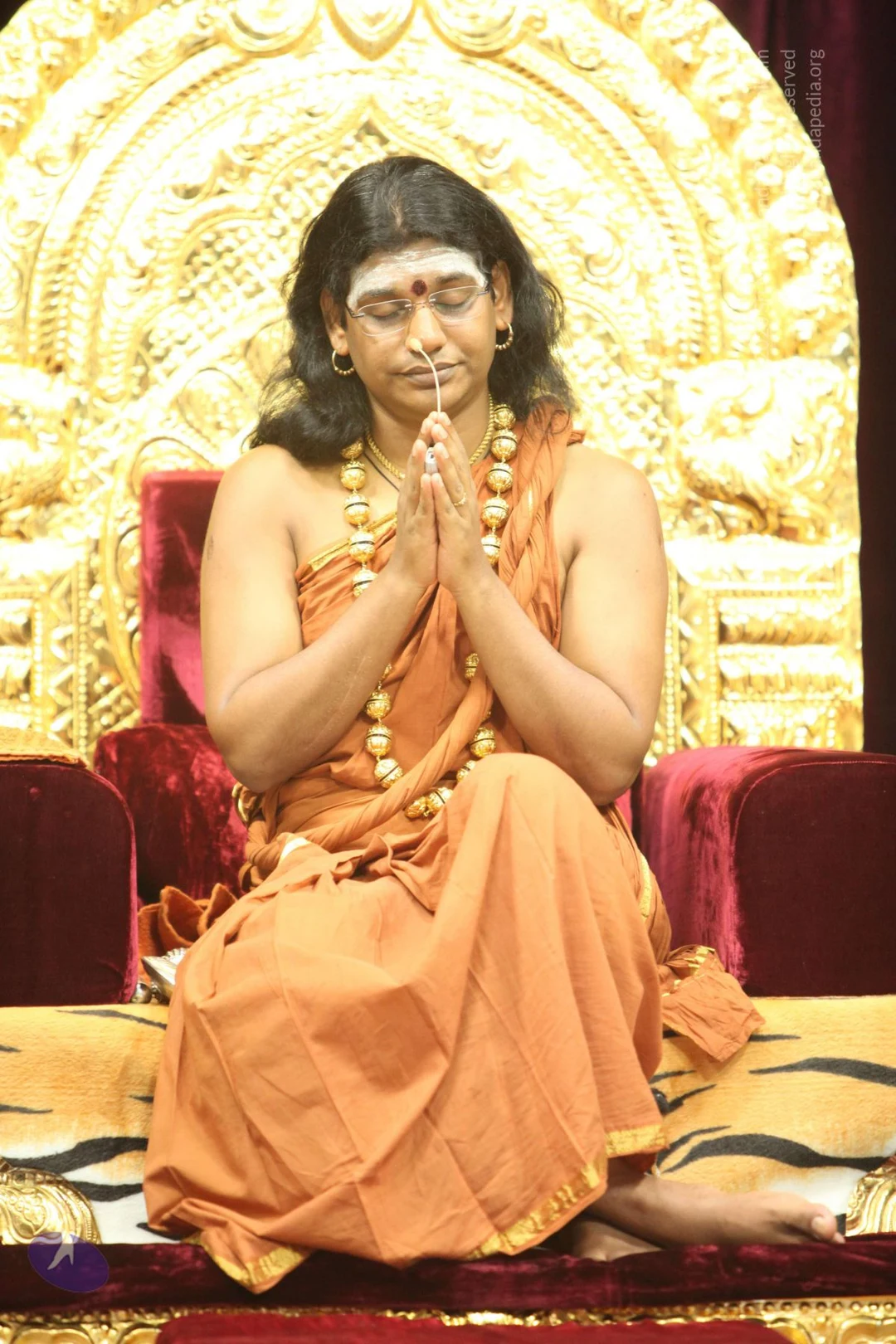
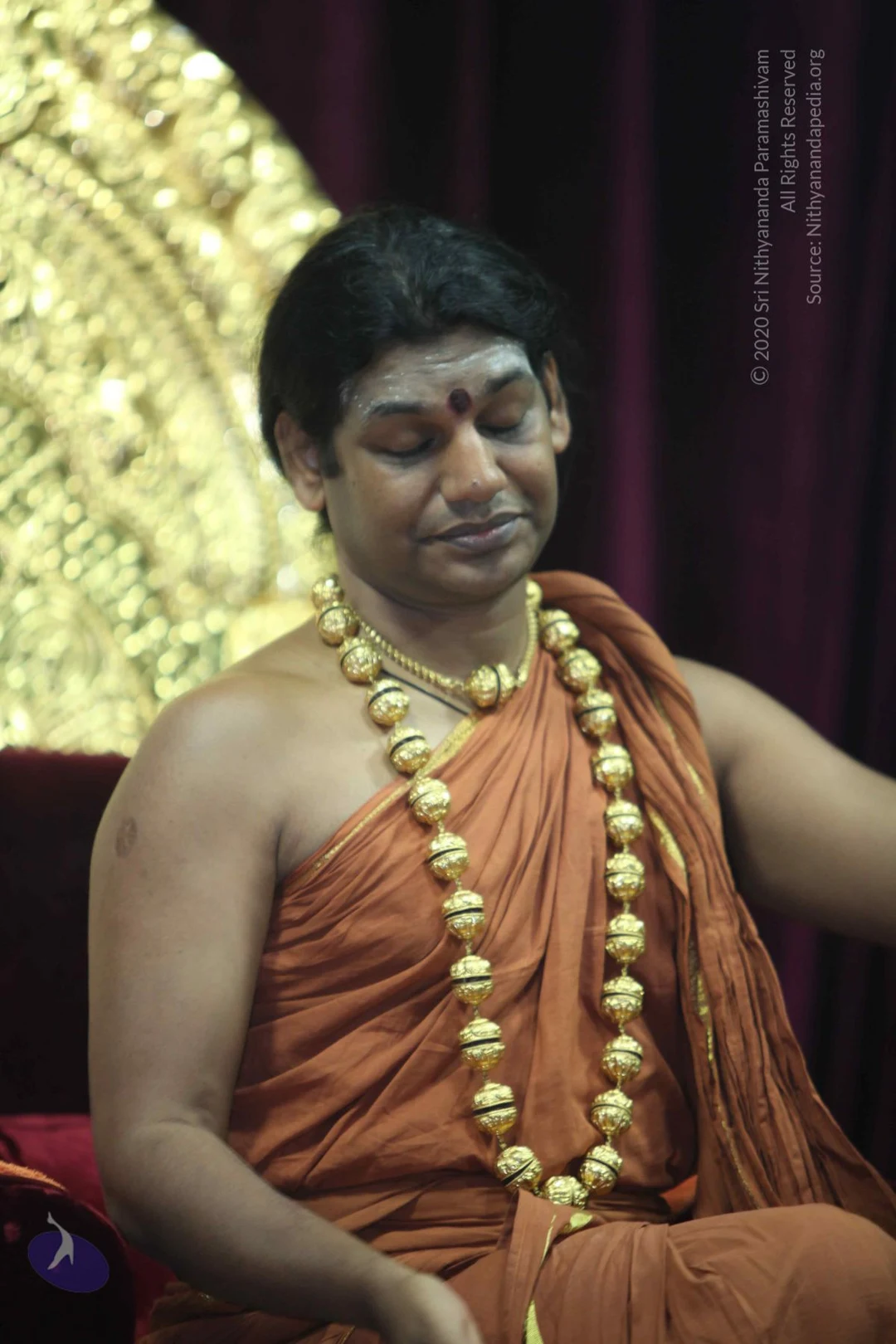
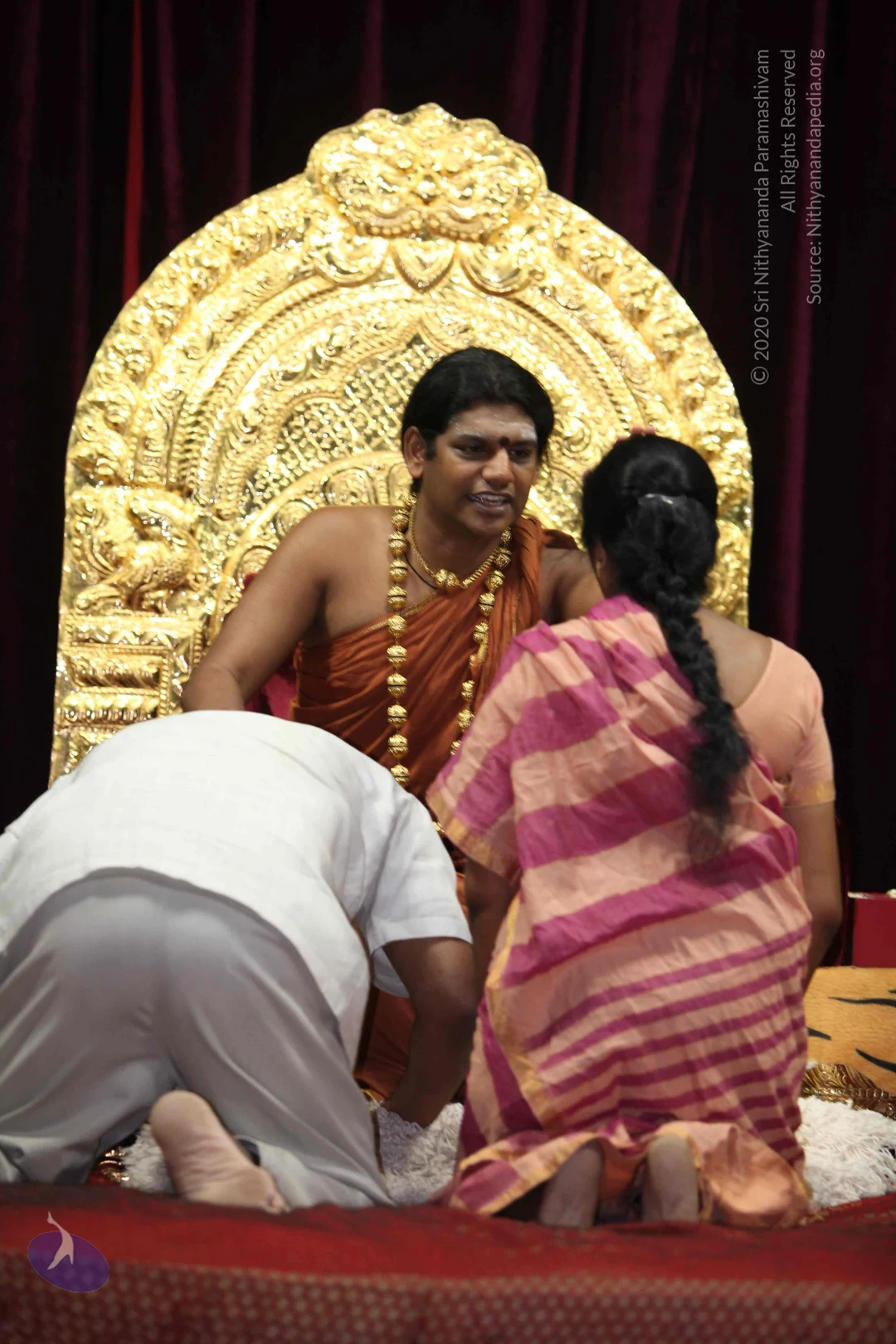
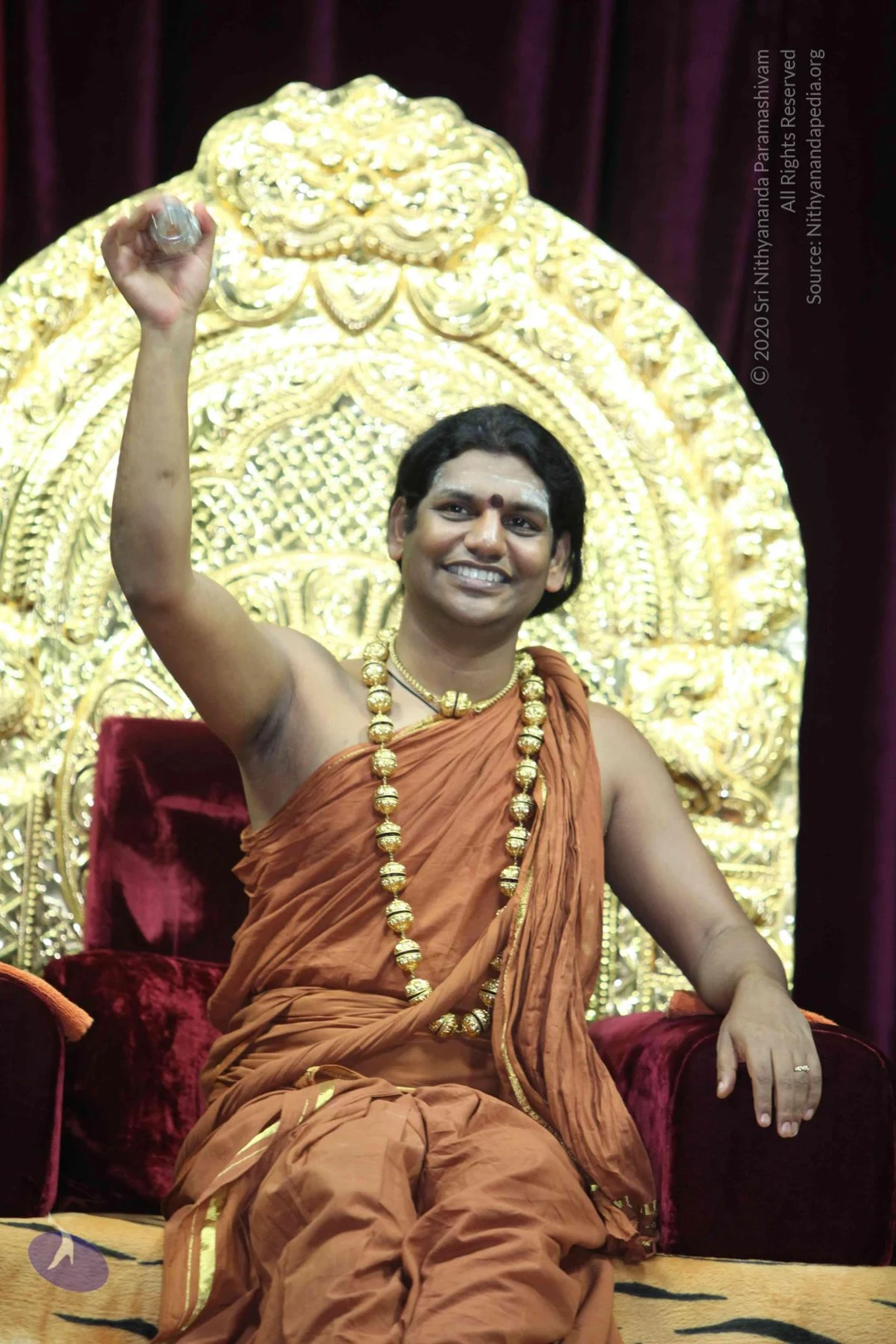
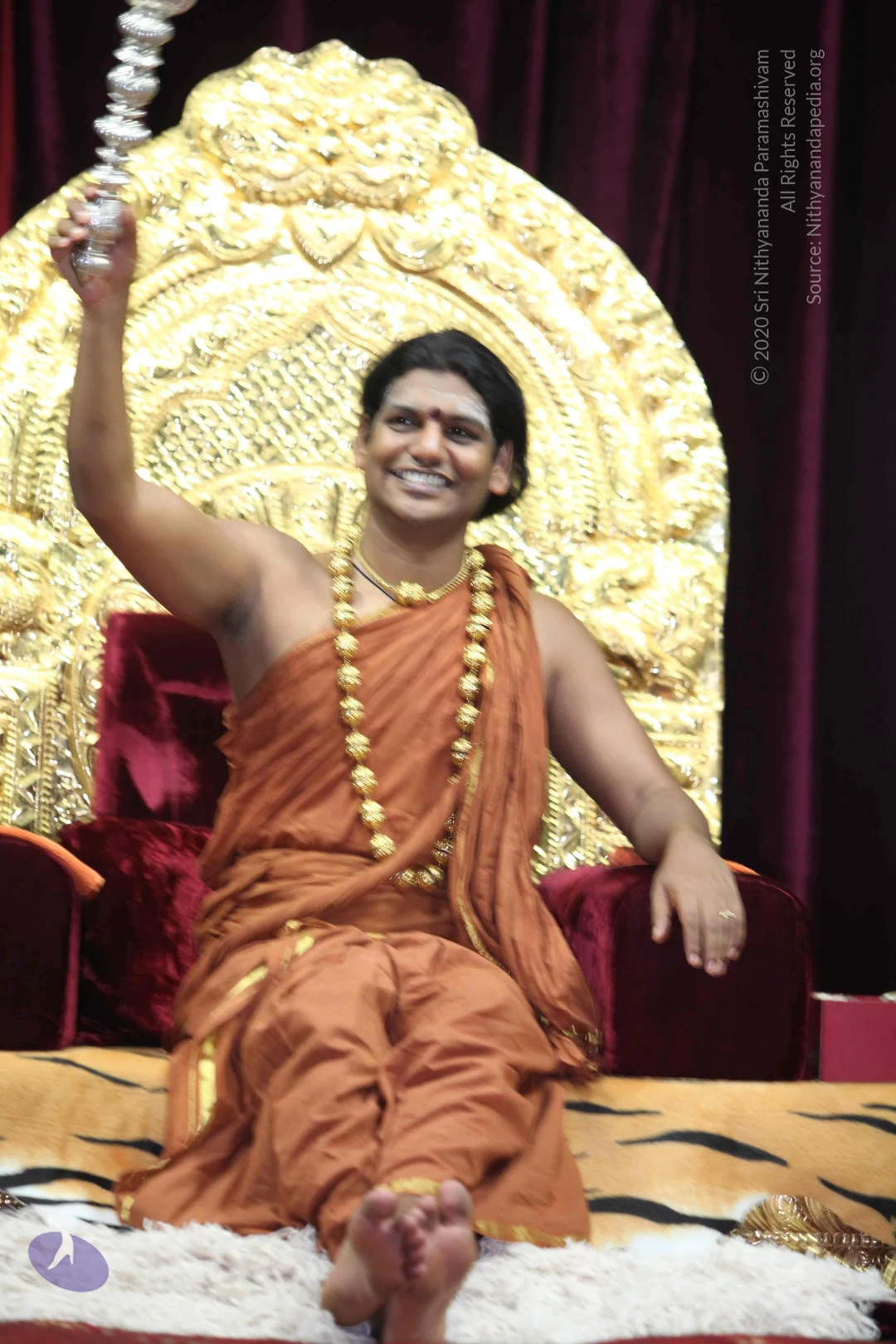
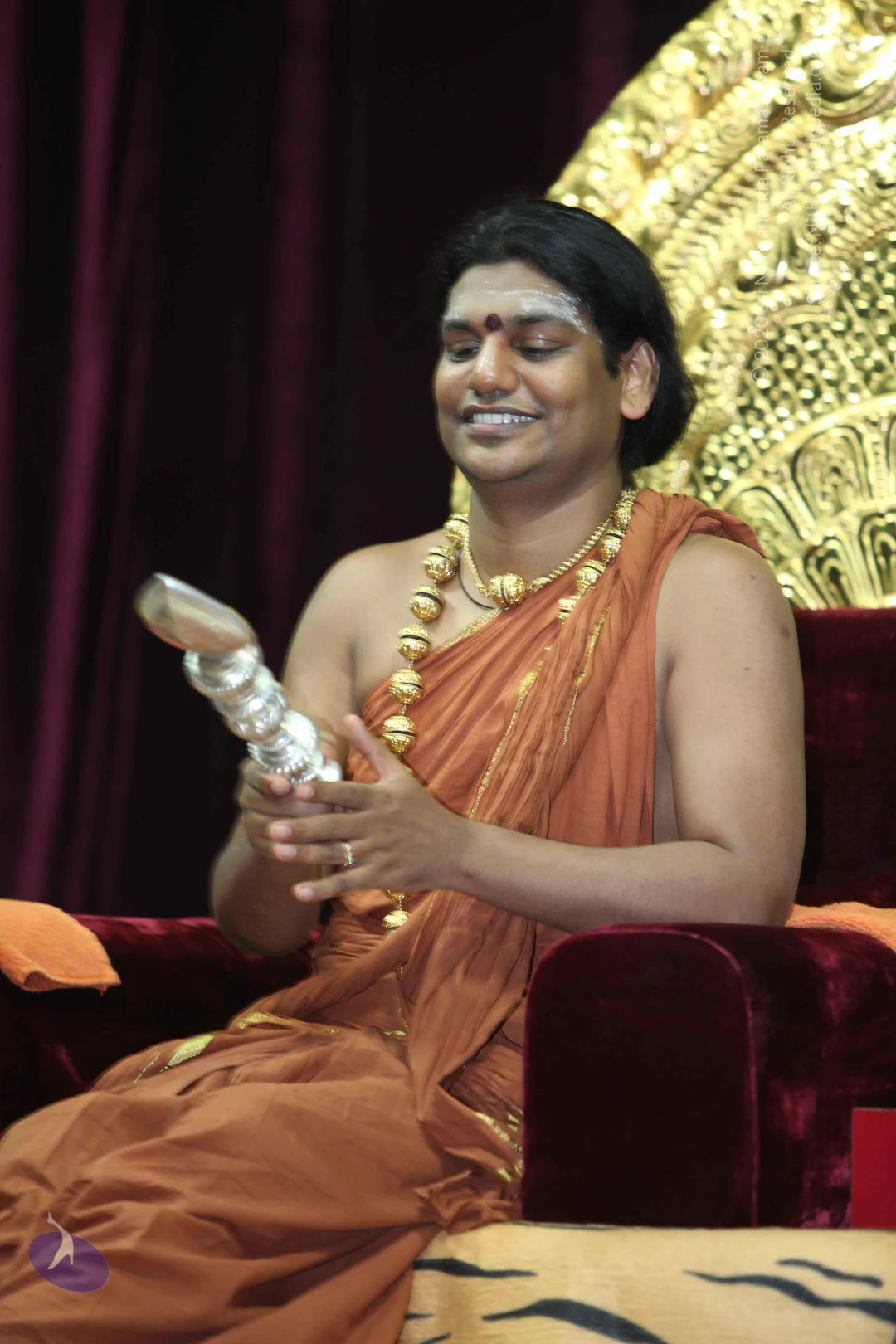
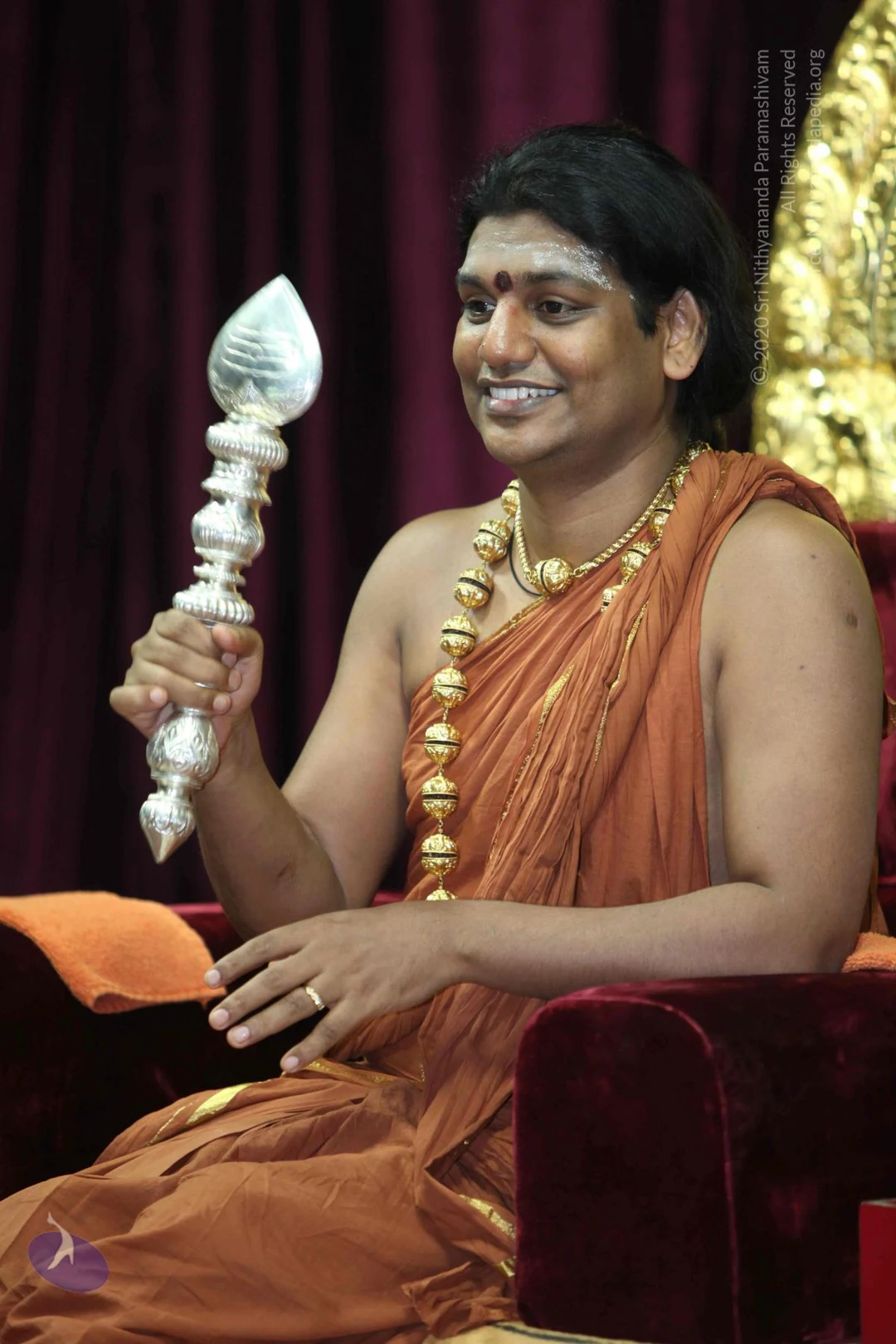
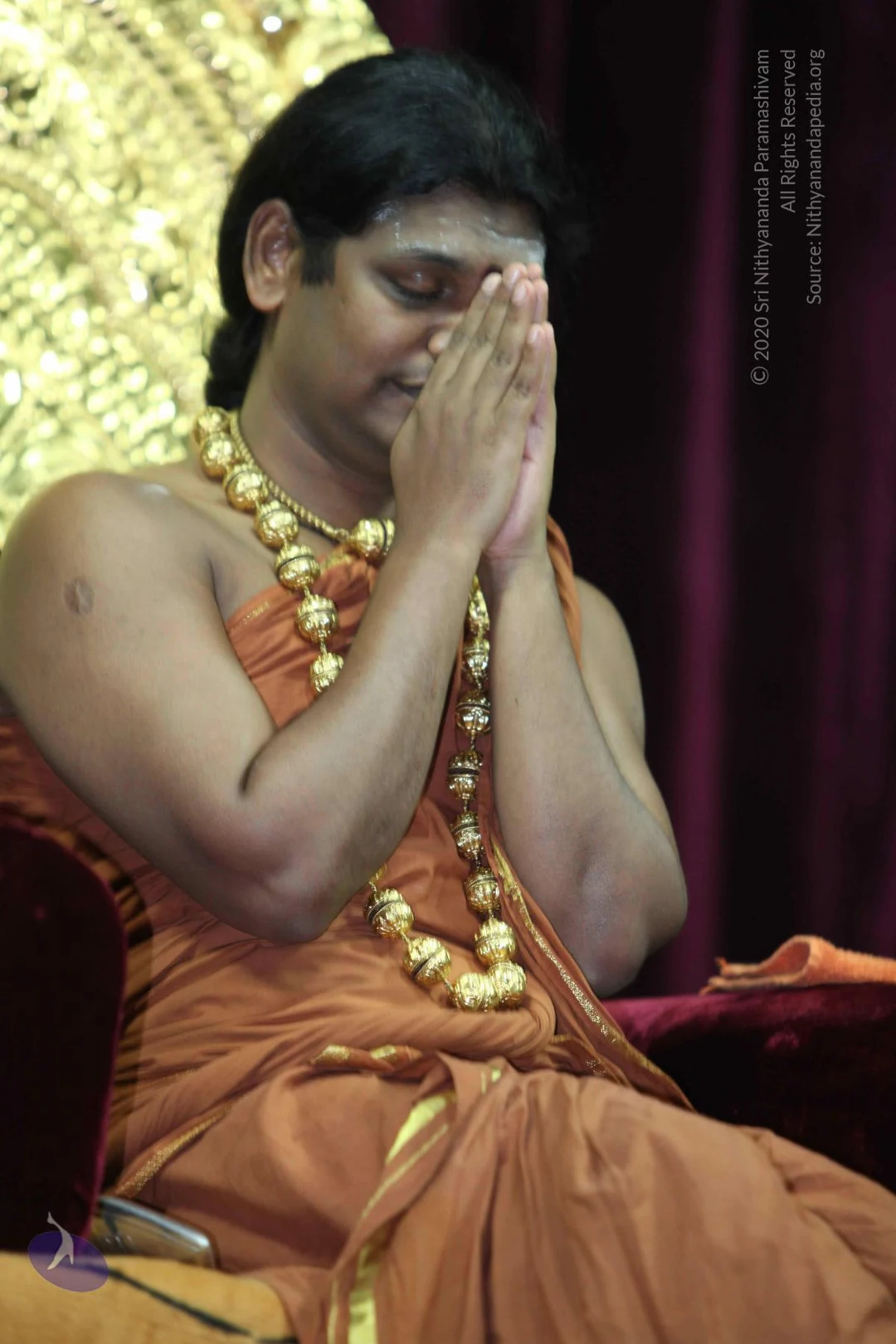
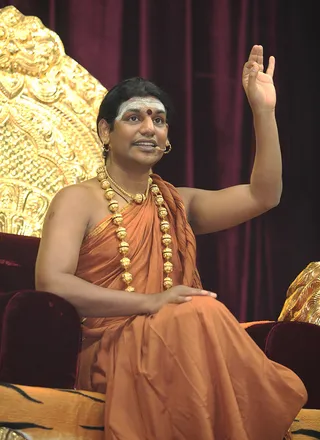
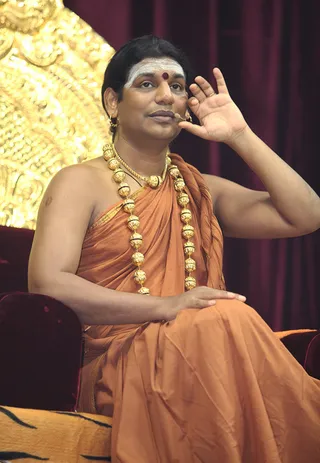
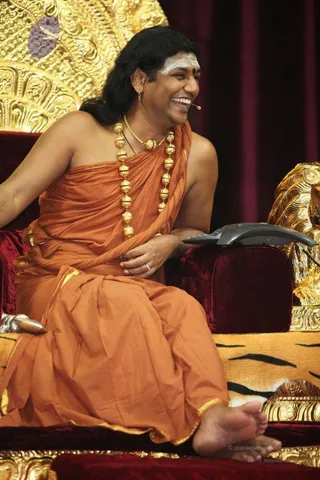
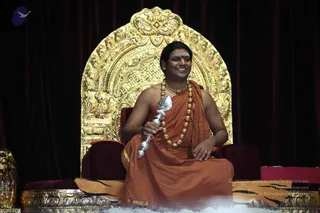
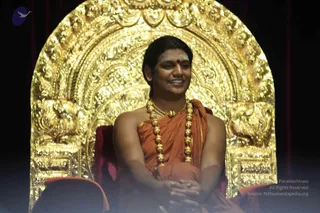
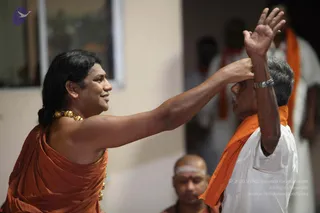
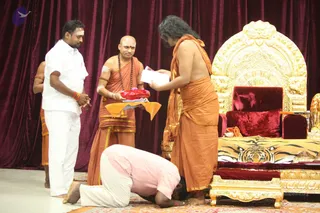
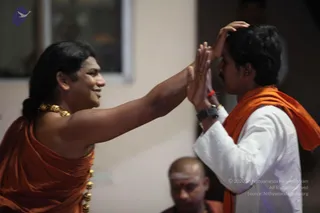
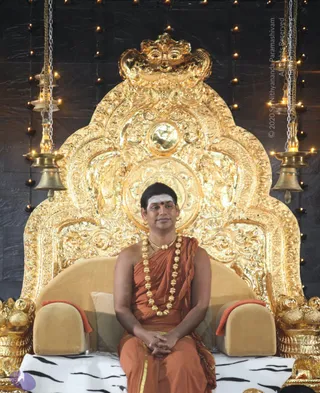
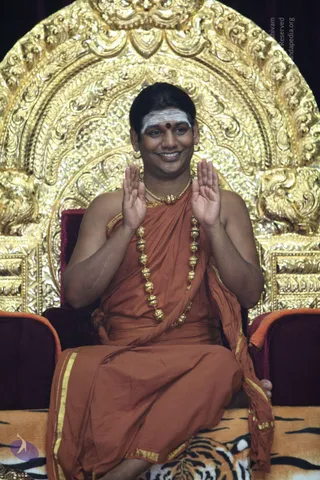
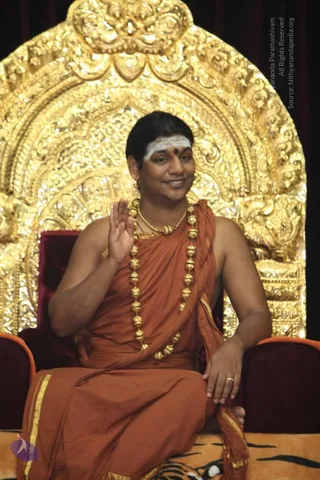
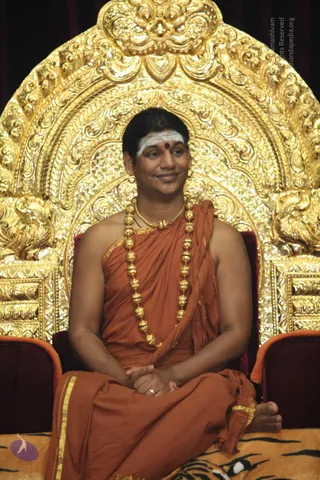
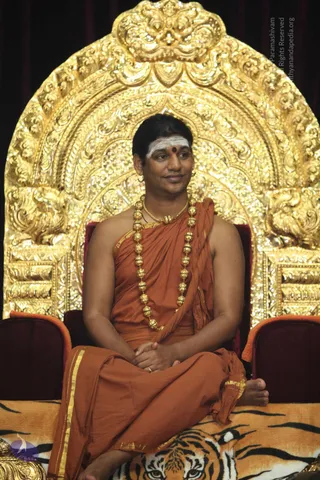
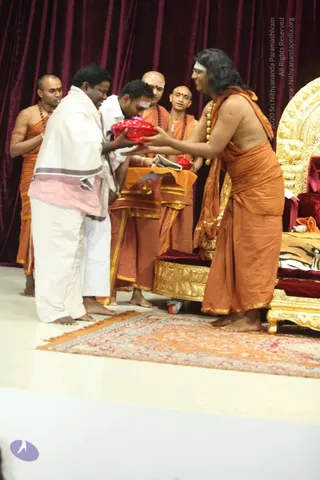
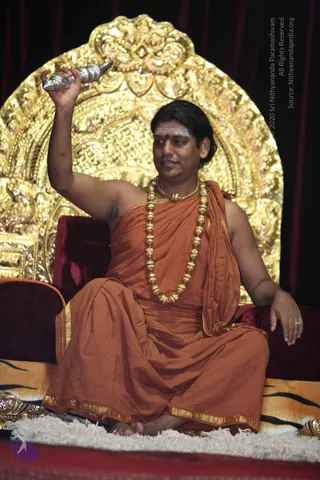
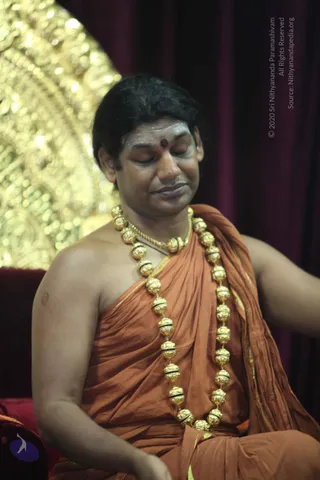
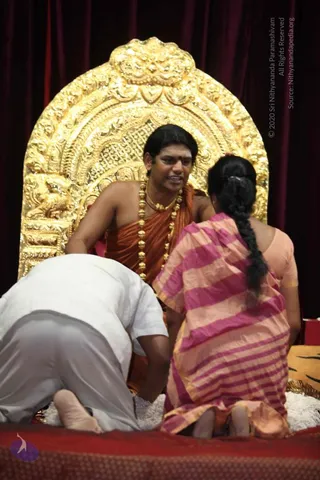
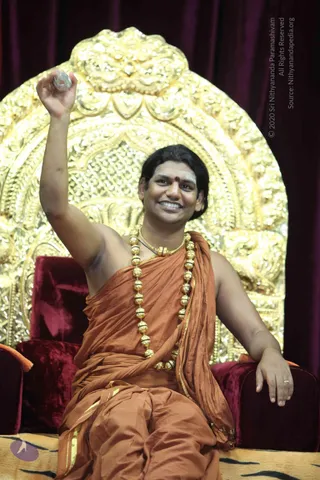
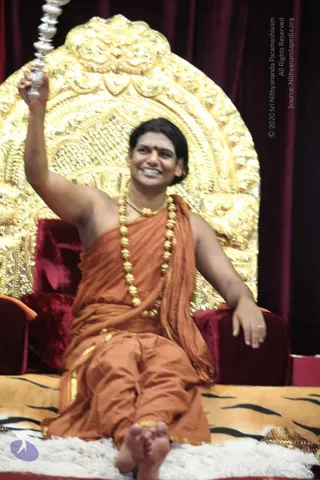
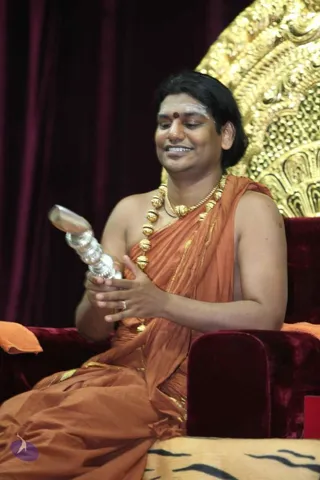
A photograph of one man seated on a red velvet throne with gold lion-head armrests and an ornate gold carved backrest, against deep maroon drapery. He wears an orange-saffron cloth draped over his torso, a long multi-strand necklace of gold beads and a gold pendant, gold hoop earrings, and a white vibhuti band with a red kumkum dot on the forehead. A small clip microphone is attached near his mouth, and he is smiling and gazing upward while resting one hand on the armrest.A man stands outdoors before a blurred backdrop of large tree trunks and aerial roots. He has long, dark, swept-back hair, a white tilak with a red dot on his forehead, and gold hoop earrings. He wears a rust-orange shawl draped over his bare shoulders and a heavy gold bead necklace with a thin gold chain. He holds his palms pressed together at chest level in an anjali mudra, eyes lowered in greeting or prayer.A photograph of a long-haired man in an orange saffron robe with gold ornaments and a gold necklace sitting on the left, his right hand raised to the forehead of a shaved-headed man in a white shirt with an orange shawl, who holds his palms together in greeting. Behind them a bald man in white with a white forehead marking sits, and another person in white with an orange shawl stands in the background. A faint wall and window appear at the top left.

March 01 2013

Original wiki page
Contents

Title

Life is for Enriching Consciousness

Description

Enriching means constantly enriching you and others. Listen. Enriching is infusing all these three tattwas continuously in your life and others’ lives. Dhyaan se sunniye. Even in Vedas, three Vedas are only tattwas. The fourth Veda, other one Veda, is making those tattwas into life. Same way in these four tattwas also, first three are the tattwas. Fourth one is making them as life. Not just listening. Real listening. Not just listening.

Link to Video:

Transcript

Life is for enriching consciousness – 1st March 2013

I welcome all of you with my love and blessings. (calls out all the centers with 2-way video conference)

Just all of you may be aware that , I blessed Premikananda’s grandmother in Malaysia, I will release her. Today morning, early morning she passed away. She left the body. Great! Beautiful. And I also received messages from yesterday after my blessing, she did not have any suffering and she relaxed very smoothly. She is with Me. Blessings! Tell them are they near the body, they can show in the camera also, I can Bless. Today 9th batch nirahara samyam first day, fourth batch The Samyama 13th day. 15th IA, 12th eN-GEnuis 13th day. As the ashramite in-charge who is supposed to put the registration forms in the website didn’t do the job. Today I initiate who ever wanted to start the Nirahara Samyama, I initiate all of you can send your registrations and apply today. That is okay. And also as prayaschitta for this, myself will observe this Nirahara Samyama all the three level. I will do the Nirahara Samyama all the three levels this time as prayaschitta for taking responsibility for not putting the applications on the website on time. Anyhow I am responsible, I should have looked into it. The person did not do the work, as a prayaschitta, I will do the Nirahara Samyama, this time along with you guys.

Let’s enter into today’s Satsang. As I was expanding on 4 Tatvas – Intergrity, Authenticity, Responsibility and enriching others, I’ll move today to Tatva enriching. Enriching is, you taking responsibility with integrity and authenticity that you are continuously committed to enriching which is expanding yourself and life in and around you. I am defining, Listen Under the Quote “Enriching is you taking responsibility with integrity and authenticity that you are committed to continuously enriching which is expanding yourself and life in and around you. Kripya dhyaan se suniye : Aapyanam ka arth hai, aap sampoorthi evam shraddha ke saath zimbedaari utha yiye ki aap lagathaar aapyanam ya swayam ka vistaar aur aap ke anda evam, baahar ke jeevan ka vistaar ke liye pradibad ho.

10:03 Listen. Enriching means constantly enriching you and others. Listen. Enriching is infusing all these three tattwas continuously in your life and others’ lives. Dhyaan se sunniye. Even in Vedas, three Vedas are only tattwas. The fourth Veda, other one Veda, is making those tattwas into life. Same way in these four tattwas also, first three are the tattwas. Fourth one is making them as life. Not just listening. Real listening. Not just listening. I don’t even want to use the word just listen. Not just hearing but listening. Enriching is you taking the responsibility with integrity and authenticity that you are committed to continuously enriching which is expanding yourself and life in and around you. We always ask why should we enrich others? You conveniently forget life happens to you with others. Ego forgets, ahamkara forgets. All its joy comes only when it stretches itself to anyakara, not when it fights with mamakara. Ahamkara thinks by fighting with mamakara it can extract joy. No. Only by stretching to anyakara it can experience joy. It is very unfortunate. Ahamkara thinks by fighting with mamakara it can experience fulfillment. I tell you, that is the way ahamkara survives. In these three – mamakara, ahamkara, anyakara – the leader, gang leader is ahamkara. Other both the fellows are chhota, frightened fellows. But the strength of the leader, these fellows also act like rowdies, and they themselves do not know anything.

13:51 But ahamkara is the most cunning strategy planner. Unfortunately he is caught in the net which he himself created. We forget an important fact very conveniently and take life happening for us with others for granted. We think my brother has to behave like a brother, father has to behave like a father, friend has to behave like a friend, son has to behave like a son, student has to behave like a student, teacher has to behave like a teacher, without we taking the responsibility that we should also fulfill our role. Why should a teacher behave as a teacher if a student is not taking the responsibility of enriching teacher? Listen! When you don’t enrich teacher even what you receive from teacher will not be useful for you. It will not be useful for you! Anything you receive without enriching is stolen. Beautifully Bhagavad Gita says, if you don’t do yagna and give it back to the divine energy, you are thief. Listen. Bhagavad Gita says – get the quotation – Bhagavad Gita very beautifully says if you don’t do yagnas and give it back to those divine energies – listen! Bhagawan does not mean just pouring some offerings into fire, He means doing proper action. For example if you are cutting a tree, you have to plant at least five tree. If you are taking water from the river you should make sure the recycled water is purified and added to the river. Constantly enriching the source and keeping it alive for the next generation is yagna. Do not touch anything which will be, which is, which you can’t replace it, like one-time exhausted things. No. What we call? Non-replenishable sources. Don’t use non-renewable energy sources. Use only renewable energy sources. That is part of enriching, yagna. Gita is very clear. Krishna is very clear. Listen. If you are not enriching, and taking and enjoying, you are a thief. Asteya, one of the important vows of sannyas, can be maintained only by enriching. Only when you continuously enrich others non-stealing is maintained. Listen. Enriching is where life happens to you. I can say enriching means infusing all the three tattwas into satyas. 19:03 Dhyaan se sunniye. **Ap yayanam ki sriti ho he jo bhati ke tin tatwon ko lagatar apke jeevan ko aur ajna logonke jeevonko uday jis kartihe. **

19:40 I have a quotation here from Gita third chapter, twelfth verse.

    • Istan bhogo hi , istan bhogan hi vo deva dasyante yajnabhavitahah I tair dattan apradayai ‘bhyo yo bhunkte stena eva sahah. II** (copied from Swami’s BG text)

“Satisfied with the selfless service, the celestial beings certainly award you the desired necessities of life. He who enjoys the things given by them without offering to the celestial beings is certainly a thief.” Stena eva sahah.

20:30 Listen, Life happens to us with others. I tell you, how many of you listen with Integrity and Authenticity I ask all my Sannyasis? How many of you think even if you are alone in the forest, you will be able to maintain the standard of your Sannyas life without the help of other Sannyasis or the Sangha of Sadhus. No. I tell you try, try, try. I have seen hundreds of Sadhus I tell you. As the spiritual head of the one of the oldest Sannyas Sampradaya and member of the apex body of Hinduism I tell you – for a common seeker it is impossible. I have seen this young seekers guided by the wrong ideas that they can do it on their own. Go and sit, some hut, some corner forest or hill. They will come down to the nearby village just for food. In 2 years, marrying to some old widow. Arey, when you don’t see anybody you will just fall for anybody you see, any body you see. Whether it is Sannyas or Samsar the joys of Spirituality or the joys of world, joys of authenticity or joys of inauthenticity, everything happens with company - with Sangha. Understand, whether it is a Satsanga or Dutsangha, but you need a Sangha. Life happens to you in Sangha. If life can happen to you without Sangha, why will you be here? It cannot. It cannot. Being one of the Spiritual head of the Naga Sampradaya, I tell you even to become a Naga initially till you are established, Sangha is required. Life happens to you with others. Whether it’s basic food or the ultimate luxury, everything happens to you with others. If you don’t enrich others, it is stealing. Life does not happen to you. I tell you, decide to enrich everyone you see with these tatwas, in just few months you will see you are surrounded by Gods and you are living in Heaven. Go on enriching people with these tatwas.

Sangha me hi aapki jeevan vasthav me jeevan hotha hai.

Jeevan keval anya loghon ke saath hi Jeevan kelatha hain.

Even if you are in the remote forest, only with Ganga and the Hill your life happens. Even if you are a Naga, in the forest life happens to you with Ganga and Hill, River, Forest. Listen with whatever Life happens to you, you start enriching it. You start protecting it. That is why, Hindus are so so devoted to Ganga, Yamuna and Himalayas because life happen to them with that Himalayas, Ganga and Yamuna. That is why they are so sincere keeping them alive and enriching them.

If life happens to you with River and you Enrich it, you are called Theertha. If life happens to you with the Hill and you Enrich it, you are called Giri. If life happens to you with People and you Enrich it, you are called Puri. If life happens to you with Forest and you Enrich them, you are called Aaranya. That is the way Shankara created ten Sampradaayas of Nagas – Giri, Puri, Theertha, Aaranya, Indra, Saraswathi. If life happens to you by Kings and you Enrich them, you are Indra. If life happens to you by the Pandits, the Educators and you Enrich them, you are called Saraswathi. Enriching Life is Life! What you Enrich, Enriches you. What you Enrich, Enriches you.

Listen. Enriching is the way you relate with the expressed component of God, expressed part of God. Listen, Dhyaan se suniye. Integrity, Authenticity is the way you relate with unexpressed, Avyaktha part of God. Responsibility and Enriching is the way you relate with Vyaktha – expressed part of God. Listen.

Integrity, Authenticity is the way, right way you relate with unexpressed part of God. Responsibility and Enriching is the right way to relate with expressed part of God – The World. Enriching, Enriching, Enriching. If you do not enrich, you actively create selfish pattern. Be very clear, either you give or you swindle. There is no middle. How many of you cognized this? Relax.

Tile

Life is for Enriching Consciousness, Part-II

VideoAudio

Transcript

Part 2, 0 to 19:52 minute segment When you chant the Swasti Mantra in the morning, that is a very powerful way of enriching the world through our integrity and authenticity. When you take the responsibility for that word, making those Swasti Mantras into reality. Listen. With integrity and authenticity if you chant that word in the morning pada puja and bless the world, you are sending the vibrations!

go-brāhmaṇebhyaḥ śubhamastu nityaṁ lokāḥ samastāḥ sukhino bhavantu

You are sending the vibe. When you take responsibility for it and start acting you are enriching yourself and others. When you send those strong waves with integrity and authenticity you are enriching you. And you are enriching the world mystically. When you take responsibility for the words you uttered and start working, you enrich the world mystically and physically, metaphysically and physically. When you chant go-brāhmaṇebhyaḥ śubhamastu nityaṁ you should take the responsibility of protecting the cows, and people who practice these four tattwas.

Kāle varṣatu parjanyaḥ pṛthivī sasya śālinī means we should make sure trees are not cut. Properly three times a month rain is showered.

Rājā dharmapatiḥ prajāḥ sucaritāḥ means you should make sure king rules righteously. It is our responsibility now. We will all take the responsibility for the rulers to rule the world ad the countries righteously. By constantly educating them and teaching them in all other possible ways, we are responsible. Chanting is the first level of metaphysical support we give it to the world. Enriching metaphysically. Start taking responsibility for it so that we enrich physically also. So every day when you chant remind yourself. Now you have to make sure king rules righteously. So understand, guiding the rulers is our mission. Jnanasambhandar himself guided the 4:20 ** Indrasi Indumaren**, the Pandya. So it is our right and it is our responsibility. It is our responsibility, enlightened beings and saints are protected. I think we will have to structure our whole sangha based on the swasti mantra. That is our mission statement. Understand? Swasti Mantra we chant every day is our mission statement.

go-brāhmaṇebhyaḥ śubhamastu nityaṁ . We should plan every ashram has goshalla. People take the responsibility of protecting cows and every state of India passes a law protecting cows and anti-cow-slaughter bill. And all over the world constantly we promote the truth of protecting the cows and no 5:47**be** ??.

go-brāhmaṇebhyaḥ śubhamastu nityaṁ. Brahamanah is a person who practices these chaturvedas. Whoever practices the chaturvedas must be protected! It is time we take the responsibility for enriching all the words we utter in the morning swasti mantra. King ruling, rulers ruling the country righteously, and citizens living the life righteously, for everything we are responsible. We are responsible. We’ll take the responsibility by constantly teaching these four tattwas to everyone. Understand. Responsibility and enriching makes your life happen to you. With integrity and authenticity and responsibility and enriching, I declare today, you all make me an incarnation. Not me by myself. Me by myself with my integrity and authenticity , I only become enlightened being. Only my responsibility and enriching all of you make me an incarnation. How many of you cognize this? So I happen because of you. My integrity and authenticity only makes me an enlightened being. Only my responsibility and enriching all of you, my commitment to take the responsibility in enriching all of you makes me an incarnation. Listen. Go on, go on, go on enriching. Go on enriching with these tattwas. Enreaching is enriching. Enriching is enreaching. Integrity is the root, authenticity is the tree, responsibility is the fruit, enriching is sharing the fruit which creates more fruit. I can also say enriching is enjoying the fruit, and sowing the seed for having more fruit. In enriching you also enrich yourself. So enriching is enjoying the fruit and sowing the seed for more fruits to happen. Go on enriching. I tell you, extraordinary powers will support you. Listen. When you start enriching, life happens. I tell you, even in profession, in business everywhere, when you look beyond what you get creativity happens in you. Listen! When Steve Jobs starts looking beyond money he creates better and better products. When Bill Gates looks beyond the Gates of Bill, he creates better and better and better enriching products. Gates of Bill will never make you do anything either in the micro level nor the macro level. I can see even among my staff, staff members. Both my camera men, amazing. I want to tell them I accept both of them as my ashramites. I tell you, I tell you, and I’ll take care of both of them just as my ashramites every way. And their family, I commit with you guys. No I know, they’re able to look beyond money, that is why! No, I’ve not seen tiredness in them, sulking in them, I’m observing them now for at least more than 2 years. 2 years? I have never seen sulking in them, reasons in them, never had a complaint from them. They have started looking beyond money. That is why the commitment has happened to them. See for their capability they are really stretching. I tell you in every field, only when you look beyond what you get, great things are born. Great things are born. All my sanyasis and ashramites, understand, if you are not able to do great things be very clear, still you have not started looking beyond what you are going to get. Maybe what you want is just my attention, even that is a salary. you are stuck. Only if you look beyond that and decide you will enrich just because you want to enrich great things will be born out of you. Jnana garbha happens in the womb of looking beyond the possible return. If mother’s womb is constantly thinking what it will gain by giving birth to a son or a daughter it’ll never conceive, produce and give birth. When the womb looks beyond what it is going to get it gives birth. When your inner space looks beyond what is going to be returned to you or what you think as the benefit, great things are contributed. Great creativity is achieved. Impossible becomes possible. Same way, when a Master looks beyond what disciple is going to contribute to him, He makes him as a Master. When I look beyond what you are going to contribute back to me, I make you a Master. In every field – listen - in every field when you look beyond the possible fruit of that field, great things are born.

    • 15:51 Koe bi chetra me jab ap us chetra me, sambau fal se farre dekne lak te he sabbi ap ut ji dohn ka ujjen hota he.**

Whatever you see being useful in the Planet Earth is from enriching consciousness. Listen. If Edison has invented bulb it is from enriching consciousness. If somebody else has developed it to the next level that is from his enriching consciousness, never from the mind which thinks of salary. And – listen - the mind which thinks of return is worker. Vaisya. From the consciousness of Vaisya. Nothing, nothing new or creative can come out. They know only how to make number of moulds. They can make ten thousand bulbs but they cannot do even a small change. Even the small change happens only from enriching consciousness. The same apple has fallen ten thousand times from ten thousand trees in front of ten thousand people. Why only Newton got the idea of gravity theory? Theory of gravity? When you are in enriching consciousness, even a small happening gives birth to creativity and you enrich the world. Of course I also wanted all of you to know, theory of gravity is not first time uttered by Newton. Long before recorded in Vedic tradition: in the modern history defined by Newton, that’s all. In the modern history three apples changed the world. Apple of Adam, apple of Newton, apple of Steve Jobs. One represents religion, another one represents science, third one represents technological revolution. You can create anything only when you see it, experience it from enriching consciousness state, from enriching consciousness. You can create anything only when you see it from an enriching consciousness state.

20 - 35 mins

“Aap kisi bhi cheez ka srujan tabhi kar sakthe hain, jab aap uss cheez ko upaaynamya visthaar chethana sthithi me dekh paaye”

Enriching means not postponing, doing it NOW. I postponed committing to learn Hindi for quite a long time. I will say I will do, I will do but I never committed. When I decided not to postpone anymore and in flash I committed. I think in Kumbhamela I did before second statement I committed. After committing I said what did I do. But now, see the power of commitment. Krupya Phir se suniye, “Aap kaisi bhi cheez ka srujan tabhi kar sakthe hain, jab aap uss cheez ko upaaynamya vistaar chethana sthithi me dekh paaye.”

Everything, everything, everything from the seat your sitting to the laptop you are using to the energy beads you are wearing, house you are living, food you are eating, anything creative comes out only in enriching consciousness. Only if there is a passage in the earth, the underground water can come out, Saraswathi can come out. Same way, only if there is an enriching consciousness in you, your inner space creativity can come out. Being in the state of enriching means to do actions in the enriching state without postponing.

“Vistaar sthithi mein rehein ka arth hain ki aap vilambana karthe huye, aap vistaar sthithi ko aapke kaaryon mein vyakt kare. “

Being in the state of enriching means to do actions in the enriching state without postponing. So I tell you, today list all the enriching thoughts you are postponing without making them as actions and start acting on them. Don’t postpone even this act. Today morning, I was asking Rishi Maneesha because he was having mood swing that he want to leave the ashram again. I asked him are you going to leave, he said he is not leaving but he became aware I am going to ask him to commit that. He said, I am not going to commit now, I will become clear and then follow. I tell you he will never become clear. Either you commit now or never. Because that I will become clear that will, will, will. Whenever you utter a statement that will – will be there. Understand, the parasites of your inner consciousness is – If, But, Will, May. You think you will break that will? When I become clear, I will declare. Is it not? Understand or not? Ready to declare – LOL. Getting it but still postponing. I tell you guys, postponing means not living, not beginning the life. It is literally death. Your body may be breathing, but don’t think you are alive. When I see a person, I can tell very clearly how many years he lived not by knowing the date of birth. From date of birth till his death, he breathed. But how many years he lived. Whenever he has not postponed, all the moments you did not postponed – you were living. The moments you were postponing, you were breathing but not alive. More moments of breathing not alive forms the source for sickness. Disease grows in a space where you breathe but not live. That is why I said when you take responsibility, you destroy the roots where disease can grow. Best medicine for your heart to function forever beautifully smoothly is enriching. Postponing means you are not alive. Postponing is Death.

“Vilambh karne ka arth heen, ki aap jeevit nahi hain. Vilambh karna mruthyu ke samaan hain. “

I tell you not taking responsibility even for the acts you committed is poverty. Taking responsibility only for the things which you are involved is middle class mind, mediocre mind. Taking responsibility for the things even though you are not reason is the consciousness of a leader. Many of you, whenever there is a problem you are too busy only in justifying you are not reason for it. Listen, even if you justify to everyone around you that you are not reason for it the sufferings for that problem is not going to leave you till you take the responsibility for it. As a child if something has fallen from the table and broken, you only justify to your parents “I did not do, I did not do, I did not do”. But unfortunately even after growing up, you are doing the same thing “I did not do”, “I am not responsible, I am not responsible”. You don’t understand, whether you are responsible or not, the part is broken from tomorrow you won’t be able to drink the tea from that cup or pot. You are affected, take the responsibility so that you will bring it back. You will buy once more or repair this. If you are too busy in crying, I did not do, I did not do. Are you going to think about repairing or buying one more? Are you going to sort this issue out?

Two naughty brothers nobody was able to control them, the whole village experienced their presence so heavy all of them have decided that they won’t be able to handle the hell anymore. They go and complain to the parents, parents go to the village Pastor. Pastor takes the responsibility, says I will try – don’t worry. He calls the younger one and slowly starts talking to him – do you know where is God? The fellow starts screaming, the younger one, runs away as fast as he can to his elder one. Both of them hide themselves in one dark dark corner of the village and the younger one says – hey we both are really in trouble. Elder one asks why? We use to steal money toys, clothes from every house. Now, the whole village suspects anything or anybody missing we are responsible. The Pastor is asking where is God? Laughter. Did you hide me anywhere without telling me? Listen, we are in the same space of that both the children. First we are out to say I am not, I am not, I am not. I am not. The space which first tries to disown is the space from which spontaneous lying pattern is rooted. How many of you cognize what I am saying? Listen,

“Koi bhi cheez ka mul karan swayam na hothe huye bhi, upaynamya zimmedaari uthana ek netha ka chethana sthithi hain.”

You may not be reason for something, but when it affects your life you have to take the responsibility for it. Because you are not reason. Even if it affects your life, living in the same space without taking responsibility means it is equivalent to living pigpen. With authenticity and integrity raise your hand how many of you are living in Pigpen. True. Because you are not the reasons for stones lying there, because you are not reason for the beautiful garden not happening, you are not ready to take the responsibility of having a beautiful ambience. Taking responsibility for something even though you are not the reason for it is the Consciousness of a Leader.

“Koi bhi cheez ka mul karan swayam na hothe huye bhi, upaynamya zimmedaari utana ek netha ka chethana sthithi hain.”

0 to 15 min

Somebody is asking me a question from San Jose, Madurai, Sanjay Varma. He says Swamiji can you please explain and how this applies in case of famous scientist Sri Stephen Hawking. He has taken responsibility and seems to be enriching lives and is clearly leading his field but yet continues to suffer from health challenges. Listen, if anybody else in his place would have been dead long before. He is still alive is miracle! How many of you know Stephen Hawking? He is still alive is miracle! He is still alive and kicking around without moving the leg. He is still alive is miracle. It is just purely his enriching consciousness. He is still doing his job of enriching even though none of his organs and parts of the body are cooperating or helping, but he is doing it! So many of you, even though your body organs and parts are cooperating, you are in the physical condition of Stephen Hawking. Even though his physical condition is not like you, he is much, much, much better space of spiritual condition than any one of you. How many of you cognize this? So Sanjay Varma, he is more alive than you. Some of his organs may not cooperate, but he is more alive than you. I tell you enriching makes you live these Tatvas without forgetting. Enriching others makes you realize these Satyas without getting buried in the unconsciousness. Go on, go on, go on enriching yourself and others. I tell you only in the actions of enriching yourself and others these Tatvas become life of you and get life from you and become Satyas in you. Keval anya logonka vistaar karanaa hi aapko achaitanya sthitime doobanese bacha sakta hai. Enriching others ensures you not drowning in unconscious state. I tell you if you are in the space of enriching yourself and others, you continuously perform miracles. When you don’t live these principles the mind is occupied by suicidal tendencies, may be slow suicidal tendencies, that's all. Bring responsibility and enriching in your inner space. Consciousness! Sri Lankan devotees have taken responsibility. They are asking for 3 sanyasis. I agreed. 12 Temples and 4 schools. “Am I right or 12 schools and 4 Temples?” Sorry, 12 schools and 4 Temples we are going to be running in Sri Lanka just within few months because all the base work is done. 12 schools and 4 Temples, Nithyananda Dhyanapeetam of Sri Lanka has taken the responsibility. All free schools! We will make Sri Lankan Nithyananda Dhyanapeetam to happen as a service project to all the people who suffered due to the war. Go on enriching others. Do not allow laziness to bury you before you are dead. Allow authenticity to grow on you even if you are buried. Agar aap anya logonko labhanvit karaneki sthitime hote hai, tab aap chamatkaaronka srujan kar sakate hai. If you are in the state of enriching others continuously you will be able to create miracles! It is constantly bringing the state in you, the space in you, that strength in you. Thanks to these 4 life saving Tatvas, I am enriched by it! I am going to enrich it! I name all the ashram gates on these 4 tatva base. The East entrance will be Integrity, South will be Authenticity, West will be Responsibility and North will be Enriching. As the prakara! The gates will be called in this name -Integrity Gate, Authenticity Gate, Responsibility Gate, Enriching Gate. Through which Gate do you entered, which gate is open, you will talk only in this, clear? So all Ashrams, be very clear. Your East entrance will be called as Integrity Gate, Integrity Entrance; South entrance will be called as Authenticity Entrance; West entrance will be called as Responsibility Entrance; North entrance will be called as Enriching Entrance. Whichever direction you have Entrances, name them I this way. If you have only South facing, name it as Authenticity Entrance. So all of you be very clear - all the Ashrams should name your Entries, Entrance points with these Tatvas and it should be named, board should be hung. Ashram is the extention of the Dharma we are living and Buddha who is embodiment of it and the Sangha which is radiating with it. So these 4 Tatvas are our Dharma. Constantly bring the state of these 4 Tatvas in you. Lagaataar in chaar Tatvonki sthitiko apane under laaiye. Punah, punah, lagaataar in chaar Tatvonki sthitiko apane under laaiye. Punah, punah, lagaataar in chaar Tatvonki sthitiko apane under laaiye. Again and again constantly bring these 4 Tatvas in you. All the Ashram heads, now you should plan for having Goshala. Not only in India, all over the world and you should make sure you are also contributing for the Rulers ruling righteously by voicing right opinions and reminding them the Dharma. Enriching is my such a favourite subject! I went on and on I think almost 2 hours! And still I have not yet completed. I will continue tomorrow also. Now I will move to the next segment of the Morning Satsang – Dial the Avataar. Go and declare. Suddenly Rishi Manisha has now awakened. He wants to commit now! (Rishi Manisha :) All the Sangha, so when Swamiji told about me, I was like sitting and contemplating - what is happening to me and all. So always I used to chant the like Shariram swaroopam tathaa waka labhyam, manaste…. So what is the best thing of having a beautiful wife, diamonds like kids and all without the grace of the lotus feet of the Master? So suddenly it came up when I was sitting there when I saw his feet and so what is life without spending time at the lotus feet of the Master and the Master himself, this what I recollected and then I commit to everyone that I am not going to leave the Sangha and I enrich the Sangha and all the, with the Authenticity, Integrity, Responsibility and Enriching others, I commit to everyone and to myself that I will not get the thought of leaving the Sangha only and live with Sangha. Swamiji: Wow! Hahahahahaha!! Great! Rishi Manisha has really saved himself. I tell you guys, this moments are the moments of victory; moments of Life happening to you!

Photos From The Day:

Temple Glimpses
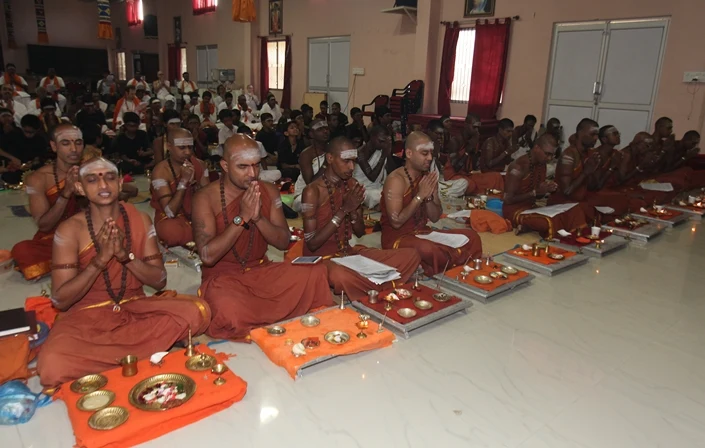
Pada Puja
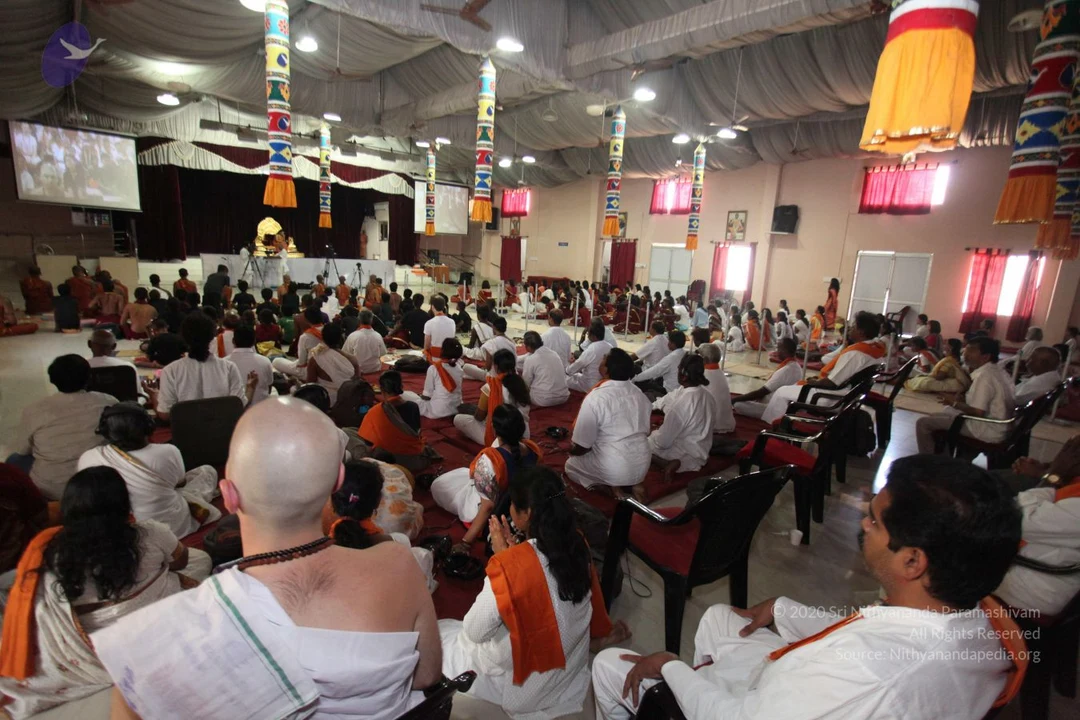
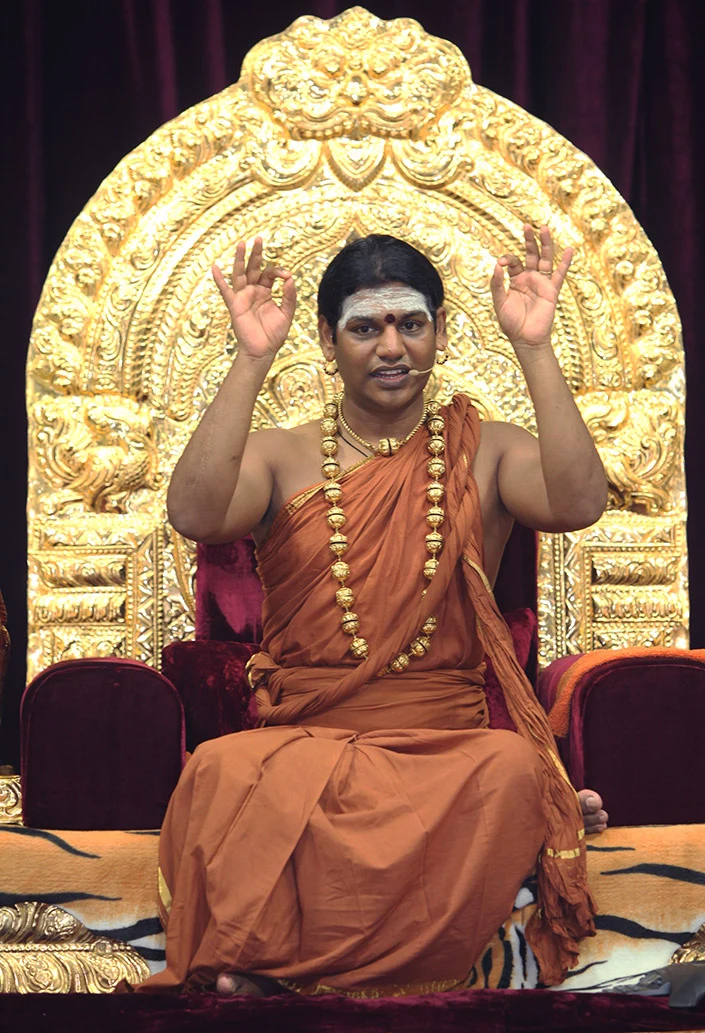
Satsang
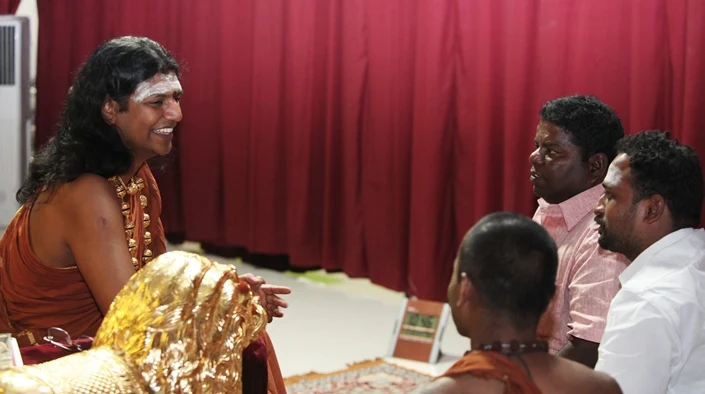
Blessing After Sarvadarshan
Photos Of The Day:

Nithya-Satsang

Nithya-Satsang

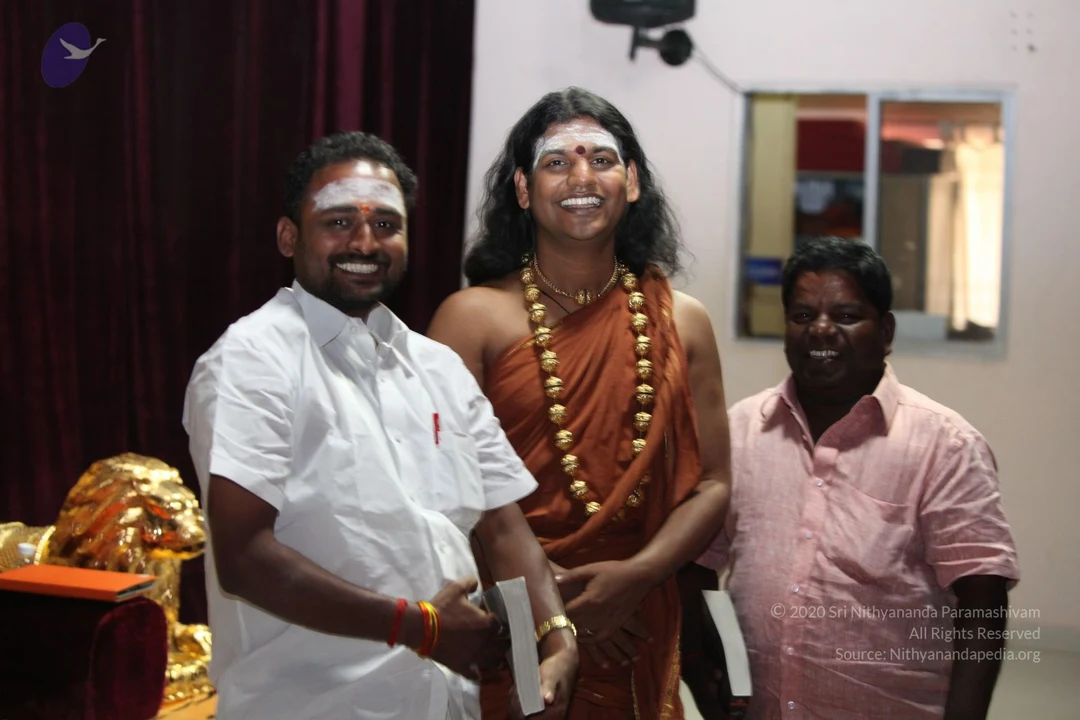
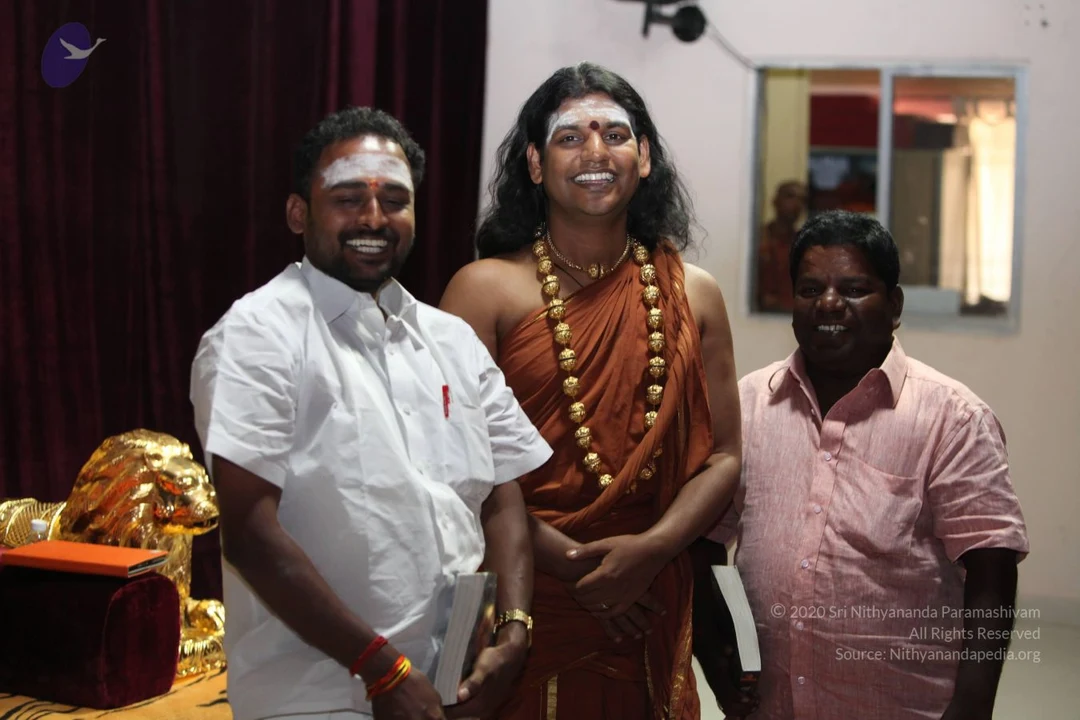
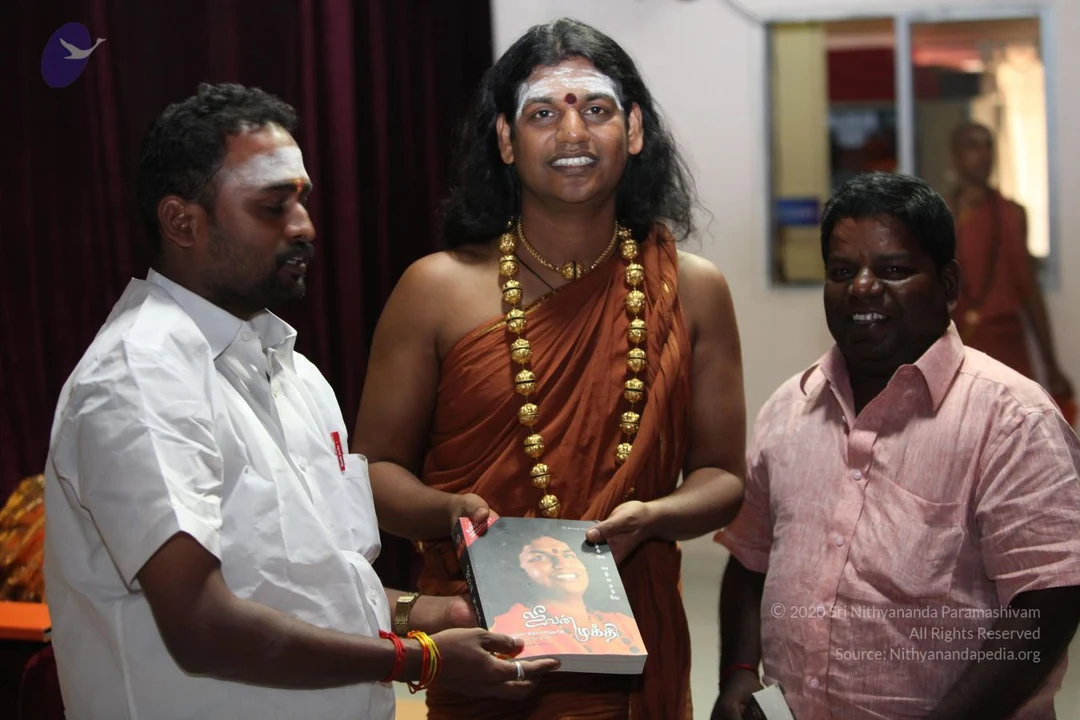
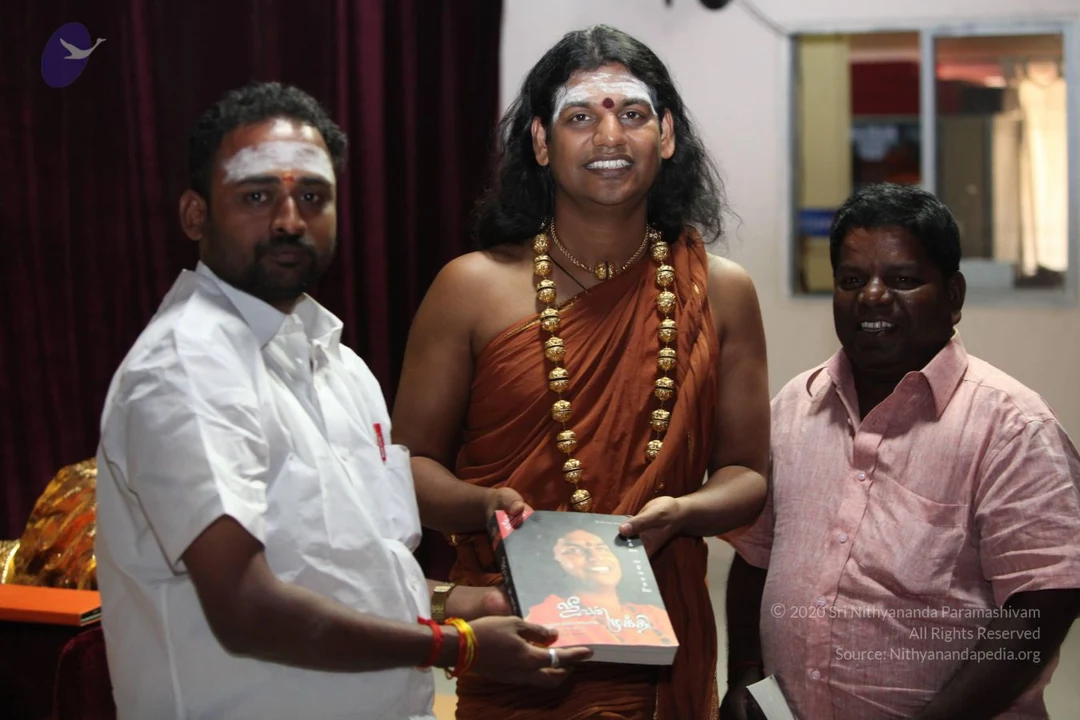
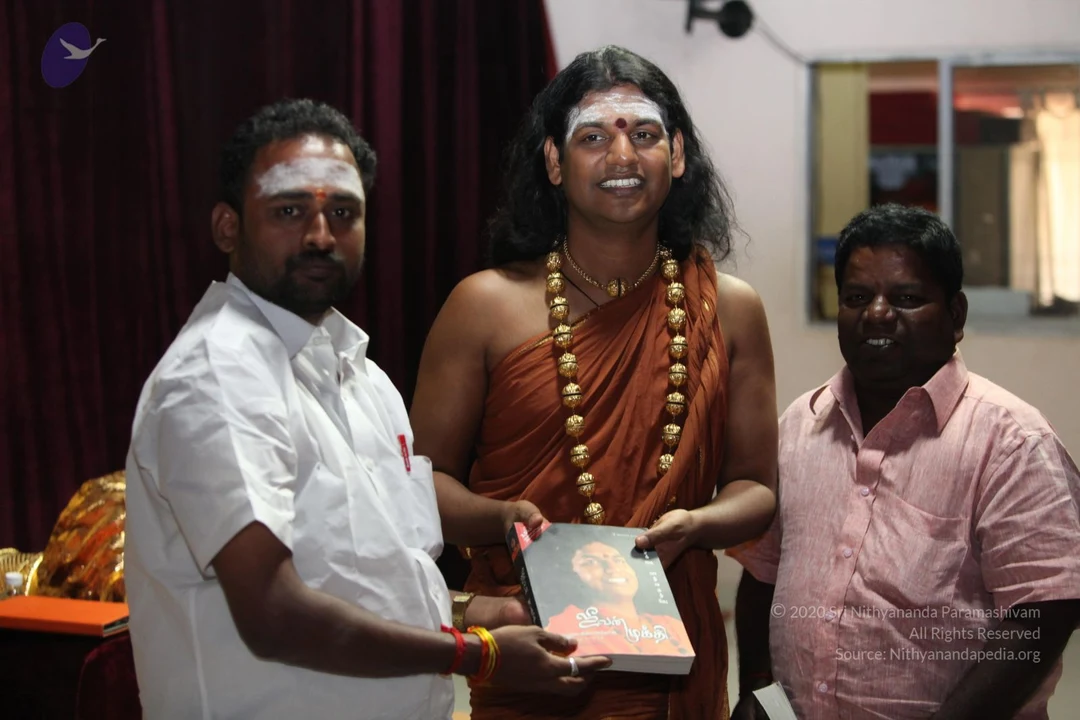
Swamiji-blessing-Actor-Manohar-with-Living-Enlightenment-book

Temple

Darshan

Photos Of The Day:

Yoga

Temple

Puja

Morning-Satsang

Actor-Manohar-Visit

Darshan

Photos Of The Day:

Temple

Puja

Morning-Satsang

Actor-Manohar-Visit

Darshan

Photos from this day

View all 309 photos

Temple Glimpses

5 photosSource gallery
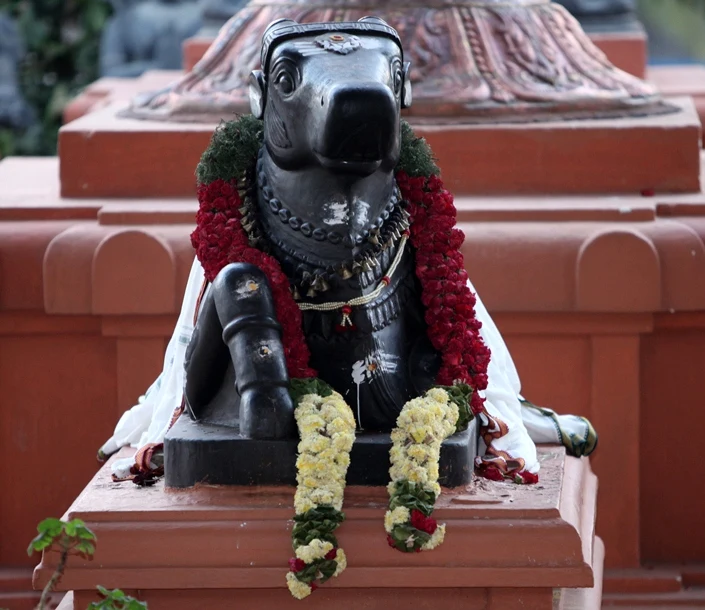
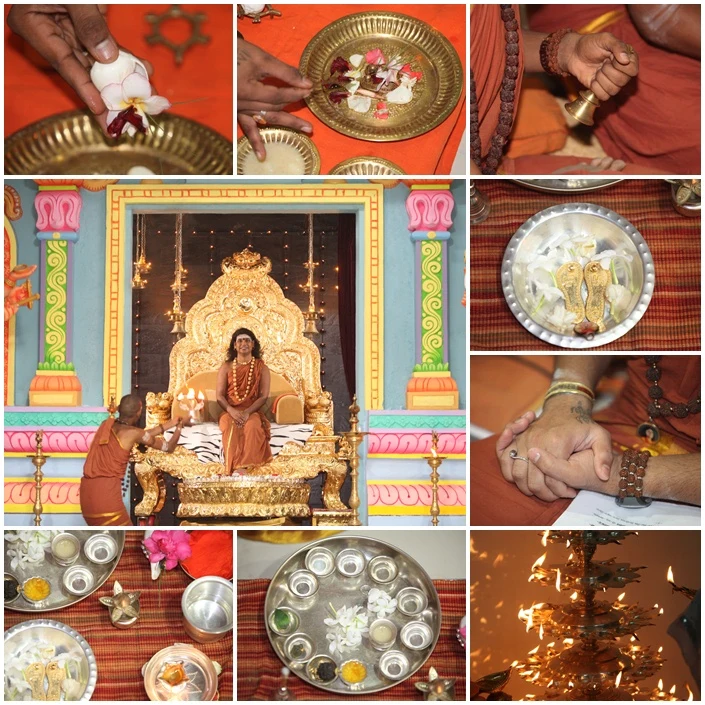
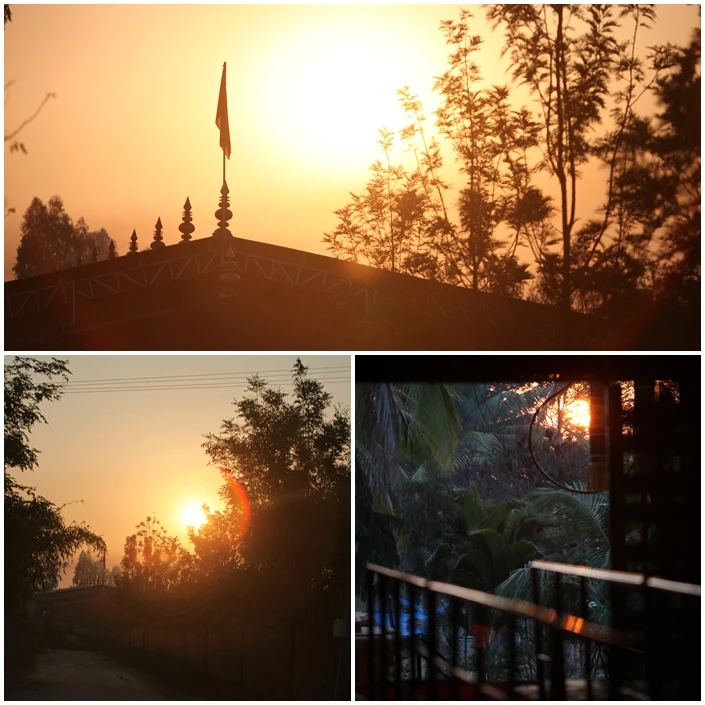
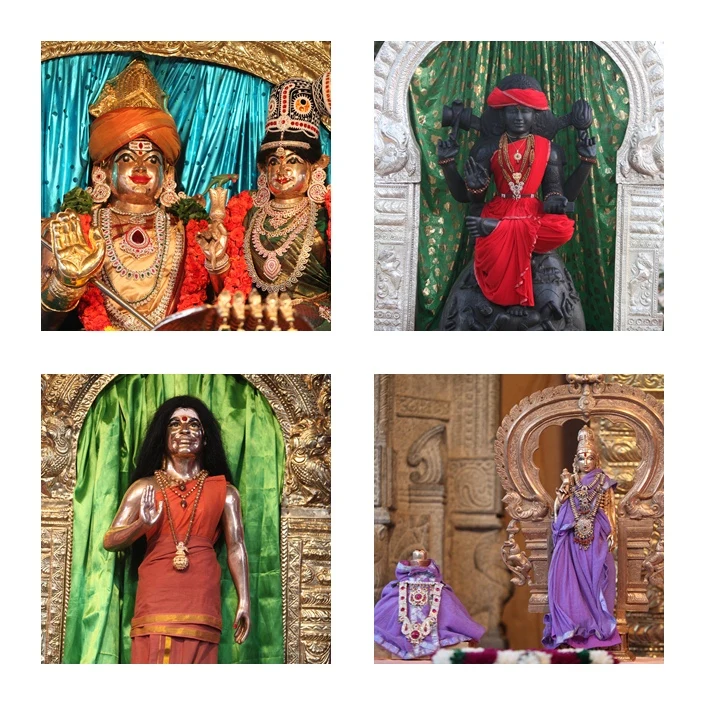
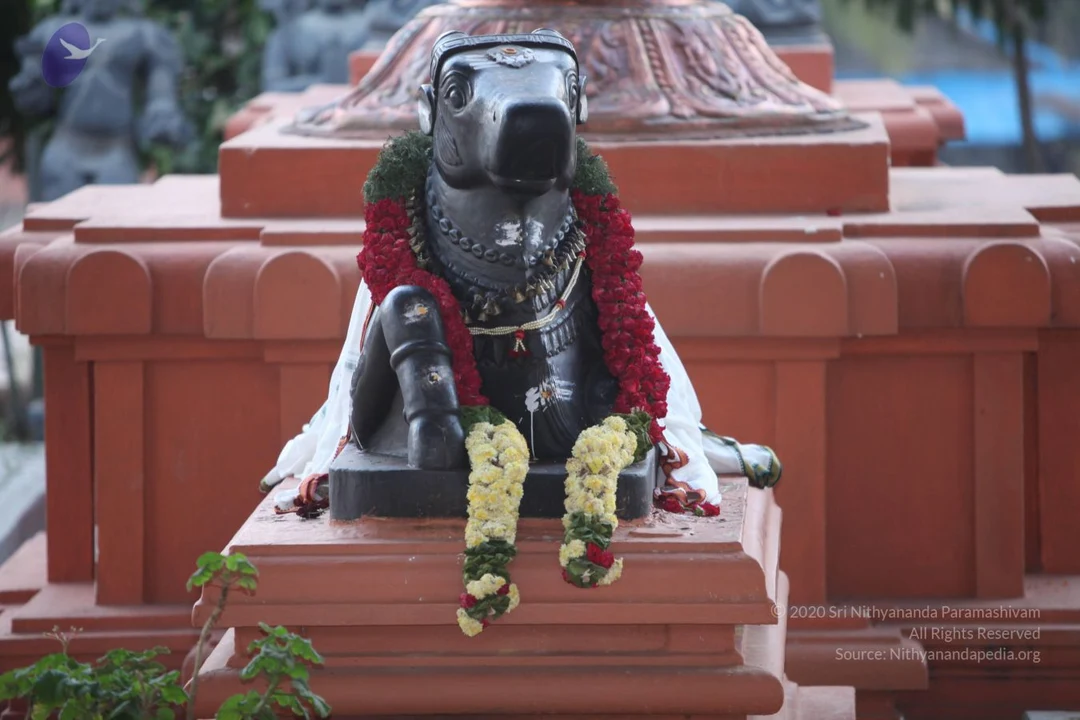
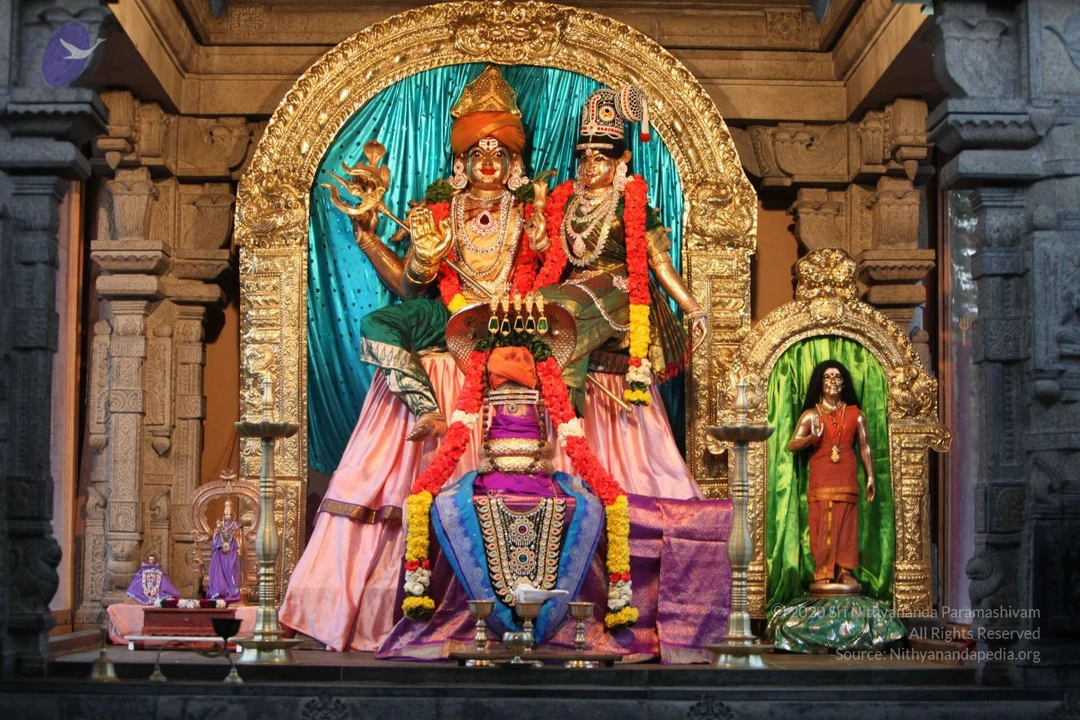
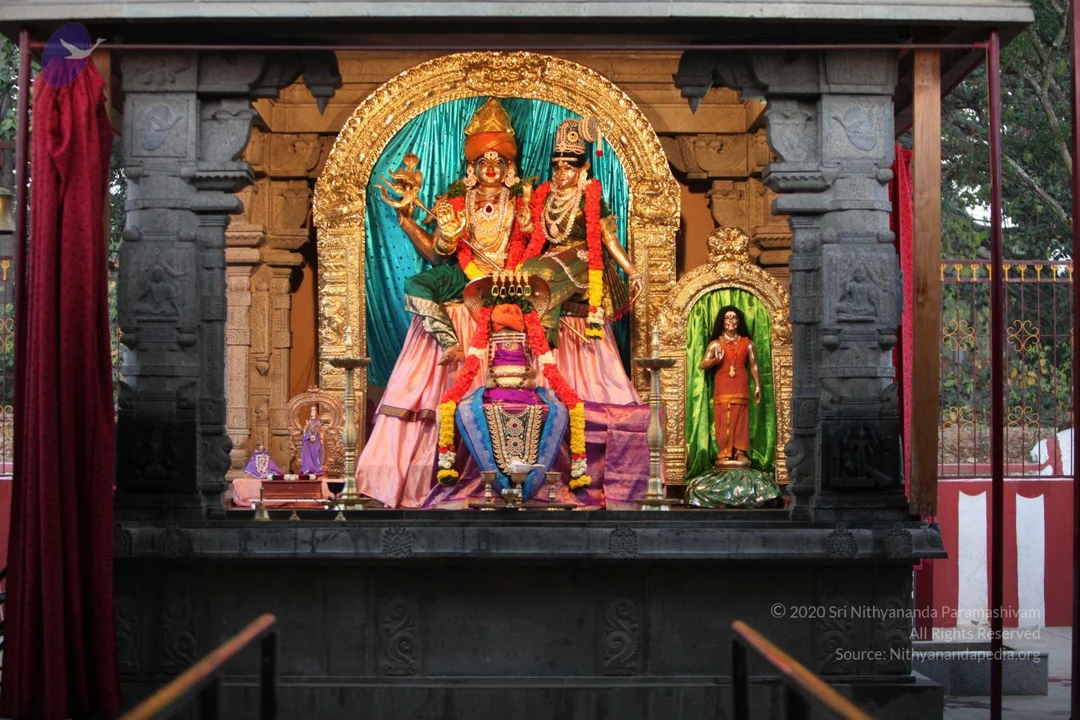
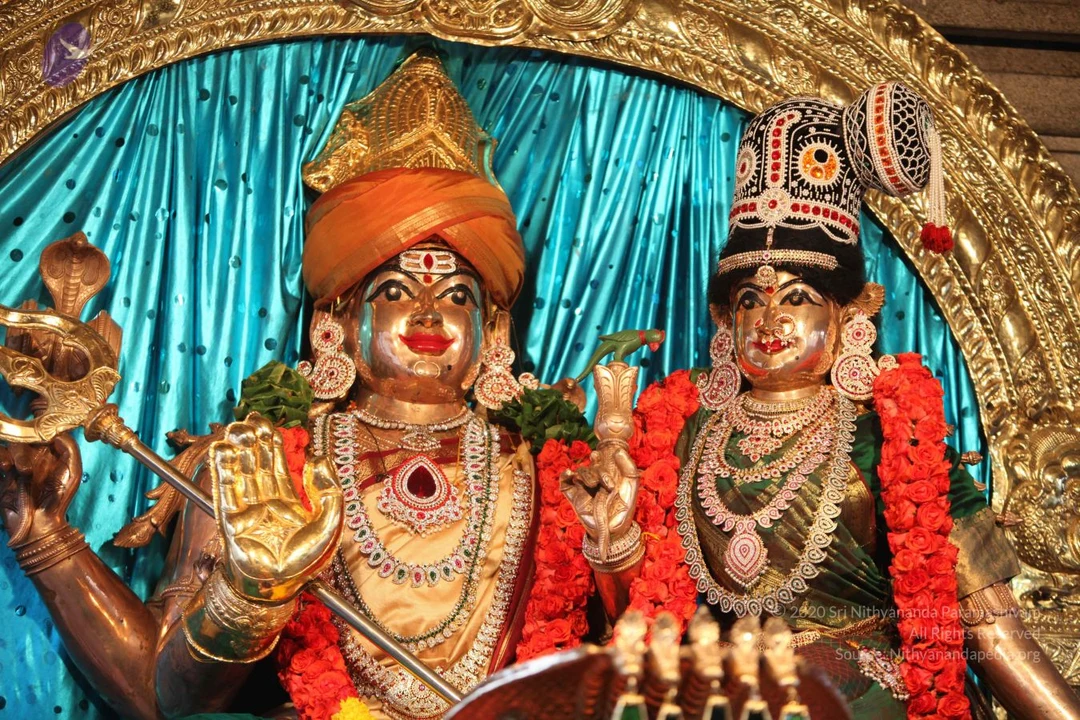
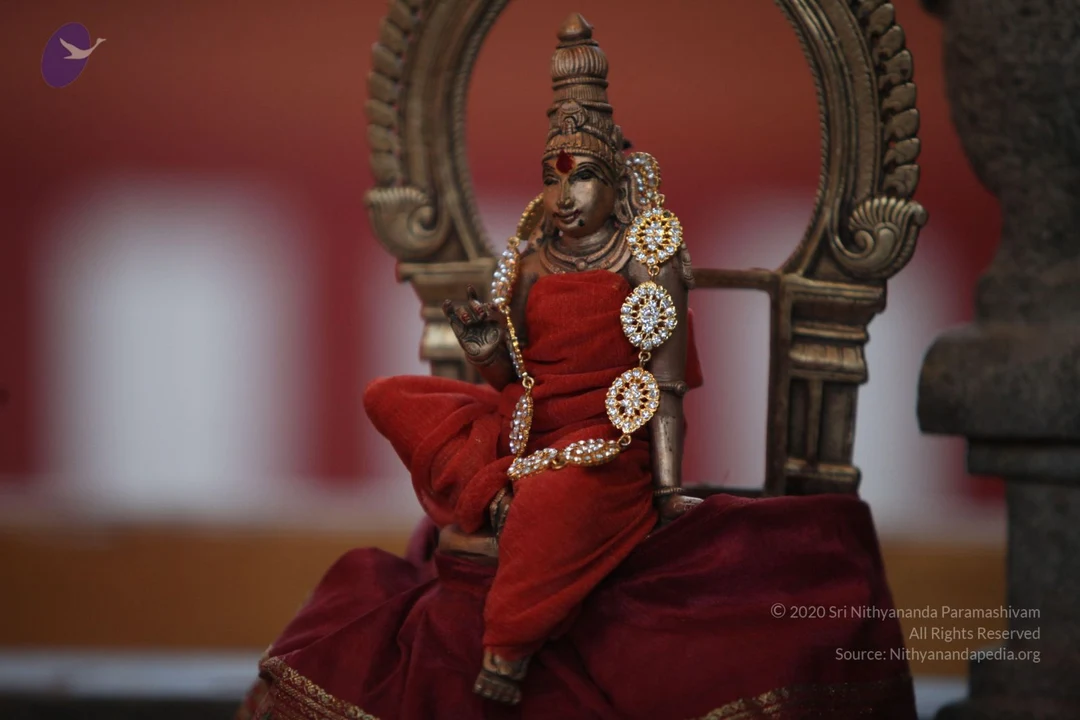
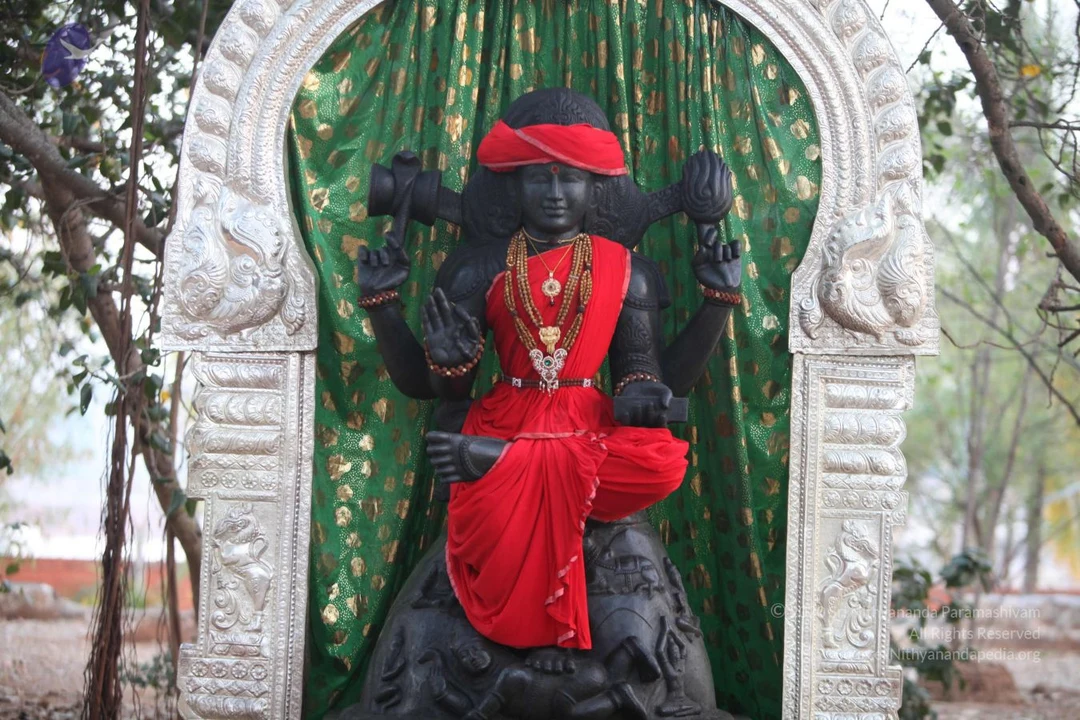
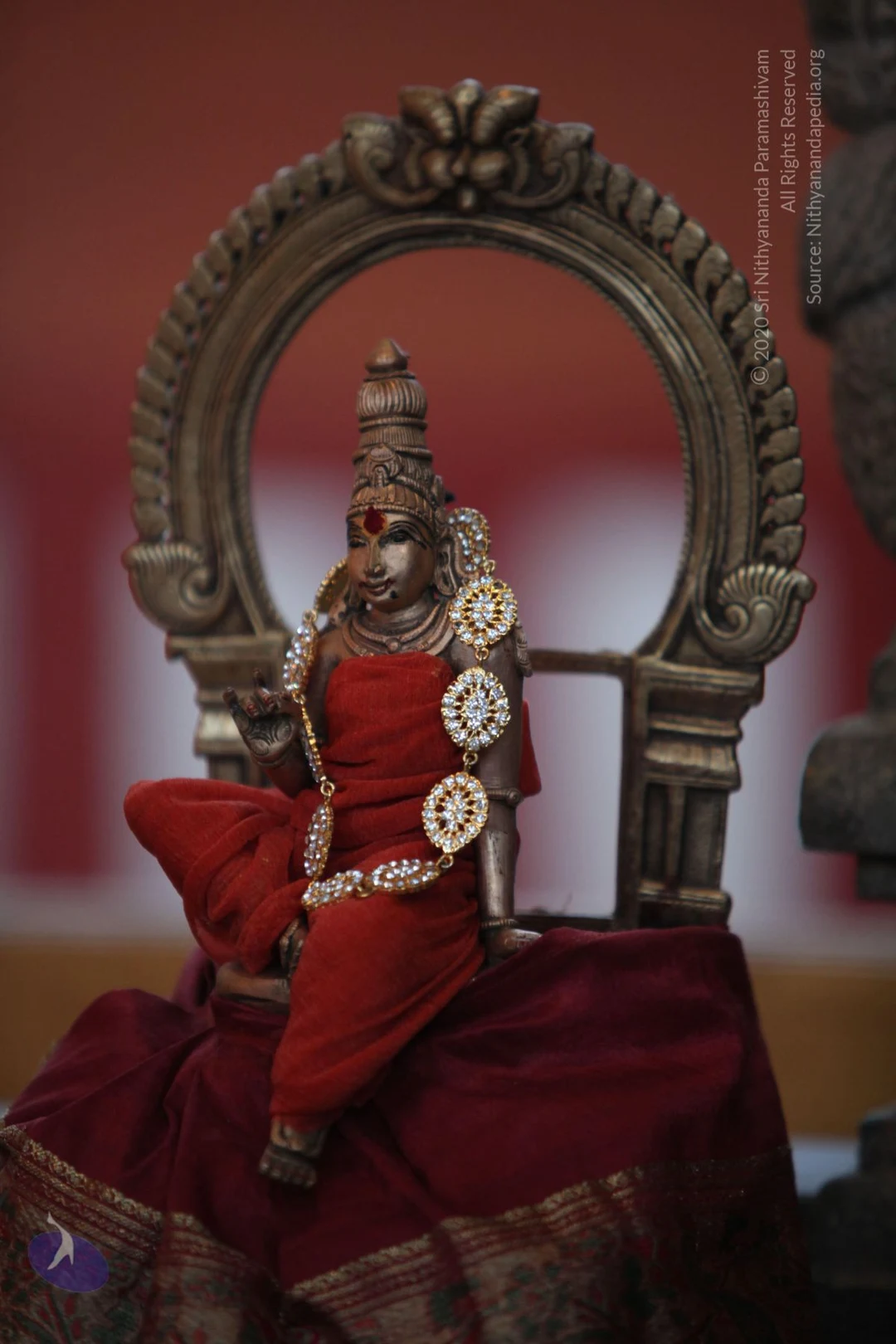
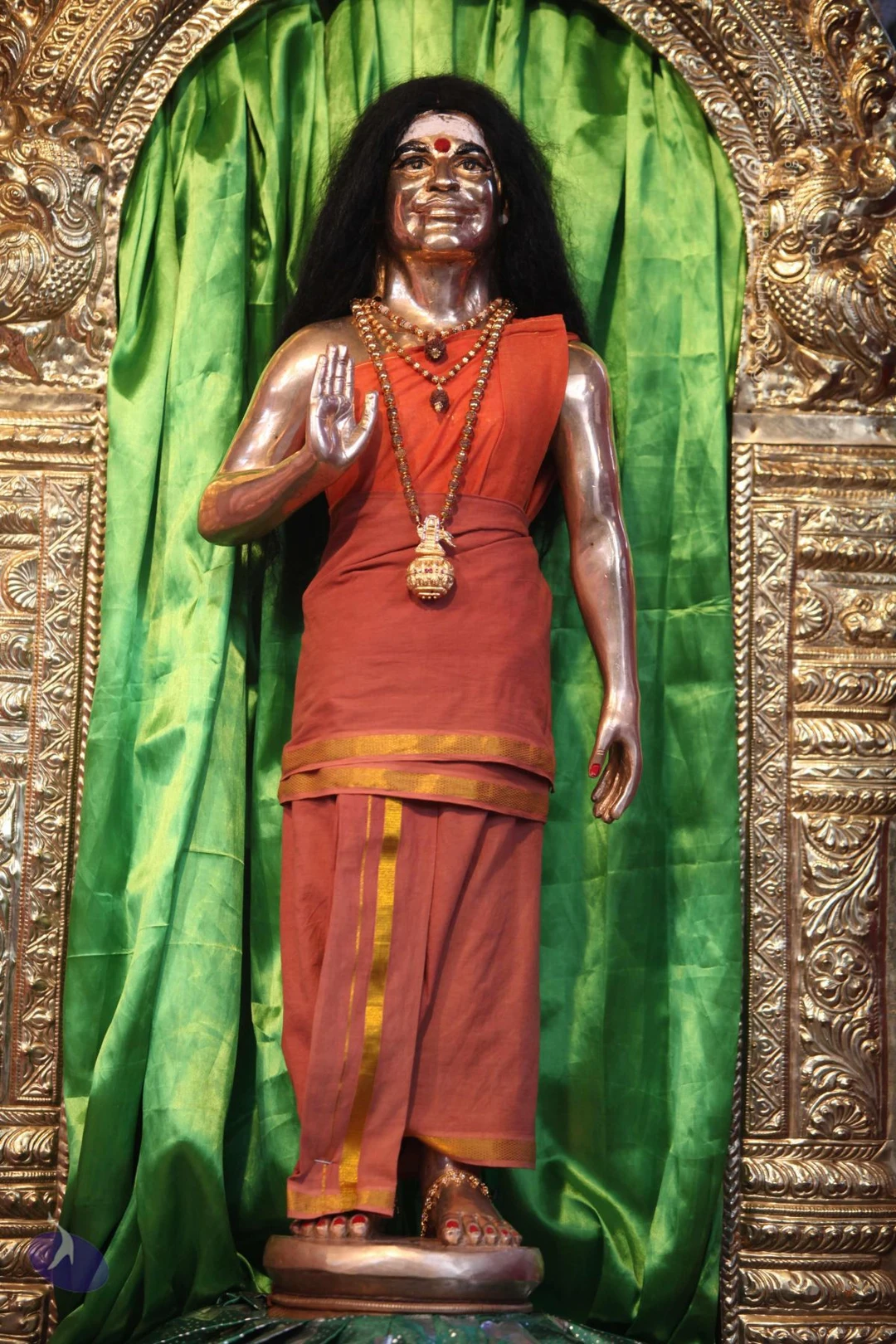
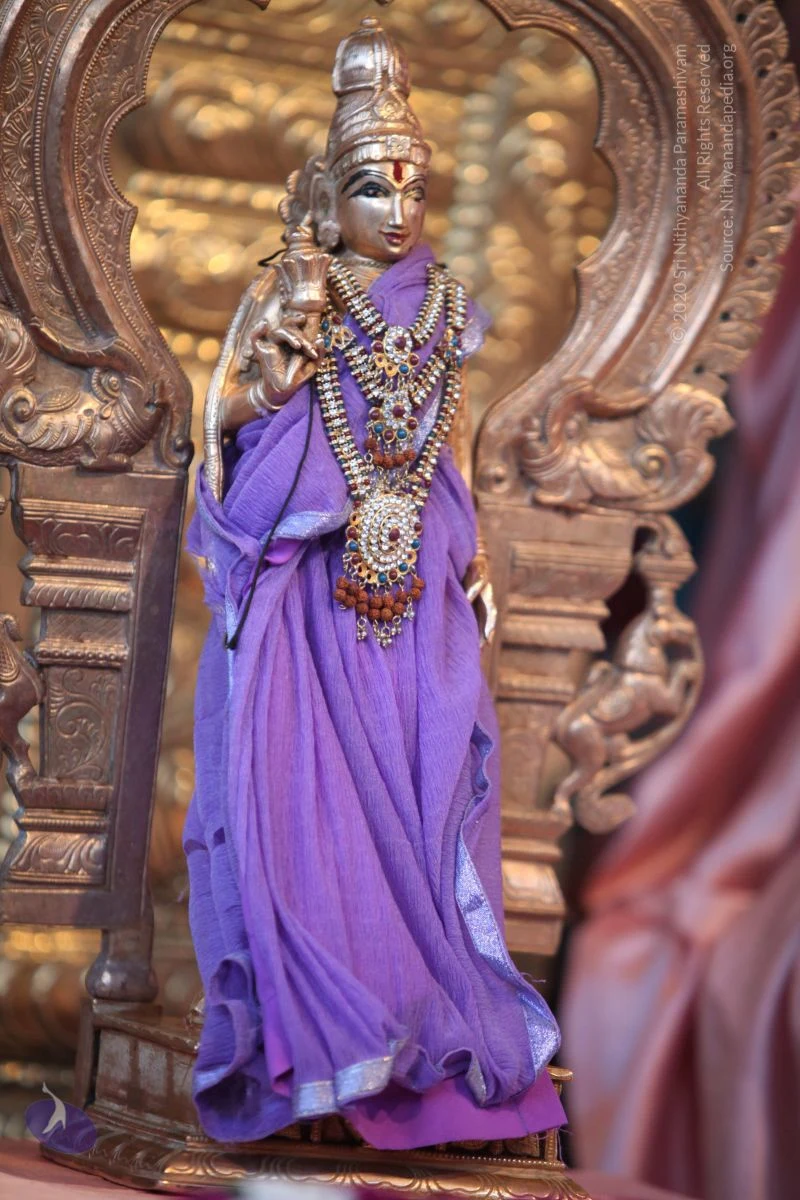
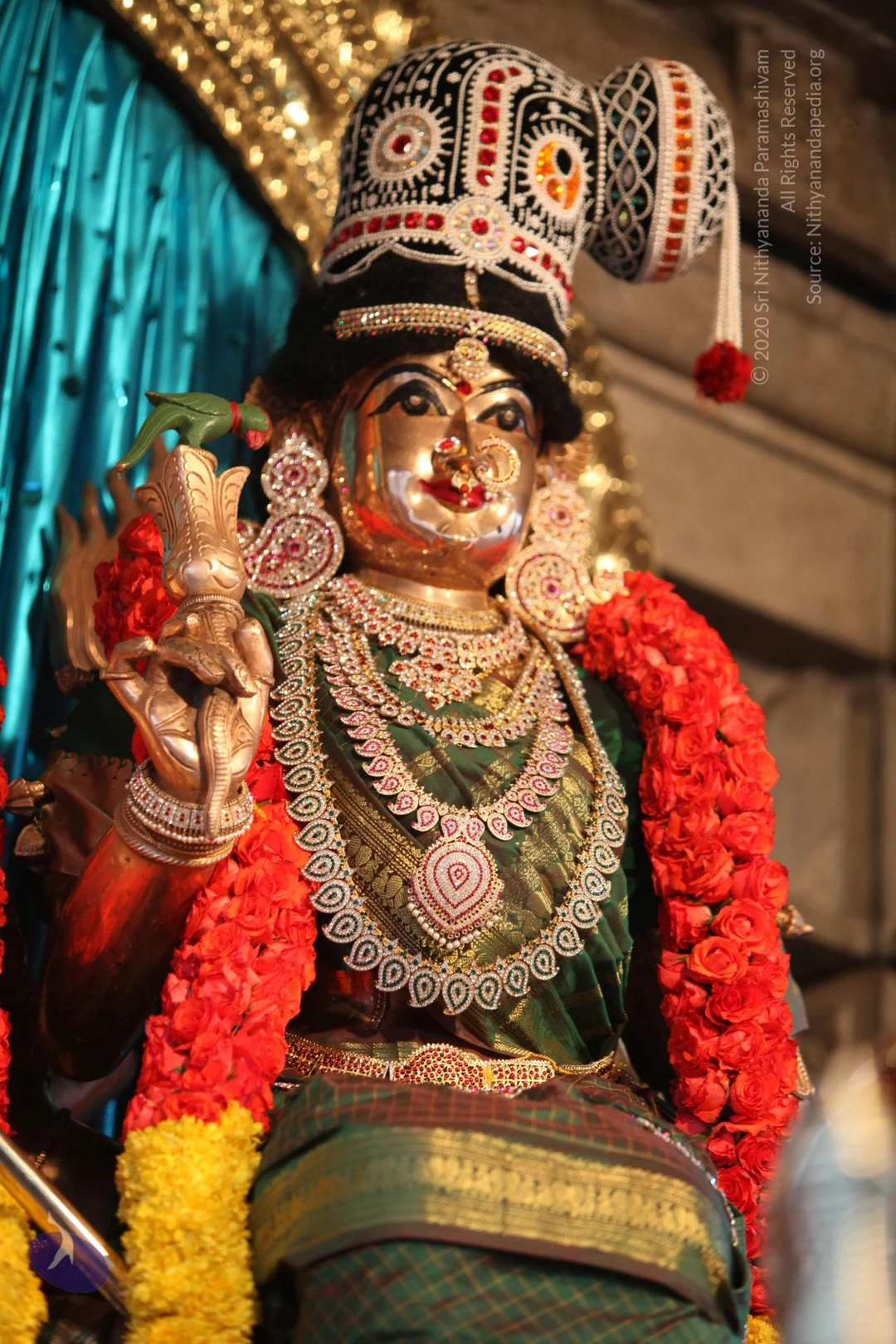
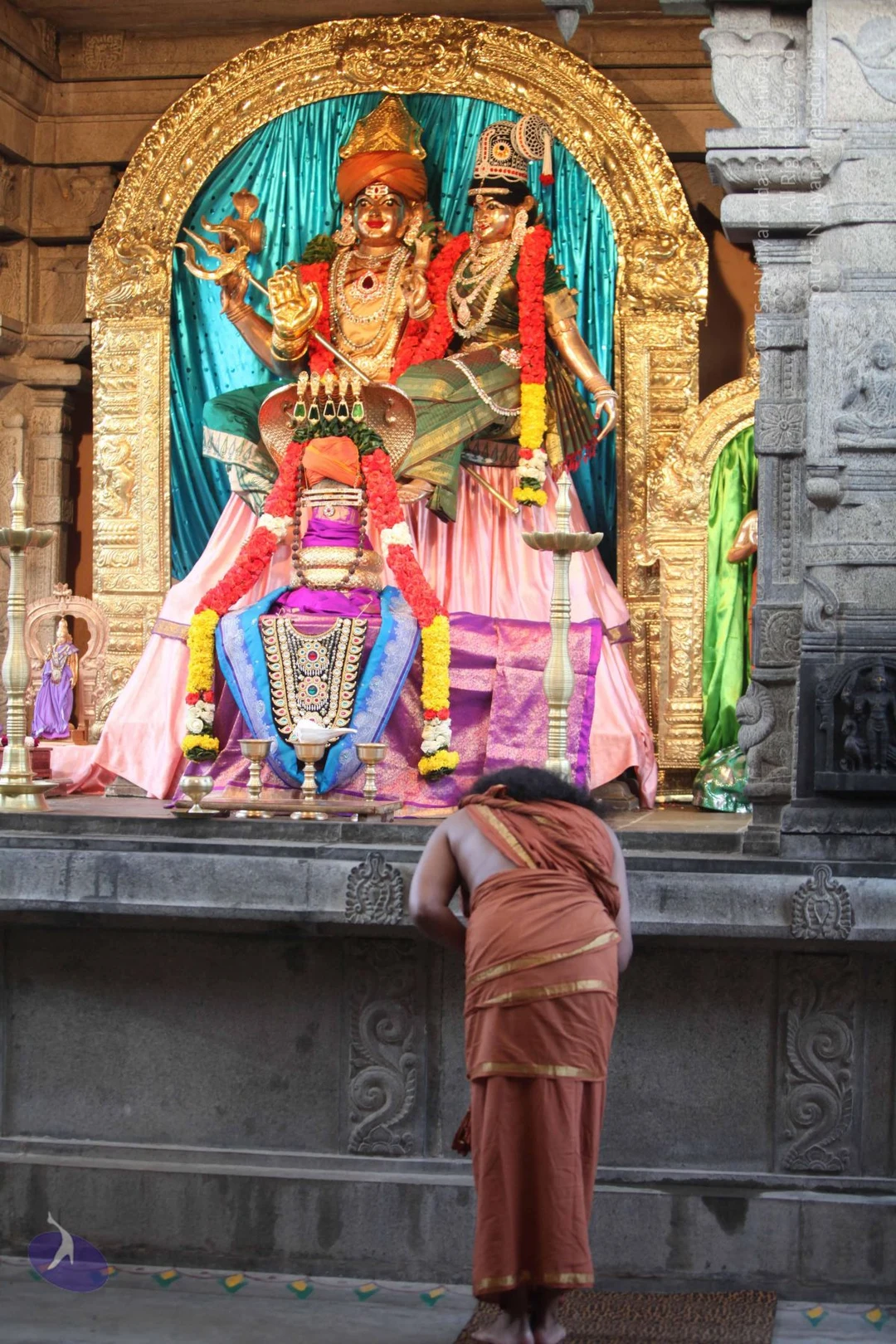
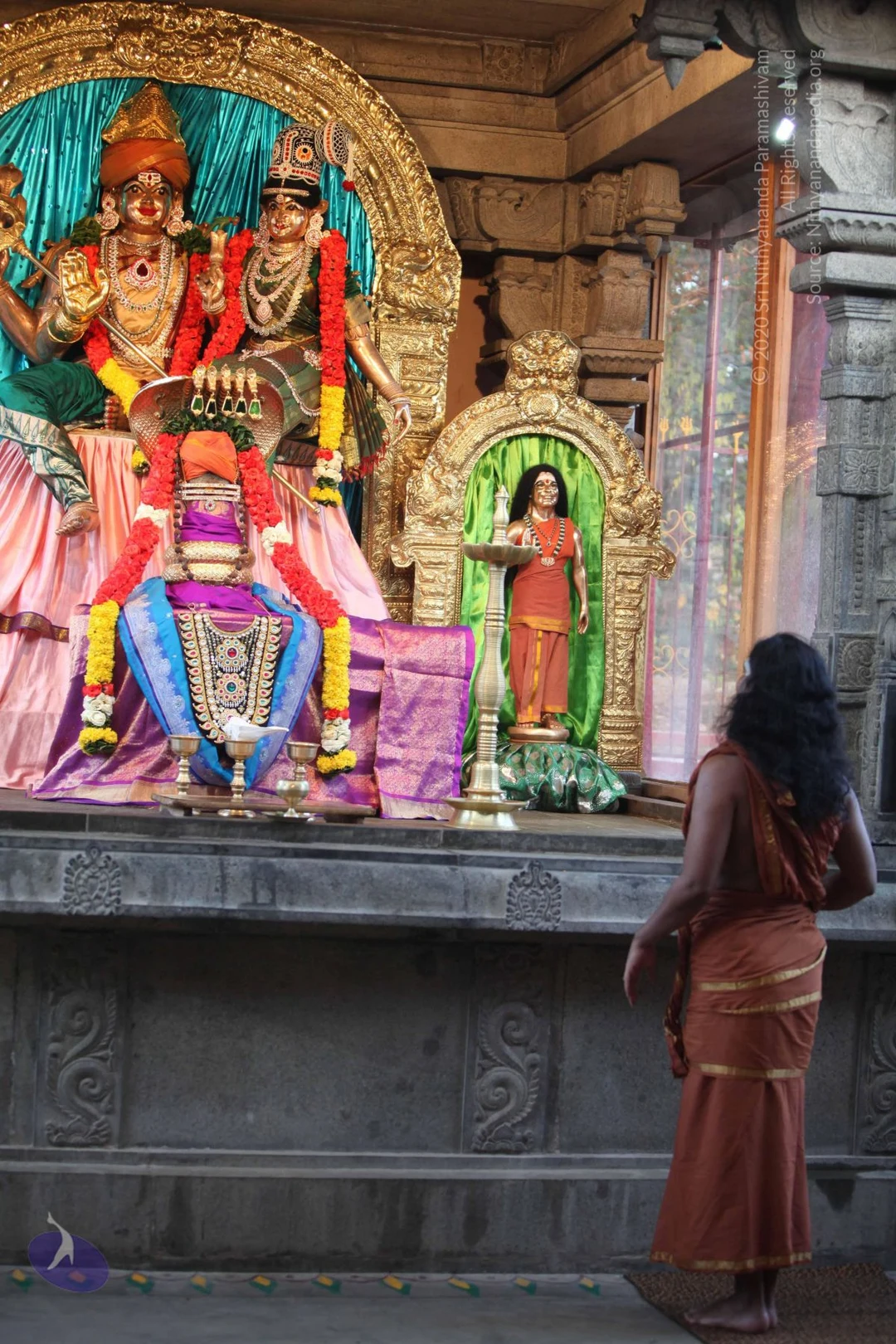
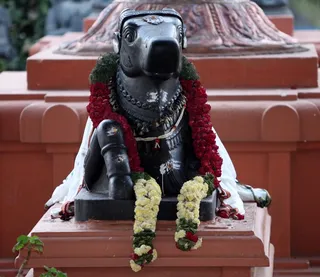
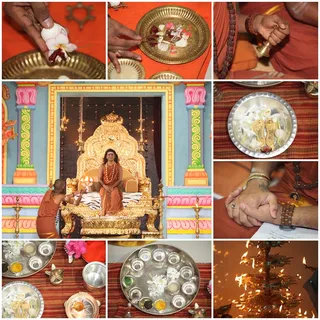
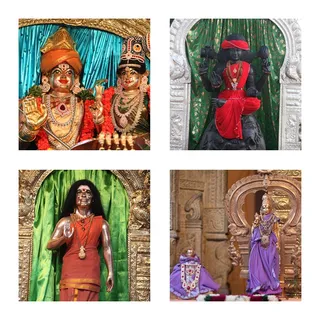
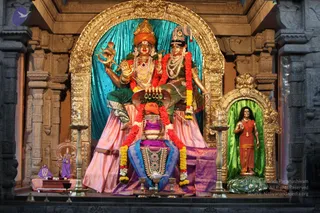
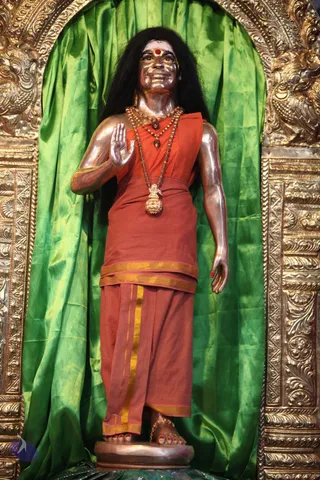
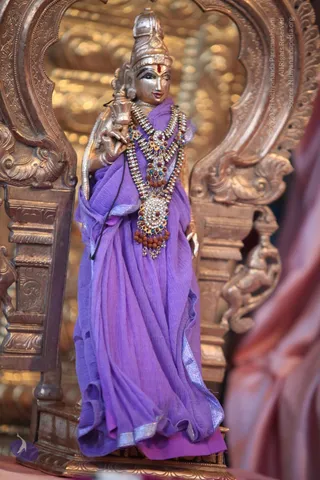
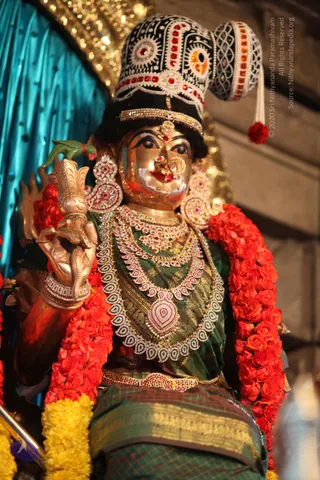
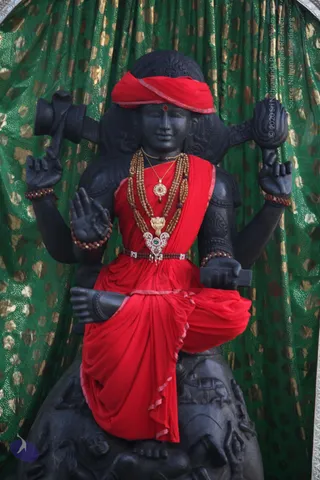
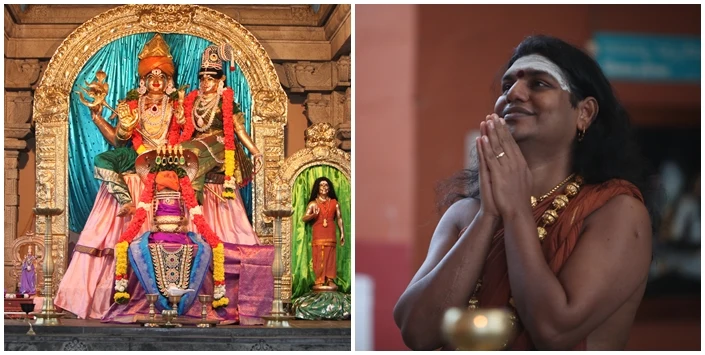
Split image collage of two panels. Left panel: a richly decorated temple deity murti of a seated divine couple, the male figure with an orange-red crown and the female figure in a pink sari, both adorned with garlands of orange flowers, set within an ornate gilded shrine with teal drapery and a small standing devotional figure in a niche. Right panel: a close-up photograph of a man with long dark swept-back hair, a white vibhuti line on his forehead, a gold earring, gold and rudraksha necklaces, wearing an orange-saffron shawl over bare shoulders, hands pressed together in anjali mudra with his eyes gazing upward, a brass bowl visible at the bottom edge. The collage has no physical people beyond the man in the right panel; the deity figures are murtis.A black stone Nandi statue, the bull mount of Shiva, sits on a raised pedestal in front of red-ochre temple walls. It wears a red and white flower garland and a yellow-white marigold garland draped over its neck and legs, with a white cloth at its base, a beaded necklace and a decorated headpiece with a central ornament. Pale ash marks dot its body. No people are visible, and the scene is an outdoor temple setting.A nine-panel collage of ritual details. Top row shows hands placing white and pink flowers on a brass plate, a brass bowl of flower petals, and a hand ringing a small brass bell while wearing rudraksha malas and bracelets. The centre panel is a photograph of a seated figure on an ornate gold throne with a gold crown, wearing an orange robe and red-orange beaded necklaces, while an attendant in orange waves a lit lamp before him in front of a painted gold-and-pink temple backdrop. Other panels show a silver plate of white flowers and offerings, a plate with white and yellow offerings and oil lamps, a pair of ornate gold sandals, clasped hands on an open book, and a tiered brass lamp with flames. The collage explains ritual actions without counting physical people in the panels as a separate scene.A three-panel collage of sunset scenes. The top panel shows a silhouetted temple-style roof with ornate finials and a saffron flag on a pole against a bright orange sky, with trees beside it. The bottom-left panel shows a sun setting behind trees over a dim road and power lines. The bottom-right panel shows a view through a railing and window framing palm trees and the setting sun in hazy orange light. No people are visible.A four-panel graphic collage of temple murtis photographed in shrine settings. Top left, a golden-hued deity figure in an orange turban and gold necklaces, raising one hand beside a second ornately adorned figure with a red-and-gold crown, both draped in red and orange garlands. Top right, a dark stone deity murti with four arms wearing a red headdress and red cloth, set before a green curtain and silver arch. Bottom left, a bronze-coloured standing sage-like figure with long black hair, red vibhuti mark, rudraksha-style beads, an orange-red cloth and raised hand, against a green curtain and gold arch. Bottom right, a female deity murti in a violet sari with gold necklaces and a crown, beside a second violet-draped figure, under a carved golden arch with flower garlands. No physical people are visible.

Pada Puja

3 photosSource gallery
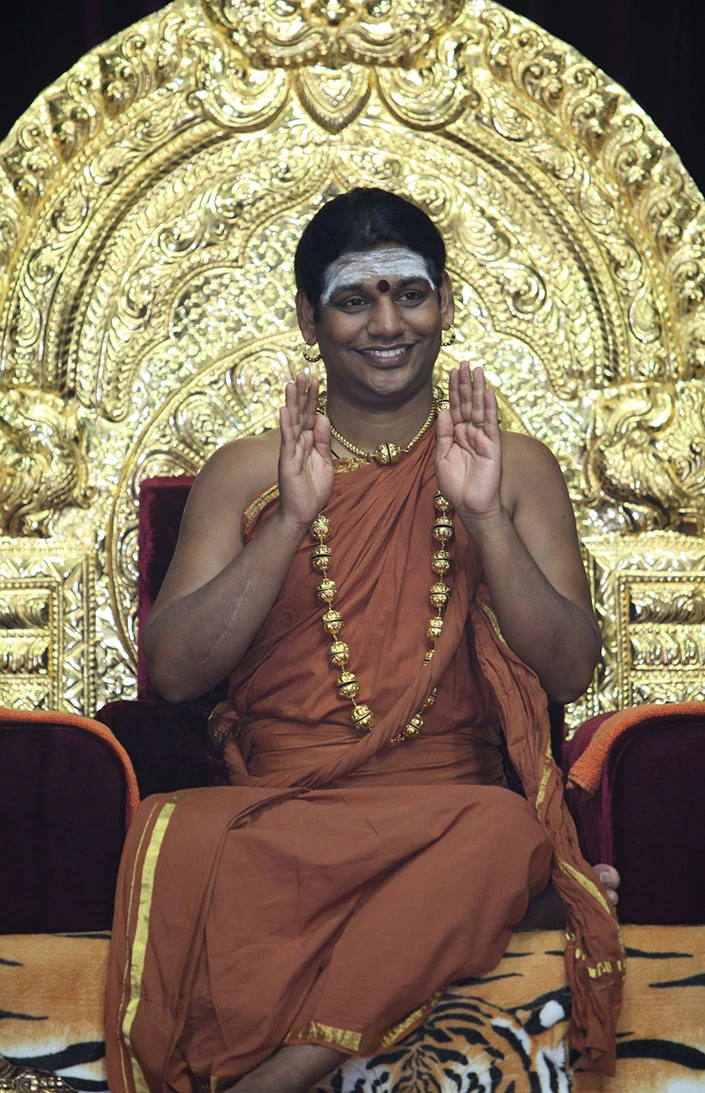
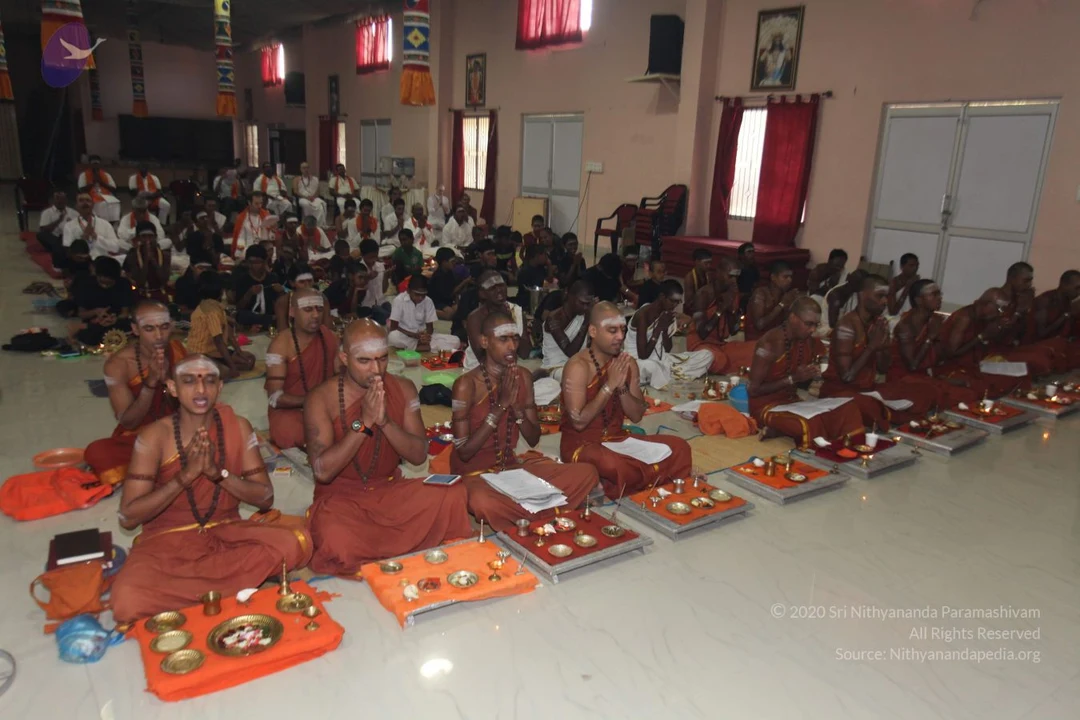
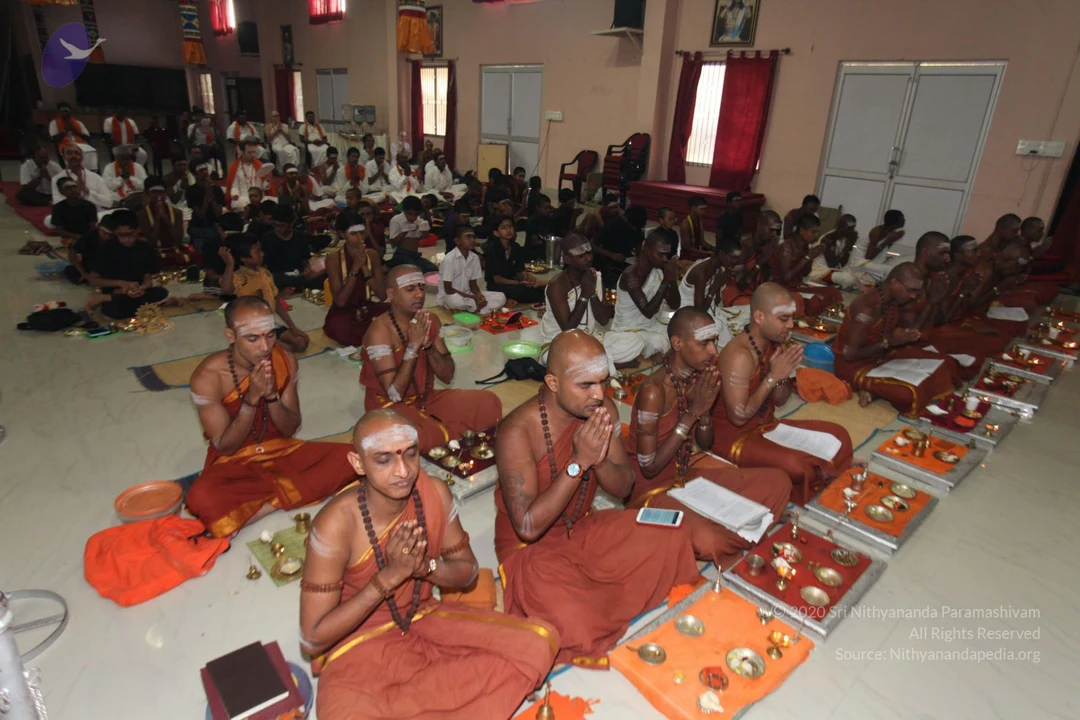
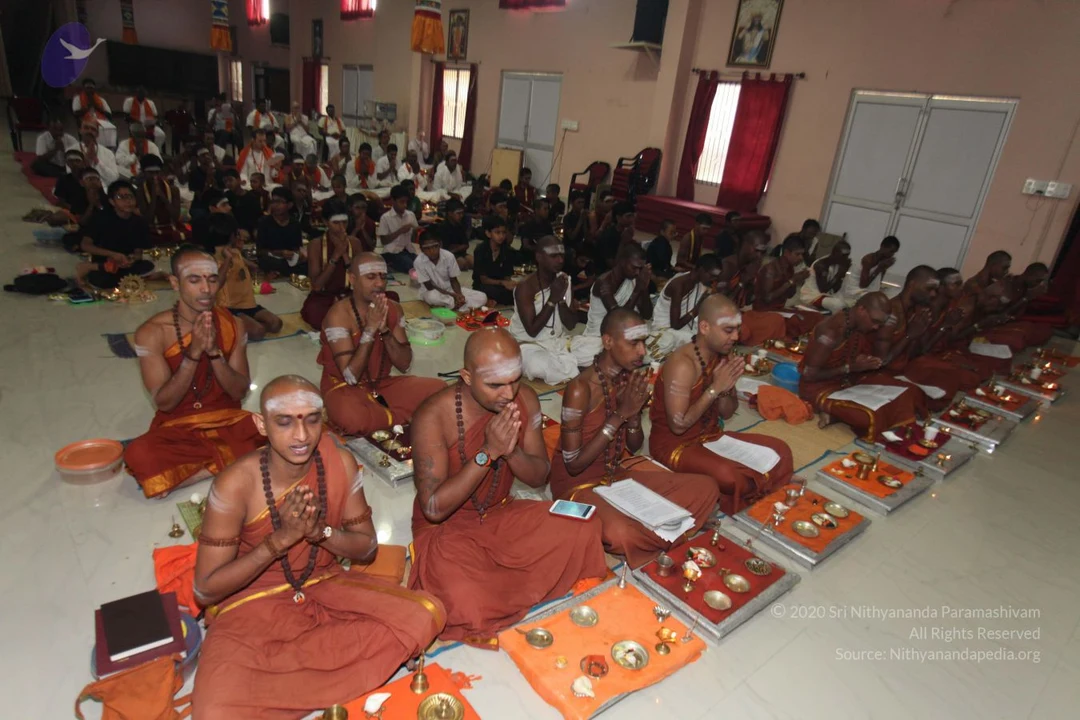
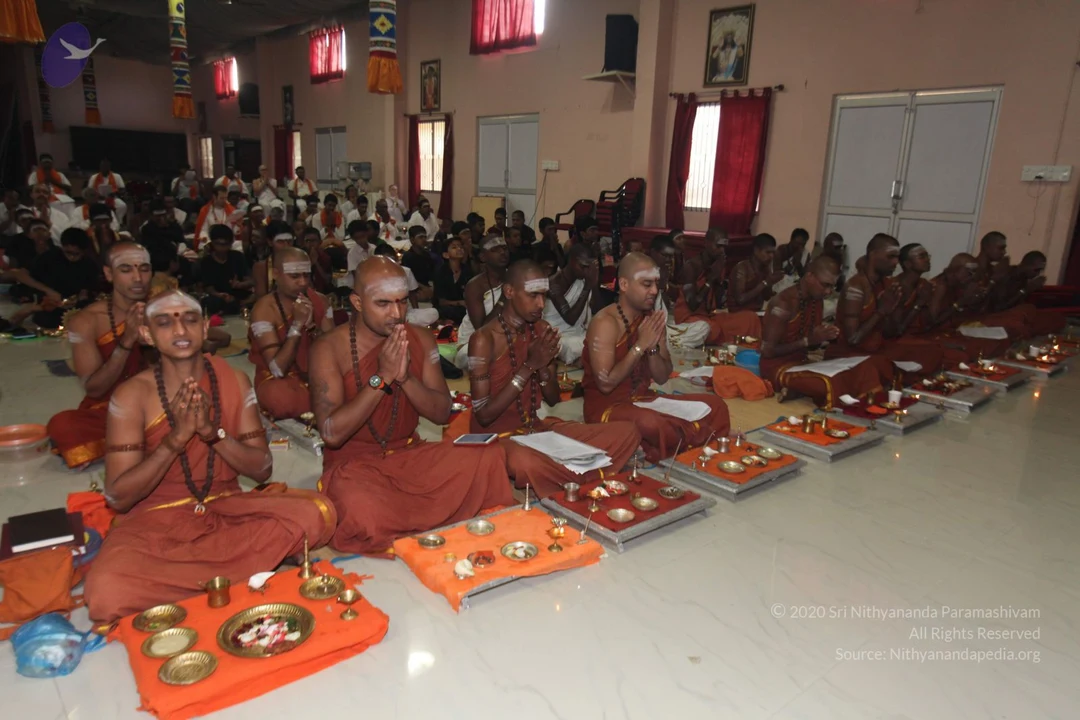
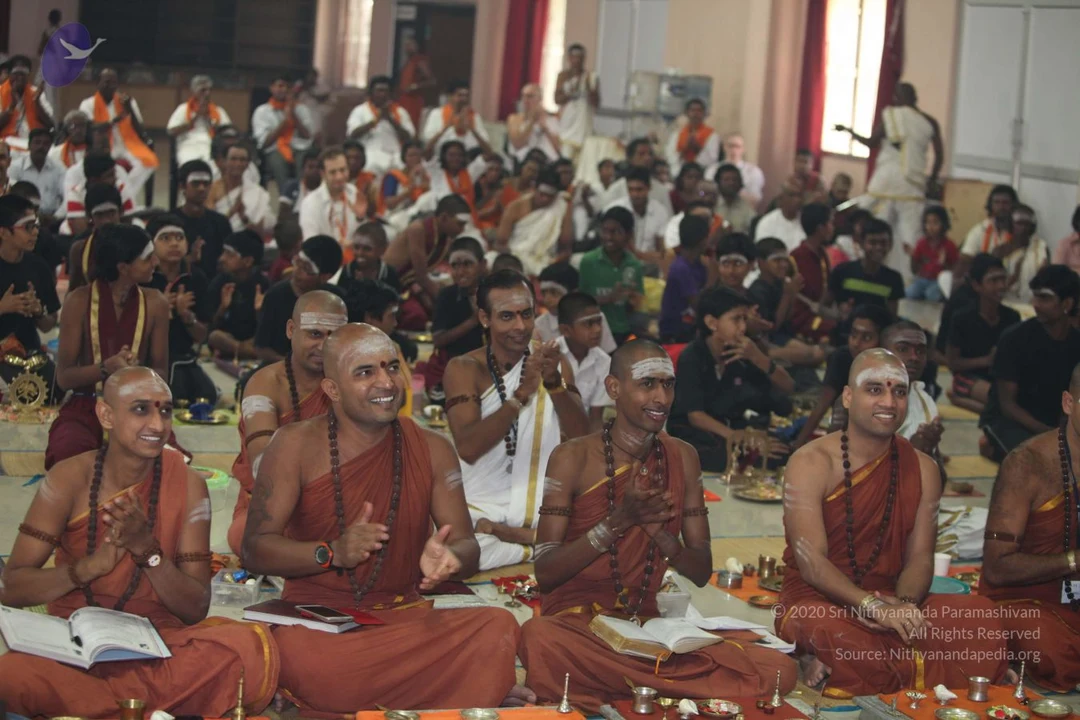
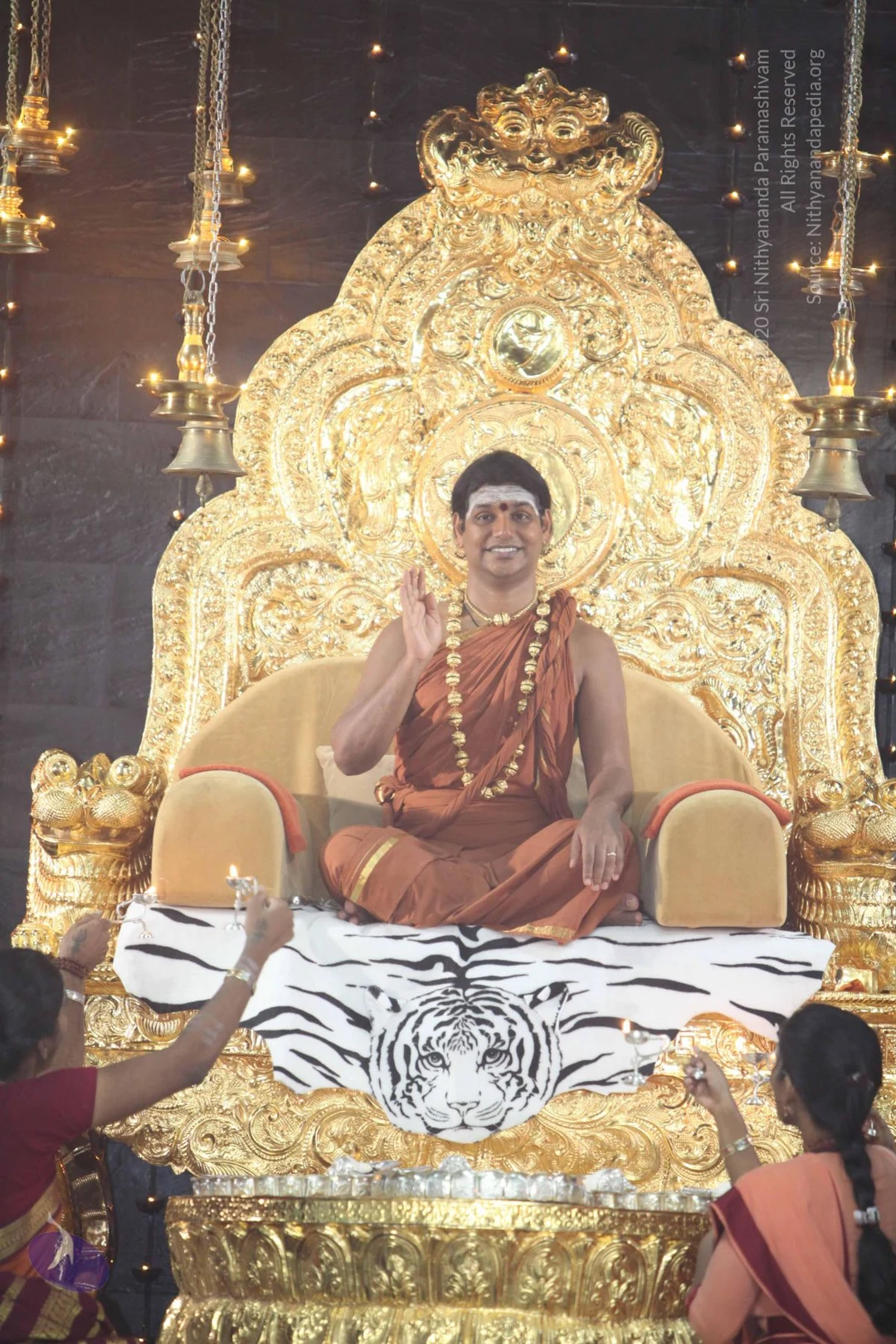
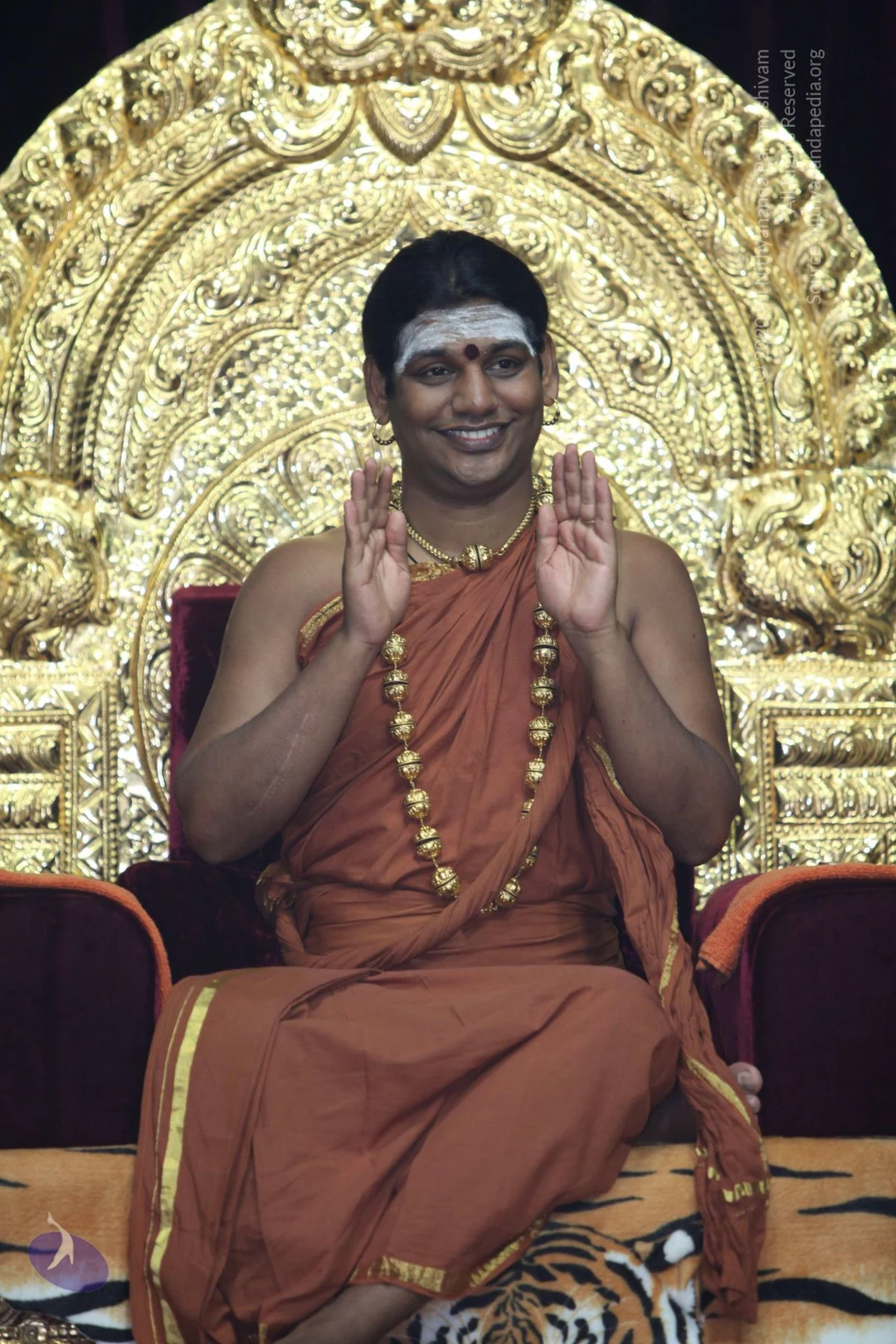
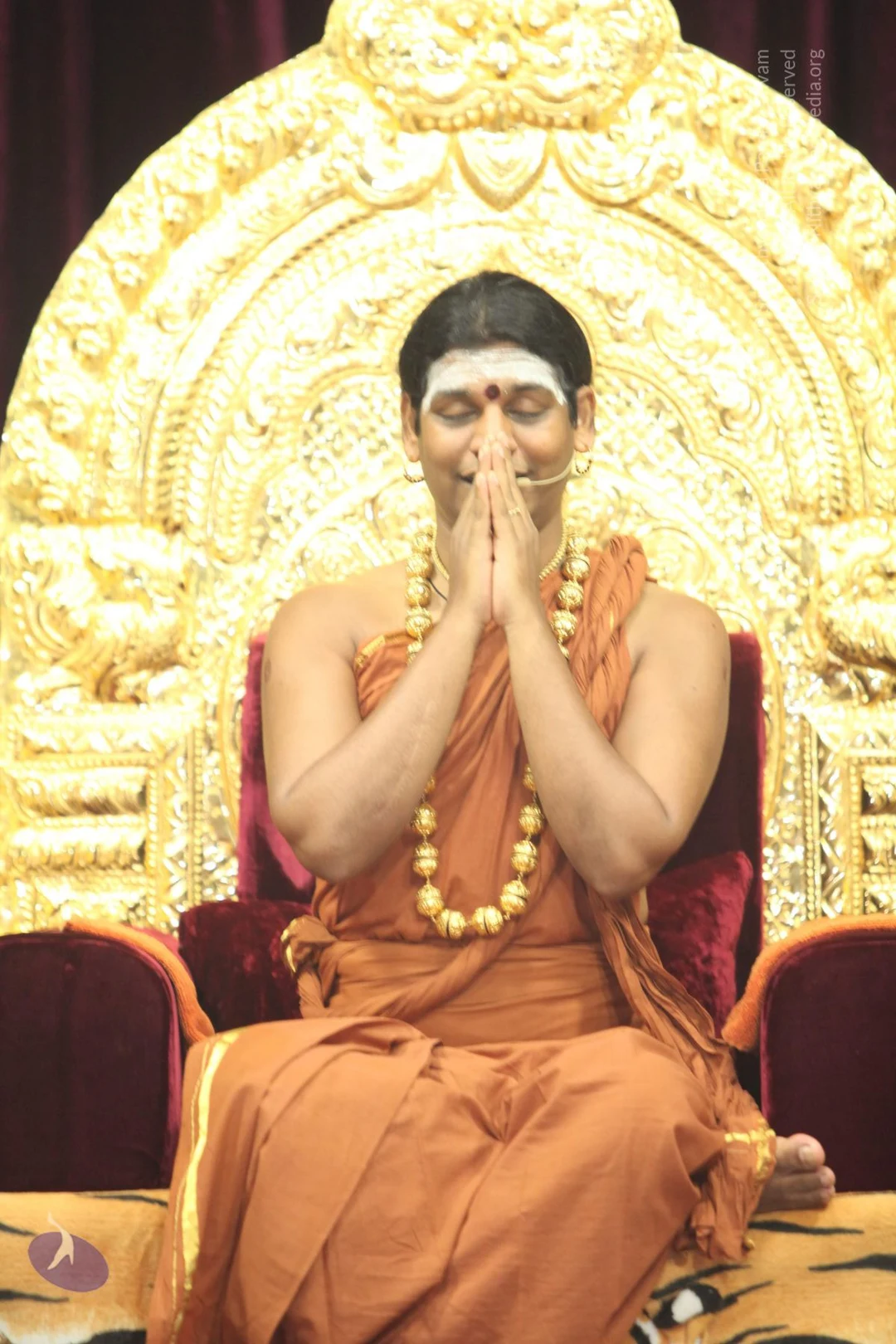
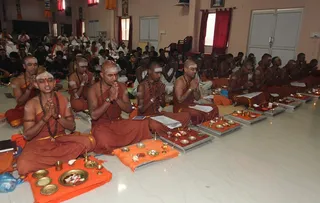
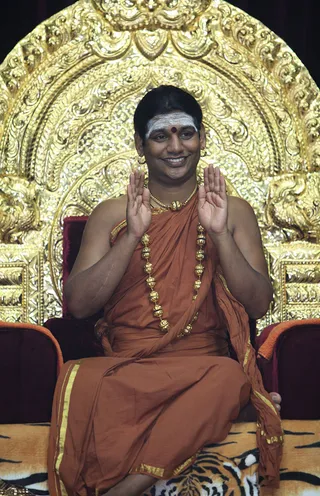
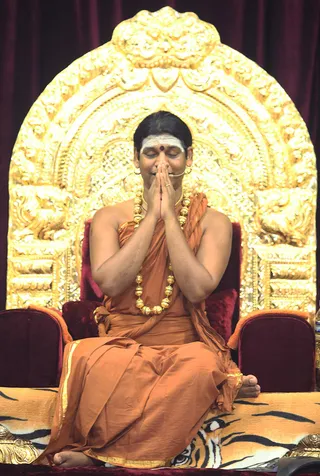
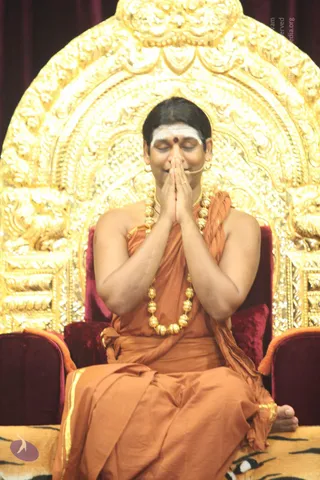
A row of shaved-headed priests in saffron-orange dhotis and shawls sits cross-legged on the floor of a hall, palms pressed together in namaskar. Each has white tripundra markings on the forehead and rudraksha malas around the neck. Before them stand brass puja plates with small oil lamps, bowls, bells and incense, arranged on orange cloths. Behind them, seated devotees in white and dark clothing fill the room under a white ceiling, with framed pictures and red curtains on the wall.A smiling man seated on an ornate gold-and-silver throne with a tiger-striped cloth draped over its base, raising both palms in front of his chest in a blessing gesture. He wears a saffron-orange robe with gold-bordered edges, a long gold bead necklace with a ceremonial gold chain, and gold earrings. A white vibhuti band and a red kumkum dot mark his forehead, and his hair is swept back. The gilded throne behind him has intricate floral and figural carving, with maroon cushioned armrests at either side.A seated man in saffron-orange robes with a gold-and-bead necklace sits with palms pressed together in namaste and eyes closed, a white vibhuti marking on his forehead with a red bindi. He sits on a red velvet chair before an ornate gold arched throne backdrop, on a tiger-striped cloth, with a small microphone near his face. Behind him hang deep maroon drapes. The mood is devotional, as in a satsang or discourse setting.

Satsang

5 photosSource gallery
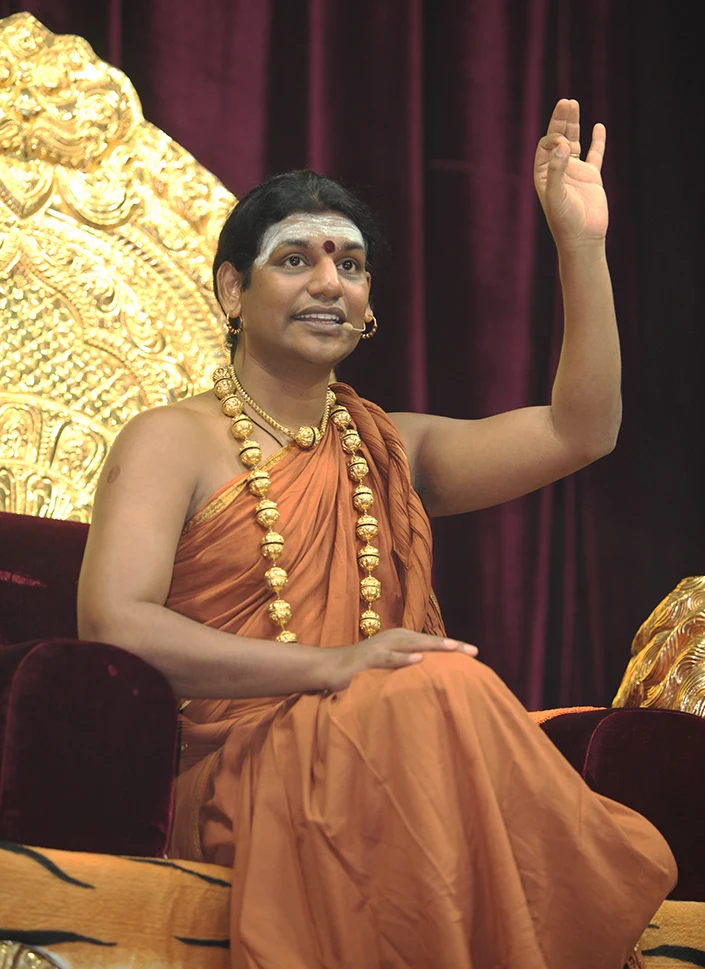
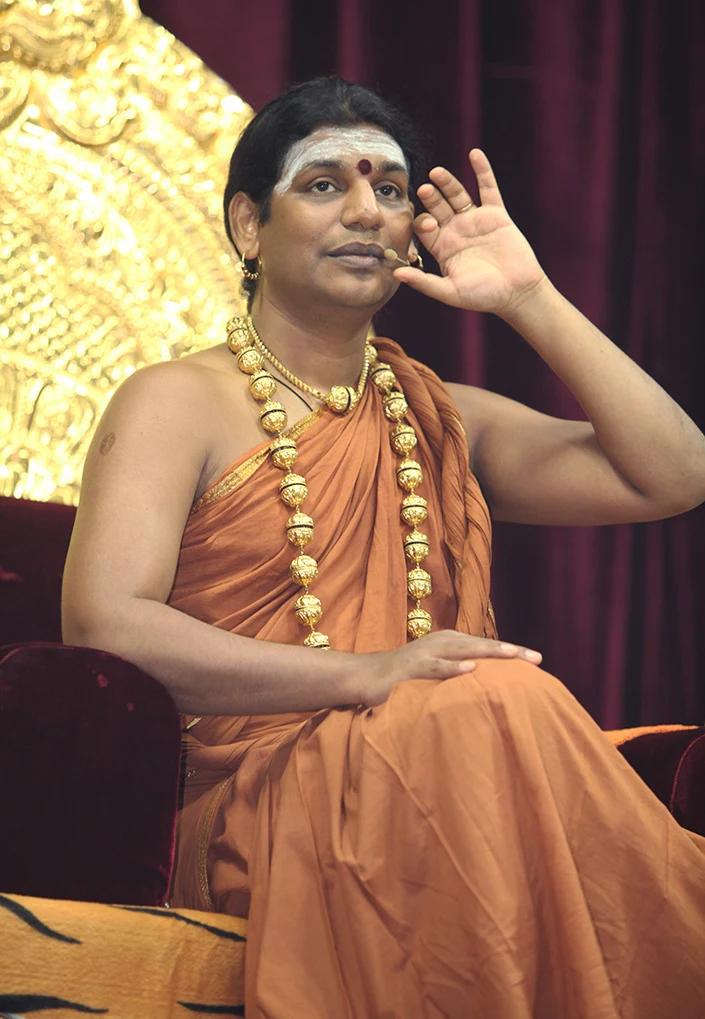
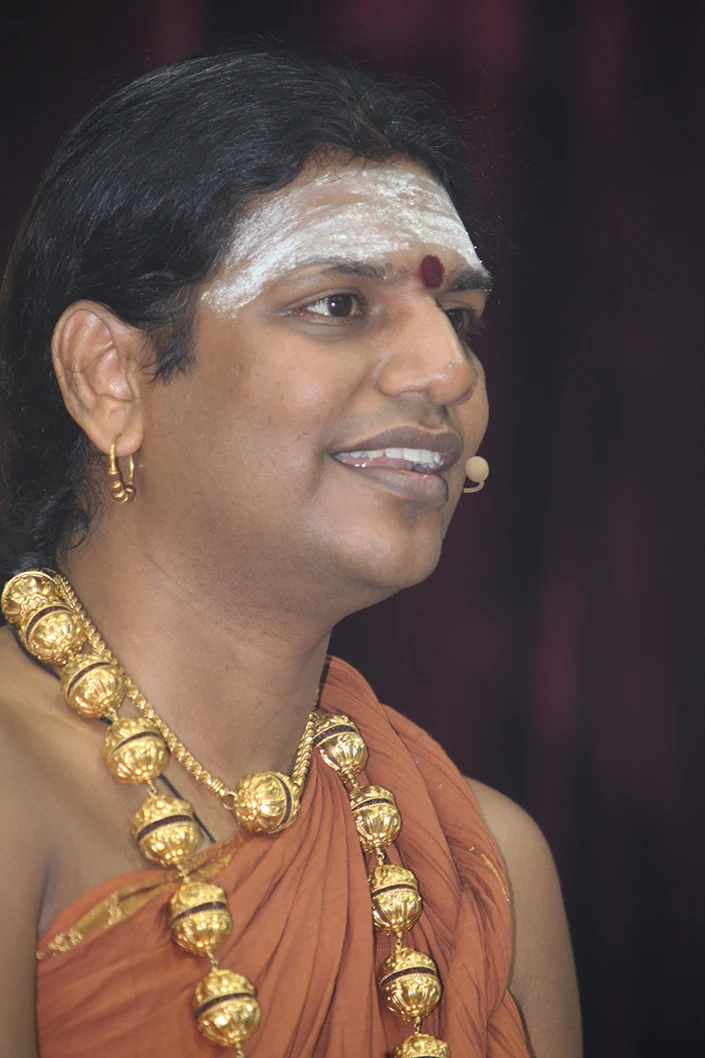
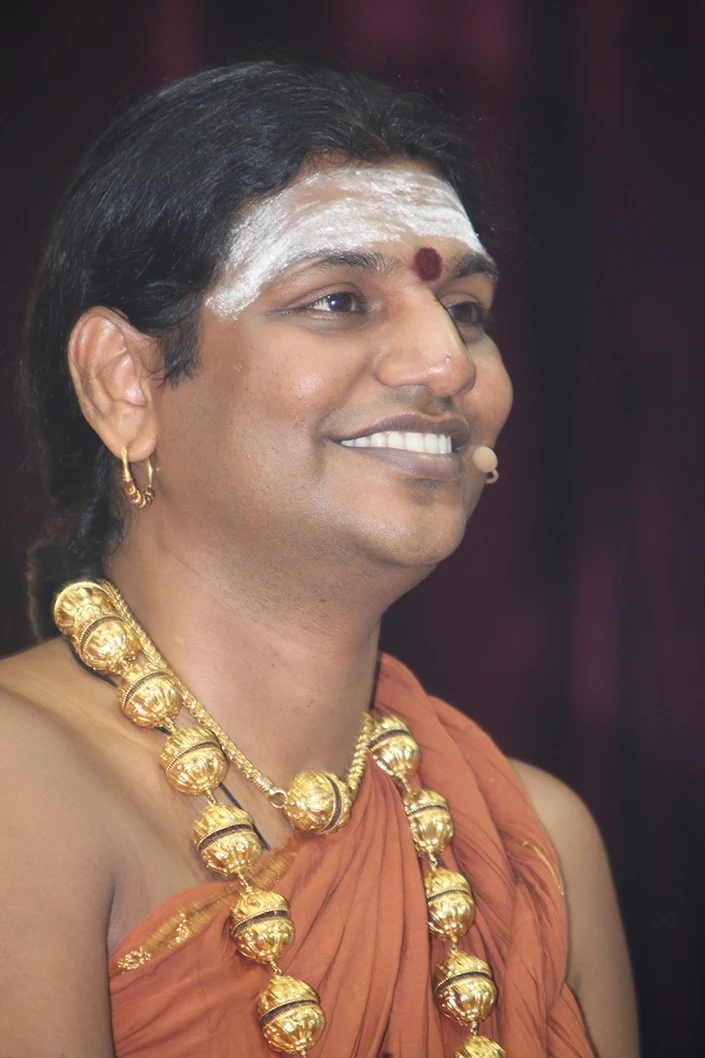
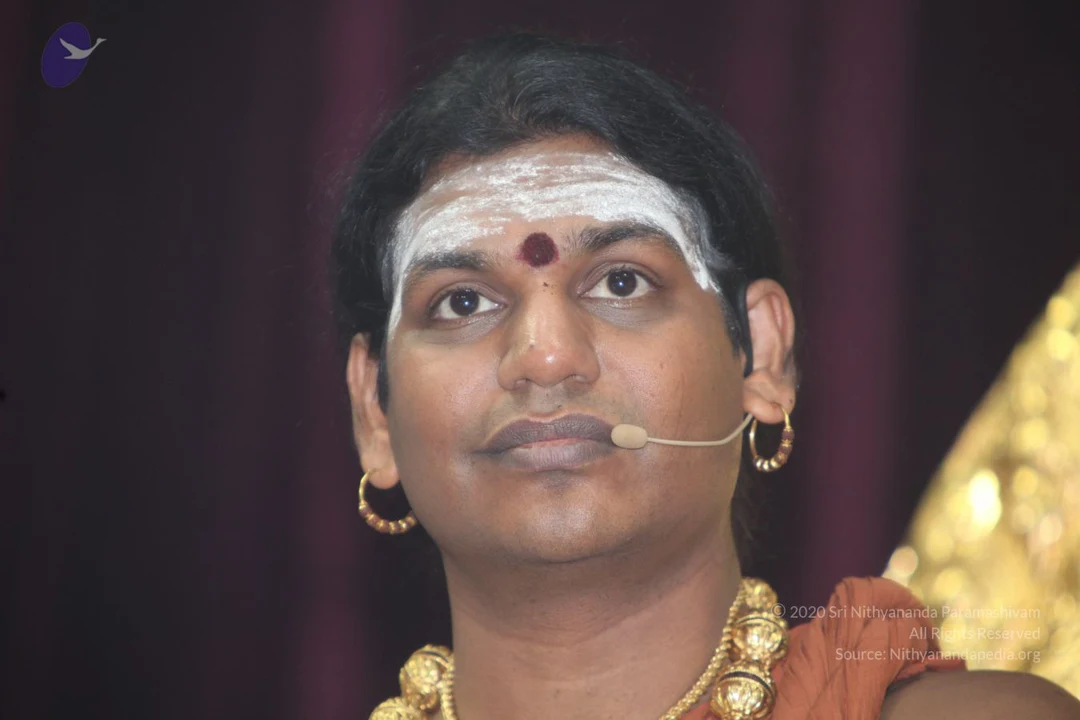
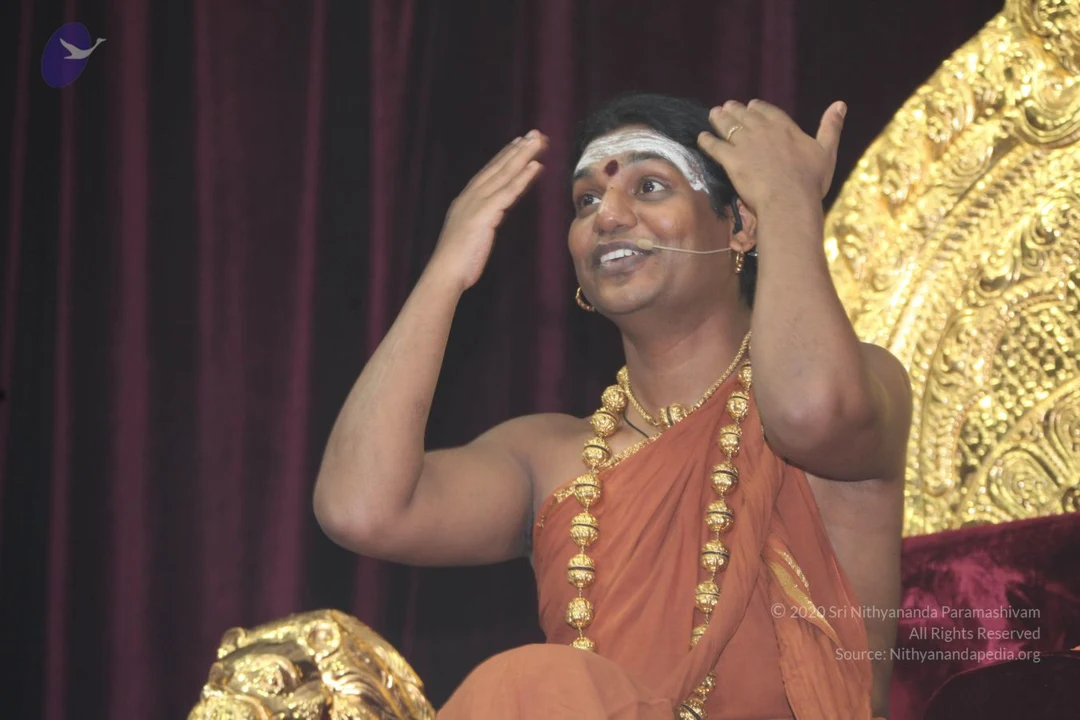
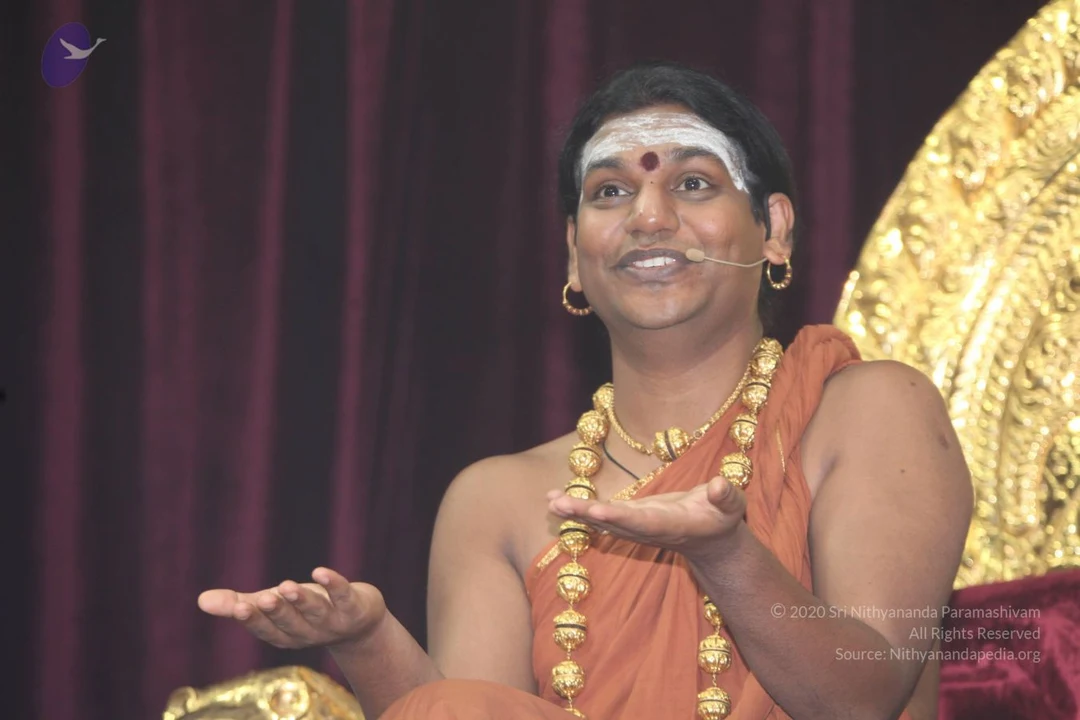
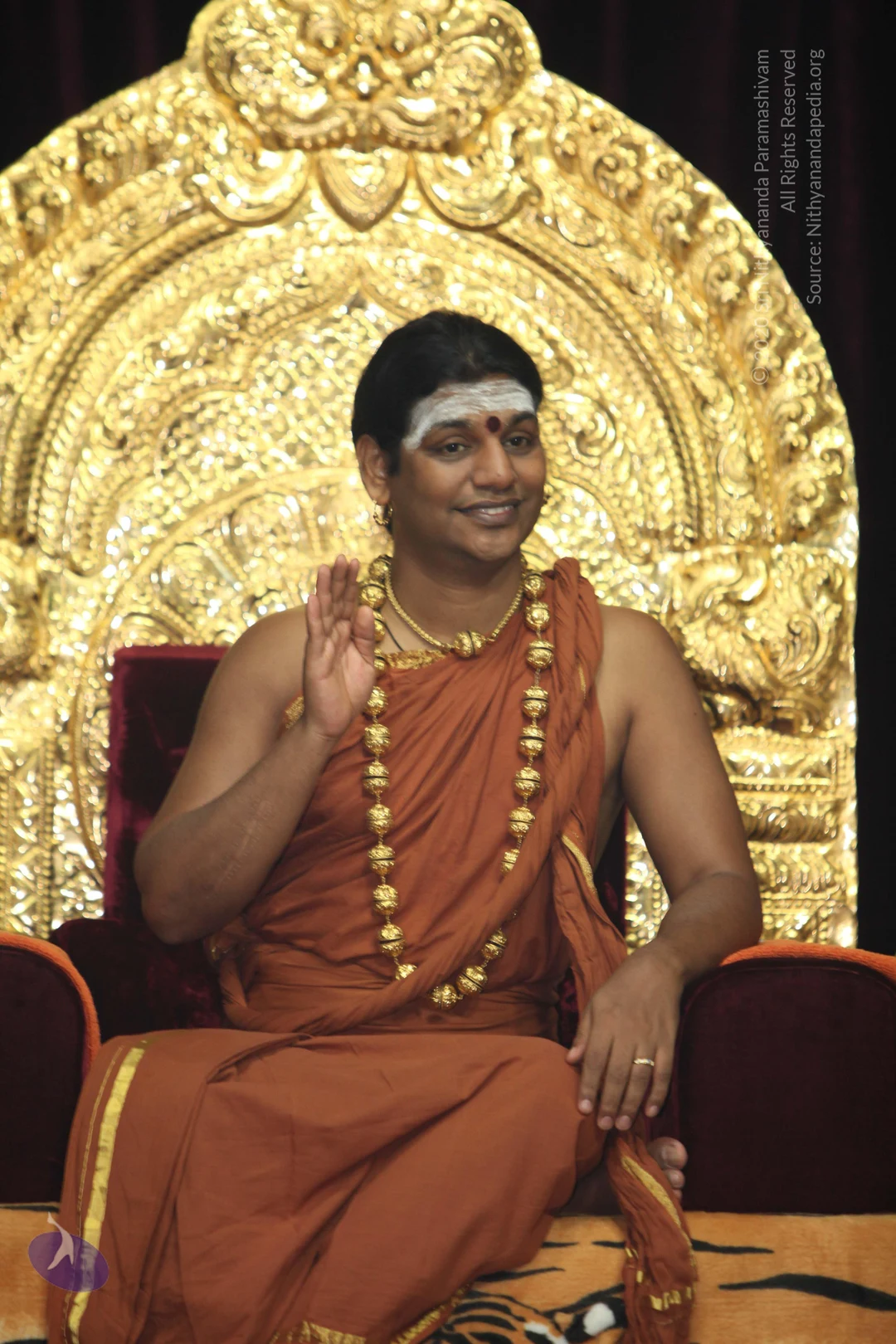
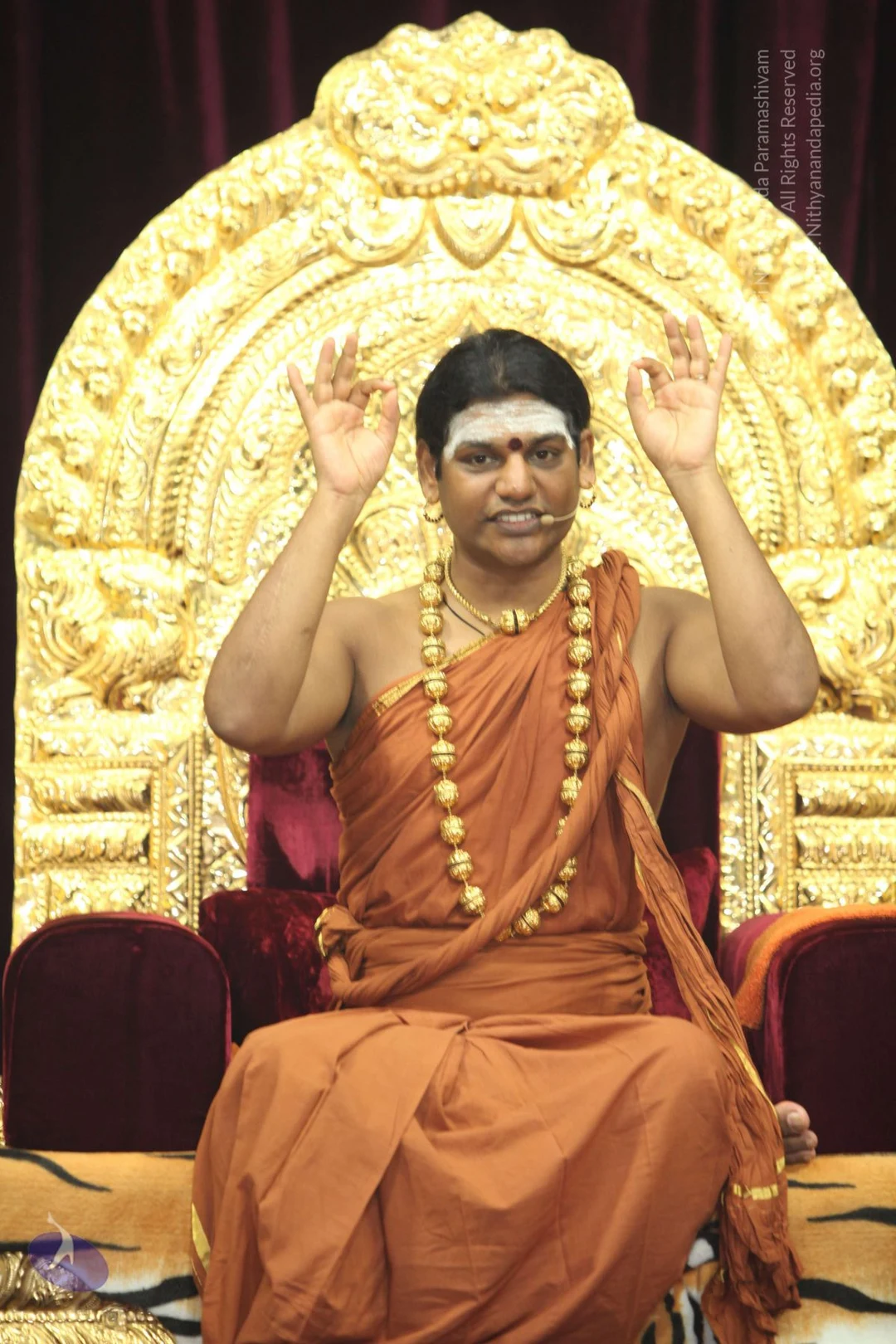
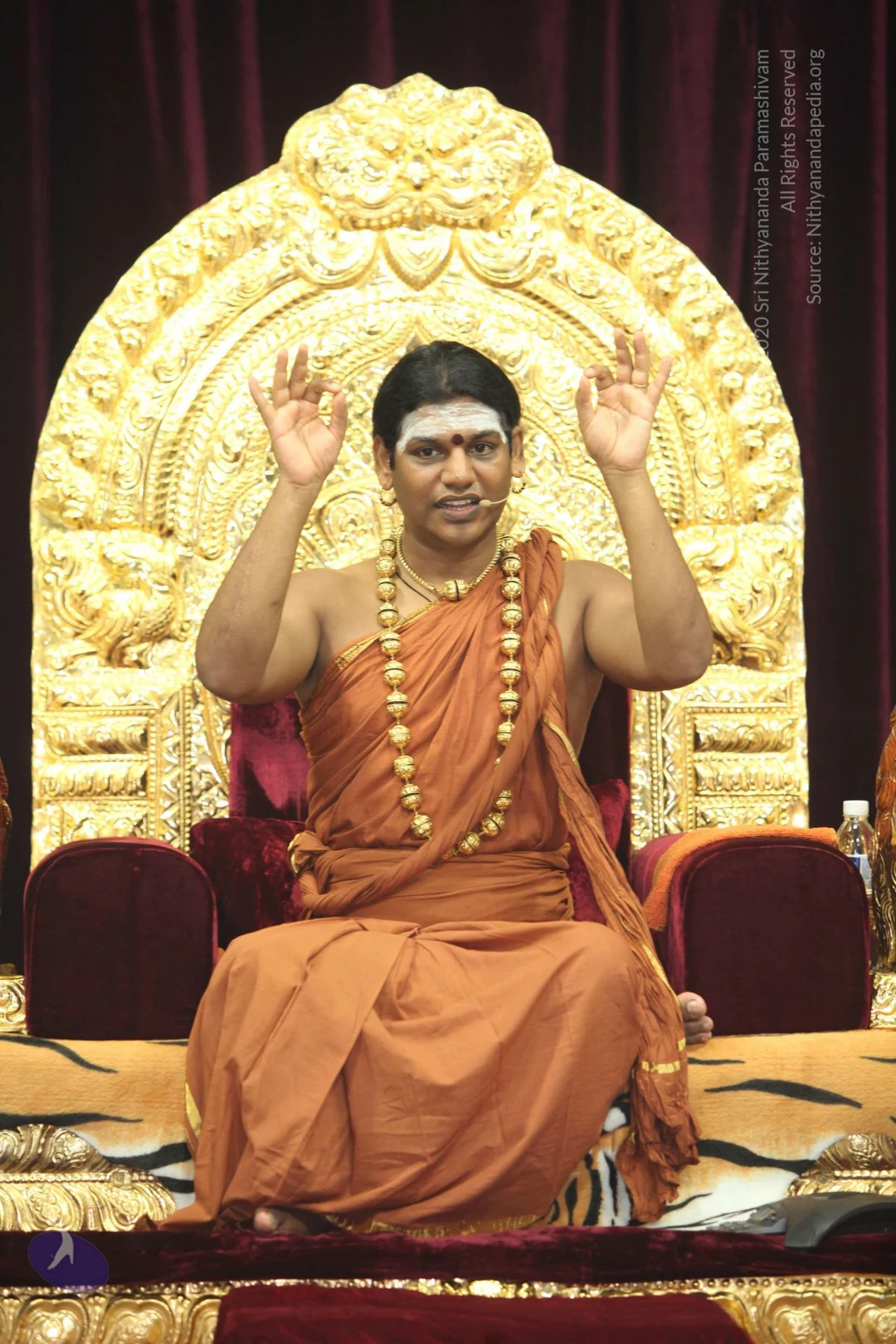
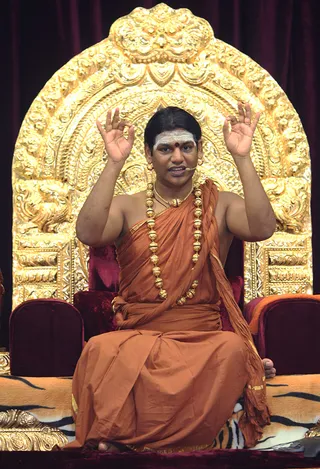
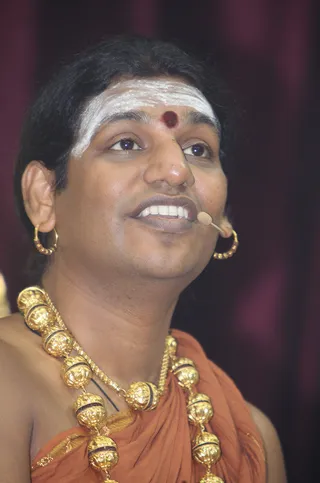
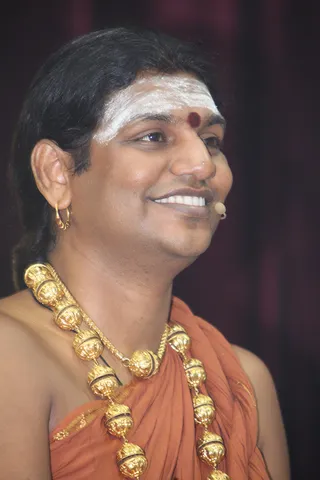
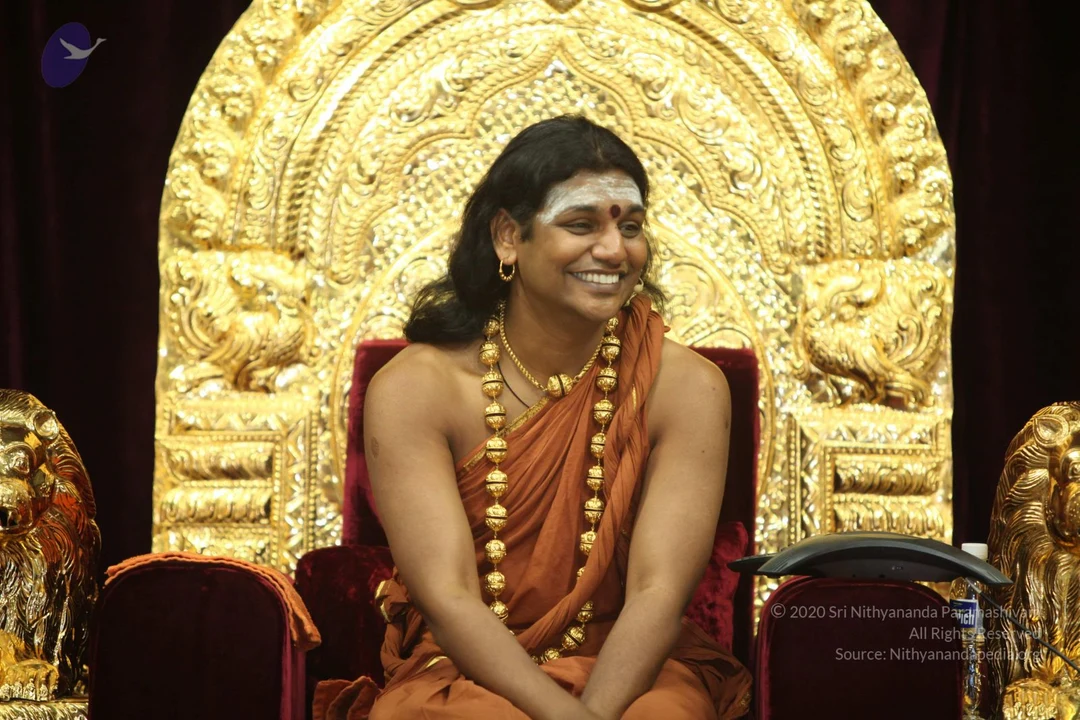
A seated figure in a saffron-orange draped robe sits on a tiger-striped cushioned seat before an ornate gold arched throne with carved floral relief and a deep red velvet backdrop. He wears a rudraksha-style mala of large gold beads, a gold necklace, gold earrings, a white band with a red dot on the forehead, and a small headset microphone. Both hands are raised with fingers curled in a teaching gesture.A man seated on a dark red velvet throne with a large gold carved backrest behind him, wearing a saffron-orange shawl and dhoti with a long gold bead necklace of large gold-coloured beads and a thin gold chain. He has white vertical tilak markings and a red dot on his forehead, small gold earrings, and a headset microphone. His right arm is raised with fingers extended while his left hand rests on his lap, and he appears to be mid-discourse.A man seated on a dark red velvet throne with a tiger-striped cushion in front of a gold-embossed backdrop and maroon curtains. He wears a saffron-orange robe draped over one shoulder with a gold border, a heavy gold bead necklace and gold earrings, and has white vibhuti marks with a red bindi on his forehead. He holds his right hand raised beside his face, with a small microphone clipped near his mouth, and his left hand rests on his lap. Appearance-based cues including the gold bead mala and saffron robe are consistent with a person, seated and speaking as a teacher. Single physical person in the scene.Close-up photo of a man speaking into a small headset microphone, smiling and looking upward. He wears a white horizontal sacred mark on his forehead with a red dot at the centre, long dark hair swept back, small gold hoop earrings, a thick gold ceremonial necklace of large beaded spheres, and an orange-saffron cloth draped over his bare shoulders. The background is a plain deep magenta curtain. Probable Swamiji by visible cues: saffron clothing, ornate gold beaded necklace, and swept-back hair, shown as a speaker at a discourse.Close-up photo of a smiling man with swept-back dark hair, a white vertical tilak and a red dot on his forehead, wearing gold hoop earrings and a small headset microphone near his mouth. He wears an orange-saffron wrap over bare shoulders and a heavy gold necklace of large beaded ornaments with rudraksha-style black threads. Dark maroon curtain behind him. a person in a speaking role, looking off to the side during a satsang-style talk.

Blessing After Sarvadarshan
1 photoSource gallery
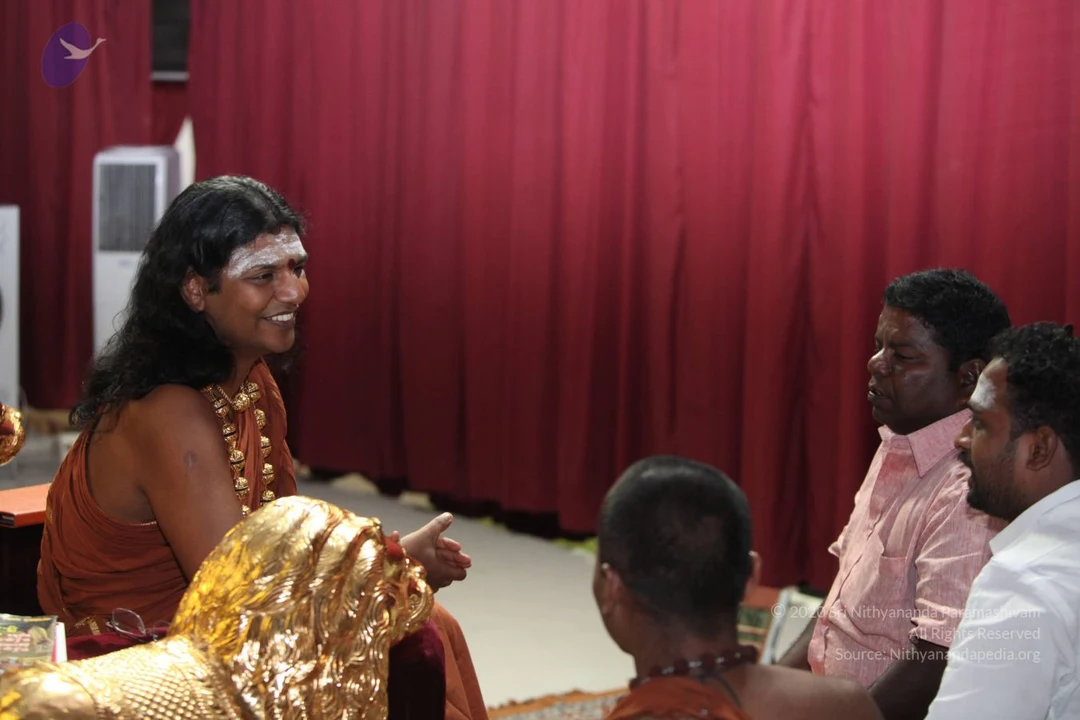
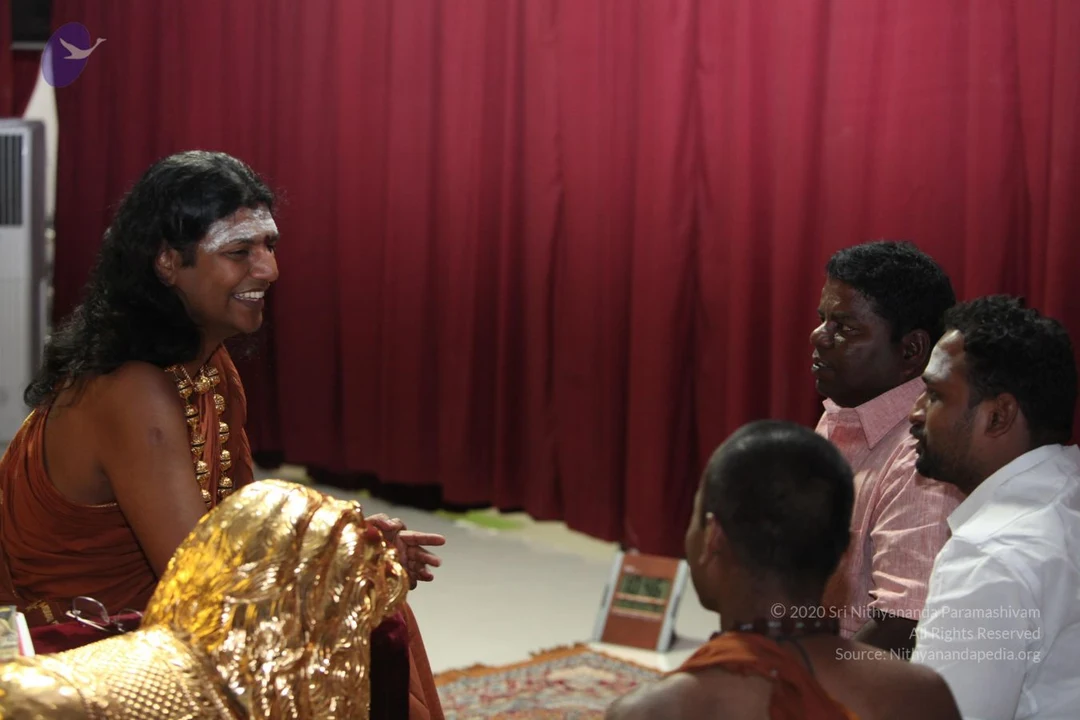
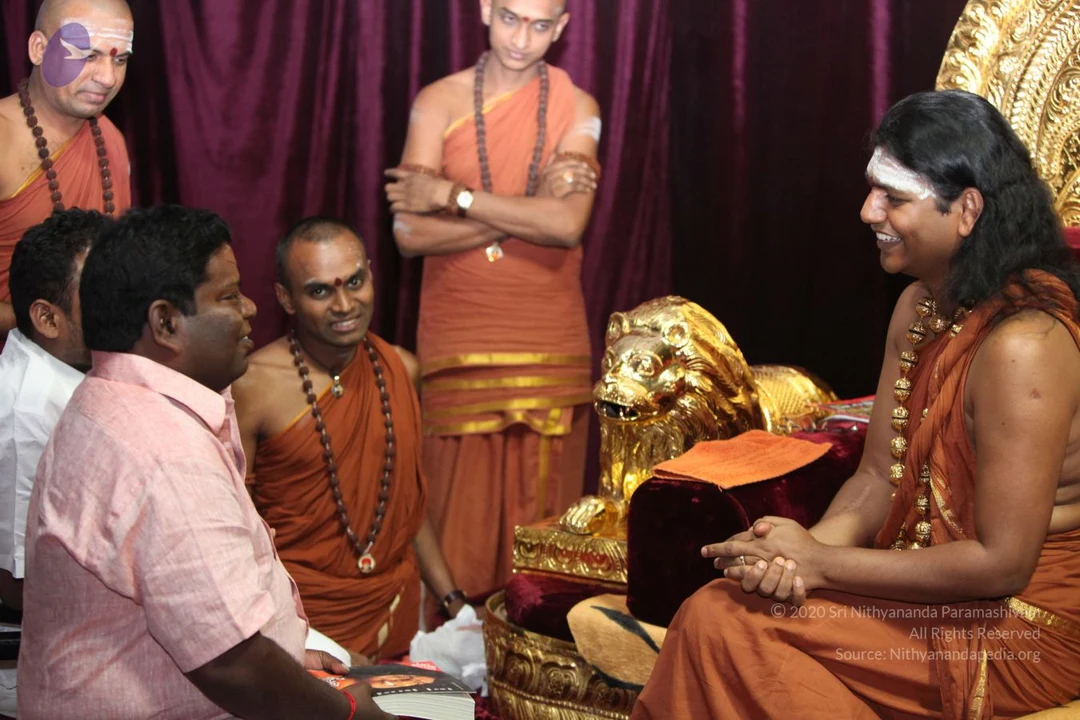
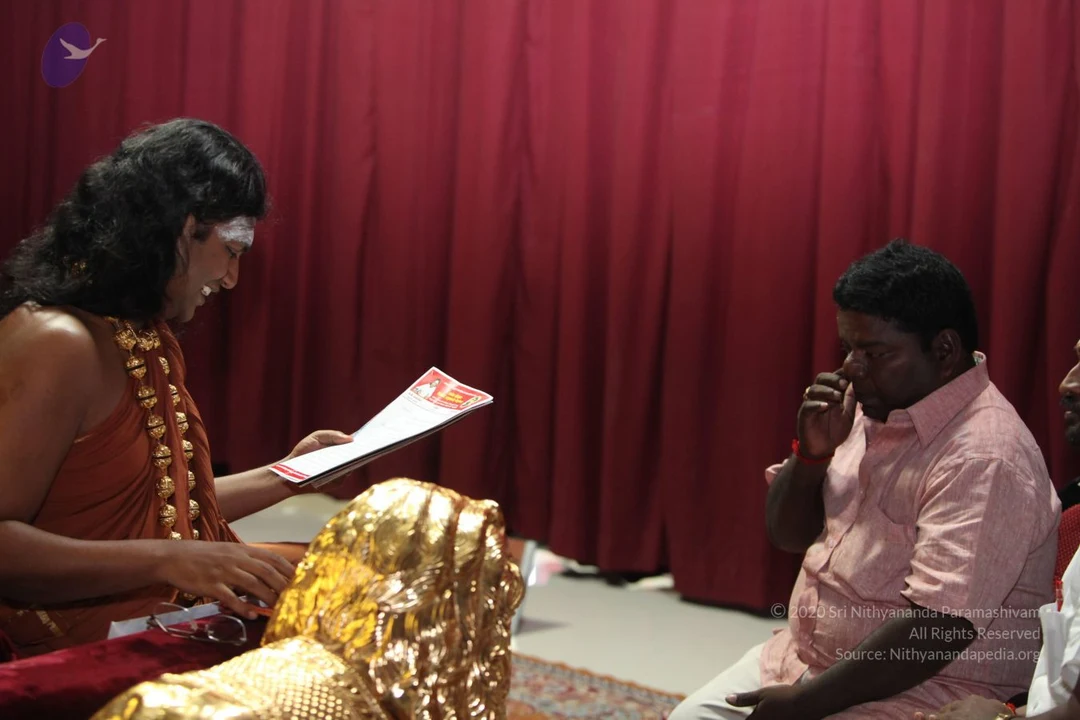
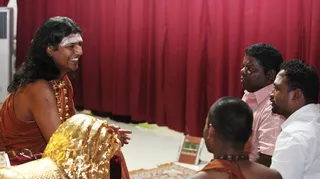
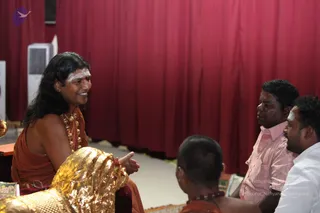
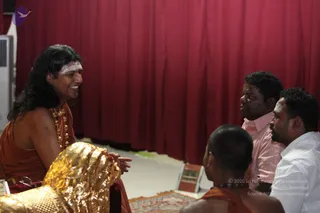
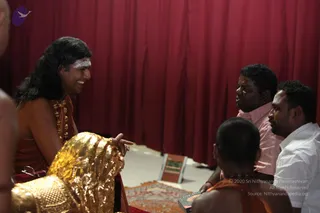
Photograph of a seated figure with long dark hair and a white forehead mark, wearing a rust-orange garment with gold ornamental trim and a gold necklace, smiling as they speak with three men seated in front of a deep red curtain. One man on the right wears a white shirt, another in the centre wears a pink-and-white checked shirt, and a bald man in the foreground wears an orange top and a beaded necklace. A gold-and-yellow cloth lies on the floor beside a small framed picture and a patterned mat.

Nithya-Satsang
40 photosSource gallery
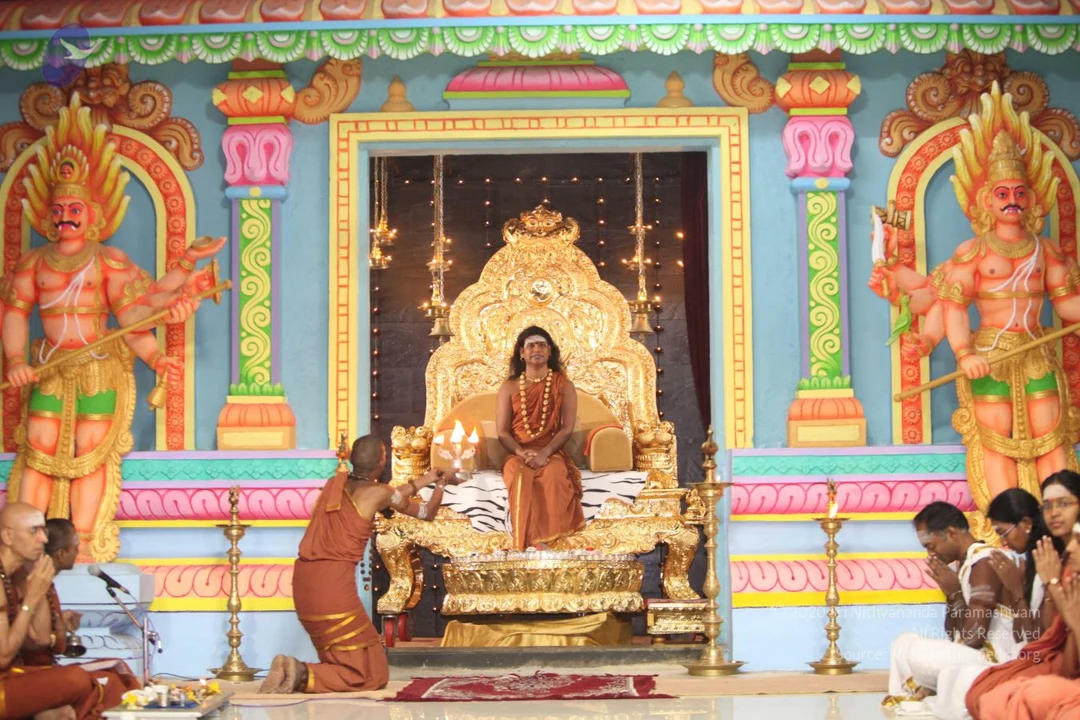
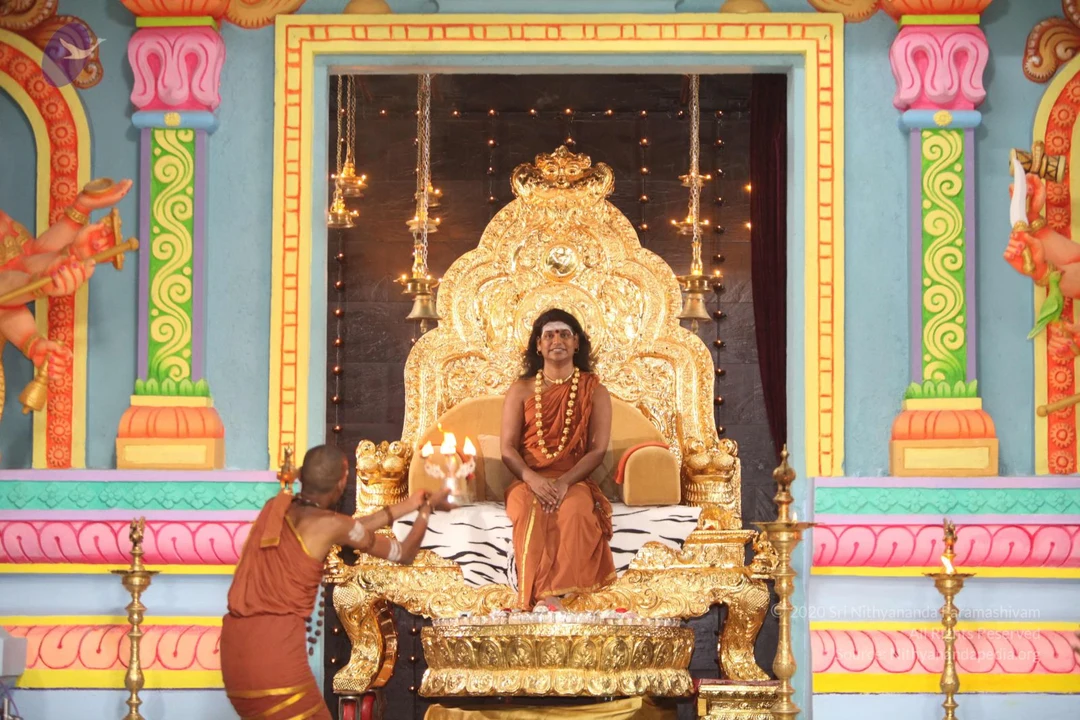
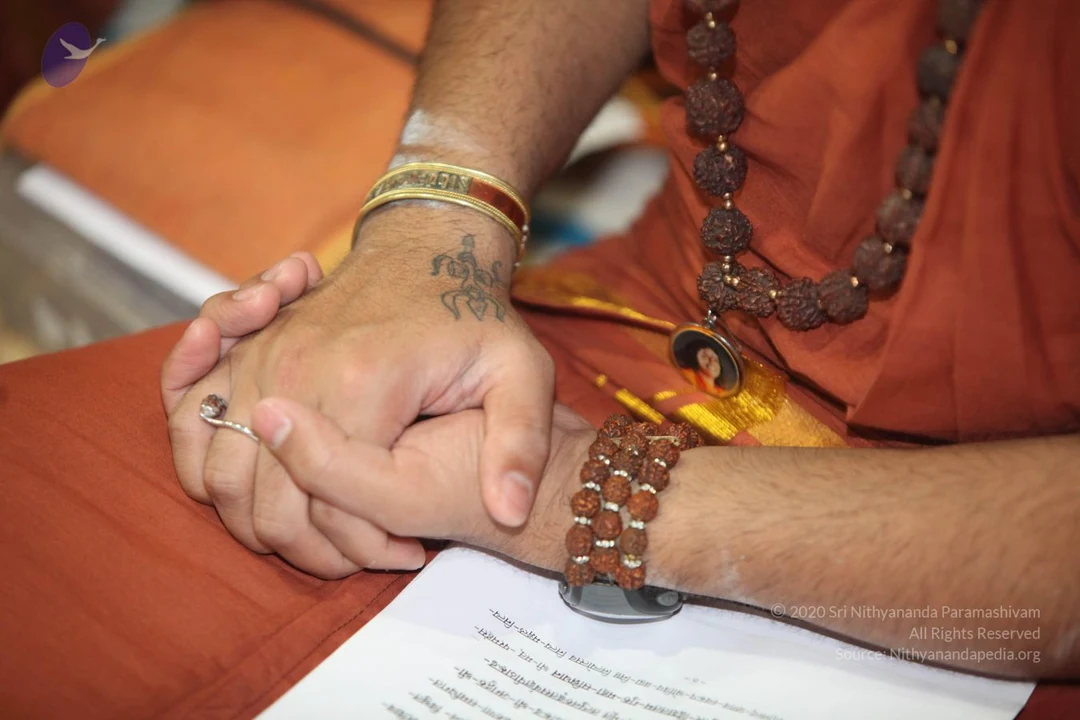
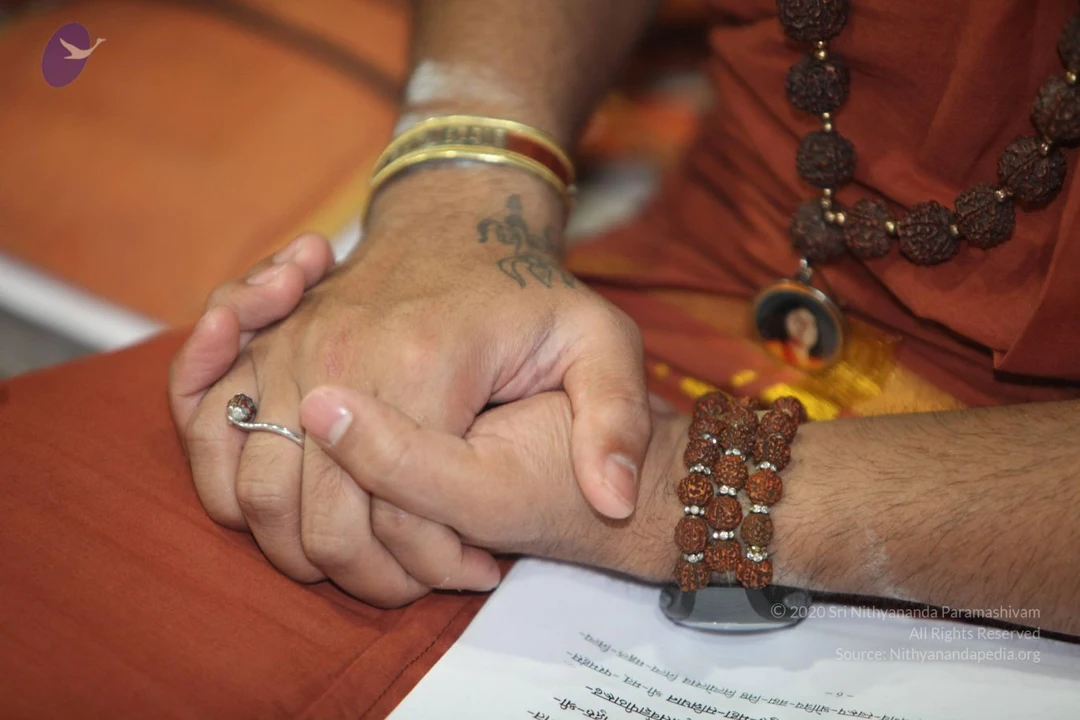
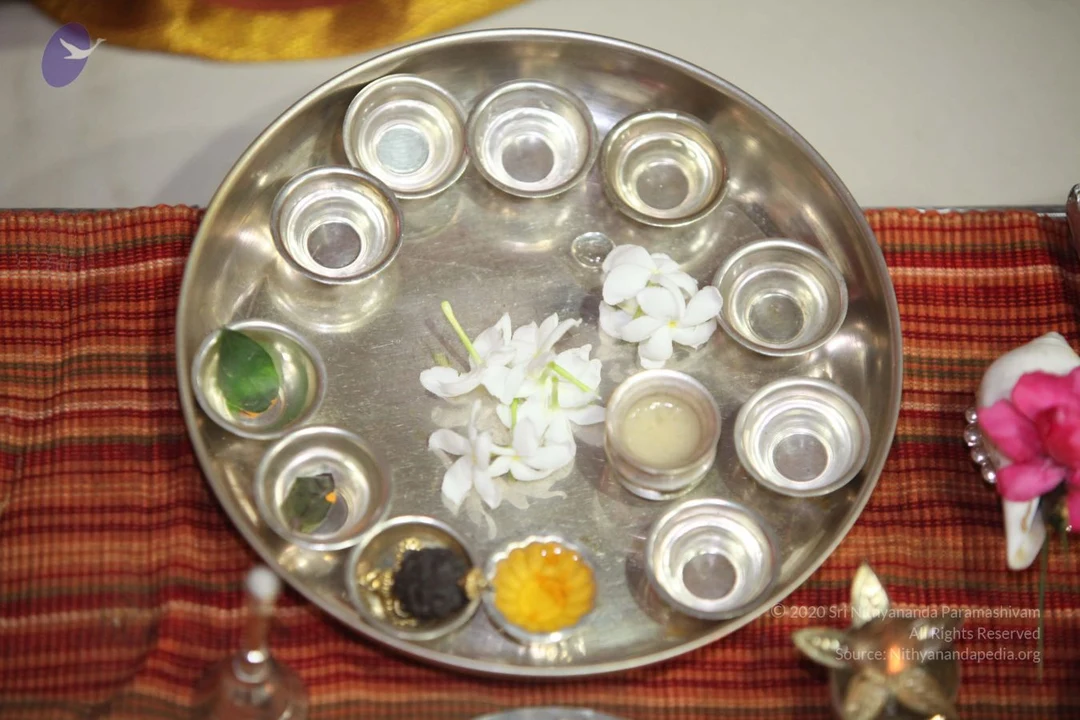
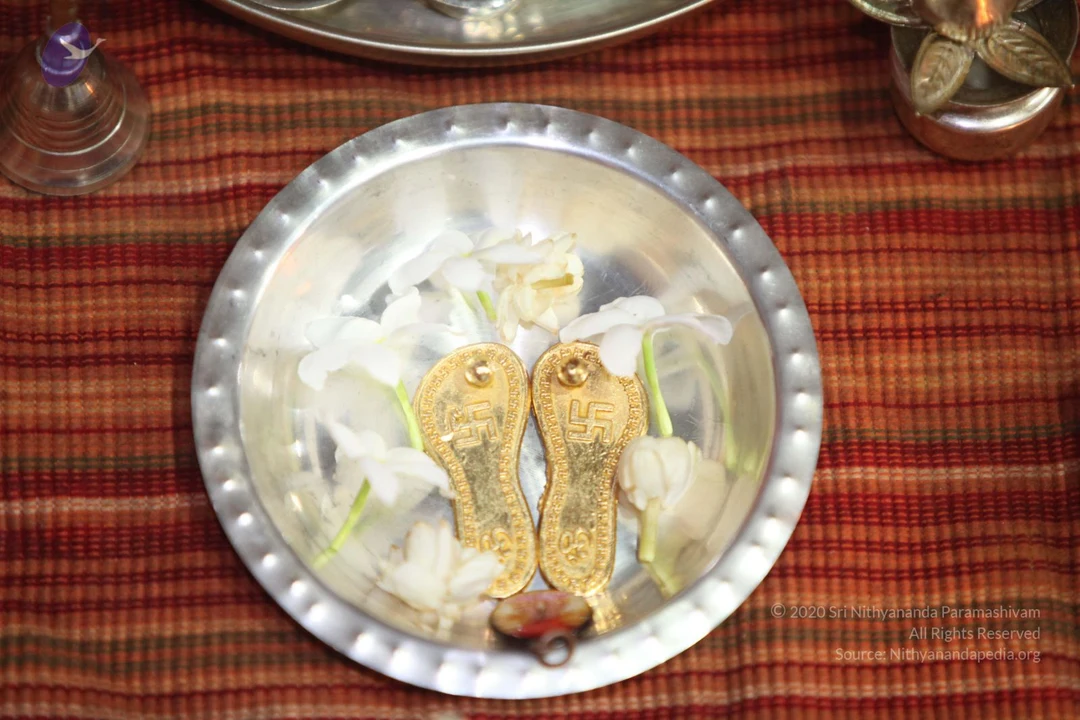
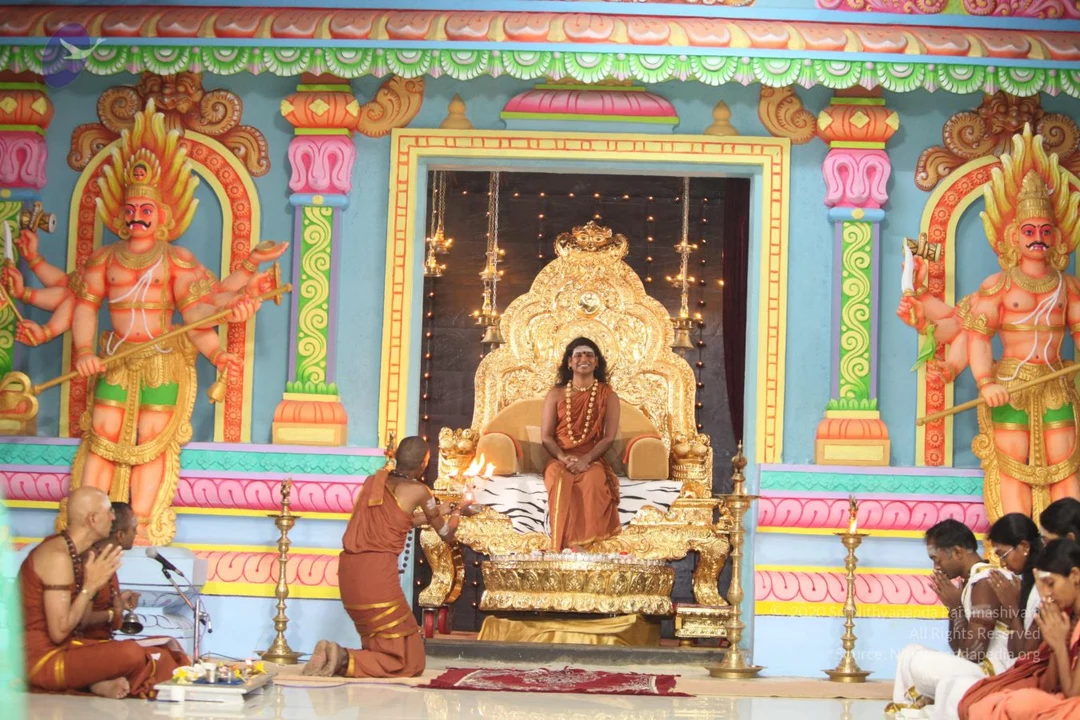
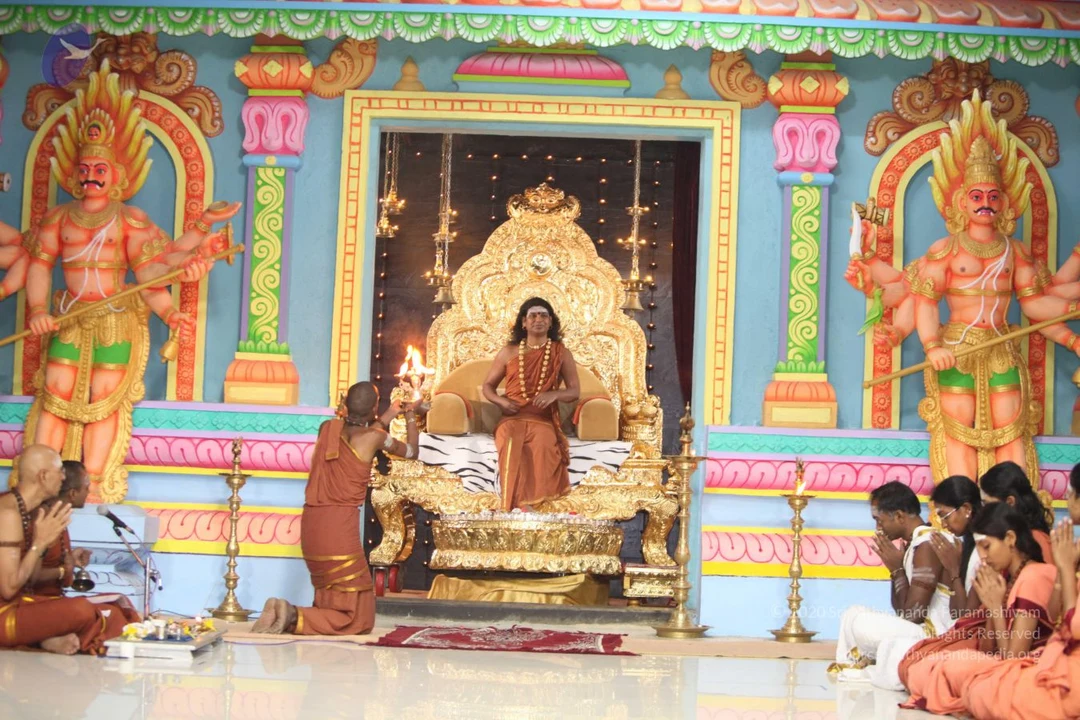
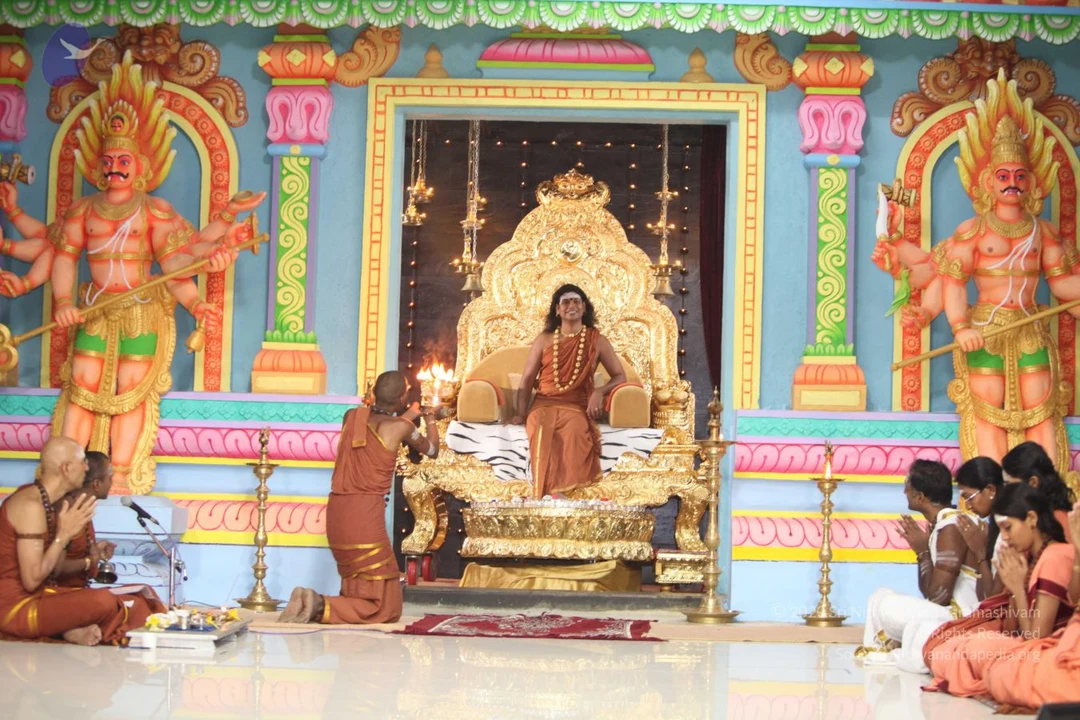
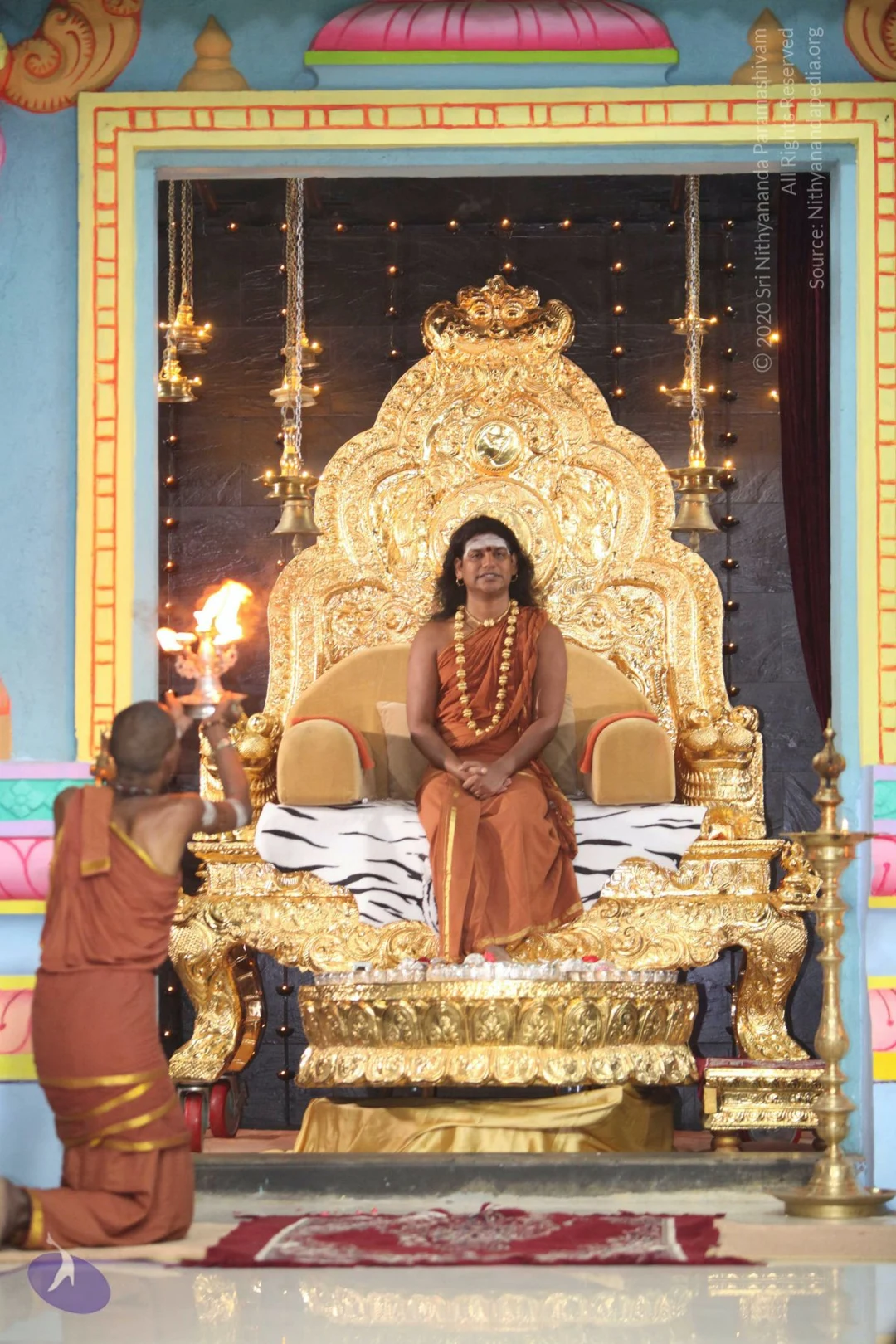
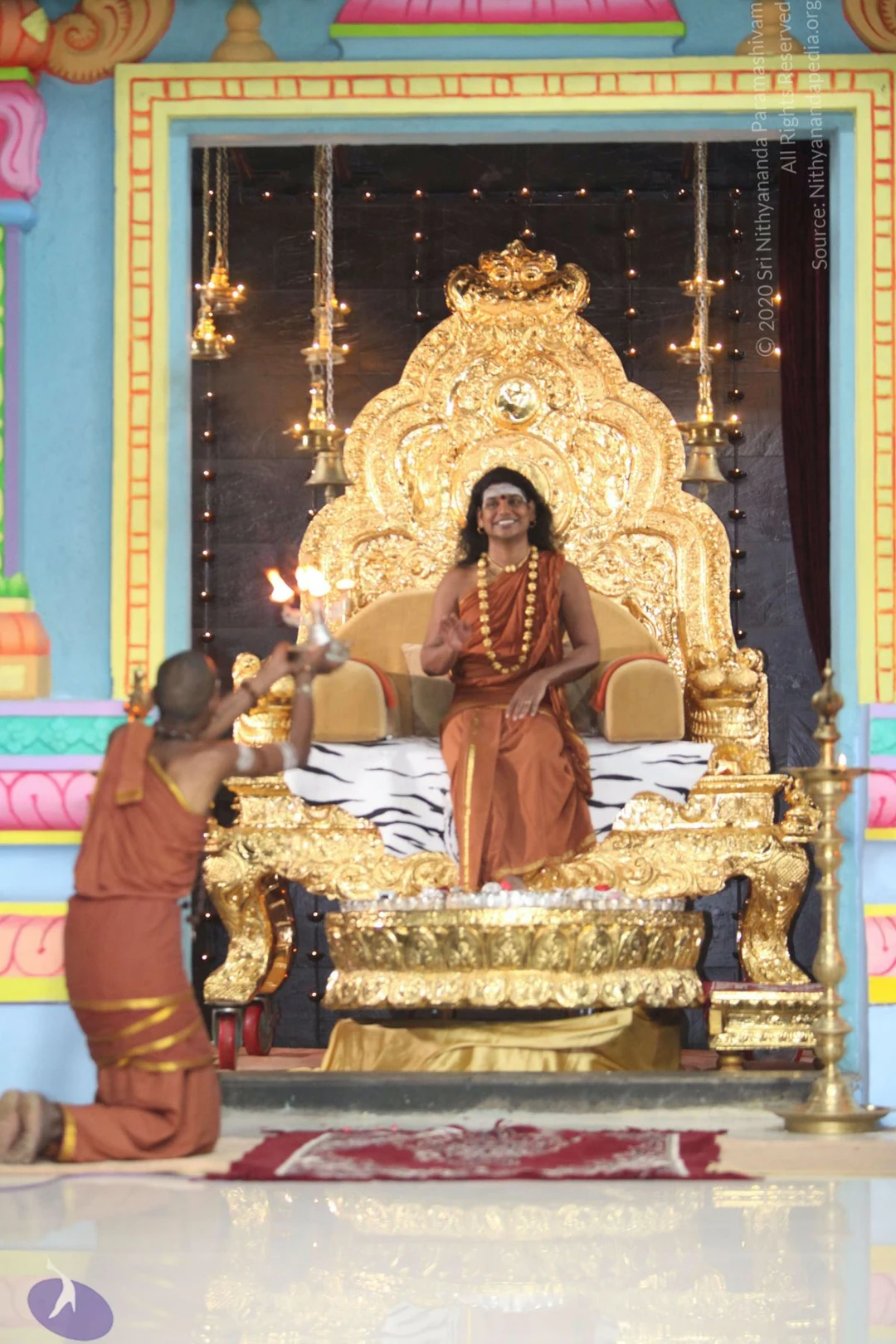
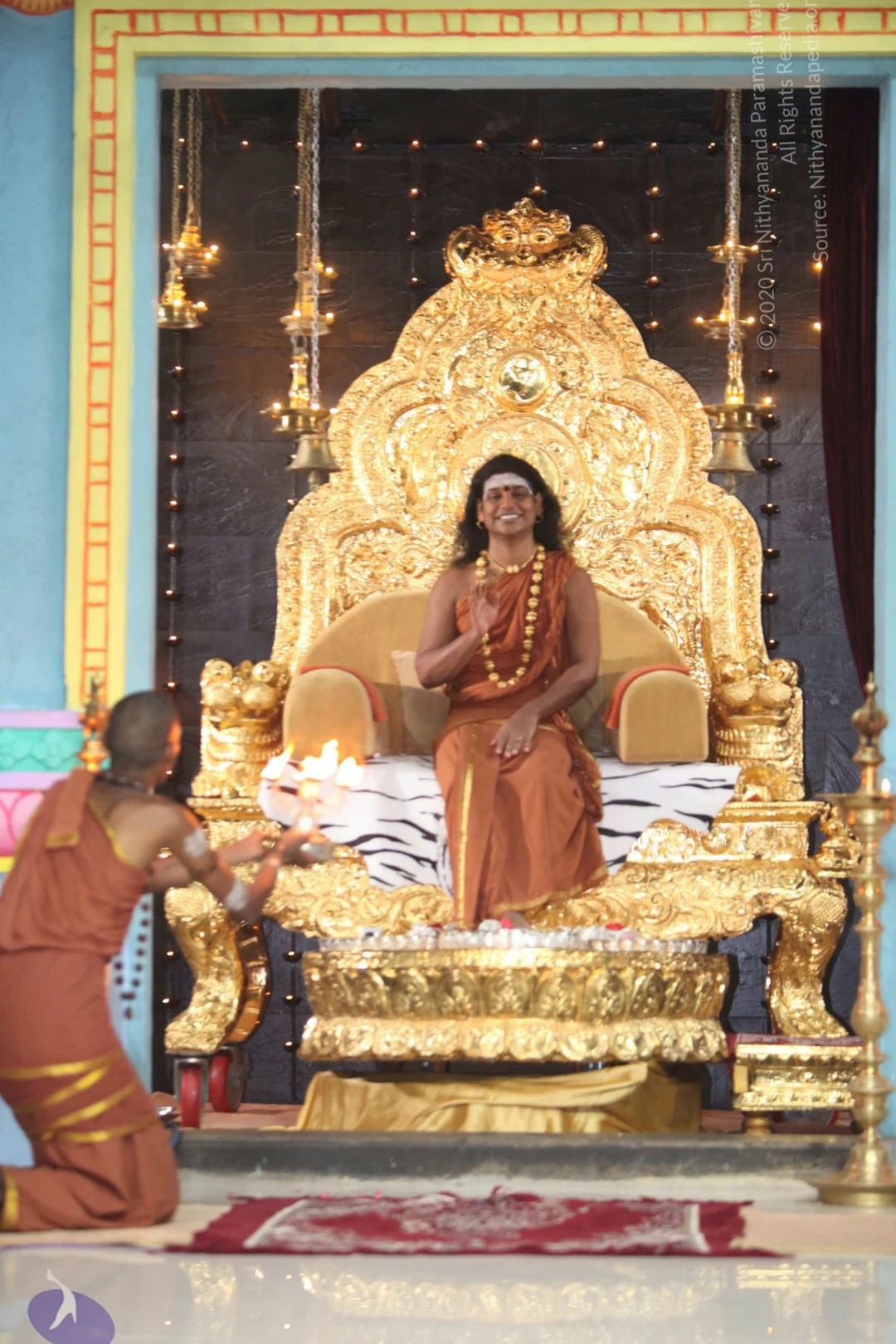
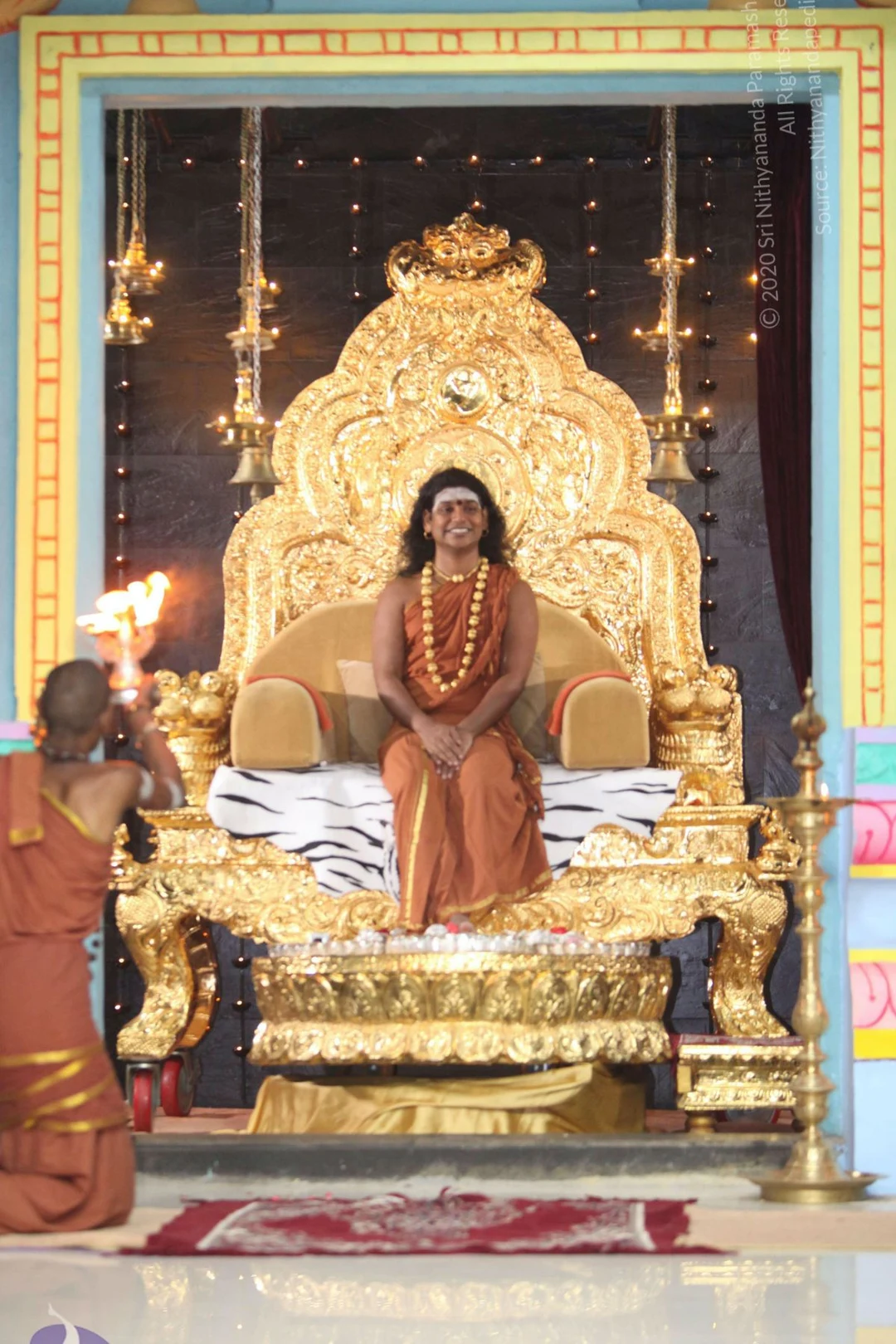
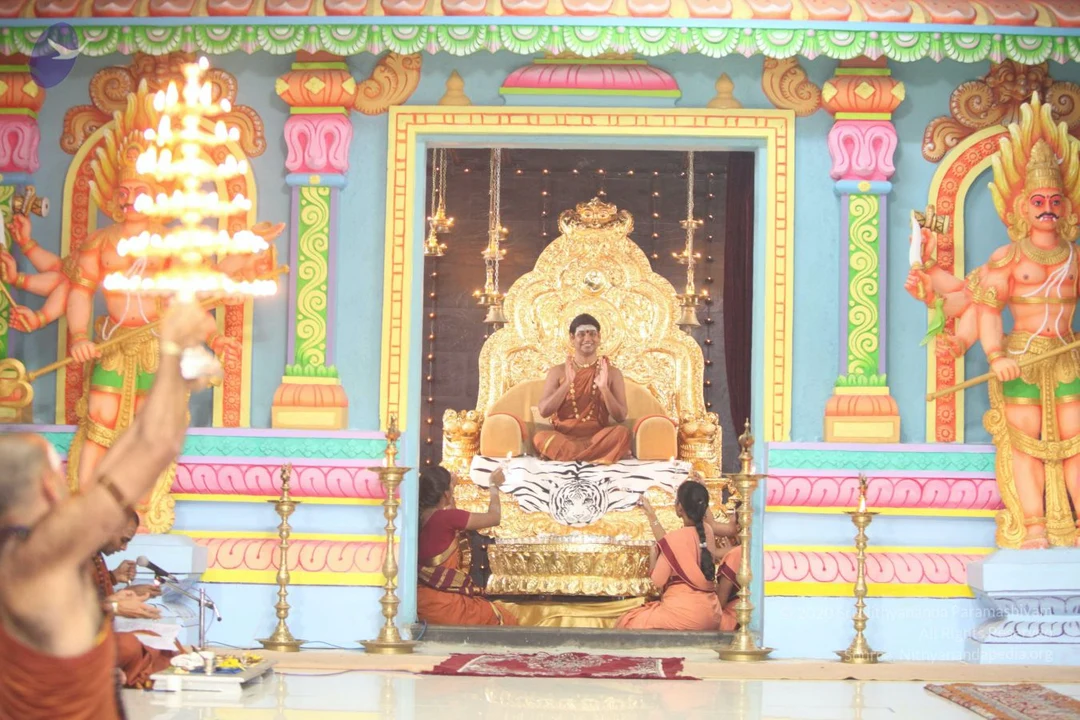
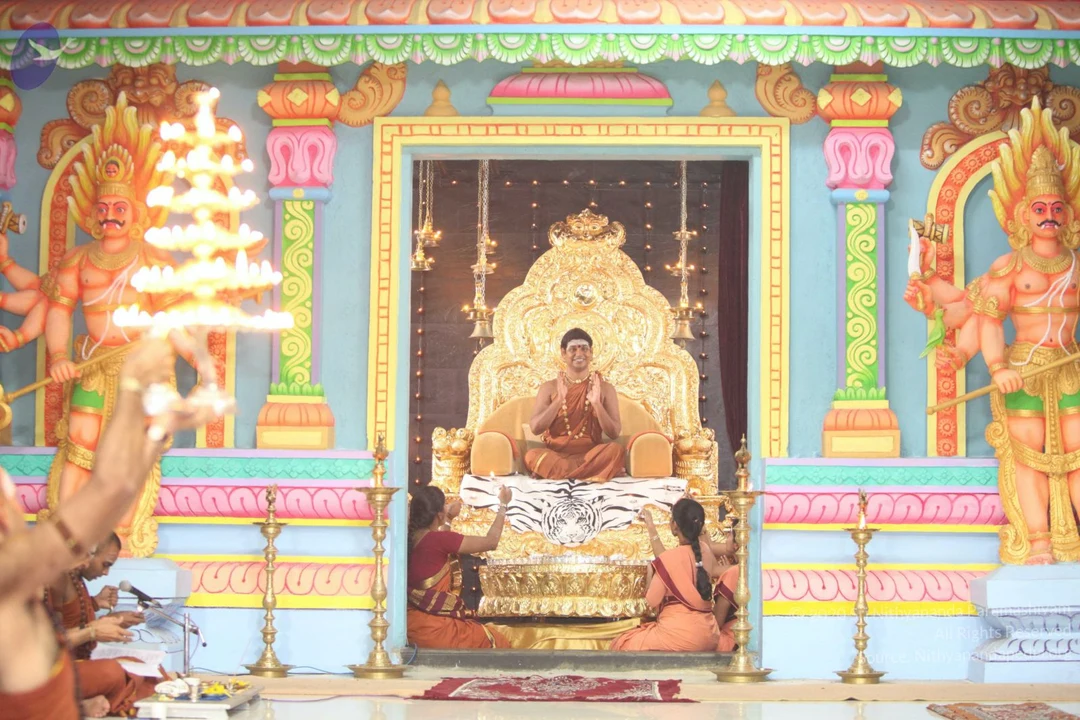
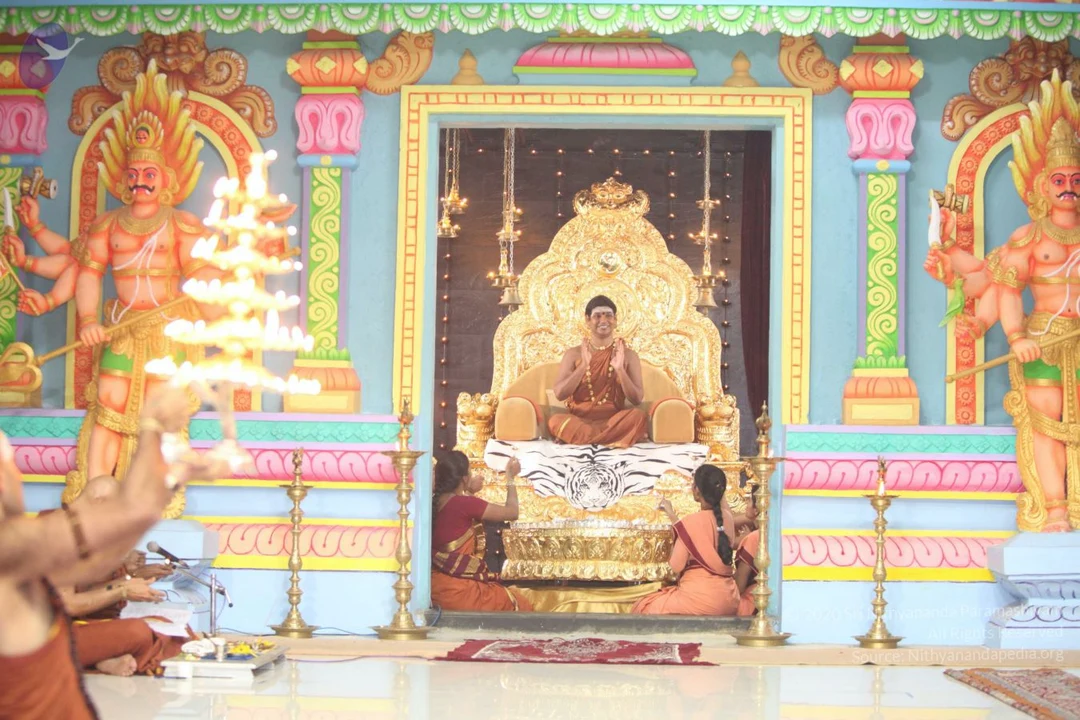
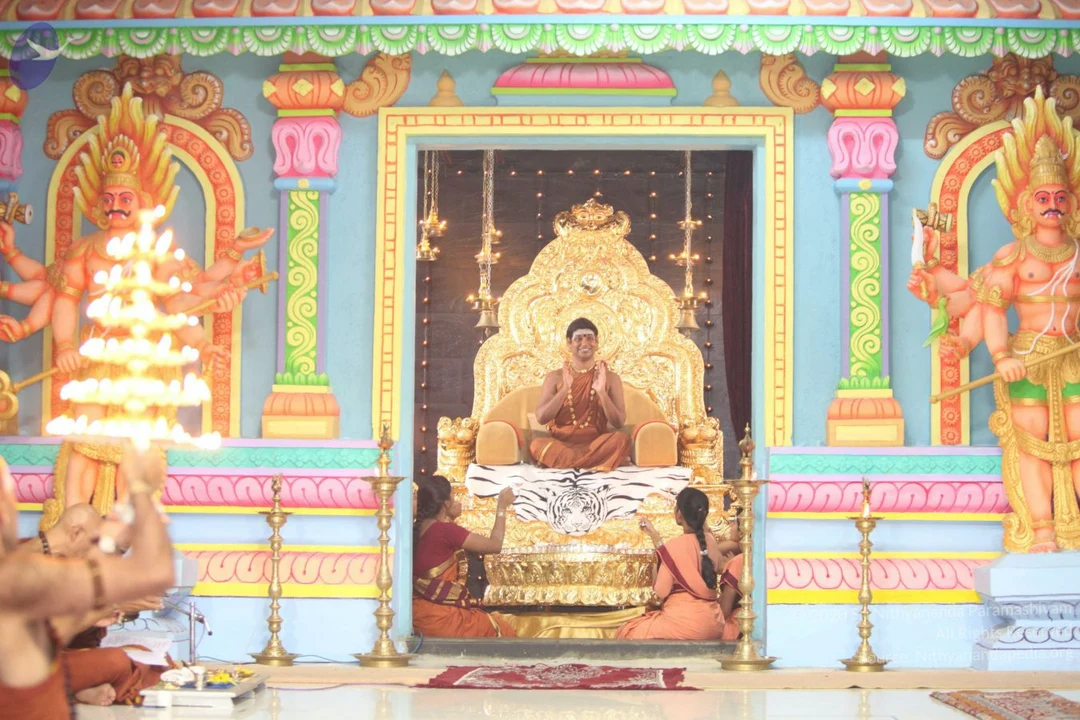
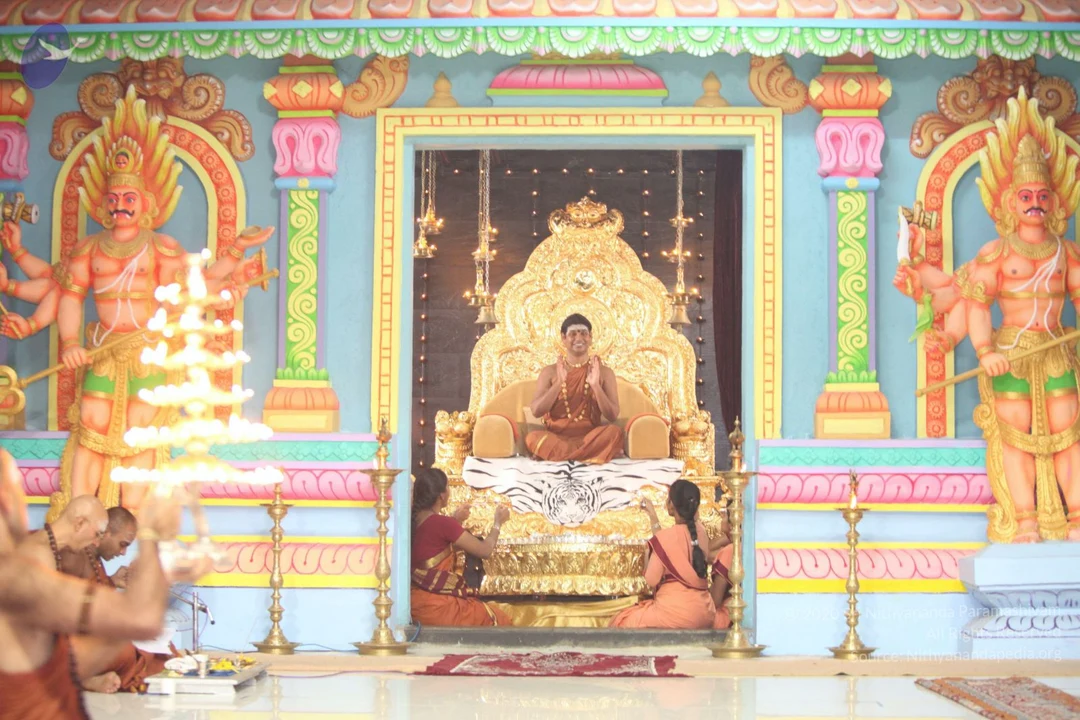
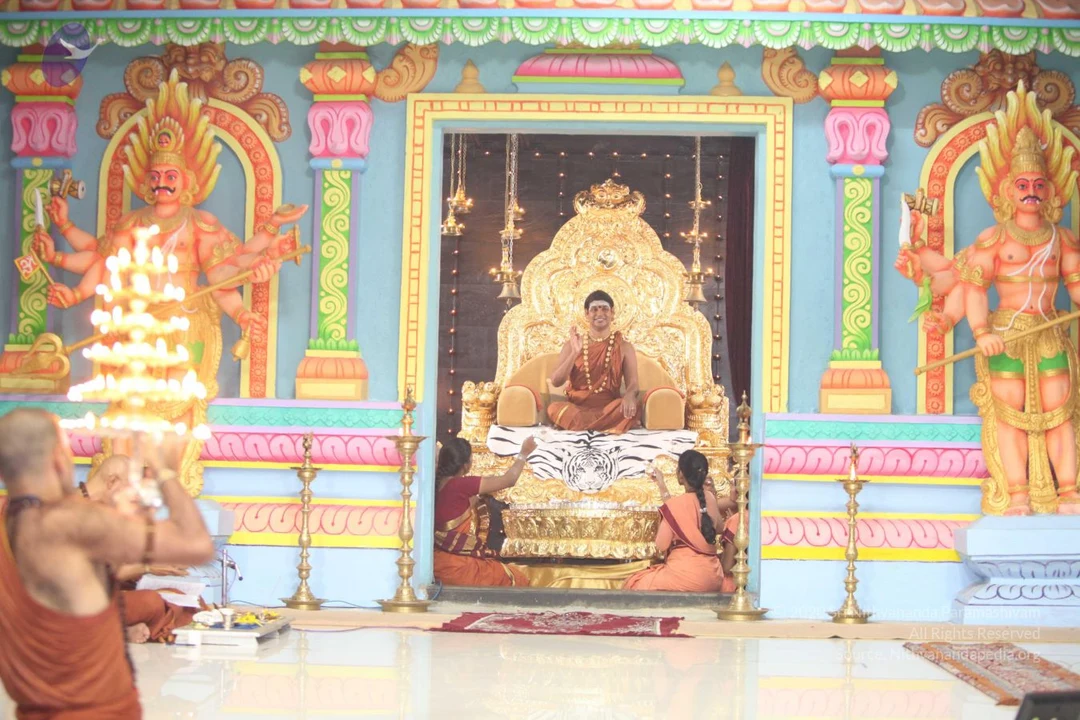
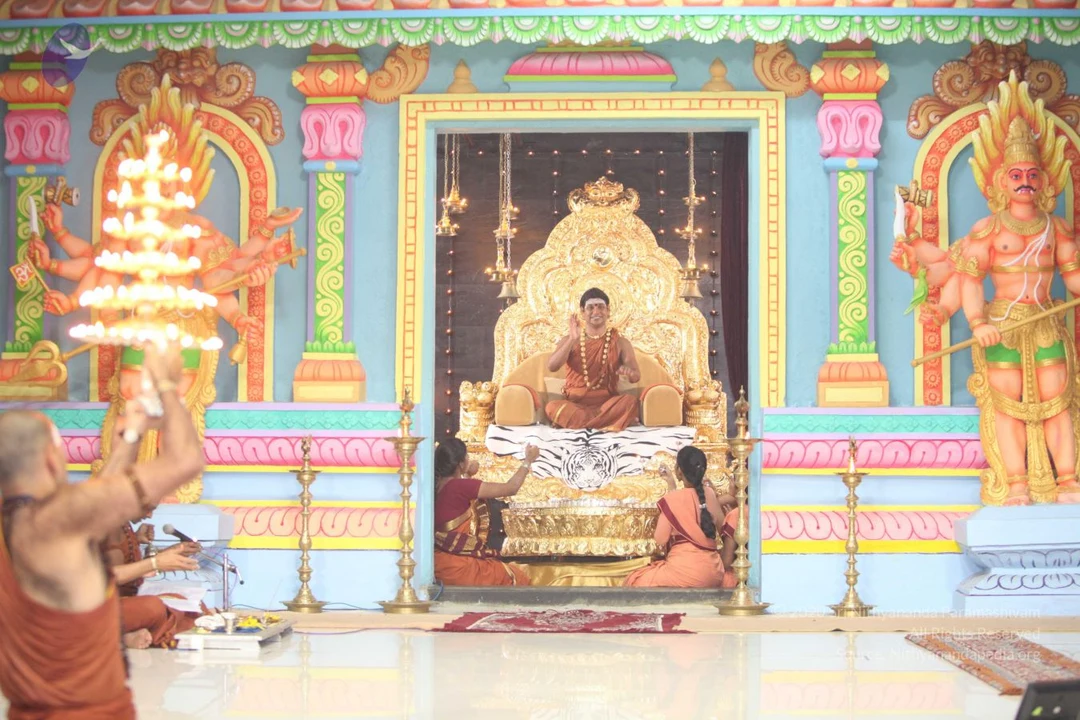
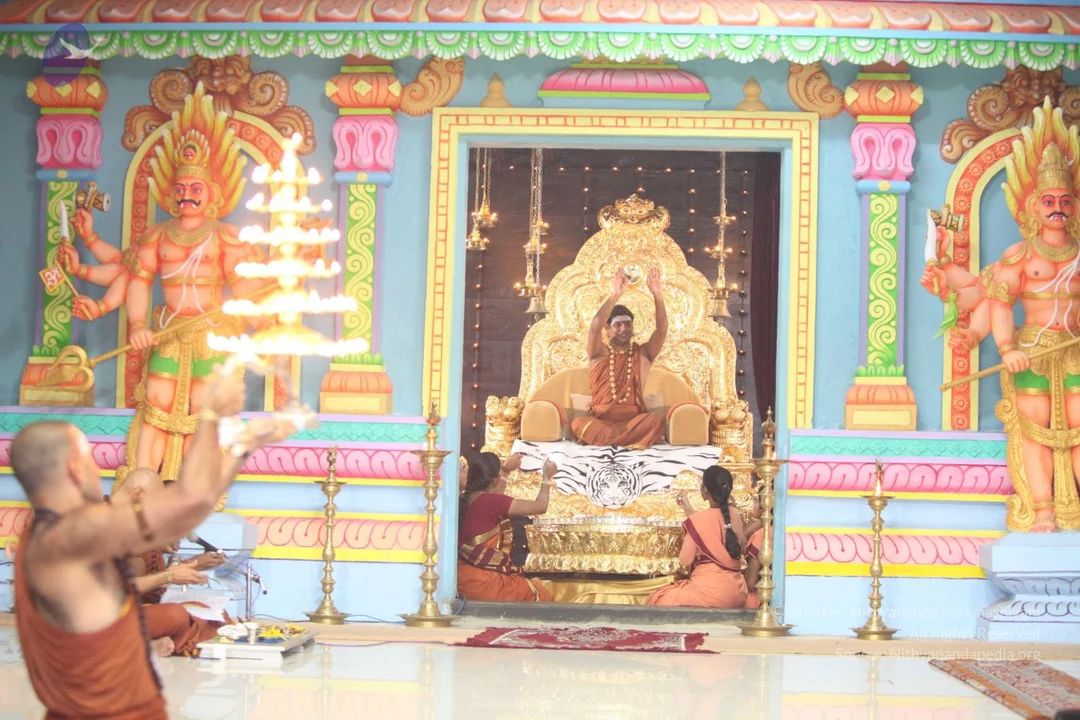
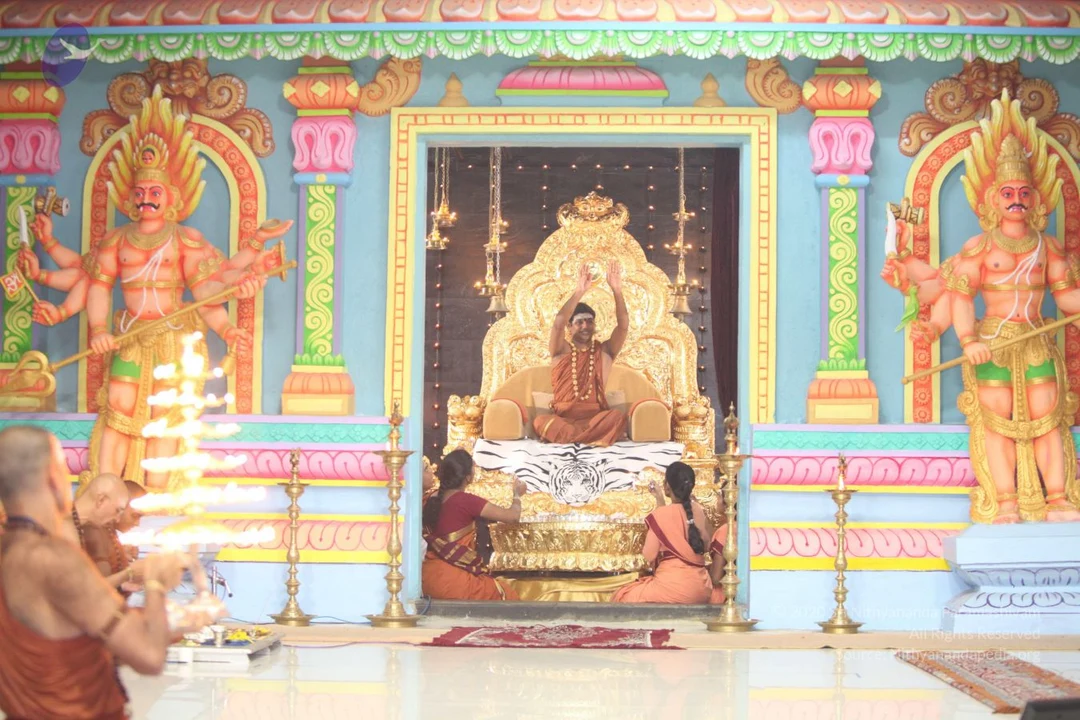
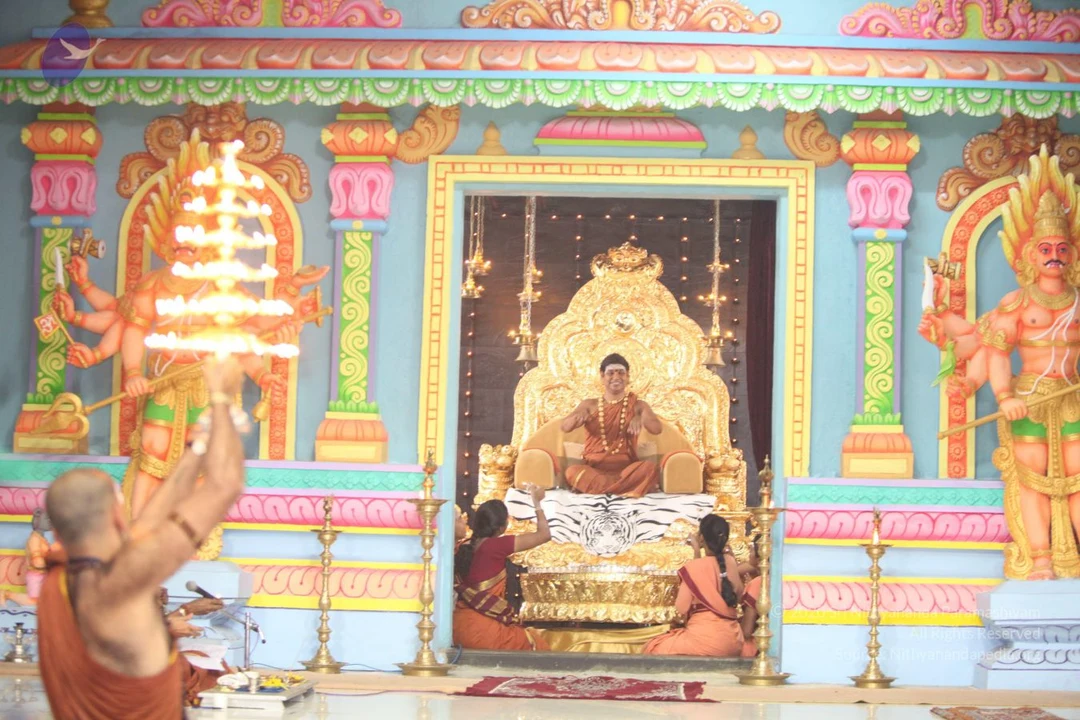
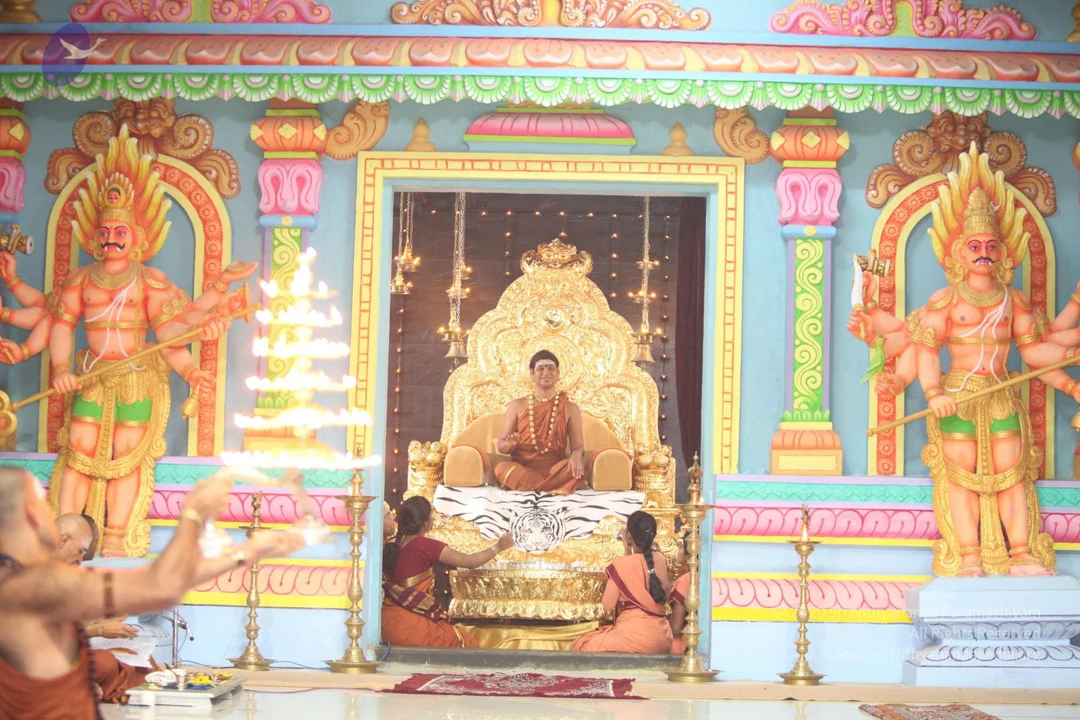
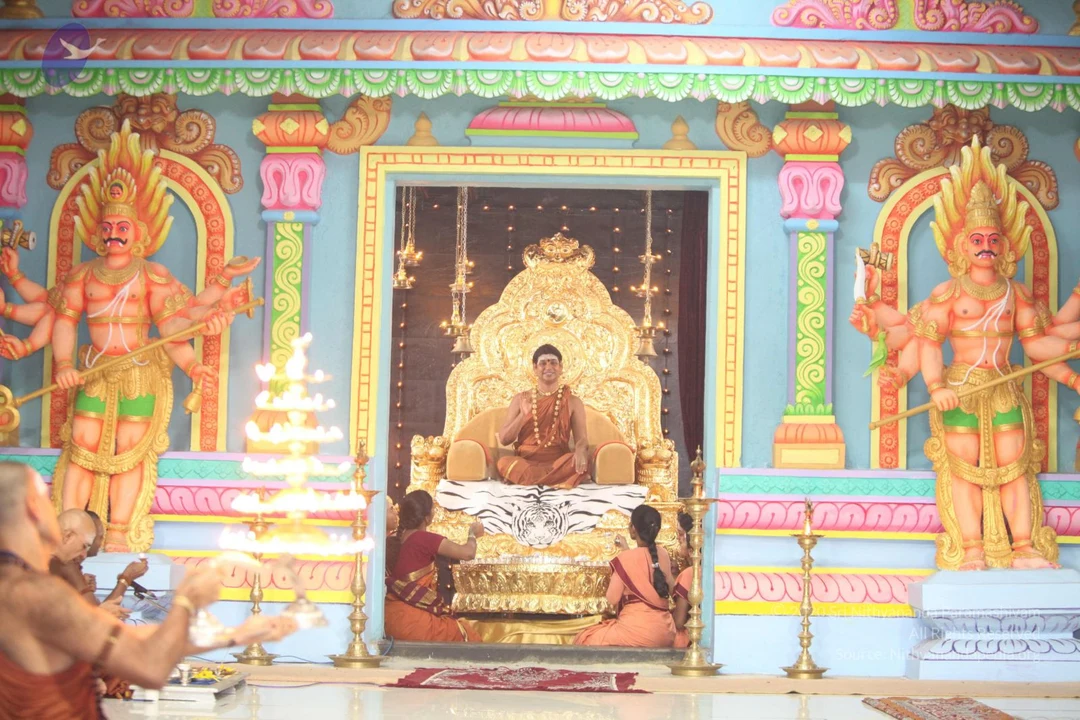
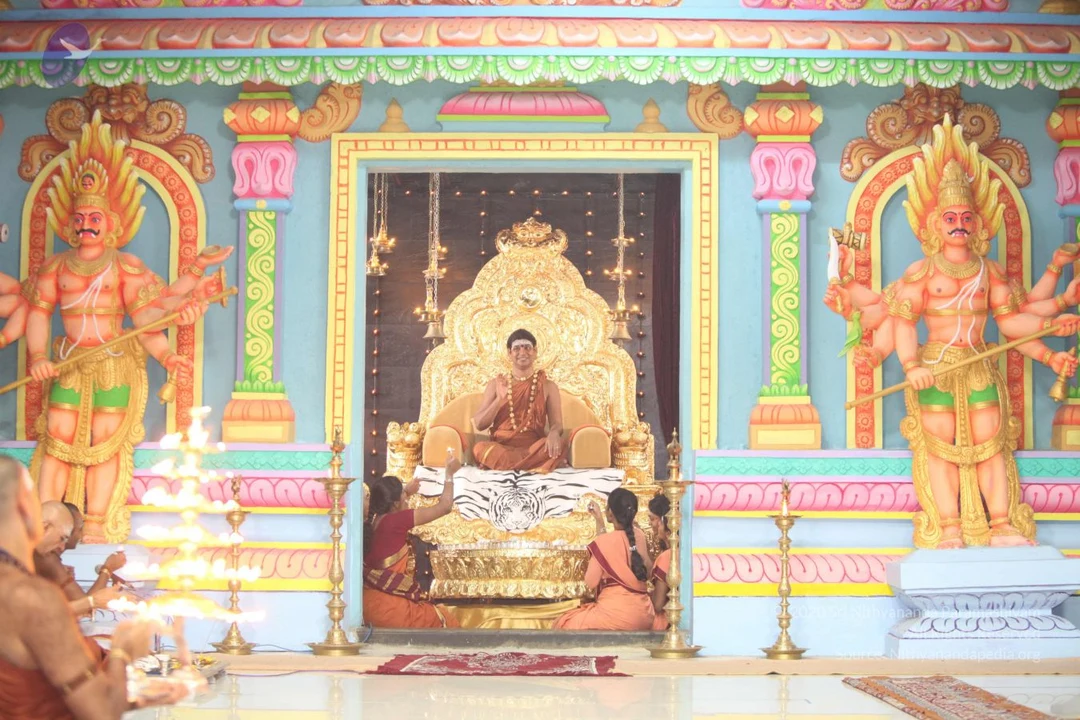
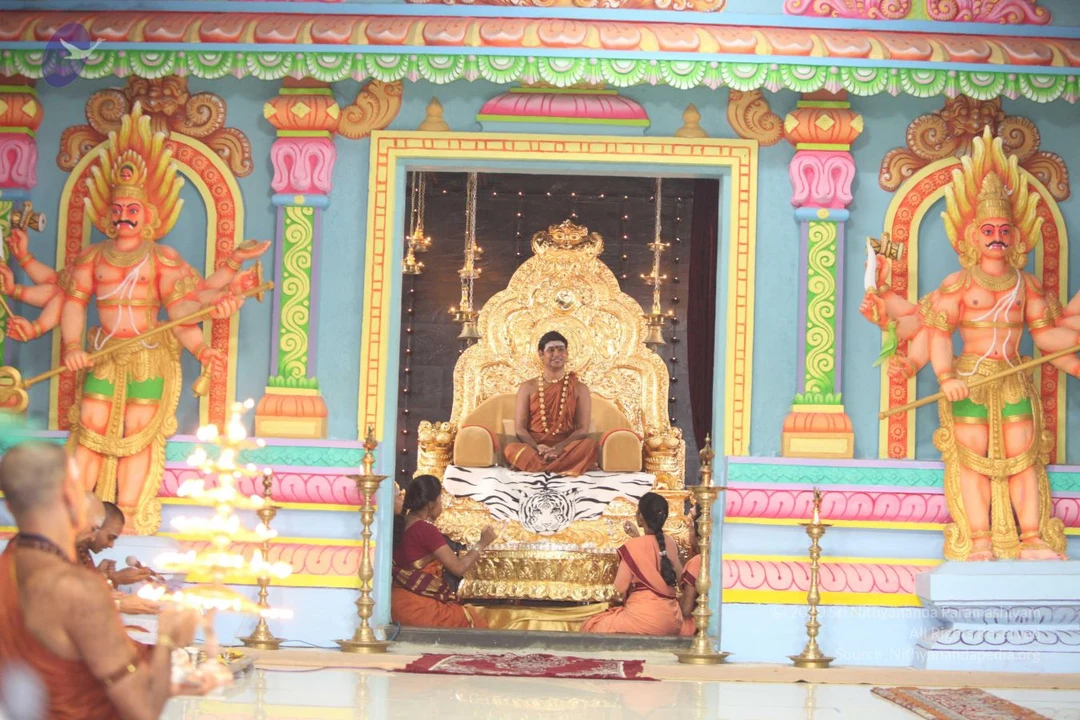
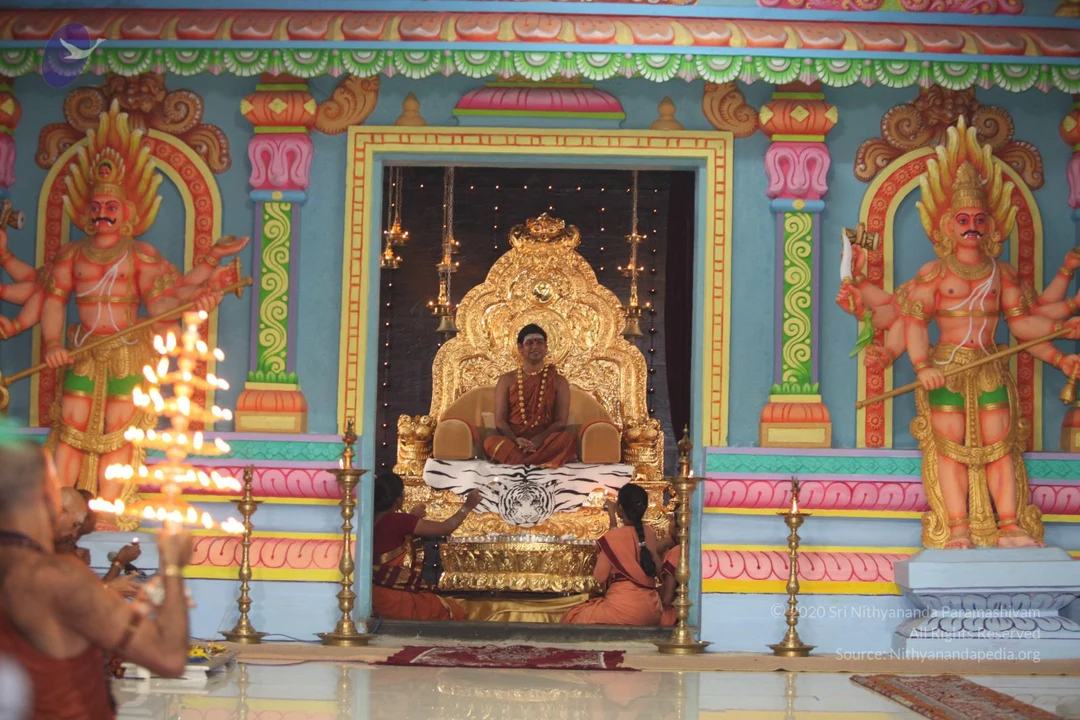
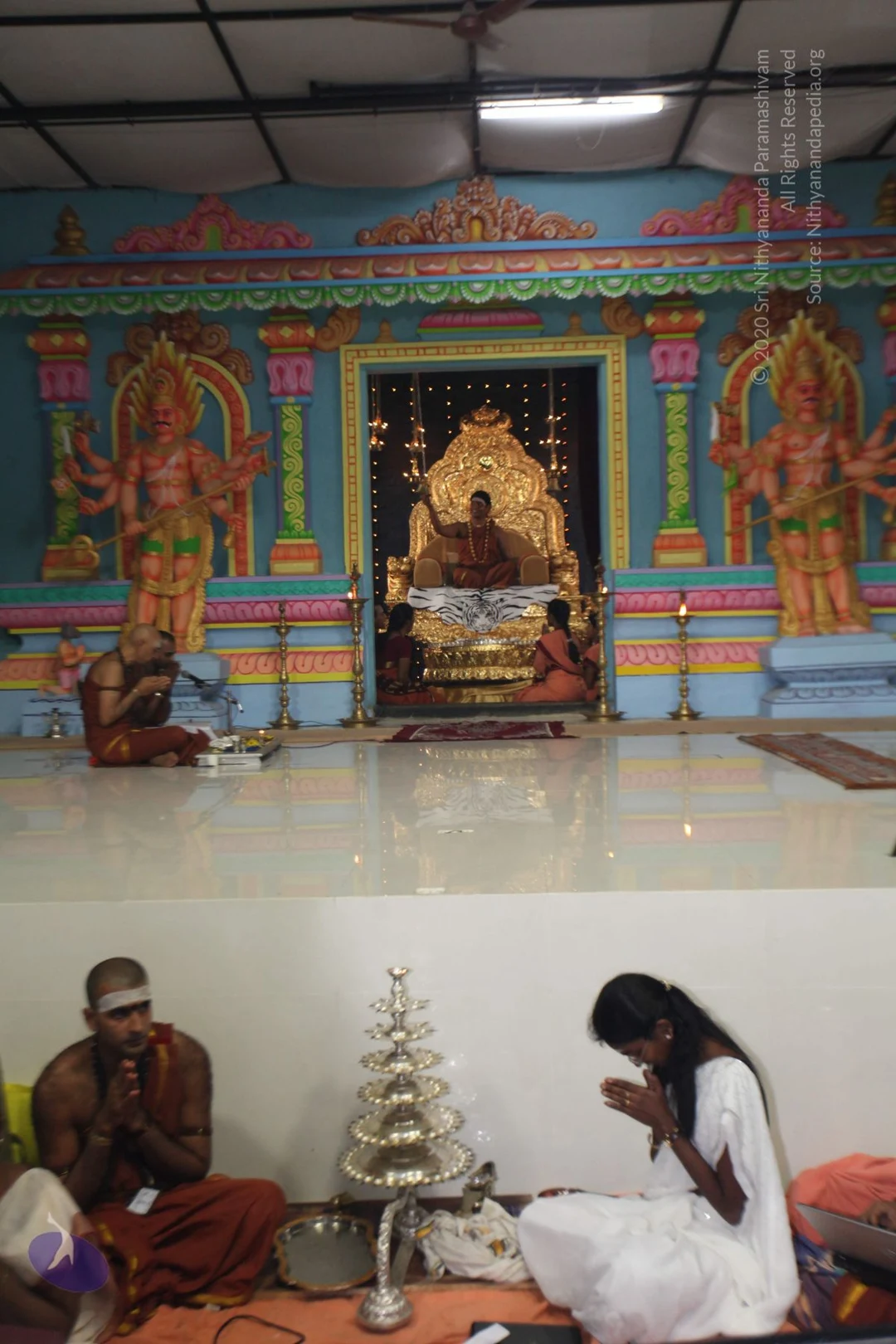
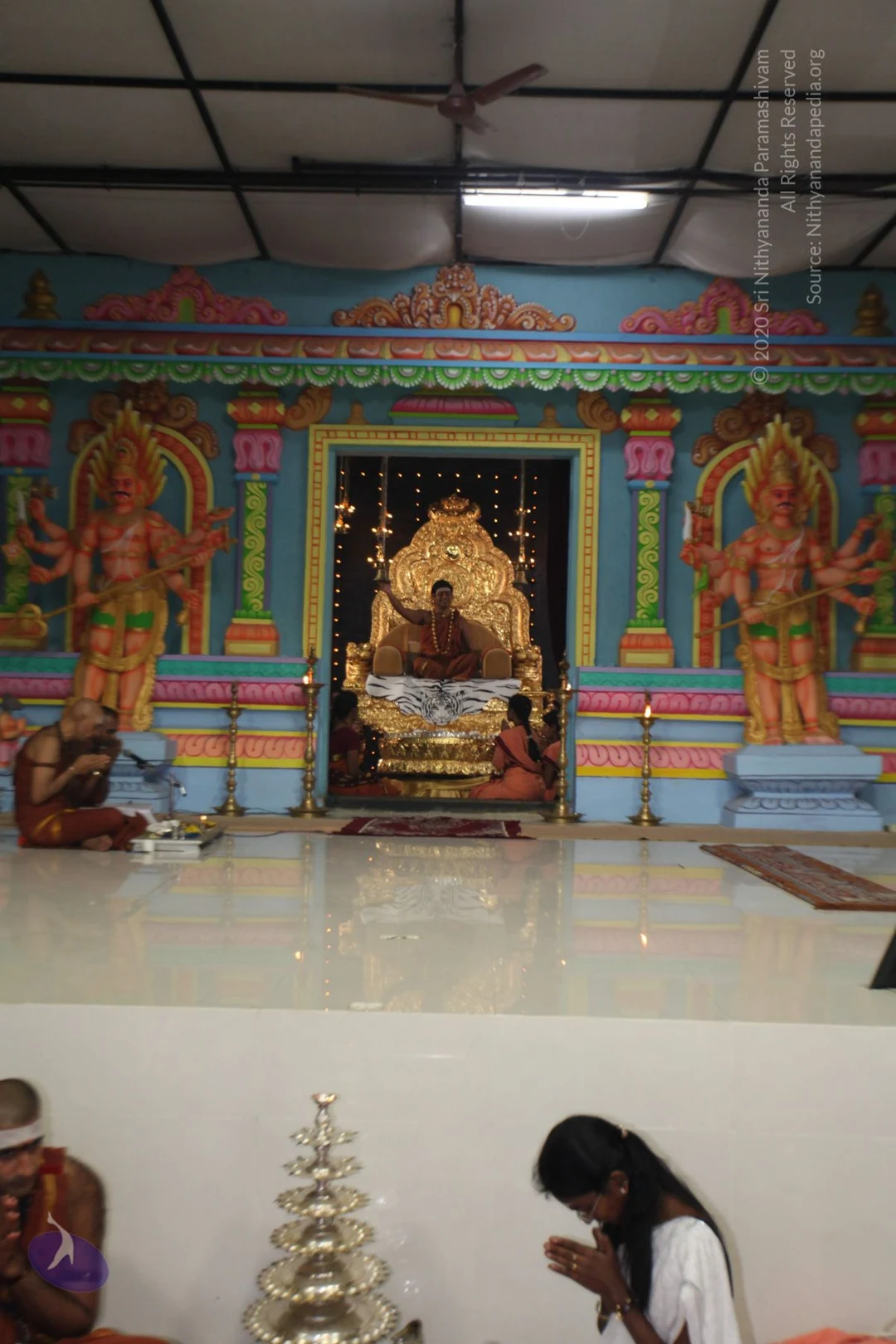
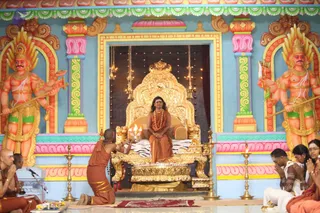
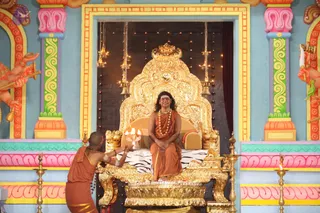
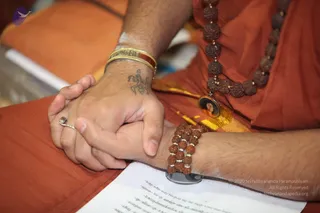
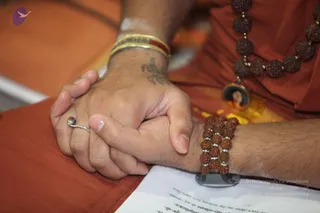
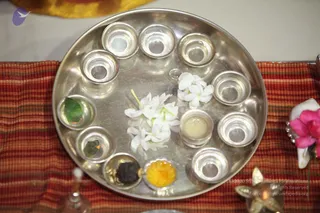
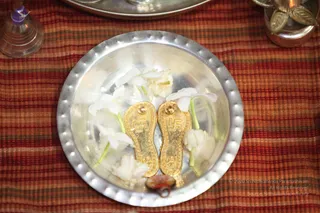
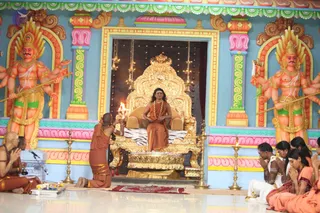
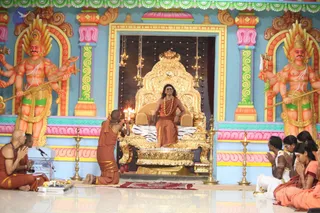
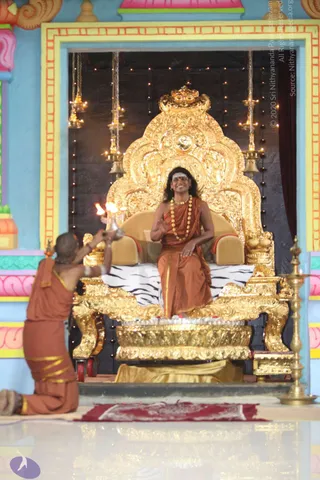
A photograph of a seated figure on an ornate gold throne in a brightly painted hall with pink, green and yellow columns and two painted guardian figures with clubs flanking the back wall. A kneeling priest in saffron dhoti holds a lit aarti lamp before him. To the right, two women in saris join palms in devotion, and a man in white dhoti and shirt sits with folded hands near the front. At the left edge, a bald man in saffron clothing sits with hands joined near a microphone stand. Brass oil lamps stand on the floor, with a small floor offering tray in front of the throne.A seated man in saffron-orange robes sits on an ornate gold throne with a tiger-striped cushion, centred in a colourful temple-style hall with pink, green and blue painted pillars and gilded arches. He wears a long rudraksha-style necklace of beads, a gold chain, and a vibhuti/tilak mark on his forehead, with long dark hair. Hanging brass lamps and bells hang above him. In the foreground a bald priest in orange dhoti and bare upper body holds a lit oil lamp (aarti) toward the seated figure, while brass lamp stands flank the throne. a person is the seated figure on the throne, identified by his saffron robes, beads, gold ornaments and tilak, with the throne placement; this is an appearance-based label. The priest performs aarti with the flame. Painted deity figures with weapons appear at the left and right edges.Close-up photo of two sets of hands clasped together over an open printed page of Sanskrit-style text. The person in the foreground wears a rust-orange robe and multiple strands of rudraksha beads, with a small round pendant showing a portrait. Wrist bracelets of rudraksha and gold bands are visible, along with a tattoo on the wrist and a silver ring on the finger. The setting is a quiet ritual or study moment.Close-up photo of two men's hands clasped together over orange-red cloth, with a printed page of Sanskrit-like text below. The hand on top shows a tattoo of a horse and gold bangles on the wrist; the other wrist wears a rudraksha bracelet. The wearer's orange robe shows a rudraksha mala and a round pendant containing a small portrait photo. Visible people are only the two forearms and hands.A round polished silver or steel thali tray on a red and orange striped cloth holds small silver cups, white jasmine-like flowers, a small bowl of pale liquid, a dark mound with a yellow sweet or offering, and green leaves. A small brass oil lamp with a lit flame sits at the lower right edge, and a pink flower lies at the right. No people are visible, so this is a ritual offering arrangement.Close overhead photo of a round polished silver plate resting on a red, orange and green striped cloth. Two small gold sandal-shaped padukas, each engraved with a swastika, sit side by side in the centre, surrounded by white flowers. A silver bell and a silver vessel with leaf-shaped rim appear at the top corners. No people are visible.

Nithya-Satsang
2 photosSource gallery
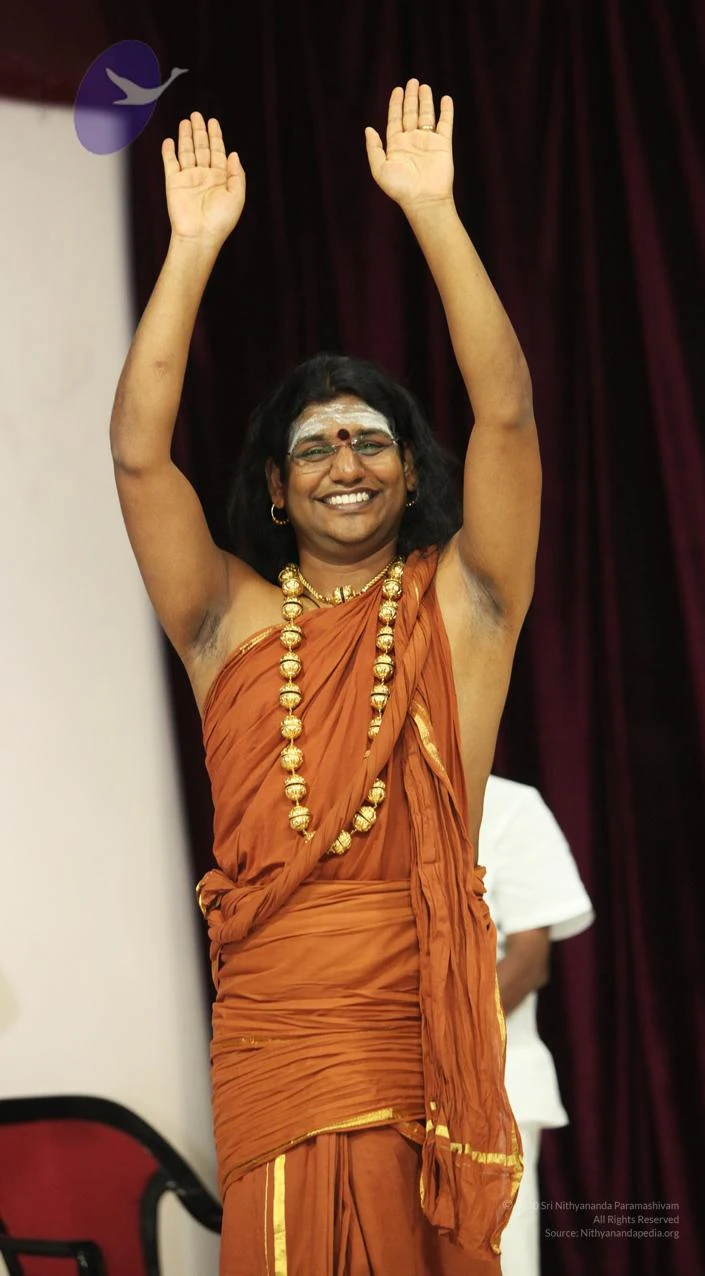
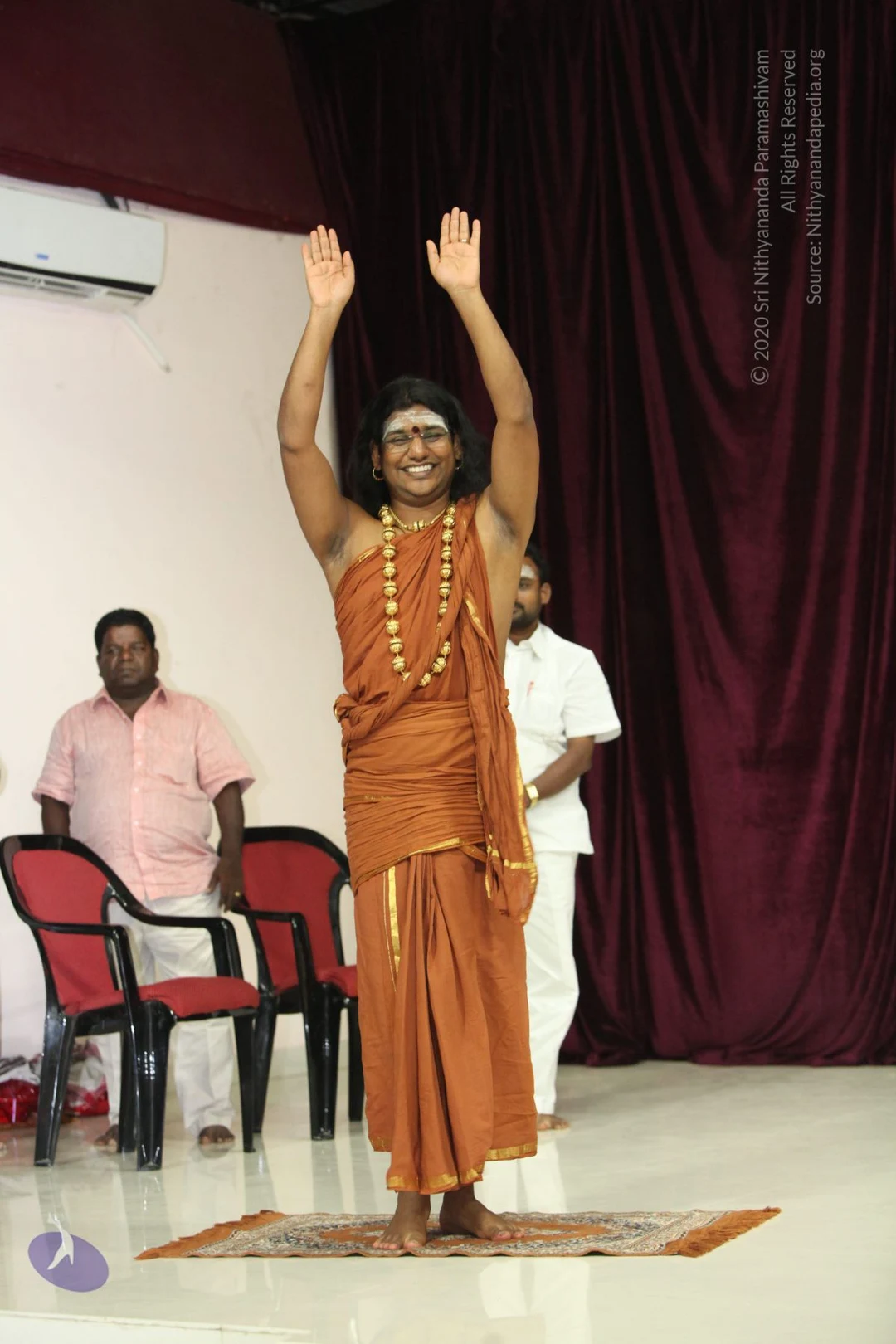
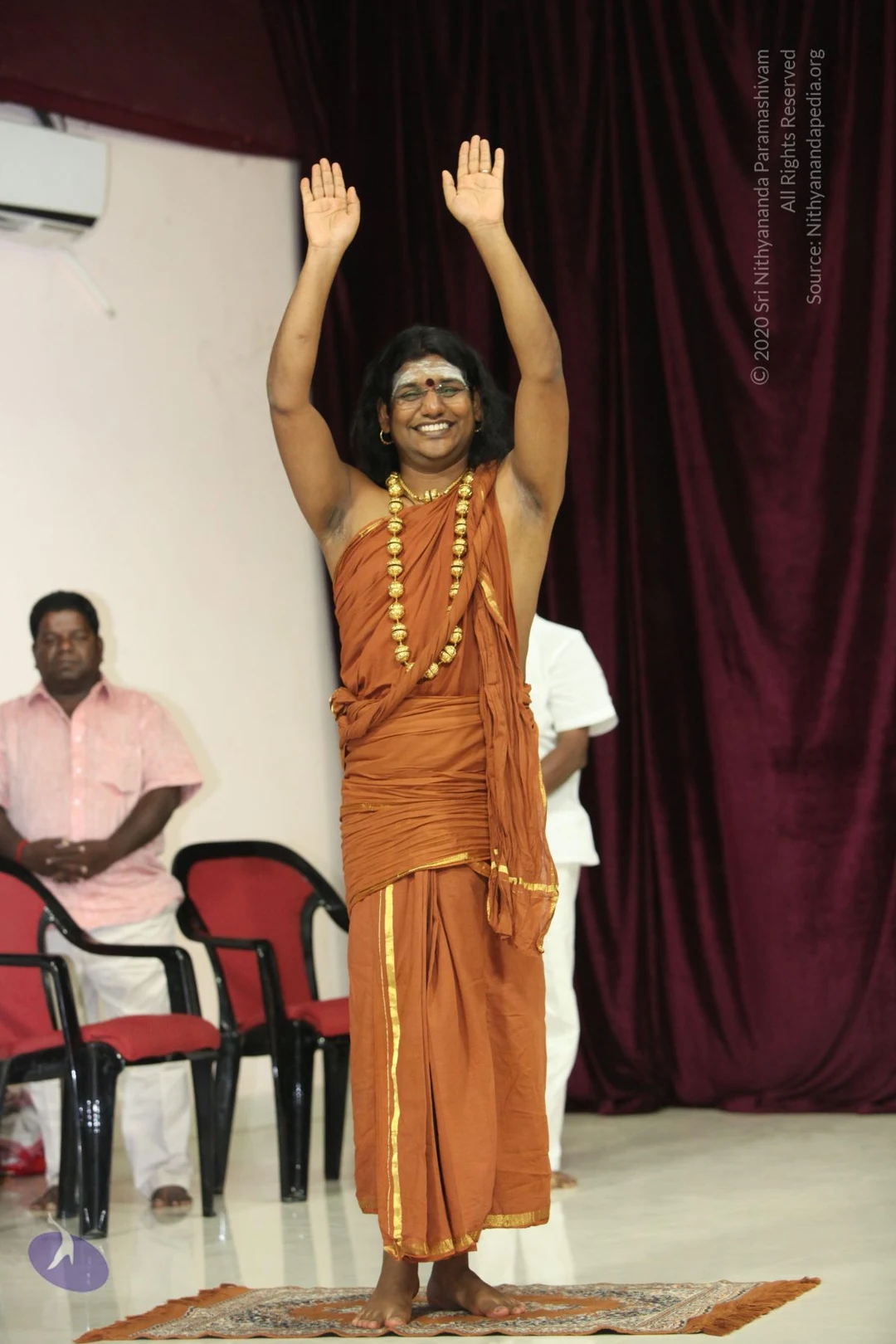
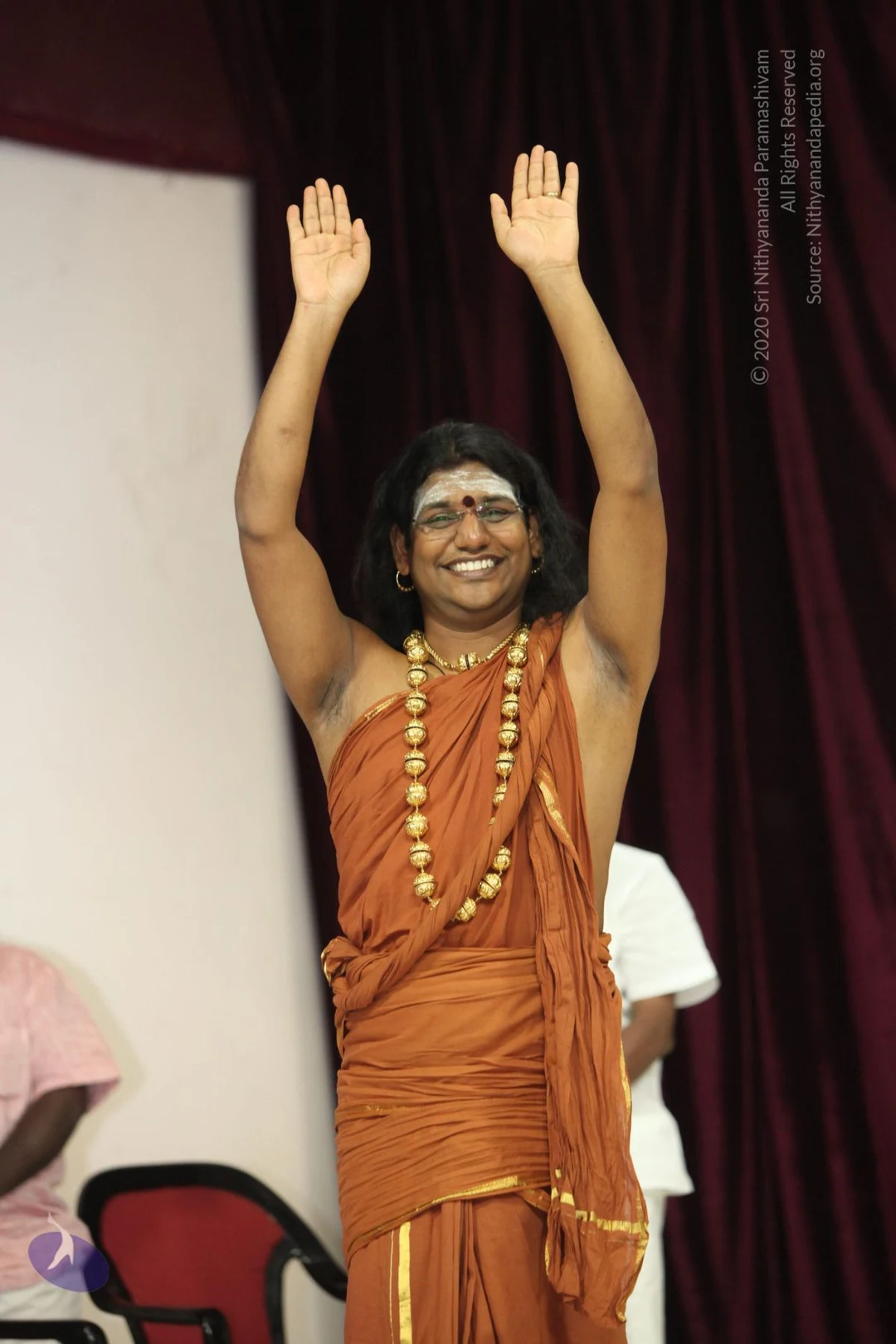
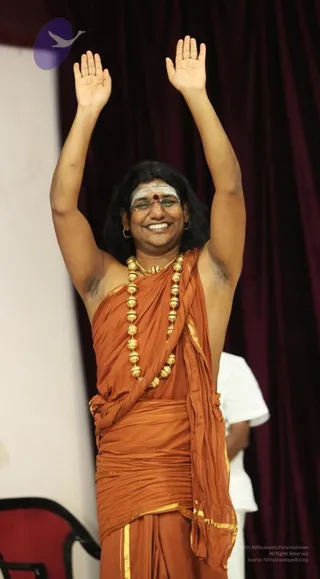
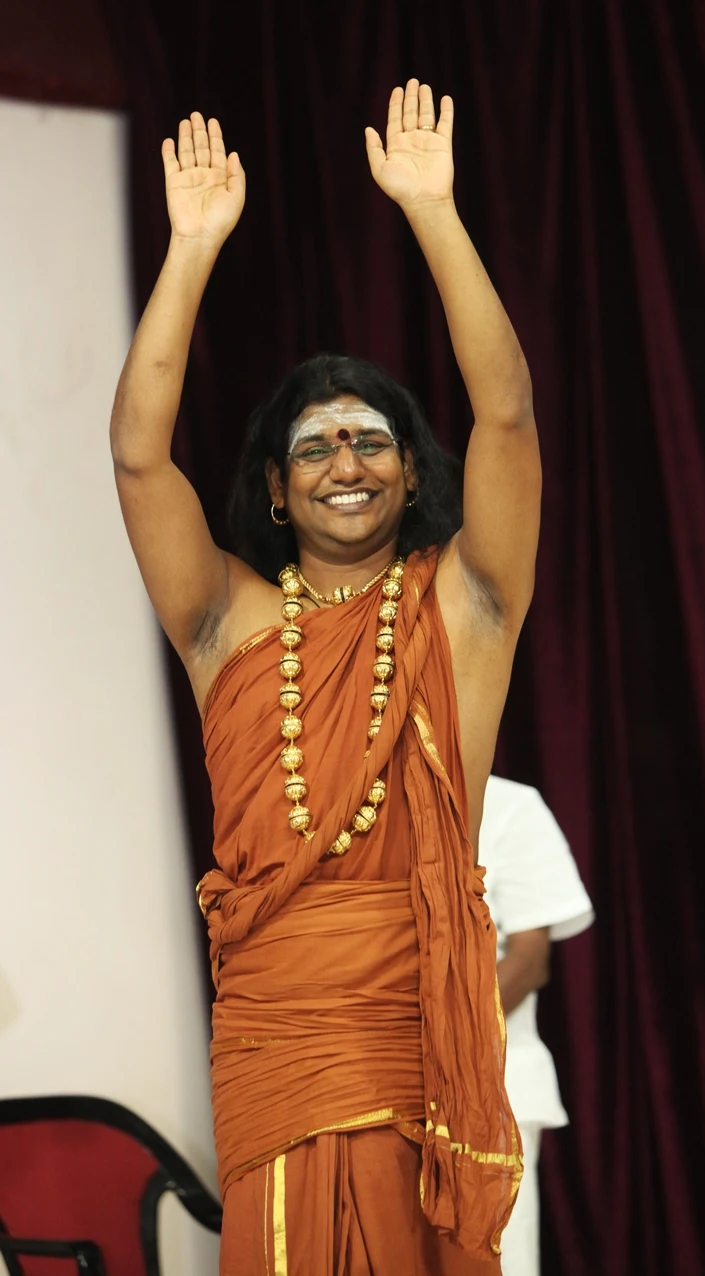
A smiling man in saffron-orange draped robes stands on a stage with both arms raised overhead, palms open. He wears a gold bead necklace of large round beads, a gold chain, and gold hoop earrings, with a white vibhuti marking and a red bindi on his forehead, and his shoulder-length dark hair is swept back. Behind him hangs a deep maroon curtain, and a white-clad person is partially visible at the right edge. The appearance matches the a person cues of saffron robes, rudraksha-style gold beads and swept-back hair, though the page does not place him at this event.

Swamiji-blessing-Actor-Manohar-with-Living-Enlightenment-book

16 photosSource gallery
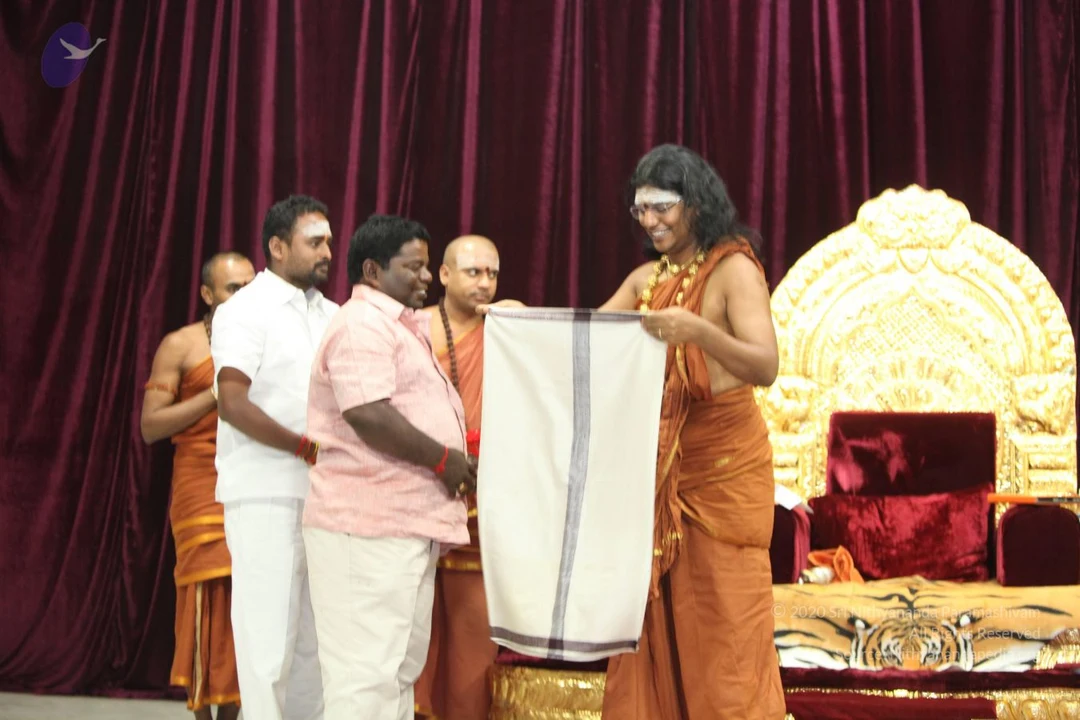
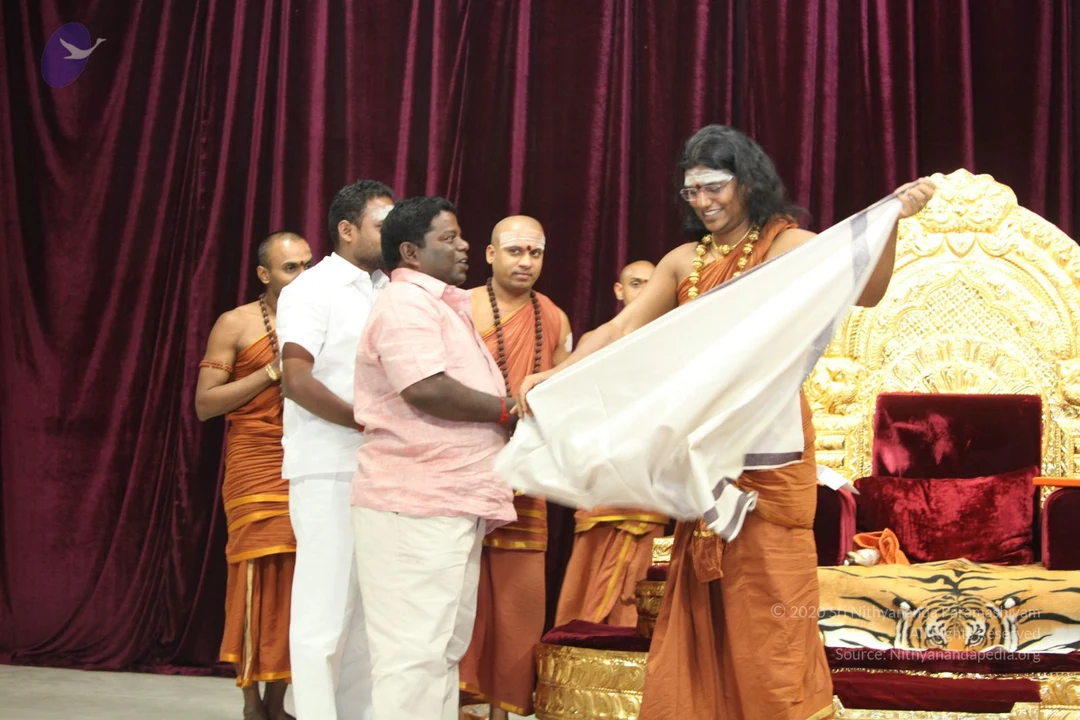
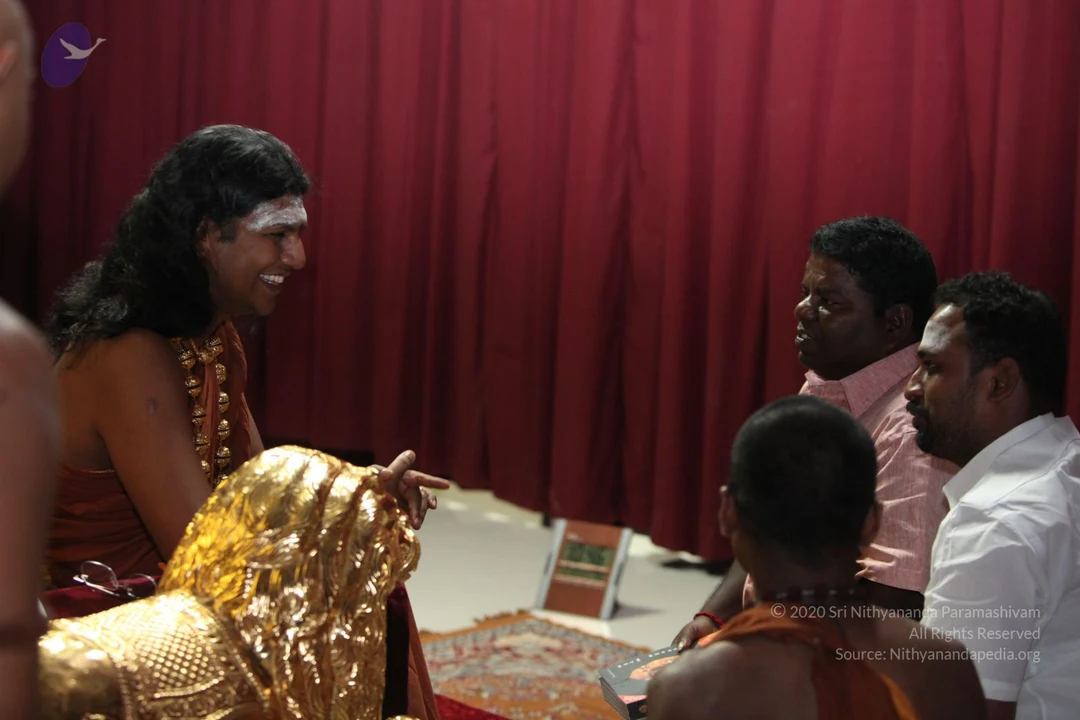
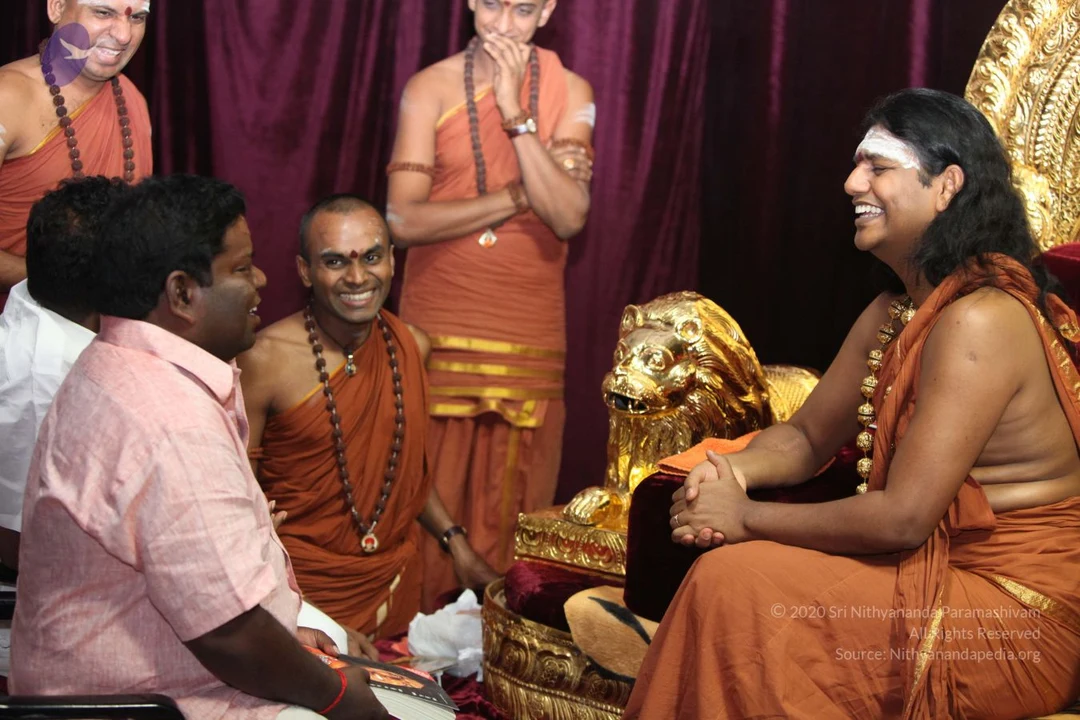
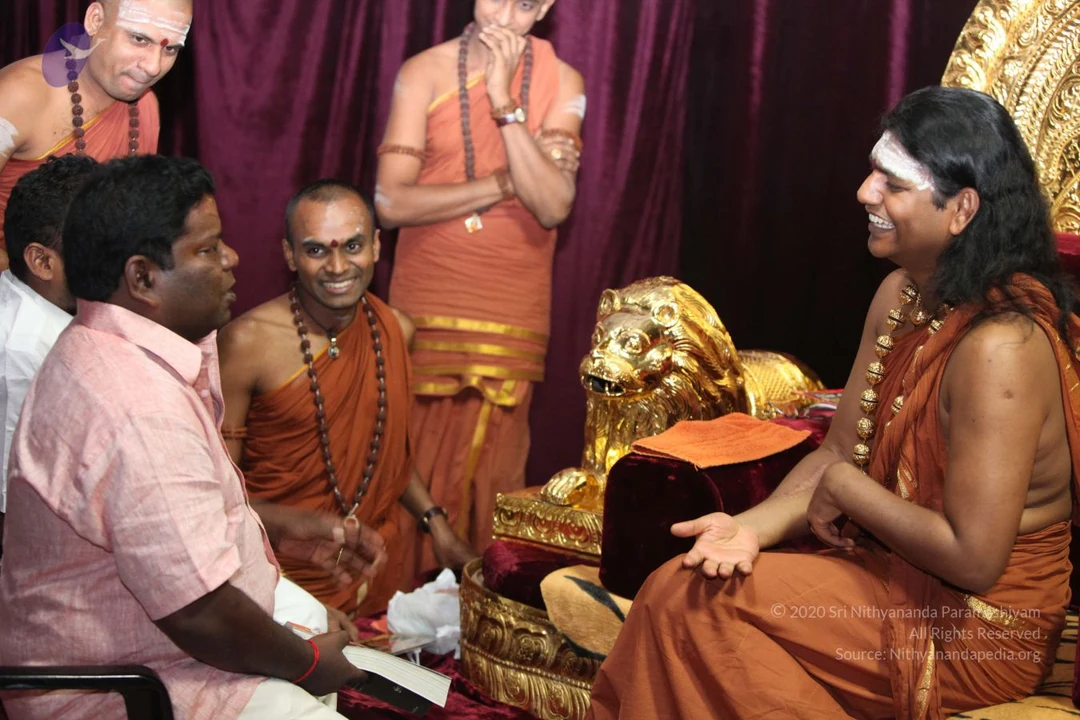
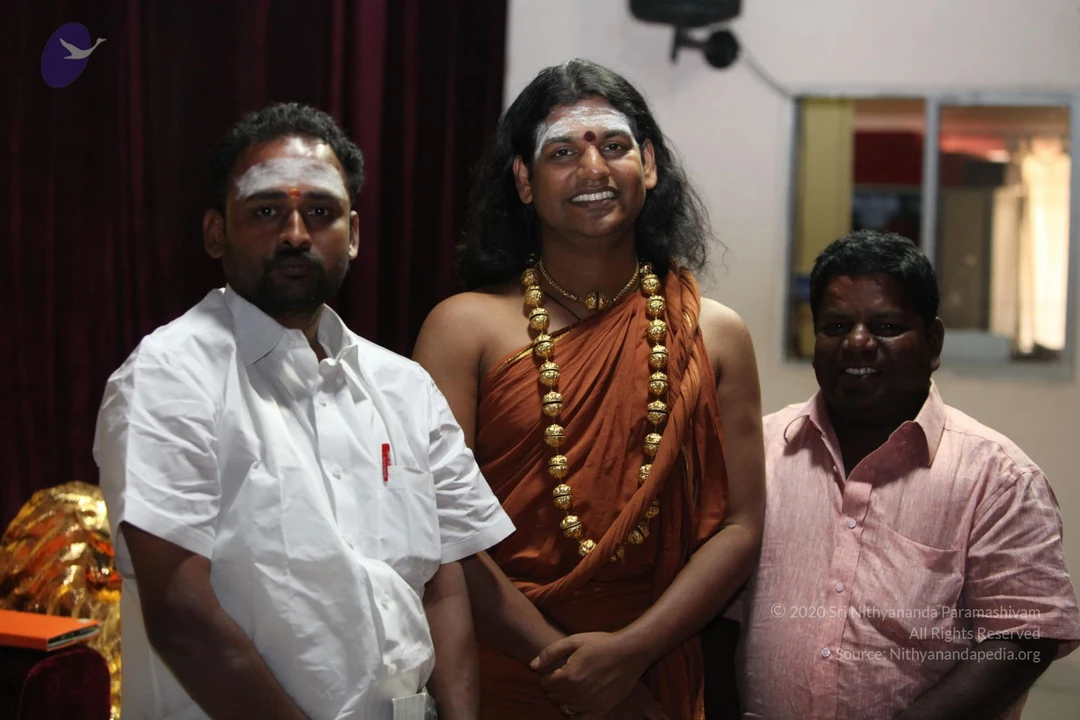
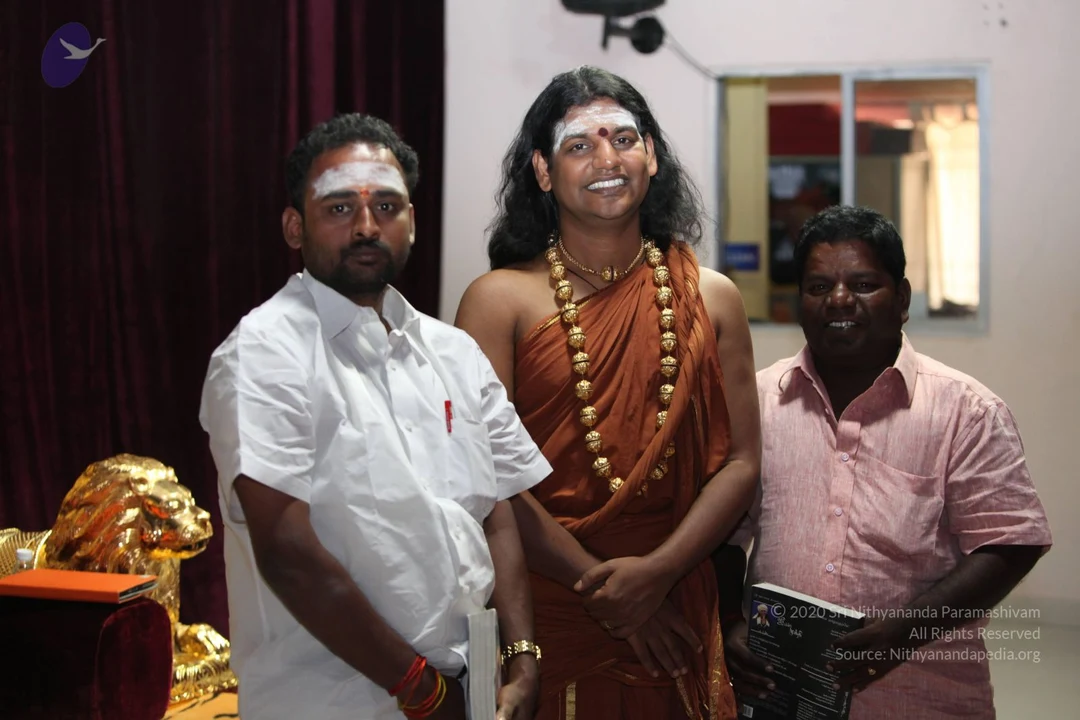
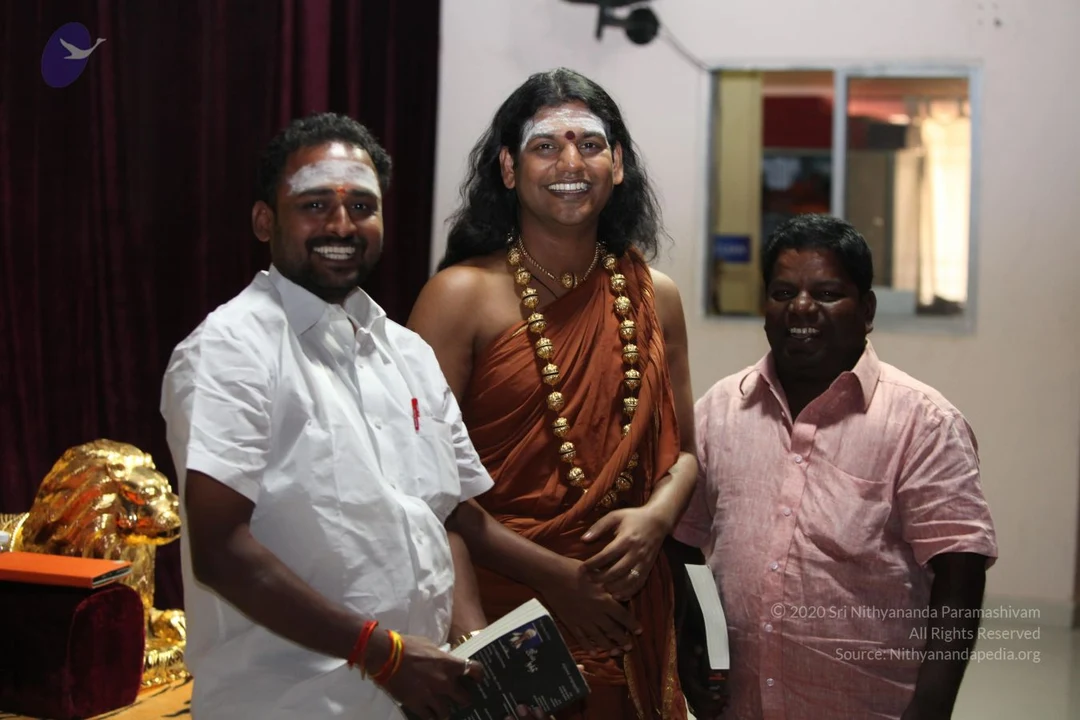
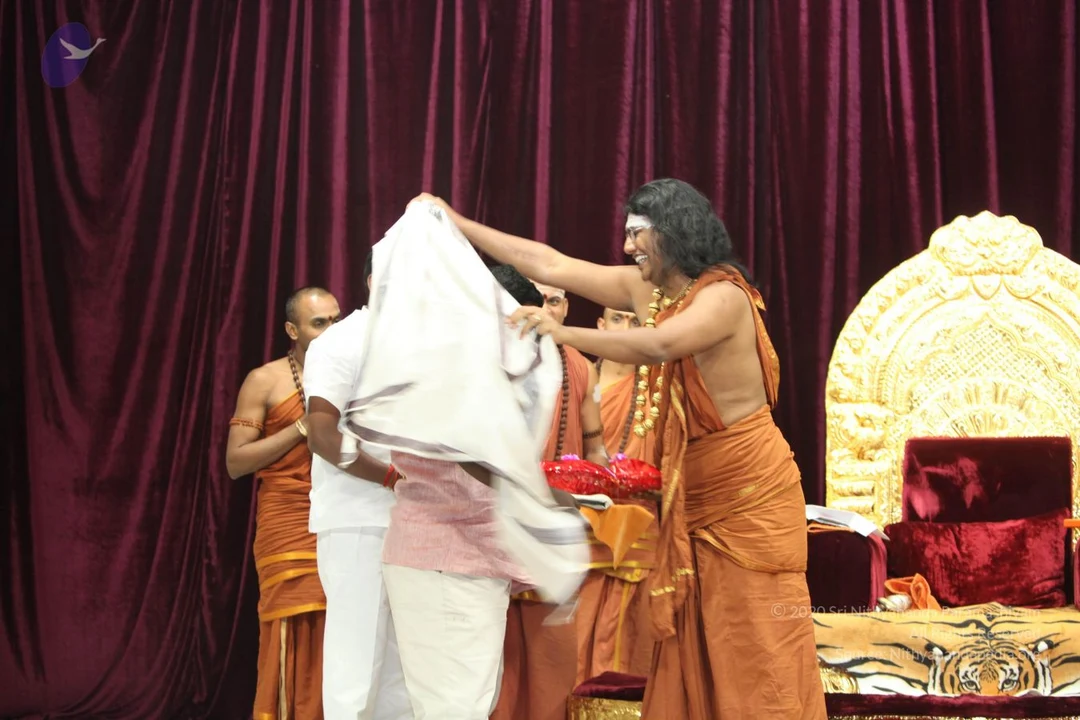
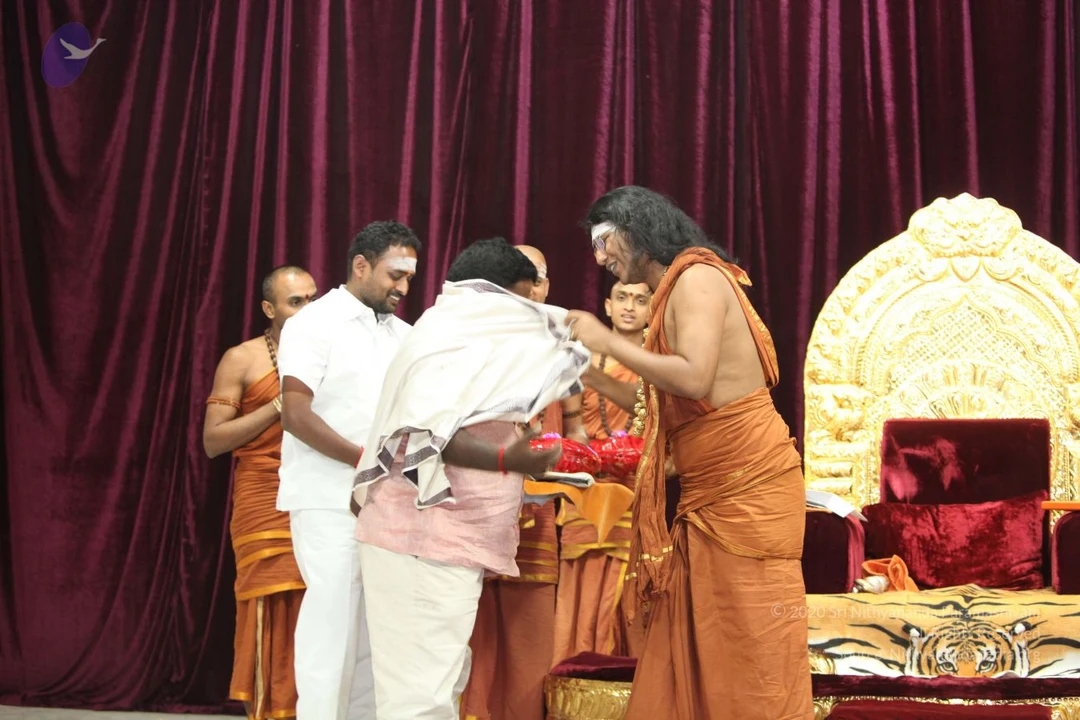
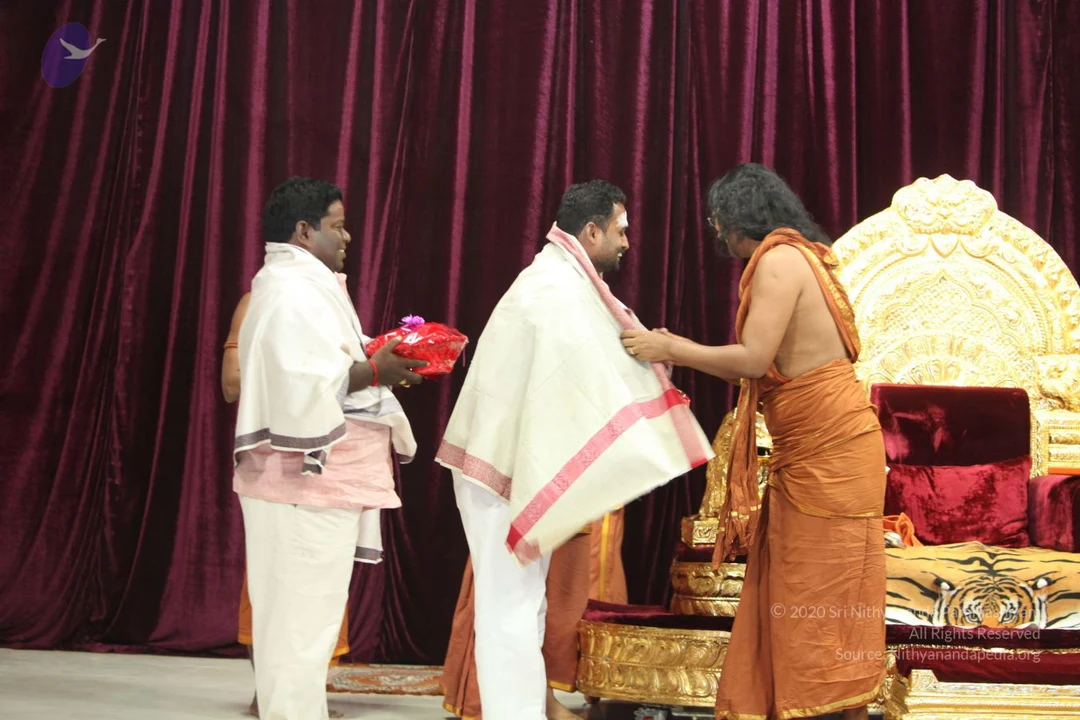
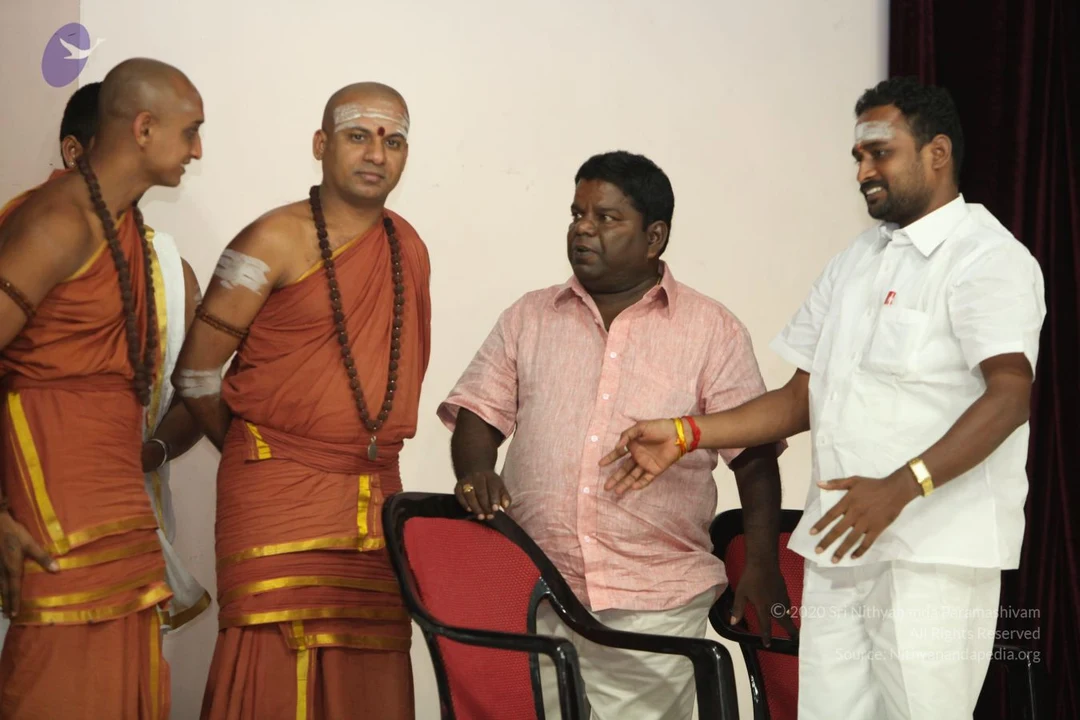
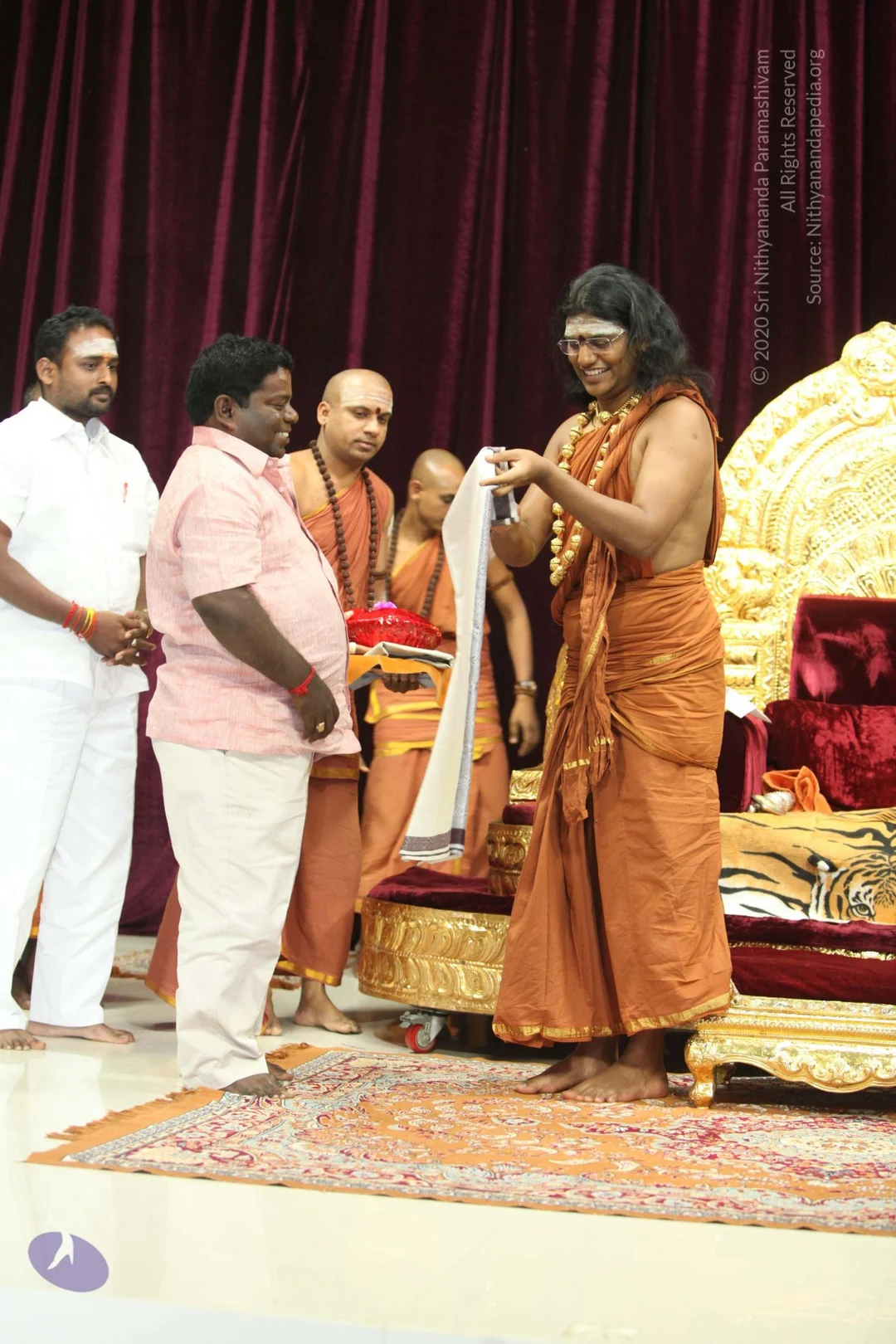
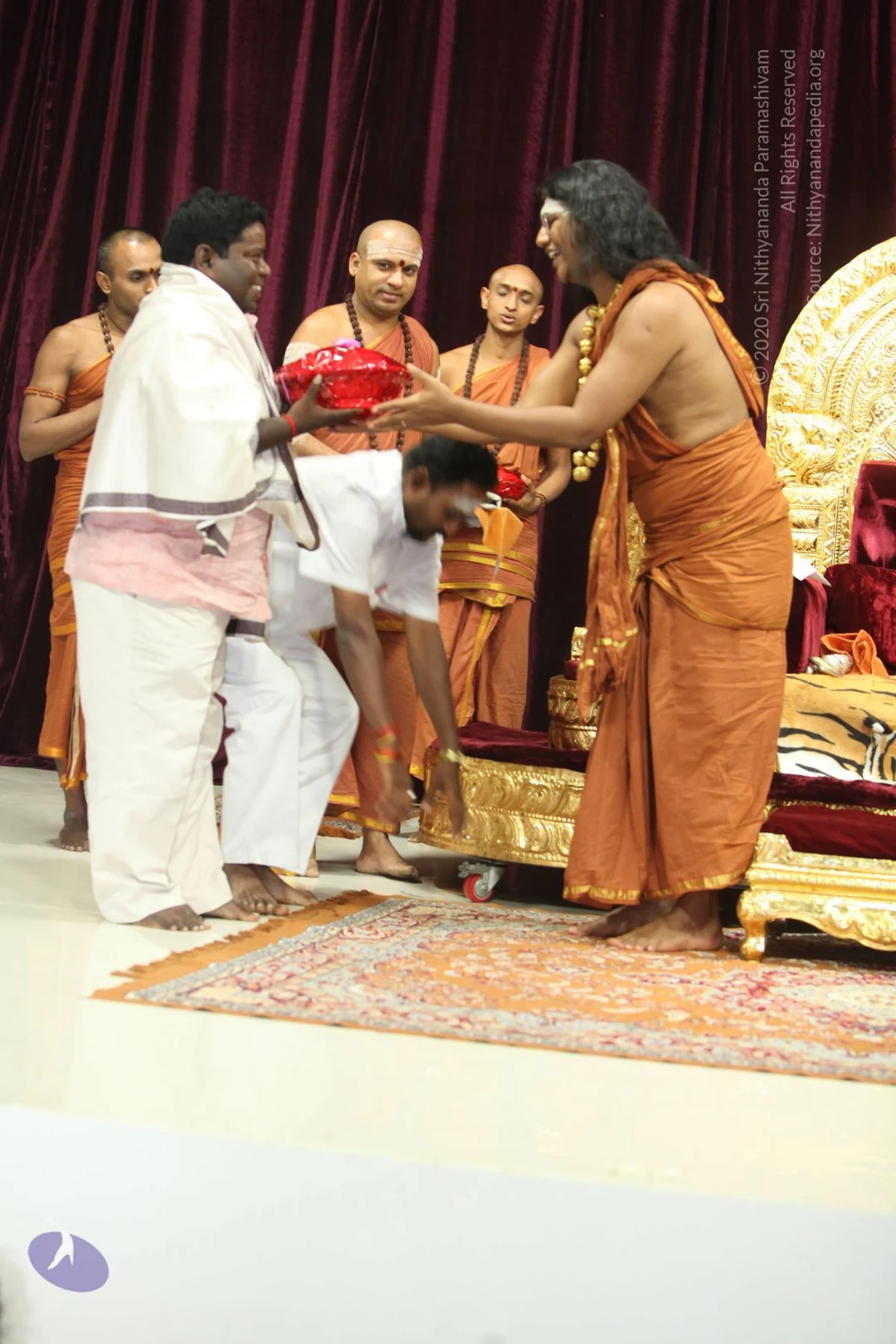
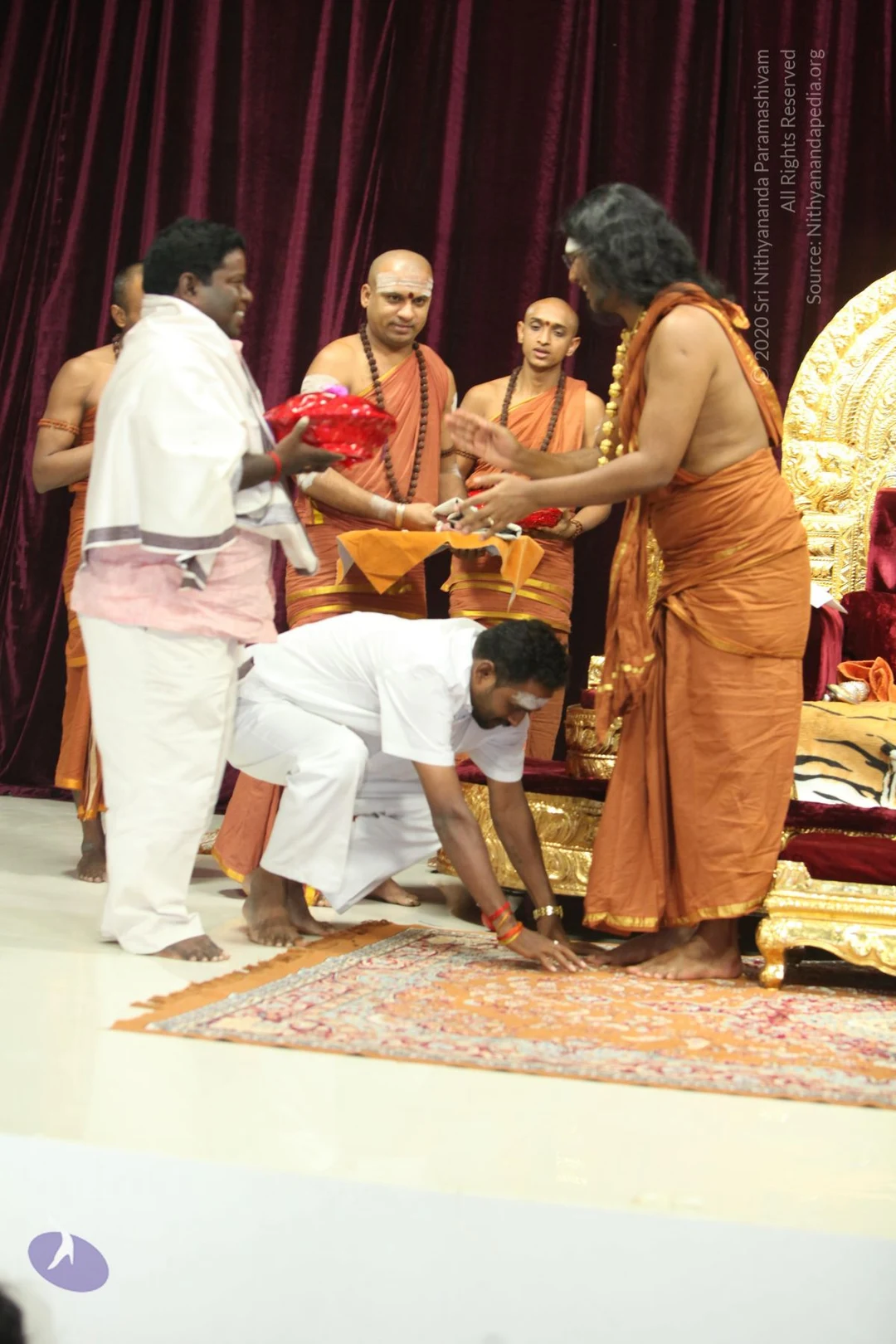
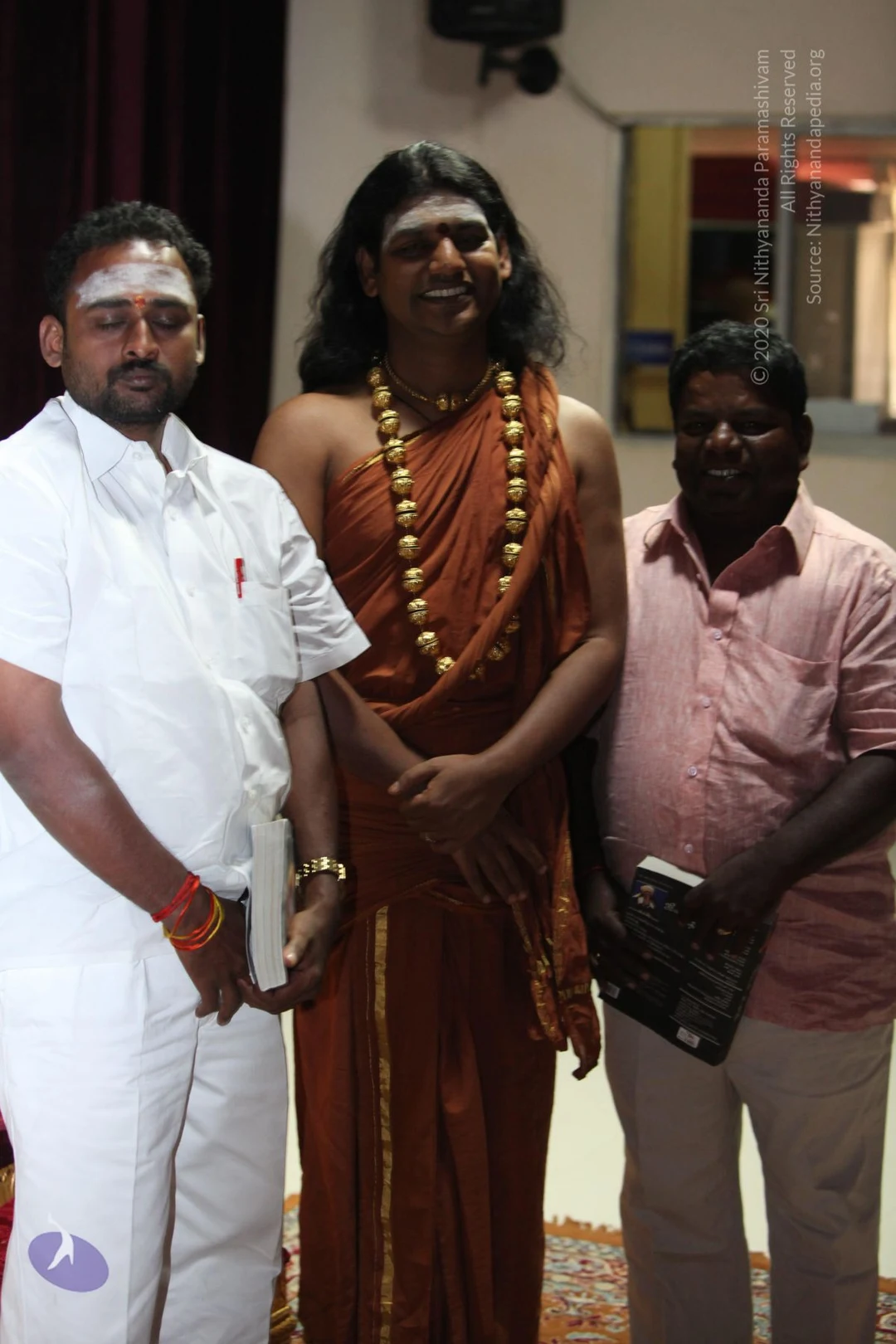
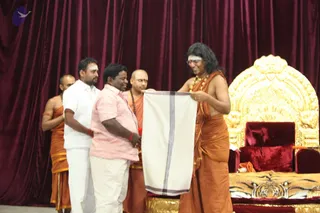
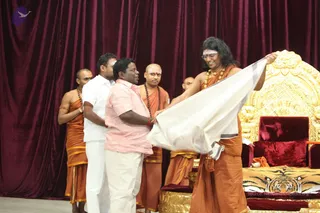
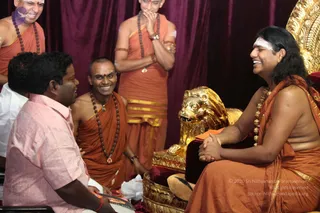
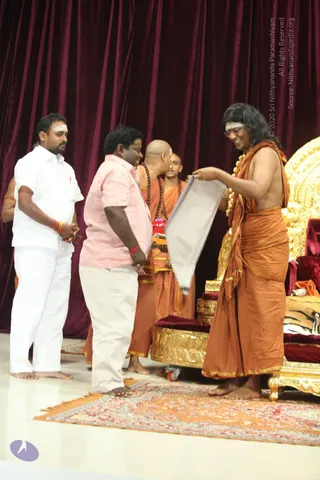
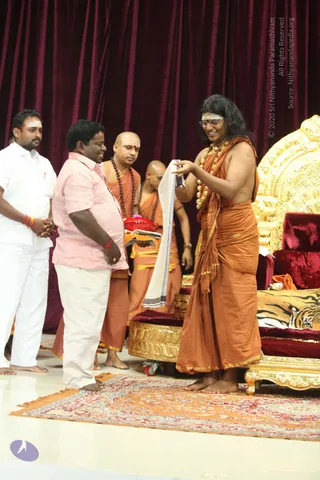
A photograph on a stage with deep burgundy velvet drapes and a gilded ornate throne with a red cushioned seat draped in a tiger-print cloth. A woman with long dark hair, glasses, orange robes, a gold necklace and a rudraksha mala stands at right, smiling and holding up a white cloth with grey stripes for a man in a pink shirt and white dhoti who stands beside a man in white with a tilak. Behind them, a bald man in orange robes and a rudraksha mala and another man in orange stand at the back. No a person candidate can be confirmed from appearance, so the figure at right is described by role only.A man in saffron-orange robes with long swept-back dark hair, a white forehead mark, glasses, a gold necklace and a rudraksha mala stands at right on a stage, holding up a white cloth. Beside him, a man in a pink shirt and white dhoti and a man in white shirt stand close, with a bare-chested monk wearing a rudraksha mala at the left. Behind them, saffron-robed monks stand before a maroon velvet curtain. A gold, ornate peetha/throne with a tiger-striped cushion stands at right, and the scene suggests an offering of a white cloth. a person appears in saffron clothing with long hair and a gold necklace.Indoor scene before a deep red curtain. A long-haired man with white vertical tilak on his forehead wears an orange-saffron shawl and a gold necklace with beads, seated on an ornate gold throne-like chair and smiling while gesturing with his hand. Three men sit facing him: a man in a pink collared shirt, a shaved-headed man in orange with a rudraksha mala seen from behind, and a man in a white shirt at right. A white air conditioner unit stands at left.A seated figure in an orange-red robe with long dark swept-back hair, white forehead markings, and layered gold beaded necklaces smiles while speaking. He sits on a gilded golden throne with ornate carved edges at left. Three men face him: one in a pink collared shirt, one in a white shirt, and one shaved-headed man in an orange robe seen from behind, all seated on a small rug before a deep red curtain. a person on the throne, shown with distinctive hair, orange robe and gold necklaces. A small book sits on the rug.A photograph of a seated man with long dark hair and white forehead markings, wearing an orange-brown garment with ornate gold-toned necklaces and bead ornaments, smiling and gesturing with one hand while speaking to three men seated on a rug before a red curtain. One man in a pink shirt and another in a white shirt listen attentively; a man in orange robes with a shaved head sits in the foreground. A gold-embroidered cloth lies over a seat. A small book sits on the rug, and a purple bird logo appears in the top left corner.A photograph of an indoor satsang with a seated man in an orange sannyasi robe and long dark hair, with white vertical marks on his forehead, laughing on a golden throne with a golden lion-shaped armrest and a crimson velvet backdrop. Beside him, a man in a pink shirt sits on the floor facing him, smiling and holding a small book, and a seated man in white clothes is partly visible at the left edge. Behind them, two men in orange robes with rudraksha malas stand smiling, one with hands clasped near his chin and one with a red tilak. A gold-and-red wrapped item rests on the cushion by the throne. Six people are visible in total.

Temple

22 photosSource gallery
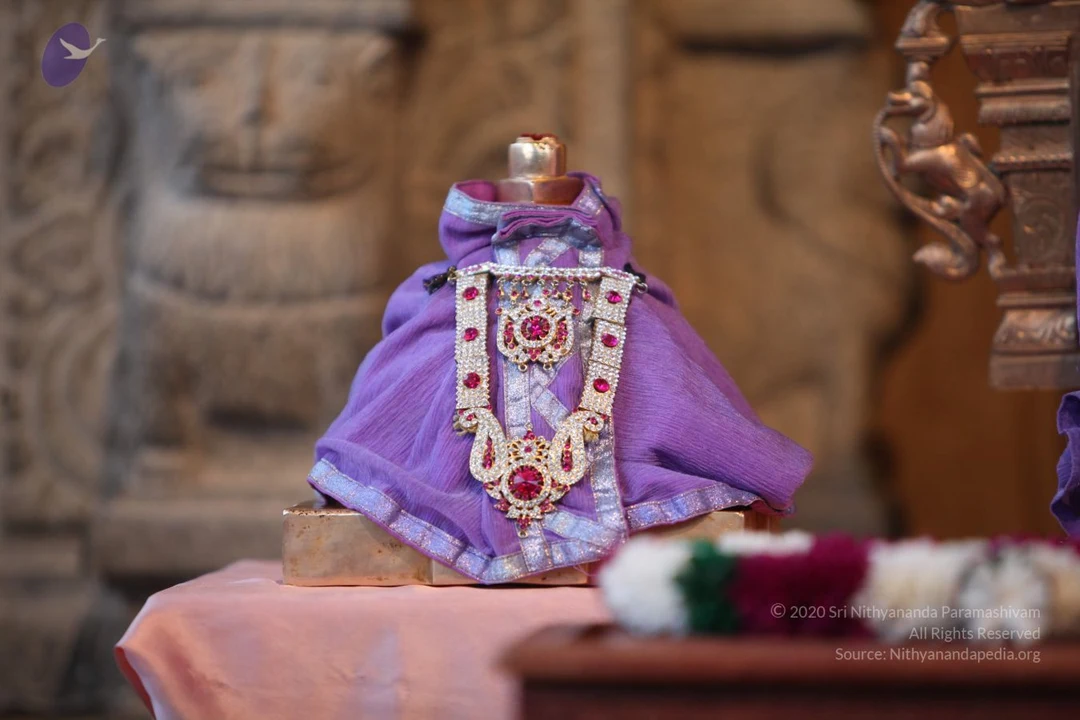
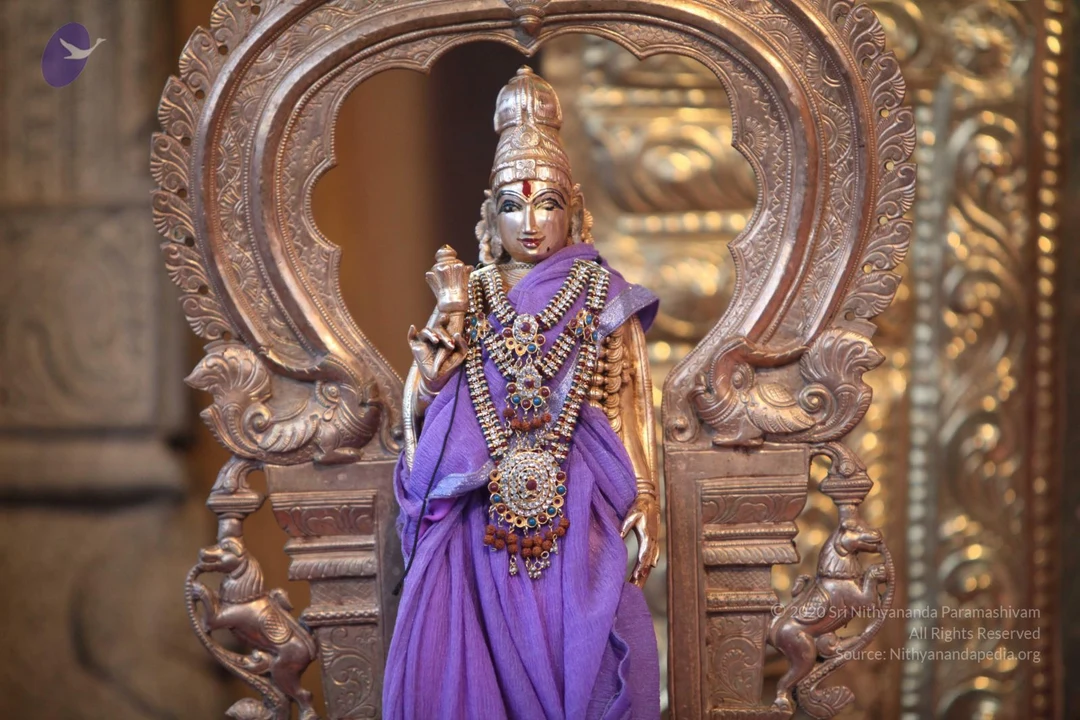
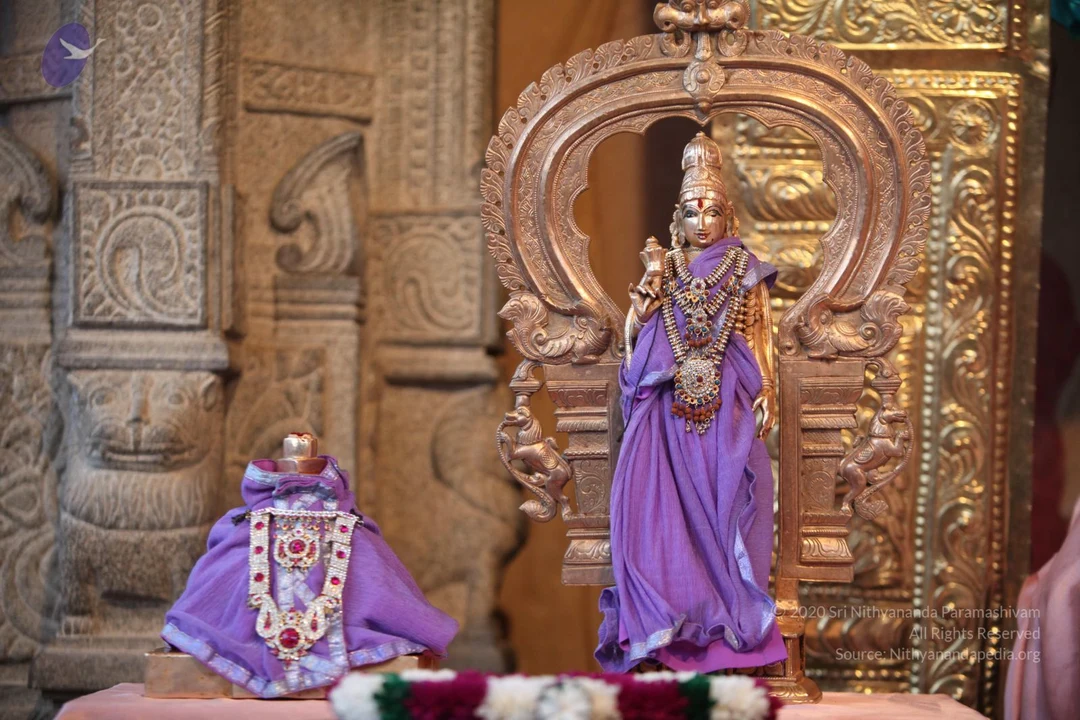
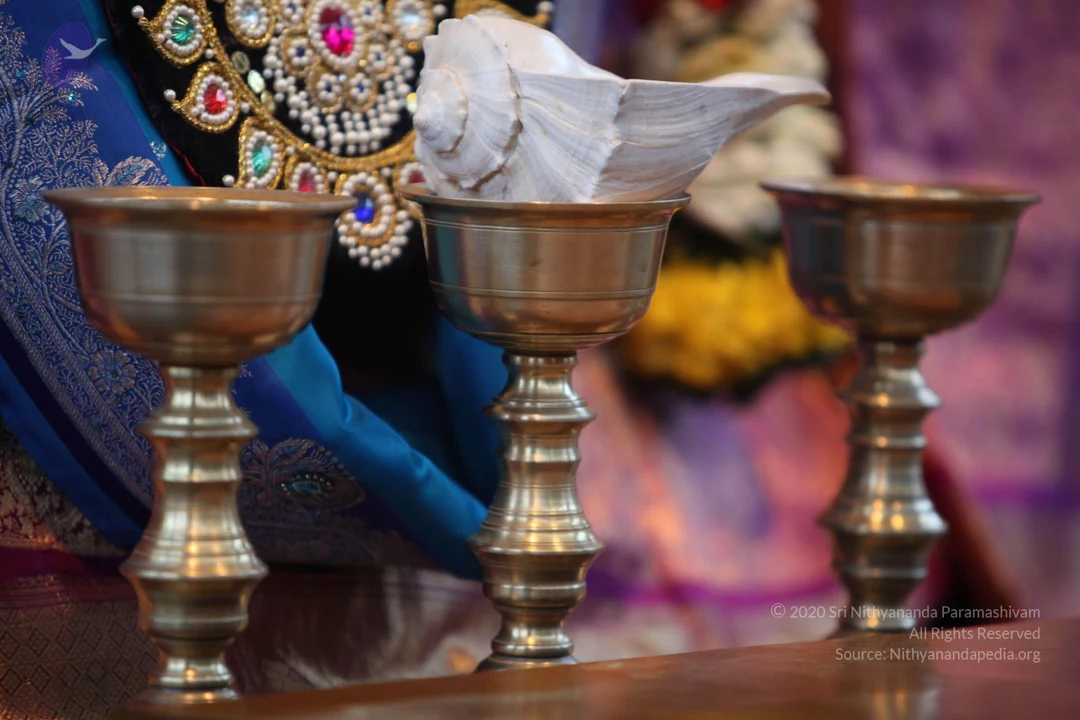
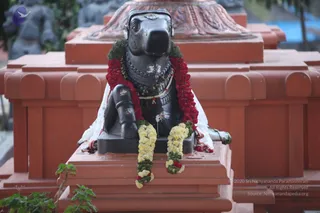
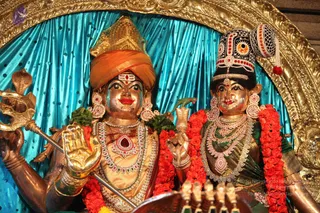
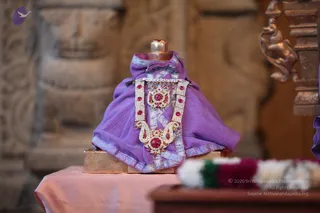
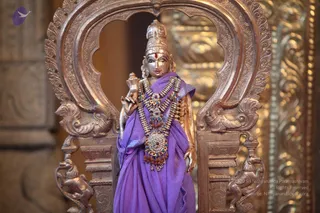
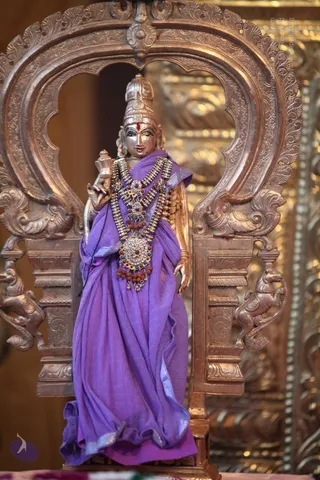
A black stone Nandi bull statue sits on a red sandstone pedestal with a carved base behind it. The bull wears a red and red-and-yellow garland of marigolds and roses draped over its neck and shoulders, a white cloth on its back, a black rudraksha-style bead necklace, and a tilak mark on its forehead. Green leaves and small plants appear in the foreground, with more stone deity figures blurred in the background. No people are visible.A temple shrine photograph showing a large gilded murti of a seated deity pair. The taller deity wears an orange turban, a gold crown and a red-and-white garland, holds a trident and a raised hand, and wears ornate gold and red jewellery. Beside him sits a consort in a green and gold sari with a tall decorated headdress and a white floral garland. Between them, a smaller figure in a blue and purple silk cloth with a red garland stands on a pedestal. To the right, a standing statue in orange robes with a rudraksha-style necklace holds a staff. Brass oil lamps and offerings stand before the shrine, which is framed by golden arches and a teal backdrop. No living people are visible.A temple shrine photographed from the front, with a dark stone framing and golden arch. Central figures are statues of a deity couple: the male figure on the left holds a trident and a small drum-like object, and the female figure on the right wears a pink garment and a red and white garland. Between them sits a smaller seated figure in blue with a gold necklace and orange headwear. A standing figure in orange and red stands in a green niche on the right, and a red curtain hangs at the left edge. Green drapes, marigold garlands, brass lamps and a kalasha-style arrangement decorate the shrine. No physical people are present; all figures are sculpted or painted murti.A pair of gilded metal deity murtis stands against a teal satin backdrop framed by an ornate gold arch. The figure on the left wears an orange turban with a red and white tilak and a red-lipped face, holds a trident-like staff with a small cobra motif, and is adorned with layered beaded necklaces, a red pendant and large jewelled earrings. The figure on the right wears a black and red embroidered crown, a green and gold garment, and multiple diamond-style necklaces. Both are garlanded with red roses and green leaves, and a row of small golden ritual objects sits at the bottom edge. These are statues, not living people.A close view of a deity murti draped in a lavender-purple silk cloth with silver-edged border, adorned with a jeweled ornamental necklace set with red and pink stones and white stone-studded pendant work. Carved temple stone pillars with ornate sculpture form the background, and a pink cloth covers the table below. A garland of white, pink and green flowers lies in the lower right foreground. No people are visible.A standing metal deity murti is the central subject, framed by an ornate copper-coloured arch with floral and scrollwork carvings and rearing animal figures at its base. The murti wears a tall crown, a red tilak on the forehead, a purple draped cloth, layered ornate necklaces set with coloured stones and a rudraksha-style bead strand, and holds a ritual object in one raised hand. Gilded carved panels and a warm, blurred background surround it. No people are visible; the figure is a statue.

Darshan

18 photosSource gallery
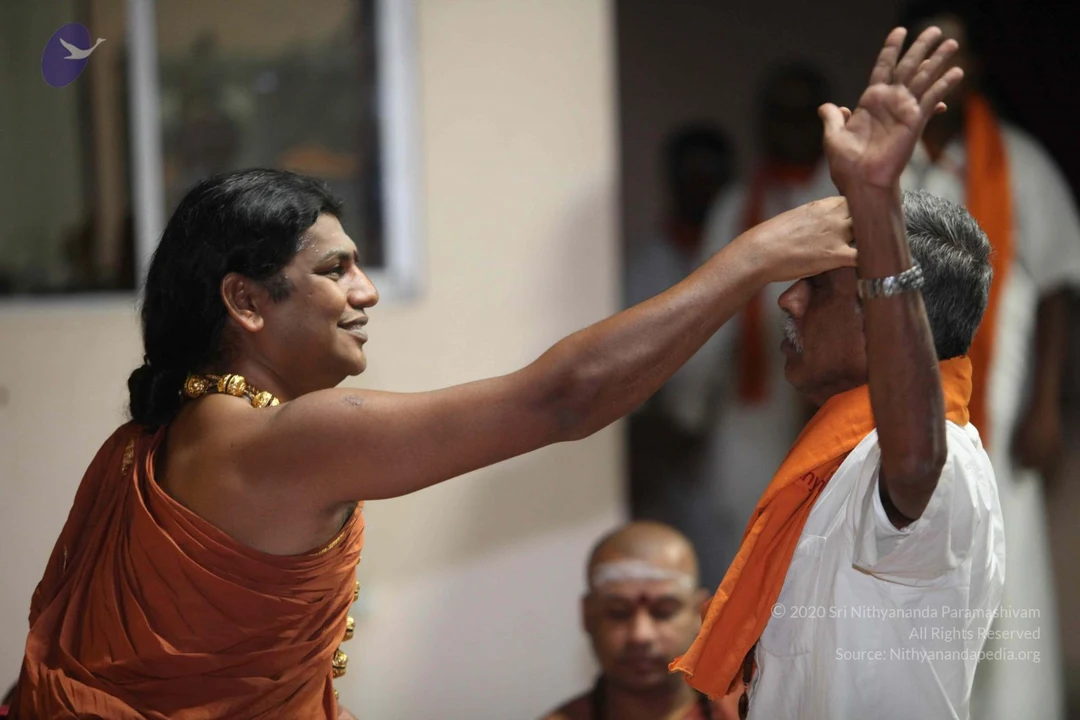
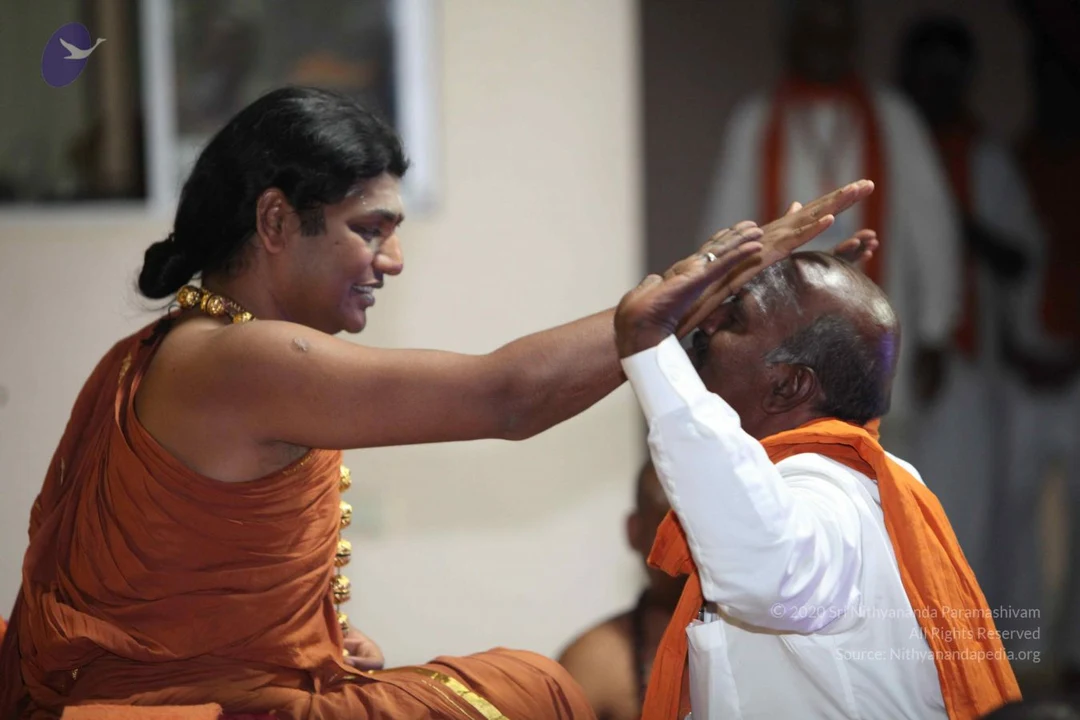
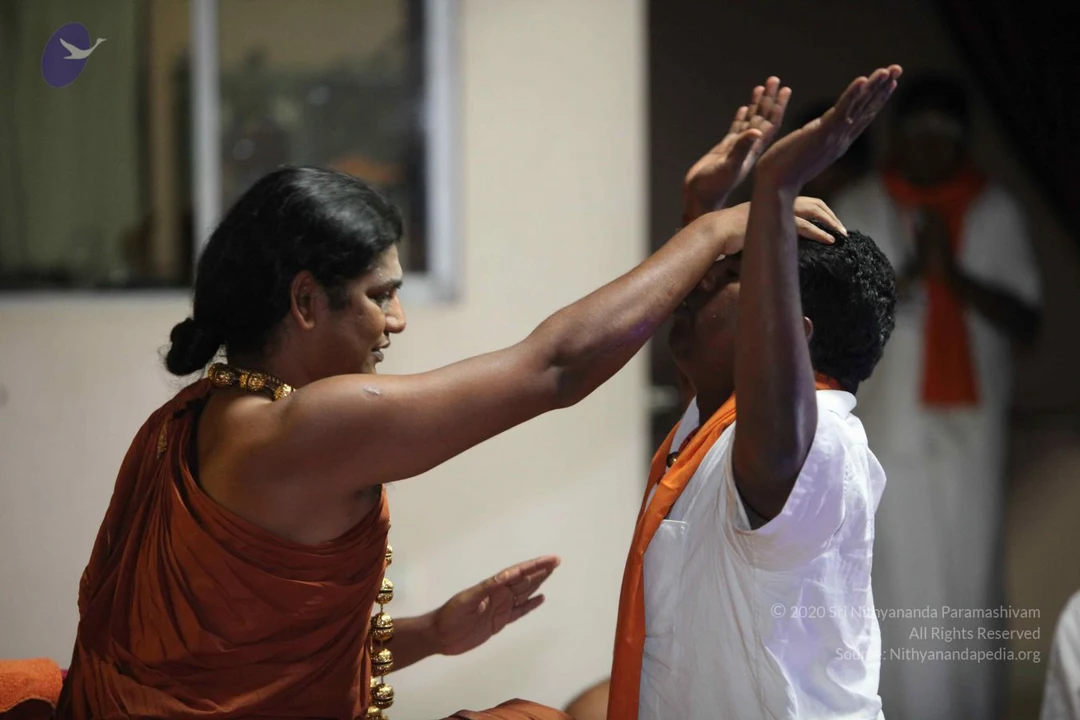
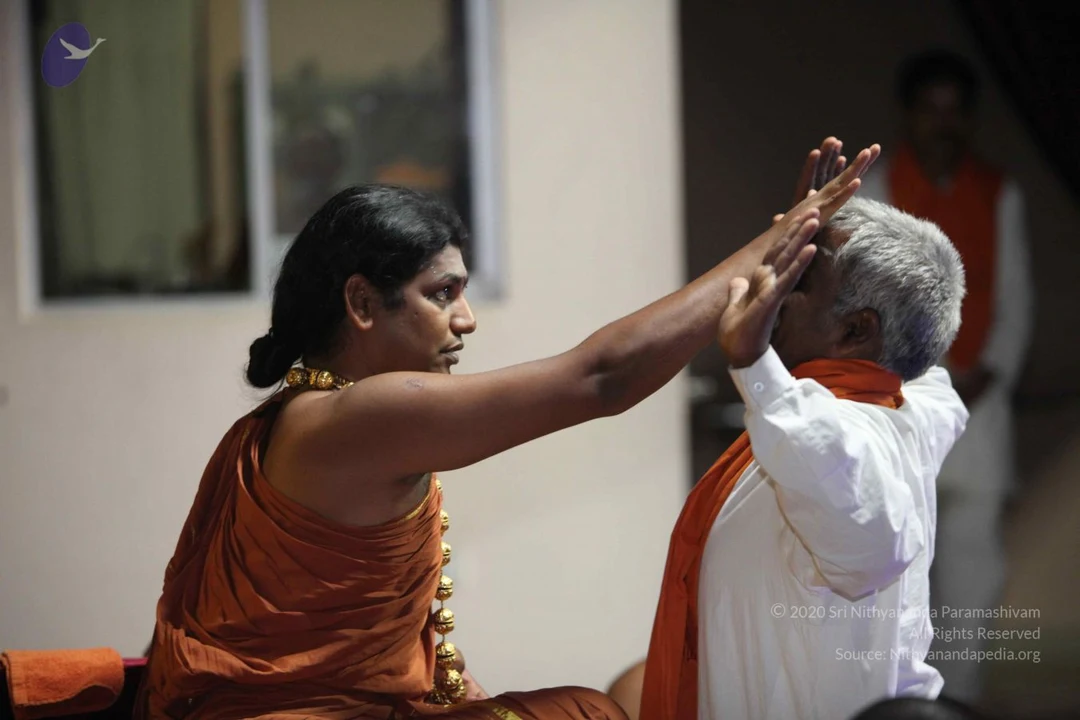
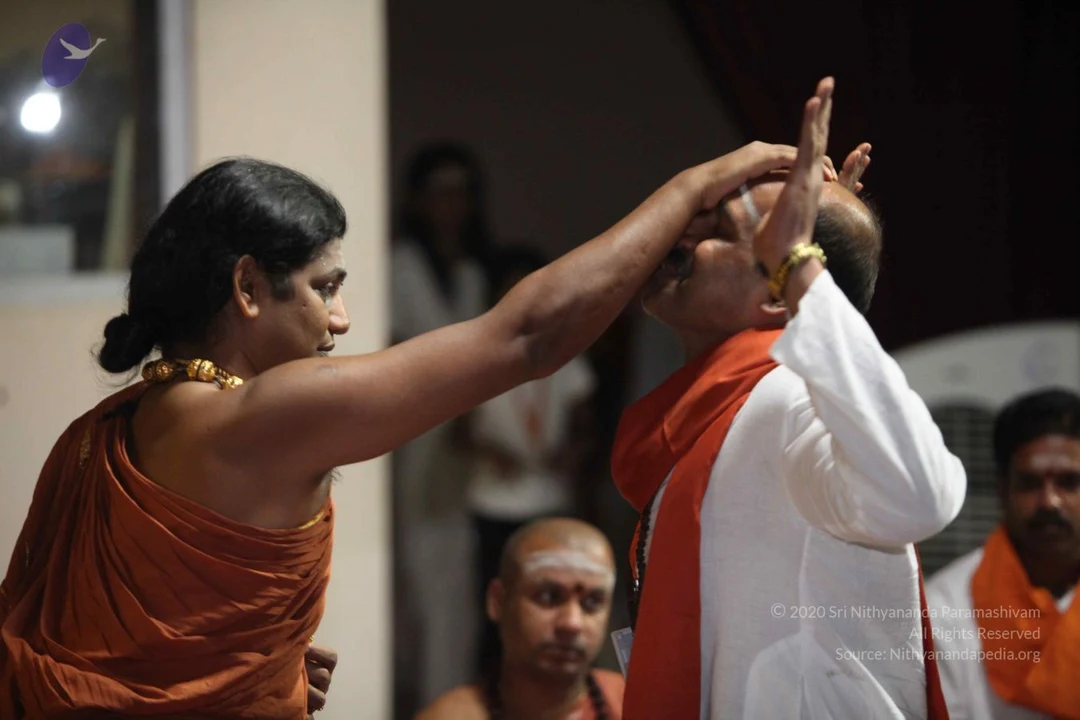
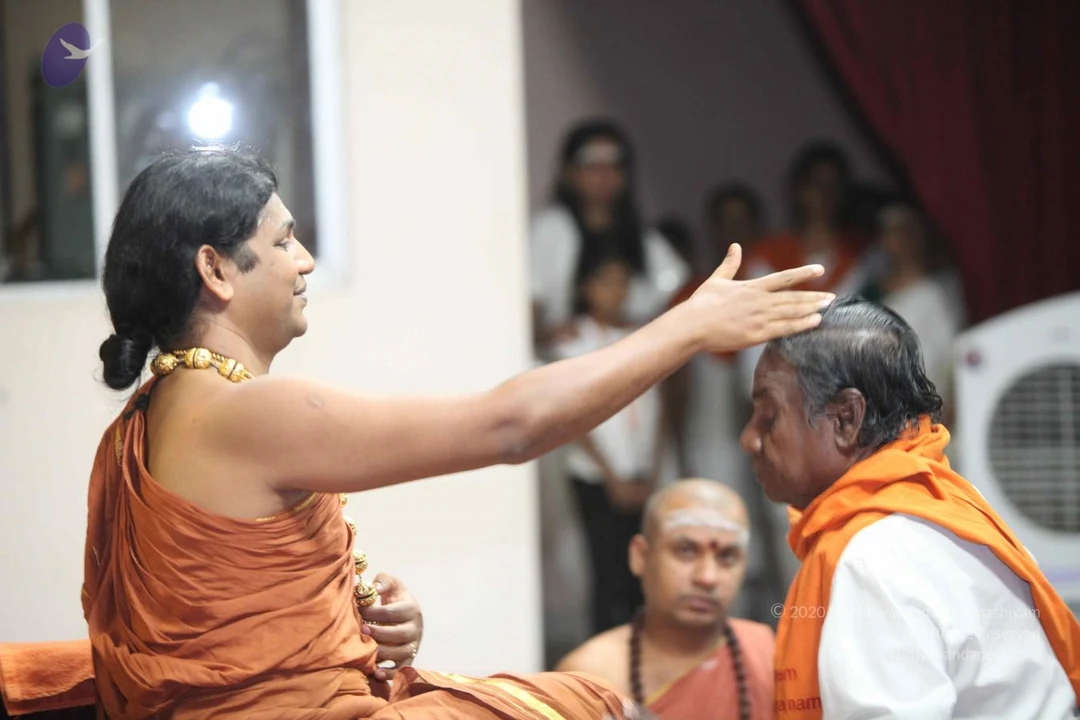
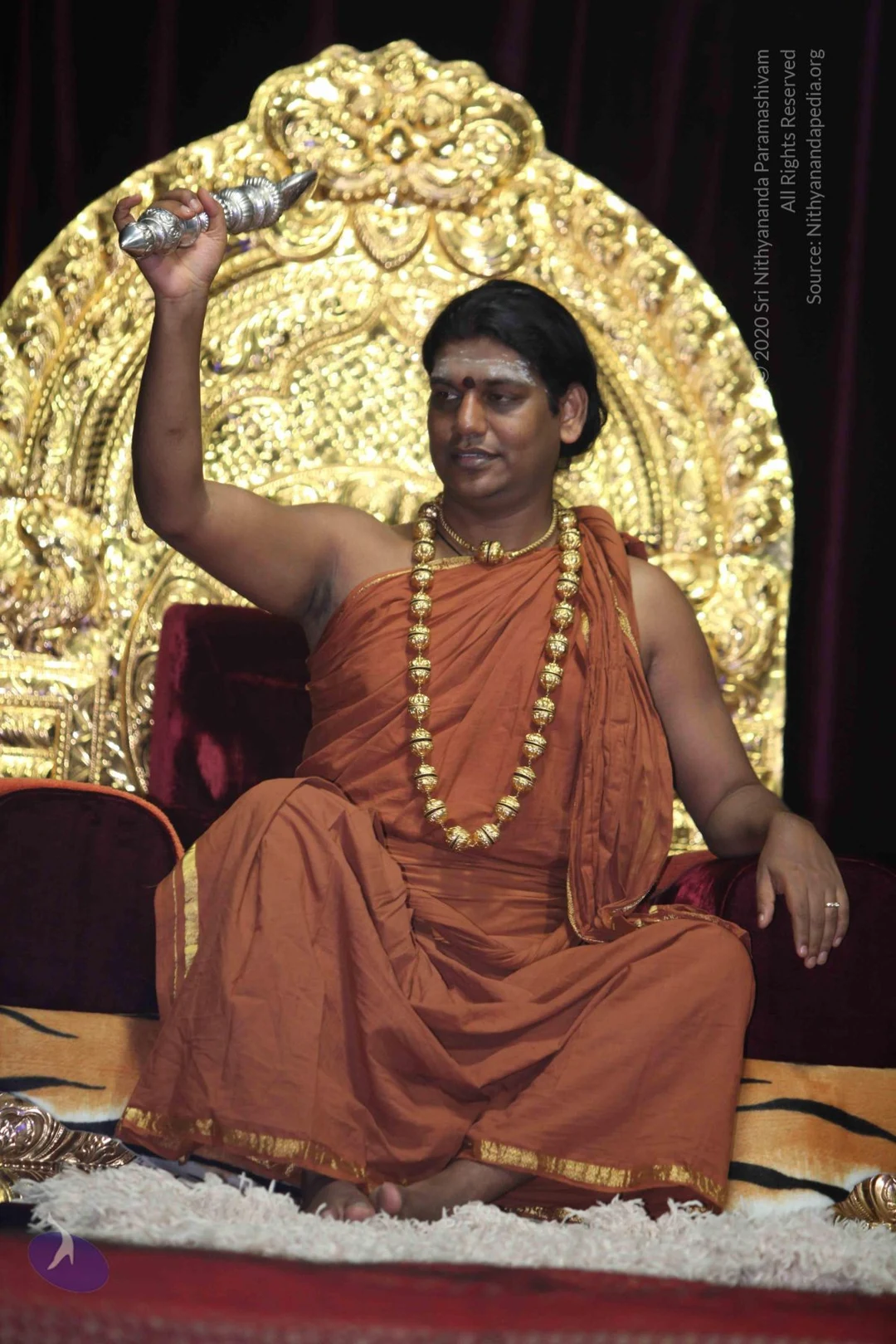
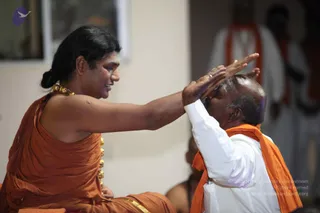
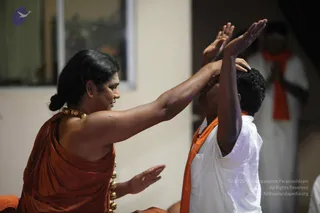
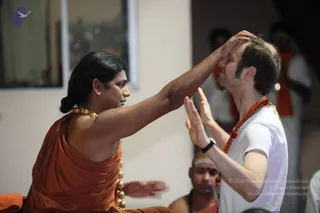
A smiling man in orange-saffron robes and a gold necklace of rudraksha-style beads sits on an ornate gold-and-red throne (peetha) with carved gold backrest. He holds a silver sceptre with a finial, and a red bindi marks his forehead. Carved golden lion-head armrests and a tiger-striped cloth cover the platform. Appearance-based cues (long swept-back hair, saffron robes, ceremonial gold beads, throne) are consistent with a person, seated in person on stage.A photograph of a smiling man with long dark hair and a red bindi, seated on an ornate gold throne with a large arched gold backrest carved with foliage and scrollwork. He wears an orange-saffron cloth draped over his shoulders and a multi-strand necklace of gold beads and gold pendants, with his hands folded in his lap. The background is dark with red drapes at the sides. Adjacent to the chair, the scene shows a single person.A photograph of a bare-chested man in an orange cloth draped over his shoulder, wearing a gold necklace, extending his right hand toward the forehead of an older man in a white shirt and orange shawl who raises his own hand in response. The older man has grey hair and a moustache and wears a silver bracelet. Behind them, a blurred figure in a white garment with an orange shawl stands, and a bald man with a white forehead mark sits in the foreground. The setting is an indoor room with a cream wall and window. The scene appears to show a blessing or touch of the forehead during a ritual or satsang. The man in orange with the gold necklace is a person, identified by his long swept-back hair, gold ornamented necklace and saffron clothing, shown in person.A seated man in a saffron-orange robe with long dark hair in a low knot and ornate gold beaded necklaces places both palms on the head of an older bald man in a white shirt and orange shawl, who bows forward. Soft-focus figures in orange and white stand in the background against a plain wall. The person in orange has distinctive long hair, saffron robes and gold ornaments, consistent with a person blessing a devotee.A photograph of a seated figure in orange robes and a gold ornate necklace placing both hands on the head of a young man in a white shirt with an orange shawl, performing a blessing. The robed figure has long dark hair tied back and wears a gold necklace with rounded pendants; the blessed man bows his head with eyes closed. Behind them a figure in white with an orange shawl stands with hands folded in namaskar. The setting appears to be an indoor hall with a window and cream wall. a person: the seated figure in orange with long hair, gold necklace and ornate ornaments matches the presentation, though the page does not confirm attendance.A photograph of a seated figure in an orange saffron wrap with a long swept-back hair bun and a gold ceremonial necklace, pressing one palm firmly to the forehead of a man with short brown hair and light stubble who wears a white t-shirt, a red-beaded rudraksha-style mala and a black wristwatch, eyes closed, hands raised in front of him. The giver's sleeve is bare-shouldered in orange cloth with gold beads at the chest. A second seated man in the lower foreground wears white with a white forehead mark, and standing figures in orange and white are blurred in the background near a window. a person appearance cues: long swept-back hair, saffron ornate wrap and gold necklace, performing a blessing (padapuja-style forehead blessing) on a devotee.

Yoga

3 photosSource gallery
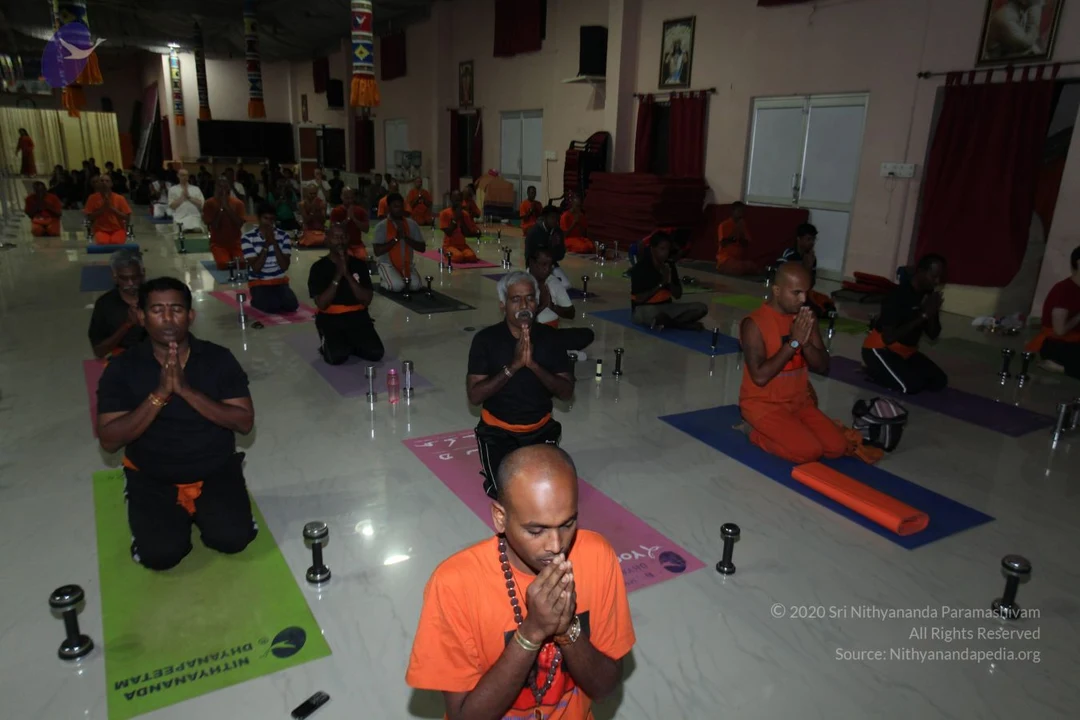
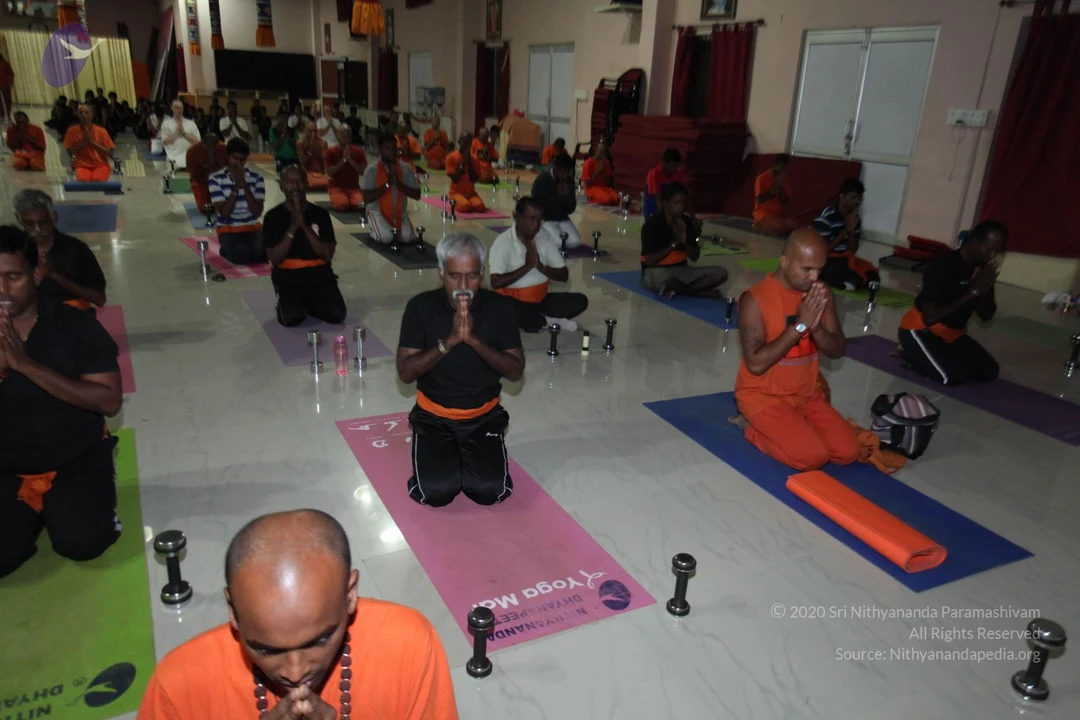
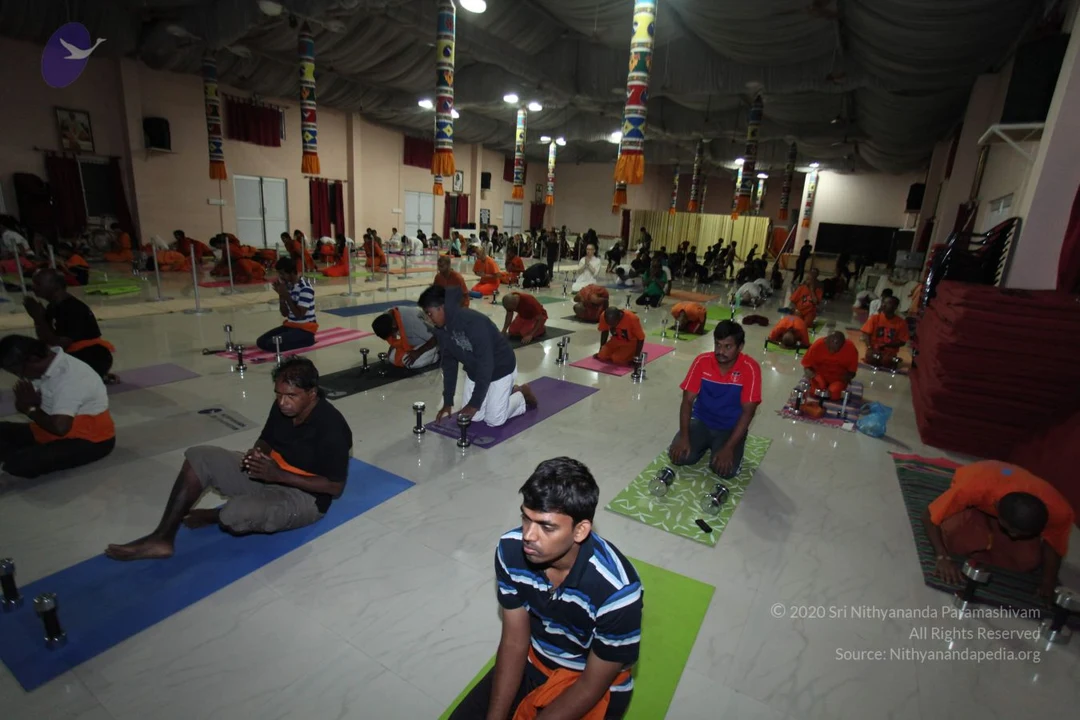
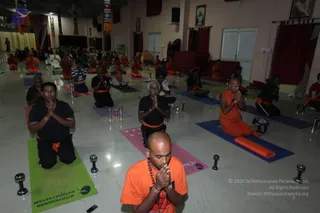
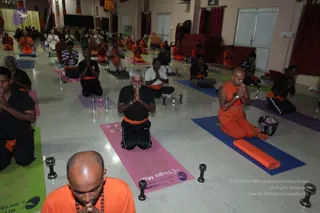
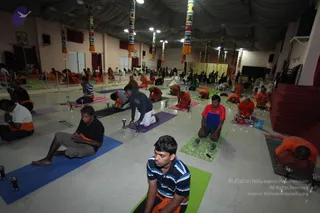
A large white-tiled hall at Nithyananda Dhyanapeetam where a group of people sit on yoga mats in namaskar pose, palms pressed together. Most wear orange robes or black tops with orange waist cords; a few in white or striped shirts sit among them. Dumbbells sit beside the mats, and a green mat carries the printed words Nithyananda Dhyanapeetam. Red curtains, banners and a framed portrait hang along the back wall. The front-row man in orange holds a rudraksha mala. Several dozen people are visible in the room.A large indoor yoga hall with many people kneeling in prayer pose (anjali mudra) on colored yoga mats, arranged in rows. Most wear black or orange-saffron clothing with orange sashes; a bald man in the foreground wears an orange top and a rudraksha-style mala, eyes closed, hands pressed together. Small dumbbells sit beside the mats, and a pink mat reads Yoga Mat with the Nithyananda Dhyanapeetham logo. Red curtains and a white marble floor frame the hall.Large indoor hall with a white marble floor and draped grey ceiling, decorated with tall multicoloured striped pillars with tassels. Thirty to fifty men in orange and saffron clothes sit and kneel on yoga mats in purple, blue and green, many with their palms pressed together in prayer. Some have small metal dumbbell-like objects placed beside their mats. In the foreground a young man in a blue and white striped polo sits cross-legged on a green mat facing forward, while a man in a red and blue shirt kneels nearby. A woman in white stands near the back centre. Maroon curtains and a red-cushioned bench line the right side. No single presenter is clearly identifiable.

Temple

25 photosSource gallery
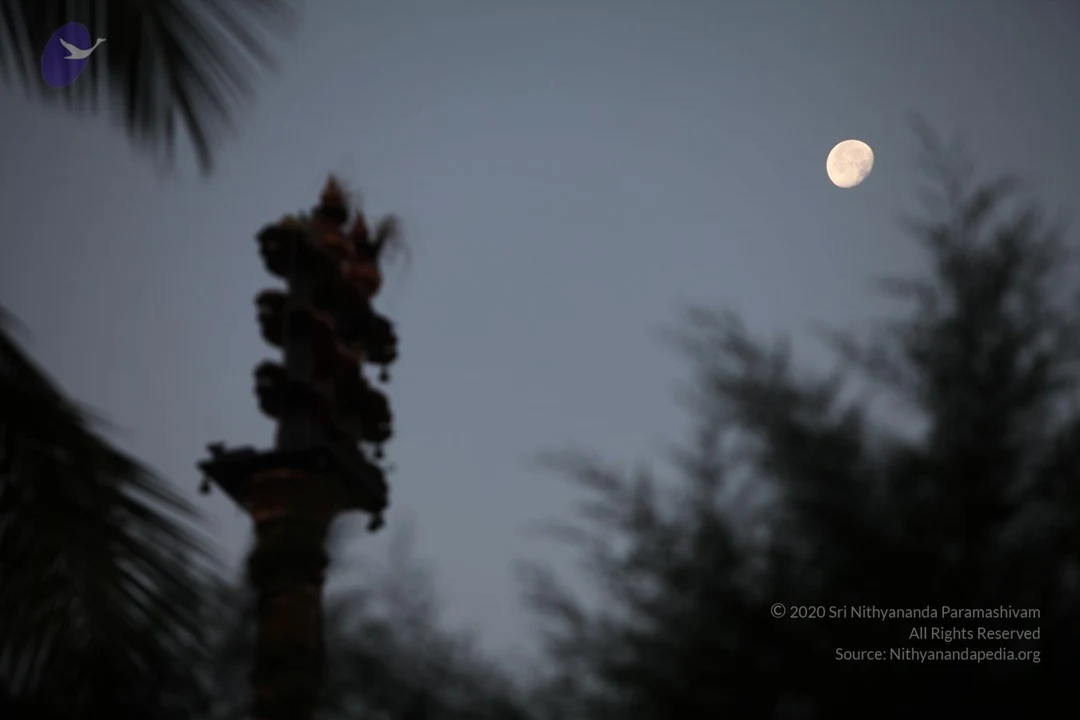
A photograph at dusk of an ornate temple tower or gopuram-like structure in the left foreground, its tiered carved shape and dark silhouette partly blurred by palm fronds. A pale gibbous moon hangs in a grey-blue sky on the upper right, with dark tree foliage in the foreground. No people are visible.A black stone Nandi bull statue sits on a red sandstone pedestal with a carved base behind it. The bull wears a red and red-and-yellow garland of marigolds and roses draped over its neck and shoulders, a white cloth on its back, a black rudraksha-style bead necklace, and a tilak mark on its forehead. Green leaves and small plants appear in the foreground, with more stone deity figures blurred in the background. No people are visible.A temple shrine photograph showing a large gilded murti of a seated deity pair. The taller deity wears an orange turban, a gold crown and a red-and-white garland, holds a trident and a raised hand, and wears ornate gold and red jewellery. Beside him sits a consort in a green and gold sari with a tall decorated headdress and a white floral garland. Between them, a smaller figure in a blue and purple silk cloth with a red garland stands on a pedestal. To the right, a standing statue in orange robes with a rudraksha-style necklace holds a staff. Brass oil lamps and offerings stand before the shrine, which is framed by golden arches and a teal backdrop. No living people are visible.A temple shrine photographed from the front, with a dark stone framing and golden arch. Central figures are statues of a deity couple: the male figure on the left holds a trident and a small drum-like object, and the female figure on the right wears a pink garment and a red and white garland. Between them sits a smaller seated figure in blue with a gold necklace and orange headwear. A standing figure in orange and red stands in a green niche on the right, and a red curtain hangs at the left edge. Green drapes, marigold garlands, brass lamps and a kalasha-style arrangement decorate the shrine. No physical people are present; all figures are sculpted or painted murti.A pair of gilded metal deity murtis stands against a teal satin backdrop framed by an ornate gold arch. The figure on the left wears an orange turban with a red and white tilak and a red-lipped face, holds a trident-like staff with a small cobra motif, and is adorned with layered beaded necklaces, a red pendant and large jewelled earrings. The figure on the right wears a black and red embroidered crown, a green and gold garment, and multiple diamond-style necklaces. Both are garlanded with red roses and green leaves, and a row of small golden ritual objects sits at the bottom edge. These are statues, not living people.A close view of a deity murti draped in a lavender-purple silk cloth with silver-edged border, adorned with a jeweled ornamental necklace set with red and pink stones and white stone-studded pendant work. Carved temple stone pillars with ornate sculpture form the background, and a pink cloth covers the table below. A garland of white, pink and green flowers lies in the lower right foreground. No people are visible.

Puja

28 photosSource gallery
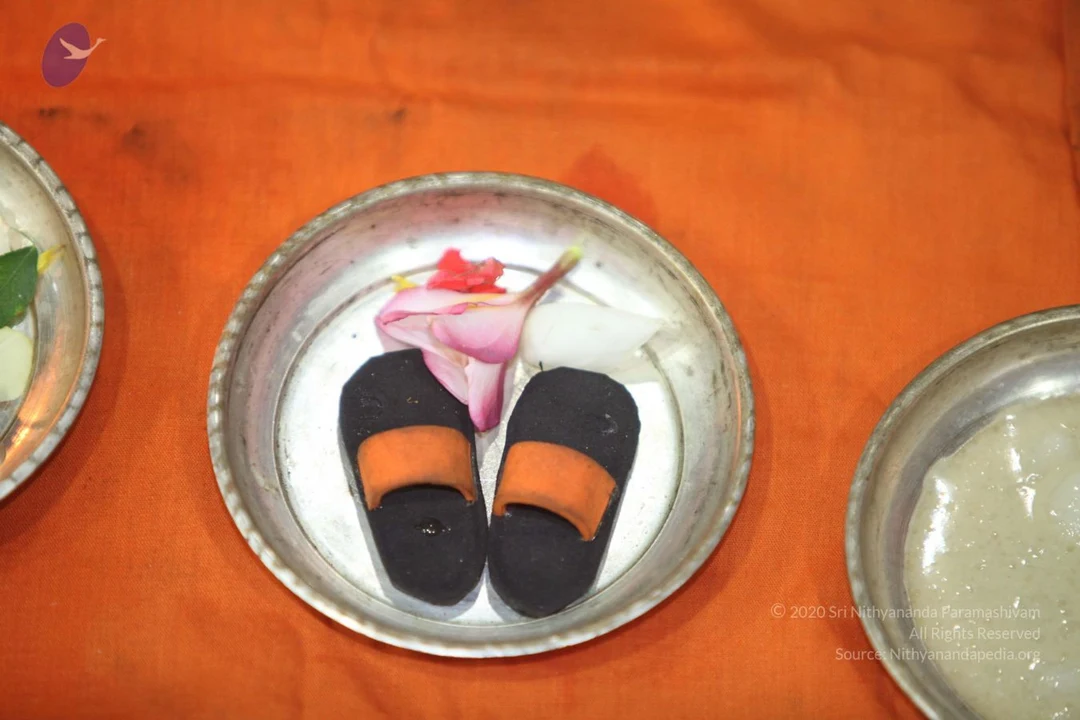
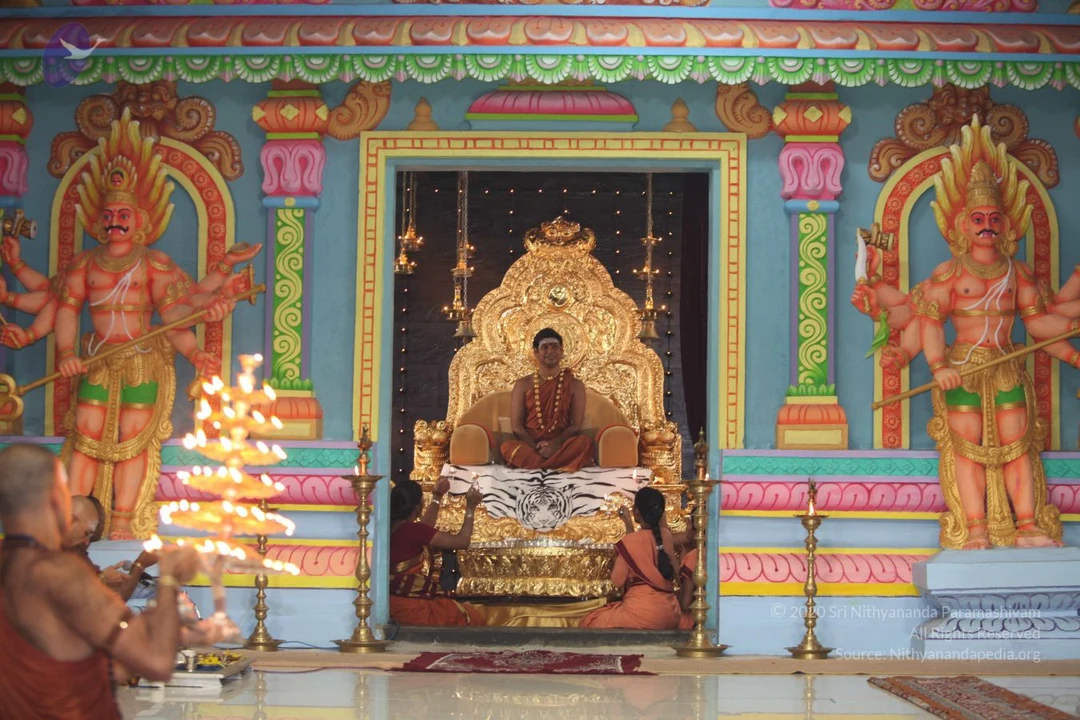
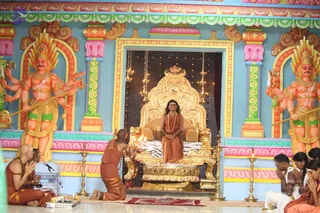
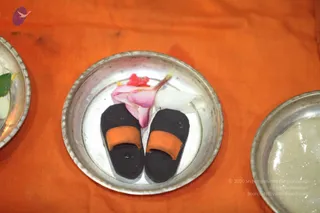
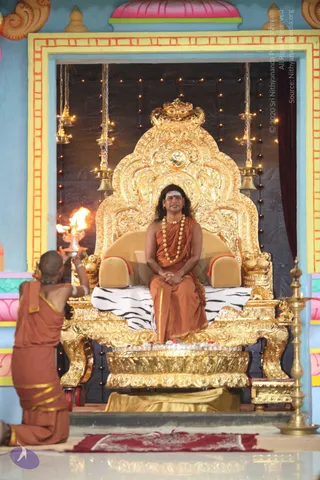
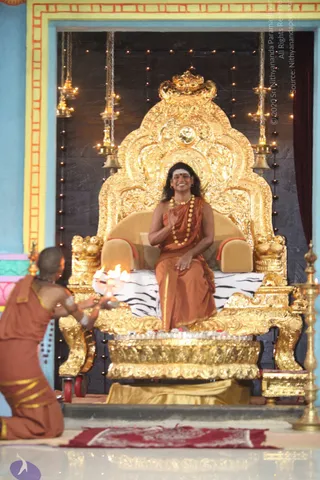
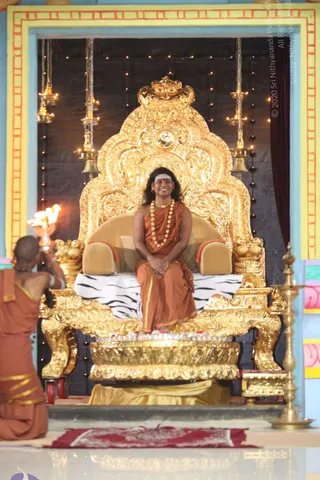
A photograph of a seated figure on an ornate gold throne in a brightly painted hall with pink, green and yellow columns and two painted guardian figures with clubs flanking the back wall. A kneeling priest in saffron dhoti holds a lit aarti lamp before him. To the right, two women in saris join palms in devotion, and a man in white dhoti and shirt sits with folded hands near the front. At the left edge, a bald man in saffron clothing sits with hands joined near a microphone stand. Brass oil lamps stand on the floor, with a small floor offering tray in front of the throne.A seated figure in saffron-orange robes with a rudraksha mala sits on an ornate gold throne with a zebra-print cushion, centred before a painted temple backdrop of two multi-armed guardian figures with gold crowns and clubs. A kneeling attendant in orange robes holds a lit lamp or flame before the throne, while a bald priest in orange on the left with hands folded sits near a small offering tray and a microphone stand. On the right, several devotees in white garments and orange shawls sit in prayer with palms pressed together. Brass lamps stand on the floor, and hanging gold bells and lights decorate the throne alcove. The scene appears to be a puja or aarti at a temple-style hall.A photograph inside a temple-style hall with painted blue walls and two large painted guardian figures with orange skin, flaming crowns and staffs. A central figure with long hair, rudraksha mala and orange robes sits on a gold ornate throne draped with a zebra-striped cloth, a person candidate by these cues while the page does not confirm his presence. A kneeling priest in orange waves a lit flame lamp toward him, and brass oil lamps stand on the white floor. On the right, several devotees in white and orange sit with folded hands. On the left, a seated man in orange and another in white attend near a microphone and a tray of flowers and offerings. Floor reflects the scene.Ceremonial scene in a temple-style hall with painted blue walls, pink and green pillars, and two large painted guardian figures with orange skin and golden headdresses holding staffs. A seated figure on an ornate gold throne with a zebra-striped cushion wears orange robes and a rudraksha mala, with a long-haired appearance and a gold crown-like top to the throne. A kneeling attendant in orange robes holds a flaming lamp before him. To the left, a seated priest in orange with shaved head and a bead mala joins his palms beside a small puja tray. On the right, several women in white and orange saris sit with folded hands in devotion.A seated man in saffron-orange robes sits on an ornate gold throne with a tiger-striped cushion, centred in a colourful temple-style hall with pink, green and blue painted pillars and gilded arches. He wears a long rudraksha-style necklace of beads, a gold chain, and a vibhuti/tilak mark on his forehead, with long dark hair. Hanging brass lamps and bells hang above him. In the foreground a bald priest in orange dhoti and bare upper body holds a lit oil lamp (aarti) toward the seated figure, while brass lamp stands flank the throne. a person is the seated figure on the throne, identified by his saffron robes, beads, gold ornaments and tilak, with the throne placement; this is an appearance-based label. The priest performs aarti with the flame. Painted deity figures with weapons appear at the left and right edges.A photograph of a round silver plate on an orange cloth holding a pair of black sandals with orange straps, placed beside a pink and white flower petal and a small red flower. Another silver bowl with a pale, creamy substance sits at the right edge, and a partial bowl with green leaves is at the left. No people are visible; the sandals appear to be offered as sacred items.

Morning-Satsang
23 photosSource gallery
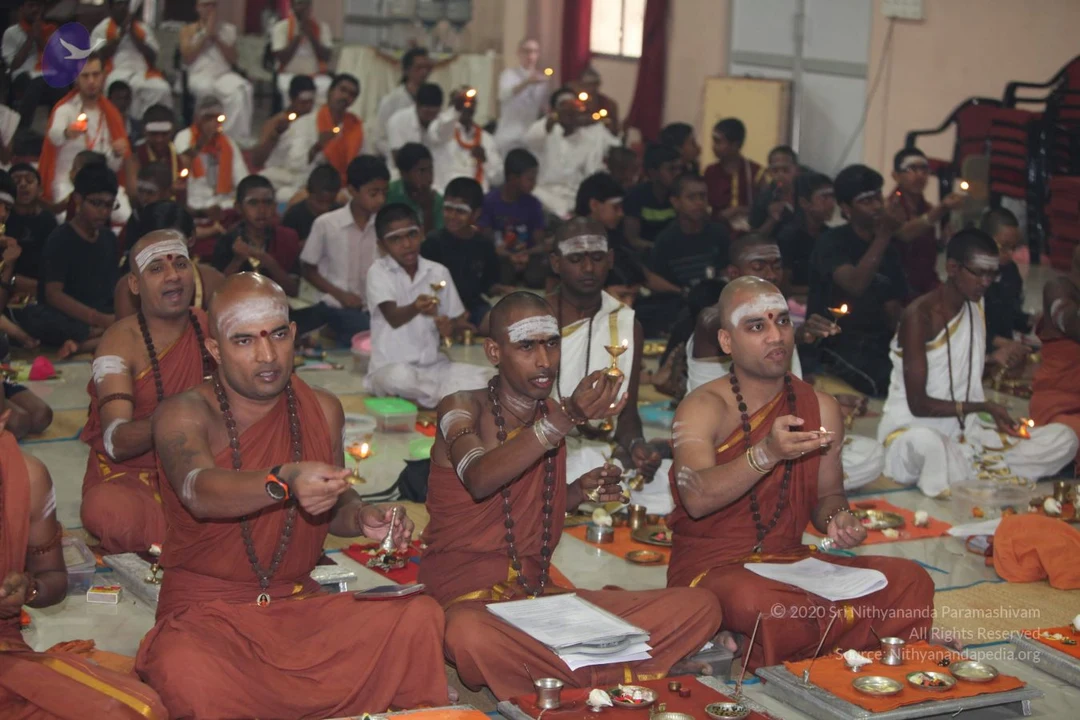
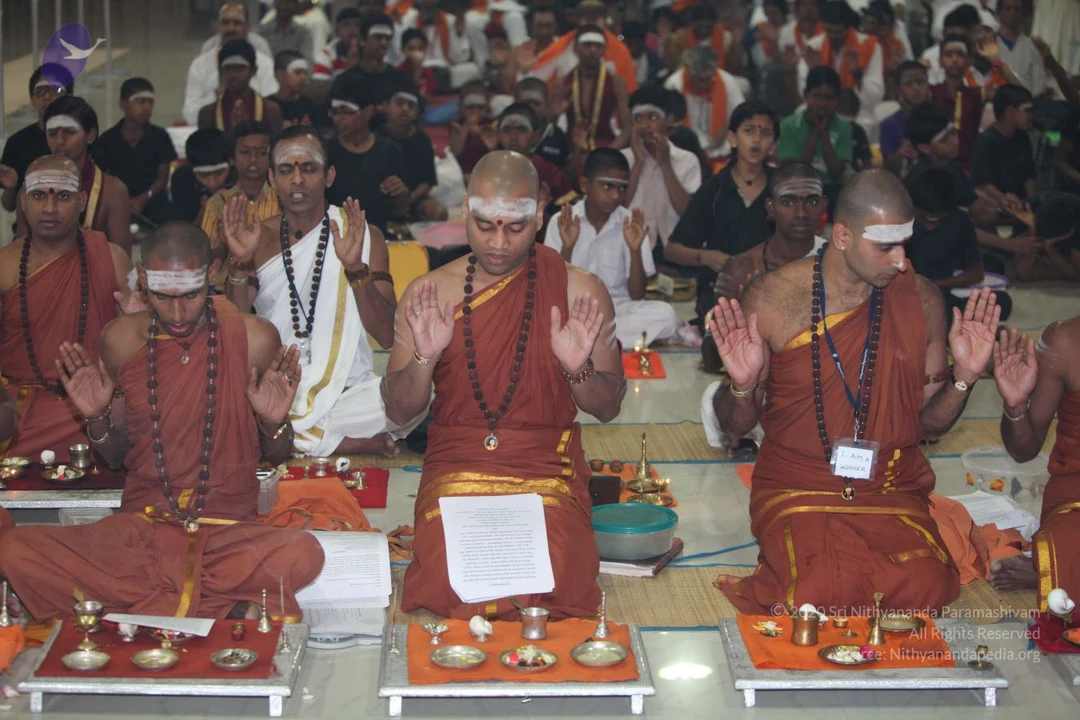
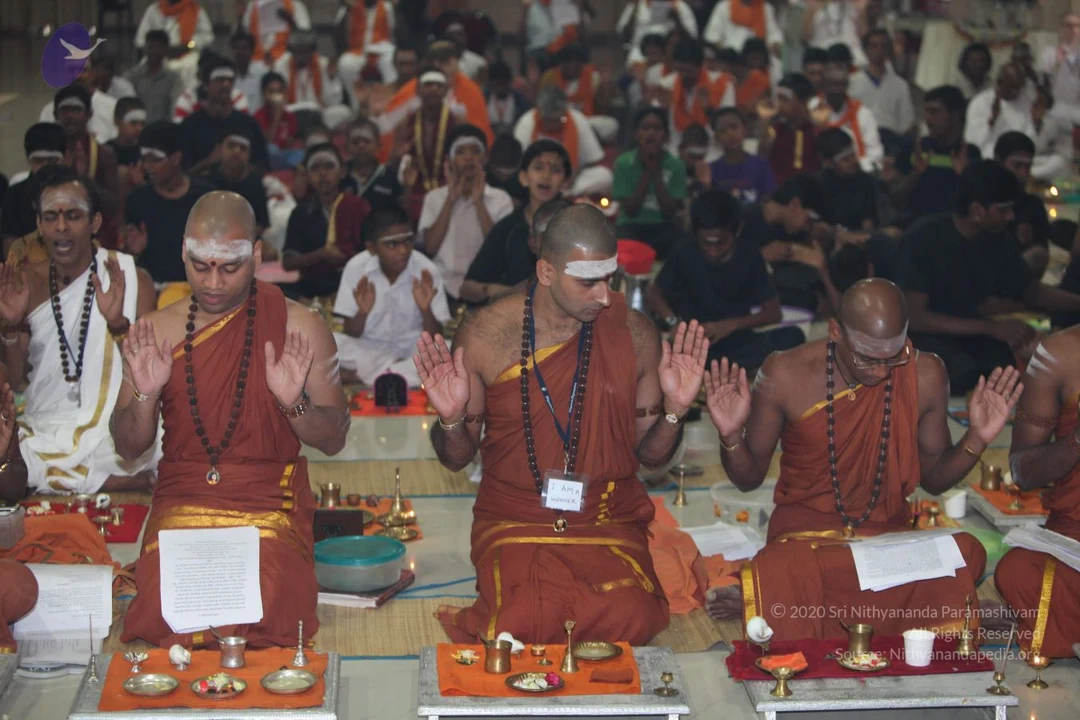
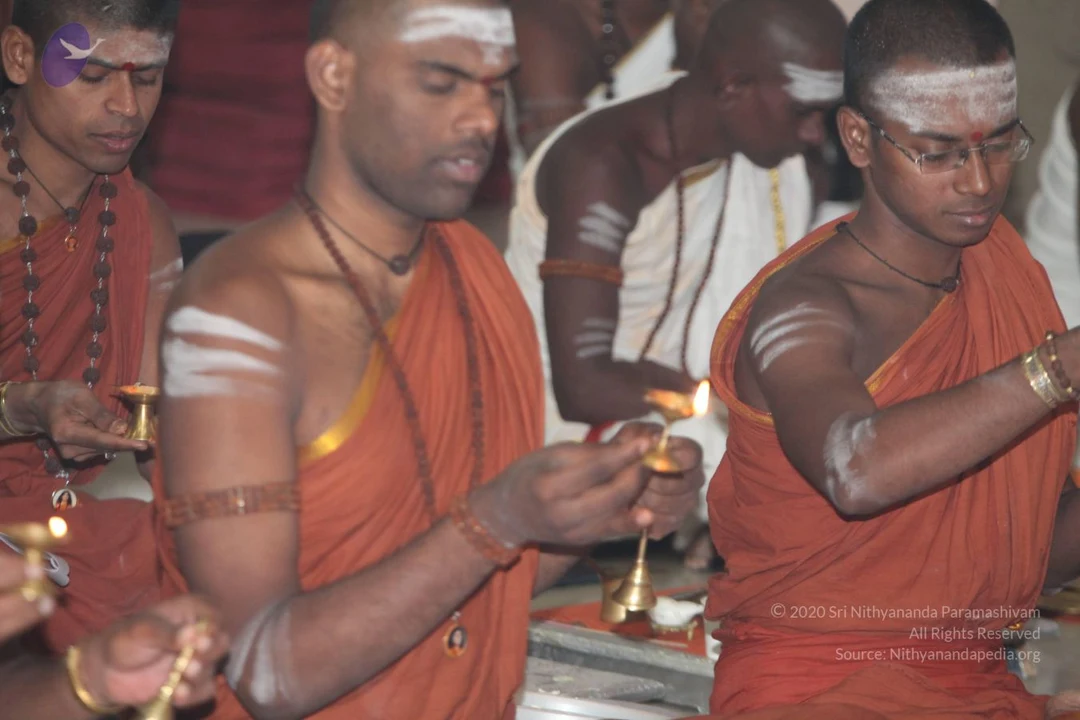
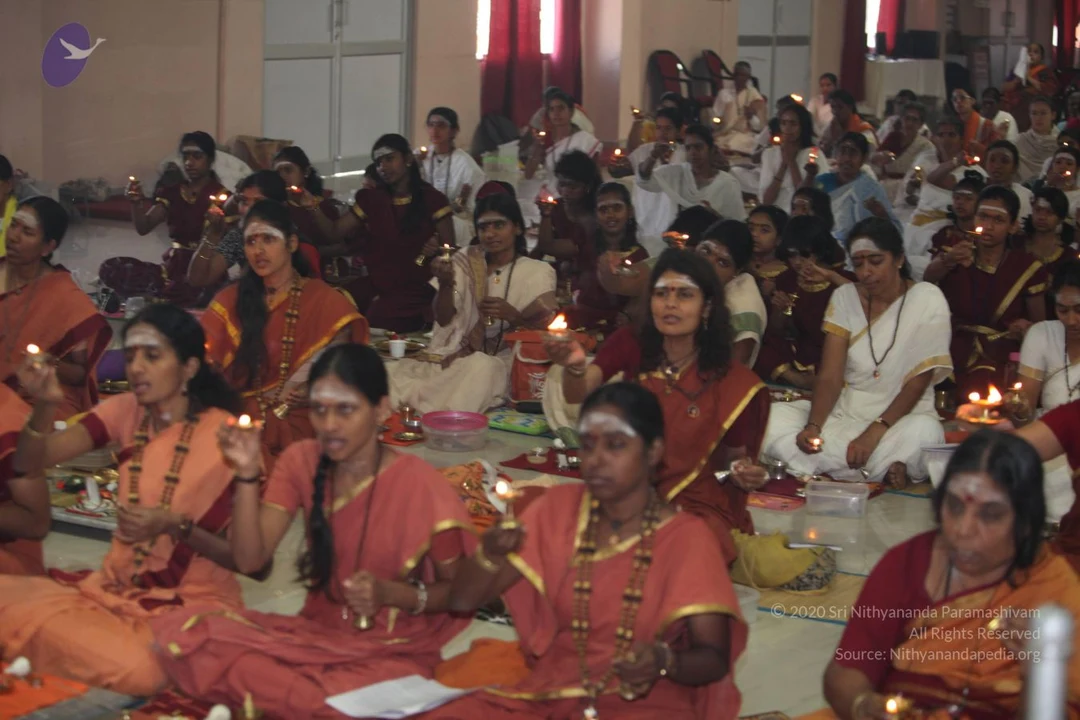
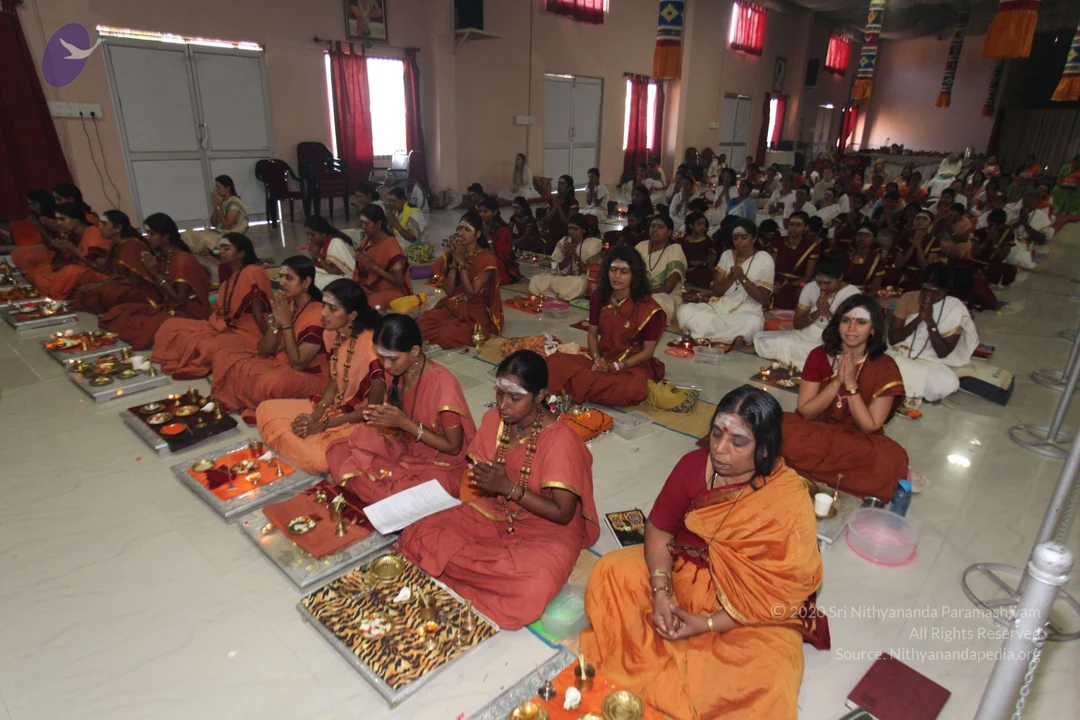
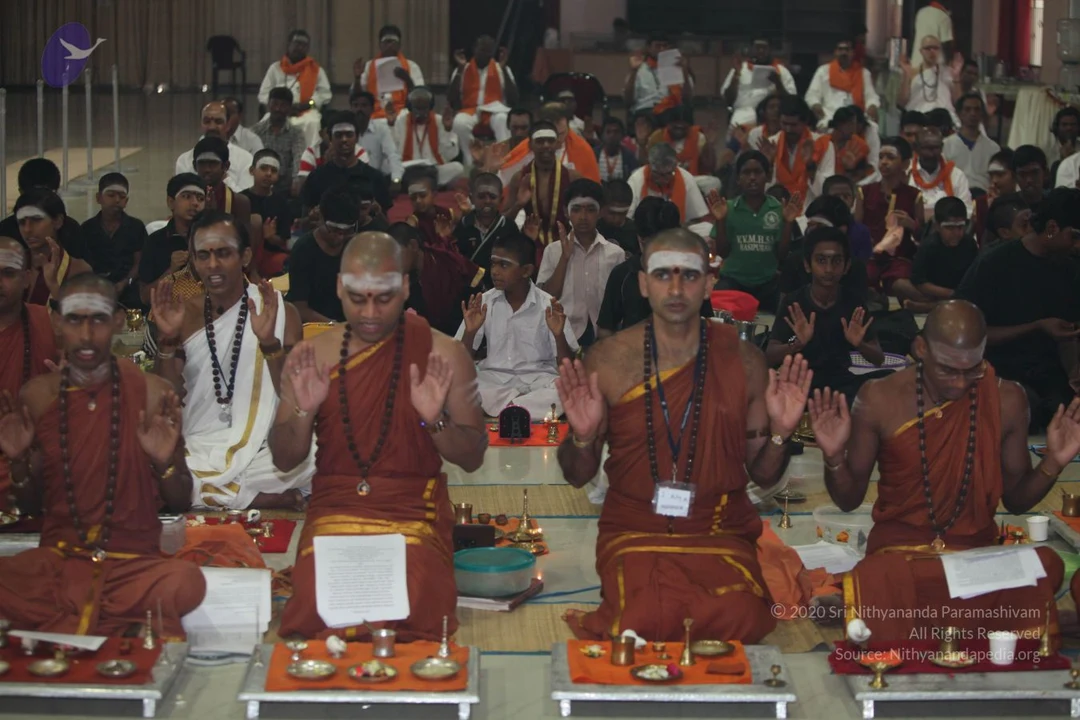
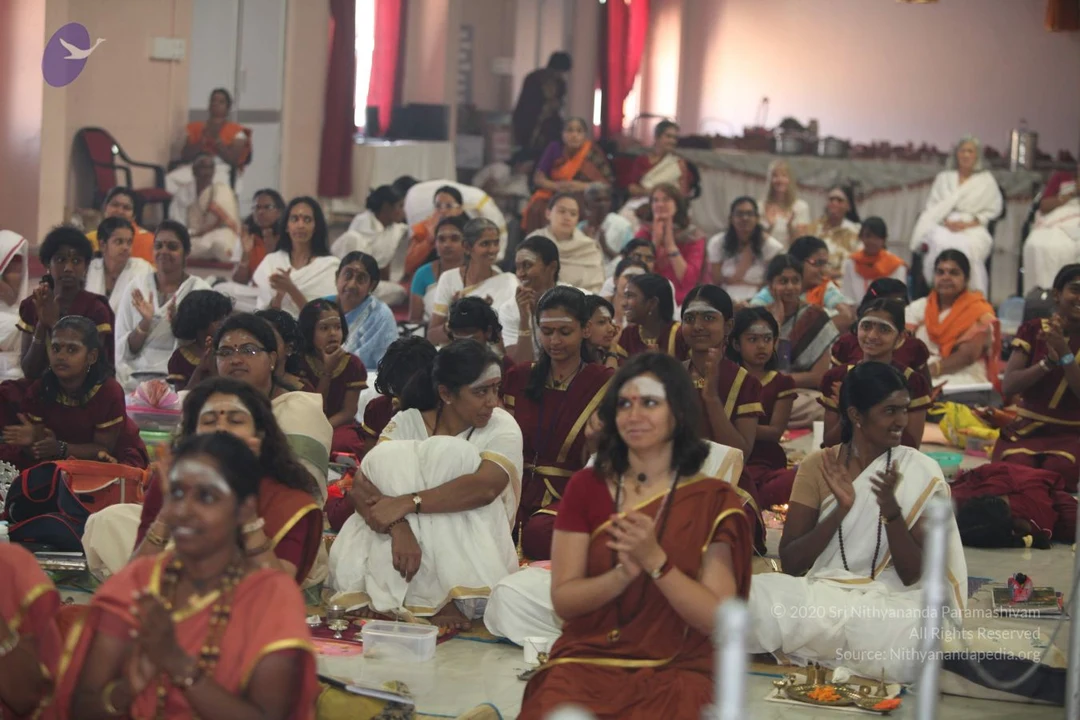
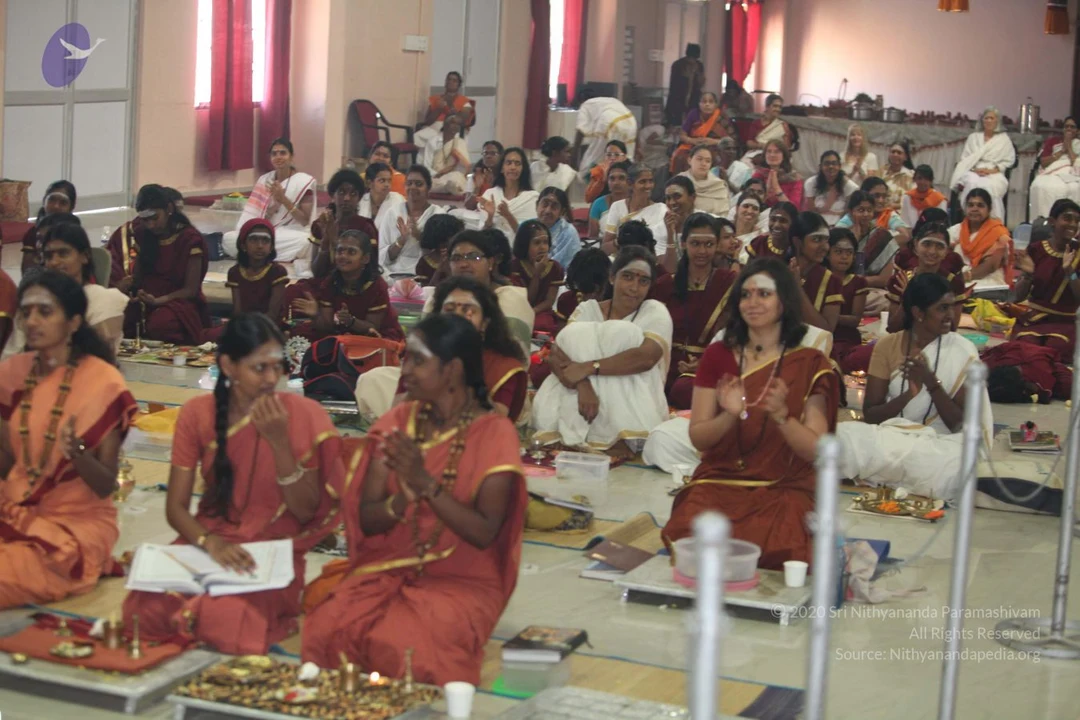
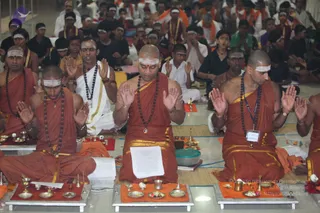
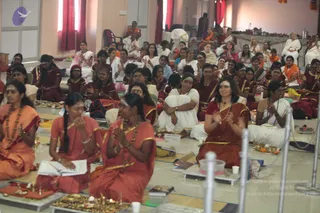
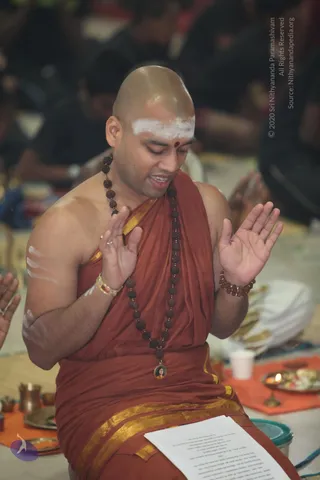
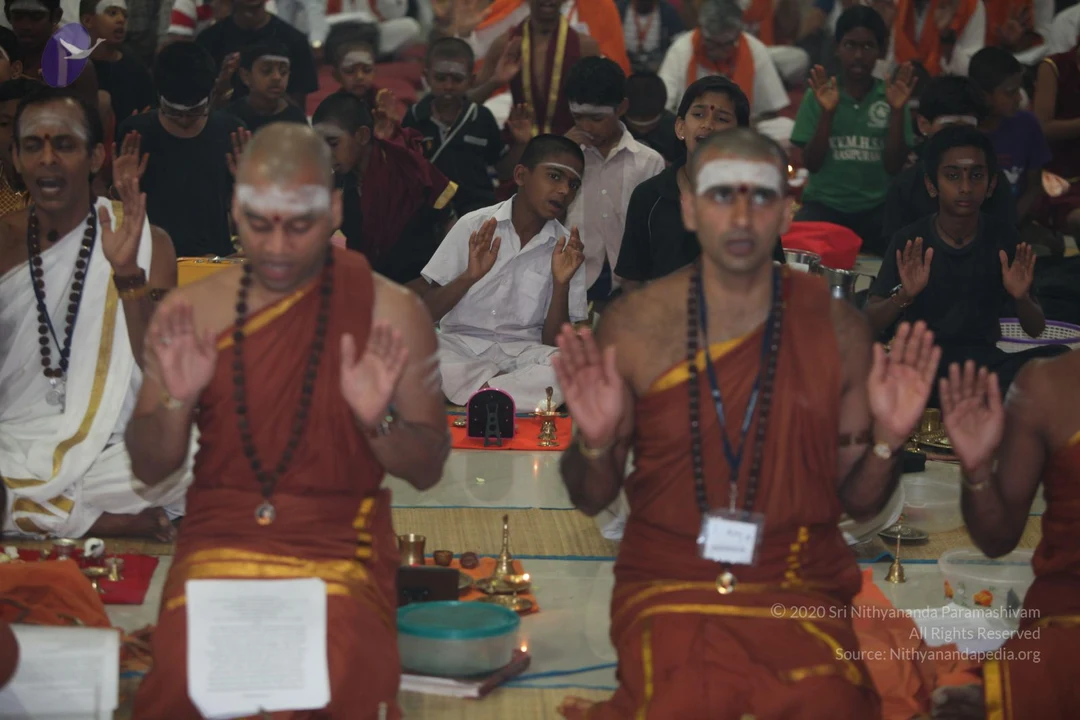
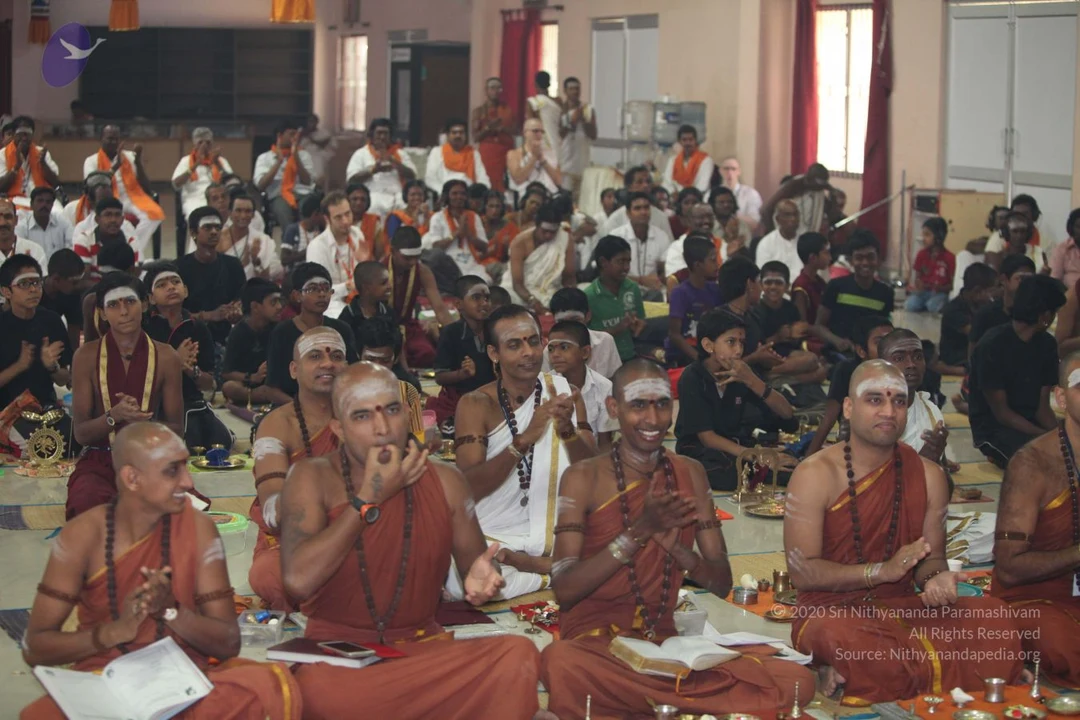
A large group of people seated on the floor in a hall performs a ritual with hands raised in palm-forward gestures. In the foreground, several young men in saffron-orange robes wear rudraksha malas and white forehead markings across the brow; the centre man holds a sheet of printed text. Brass puja plates, small lamps and offering bowls sit on orange and red cloth in front of them. Behind, a dense crowd of devotees in orange and white stretches back. A man in white dhoti with a gold border and rudraksha mala sits among them. A badge reads 'I AM WINNER'.A large seated gathering of devotees fills a hall, with three foreground priests in saffron-orange dhotis and shawls with gold borders and rudraksha malas, sitting on mats with palms pressed together in prayer. Each has a white vertical tilak and horizontal white marks on the forehead and shoulders. Brass and silver puja vessels, small bowls with flowers and fruit, and open papers sit before them. Behind, many people in orange, white and black clothing sit in rows, some with hands folded. A priest on the left wears white ritual dress with a rudraksha mala. A banner reading Nithyananda Paramashivam sits in the top-left corner.A photograph of a group ritual in a hall with a mat-covered floor. In the foreground two shaven-headed priests in saffron-orange dhotis and gold-bordered cloths wear rudraksha malas and hold their palms outward in a chanting gesture; both have white horizontal ash bands on their foreheads. A third priest at left in white dhoti and gold-trimmed shawl, with long hair and a rudraksha mala, also gestures with raised palms. Behind them a crowd of young boys and some adults in white, black, green and maroon shirts sit with palms raised, many with white forehead markings. Brass oil lamps, a kalasha-style brass vessel, bowls and a small shrine box sit on the floor in front. The scene suggests chanting or an invocation during a puja.A photograph of a large hall where a row of saffron-robed men sit cross-legged on mats, facing forward with palms raised in prayer or mantra gesture. Several wear rudraksha malas and white forehead bands (vibhuti/tilaka). Each seated man has a small brass puja plate with a kalasha-style lamp, bowls, cups and red-and-orange cloth in front of them. Behind them a wider audience of sitters in orange, white and black clothing and white headbands fills the hall, many also with raised hands. Ritual worship or meditation setting.A large indoor hall filled with seated devotees in traditional attire during a group gathering. Many women wear white saris with gold borders and deep maroon or red garments with gold trim; others wear orange and saffron tones. Several have white or ash markings on their foreheads and rudraksha beads around their necks. Some sit with palms pressed together in namaskar, while others gaze forward attentively. In the foreground, brass plates with flowers and offering items sit on the floor. Pink walls, red curtains and a draped white-covered table with a metal vessel are visible behind the crowd. No figure is clearly identifiable as a person.Photograph of a large indoor satsang hall with many seated women in saffron and maroon sarees, some with white ritual garments, seated on the floor with hands pressed together in namaskar. Several women hold open books, and brass puja plates with oil lamps and offerings sit in front of them. Some wear rudraksha malas and forehead markings. Background shows additional participants, pink walls and red curtains. No clear identifiable a person figure is visible in the frame.

Actor-Manohar-Visit

21 photosSource gallery
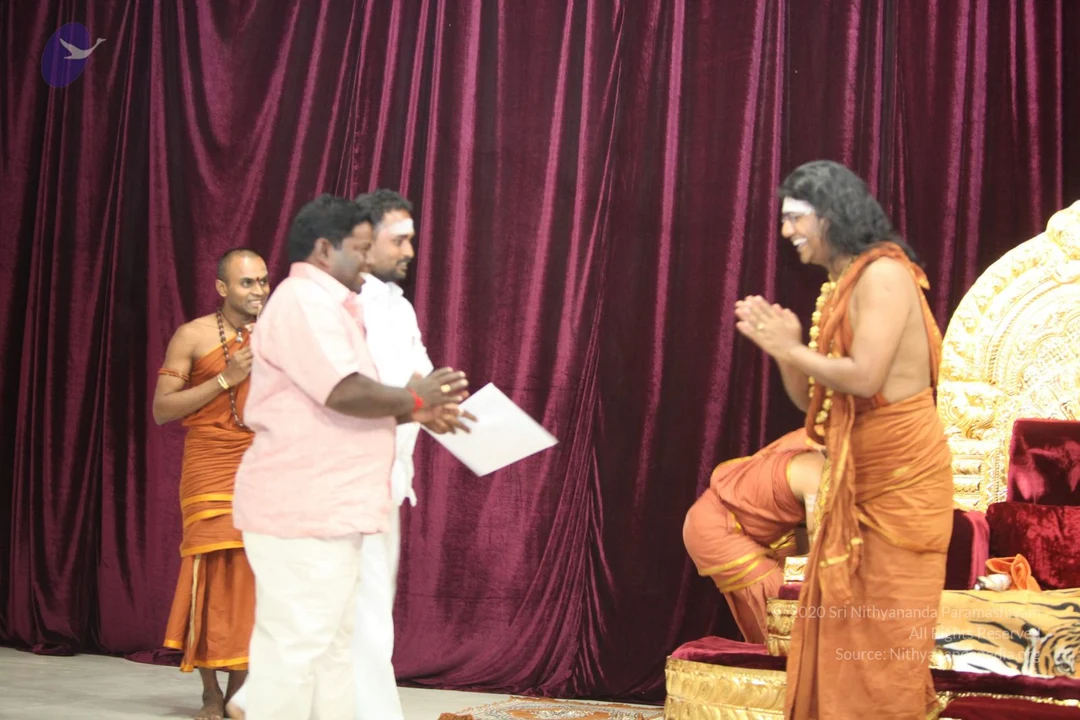
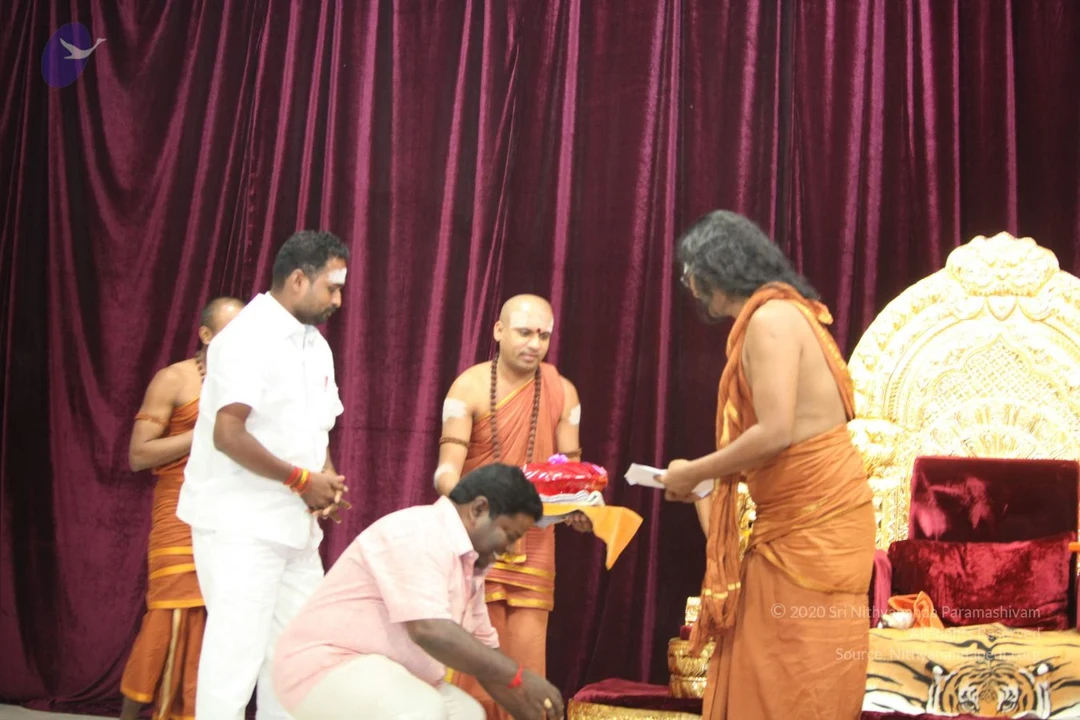
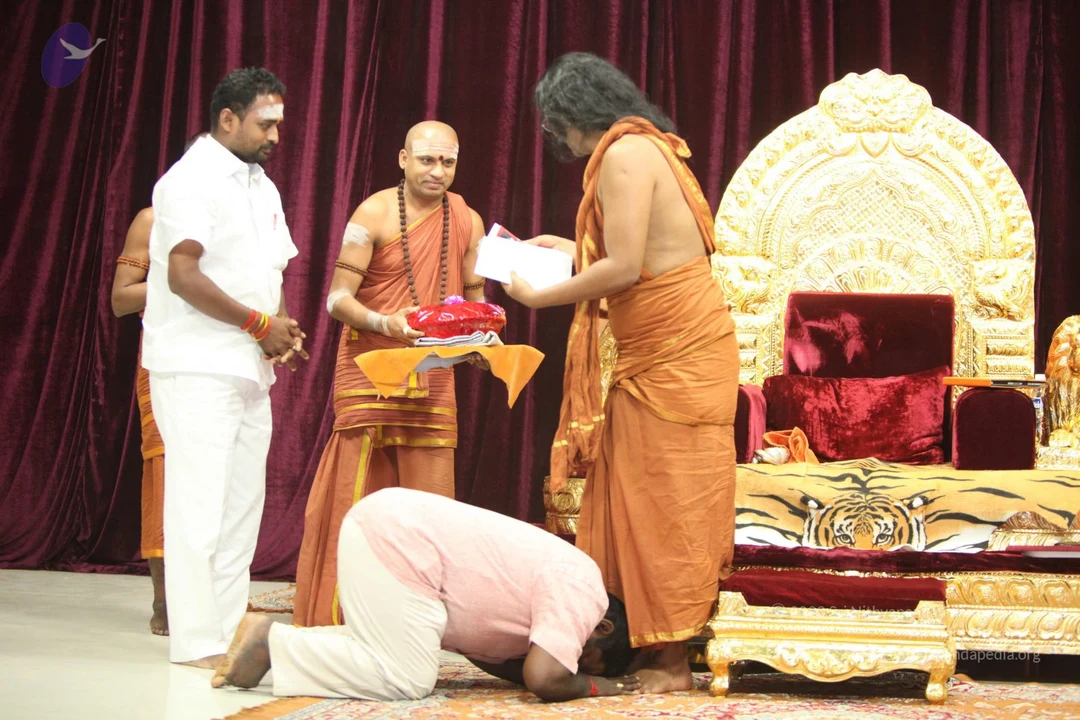
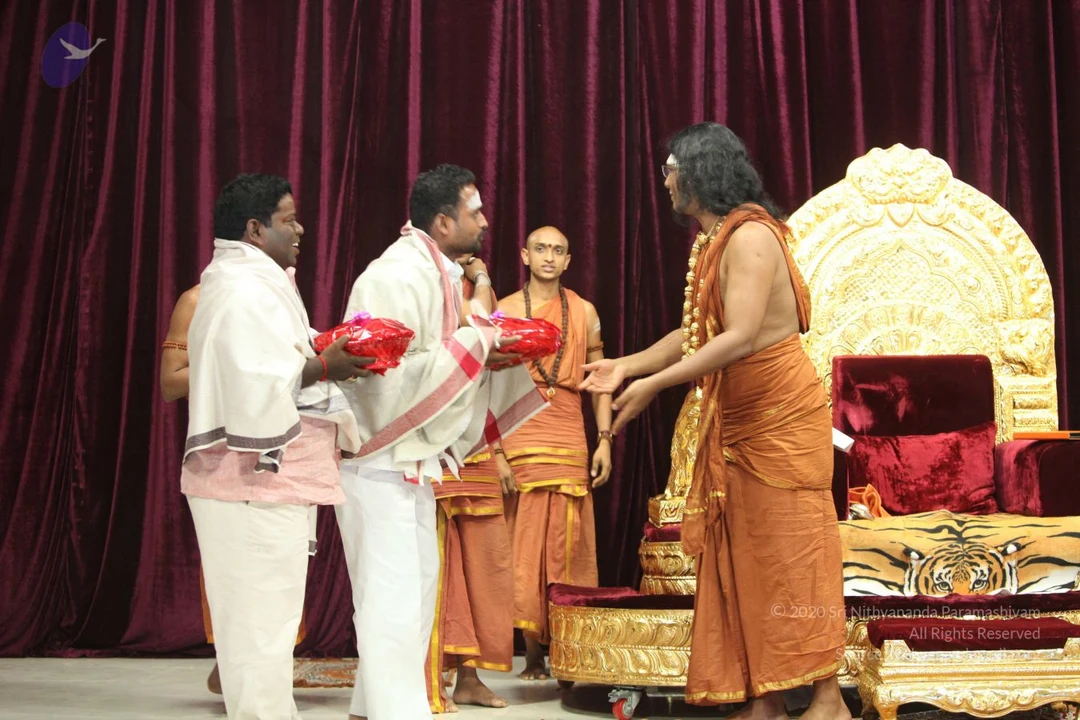
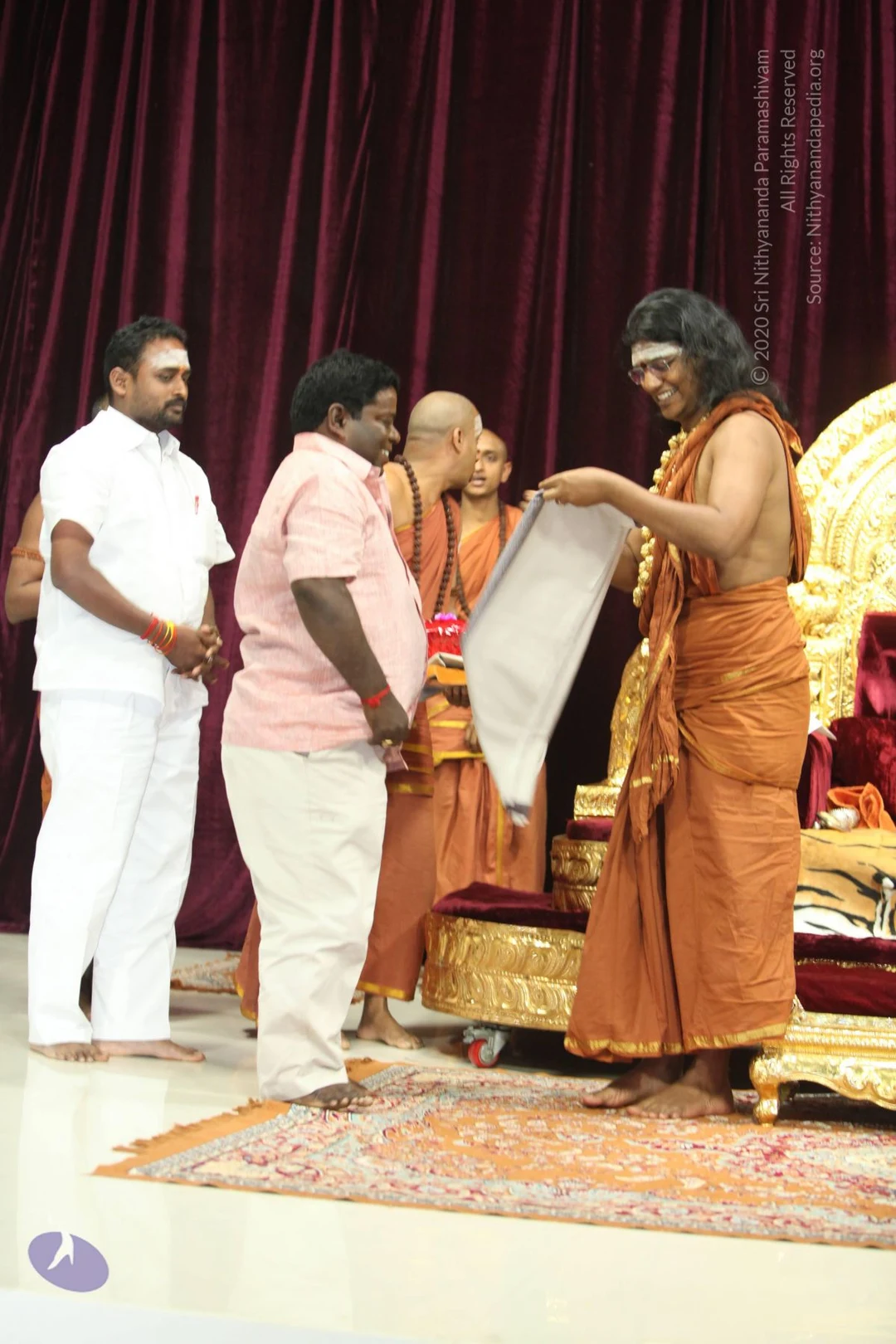
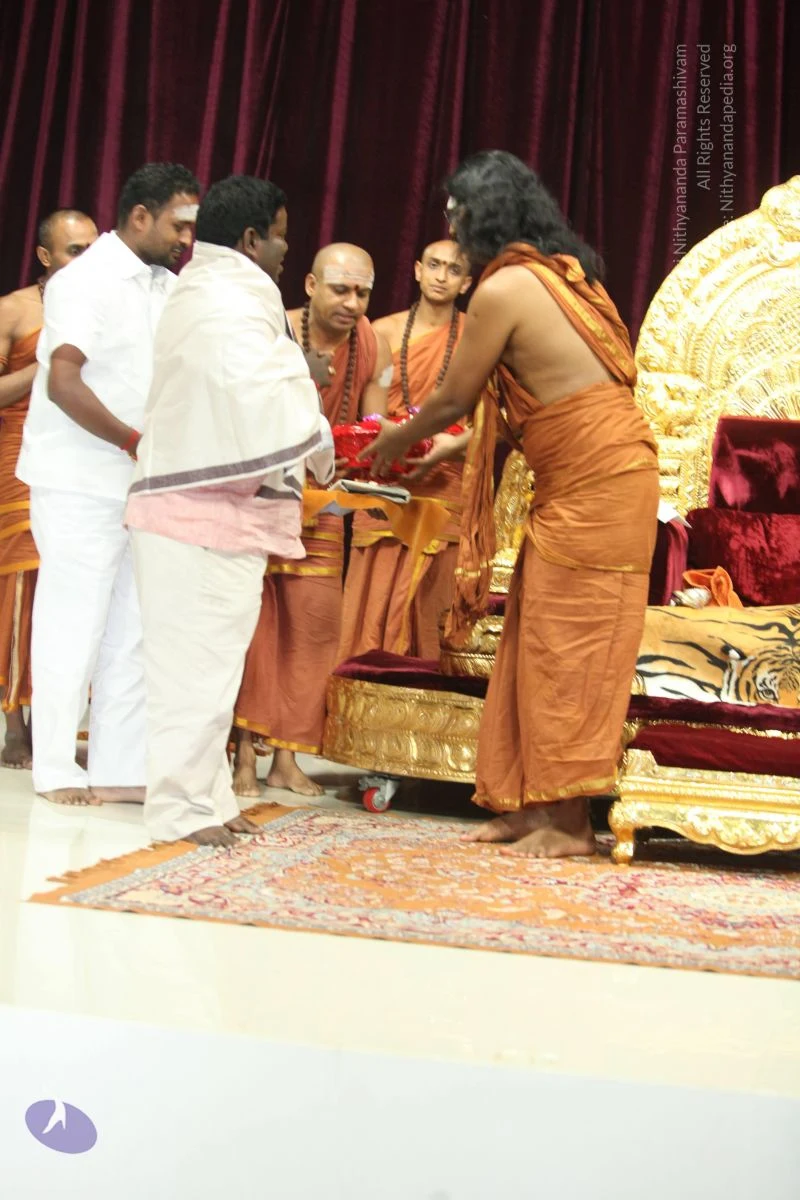
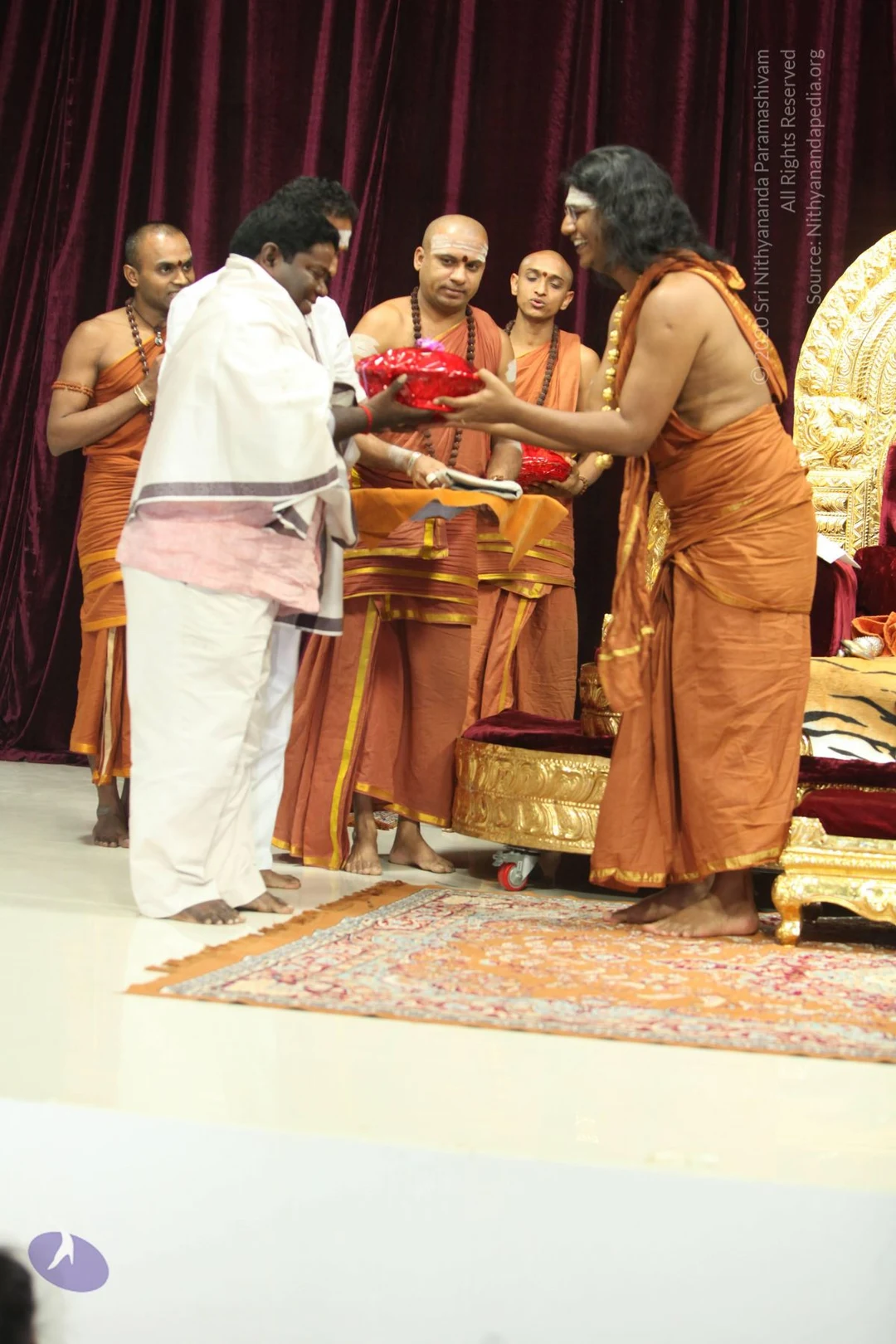
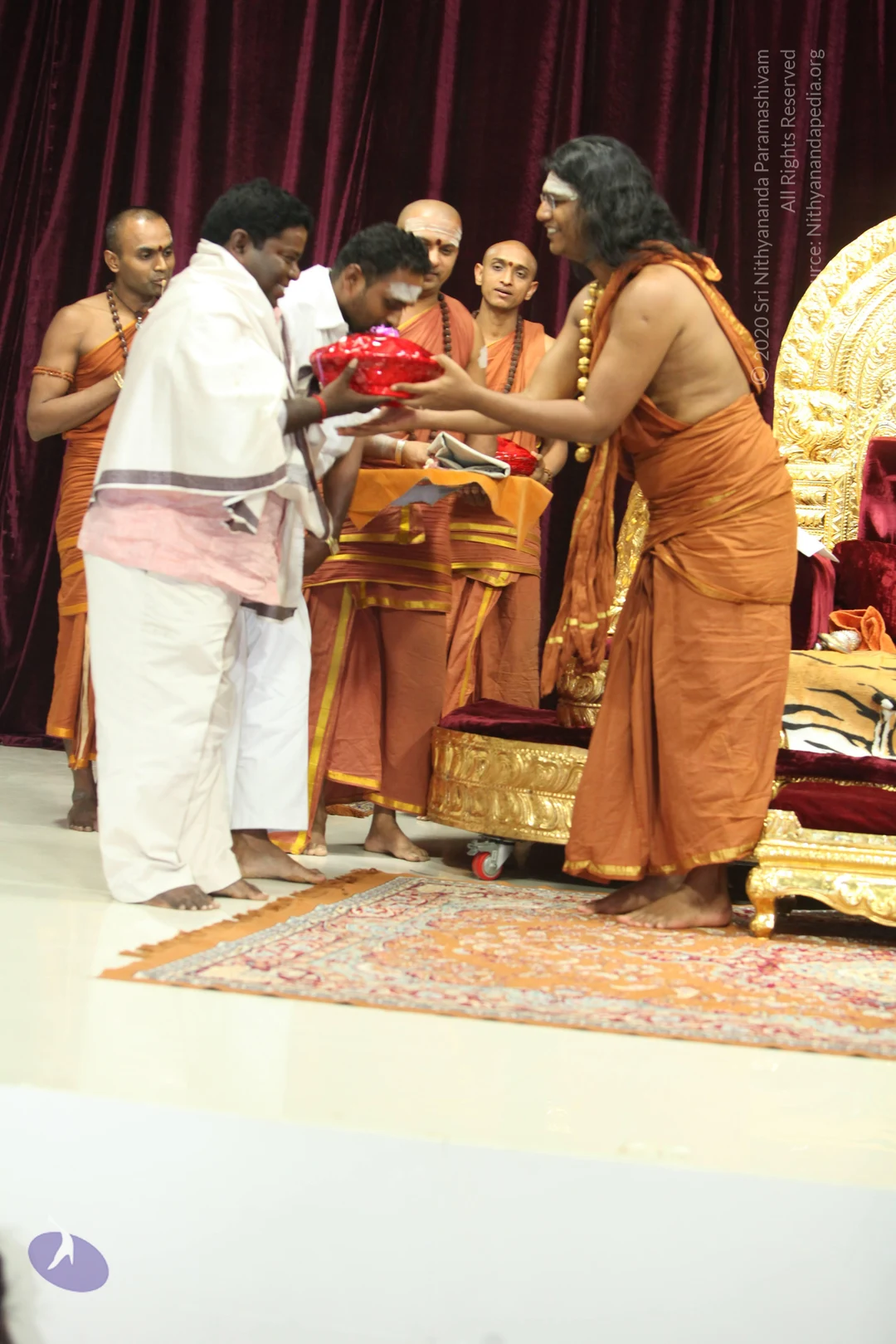
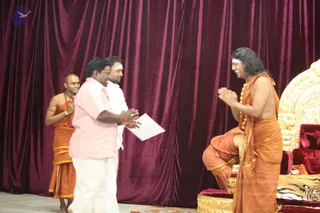
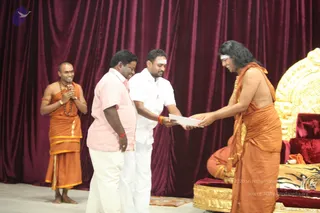
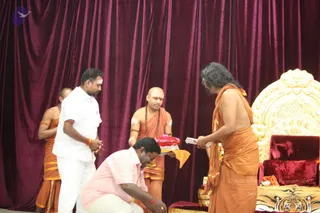
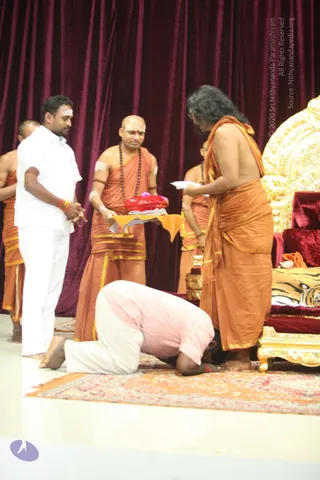
Stage event before a deep magenta velvet curtain. A long-haired figure in saffron-orange cloth with a bare upper torso, wearing a beaded necklace and a marked forehead, sits on a gold-trimmed throne draped with a tiger-stripe cloth, palms pressed together and smiling. Standing before the throne, a man in a pink shirt and white trousers reaches out with a folded white paper, while a younger man in white clothing stands beside him. To the left, a shaved-headed attendant in saffron cloth with rudraksha beads stands with hands joined.A photograph on a stage with burgundy velvet drapes. A long-haired man with a white forehead band, in saffron-orange wrap, bare-shouldered, reaches to accept a white envelope from a man in a white shirt with a tilak on his forehead and a red wristband. A man in a pink shirt and white trousers stands beside them, smiling. On the left, a bald man in saffron dhoti with a rudraksha mala holds his hands together in applause. A gold-and-red throne with a tiger-skin cushion sits at right, with a seated figure in orange beside it. The receiving man's visible cues (long swept-back hair, saffron garments, ornate gold throne) are consistent with a person presence, but the page does not confirm this.Indoor stage event with a deep burgundy velvet backdrop and a gold-carved throne draped with a tiger-print cloth. A long-haired figure in saffron-orange wrap stands at the right, holding papers, with an orange-clad priest to the left. A bald priest in orange dhoti with rudraksha mala, and an orange-clad attendant on the far left, stand nearby. A man in white shirt and white dhoti with a tilak stands on the left, while a man in pink shirt kneels at the bottom, bending forward near the throne. Red and gold items rest on a tray held by the central priest.Indoor stage event in front of deep maroon velvet drapes. A long-haired figure in saffron-orange dhoti and shawl, bare-chested, stands at a gold-carved throne draped with a tiger-striped cloth and red cushions, receiving a white envelope from a bald priest with a sandalwood-marked forehead and rudraksha mala, who wears an orange dhoti and holds a red cloth-covered tray. A man in white shirt and white dhoti stands beside them with folded hands, and a man in pink shirt and white dhoti prostrates on the carpet at the throne's base. A partially visible saffron-clad figure stands at the left edge. A portrait labelled text is not visible.A photograph on a stage with deep burgundy velvet drapes and a gilded ornate throne with a red cushioned seat draped in a tiger-print cloth. A woman with long dark hair, glasses, orange robes, a gold necklace and a rudraksha mala stands at right, smiling and holding up a white cloth with grey stripes for a man in a pink shirt and white dhoti who stands beside a man in white with a tilak. Behind them, a bald man in orange robes and a rudraksha mala and another man in orange stand at the back. No a person candidate can be confirmed from appearance, so the figure at right is described by role only.A man in saffron-orange robes with long swept-back dark hair, a white forehead mark, glasses, a gold necklace and a rudraksha mala stands at right on a stage, holding up a white cloth. Beside him, a man in a pink shirt and white dhoti and a man in white shirt stand close, with a bare-chested monk wearing a rudraksha mala at the left. Behind them, saffron-robed monks stand before a maroon velvet curtain. A gold, ornate peetha/throne with a tiger-striped cushion stands at right, and the scene suggests an offering of a white cloth. a person appears in saffron clothing with long hair and a gold necklace.

Darshan

14 photosSource gallery
A smiling man in orange-saffron robes and a gold necklace of rudraksha-style beads sits on an ornate gold-and-red throne (peetha) with carved gold backrest. He holds a silver sceptre with a finial, and a red bindi marks his forehead. Carved golden lion-head armrests and a tiger-striped cloth cover the platform. Appearance-based cues (long swept-back hair, saffron robes, ceremonial gold beads, throne) are consistent with a person, seated in person on stage.A photograph of a smiling man with long dark hair and a red bindi, seated on an ornate gold throne with a large arched gold backrest carved with foliage and scrollwork. He wears an orange-saffron cloth draped over his shoulders and a multi-strand necklace of gold beads and gold pendants, with his hands folded in his lap. The background is dark with red drapes at the sides. Adjacent to the chair, the scene shows a single person.A photograph of a long-haired man in an orange saffron shawl with a gold ceremonial necklace, his right hand raised to the forehead of a man in a white kurta with an orange shawl and dark hair. The man in white presses his palms together in respectful greeting, wearing a black wristwatch and red thread. In the lower foreground a bald man with white forehead markings sits partly visible. A cream wall and dark window form the background. The orange-shawled figure has long swept-back hair, a saffron shawl and gold ornaments, consistent with the a person presentation, and is blessing the devotee.A photograph of a bare-chested man in an orange cloth draped over his shoulder, wearing a gold necklace, extending his right hand toward the forehead of an older man in a white shirt and orange shawl who raises his own hand in response. The older man has grey hair and a moustache and wears a silver bracelet. Behind them, a blurred figure in a white garment with an orange shawl stands, and a bald man with a white forehead mark sits in the foreground. The setting is an indoor room with a cream wall and window. The scene appears to show a blessing or touch of the forehead during a ritual or satsang. The man in orange with the gold necklace is a person, identified by his long swept-back hair, gold ornamented necklace and saffron clothing, shown in person.A seated man in a saffron-orange robe with long dark hair in a low knot and ornate gold beaded necklaces places both palms on the head of an older bald man in a white shirt and orange shawl, who bows forward. Soft-focus figures in orange and white stand in the background against a plain wall. The person in orange has distinctive long hair, saffron robes and gold ornaments, consistent with a person blessing a devotee.A photograph of a seated figure in orange robes and a gold ornate necklace placing both hands on the head of a young man in a white shirt with an orange shawl, performing a blessing. The robed figure has long dark hair tied back and wears a gold necklace with rounded pendants; the blessed man bows his head with eyes closed. Behind them a figure in white with an orange shawl stands with hands folded in namaskar. The setting appears to be an indoor hall with a window and cream wall. a person: the seated figure in orange with long hair, gold necklace and ornate ornaments matches the presentation, though the page does not confirm attendance.

Temple

13 photosSource gallery
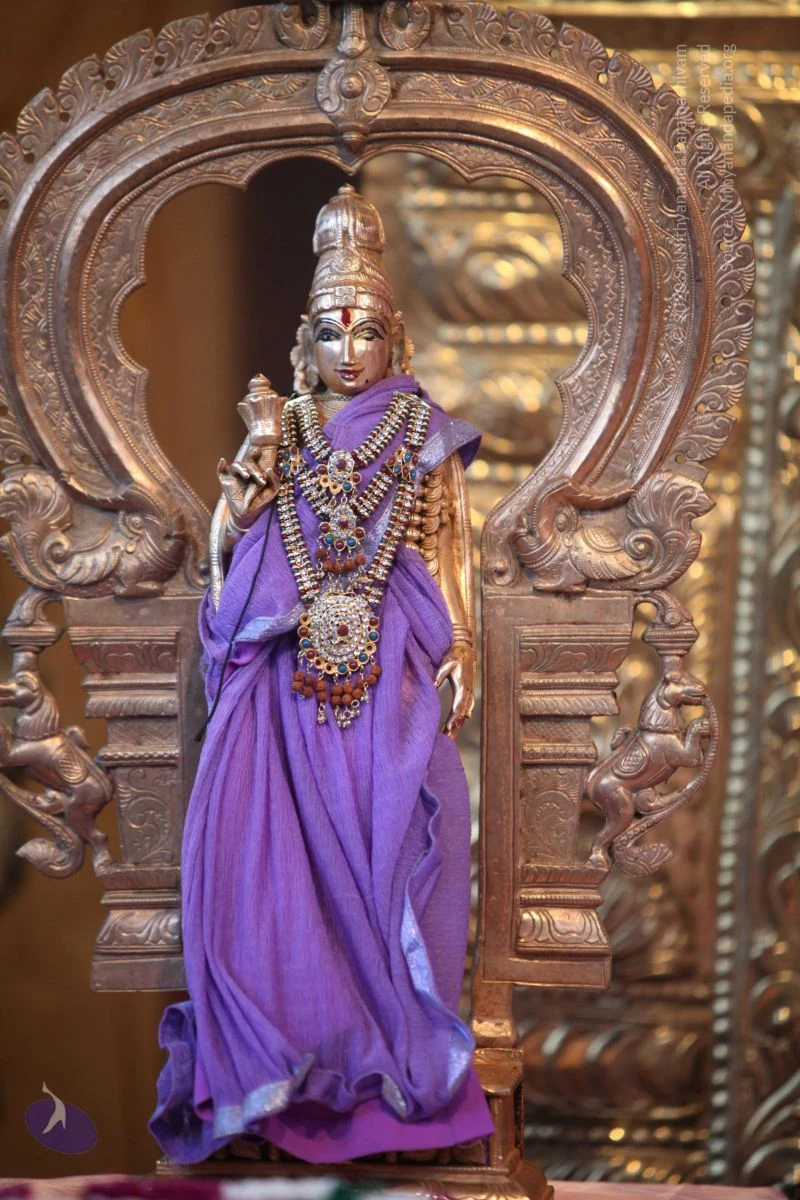
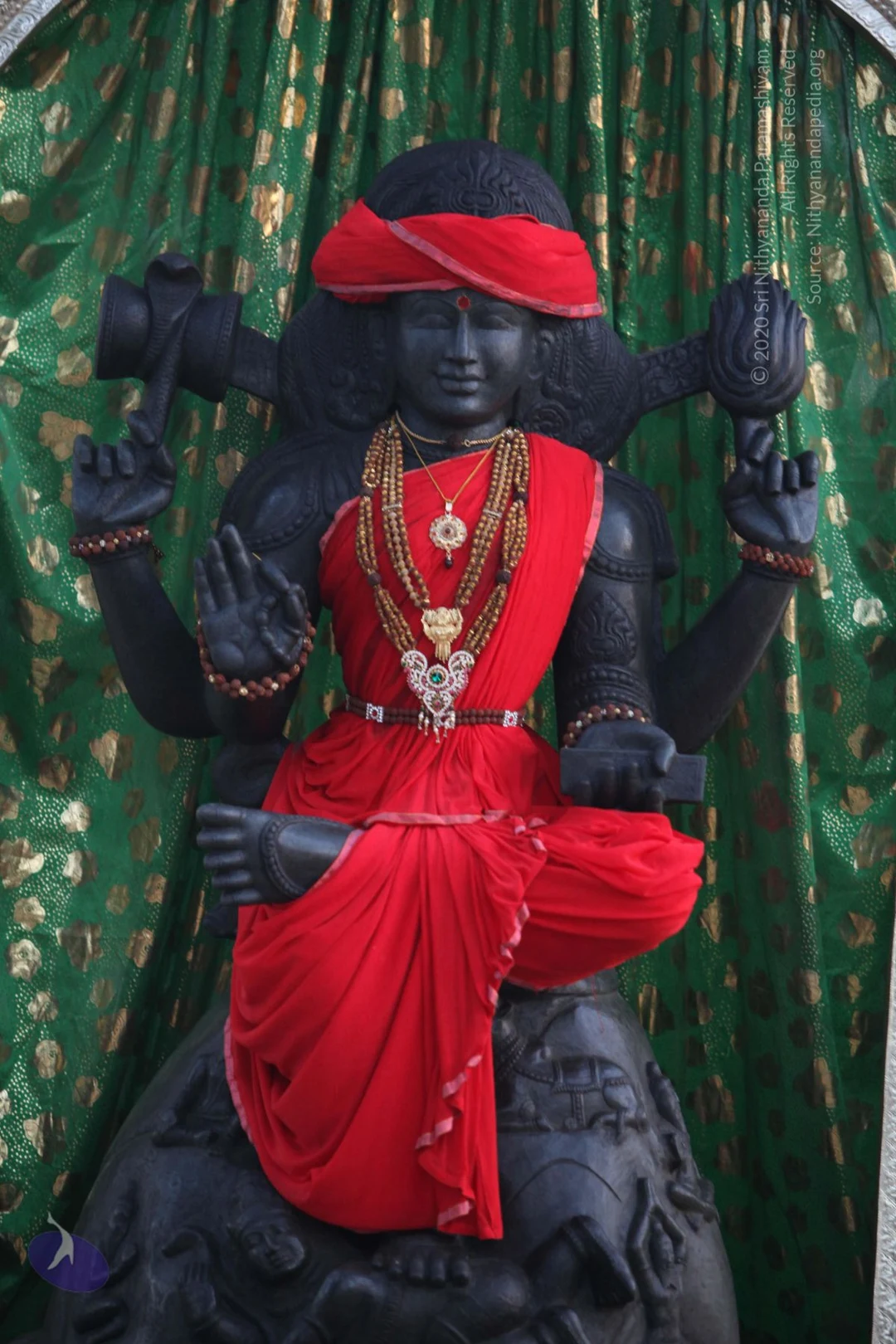
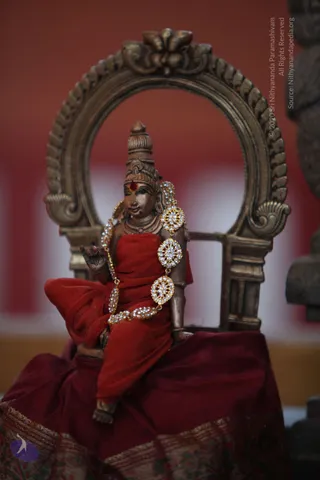
A photograph of a metal deity murti standing within an ornate copper-coloured arched frame with carved floral and scroll motifs and rearing horse-like figures at the base. The figure is silver-toned with a tall crown and red tilak, wearing a purple draped sari with silver-edged border, a layered gold and jewelled necklace with red and green stones, and holding a small ritual vessel in one hand. Golden decorative metalwork fills the background. No physical people are visible.A small bronze-toned metal murti of a seated deity is the main subject, photographed against a warm red background. The figure wears a red cloth draped over the shoulder and lap, and is adorned with gold jewellery set with white stones, including a large circular pendant-style chain across the body and matching earrings. A red bindi marks the forehead and the head wears a tall crown. The murti sits in a carved arched ornamental frame with a red velvet cushion beneath, and a grey stone figure is partly visible at the right edge. No people are present.A metallic statue of a standing male figure with long, dark, swept-back hair, a red bindi on the forehead, and a raised right hand in a blessing gesture. He wears an orange-red garment with gold-bordered cloth wrapped over the shoulder and a gold-striped dhoti, plus strings of rudraksha-style beads, a pendant and a gold necklace.A silver-toned deity murti stands in a gilded arched niche, dressed in a lavender-purple saree with silver-edged border. It wears layered gold necklaces set with white stones, red and green gems and rudraksha beads, and carries a staff-like object in one hand. The ornate golden temple-style frame with carved floral and animal motifs surrounds the figure. Only a statue is present; no physical people are visible.A close photograph of a decorated metal deity murti, gilded and polished, wearing an ornate black crown embellished with red and white stones and a pendant. It is adorned with heavy jeweled necklaces, pink and green stone earrings and a green silk garment with gold zari border, draped in red rose and yellow marigold garlands. It holds a golden ritual implement topped with a green-and-red bird figure in one hand. A teal drape and warm lights stand behind it. No physical people are visible; the figure is a statue.A dark stone statue of a four-armed deity seated on a carved black pedestal, wearing a red turban with a red bindi, a red draped garment with pink edging, multiple rudraksha bead malas, a gold pendant and a jewelled gold necklace, and a jewelled waist belt. Its raised hands hold a trident-like staff and a bell-shaped object, while the others rest in mudra. The statue stands before a green curtain patterned with gold motifs. No physical people are visible.

Puja

45 photosSource gallery
A seated man in an orange-saffron dhoti and shawl wears a gold necklace of beads and tilak markings on his forehead, sitting on an ornate gold throne with a carved high backrest and a zebra-striped cloth draped over the seat. A kneeling priest in orange clothing, his head shaved, holds a lit lamp aarti toward him. Hanging brass oil lamps and a tall brass lamp stand flank the golden throne in a colourful painted hall. a person: the seated man has long hair swept back and wears saffron clothing, a rudraksha-style bead necklace and gold ornaments, consistent with the figure described on the page, but the appearance is only a partial match. The scene is a lamp-lit devotional ceremony at a throne.A seated figure on an ornate gilded throne with a high carved backrest and a zebra-striped cloth draped over the seat, set in a blue and pink painted shrine hall with hanging brass lamps. The seated person wears an orange-saffron robe, a long beaded necklace of wooden or rudraksha-style beads, and a white and red forehead mark; they raise a hand in greeting and smile. a person is seated on the throne, with long swept-back dark hair and saffron clothing with ornate beads as the qualifying cues. In front of the throne, a kneeling attendant in orange robes with a gold-striped wrap holds up a lit aarti lamp with flames toward the throne. A brass standing lamp stands at the right edge and a red rug lies on the floor.A seated figure on an ornate gold throne with a carved gold back and arm rests, draped on white and black striped fabric, raises one hand in blessing while smiling. He wears a saffron/orange garment, a long gold-beaded necklace with a mala, and a white forehead band with a red dot. Behind him hang brass oil lamps on chains and a dark wall with beads. In the foreground a kneeling attendant in orange robes holds a lit lamp toward the throne. A red and white rug lies on the floor, and a tall brass lamp stands at right.A photograph of a long-haired man seated smiling on an ornate gold throne with a carved crown-like top, draped with a white-and-black striped tiger-skin cloth. He wears an orange-saffron robe, a gold-coloured bead necklace, and a white vibhuti marking with a red dot on his forehead. Tall brass oil lamps with bells hang on both sides, and a brass lamp stands at right. At left, a shaven-headed priest in orange robe kneels and holds a lit aarti flame. A red and cream carpet lies in front of the dais.A seated man in orange-saffron robes sits on a cushioned tan throne backed by an ornate gold-leaf carved headrest with a central emblem and a crown-like top. He wears layered golden beaded necklaces and a white vertical tilak with a red dot on his forehead, hands clasped in his lap. Two brass hanging oil lamps with bells flank the throne against a dark stone wall studded with small lamps, and a white tiger-striped cloth covers the platform. a person seated on the throne in ceremonial dress, with cues of saffron robes, a rudraksha-style gold bead mala and a ceremonial gold necklace.A man with short dark hair, white vibhuti lines and a red bindi sits on an ornate gold throne with a repoussé gilded backrest and lion-form armrests. He wears an orange-red saffron cloth draped over his bare upper body, a thick gold bead mala and a gold chain. His hands rest clasped in his lap. Hanging brass oil lamps with lit flames and a dark wall studded with small lights frame the throne. A white tiger-striped cloth covers the dais.

Morning-Satsang
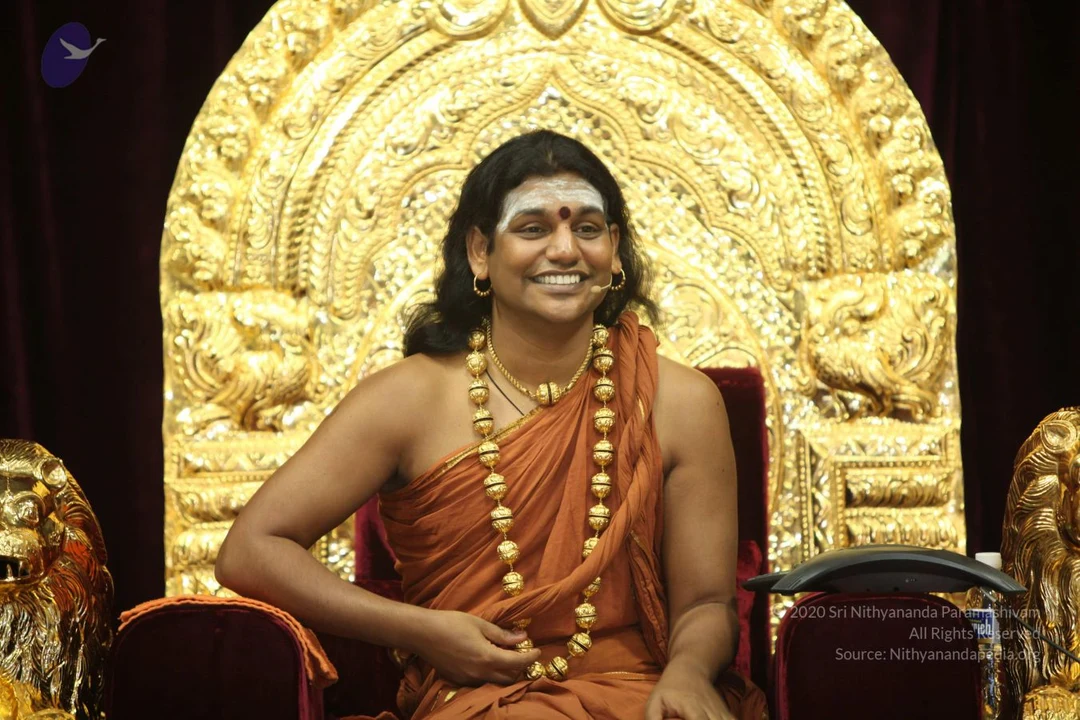
90 photosSource gallery
A smiling man in saffron-orange robes sits on a red velvet throne with an ornate gold-leaf backrest, raising both palms toward the viewer in a blessing gesture. He wears a white vertical tilak with a red dot on the forehead, a gold necklace and a long gold bead mala with rudraksha-style beads, and gold earrings. The seat is draped with a tiger-striped cloth. Behind him, a large embossed gold arch and scrollwork fill the background.A seated man in saffron-orange robes raises his right hand in blessing before an ornate gilded throne with a carved arched back. He wears a gold beaded mala and gold necklace, a white vibhuti band with a red bindi on his forehead, and a small gold earring. A tiger-striped cloth covers the platform beneath him.A seated man in an orange-saffron dhoti and shawl sits cross-legged on a tiger-print cloth in front of an ornate gold-embossed throne with a tall arched back. He wears a long necklace of gold beads and a gold chain, gold earrings, a white vertical tilak with a red bindi on his forehead, and a ring on his hand. His hands rest together in his lap and he smiles faintly while looking to his side. Red velvet armrests frame the throne.A seated man in an orange saffron robe with a gold-edged border sits cross-legged on an ornate gold throne with an arched, repoussé backrest. He wears a gold necklace with round beads, a rudraksha-style chain, and a gold choker; a white vertical tilak with a red dot marks his forehead. He rests his hands together in his lap and looks off to the side, with a gold ring on one finger. The seat is draped with a tiger-striped cloth in orange and black. a person by his orange robe, gold beaded mala, ceremonial throne and tilak.A shaved-headed priest in a rust-orange dhoti and shawl with gold border sits cross-legged on an orange cloth, chanting with palms raised and eyes lowered. He wears white ash stripes on his forehead and arms, a red bindi, a long rudraksha mala and a pendant. Behind him are brass plates, a small oil lamp and a handwritten sheet of mantras on his lap. Seated devotees are blurred in the background.A seated man in orange saffron robes presses his palms together in namaskar with eyes closed, in front of an ornate gold repoussé throne with a deep red velvet seat and armrests. He wears a gold bead necklace, gold earrings, a white vertical tilak with a red bindi on his forehead, and a small headset microphone. A tiger-striped cloth covers the platform beneath his bare feet.
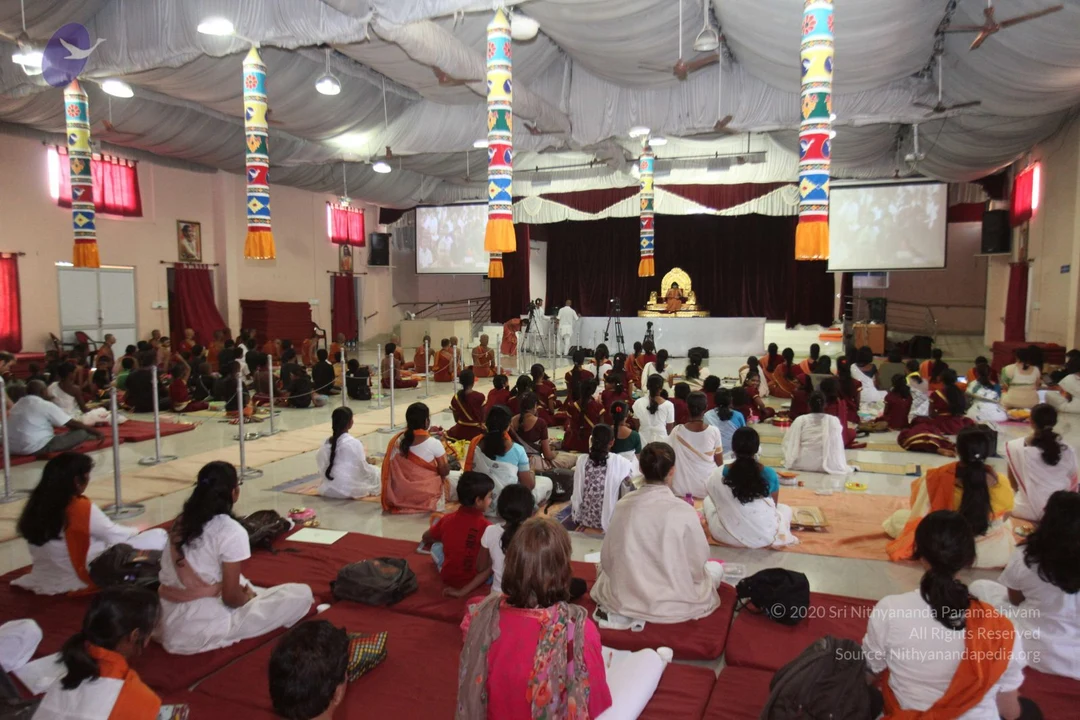
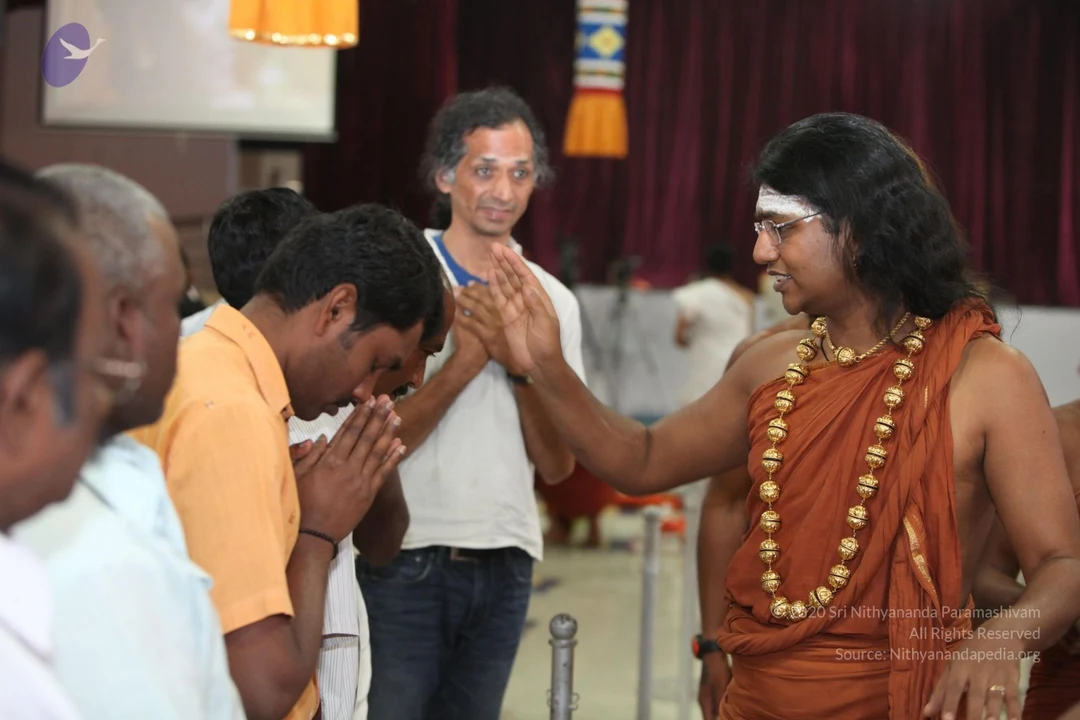
Actor-Manohar-Visit

11 photosSource gallery
A stage event before a deep maroon velvet curtain and an ornate gold throne draped with a tiger-striped cloth. A figure with long swept-back dark hair in an orange saffron shawl and dhoti stands at right, holding a paper. A shaved-headed priest in orange robes and a rudraksha mala holds a red cushion with folded white cloth on an orange cloth tray. Another orange-robed attendant stands behind. A man in white shirt and white dhoti with a white tilak stands at left with hands folded. A man in a pink shirt and white dhoti prostrates face-down on a patterned rug before the stage. A red and gold ornamental cushion sits near the throne.A photograph on a stage with dark maroon velvet drapes and a gilded throne-style seat with red cushions. A long-haired figure in orange ochre robes, bare-chested with a shawl draped over one shoulder, gold-coloured garlands and glasses, smiles while holding up a folded white cloth to a man in a pink shirt and white trousers. A shaved-headed monk in orange robes with rudraksha beads stands behind them, another orange-clad figure is nearby, and a man in white shirt and trousers with a tilak stands at left. The seated figure has distinctive long hair, garlands and orange robes, but the appearance is only partially clear, so identity is uncertain. Three men are visible; a tiger-striped cloth lies on the throne.A photograph on a stage with dark red velvet drapes and a gold-carved throne at right. A long-haired man in an orange-saffron dhoti and shawl, wearing spectacles, a multi-strand gold necklace and a rudraksha-style mala, stands barefoot on a patterned carpet holding up a white shawl with a grey border. Beside him a bald man in an orange dhoti with a rudraksha mala stands next to a tray with a red cloth. Another man in an orange garment stands behind. At left a man in a pink shirt and white trousers, with a red thread on his wrist, receives the shawl, while a man in white shirt and white trousers with white forehead markings stands further left. A tiger-skin cushion lies on the throne seat.A photograph on a stage with a deep red velvet backdrop. A long-haired figure with his back to the camera, wearing saffron-orange cloth draped over the shoulders and waist, reaches toward a tray of red flowers held by a saffron-clad attendant. The seated figure's gold-framed throne is covered in a tiger-skin cushion and red velvet. Beside them, two men in white dhoti-style clothing stand with hands folded, one with a white tilak on his forehead. A shaved-headed priest in saffron wears rudraksha beads and a white tilak, and another young attendant in saffron stands with a rudraksha mala. A patterned orange and pink rug covers the stage floor.A stage event in front of deep maroon velvet drapes. A man in a white dhoti and shawl, with a pink border, bows slightly and hands a red wrapped gift to a long-haired figure in orange ochre robes who stands on an orange and red patterned rug beside a gold-carved throne draped with a tiger-striped cloth. The figure in orange wears a gold necklace and smiles while receiving the gift. Behind them, several men in saffron-orange dhotis with gold borders stand, one with a rudraksha mala and tilak, another holding a second red gift.A stage ceremony before a maroon velvet curtain. On the right, a long-haired man in saffron-orange dhoti and shawl with a white tilak and a gold-bead necklace stands beside a gilded throne draped with a tiger-striped cloth and red cushions, reaching out to receive a red cloth-wrapped offering. Opposite him, a man in white dhoti and shawl bows and holds the red bundle, while another man in white leans in. Behind them, shaved-headed attendants in saffron cloths with rudraksha malas and white tilaks watch. An ornate orange-and-cream rug covers the stage floor. Four to five people are visible.

Darshan
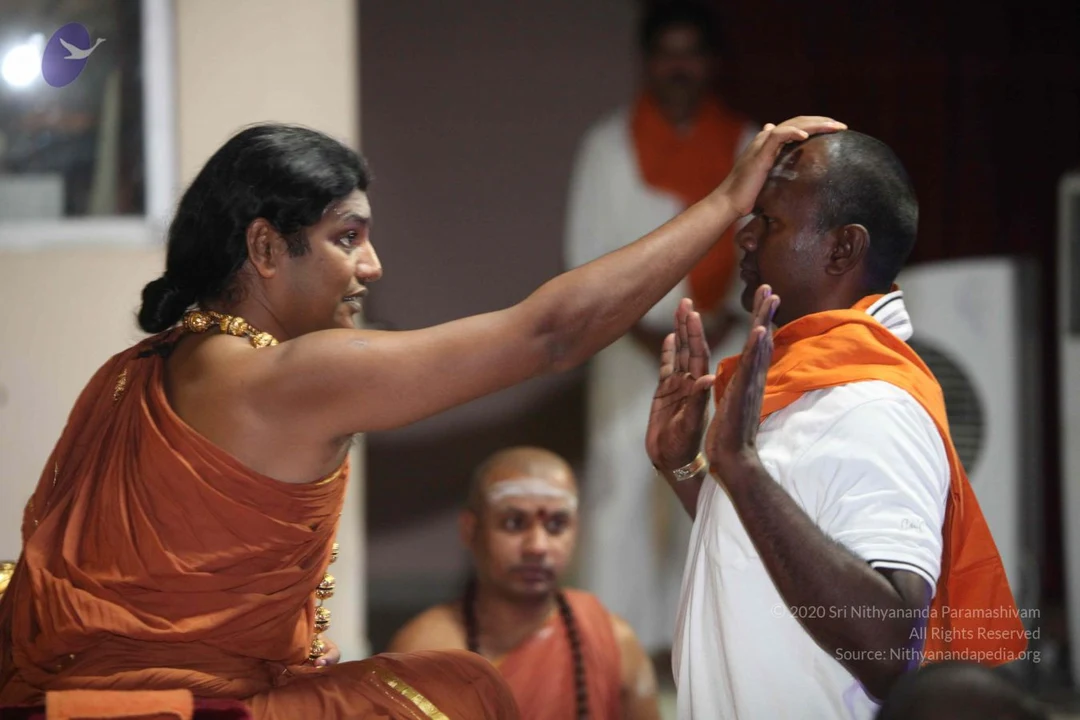
8 photosSource gallery
A seated man in saffron-orange robes with a gold-bordered drape sits on a red velvet throne before an ornate gold-embossed backrest. He wears a long gold bead mala and a gold necklace, has a red bindi and white forehead markings, and raises a silver horn-shaped ceremonial instrument in his right hand. A tiger-striped cloth covers the dais, with a white fringed mat below. a person: long swept-back hair, saffron robes, rudraksha-style gold mala and ceremonial gold necklace, seated on a throne in a discourse setting.A seated man in saffron-orange draped cloth with a bare right shoulder and arm wears heavy gold beaded mala necklaces with black bands, and a red bindi on his forehead. His eyes are closed and he appears absorbed, seated before a large ornate gold-embellished backdrop against deep maroon drapery. Plain photograph of a single seated figure in a devotional setting.Photograph of a seated man in saffron-orange robes on an ornate gold throne with a carved arched back, wearing a long multi-strand gold bead necklace and a rudraksha mala, with short dark hair and a red mark on his forehead. Two devotees kneel before him on a red carpet with white cushions: a man in a white shirt and white trousers bending forward with his head lowered, and a woman with a long braid wearing a pink and peach striped sari, her hands near his feet. The scene suggests a padapuja-style honouring. A dark red curtain forms the backdrop. Appearance-based label: a person, seated on the throne in orange robes and gold necklaces, receiving the kneeling devotees.A smiling man seated on a red velvet throne in front of an ornate gold repoussé backrest, raising one hand holding a small clear crystal or glass object. He wears a saffron/orange draped garment that bares one shoulder, a long ceremonial gold bead necklace with rudraksha-style gold beads and a gold pendant chain, a red bindi and white forehead markings. A tiger-striped cloth covers the seat edge and a dark maroon curtain frames the background. Appearance-based label: a person, seated on the throne with long swept-back hair, saffron clothing and gold beaded necklace, presiding as the speaker.A smiling man in saffron-orange robes sits on a red velvet throne backed by an ornate gold-embossed arch, with a tiger-striped cushion and a white fur mat at his bare feet. He raises a silver ceremonial staff in his right hand and wears a long gold bead necklace and a black cord, with white and red forehead markings. a person: the long swept-back hair, saffron robes, ornate gold necklace and throne setting are appearance-based cues matching the page's subject, though the page states he is not at this event.A smiling man with swept-back black hair sits on a red velvet throne-style seat in front of an ornate gold-embossed backdrop and maroon drapes. He wears an orange-saffron dhoti and shawl with gold edging, a heavy gold bead necklace and a red bindi with white markings on his forehead. He holds a polished silver ceremonial staff with ringed sections in both hands, looking down at it. A tiger-striped cloth covers the platform edge in front of him. Given the visible cues of swept-back hair, saffron clothing, gold necklace and throne setting, this appears to be a person seated in person.