Skip to content
Tuesday

1 March 2016

Kenopanishad Introduction - Your Thought Currents Are Irrelevant

Dated photos
352
Source pages
1
Media
2
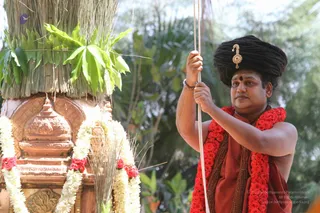
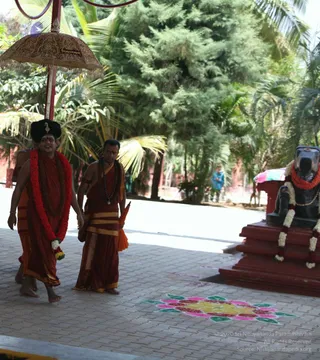
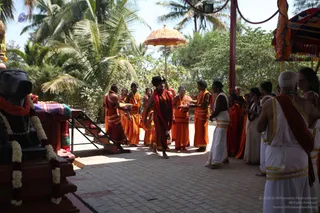
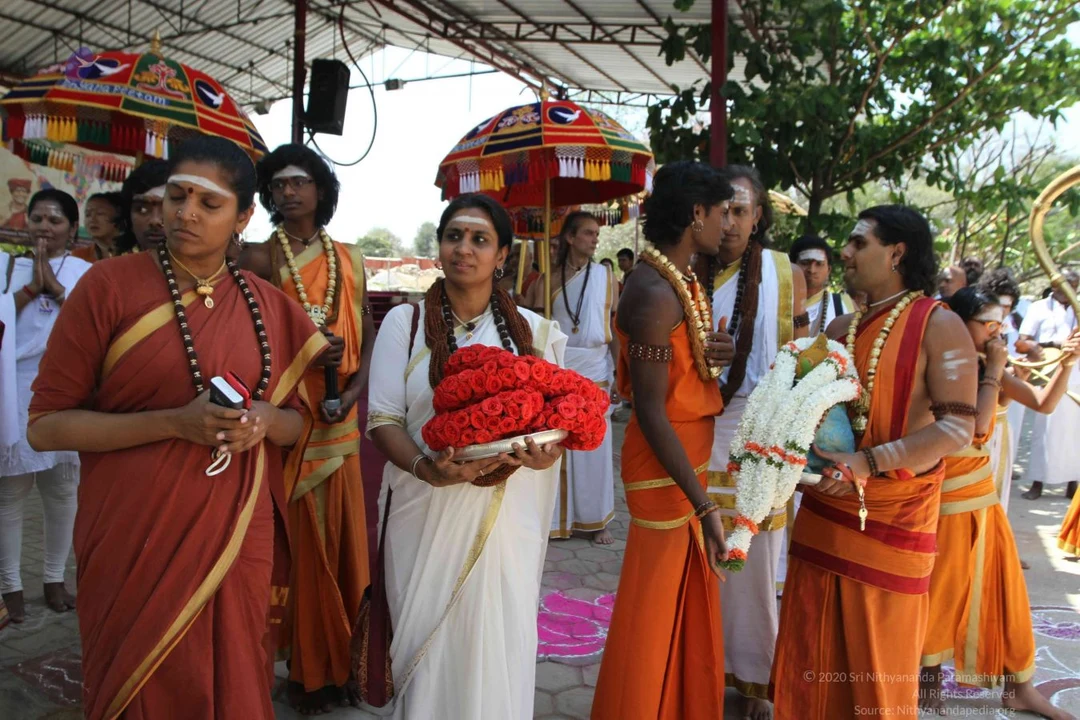
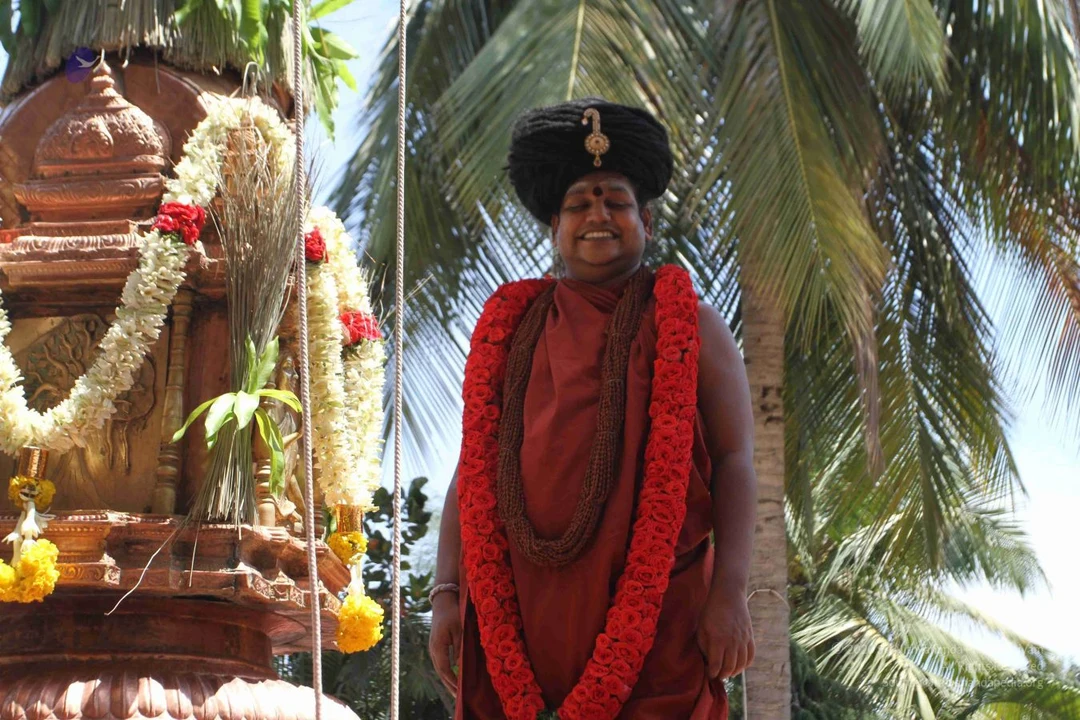
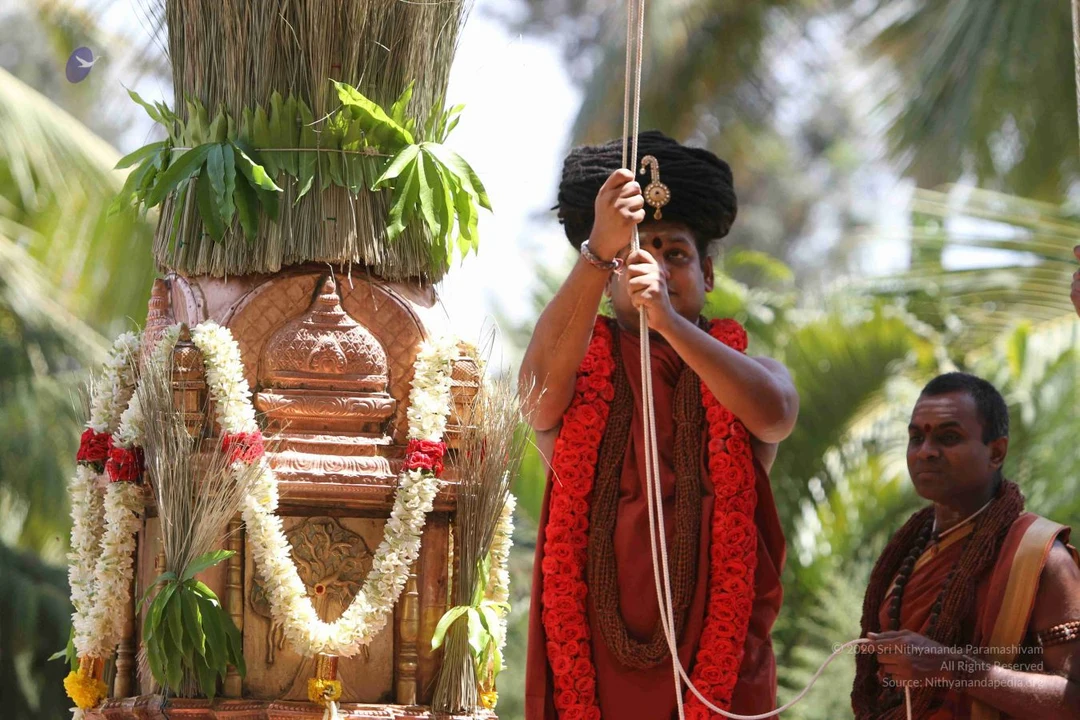
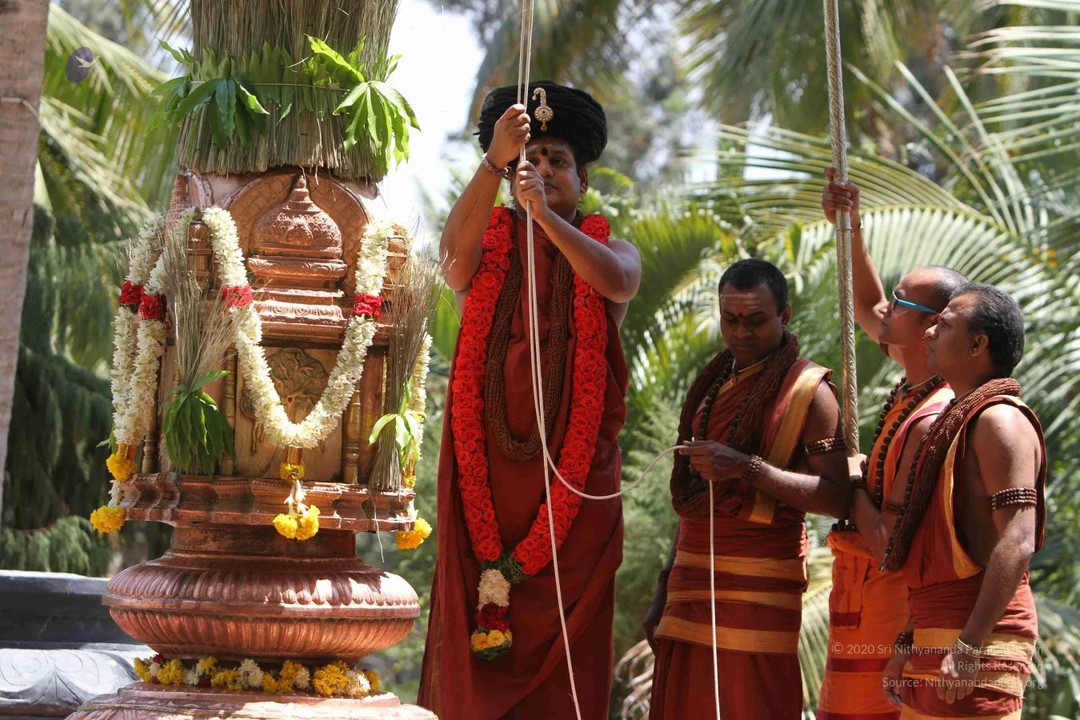
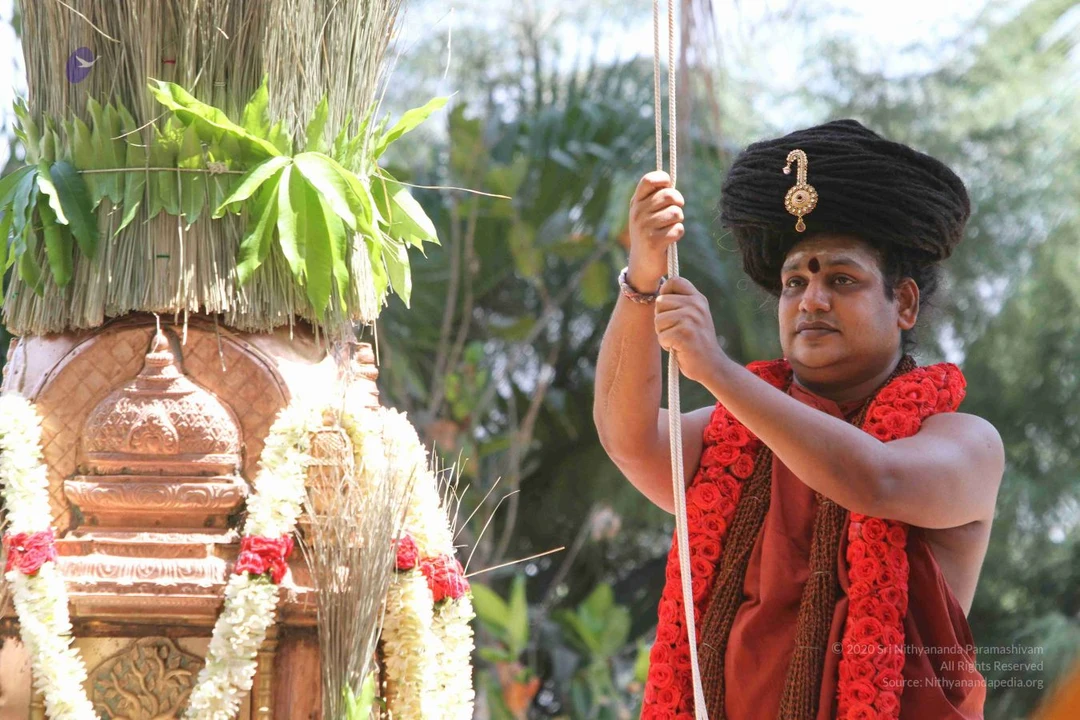
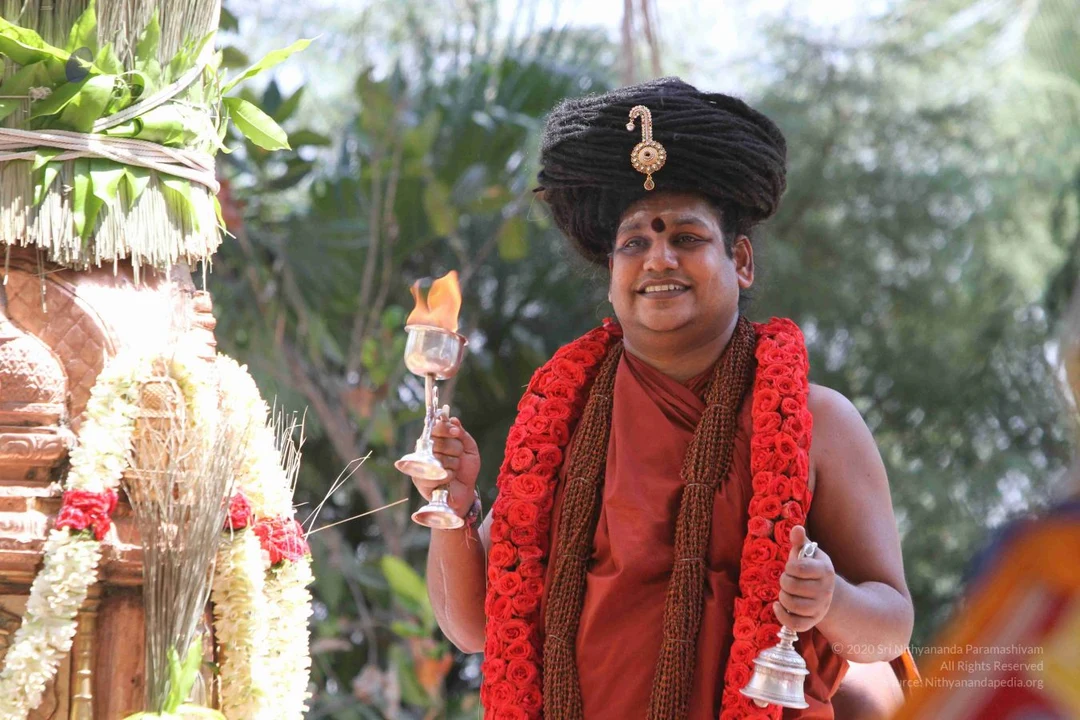
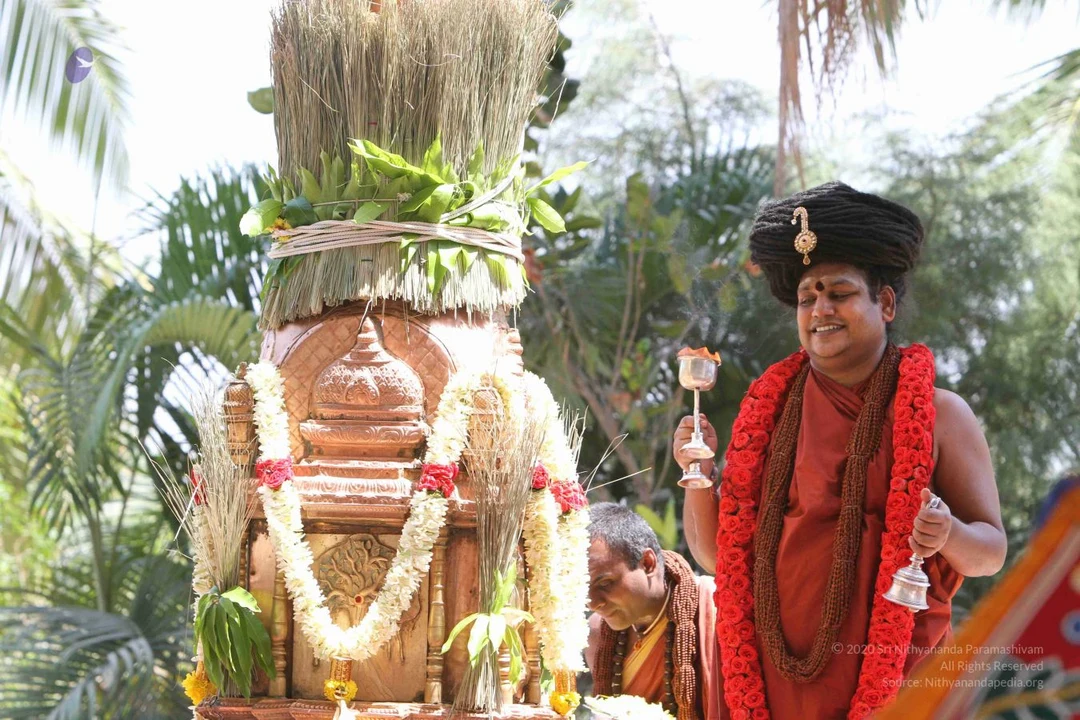
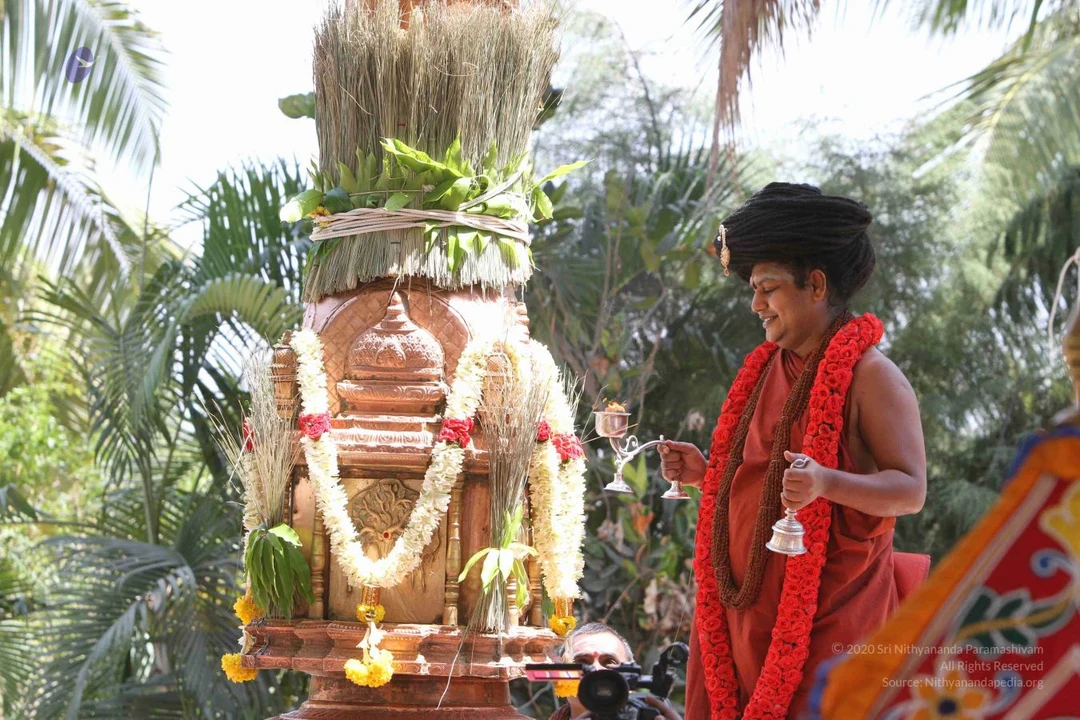
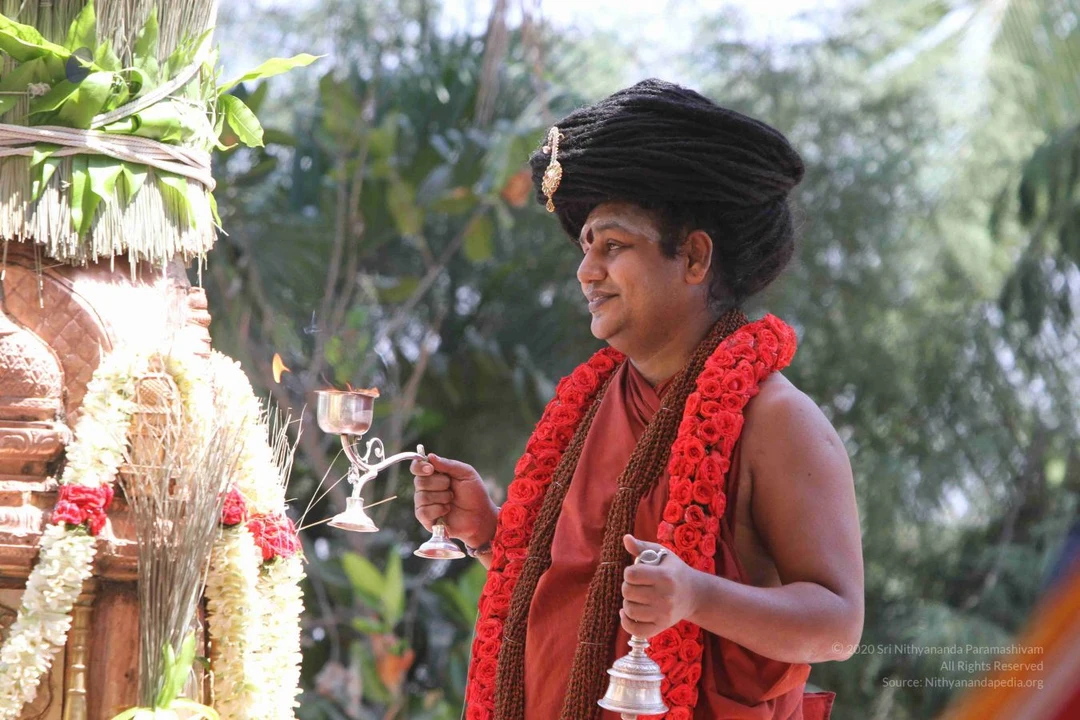
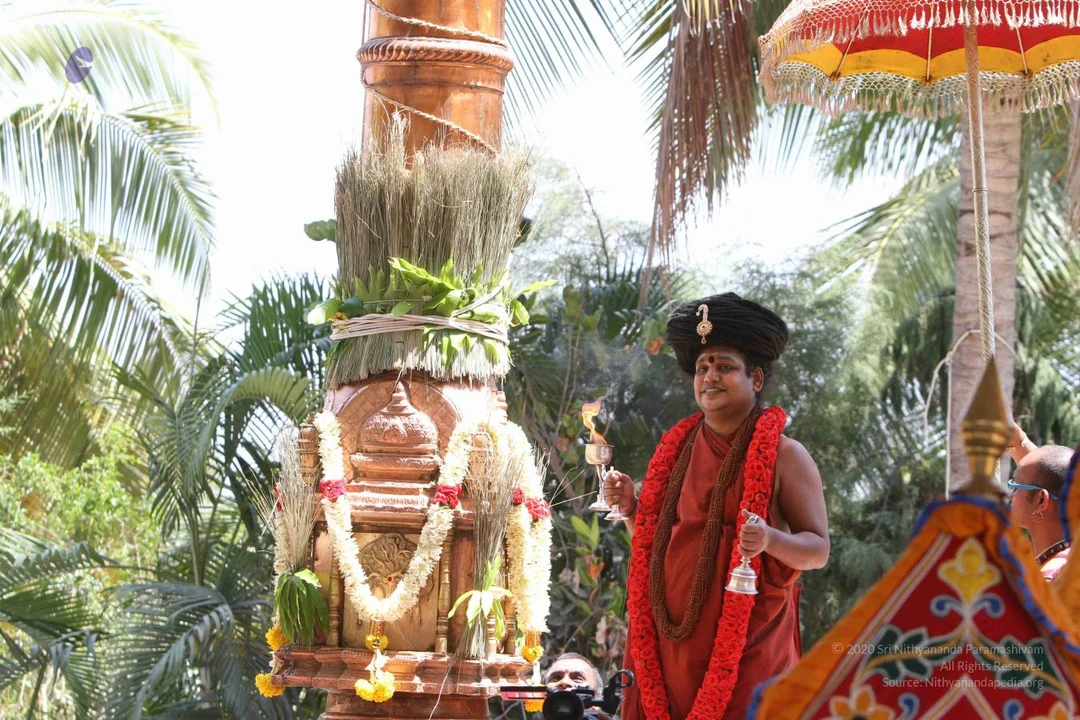
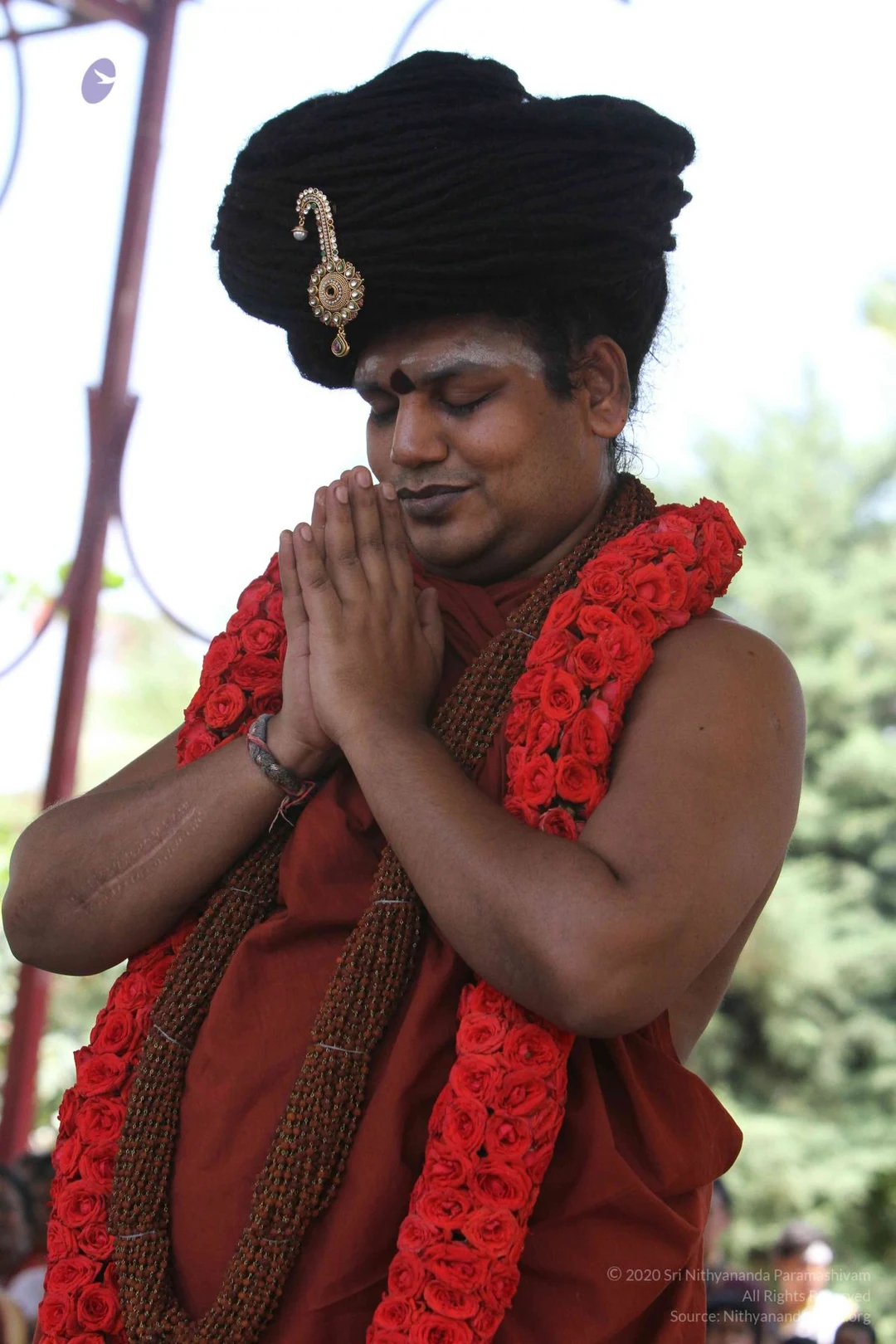
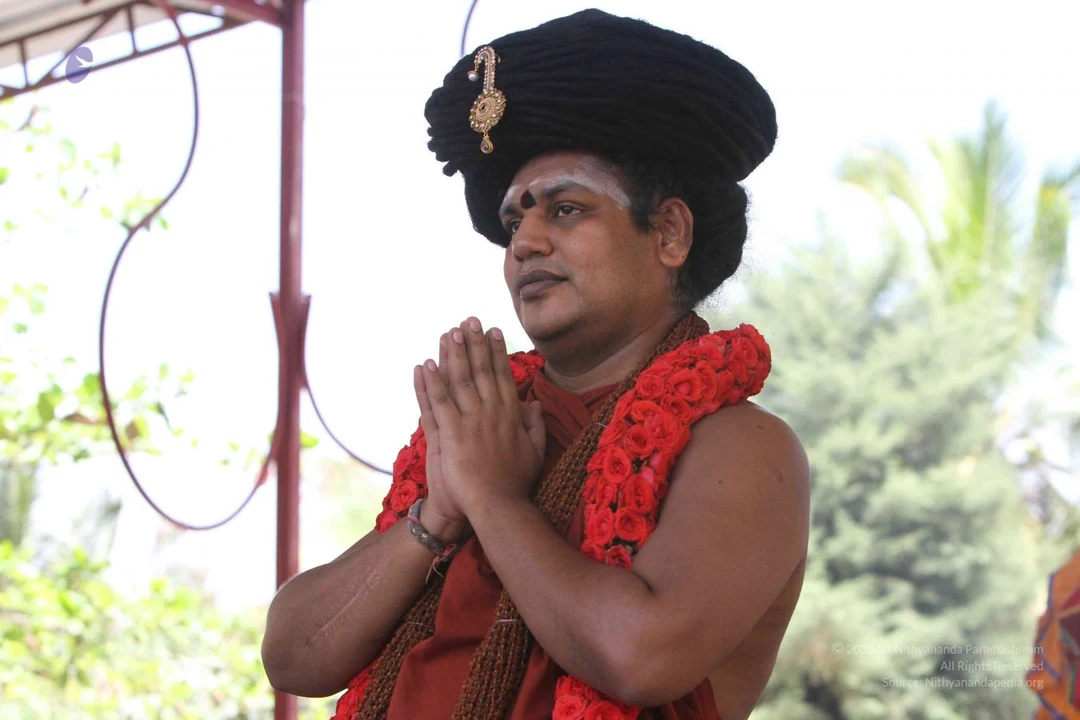
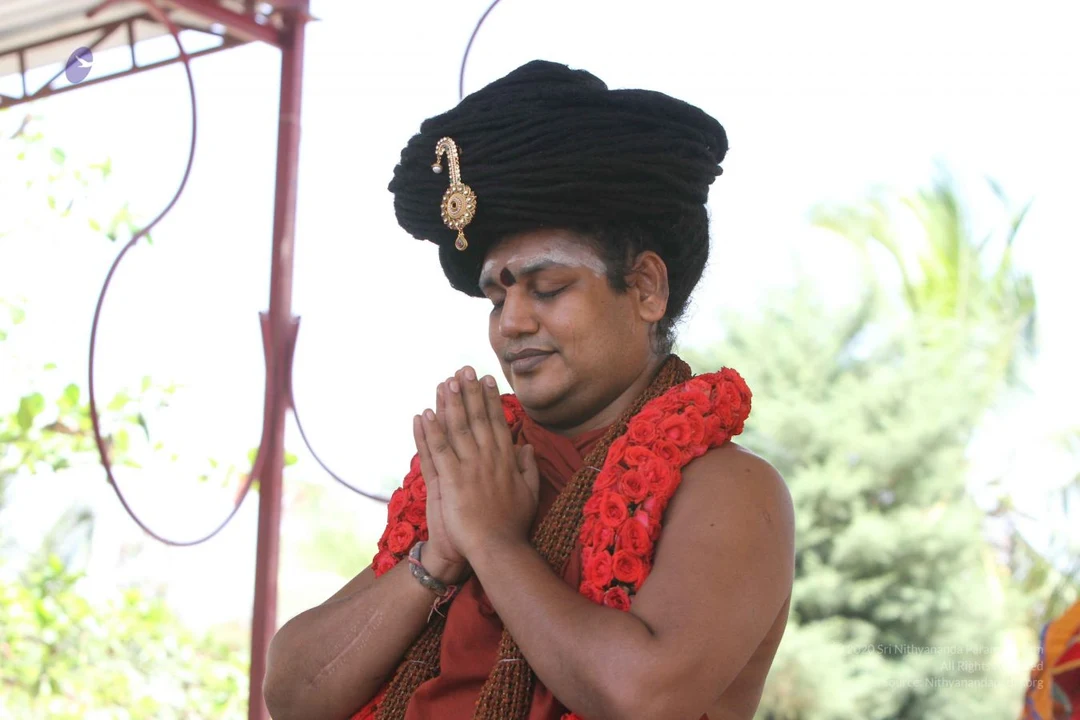
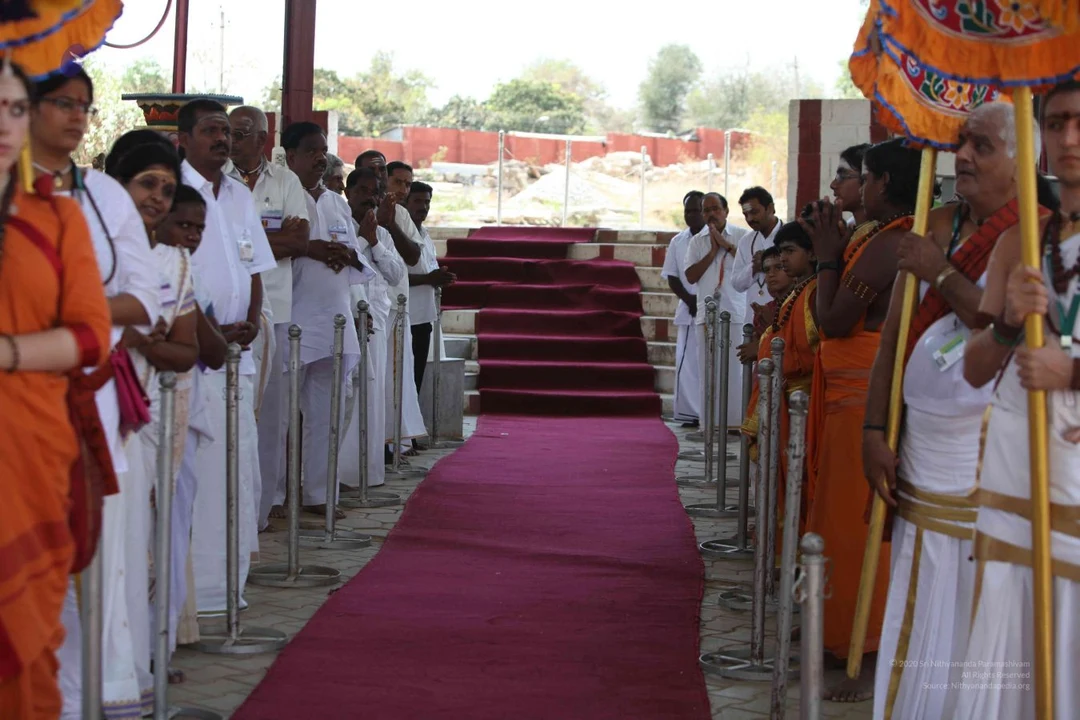
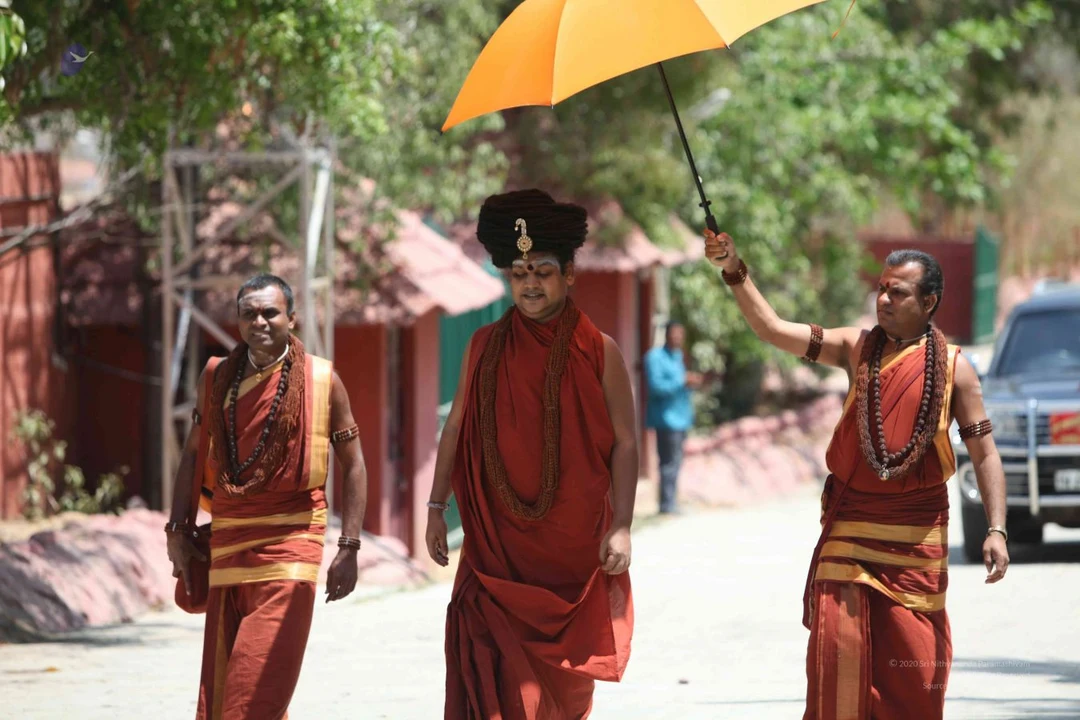
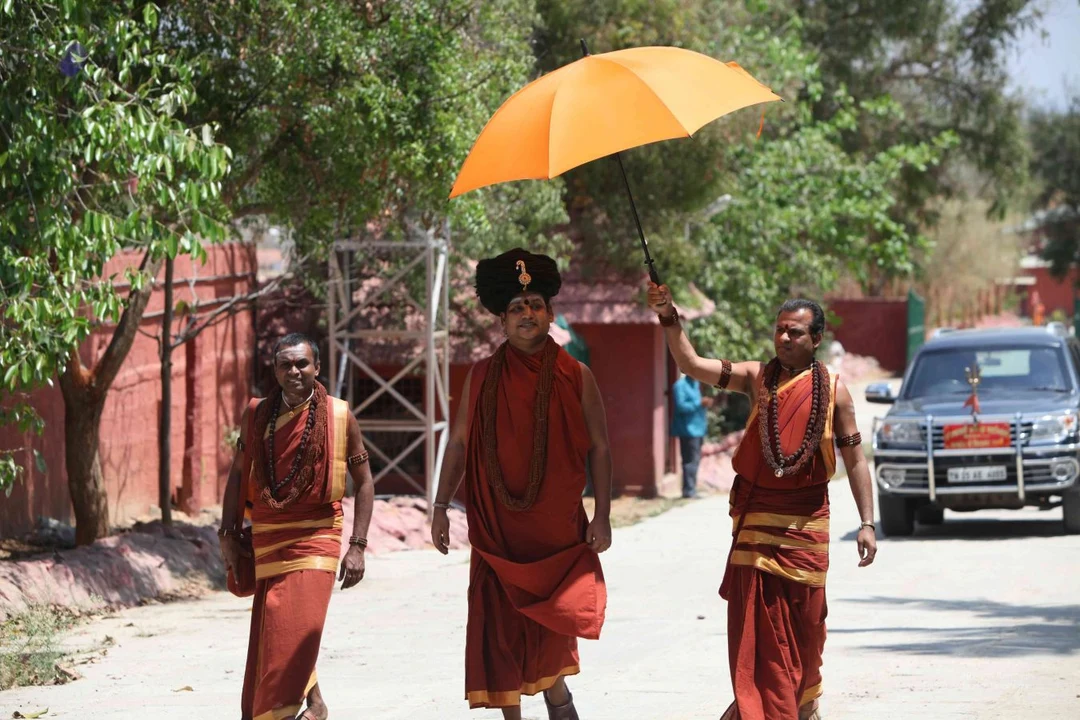
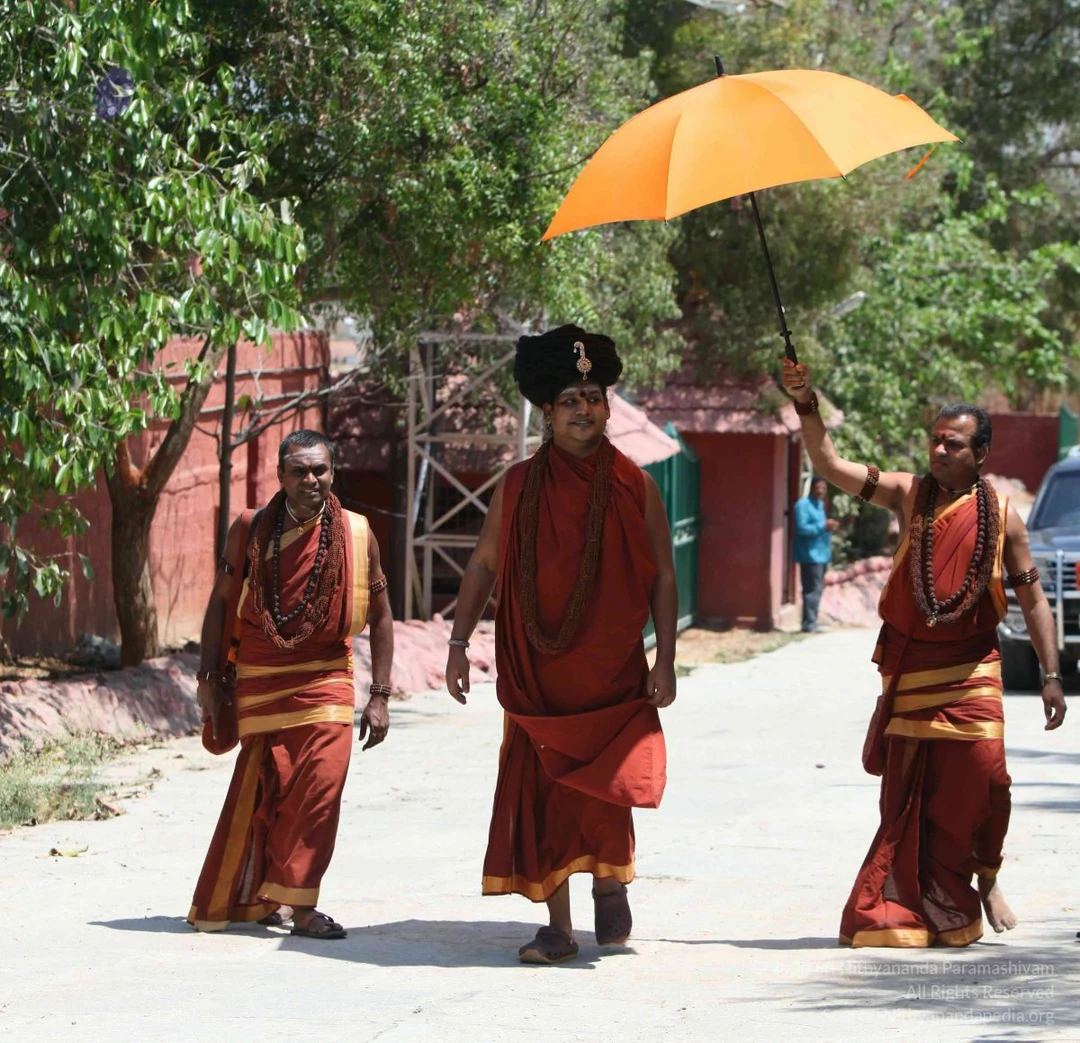
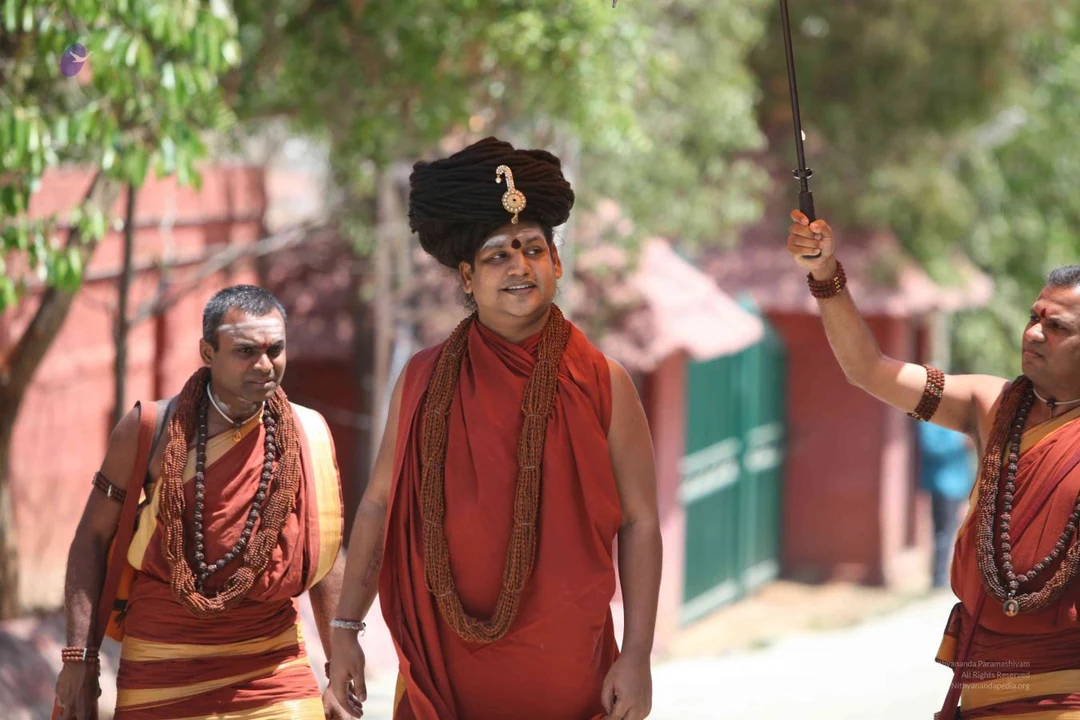
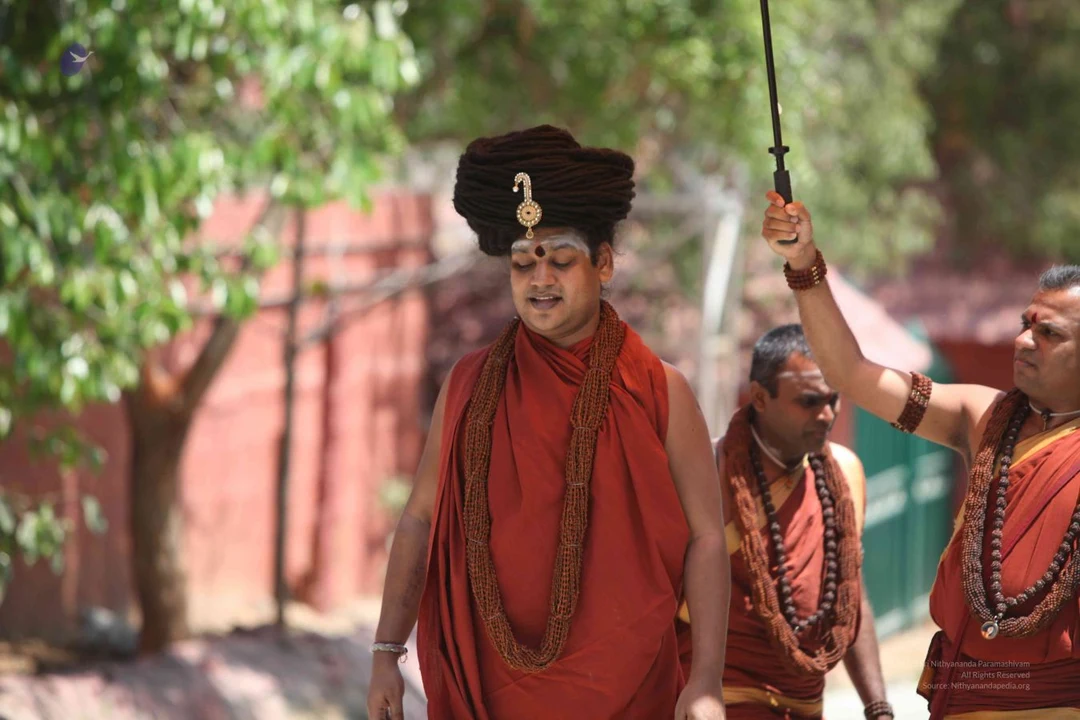
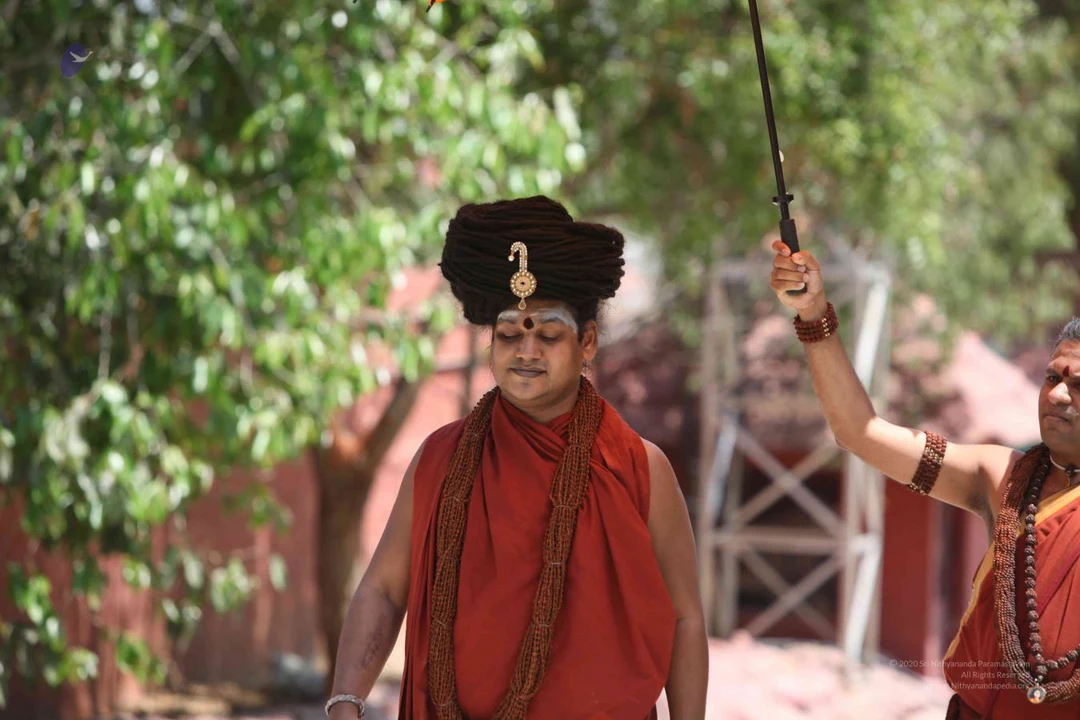
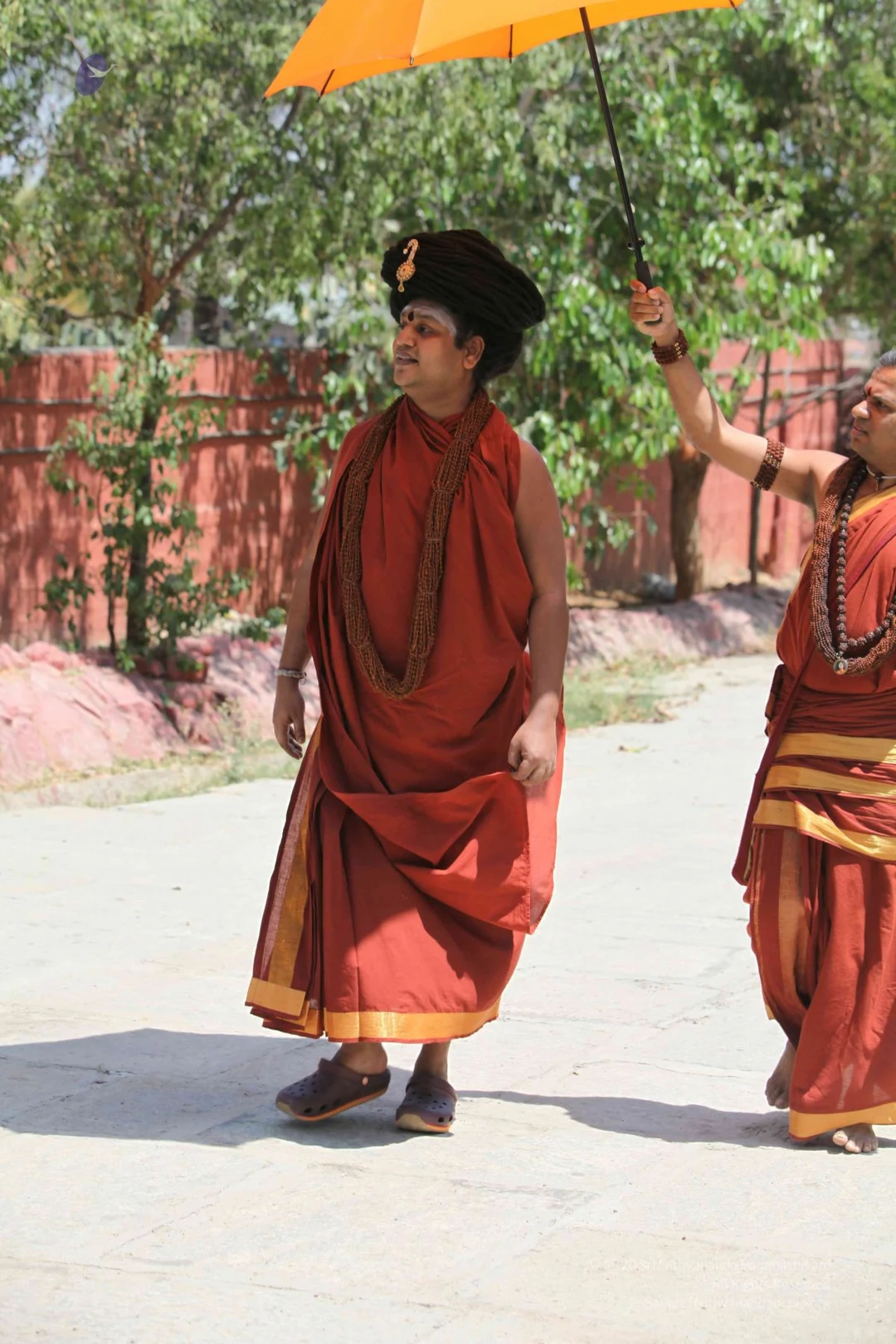
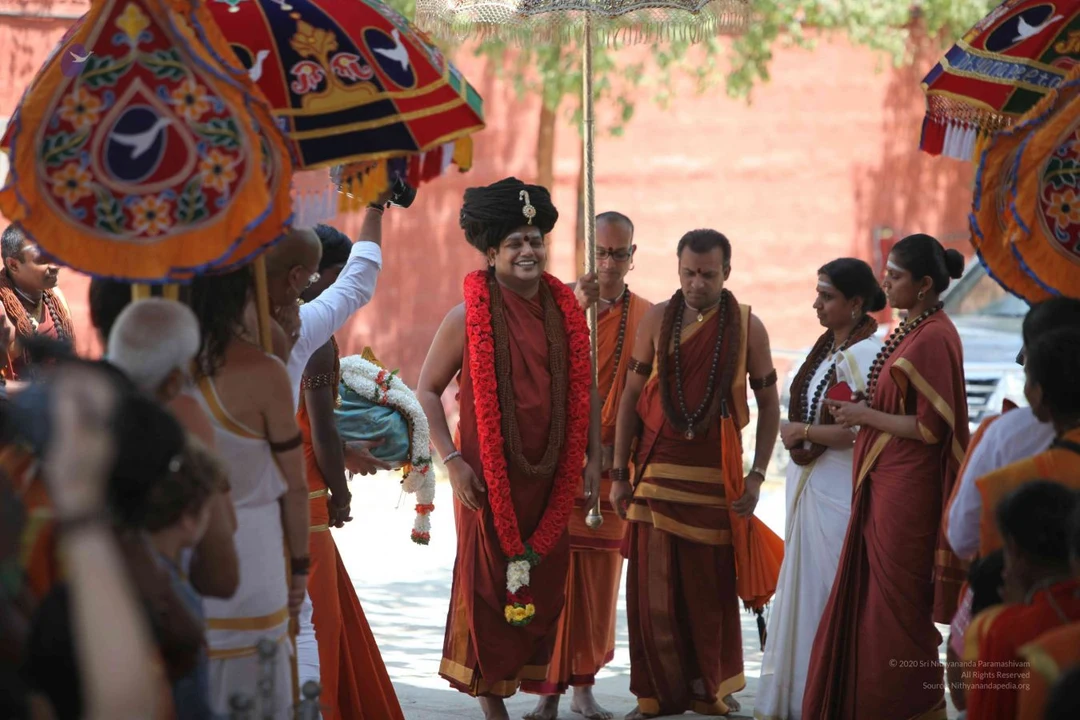
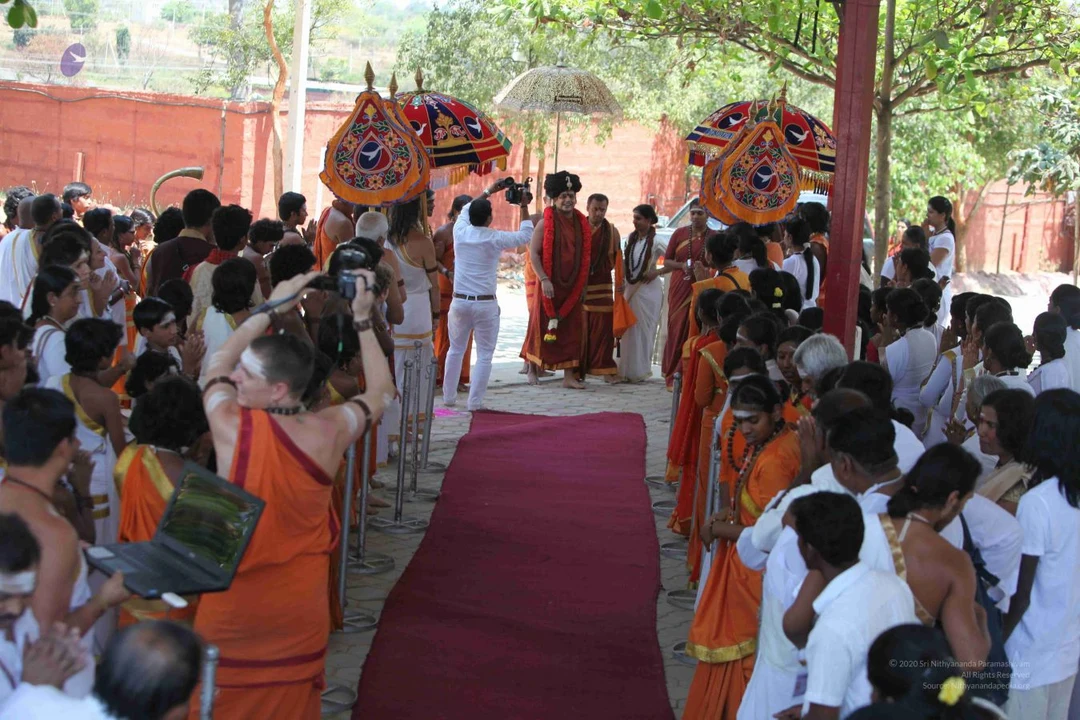
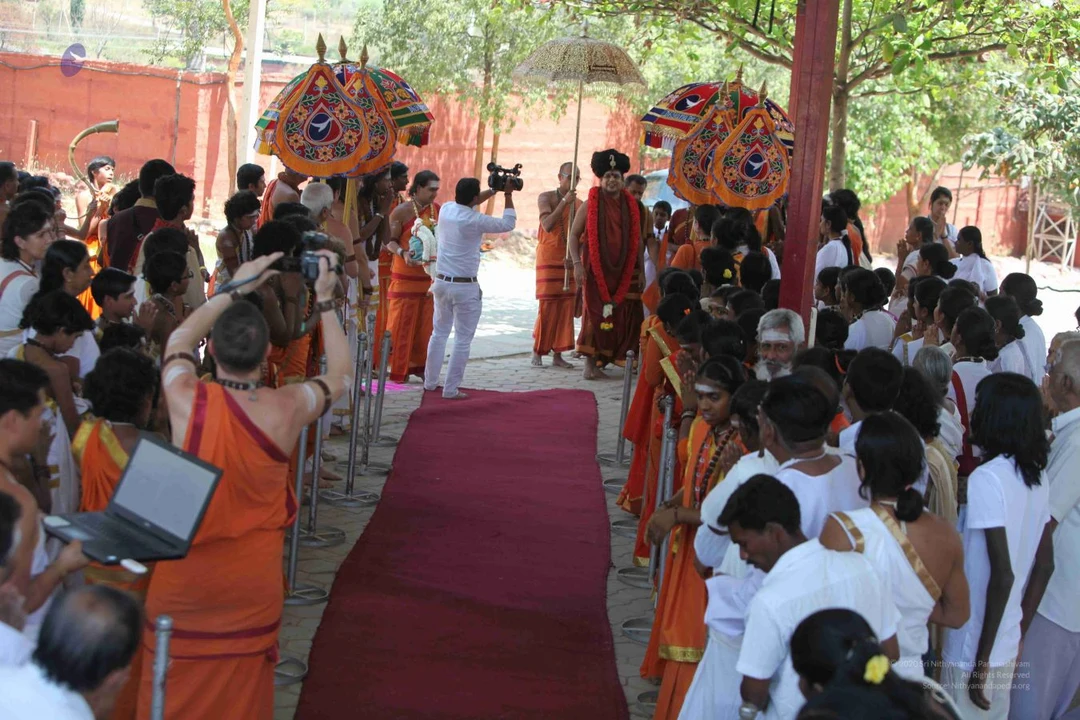
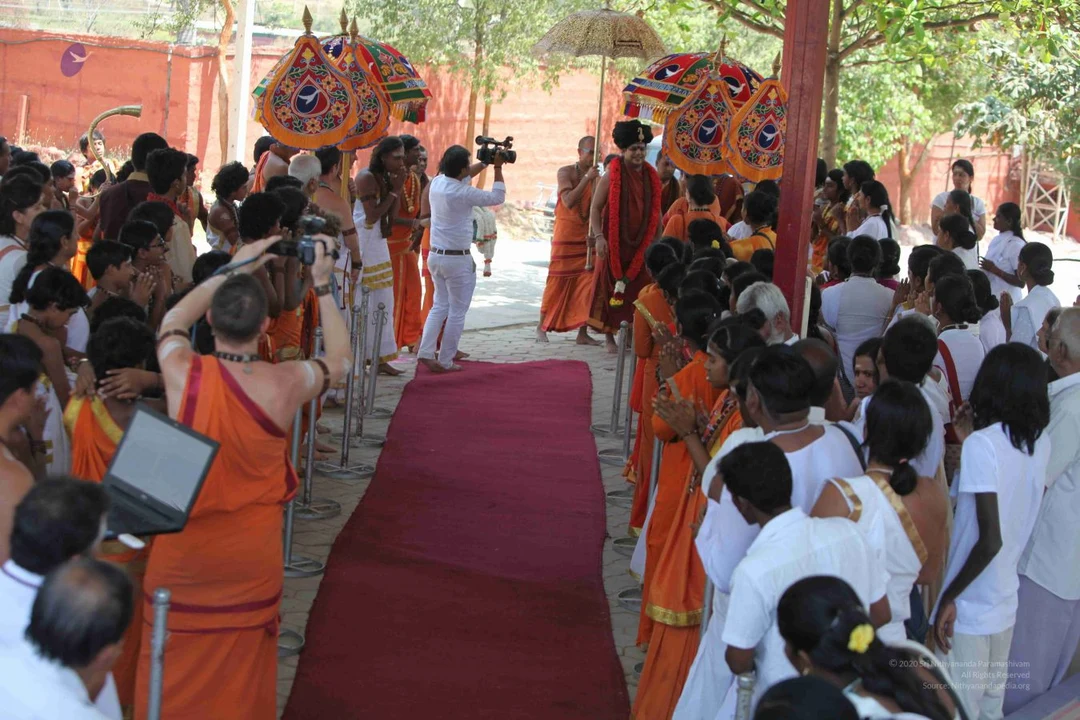
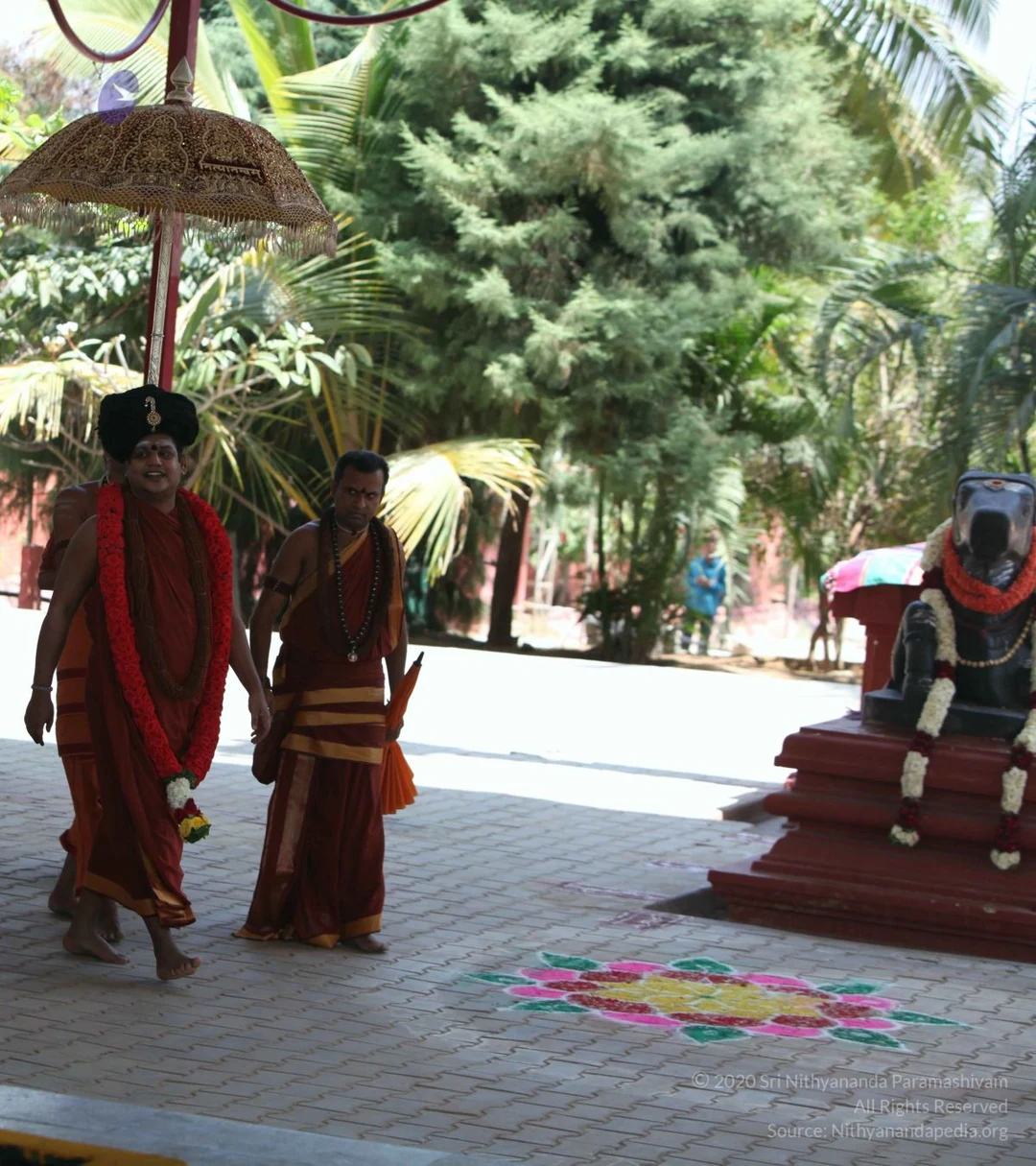
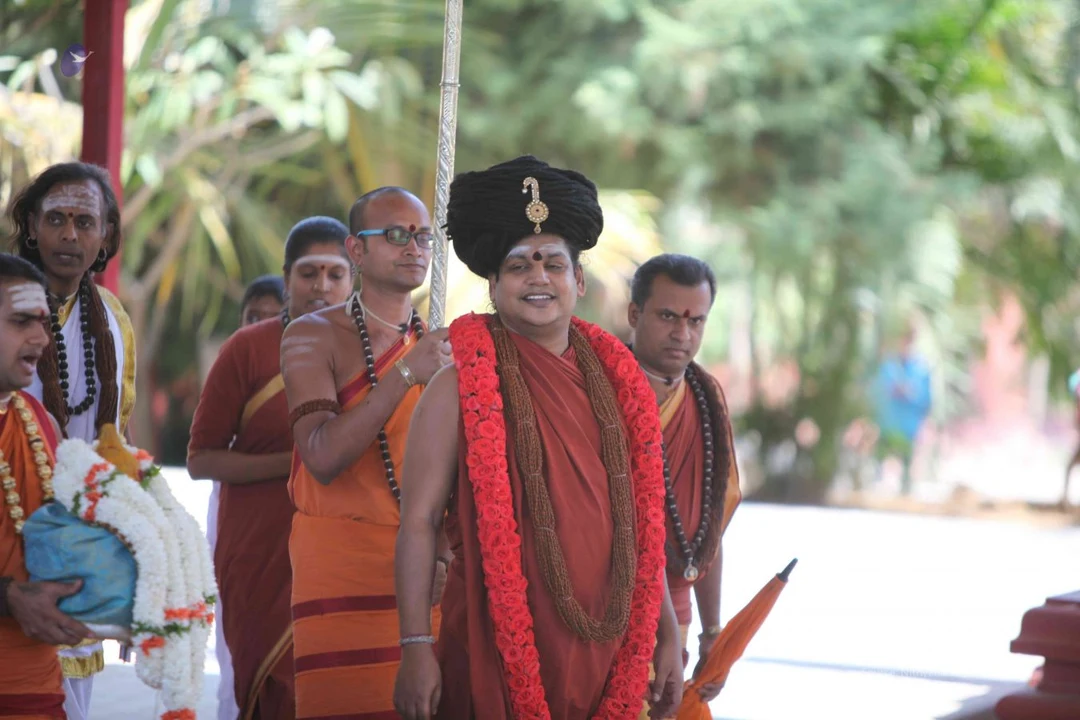
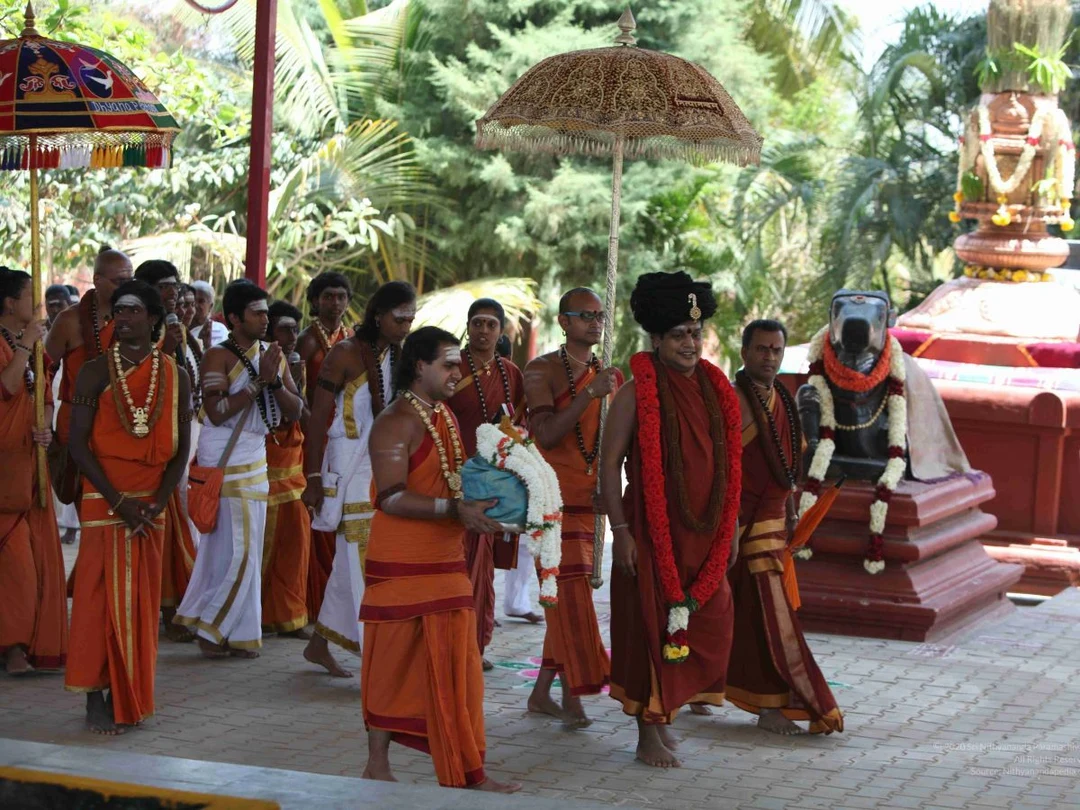
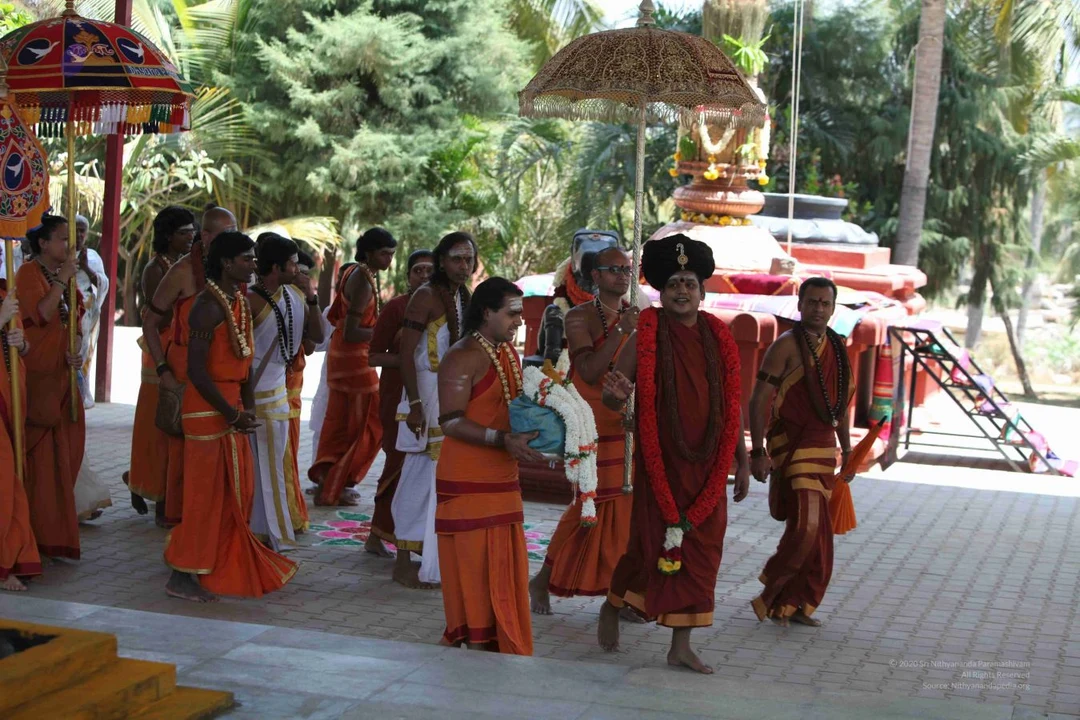
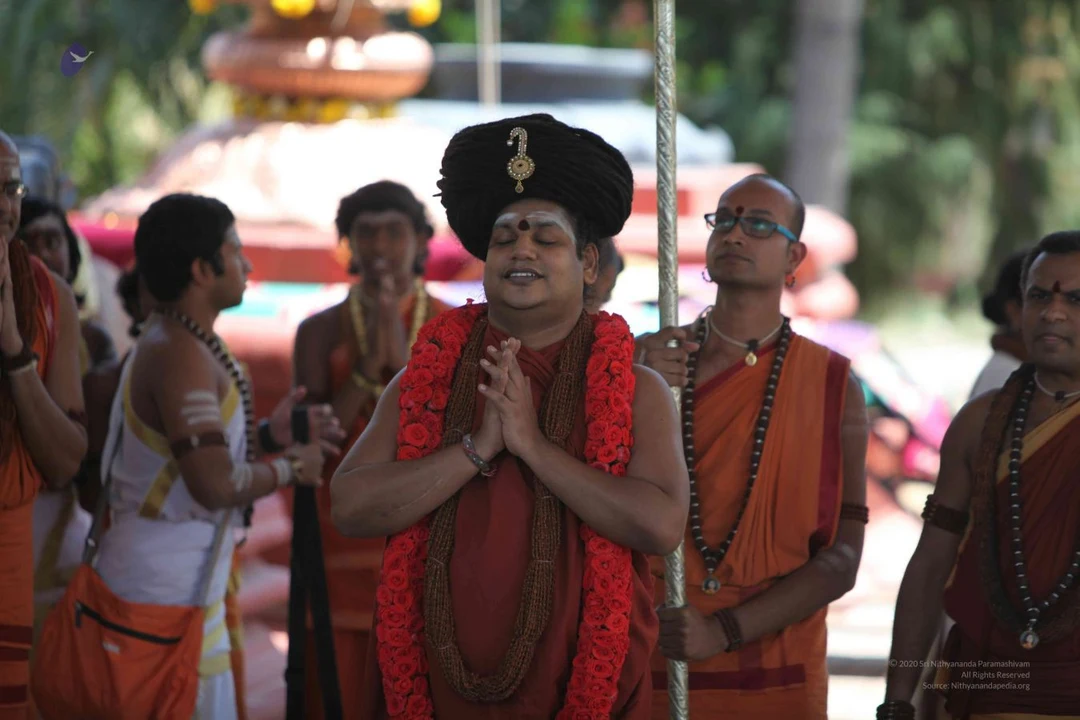
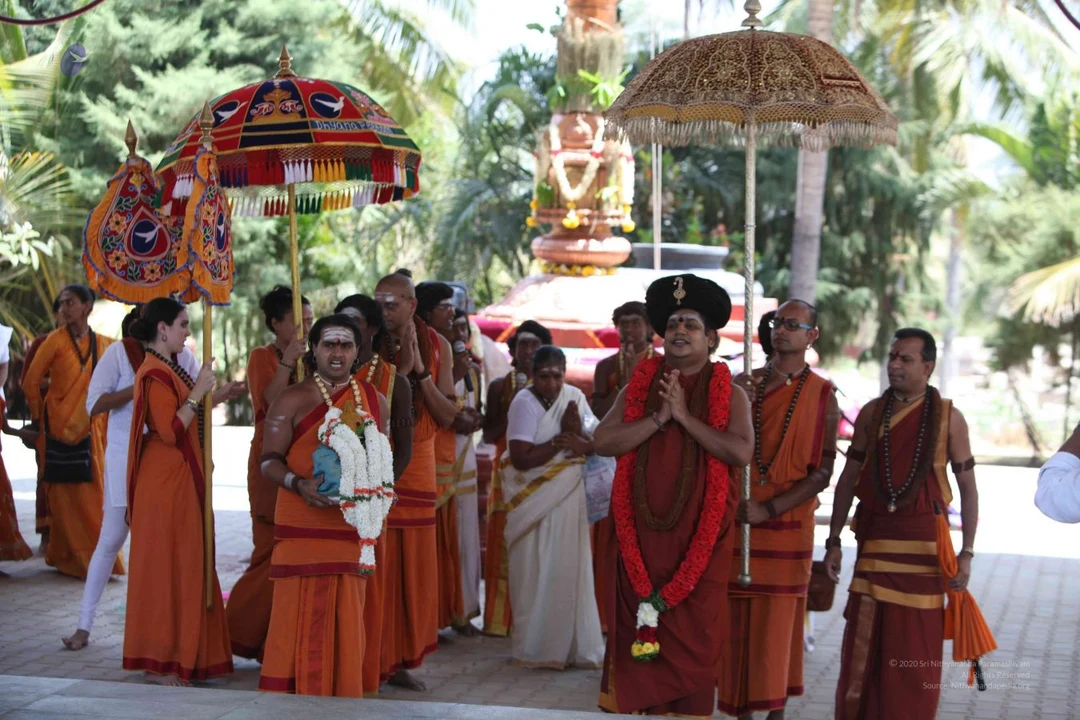
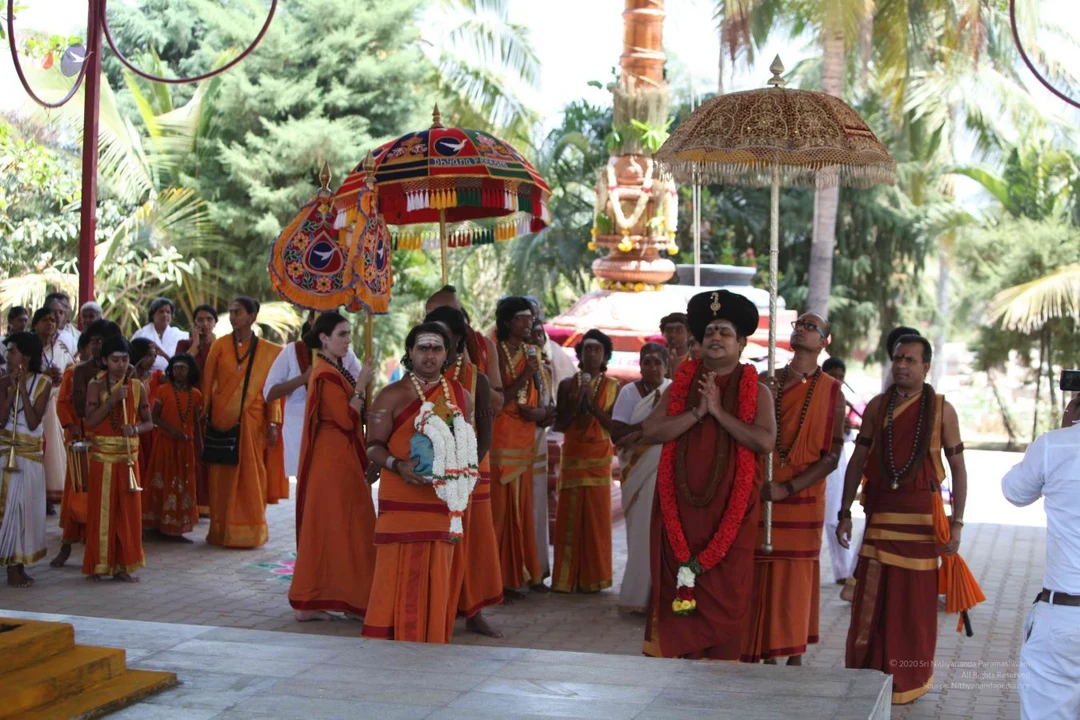
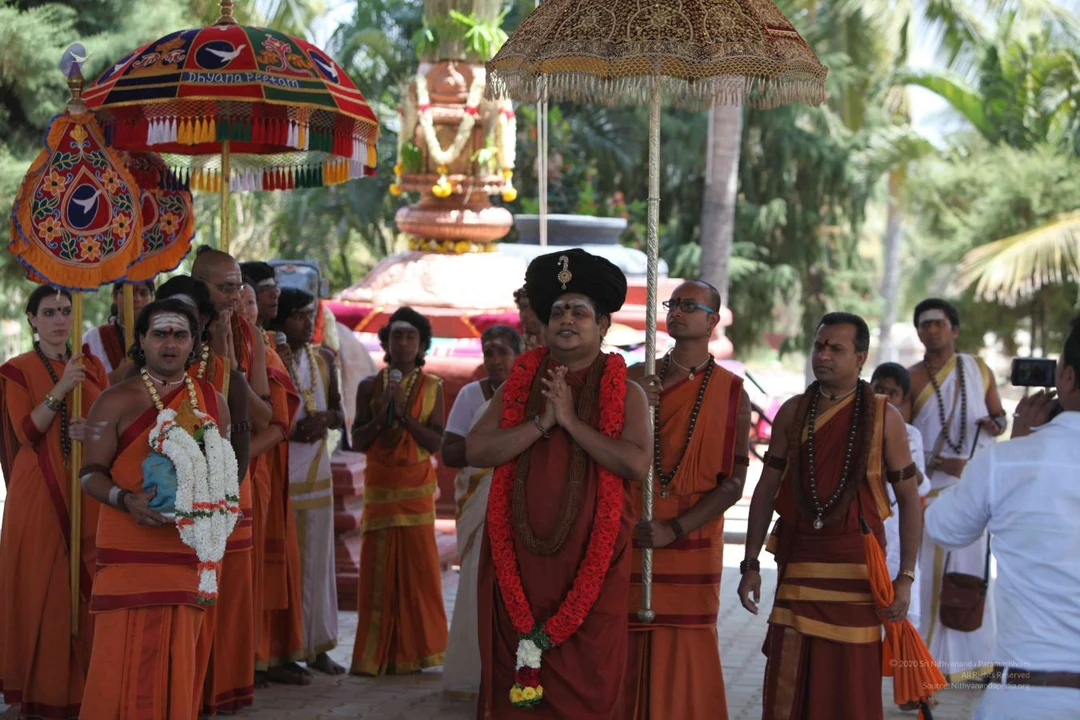
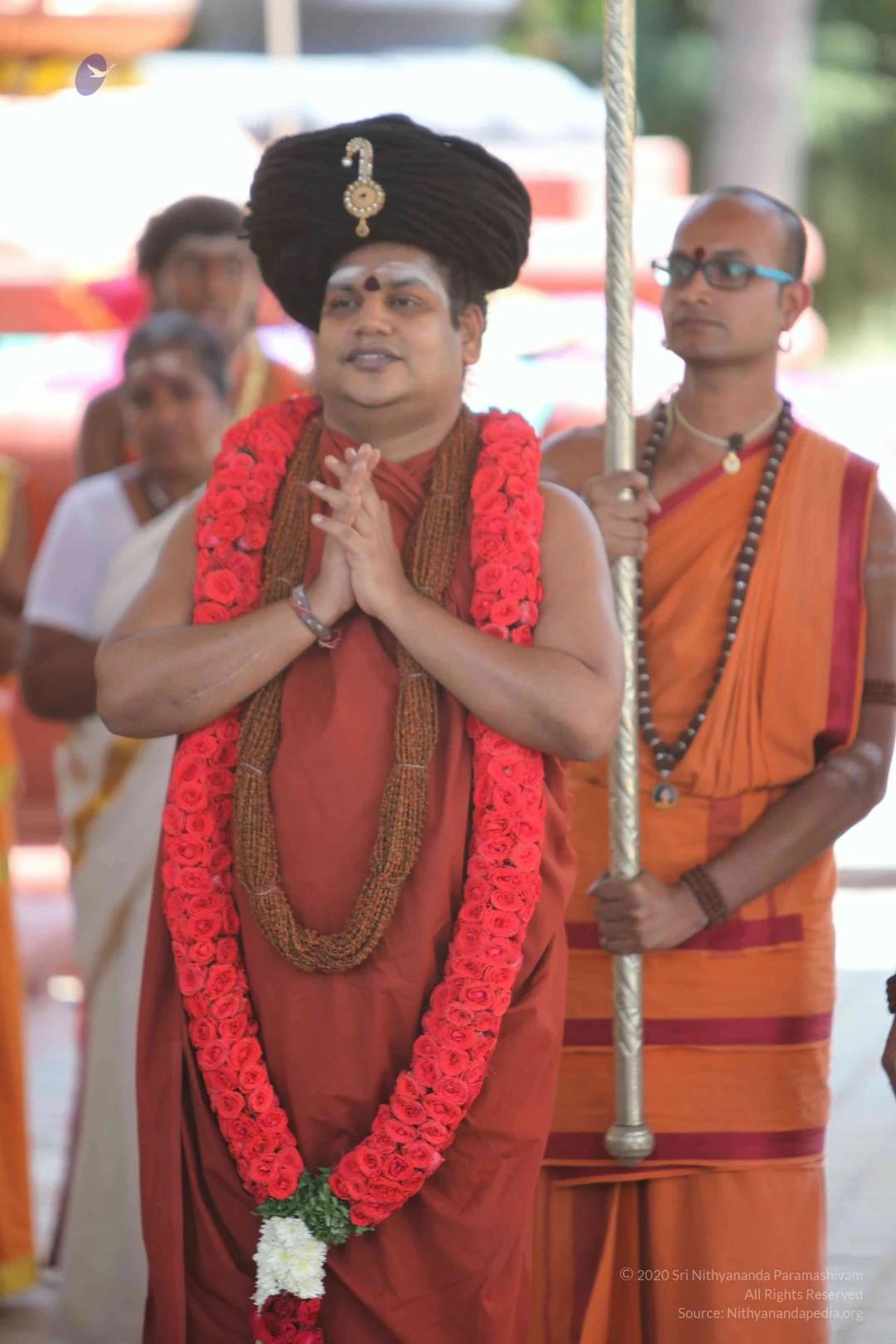
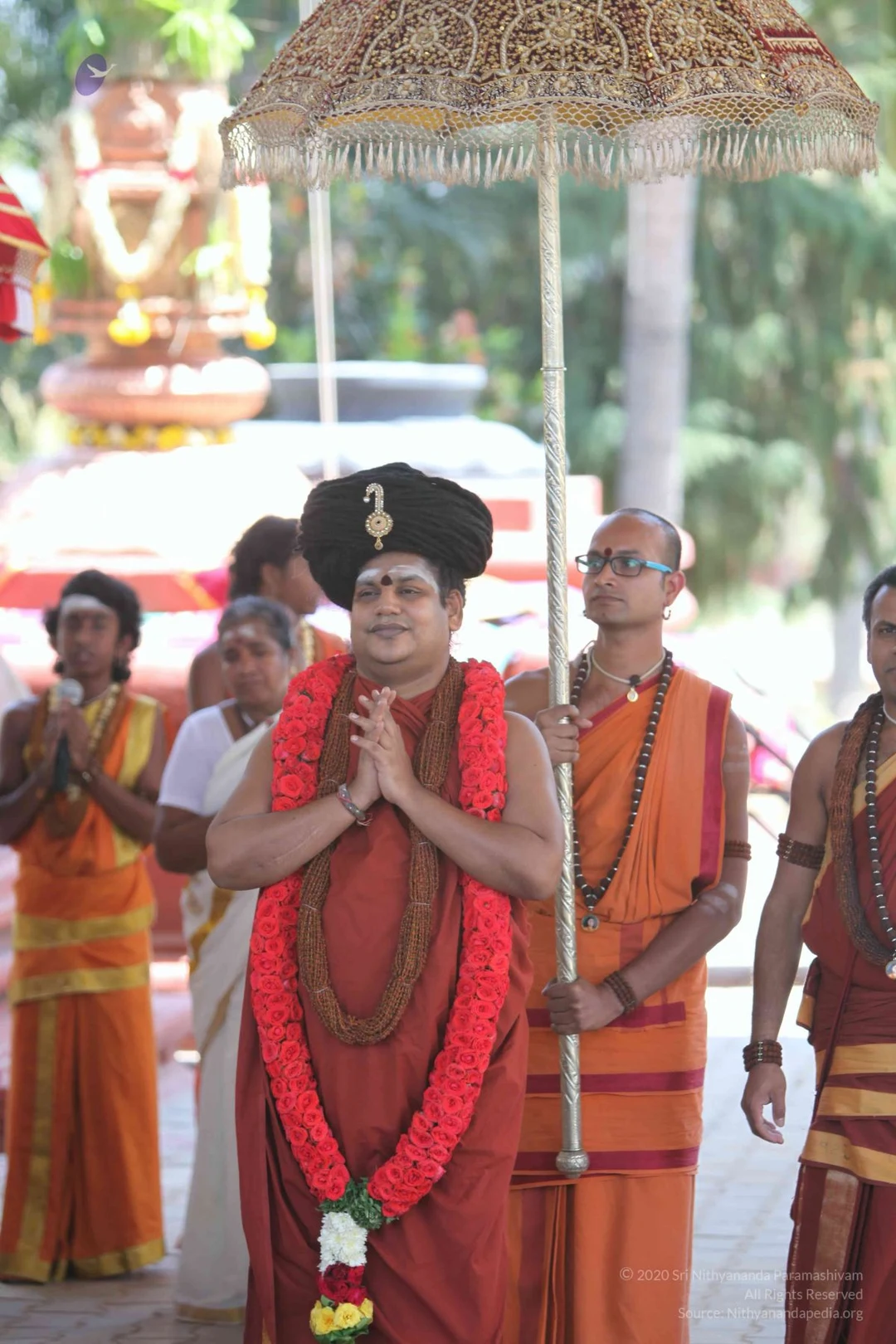
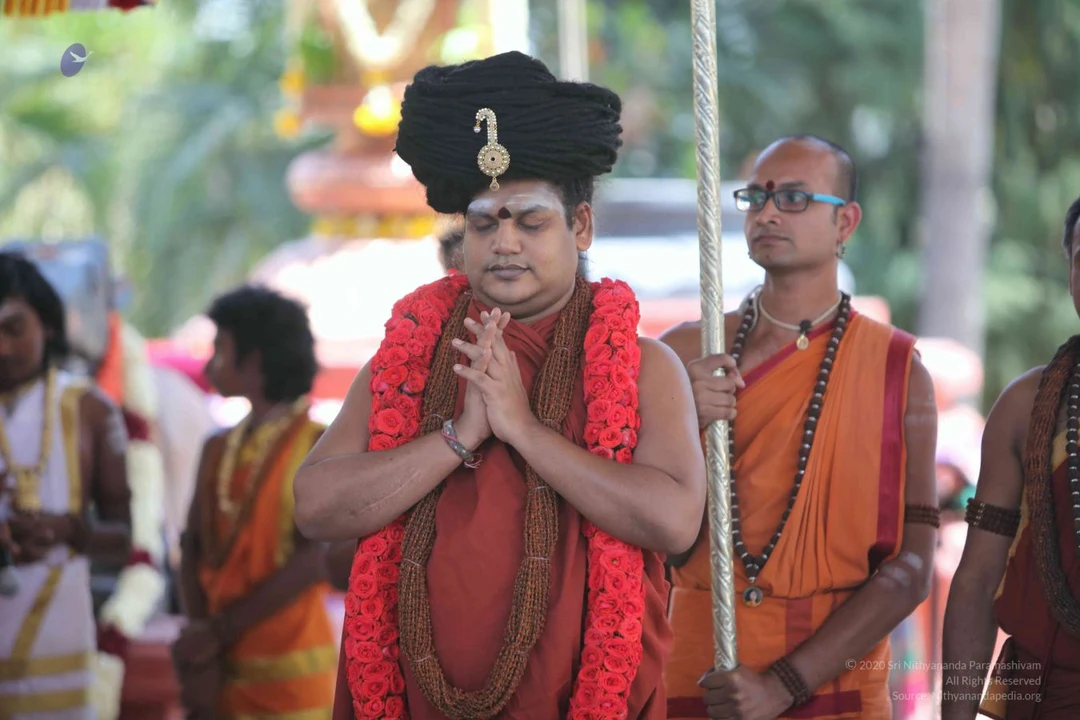
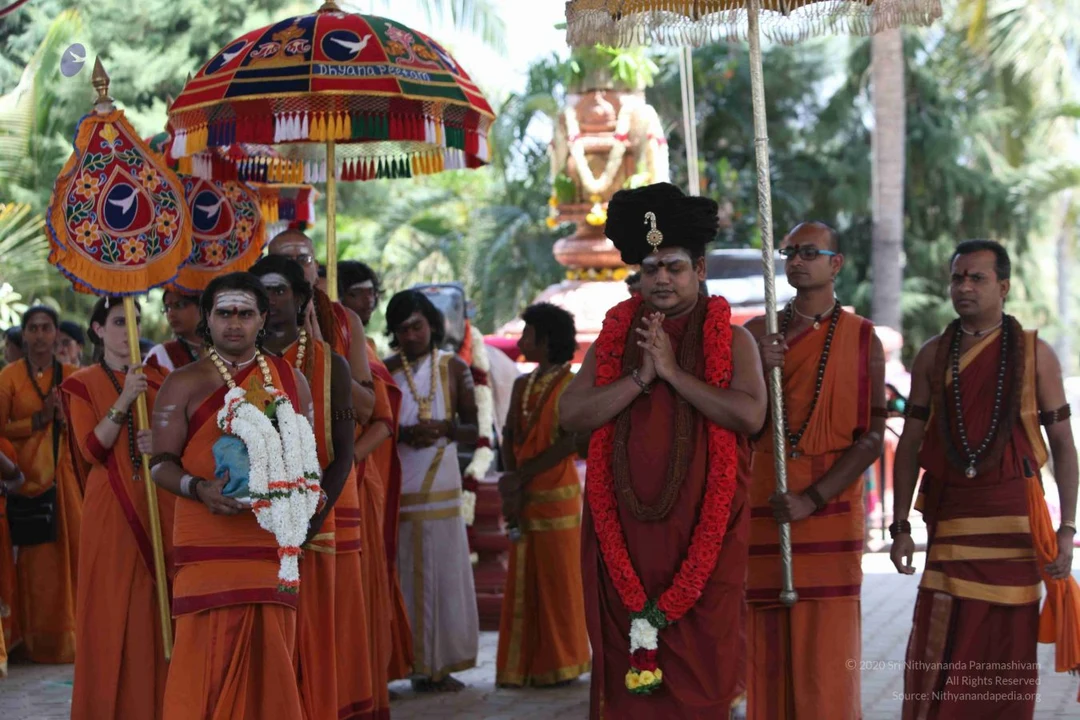
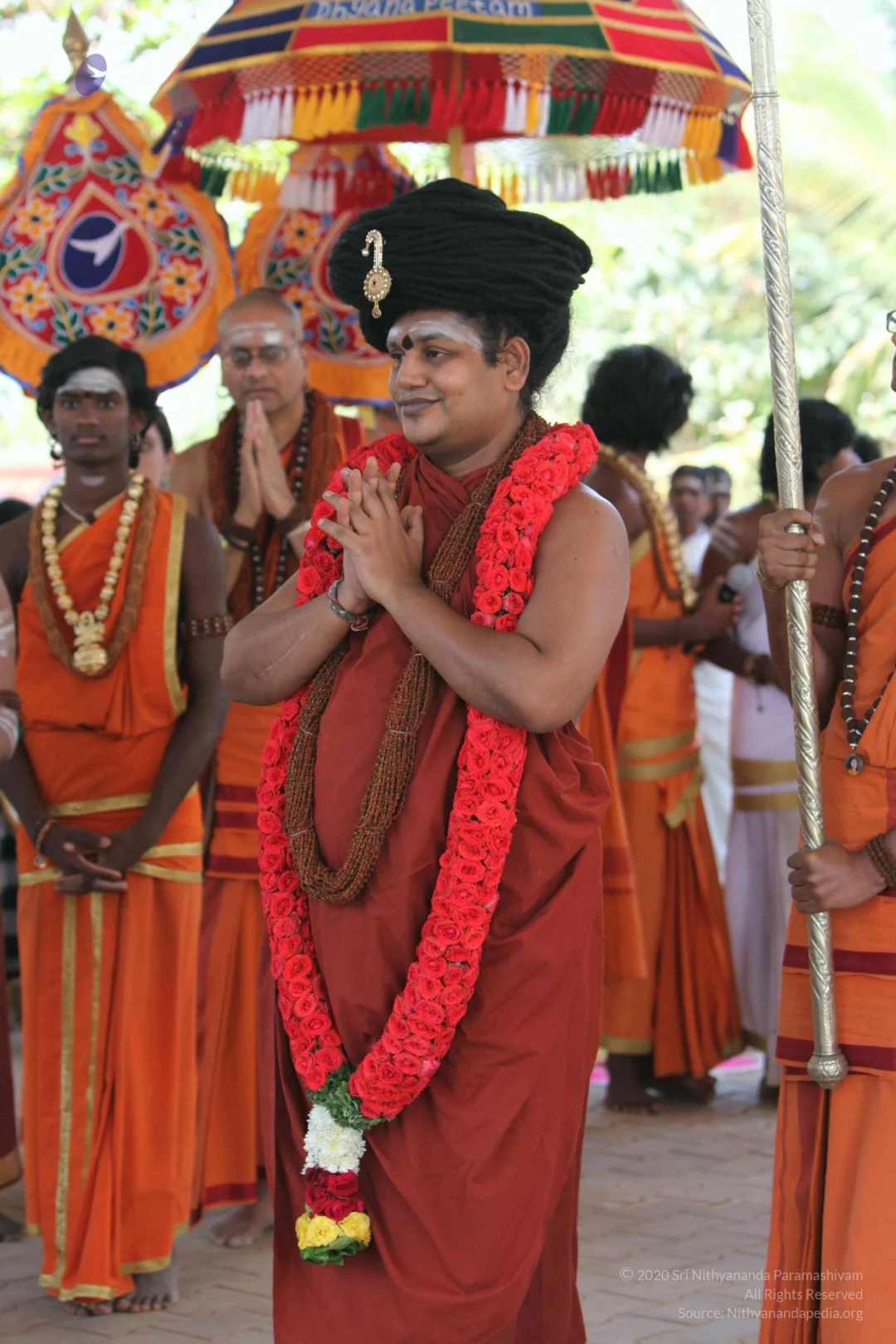
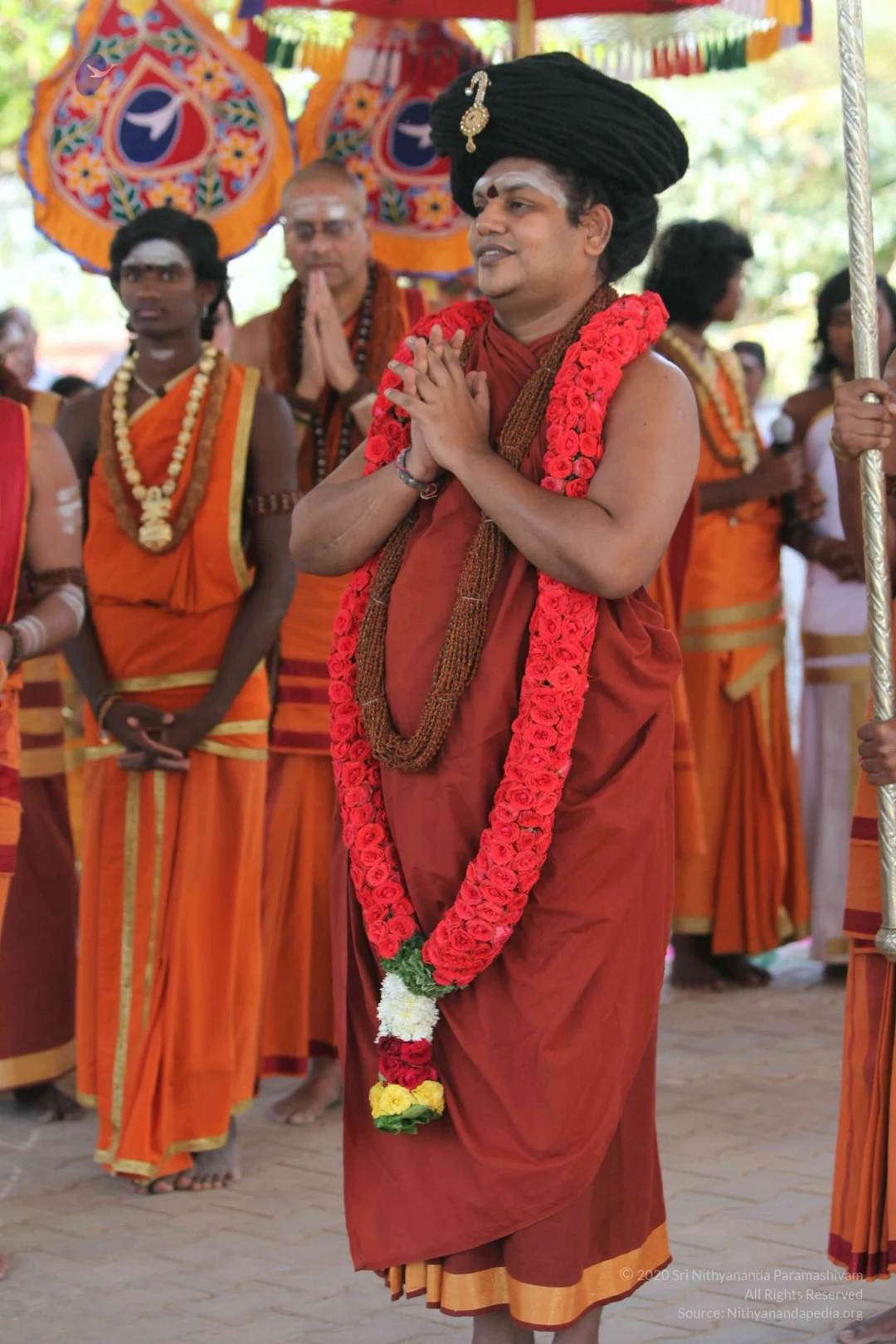
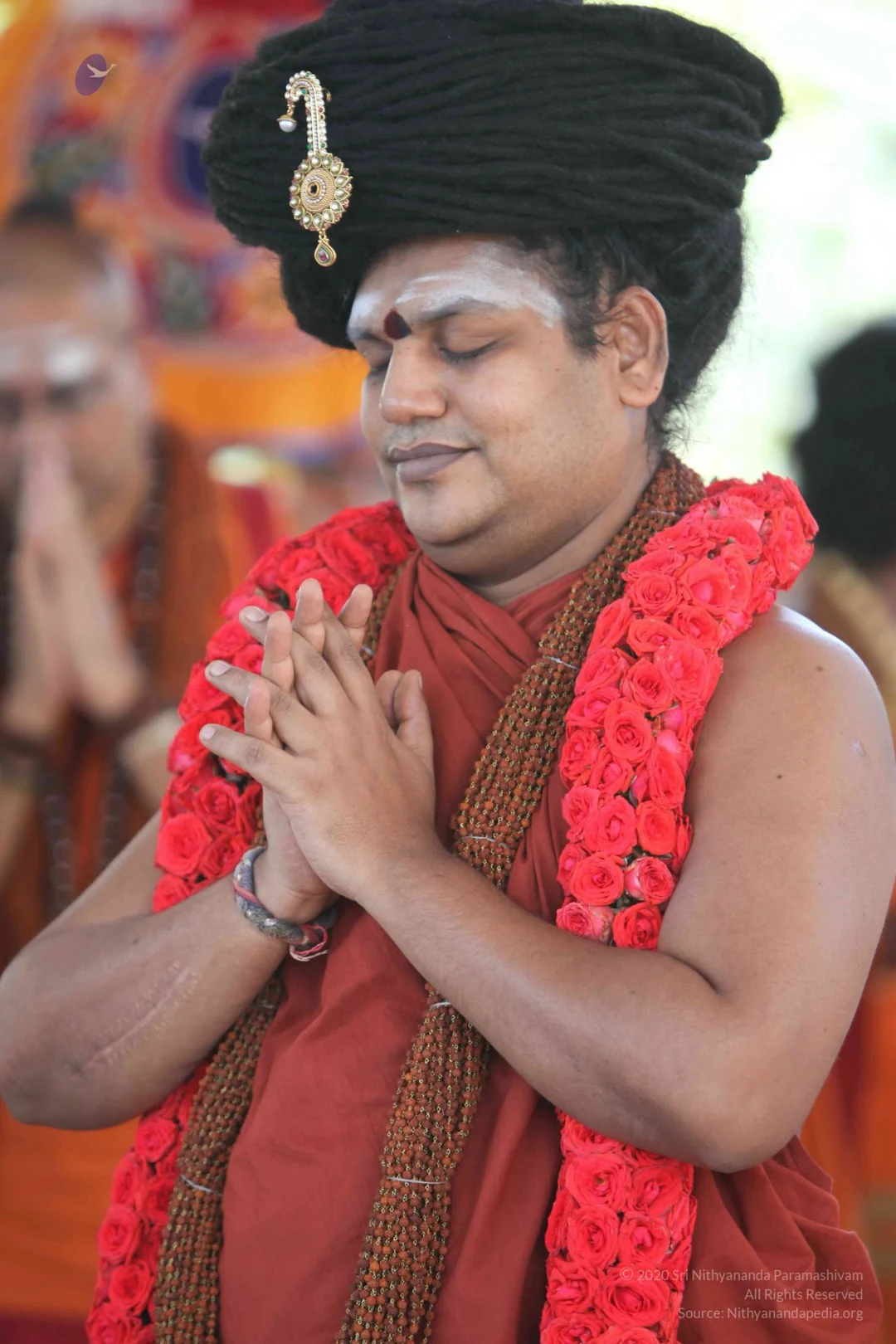
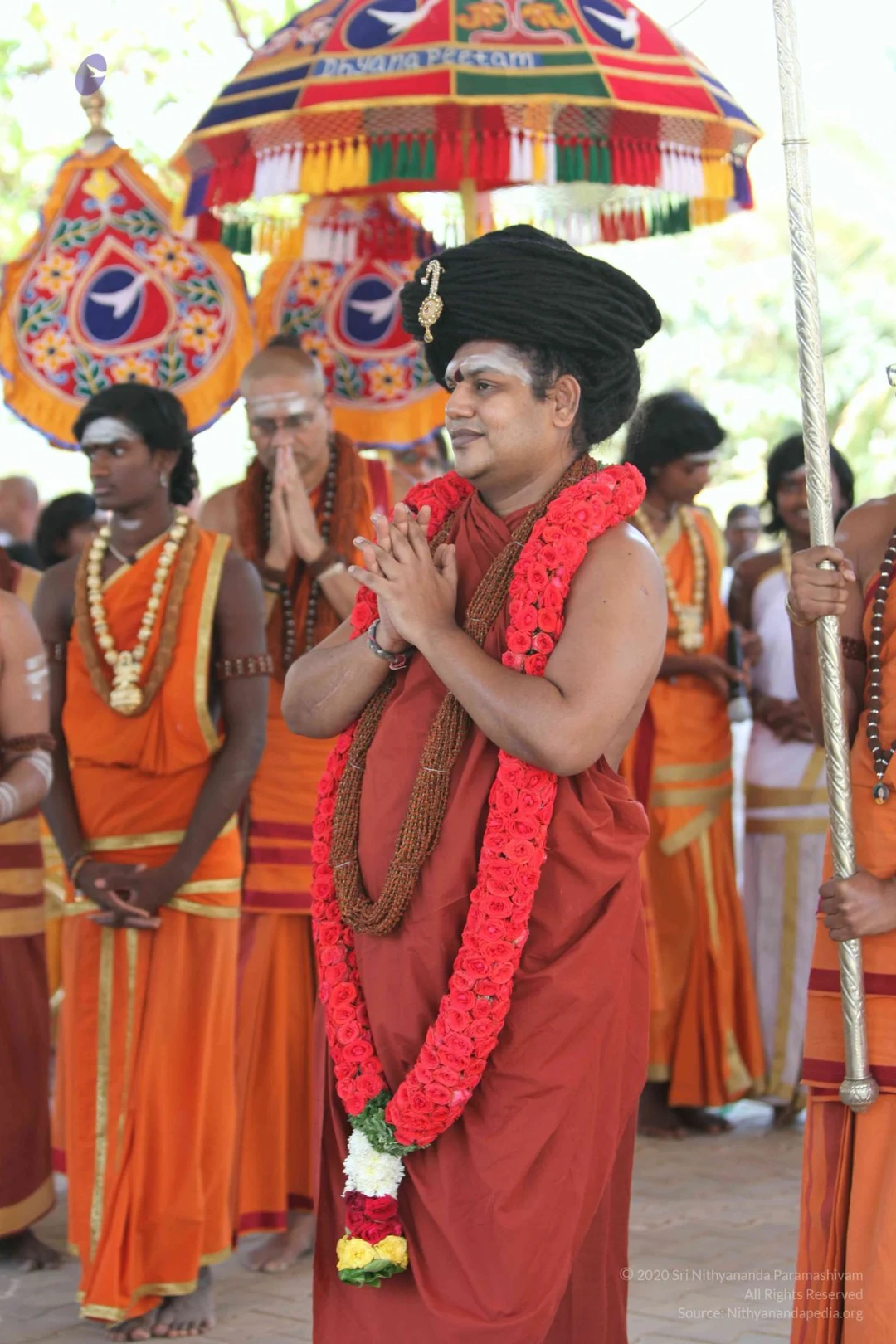
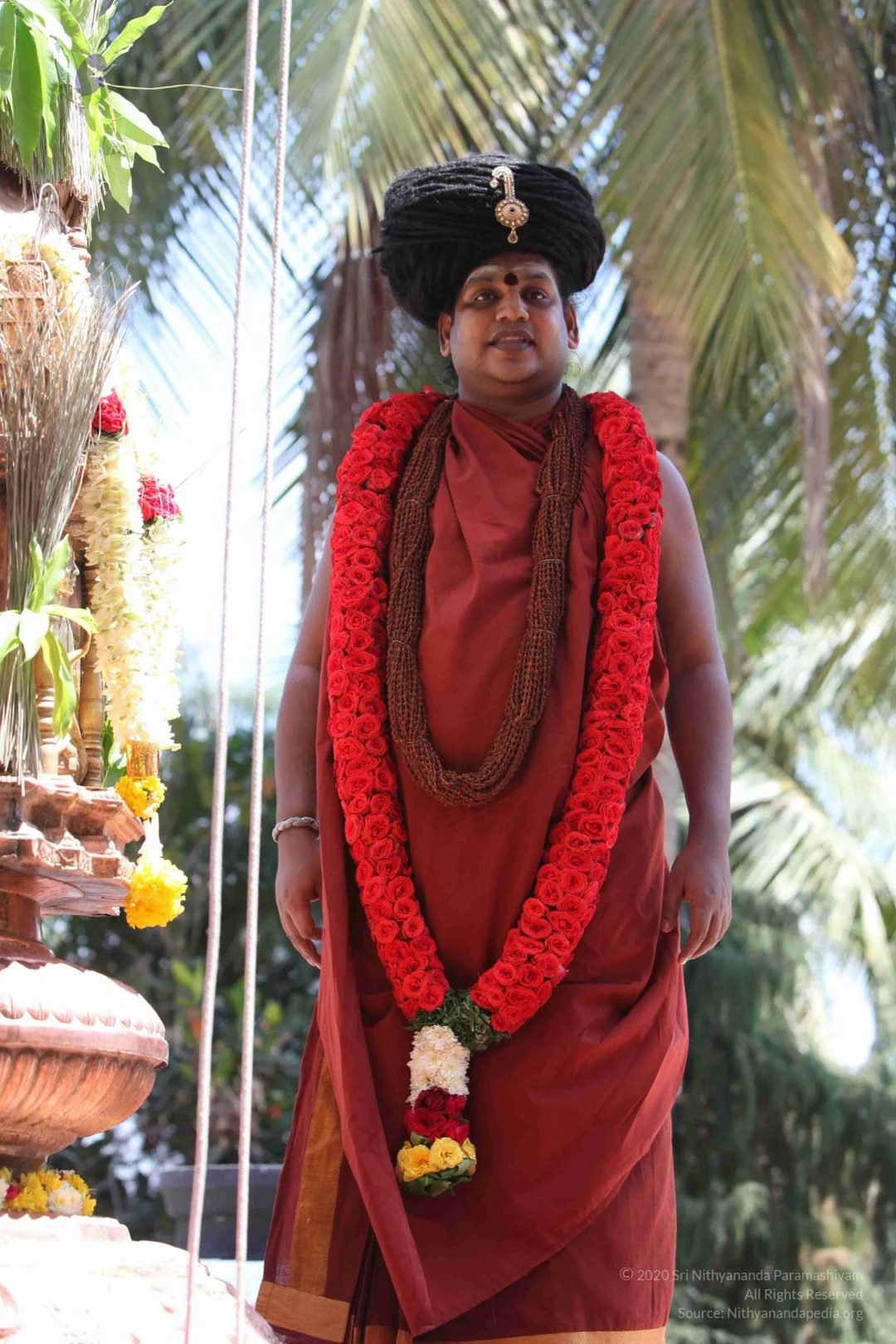
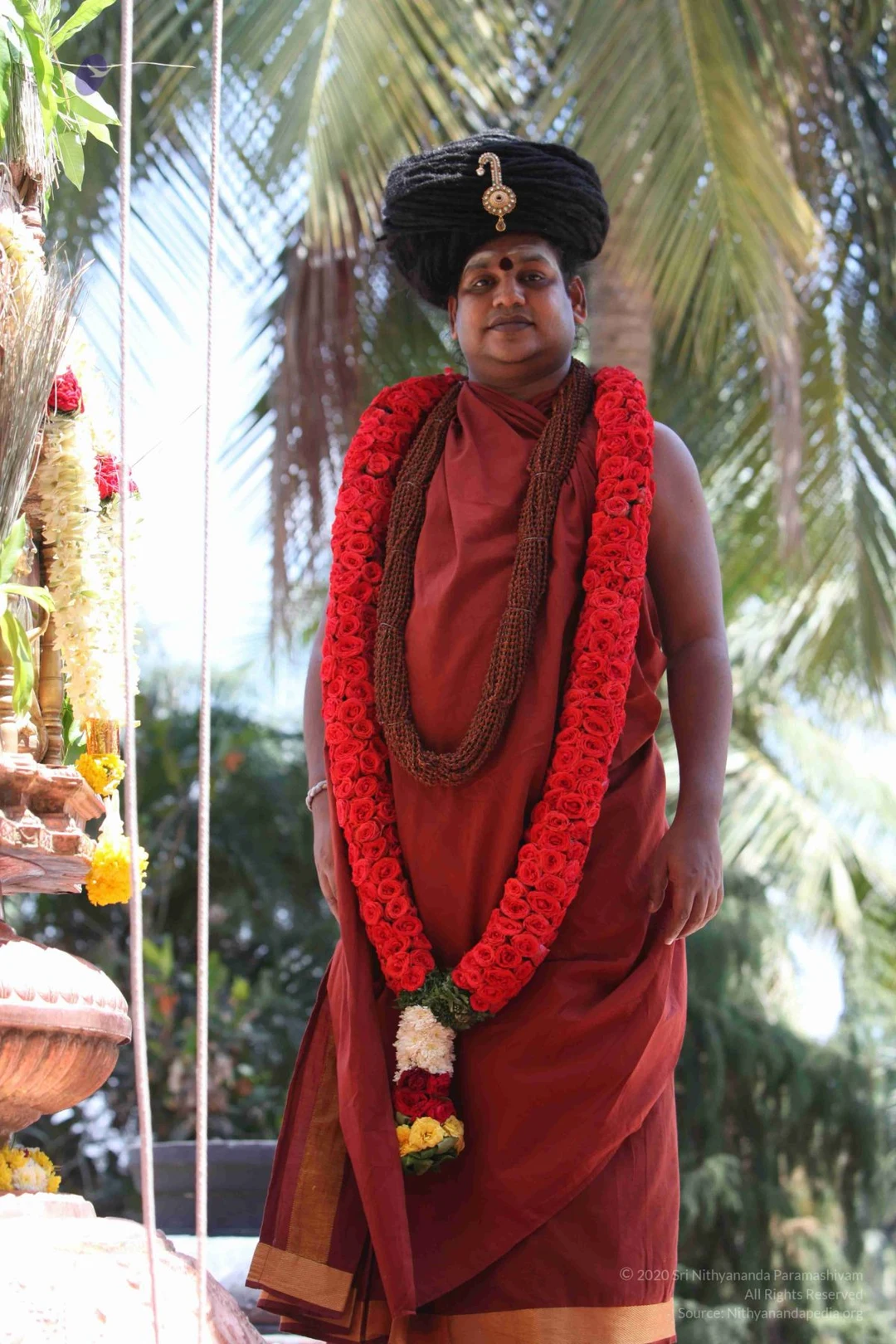
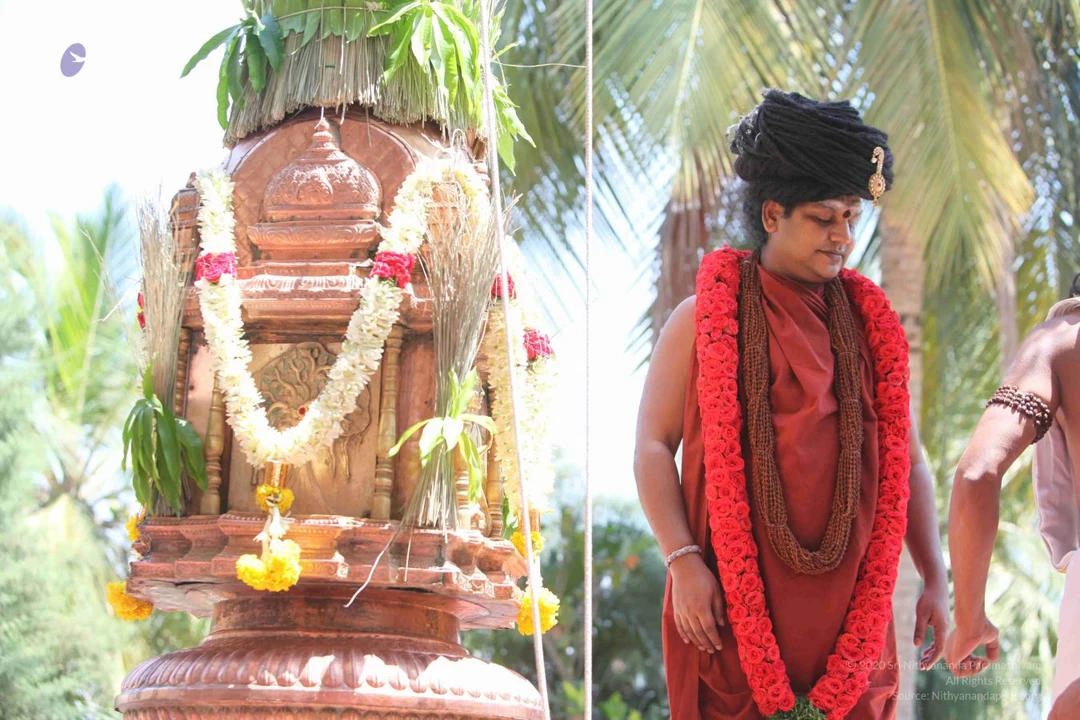
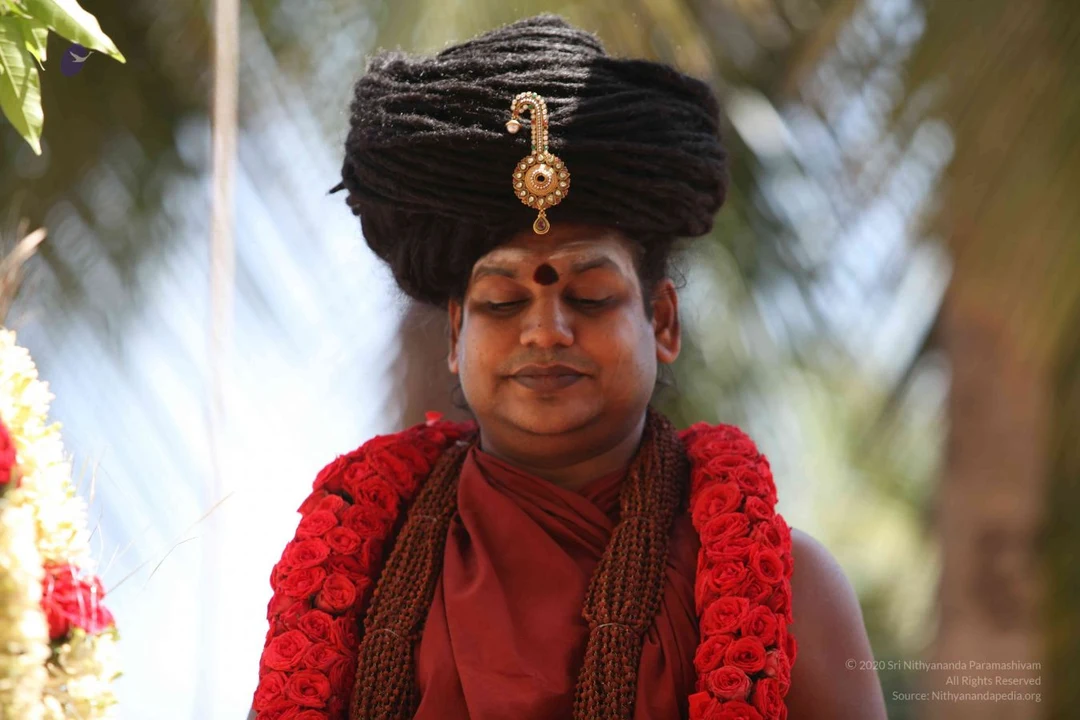
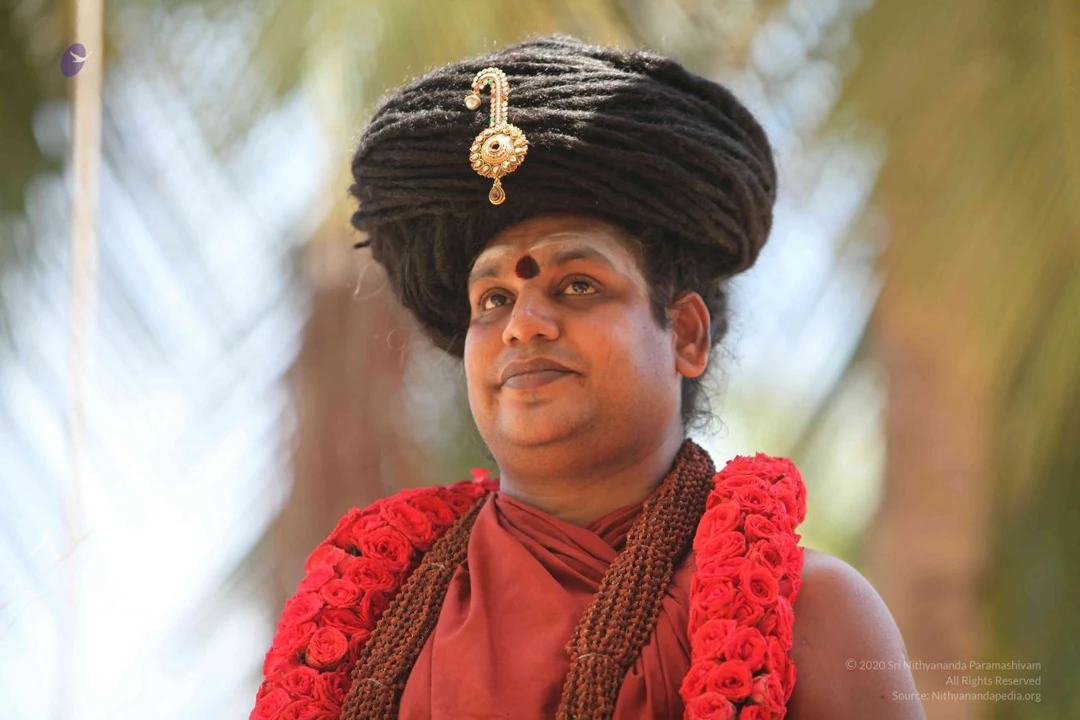
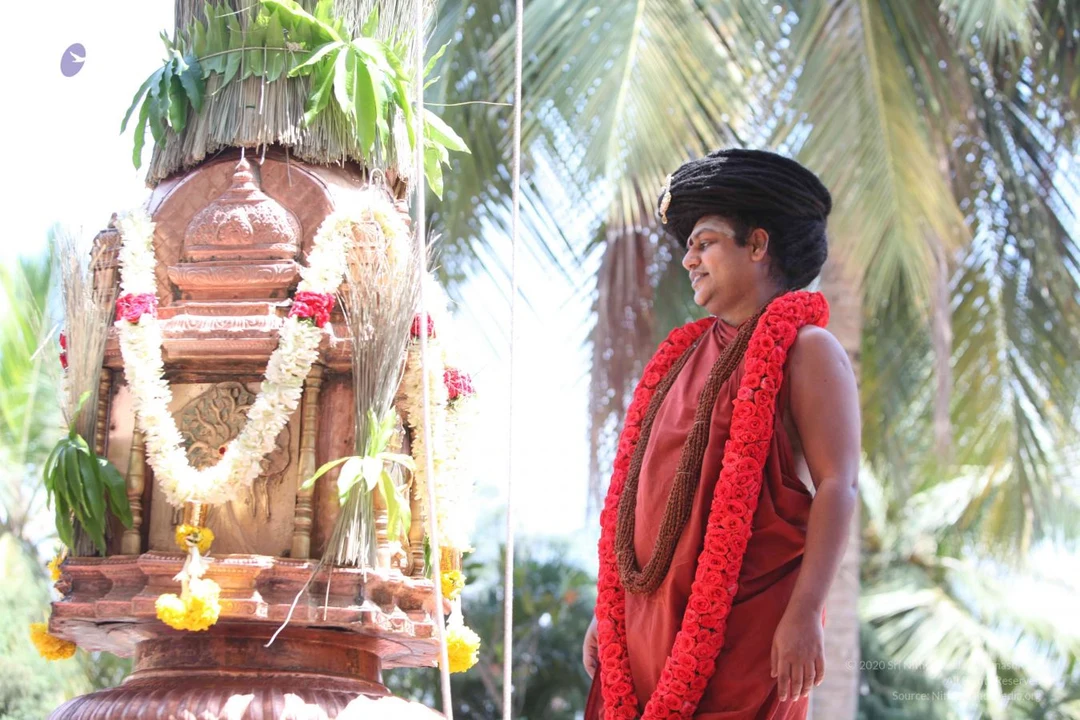
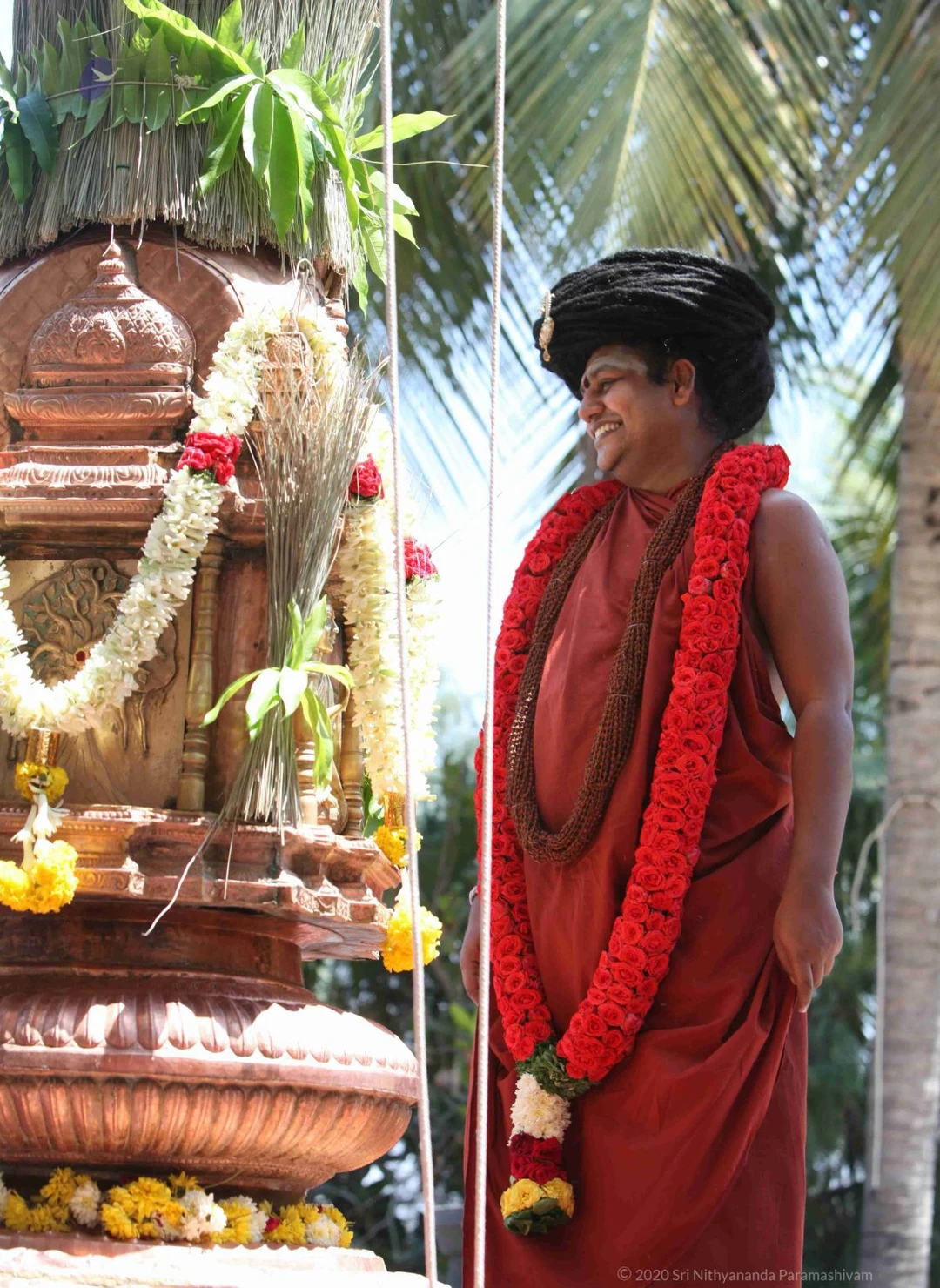
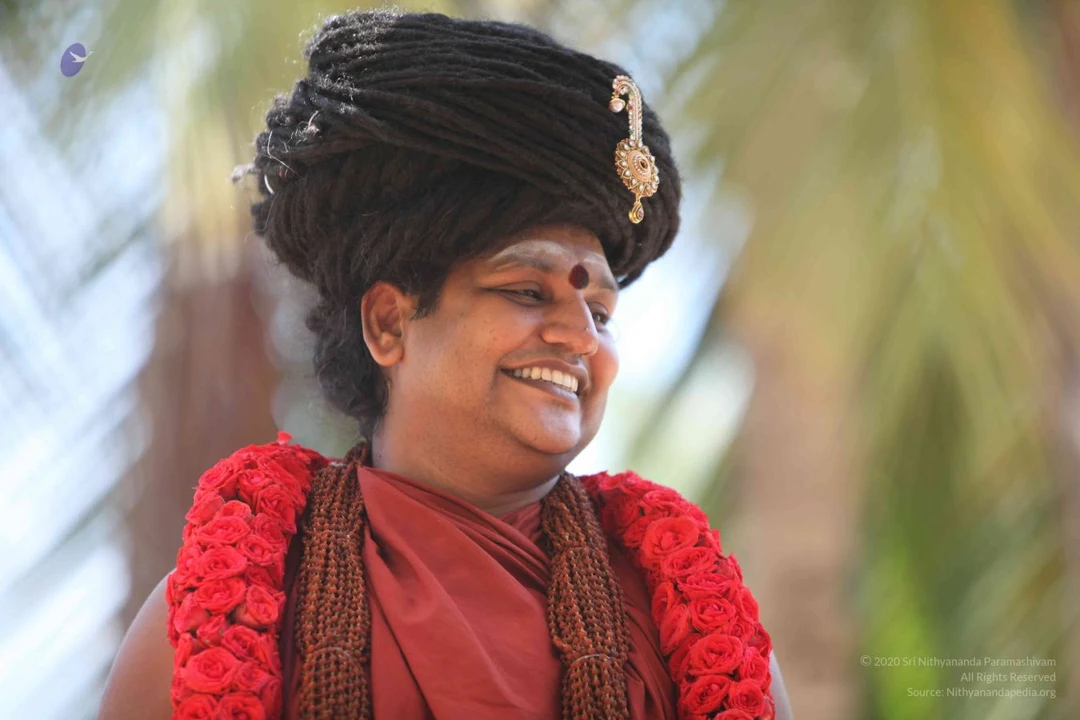
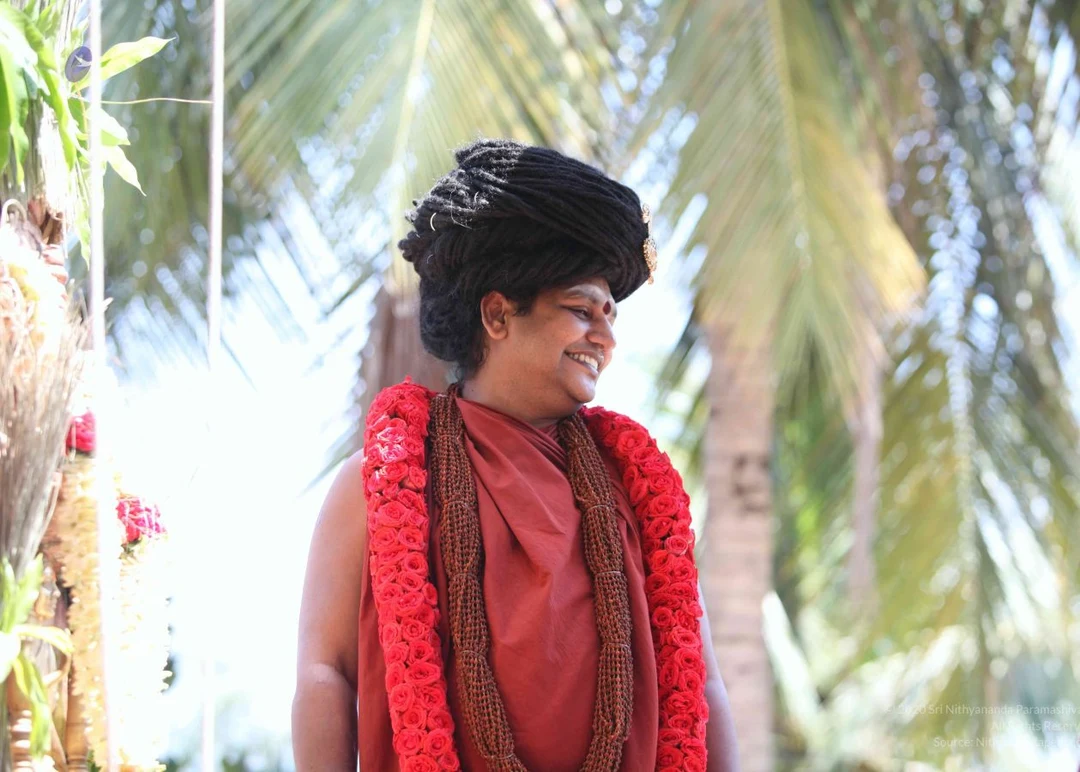
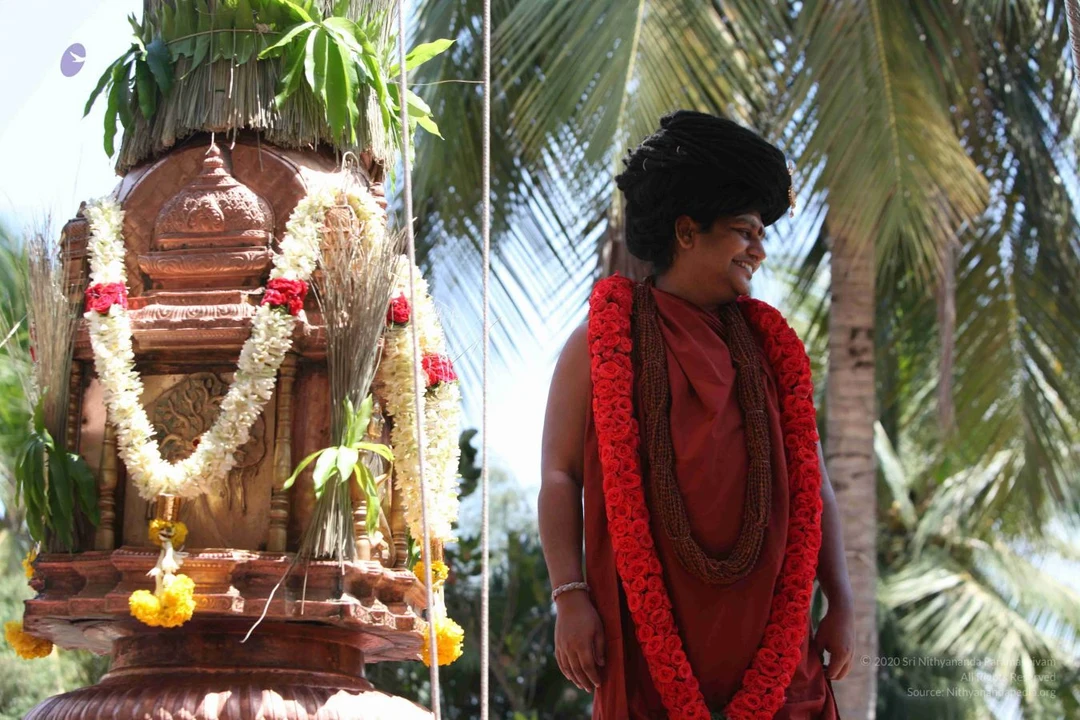
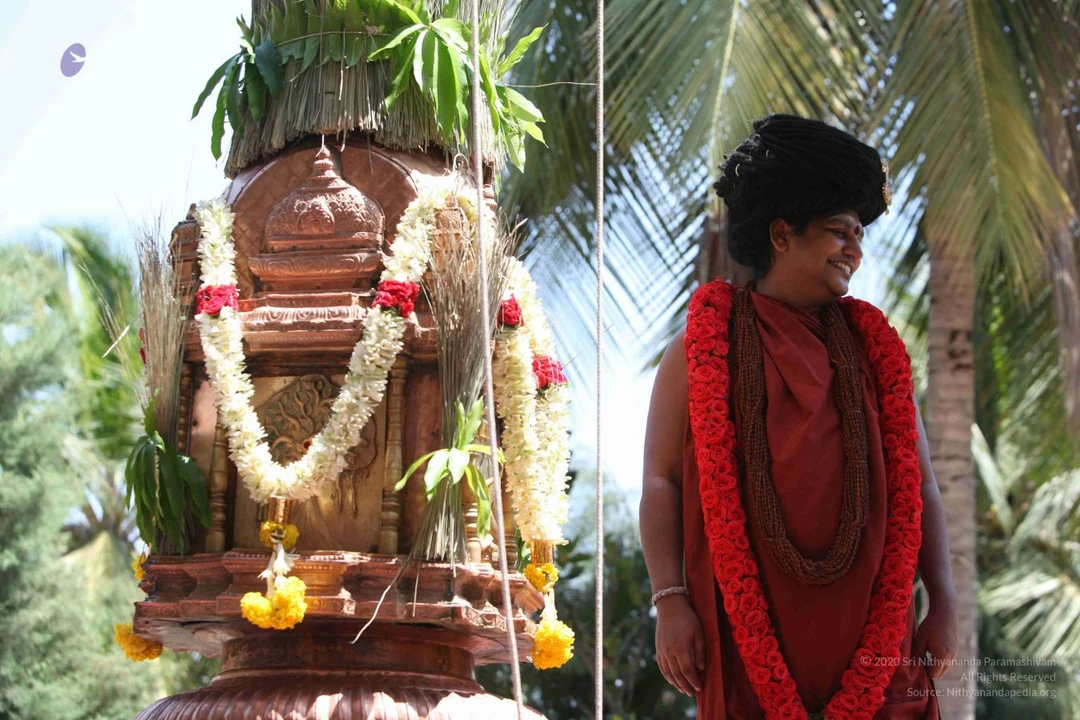
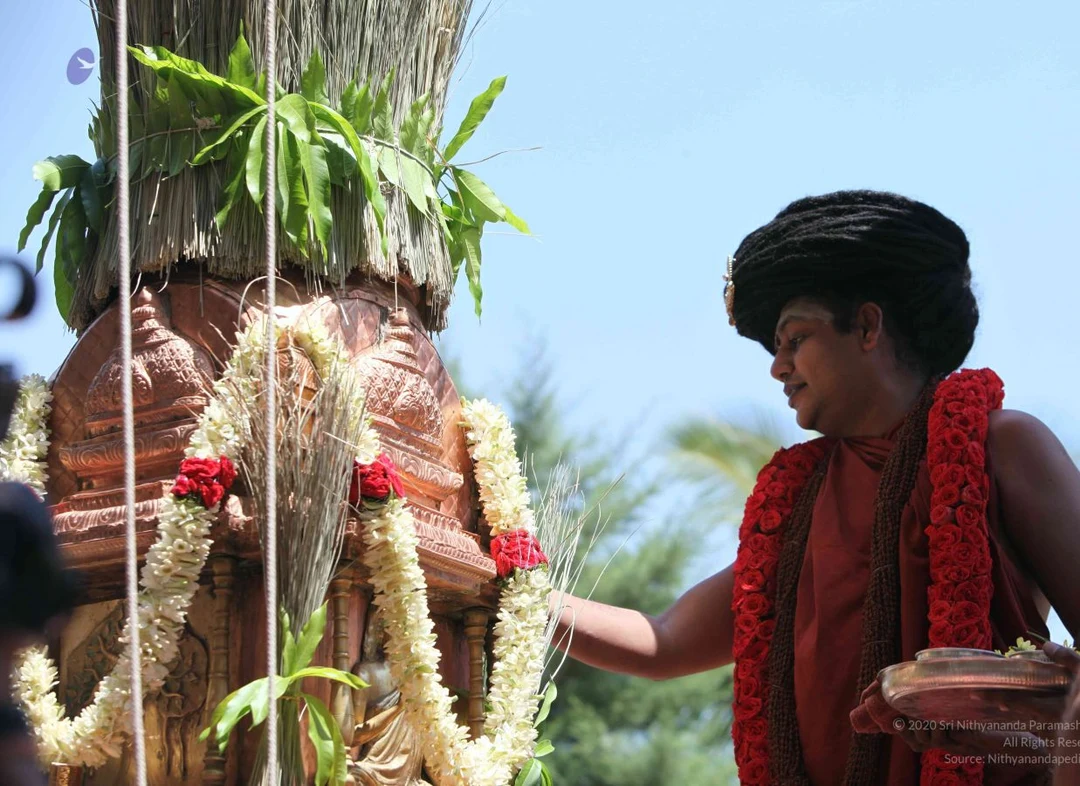
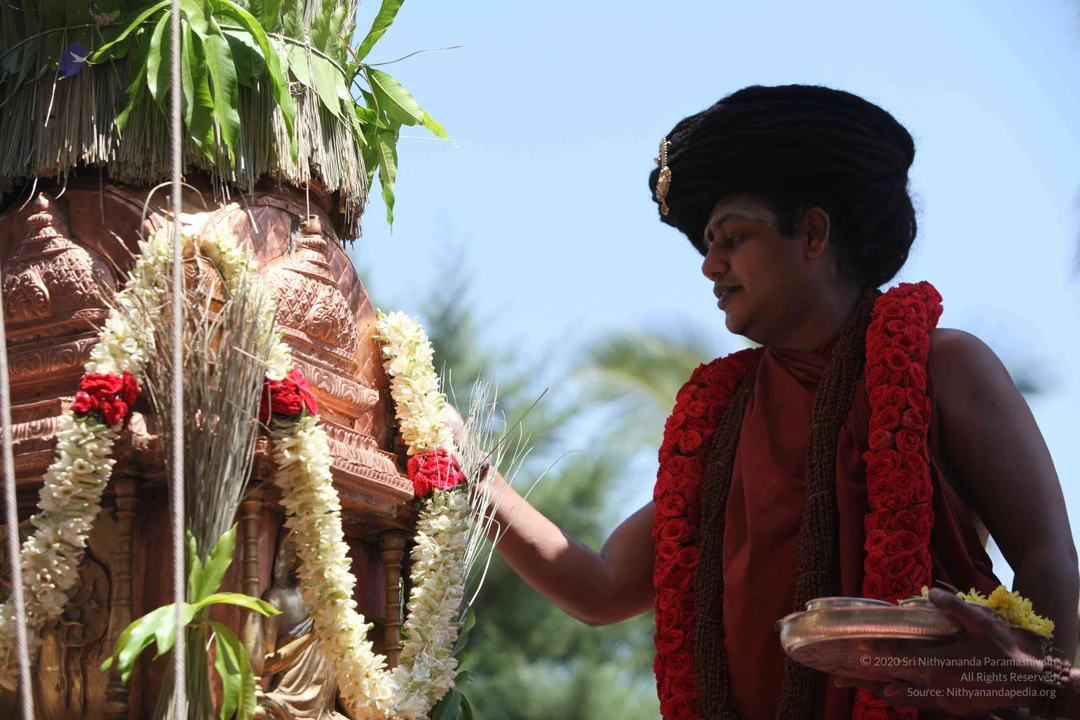
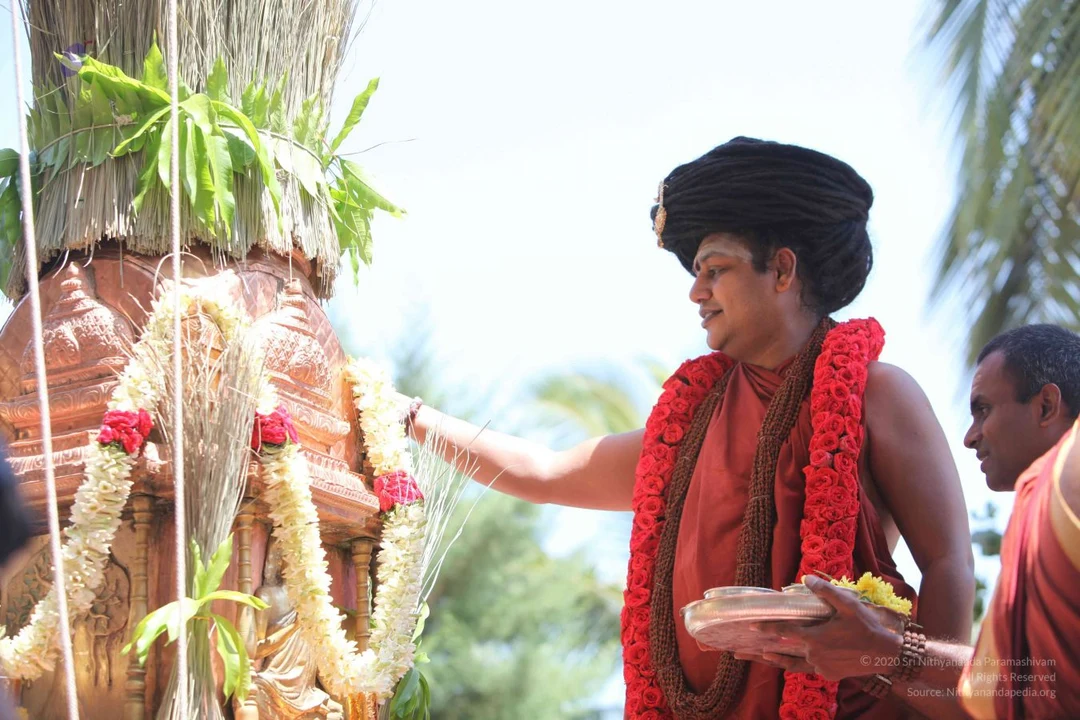
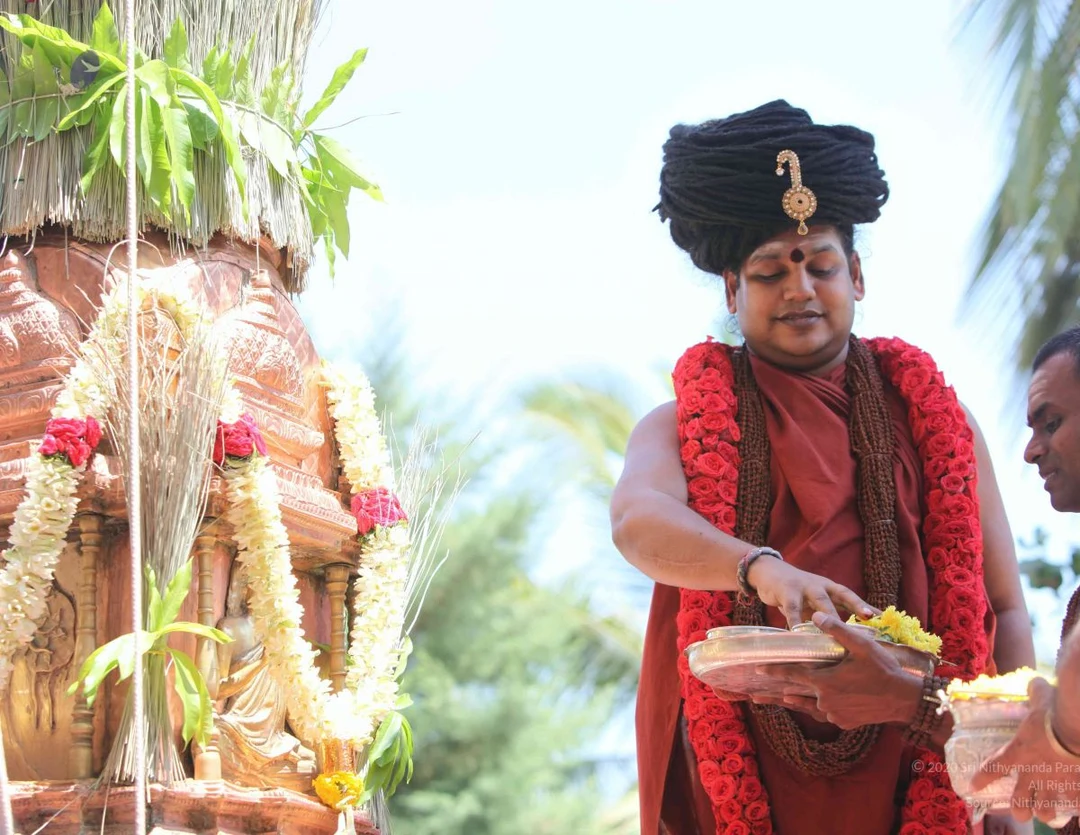
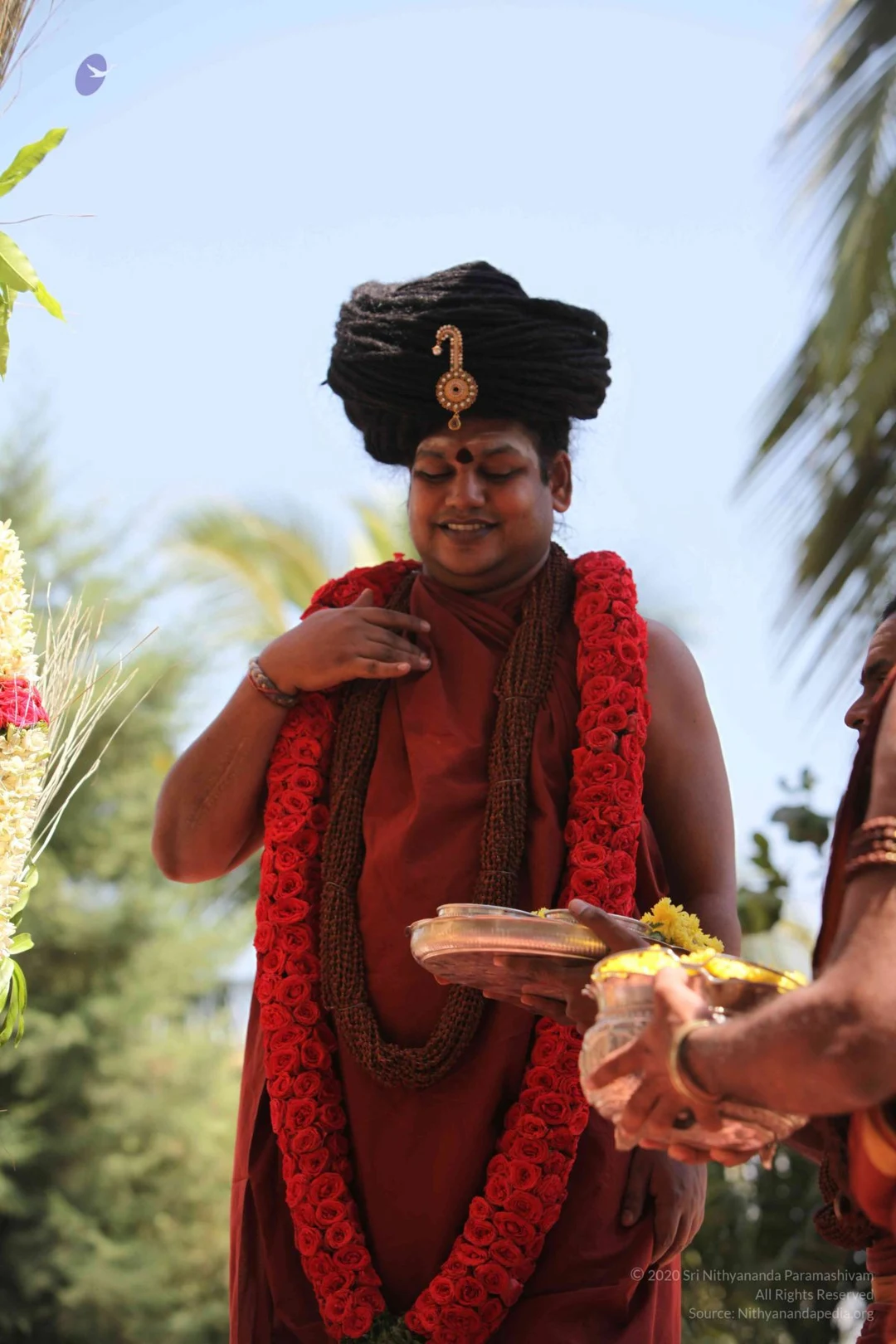
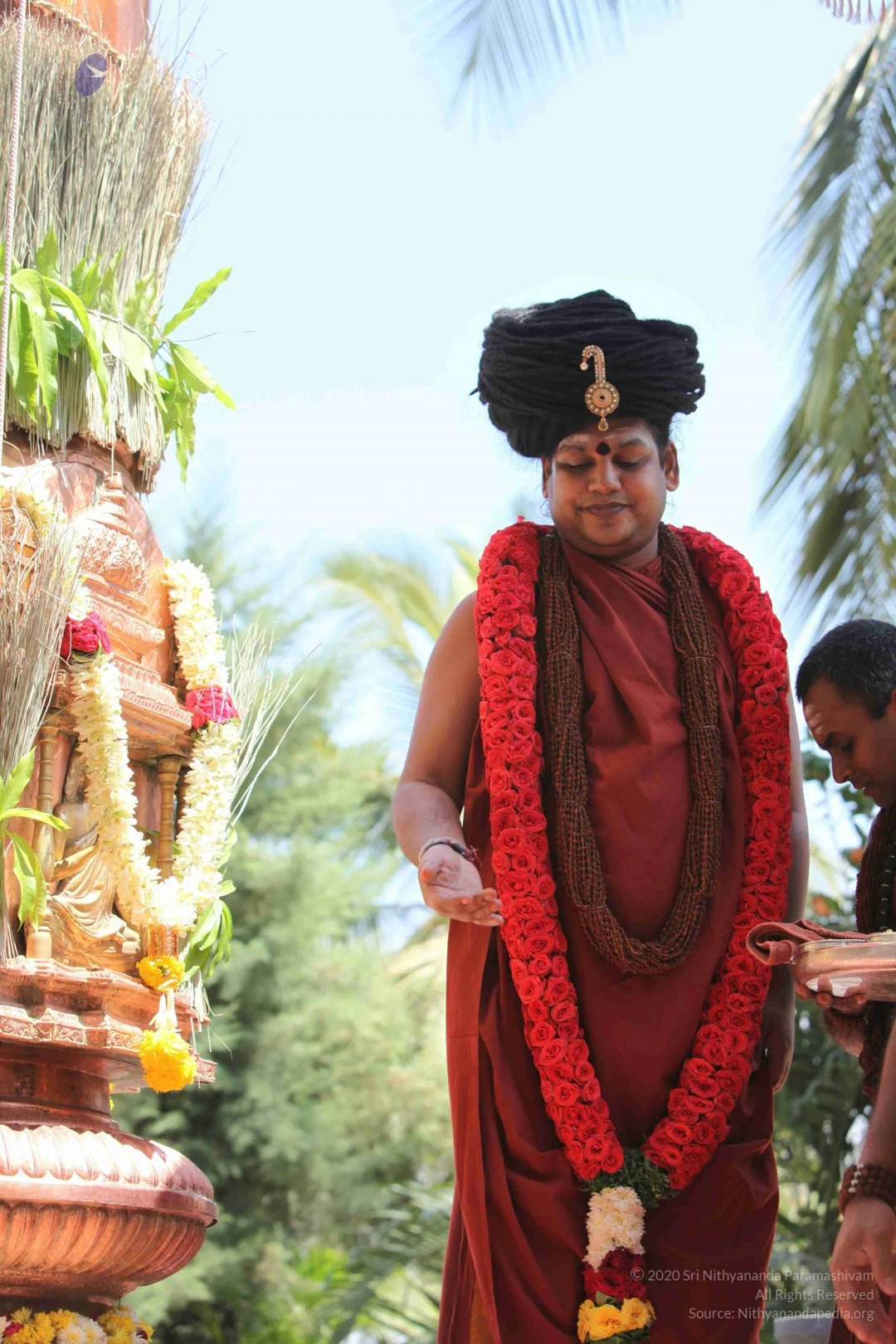
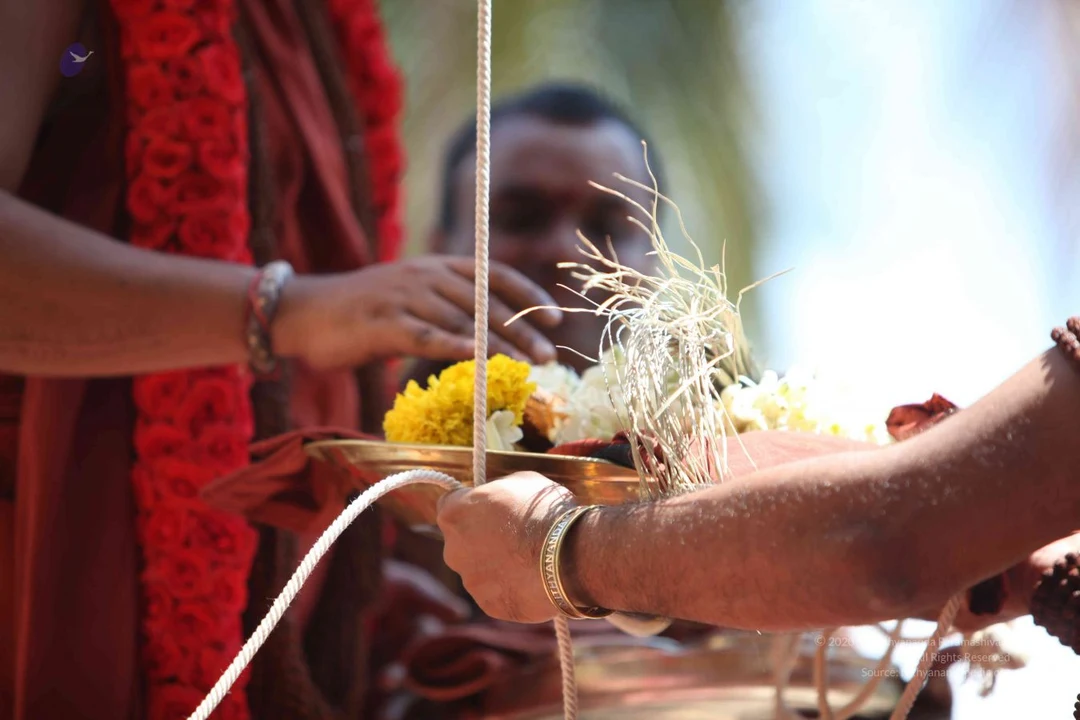
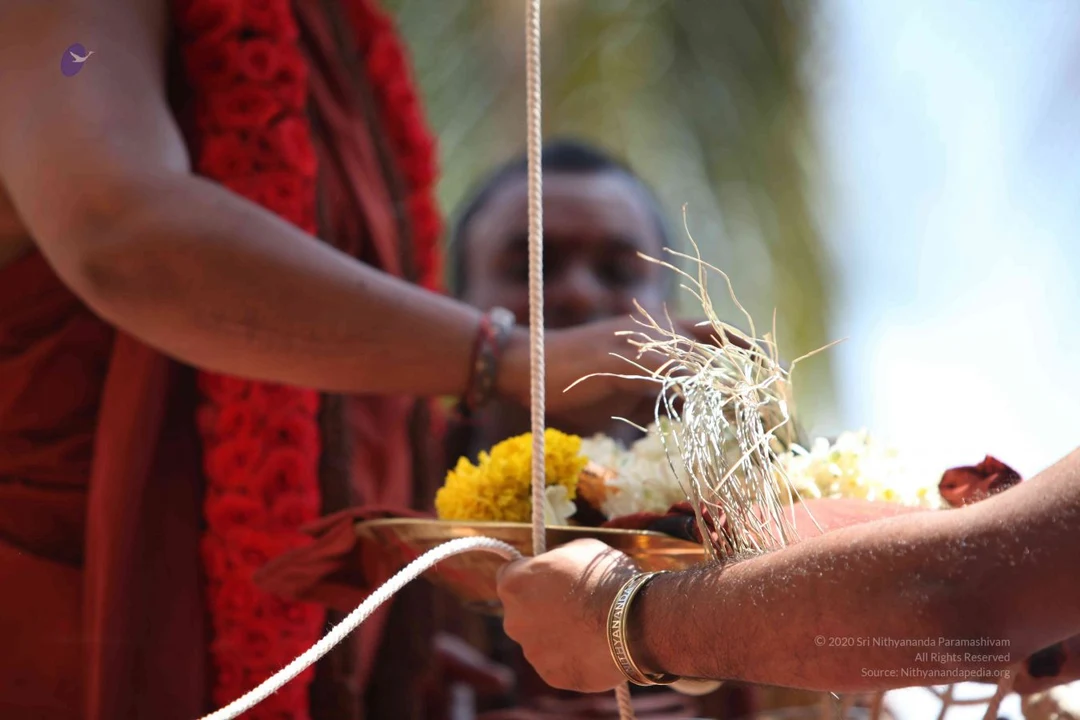
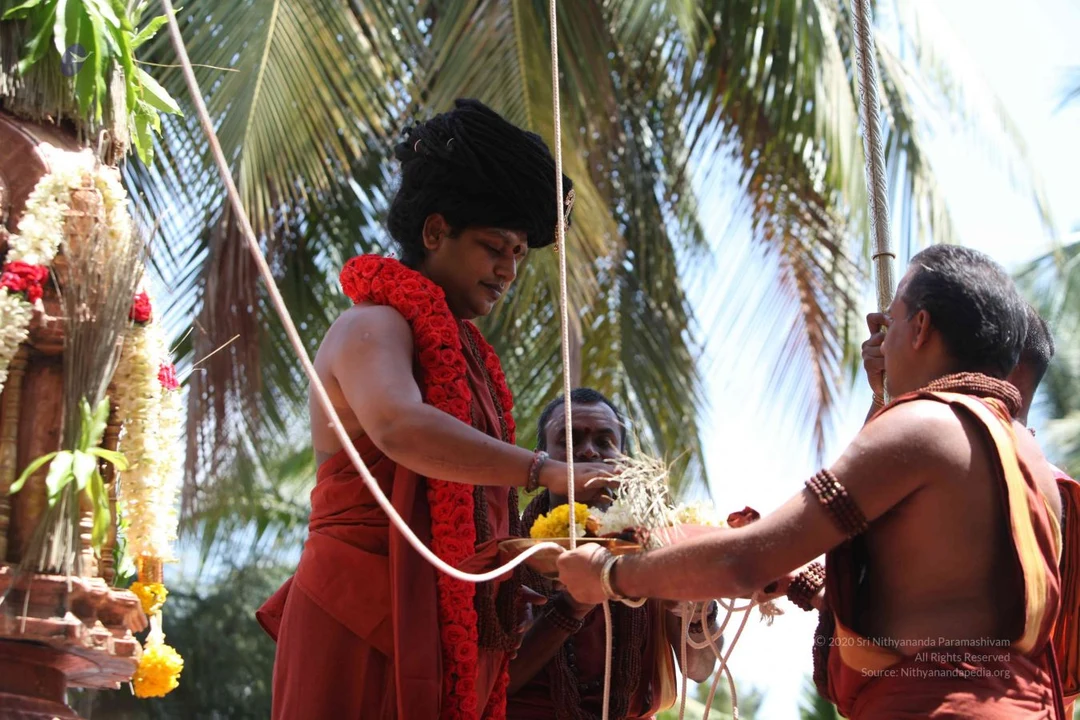
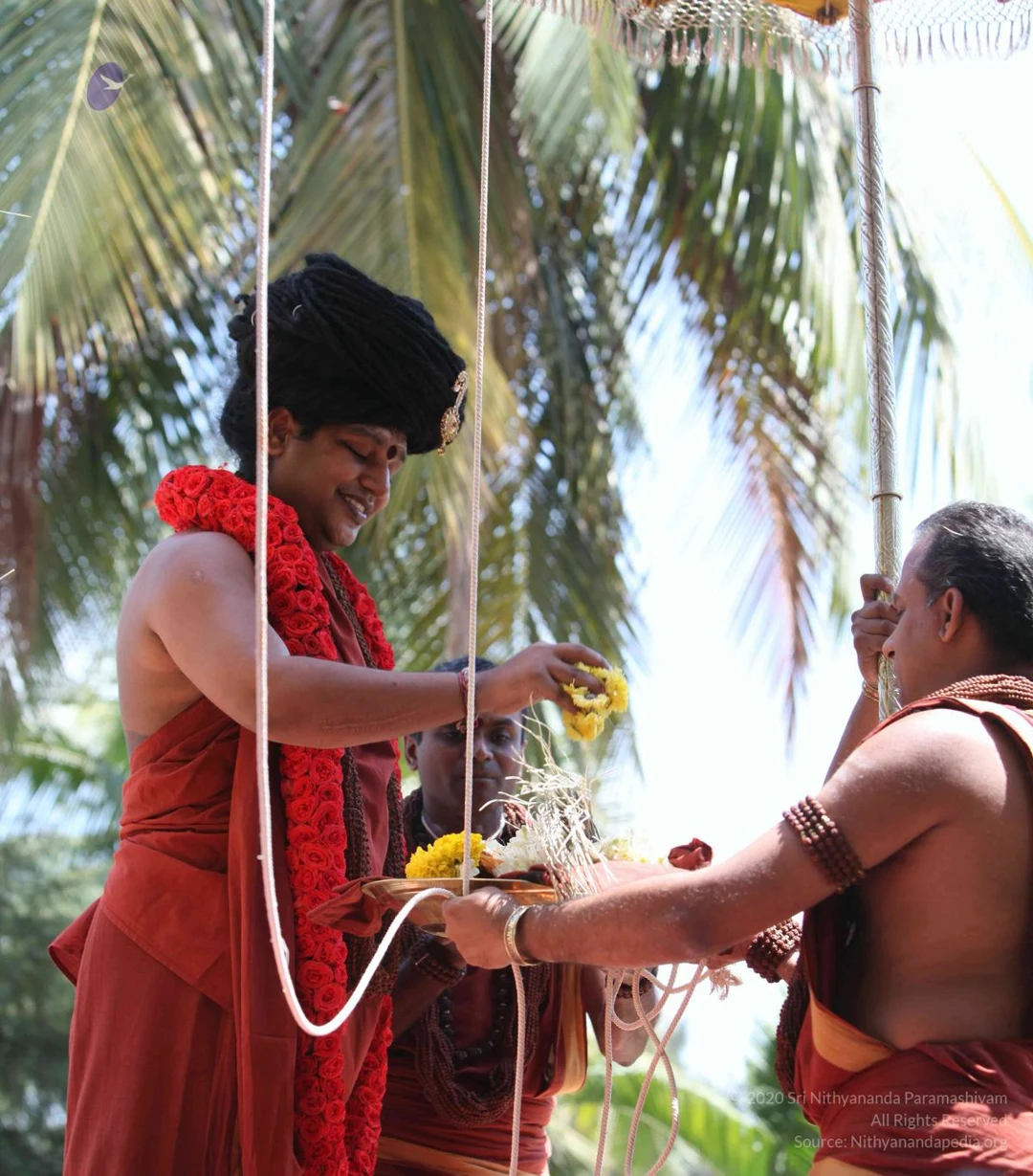
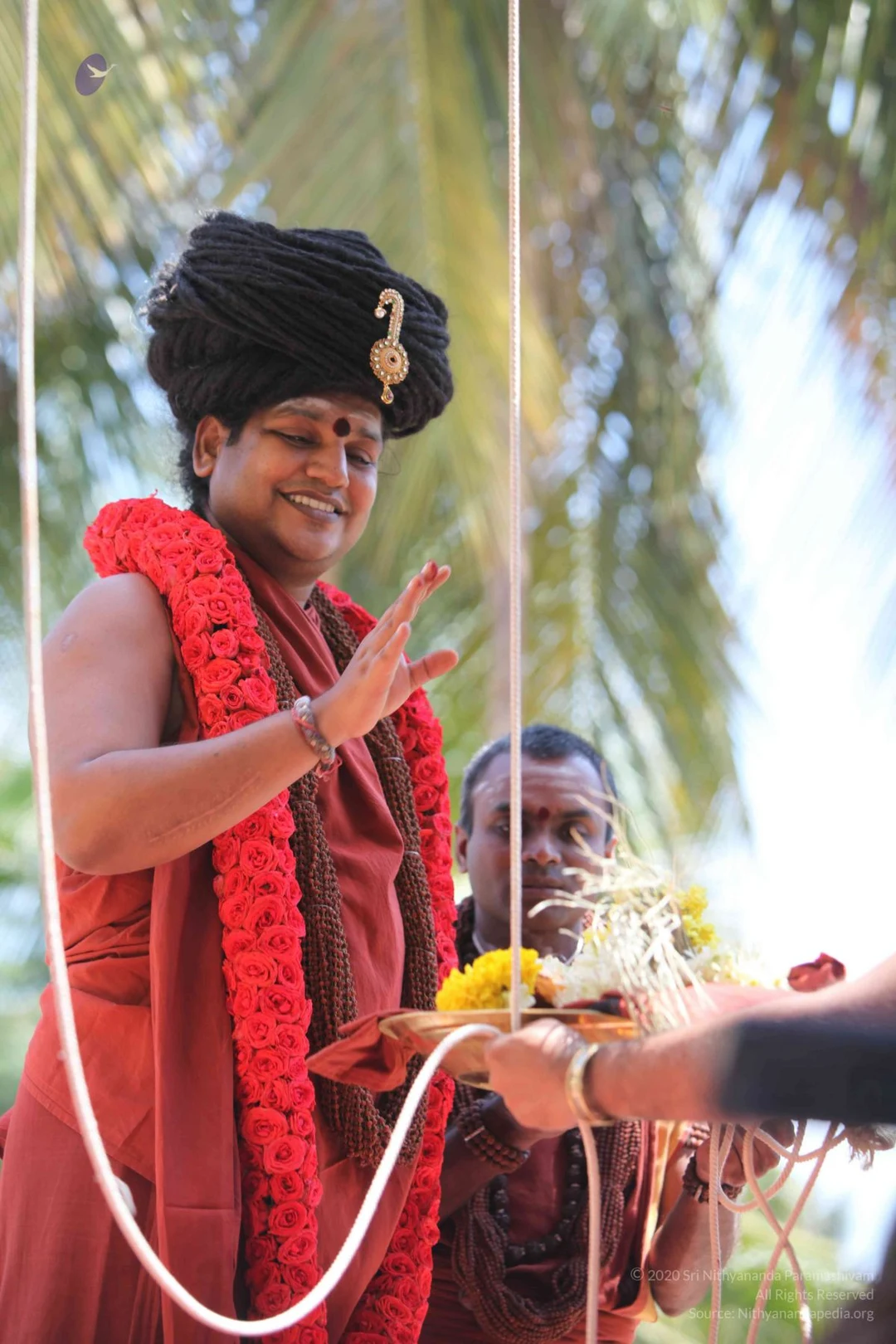
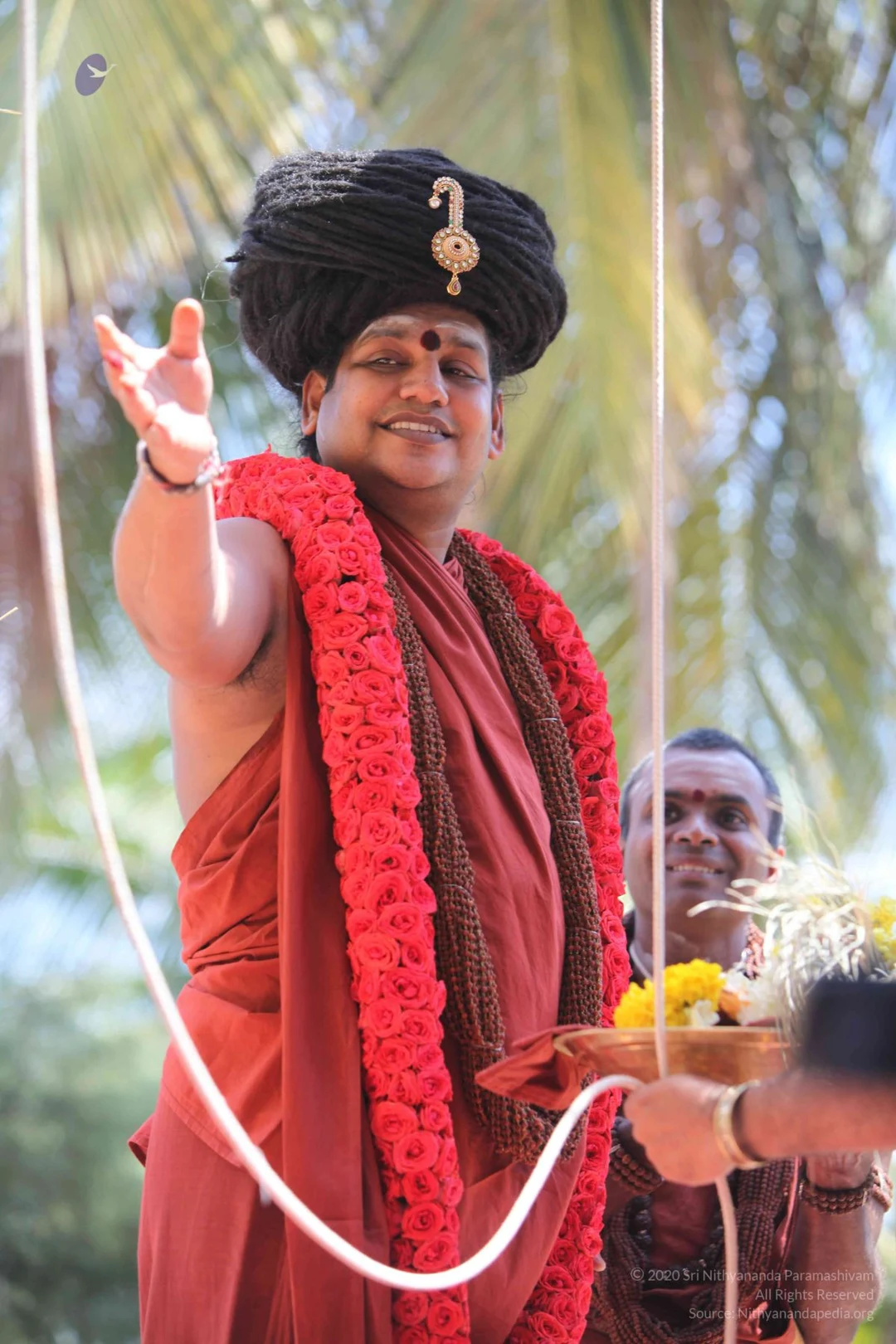
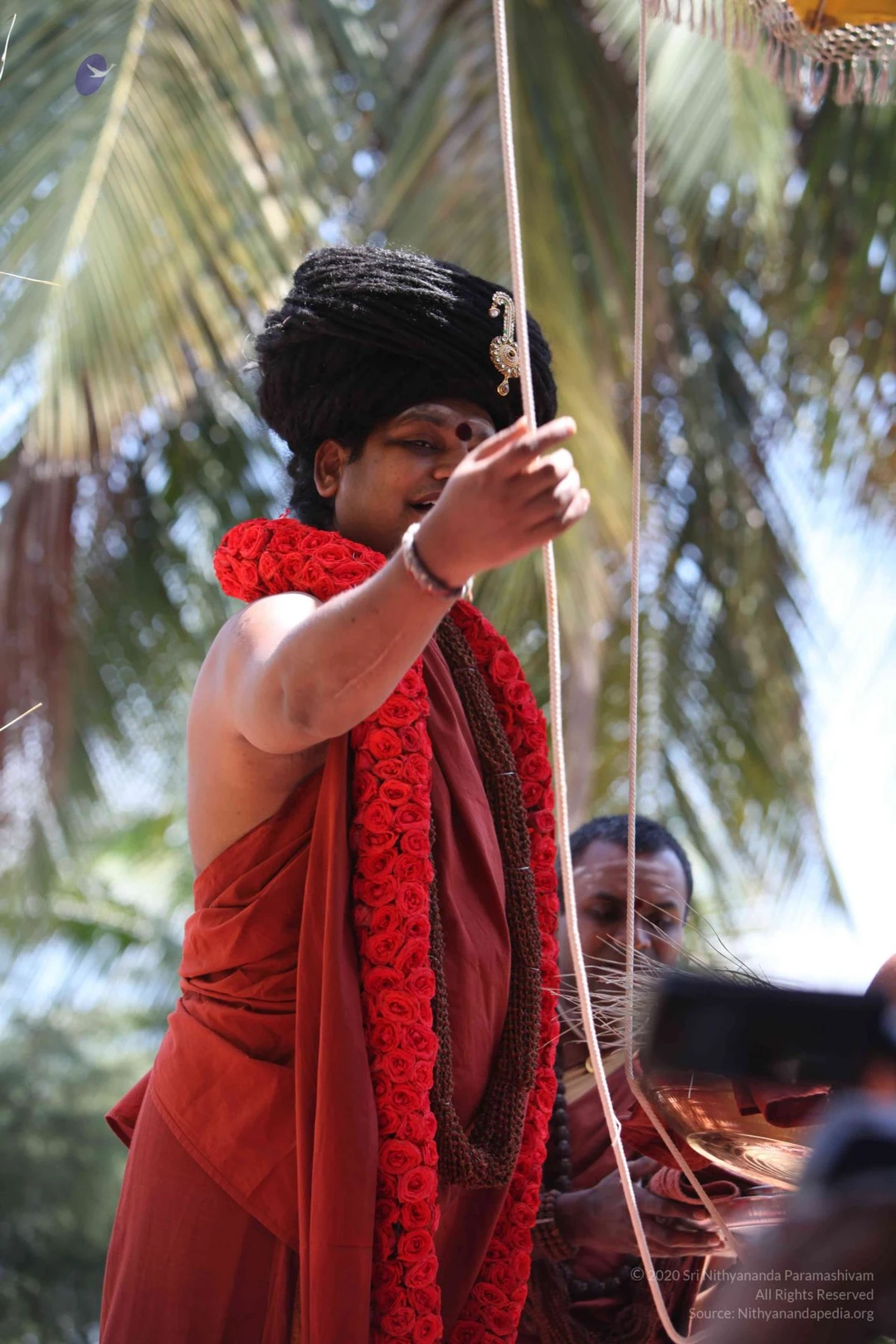
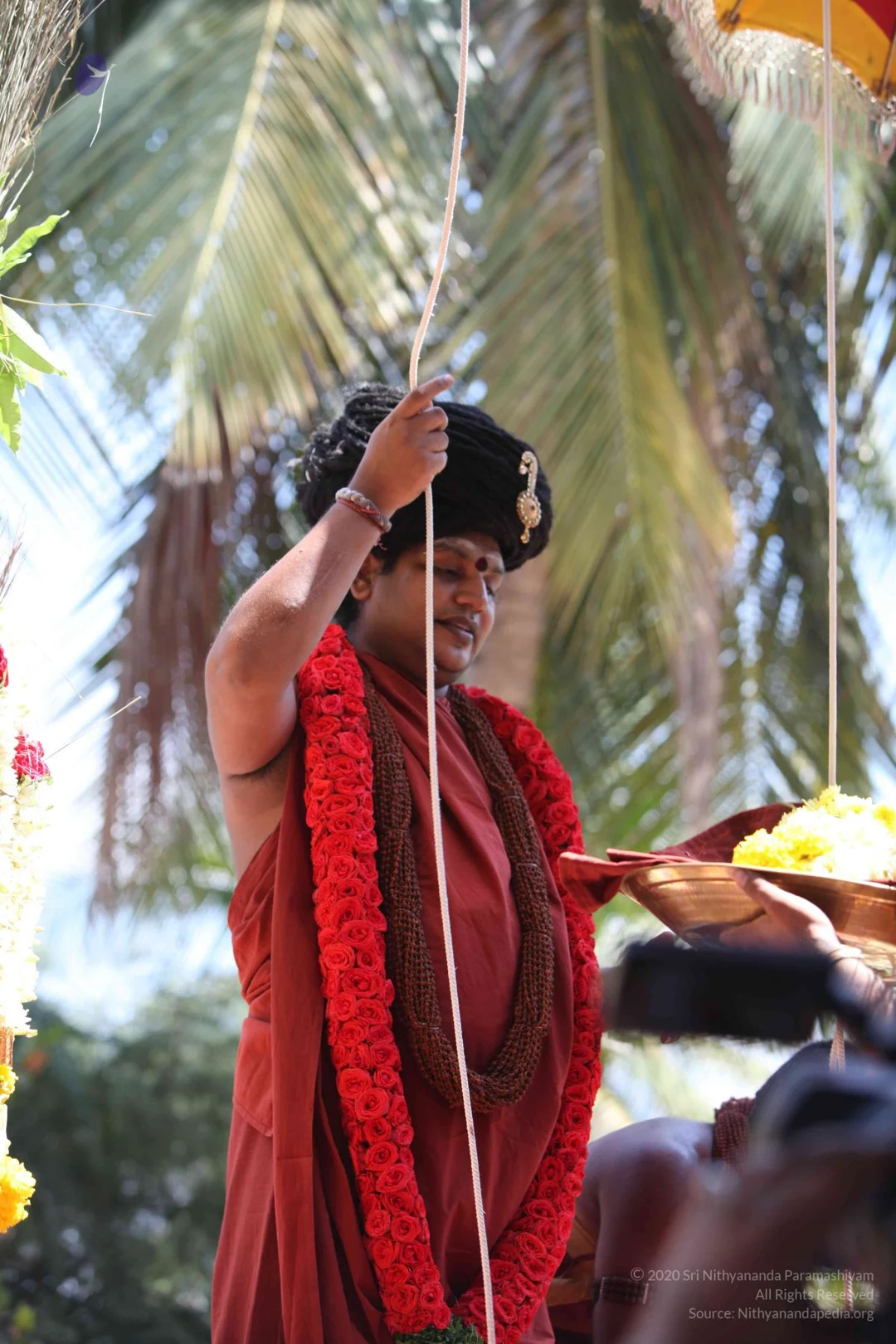
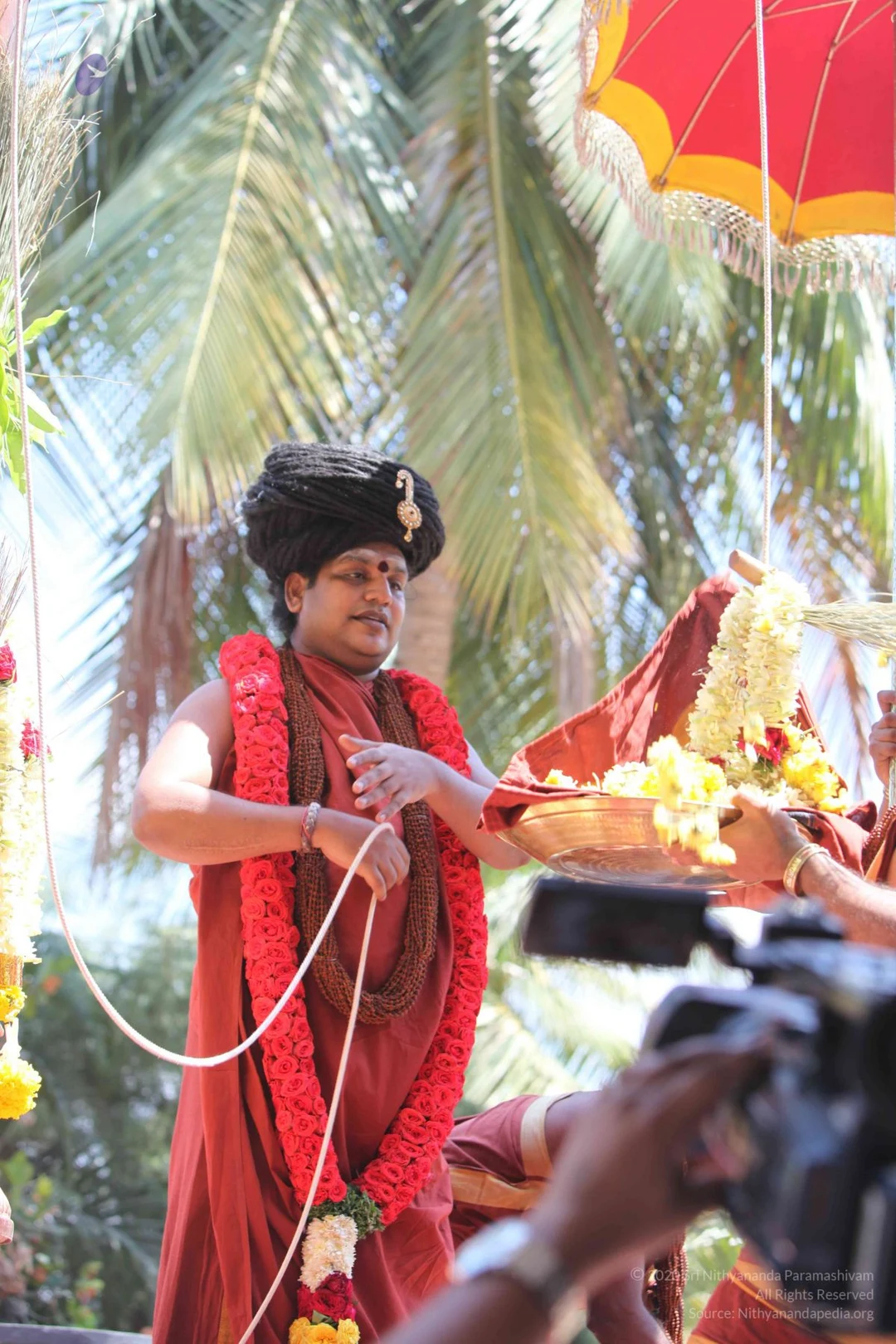
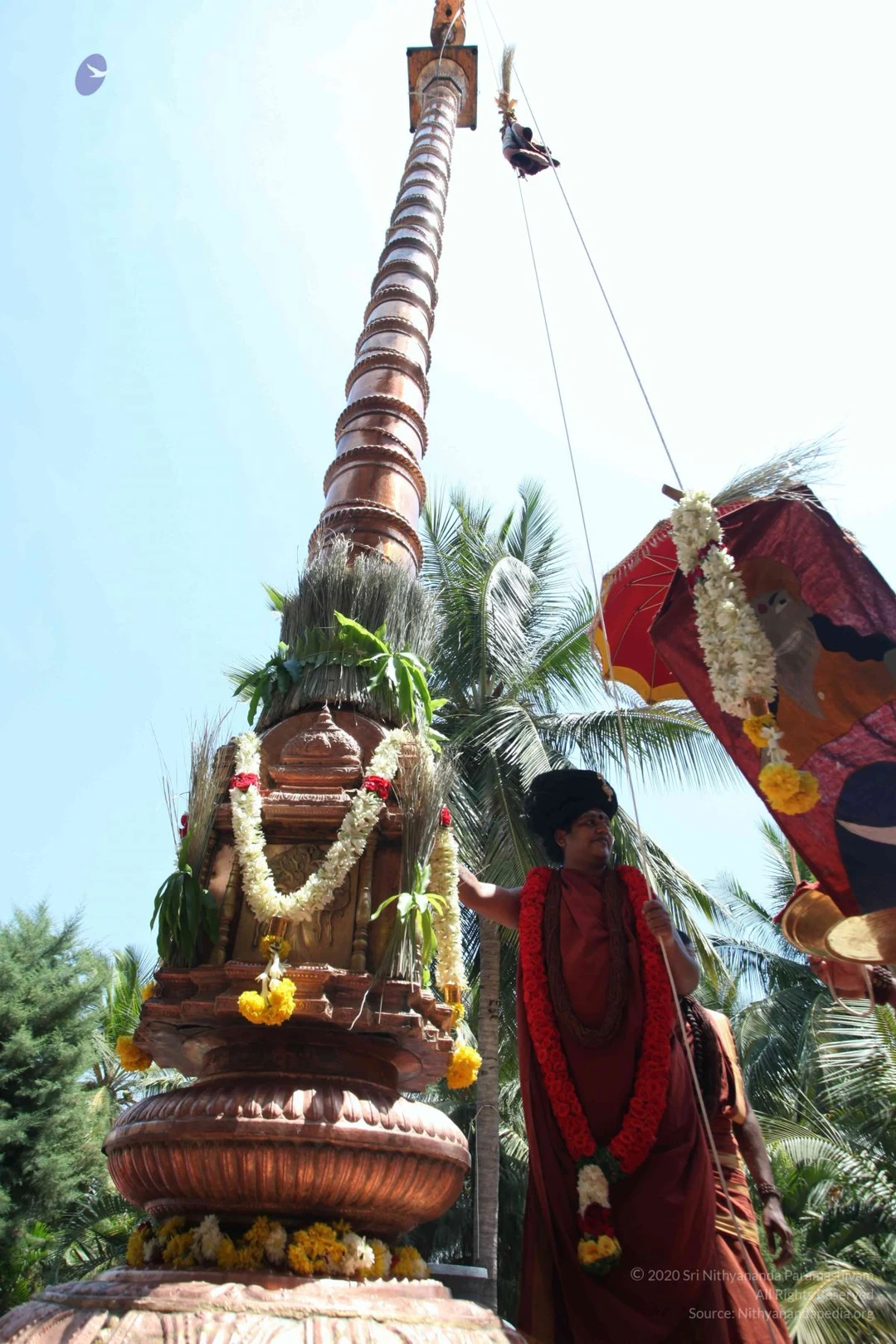
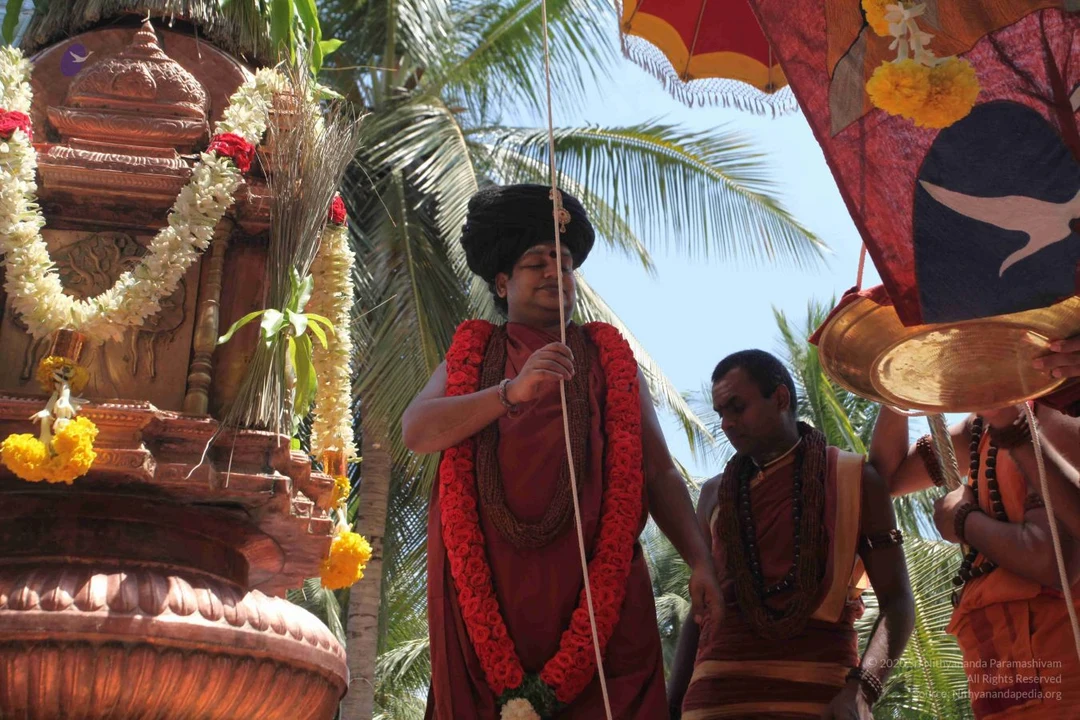
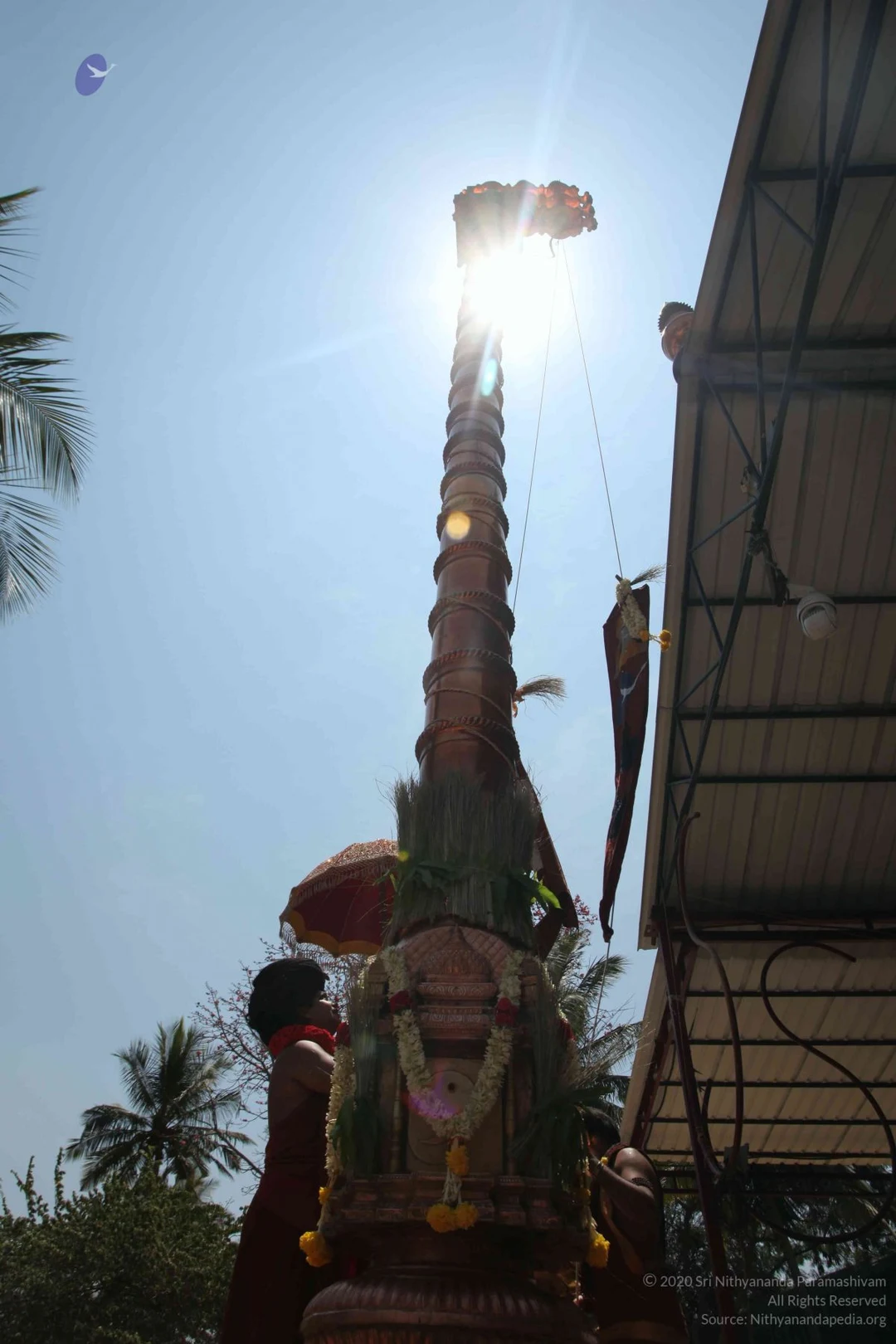
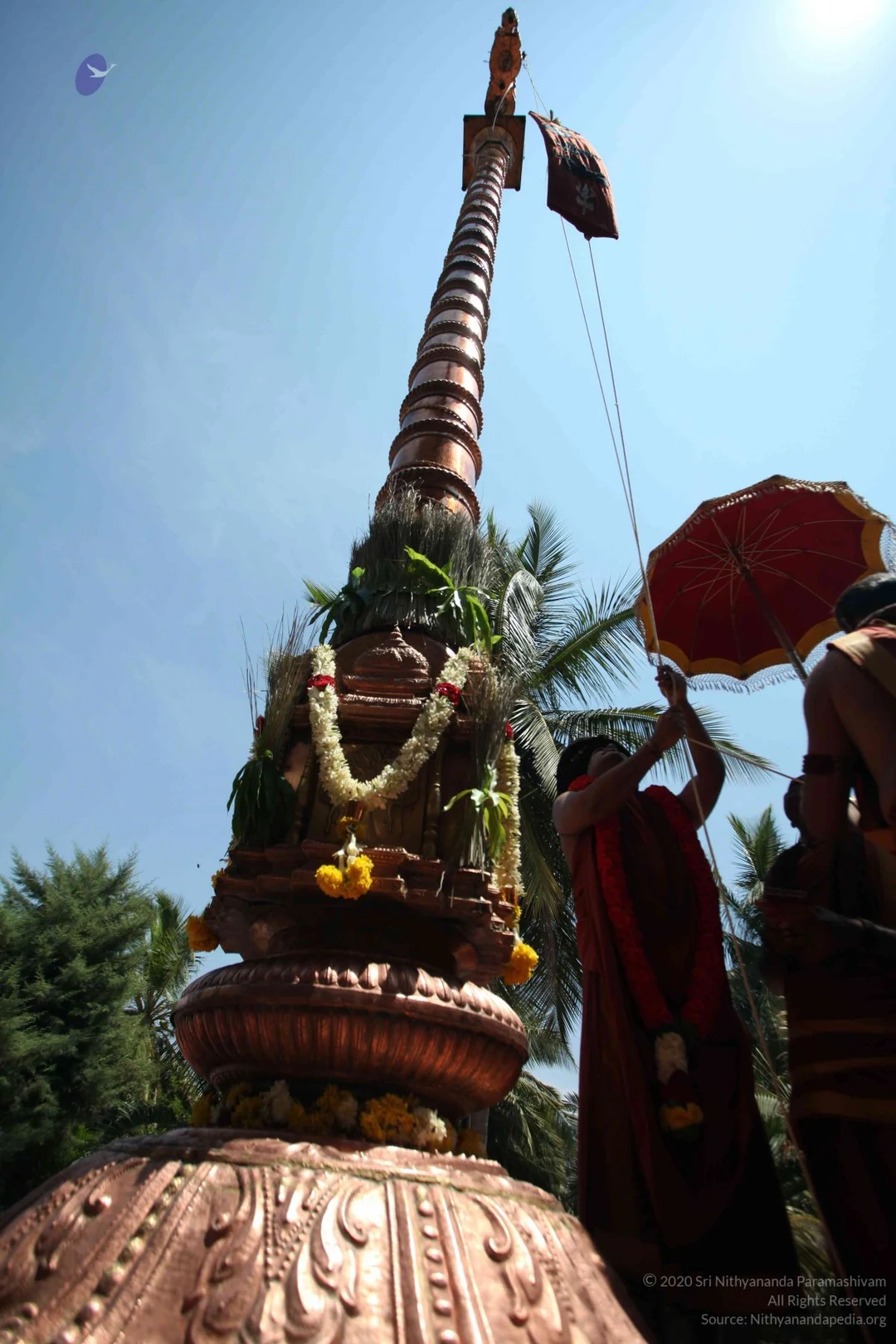
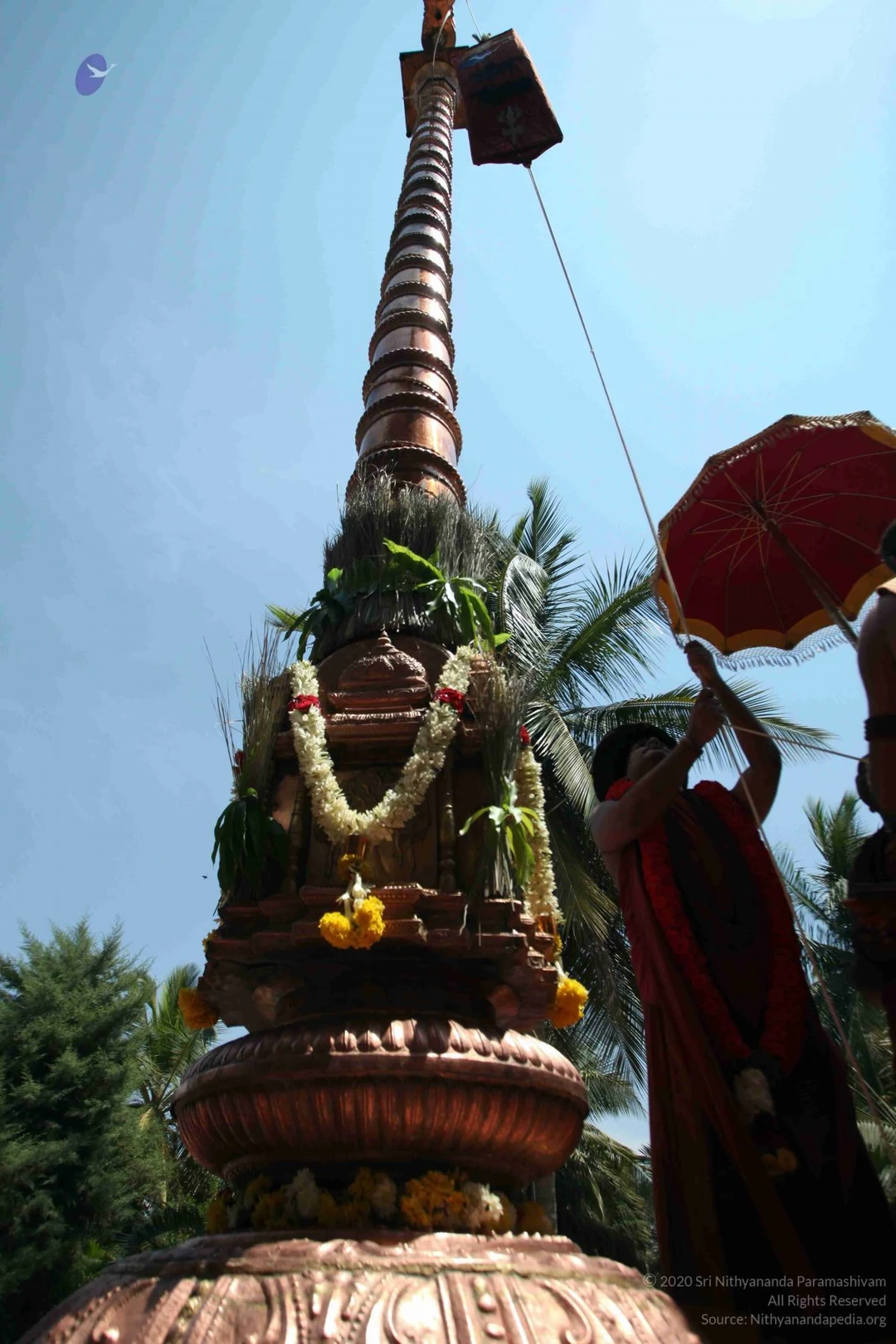
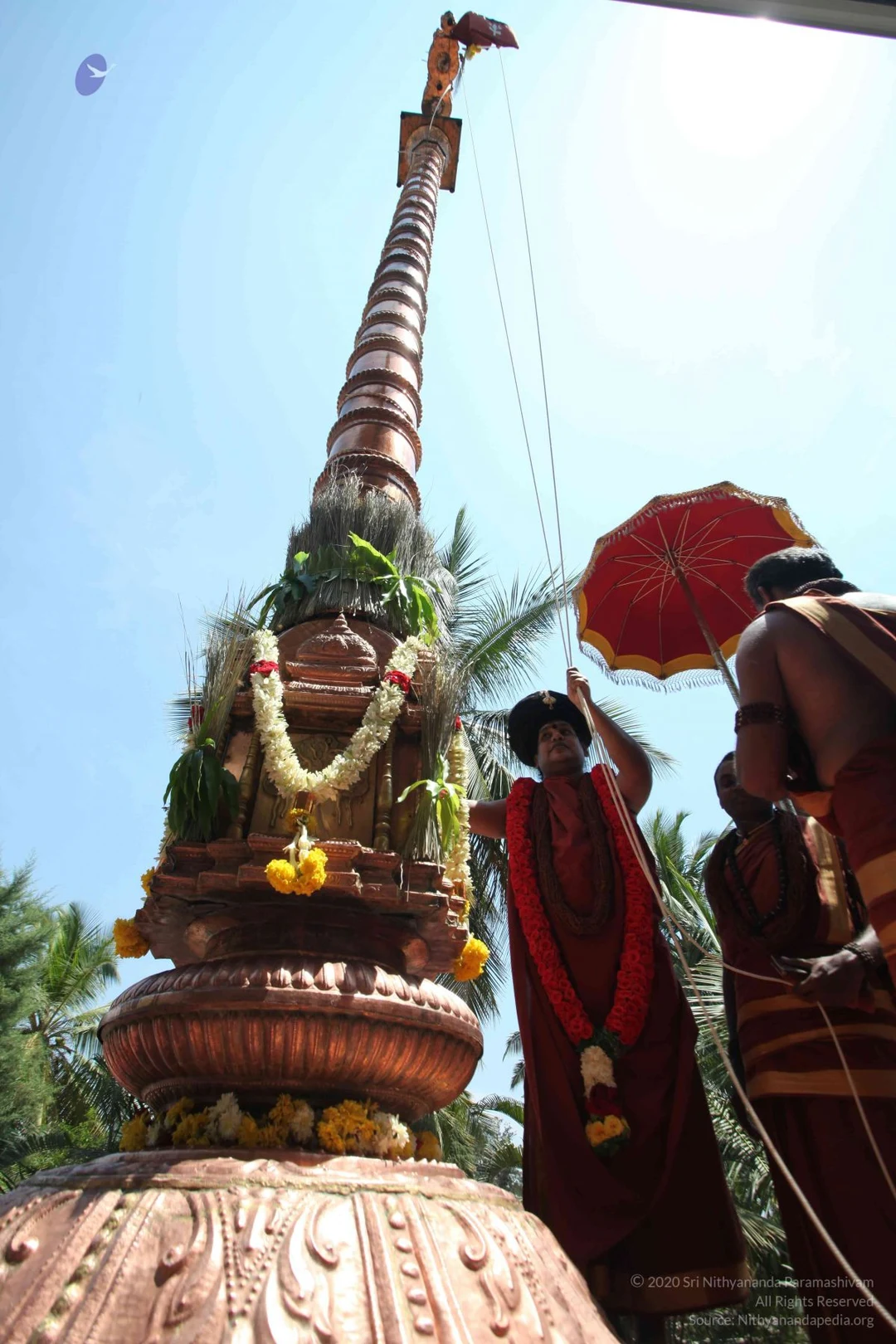
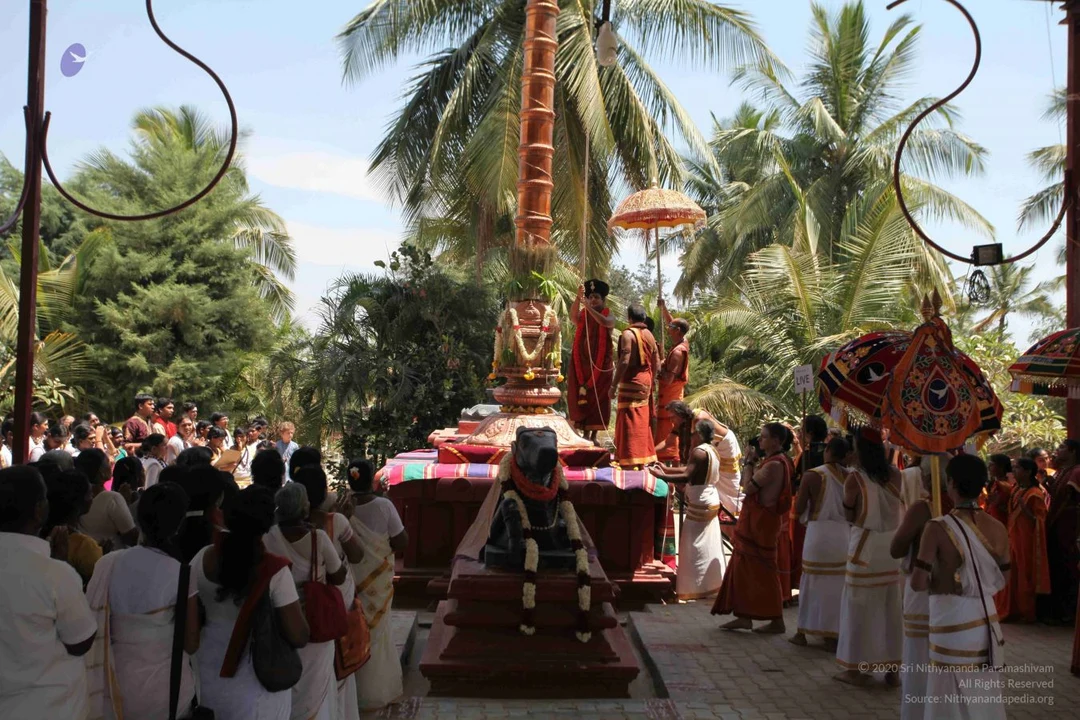
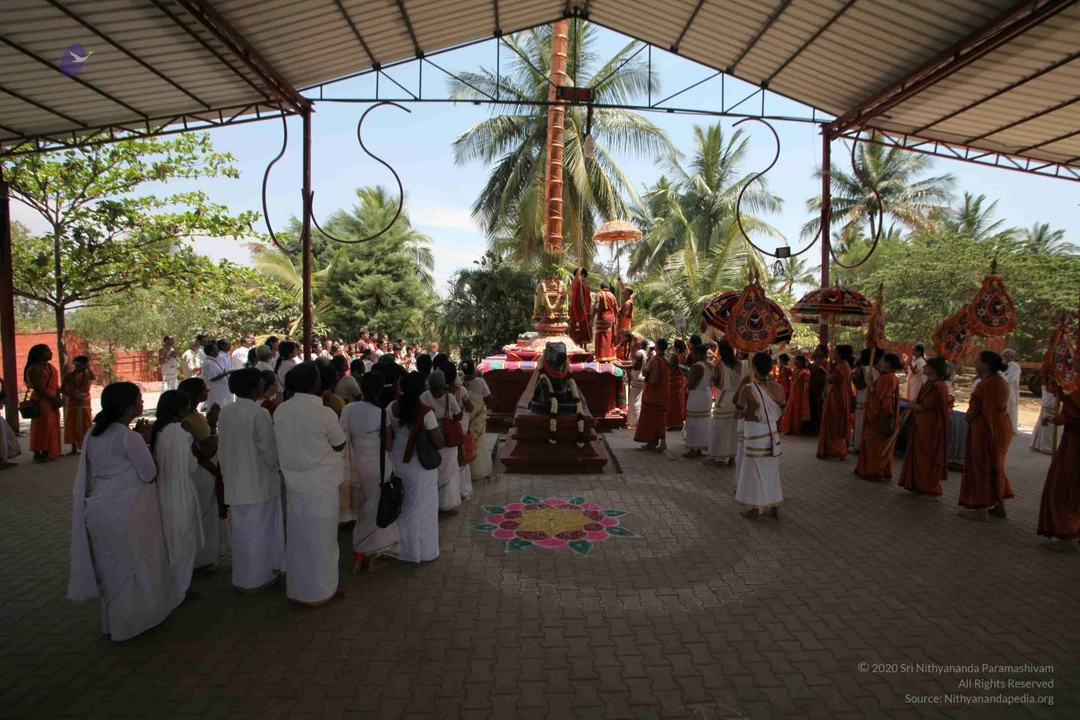
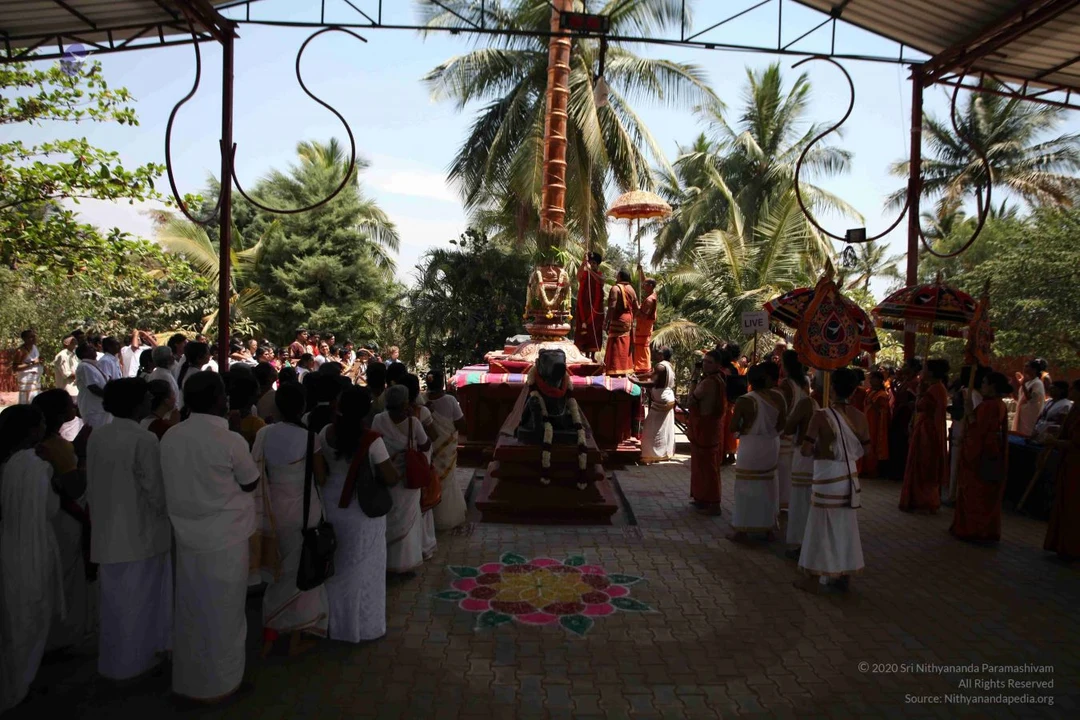
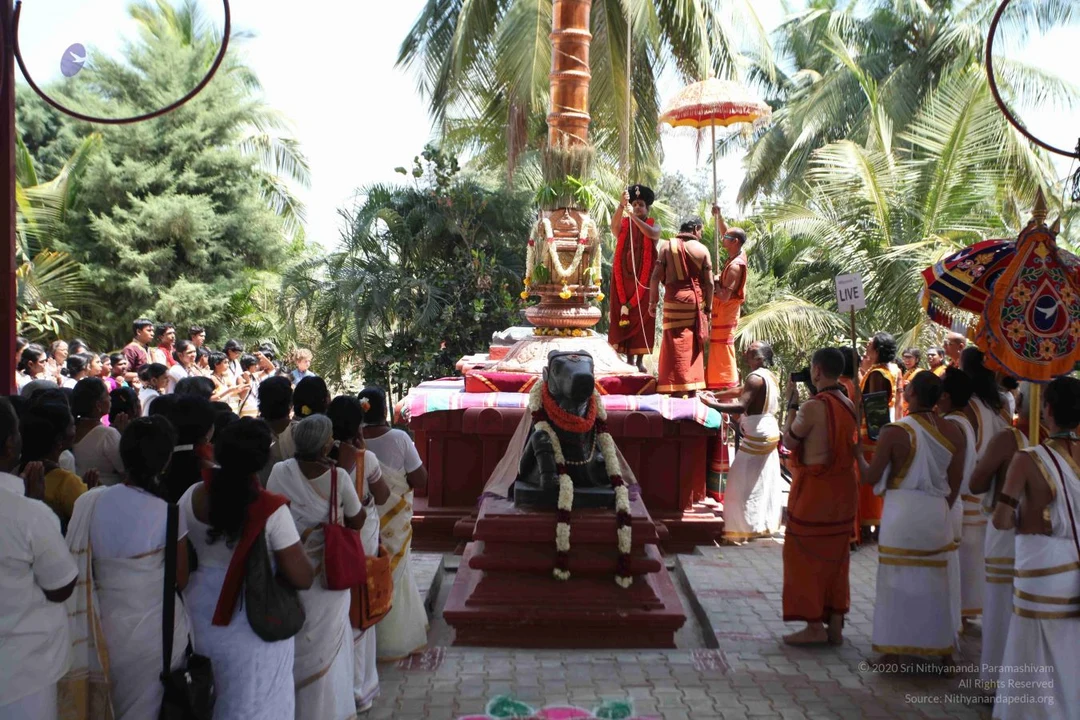
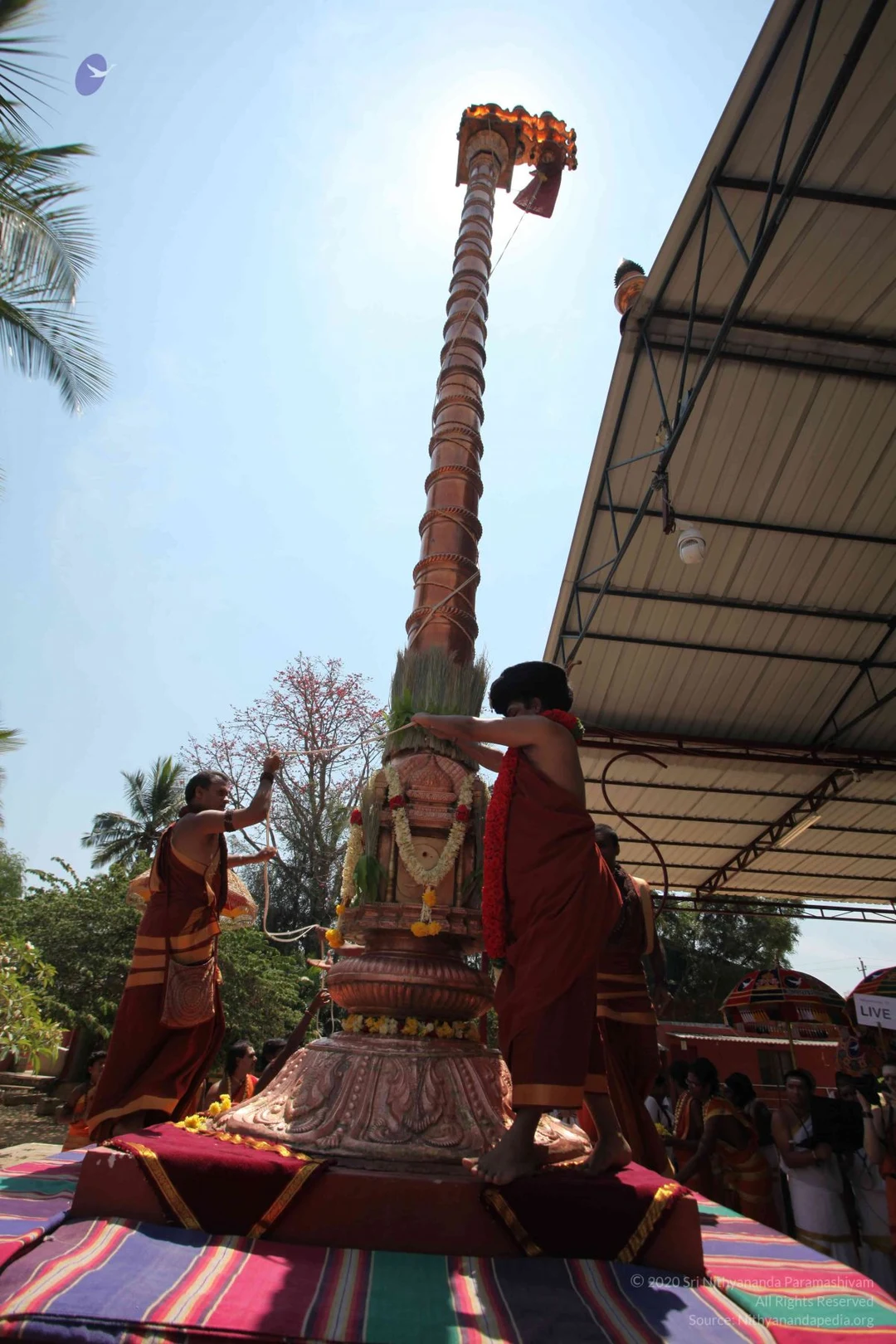
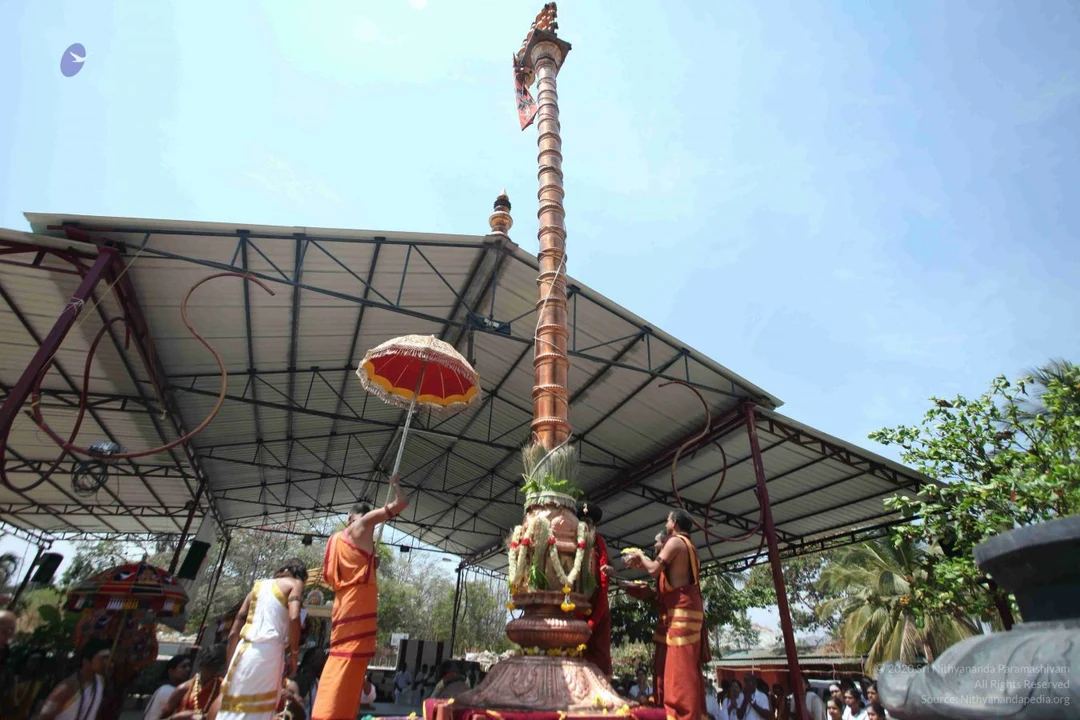
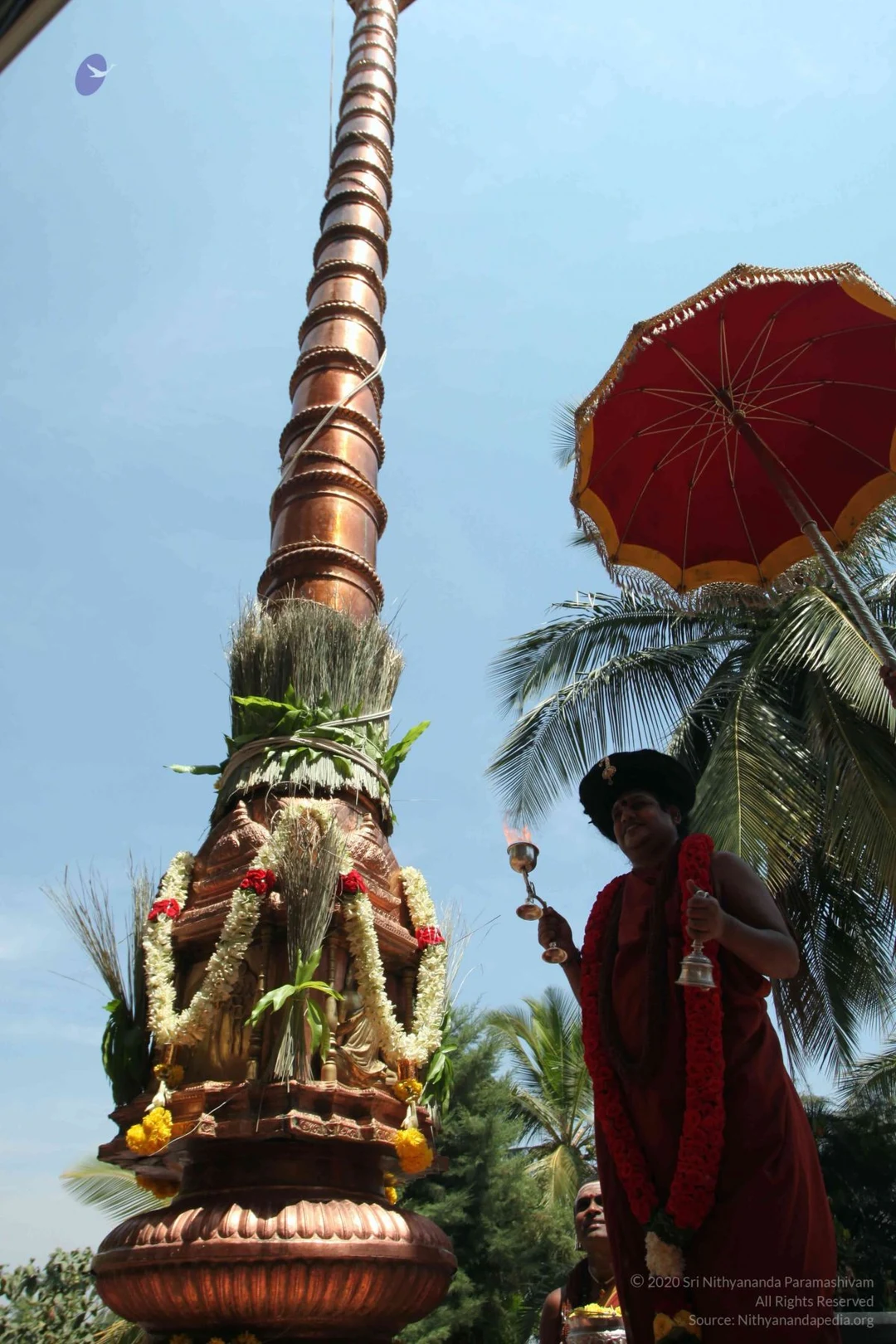
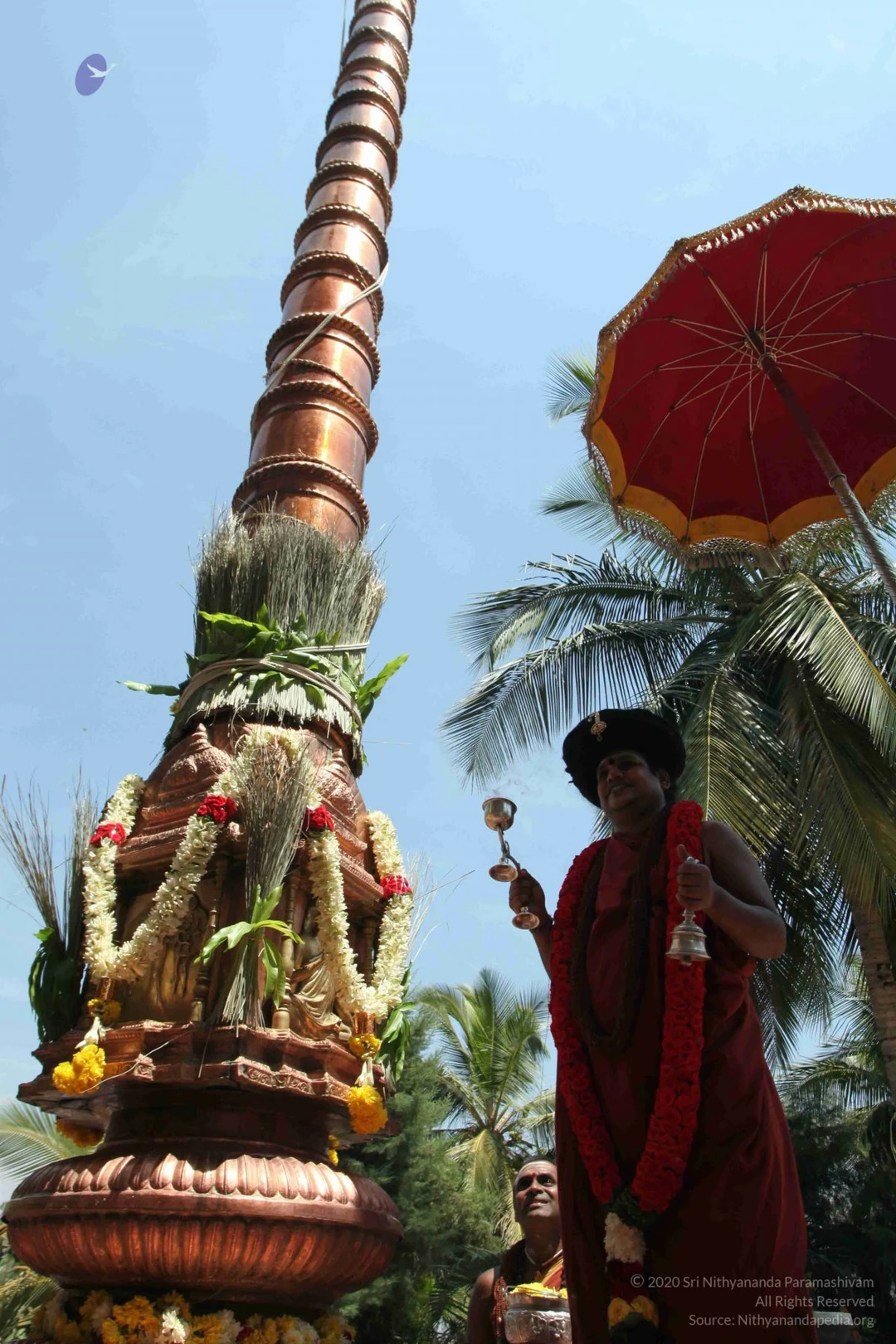
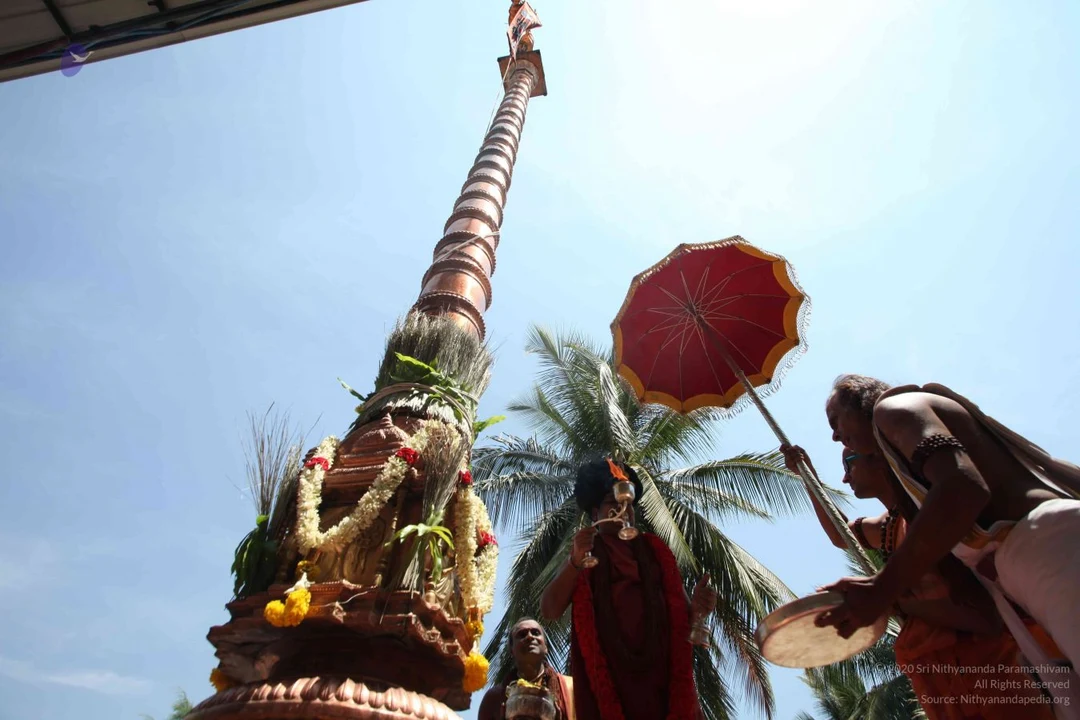
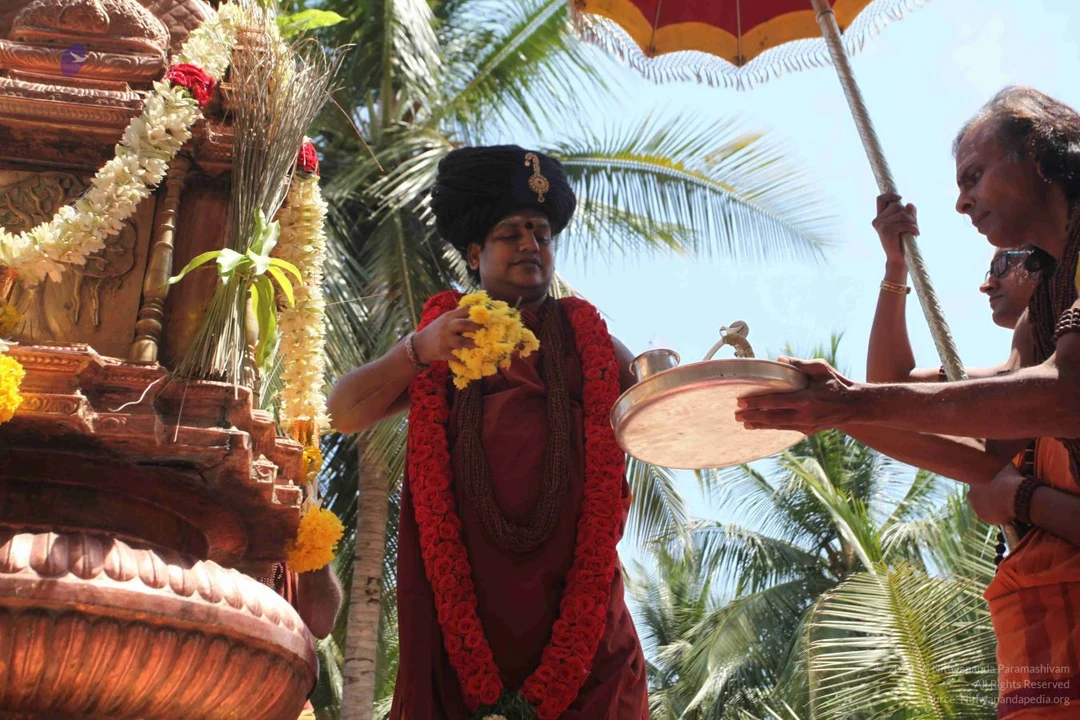
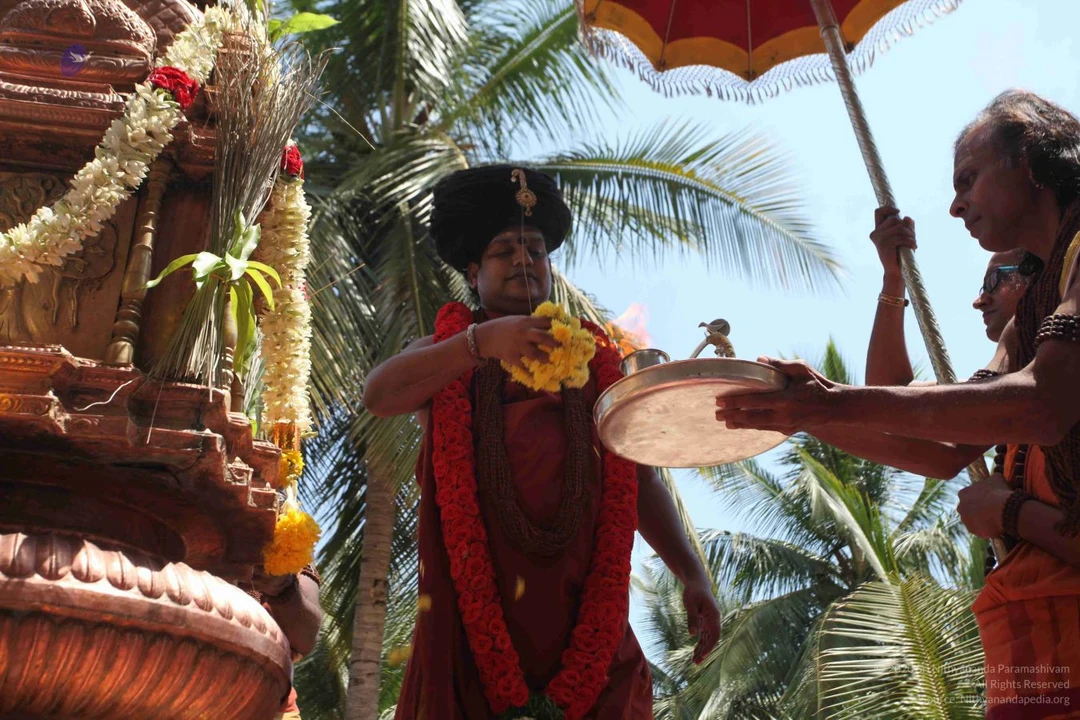
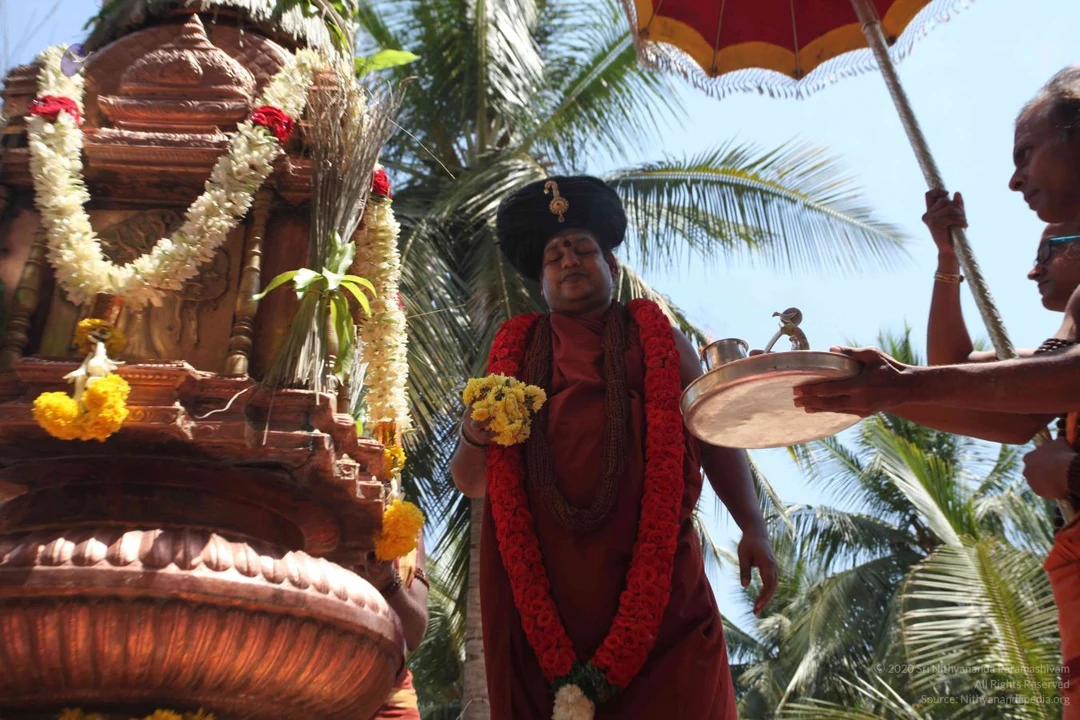
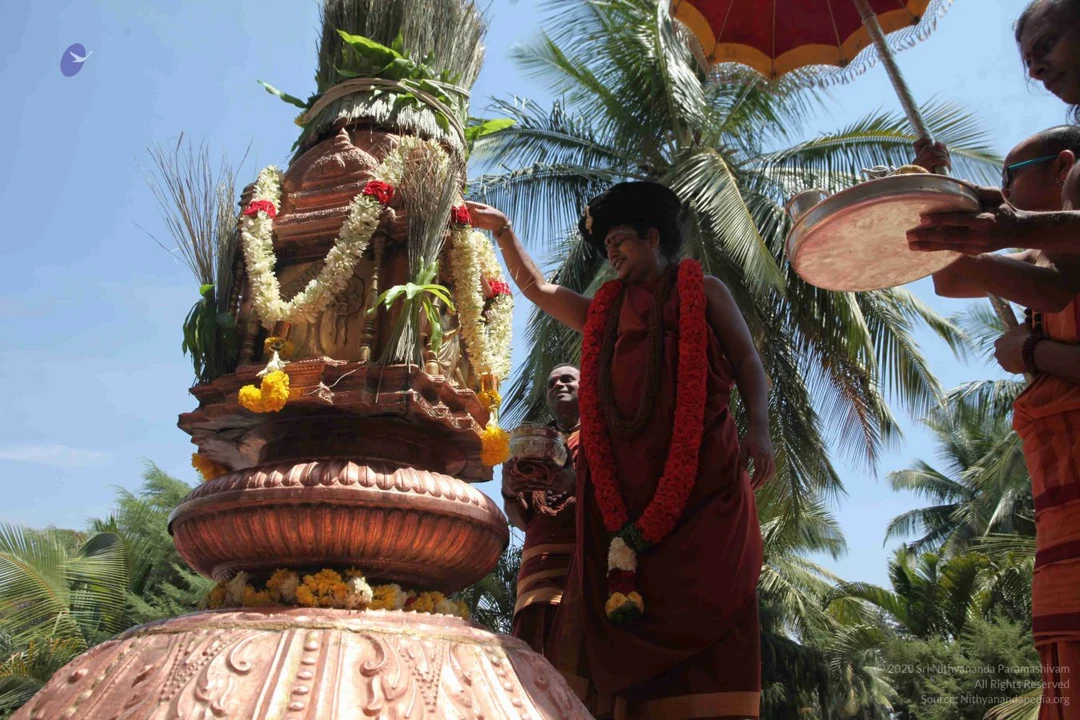
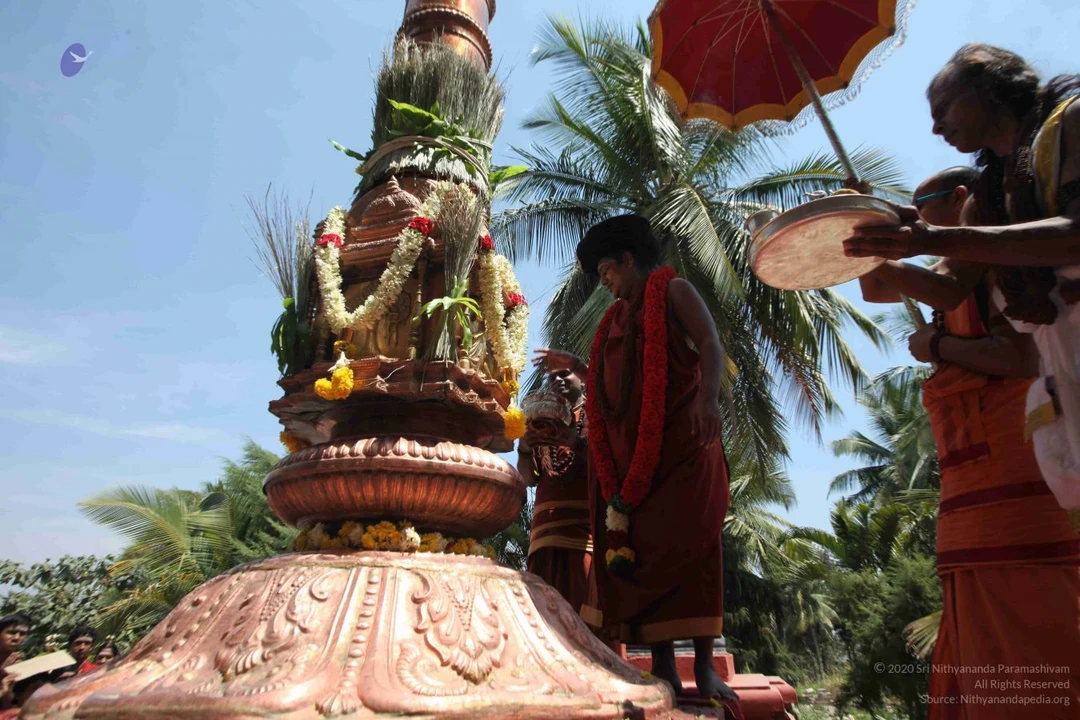
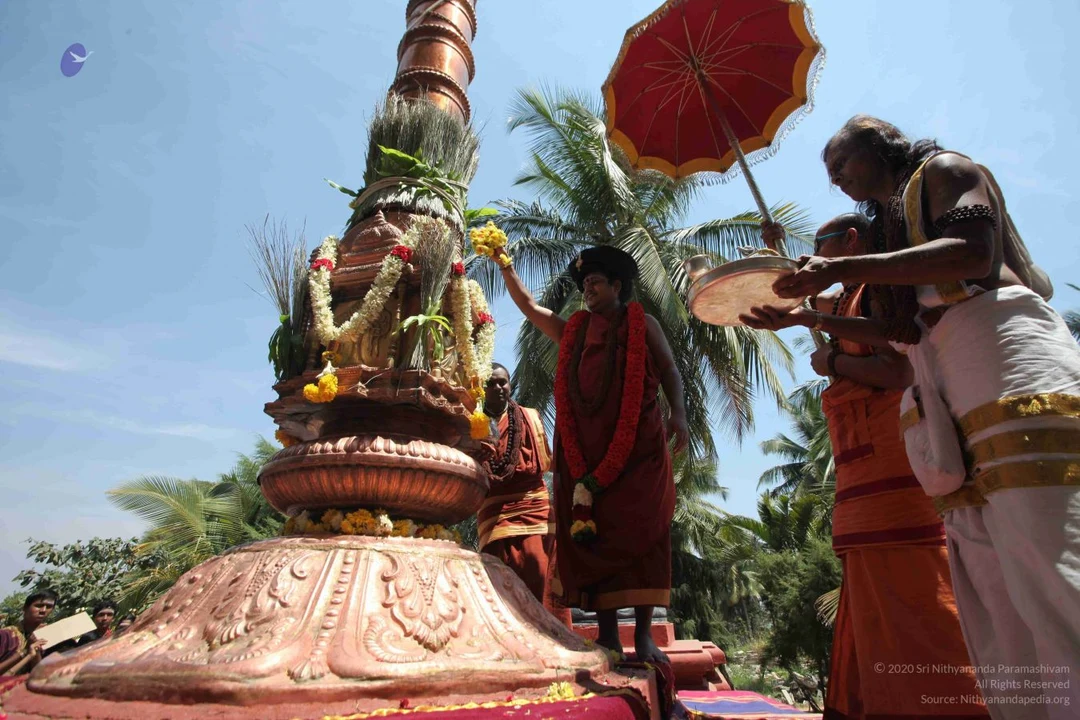
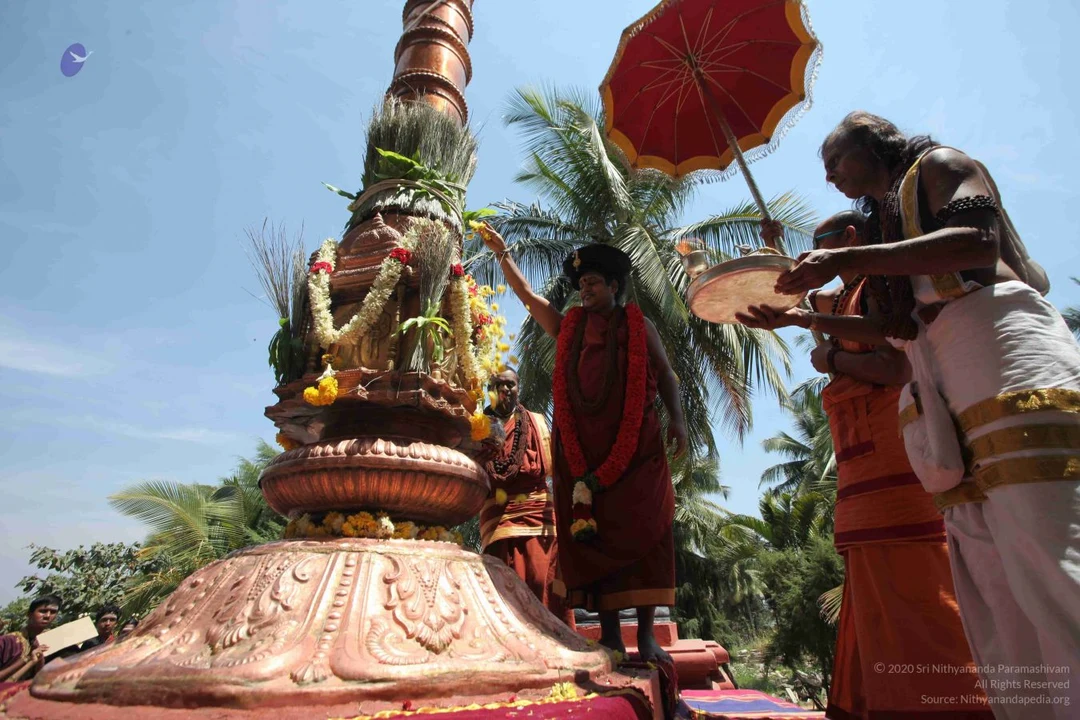
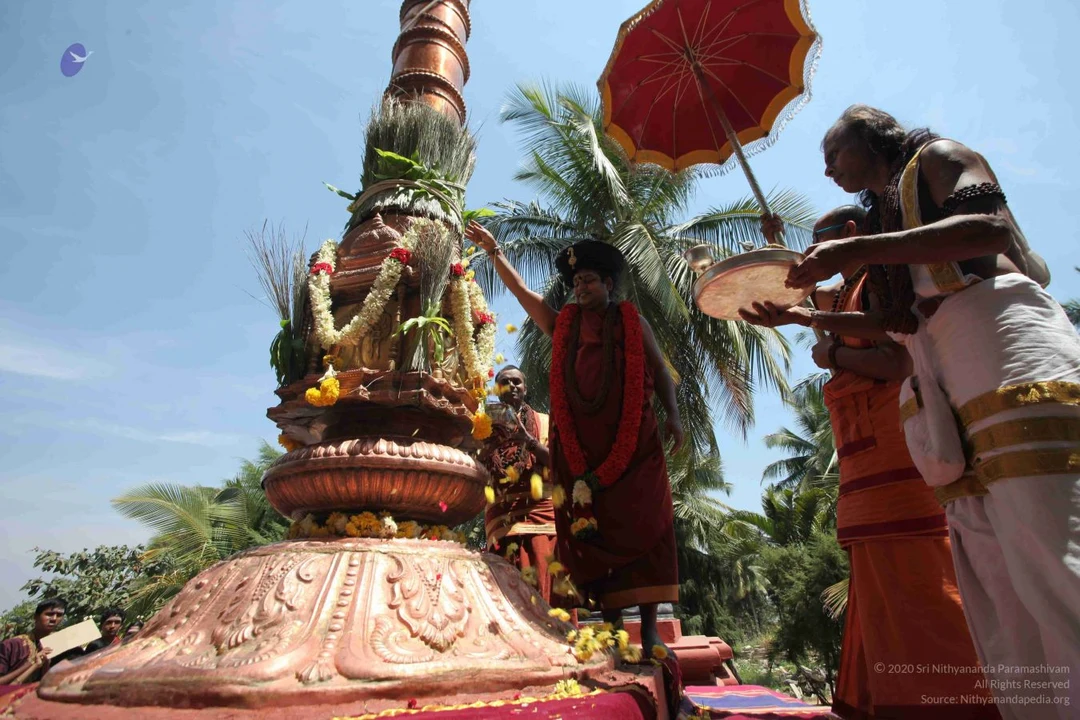
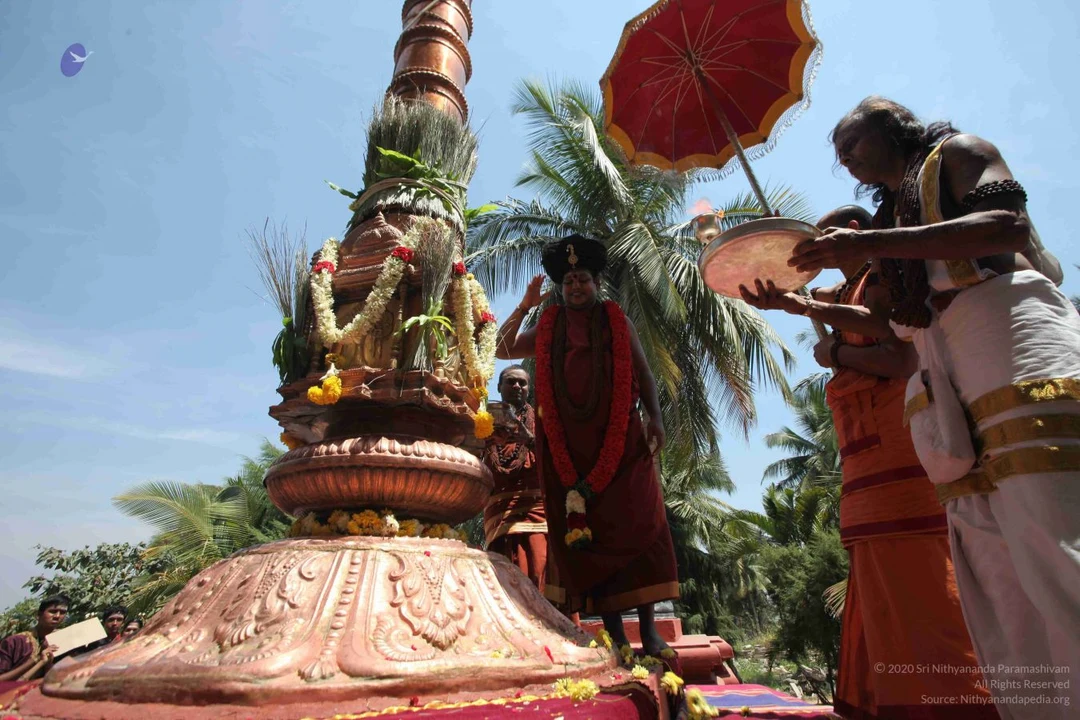
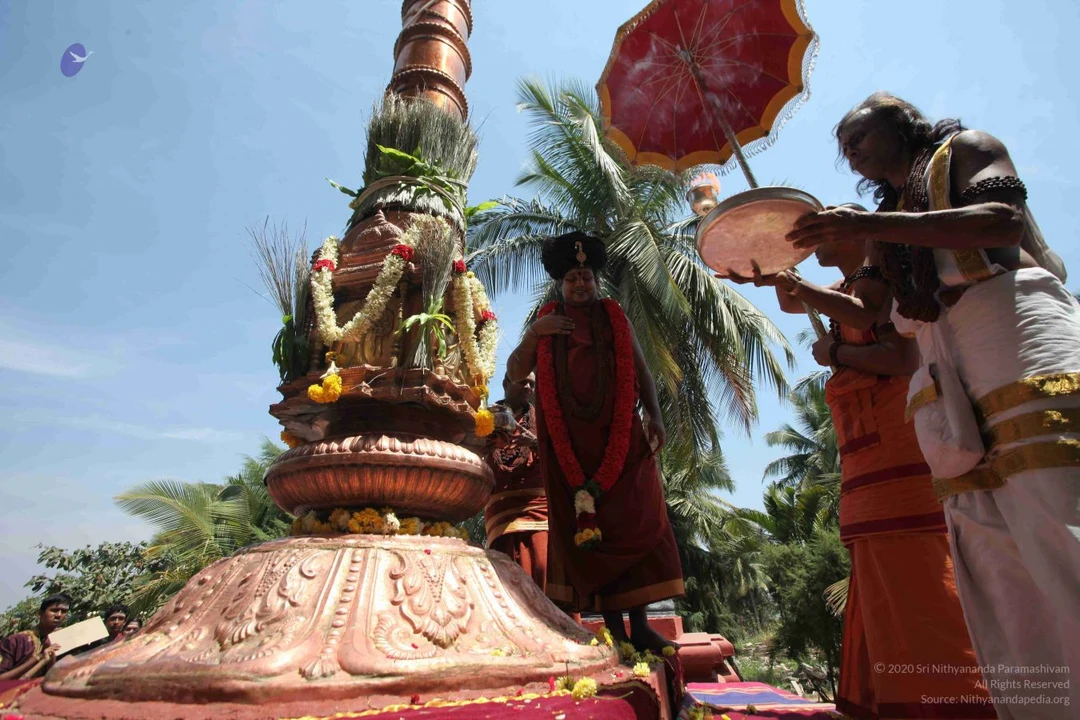
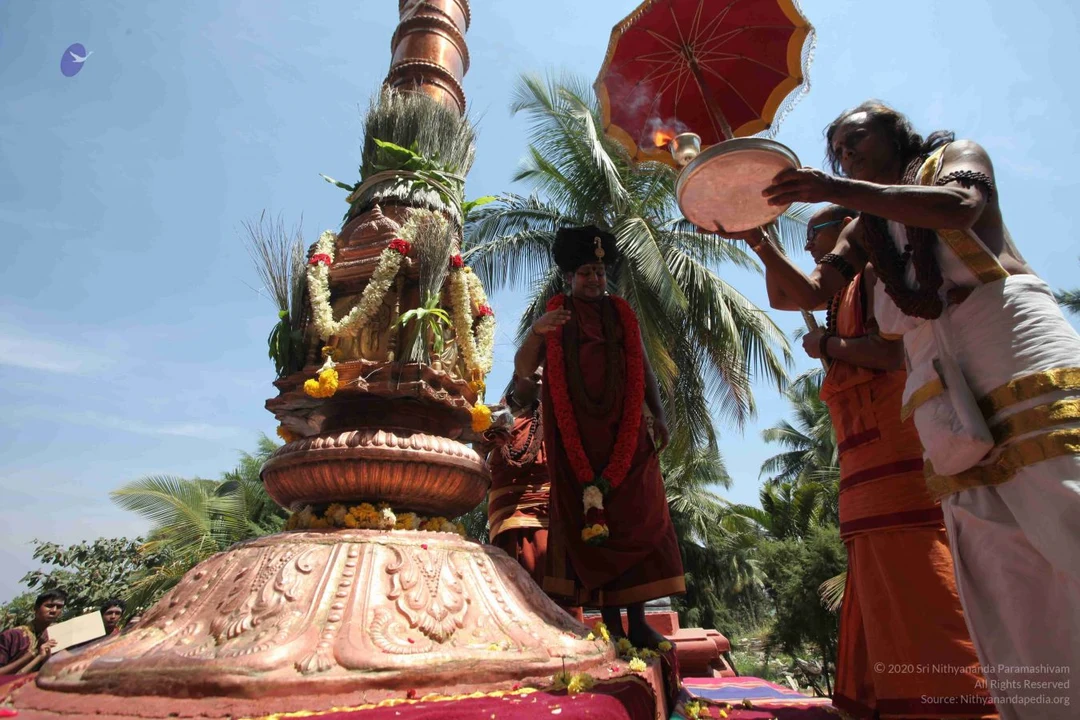
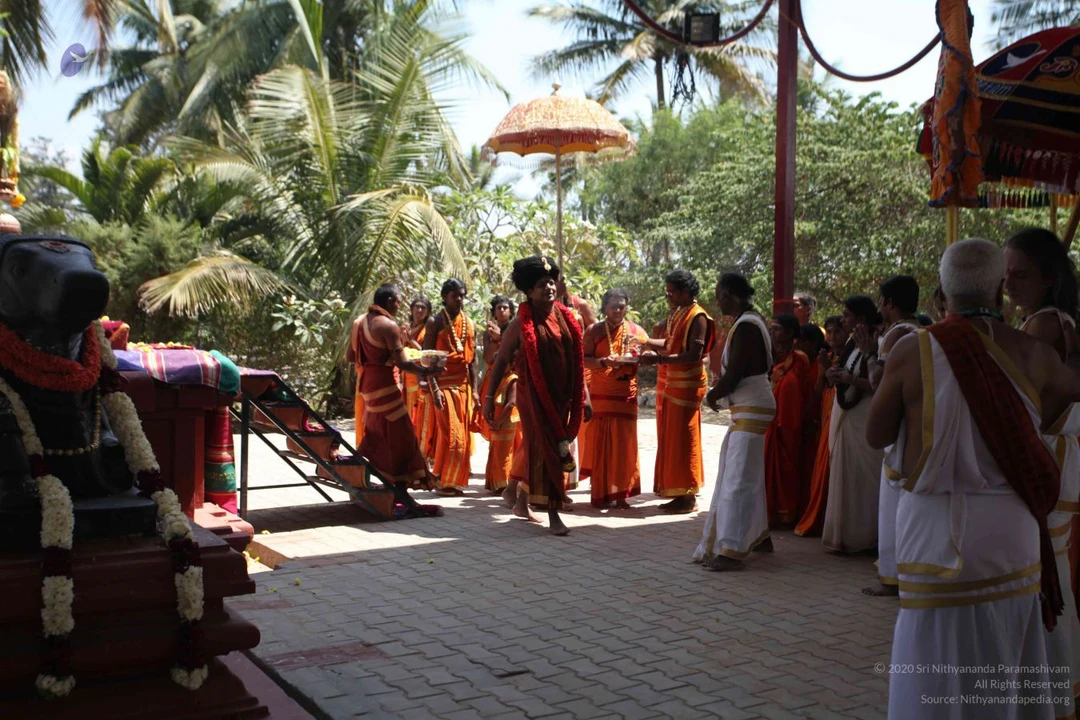
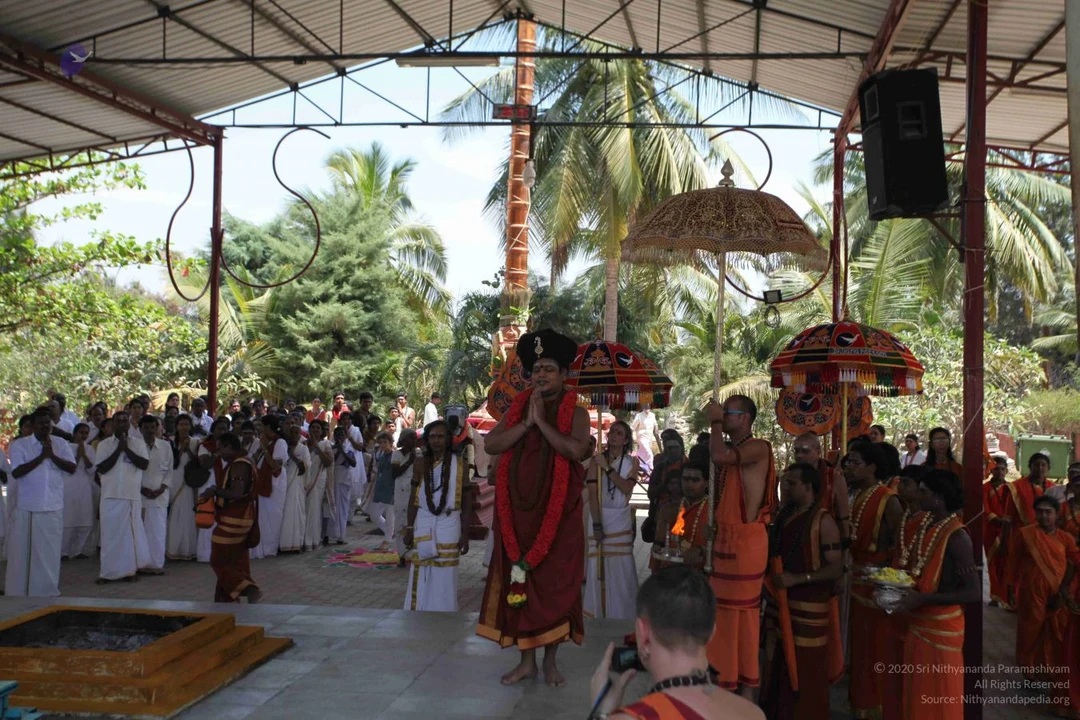
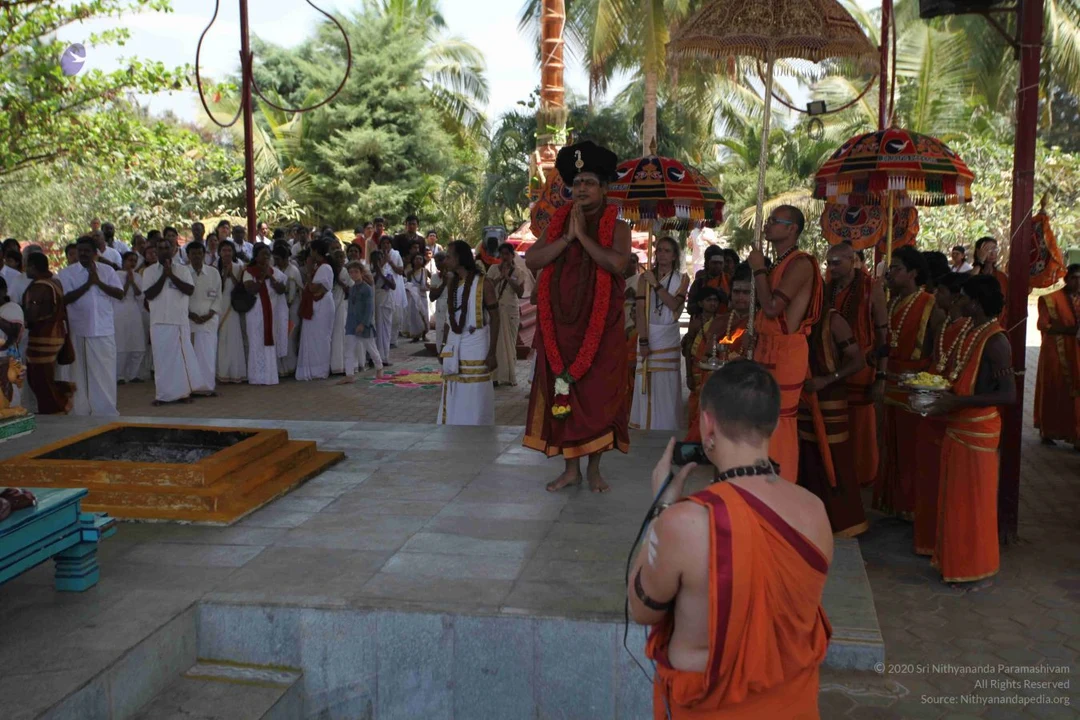
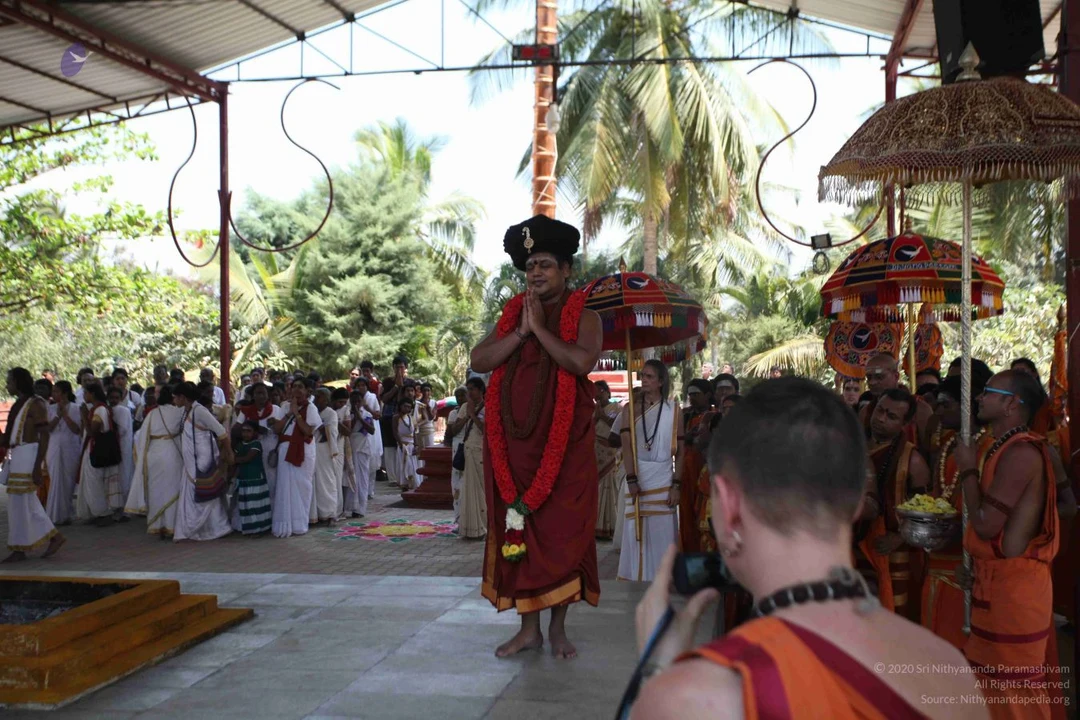
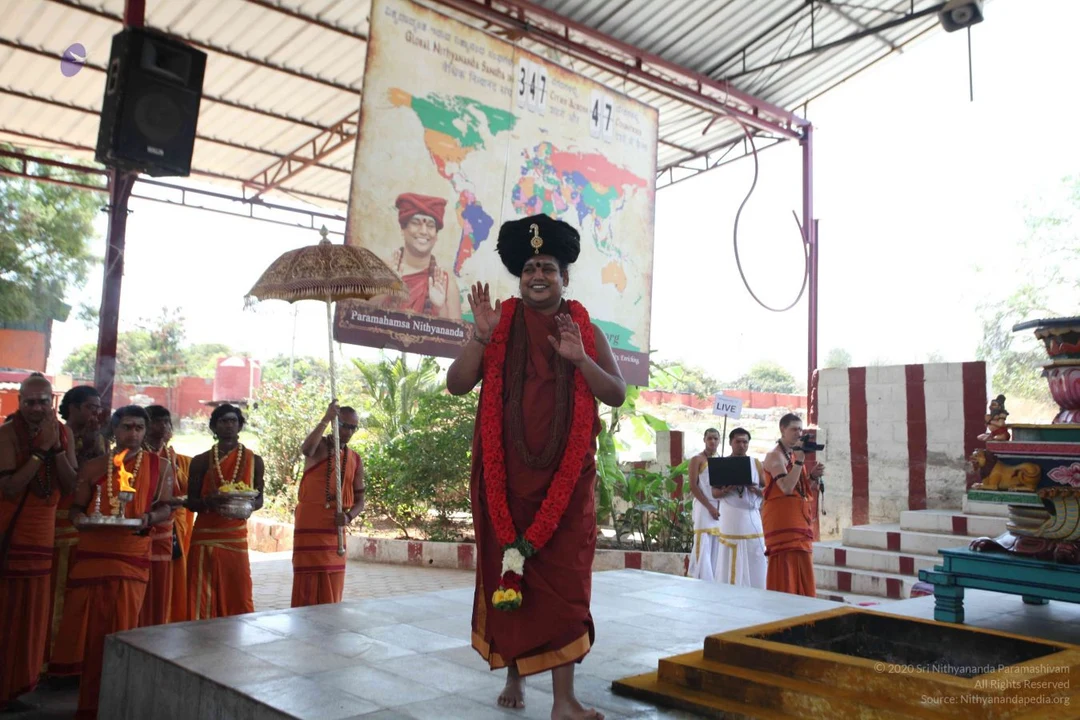
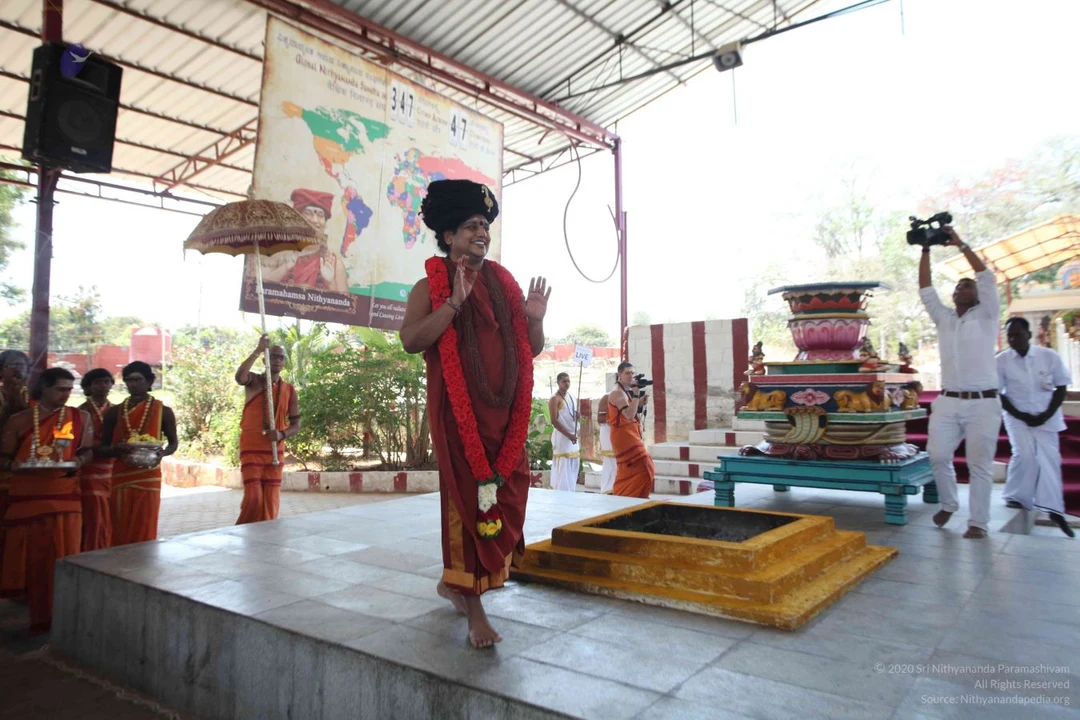
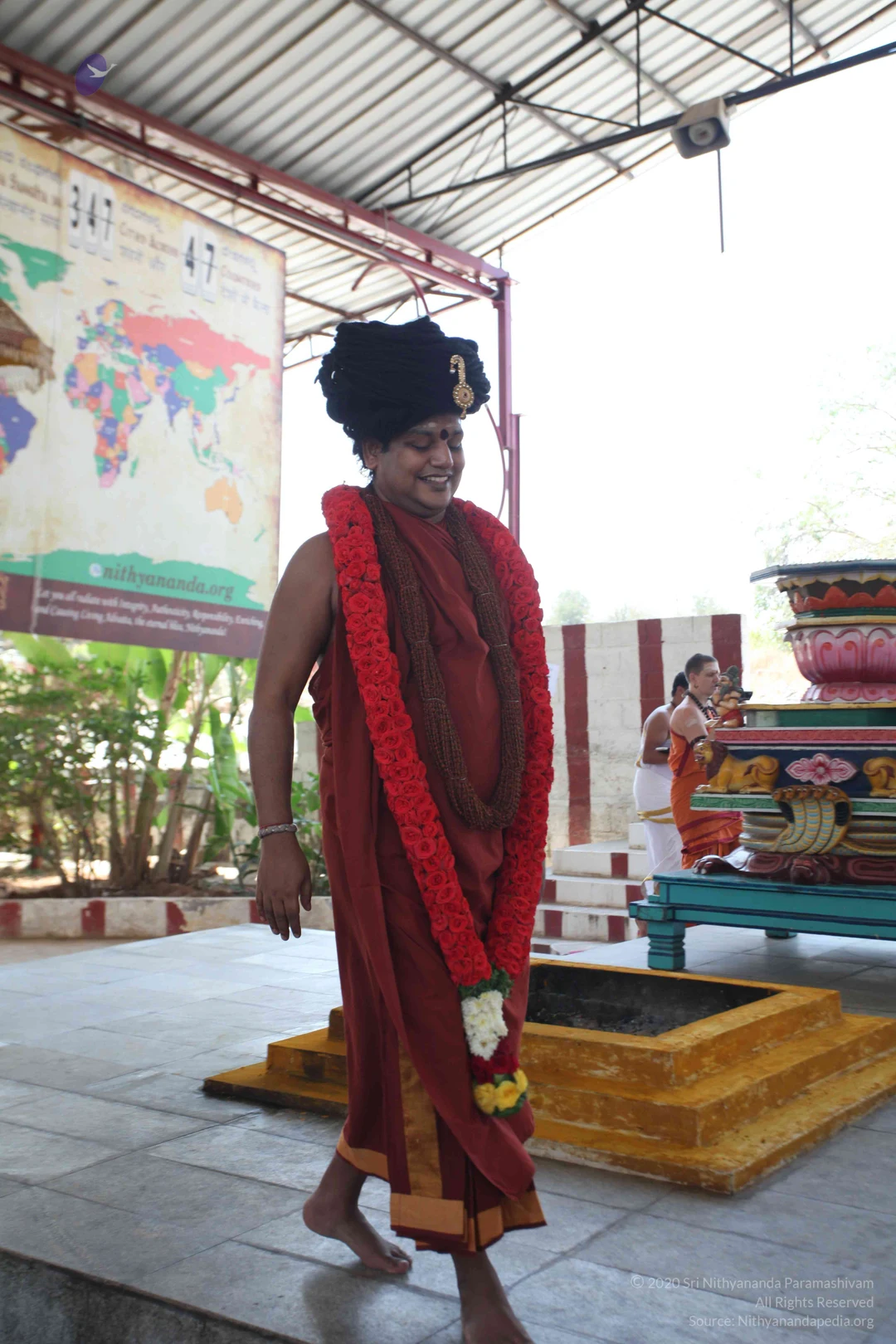
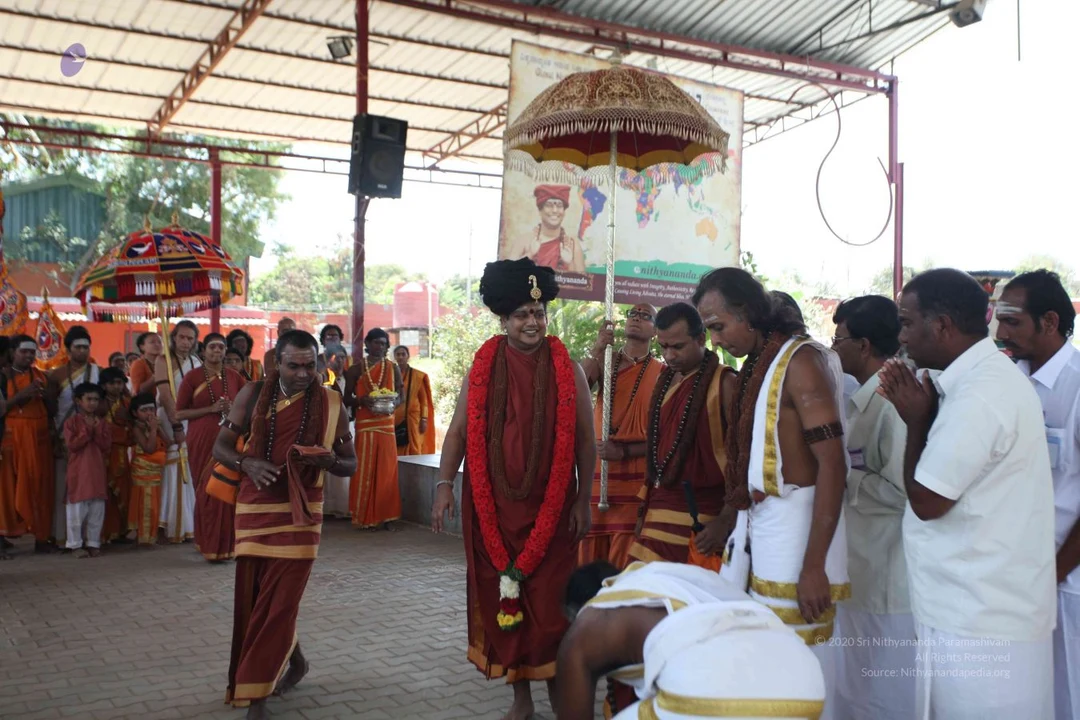
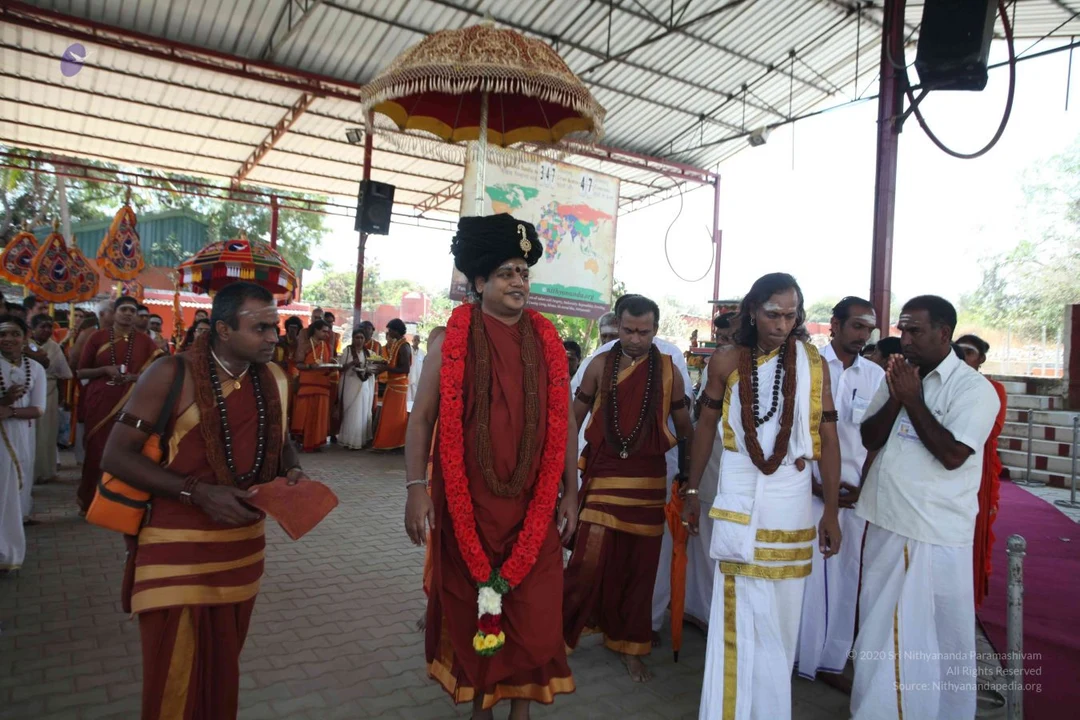
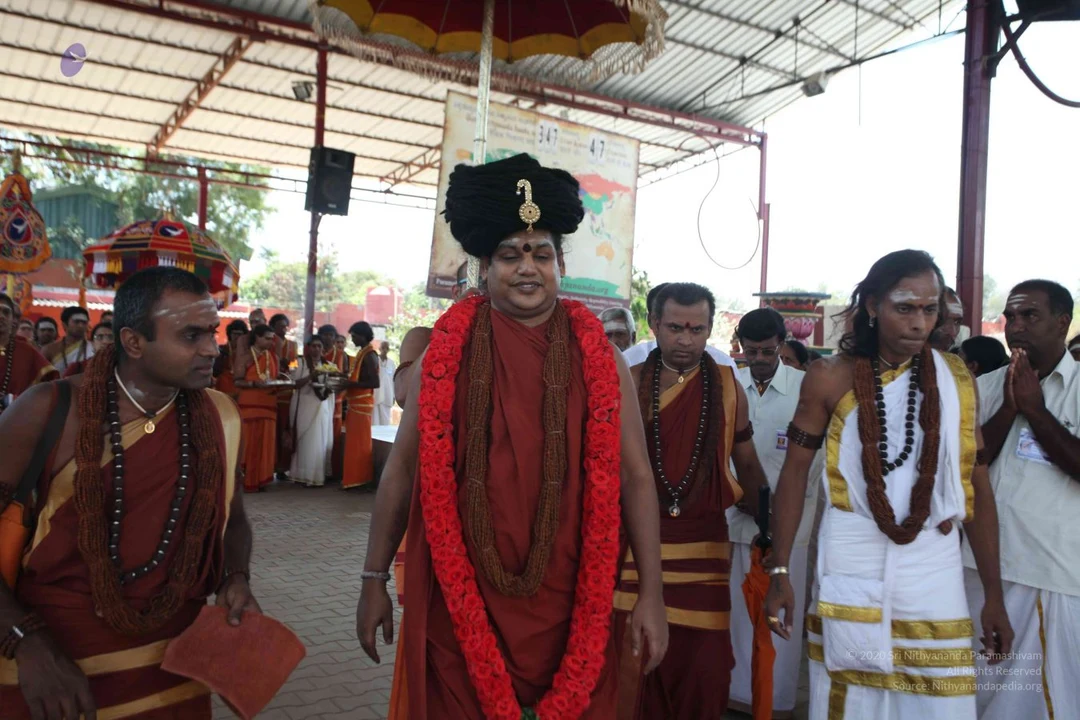
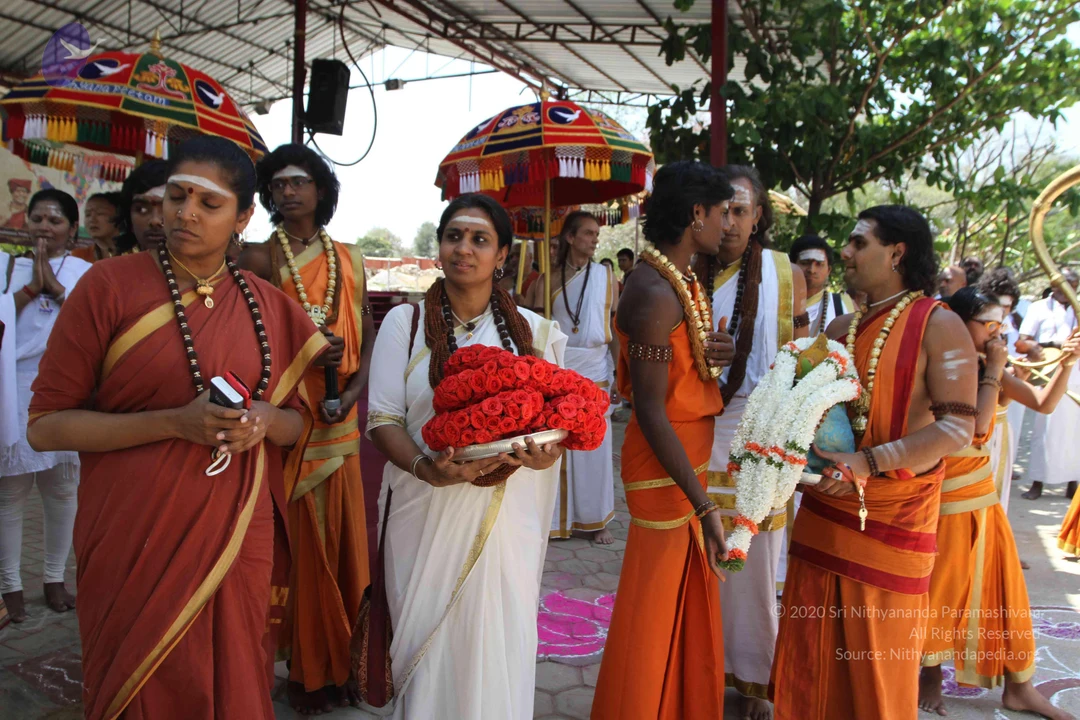
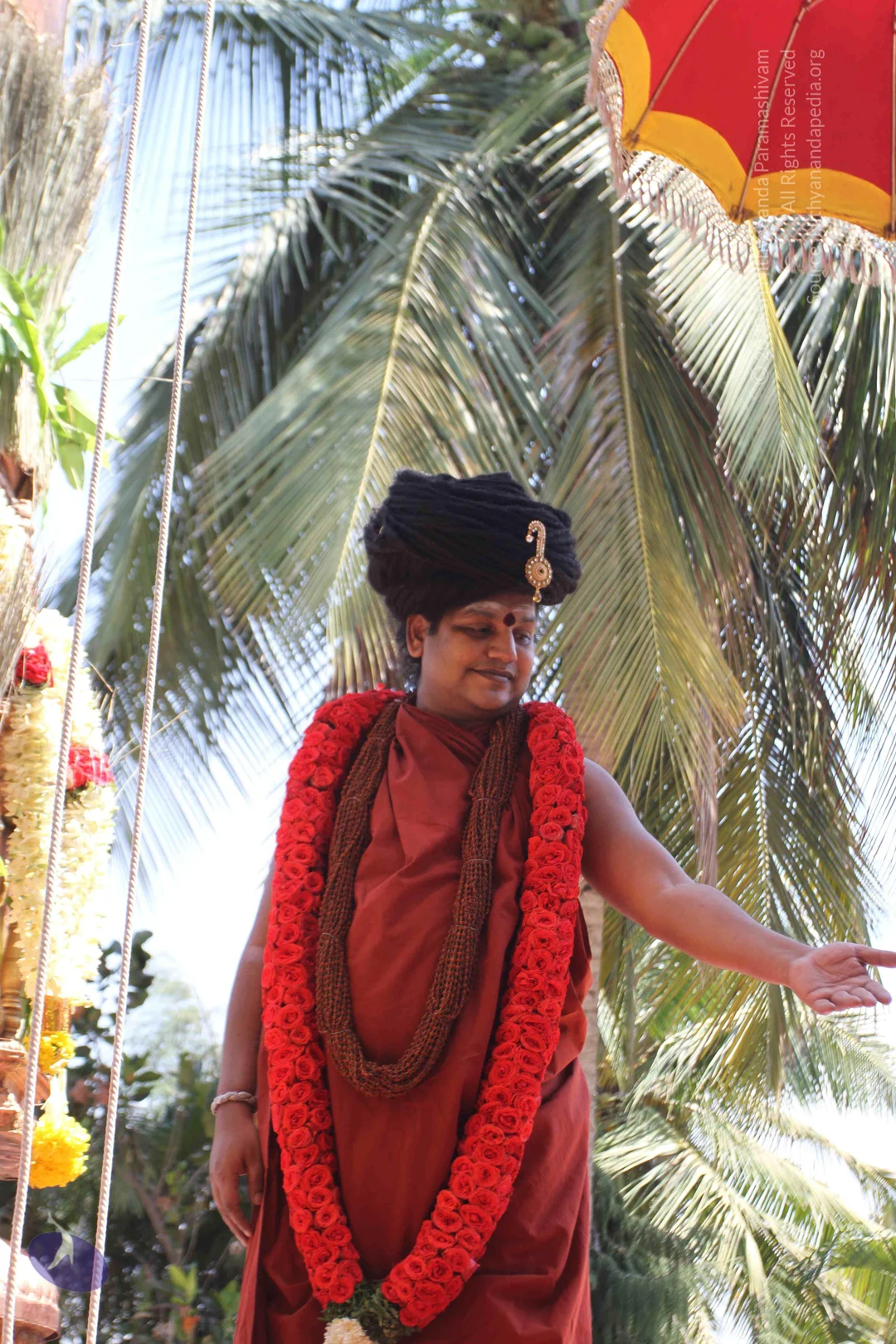
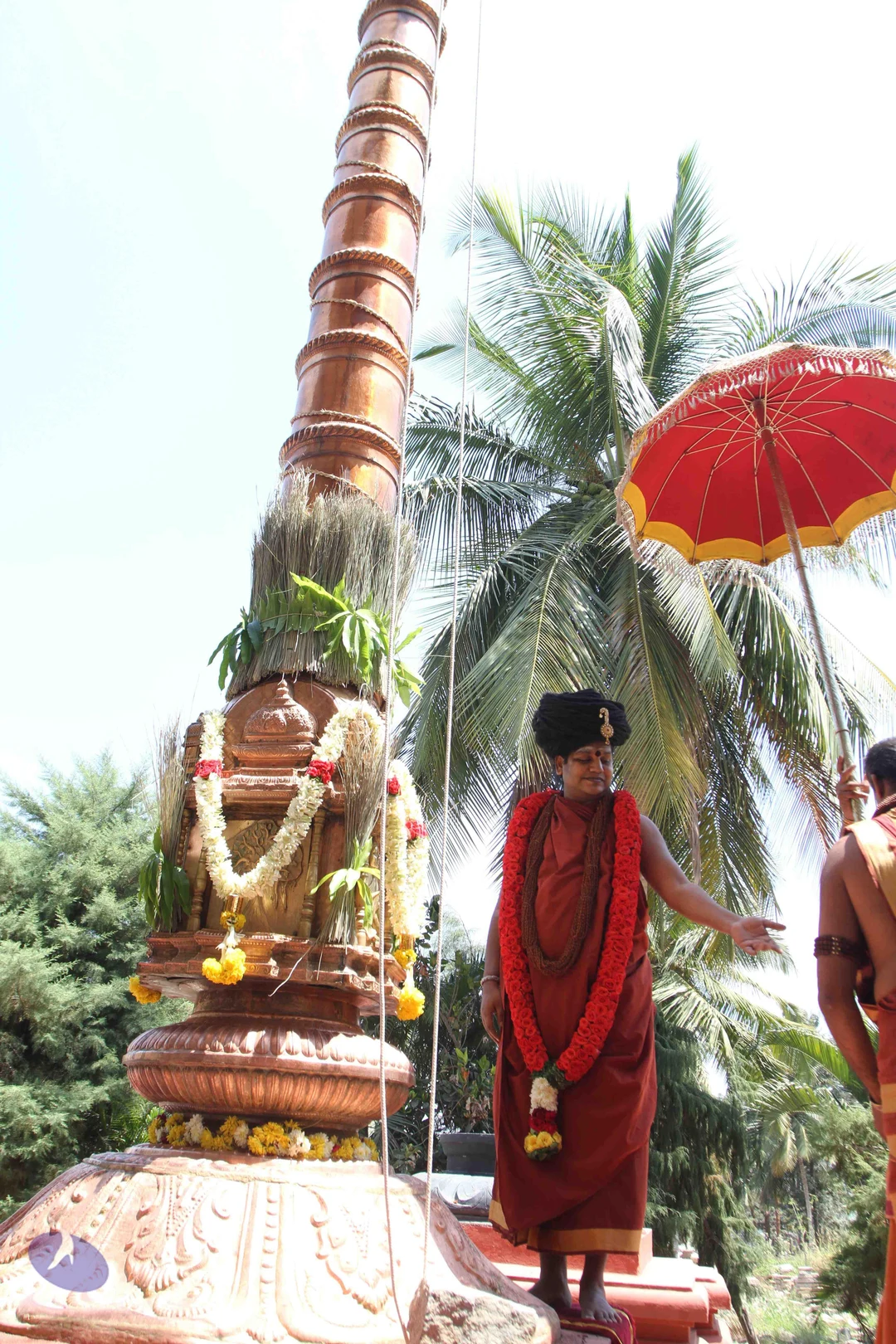
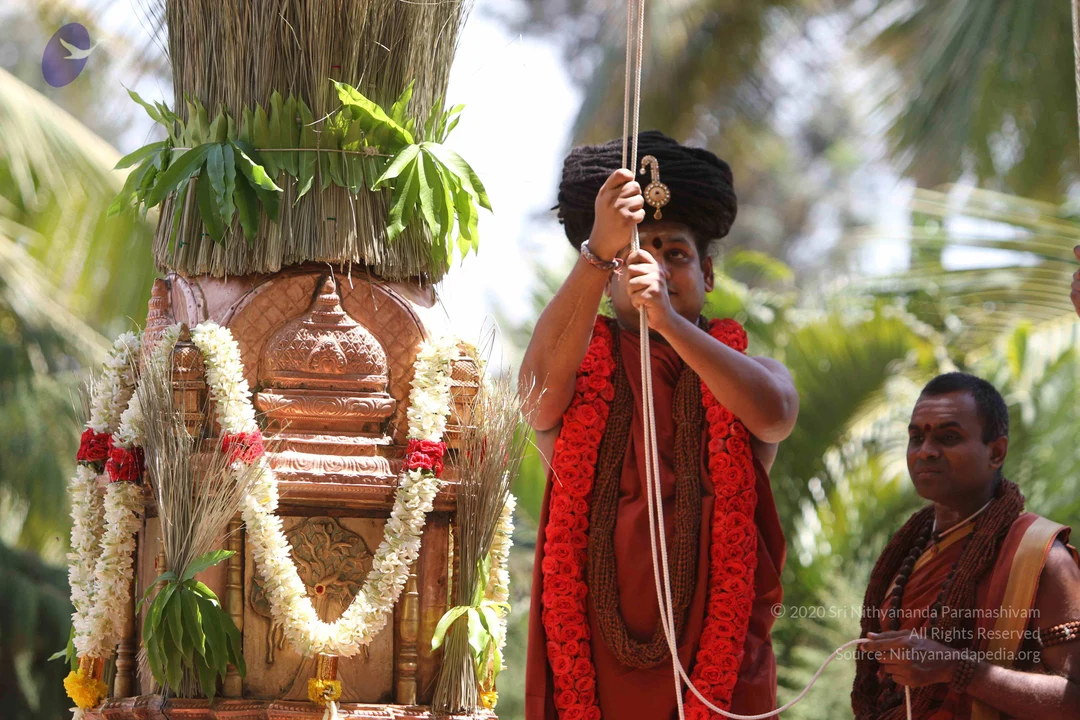
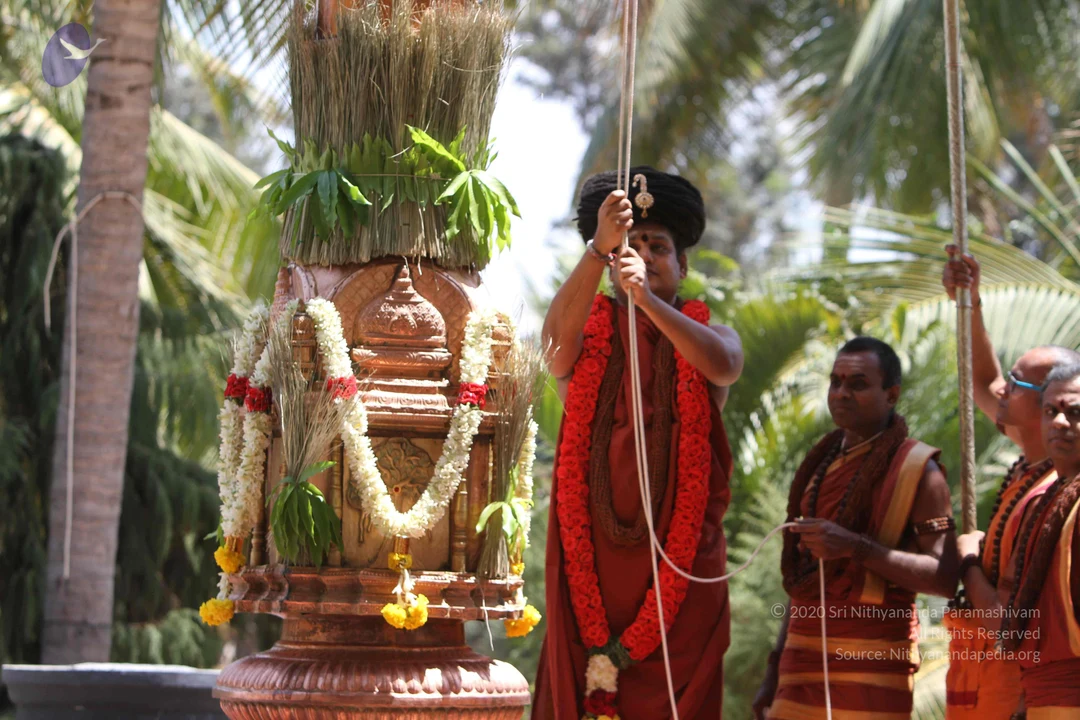
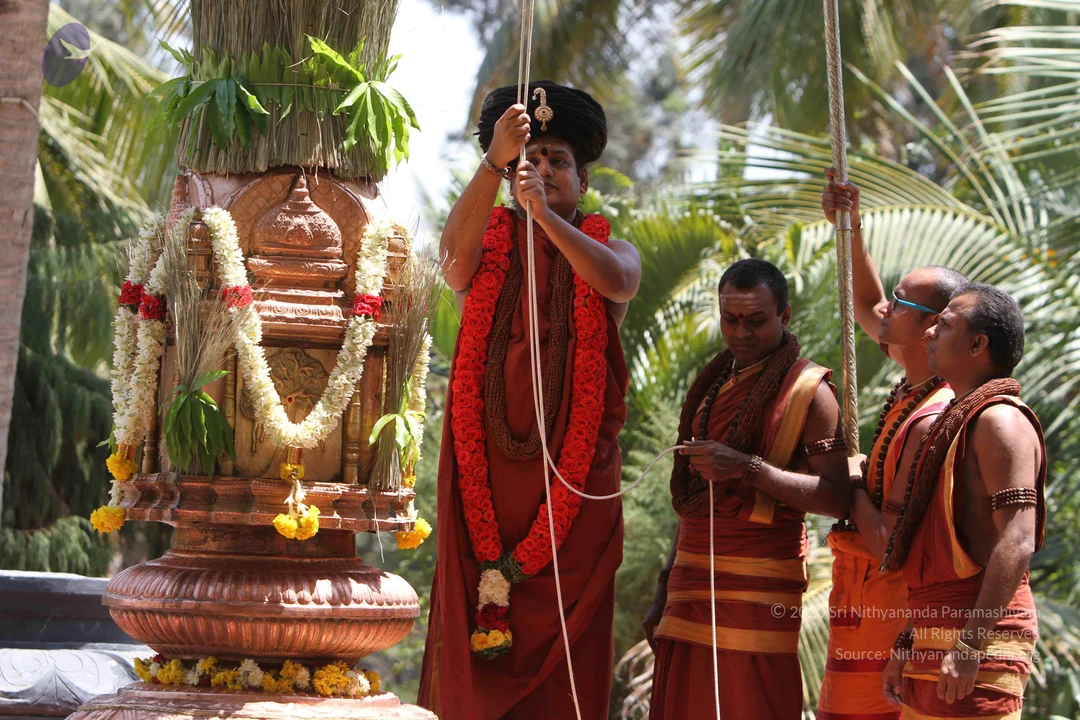
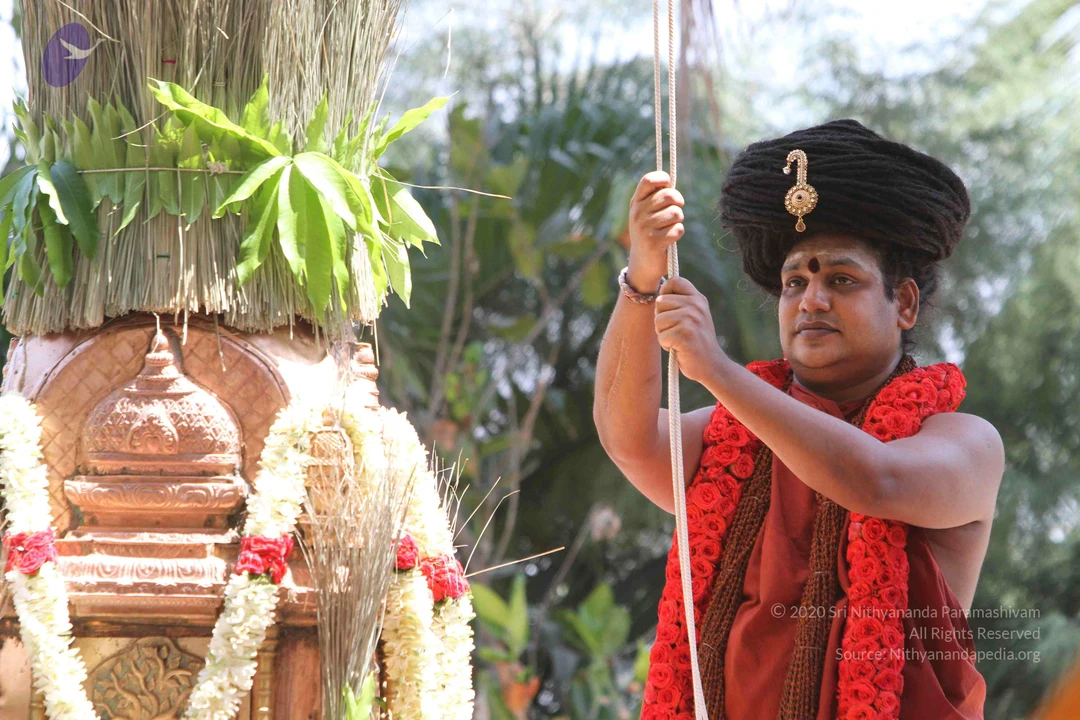
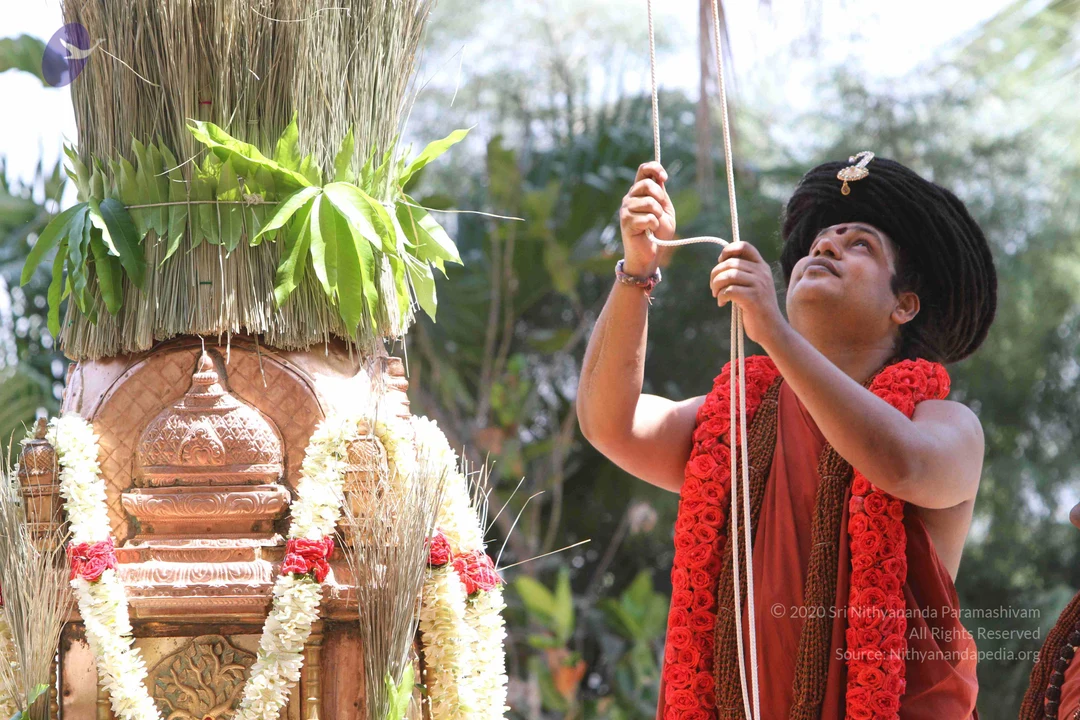
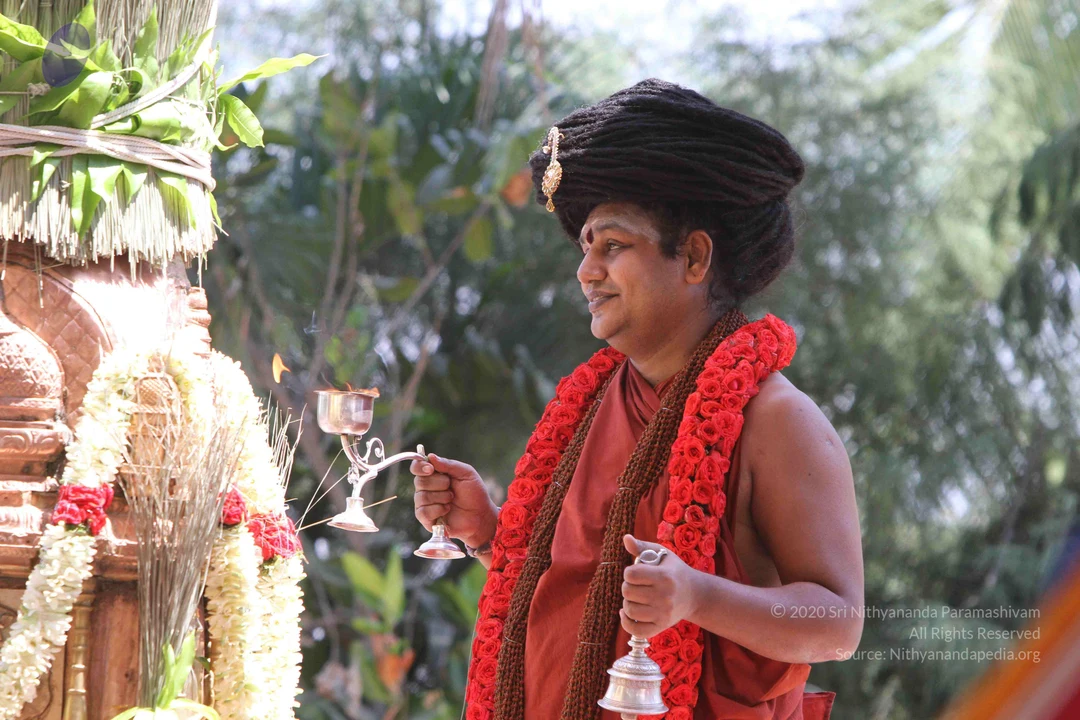
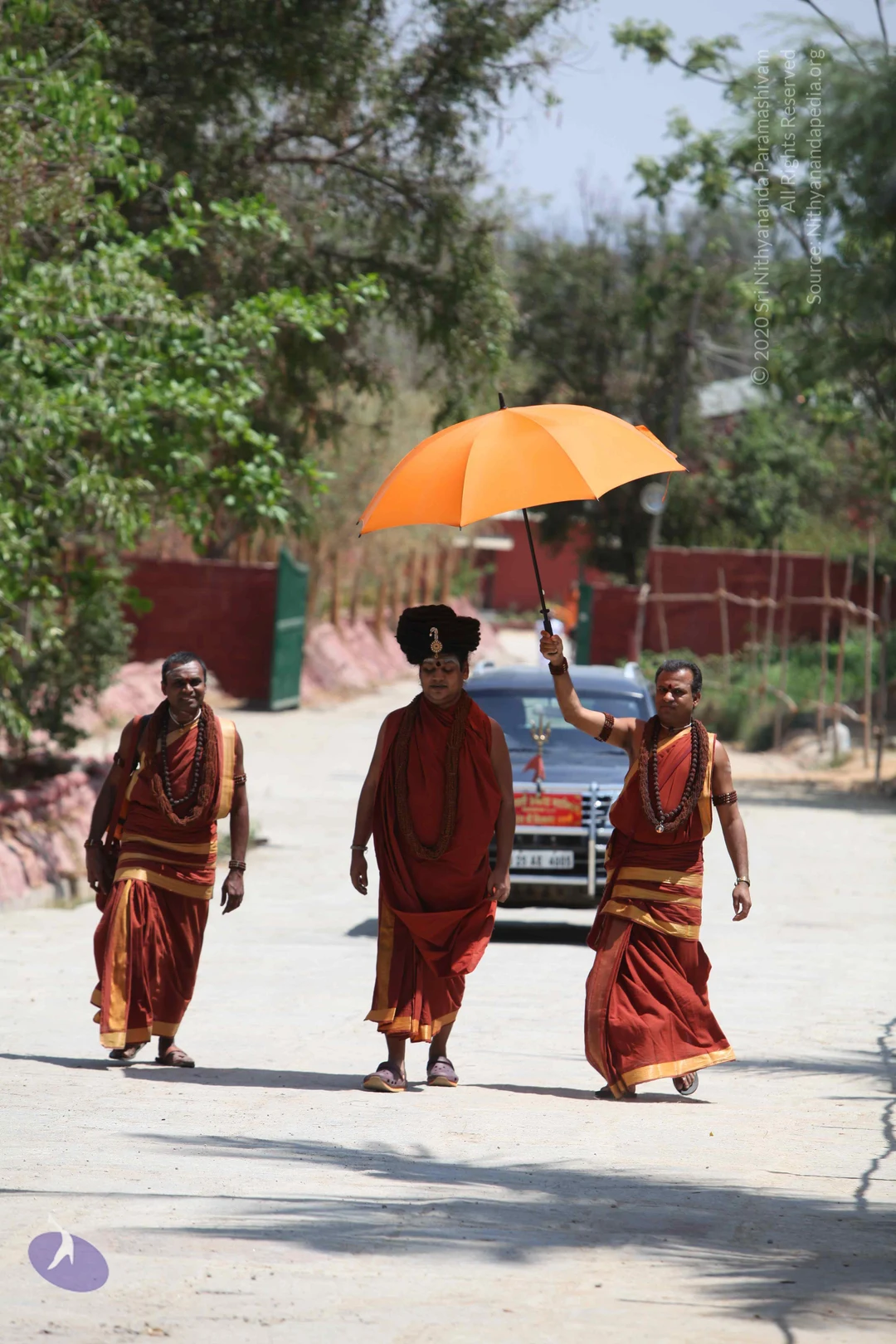
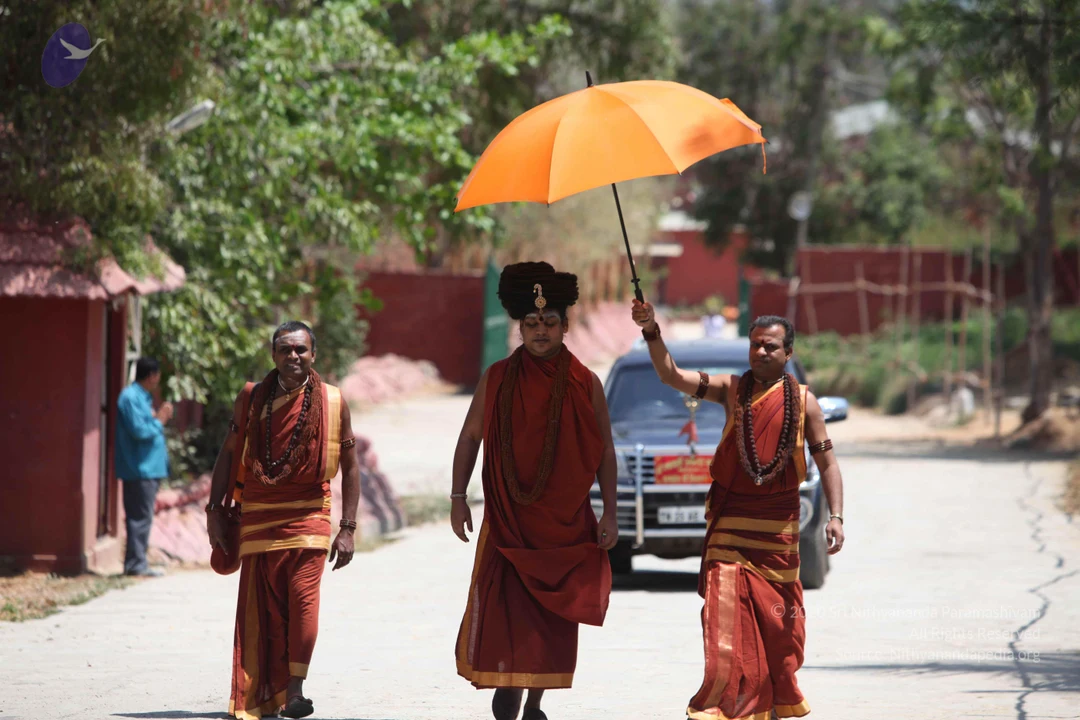
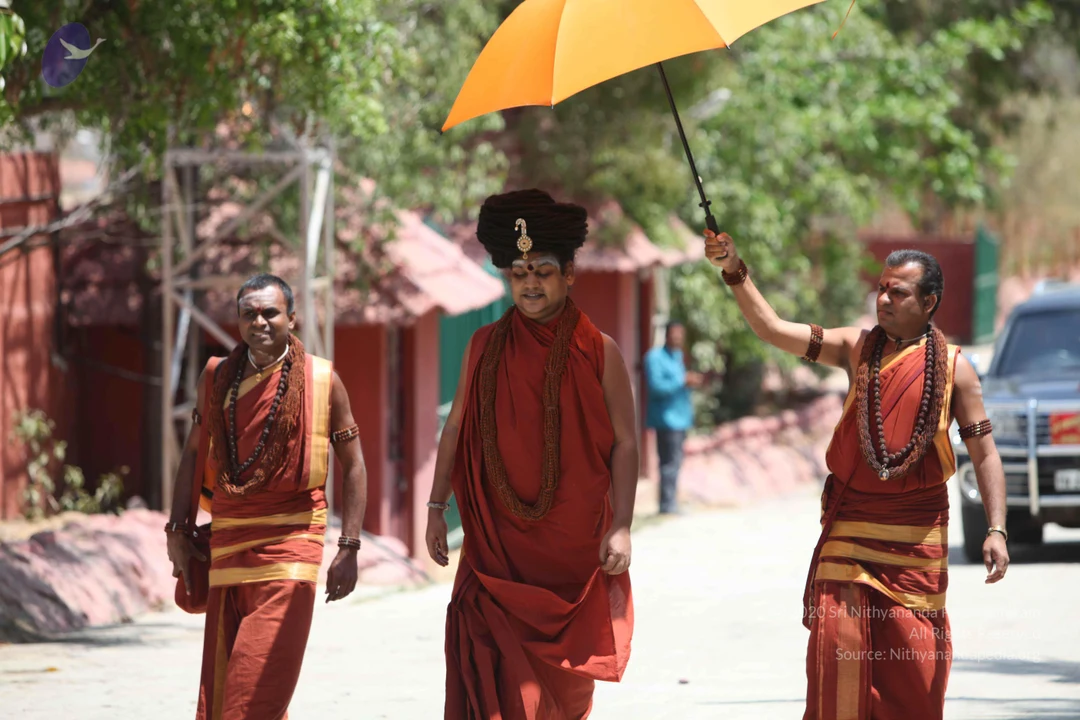
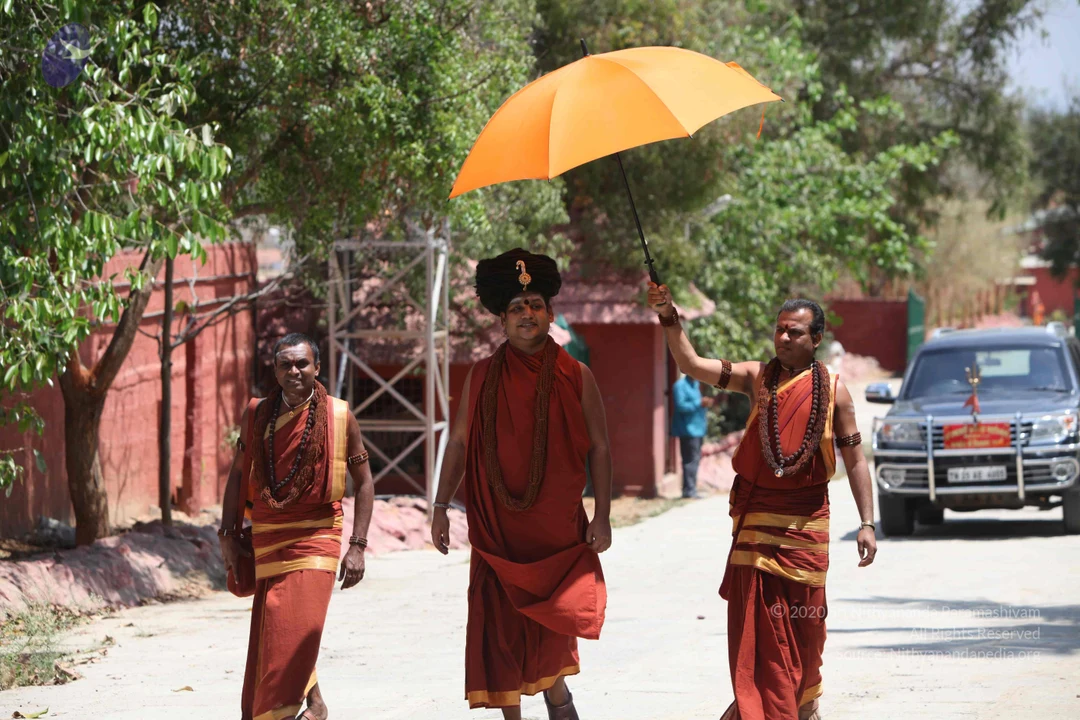
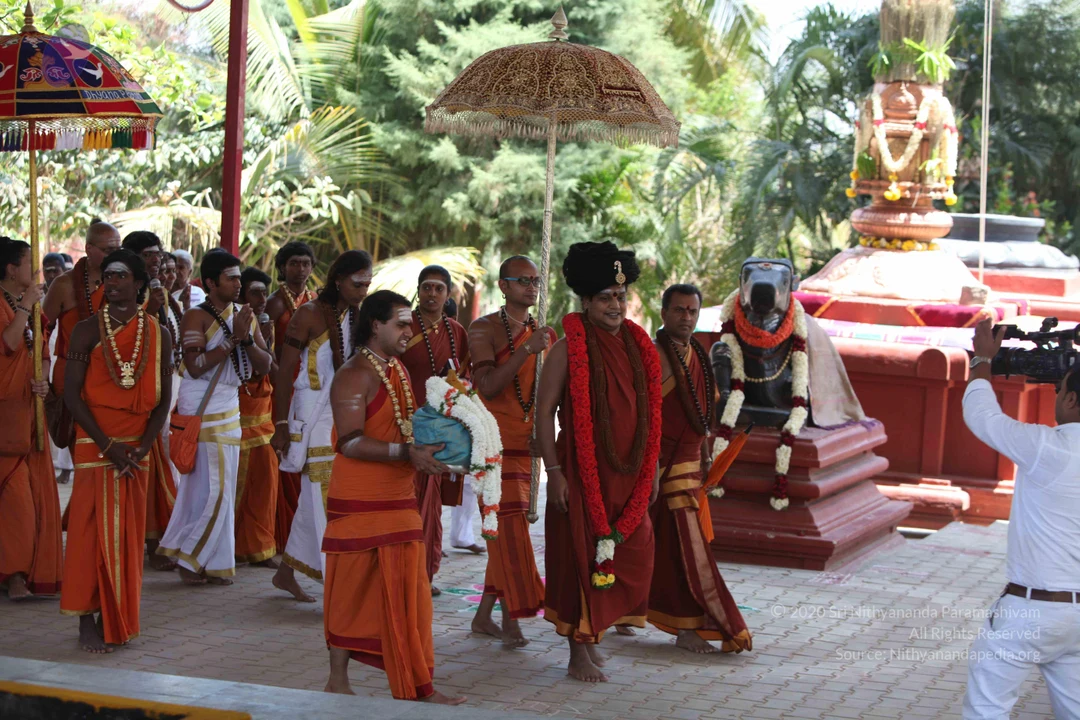
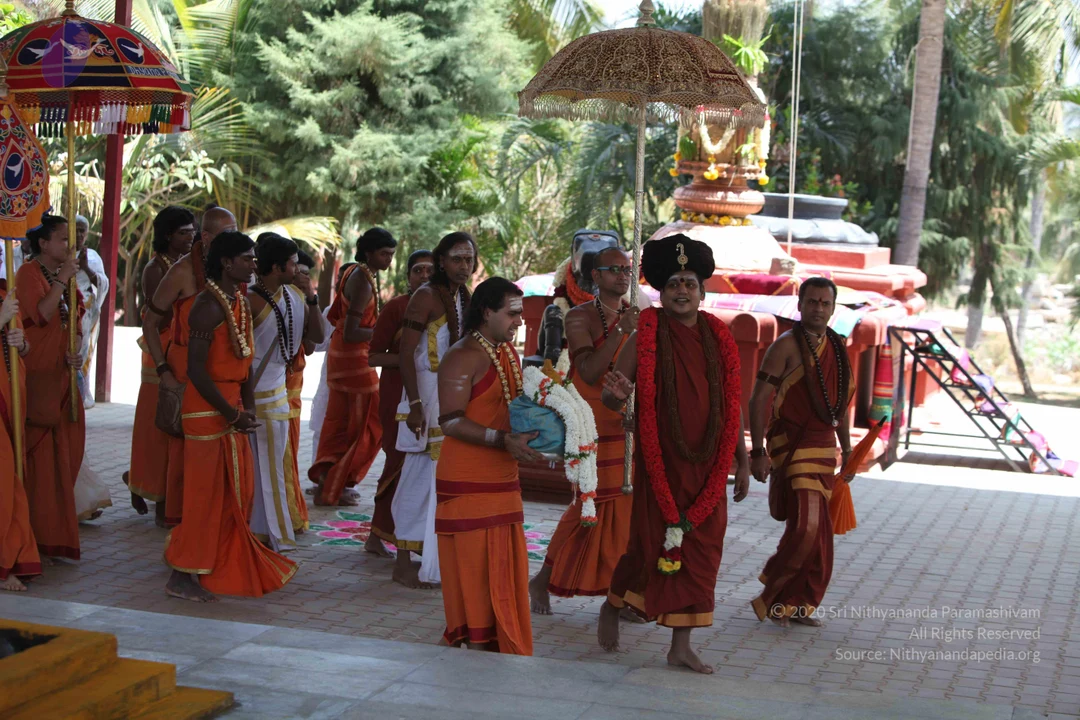
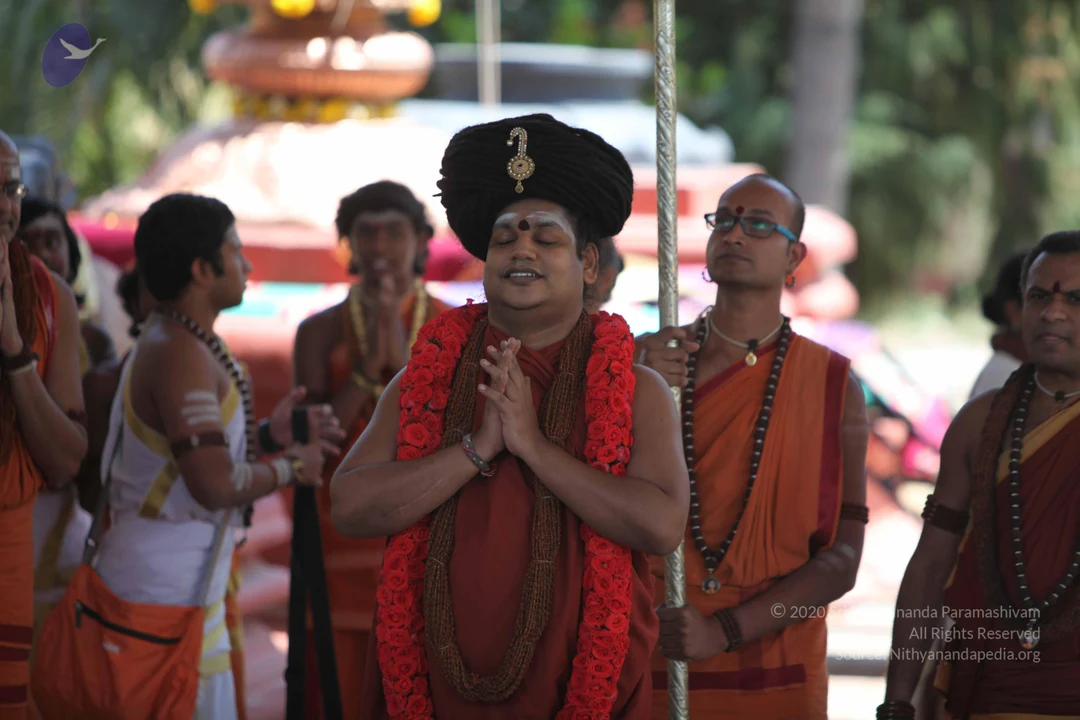
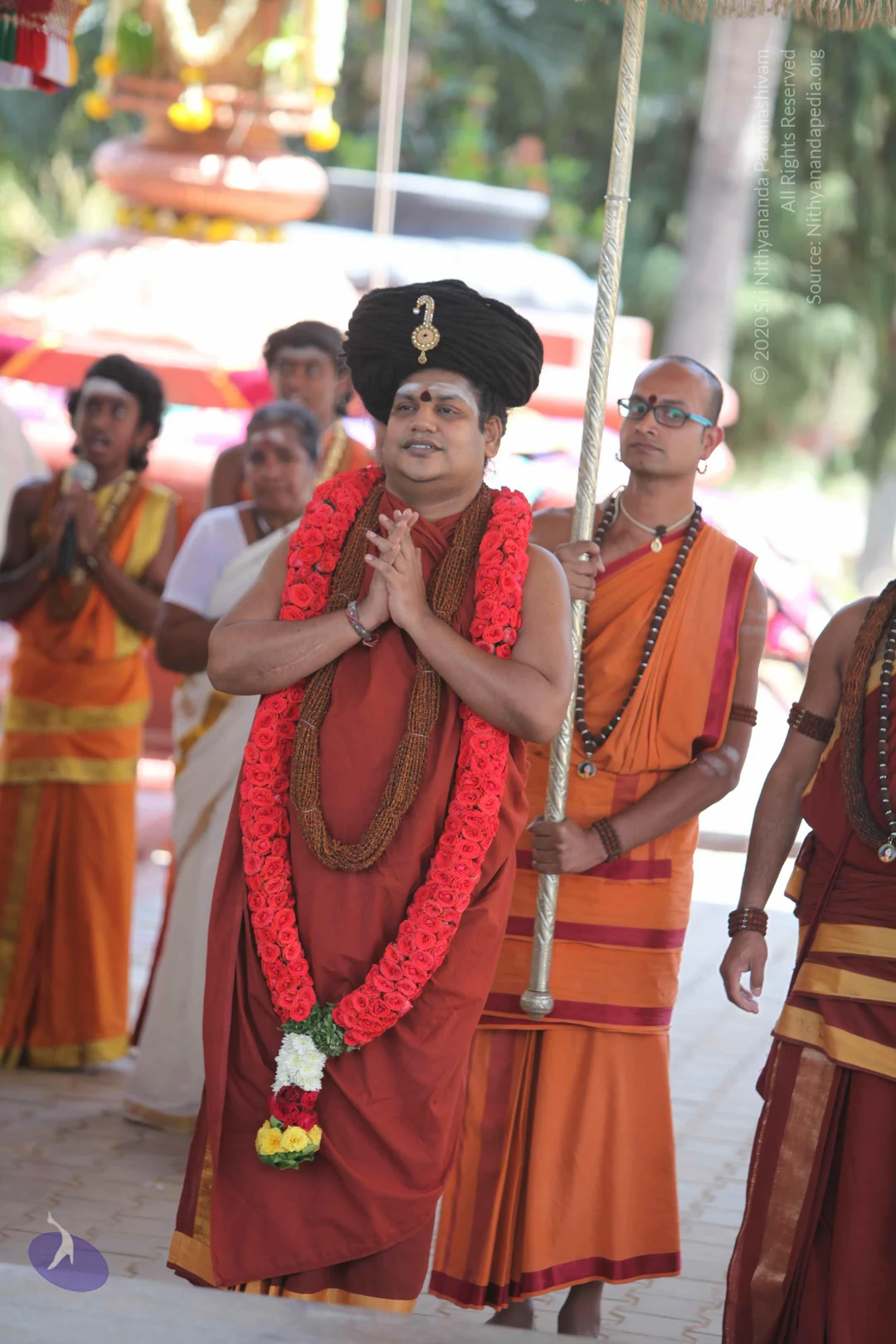
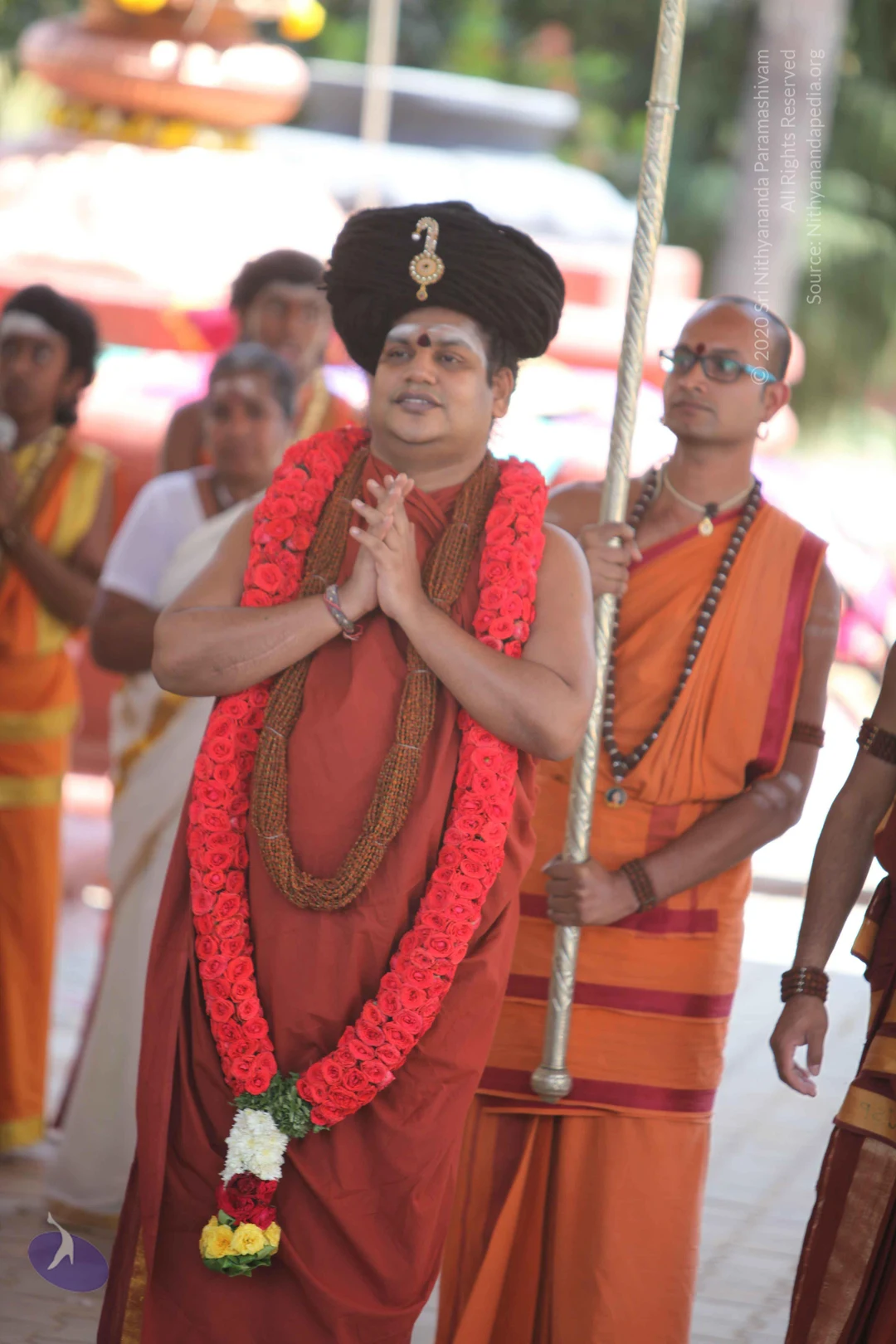
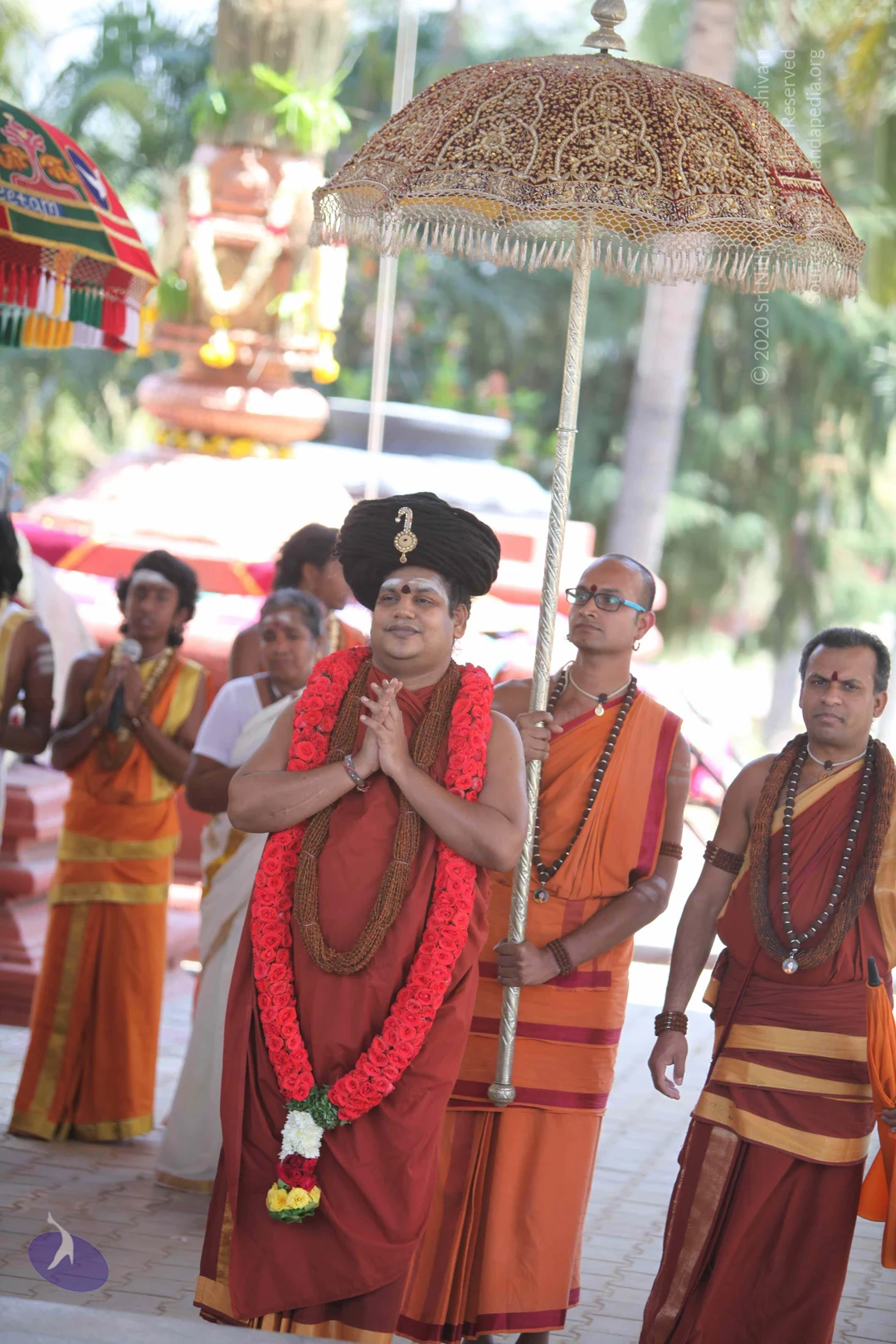
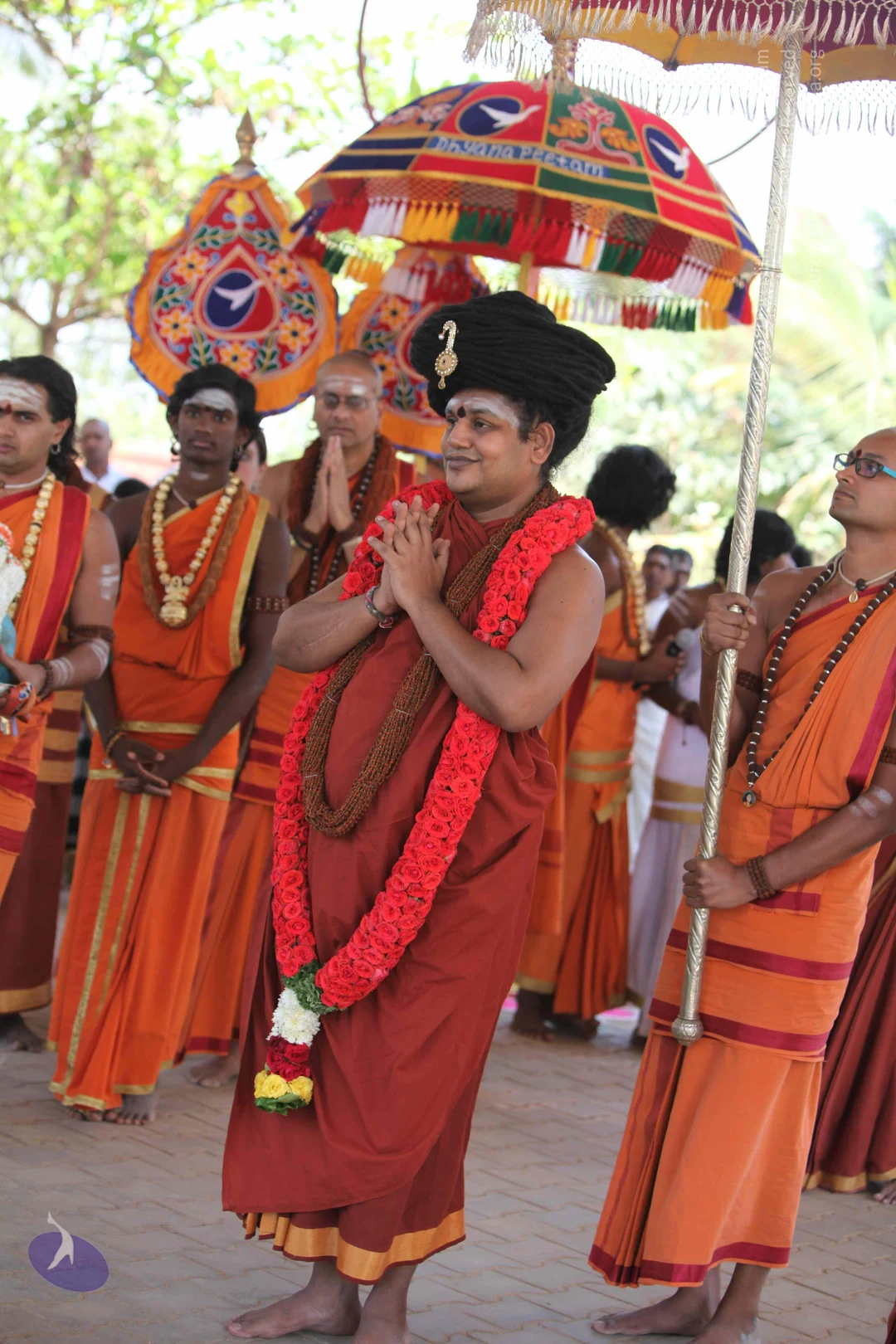
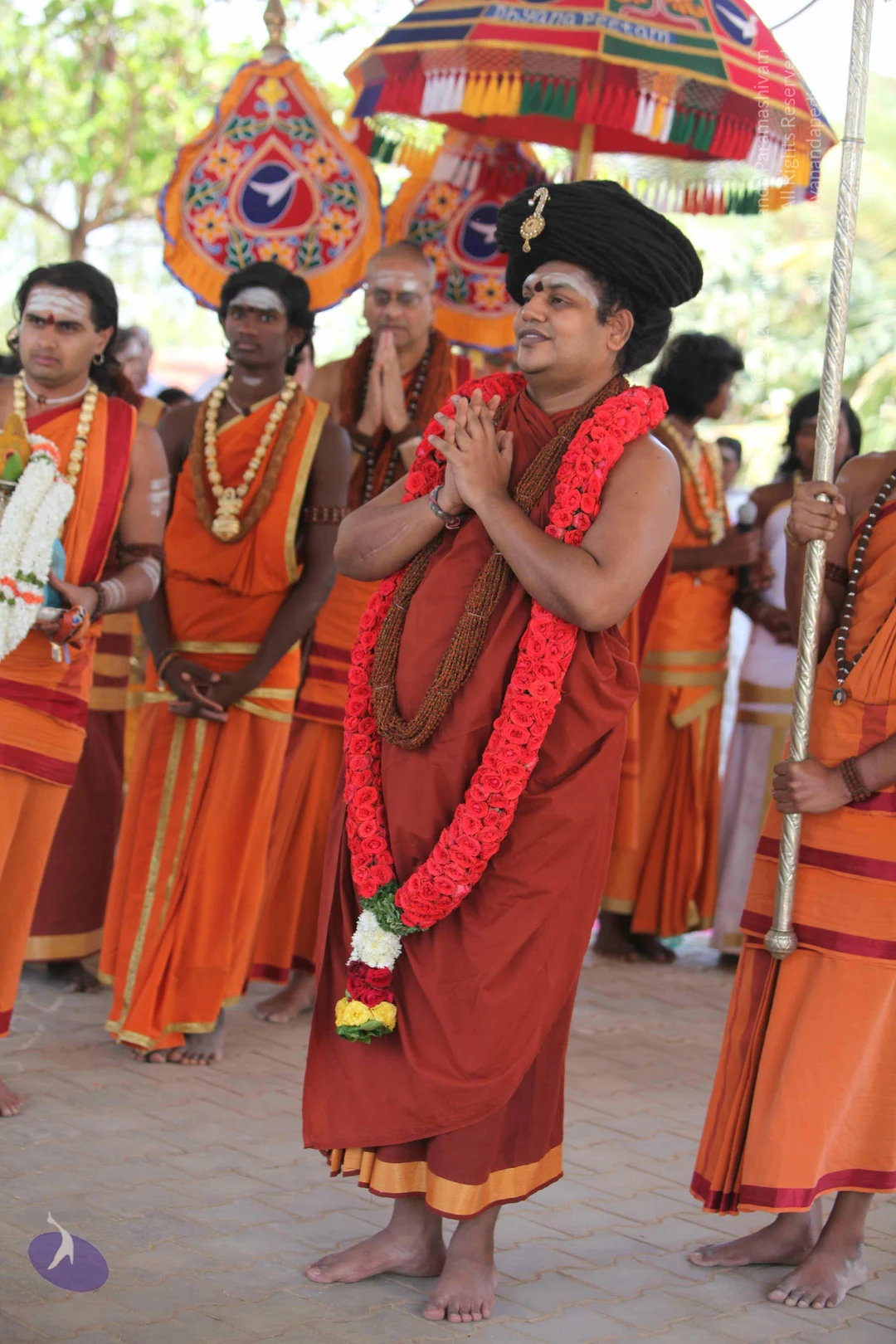
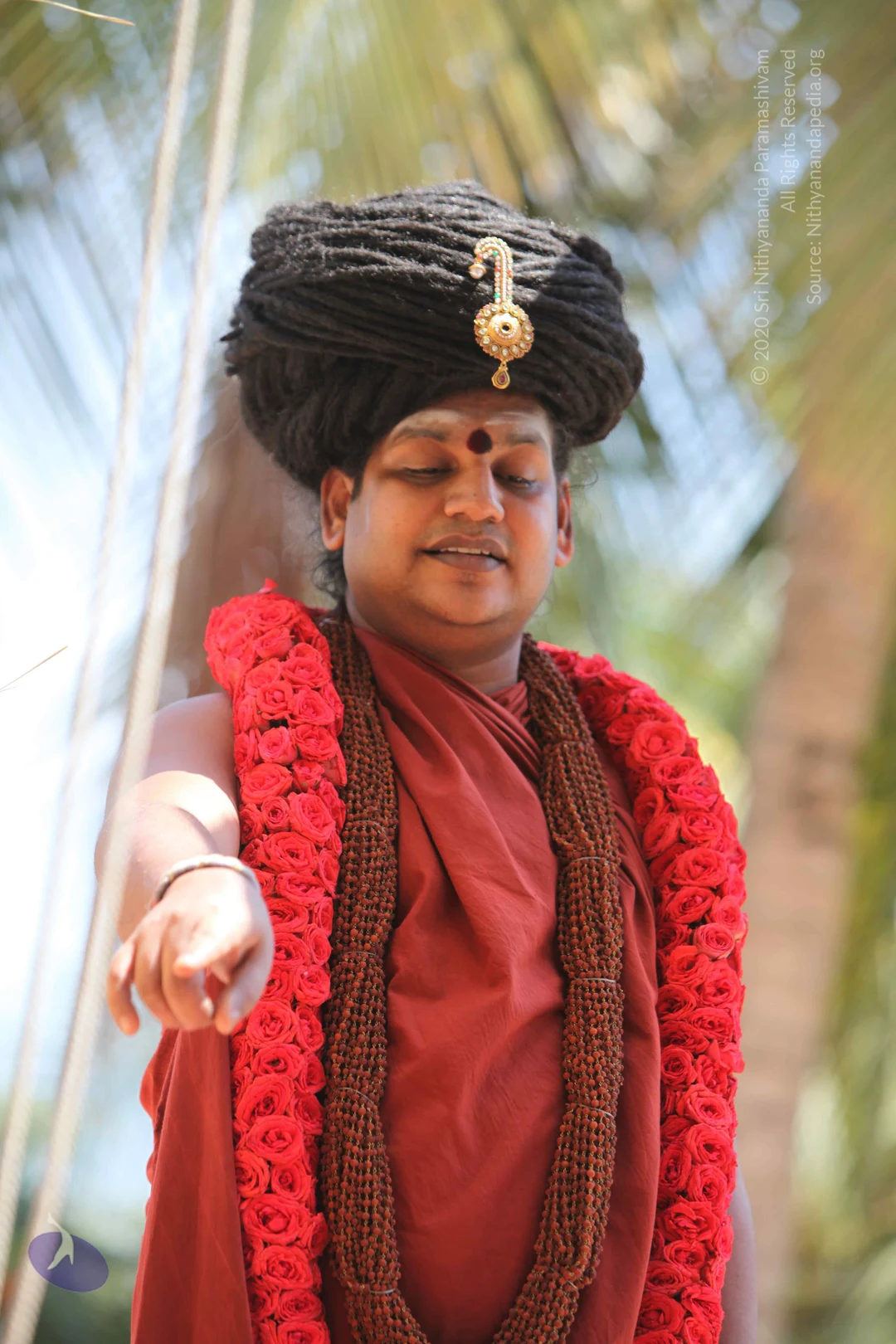
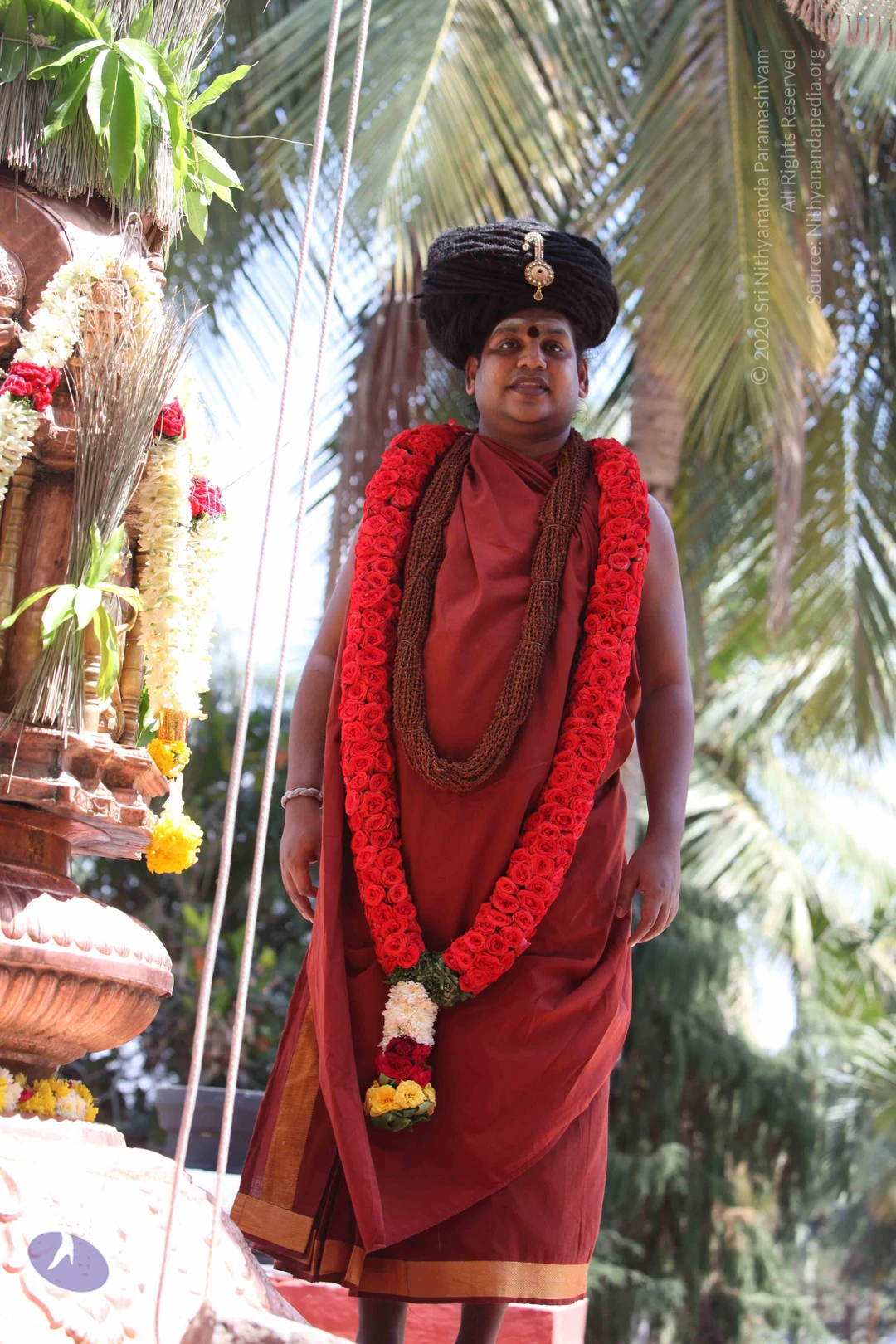
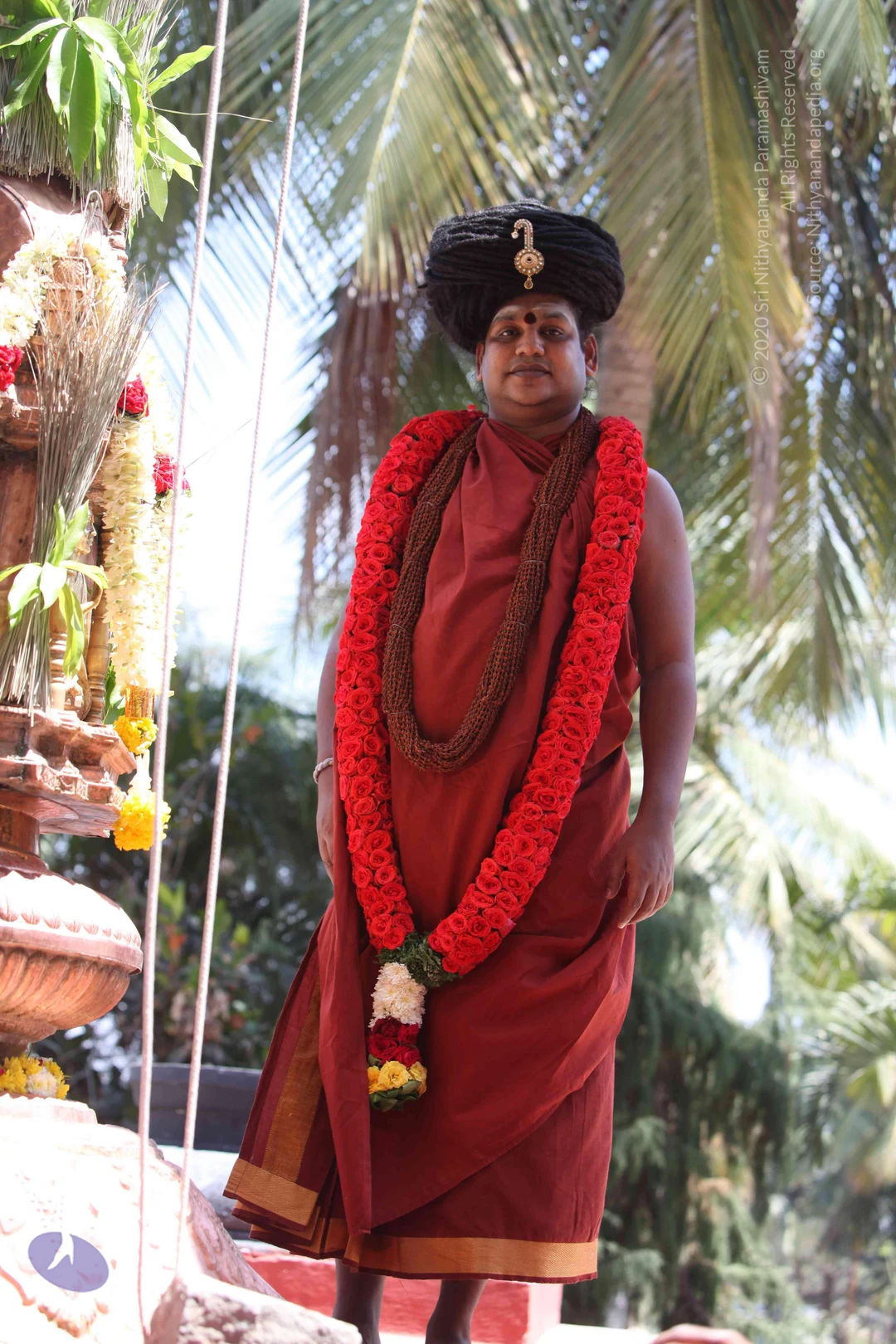
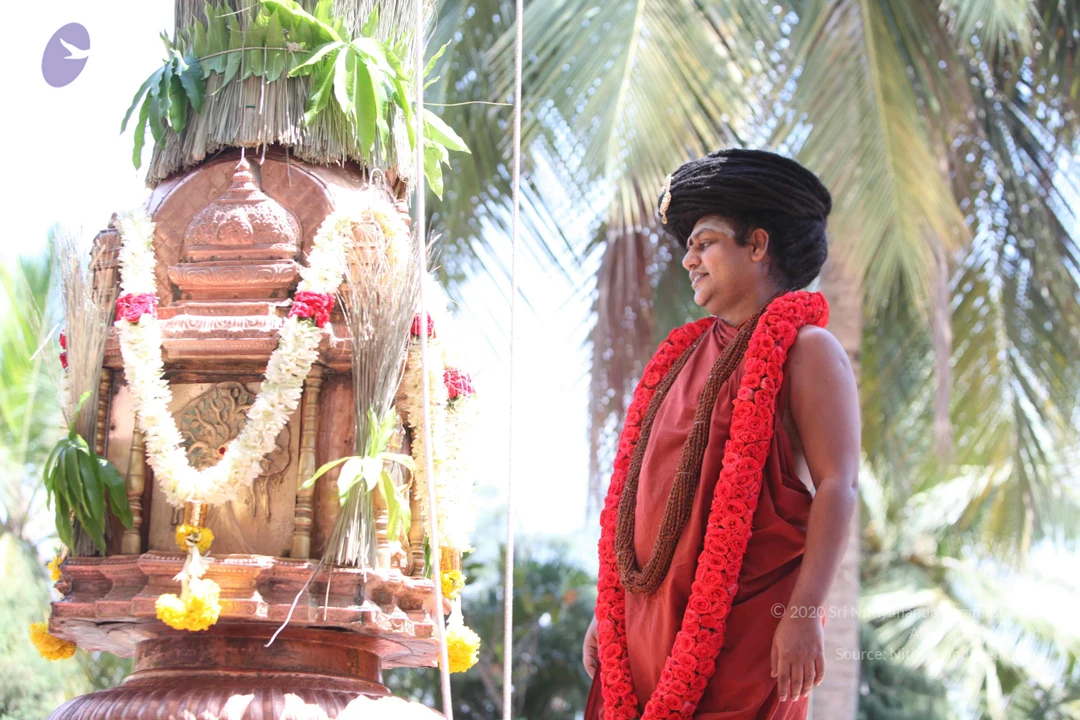
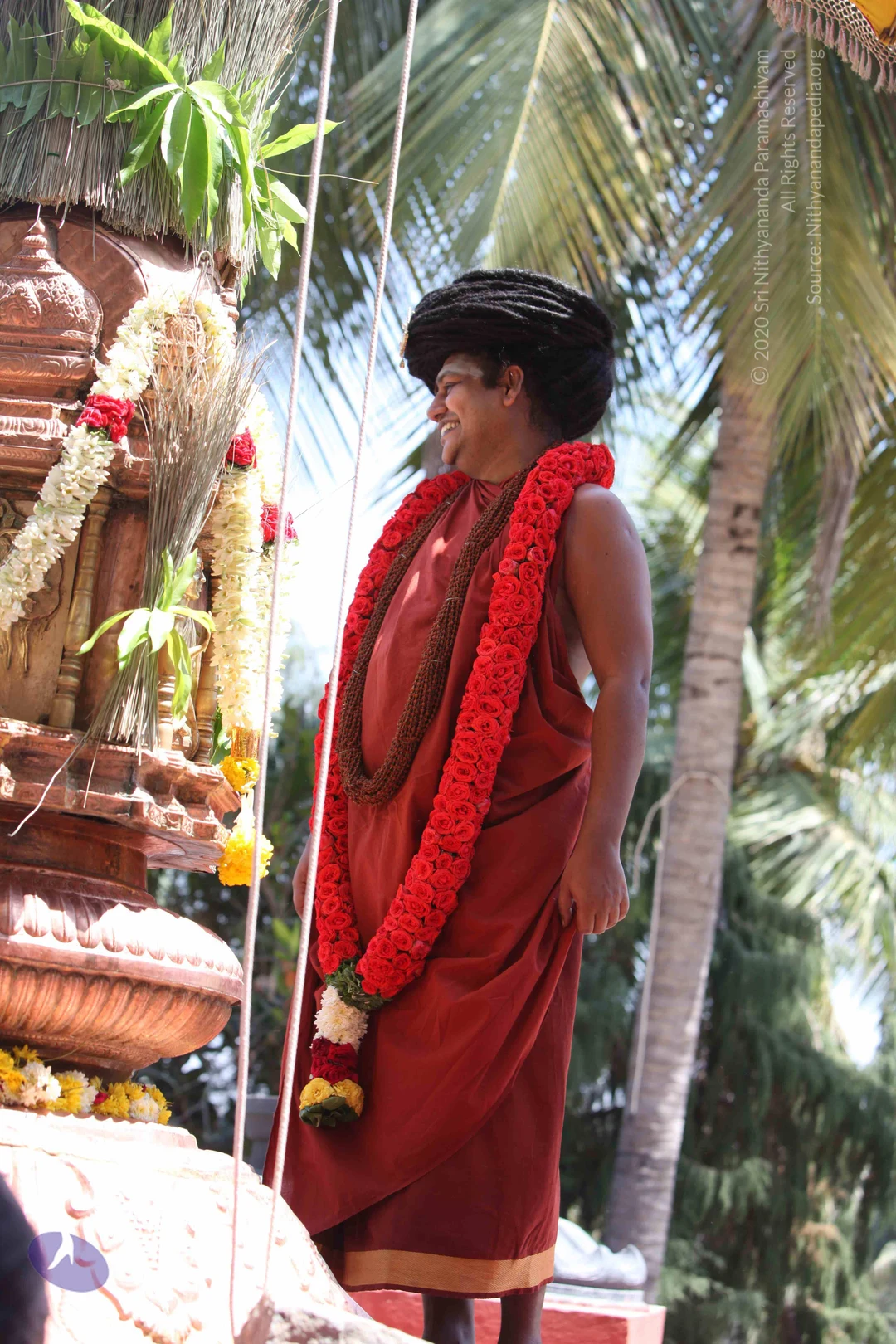
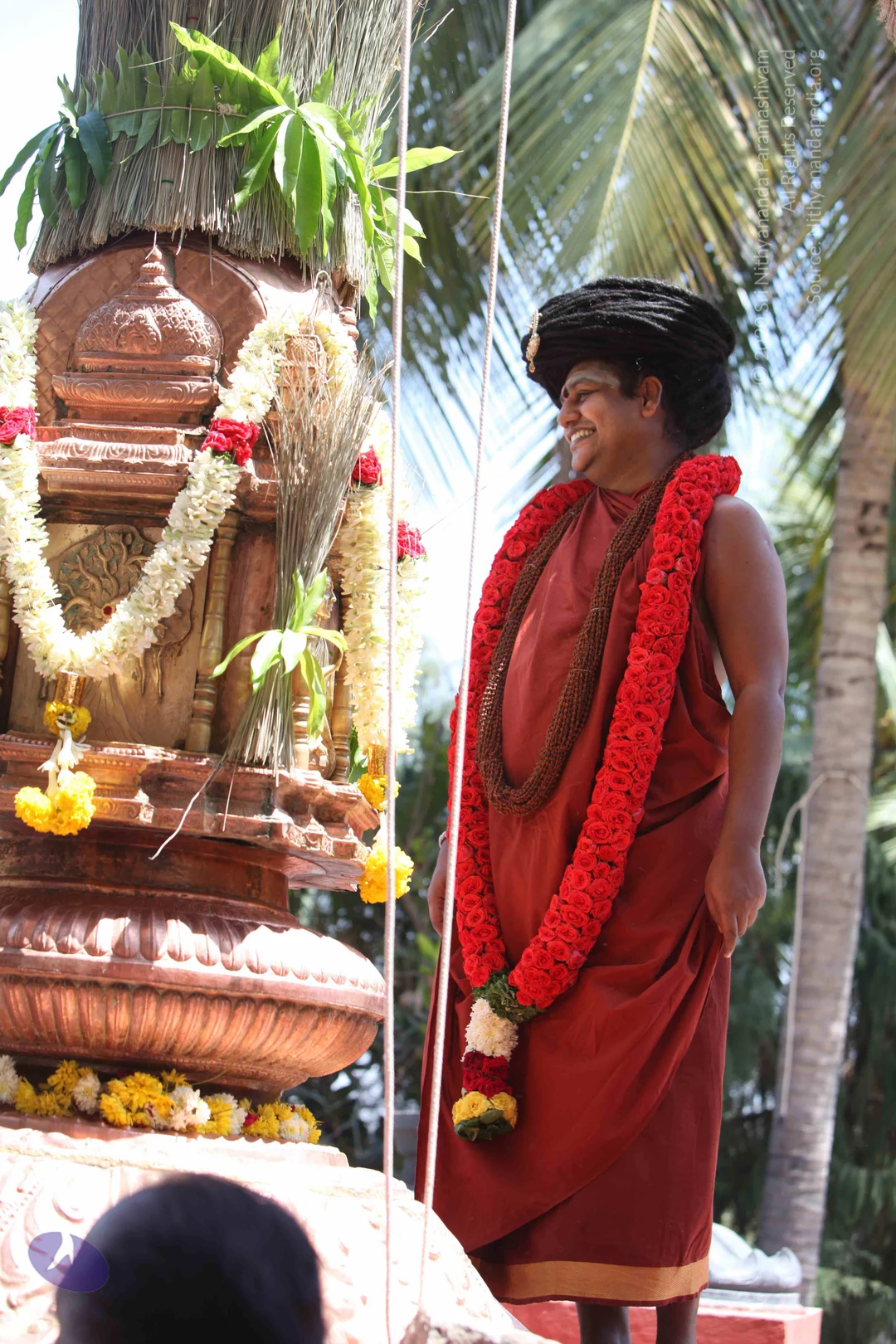
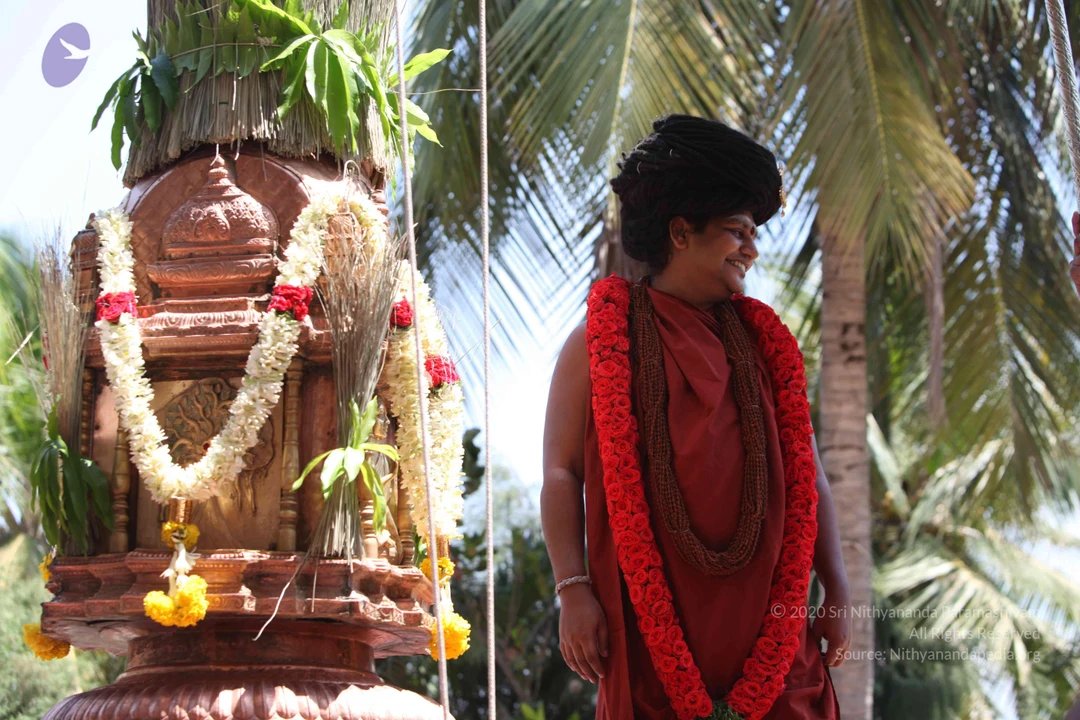
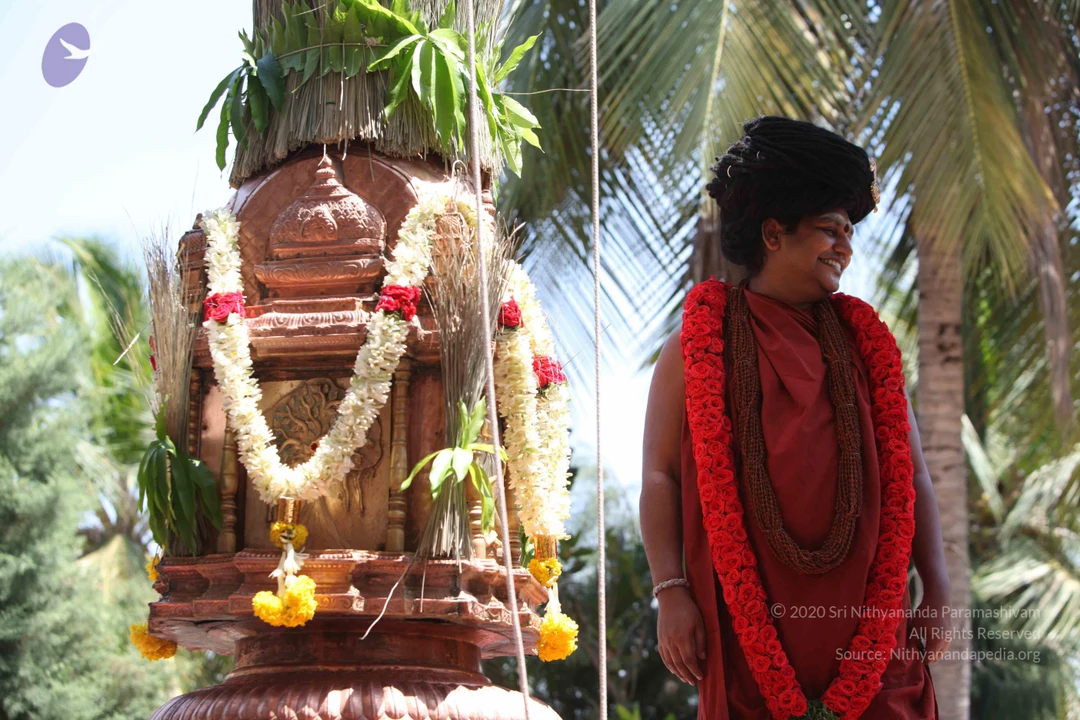
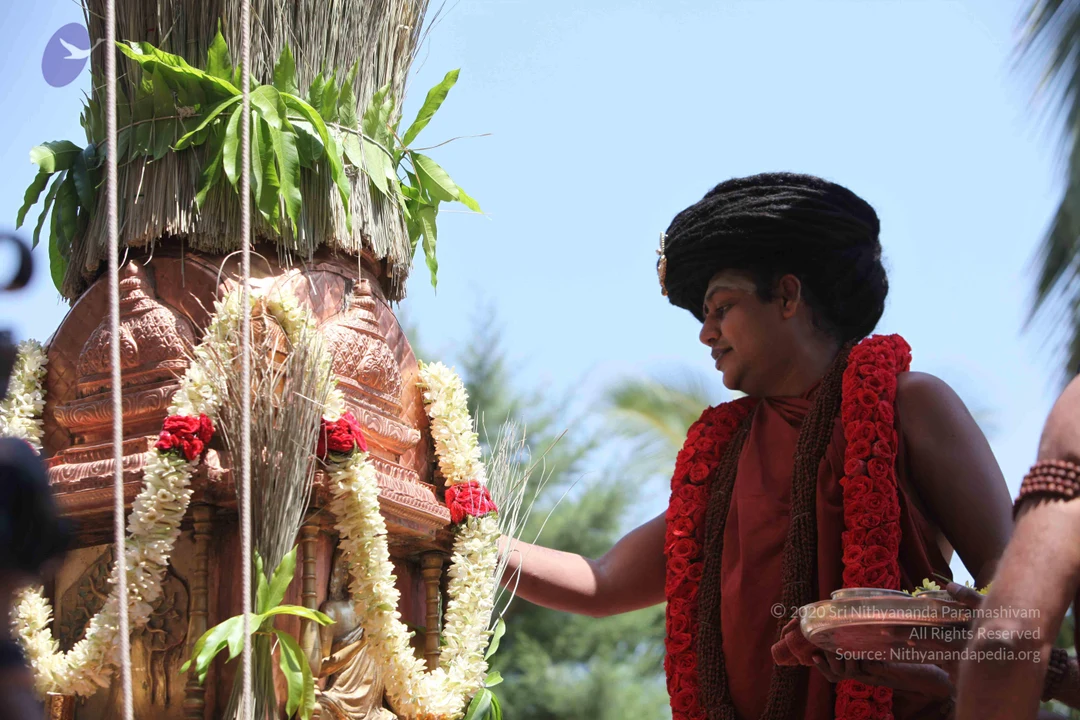
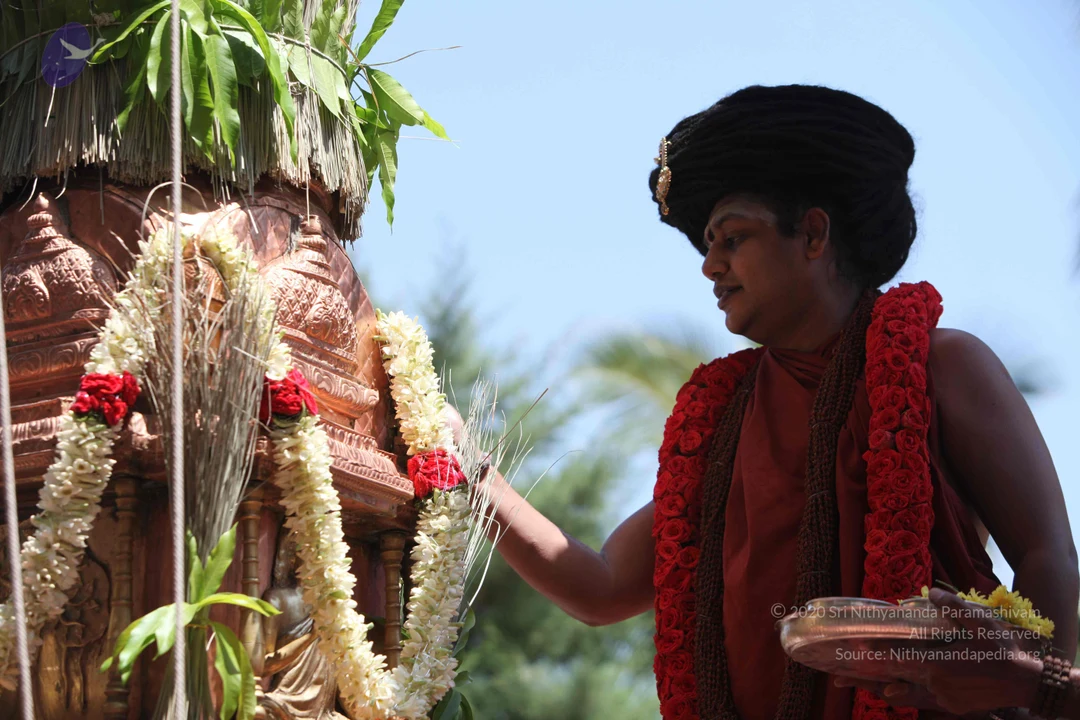
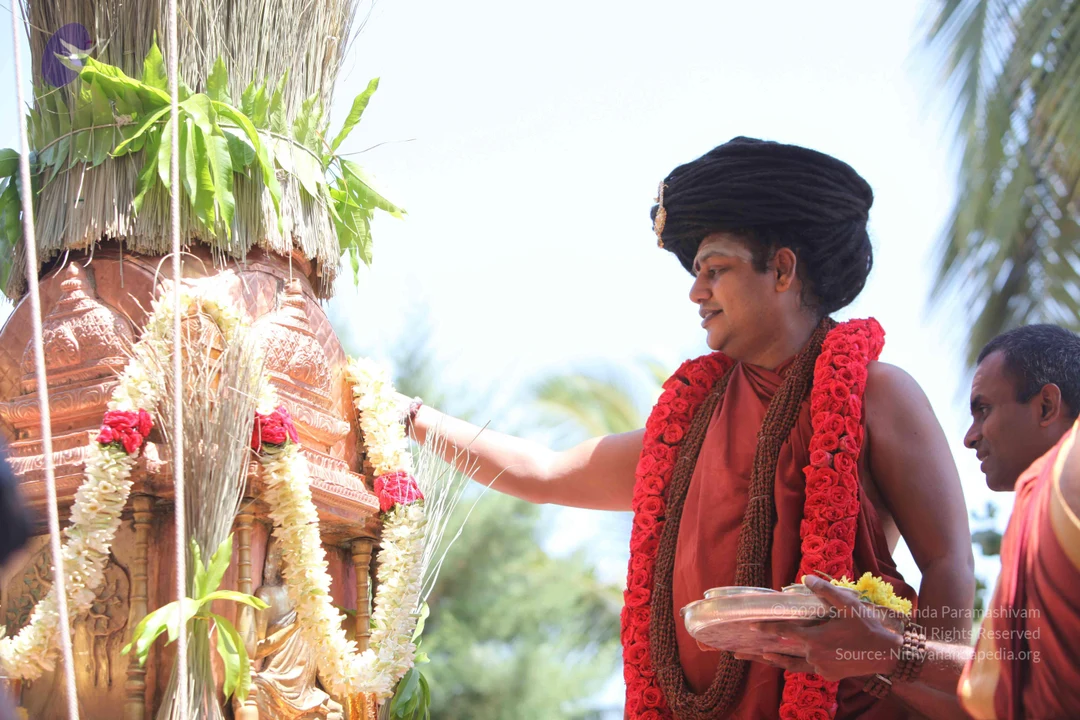
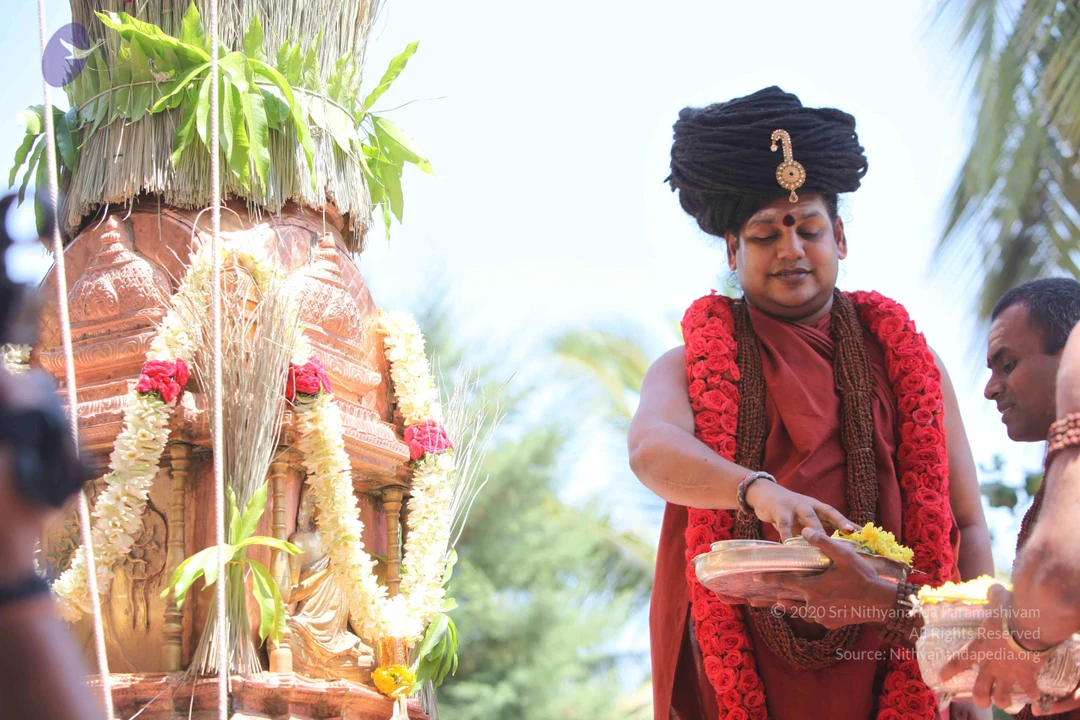
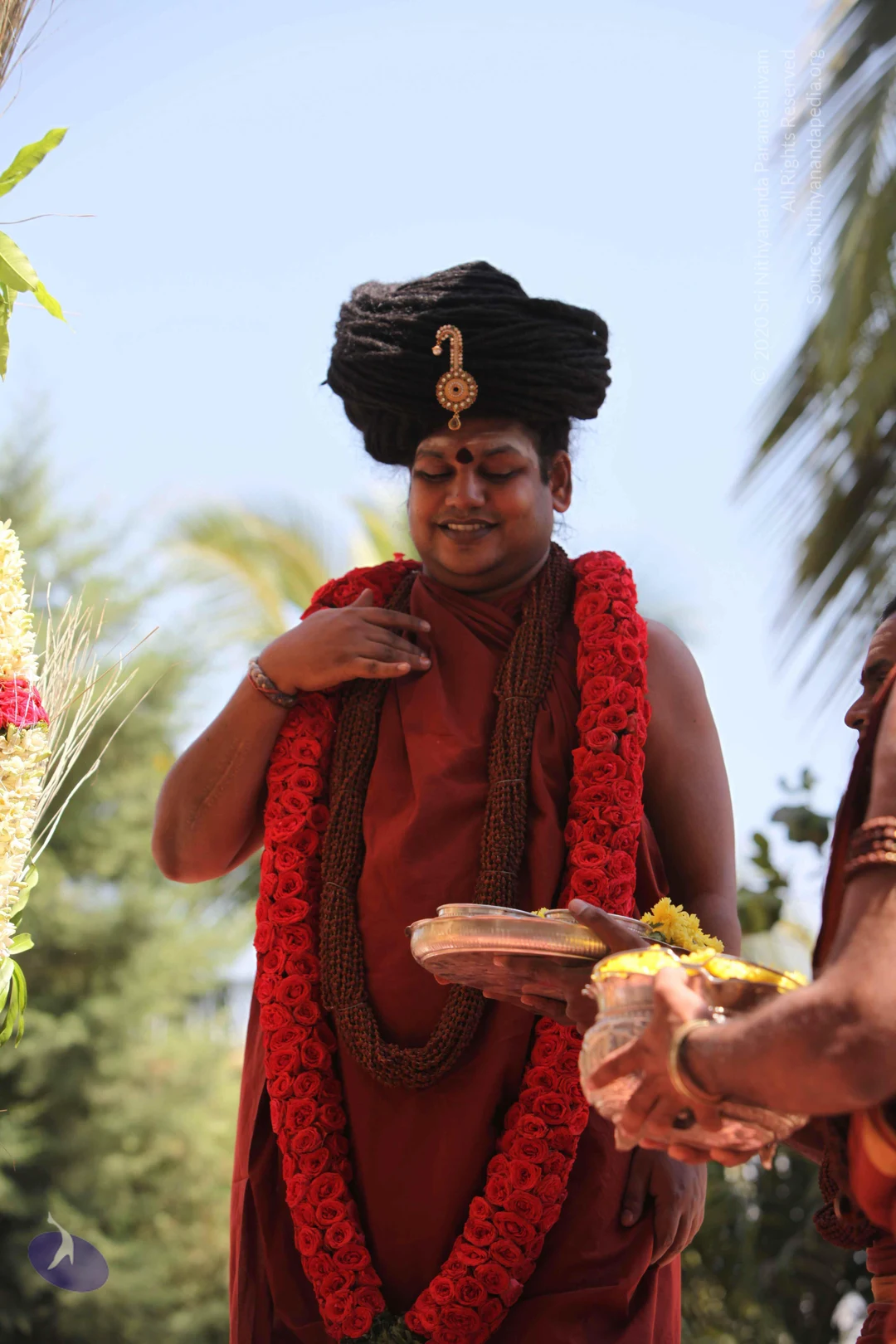
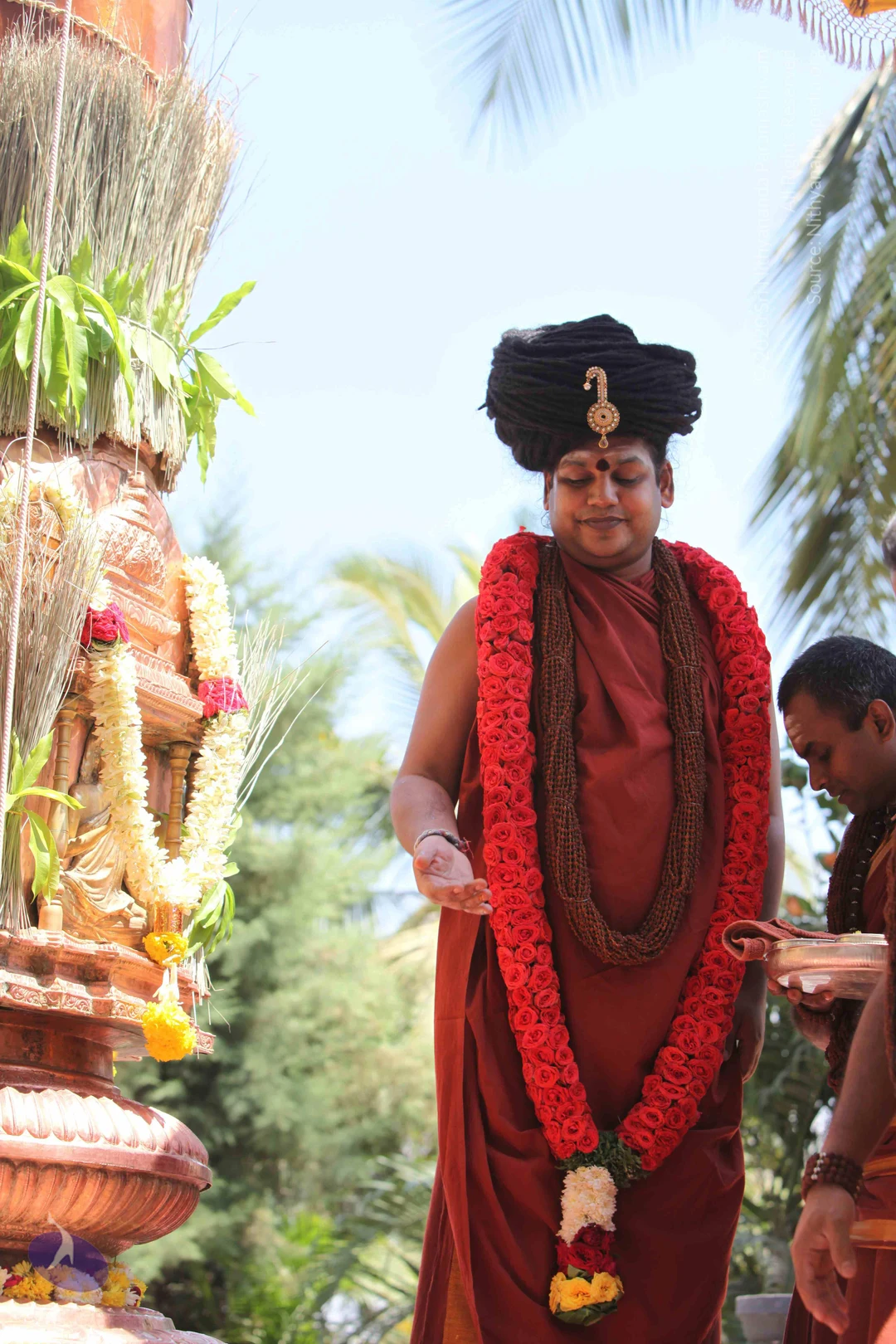
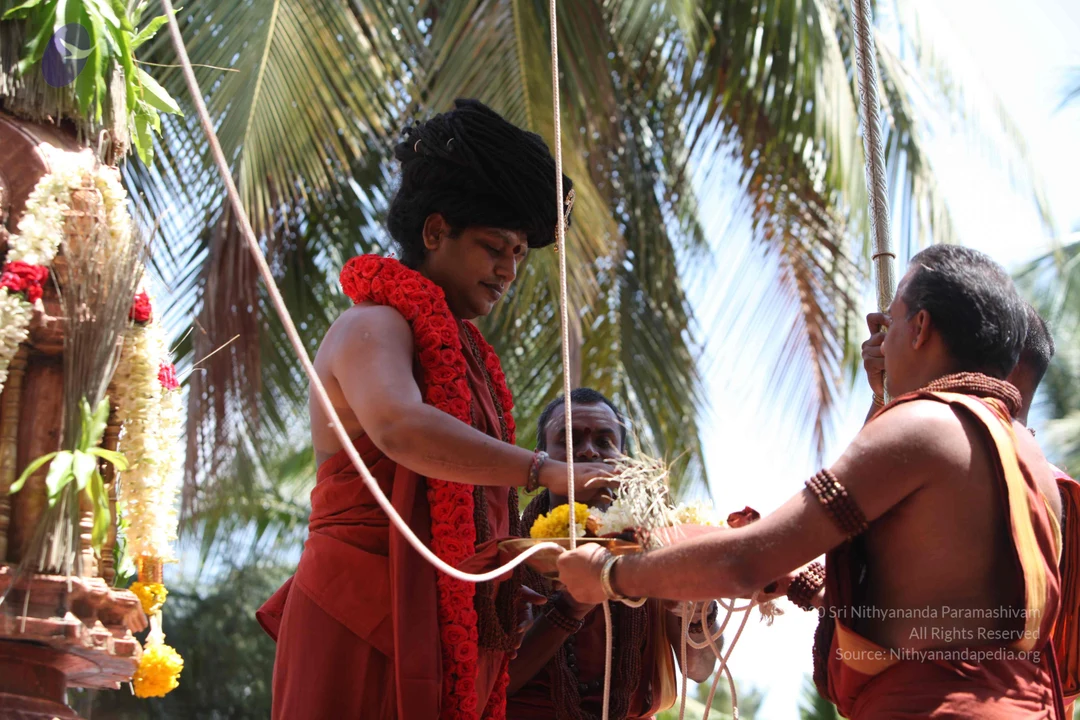
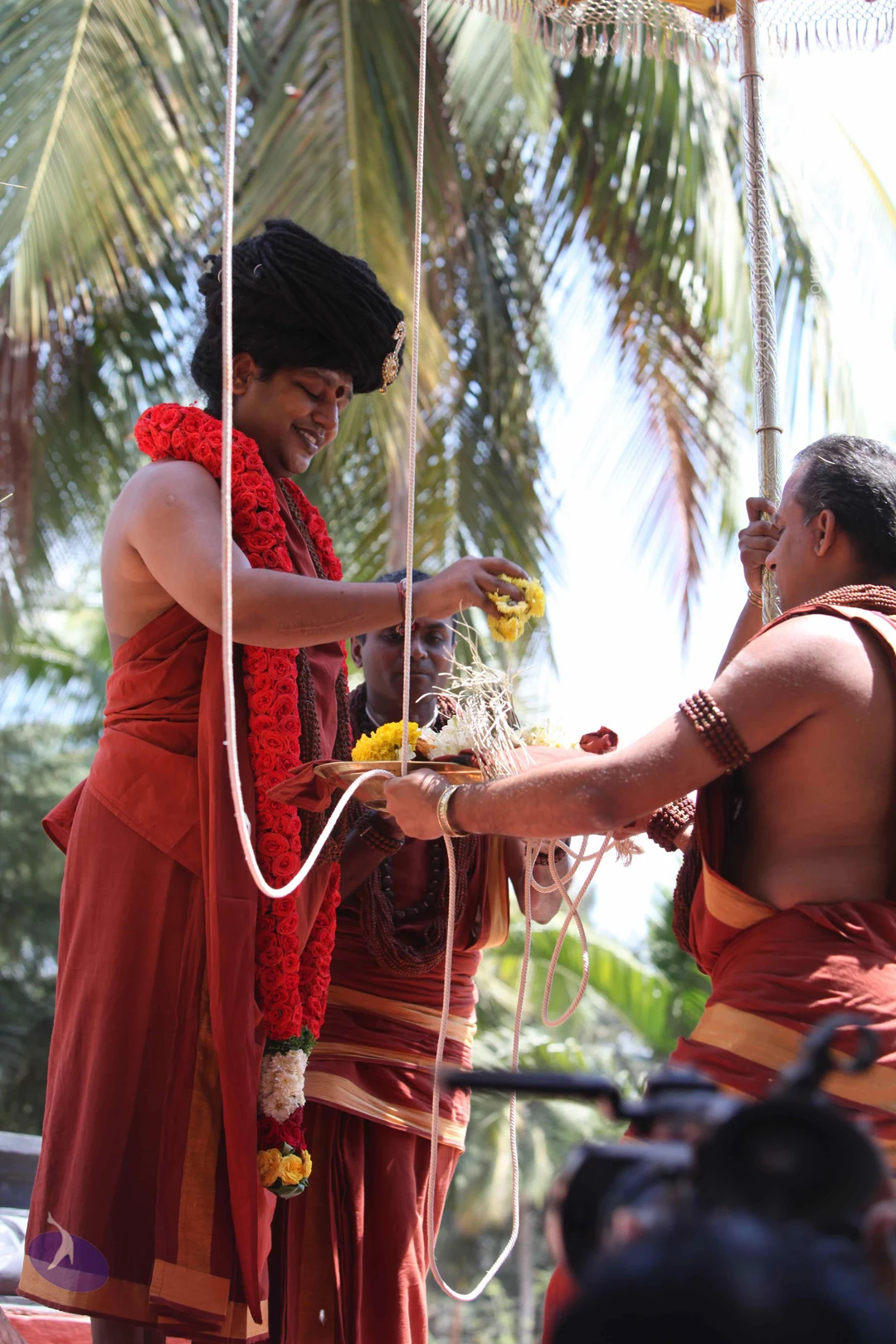
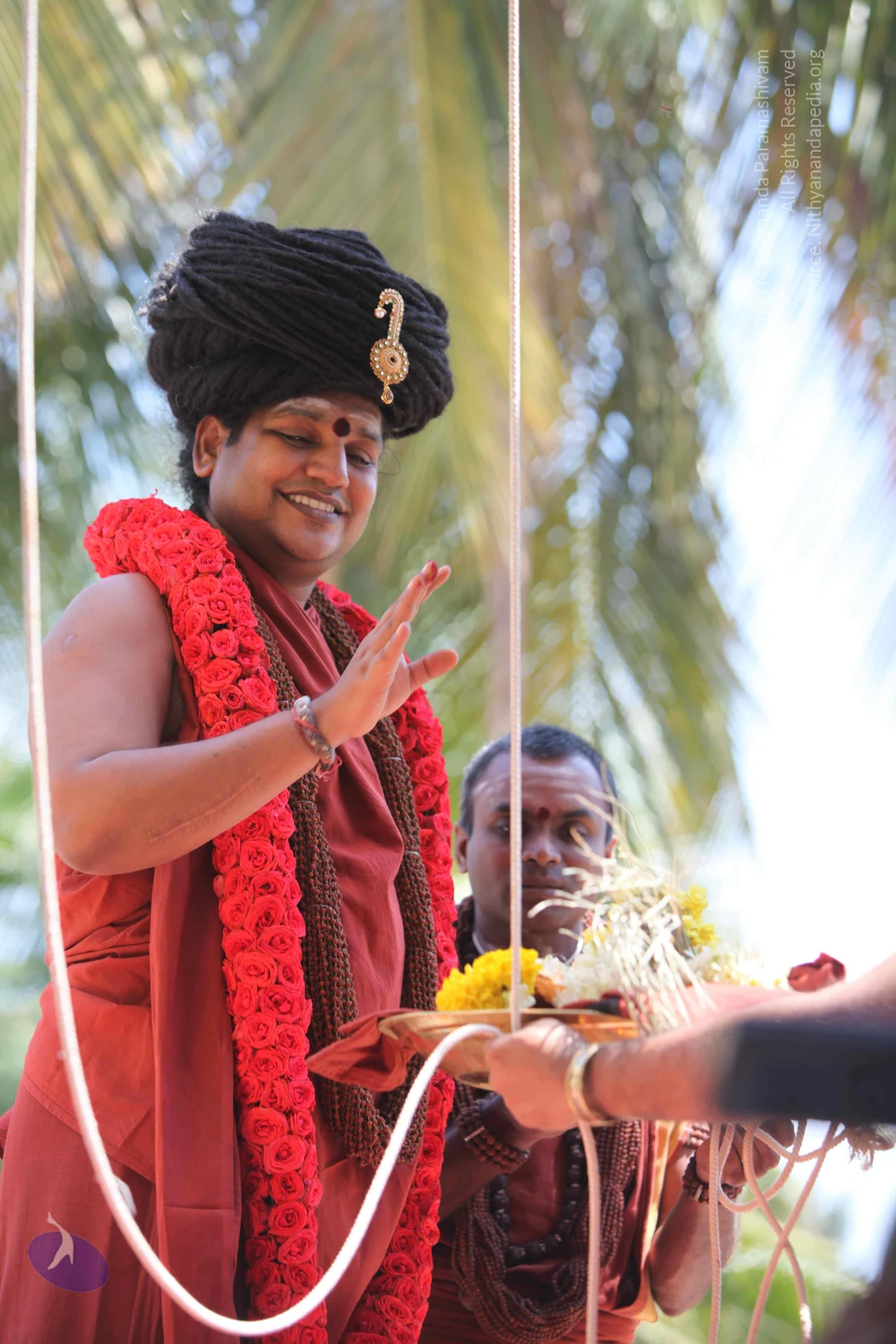
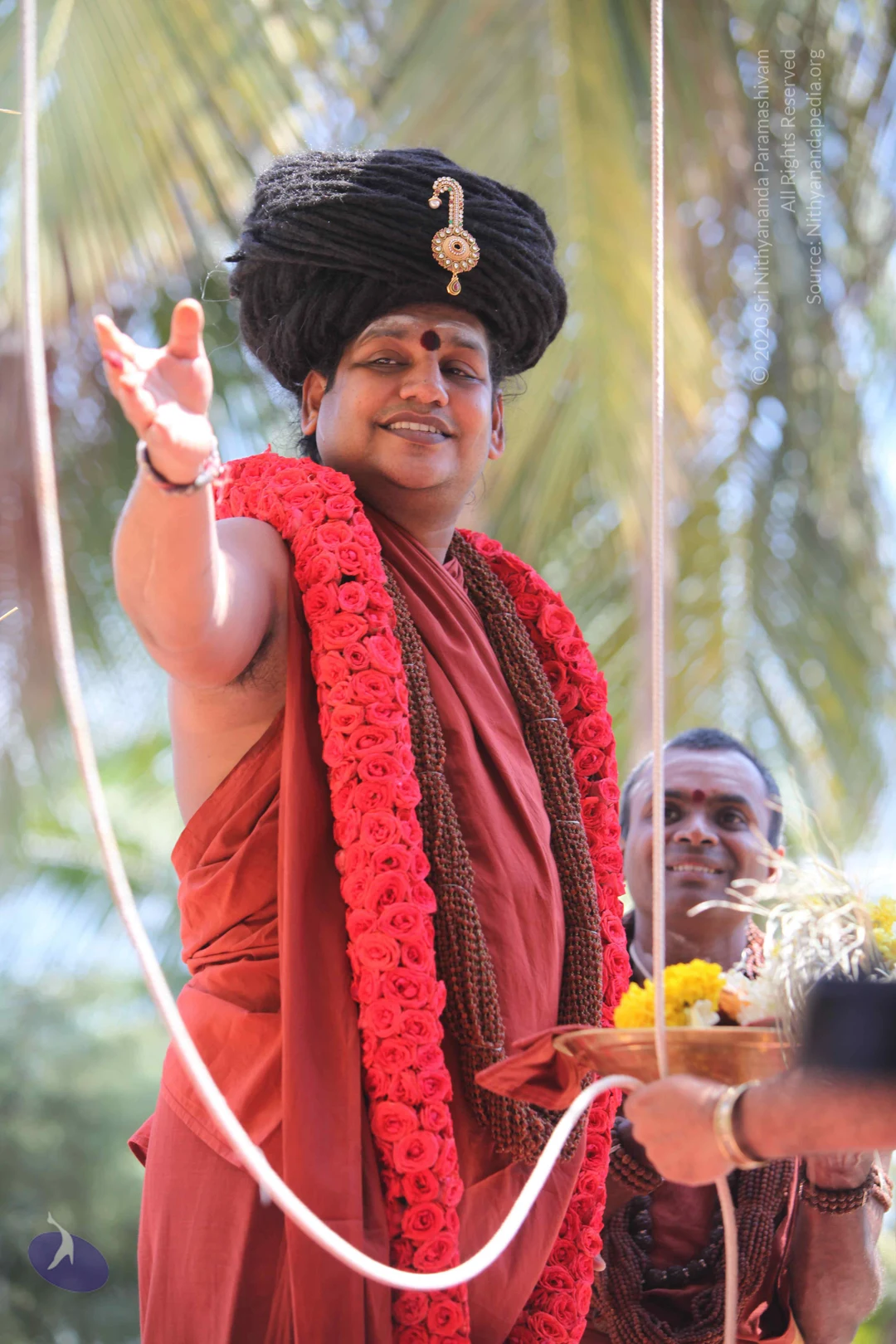
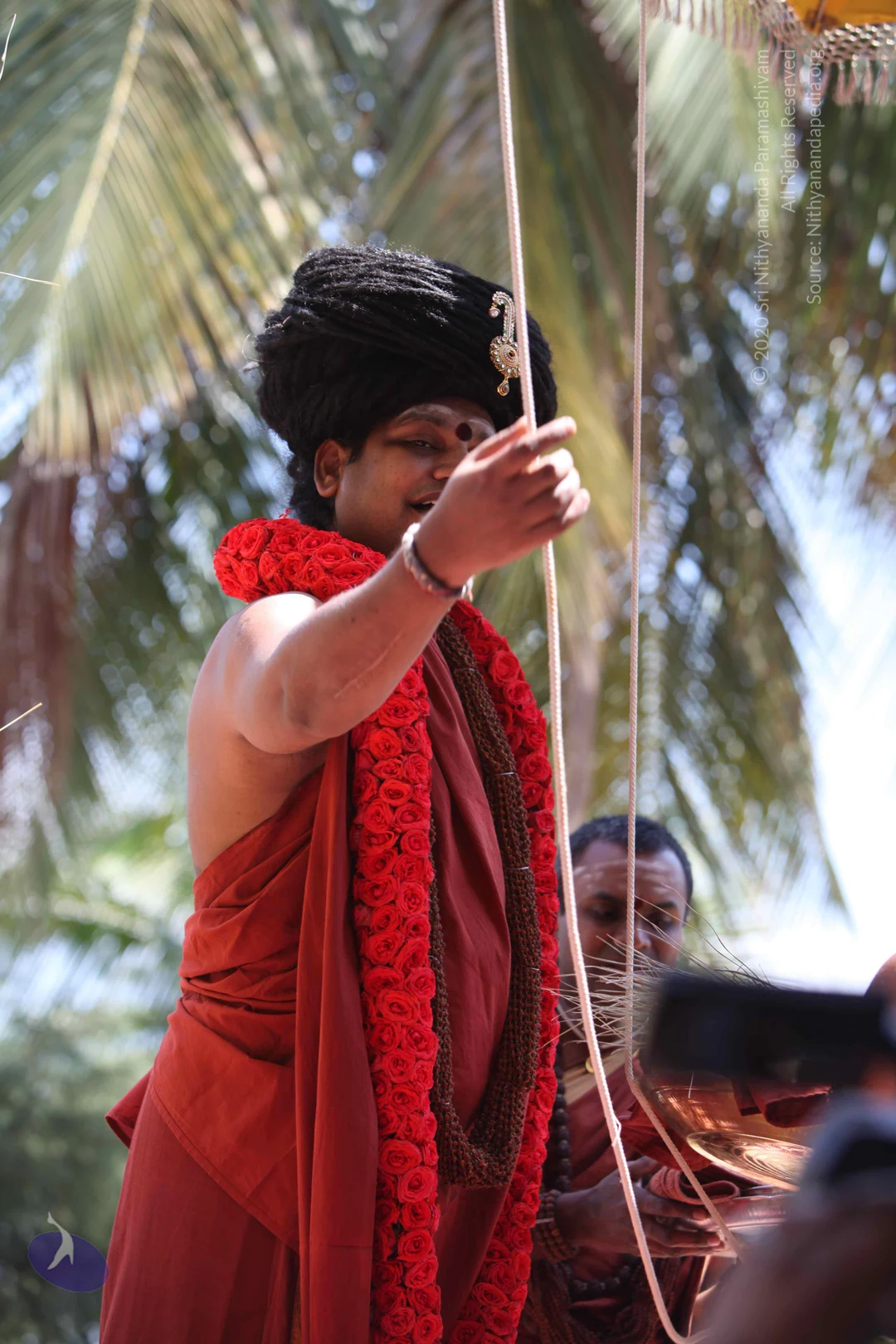
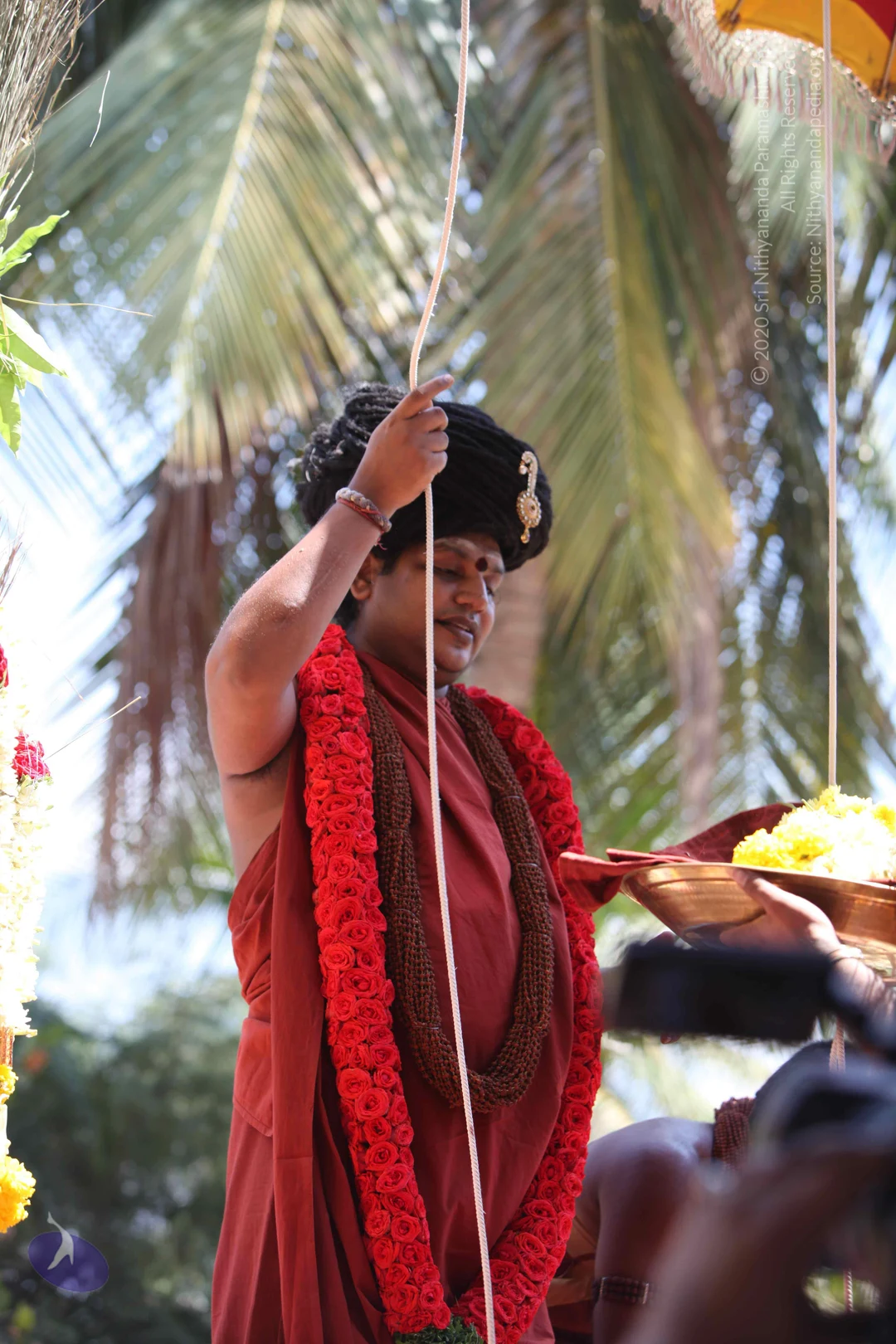
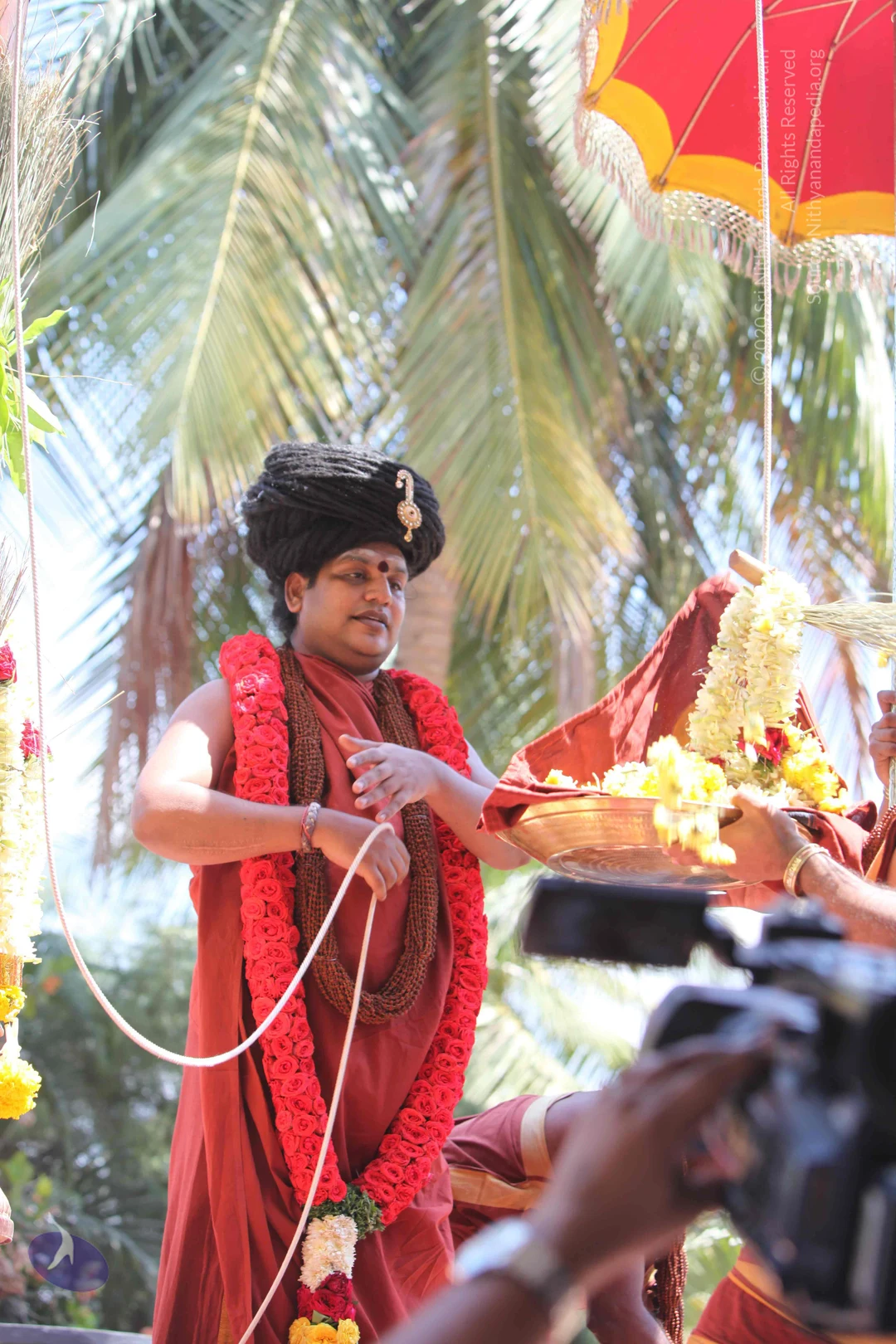
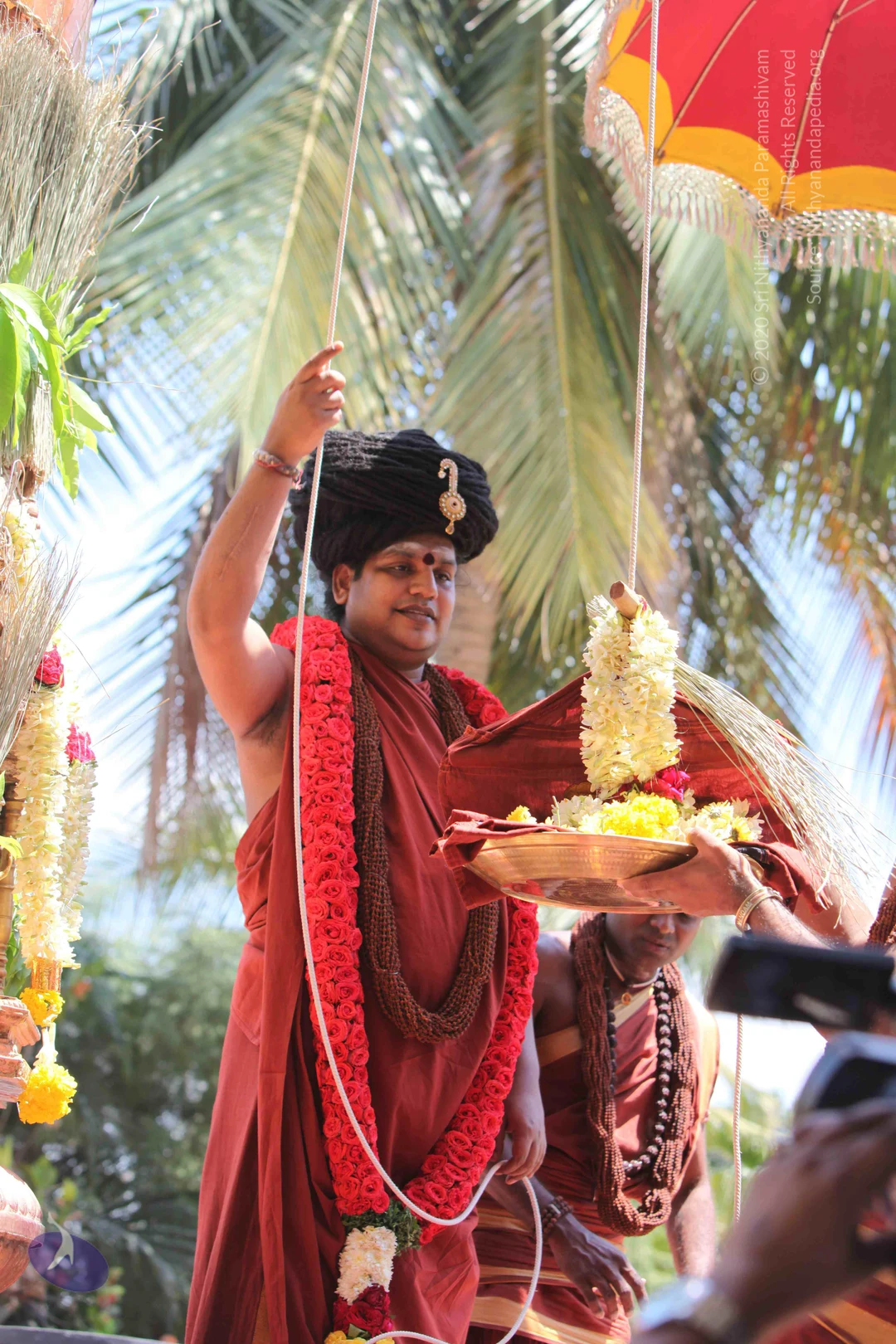
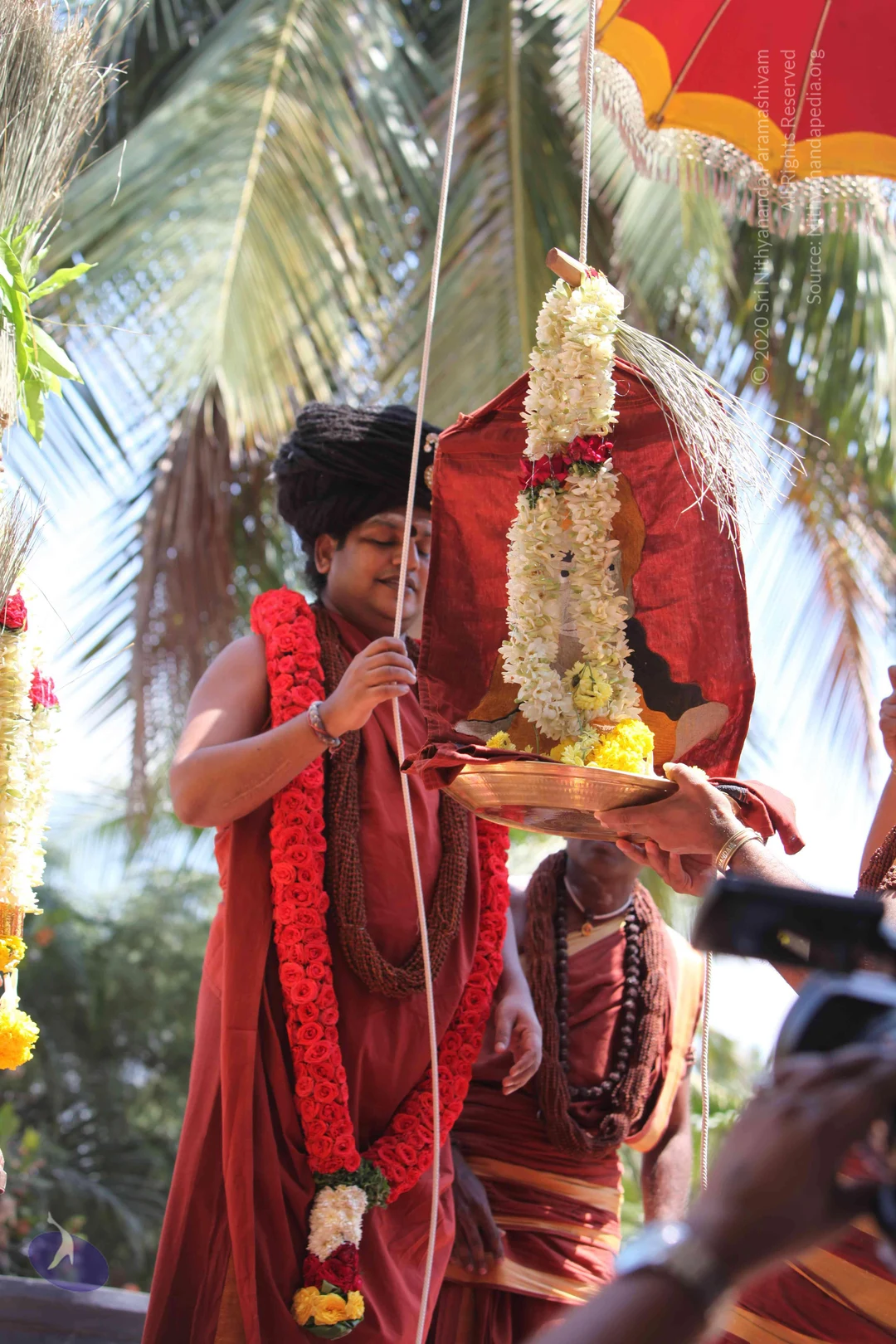
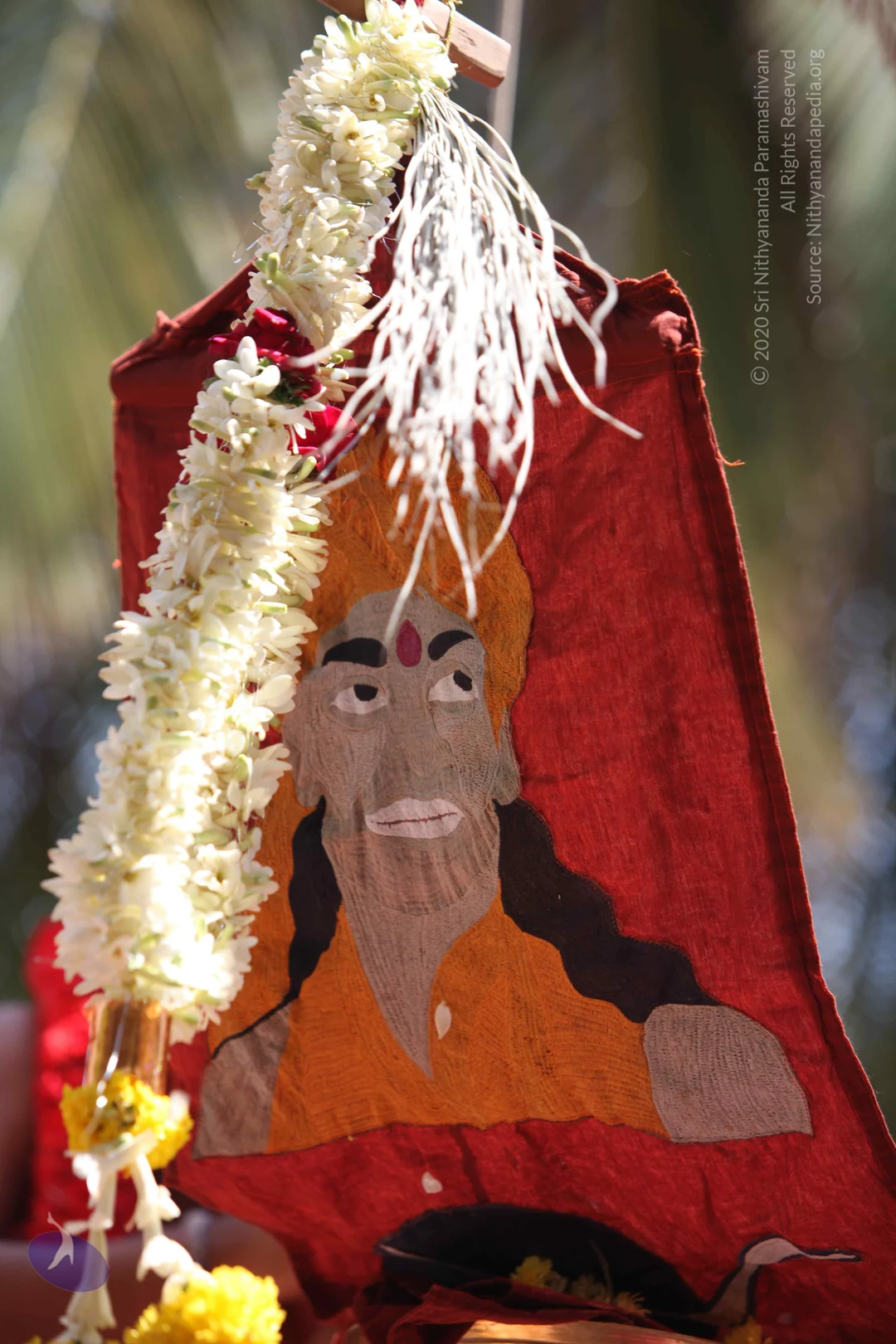
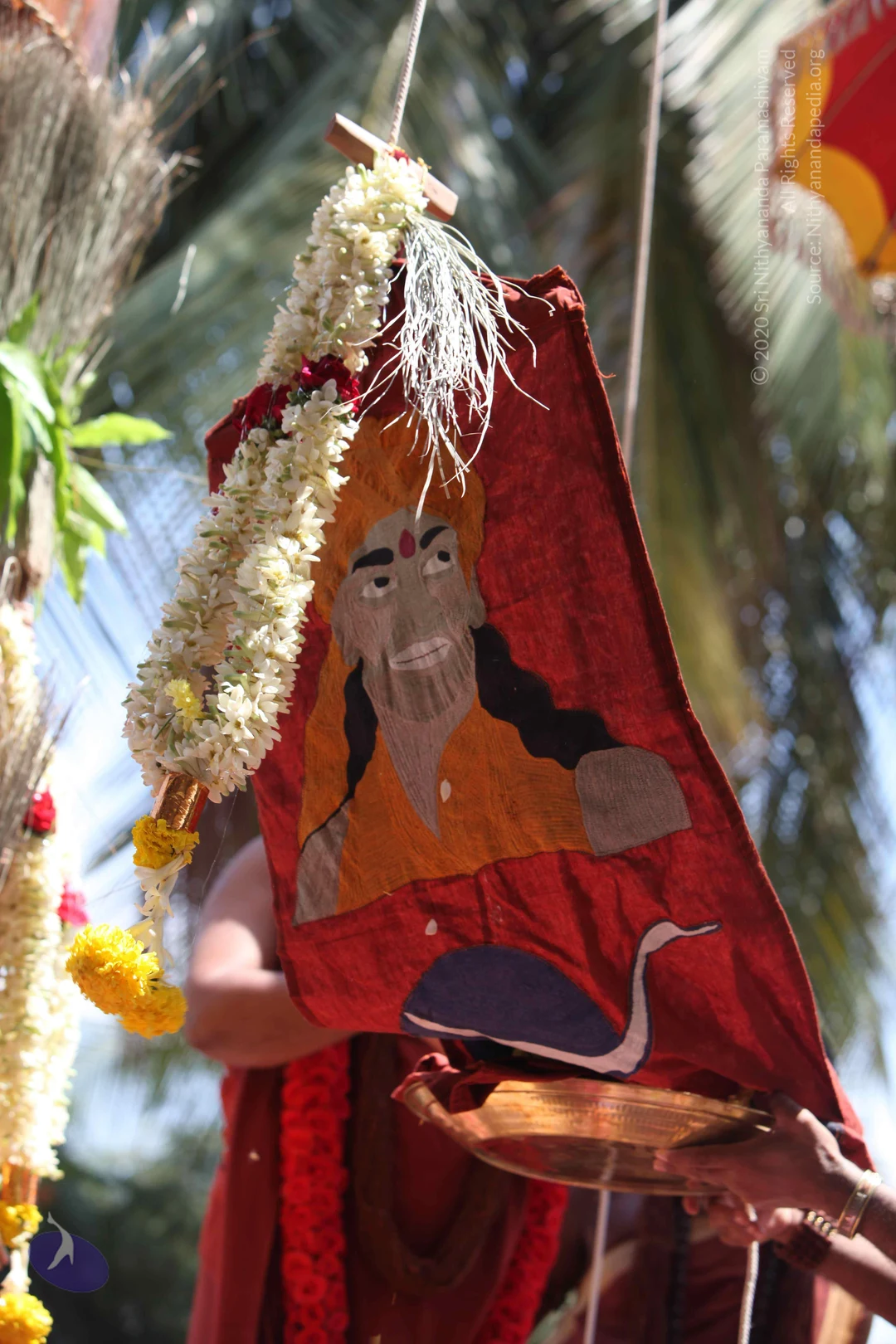
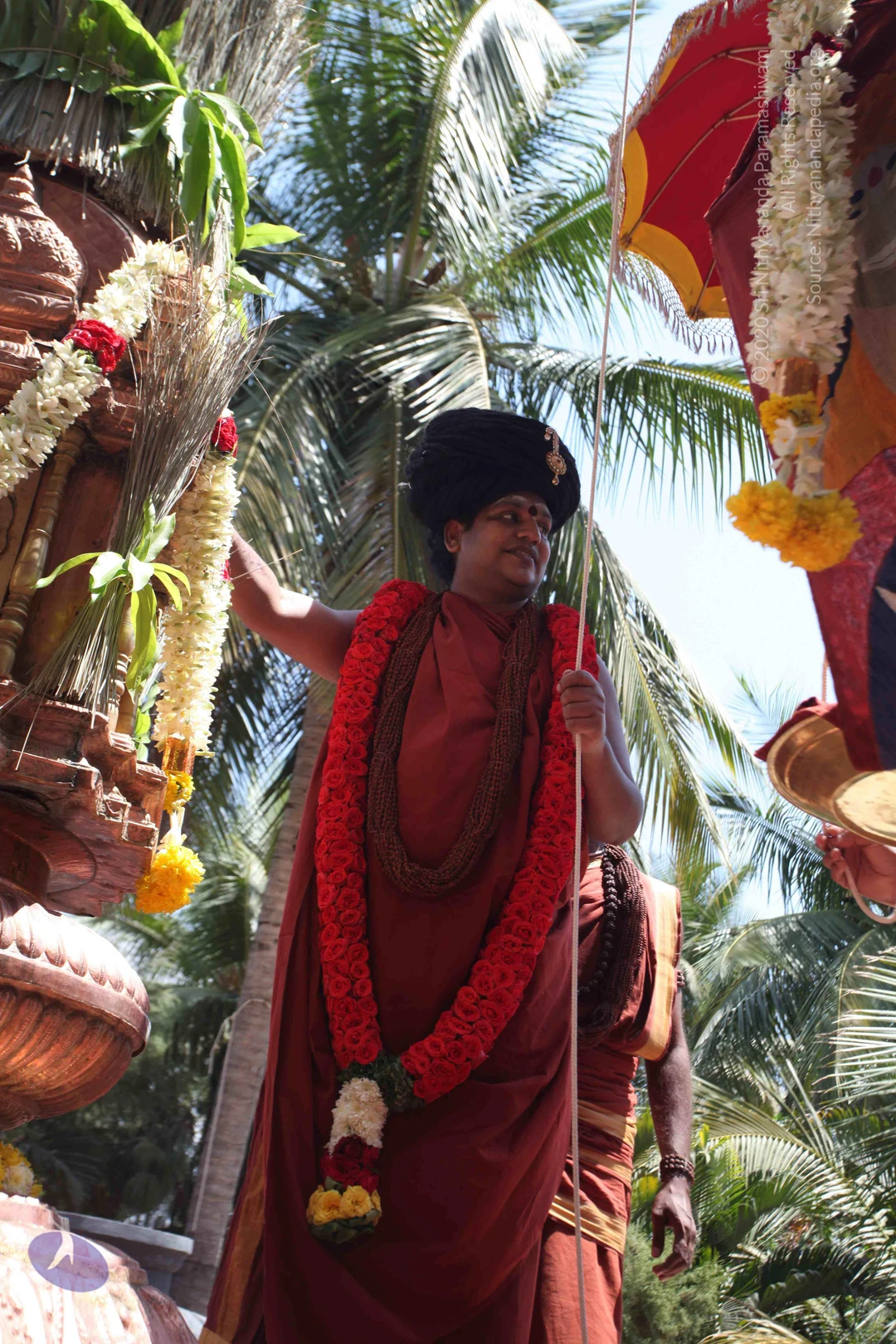
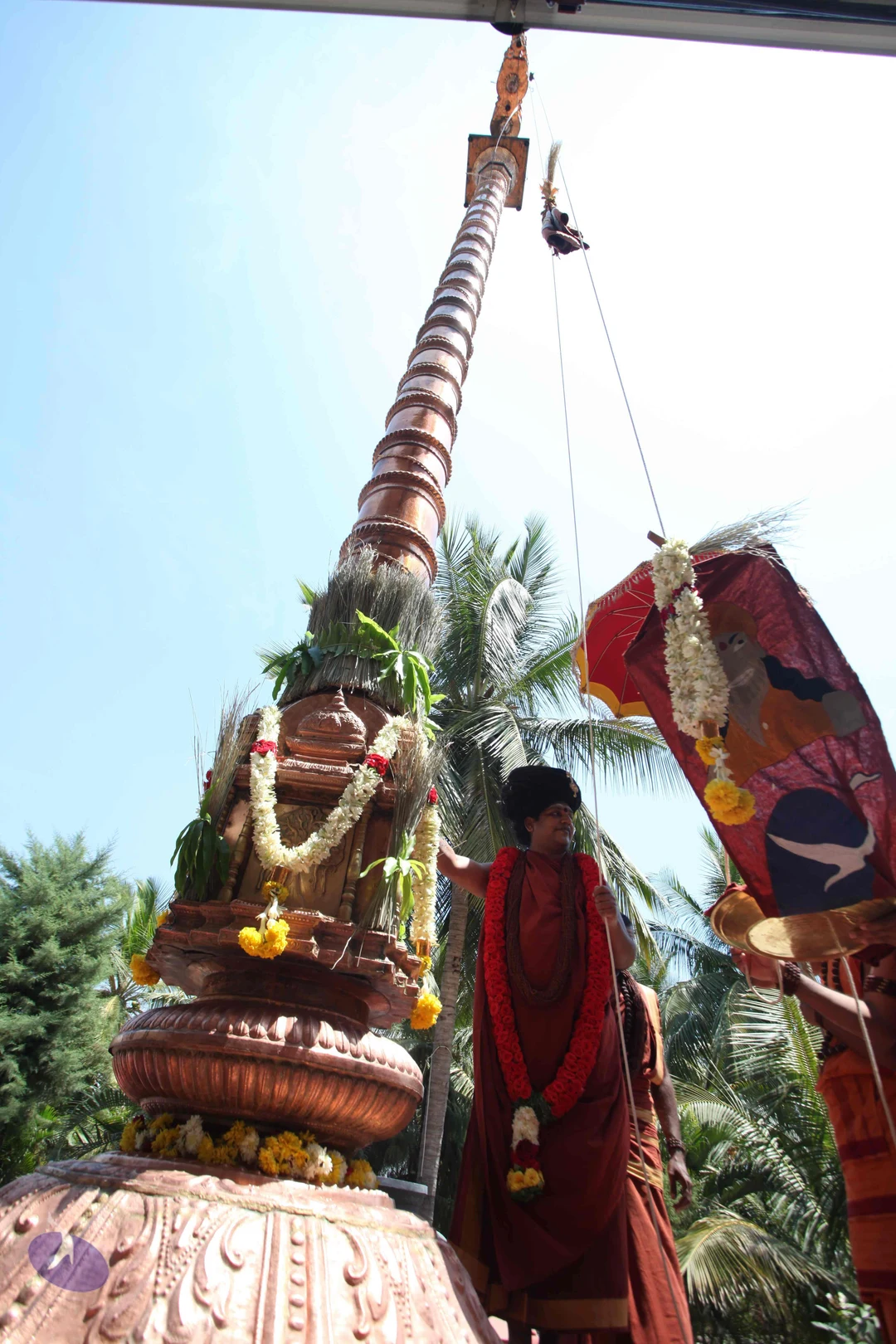
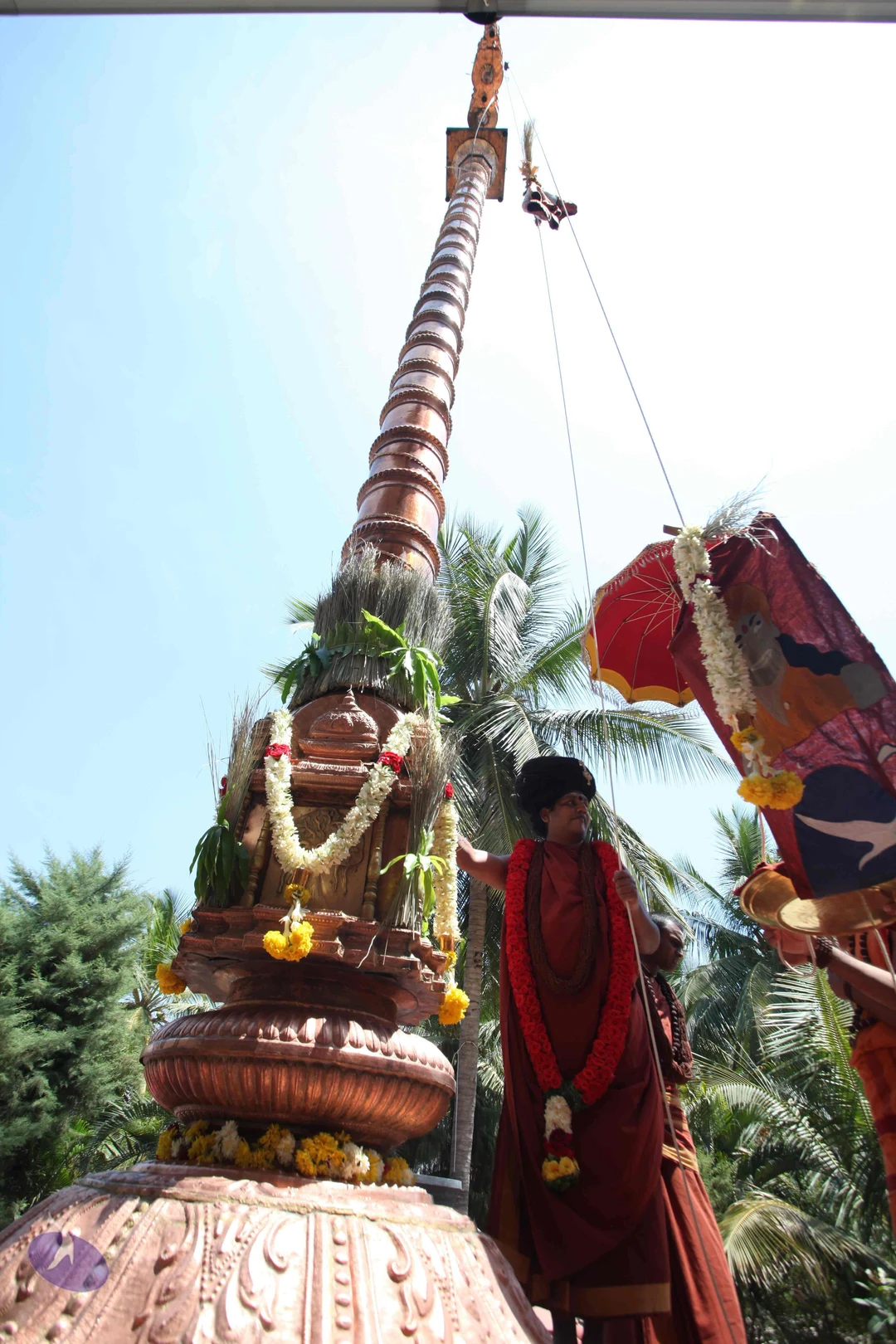
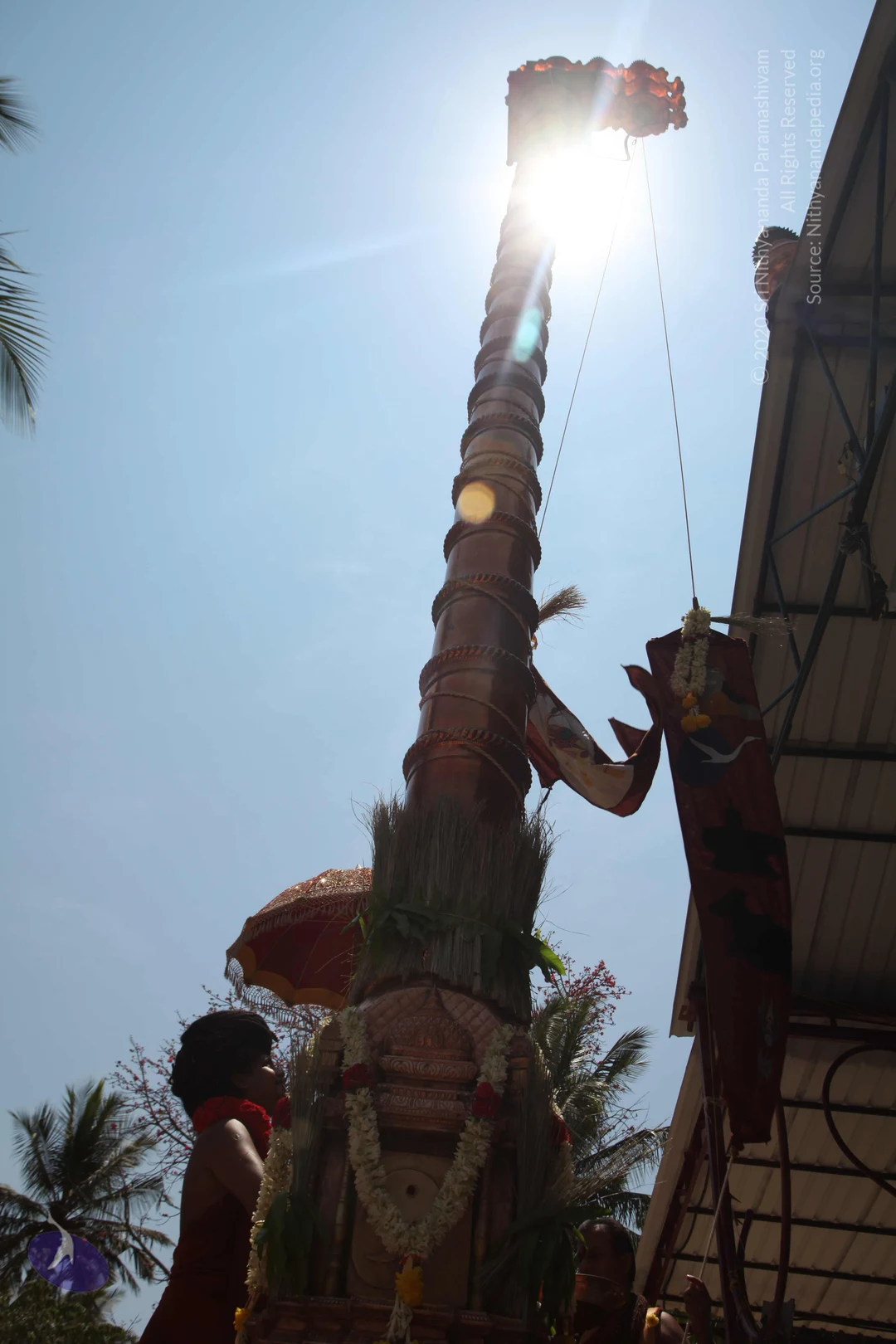
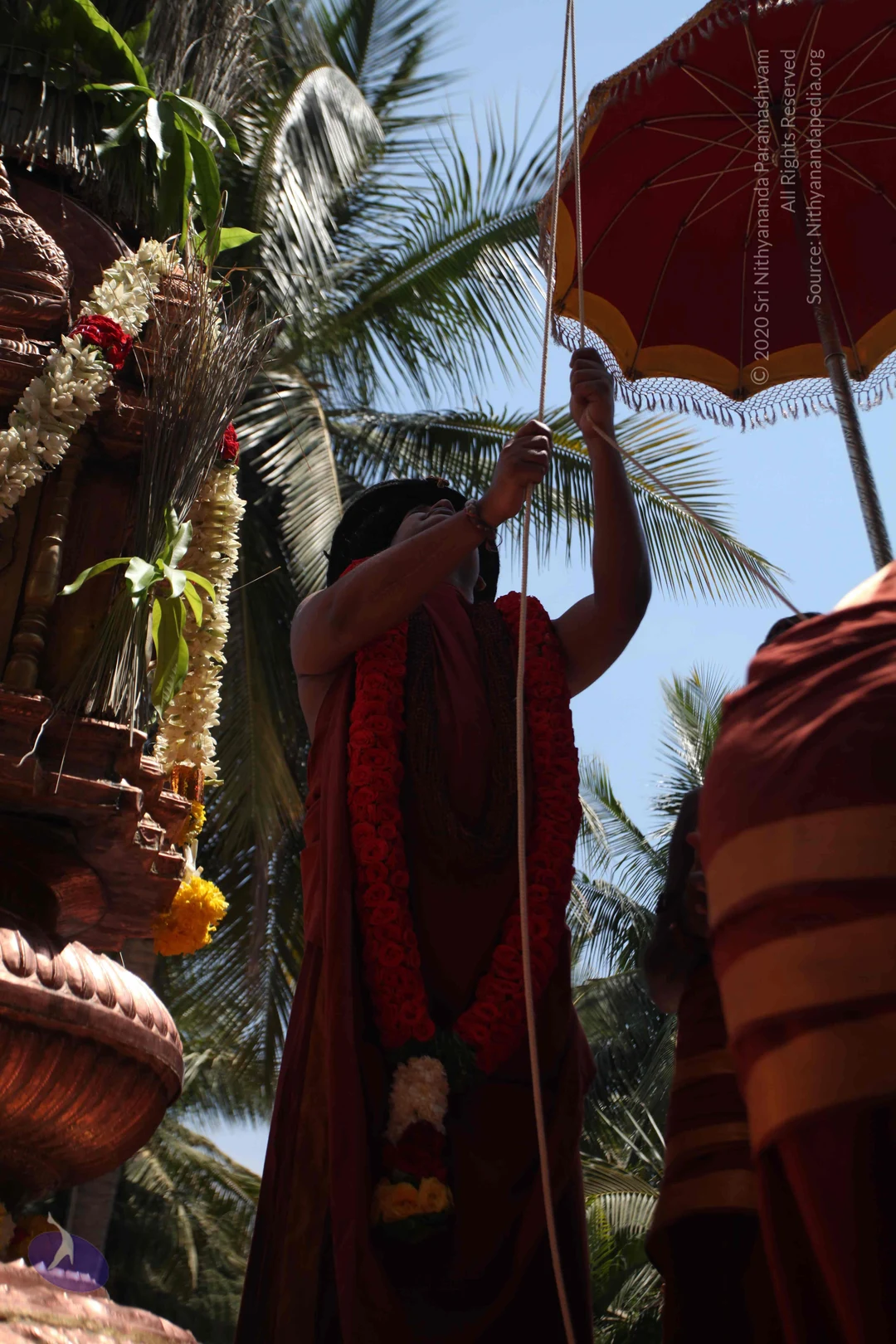
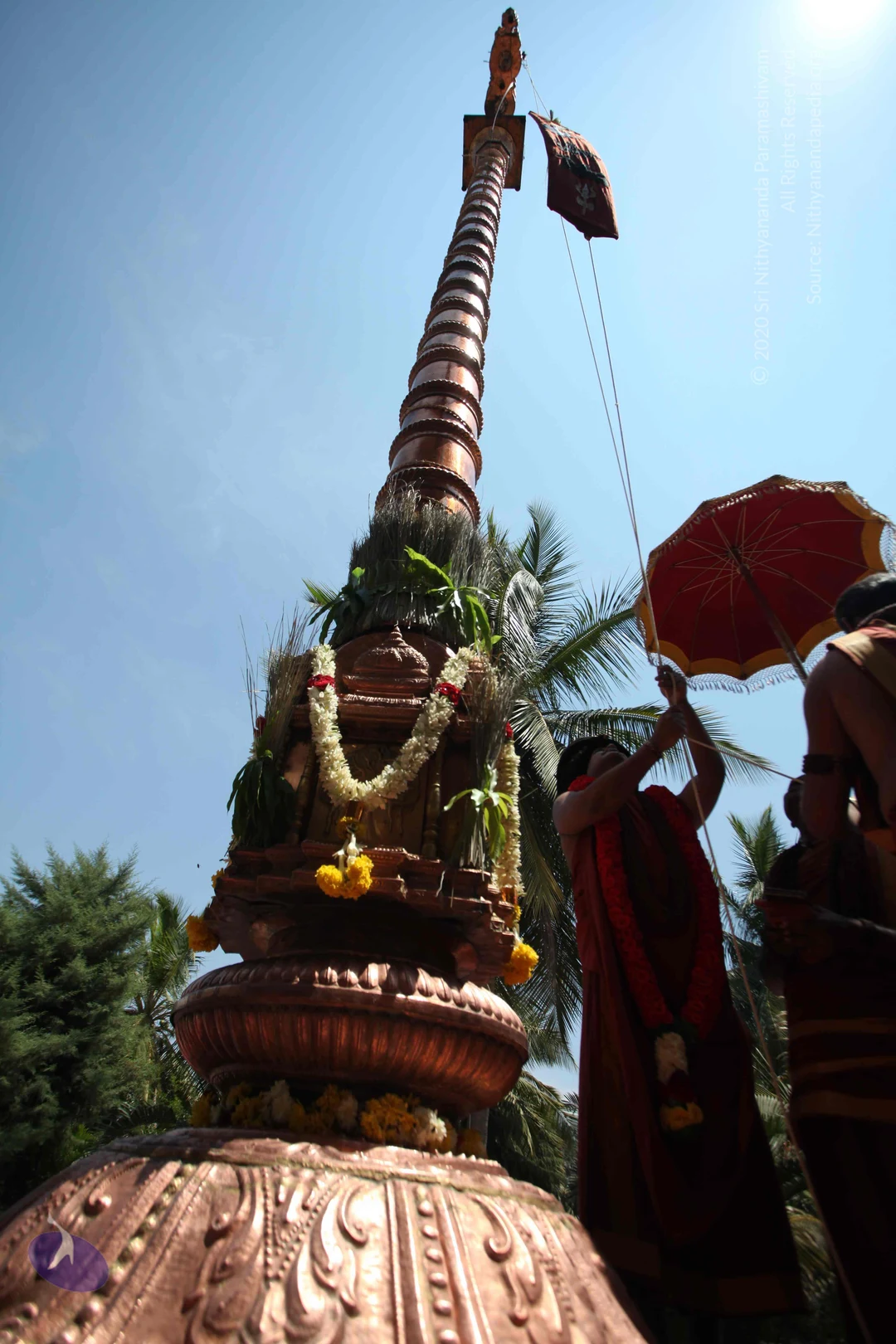
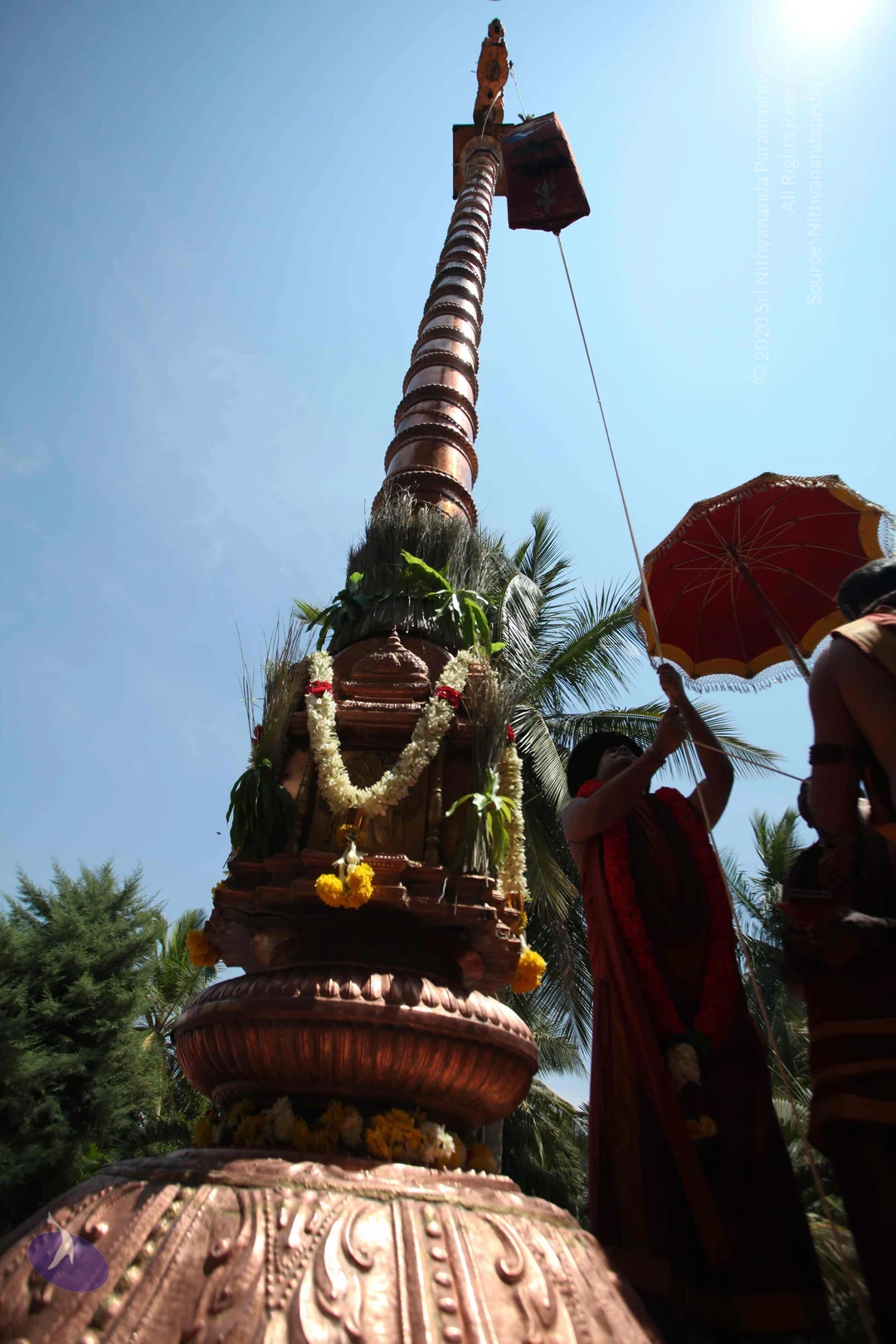
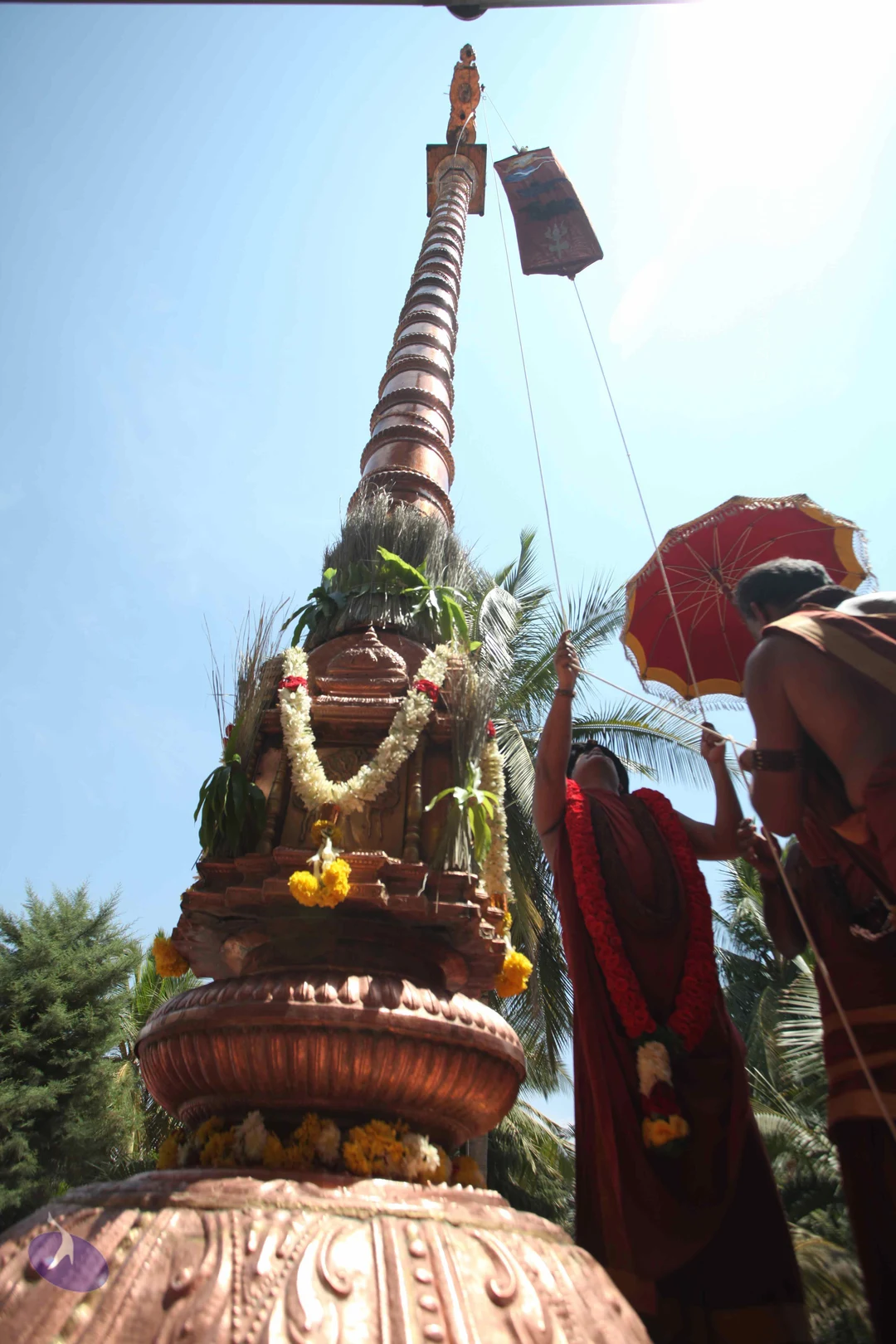
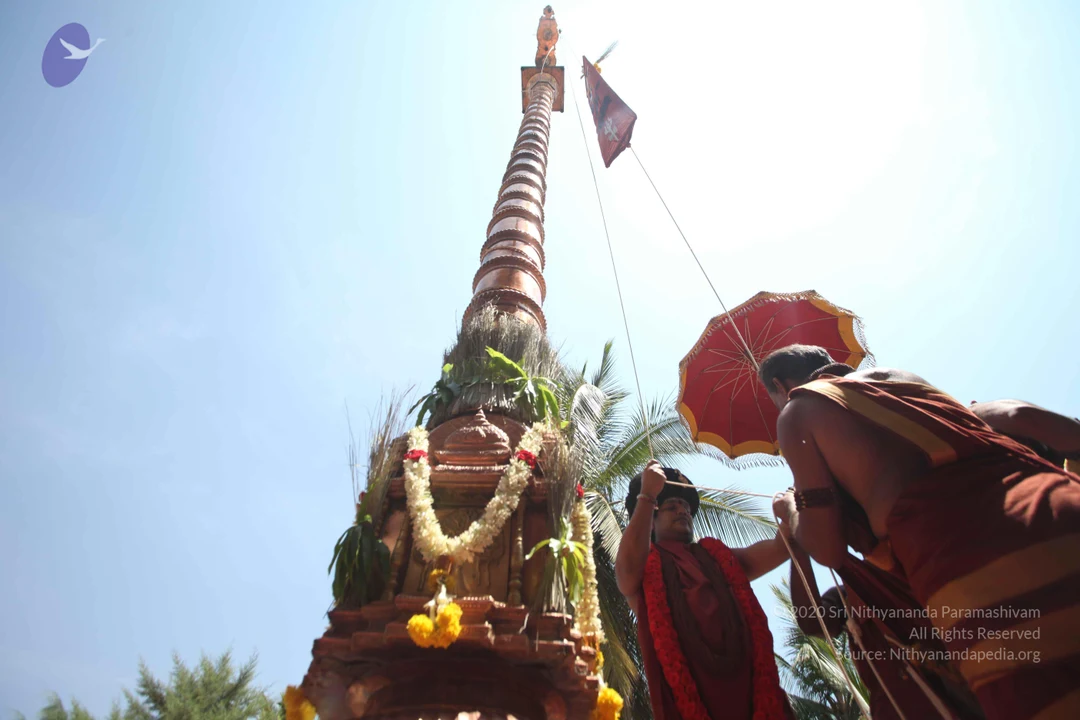
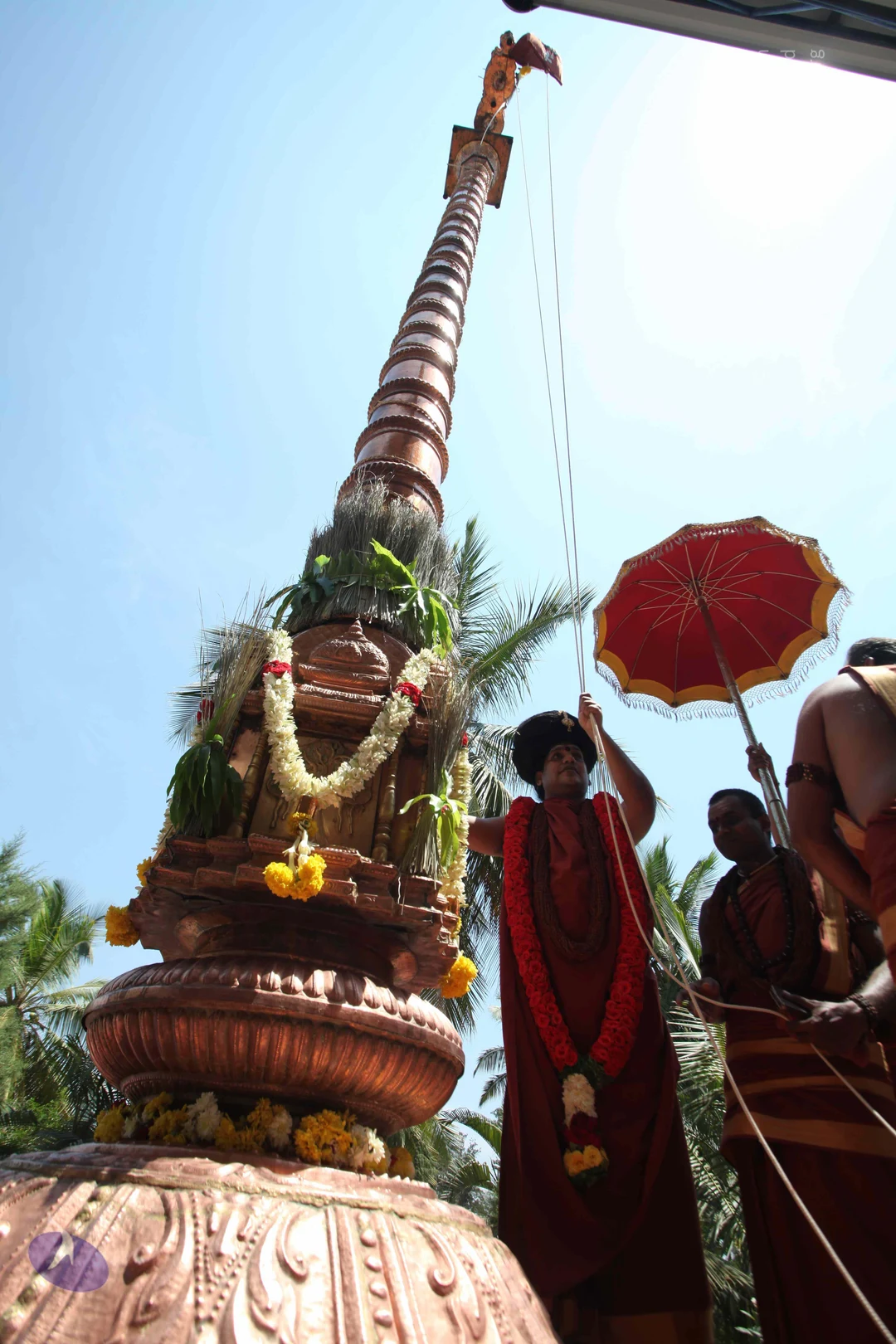
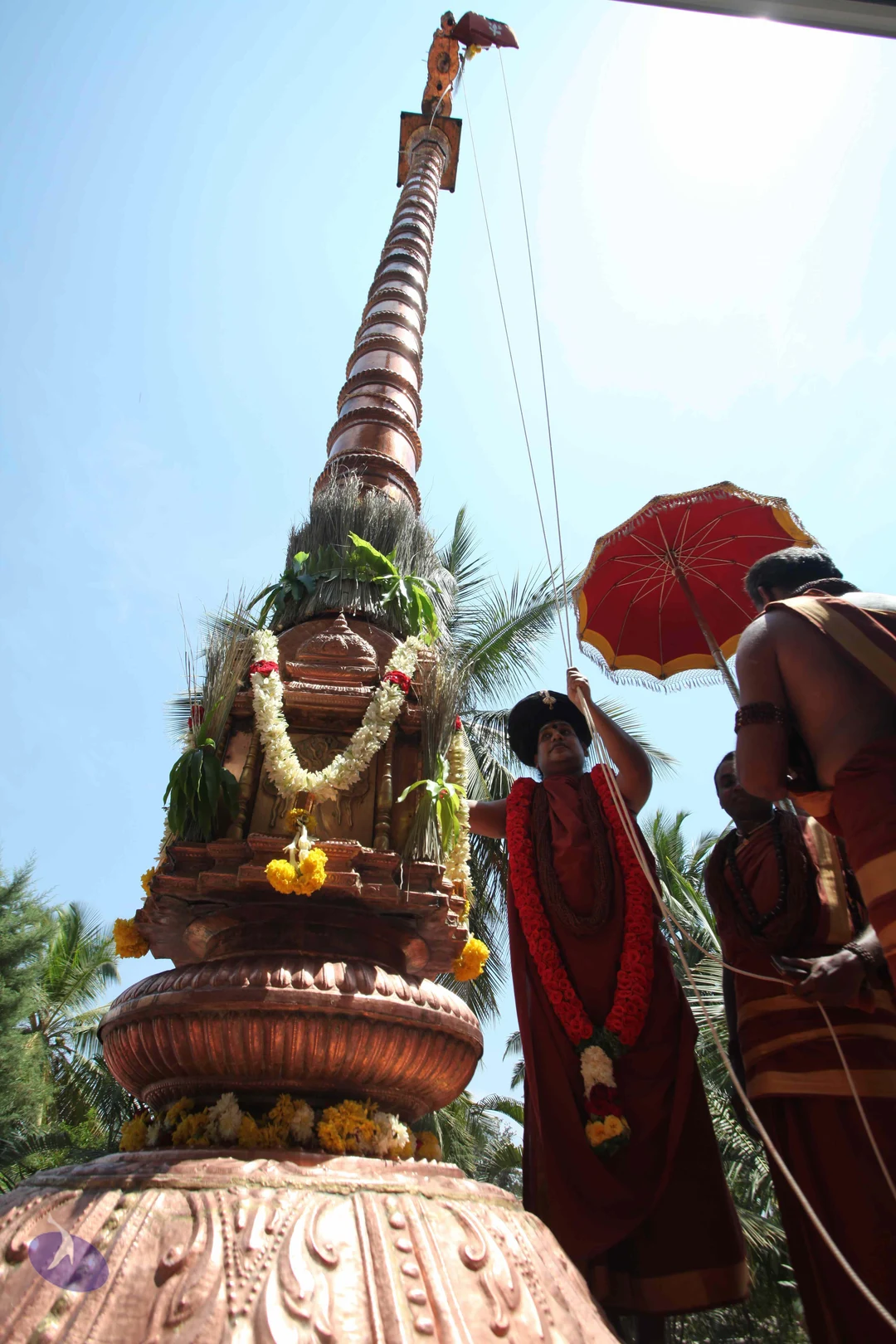
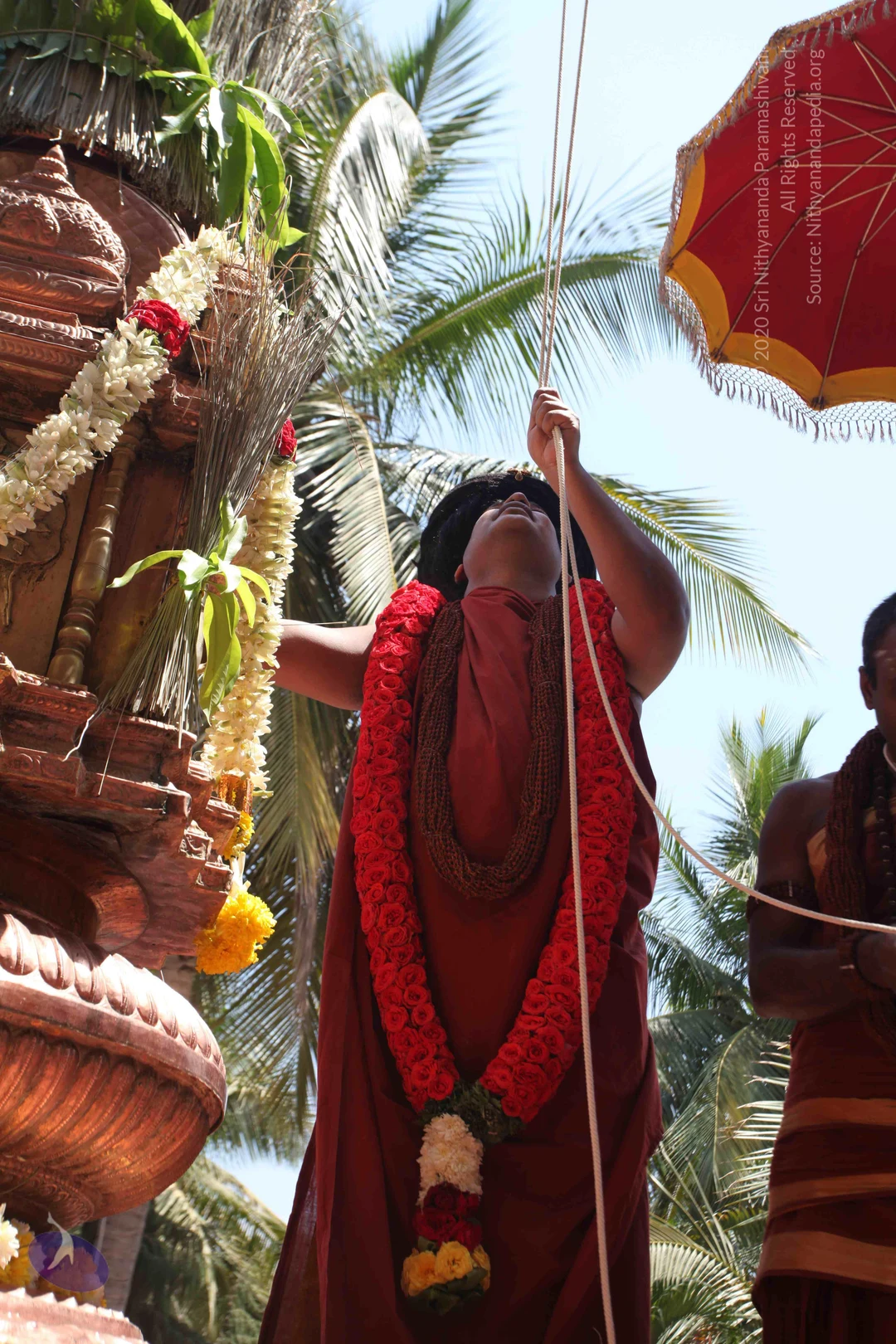
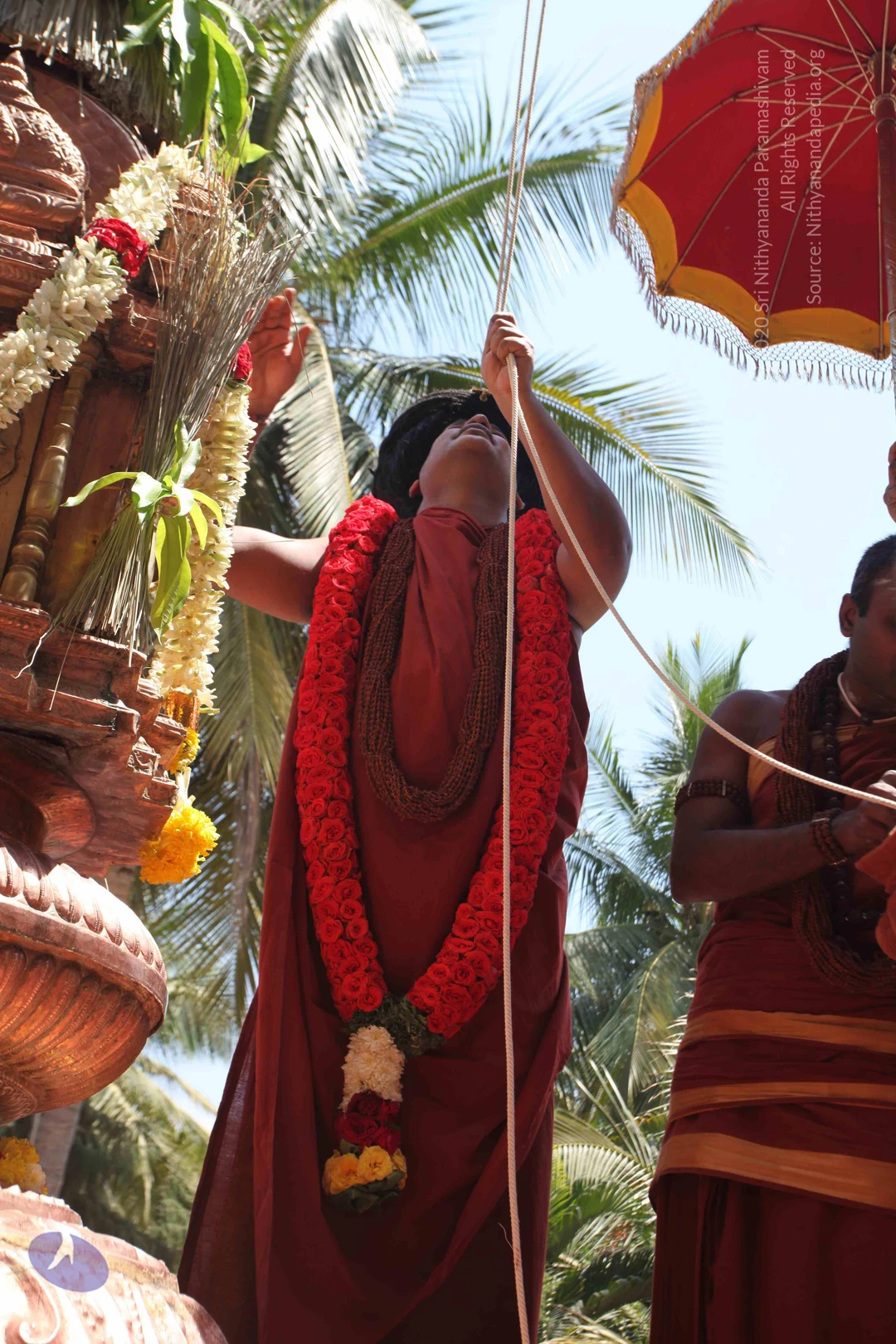
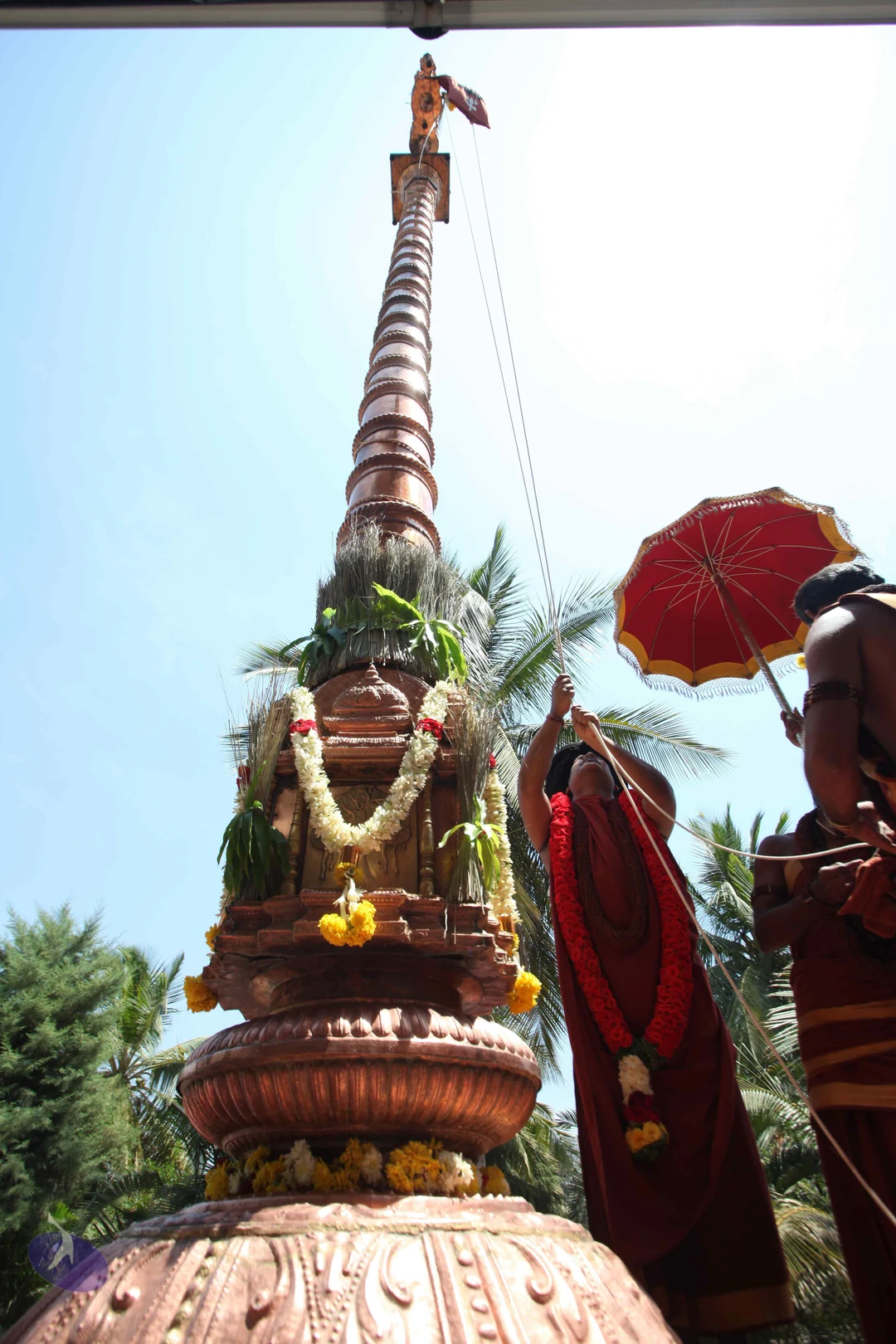
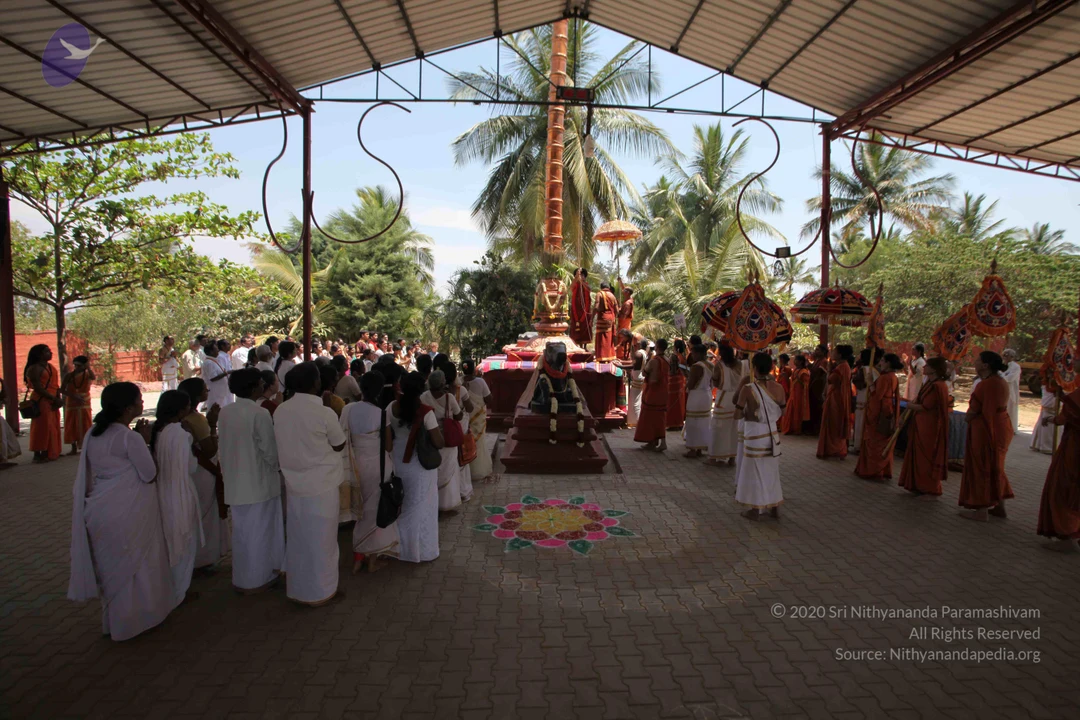
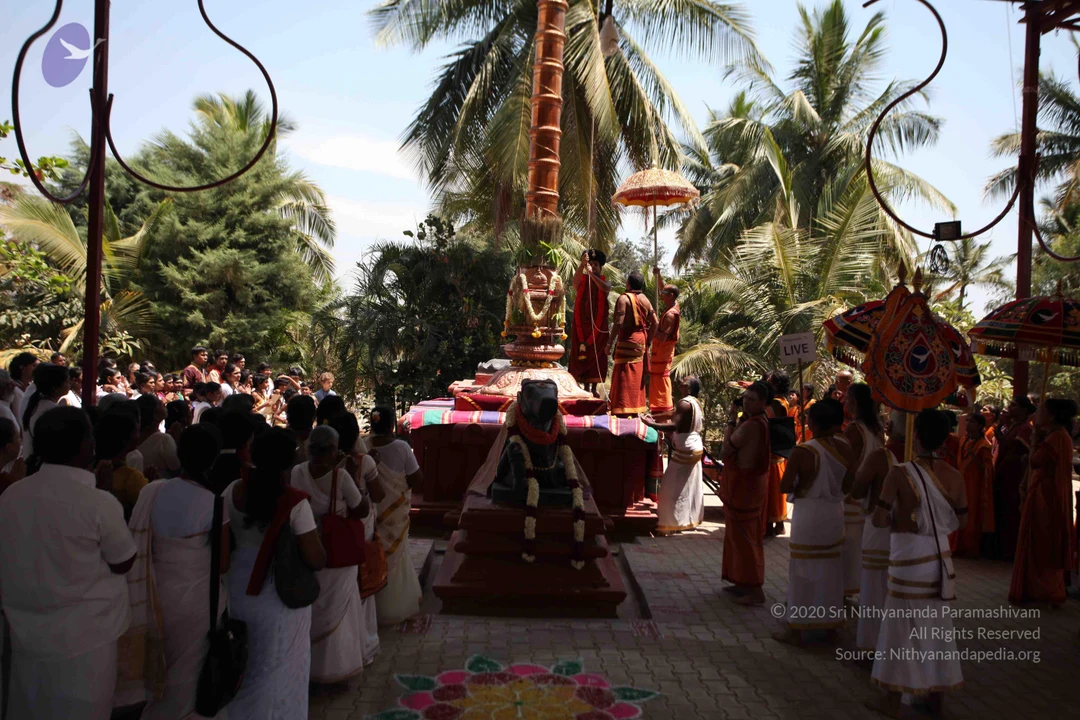
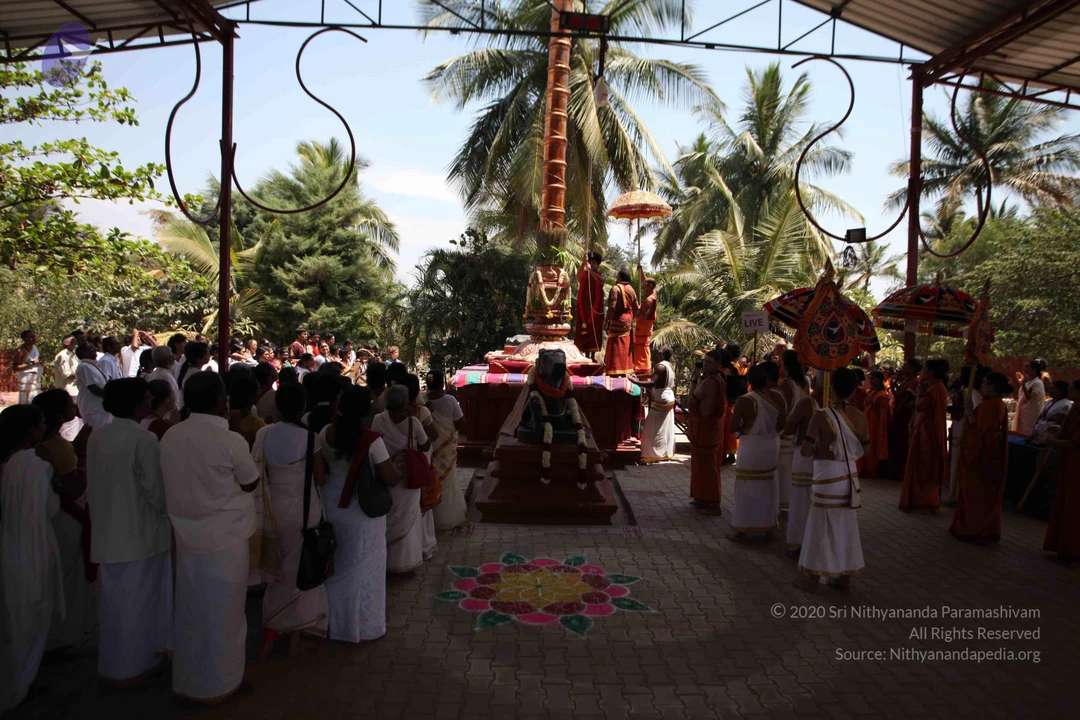
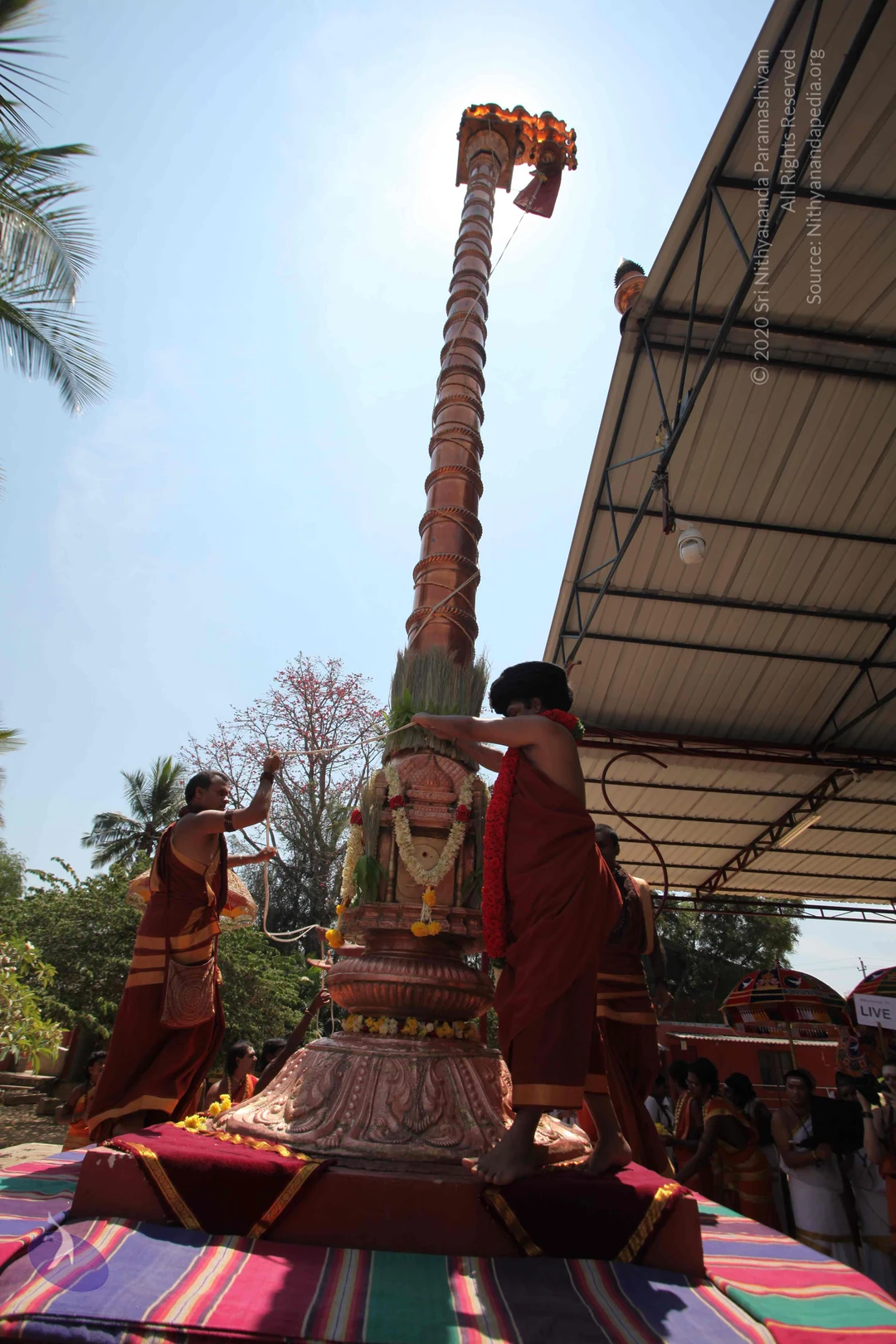
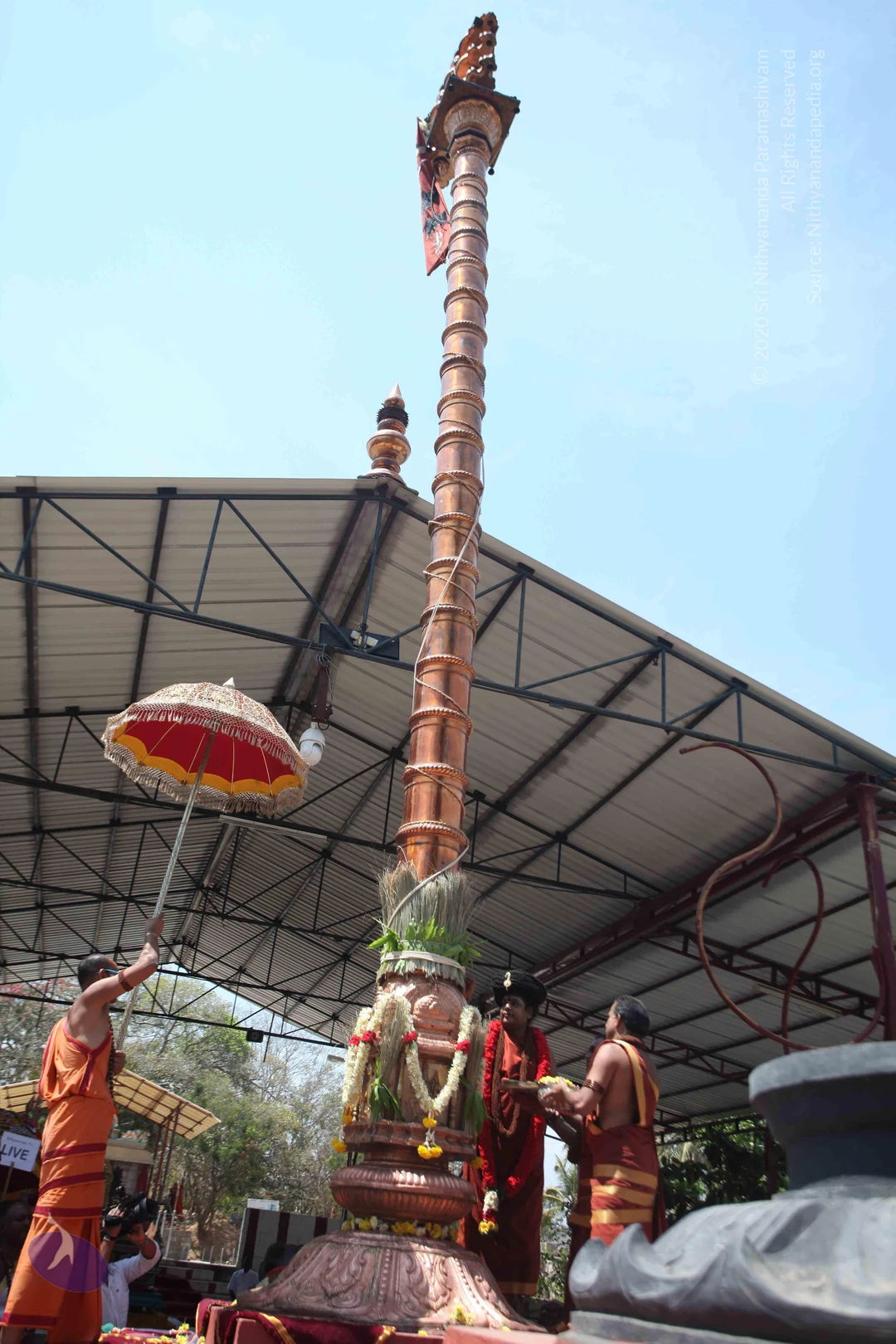
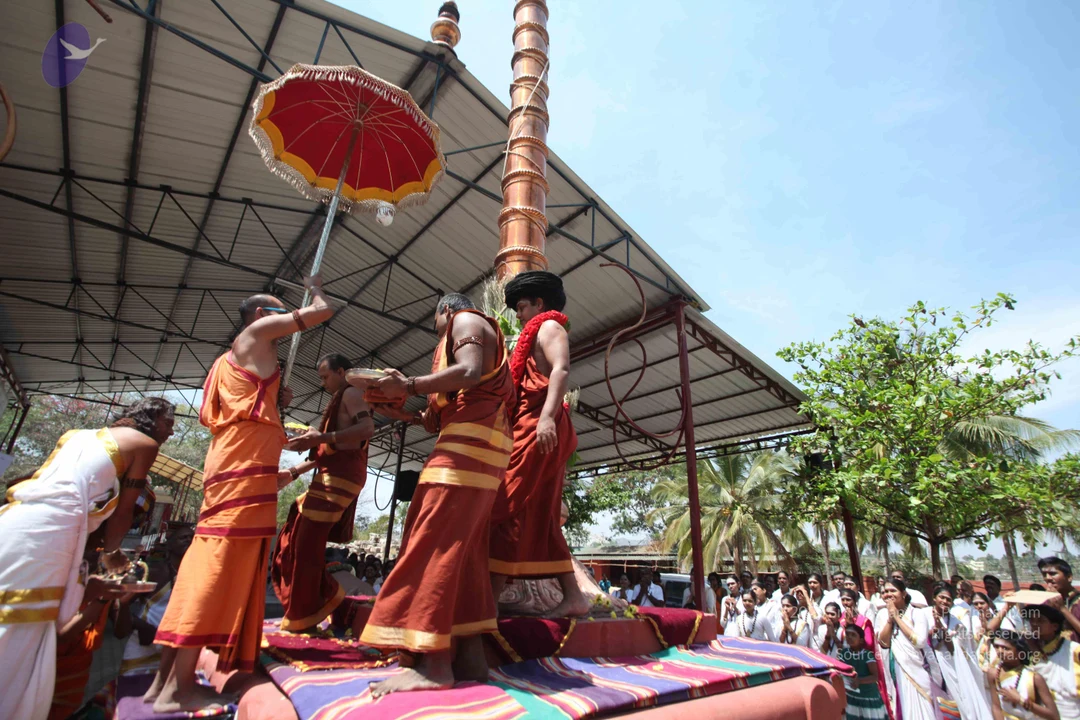
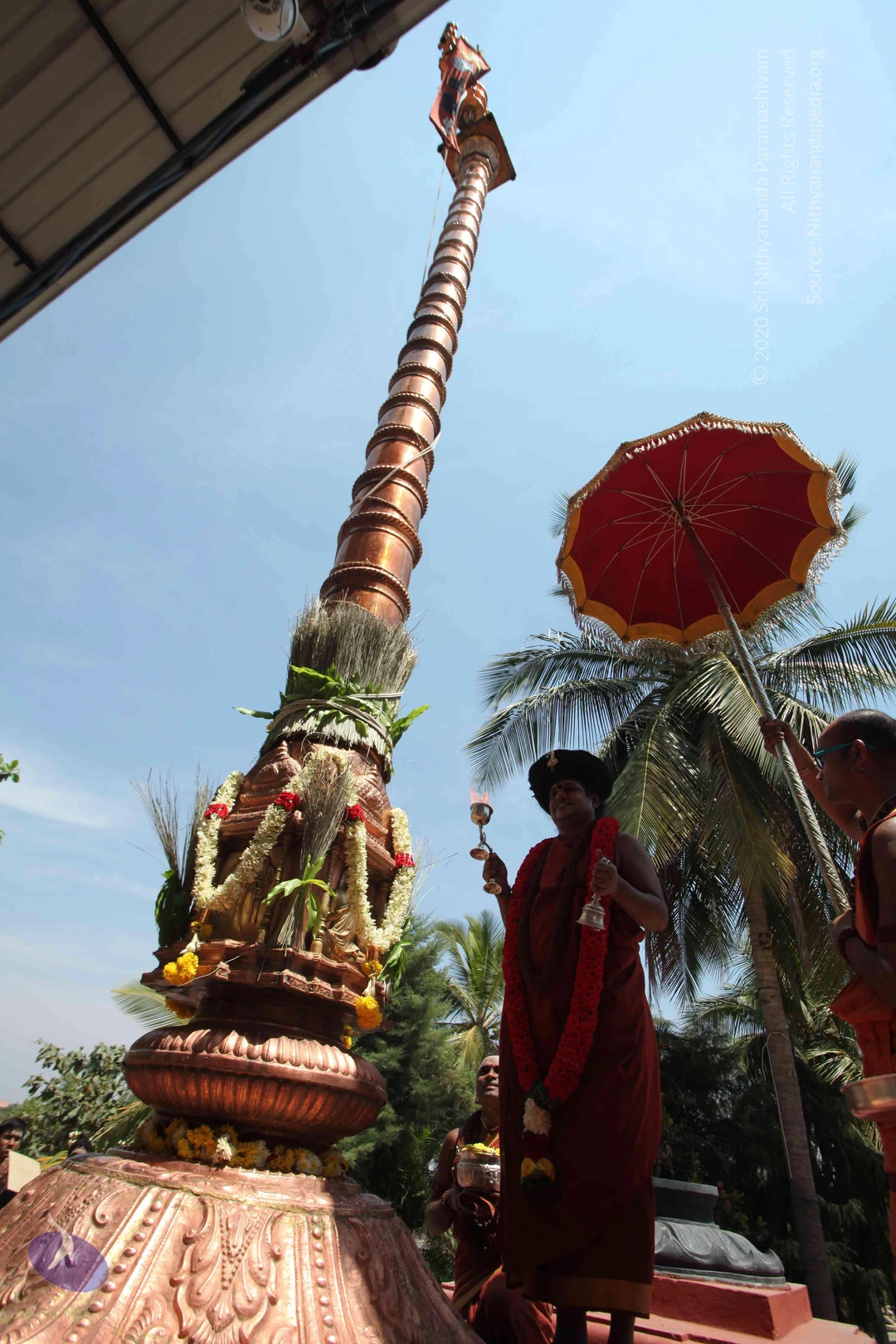
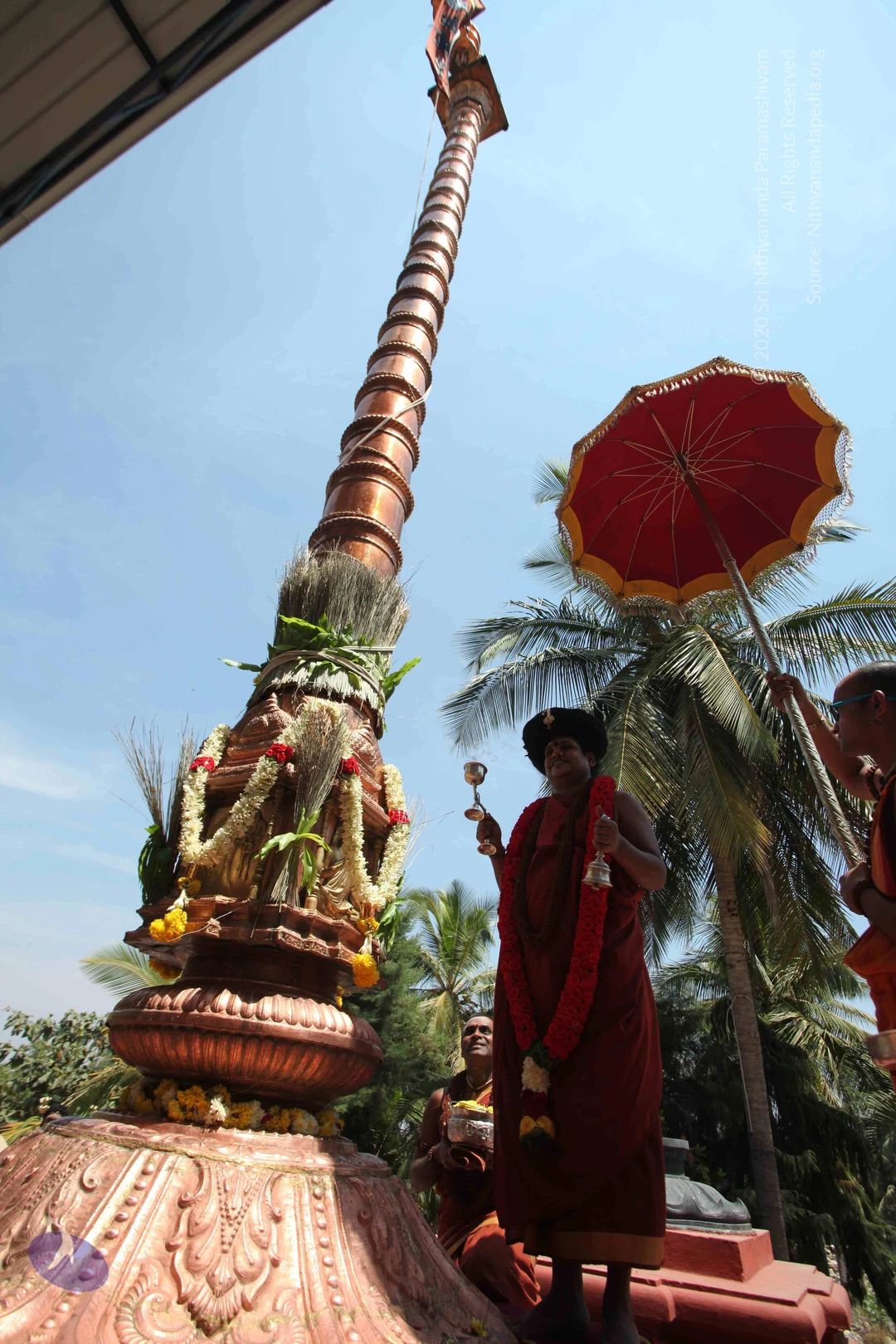
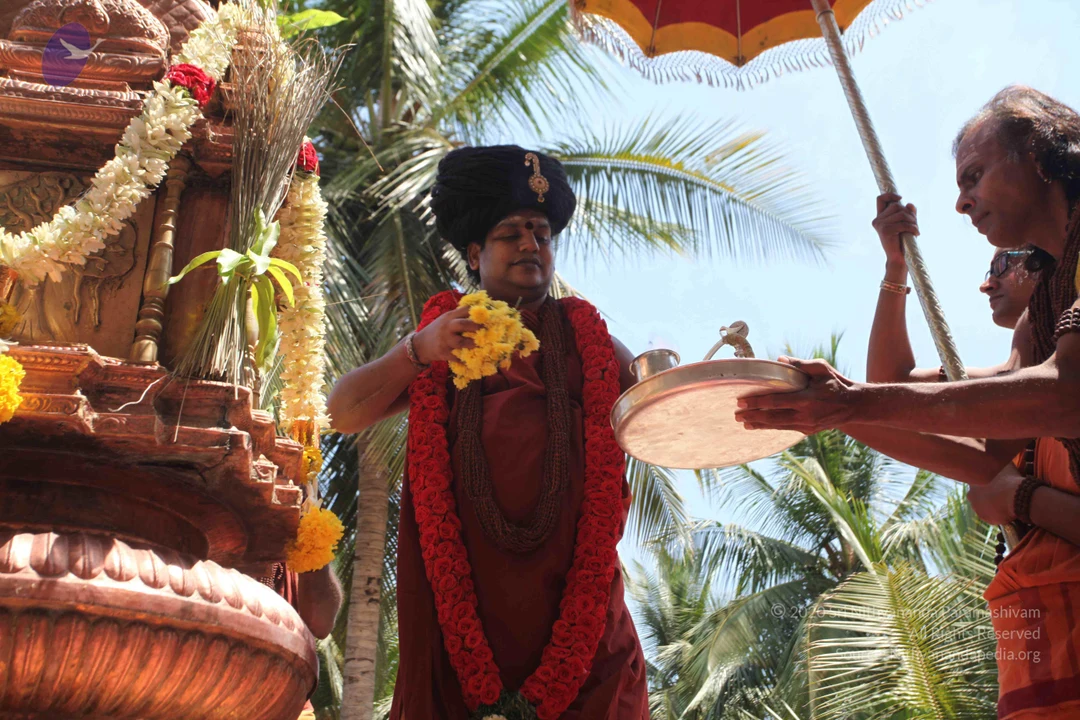
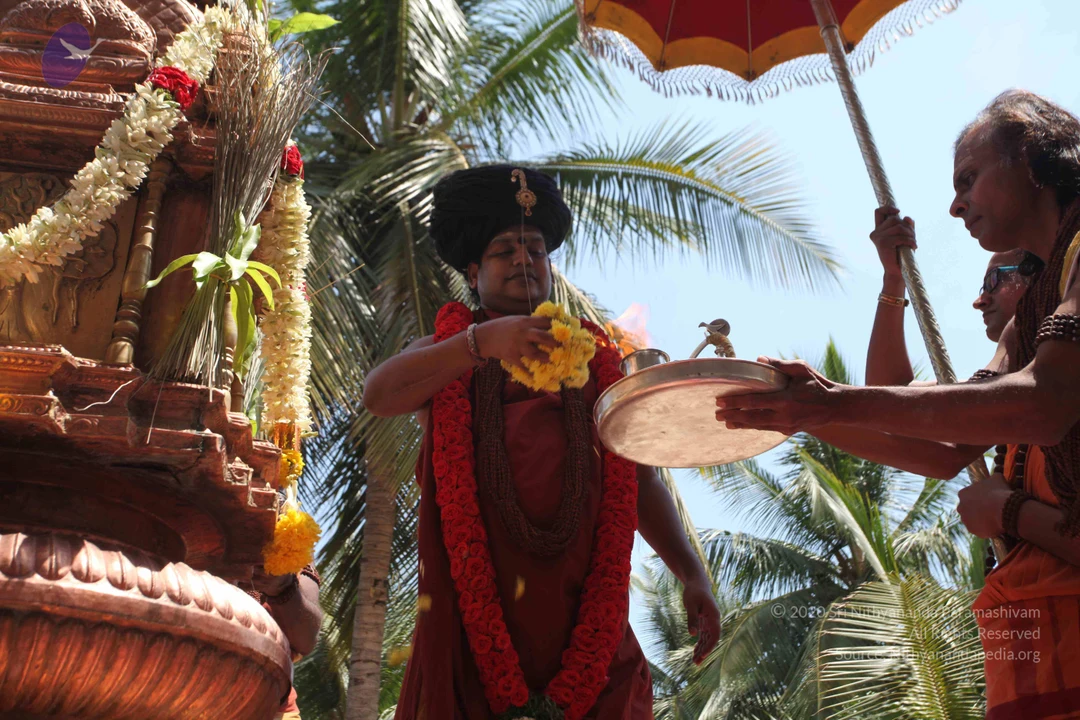
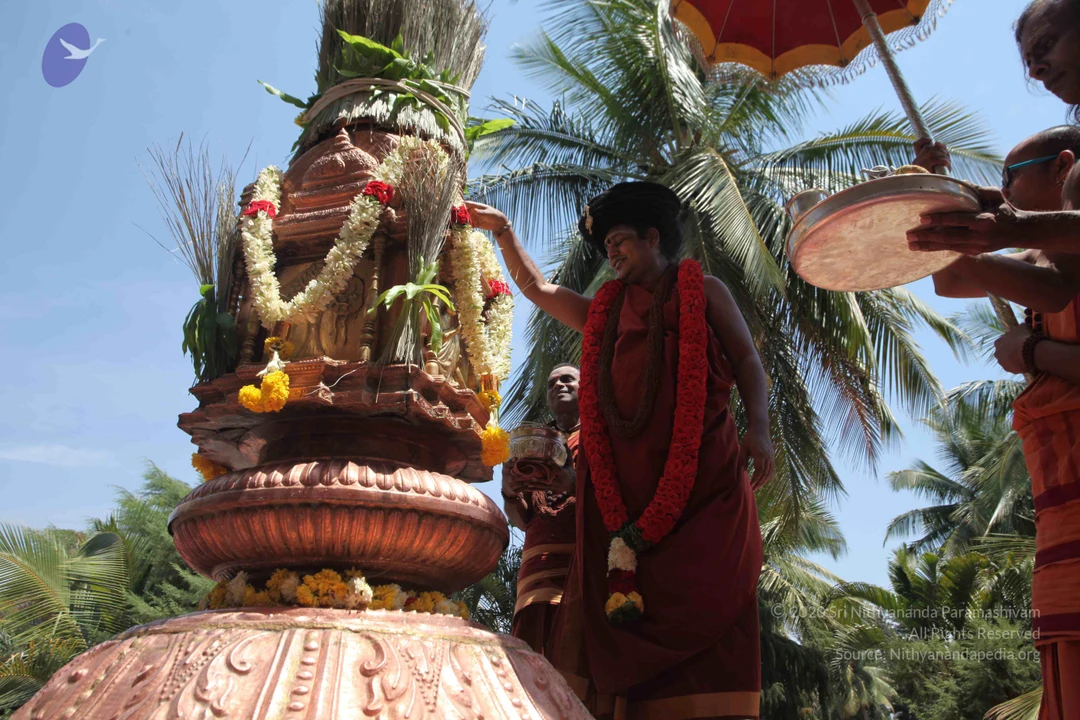
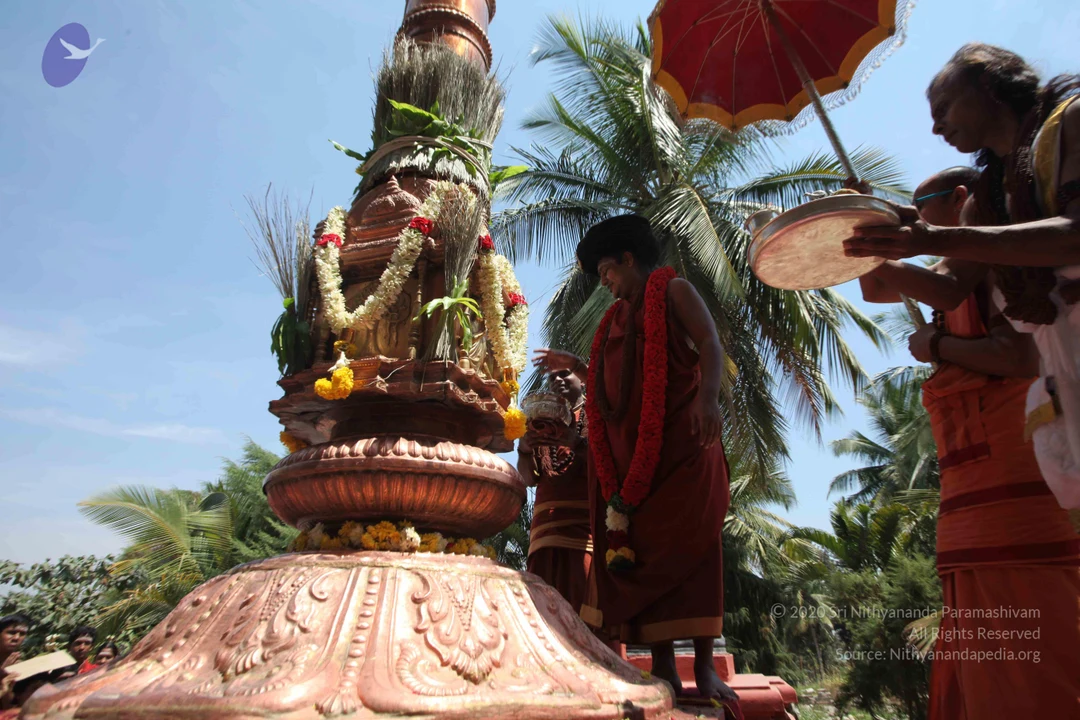
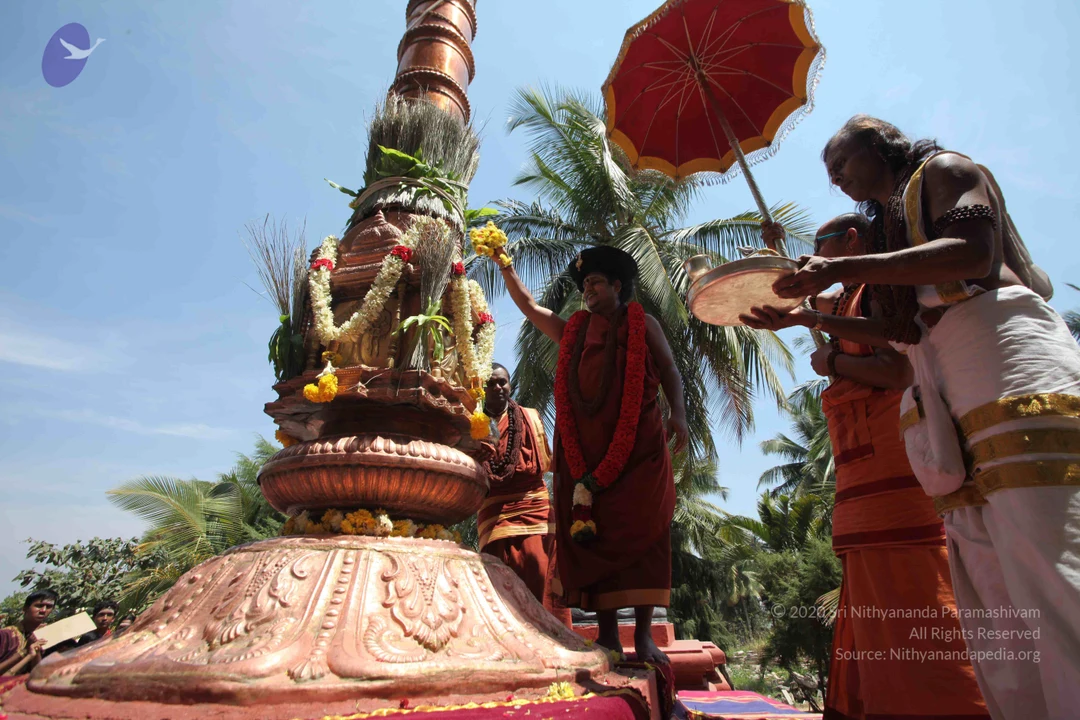
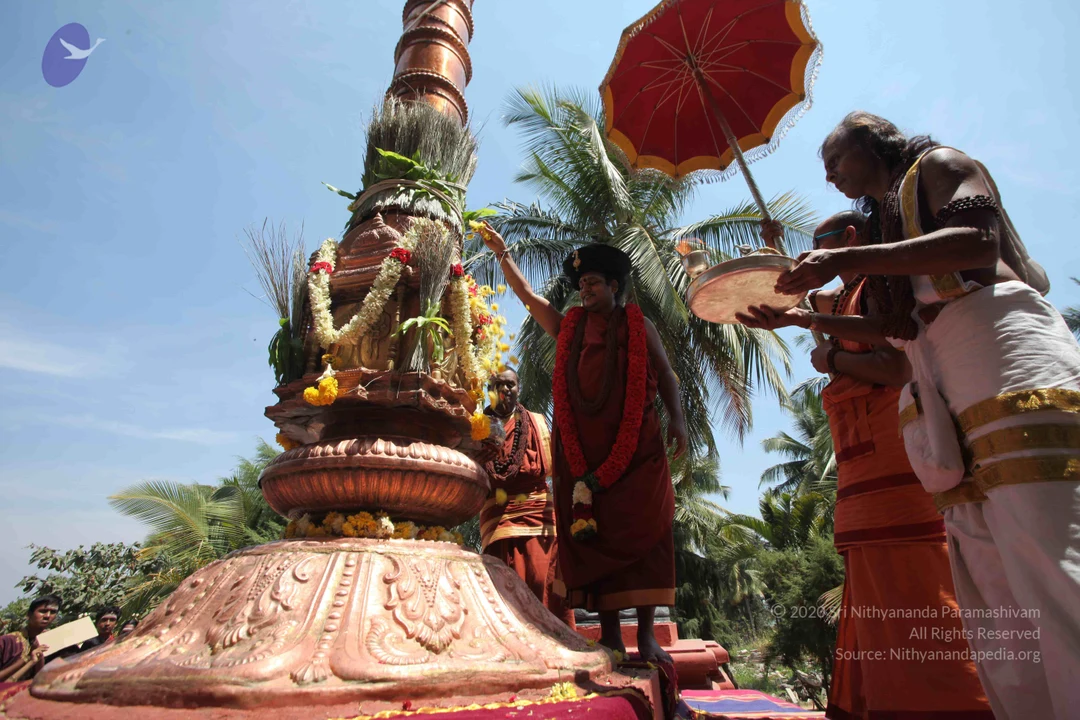
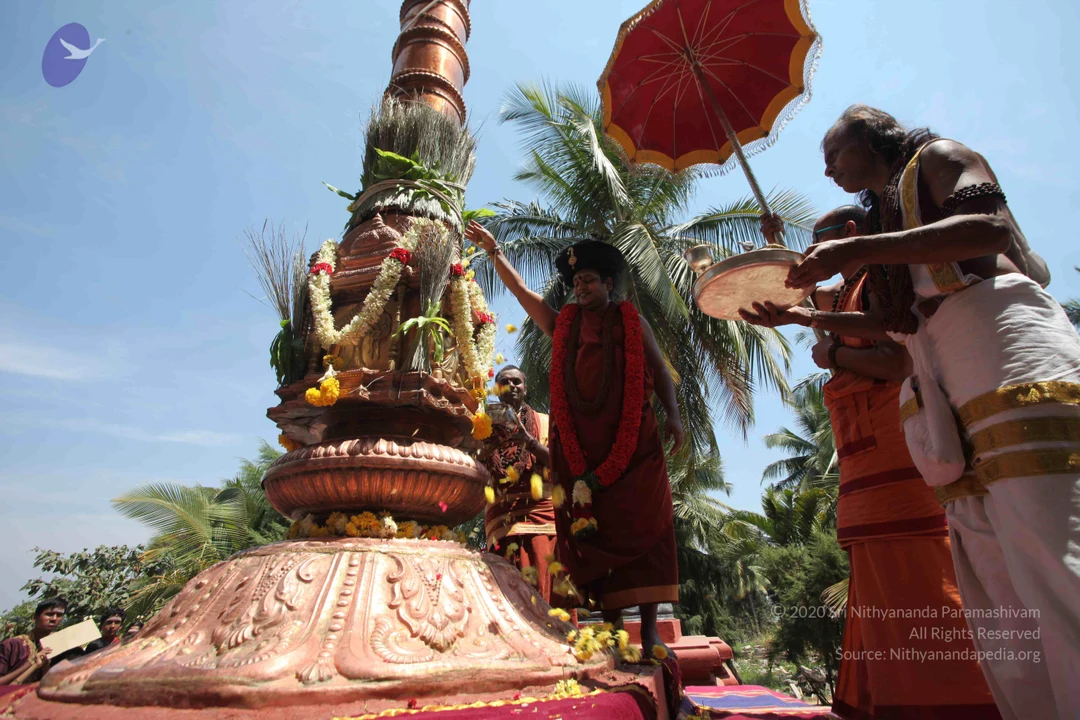
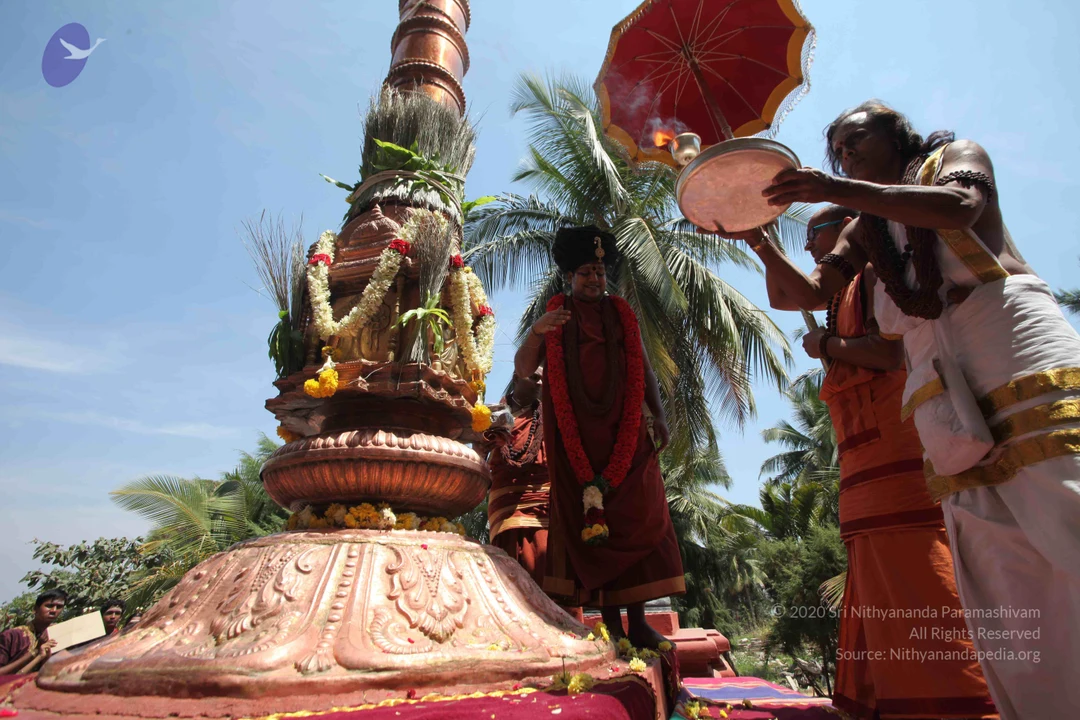
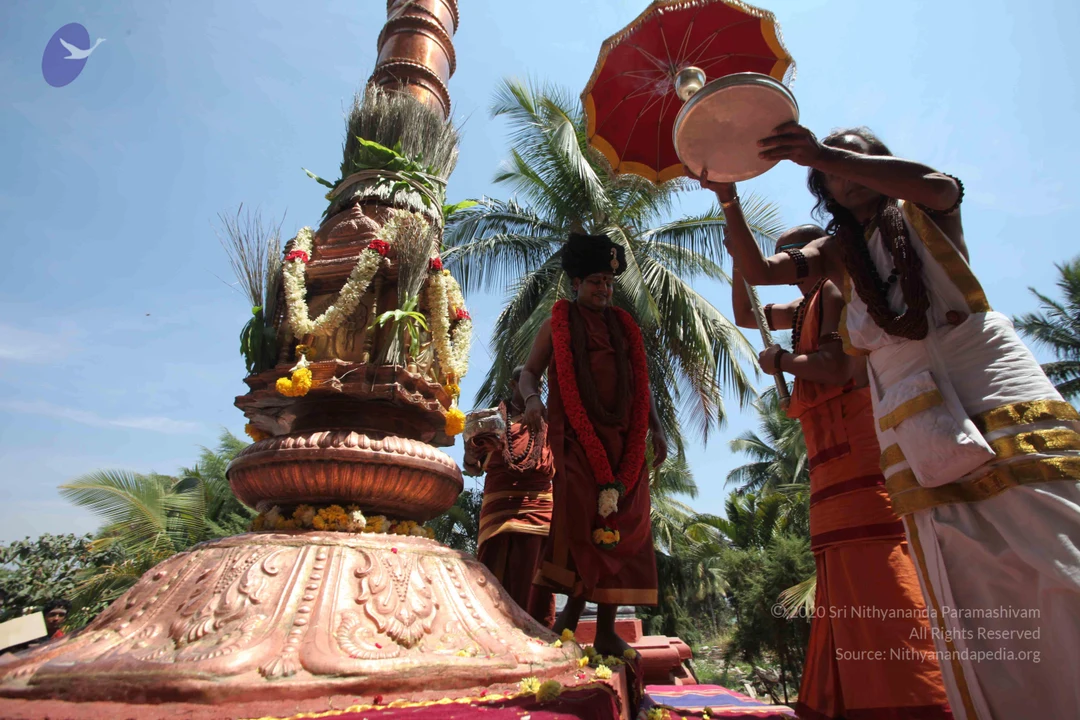
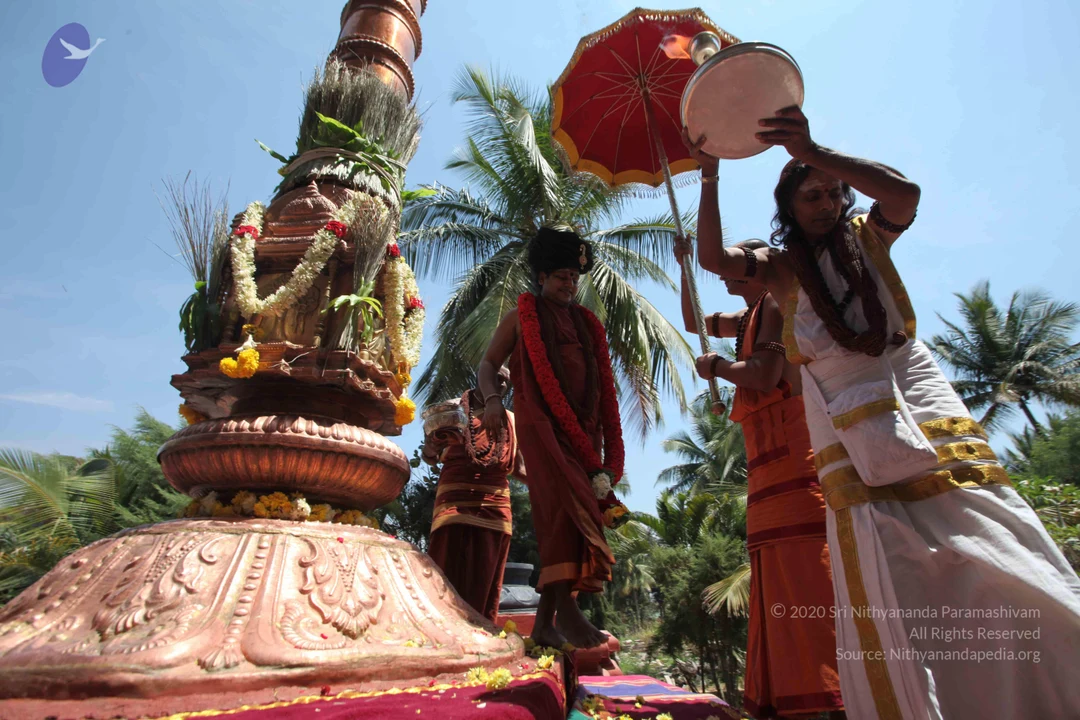
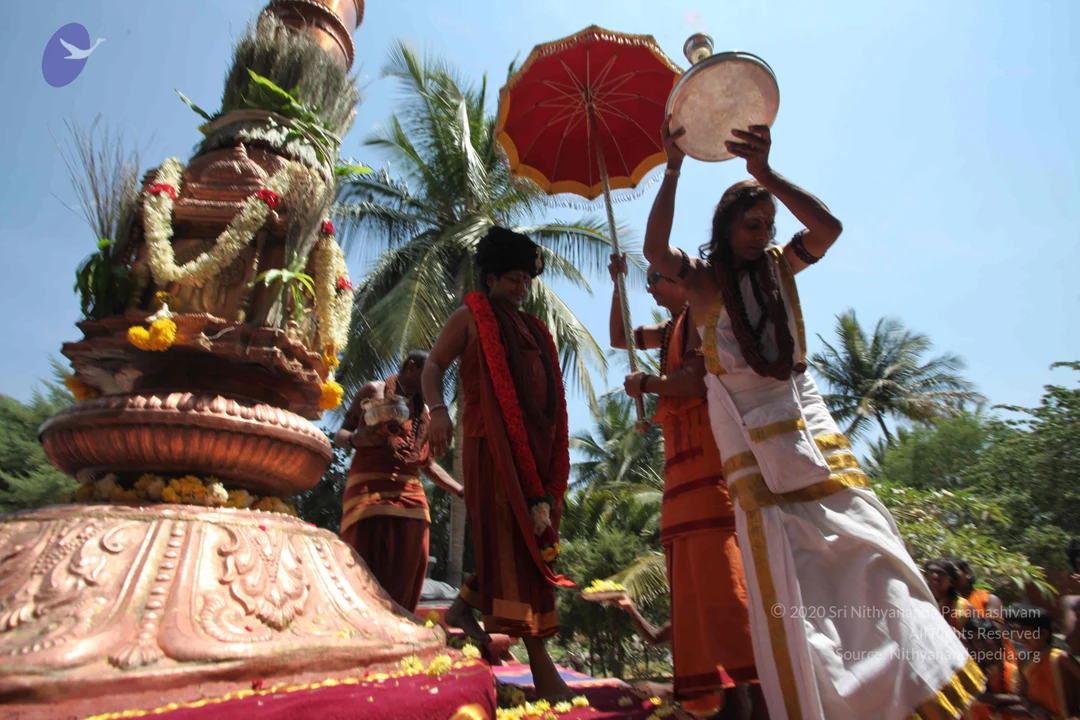
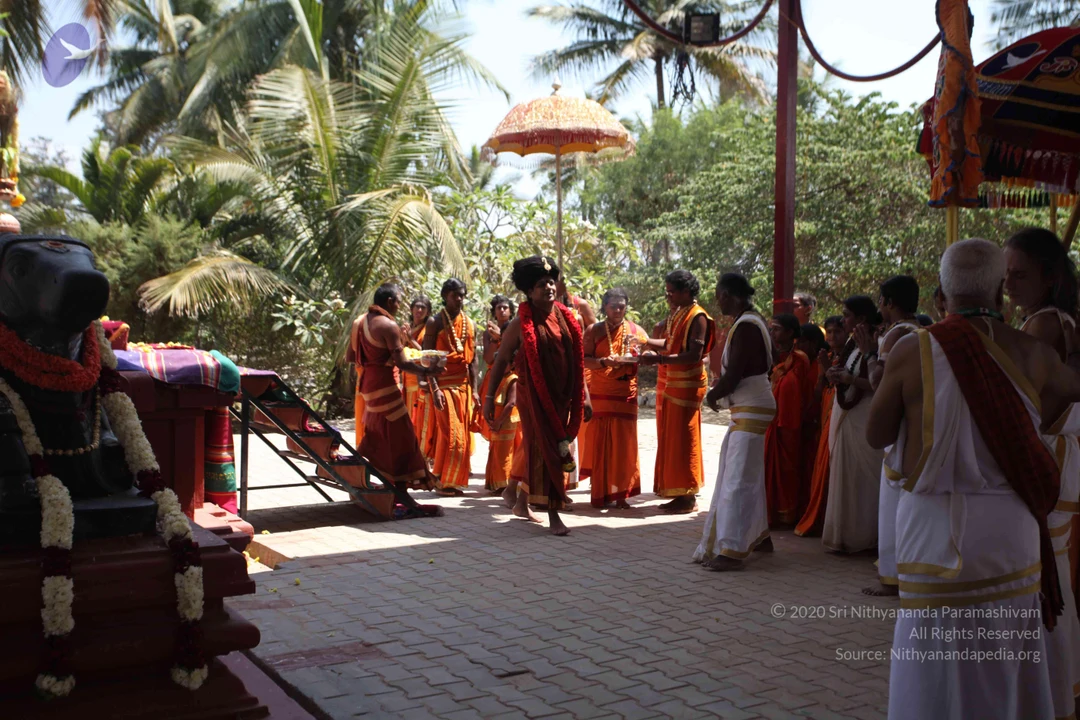
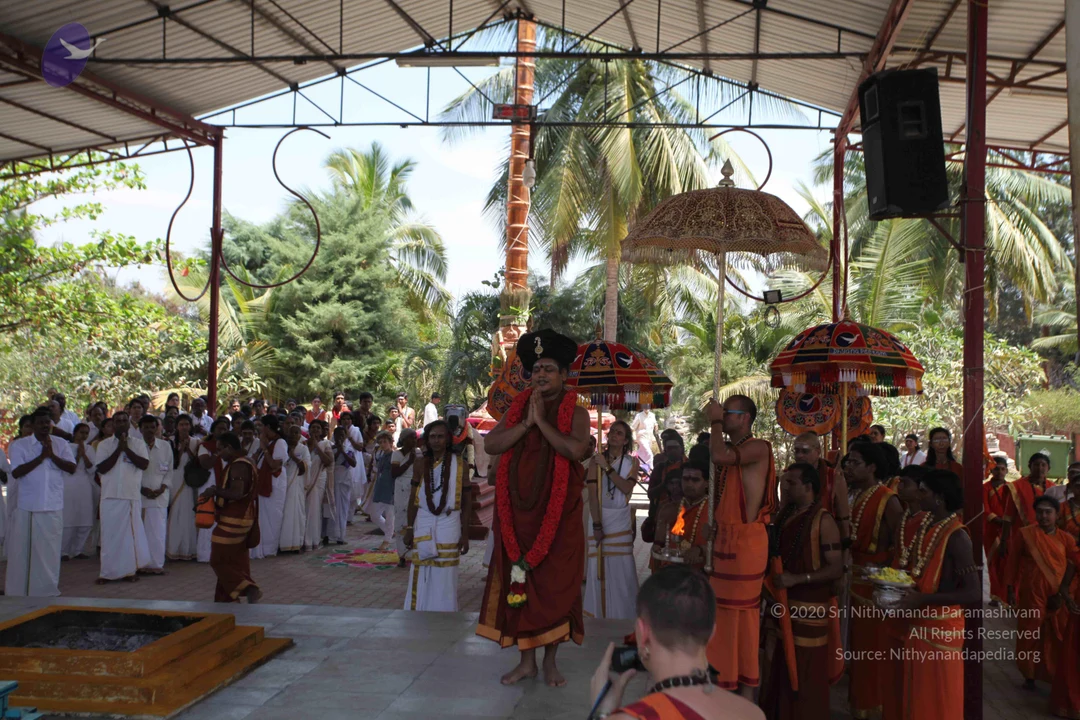
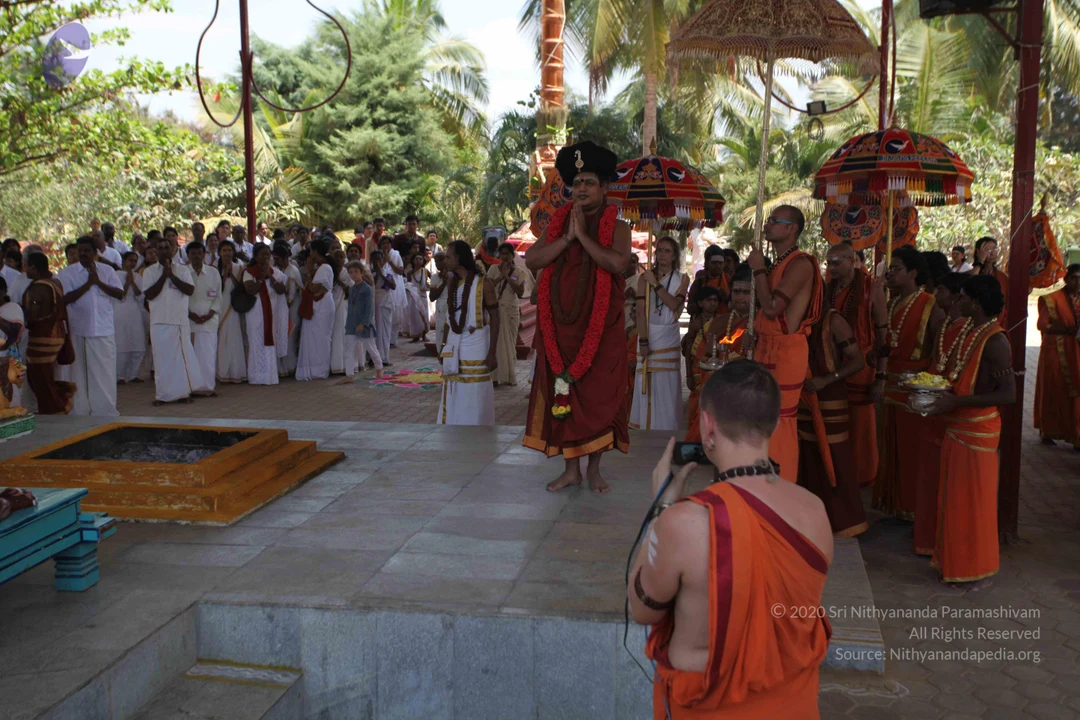
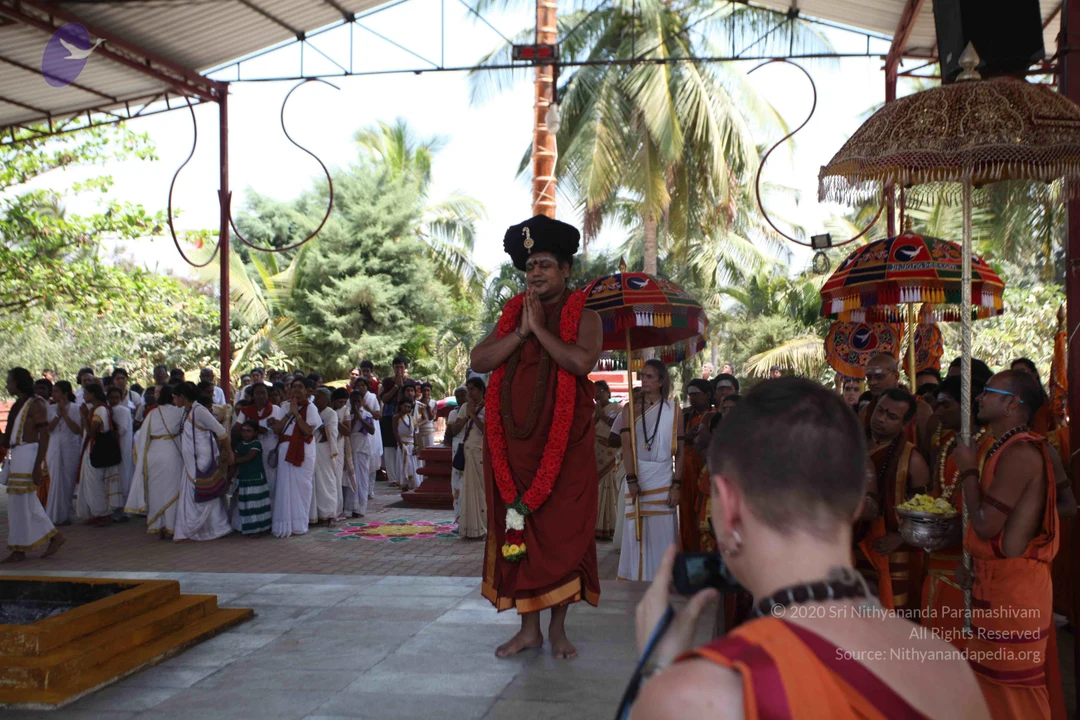
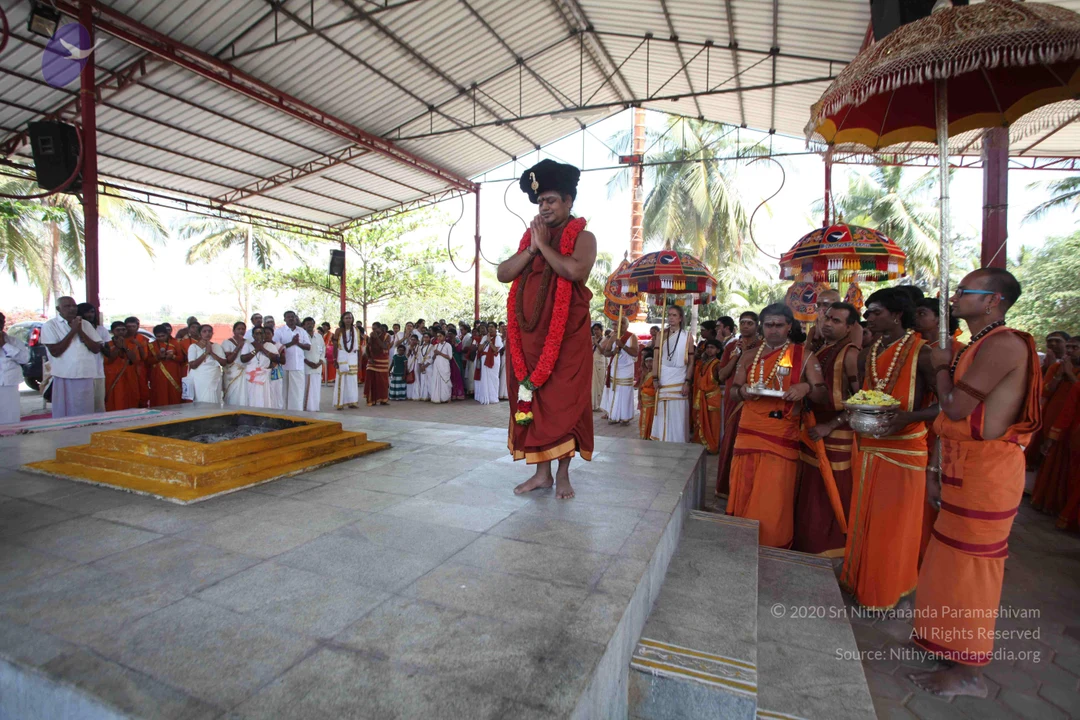
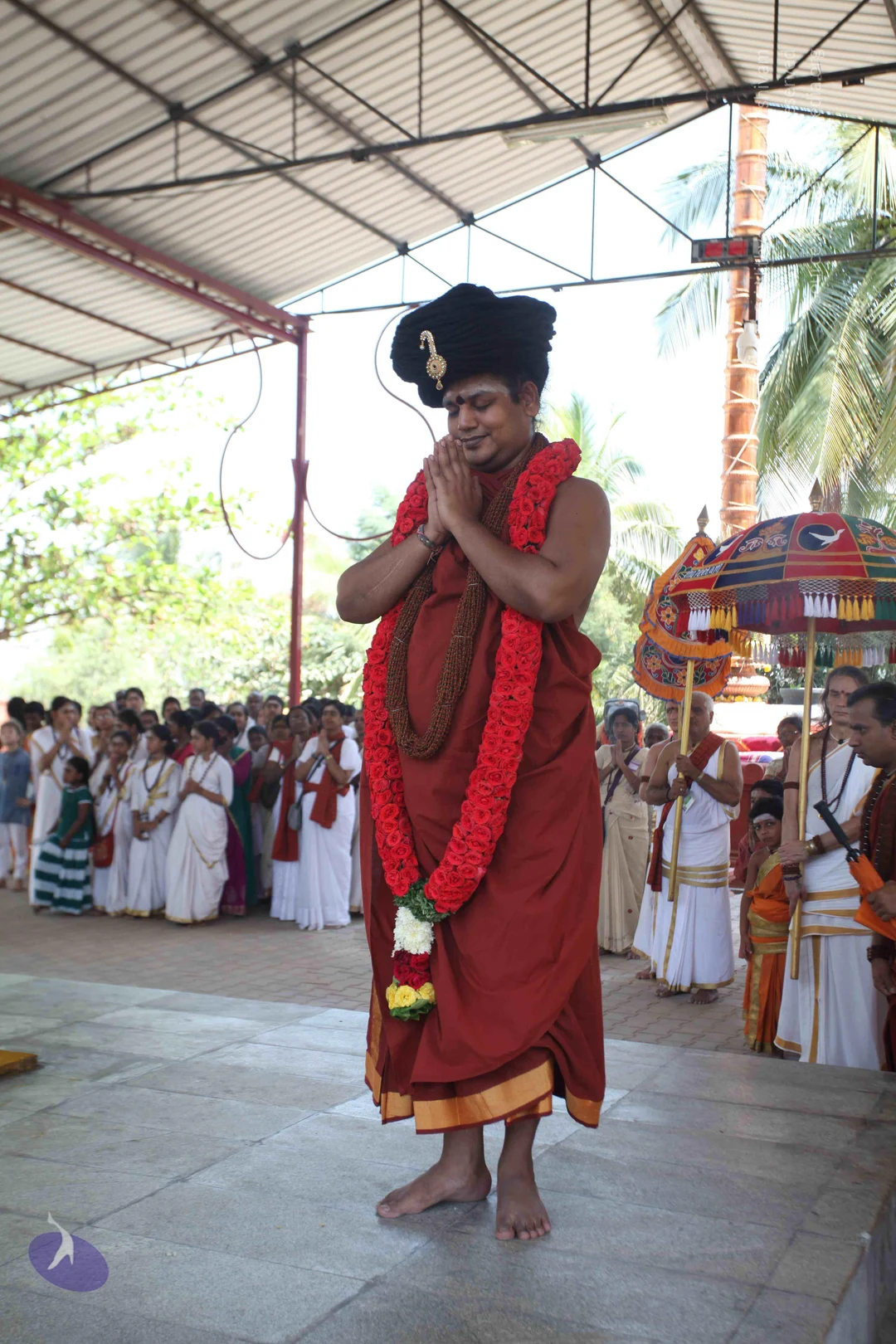
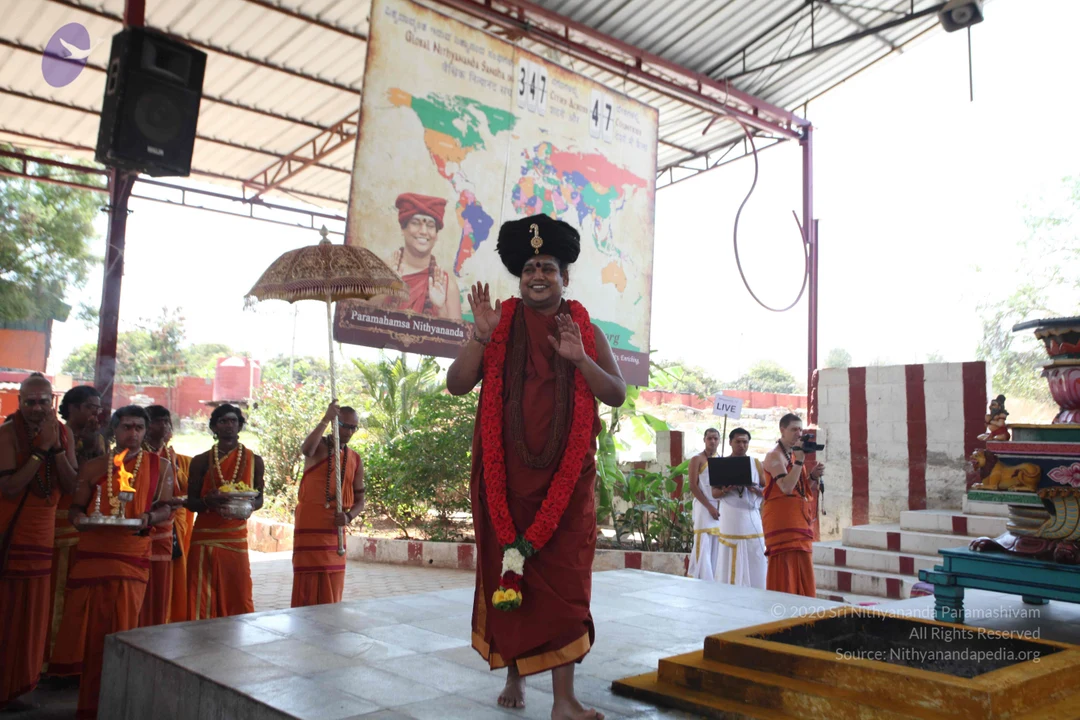
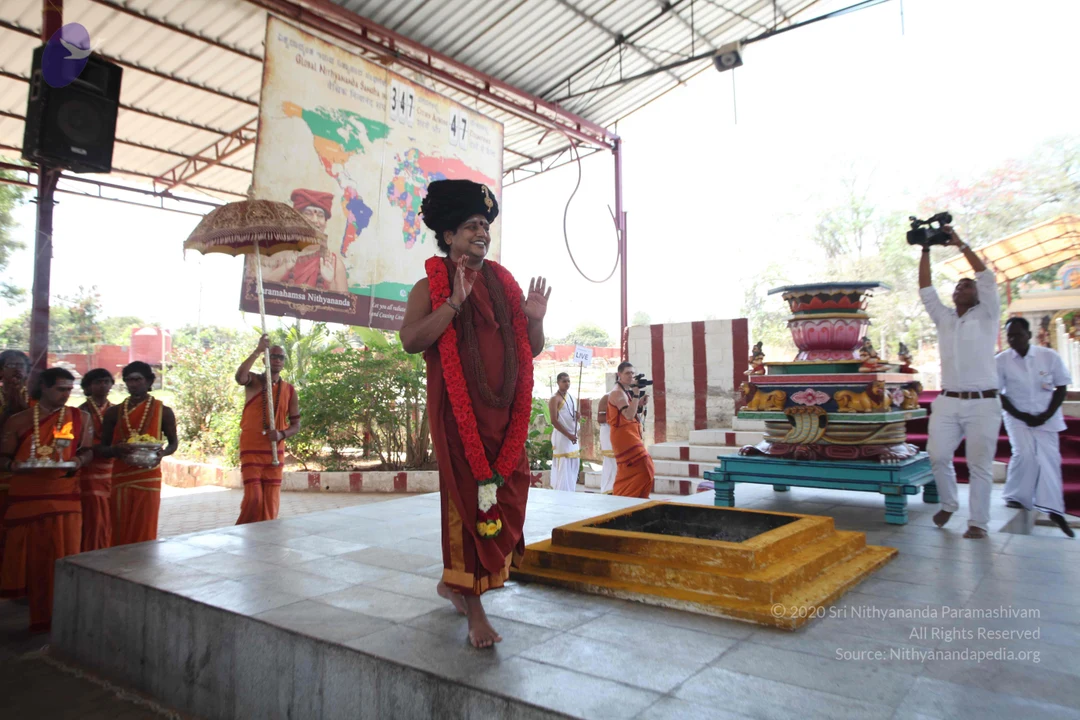
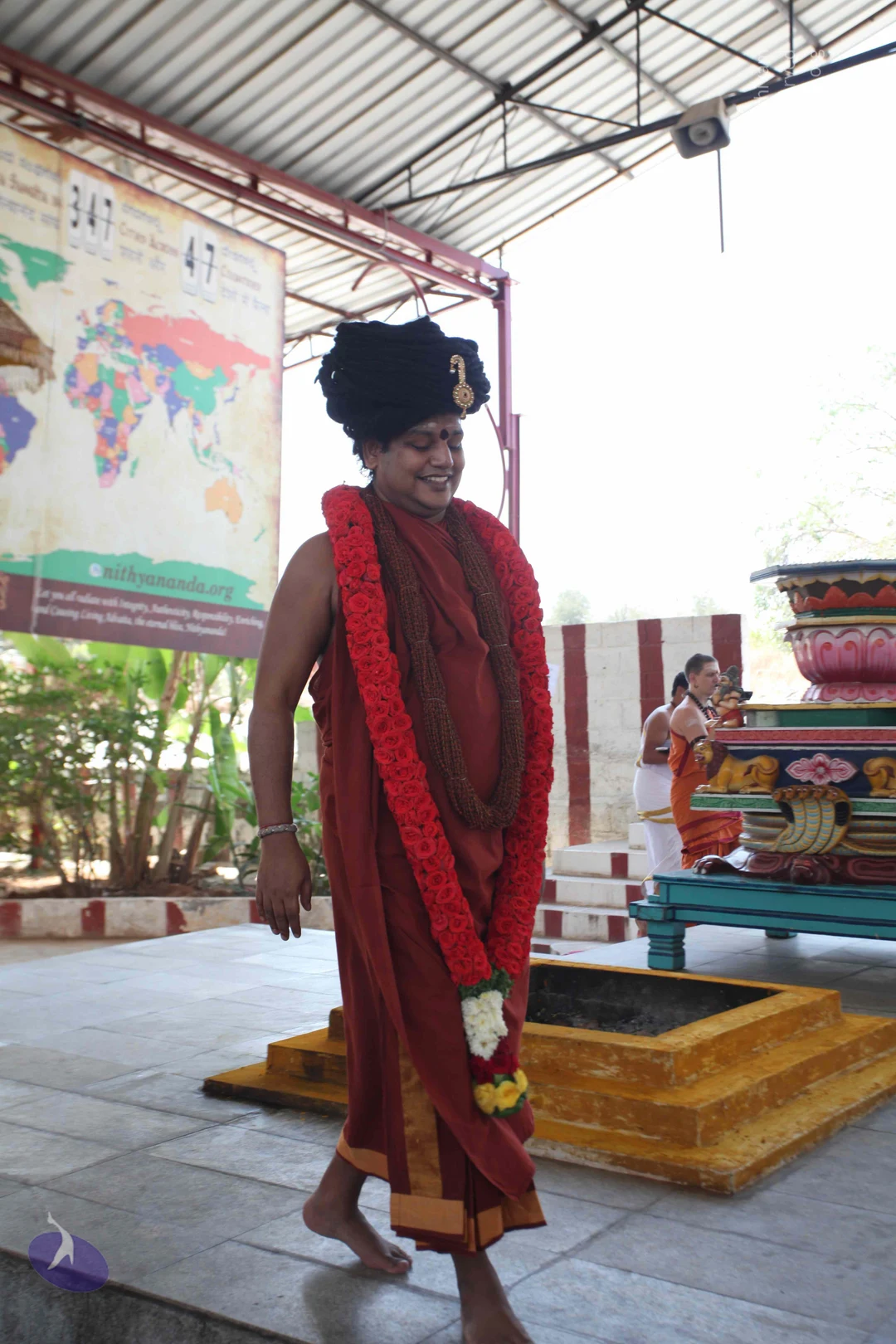
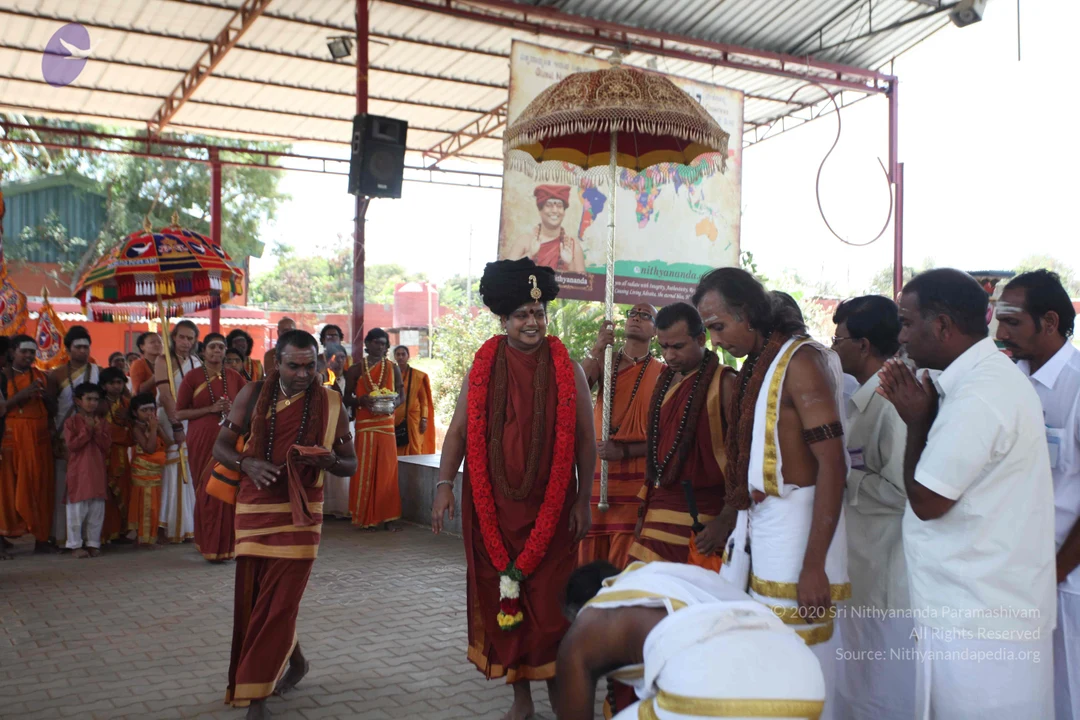
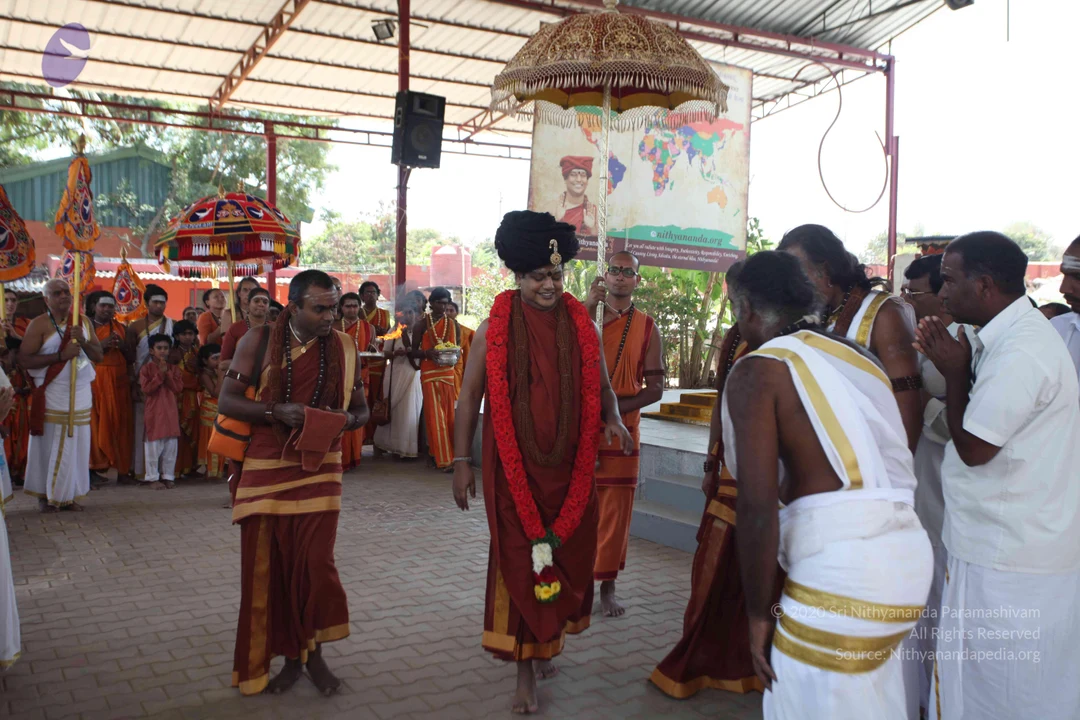
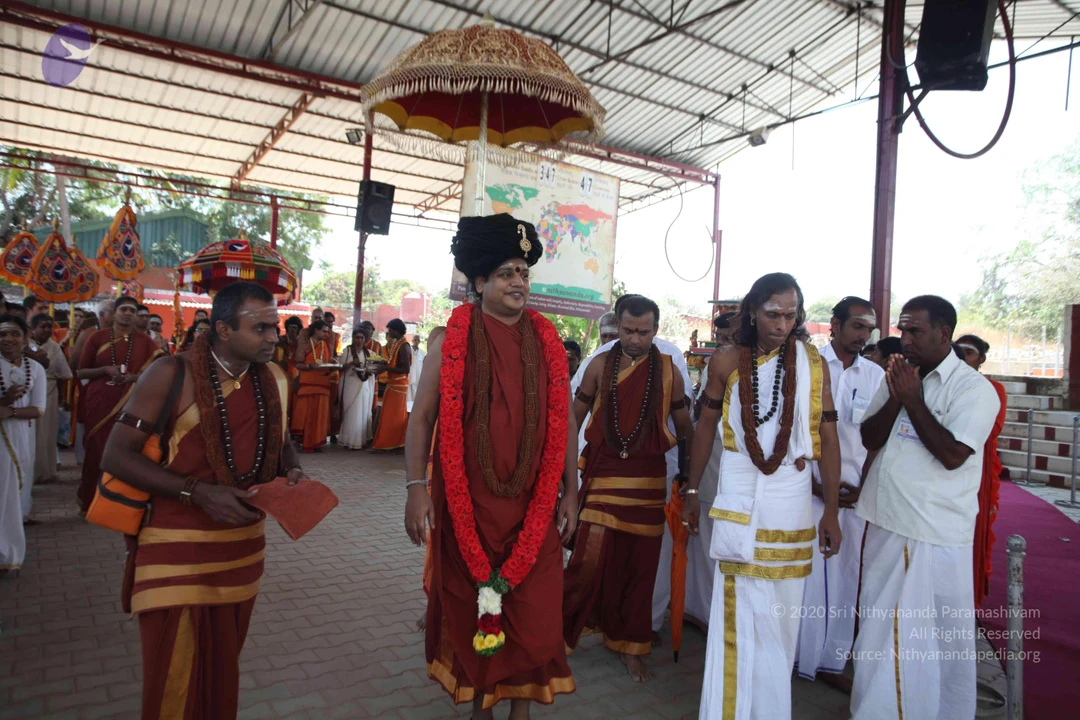
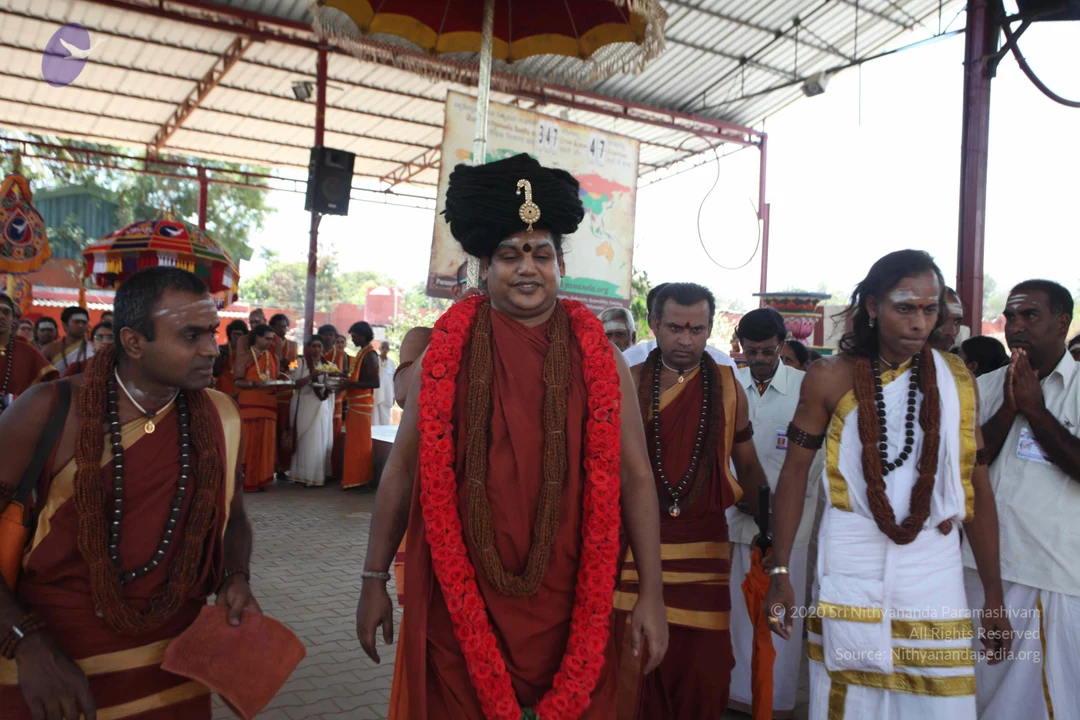
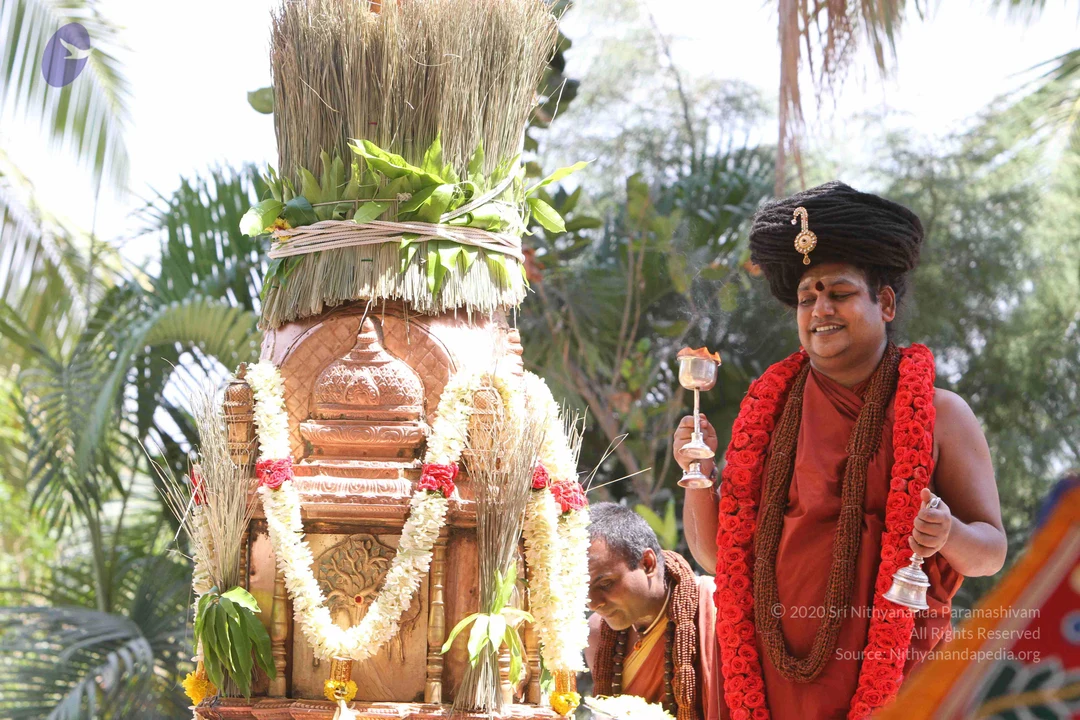
A photograph of a man in a rust-red saffron wrap, with a red rose garland over his shoulders and a brown rudraksha mala at his chest, standing outdoors and gripping a rope with both hands. He wears a tall, voluminous black hair crown topped with a gold ornament and has a red bindi on his forehead. Beside him is a decorated structure with a stepped copper-toned dome, draped with white and red flower garlands and a thatched bundle of straw with green mango leaves tied to its top. Green trees blur in the background. The man's distinctive crown, saffron clothing and rudraksha cues are consistent with a probable Swamiji presence, so he is described as Swamiji (probable) performing a ritual pulling action at the pole.Outdoor temple courtyard with a paved floor and a colourful lotus-shaped kolam rangoli in pink, yellow, red and green. Two men in saffron-red robes walk toward the right; the foreground man wears a black cylindrical headdress, a red and white flower garland and a rudraksha-style necklace, and is held under a gold ornate parasol. The second man carries an orange cloth and wears a dark bead mala. Beside them, a large black stone Nandi bull with red and white garlands sits on a red pedestal. Tall trees and palms fill the background.Outdoor temple courtyard under bright sunlight with palm trees behind. On the left, a large black Shiva linga stands on a red pedestal draped with garlands of red and white flowers. A central figure in a deep red-brown robe with a red flower garland and dark headwear walks forward with an offering plate, while a line of people in saffron-orange dress follow and stand on the paved path. On the right, men in white dhotis with red-bordered shawls and a woman in a white sari stand with hands folded in reverence. A saffron and orange parasol and a decorated red canopy frame the scene.

March 01 2016

Original wiki page
Contents

Title

Kenopanishad Introduction - Your Thought Currents Are Irrelevant

Narration

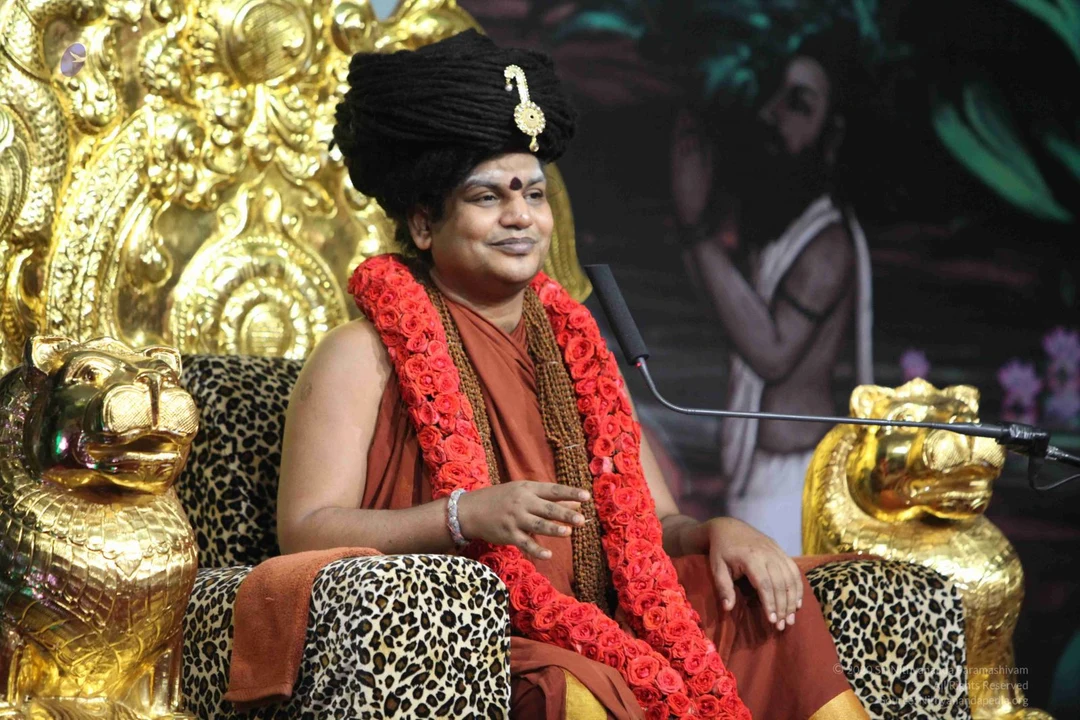
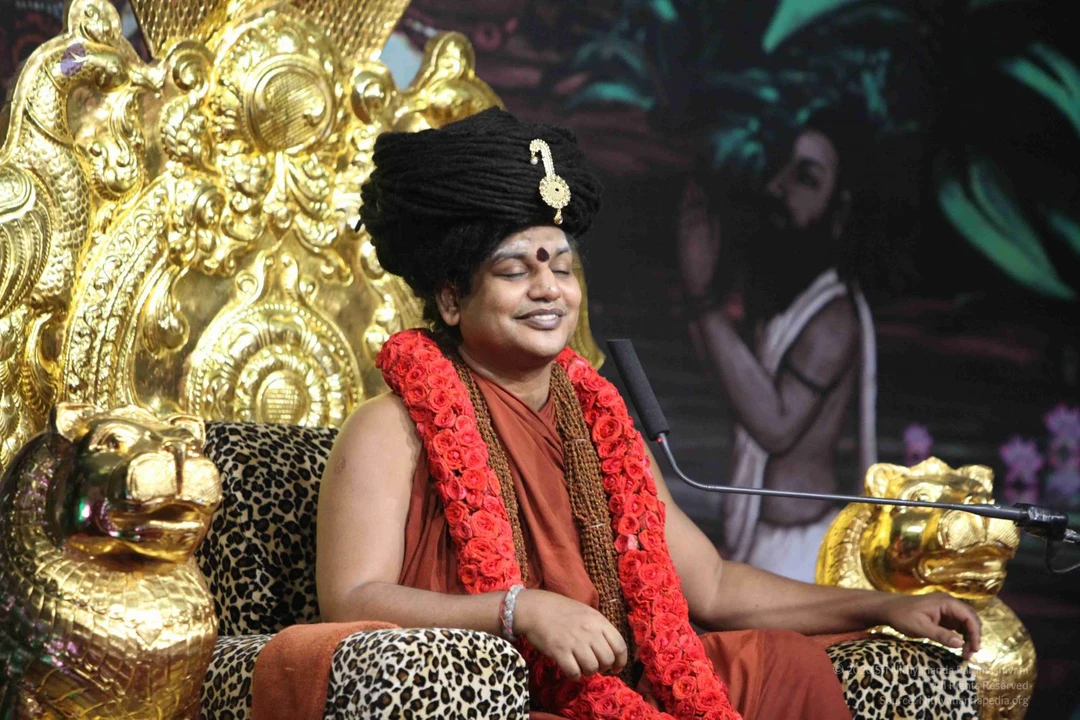
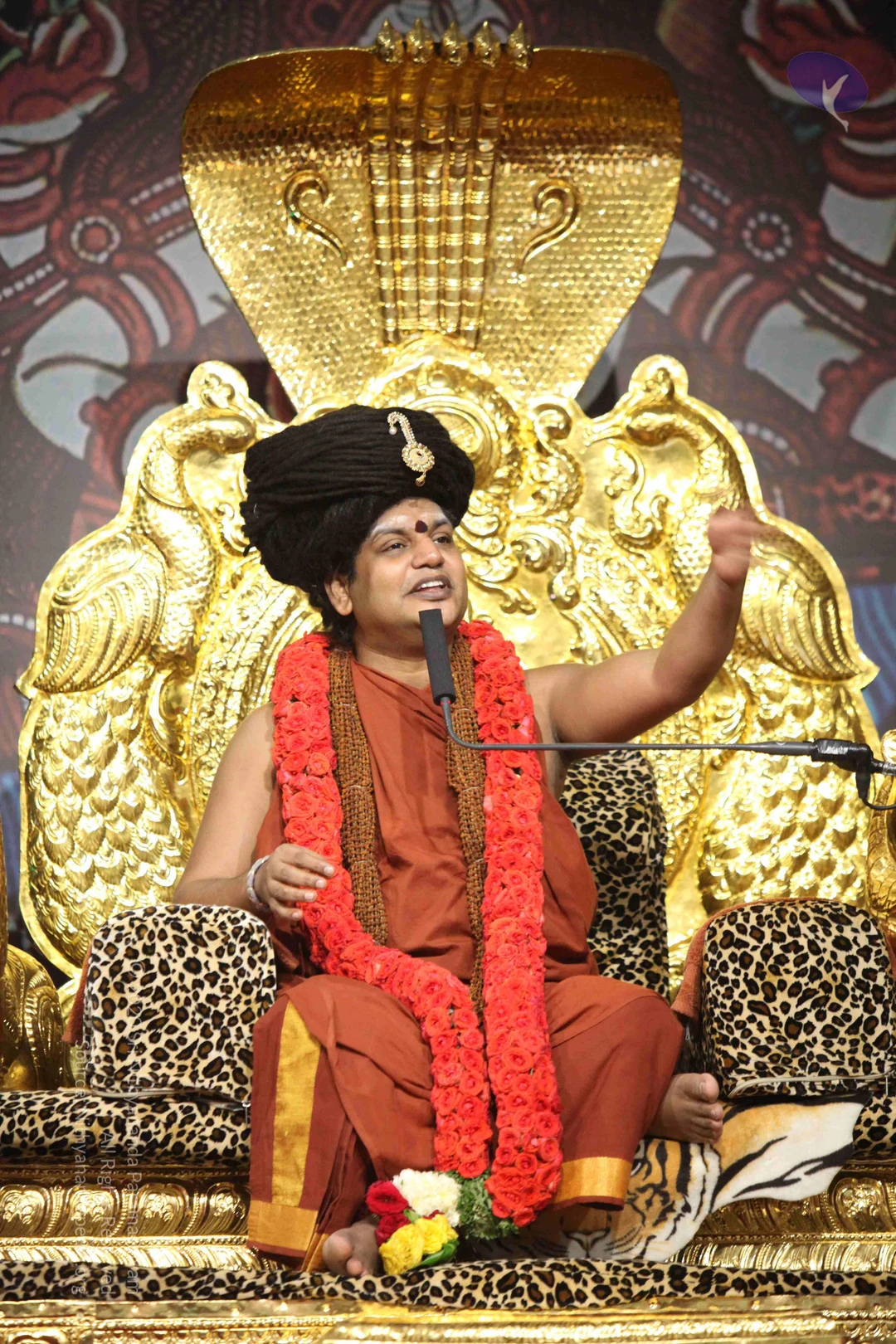
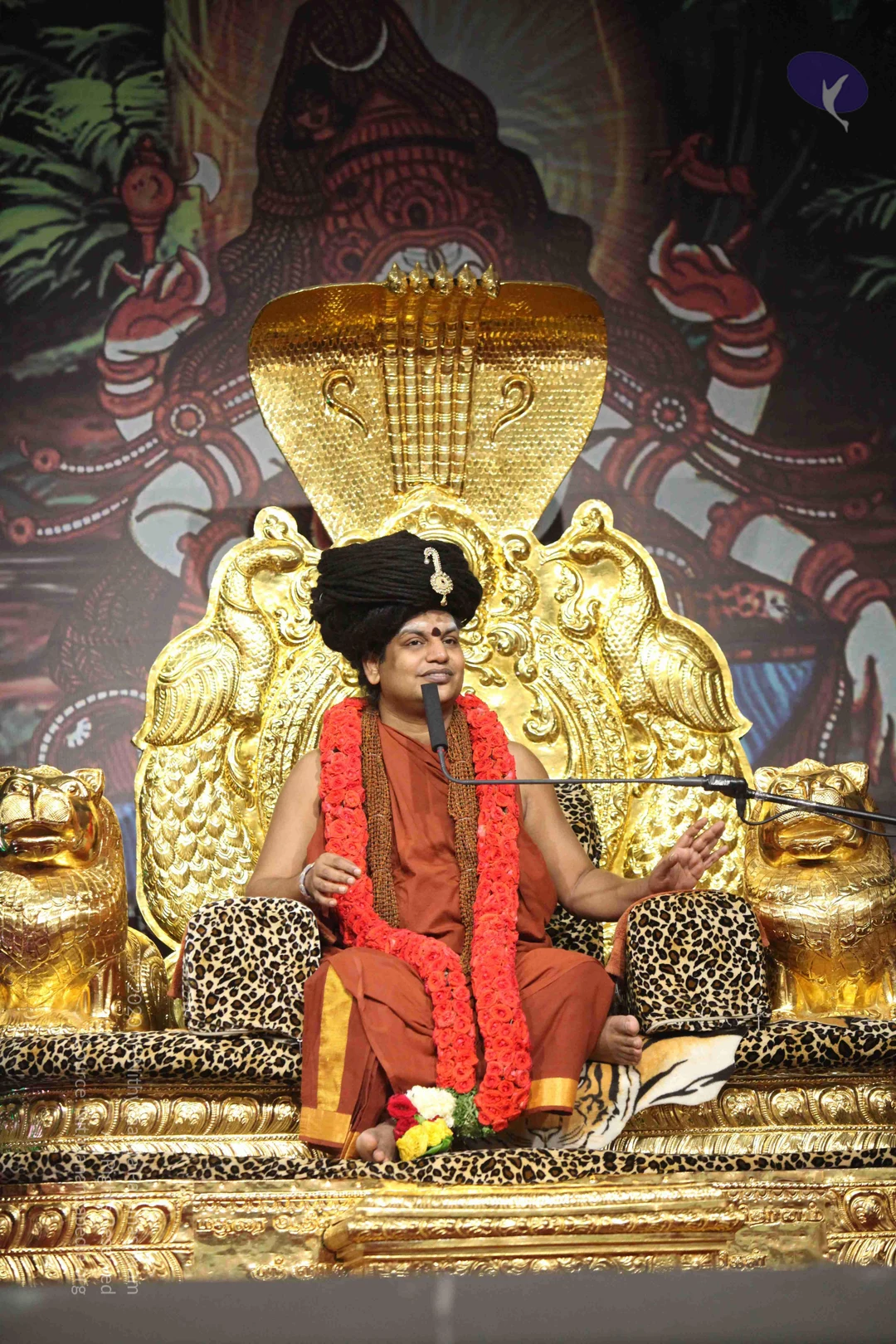
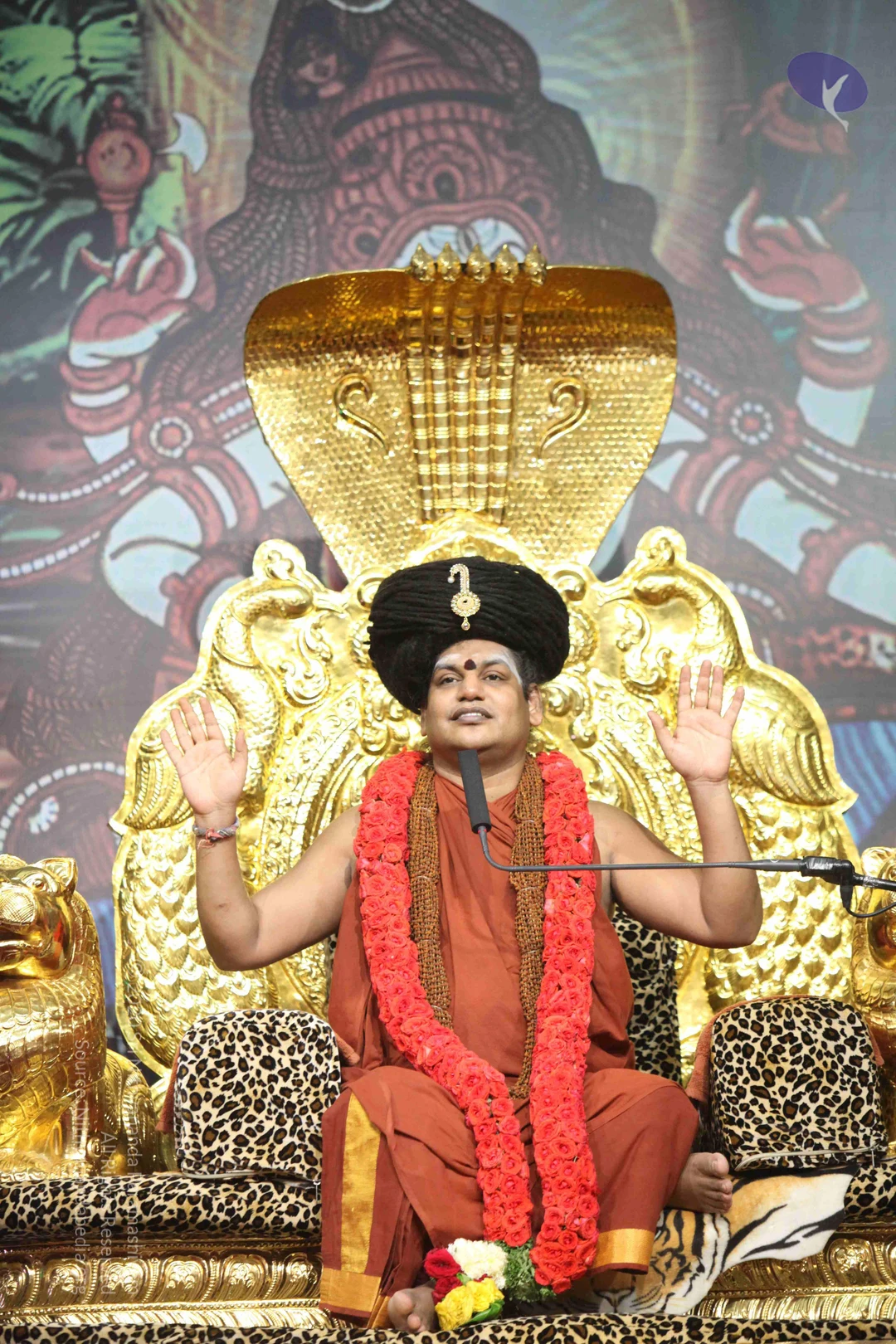
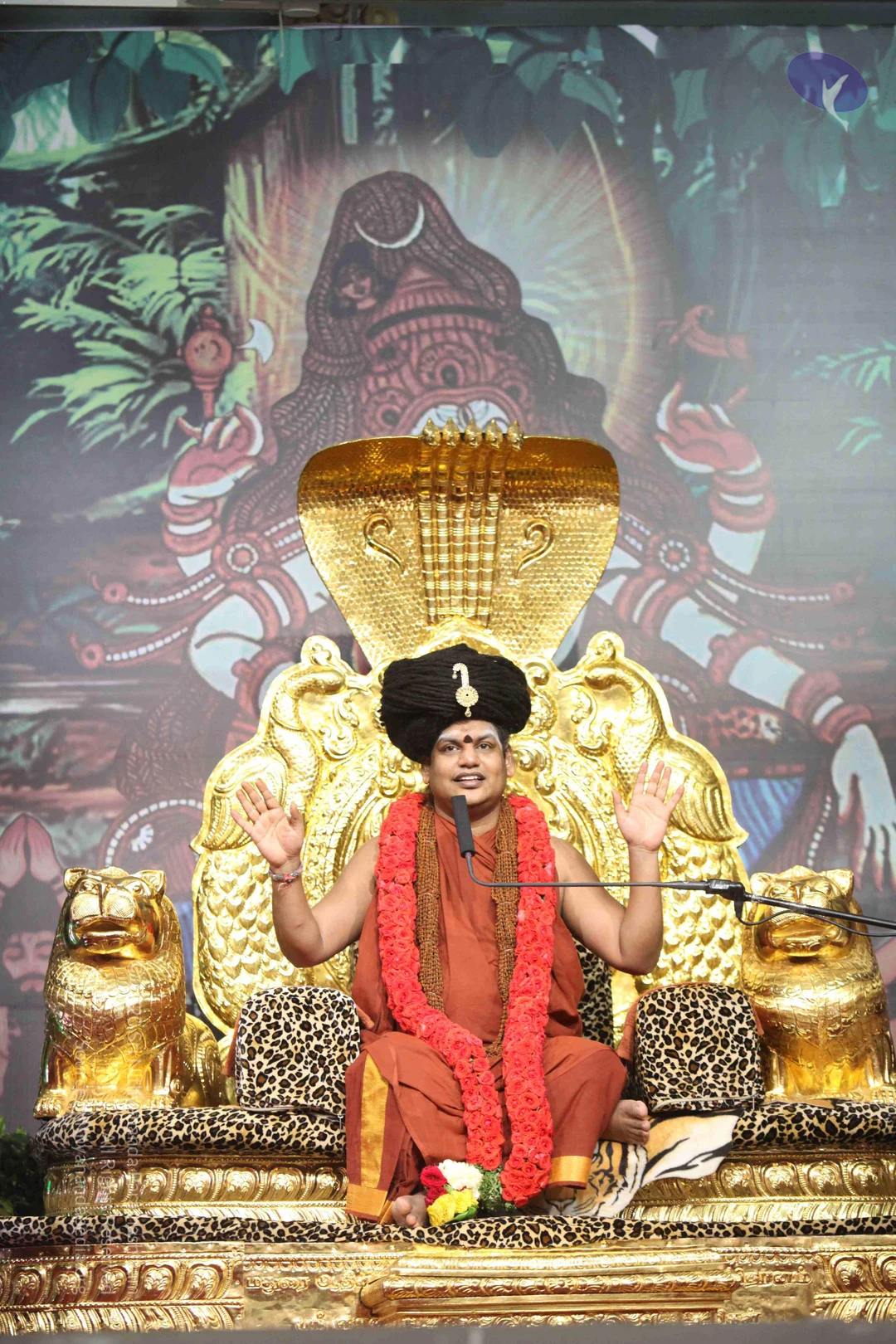
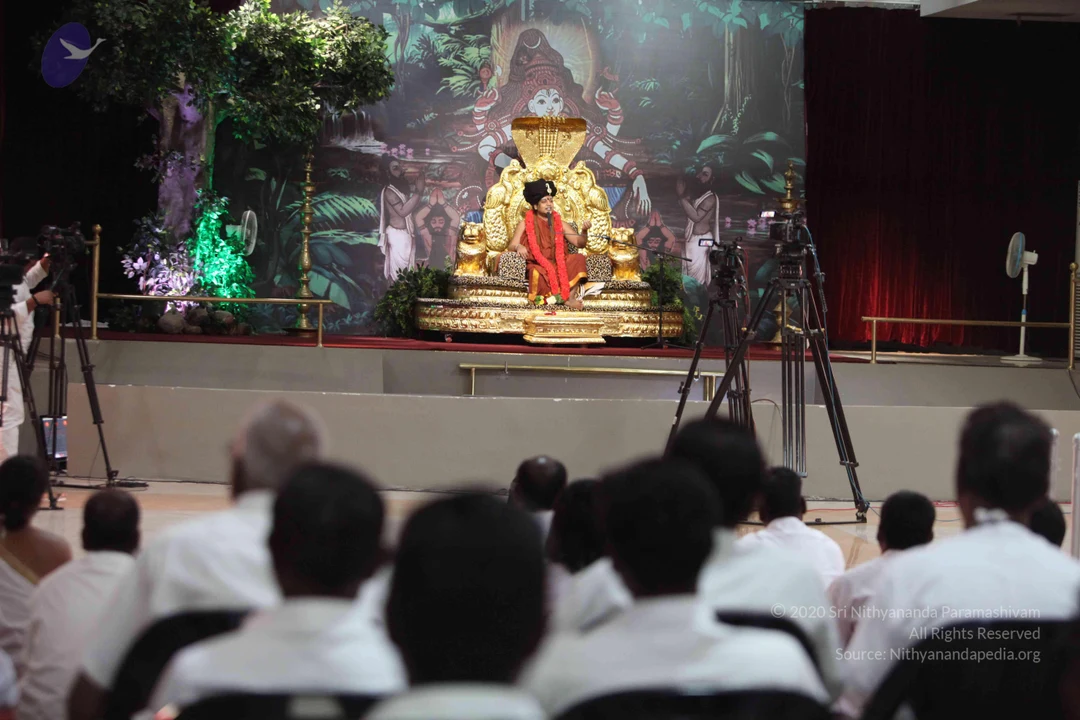
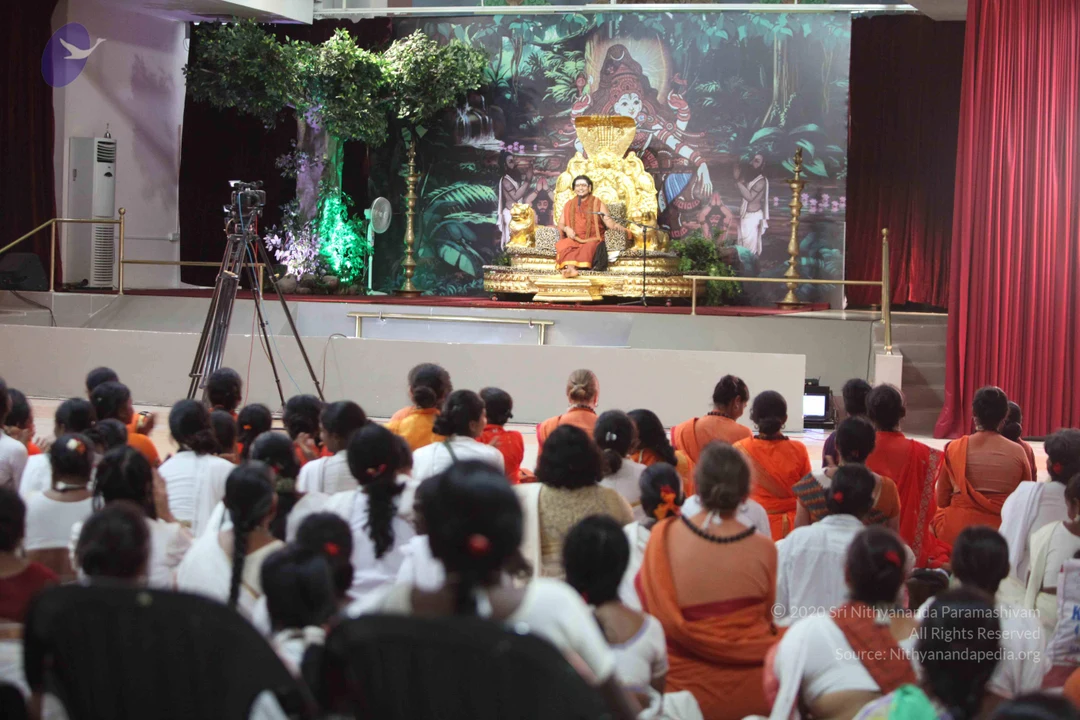
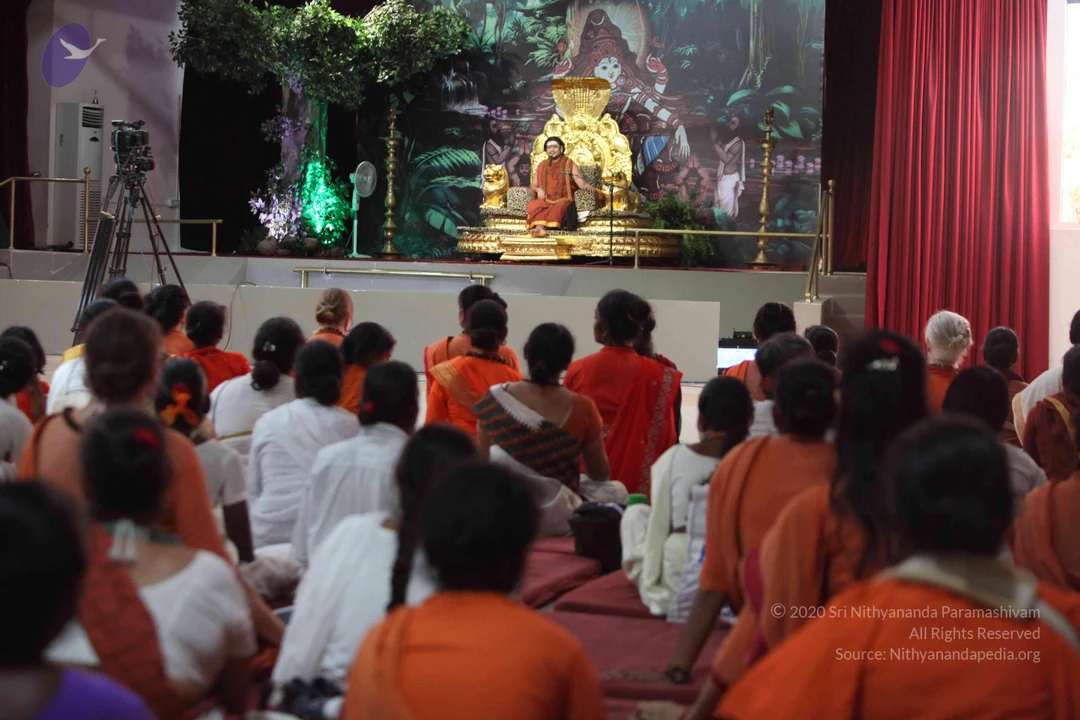
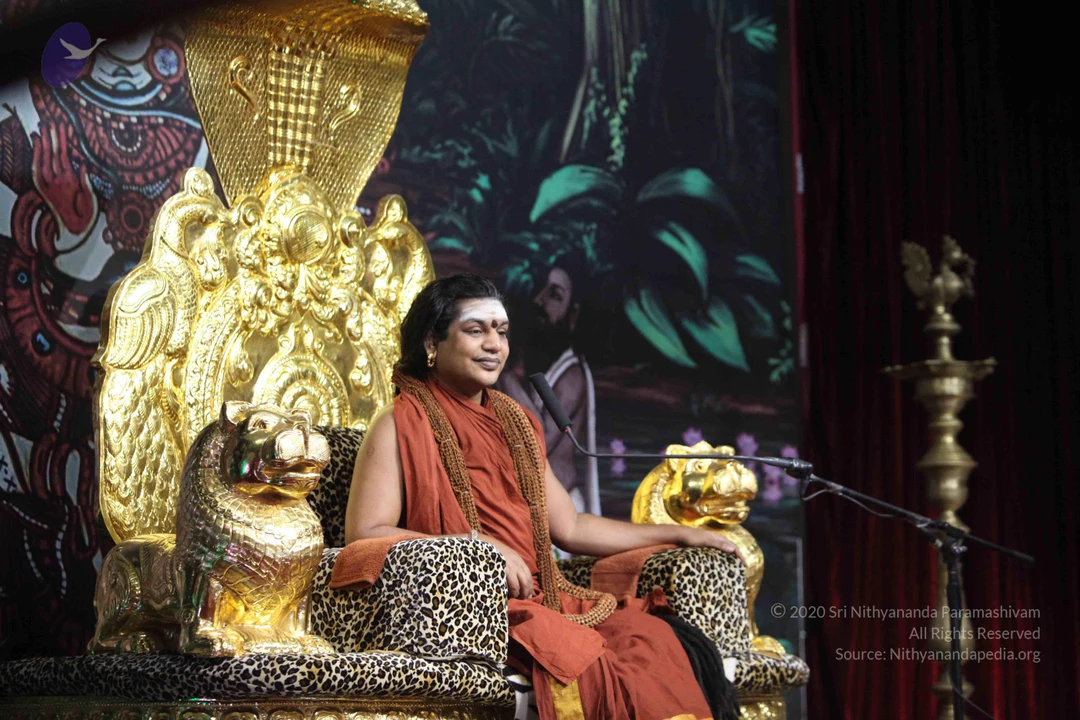
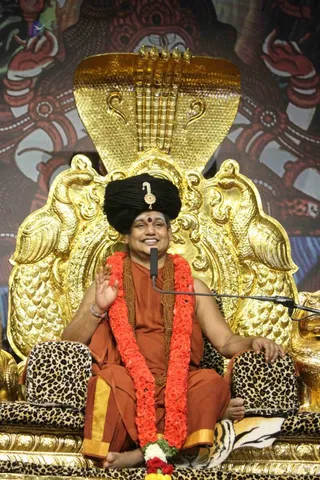
Taking the introduction to Kenopanishad forward, in the Nithya Satsang (1 March 2016), H.H. Paramahamsa Nithyananda explains about thought currents. The higher cosmic thought current of Kenopanishad, which enquires – "By Whom Am I? By Whom Everything?" can only be explored when our daily thought currents do not disturb us. Before entering into Kenopanishad to explore the Source of the Universe, Paramahamsa Nthyananda prepares us in this satsang, with the truth that — "You must understand your thought currents are not you, they do not affect you." He urges us to contemplate on and carry the thought current of Shivoham (I am Shiva).

Link to Video:

Kenopanishad Introduction - Your Thought Currents Are Irrelevant

VideoAudio

Transcript

(0:13)

|| nithyānandeśvara samārambhām nithyānandeśvari madhyamām | asmat ācārya paryantām vande guru paramparām ||

I welcome all of you with My love and respects.

(1:08)

I’ll continue to explain the thought current of Kenopanishad. Before entering into the verses of Kenopanishad…. Understand. One of the most important thought current Kenopanishad is trying to infuse in us – Remembering and understanding, your Being is not any way disturbed by your thought currents. Listen. ‘Who am I’ is the thought current of Ishavasya Upanishad. From whom everything, by whom everything – Keneshitam – ‘by whom everything’- is the thought current of Kenopanishad. Listen.

‘Who am I’ is the thought current of Ishavasya Upanishad. ‘By whom everything’ is the thought current of Kenopanishad.

Only when there is no disturbance by your day to day thought currents, you will explore the source of the Universe. Before entering into the Kenopanishad, you need to understand, your thought currents does not affect you. Your thought currents are not you. Anybody who tries to enter into spiritual life, first thing they try is controlling their thought current, trying to be without thoughts or reducing thoughts. All these are okay in the initial level. But sooner or later you will realize, not only you can’t control your thoughts, you don’t need to control your thoughts. And your thoughts are nothing but your food, just simple food. Change the food - your thoughts will become different. Just stop the spice. The spice in your words will disappear. Stop the spices intake, the spicyness in your words will disappear, because thought current does not need to be controlled and it cannot be controlled. It is not worthy of even getting controlled.

That is why Mahadeva does not define Yoga as ‘Yogah chitta vritti nirodhah’. No! Why Patanjali became so popular in the West, you know? West is a war based civilization. All the time war - war - war - war - war! So when Patanjali says in the first statement, “Yogah chitta vritti nirodhah’ - Yoga is cessation of mind, now they have one more war, come on.... they take it up! That is way the Patanjali became very popular in the West. Patanjali is known as father of Yoga. I am not disrespecting Patanjali. If Patanjali is father of Yoga, Mahadeva is godfather of Yoga. Understand, Godfather Mahadeva describes Yoga as, “Being established in your Source, not bothered about the thought currents and mood swings, comes and goes.”

Listen. Being in the source – just remembering what is your Being, core of your Being, all of us are Shivoham. We are Mahadeva. Analyze this, intra-analyze this, whatever you understand as Shivoham, that understanding should grow stronger and stronger in you, other than that understanding, everything else - mood swings, ups and downs, good and bad, right and wrong, they do not have any power over you. They do not have any influence over you. They do not have any power over you, they do not have influence over you. Understanding your thought currents does not affect you, realizing your thought currents have no say over you, put all your energy and attention to grow the understanding of Shivoham, not to kill, reduce, divert your thought currents. If you are spending all your energy on reducing, killing, diverting your thought currents - you are fool! ... and you are fooling around. Listen. If you are trying to reduce, subdue, suppress, divert your thought currents, you are fool and you are fooling around. There is not a single Being in the Universe, who conquered depression. There are only Beings, who made depression irrelevant to them, redundant.

(8:17)

Understand. Depression should become irrelevant to you. Make the depression redundant, irrelevant. You can’t conquer it. You can’t conquer your thought current. Because only by trying to kill you are even recreating it. You think, yesterday you had a depression and today you have to be more powerful, angry with yourself and really, really control and suppress and manage you to be out of depression. By the time you generate the anger, energy, fire, steam and pumping yourself, that is the moment you even create the enemy who was not there now. You invoke him, call him for fight.... then feel defeated! Thought currents have no continuity. If there is a continuity, by now you would have been established in some thought... continuous thought current, for which you are struggling for years. Everyone is trying to establish themself in a very smooth, sweet, soft, graceful, beautiful thought current and always you repent the thought current you are trying to establish is not happening and the thought current you are trying to kill, is more and more intensely happening. Listen. Thought currents are irrelevant. Thought currents are irrelevant. Thought currents are irrelevant. That’s the essence of today’s satsang.

Allow intra-analyzing of Shivoham to happen...allow intra-analyzing of Shuddhadvaitam to happen.... but thought currents are irrelevant... the irrelevant thought currents. If you understand, you feeling excited or depressed, high or low, irrelevant, and grow the thought current of Shivoham, that is the only way you will have a inner space to explore “from whom everything, by whom everything” - Keneshitam. Kena Upanishad’s important one line is ‘Keneshitam’ - “From whom everything, by whom everything.” You can only make depression irrelevant to you; you can never conquer, you can only make depression redundant to you. You need to understand this truth. Contemplate on this one thought current today. I am going to give you few meditation processes, to prepare yourself for Shuddhadvaitam, to receive the space and powers of Mahadeva in Kumbha Mela. Today, I was told, whole Gurukul is coming ☺

(12:36)

Preparing your Being to receive the experience of Shuddhadvaitam, the first step is - making your thought currents irrelevant to you. Making you realize, your thought currents are irrelevant to you. Actually to get somebody out of depression, all you need is little Kaduka Podi, nothing else. The whole depression which West is fighting left and right, with tooth and nail, drugs and alcohol - little Haritaki powder - over! The toxins will leave the system, you will be worrying what to be depressed about! “What is this? Even depression has been taken away from me.” Depression will become irrelevant to you, redundant. That’s the first step... so that the thought current of Shivoham, the intra-analyzing of Shivoham can start happening in you. That will make sure, the inner space and powers of Mahadeva starts expressing in you. That’s the best way to prepare yourself for Shuddhadvaitam in Kumbha Mela. That’s the best way you can prepare yourself for Shuddhadvaitam. So get ready for Shuddhadvaitam. Essence of today’s satsang - “Your thought currents are irrelevant.”

(14:52)

With this I bless you all. Let you all radiate with Integrity, Authenticity, Responsibility, Enriching, Causing, Living Shuddhadvaita Saivam, the Eternal Bliss - Nithyananda.

Thank you. Be Blissful.

(15:35)

Photos

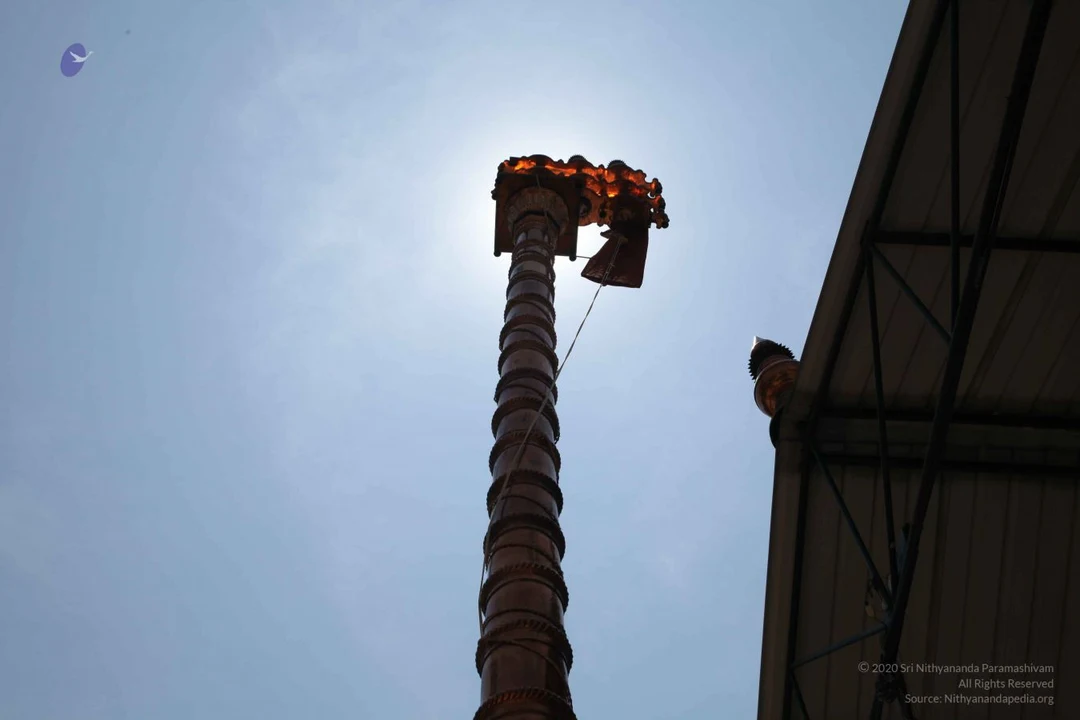
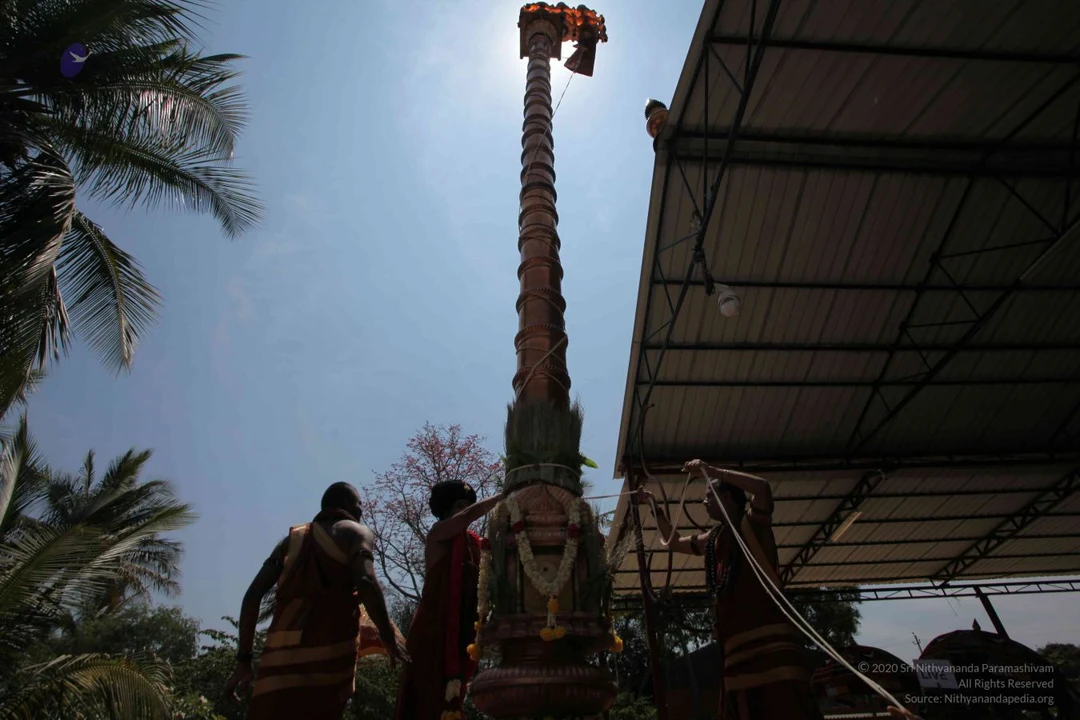
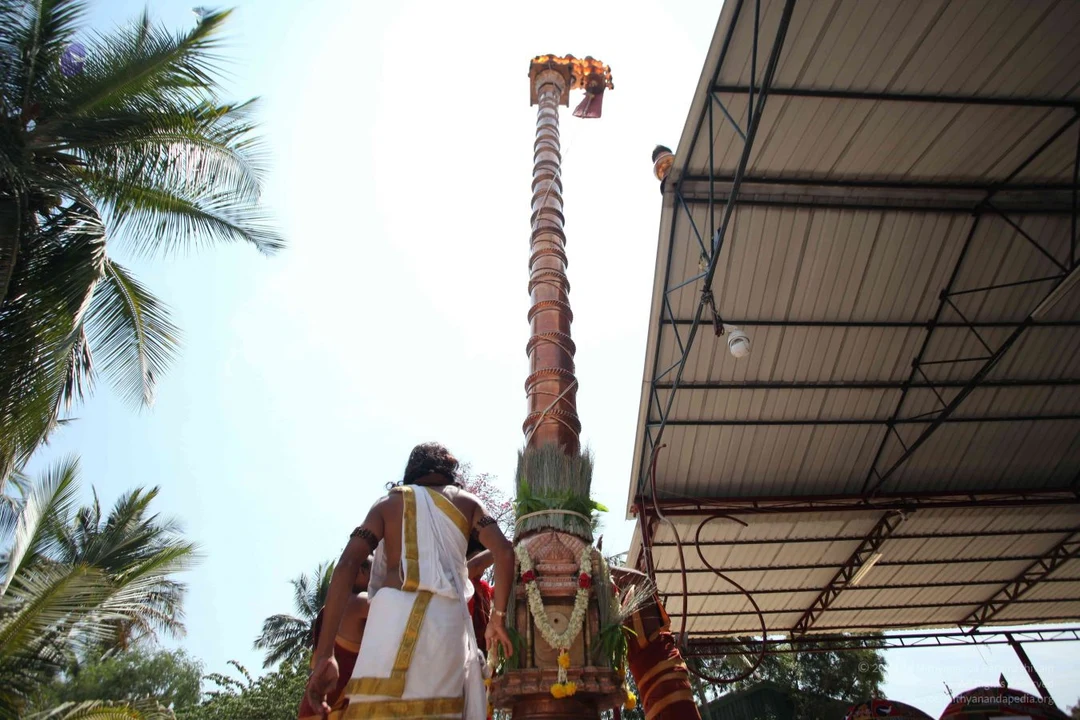
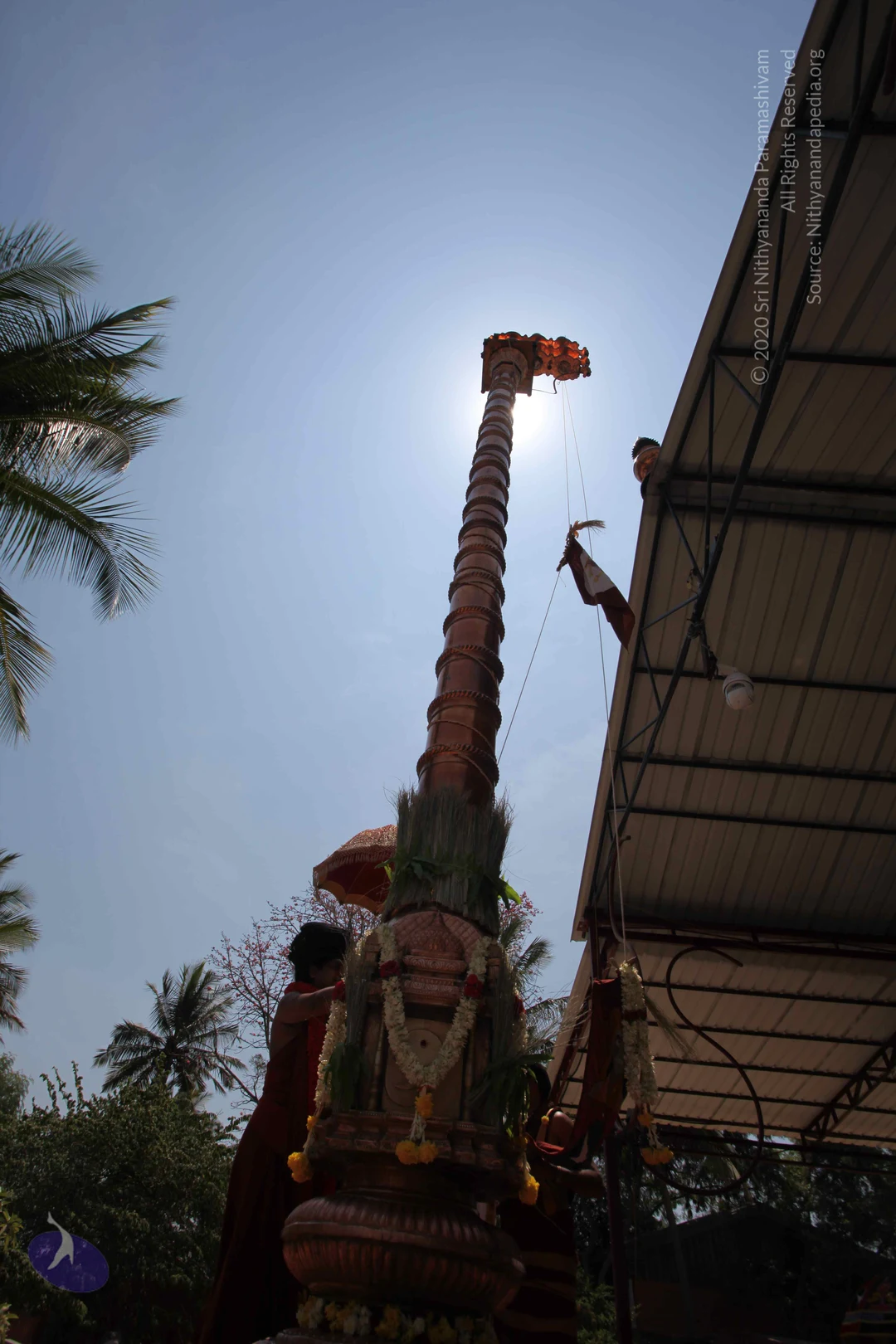
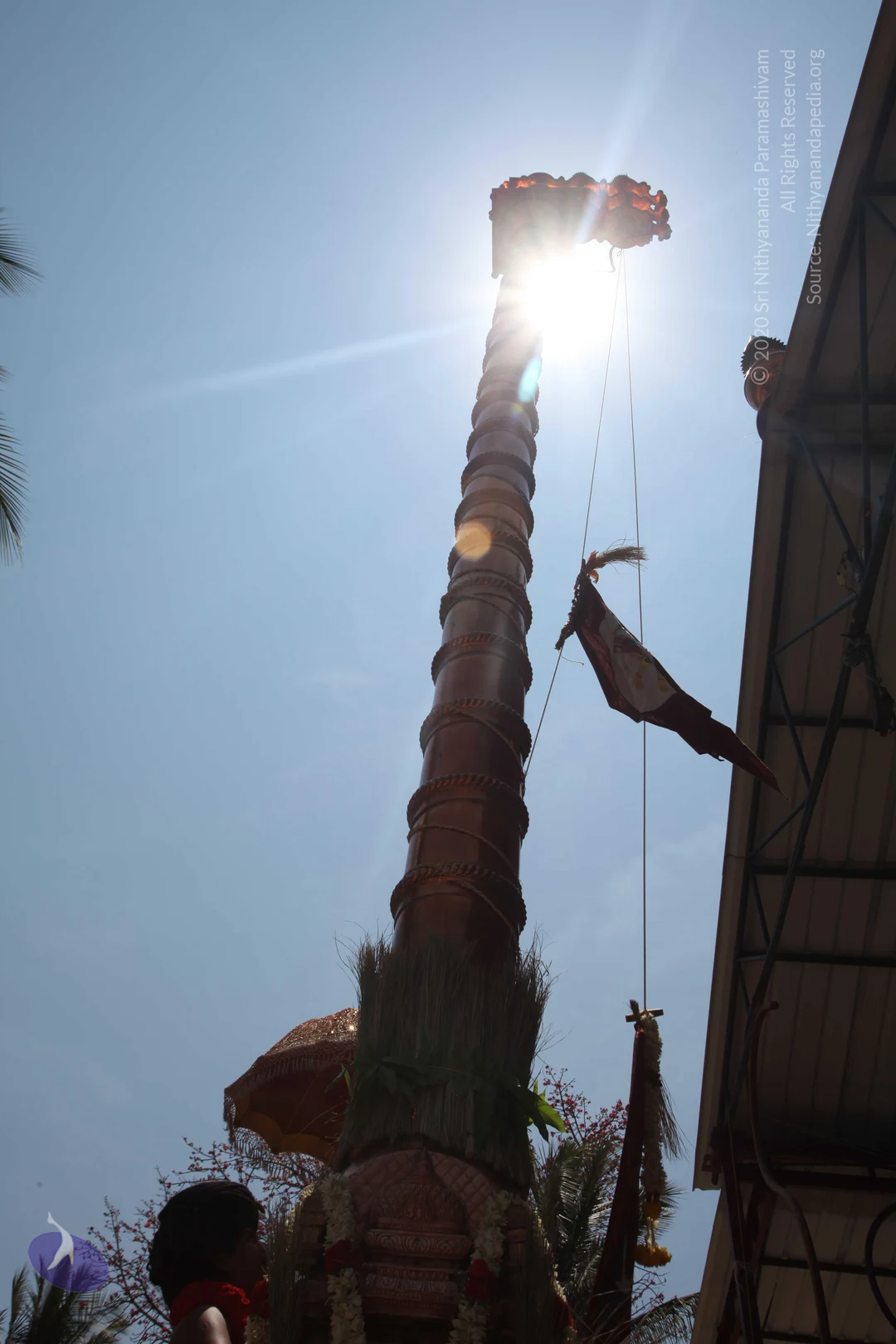
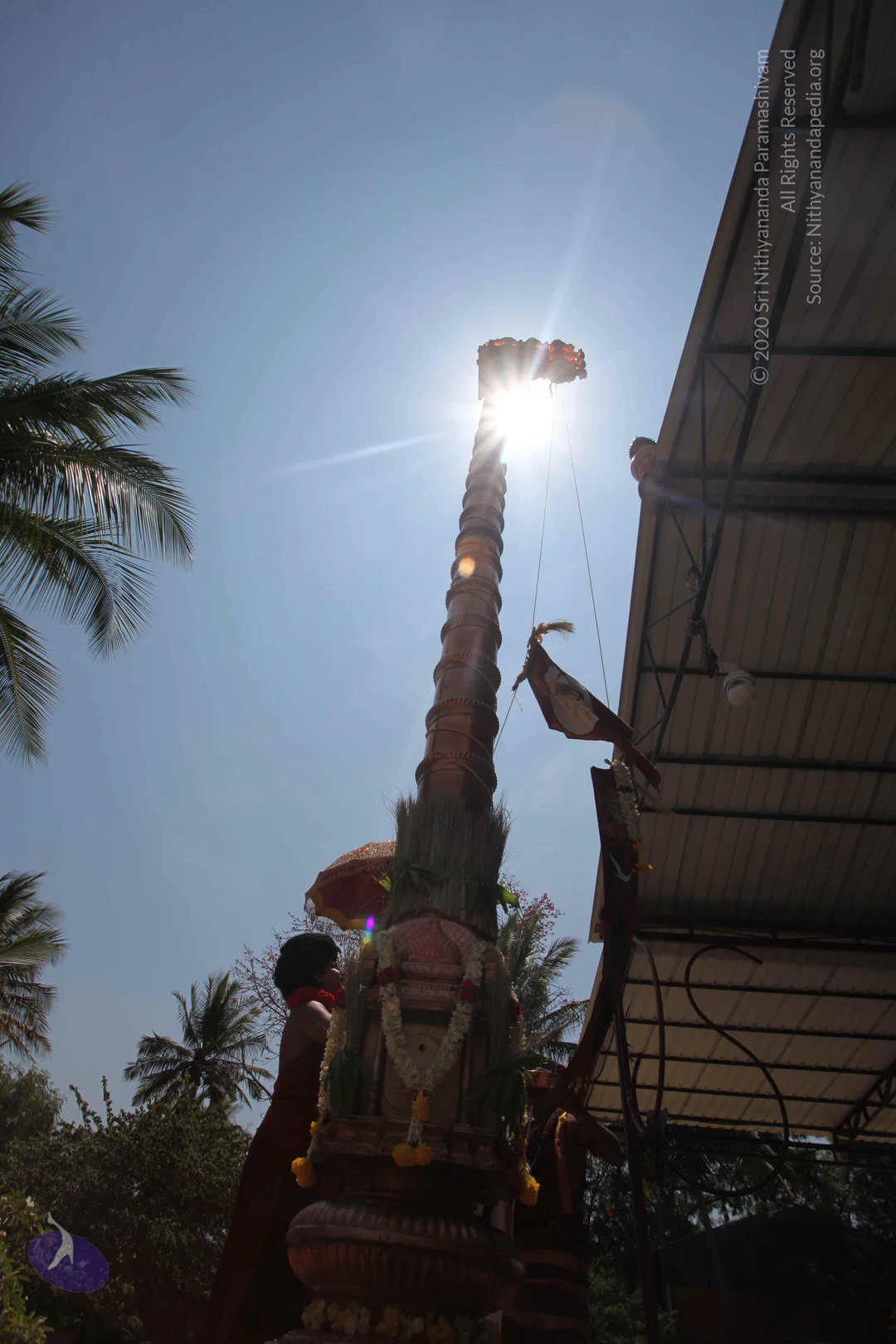
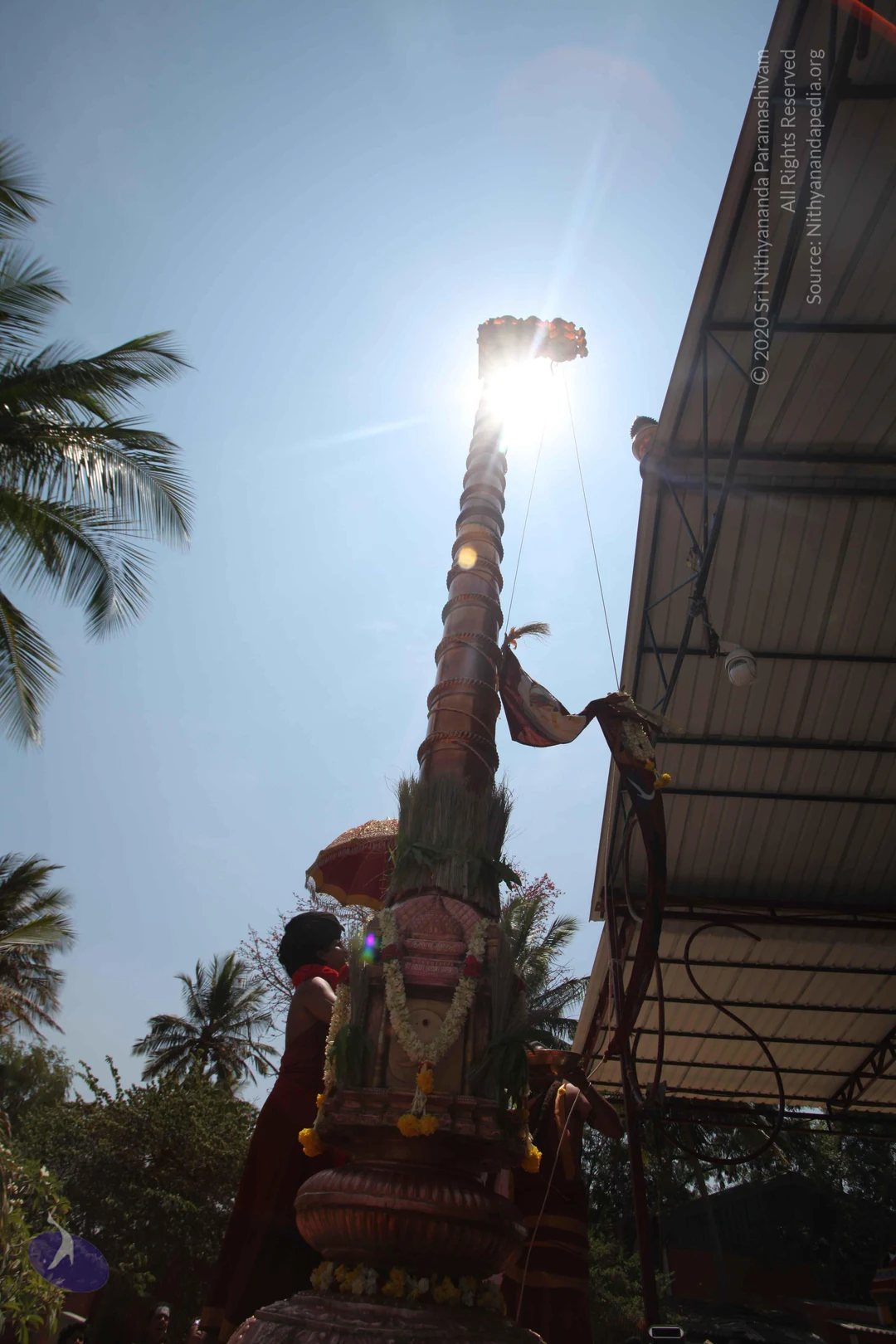
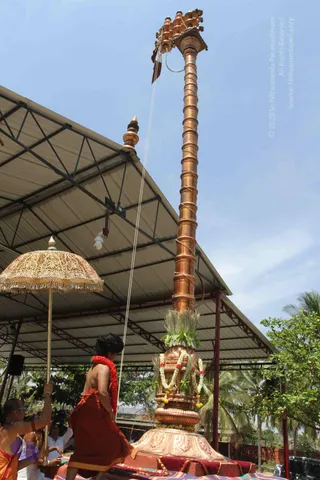
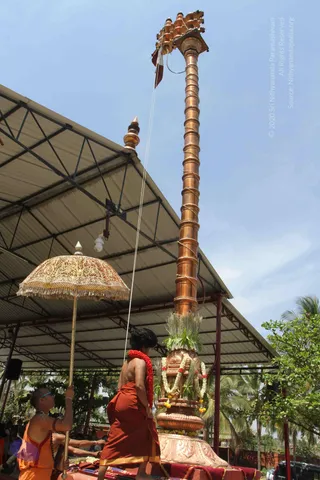
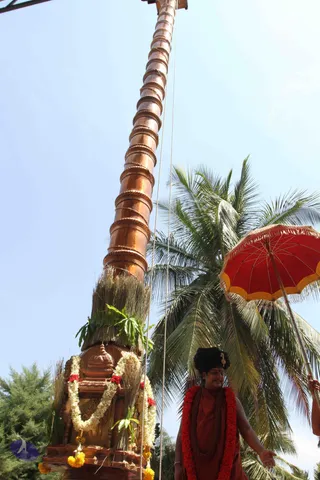
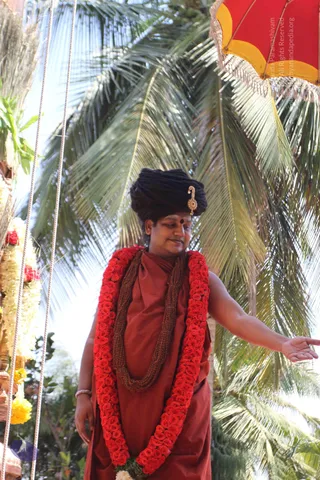
Dhwajarohanam
Nithyanandam - Introduction

Evening Satsang

Photos Of The Day:

01-DWAJAROHANAM

02-NITHYANANDAM-SESSION

03-EVENING-SATSANG

Photos from this day

View all 352 photos

Dhwajarohanam
172 photosSource gallery
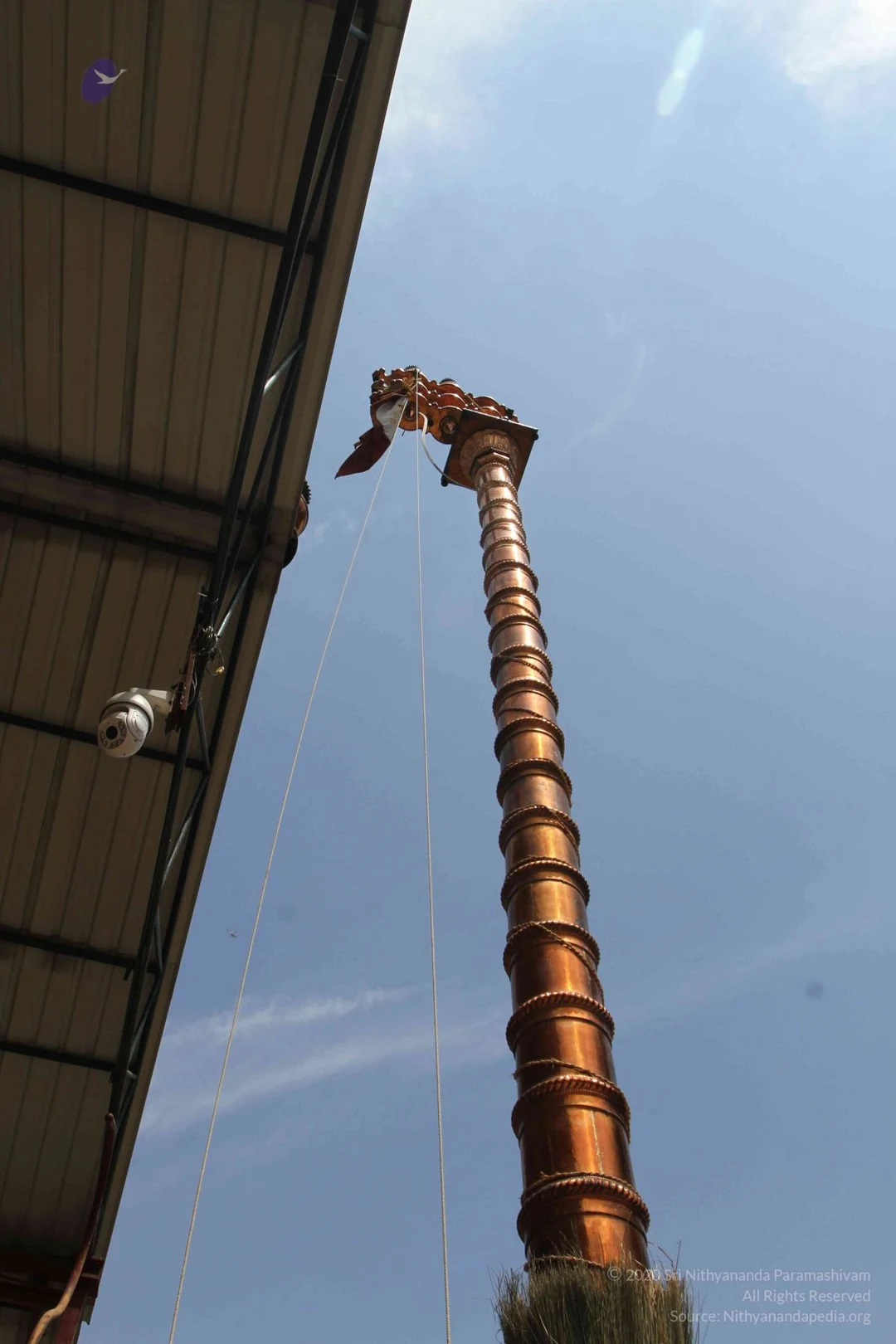
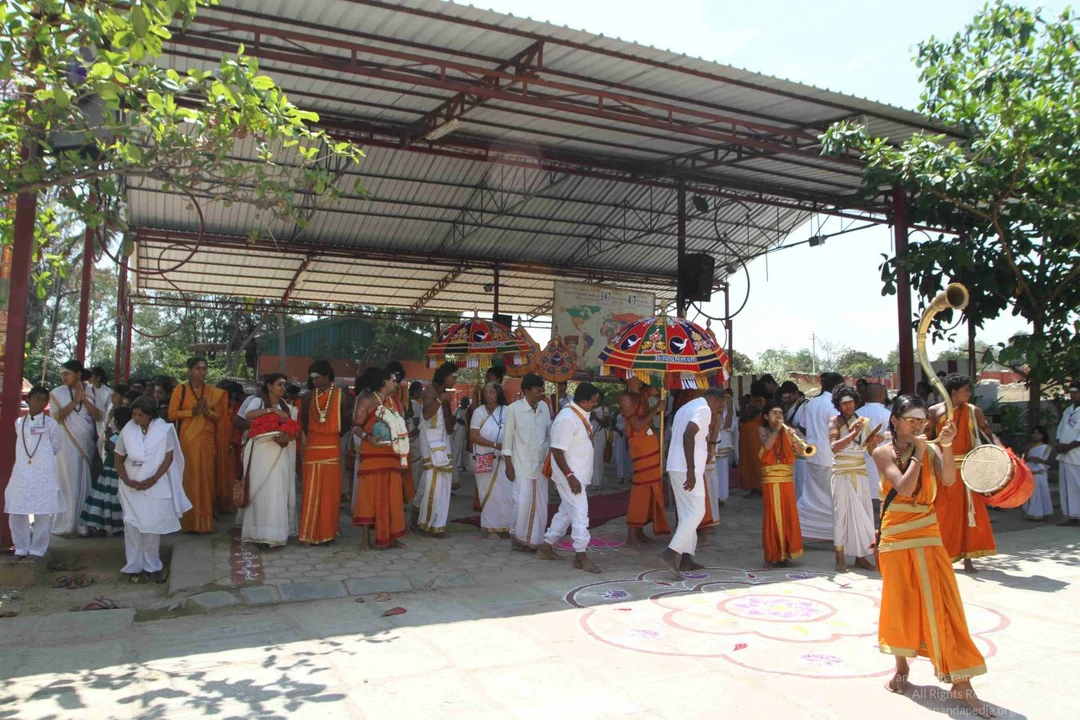
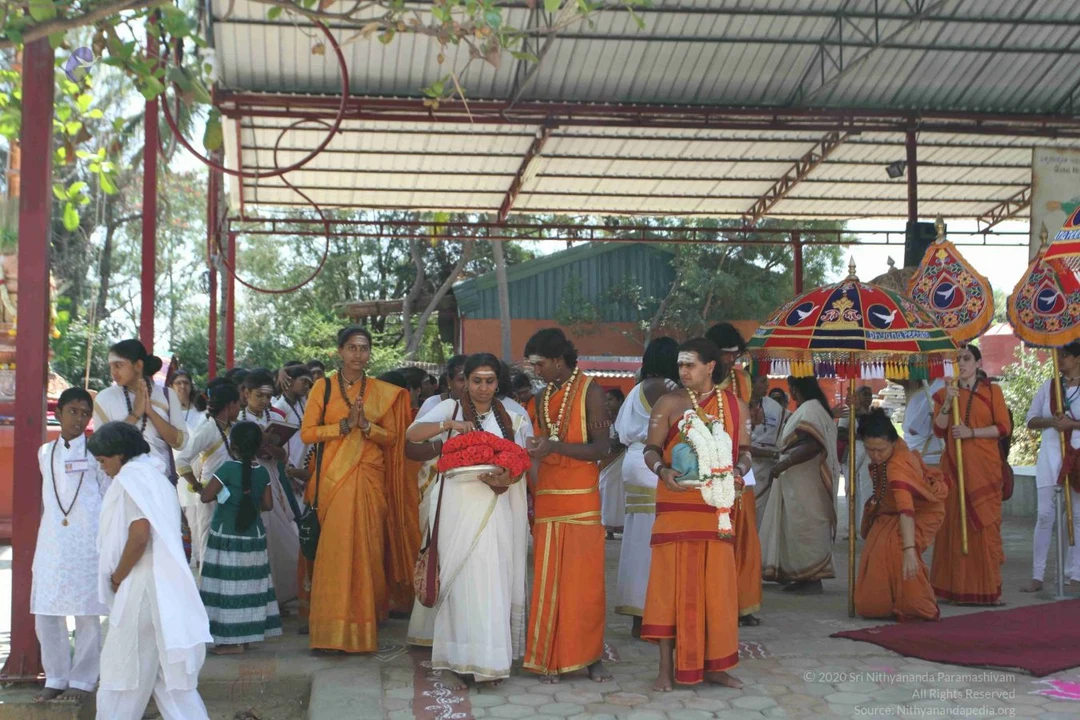
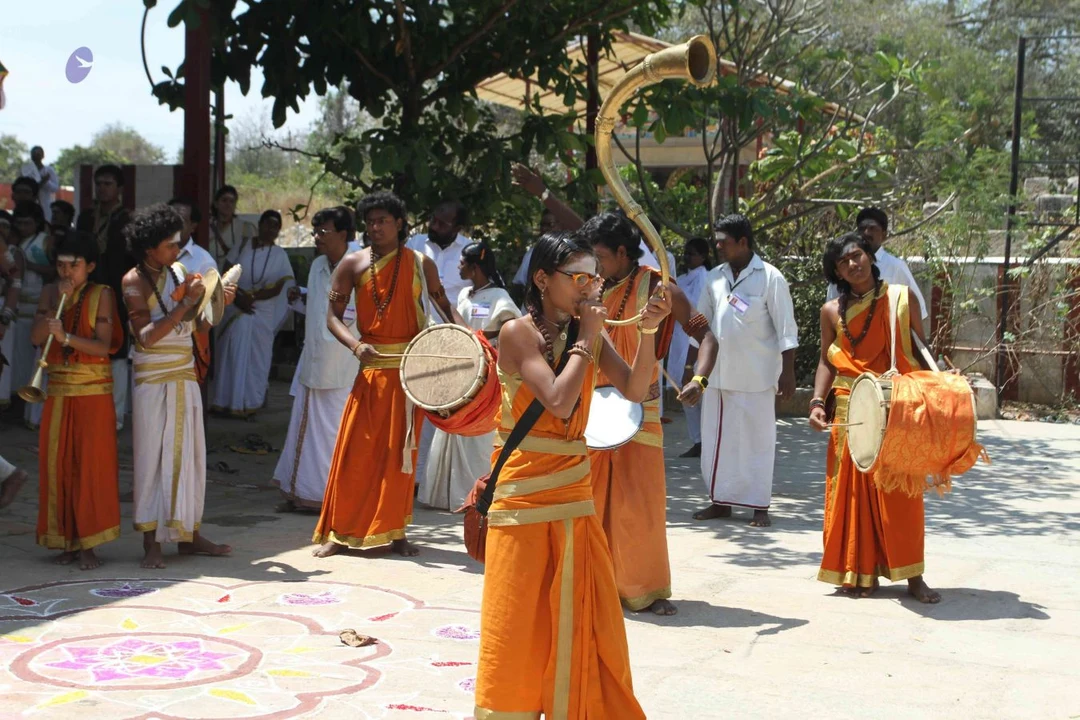
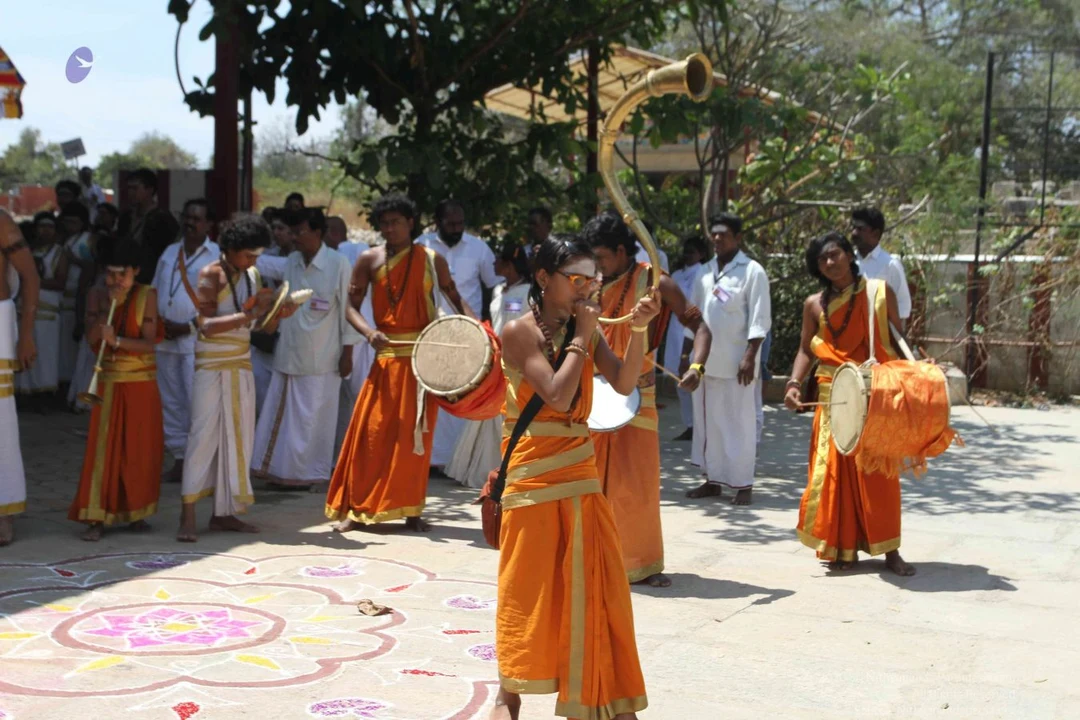
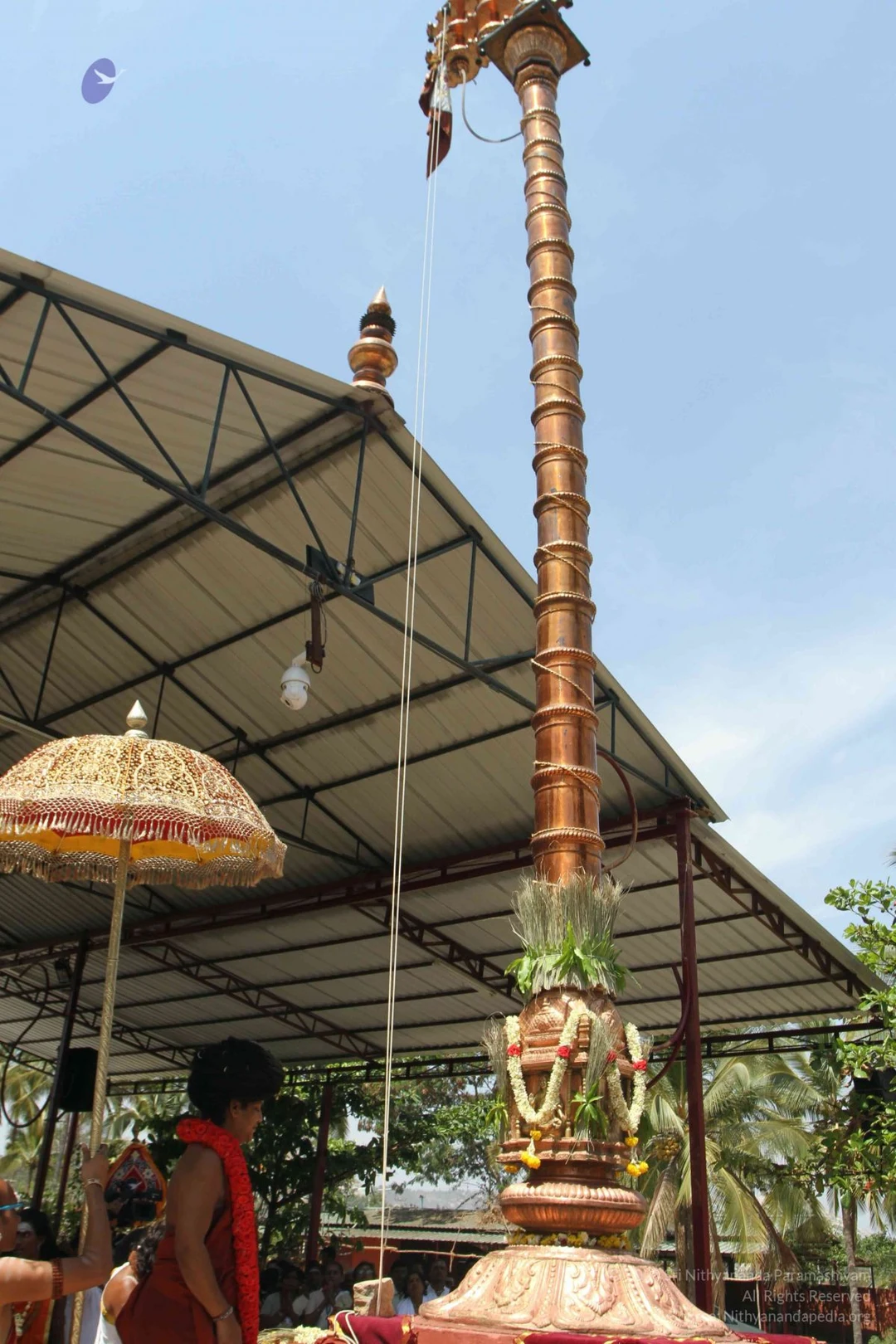
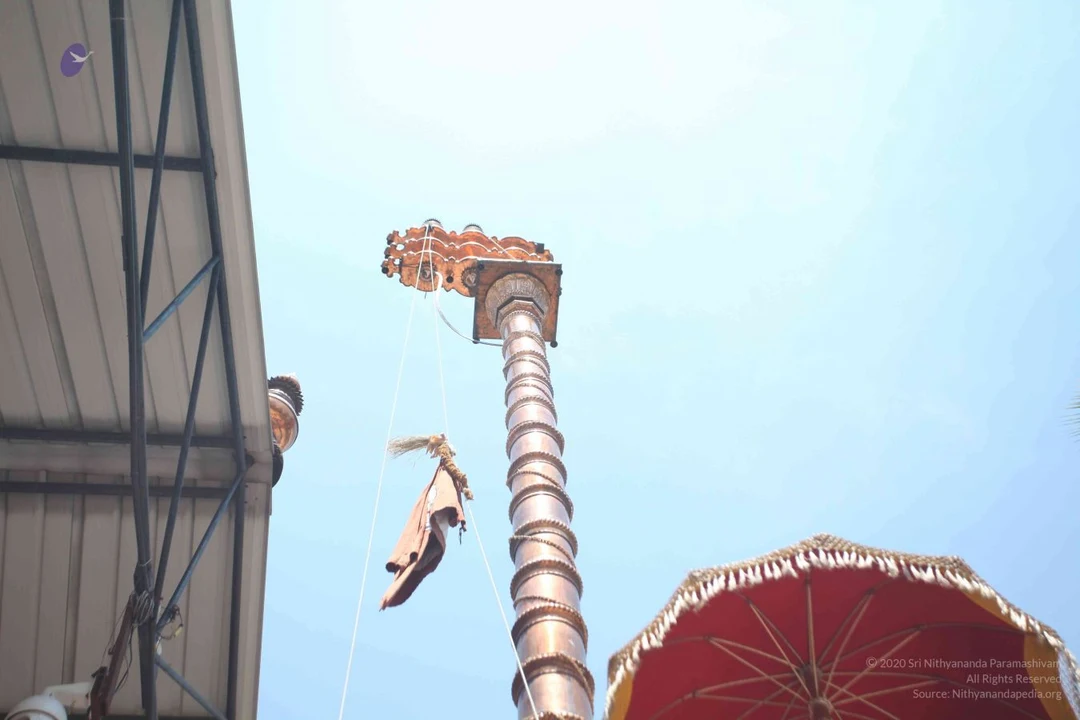
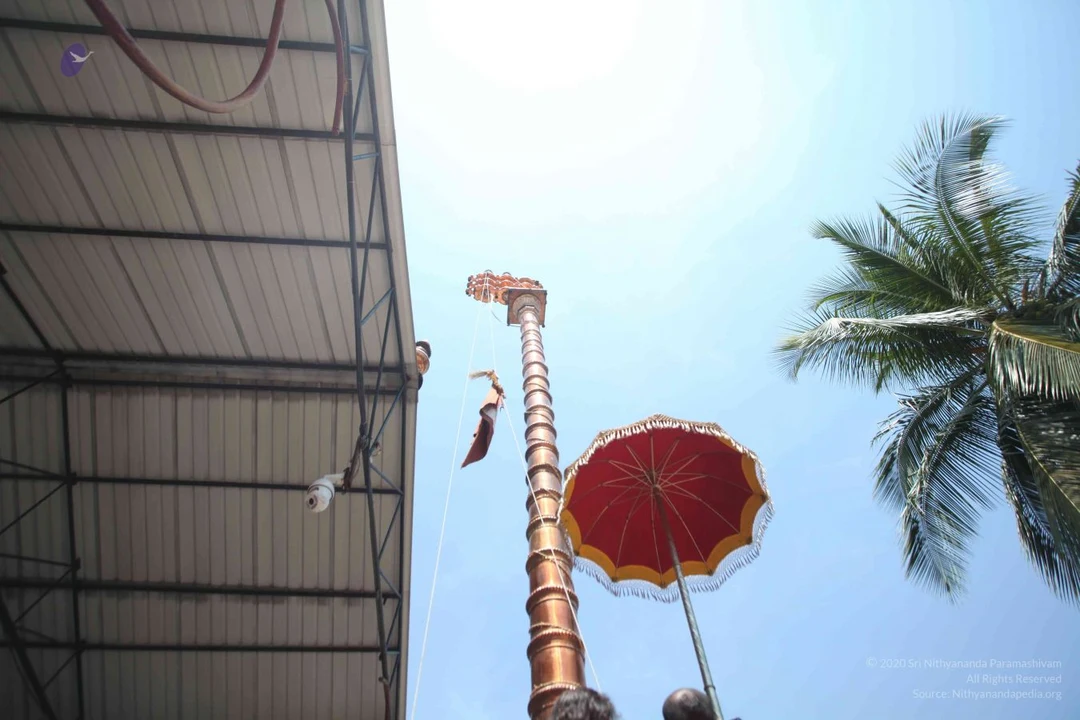
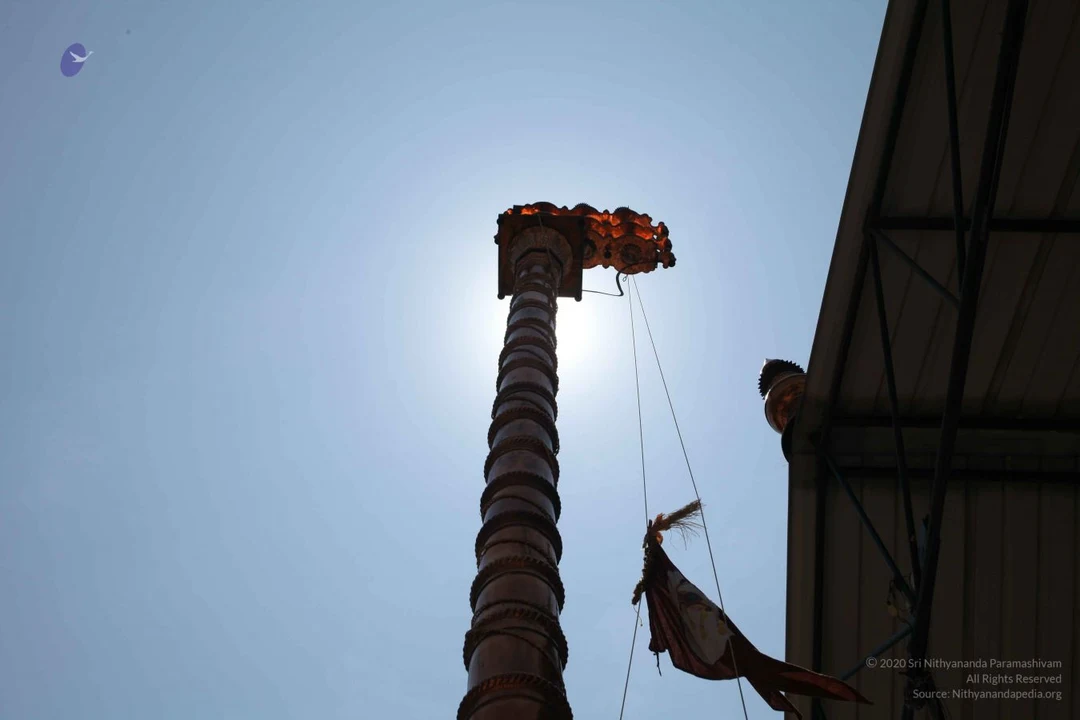
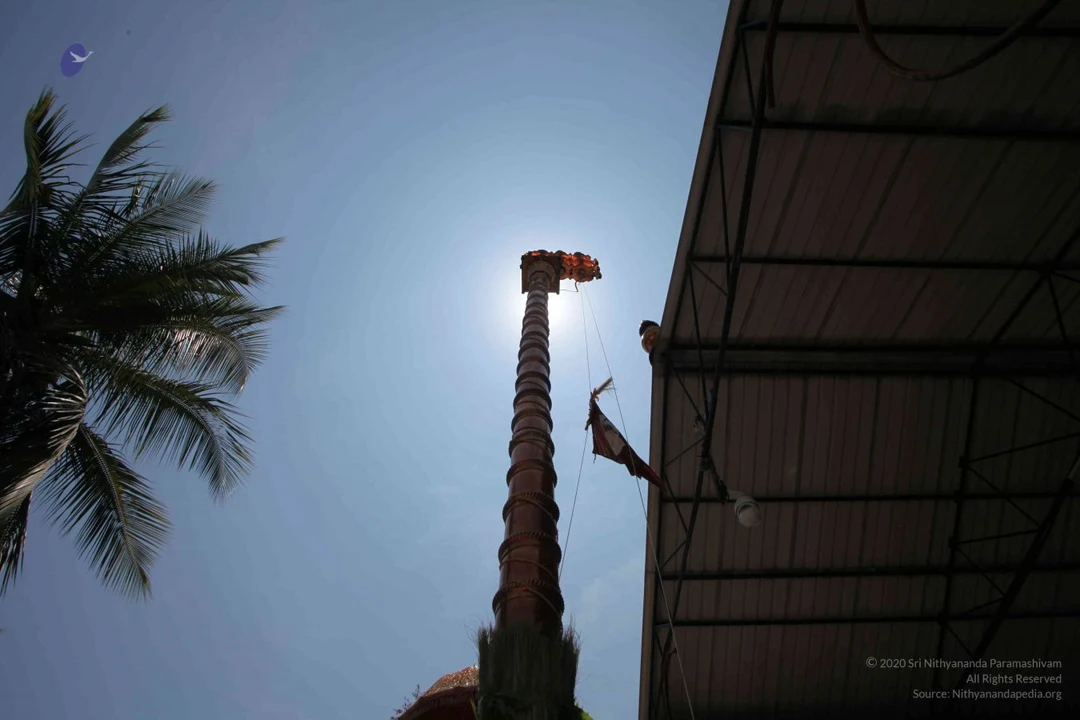
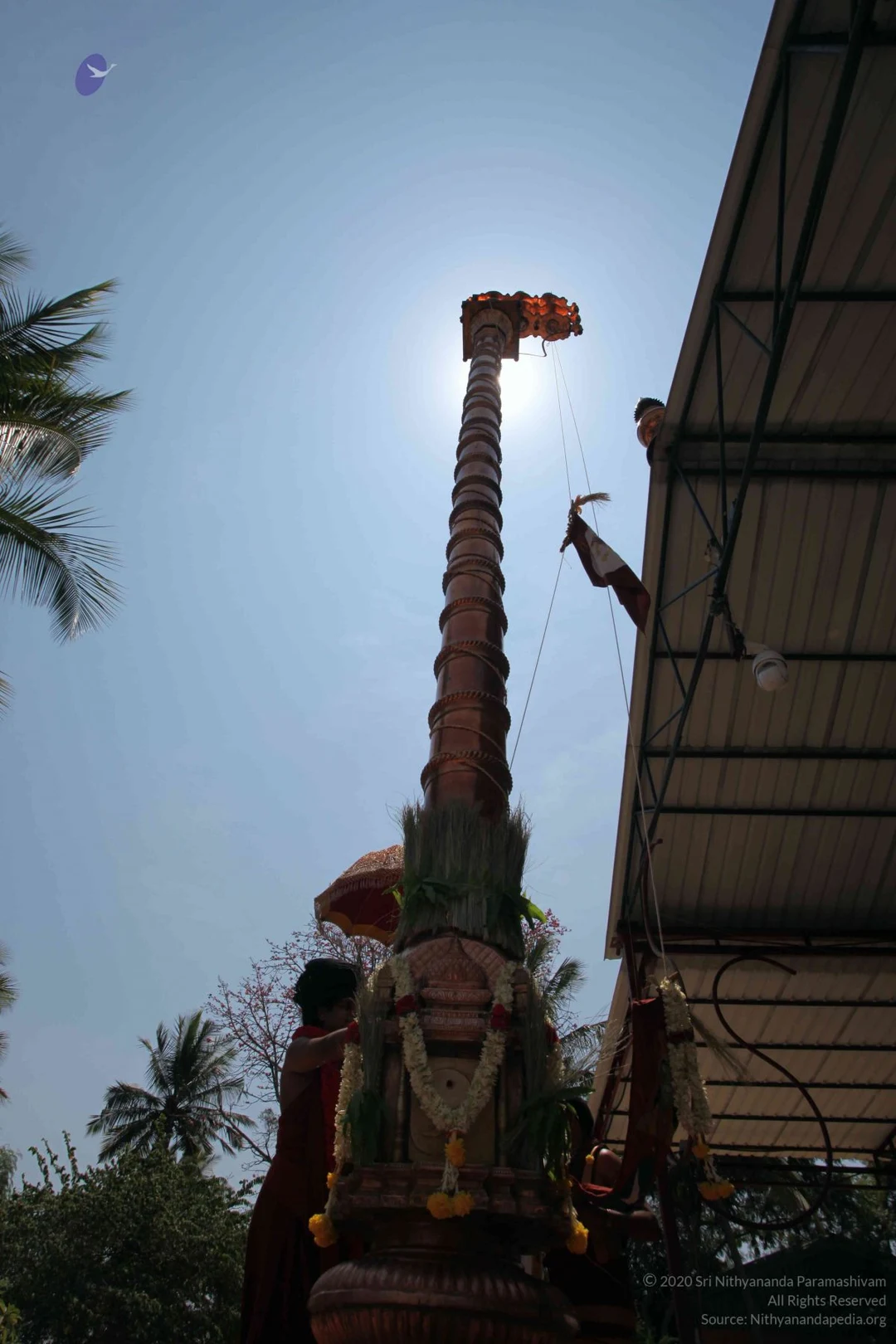
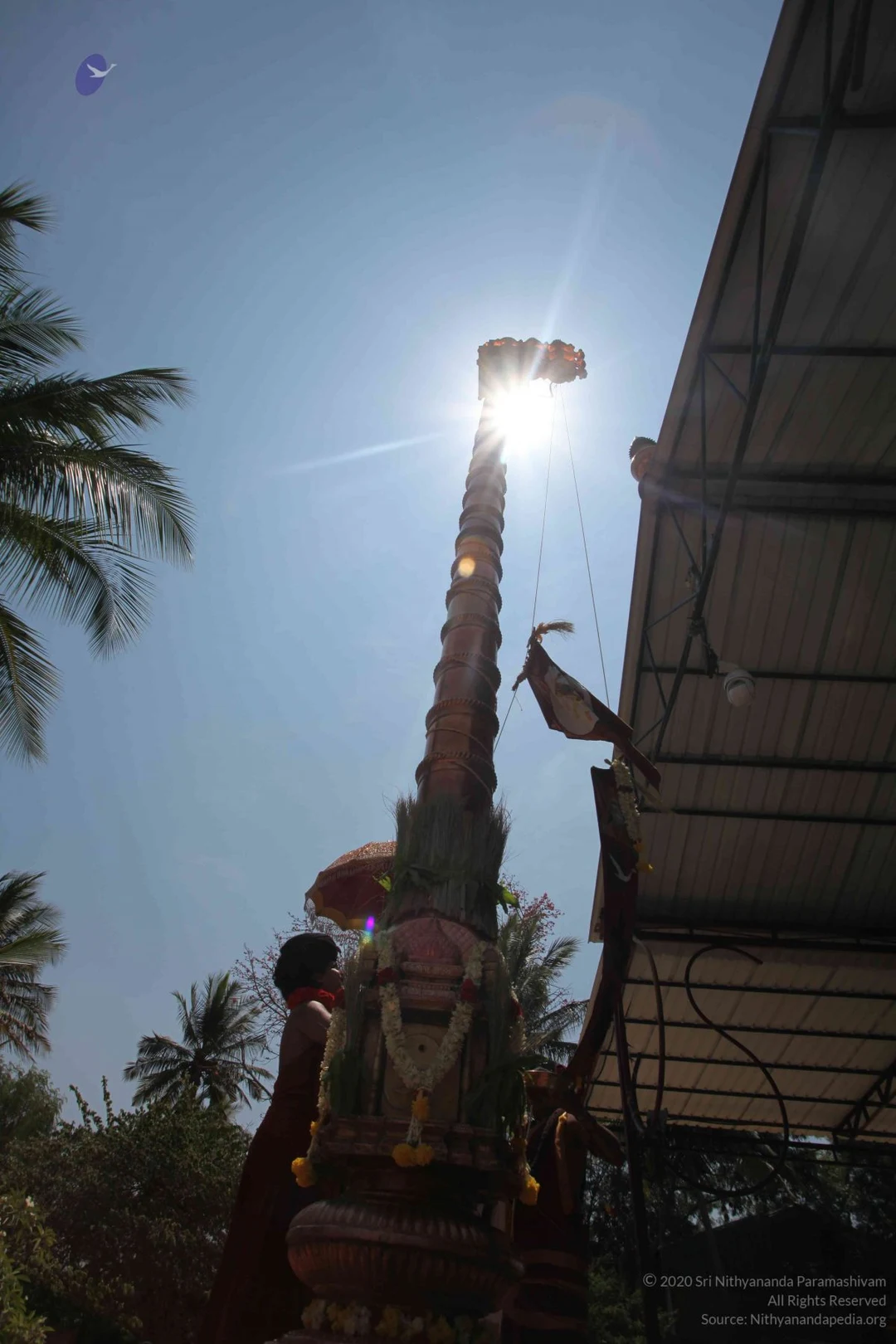
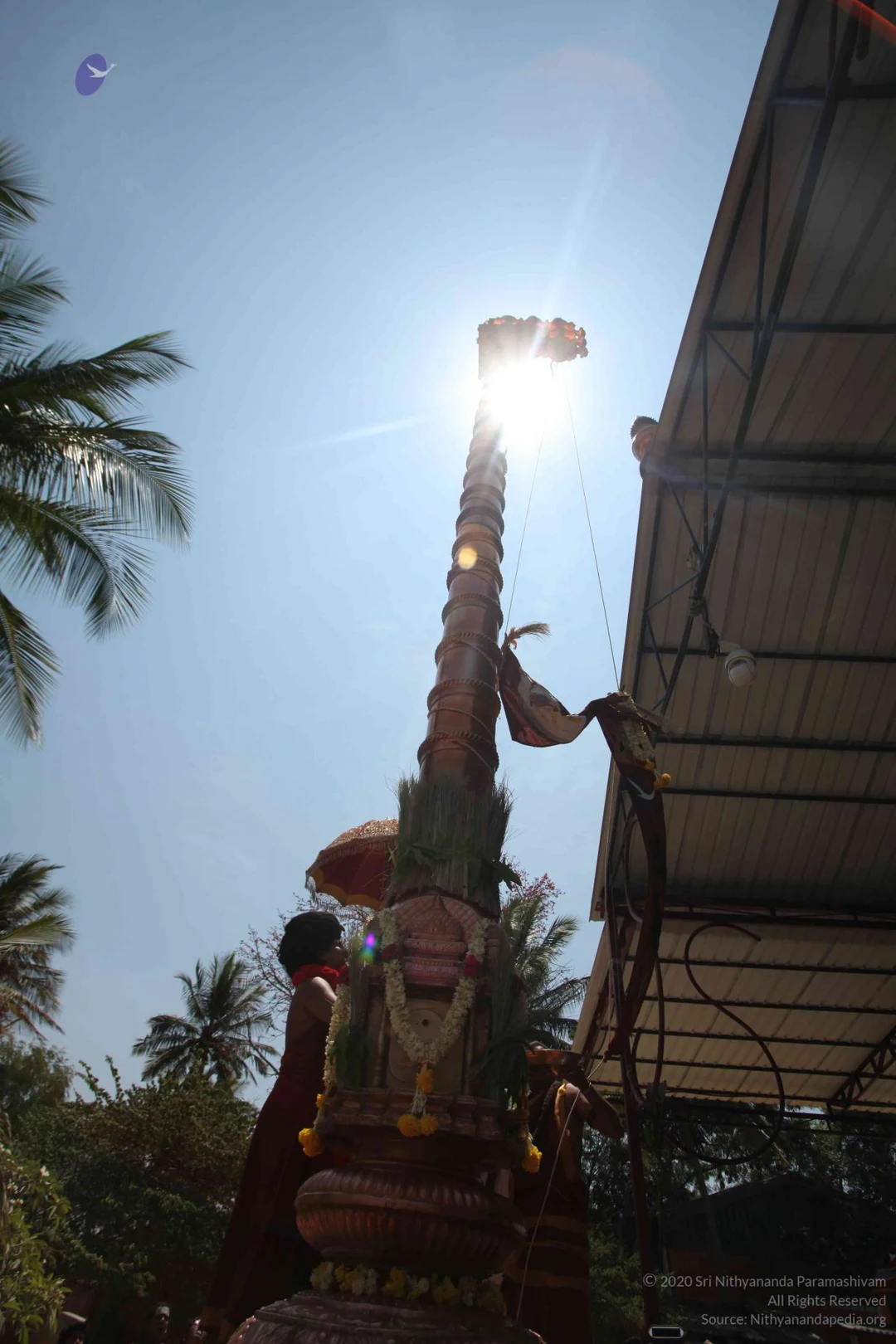
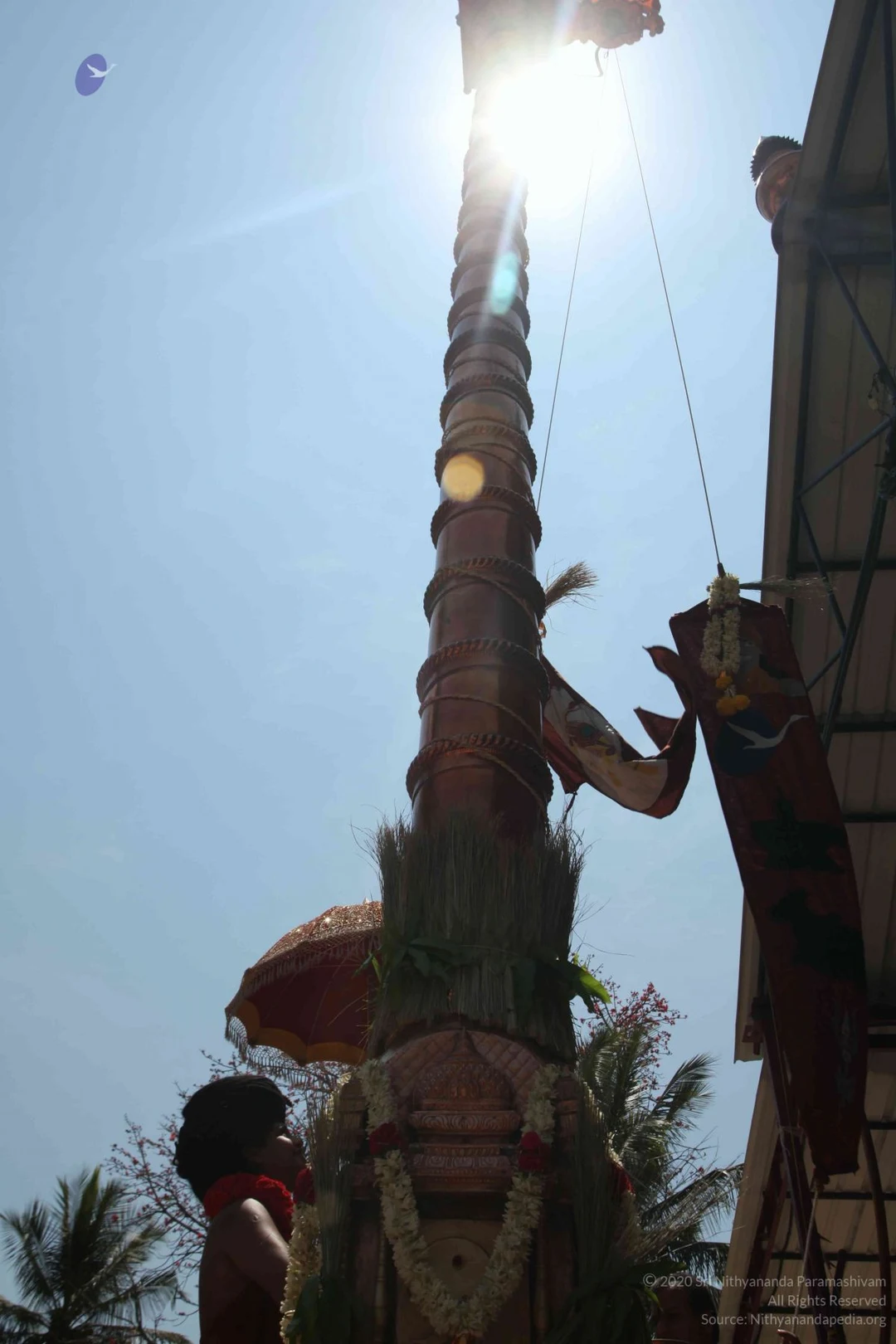
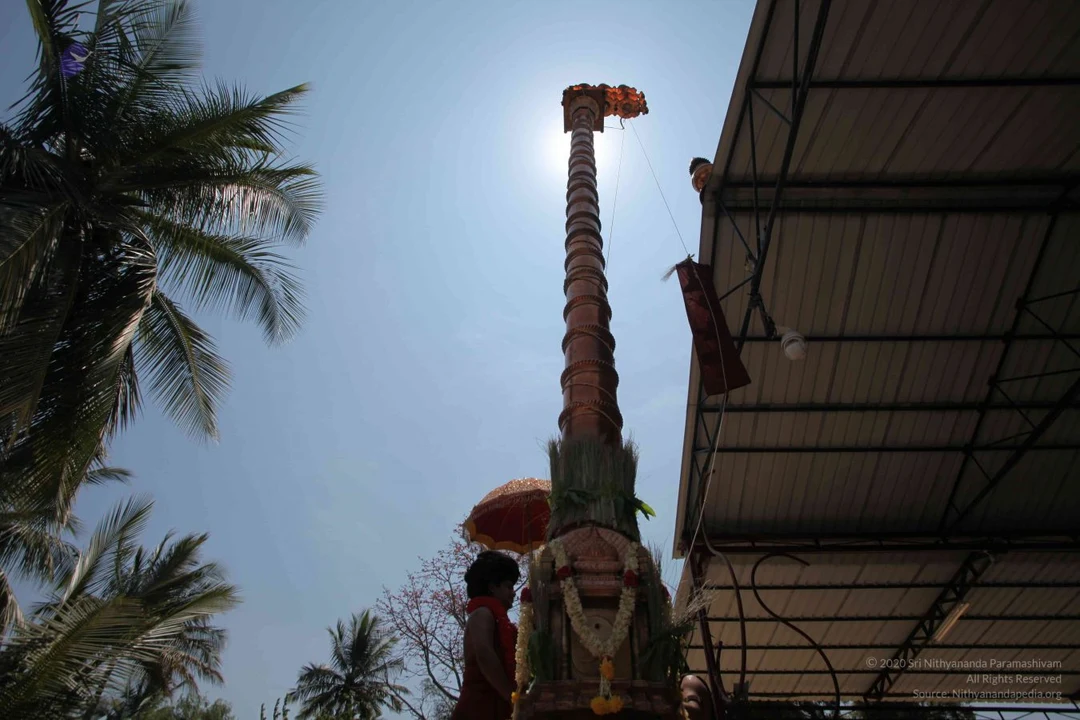
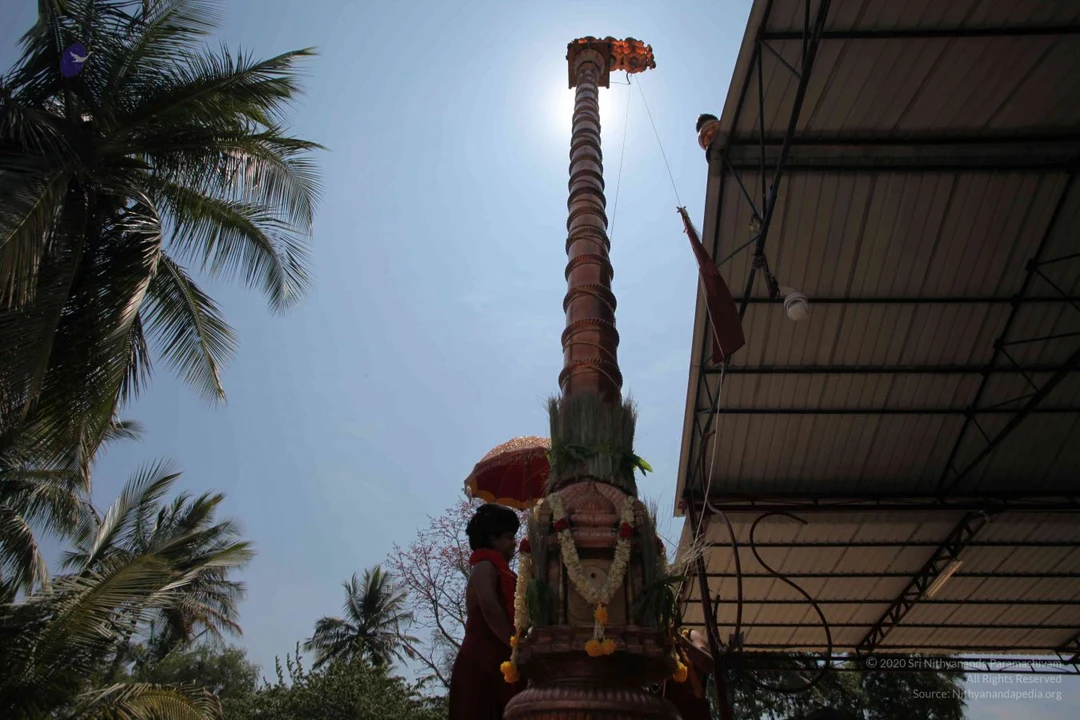
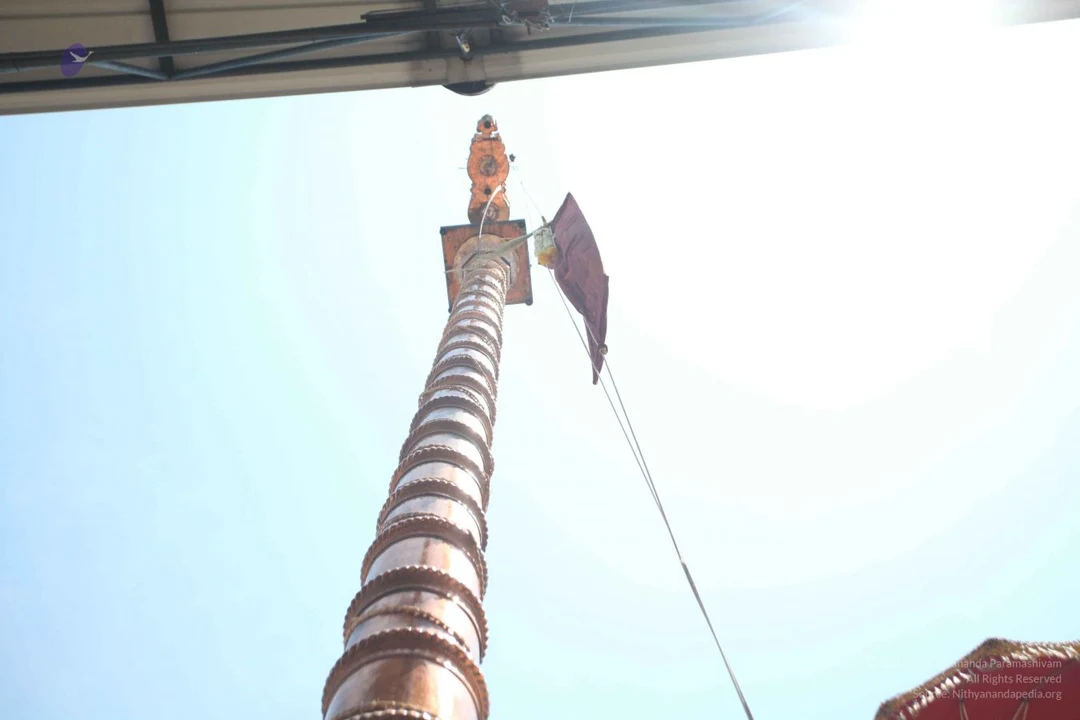
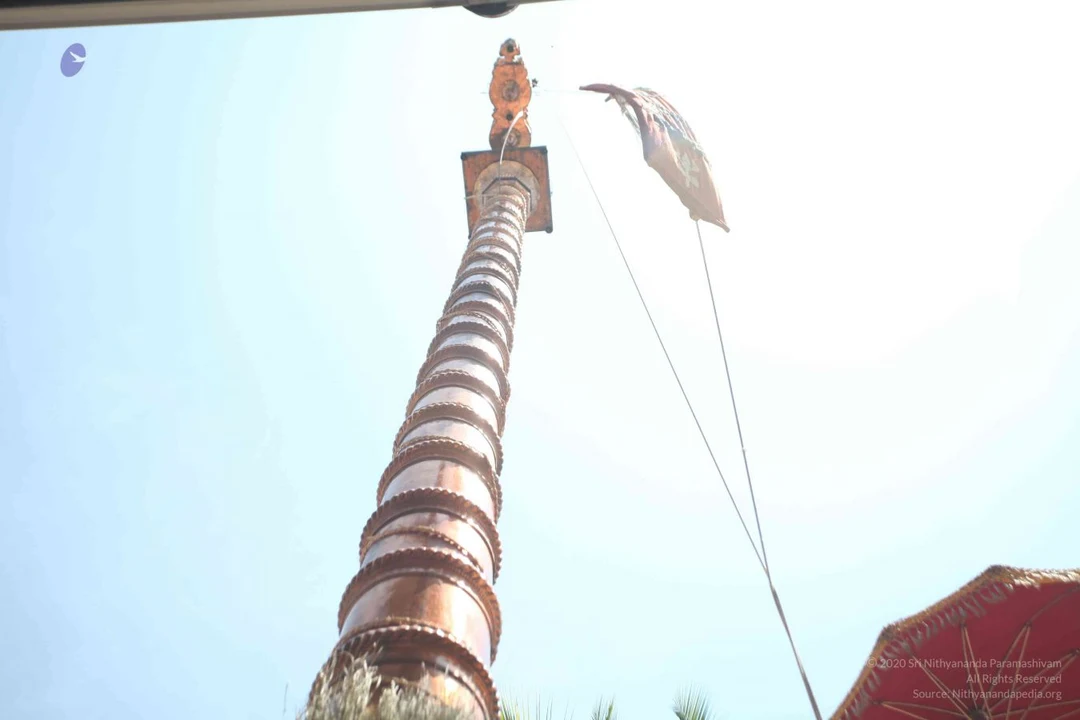
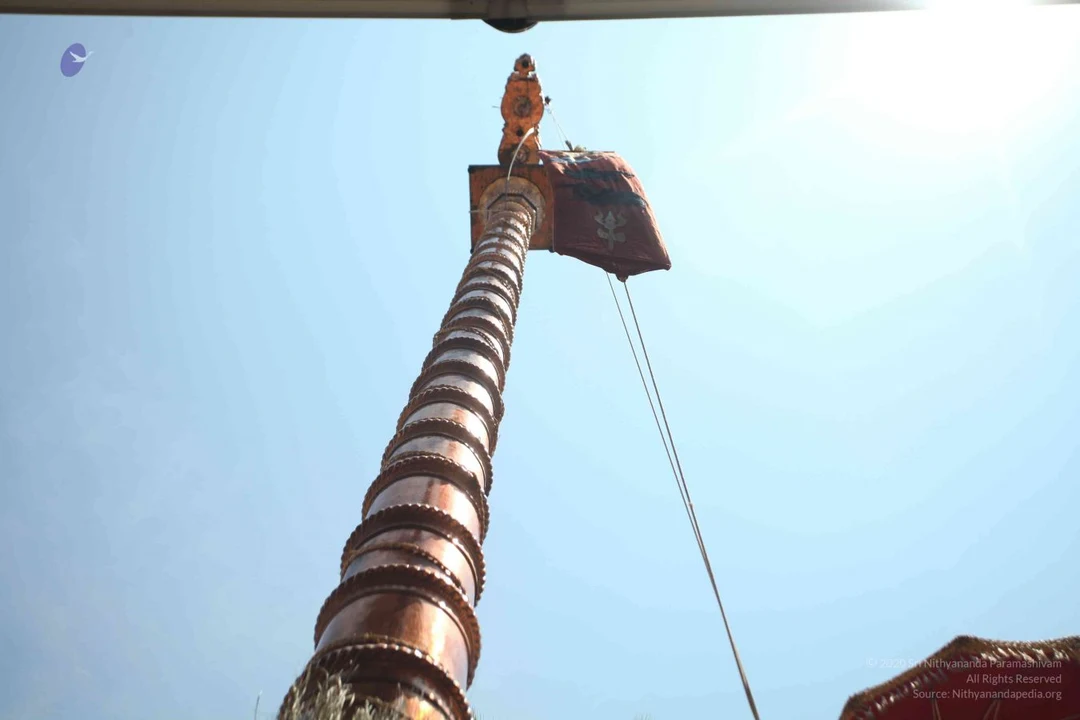
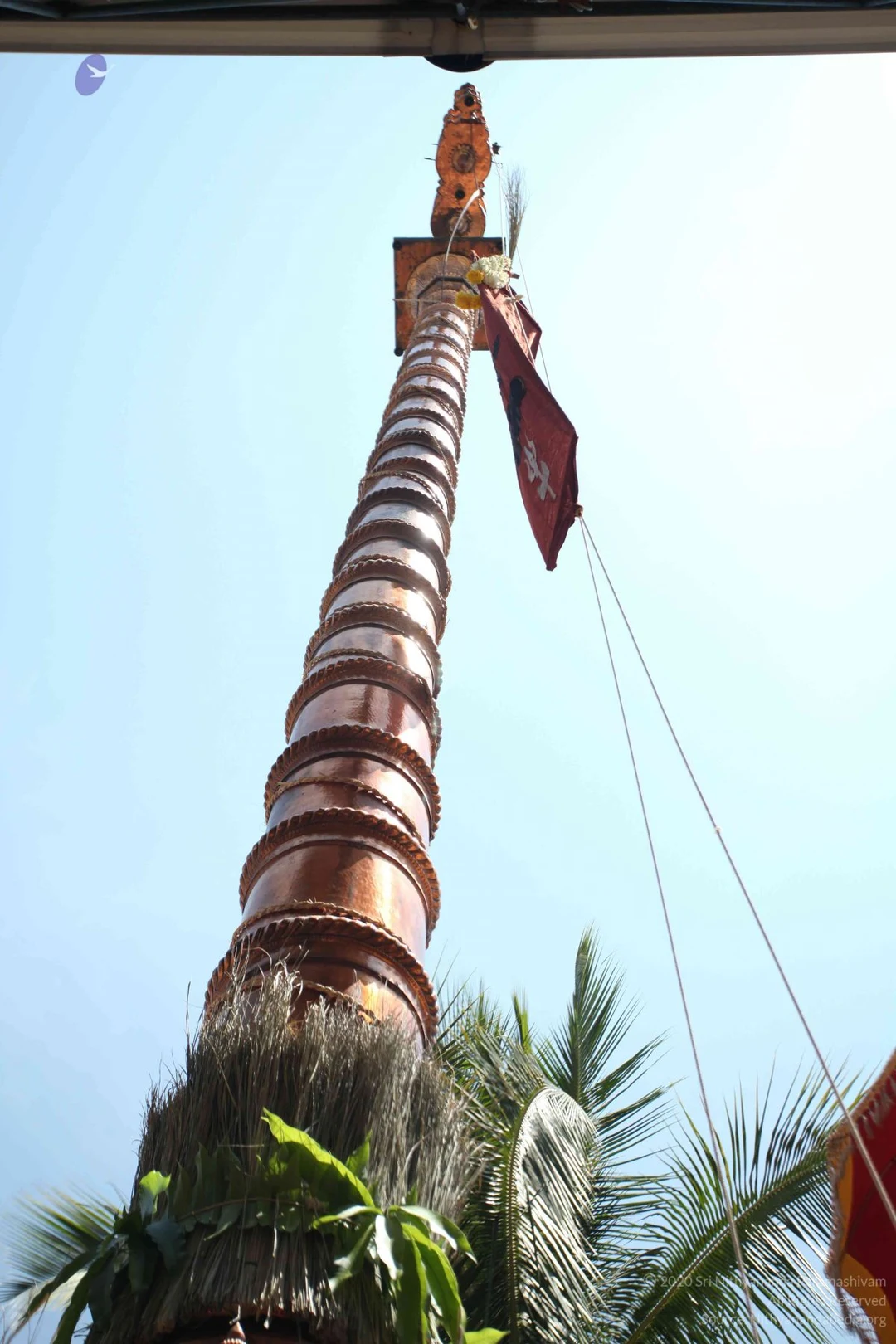
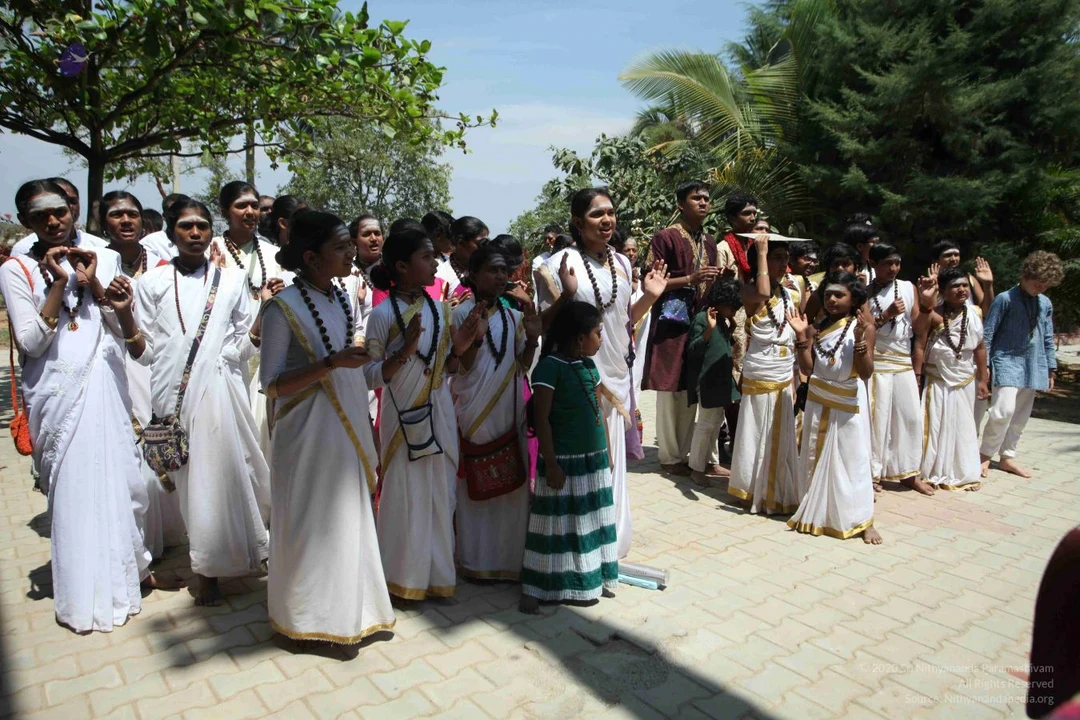
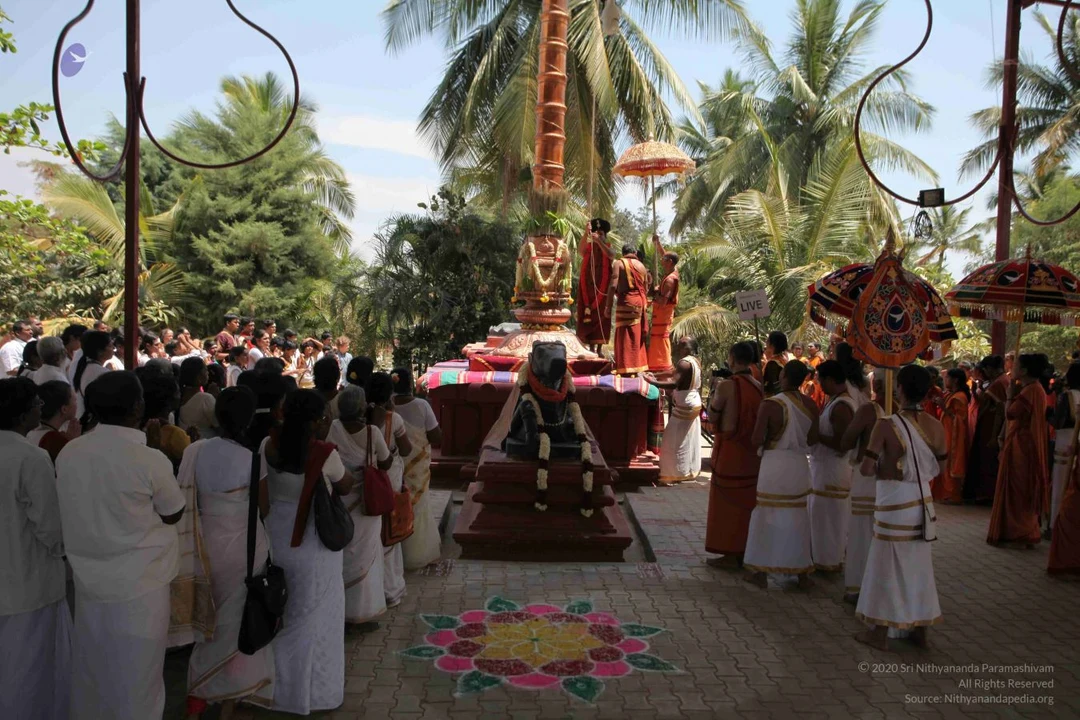
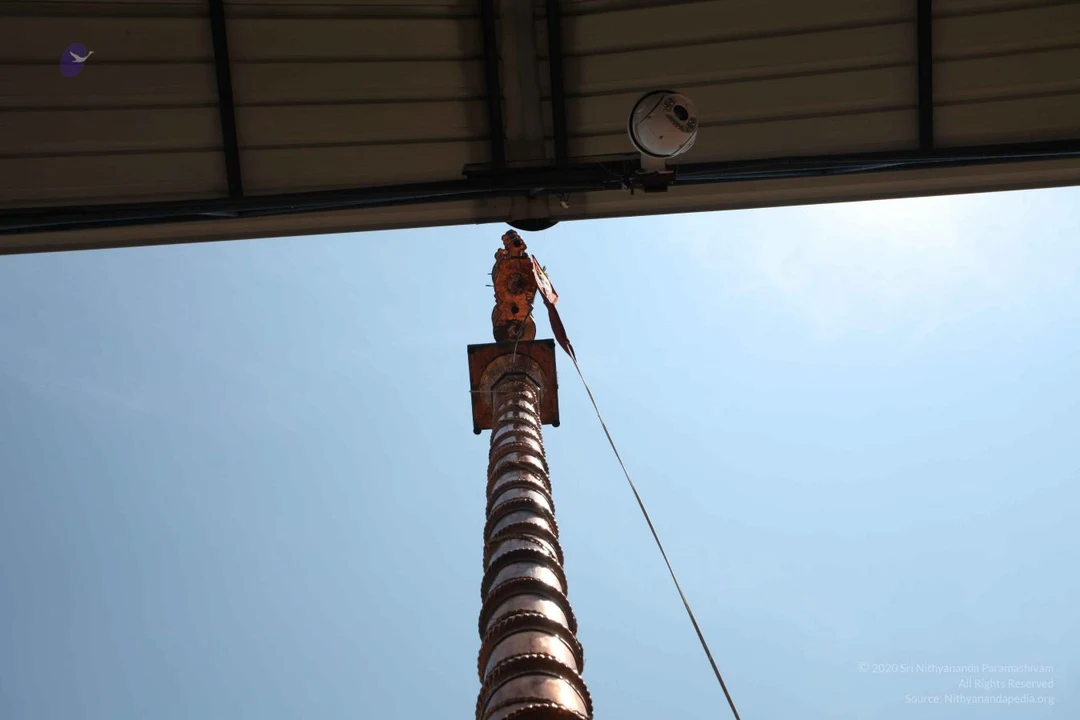
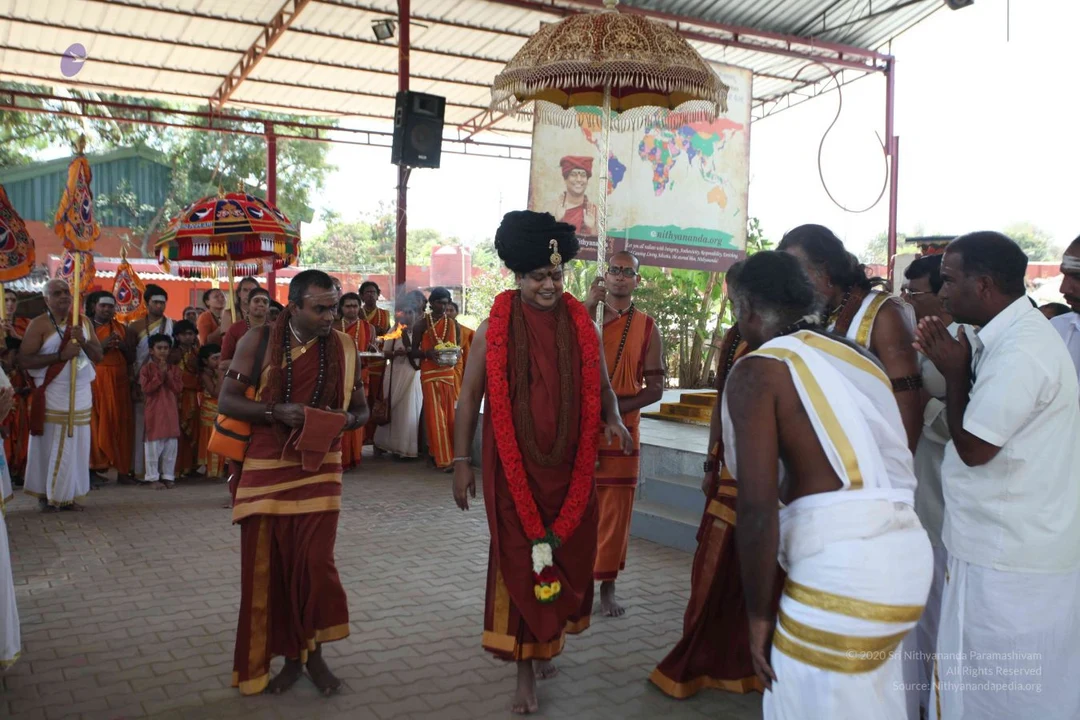
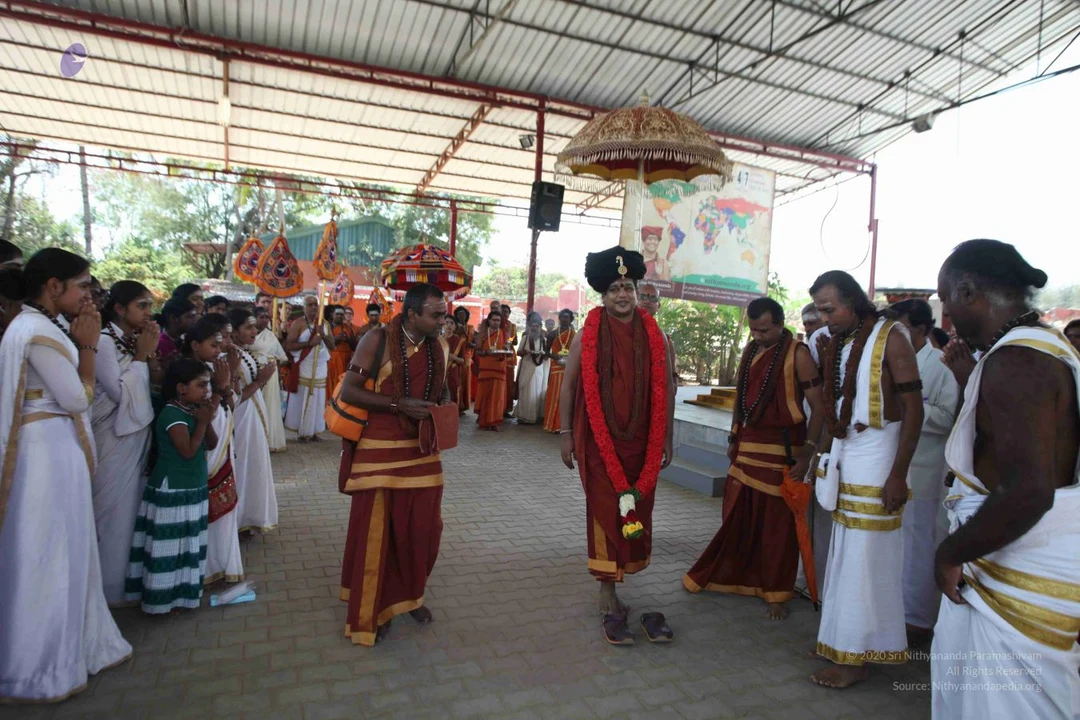
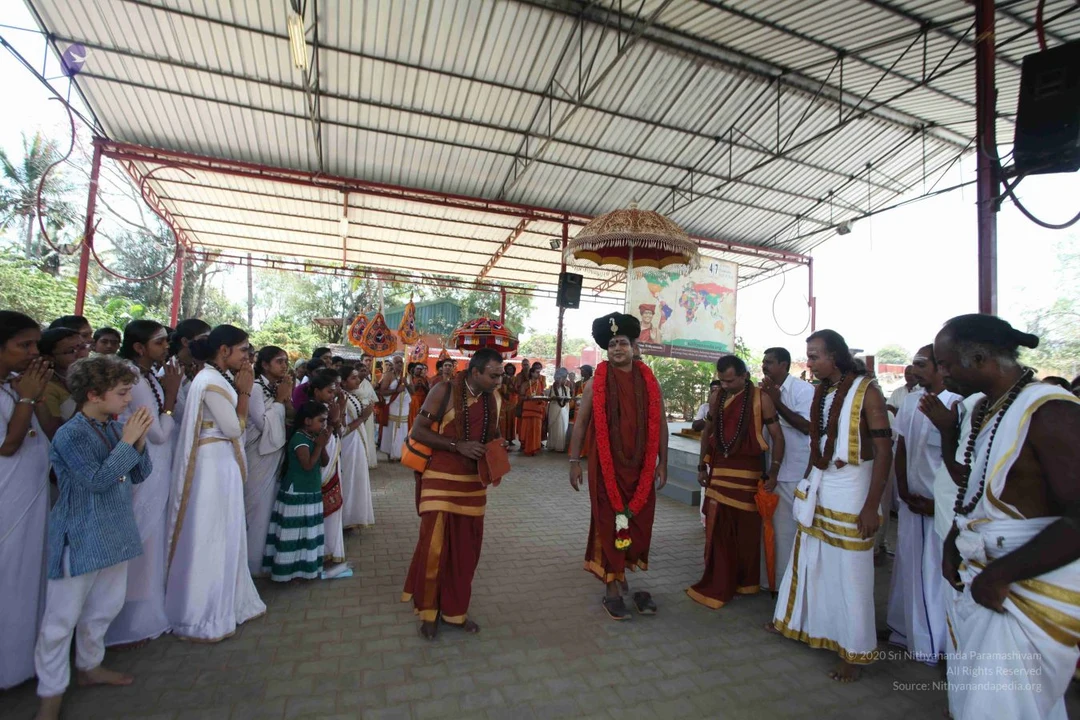
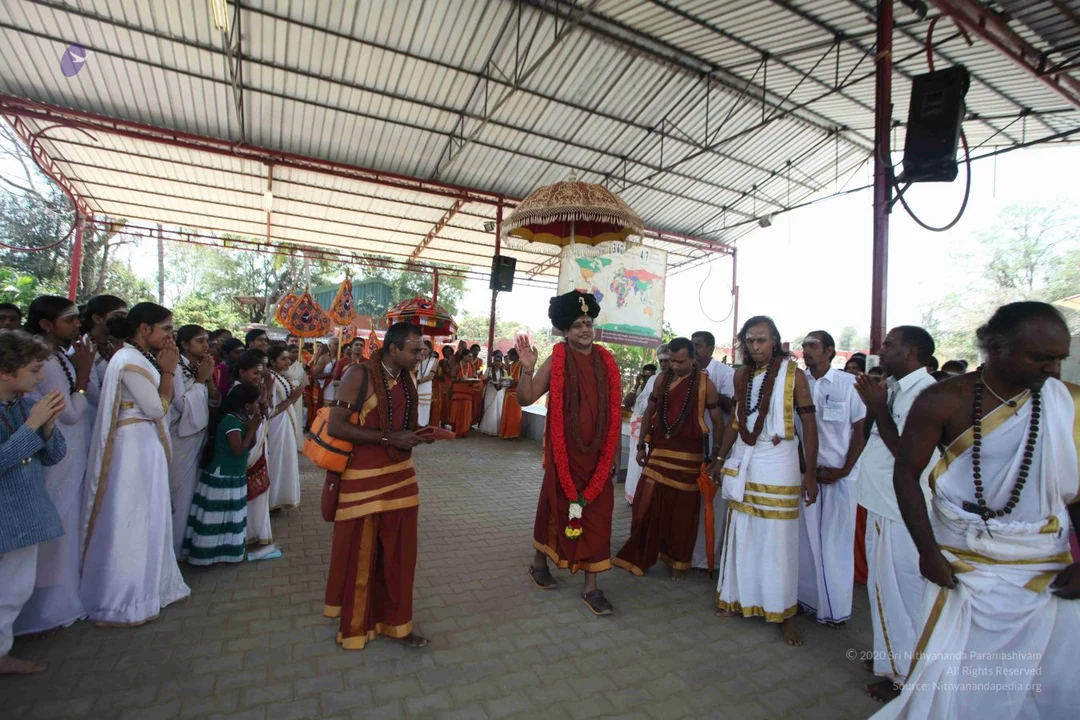
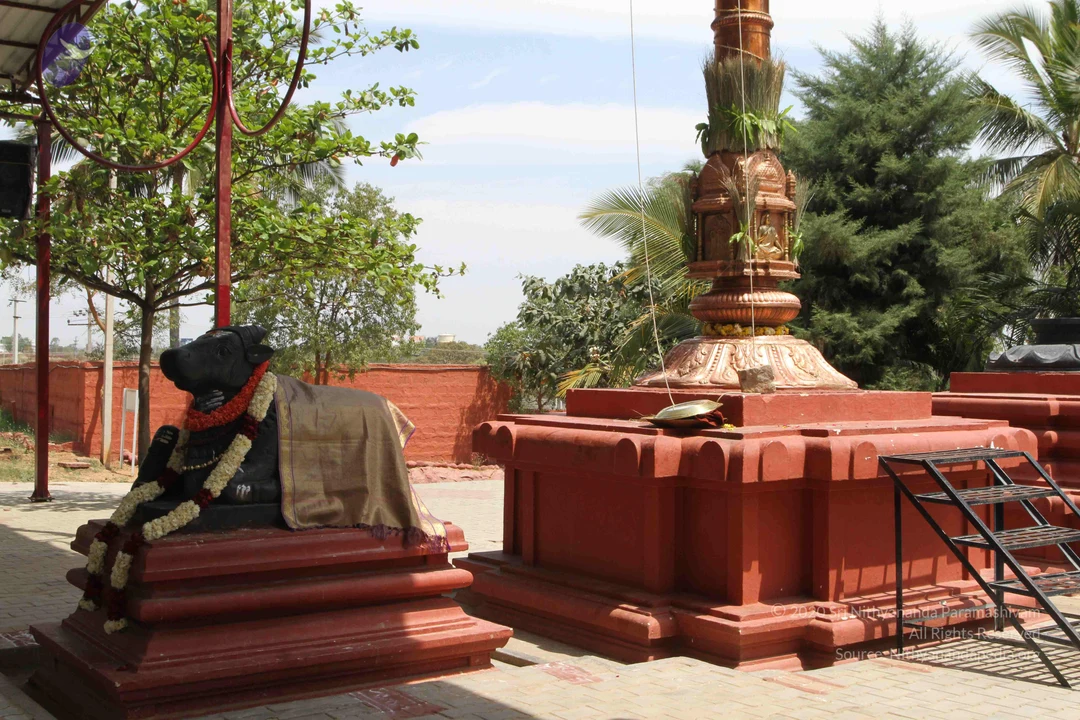
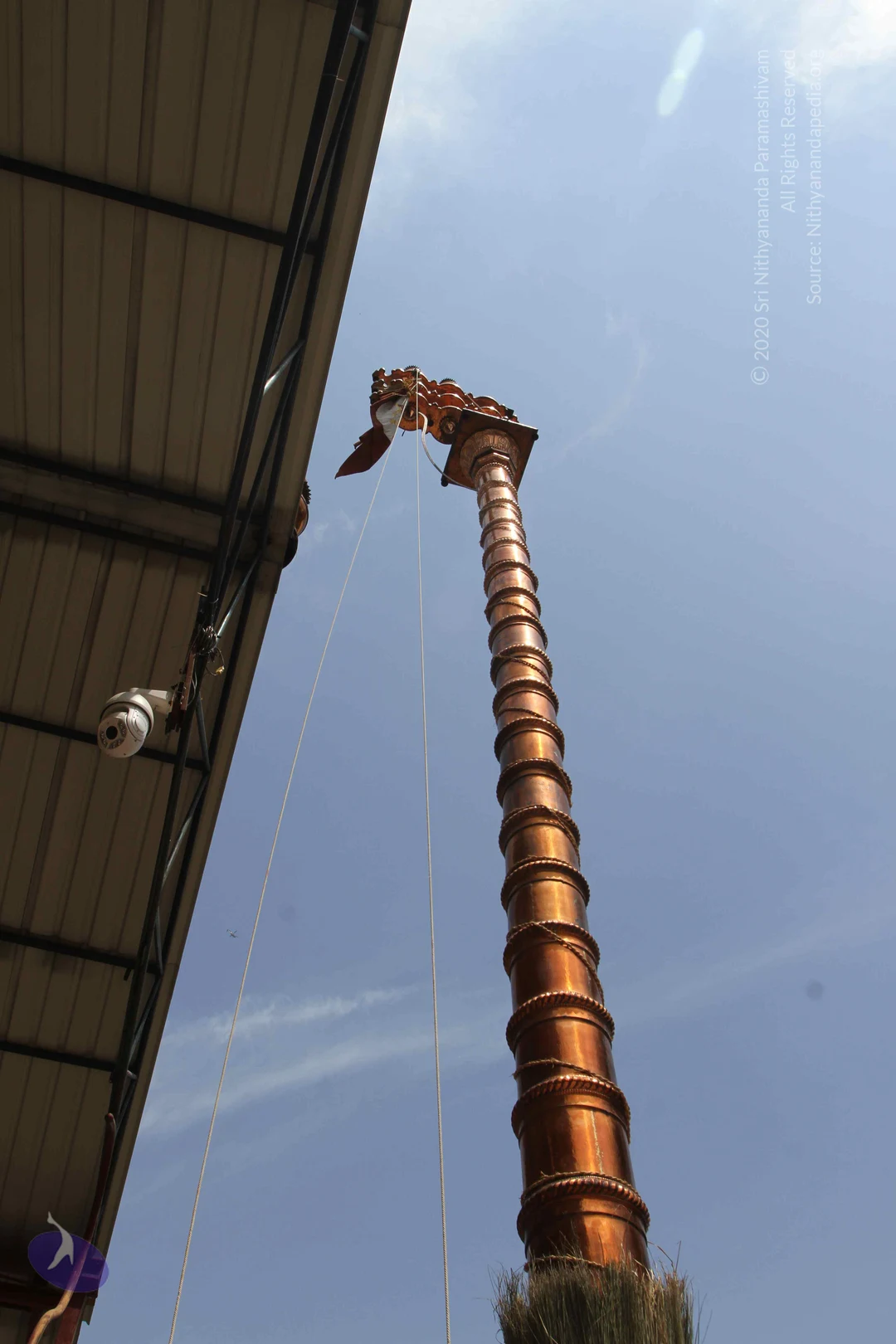
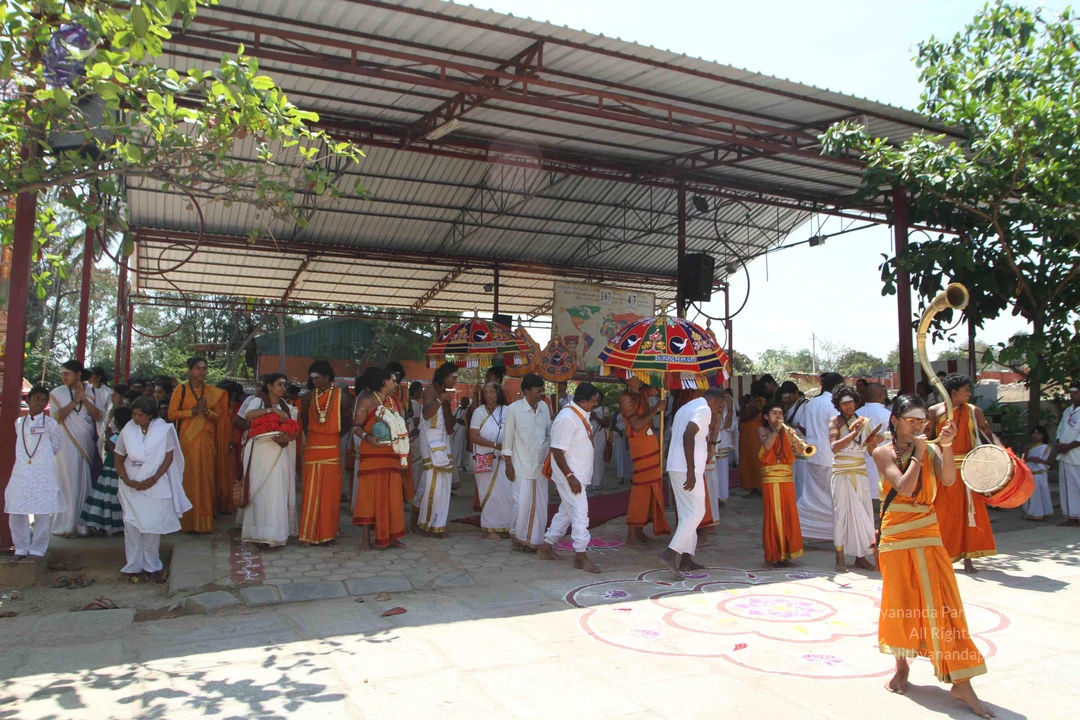
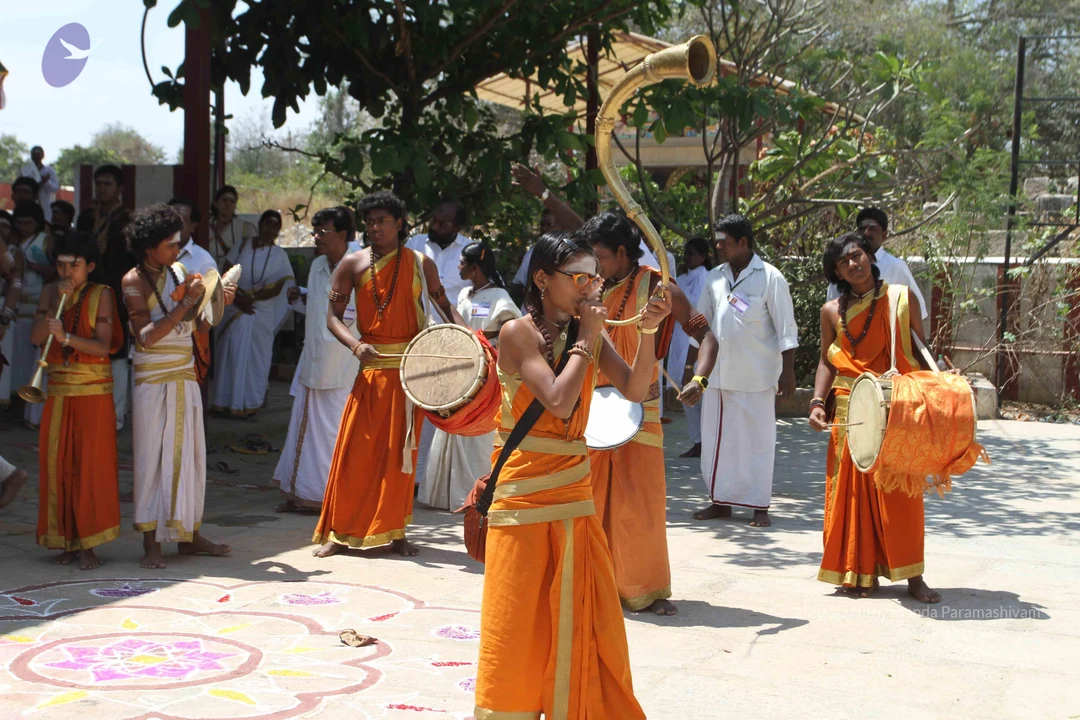
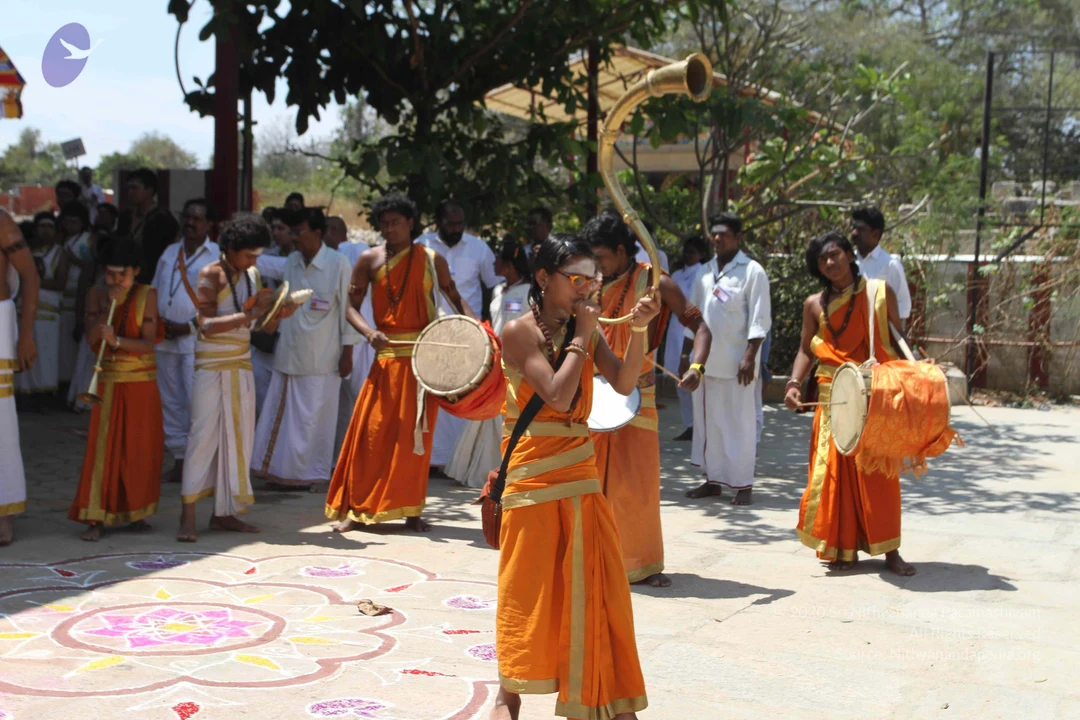
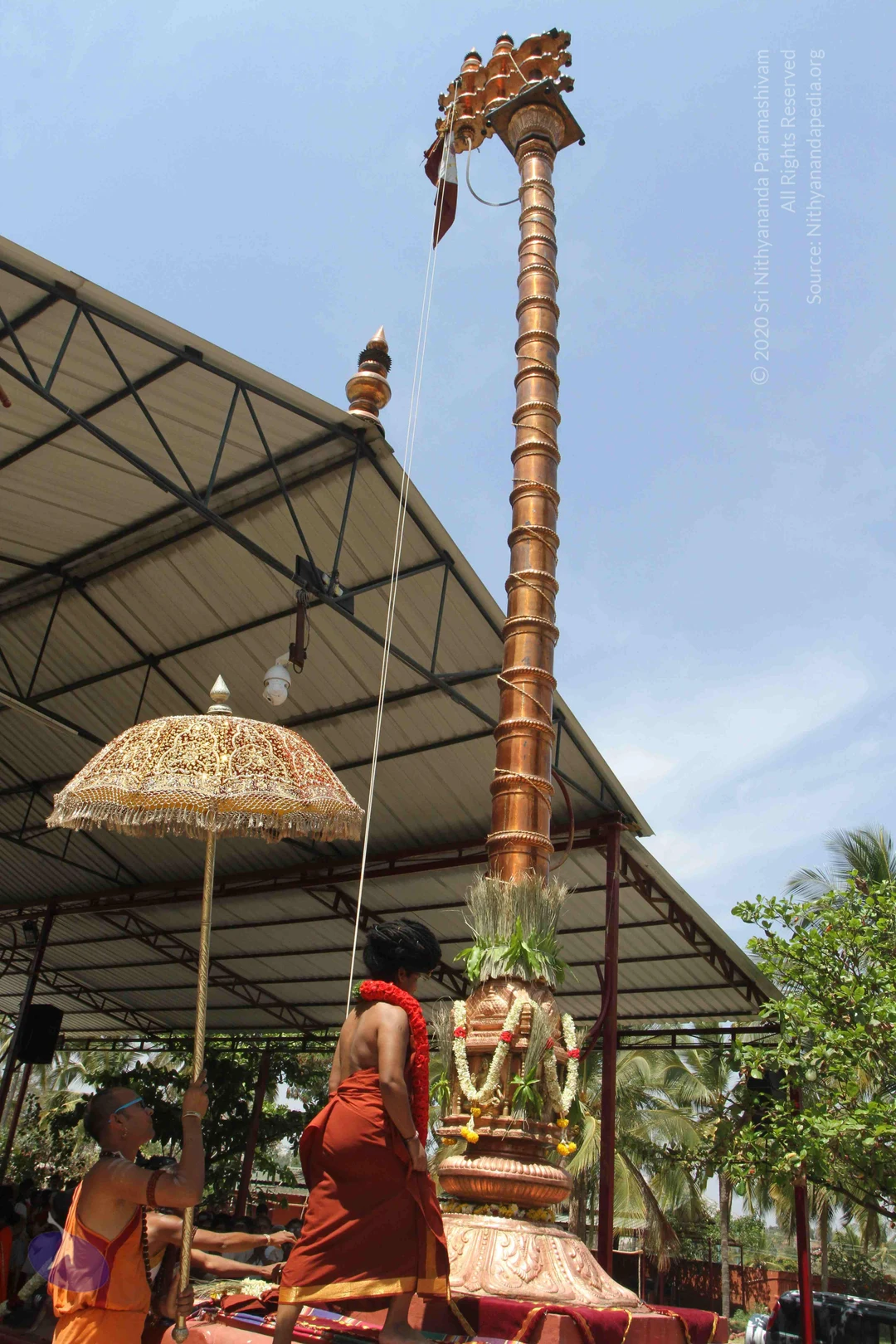
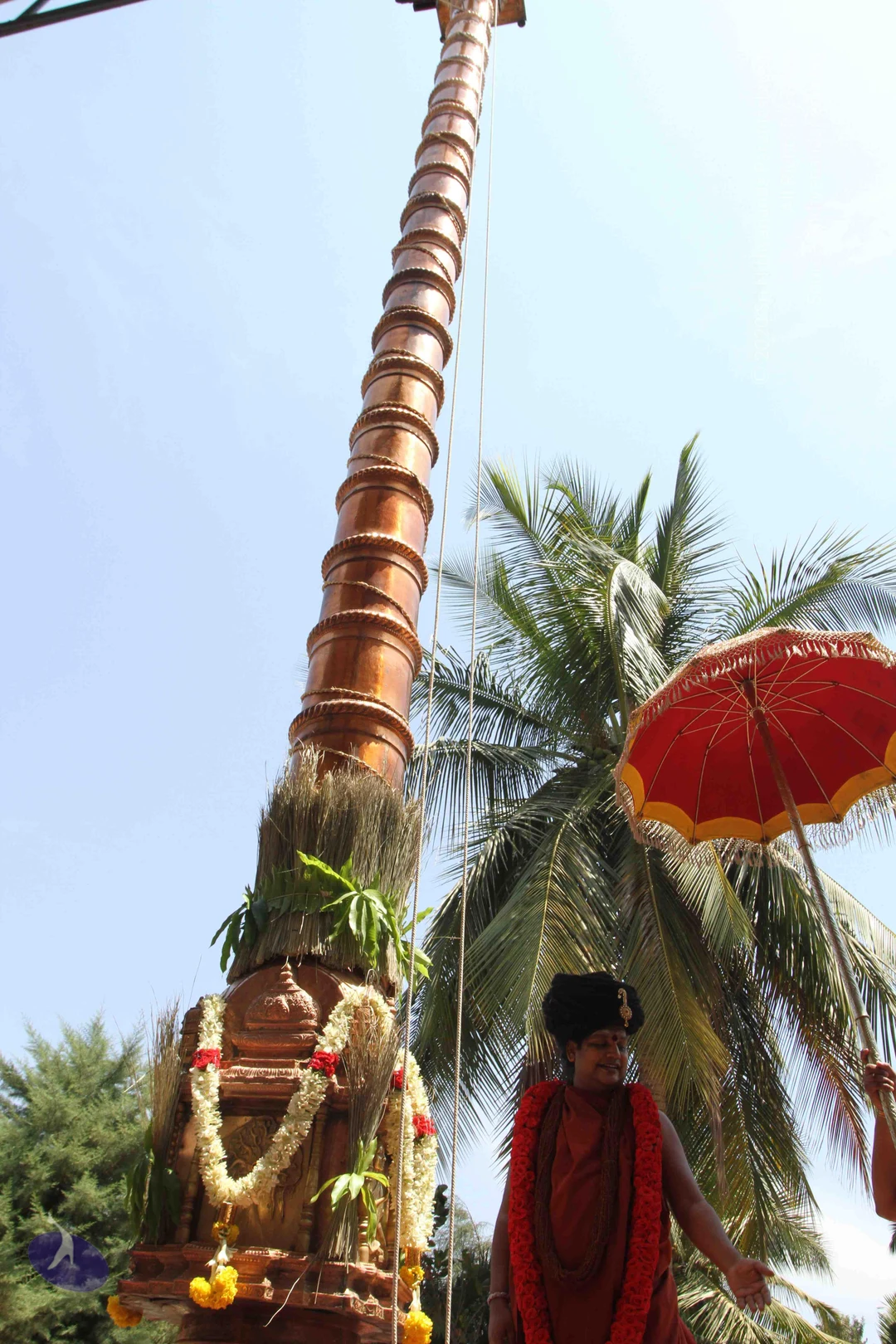
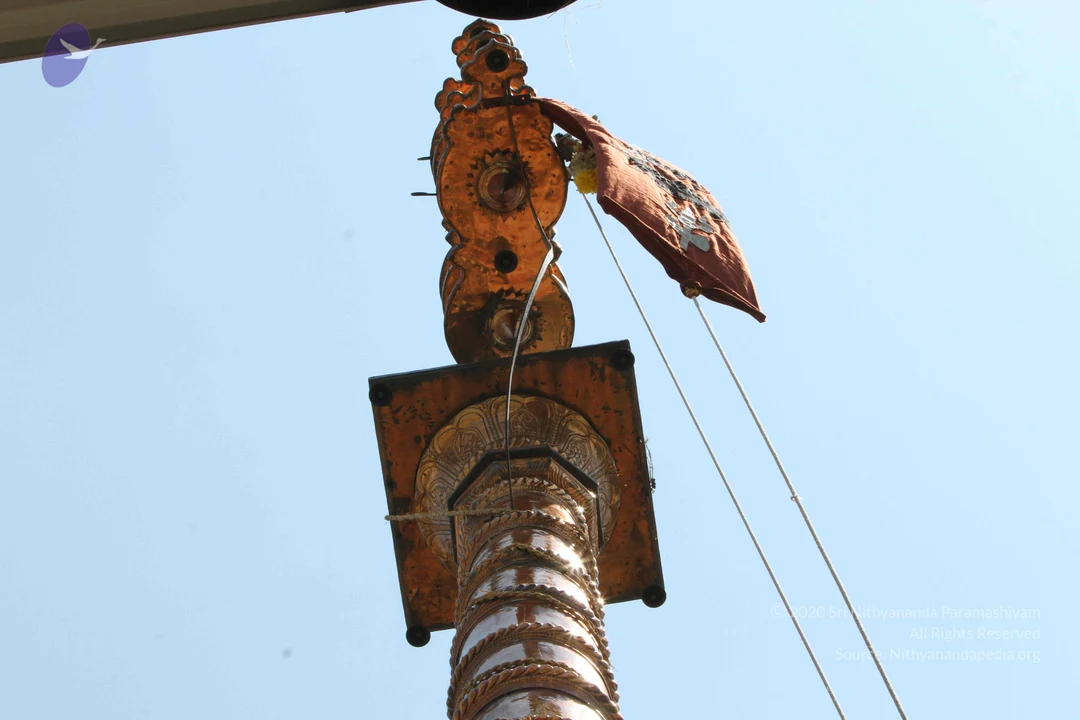
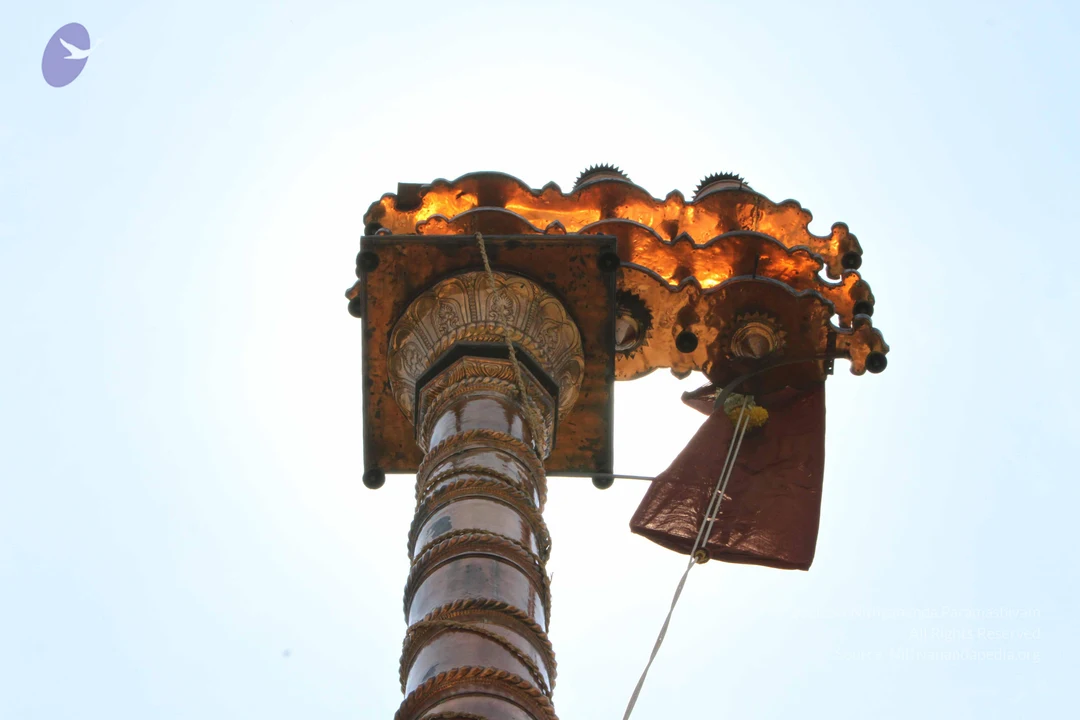
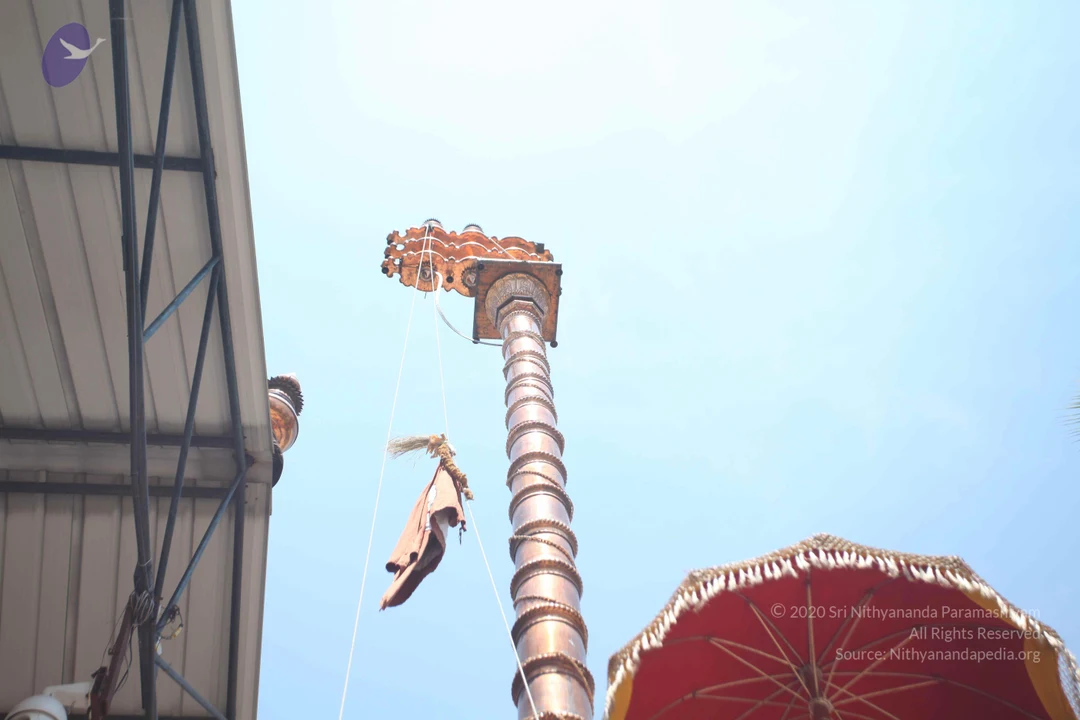
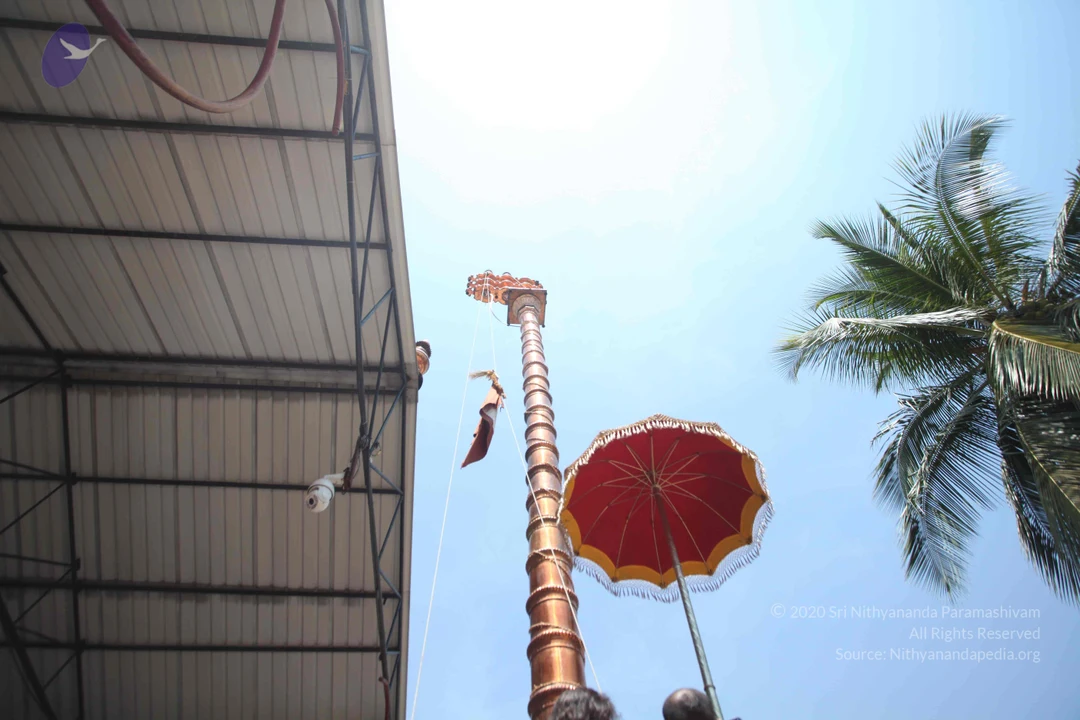
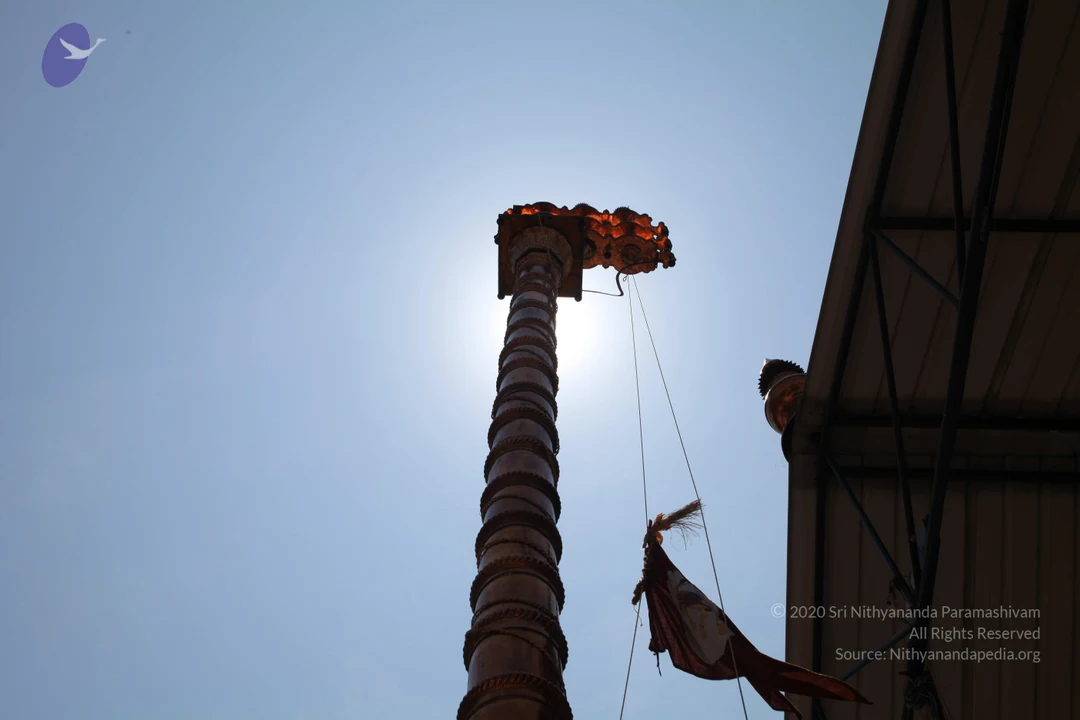
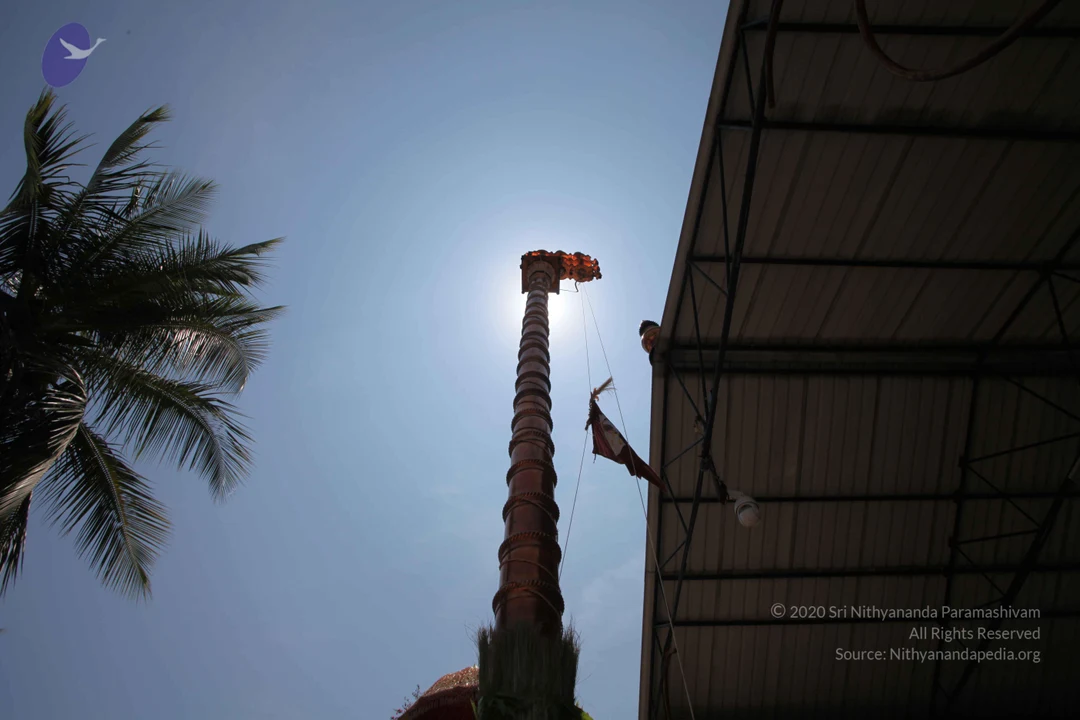
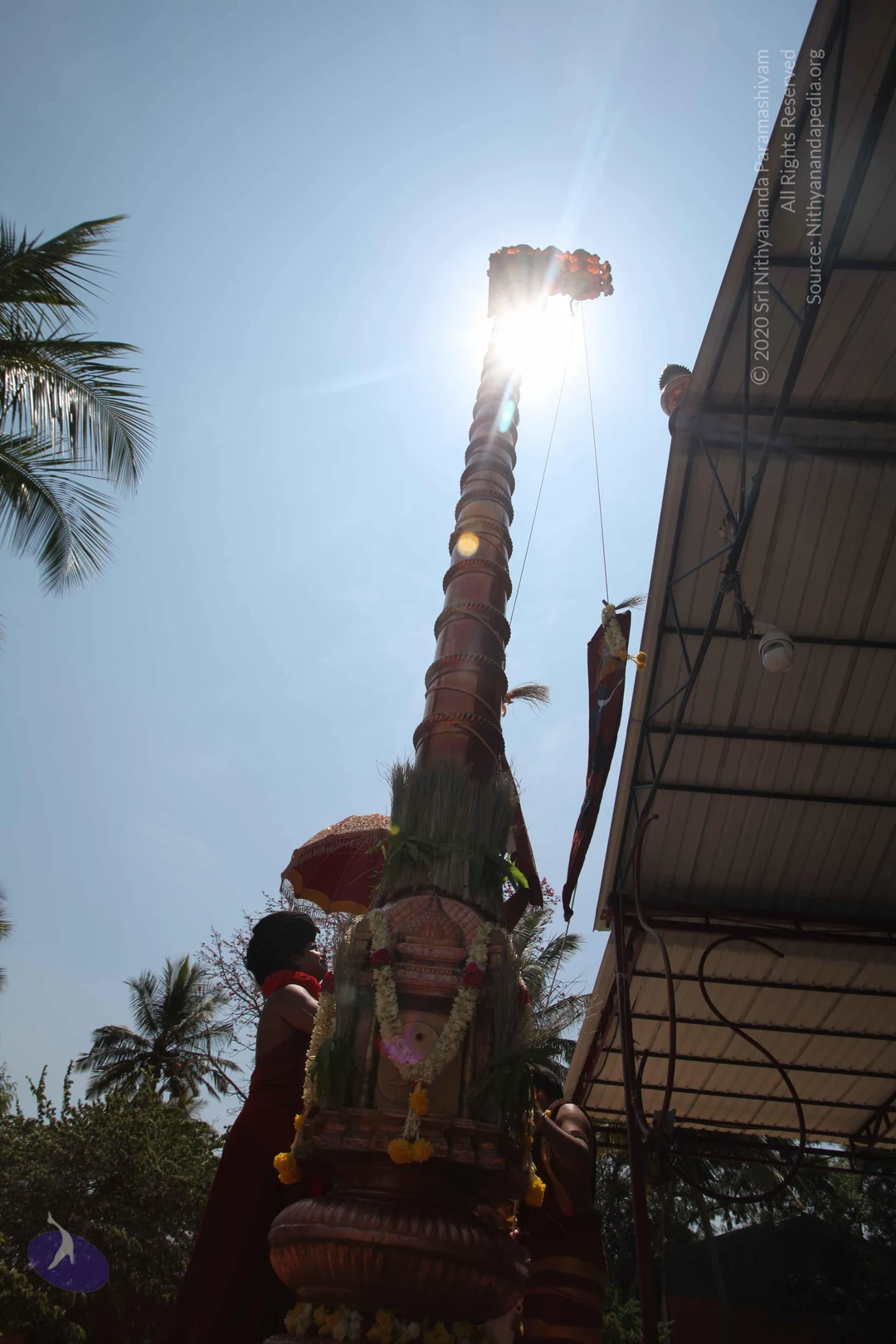
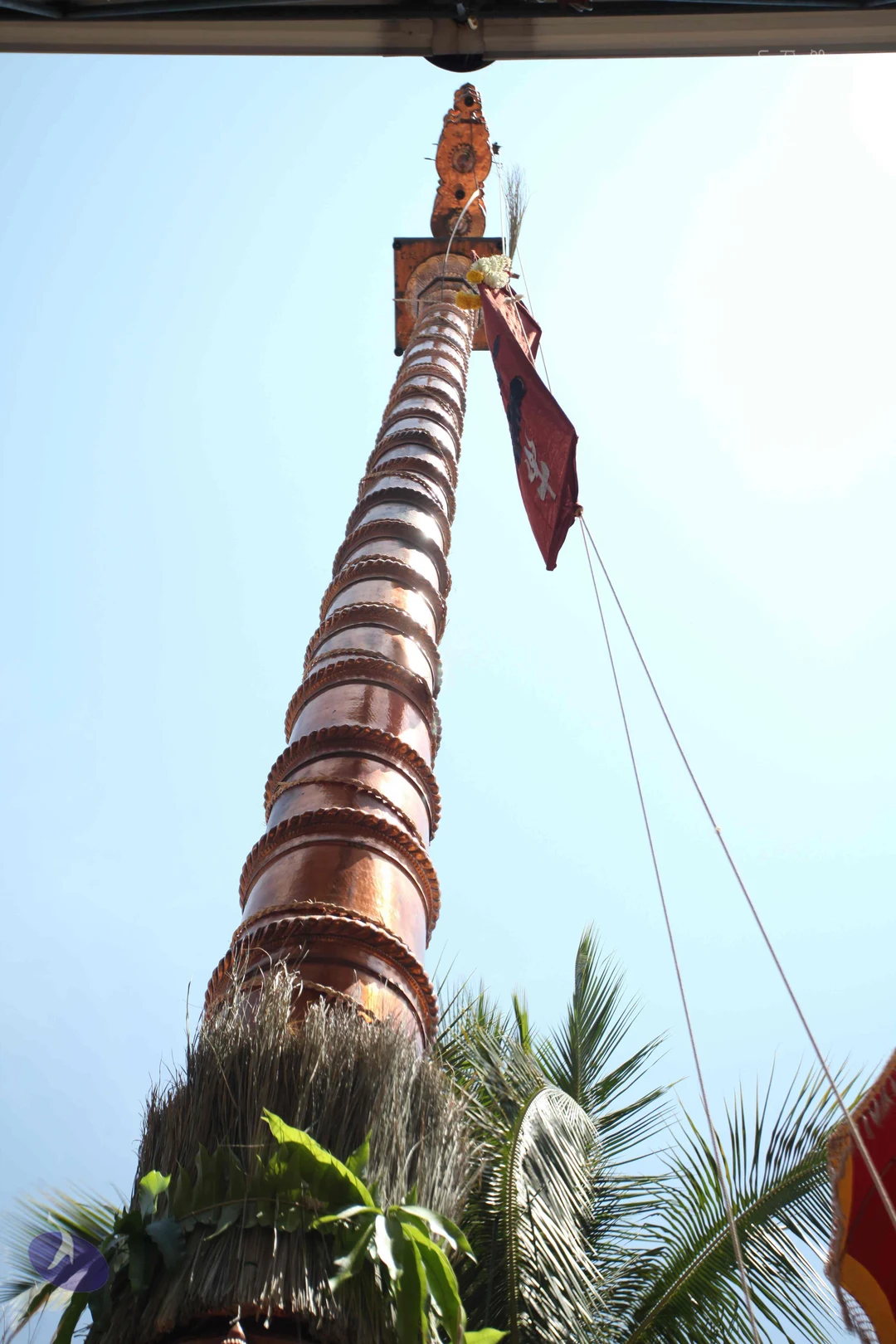
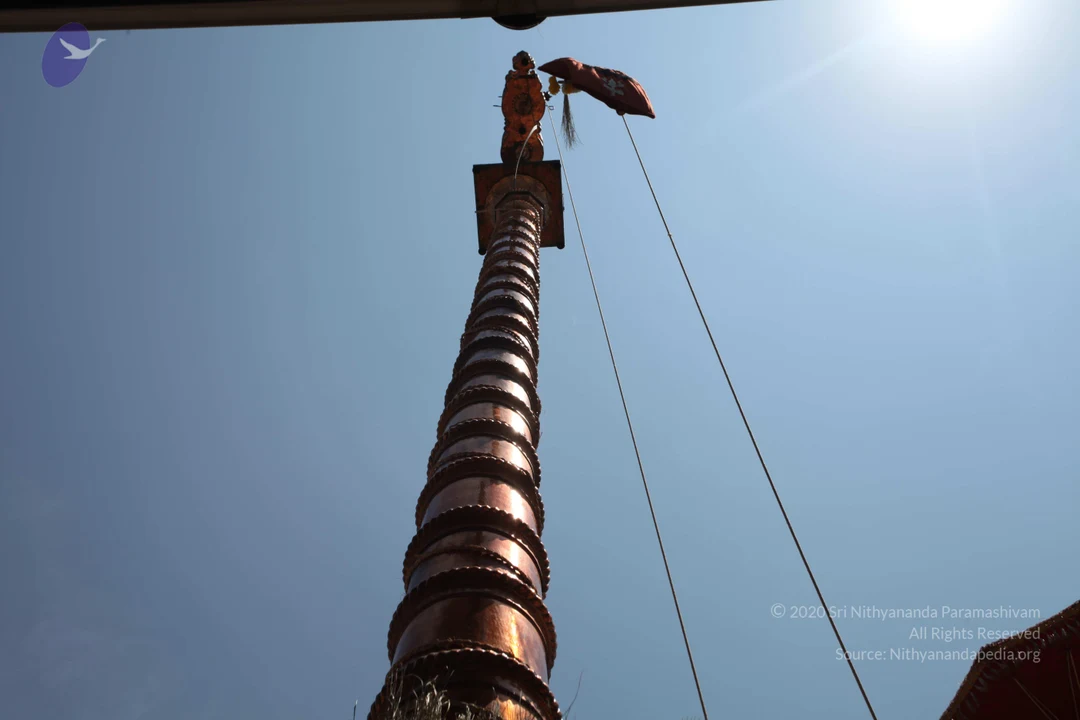
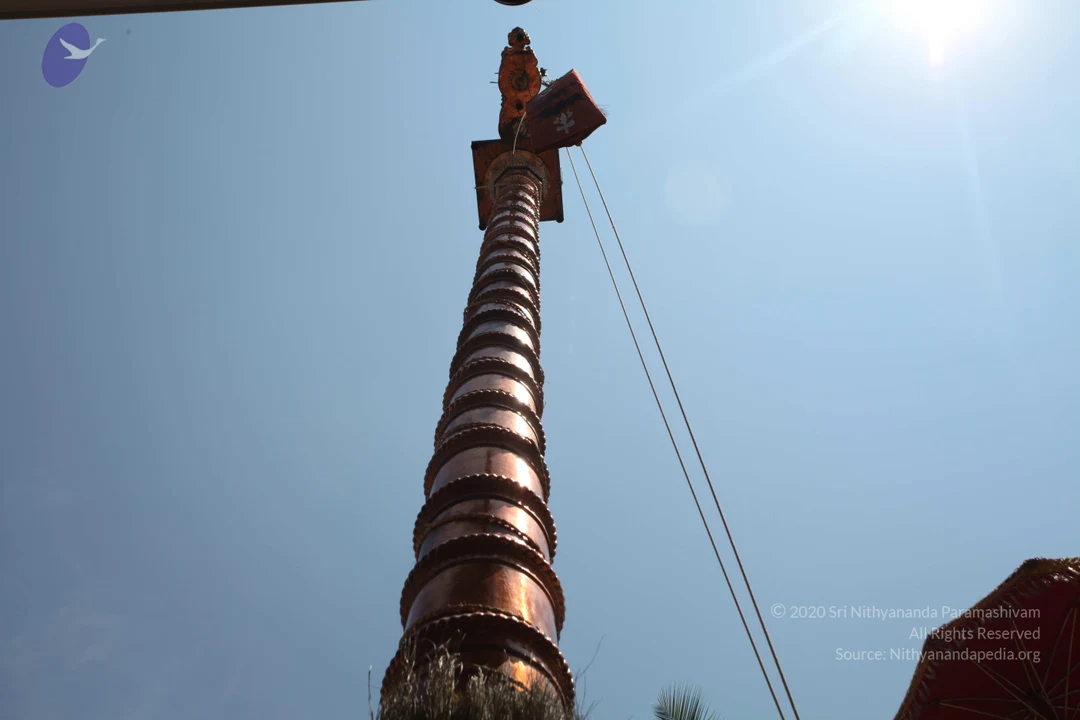
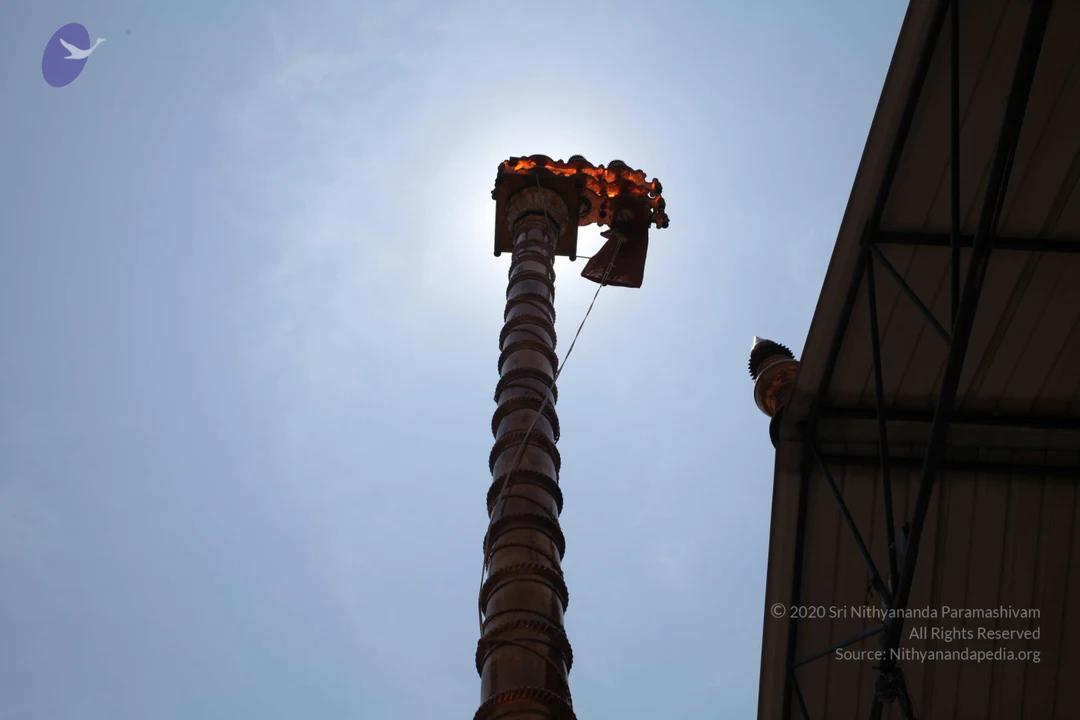
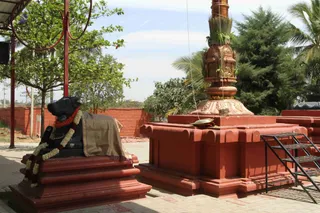
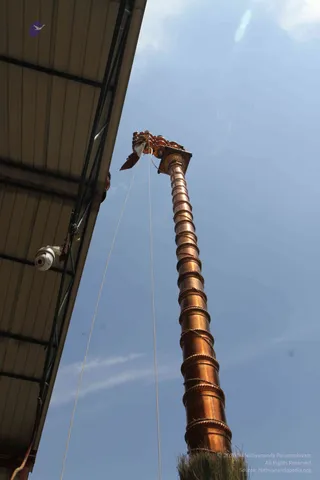
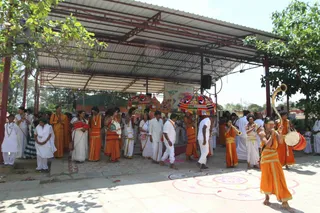
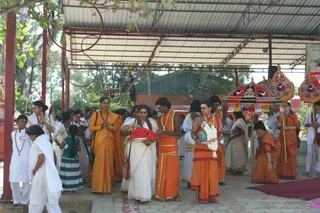
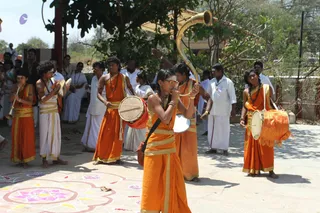
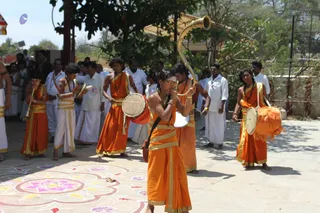
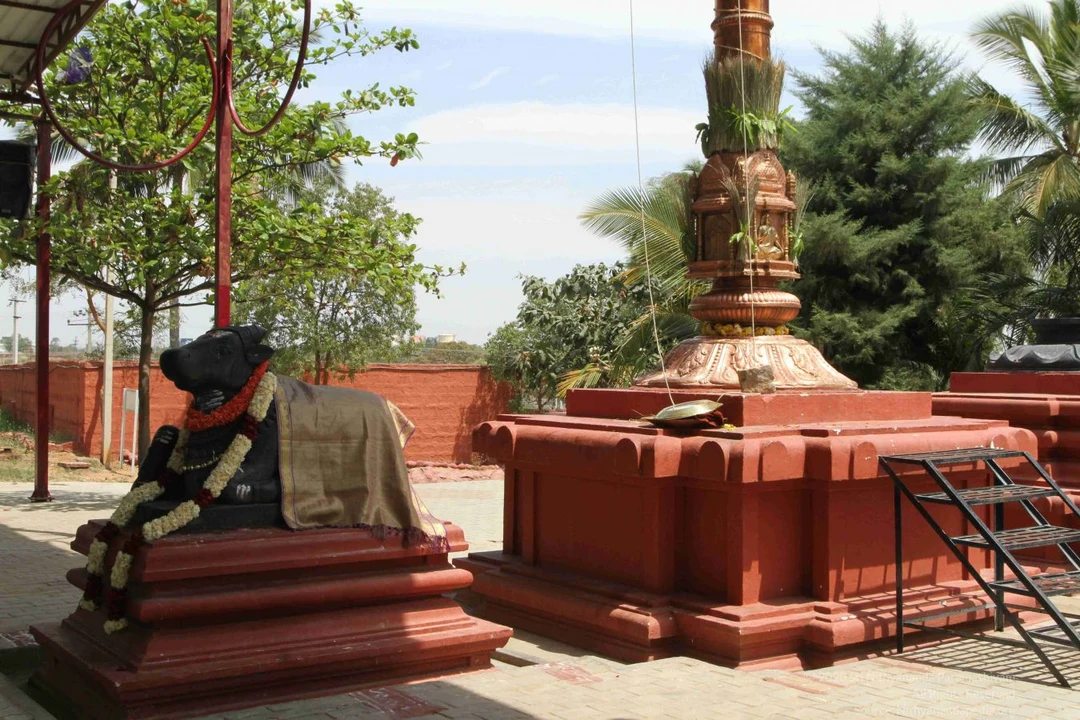
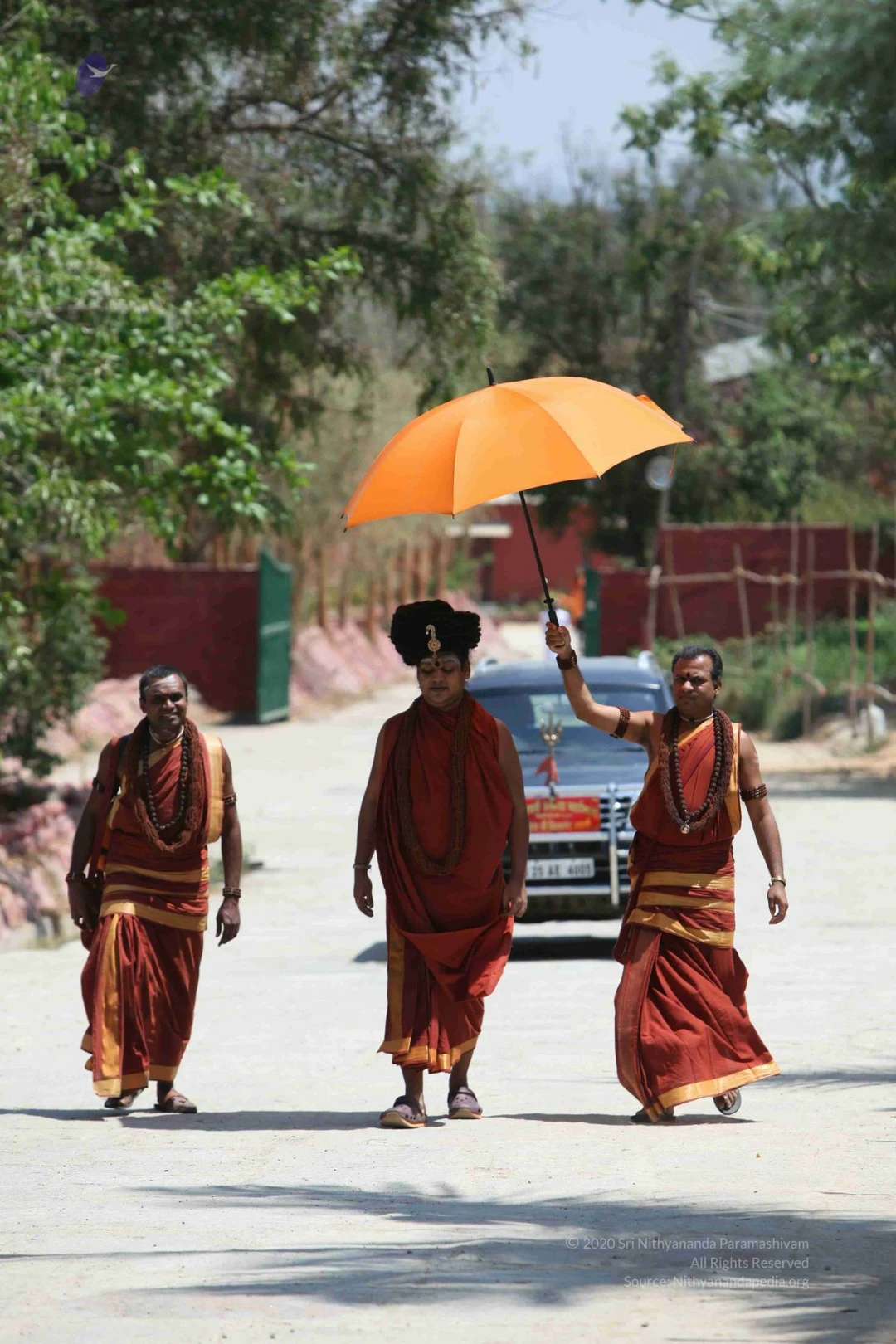
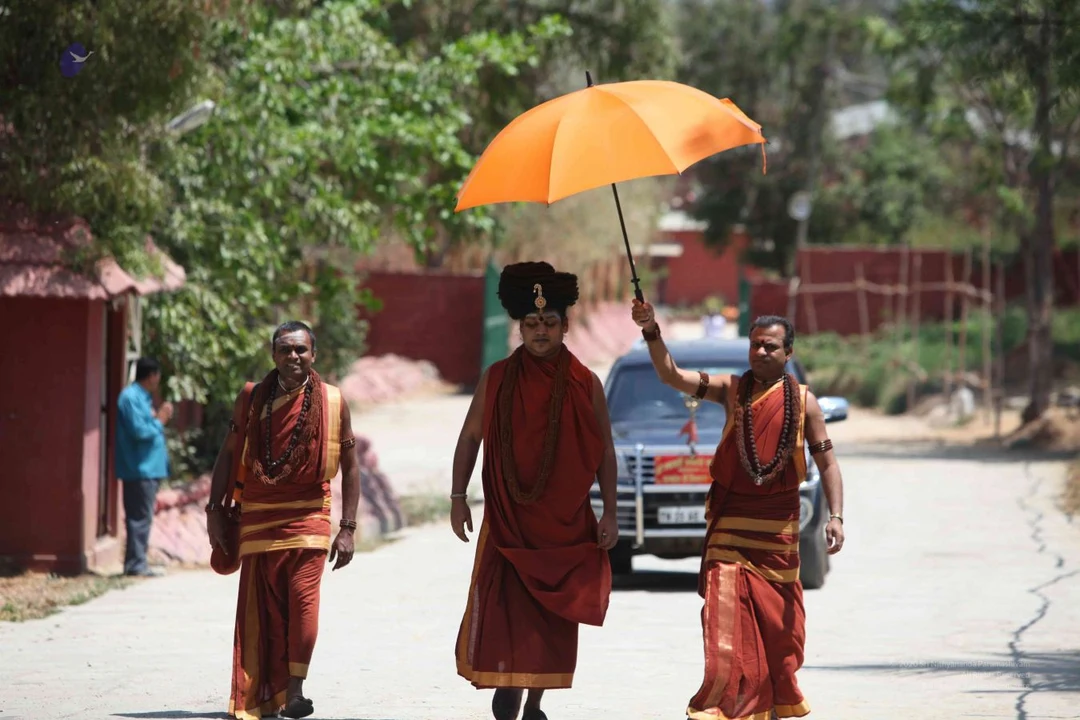
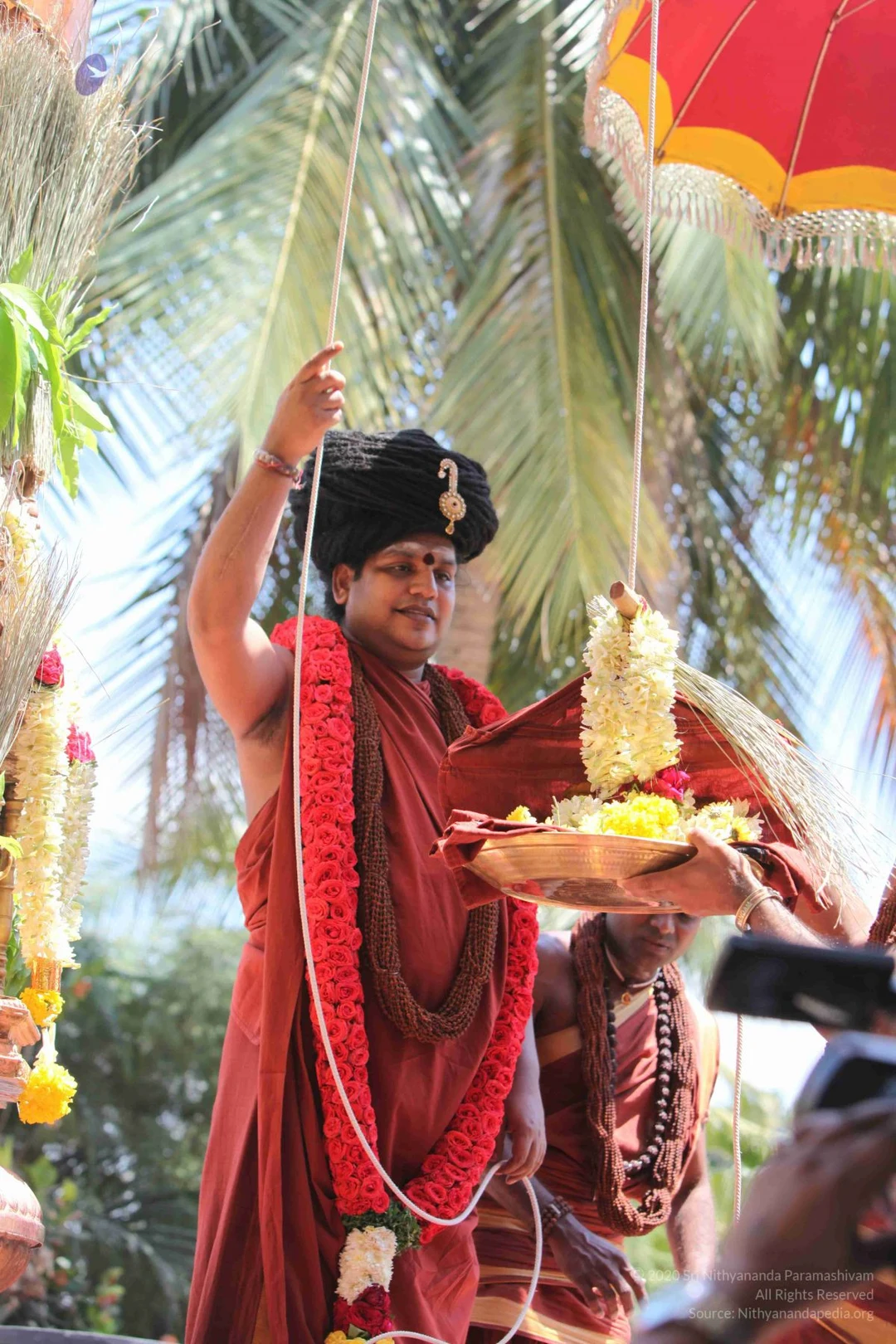
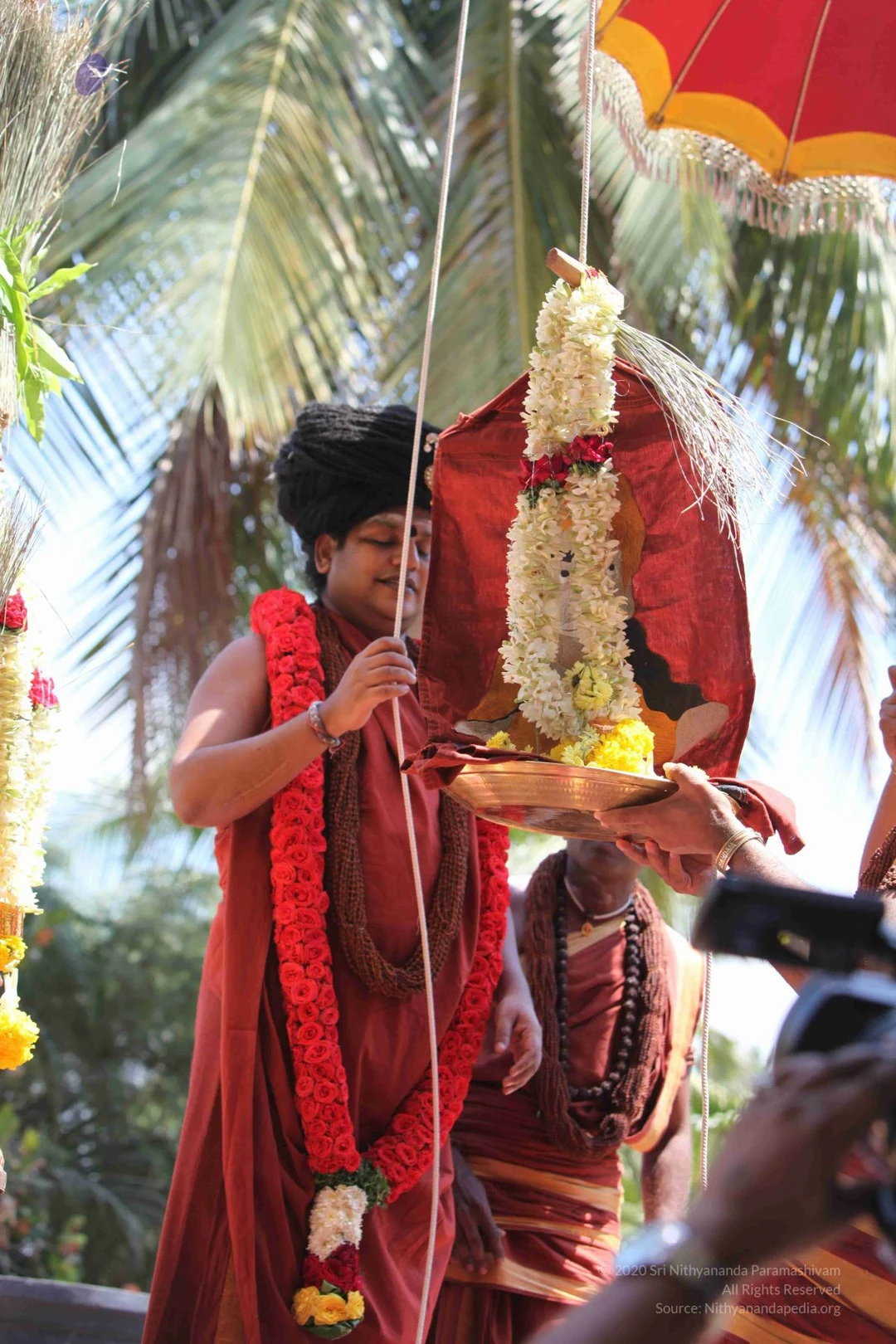
A photograph of an outdoor temple courtyard with a black stone Nandi bull statue on the left, draped with a brown-gold cloth and wearing red and white flower garlands, seated on a red sandstone plinth. Beside it stands a tall copper-coloured dhwajasthamba or flagstaff on a red stone base, decorated with ornate metal panels, topped with a bundle of green grass and a yellow-marigold garland, with a brass plate holding offerings at its base. Trees, palms and a red boundary wall stand behind. No people are visible and no a person candidate appears.A tall copper-coloured ceremonial flagstaff or dhwaja stambha rises steeply against a pale blue sky, its surface banded with twisted rope-like rings. At the top sits an ornate wooden or gilded finial with a small red-and-white cloth or flag fluttering from it, with taut guy wires running up to it. On the left, the edge of a corrugated metal roof and a white dome security camera are visible. Seen from below, no people are present in the frame.Outdoor procession under a corrugated metal roof on a paved courtyard with a floor kolam of coloured petals. Musicians in saffron and orange dhotis play long brass horns, a conch-shaped trumpet and a drum, while a group of devotees in white dhotis and saris walk behind. Several ornate umbrellas in red, yellow and blue with decorative fringes are held over the procession, and a rangoli-style design decorates the floor. A banner with a poster is visible on the back wall, and people in white and saffron stand with hands joined in prayer on the left.A procession at an open-sided pavilion with a corrugated roof and red metal beams. A man in an orange dhoti and orange shawl with a garland and a bare chest carries a small object wrapped in a cloth, beside a woman in white holding a large tray of red flowers. Several women in orange saris and white garments walk alongside, some with hands joined in prayer, and an orange-clad attendant carries a colourful umbrella-style canopy with yellow fringe. Children in white and a girl in a striped dress stand at the left edge. Some figures wear vibhuti and kumkum on their foreheads and rudraksha malas.A photograph of a procession on a paved courtyard outdoors. Several young musicians in saffron-orange dhoti-style garments with gold borders and rudraksha necklaces play instruments: a long brass horn held by a girl in sunglasses at centre, a shehnai-type wind instrument on the left, and hand drums with skin heads carried by two performers. Behind them, men and women in white dhotis and white shirts or saris walk among the crowd, some wearing event badges. A colourful flower-pattern kolam rangoli decorates the ground at lower left, and green trees and a shaded pavilion stand in the background.A photograph of an outdoor procession on a paved courtyard in bright daylight. In the foreground a young woman in orange-saffron clothes with gold borders plays a long curved golden horn, and beside her a drummer in orange clothing with gold trim beats a frame drum. Other drummers in orange with gold-bordered garments and rudraksha-style beaded necklaces walk alongside. Behind them, men and women in white dhotis and white shirts or kurtas, some wearing name badges, follow the procession. A colourful floral kolam rangoli with pink and yellow motifs lies on the ground at left, and trees and a shaded structure stand in the background. No identifiable a person candidate is clearly visible among the marchers.
Nithyanandam - Introduction
55 photosSource gallery
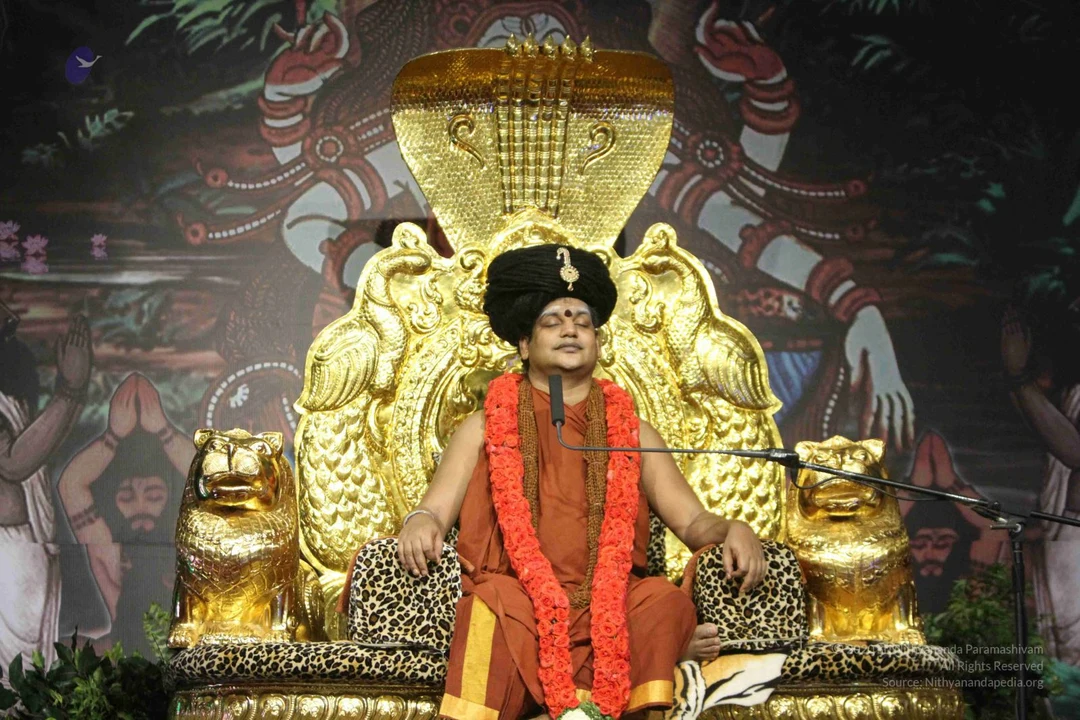
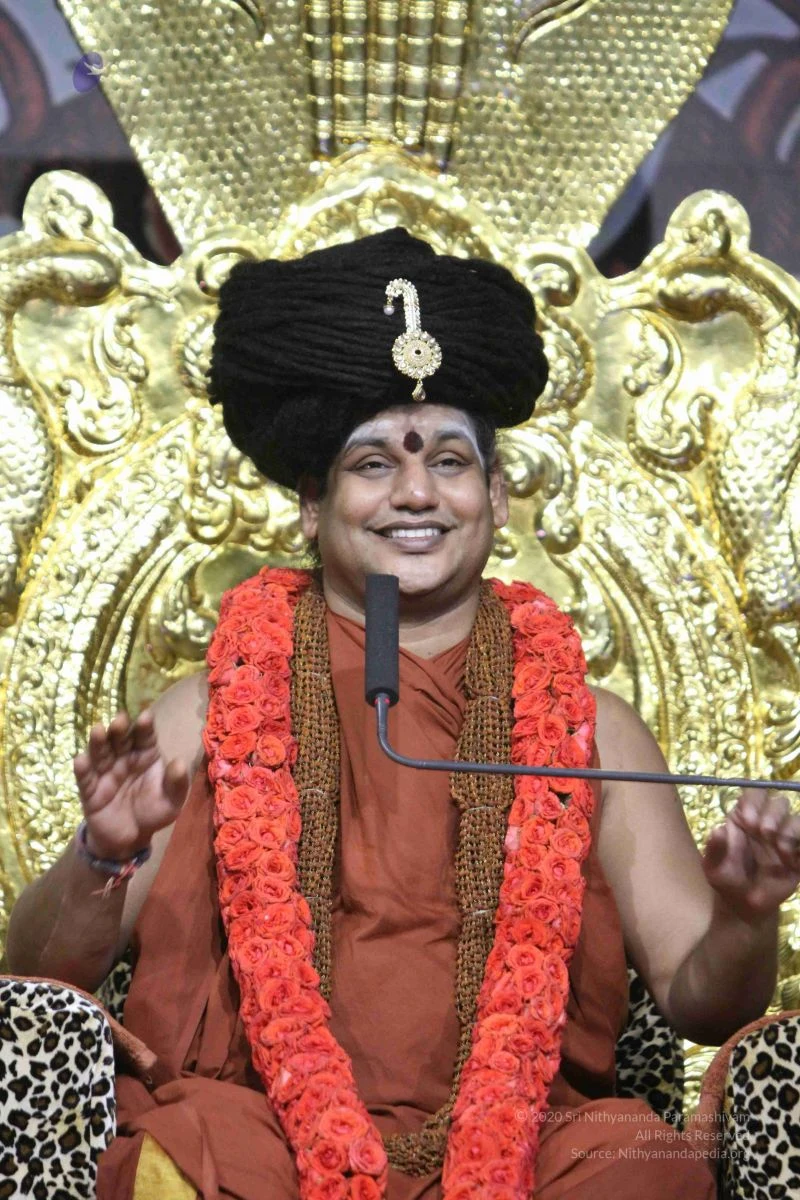
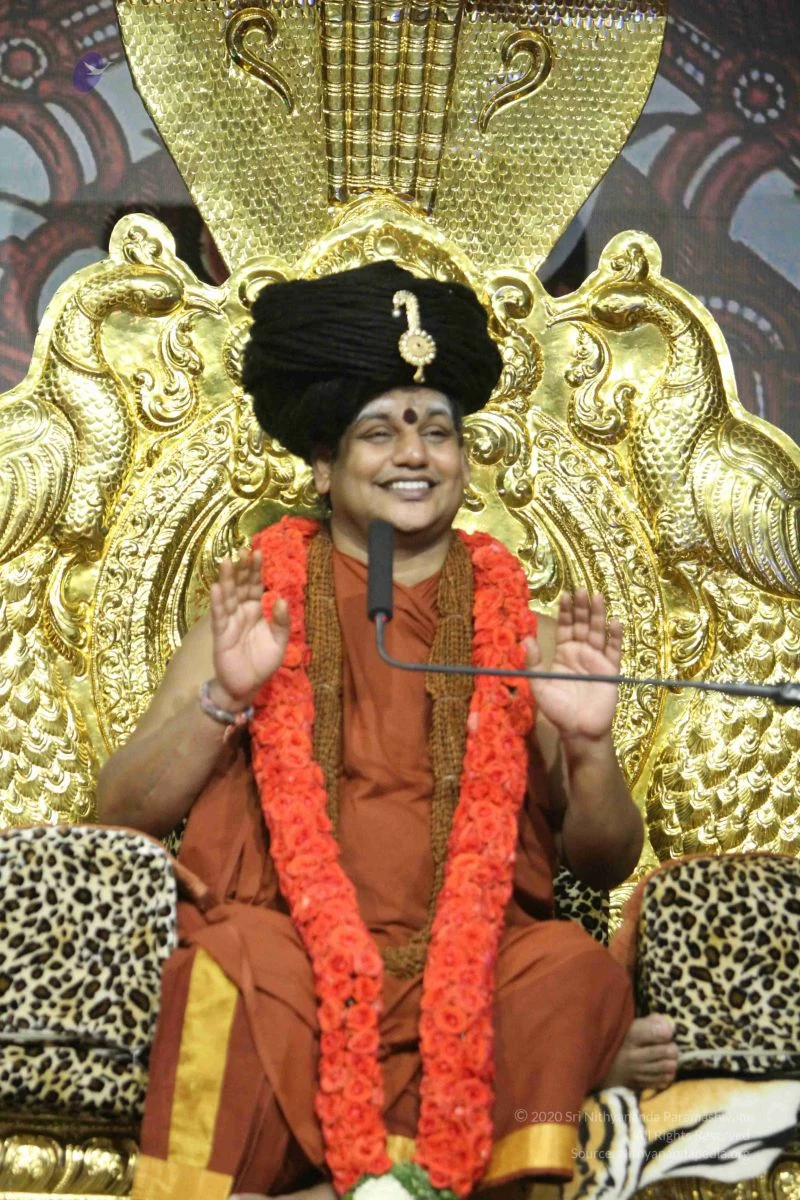
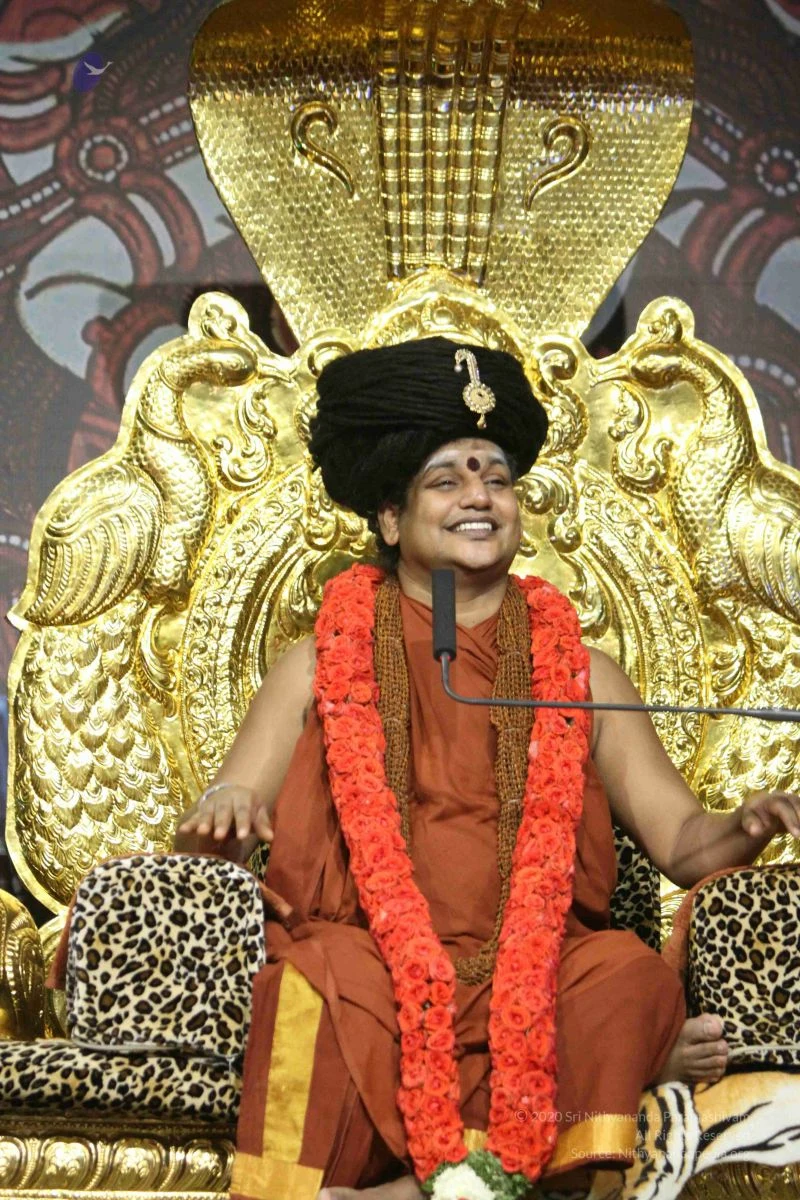
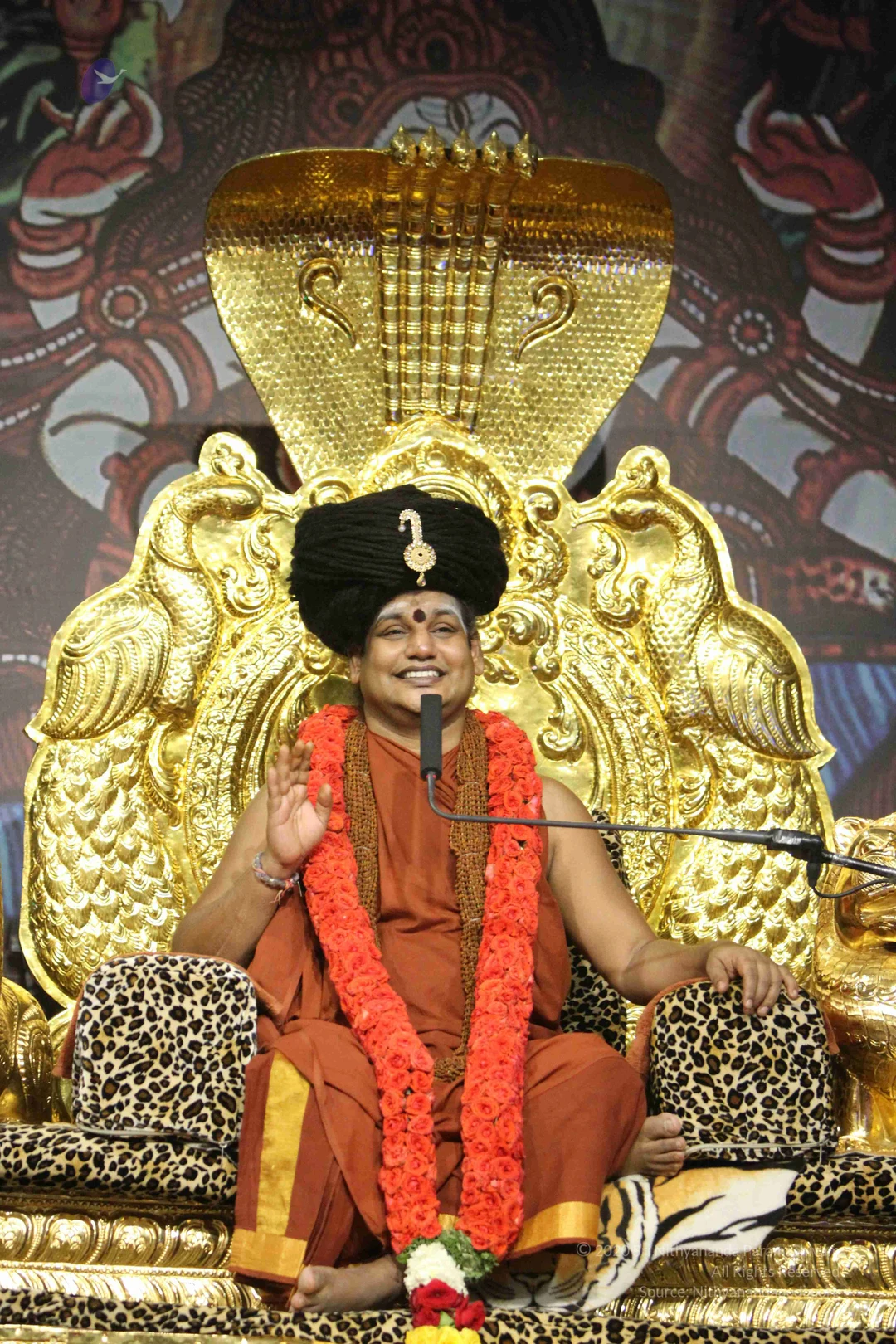
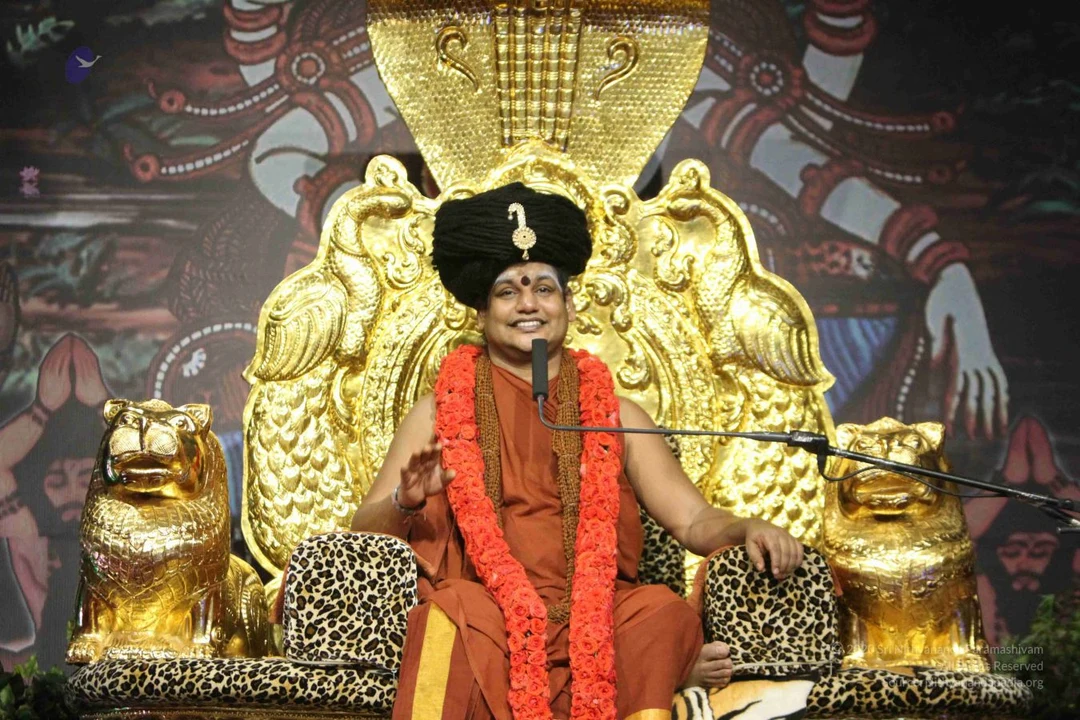
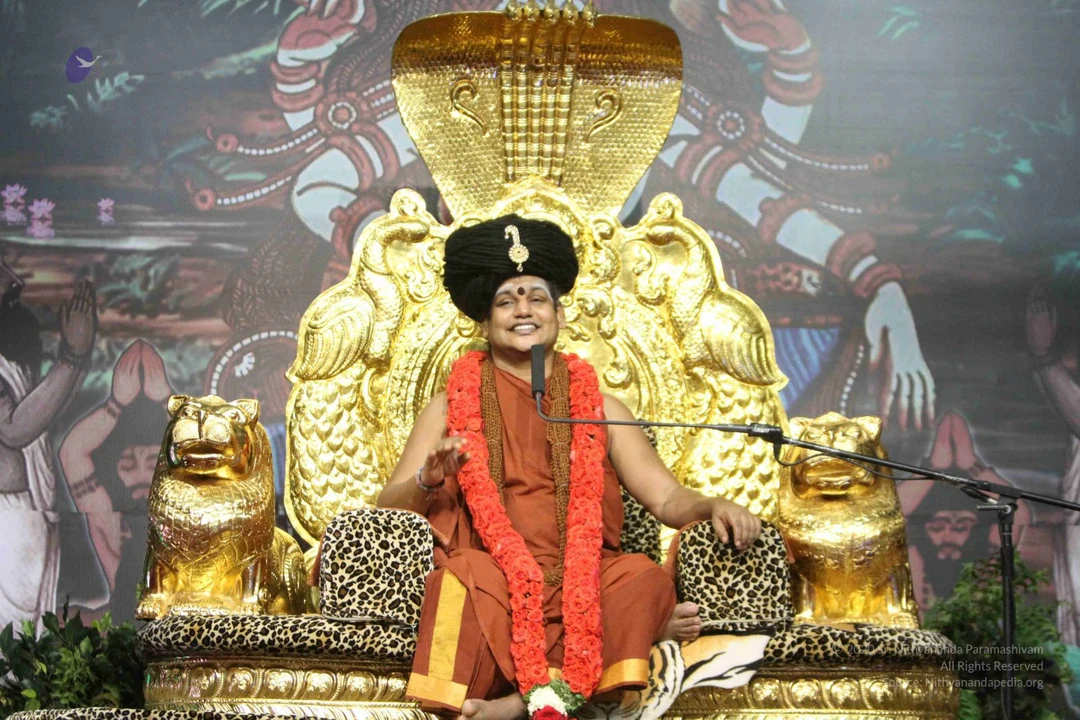
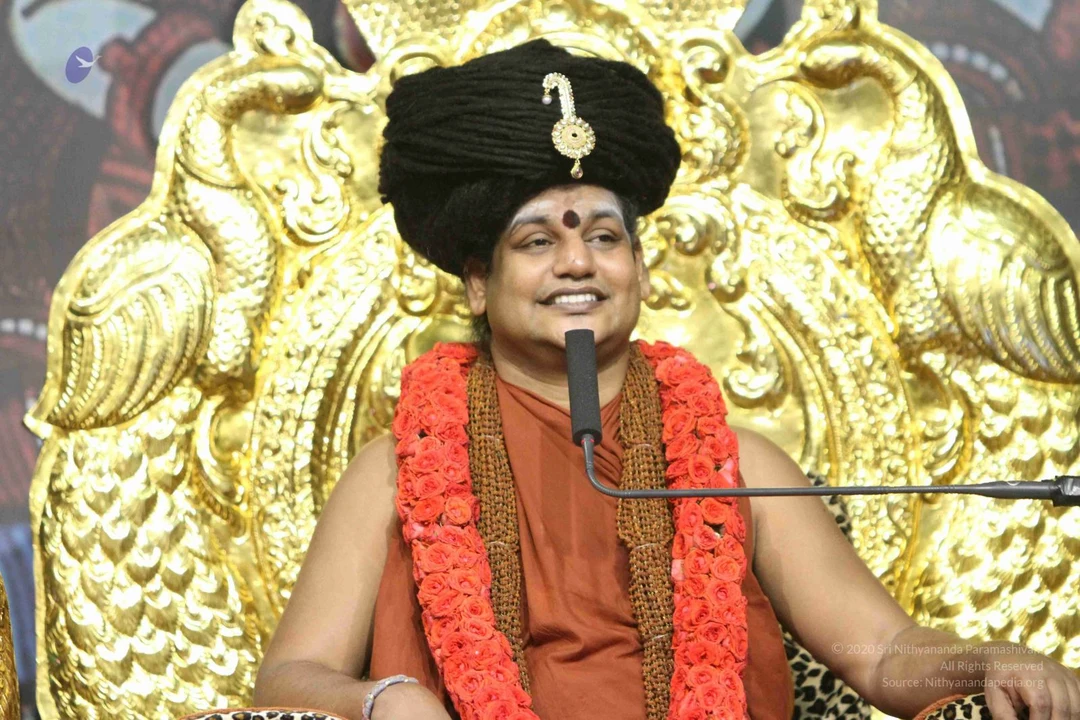
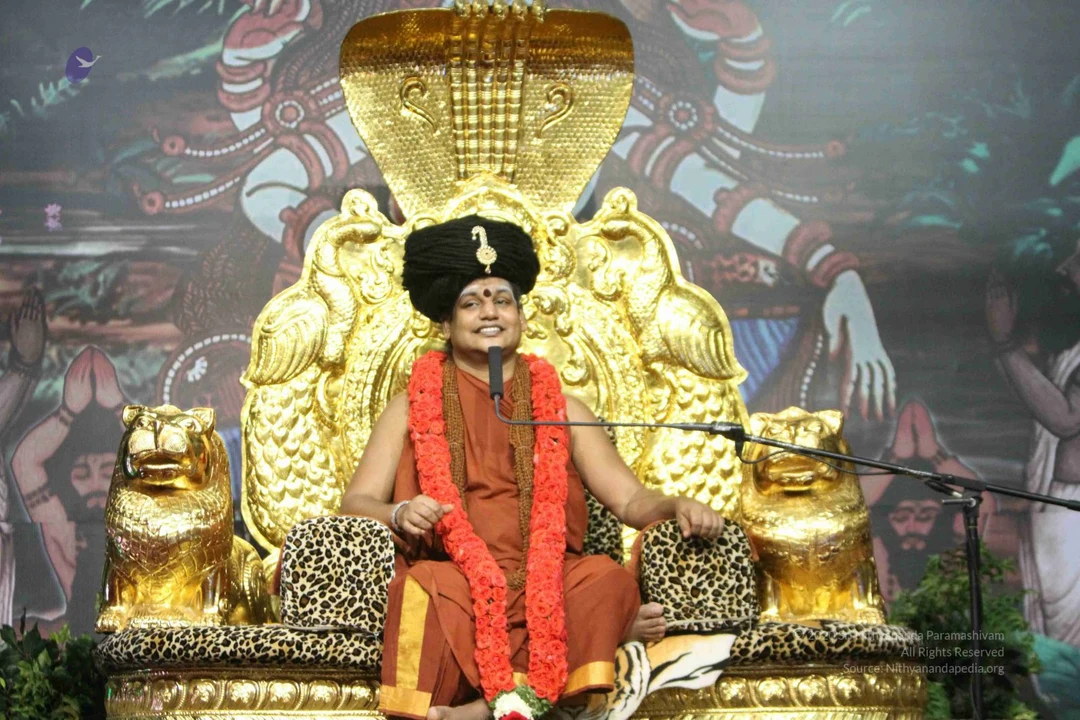
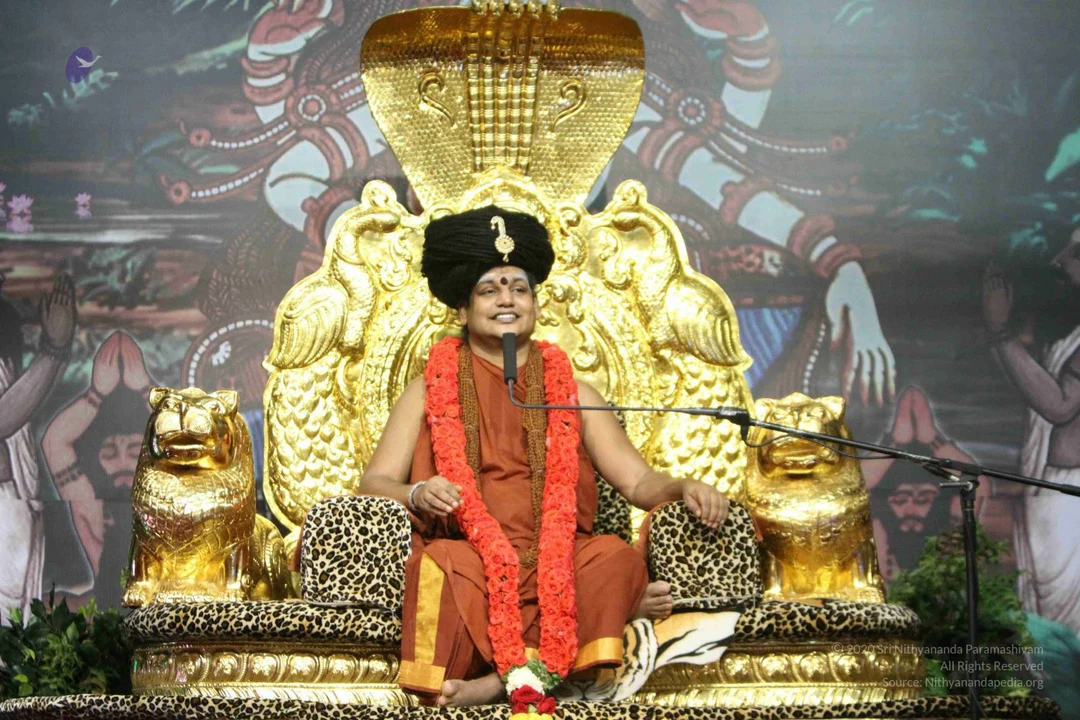
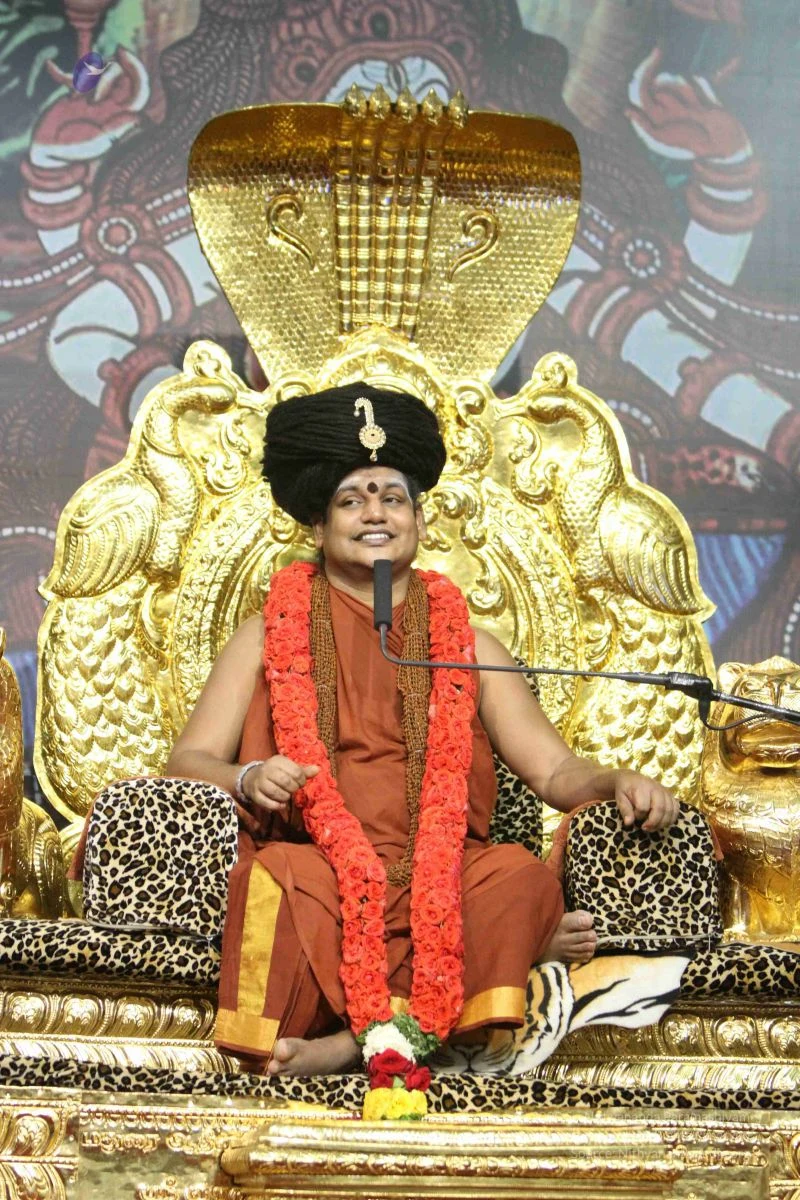
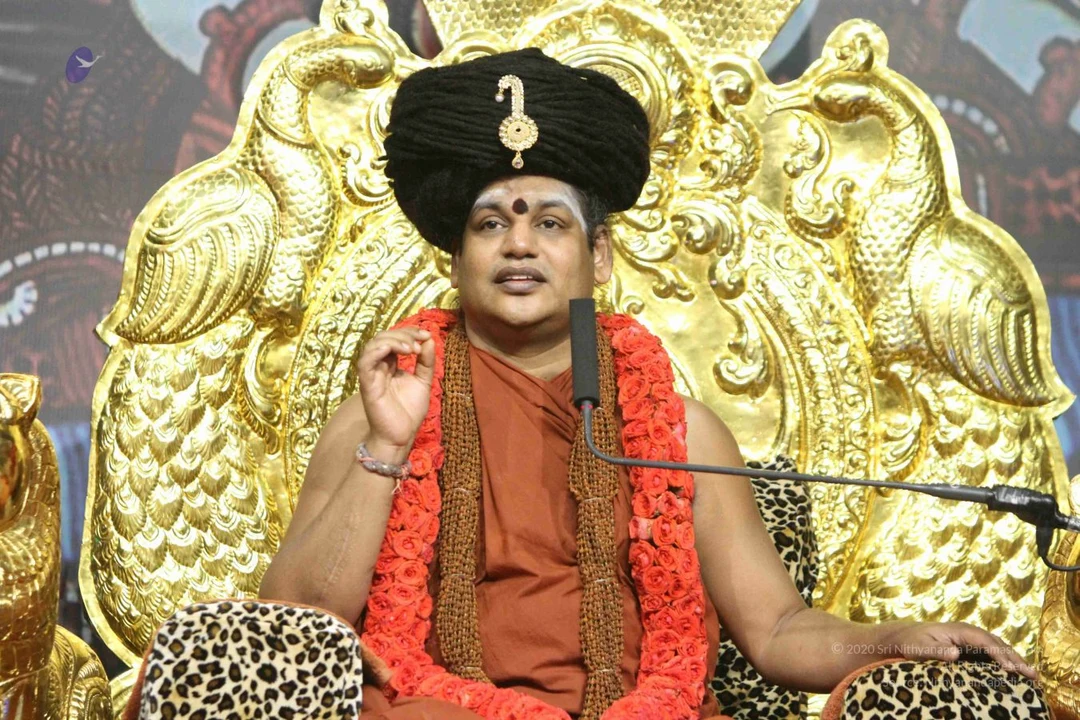
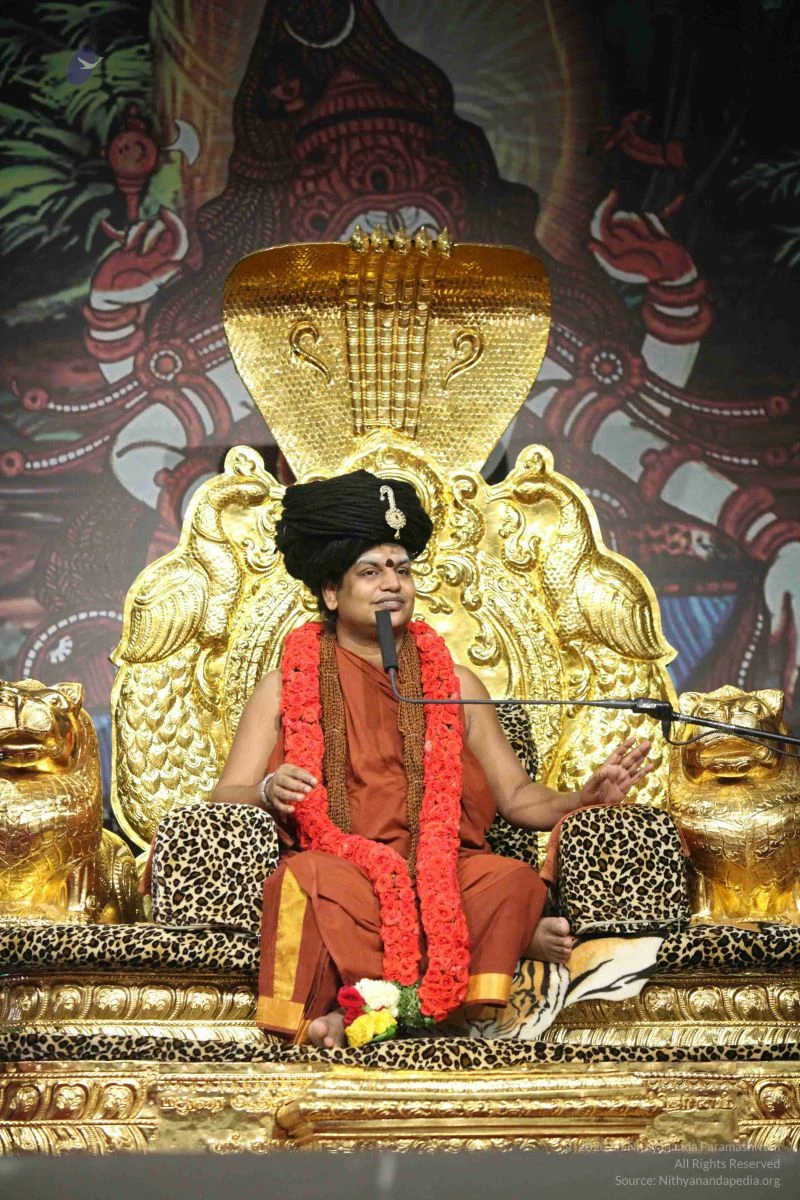
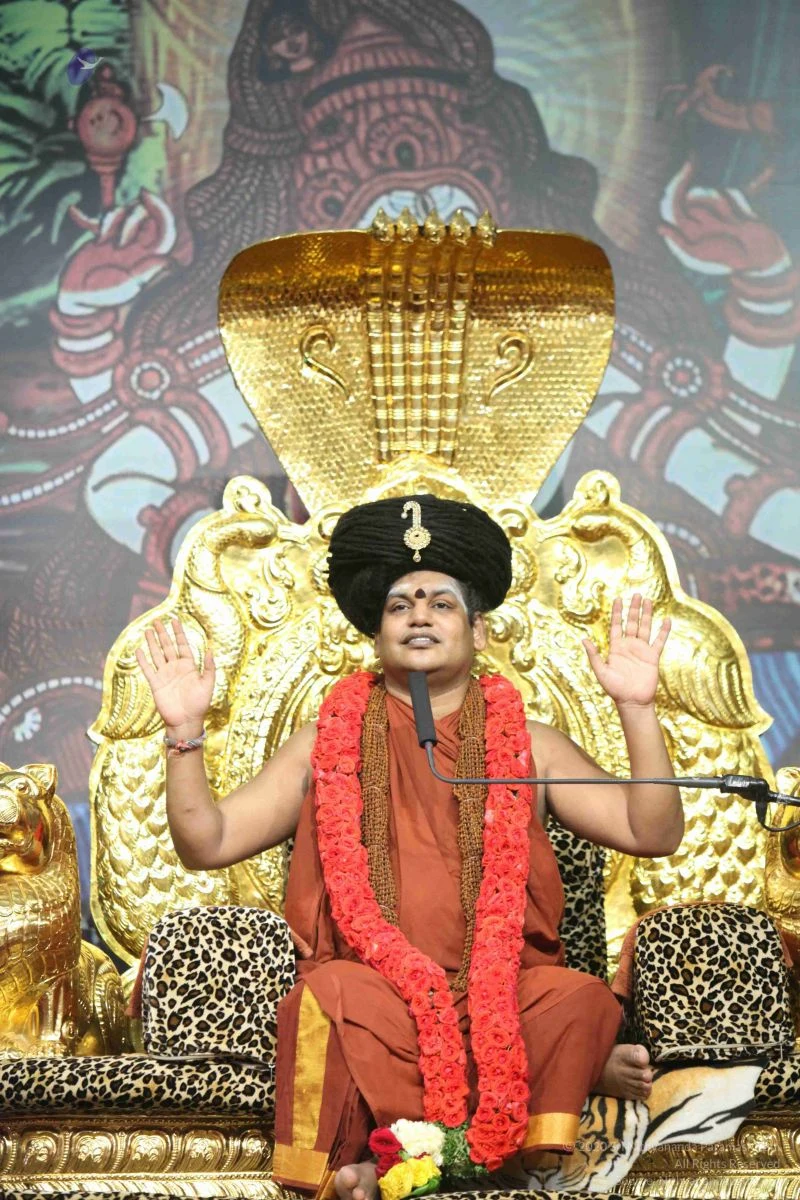
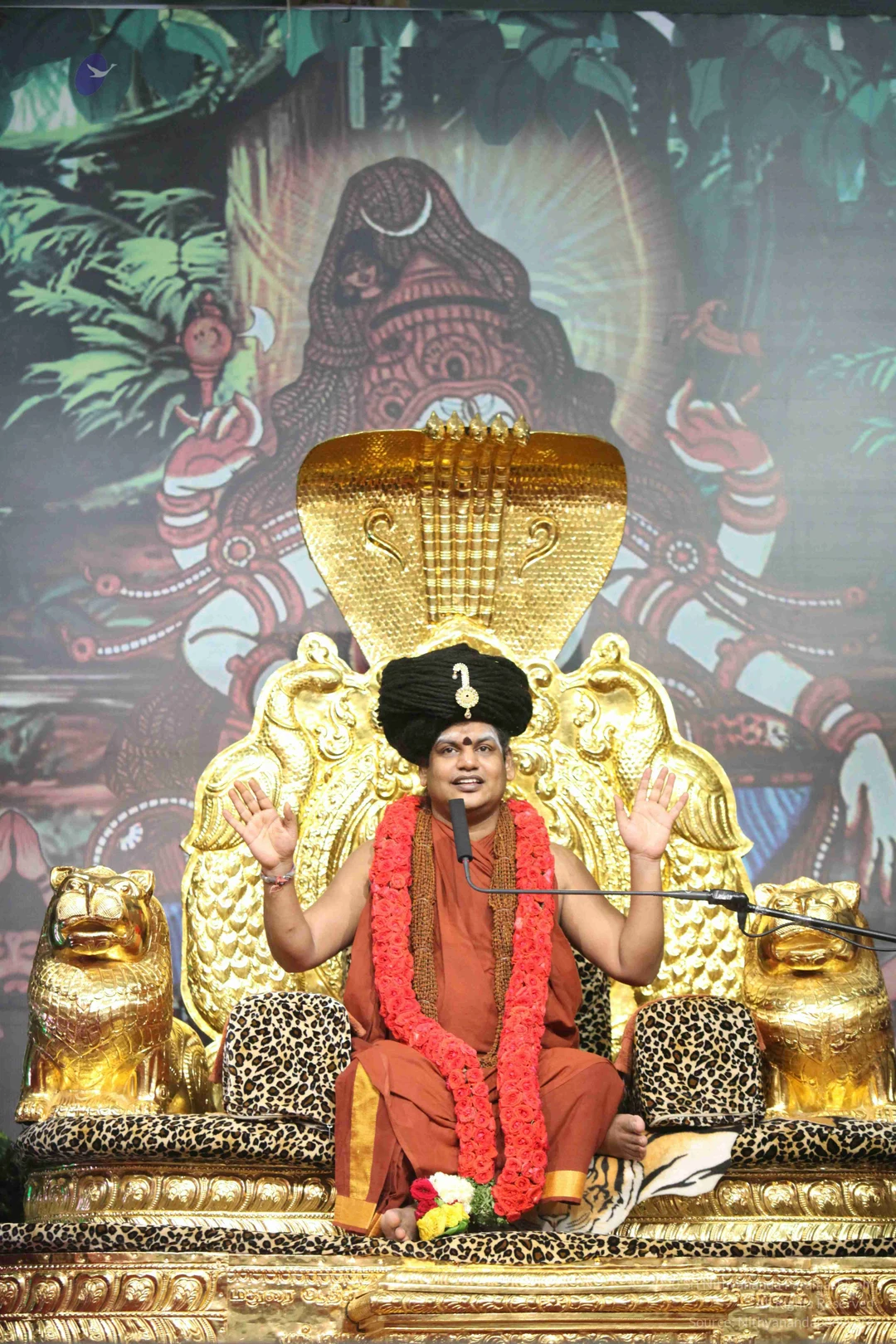
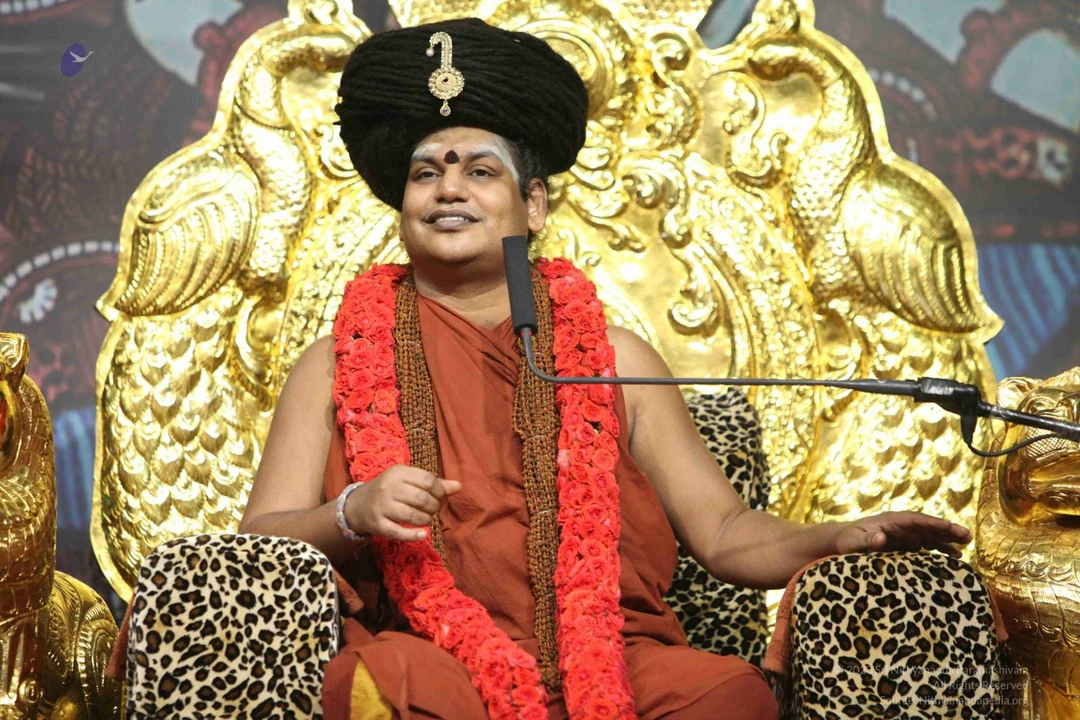
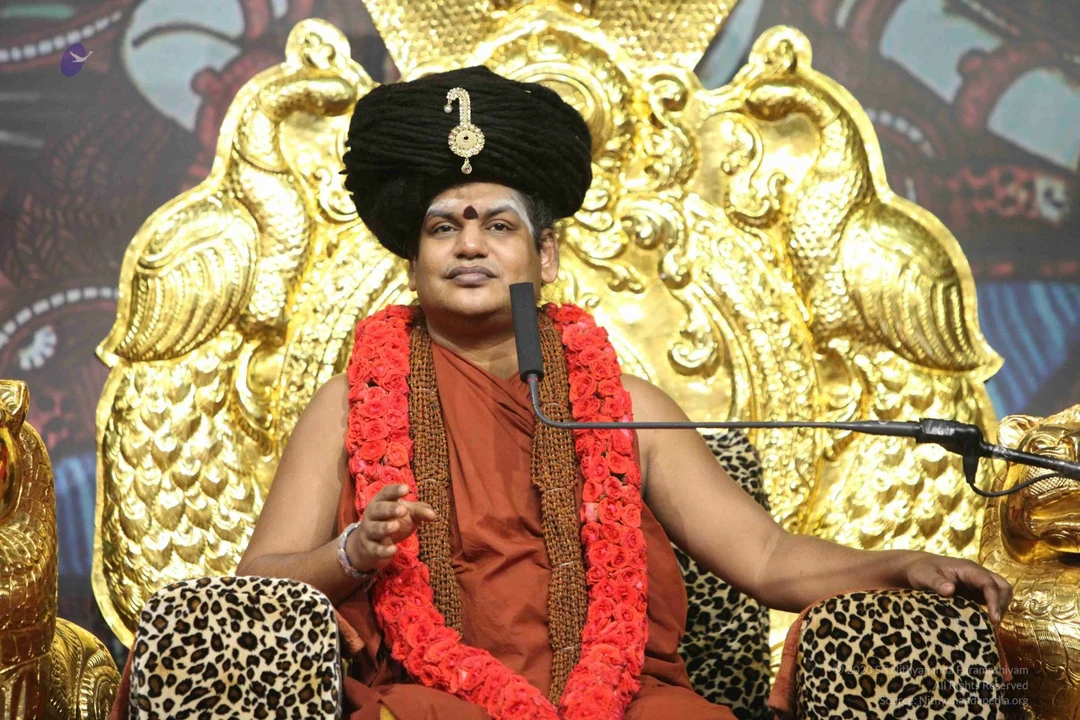
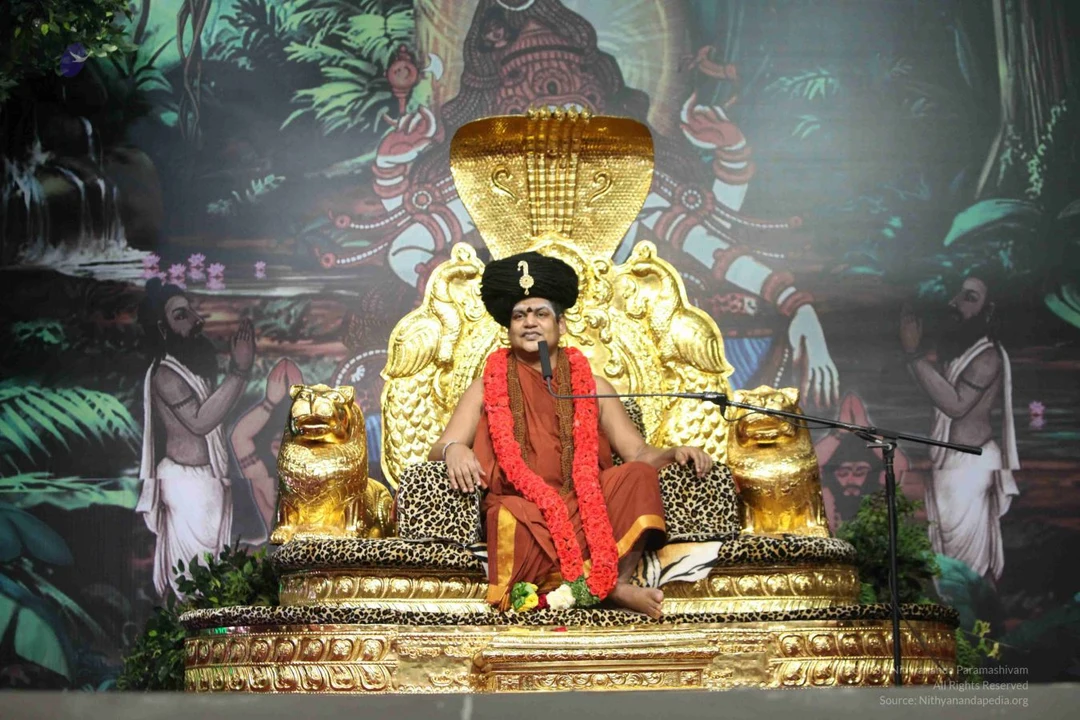
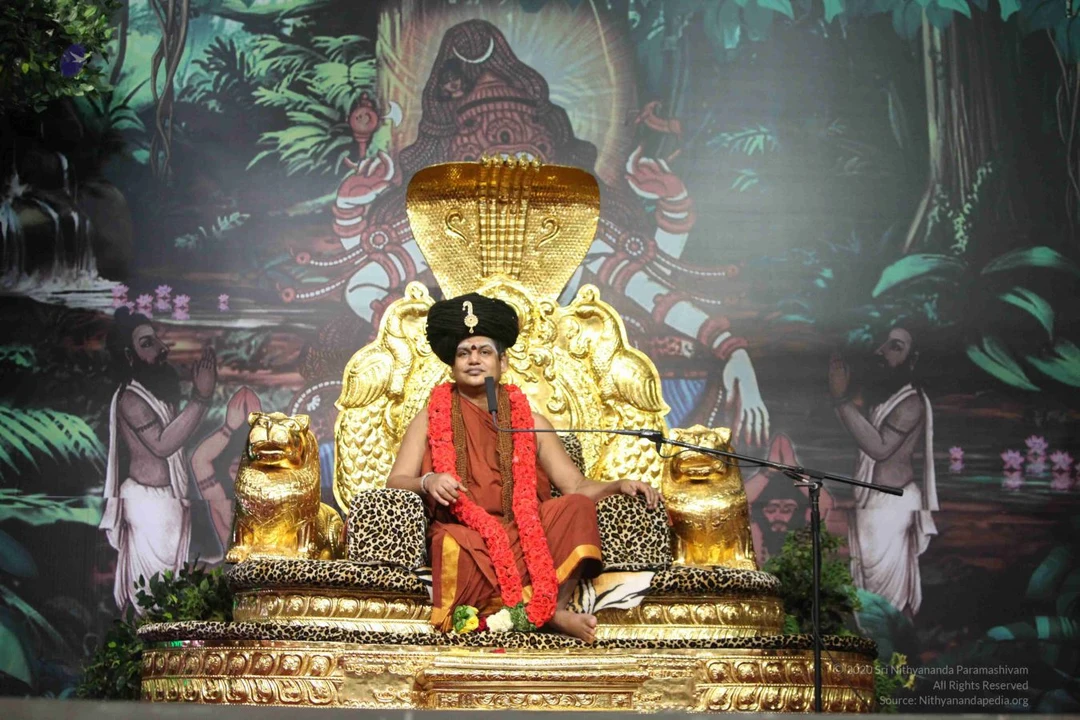
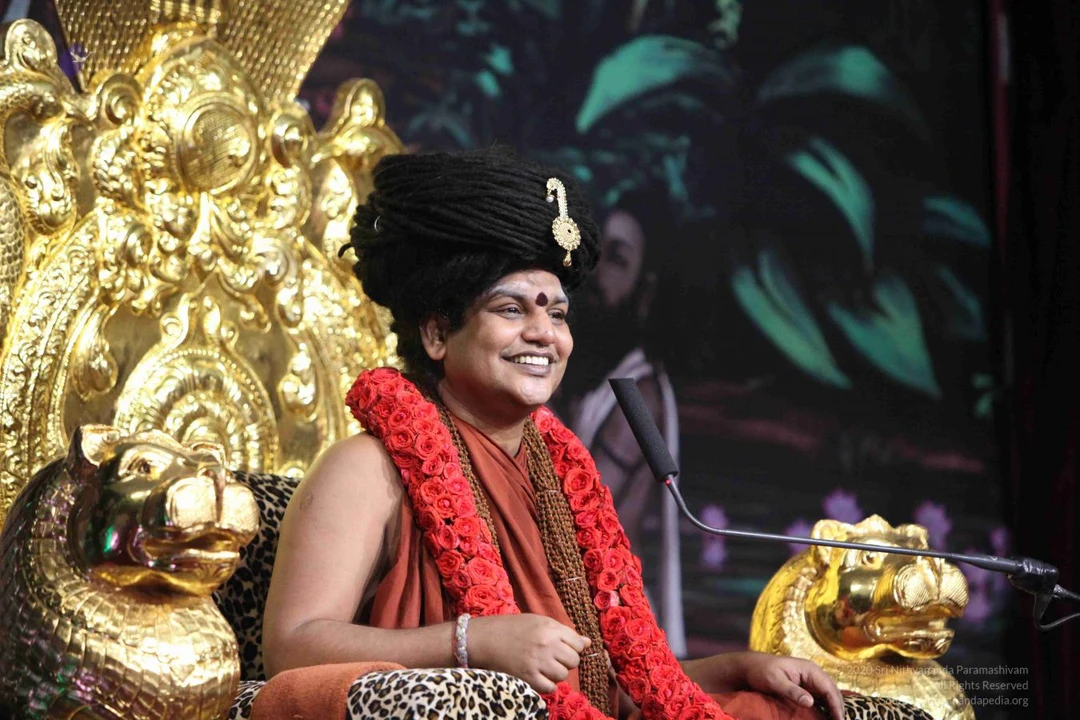
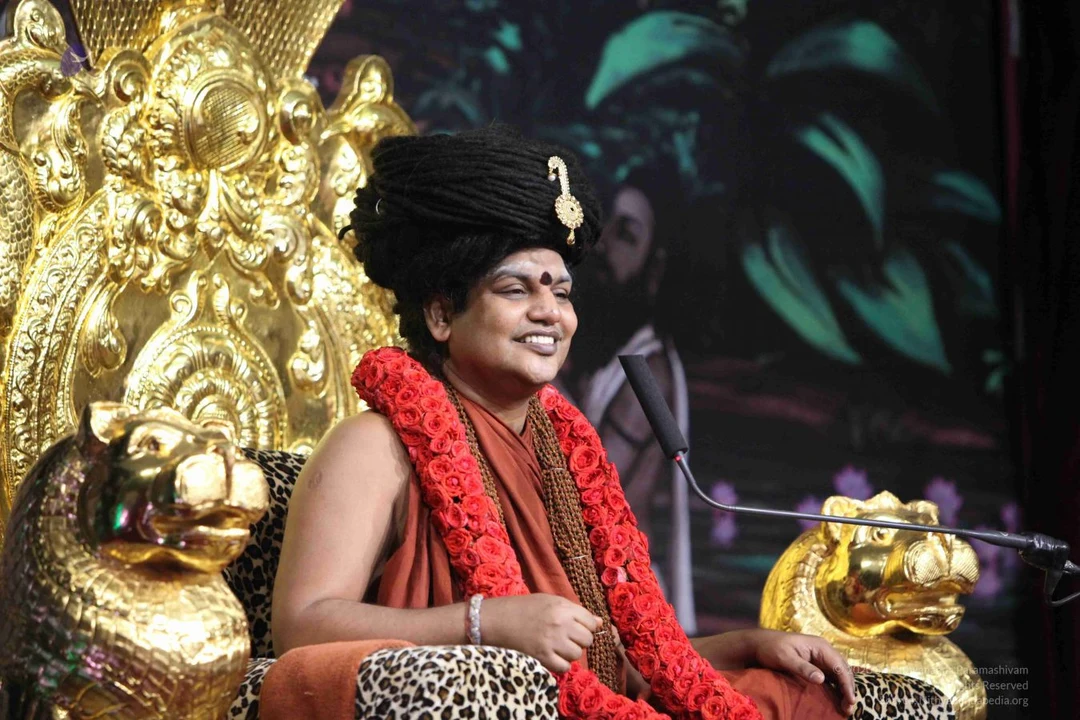
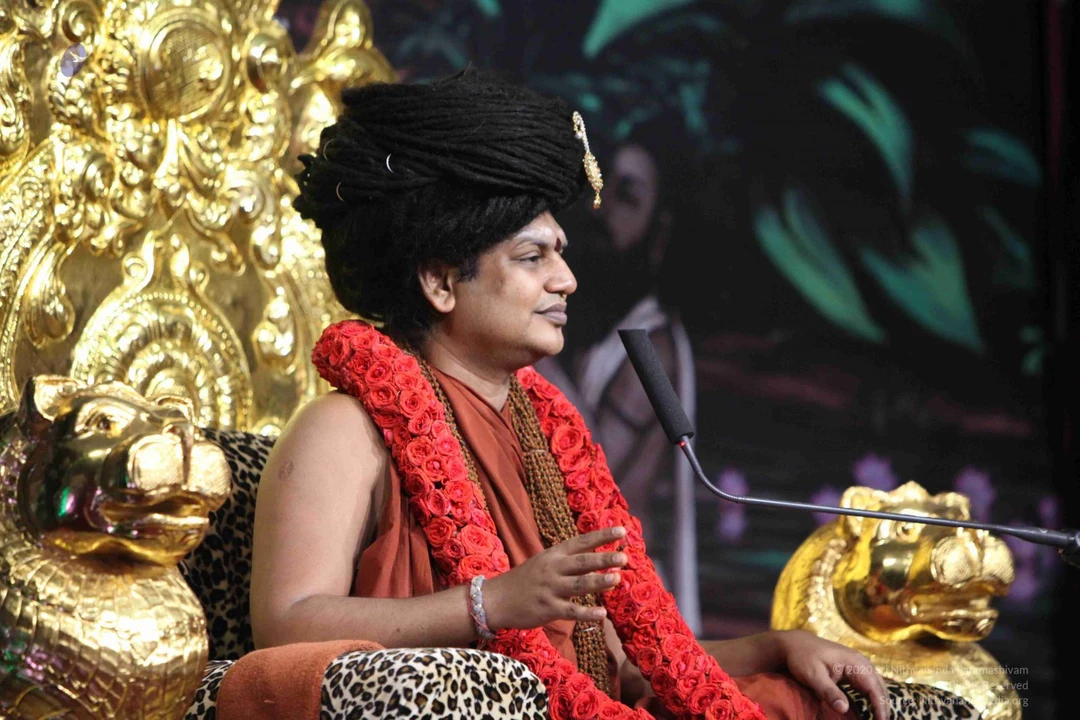
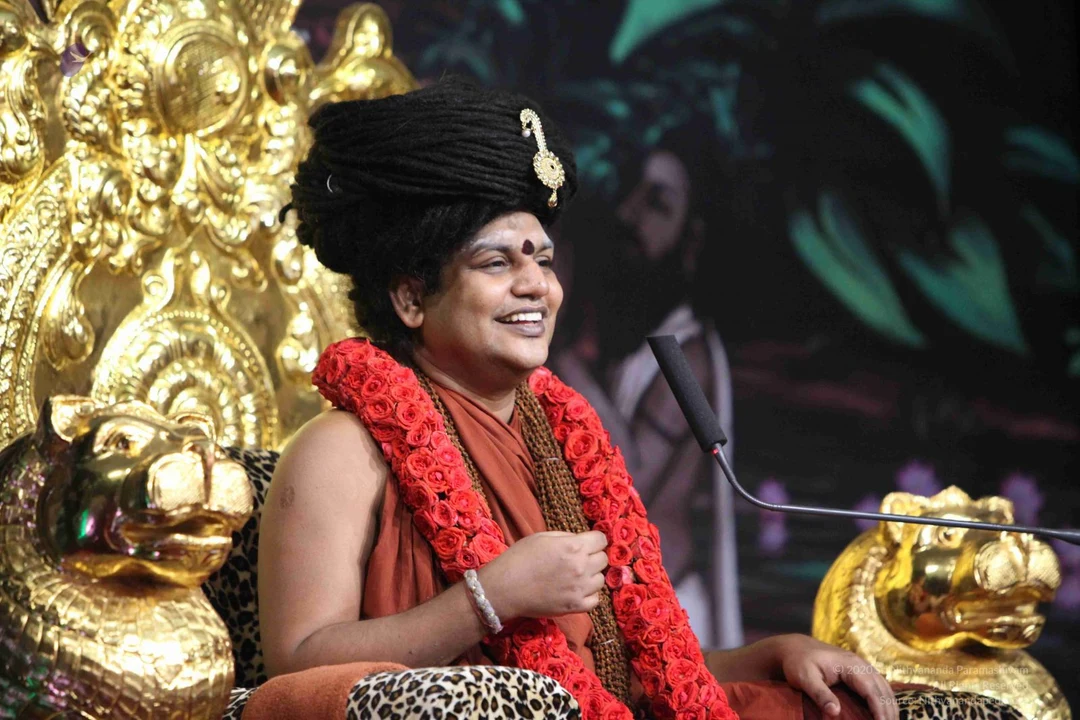
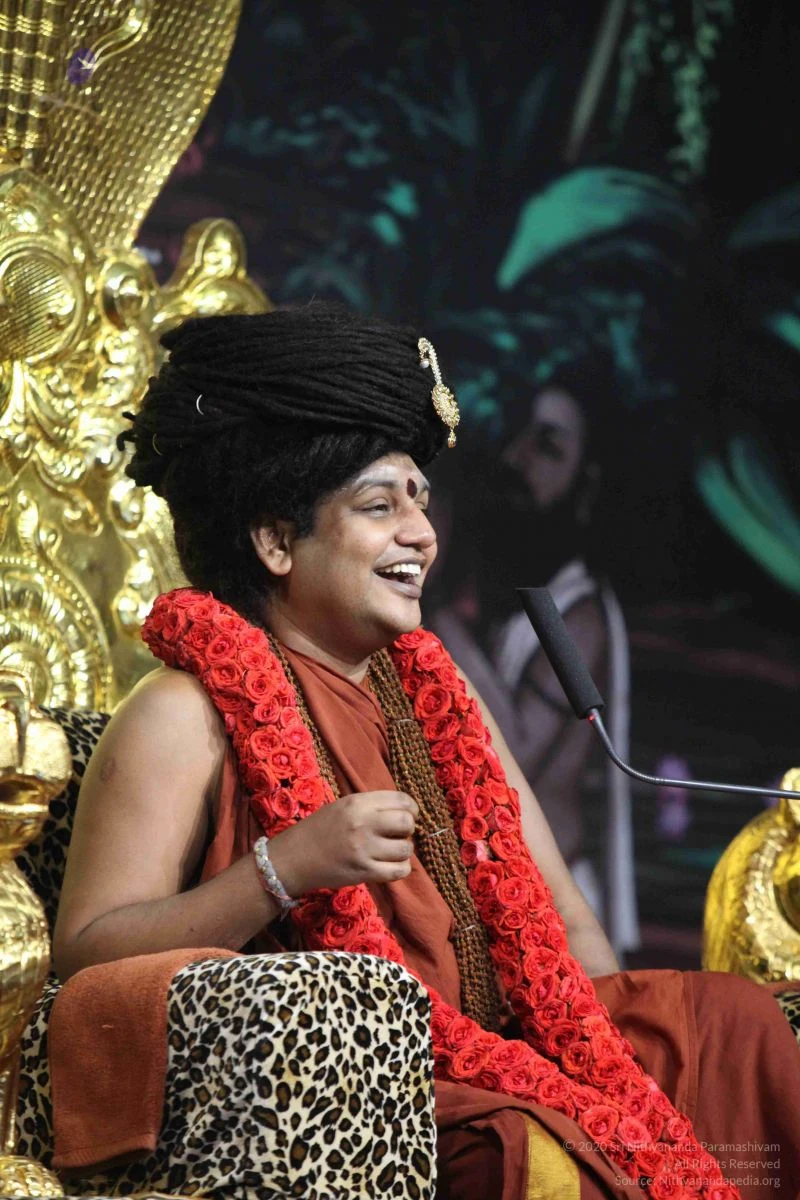
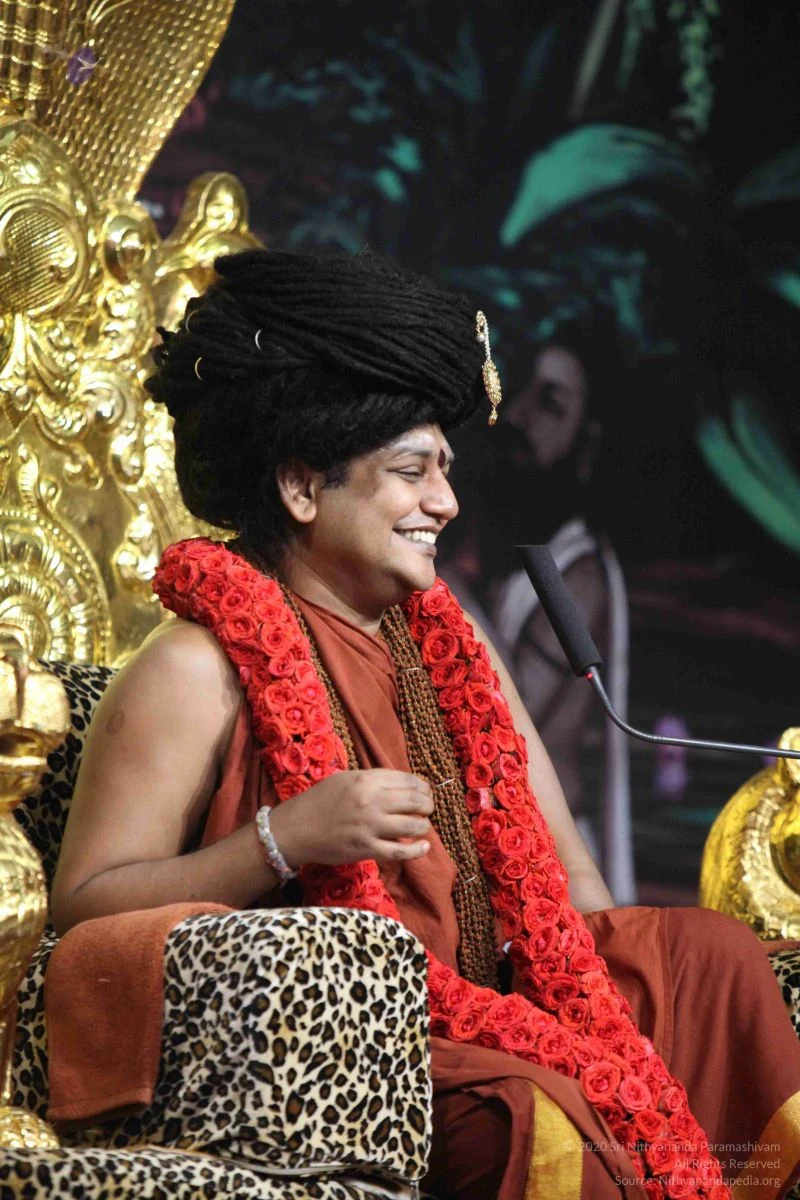
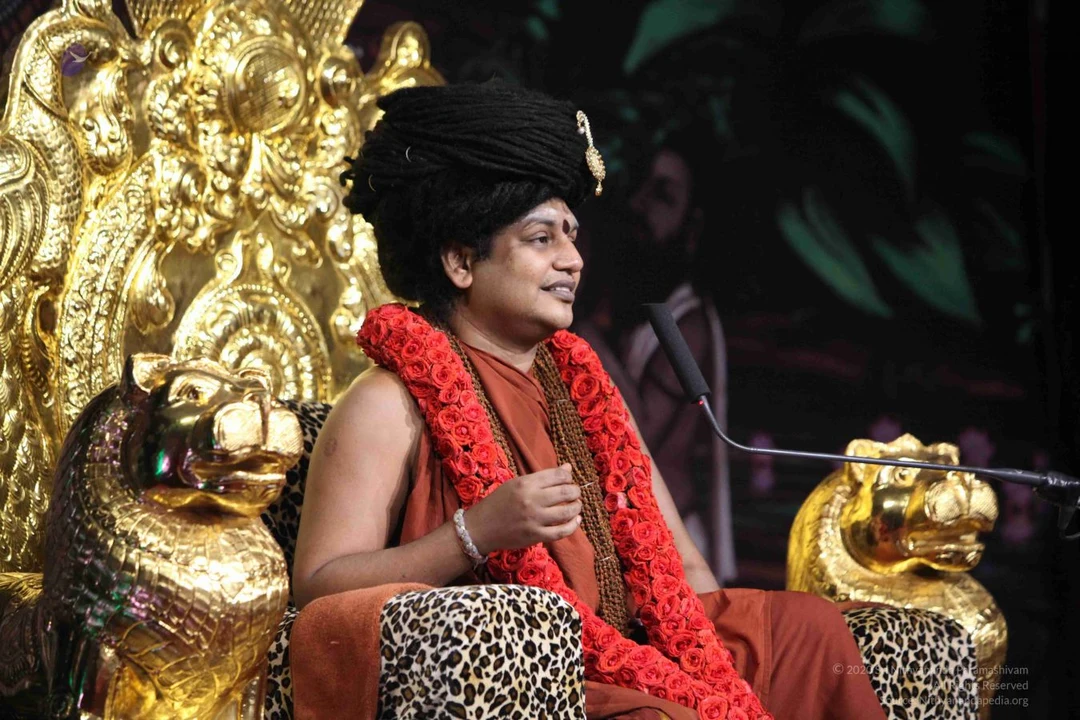
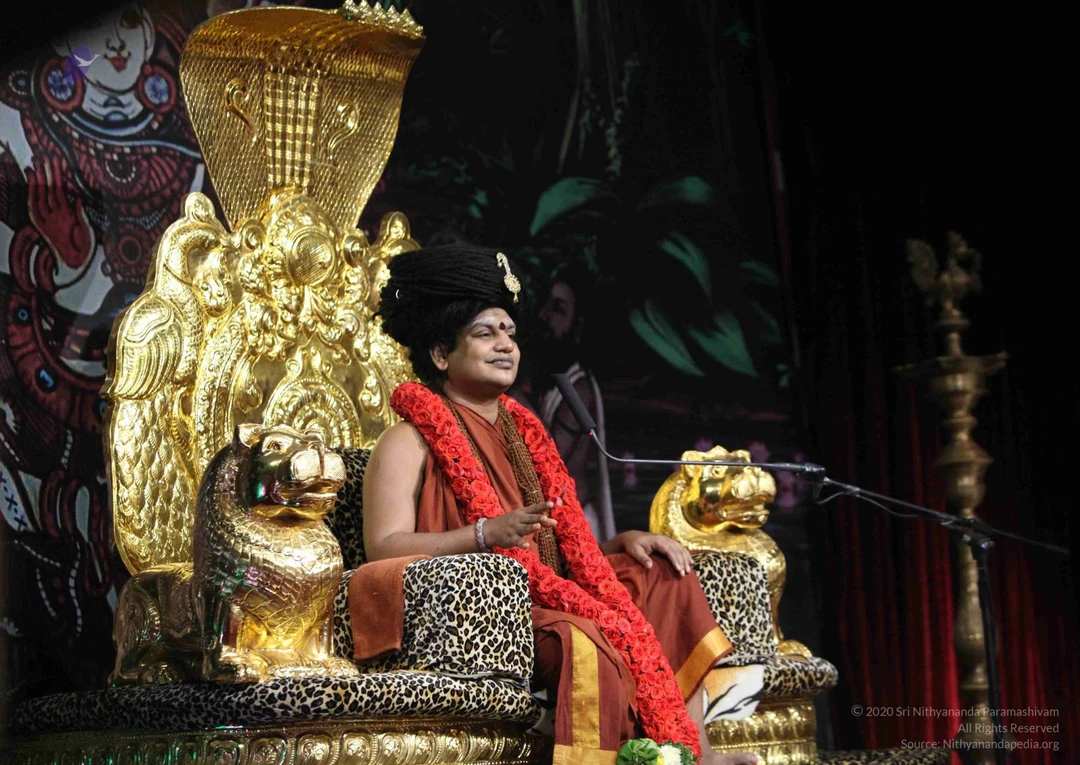
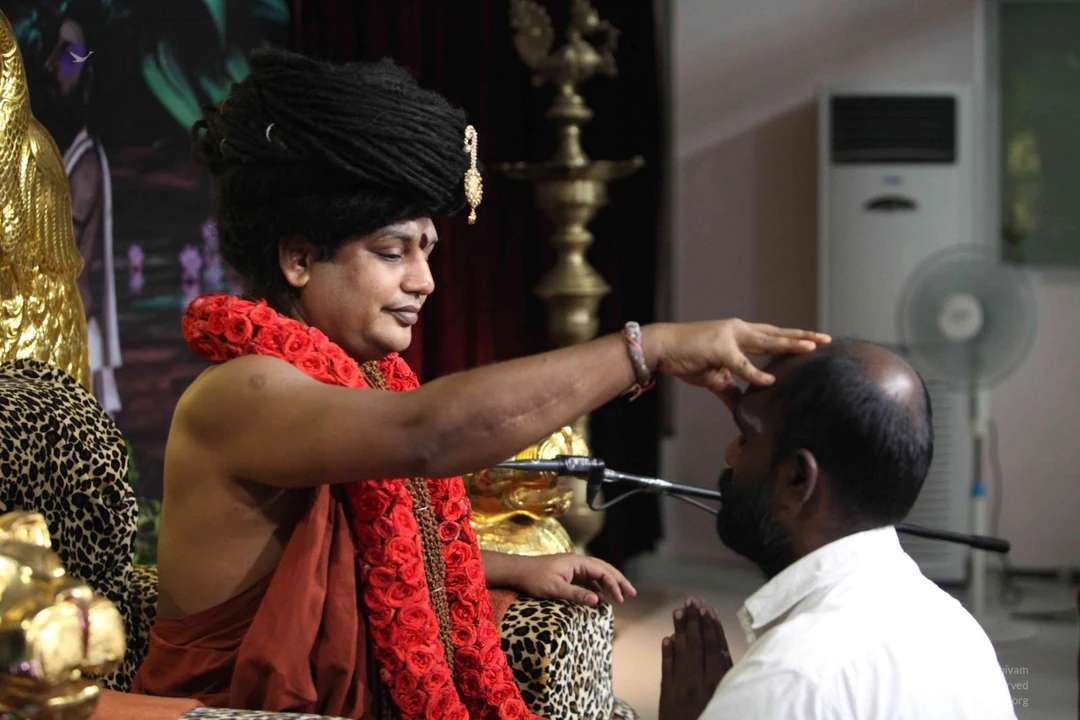
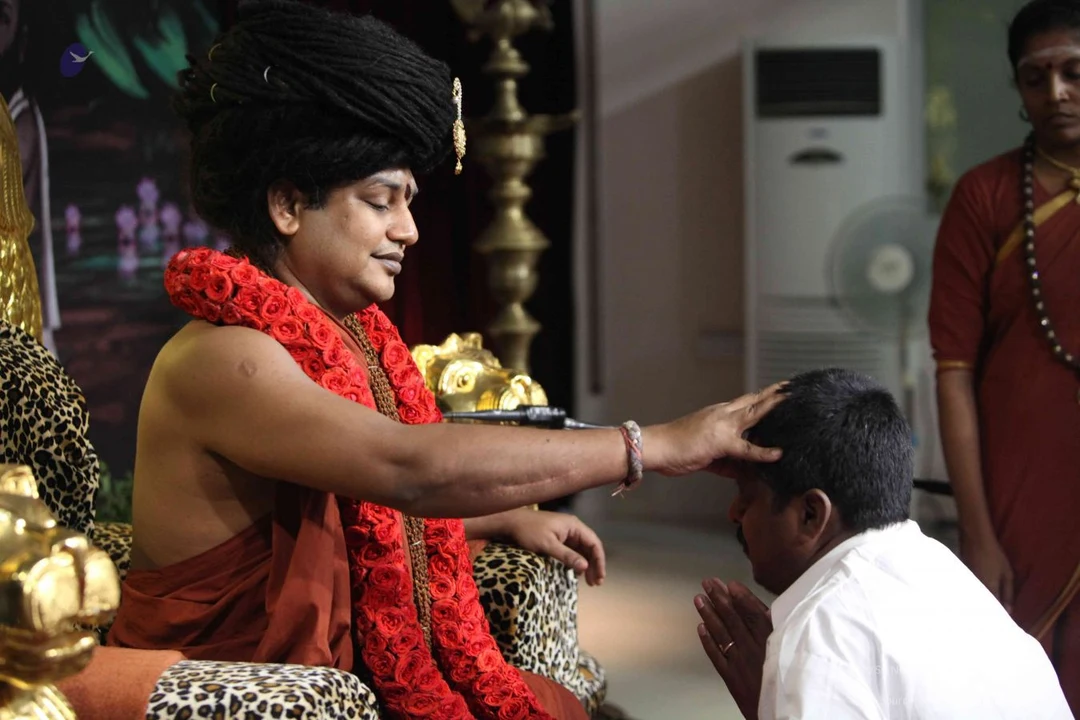
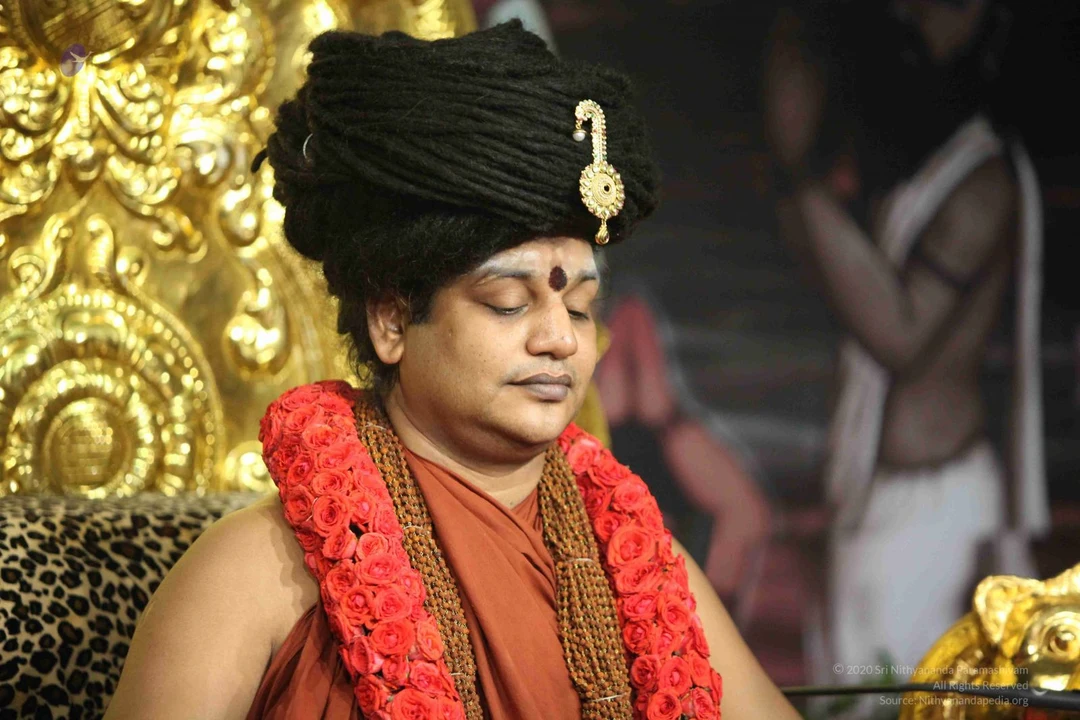
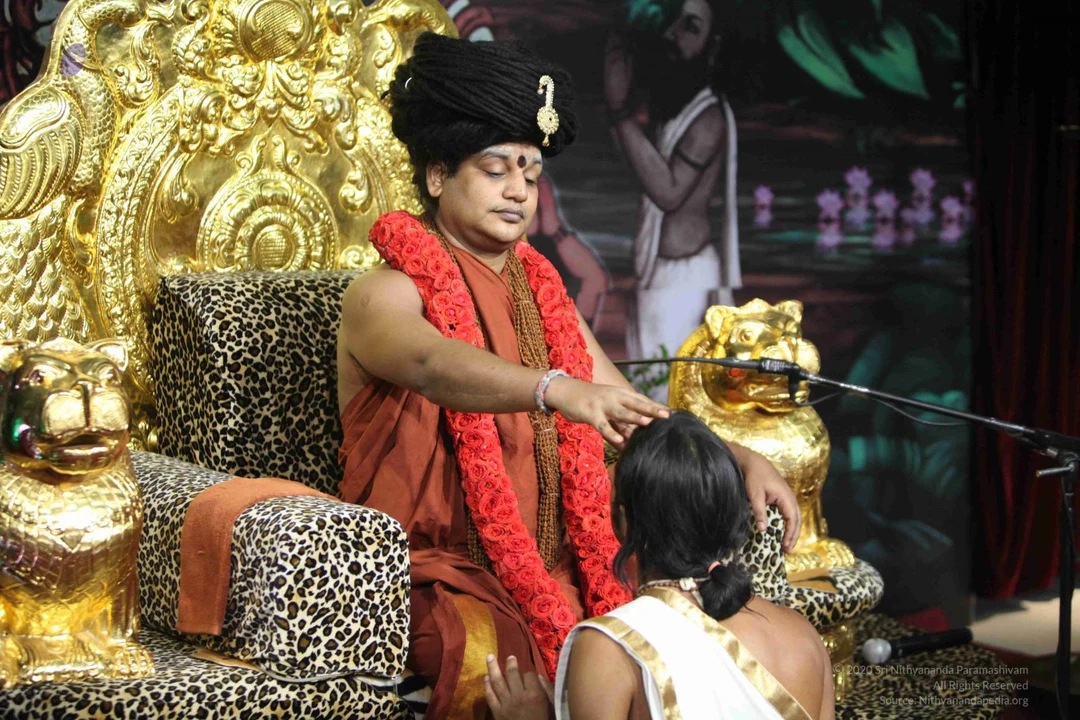
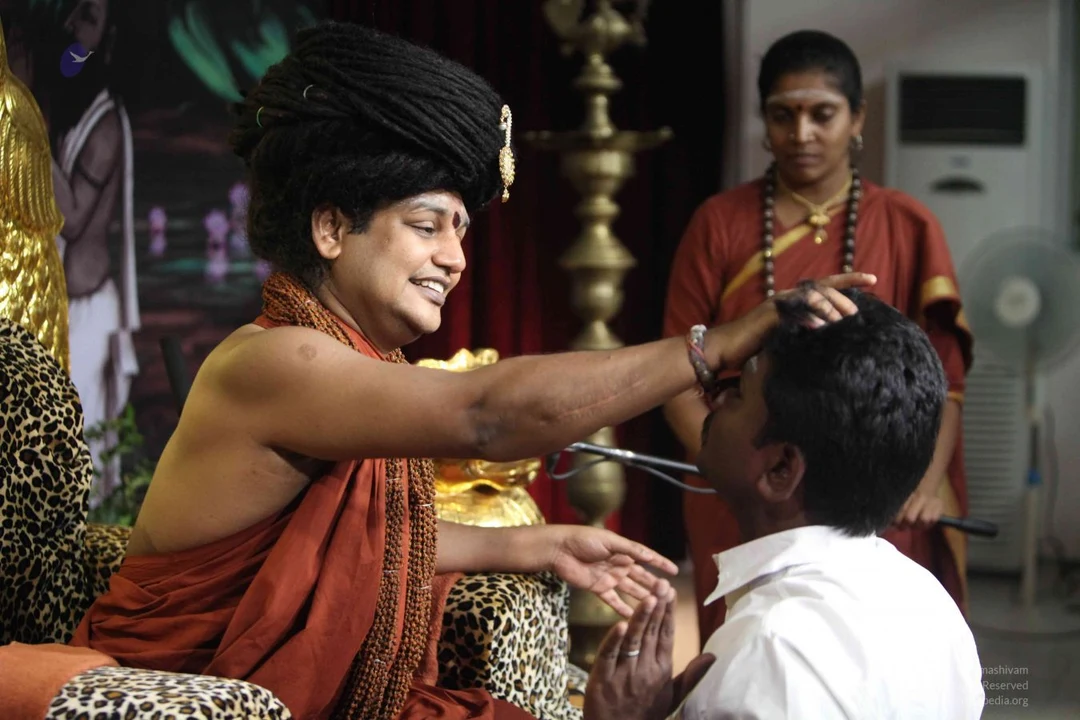
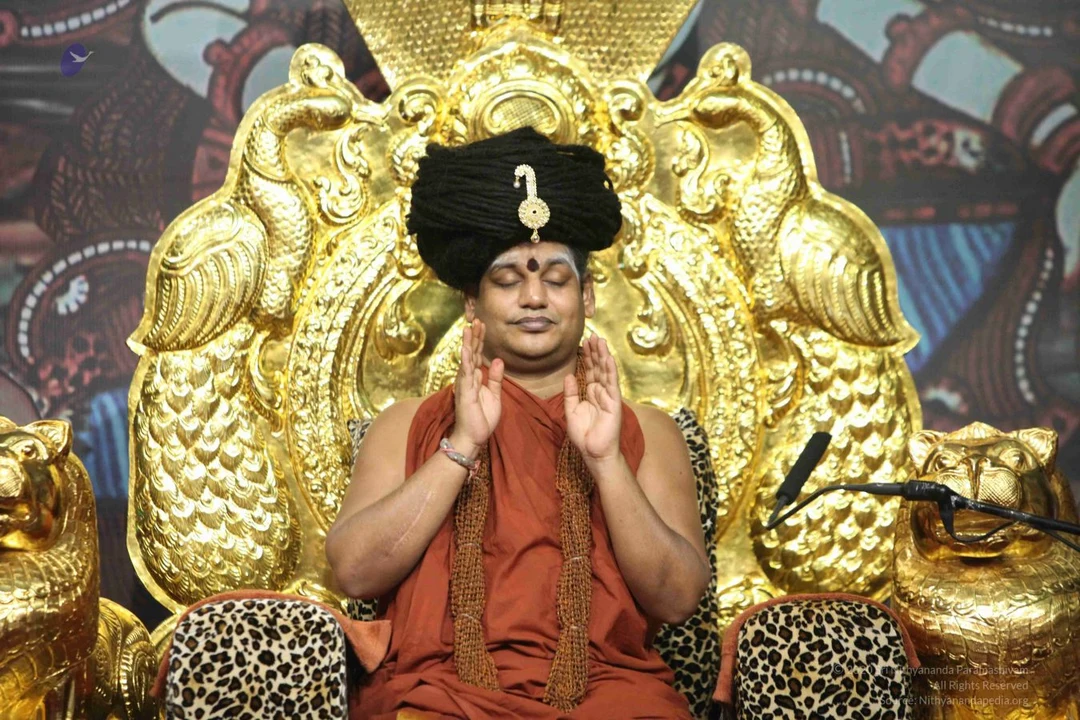
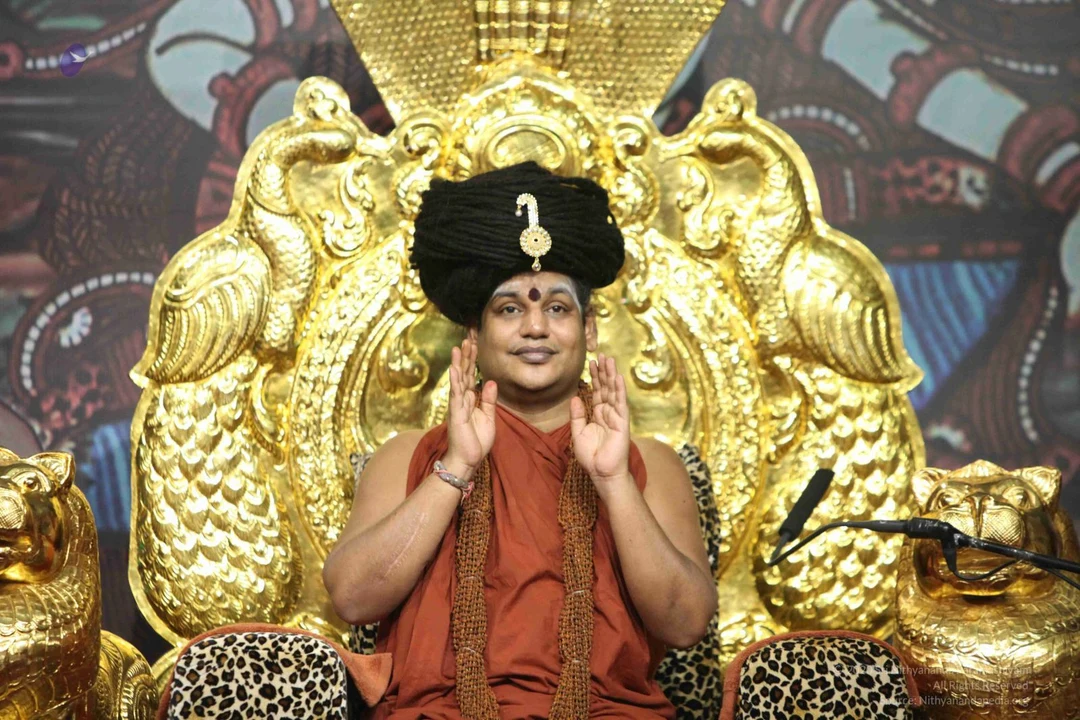
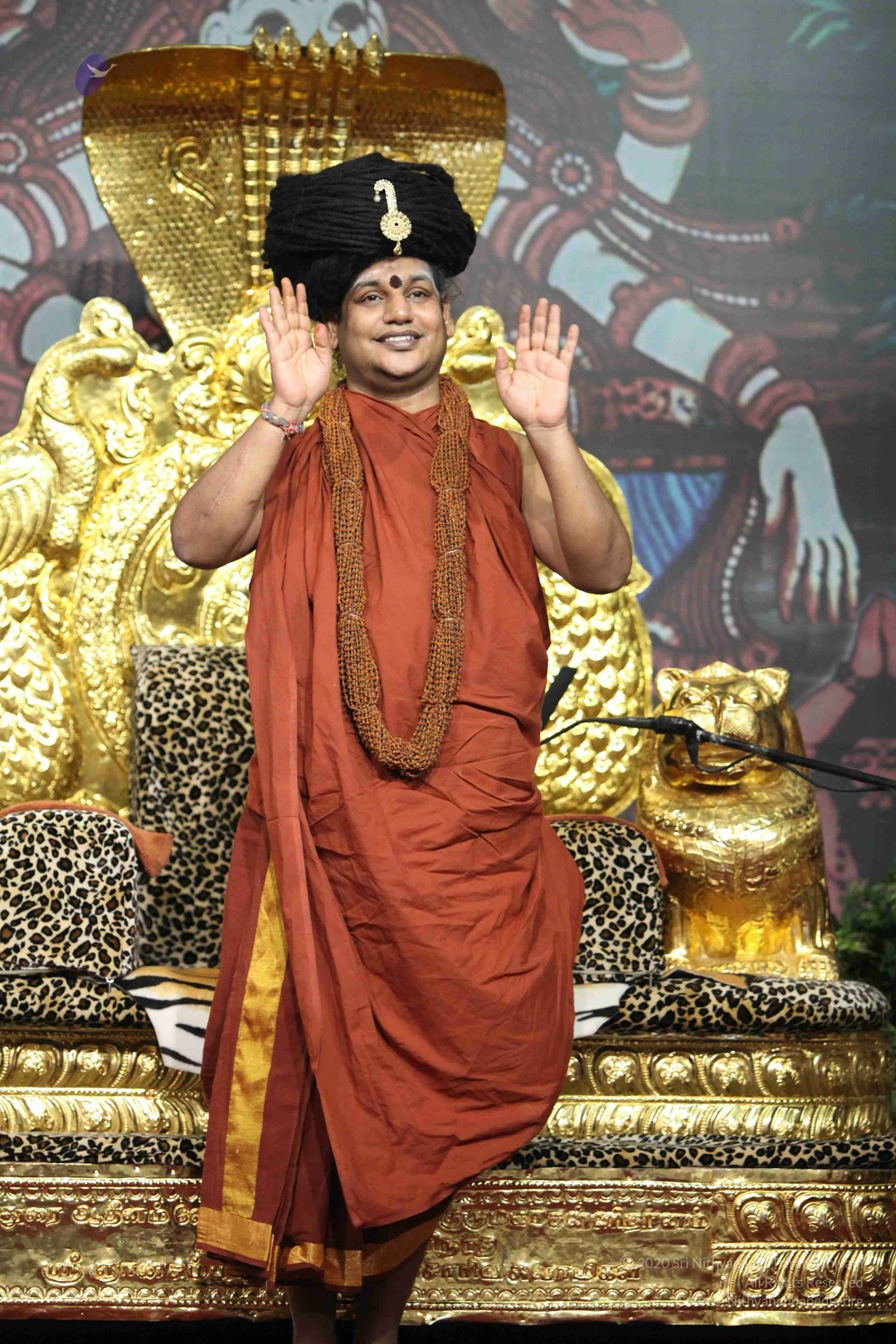
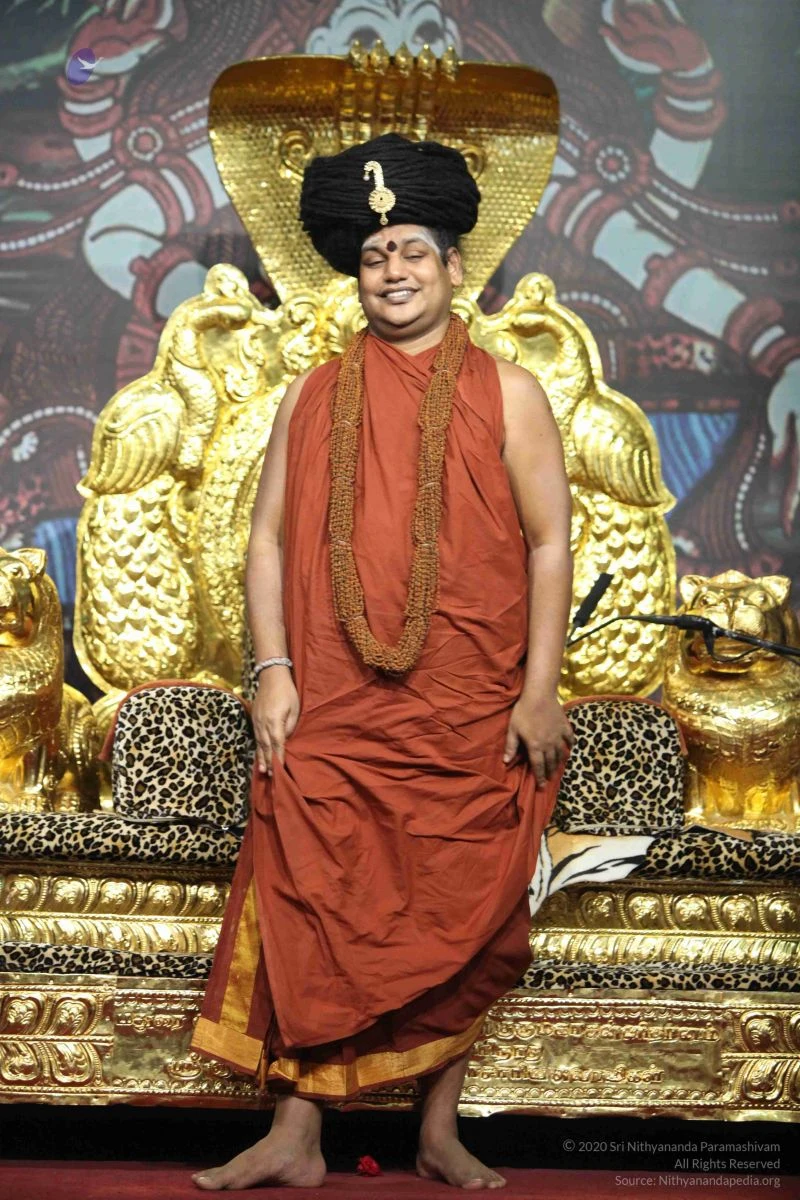
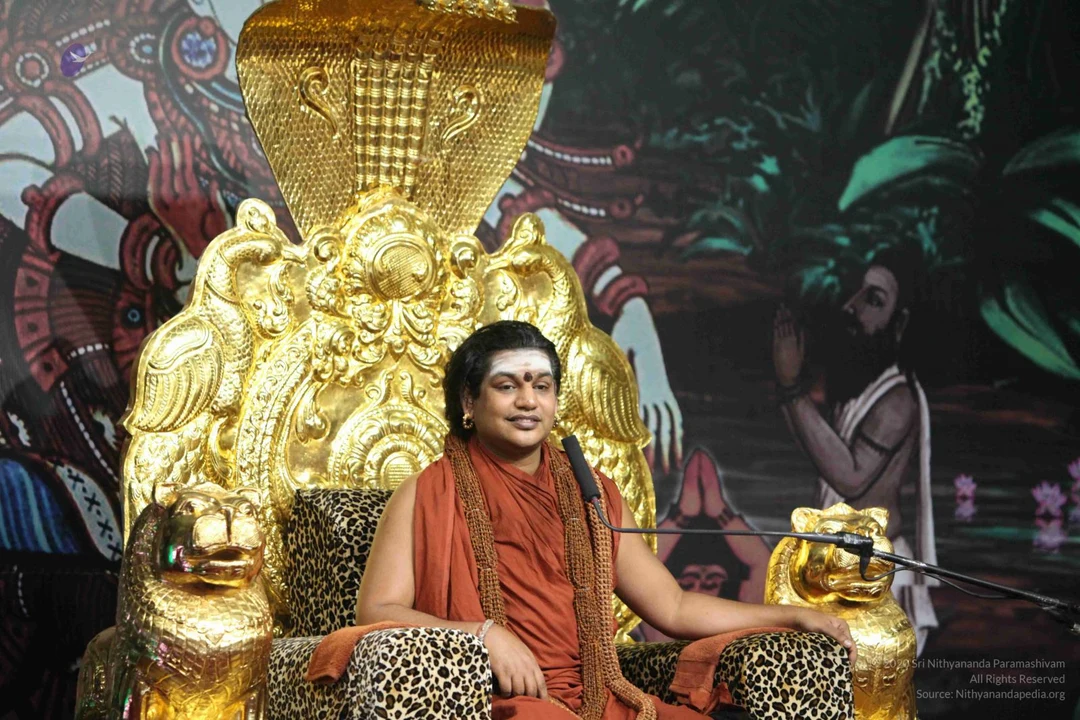
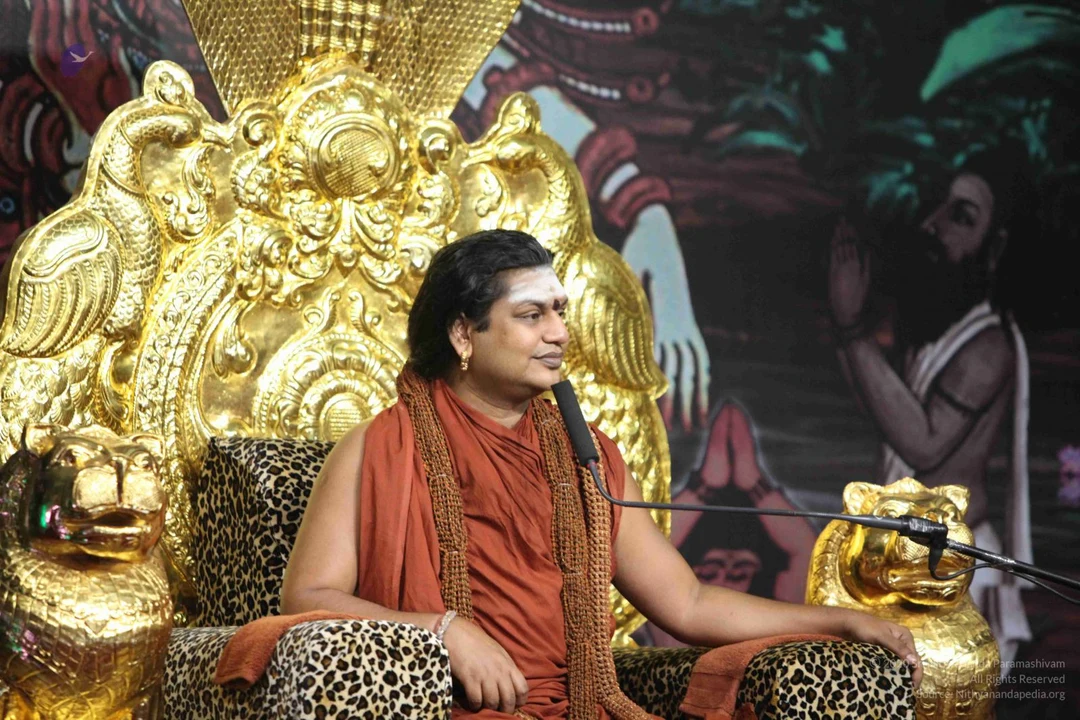
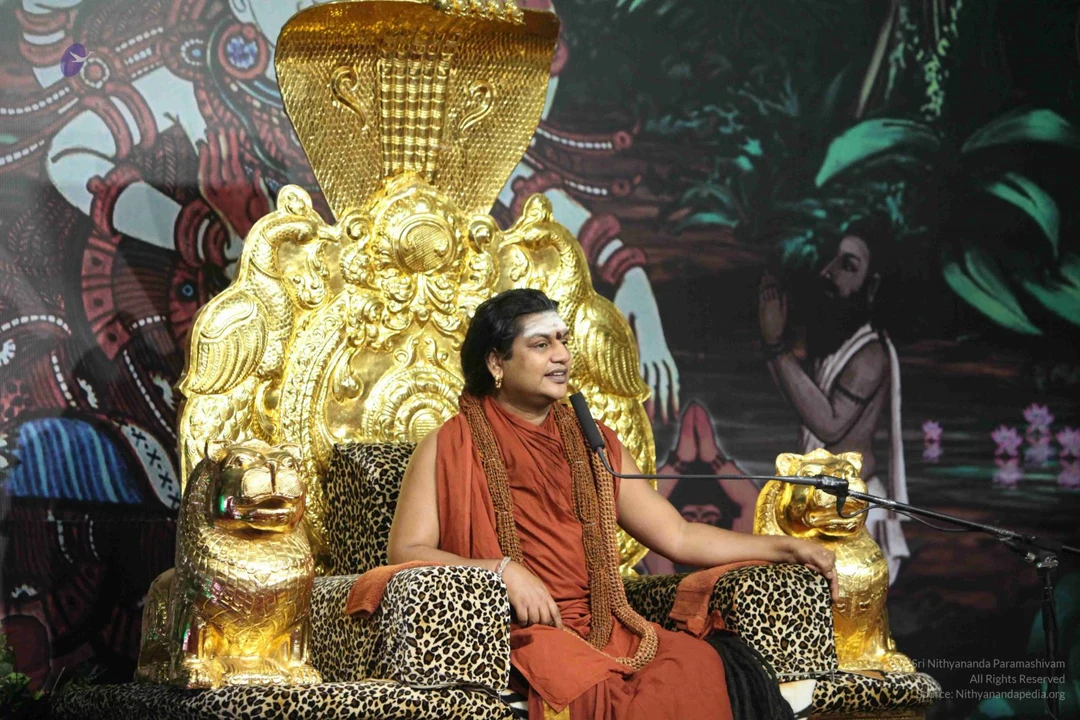
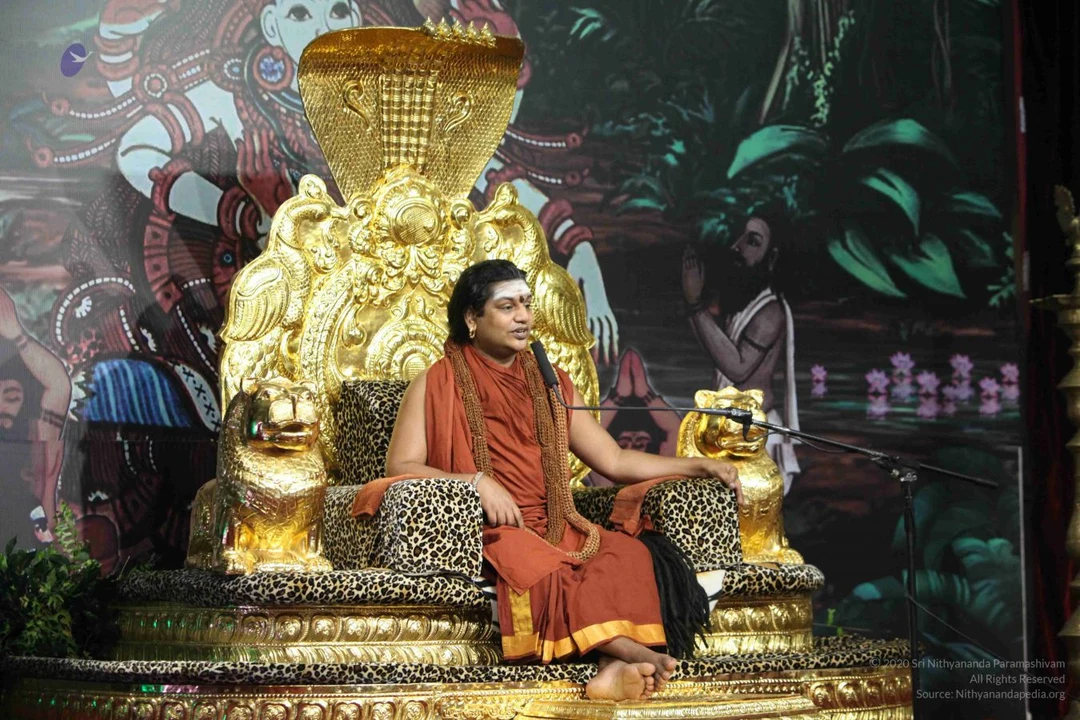
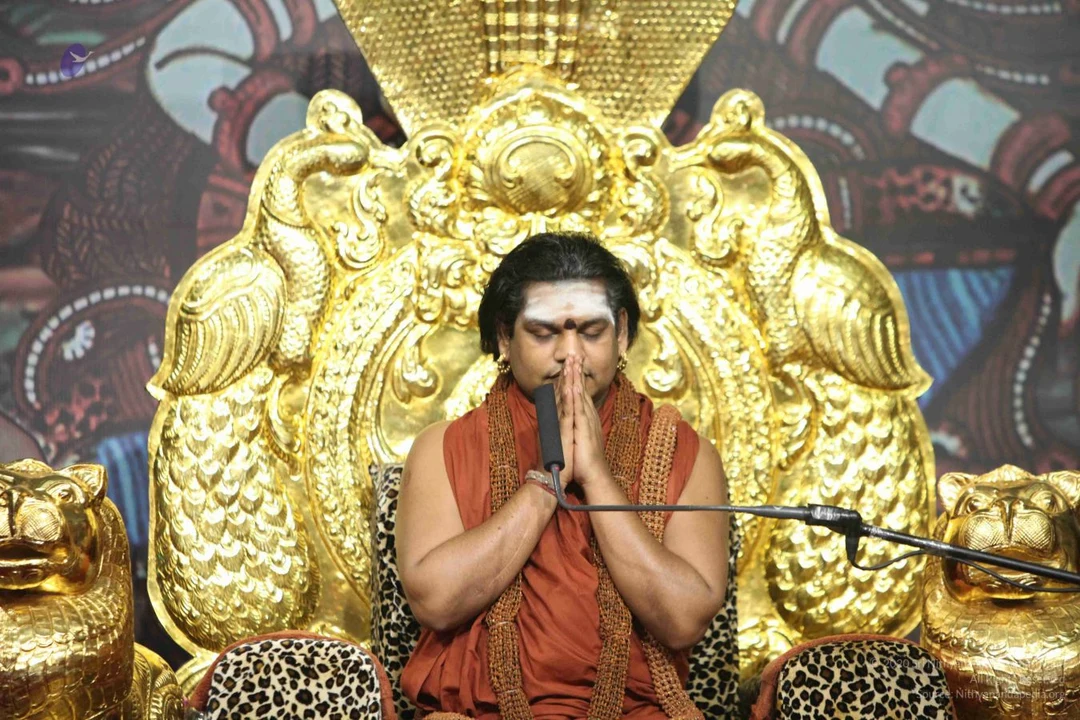
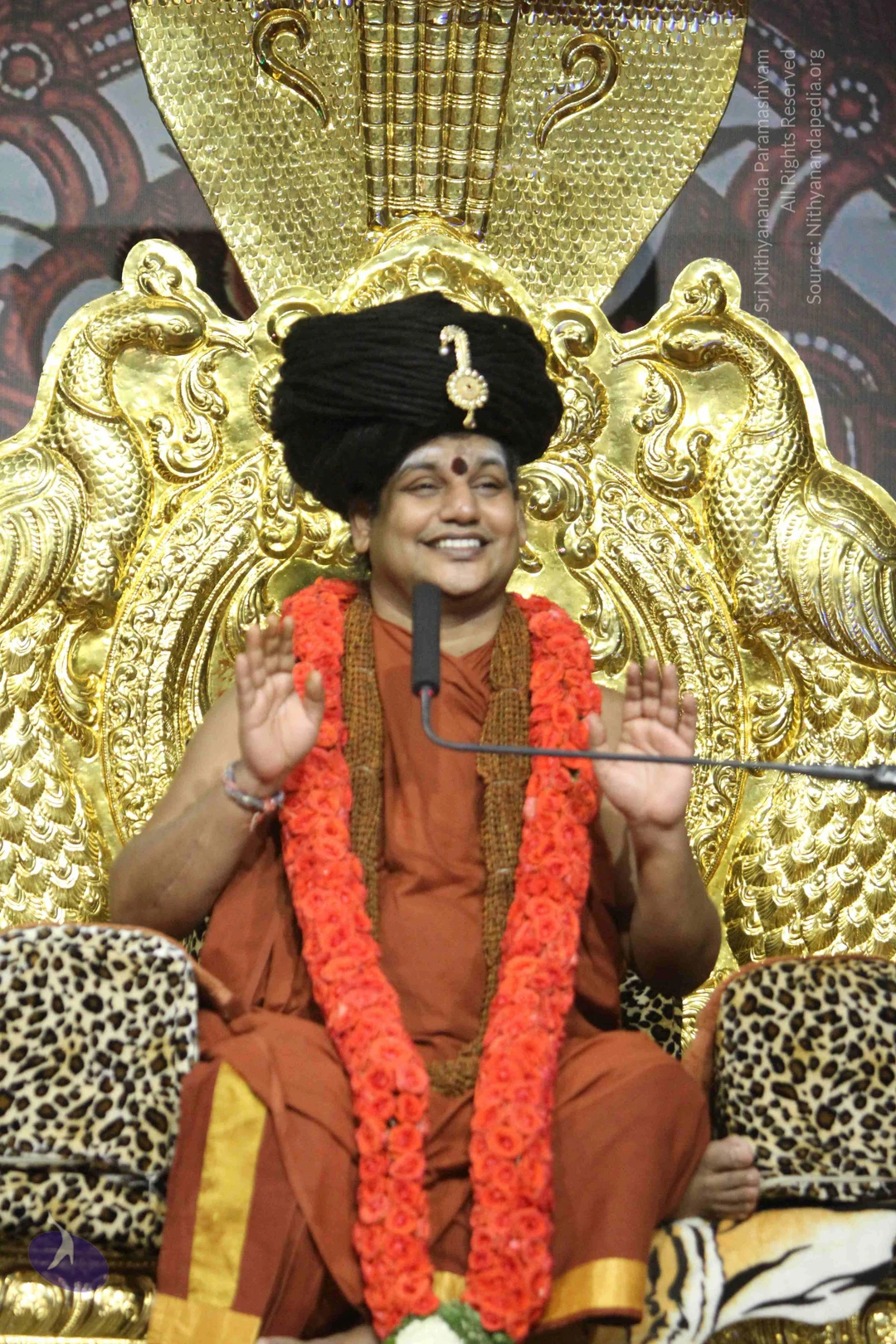
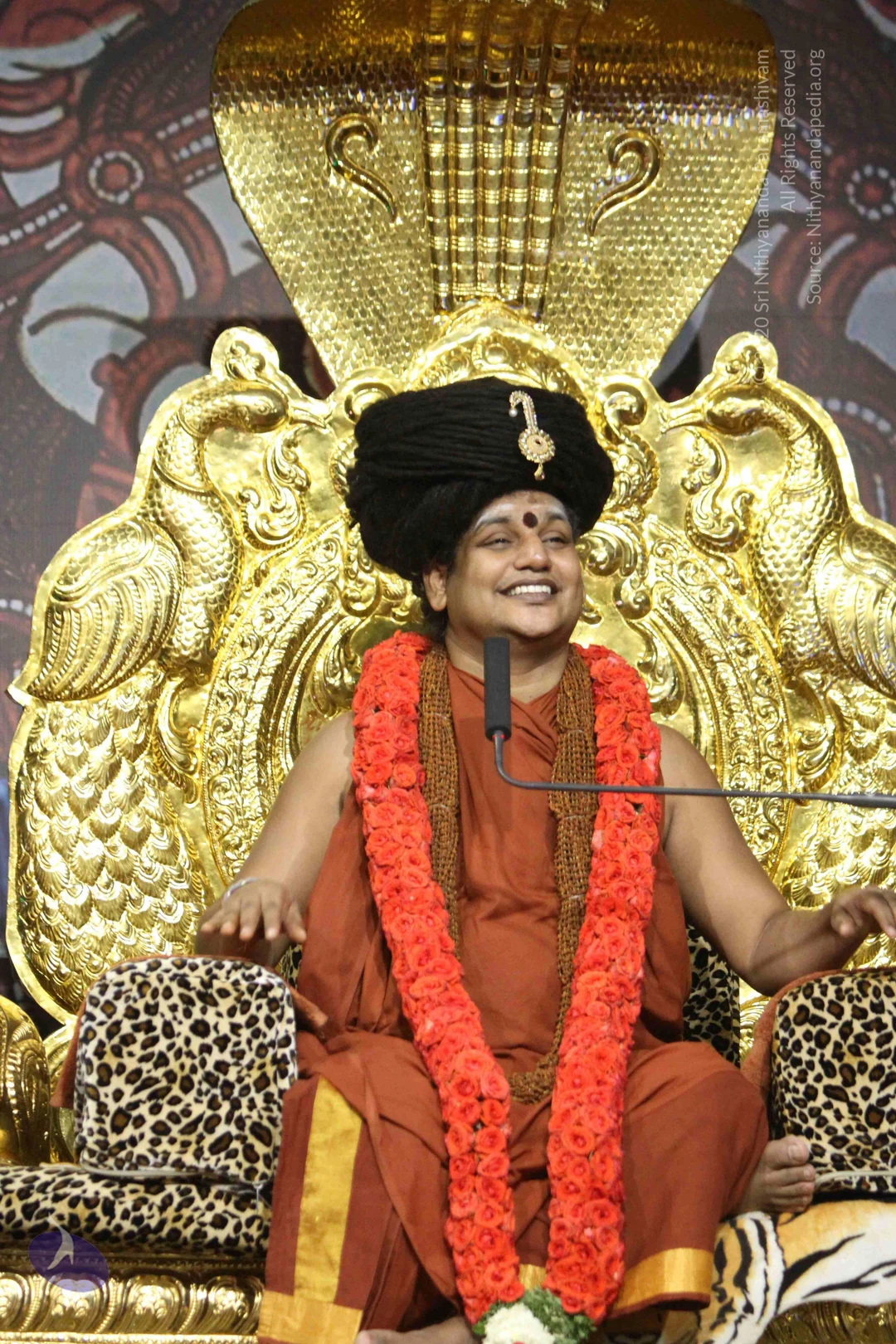
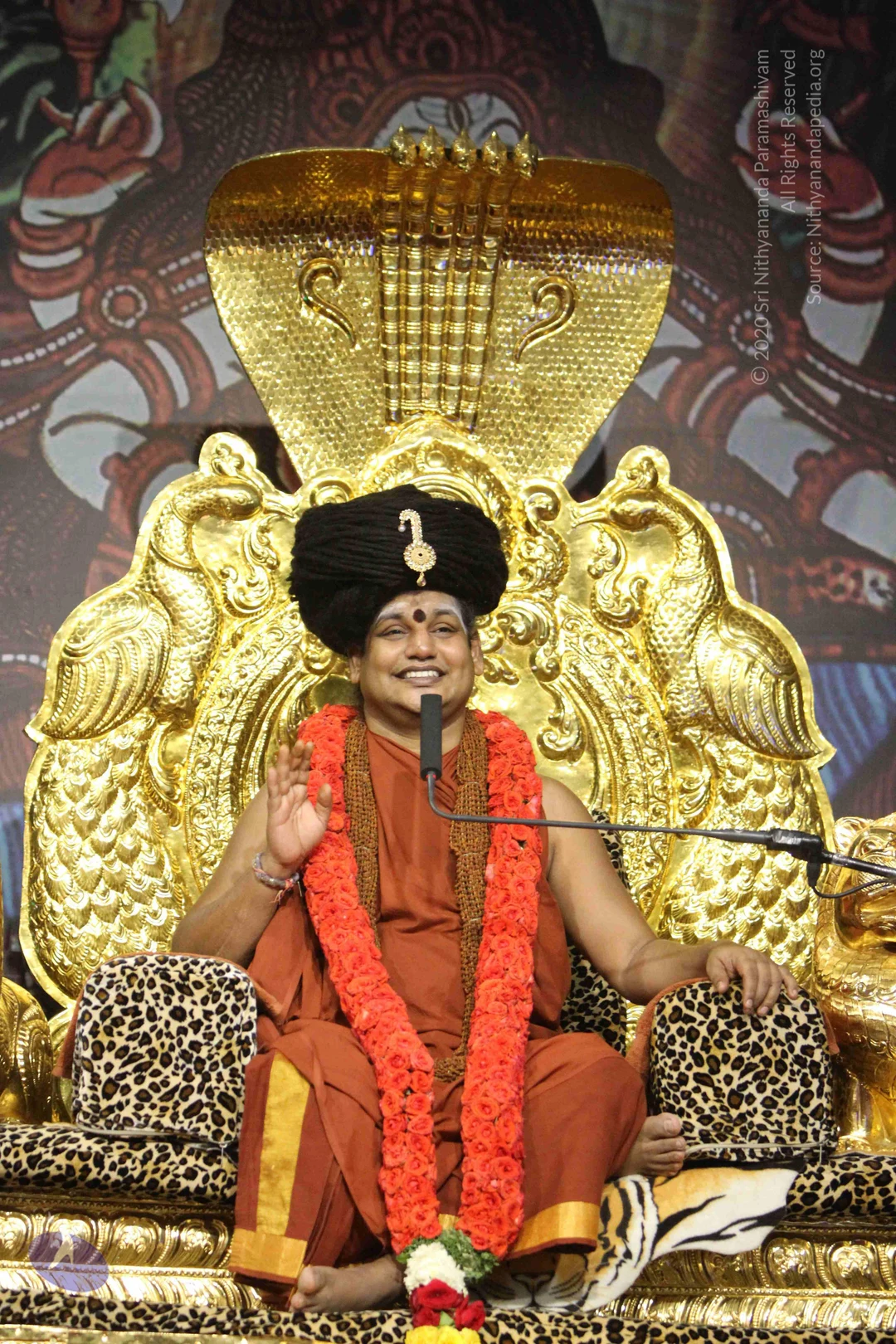
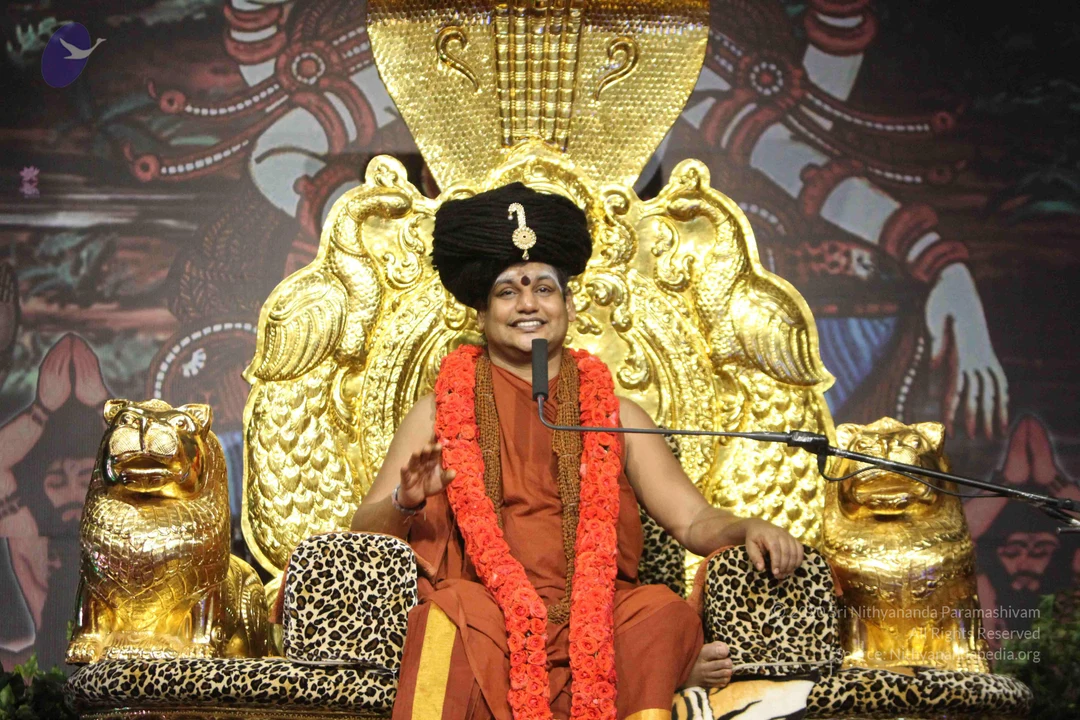
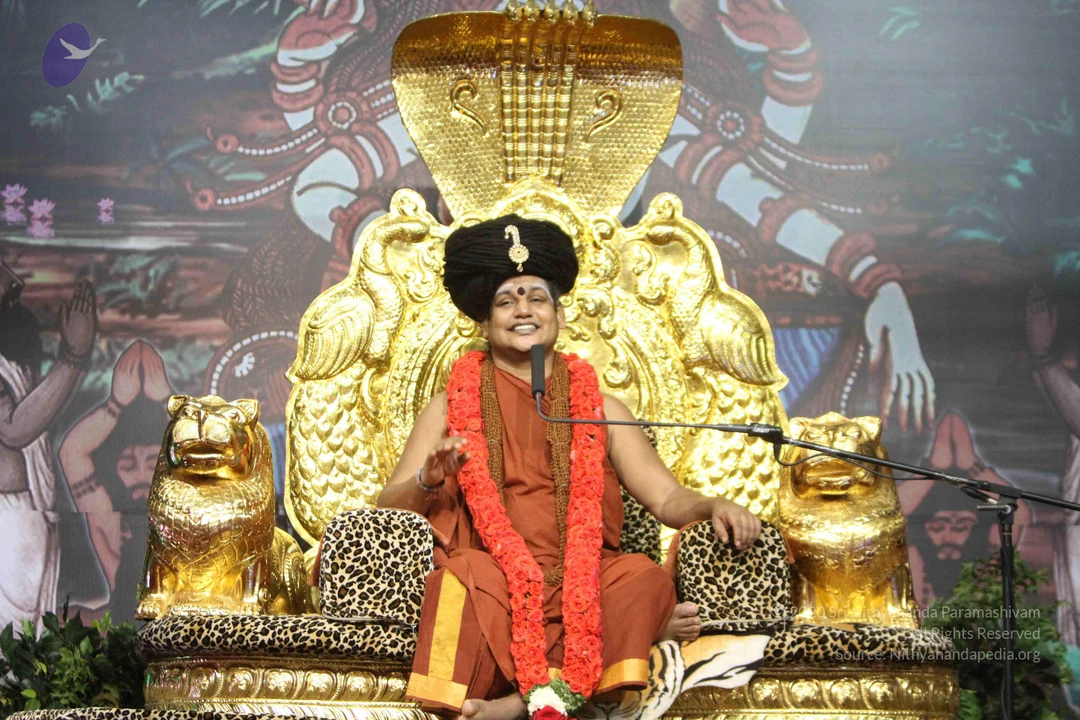
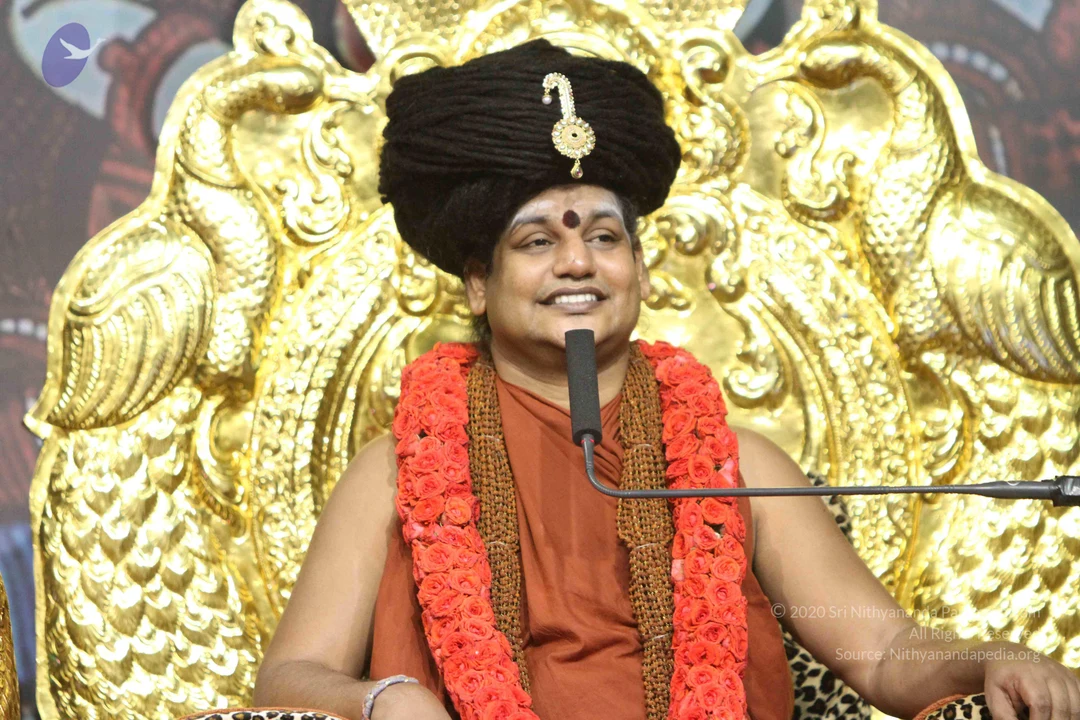
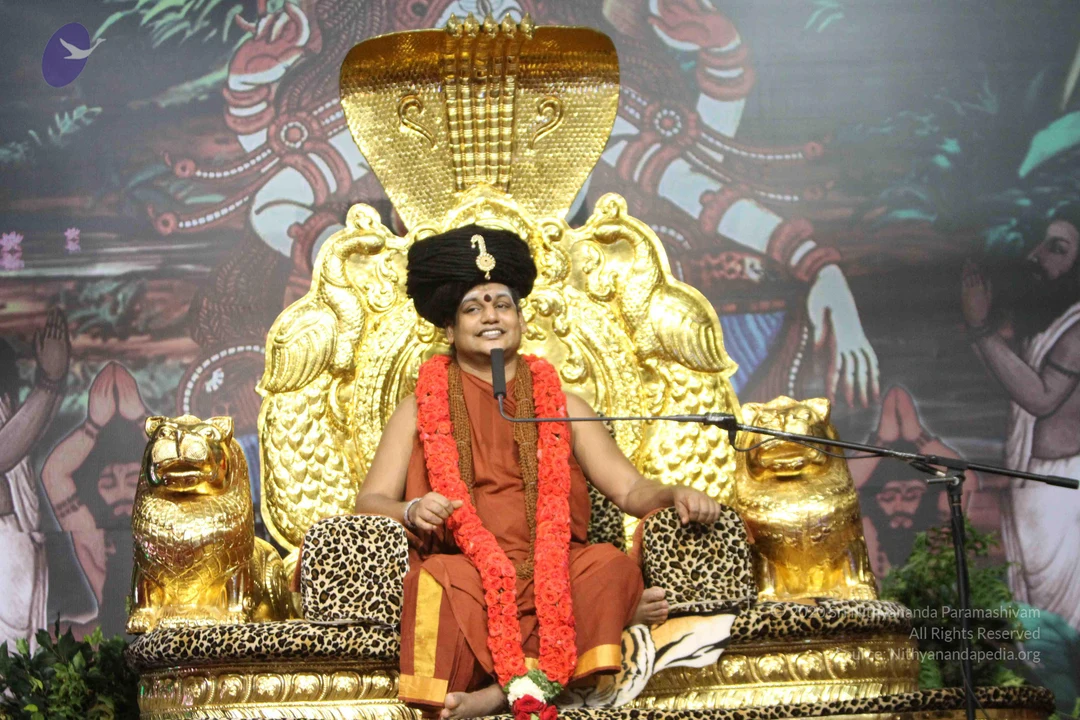
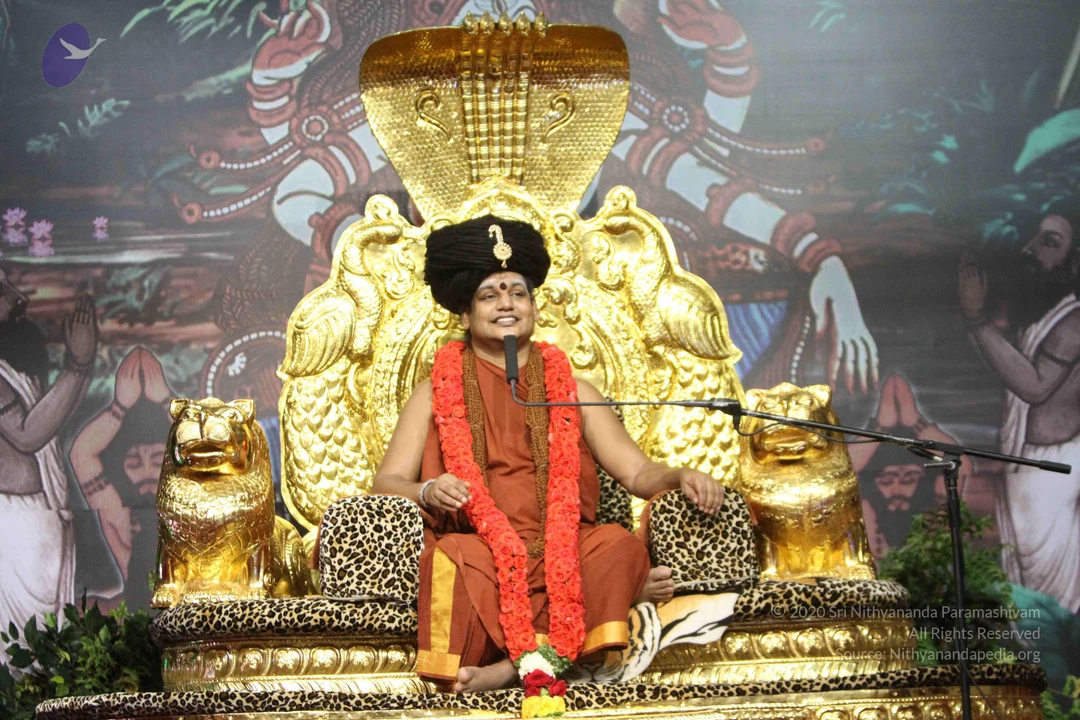
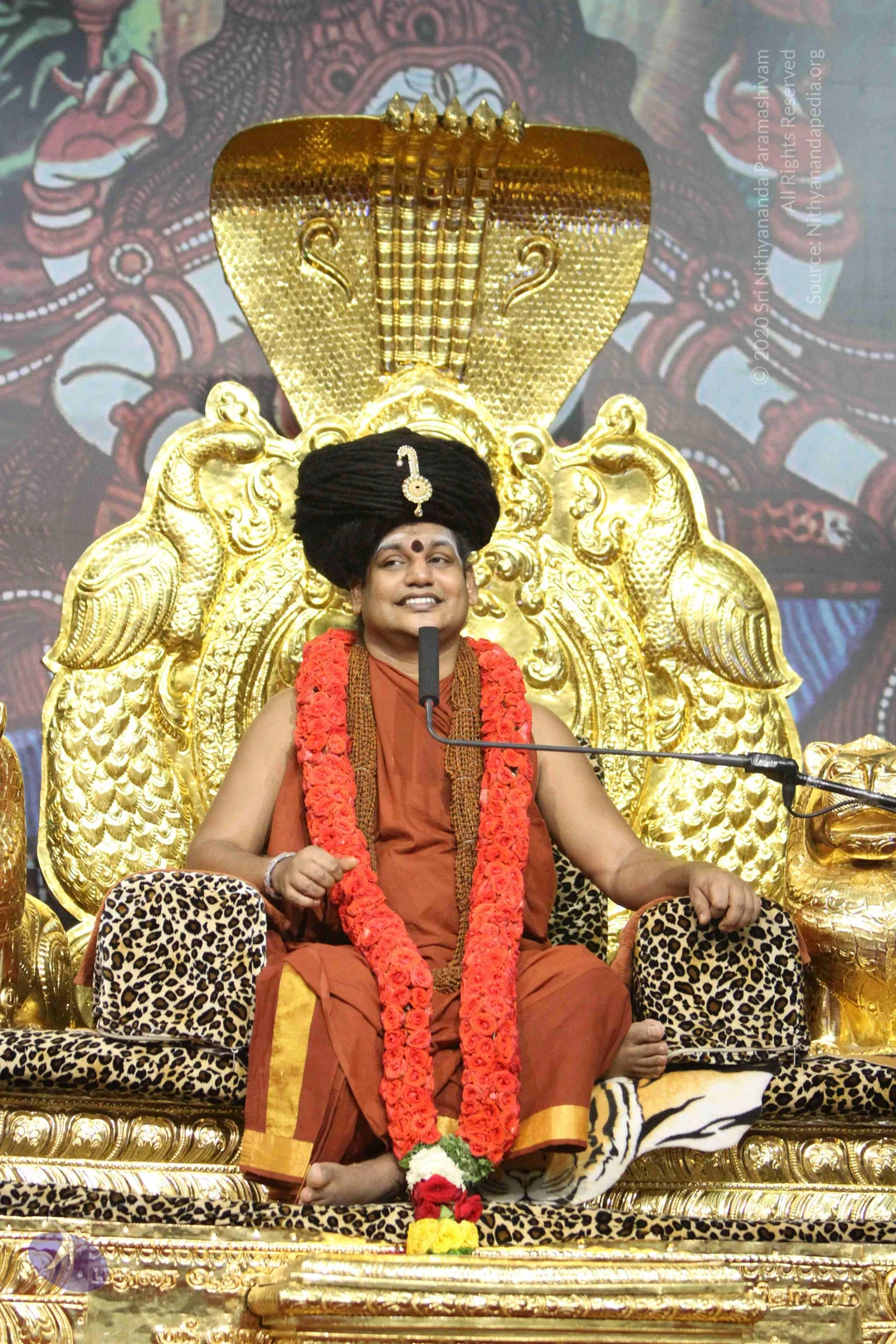
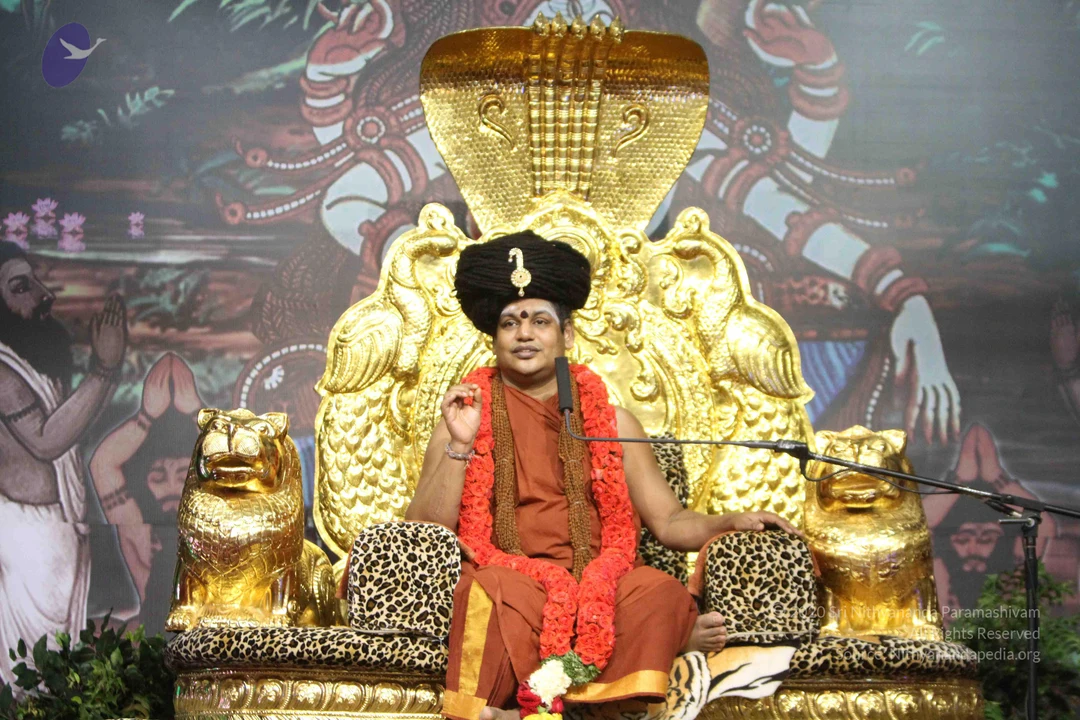
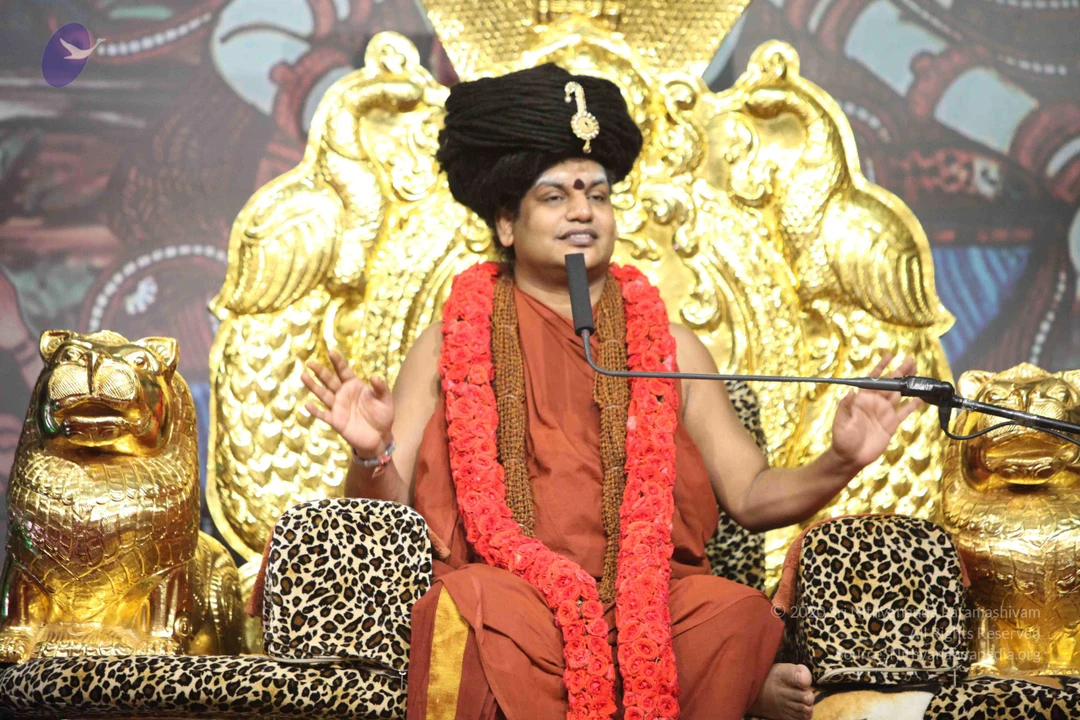
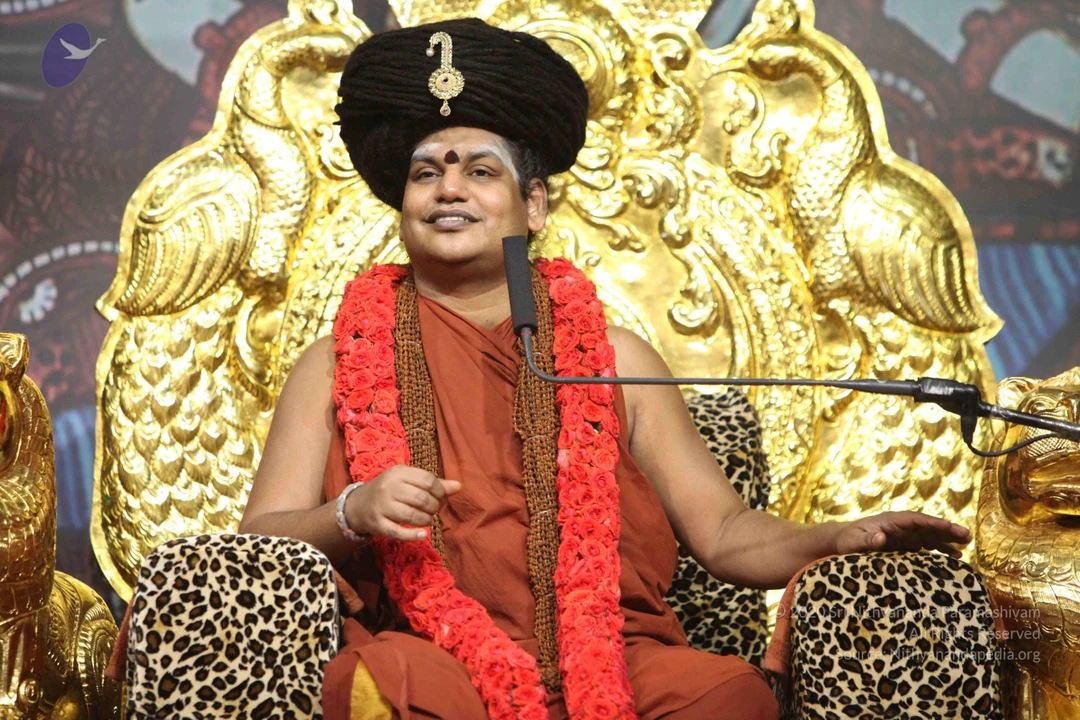
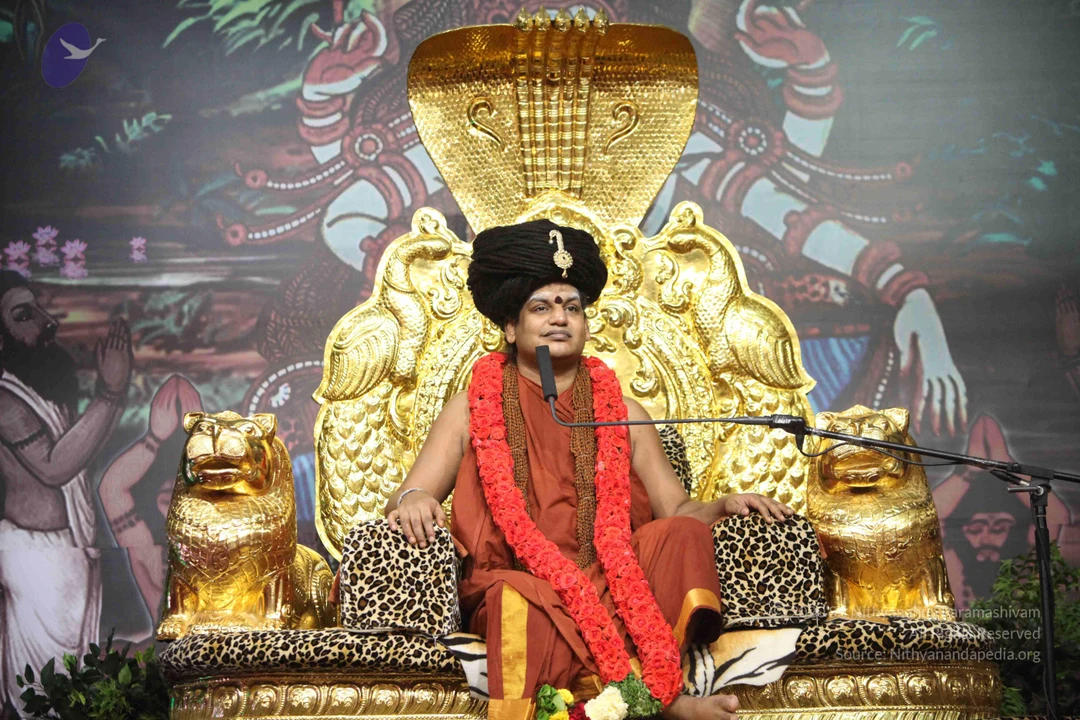
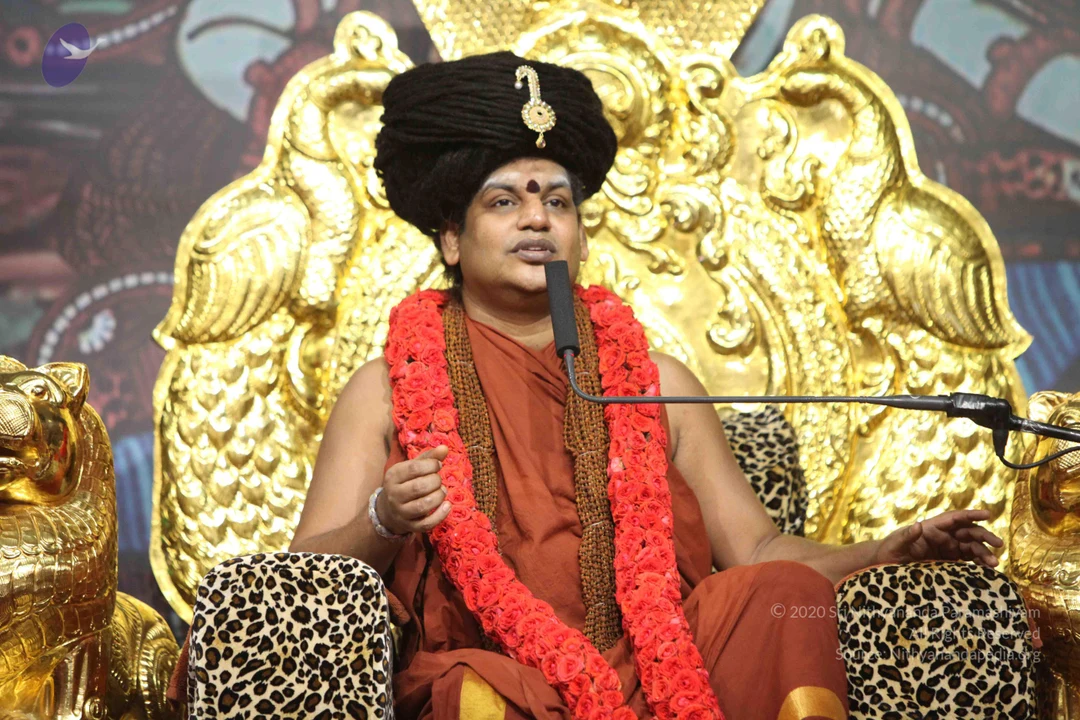
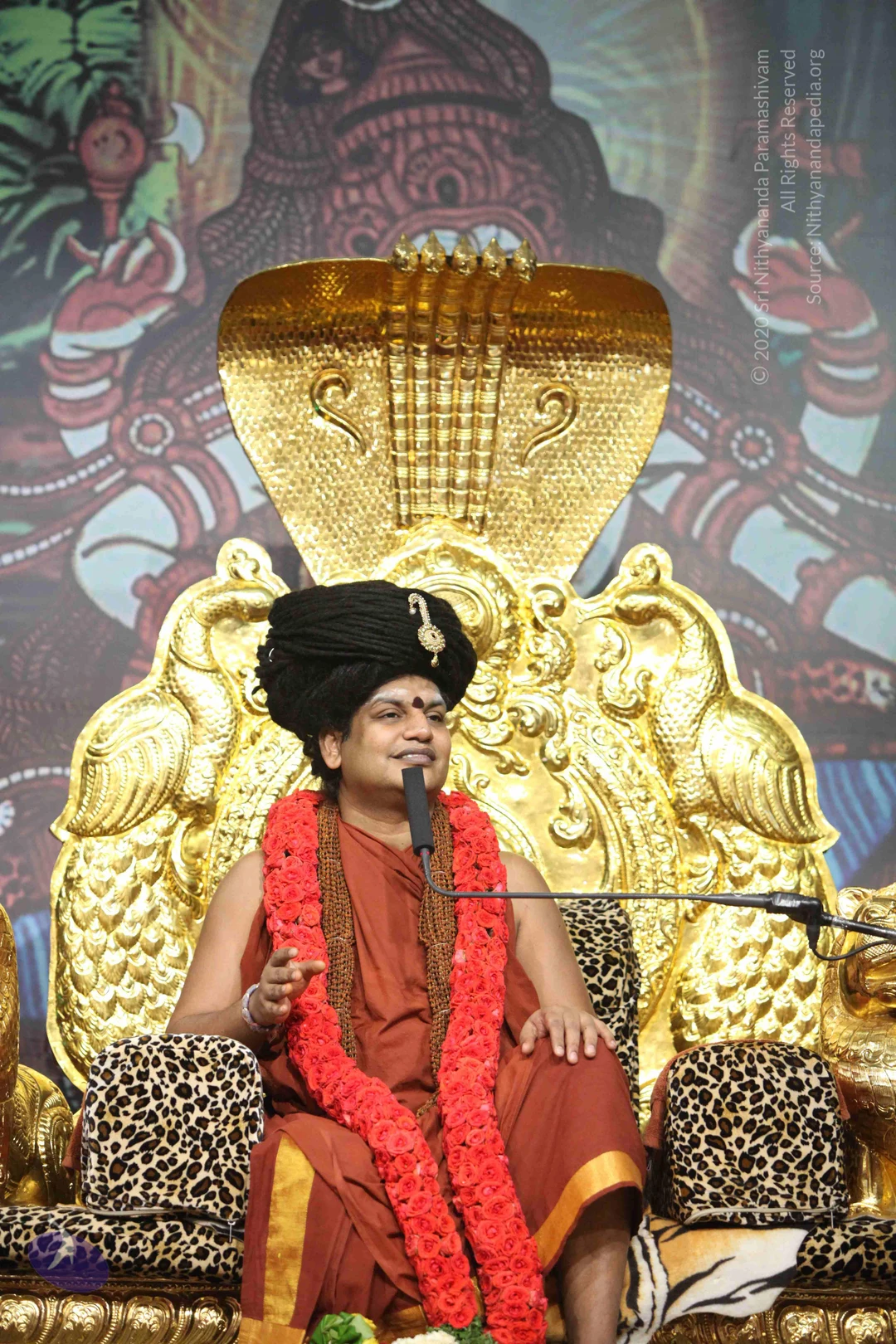
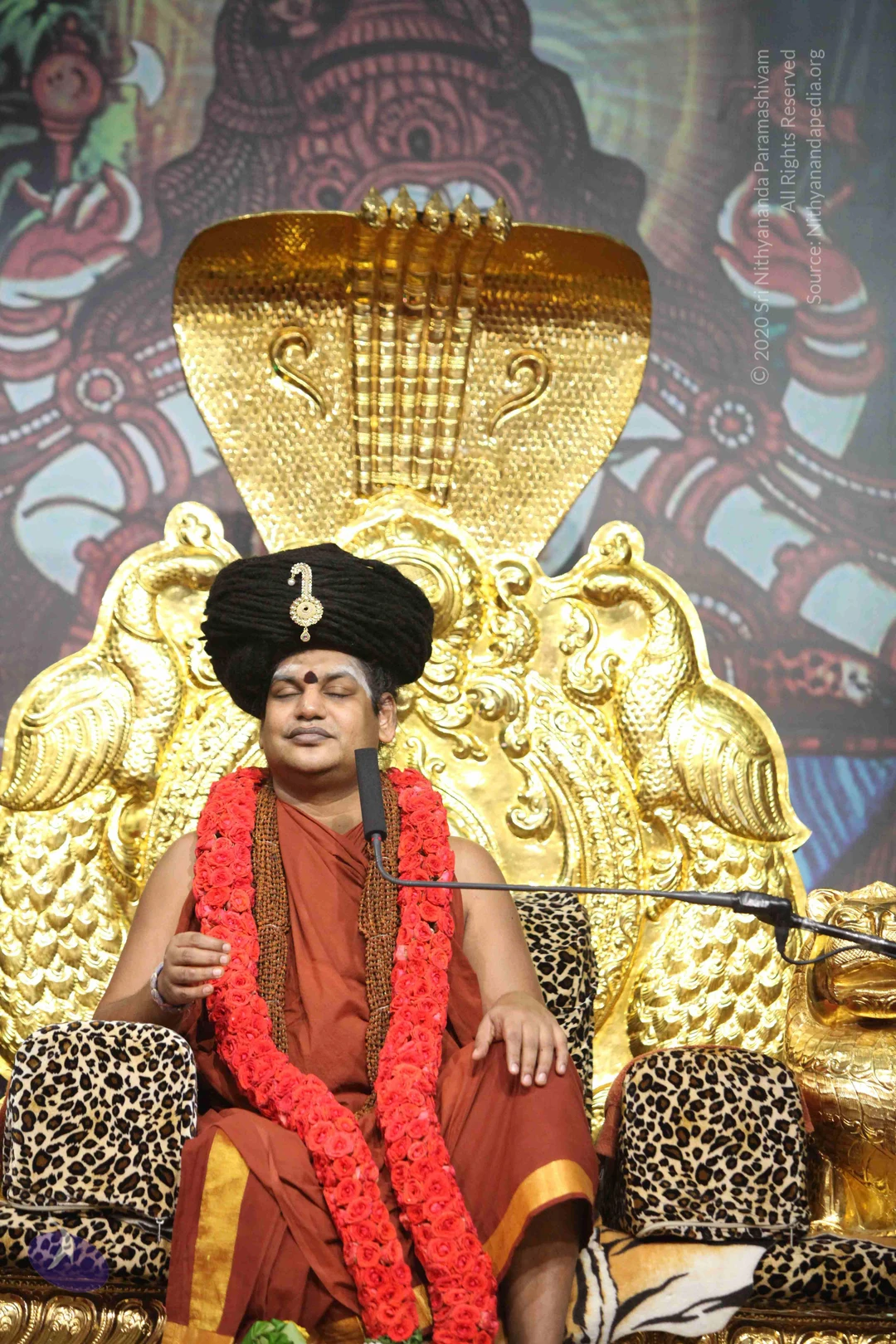
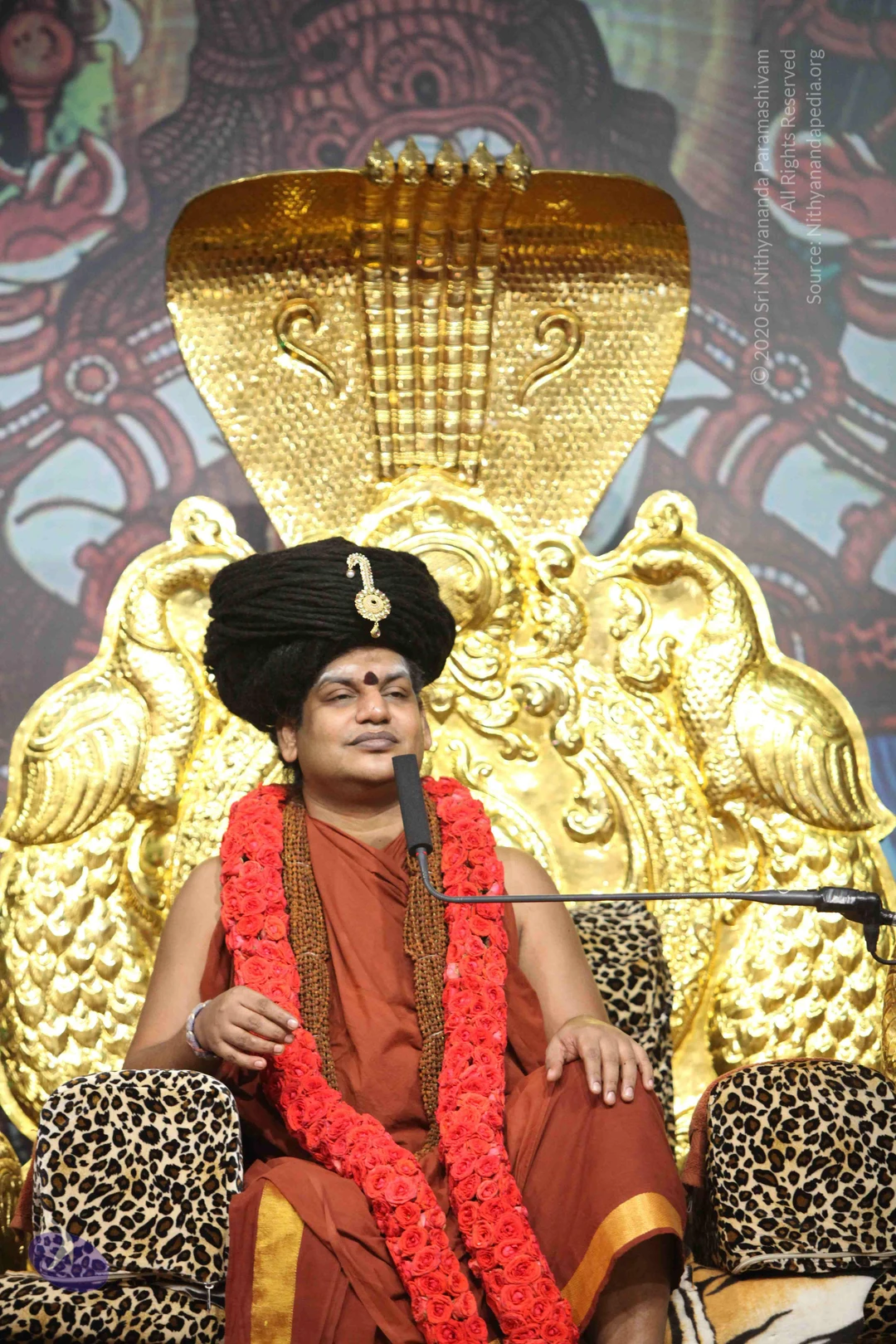
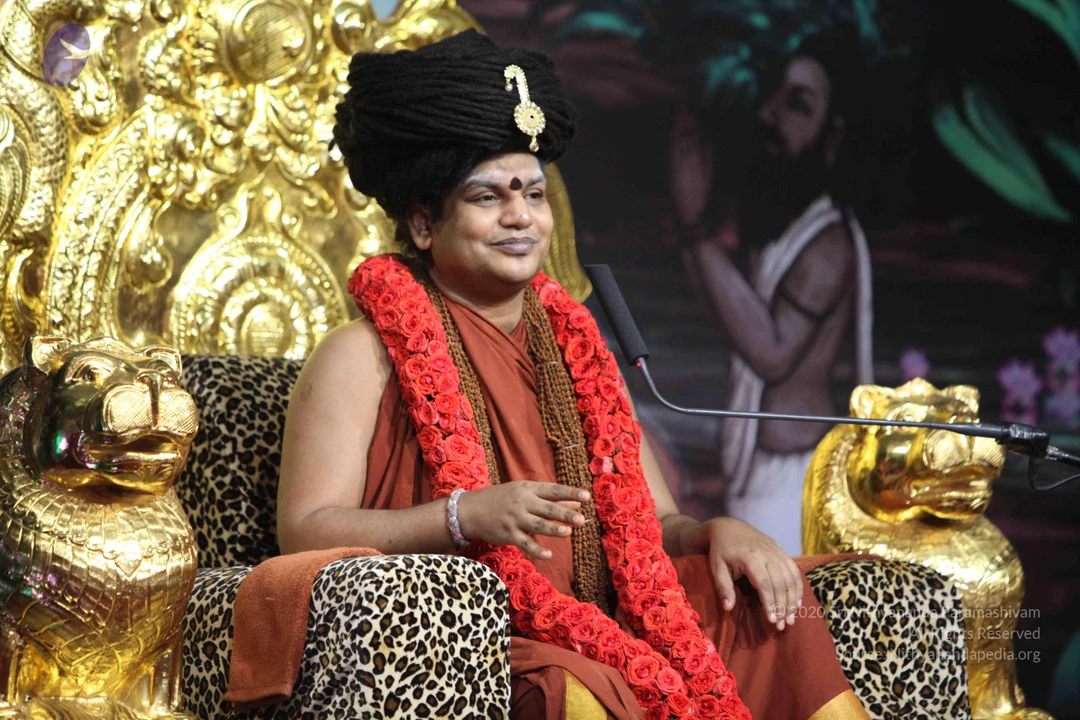
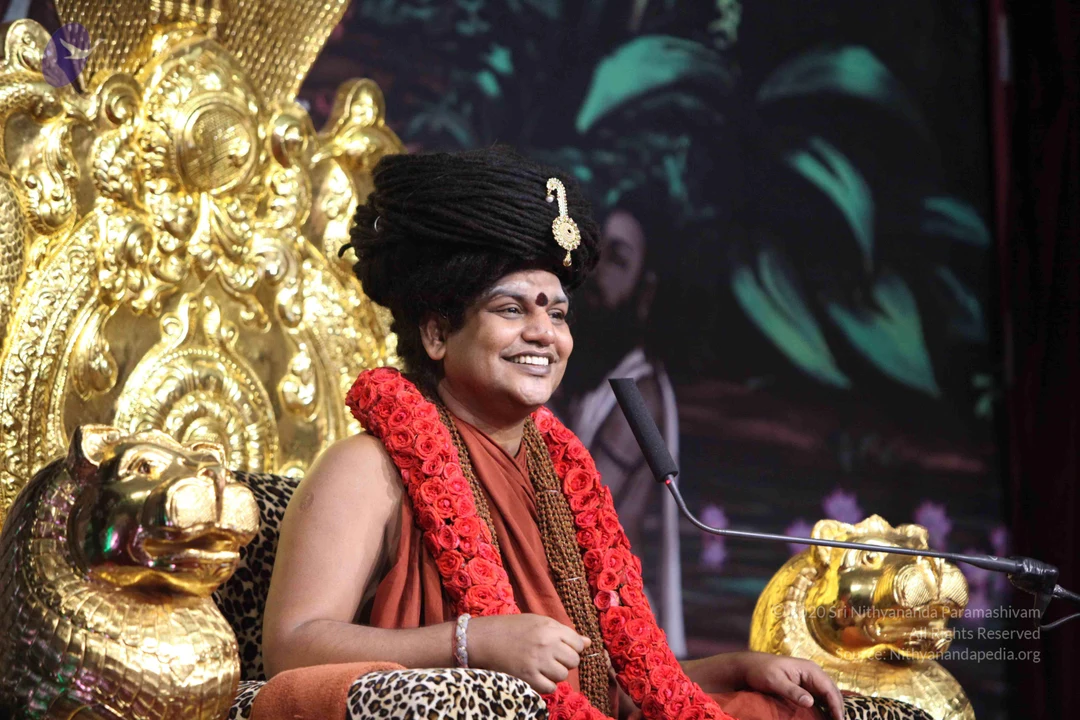
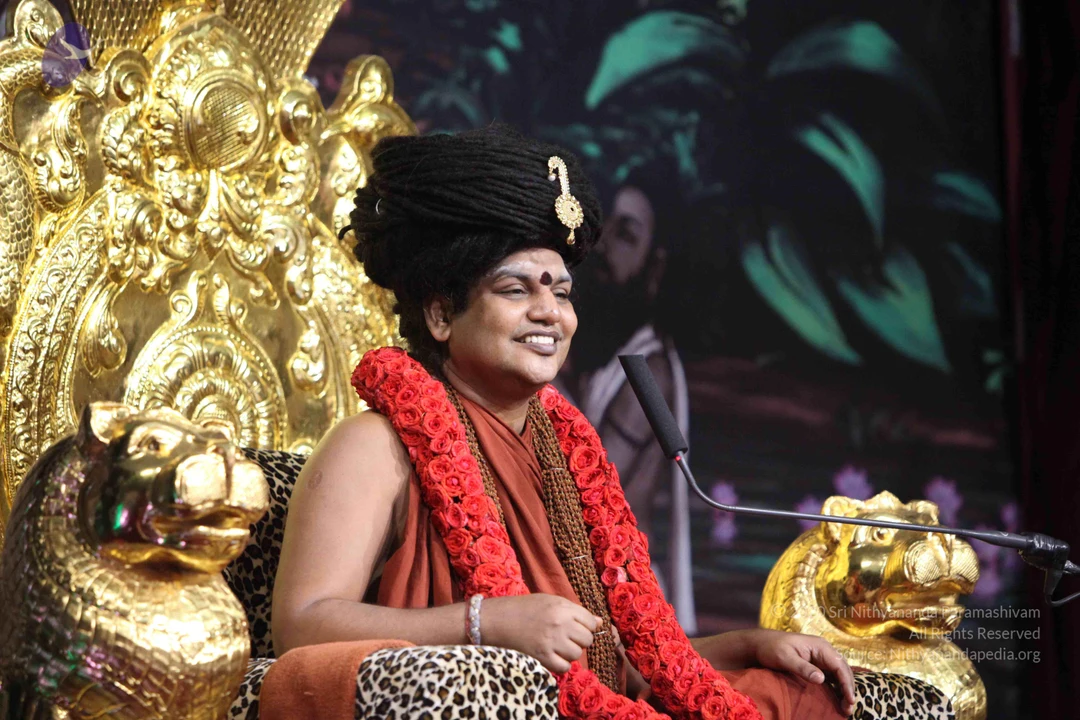
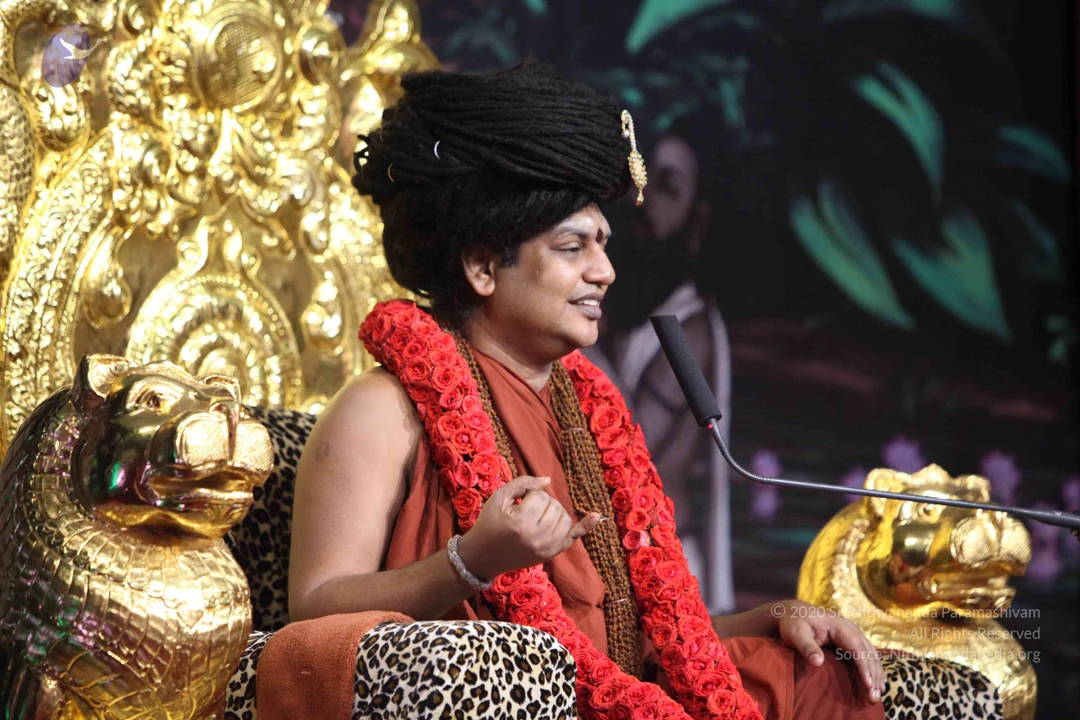
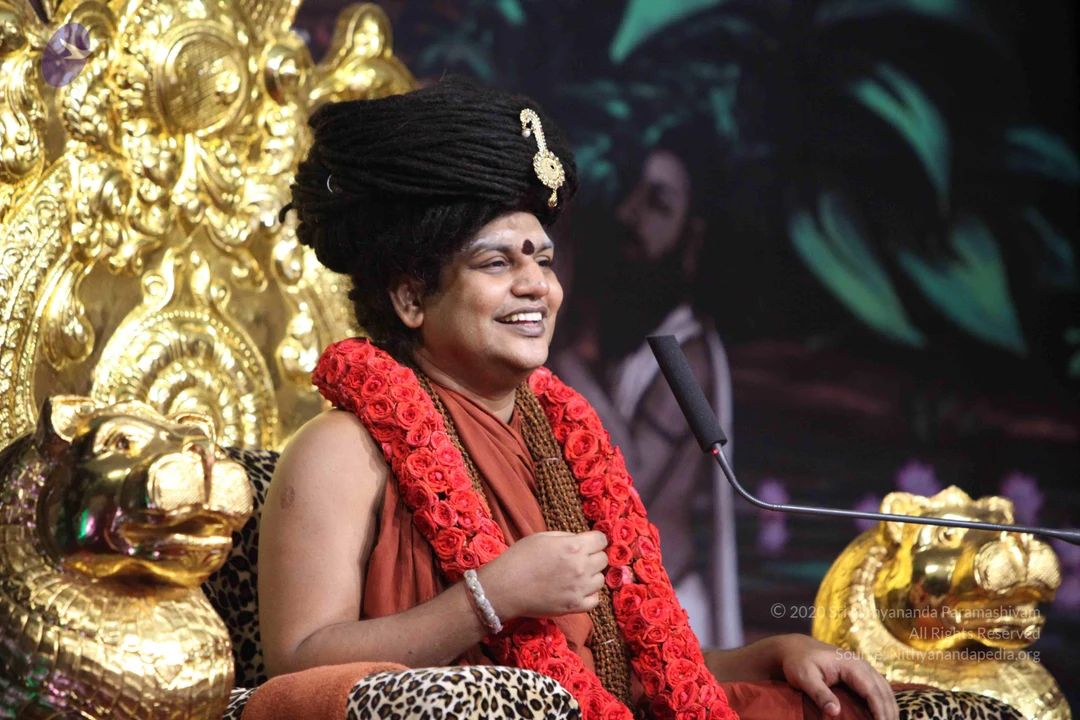
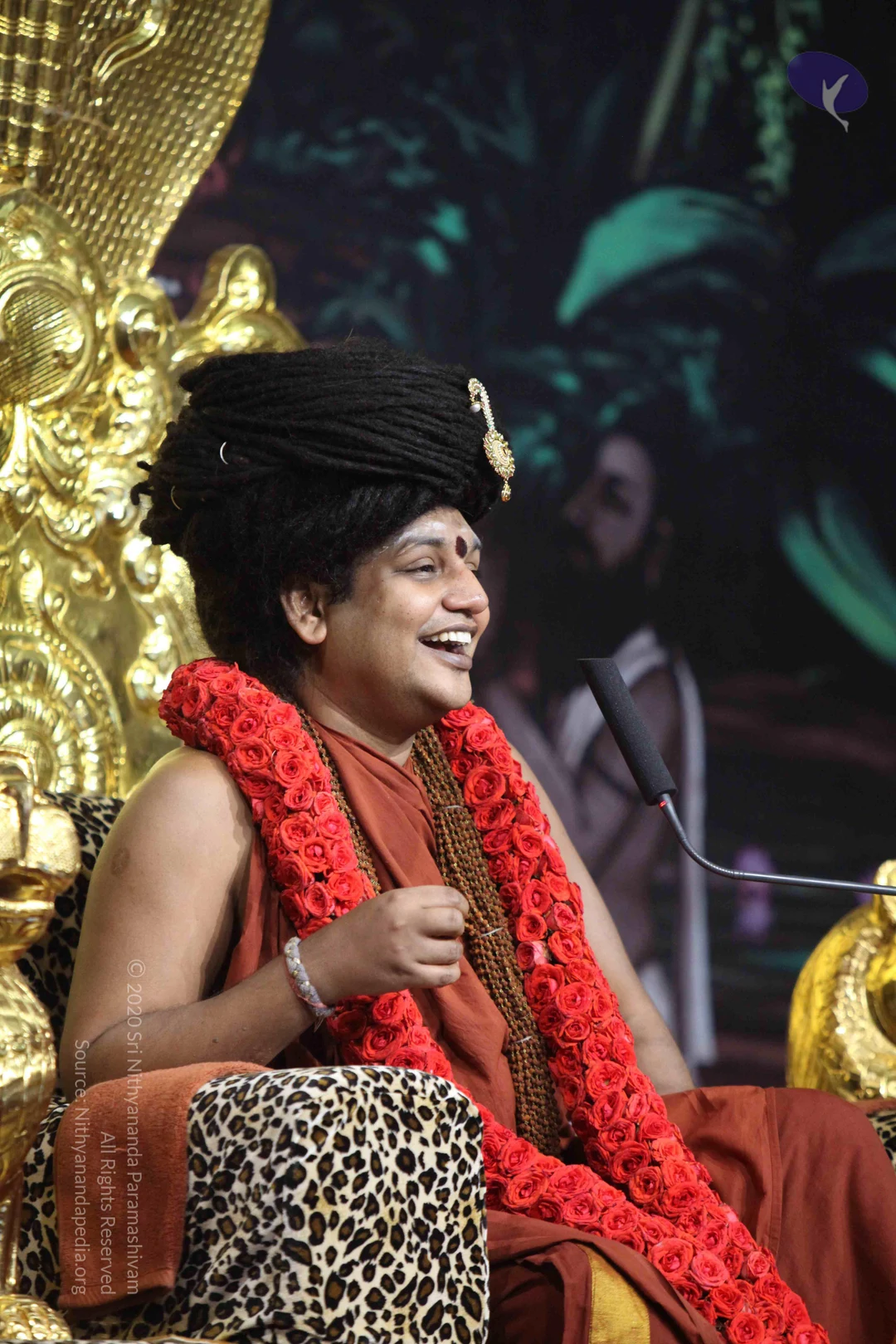
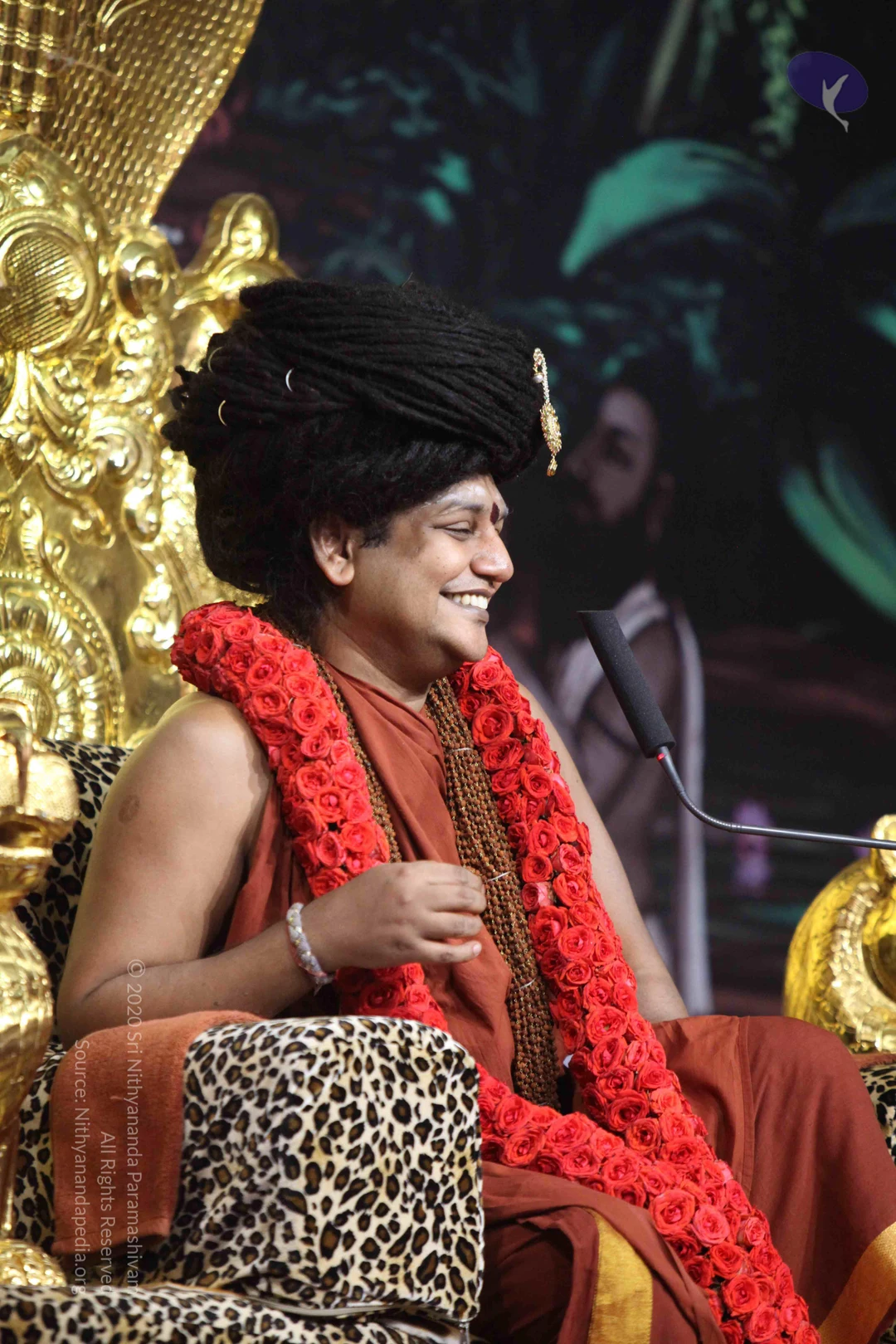
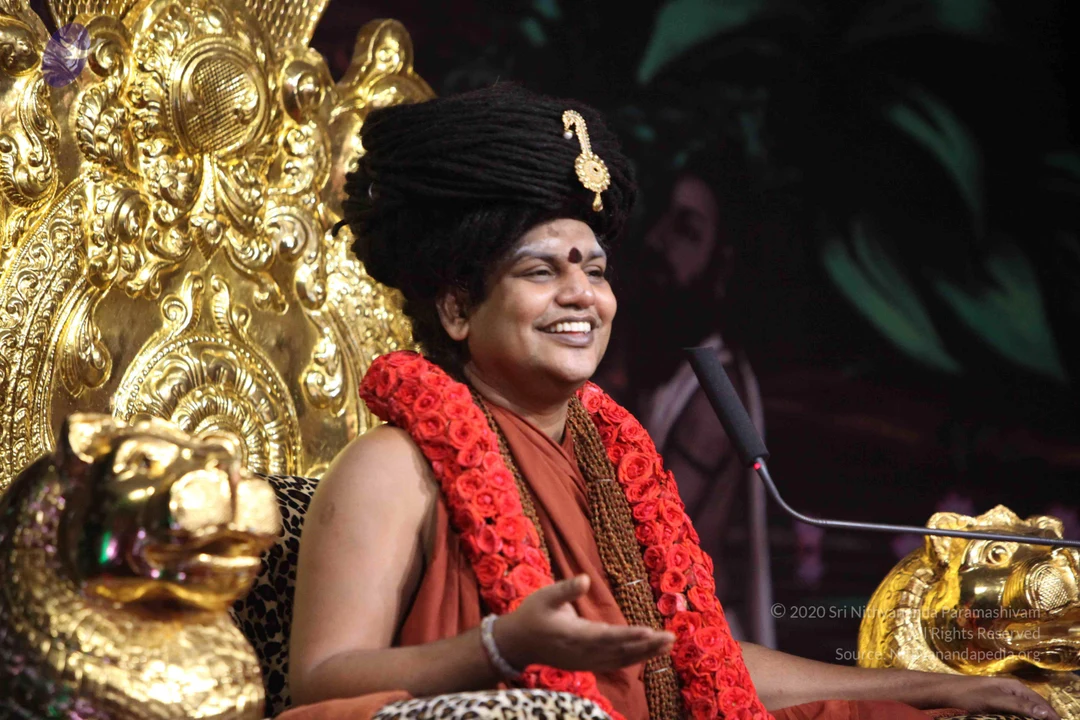
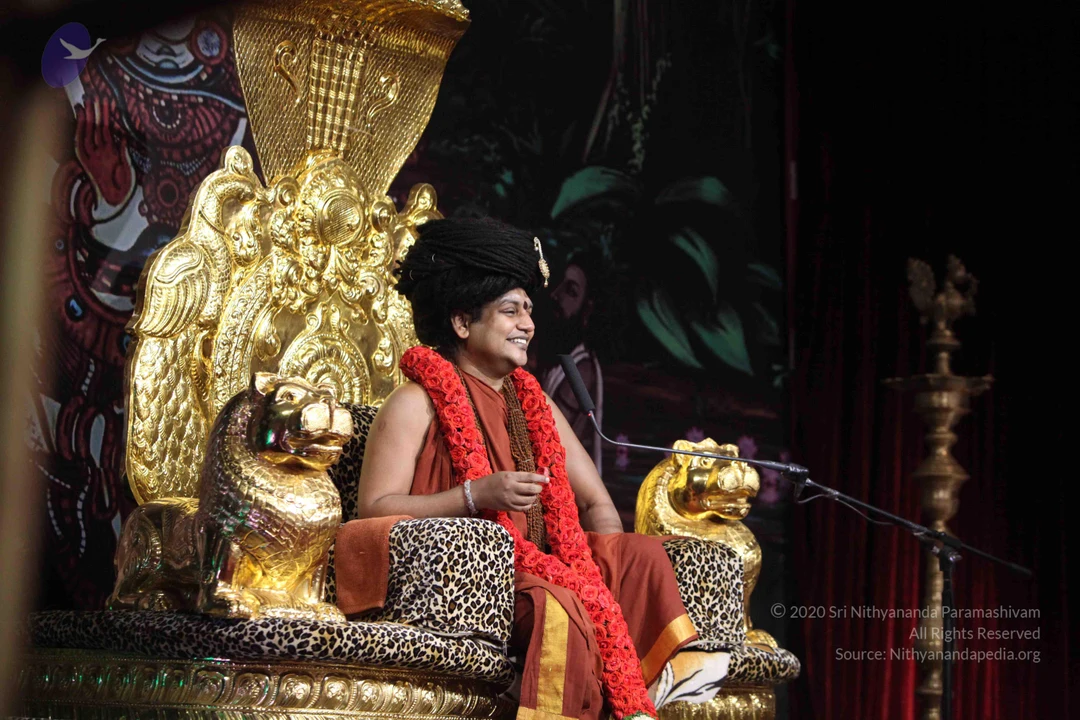
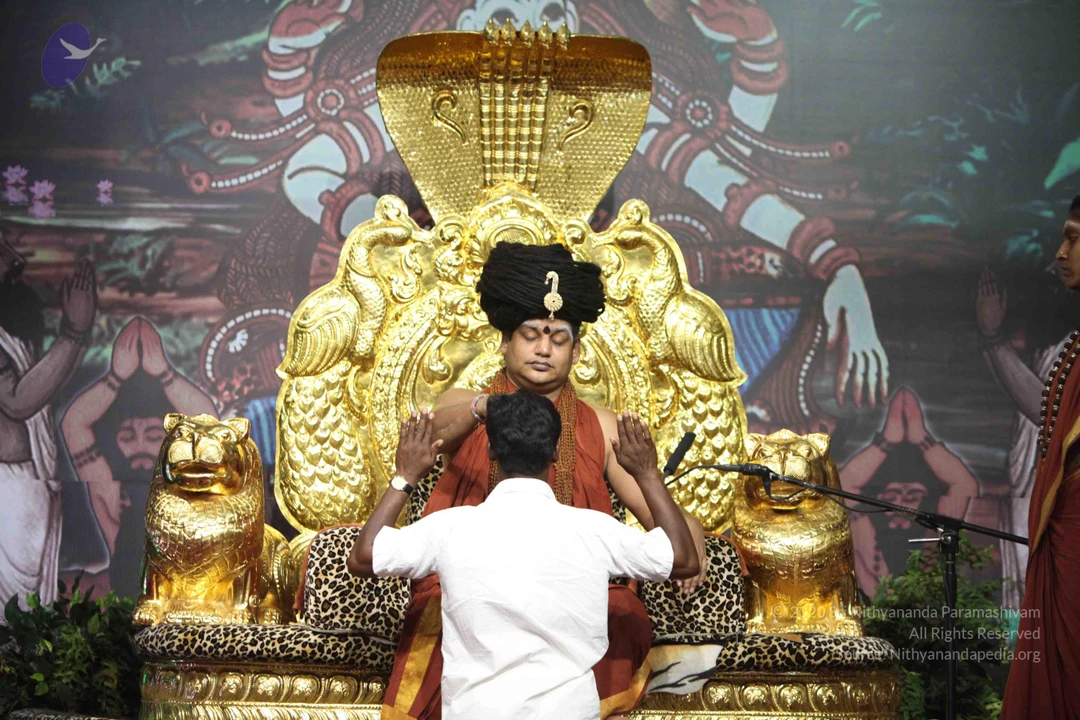
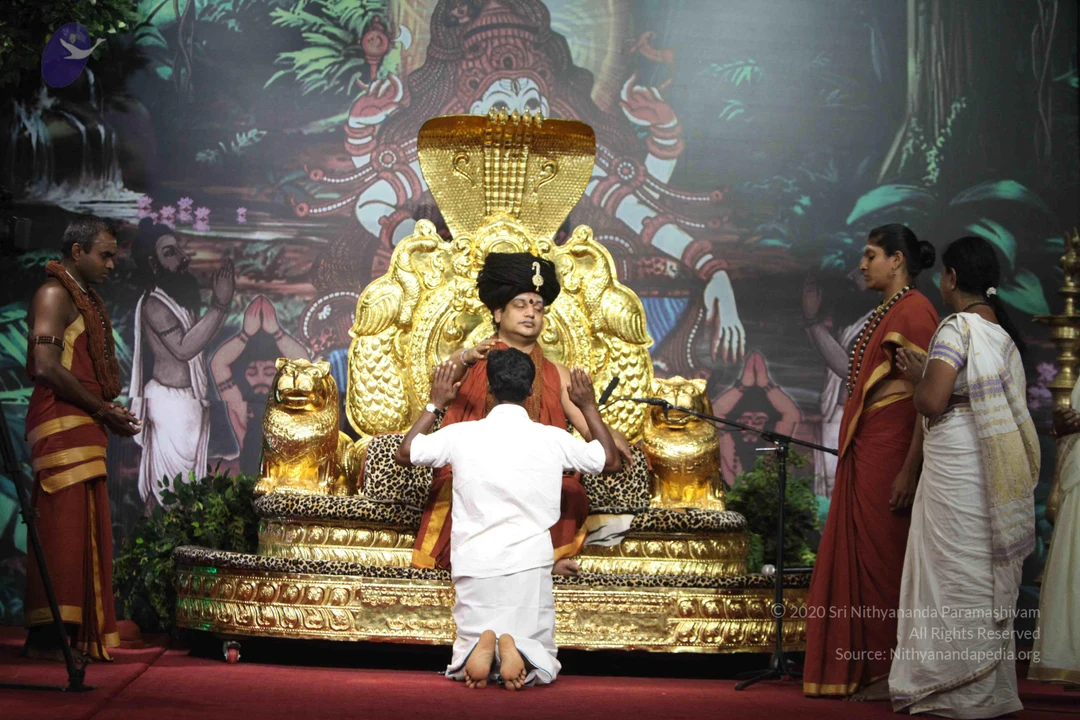
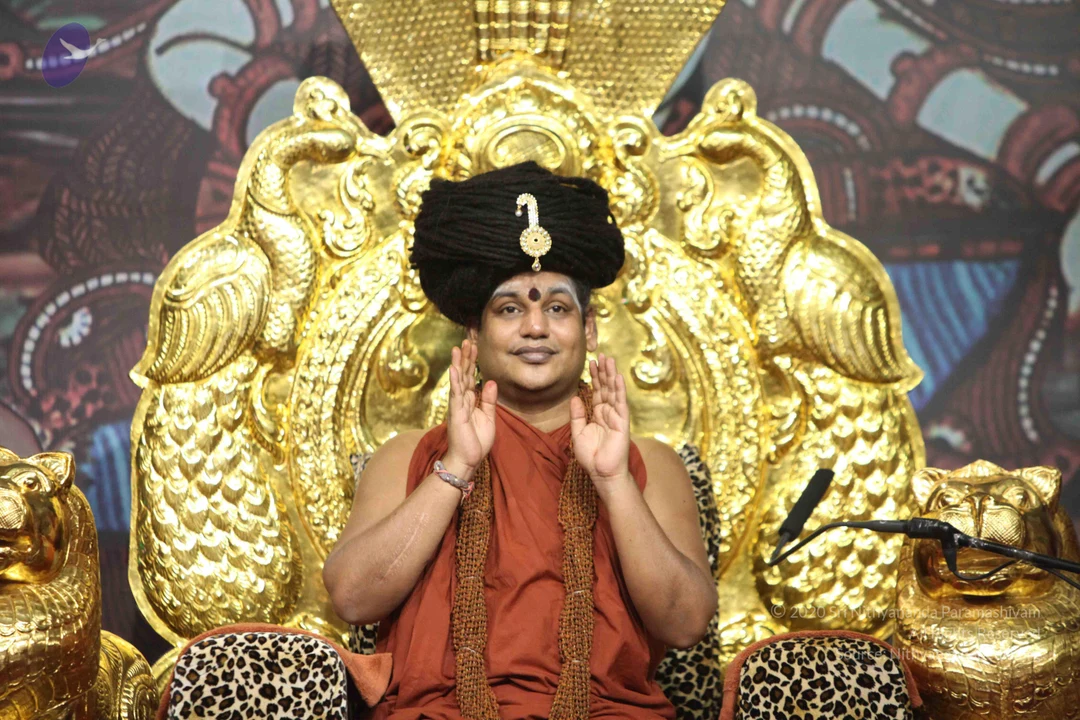
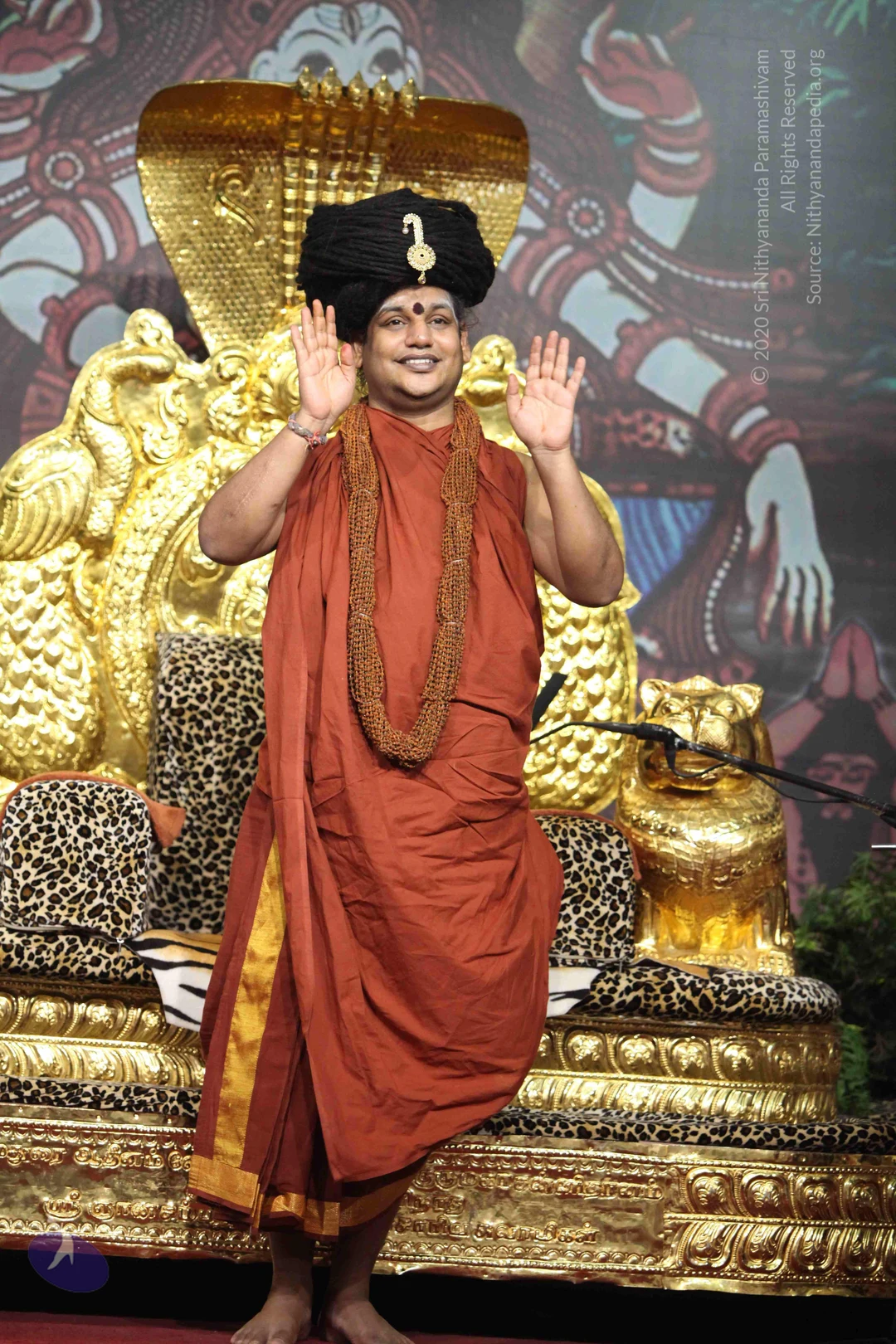
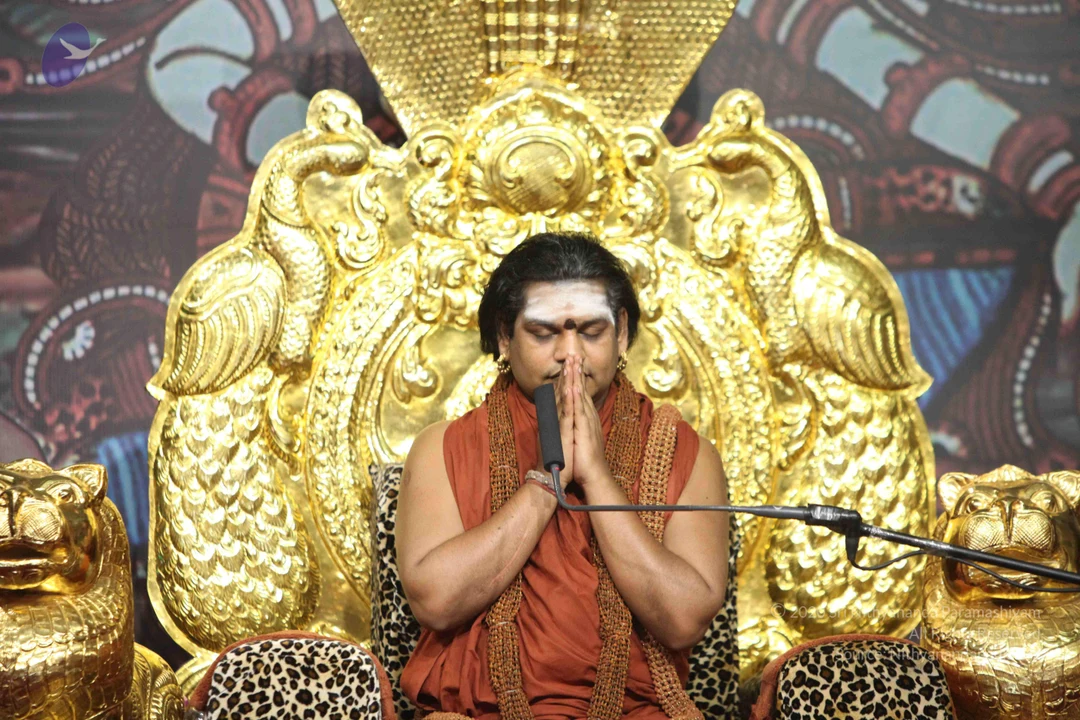
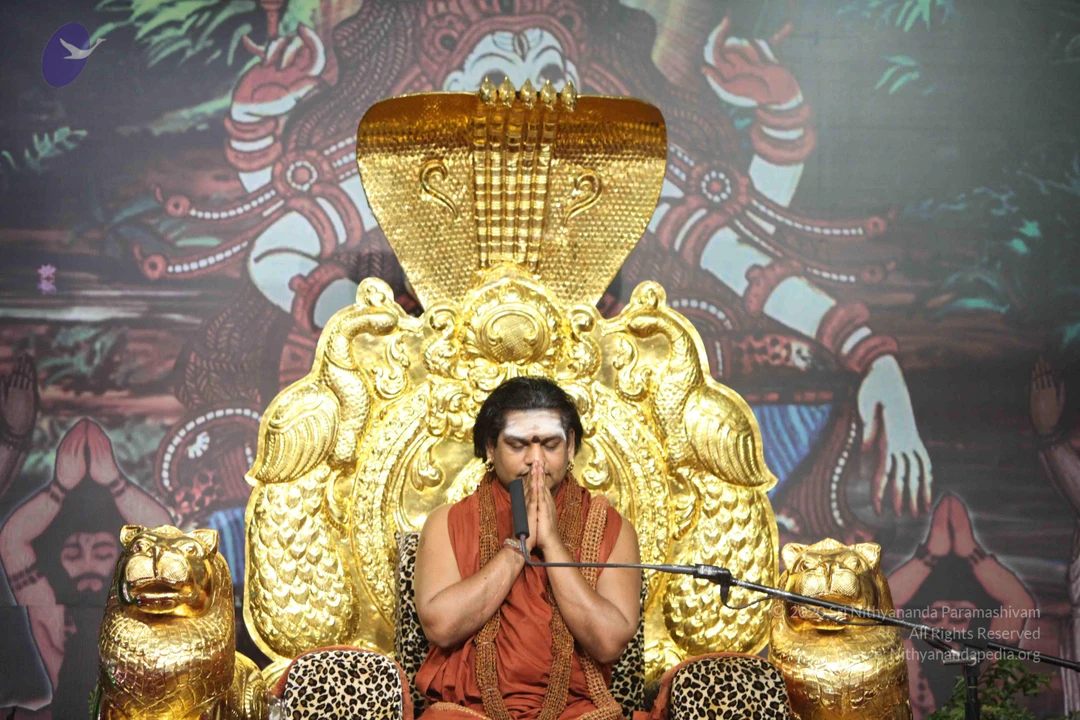
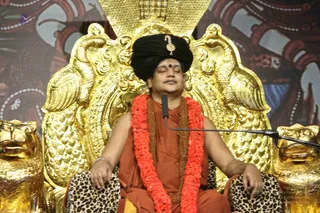
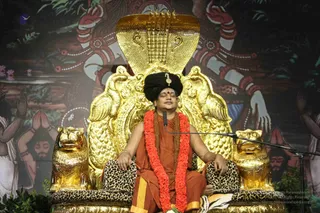
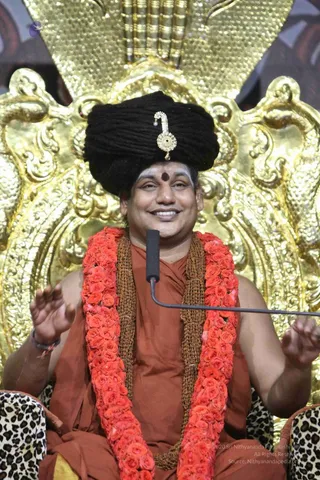
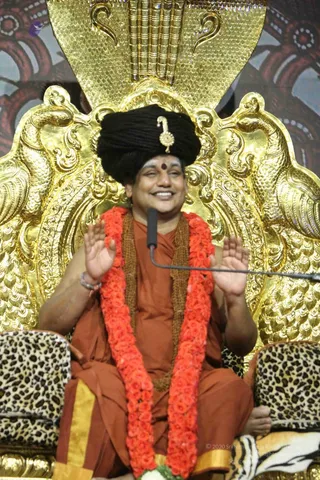
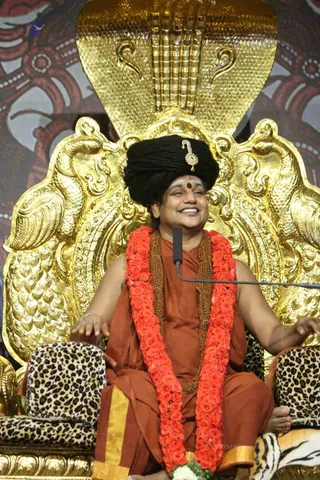
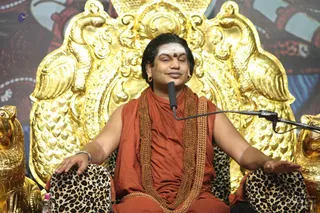
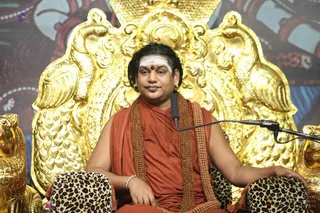
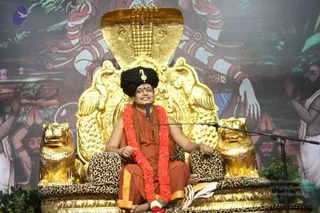
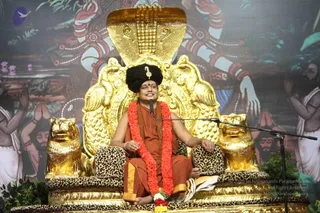
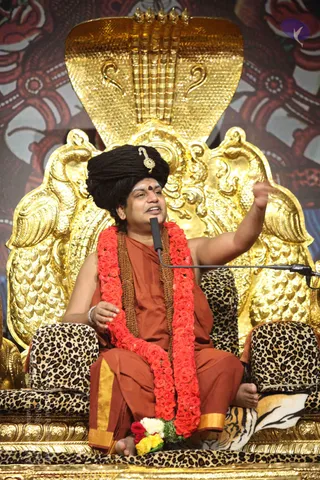
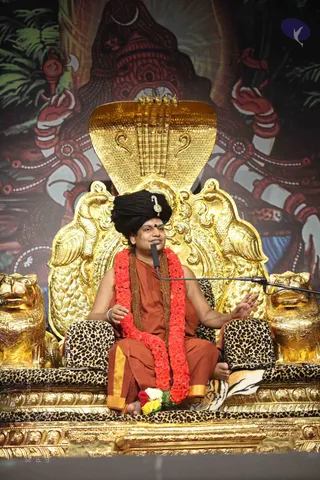
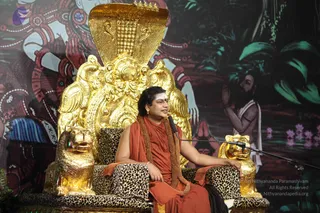
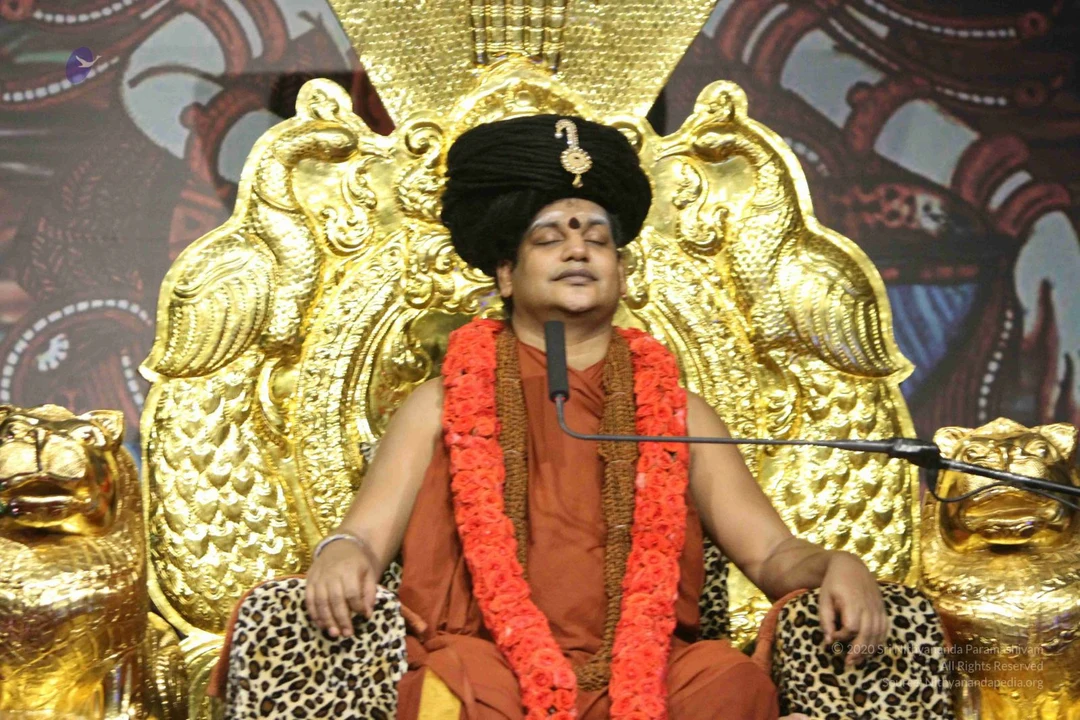
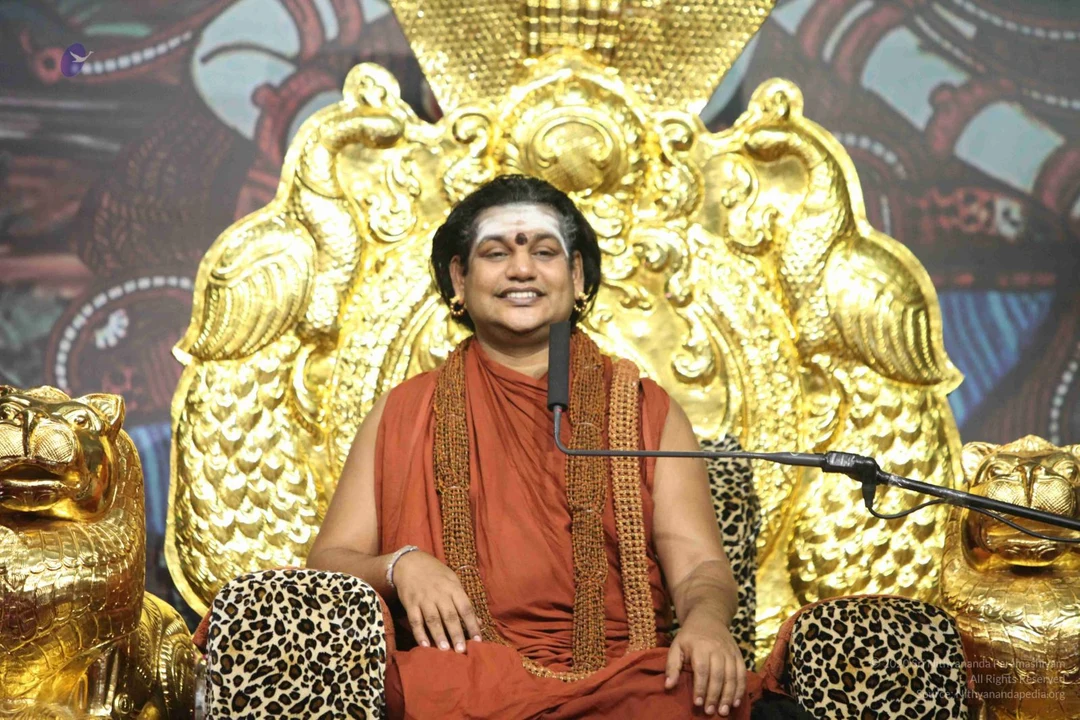
A man seated in meditation on an ornate gold throne carved with peacock-like birds and flanked by golden lion figures. He wears a black turban with a small gold ornament, an orange robe, a rudraksha mala, and a red-orange flower garland. A microphone stands before him, and a red-and-maroon painted backdrop with ornamental designs fills the background. Swamiji (probable): his long-established presentation includes the turban, saffron-orange robe and rudraksha beads, and he appears to be seated in a discourse setting.A seated man in saffron-orange robes and a dark turban with a small gold ornament sits eyes closed on an ornate golden throne carved with a cobra hood and lion-head armrests, draped with leopard-print cushions. A red and orange marigold garland hangs around his neck and a rudraksha mala is visible on his chest. He is in front of a microphone stand, hands resting on his knees. Behind him is a painted backdrop of a multi-armed deity form and devotees with folded hands on either side. The appearance matches the a person cues of a turban, saffron clothing, rudraksha mala and ceremonial garland, seated in a teaching role on a throne.A photograph of a smiling man seated on an ornate gold throne with intricate repoussé carvings. He wears a black turban with a gold ornament at the front, a red bindi and white forehead markings, an orange-brown robe, and a long layered garland of red roses with a brown woven strap-like garland beneath. His hands are raised in front of a microphone on a stand as he speaks. Swamiji (probable): the seated figure wears a black turban with a gold ornament, an orange-brown robe, a rose garland and sits on an elaborate golden throne, consistent with a discourse setting.A seated man in saffron-orange robes sits on an ornate gold throne carved with a cobra hood and peacock-like motifs, with leopard-print cushions at his sides. He wears a black turban with a gold ornament at the front, a red bindi, a red-orange flower garland and a brown rudraksha mala across his chest. He smiles with both palms raised in front of a microphone stand. Behind him is a colourful painted backdrop.A seated man in an ornate golden throne with a golden cobra-hood backrest and leopard-print cushions sits at a microphone, smiling with his eyes half-closed and hands open at his sides. He wears a black turban with a gold ornament, a red bindi, a dark orange-brown robe, a thick rudraksha mala and a red-orange flower garland. A painted temple-style backdrop is behind him. Appearance-based candidate: a person, in a satsang setting with his role as the seated speaker. No readable printed name is visible.A seated man in an orange-red robe and a black turban with a gold ornament sits on an ornate gold throne carved with a cobra-hood canopy and peacock-like side carvings. He wears a red-orange flower garland, a brown rudraksha mala across his chest, a red bindi, and smiles while raising his right hand, with a microphone stand in front of him. Leopard-print cushions and a striped tiger-skin cloth surround him, and a painted mural of deities is behind the throne. Probable Swamiji cues: black turban, orange-red robe, rudraksha mala and ornate gold throne, identified only by appearance.
Evening Satsang
18 photosSource gallery
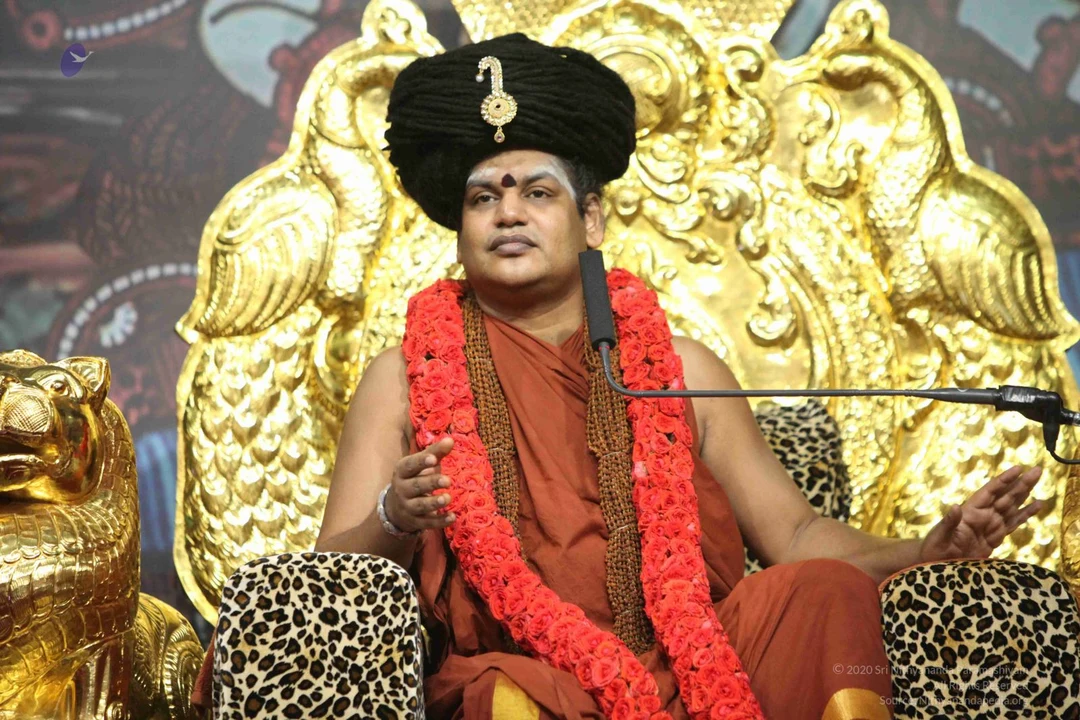
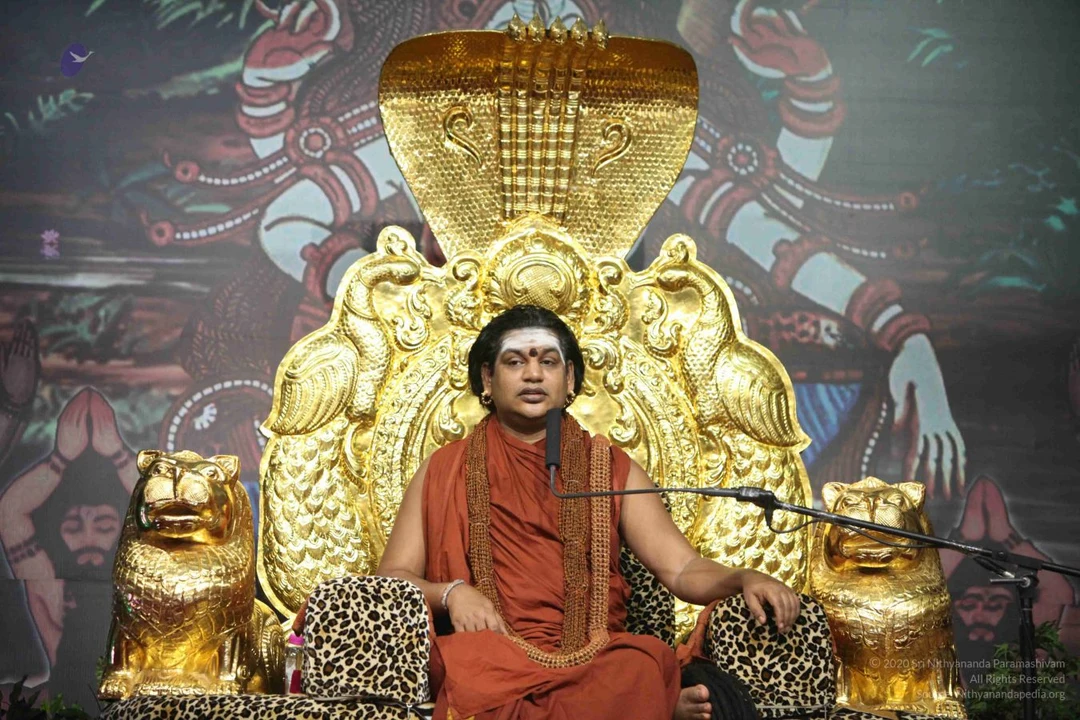
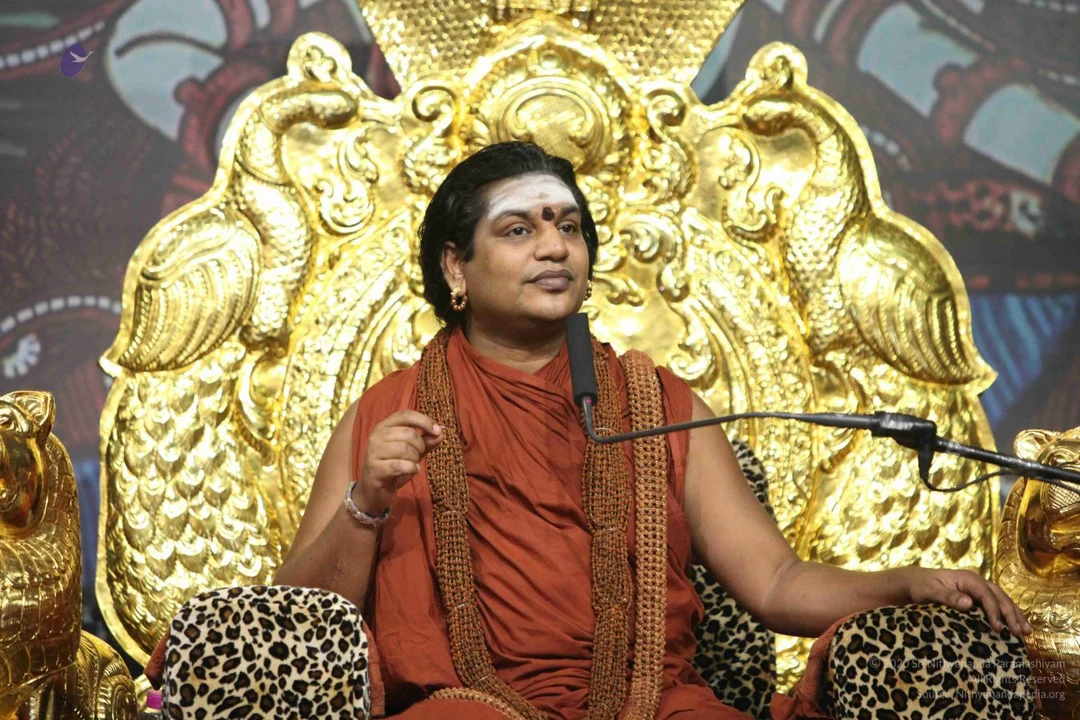
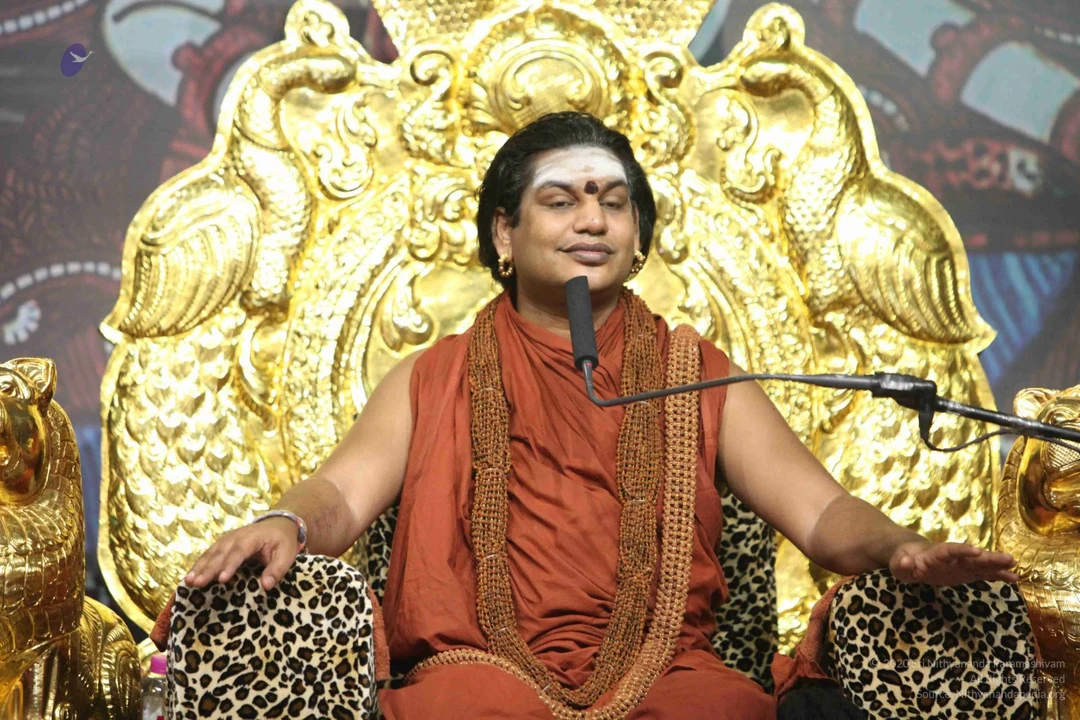
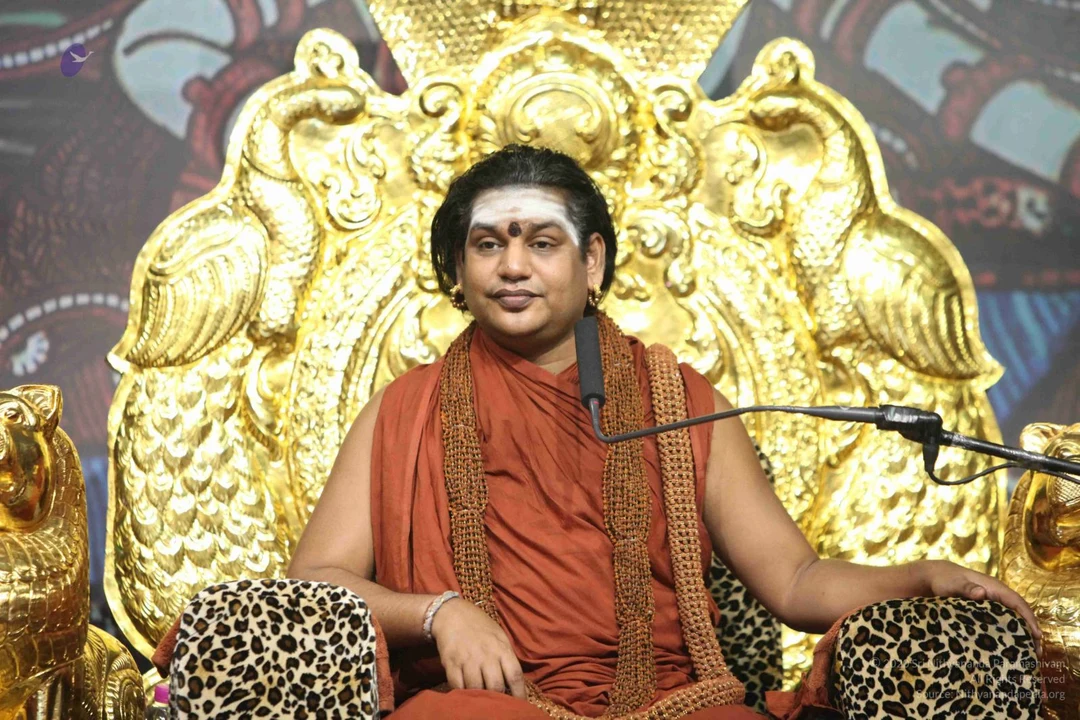
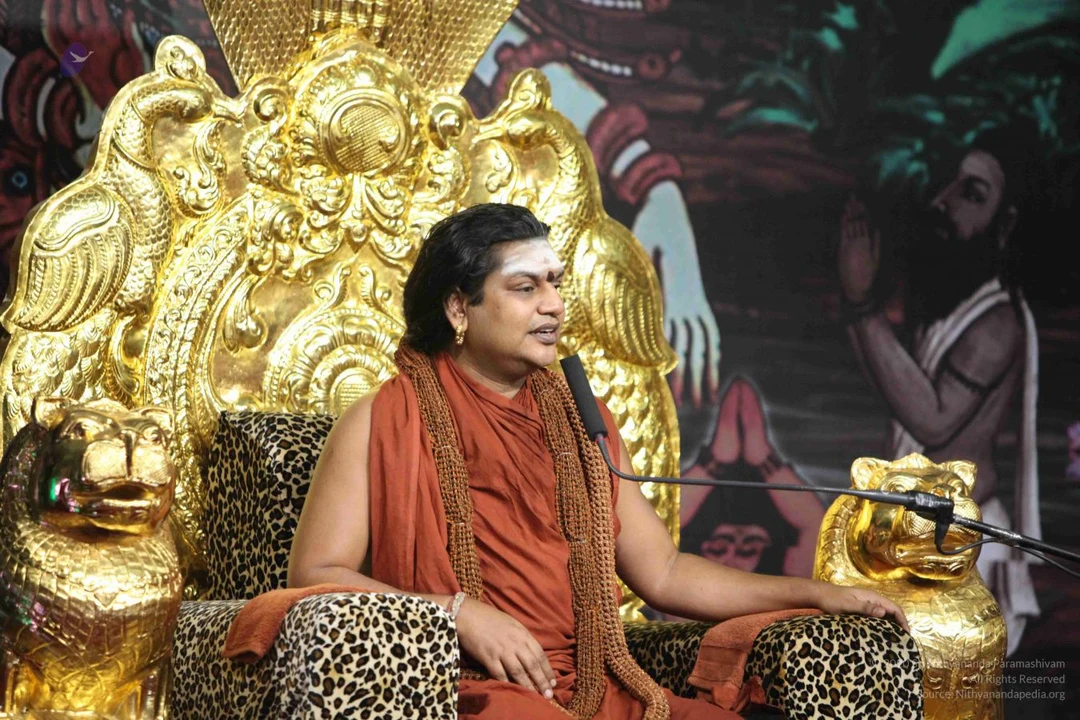
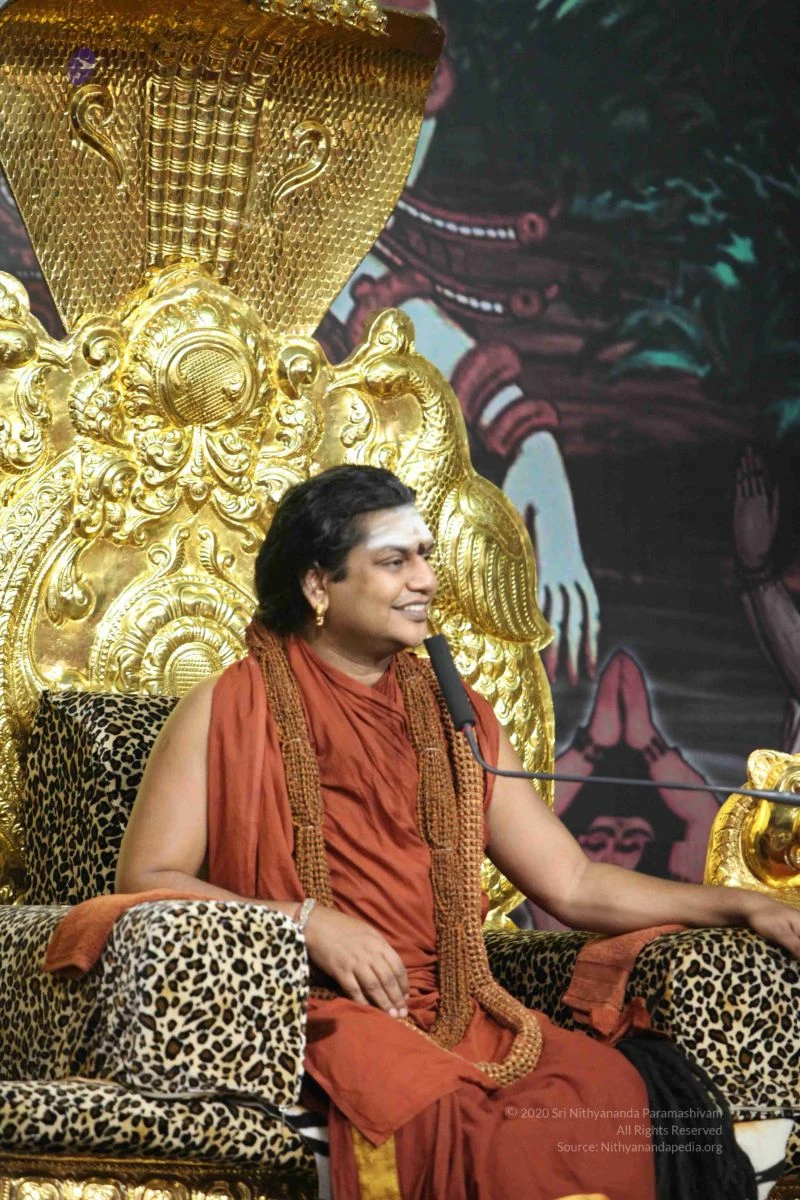
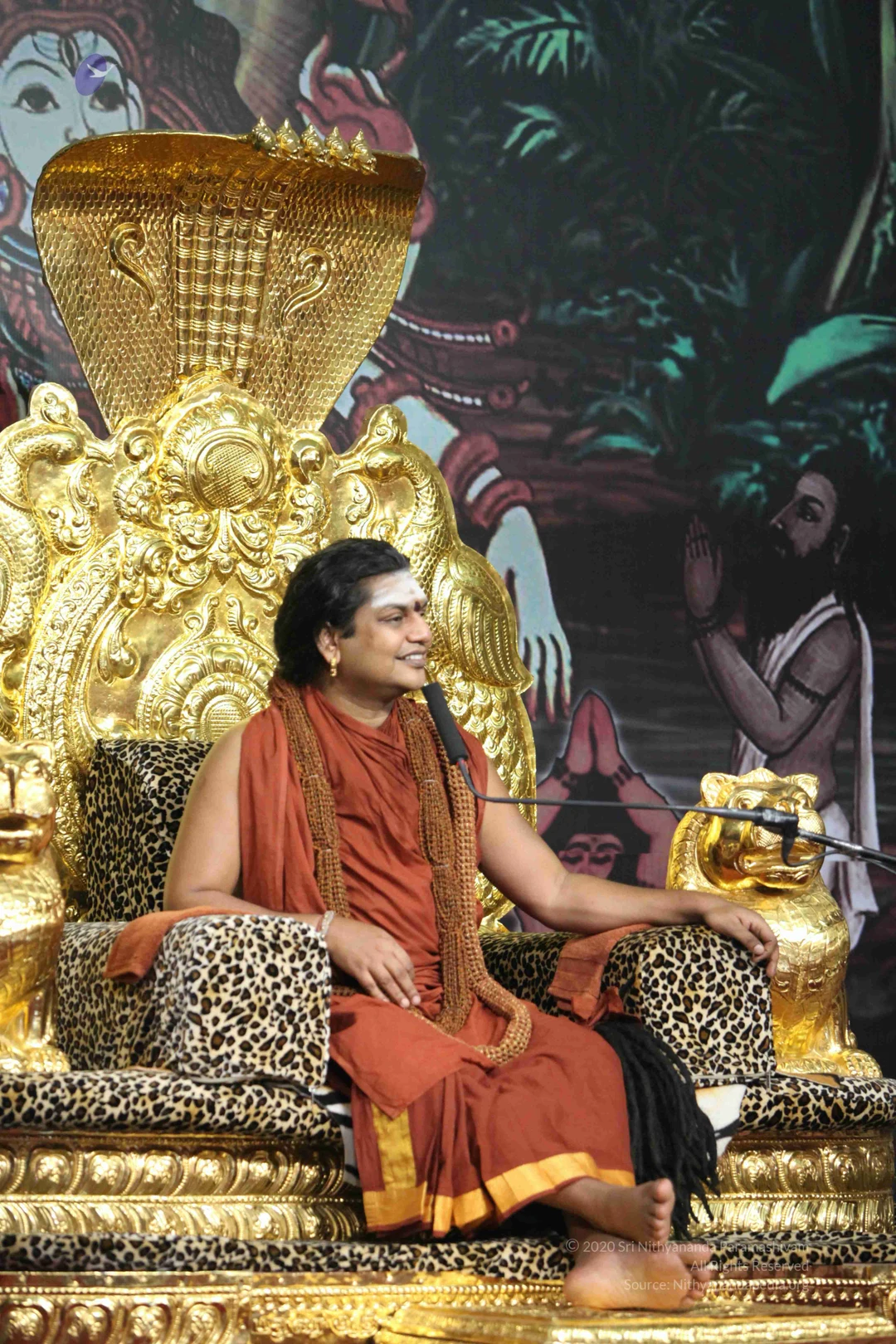
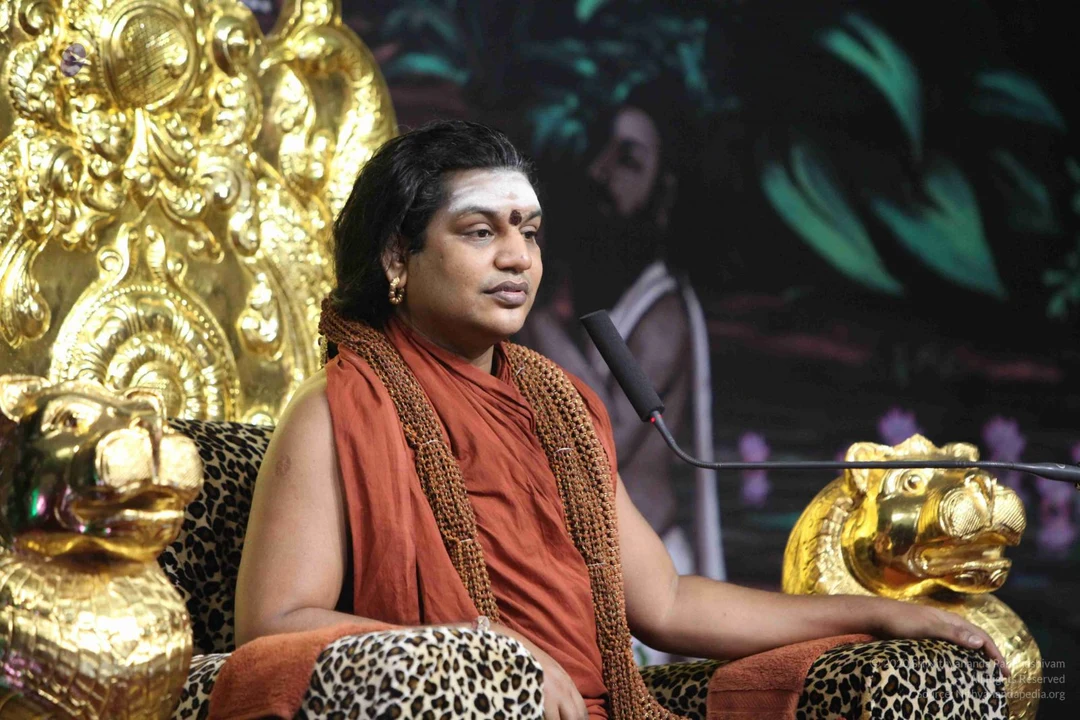
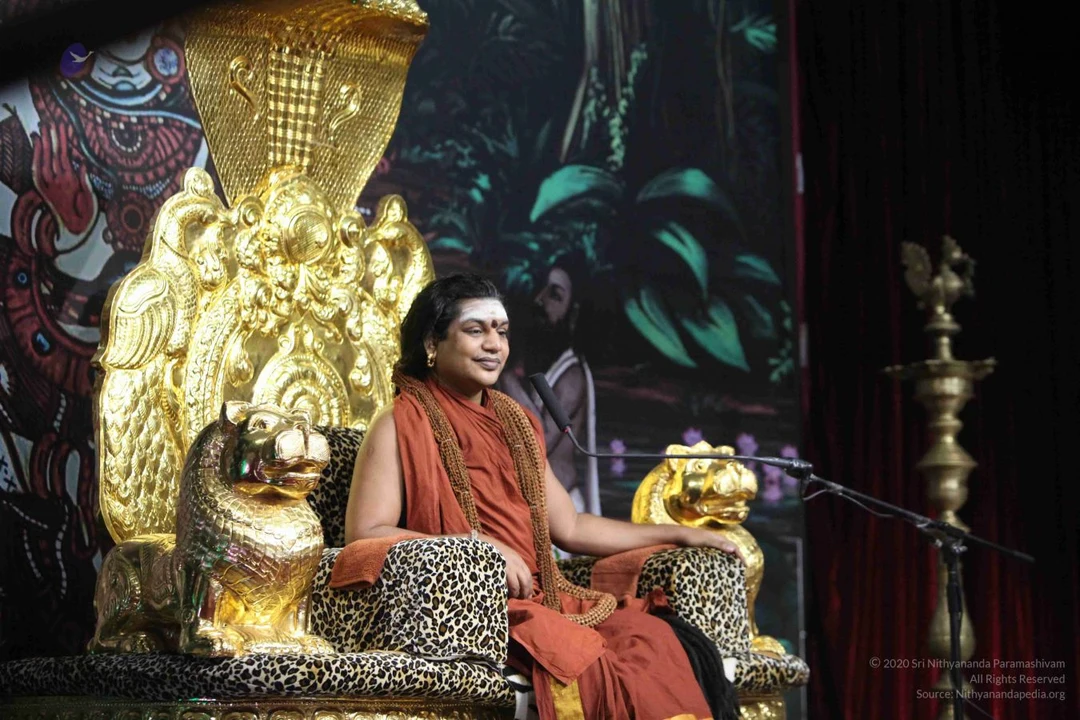
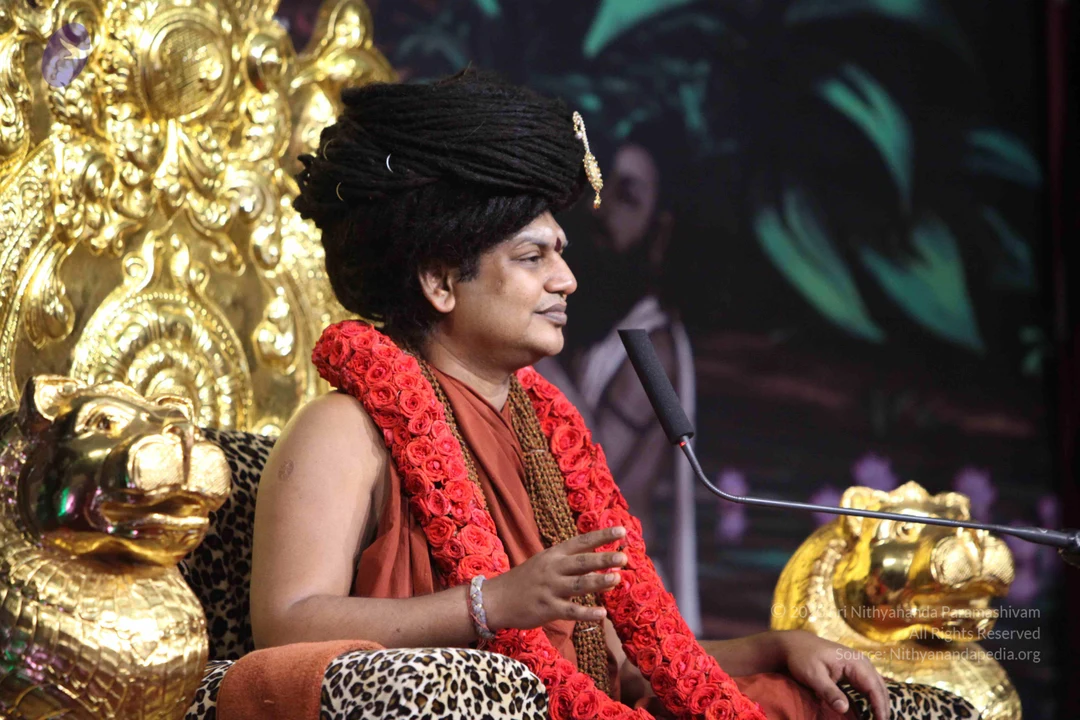
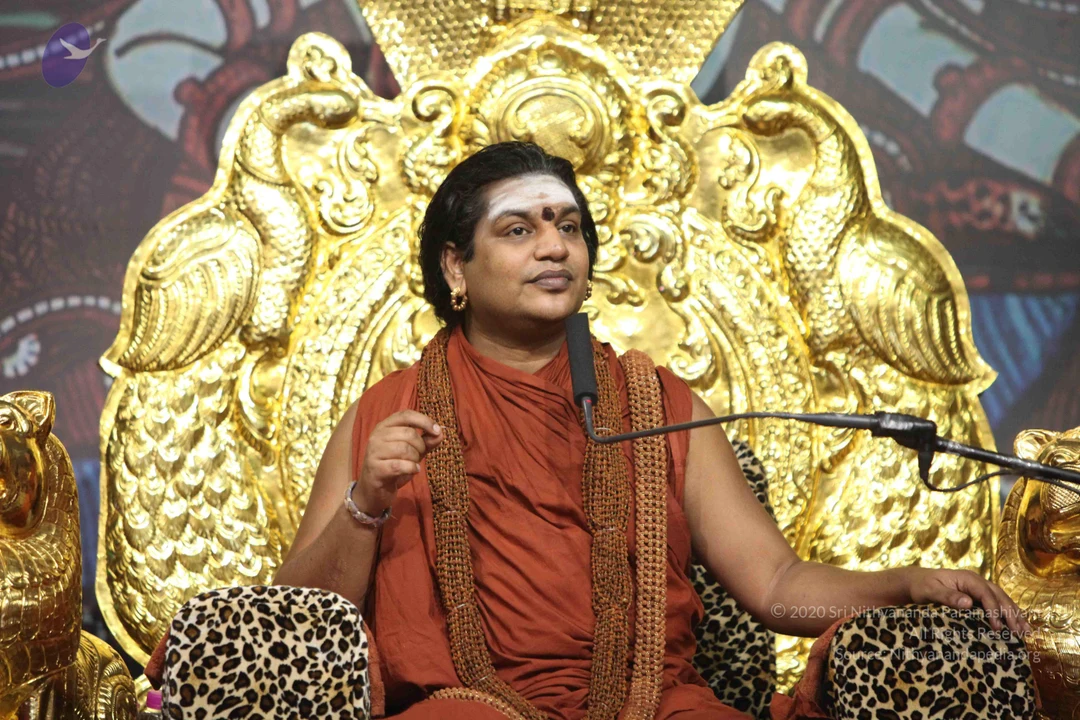
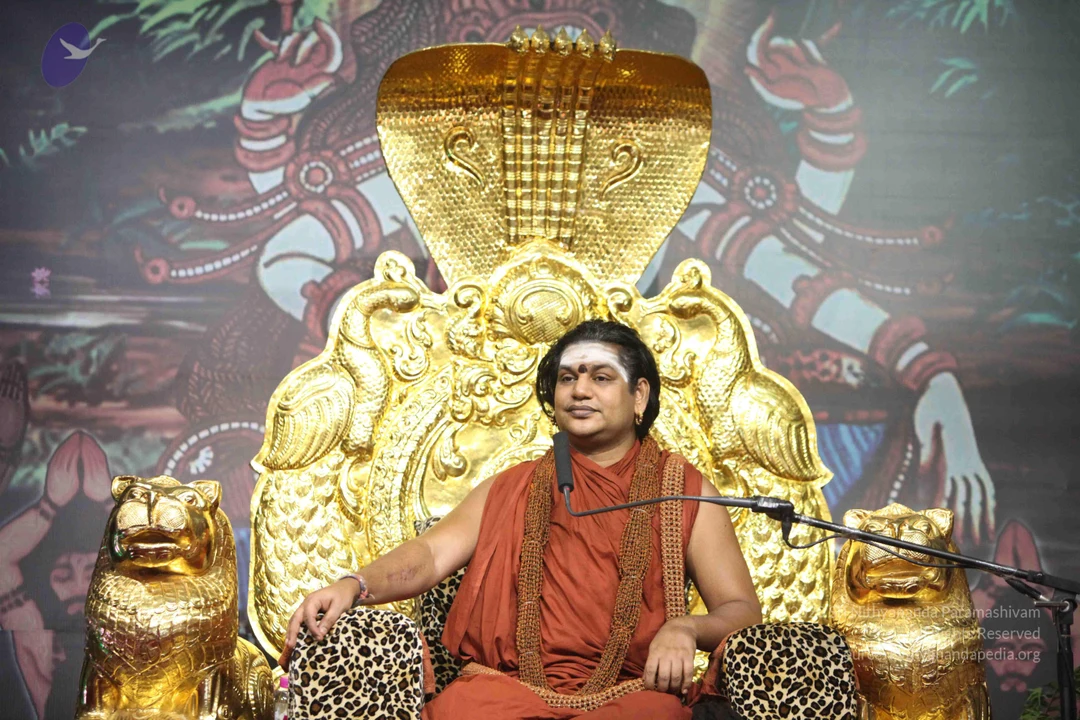
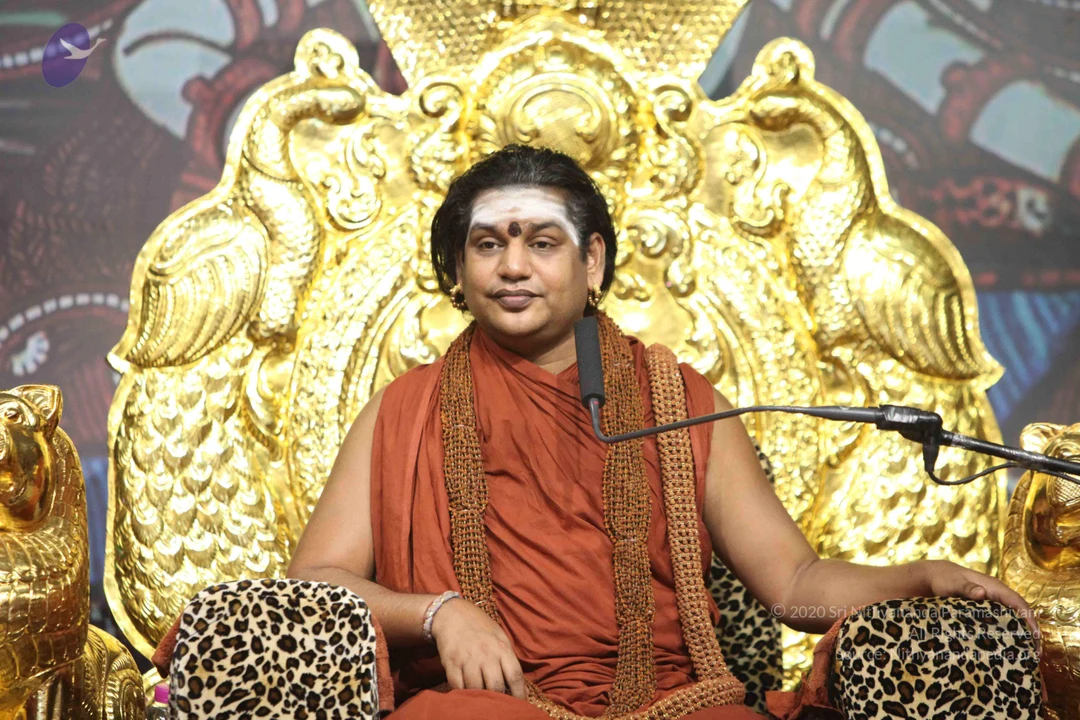
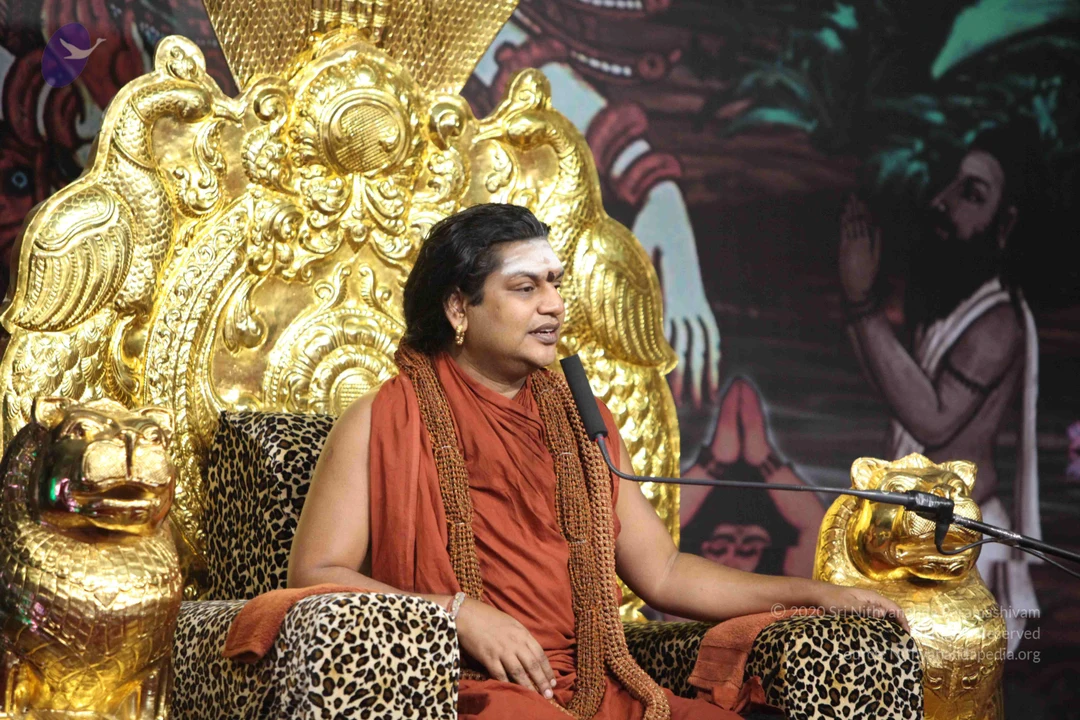
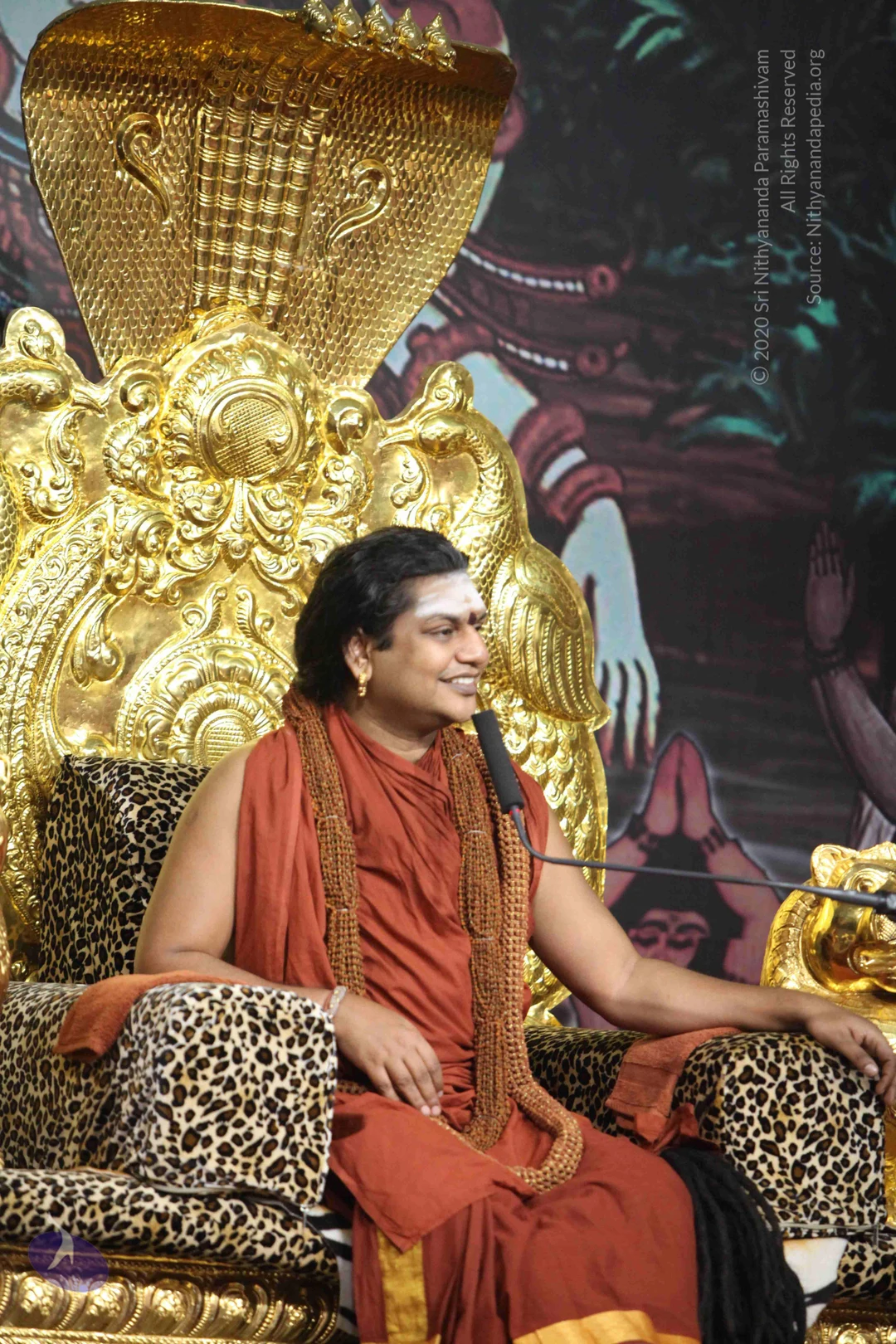
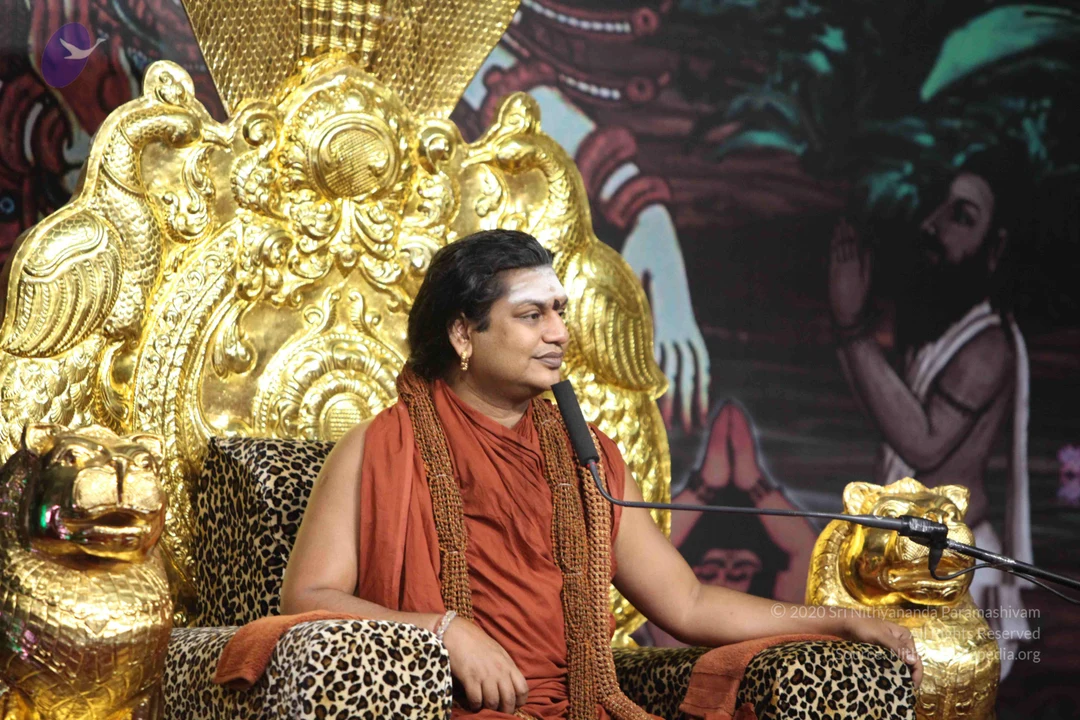
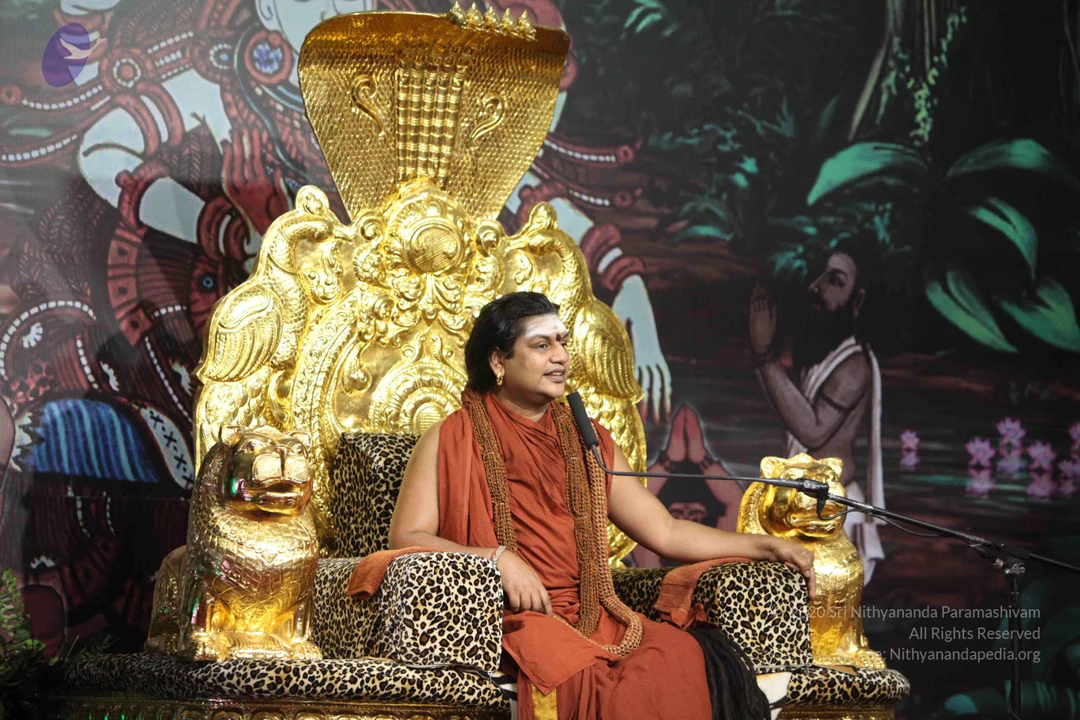
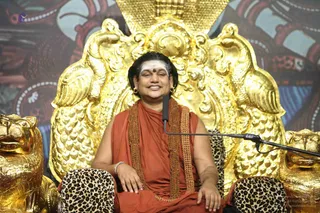
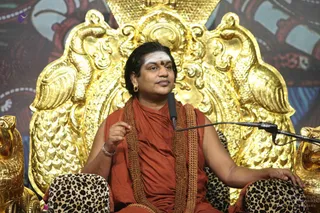
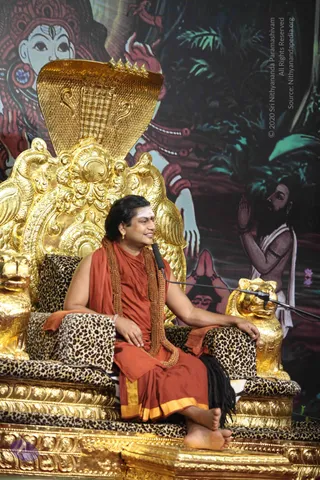
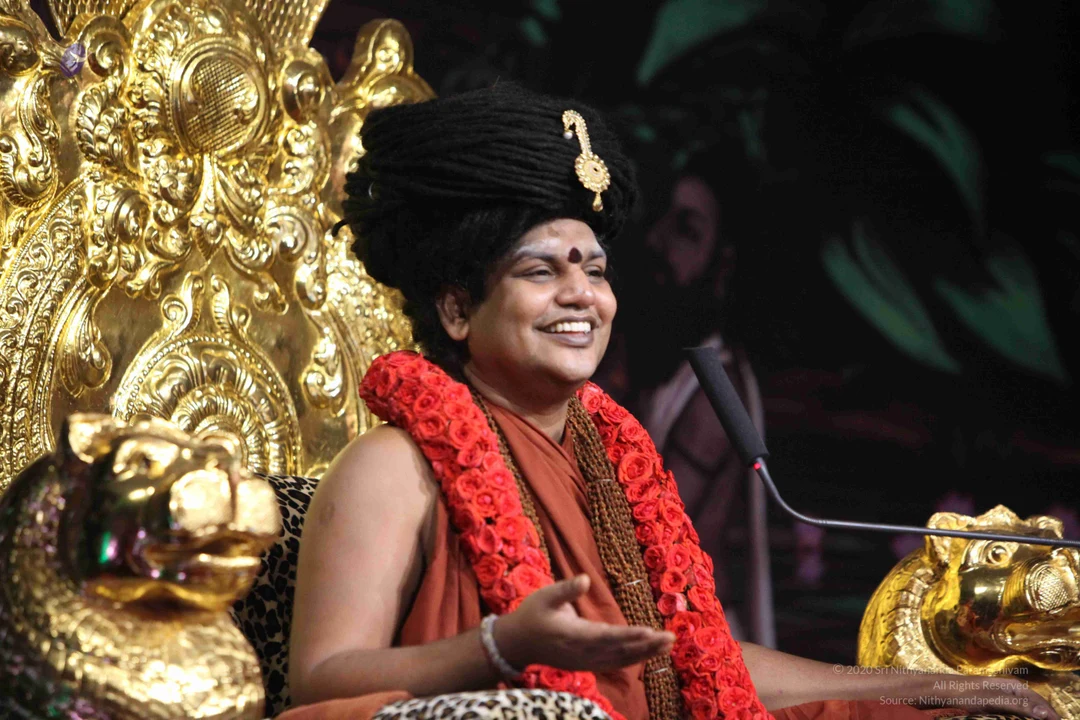
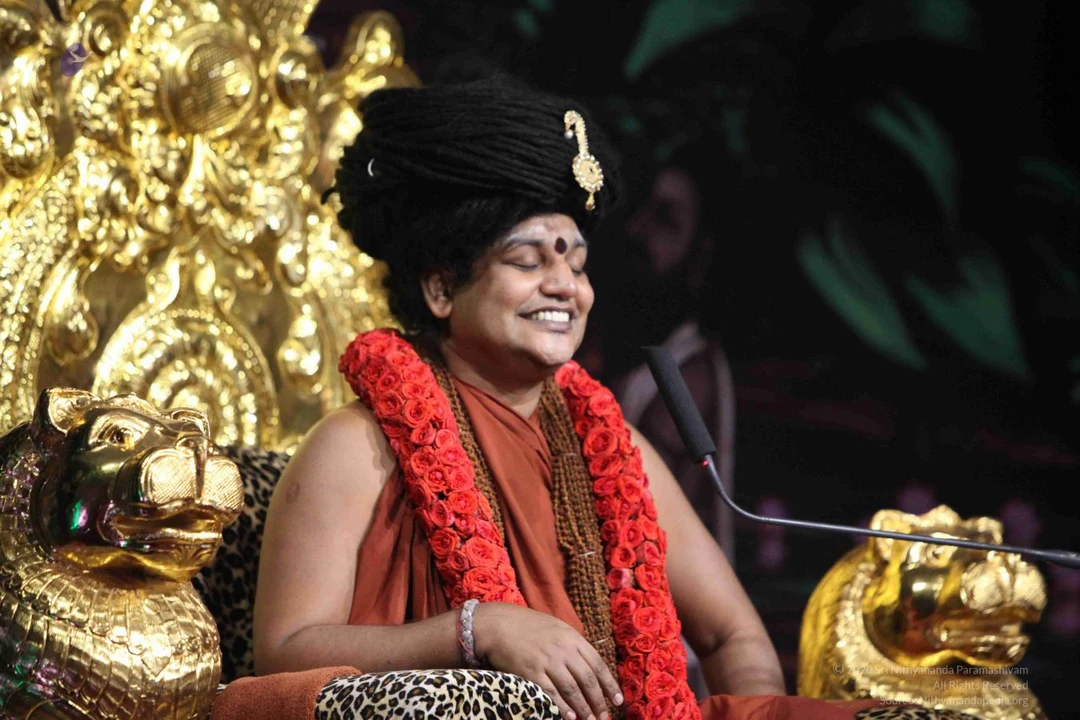
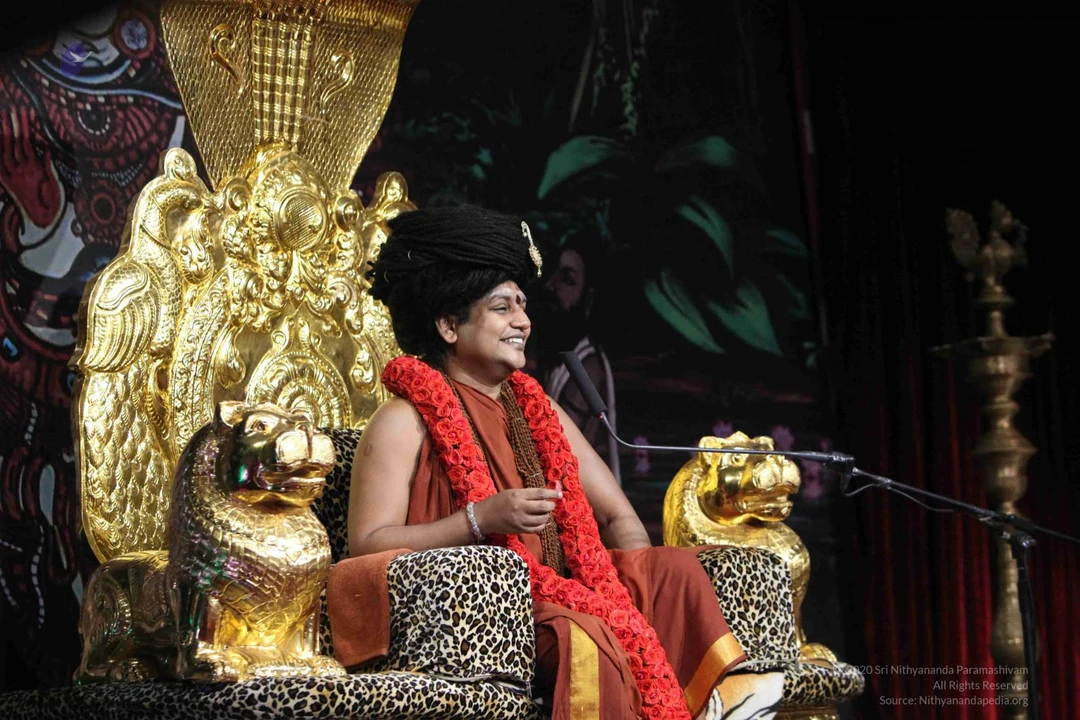
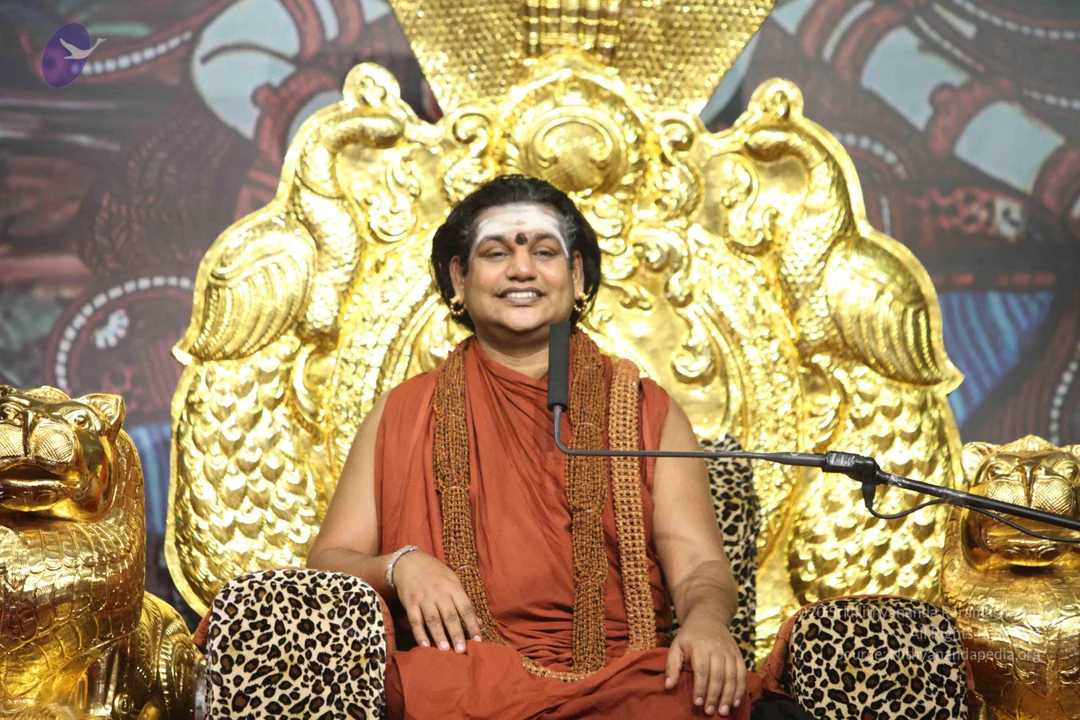
A seated man in an orange-red saffron robe with a long rudraksha-style beaded necklace speaks into a microphone on a stand, smiling broadly. He has a white tripundra with a red bindi on his forehead, a bracelet on his wrist, and dark swept-back hair. He sits in front of an ornate gold throne with carved scroll and scale-like patterns, flanked by golden lion-face armrests and leopard-print cushions. A painted backdrop with decorative patterns is behind him.A seated man in saffron-orange robes sits on an ornate golden throne carved with a large hooded cobra canopy, flanked by two golden lion sculptures with a leopard-print cushion on the seat. He has a white forehead marking with a red dot, dark hair, a beaded rudraksha-style mala and gold earrings, and gestures with his hands while speaking into a microphone on a stand. Behind him is a painted backdrop of red and white figures and hands in namaste.A photograph of a seated man in a saffron-orange robe and a rudraksha mala draped over his shoulders, with a white vibhuti tripundra and red bindi on his forehead and gold earrings. He sits on an ornate gold throne carved with peacock-like birds, with leopard-print cushions below, and gestures with his right hand while speaking into a microphone on a stand. A decorative painted backdrop is behind him. Only one person is present.A man sits on an ornate gold throne with carved golden scroll and bird-like motifs, speaking into a black microphone on a boom stand. He wears a rust-orange sleeveless robe and a long rudraksha mala draped over his shoulders, with a white vertical tilak and red bindi on his forehead, plus gold earrings. His arms rest open on leopard-print cushions. A gold lion figure appears at the left edge. Swamiji (probable) is seated in a discourse setting, consistent with a satsang sitting, and the cues are his long swept-back hair, ornate gold throne, rudraksha mala and saffron robe.A seated man in an orange-red saffron-toned robe with a rust-coloured shawl draped over both shoulders and a long brown beaded rudraksha-style mala hanging to his chest. He wears a white horizontal tilak marking with a red dot on his forehead, small gold earrings, and a microphone on a stand is positioned in front of him. He sits on a leopard-print cushion before an ornate gold throne carved with dragon-like or peacock-like motifs, with a painted backdrop behind. He rests his hands on his lap and gazes forward during a satsang-style discourse. Appearance-based cues (swept dark hair, saffron robes, rudraksha mala, gold ornaments, throne setting) suggest a person candidate in person.A man seated on an ornate gold throne with leopard-print cushions and gilded lion-head armrests, speaking into a microphone. He wears saffron-orange robes, a long rudraksha mala draped over his shoulders, a white forehead marking and gold earrings. Behind him a painted backdrop shows a bearded sage with folded hands. The throne's gilded carvings and lion heads frame him.

01-DWAJAROHANAM
73 photosSource gallery
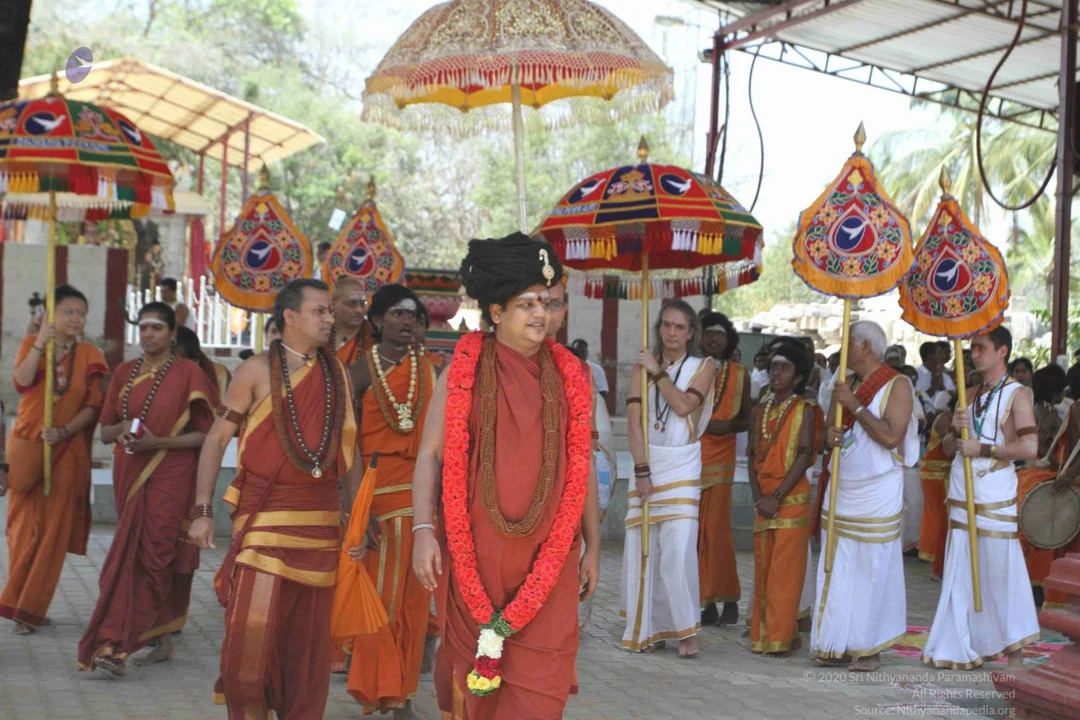
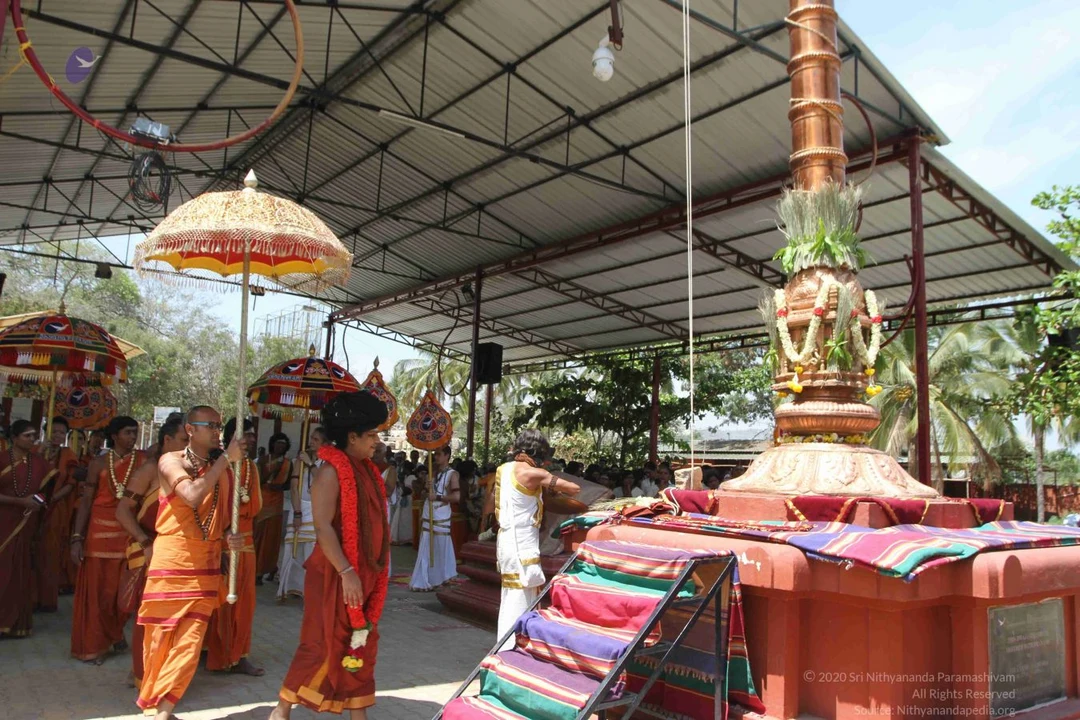
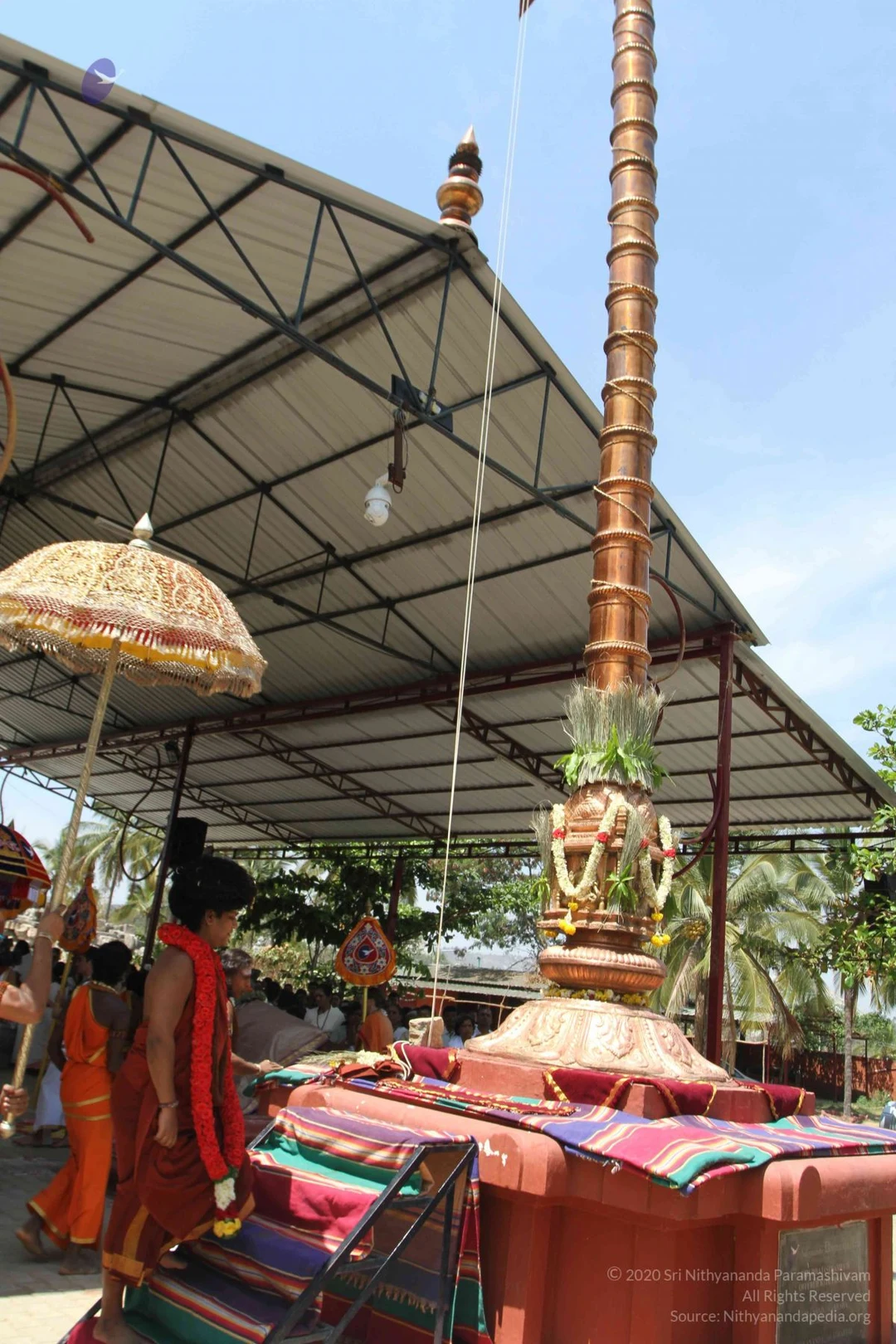
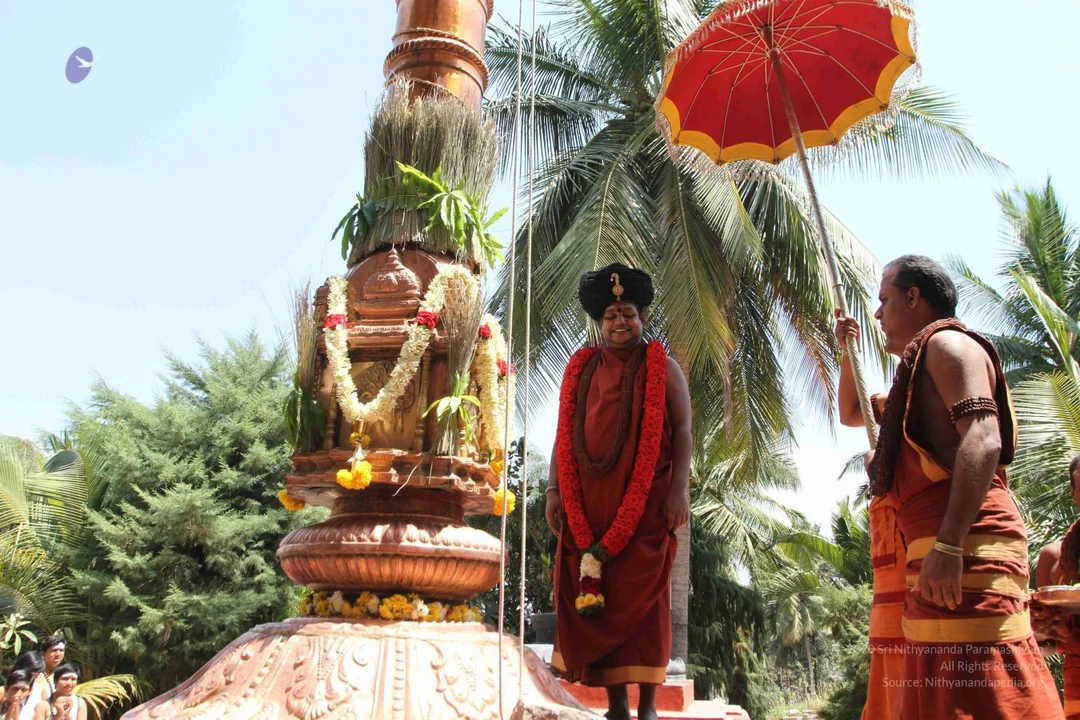
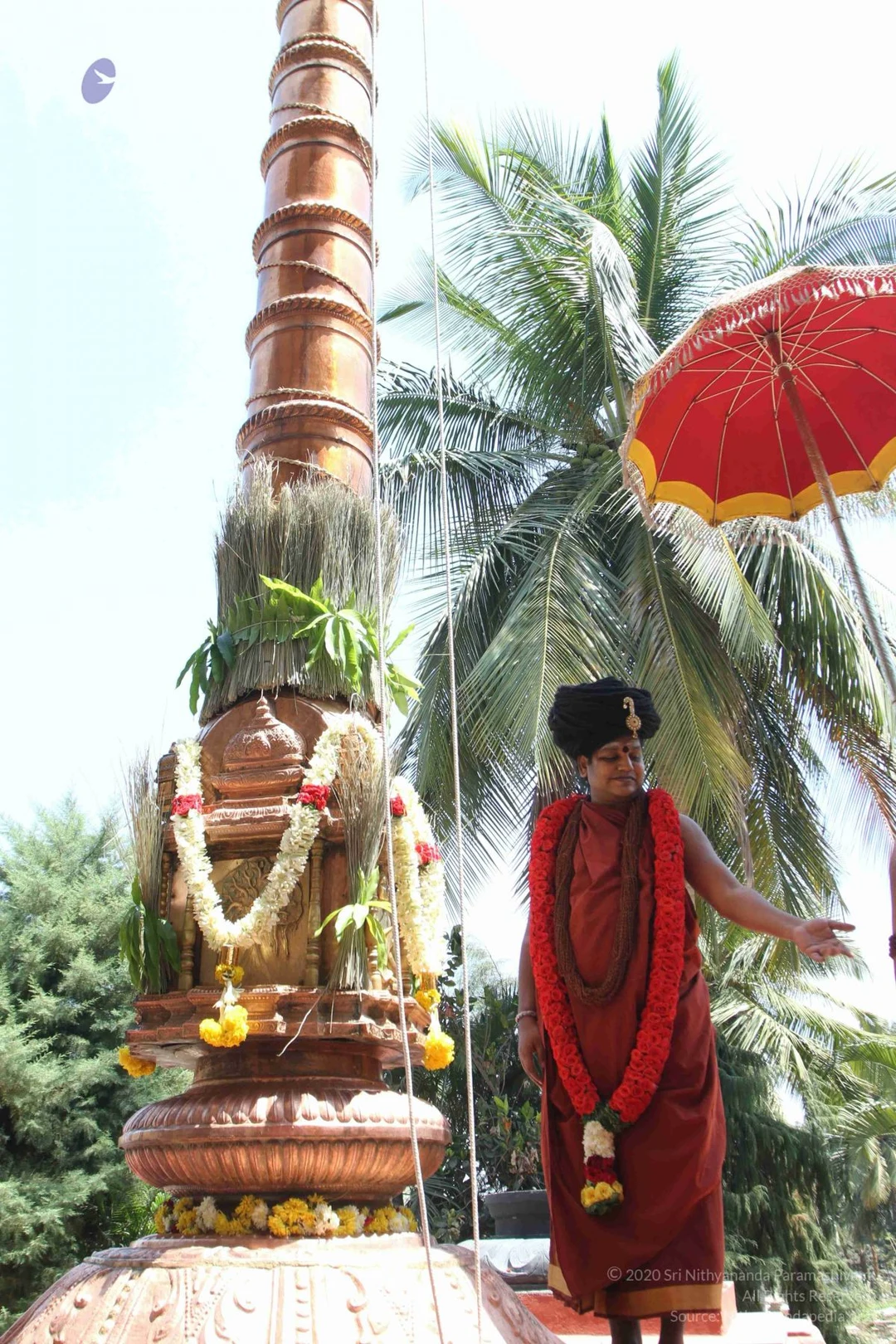
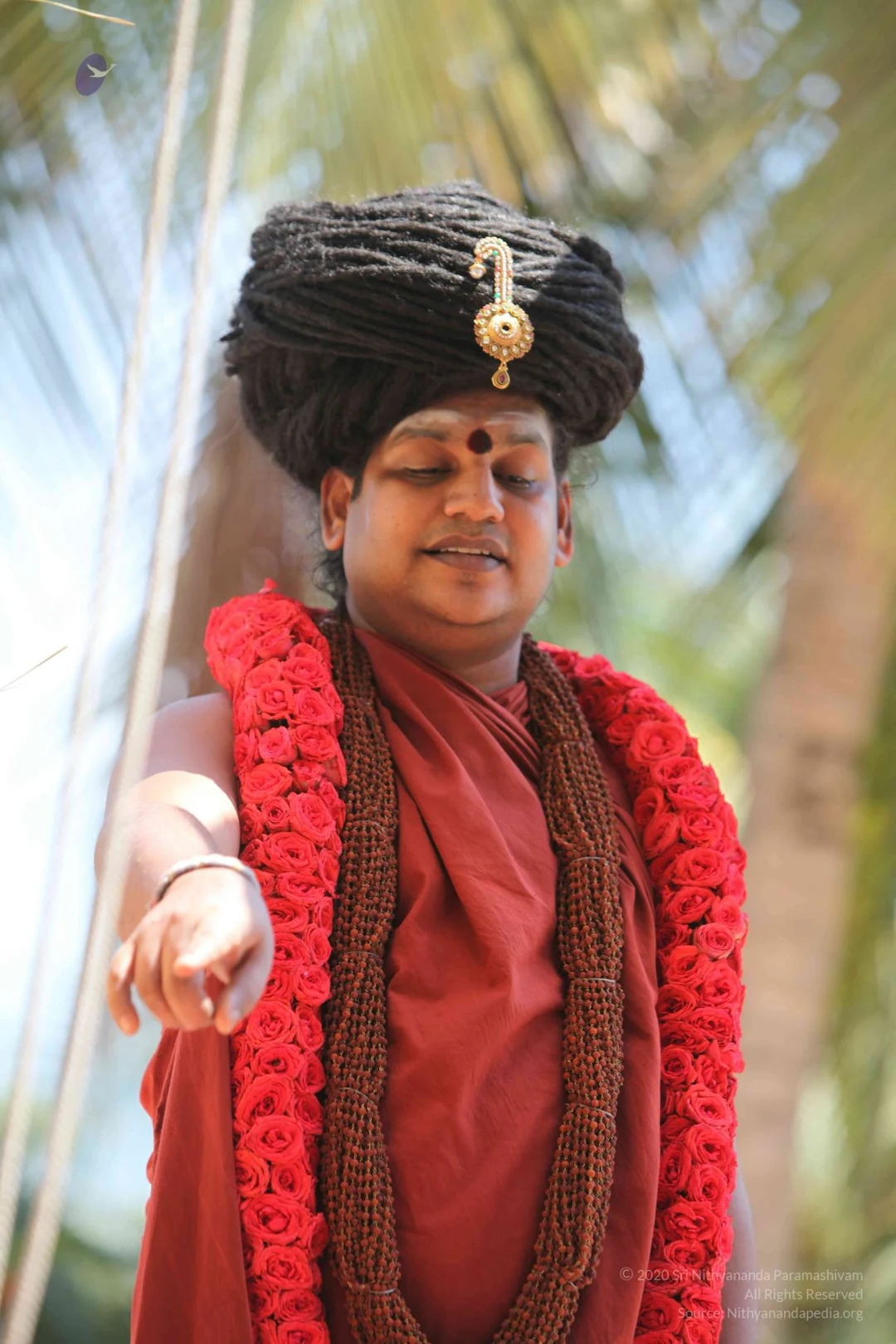
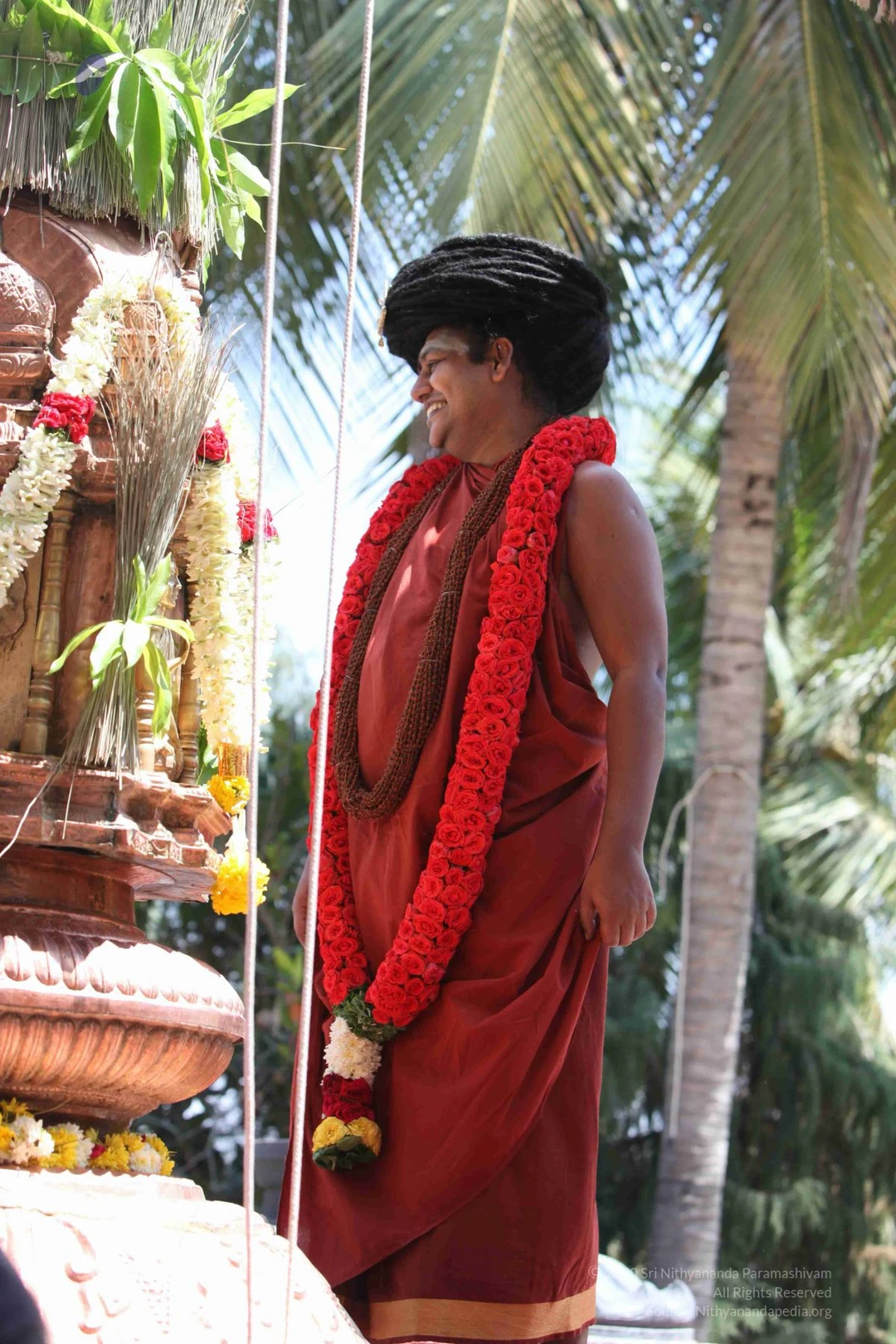
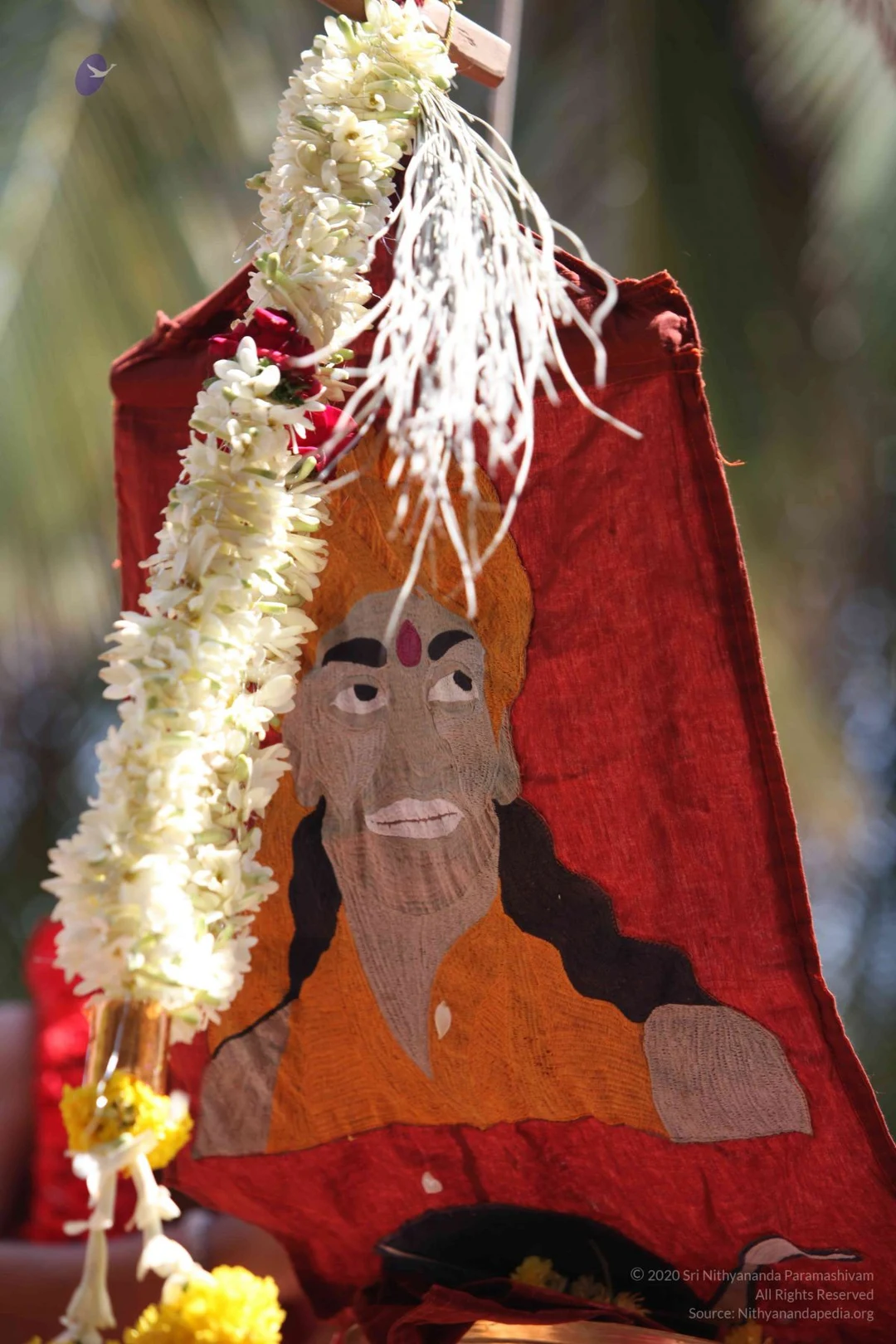
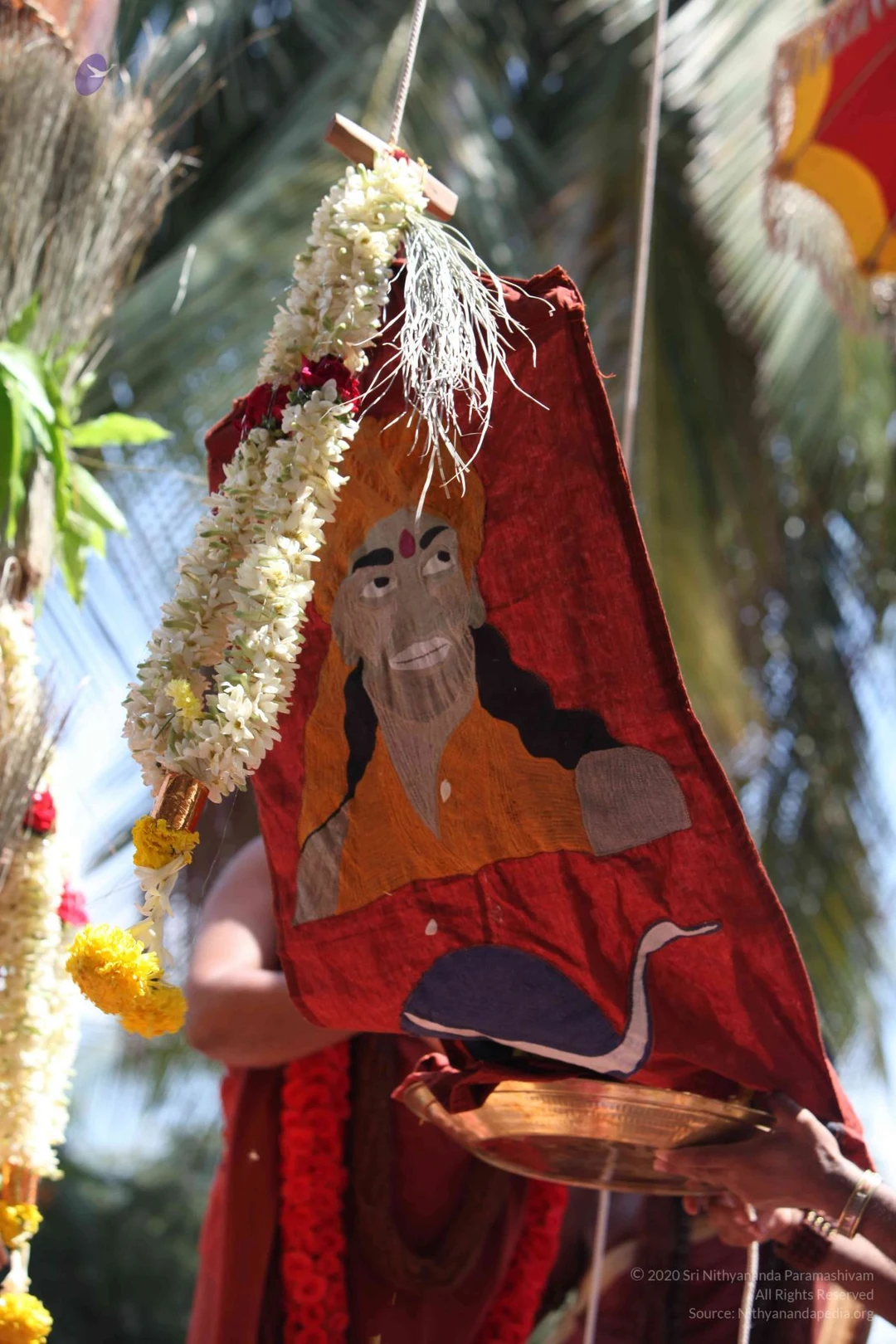
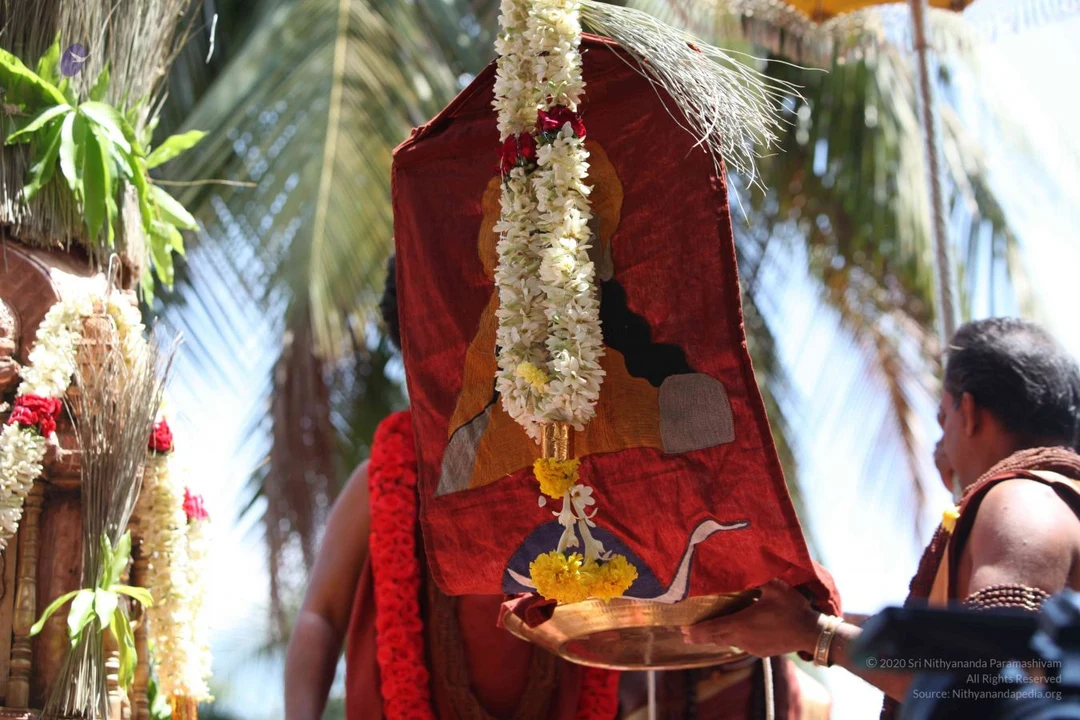
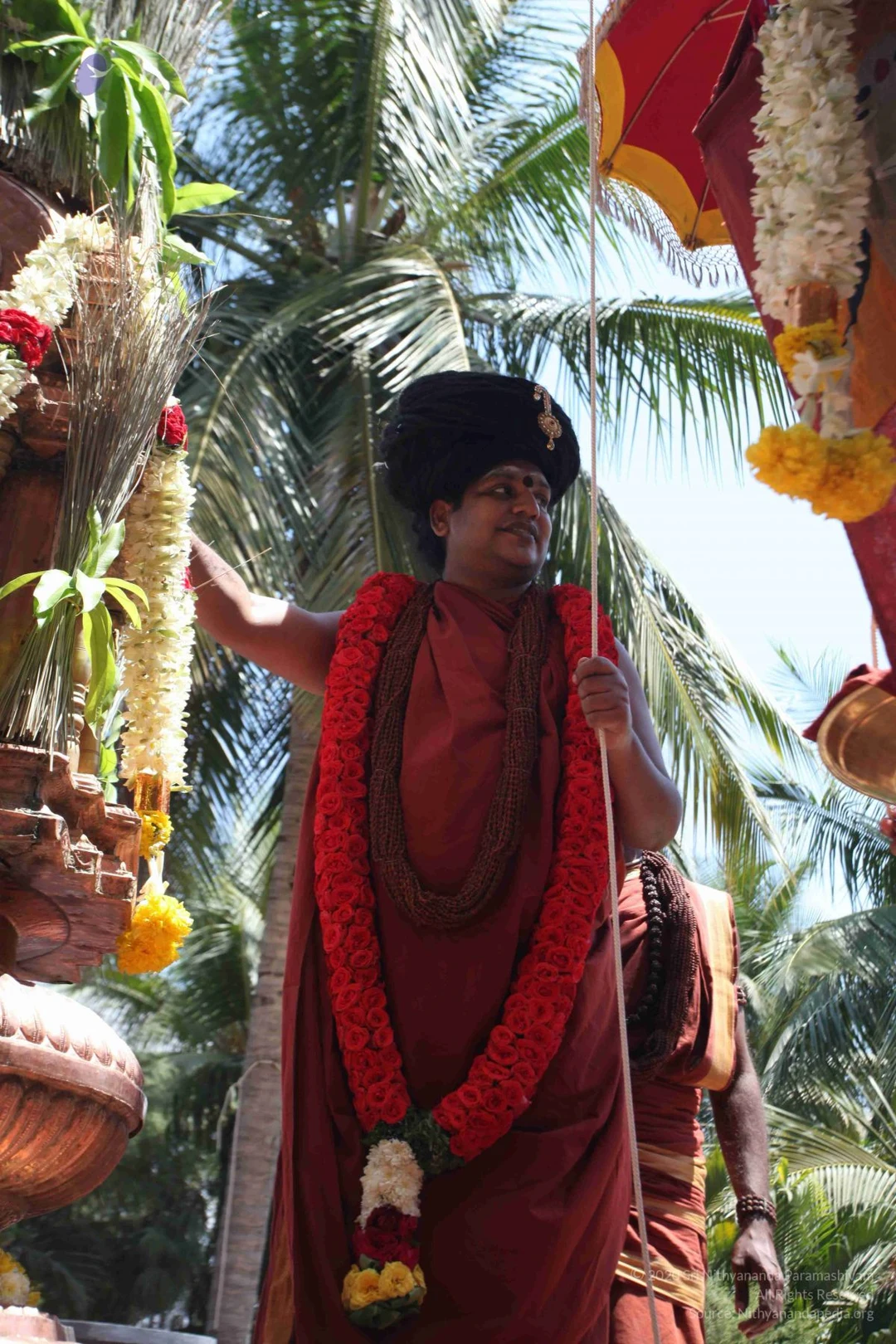
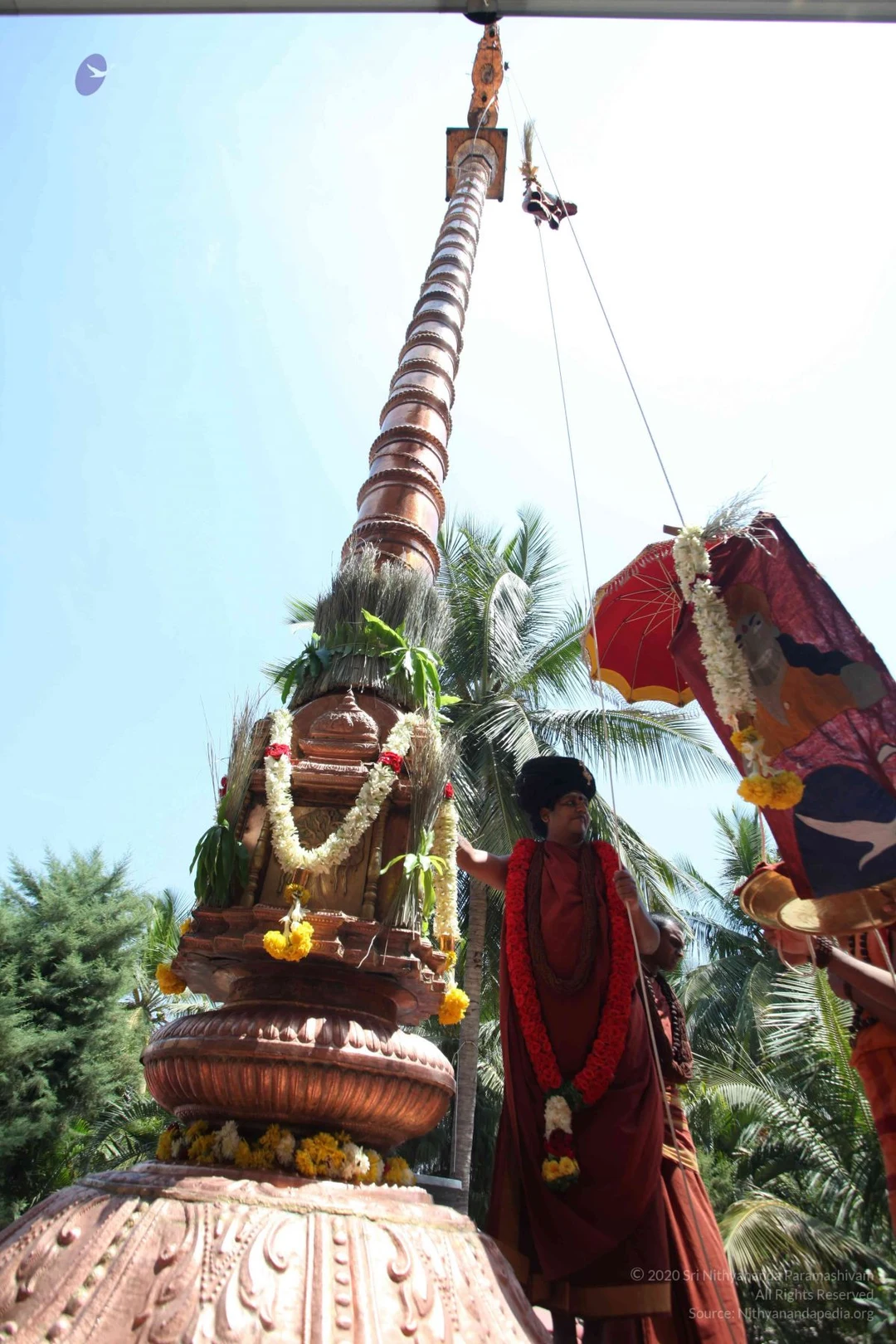
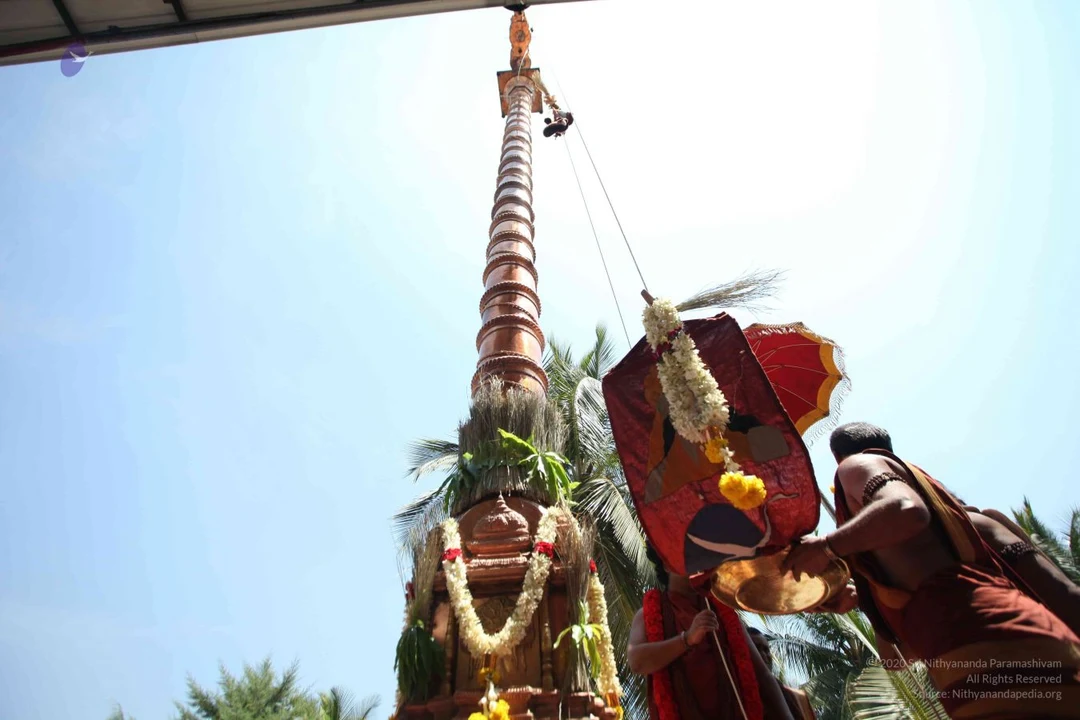
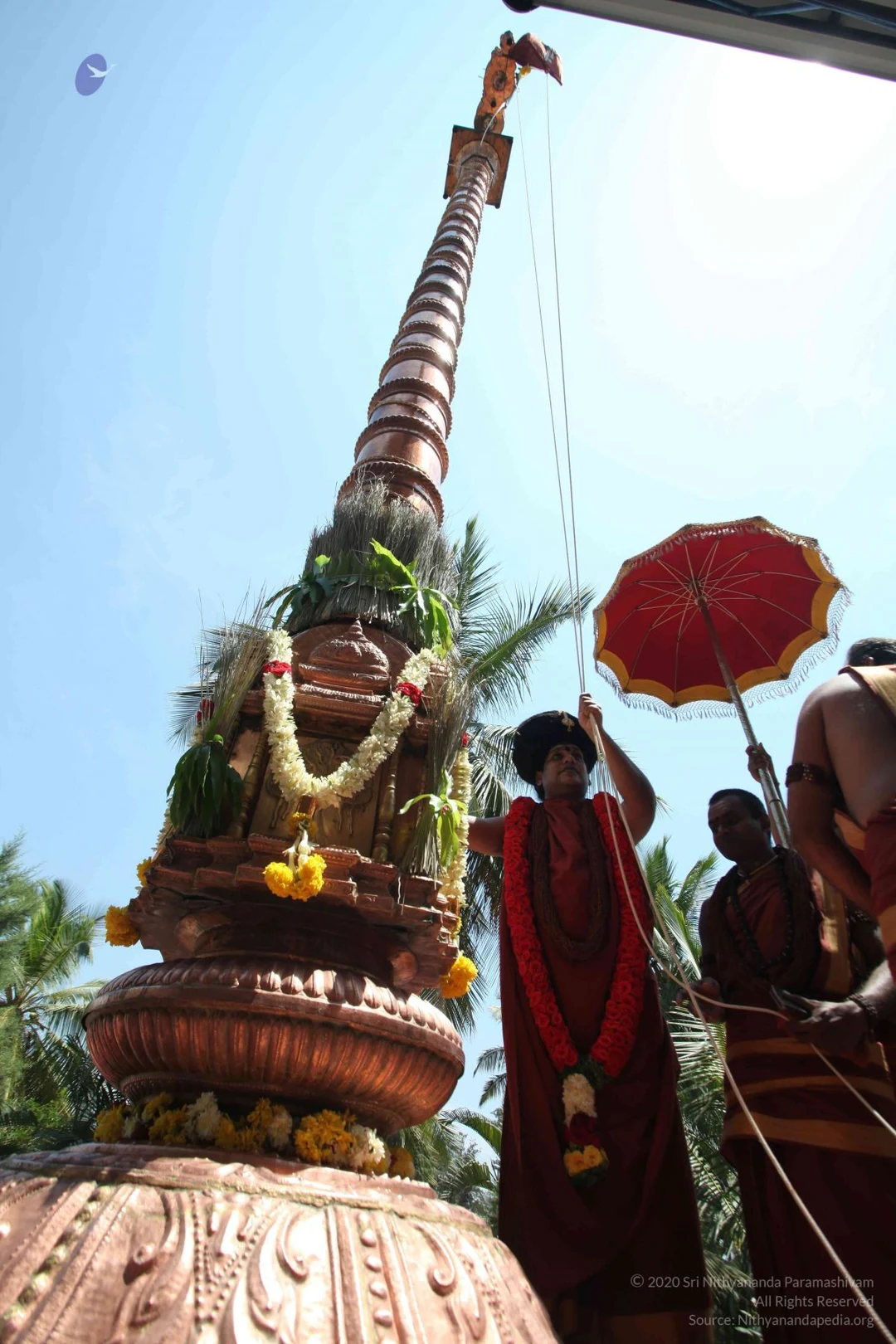
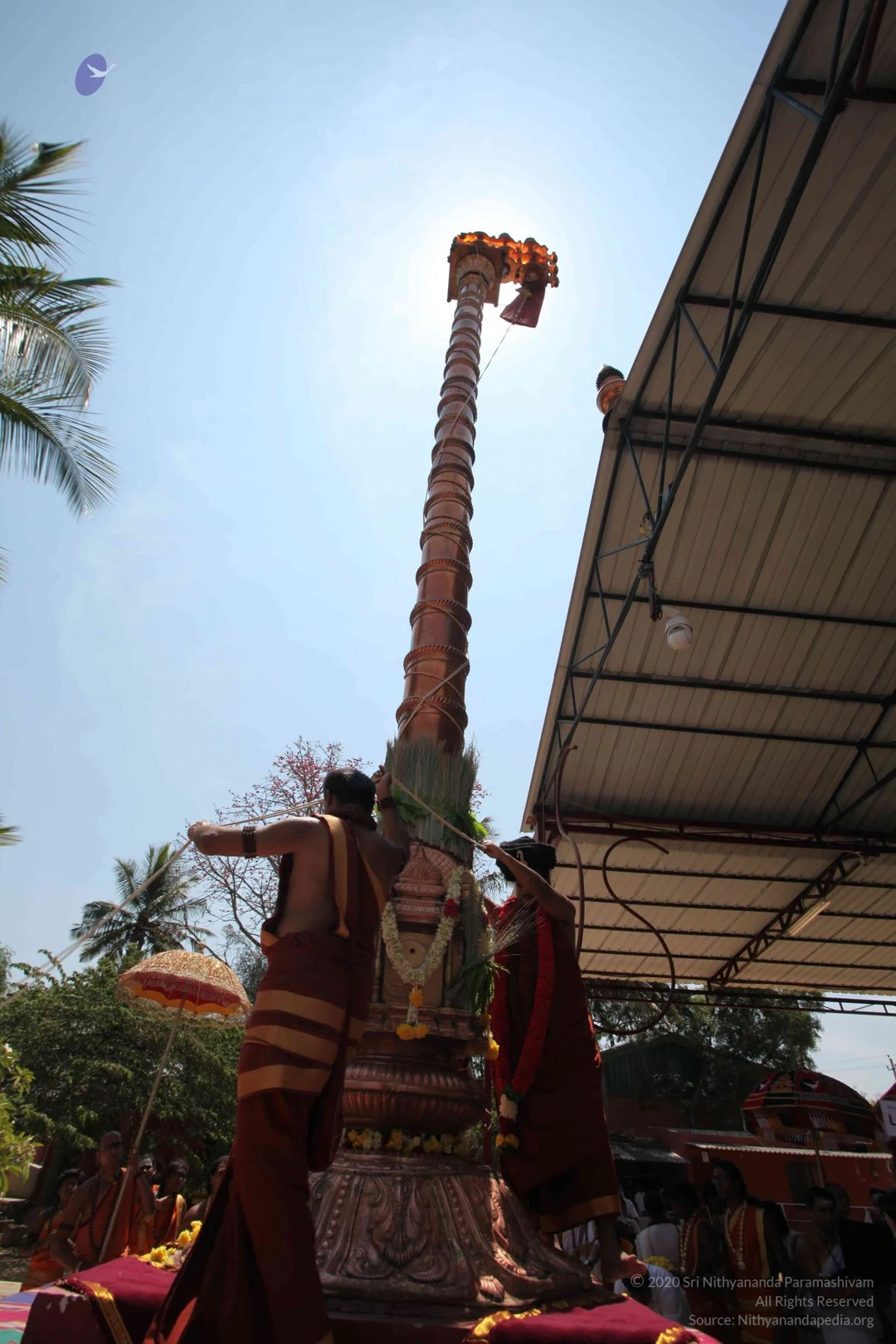
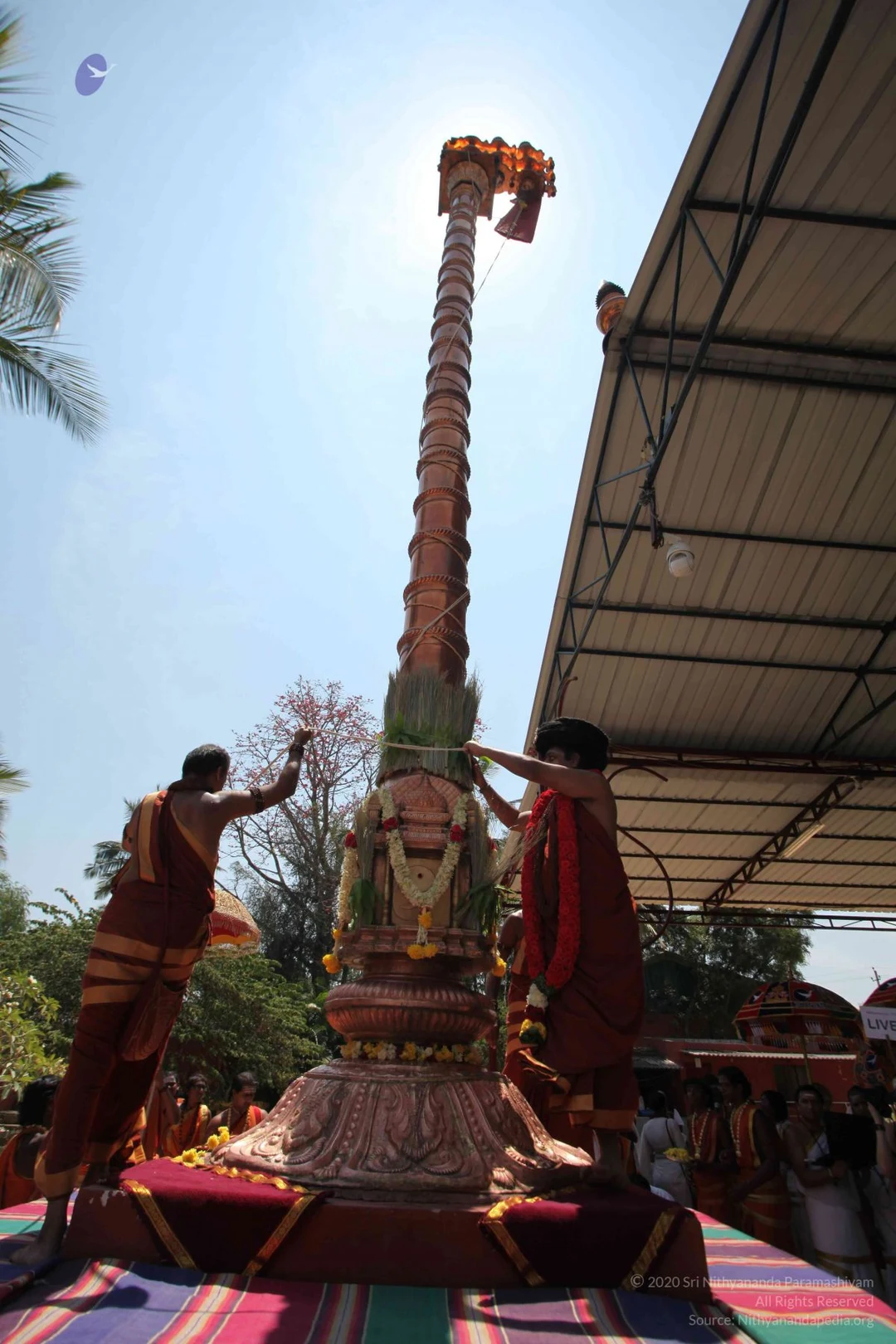
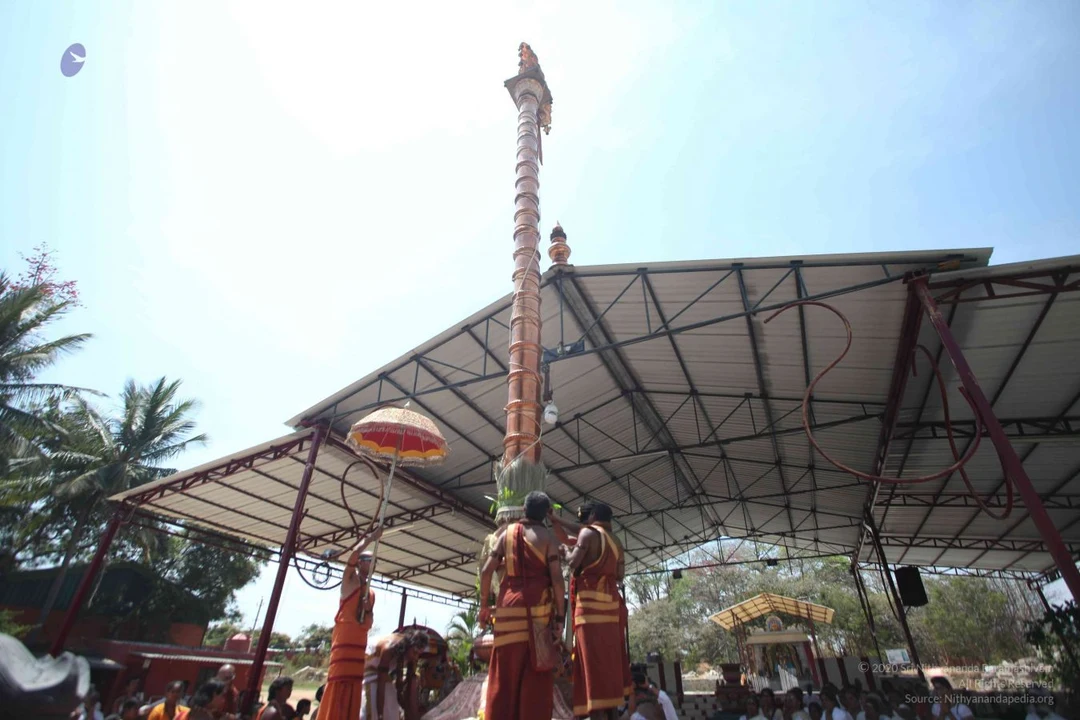
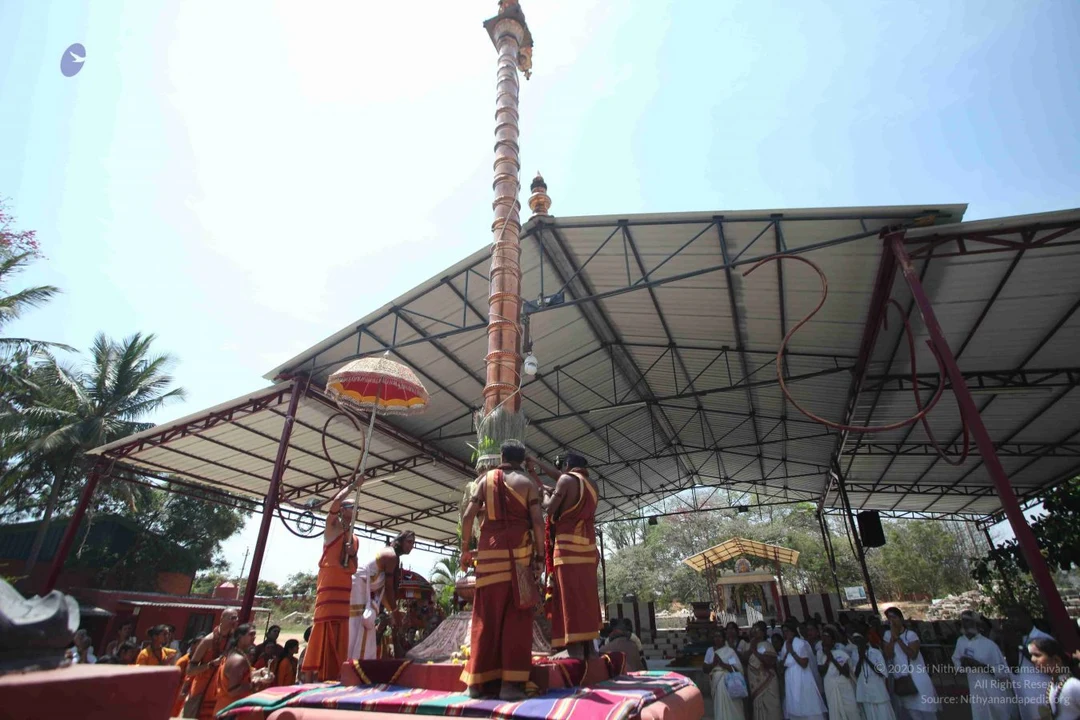
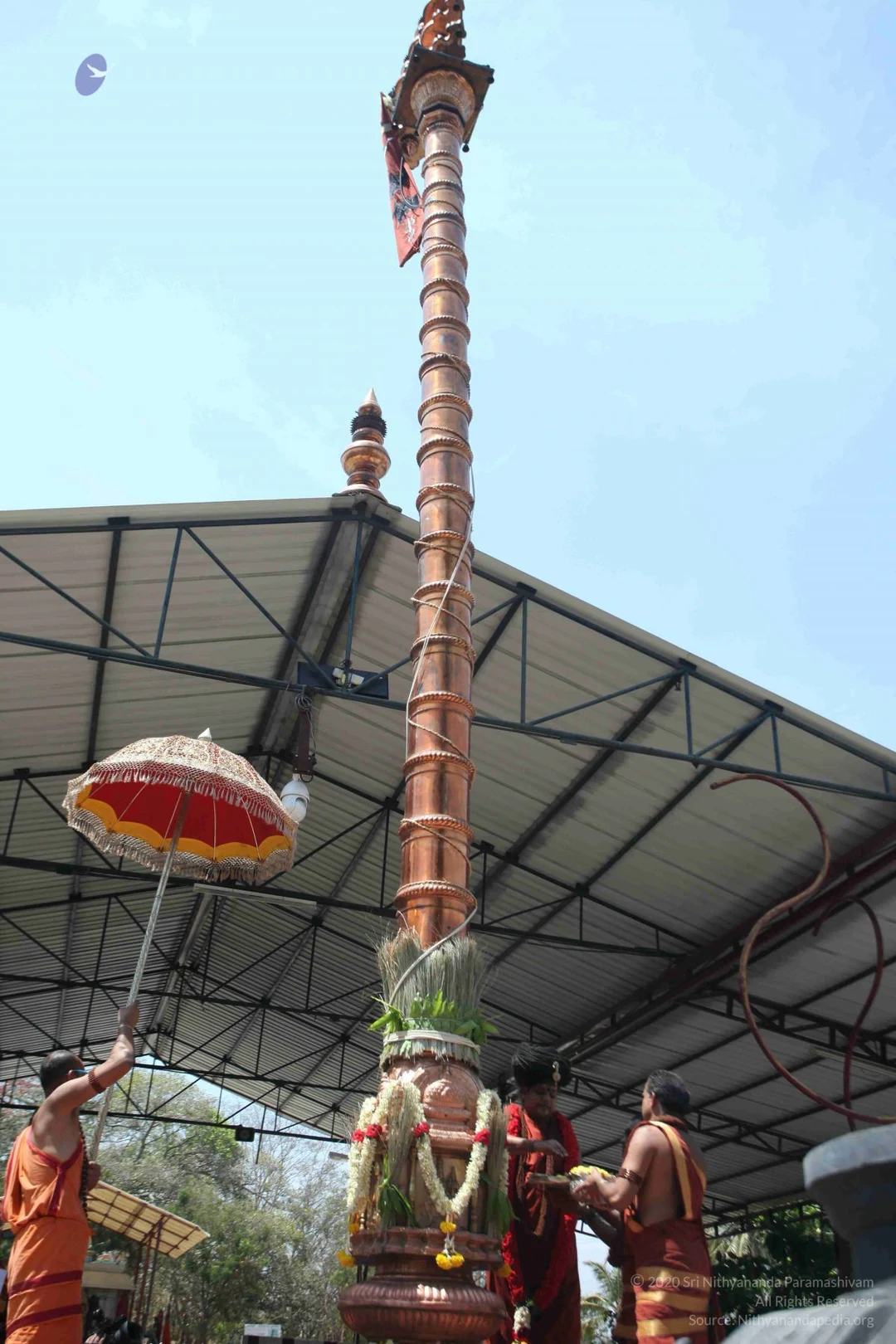
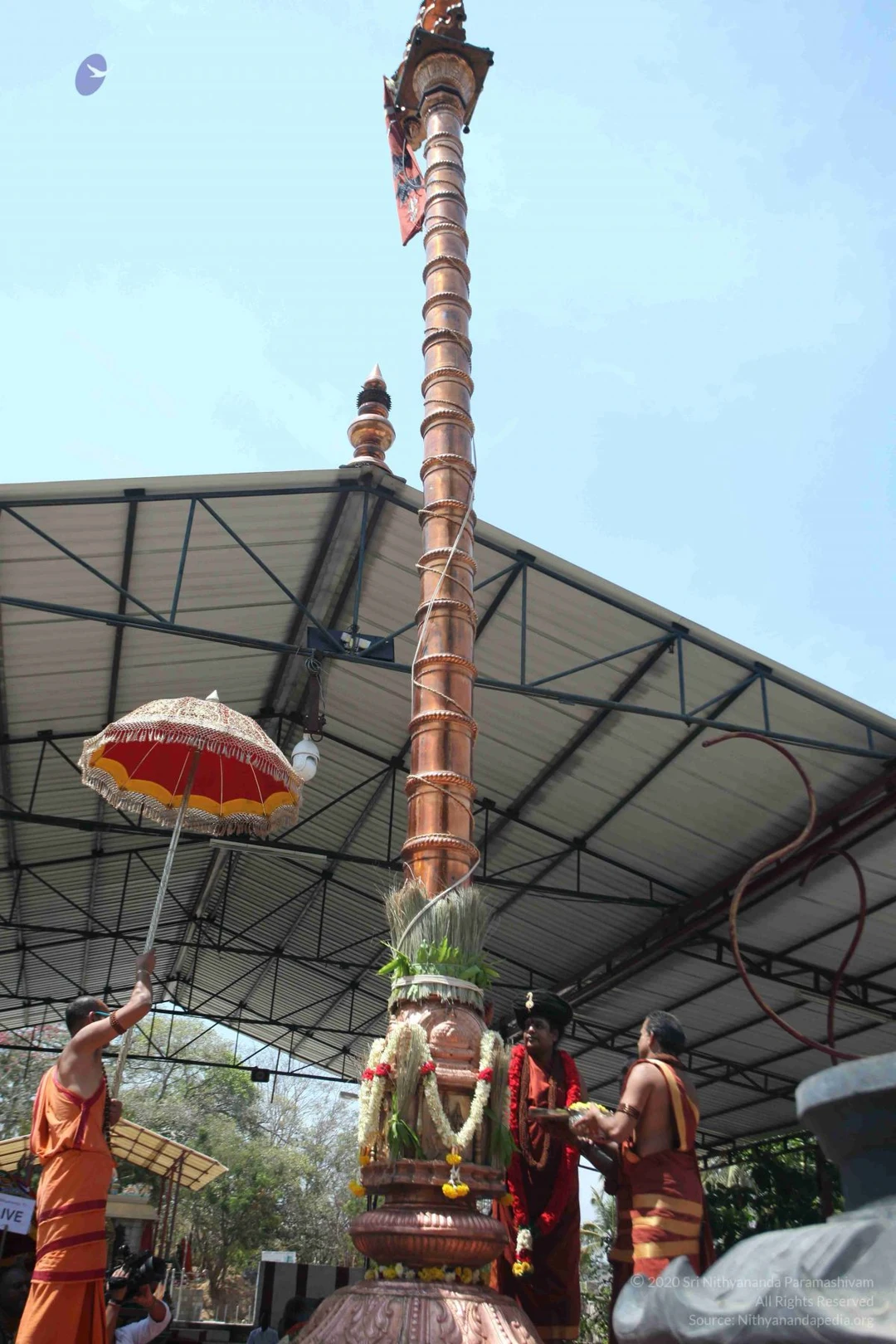
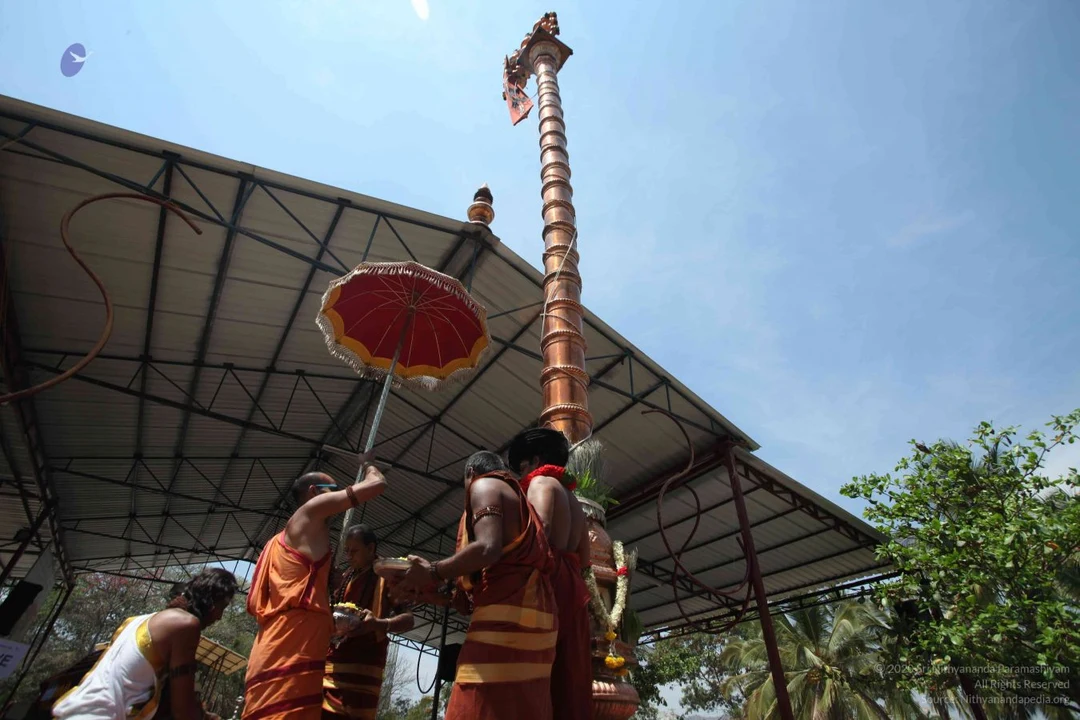
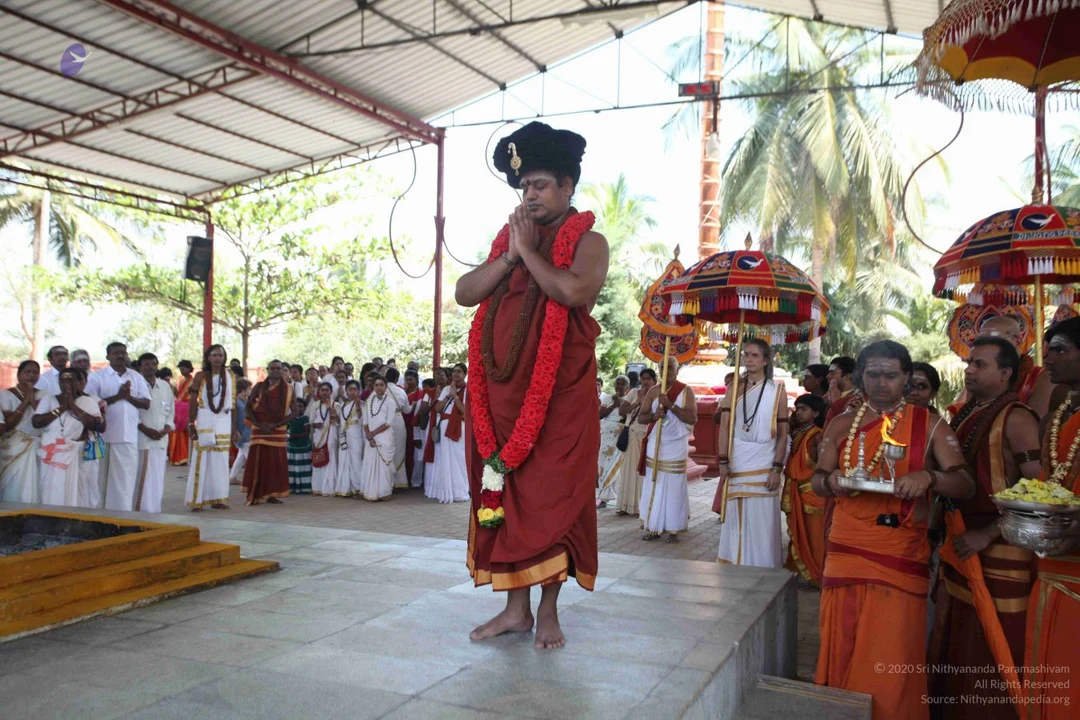
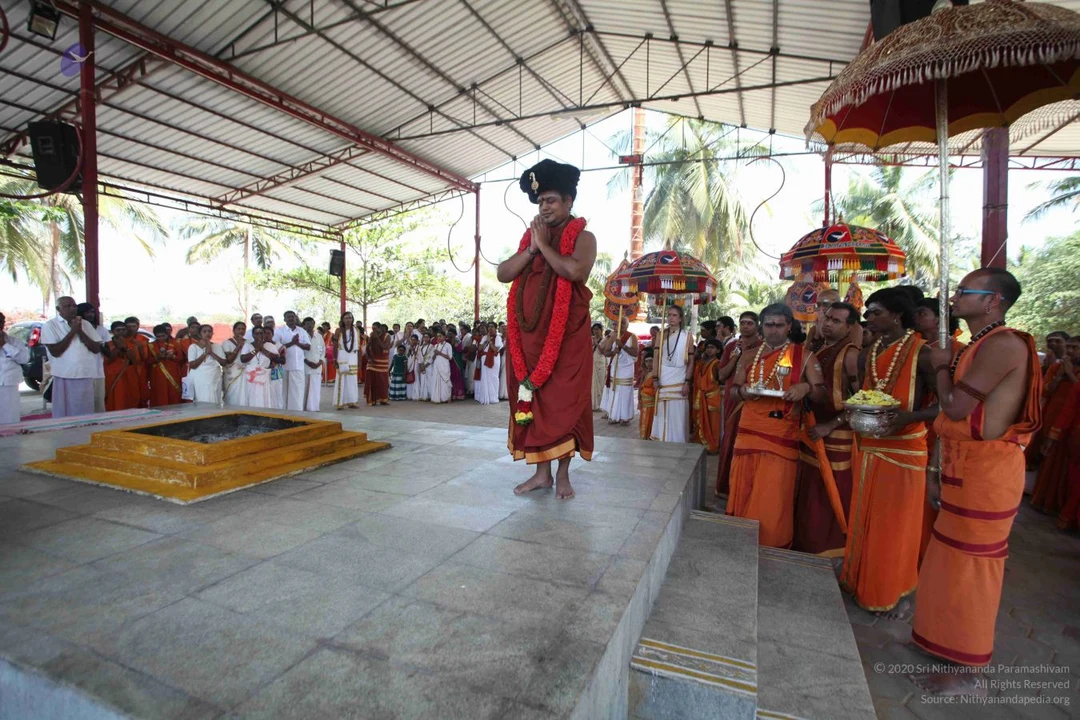
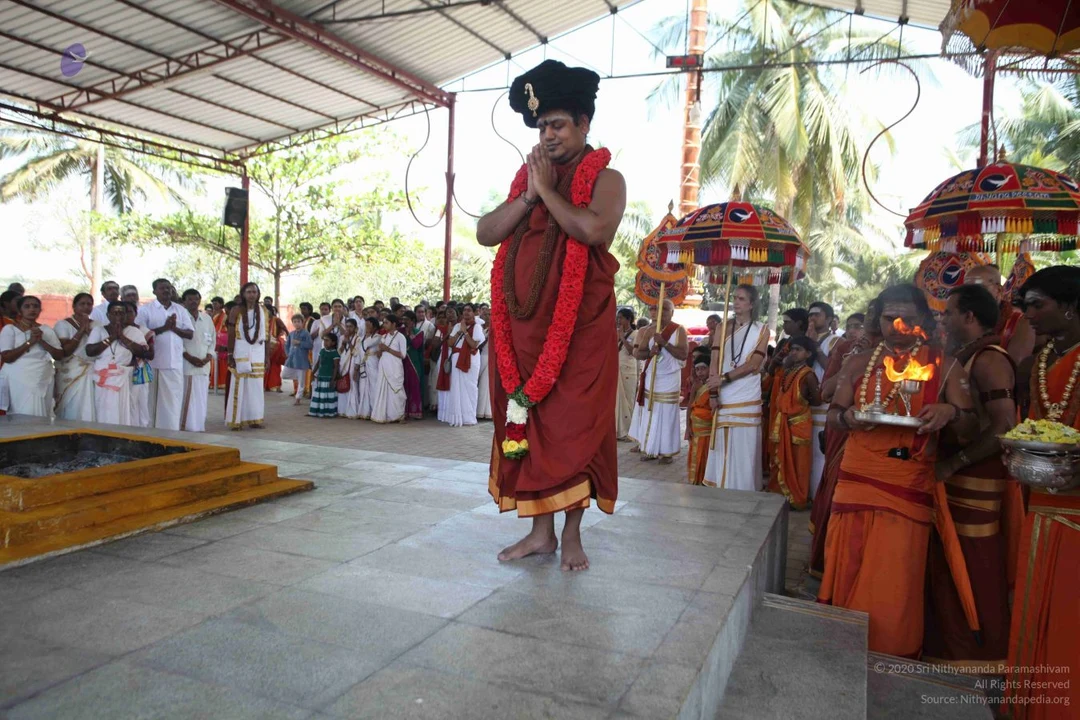
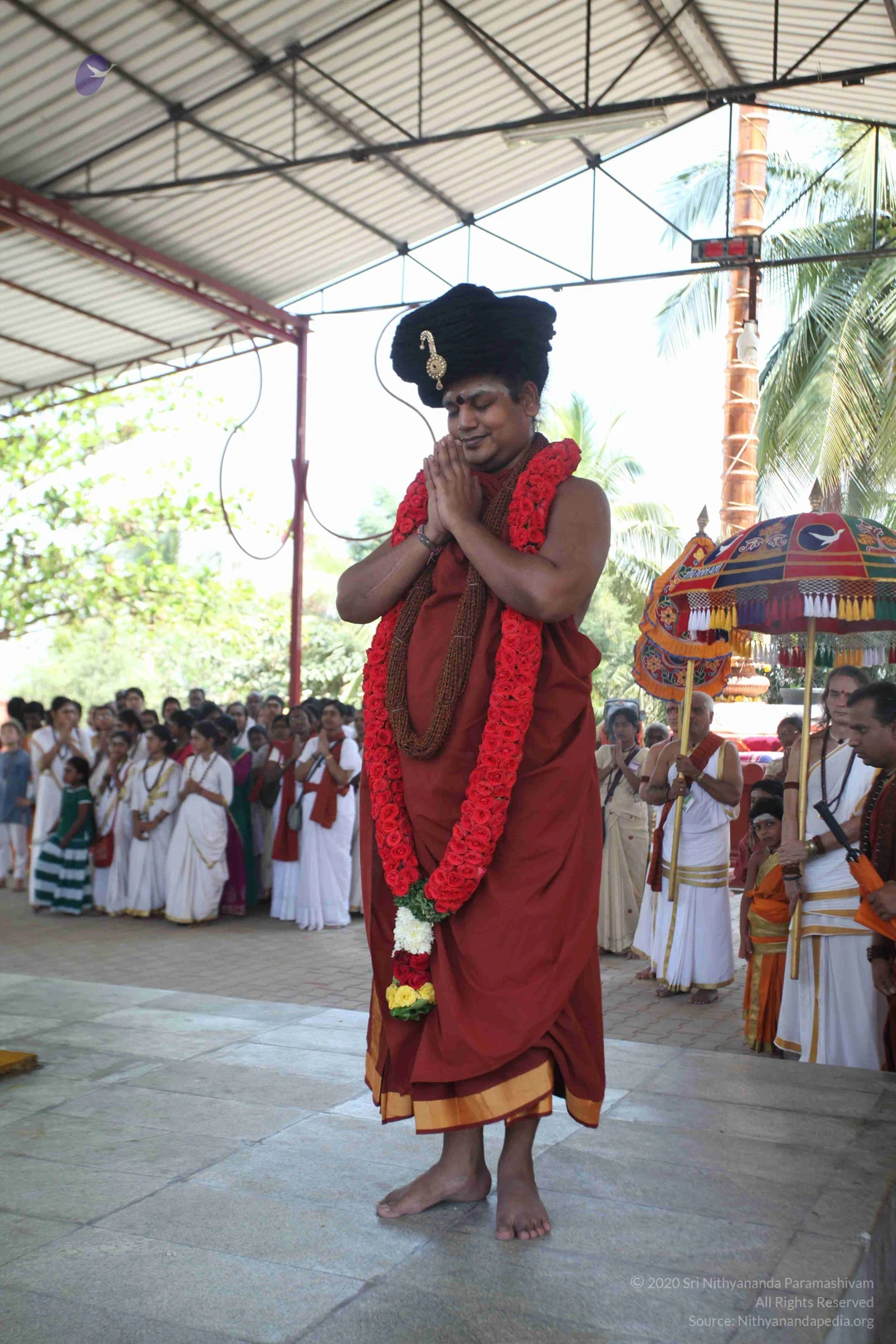
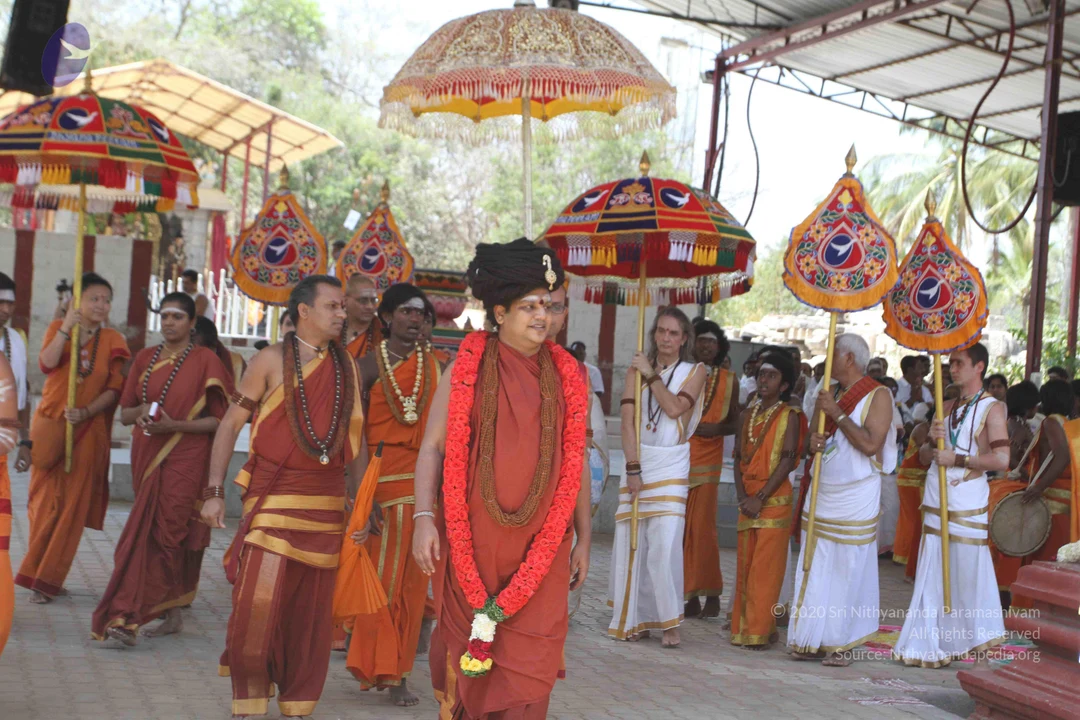
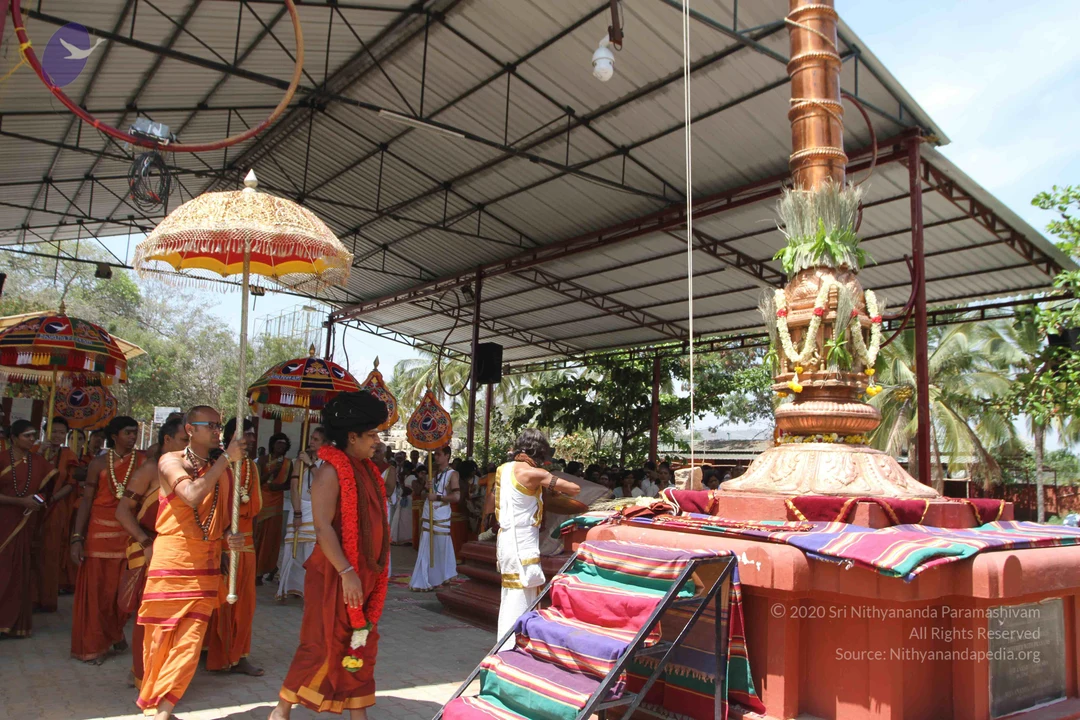
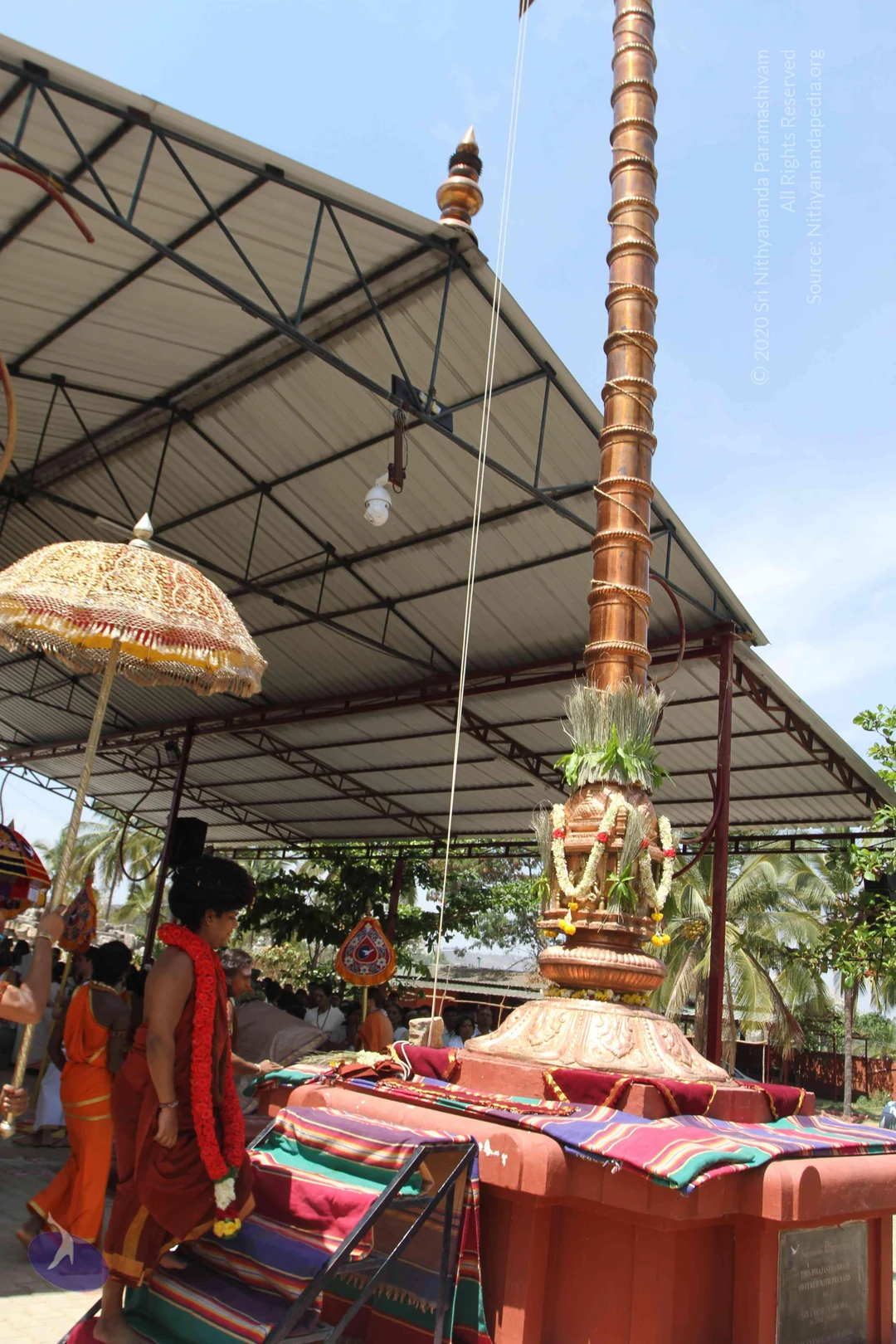
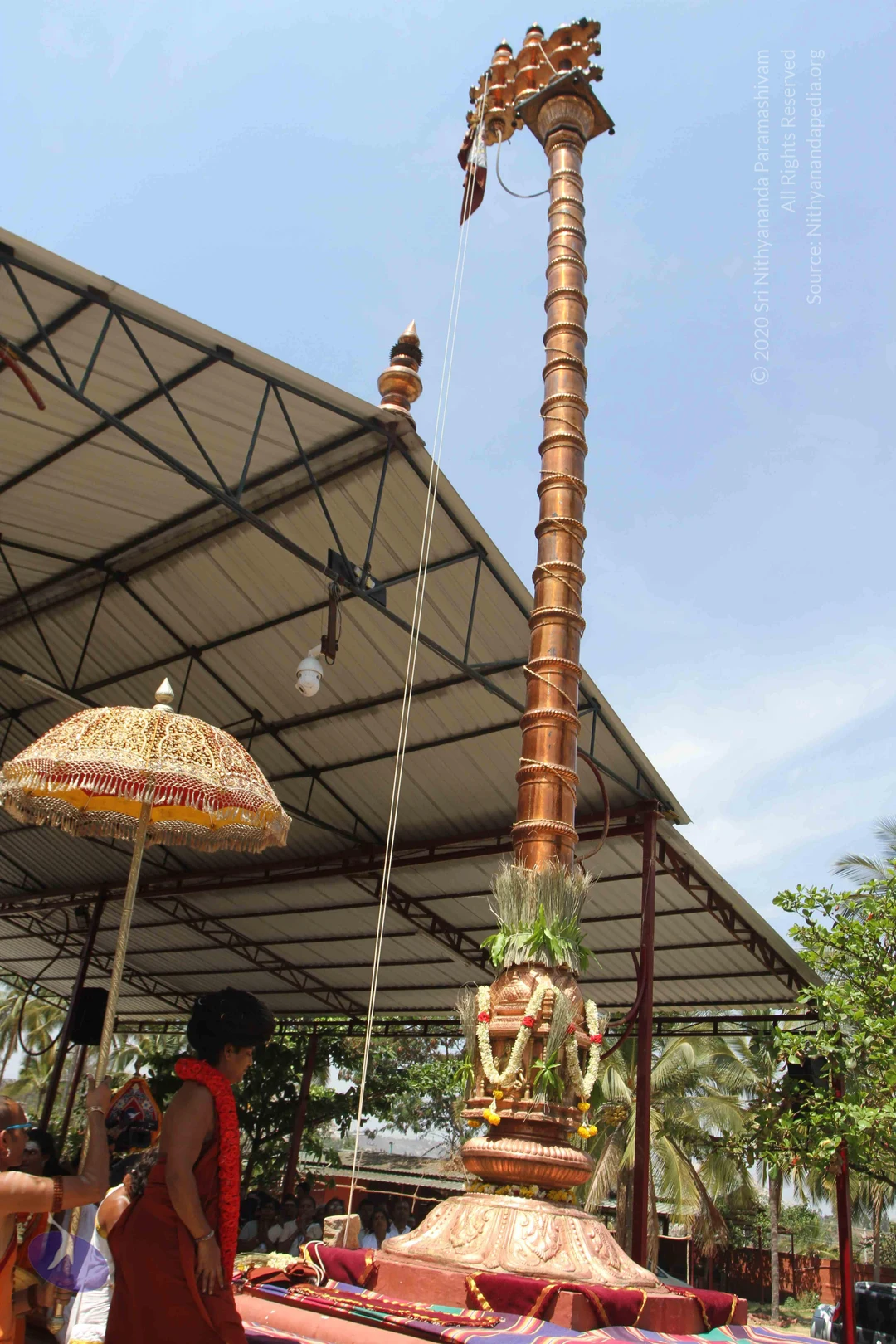
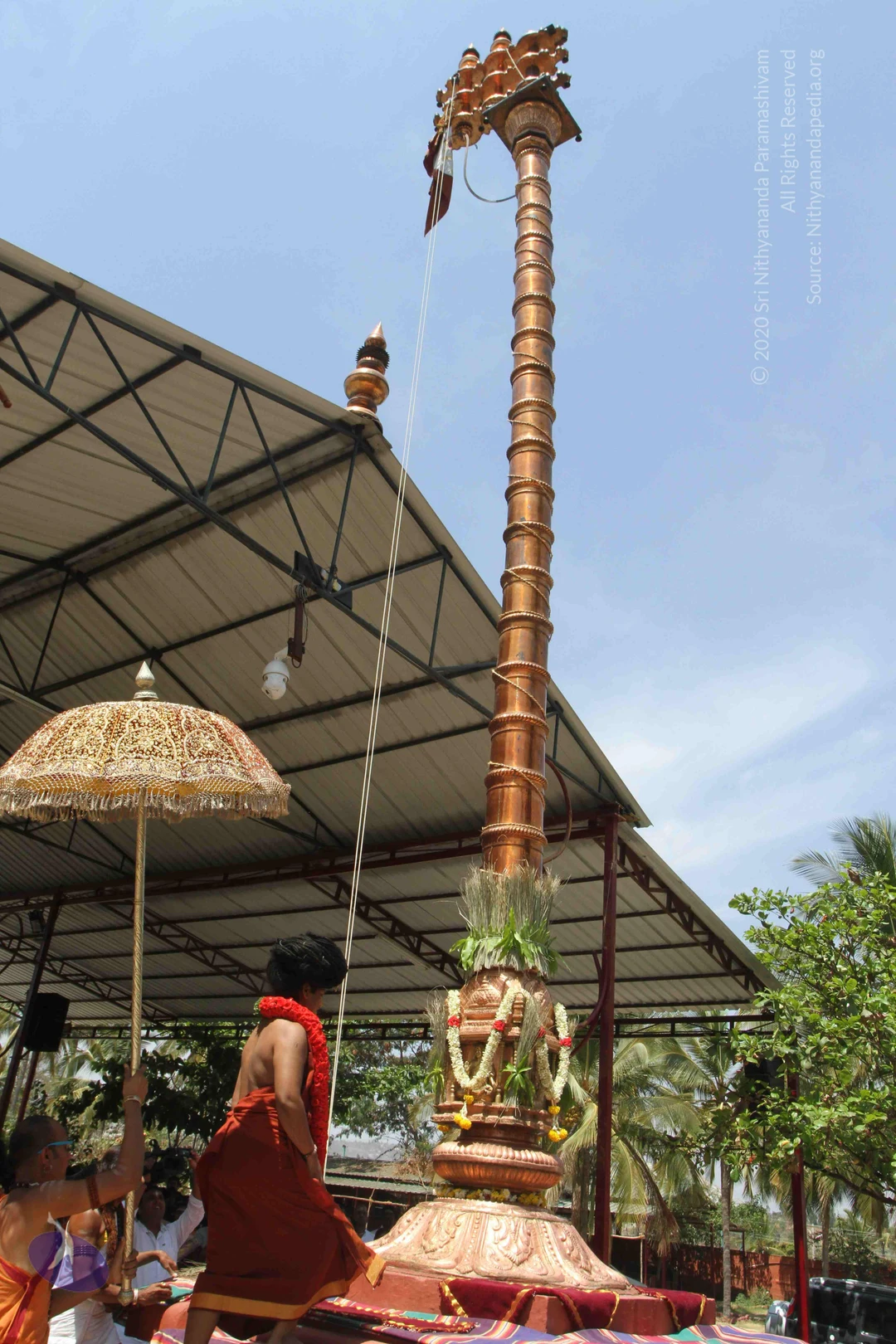
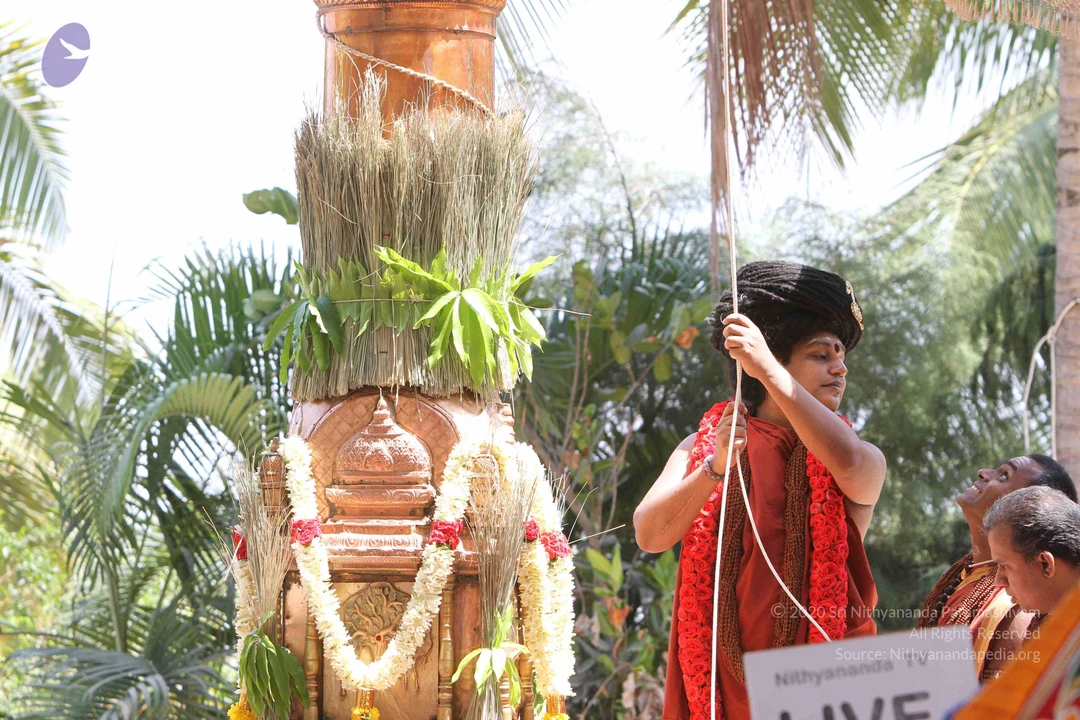
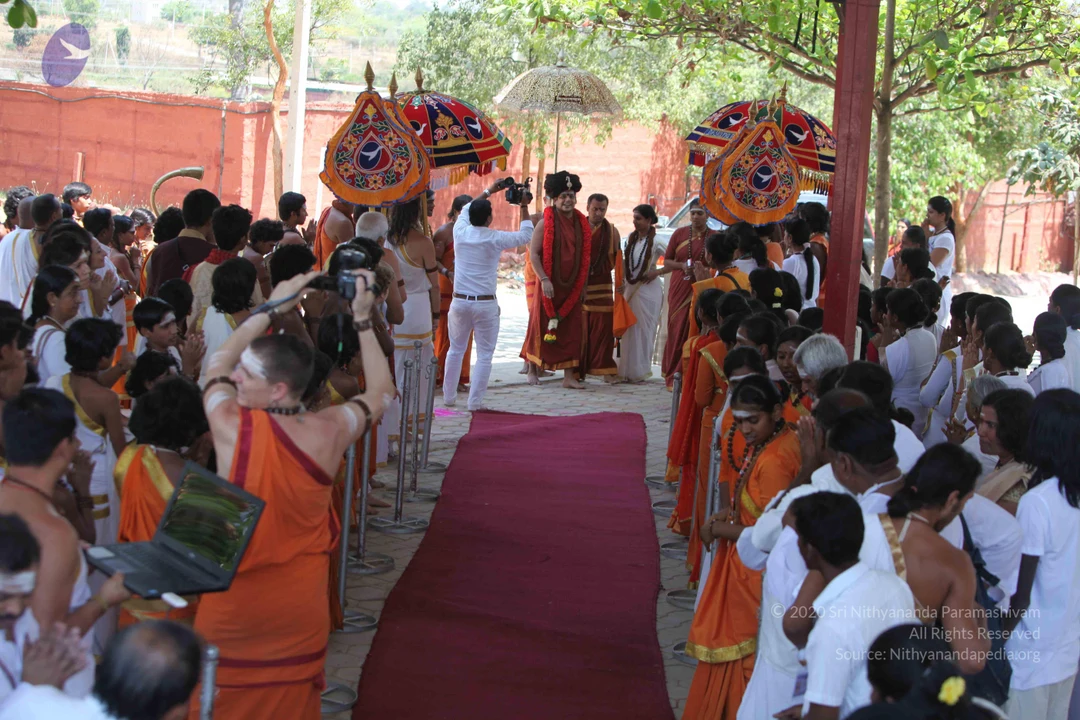
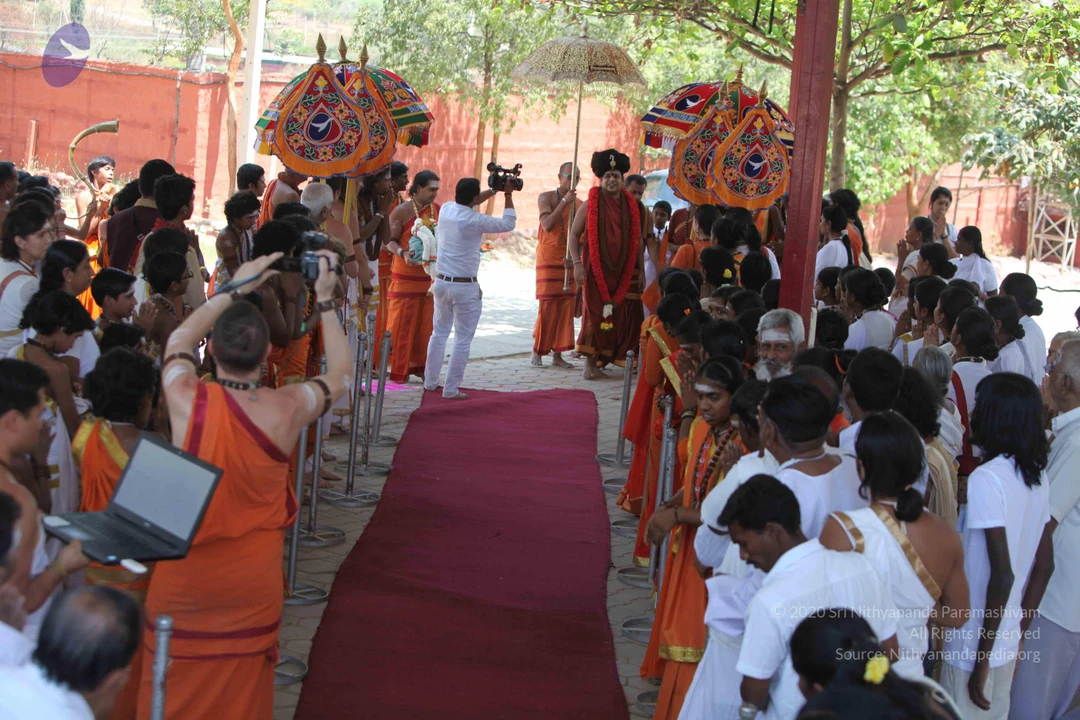
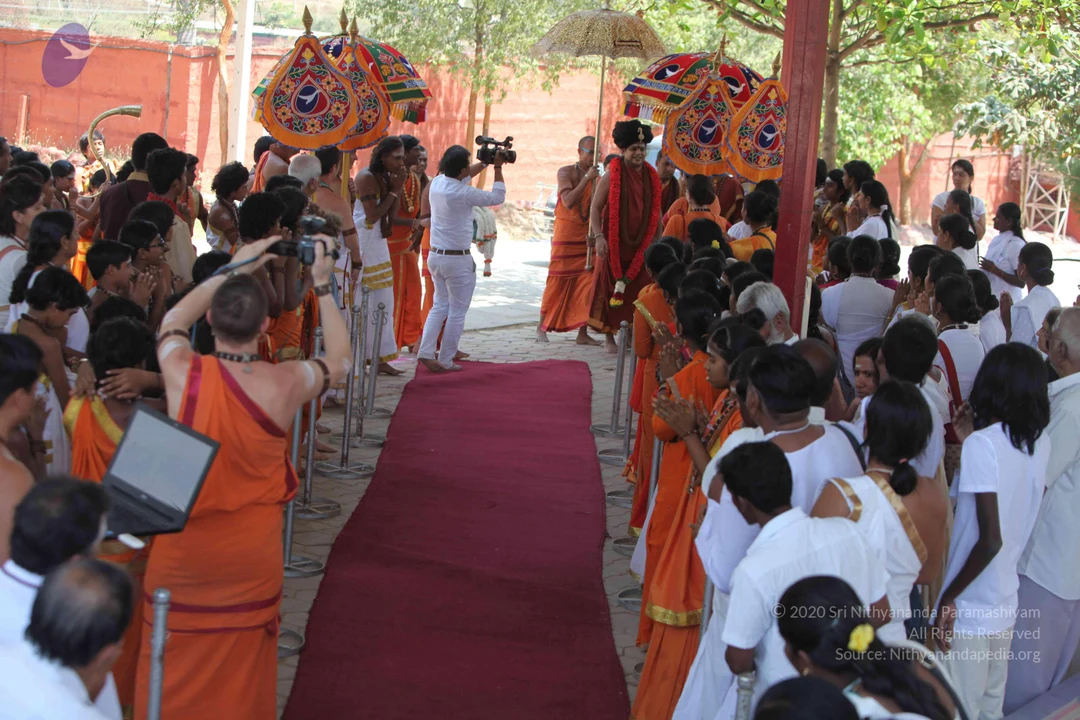
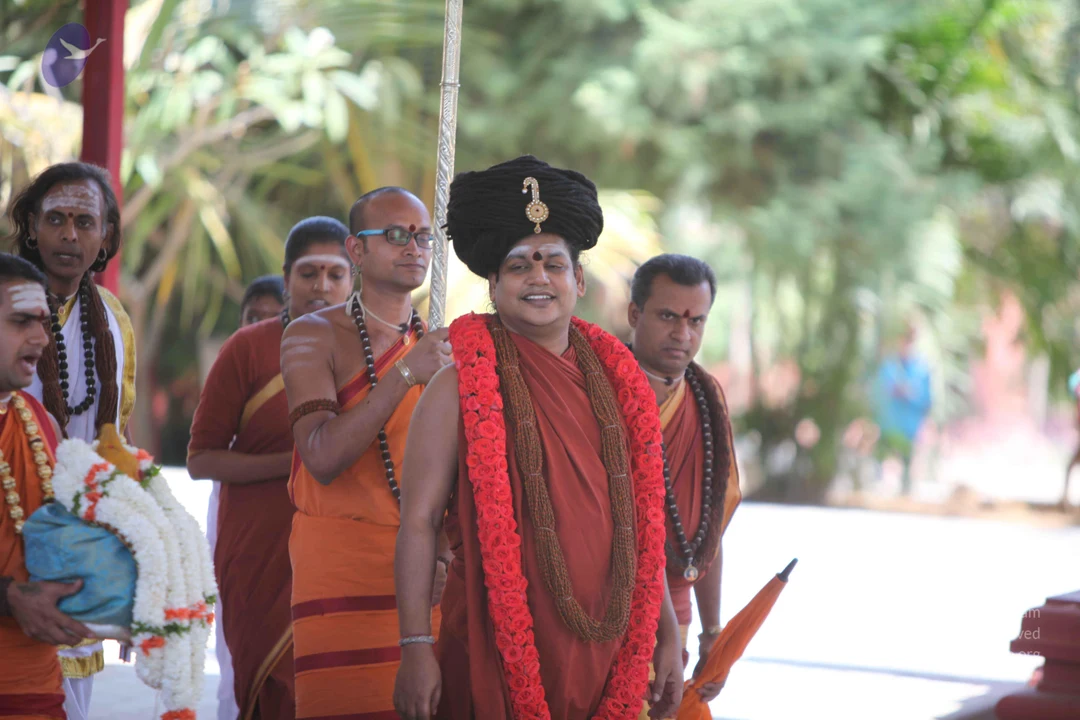
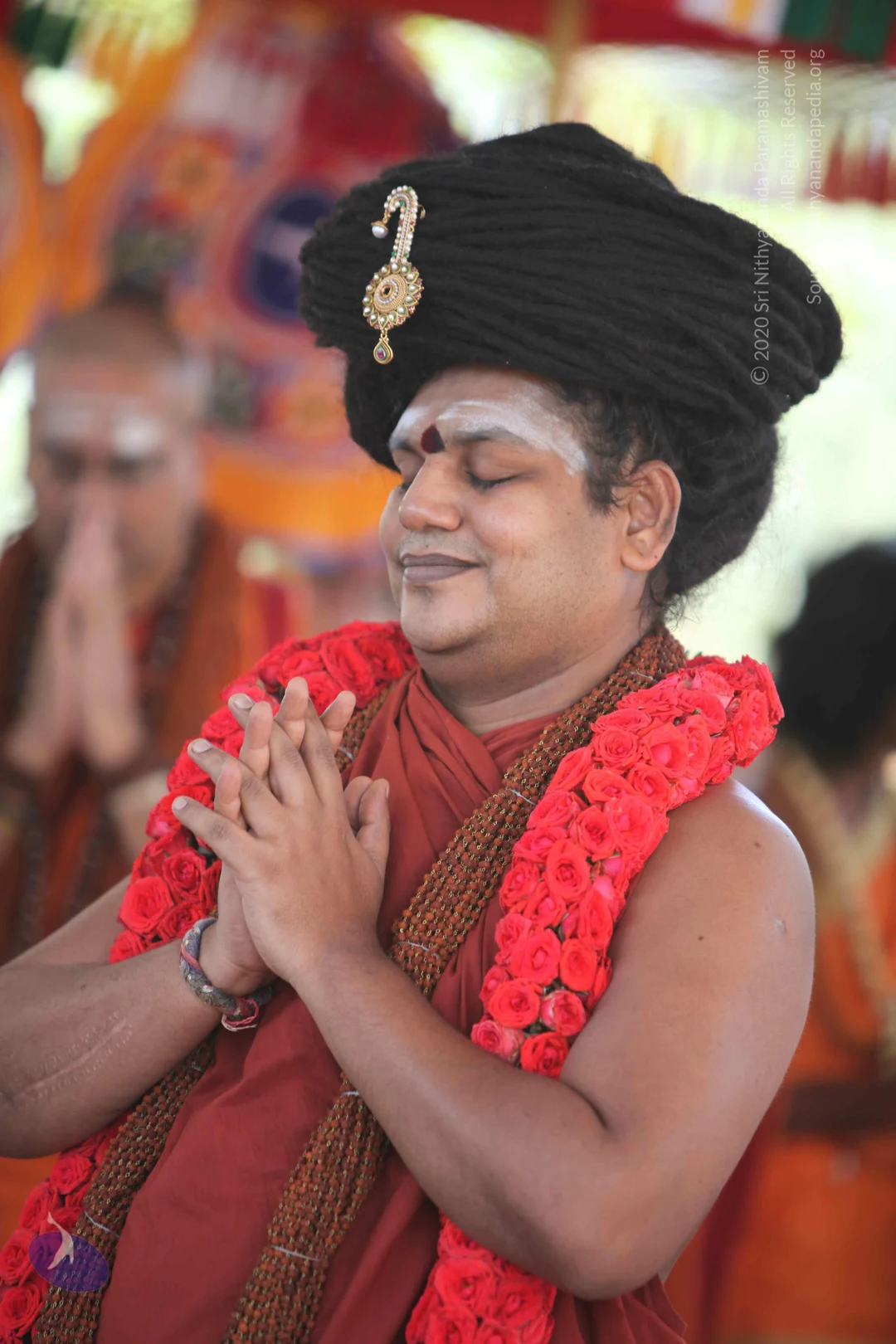
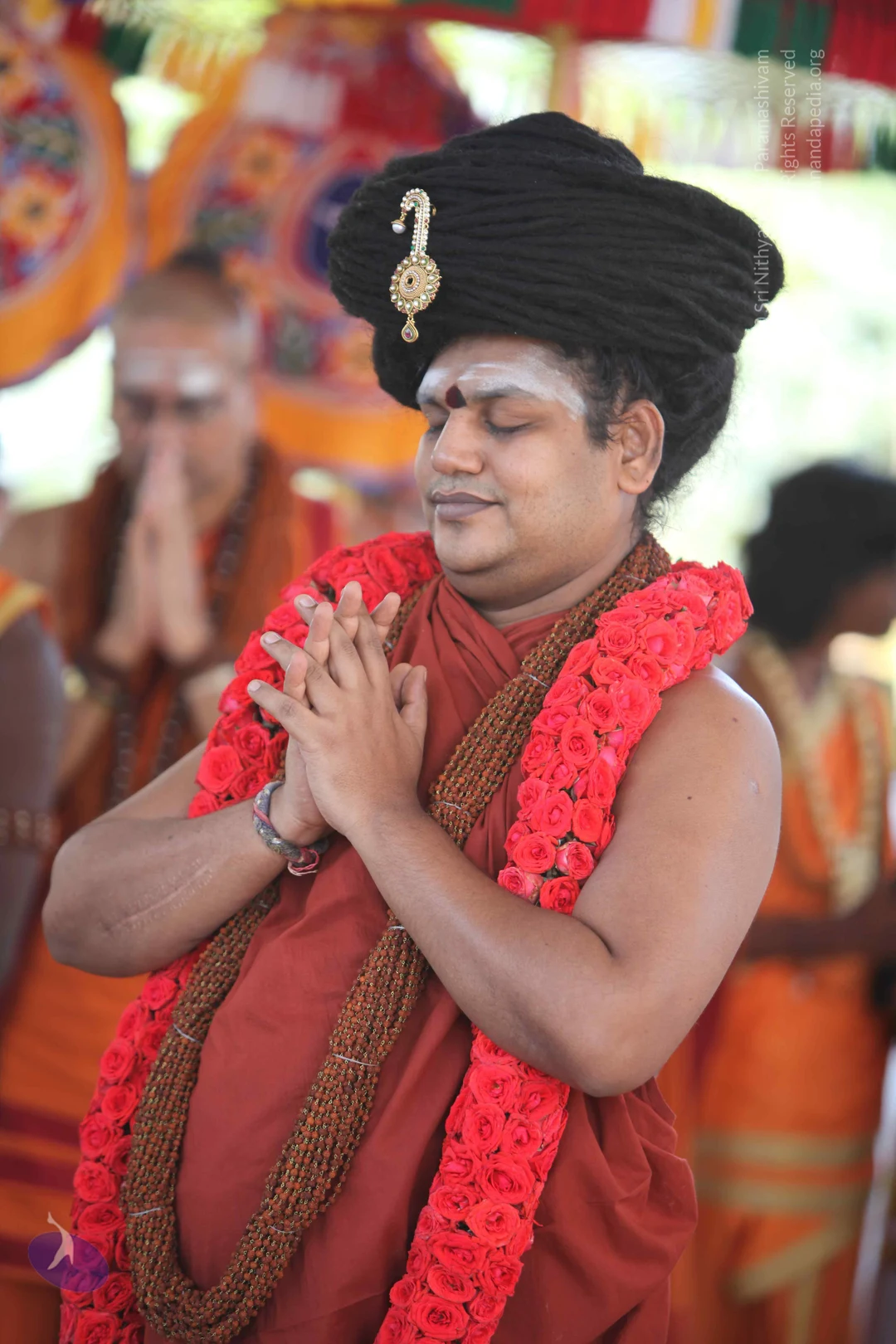
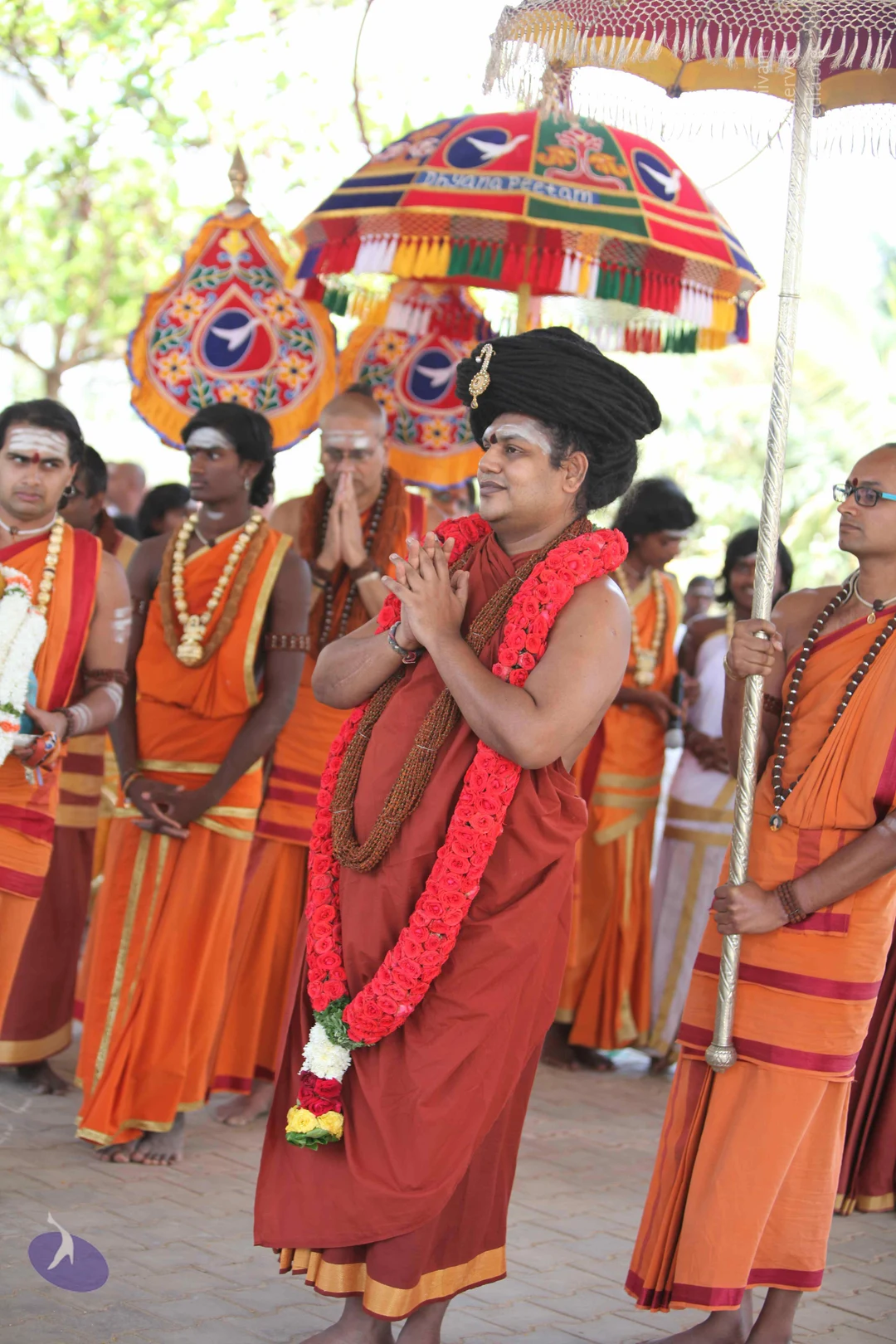
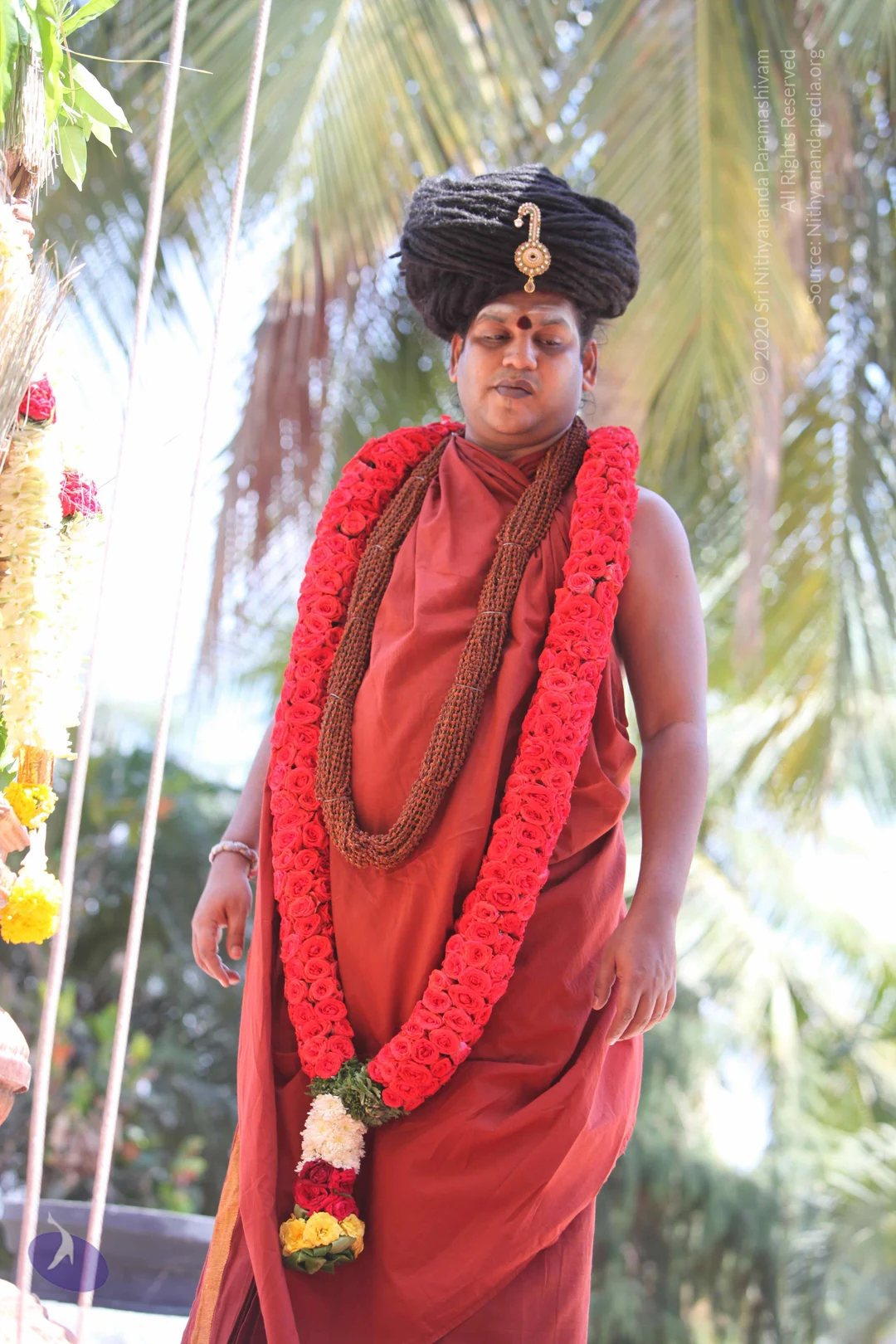
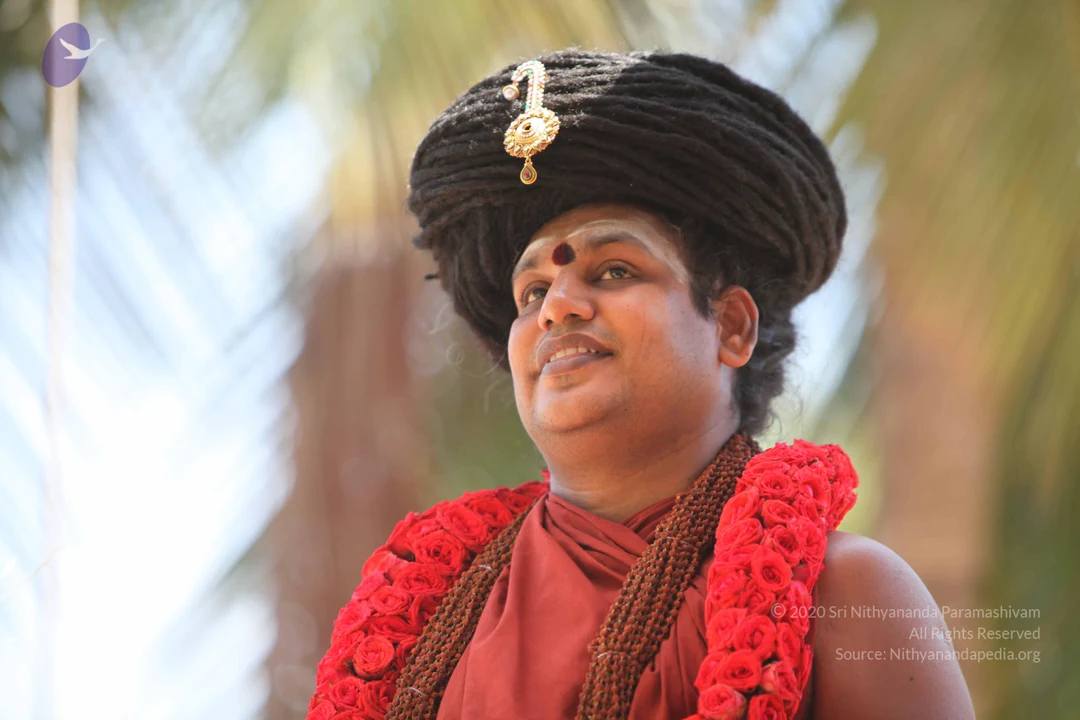
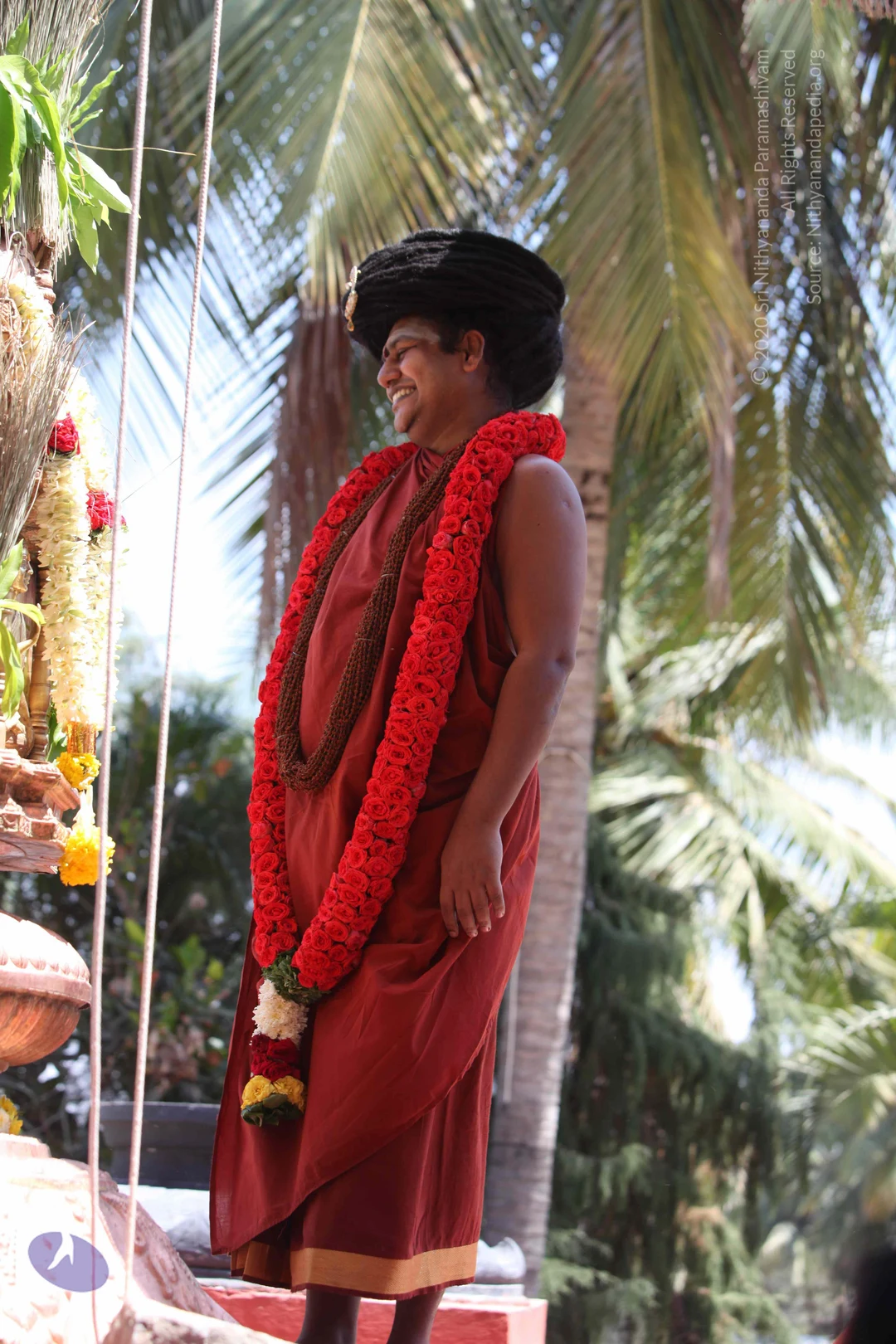
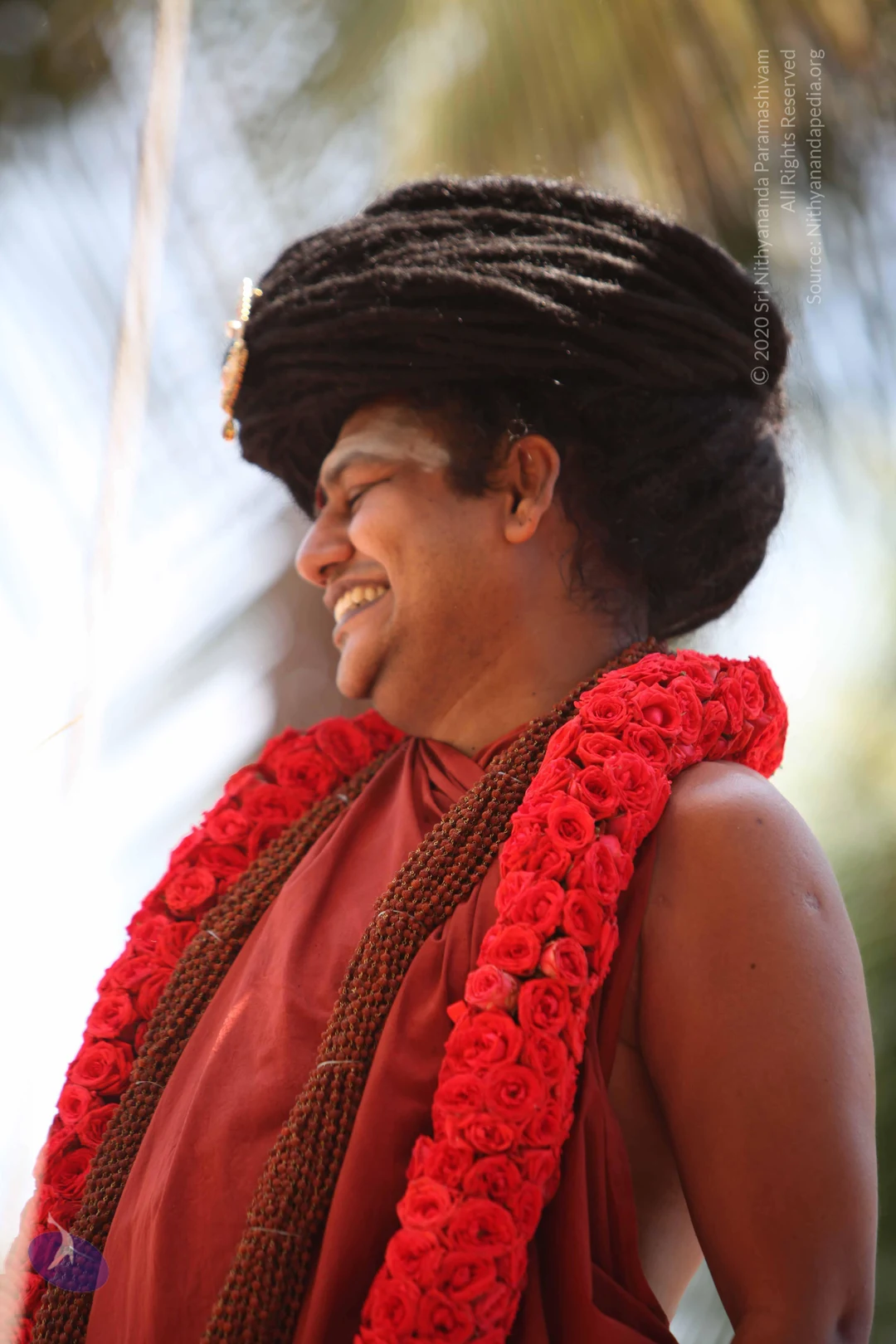
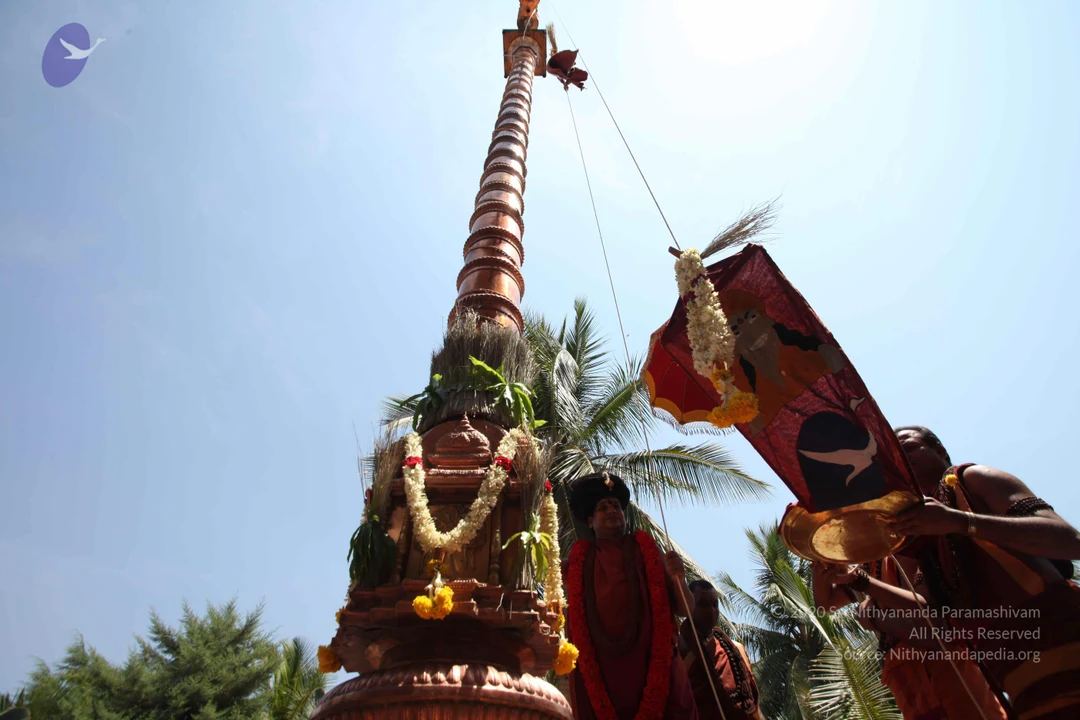
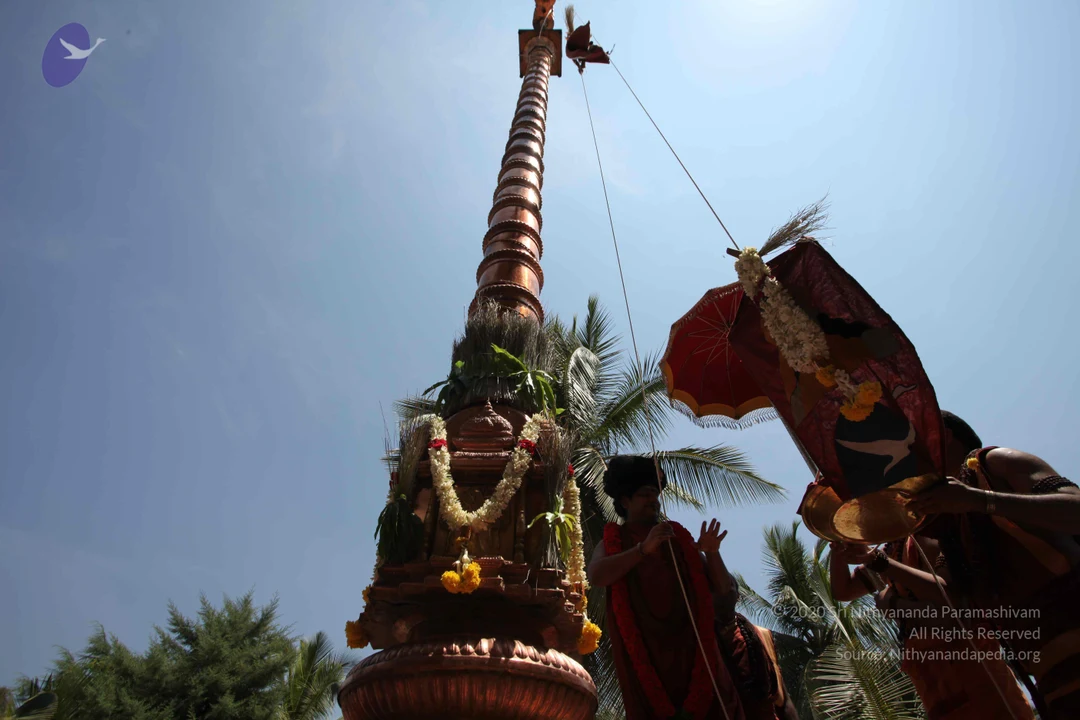
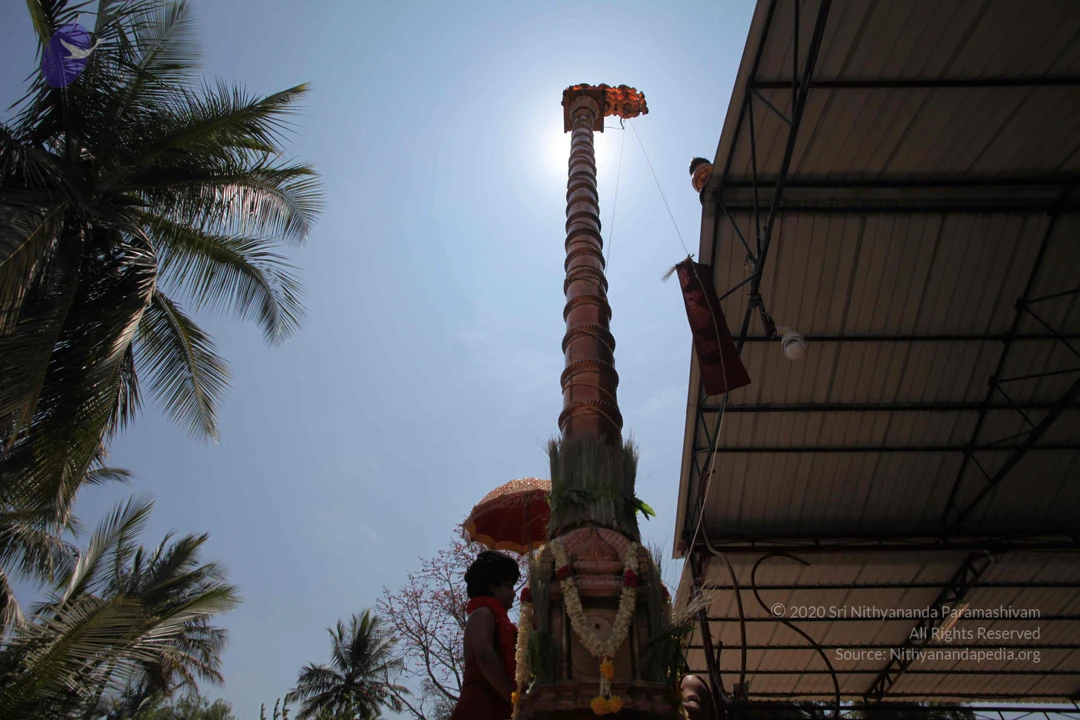
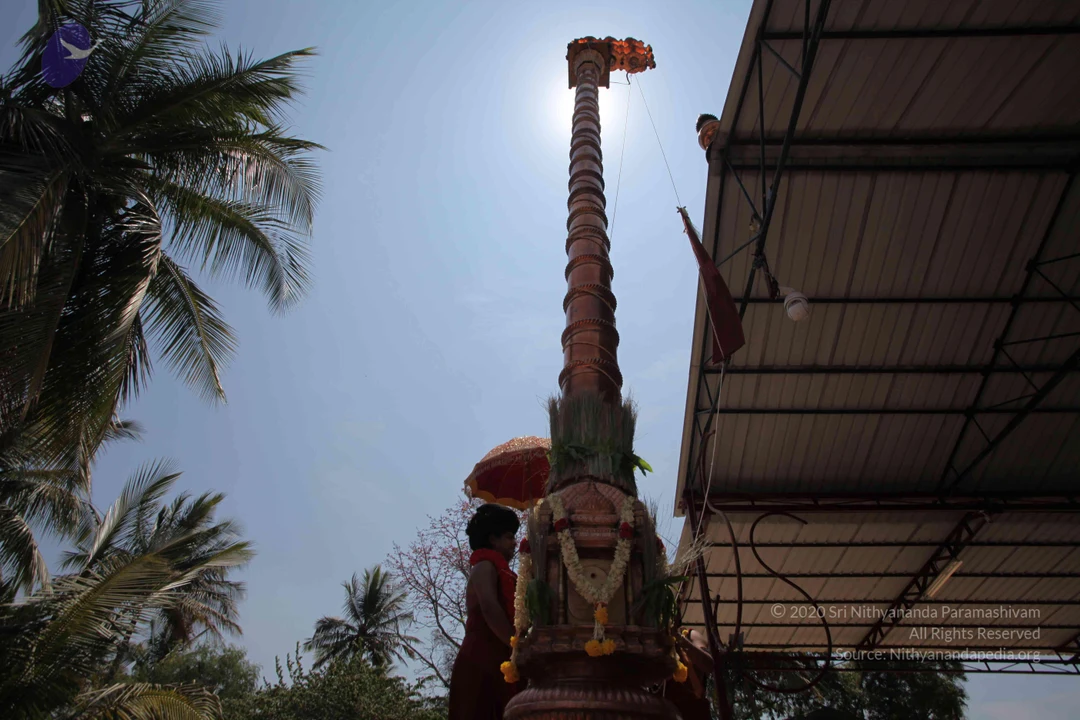
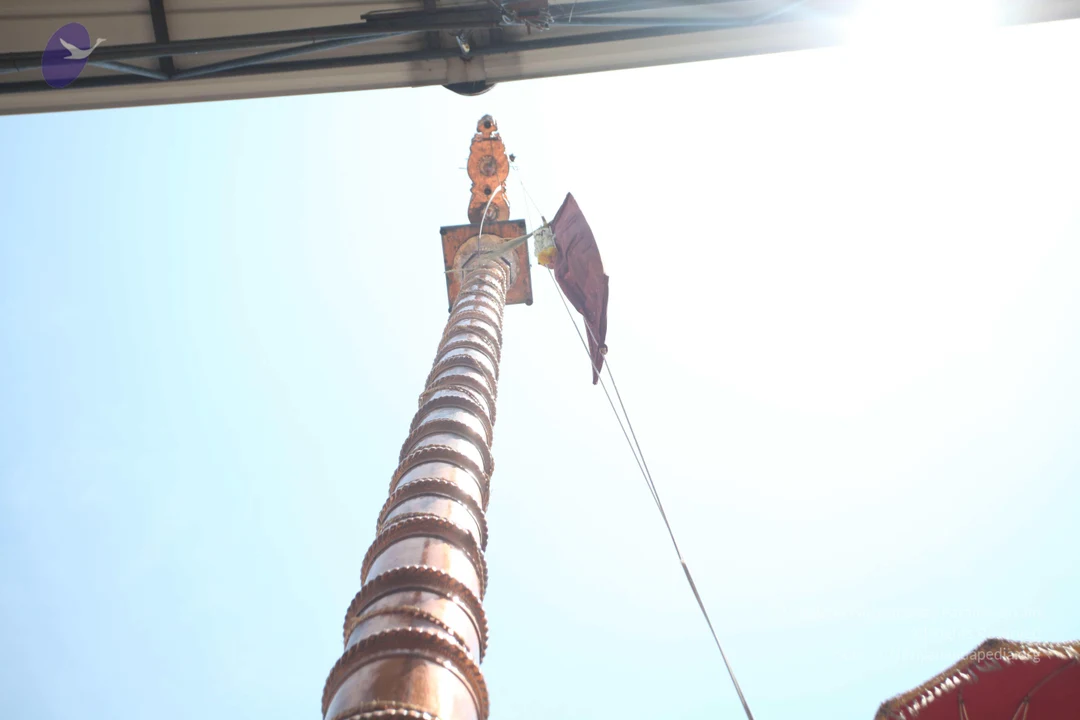
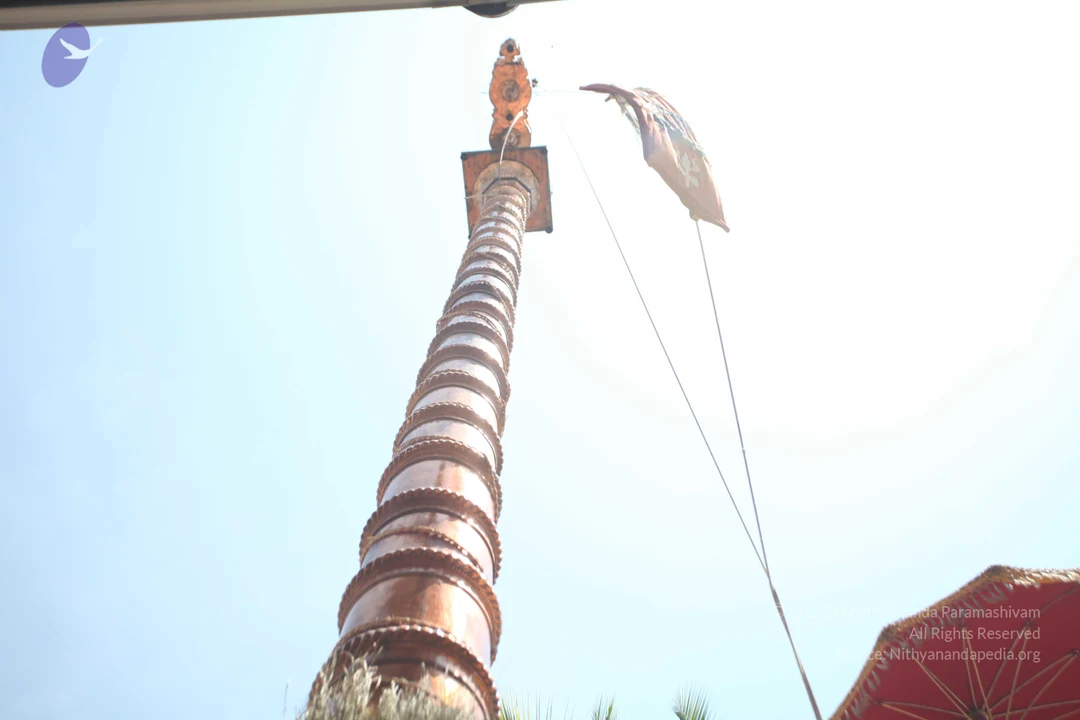
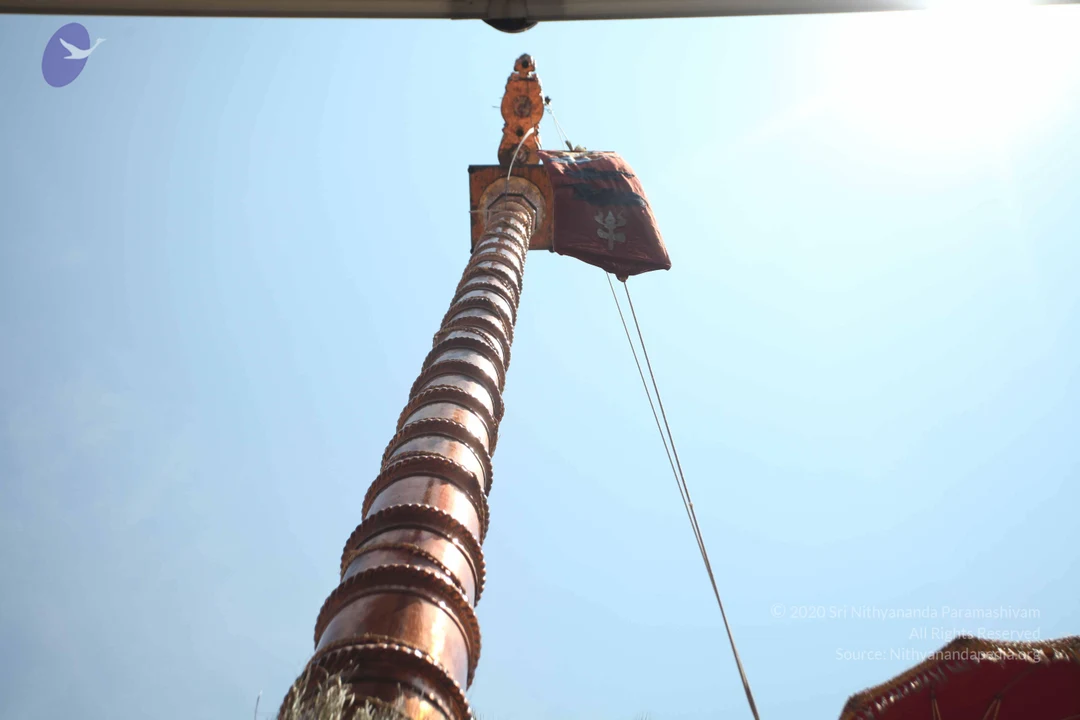
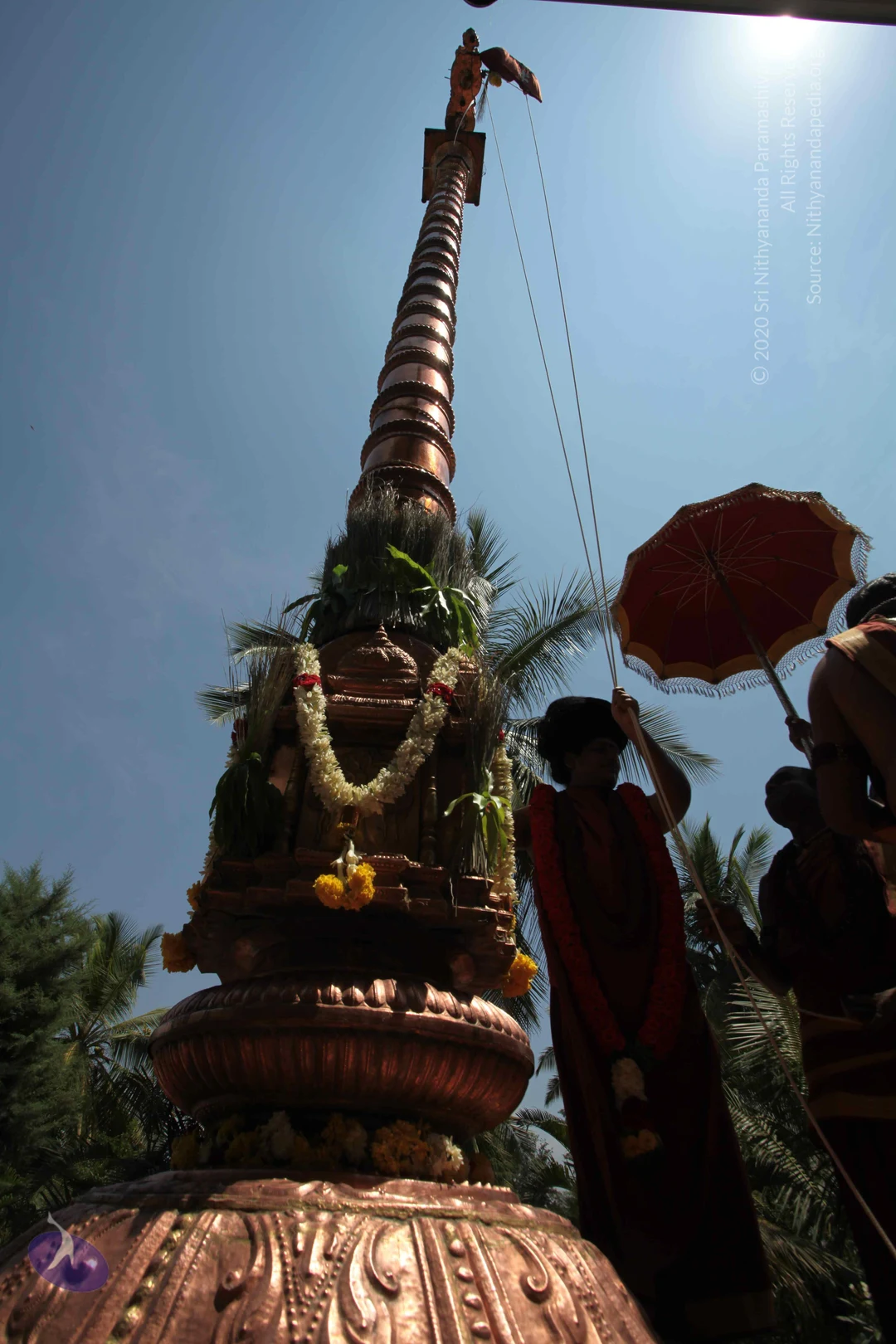
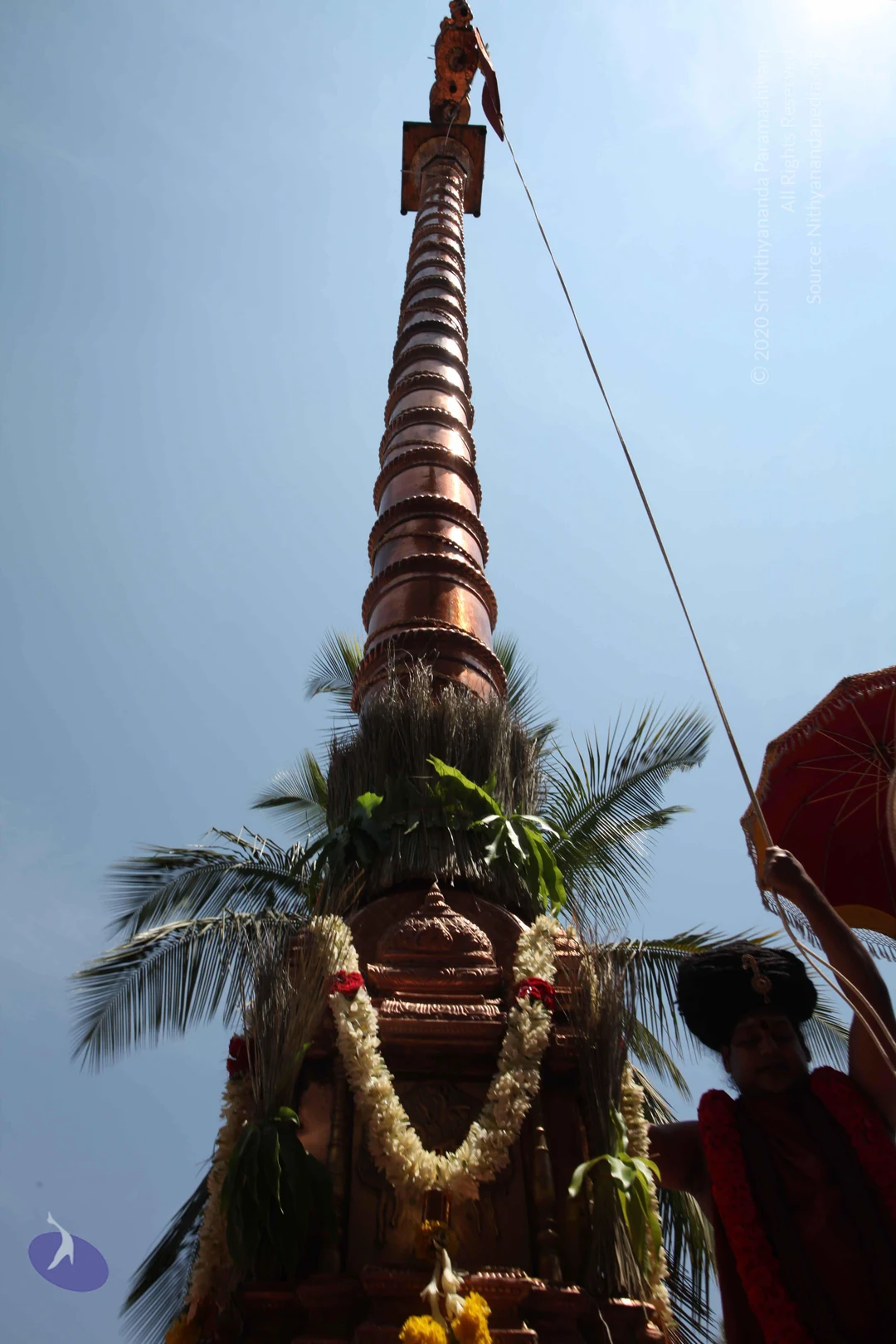
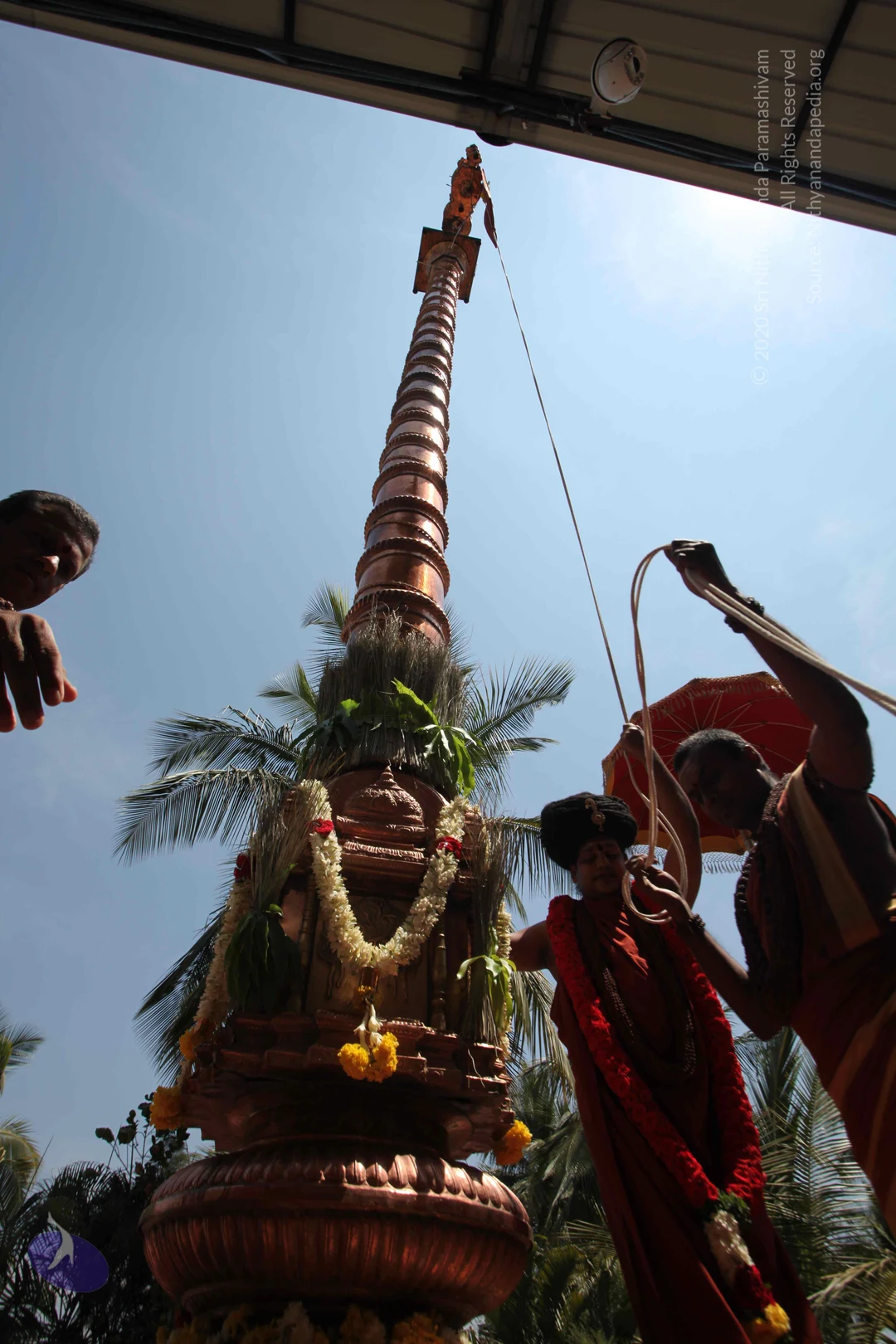
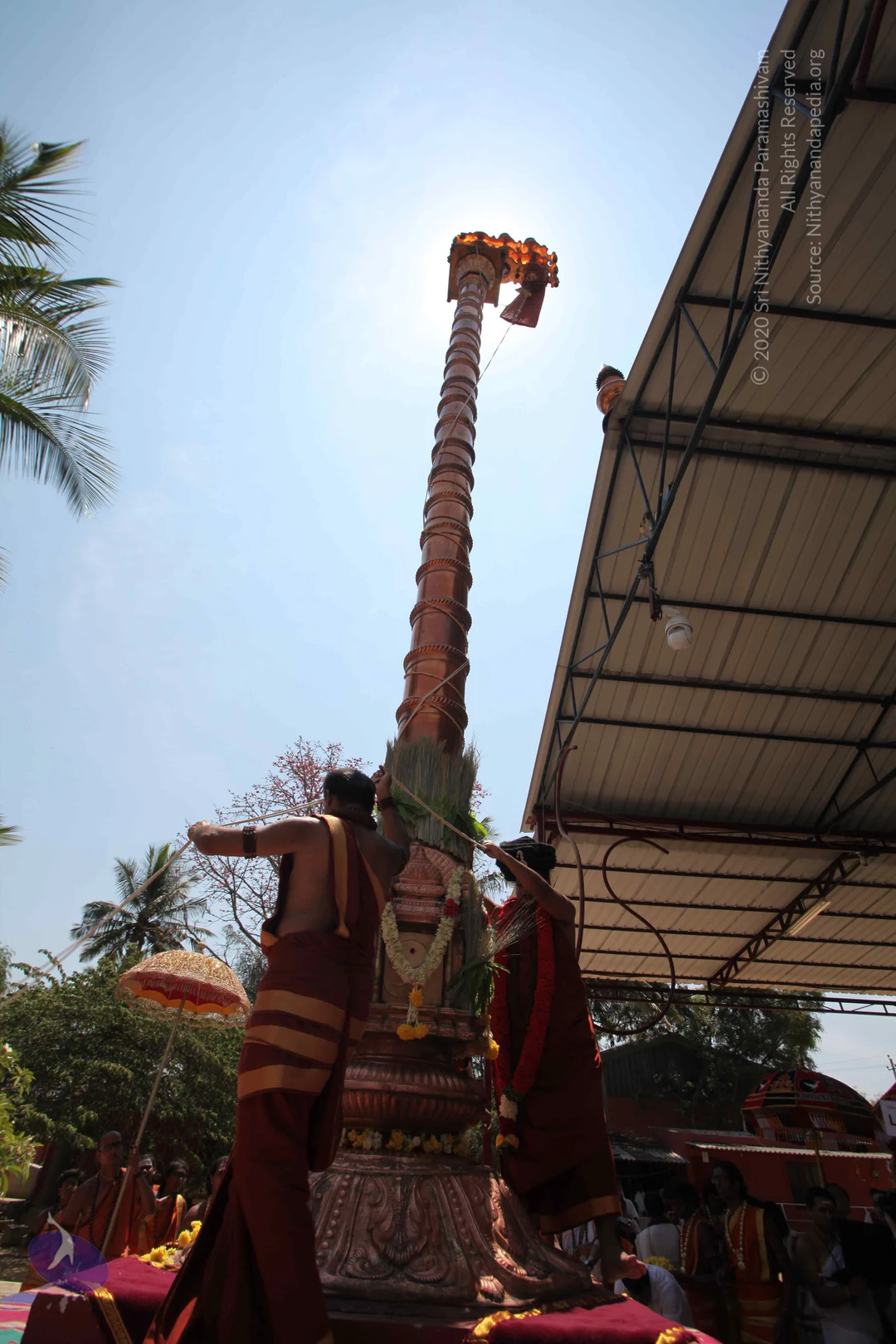
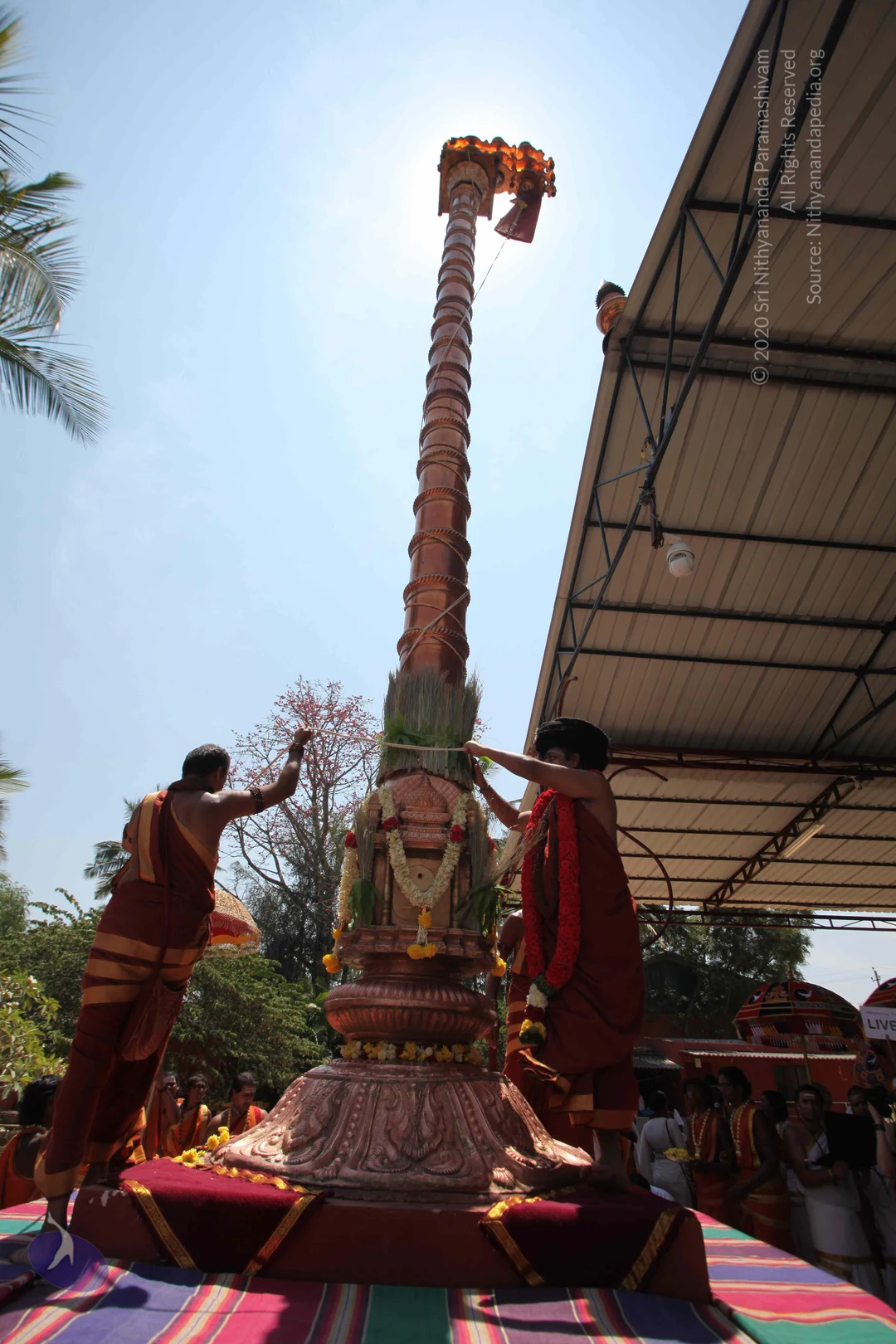
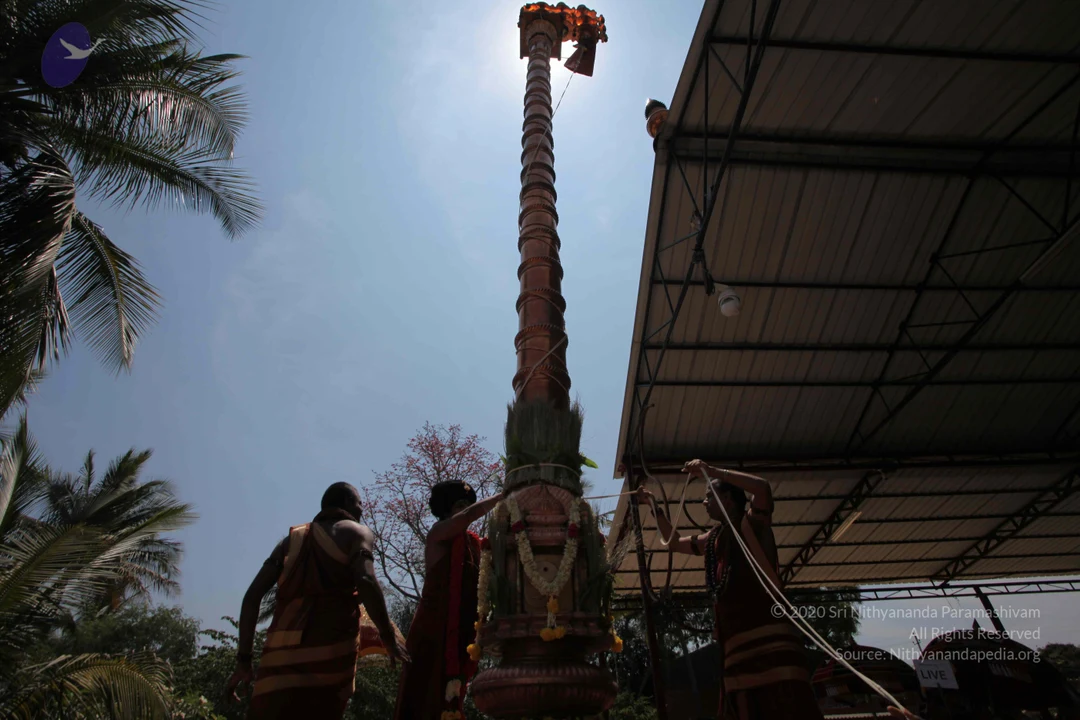
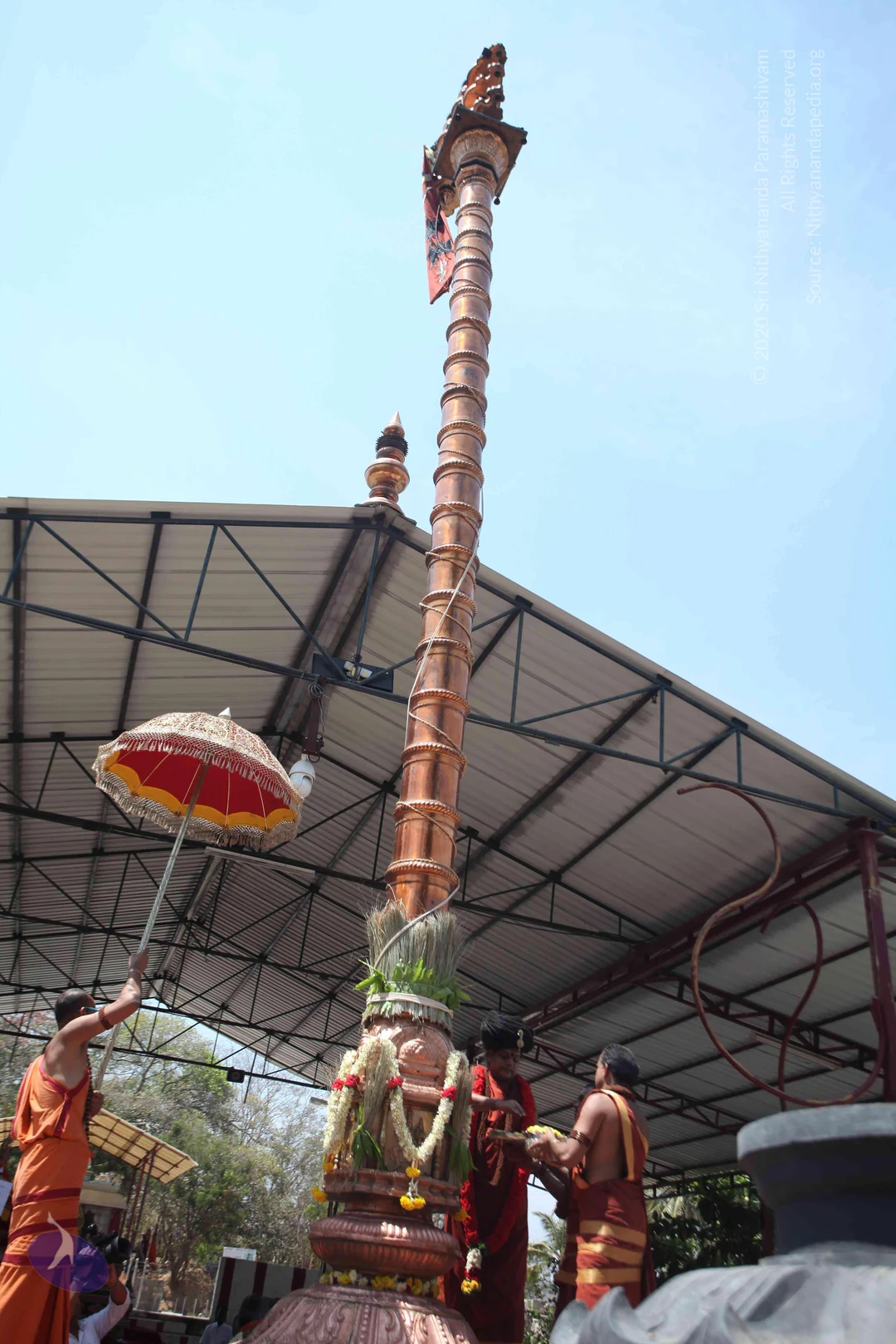
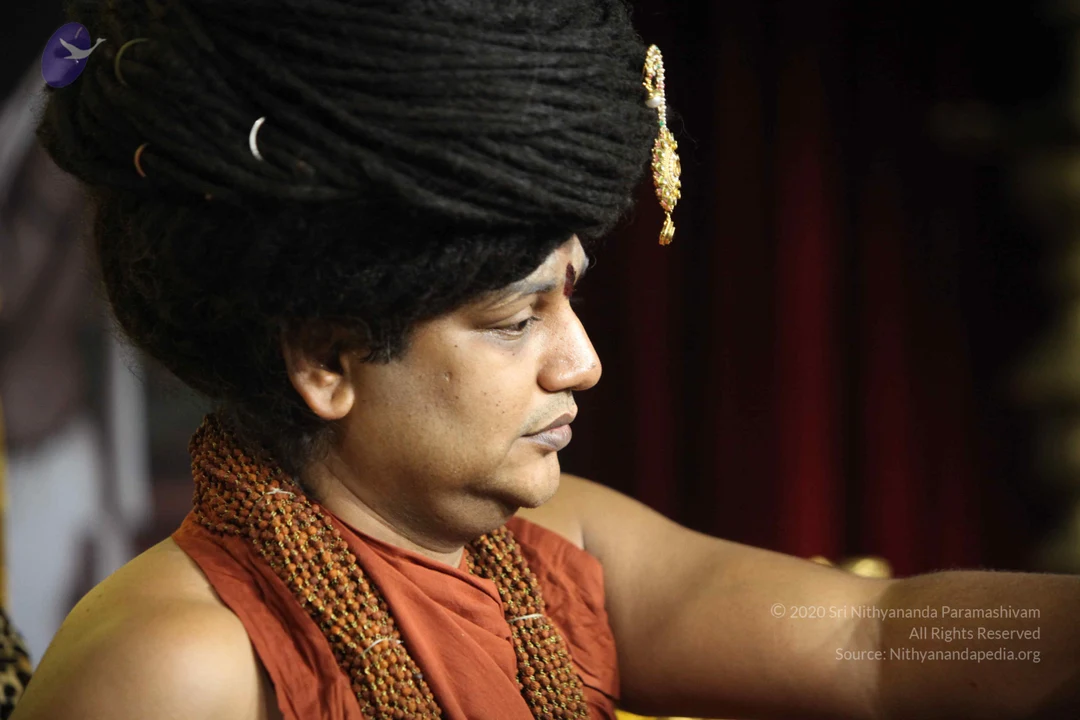
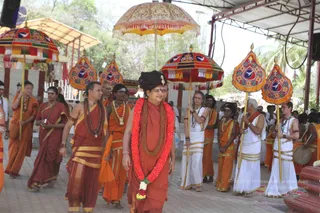
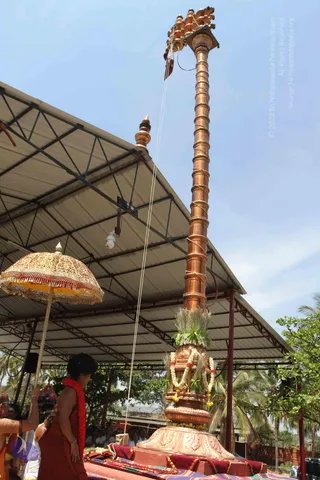
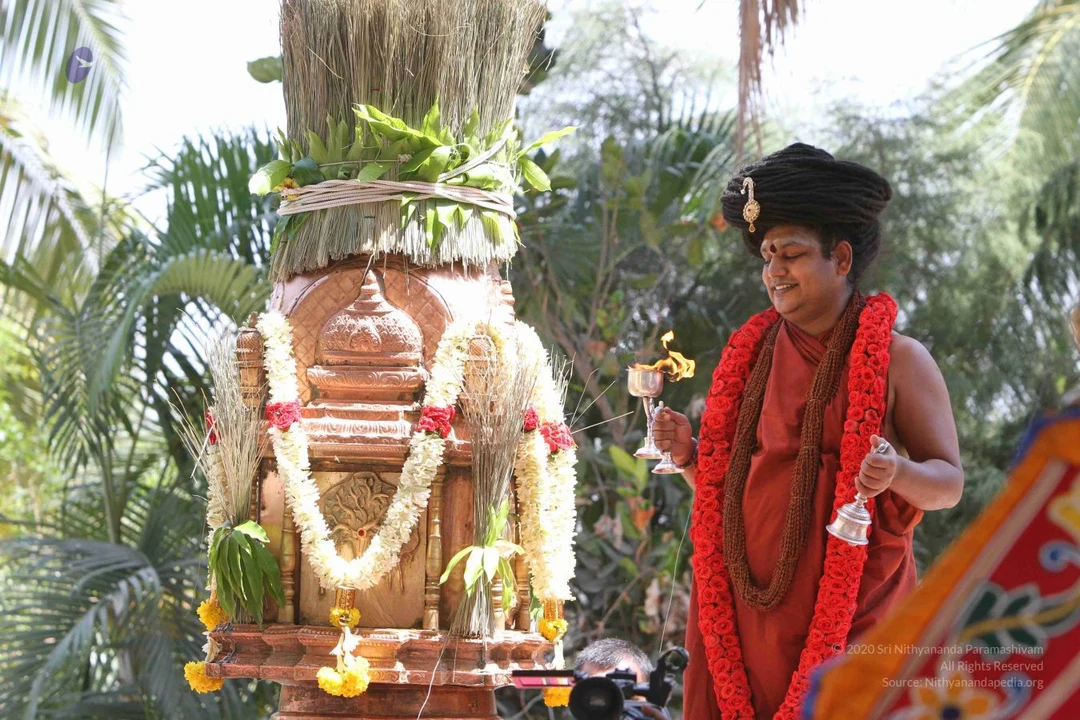
A photograph of a ceremonial procession moving across a paved courtyard. At centre, a person in a rust-orange robe wears a long red-and-orange flower garland and a rudraksha mala, with dark hair in a high bun and a tilak on the forehead, walking forward. Around them, devotees in orange and saffron robes with gold borders and beaded necklaces walk alongside. On the right, men in white dhotis with gold-bordered cloth lift yellow poles holding ornate red, yellow and gold parasols decorated with bird motifs. A drummer in orange stands at the right edge. A tiled roof and palm trees frame the scene, with spectators behind. a person's appearance here is an appearance-based candidate with a large rudraksha mala, garland and ornate robe; the camera caption attributes the image to a KAILASA archive.Outdoor temple-style ceremony under a large open metal-framed shelter with a light roof, beneath a clear blue sky. A tall polished copper dhvaja stambha (flagstaff) rises from an ornate copper base decorated with a garland of white and orange flowers and a bundle of green grass at its top, with a small red flag and a gold-topped finial near the summit. A gold-and-red fringed umbrella is held over the ceremony at left. A woman in a red-orange sari with a red garland stands near the base, and a man in white is partly visible at the far left holding the umbrella. Several people in white are seated in the background near the edge of the shelter. Palm trees and foliage surround the scene. No one is clearly identifiable as a person from the visible evidence.A tall polished copper dhwajastambha, a flagstaff with a decorative finial and a small red flag, rises against a clear blue sky beneath an open-sided shelter. The base is wrapped in white and yellow marigold garlands and topped with sheaves of grain and green leaves. A bare-chested man in an orange-red dhoti with a red flower garland walks past the base, steadying the ropes. Beside him, a person in a white shirt holds a gold-embroidered parasol, and a figure in orange holds a ceremonial umbrella at the left edge. Trees and palms surround the site.A tall copper dhwajastambha, a ritual flagstaff, rises under a clear blue sky beside a metal-roofed open pavilion. Its base is decorated with garlands of white and red flowers and sheaves of grain, and a flag is tied near its top. In the foreground a person in a red-orange dhoti and a red flower garland walks beside it, bare-backed with a dark bun. To the left, a person in an orange top holds a large ornate gold-embroidered parasol. Palm trees and a parked car are visible at the right edge.Outdoors under a clear pale sky, a tall copper flagstaff (dwajastambha) rises from a carved stone-and-copper base decorated with marigold and white jasmine garlands, red flower accents and bundles of straw and green leaves. A person in an orange-red robe with a red flower garland and a dark head covering stands at lower right, beside a red-and-yellow fringed umbrella held by another person at the edge. Coconut palms and green trees stand behind.Outdoor photo under palm fronds of a man in a rust-red robe with a dark turban topped by a gold ornament, wearing a long red rose garland and a brown rudraksha-style mala. He stands with one arm extended toward a red and yellow umbrella, with yellow and white flower garlands and hanging ropes at the left edge. Swamiji (probable): the turban, ornate gold clothing ornament, red garland and rudraksha mala are visible cues, and he is physically present in the scene.

02-NITHYANANDAM-SESSION
23 photosSource gallery
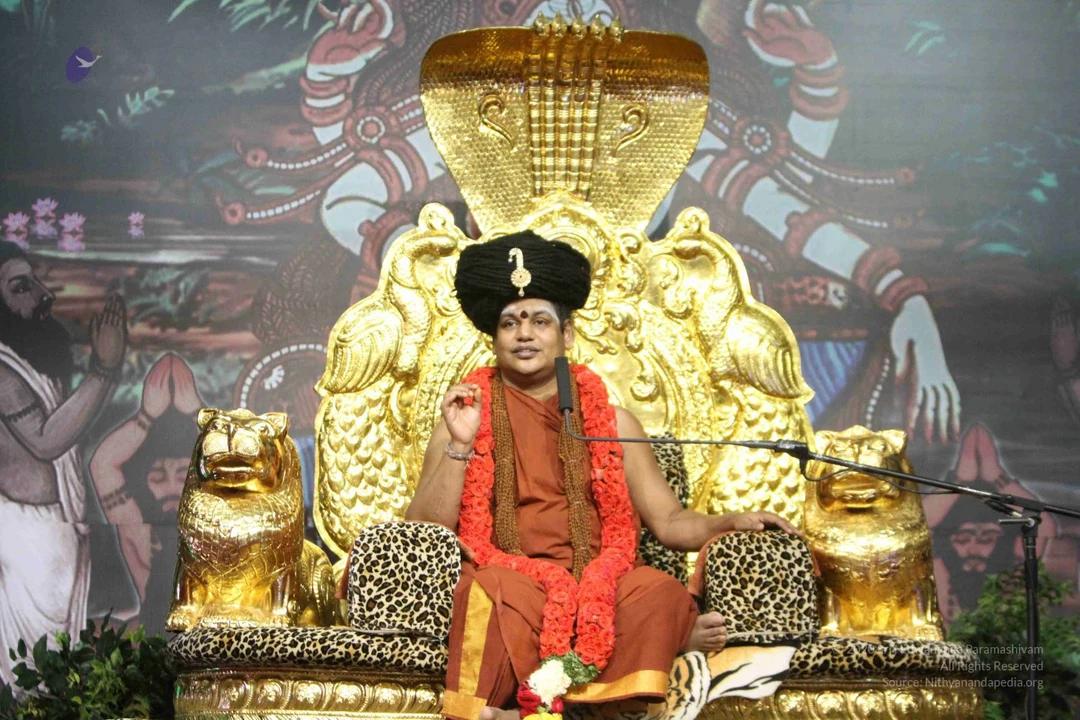
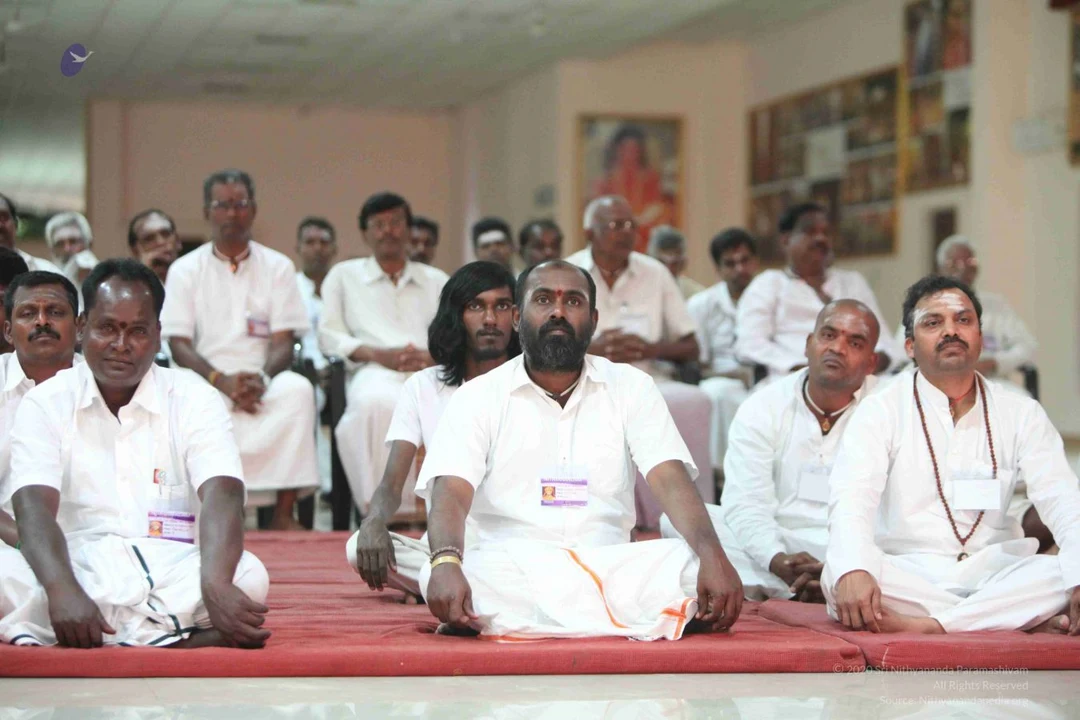
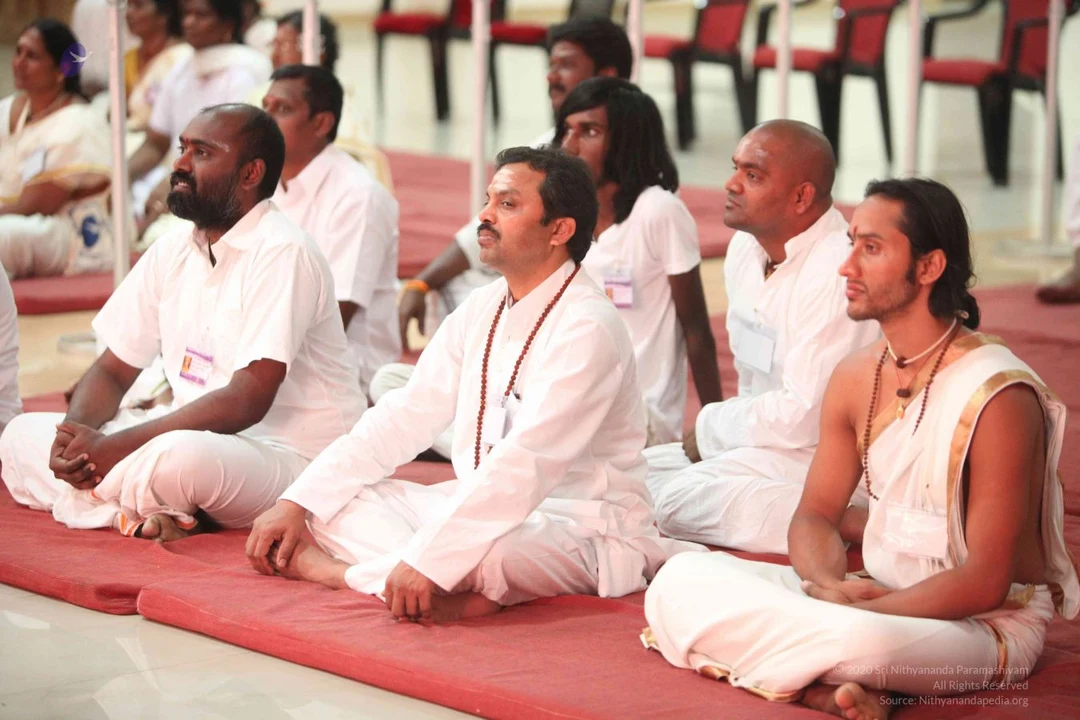
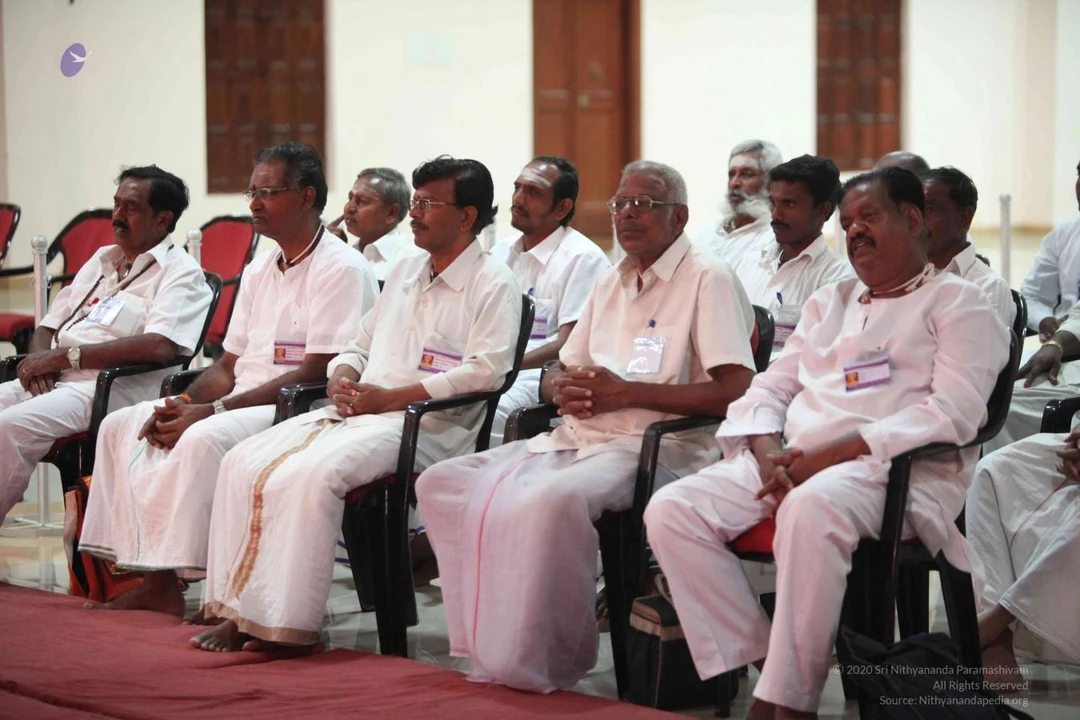
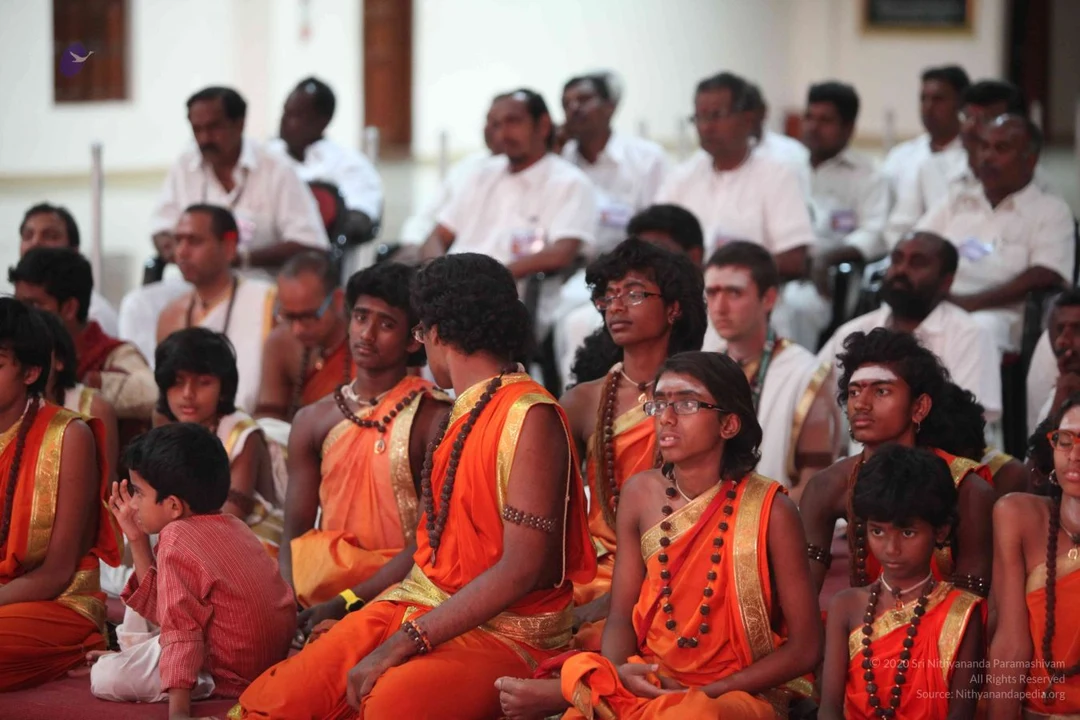
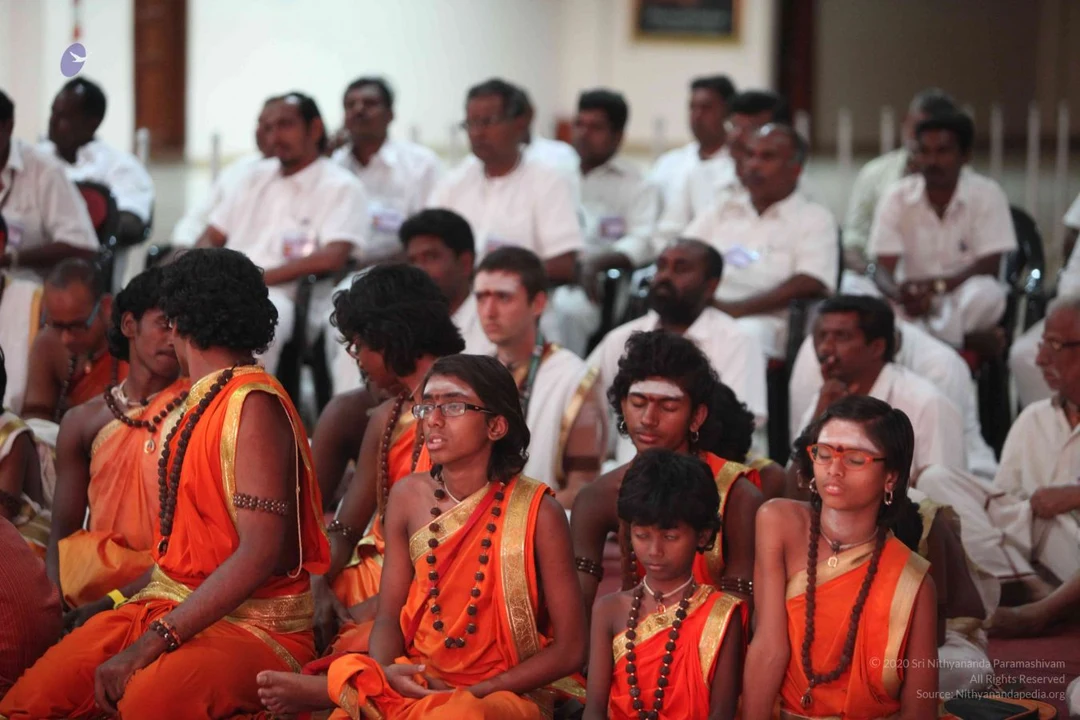
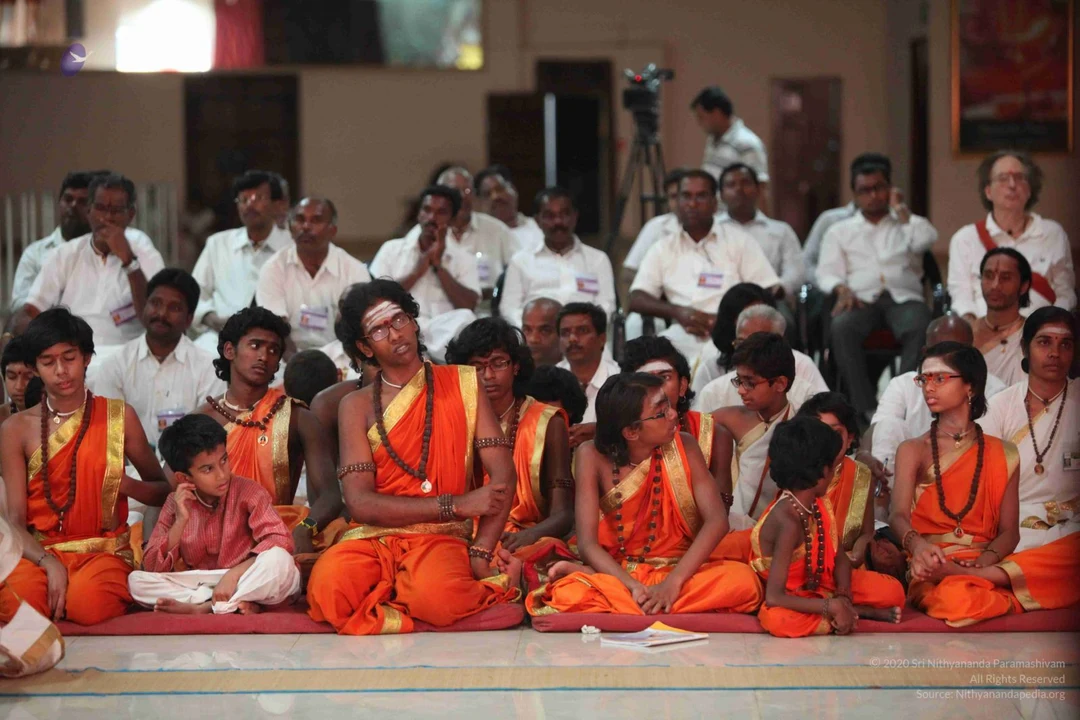
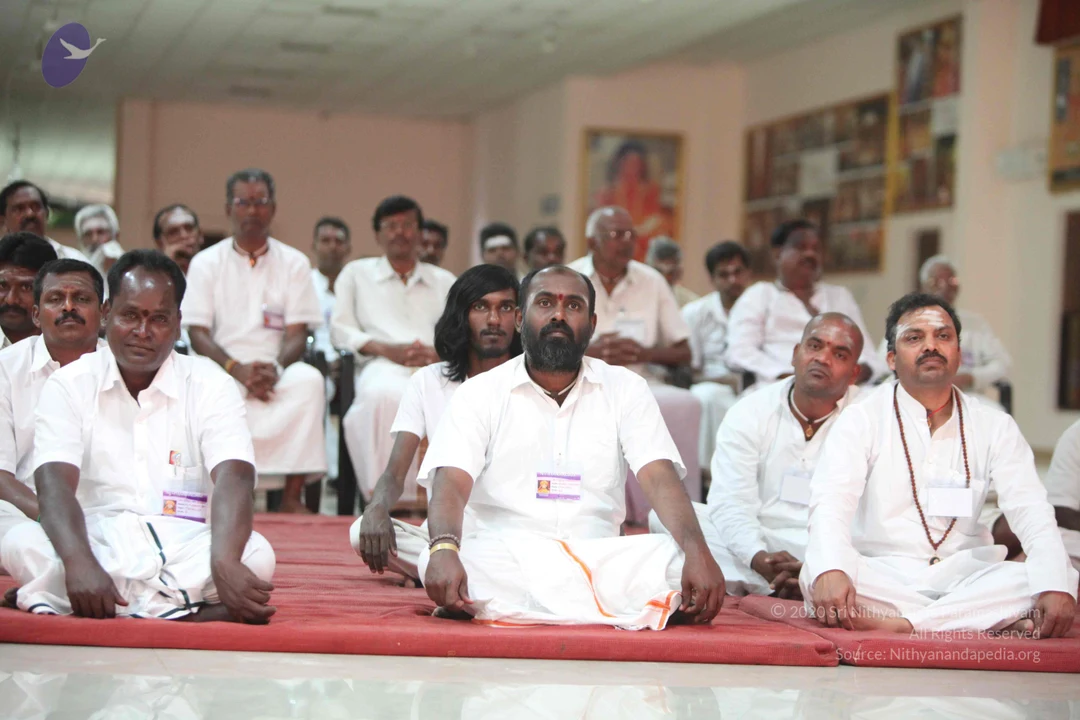
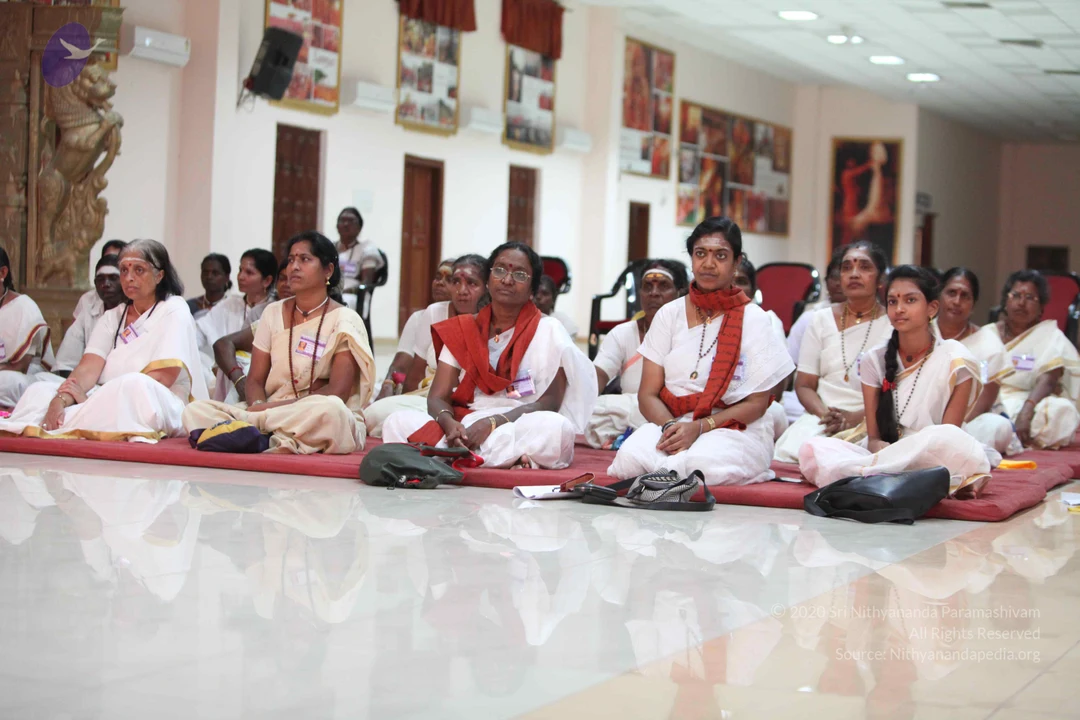
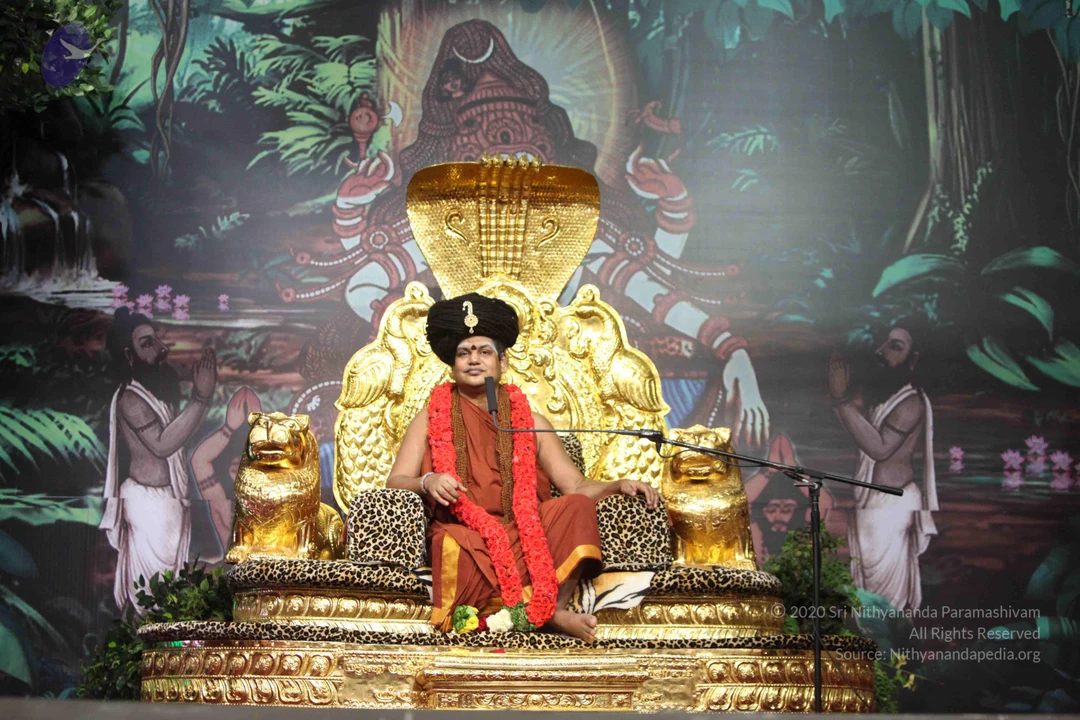
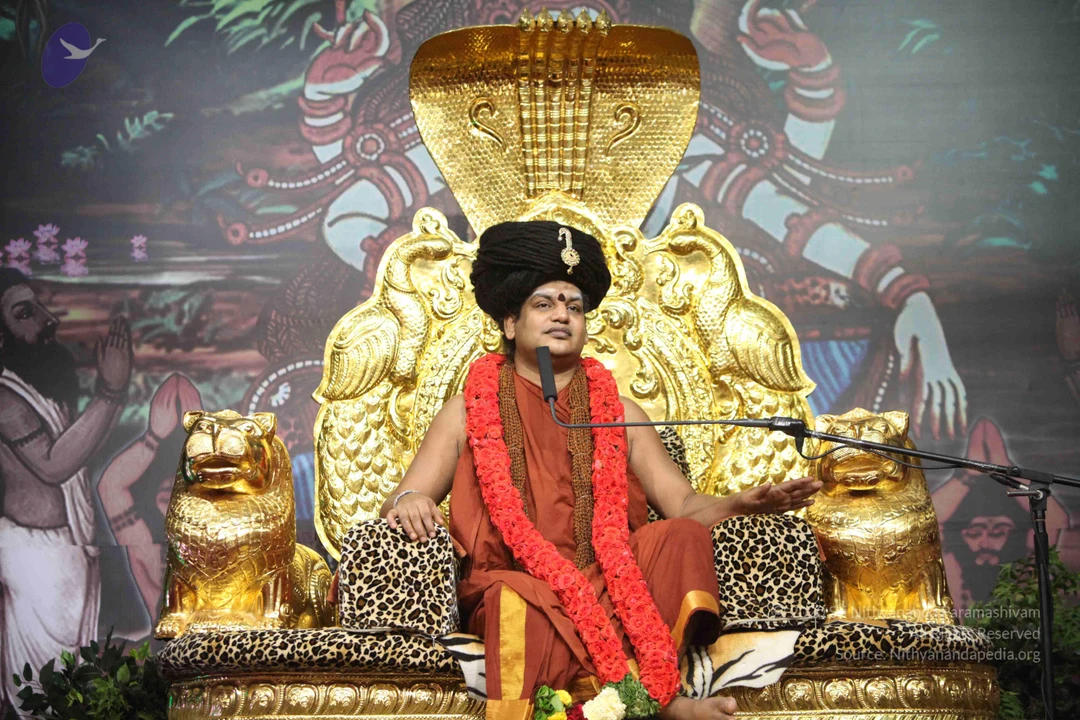
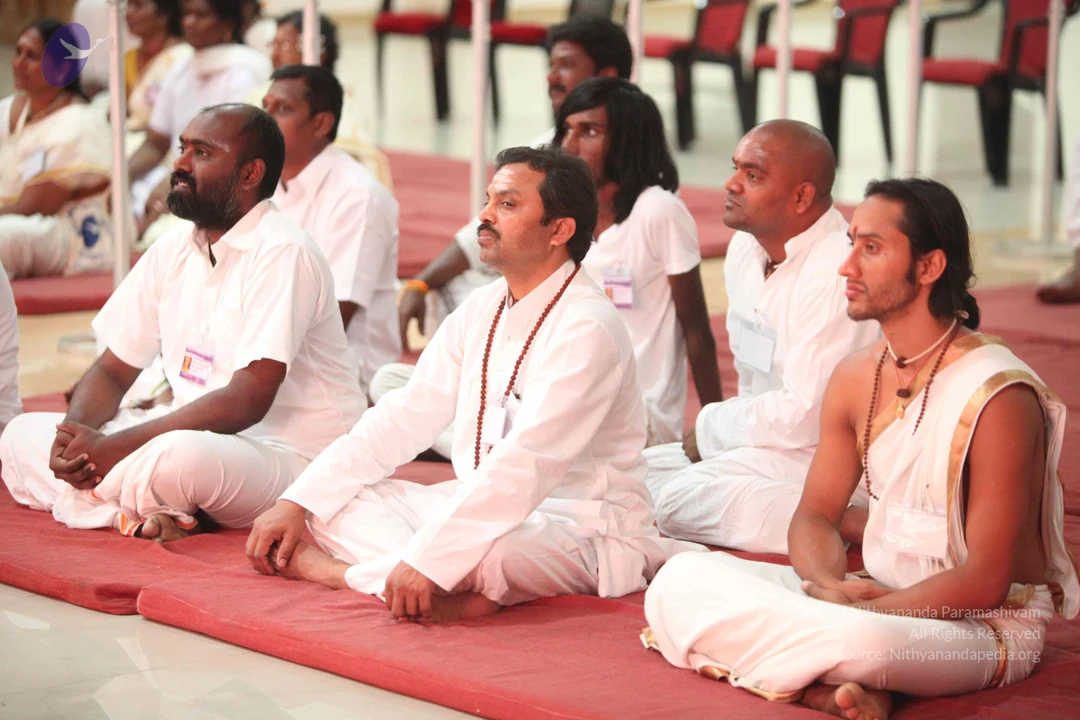
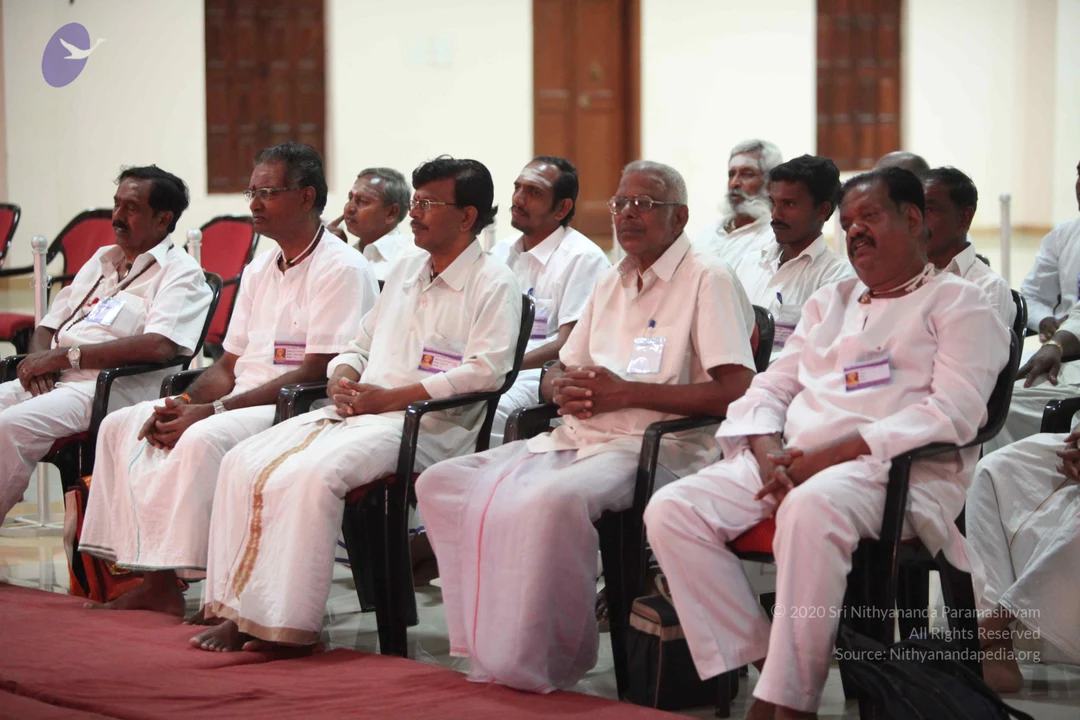
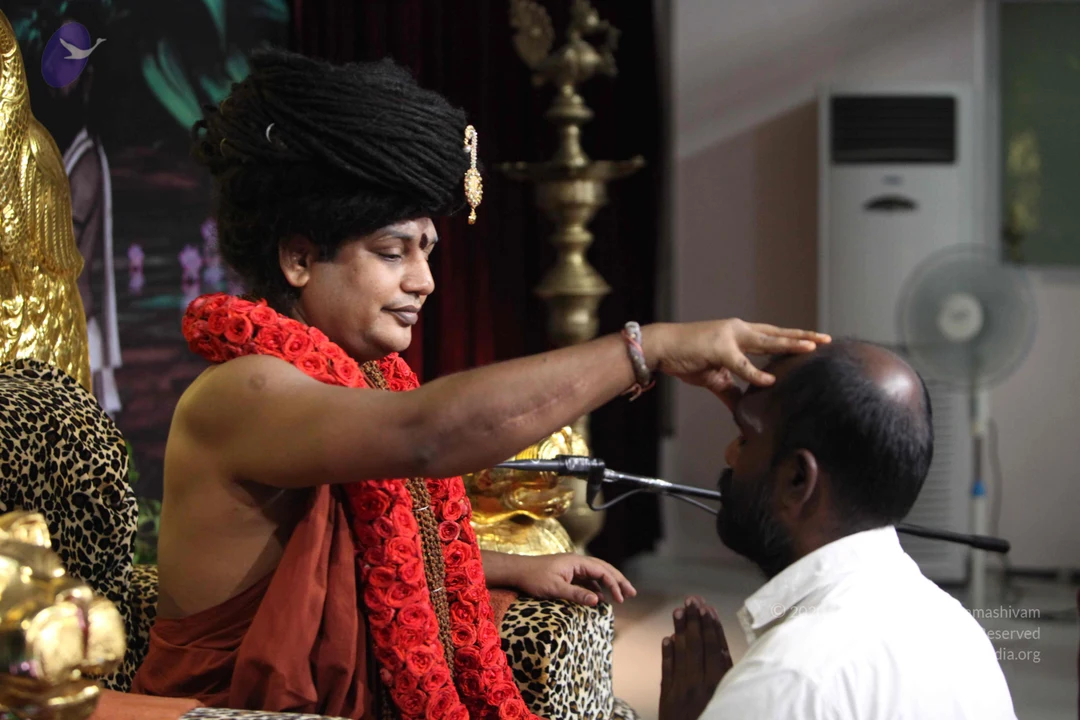
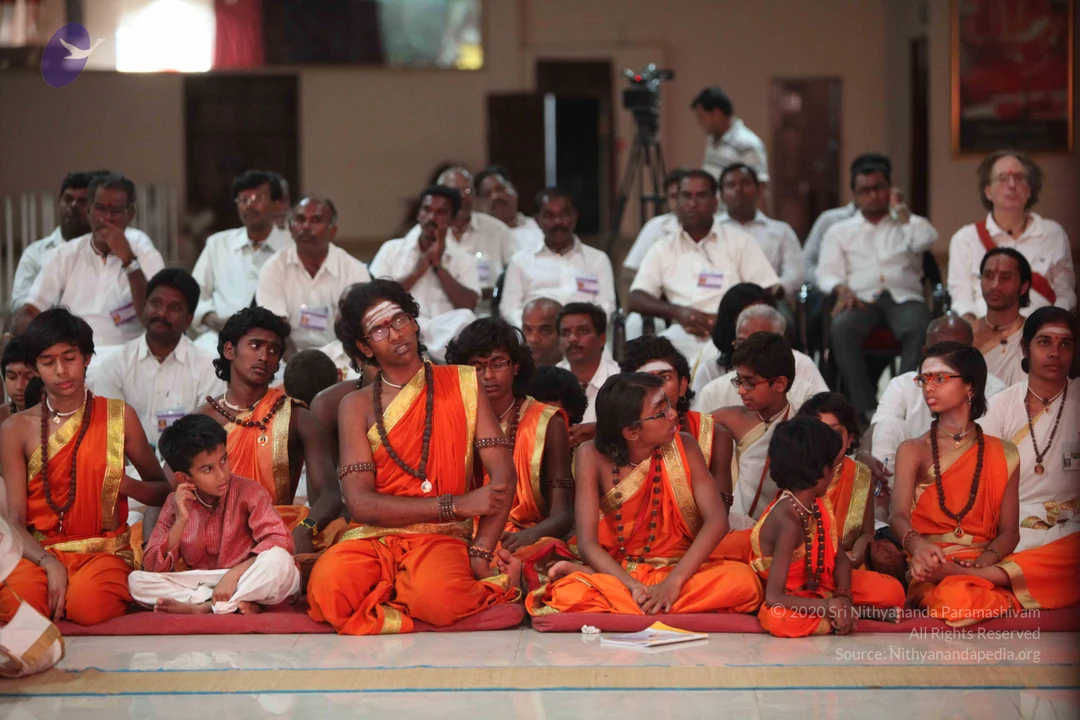
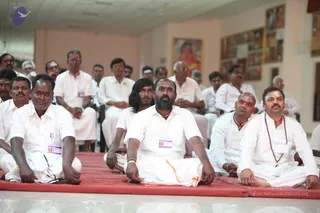
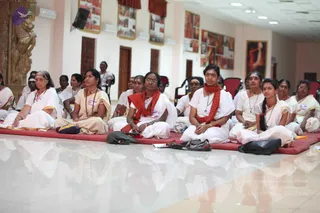
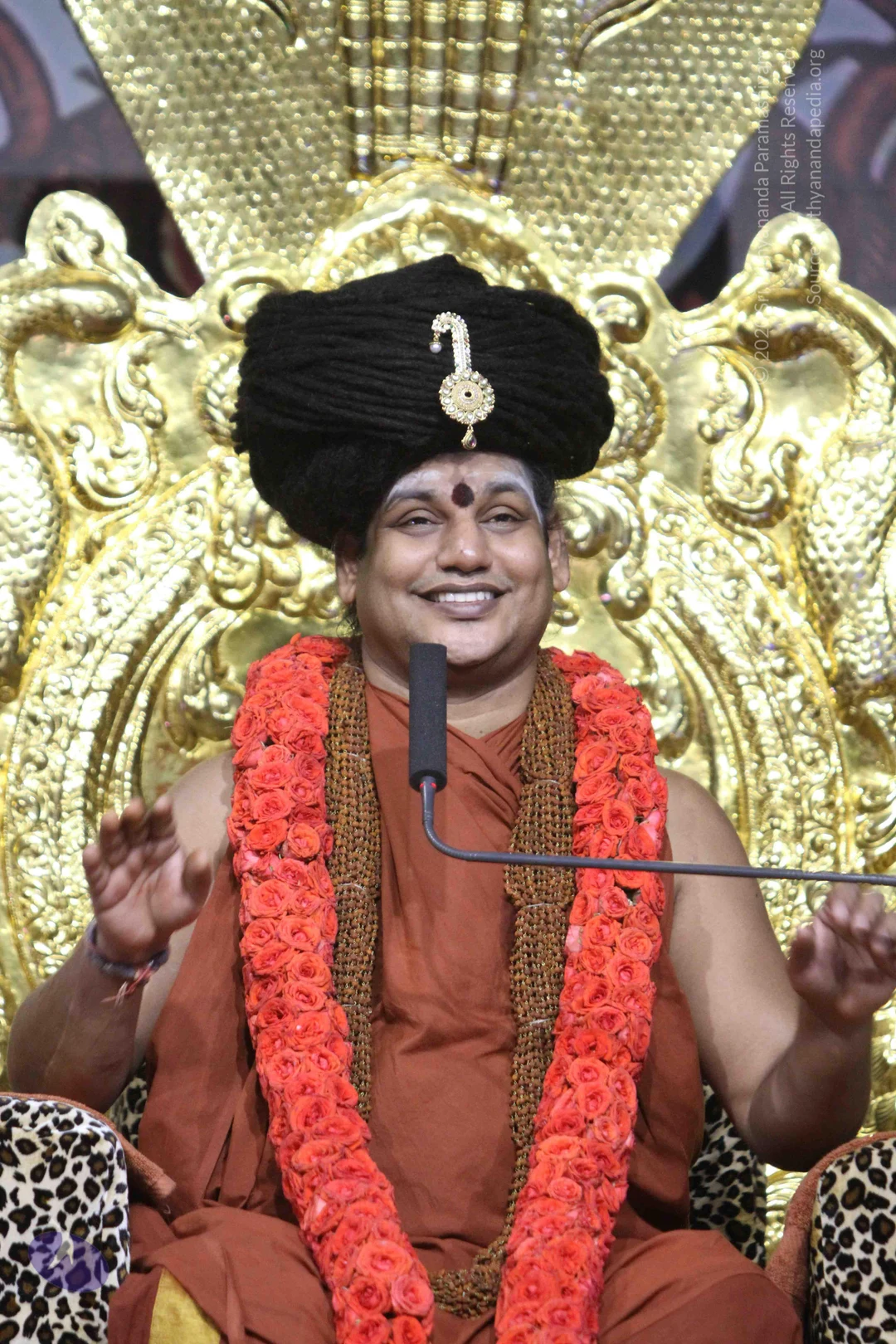
A photo of a seated man on an ornate golden throne with a gold cobra hood behind him and golden lion figures at his sides, draped in leopard-print cushions. He wears a black turban with a small gold ornament, an orange-red robe, a rudraksha mala, and a red-and-white flower garland, and he sits with a microphone on a stand before him. Behind the throne is a painted backdrop of deities and devotees with hands in anjali. Probable Swamiji (probable) is seated on the peetha, wearing the turban, rudraksha mala and saffron robe as a satsang speaker.A photograph of a seated figure on an ornate golden throne with a cobra-hood backrest, flanked by two golden lion heads and leopard-print cushions with a tiger-skin draped over the base. The central figure wears a black turban with a jewelled ornament, an orange-red robe, a long red-and-orange flower garland, and a rudraksha mala, sitting cross-legged with hands resting on the cushions in front of a microphone stand. Behind the throne is a painted mural of a cobra-entwined deity scene with two devotees in white garments on either side, hands in anjali. Swamiji (probable): the seated figure has a turban with a jewelled ornament, a saffron-orange robe, a rudraksha mala and a ceremonial garland, consistent with the page's attribution.A seated group of men in all-white dhotis and shirts sit on red mats in a hall with cream walls and framed pictures. In the front row, a bearded man in a white dhoti with an orange border sits cross-legged, hands resting on his knees, looking upward. Beside him a long-haired man in white sits attentively, and to the right a man with a rudraksha mala and vibhuti on his forehead sits upright. Behind them rows of attendees in white sit facing forward, many wearing name badges, with a framed portrait of a woman on the far wall. No person is clearly identifiable as a person from appearance.A seated group of devotees sits on red mats on a polished floor in a bright hall with cream walls, framed photographs and a carved wooden deity figure at left. Most wear white or cream clothing, several with red or orange shawls and rudraksha or bead malas. A woman in the centre wears a red shawl and glasses, and a woman at right wears white with a braid. Bags and sandals lie on the floor in front. Audience attendees listen attentively, and no speaker is visible in the frame.A seated man in a dark turban with a gold ornament and a red bindi speaks into a microphone on a stage. He wears a saffron-orange robe and a rudraksha mala, with a long red and yellow rose garland draped over his shoulders and lap. He gestures with his raised right hand. Behind him is an ornate gold throne with a carved hooded serpent canopy and leopard-print cushions, with a tiger-striped cloth draped over the seat. a person is the presiding speaker, seated on the throne in a discourse setting. One person is visible.A seated speaker on a golden throne with a cobra-hooded backrest and golden lion armrests, in front of a painted backdrop of a deity figure. He wears a black turban with a jewelled ornament, a saffron-orange robe, a red-and-white flower garland and a rudraksha mala, with a red tilak on his forehead. He speaks into a microphone while gesturing with one raised hand, and leopard-print cushions and a tiger skin are beneath him. A small offering of flowers lies at his feet. Appearance suggests a probable Swamiji (probable) seated in the speaker's role, with turban, saffron robe and rudraksha cues visible.

03-EVENING-SATSANG
11 photosSource gallery
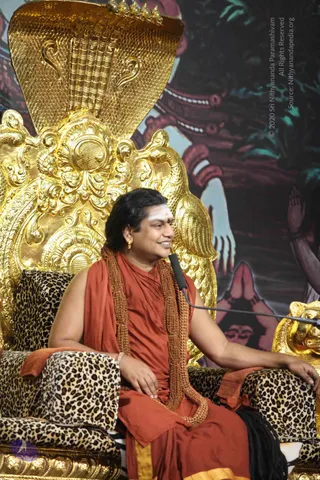
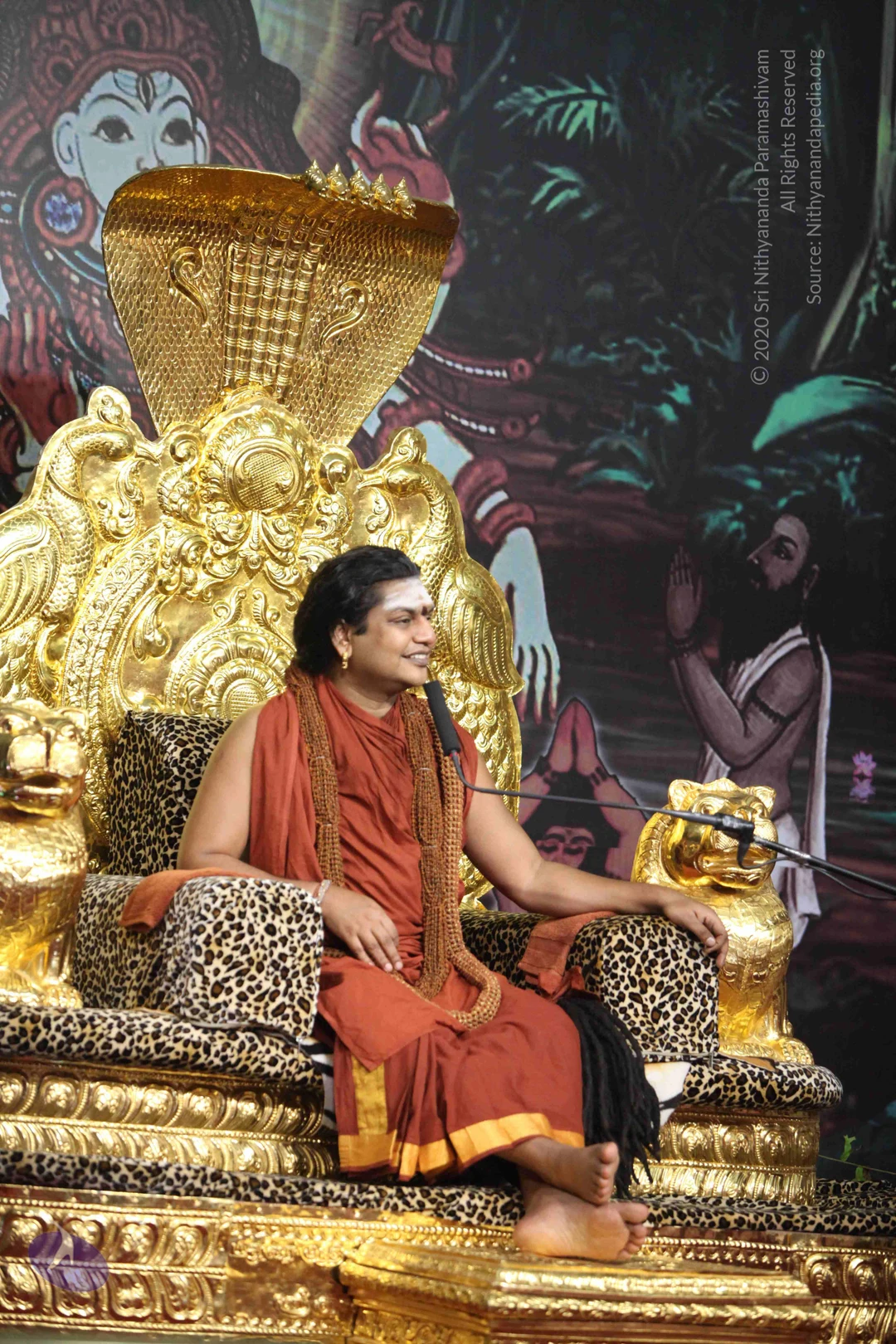
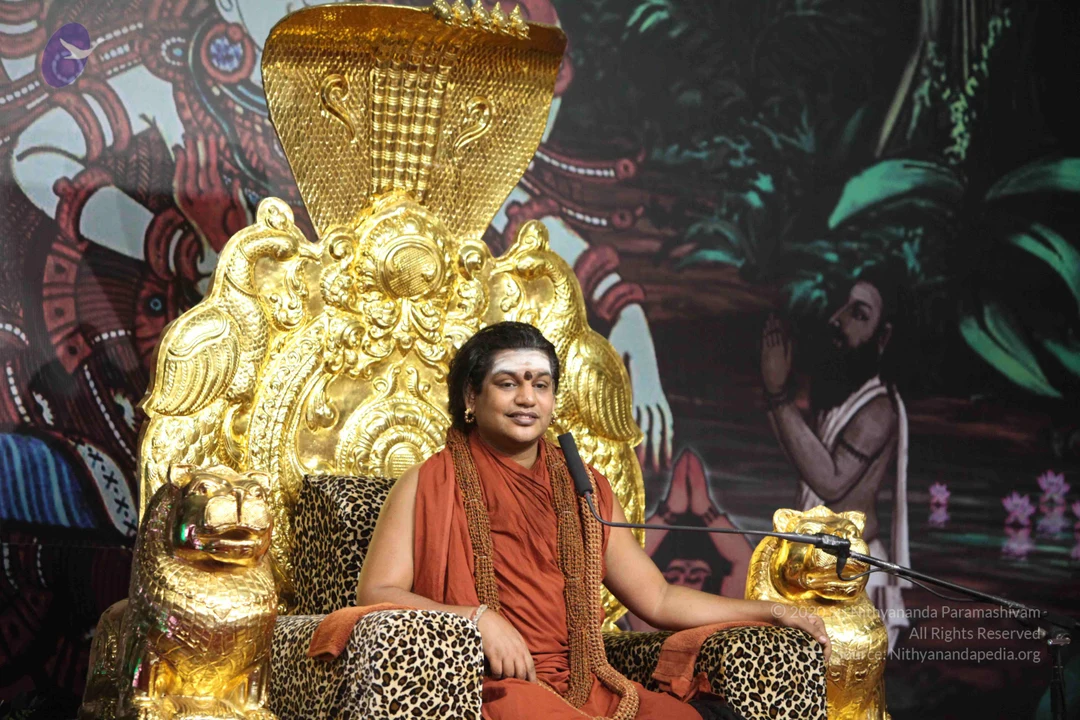
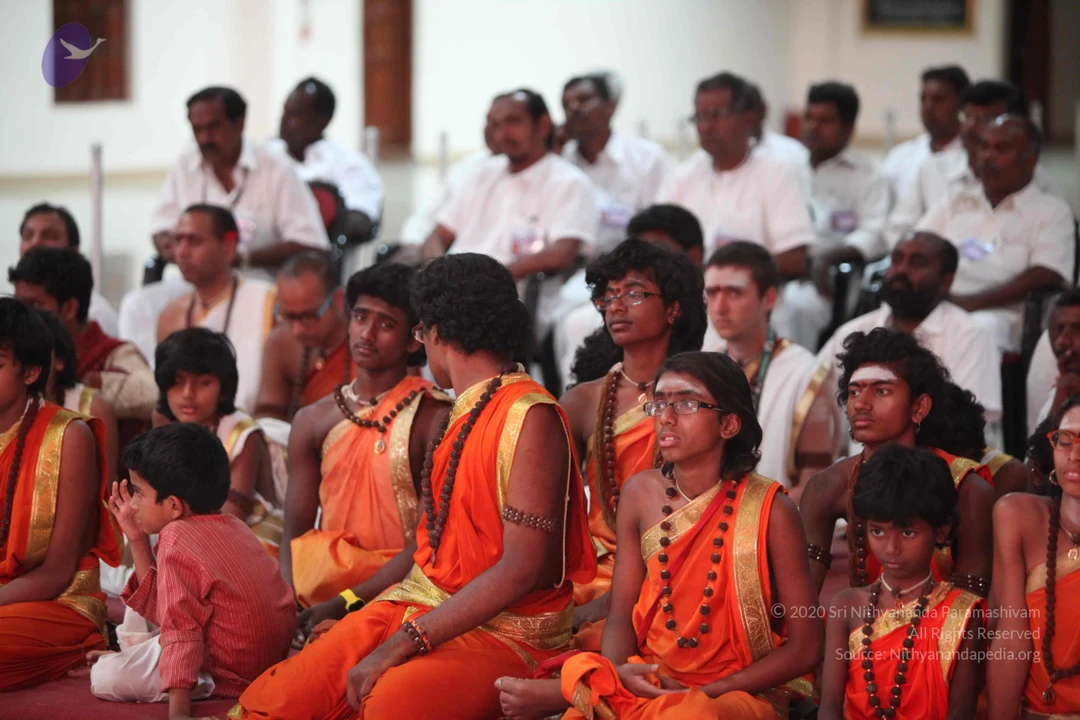
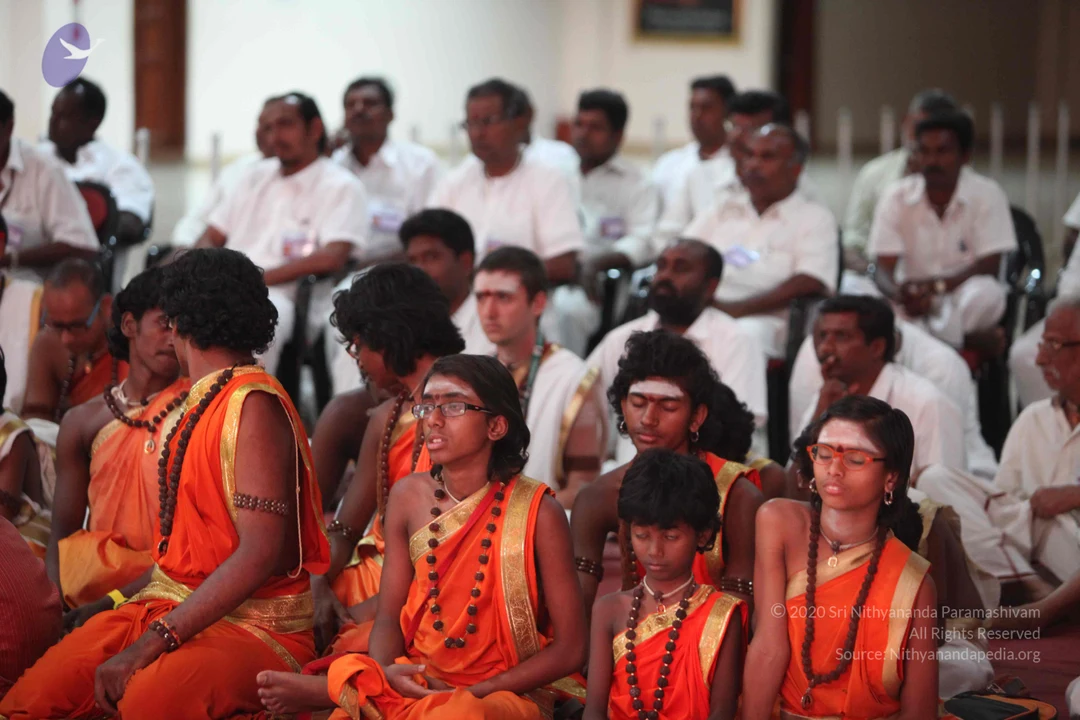
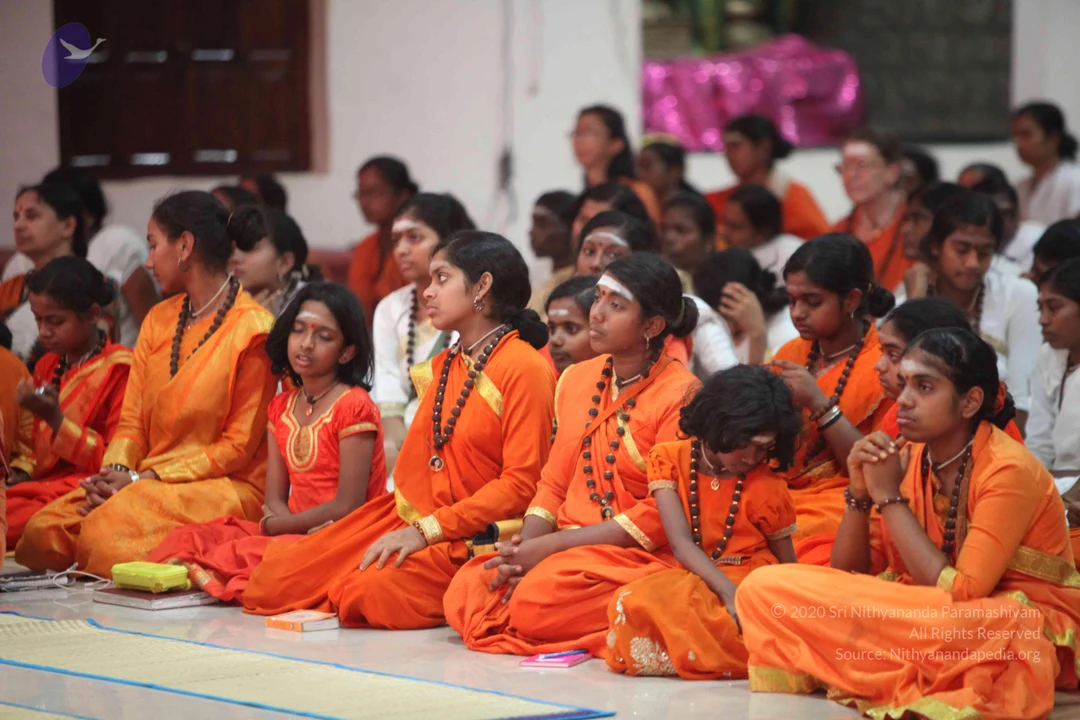
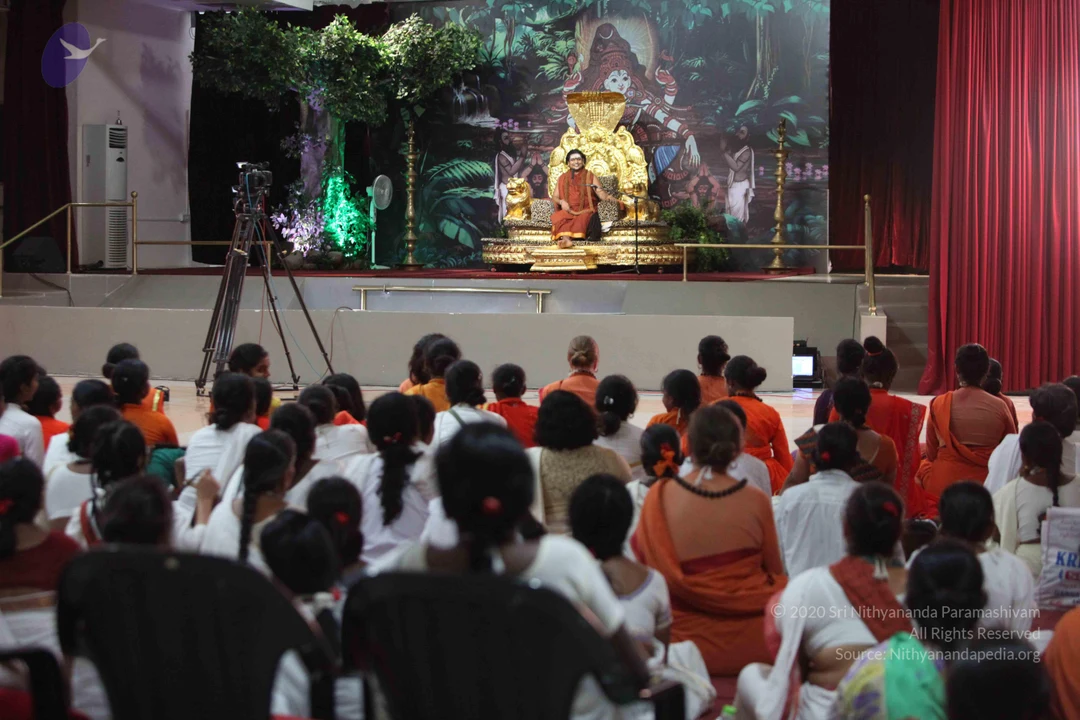
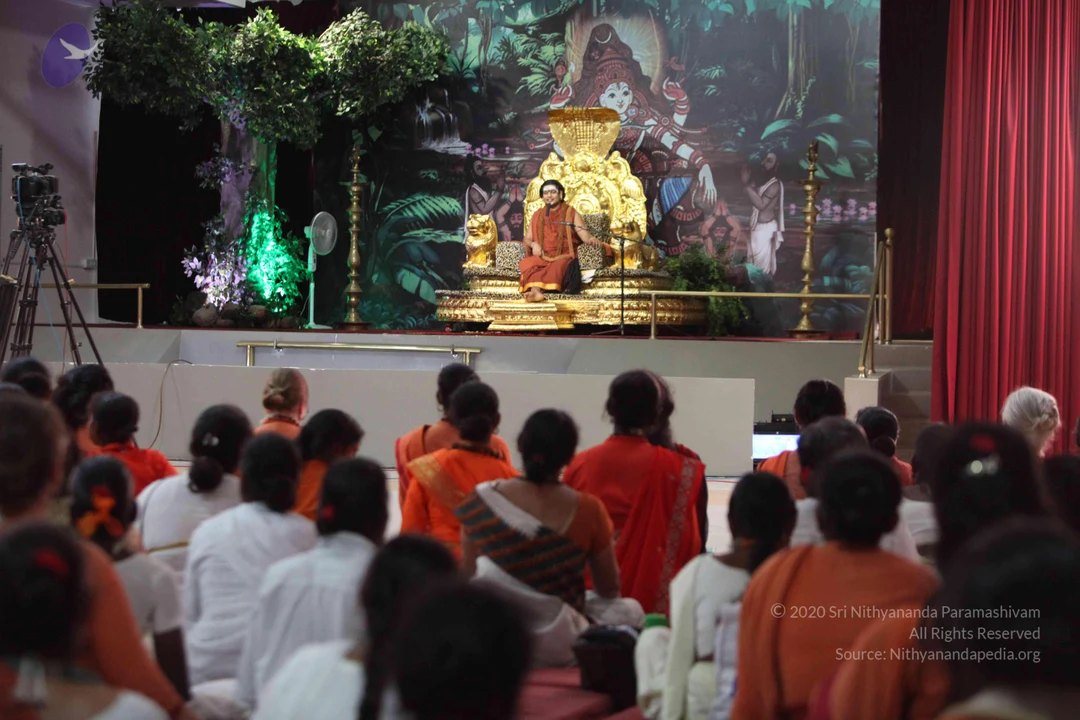
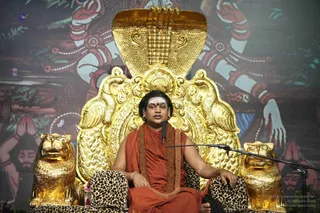
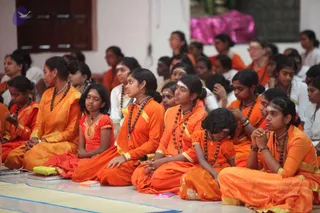
A seated man in an orange-red robe with a matching shawl and a long beaded rudraksha-style mala sits on an ornate gilded throne carved with a multi-hooded cobra canopy and two golden lion-head armrests. He has a white vibhuti mark with a red dot on his forehead and shoulder-length dark hair, and he rests one hand on a leopard-print cushion while speaking at a microphone on a stand. Behind him a large painted backdrop shows a colourful deity with multiple raised arms. The scene resembles a discourse stage.A man with long swept-back dark hair and a white forehead marking sits on an ornate gold throne carved with a cobra hood and leopard-print cushions, wearing an orange-red robe and a long rudraksha mala, speaking into a microphone while smiling. A painted backdrop of a deity figure with raised hands is behind him, and a gold lion-head armrest is at right.A man sits cross-legged on an ornate gold throne carved with a cobra hood and lion-head armrests, draped in leopard-print cushions. He wears a saffron-orange robe with a gold-bordered hem, long rudraksha mala necklaces, and a gold earring, with a microphone on a stand before him. A painted backdrop shows a deity figure and a kneeling devotee with palms joined in a forest setting. Appearance-based probable Swamiji (probable) with long swept-back hair and saffron robes, seated as the discourse speaker in a satsang setting.A photograph of a single seated man on a golden throne carved with a cobra-hood canopy and lion-shaped armrests, draped in a leopard-print seat cushion. He wears saffron/orange robes, a long rudraksha-style beaded mala across his chest, a white vibhuti forehead mark with a red bindi, and his dark hair is swept back to his shoulders. He sits beside a microphone stand, speaking during a satsang. Behind him is a painted backdrop of a figure with folded hands by a lotus pond in lush green foliage, with a red-and-white painted deity figure to the left. Photo credit overlay in the corner.A seated man in an orange-saffron robe and rudraksha mala speaks into a microphone while sitting on an ornate golden throne with lion-head armrests and a cobra hood canopy, upholstered in leopard-print cushions. He wears a white tilak on his forehead, gold bangles and a gold-edged saffron shawl. Behind him a large painted backdrop shows a deity figure and a seated sage with folded hands beside a lotus pond.A photograph of a seated group of devotees, mostly women and girls, at an indoor satsang in a hall with white walls and a pink fabric-draped backdrop. In the foreground, several young girls and women sit cross-legged on a light mat, wearing saffron-orange and red-orange sarees and dresses with gold borders, rudraksha malas around their necks, and white or ochre forehead markings. Some have eyes closed in meditation and hands folded in prayer. Behind them more participants in orange and white sit in rows. A small yellow box and a pink book lie on the floor. The scene conveys a meditative satsang gathering.