Skip to content
Sunday

23 September 2012

Unclutch® From Depression

Dated photos
719
Source pages
1
Media
3
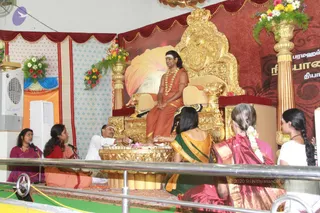
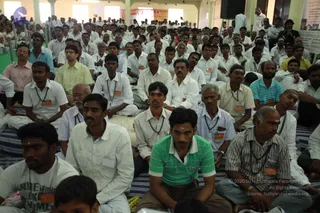
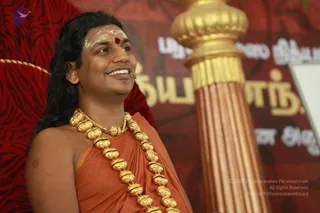
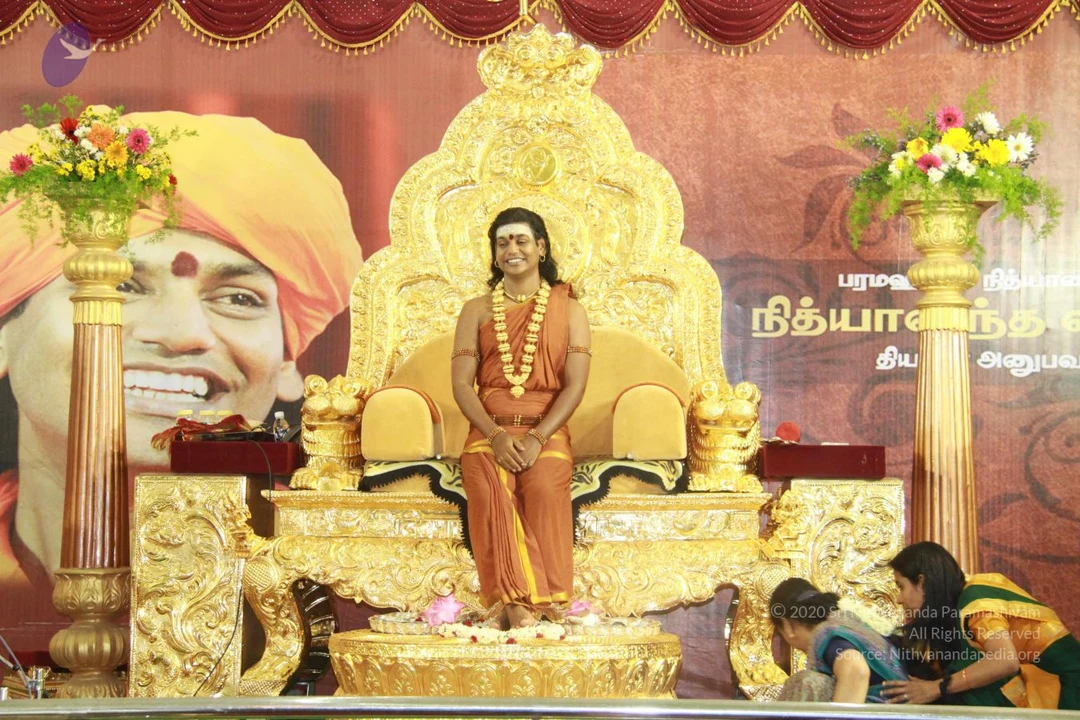
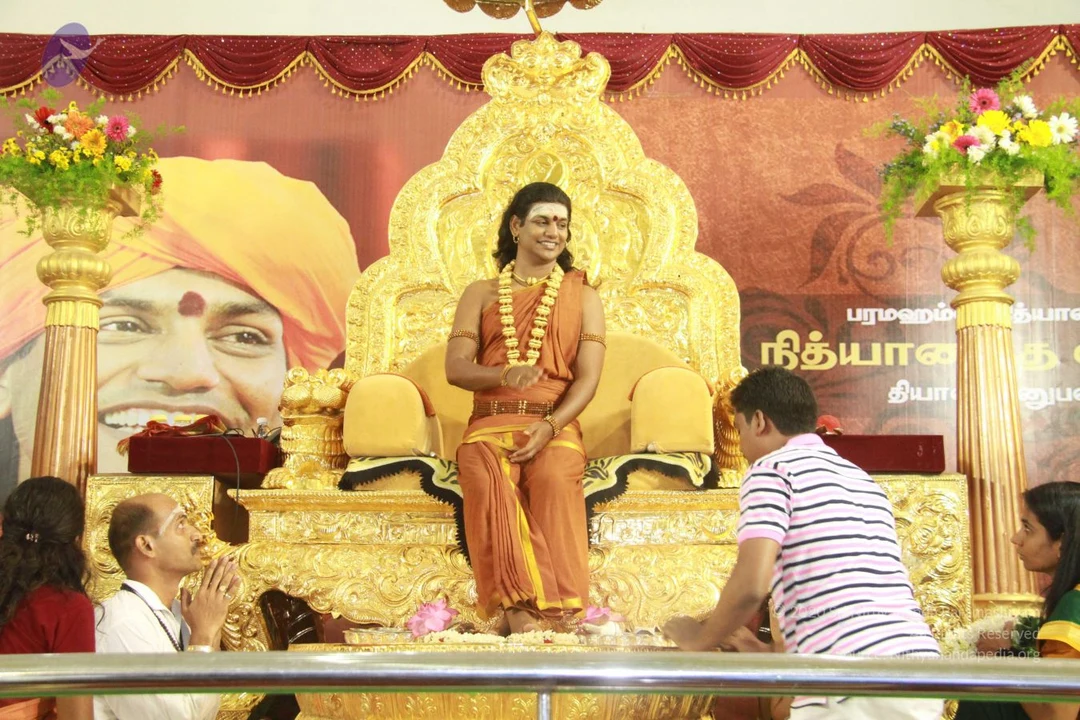
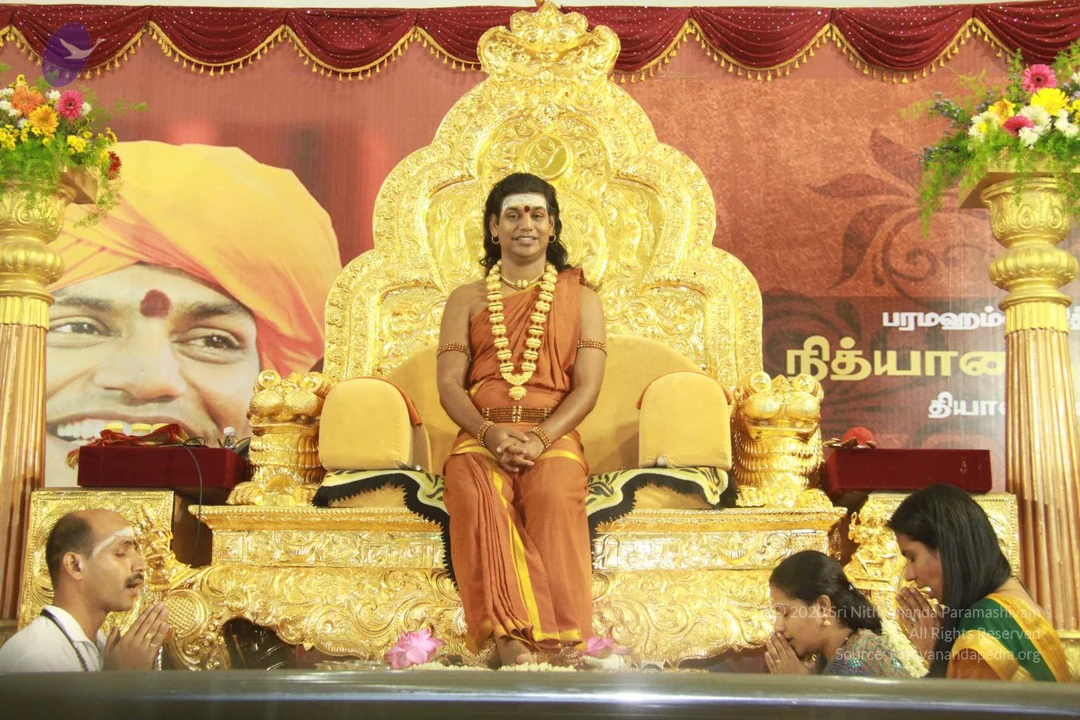
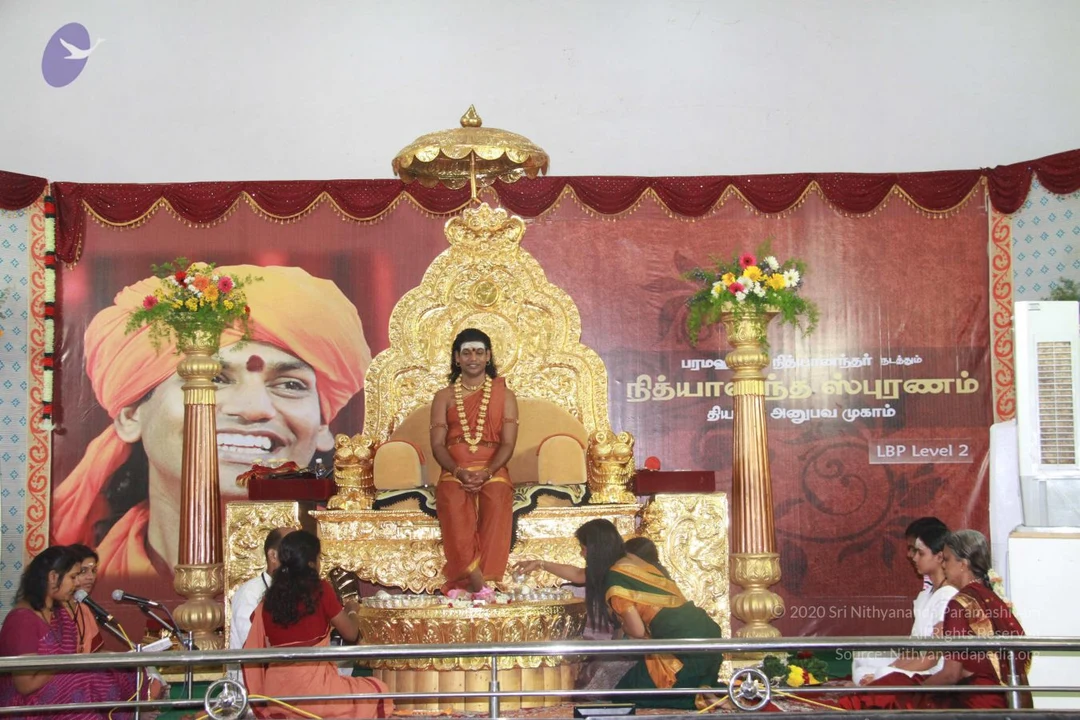
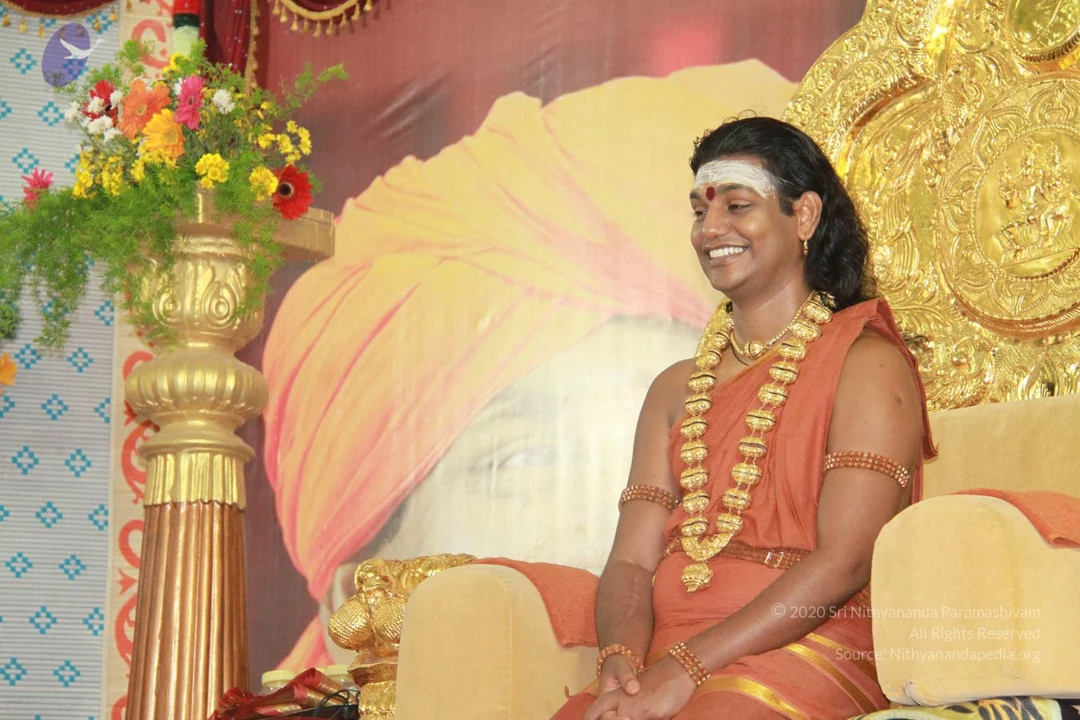
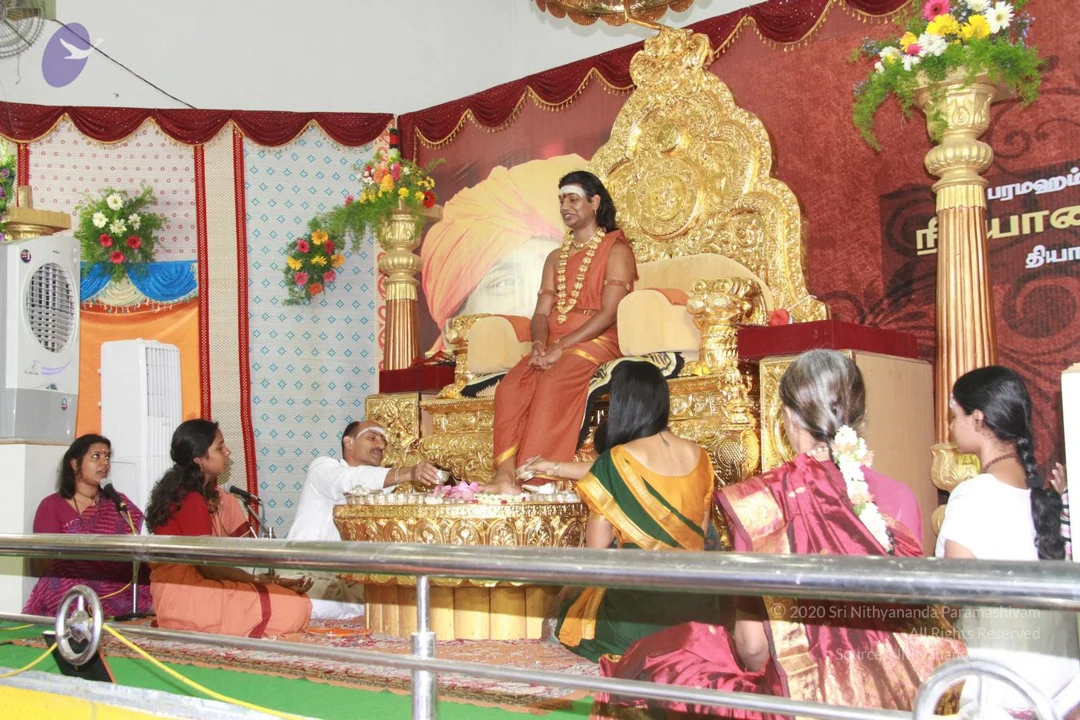
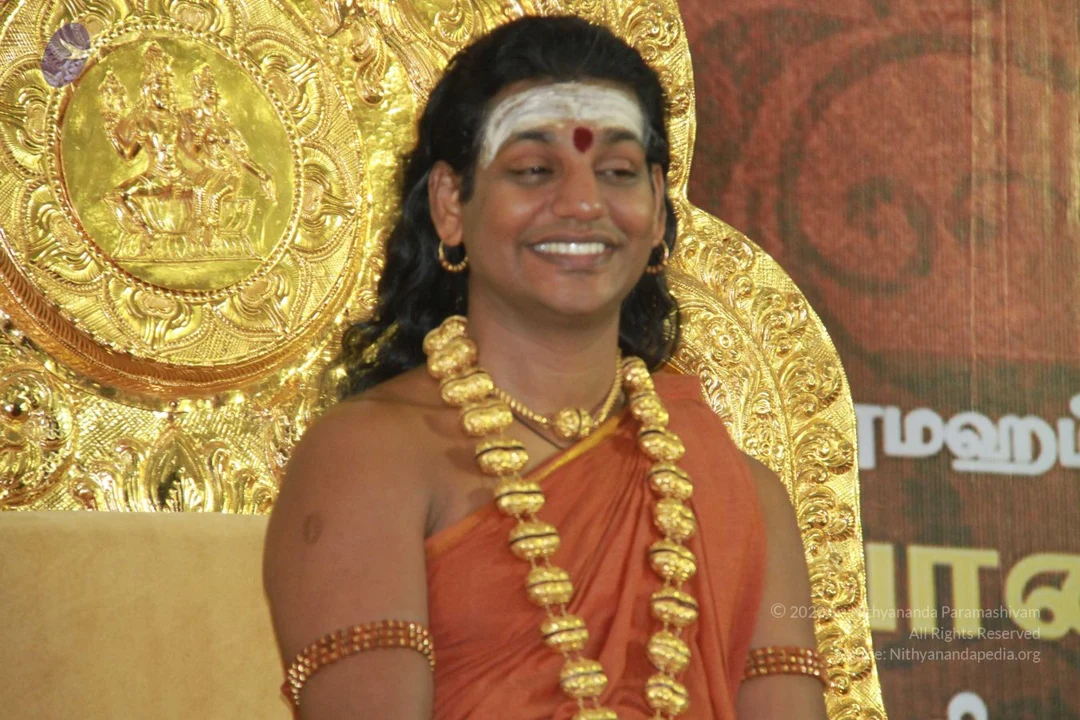
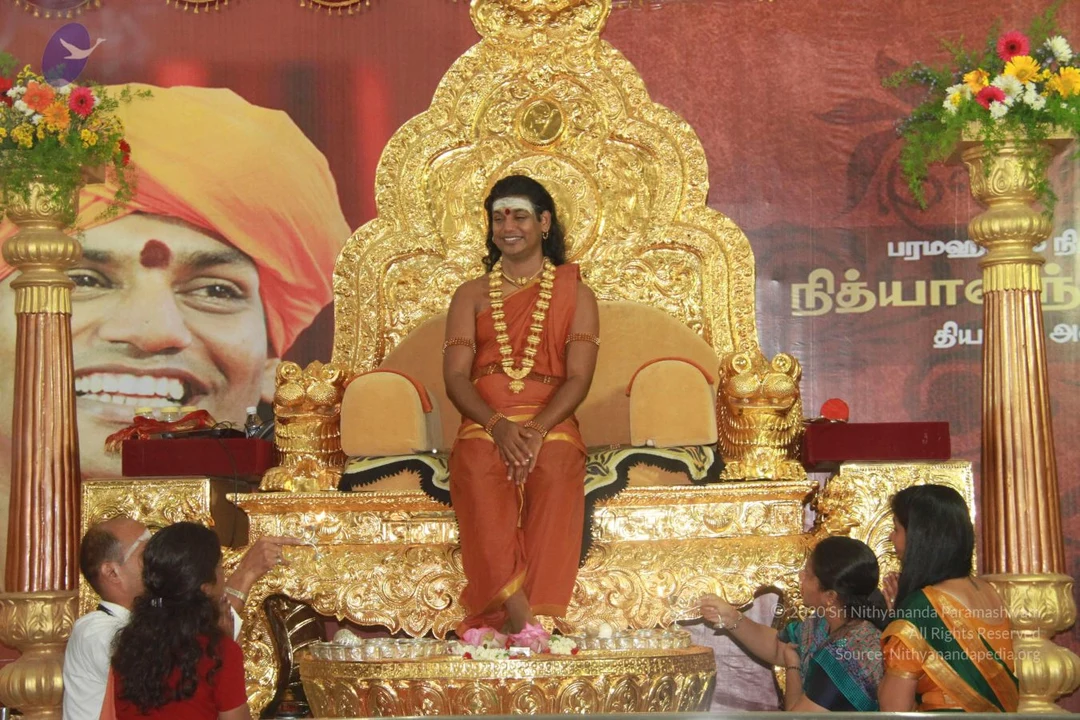
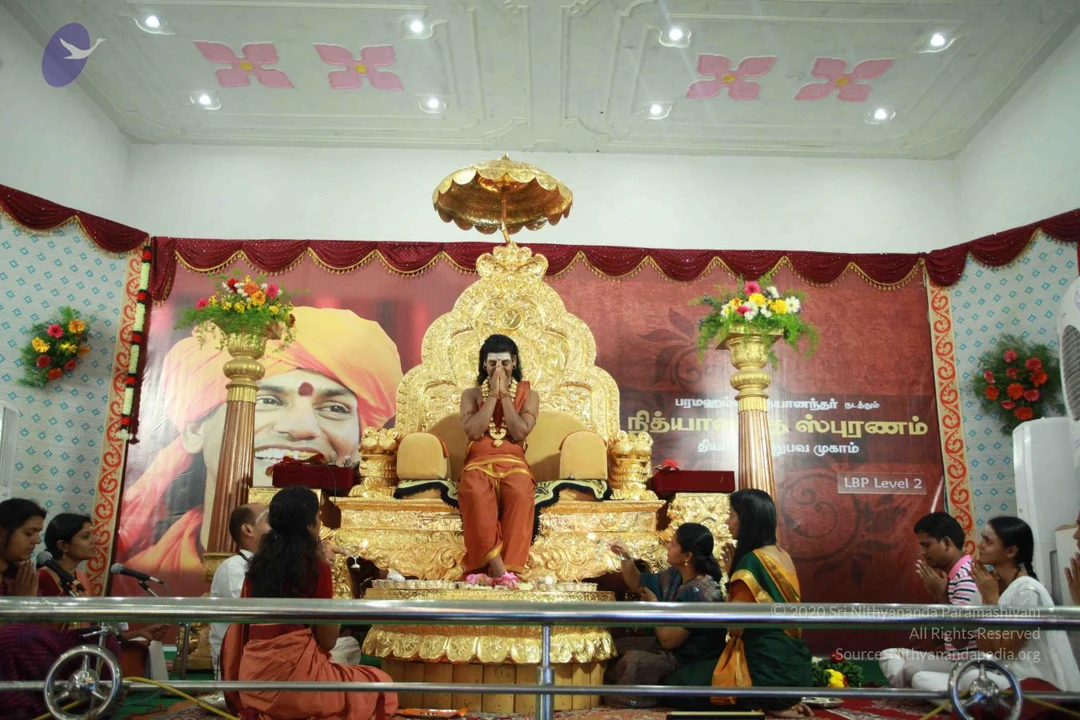
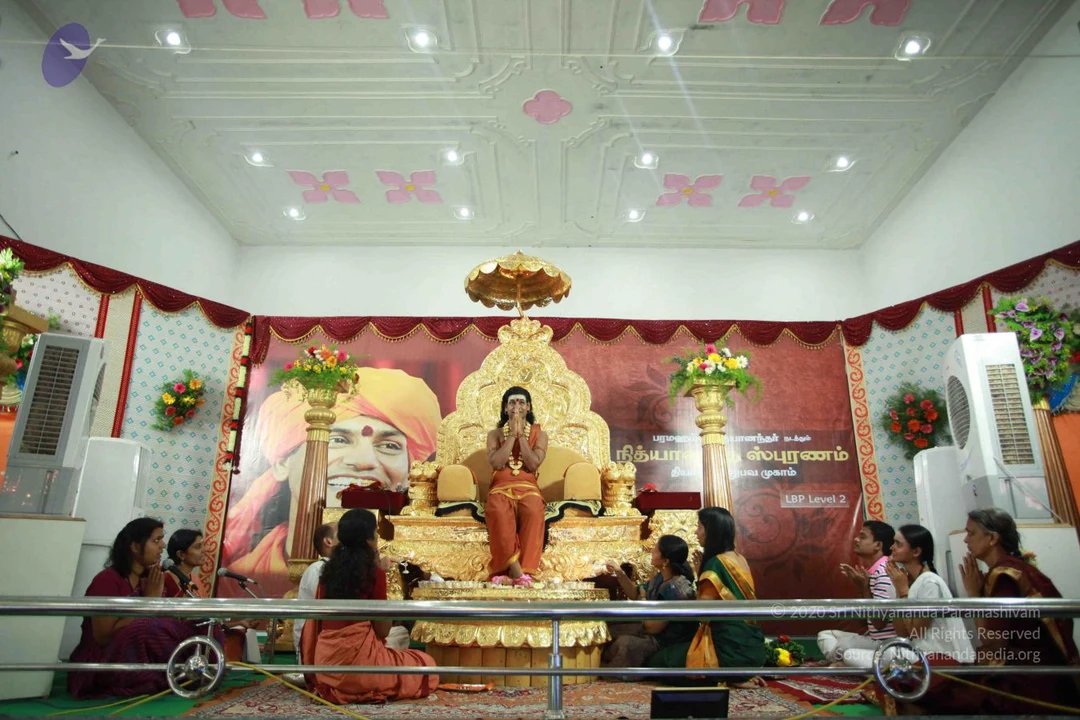
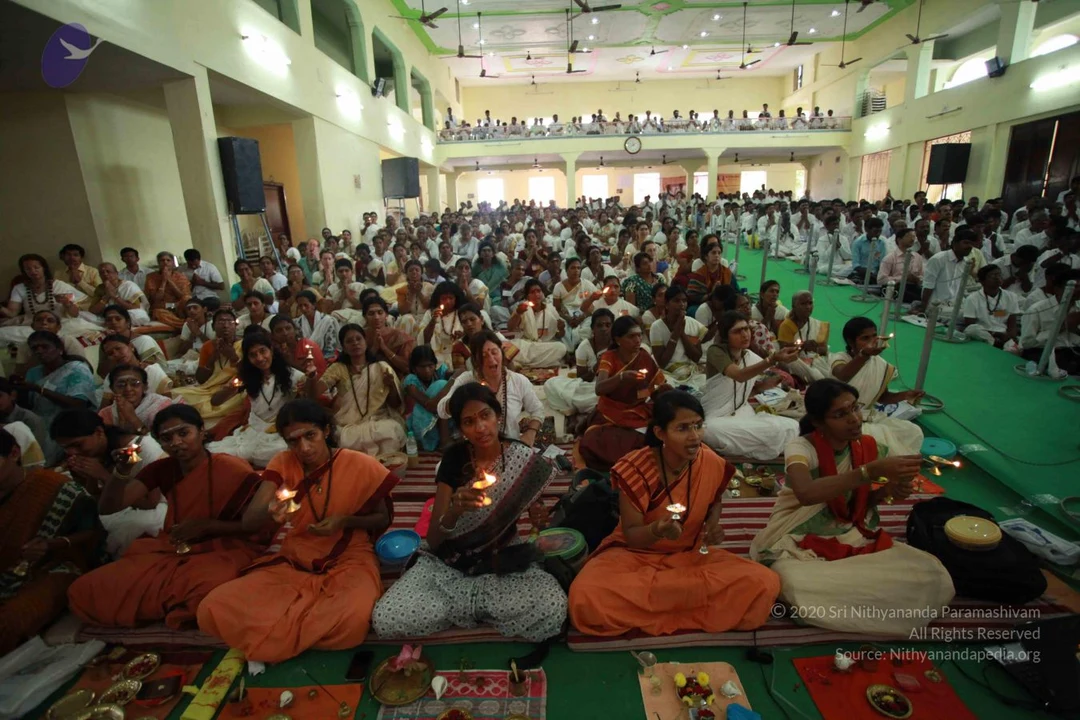
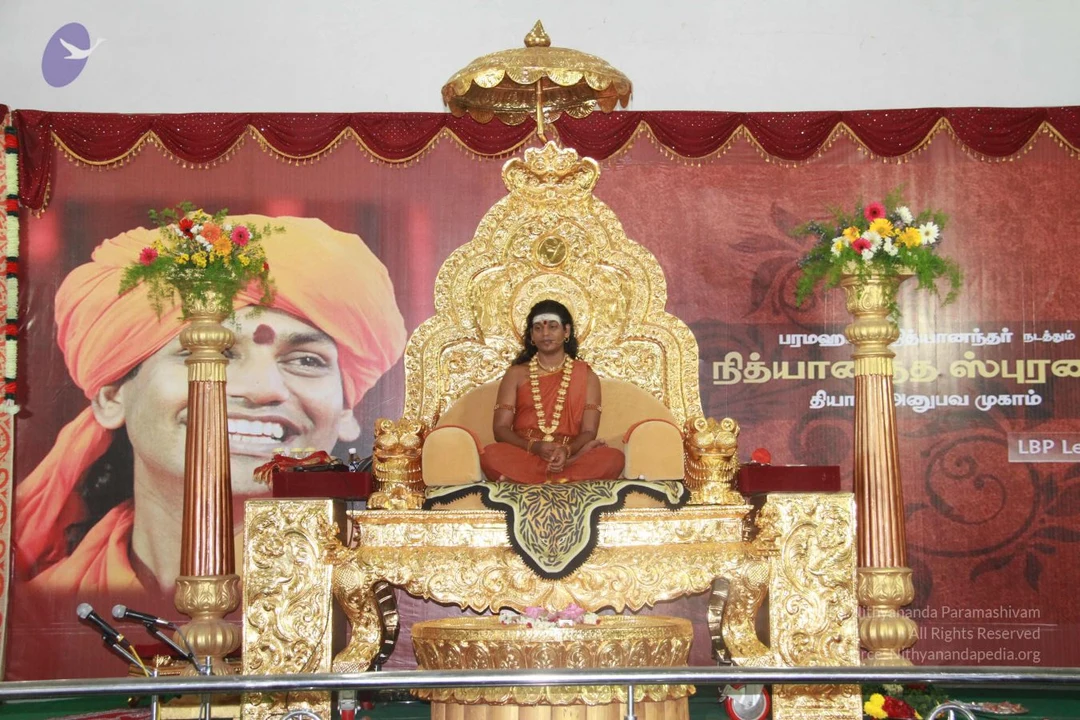
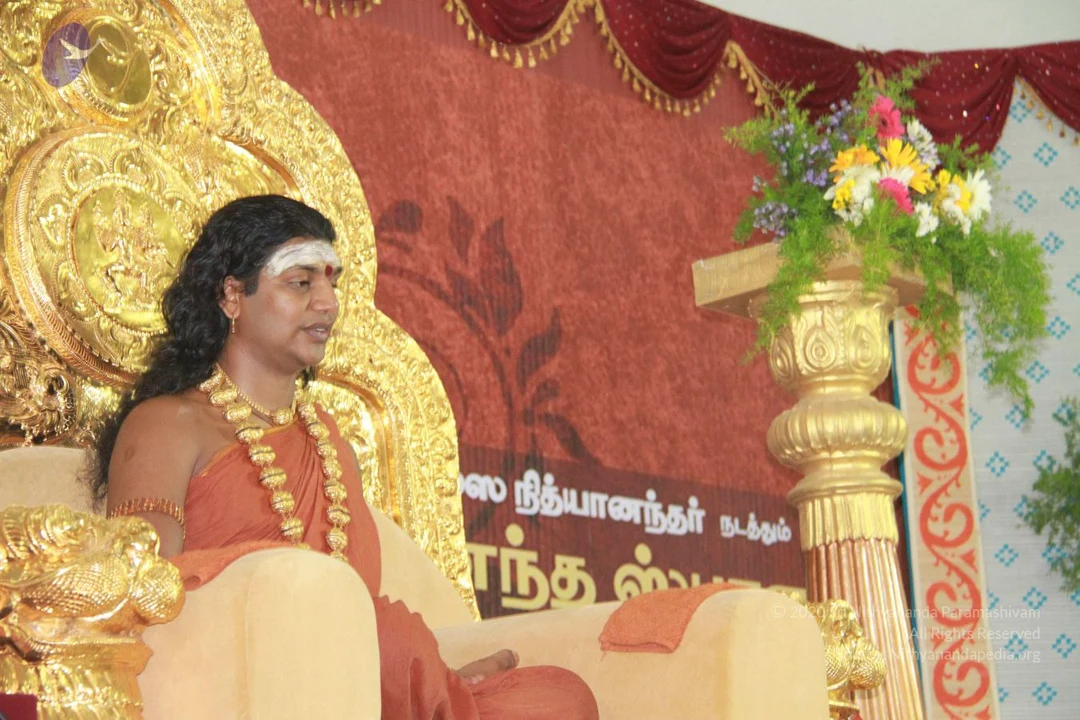
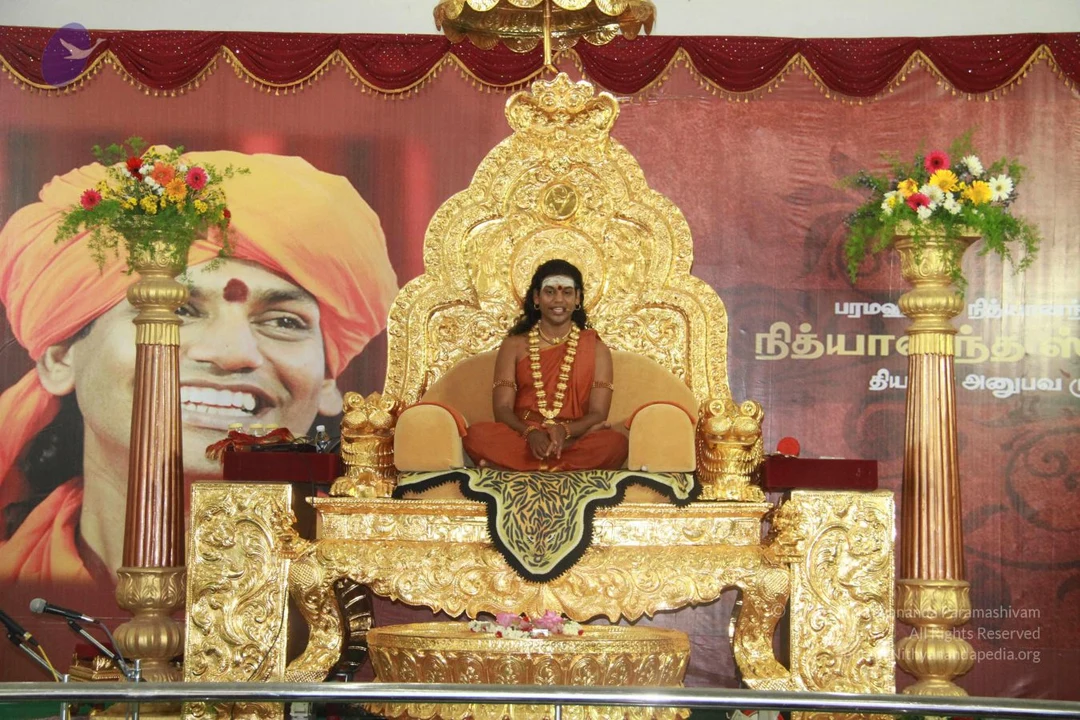
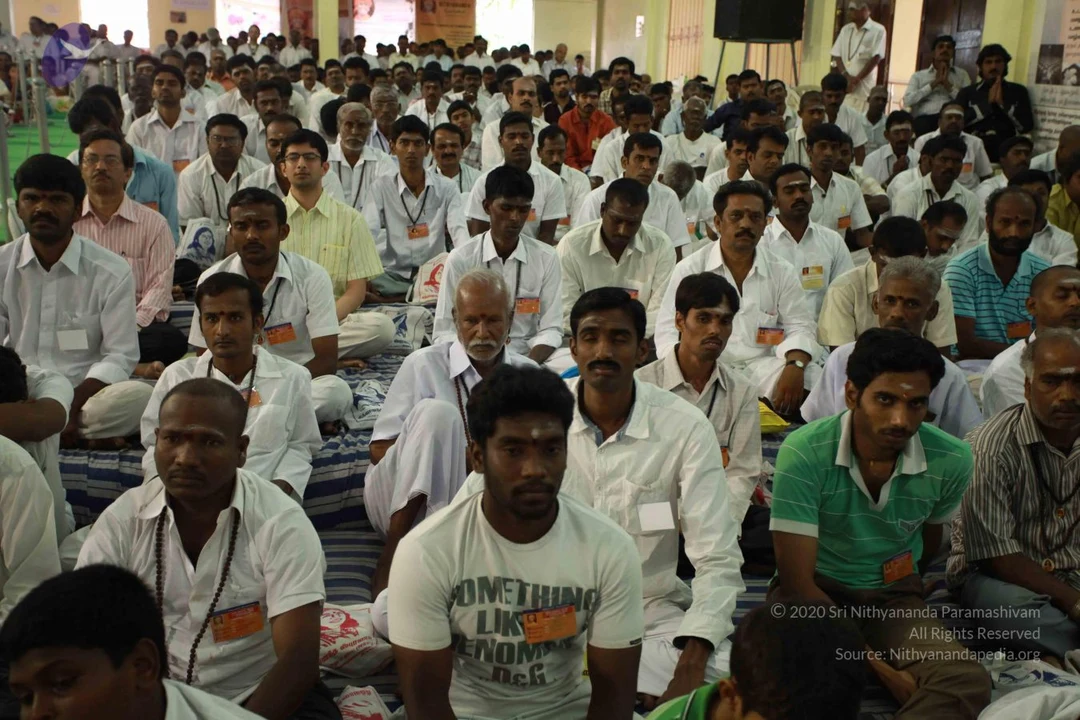
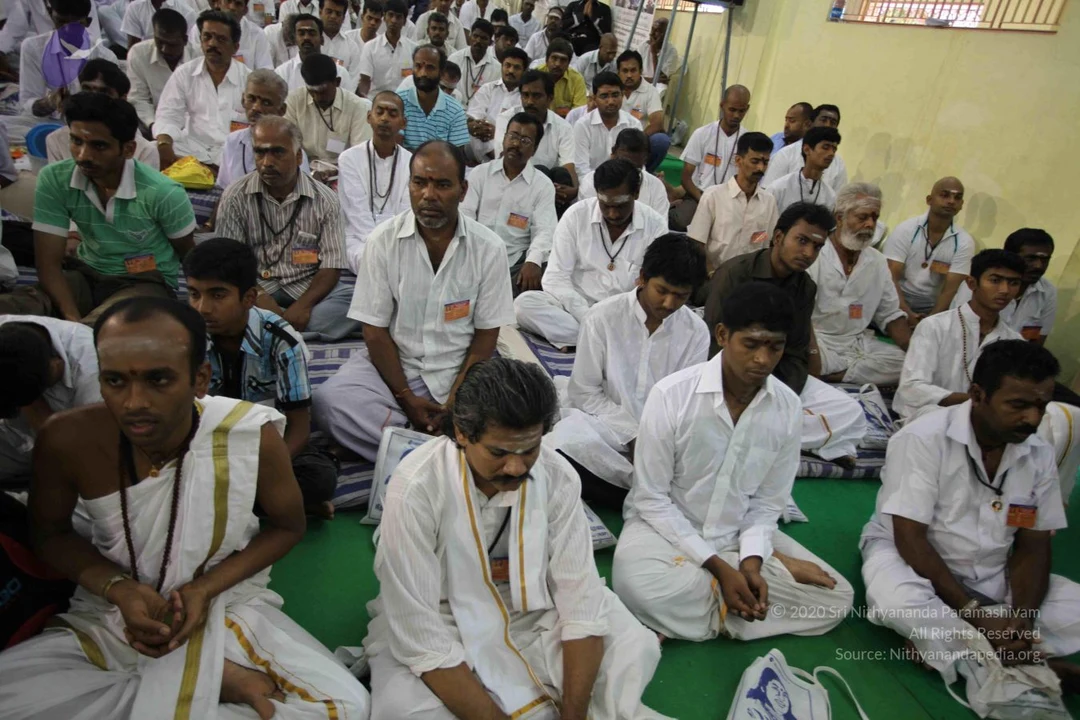
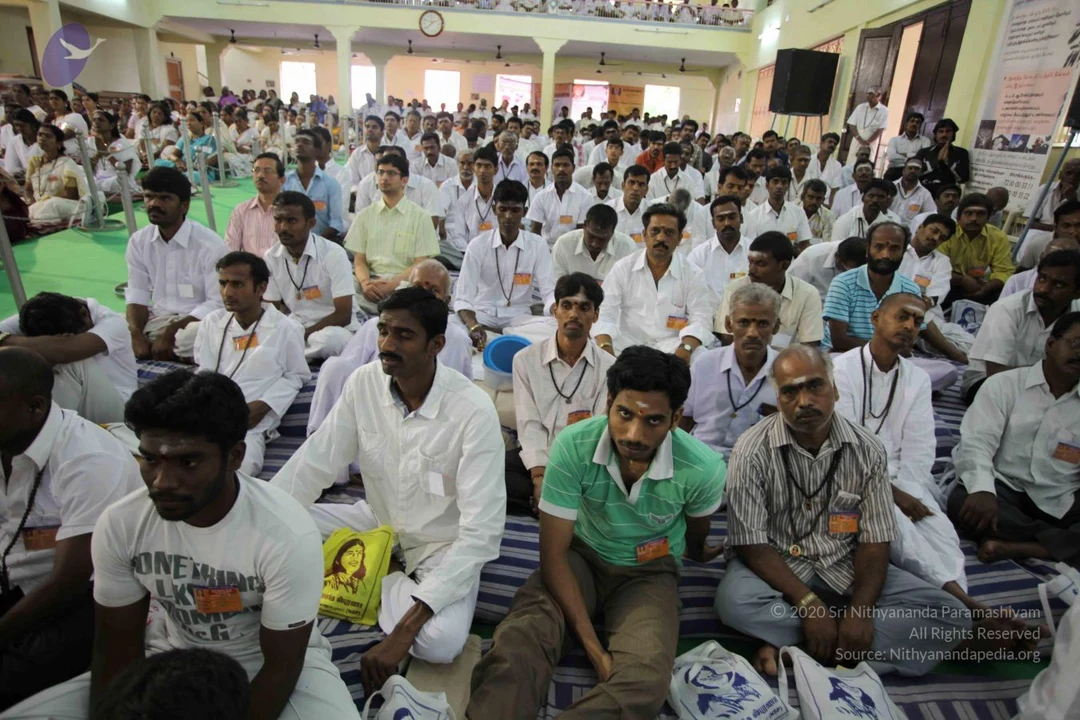
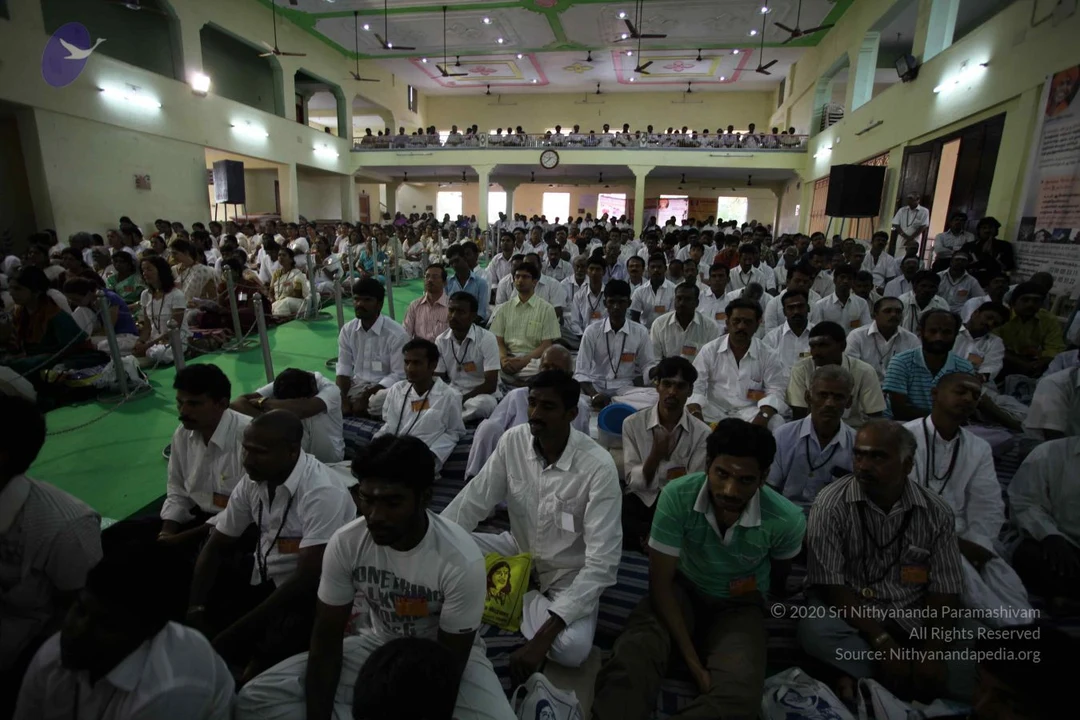
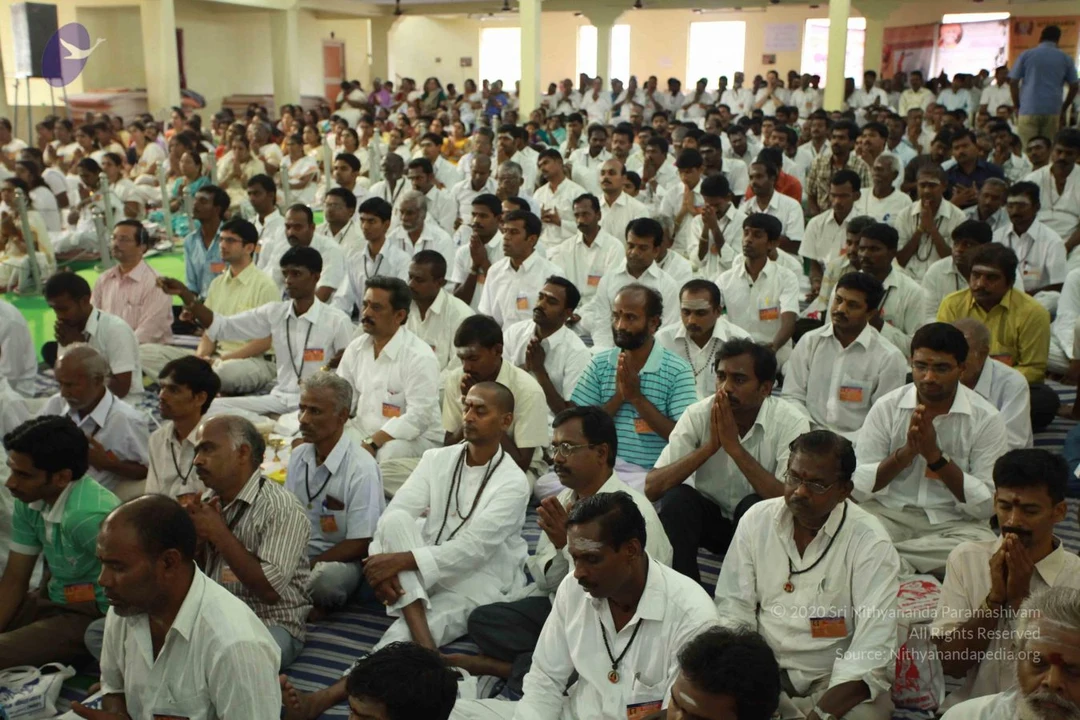
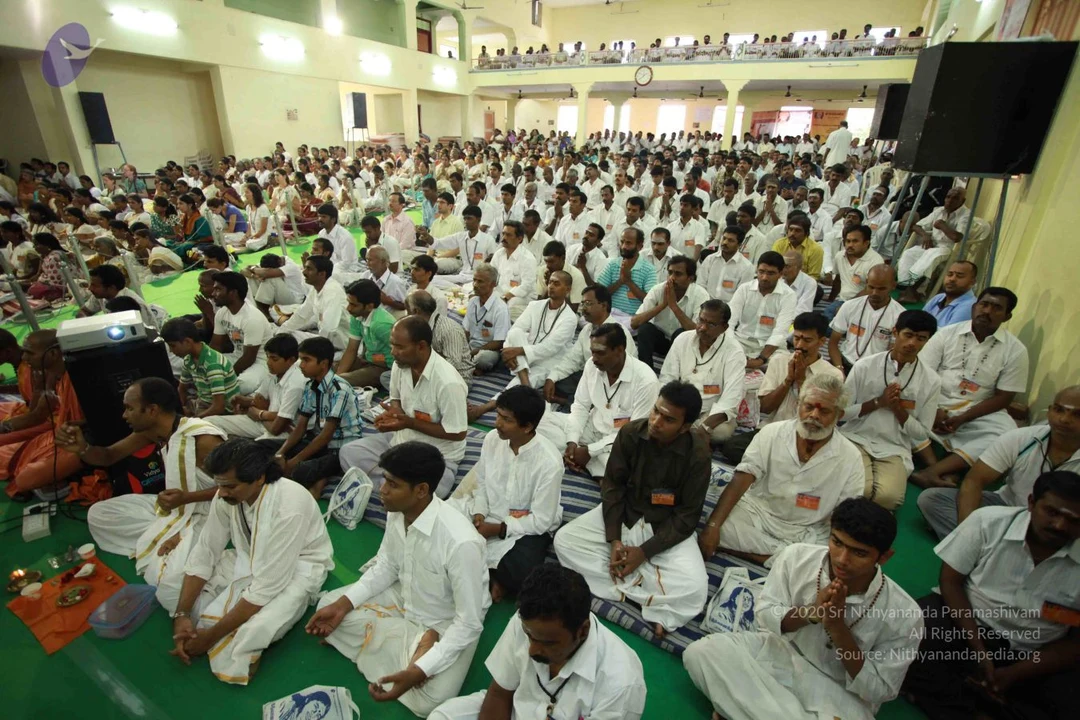
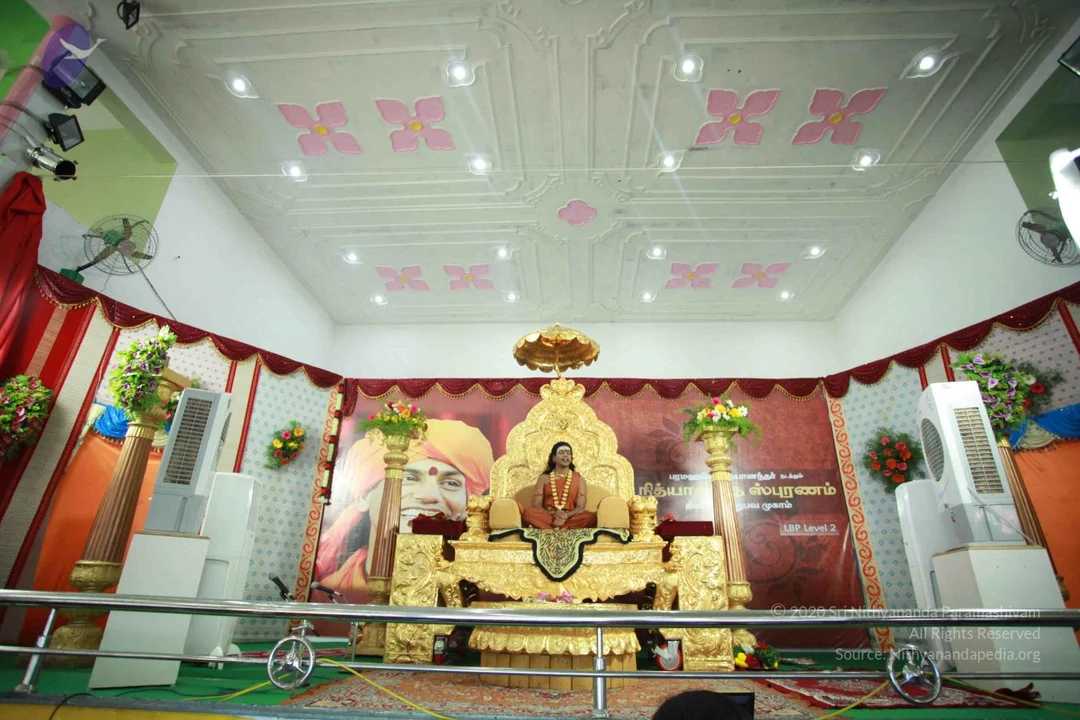
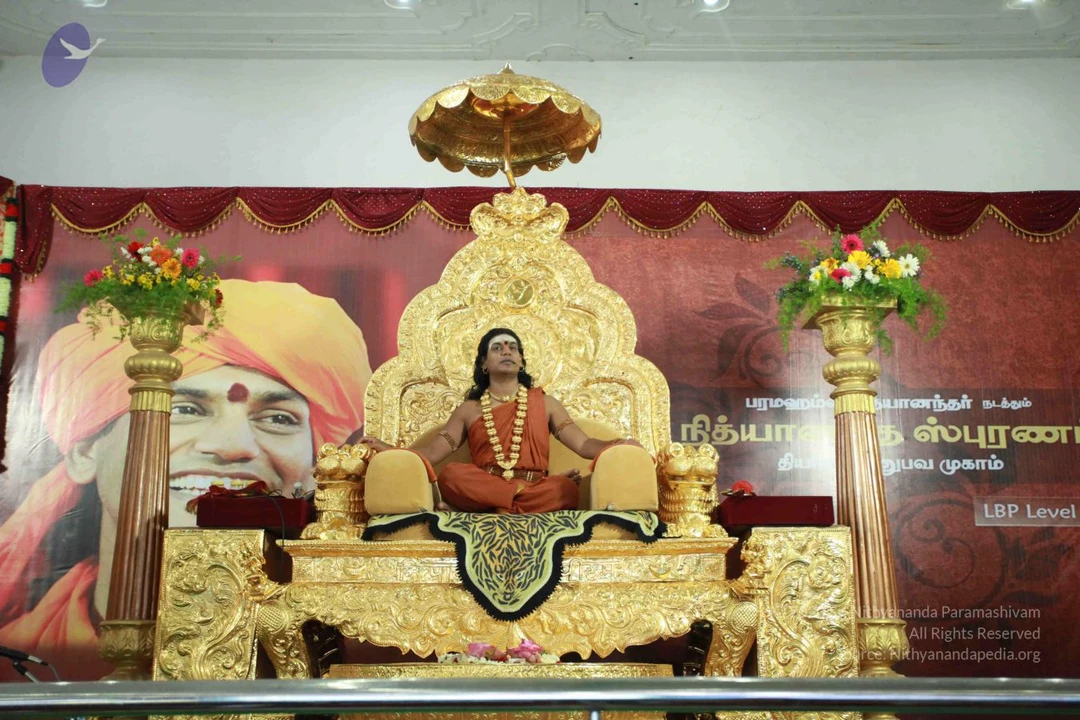
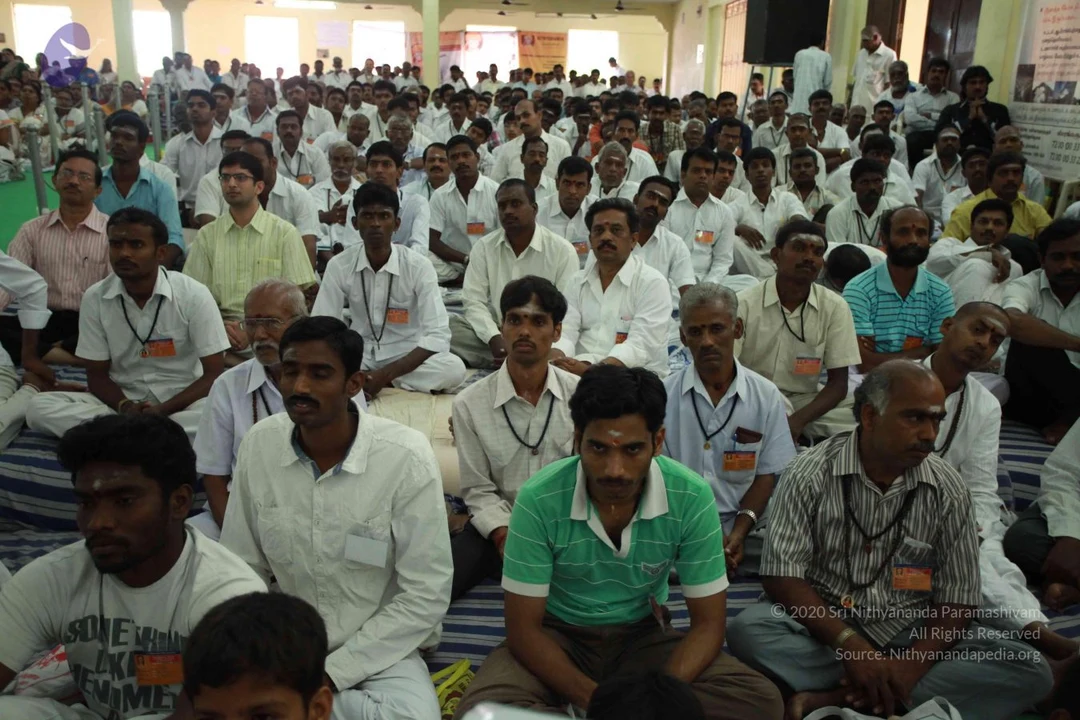
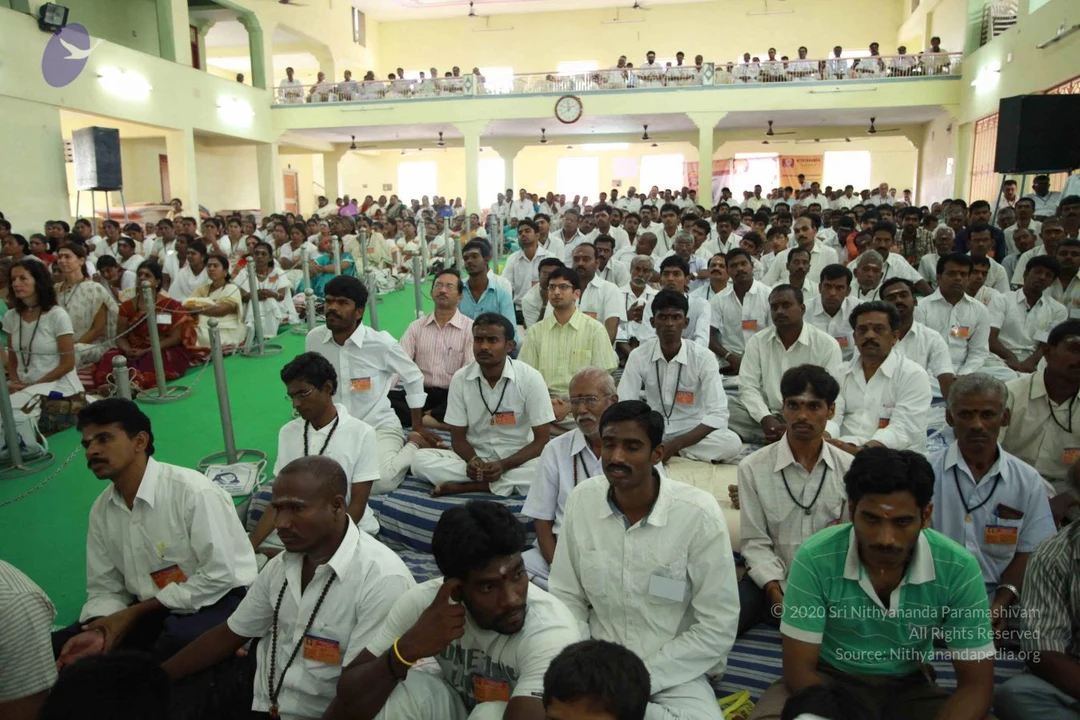
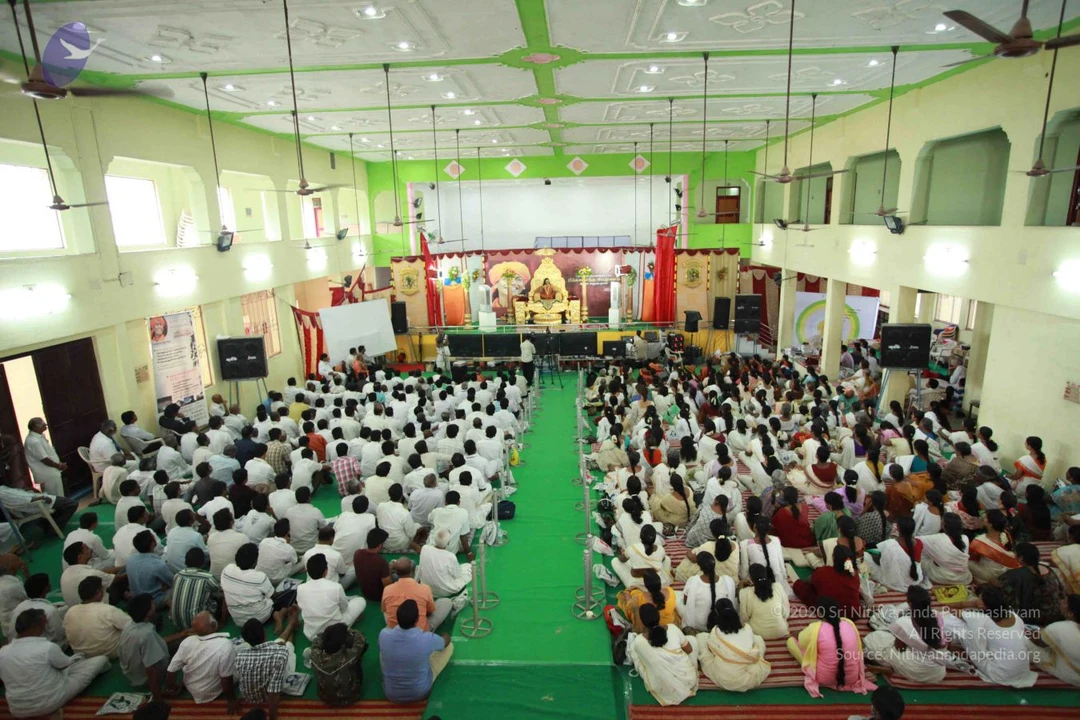
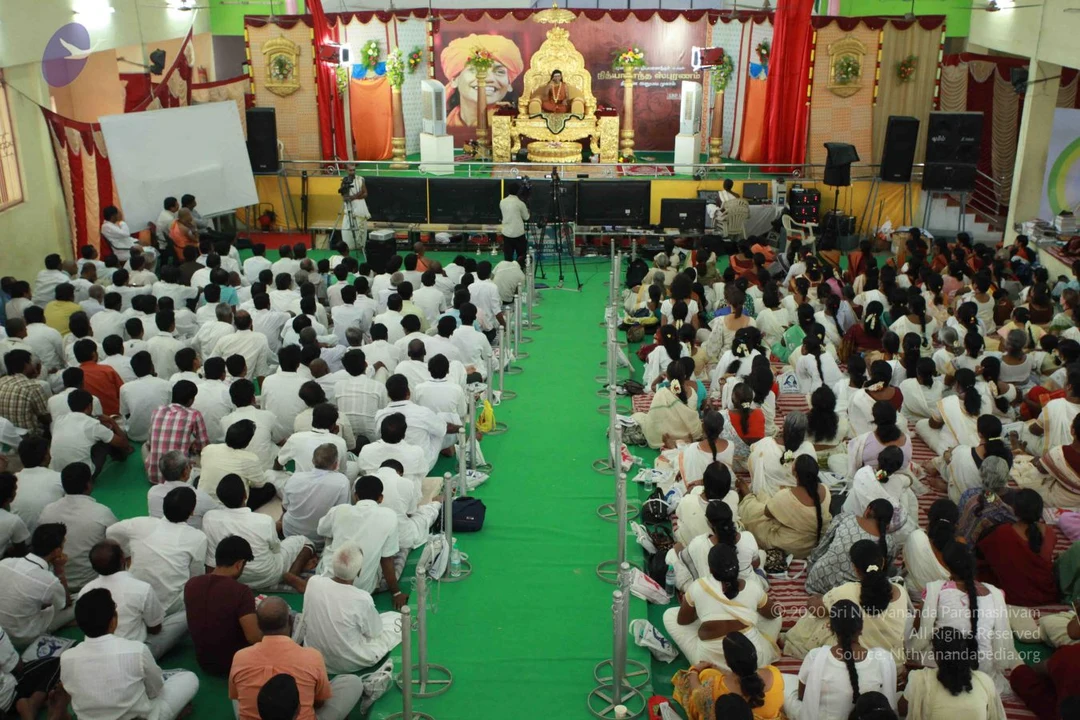
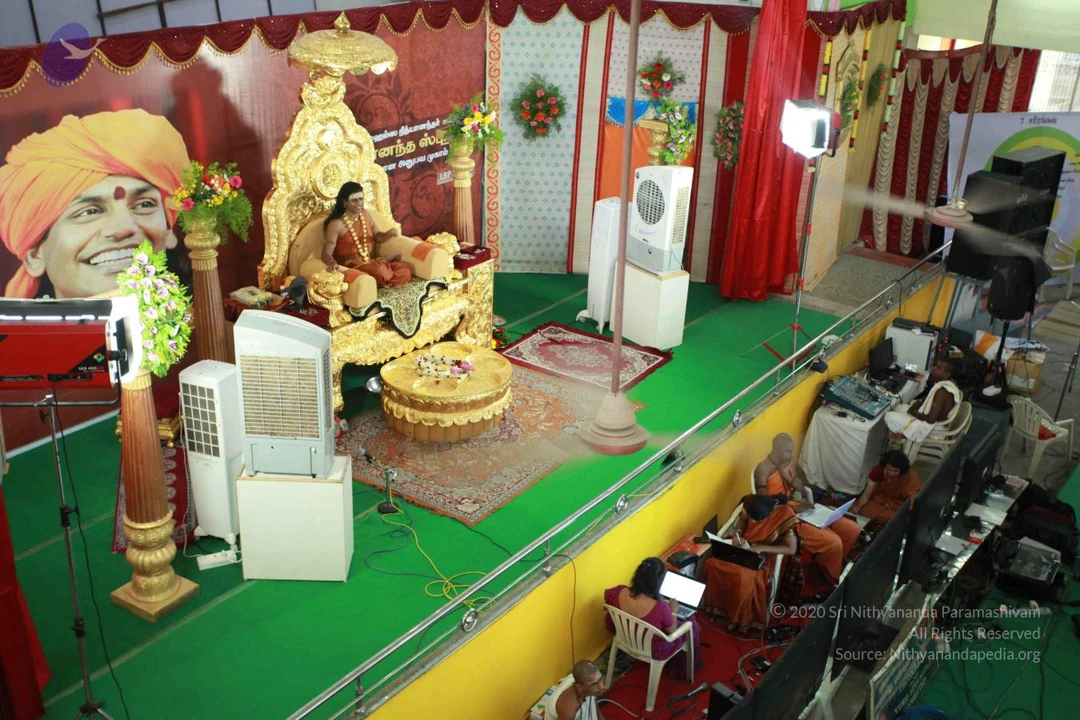
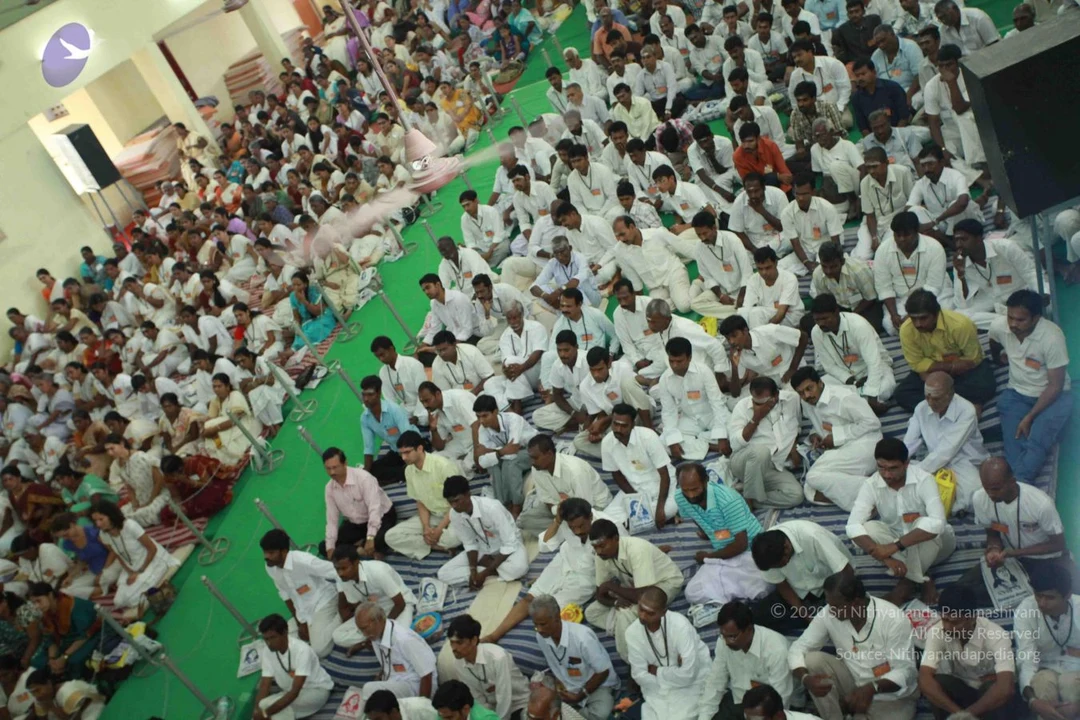
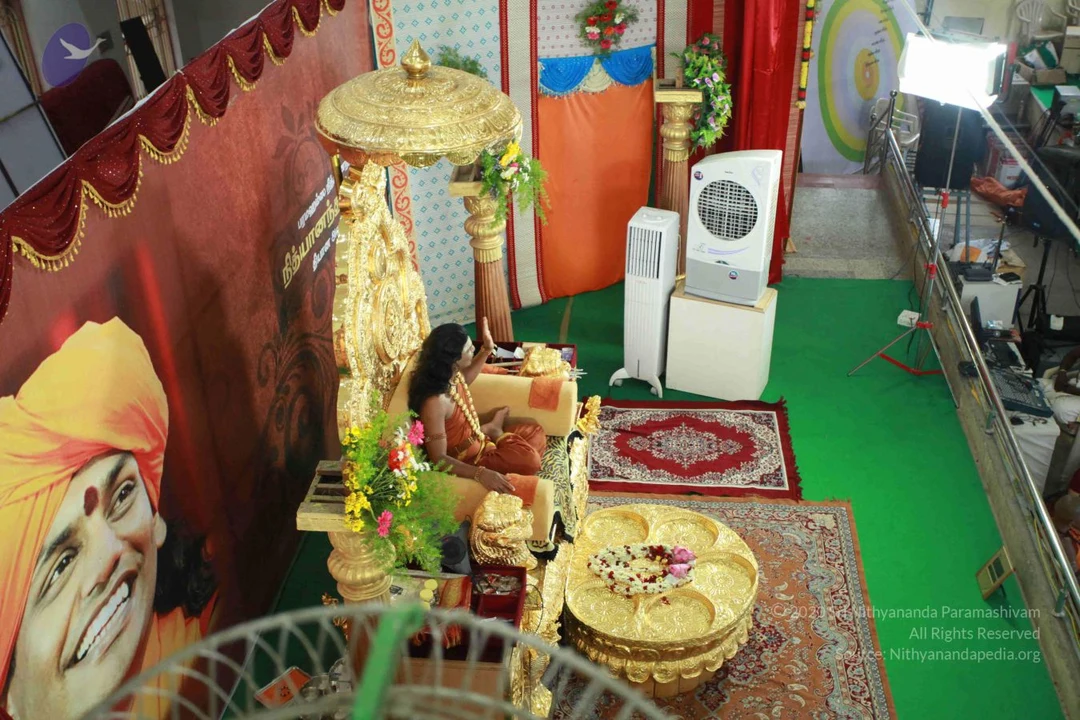
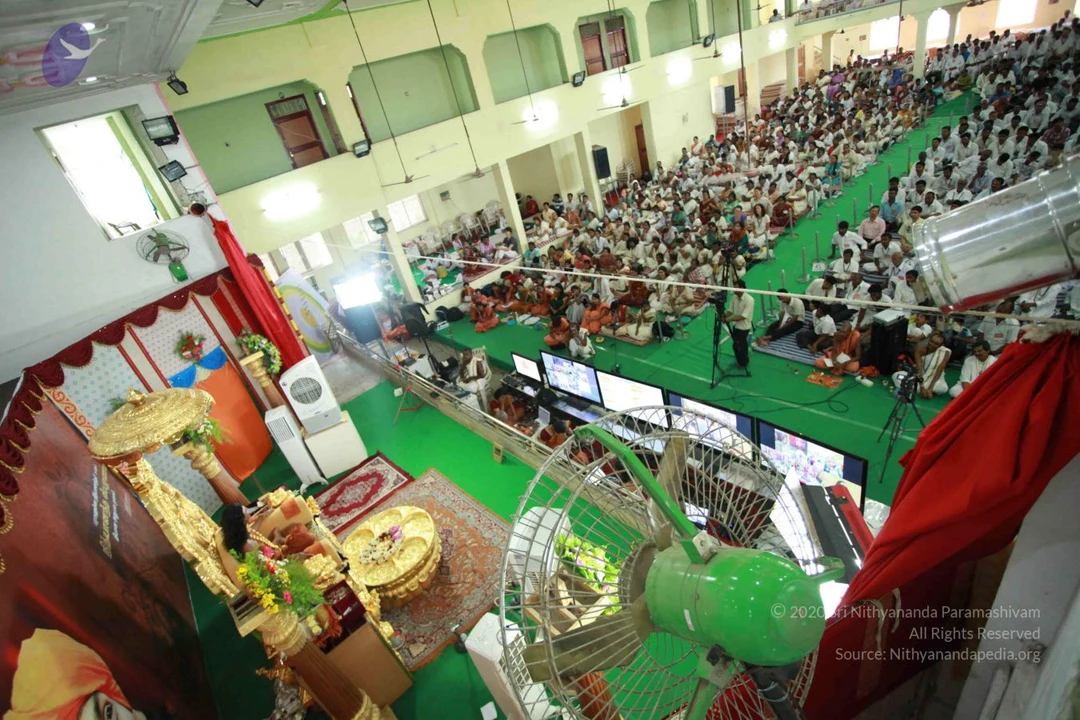
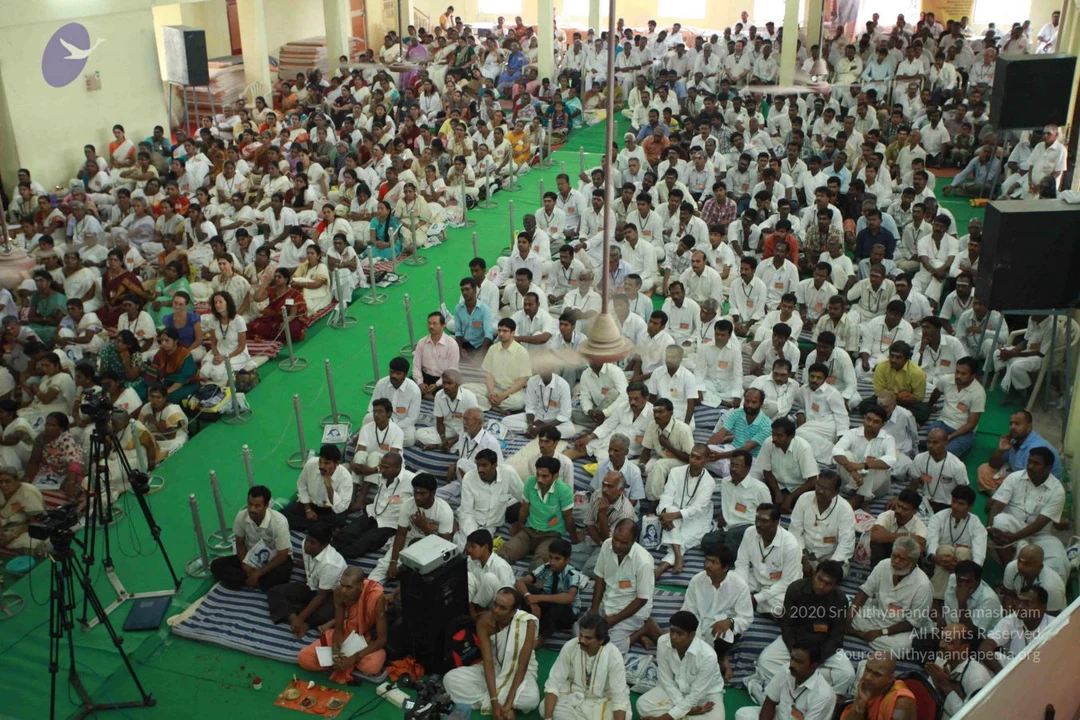
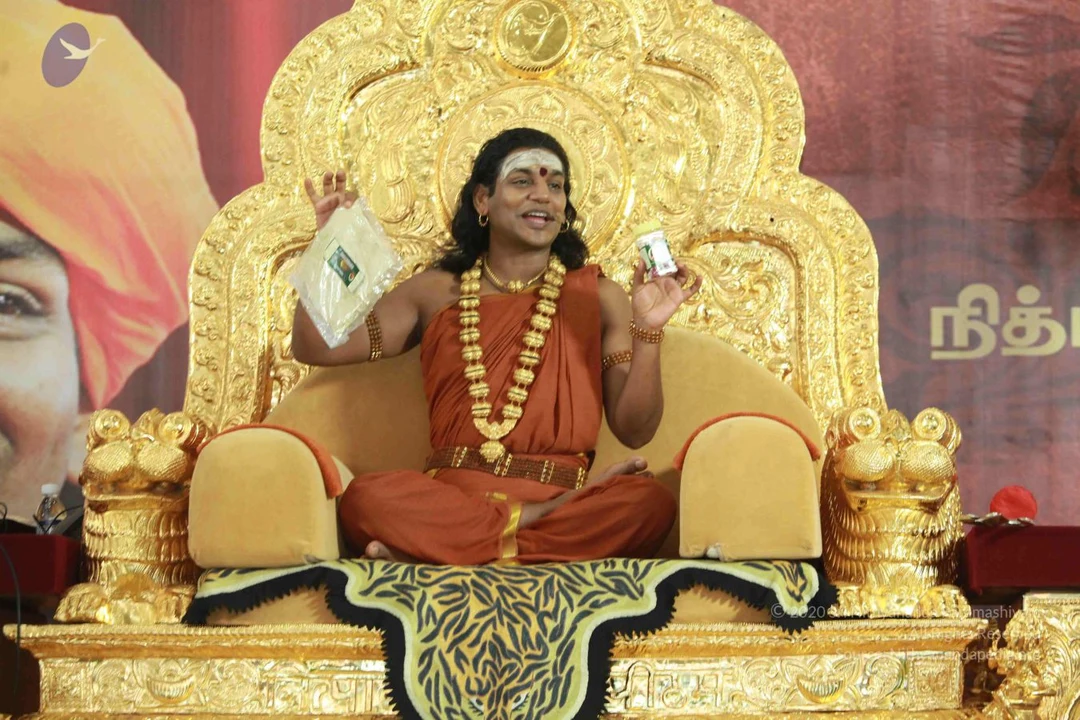
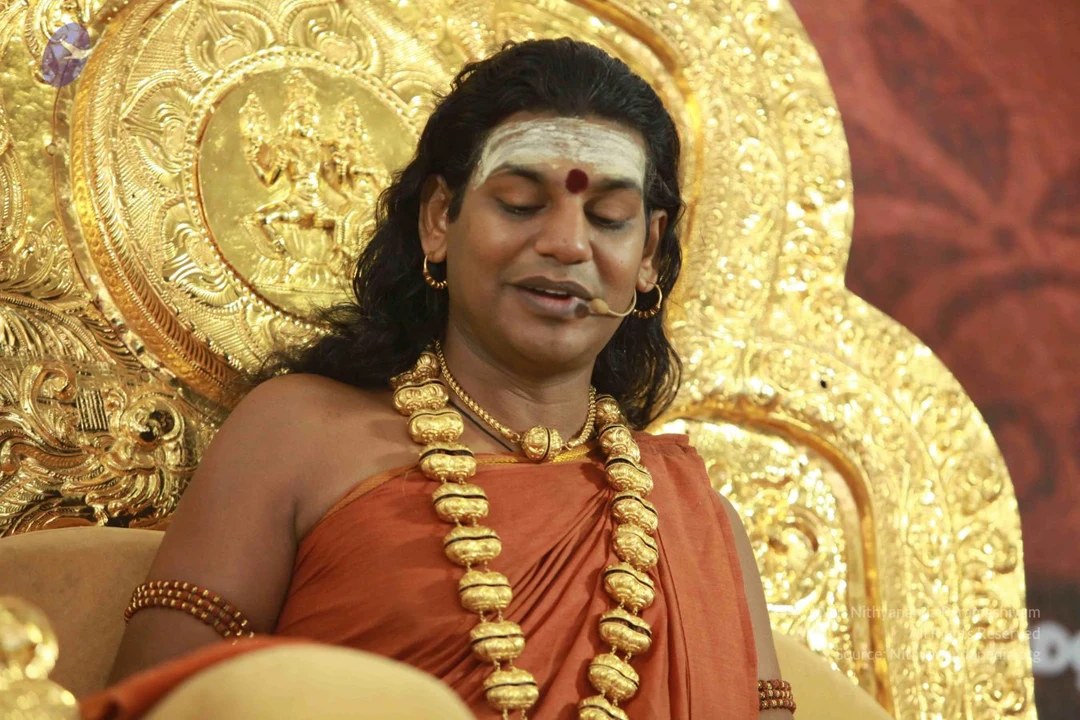
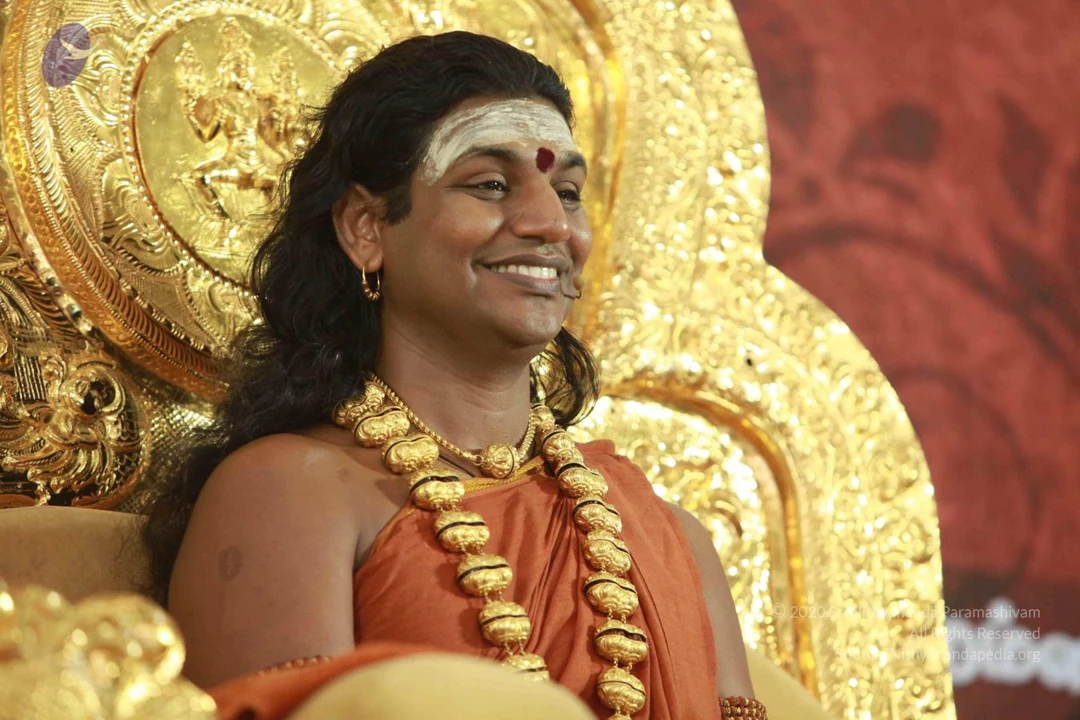
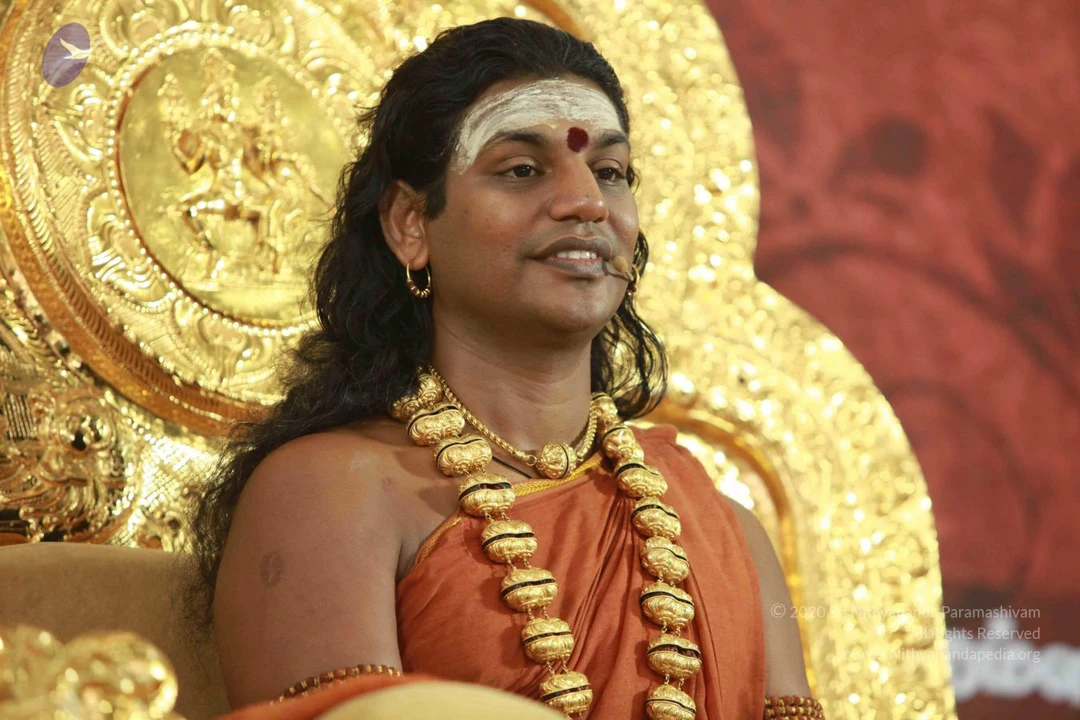
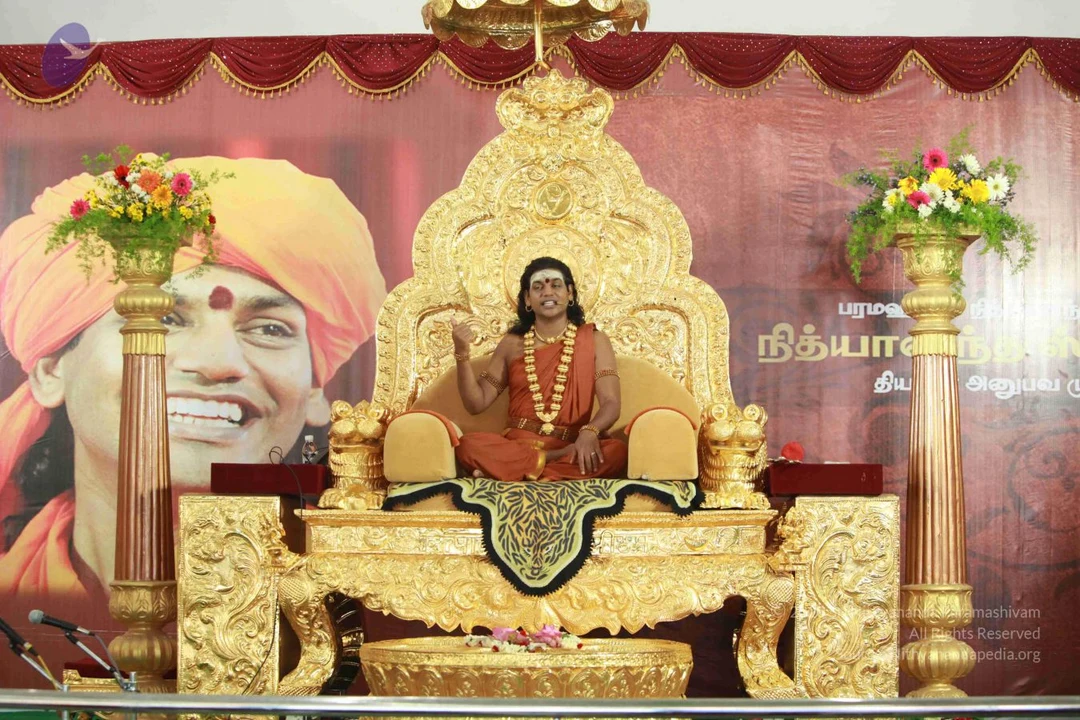
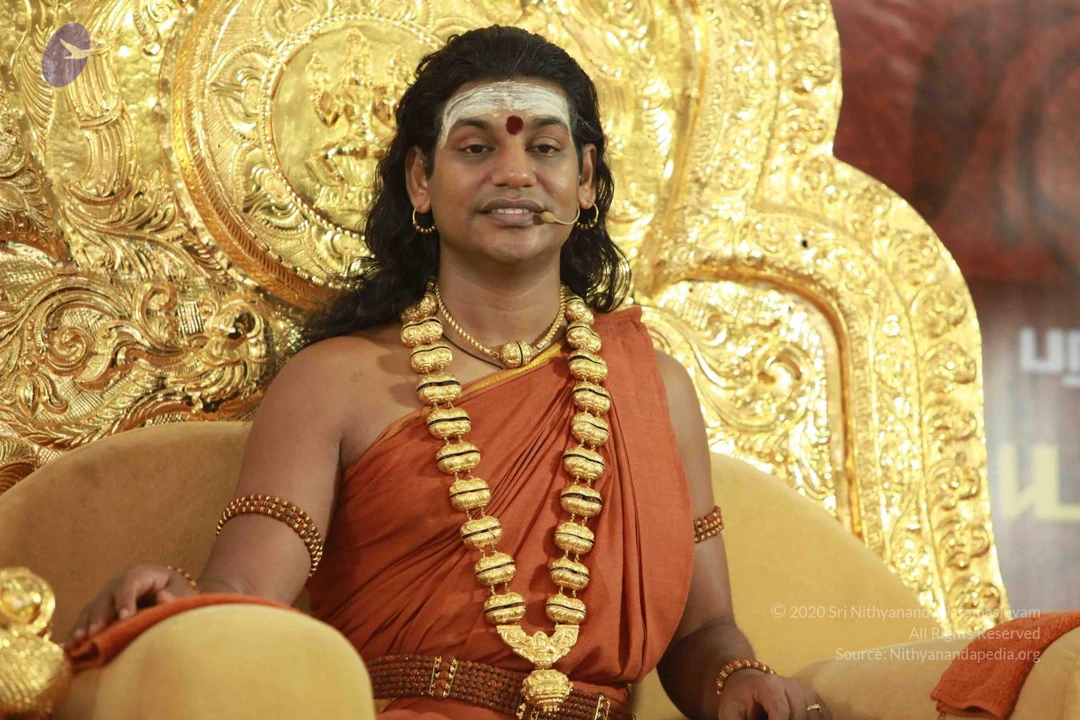
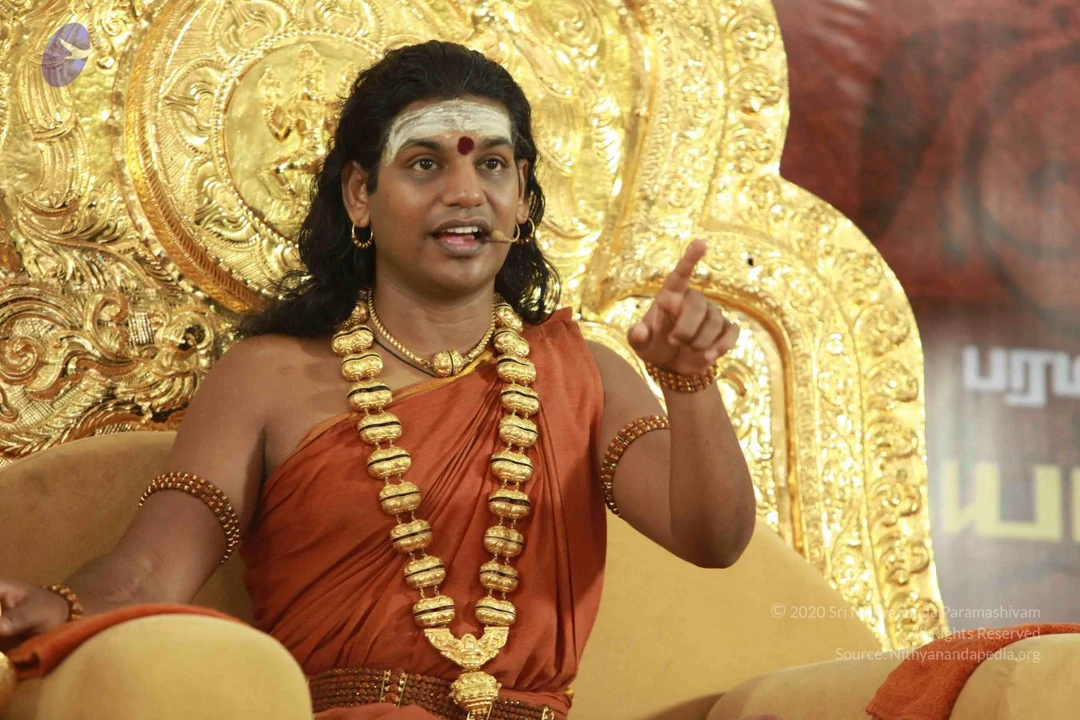
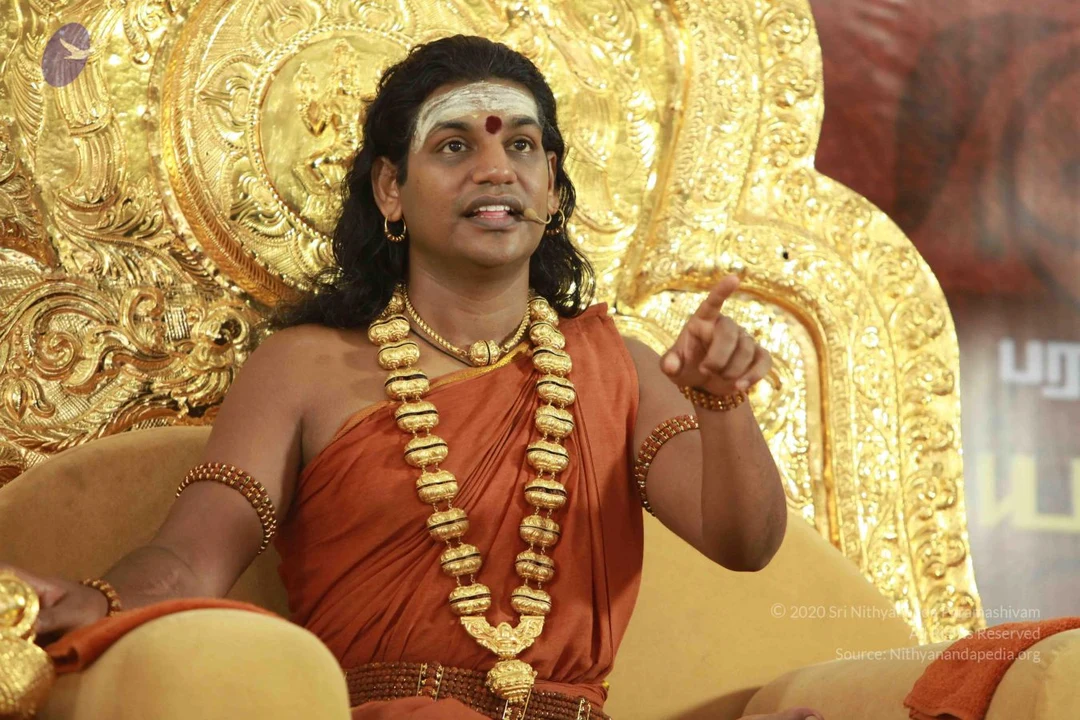
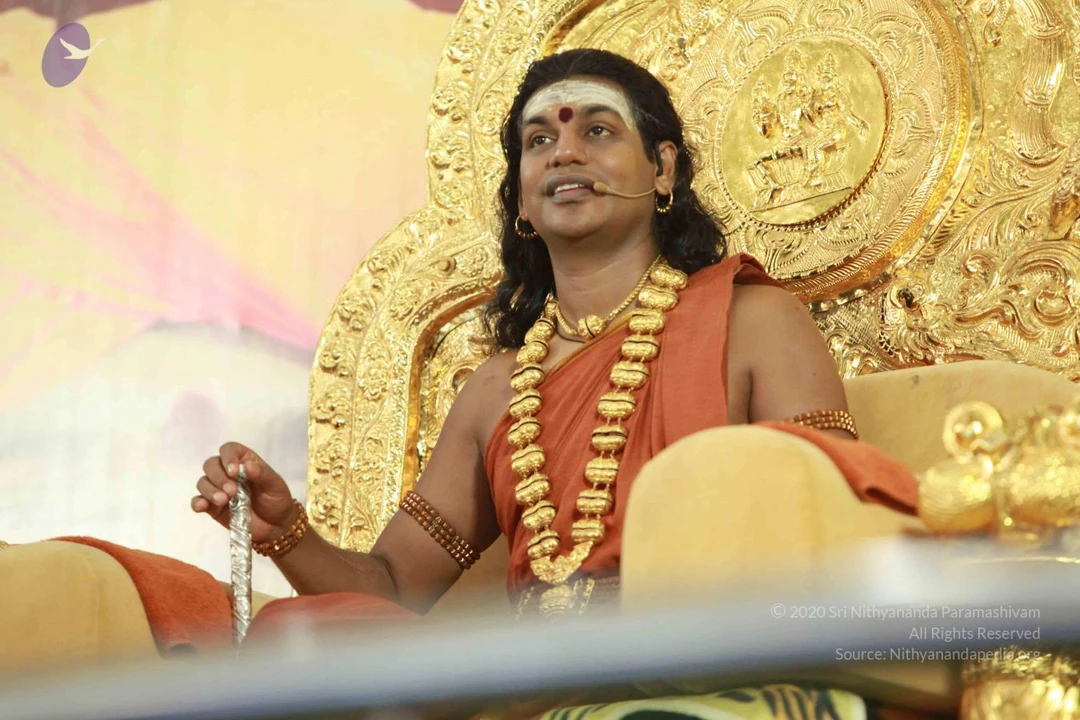
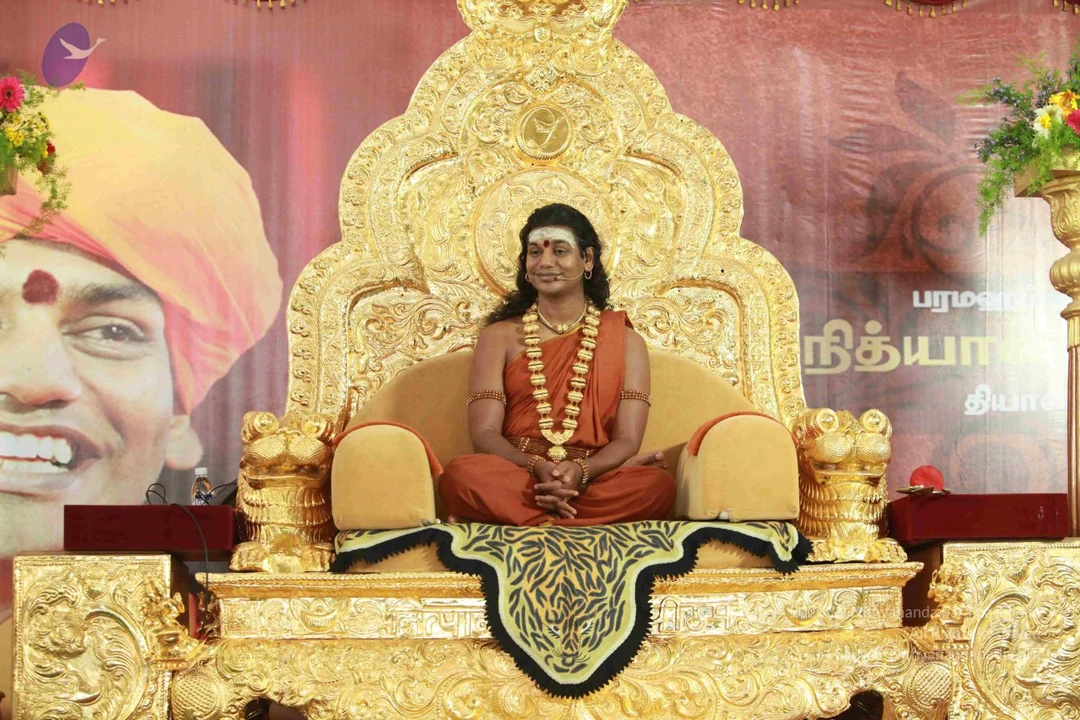
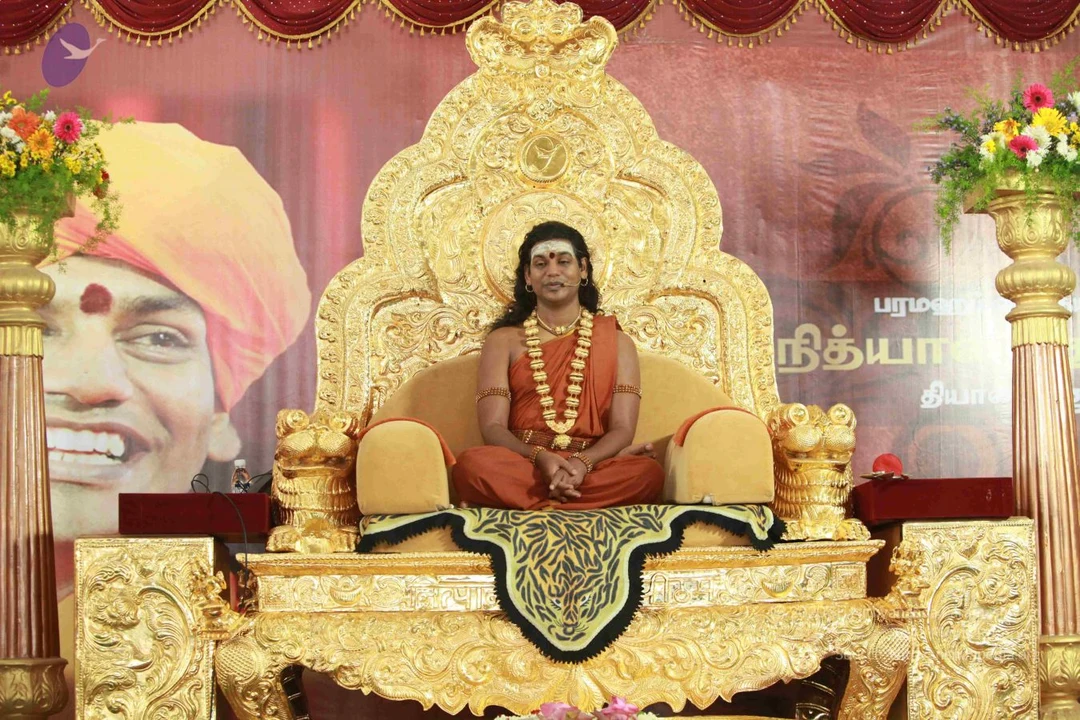
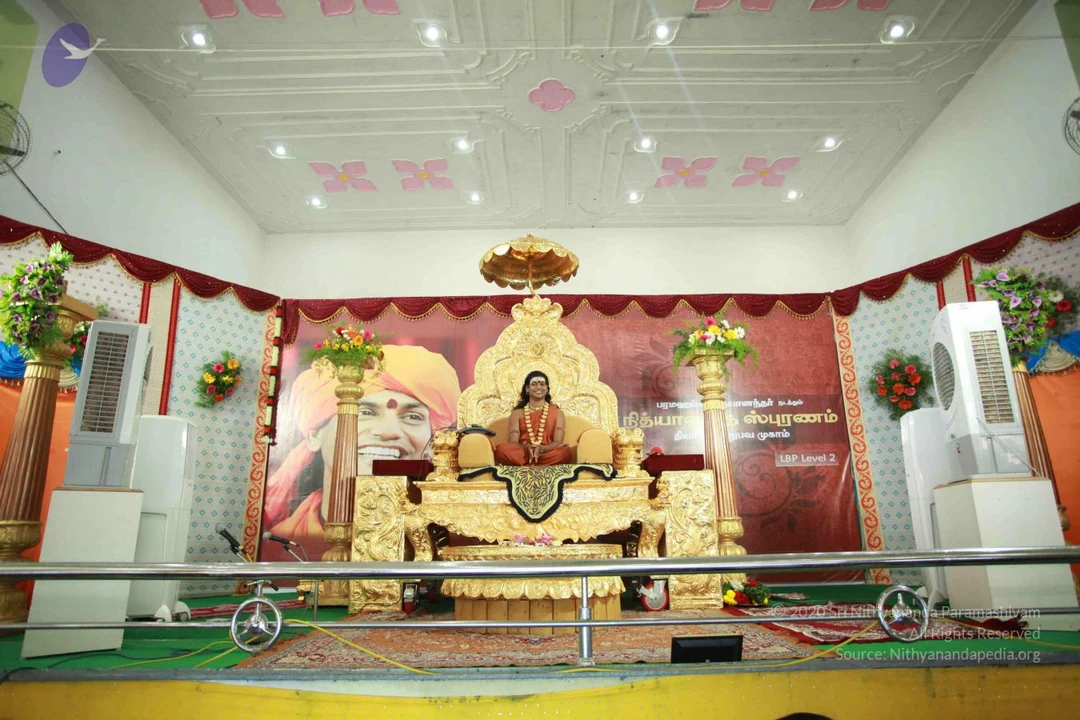
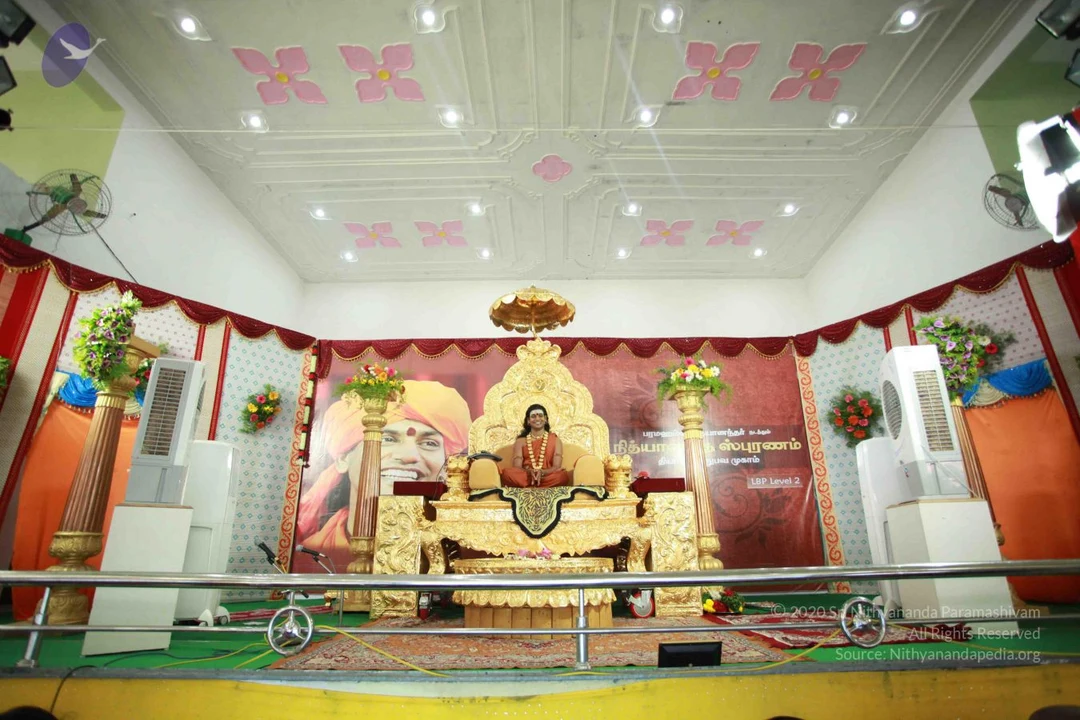
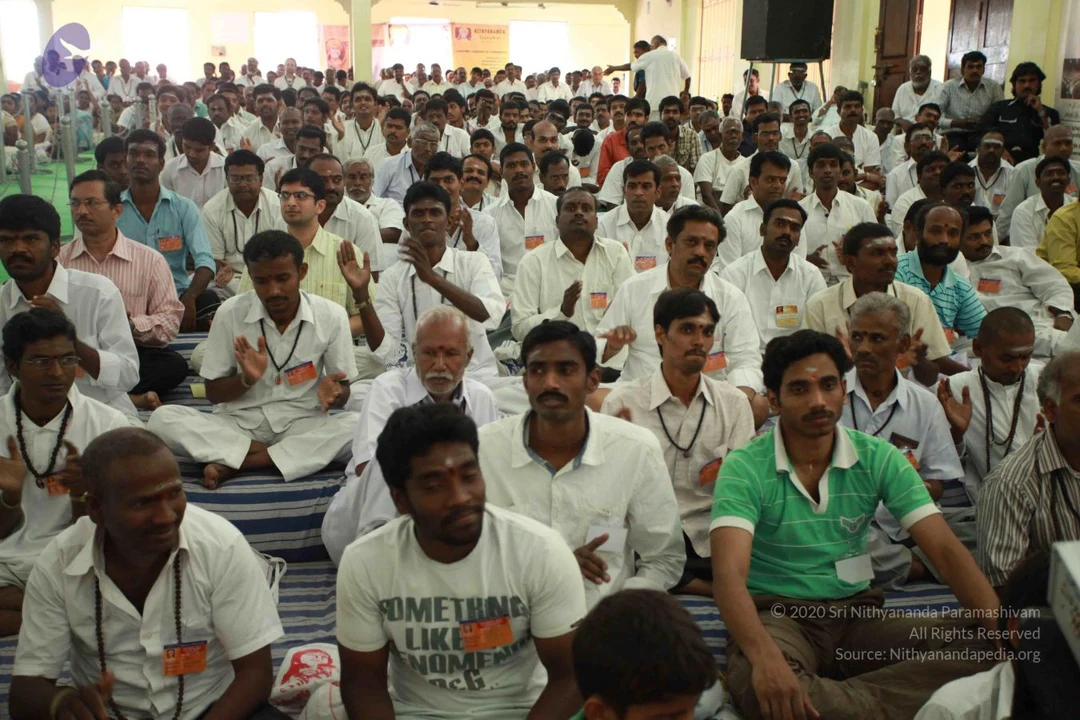
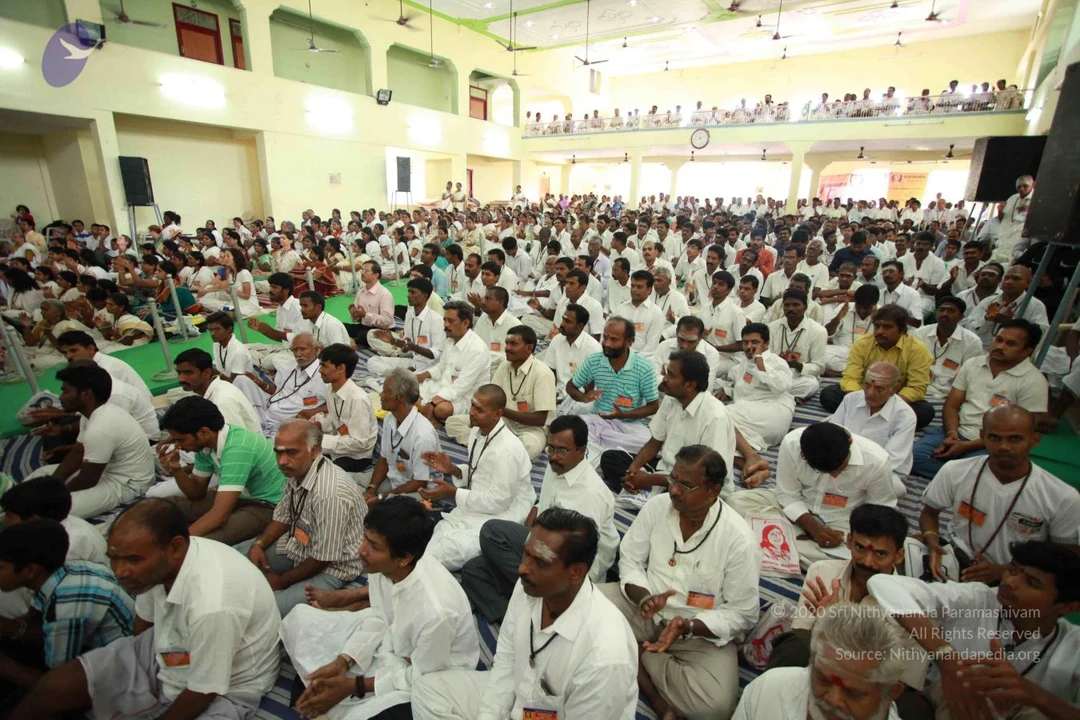
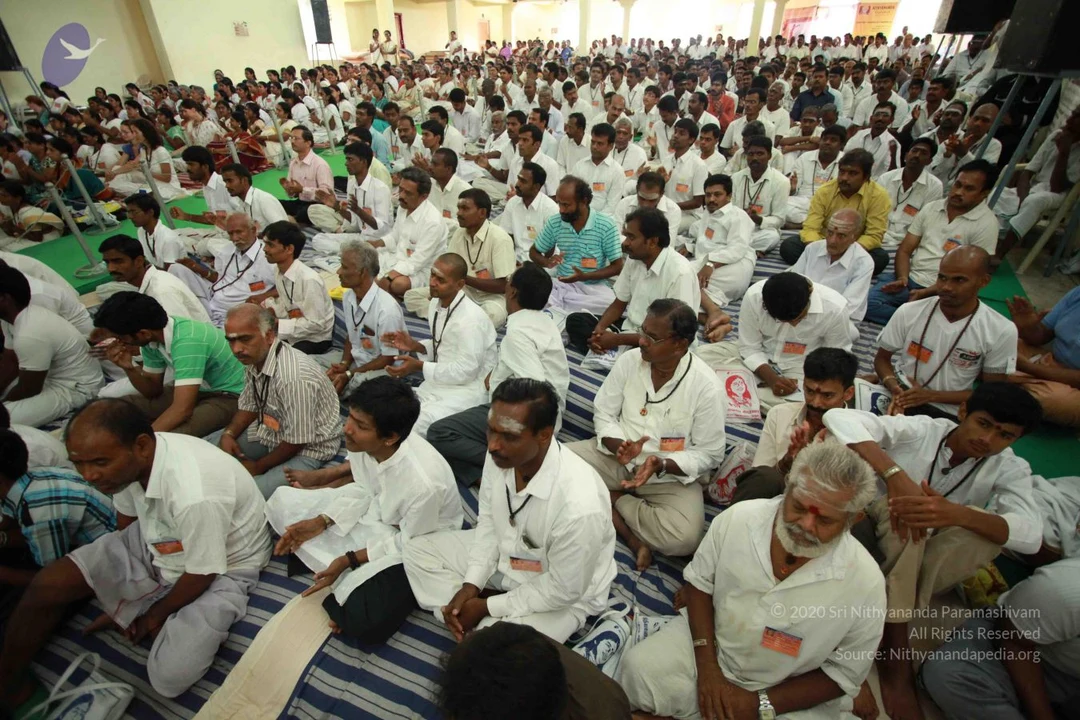
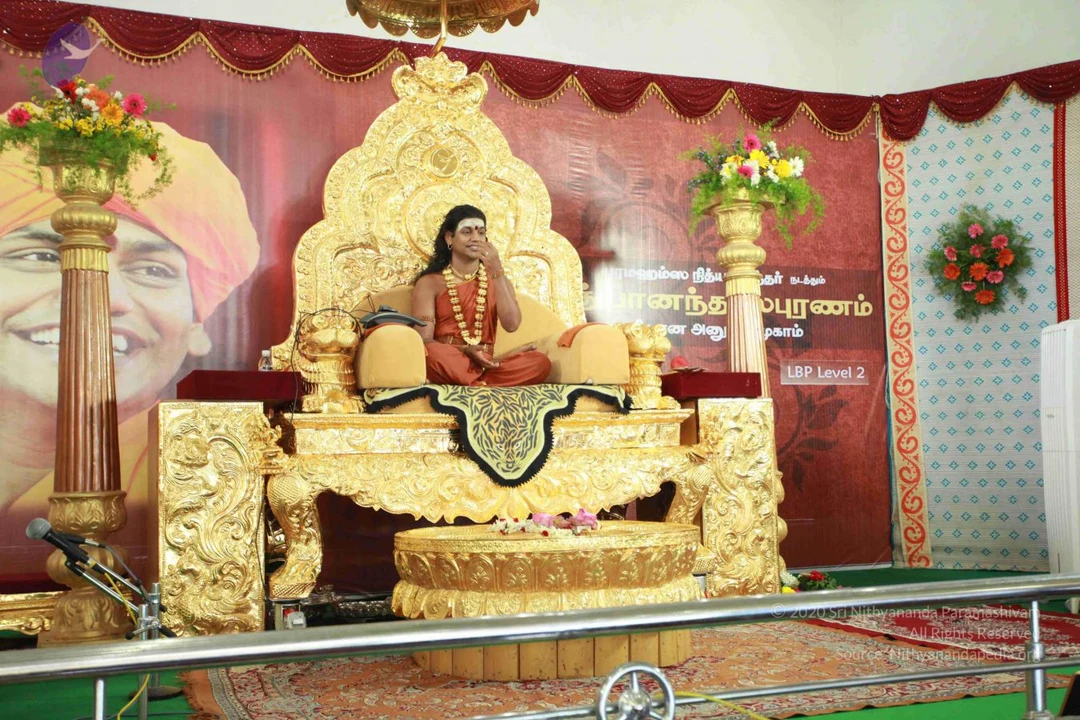
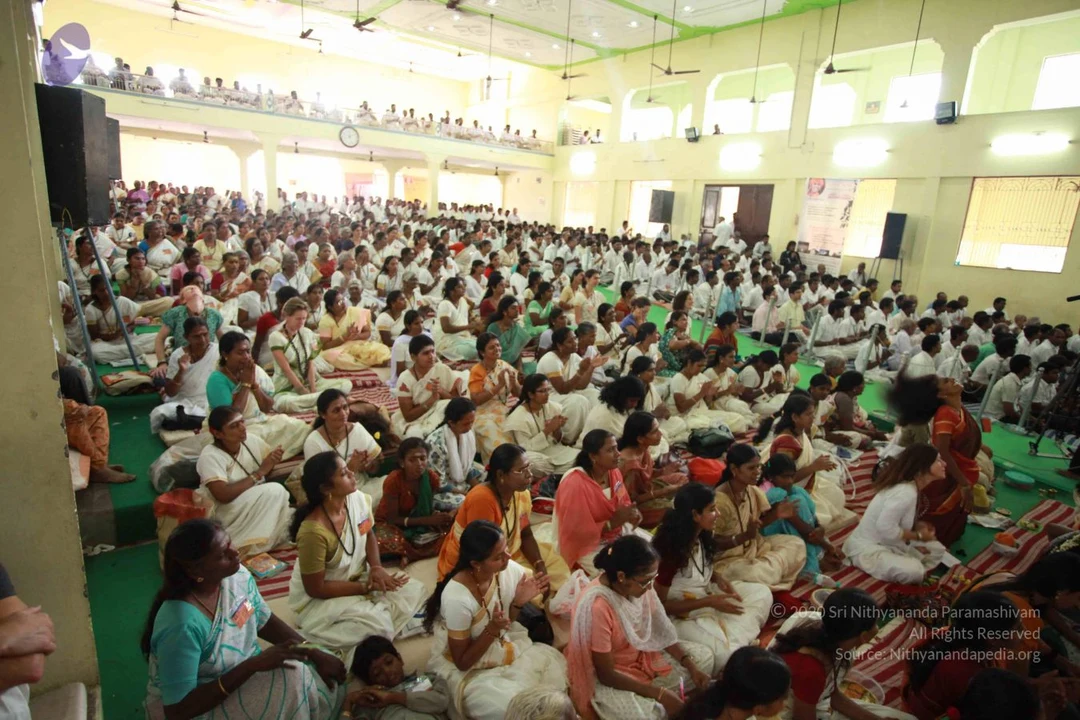
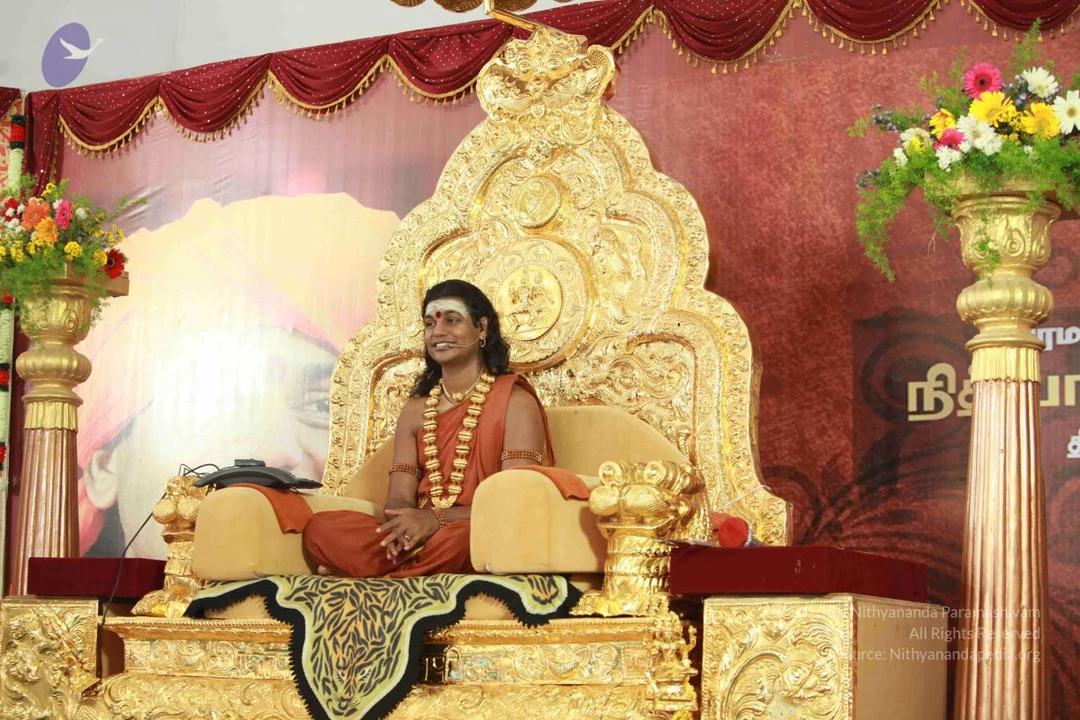
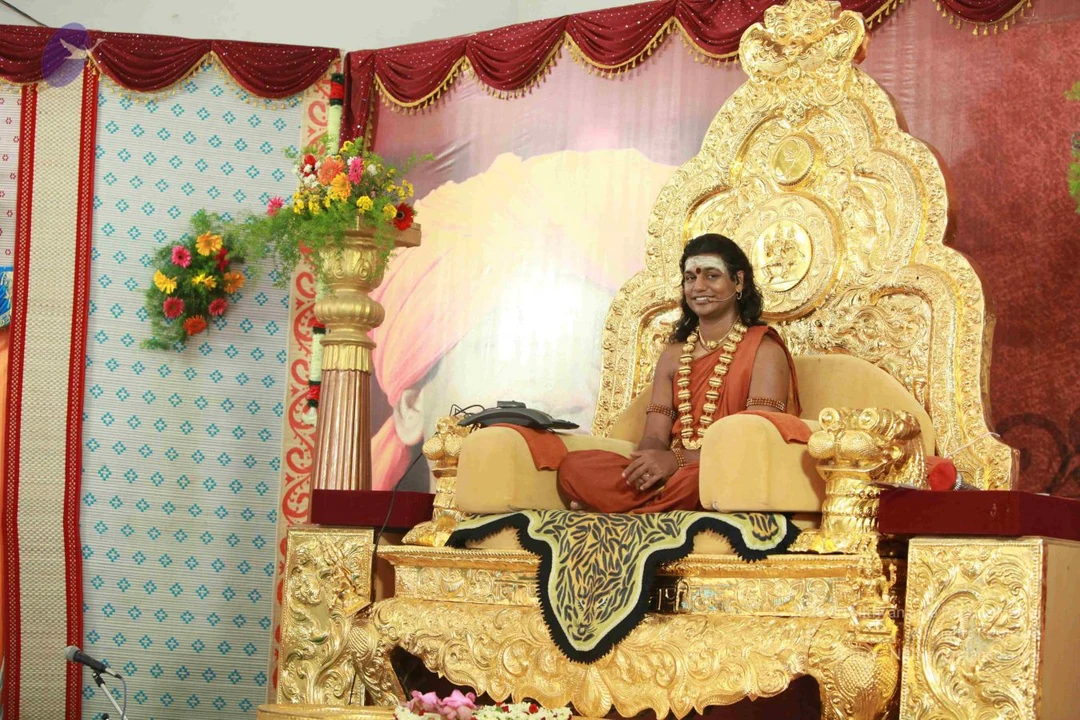
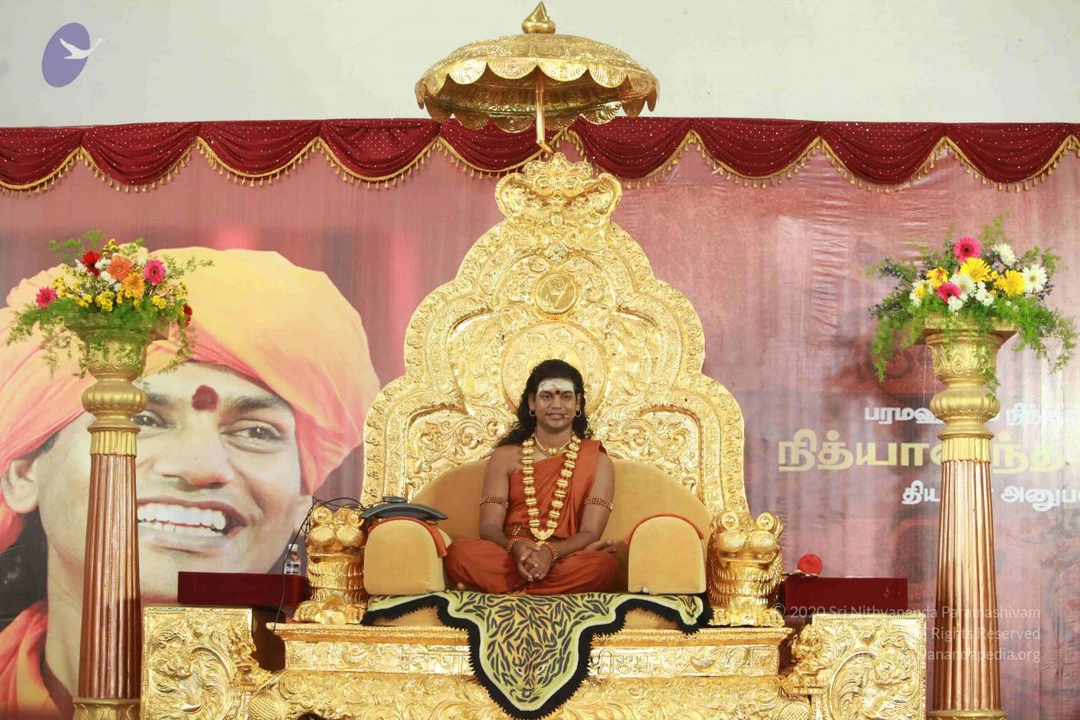
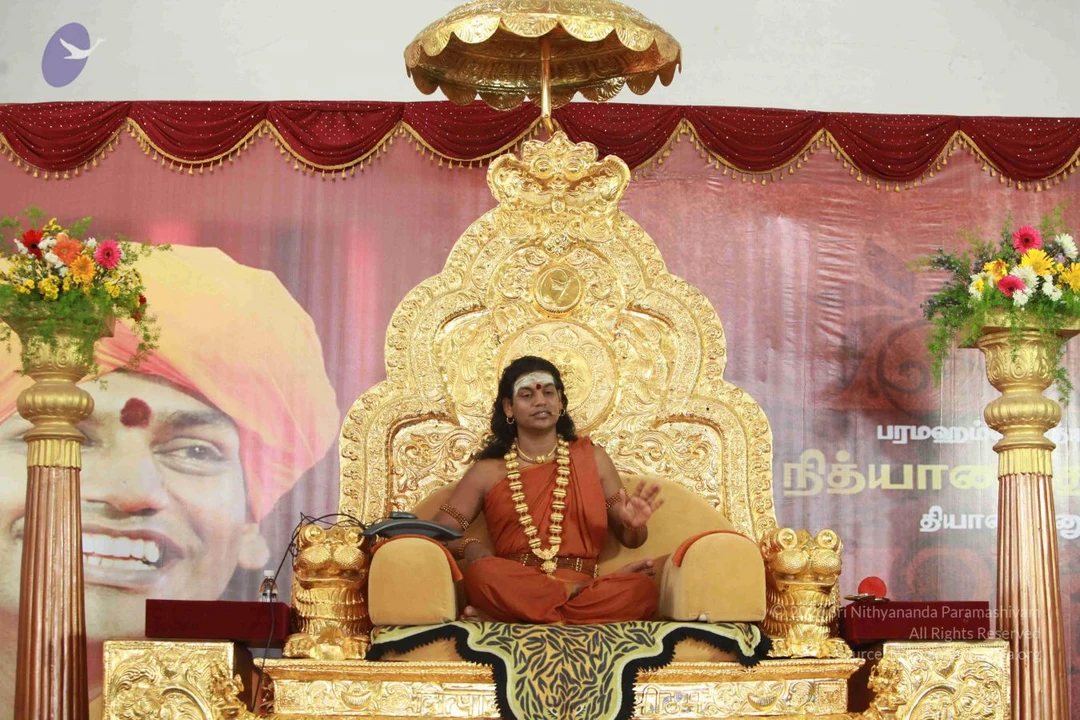
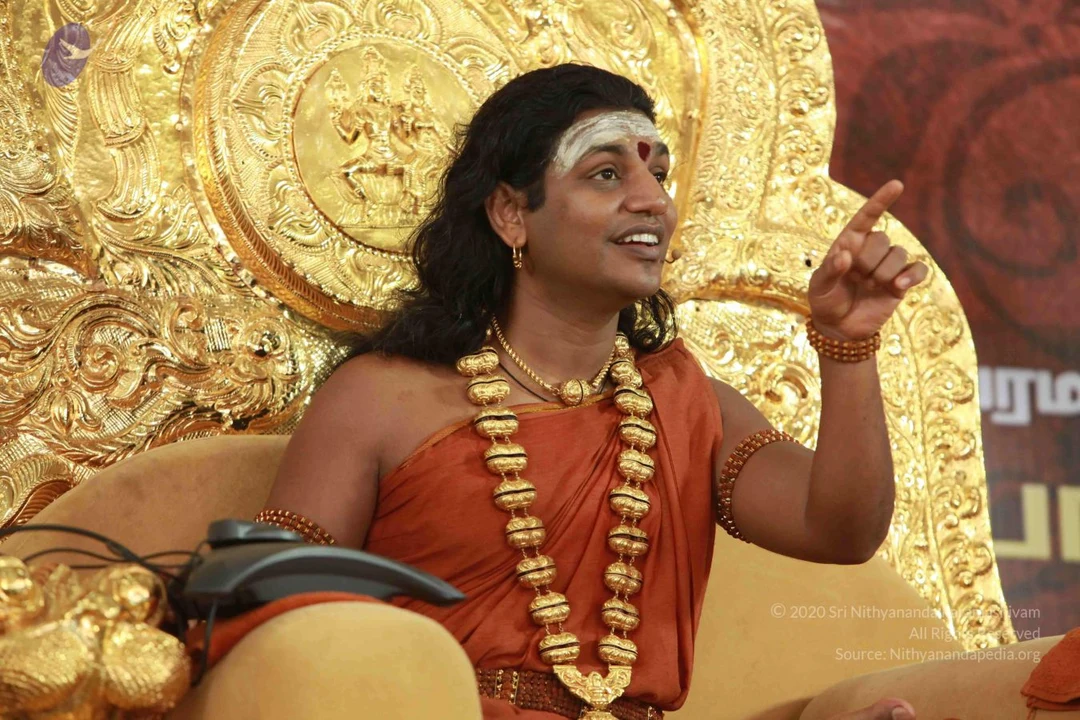
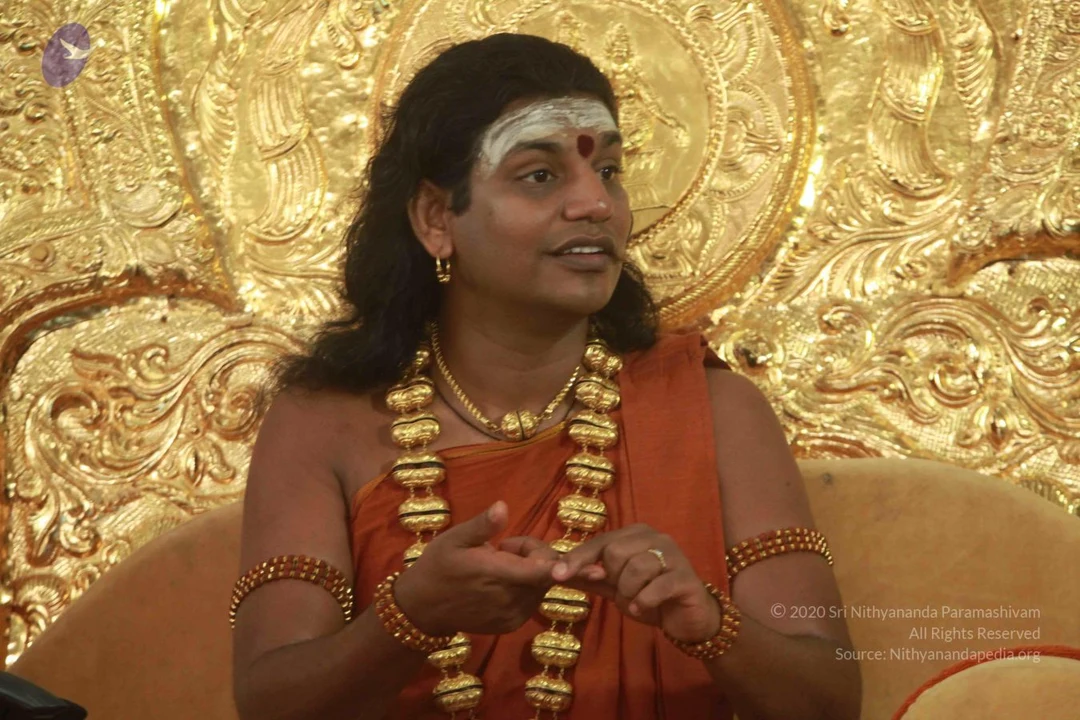
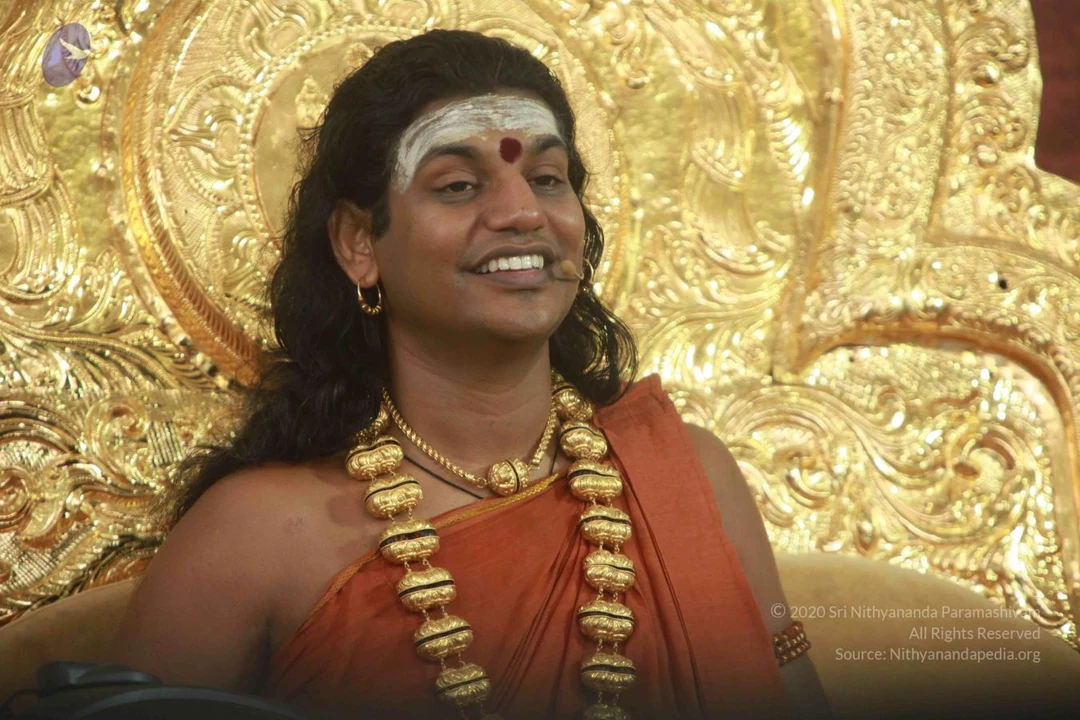
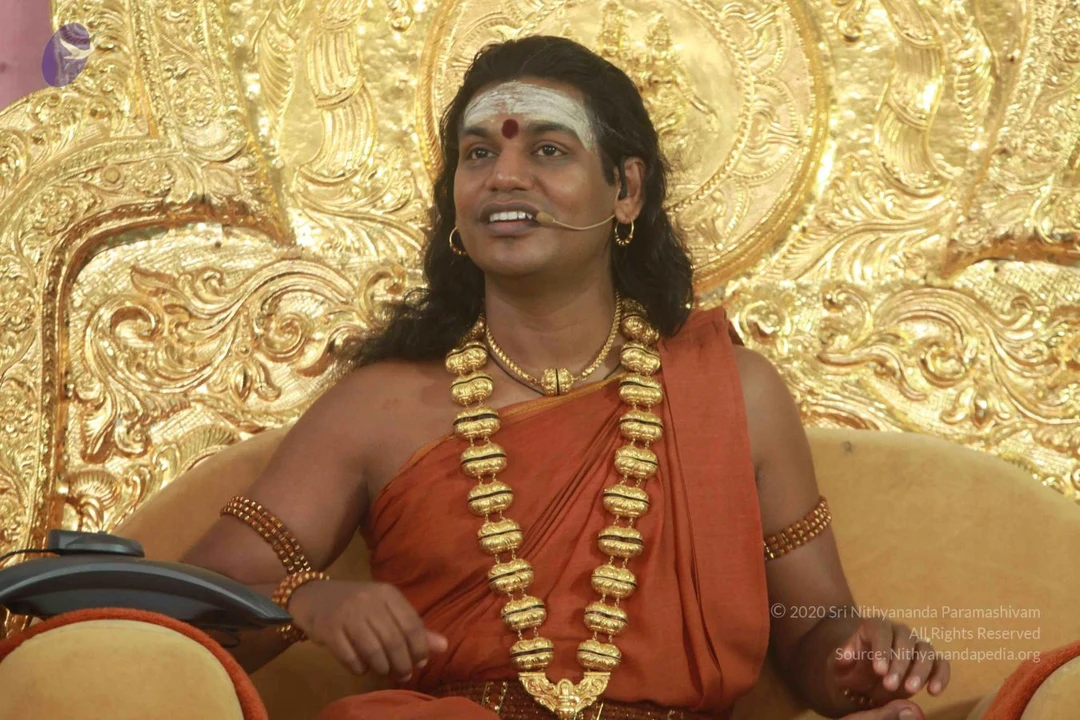
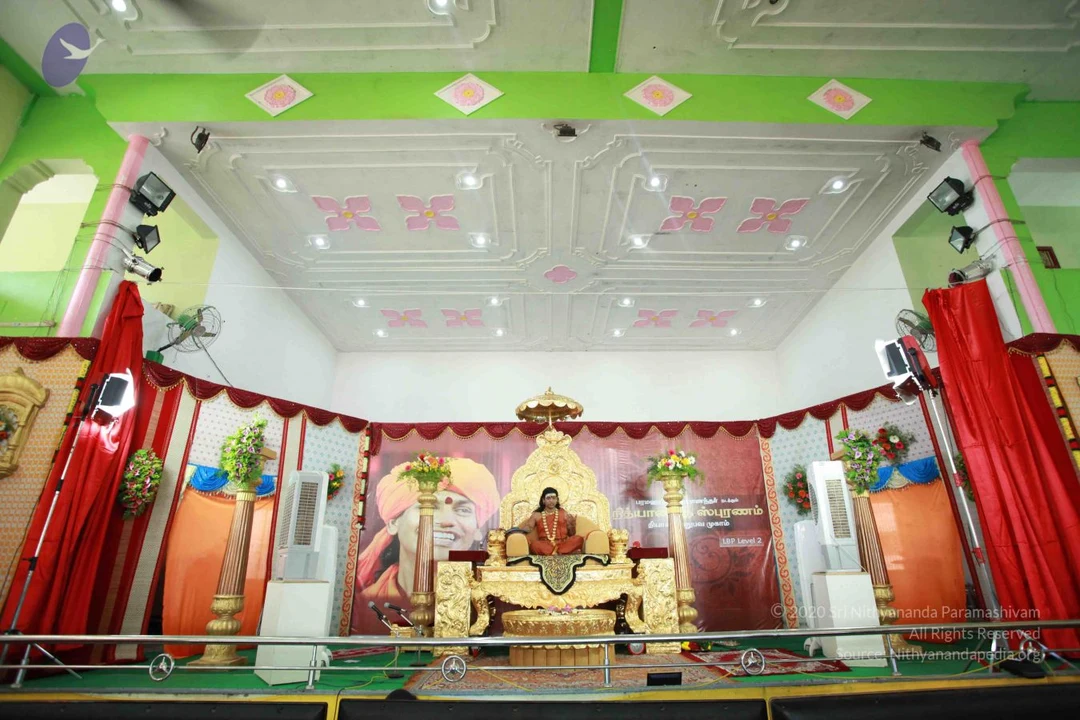
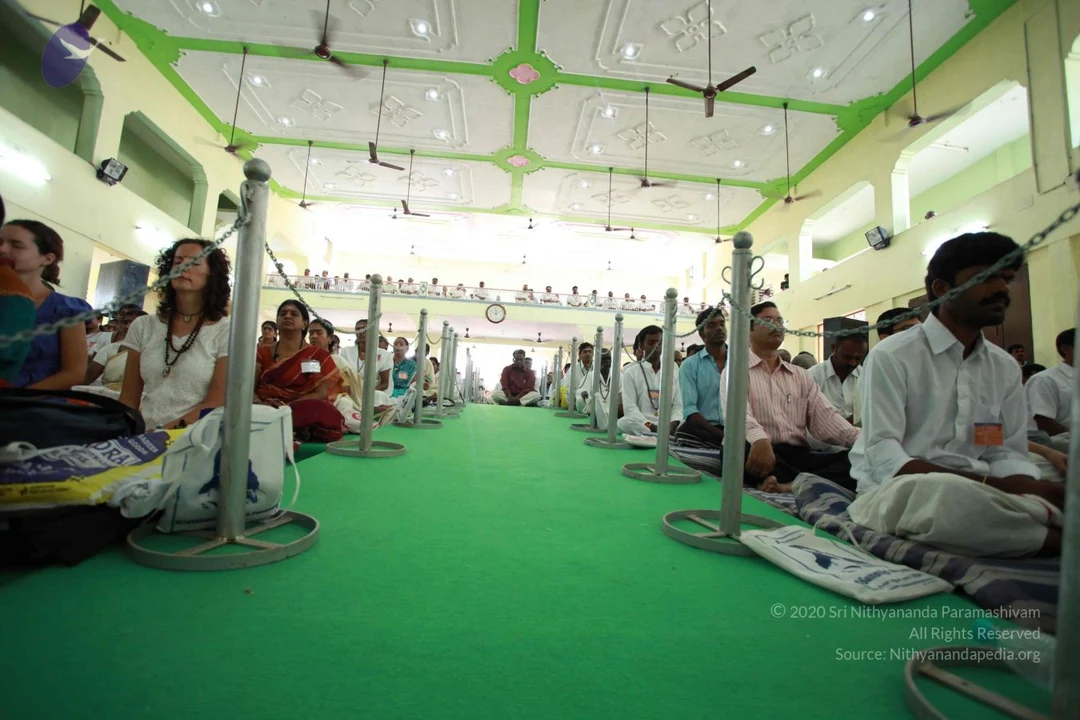
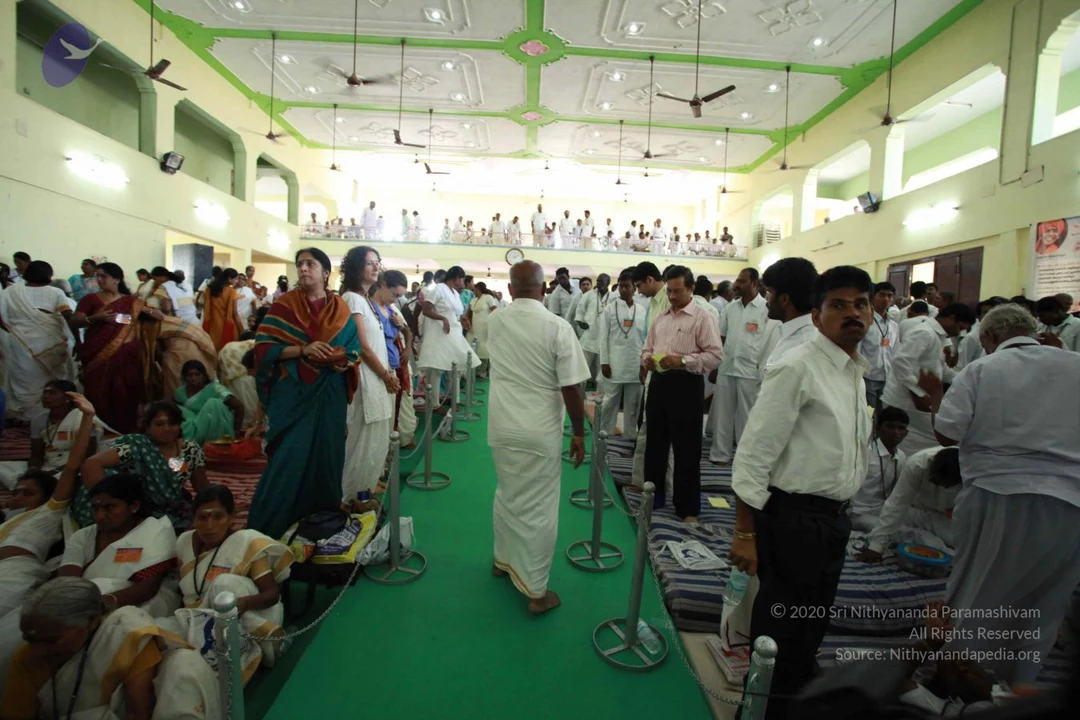
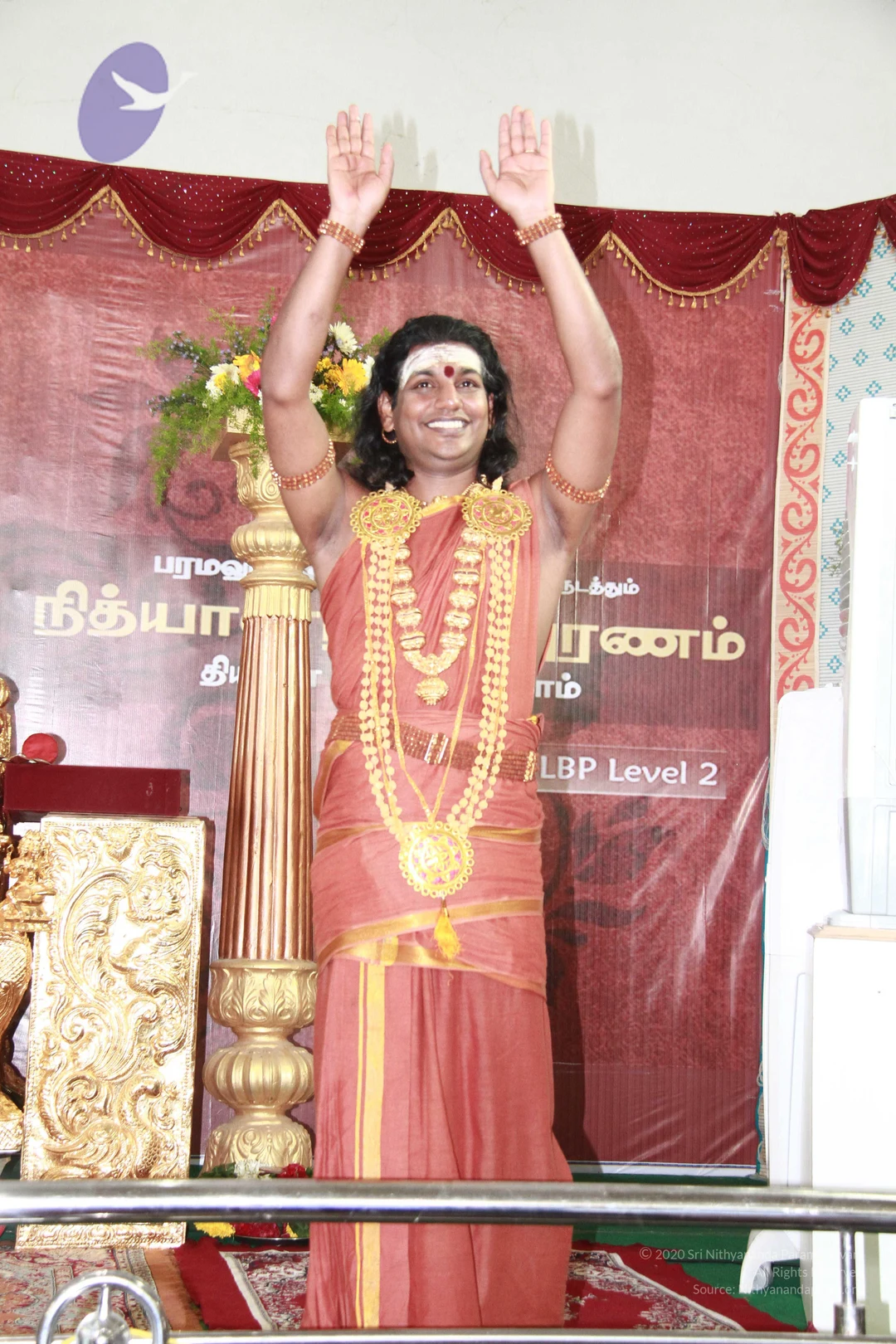
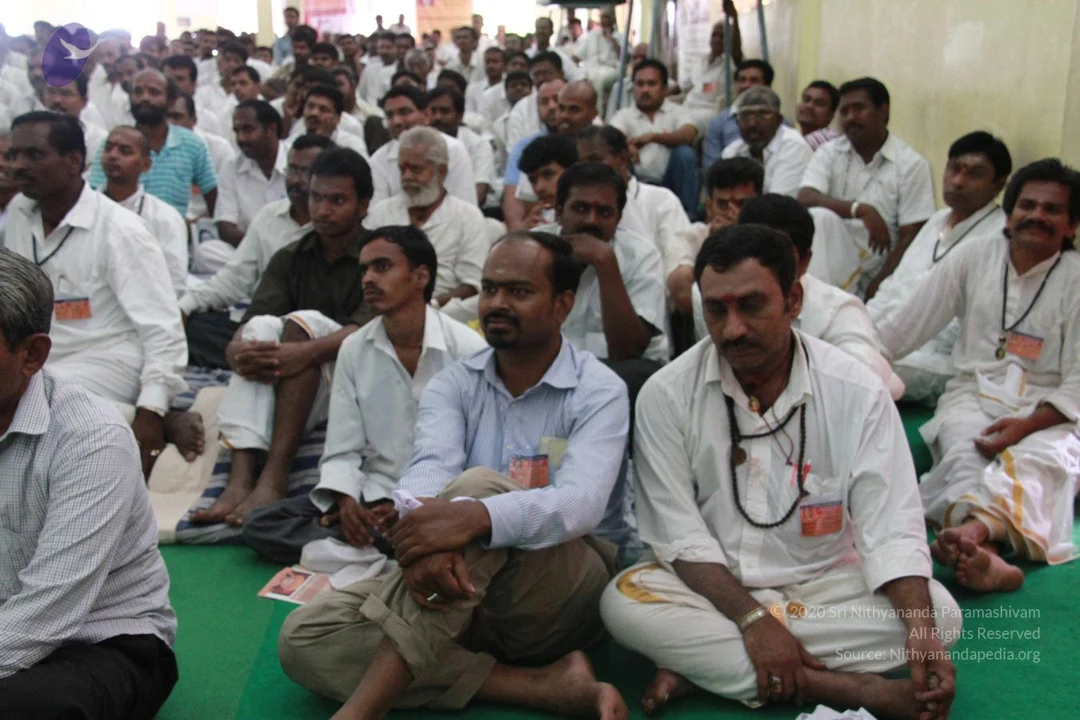
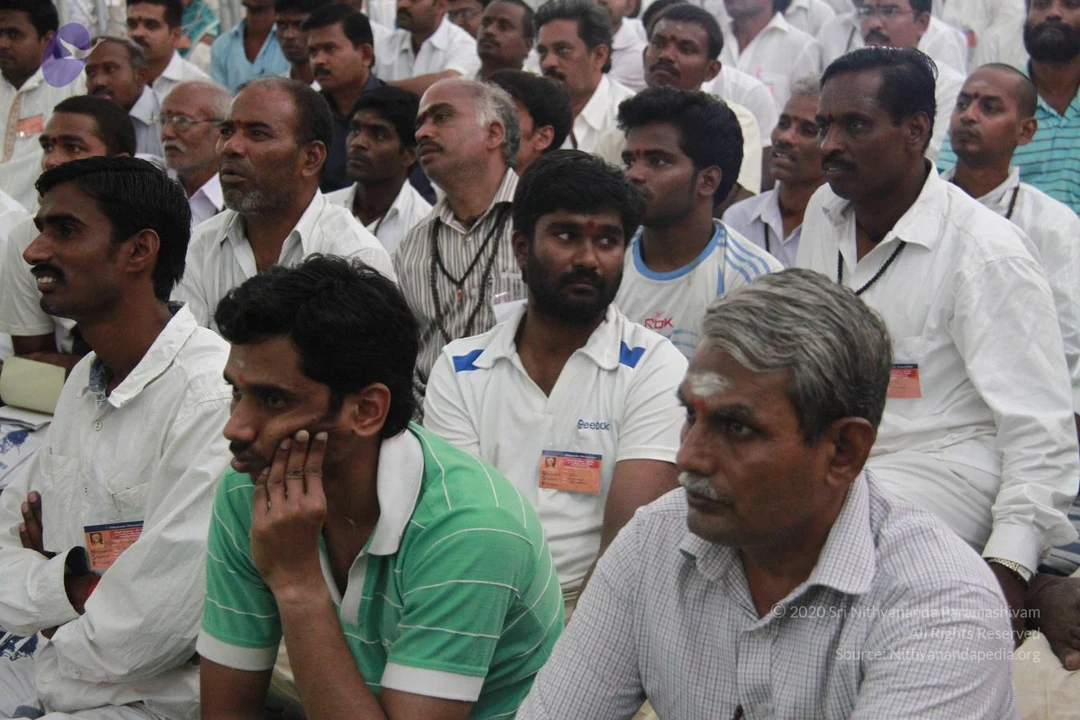
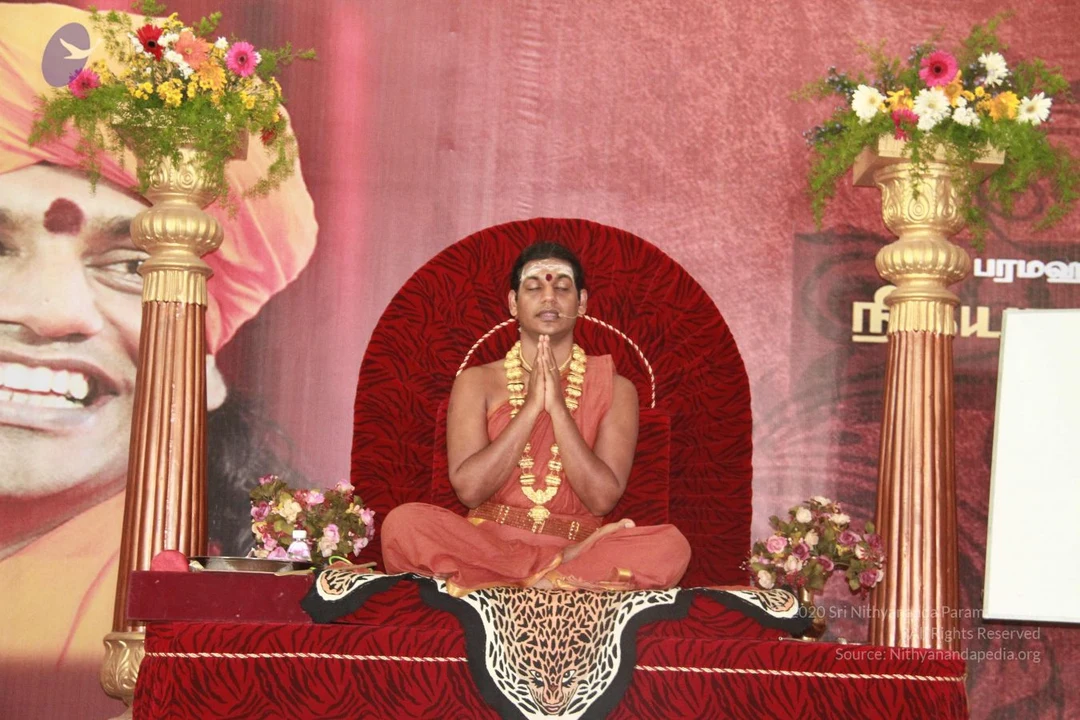
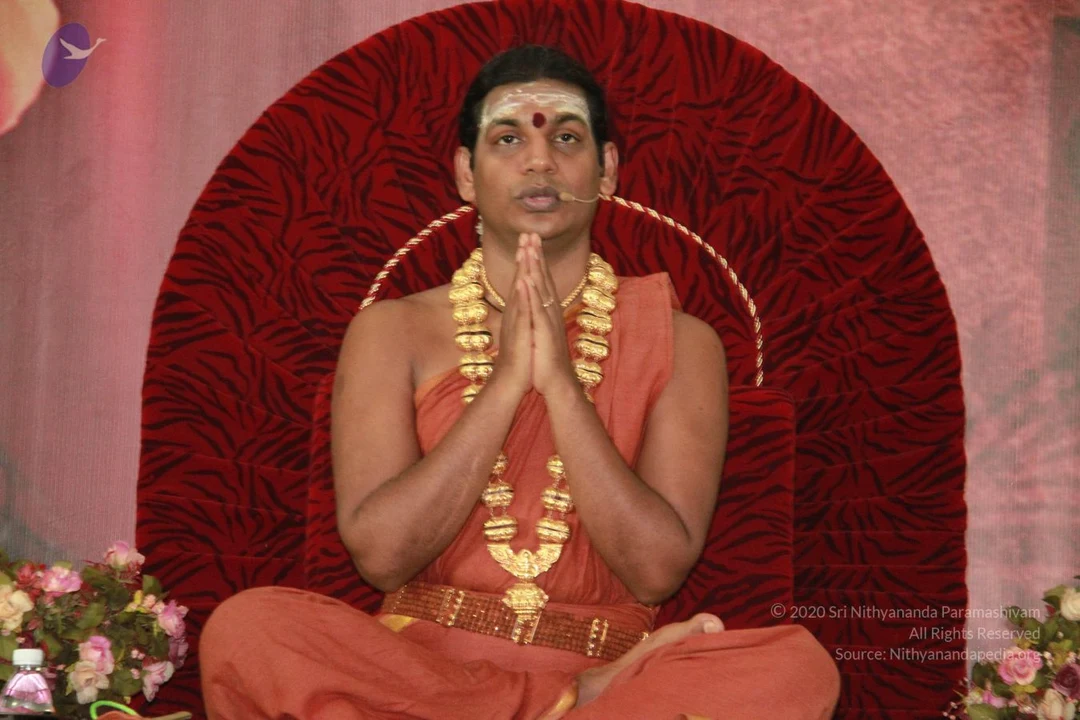
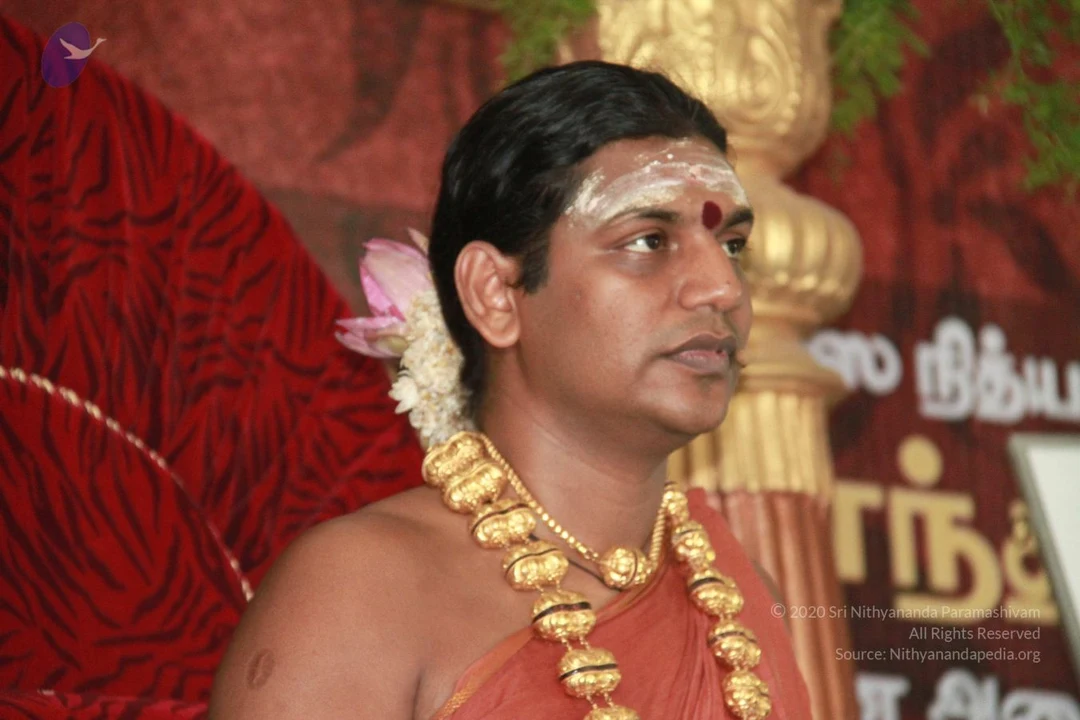
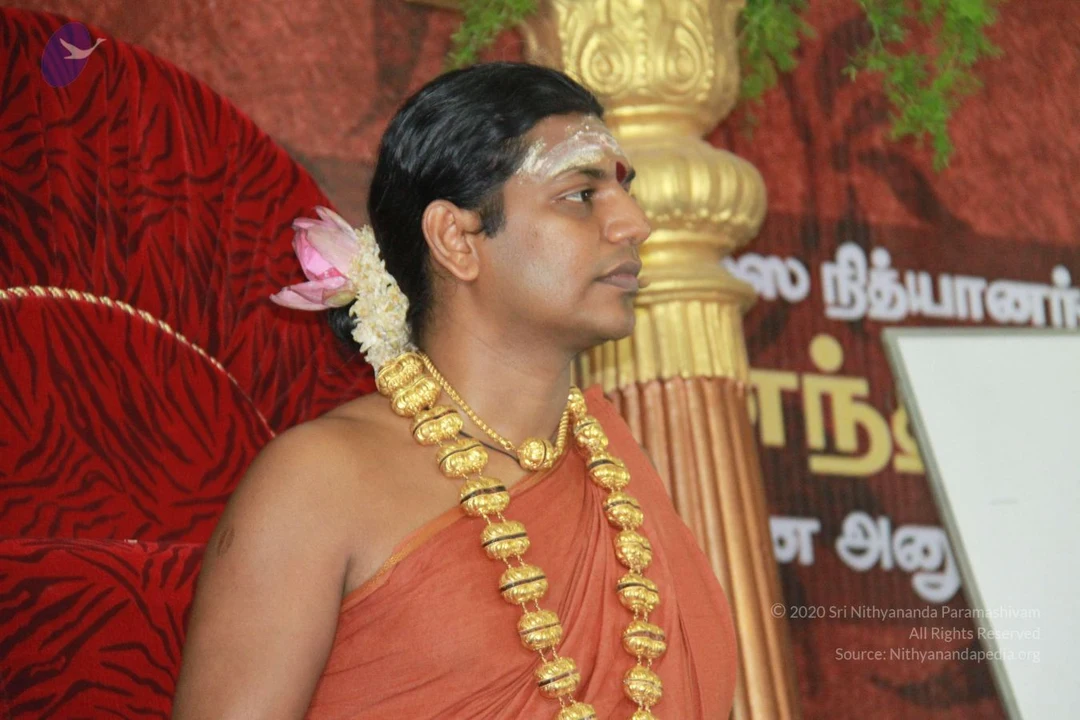
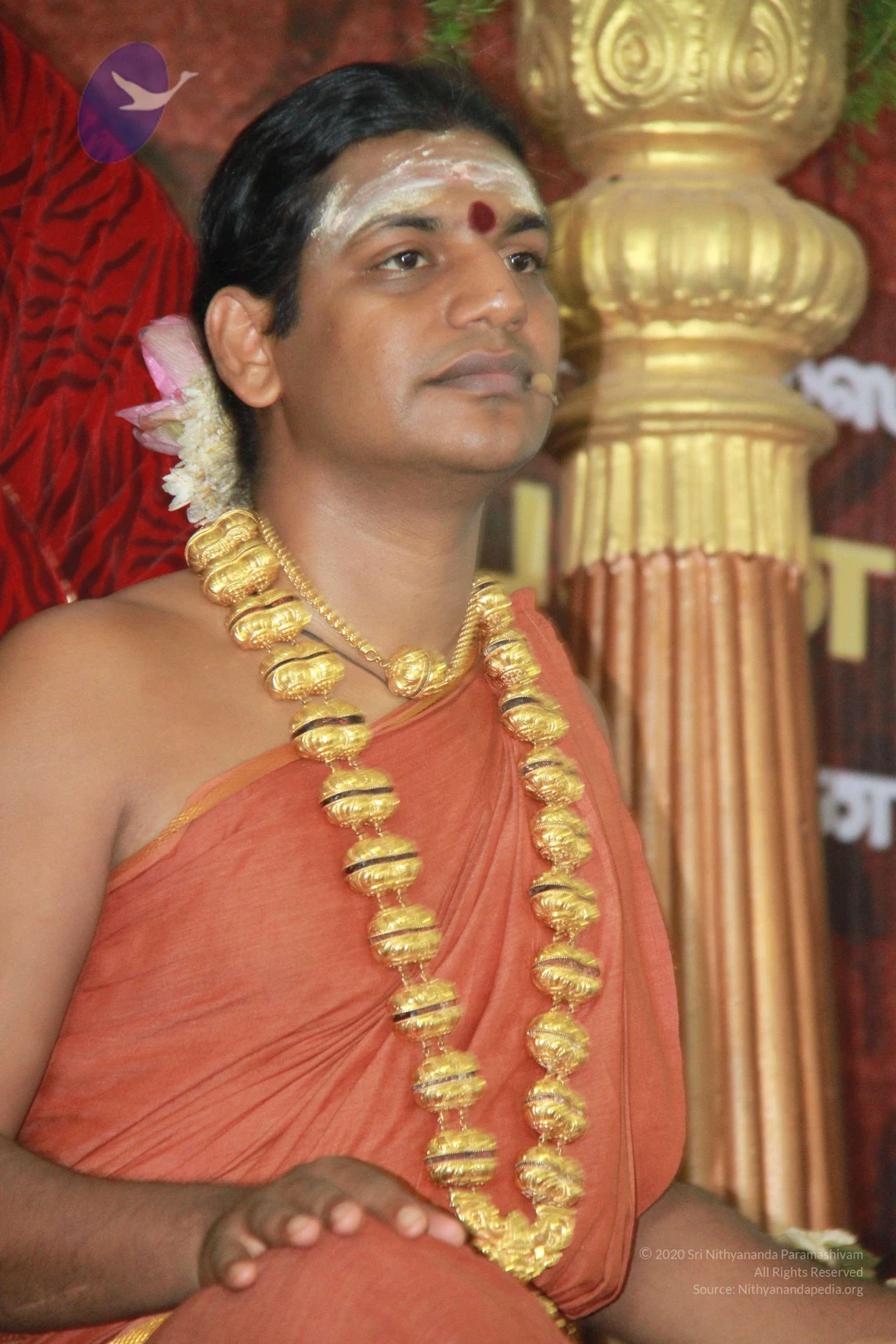
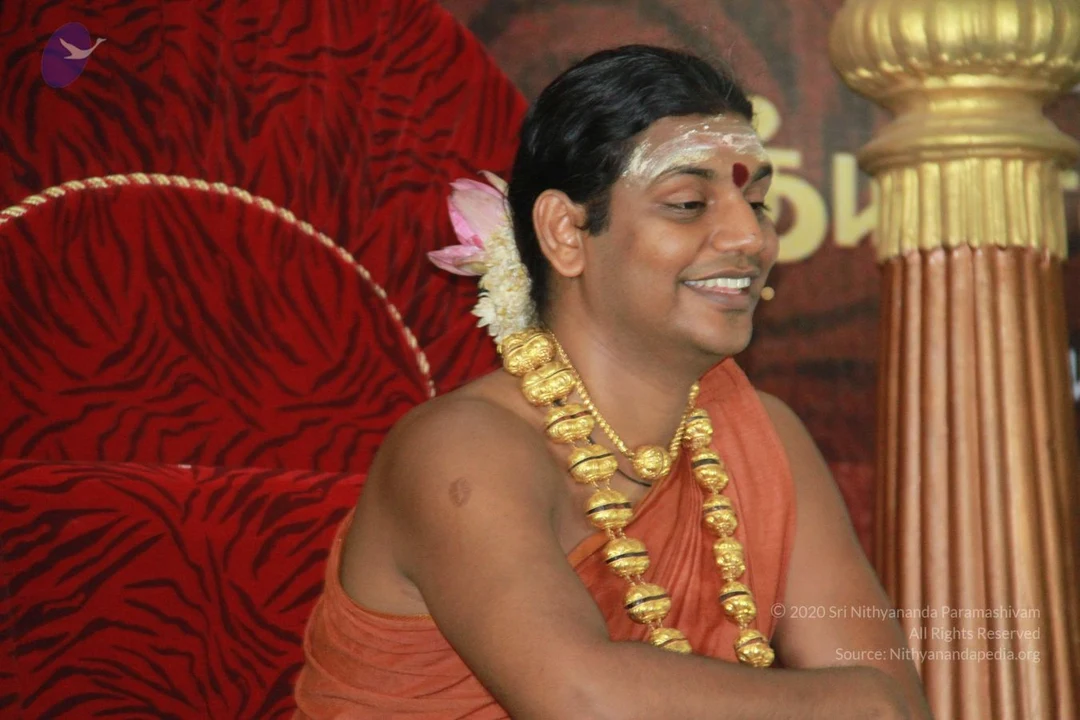
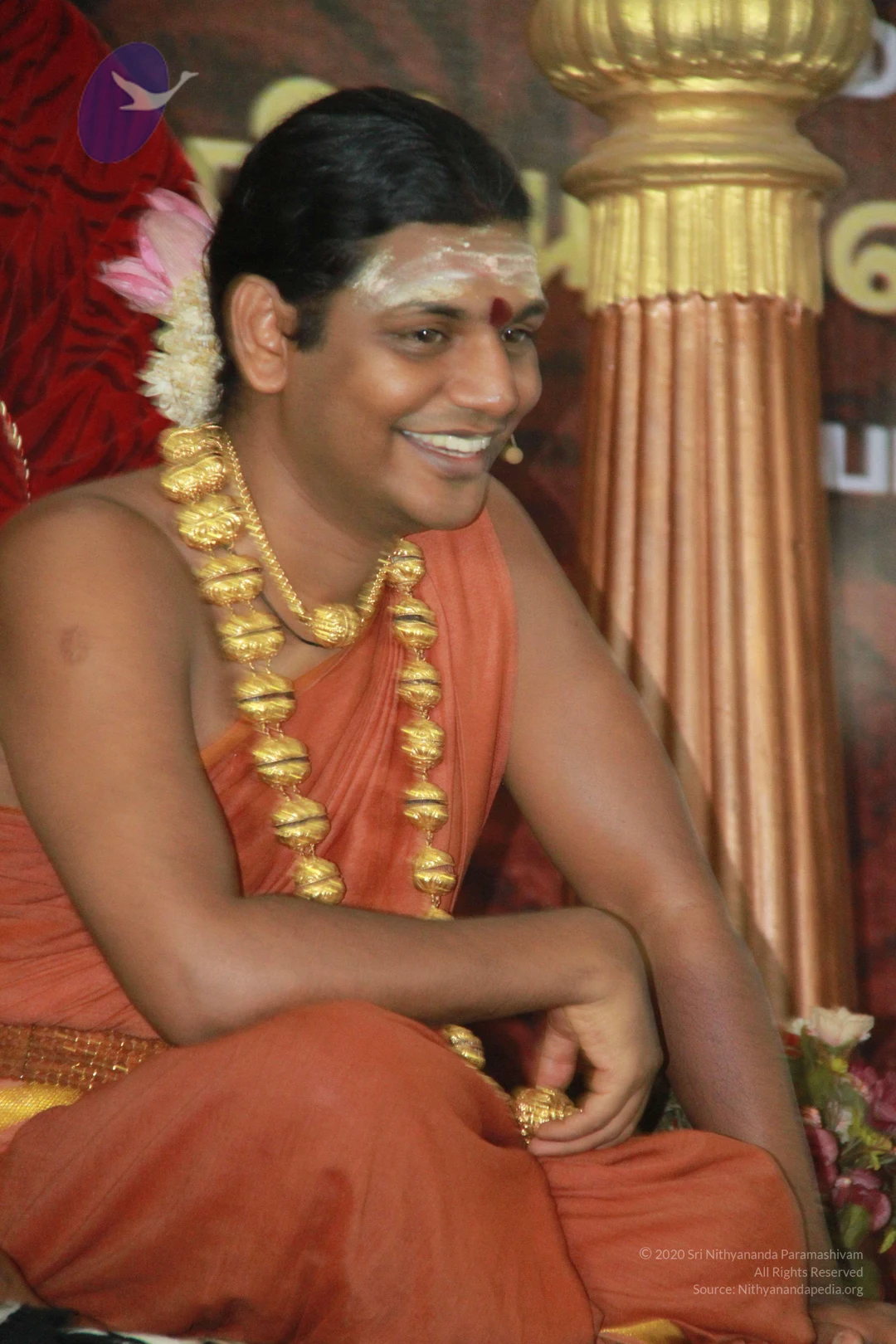
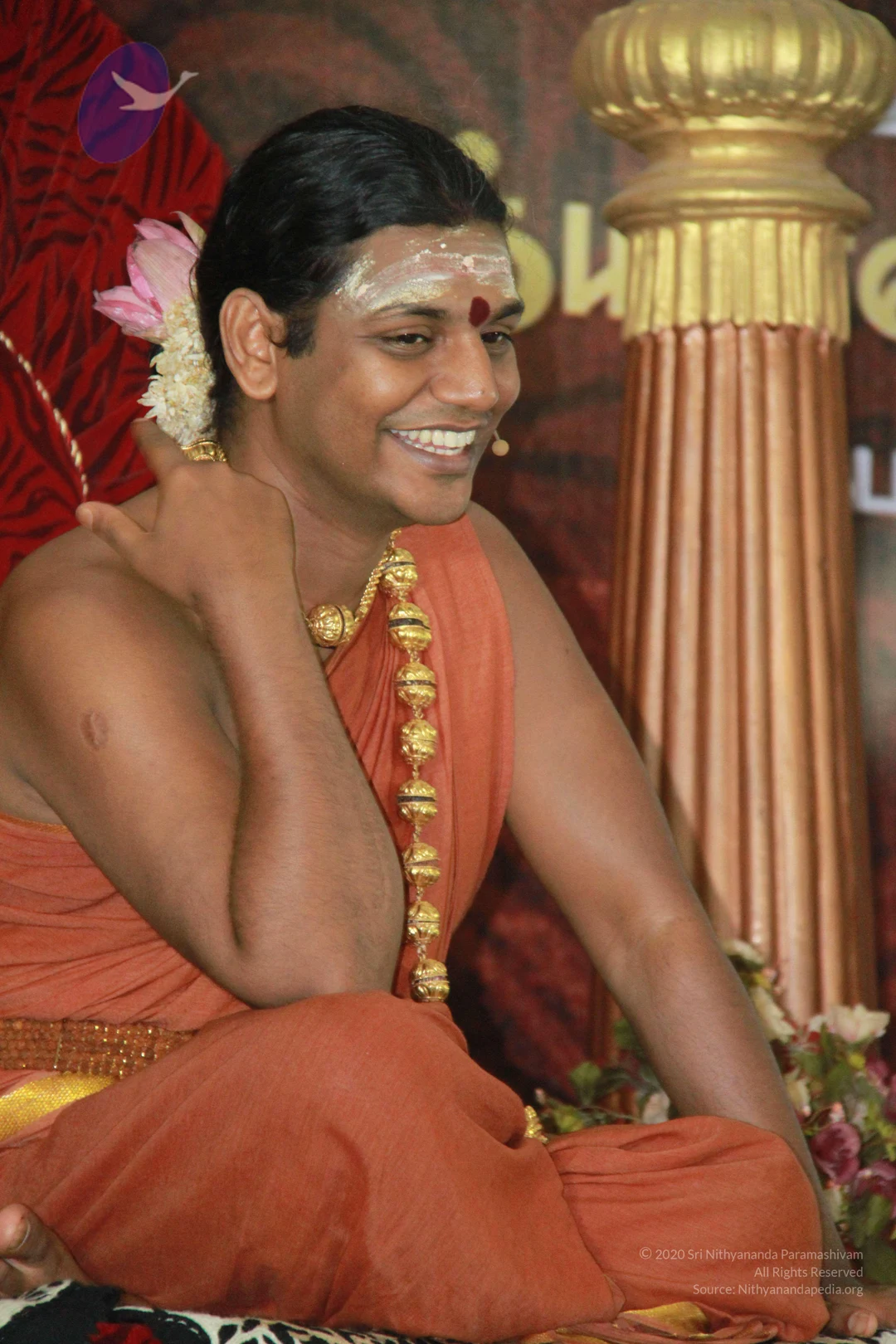
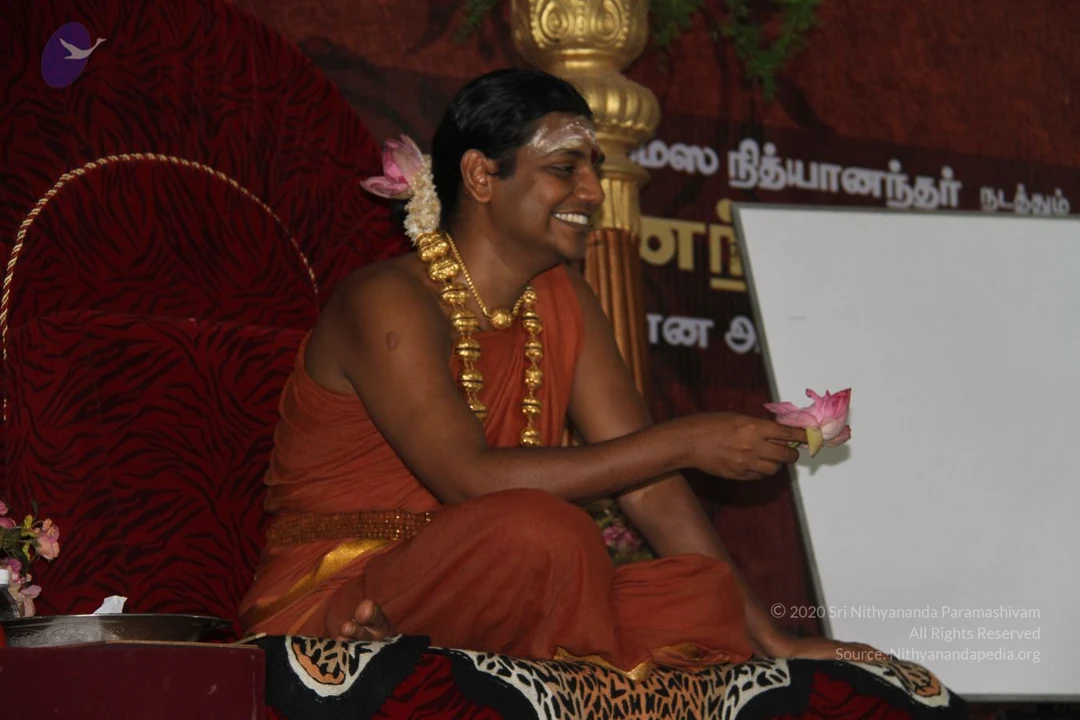
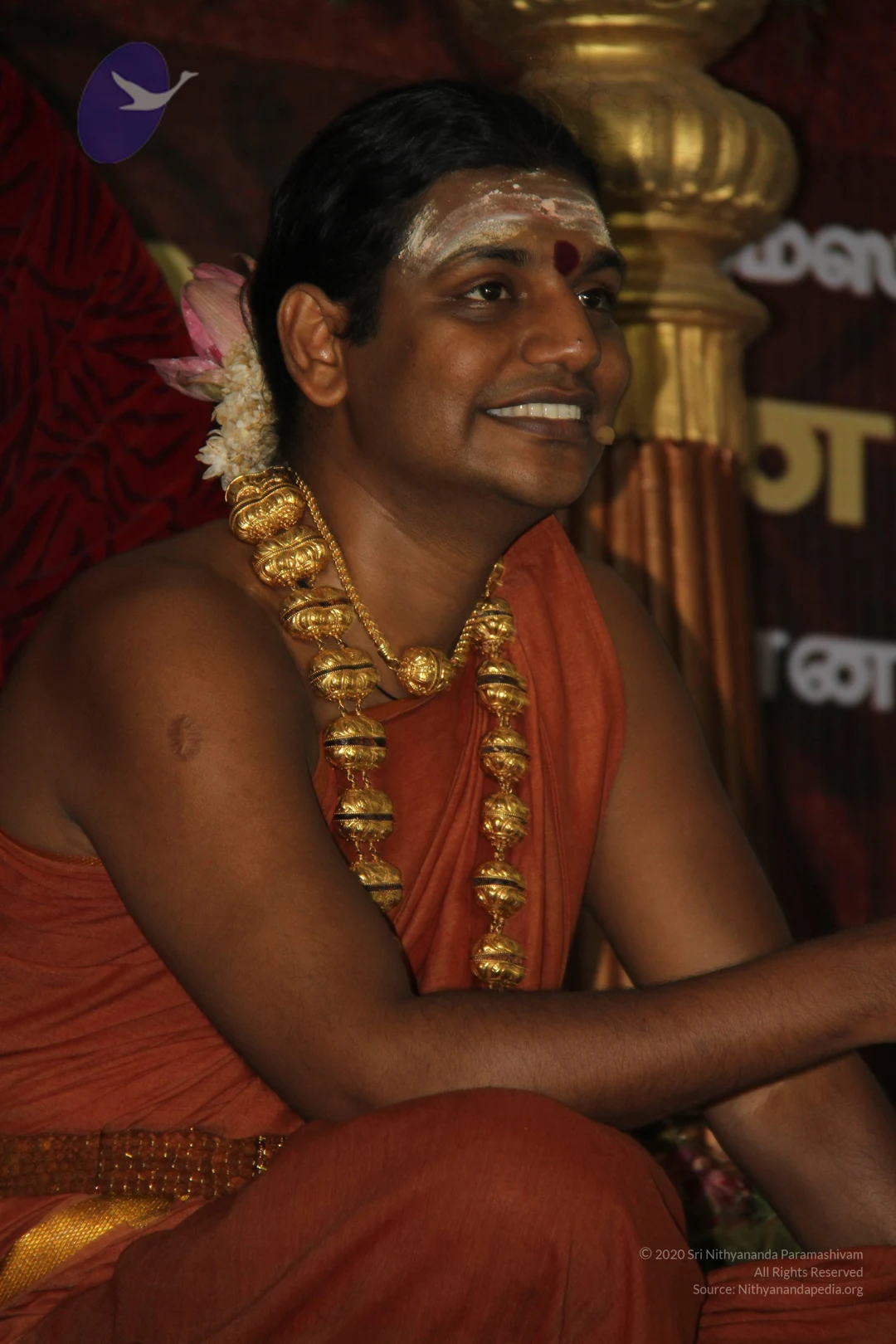
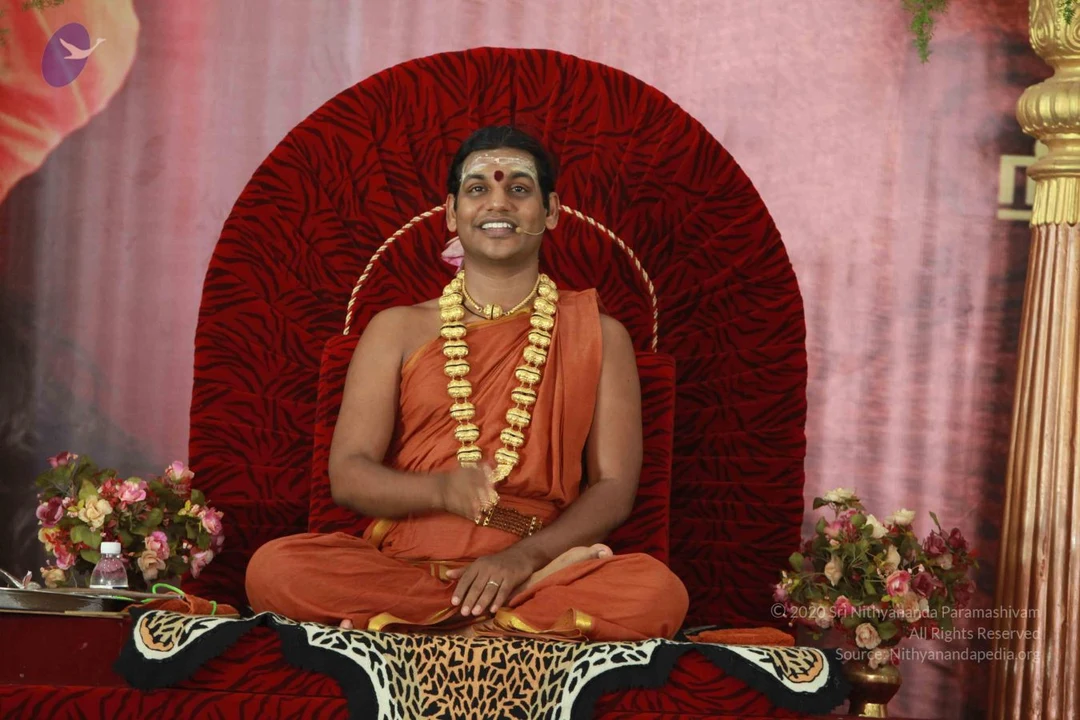
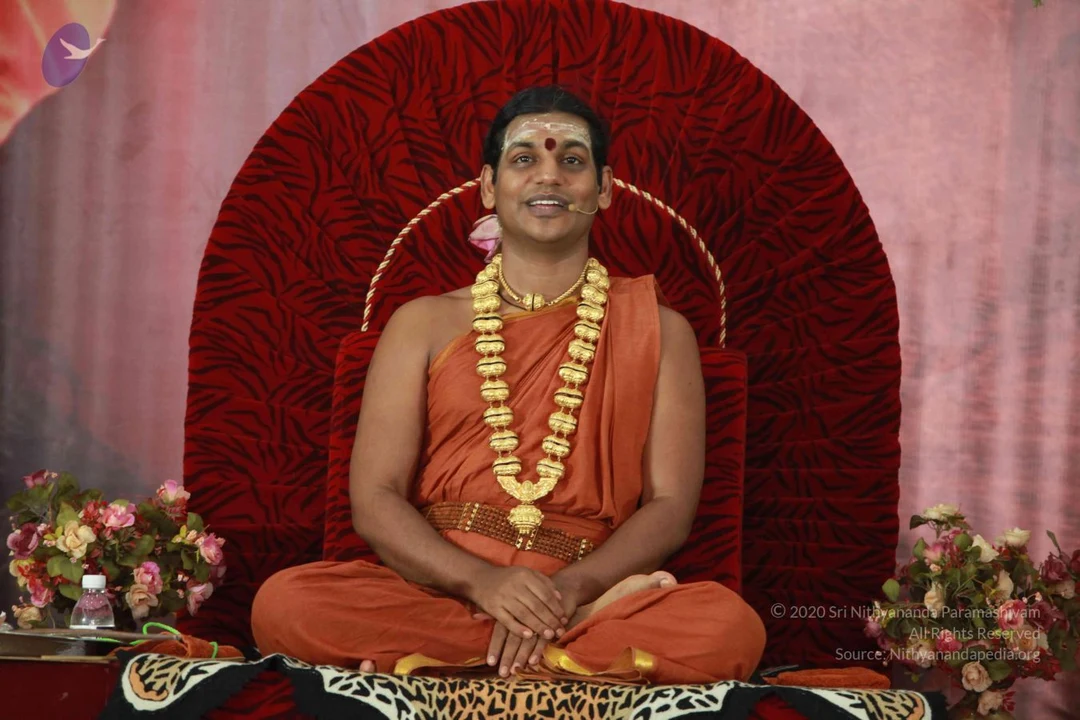
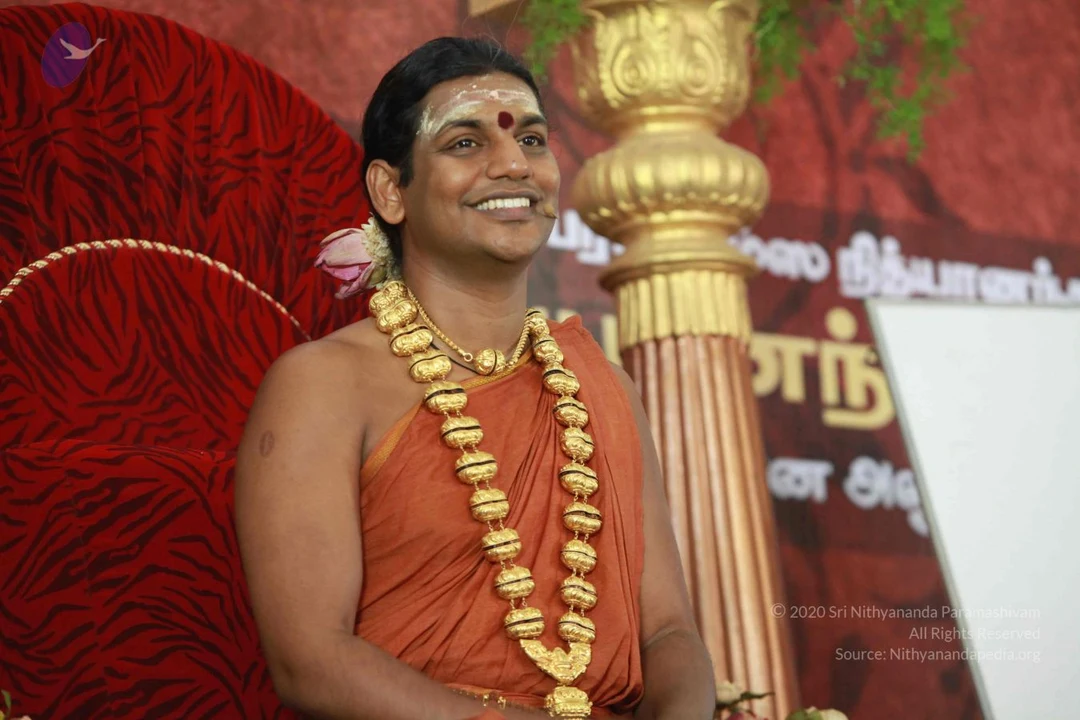
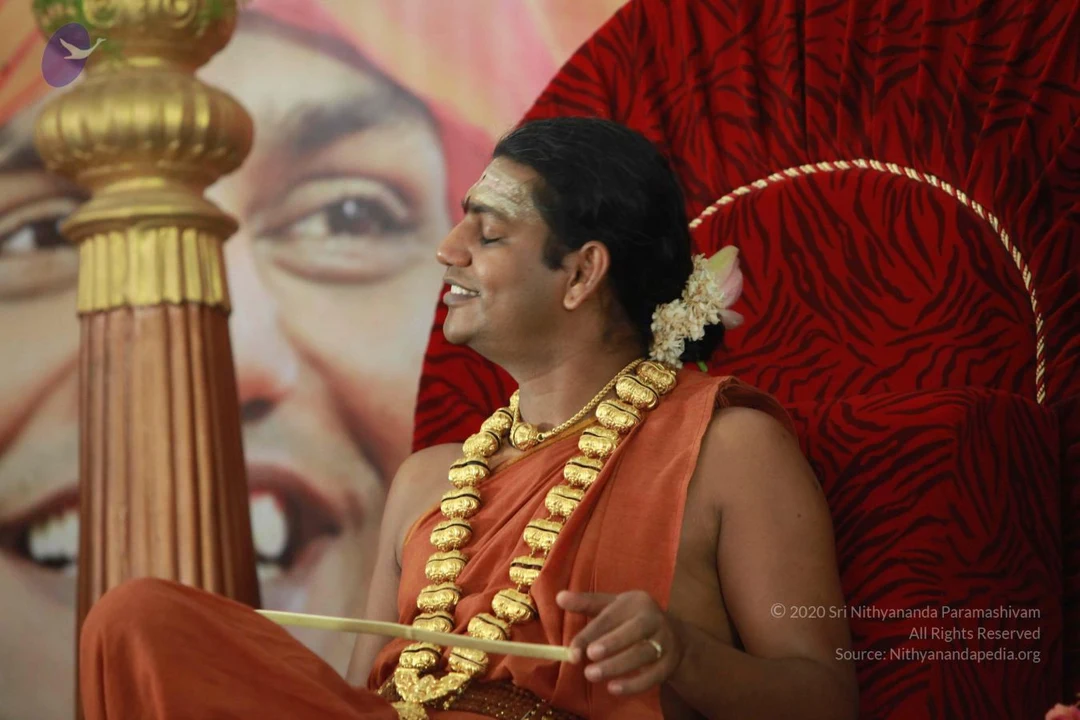
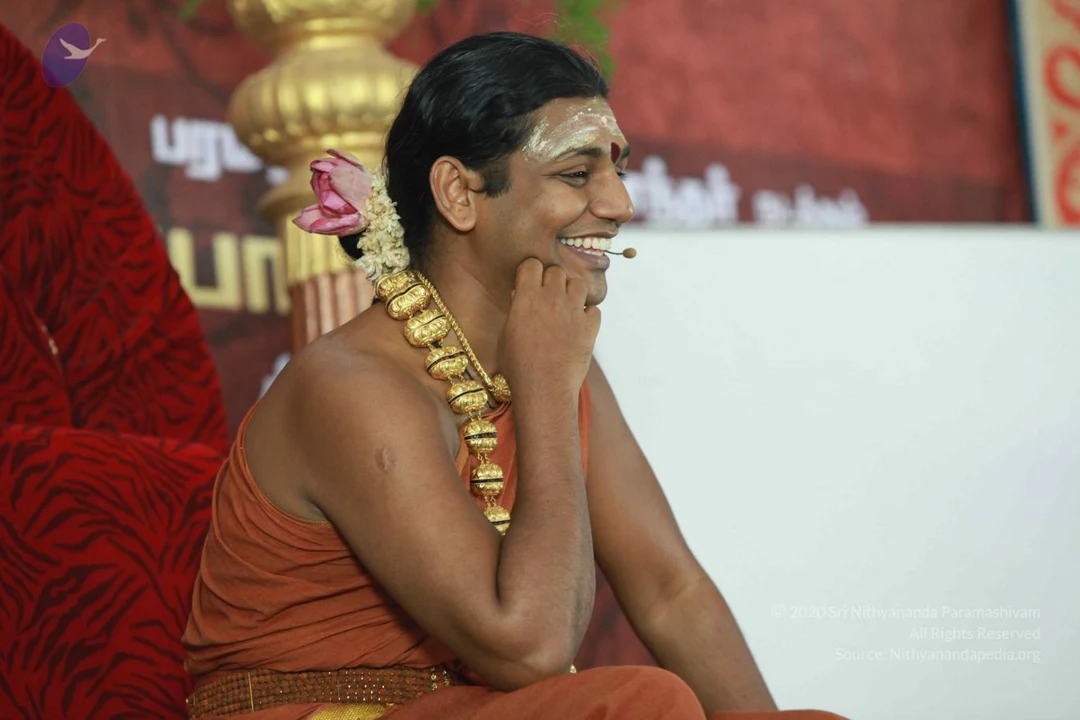
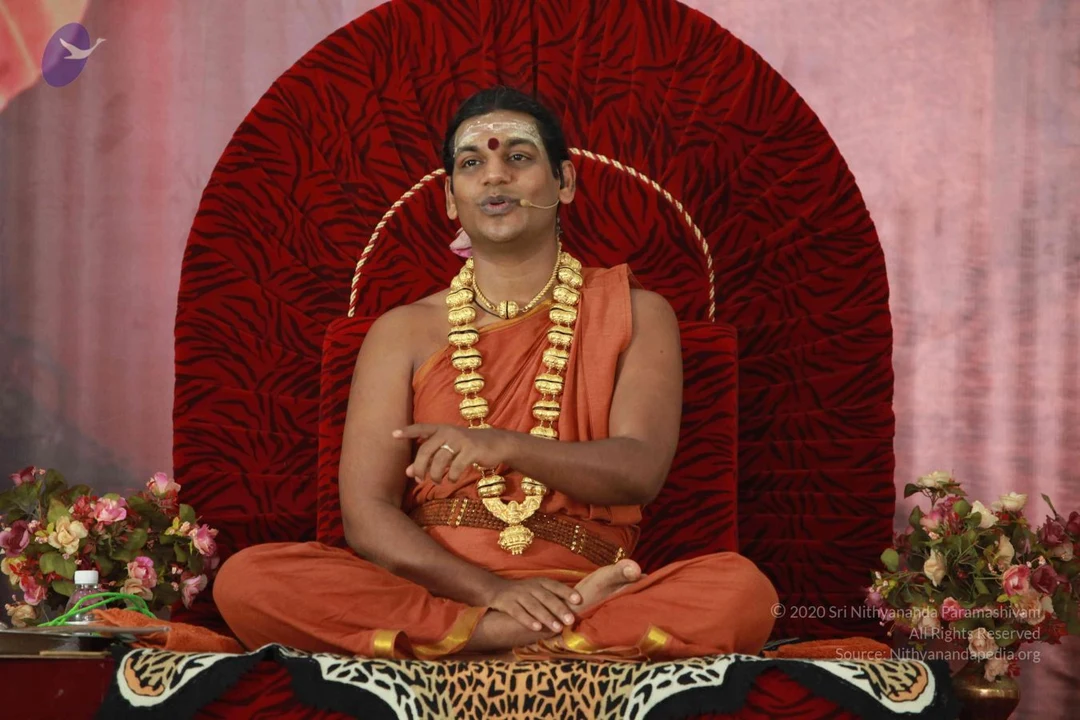
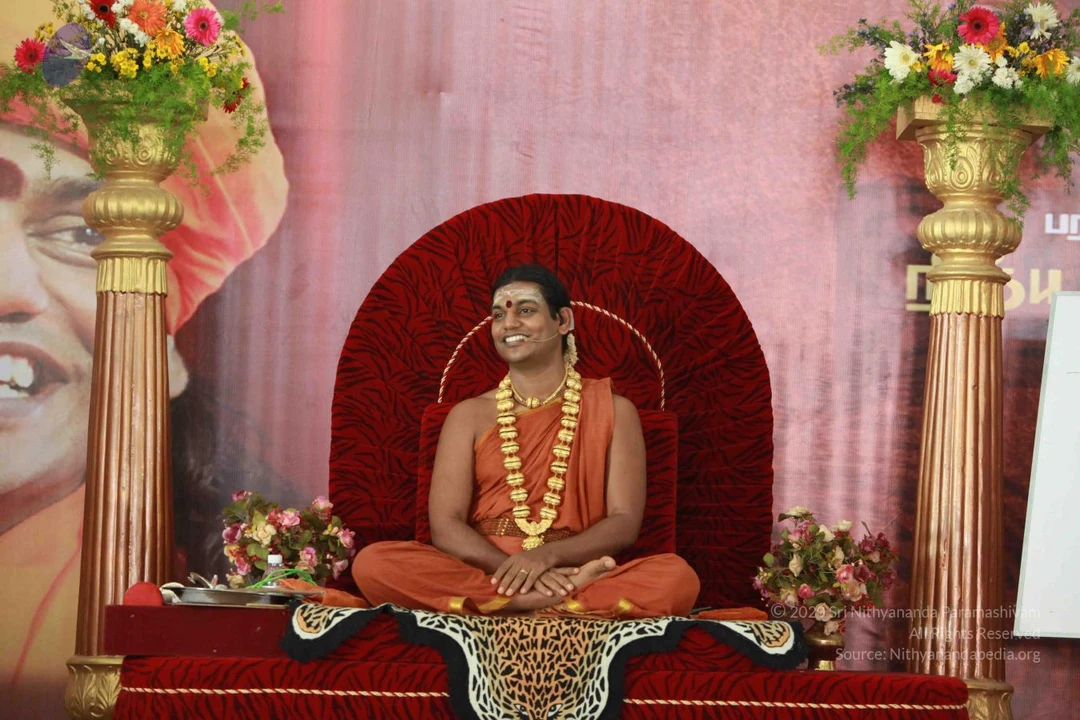
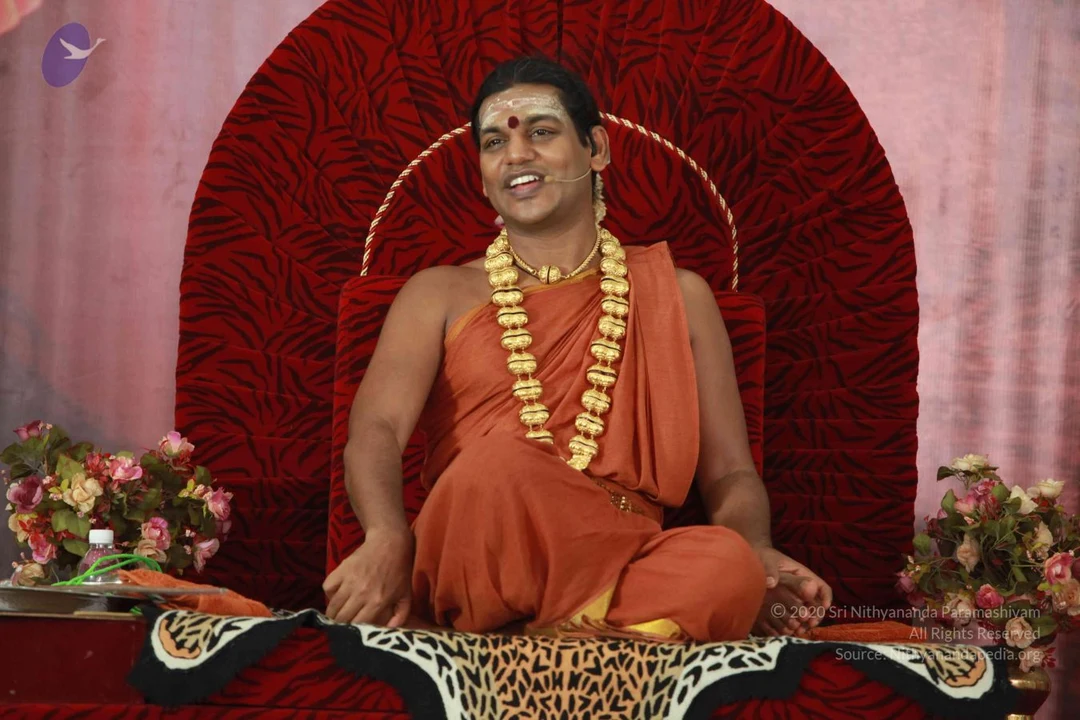
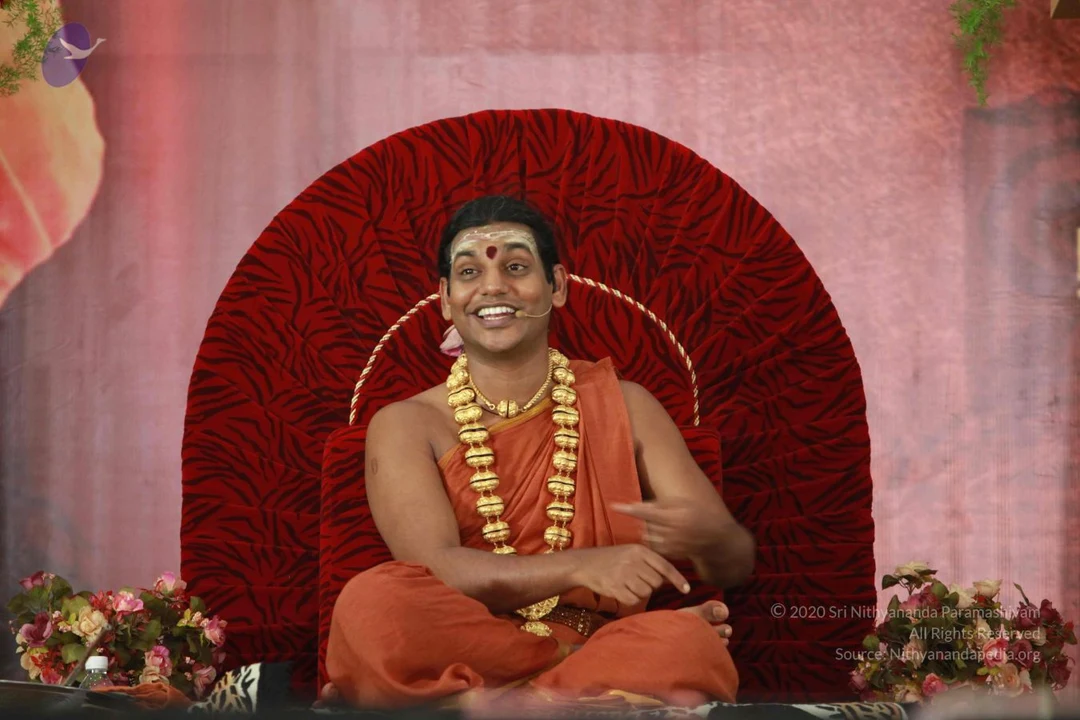
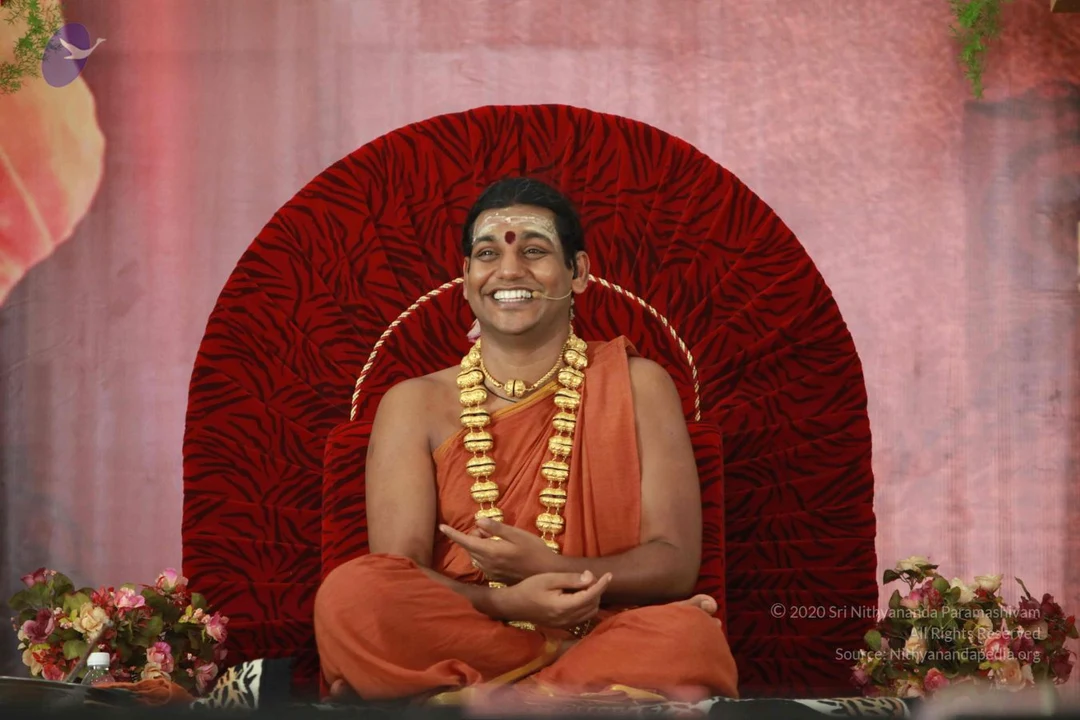
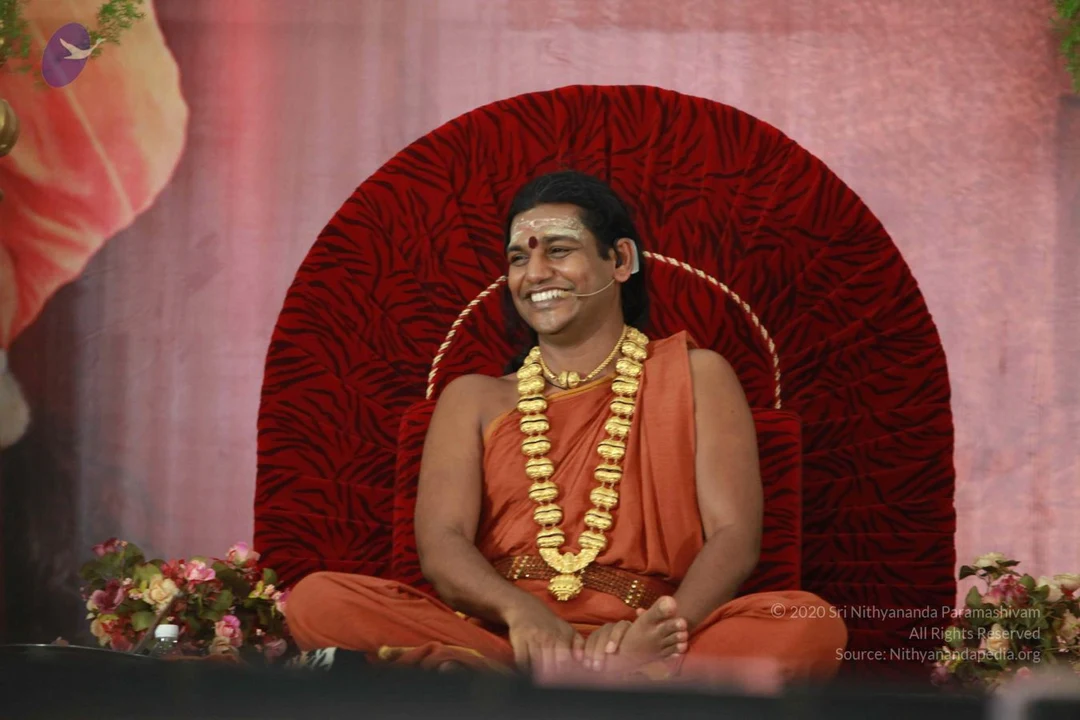
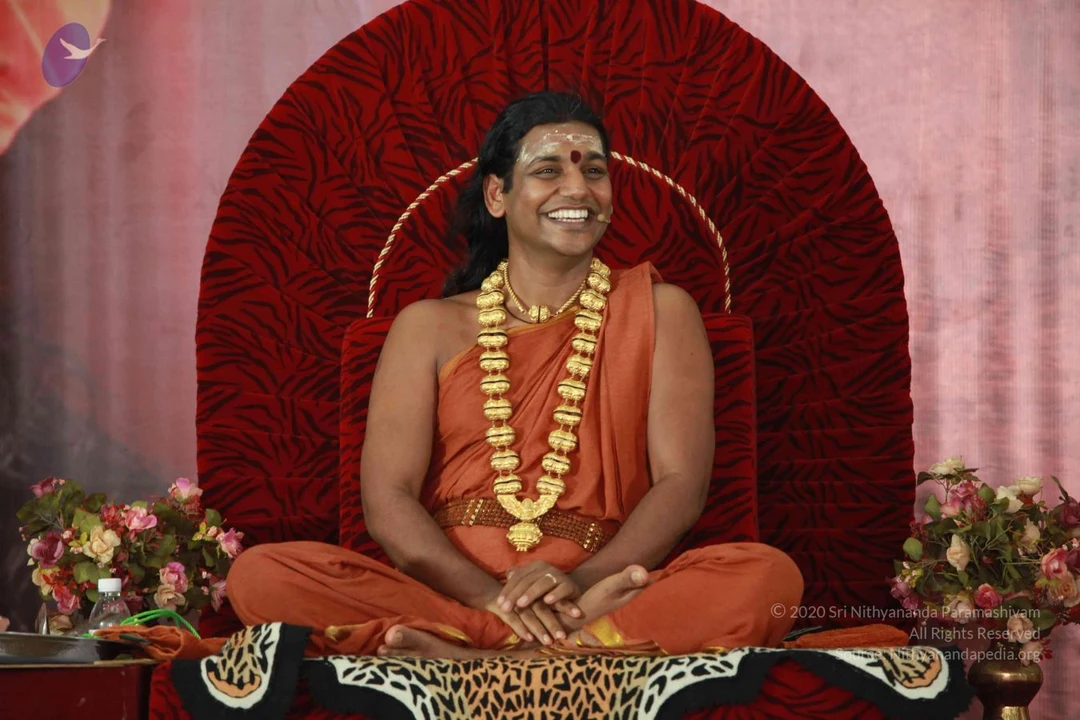
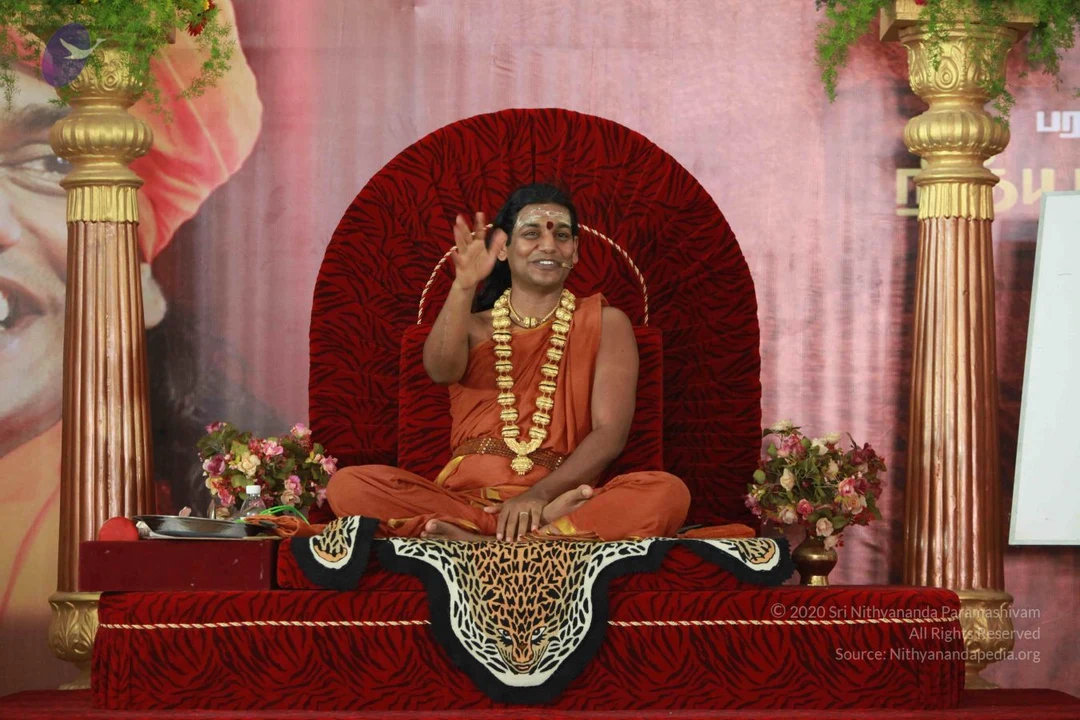
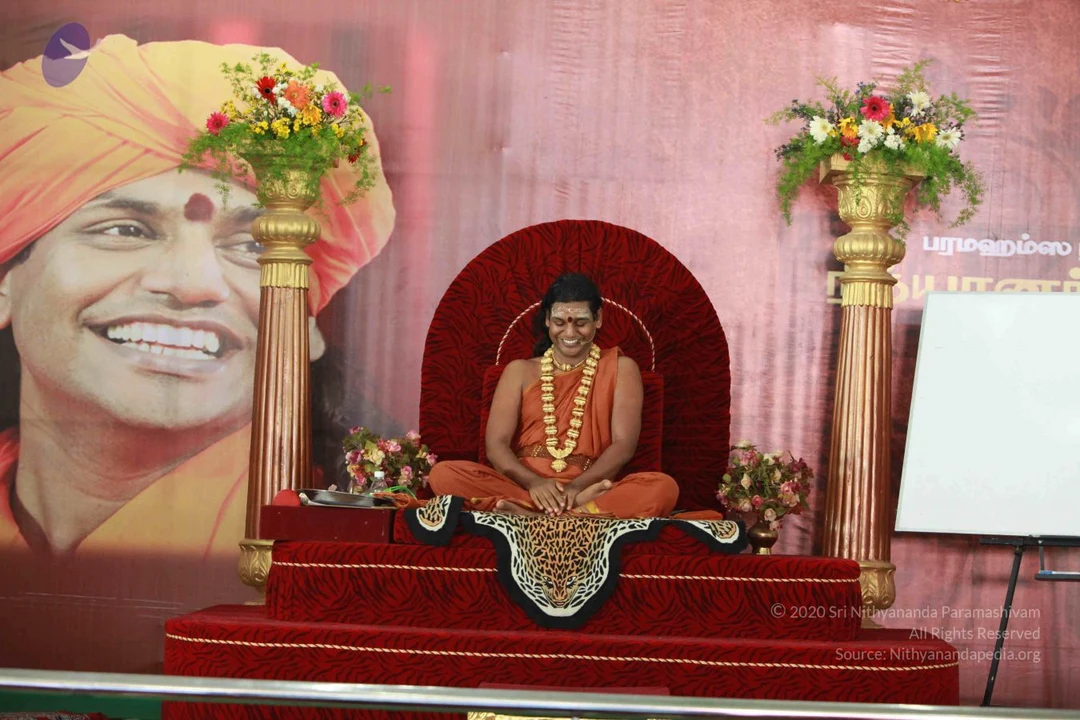
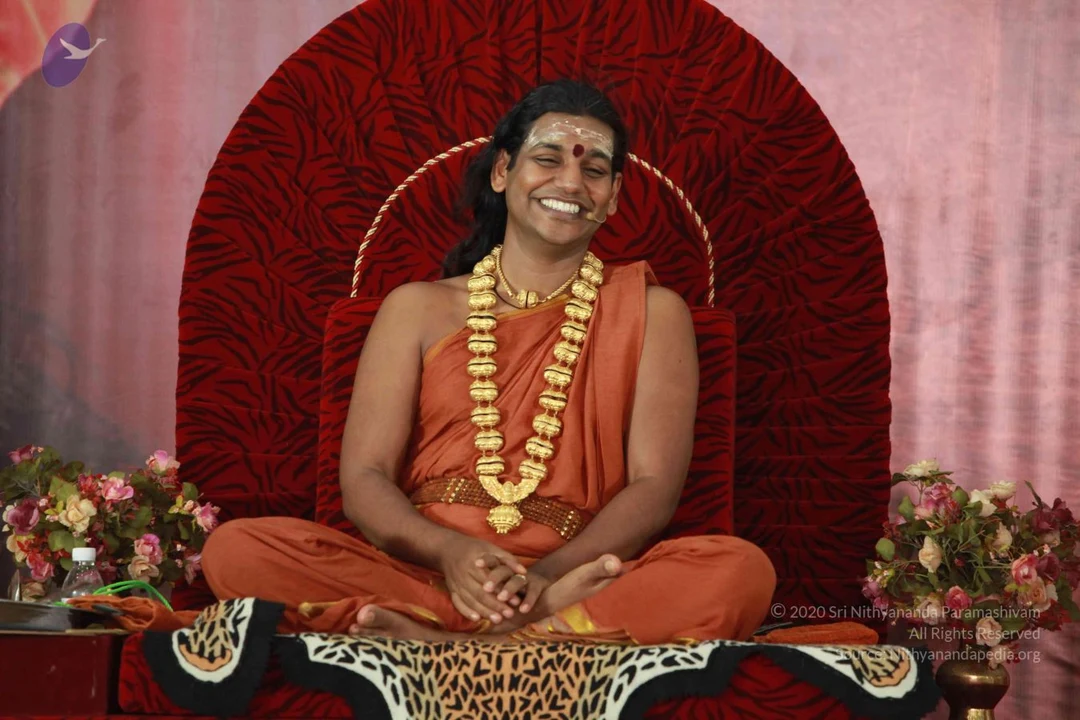
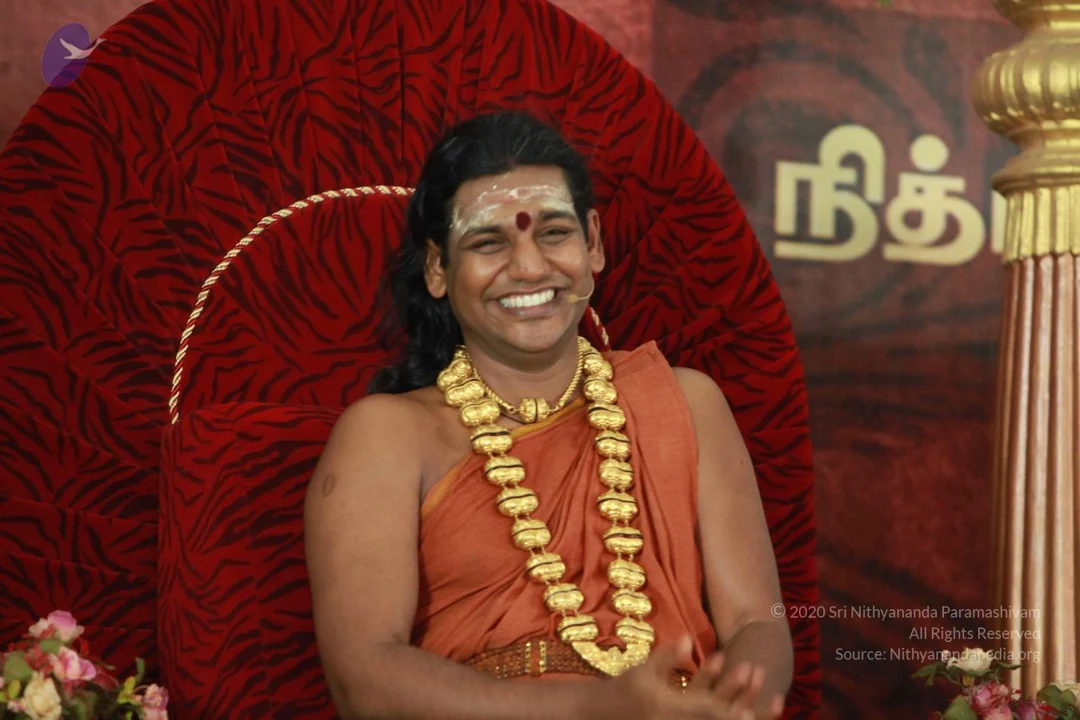
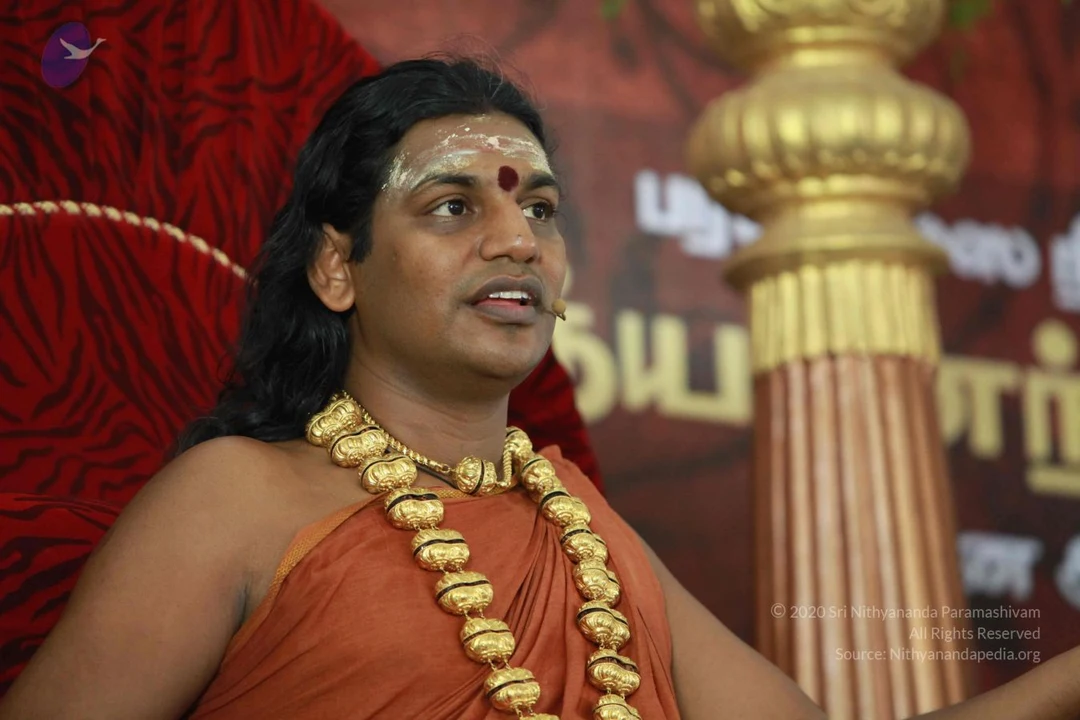
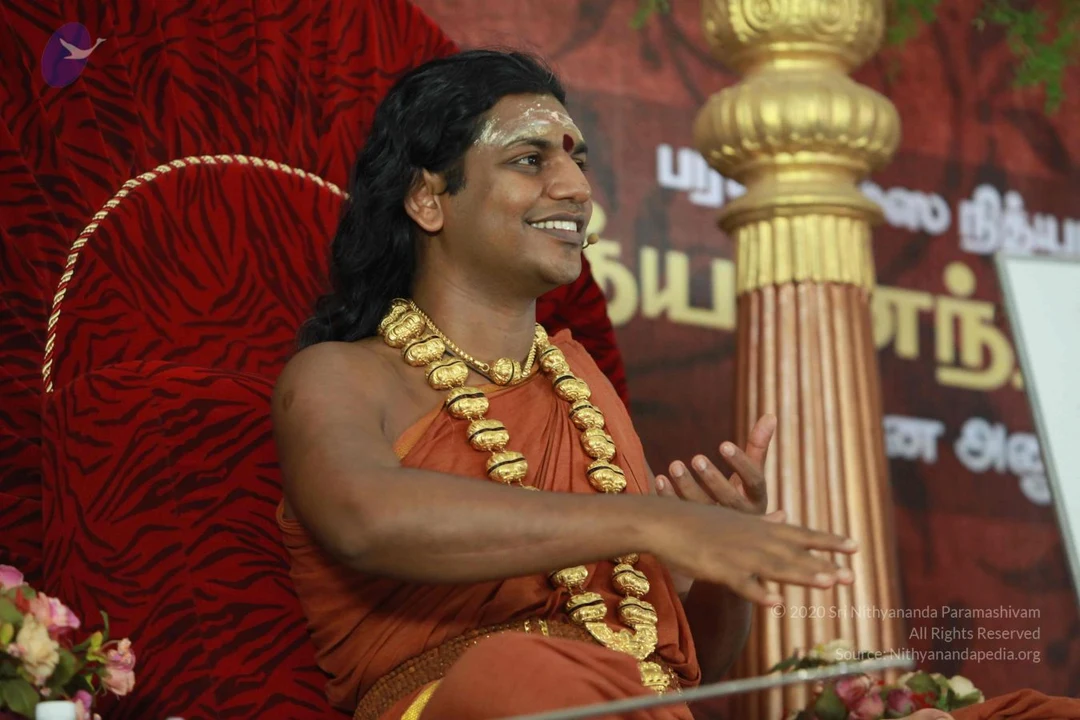
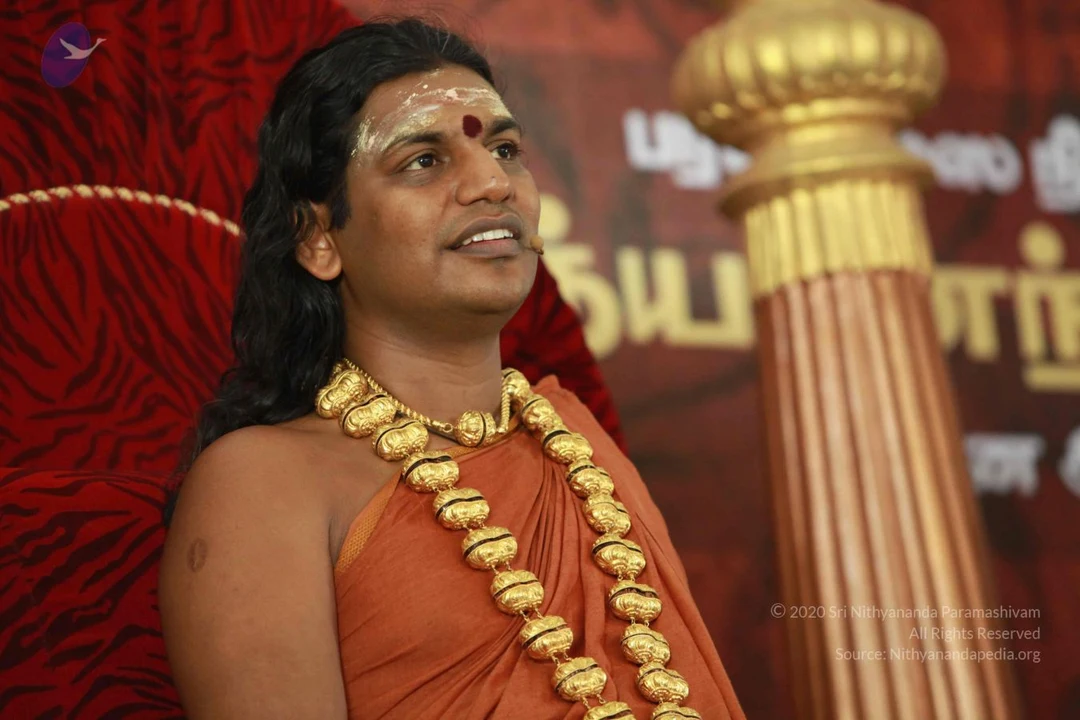
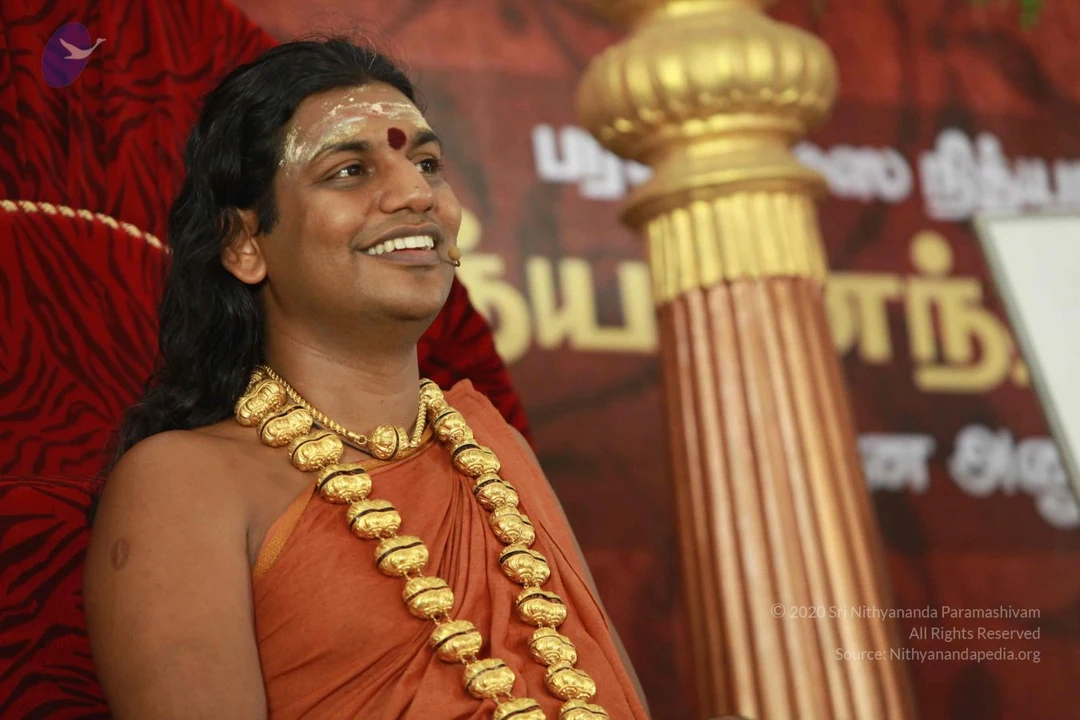
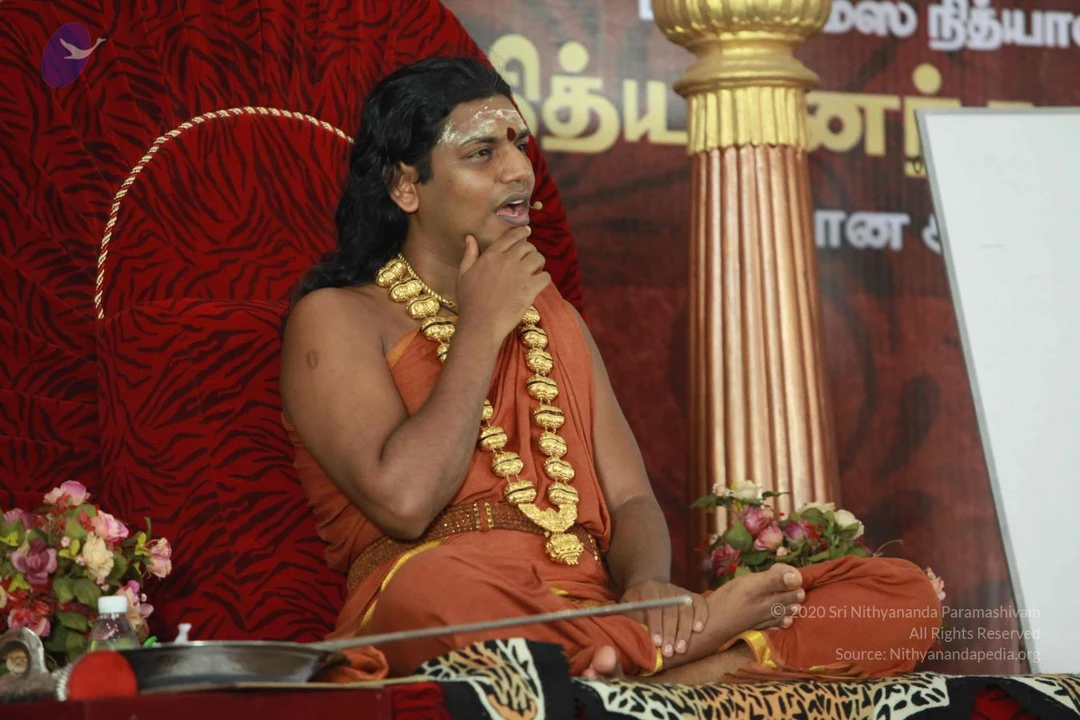
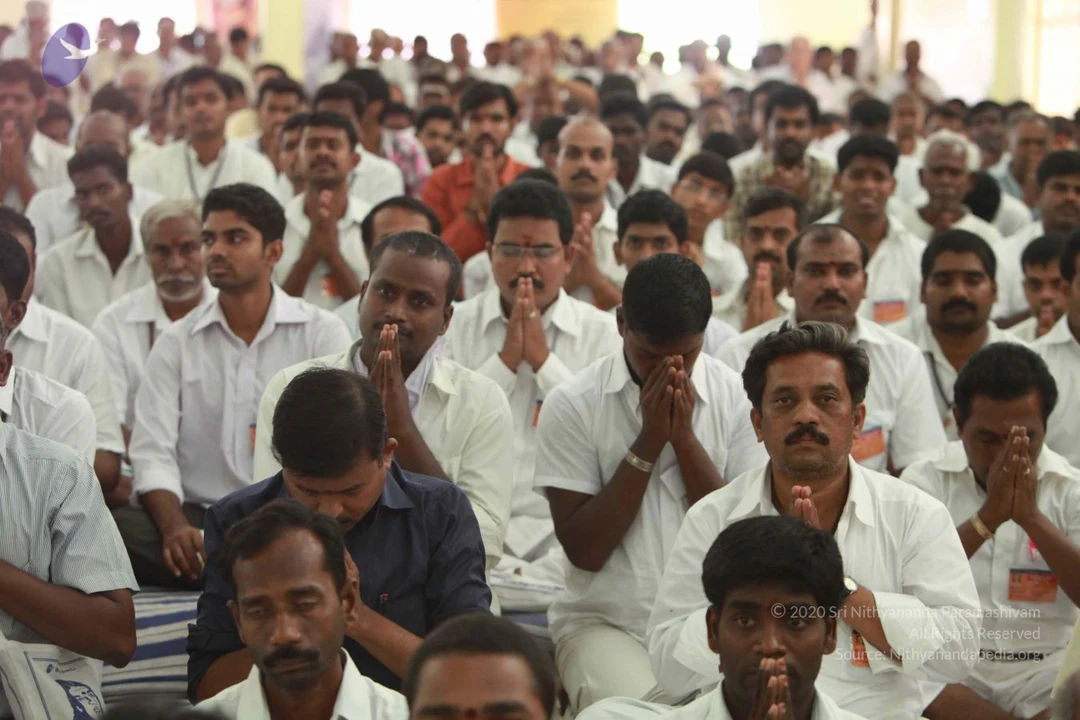
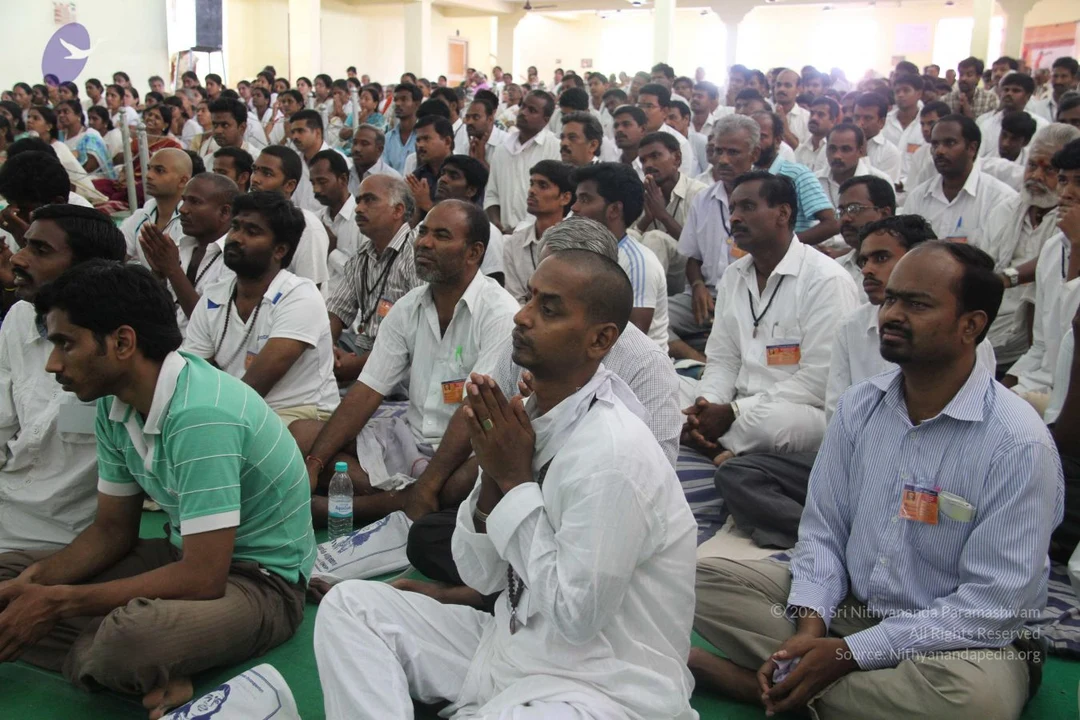
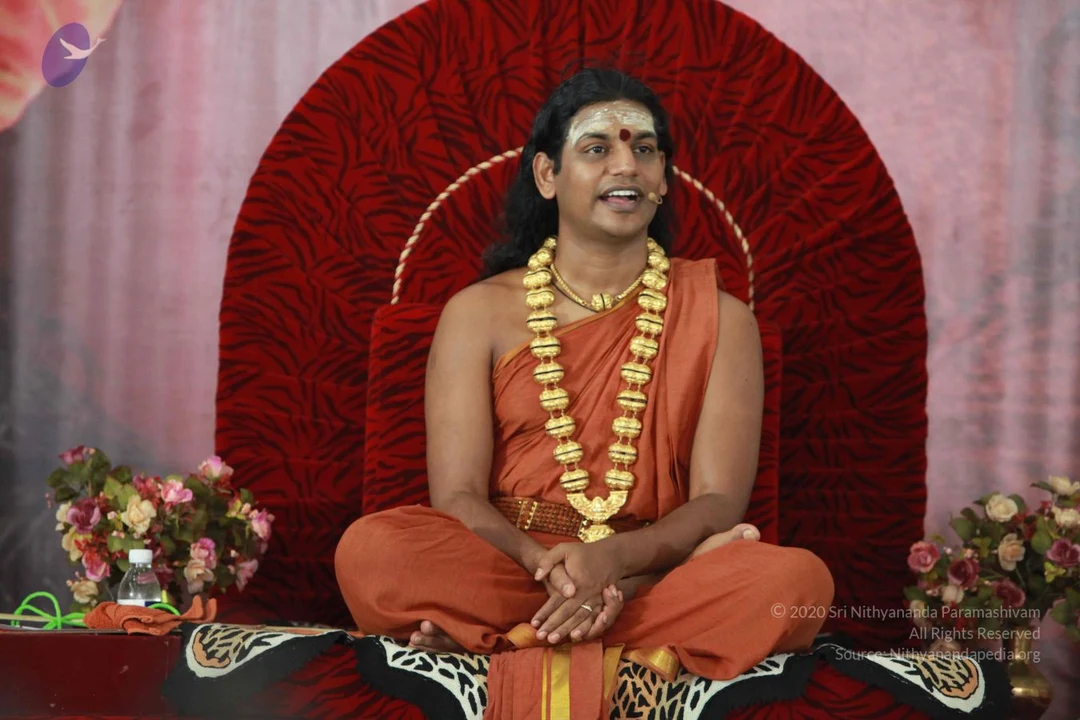
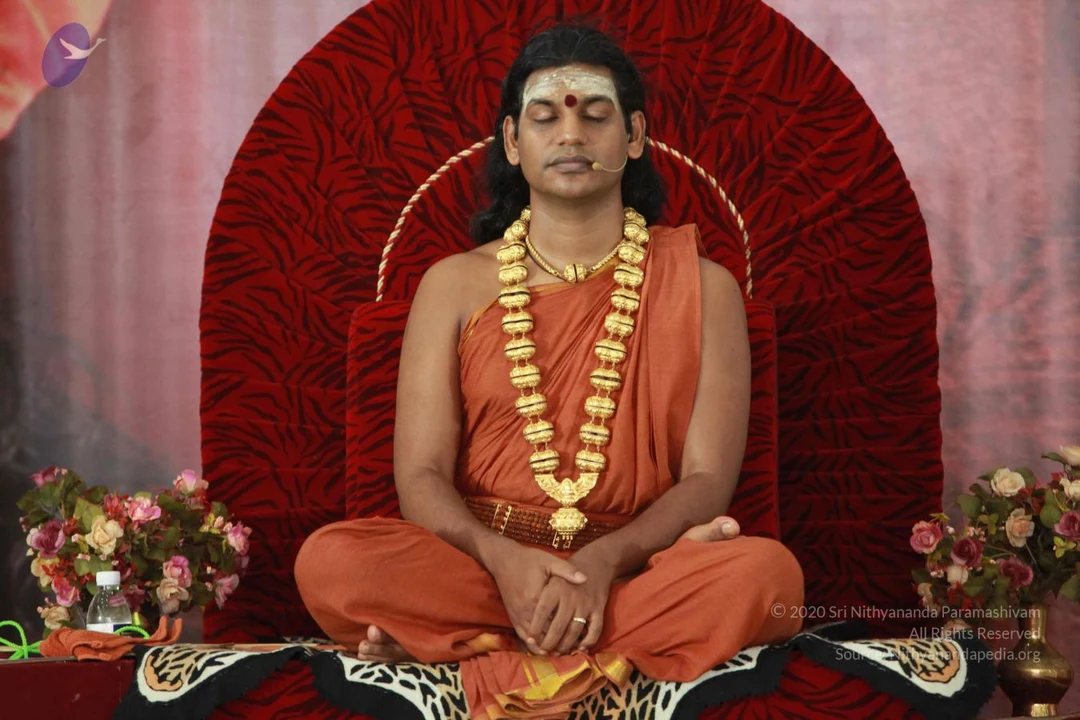
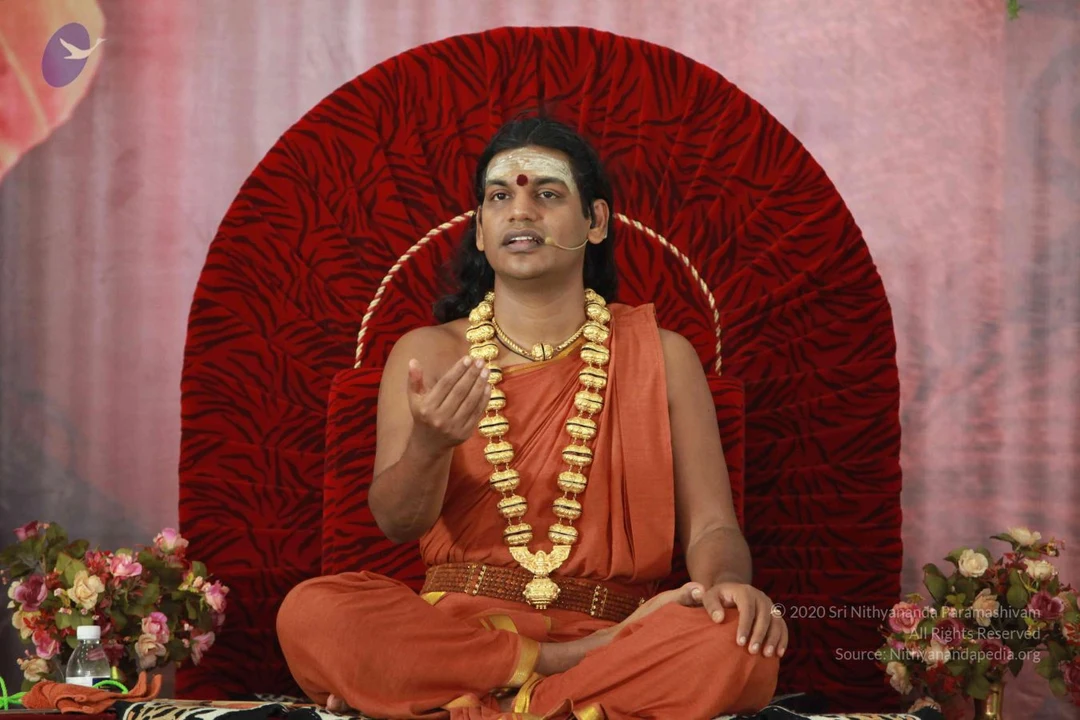
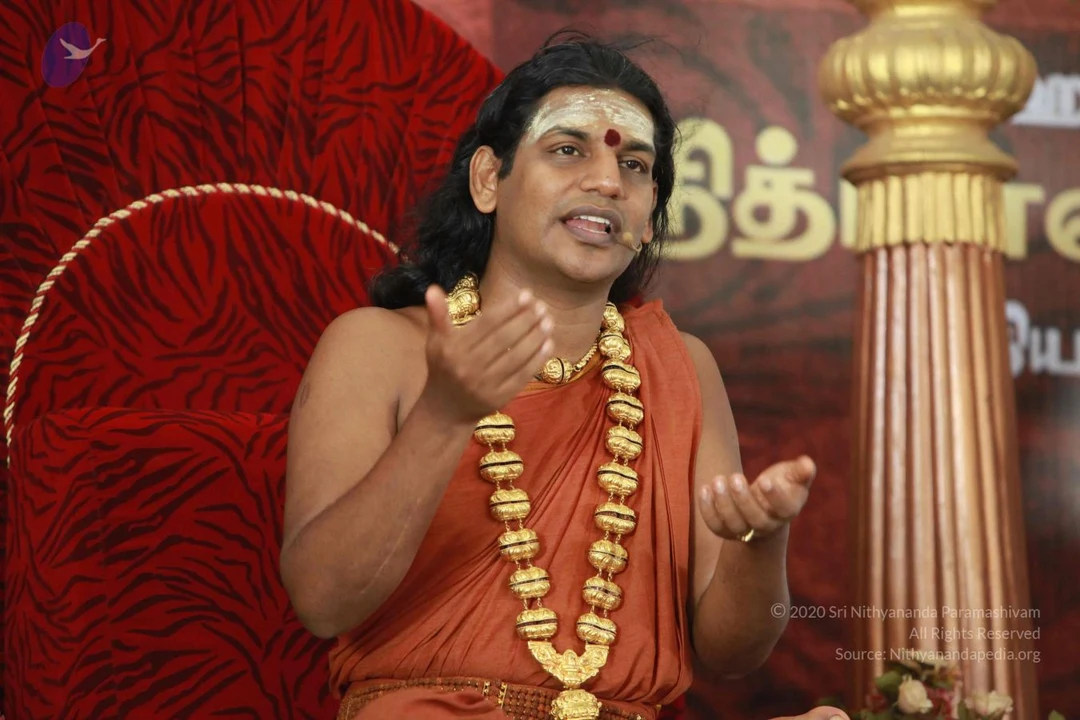
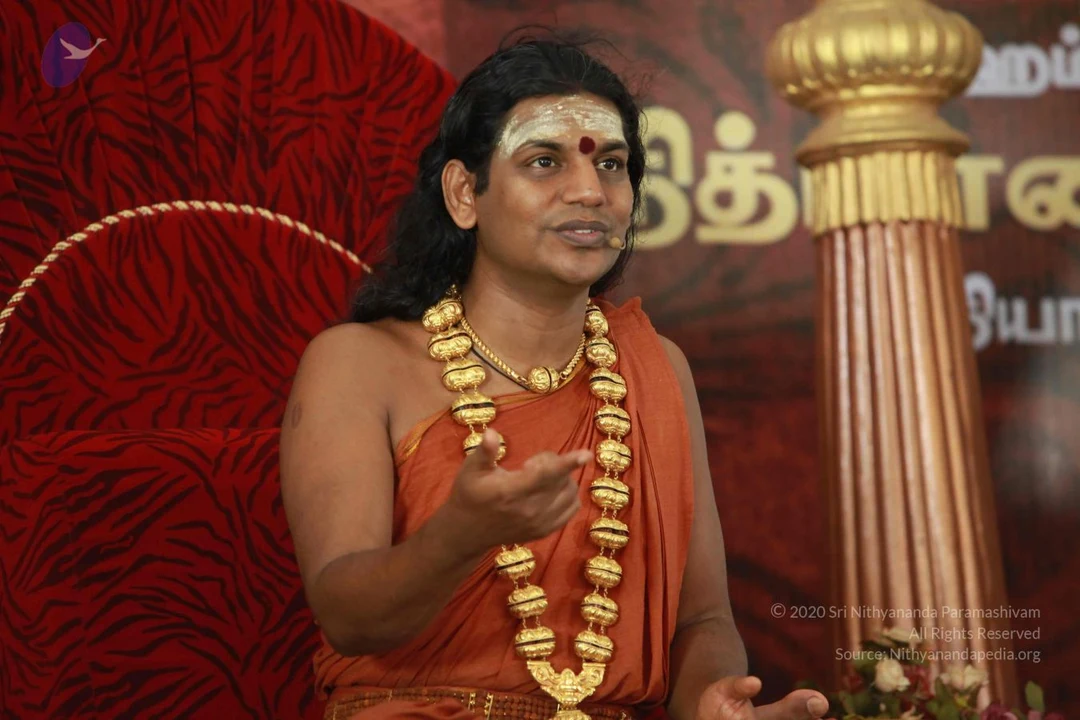
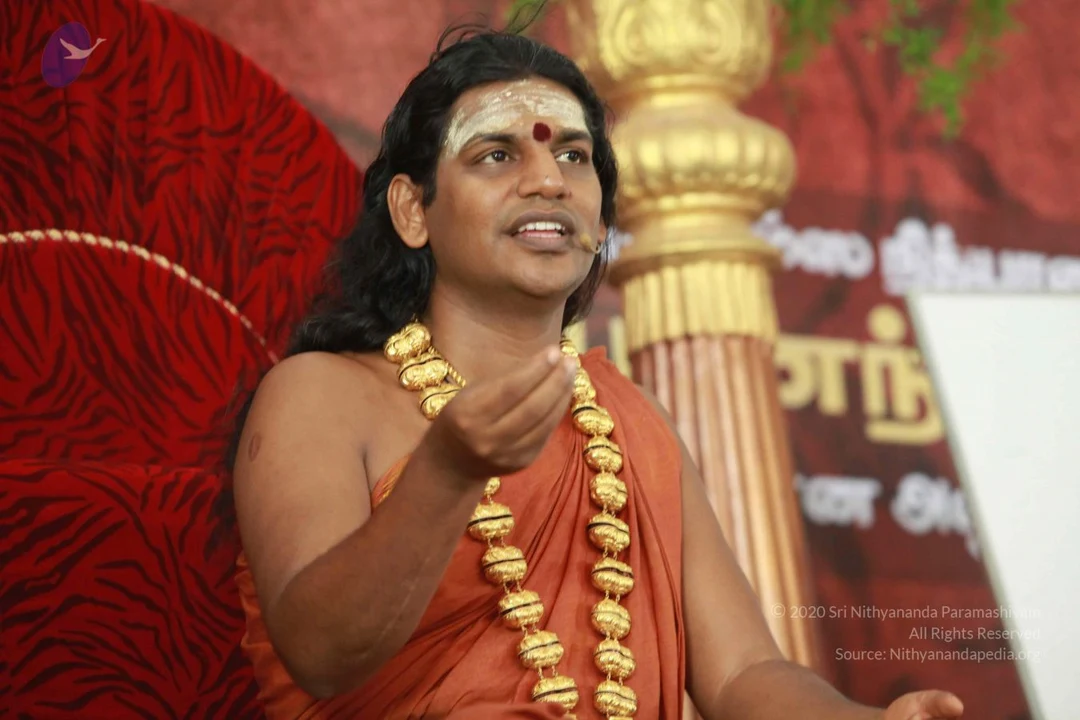
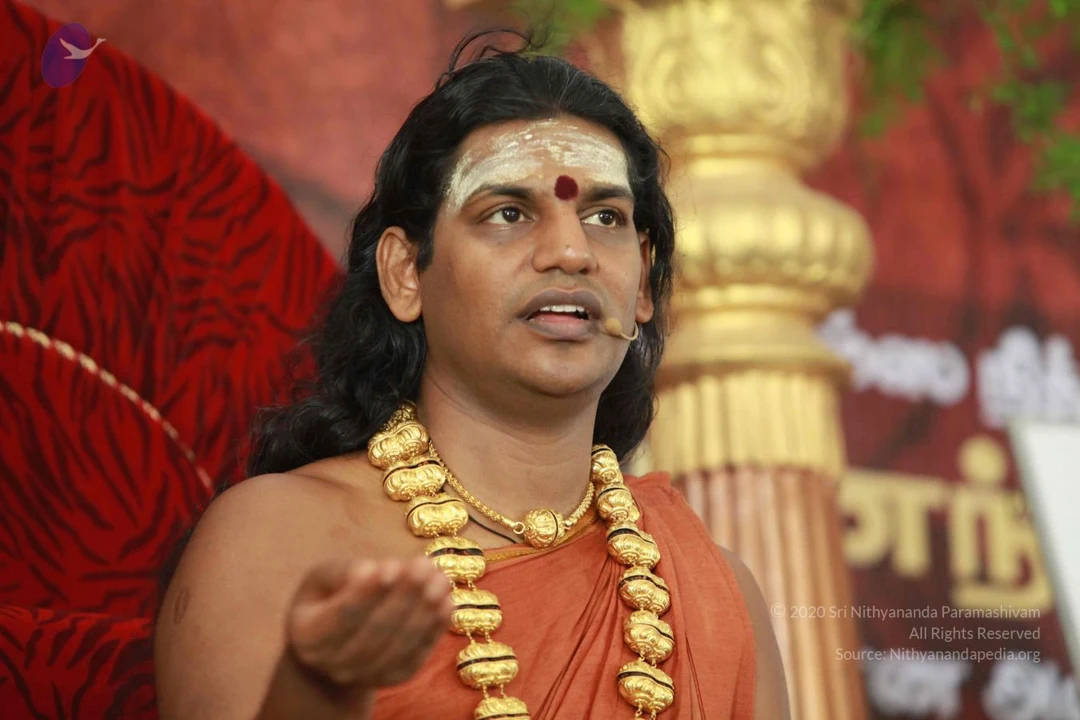
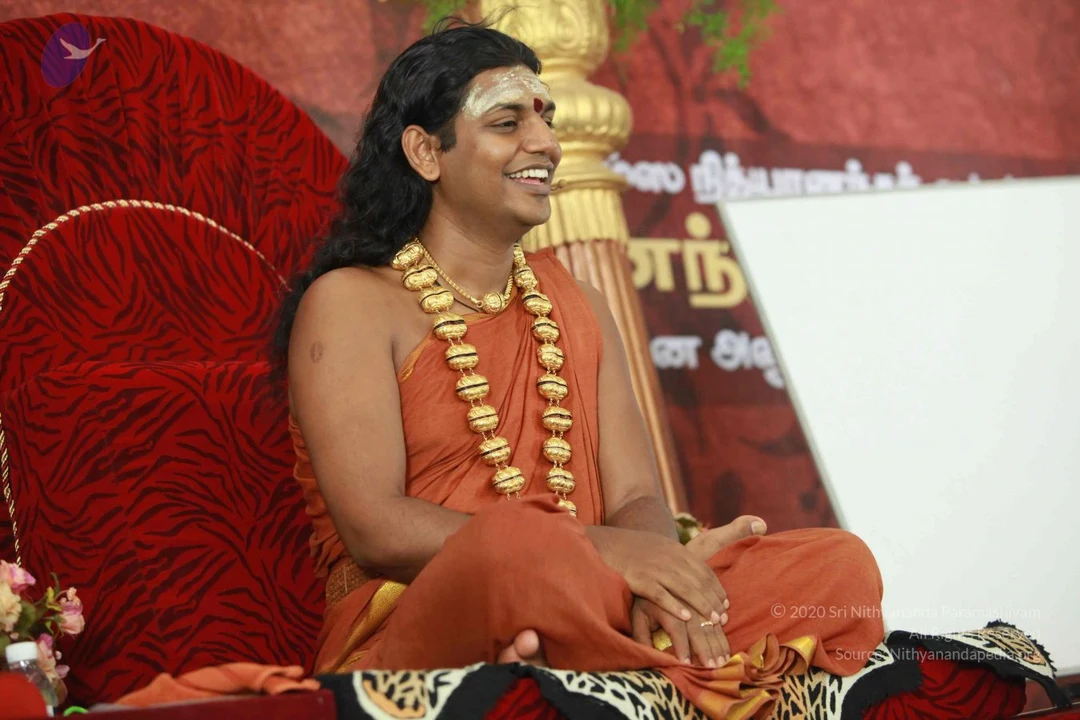
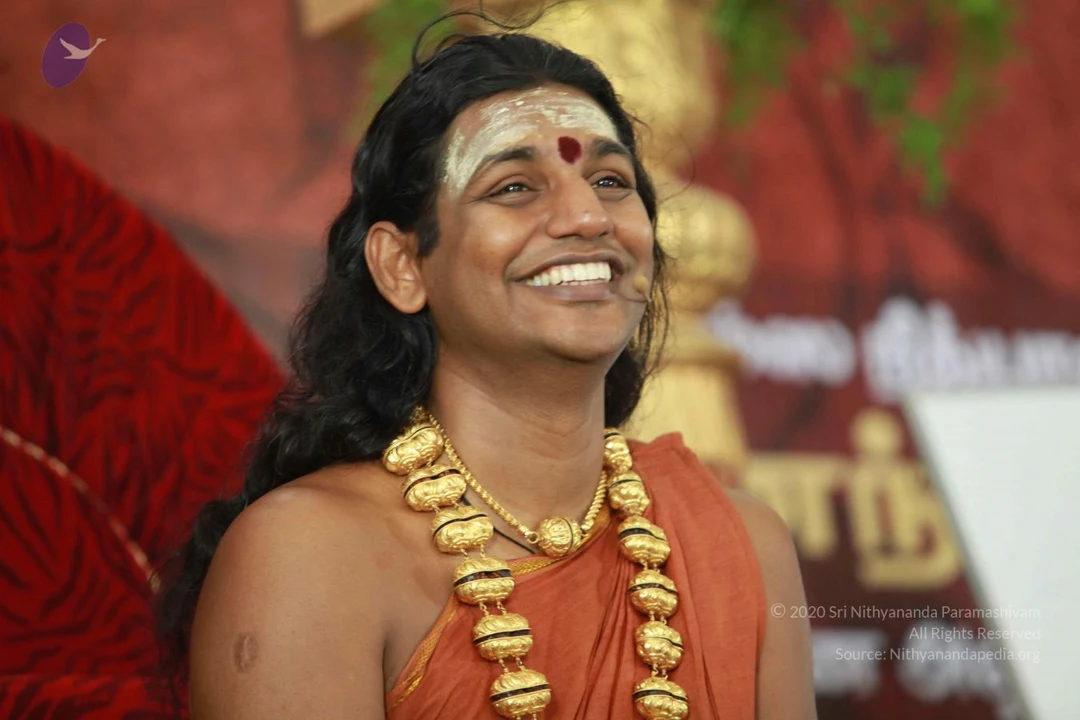
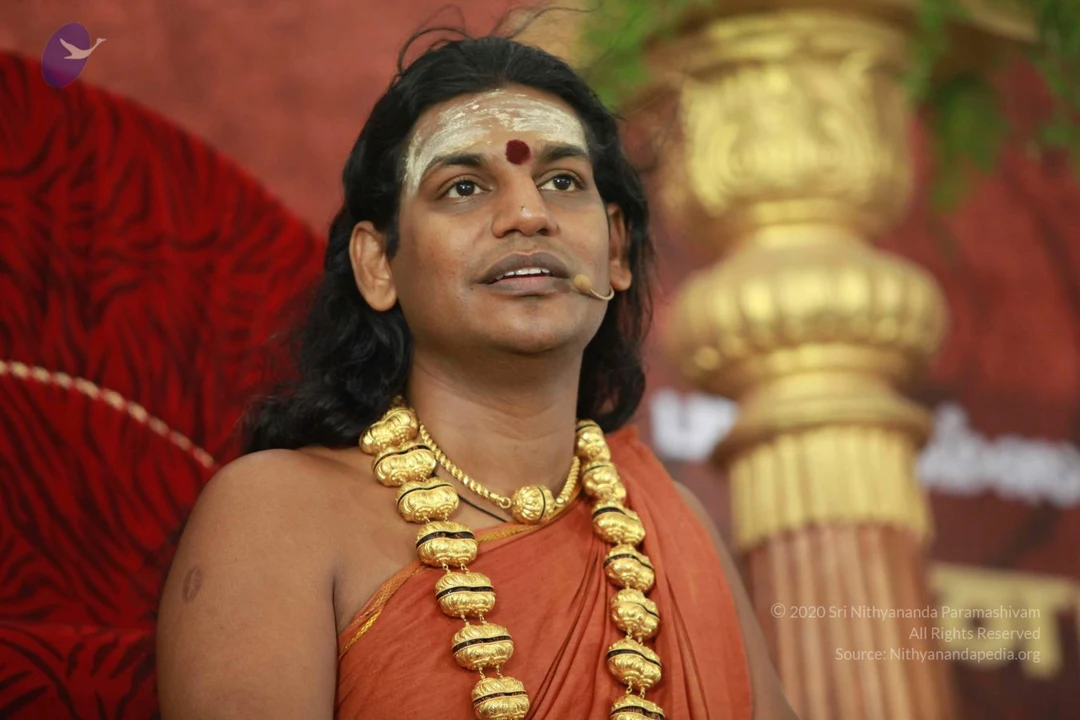
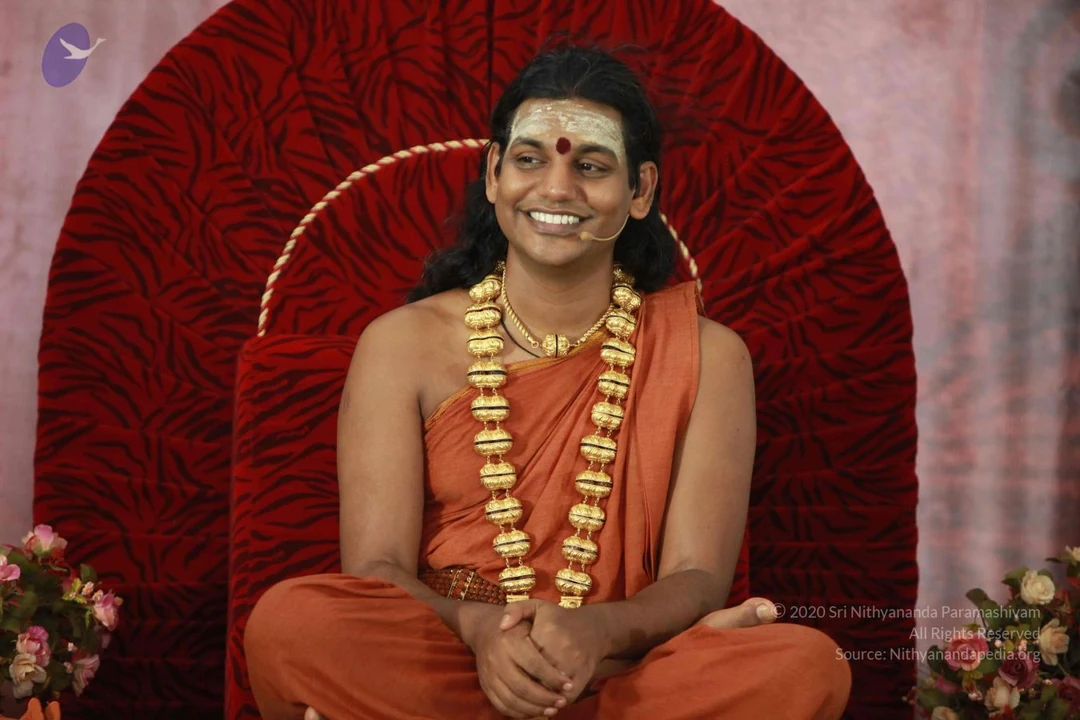
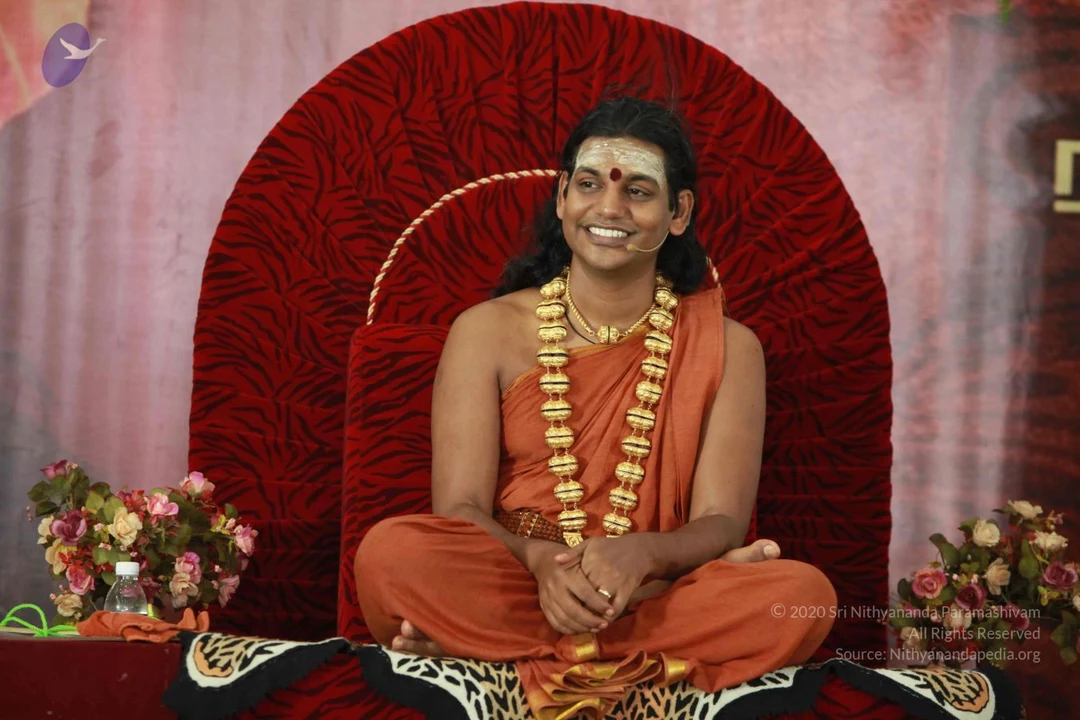
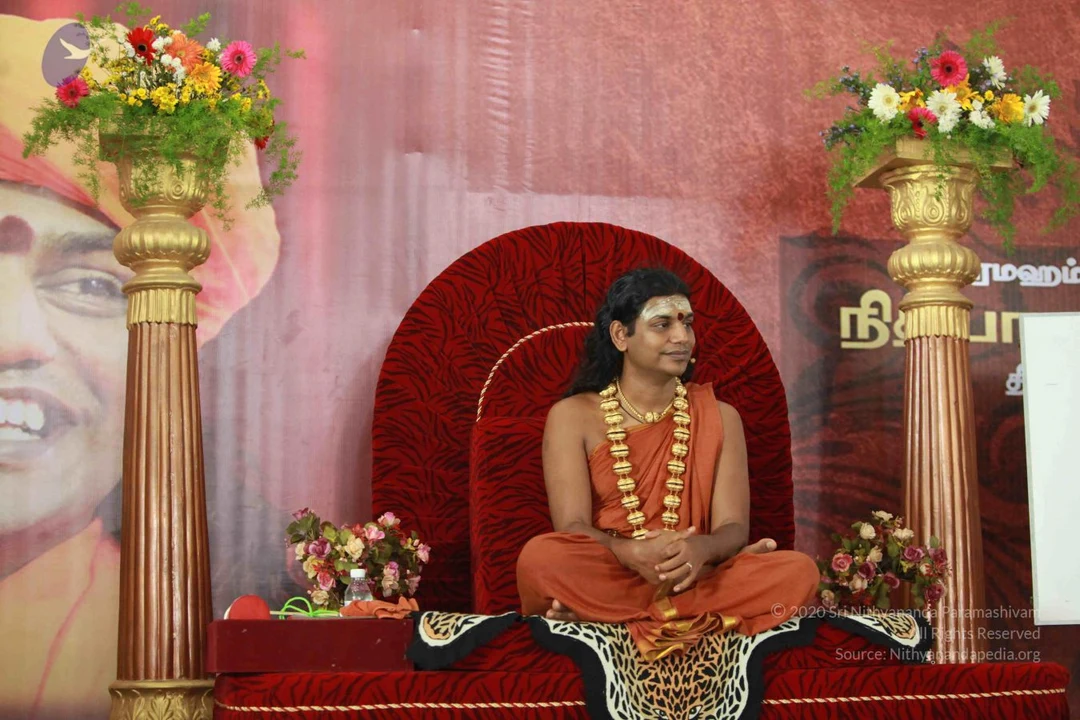
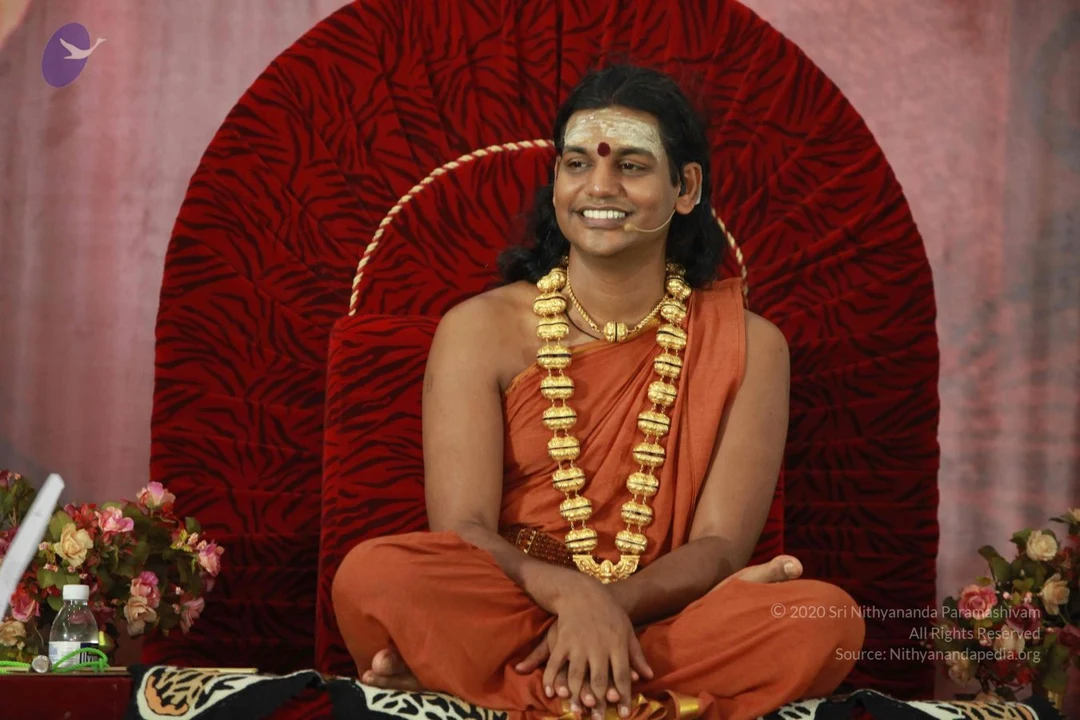
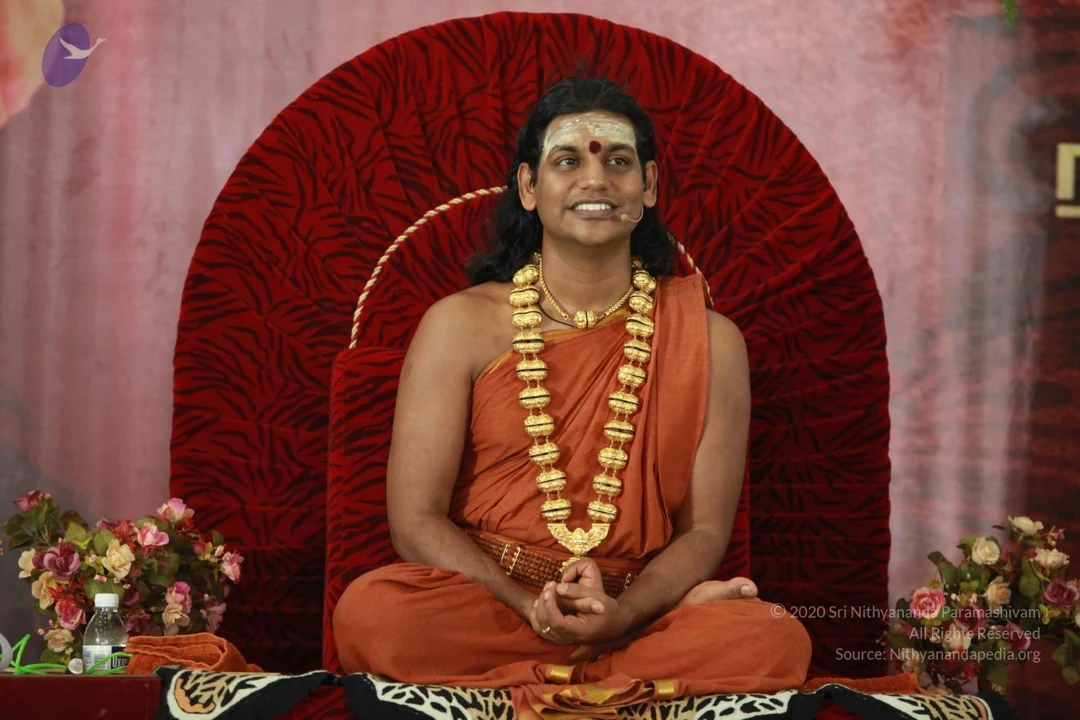
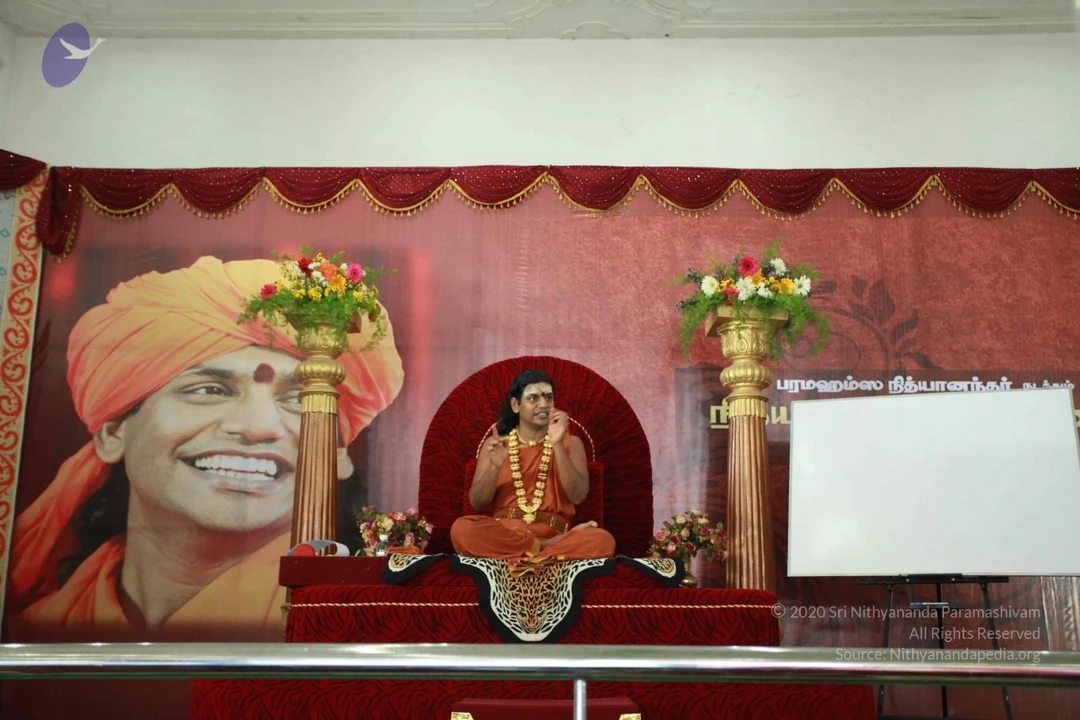
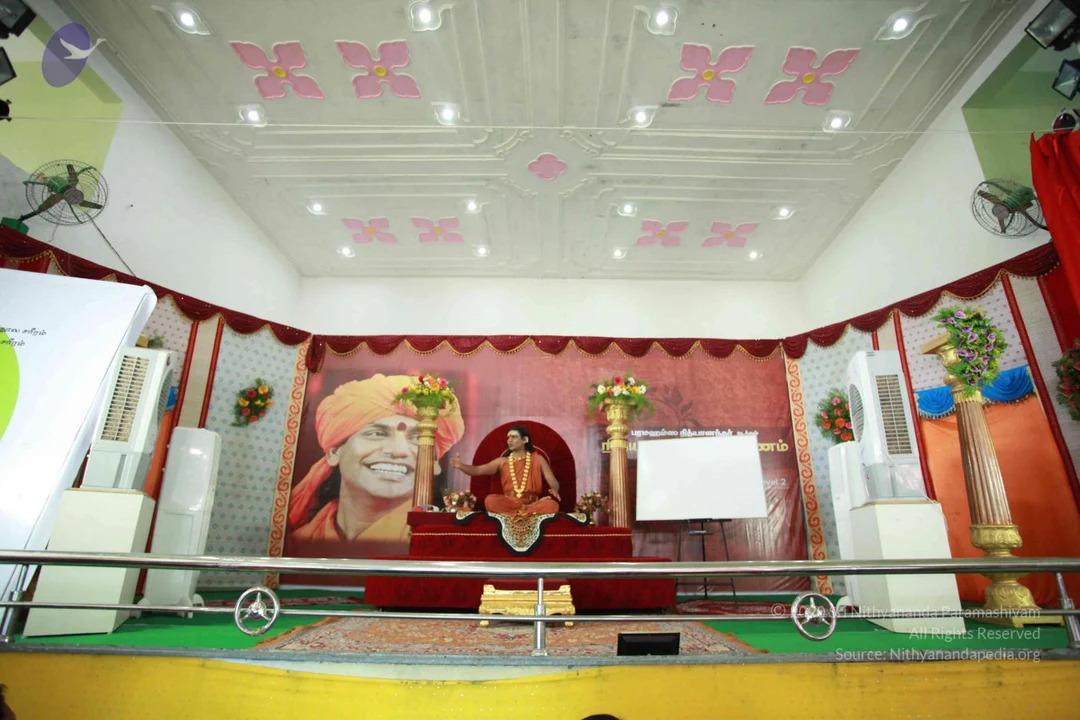
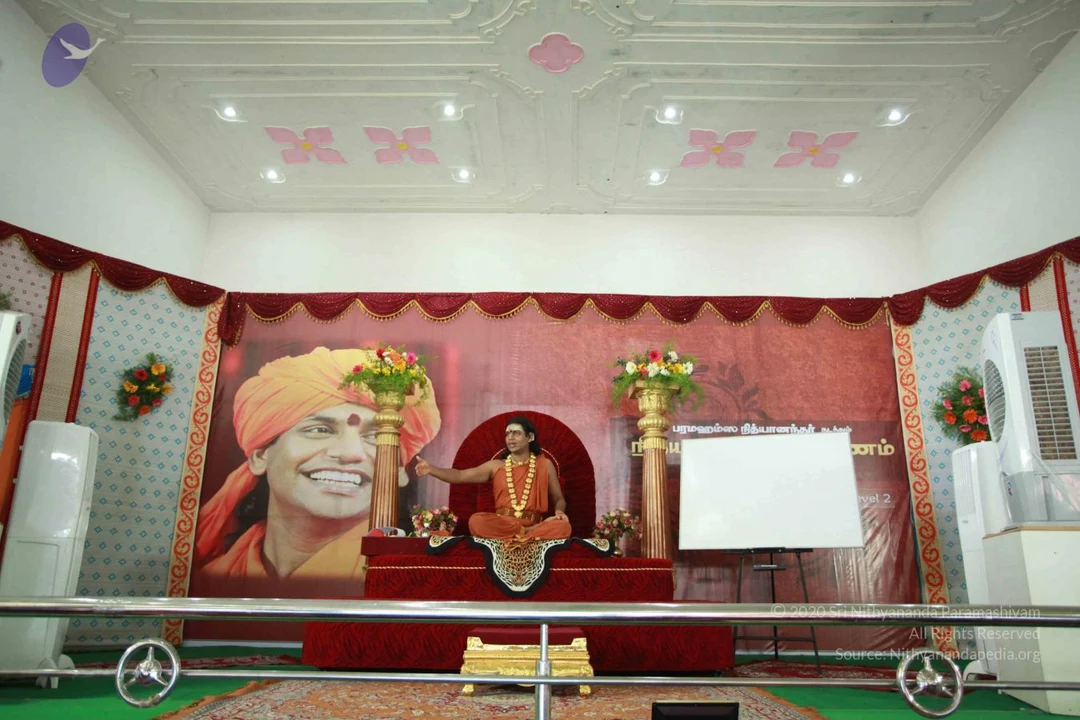
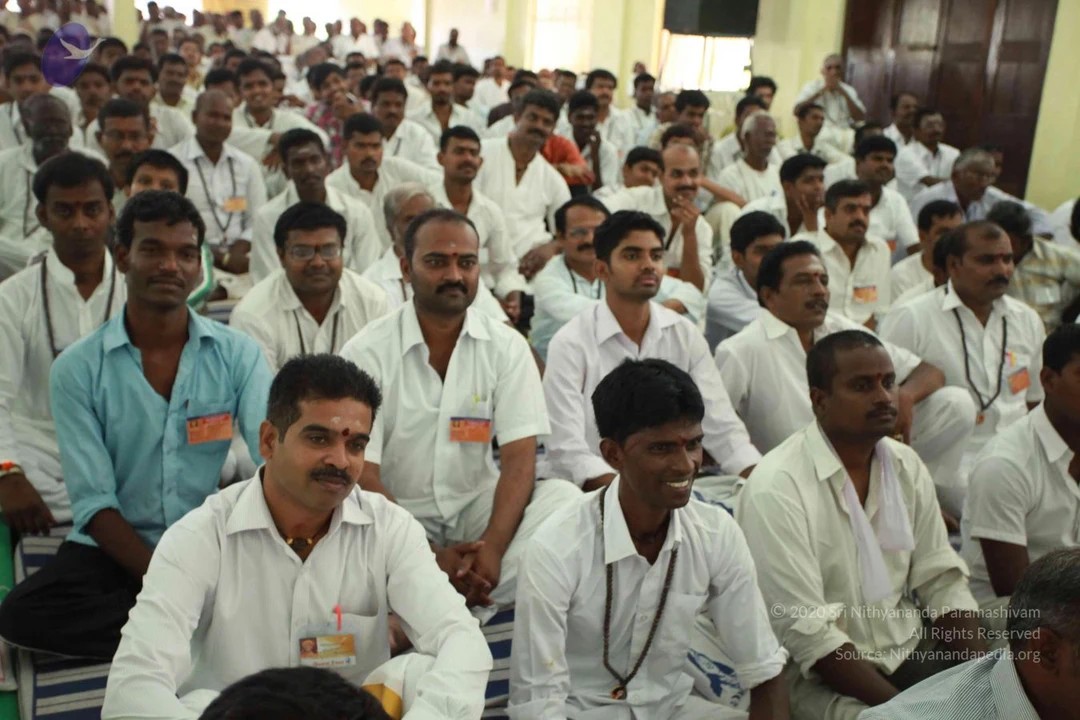
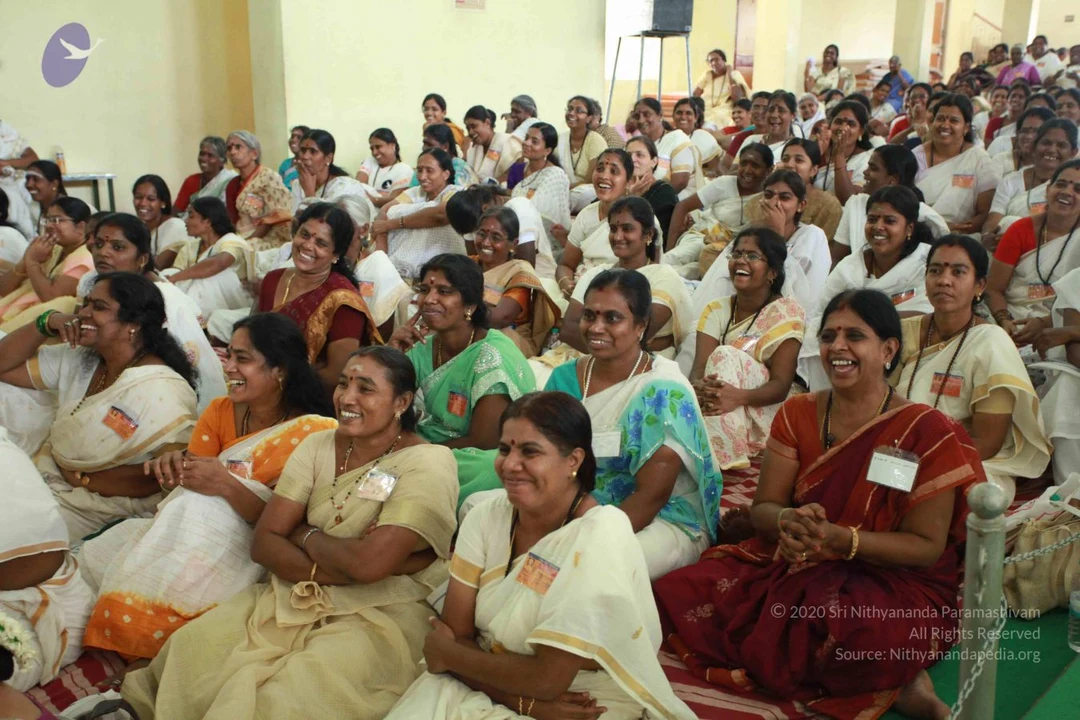
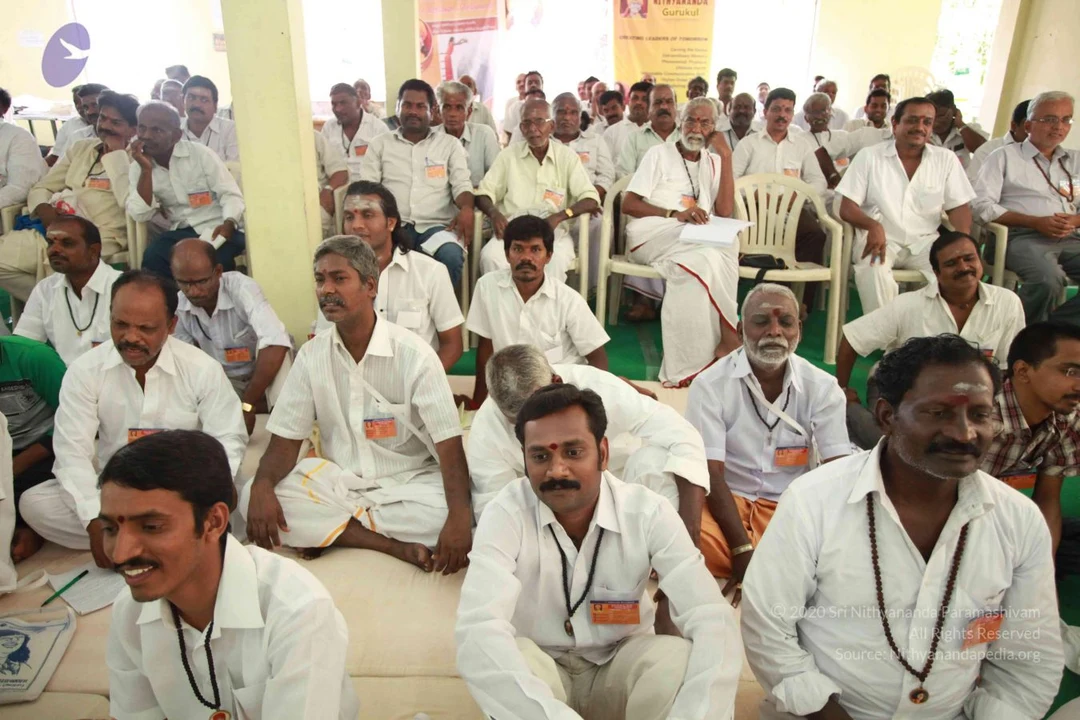
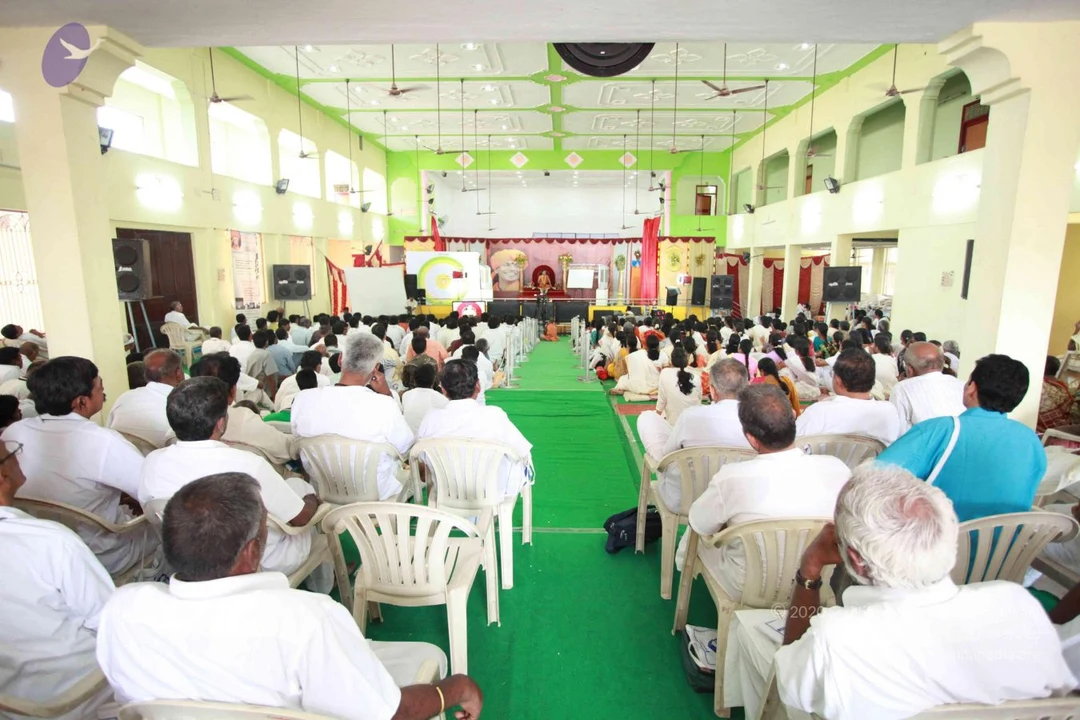
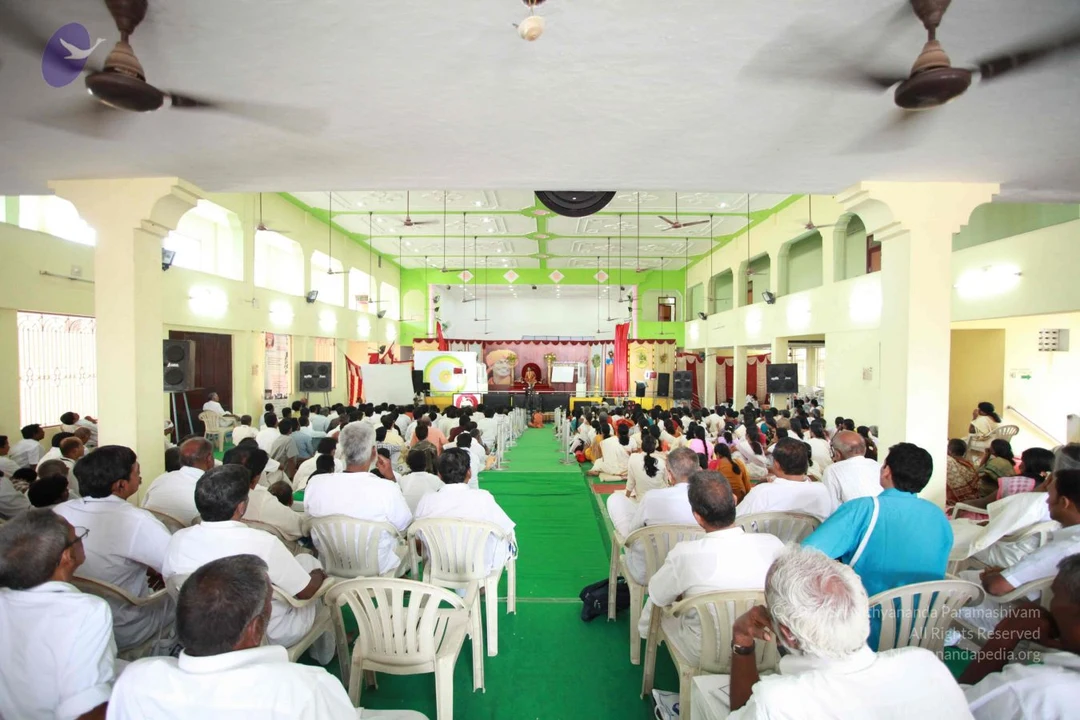
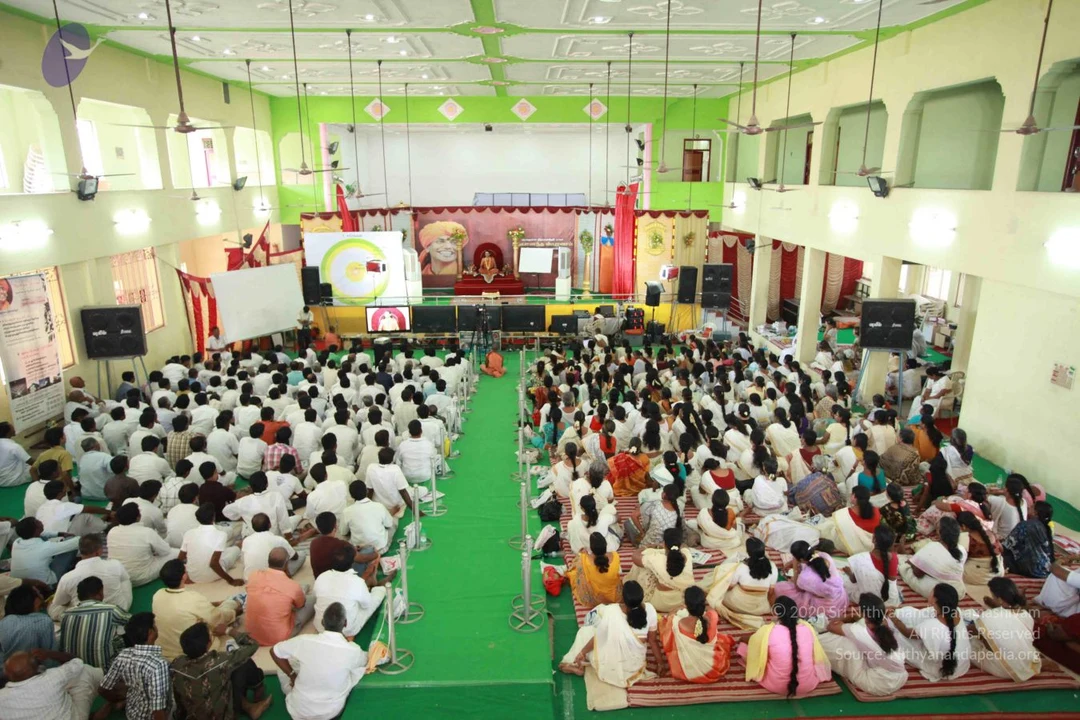
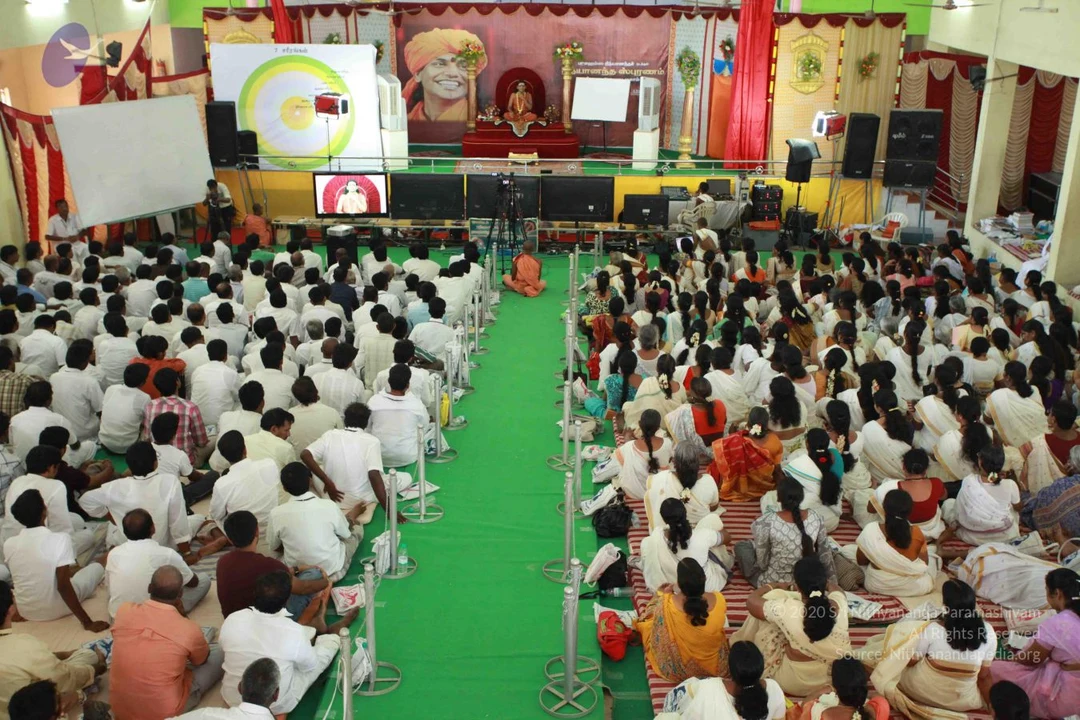
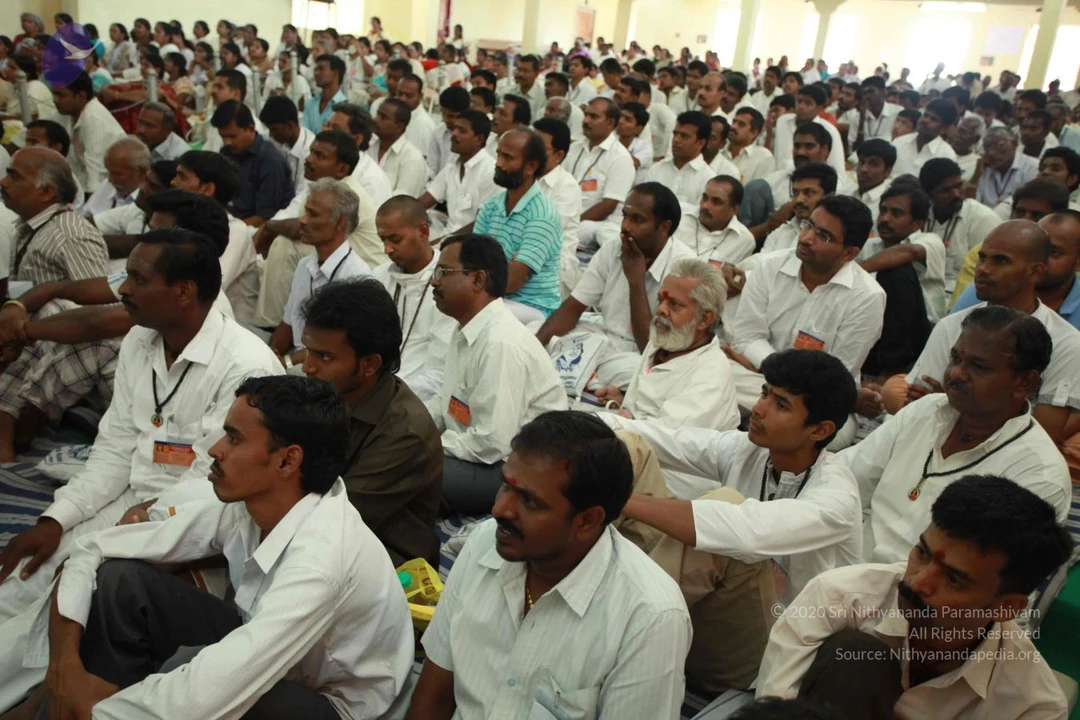
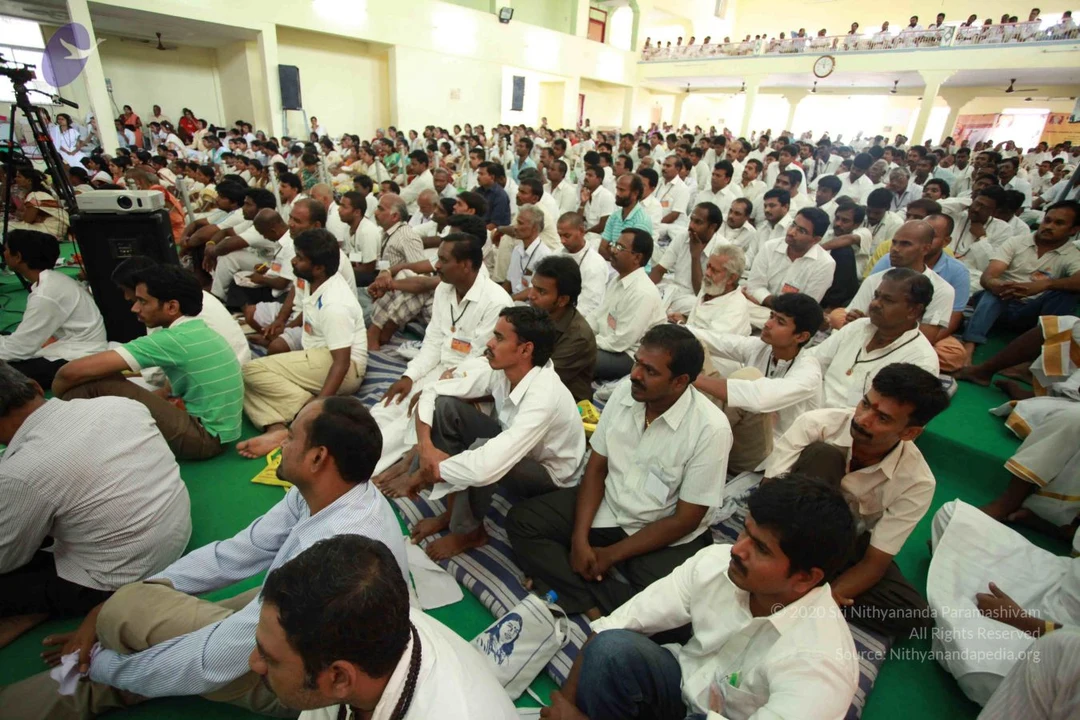
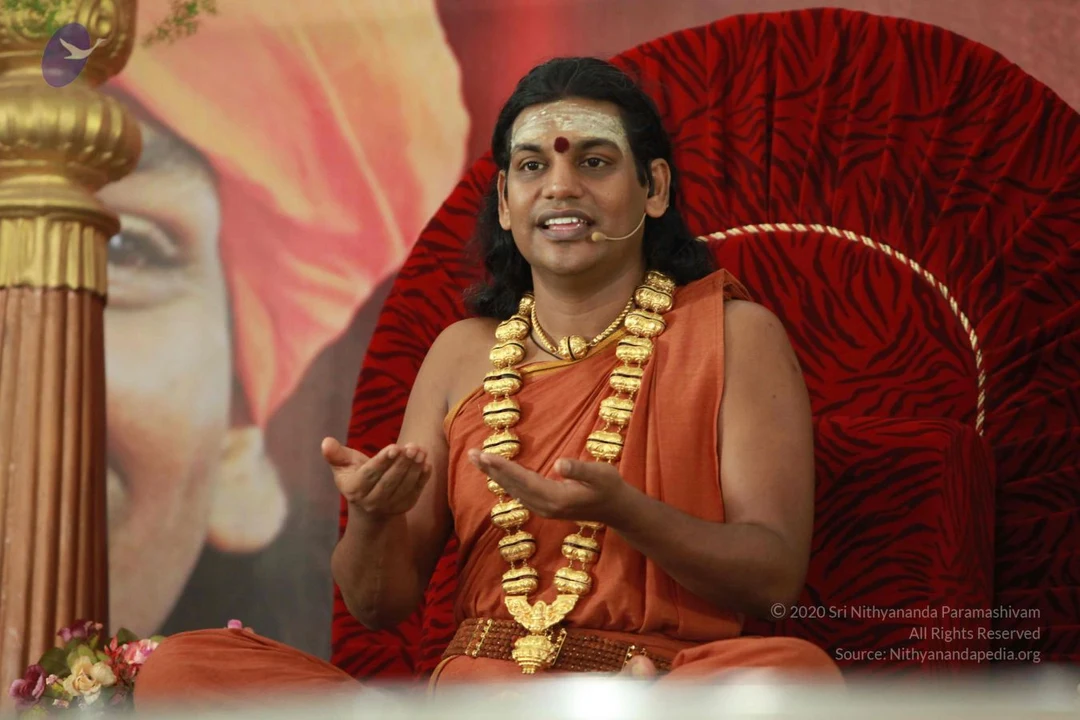
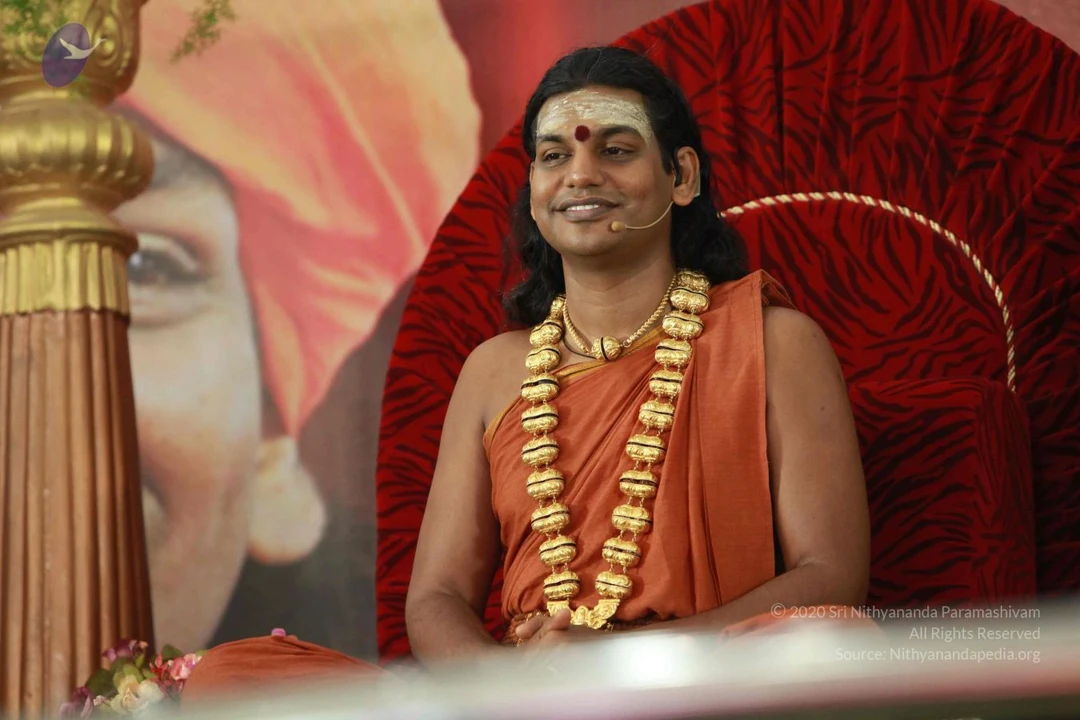
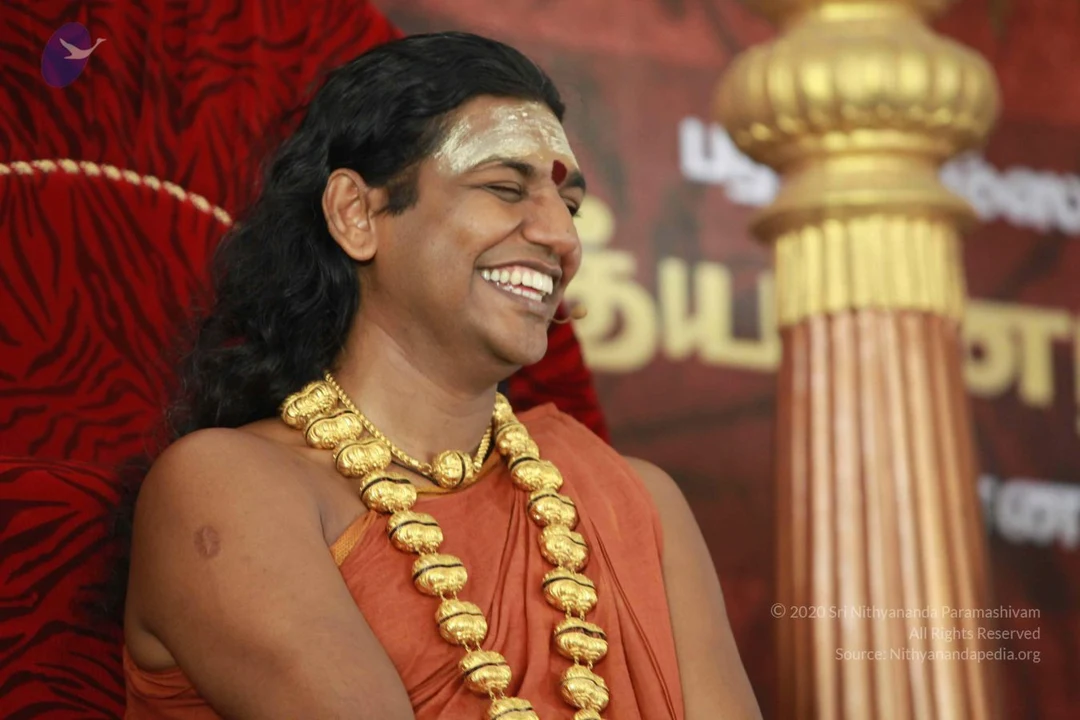
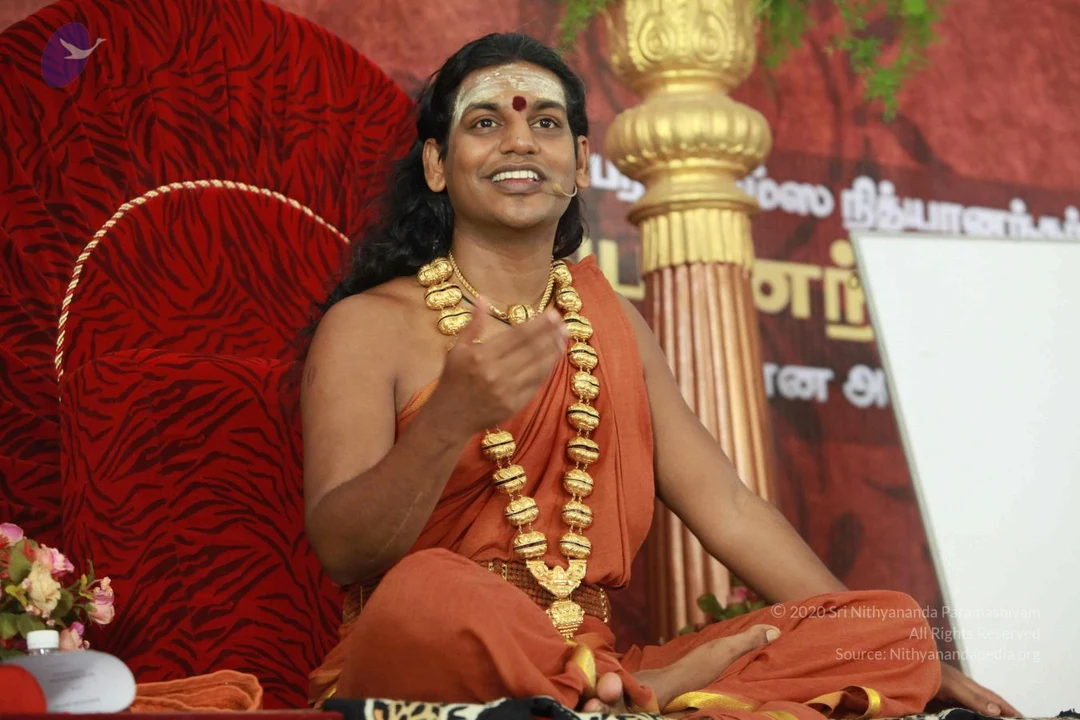
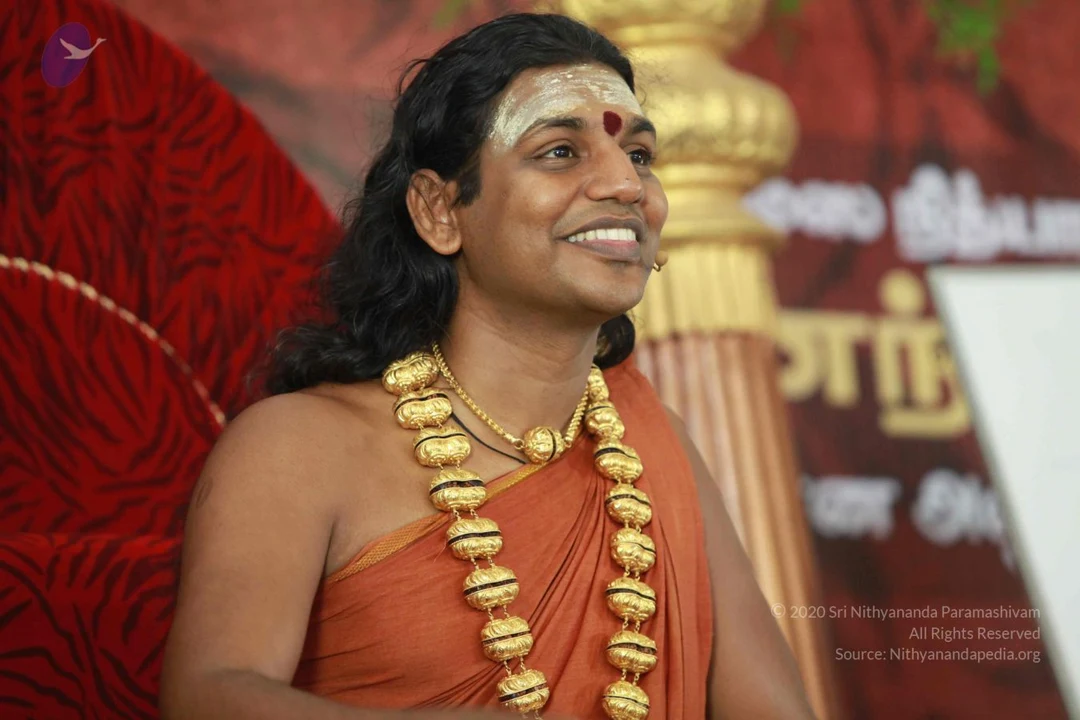
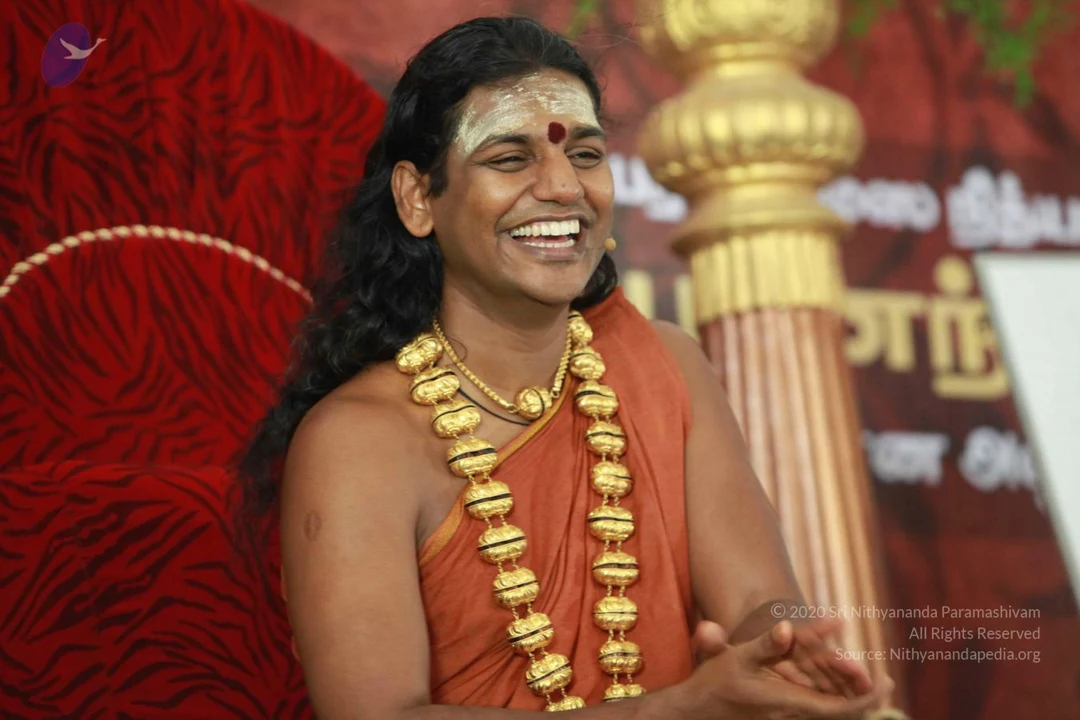
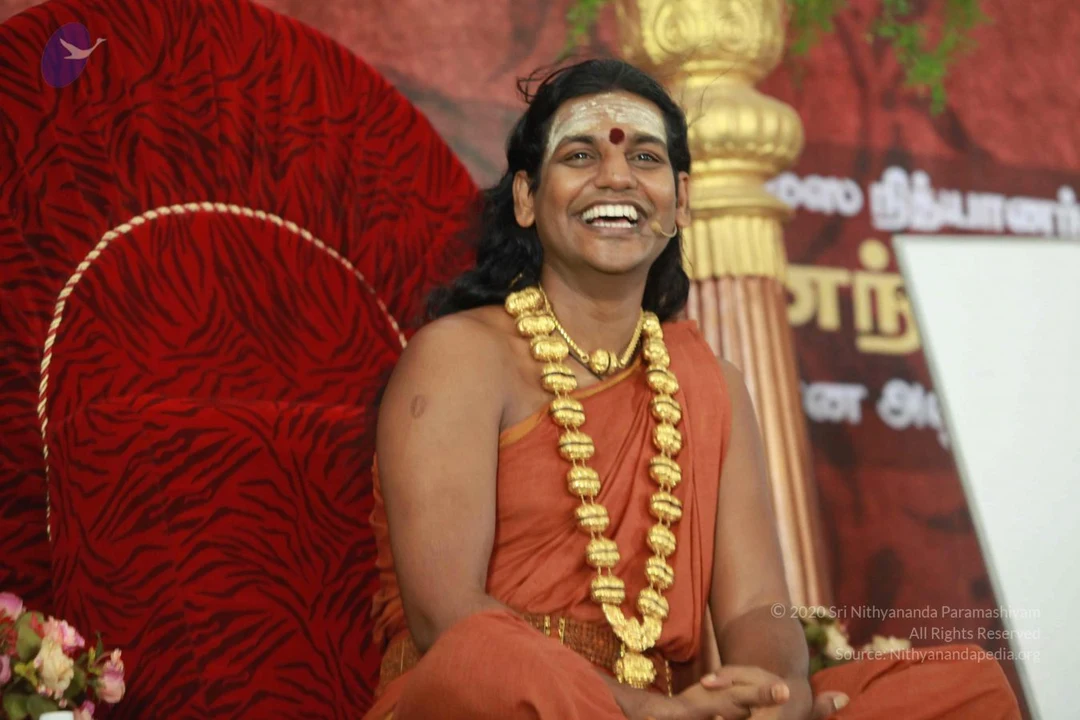
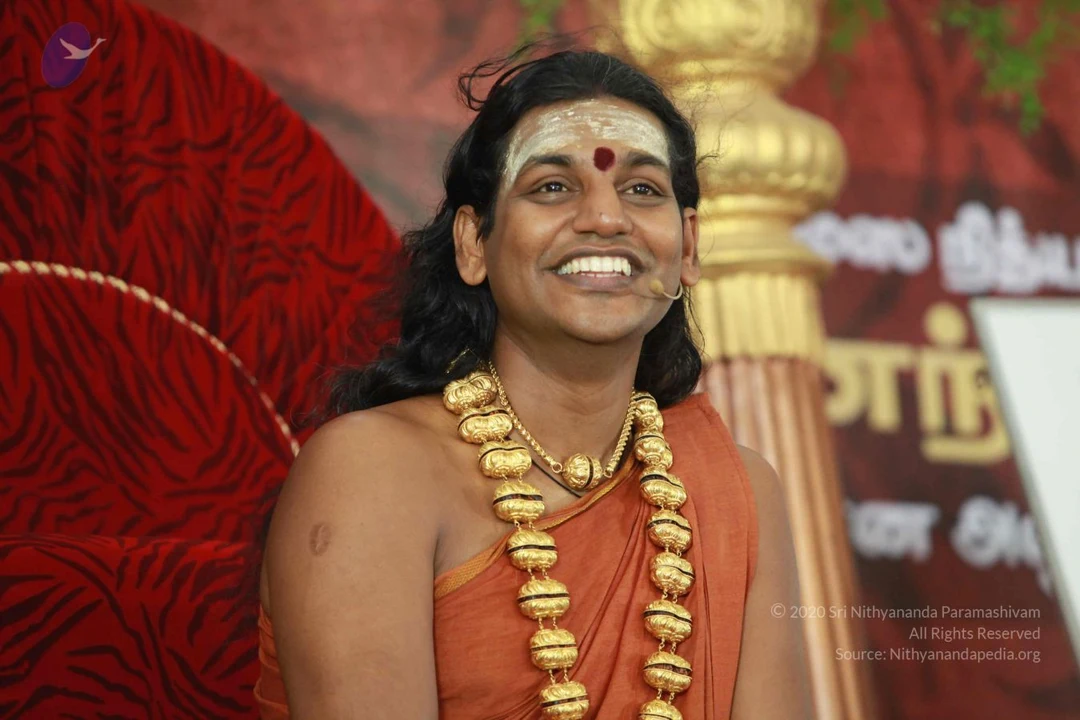
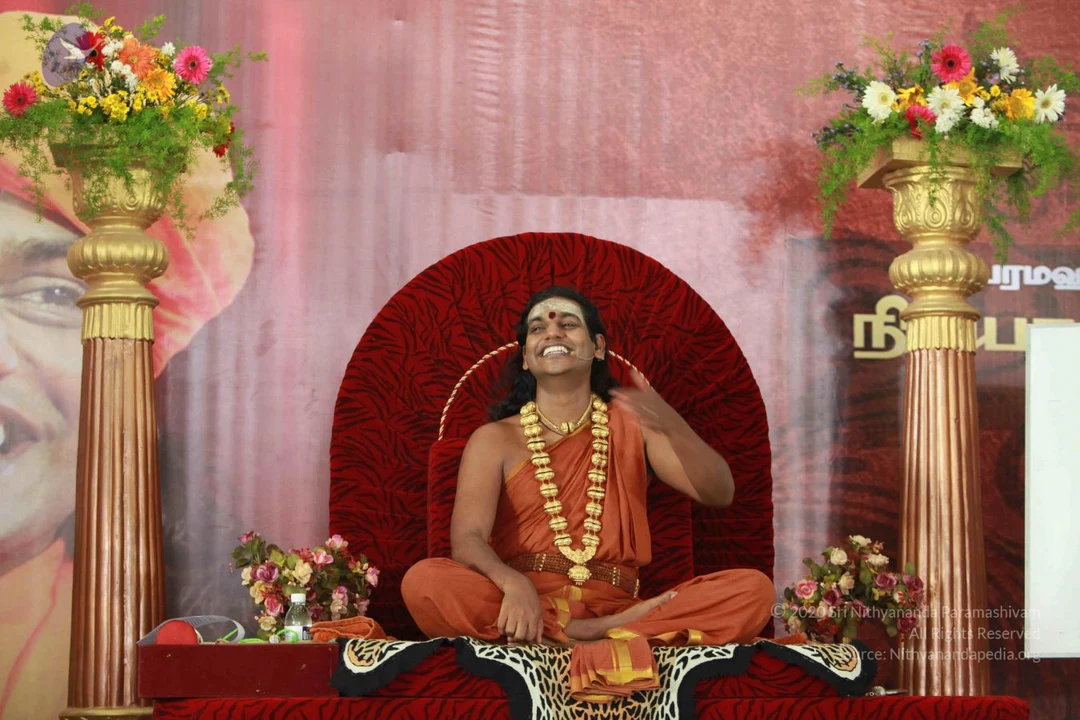
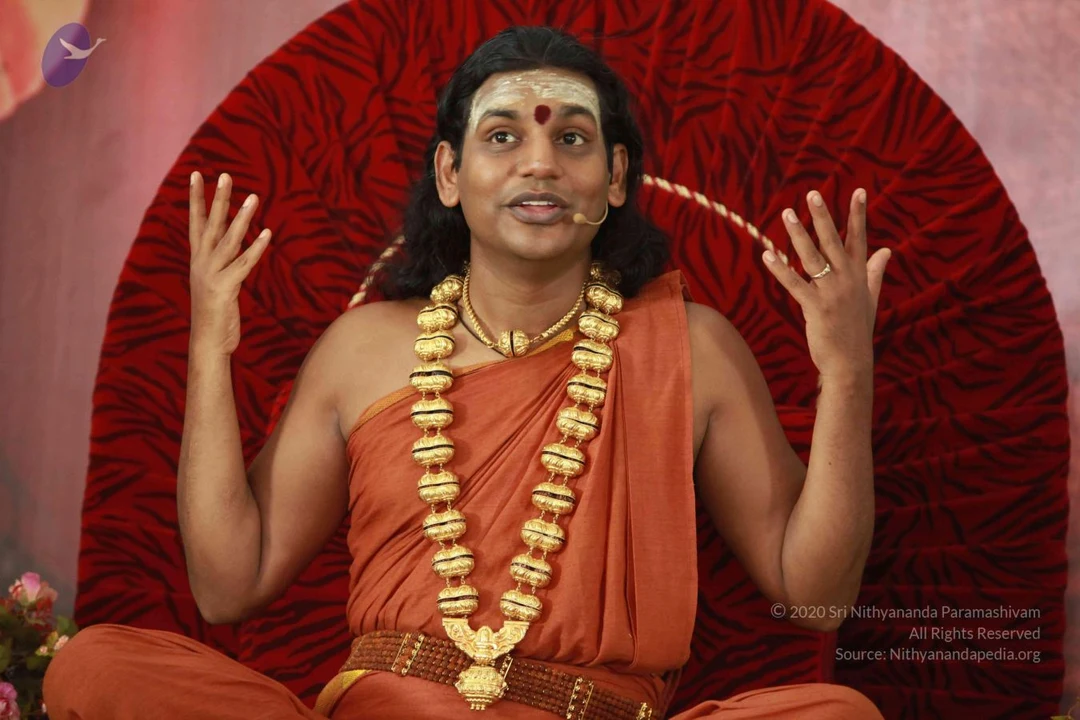
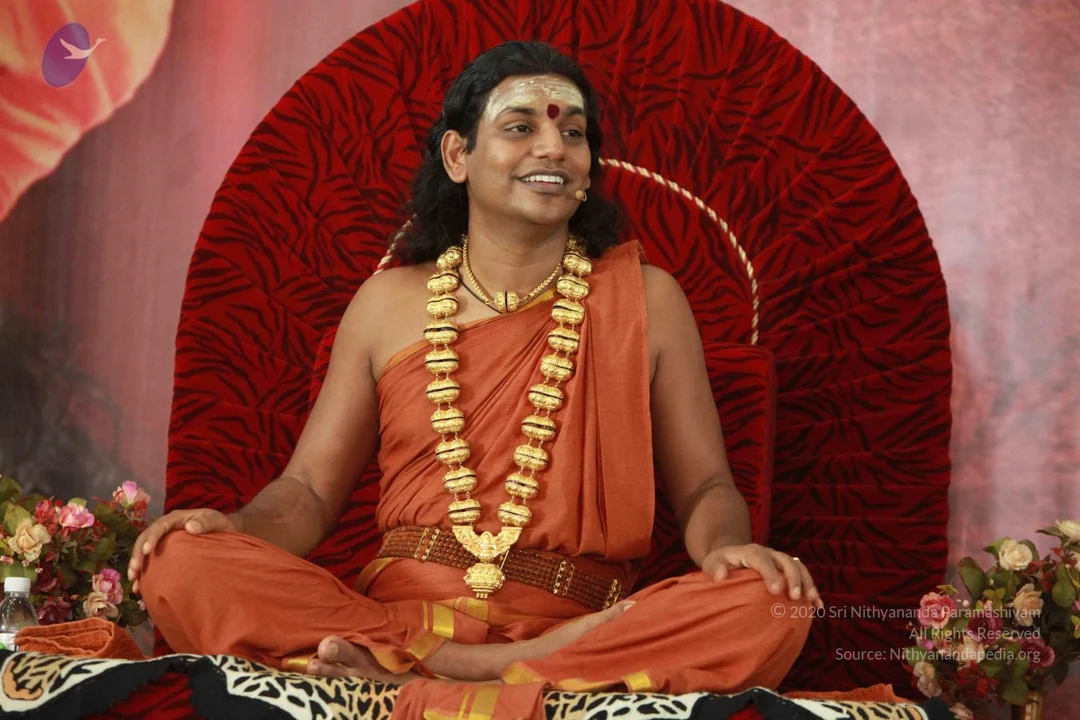
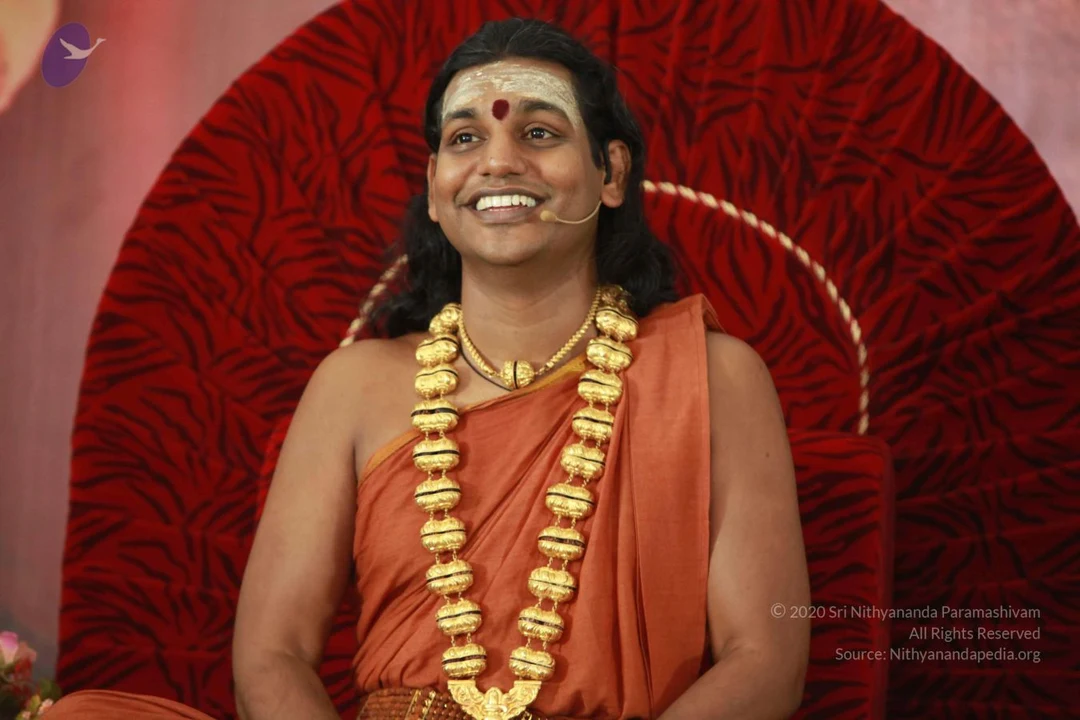
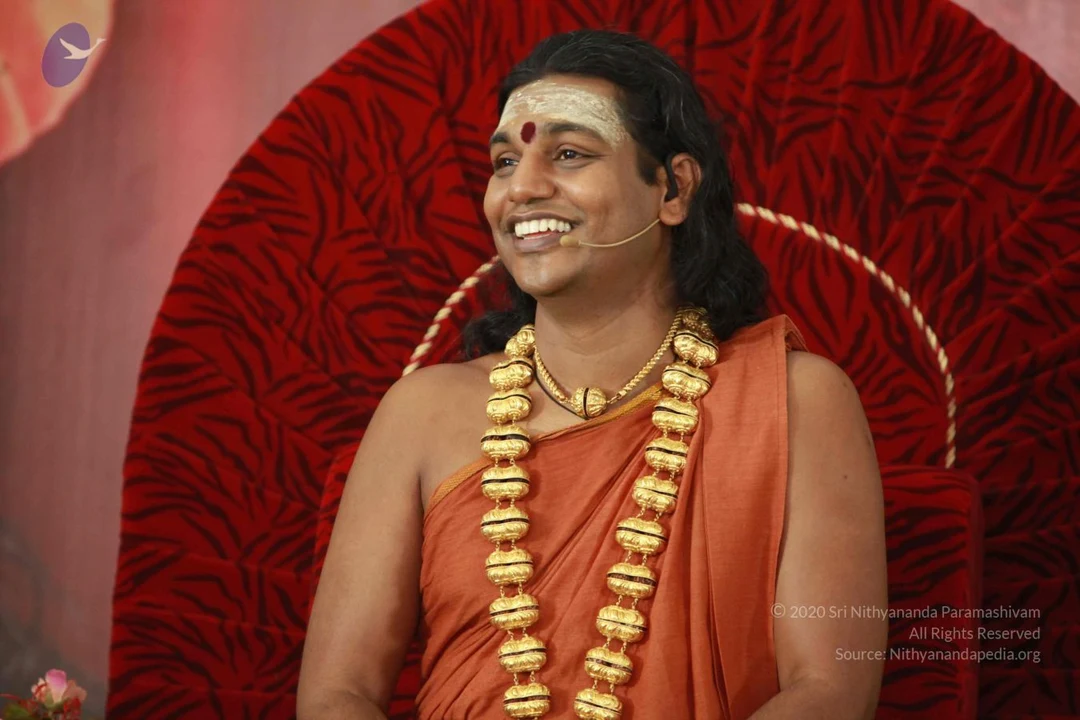
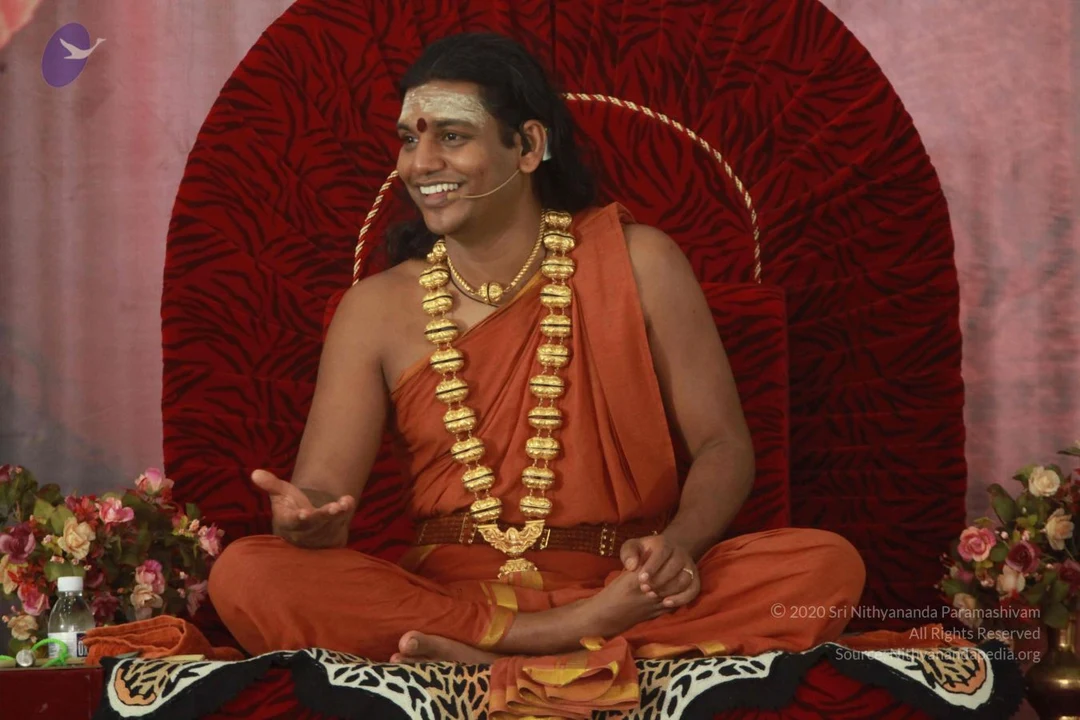
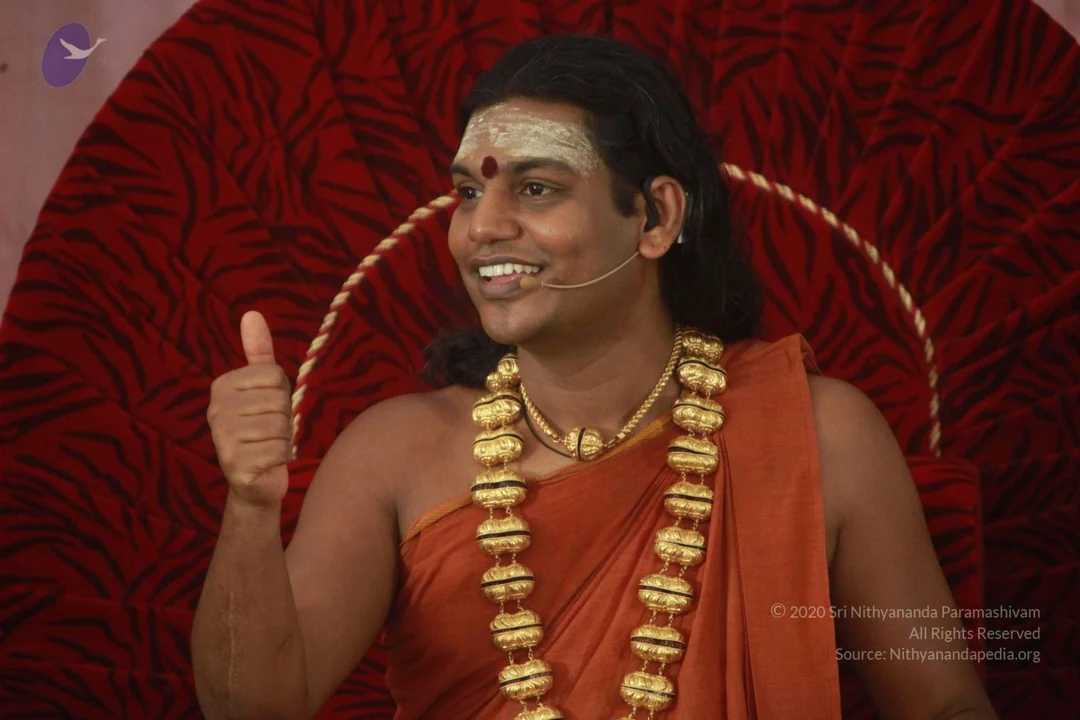
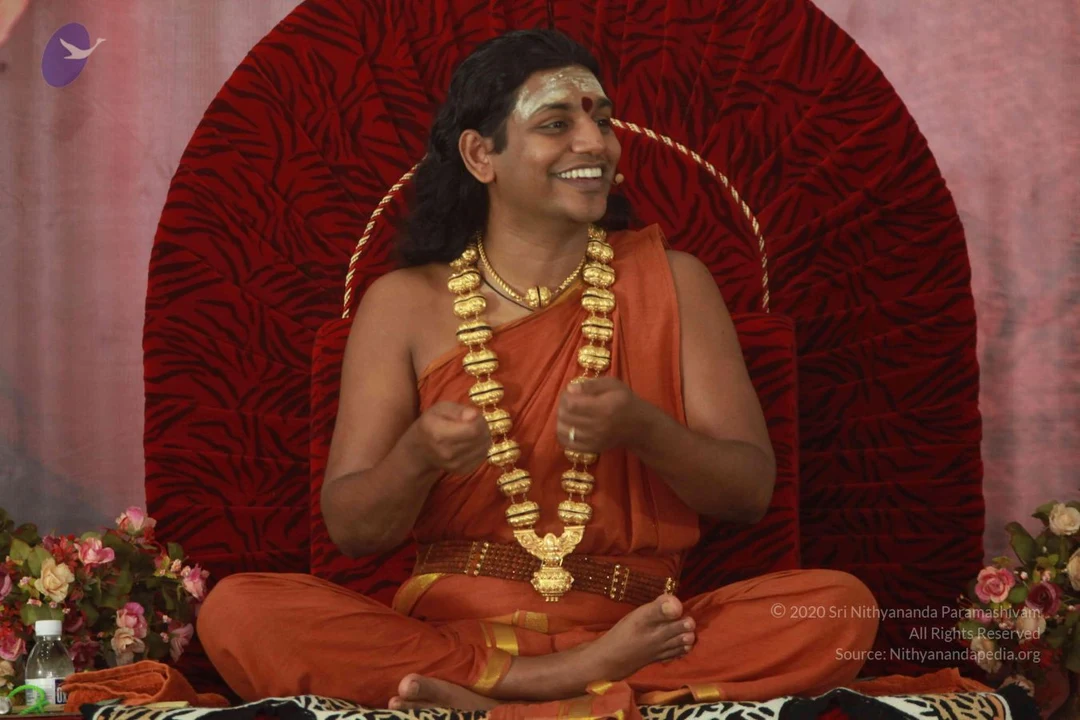
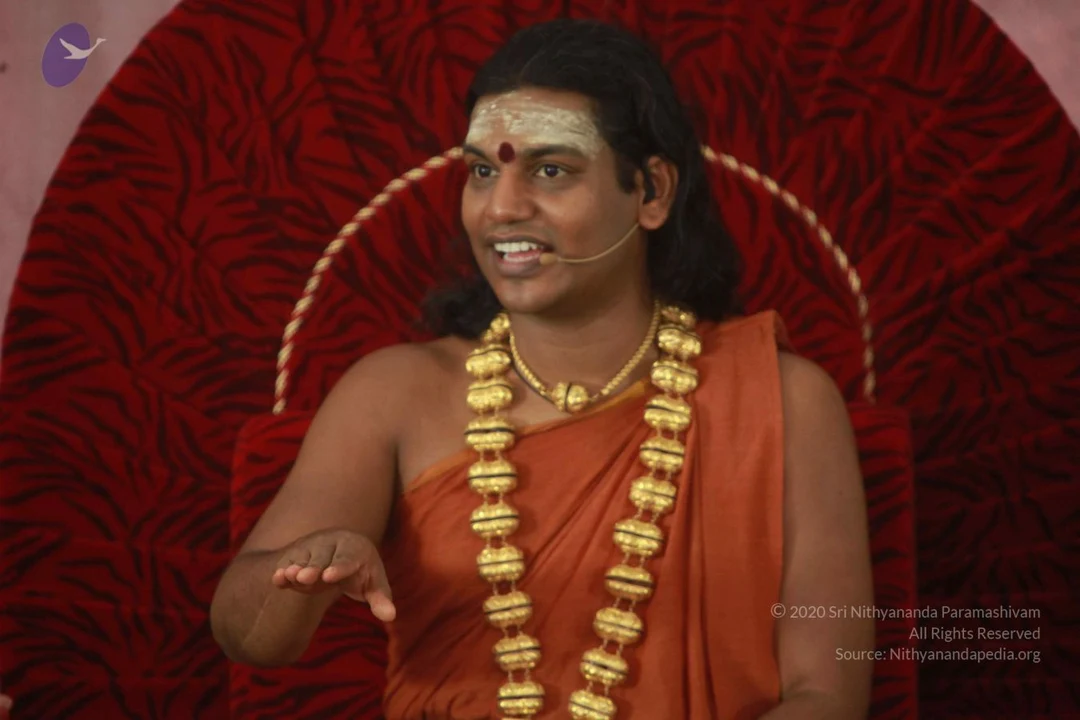
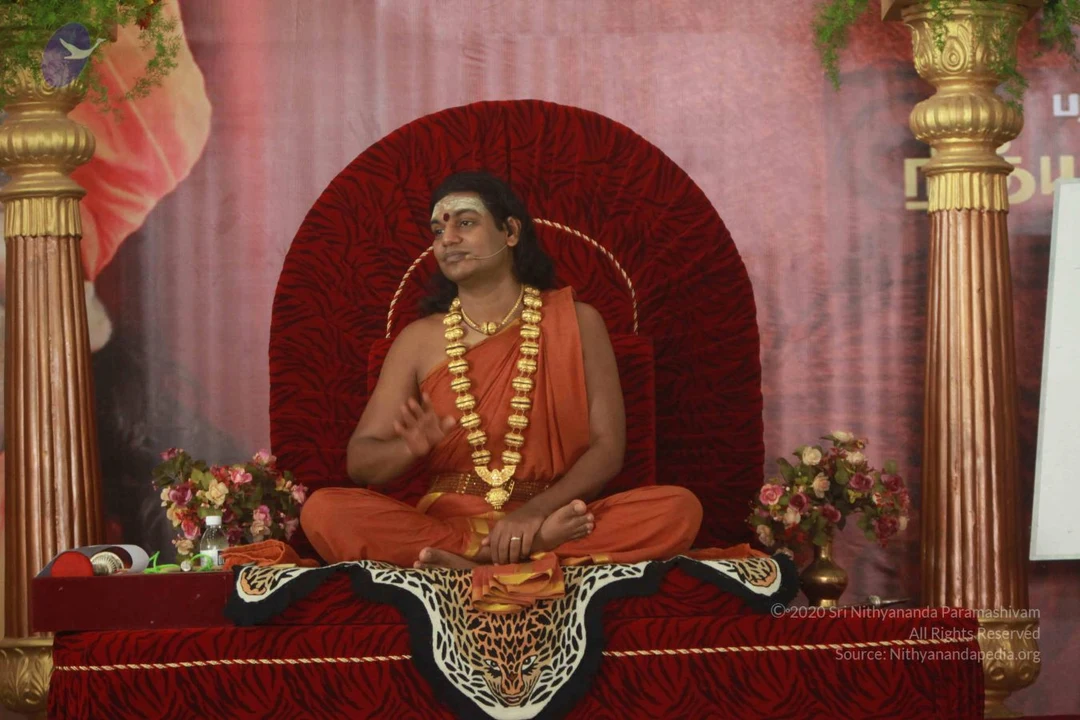
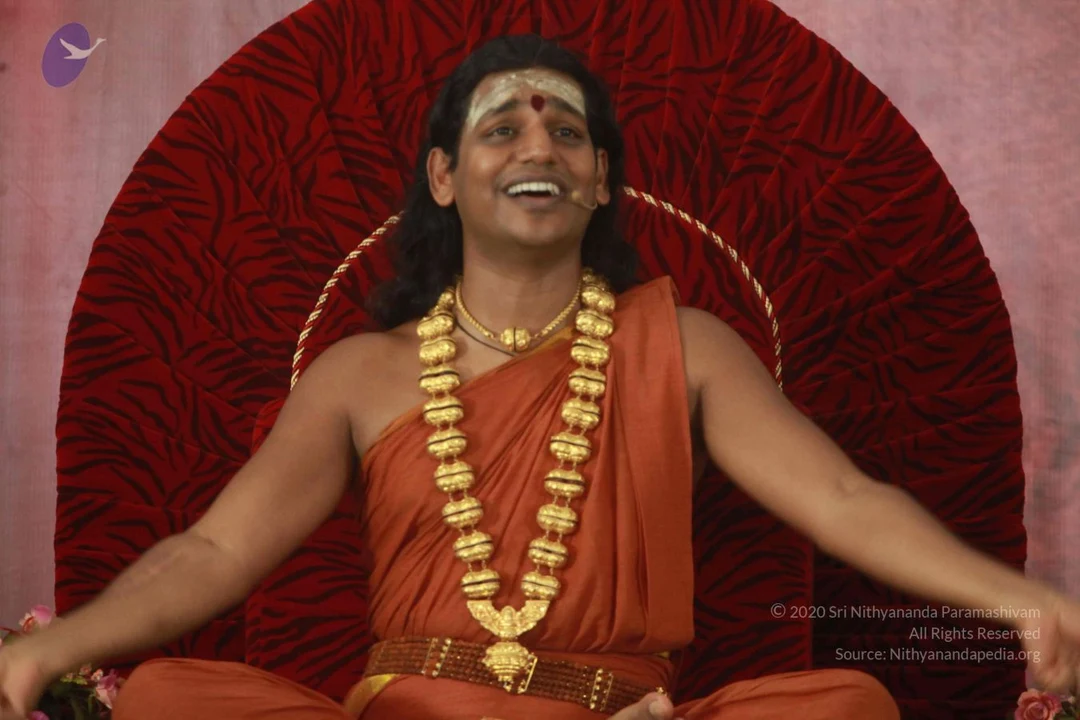
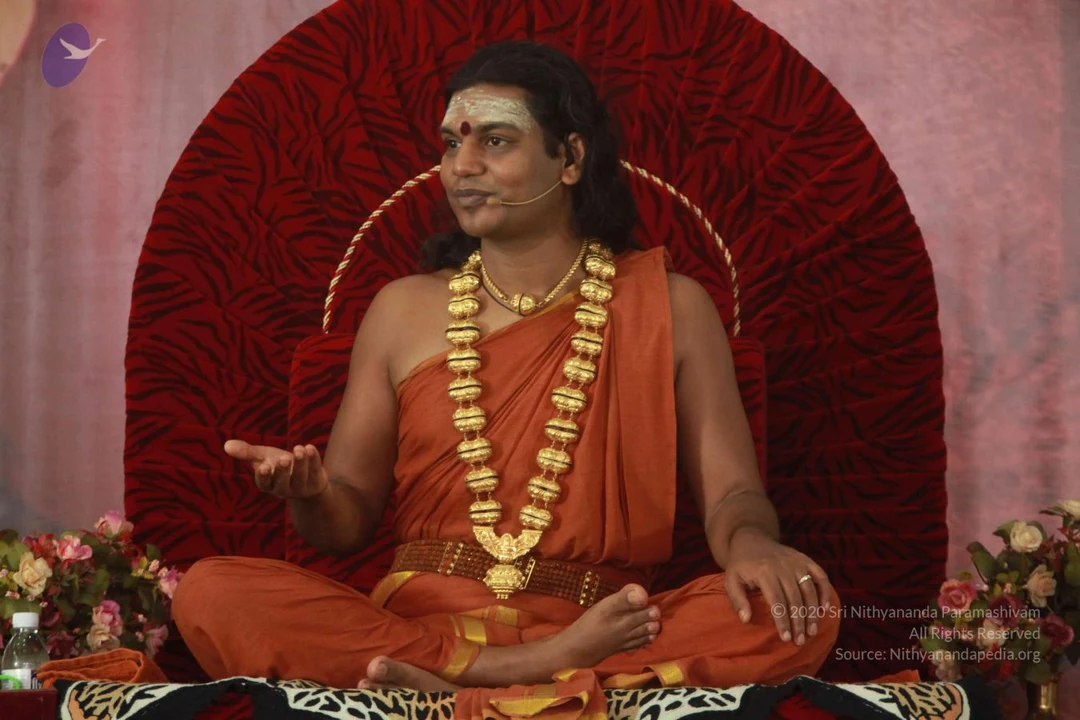
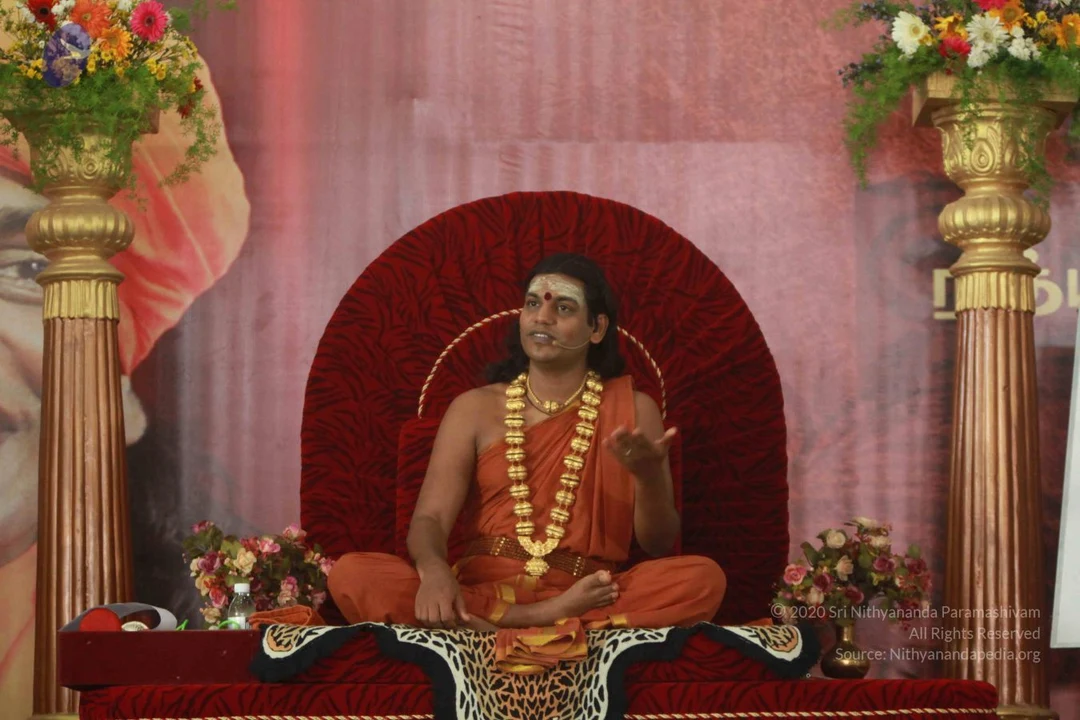
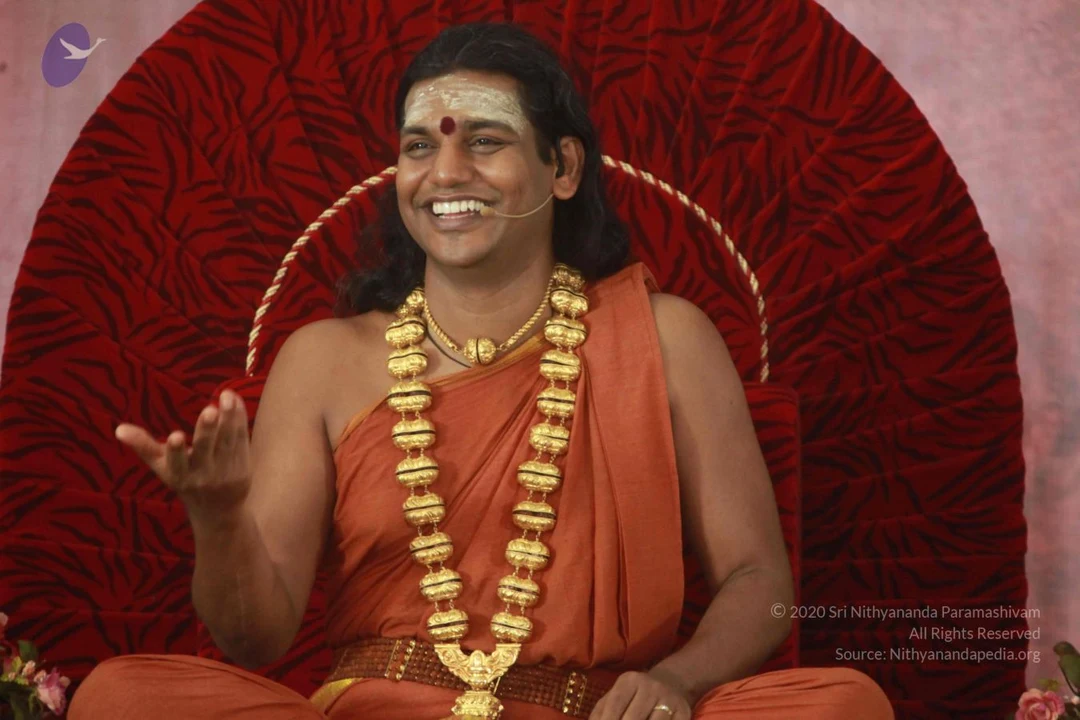
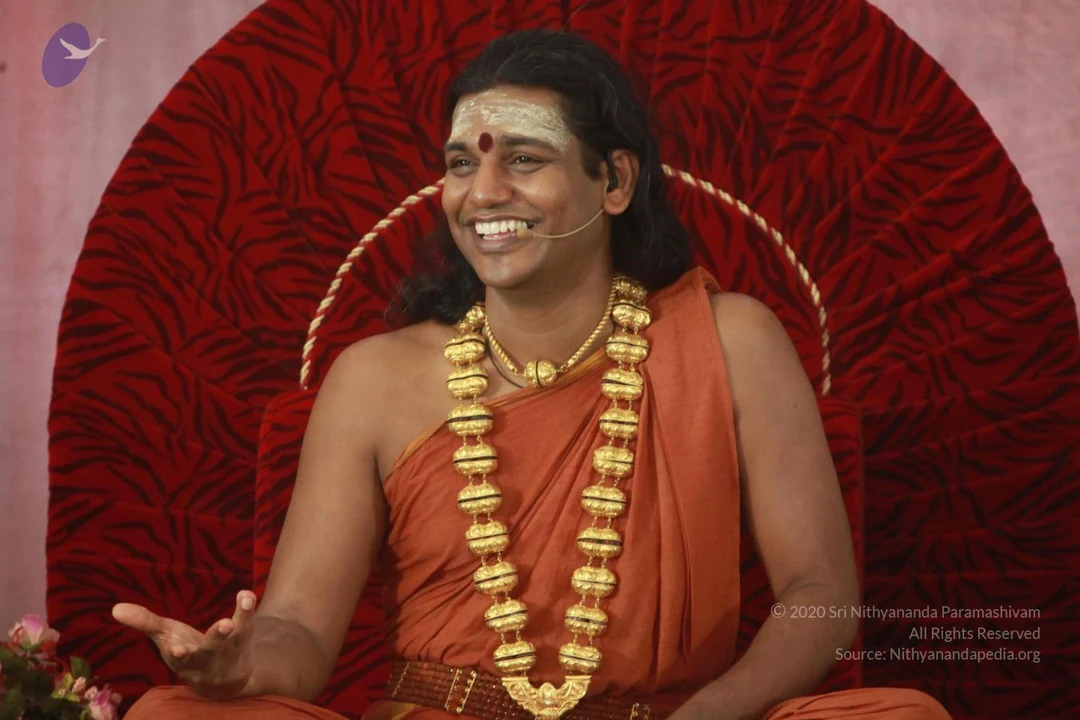
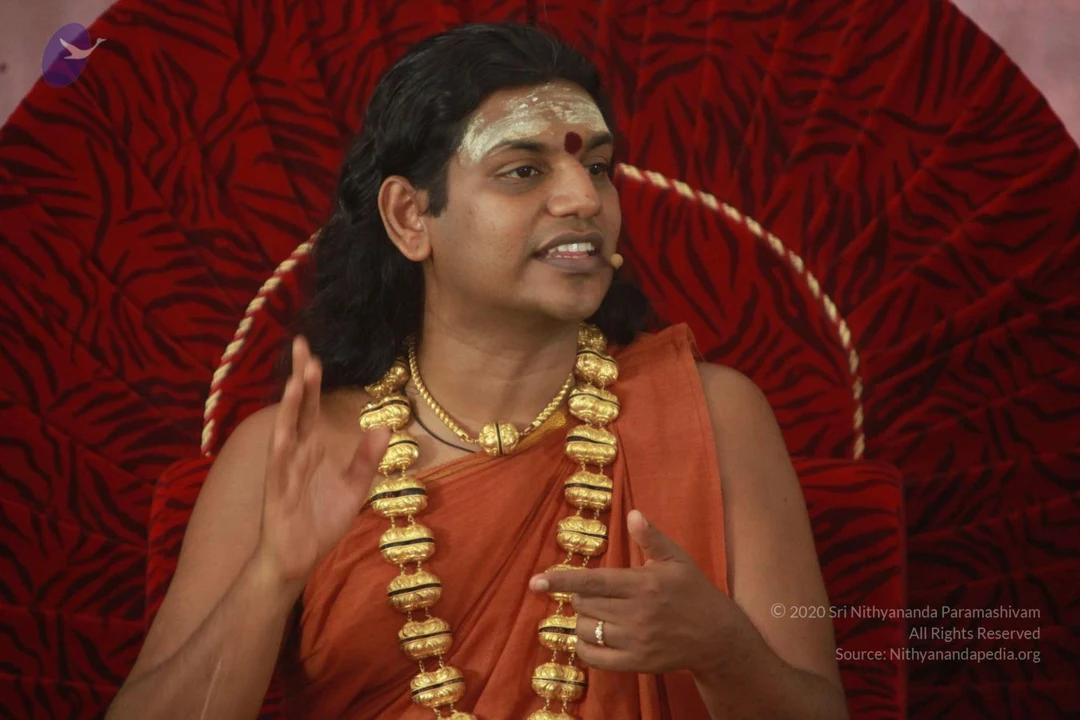
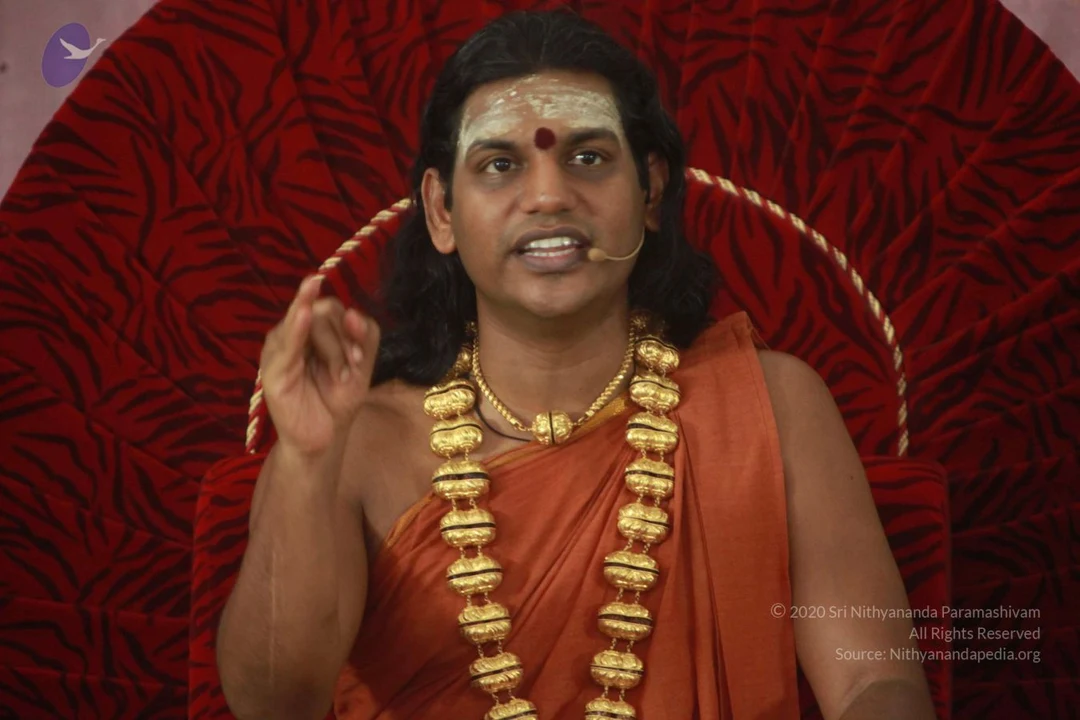
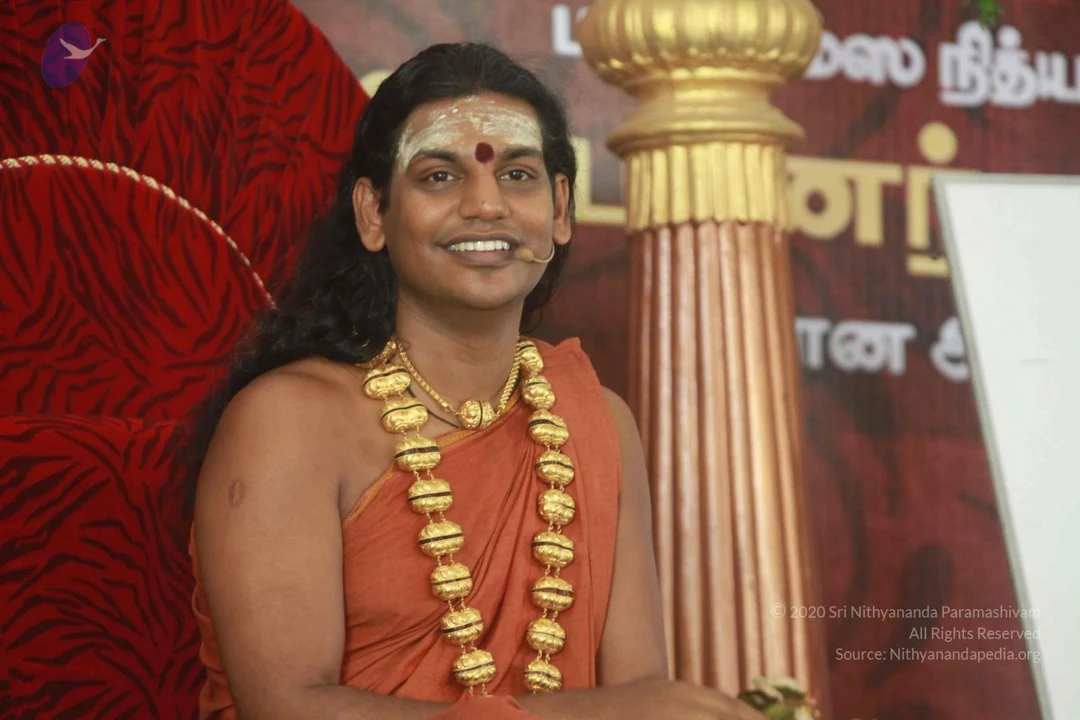
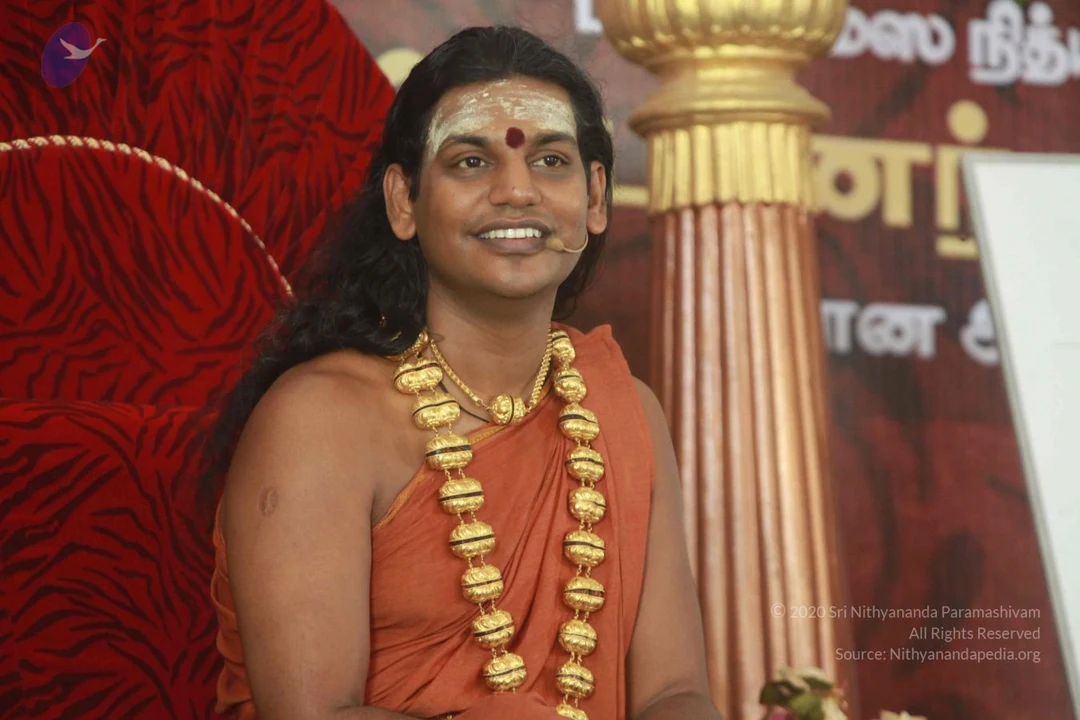
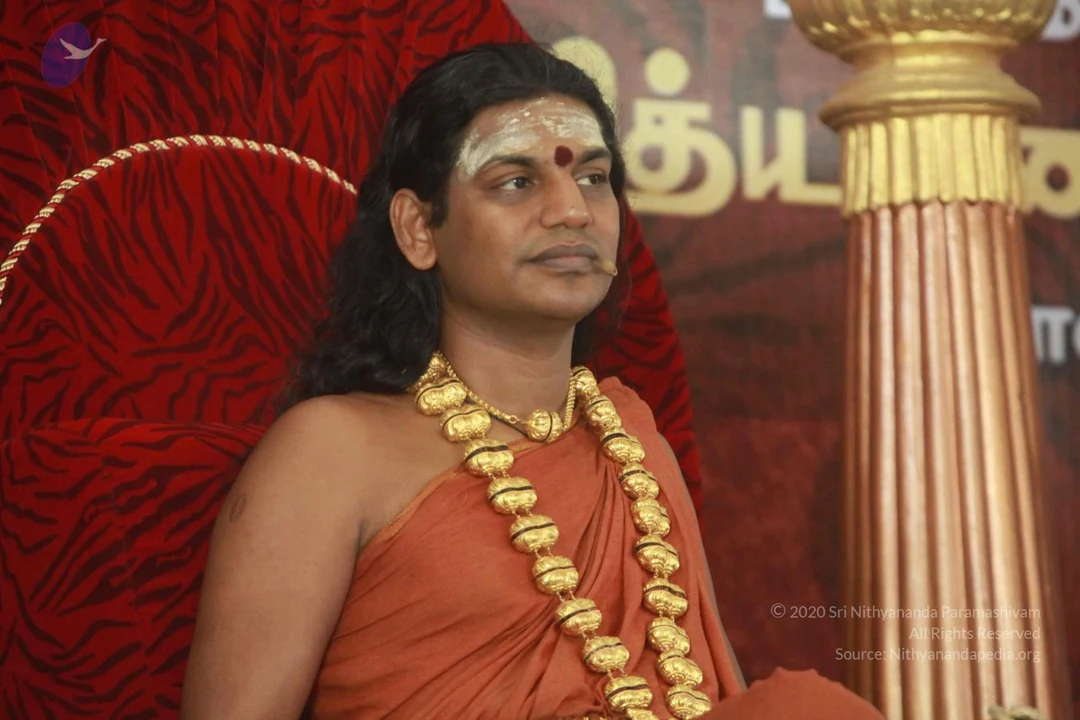
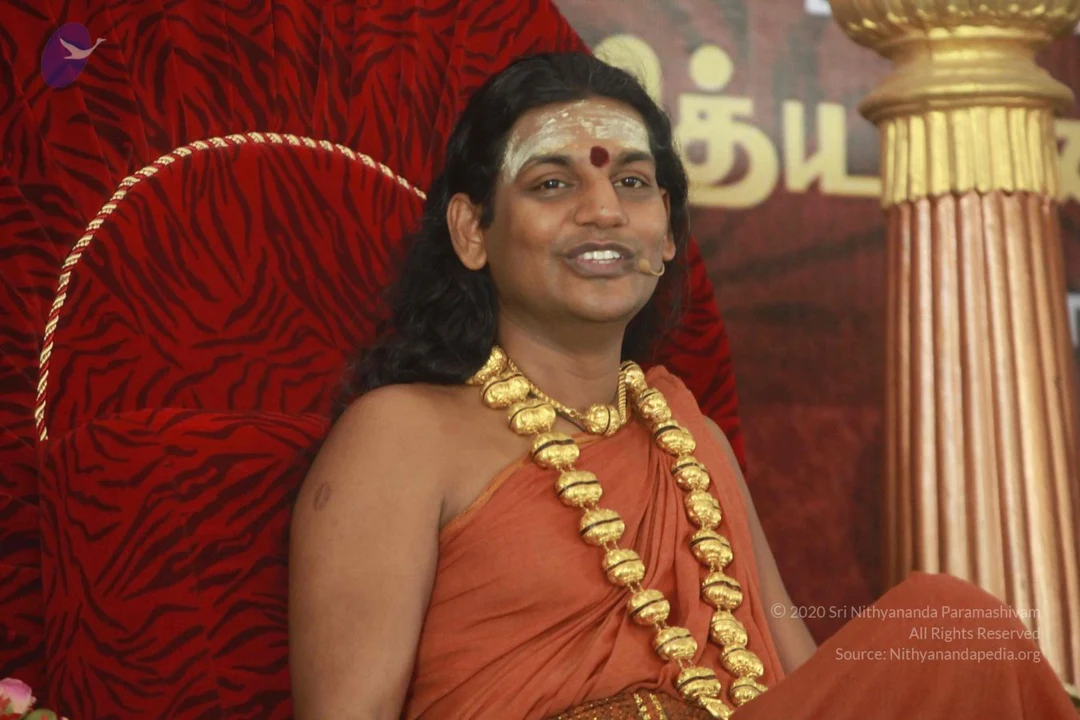
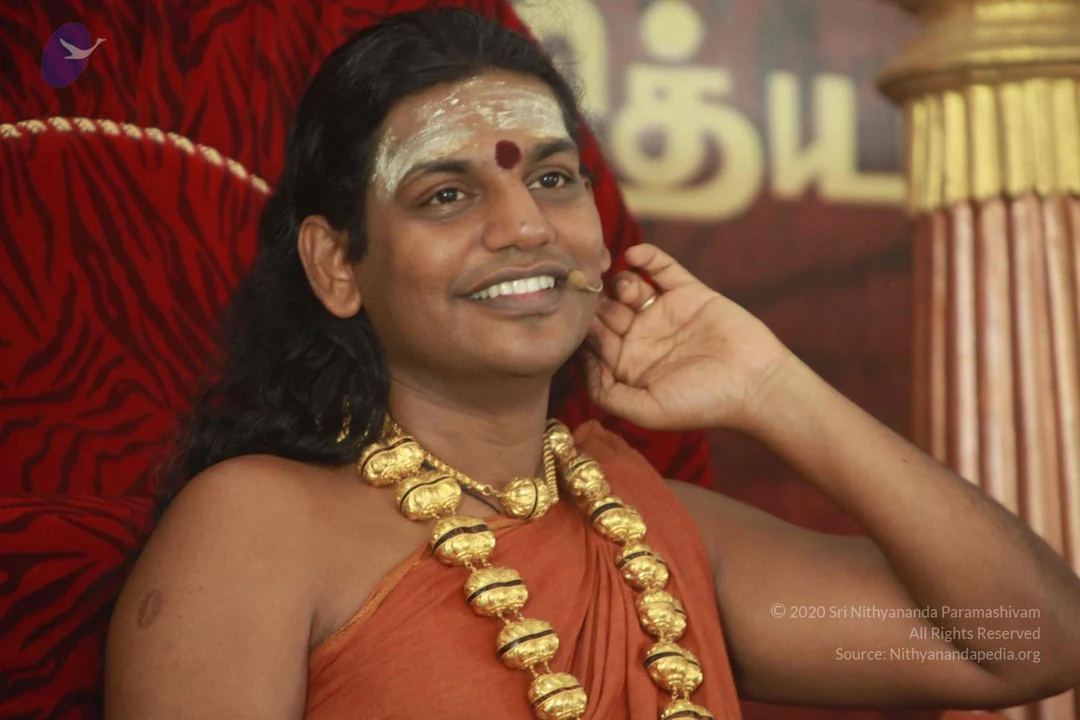
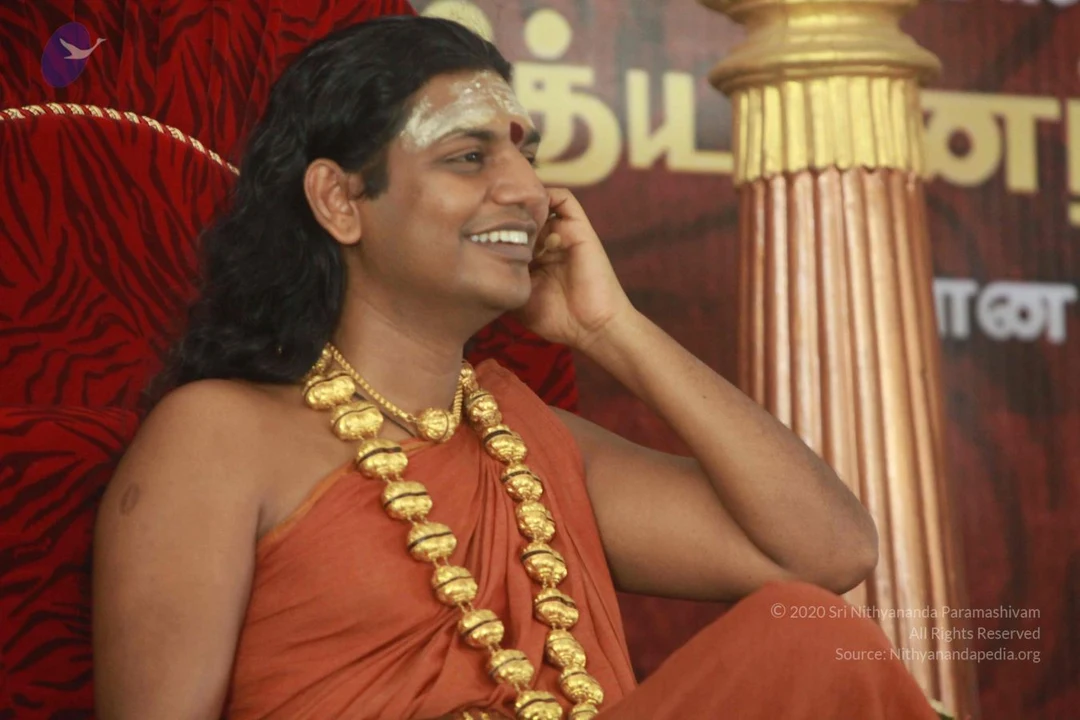
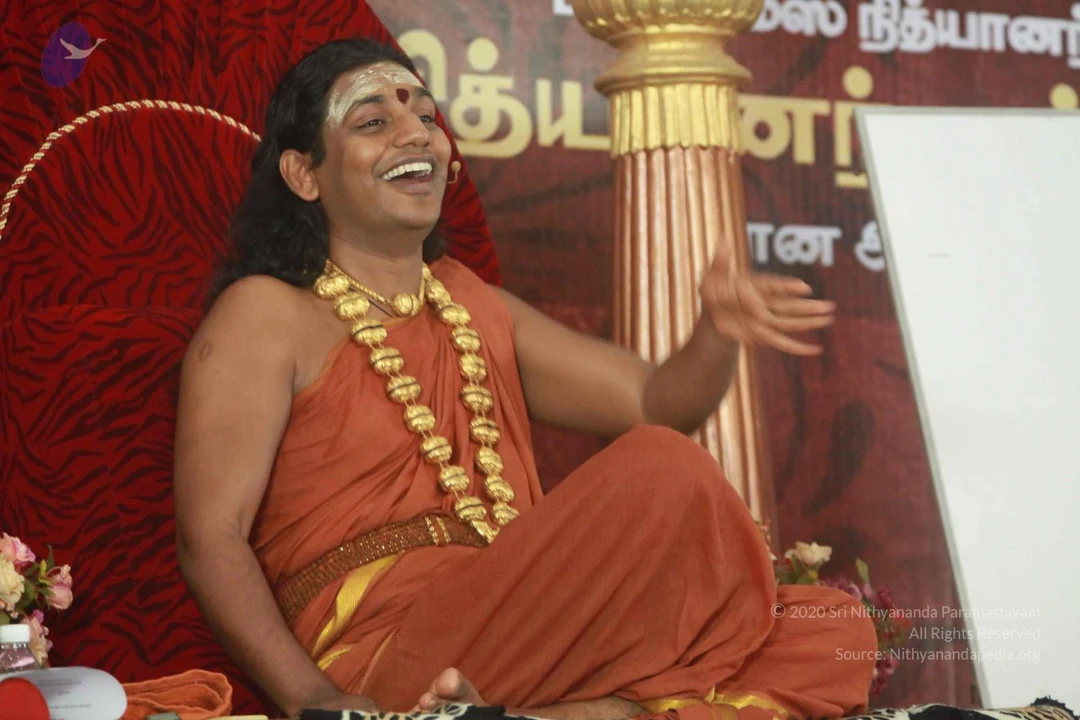
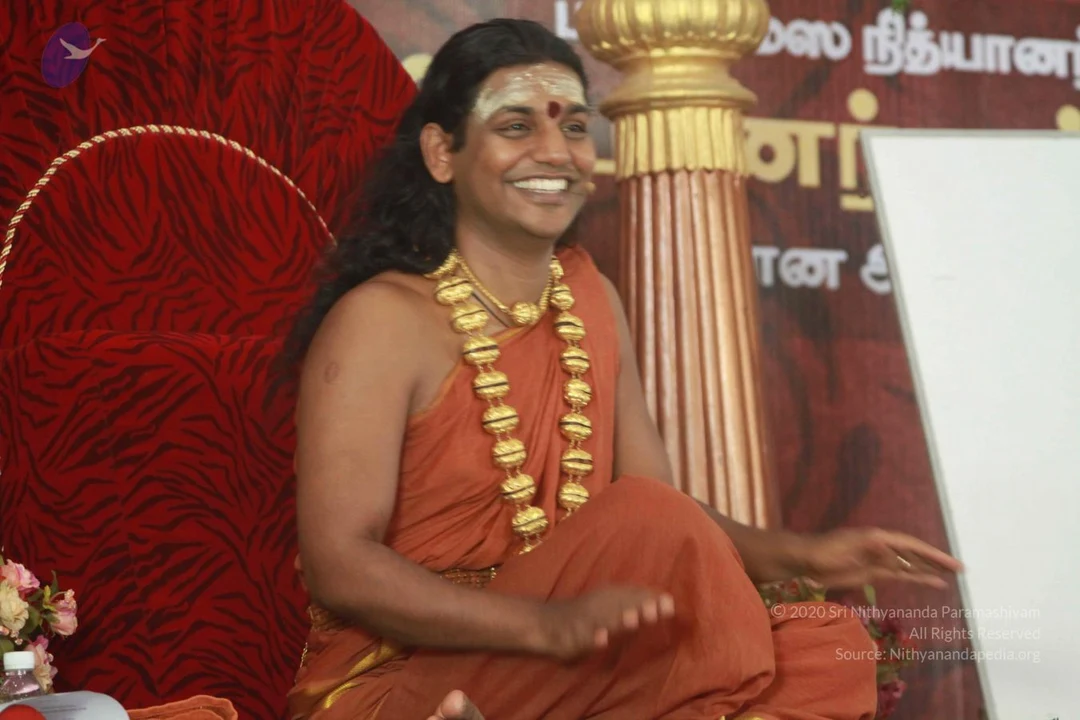
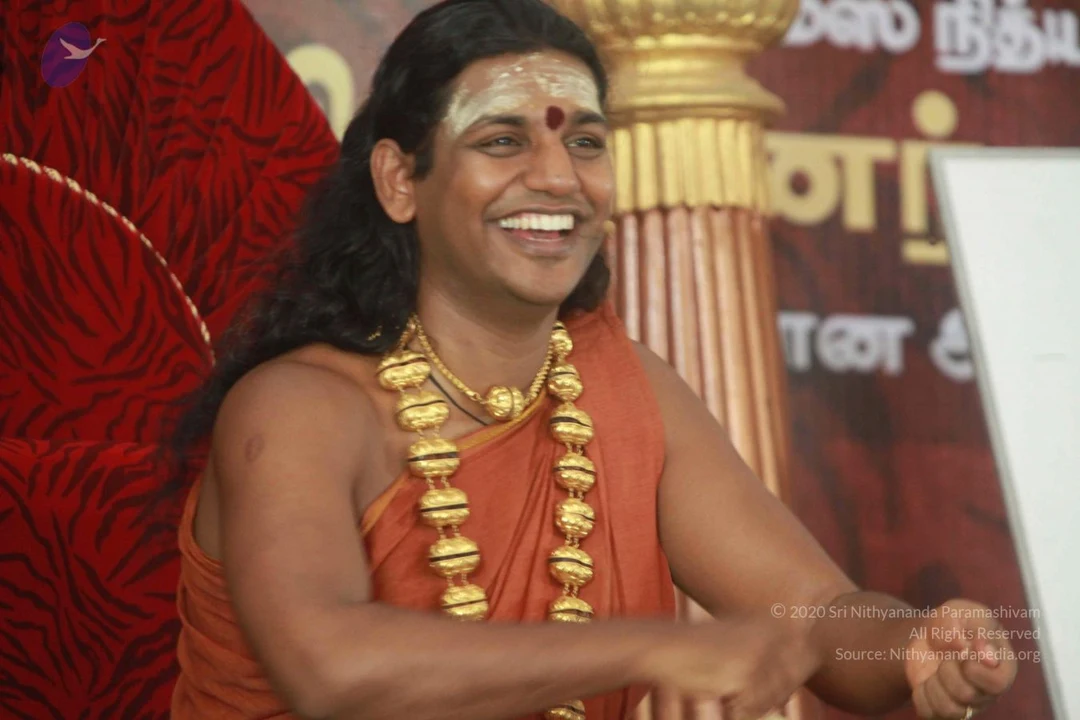
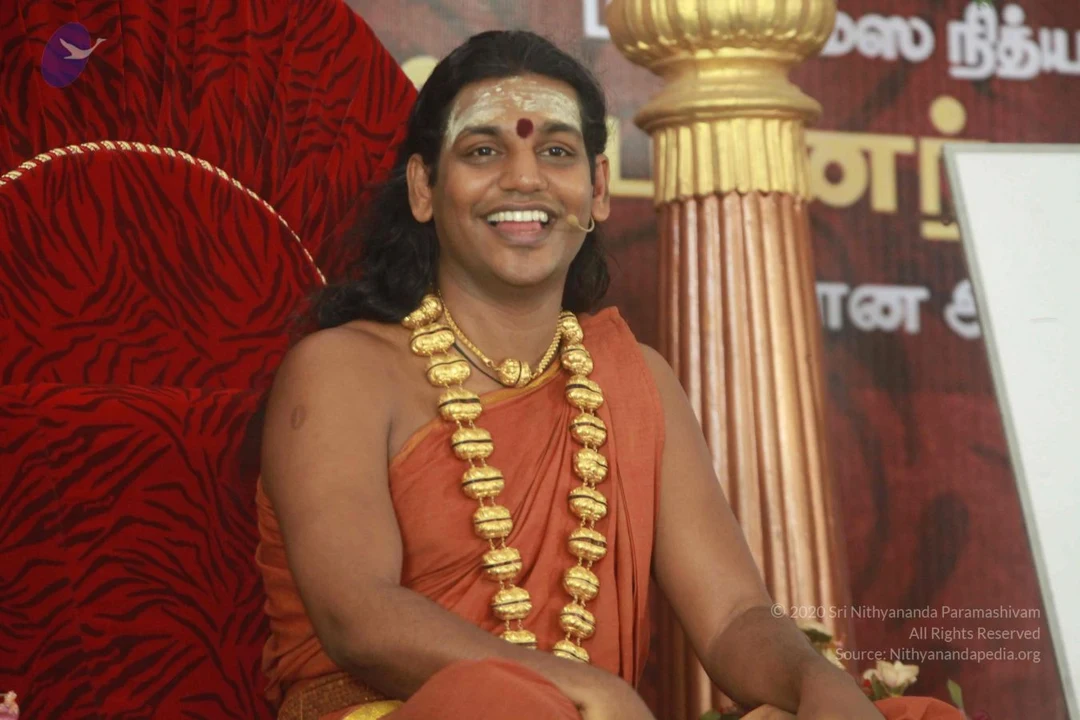
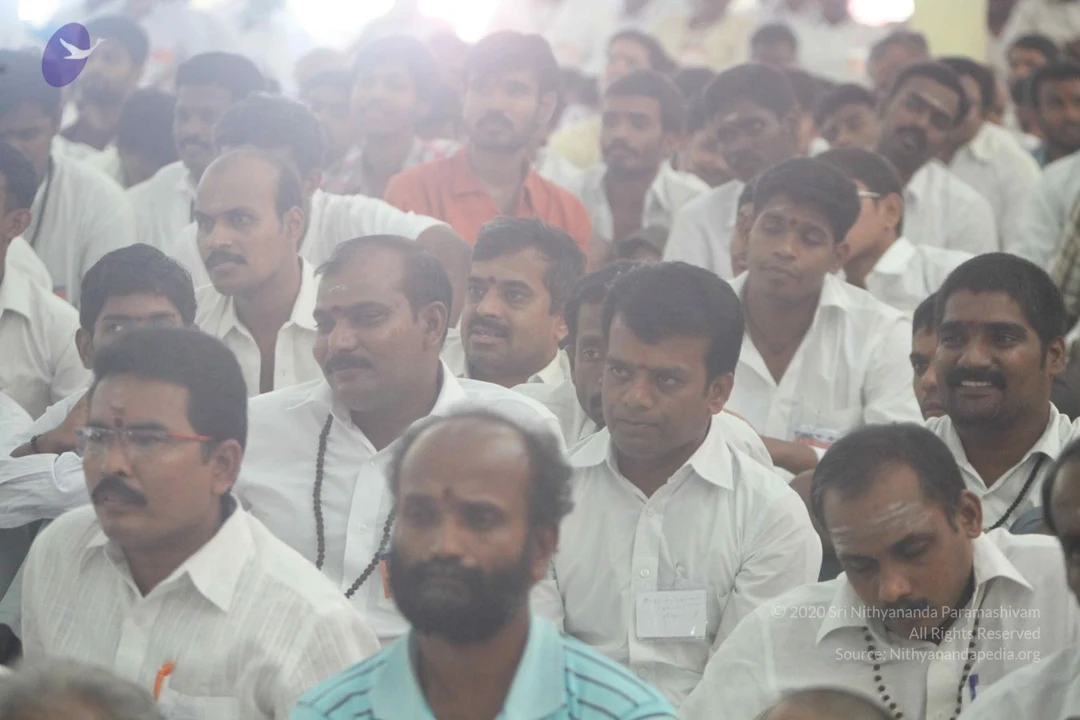
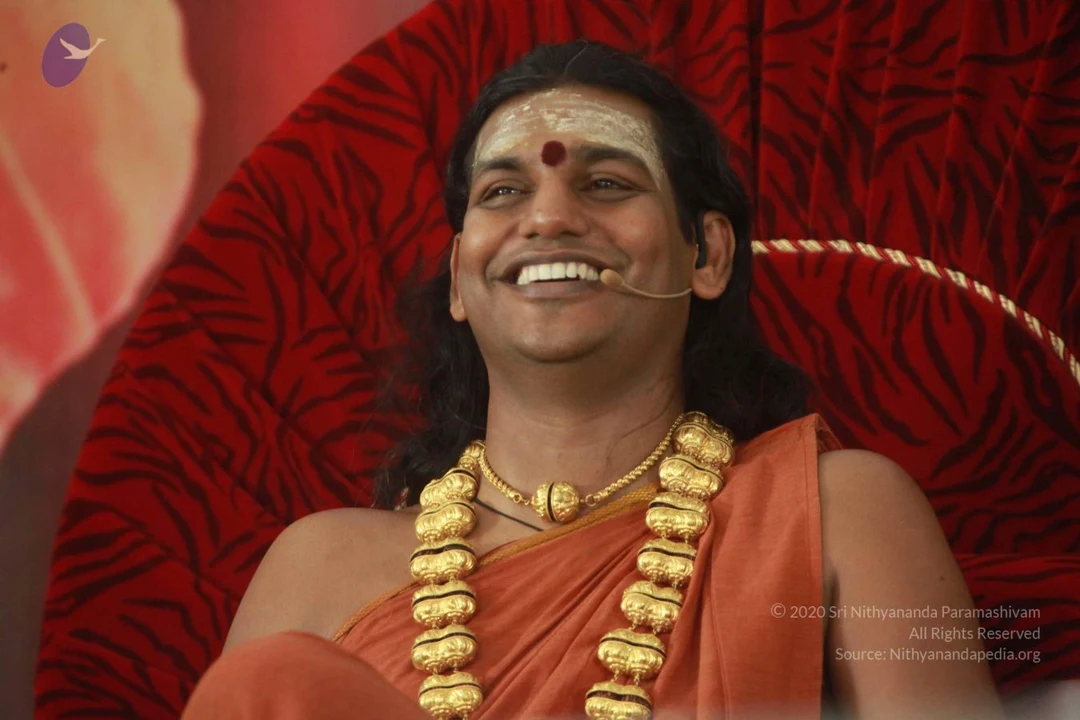
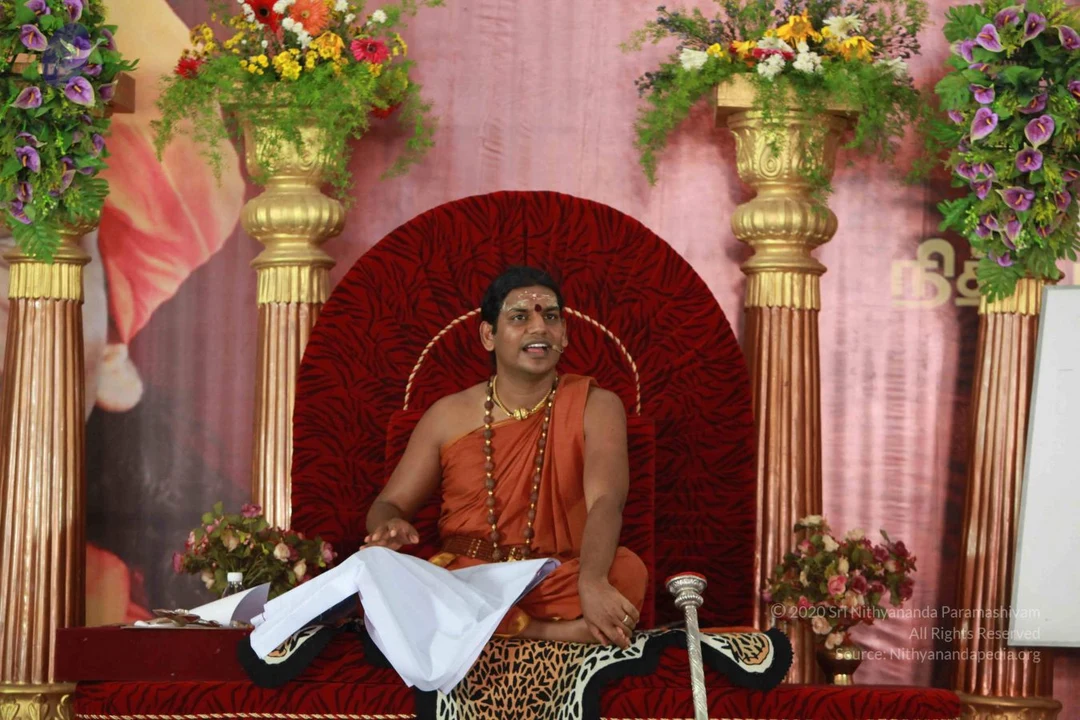
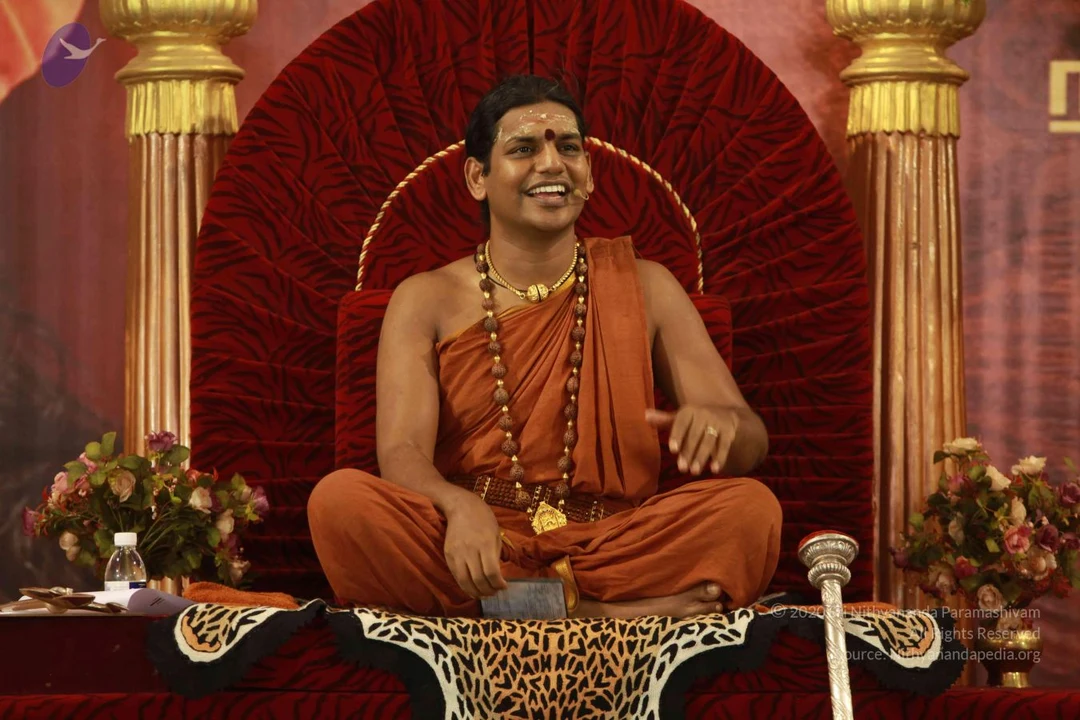
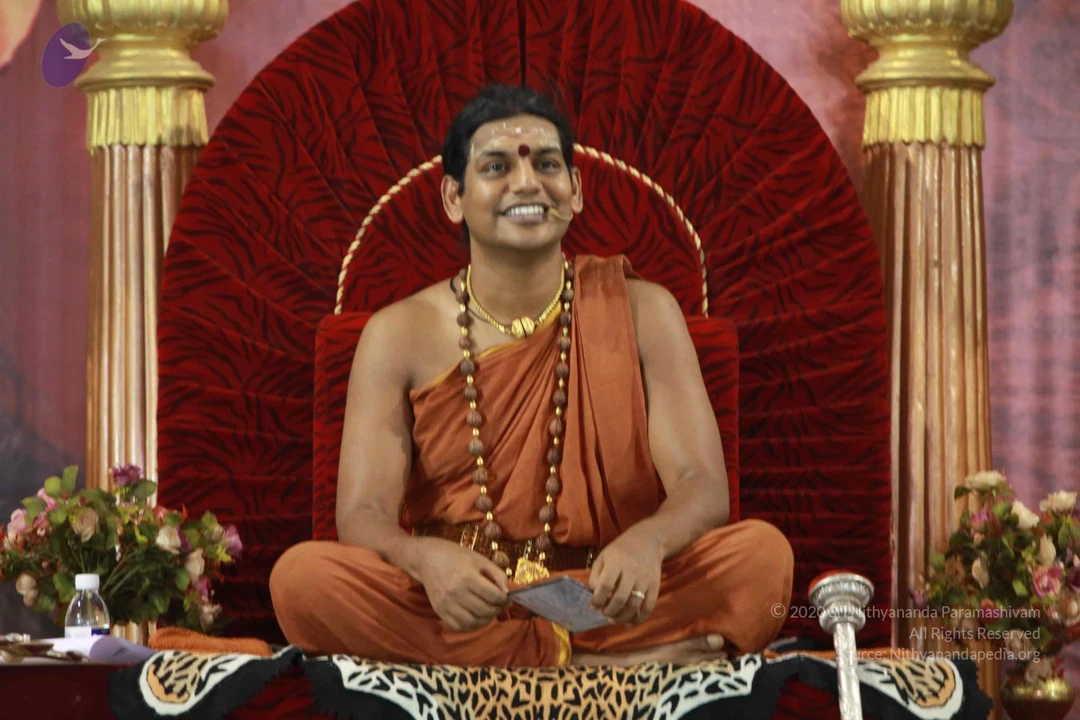
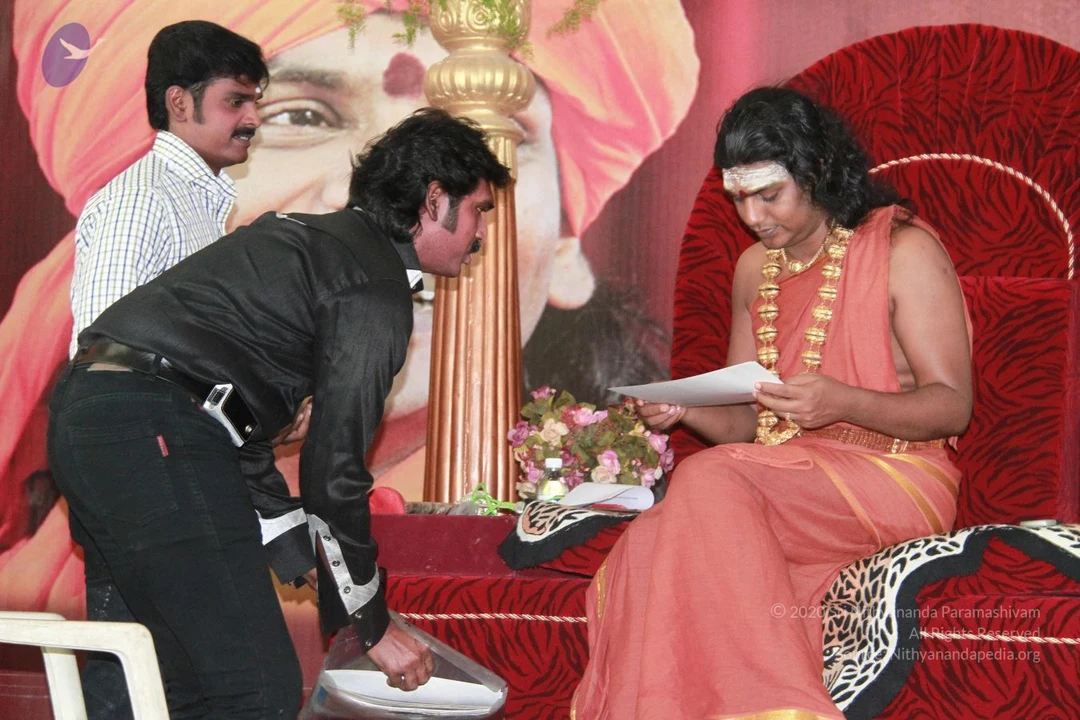
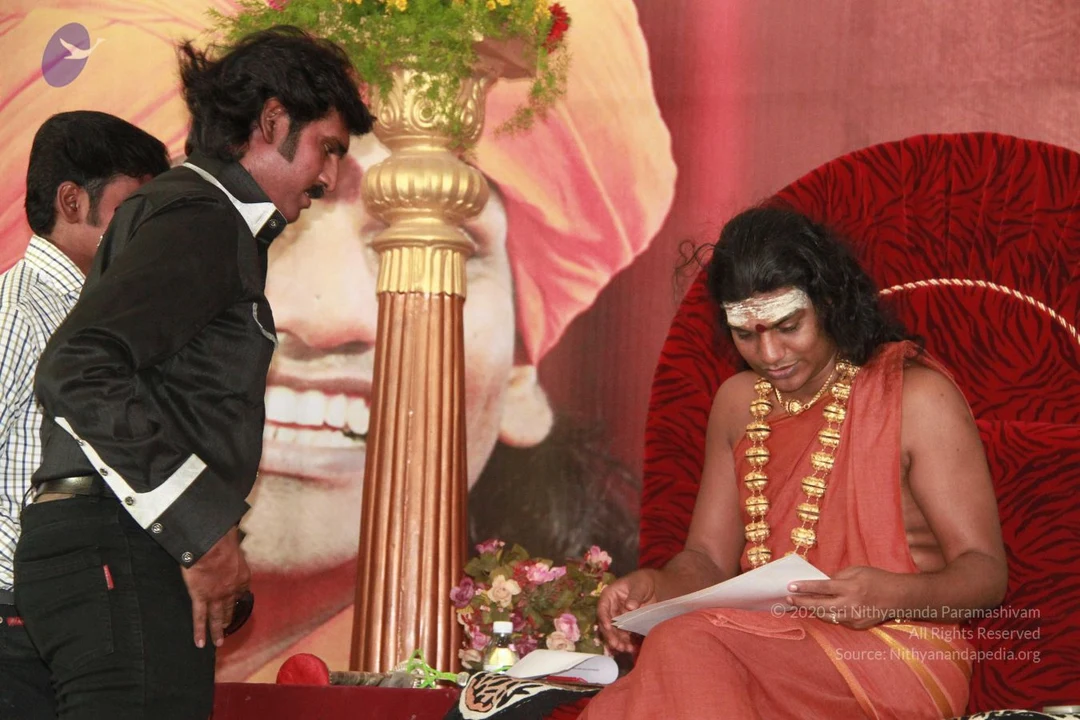
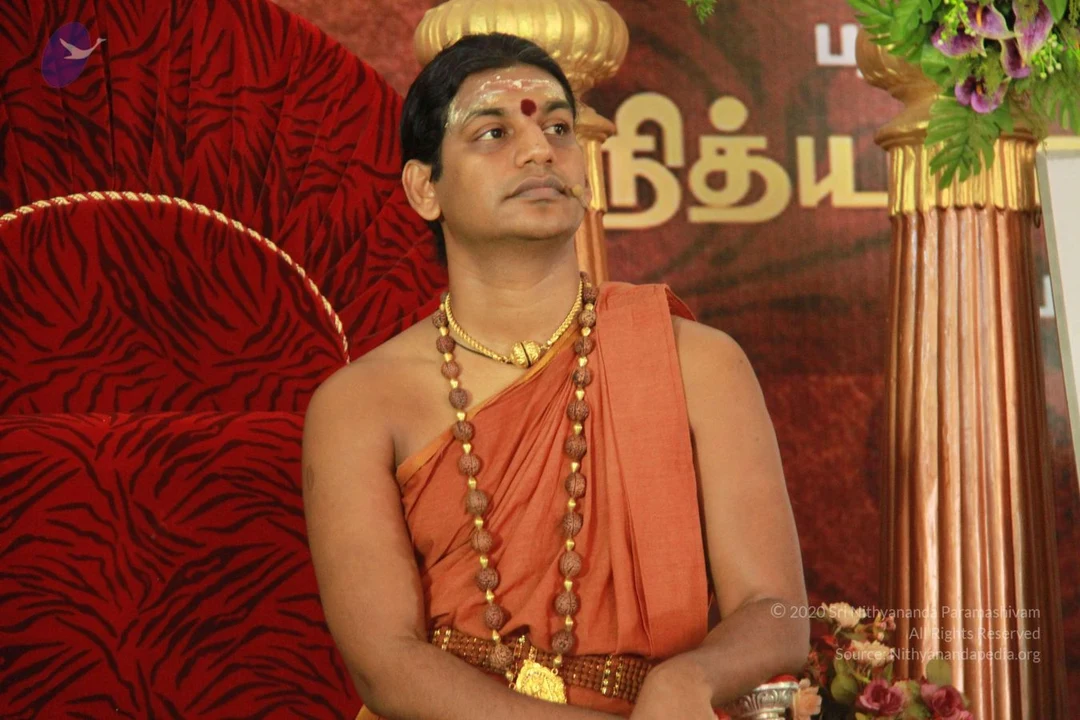
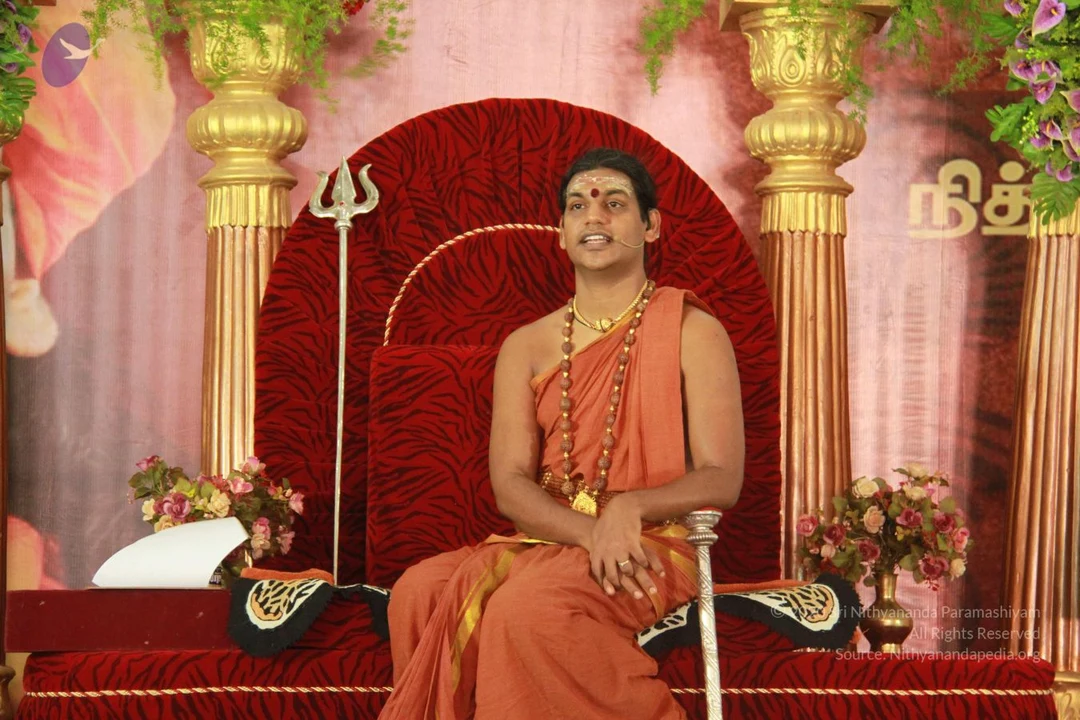
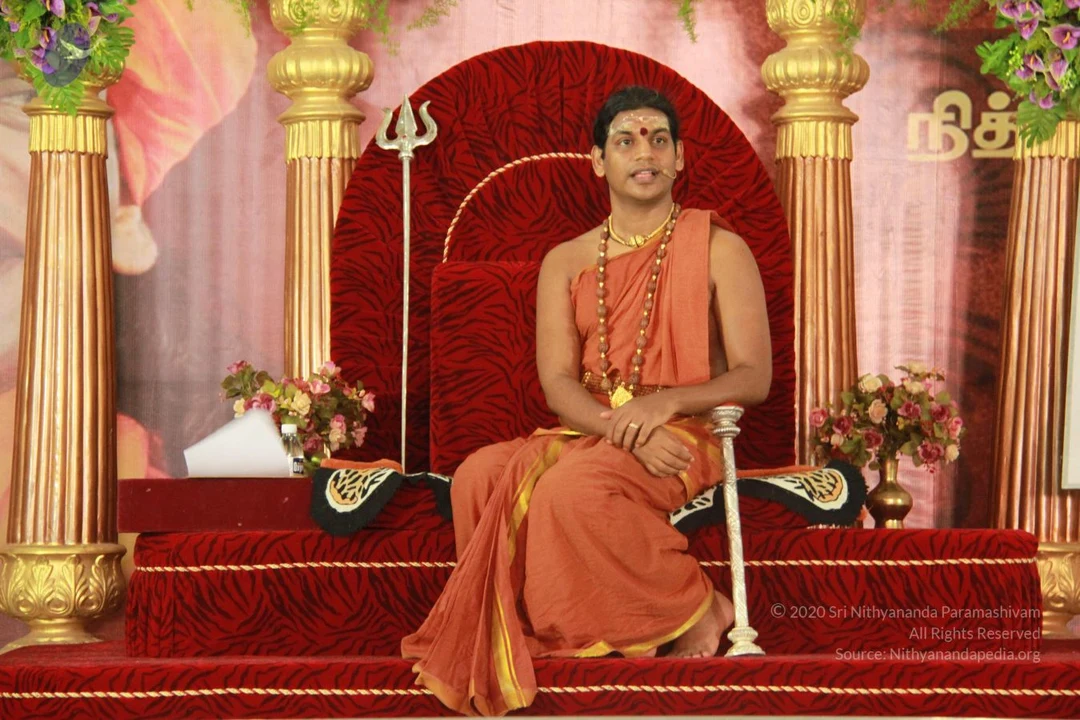
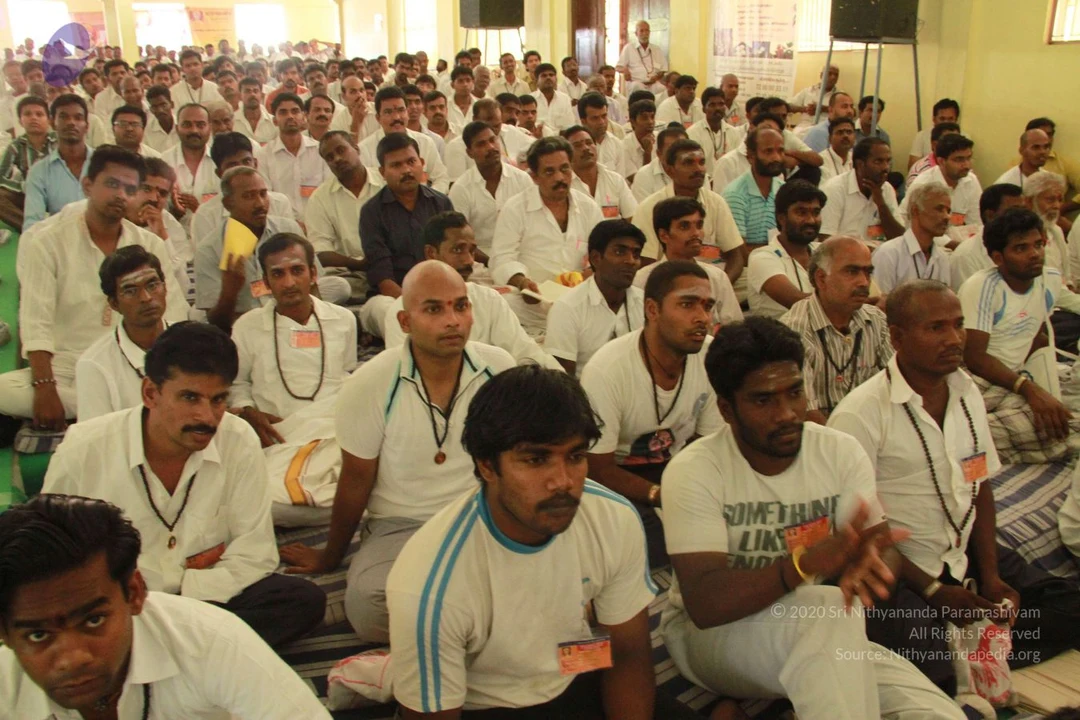
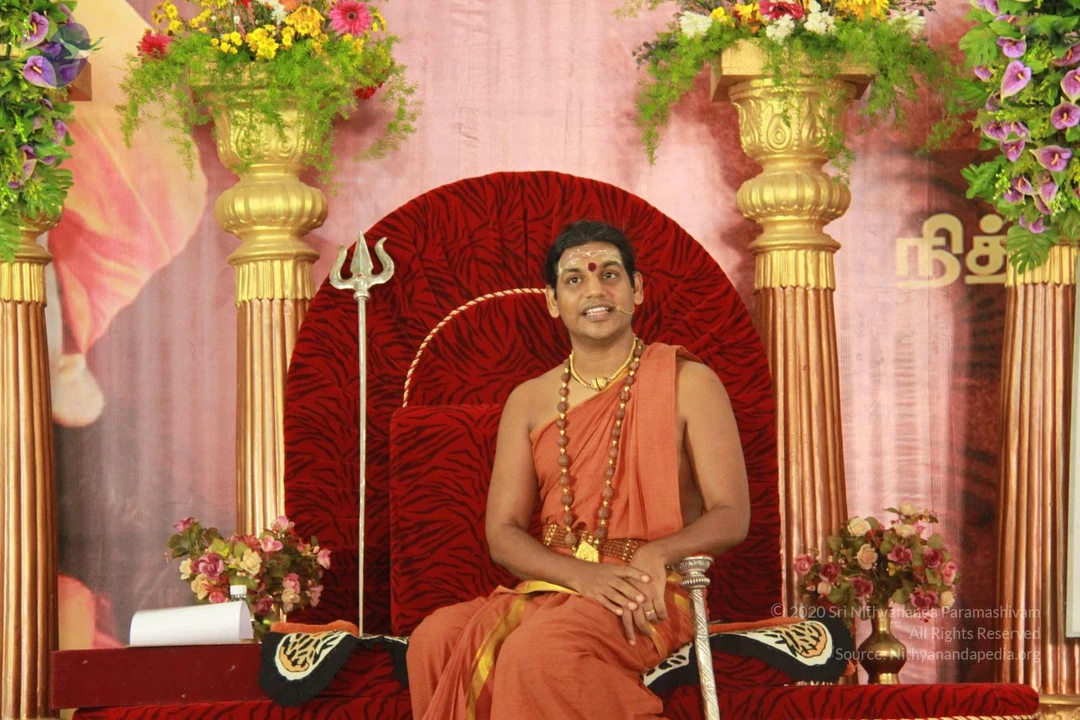
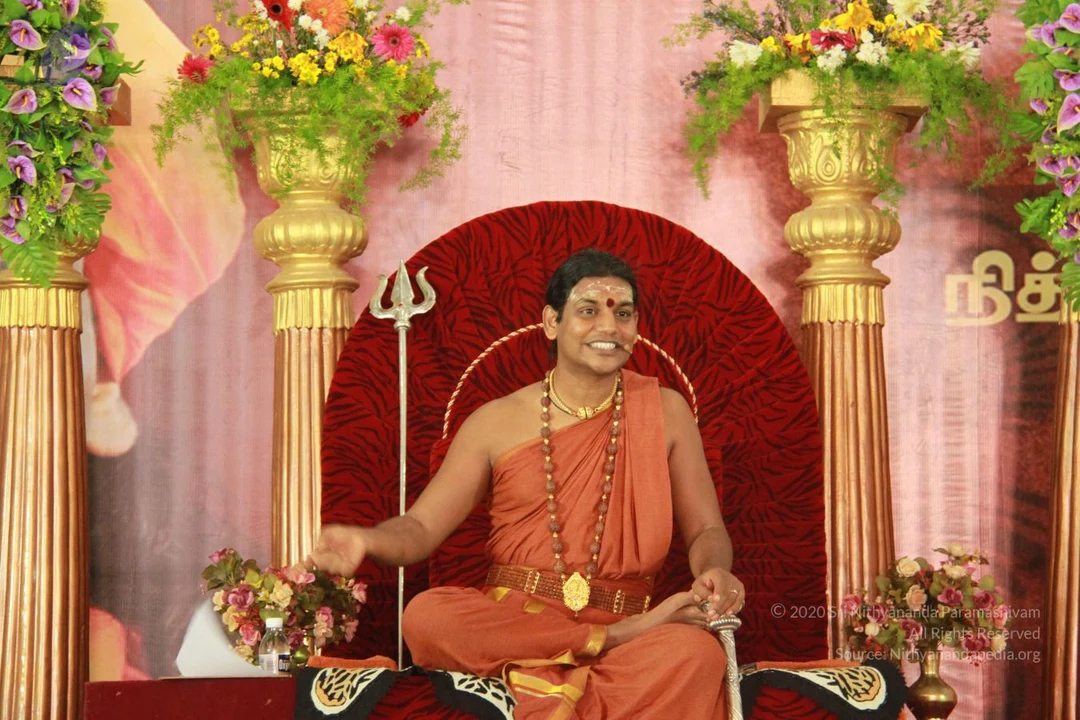
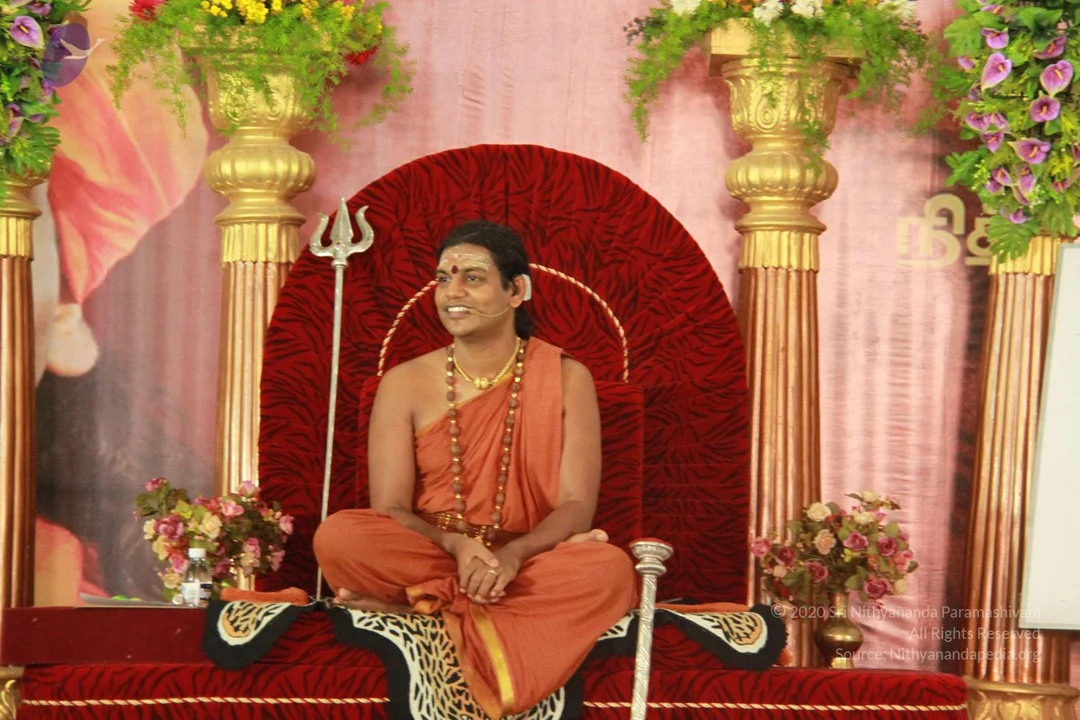
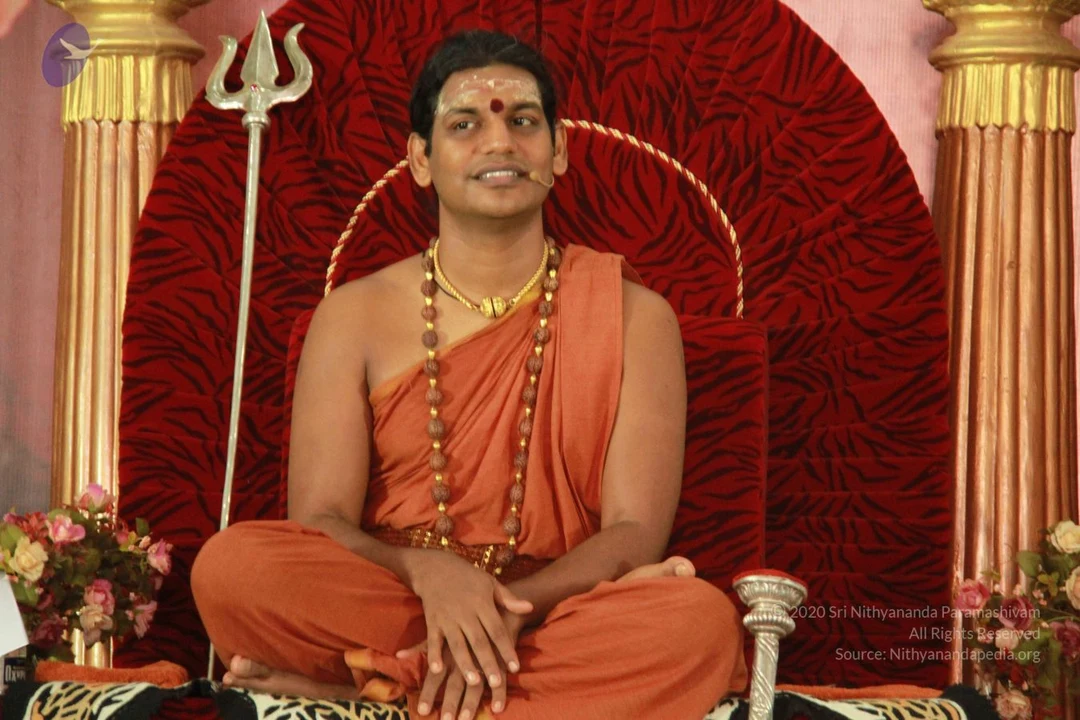
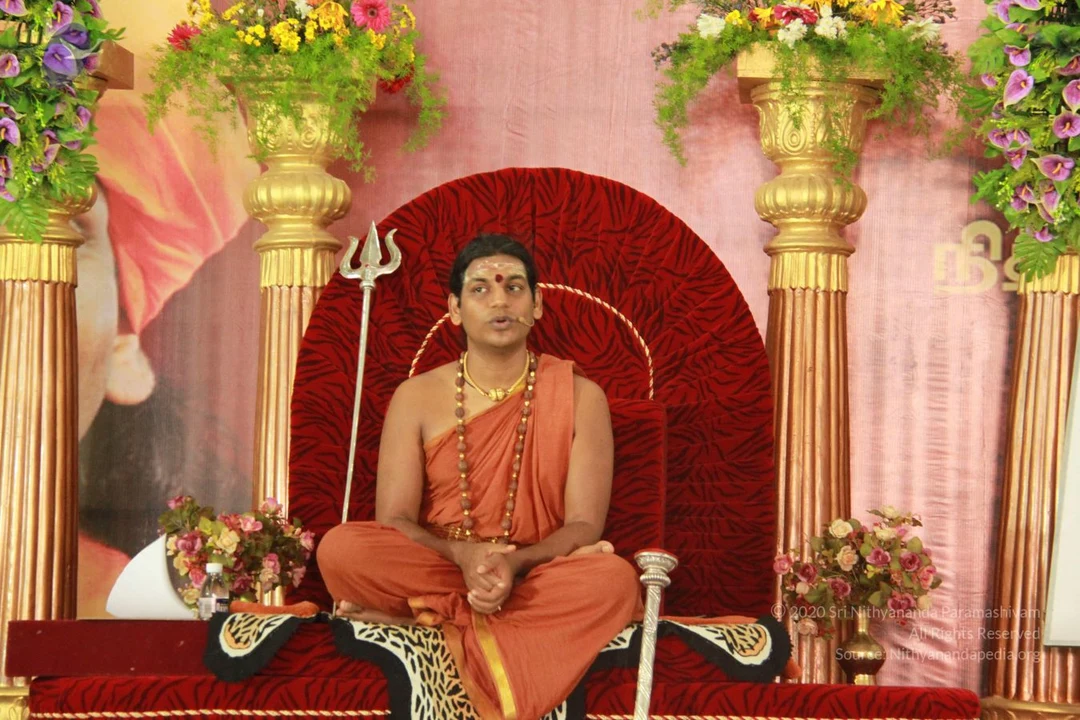
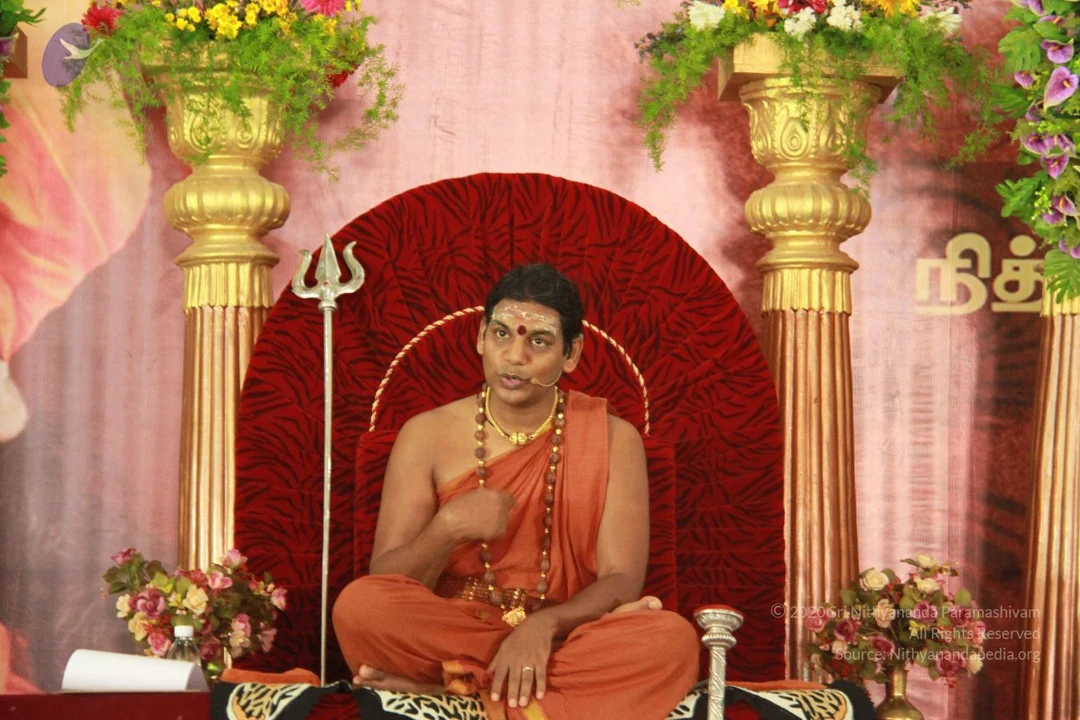
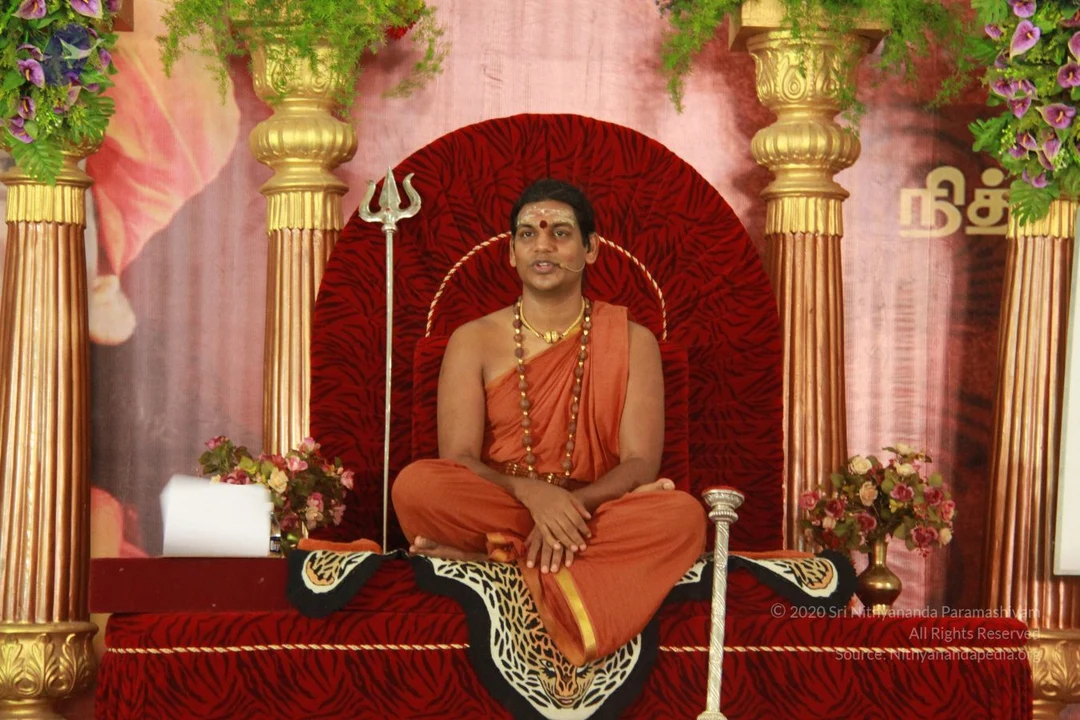
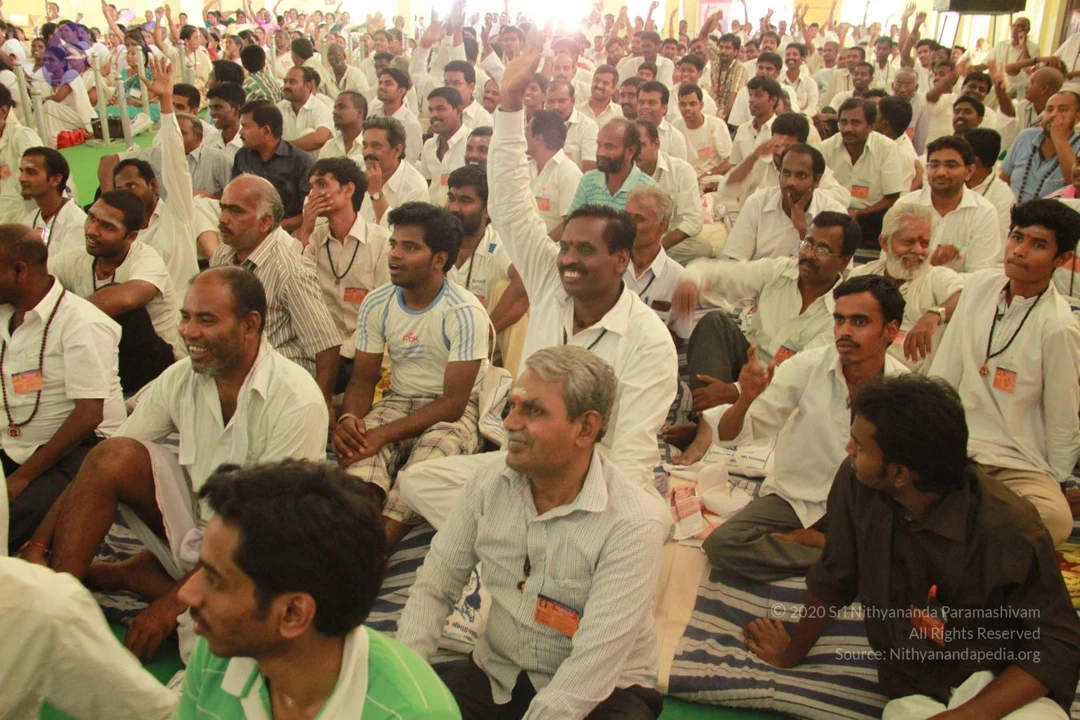
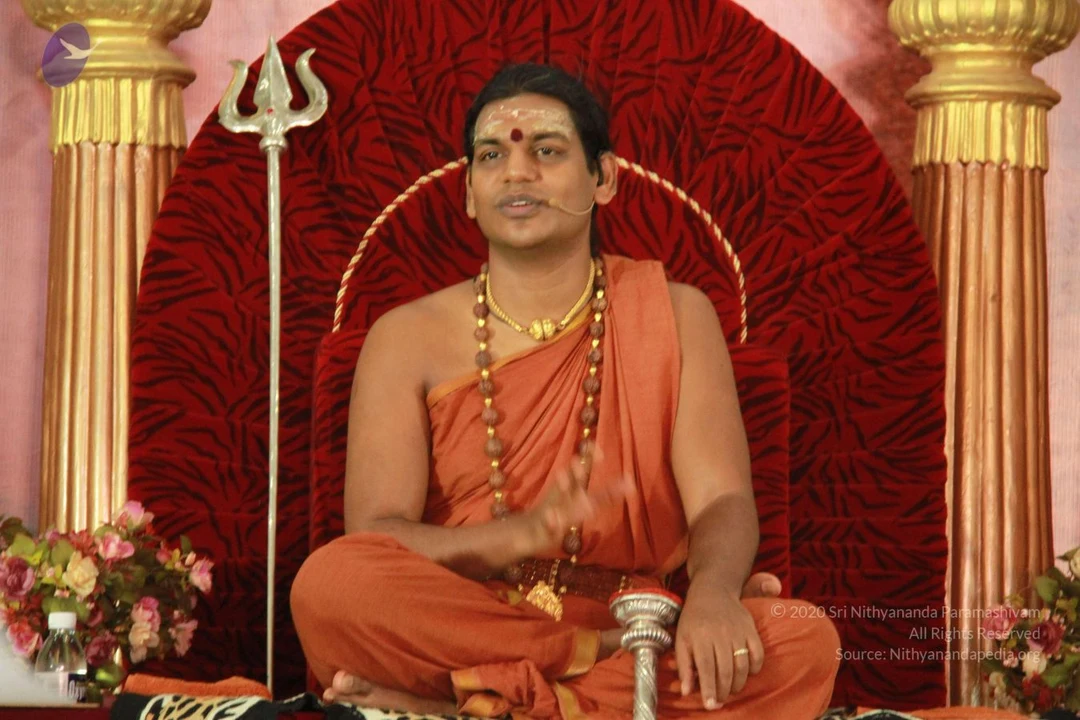
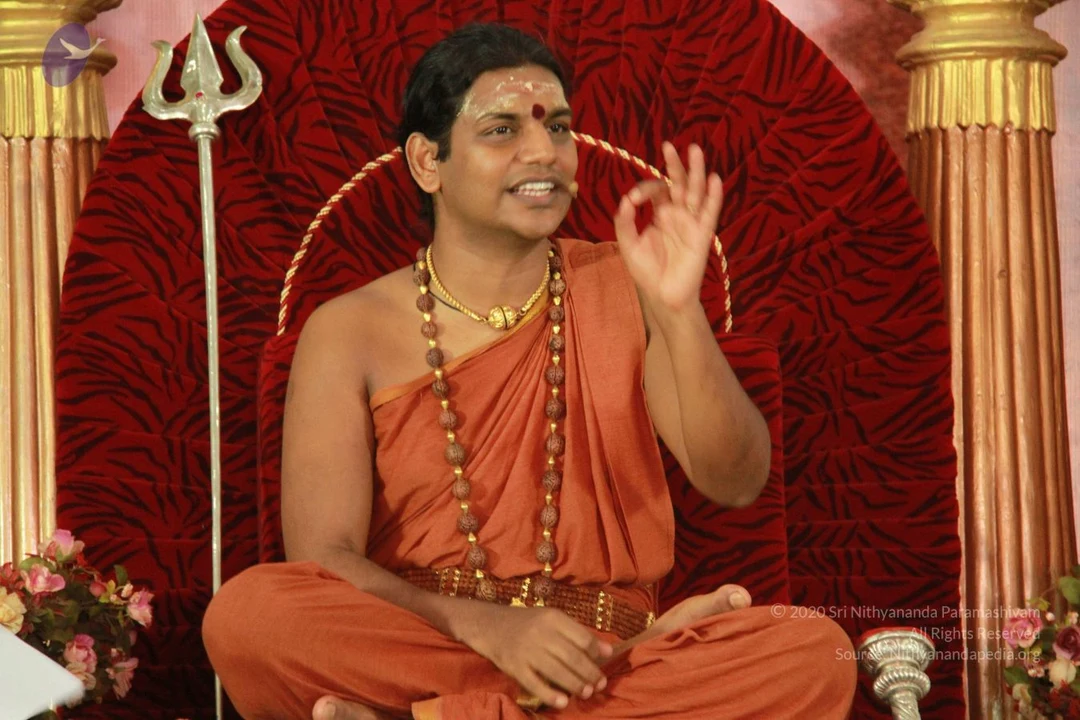
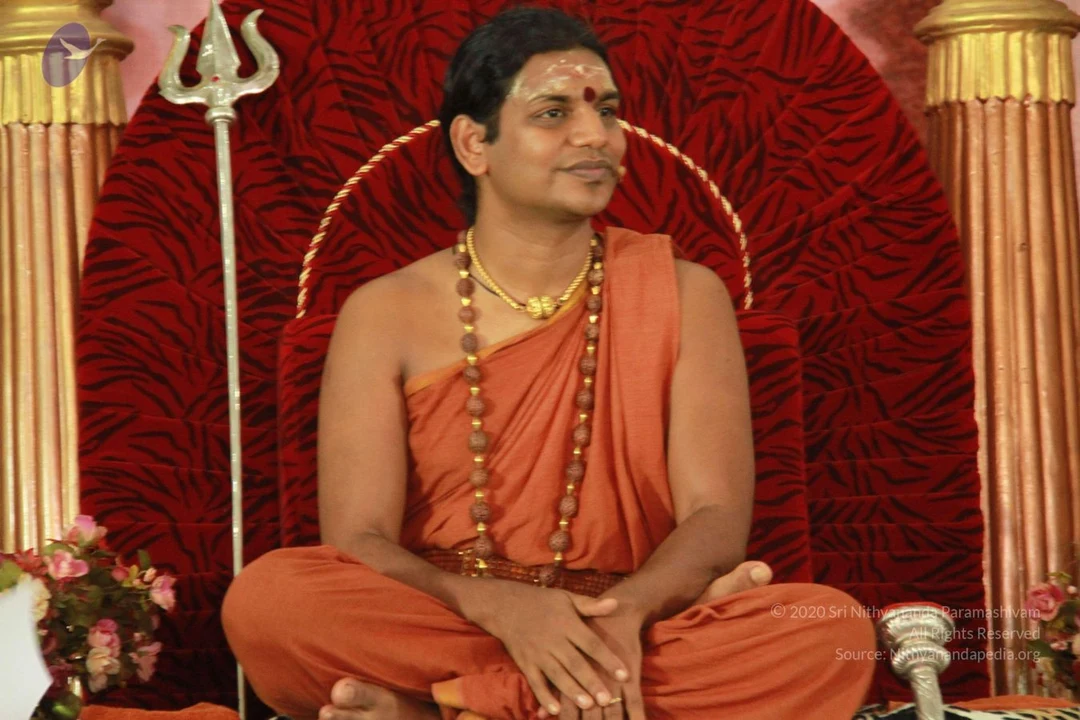
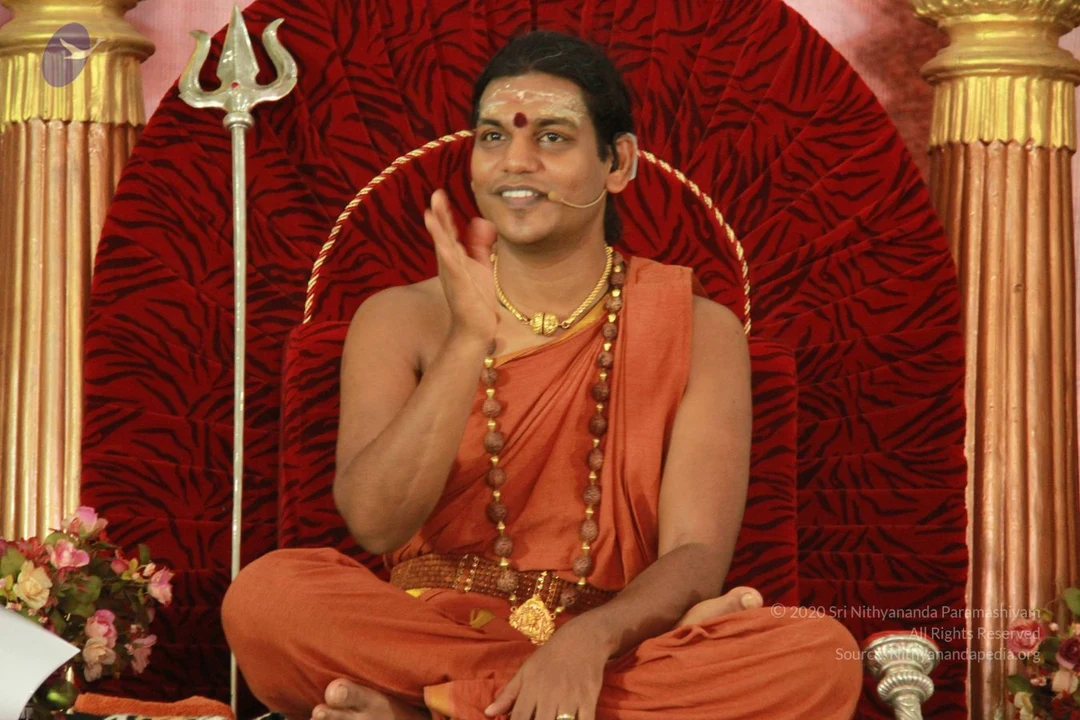
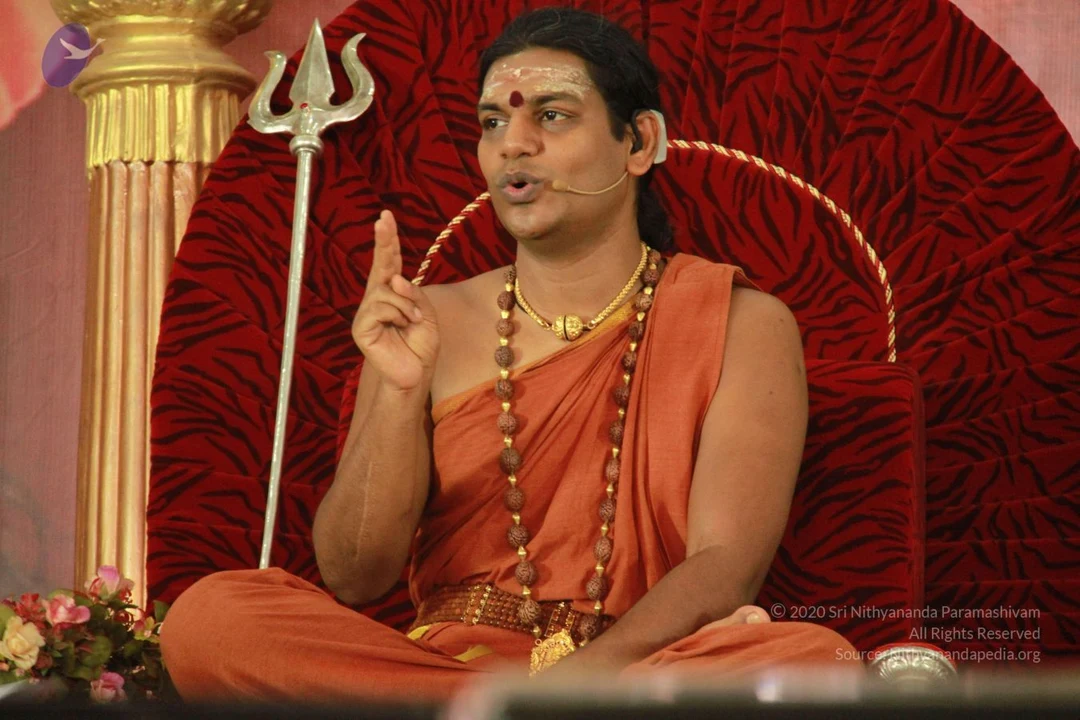
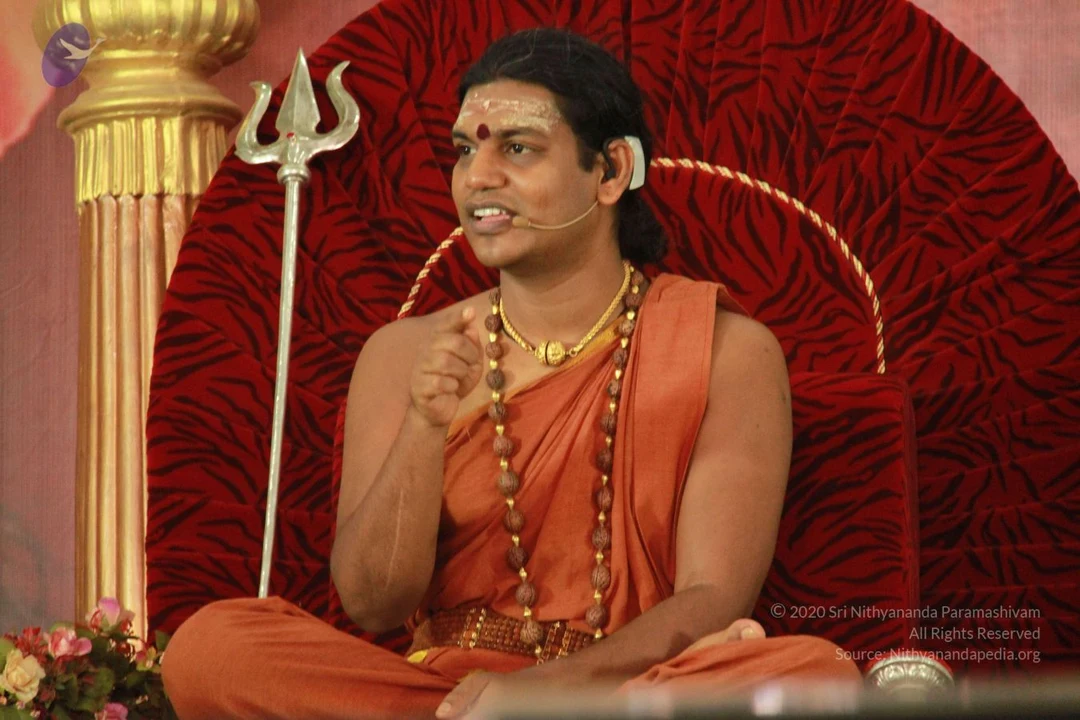
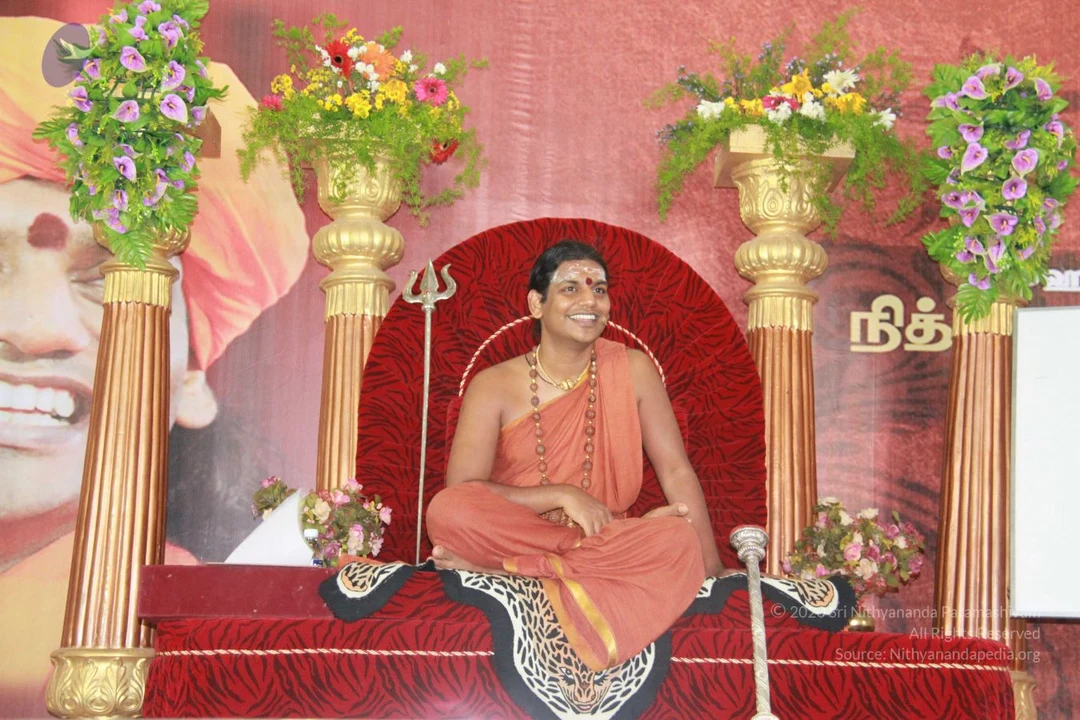
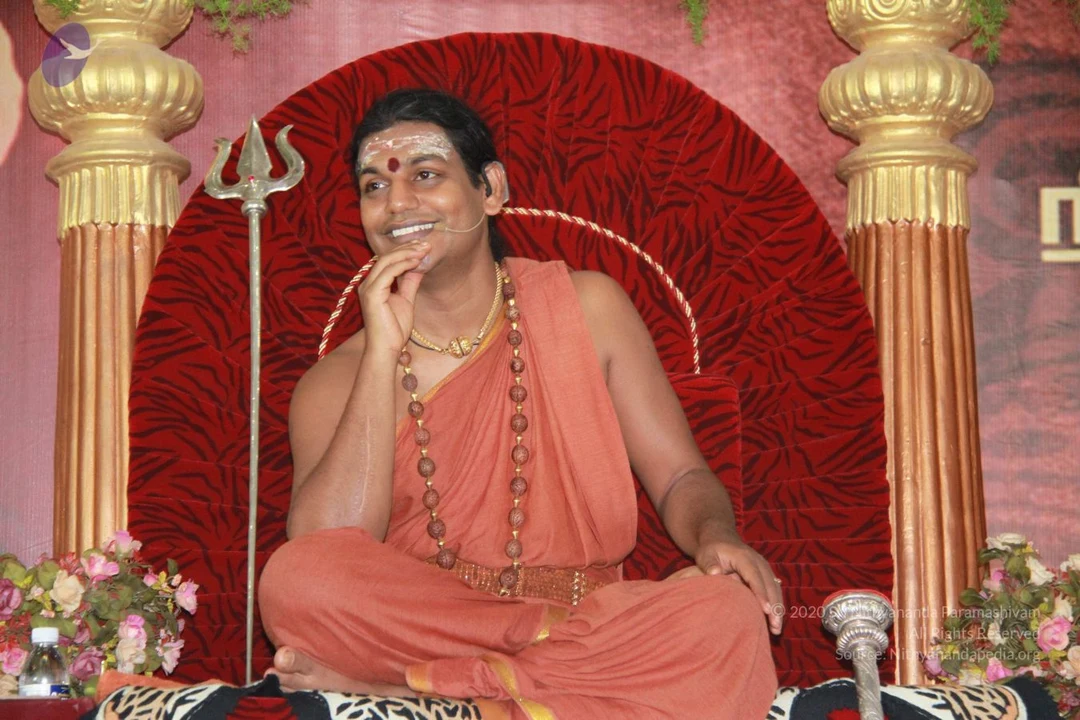
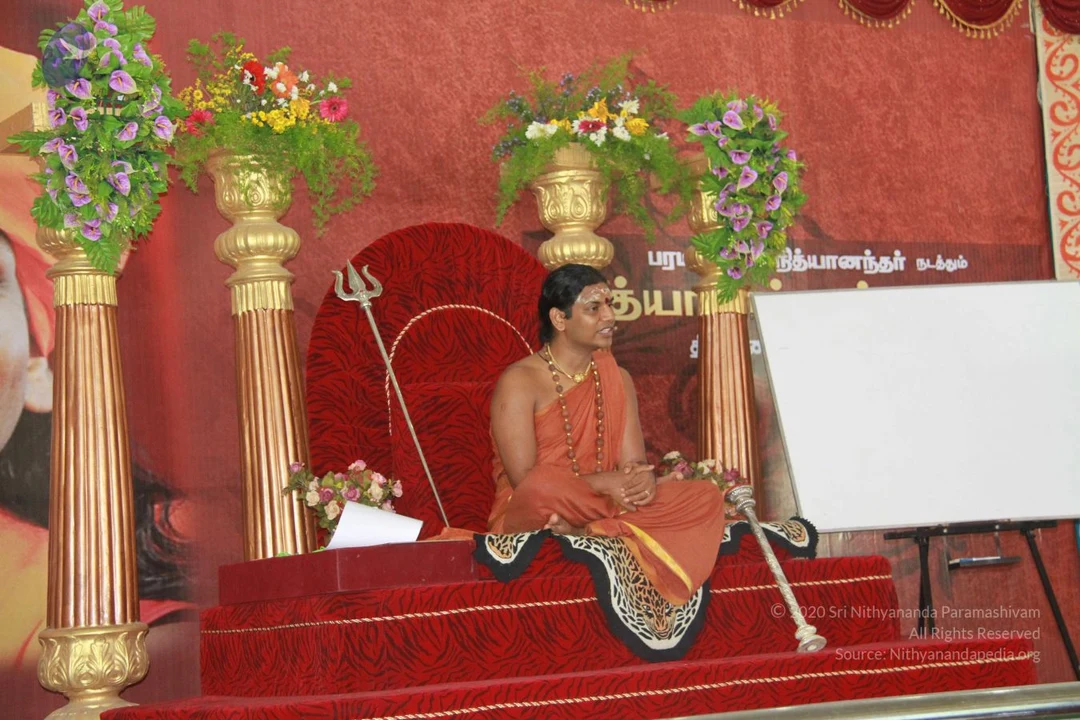
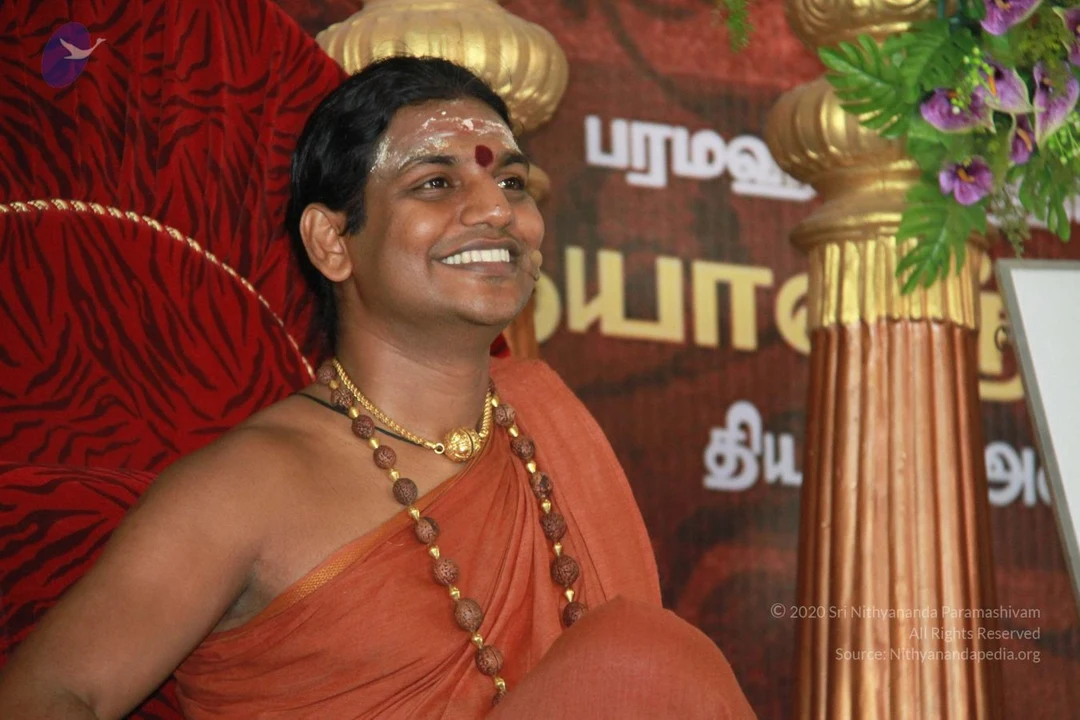
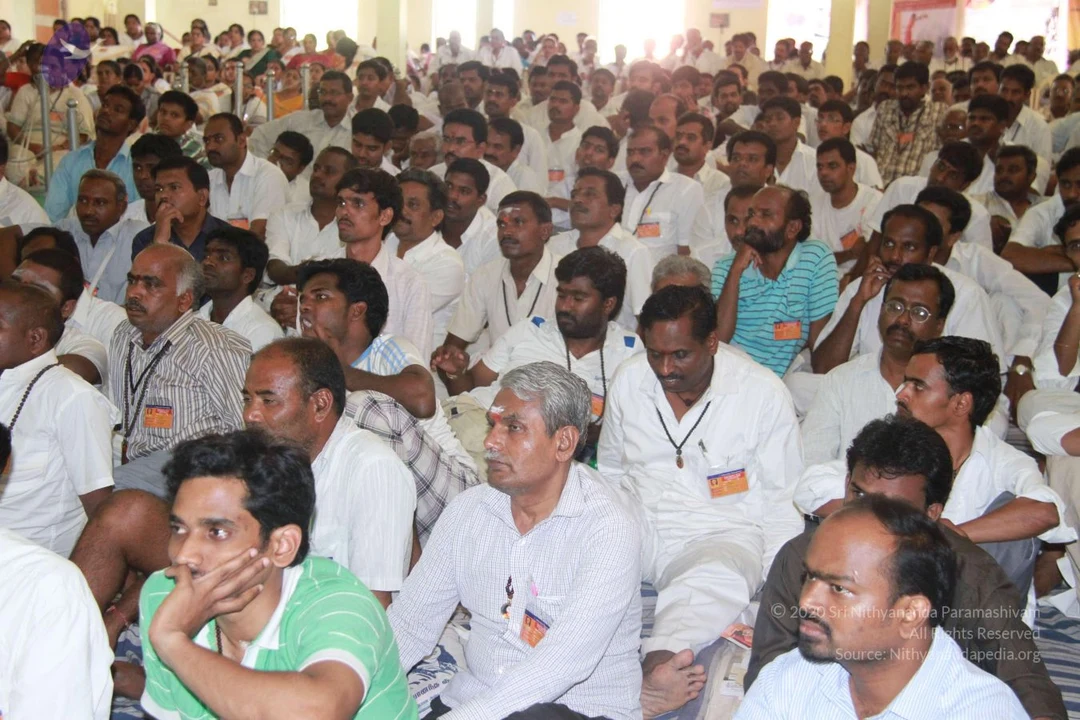
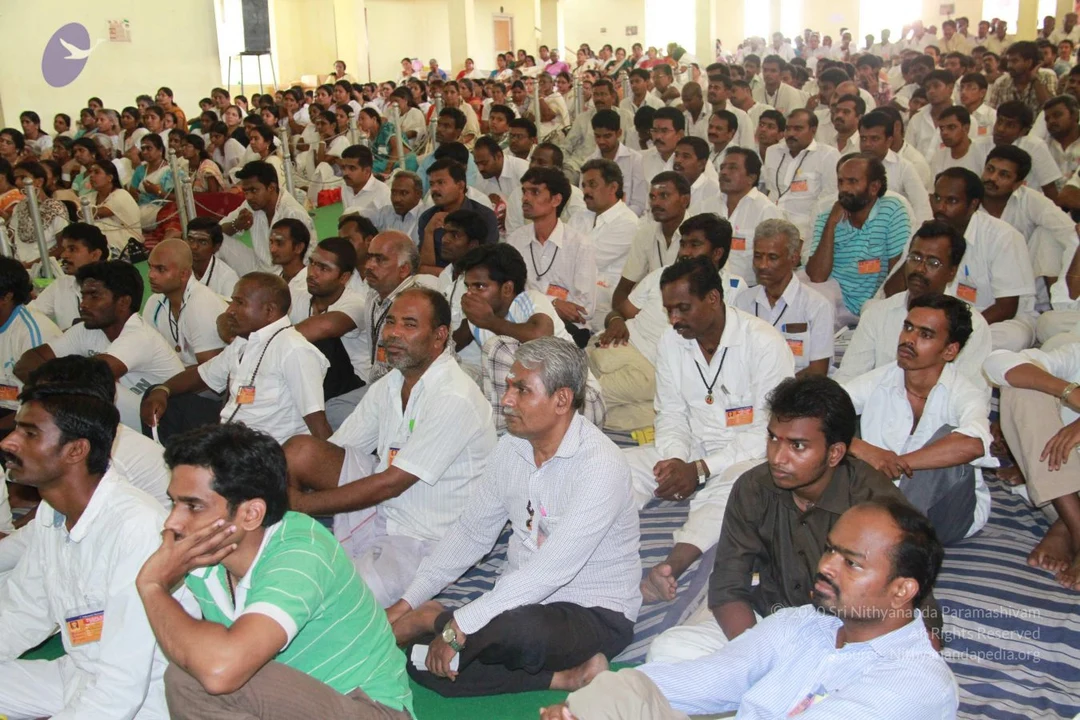
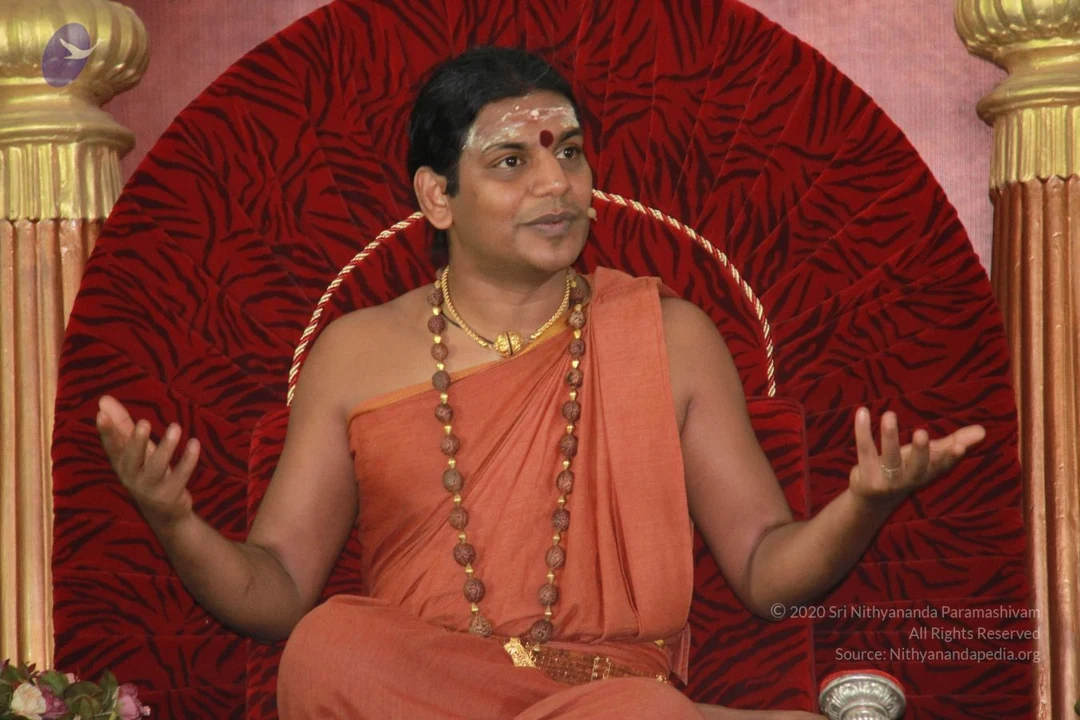
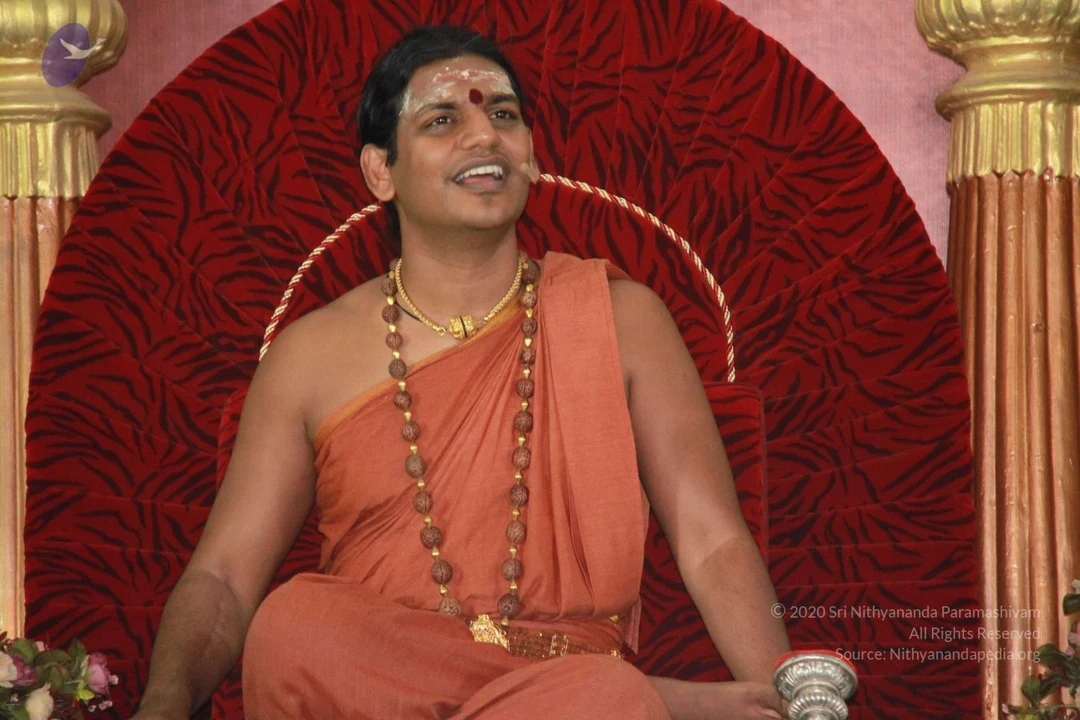
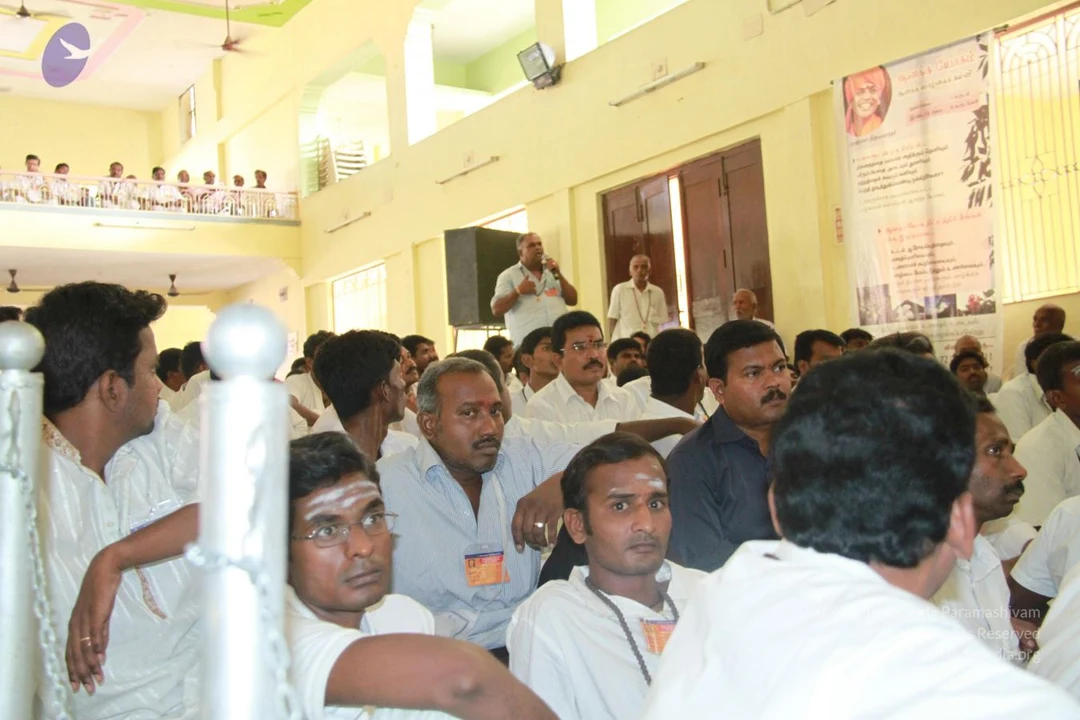
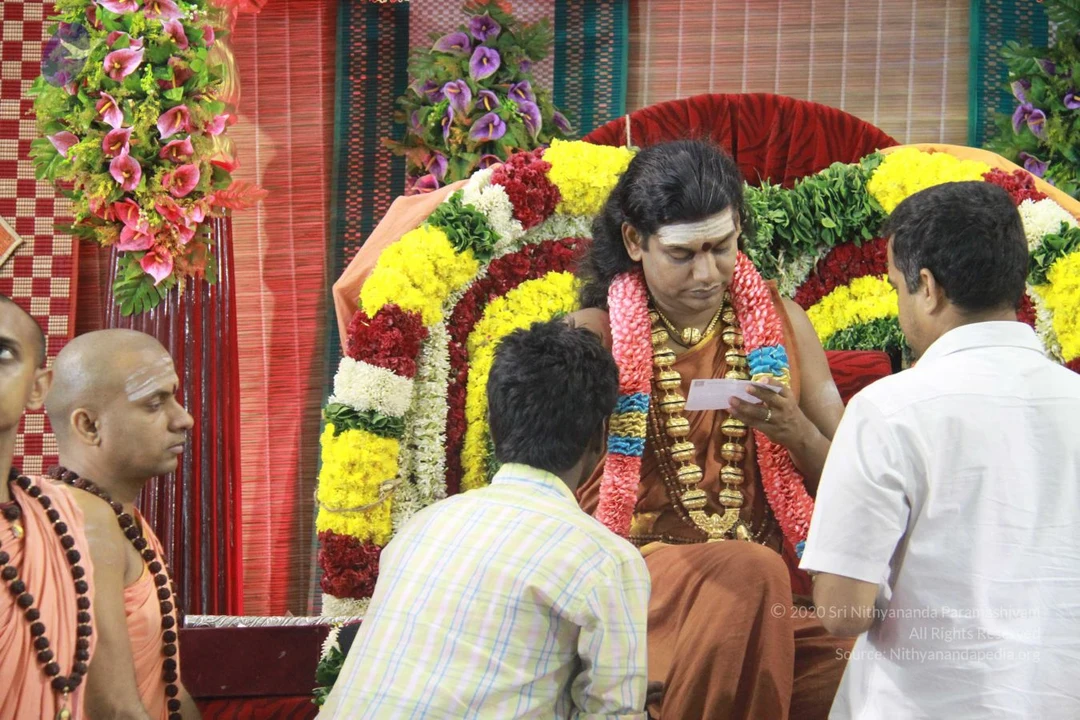
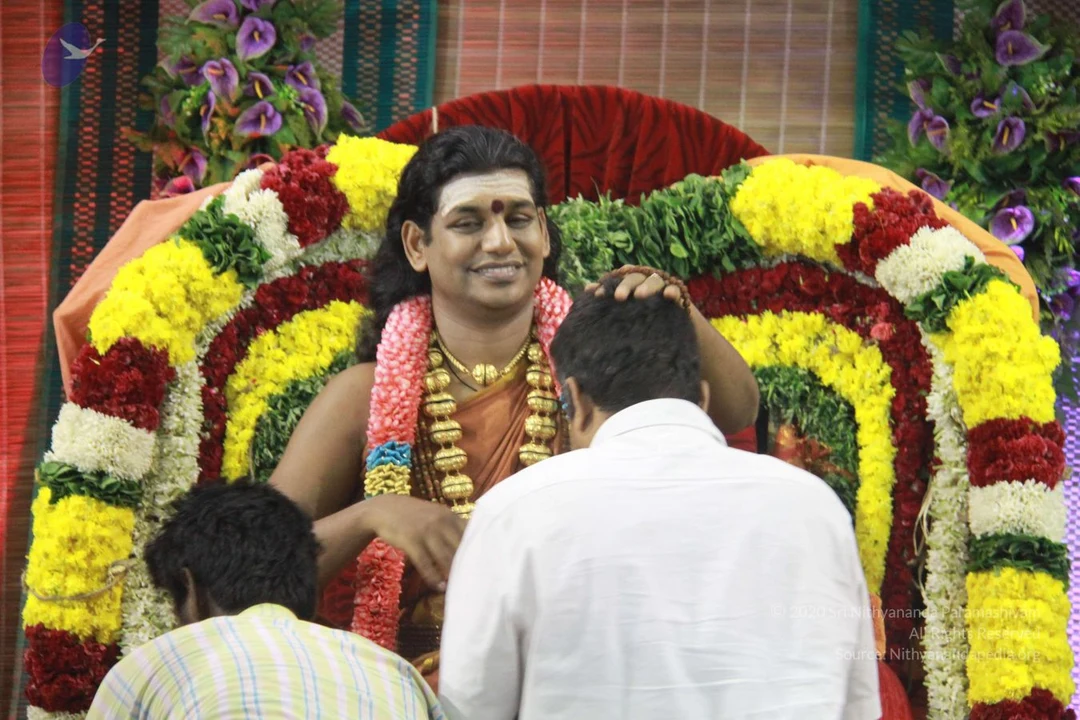
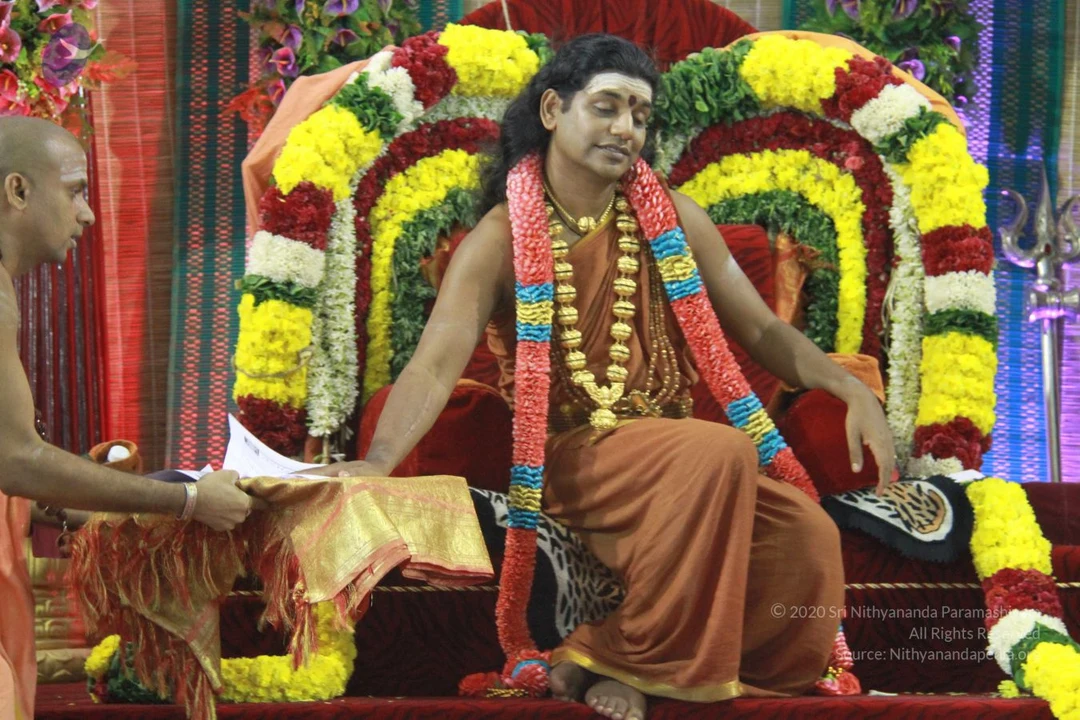
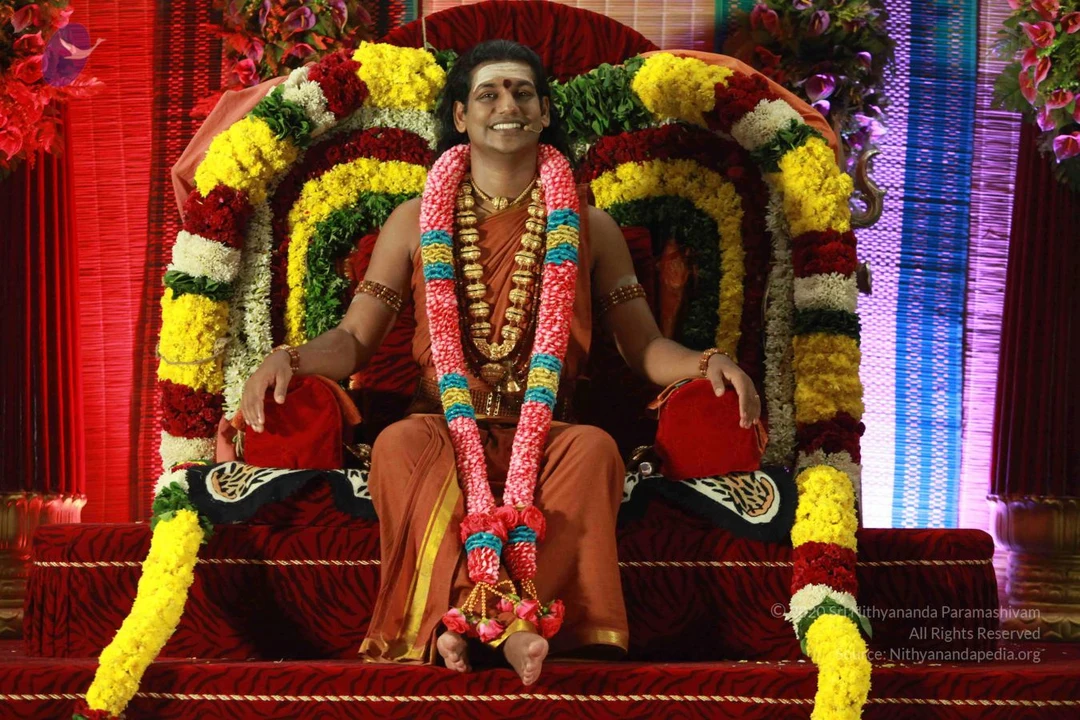
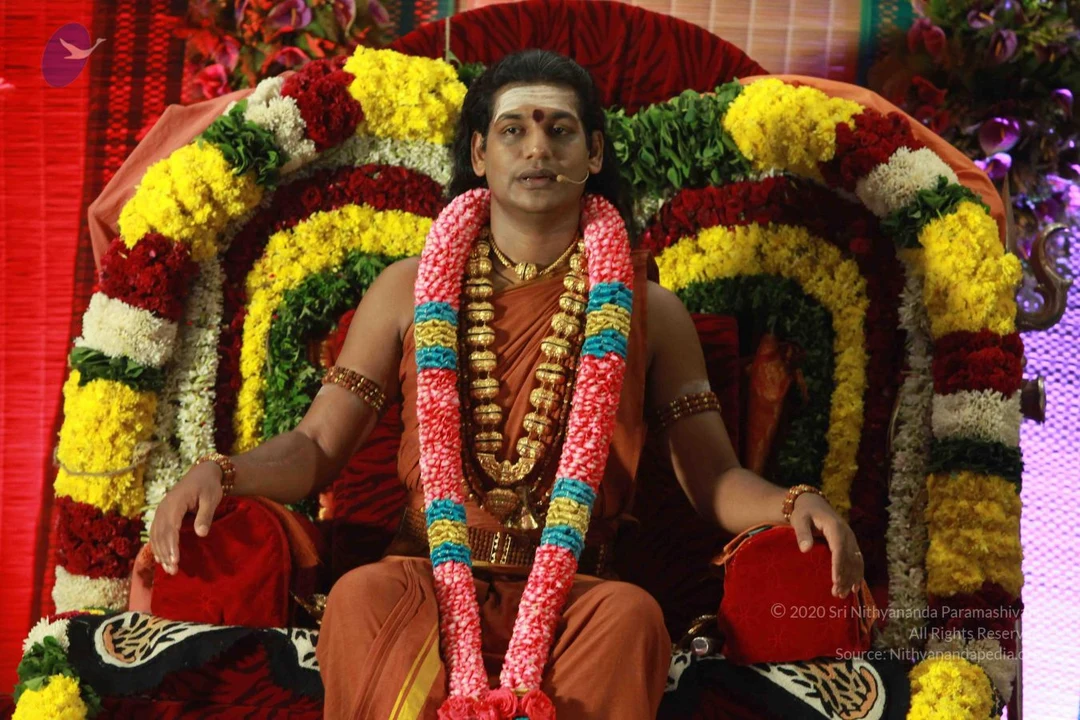
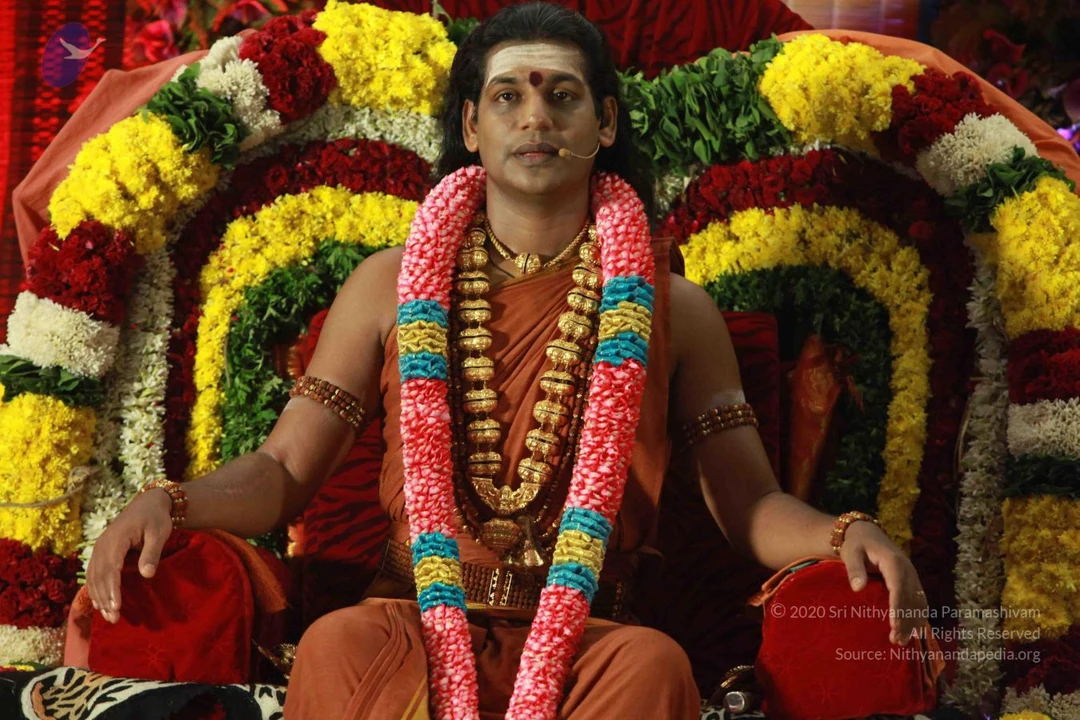
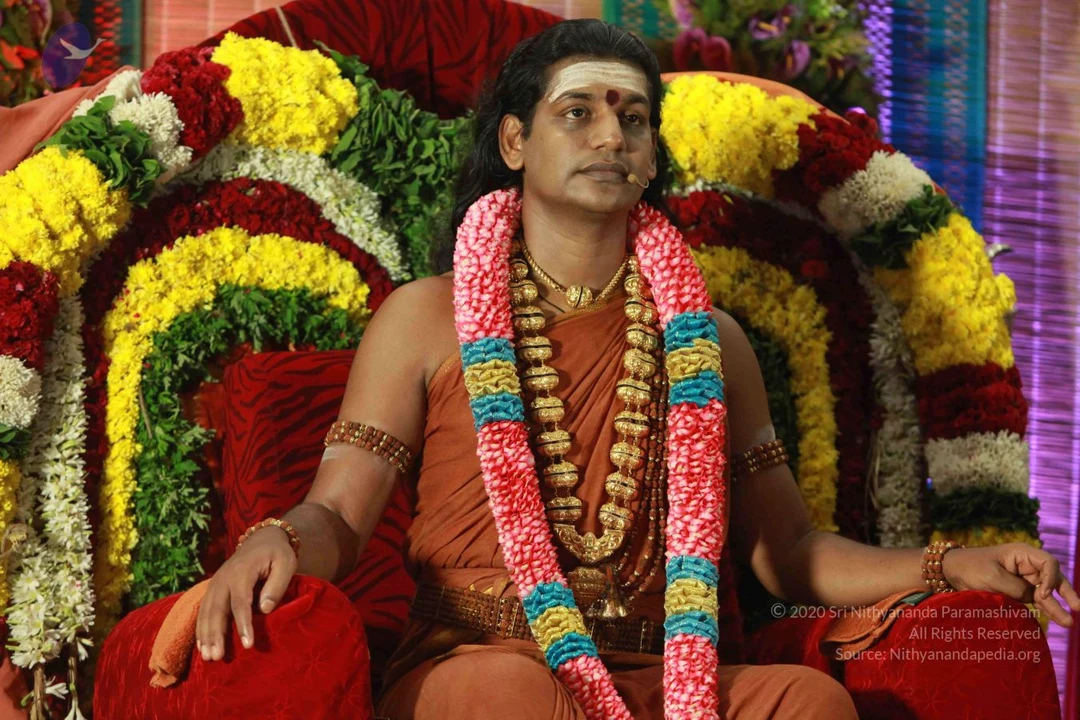
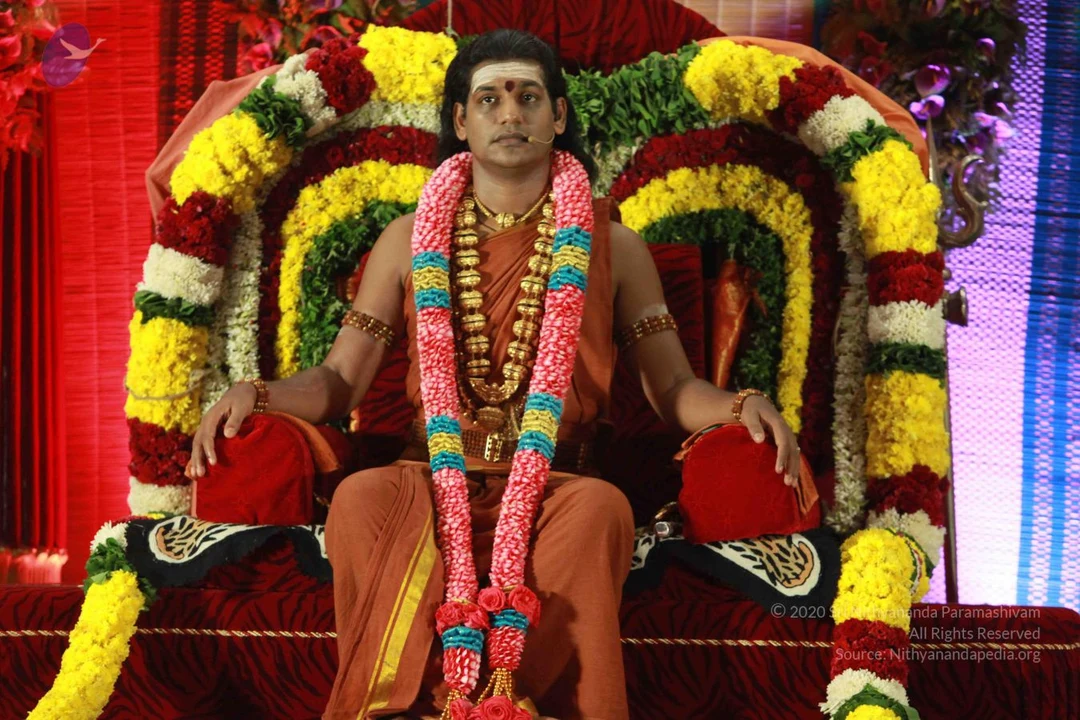
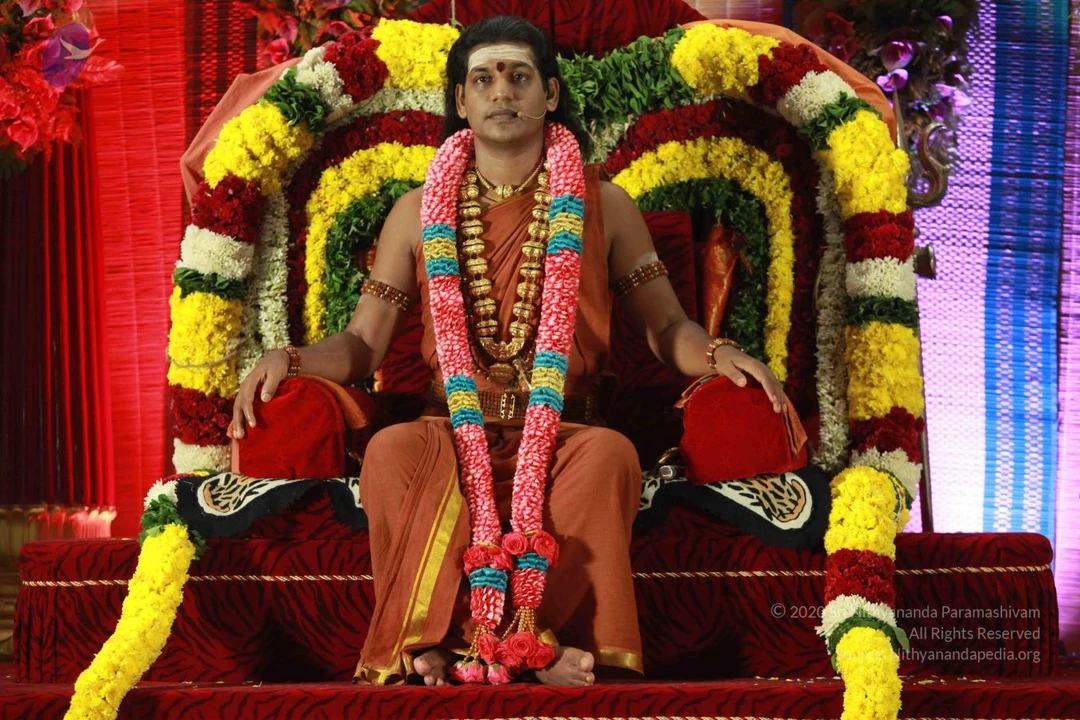
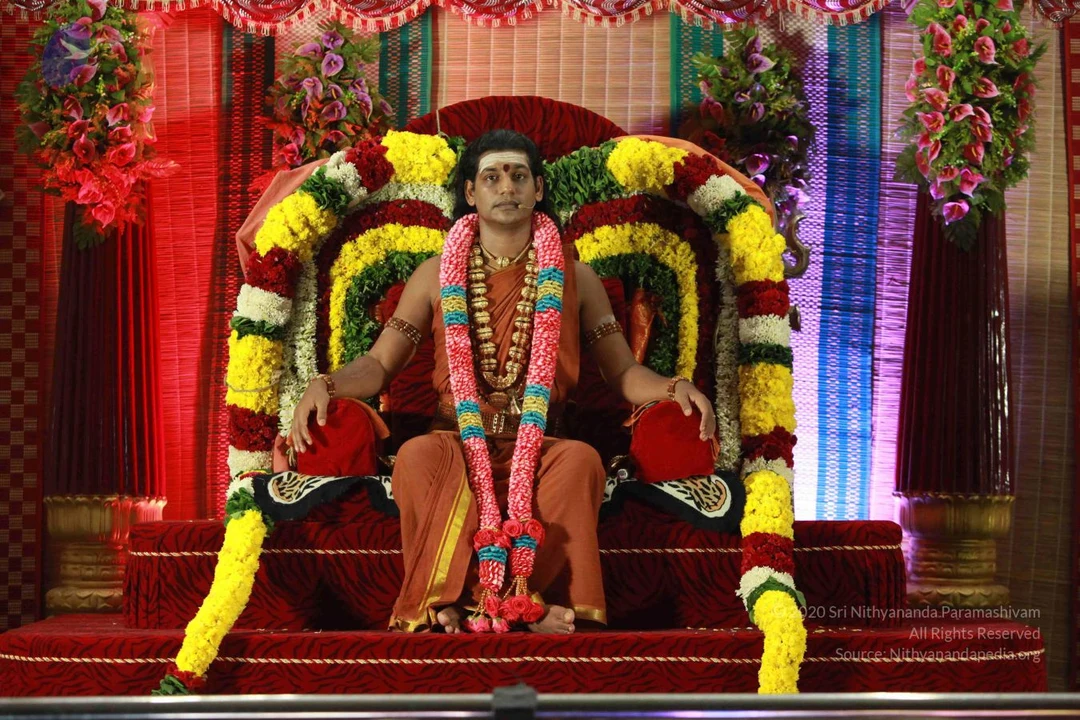
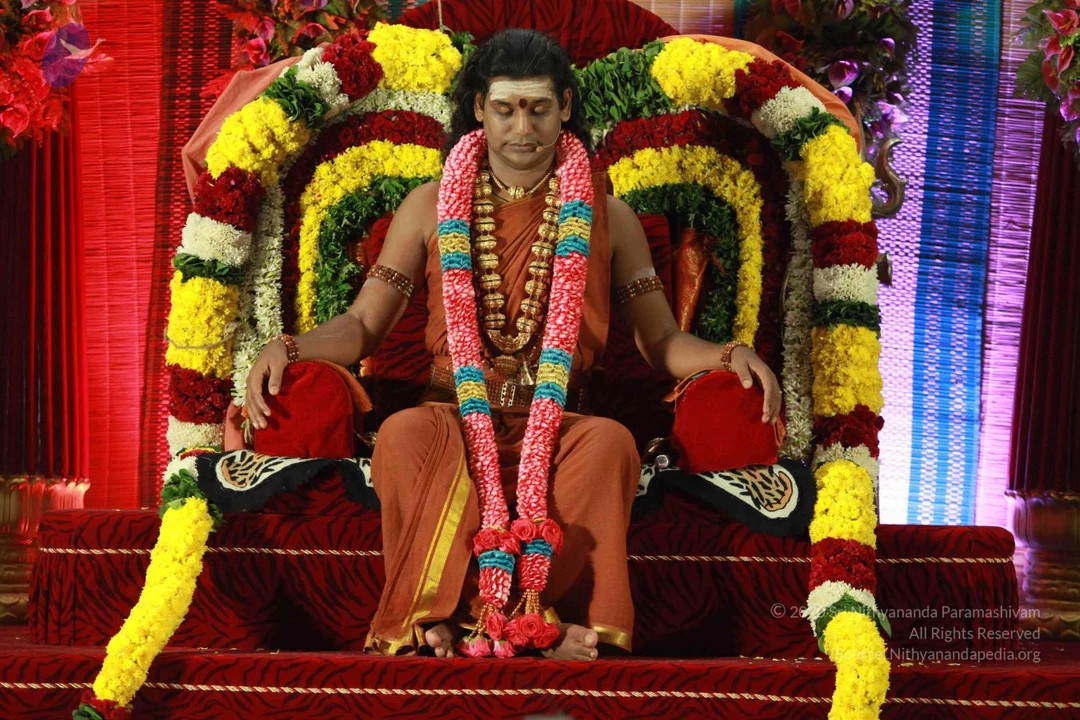
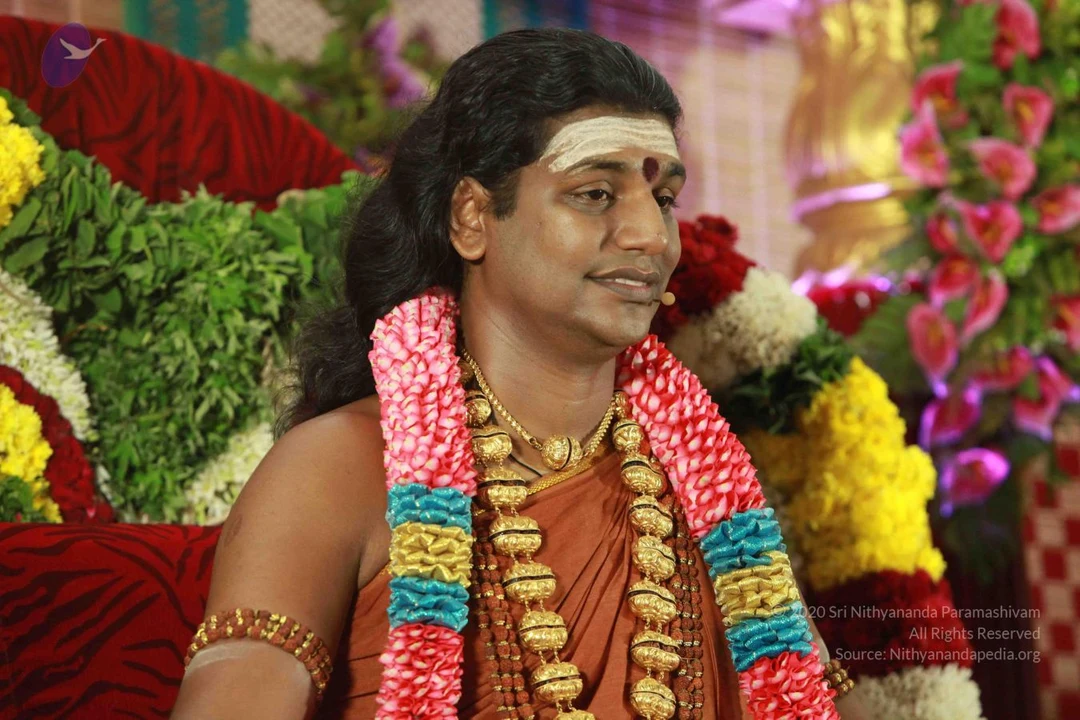
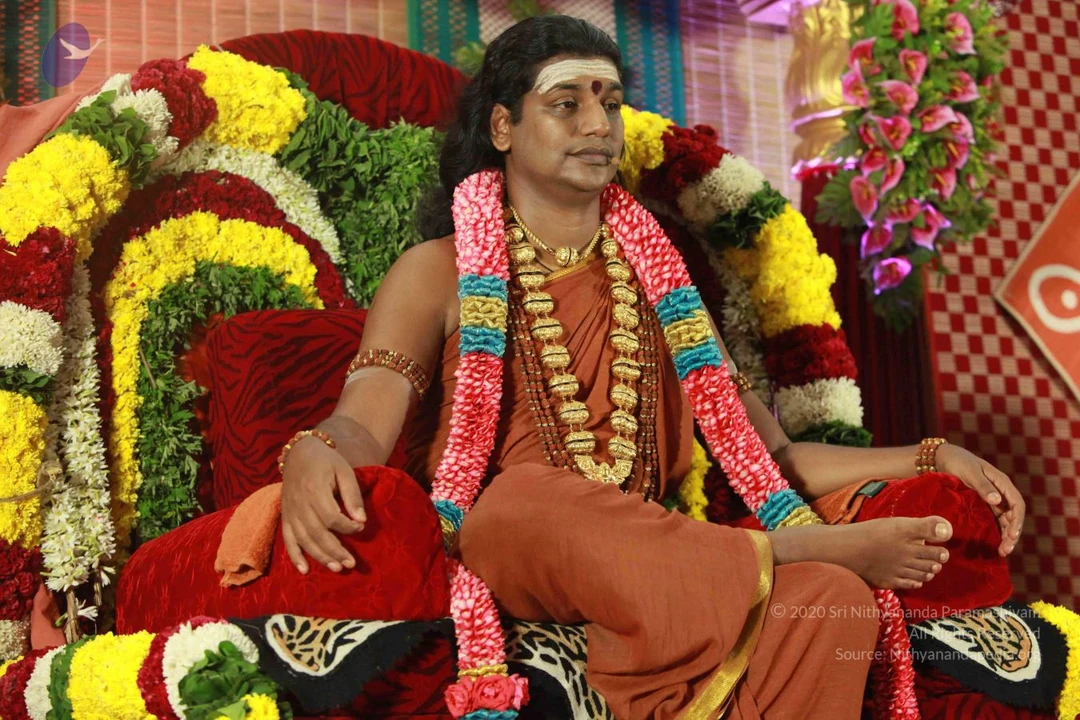
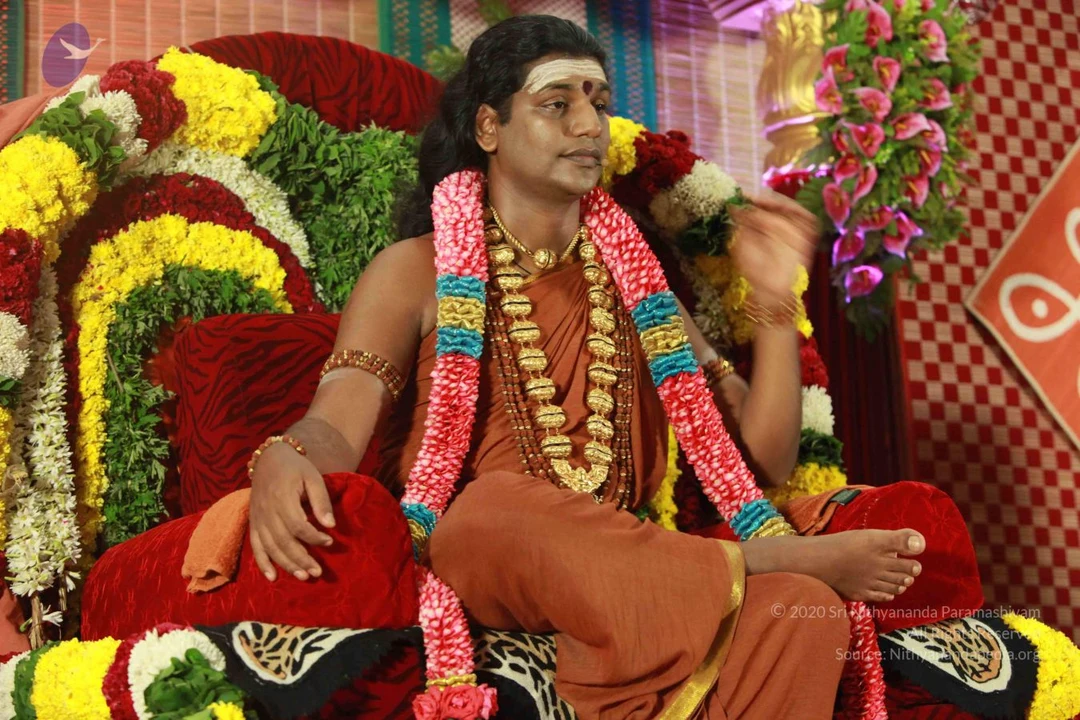
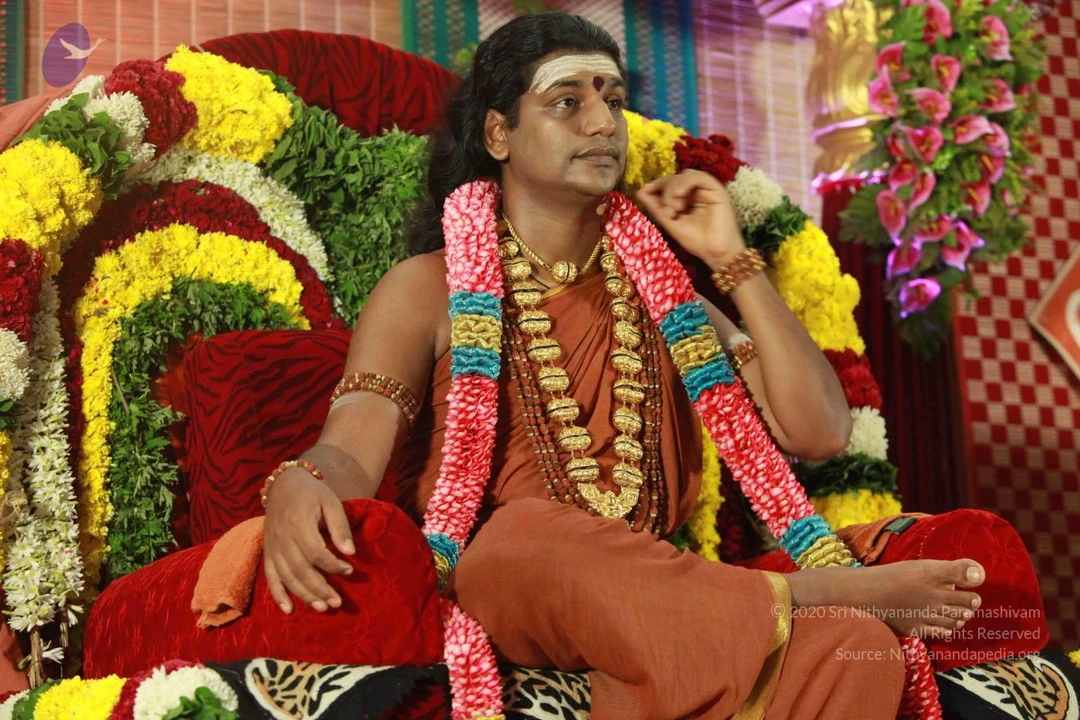
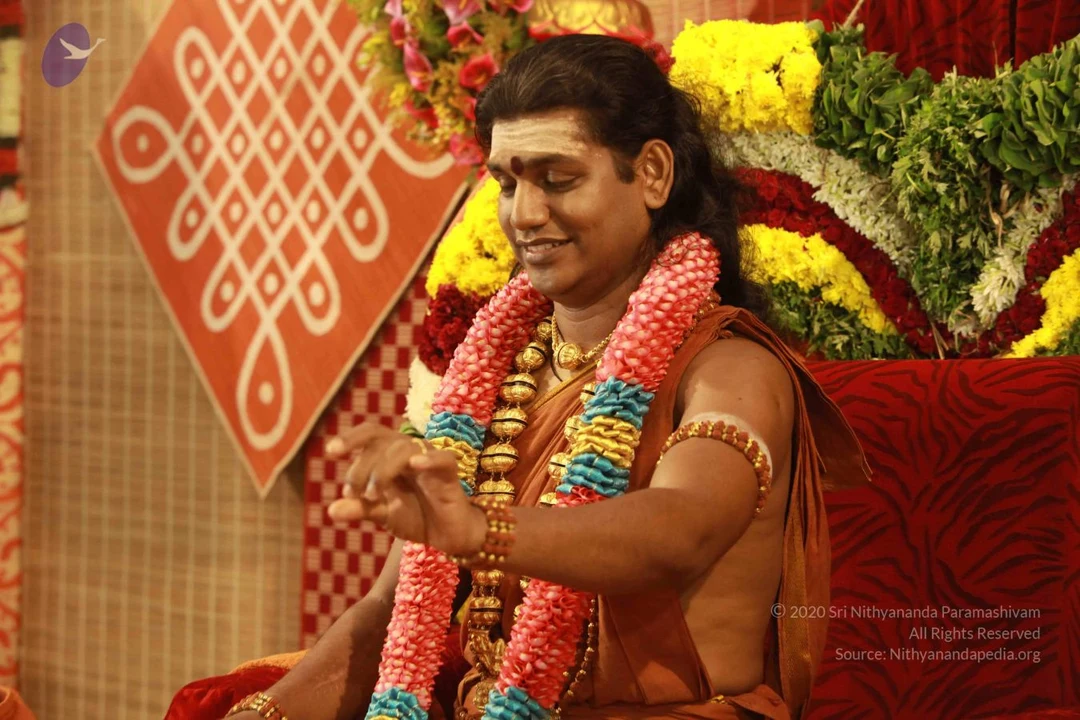
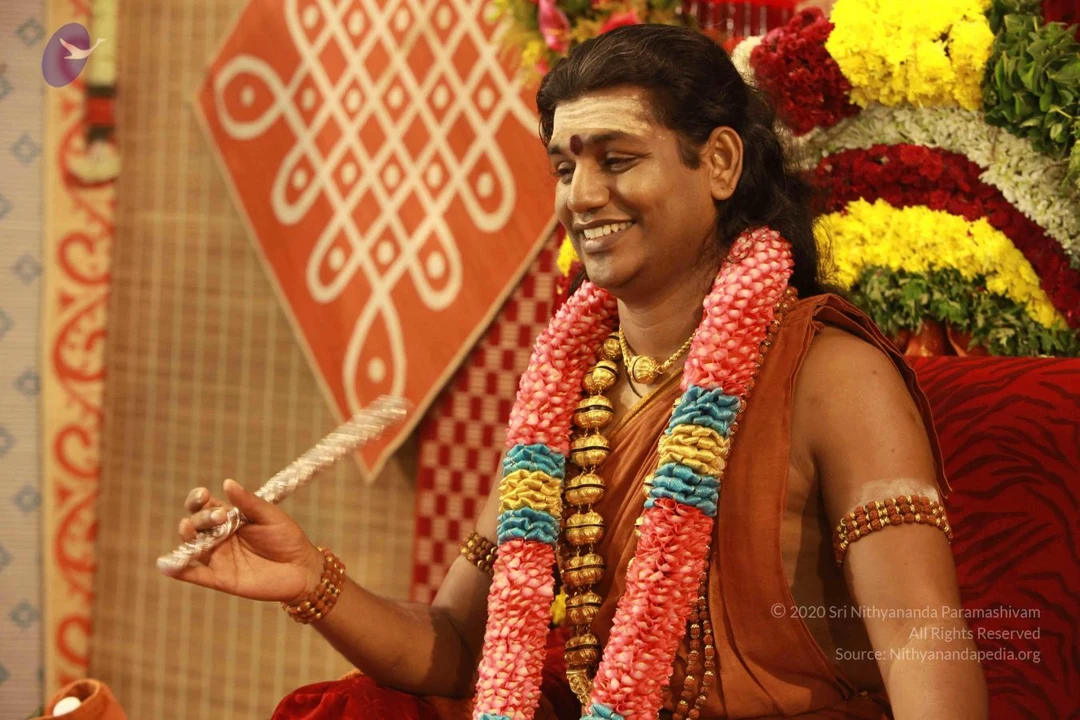
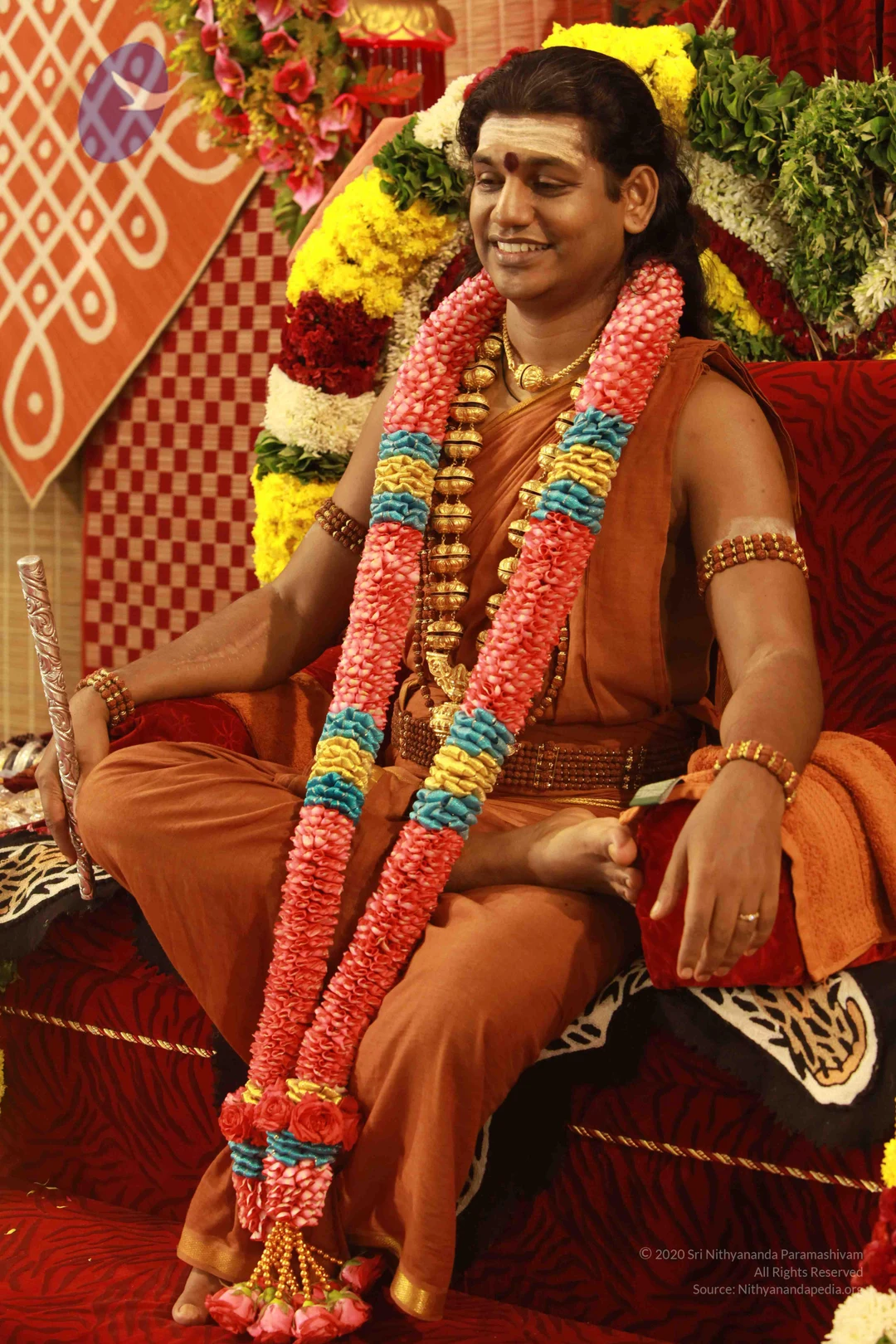
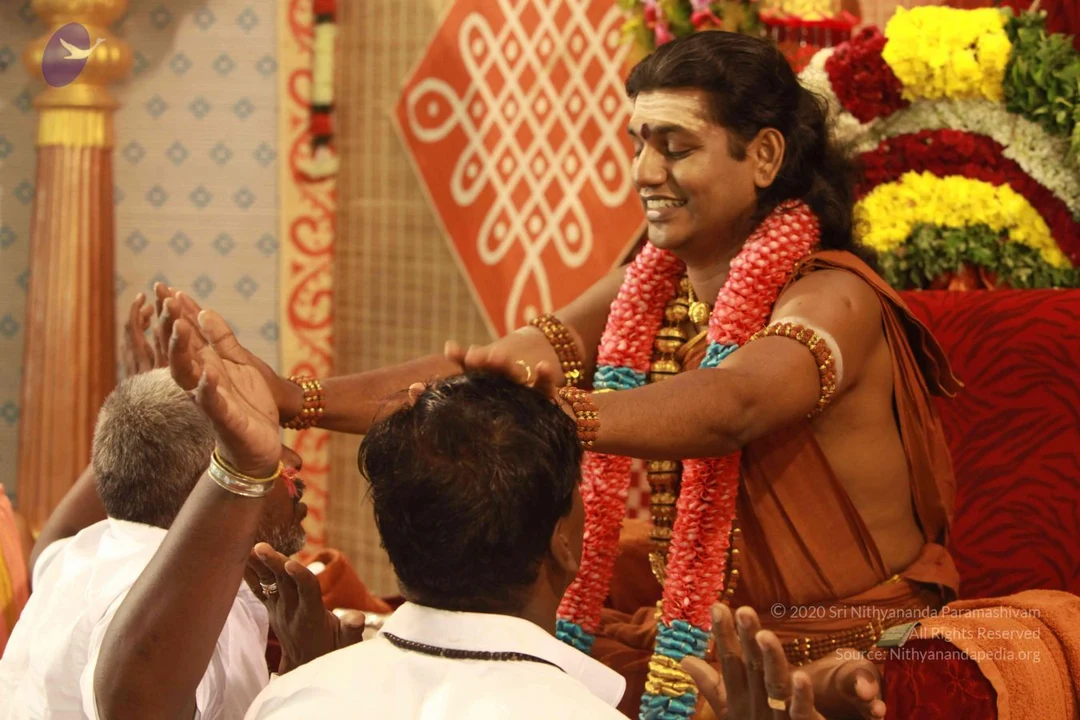
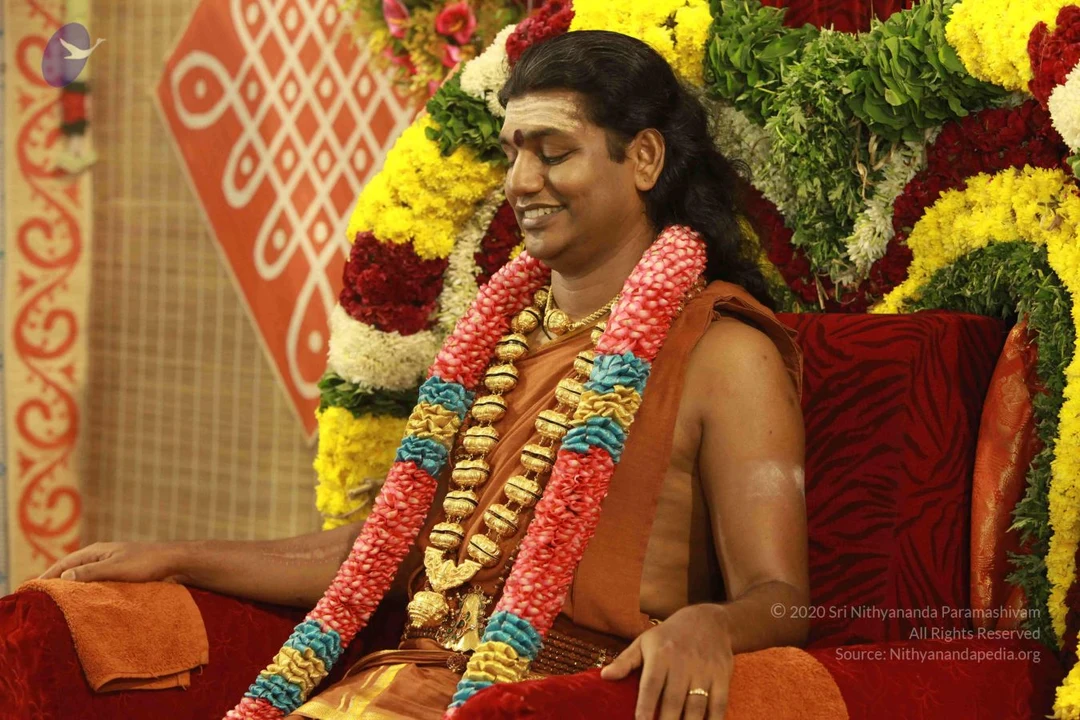
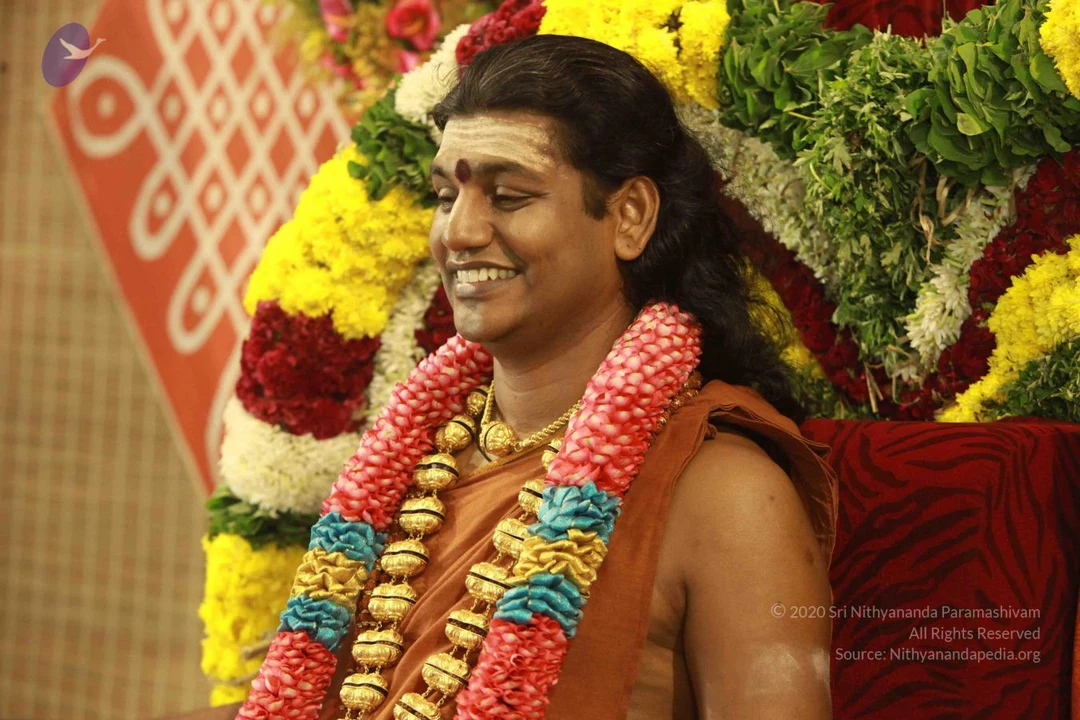
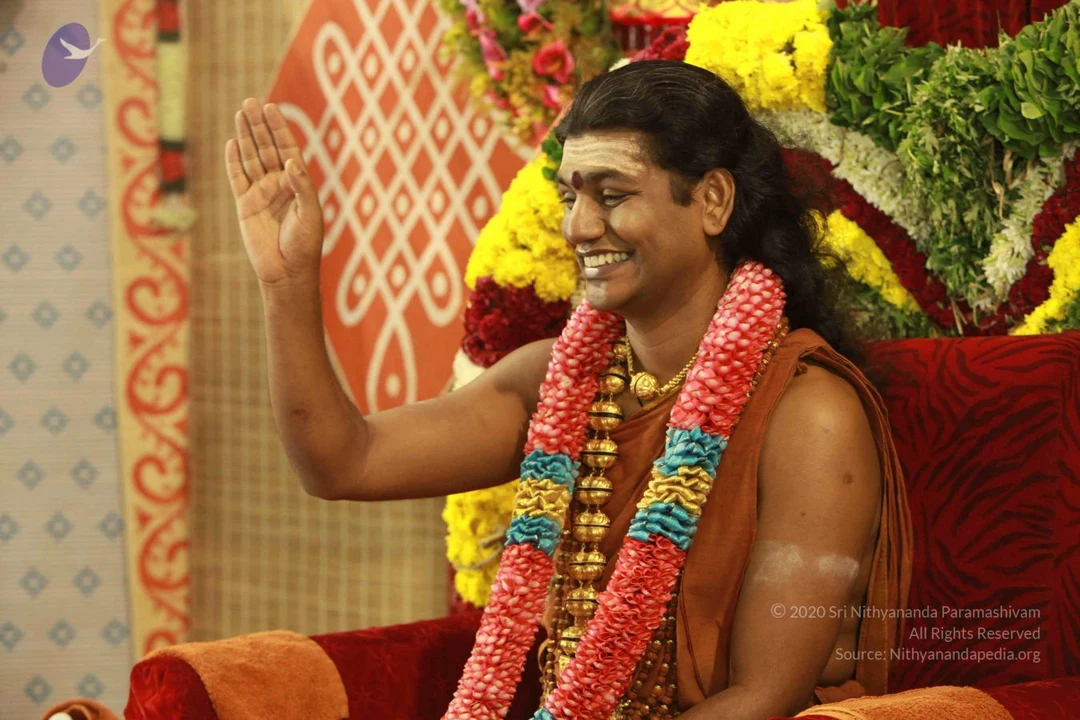
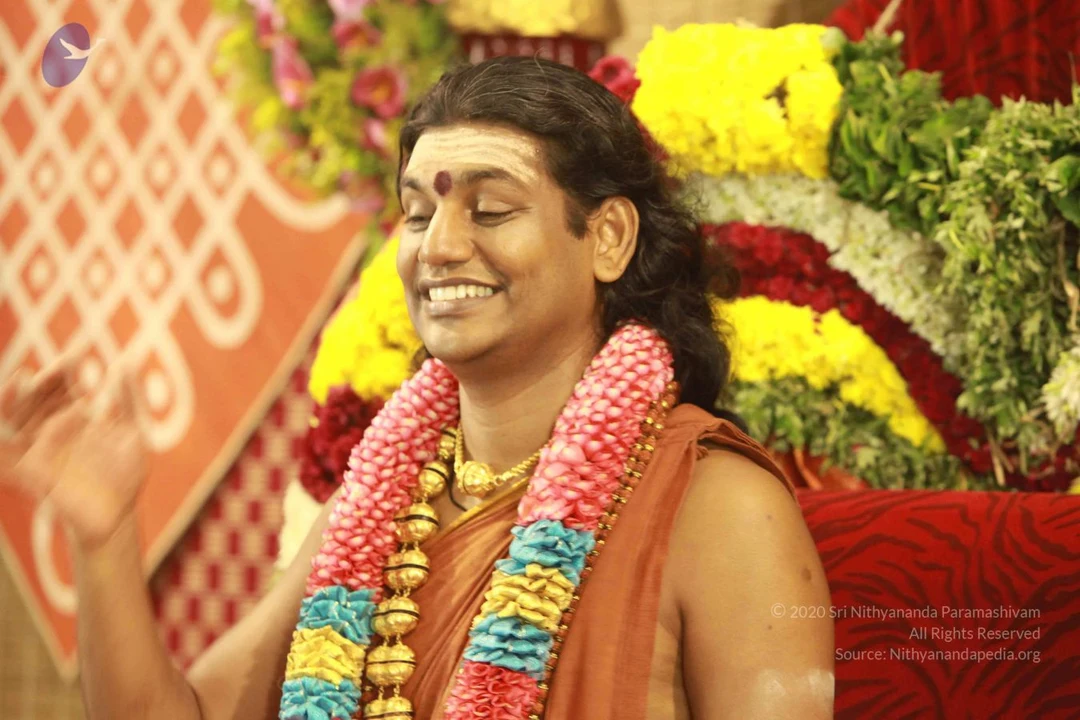
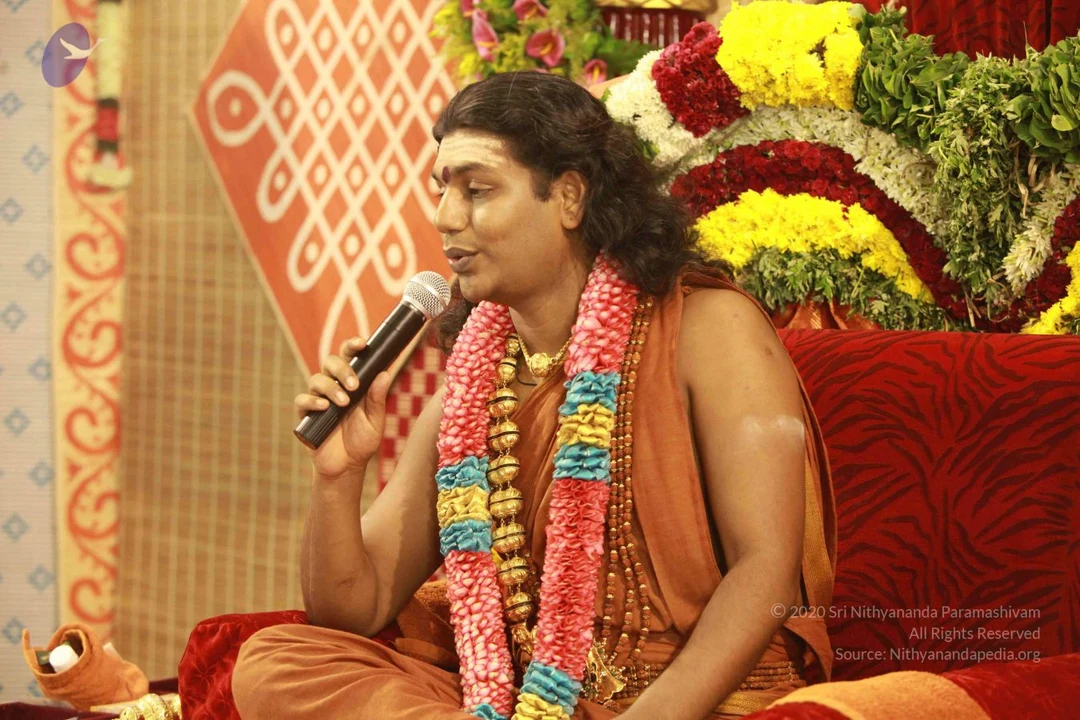
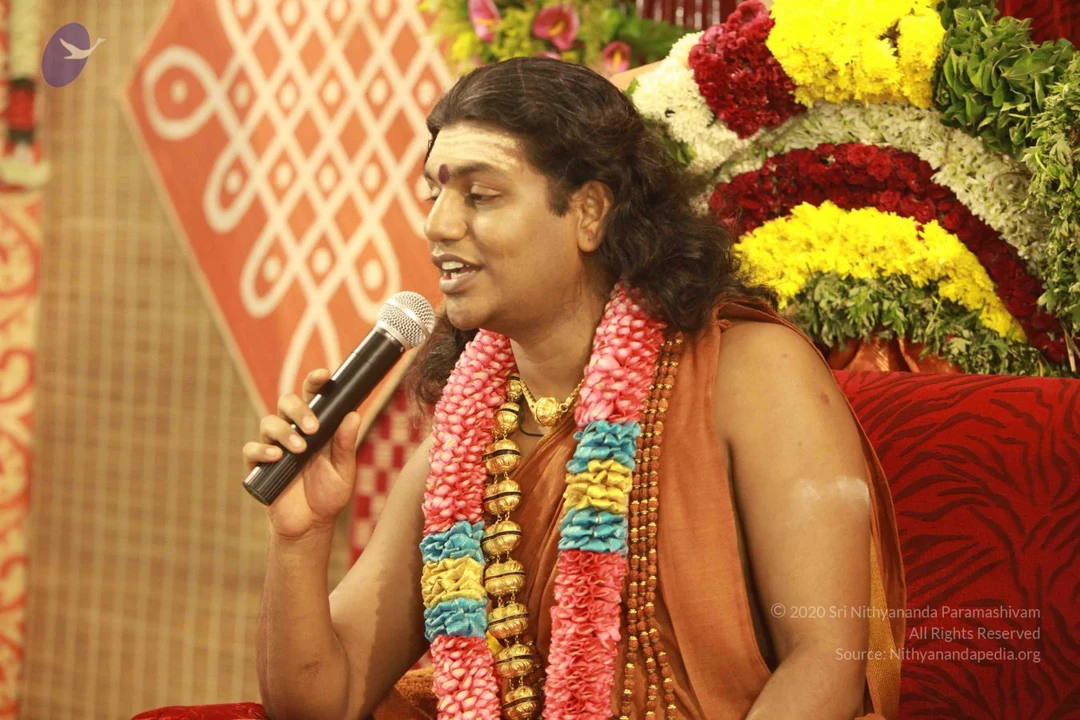
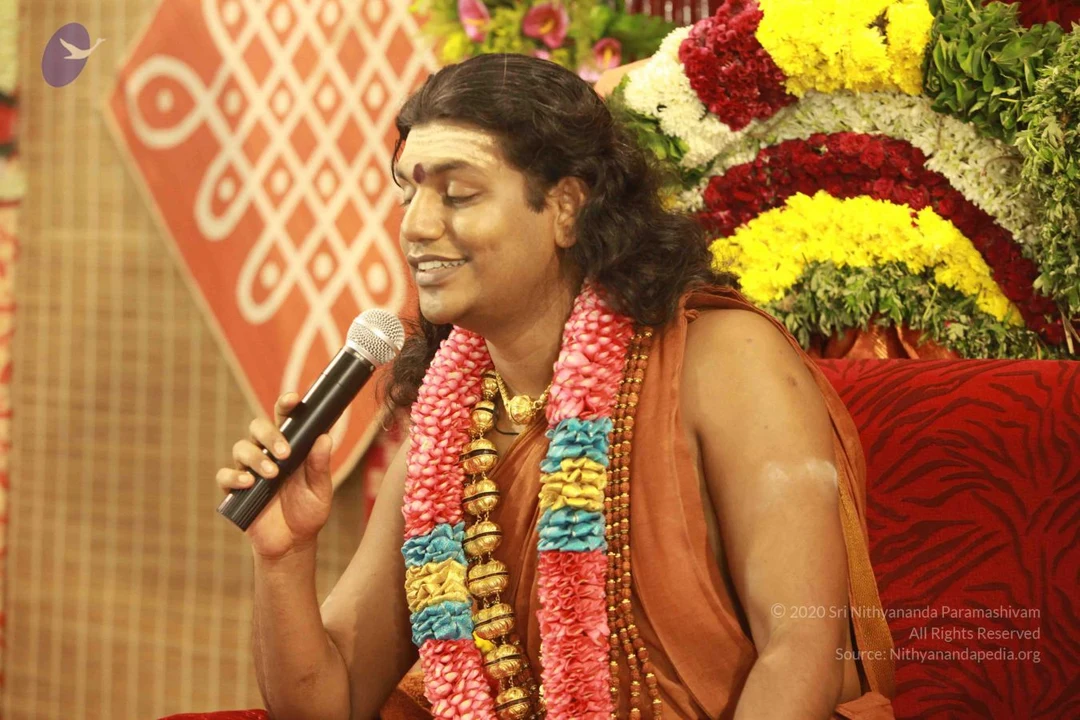
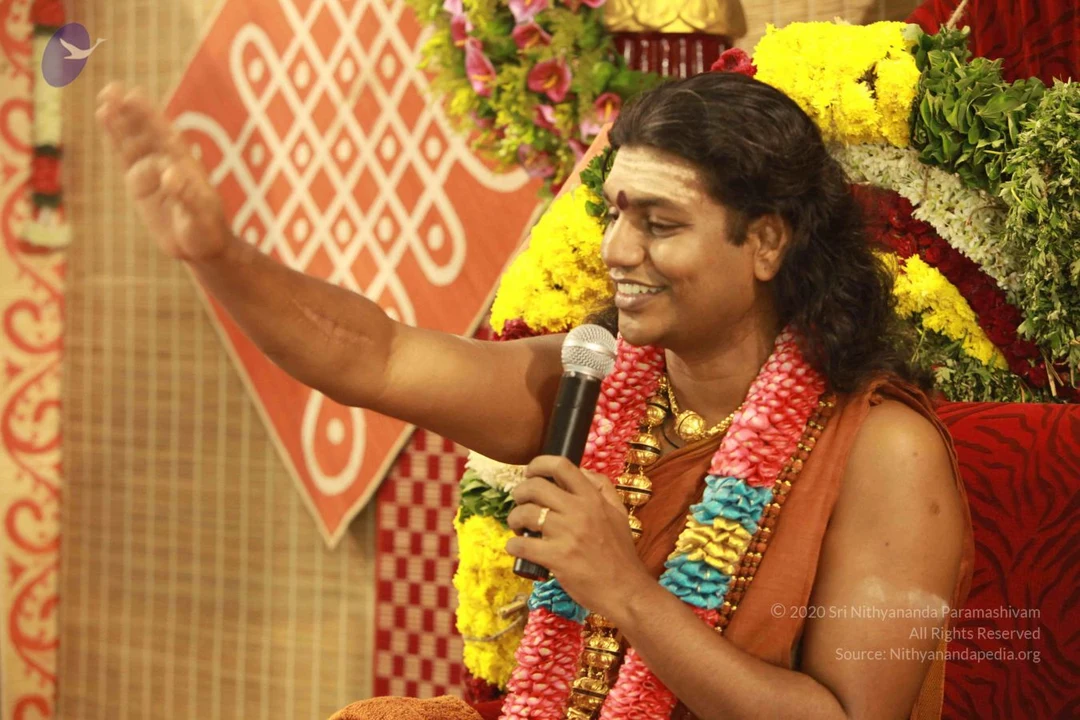
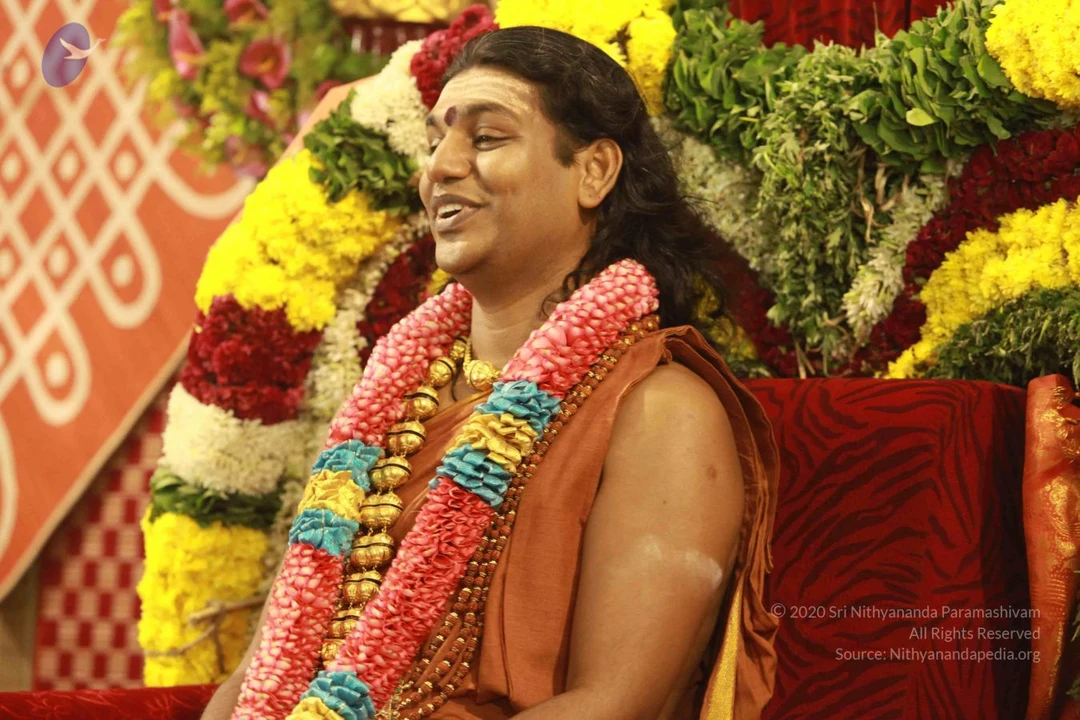
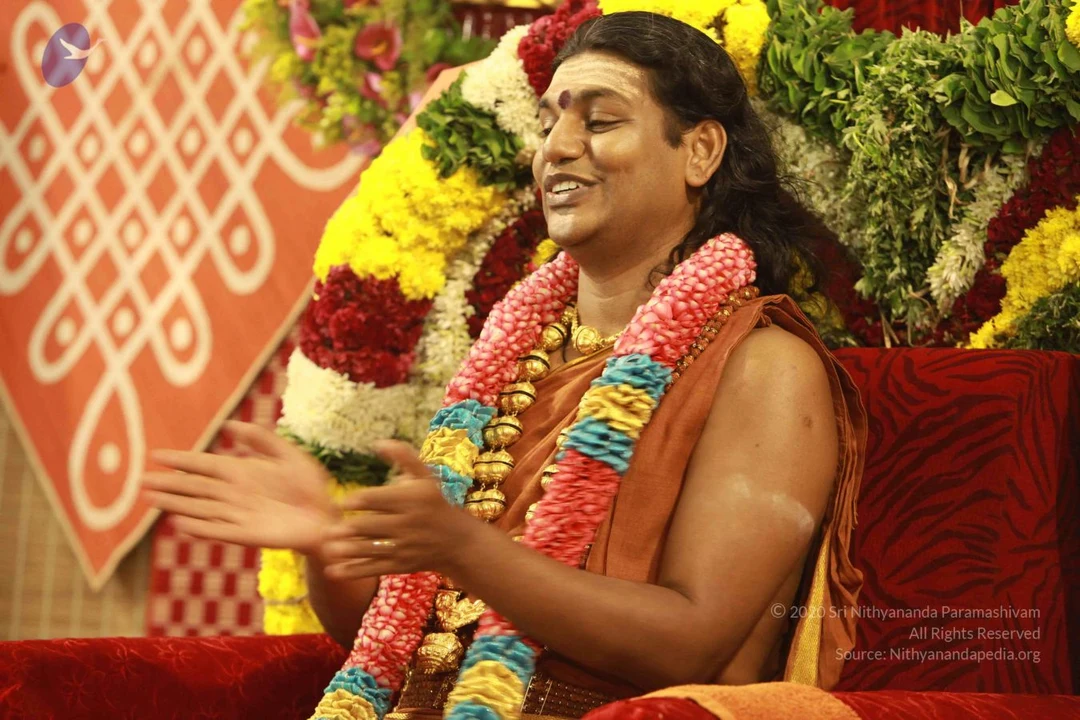
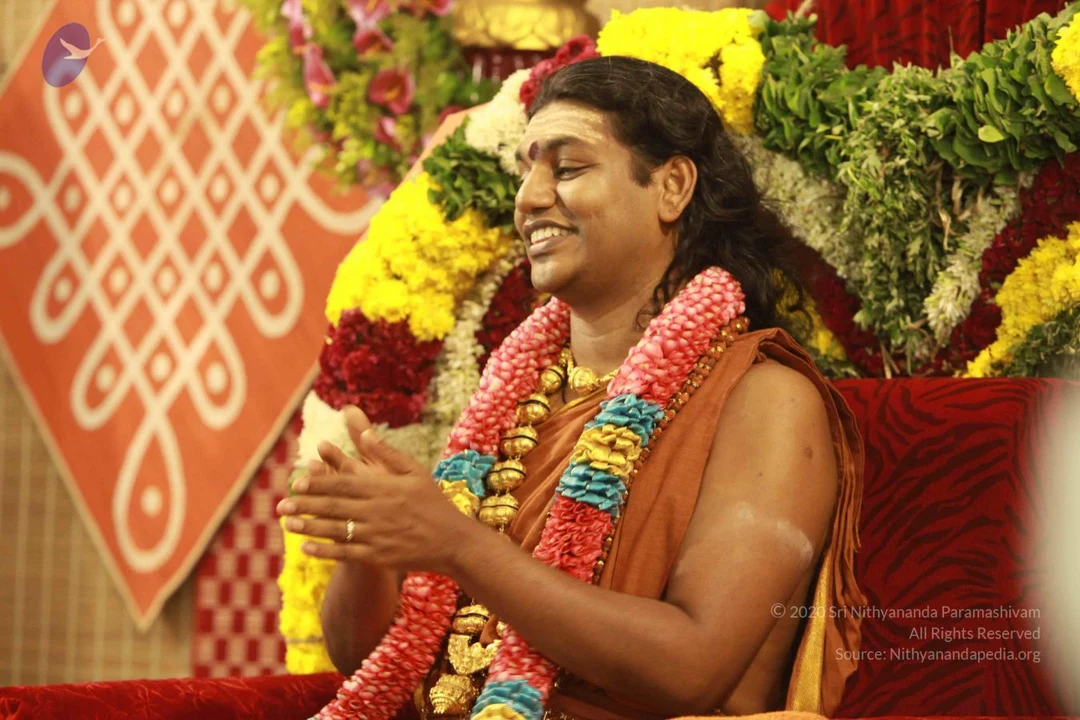
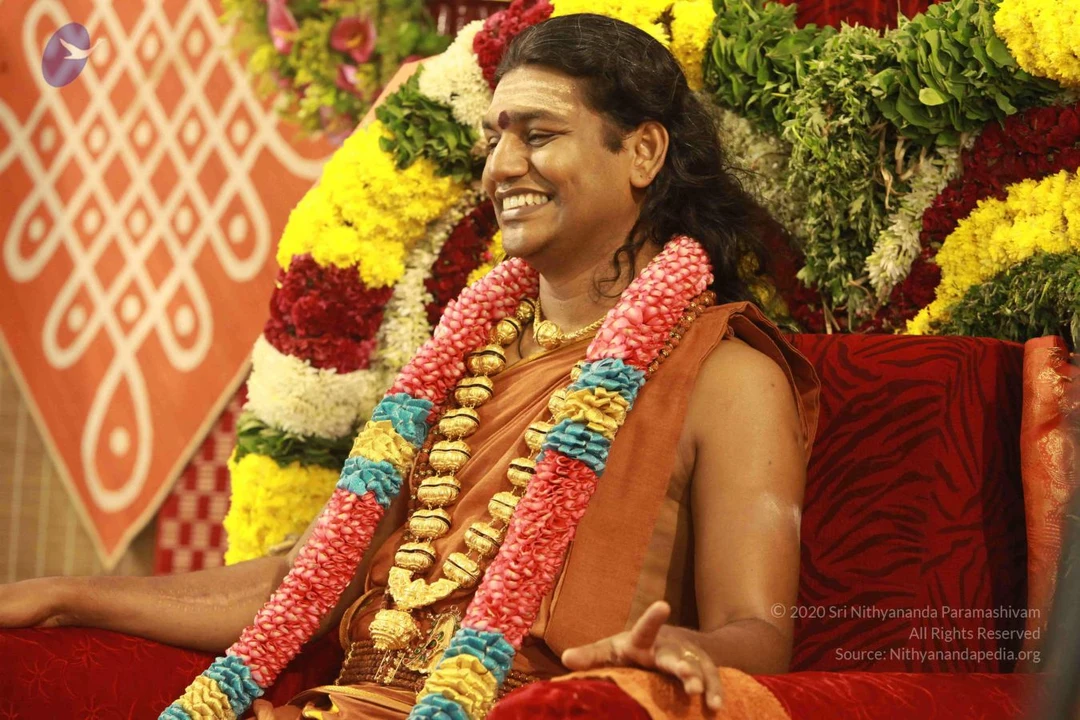
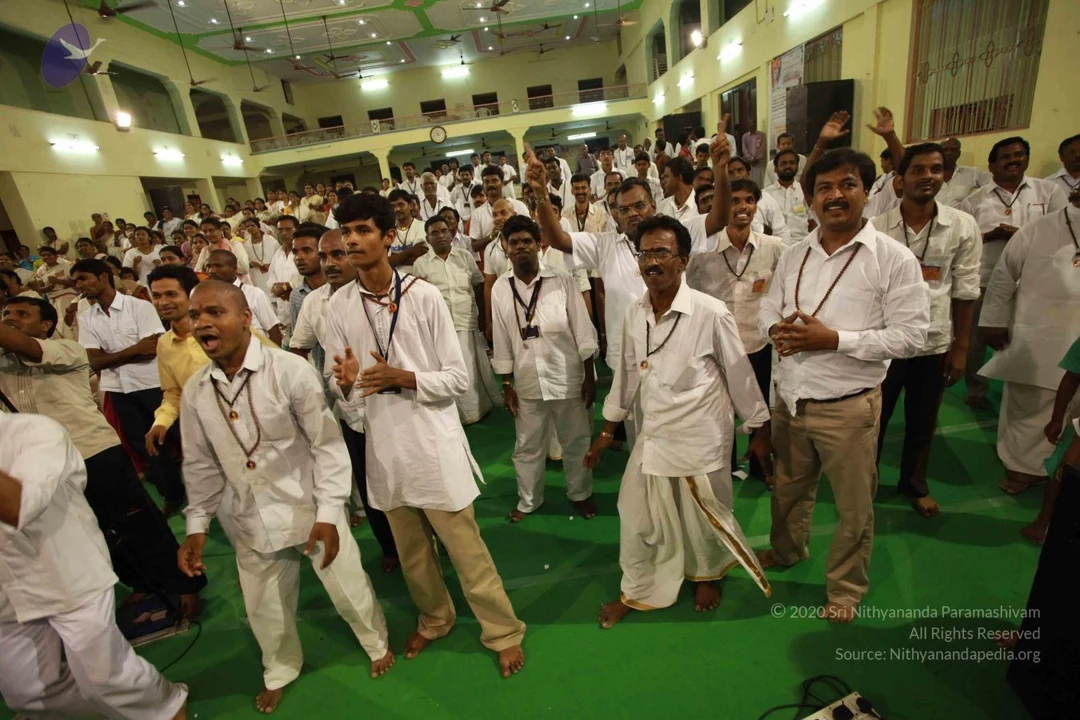
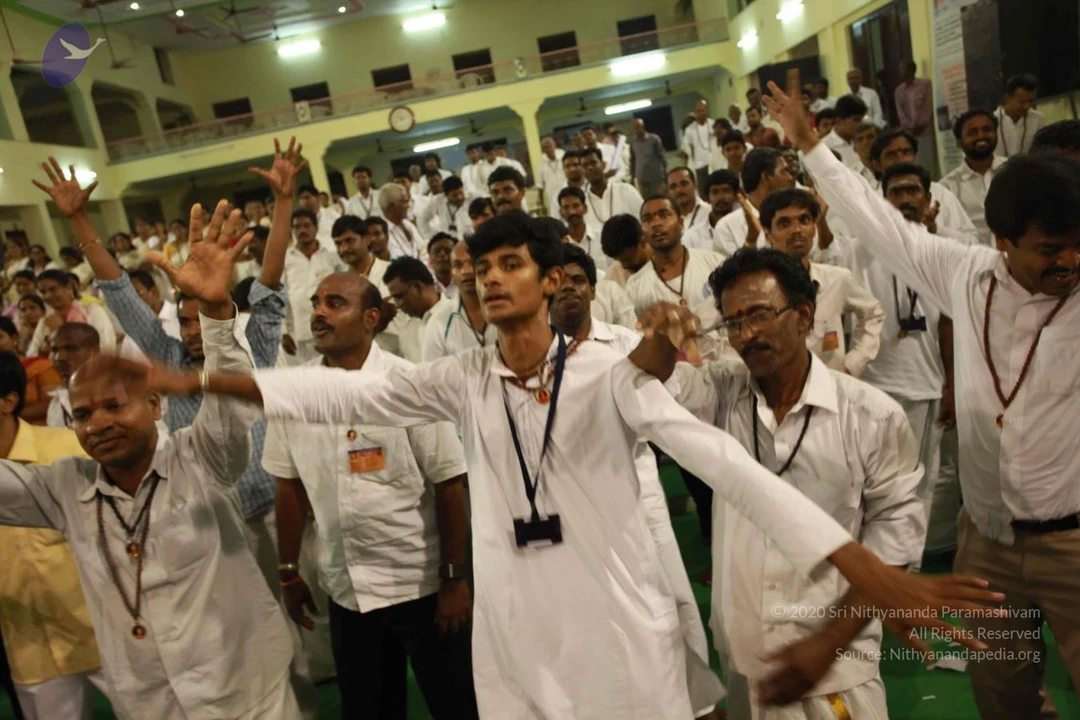
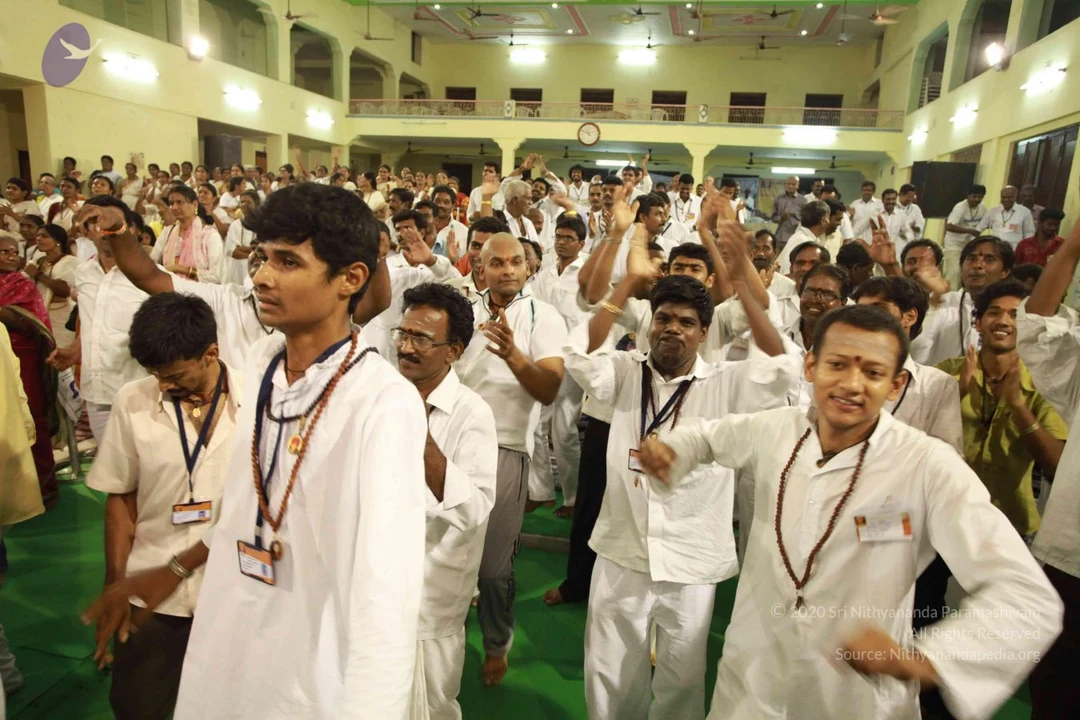
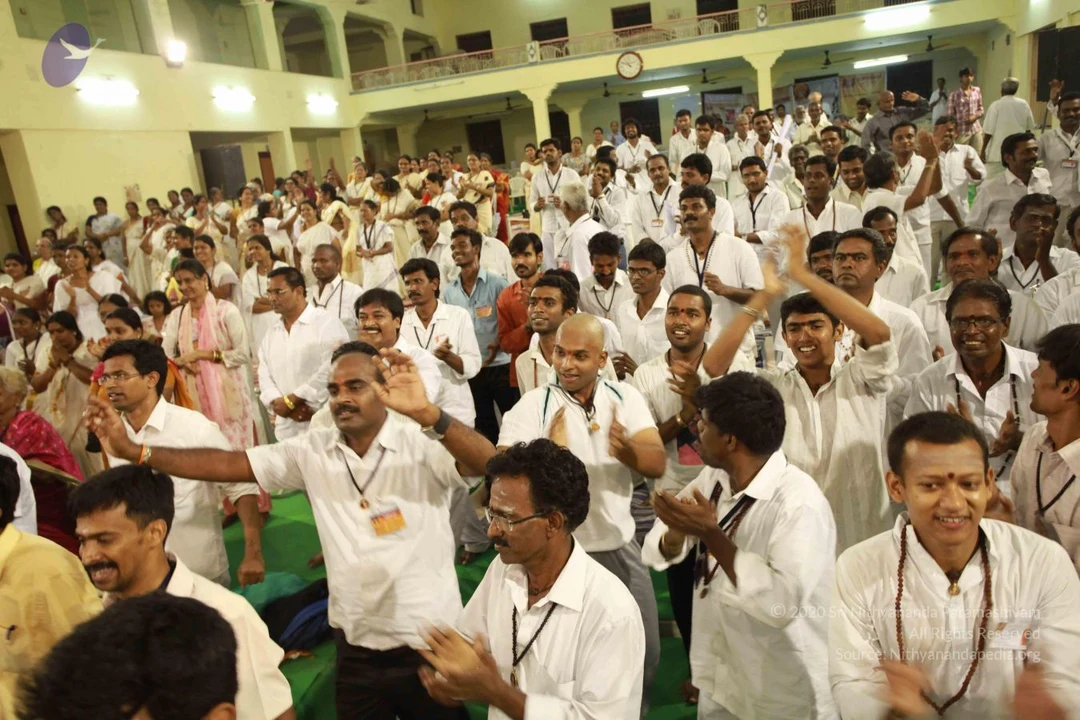
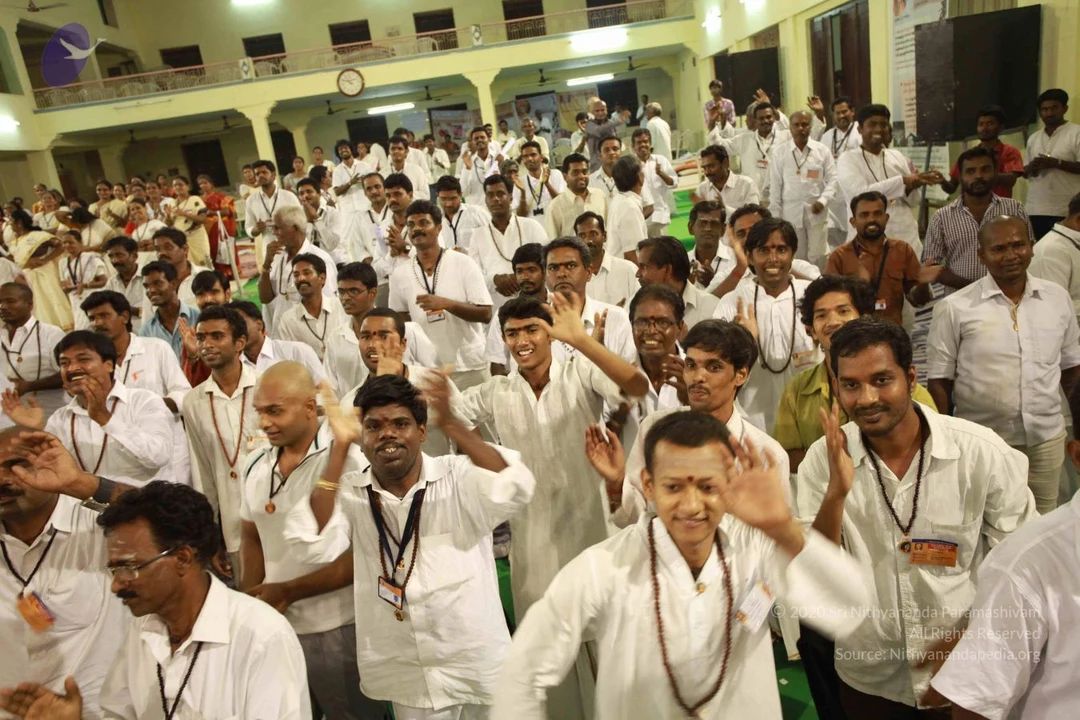
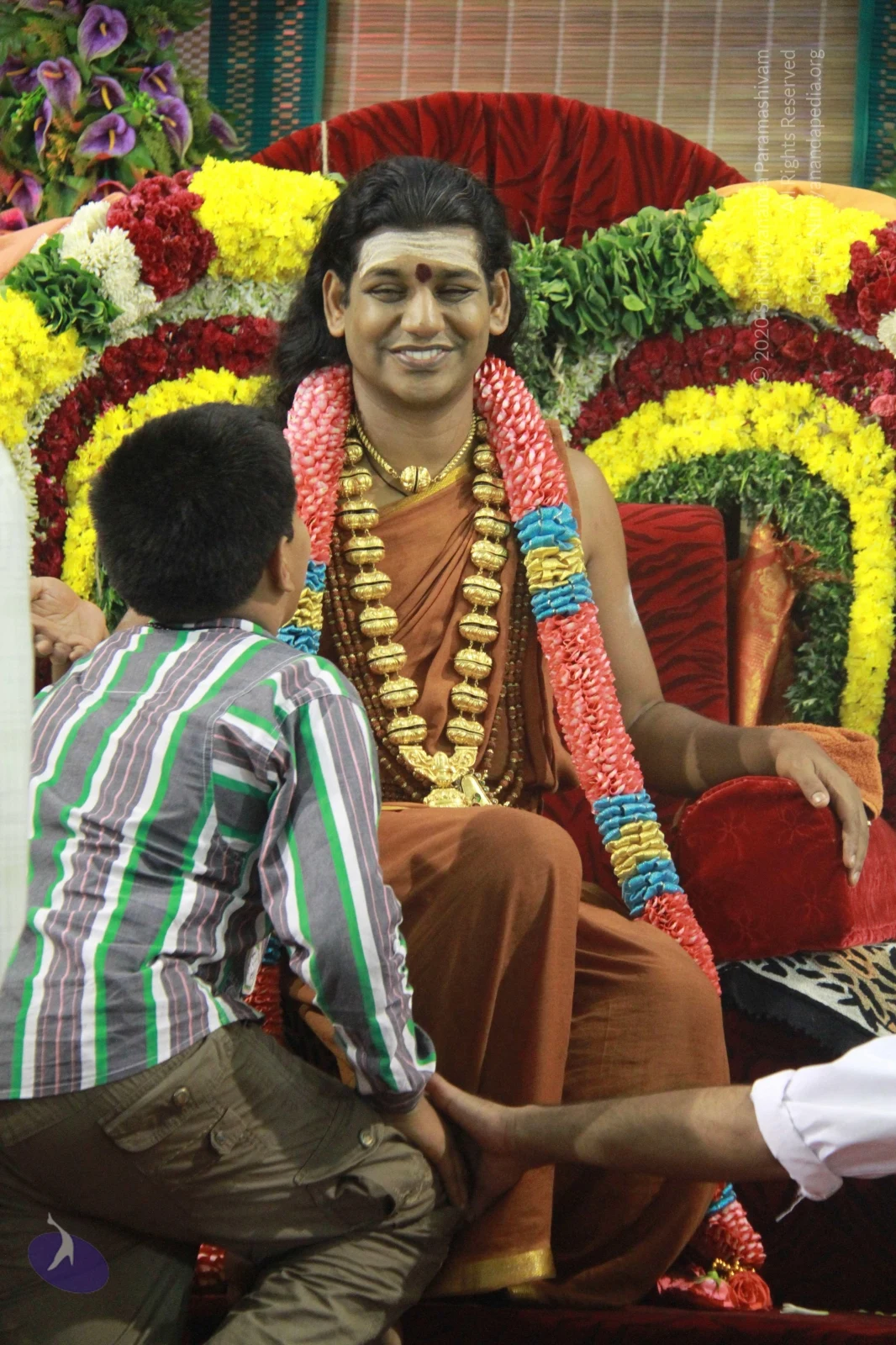
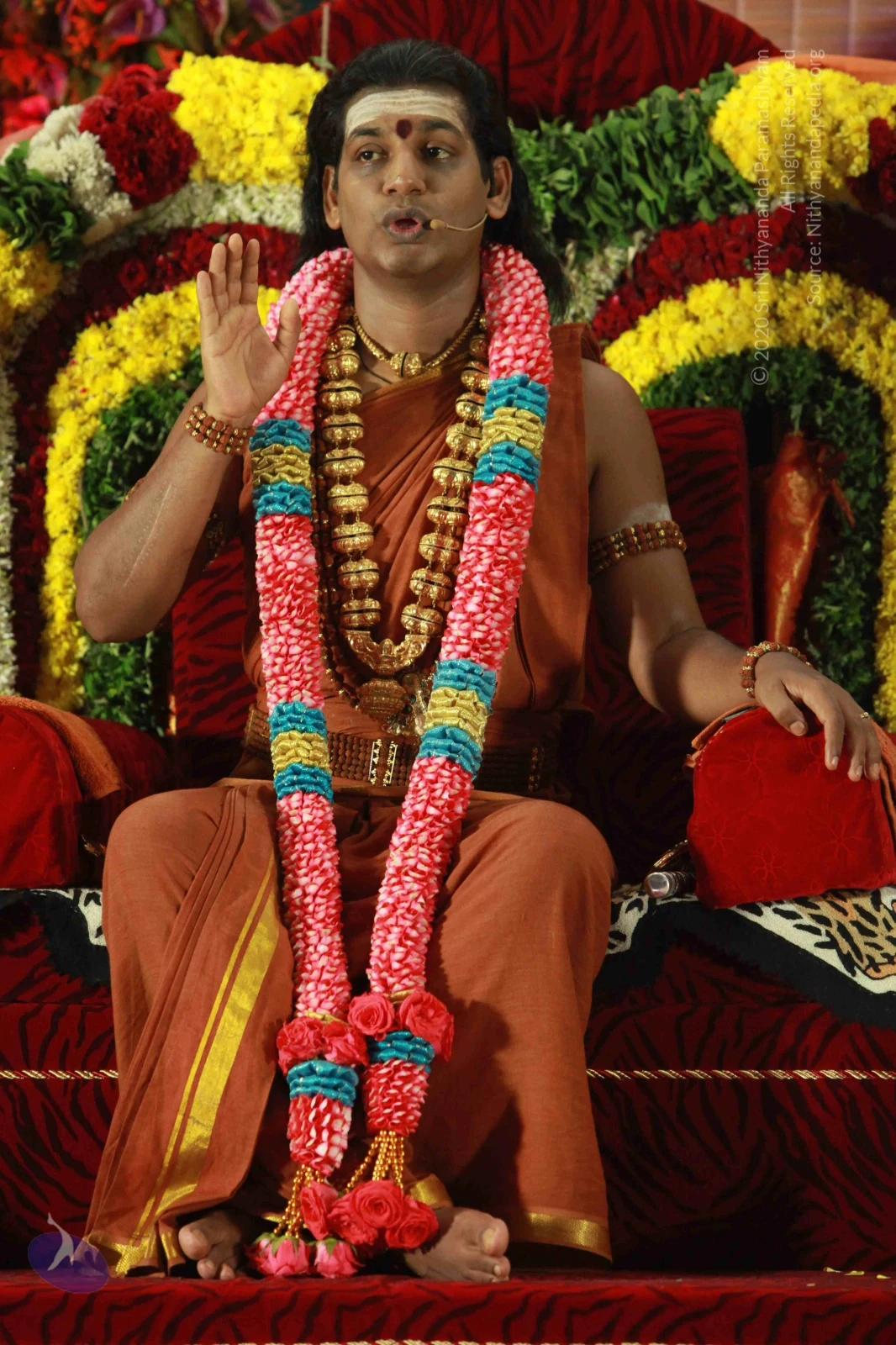
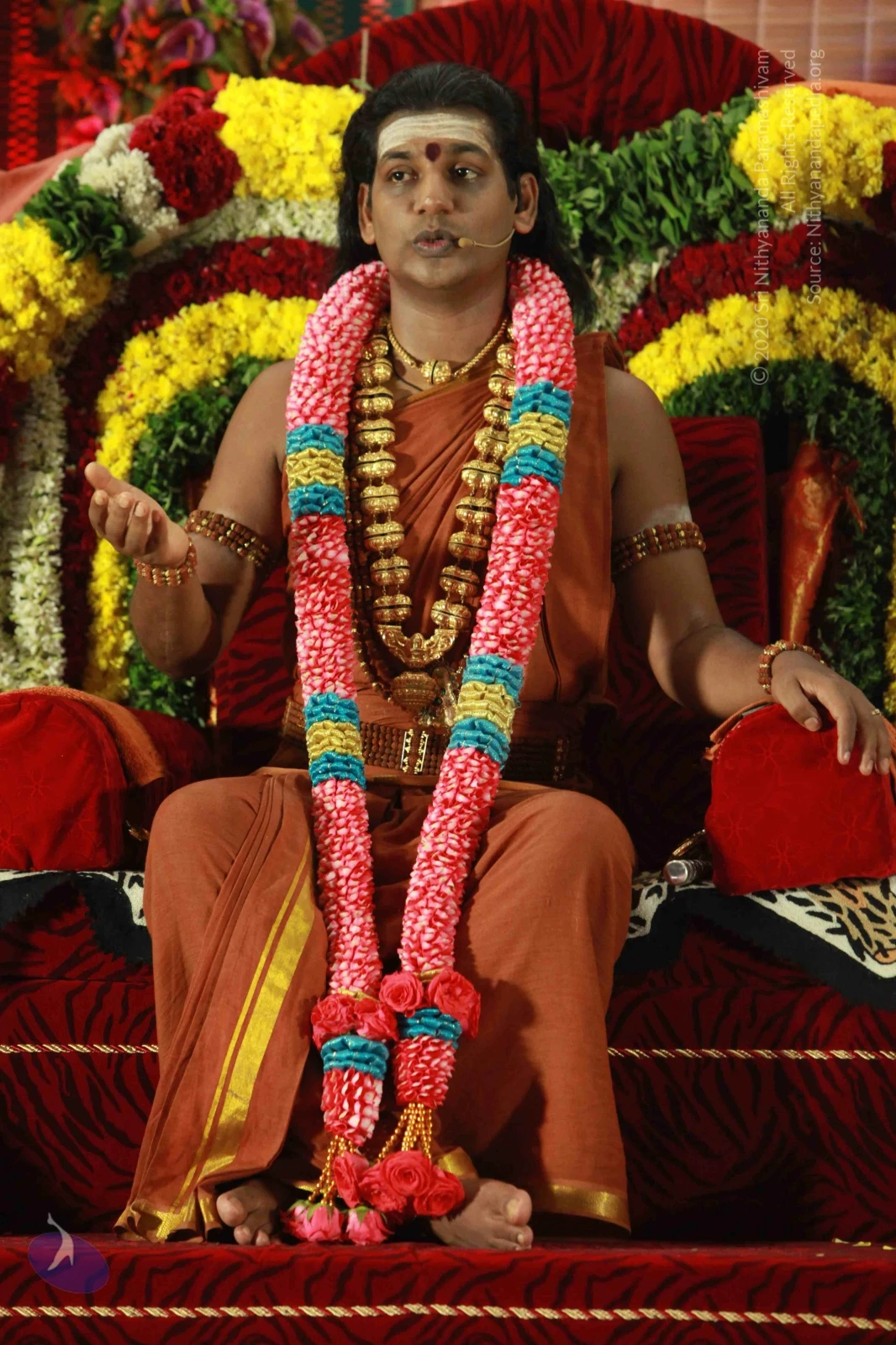
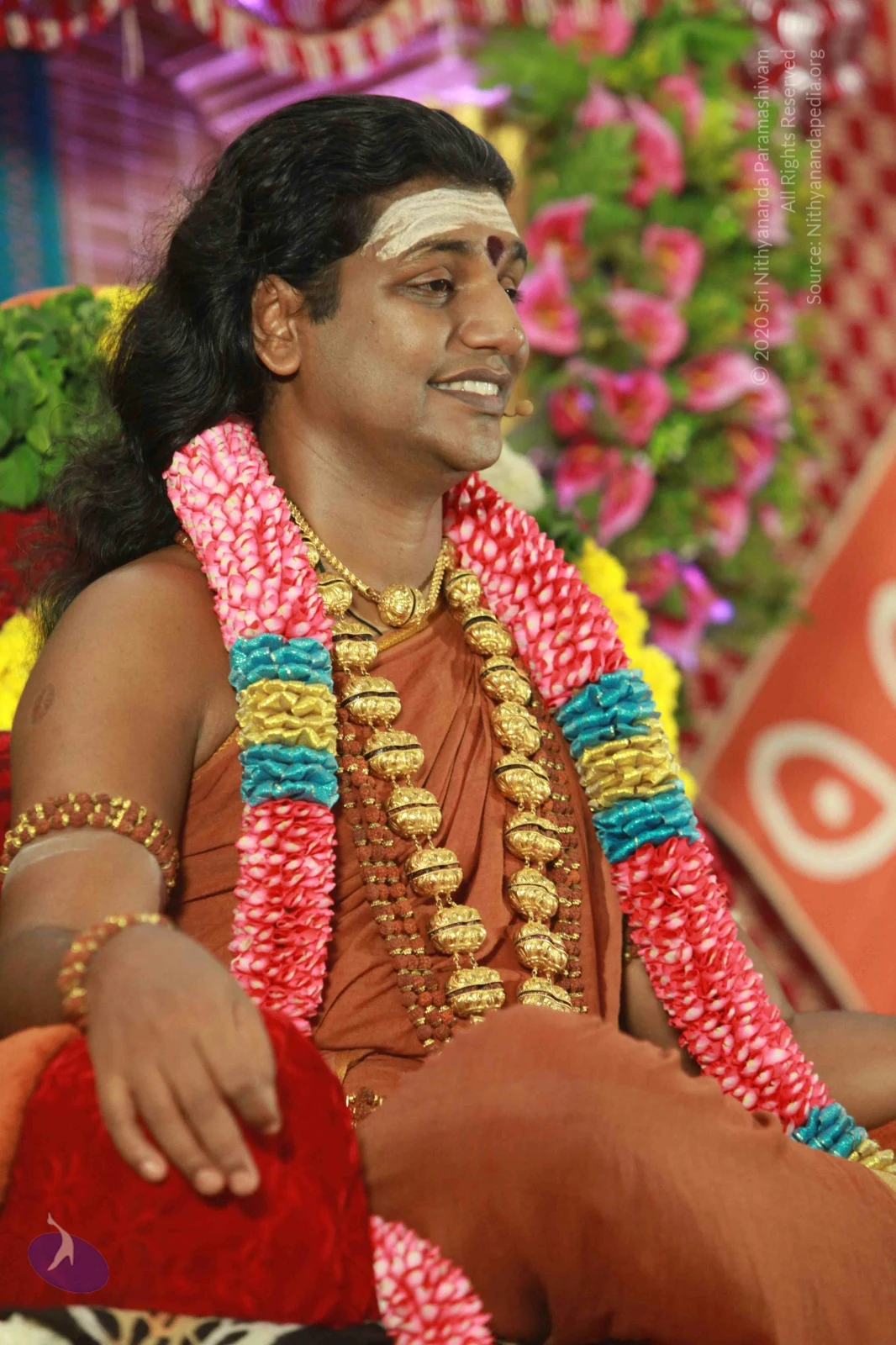
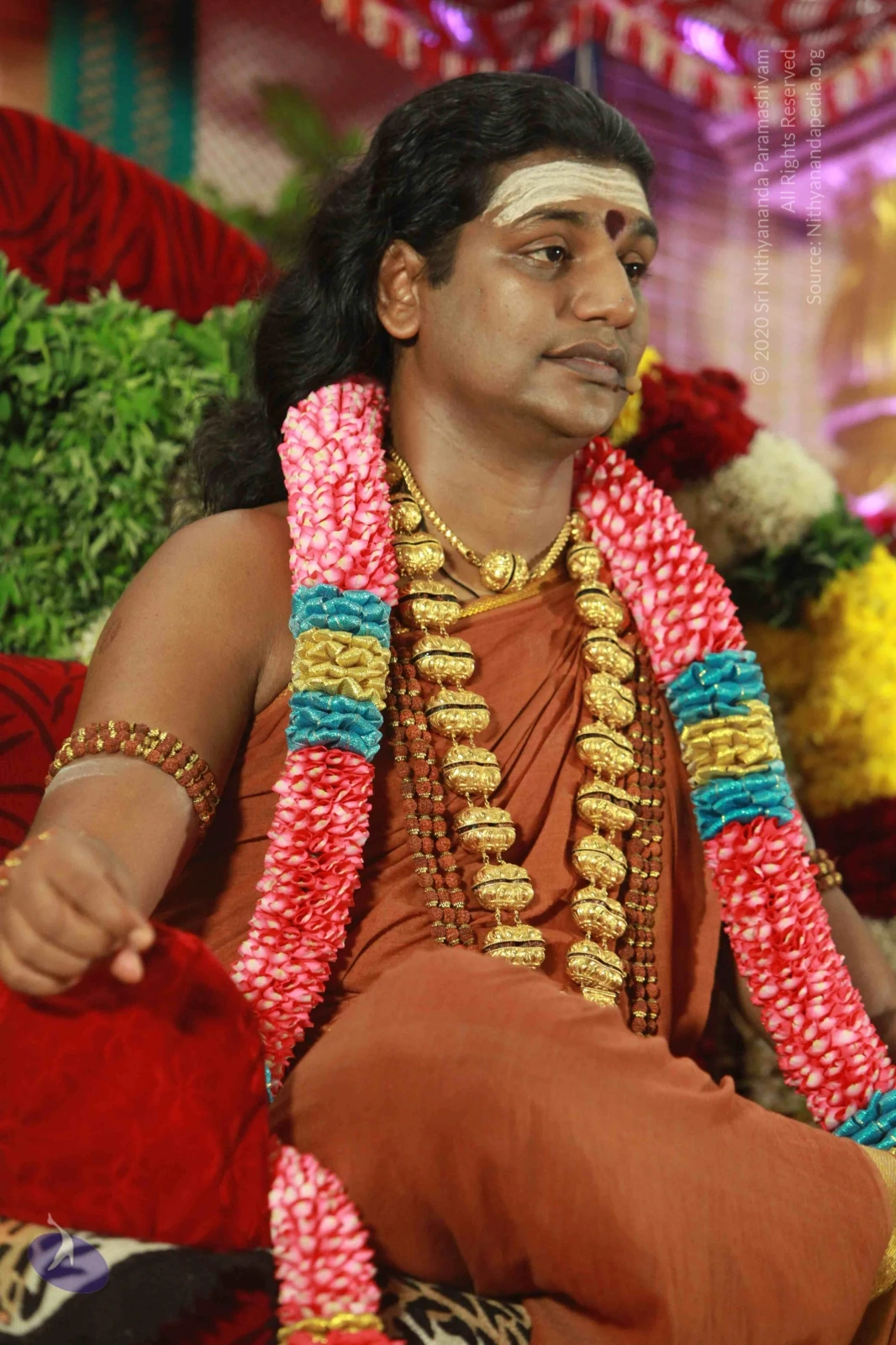
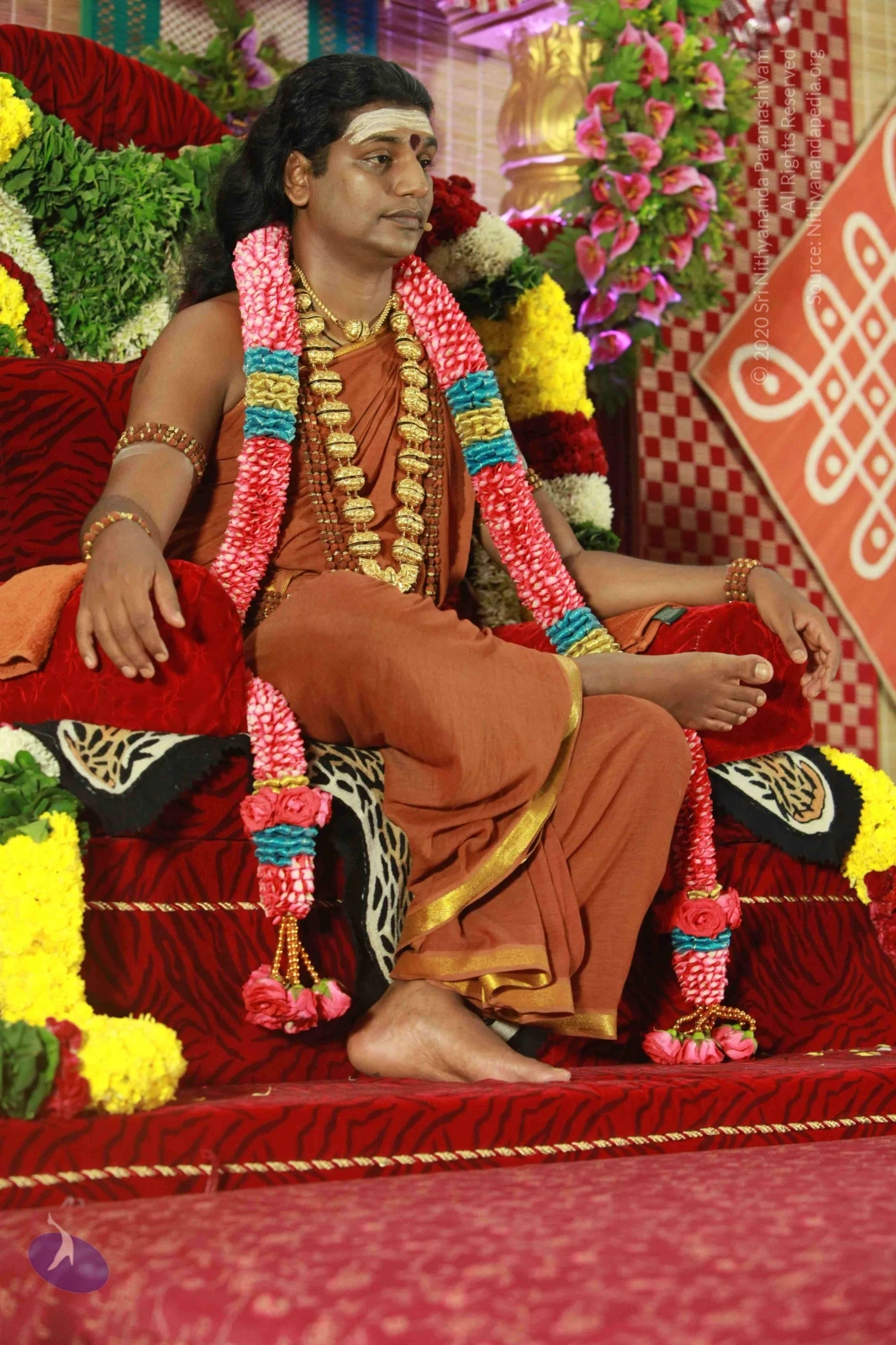
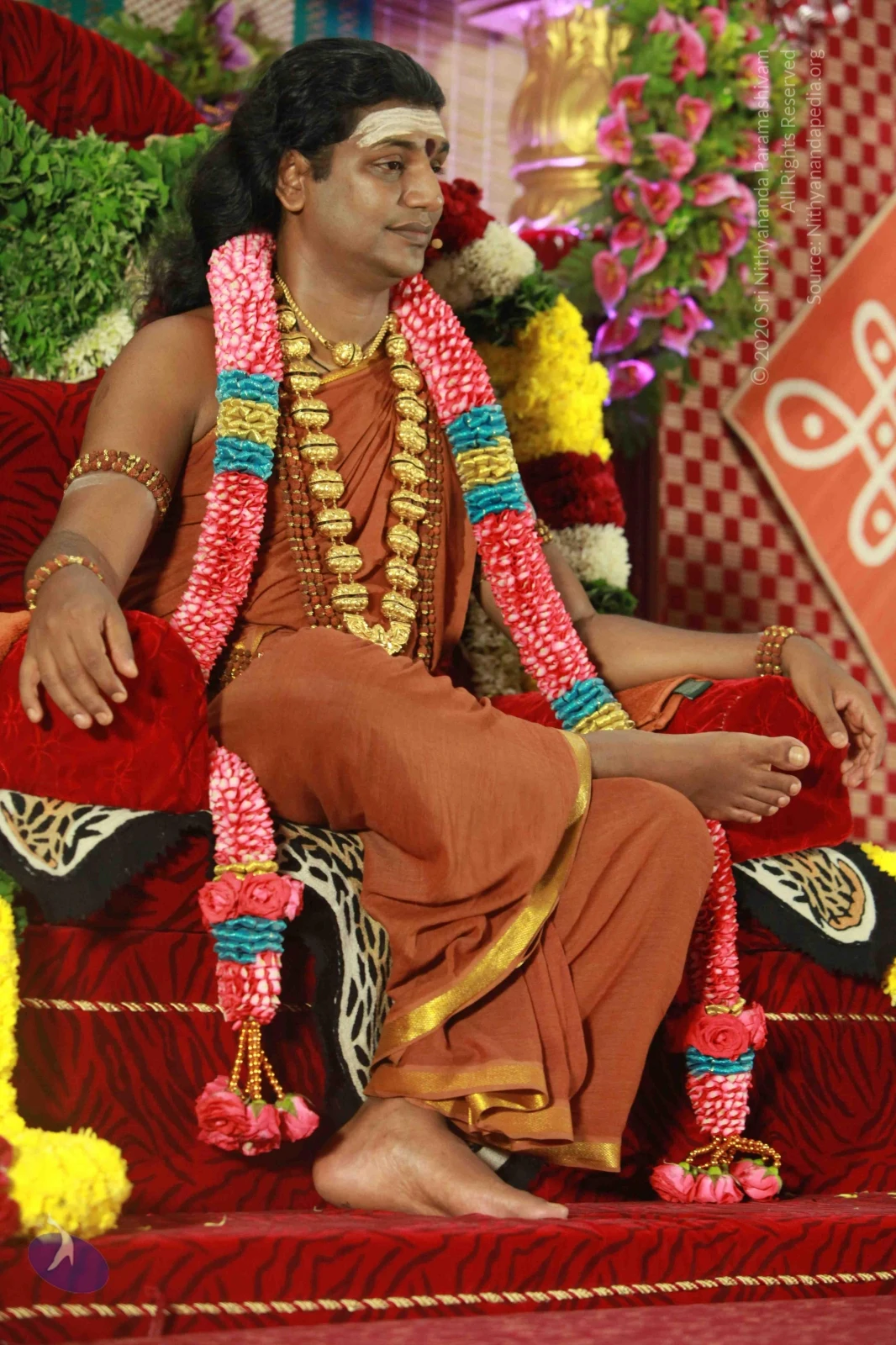
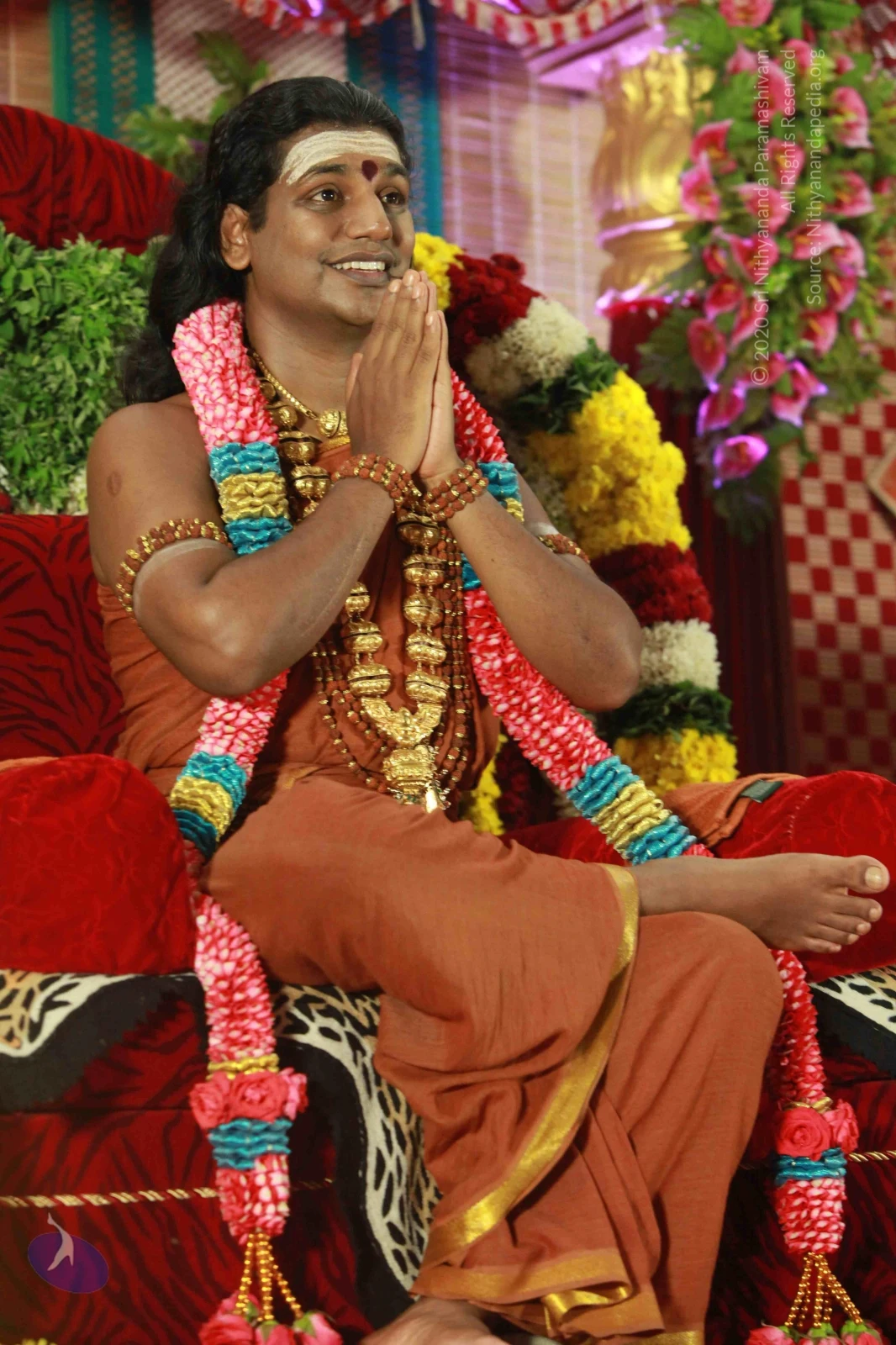
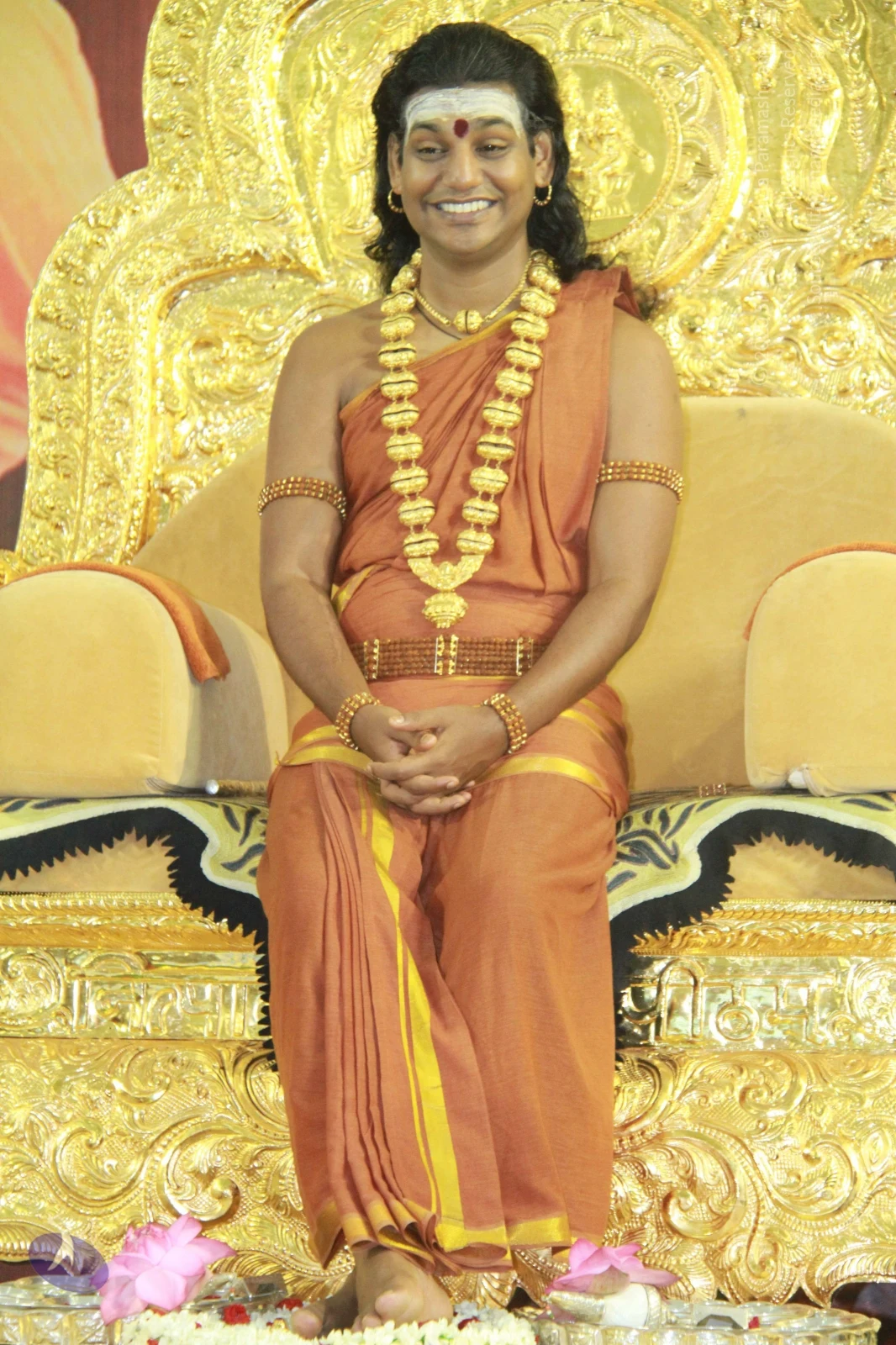
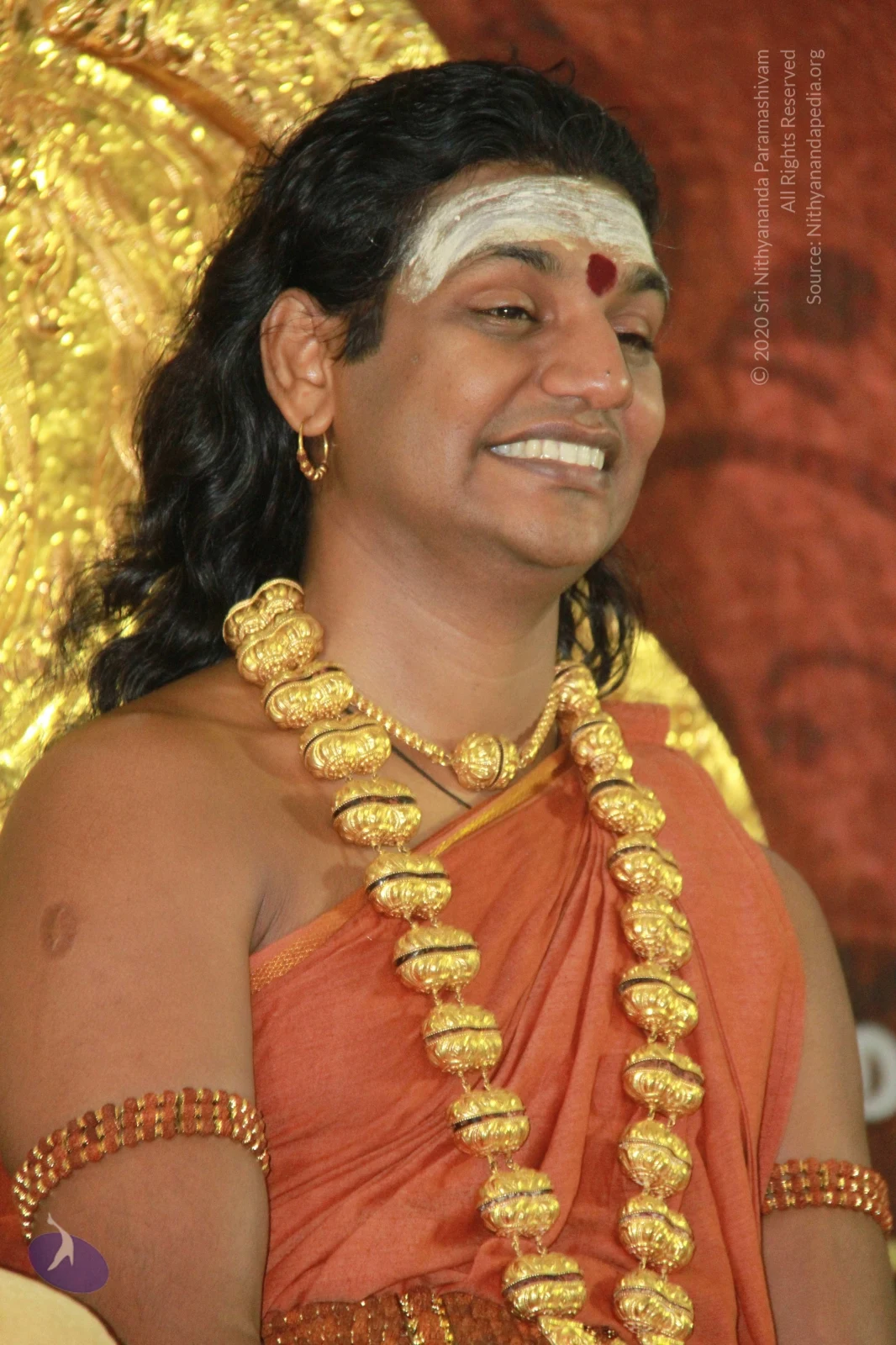
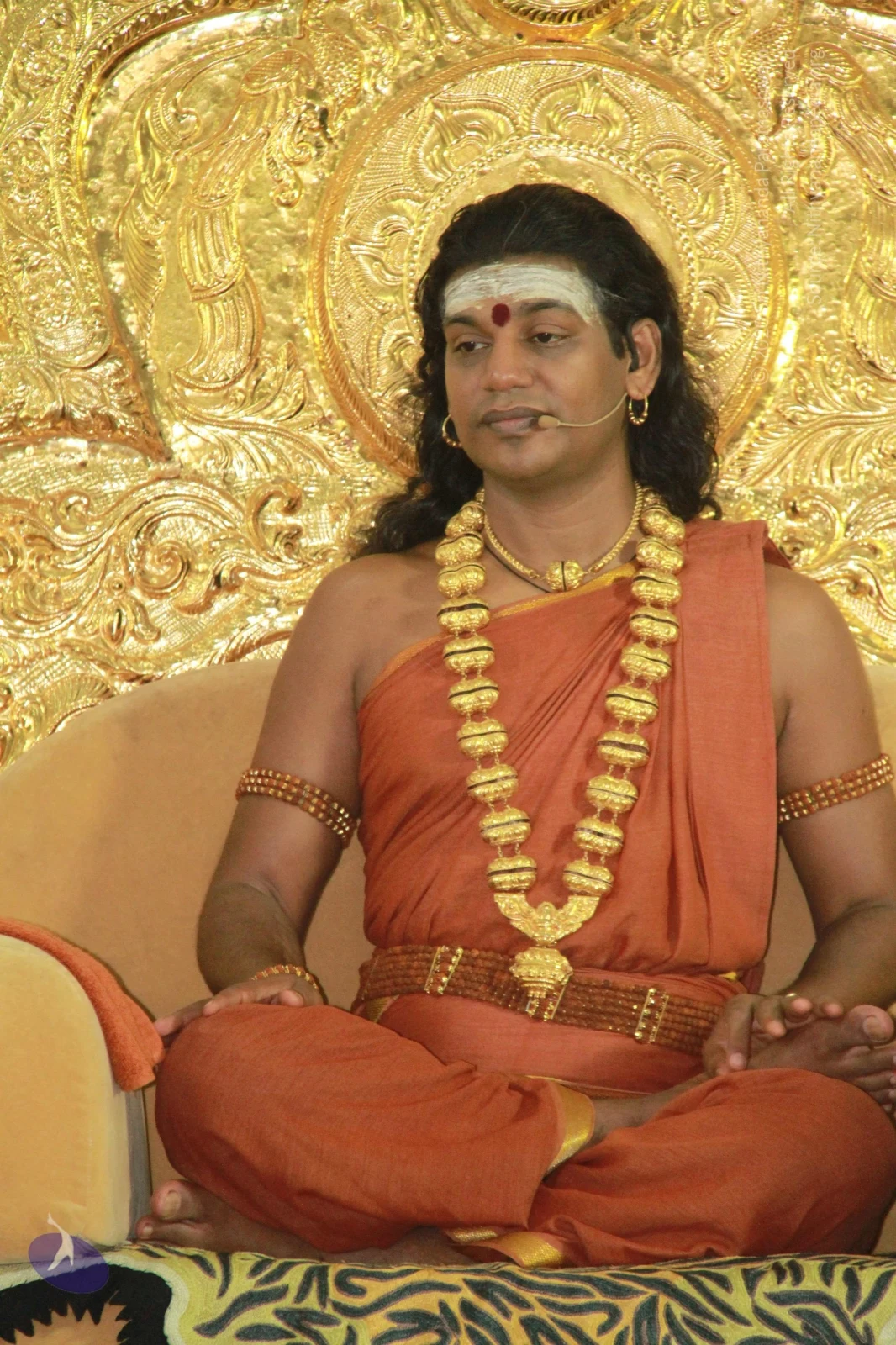
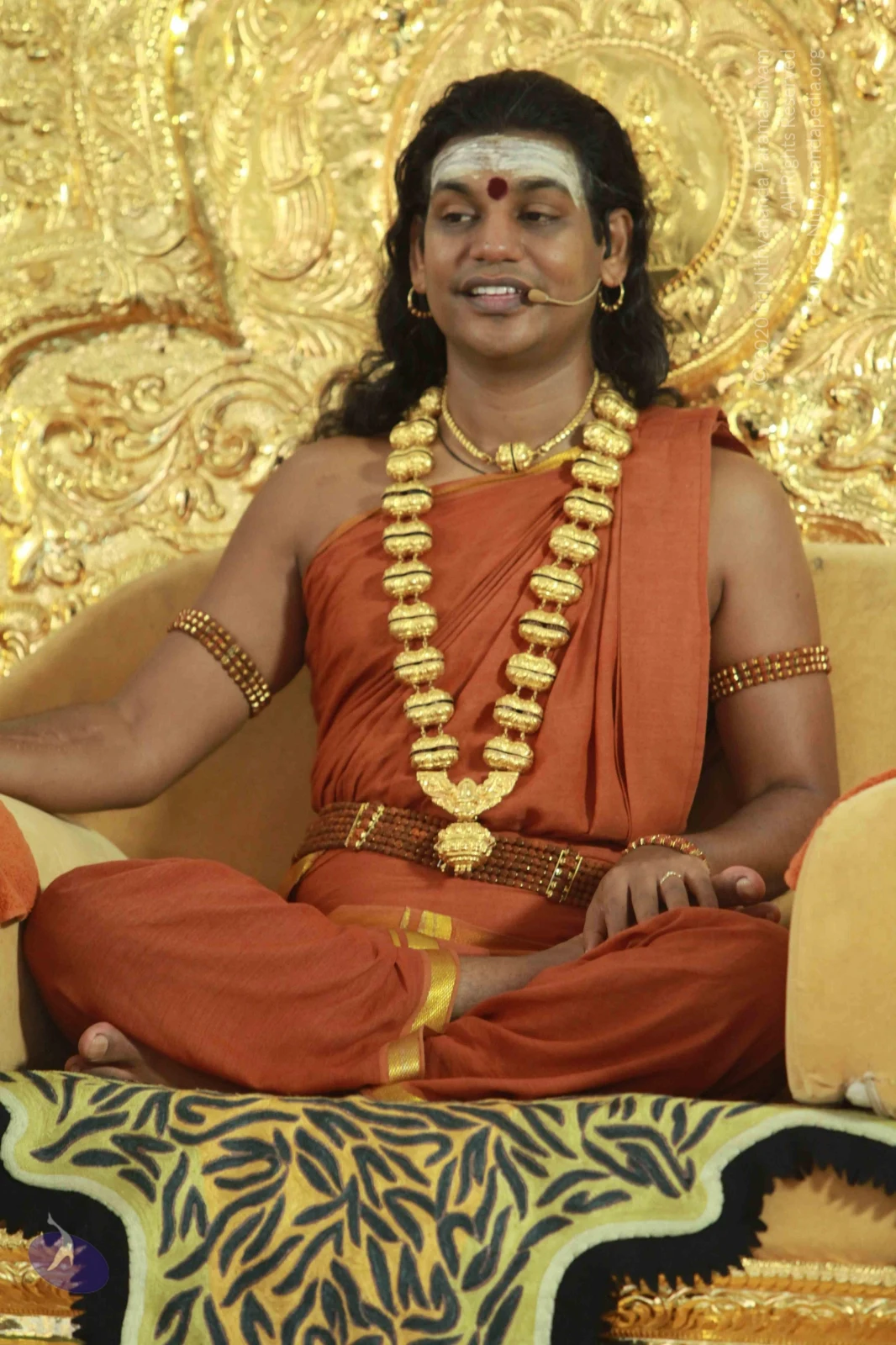
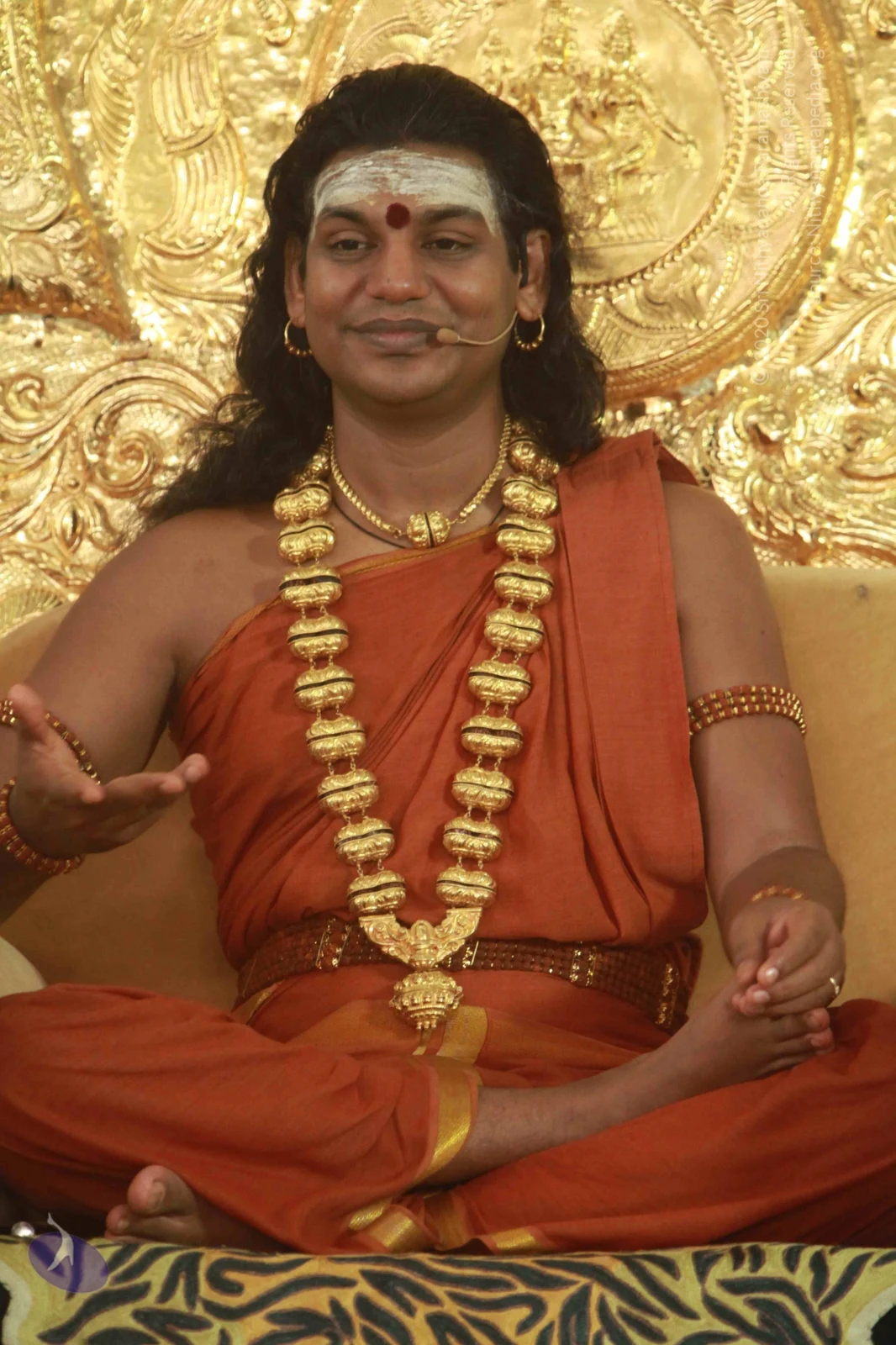
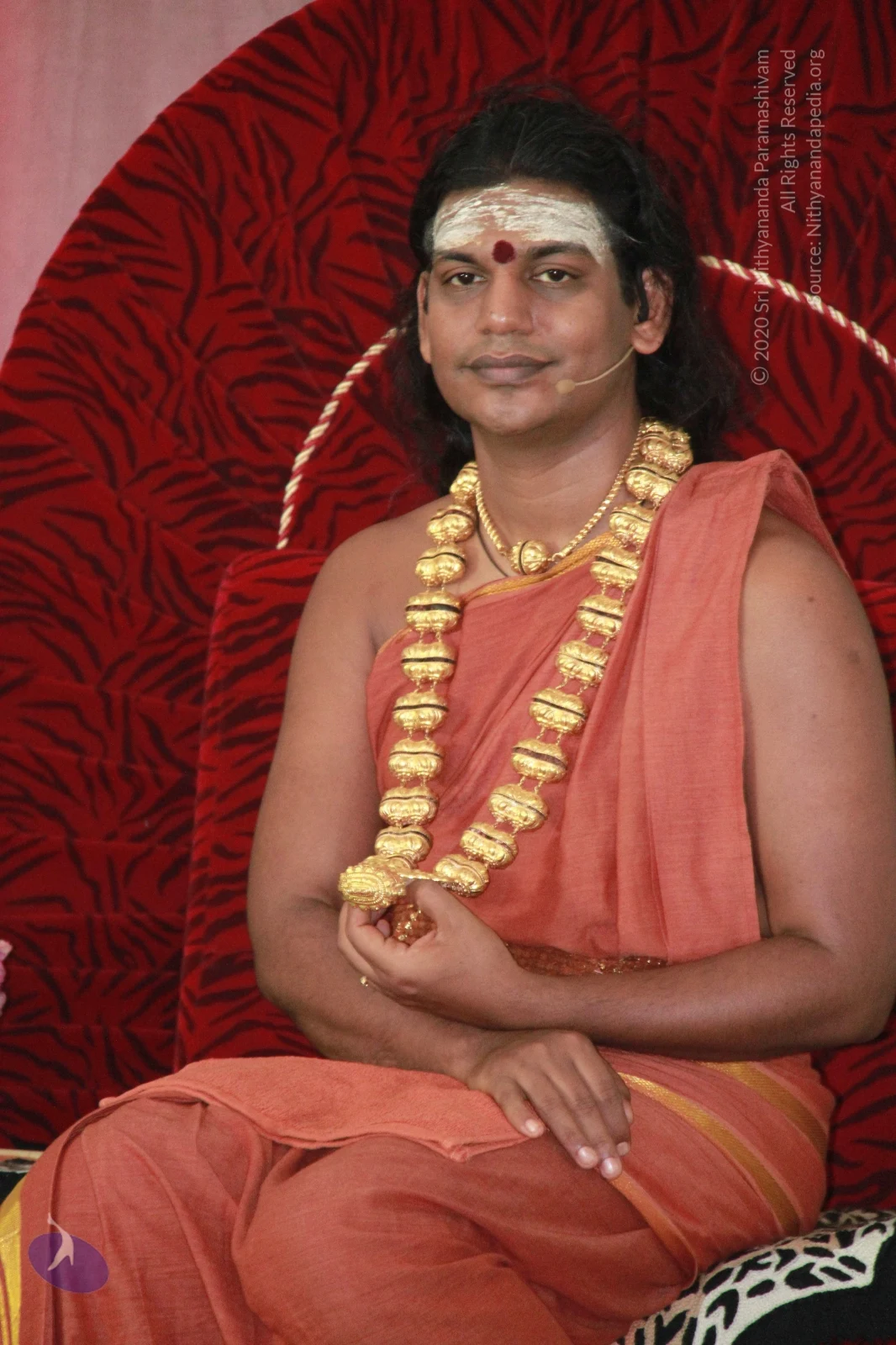
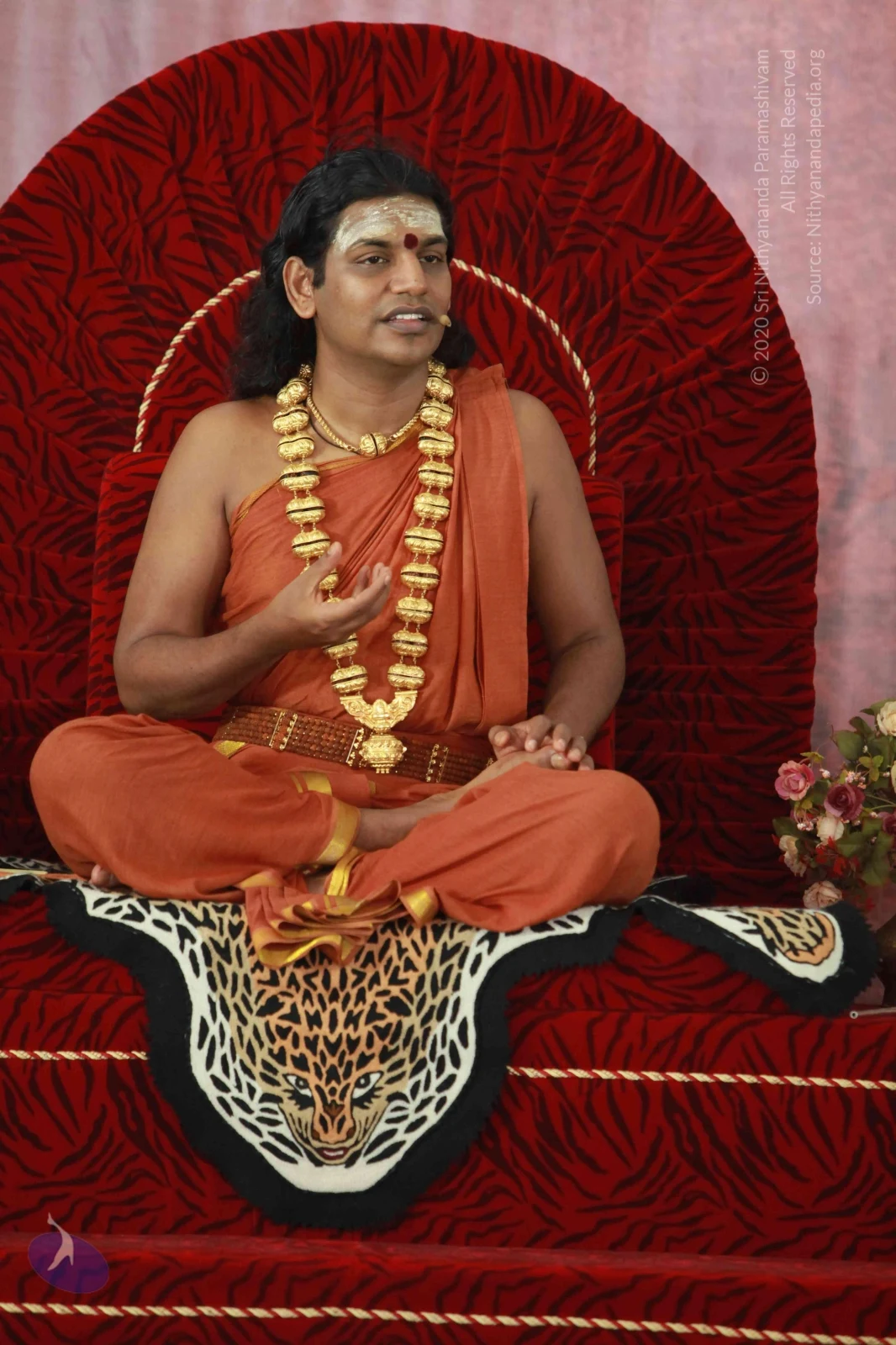
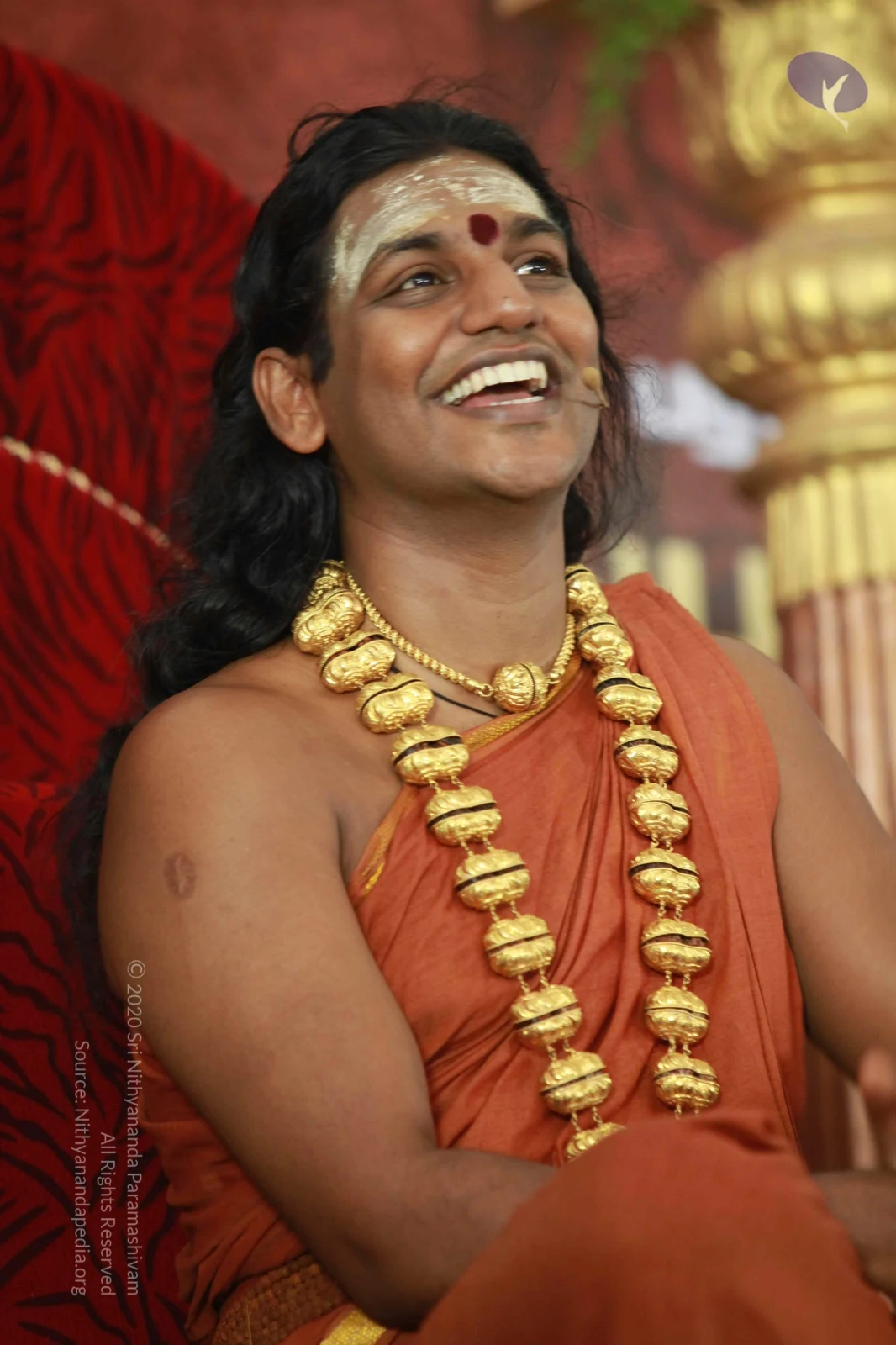
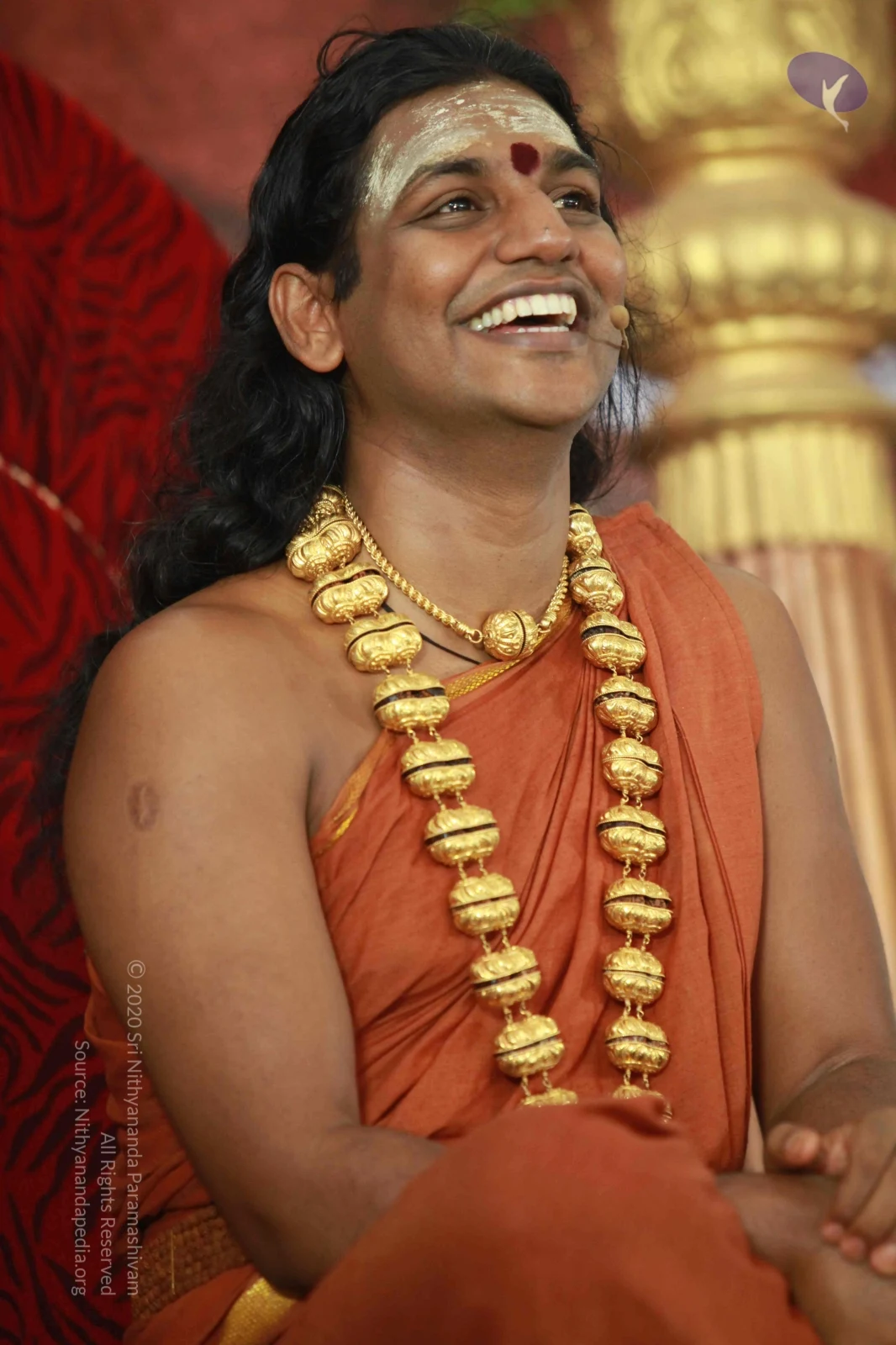
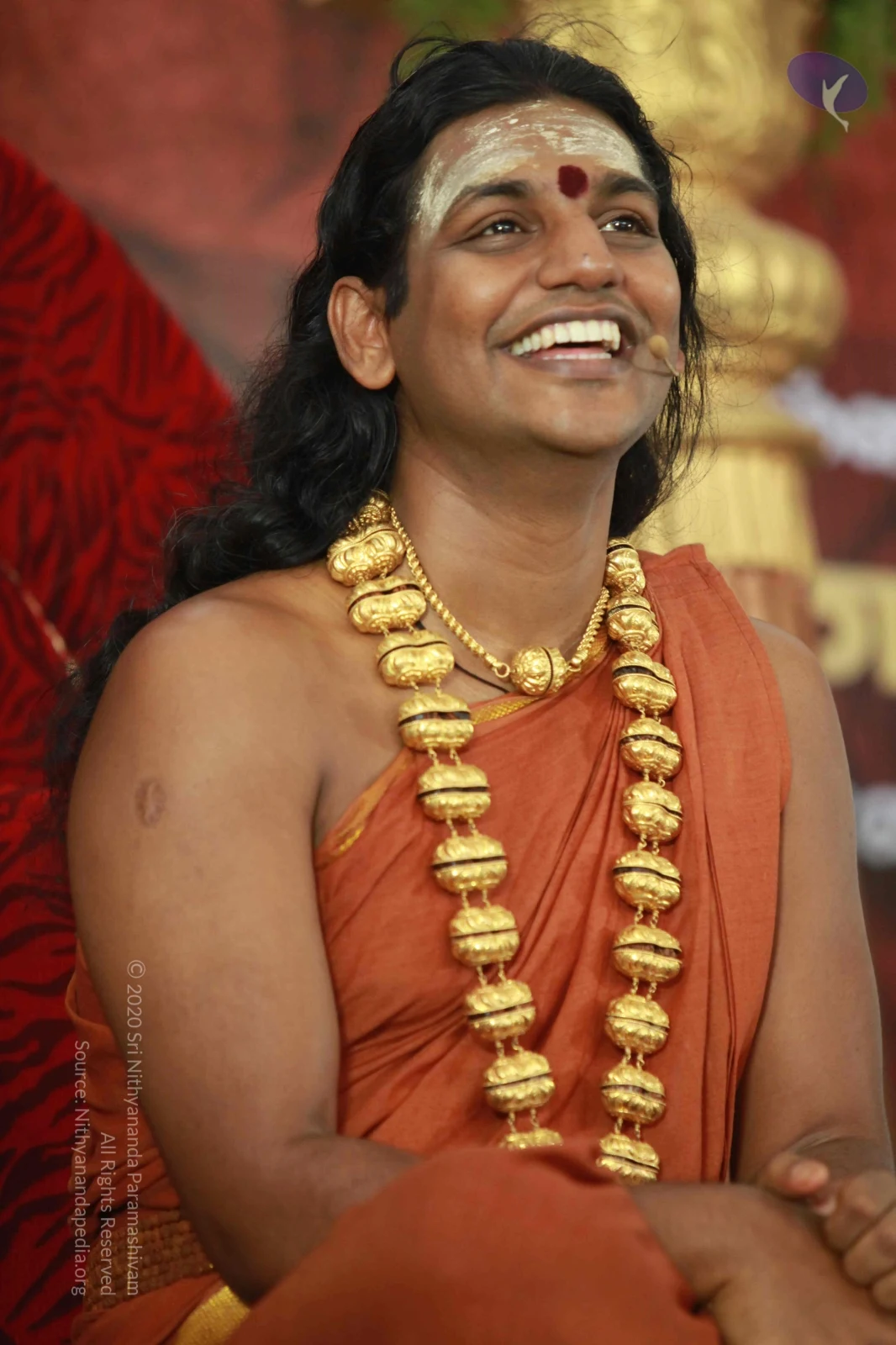
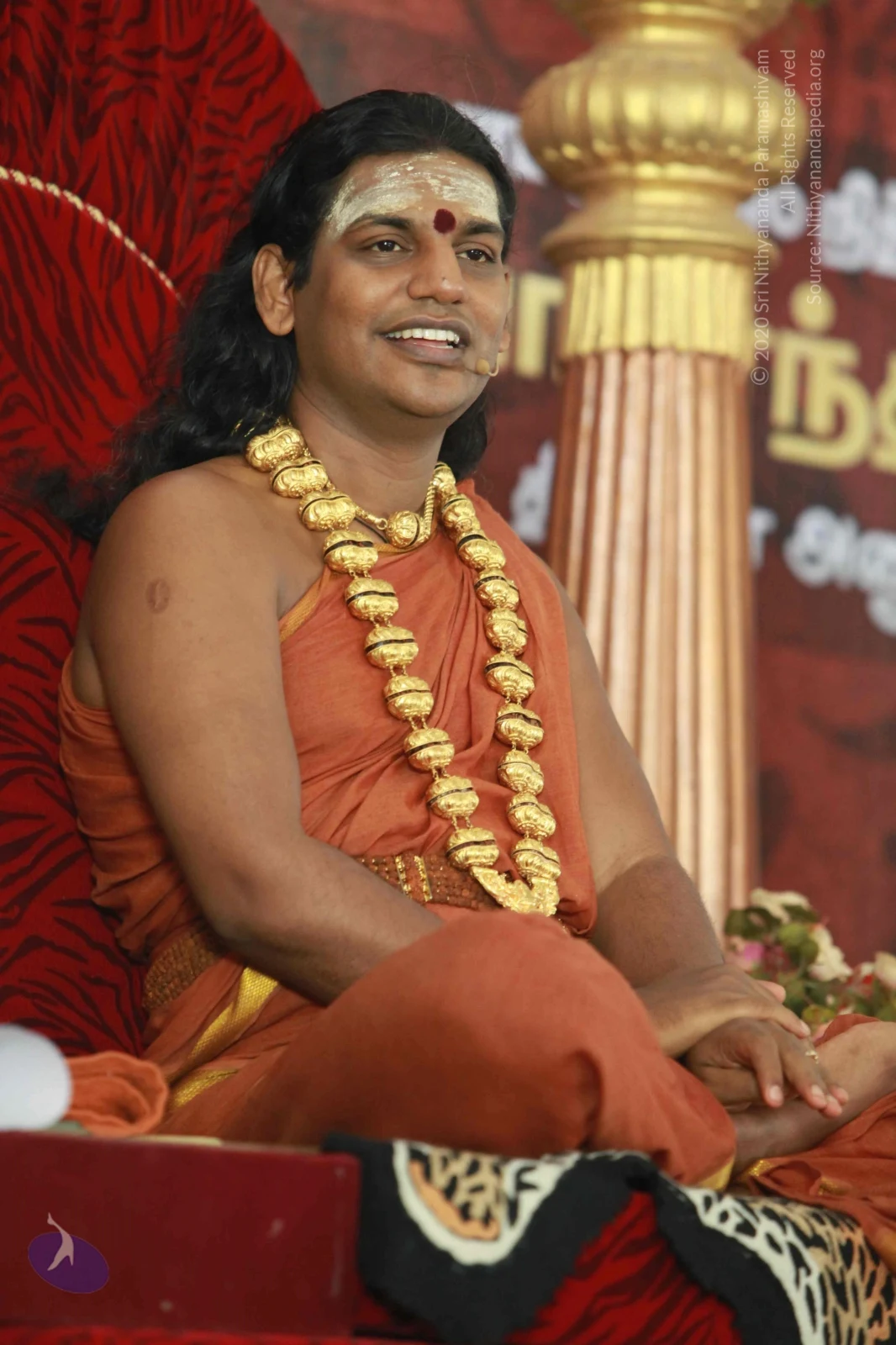
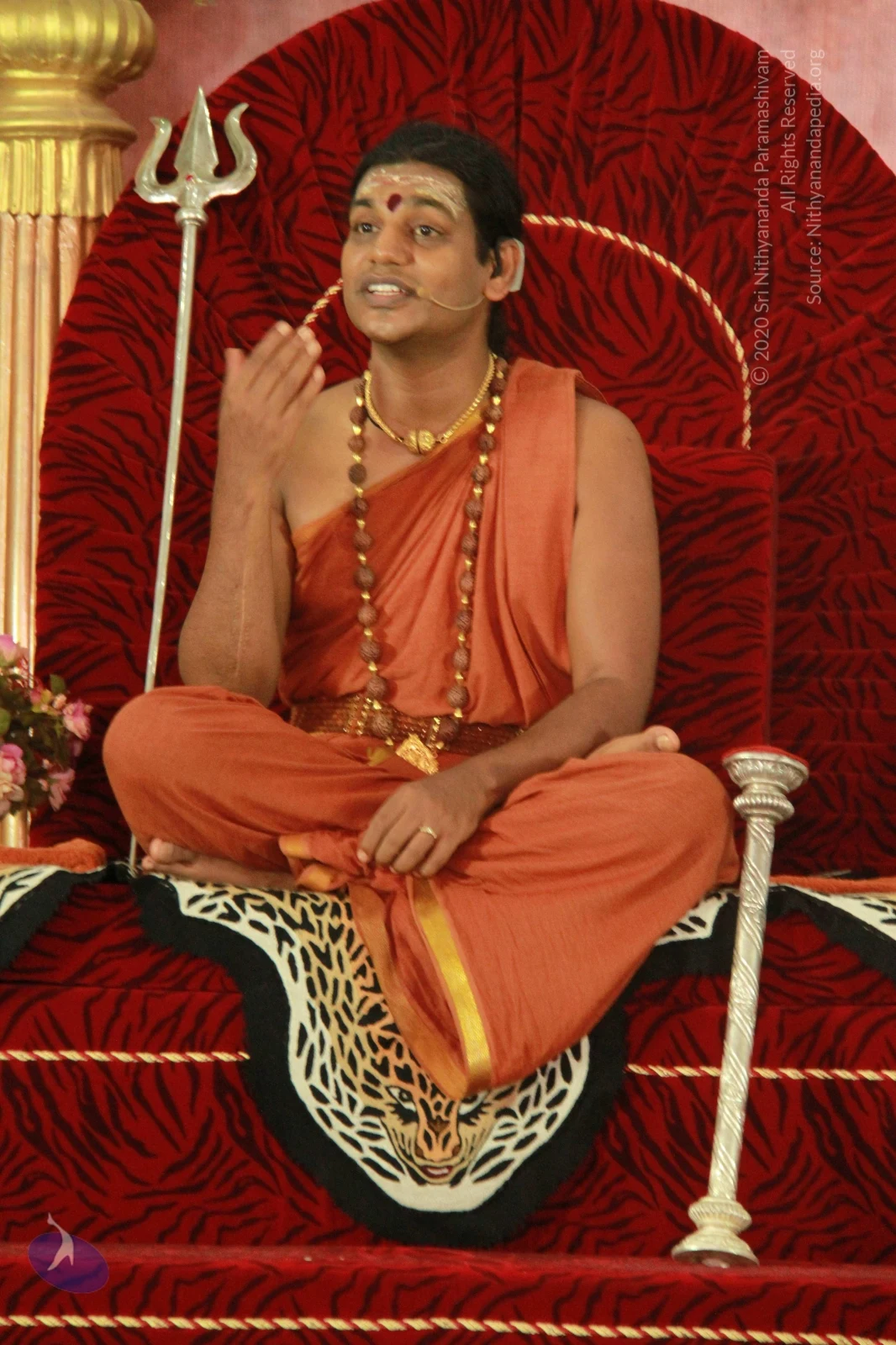
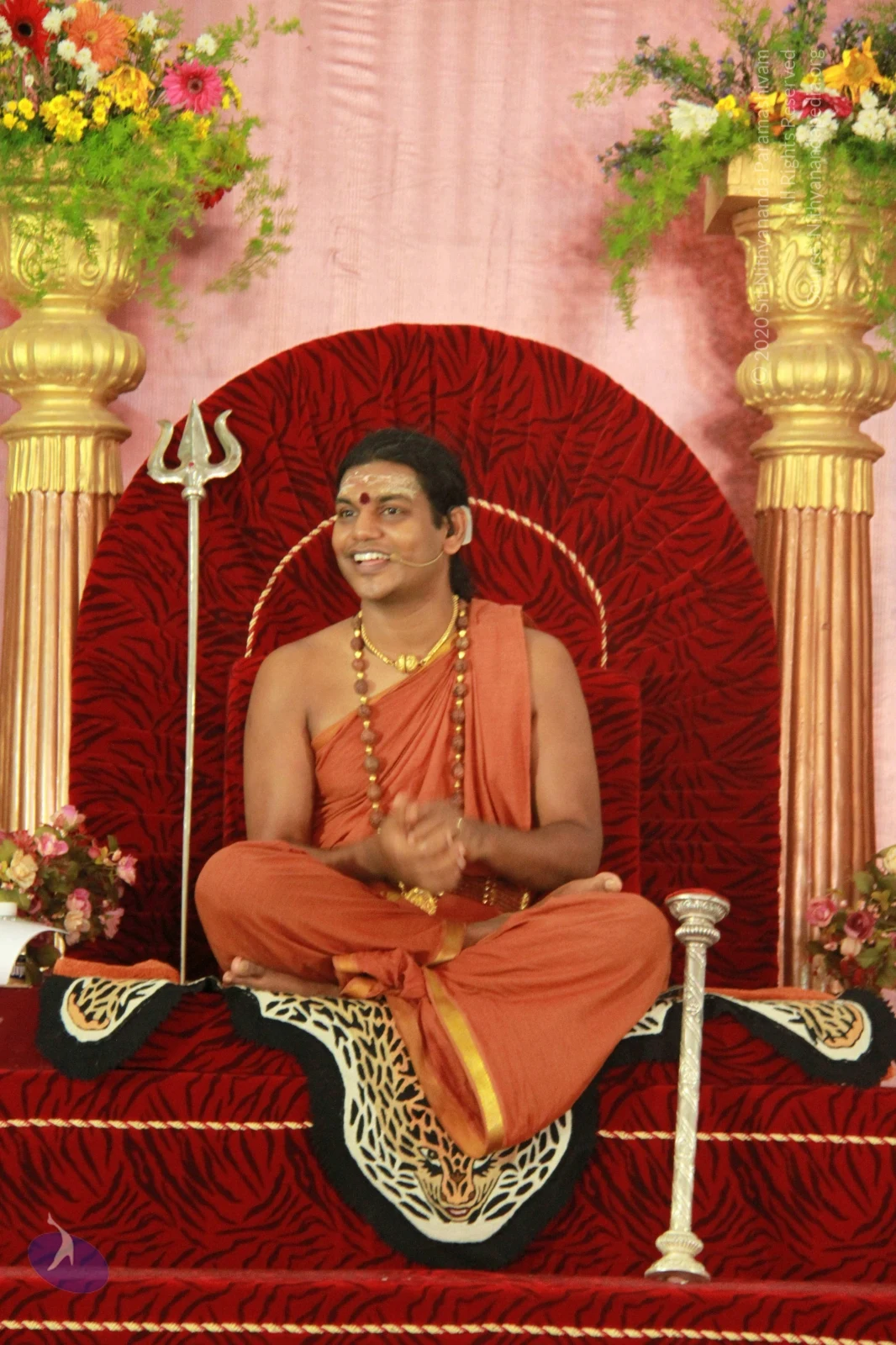
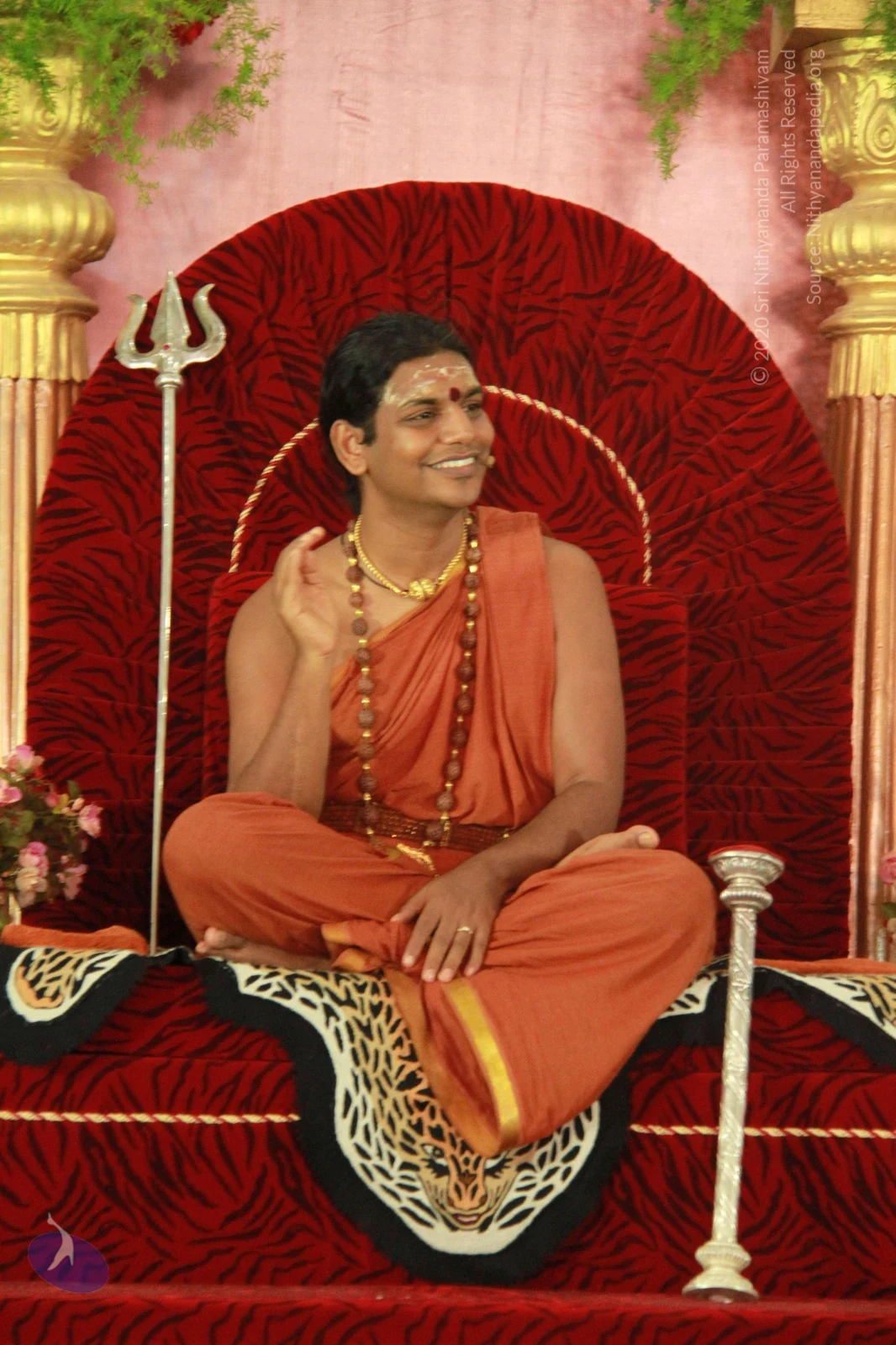
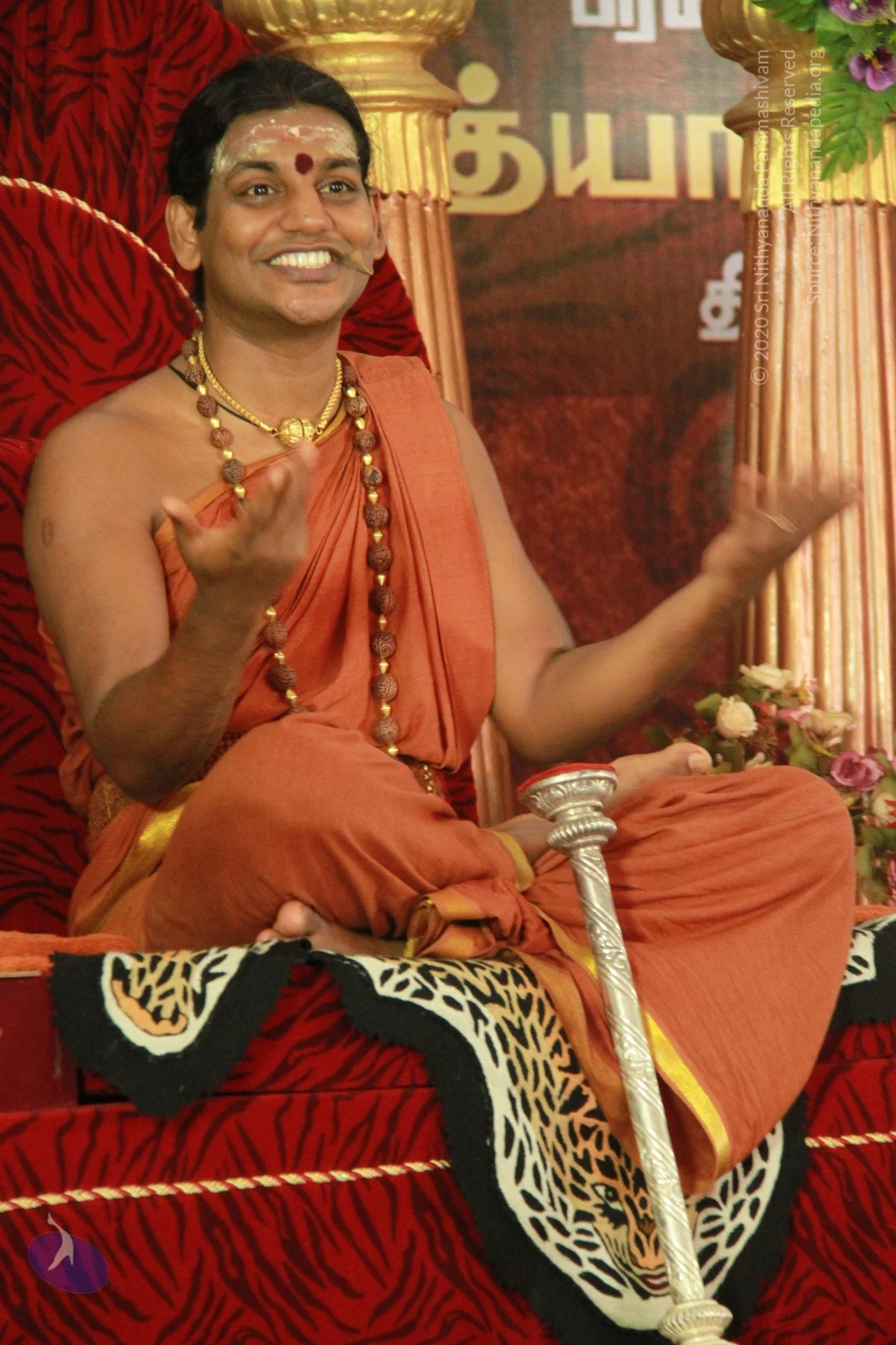
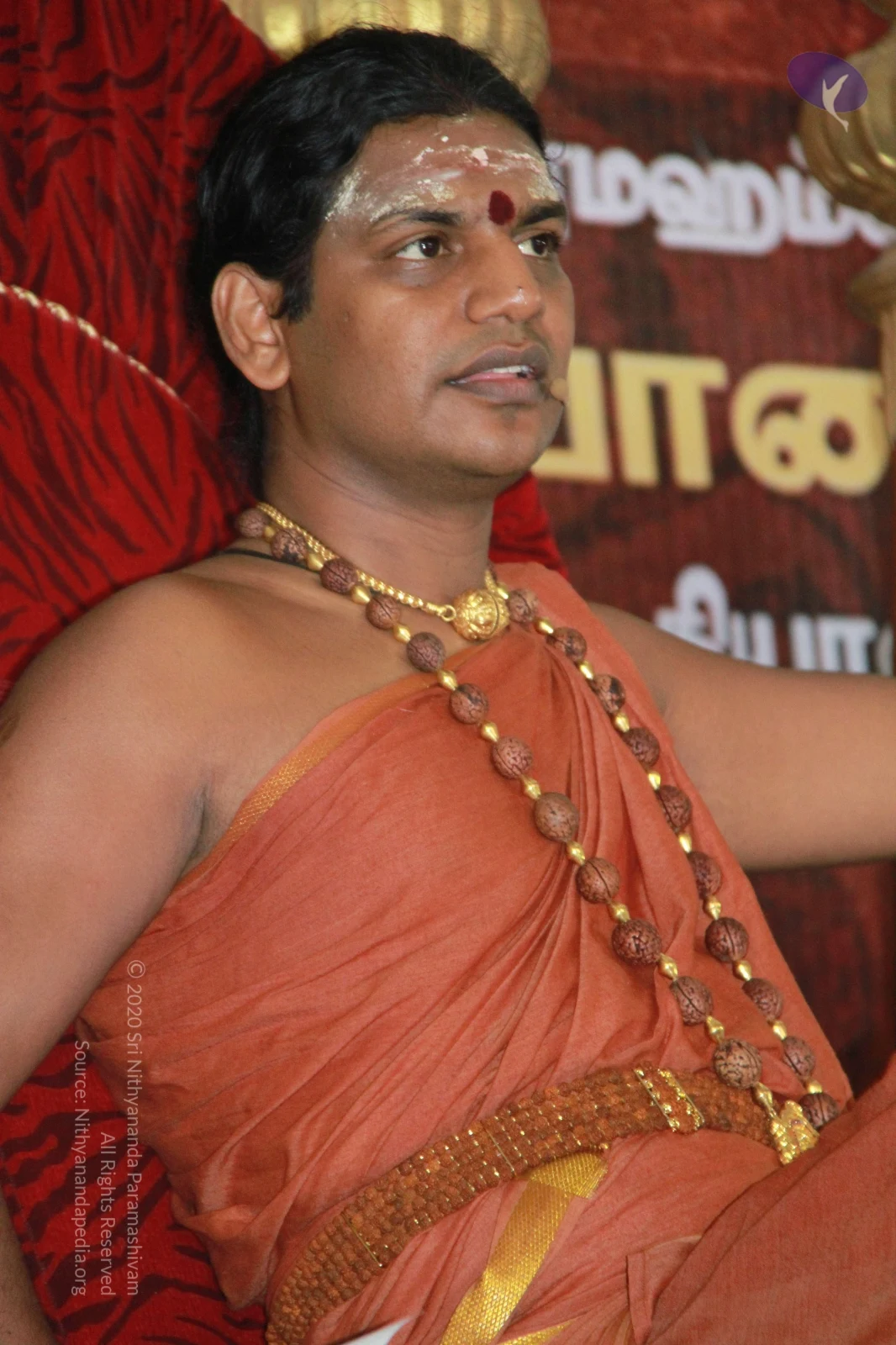
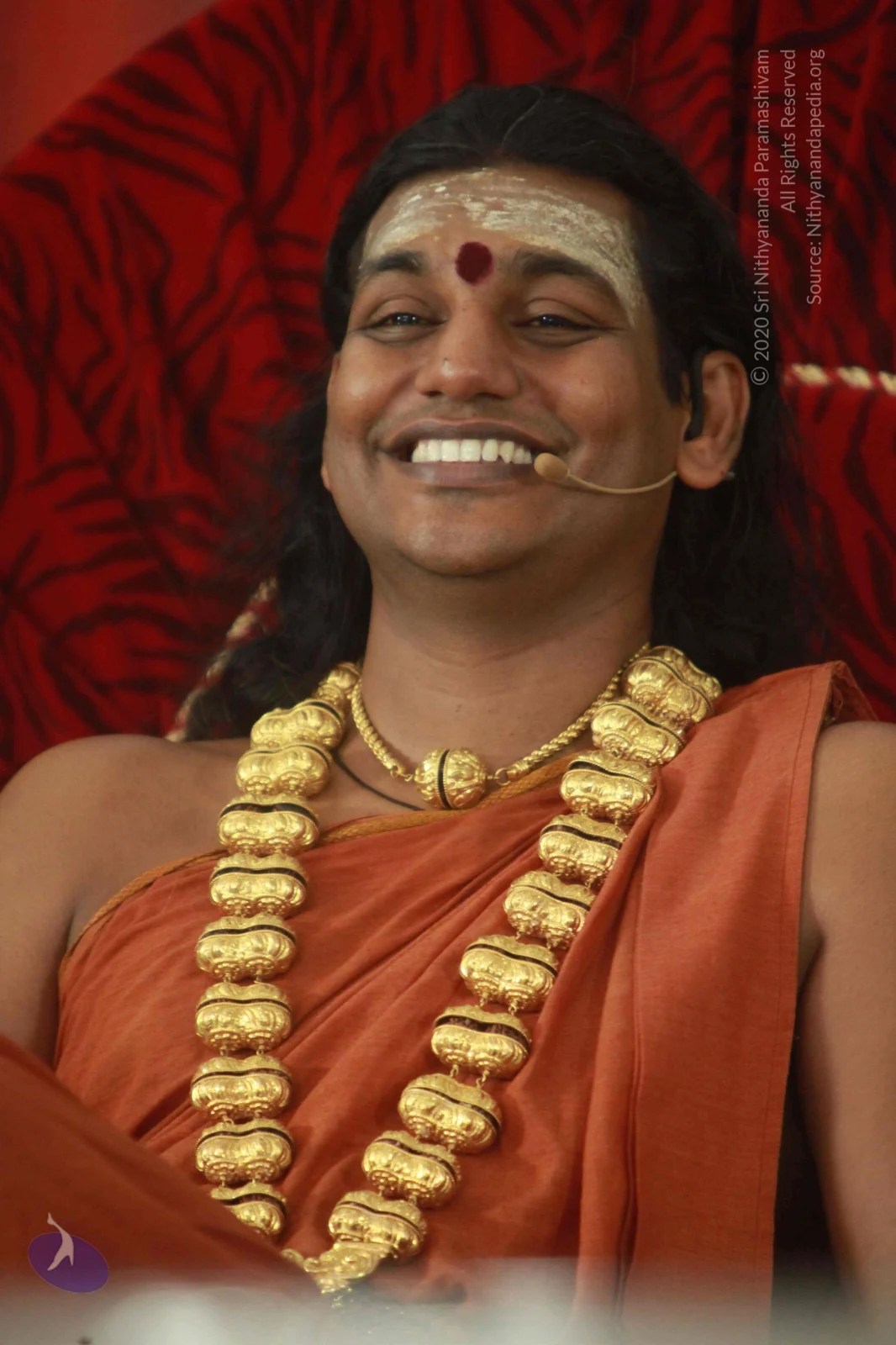
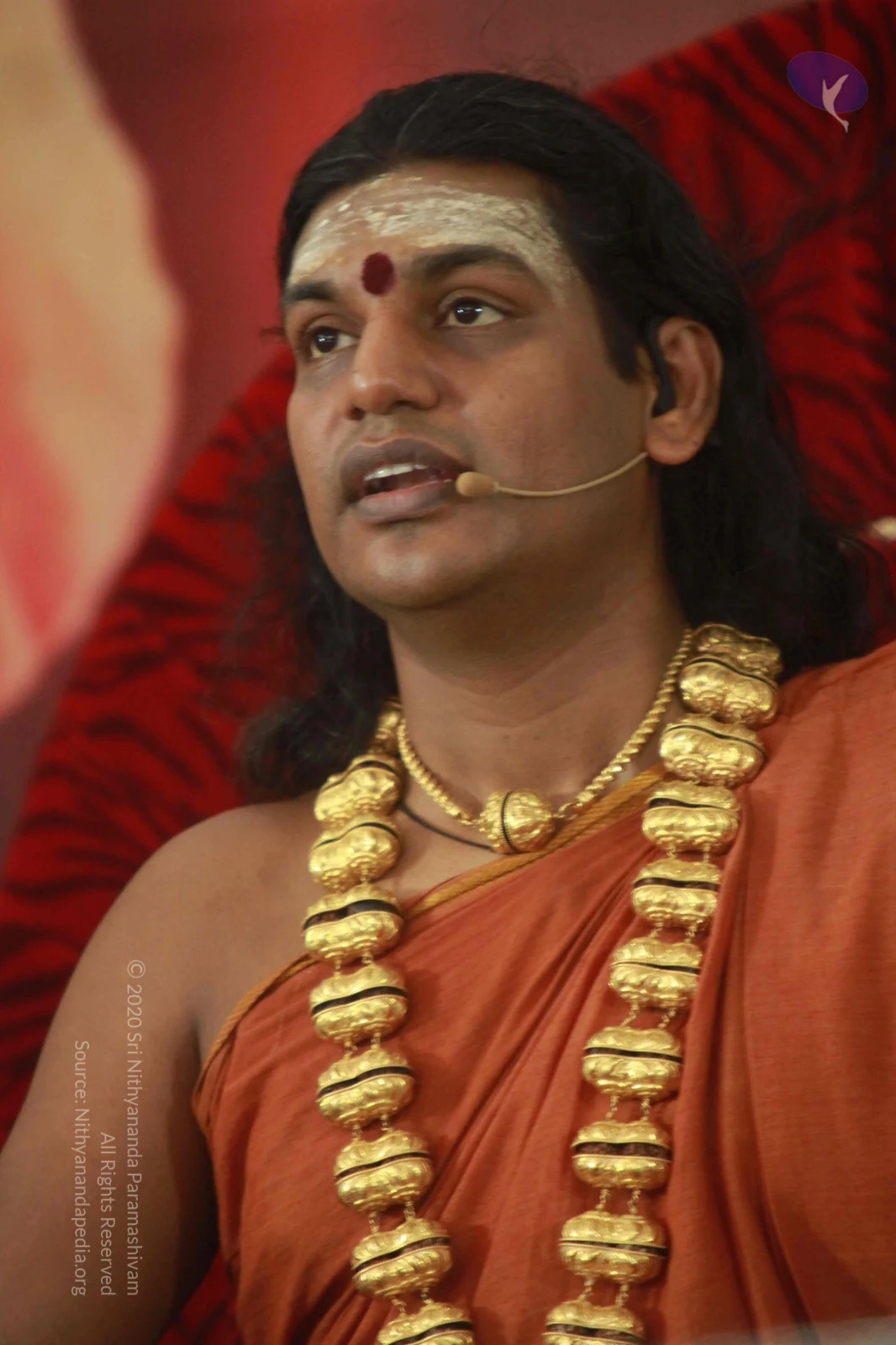
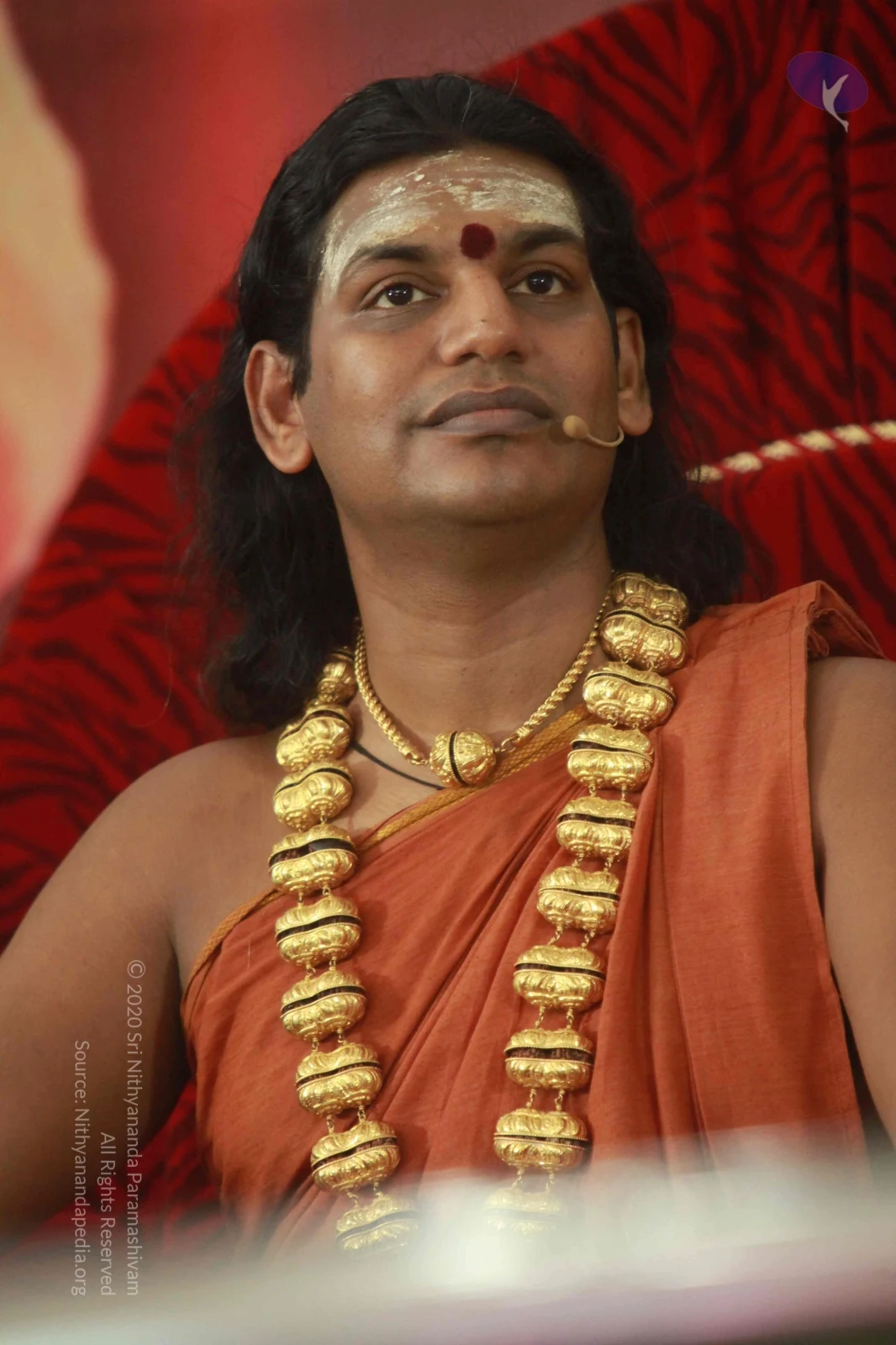
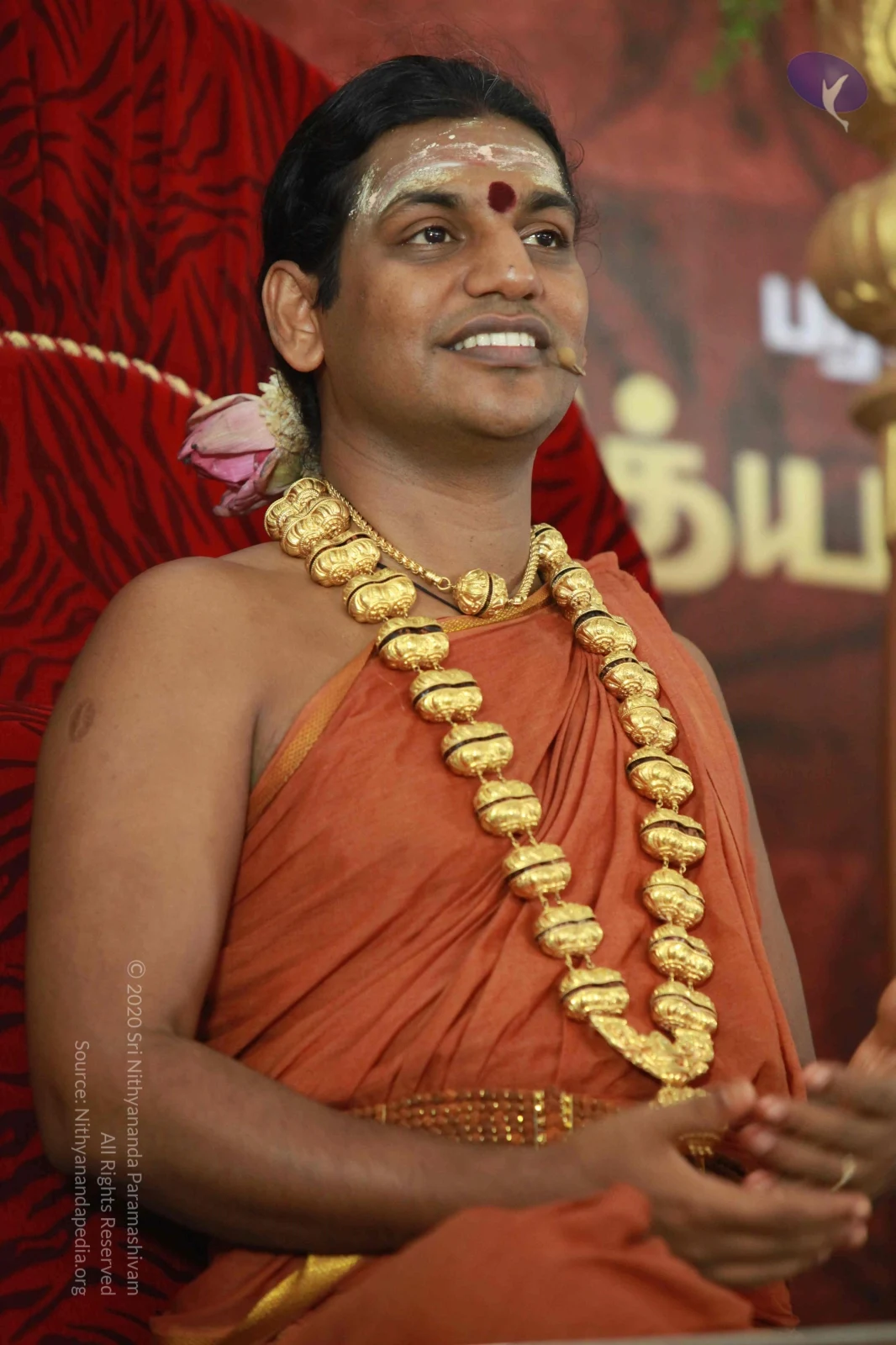
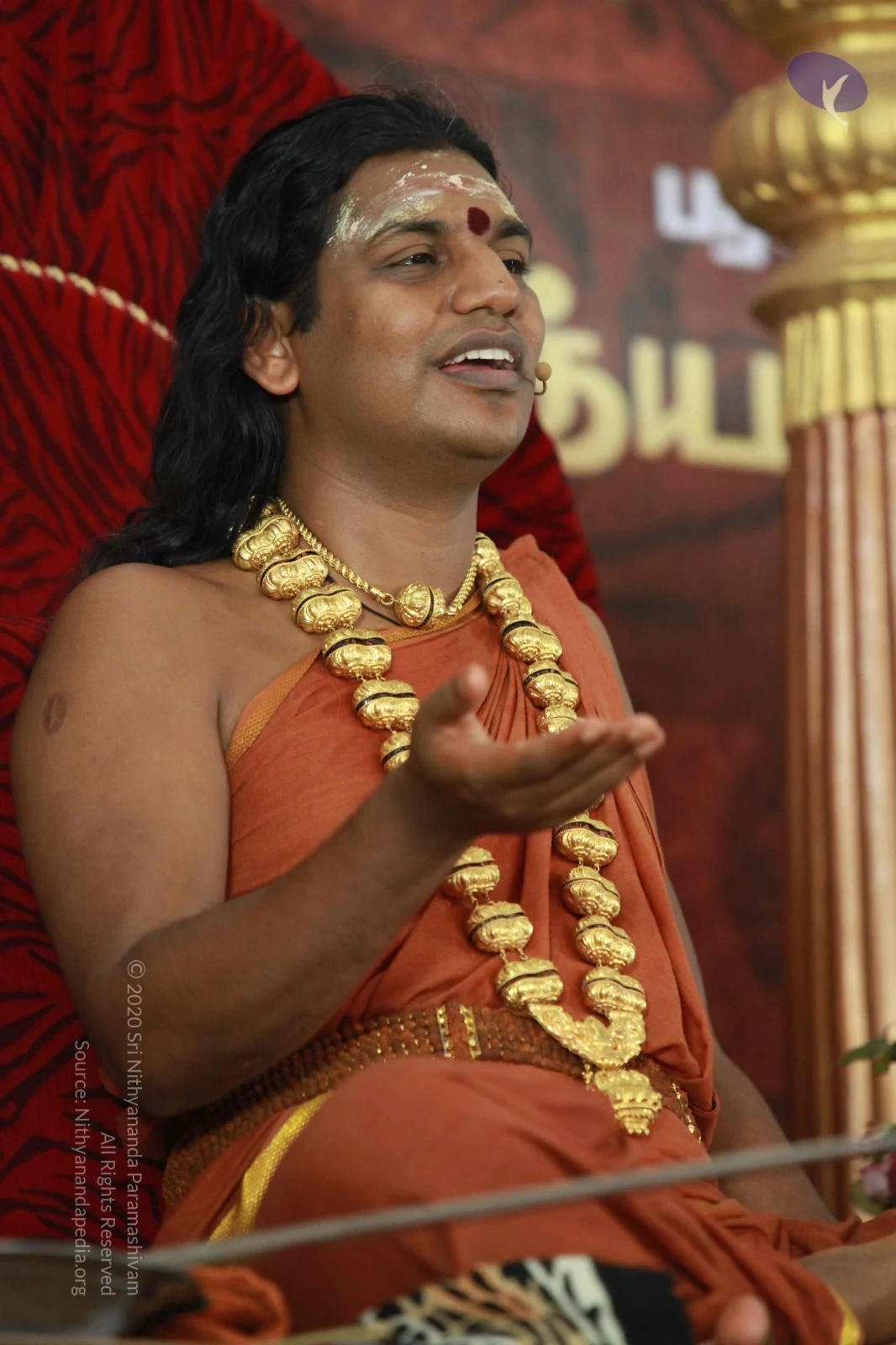
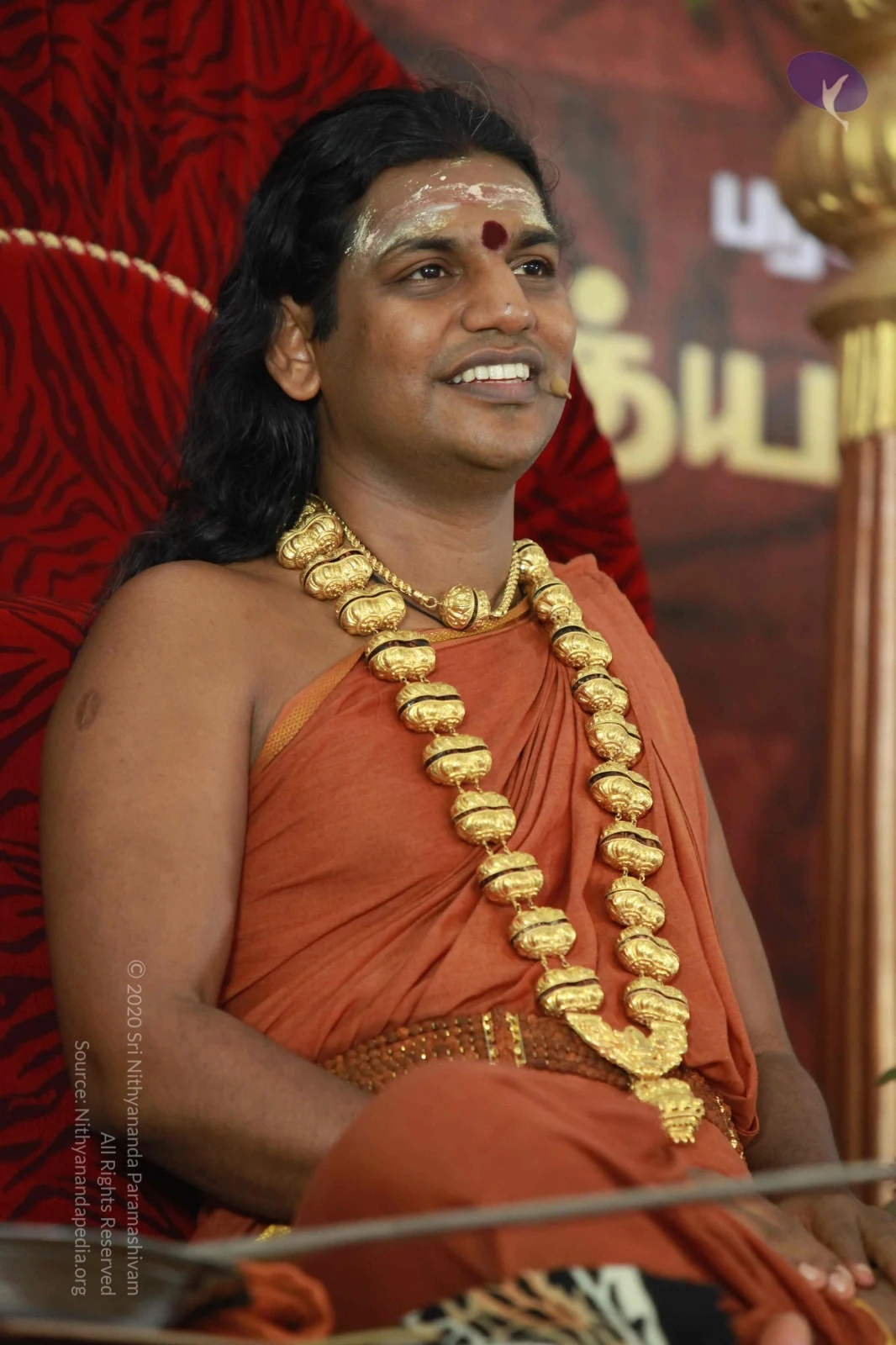
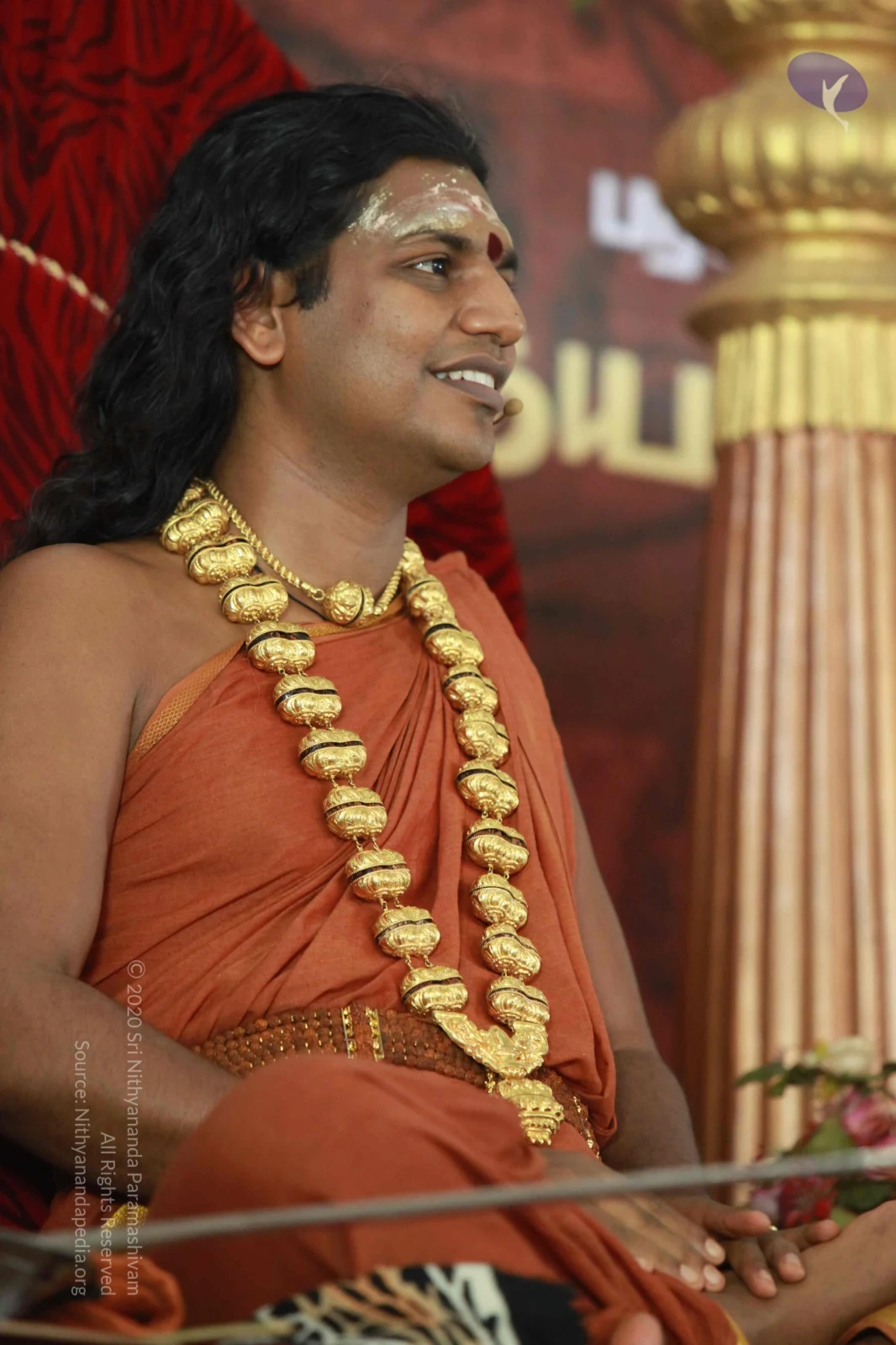
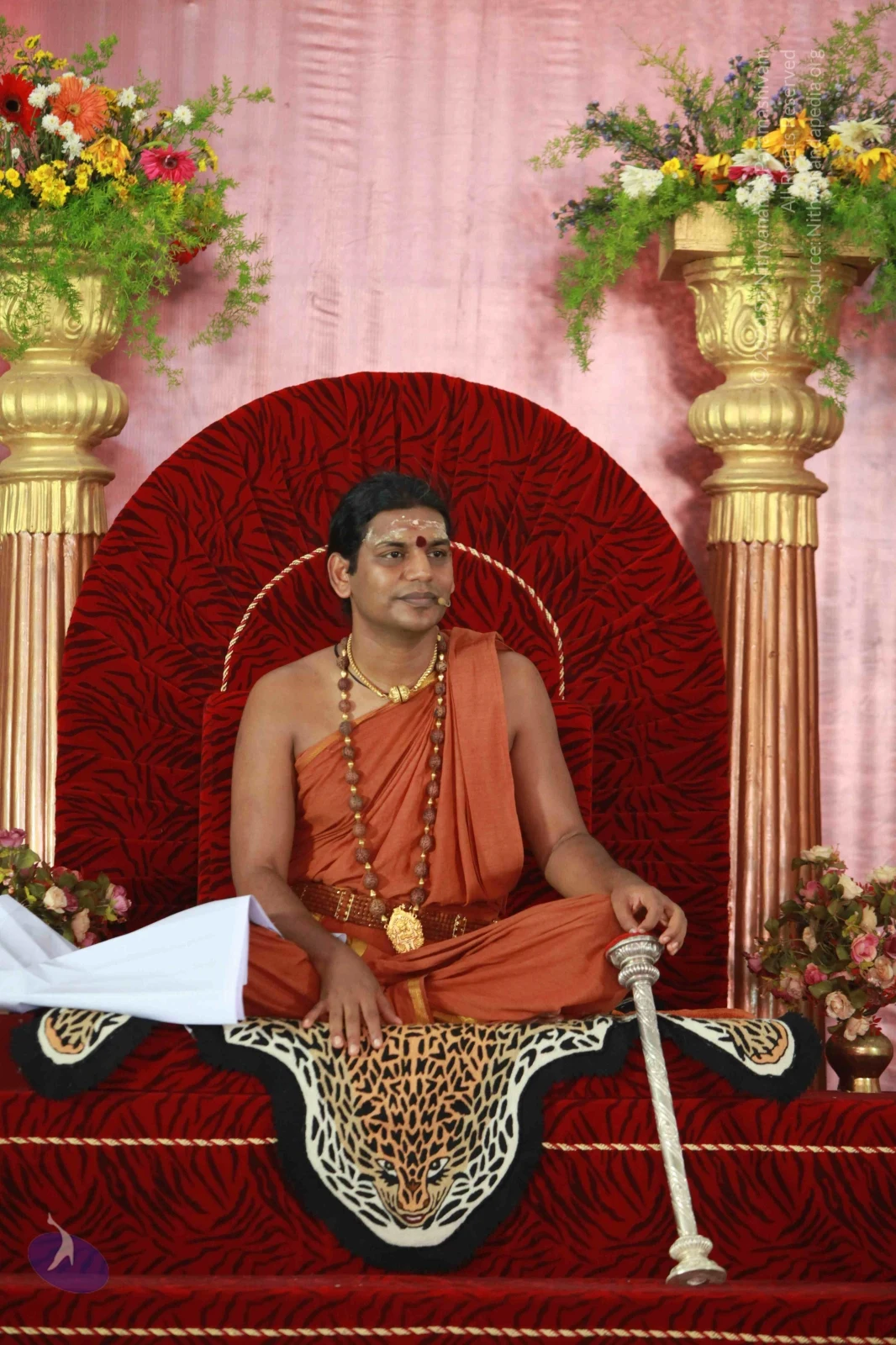
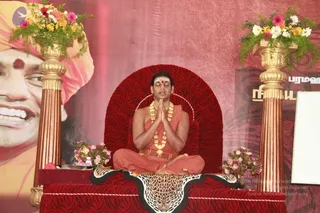
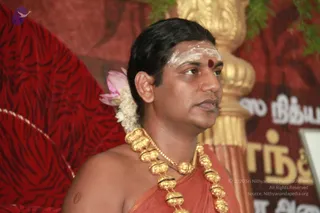
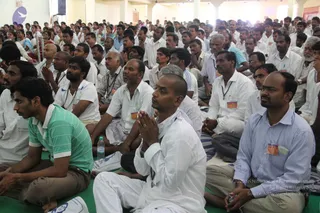
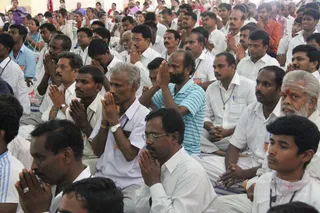
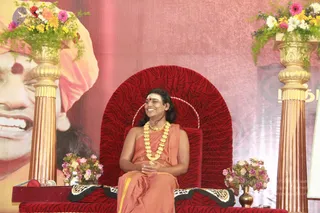
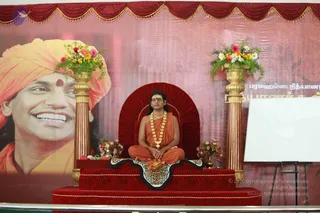
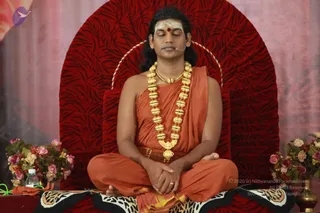
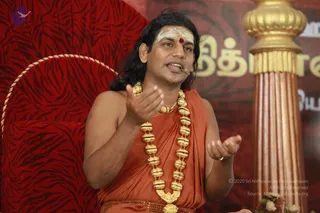
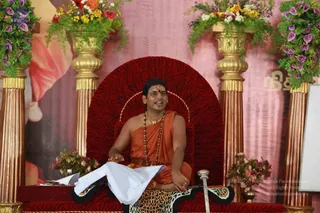
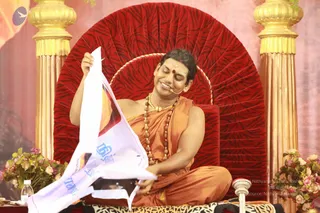
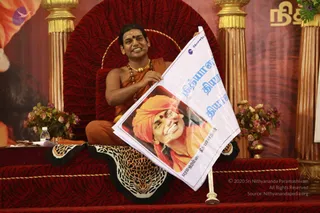
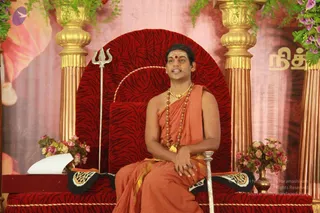
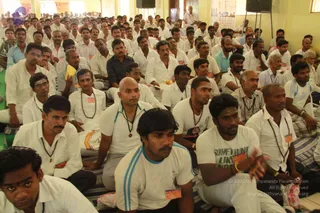
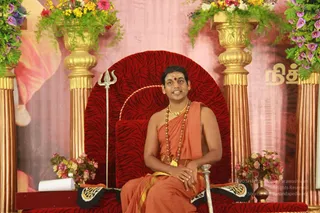
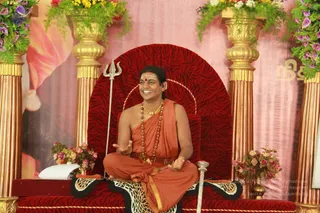
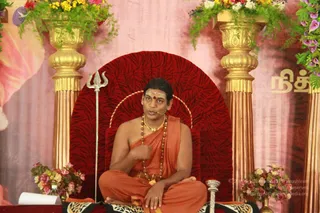
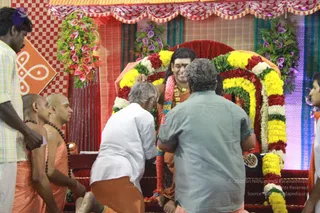
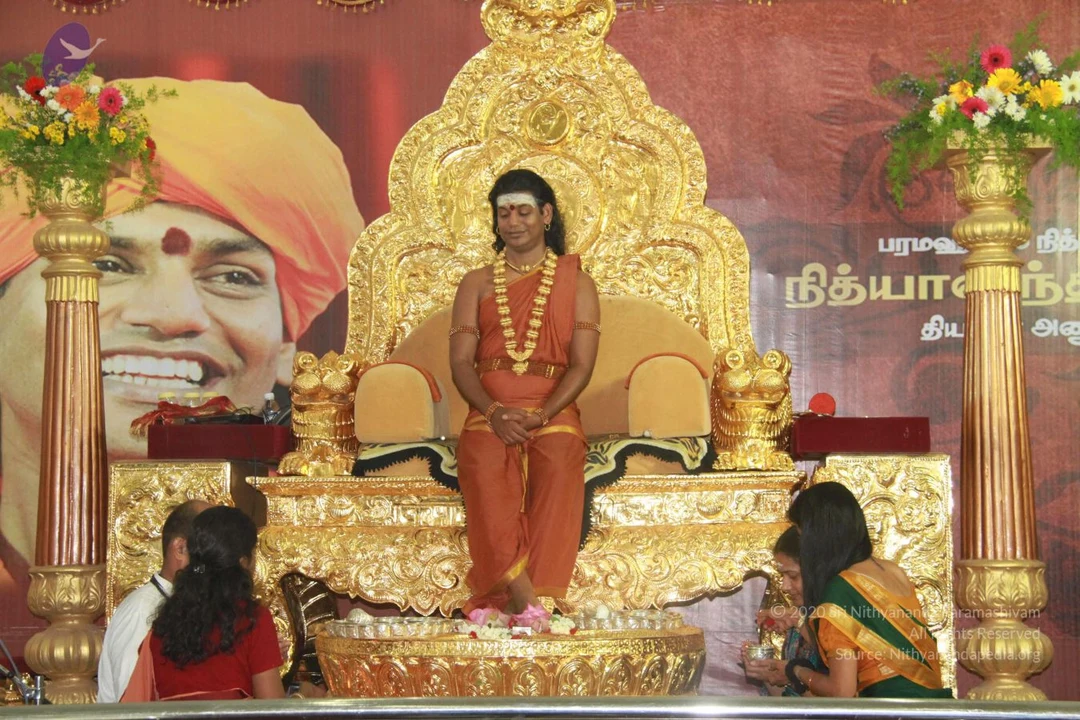
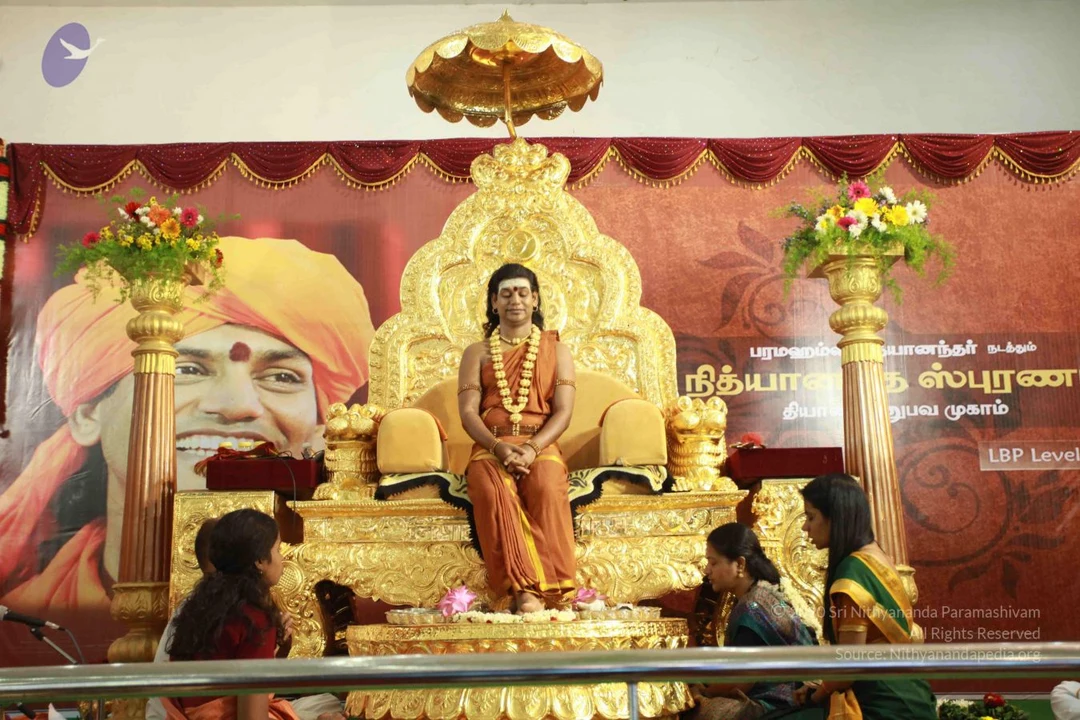
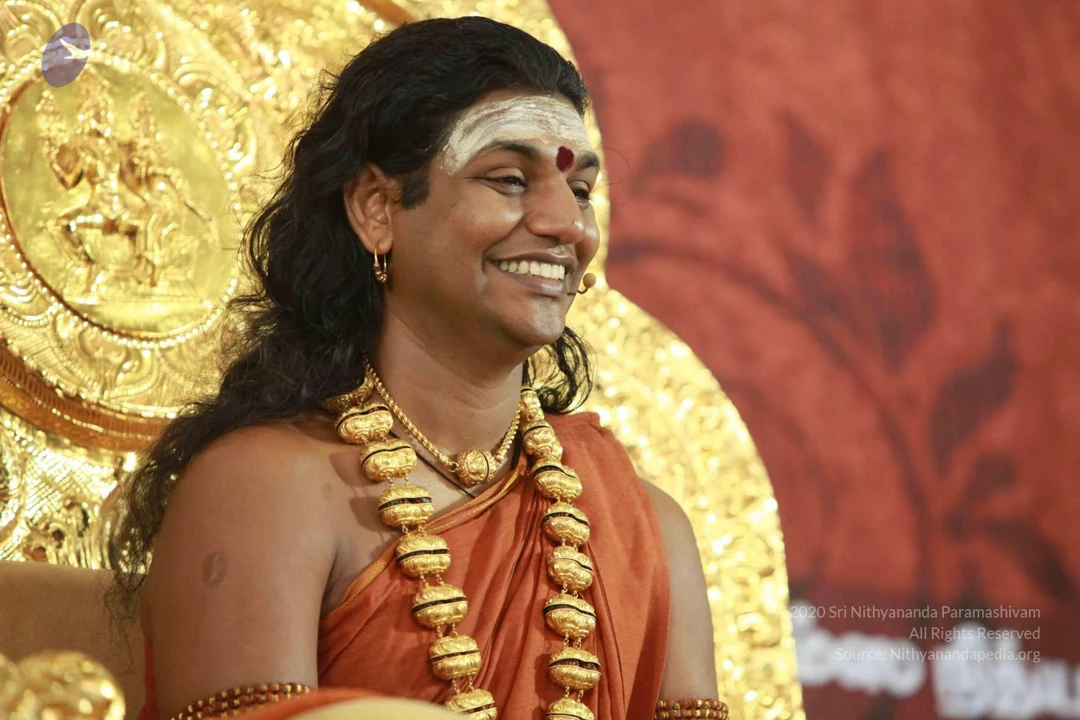
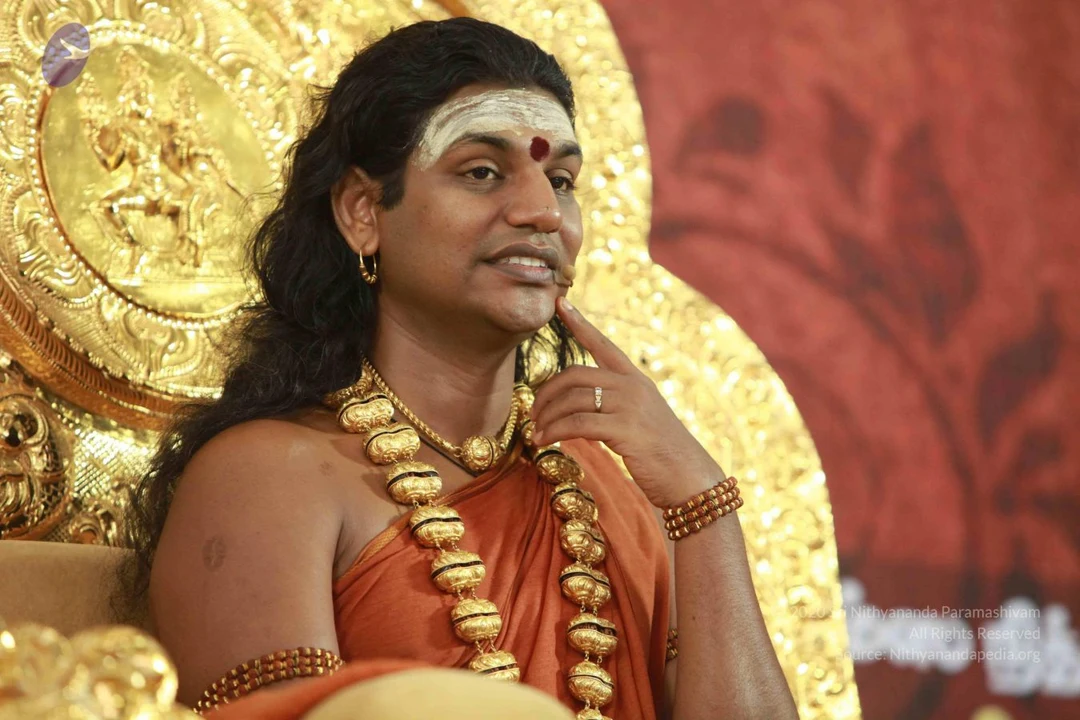
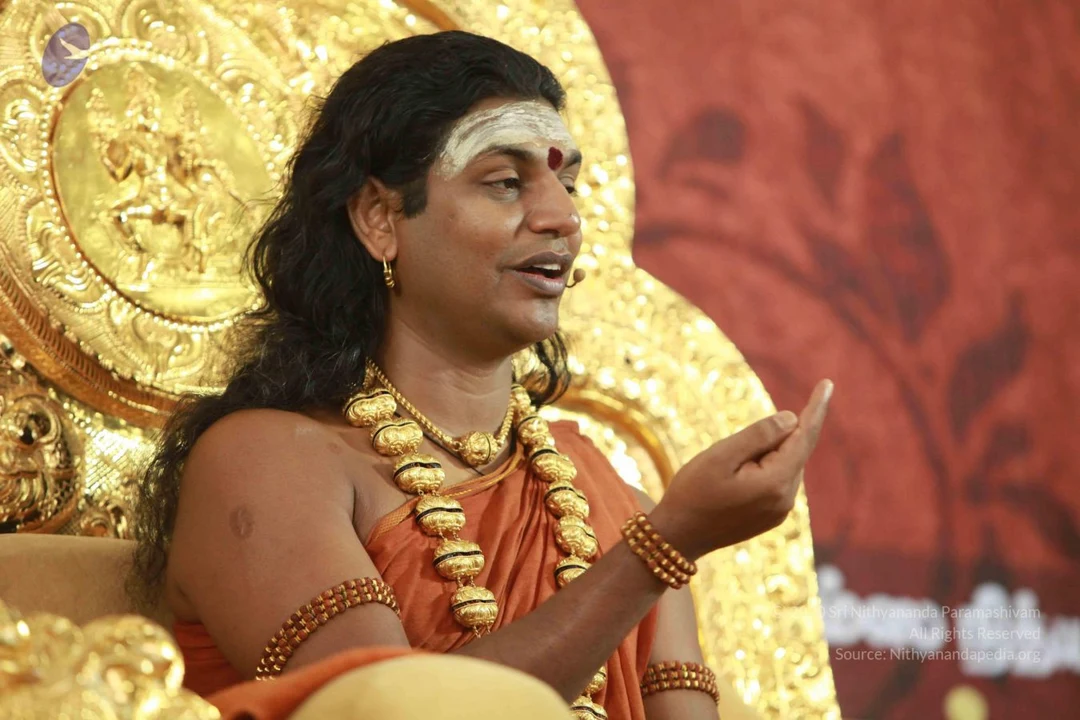
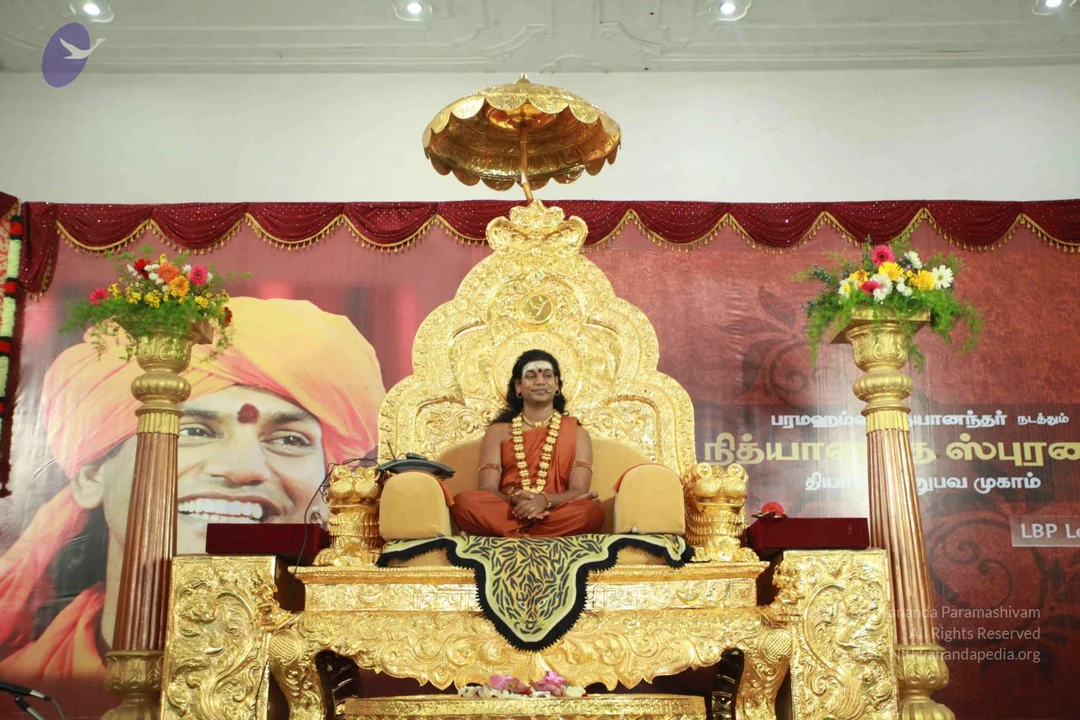
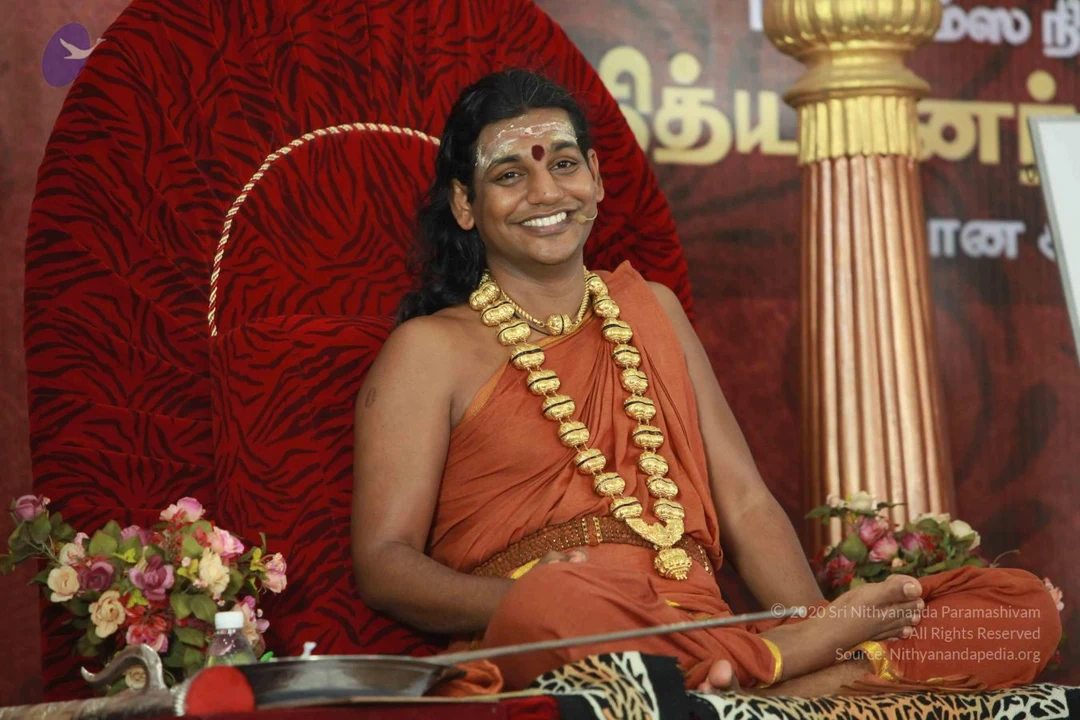
A photograph of a satsang on a raised stage at an ashram hall. A figure seated on an ornate gilded throne with a crimson and gold canopy wears saffron-orange robes, a long rudraksha mala and a gold necklace, with a shaved-style white tilak on the forehead and long dark hair. Several women sit below in saffron, green and magenta saris; one has flowers in her hair. A man in white kneels at a gold-rimmed brass tray holding flowers and lamps, and a woman in a pink sari sits near the front. Red and gold drapes, floral arrangements and a standing fan frame the stage, and a metal railing runs across the foreground.A large seated audience of men fills a hall at a satsang, sitting cross-legged on blue-and-white striped mats. Most wear white shirts and white dhotis or trousers, with orange-and-white identity lanyards around their necks. A man in front wears a bright green polo shirt, and a man at right wears a grey-striped shirt. Pillars and a banner line the back of the hall, and a speaker sits at upper right. No single presenter or a person figure is clearly visible in the frame.A smiling man with long dark hair sits on a red patterned chair with gold trim. He wears an orange-saffron cloth draped over one shoulder, a heavy gold necklace of large beads with black spacers, and white sacred ash with a red dot on his forehead. A gold fluted pillar stands beside him against a red backdrop with large Tamil script in gold lettering. a person: long swept hair, saffron robe and ornate gold beaded necklace, seated as a speaker at a satsang. A small microphone is clipped near his face.

September 23 2012

Original wiki page
Contents

Title:

Unclutch® From Depression

Description:

TALKS FROM MORNING SATSANG ON SEPTEMBER 23, 2012 AT TIRUVANNAMALAI ASHRAM, INDIA Bhagavad Gita (Song of God) is a timeless treatise on the essence of living enlightenment. The Gita was imparted by the enlightened Hindu incarnation Sri Krishna to the warrior-prince Arjuna over 5000 years ago. Amazingly, the spiritual wisdom and life solutions offered in the Gita are so universal and current that even today it is used as a personal transformation guide. In today’s talk on Bhagavad Gita, chapter 6, verse 23, Paramahamsa Nithyananda (Swamiji) counsels us never to abandon our sadhana, our spiritual practice. Without continuous unclutching from suffering in life, even our feeling connection with the master can be broken. We become attached to our negative thoughts and memories and our devotion can be lost. Never-ending sadhana is the sacred secret for our salvation.

Link to Video:

VideoAudio

Transcript:

UNCLUTCH FROM DEPRESSION

Bhagavad Gita Chapter 6, verse 23

23 September 2012

Successfully hundreds of participants have completed Nirahara samyama level 2, 4th batch today. Understand, this instruction is only for ashramites and THE Samyama participants. All the ashramites and THE Samyama participants, please understand, eat when you feel like. Do not have a law, not to eat or to have regular diet pattern. No.. do not have both. Don’t have the habit that I will eat in time regularly 2 meal or 3 meal a day. No.. same way, don’t have a law, I will not eat at all. The real samyama happens when you don’t even have the vow of samyama and feel like not eating at all and move with the flow.

I tell you, I don’t feel like eating at all. Only when I see the body becomes too hot and needs something I pour some juice. So you don’t even need to restrict yourself only to juice. You can even eat solid food whenever you feel like. But make sure neither the visualization of the food or the smell of the food or your mind interferes in the samyama and ask you to eat. Only like casually, “Alright! Ah, today some temple prasad has come. Come on, let me put it in my mouth.”

Try to learn to live like a God. Gods do not have vow not to eat. They just do not feel like. So live like a Gods on the planet earth. I think now, especially THE Samyama participants have been really trained. So, now from today all the ashramites who are doing Nirahara samyama and THE Samyama, all the THE samyama participants, all of you will end the vow, you will not have this vow anymore. Feel like, have it. Don’t feel like, leave it. So the samyama out of freedom. Samyama out of joy not out of vow. I tell you, then body just jumps into a new kind of wellness. It jumps into a new kind of that feeling well. So today onwards you will do something called unique FREE Samyama. The Samyama without the vow. So, from today you will have samyama without vow.

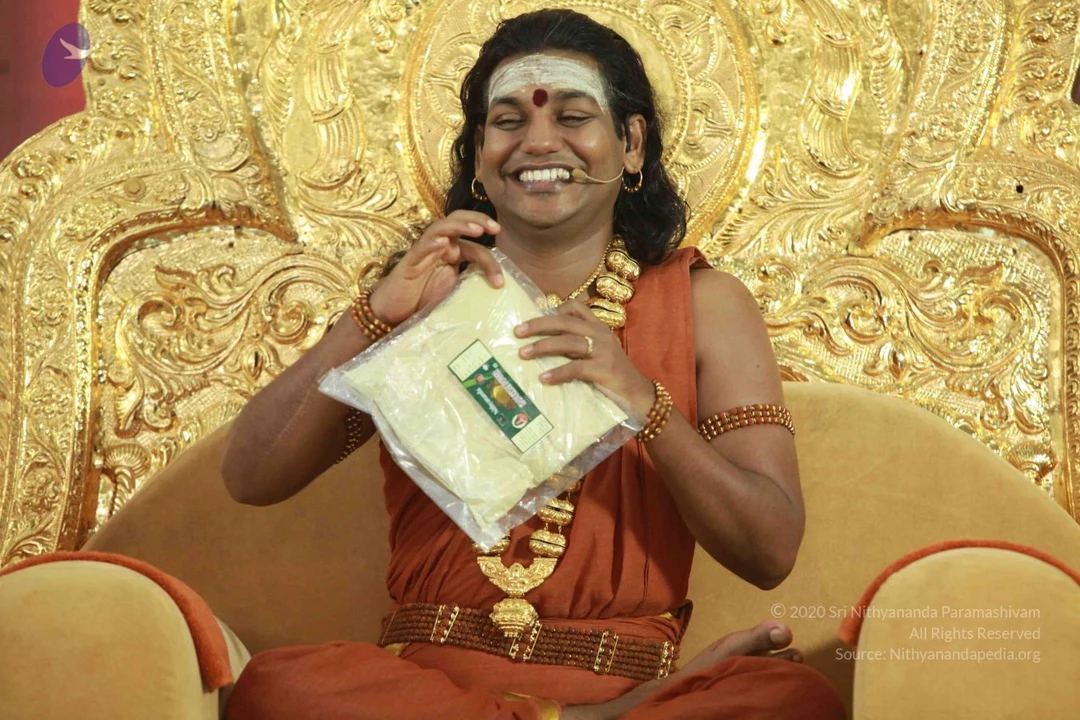
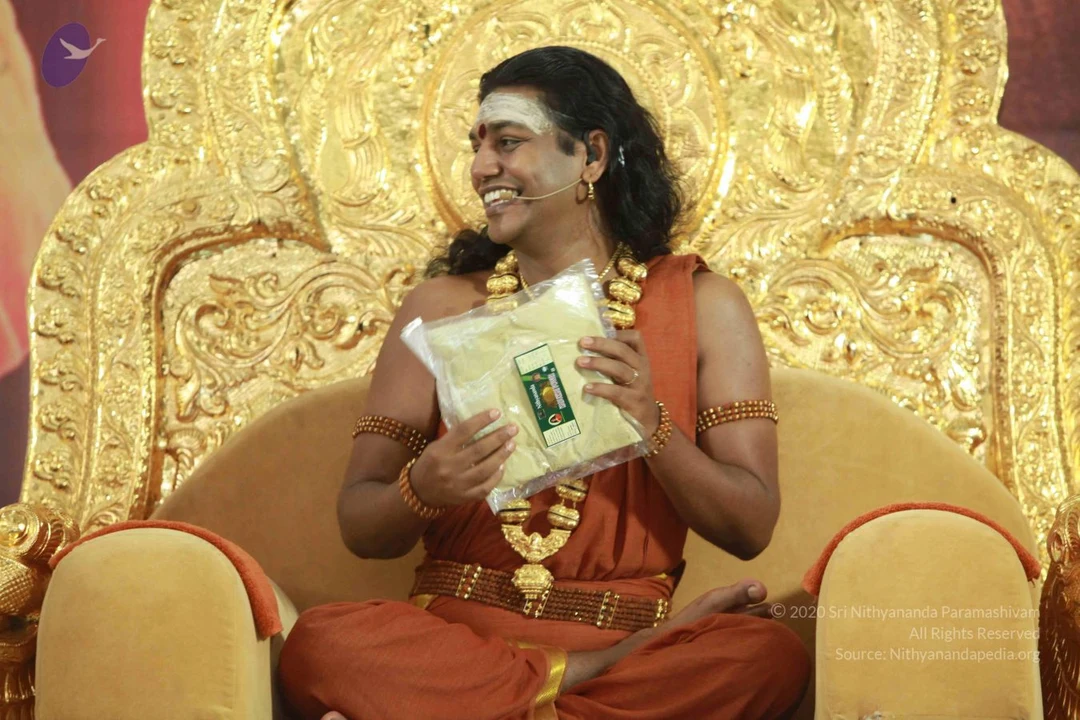
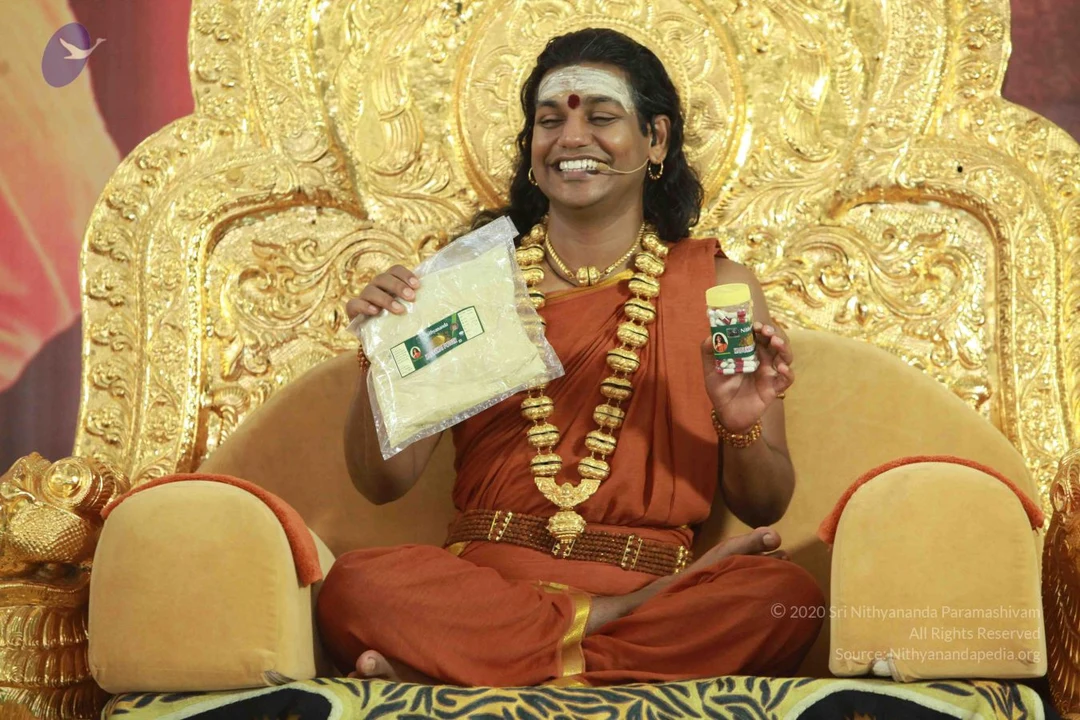
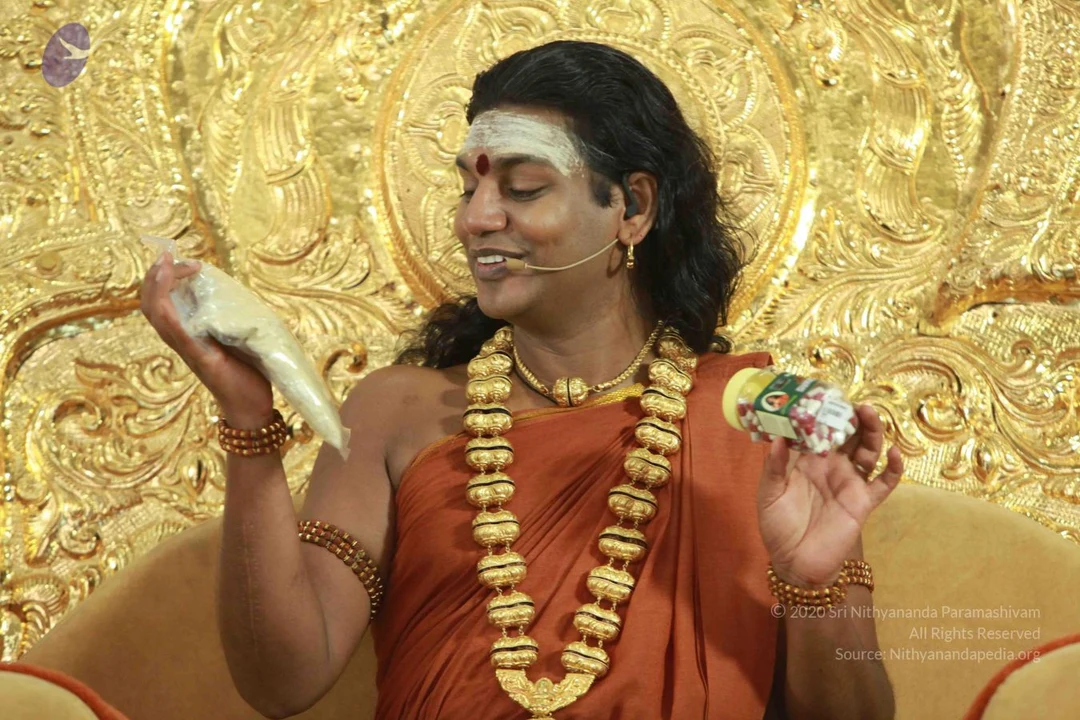
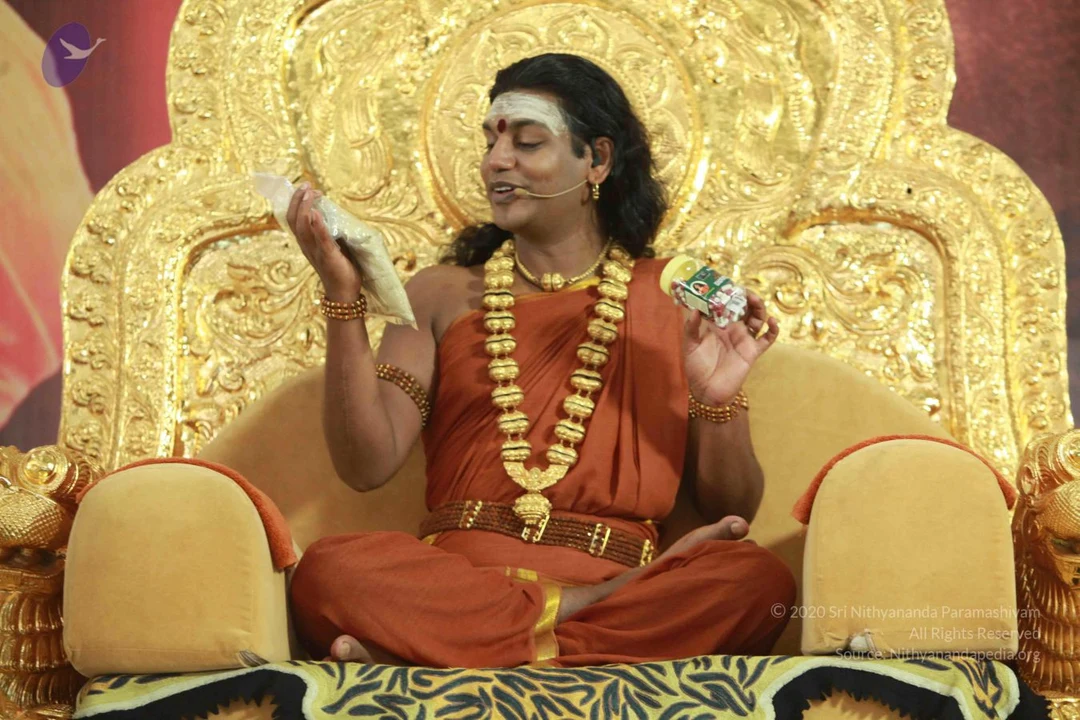
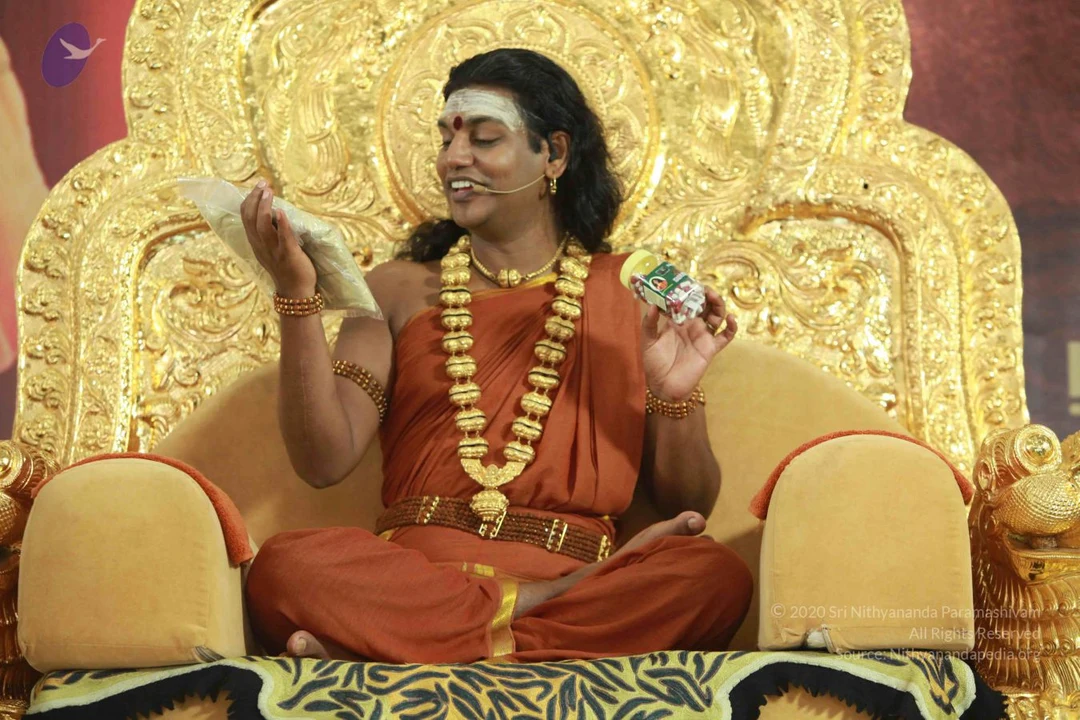
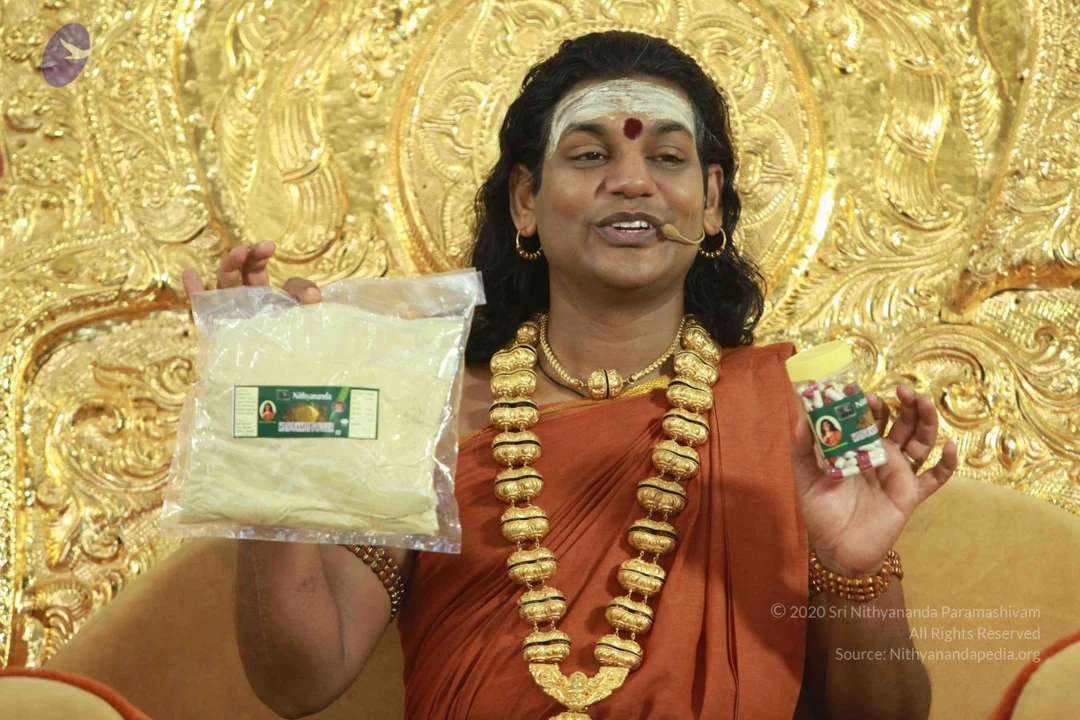
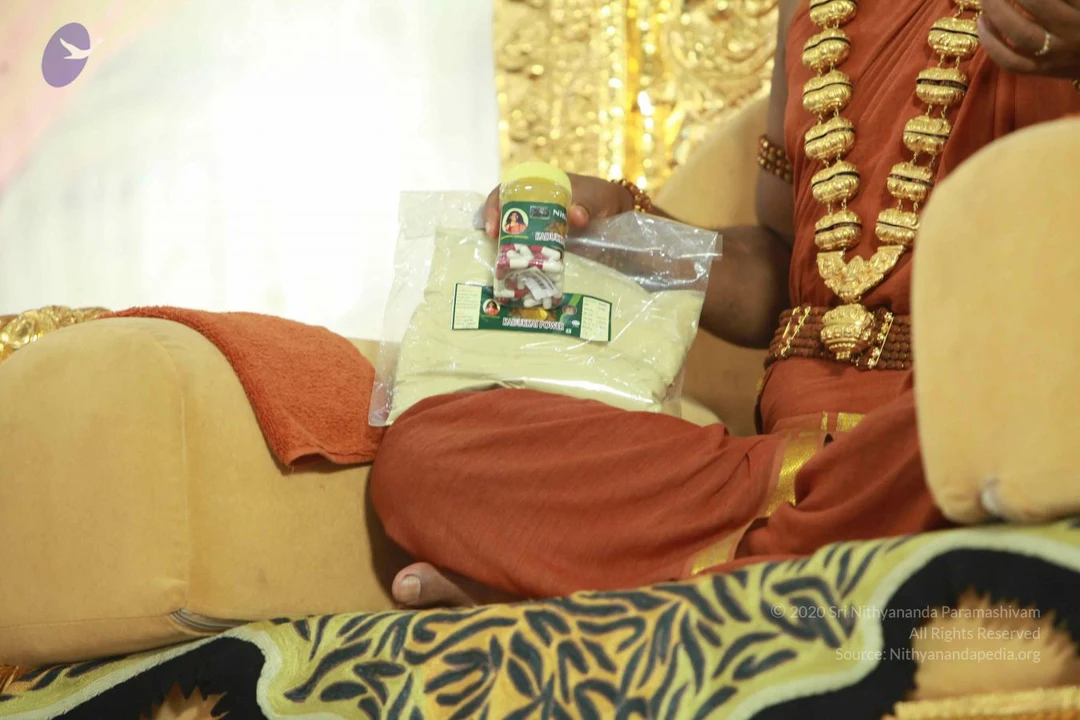
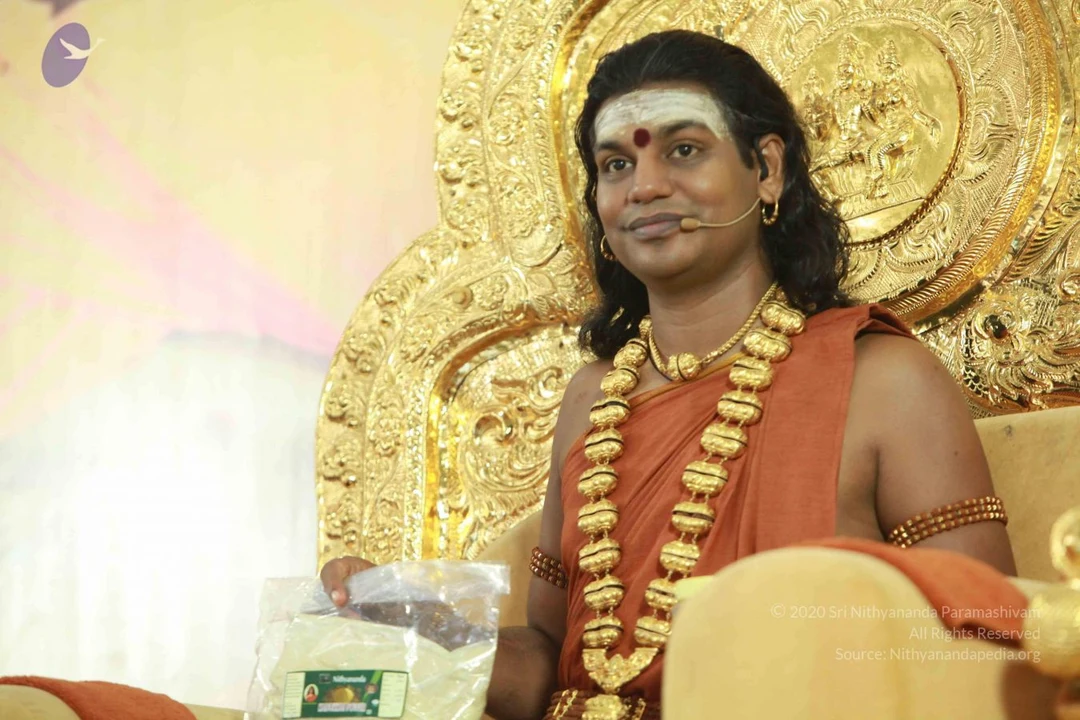
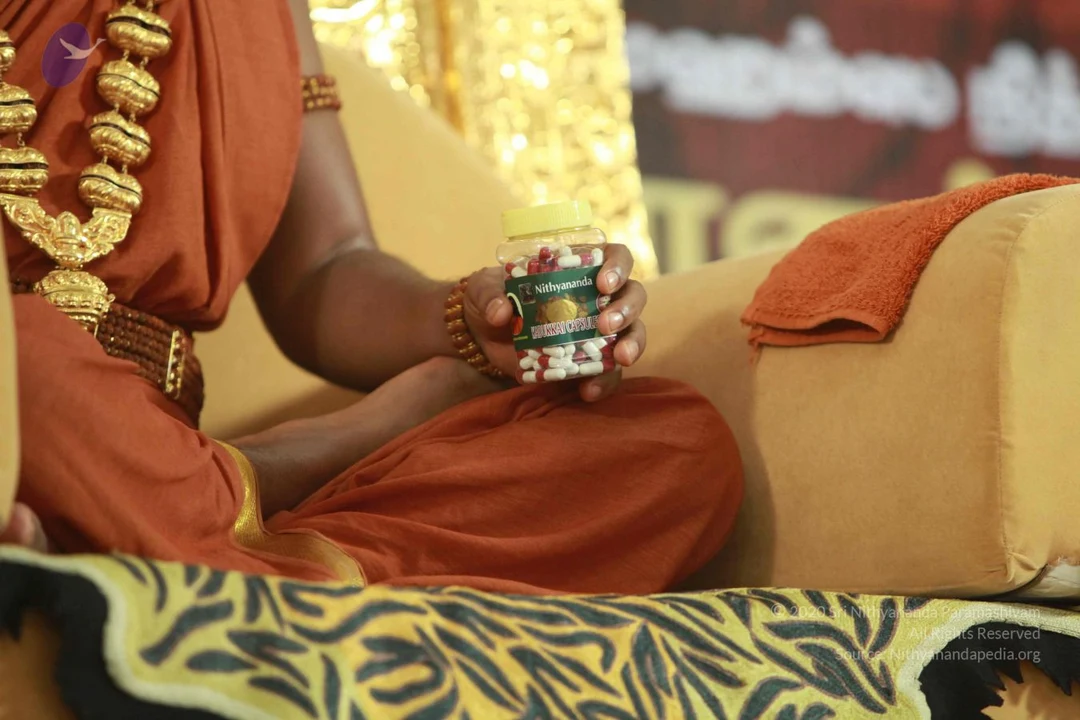
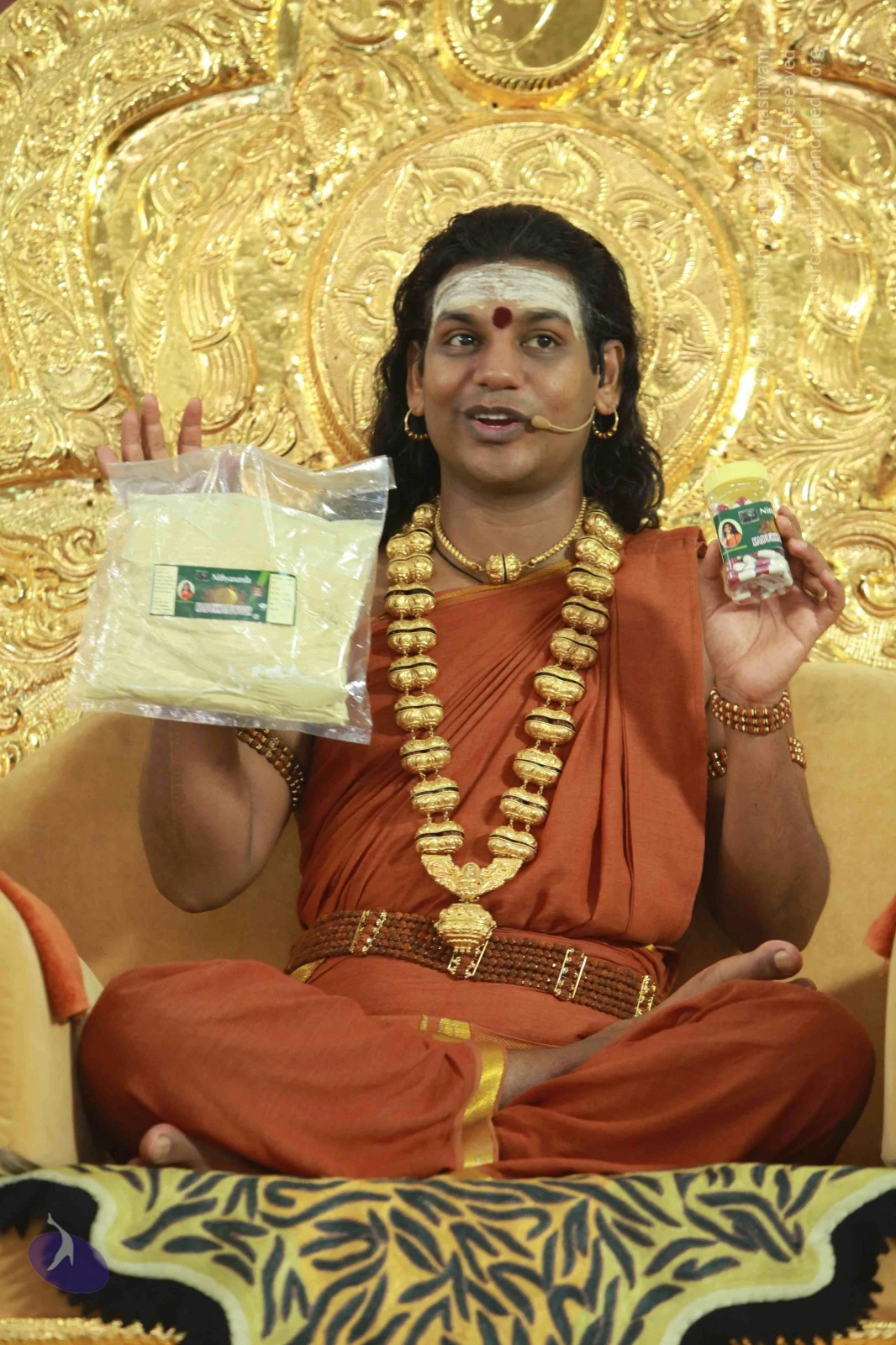
Today I have something unique from our Siddha products release, officially Dhyanapeetam’s Kadukkai podi and Kadukkai tablets. It is a sarvaroha nivarani. I am very happy to release these two. This is the only thing which I take regularly. I think I don’t need to introduce about kadukkai podi anymore. All of you know the power of it. It increases the oxygen flow in the blood 300% and we call it in Sanskrit Haritaki and the exact meaning of the word Haritaki means ‘the drop of the nectar fell from Indra’s cup and that drop is Haritaki’. I can say it is 100% true. It is nectar. It is nectar. I tell you guys this is the most powerful spiritual cleanser. I wanted to give you the title. Not just body cleanser. Because the oxygen level in the body increases 300%, it directly works on your non-mechanical parts of the brain. When the non-mechanical parts of the brain gets awakened, then all the spiritual truths are understood you will be able to grasp all the spiritual truths and live. So, not only that from now, in all akashik reading sessions, Kalabhairava dharshans, haritaki will be given as a prasadam. Haritaki is the Kalabhairava’s prasada. Kalabhairava should be offered Haritaki and this should be shared as a prasadam of Kalabhairava among the devotees. And all our devotees, every month on Chitra nakshatram and Ashtami should do, Ashtami is the thithi for Kalabhairava and the thithi in which Swamiji was born. We should have Kalabhairava pooja, Kalabhairava’s worship and should have Haritaki as prasadam, share with everybody.

I am doing some more research, is there a food item, cooked adding Haritaki, if that is there we will make that as a compulsory in our Anna Mandir. Nothing. Nothing like Haritaki. That is the really nectar from Devaloka.

Let’s start today morning satsang.

In Bhagavad Gita, 6th chapter Dhyana Yoga, 23rd verse.

tam vidyaad duhkha-samyoga viyogam yoga-samgnyitam |

sa nishcayena yoktavyaha yogo nirvinna chetasaa ||

The translation : Understand that separation from being absorbed with suffering is termed as ‘feeling connection’. And this has to be practised with conviction, with an insight that does not pull you down.

Understand, do not deviate from your spiritual practice. Let me give you the sacred secrets Bhagawan Sri Krishna reveals from this verse.

First, separating yourself from the suffering is sadhana. Second, the separation happens only when you have the feeling connection towards something which never brings suffering to you what we call in Sanskrit ‘Bhakthi”- feeling connection. Third, do not deviate from that bhakthi and feeling connection, otherwise you will be pulled down. These three basic sacred secrets is revealed by Bhagawan in ths verse.

tam vidyaad duhkha-samyoga viyogam yoga-samgnyitam |

sa nishcayena yoktavyaha yogo nirvinna chetasaa ||

Actually this is the right message from Bhagawan for all the NSP participants. Because today is the 4th day. The program will end. From tomorrow whether you are going to meditate or not, who knows? Whether you are going to continue your spiritual practice or not, who knows? So this is the farewell message from Bhagawan.

Let you not disconnect yourself from the sacred spiritual practices. Sadhana, let the sadhana not be the choice. Let sadhana be the survival need. Do not break the regular spiritual practice of unclutching yourself from suffering. Please understand, one of the biggest mistake, many of the devotees do, is they think, ‘O,why unnecessarily sit and unclutch. I just remember Swamiji and He is there all the time in my heart.” But if you don’t do sadhana, even your feeling connection with me, that bhakthi towards me will naturally be destroyed. It is only by sadhana the feeling connection is strengthened and you grow. I tell you, if you stop the habit of unclutching from the suffering without doing the regular practise then the layers and layers of the suffering increases, suddenly one day you are completely disconnected and you are not able to relate with the Master at all. Even the strong remembrance does not put you into that joy and ecstasy, does not put you into enlightenment, does not put you into that feeling connection. Then you say, I think I lost my spiritual strength and life and you succumb.

Succumbing to the injuries and dying is a right example I will give for succumbing to the sufferings and falling into depression. I have seen hundreds of people just because did not do the spiritual practice regularly everyday lose the ability to unclutch from suffering and ability to retain the spiritual connection and succumb to the worldly patterns and destroy themselves. That is what Bhagawan calls,

‘Uddhared aatmanaatmaanam naatmaanam avasaadayet’

Your own self should be the friend, if not, your own self will be your own enemy. So, continuously practise, practise the presence of God and ability to unclutch from the sufferings, from the things which pulls you down. It is unfortunate many time you enjoy sufferings. You like them because that gives you a kind of a feeling that you can always put the blame on somebody else. Why do people like suffering, you know. Just to say their inability. But when suffering becomes pattern, life is destroyed. I have seen many time, people don’t unclutch from suffering just to blame everybody else in their life. See I am suffering because of this fellow, this fellow, this fellow, this fellow, this fellow. By the time you finish pointing the fingers the suffering has already become pattern in you. When the suffering becomes pattern in you, your life is destroyed.

Essence of this verse: continuously practise the ability to unclutch from sufferings. Let your practice from unclutching the sufferings not stop. Let it not get disturbed. Let it not be broken. Let it not pull you down. The broken spiritual practice means you are allowing your patterns to pull you down. That’s it. Meditate on this one verse continuously for next 24 hours.

tam vidyaad duhkha-samyoga viyogam yoga-samgnyitam |

sa nishcayena yoktavyaha yogo nirvinna chetasaa ||

Meditate on this one concept. Gaudapada, a great Master, Adi Shankara’s paramaguru, may be who is a contemporary of Thirugnanasambandar. In his karika, he beautifully describes a concept, just as a ocean can be emptied with the help of the tip of the blade which can hold just a drop, so also can the control of the mind be brought about by absence of depression.

Uchchega udaderiyatvat ushagre naigavinduna manaso nigrahastatvat vavet aparike tataha

Gaudapada, very beautifully says, by the practice anything is possible. You can even empty the ocean with the kusha grass, a small grass with the continuous effort for years. Same way even if that can be possible, why not conquering the mind by the absence of depression. It is possible.

Photos From The Day:
Sakshi Pramana:

Sharing from Yatra program

Tags:

Bhagavad Gita, living enlightenment, Hindu, Krishna, spiritual wisdom, life solutions universal, personal transformation, Paramahamsa Nithyananda, counsel, abandon, sadhana, spiritual practice, suffering, life, feeling, negative thoughts, devotion, sacred secret, salvation.

Photos Of The Day:

Morning Satsang
VIP Visit

Unclutching Session

Lunch

Unclutching Session - 2

General Discussion by Swamiji

Kriya Session by Swamiji

Darshan

Darshan

Darshan

Morning-Satsang

Unclutching-Session

Photos from this day

View all 719 photos

Morning Satsang
110 photosSource gallery
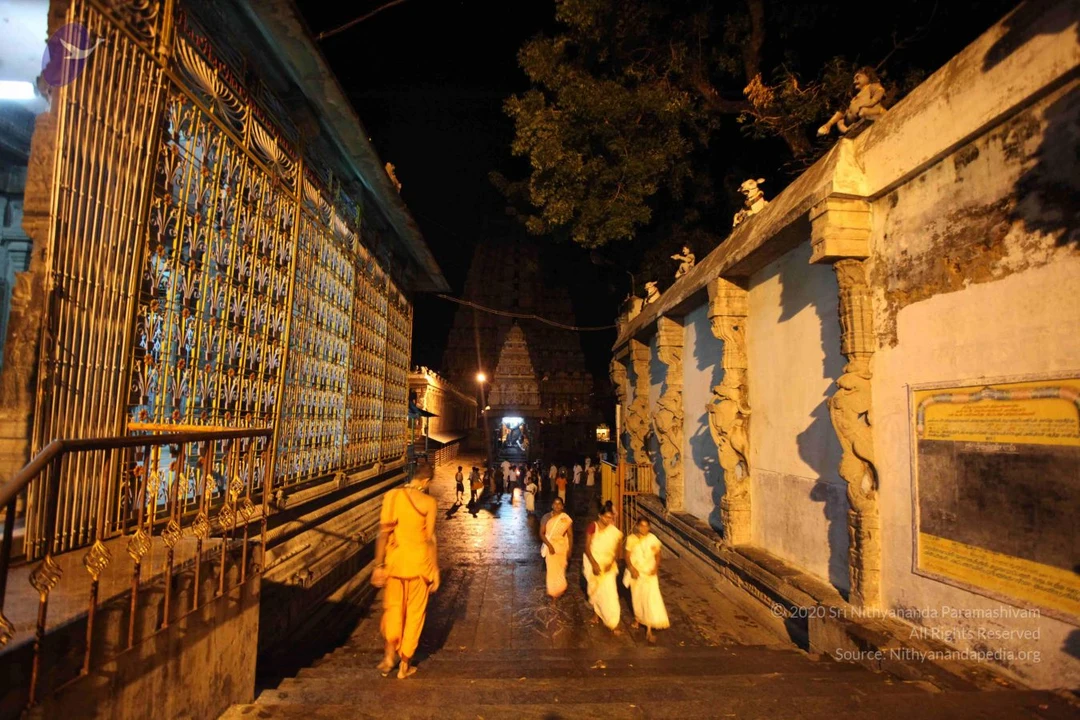
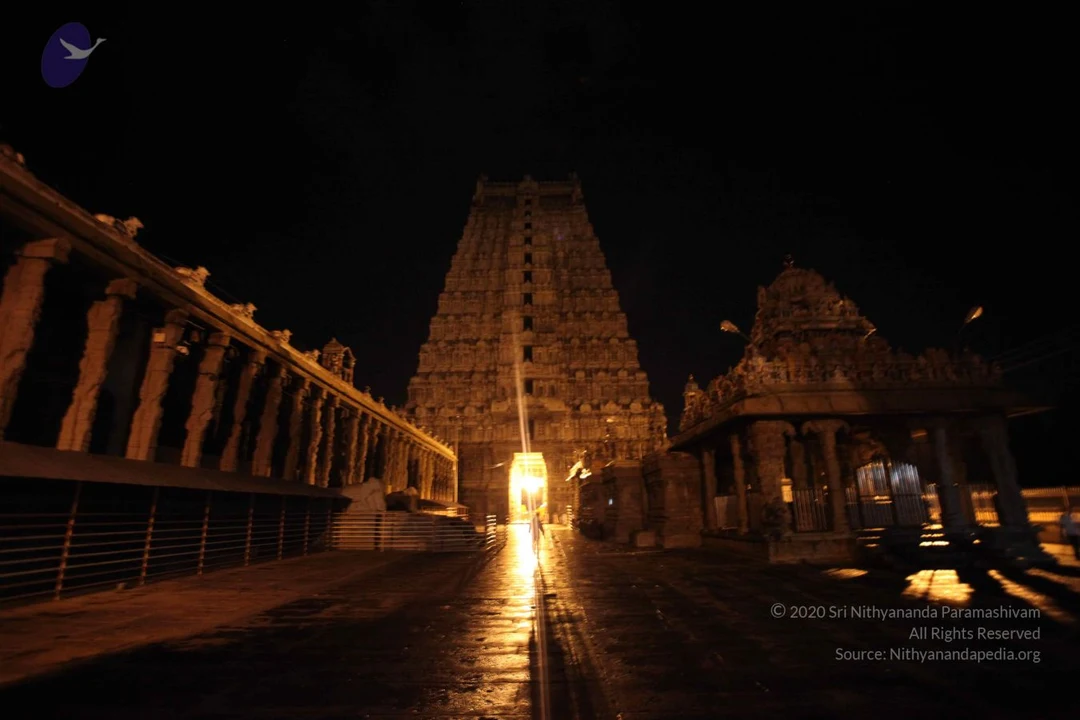
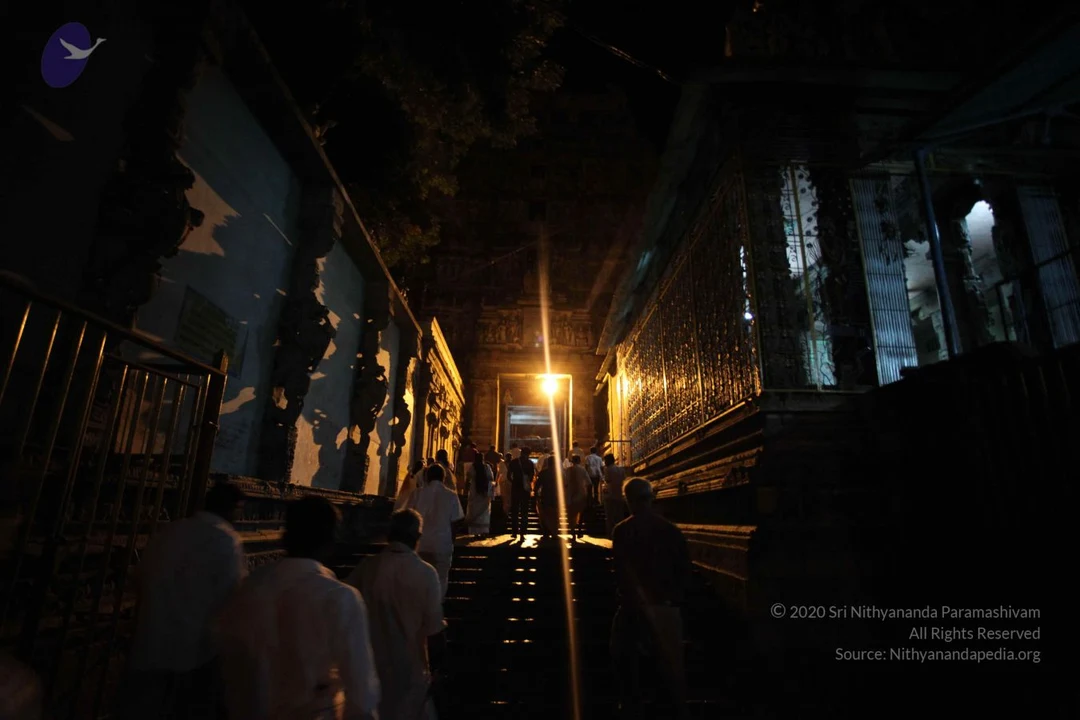
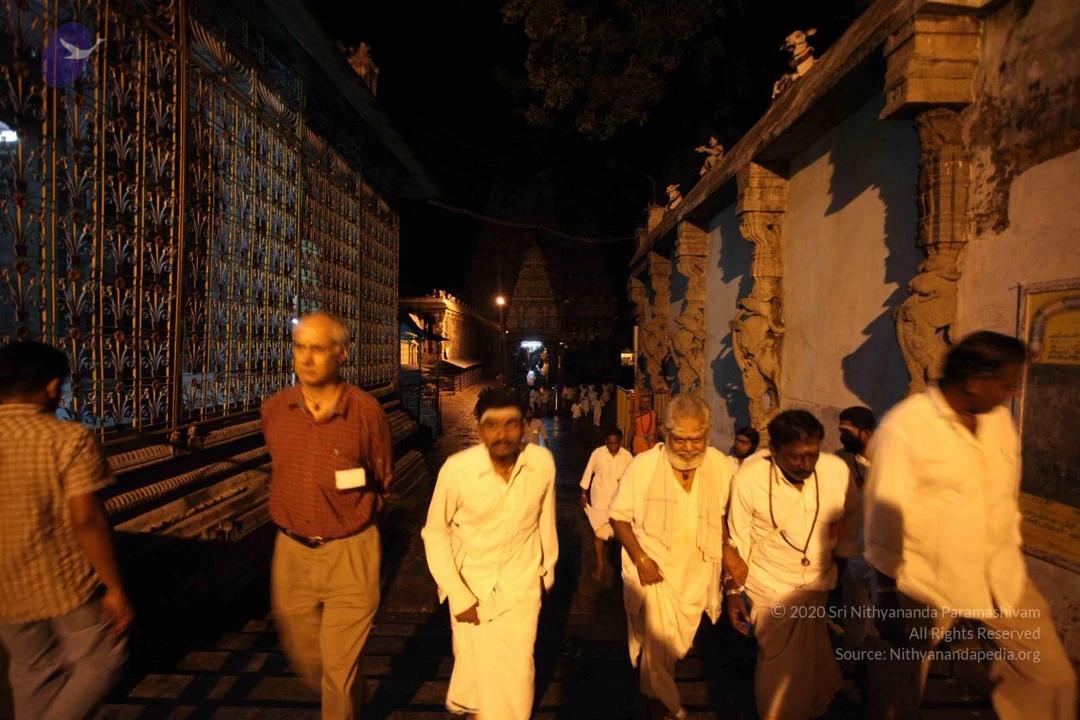
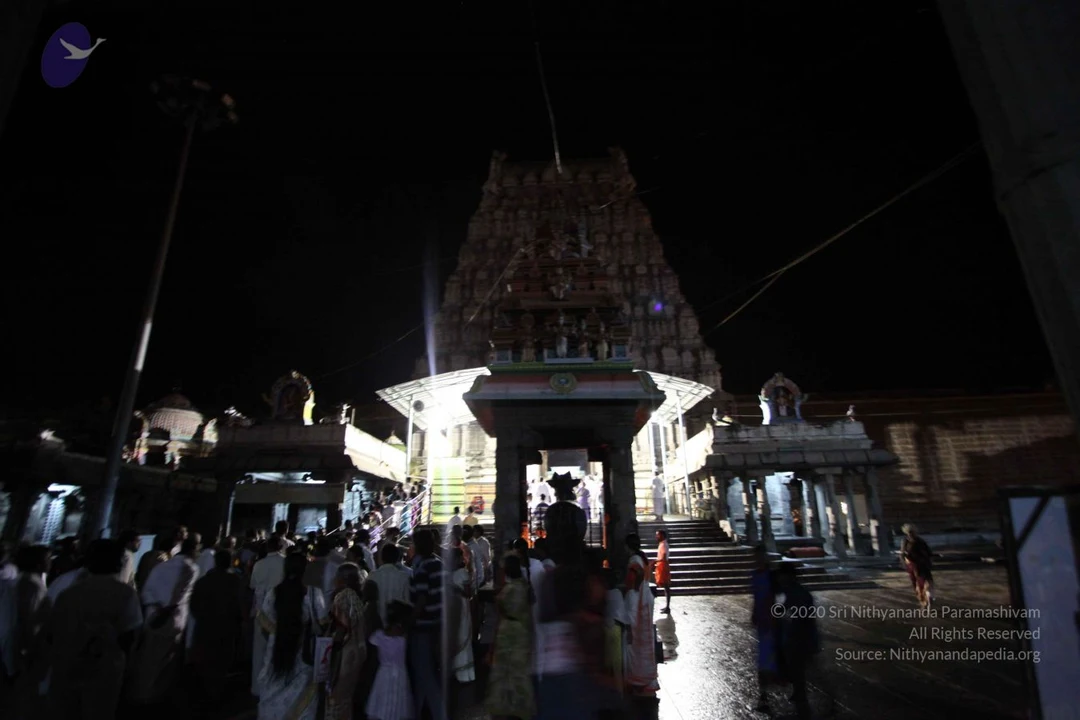
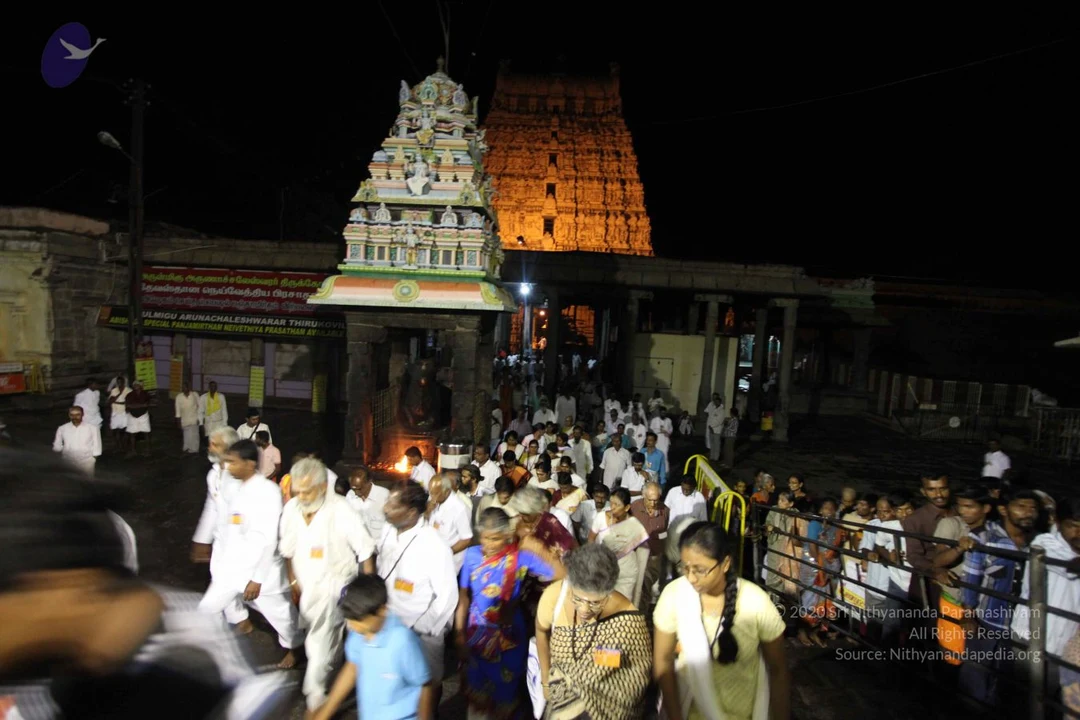
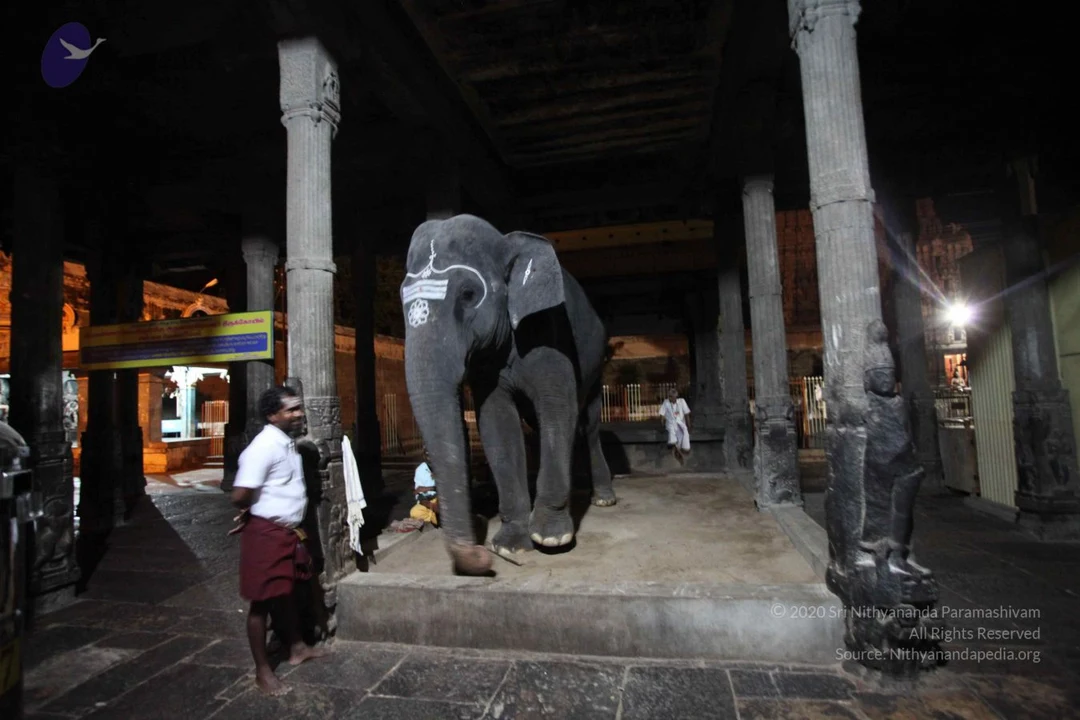
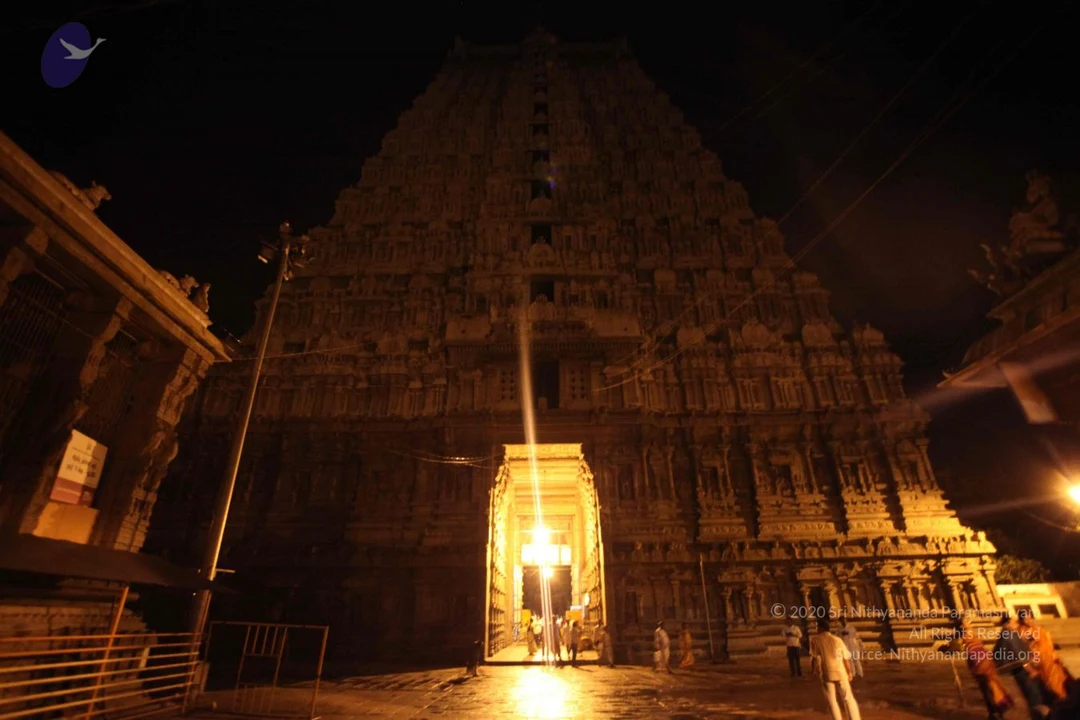
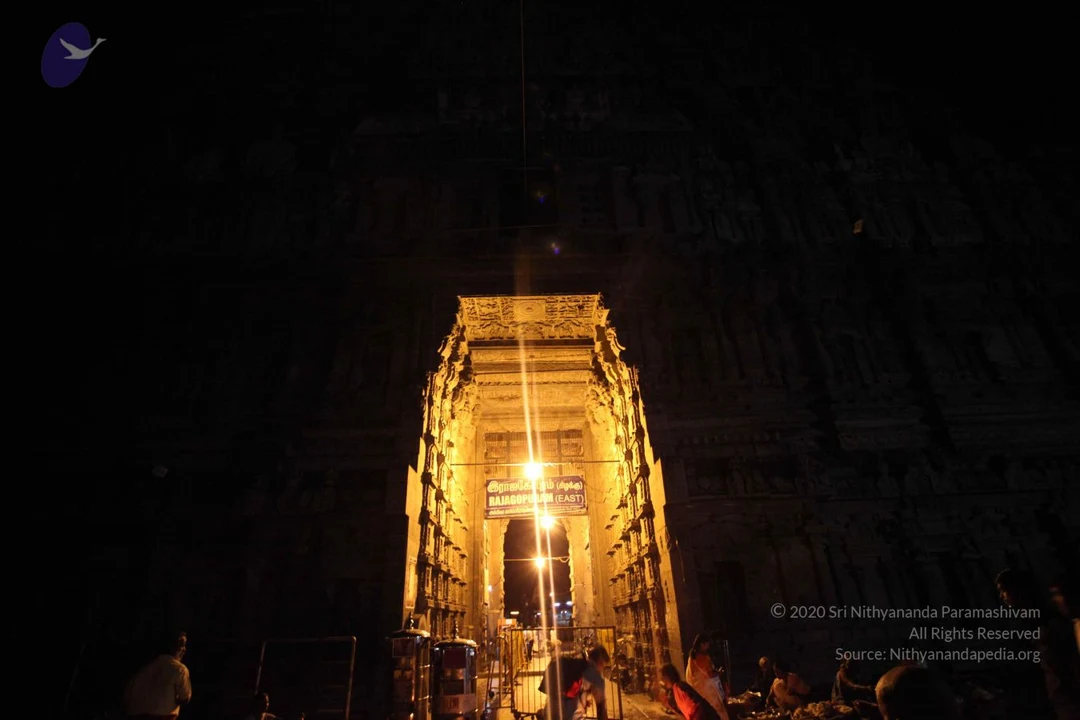
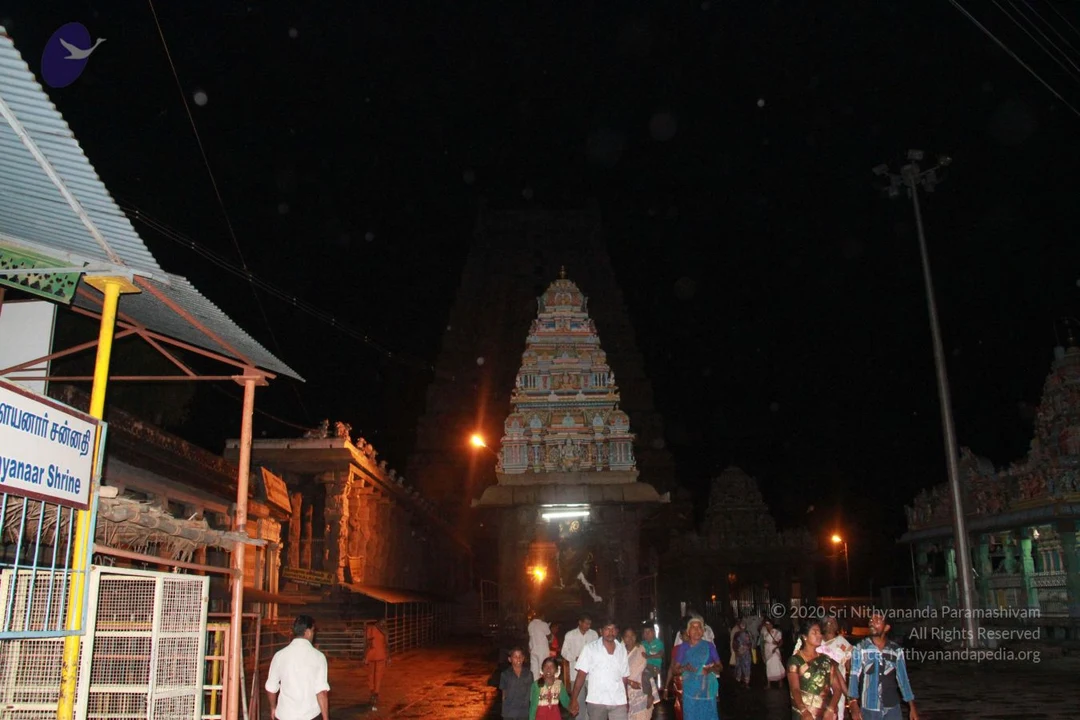
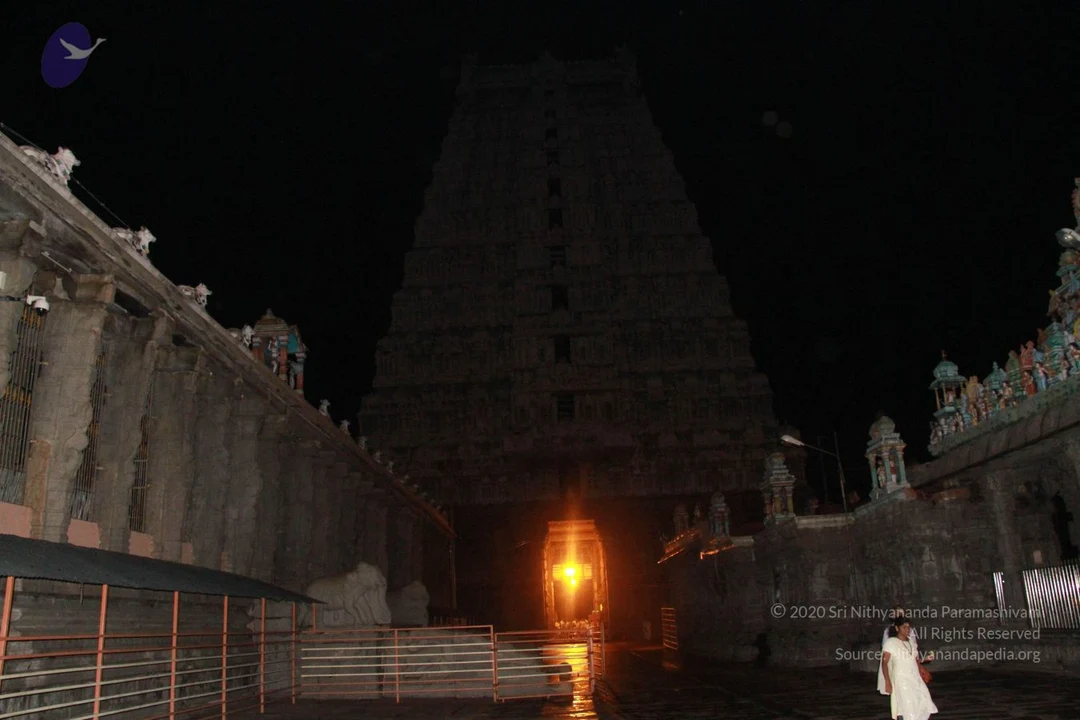
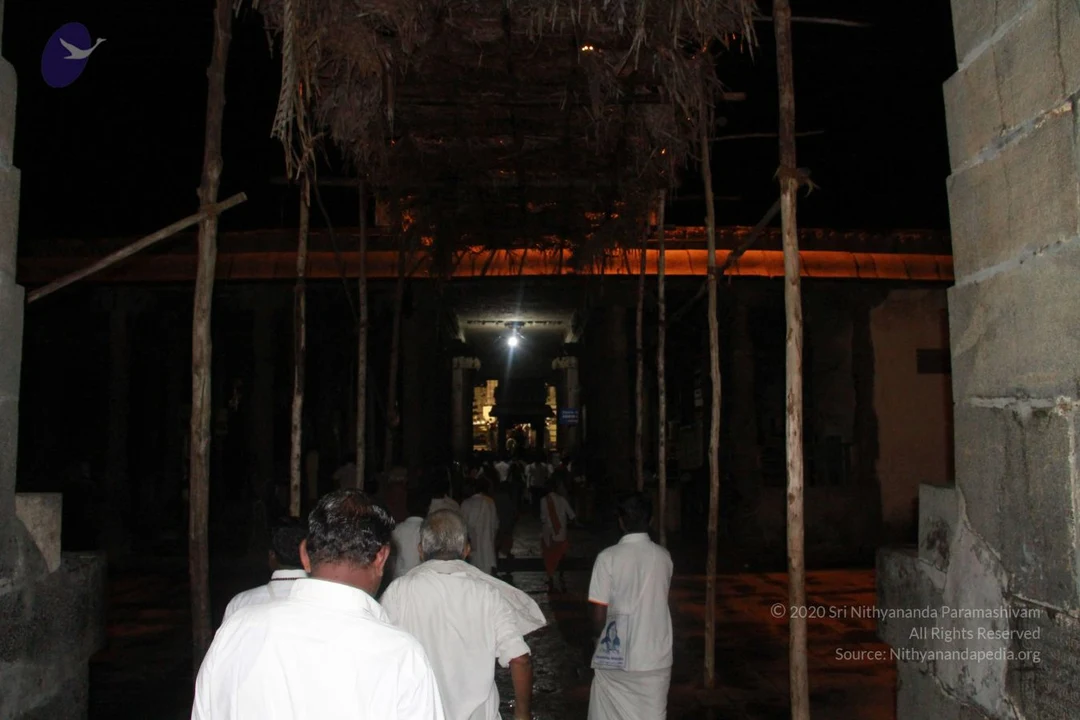
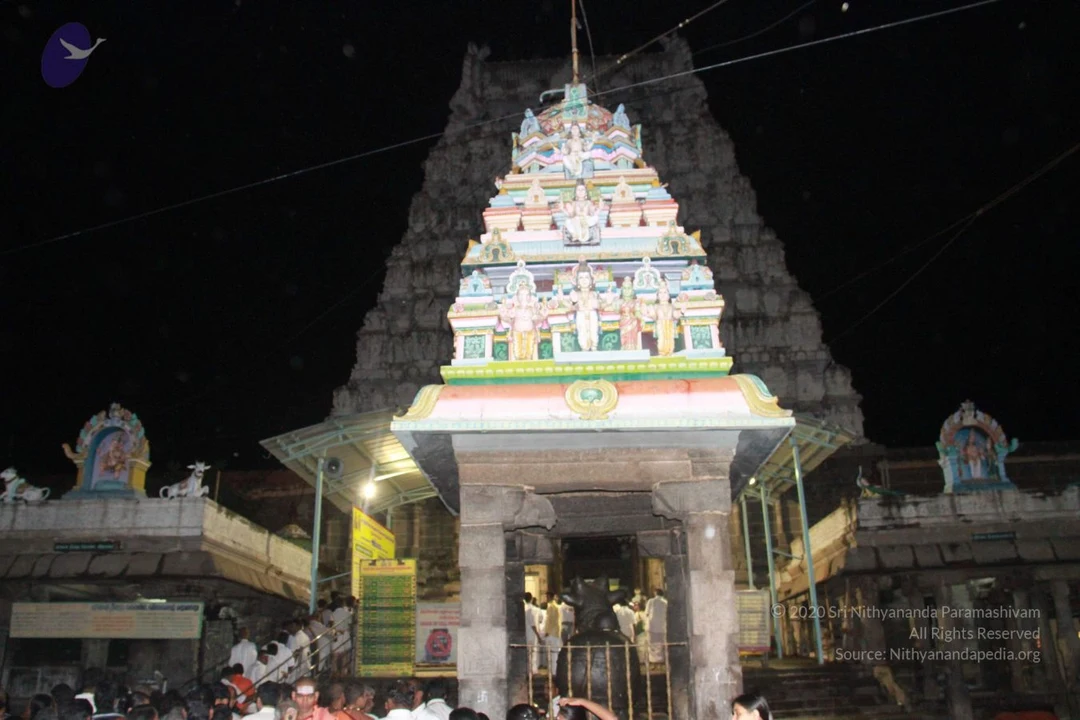
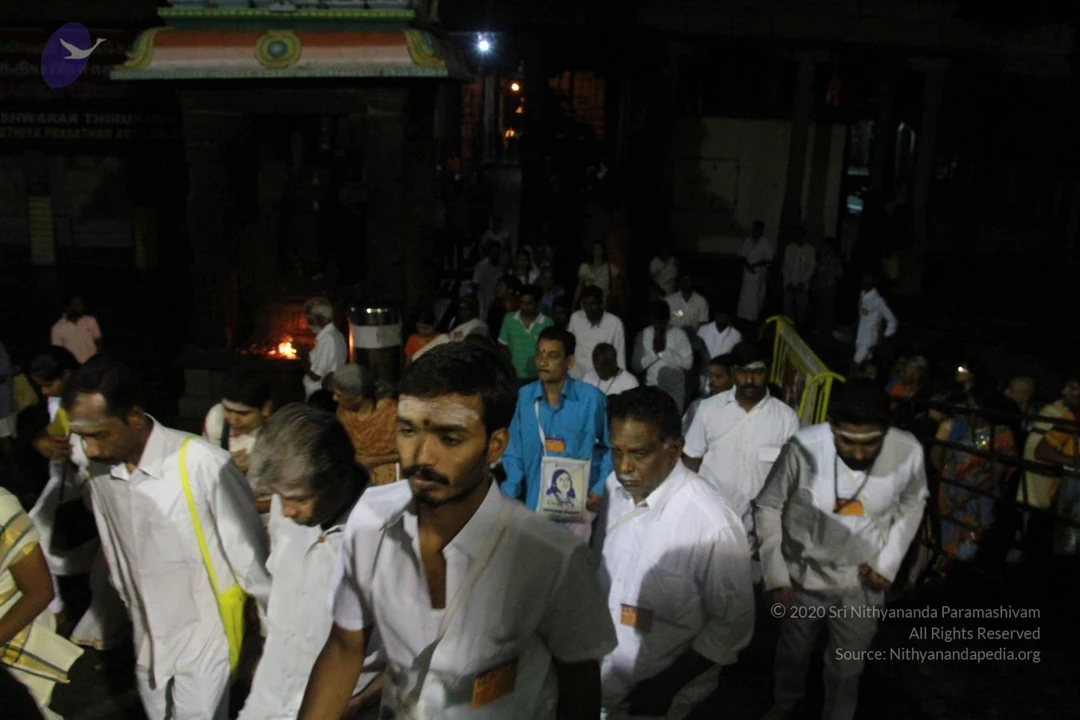
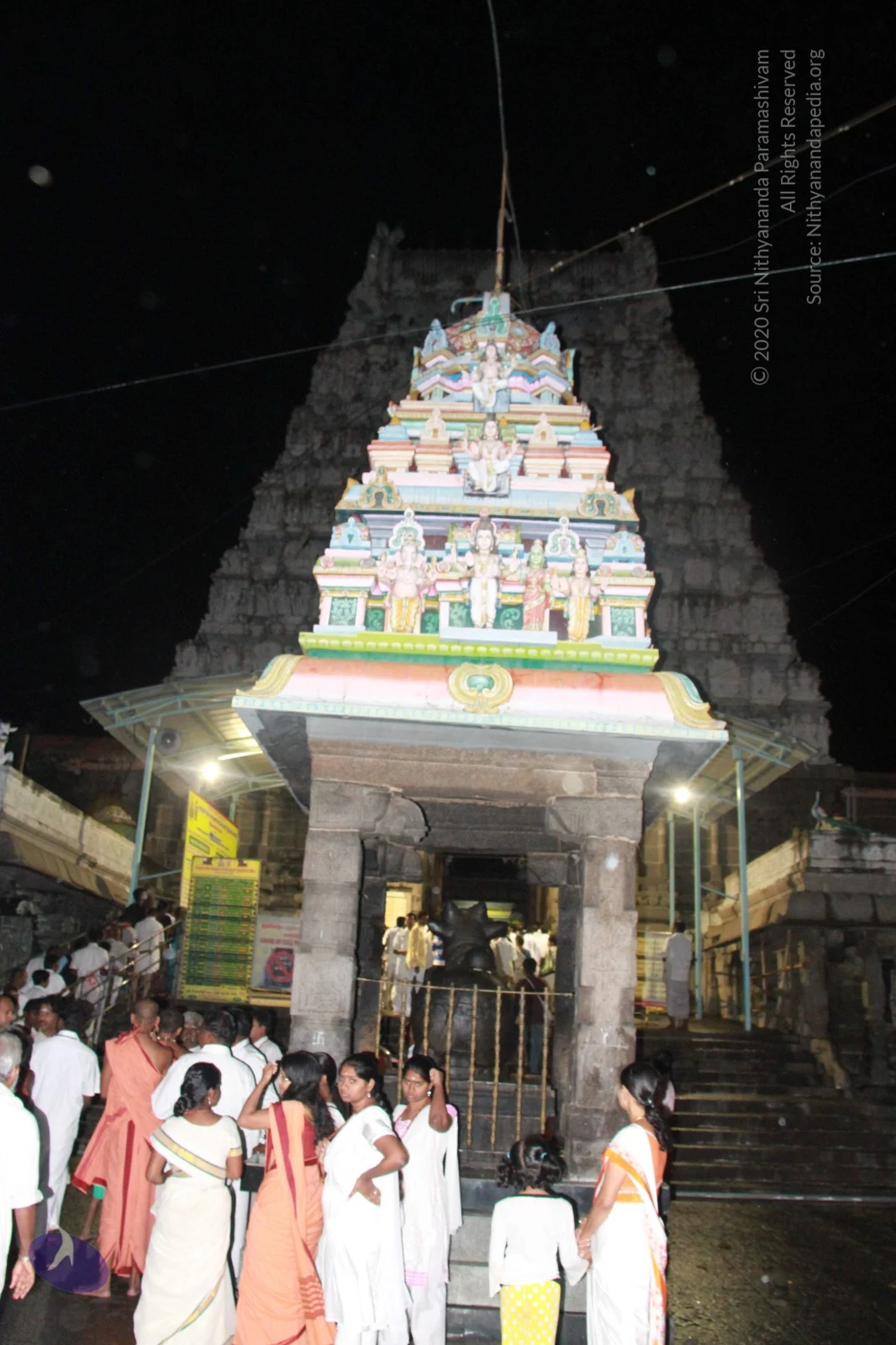
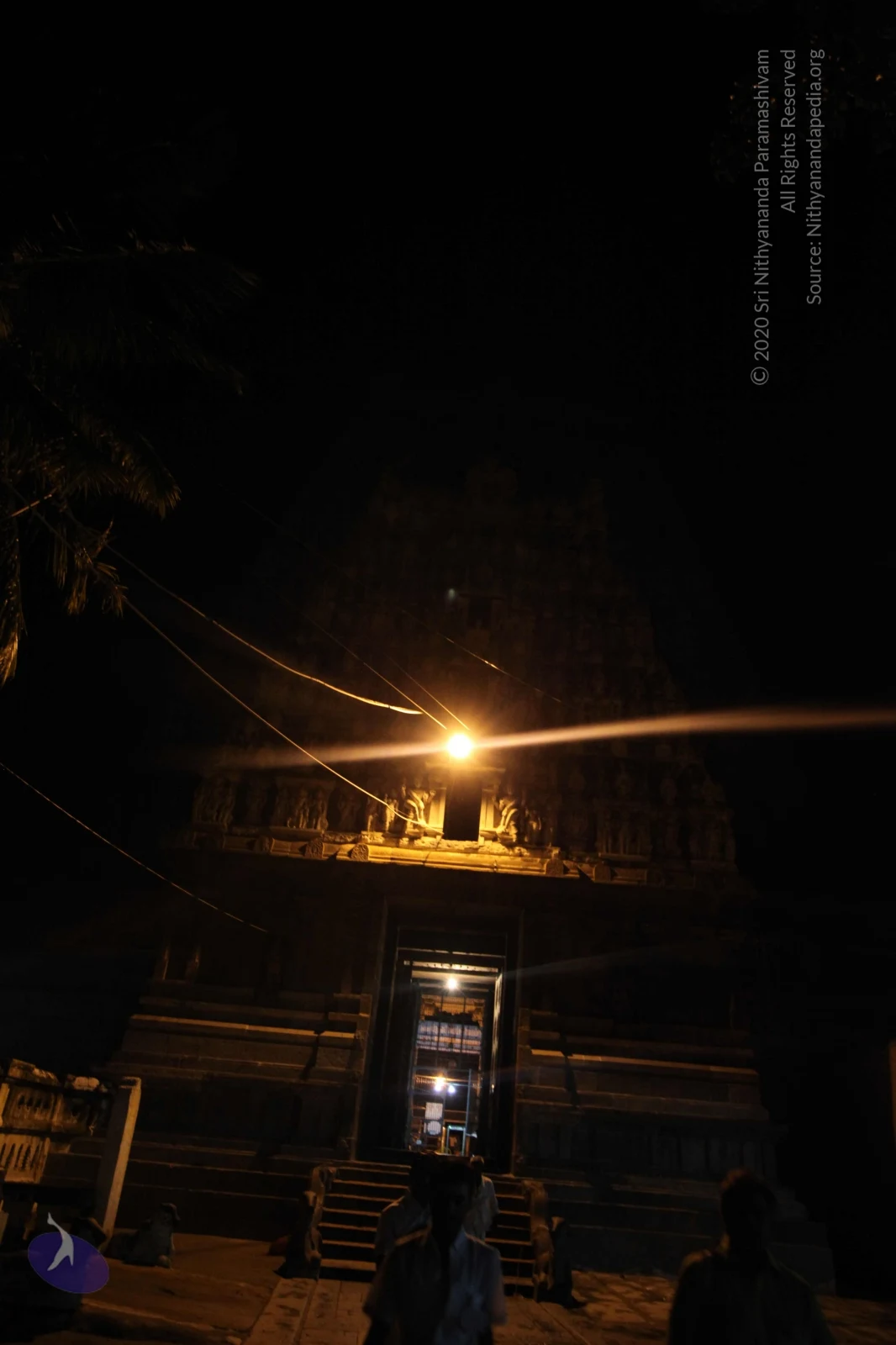
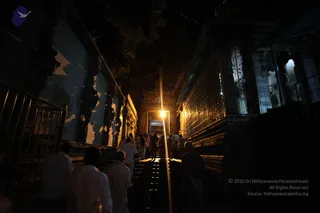
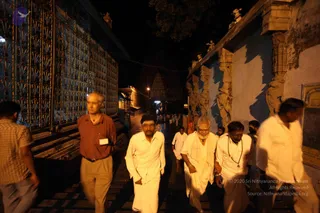
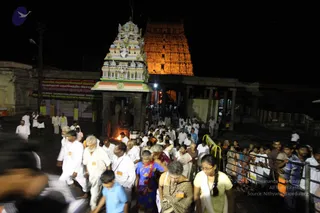
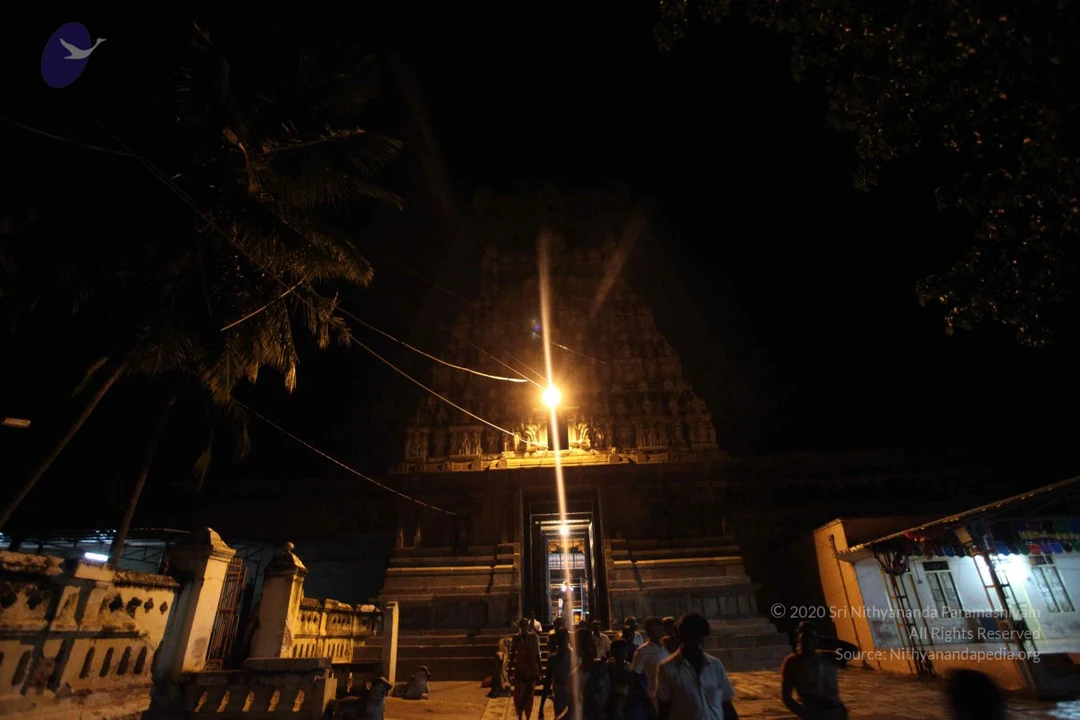
A night photograph of a large South Indian temple gopuram, its tiered tower lit by a warm lamp and carved with stacked sculpted figures, rising above a dark entrance with a gate. Several people walk toward the entrance on a paved forecourt, some in white clothes. To the left, palm fronds and a low white wall; to the right, a small roadside shop with a striped awning and a lit interior. Strings of wires cross the scene.Night view of a temple lane at Tiruvannamalai with a tall gopuram tower glowing in the distance. A figure in a saffron-orange robe walks down the stone path in the foreground, followed by several people in white dhotis and white garments moving toward the temple entrance. Ornate golden metal grille panels line the left side, and carved stone pillars with small sculptures on the wall stand on the right beside a yellow and black notice board. Warm lamplight illuminates the wet paving and dark trees above.Night photograph of a large South Indian temple gopuram, a tall tapering stone gateway tower covered in carved sculptural tiers, lit warmly from below. A wet paved processional path leads toward the bright gateway opening. A long colonnade of carved pillars with a railing runs along the left side, and a small open pavilion with ornate carved roof stands at the right. No people are visible.A dim nighttime photograph of a stone temple passage at an ashram, with worn stone steps climbing toward a lit doorway framed by carved temple gateway. Several people in white and light clothing walk up and down the steps, some in the foreground at the lower edge. Ornate ironwork railings line the right side and carved stone pillars and walls border the path, with a single warm lamp glowing at the entrance.Night photograph of devotees walking along a stone-paved temple lane at Tiruvannamalai. On the left, an ornate golden-grilled gate stands beside a worn wall. Several men in white dhotis and shirts walk toward a lit gopuram in the distance. Foreground figures include a man in a red shirt with a white badge, and a bearded man in white with a saffron-free shawl over his shoulder. A white-clothed man wears a rudraksha-style mala around his neck. Carved stone figures decorate the right wall and roofline.Night photograph at a temple entrance in Tiruvannamalai. A large crowd of devotees, mostly dressed in white with some in blue and yellow saris, walks through a gated lane toward a lit temple gopuram. In the foreground, a small boy in a blue shirt and an older man with white hair and a white beard in white clothes walk together. A small shrine with a colourful painted tower stands at the left, with a flame or oil lamp burning near its base. Along the right, a metal barrier guides people in a line, and a few onlookers stand beyond it. A printed banner in red and yellow reads a Tamil temple inscription. No identifiable a person is visible in this crowd.

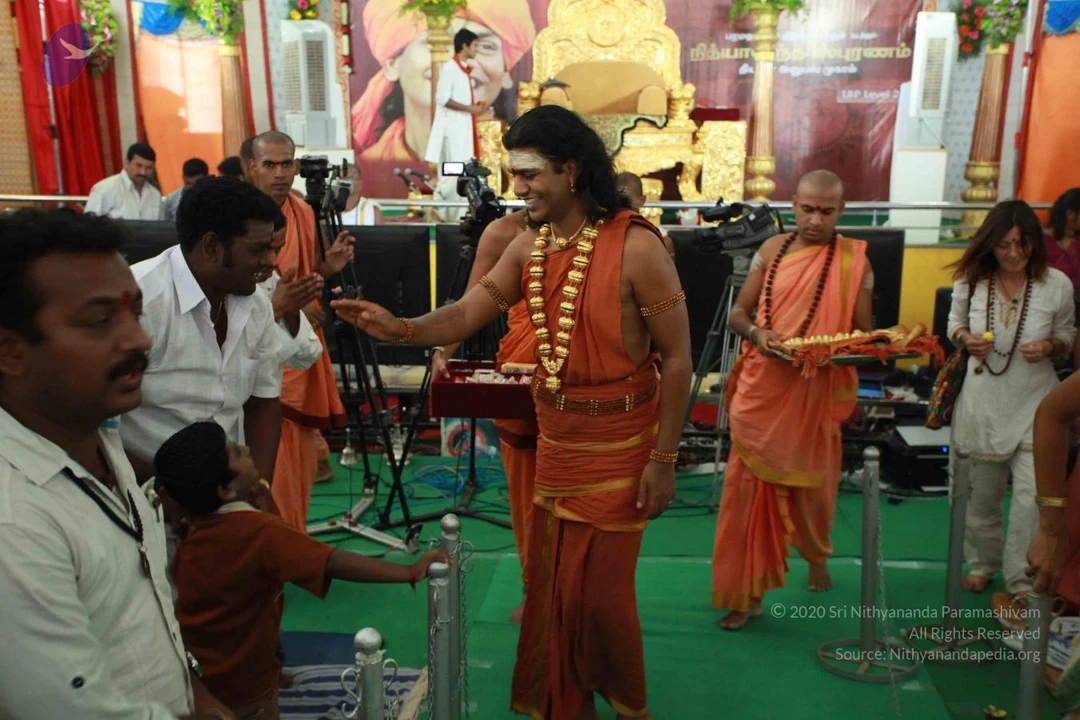
VIP Visit

7 photosSource gallery
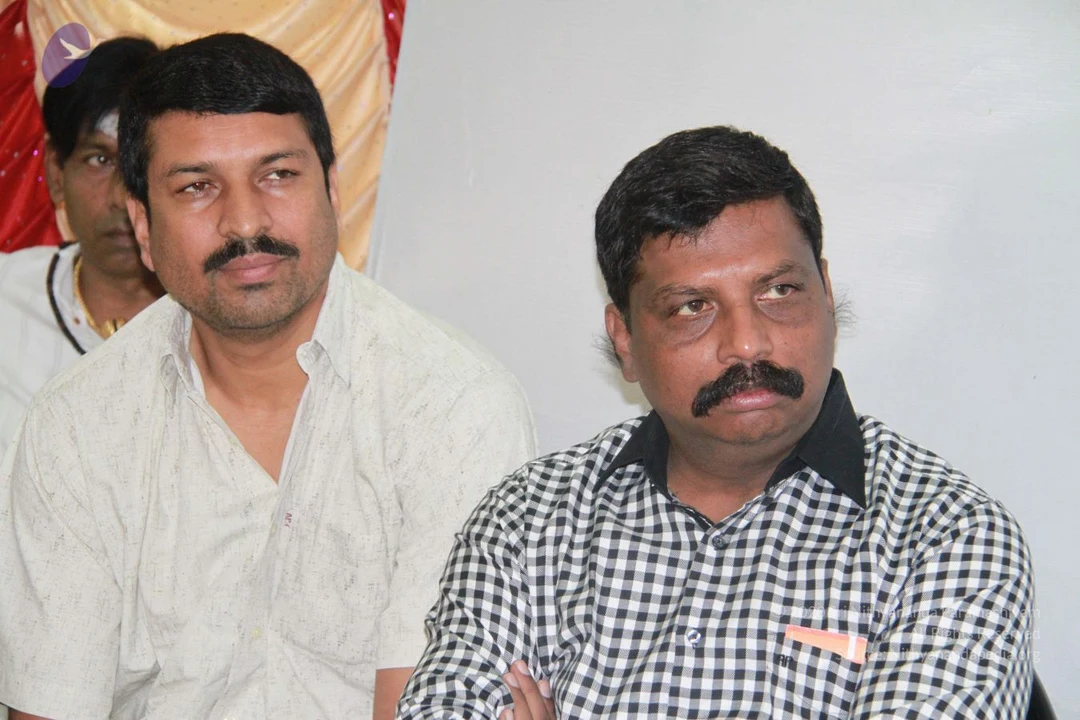
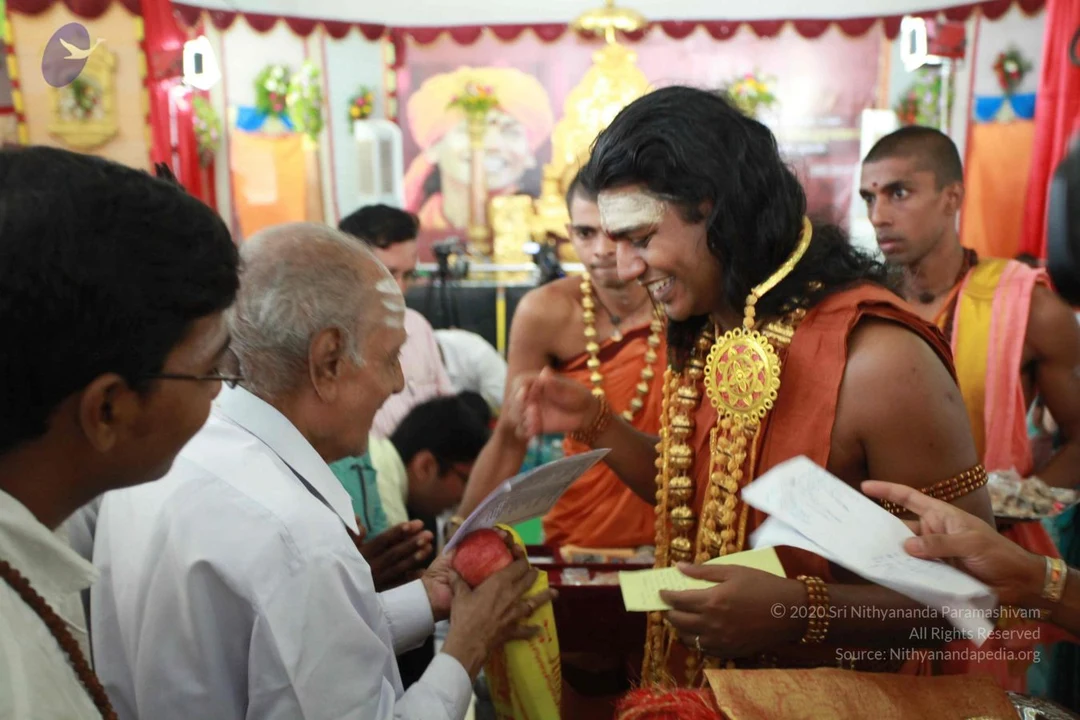
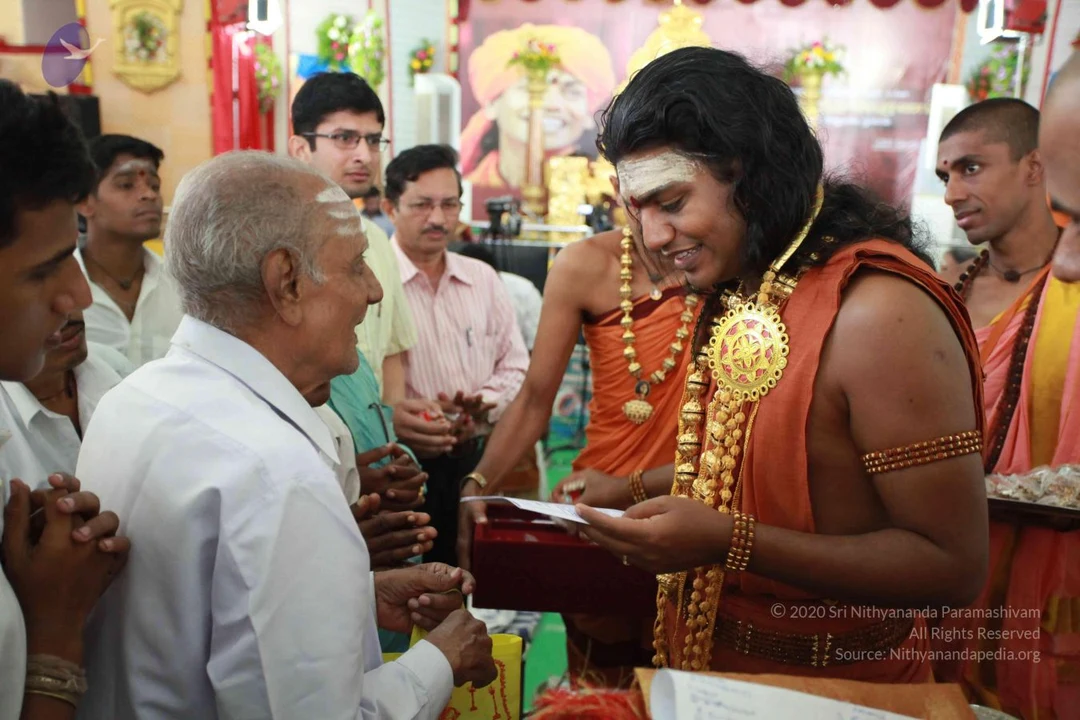
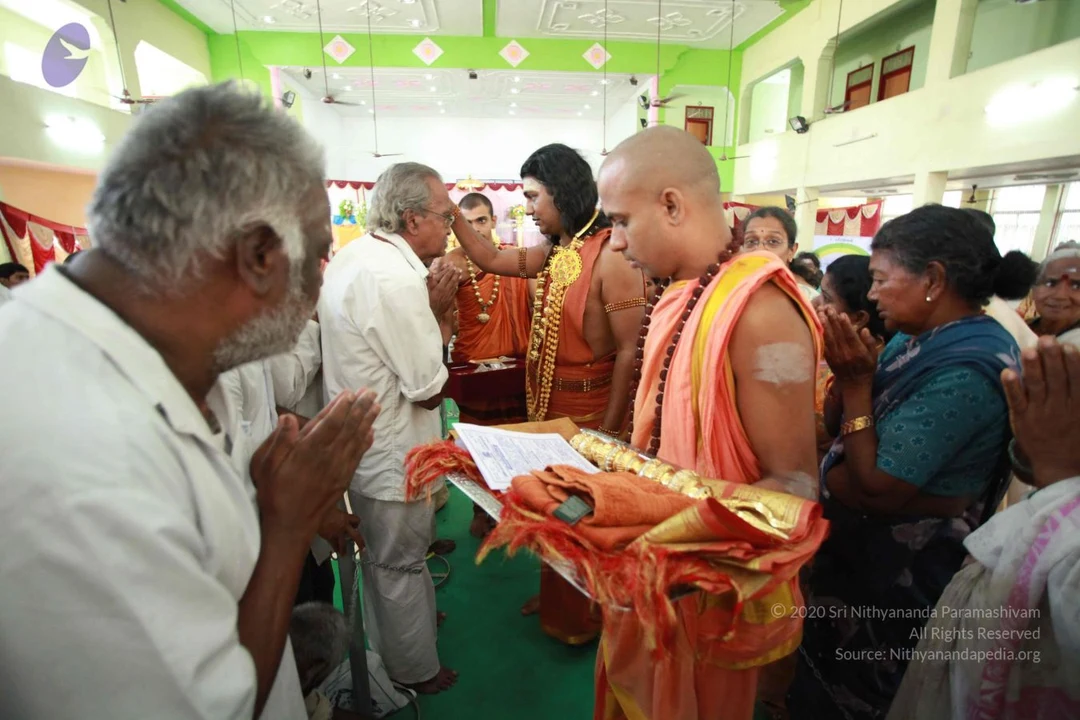
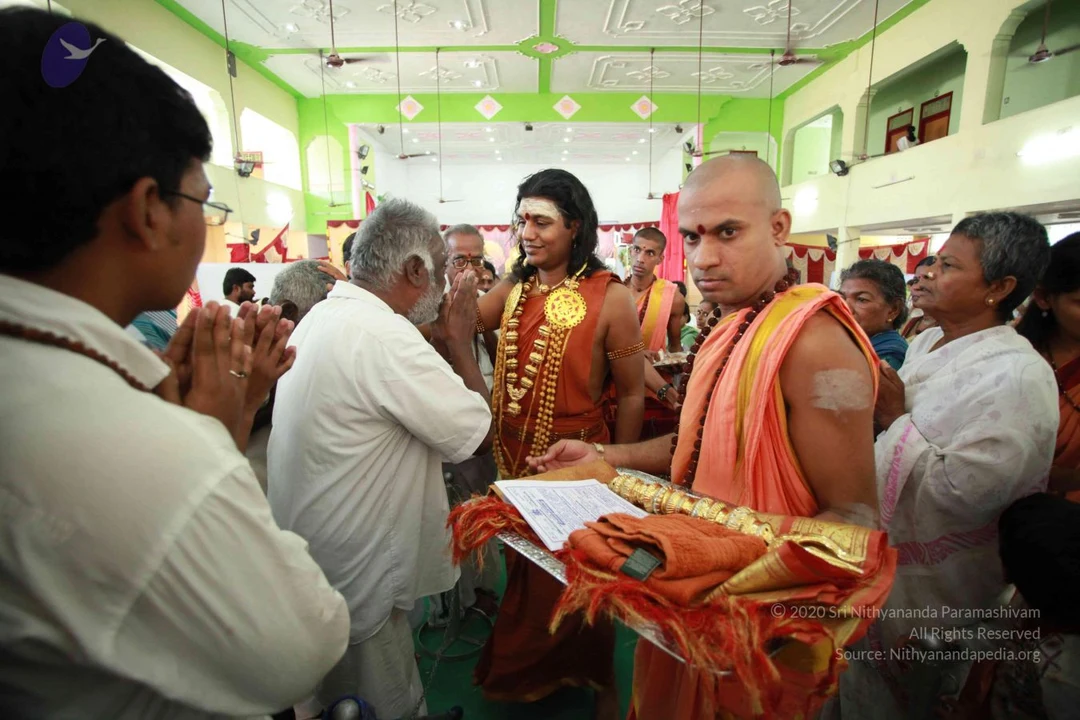
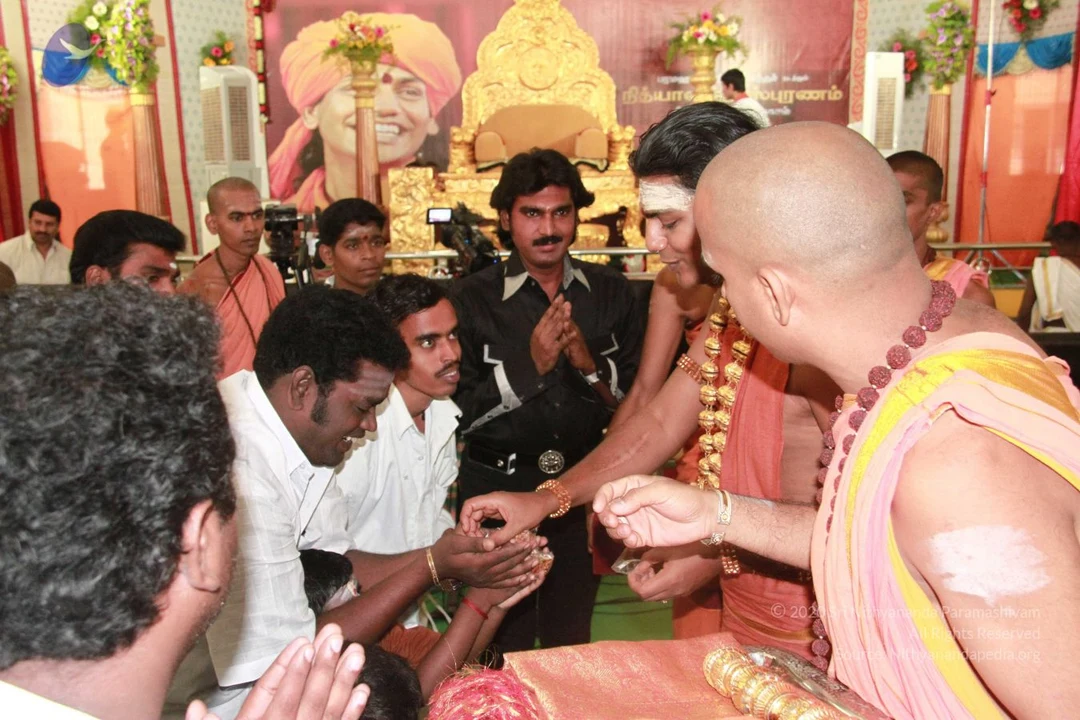
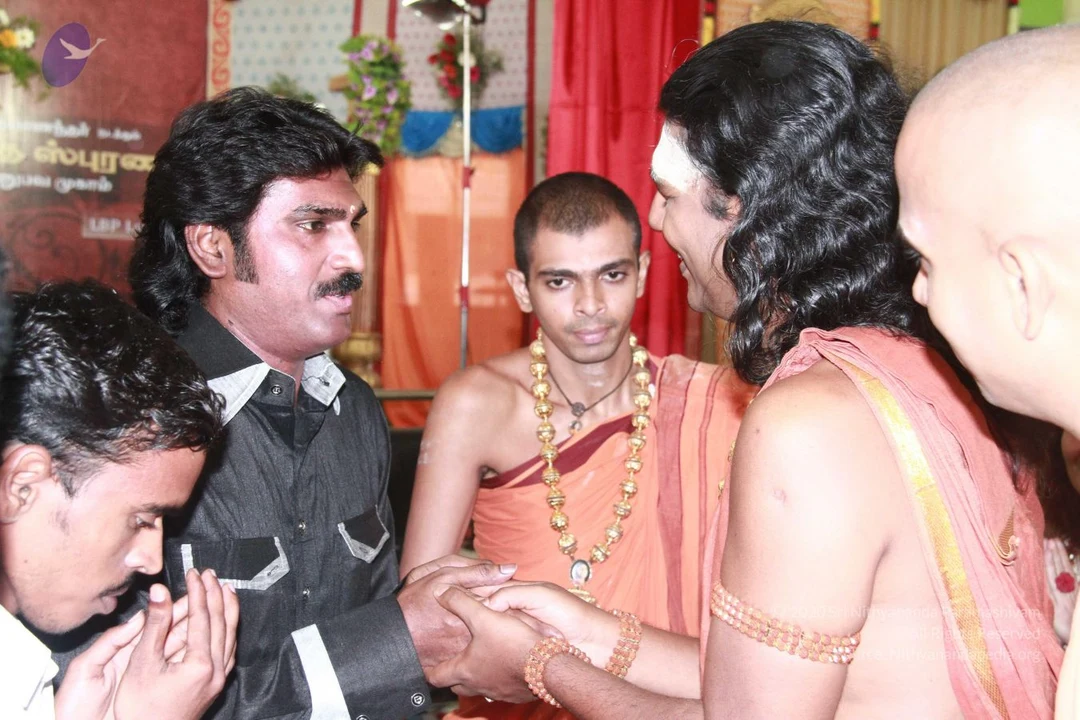
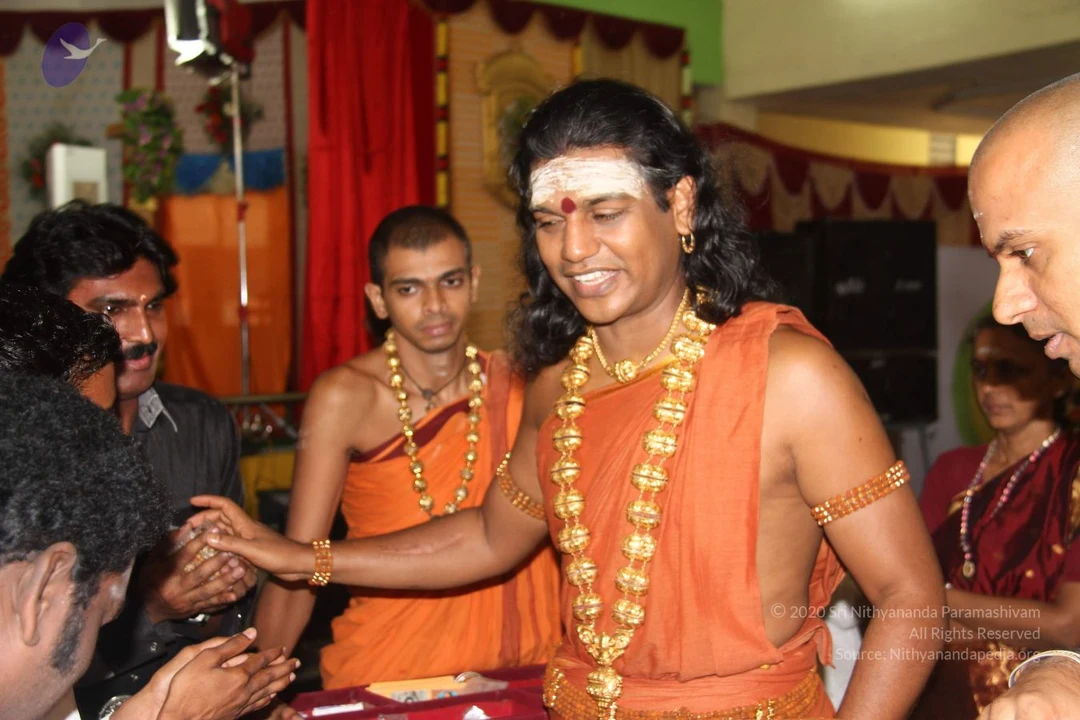
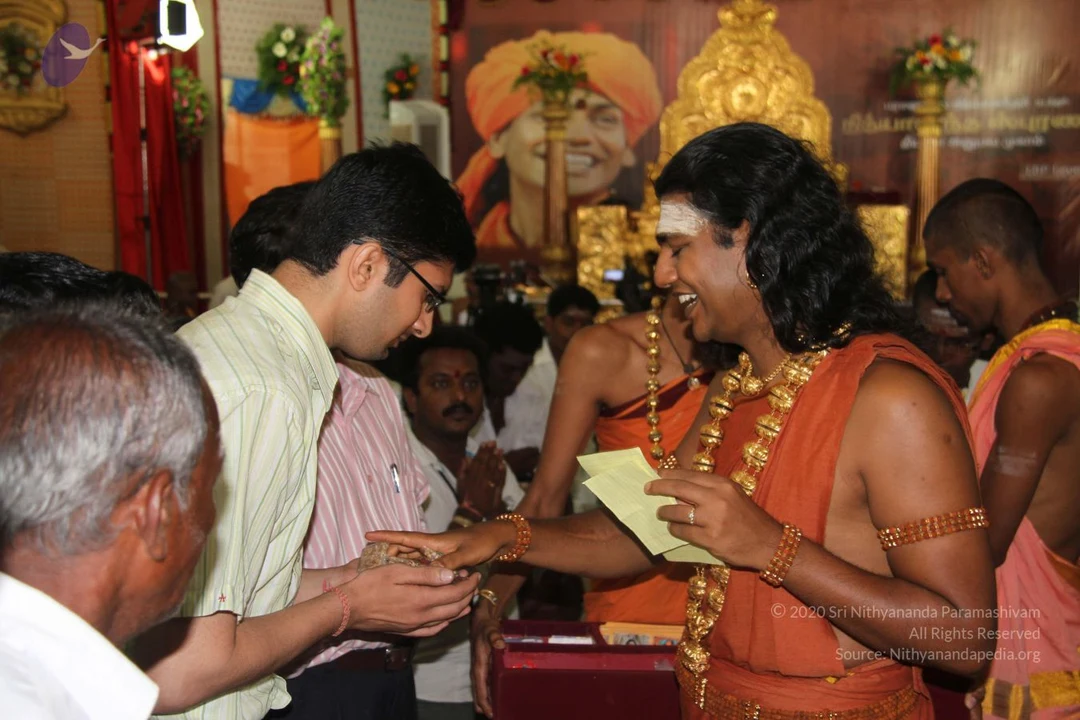
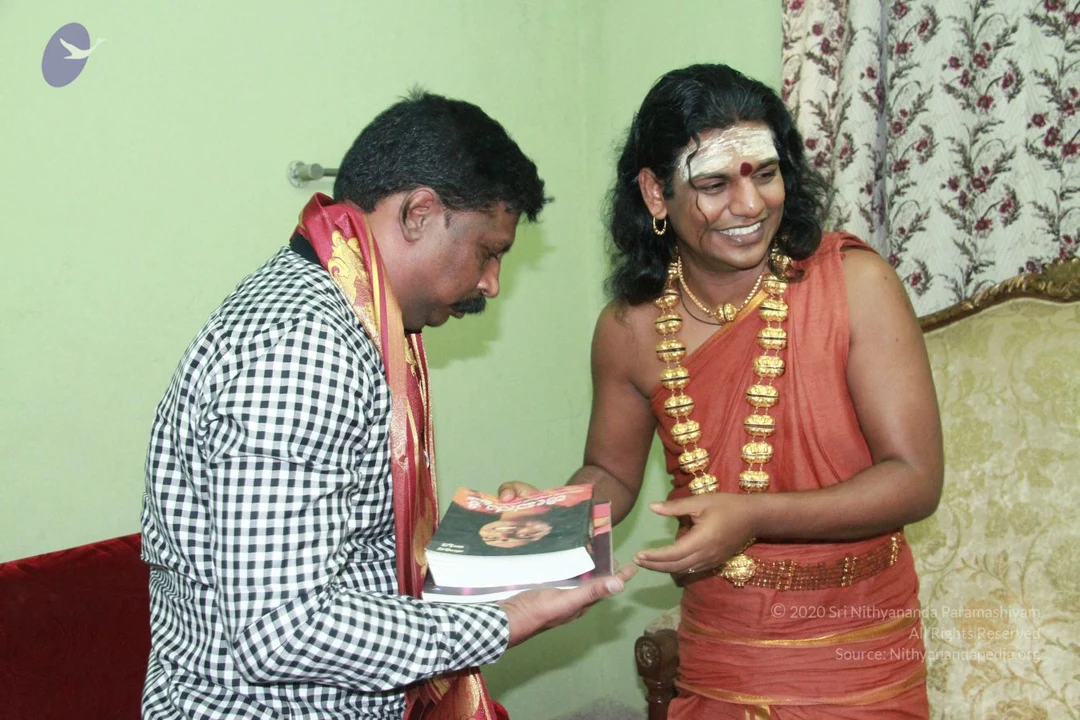
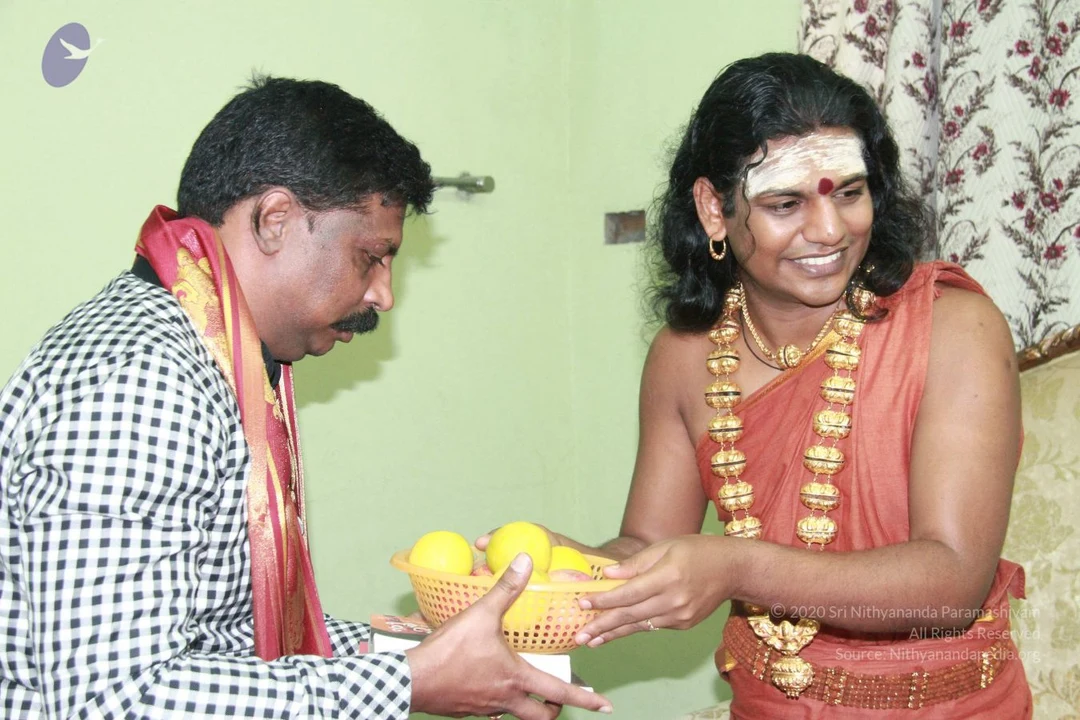
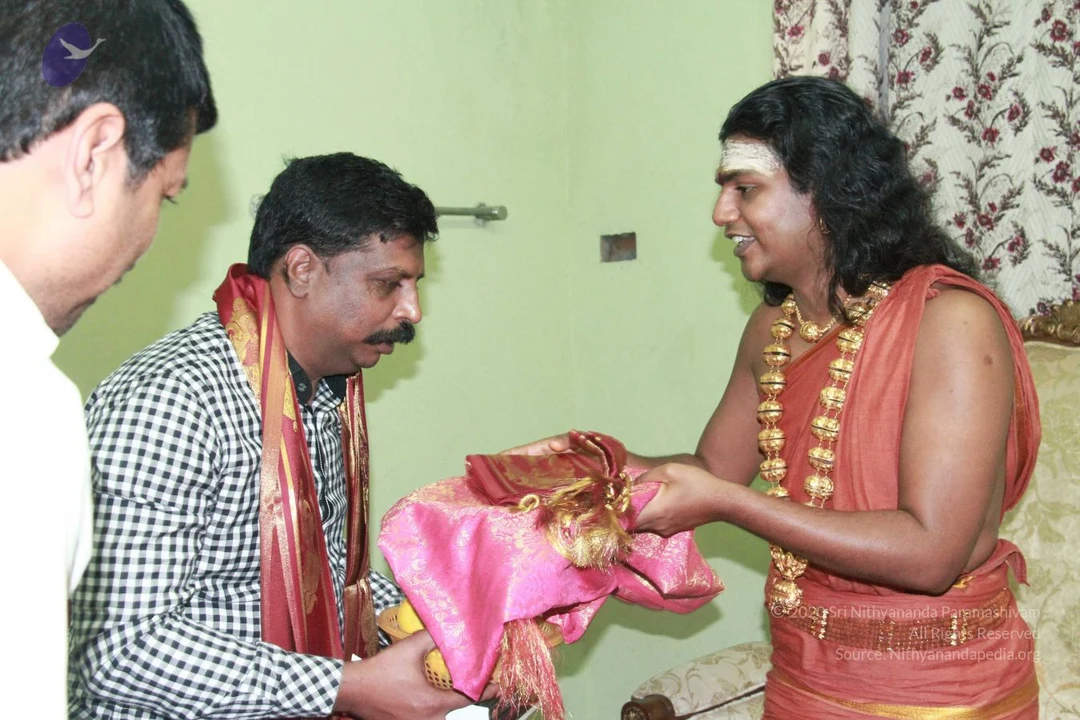
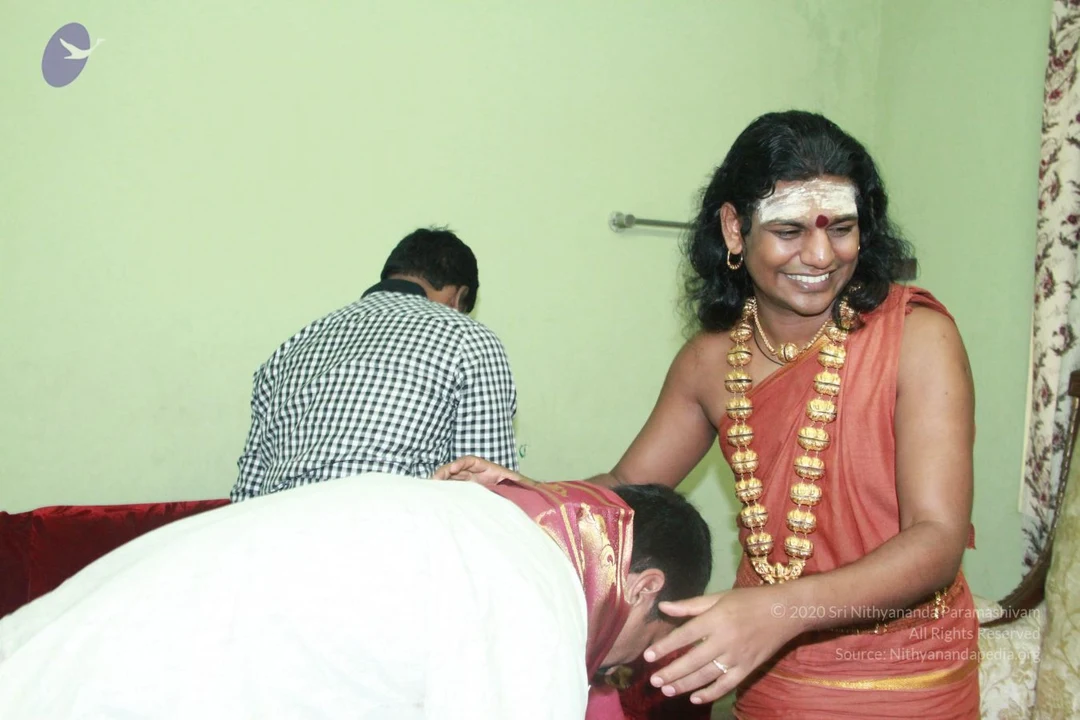
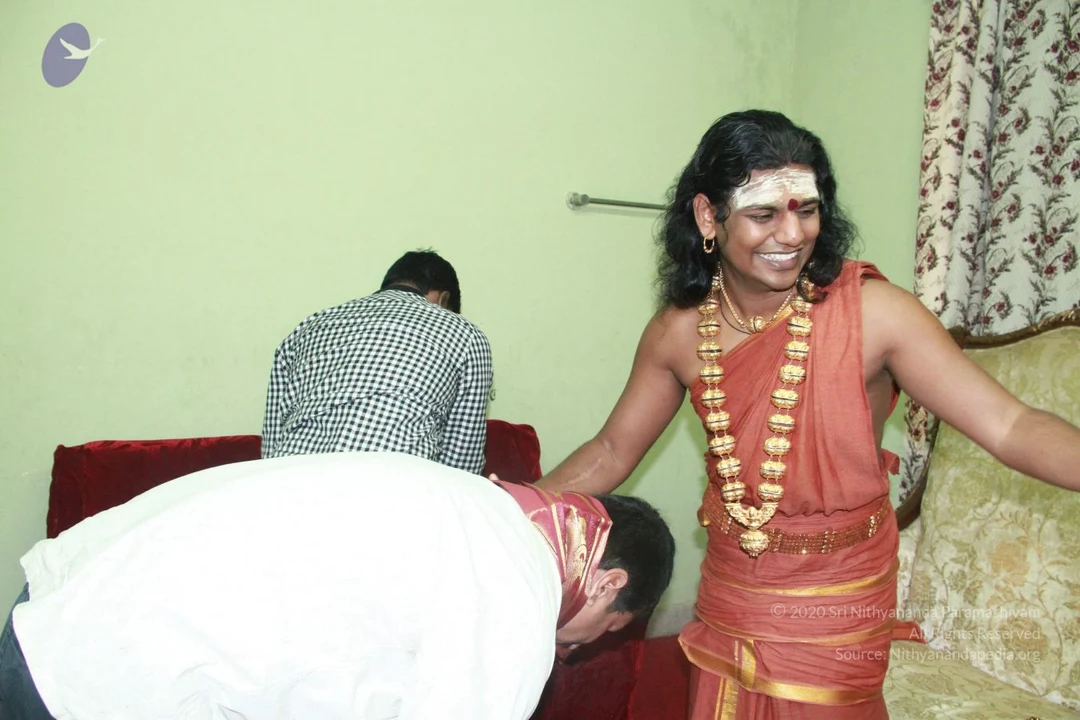
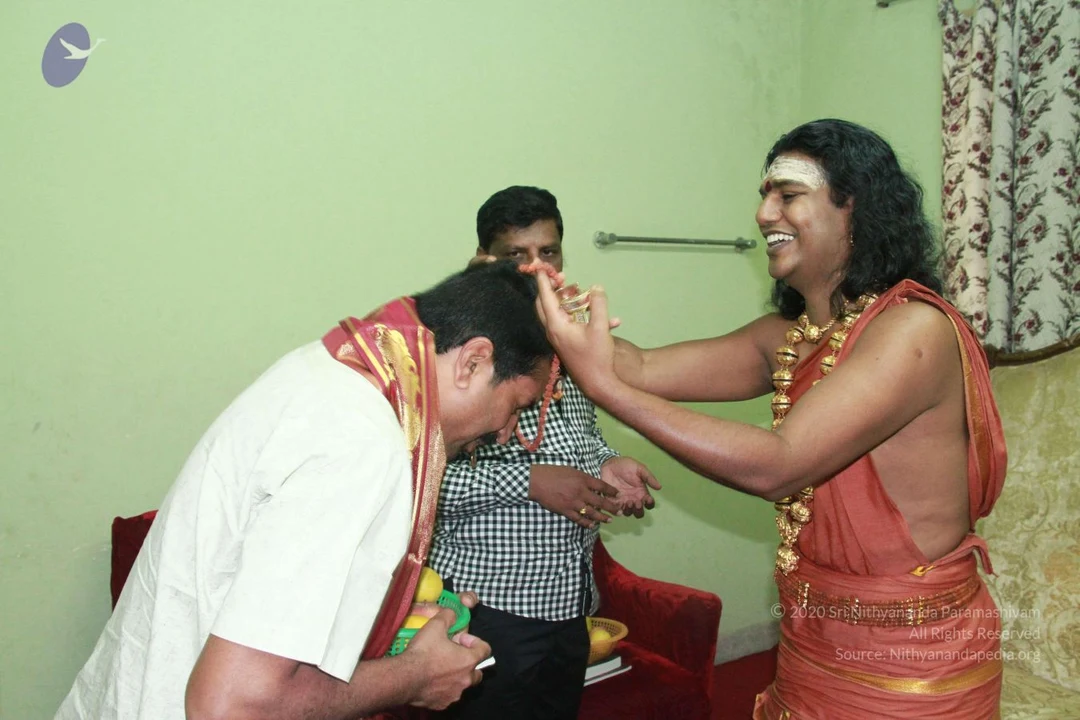
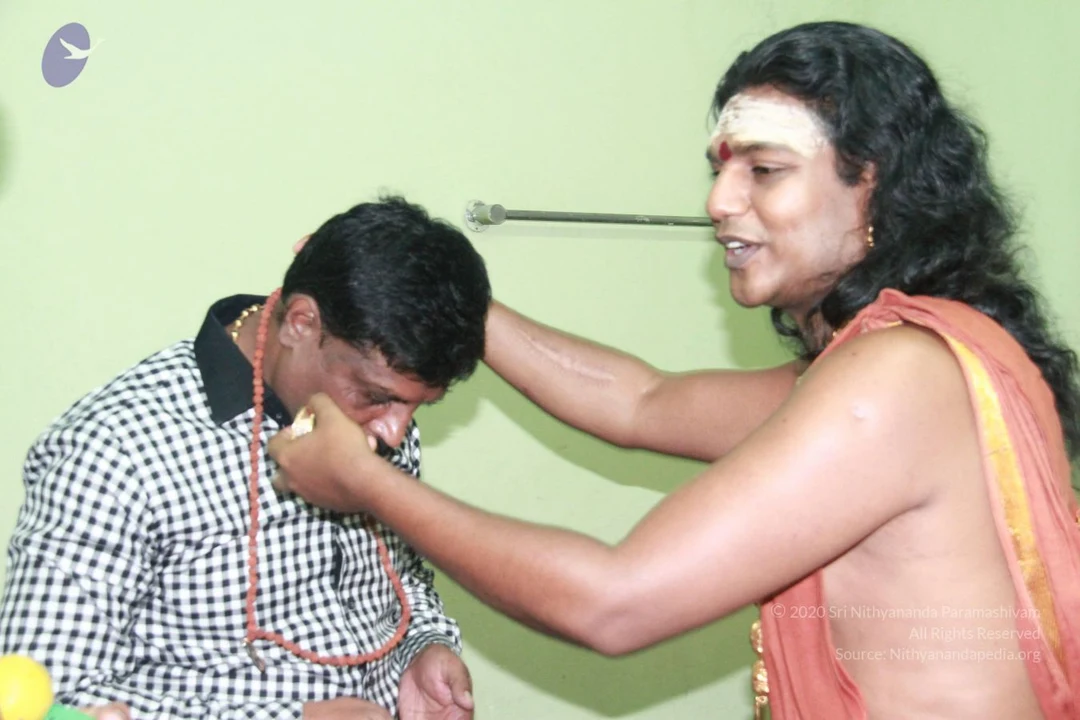
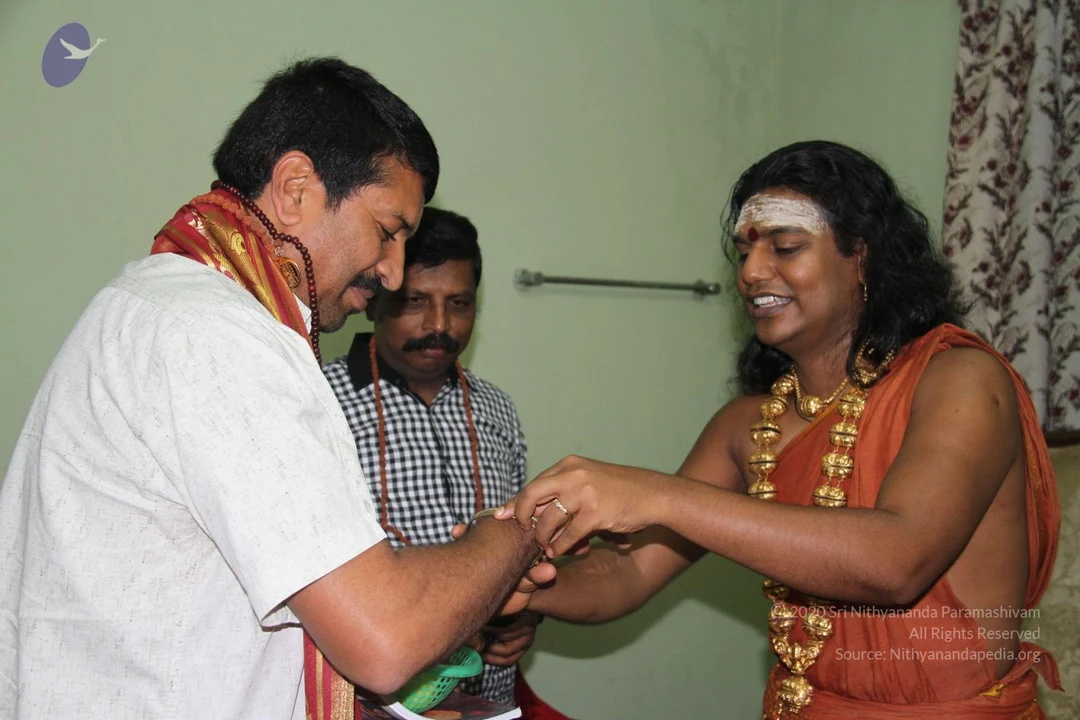
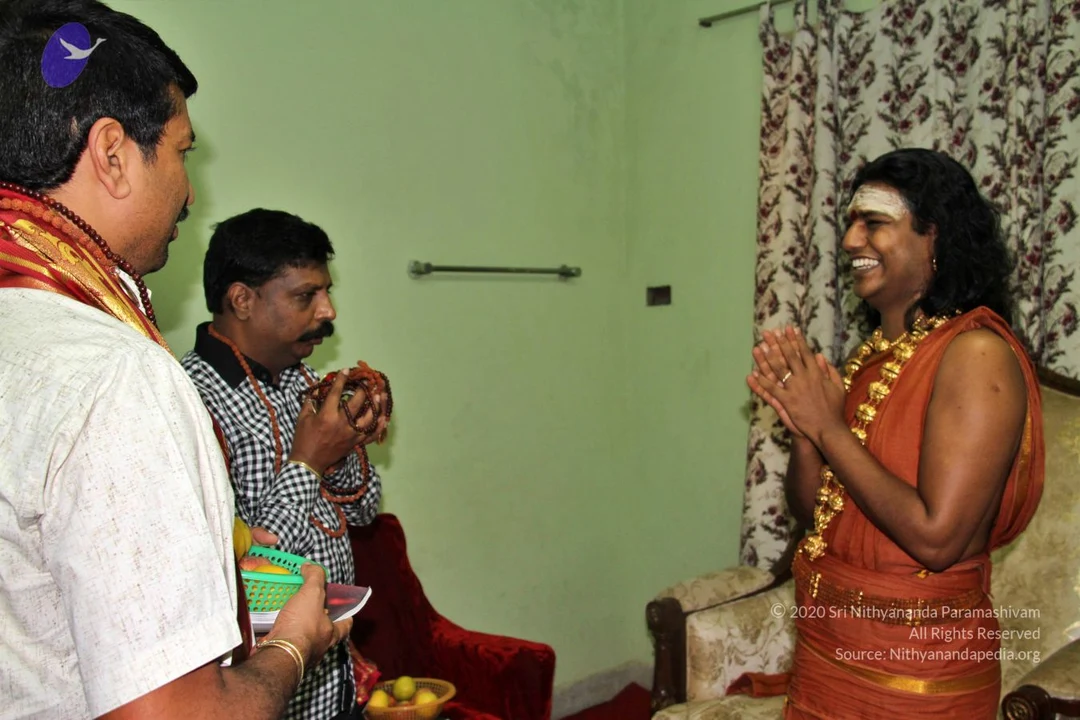
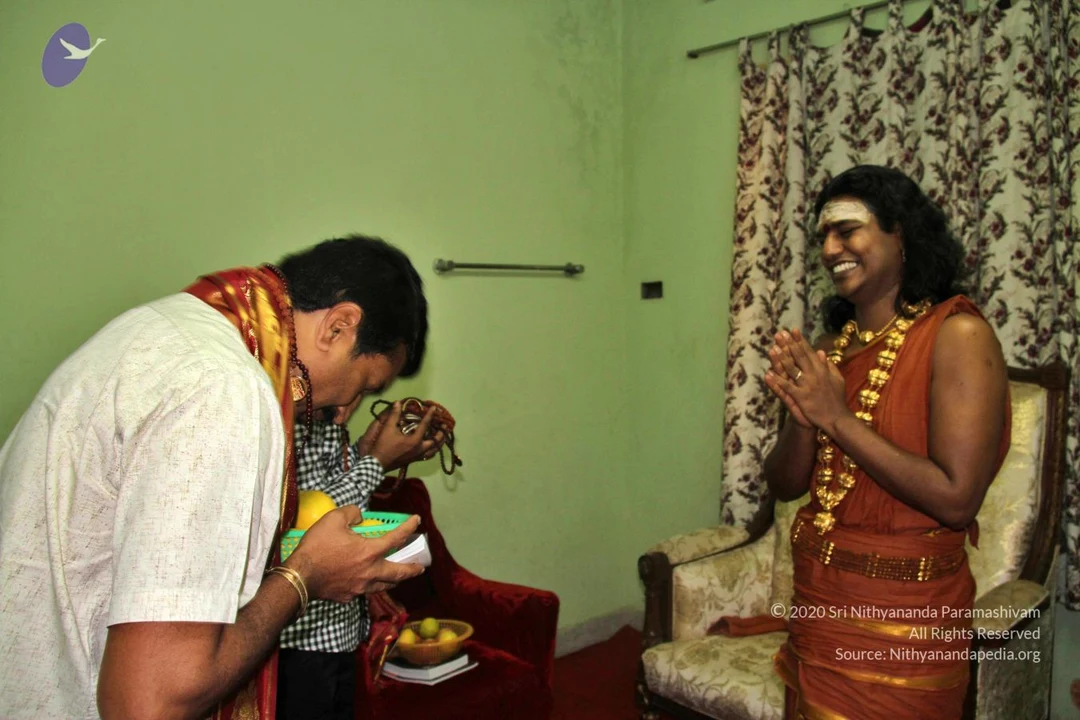
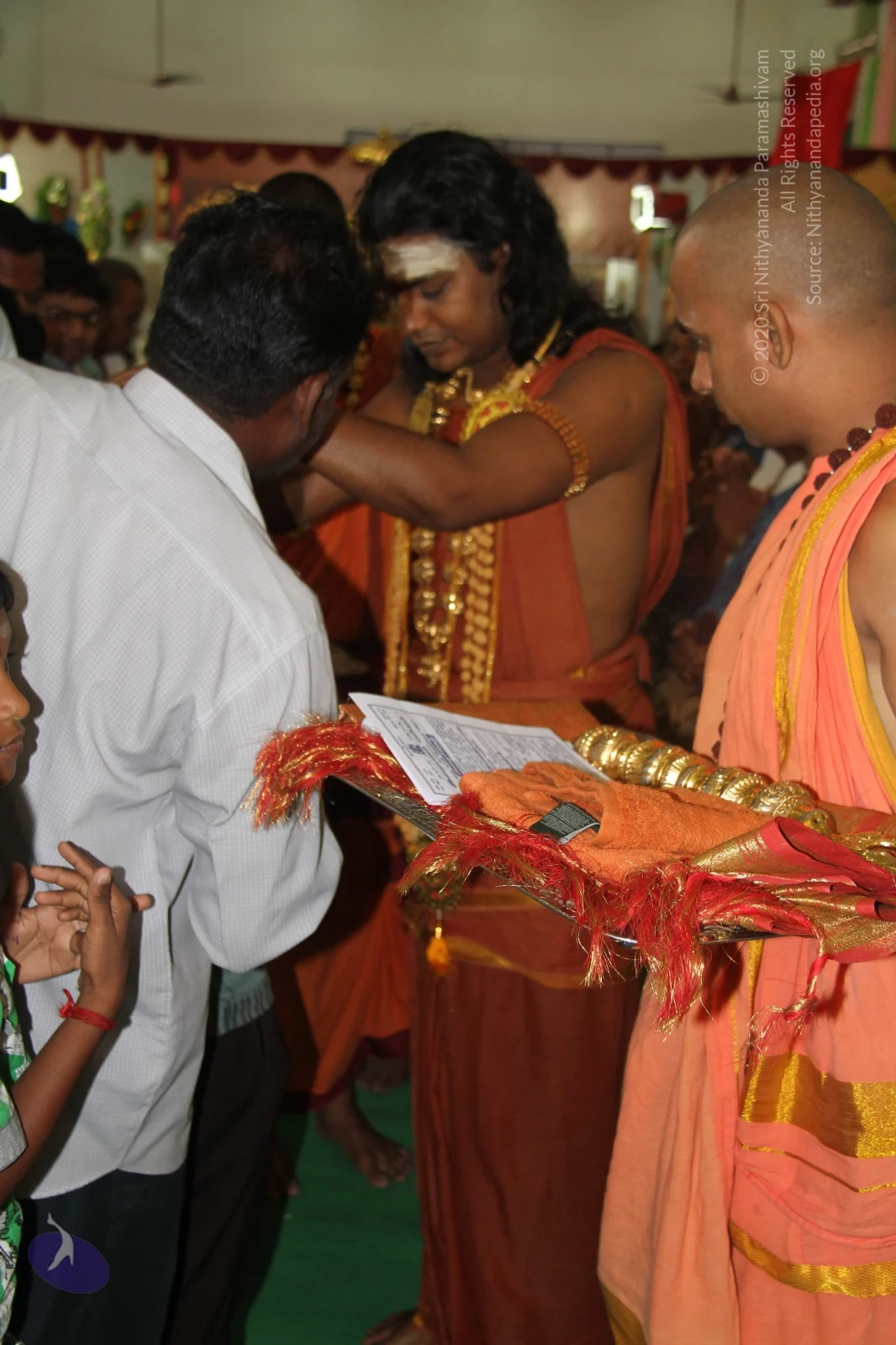
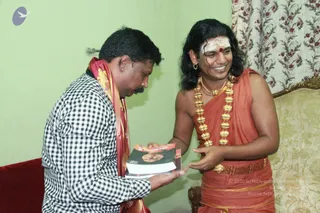
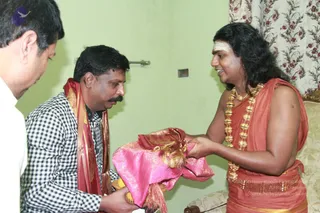
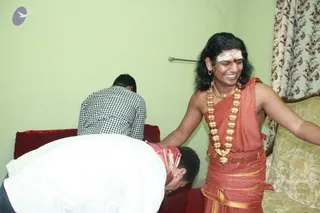
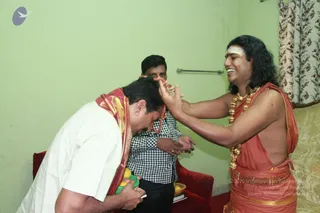
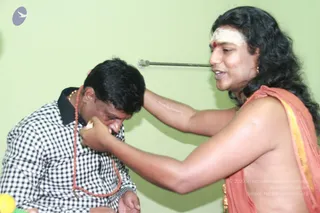
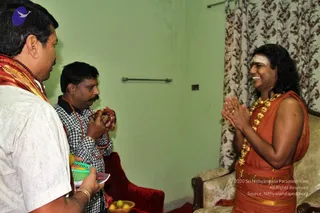
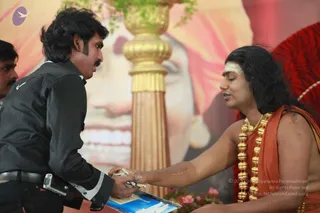
Indoor photo in a room with pale green walls and a floral curtain. A man in a black-and-white checked shirt with a red-and-gold shawl bends forward, holding a book with a cover showing a portrait, and presenting it. Beside him, a smiling figure with long dark hair, a white forehead marking with a red dot, and a rust-orange cloth wrap, wears heavy gold beaded necklaces and a gold waist belt. He gestures toward the book. A gold-patterned sofa is visible at right. Two people are visible.A photograph of a man in a white-and-black checked shirt with a red-and-gold shawl bowing forward and receiving a bundle wrapped in pink silk with gold brocade and tassels from a bare-chested figure. The figure on the right has long swept-back black hair, a white vertical tilak on the forehead, a red-orange cloth wrap and multiple heavy gold bead necklaces, matching the Swamiji (probable) appearance cues, and is presenting the bundle. A third man in white stands at the left edge partly cropped. The setting is a plain green-walled room with a floral curtain and a cushioned armchair with a patterned cover. Physical people visible: three.Indoor photograph in a pale green room with a floral curtain and a patterned sofa. A smiling man with long swept-back dark hair, a white and red forehead marking and a red-orange wrap with a thick gold necklace stands on the right with his arms outstretched. Two men are bent low in front of a red-cushioned sofa on the left, one in a white shirt with a red-and-gold shawl bowing deeply and one in a checked shirt.A photograph in a plain room with pale green walls, a patterned curtain at right and a red armchair at lower left. A man in a white shirt and white dhoti with a red-and-gold shawl bows his head forward. A standing man in a black-and-white checked shirt looks on from behind. A man with long dark swept-back hair, a white tilak on his forehead, a red-orange ochre wrap, layered gold beaded necklaces and a red mala dabs a substance from a small vessel onto the bowing man's forehead, smiling. A small yellow-and-orange offering vessel rests on the chair.A photograph of a bare-chested man with long swept-back hair, a white tilak with red bindi, gold earring, and a saffron-orange shawl with gold border, holding one hand on the crown of a seated man in a black-and-white checkered shirt who leans forward with his head bowed. The seated man wears a red rudraksha mala and gold chain. A metal rod extends horizontally above them against a pale green wall, and a yellow object is visible at the lower left. The standing man appears to be Swamiji (probable) based on his long hair, saffron shawl, ornate gold adornments and tilak, and he is shown giving blessings to a devotee.A photograph of three people in a plainly furnished room with pale green walls and a floral curtain. On the right, a bare-chested figure in orange-saffron cloth with a wrapped orange waist cloth and layered gold beaded necklaces stands with palms pressed together in a namaste greeting, smiling, with a white vertical forehead mark and long swept-back dark hair. Facing him, a man in a white dhoti-style garment with a red-and-gold shawl holds a basket of fruit. Beside him, a man in a black-and-white checked shirt holds a bundle of rudraksha malas. A red upholstered chair and an armchair are visible, and a bowl of fruit sits on a low table.

Unclutching Session

38 photosSource gallery
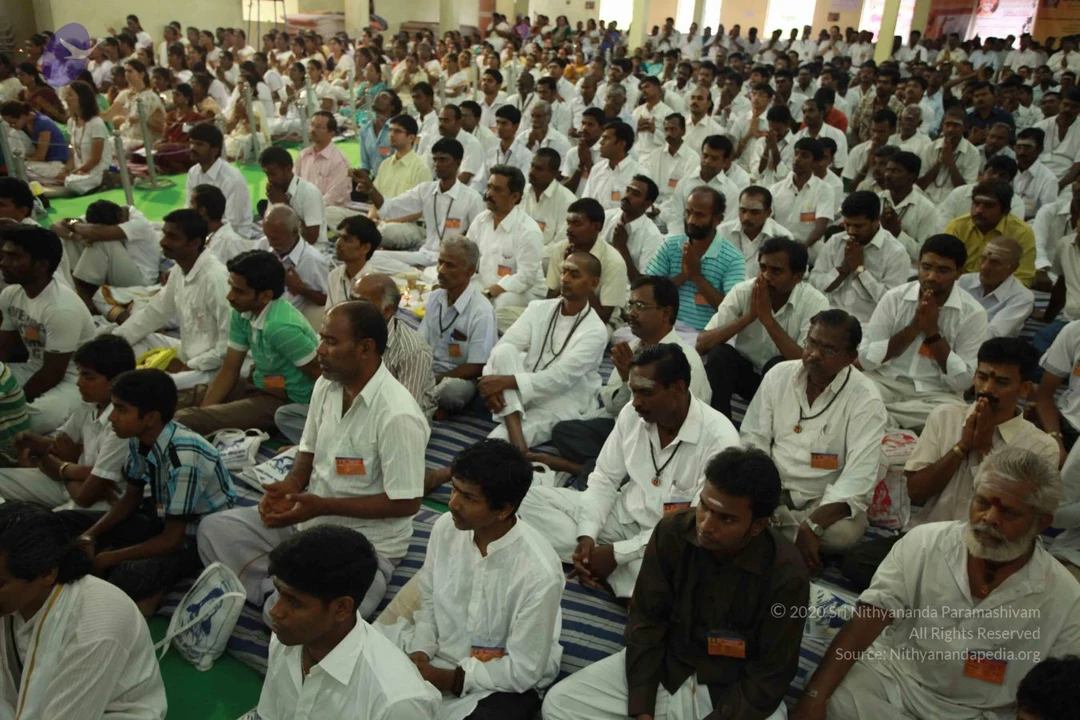
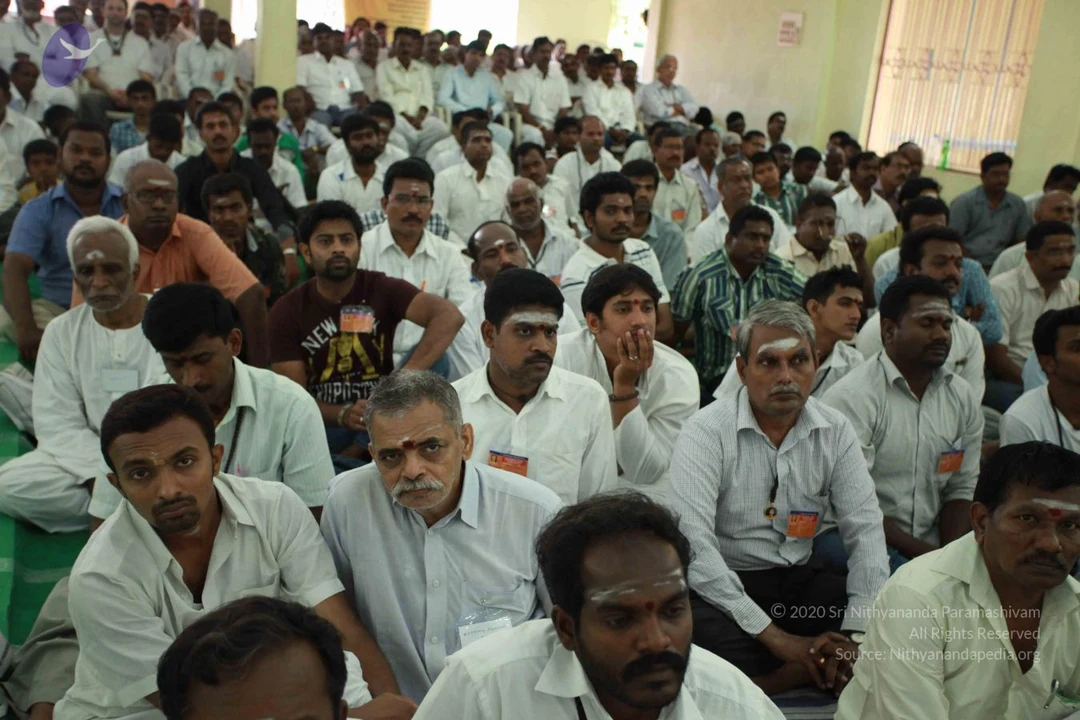
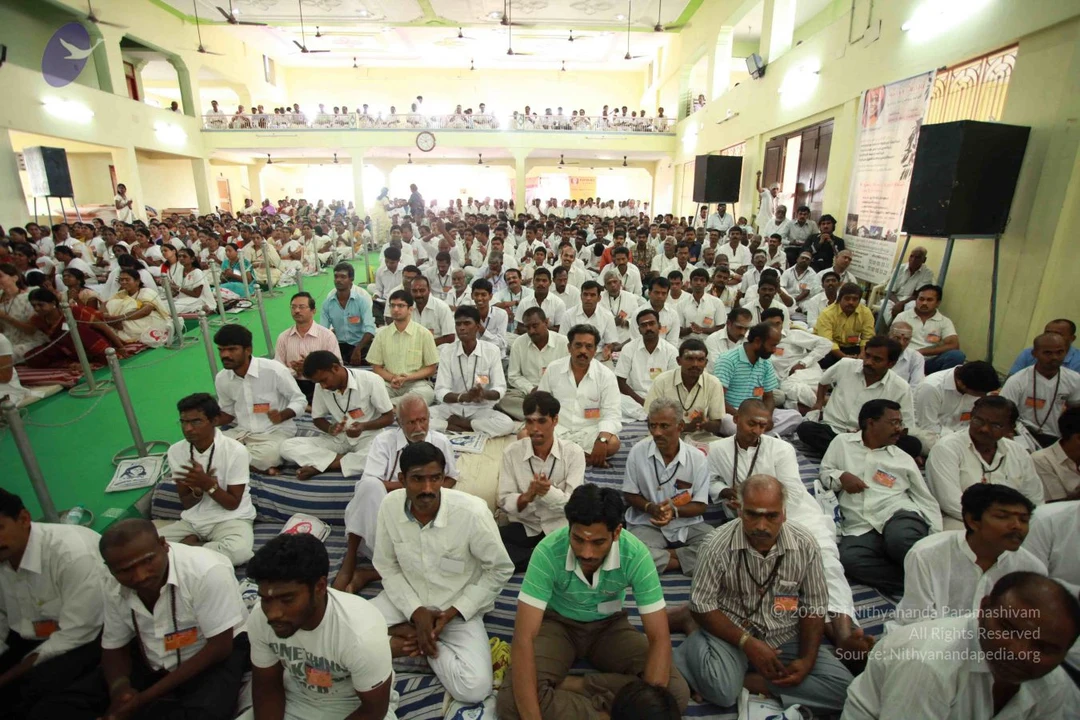
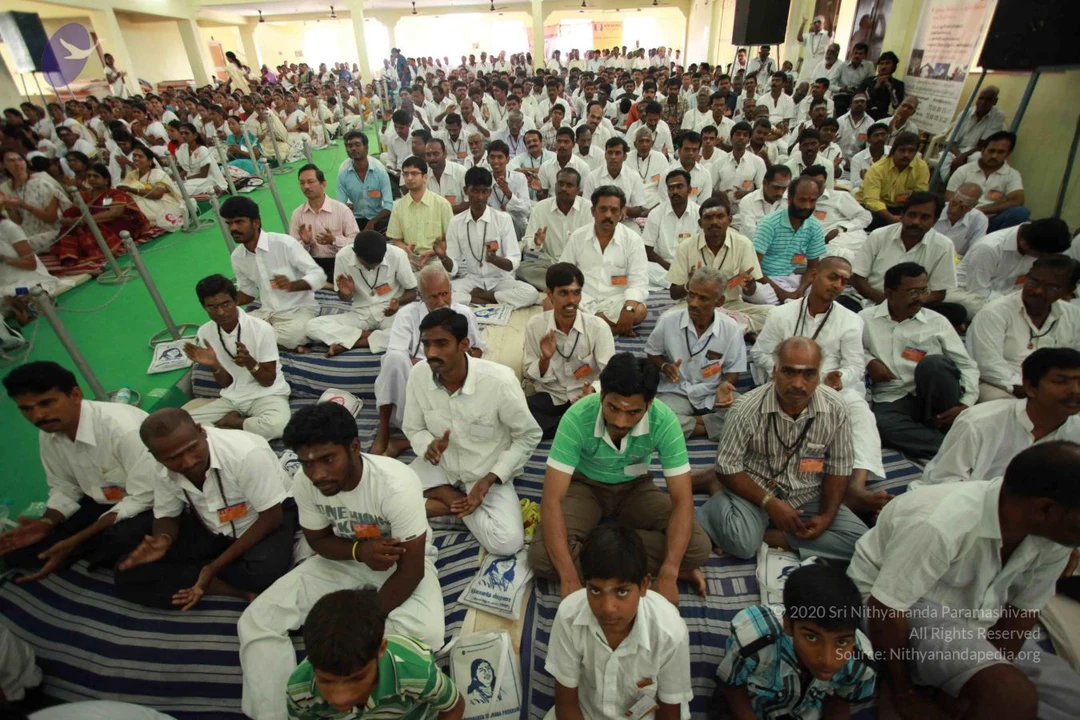
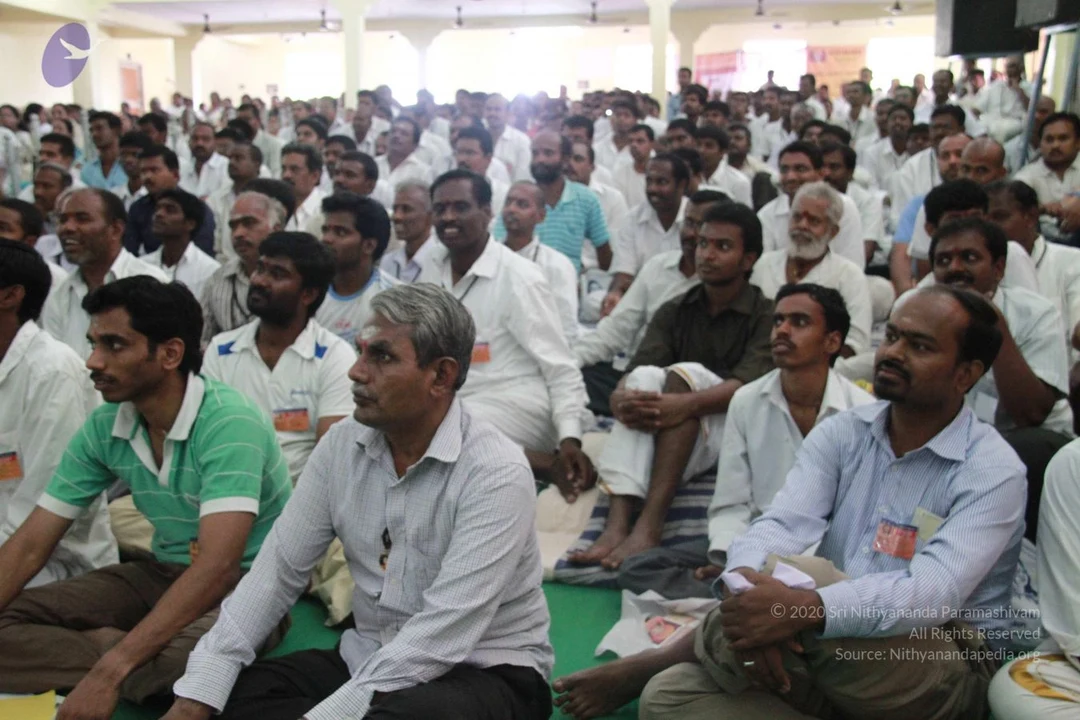
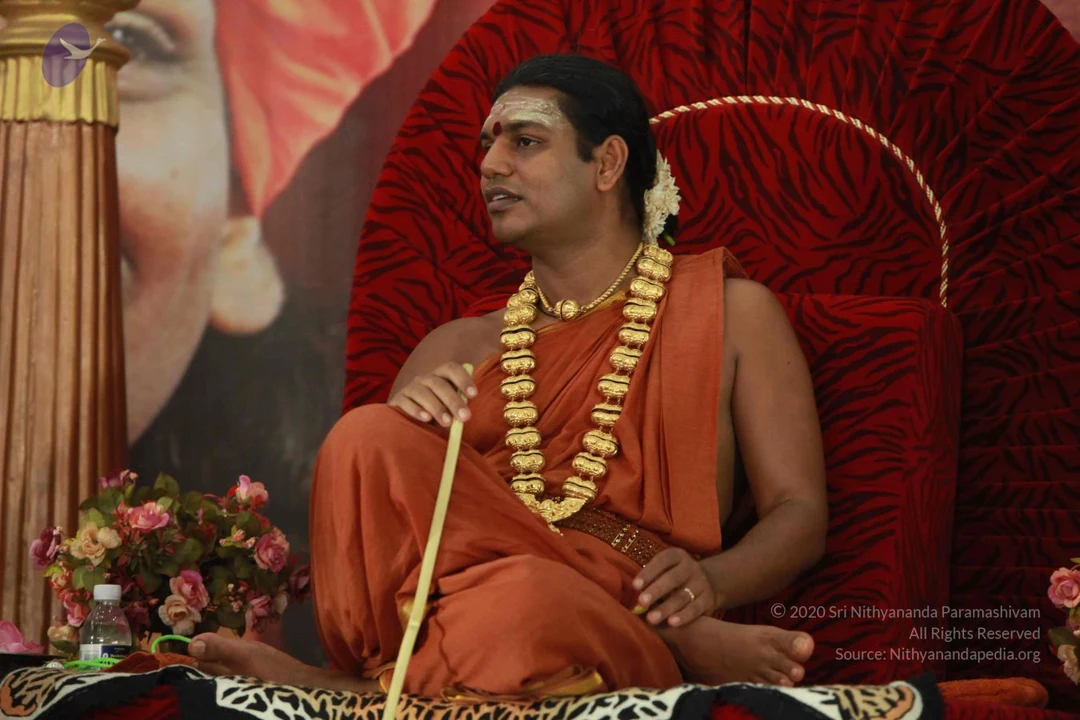
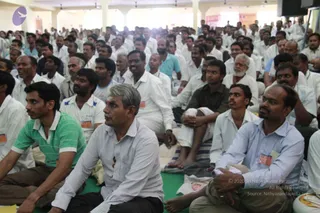
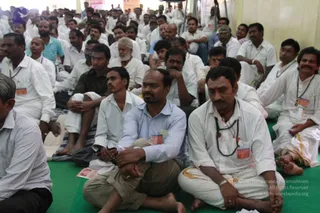
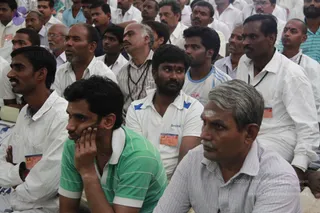
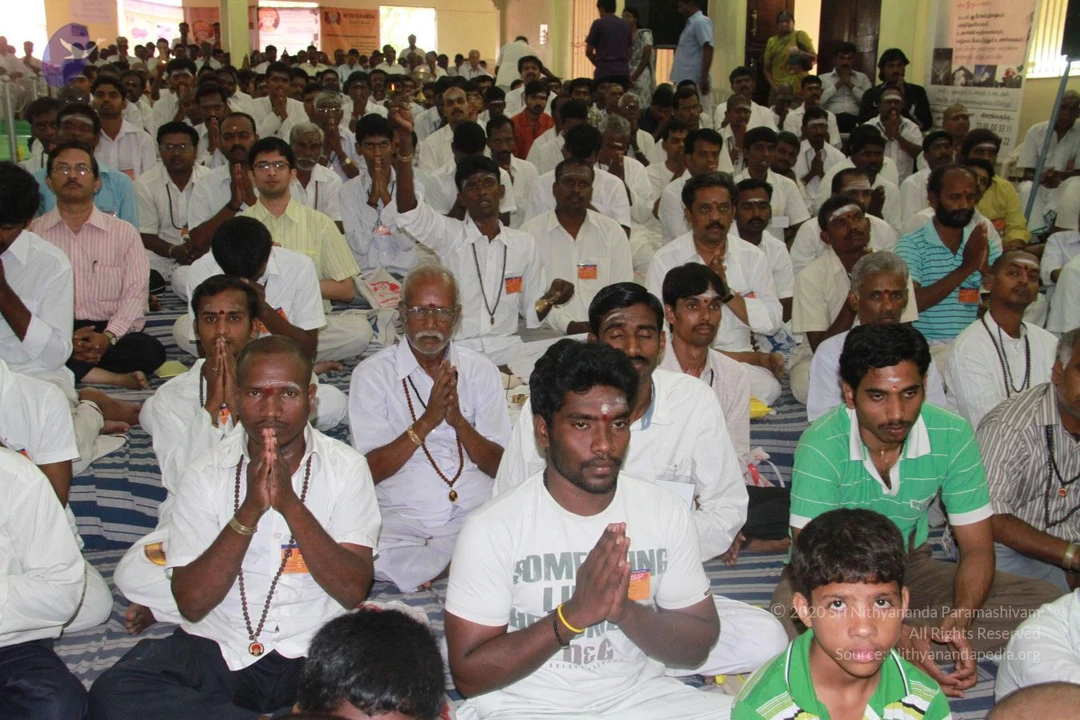
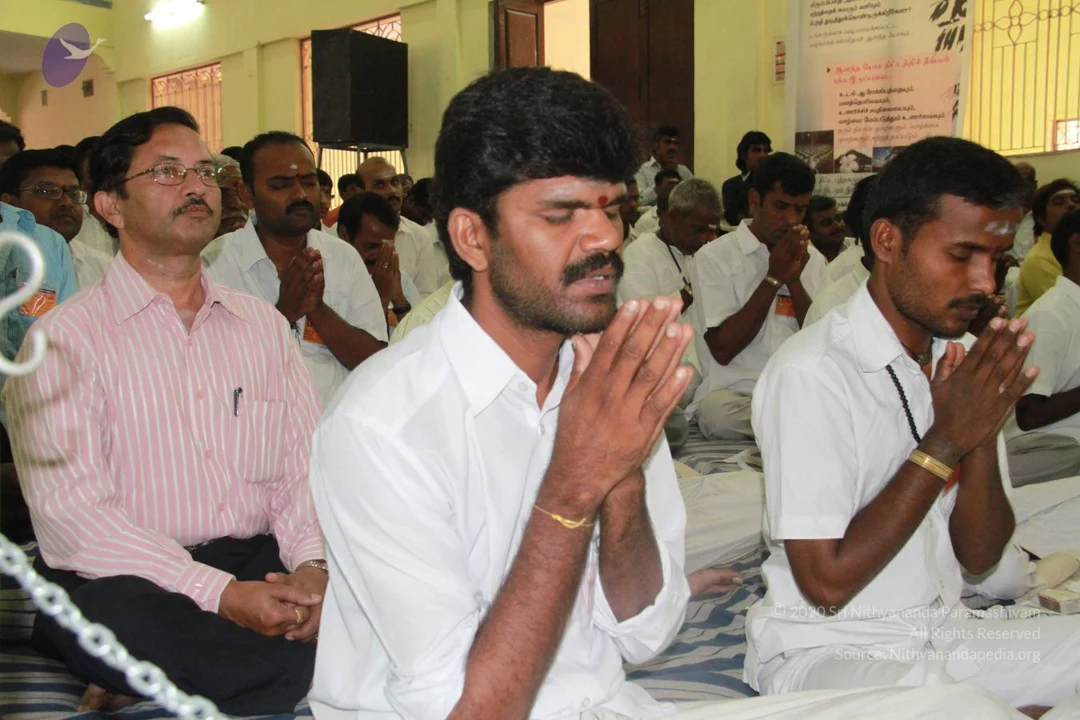
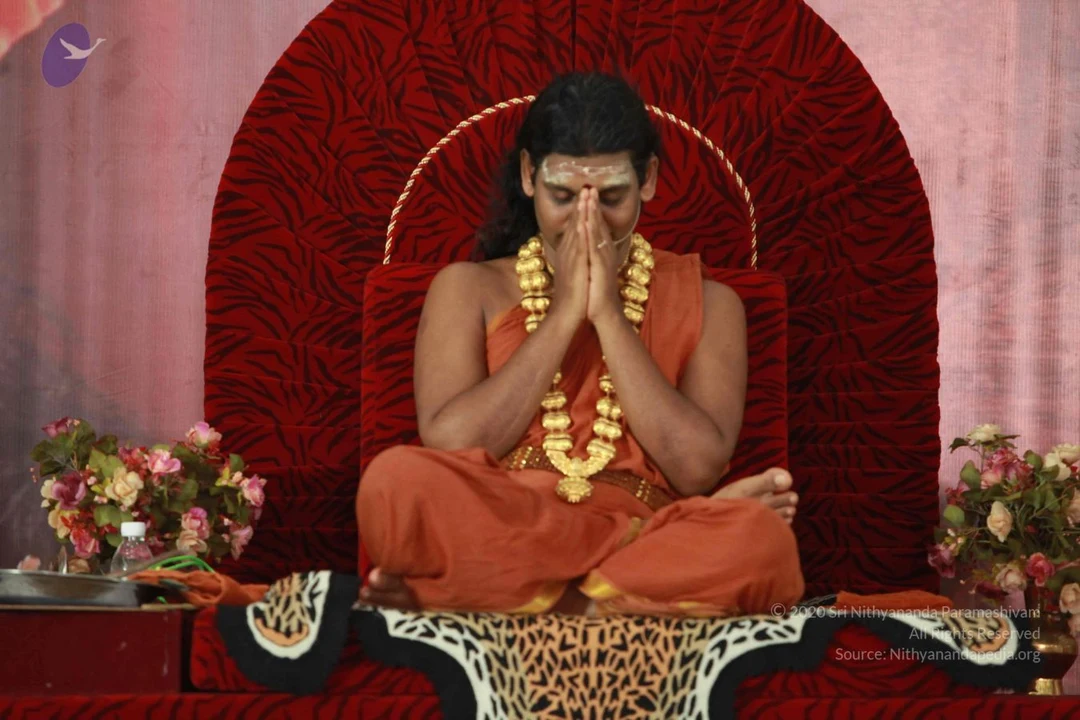
A large seated audience fills a bright hall, mostly men in white shirts and white dhotis or light trousers, sitting on green mats and white cloth. Many wear name badges on lanyards. In the foreground a man with grey hair and a vertical tilak mark on his forehead wears a striped light blue shirt and a lanyard, while a younger man in a green striped polo sits to his left. Rows of attendees stretch back toward columns, banners and a projection screen at the back. a person is not visibly among the people shown.A photograph of a large seated audience on green mats at a satsang hall, most people in plain white shirts and white dhotis. In the front right, a man in a white shirt and dhoti sits cross-legged with a rudraksha mala and a red tilak on his forehead, and a man in a light blue shirt sits beside him wearing a name badge. Many others wear lanyard badges. No speaker or a person candidate is visible in the frame, and the view is toward the front of the hall.A dense crowd of men seated and standing outdoors listens attentively to a talk. In the foreground a man in a grey-and-white checked shirt with white vibhuti on his forehead sits beside a younger man in a green striped polo with his hand on his cheek. Behind them a bearded man in a white shirt wears a blue Reebok-logo top, and others wear white shirts and name badges. Several men wear rudraksha malas. No speaker or deity is visible in the frame.A seated man in saffron-orange robes sits cross-legged on a red velvet throne with a tiger-striped cushion and a tiger-skin mat, hands pressed together in namaste with eyes closed. He wears a rudraksha-style gold necklace, a gold chain, a red bindi and a tilak on his forehead, and a gold-buckled belt at his waist. Flower arrangements in pink, yellow and white stand on golden pillars on either side. A large portrait of a smiling man in an orange turban is behind him, with Tamil script printed on the backdrop. The setting appears to be a satsang discourse hall.A man seated cross-legged on a red zebra-patterned velvet throne with an arched backrest, palms pressed together in namaste at chest level, speaking into a small headset microphone. He wears an orange-saffron cloth draped over one shoulder, a belt of gold-toned beads at the waist, a heavy gold multi-strand necklace with a large pendant, and a white vibhuti tripundra with a red kumkum dot on his forehead. Pink and white roses in floral arrangements and a plastic water bottle sit at the lower left, against a pink backdrop. a person, seated as the speaker of a satsang discourse; appearance and cues are consistent with the page's claim.A man seated in front of a red draped backdrop with a gold pillar and Tamil script lettering on a banner. He wears a saffron-orange shawl over bare shoulders, heavy gold bead and ornate gold necklaces, a pink lotus and white flower garland tucked behind one ear, and white sacred ash with a red mark on his forehead. He looks off to the side. The appearance matches cues associated with the a person candidate, but identity is uncertain from appearance alone.
Lunch

14 photosSource gallery
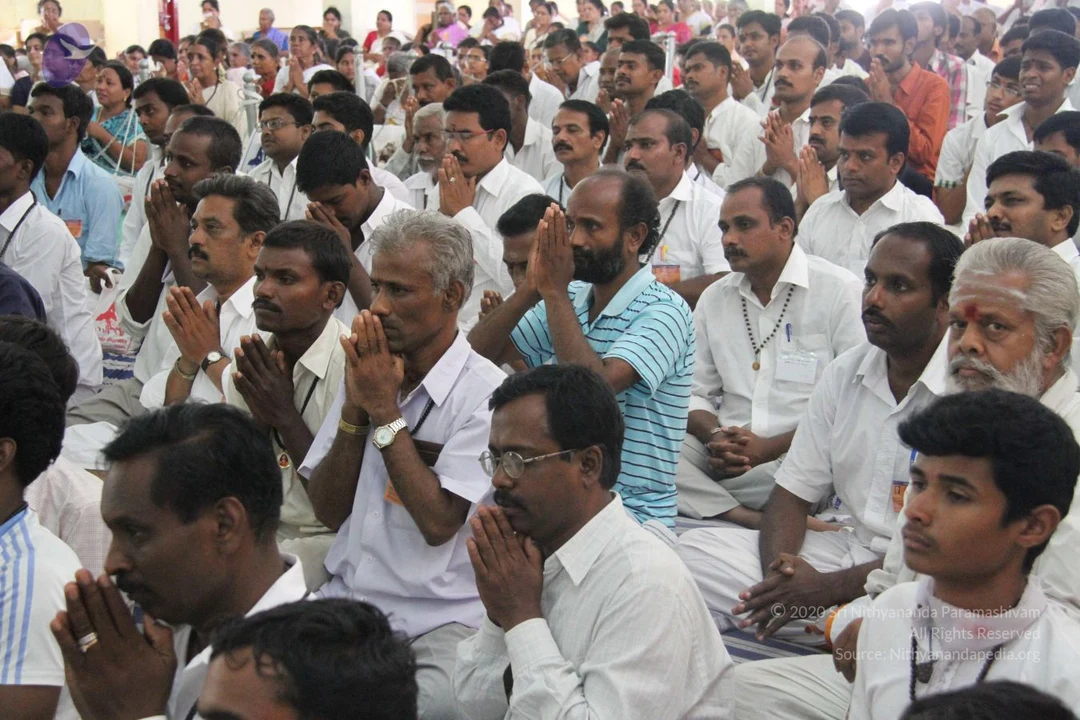
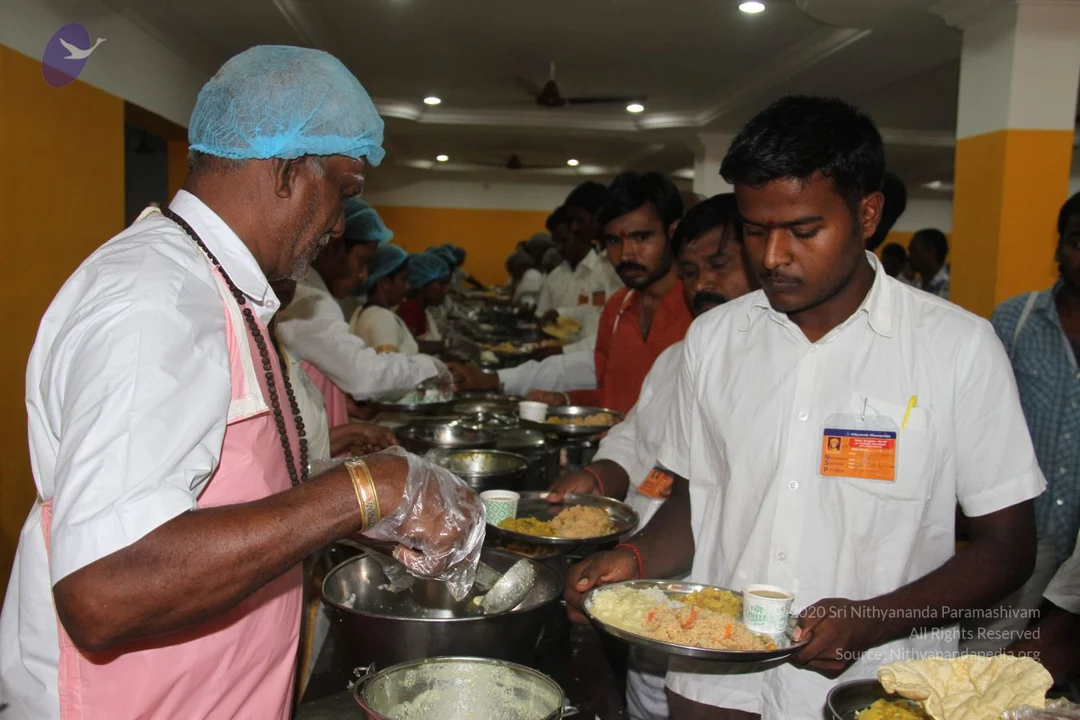
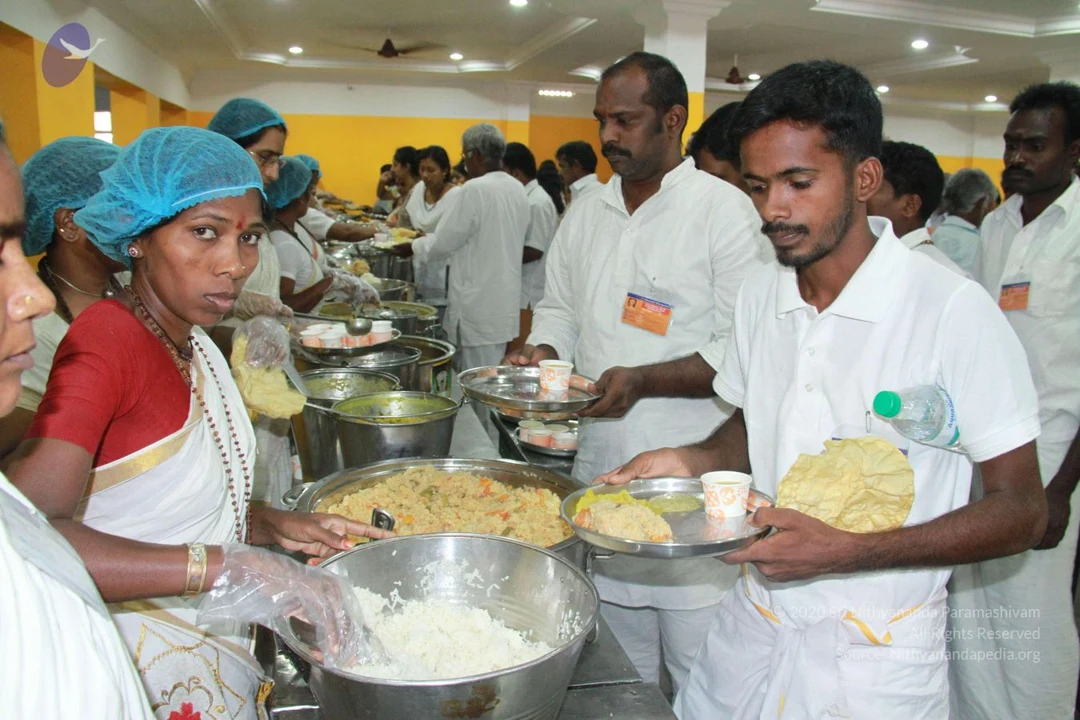
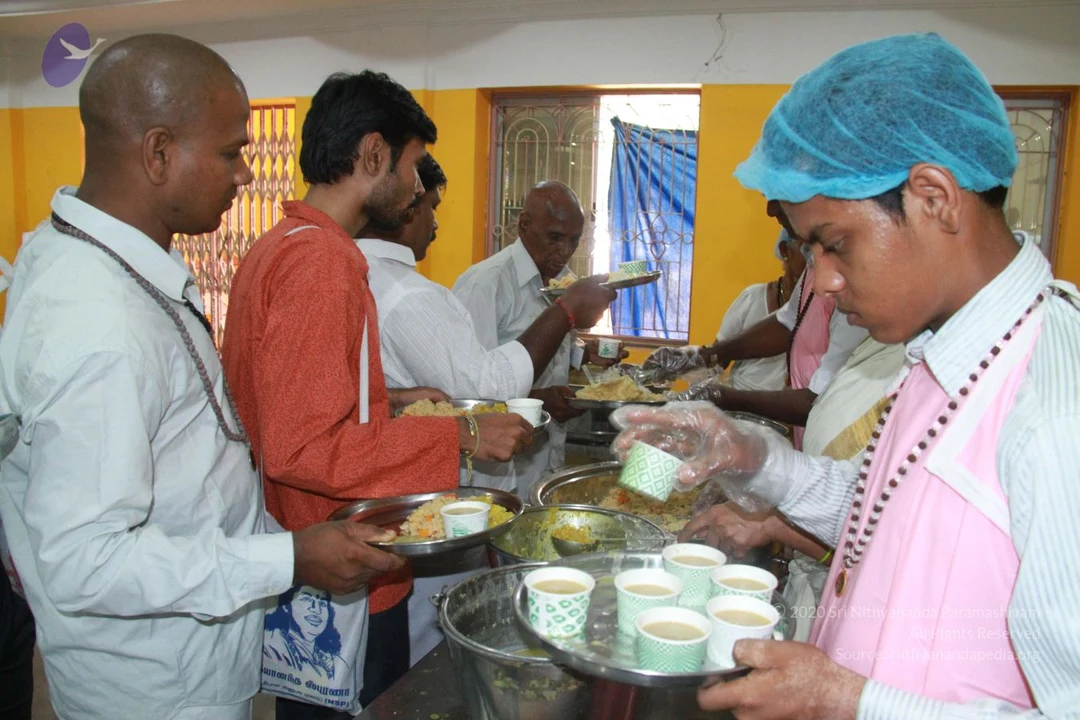
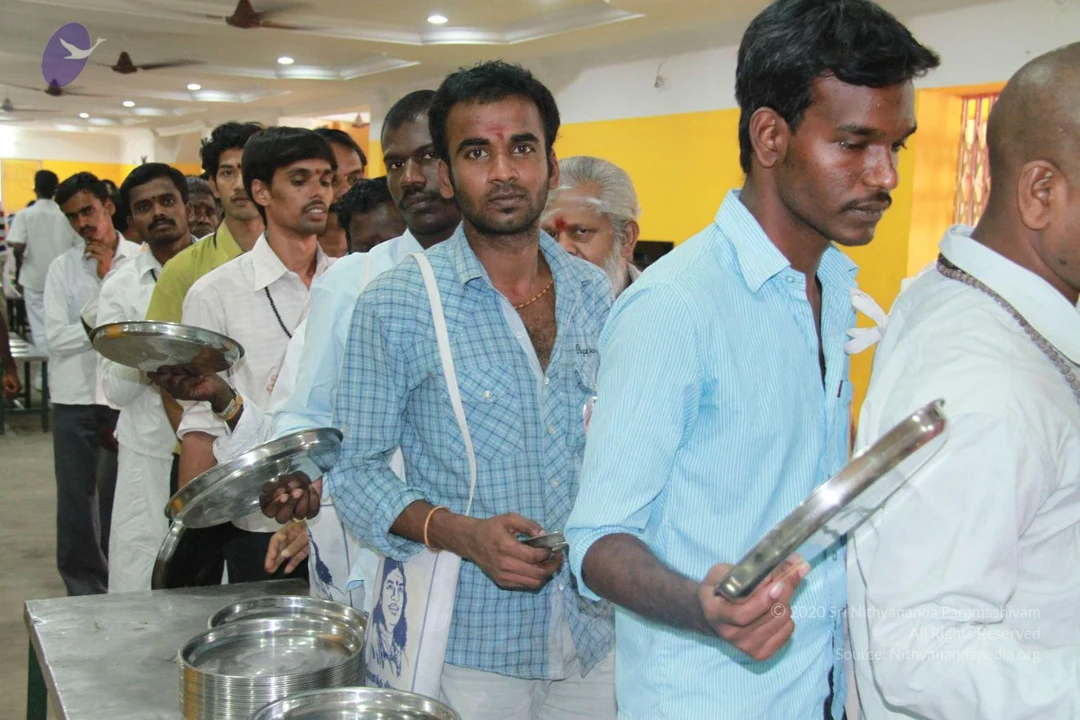
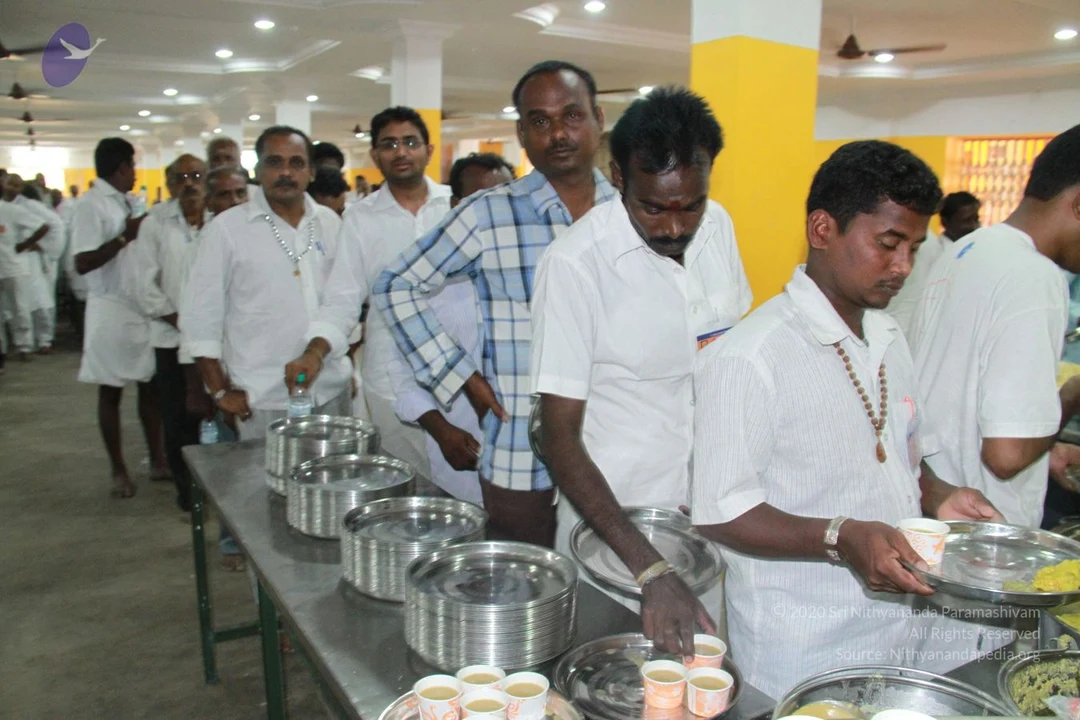
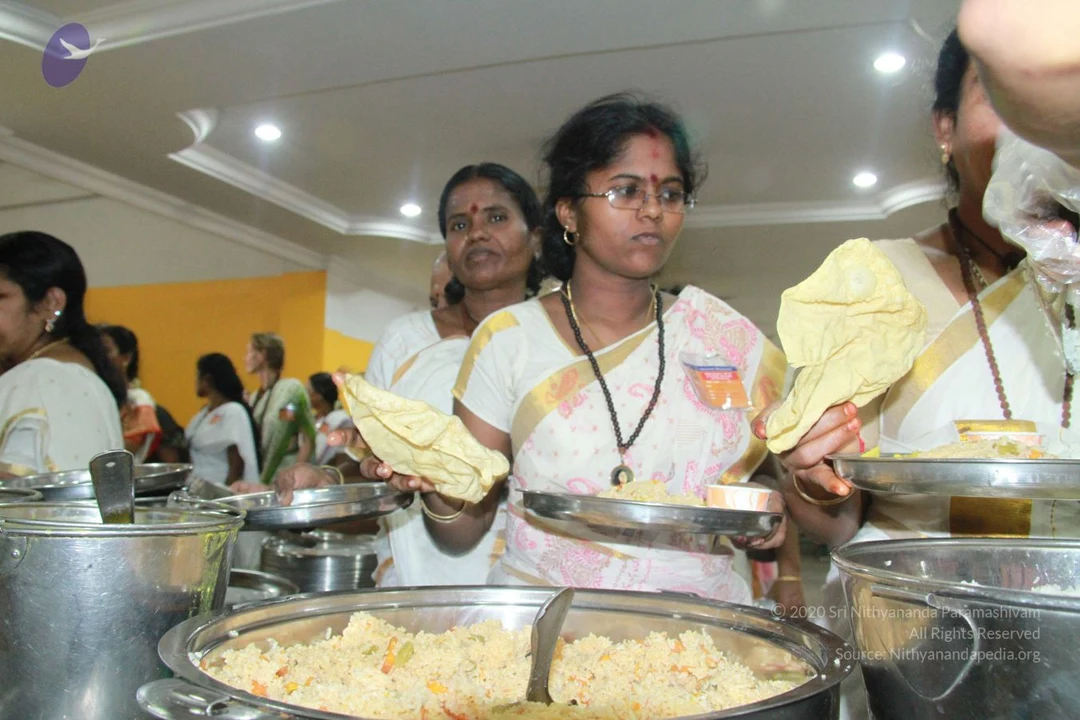
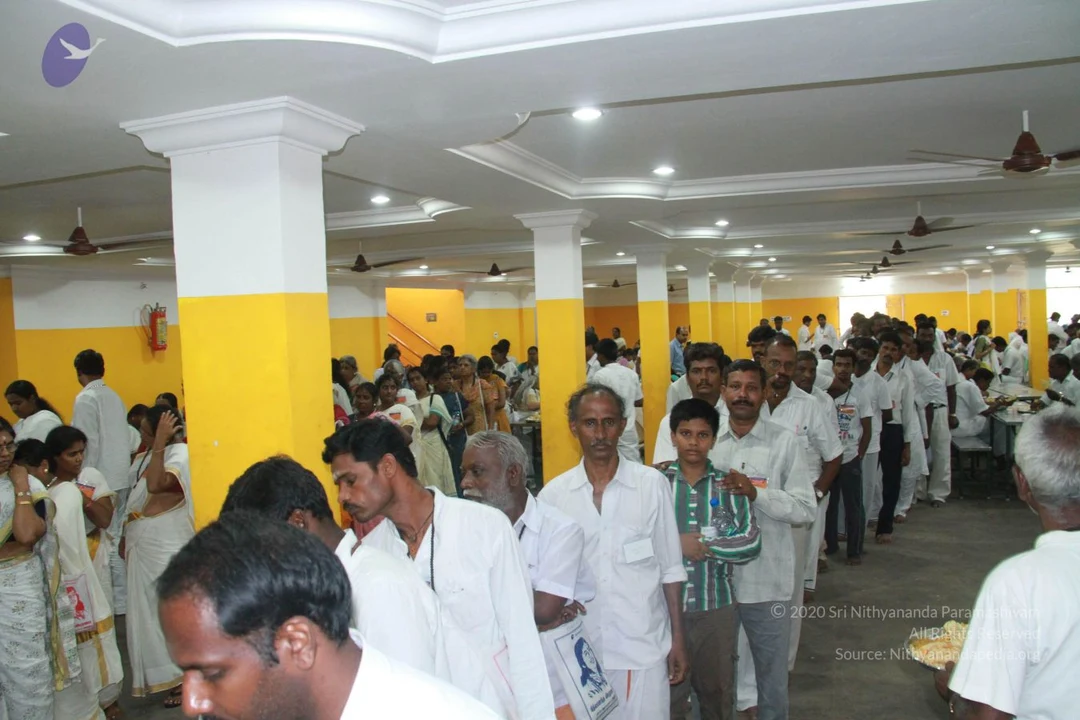
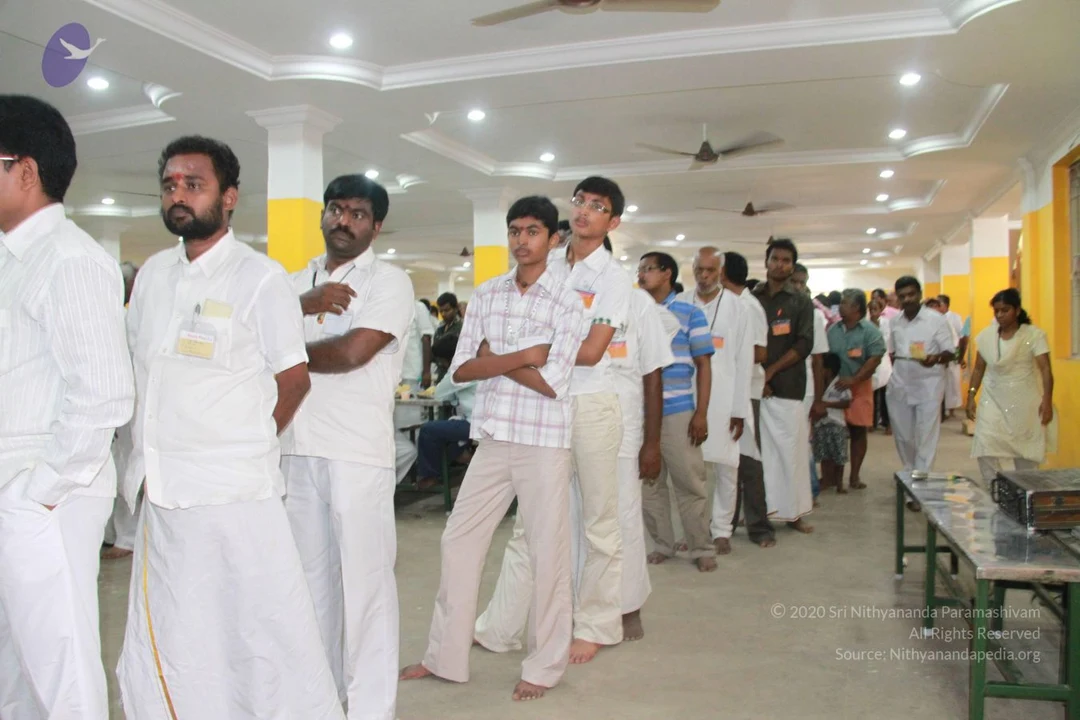
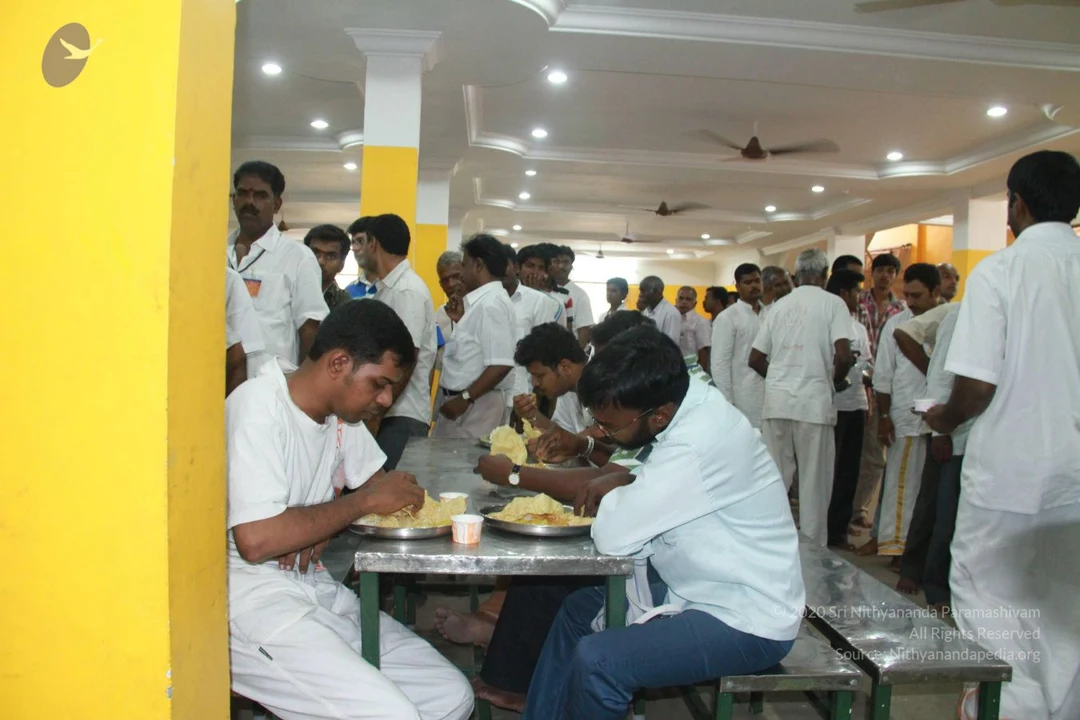
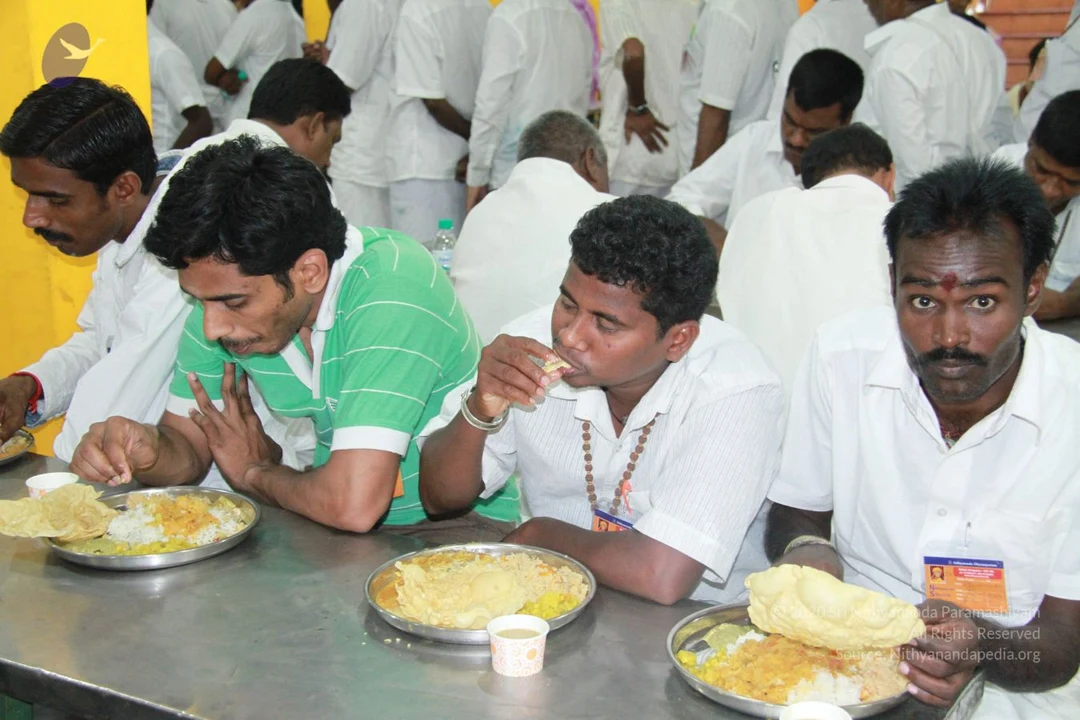
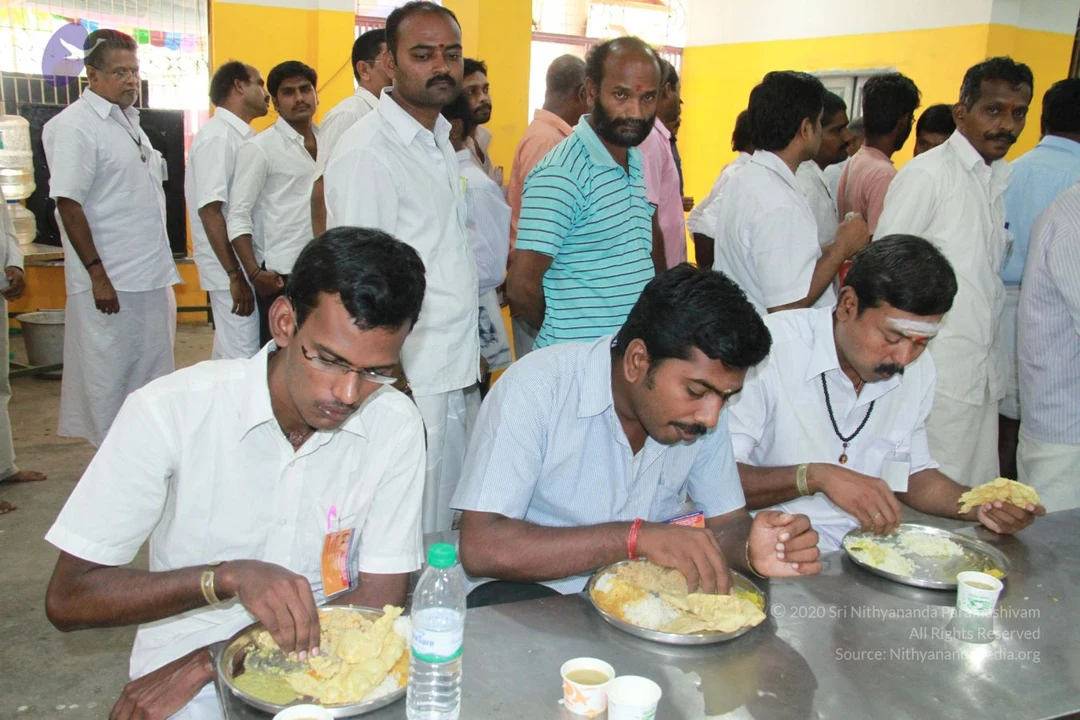
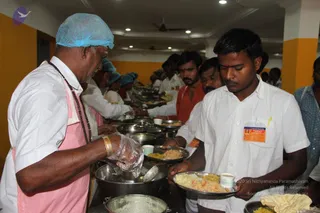
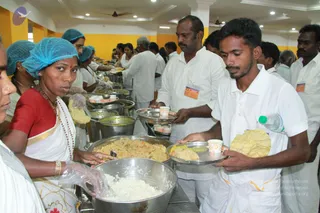
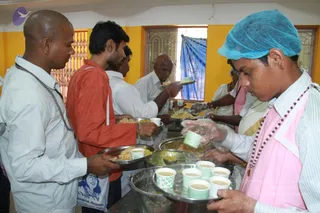
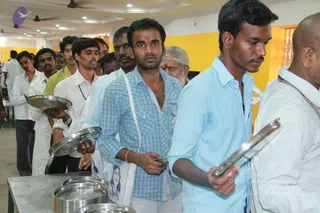
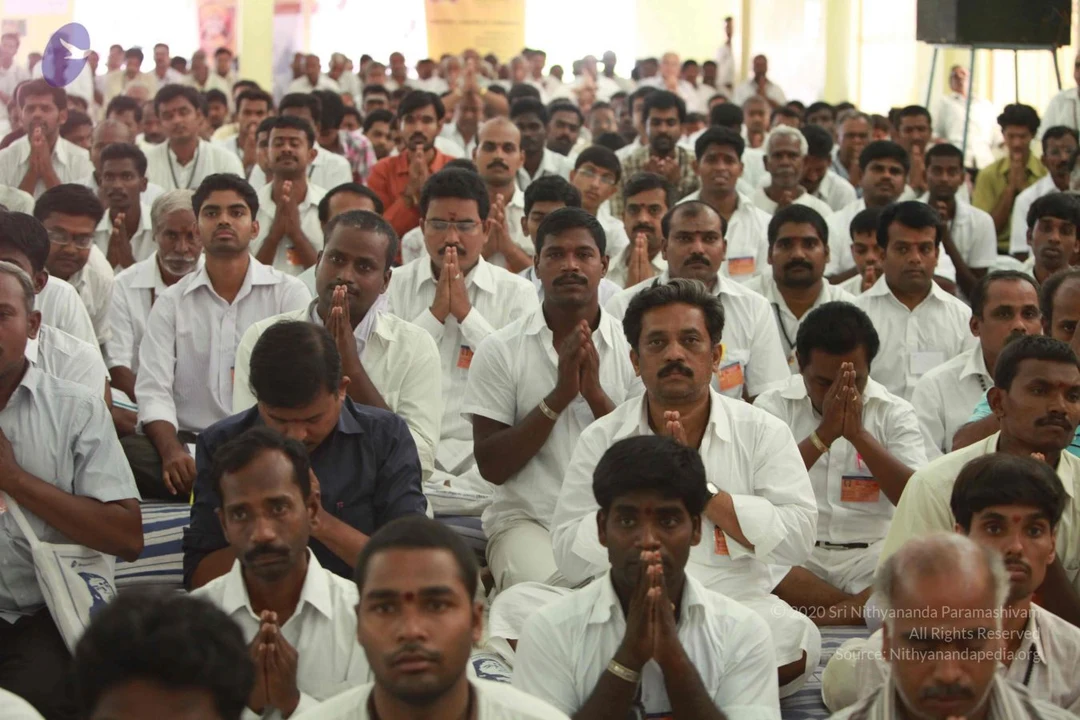
A large seated congregation of men fills a hall during a satsang, many in white shirts and white dhotis, some wearing lanyards with orange and white ID badges. In the foreground a man with a shaved head sits on a green mat with palms pressed together in namaste, while a man in a green striped polo sits to the left and a man in a blue striped shirt sits to the right. Water bottles rest on the mats and the background shows more rows of attendees, a pillared wall and a window with bright light.A large seated crowd of devotees in a hall, most in white shirts and white dhotis, pressing their palms together in anjali mudra. Several wear lanyards and name badges. A man in front wears a blue-and-white striped polo, and an older man on the right has a white beard, a red tilak on his forehead and a rudraksha mala. Hands in prayer dominate the frame. No clearly identifiable a person figure is visible in this frame.A communal meal service in a hall with yellow-ochre walls and ceiling fans. In the foreground an older man in a white shirt, pink apron, blue hairnet and a dark beaded mala ladles food from a steel pot into a plate. Beside him a young man in a white shirt with an orange ID badge holds a steel plate of rice and yellow dal, with a paper cup beside it. Behind them a long line of volunteers in white and blue hairnets serves food from steel containers, and a few people in orange and white stand and wait. No person in the scene is clearly identifiable as the swami, so no candidate is marked.A dining hall serving line at an ashram kitchen with yellow and white walls. A woman in a white sari with a red blouse and a gold-bordered hem, wearing a blue hairnet and gloves and a red bindi, serves rice from a steel bowl. Beside her, a man in white shirt and white dhoti holds a steel plate with a paper cup and food, and another man in a white shirt and dhoti carries a steel plate with a cup and a banana-leaf packet. Steel pots of curry and rice line the counter, and more people in white clothes stand in line behind them. No a person candidate is clearly identifiable among the visible people.A food service line in a yellow-walled hall during an annadan-style meal. A young volunteer on the right wears a blue hairnet, a white shirt, a pink apron and a rudraksha mala, using plastic gloves to serve from a steel pot. Men in white shirts and a man in an orange-red shirt hold steel plates of rice and small paper cups of tea. A bald older man in white stands behind them, with a window and blue cloth behind. No candidate for a person is clearly visible, so no identity is asserted.Men queue in a bright hall with yellow walls and ceiling fans, holding steel plates in a meal line. In the foreground a man in a blue checked shirt with a red tilak on his forehead and a white cloth bag over his shoulder waits beside a man in a light blue striped shirt carrying a steel plate. On the right an older man in white clothes stands near a bald man in white with a beaded necklace. Stacked steel plates sit on a metal table at lower left, and other men in white shirts and dhotis stand further back in the line.

Unclutching Session - 2

57 photosSource gallery
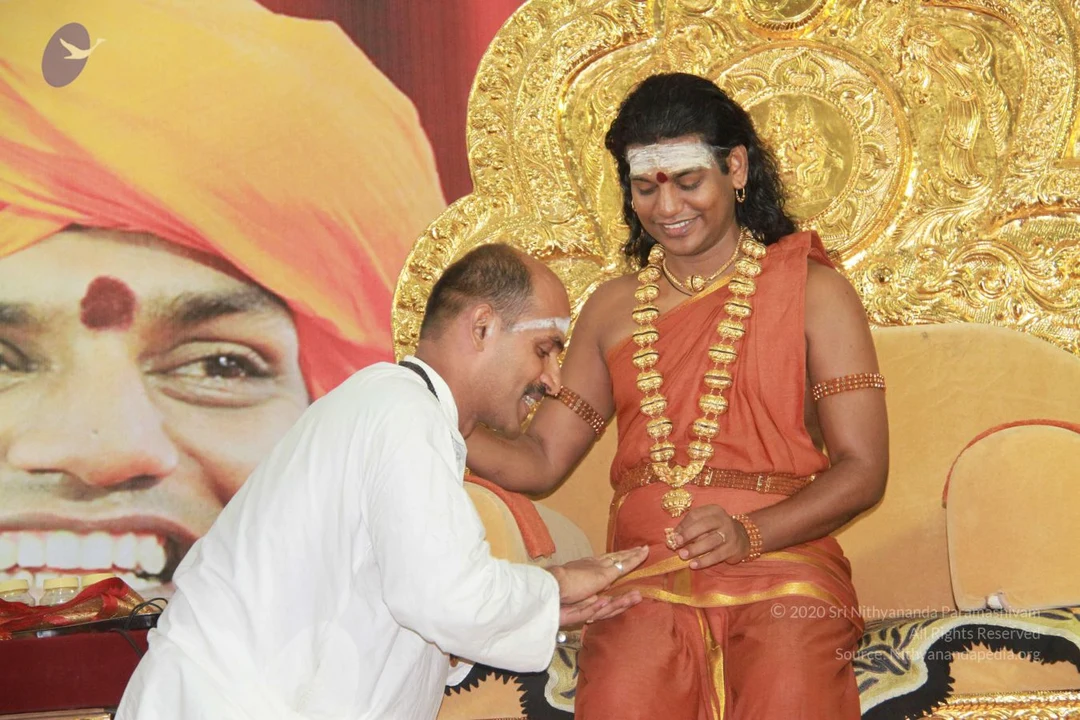
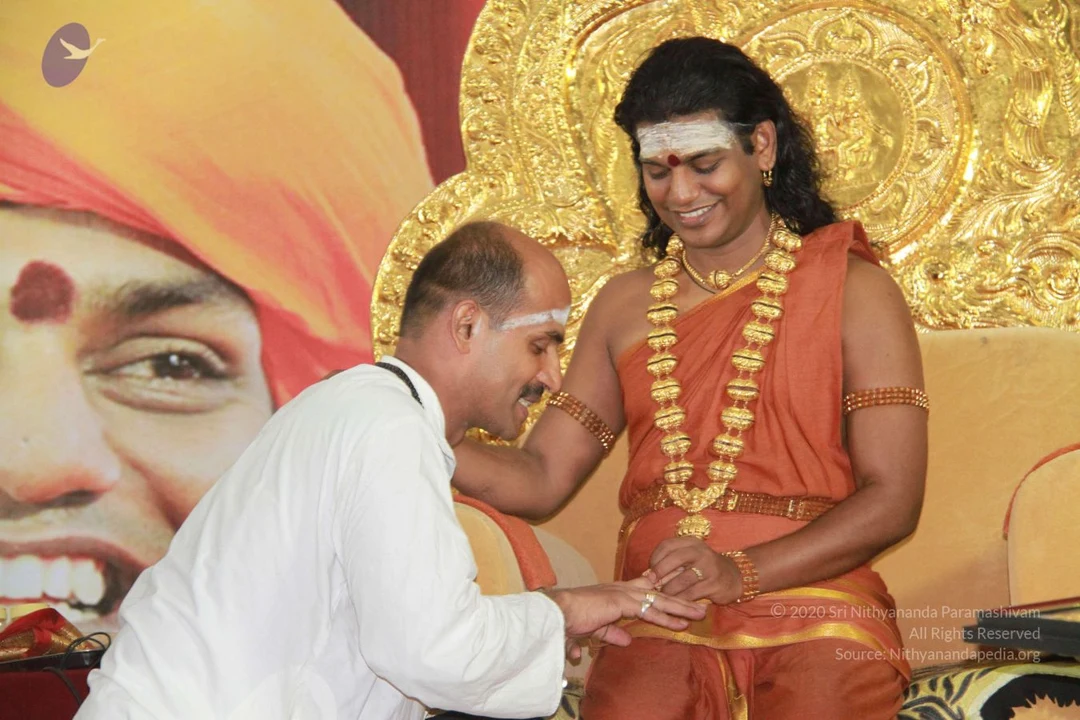
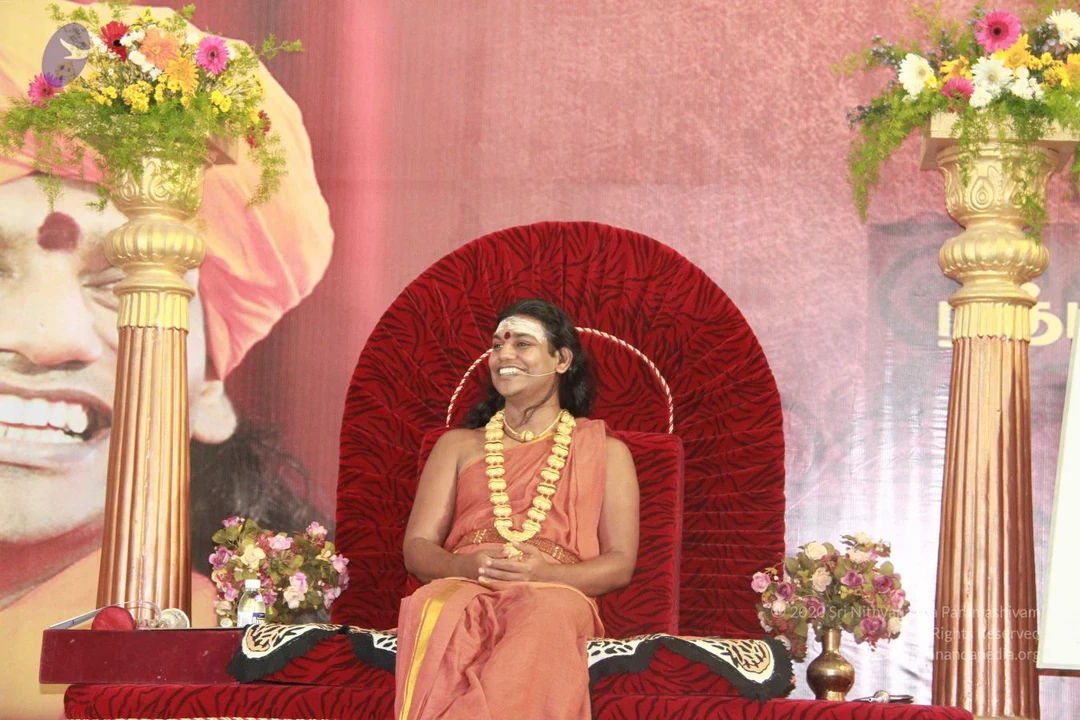
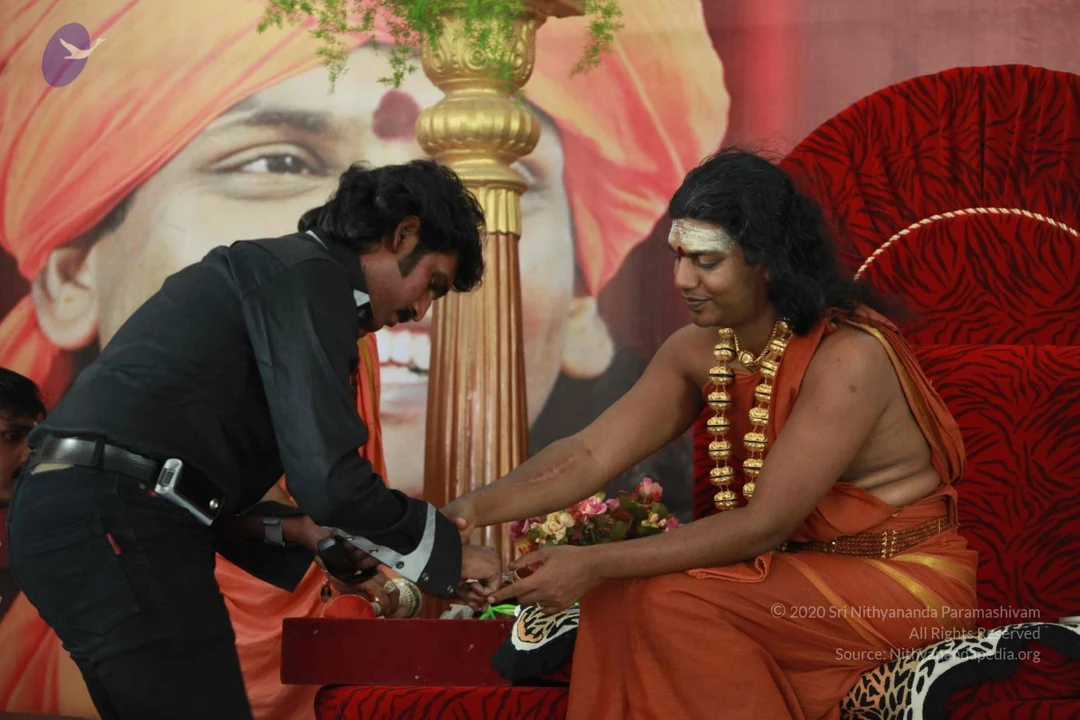
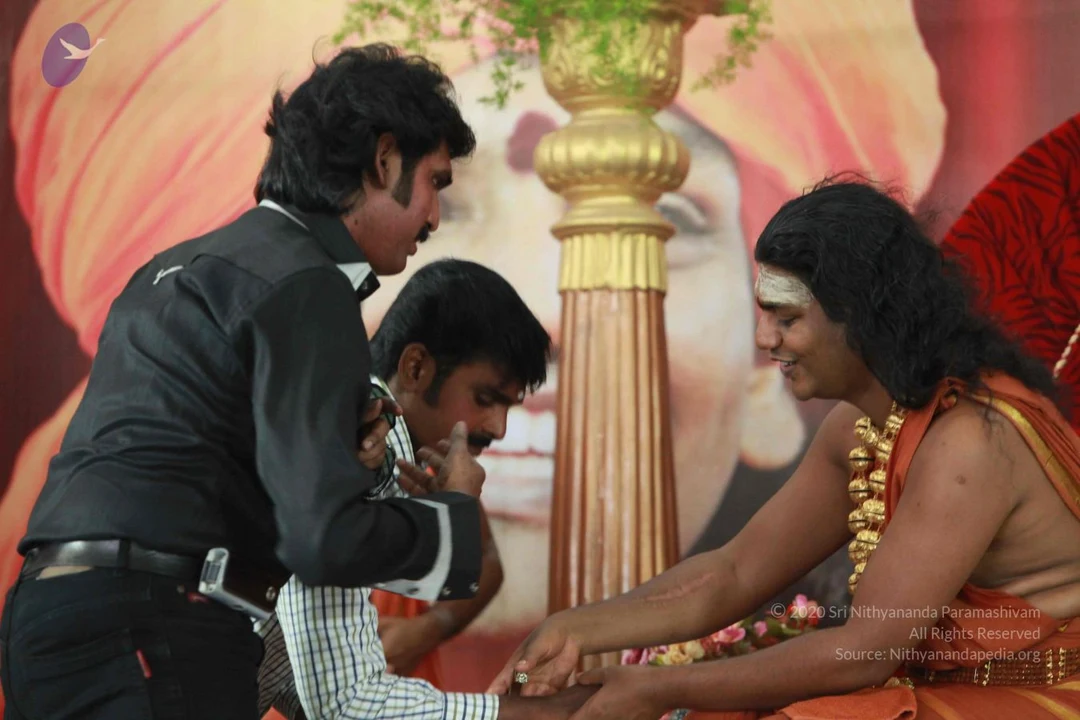
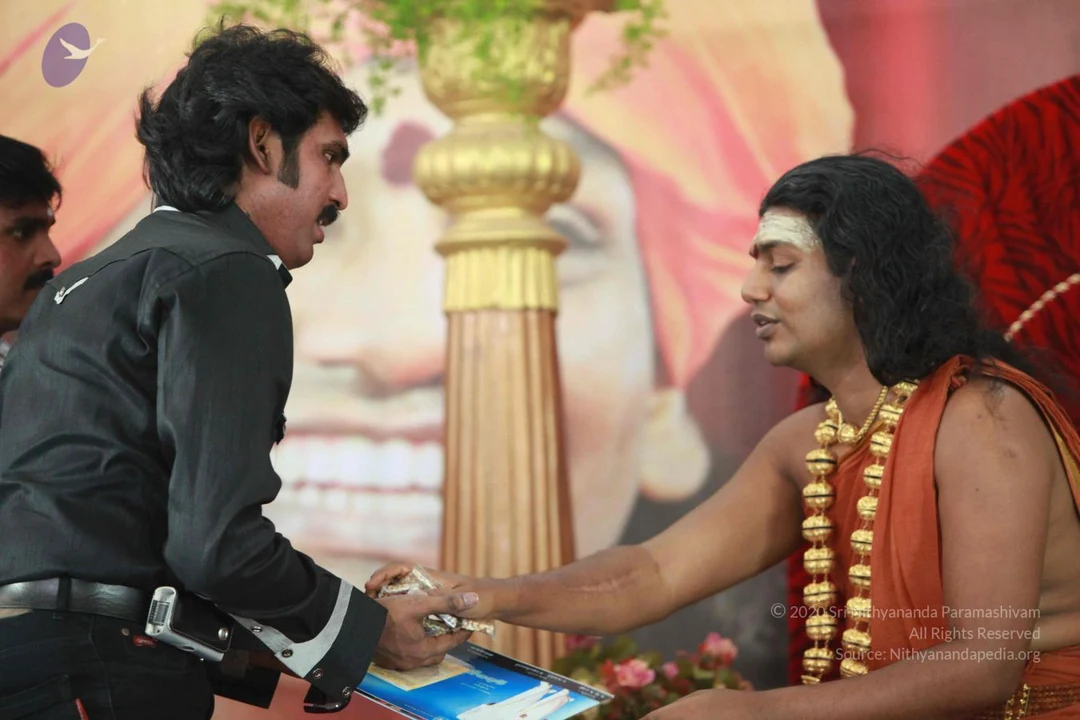
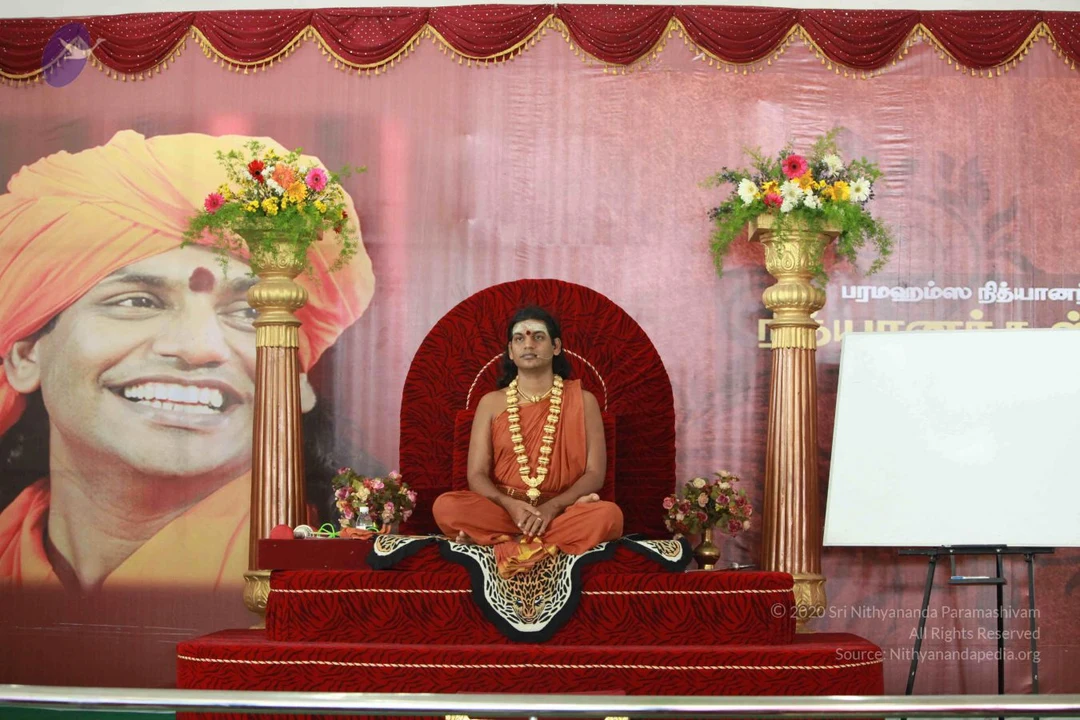
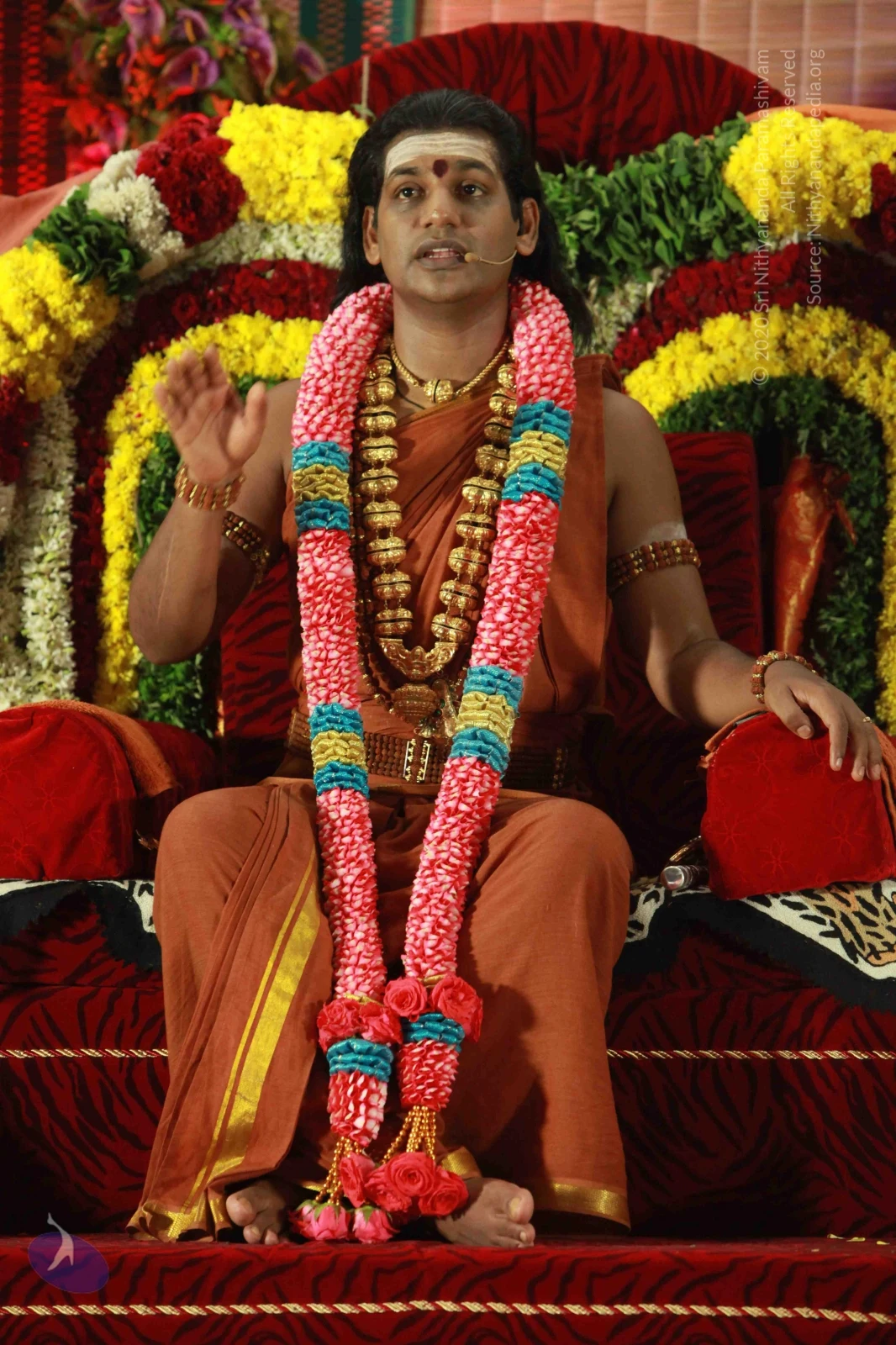
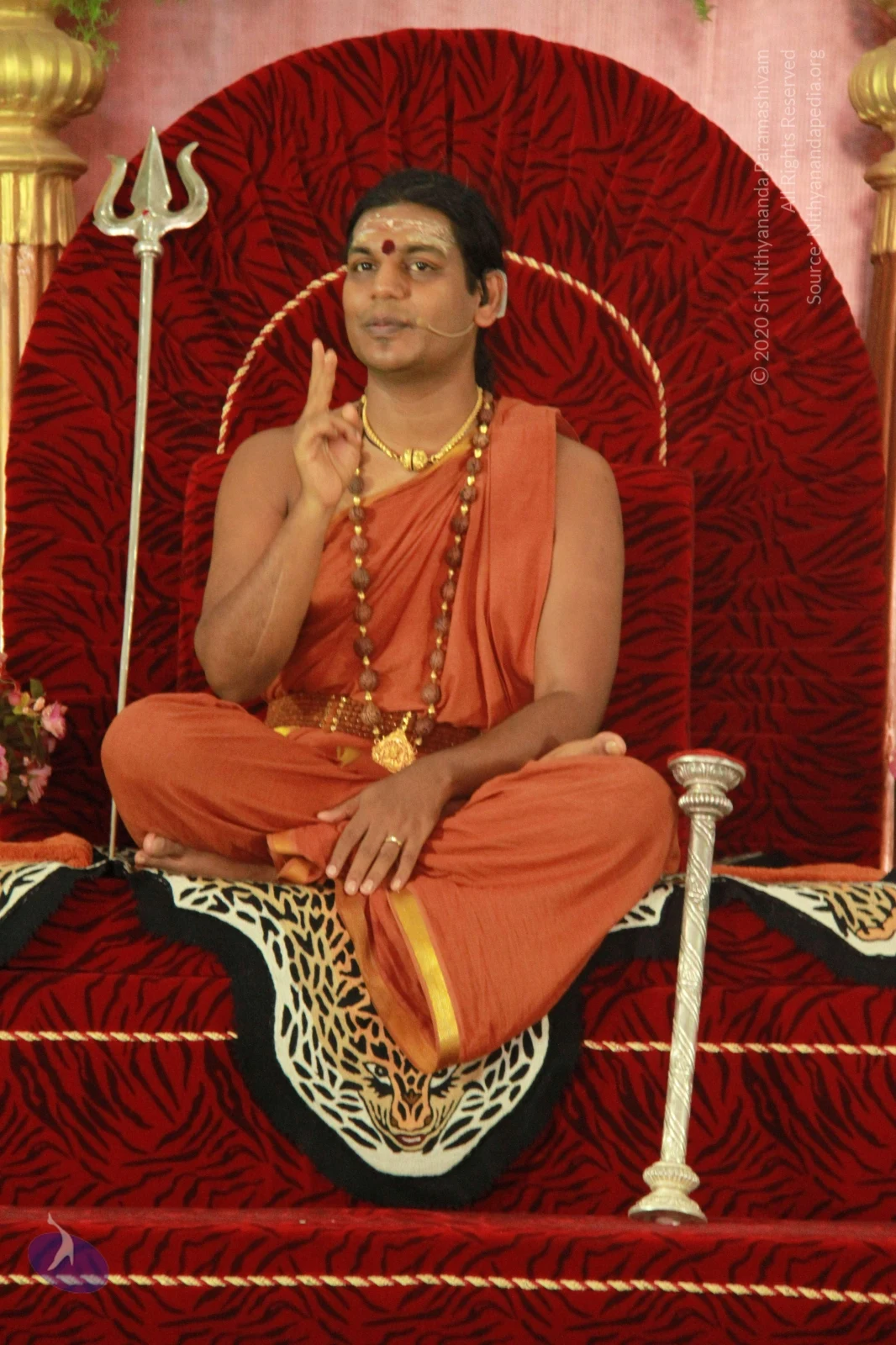
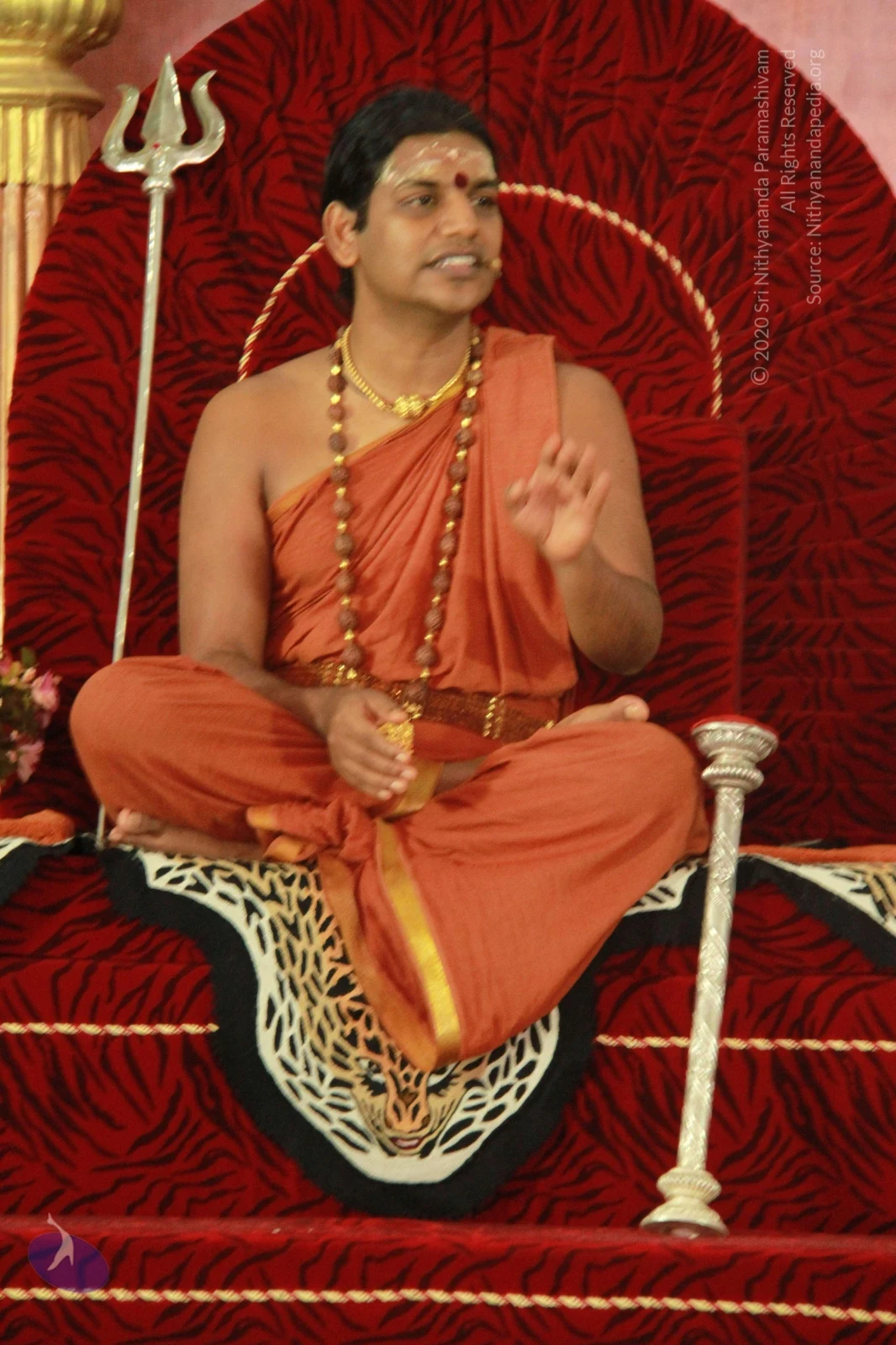
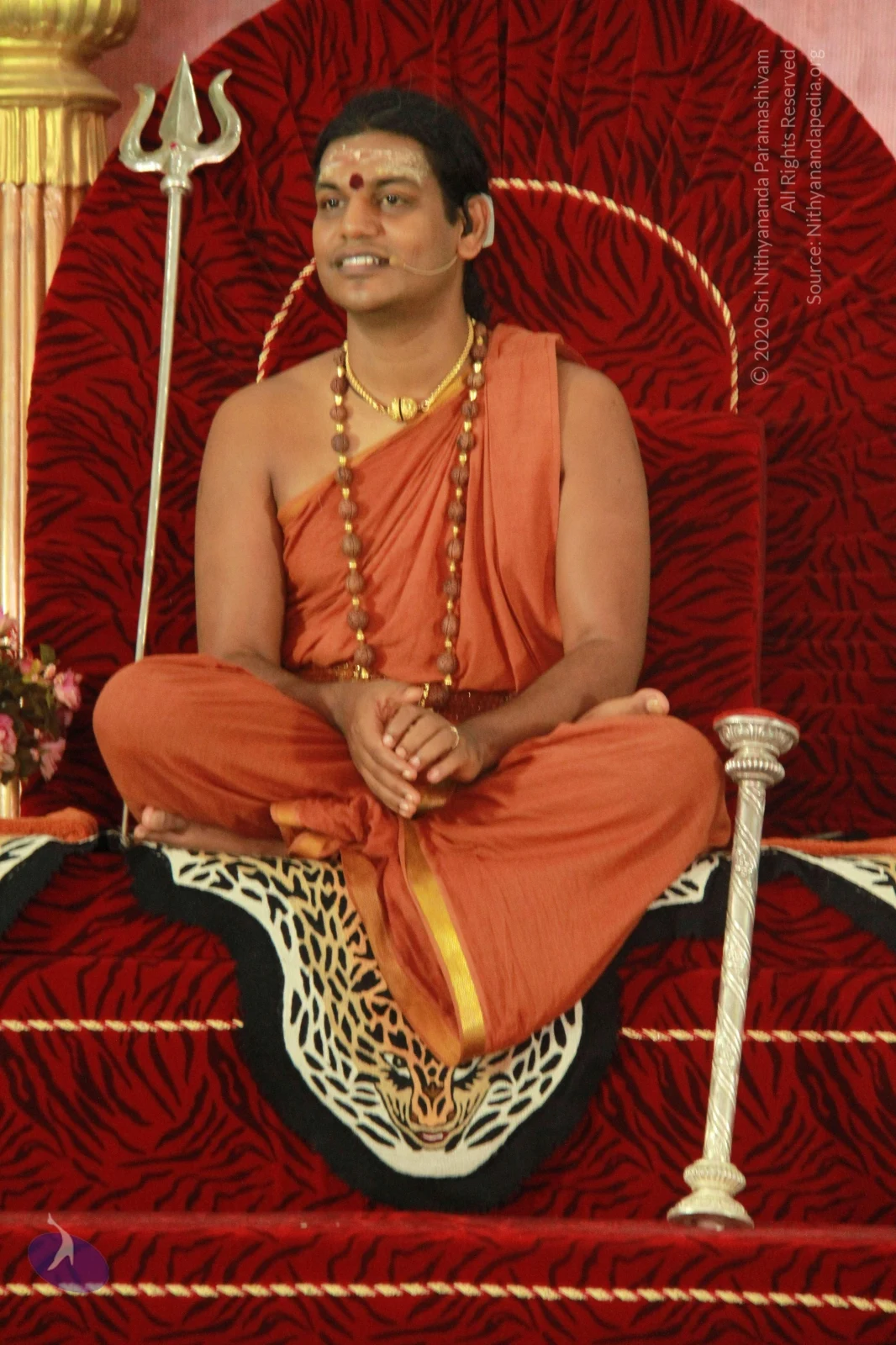
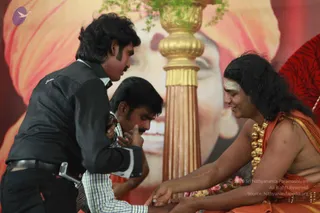
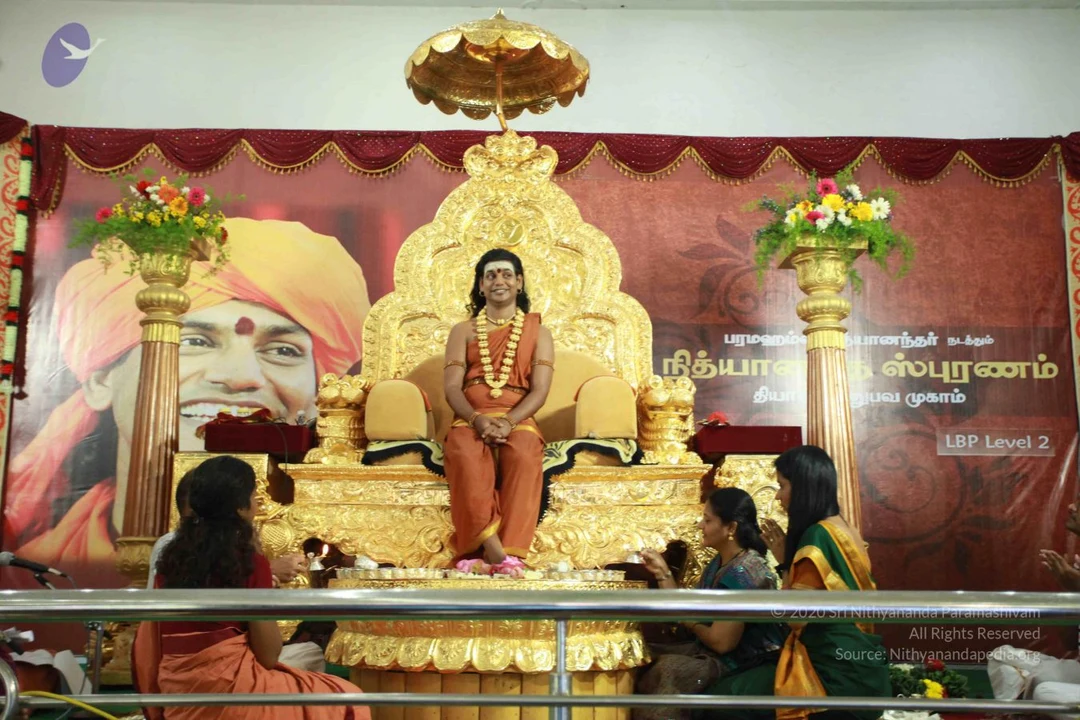
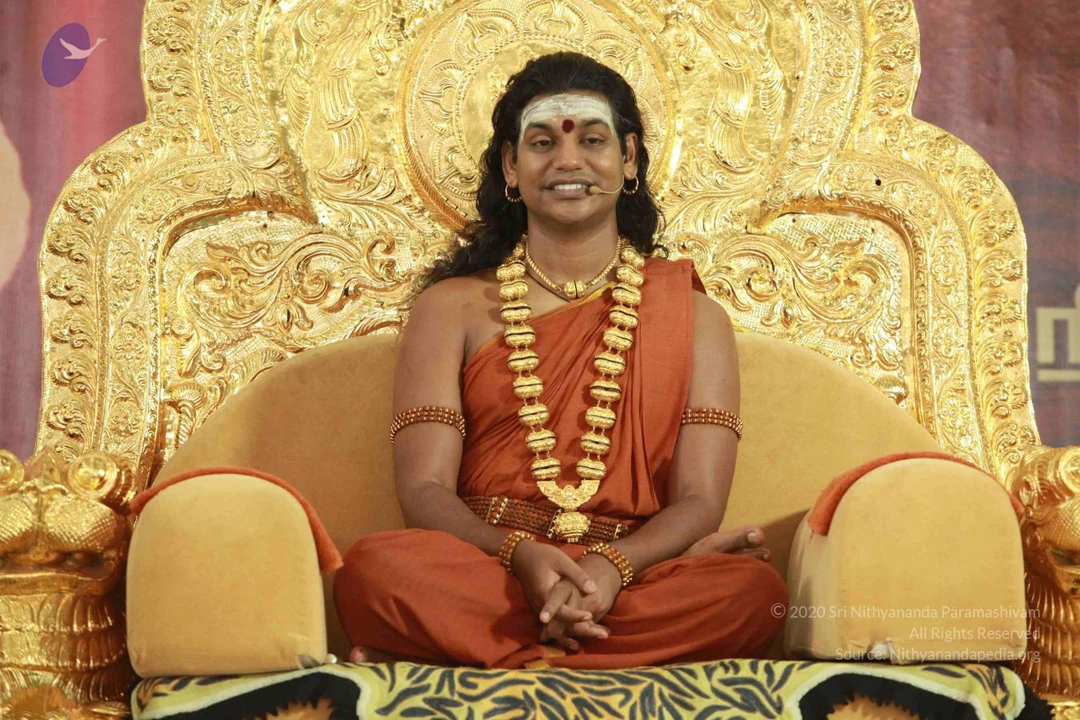
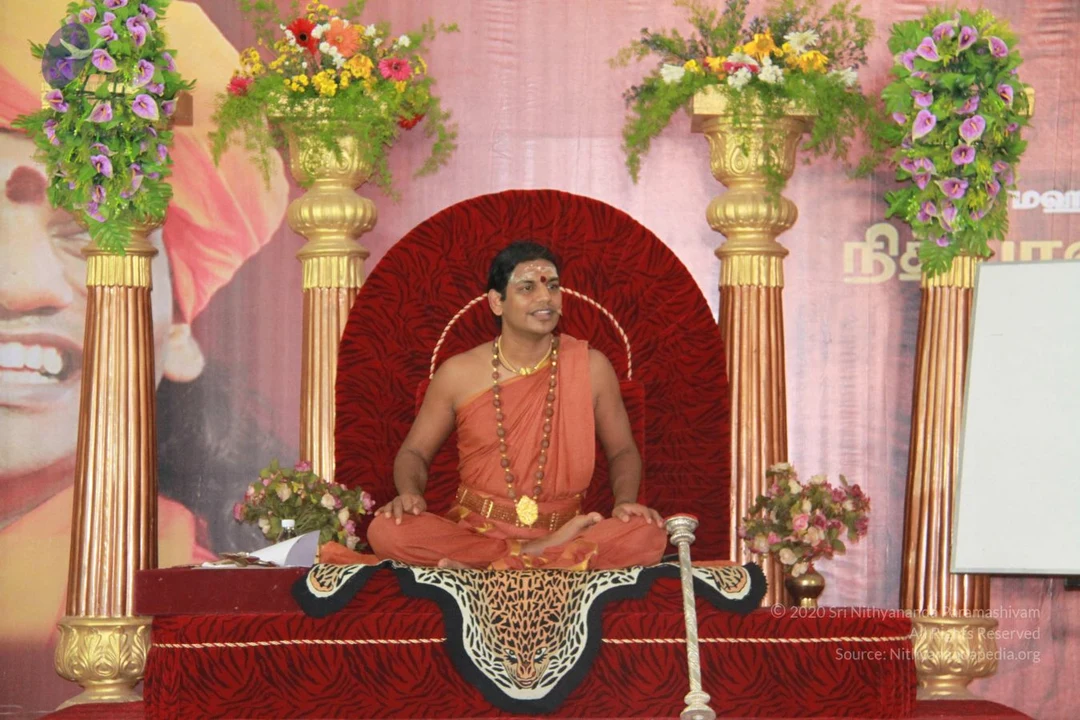
A seated man in a red velvet throne-style chair on a stage smiles broadly at the audience. He wears an orange-saffron robe draped over one shoulder, a heavy gold-coloured necklace of beads, and a red bindi with tilak marks on his forehead. Long dark hair falls past his shoulders and his hands rest together in his lap. Behind him a large backdrop shows a smiling face wearing a pink-orange turban and a red dot on the forehead, flanked by golden pillars with pink, yellow and white flower arrangements in vases. Pink flowers and a bouquet sit on a low red-draped table at his side. A small partial Tamil-script banner appears at the right edge. Watermarked credit text is ignored. This appears to be a satsang discourse setting.A photograph of a long-haired figure seated on the right, bare-chested with an orange-saffron cloth draped over the shoulders and a heavy gold ornate necklace of beads, with white markings on the forehead. Hands extend toward a standing man in a black jacket and belt on the left, and a kneeling man in a checked shirt bends forward near the hands. Behind them is a large painted backdrop of a smiling figure in a pink-peach turban, beside a golden pillar with a green plant and pink flower garland at the base.A photograph of an indoor stage event. On the right, a man with long dark hair, a white forehead band, a gold bead necklace and an orange shawl sits on a low seat, his hand extended to receive a folded package. On the left, a man with swept-back dark hair and a moustache wears a dark grey shirt and a black belt with a holstered device, leaning forward to hand over the item. Behind them is a large painted backdrop of a face and a golden fluted column, with pink flowers and red fabric at the edge. A man in a dark shirt is partly visible at the far left edge.A seated figure in saffron-orange robes sits cross-legged on a red velvet throne with a gold-trimmed cushion and a red-and-white patterned cloth draped on the dais. He wears a long gold-beaded necklace of orange and white flower garlands and a red tilak on the forehead. Behind him, a large printed portrait on a red-and-pink drape shows a smiling man in an orange turban and a red bindi, with the label "a person" in Tamil script on the backdrop. Two gold pedestal vases hold bouquets of pink, red, white and yellow flowers, and a blank whiteboard stands on an easel at right. The scene appears to be a satsang discourse, but the seated figure's appearance is not sufficiently distinctive to confirm identity, so the role is given as a seated teacher.A man seated cross-legged in meditation on a red velvet throne with a black zebra-stripe pattern and a rope-edged arch behind him, on a leopard-print cloth. He wears an orange saffron robe, a thick gold bead necklace with a gold pendant, a rudraksha-style gold necklace, and a belt, with eyes closed and hands folded in his lap. A white tilak with a red bindi marks his forehead, and a small clip-on microphone is attached near his face. Pink roses and foliage flank the throne, with a water bottle and a brass vessel at the sides. Swamiji (probable), seated in meditation as the speaker, showing the distinctive saffron robe, long hair and gold ornaments.A man with long swept-back dark hair, a white sacred ash mark on his forehead and a red bindi, wearing an orange-saffron cloth draped over his body and a heavy gold beaded necklace with a gold pendant, speaks while gesturing with both hands in a talk setting. He sits in front of a red tiger-striped chair with a twisted rope trim, beside a gold-capped copper-coloured pillar and a red banner with large gold Tamil lettering. A small clip-on microphone is attached near his mouth. Appearance-based label: a person, an in-person presenter seated for a discourse.
General Discussion by Swamiji

8 photosSource gallery
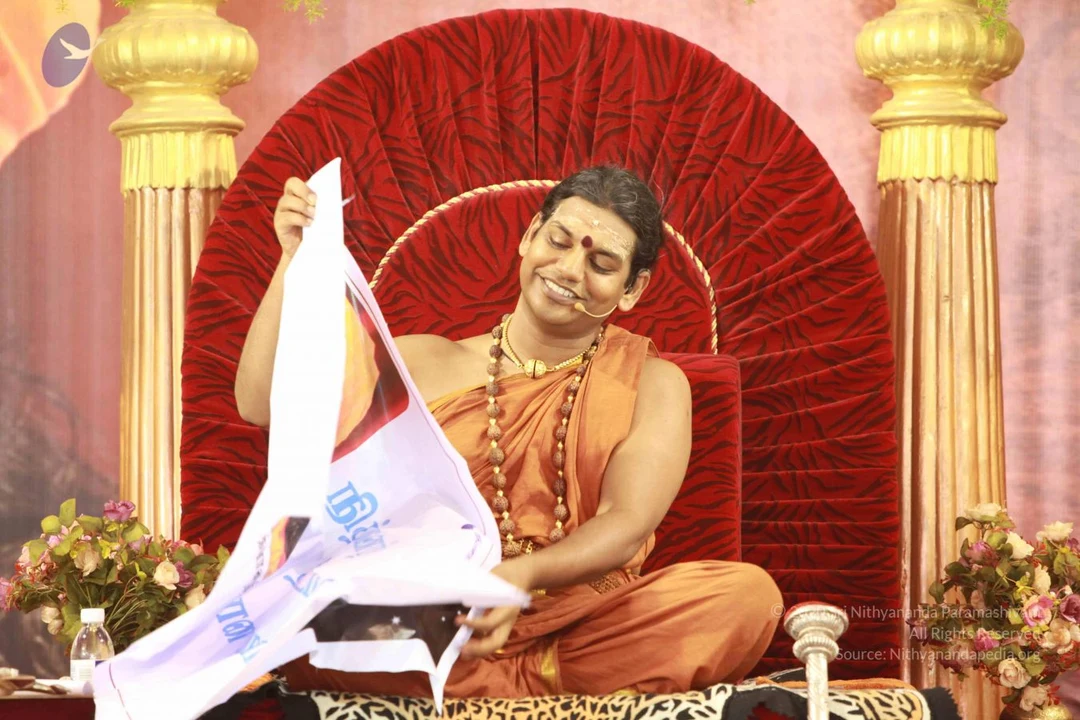
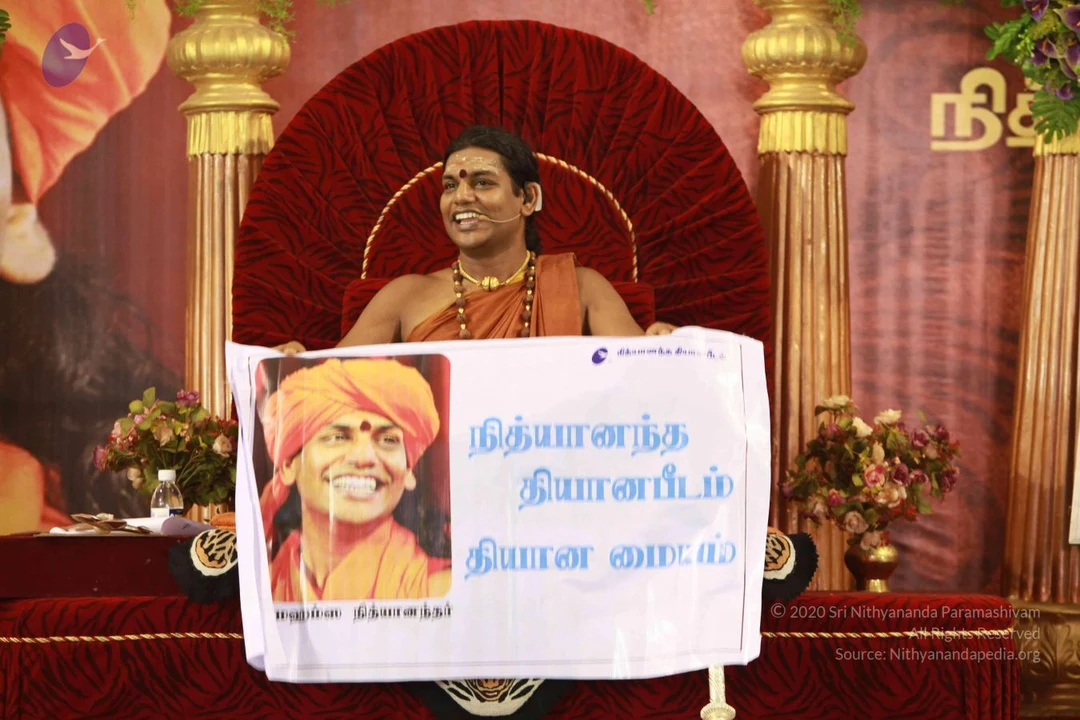
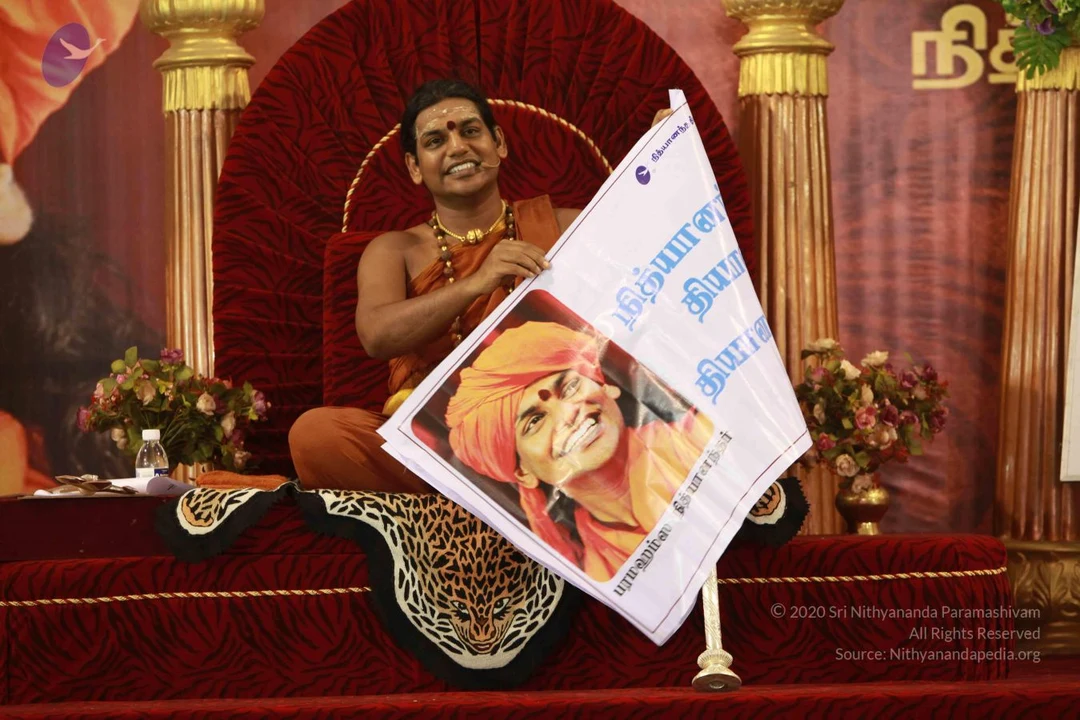
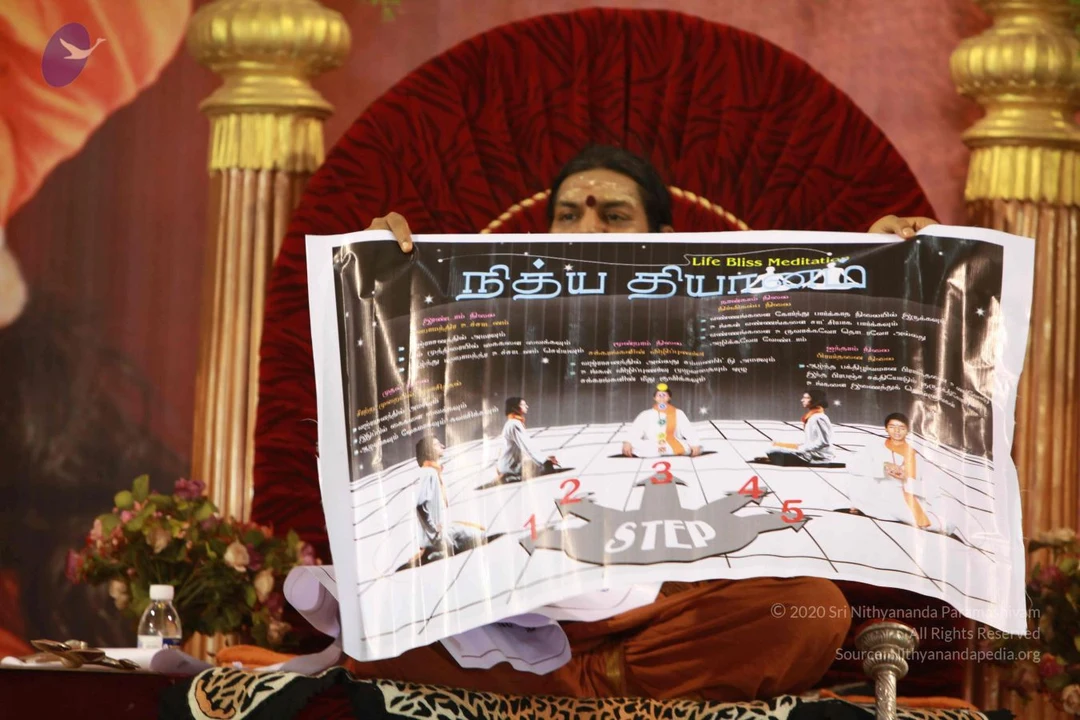
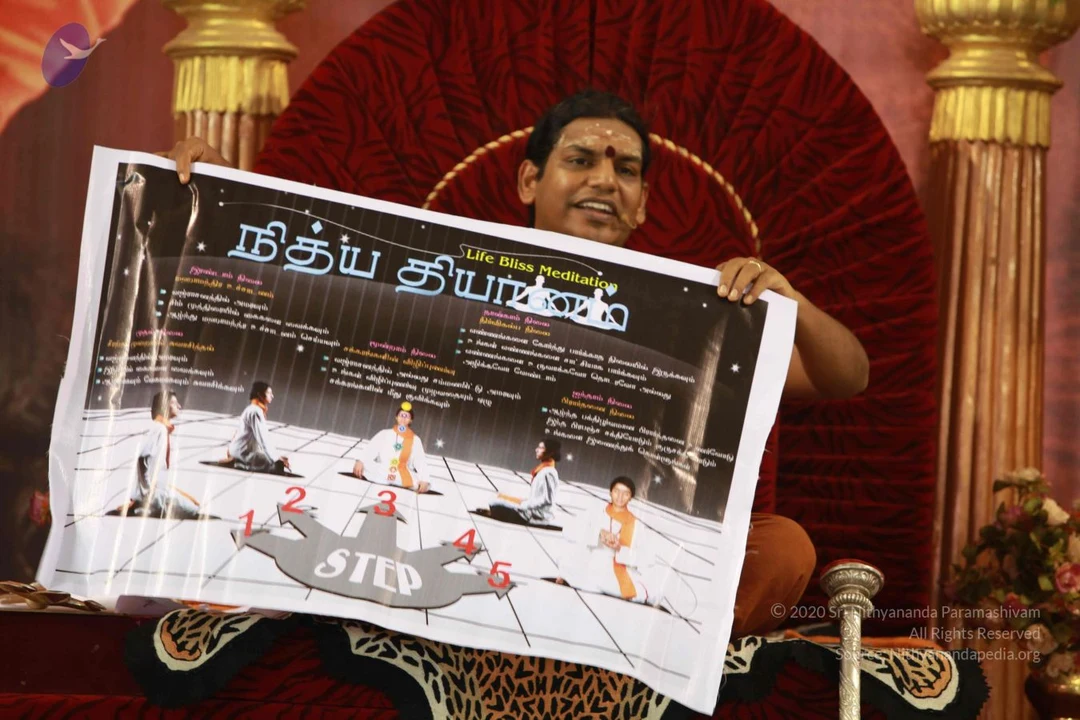
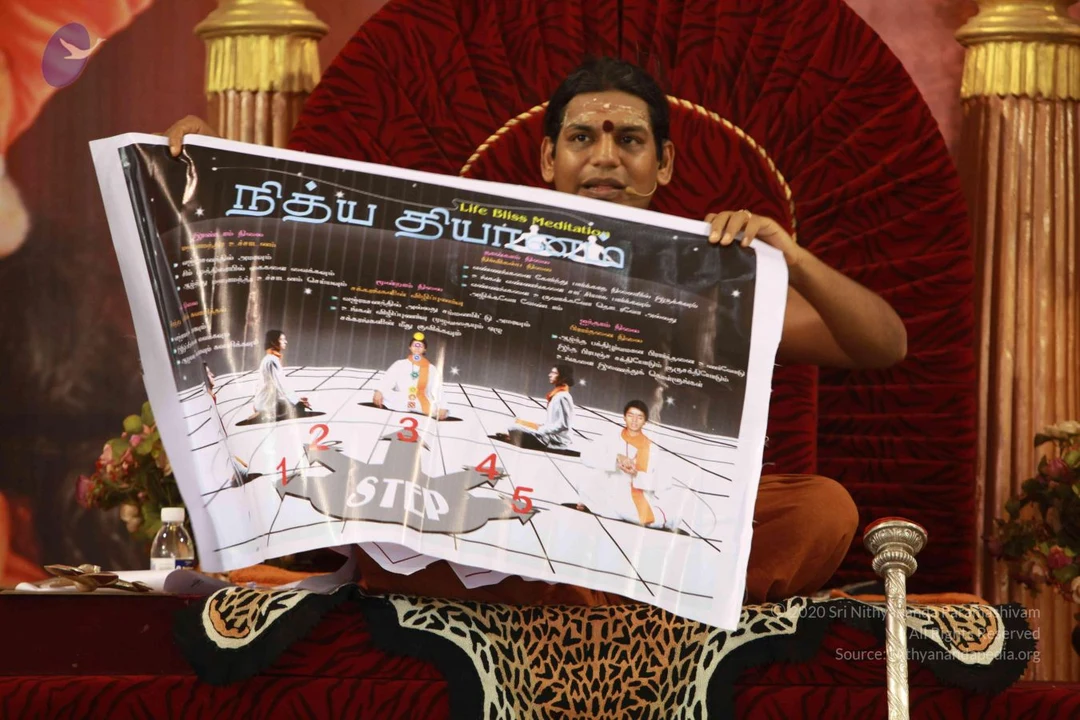
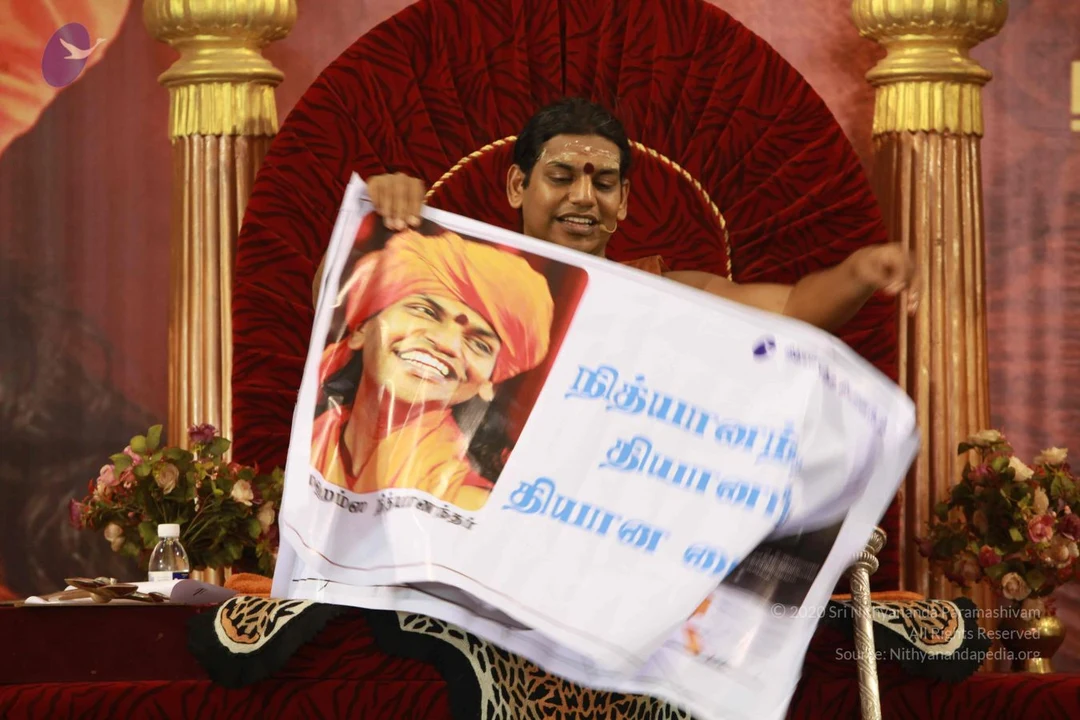
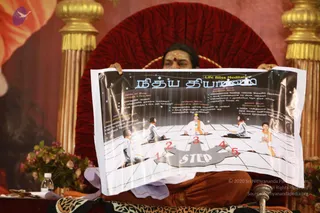
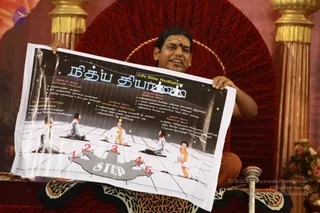
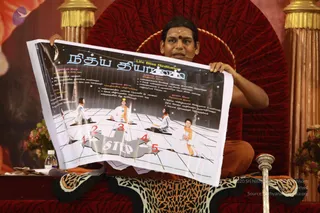
A man seated cross-legged on a large red velvet throne with a zebra-striped pattern and gold-trimmed edges, speaking to an audience during a satsang. He wears an orange-saffron shawl over one shoulder, a rudraksha mala, a gold chain necklace and a red tilak on his forehead, with a white cloth draped over his lap. Gold pillars topped with flower arrangements of purple orchids, orange and yellow blooms flank the throne, and a pink draped backdrop stands behind. A microphone stand is at the lower right and a small floral arrangement sits on the dais. a person: the seated speaker wears a saffron shawl, rudraksha mala and gold necklace on a throne, matching the page's description of a talk given by a person.A man with a red bindi and tilak sits cross-legged on a red velvet throne with a gold rim, wearing an orange-saffron cloth, a gold necklace and long rudraksha malas. He smiles with eyes closed while holding up a white printed cloth or banner with blue lettering. Pink and white flowers sit in vases on either side, and gold pillars frame the throne against a pink backdrop.A man seated on a red throne with a zebra-striped upholstered back and a leopard-print cloth draped over the seat smiles while holding up a white banner. He wears an orange garment over his bare torso, a gold necklace and rudraksha beads, and a red bindi on his forehead, with a small microphone clipped near his face. The banner shows a large printed portrait of a smiling man in an orange turban and orange robes, with blue Tamil script above it. Behind the throne are gold-coloured columns, a red-and-gold backdrop and pink flower arrangements, with a water bottle on a side table. There is one physical person in the scene; the portrait on the banner is printed and not counted.A seated man in orange and red robes, with a red tilak on his forehead, holds up a large printed poster in both hands. He sits on a red velvet throne with gold columns behind him and a bouquet of pink roses and a water bottle on the table. The poster, titled Life Bliss Meditation, shows five numbered steps with figures in meditation poses on a grid floor, and Tamil text is printed across it. The poster and the figures on it are printed images, not physical people. The seated man appears to be a person, shown with a red tilak and orange clothing while presenting a meditation chart at a satsang-style event.A man seated on a red ornate throne with a tiger-striped cloth draped over the base holds up a large printed poster for the audience. He wears an orange-saffron garment and has a red tilak dot on his forehead. The poster shows a Tamil-titled meditation guide with five numbered steps illustrated by figures in seated and kneeling poses on a grid floor, labelled STEP. Gold pillars, a red drape and flower arrangements frame the stage.A man seated on a red and gold throne with a tiger-striped cushion holds up a large printed poster during a satsang talk. He wears orange robes, a vertical tilak mark on his forehead and a small red bindi, with a head microphone. The poster is titled in Tamil script with the English words "Life Bliss Meditation" and shows four figures in white and orange seated in meditation on a grid floor, numbered 1 to 5 with a 'STEP' label. Flowers and a water bottle sit on a table at left, and a silver staff stands at right.
Kriya Session by Swamiji

21 photosSource gallery
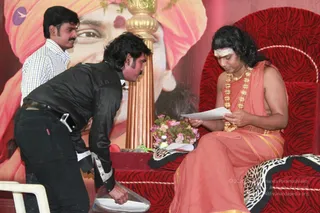
Photograph of a stage with a red throne-style seat draped in a zebra-striped cloth. Seated on the right, a man with long dark hair, a white forehead marking, bare chest and an orange-saffron wrap holds a sheet of paper and reads it, wearing layered gold beaded necklaces. In front of him, a man in a black long-sleeved shirt and black trousers leans forward, handing over a clear plastic bag. Behind them stands a man in a white-and-blue checked shirt. A large backdrop portrait behind shows a face in a pink-orange turban. Probable Swamiji is the seated man reading, identified by his long hair, white forehead marking, saffron wrap and gold necklaces on a throne.A man in orange-saffron robes sits on a large red tiger-striped velvet throne with gold-coloured column bases behind him. He wears a gold necklace, long rudraksha mala beads, and a red tilak on his forehead, and holds a short silver staff. A silver trident stands beside the throne, with pink and purple flower arrangements and green foliage around. A microphone is clipped to his face and his hands rest on his lap as he speaks.A photograph of a large seated audience of men in a yellow-walled hall during a satsang. Most wear white shirts and white dhotis, many with rudraksha malas around their necks and ID lanyards with orange tags. One man in the front right wears a white t-shirt with blue stripes on the sleeves, and another in a white shirt with a printed slogan on his tee. Some sit on striped mats, and a loudspeaker stands at the top of the frame beside a wall poster. The crowd fills the frame, with many faces looking toward the front.A man in orange-saffron robes sits on a red velvet throne with a zebra-striped pattern, speaking as if giving a discourse. He wears a rudraksha mala with a gold pendant, a gold necklace, a gold waist cord, and a red tilak on his forehead. A silver trident stands beside the throne, and a white microphone is clipped near his face. Gold urn-shaped pedestals hold flower arrangements of purple, pink, yellow and red blooms, and pink flowers sit on the platform. Behind him is a pink draped backdrop. A gold-lettered Tamil script is partly visible at the right edge. Swamiji (probable) is the seated speaker, identified by long hair, saffron clothing, rudraksha mala and gold ornaments, with a throne and trident setting.A man seated cross-legged on a red velvet throne with a zebra-striped cushion, smiling and gesturing with both open hands as if speaking to an audience. He wears saffron-orange robes, a rudraksha mala with multiple strands, a gold necklace, a red bindi and a gold waist belt. A silver trident stands beside the throne and a silver staff rests at its base. Gold-painted columns topped with purple and white flower arrangements frame a pink drapery backdrop, and small pink-and-white flower pots sit at the foot of the platform. a person appears in this image based on the saffron and rudraksha cues and his seated role on the throne. The image is a photograph of a satsang stage setting.A seated man in orange-saffron robes sits cross-legged on a red velvet throne with black tiger-stripe pattern and a circular rope-like backrest, a silver trident leaning beside him. He wears a rudraksha mala, a gold chain necklace, a gold waist cord, a sacred ash mark and red bindi on his forehead, and a small microphone clipped near his mouth, gesturing with his right hand while speaking. Gold fluted pillars flank the throne, and pink-and-white flower arrangements with ferns decorate the top corners, with pink draped backdrop behind. A printed copyright caption appears at lower right. This appears to be a person satsang discourse in a stage setting, with the seated speaker presenting the a person cues of saffron robes, rudraksha mala and gold ornaments.
Darshan

12 photosSource gallery
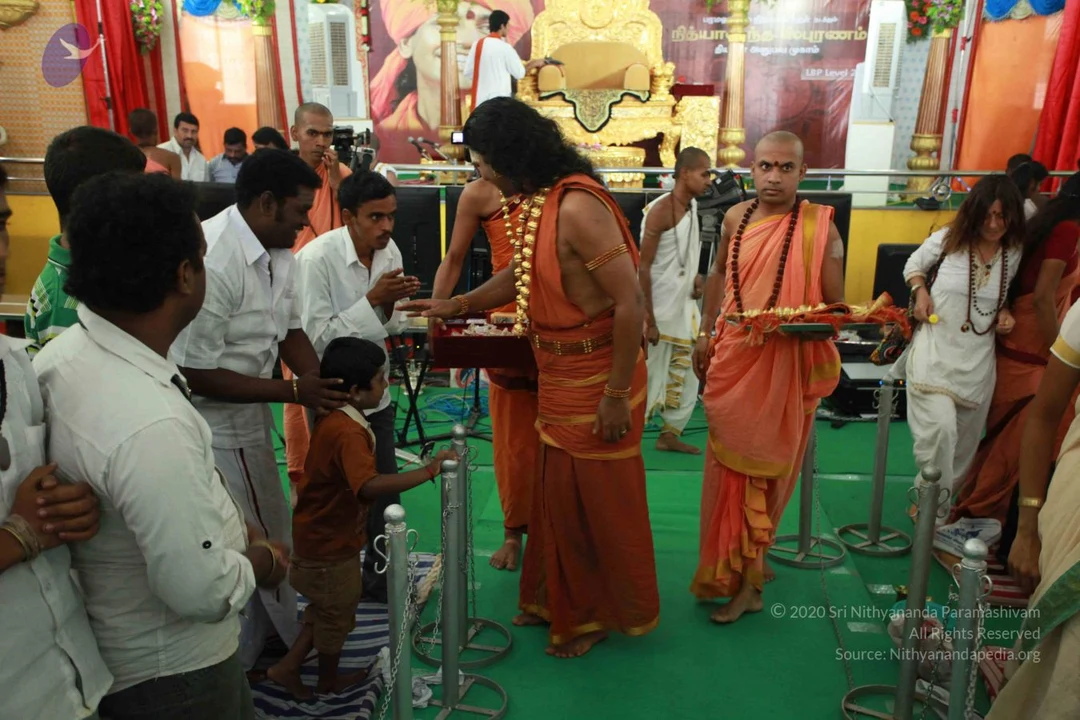
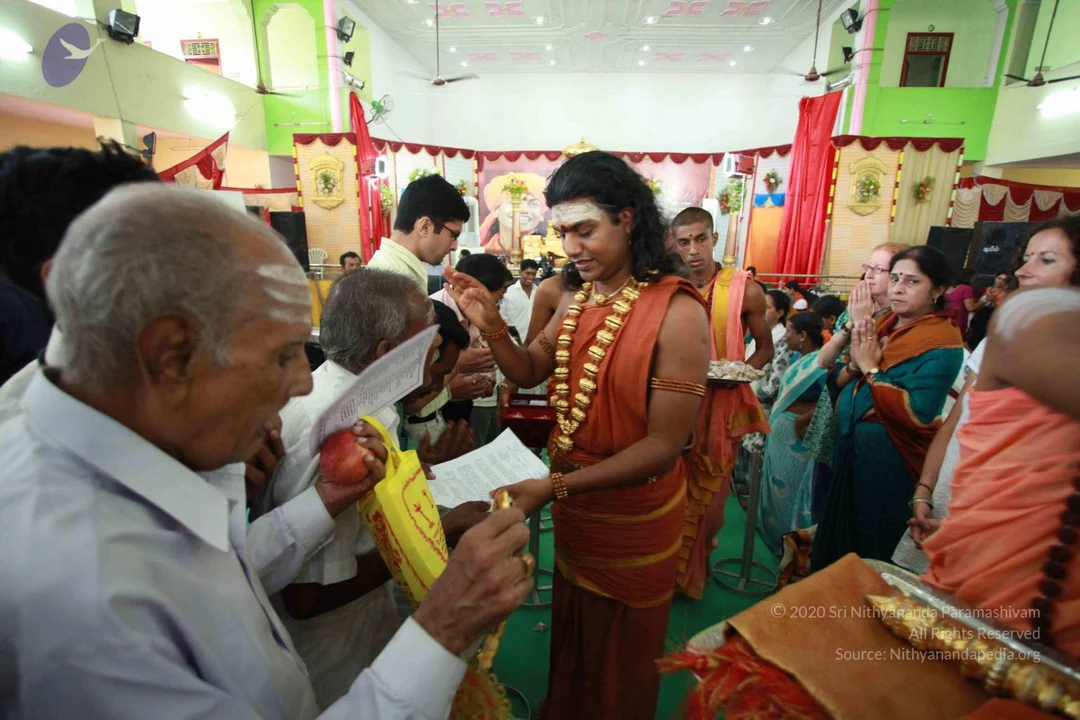
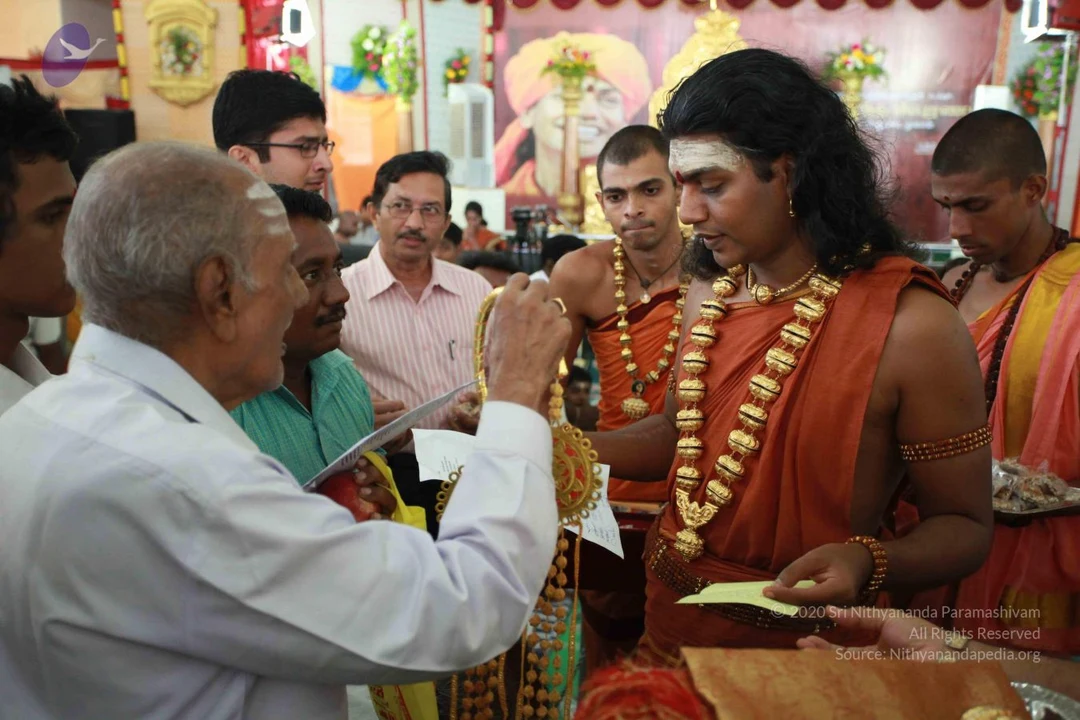
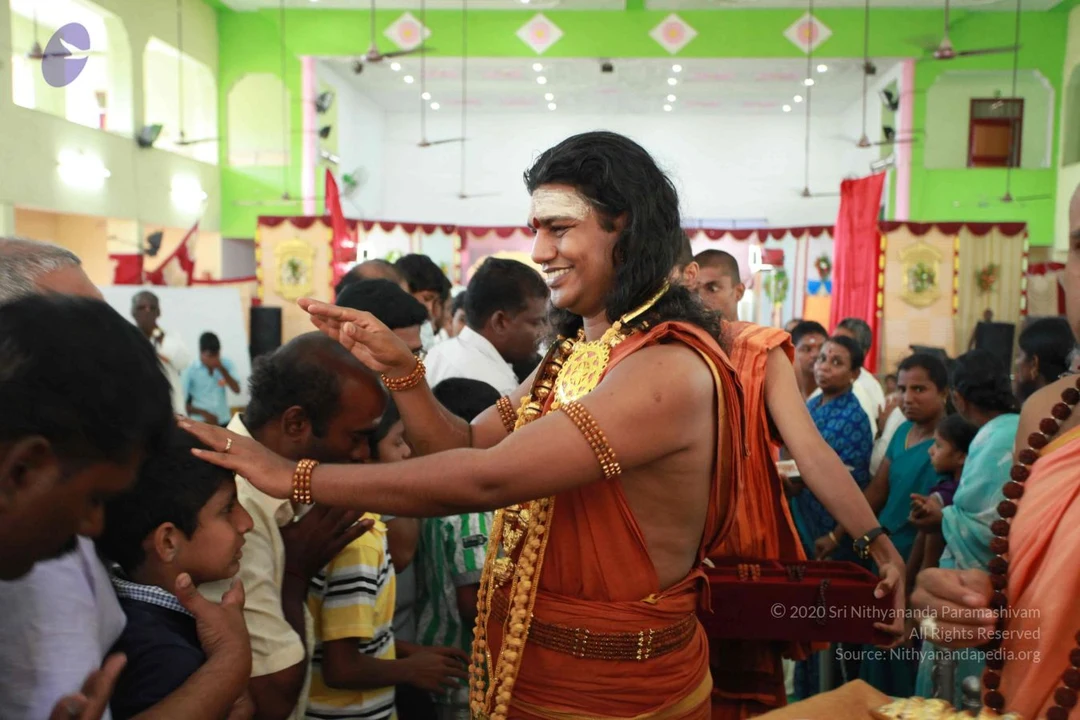
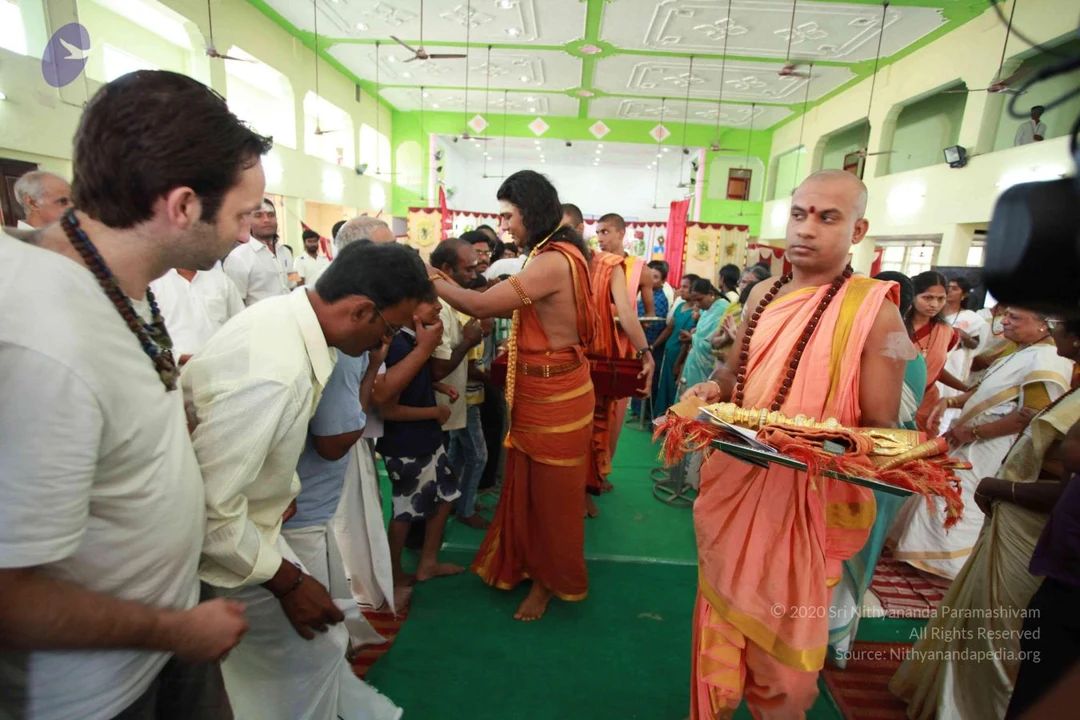
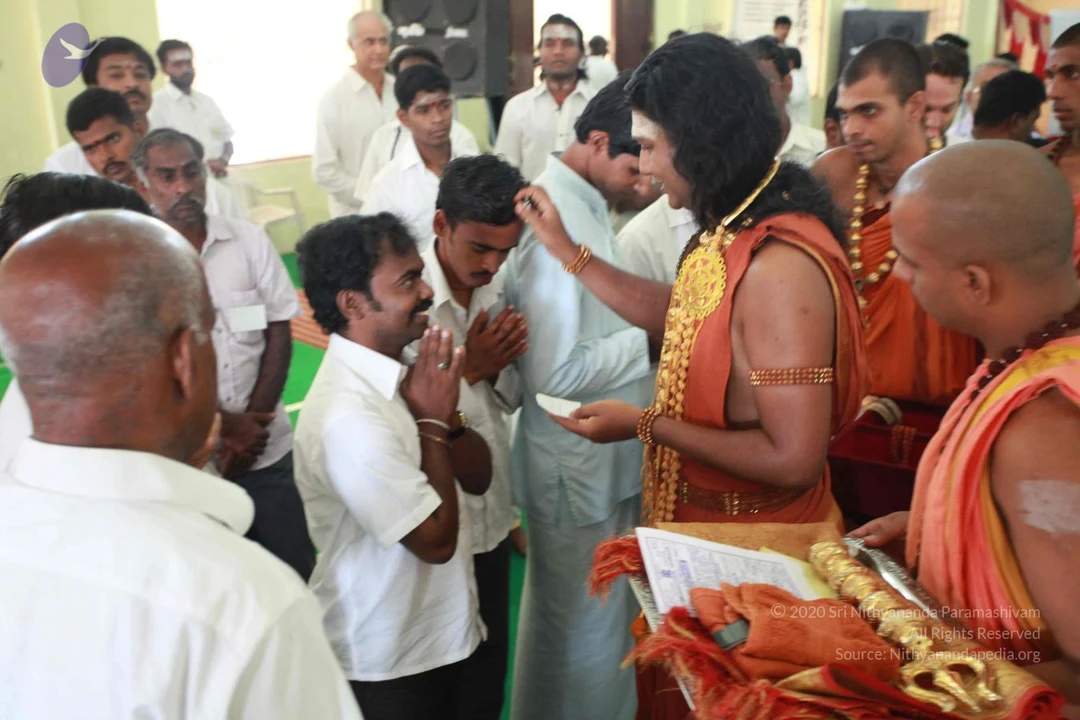
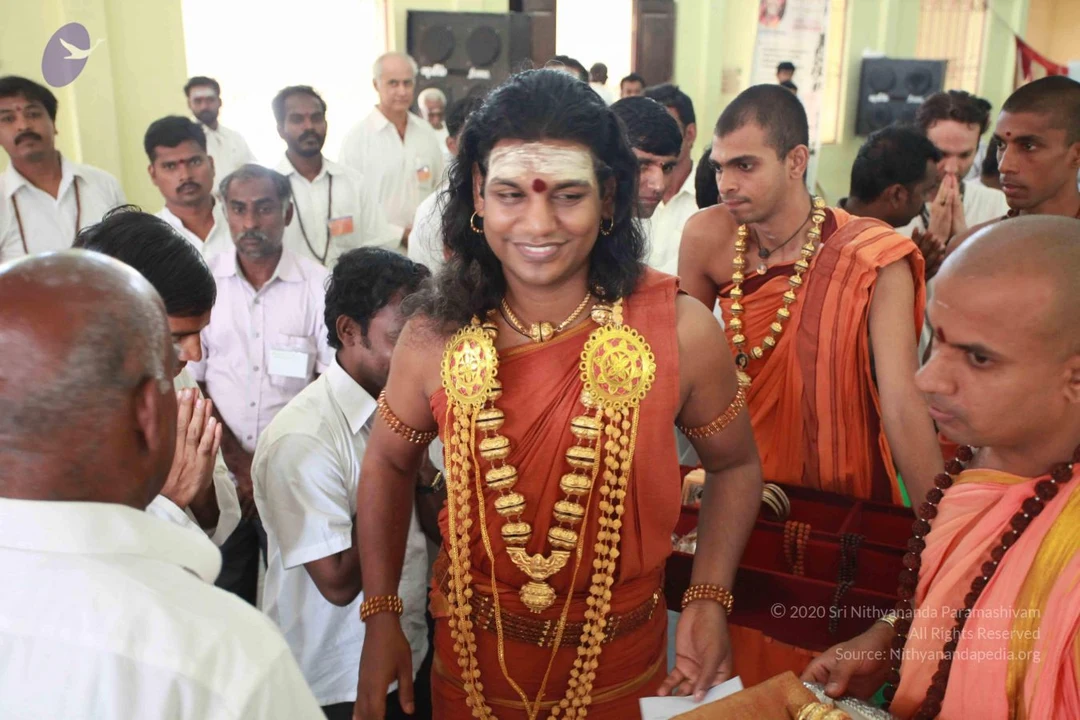
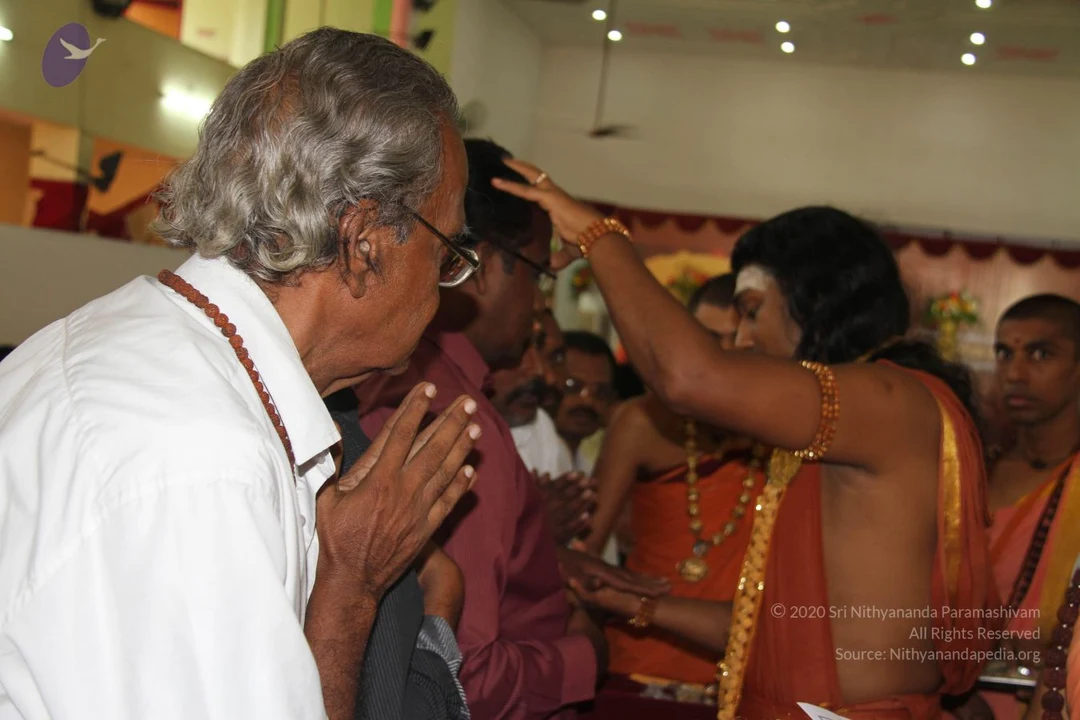
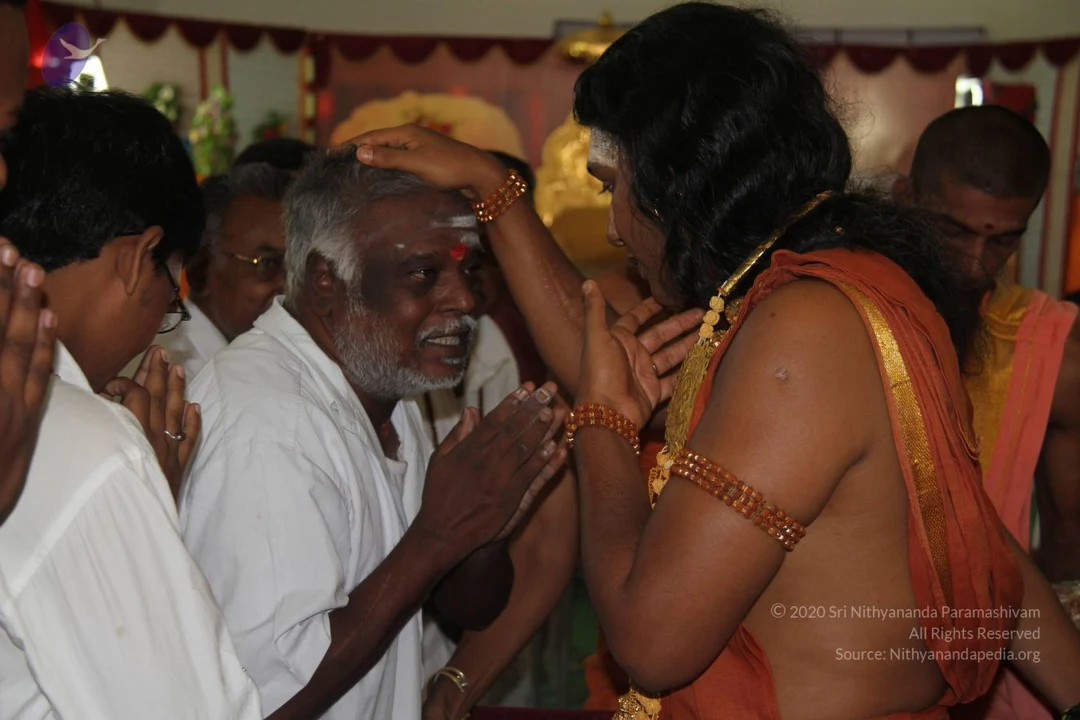
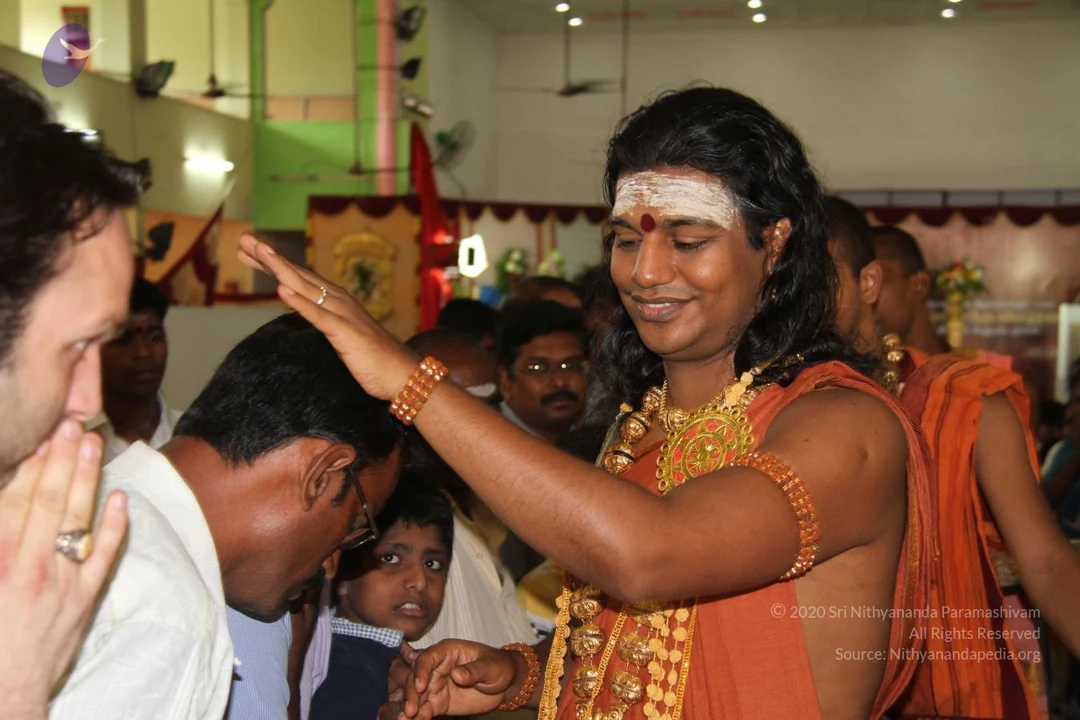
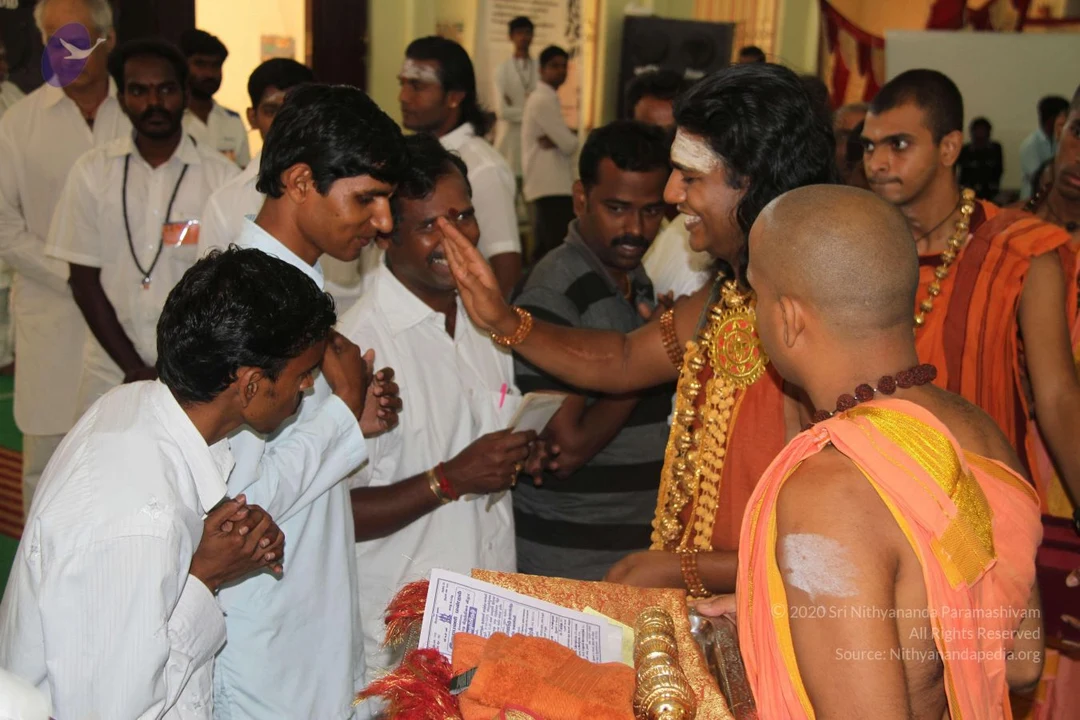
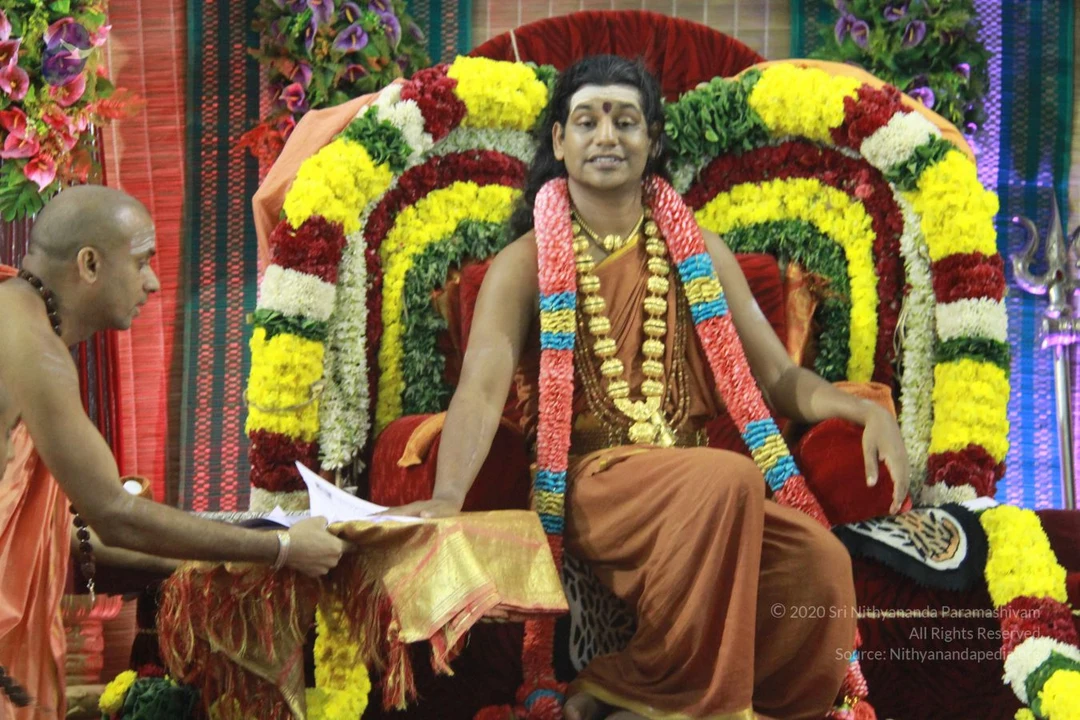
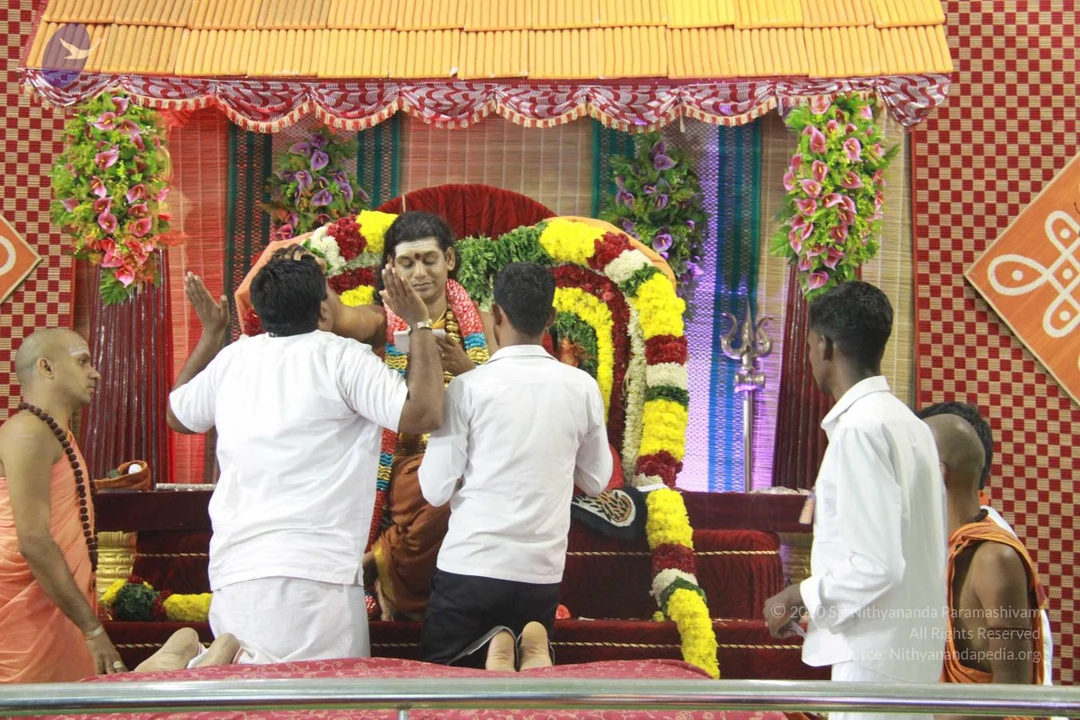
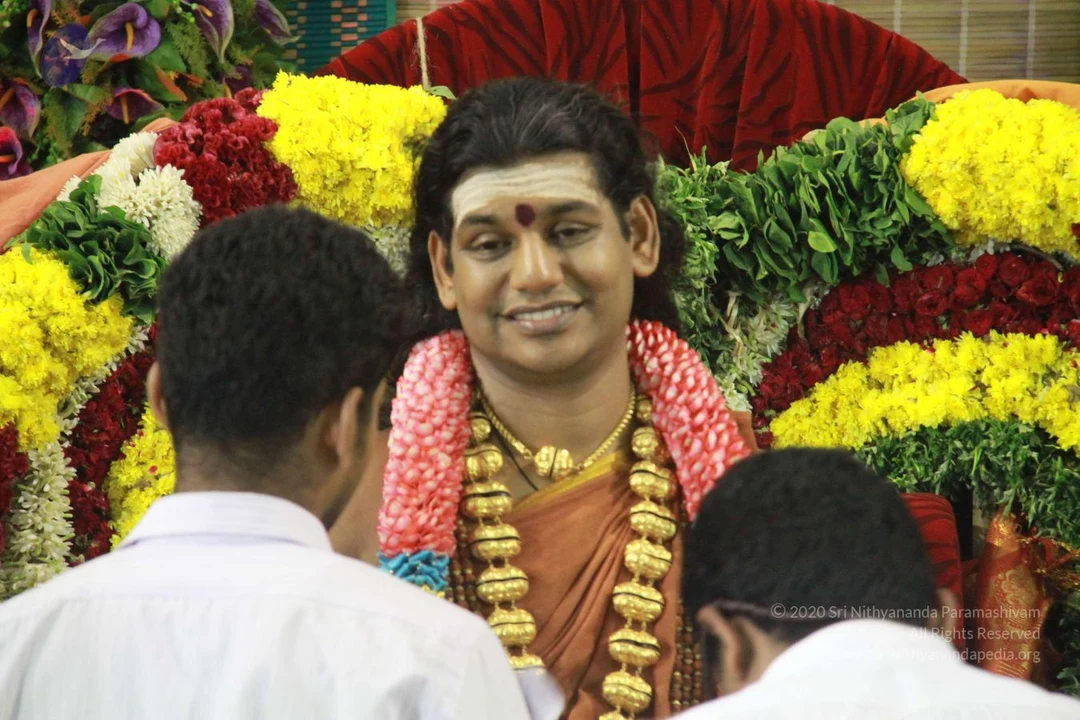
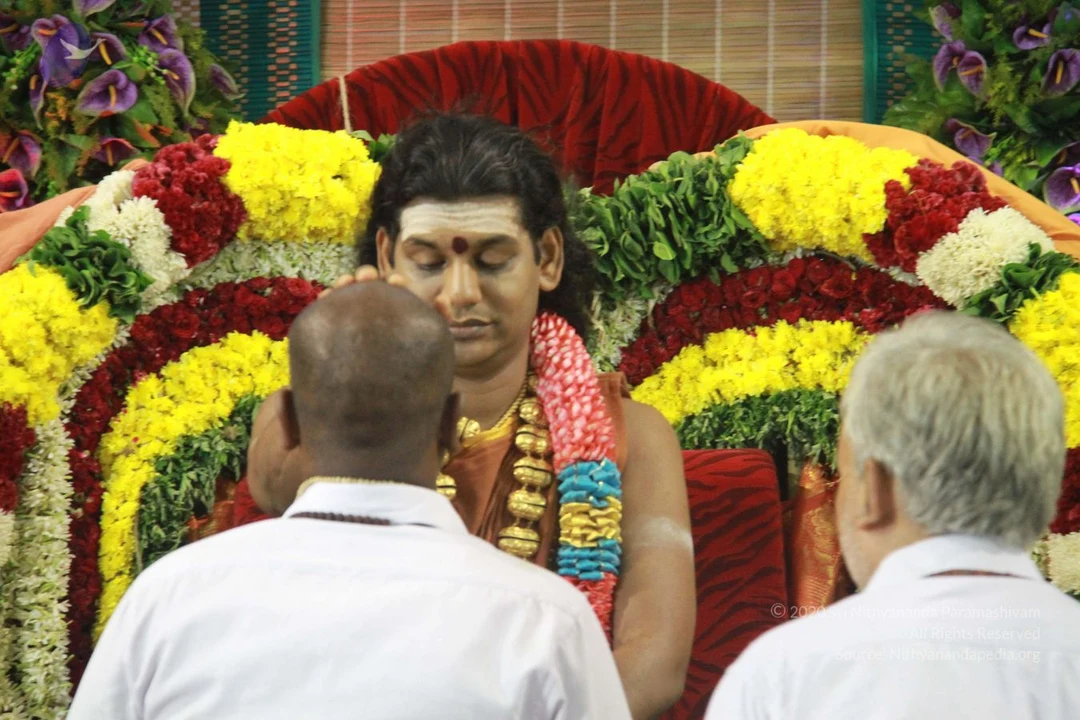
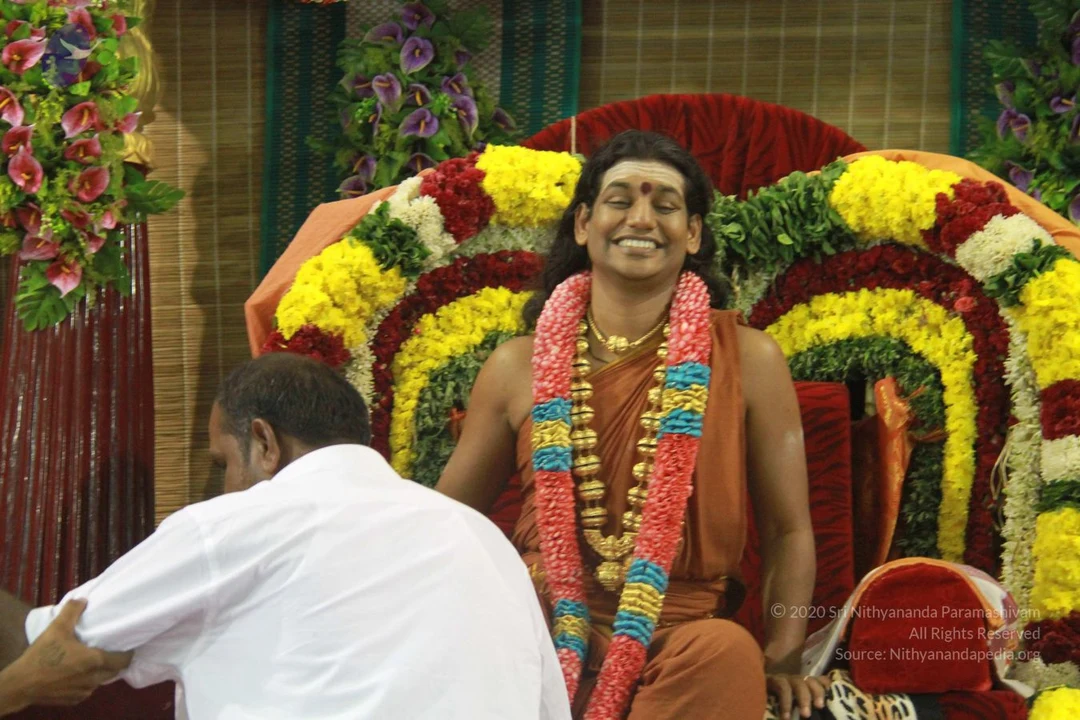
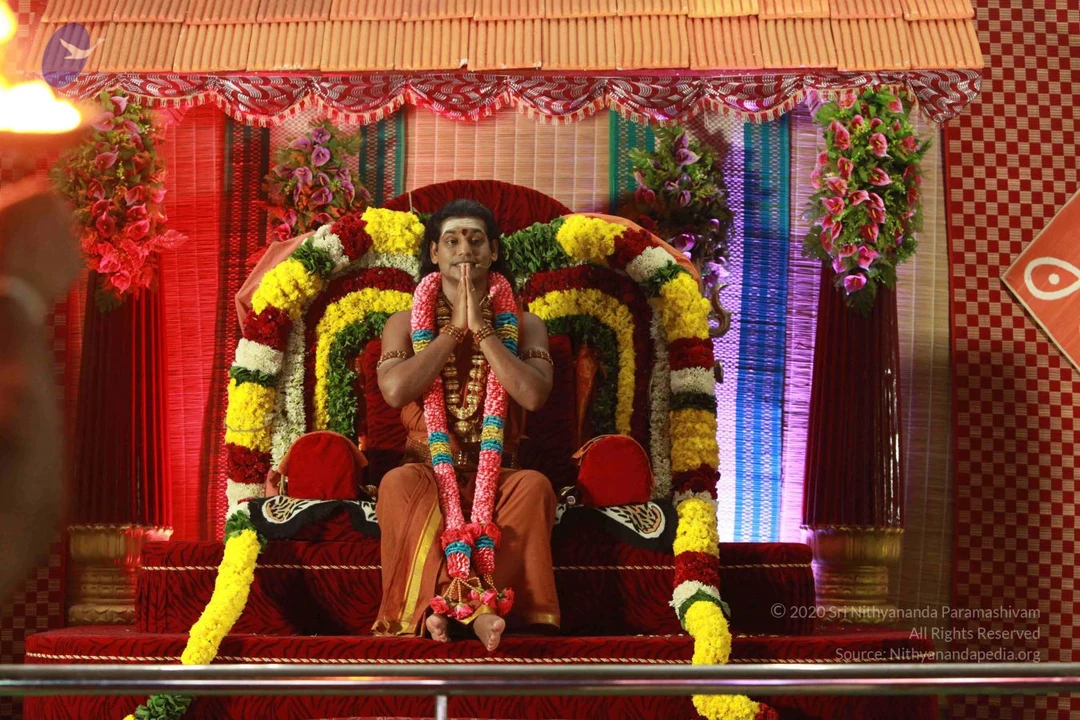
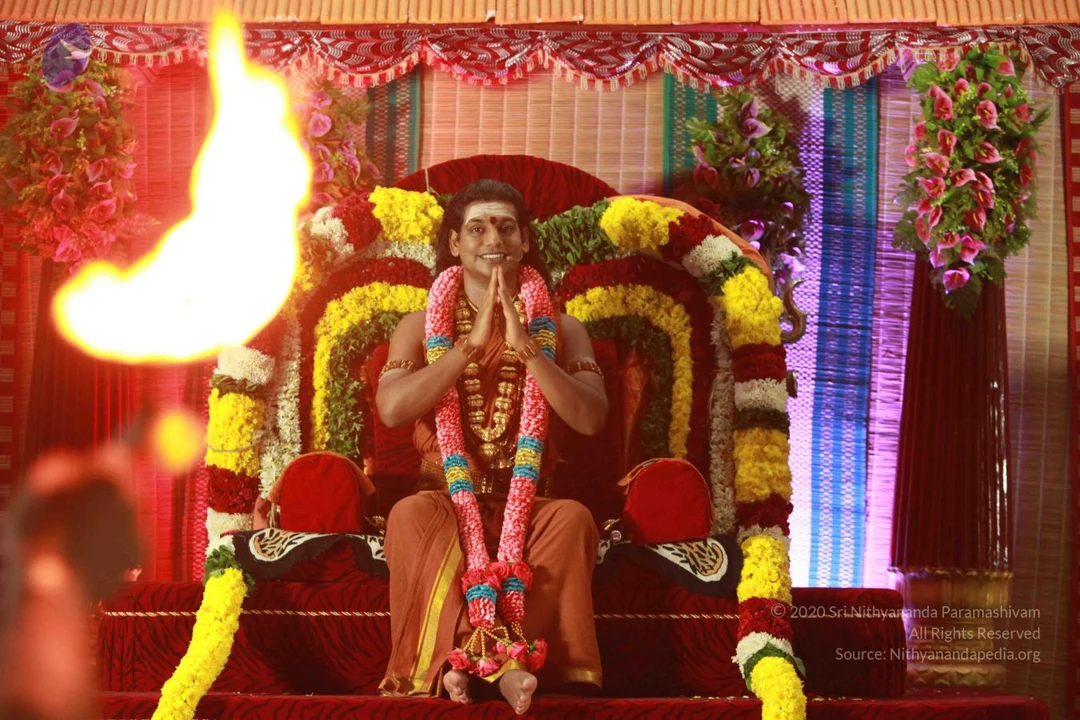
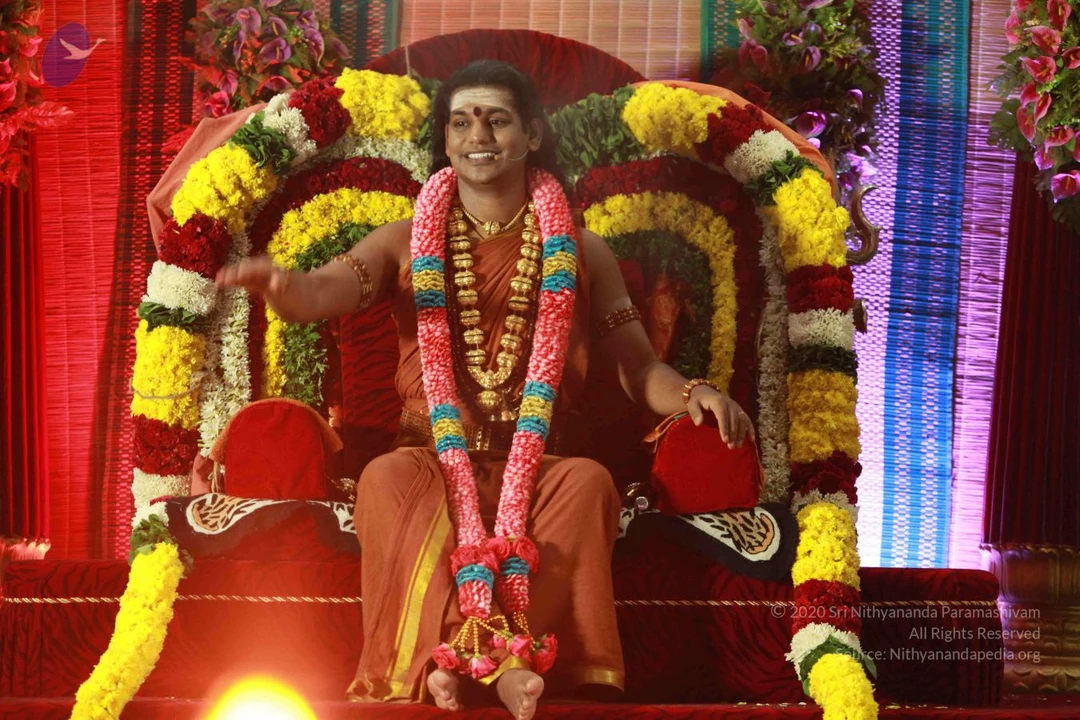
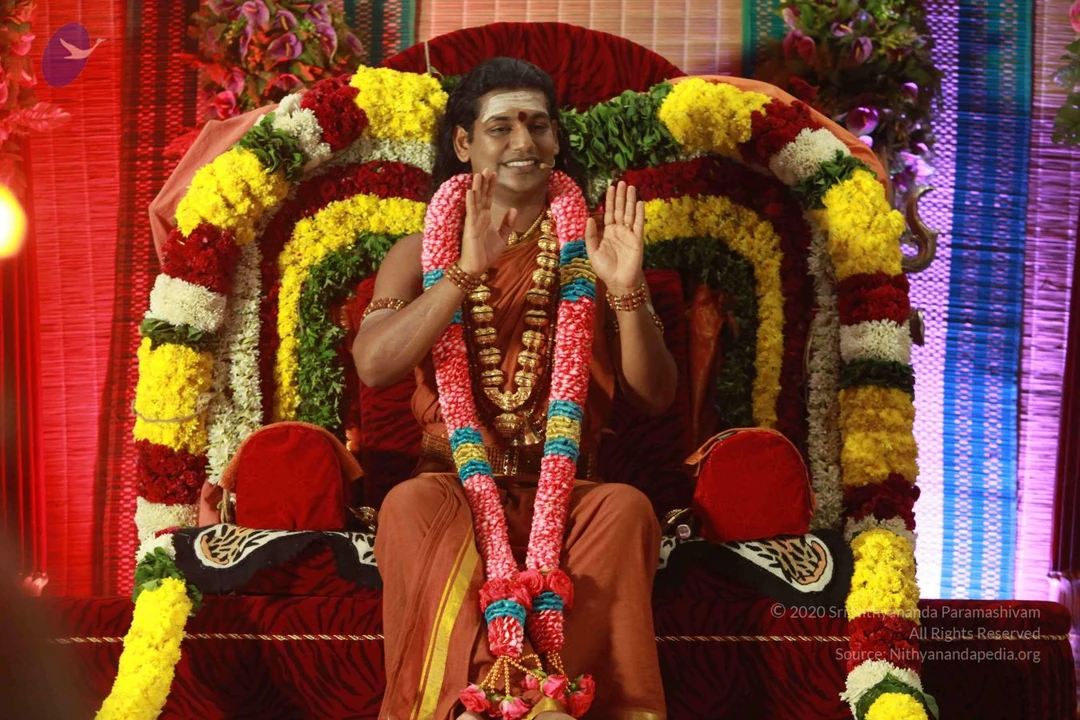
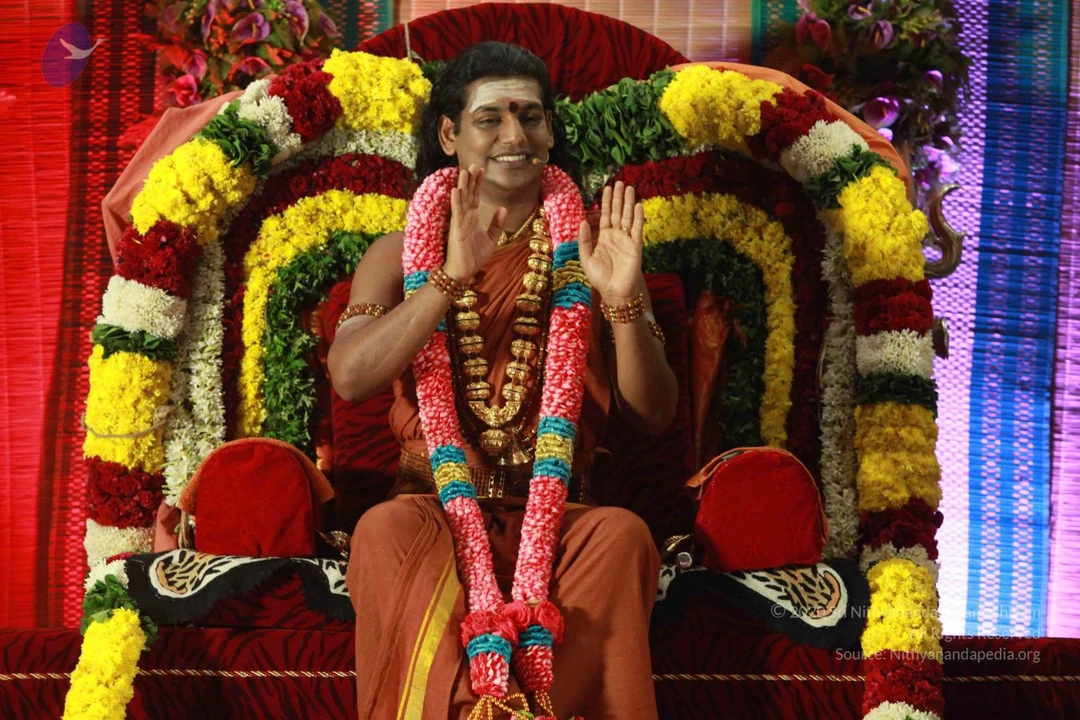
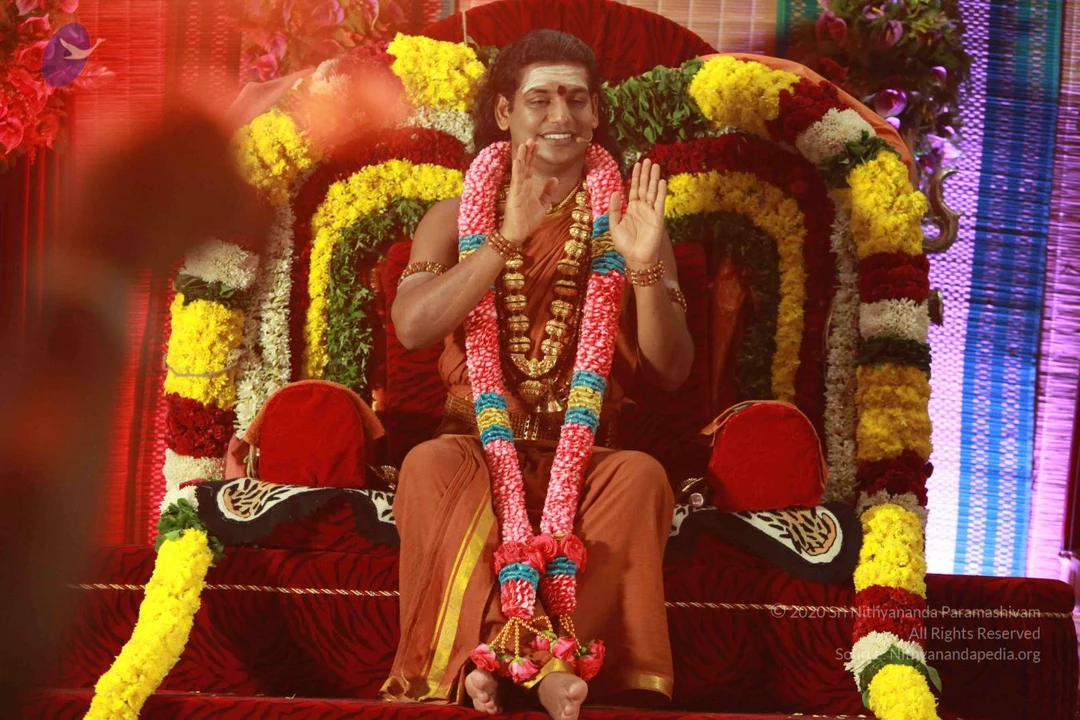
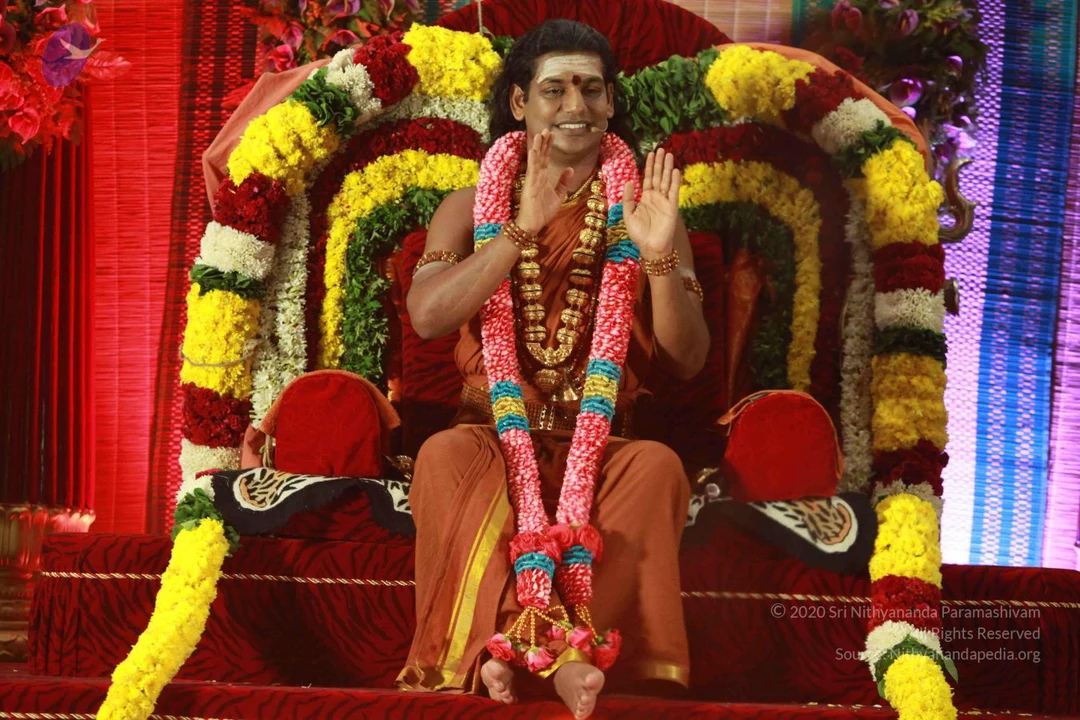
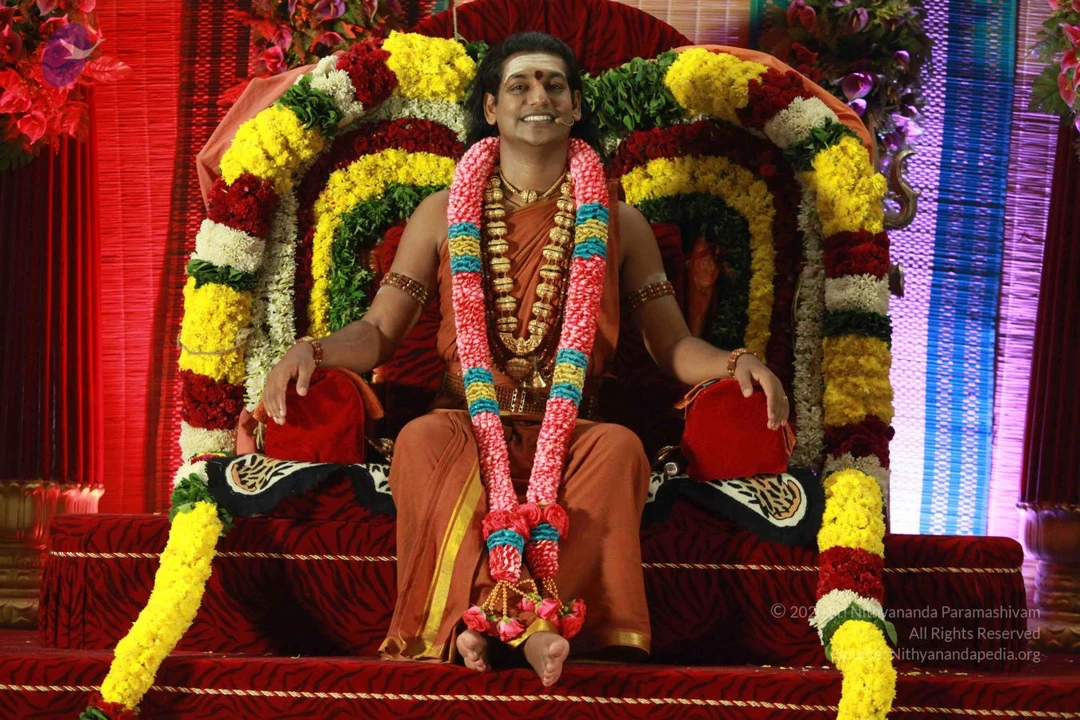
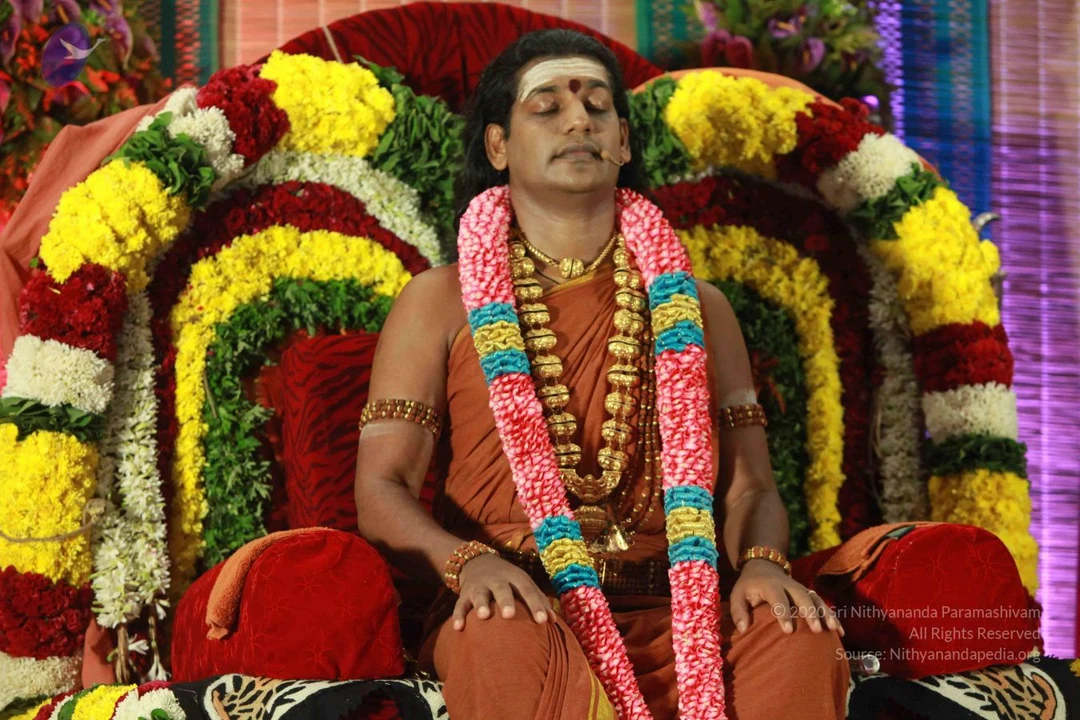
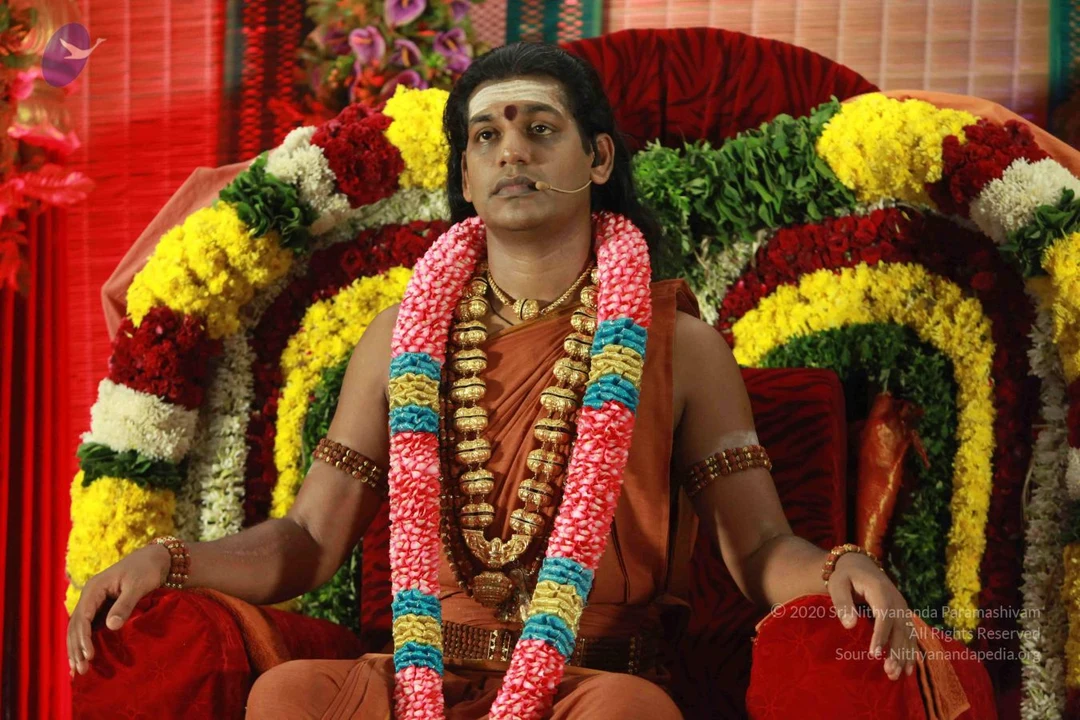
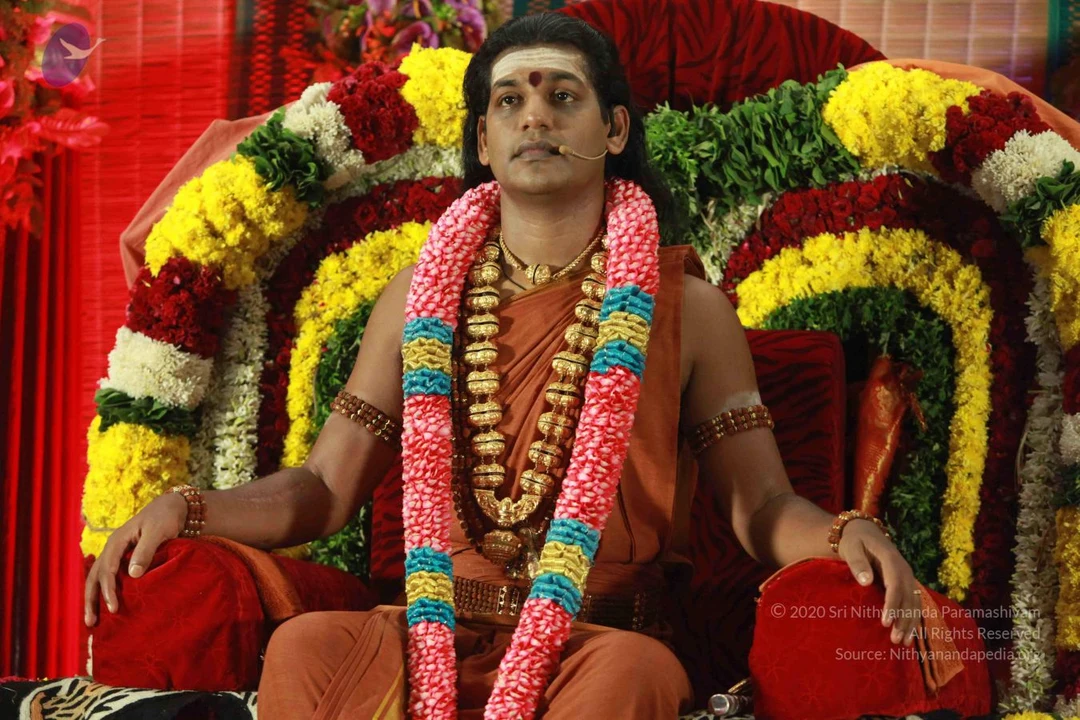
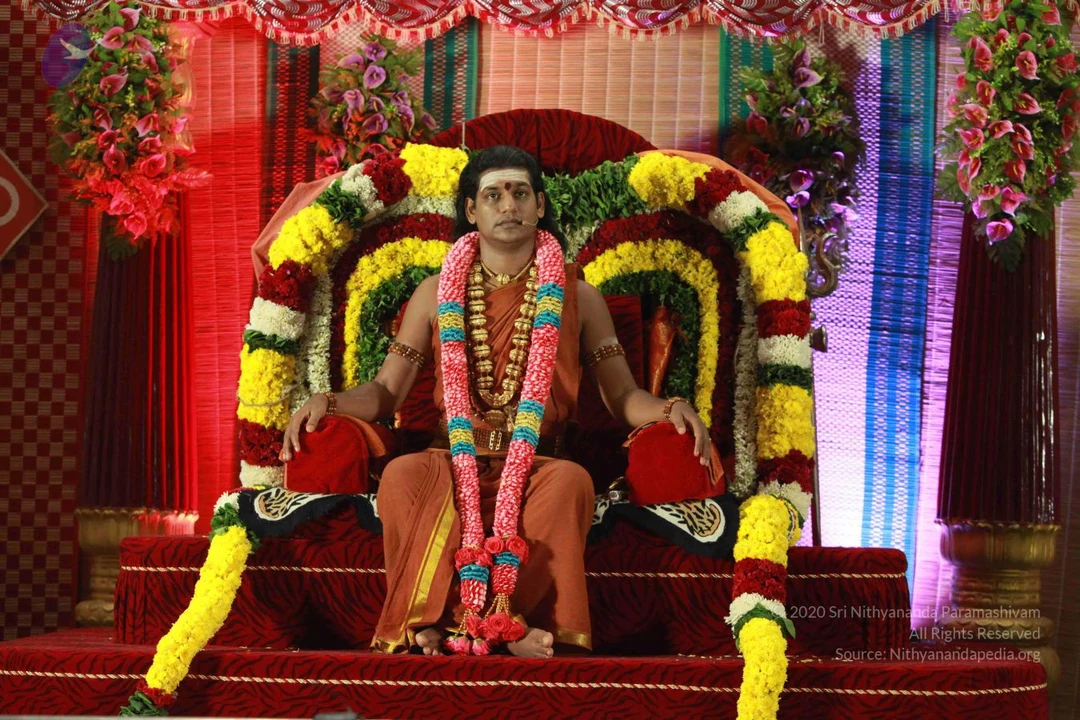
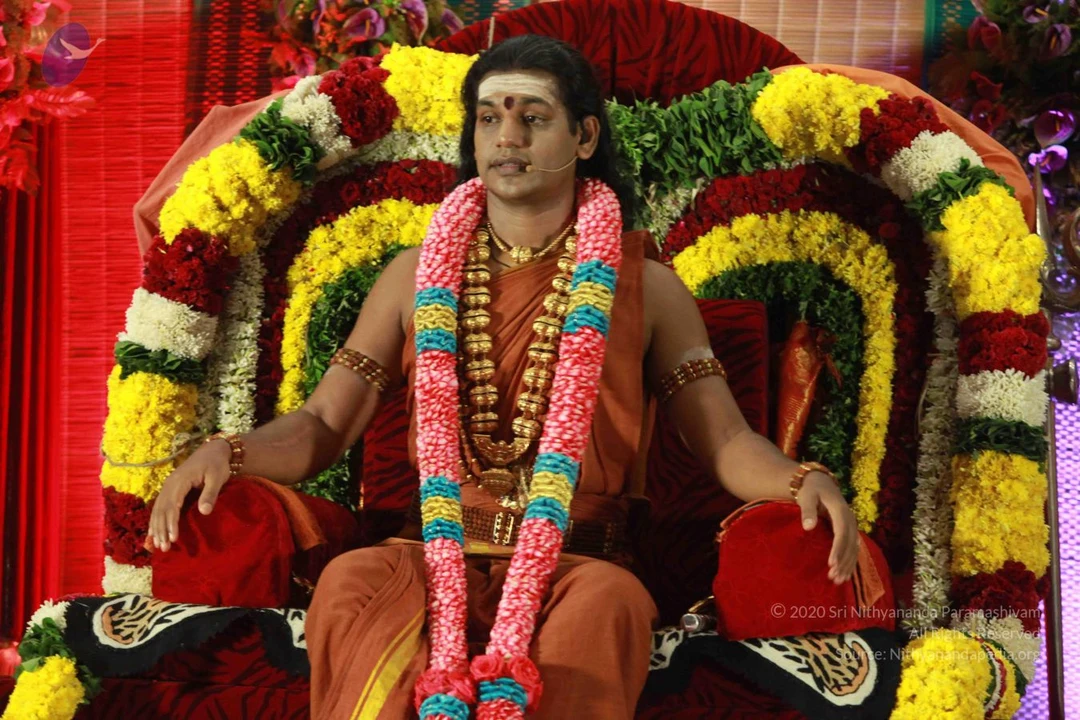
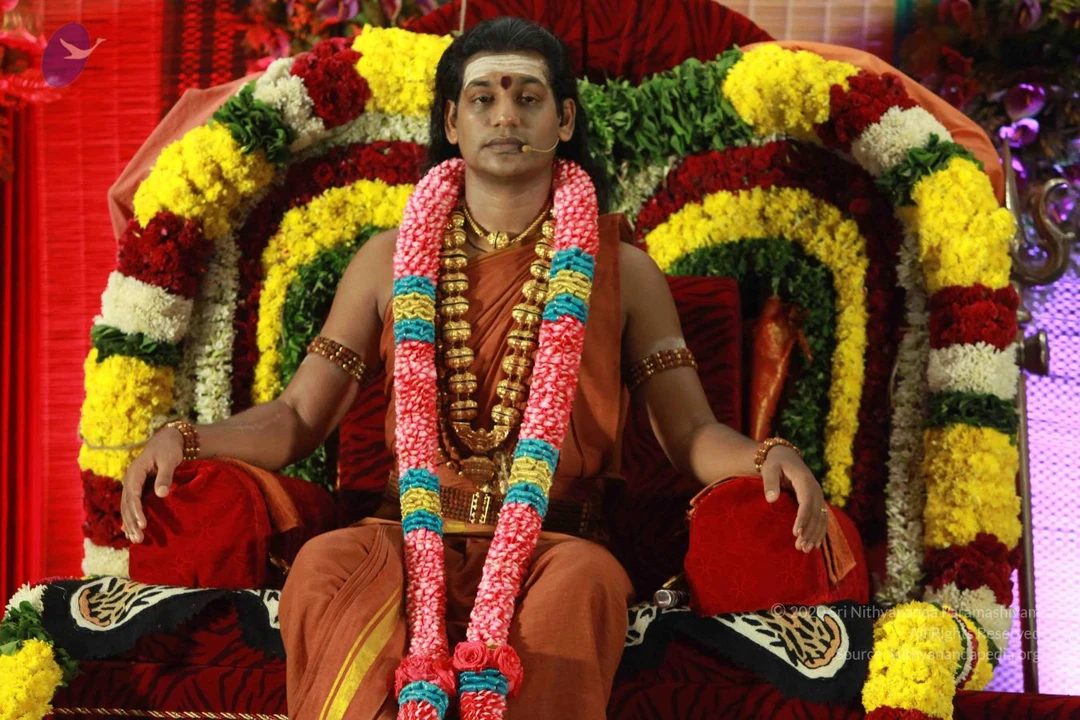
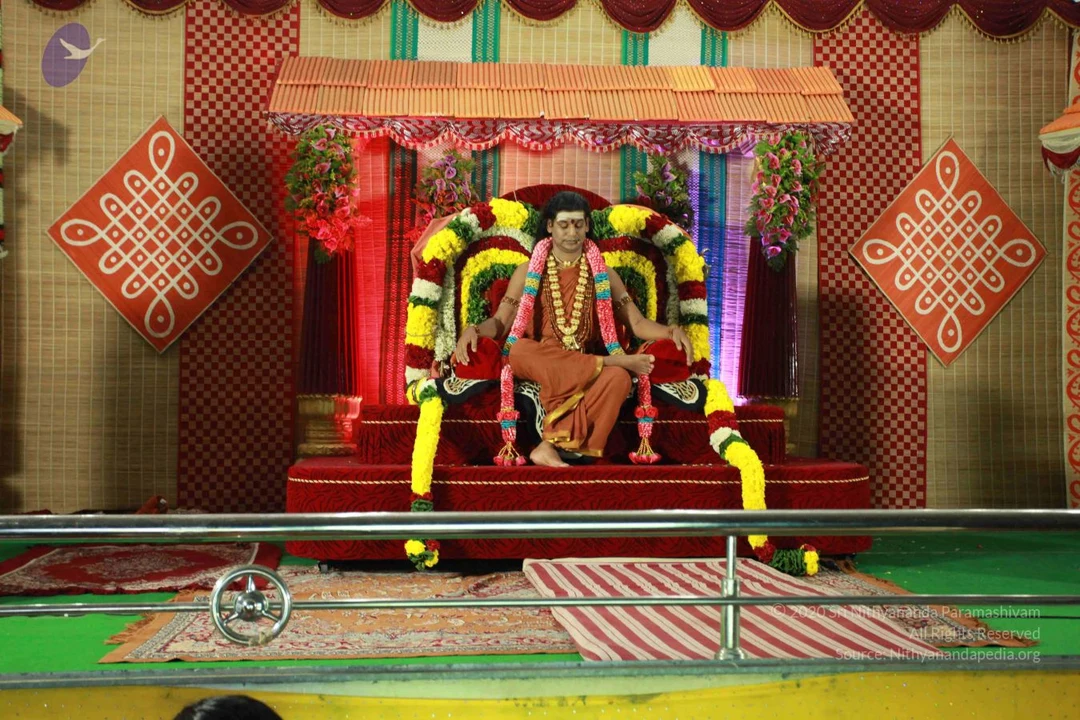
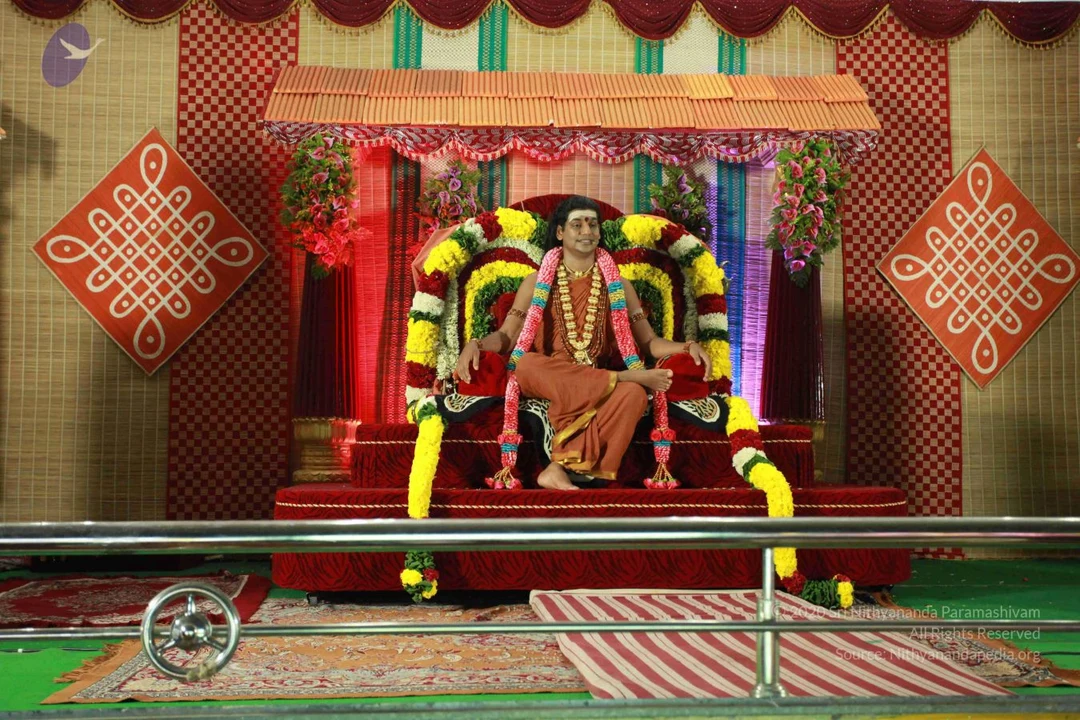
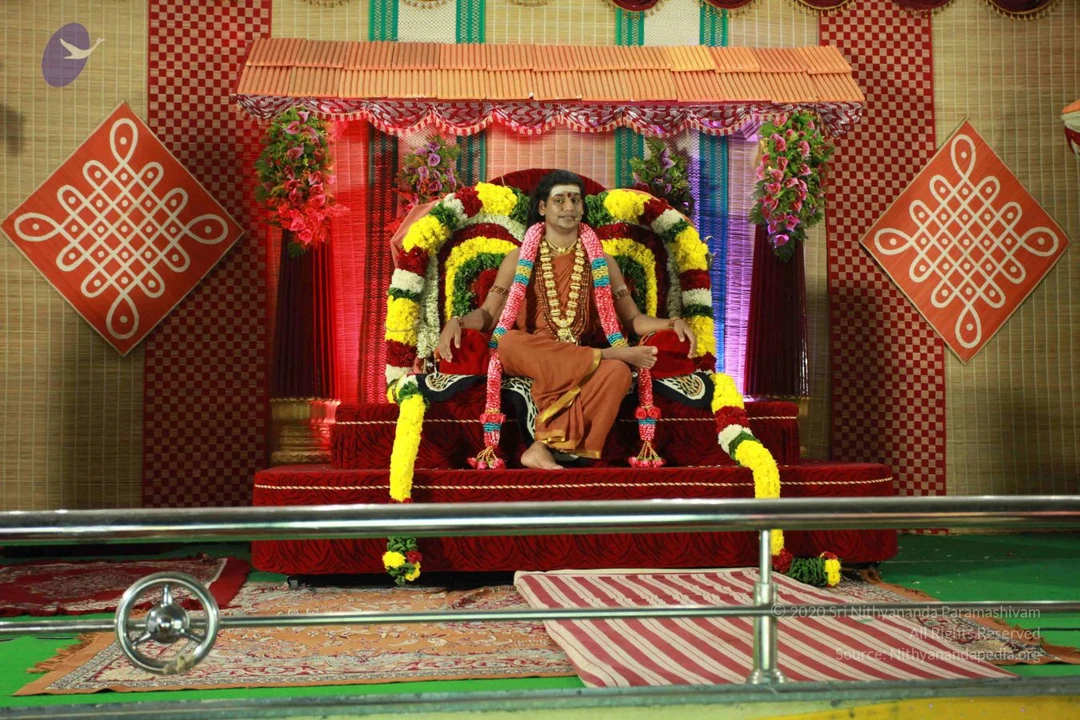
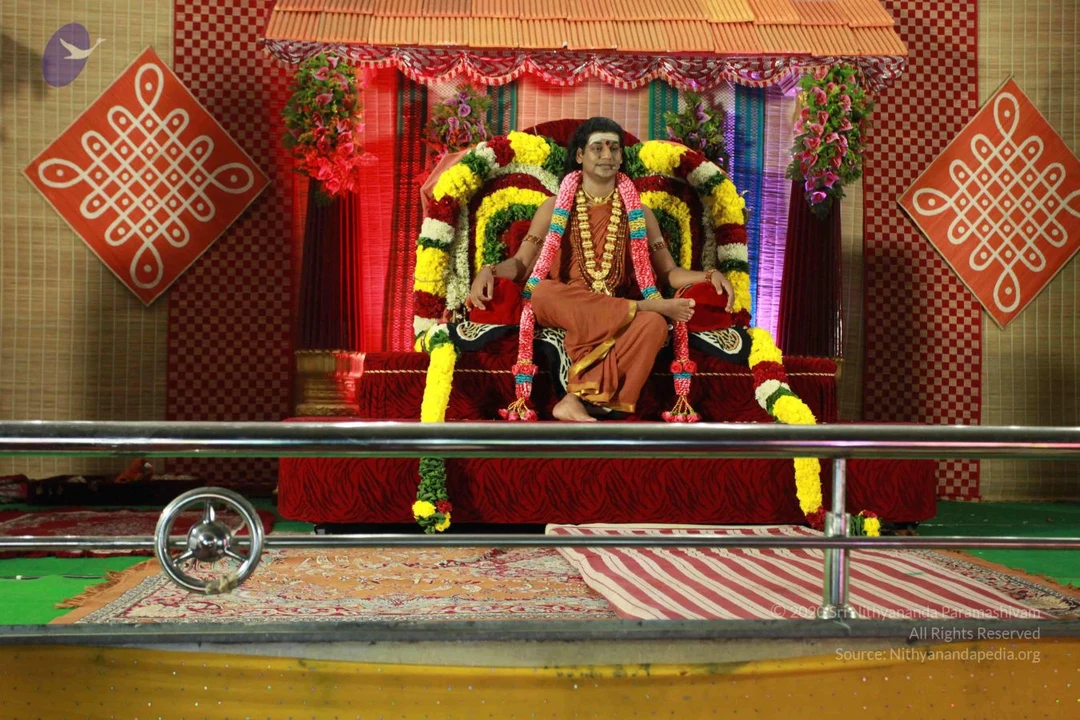
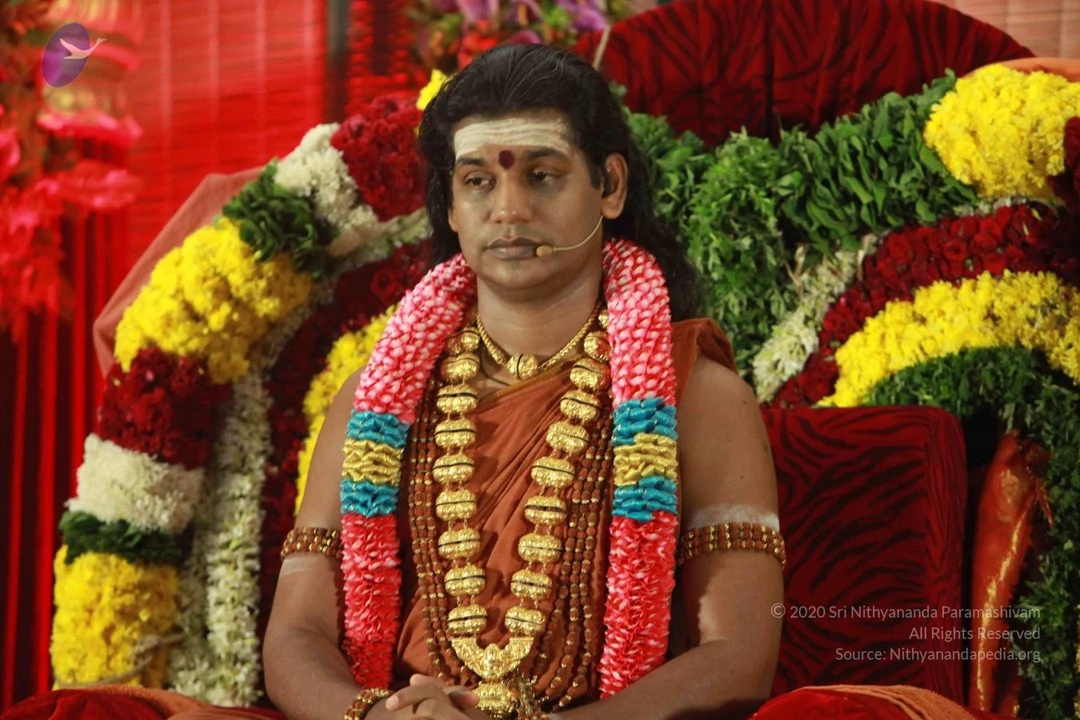
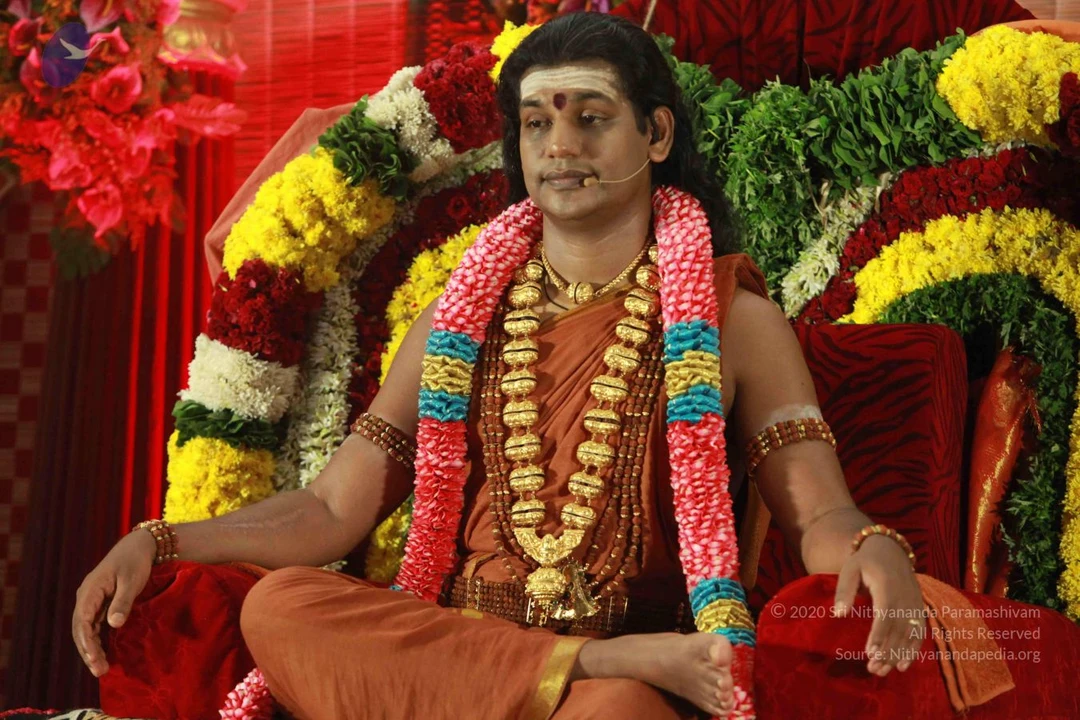
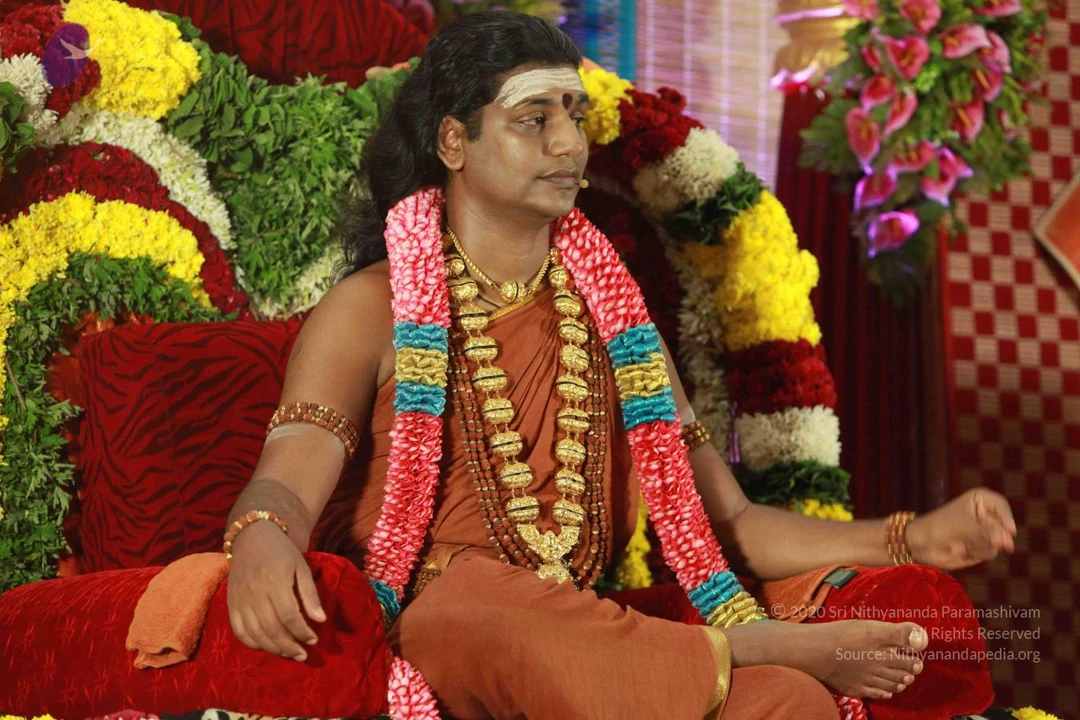
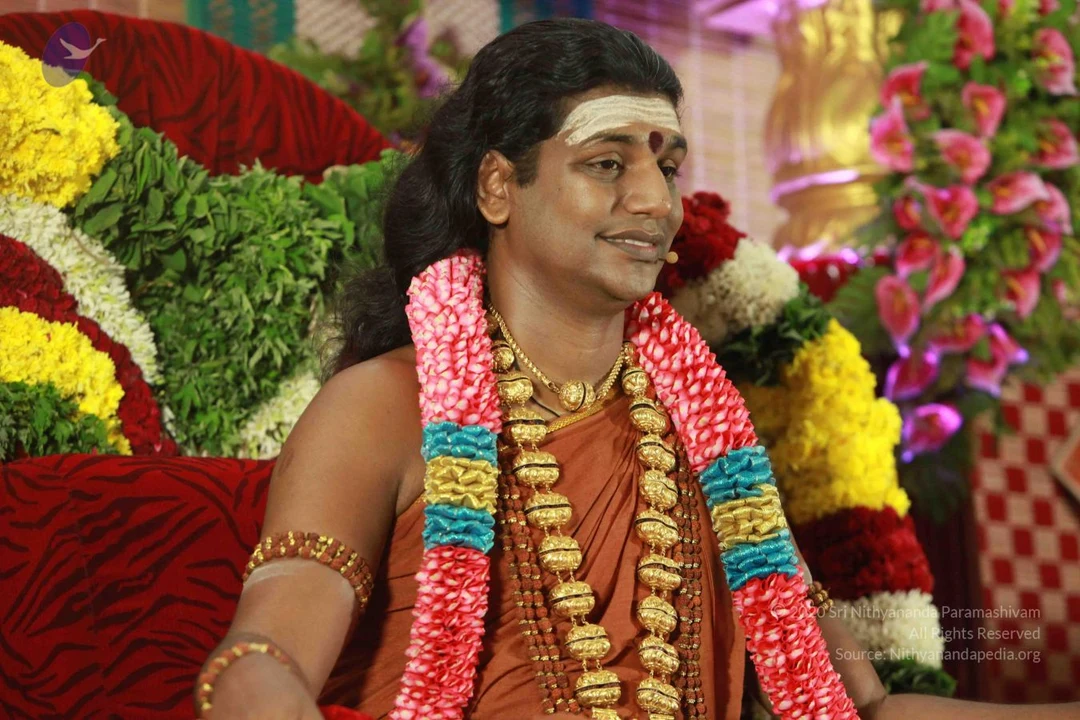
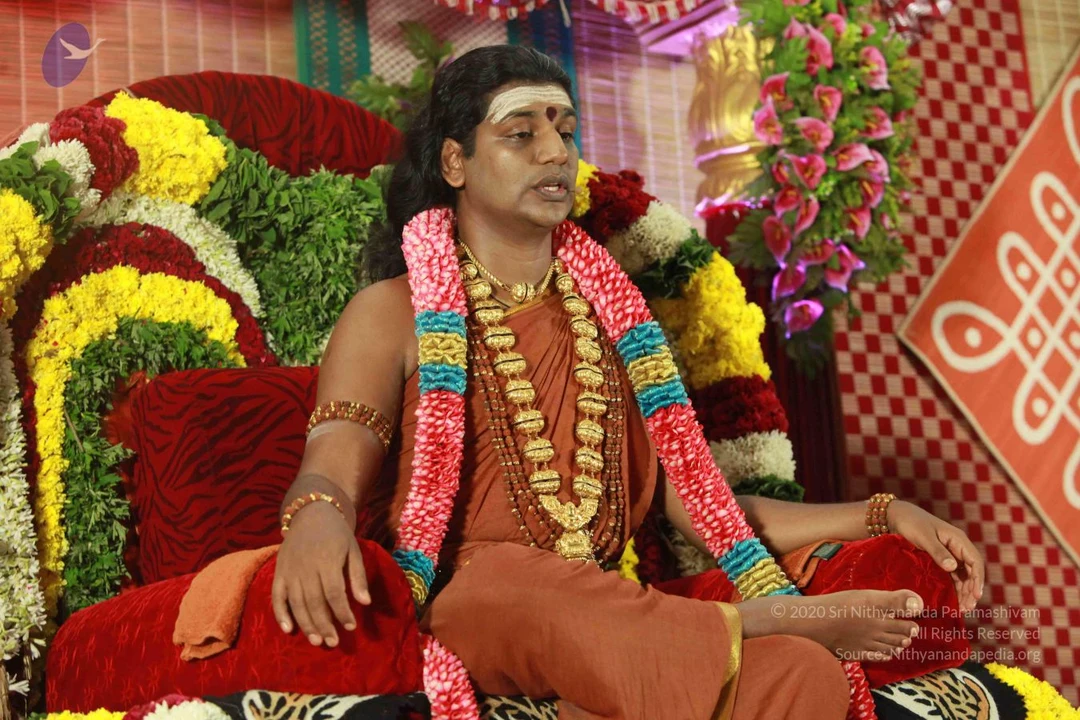
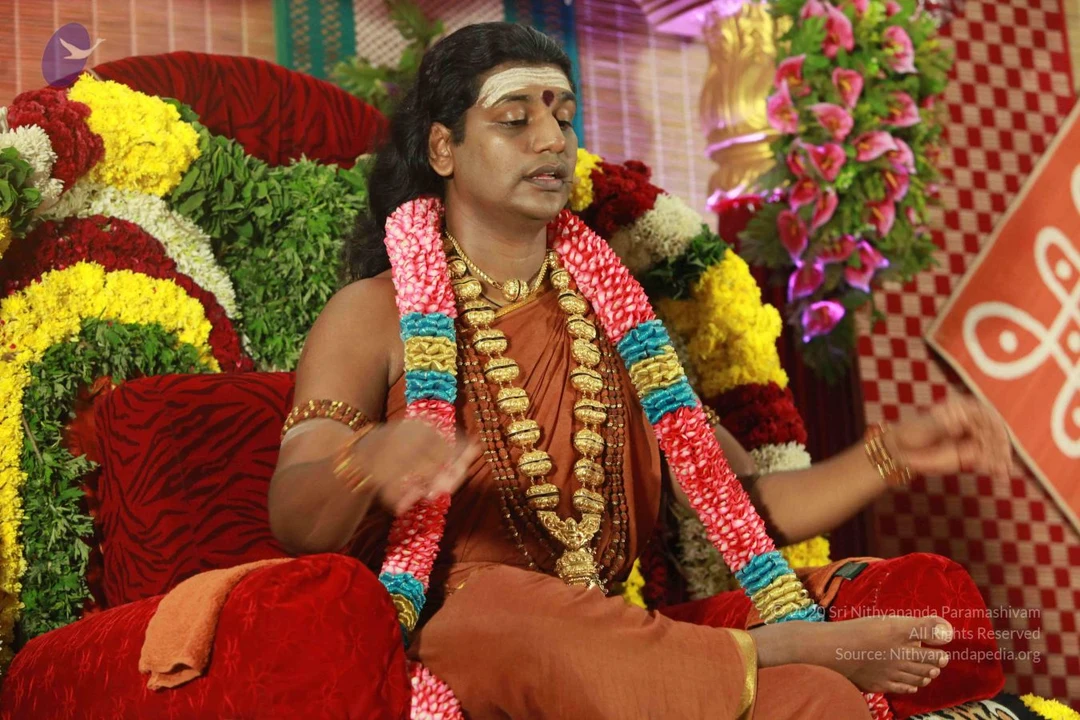
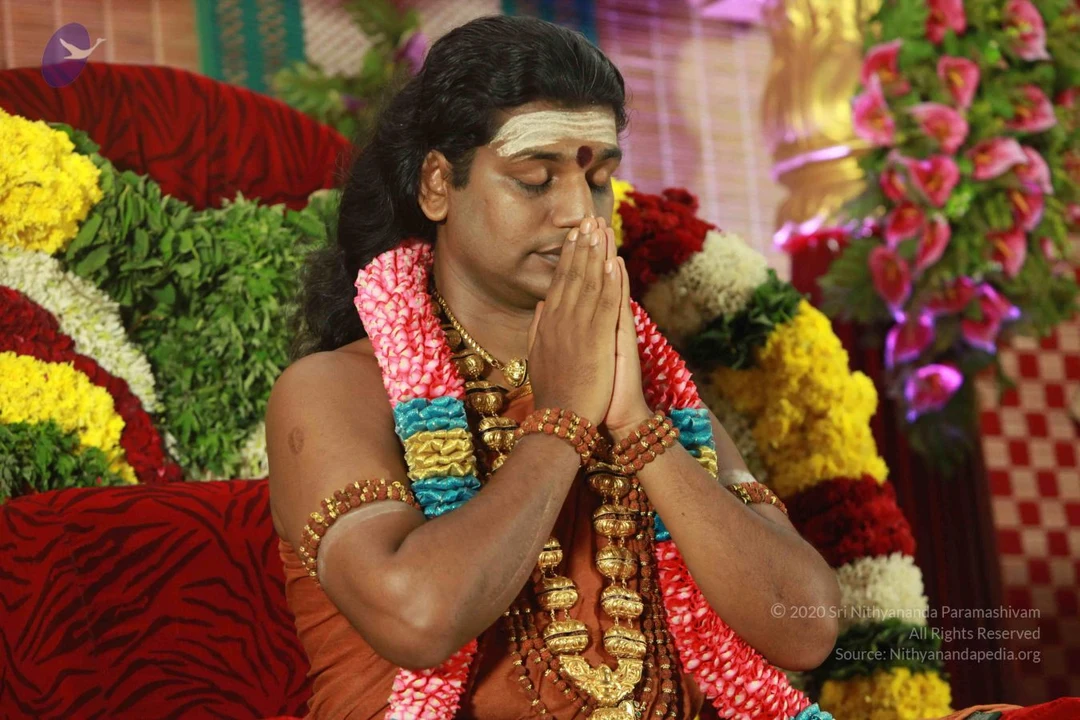
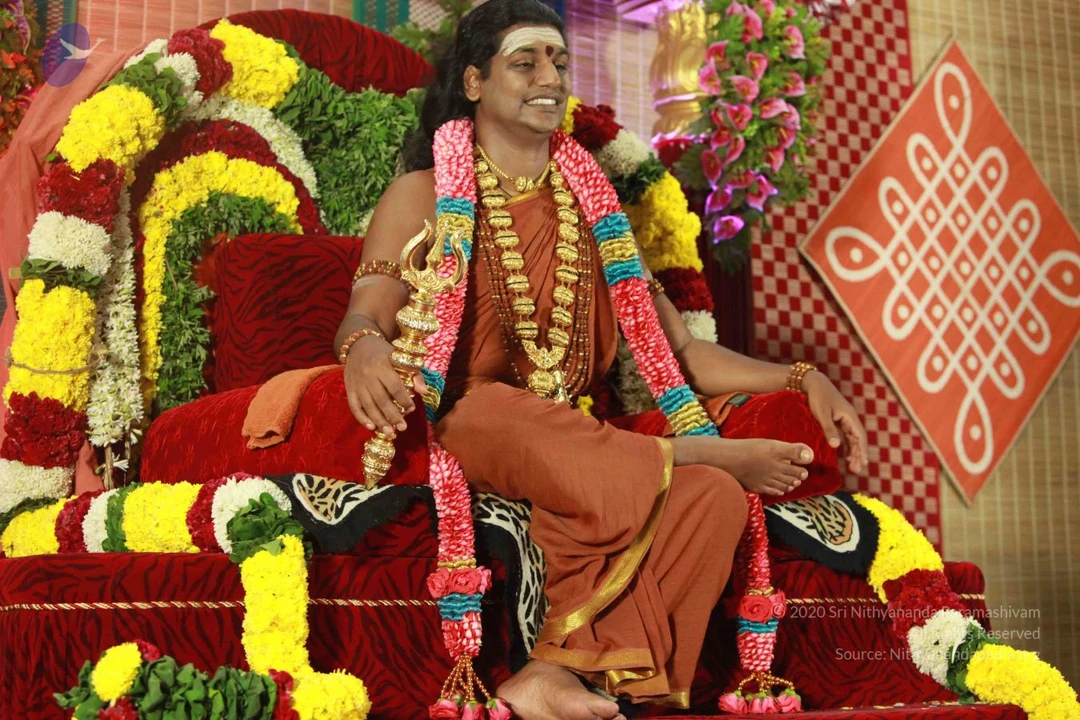
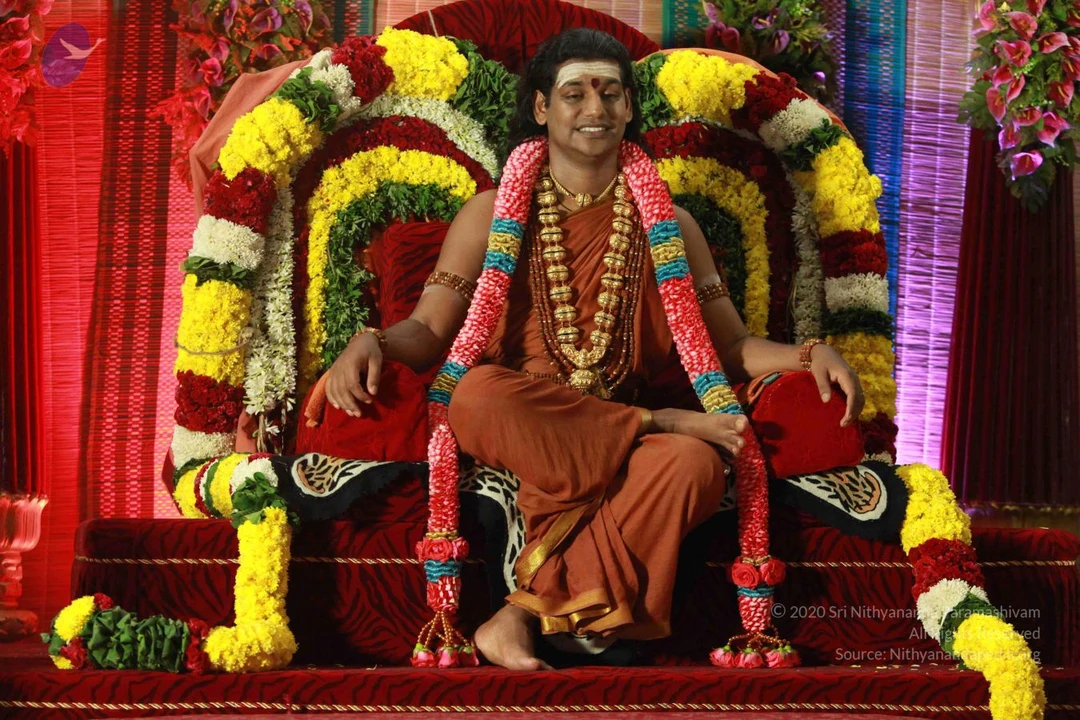
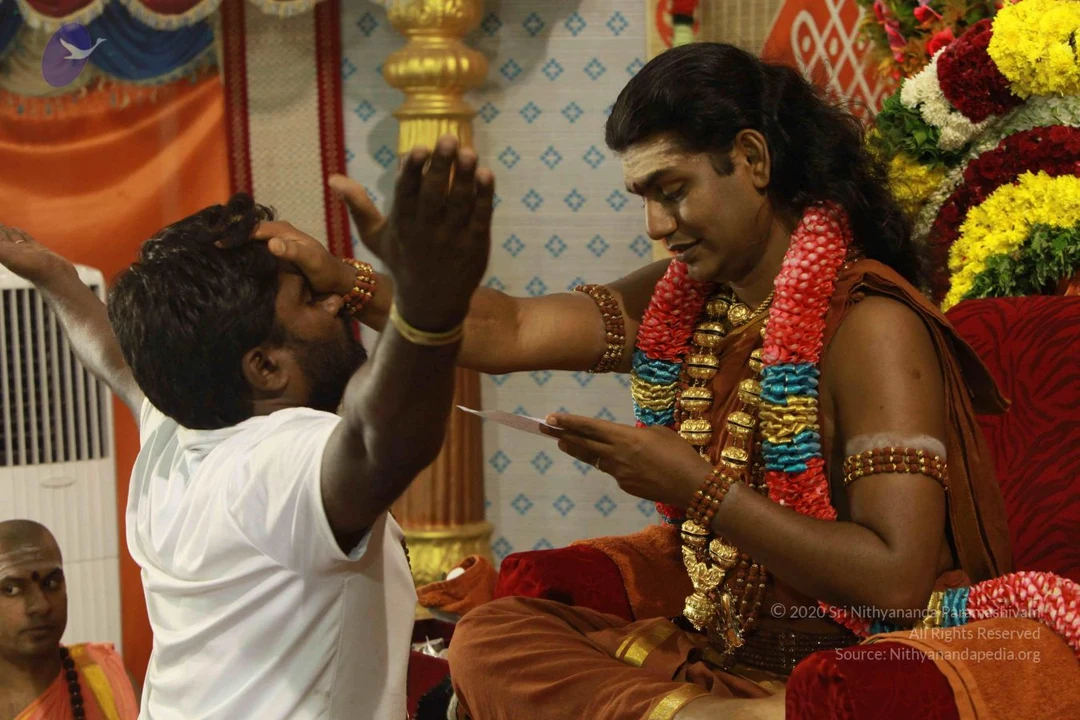
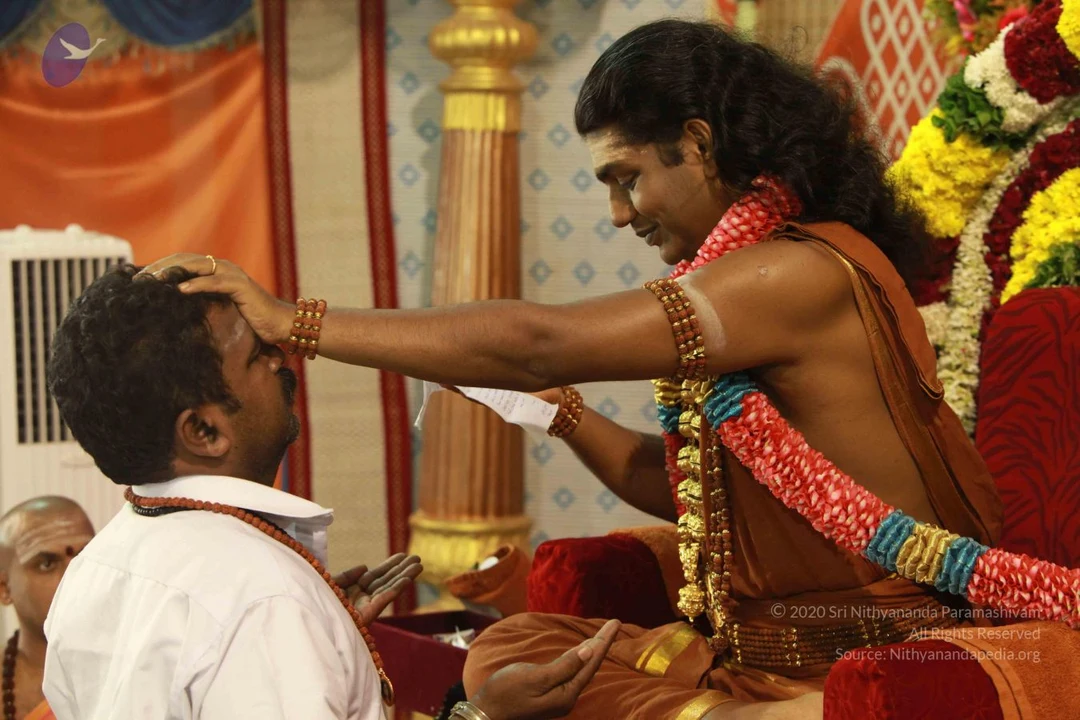
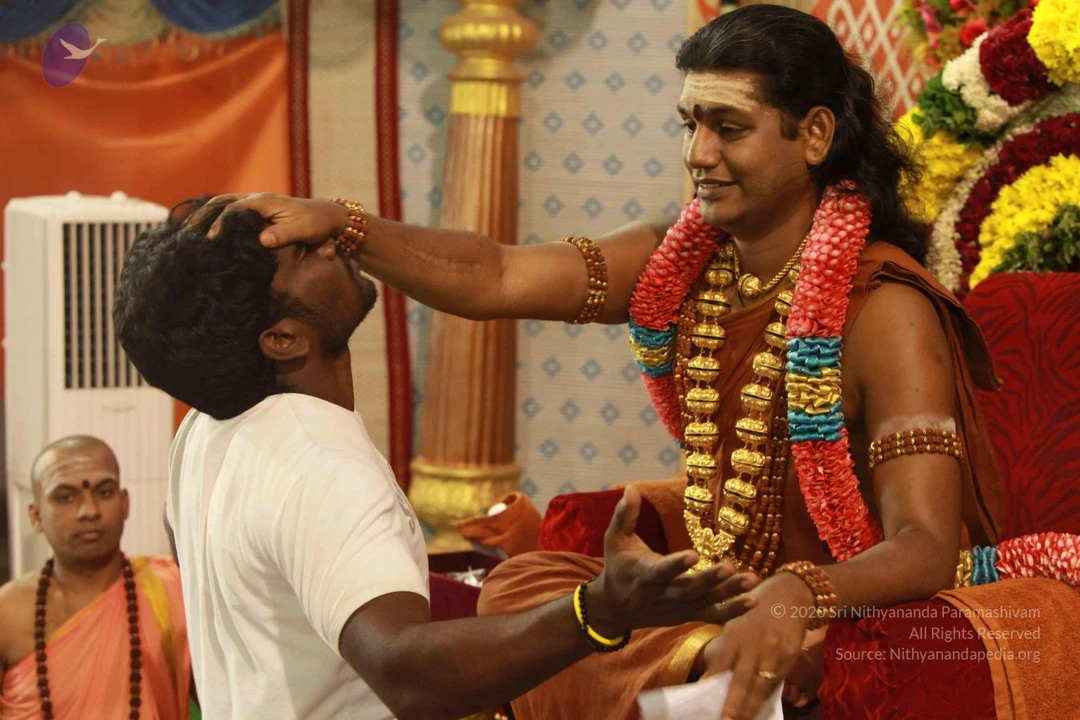
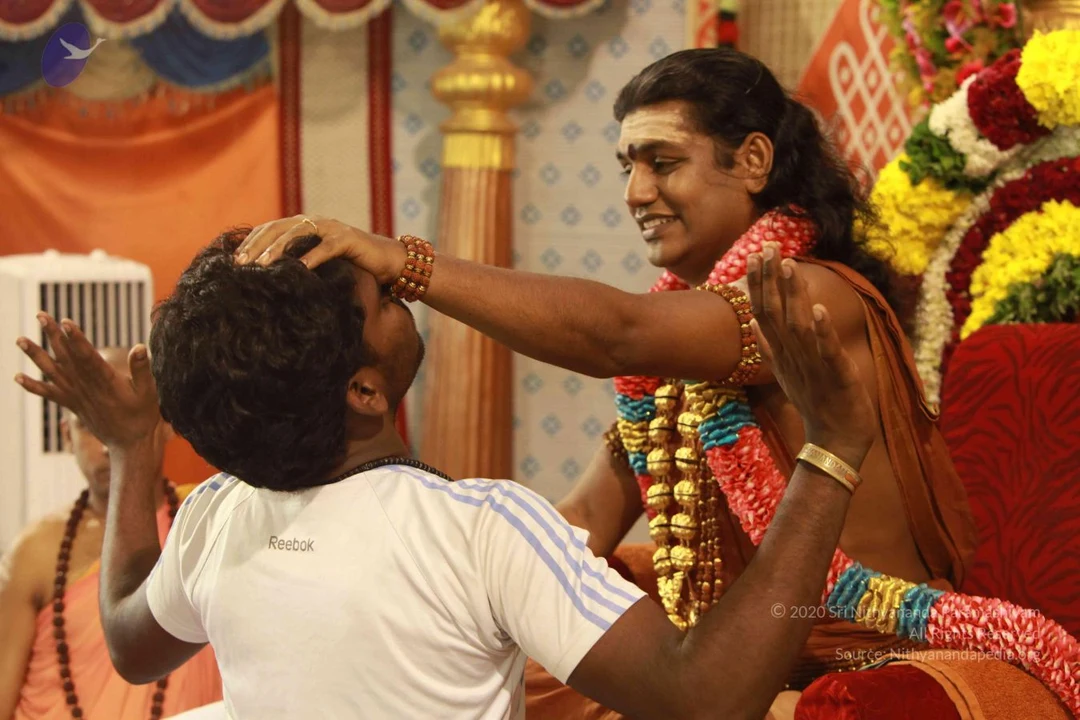
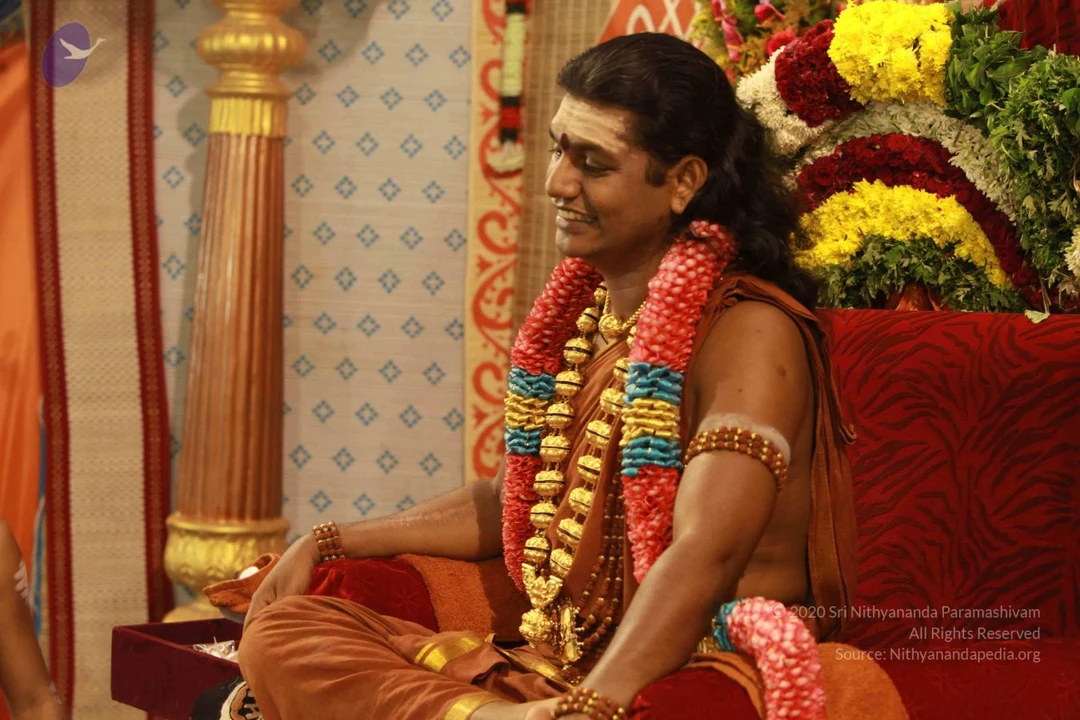
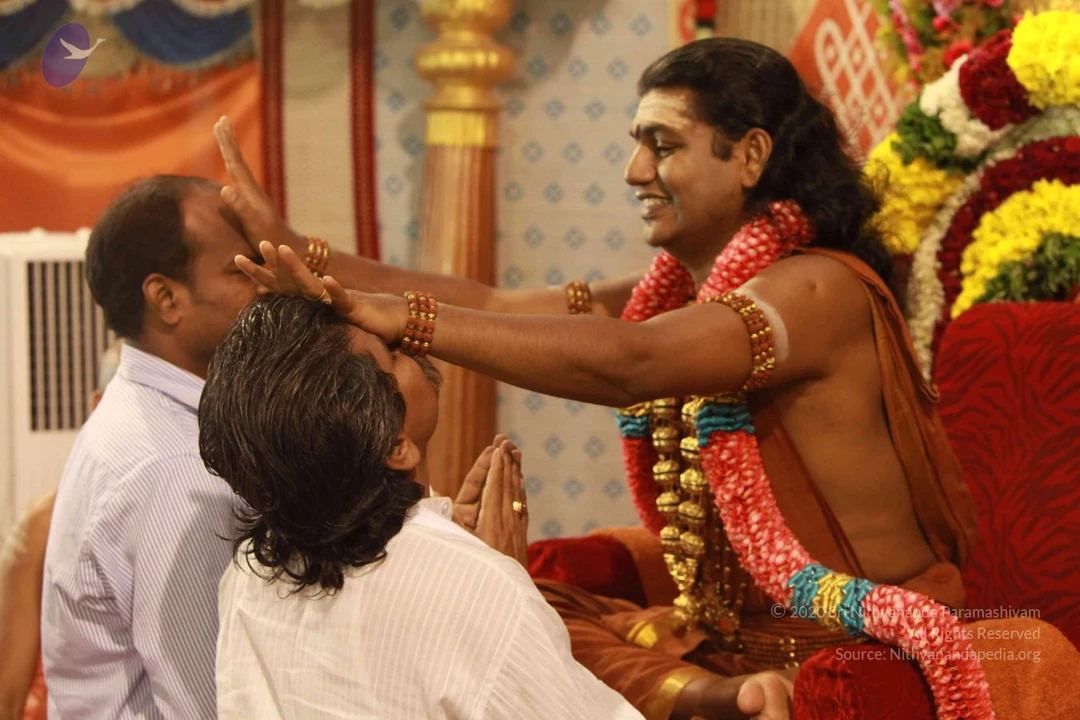
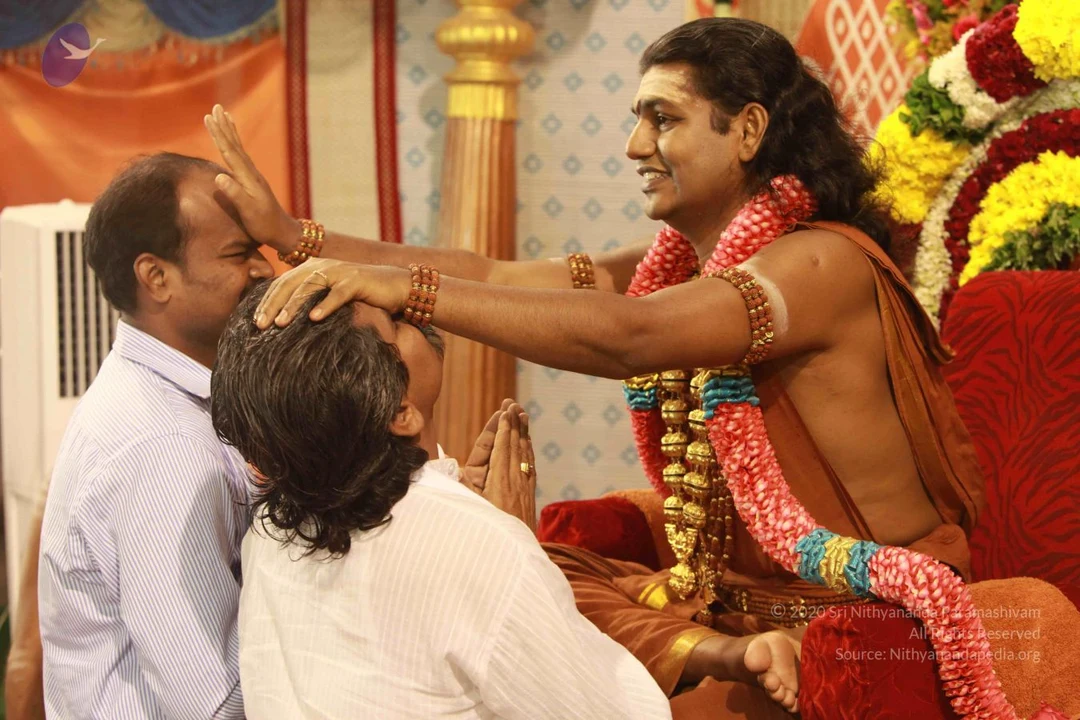
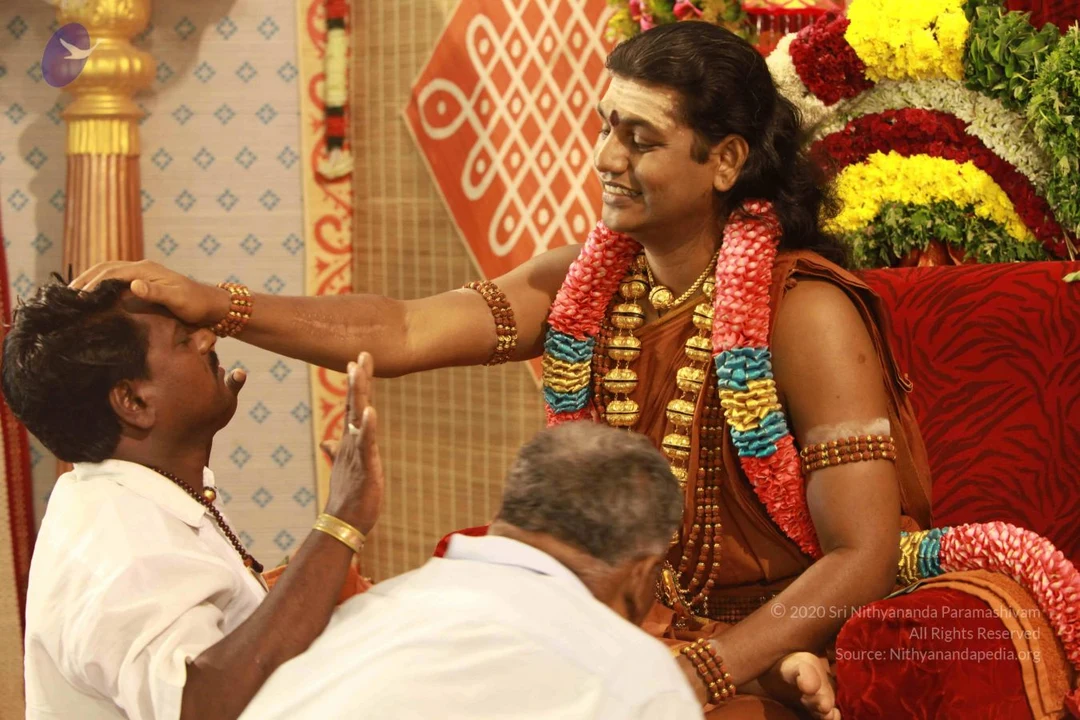
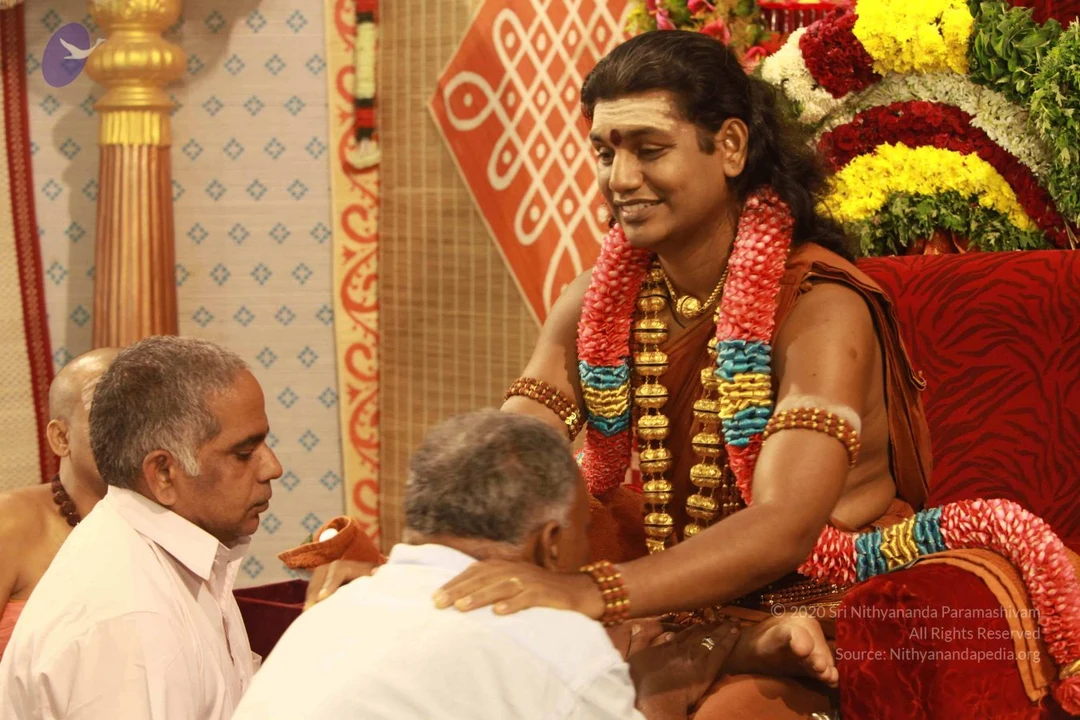
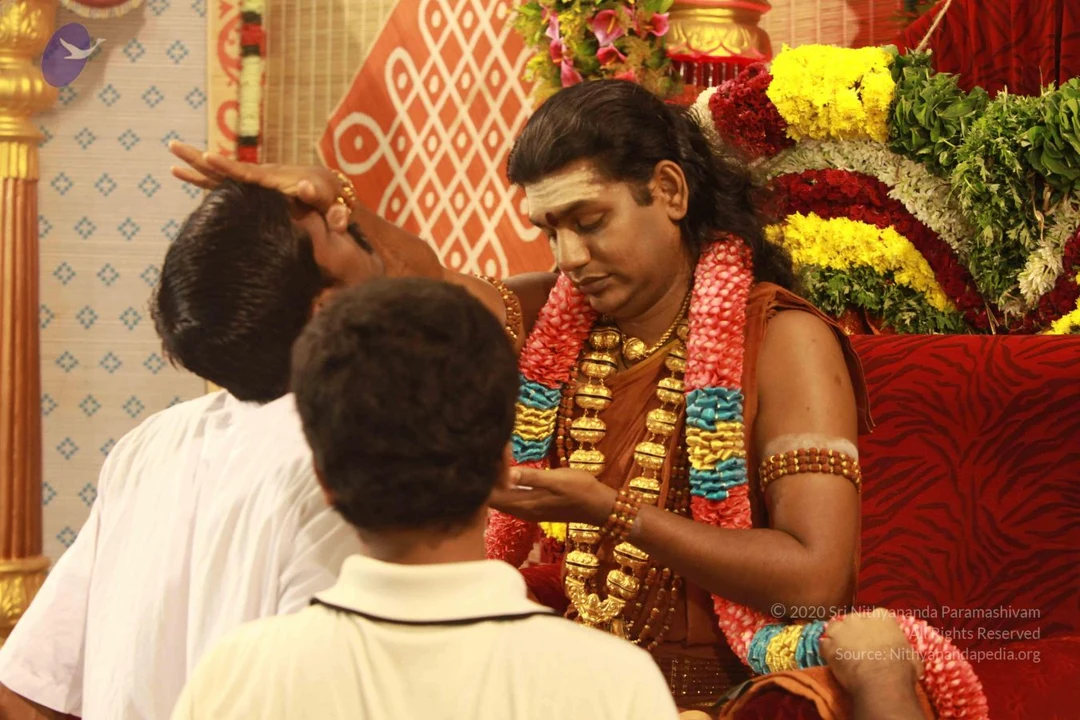
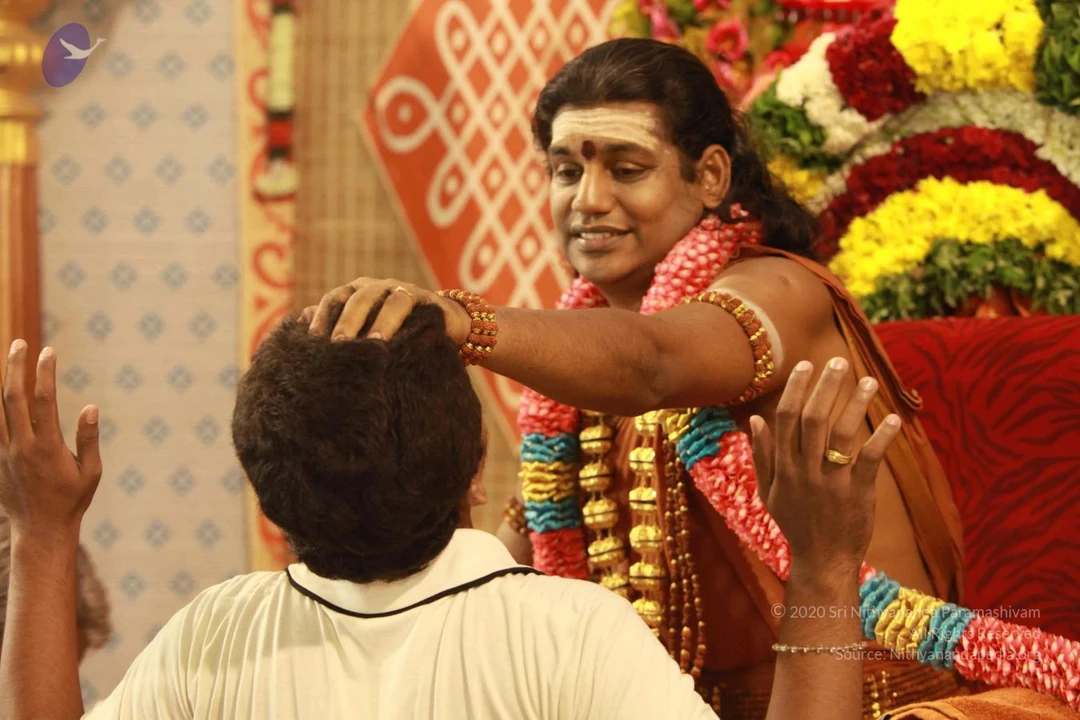
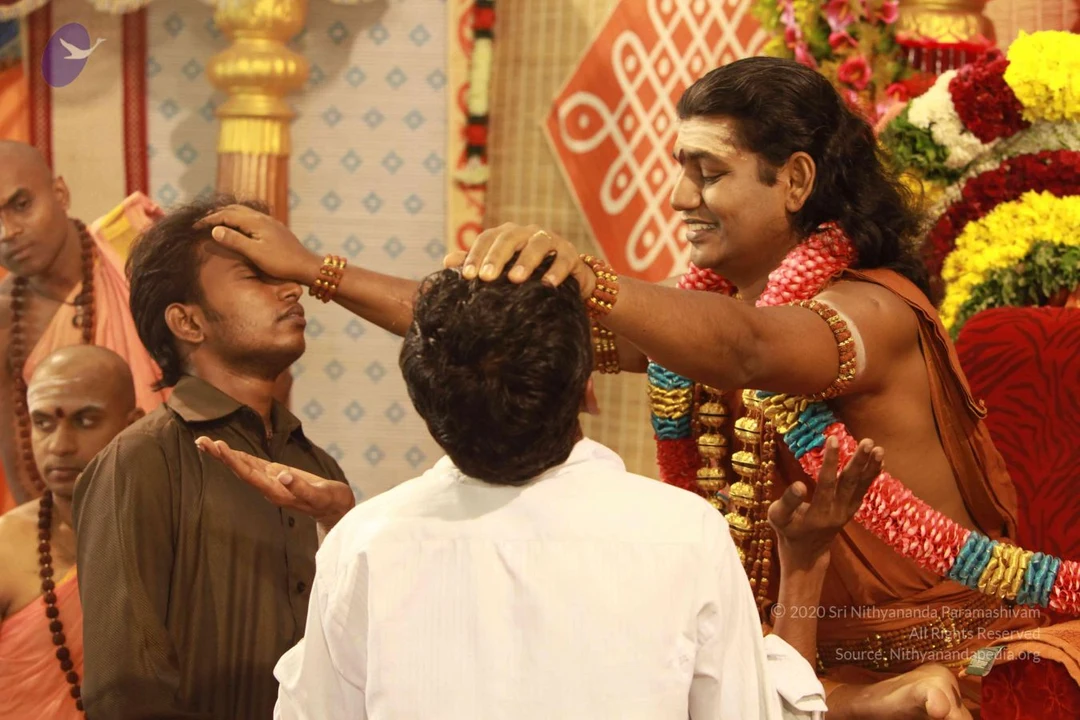
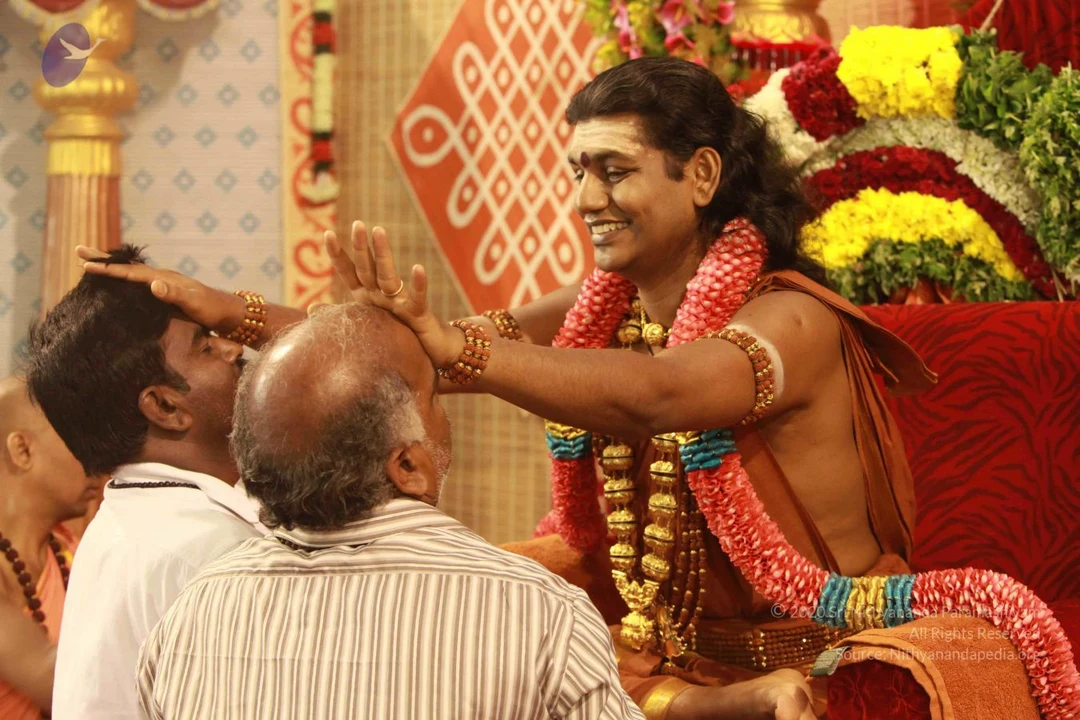
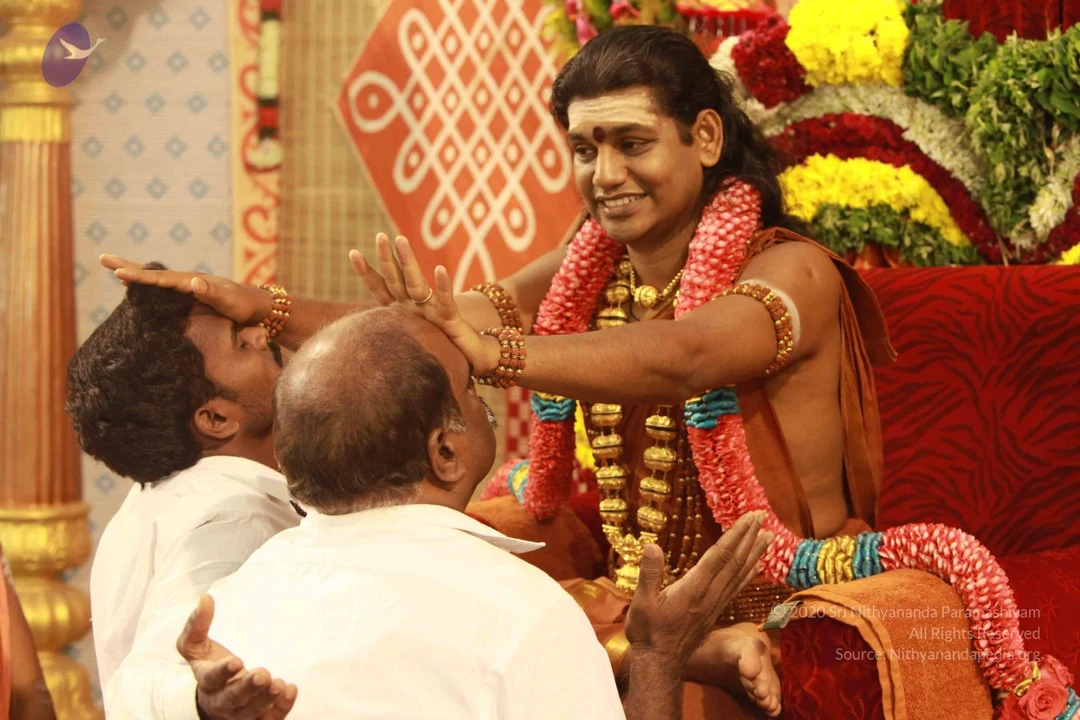
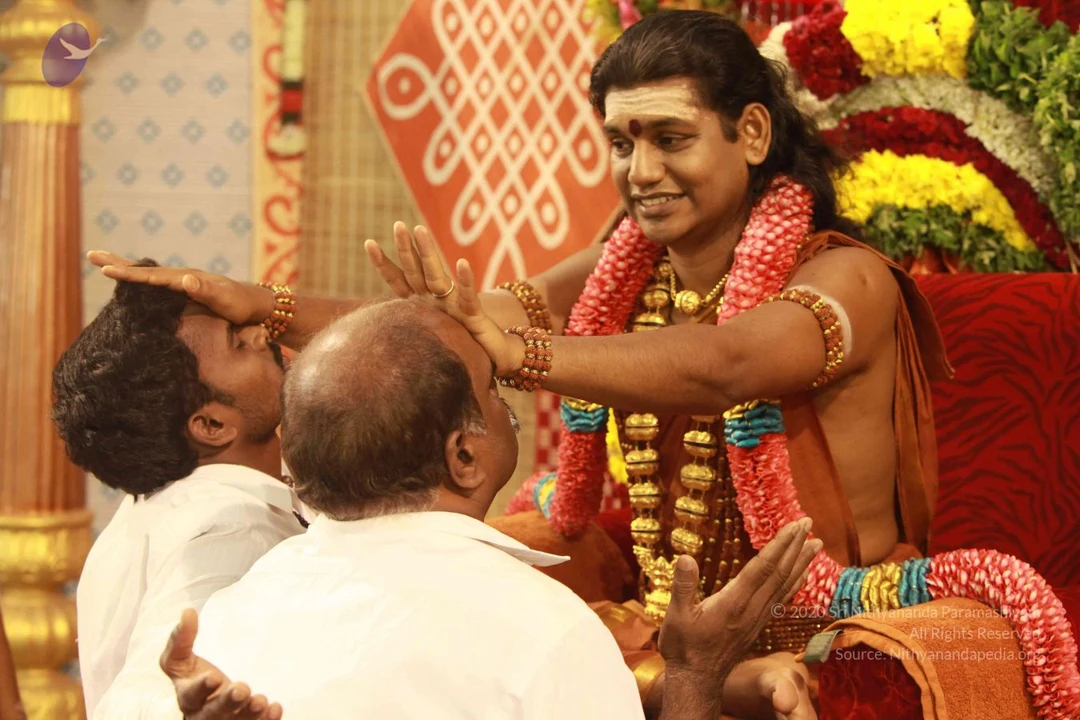
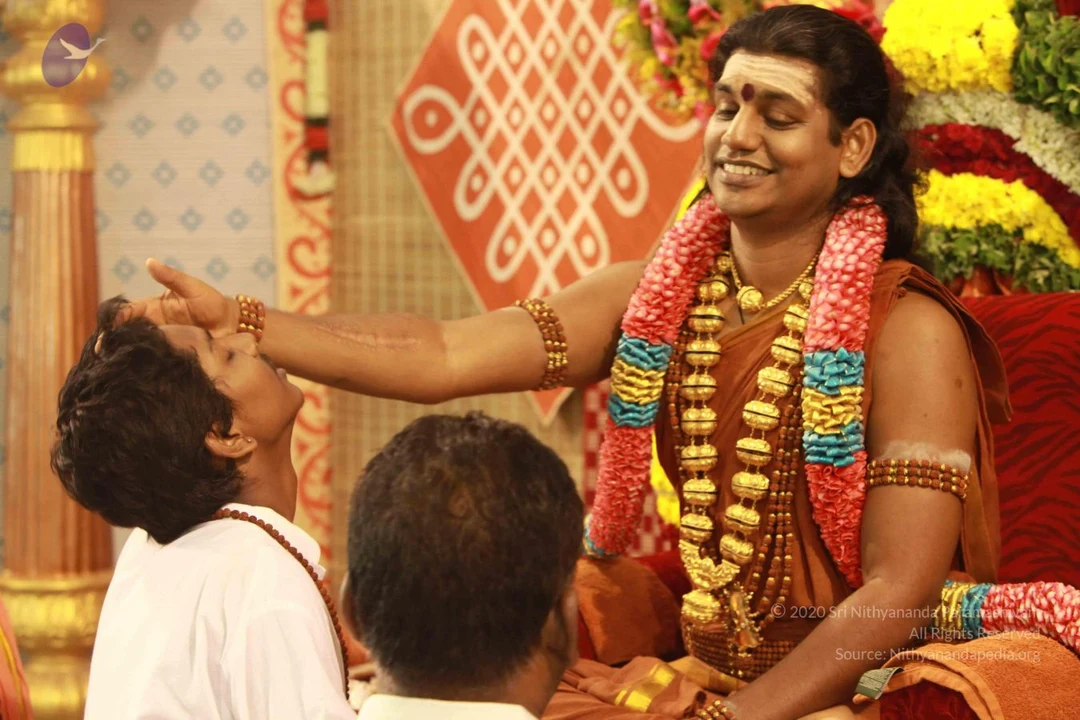
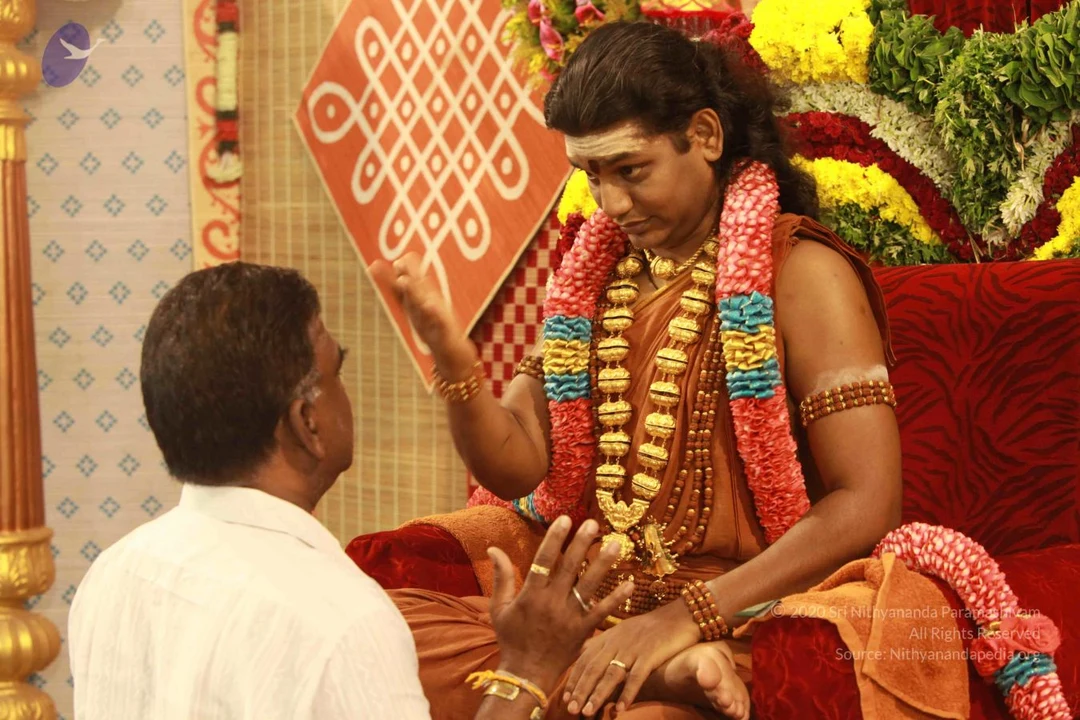
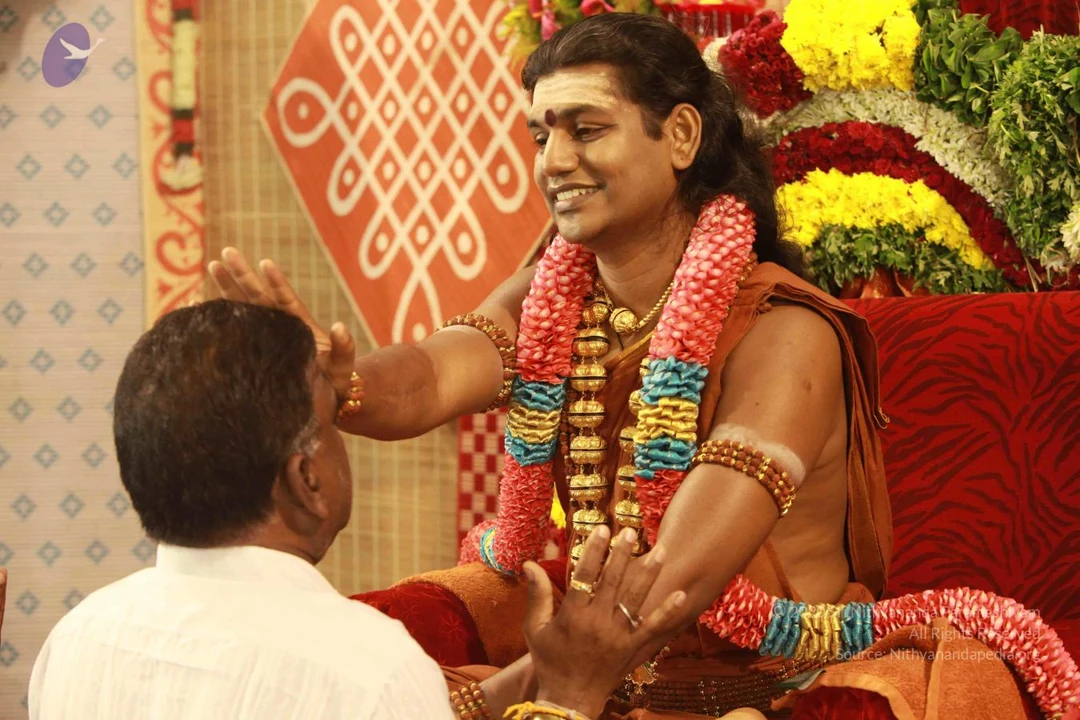
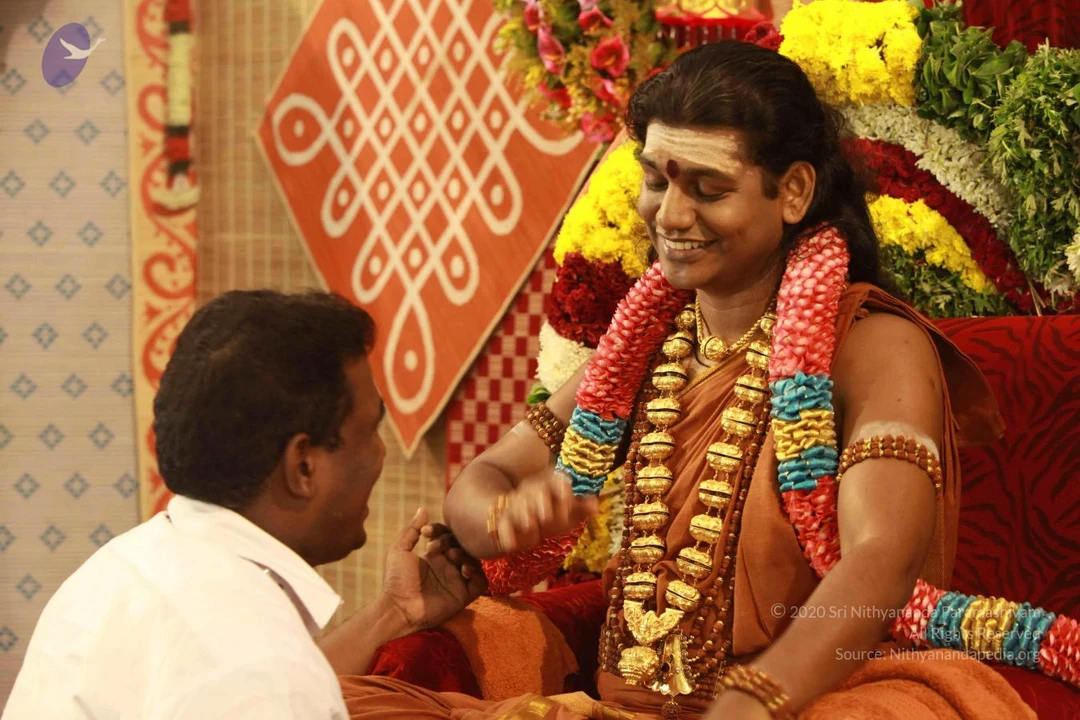
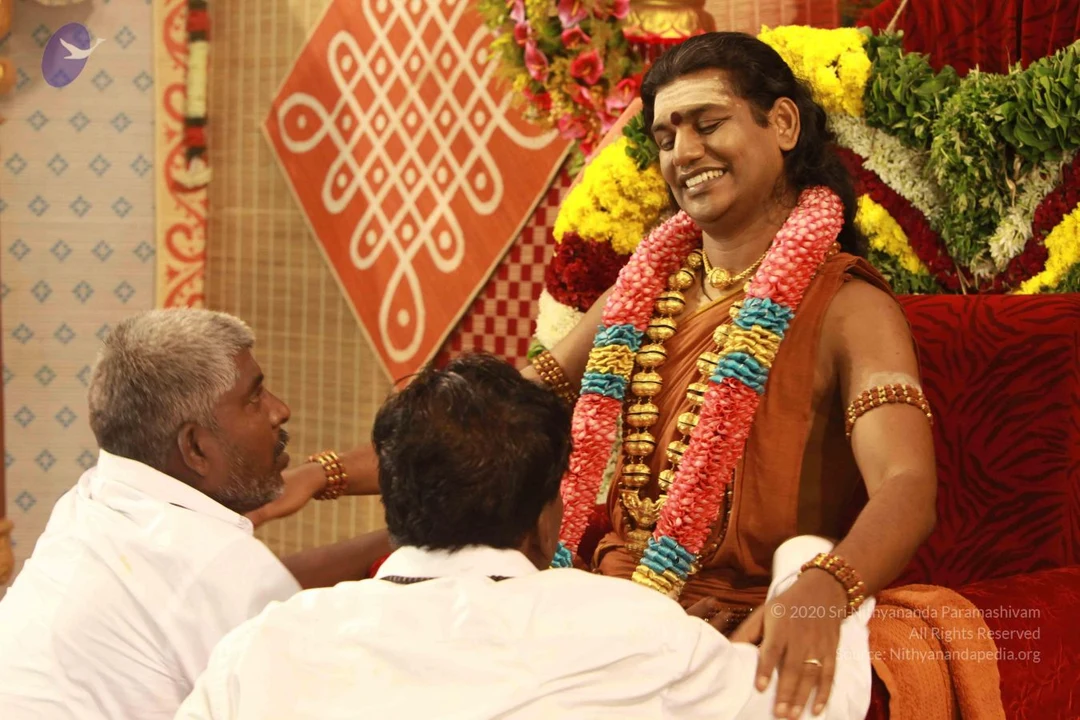
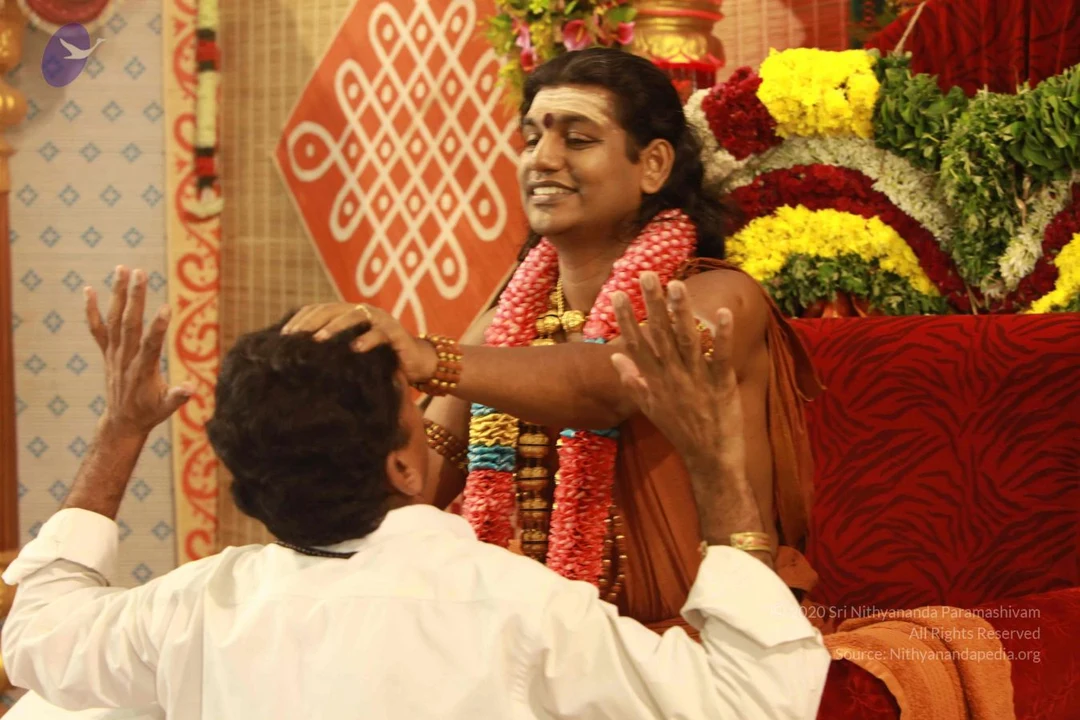
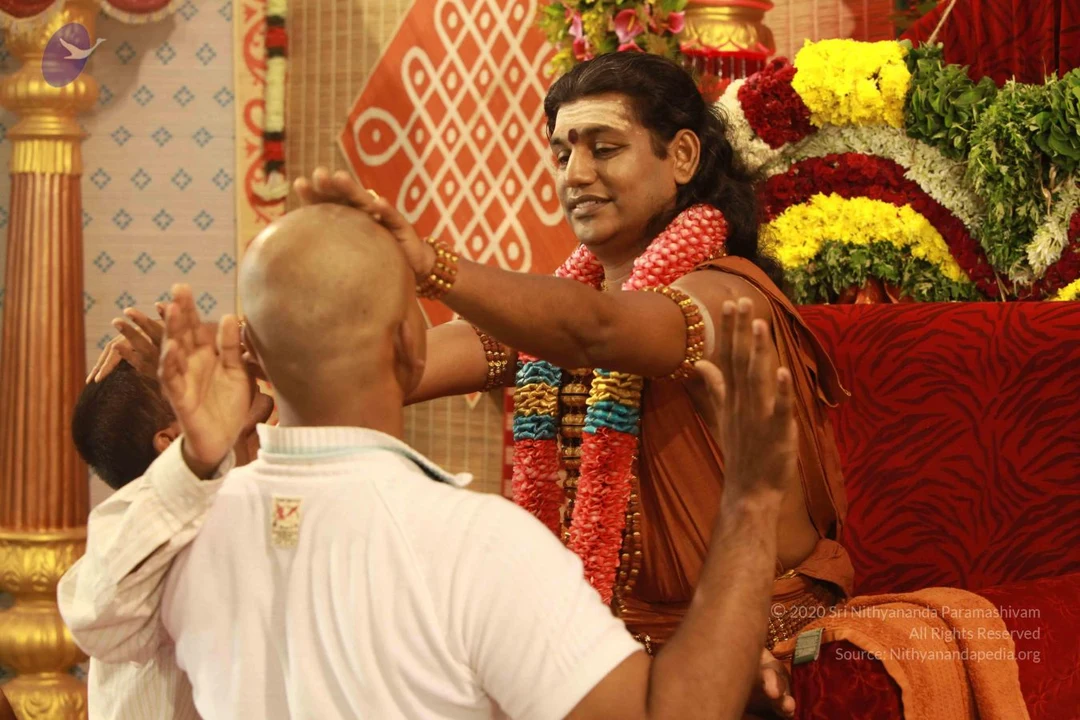
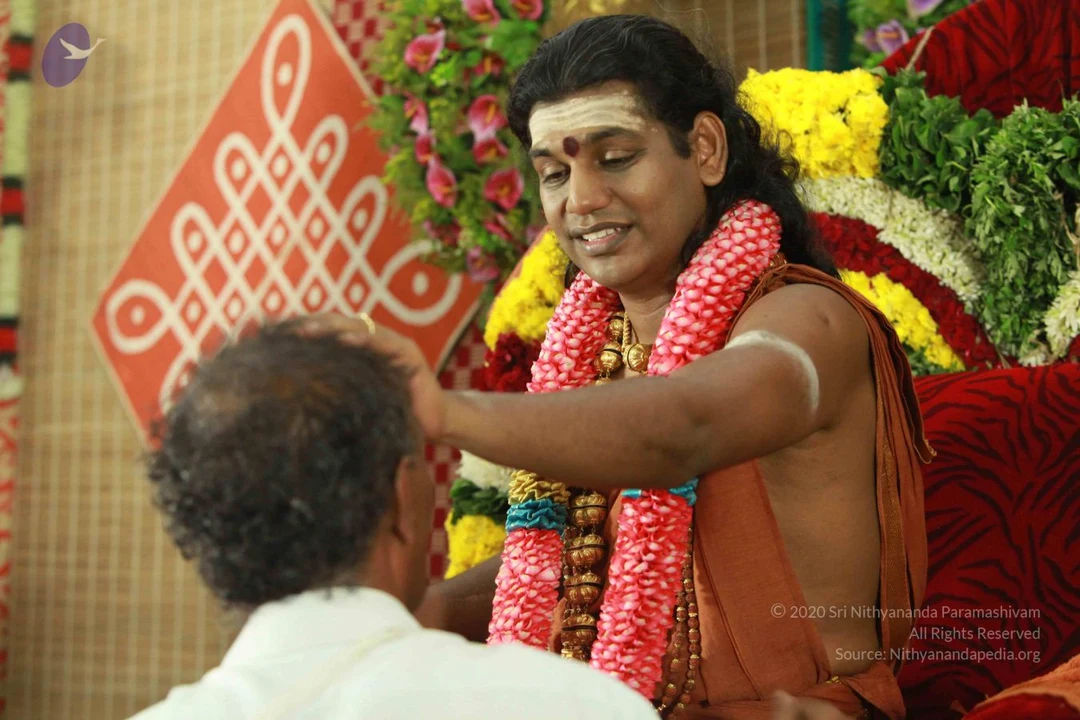
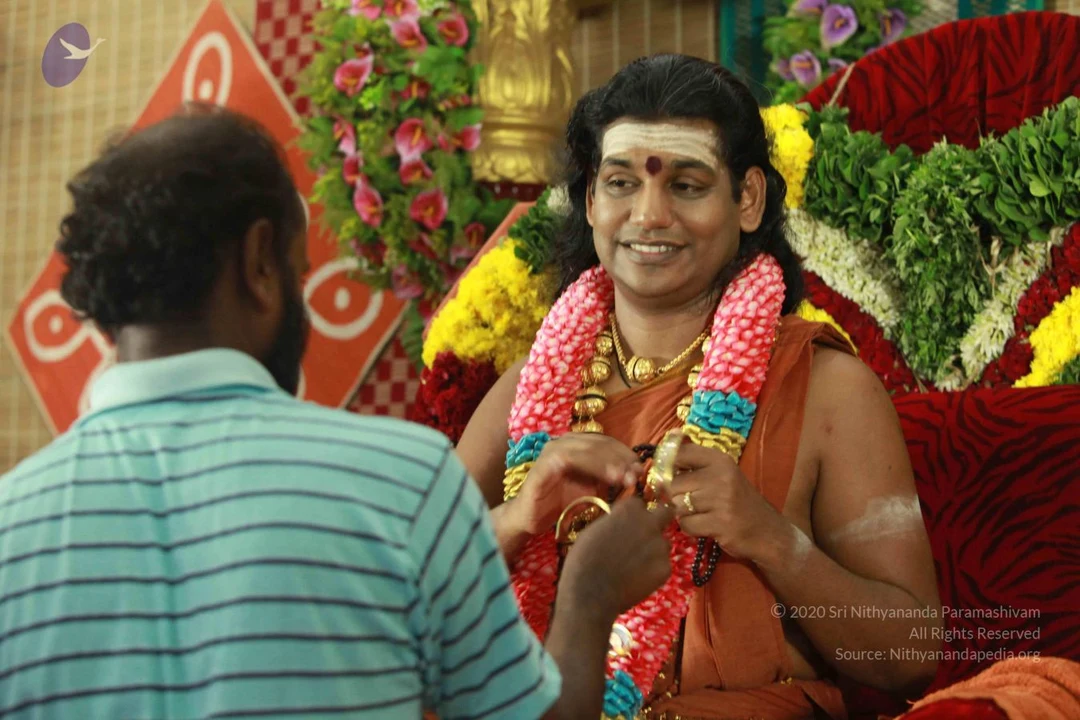
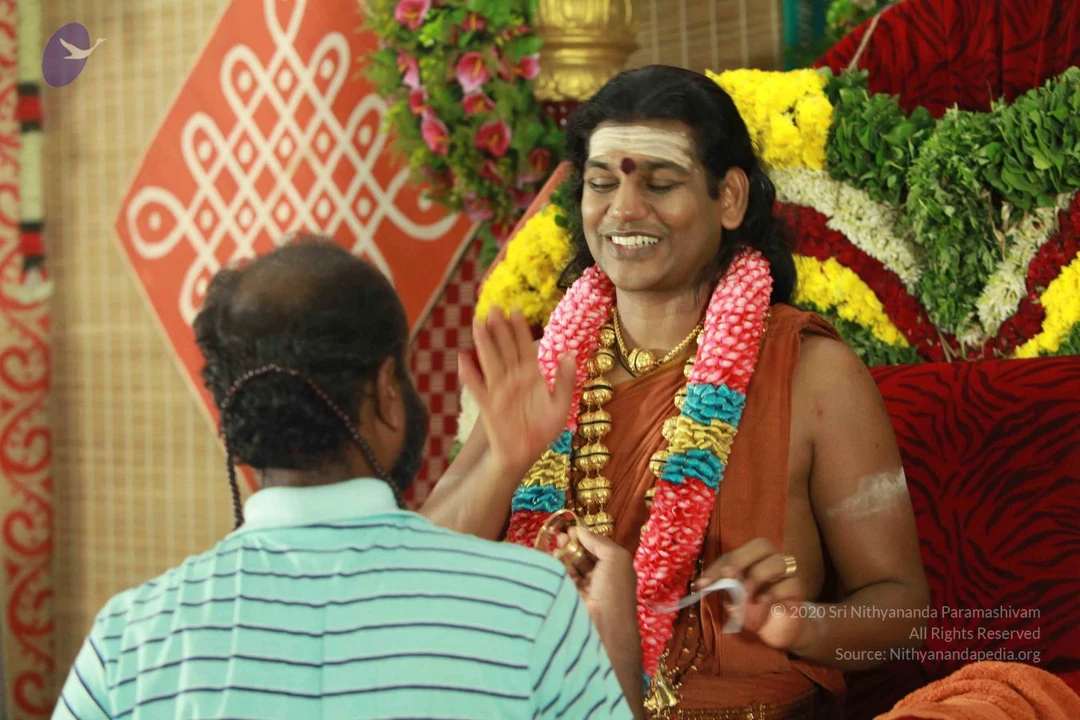
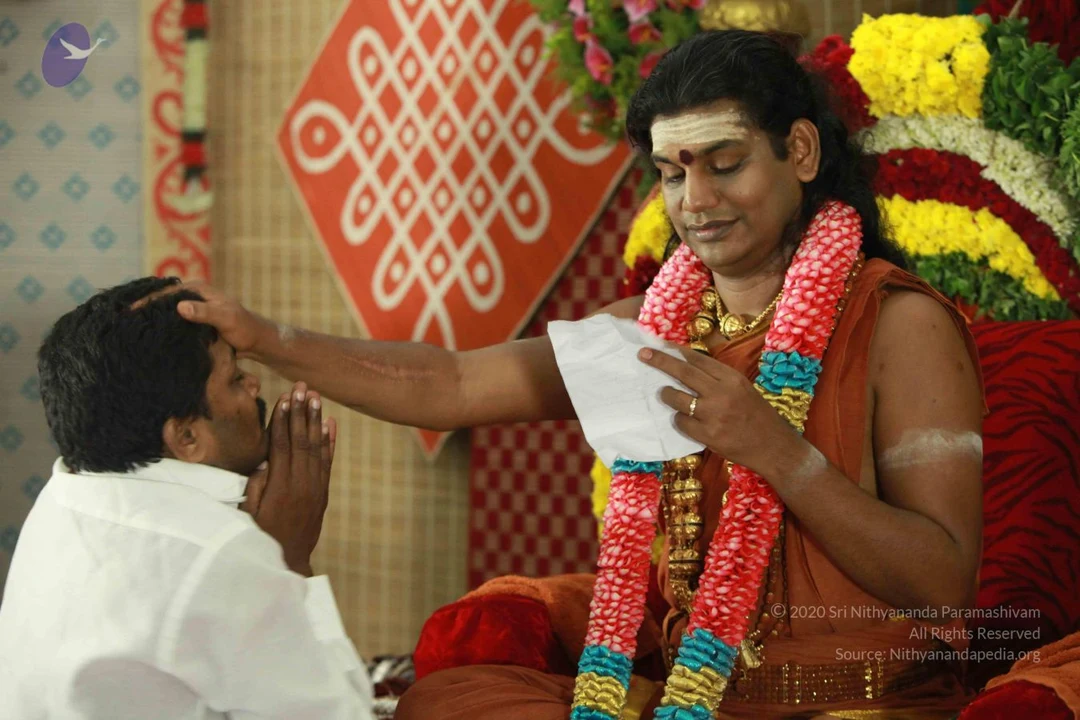
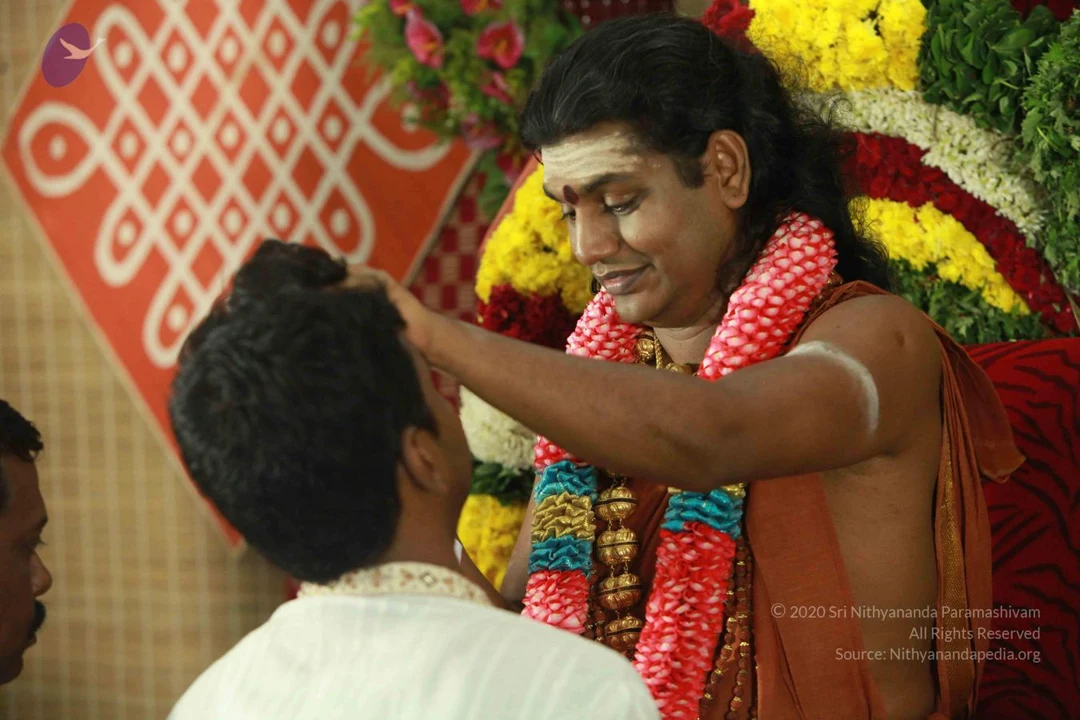
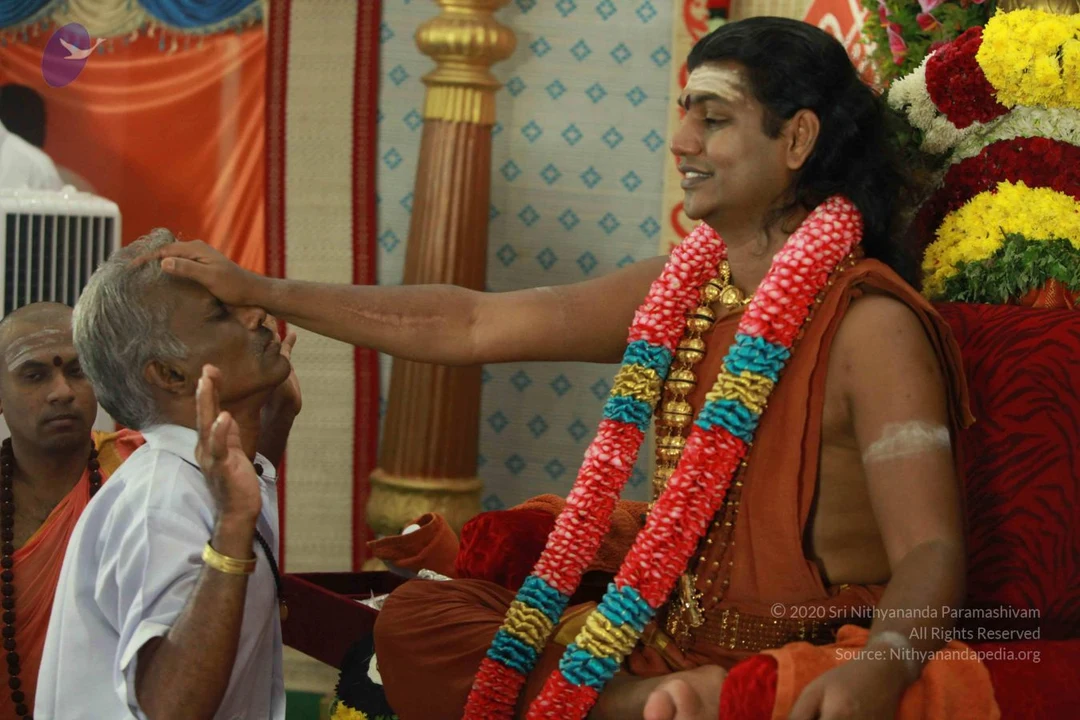
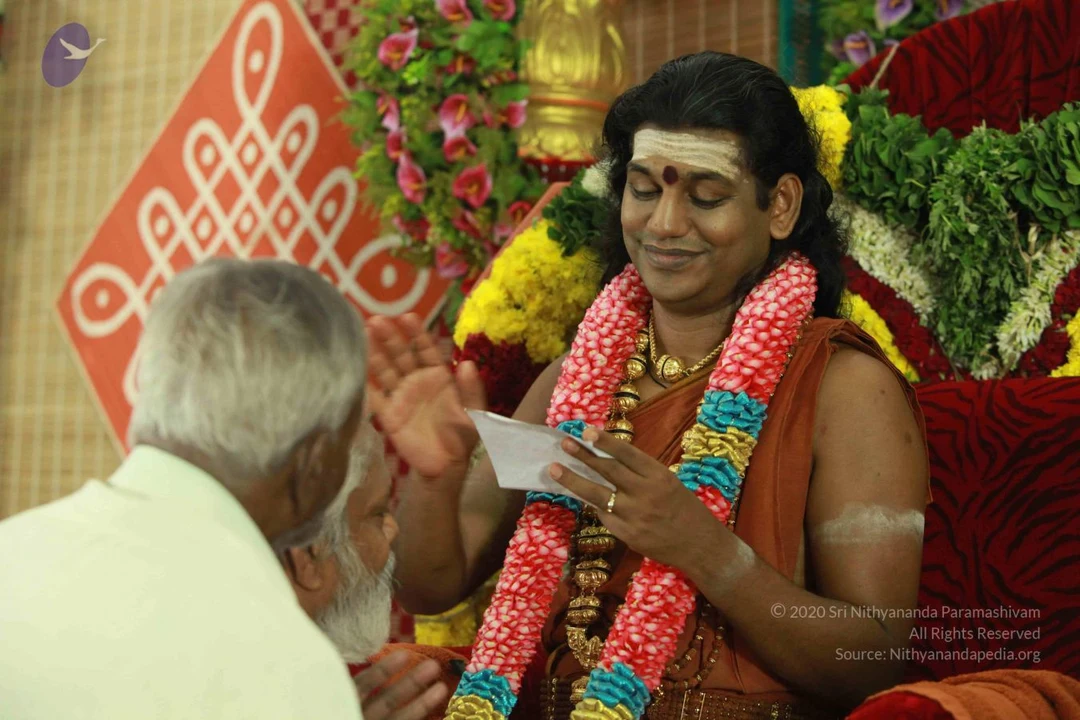
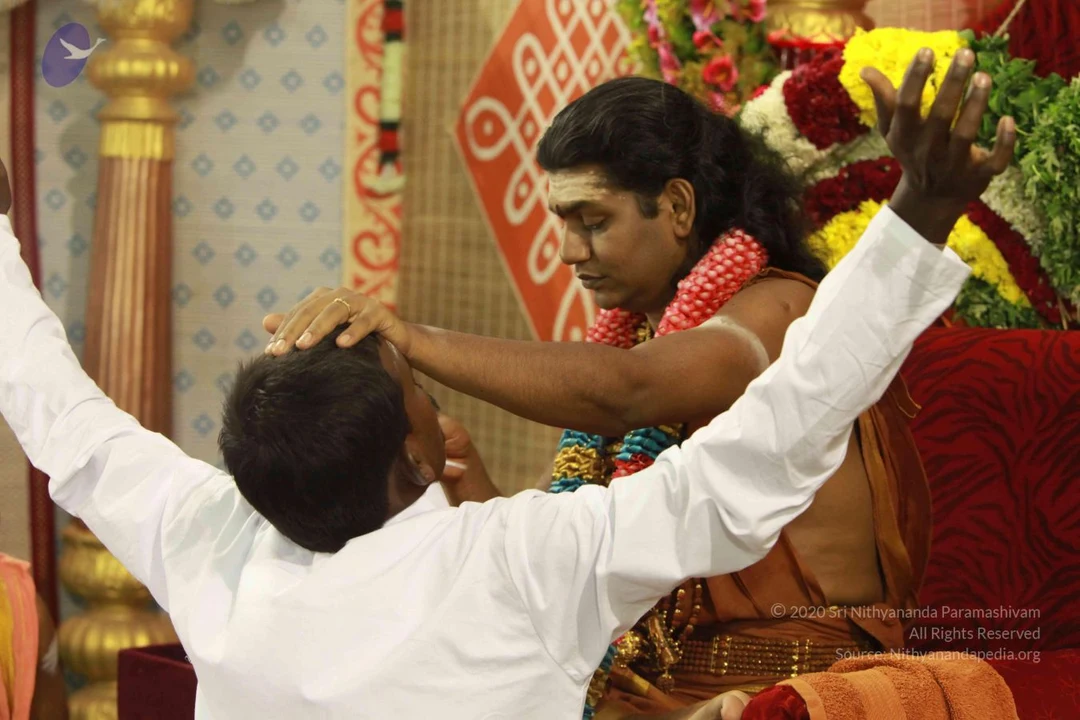
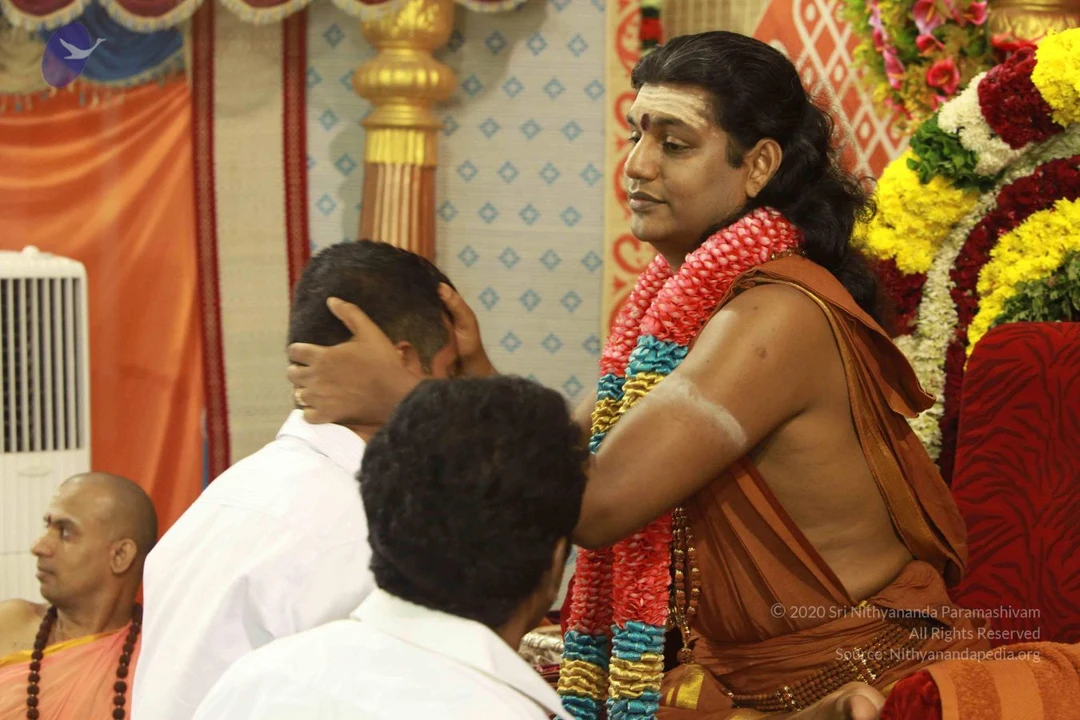
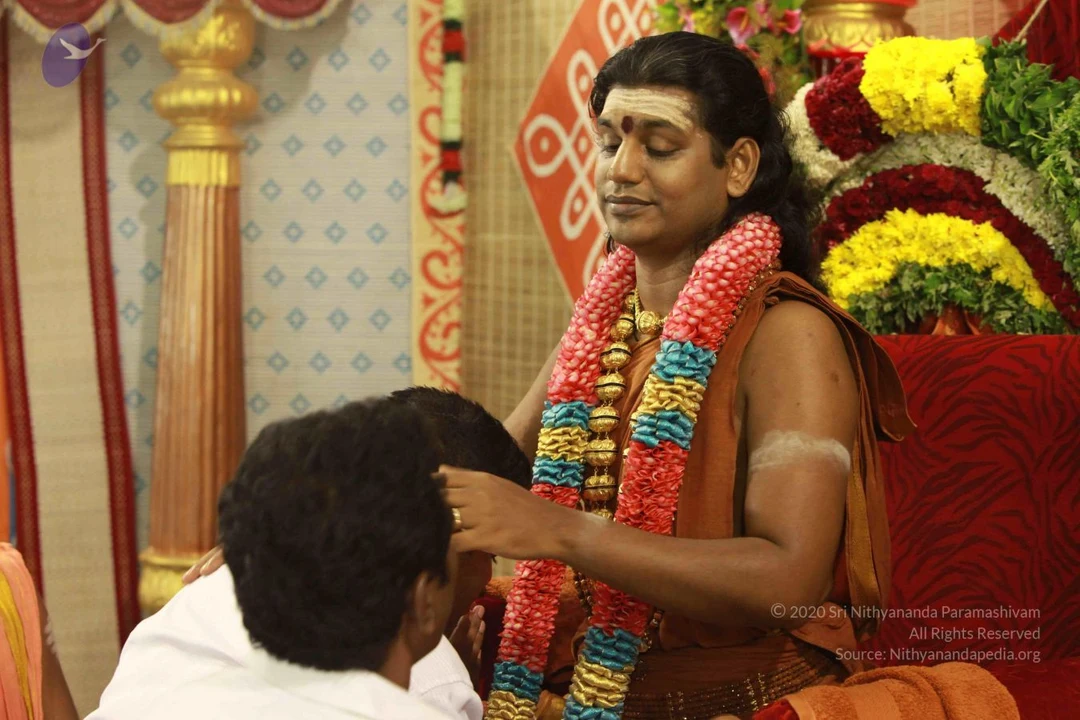
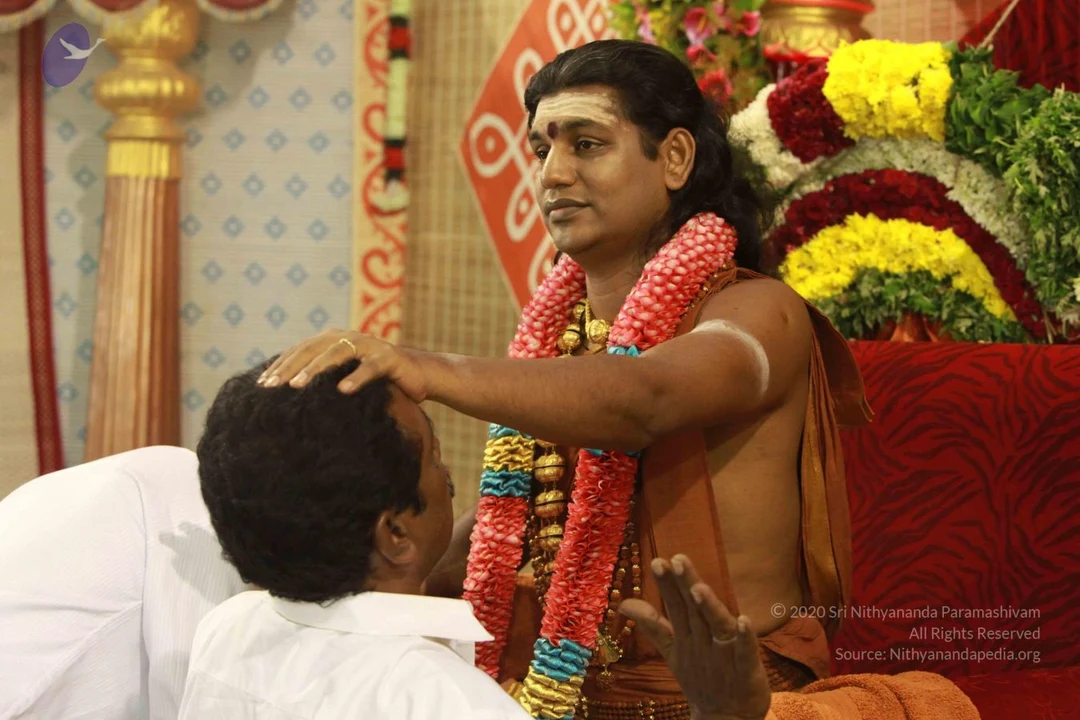
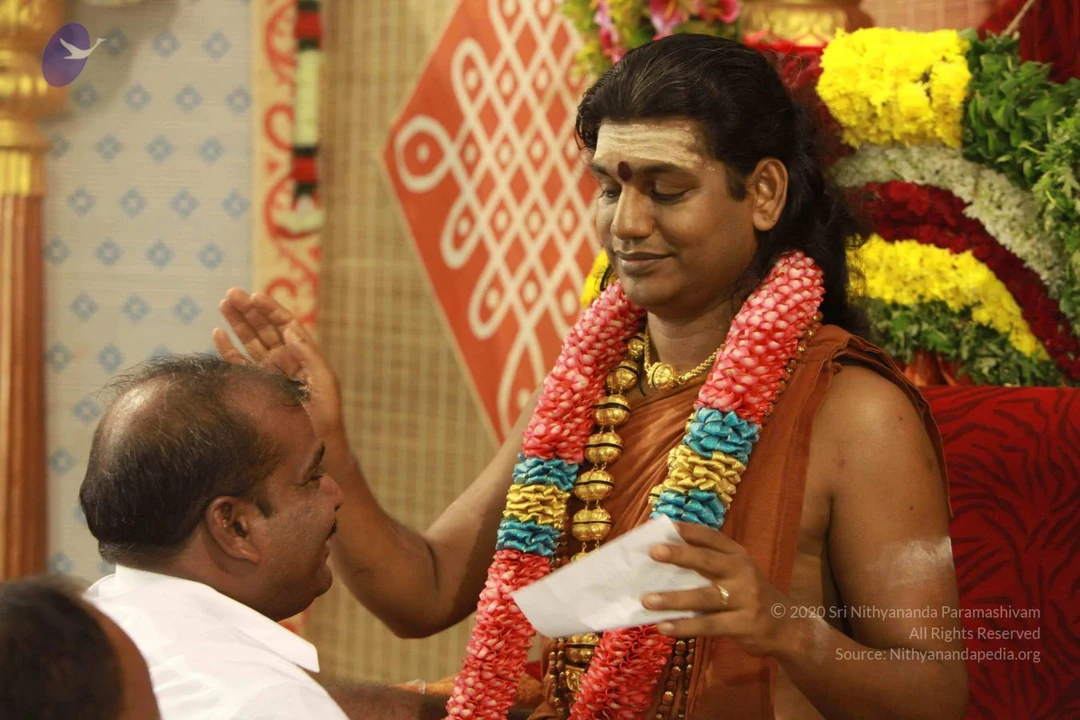
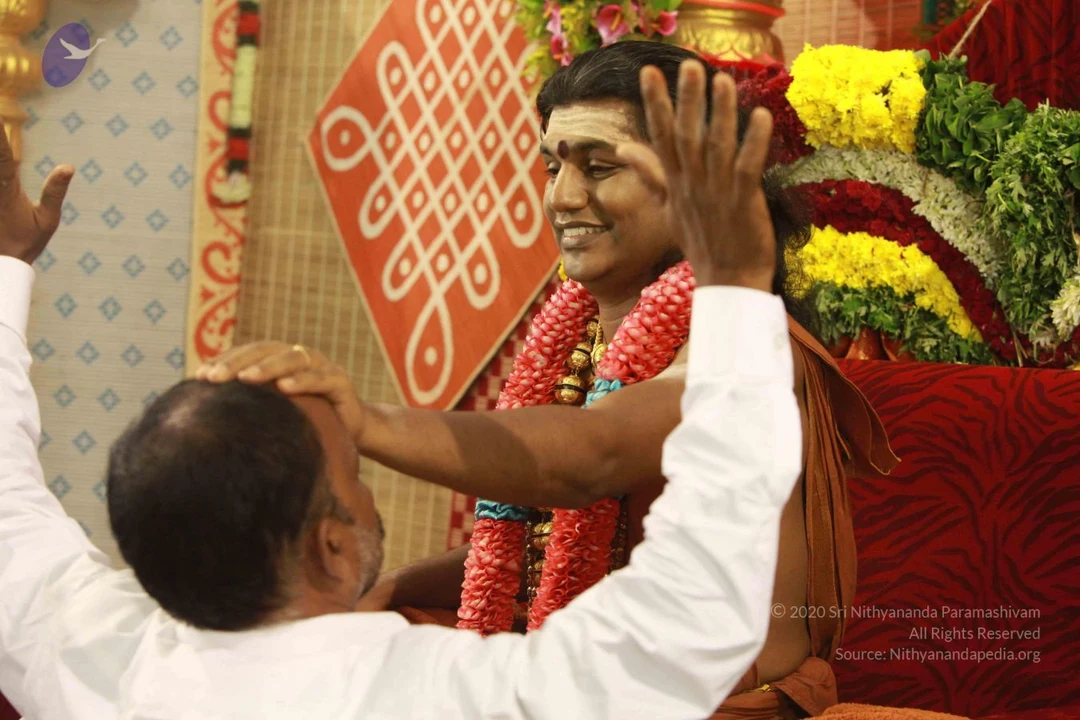
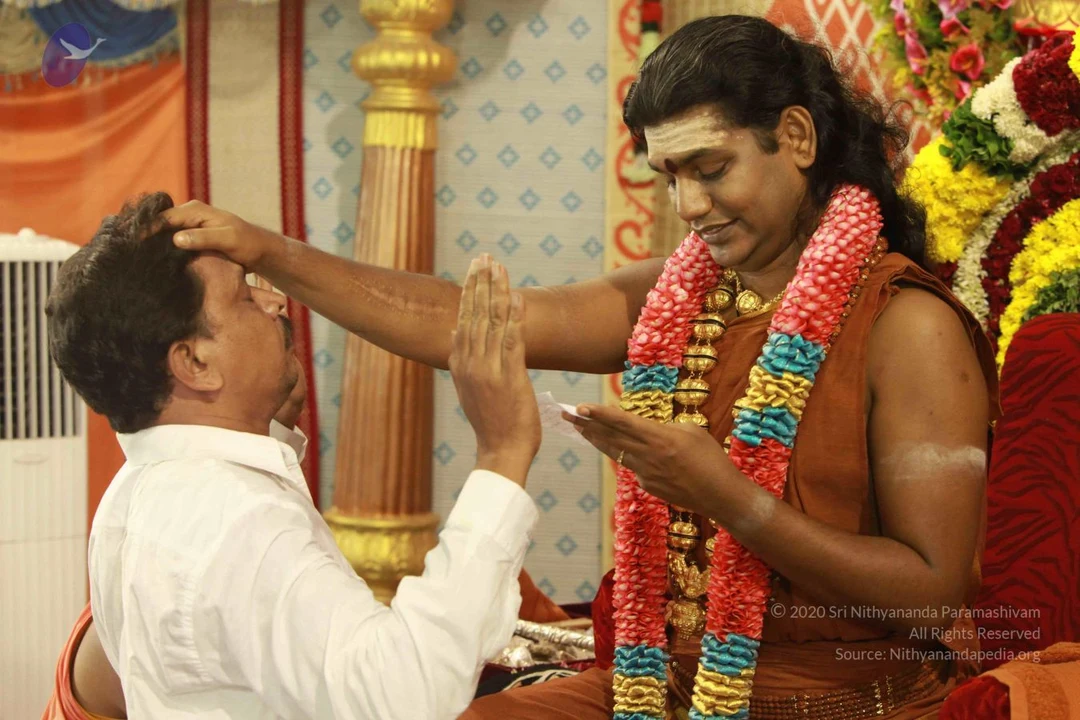
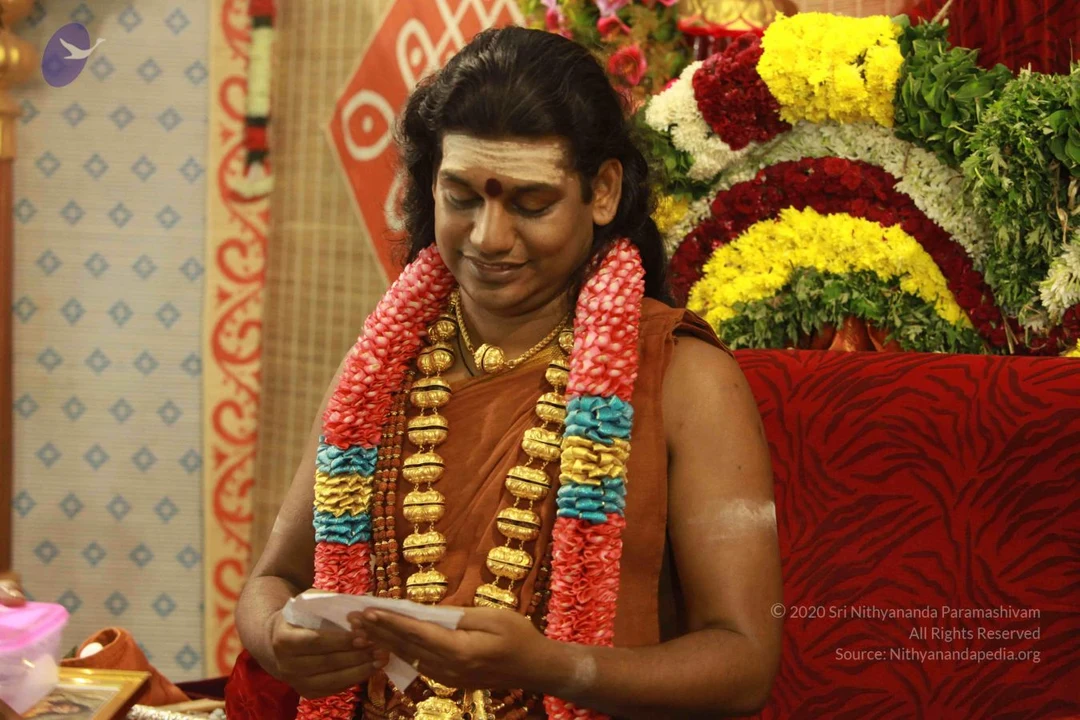
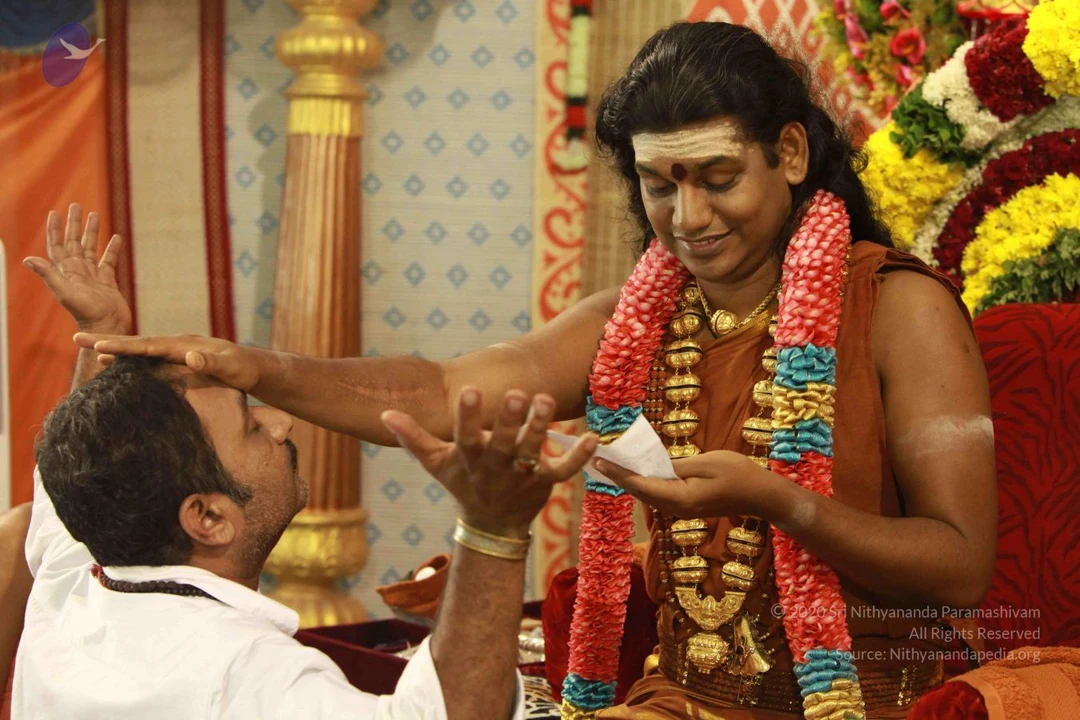
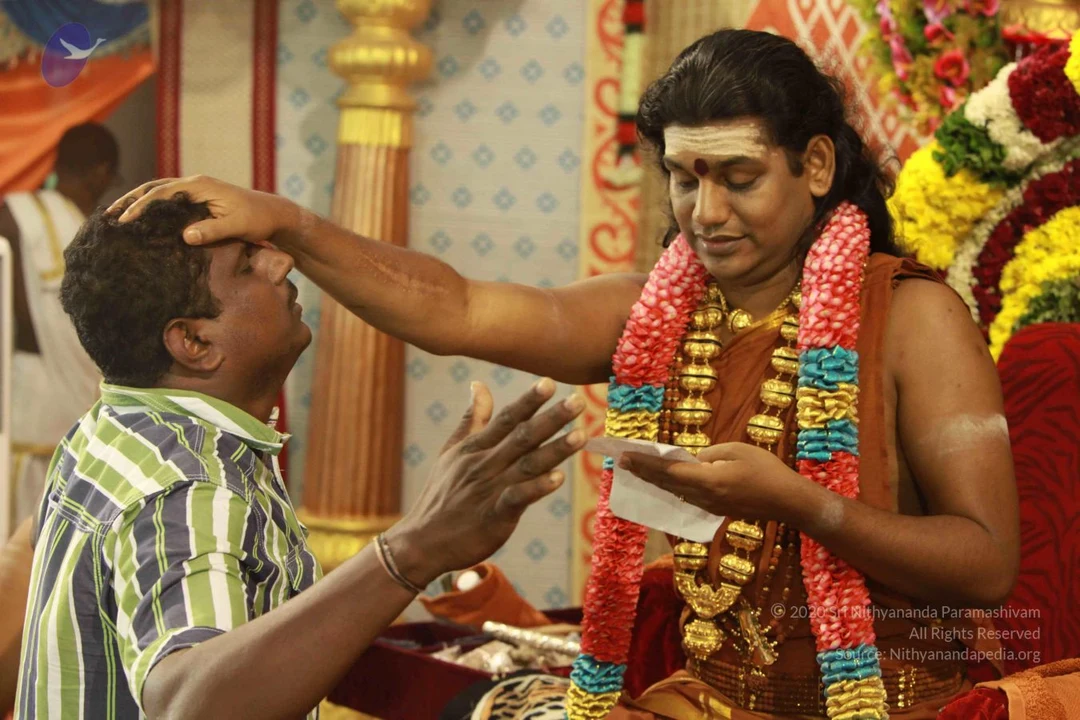
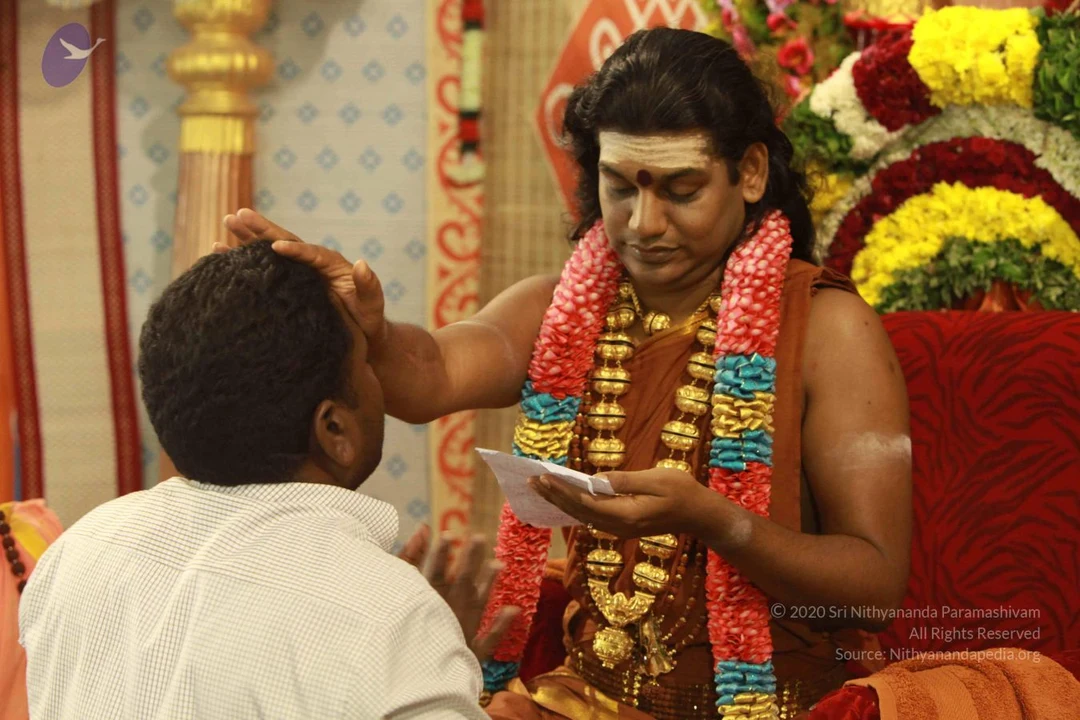
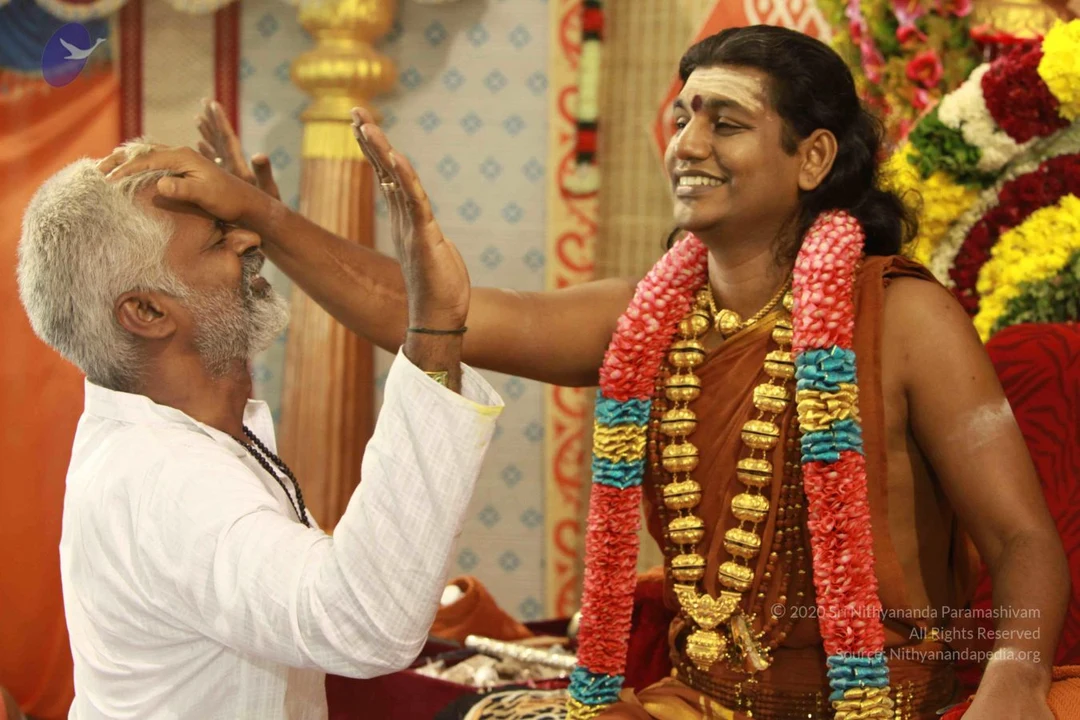
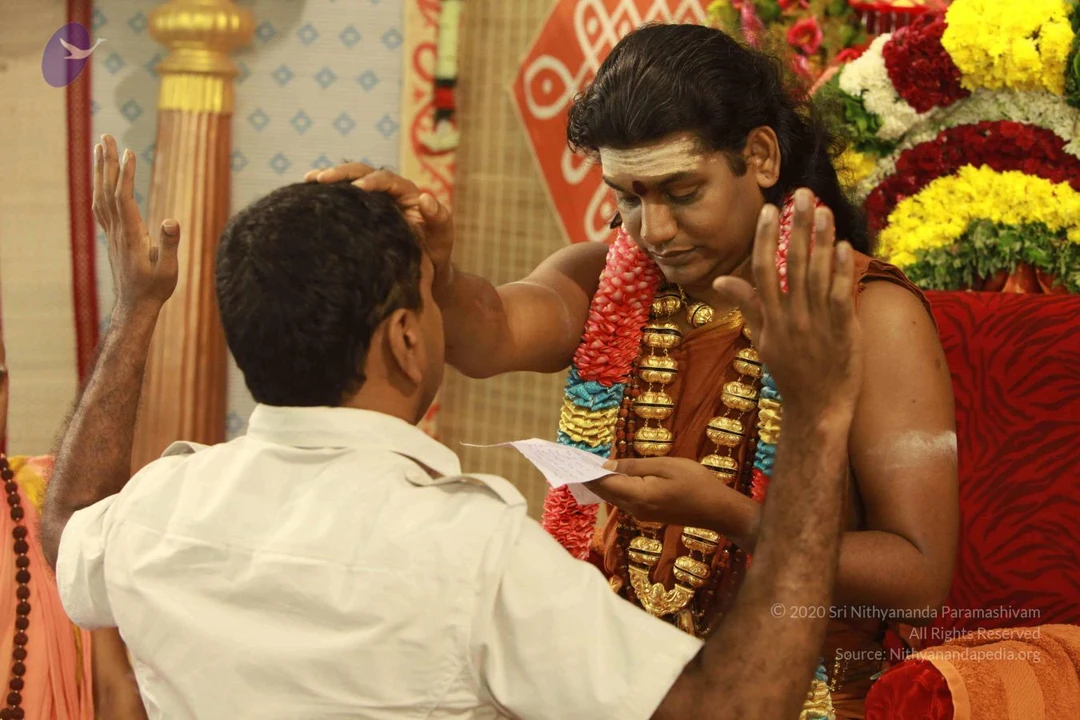
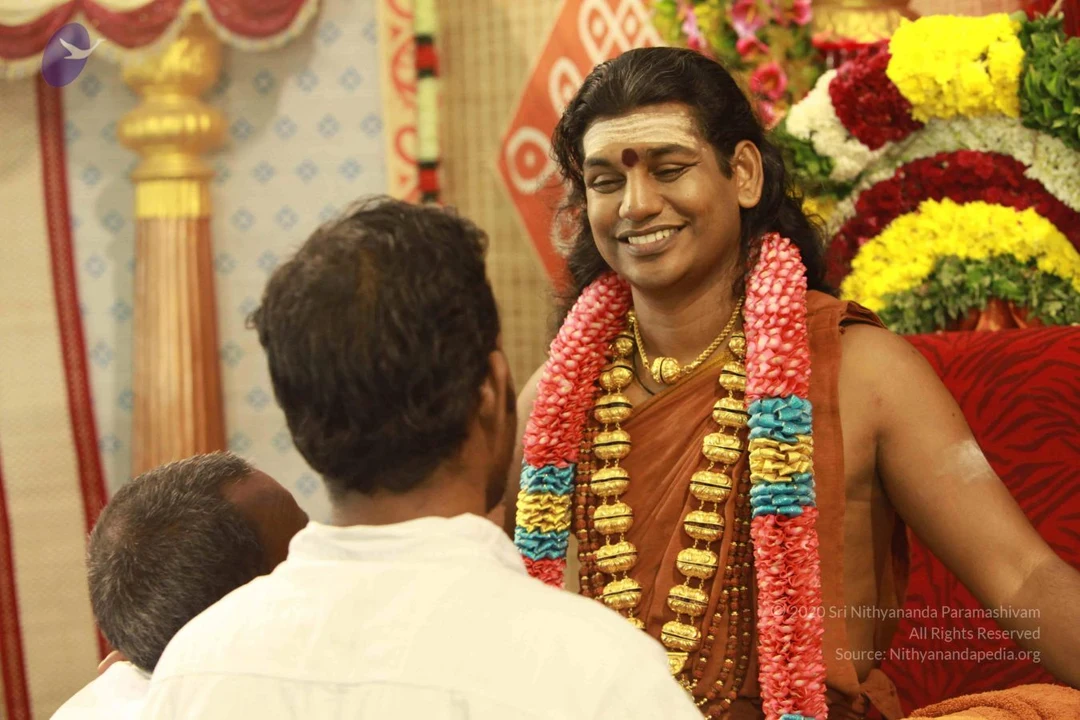
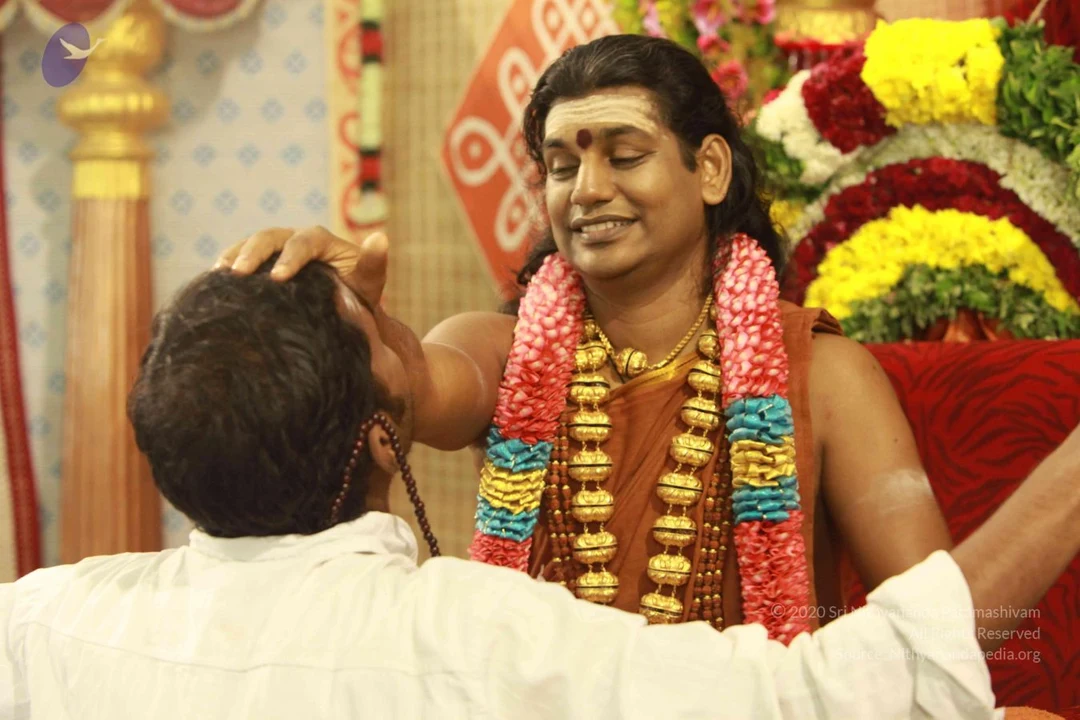
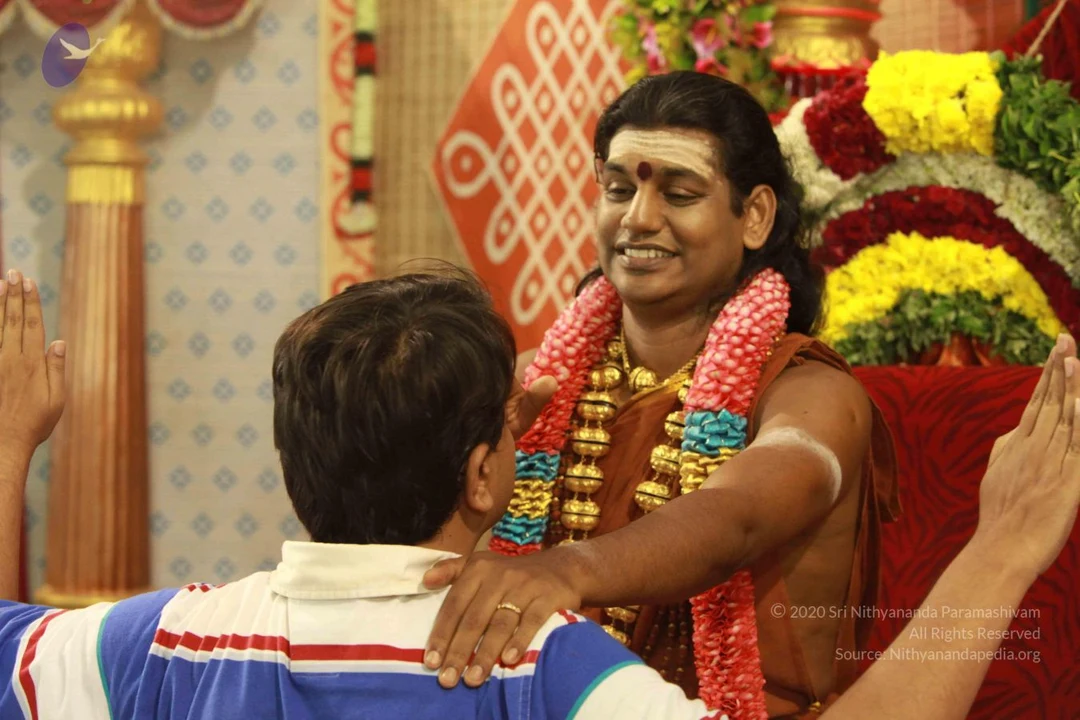
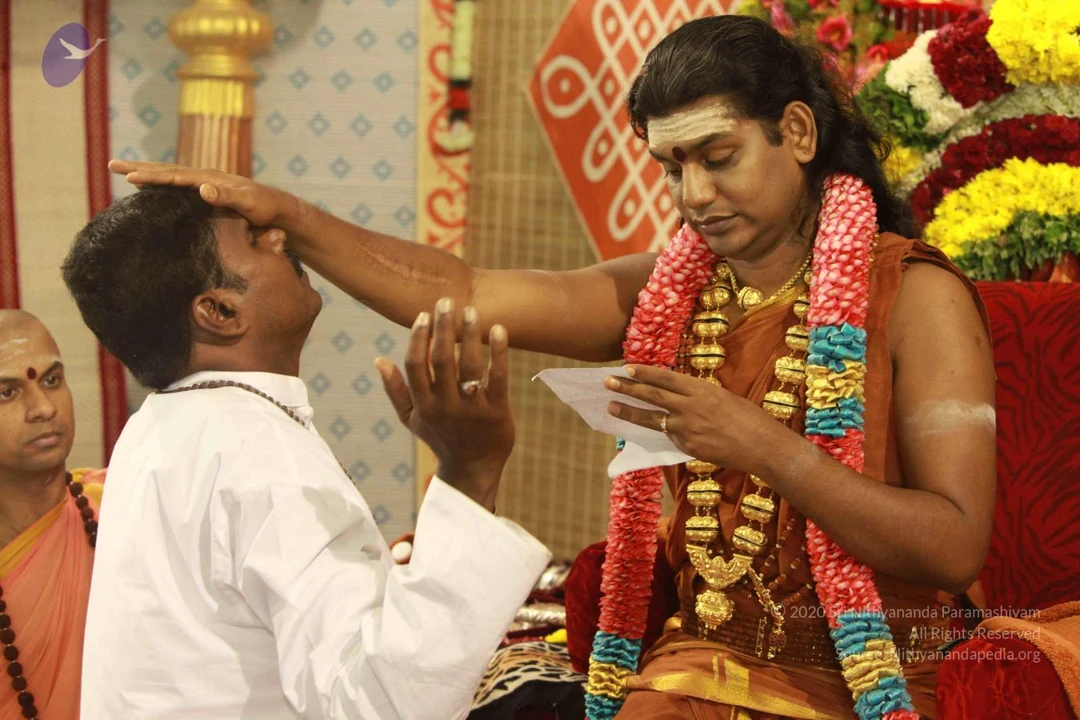
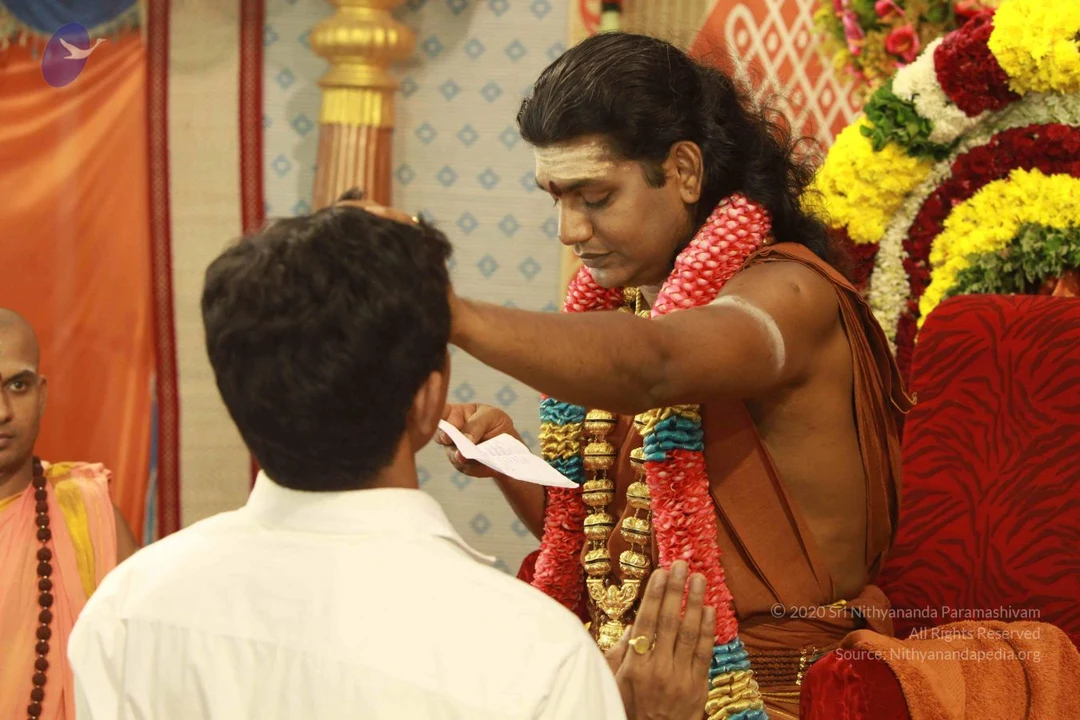
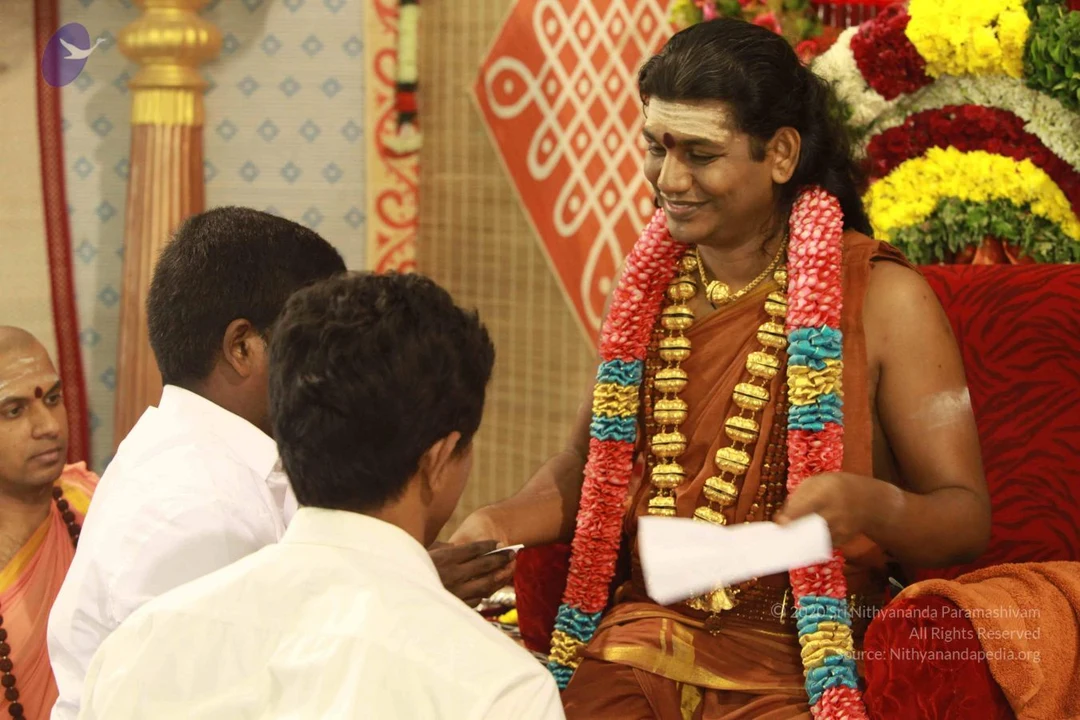
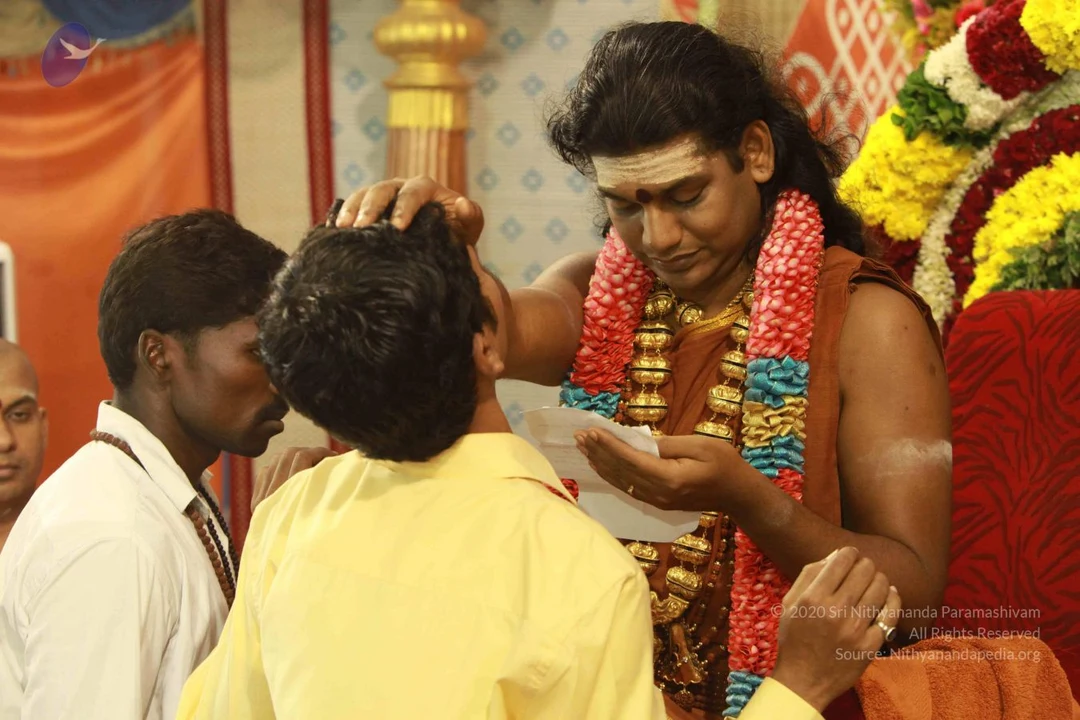
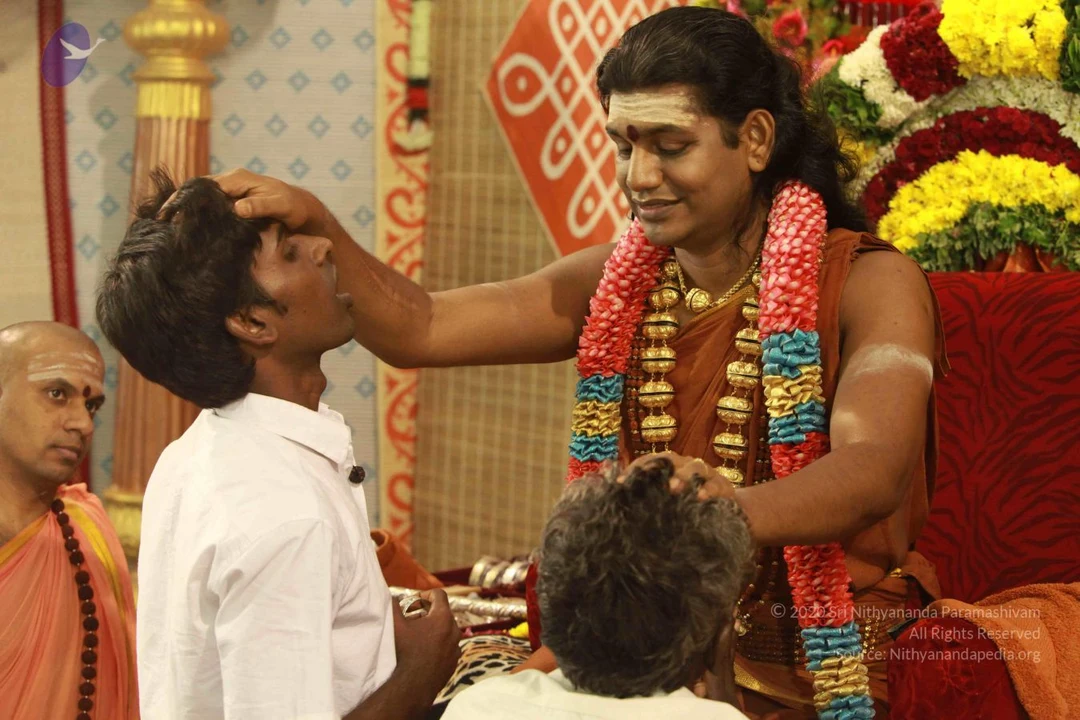
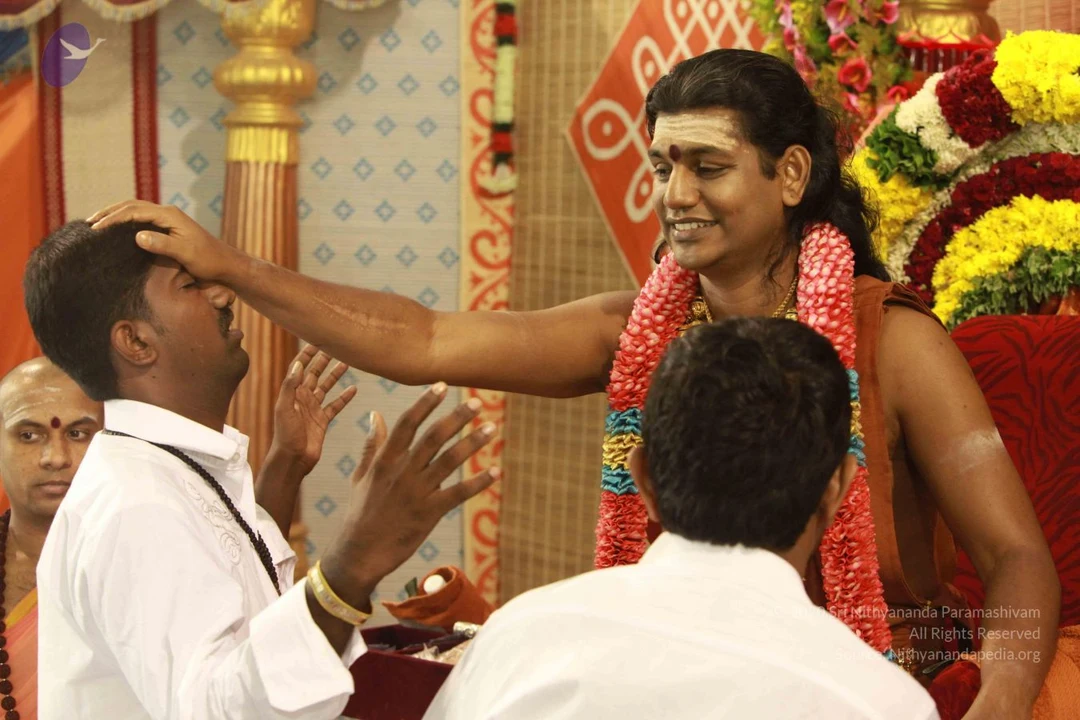
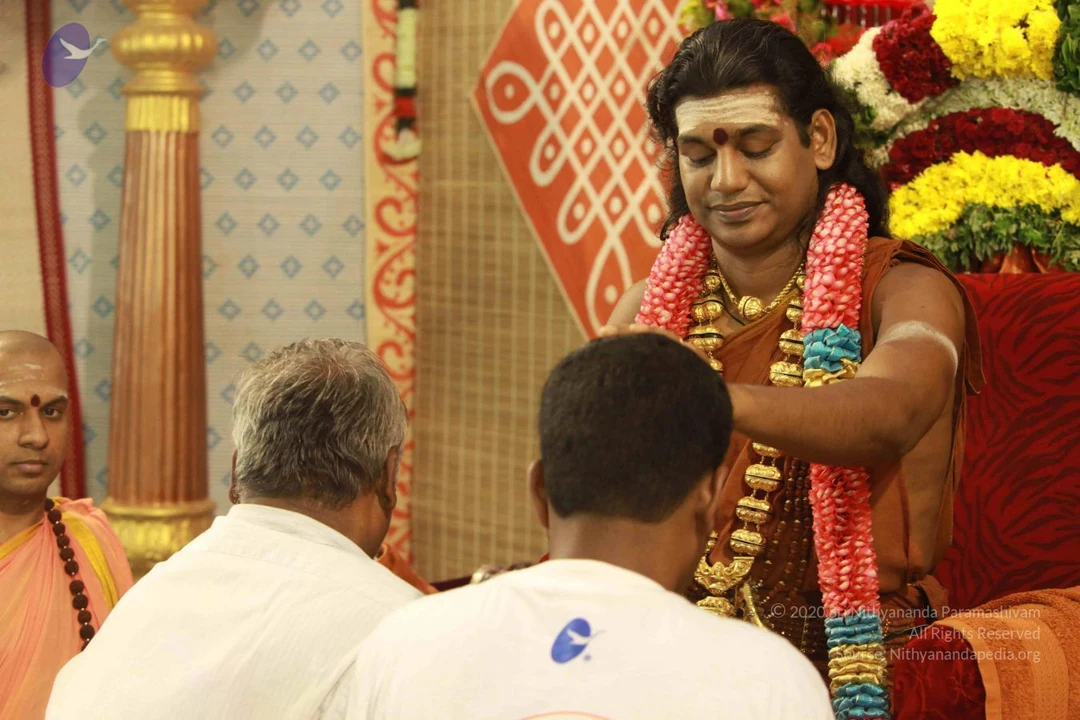
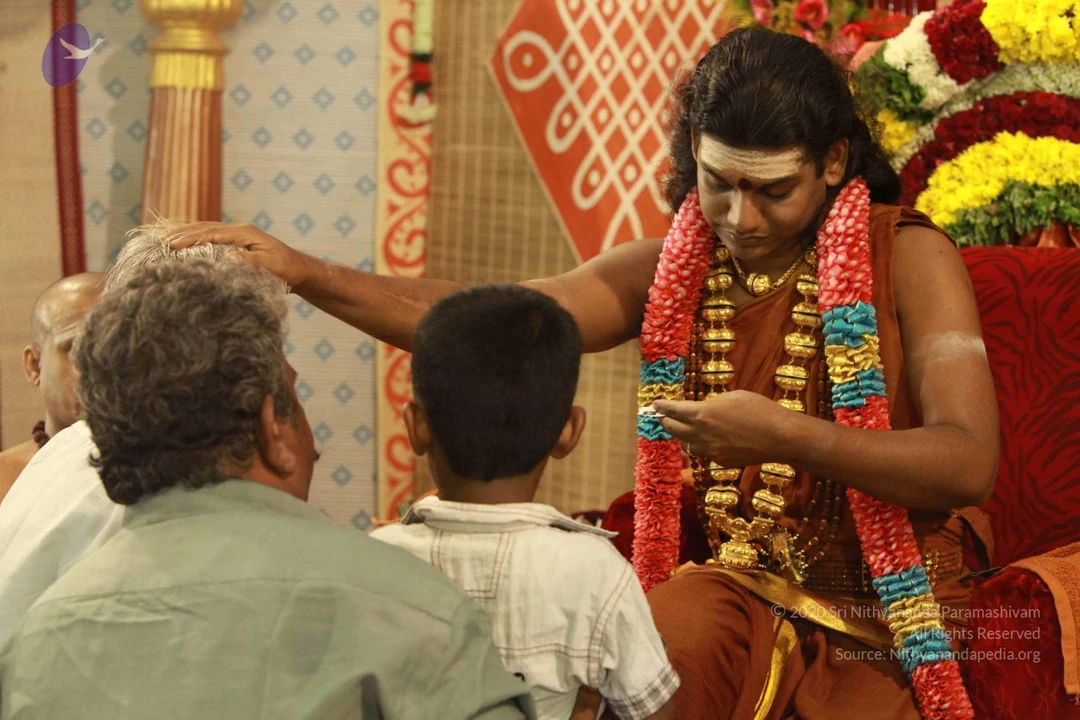
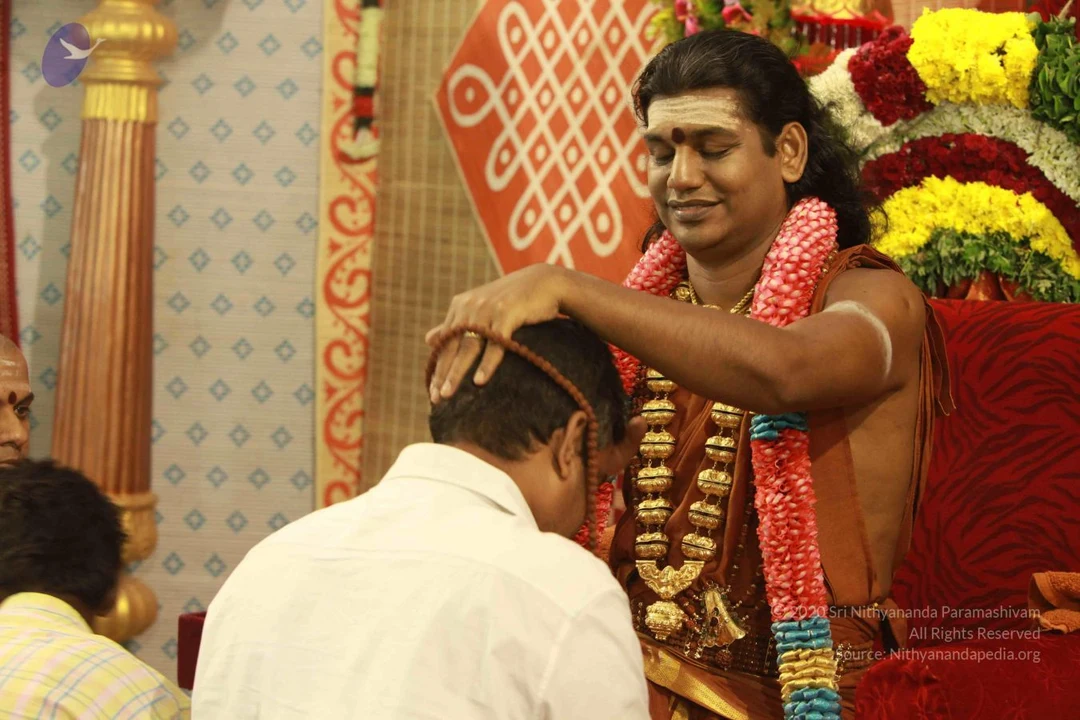
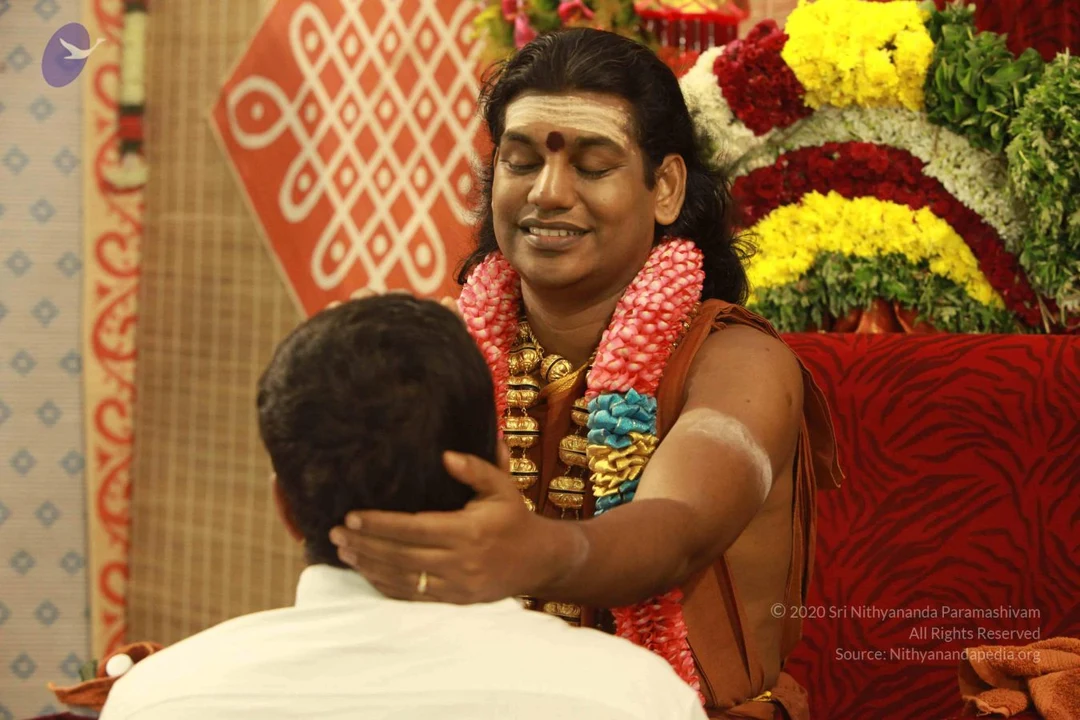
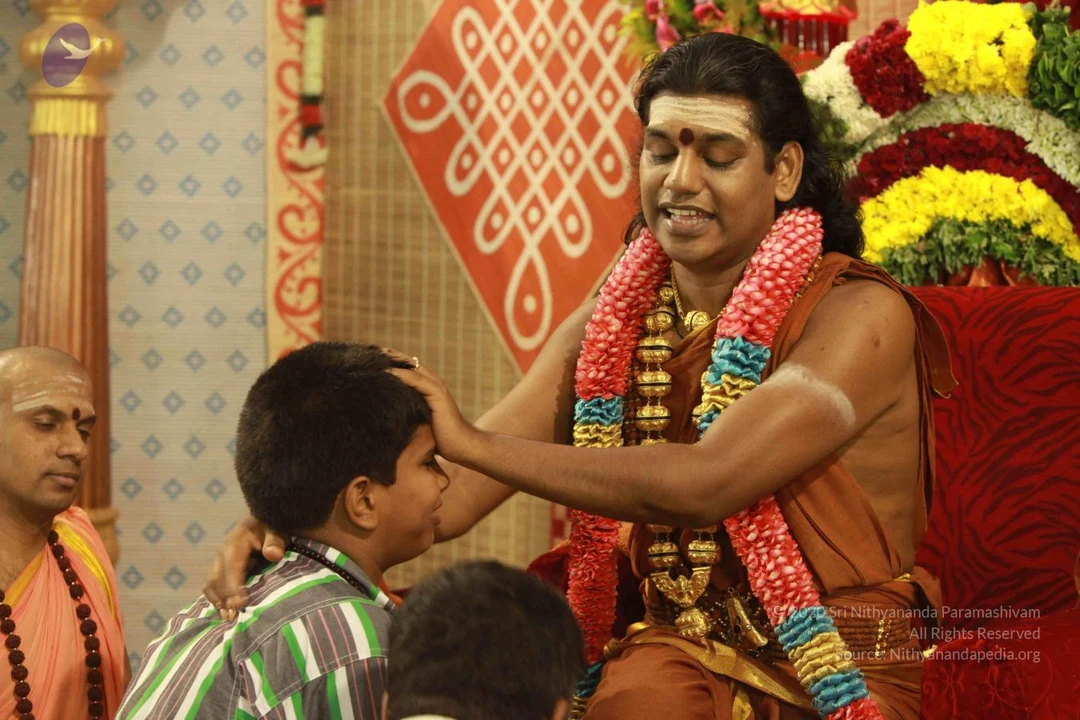
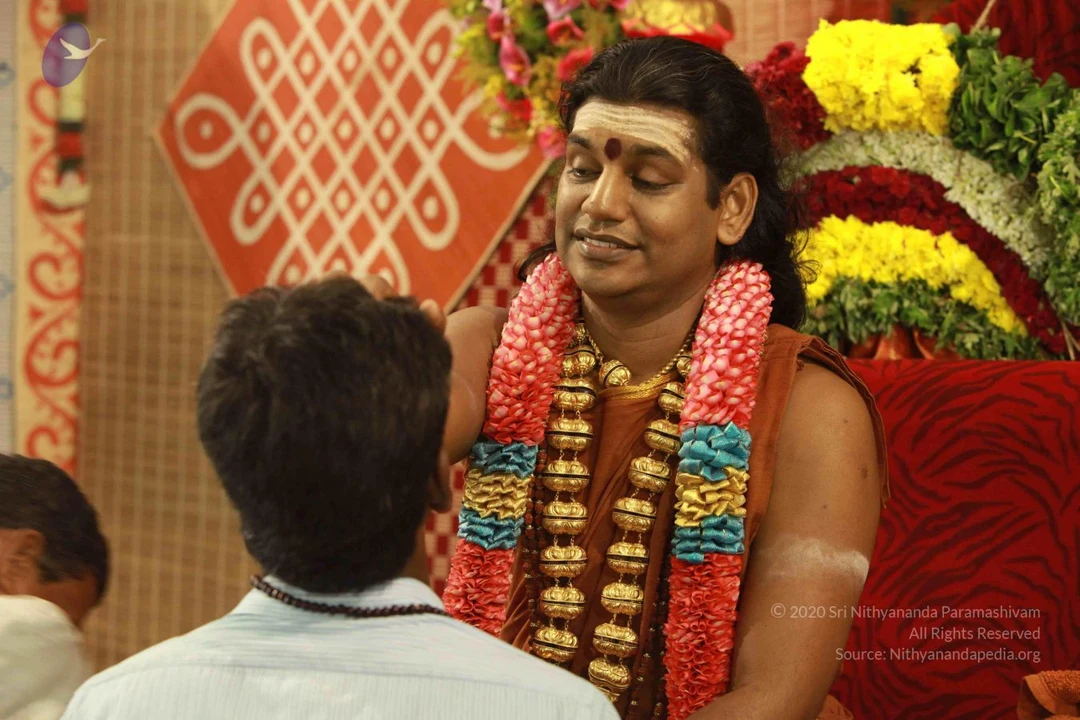
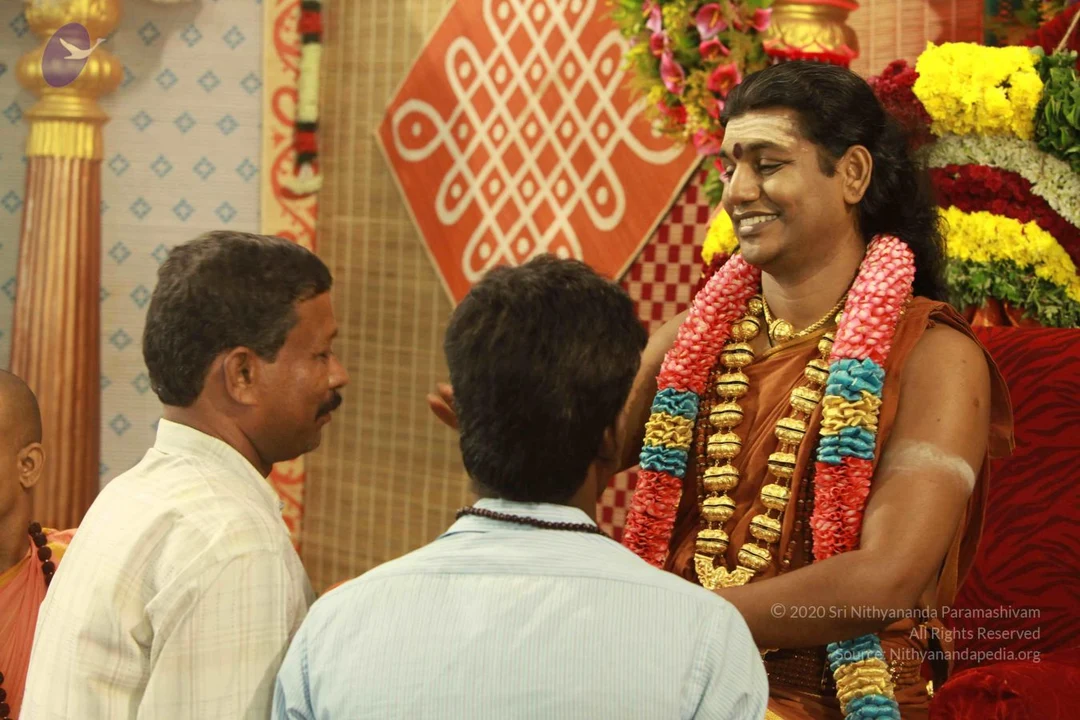
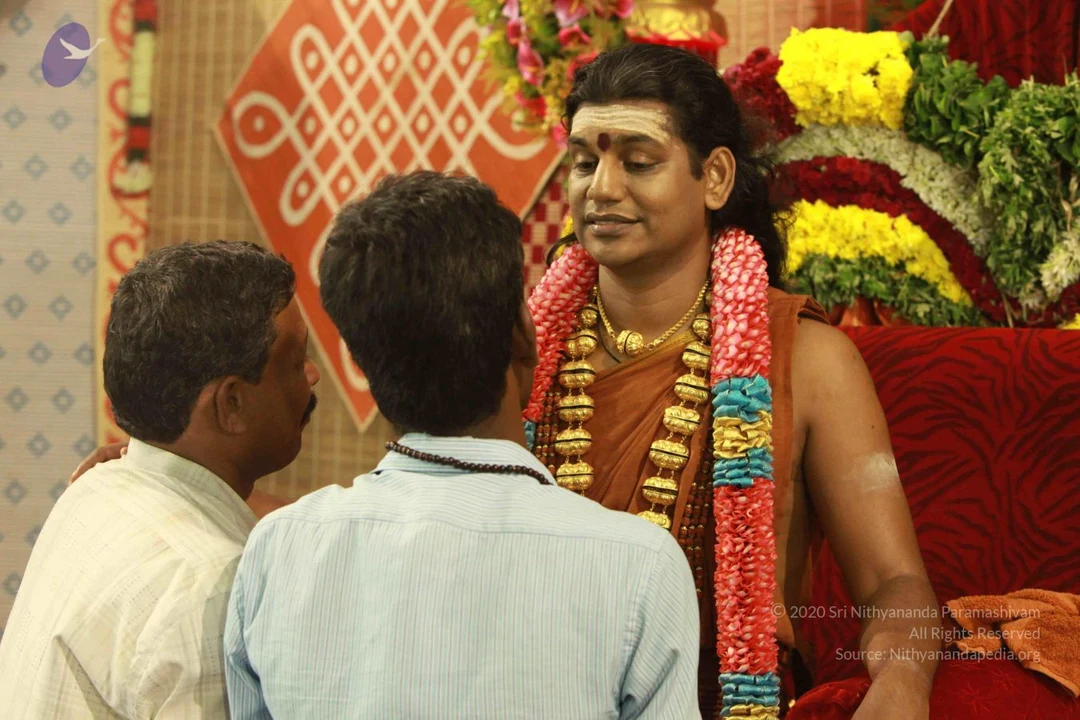
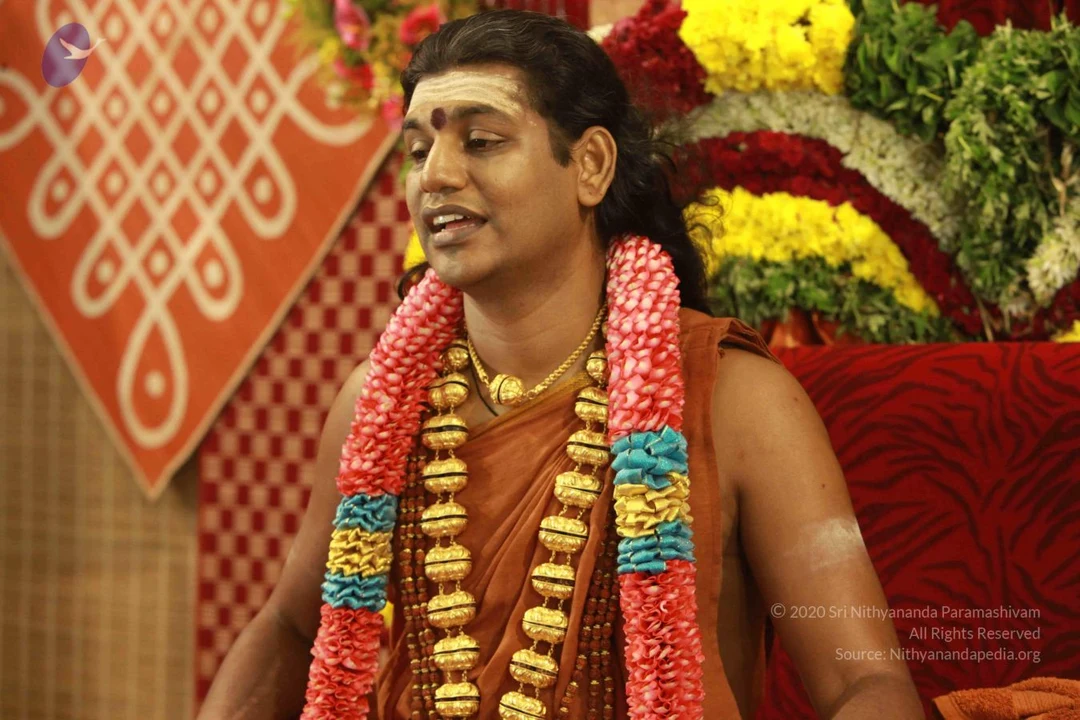
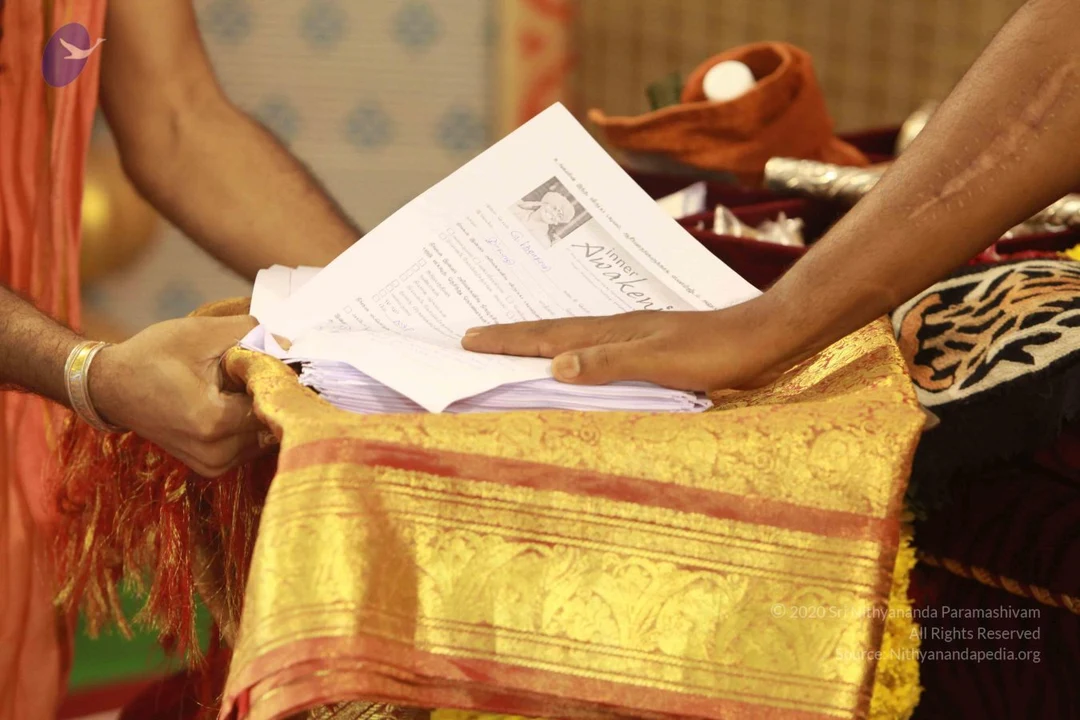
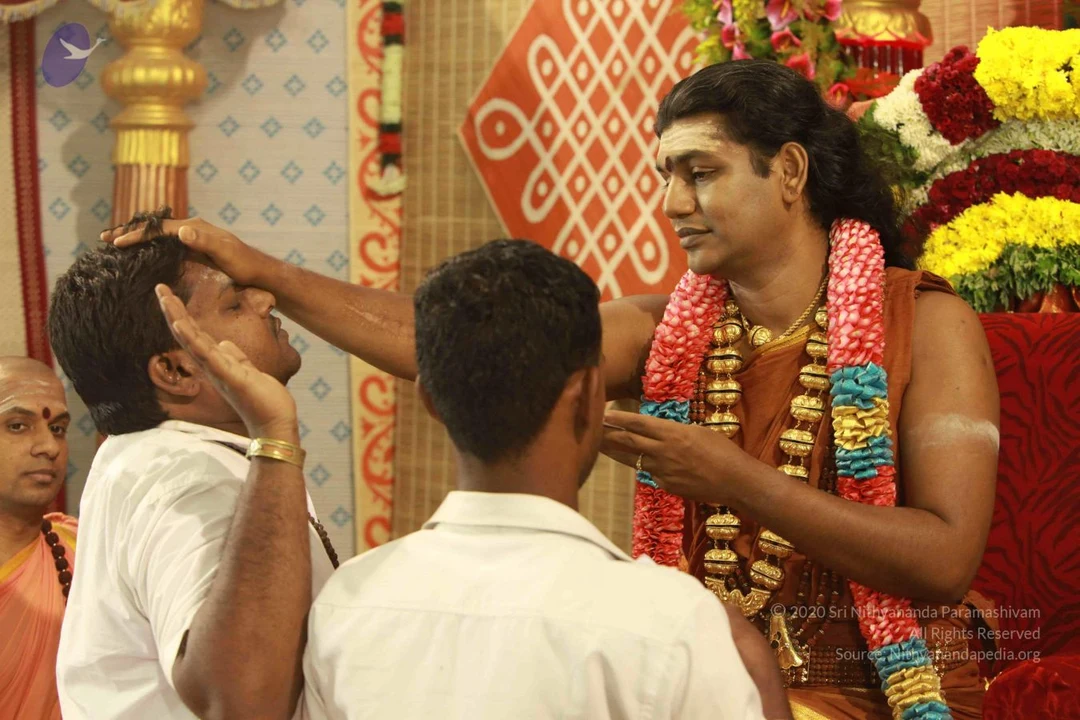
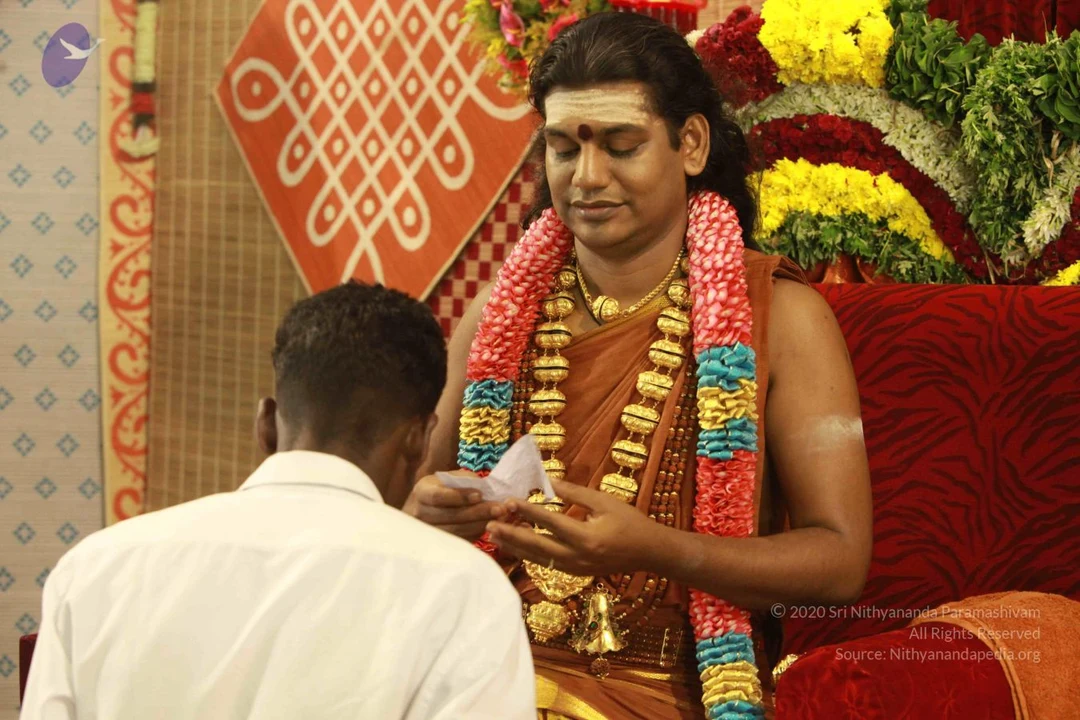
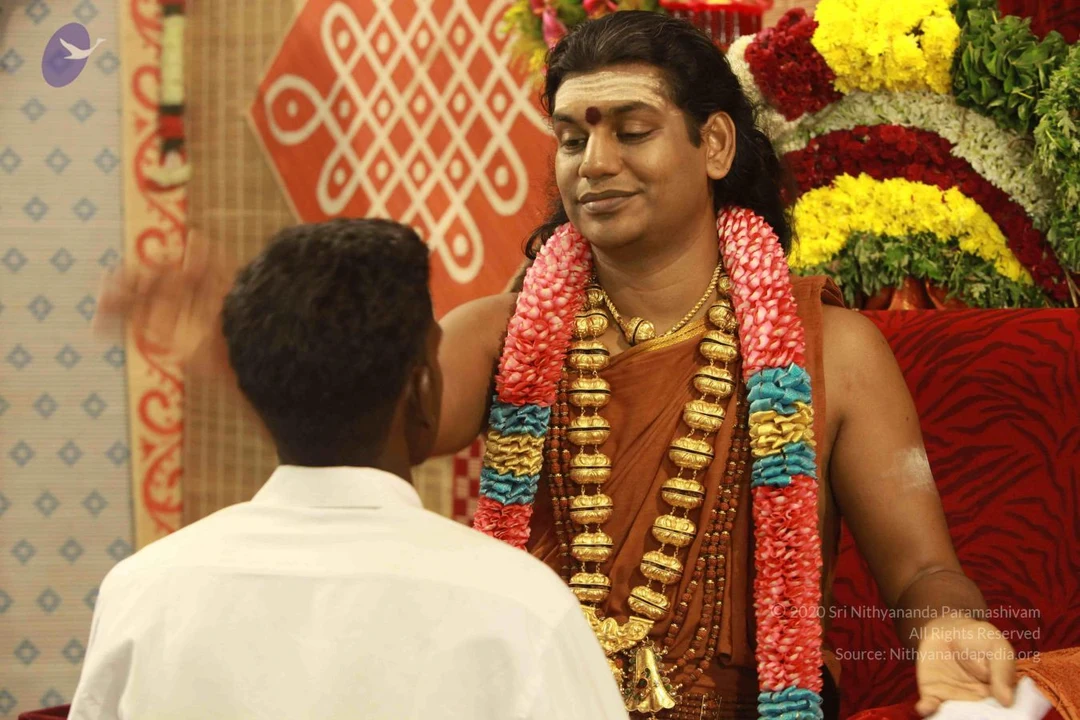
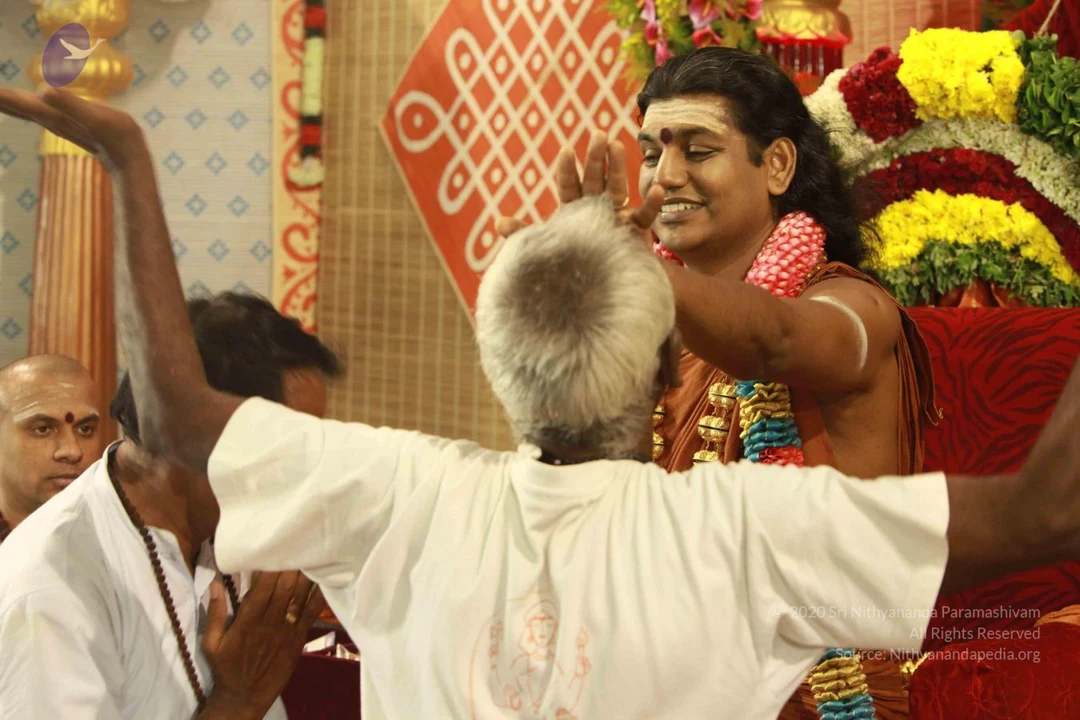
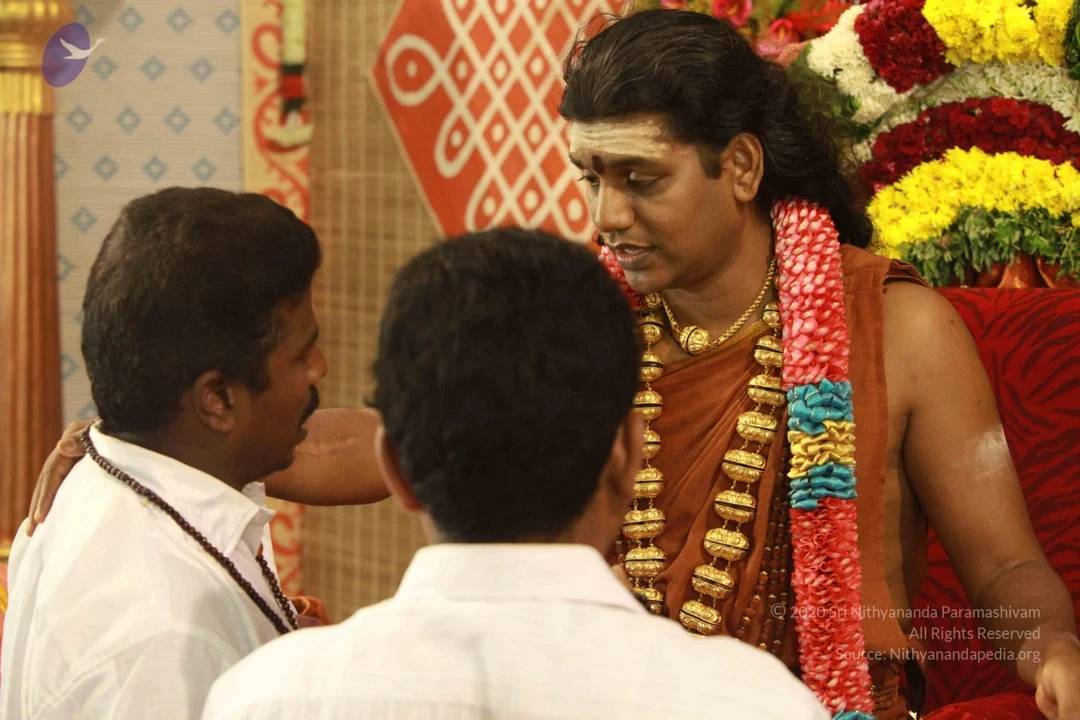
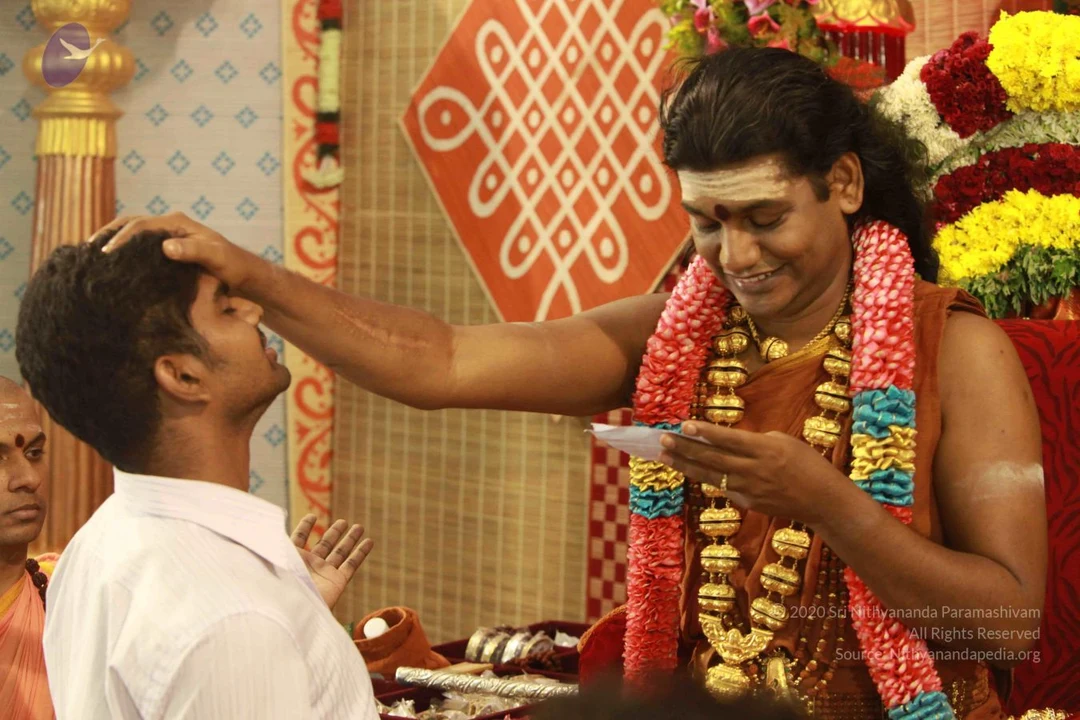
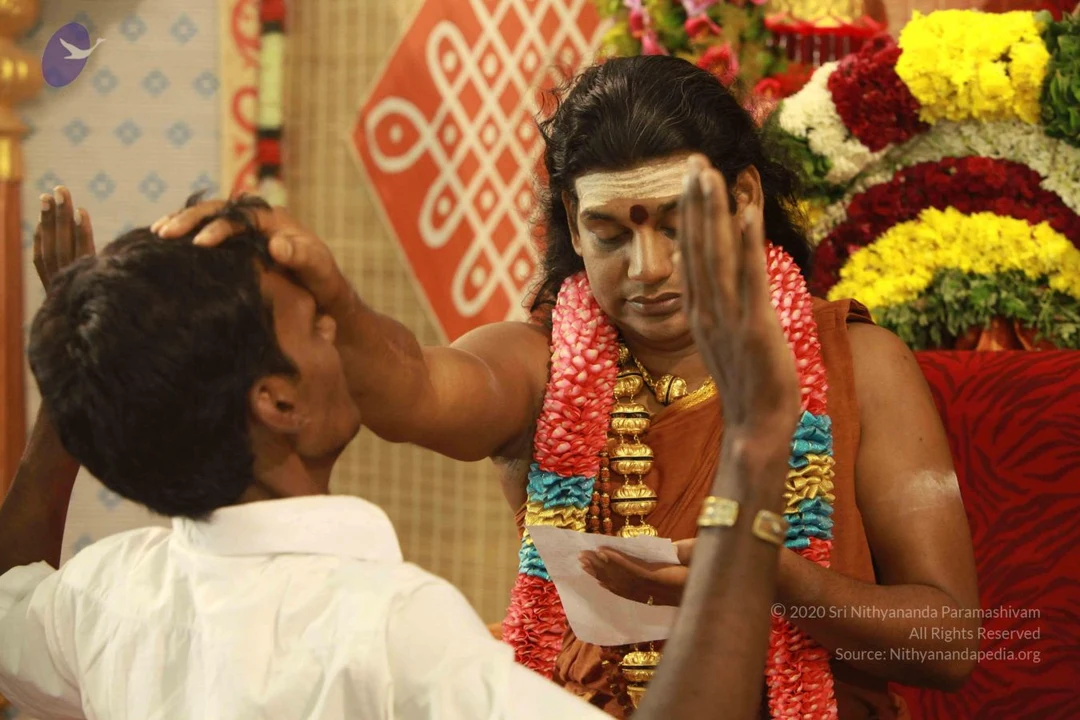
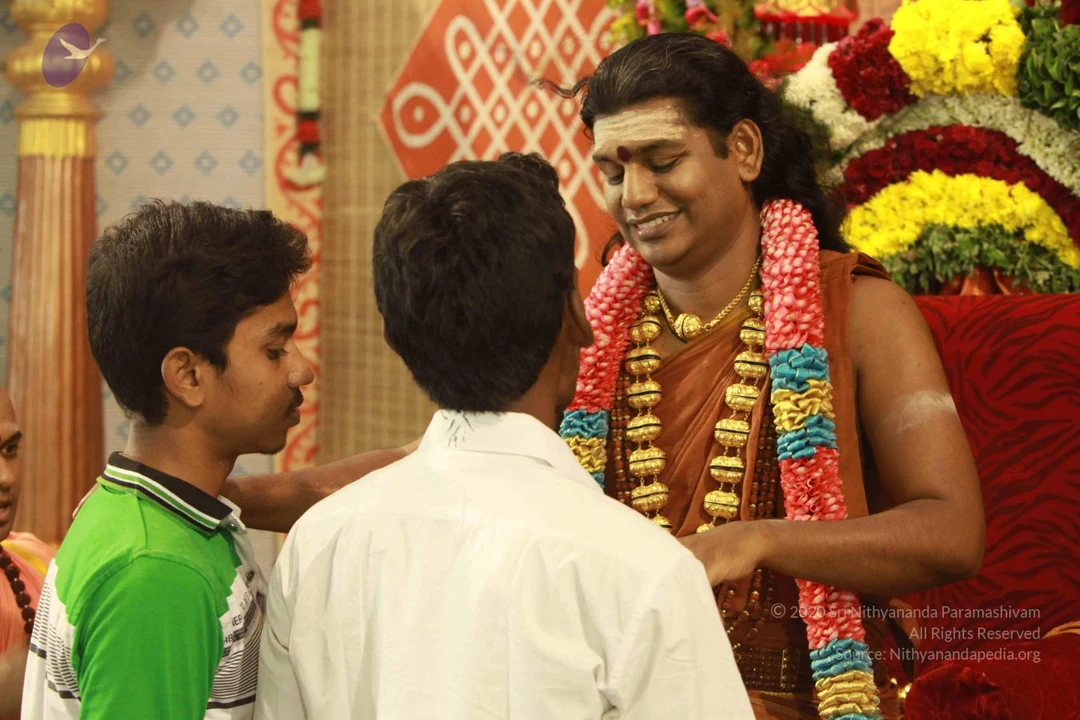
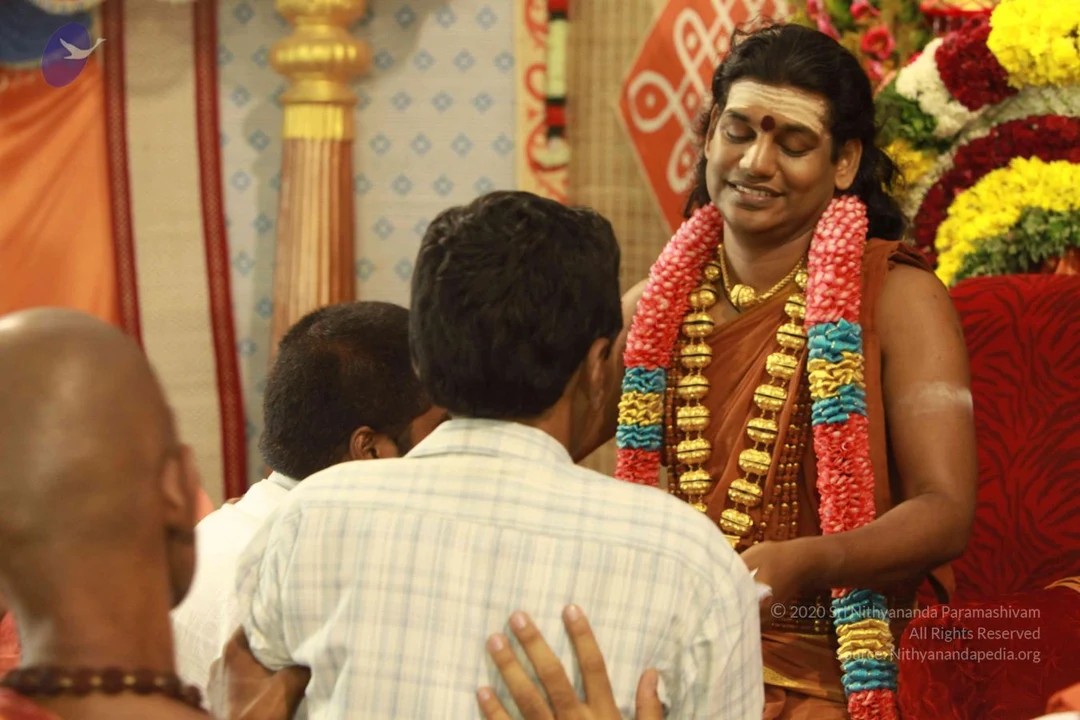
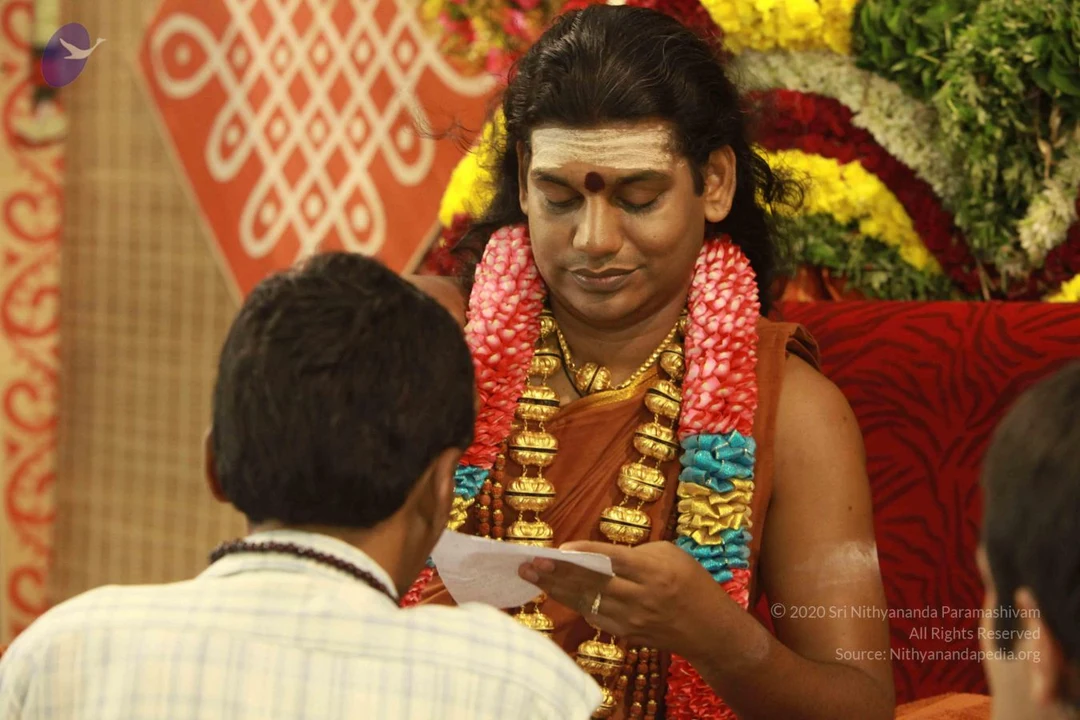
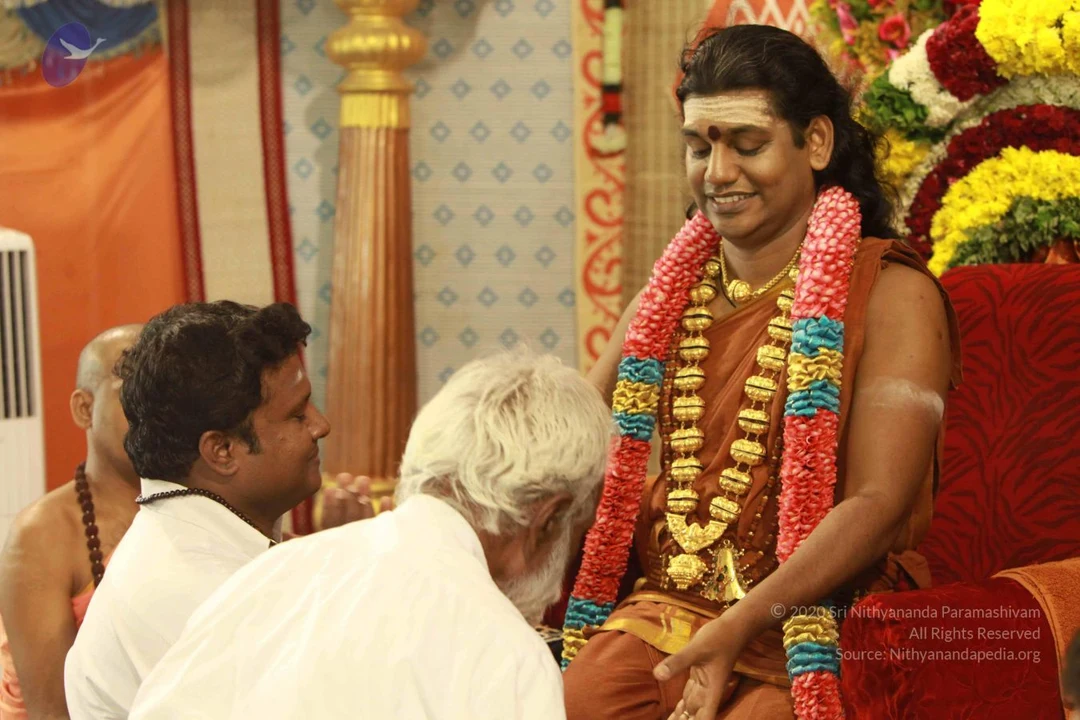
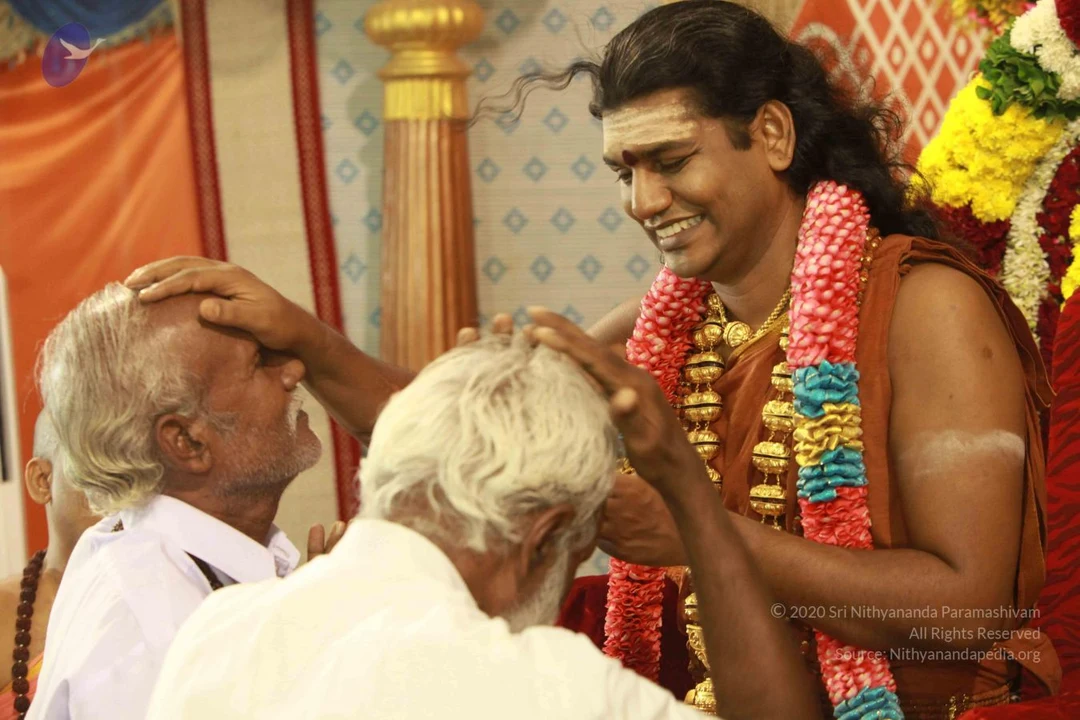
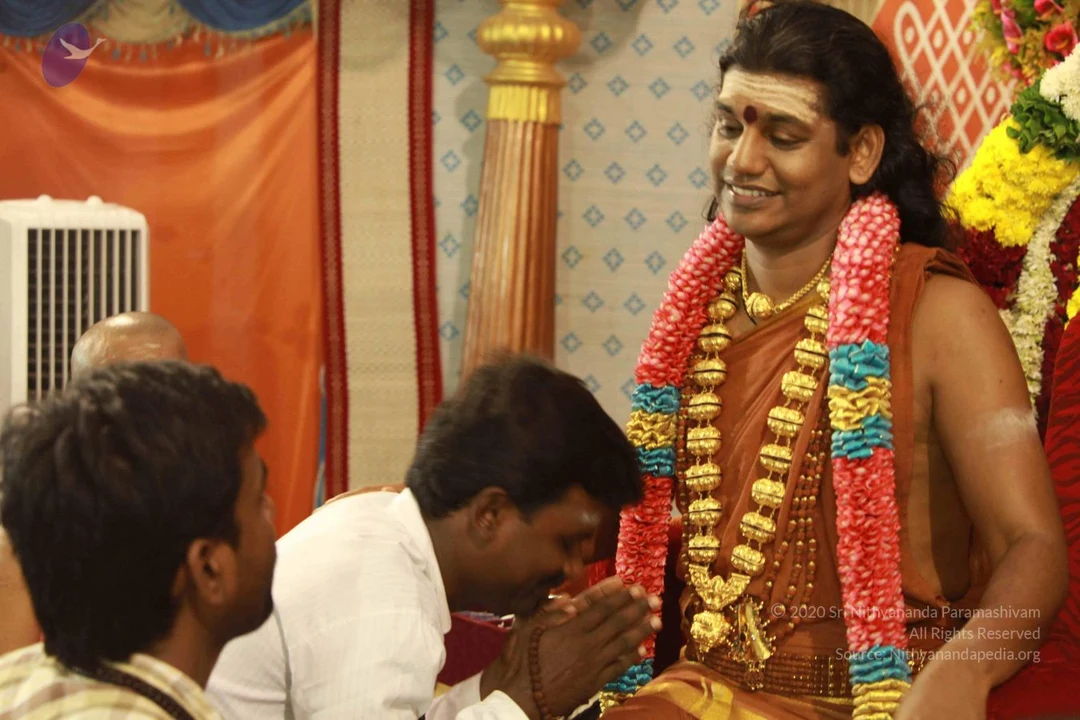
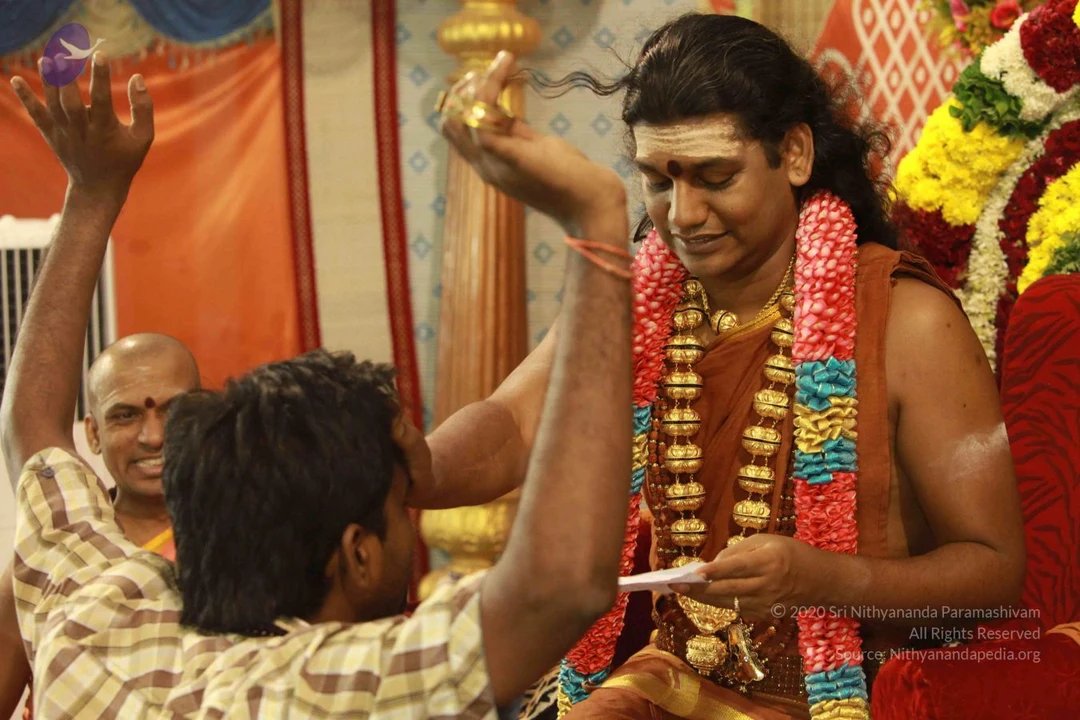
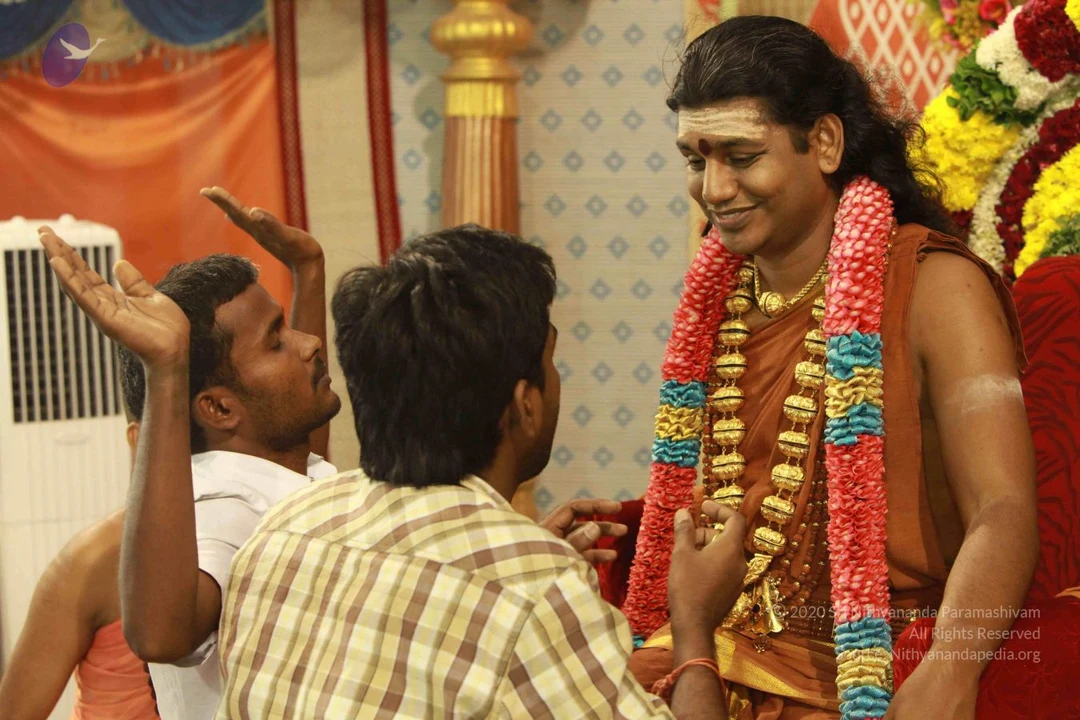
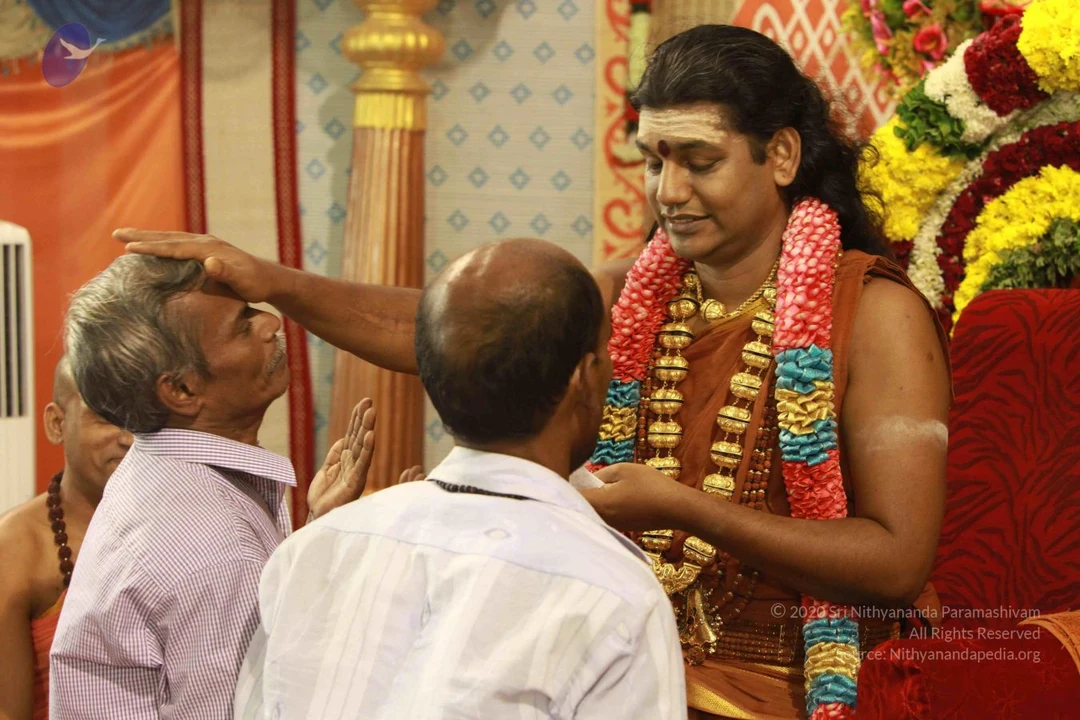
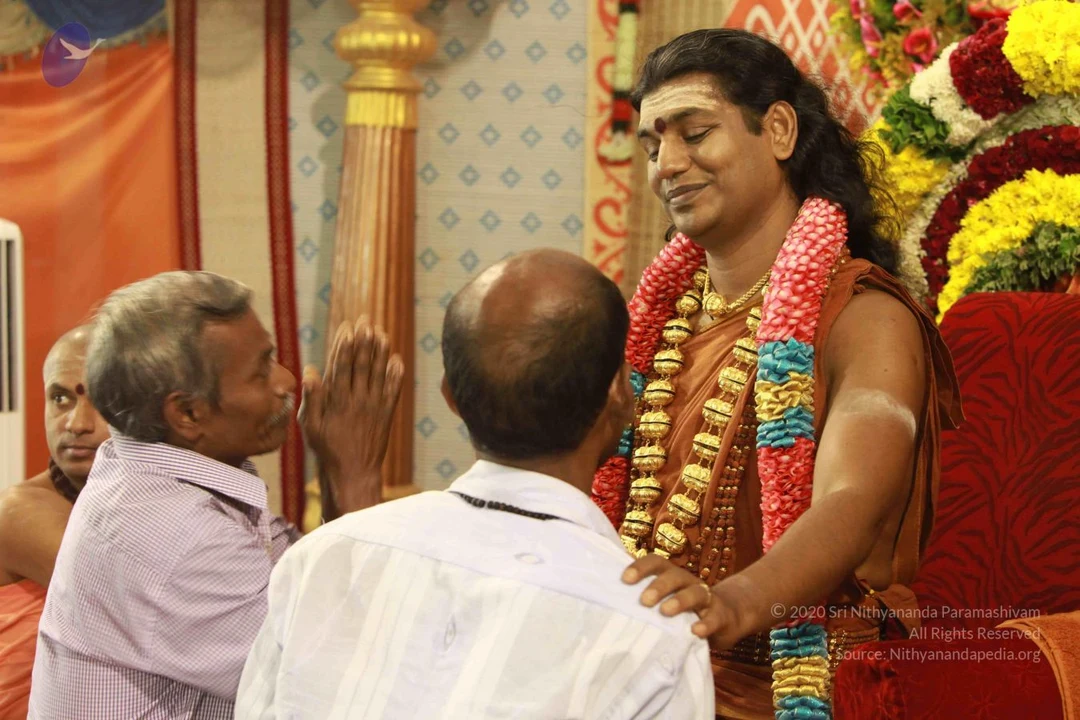
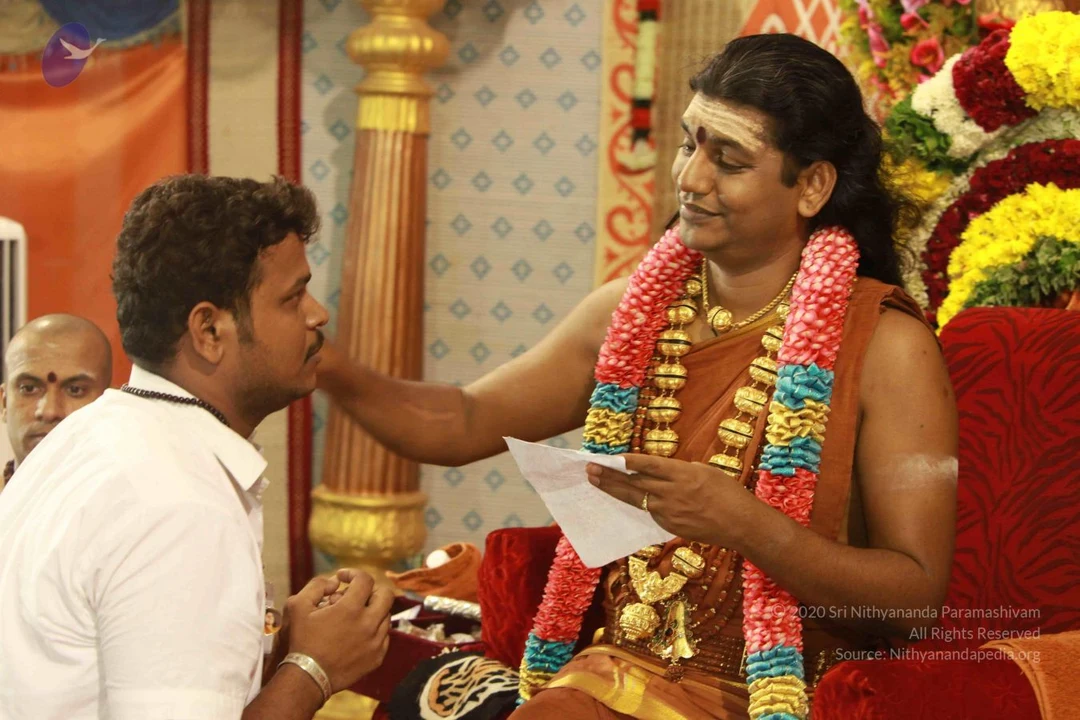
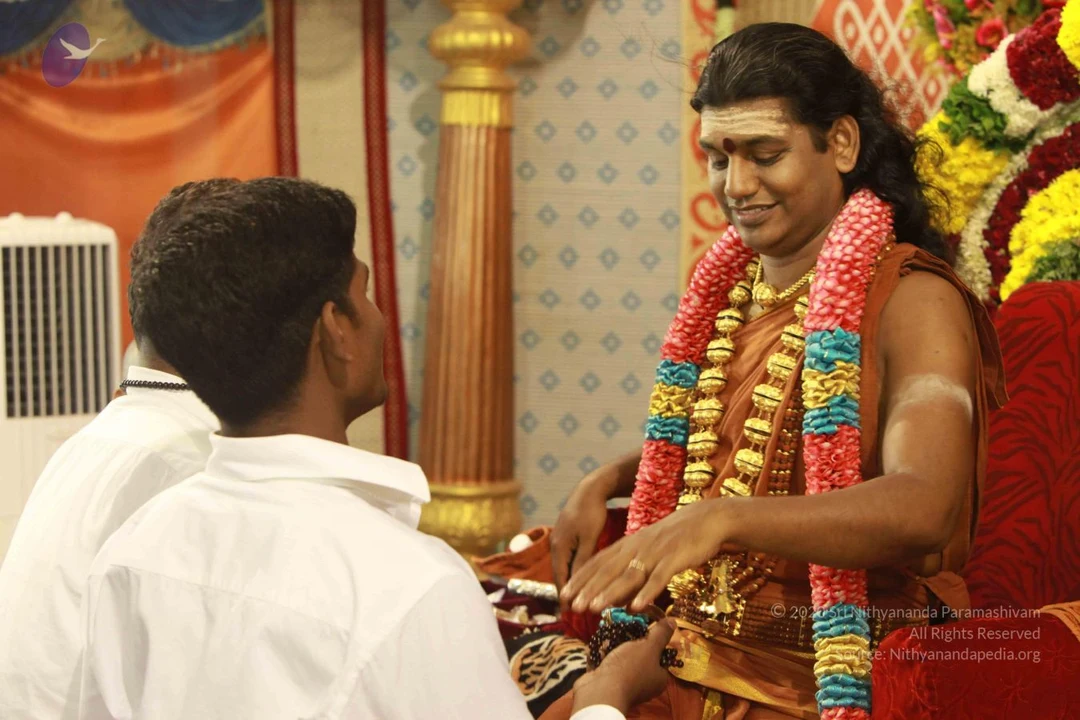
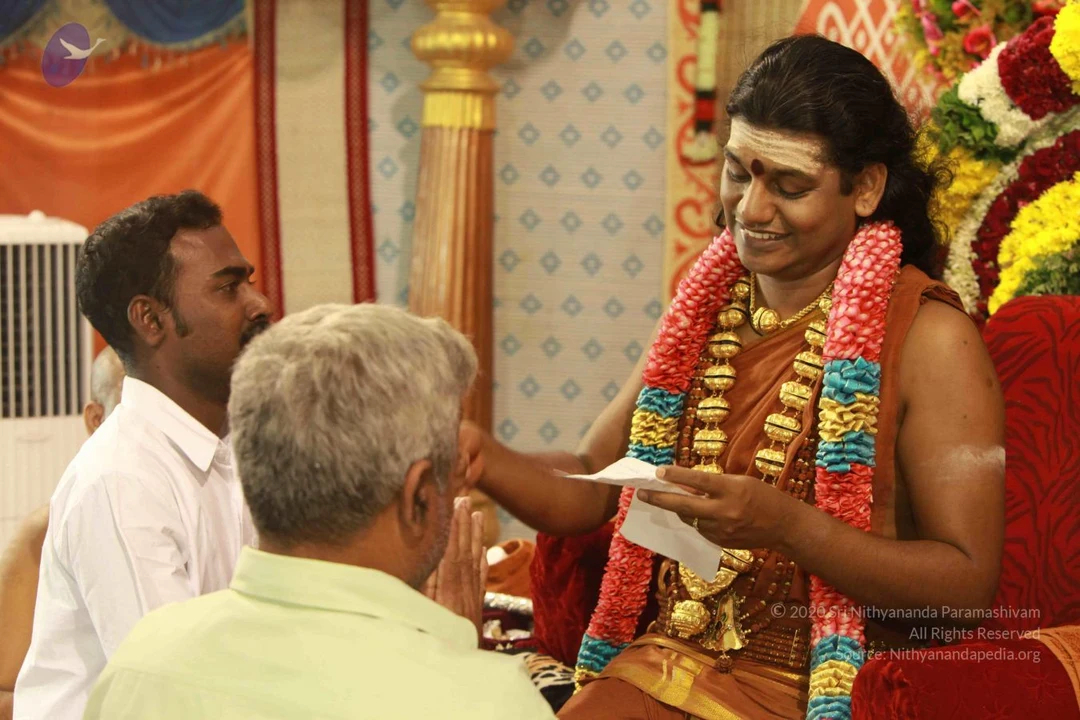
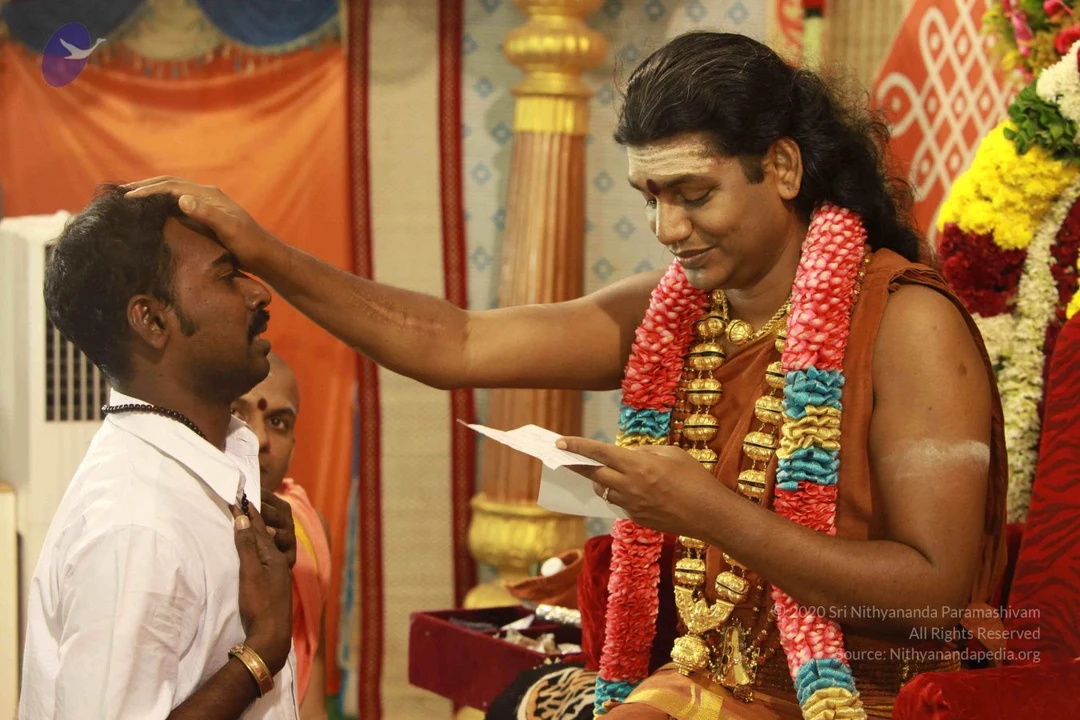
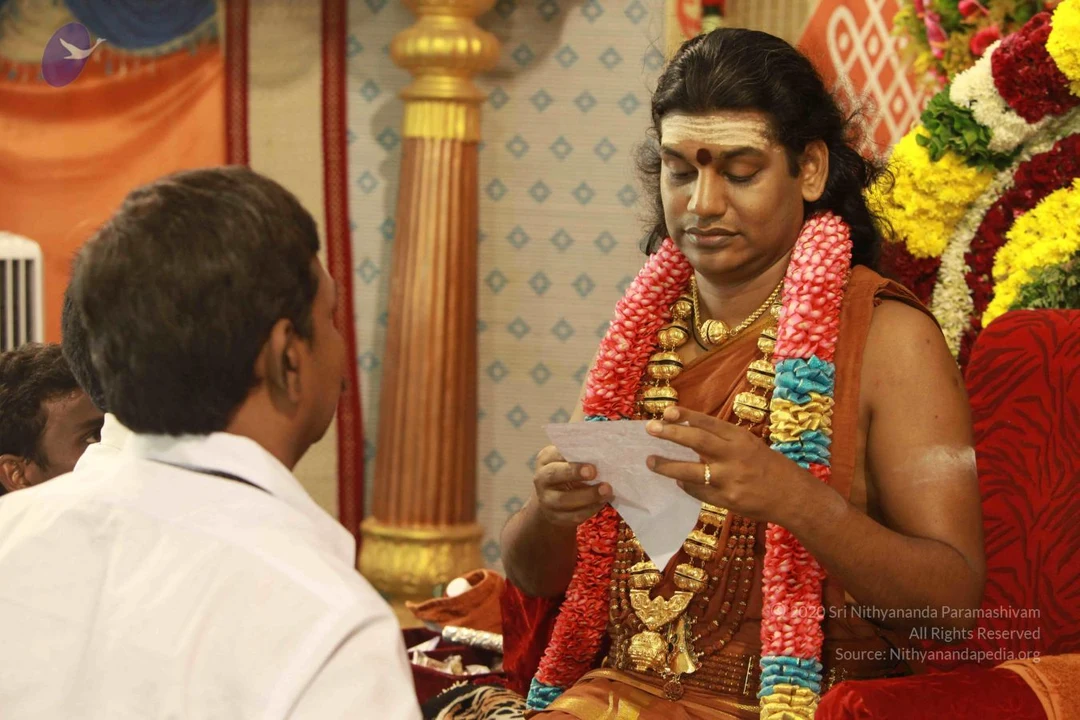
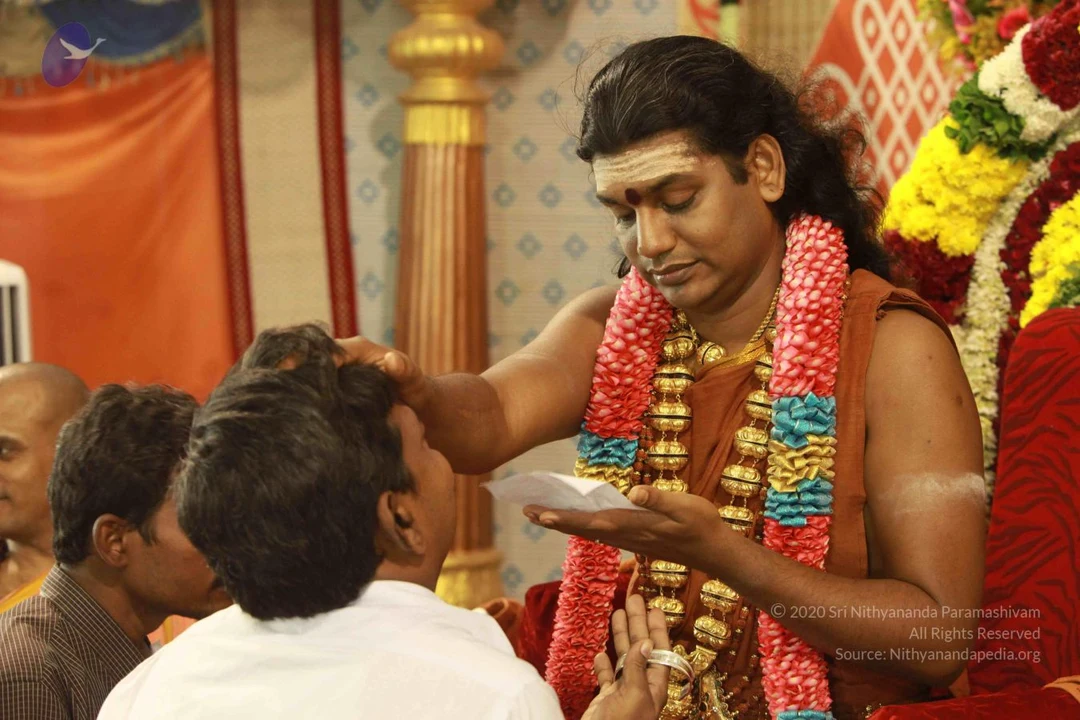
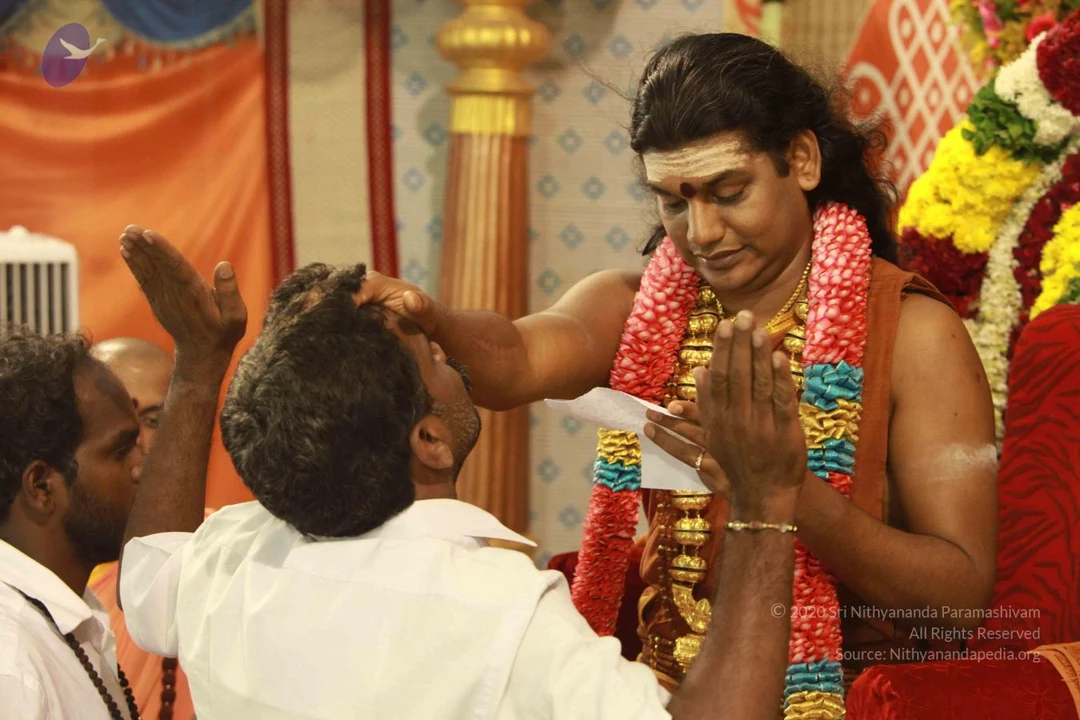
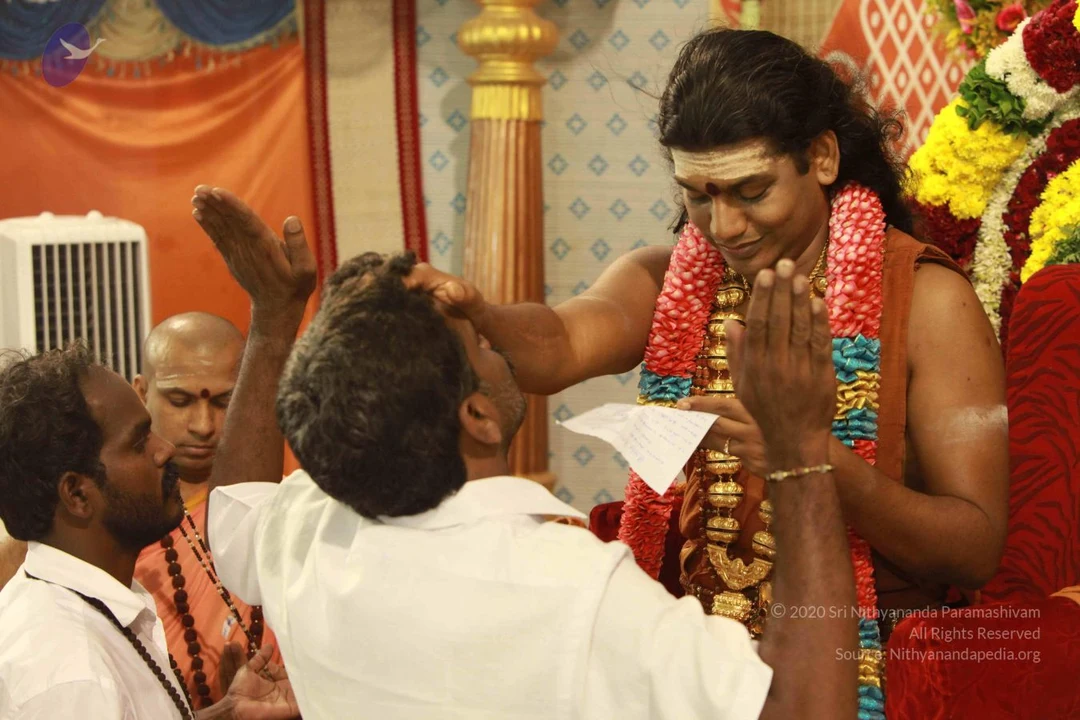
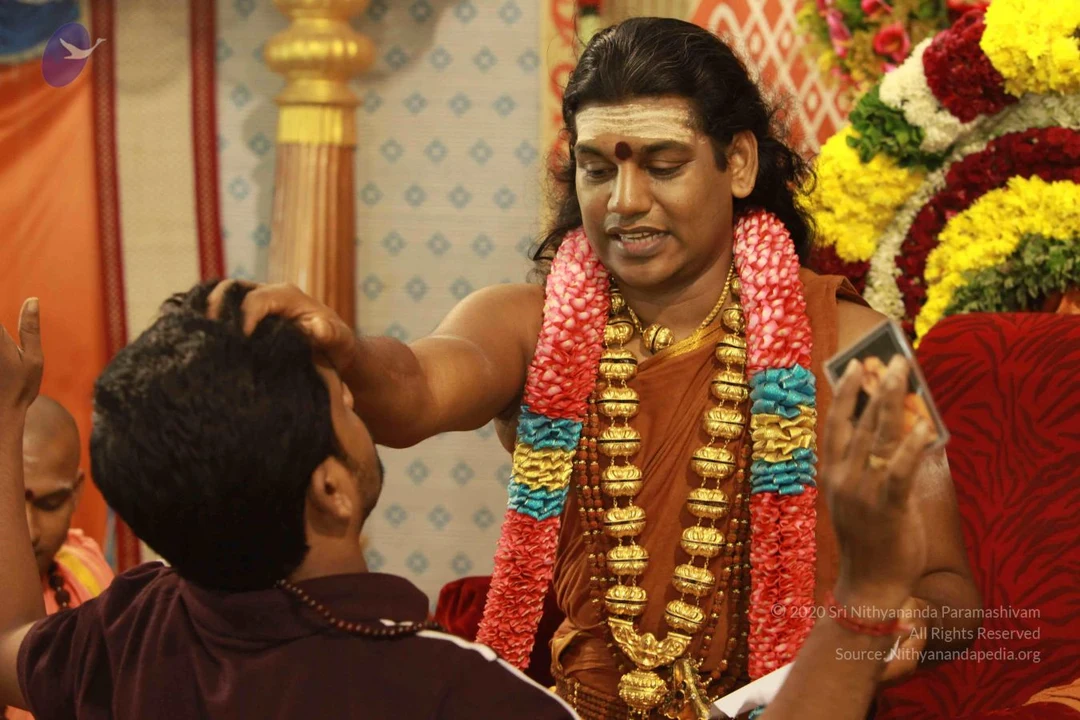
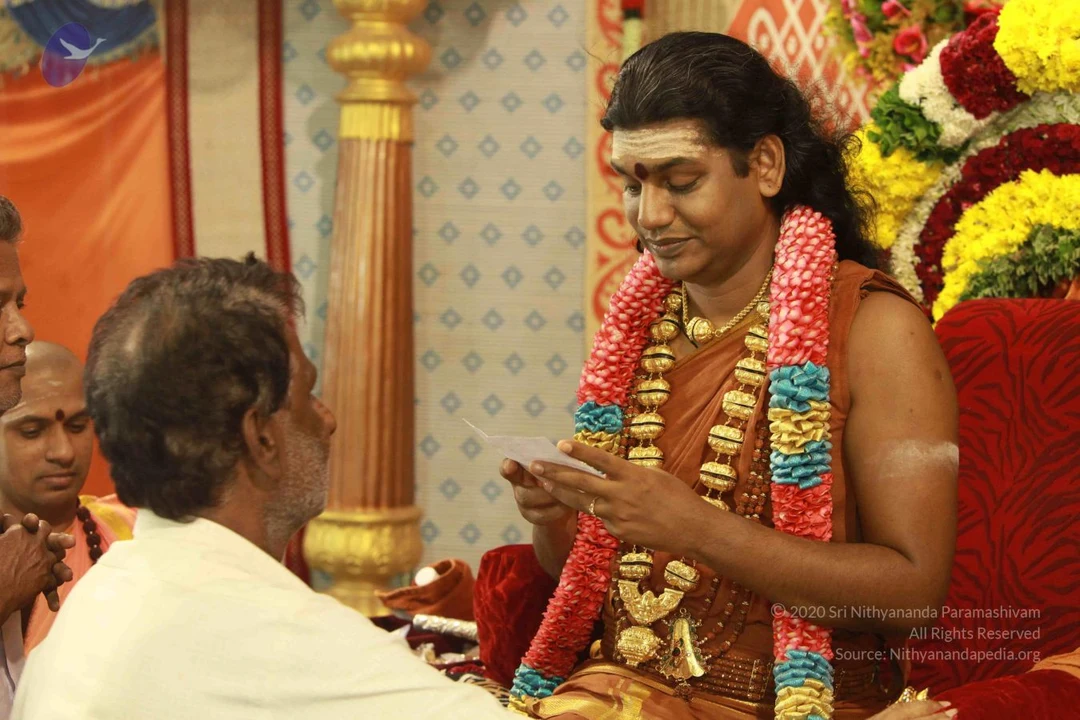
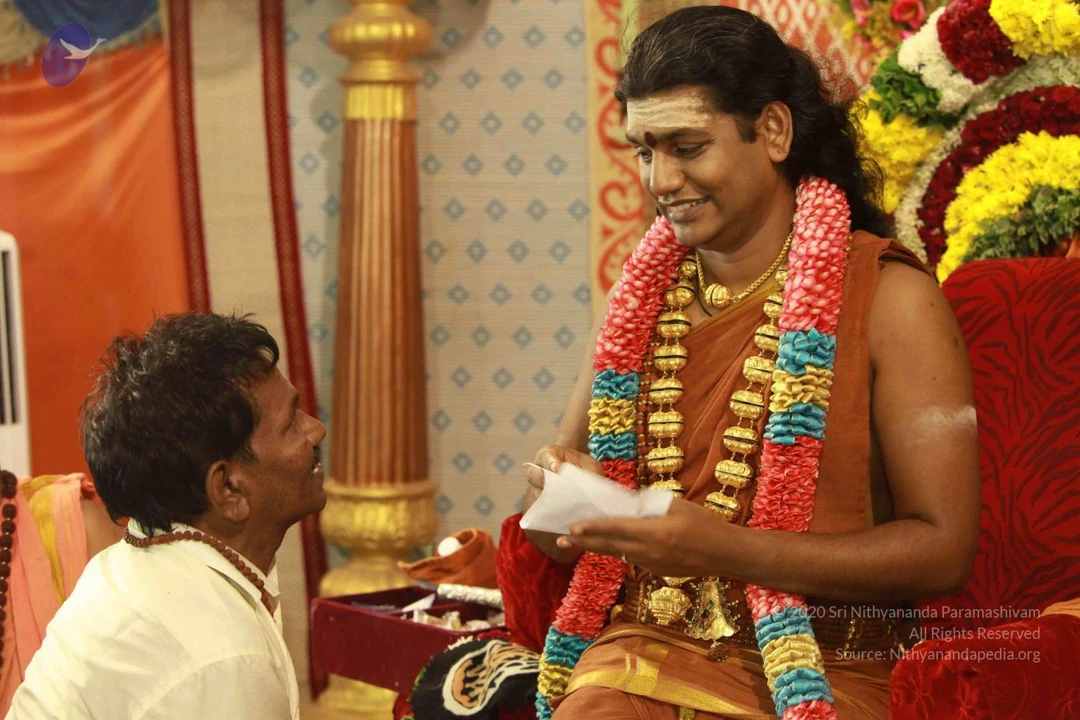
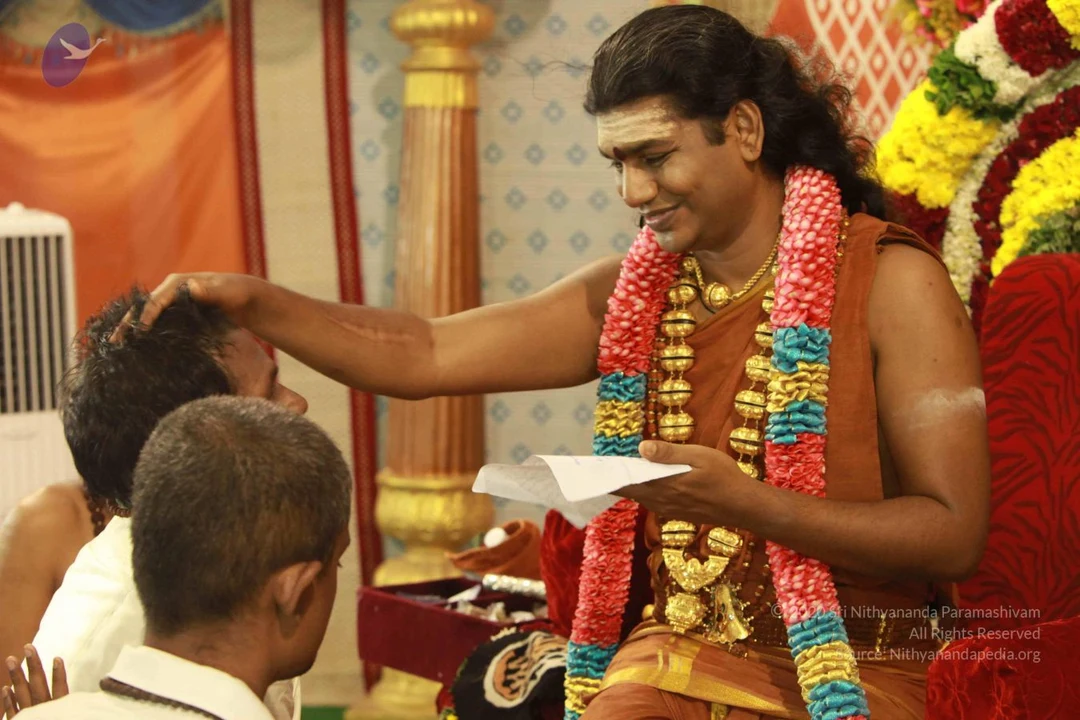
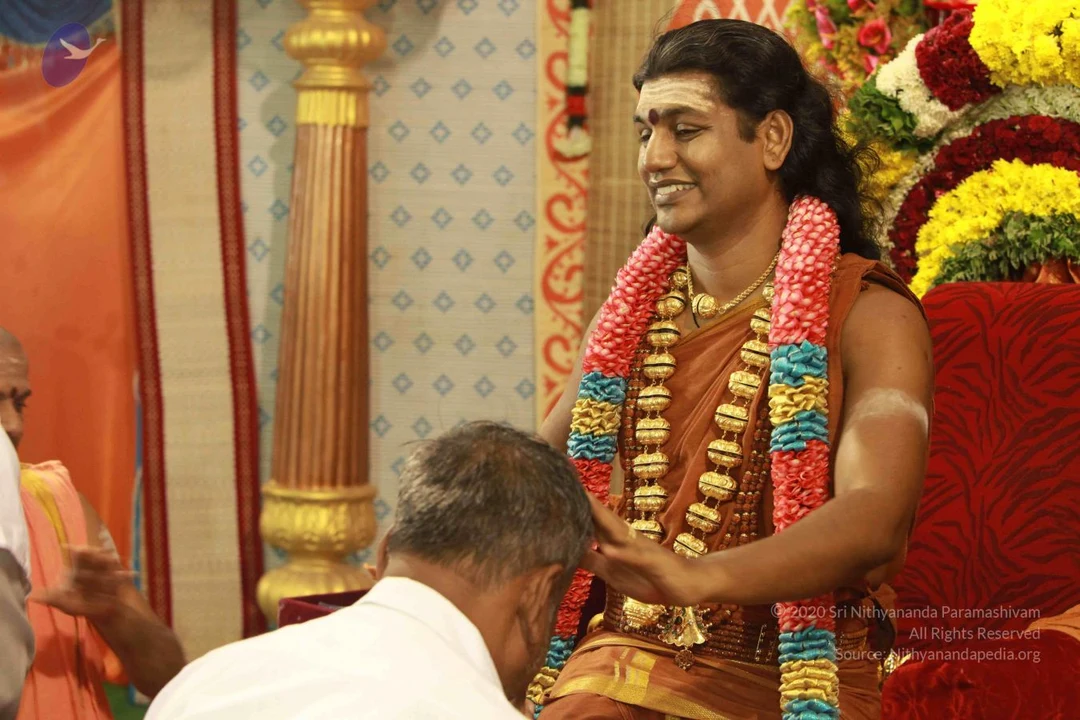
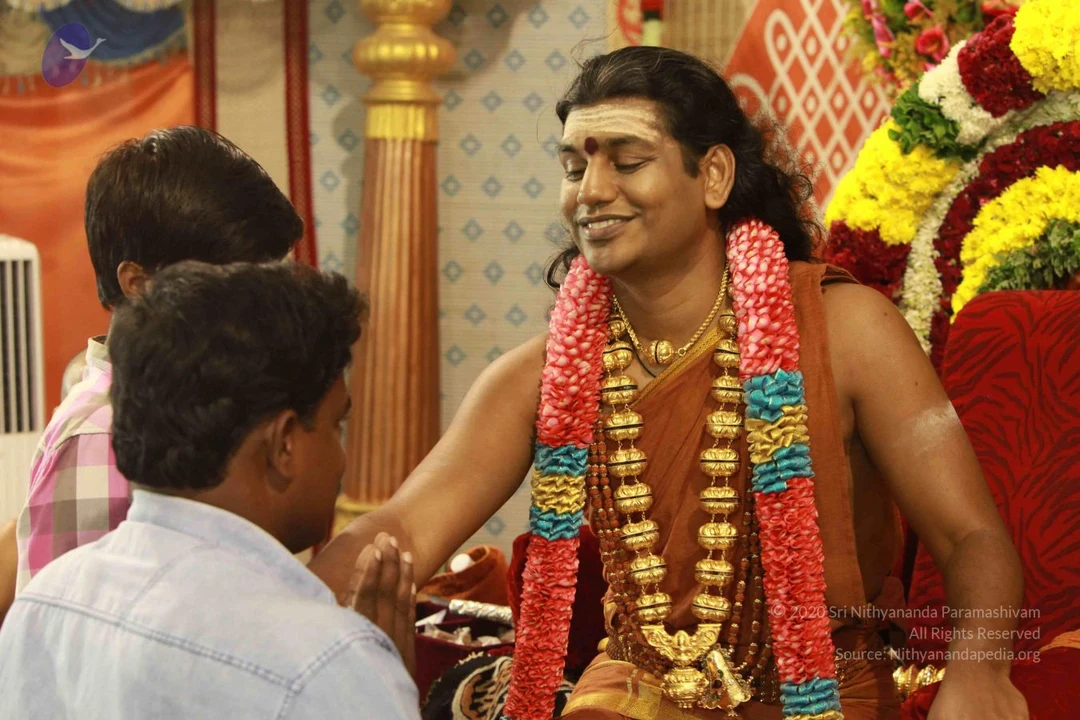
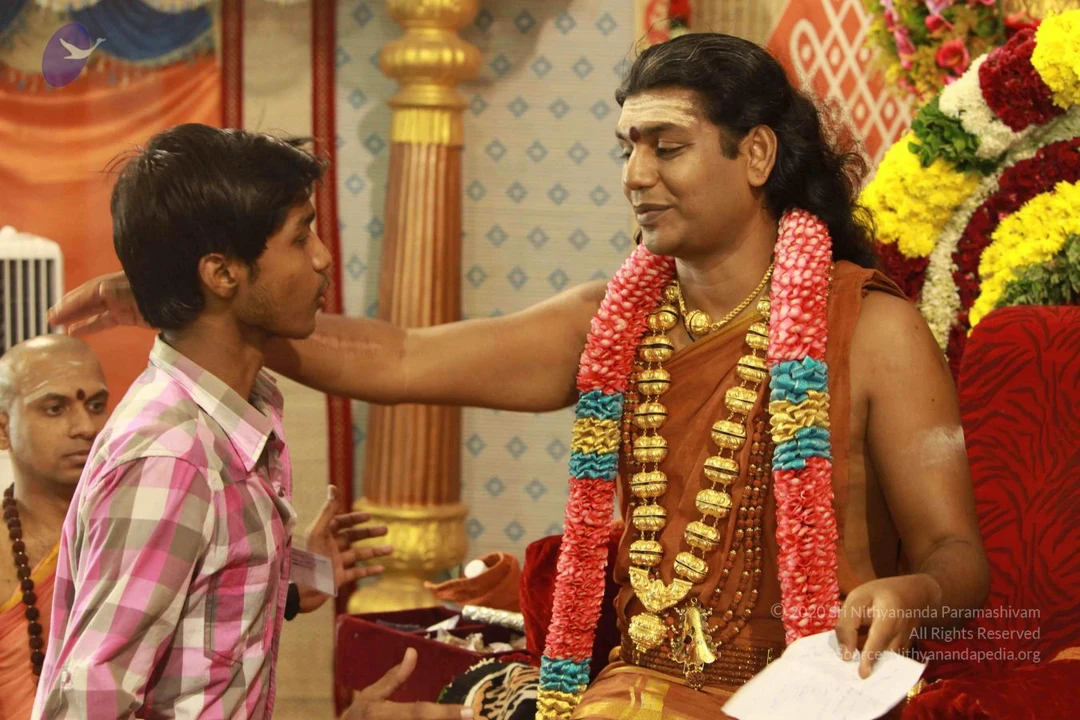
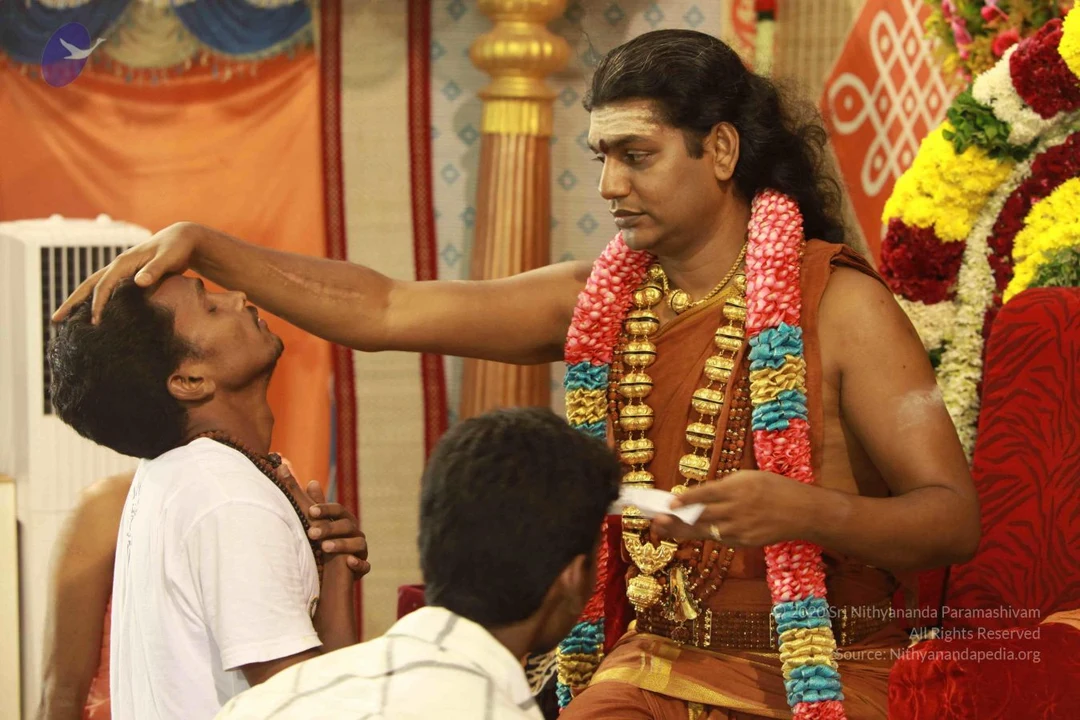
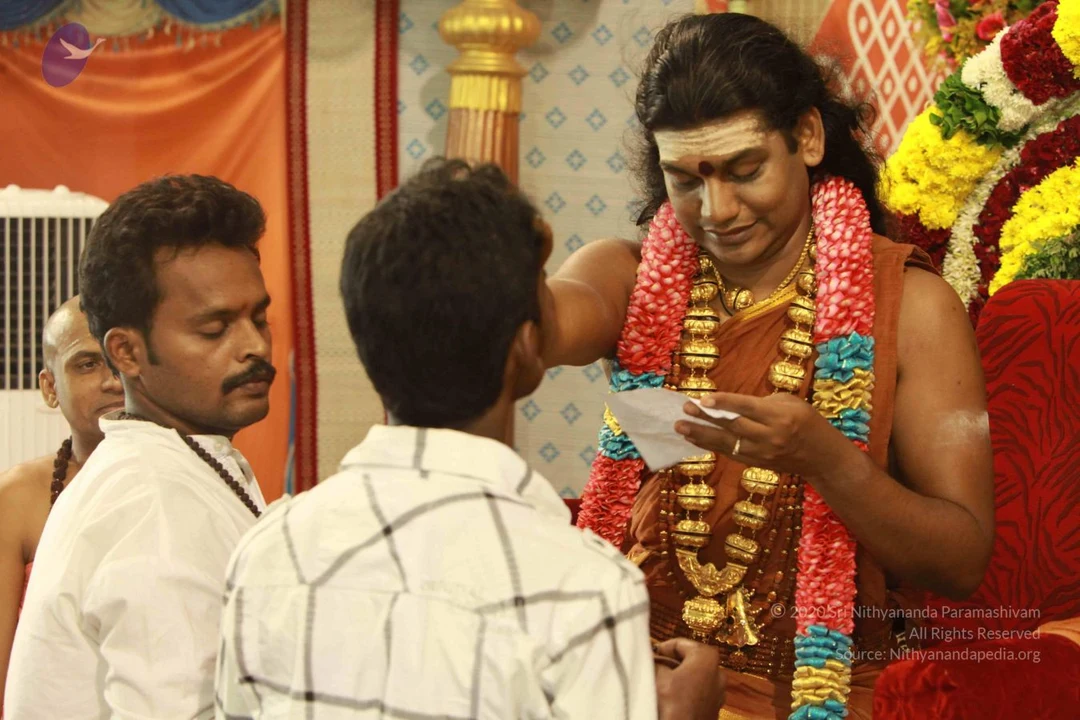
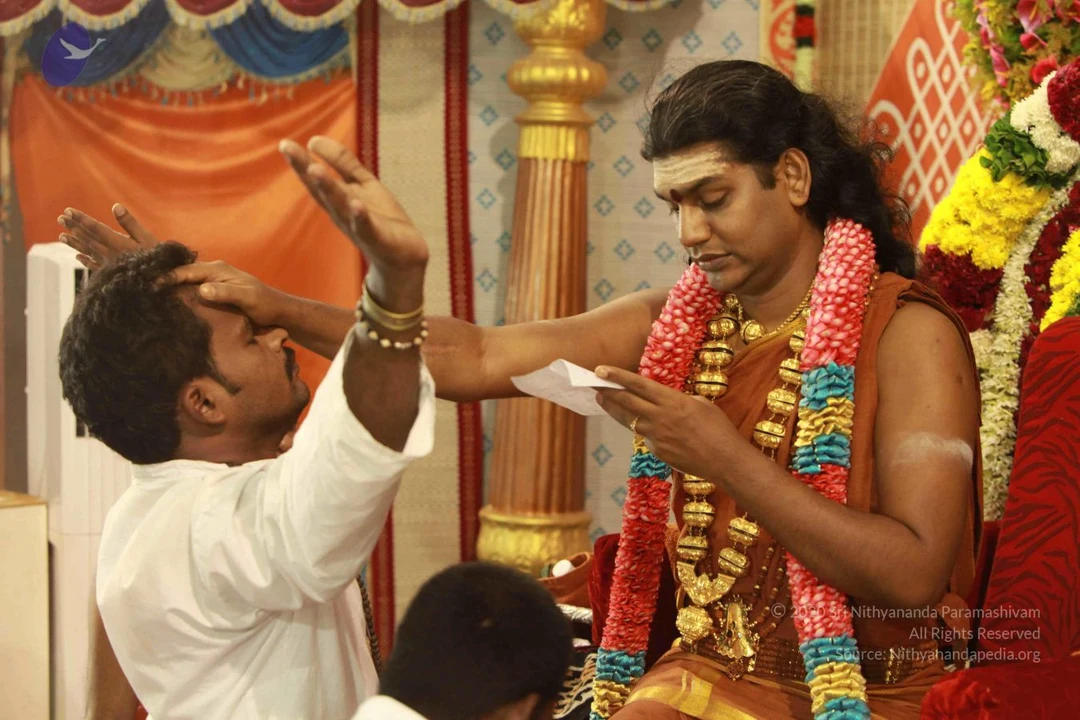
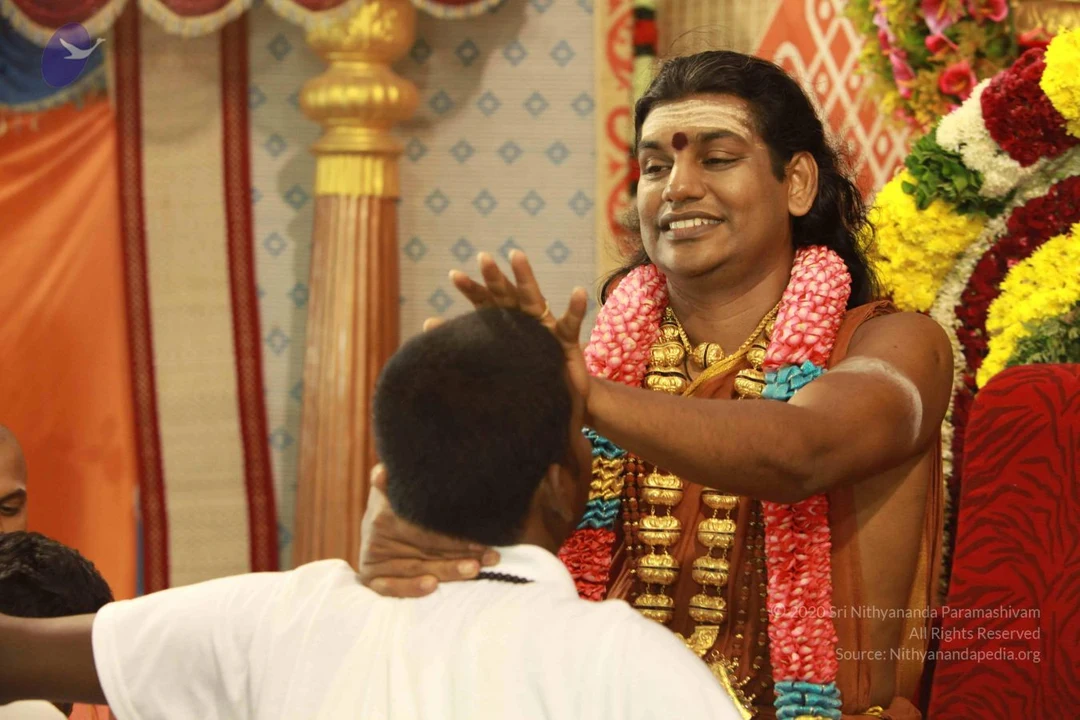
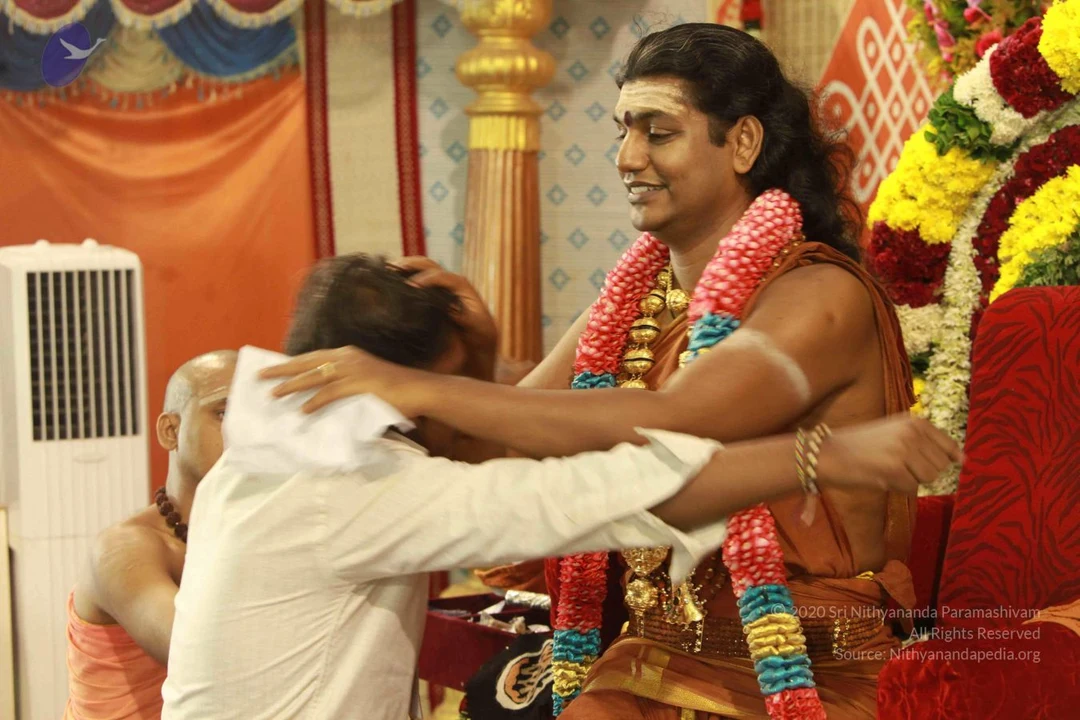
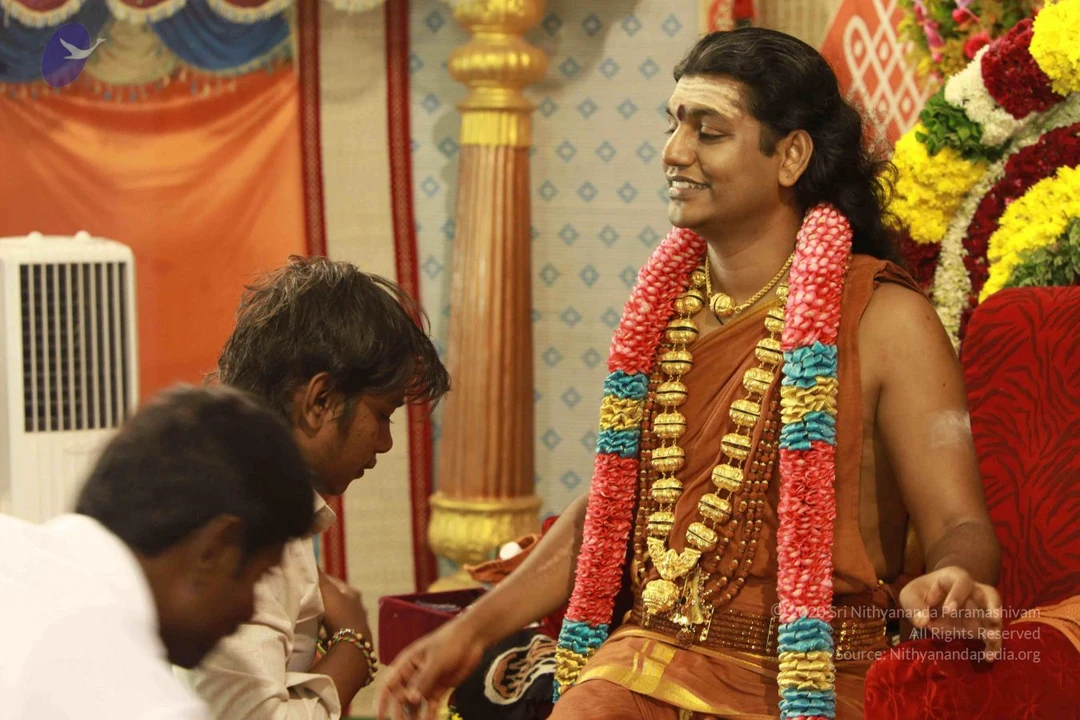
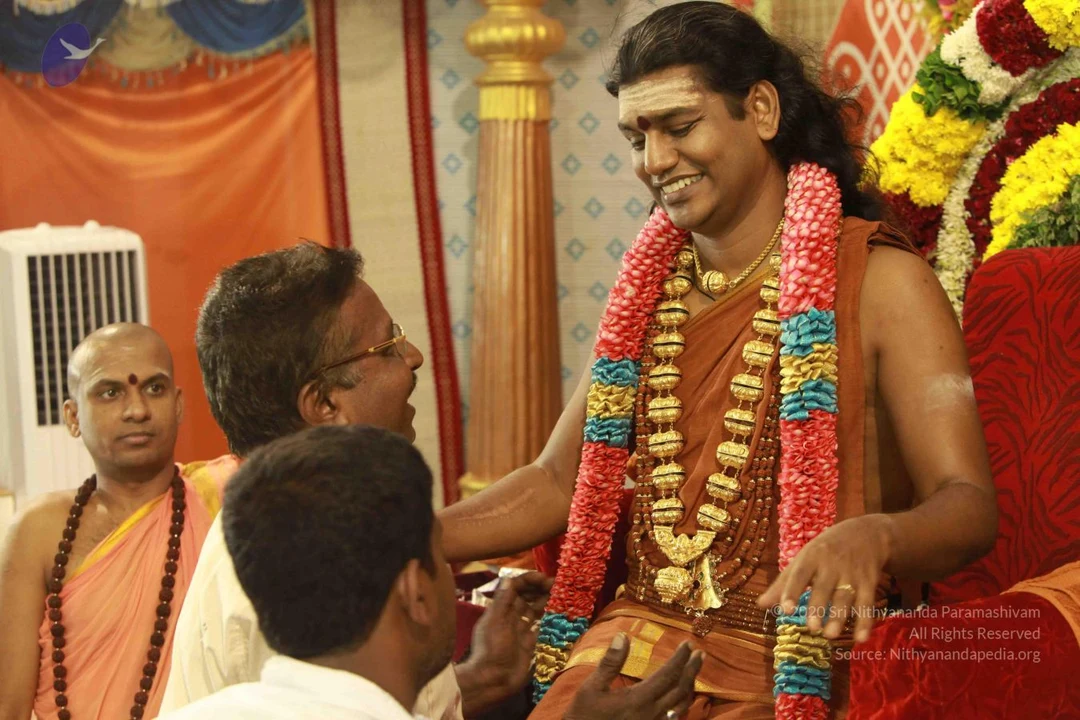
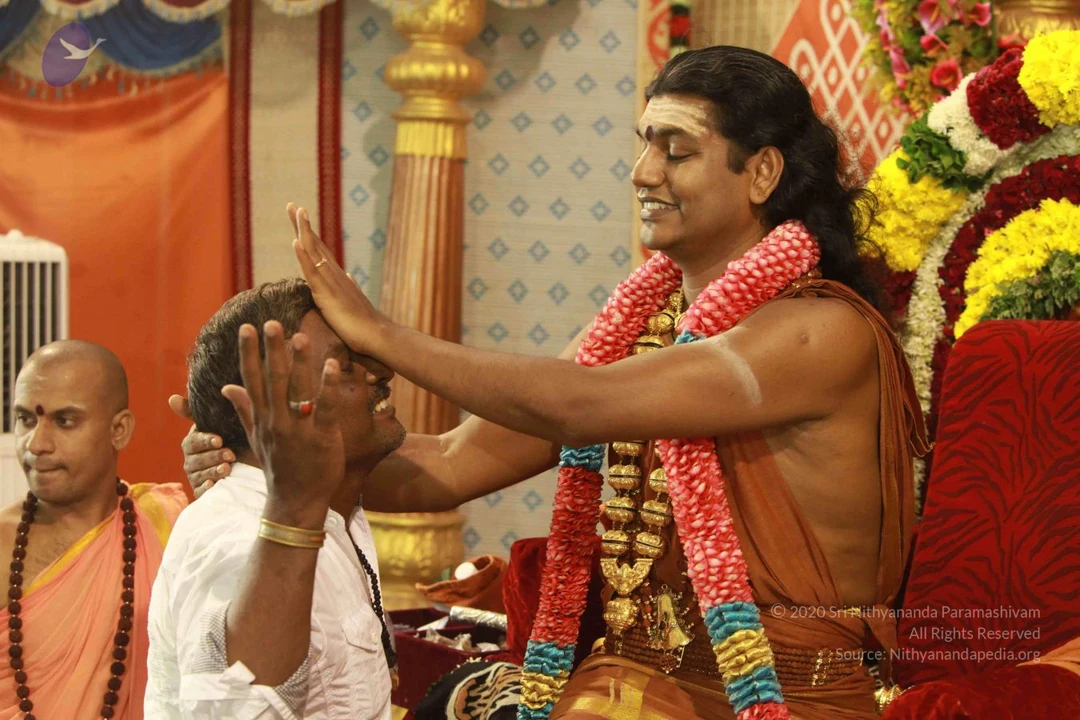
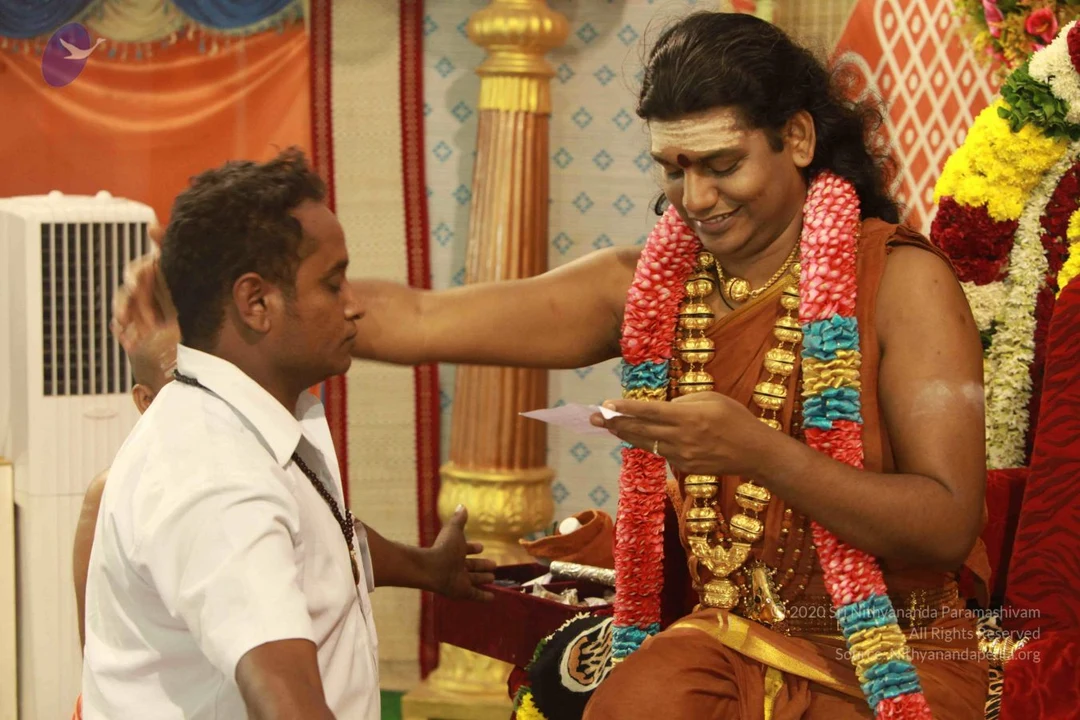
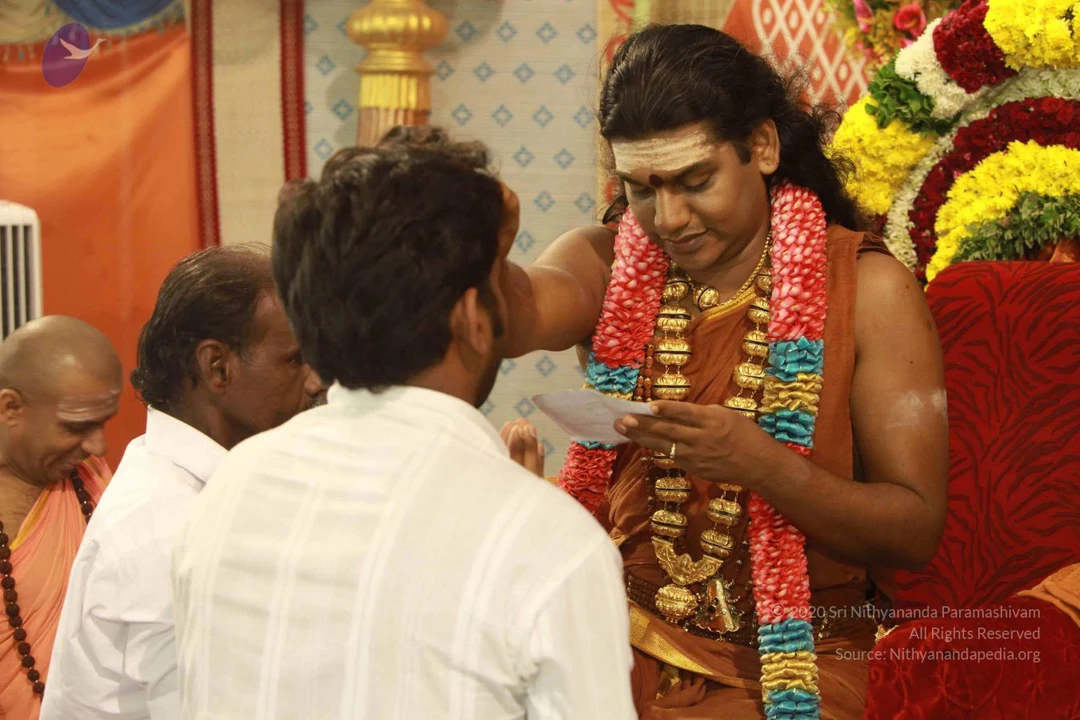
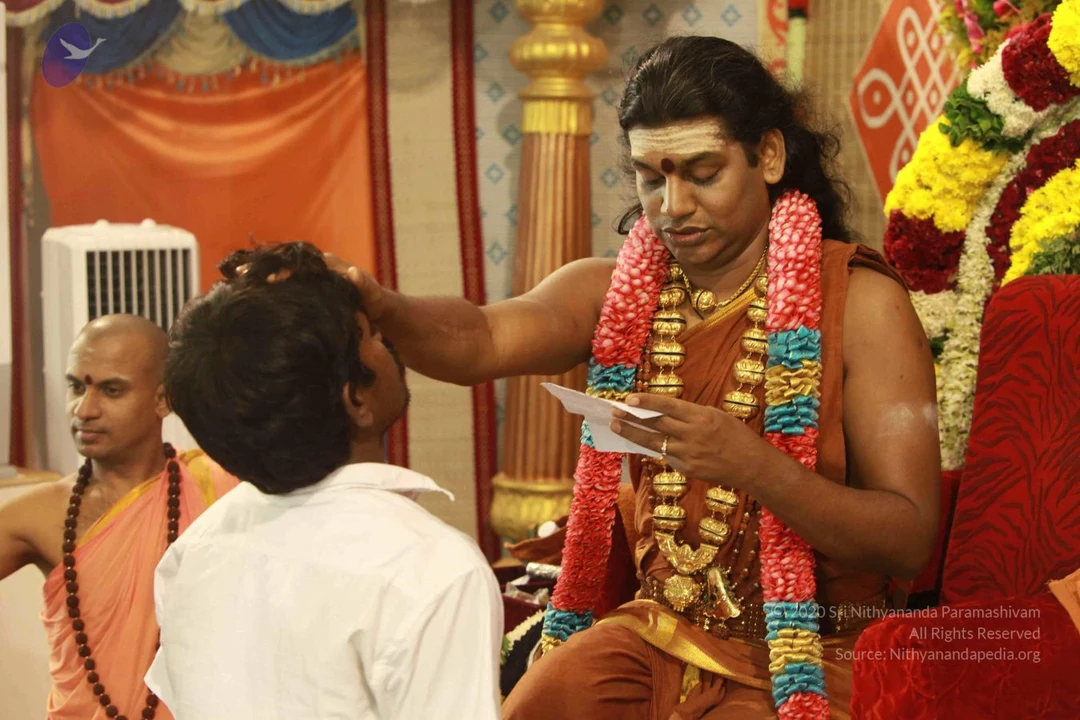
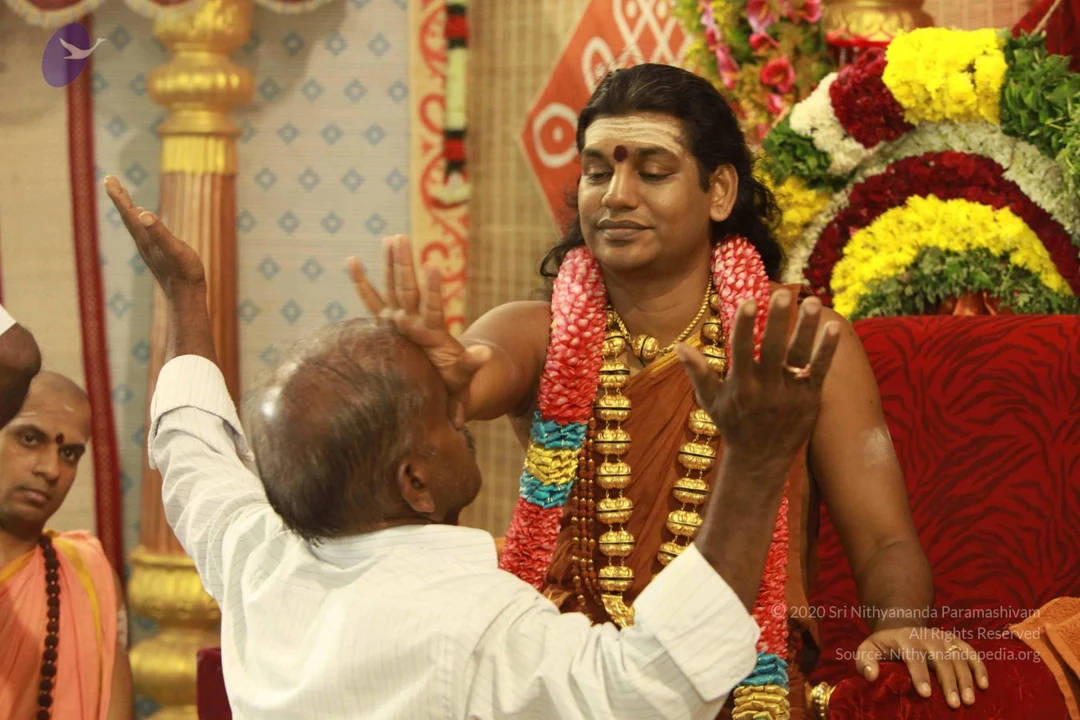
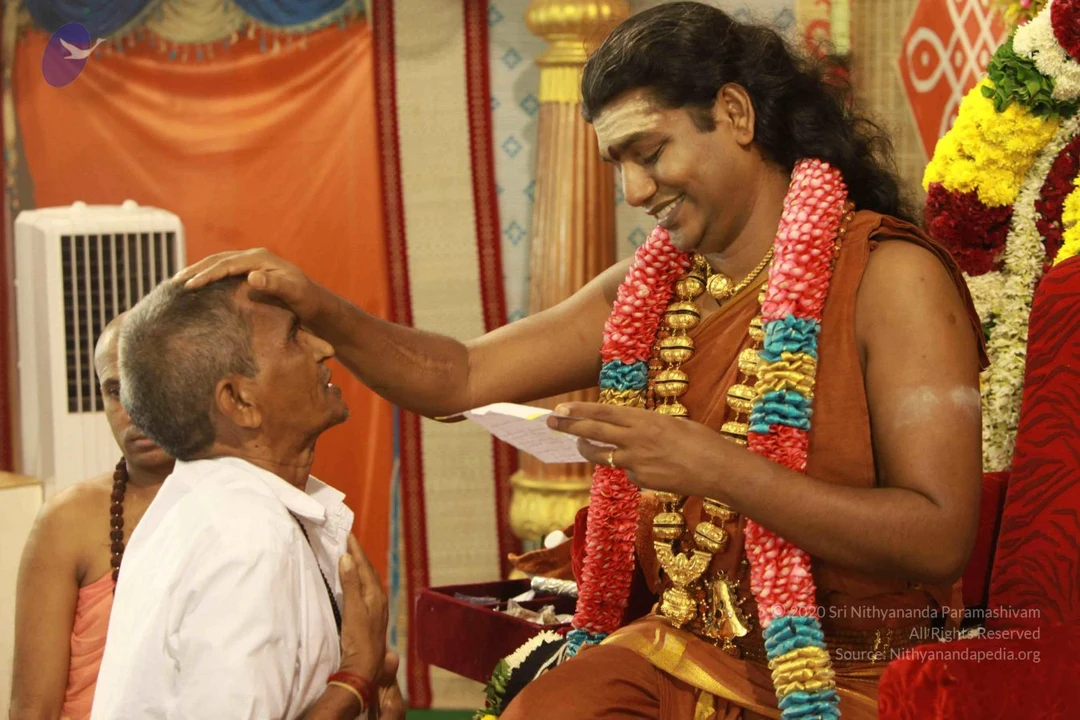
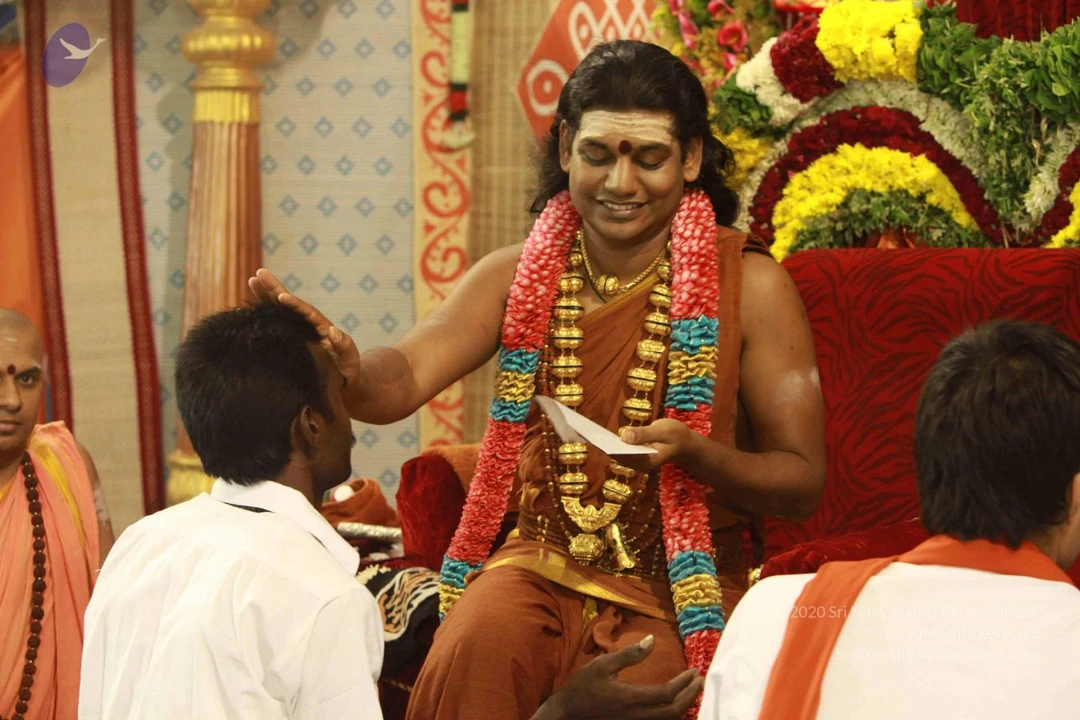
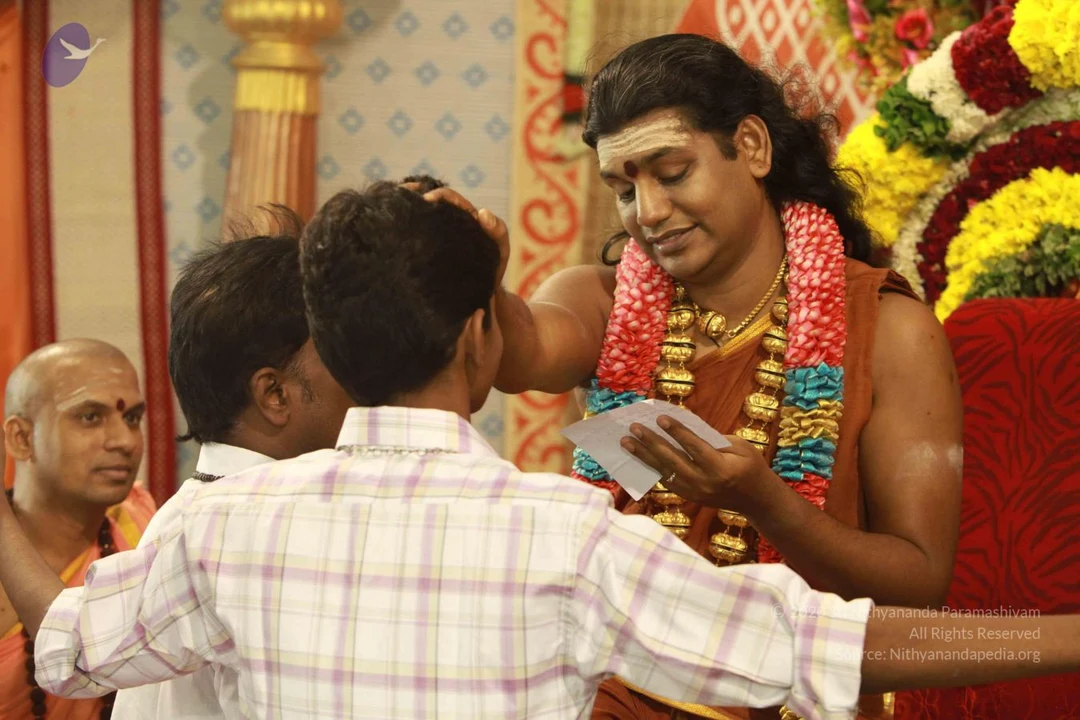
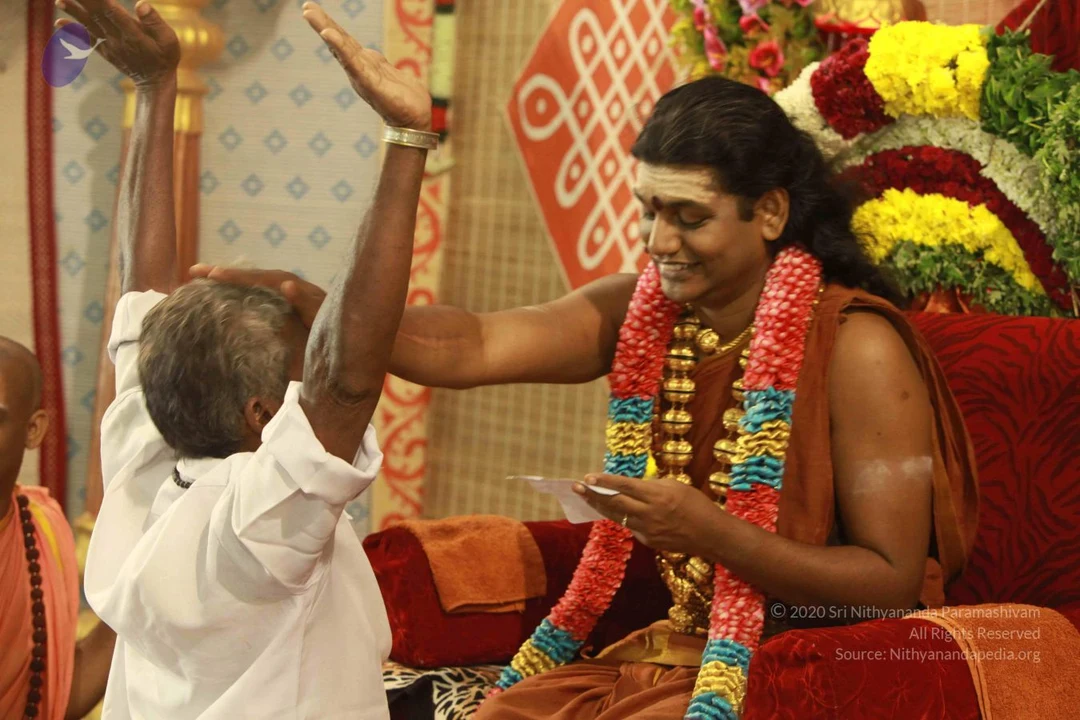
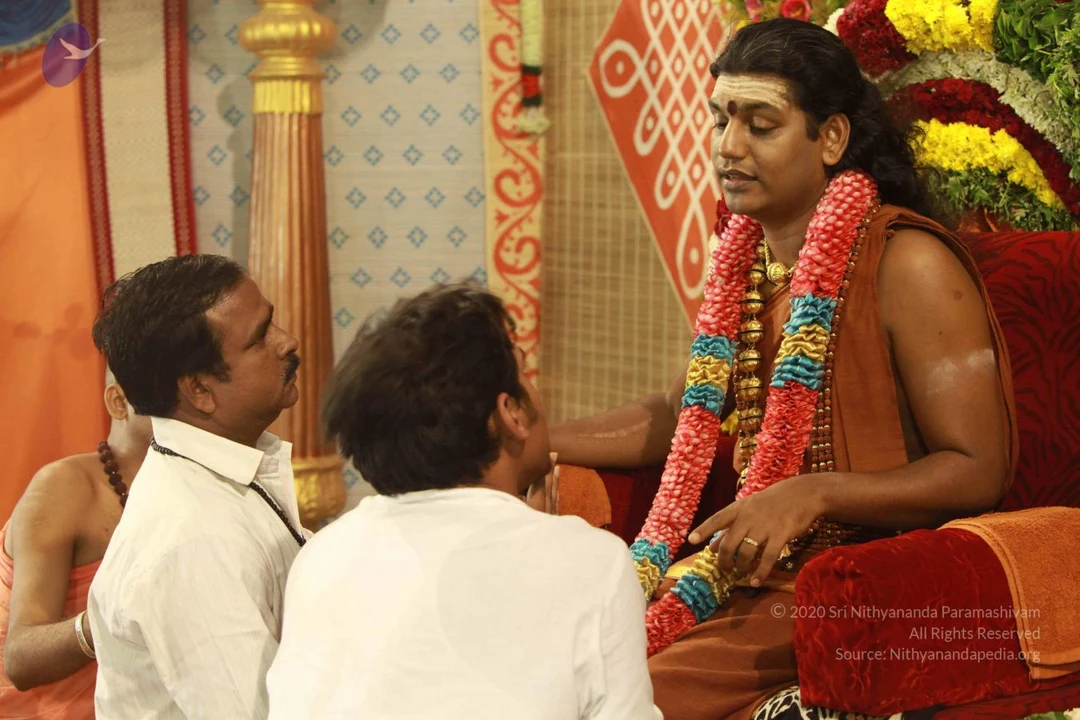
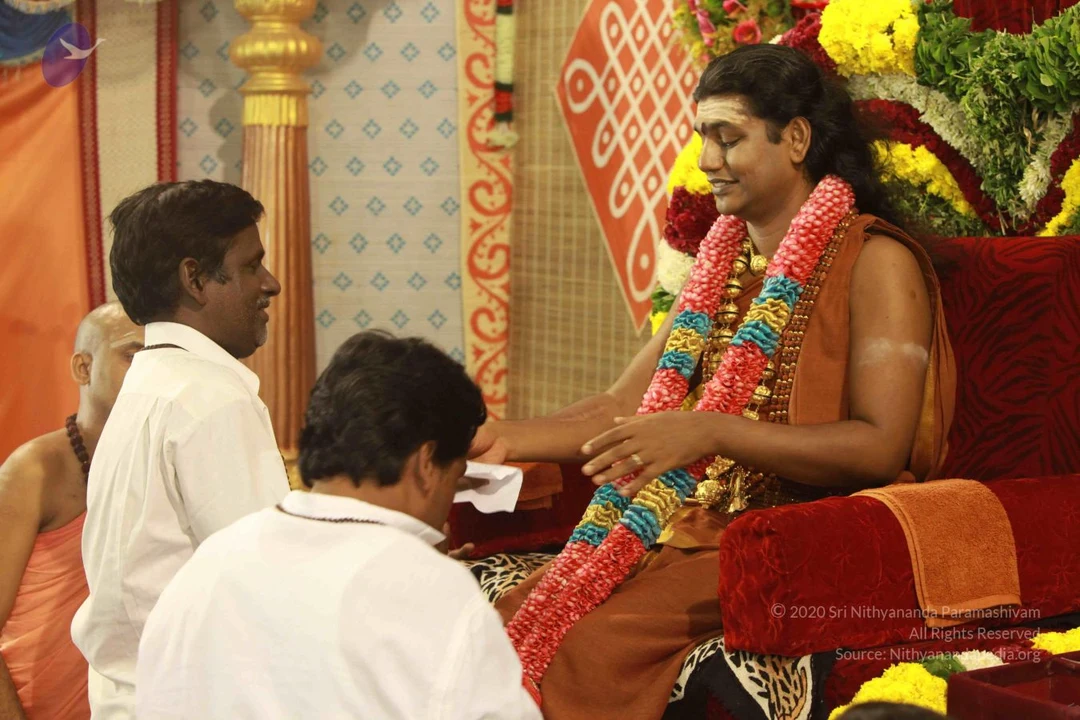
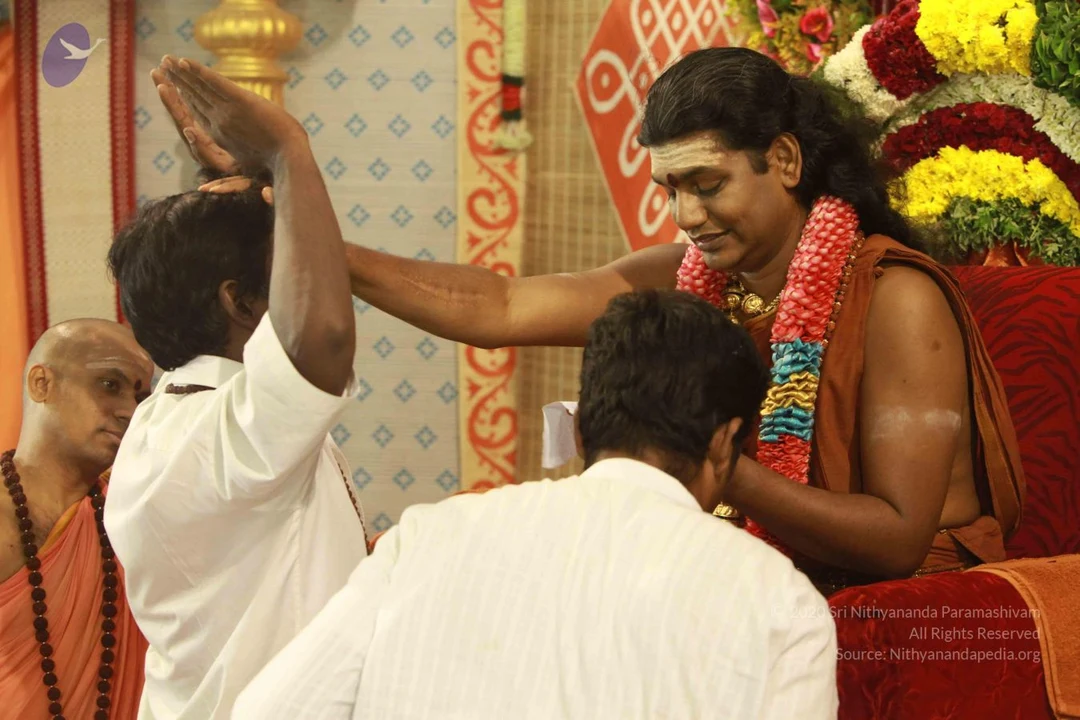
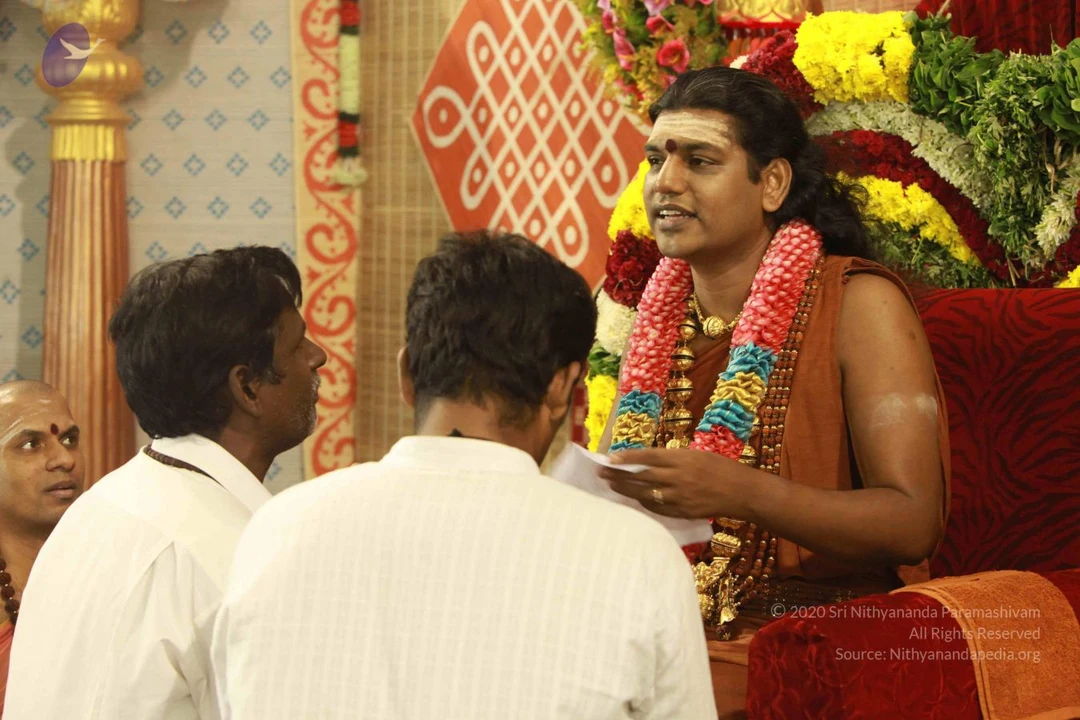
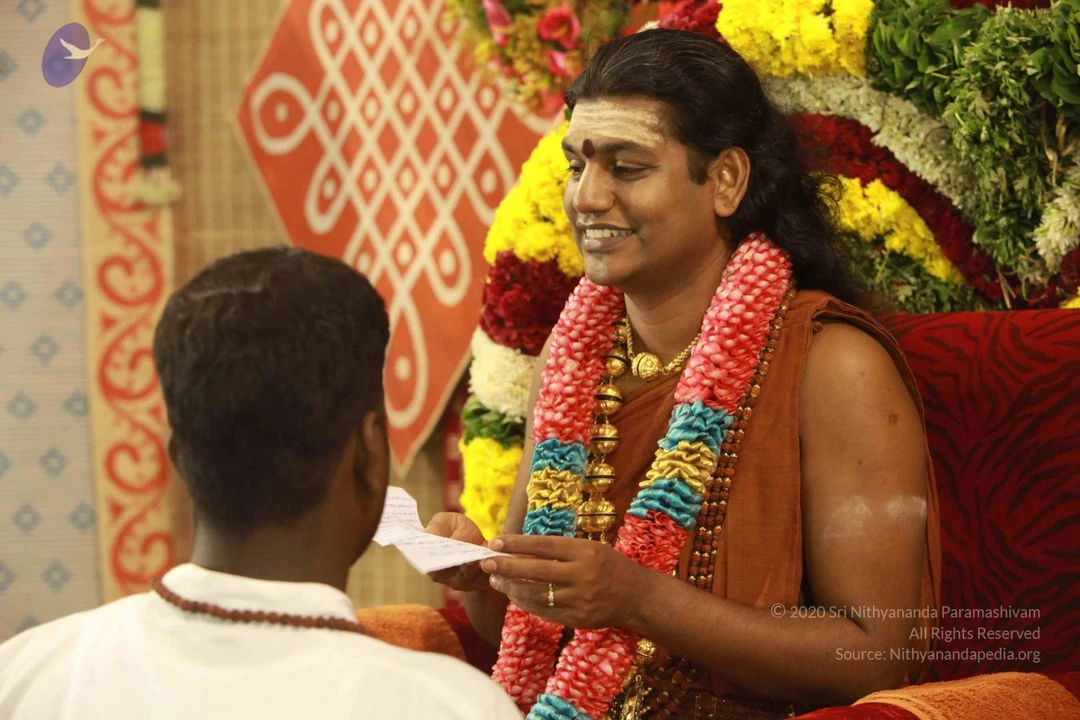
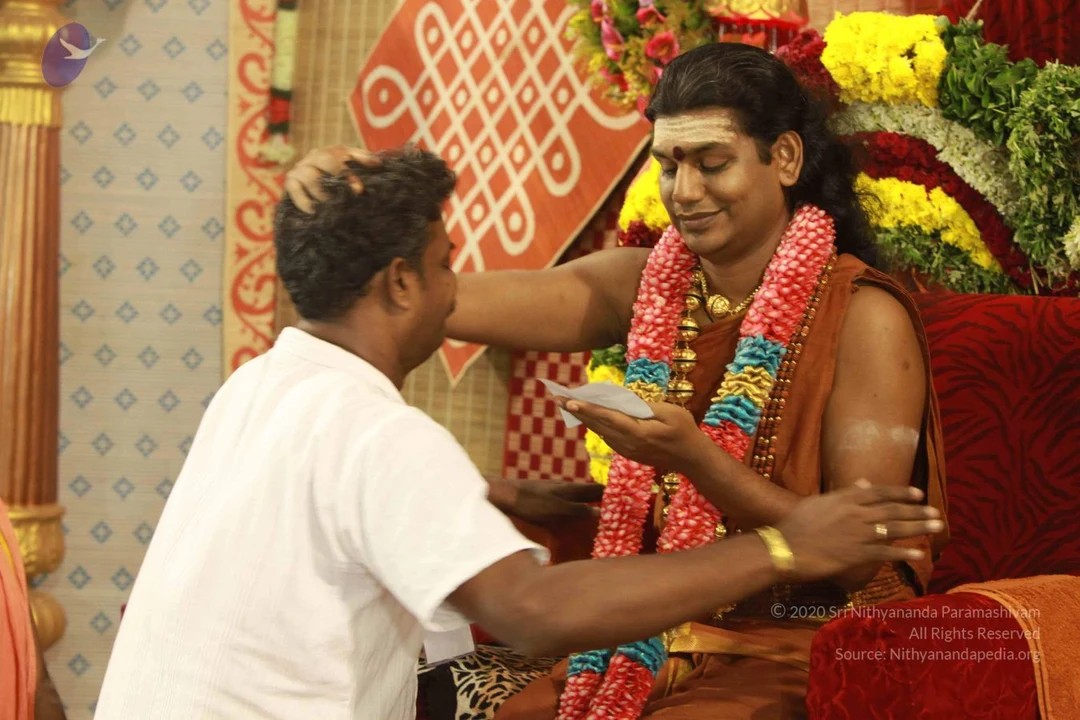
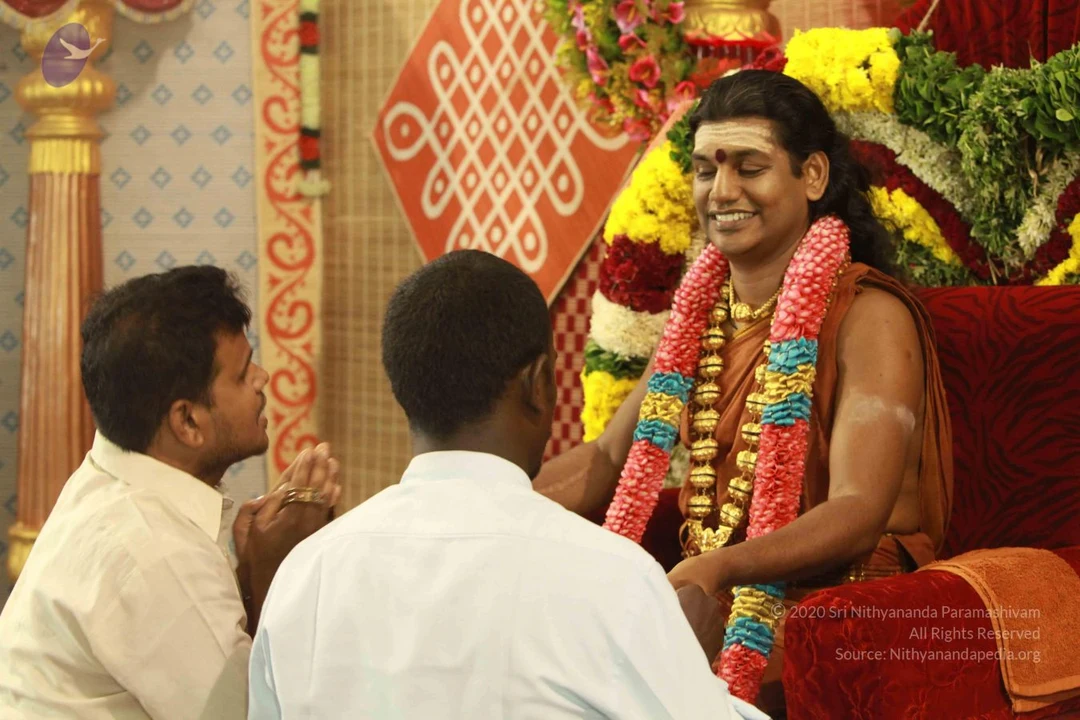
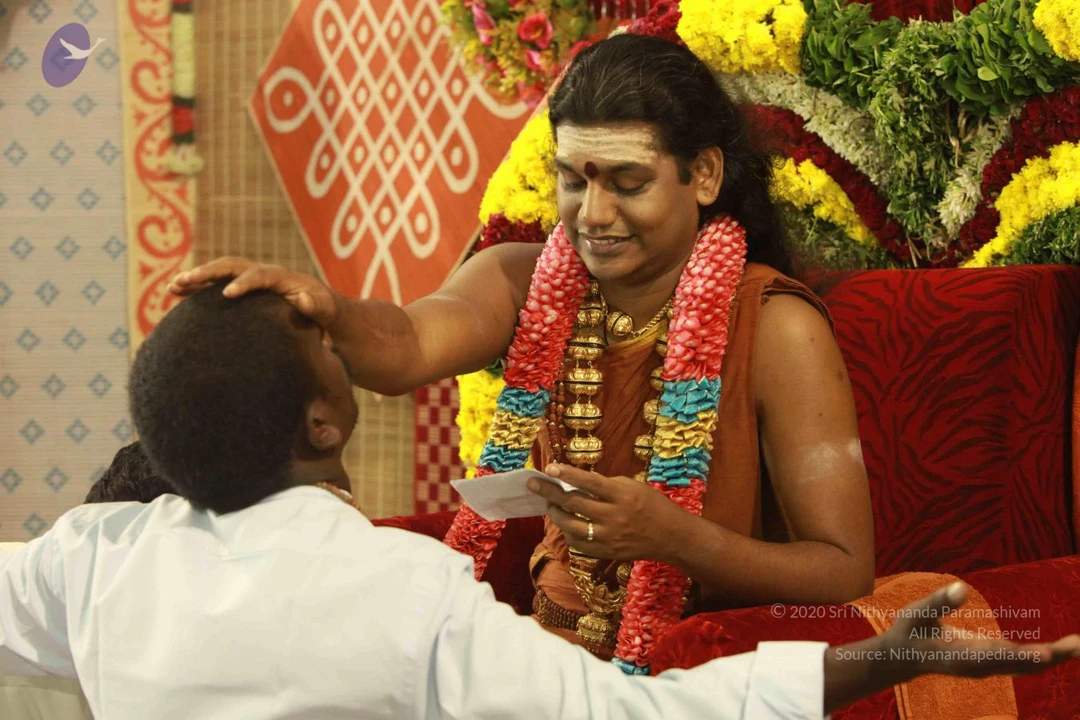
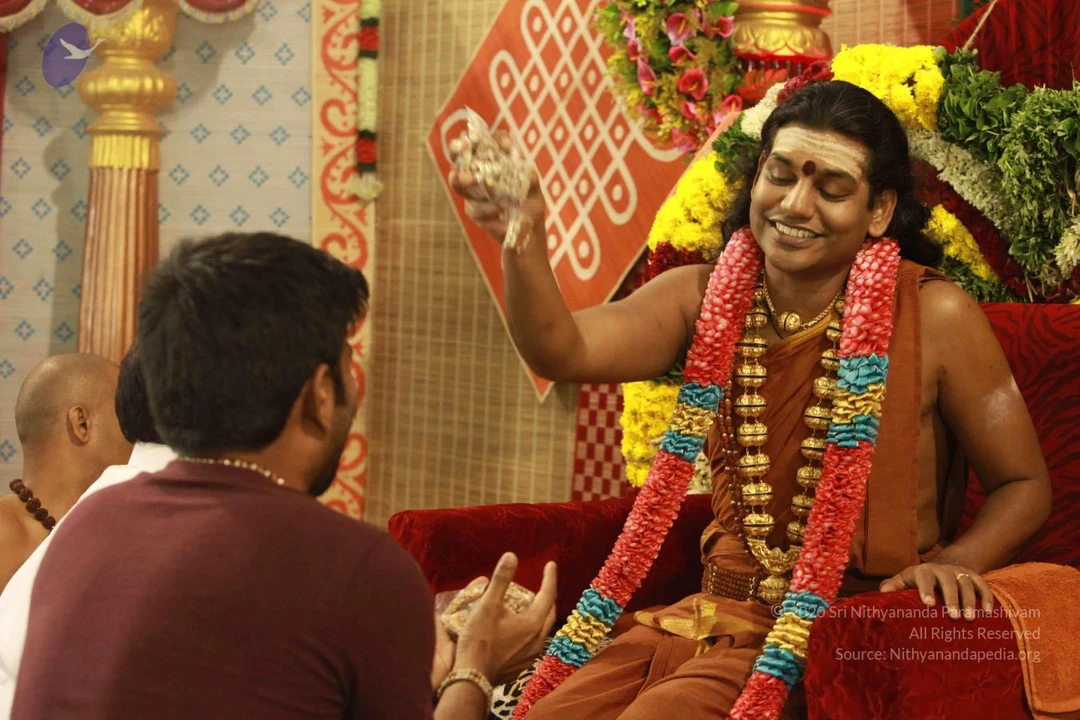
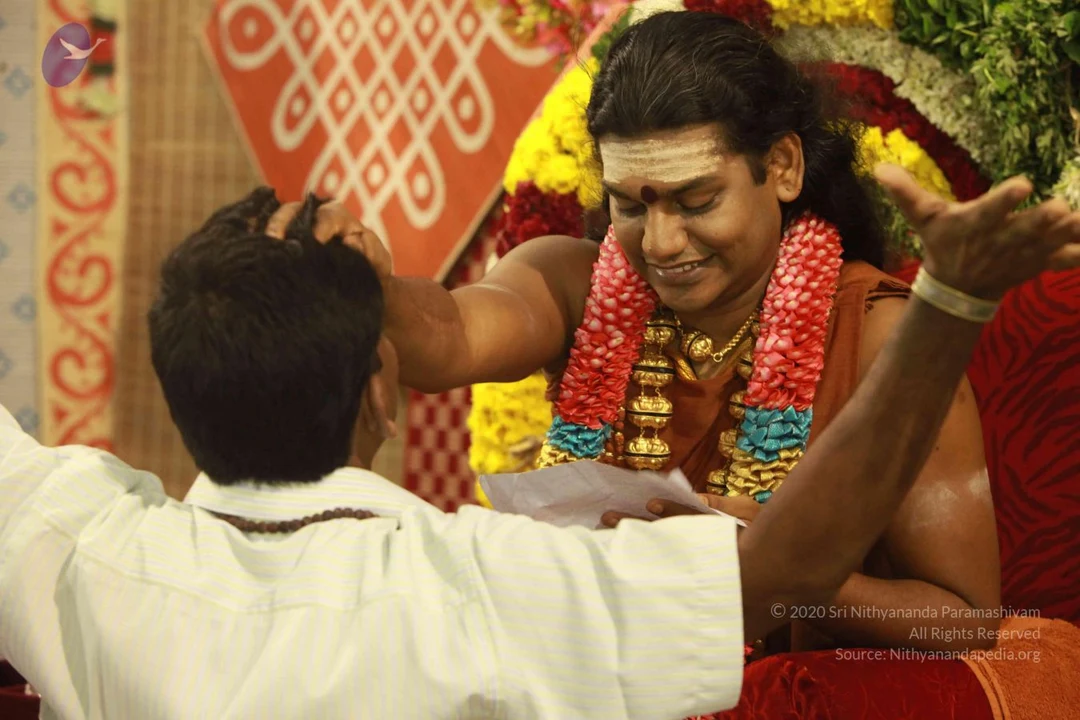
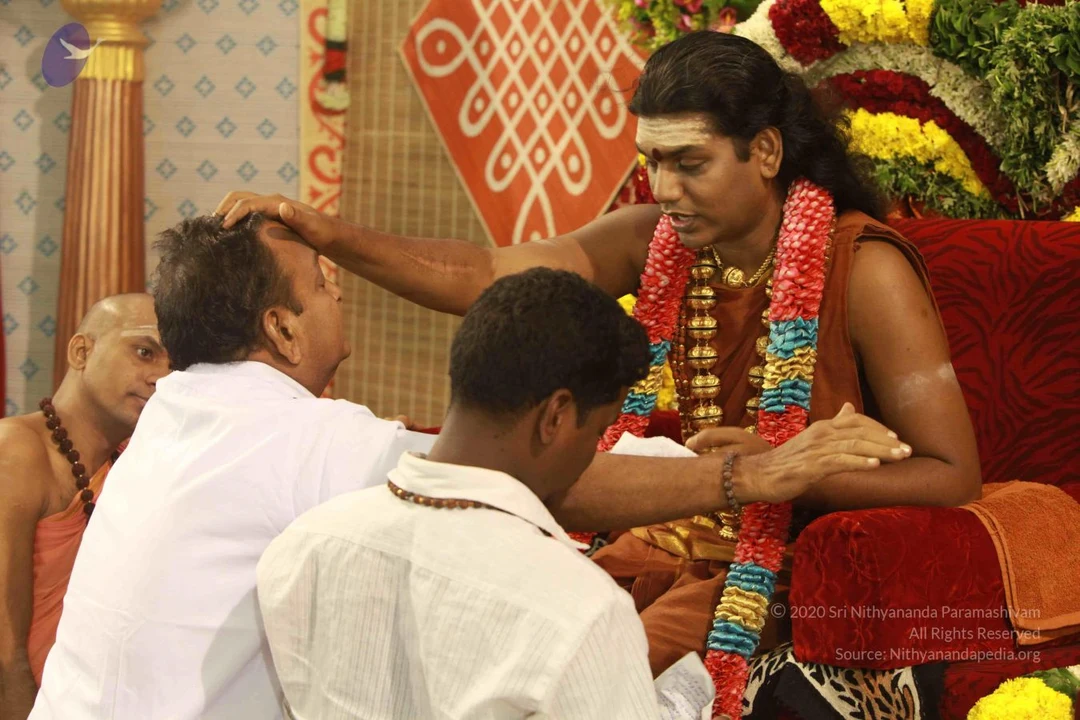
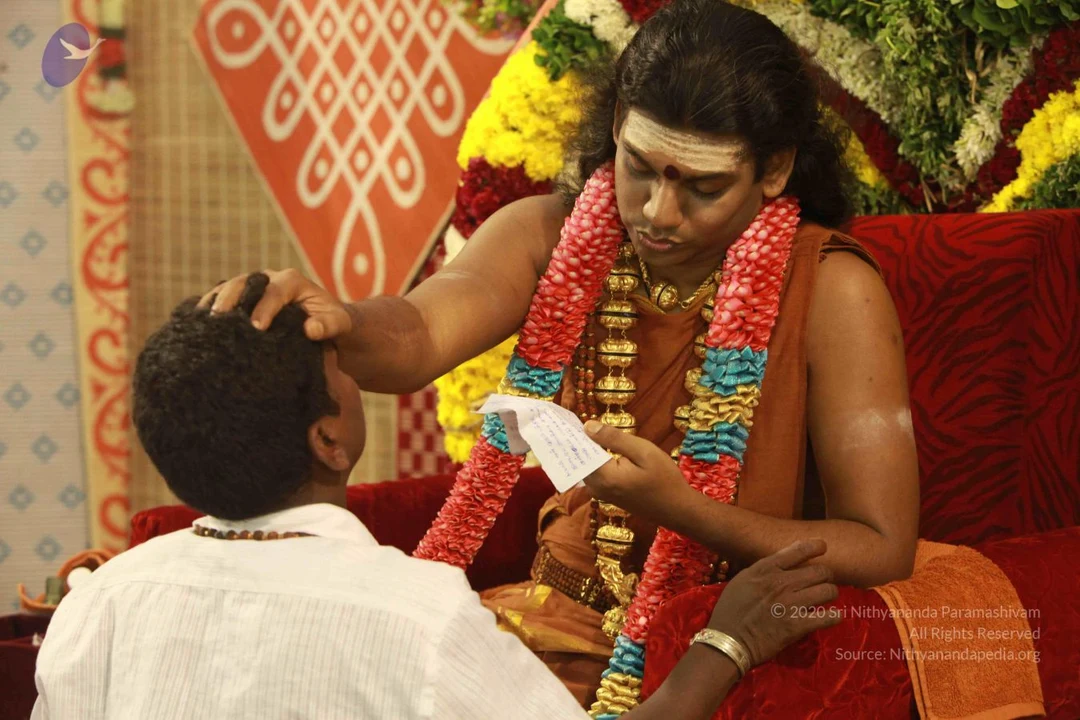
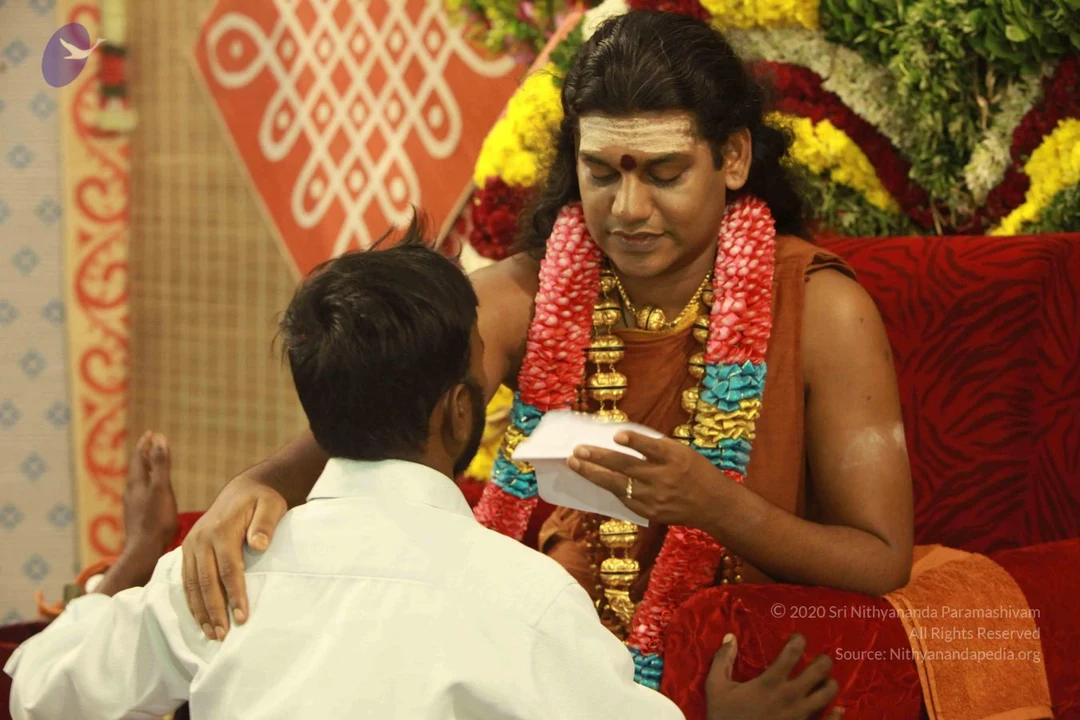
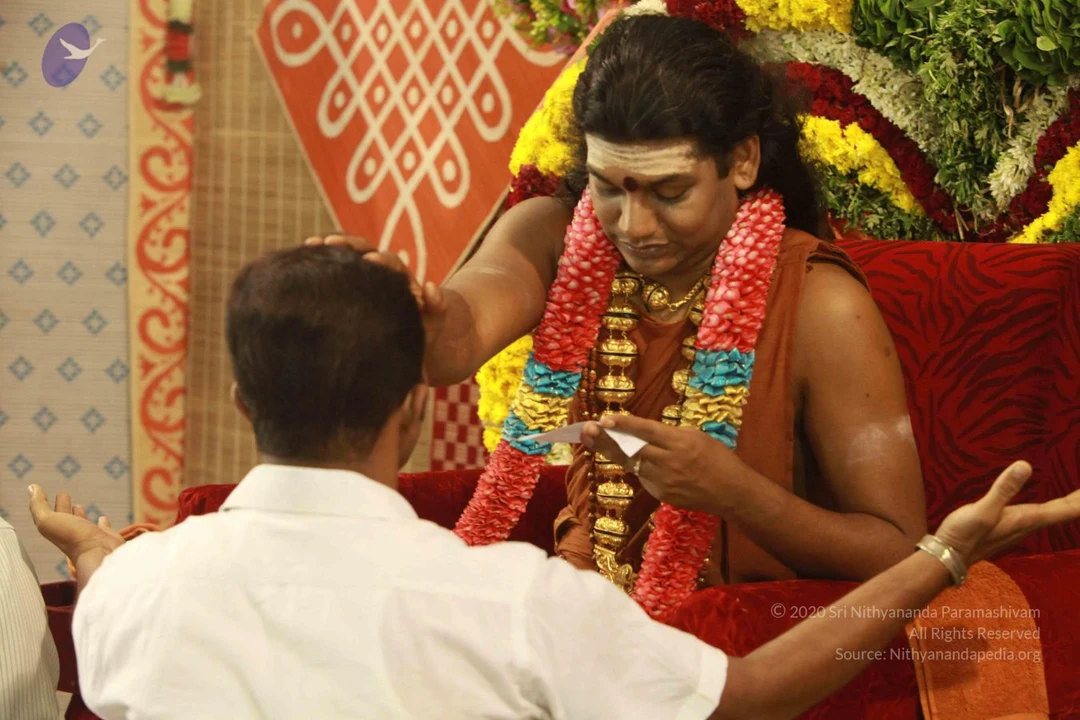
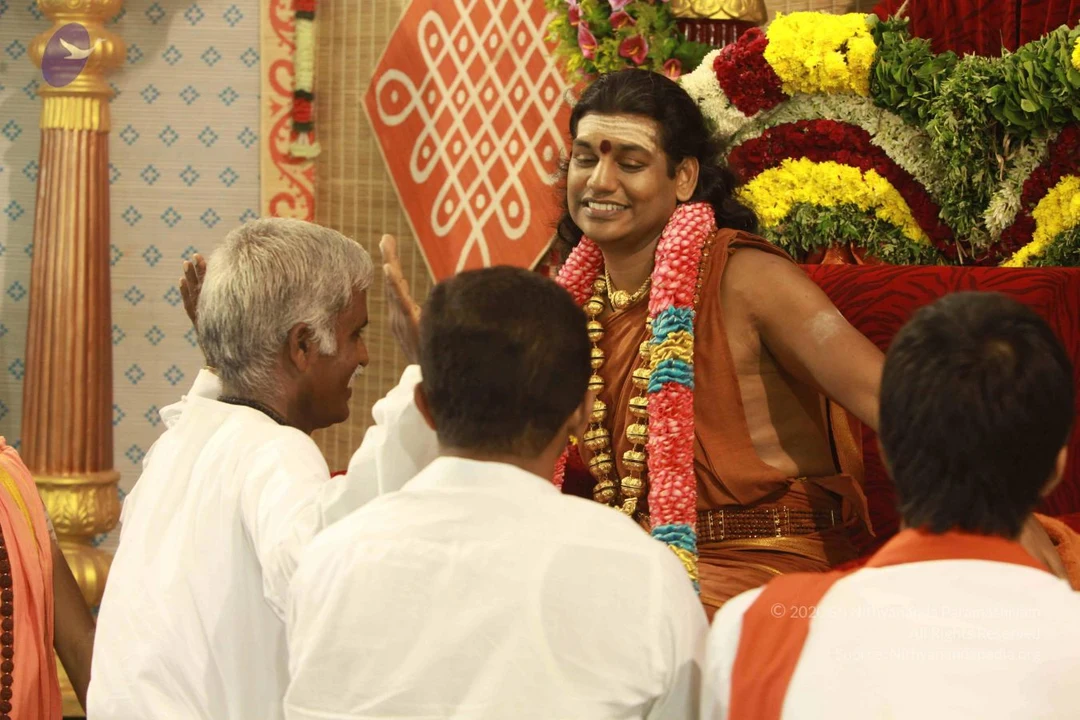
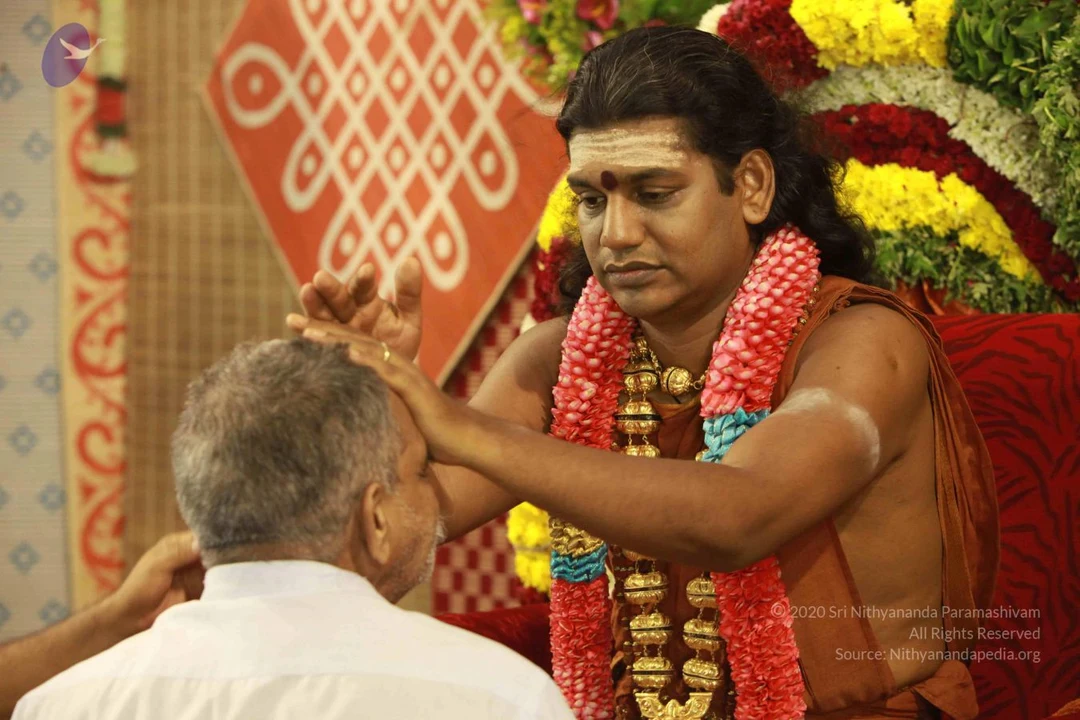
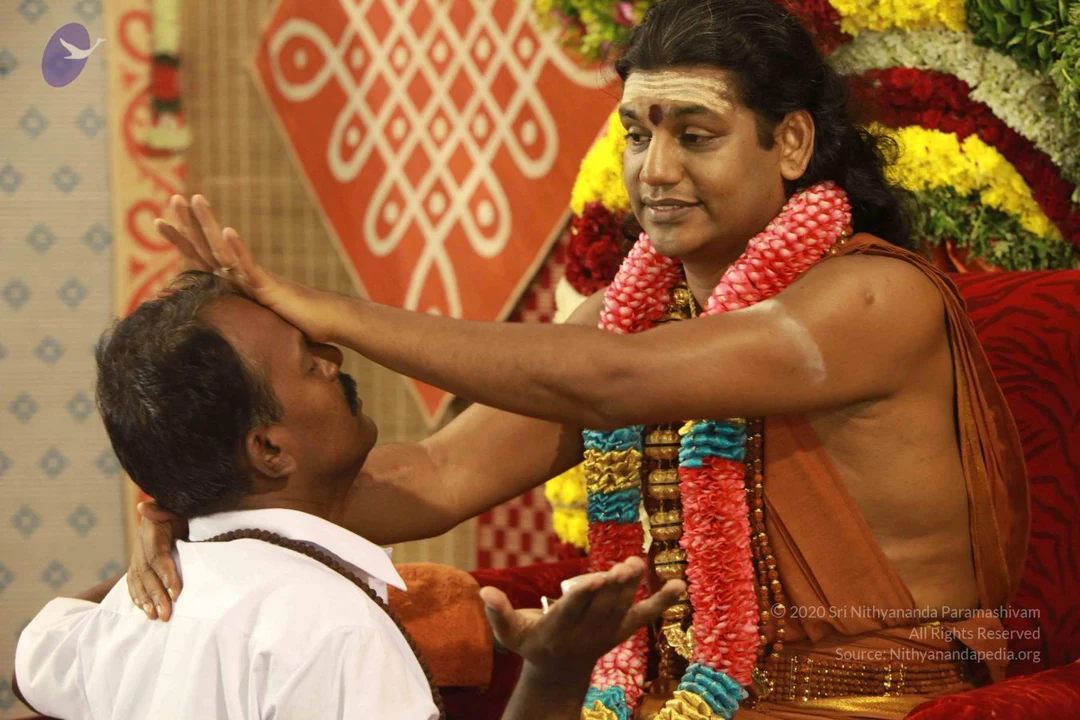
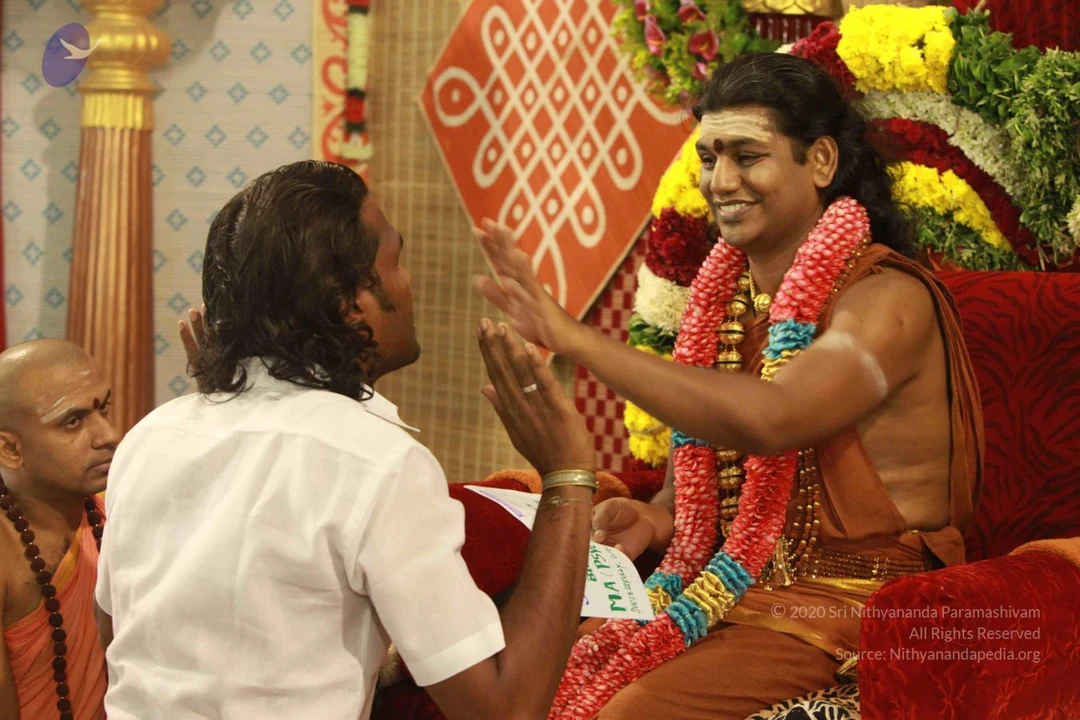
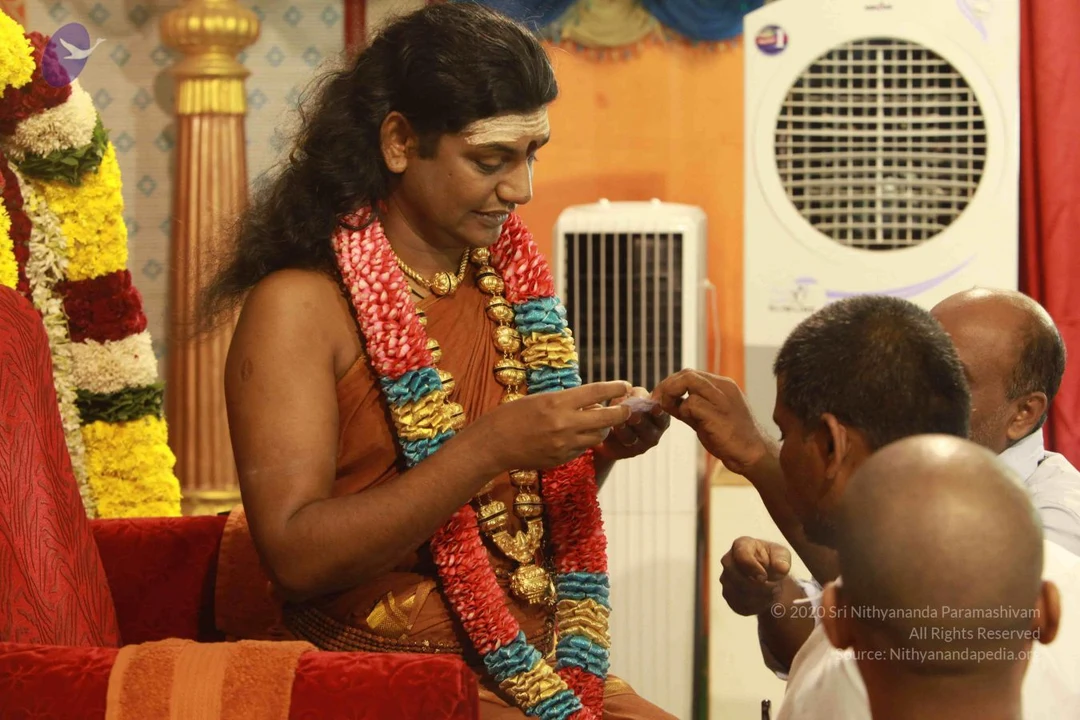
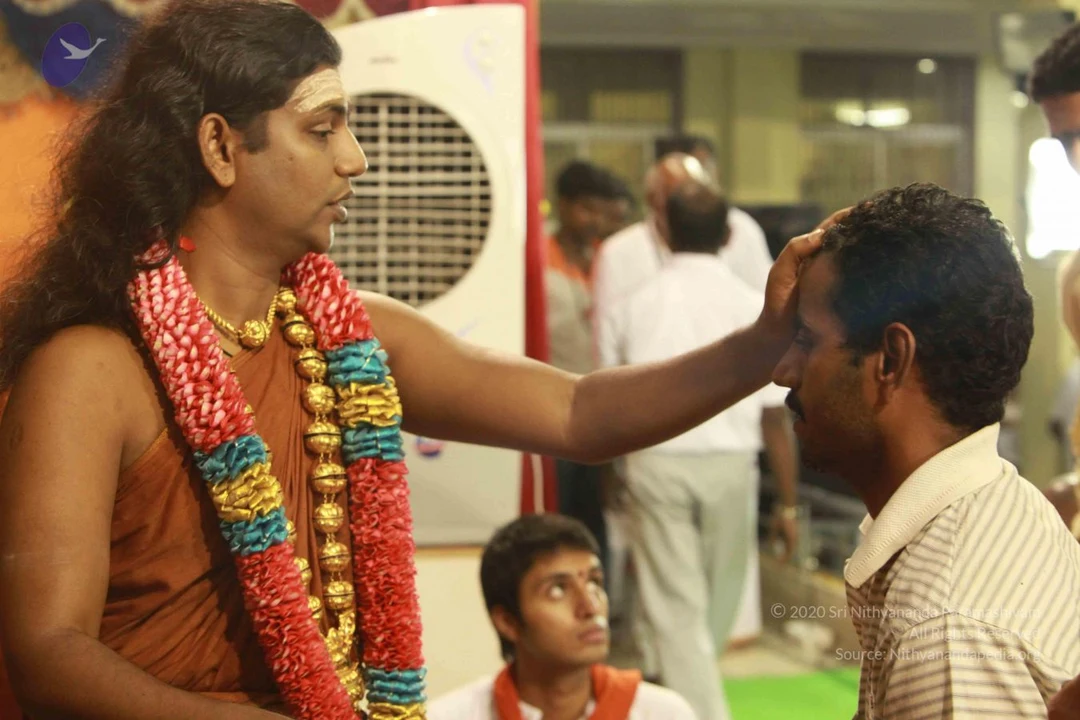
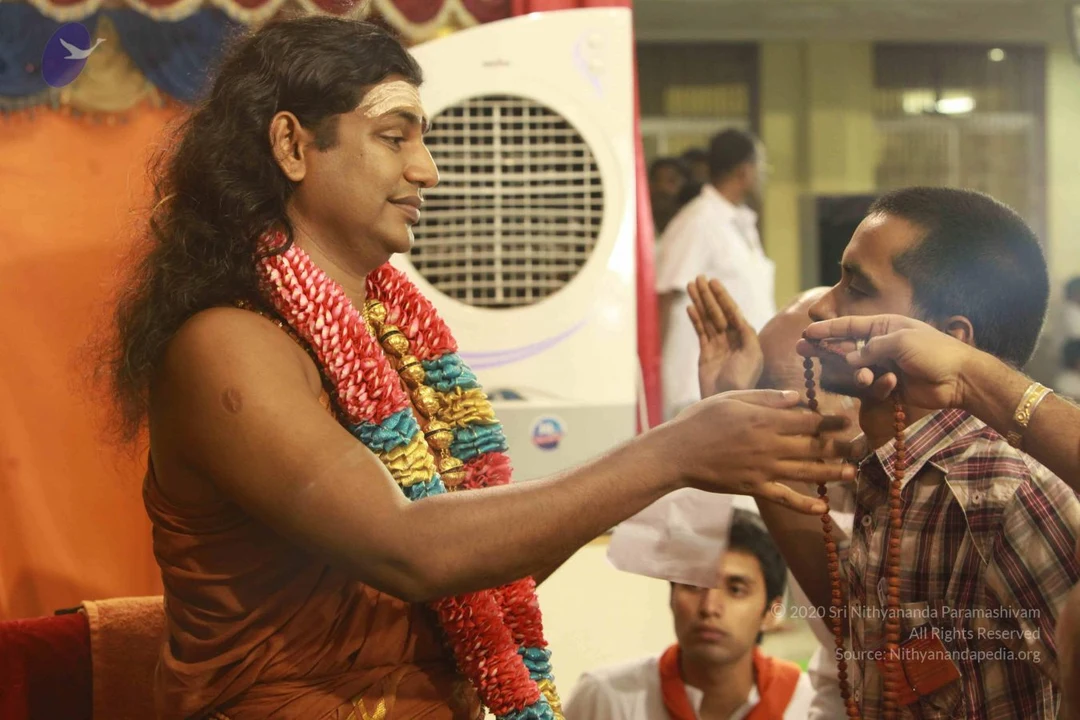
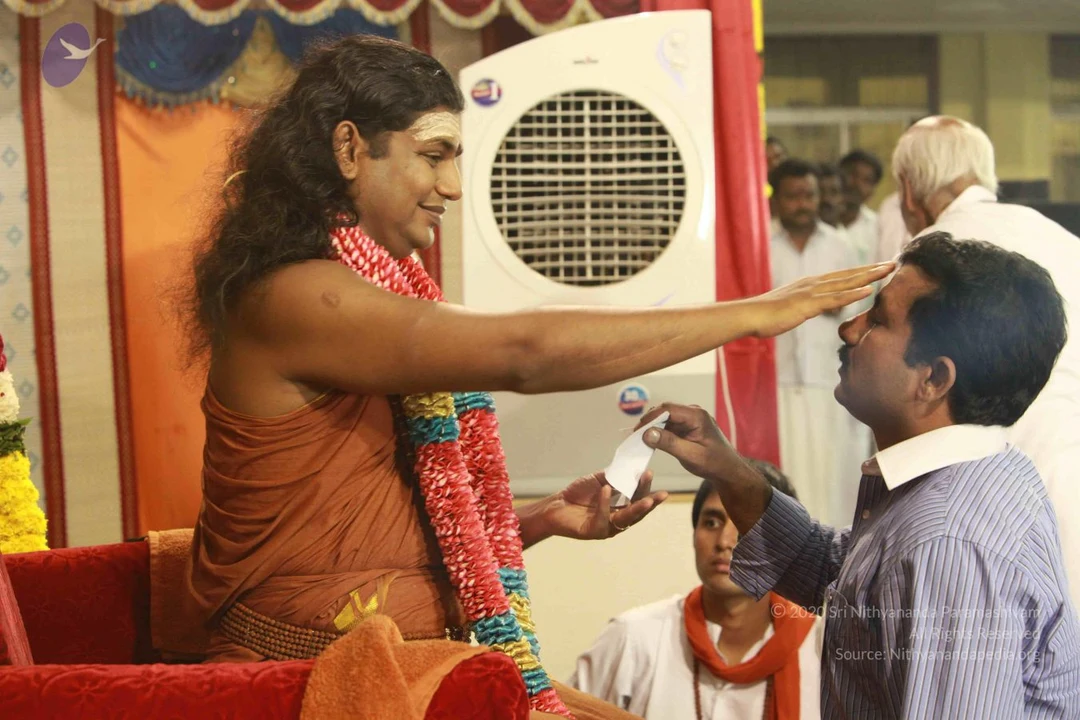
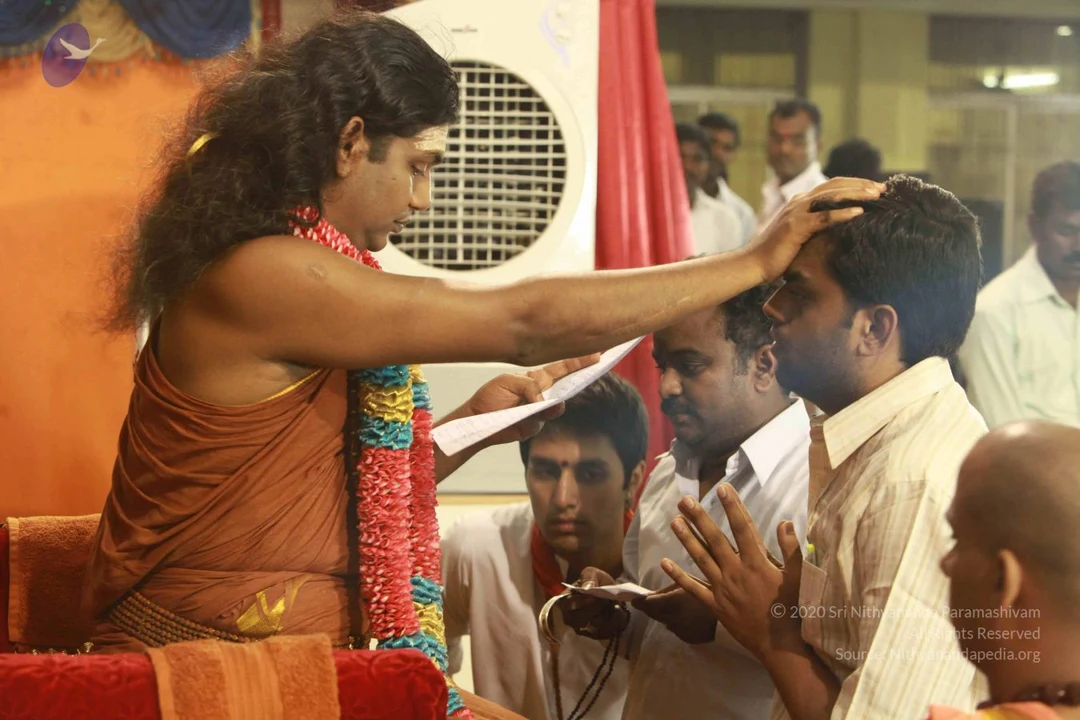
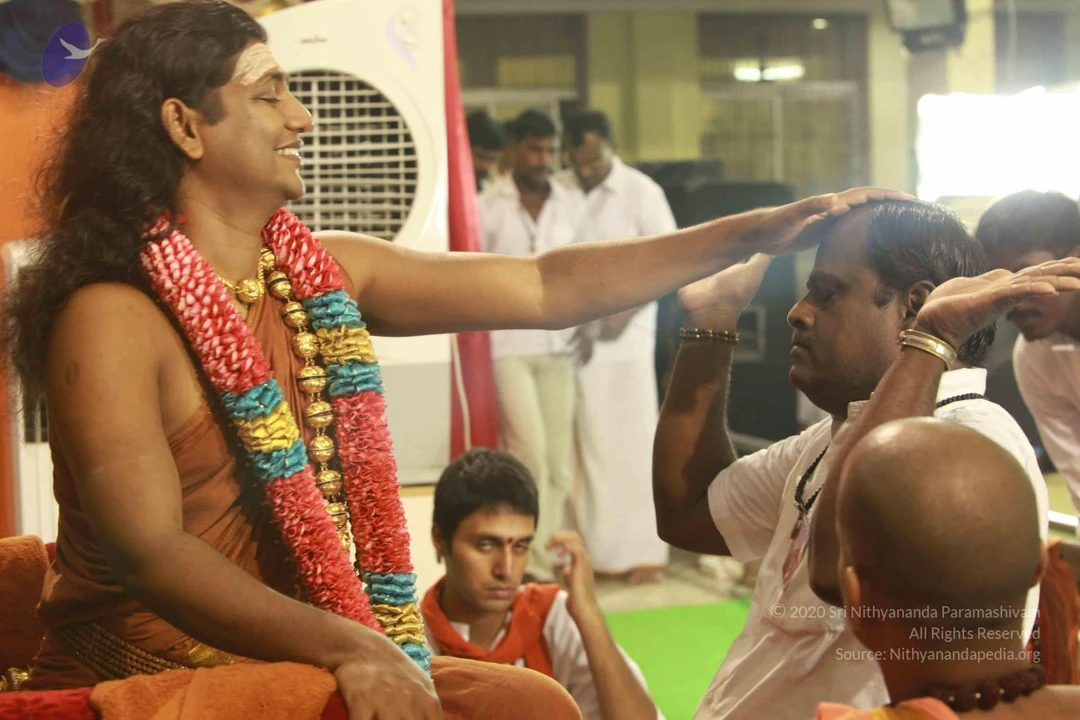
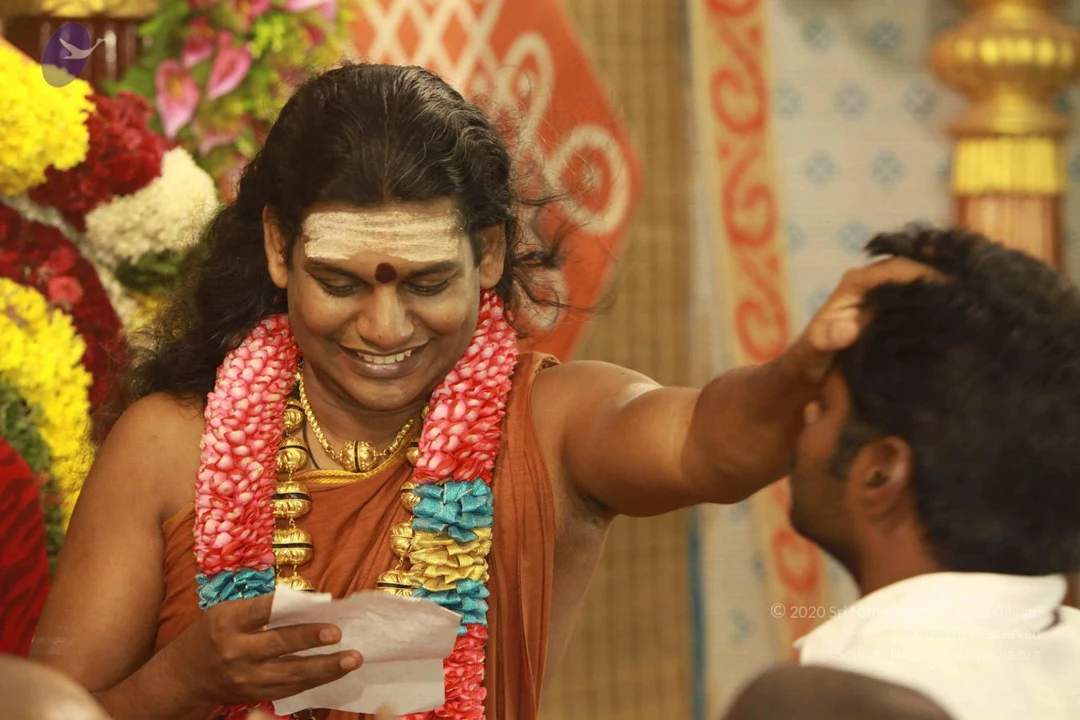
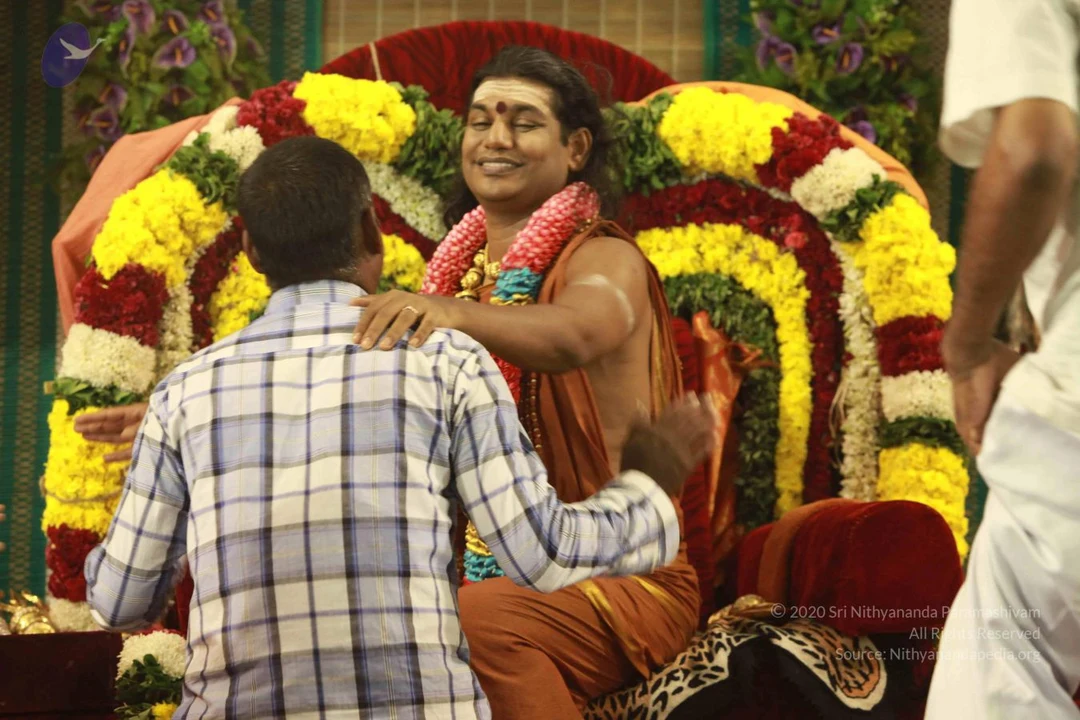
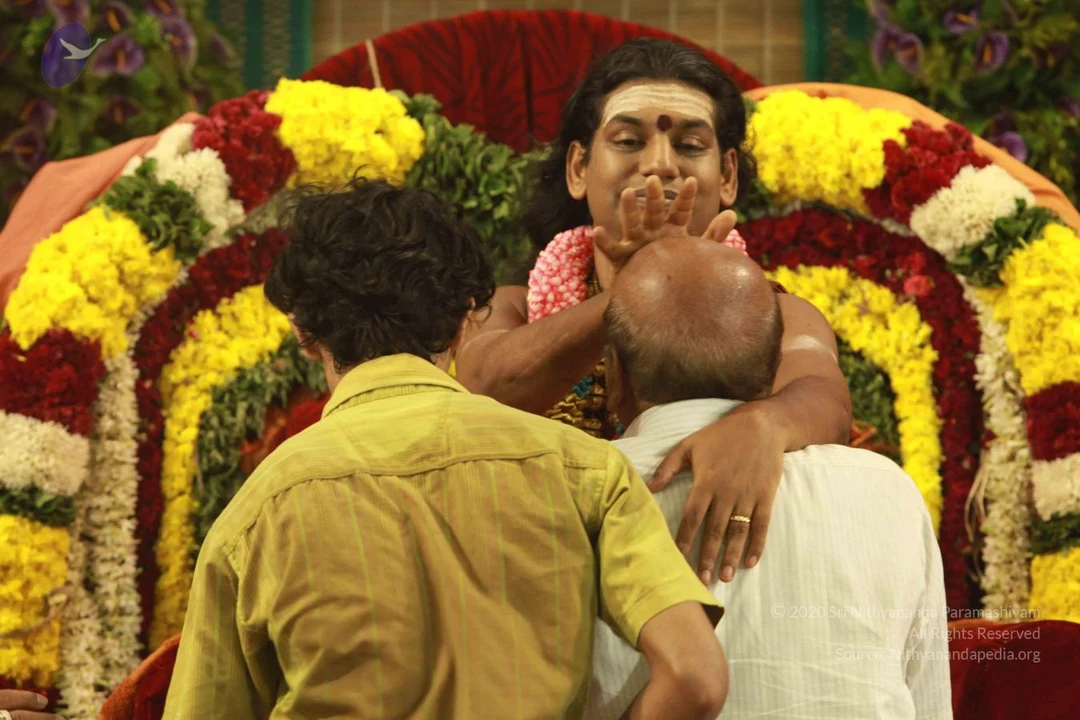
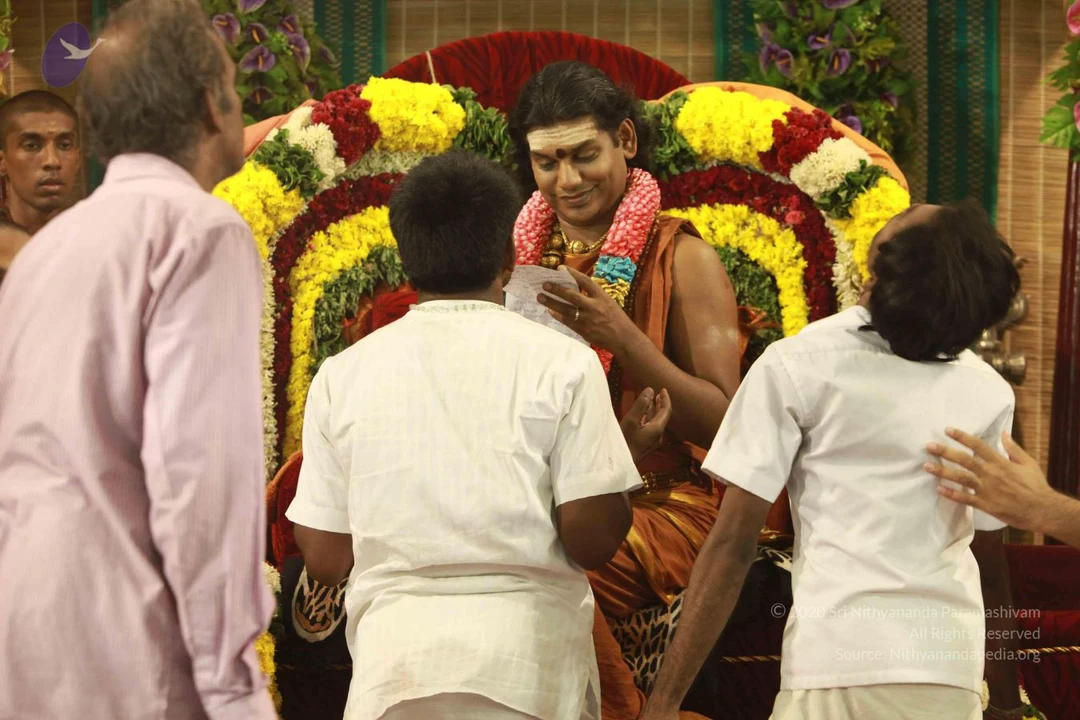
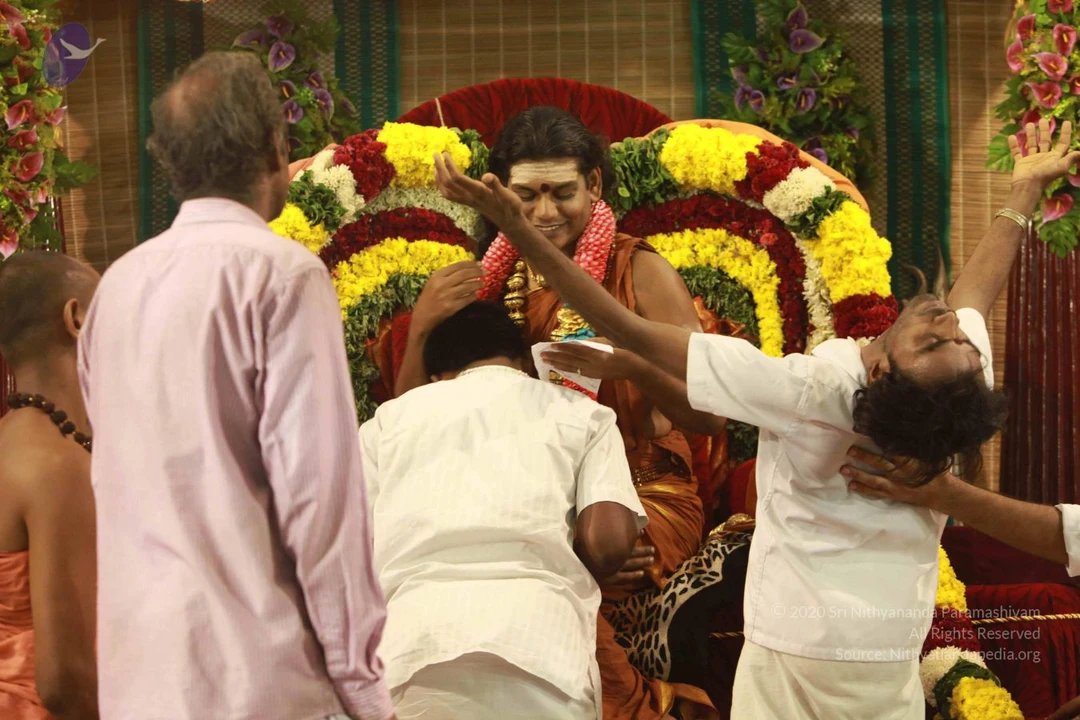
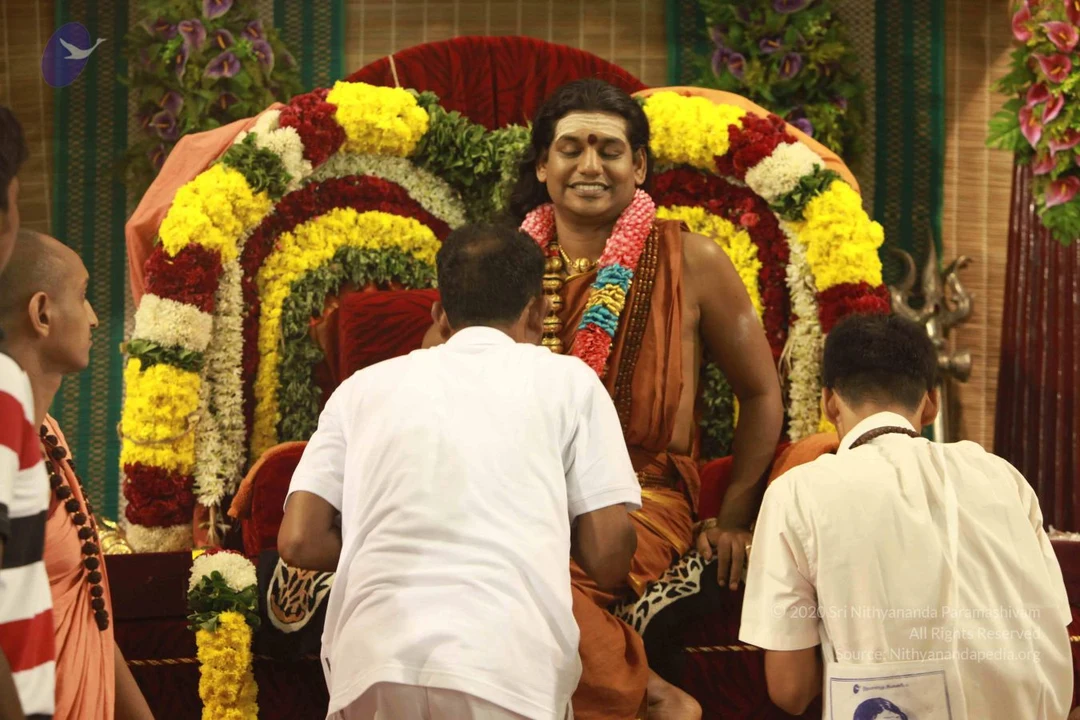
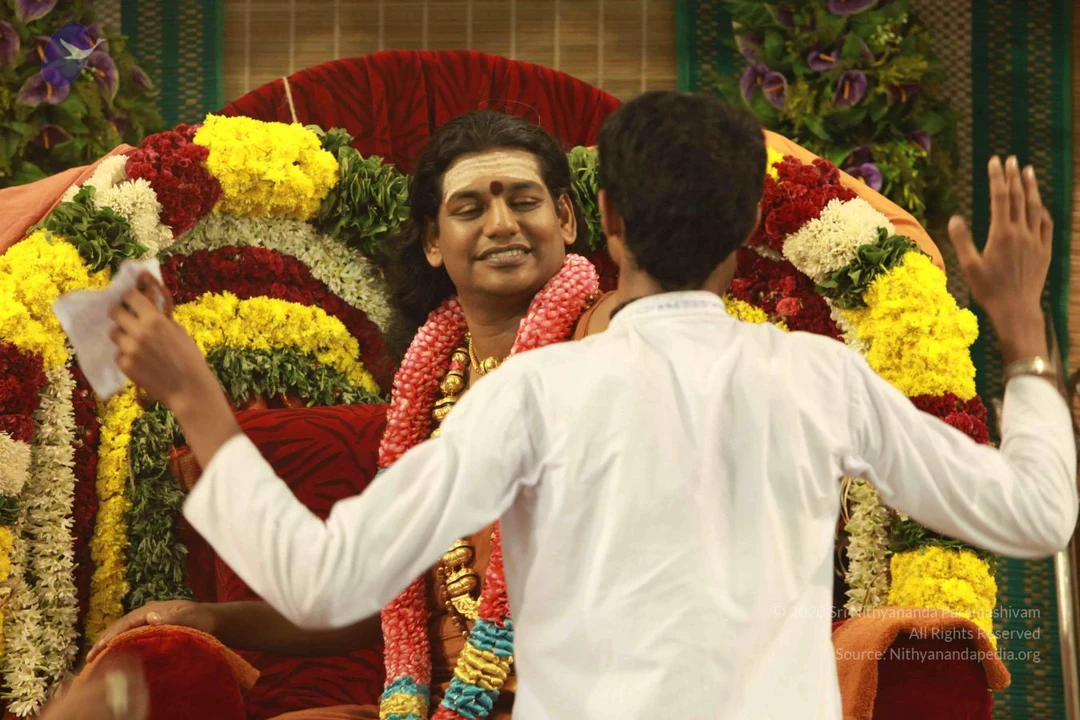
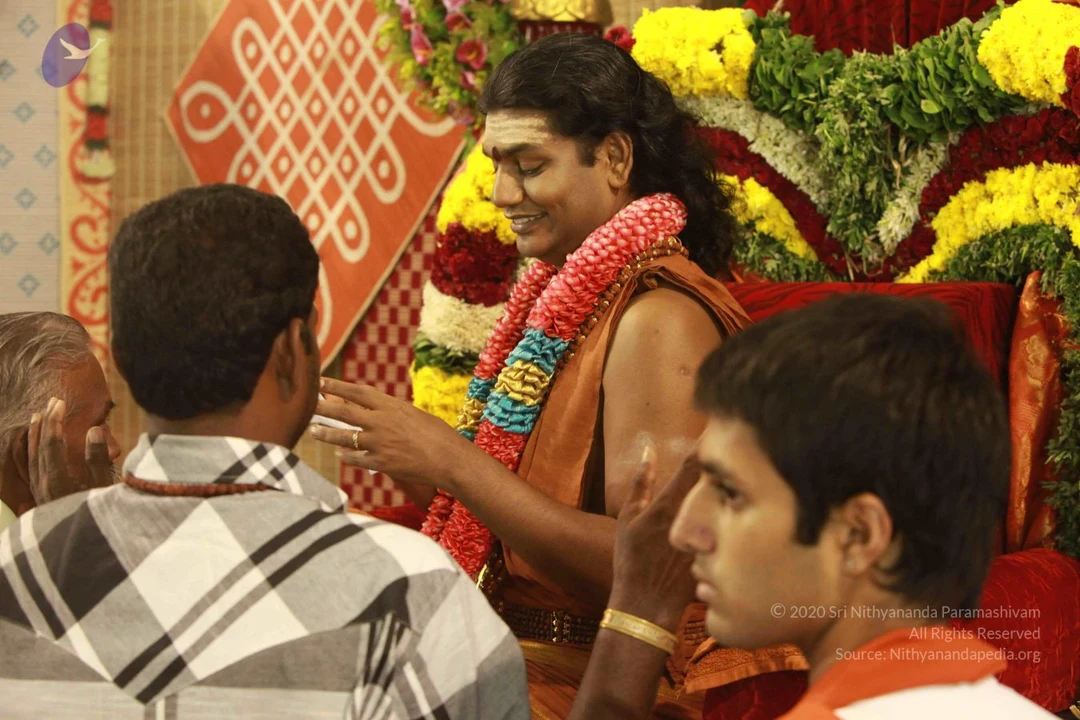
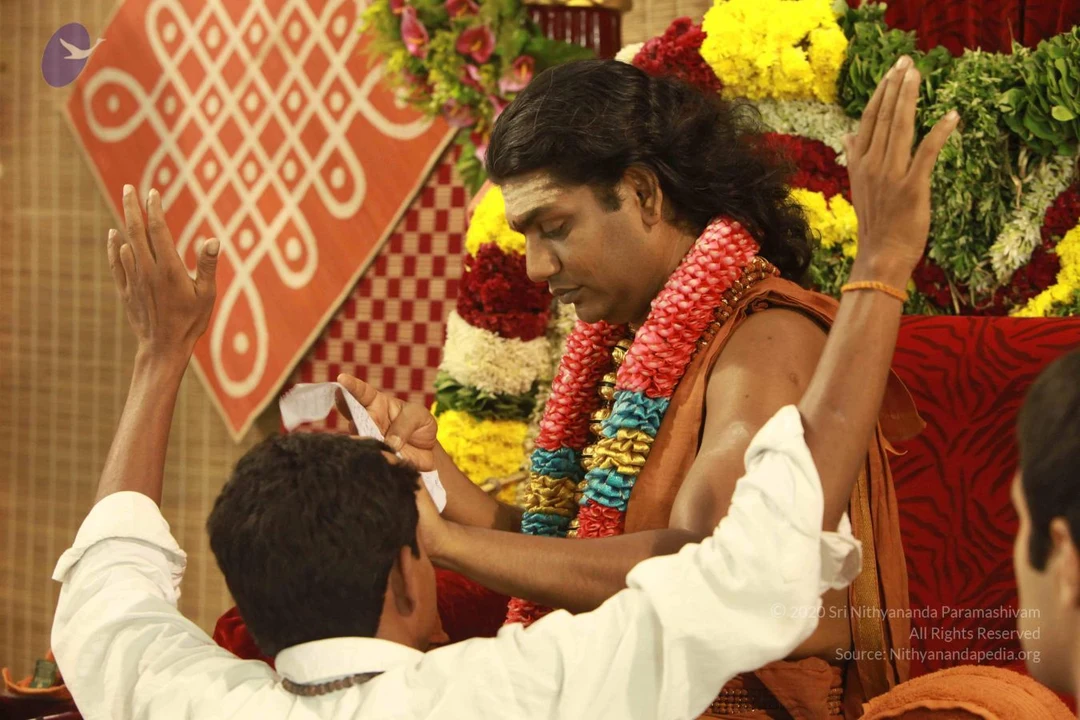
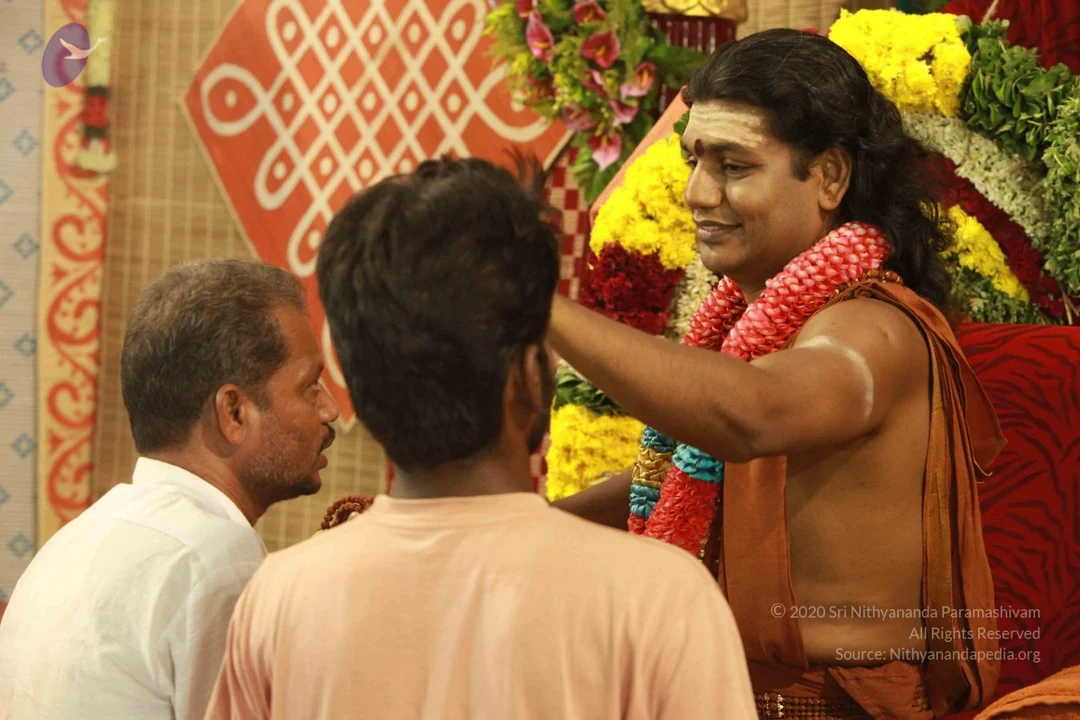
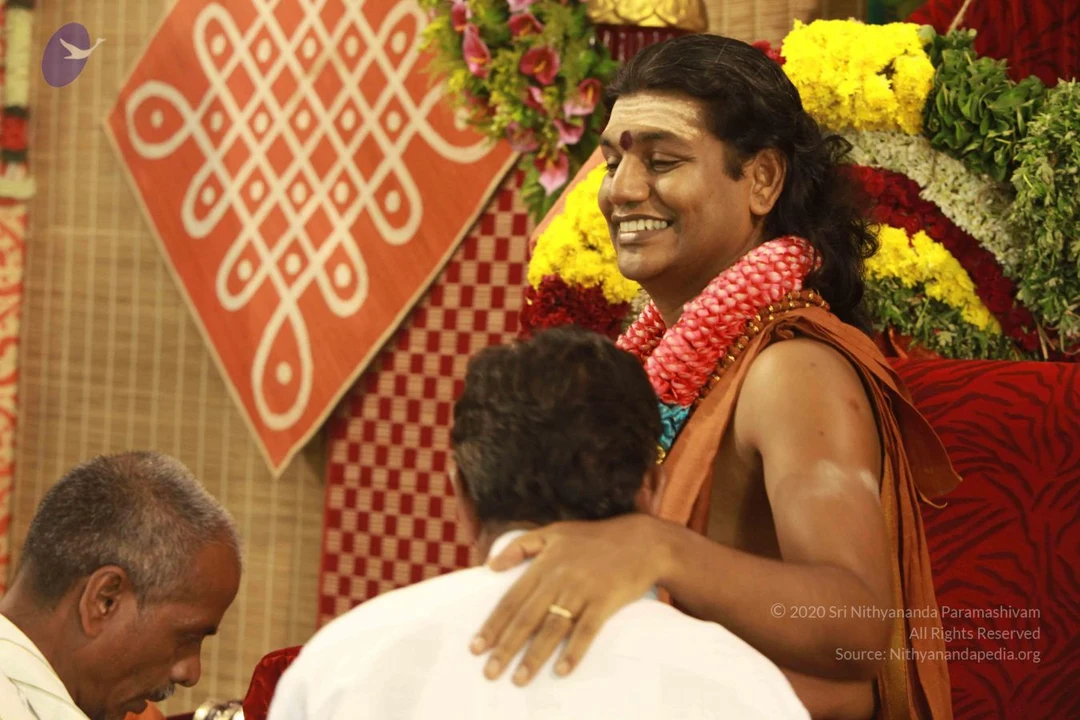
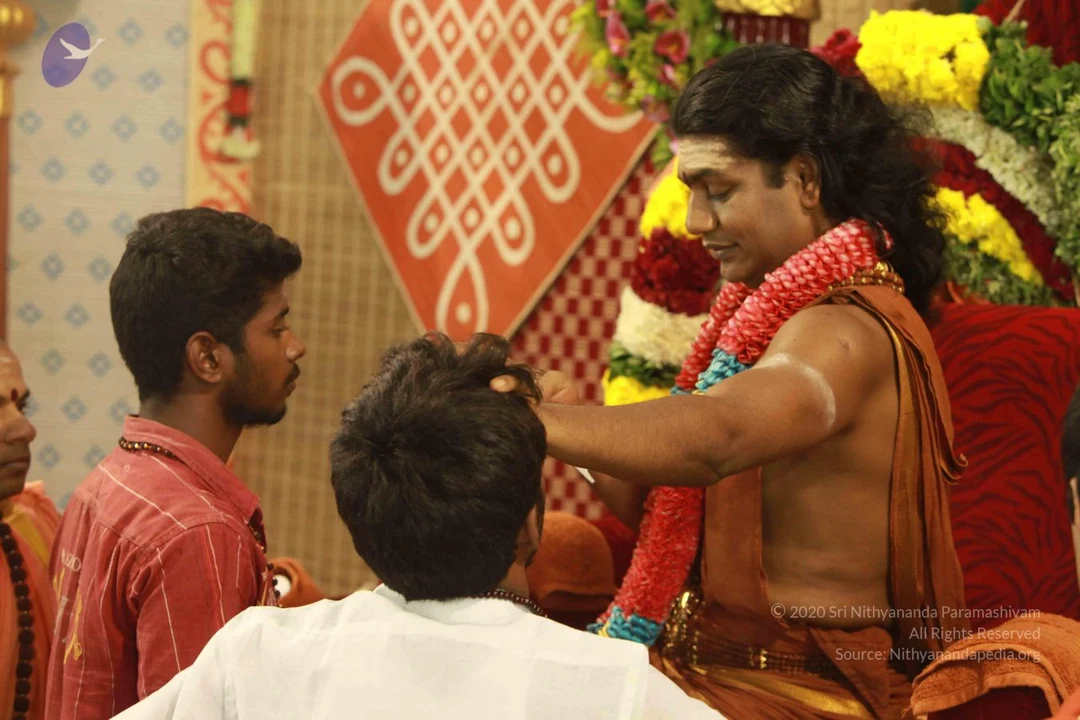
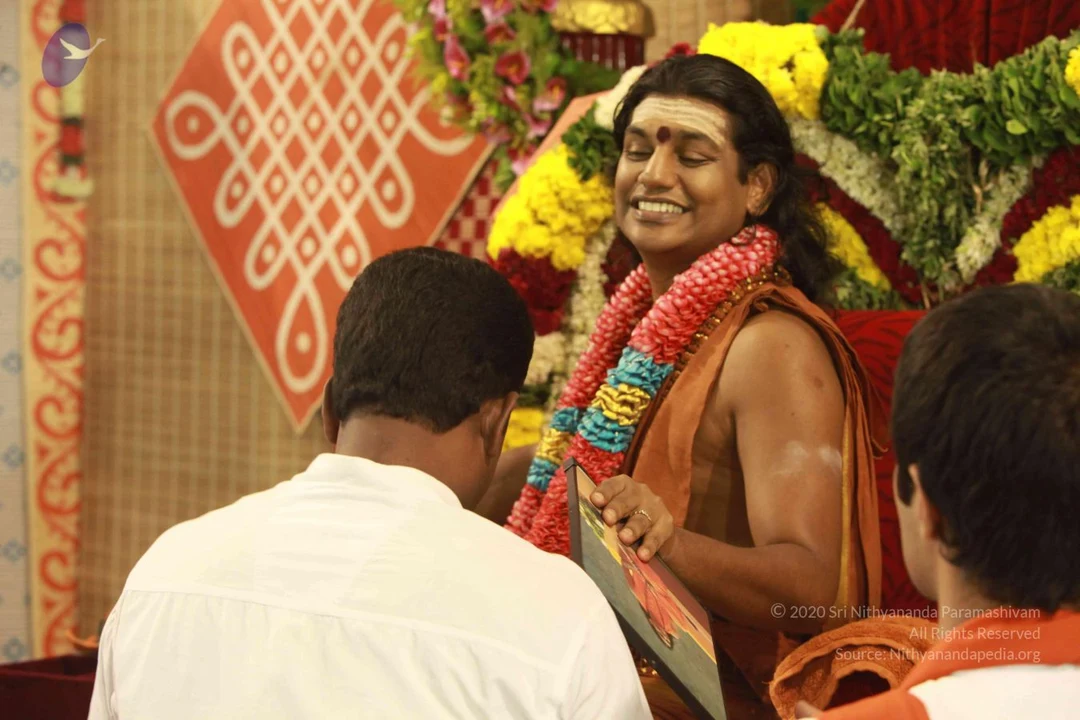
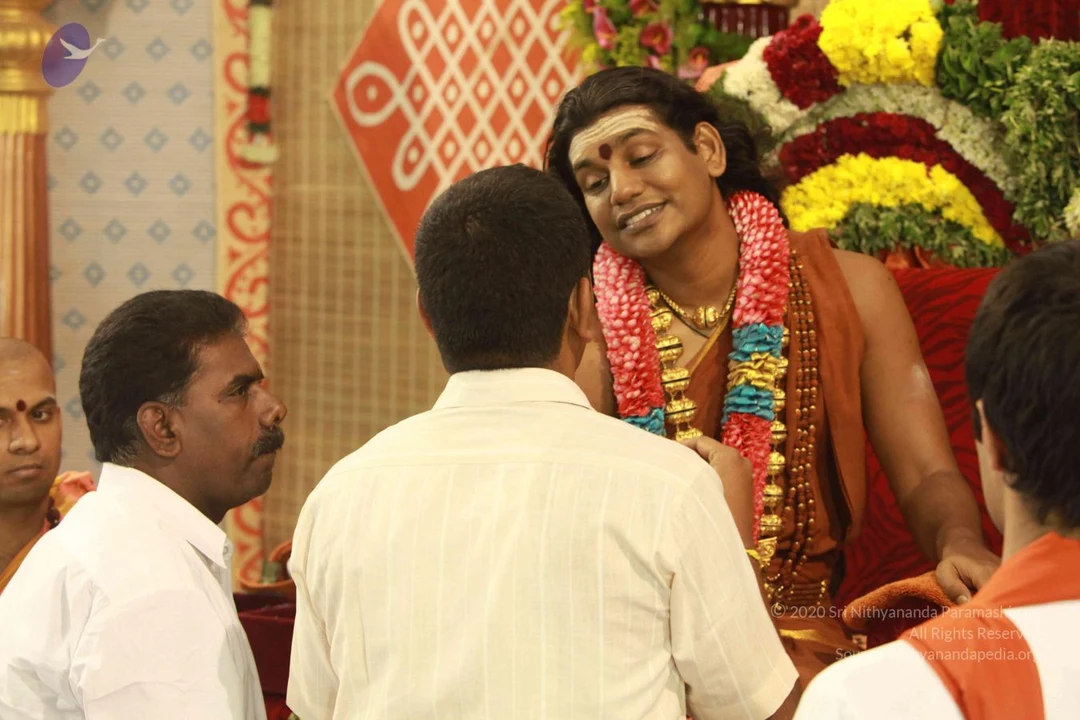
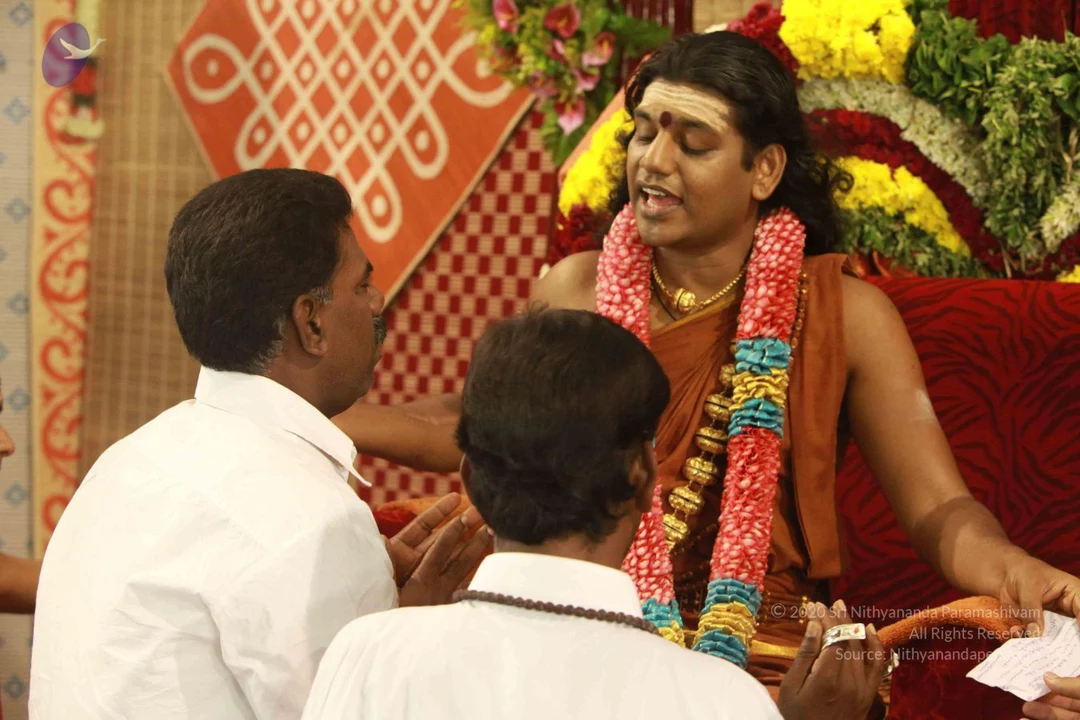
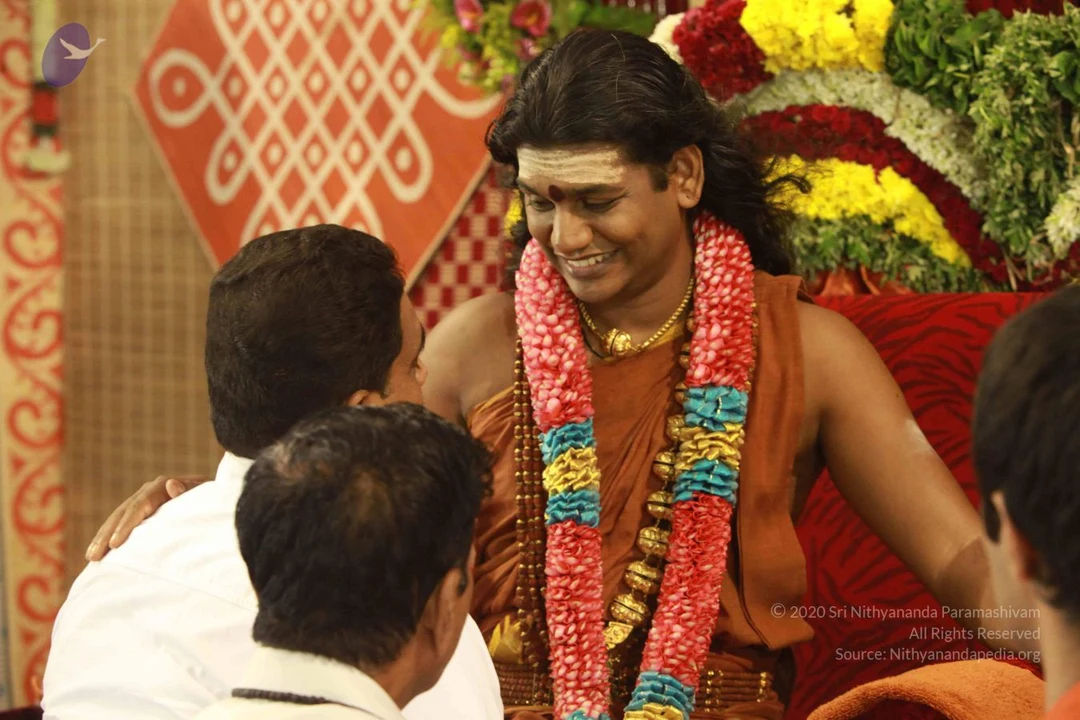
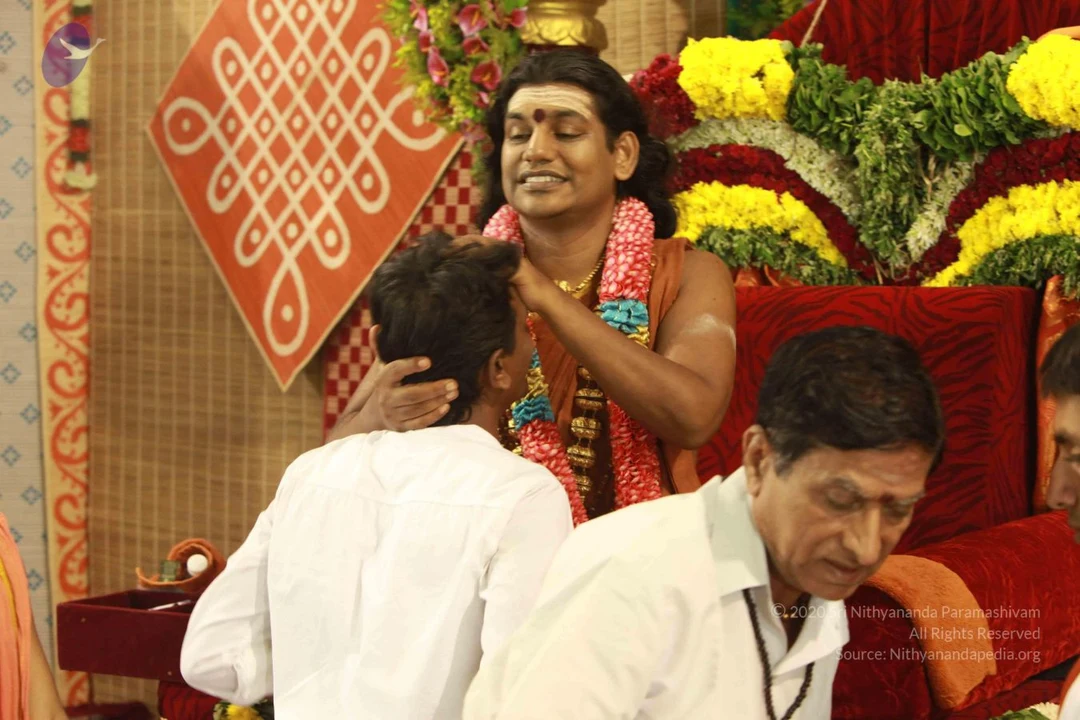
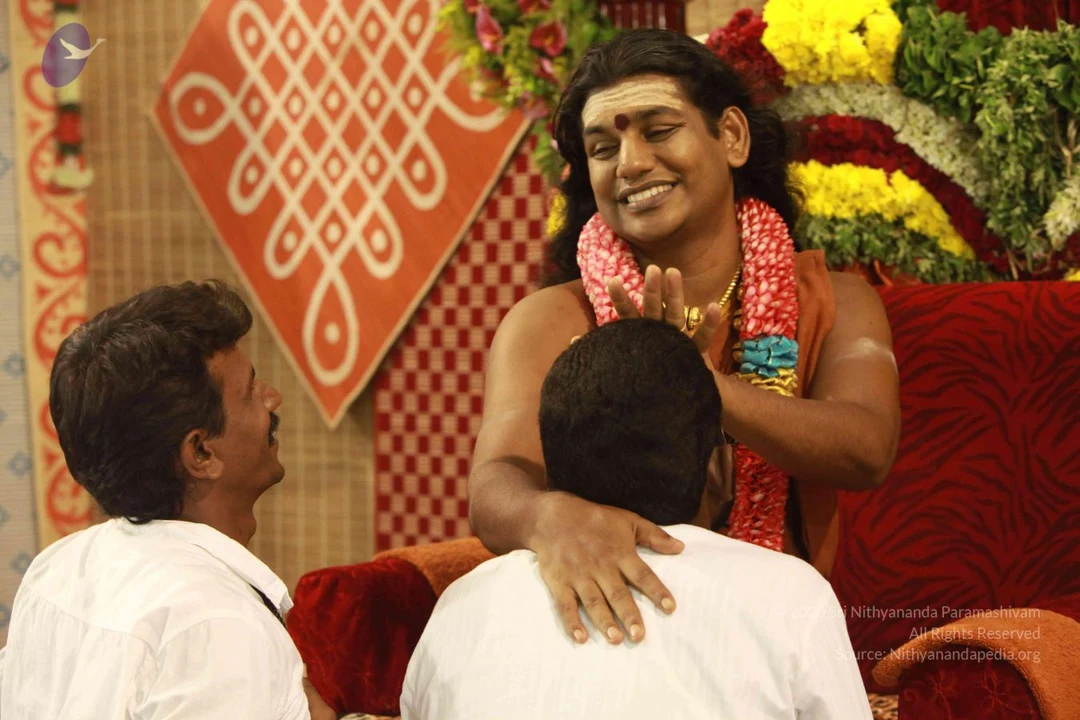
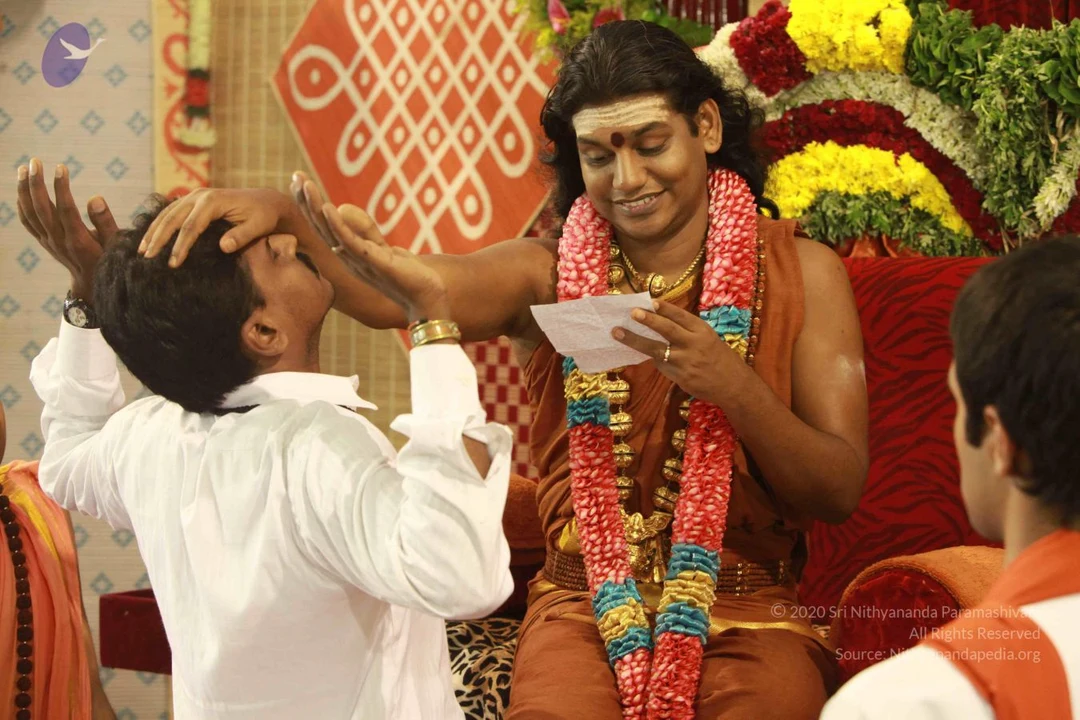
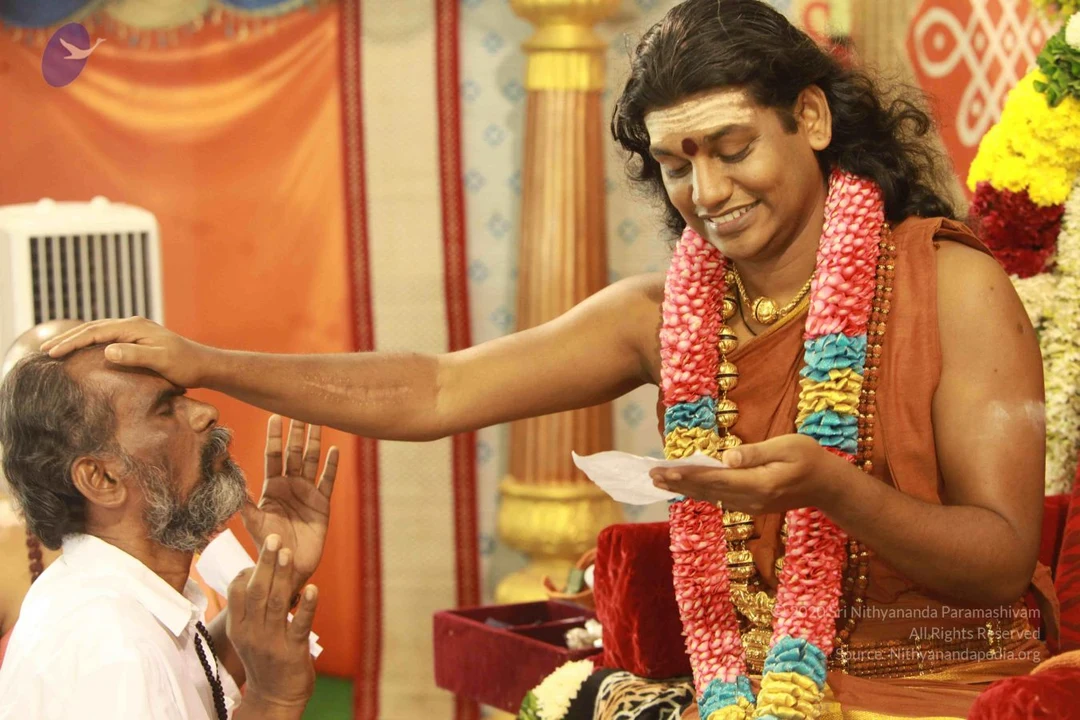
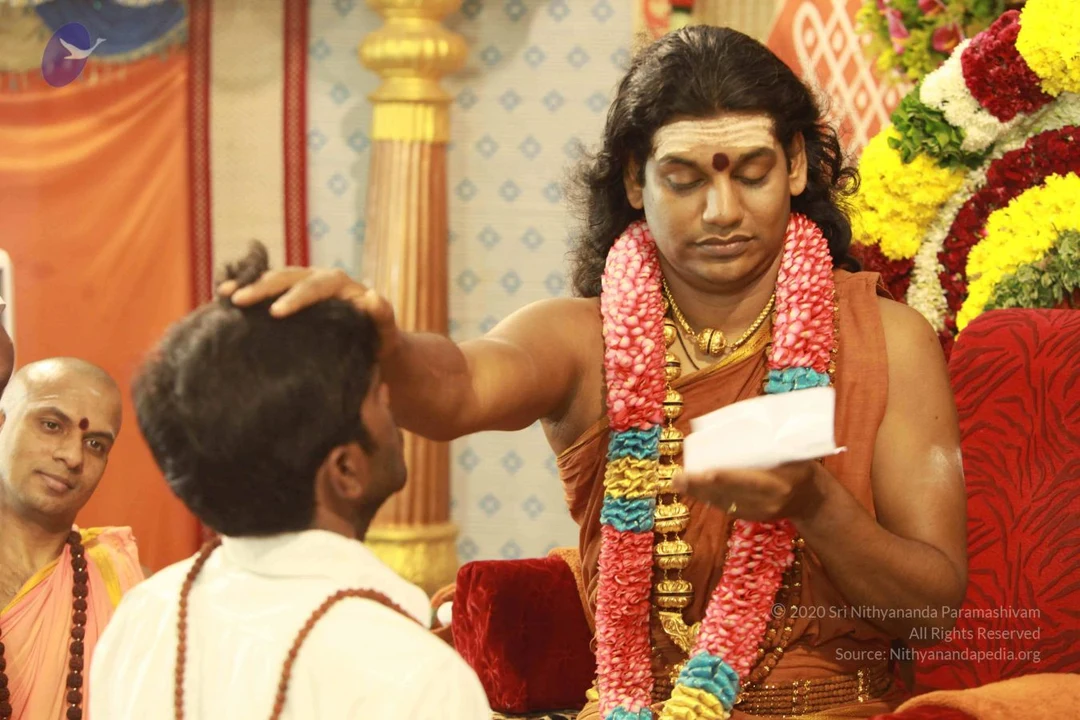
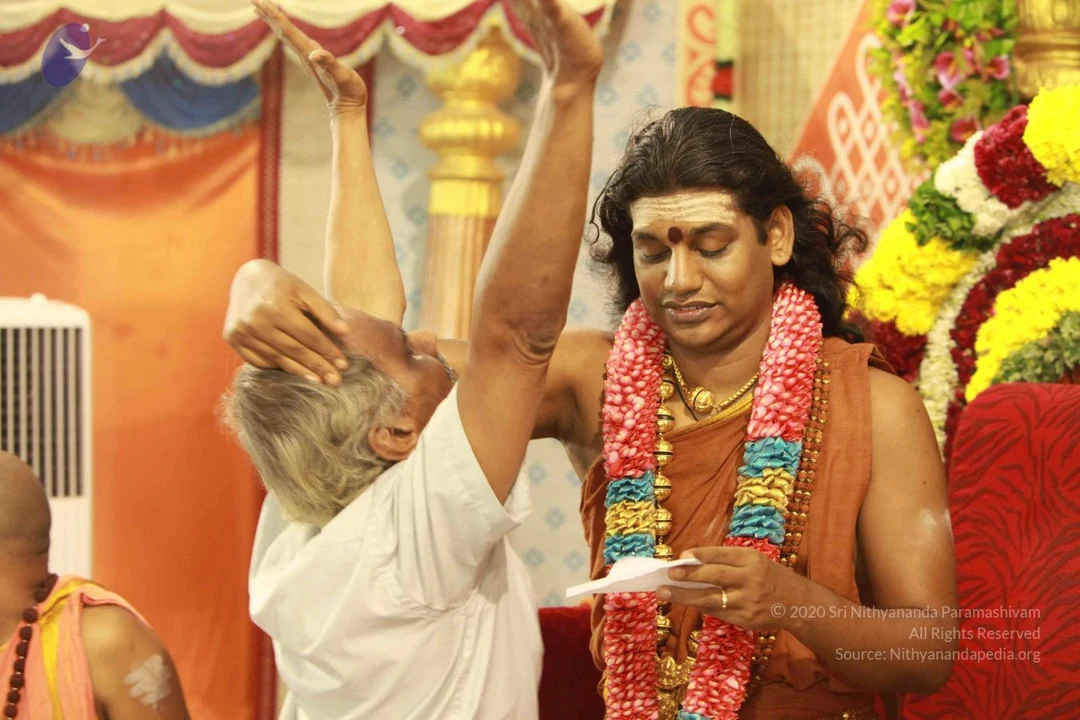
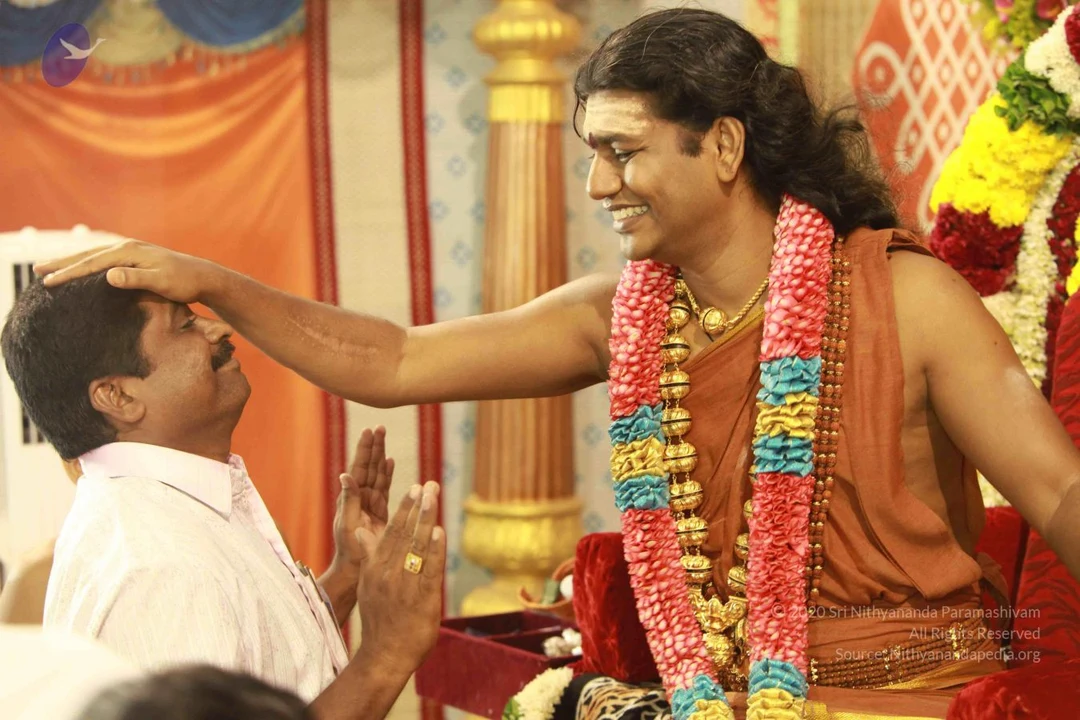
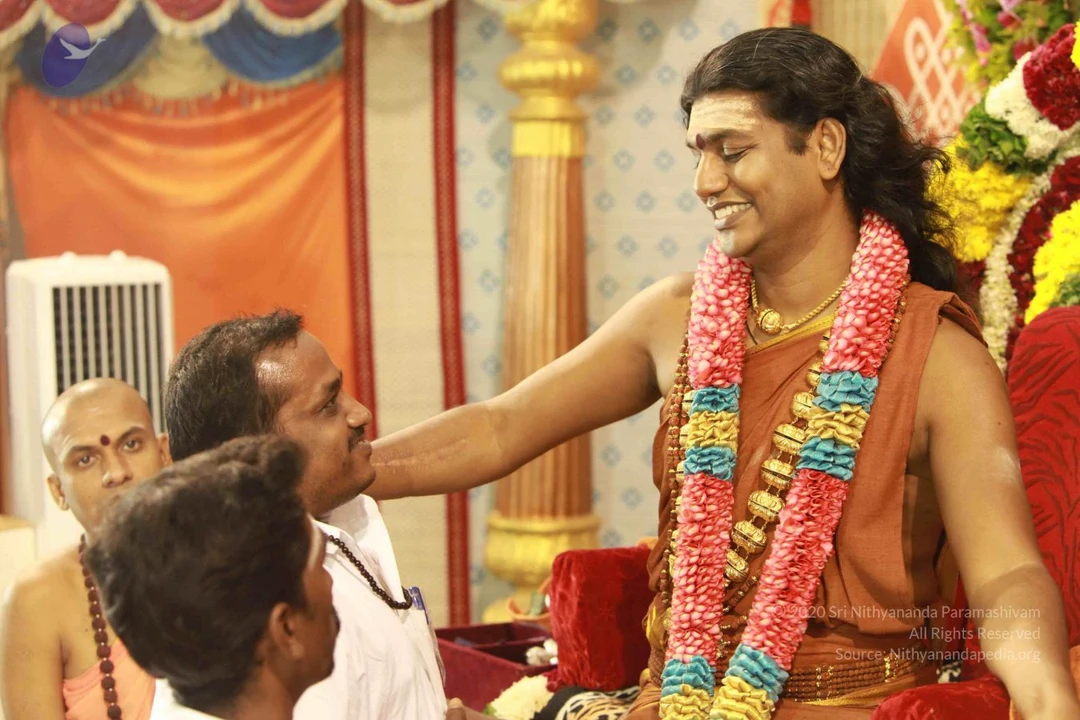
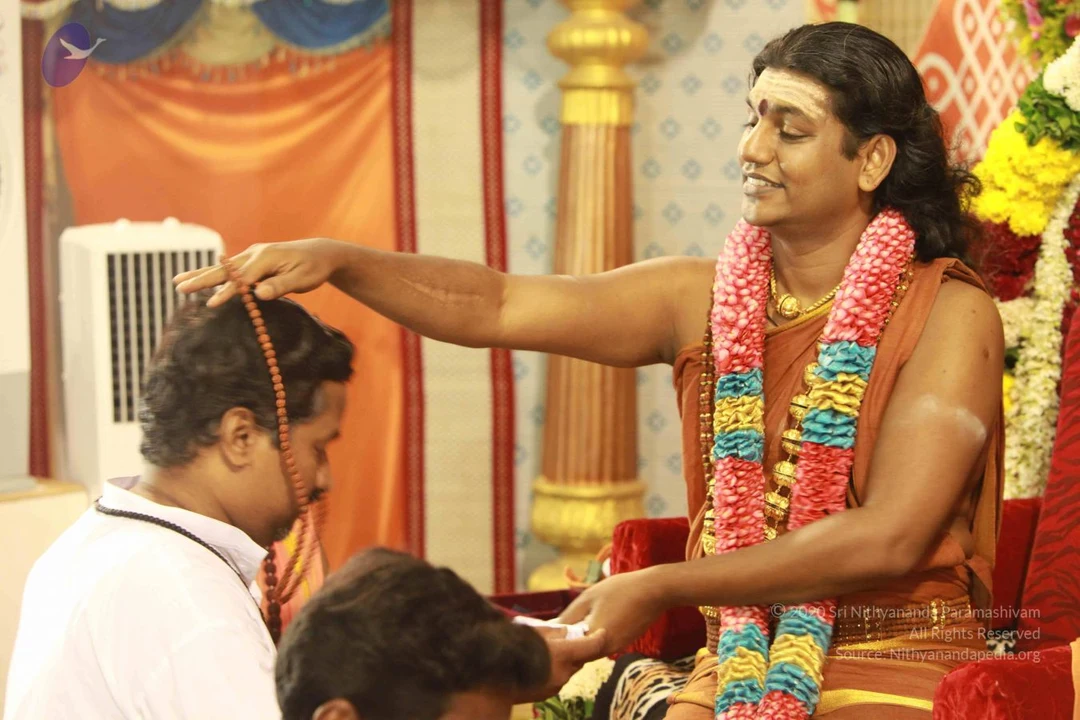
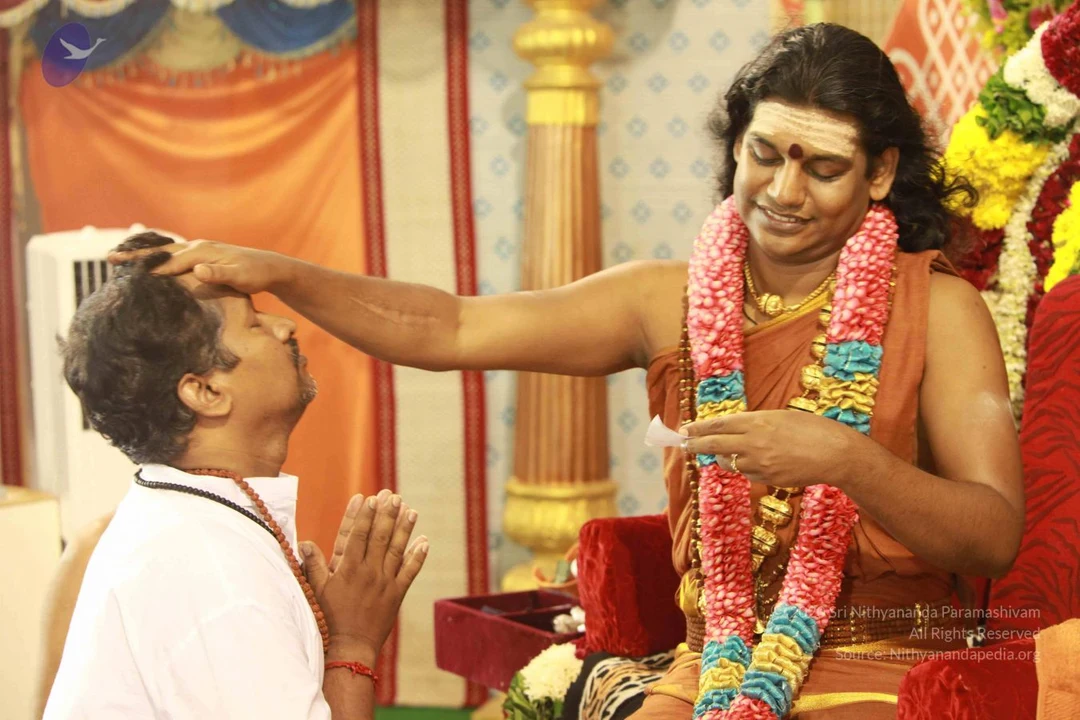
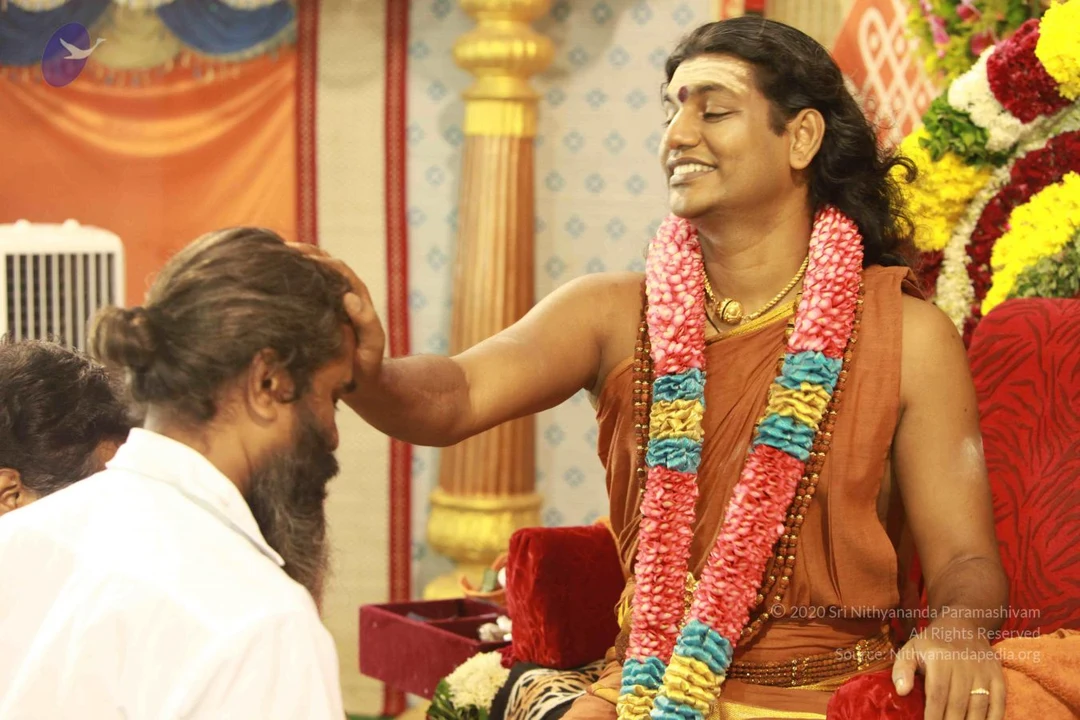
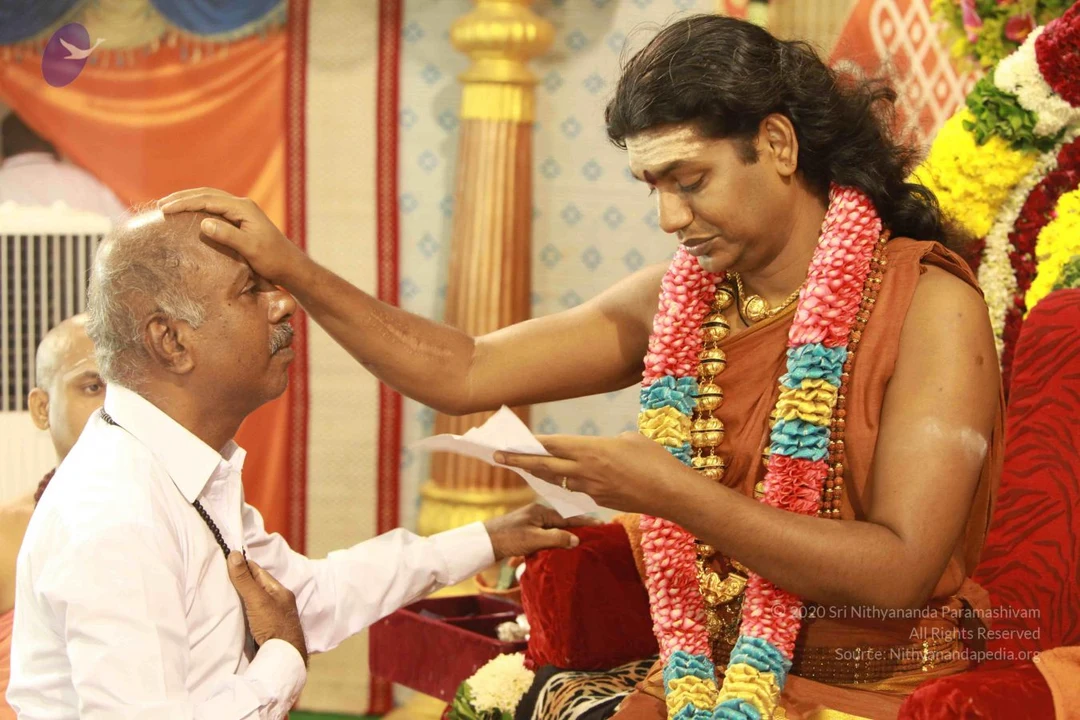
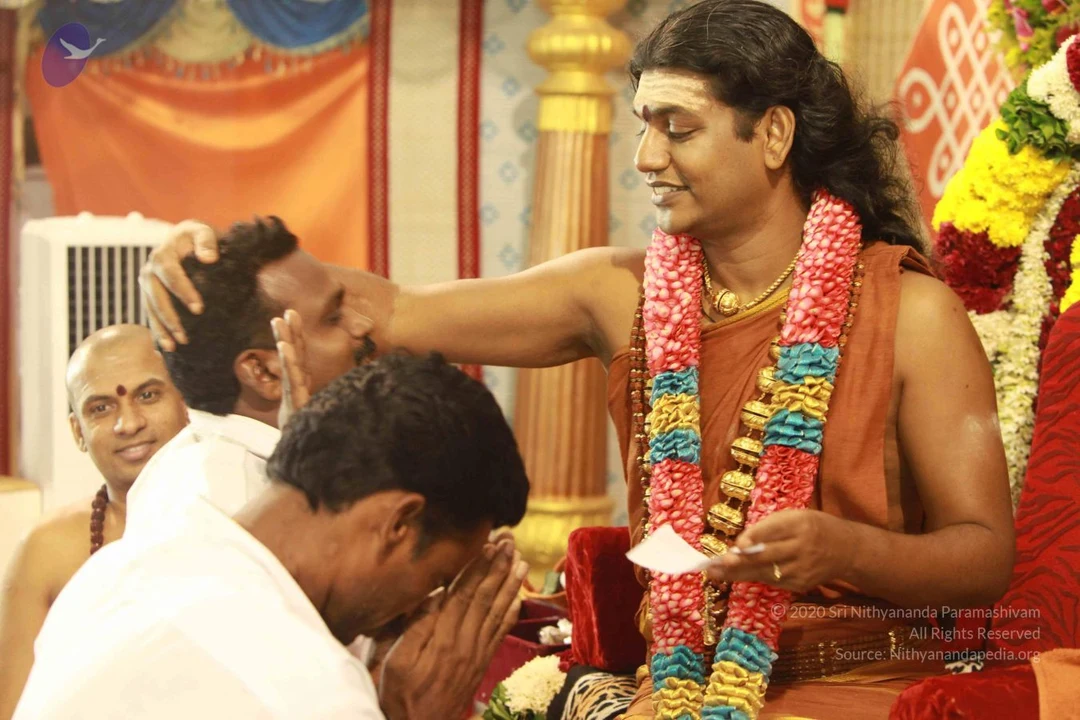
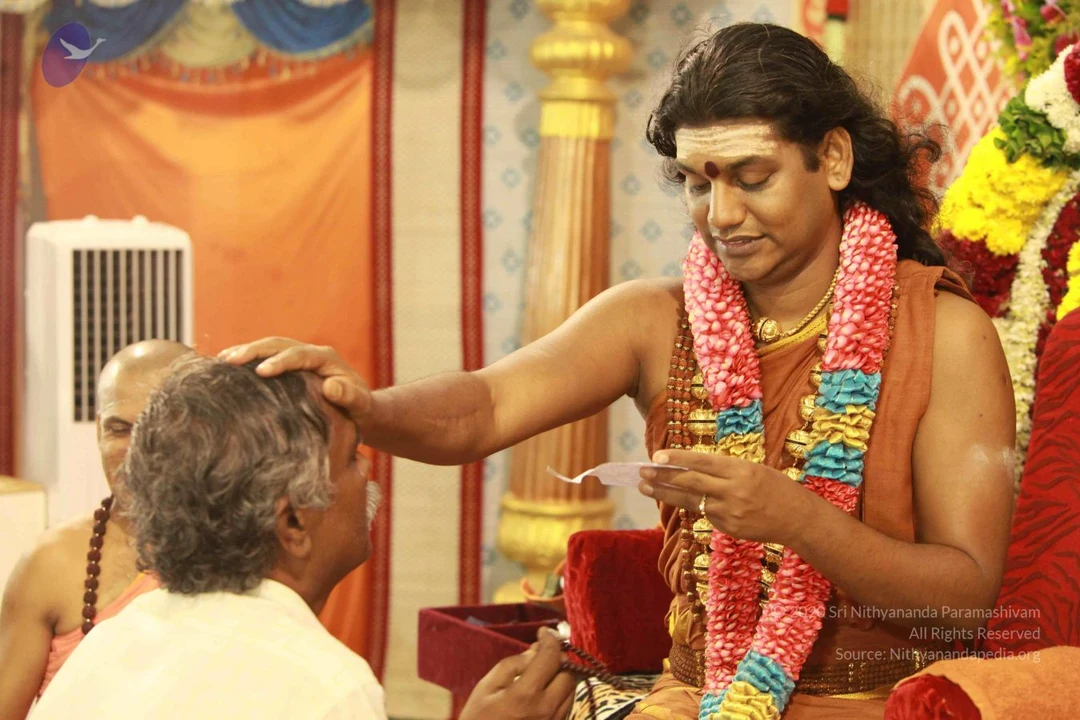
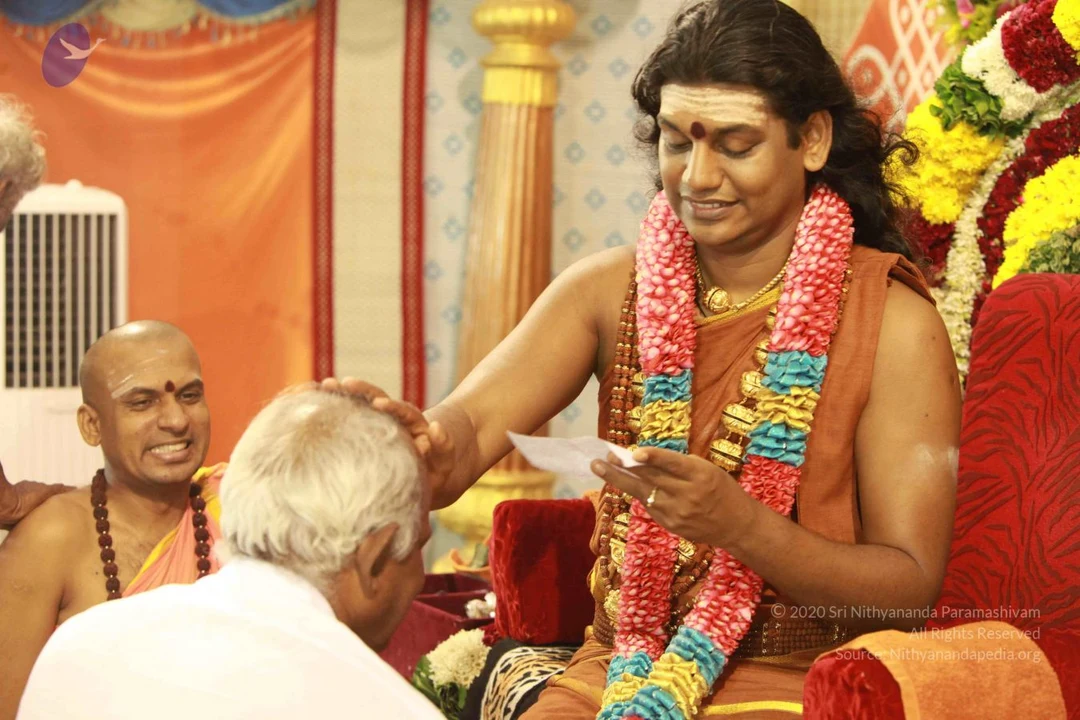
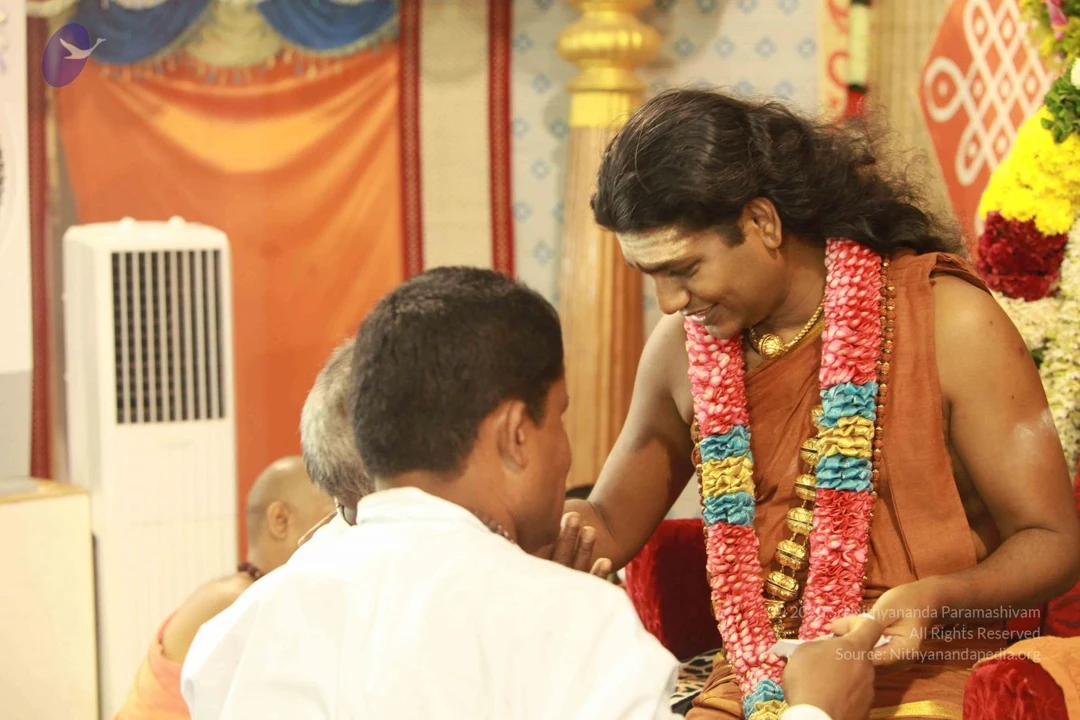
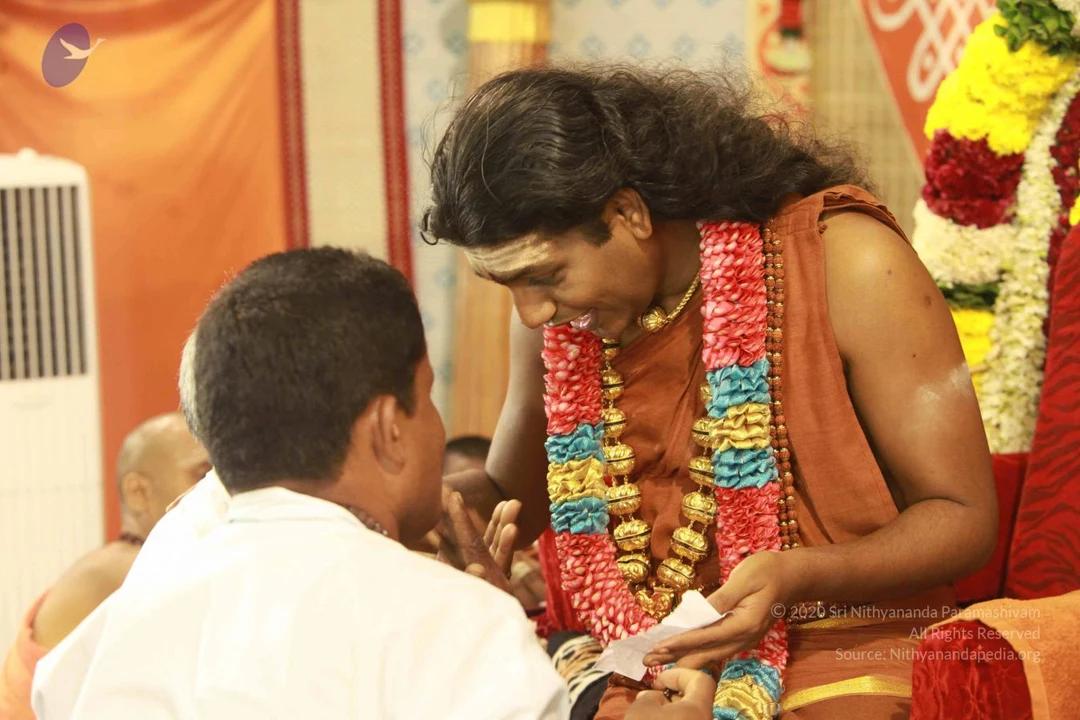
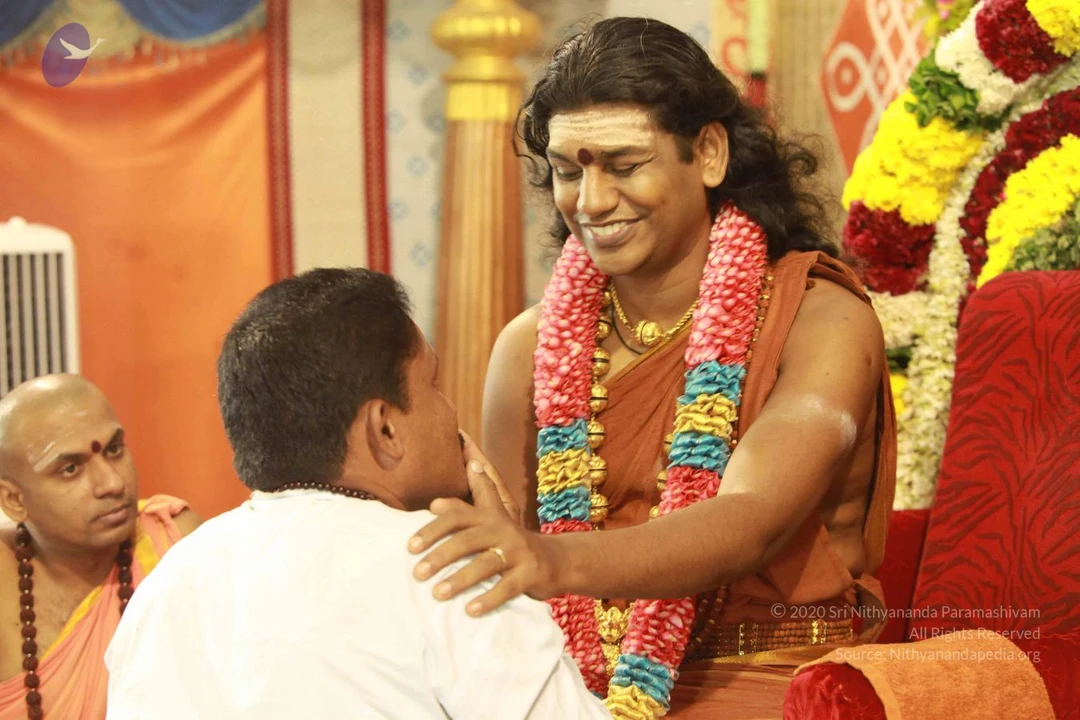
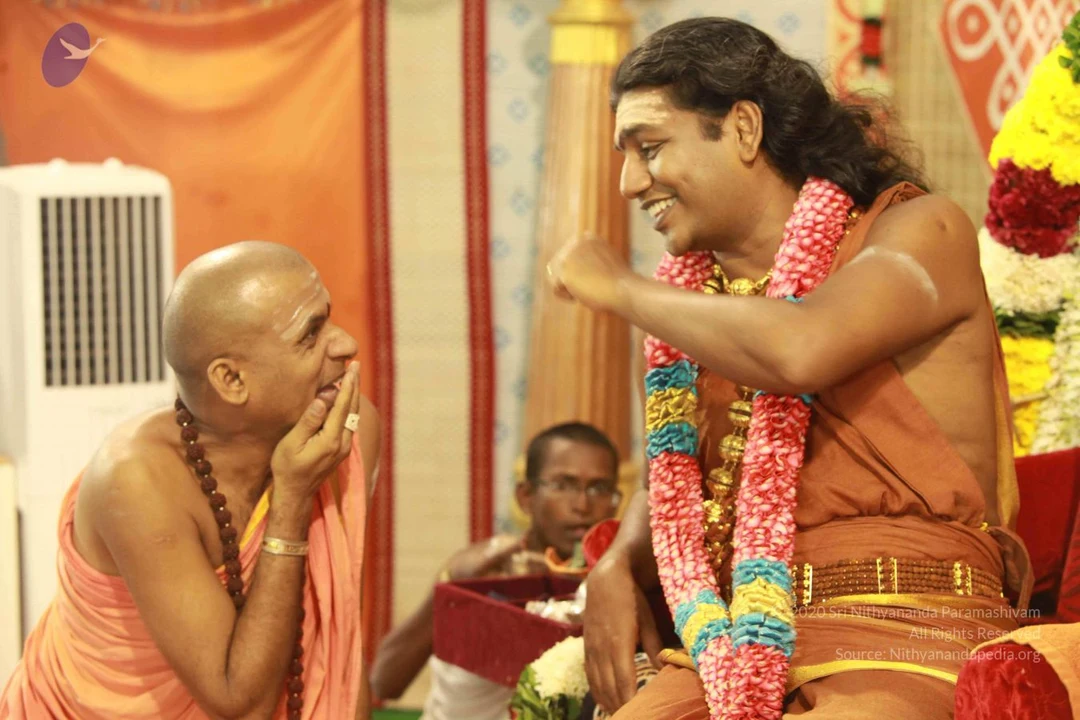
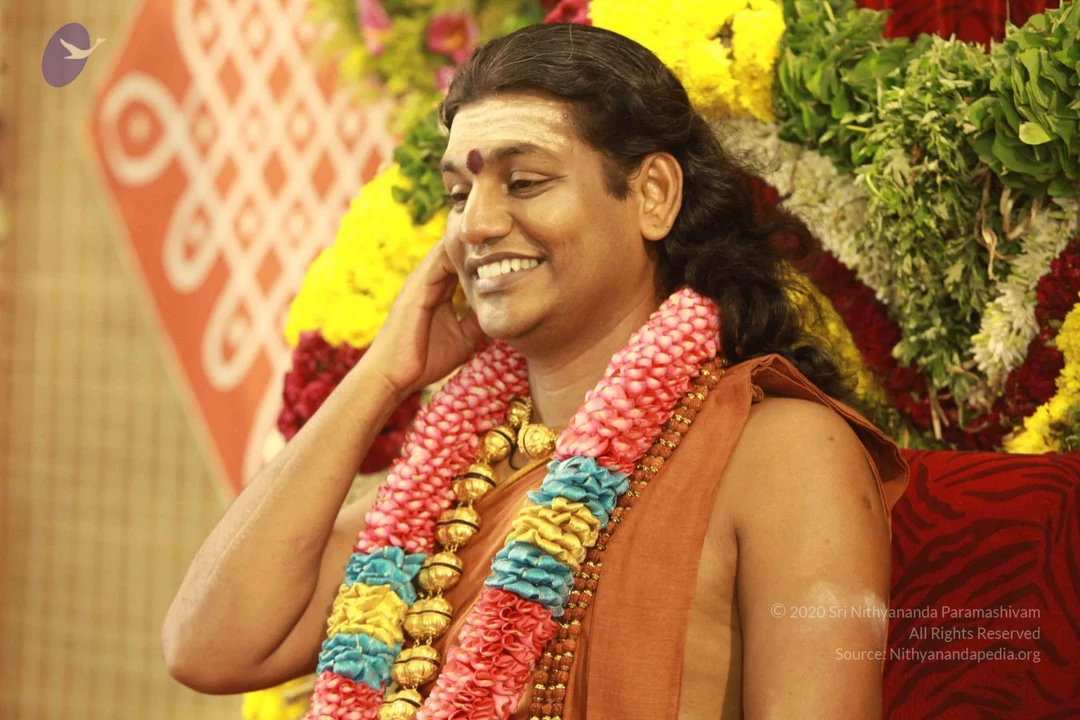
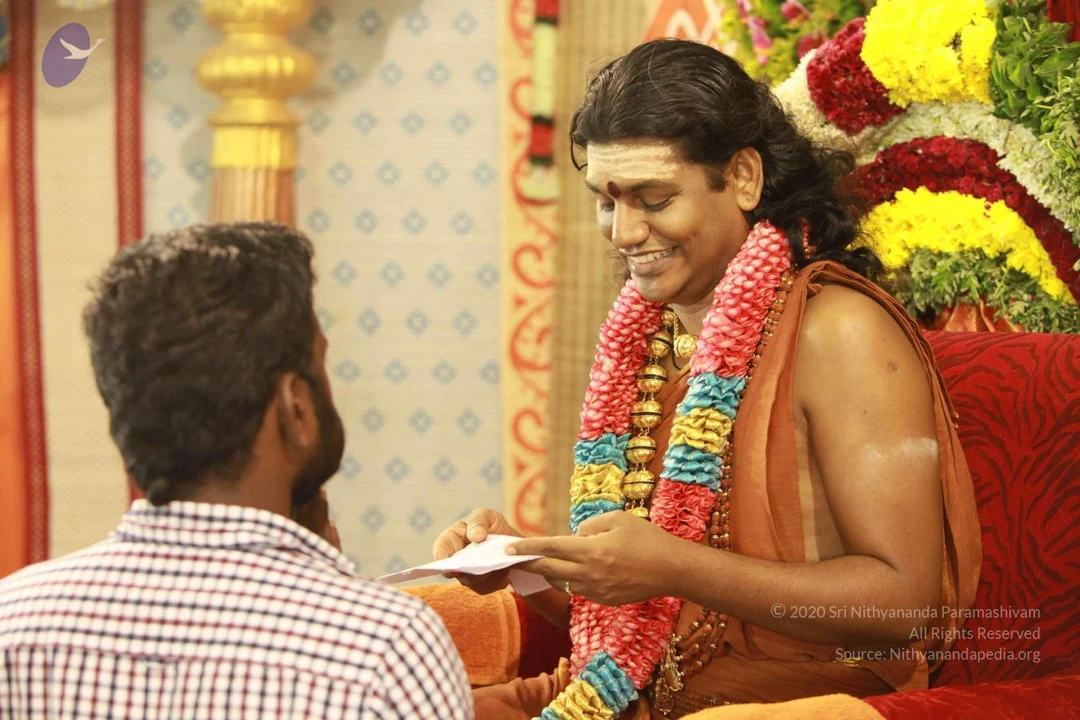
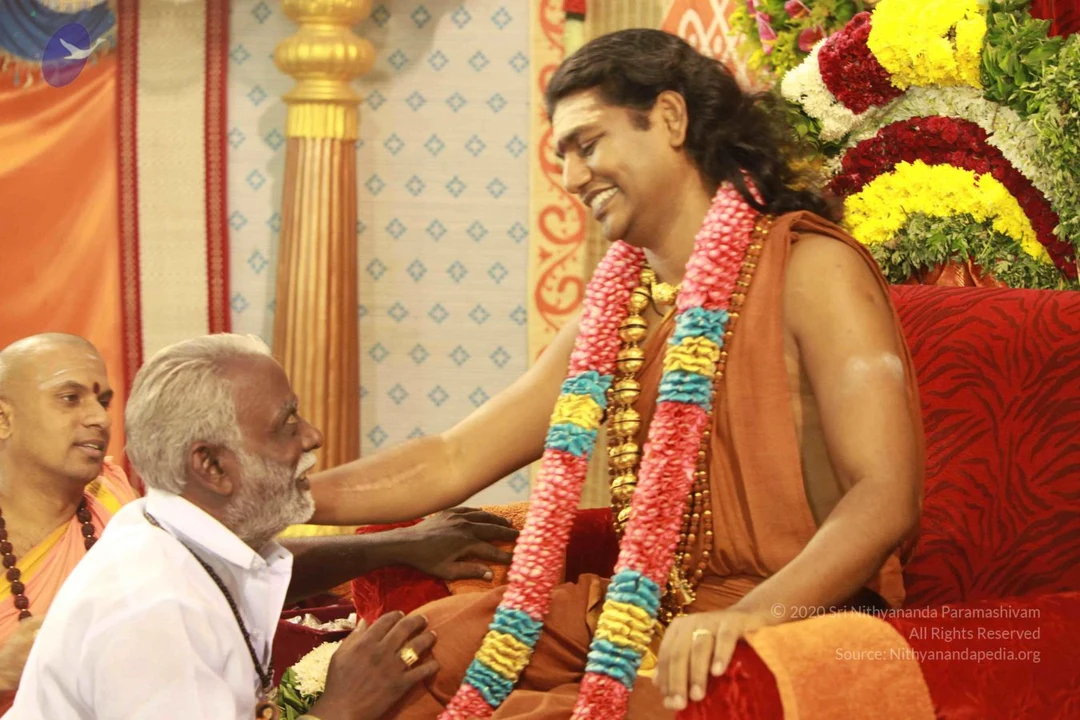
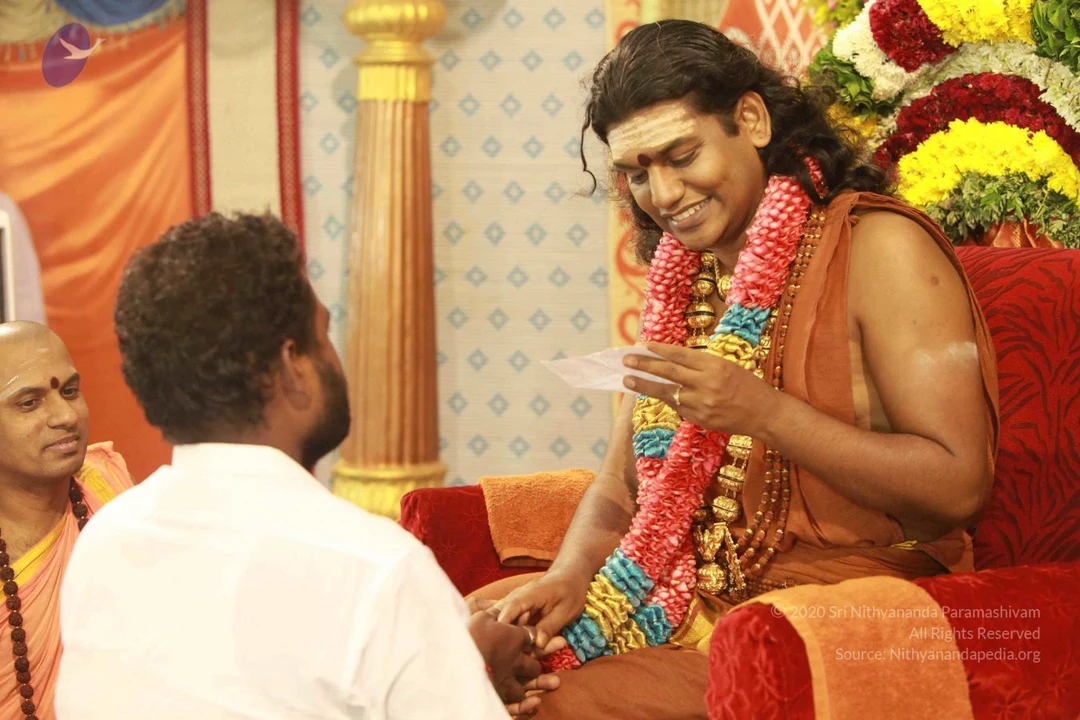
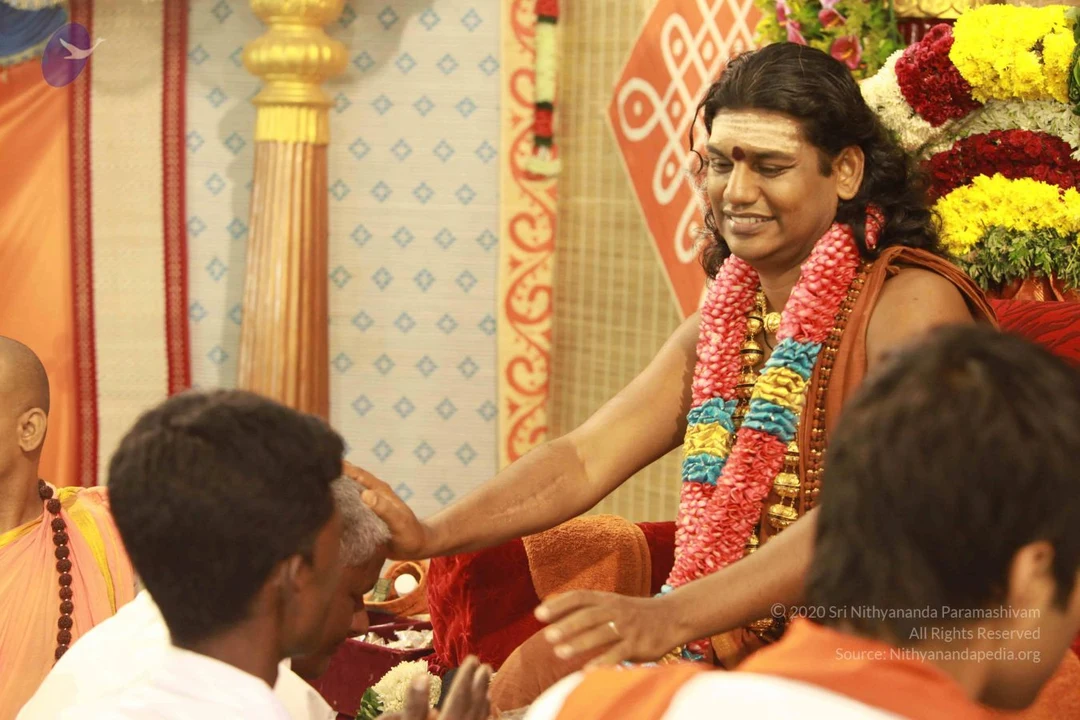
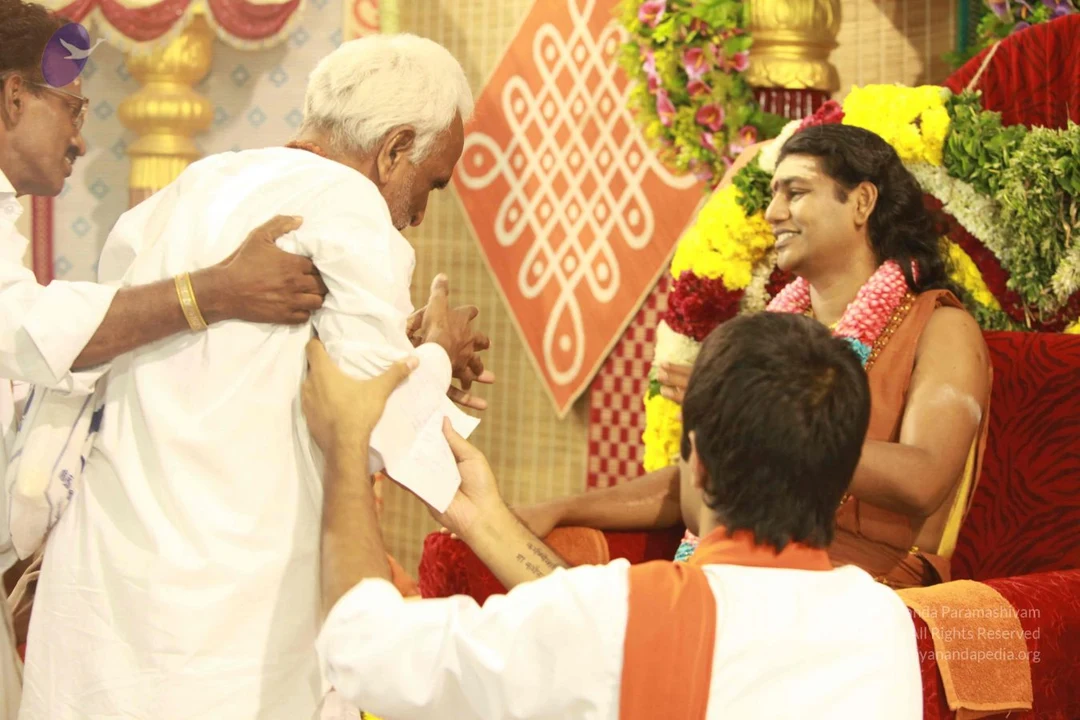
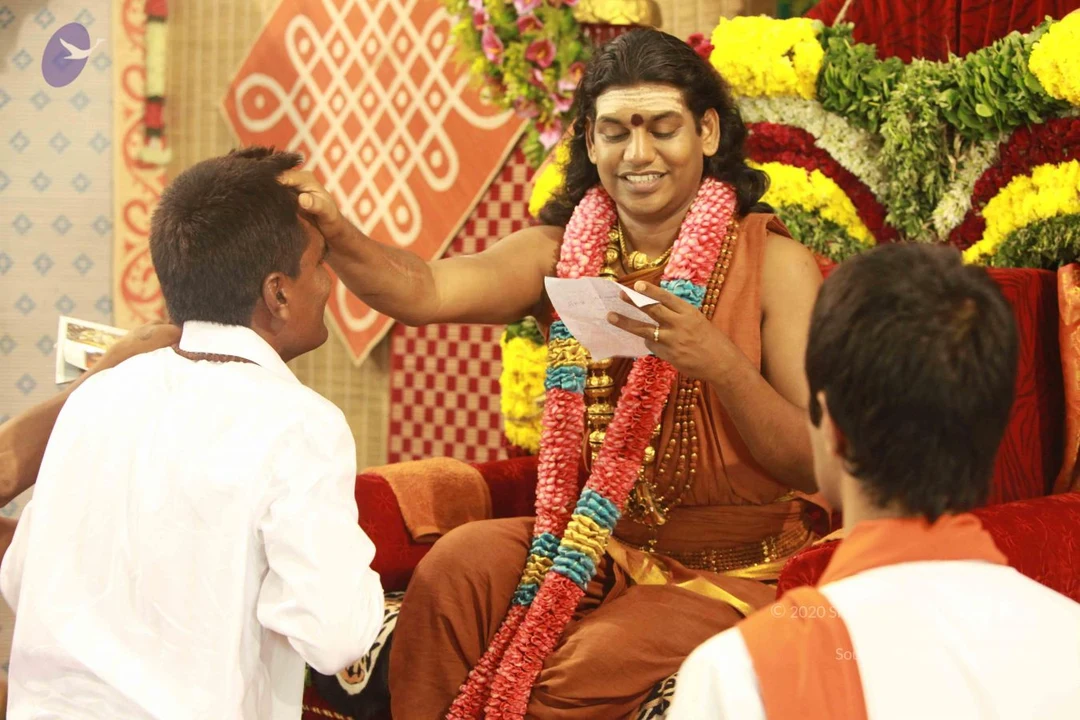
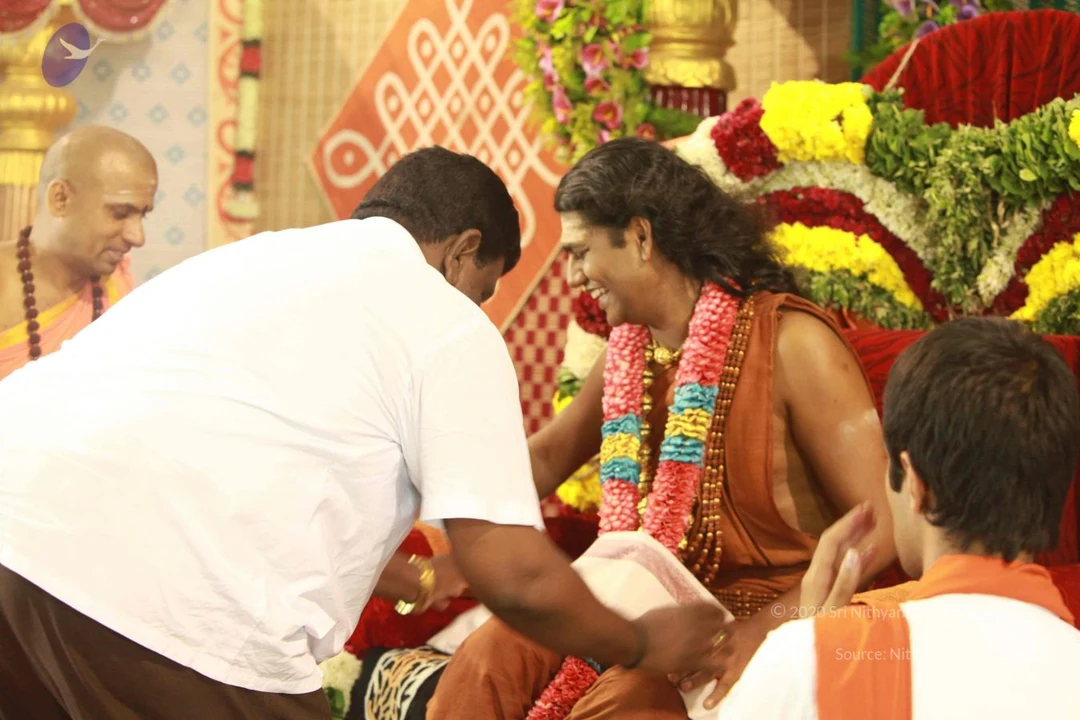
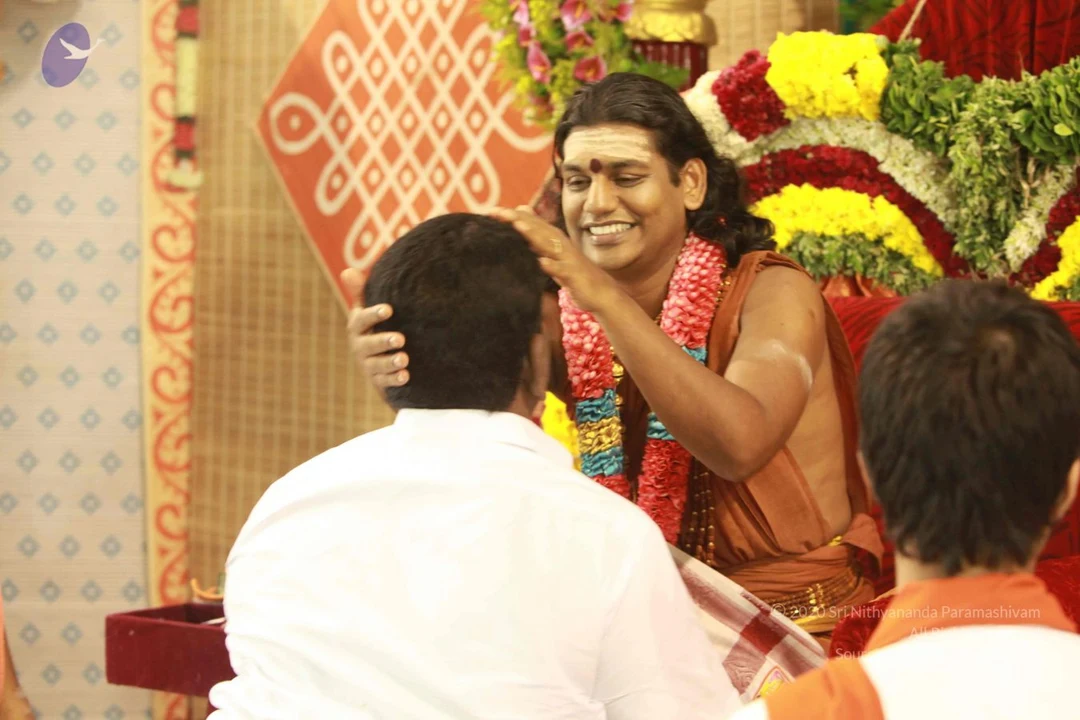
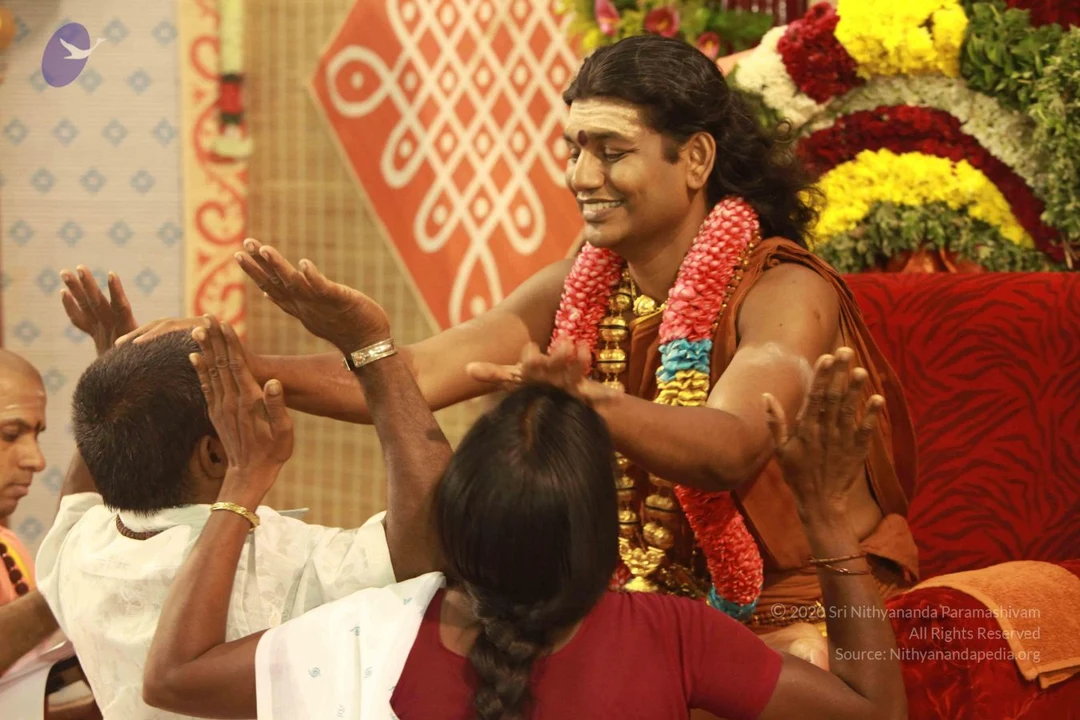
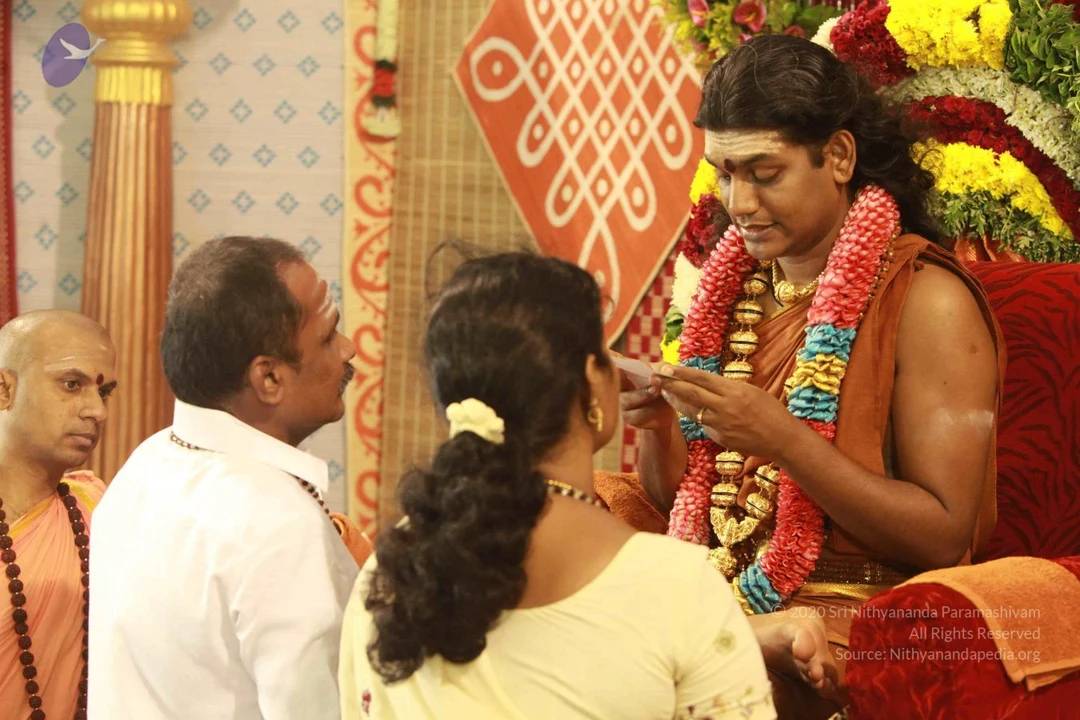
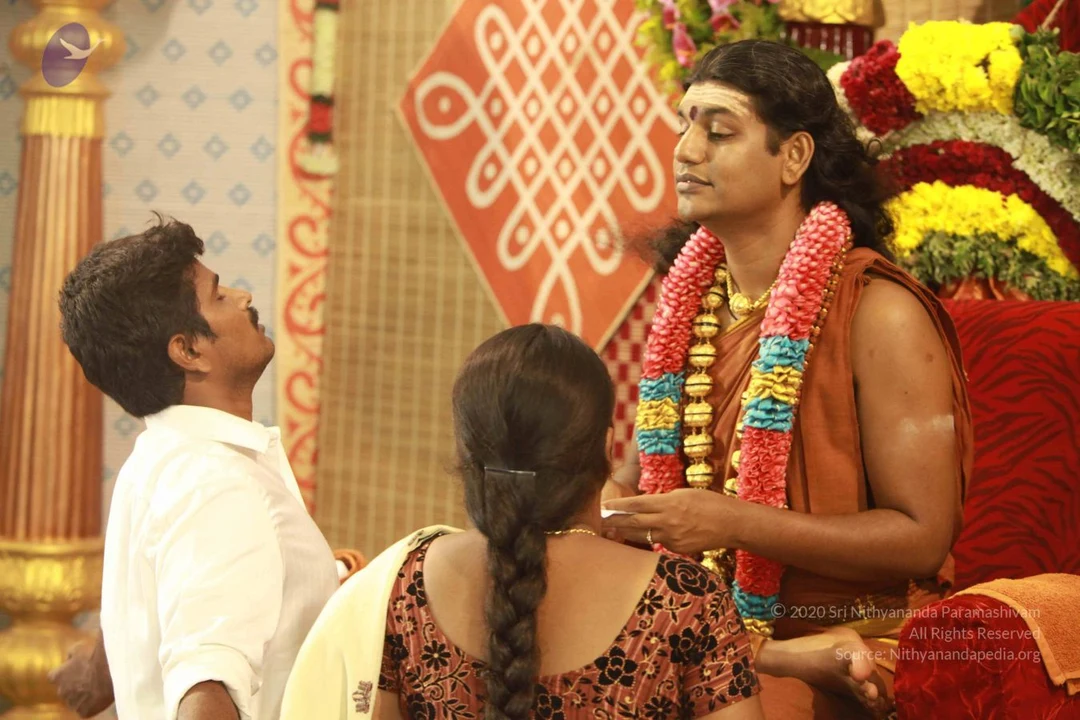
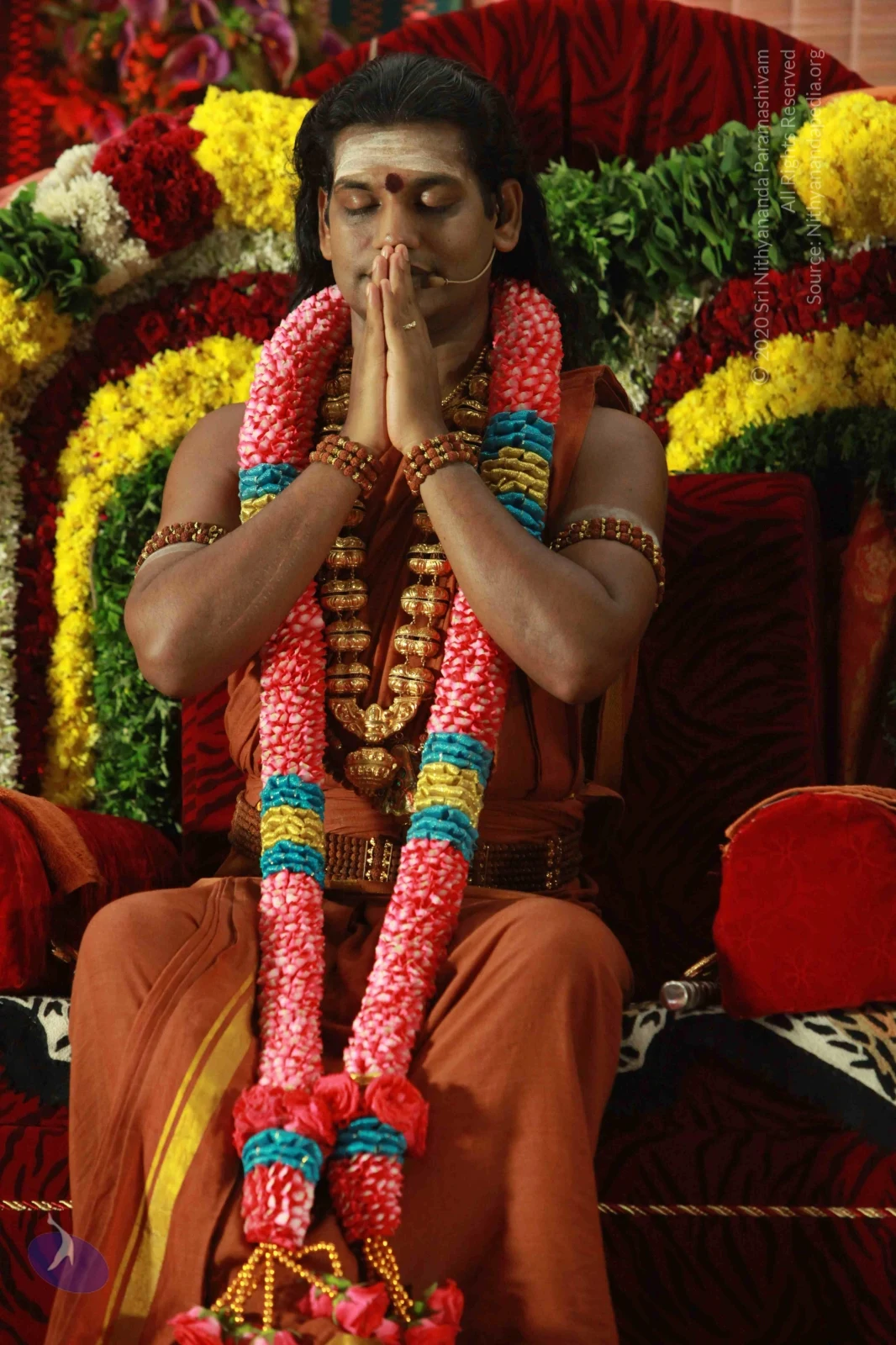
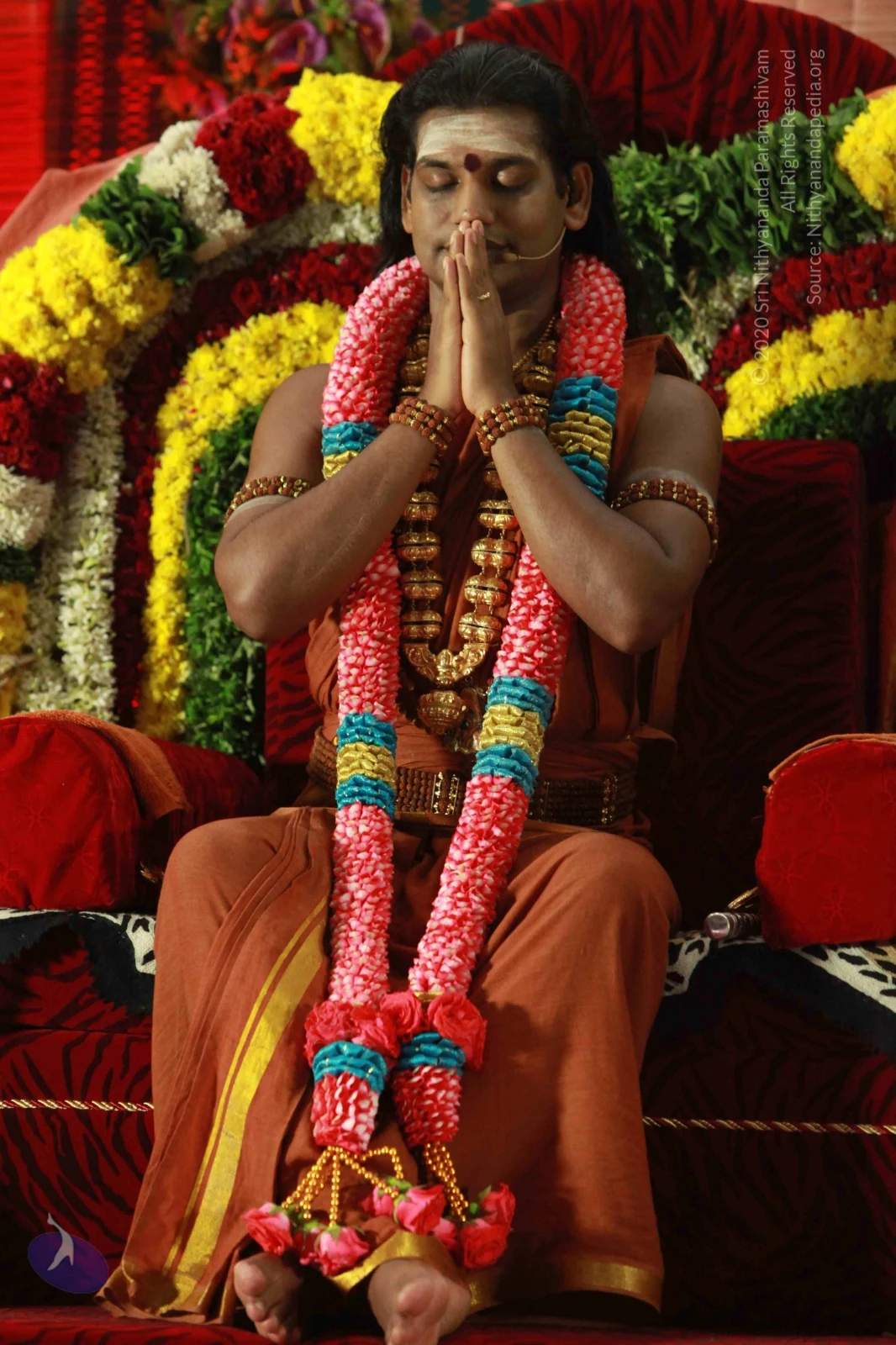
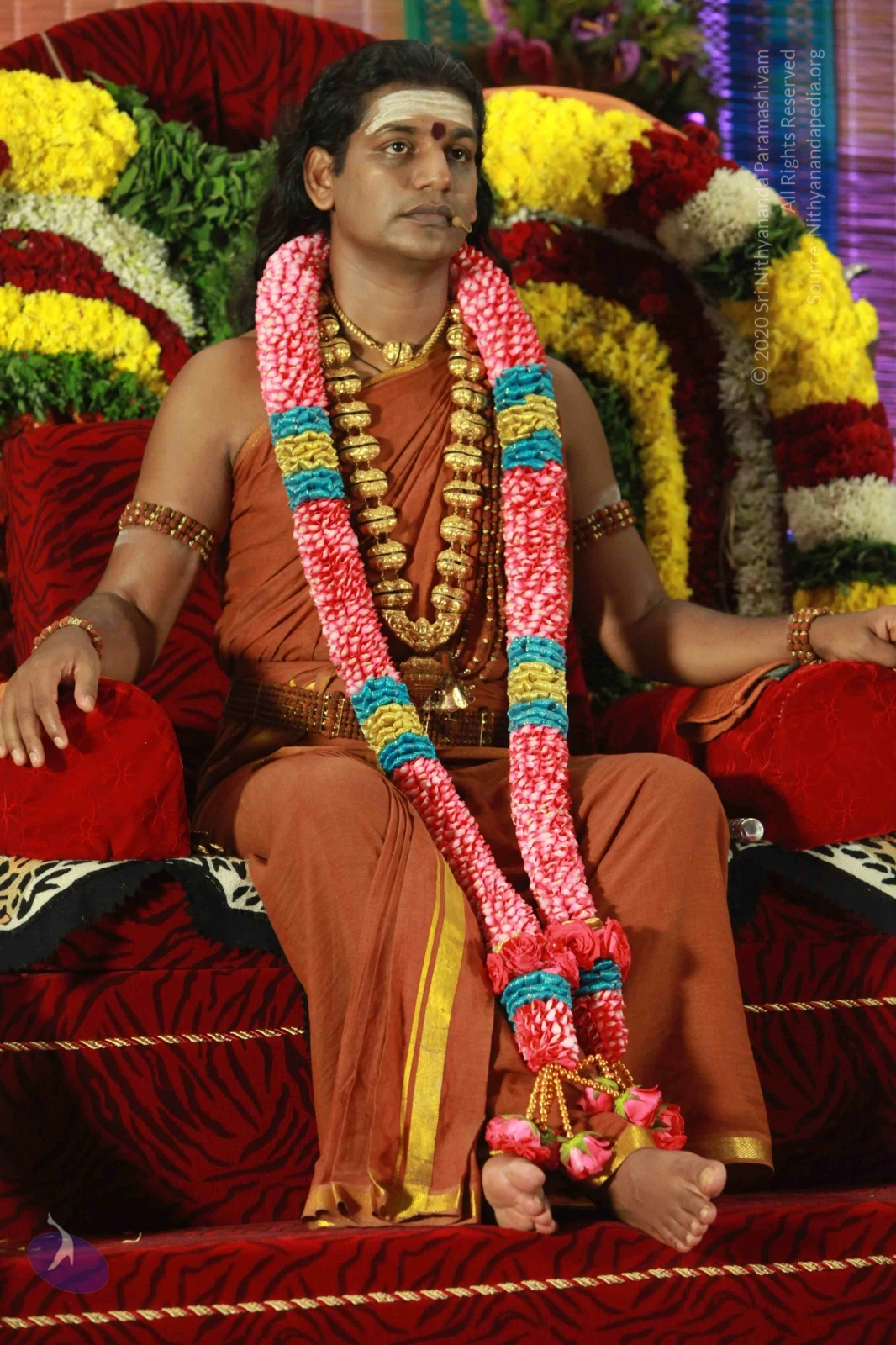
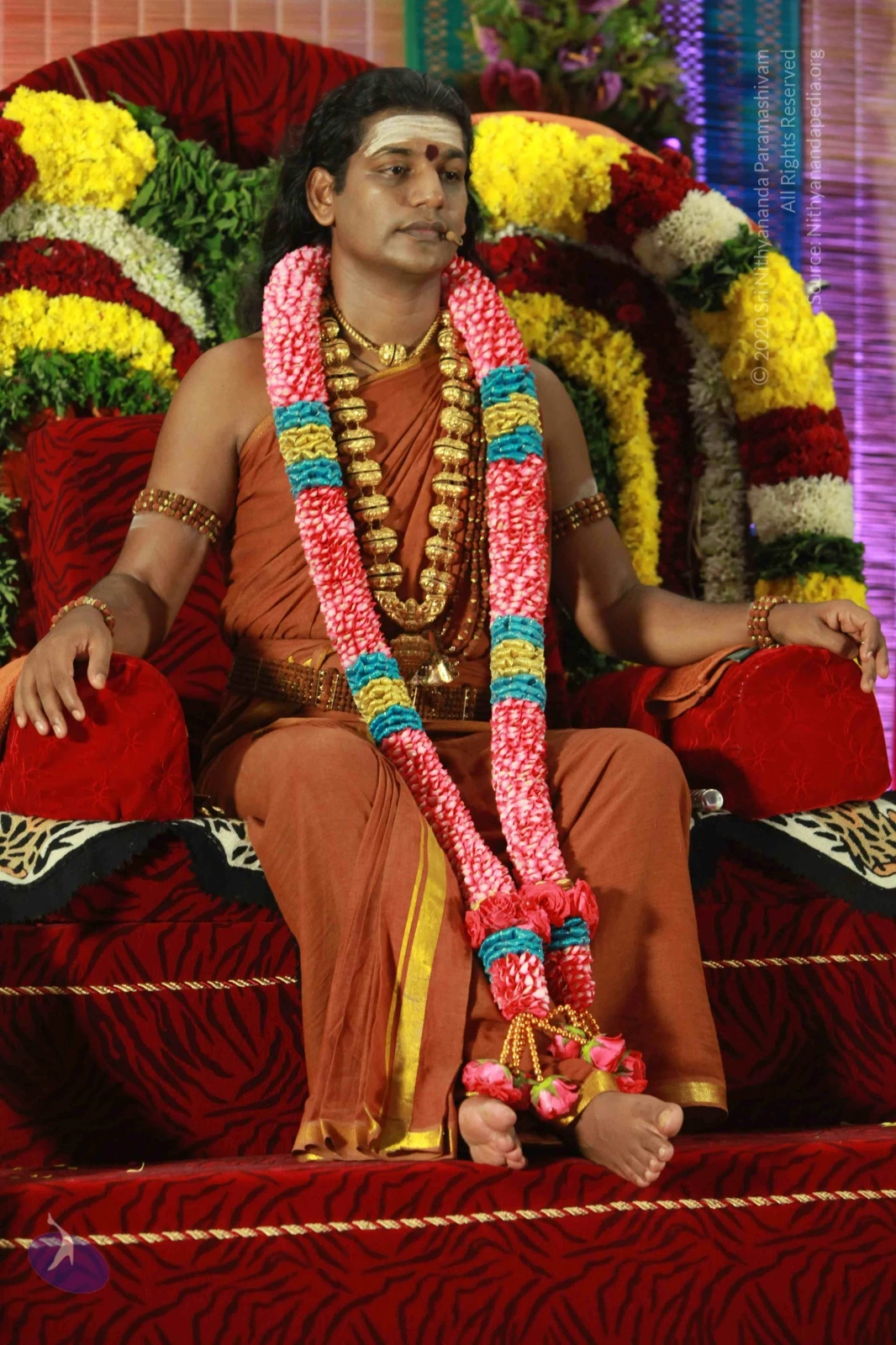
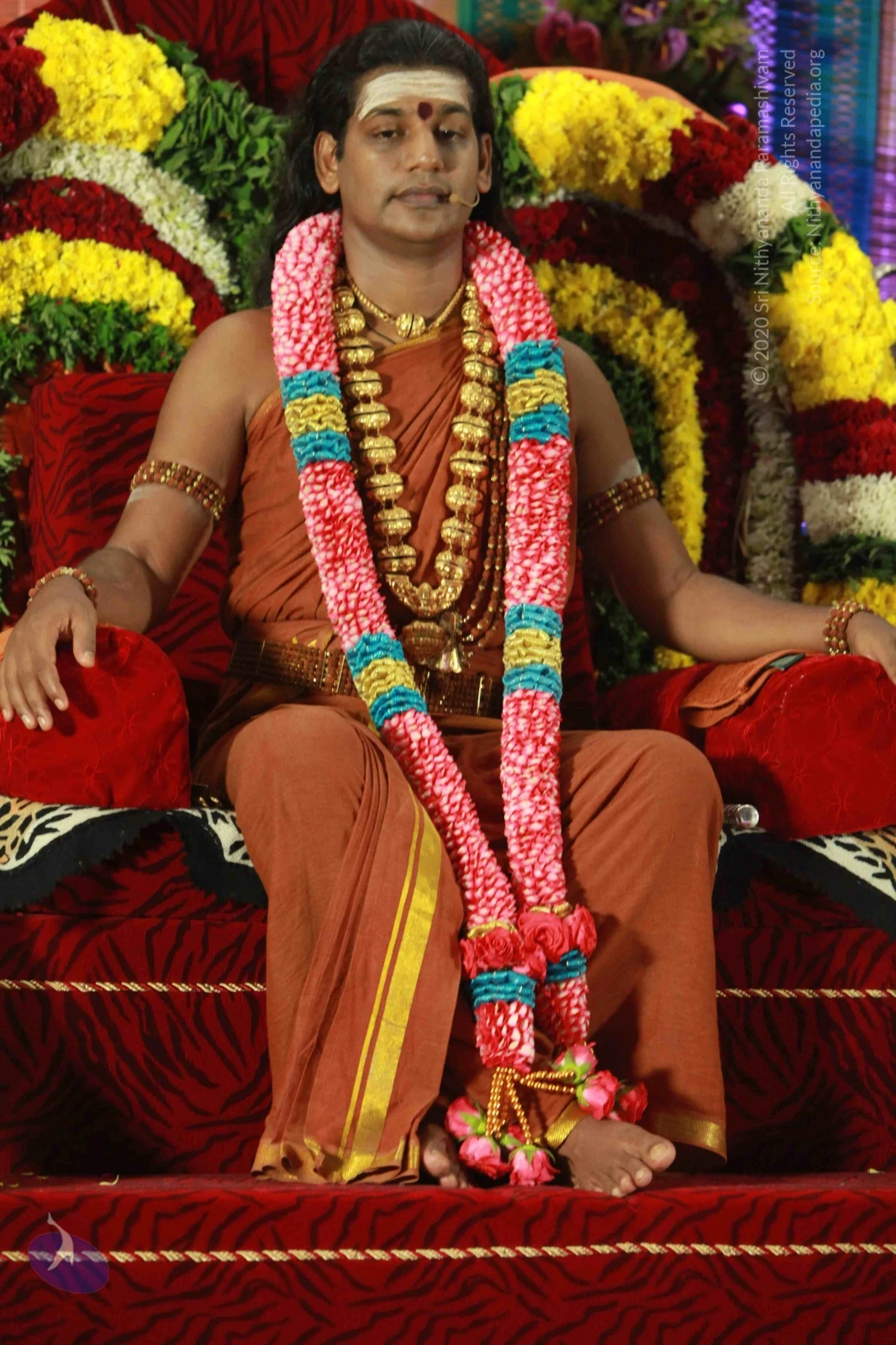
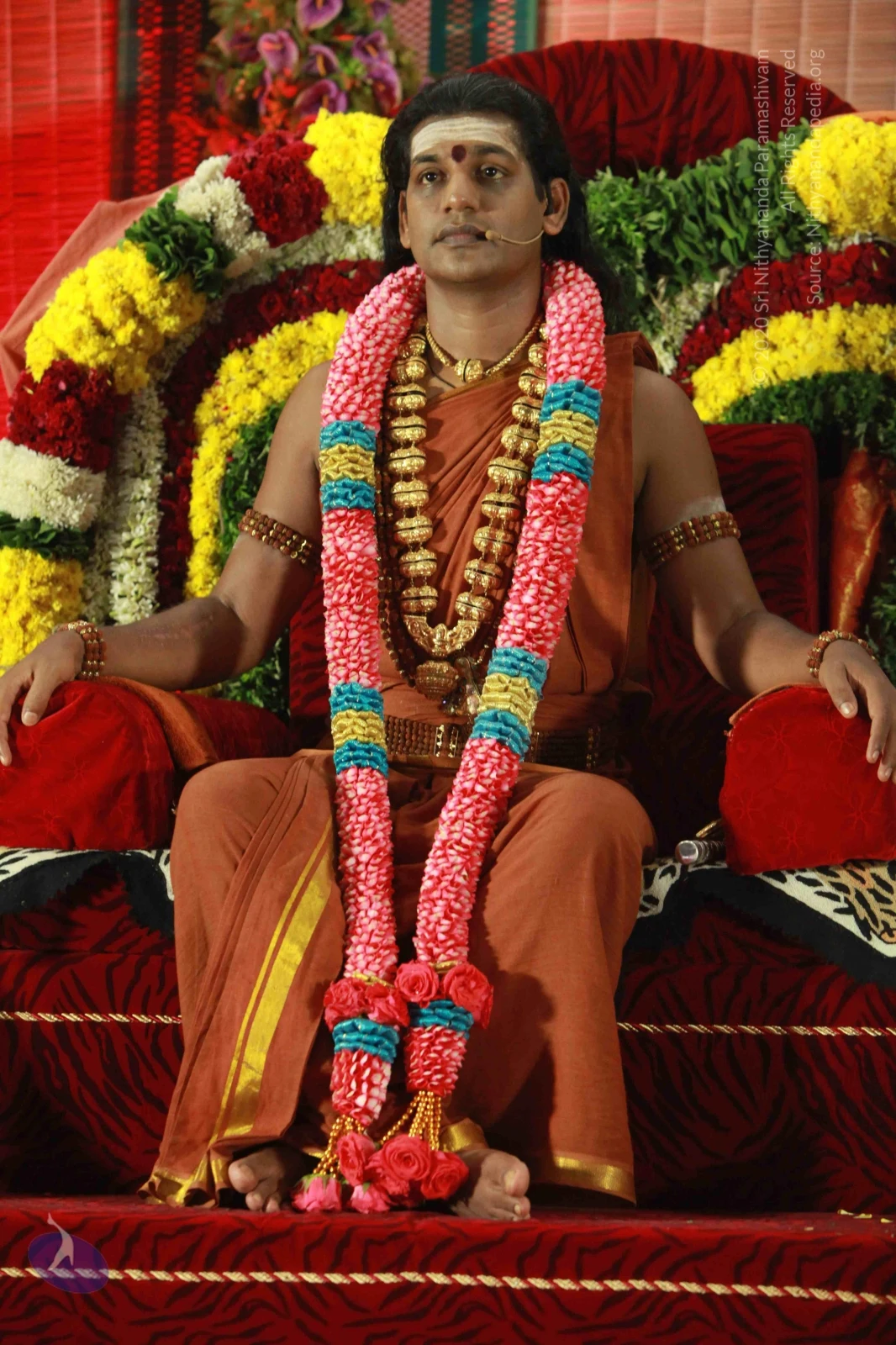
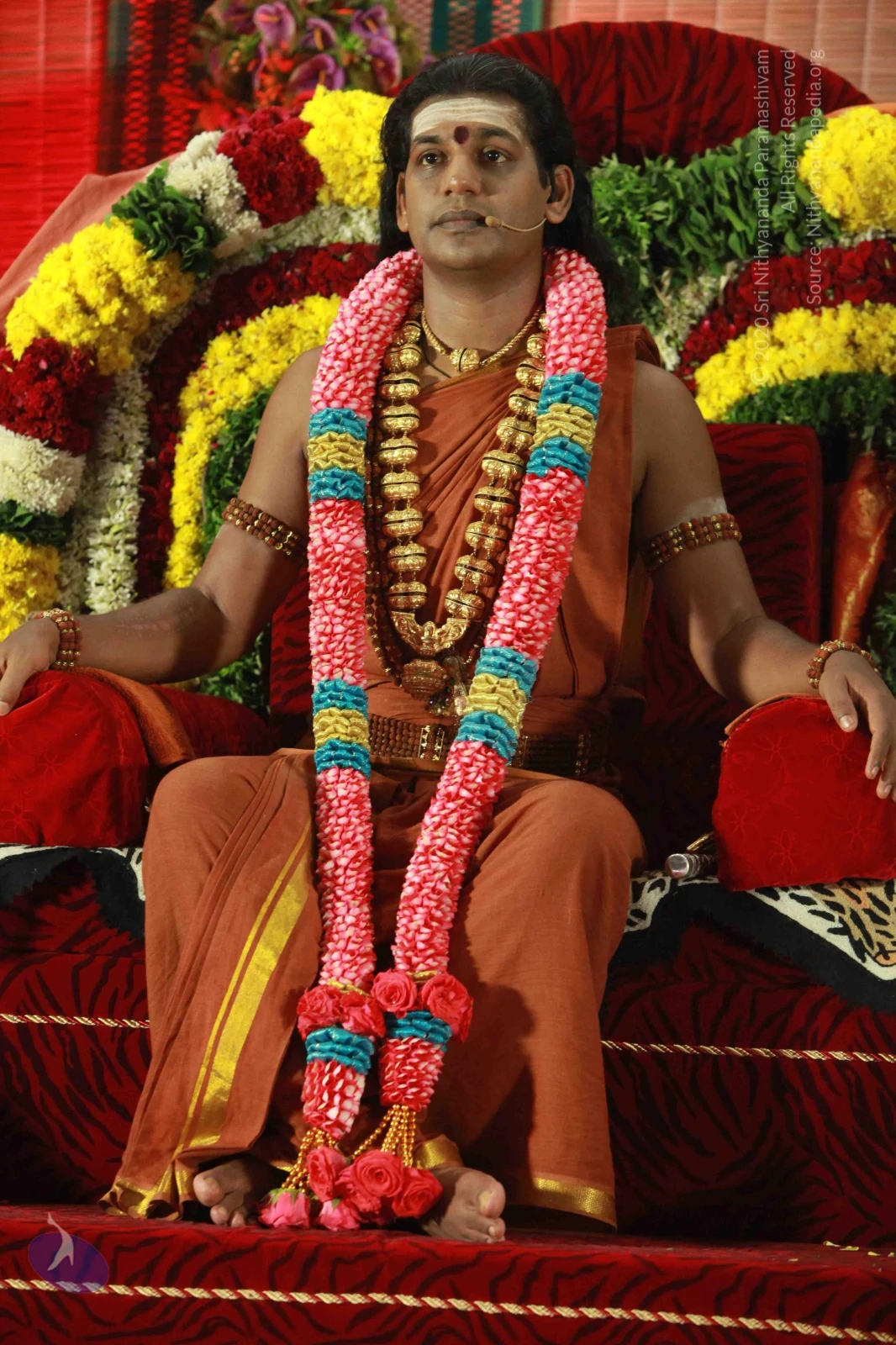
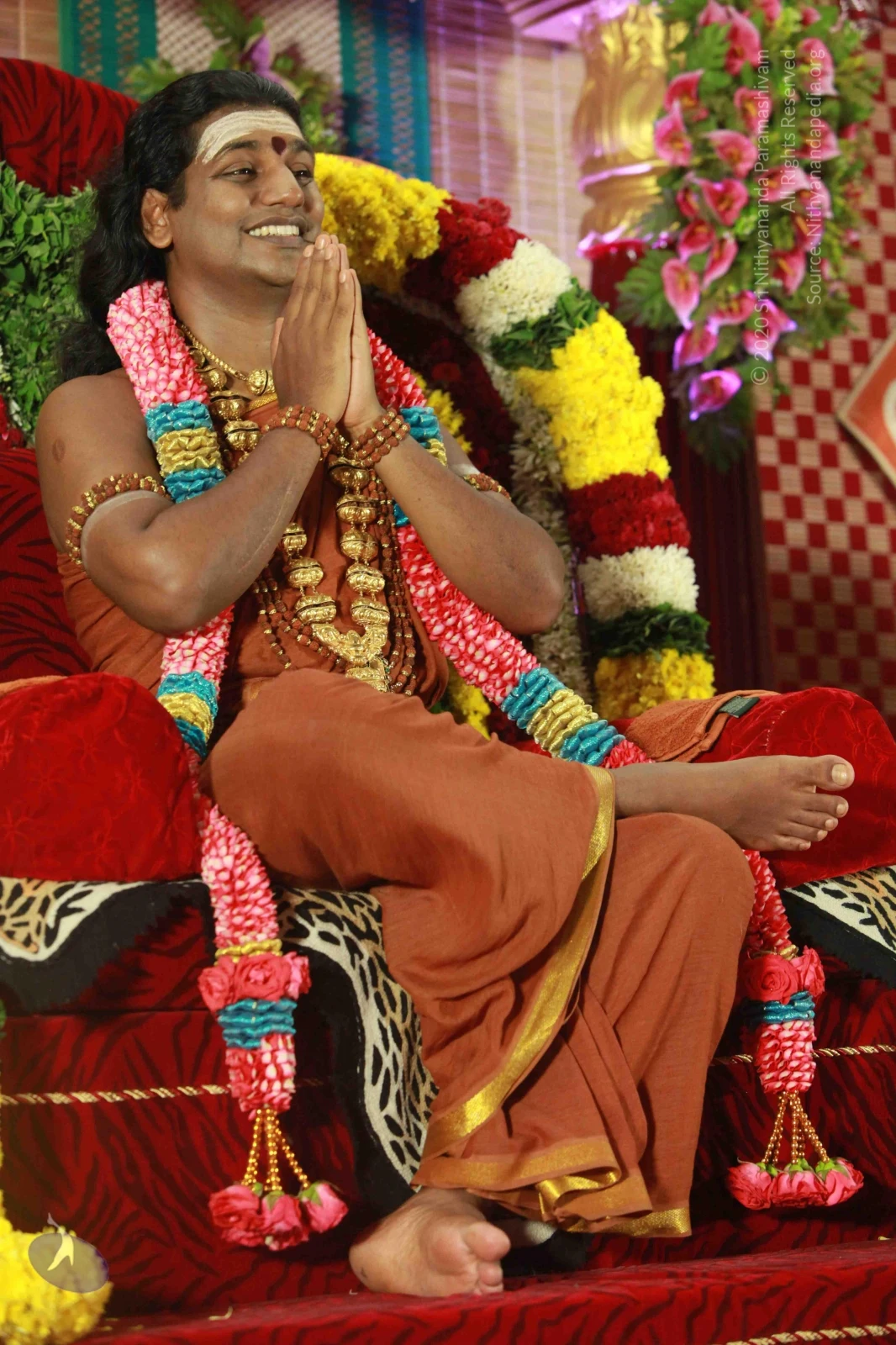
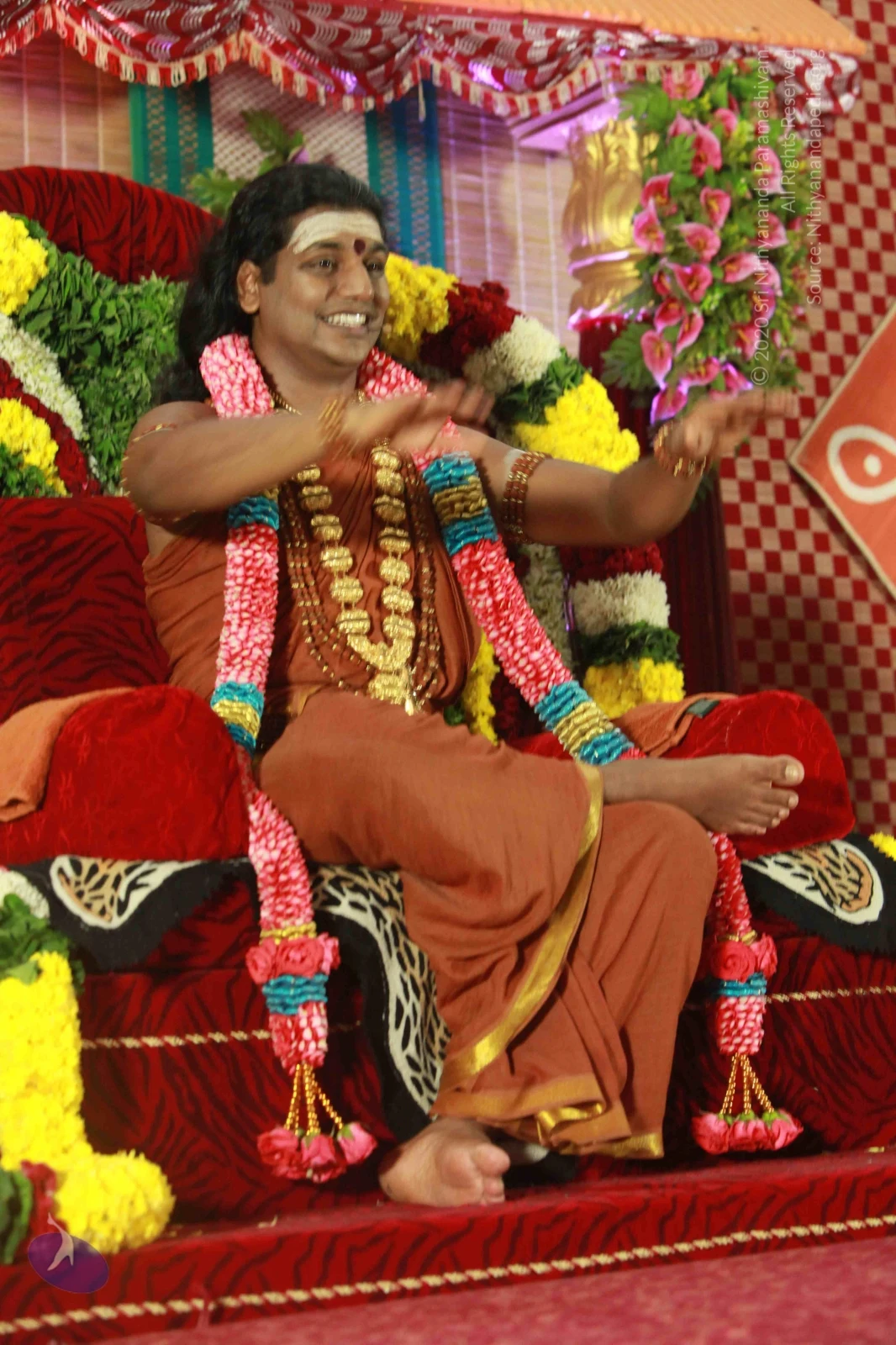
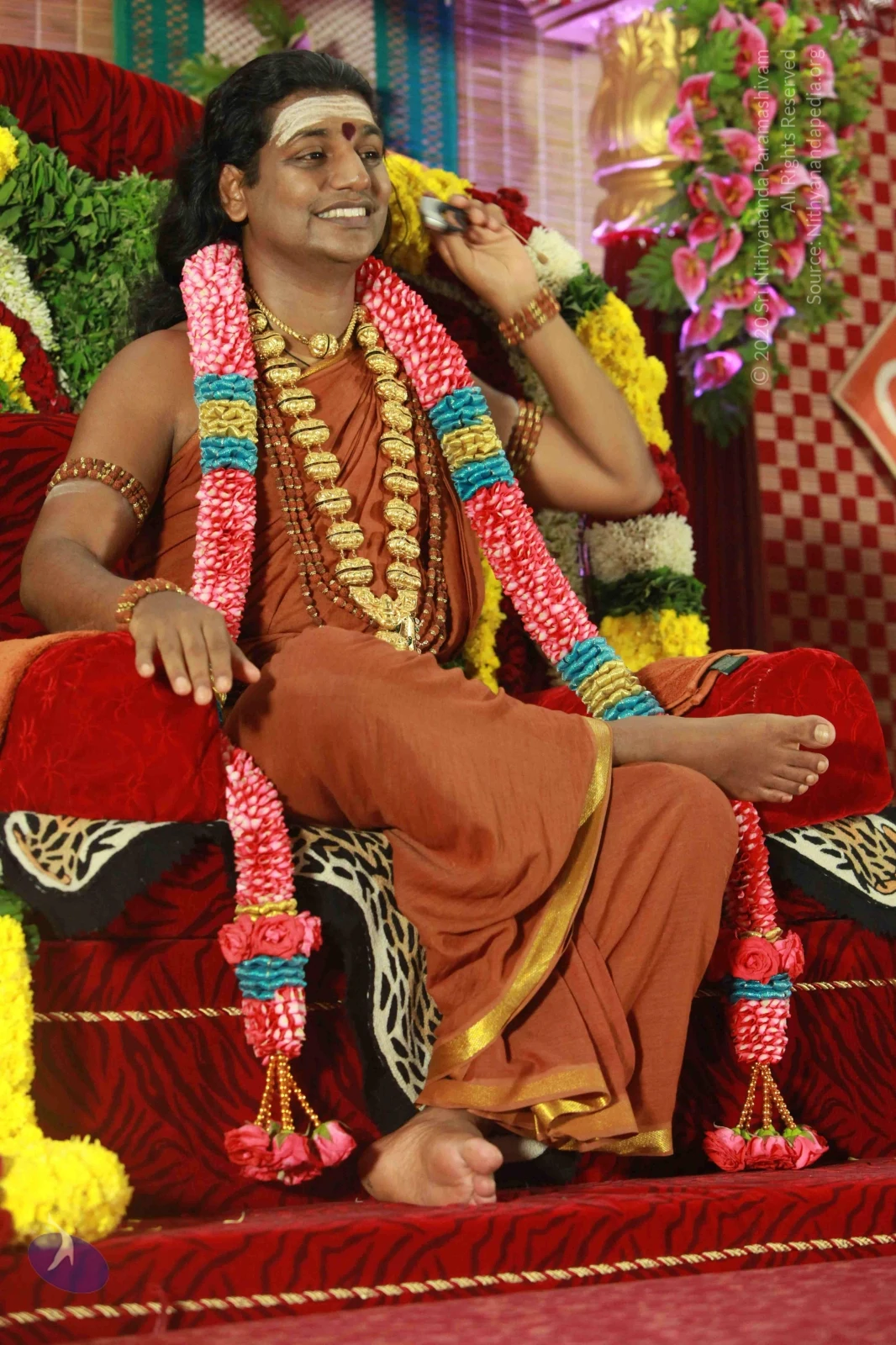
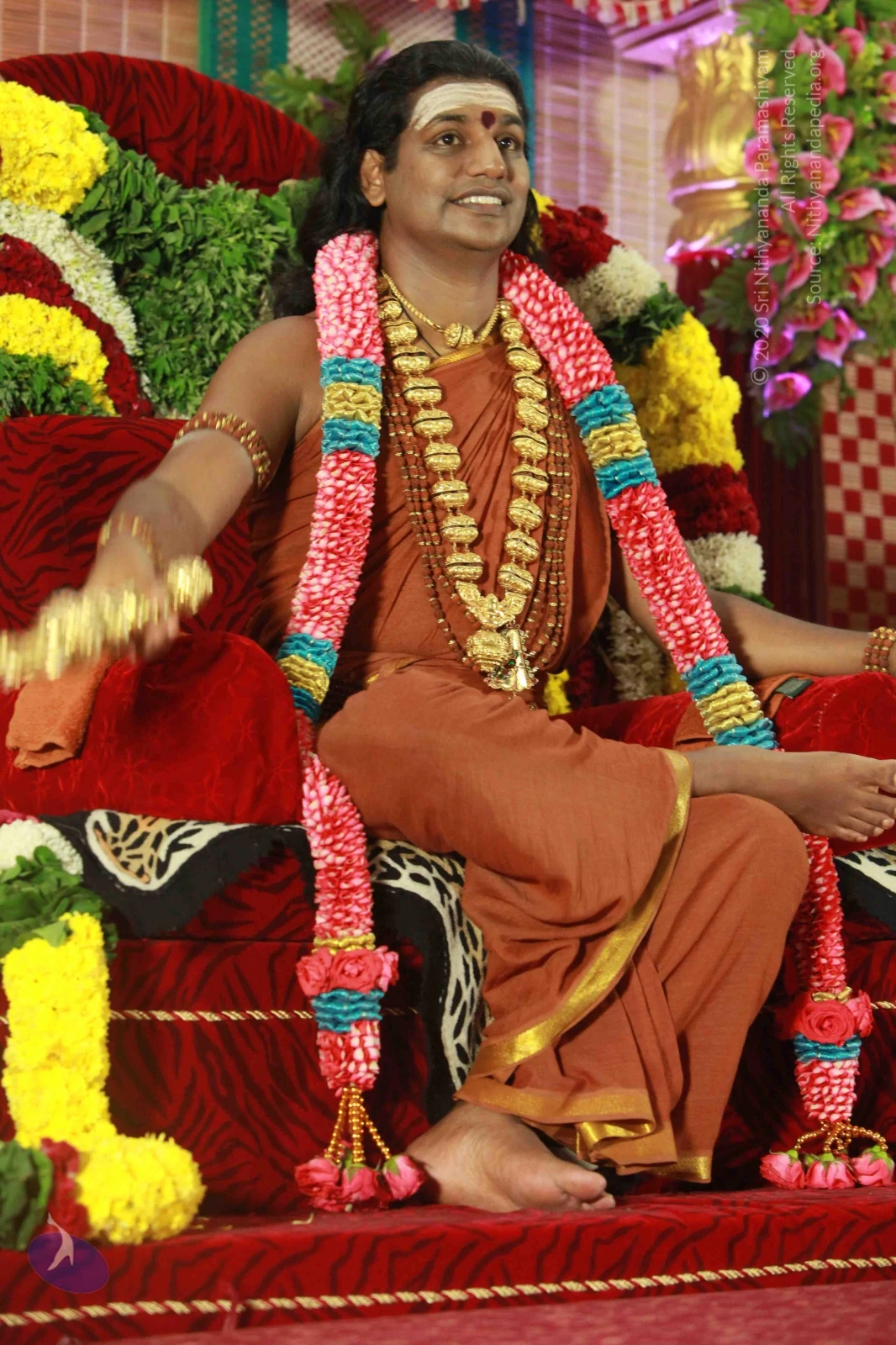
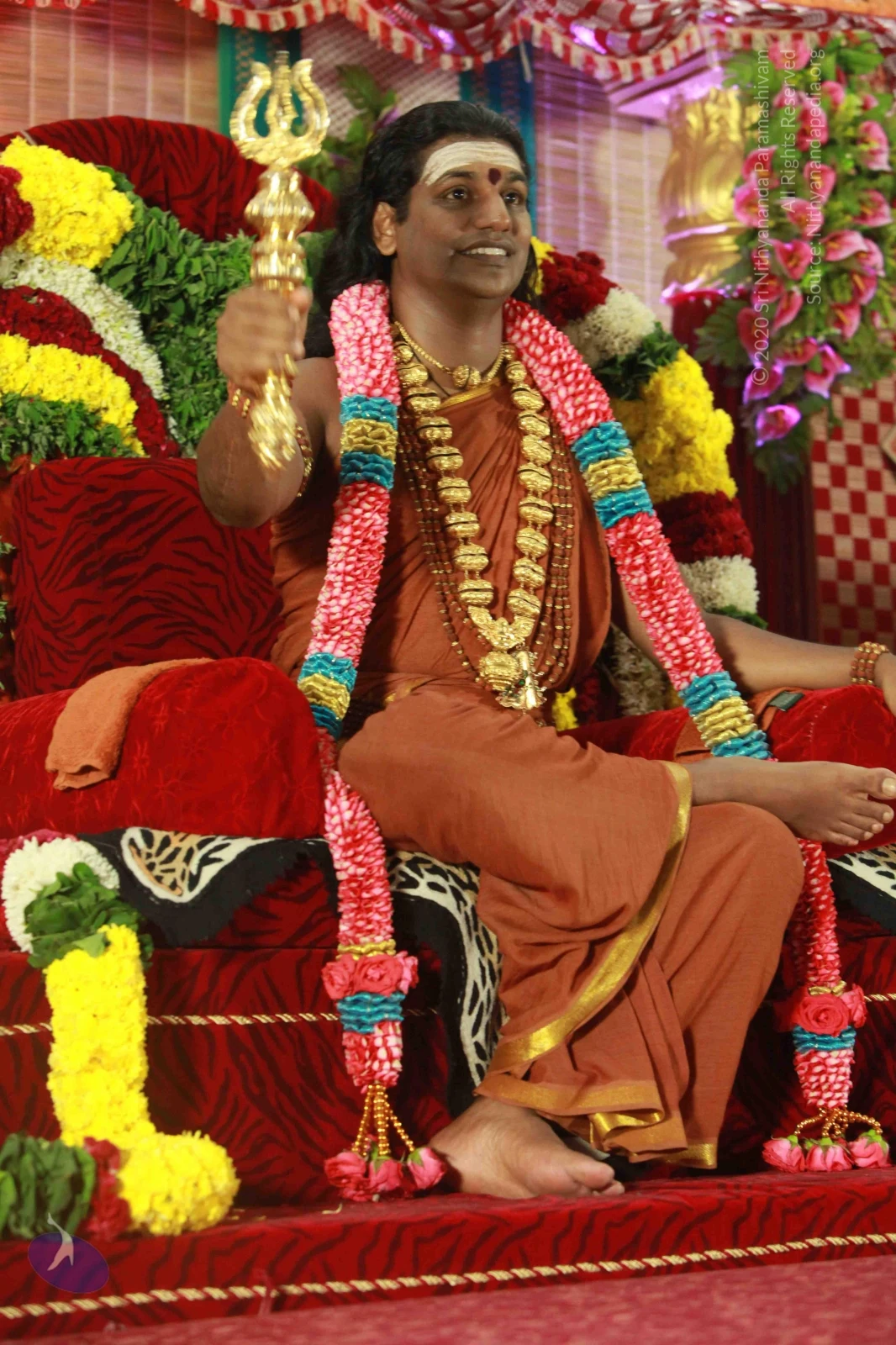
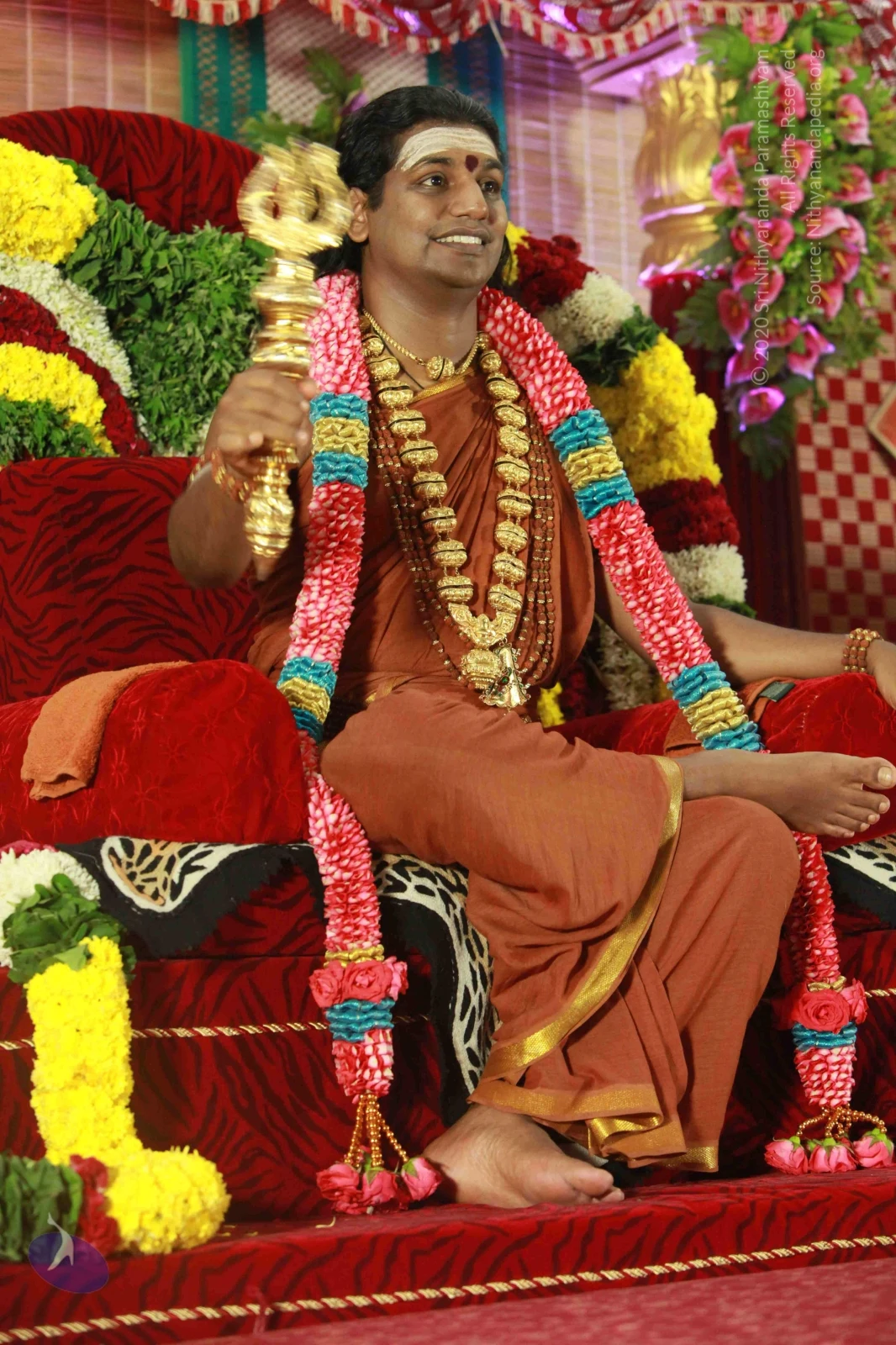
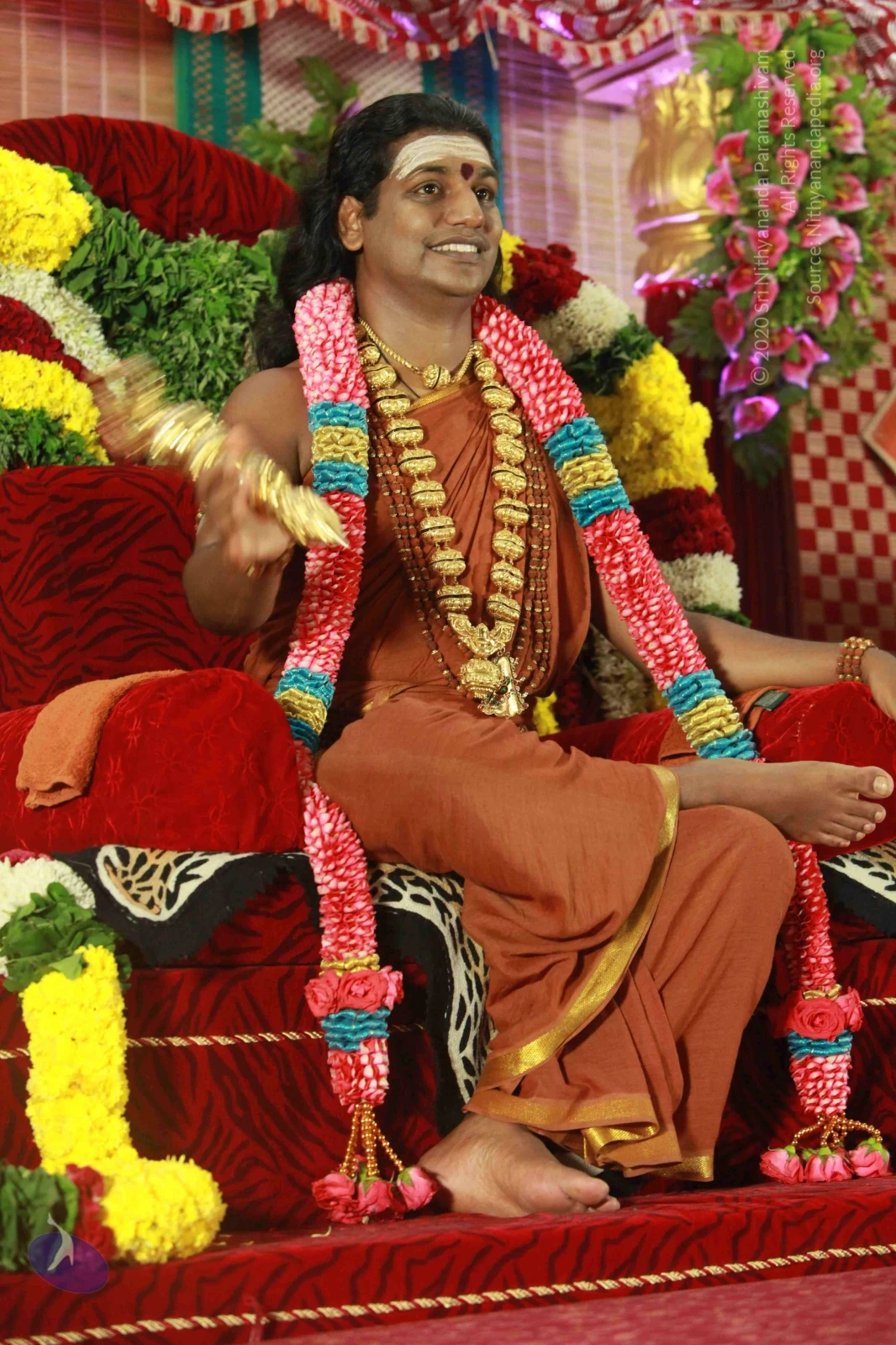
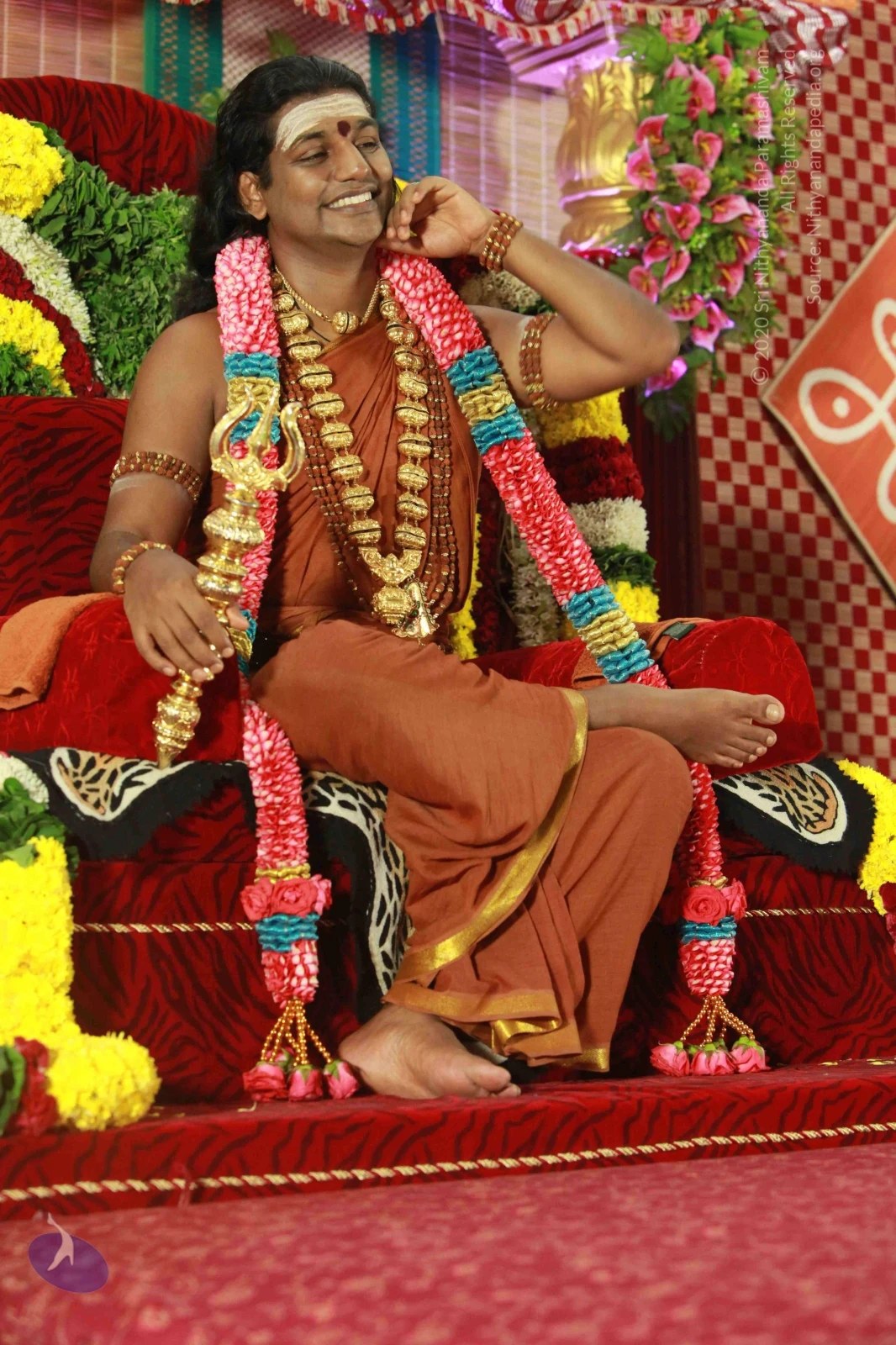
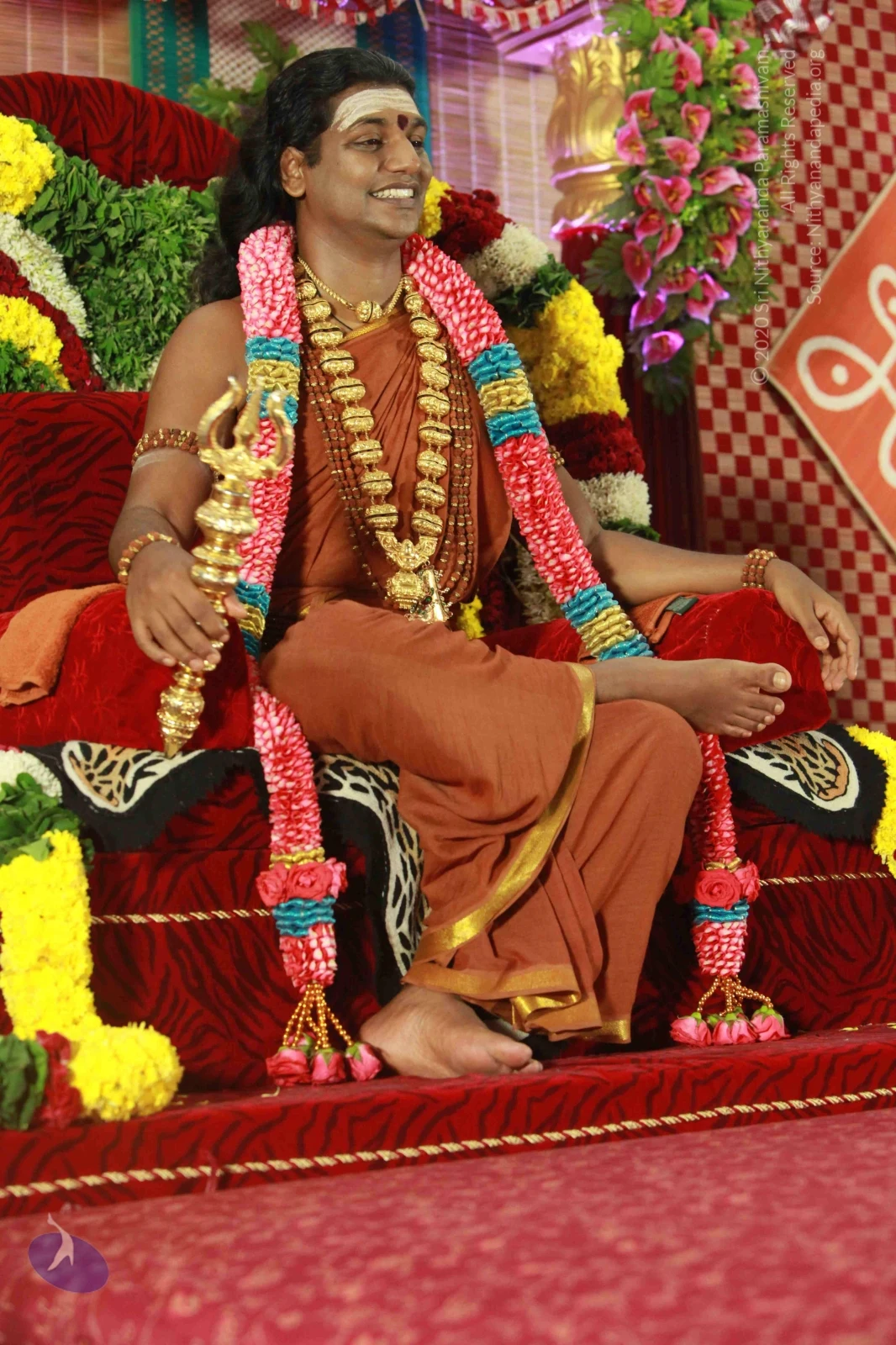
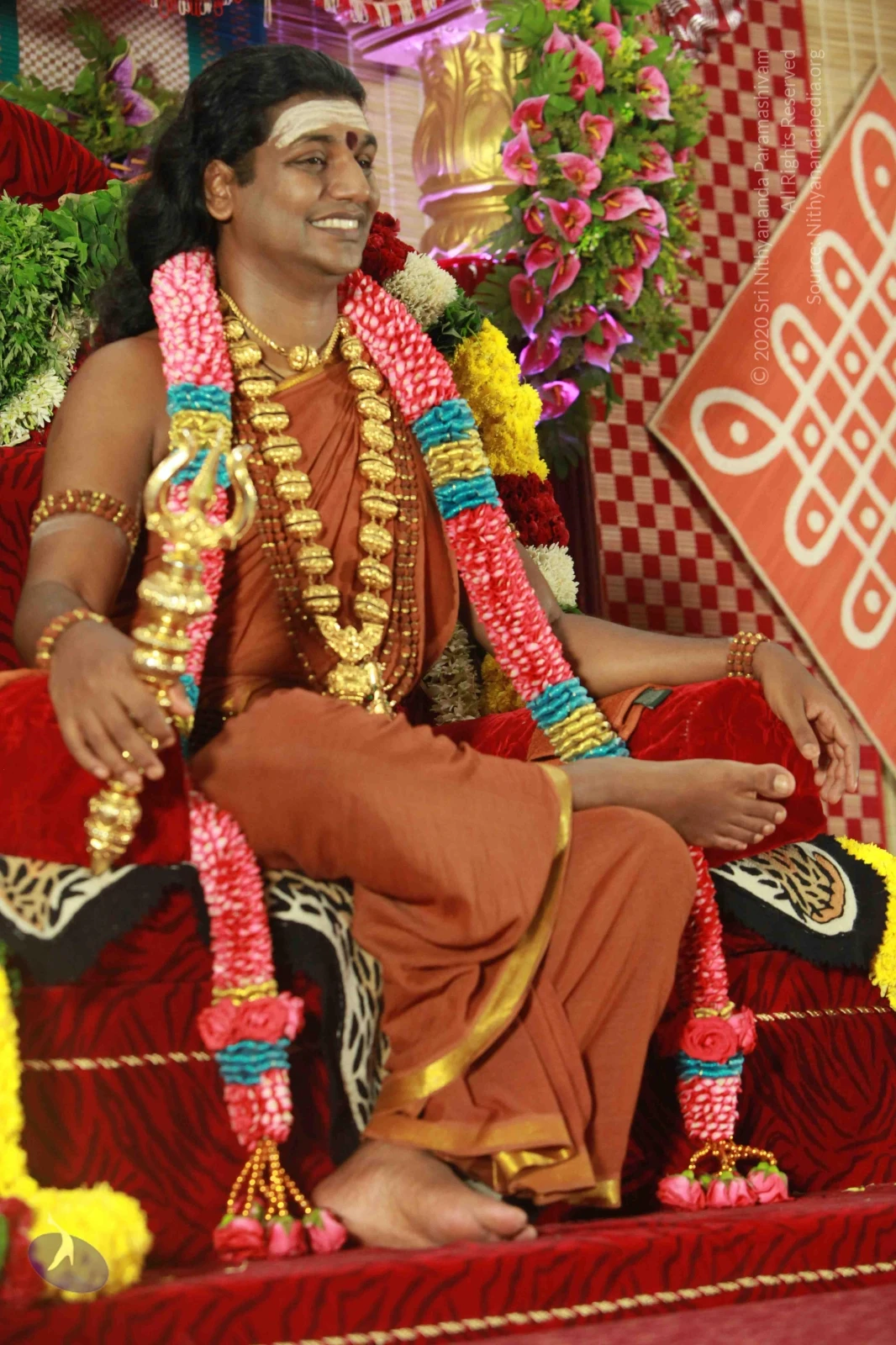
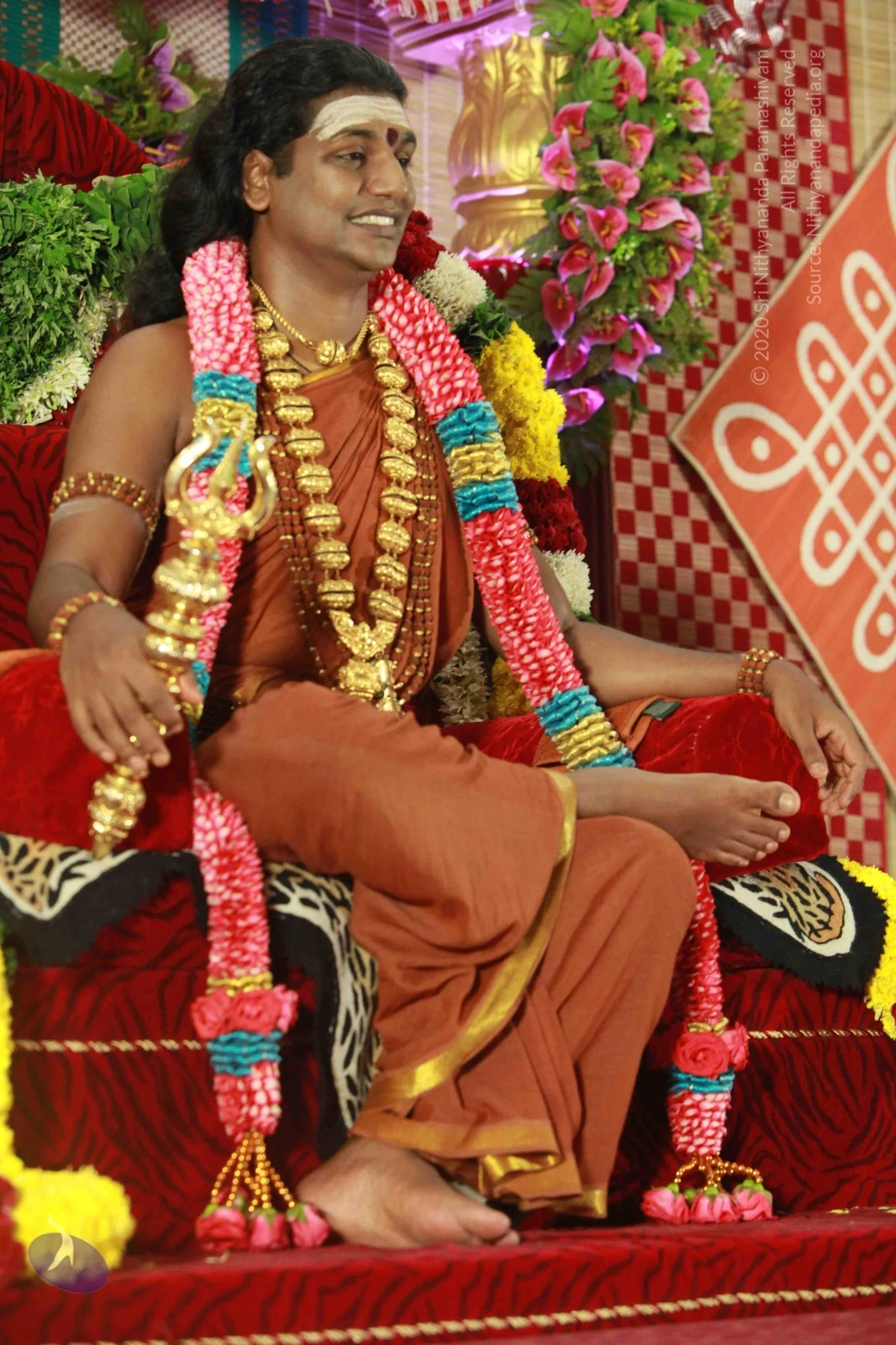
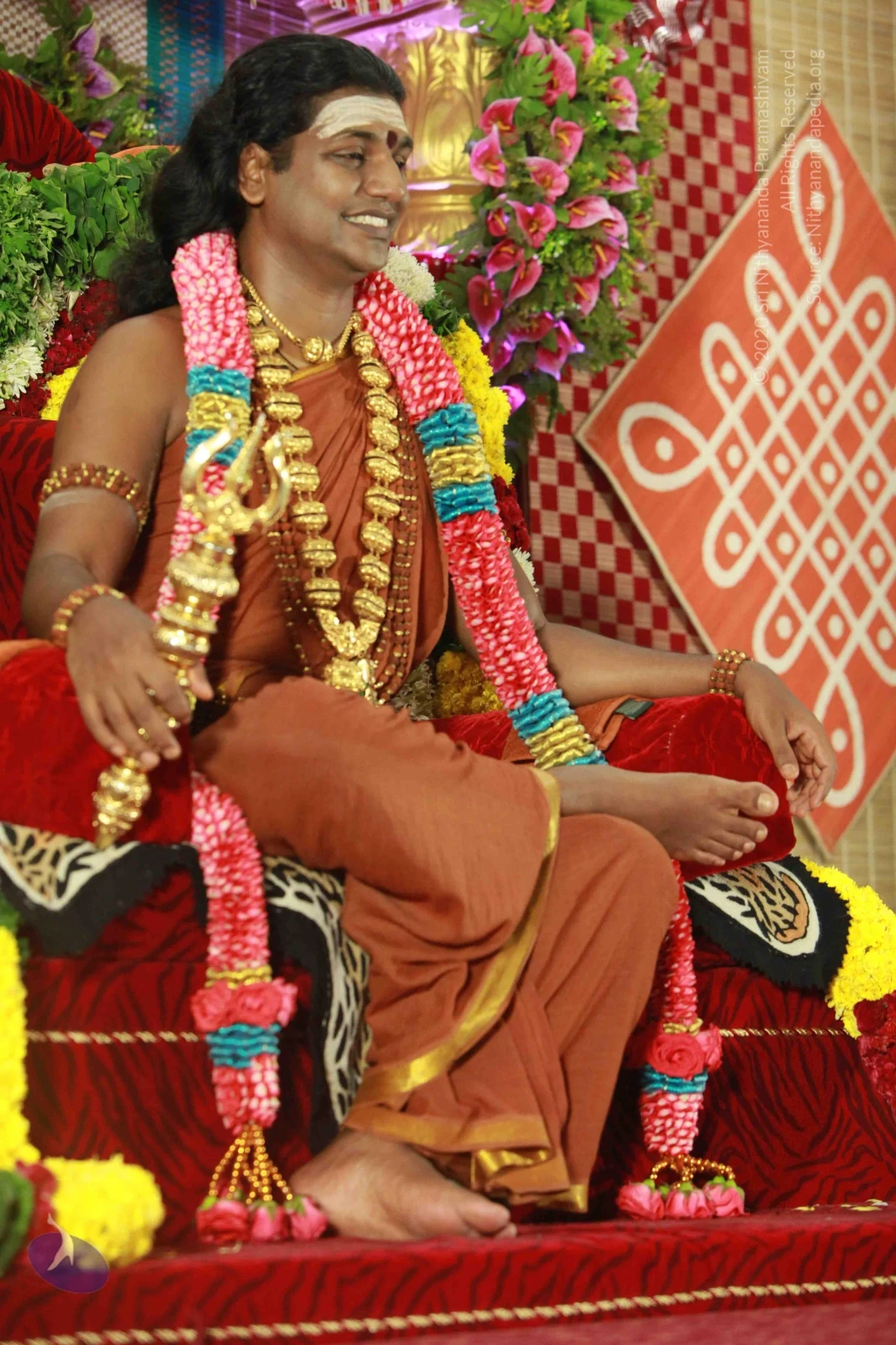
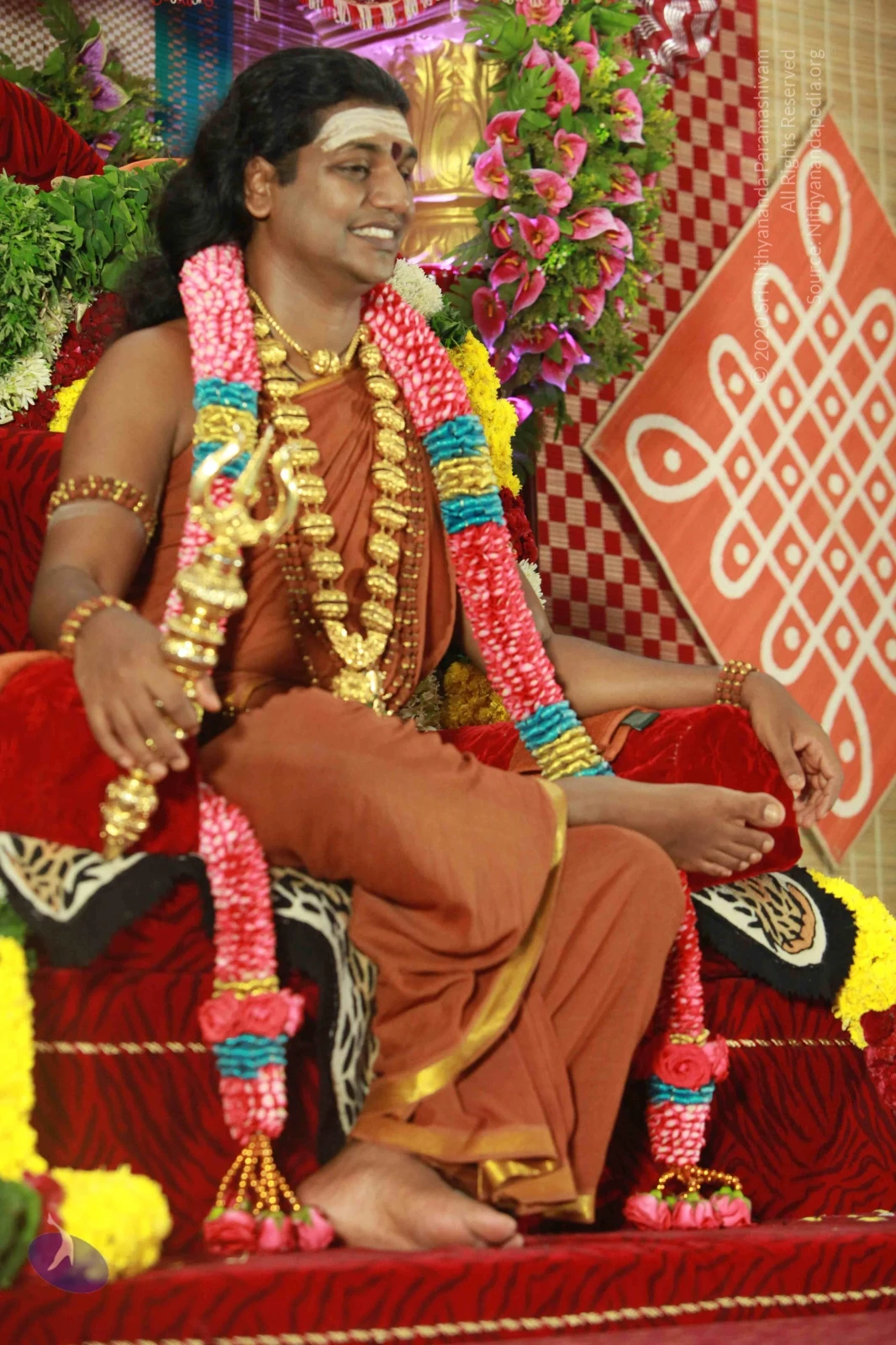
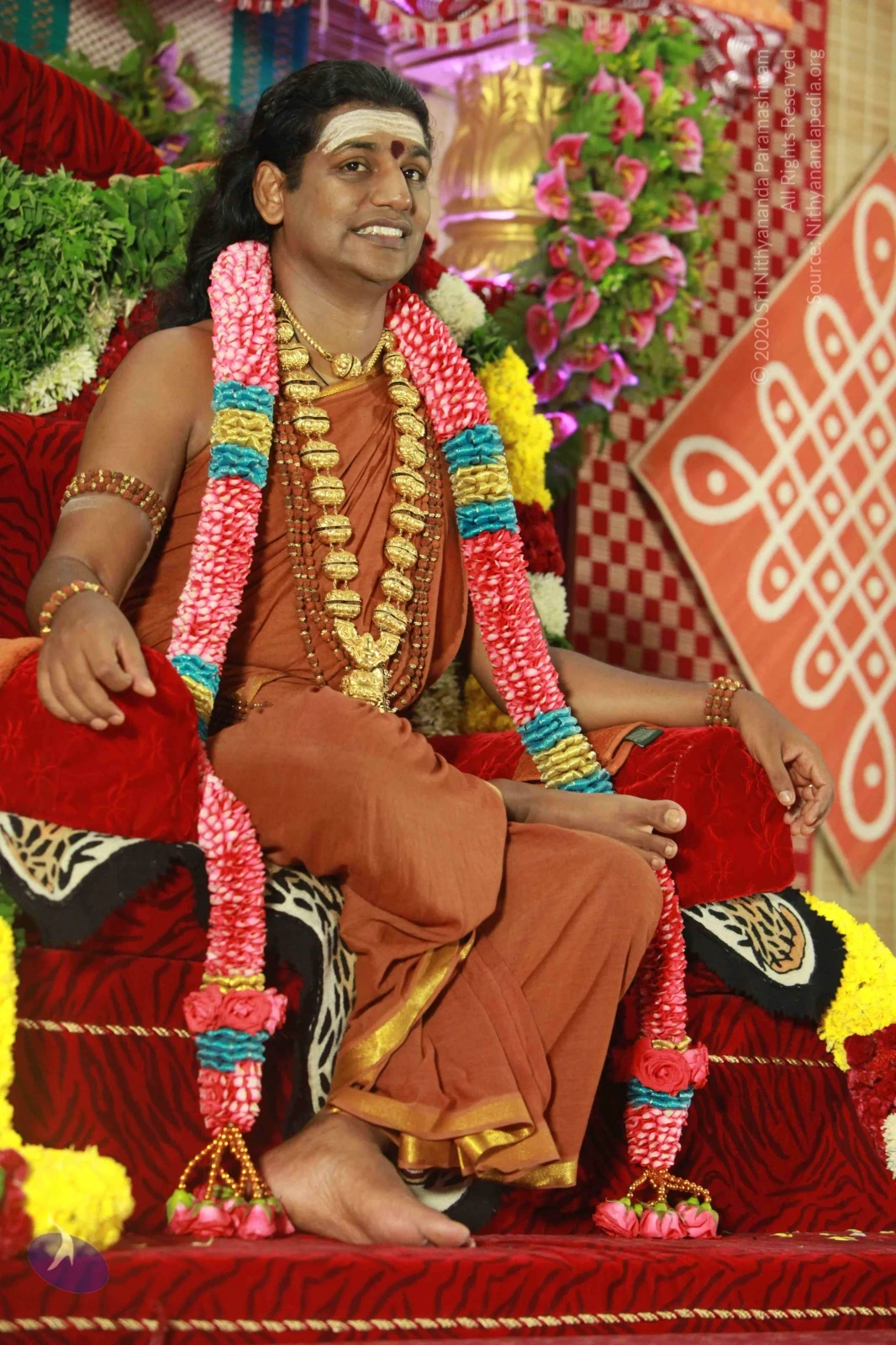
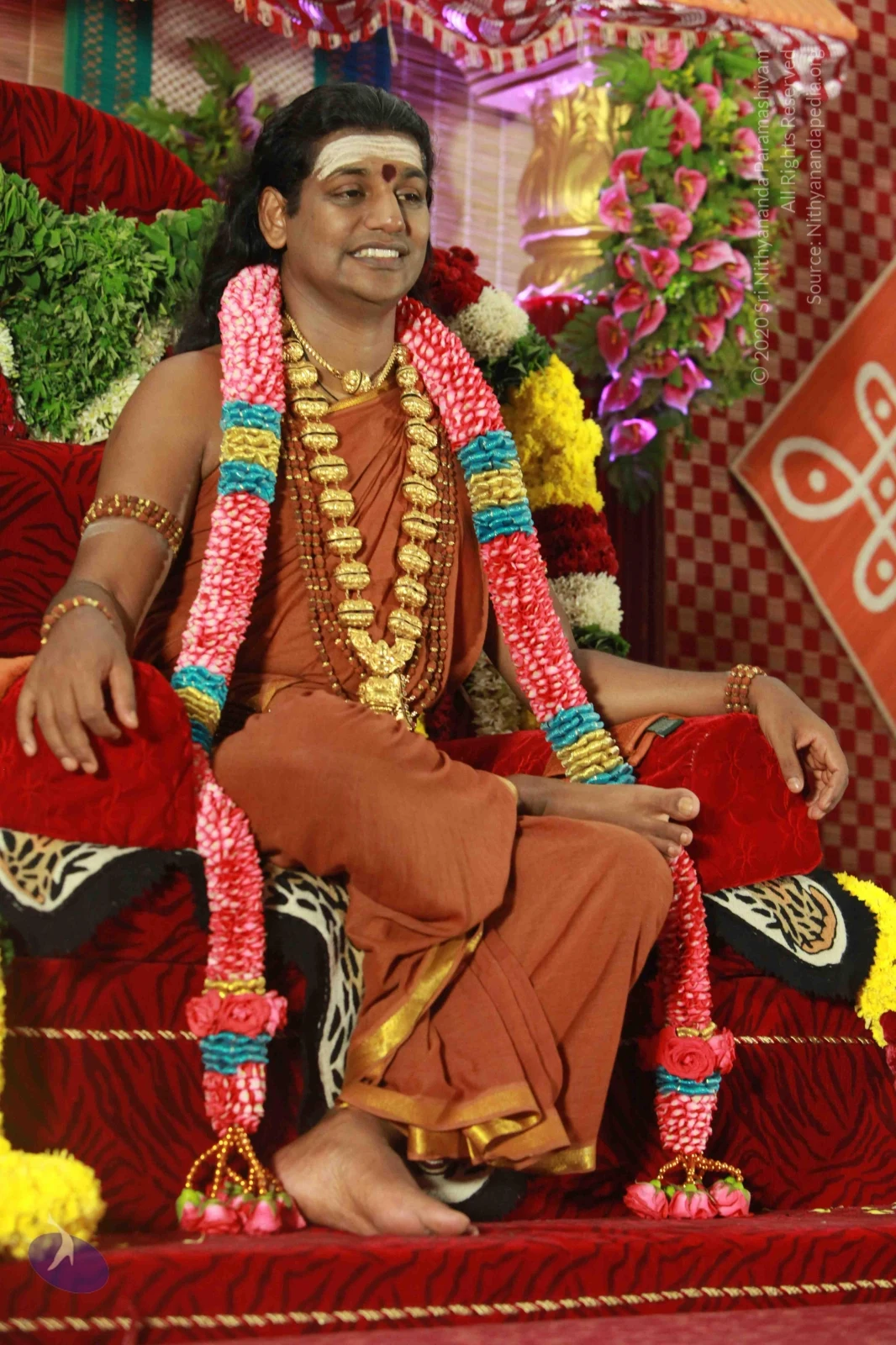
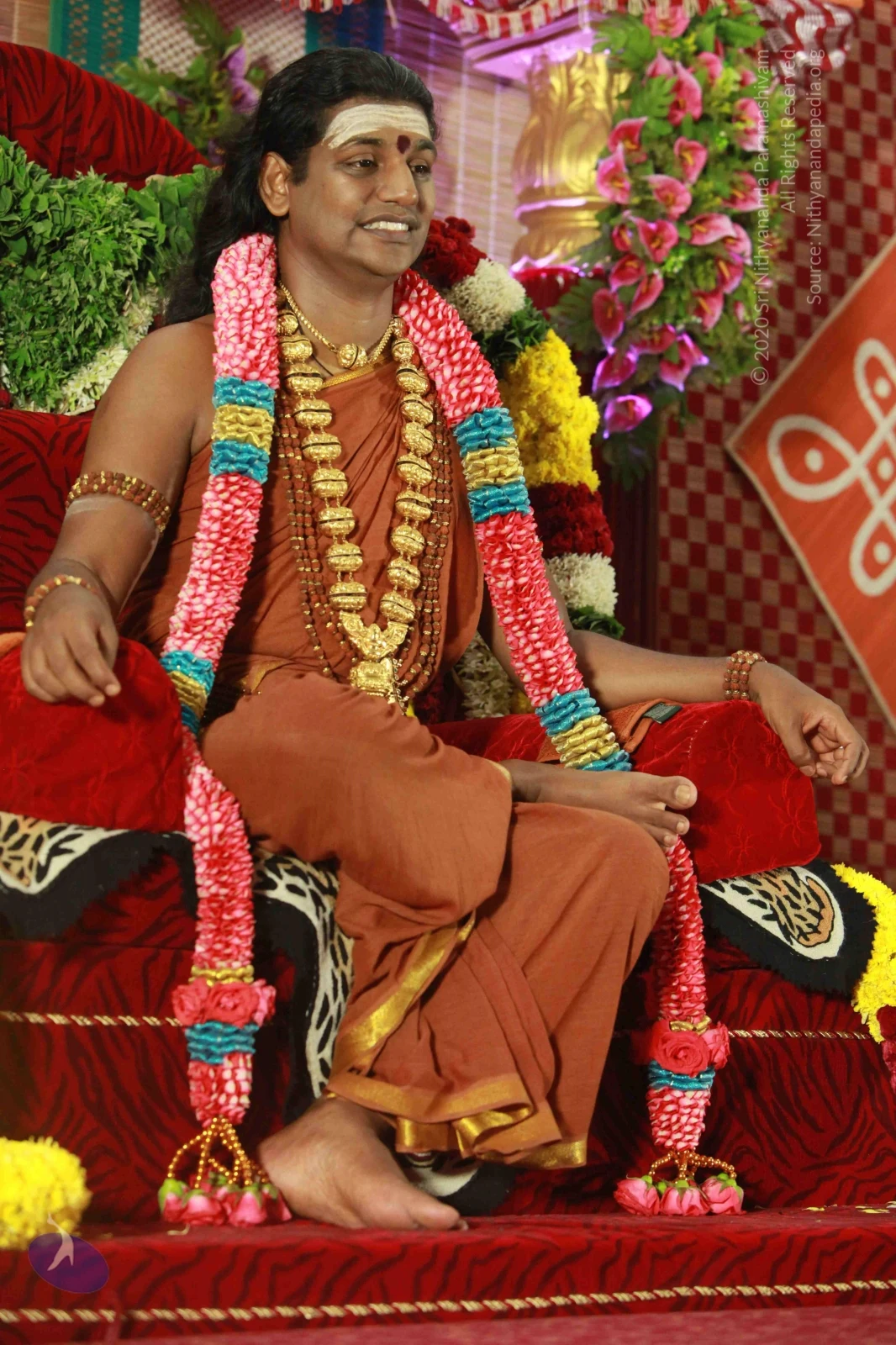
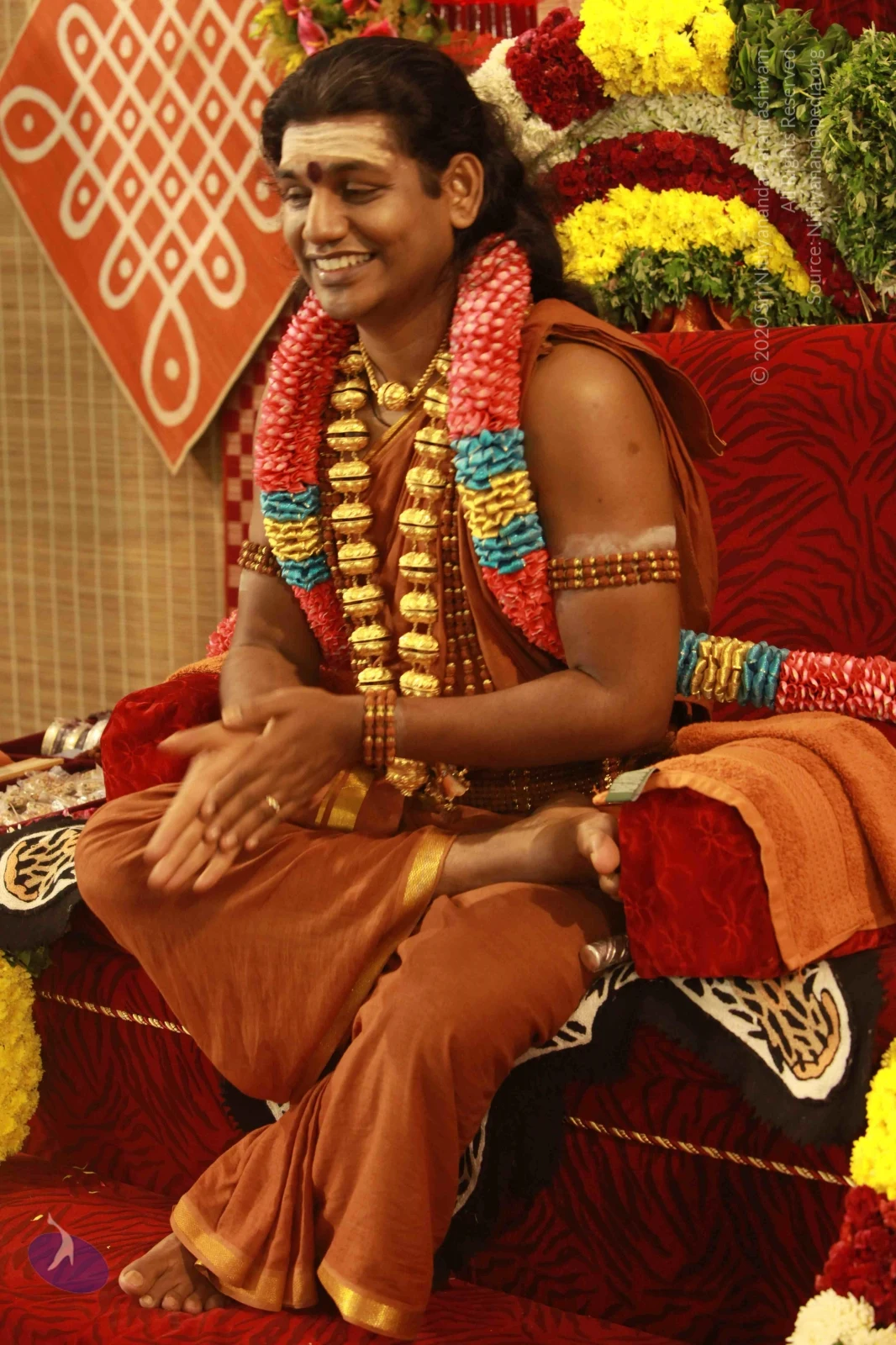
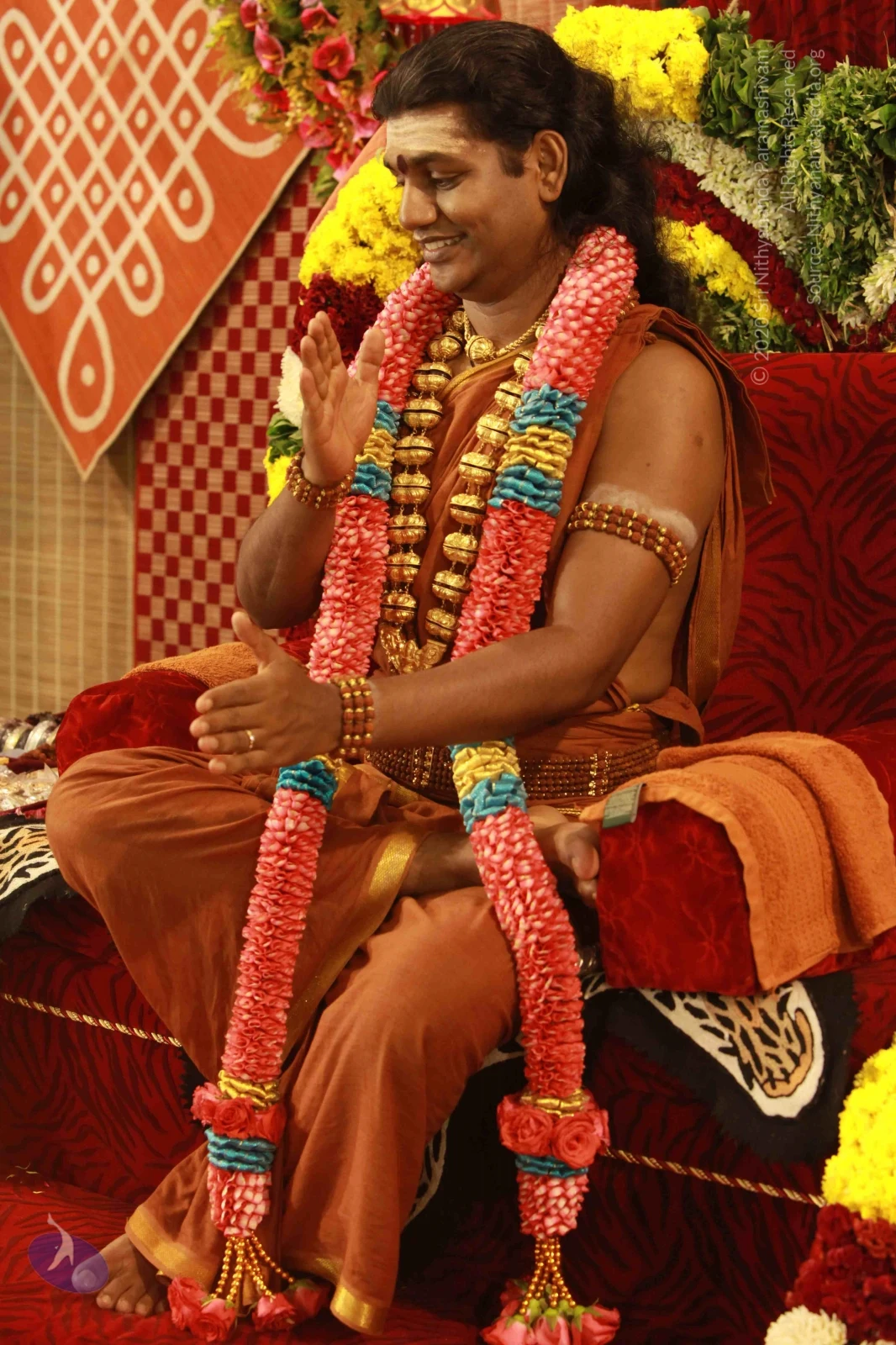
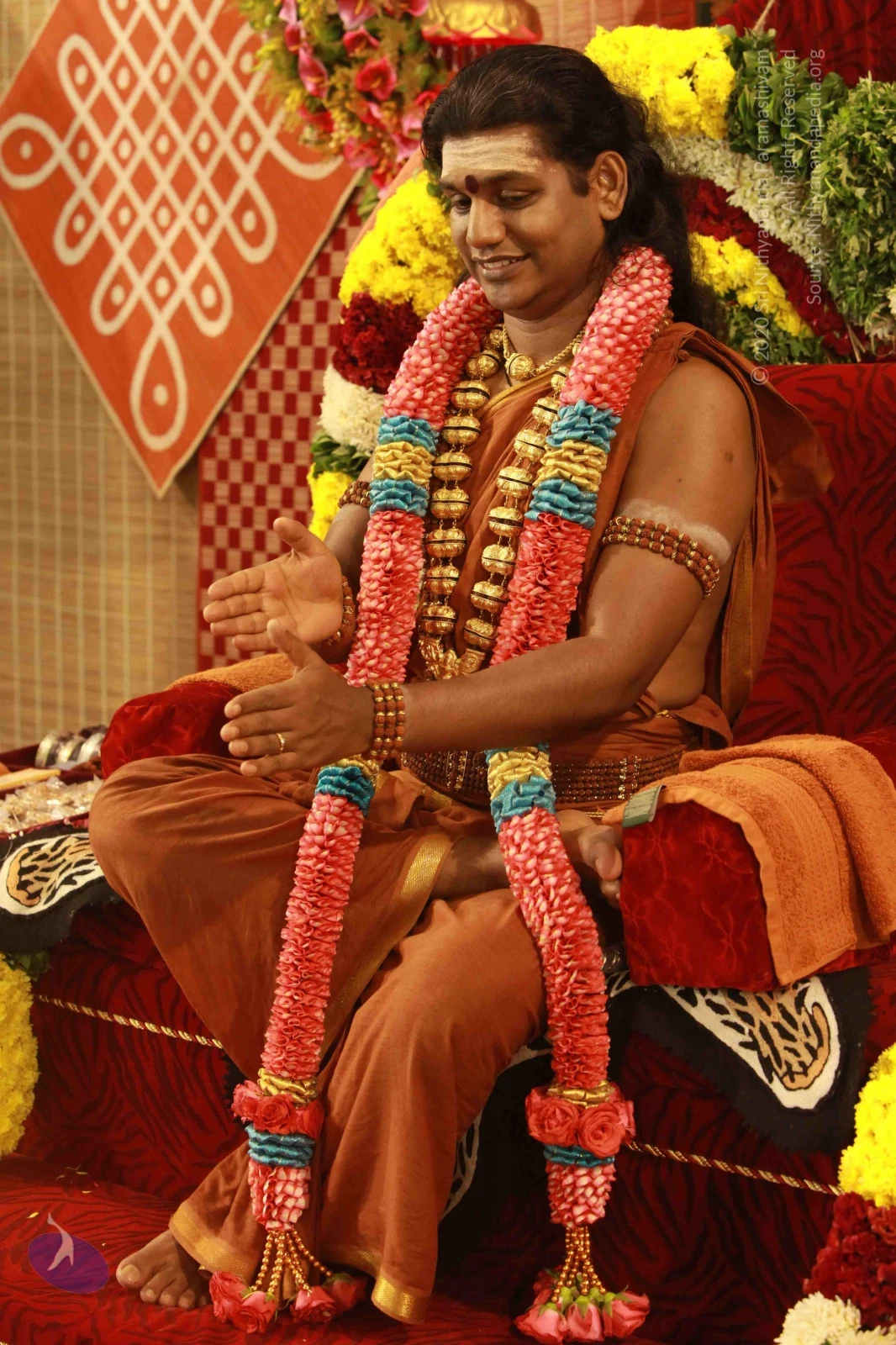
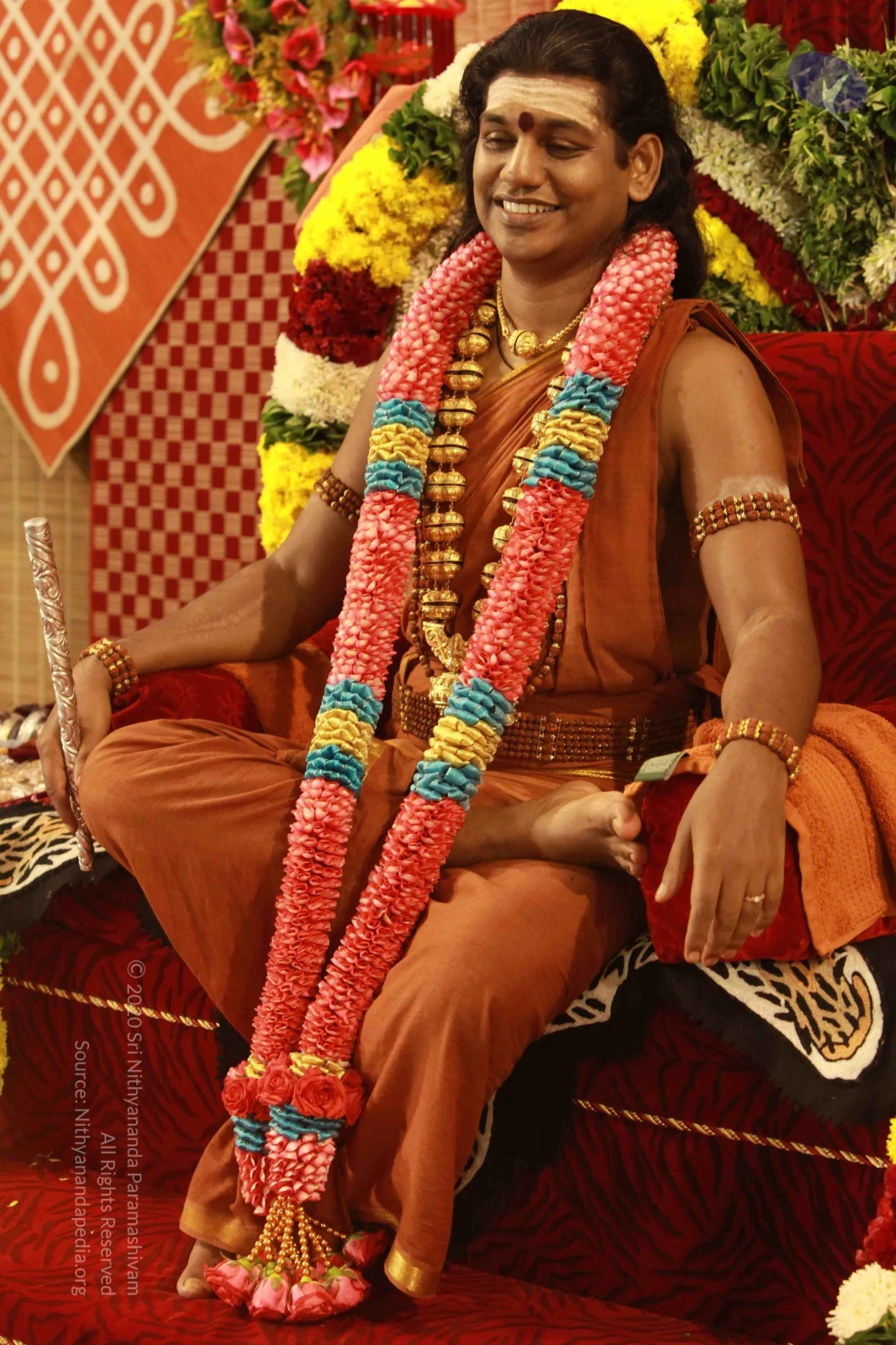
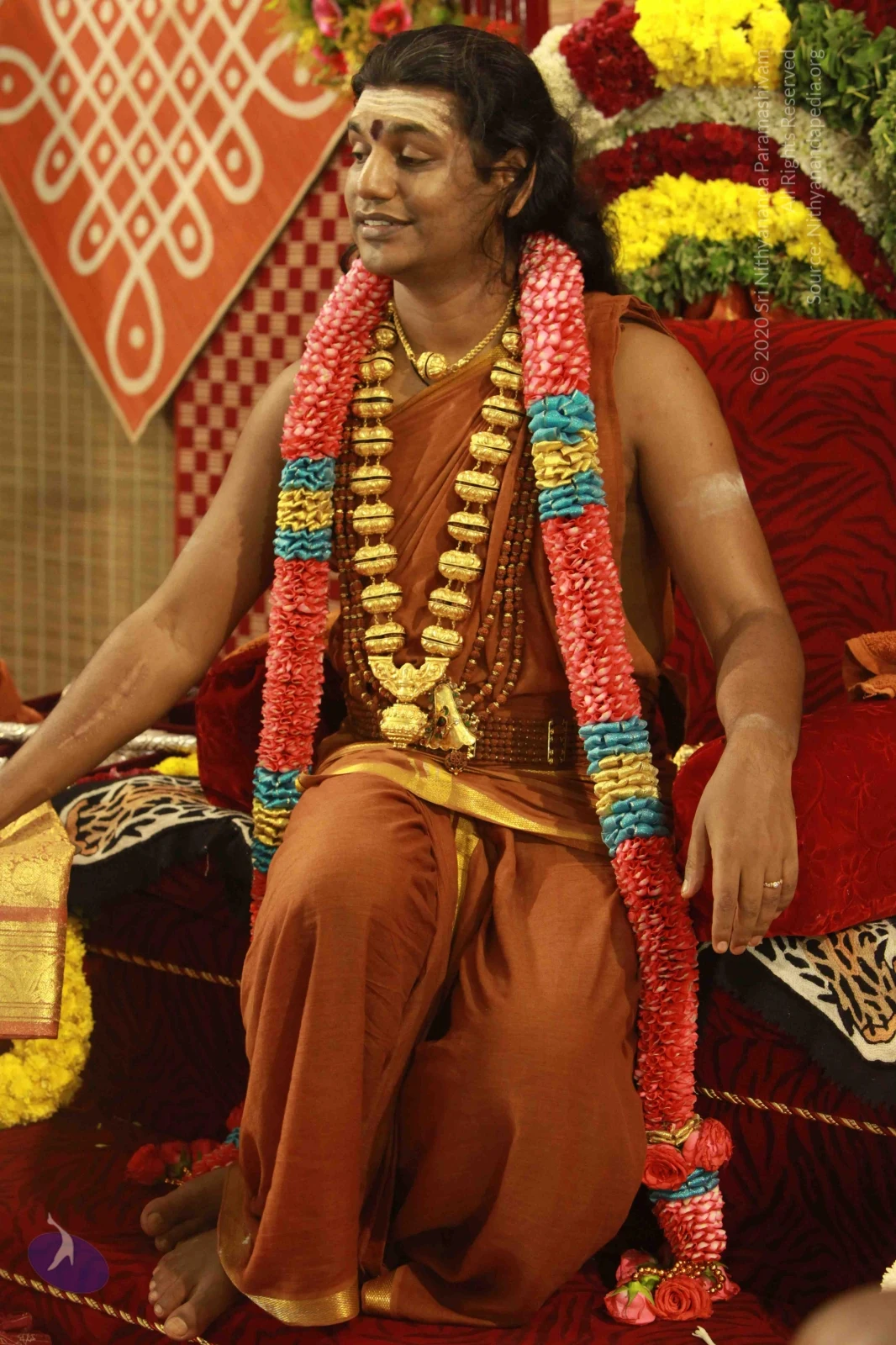
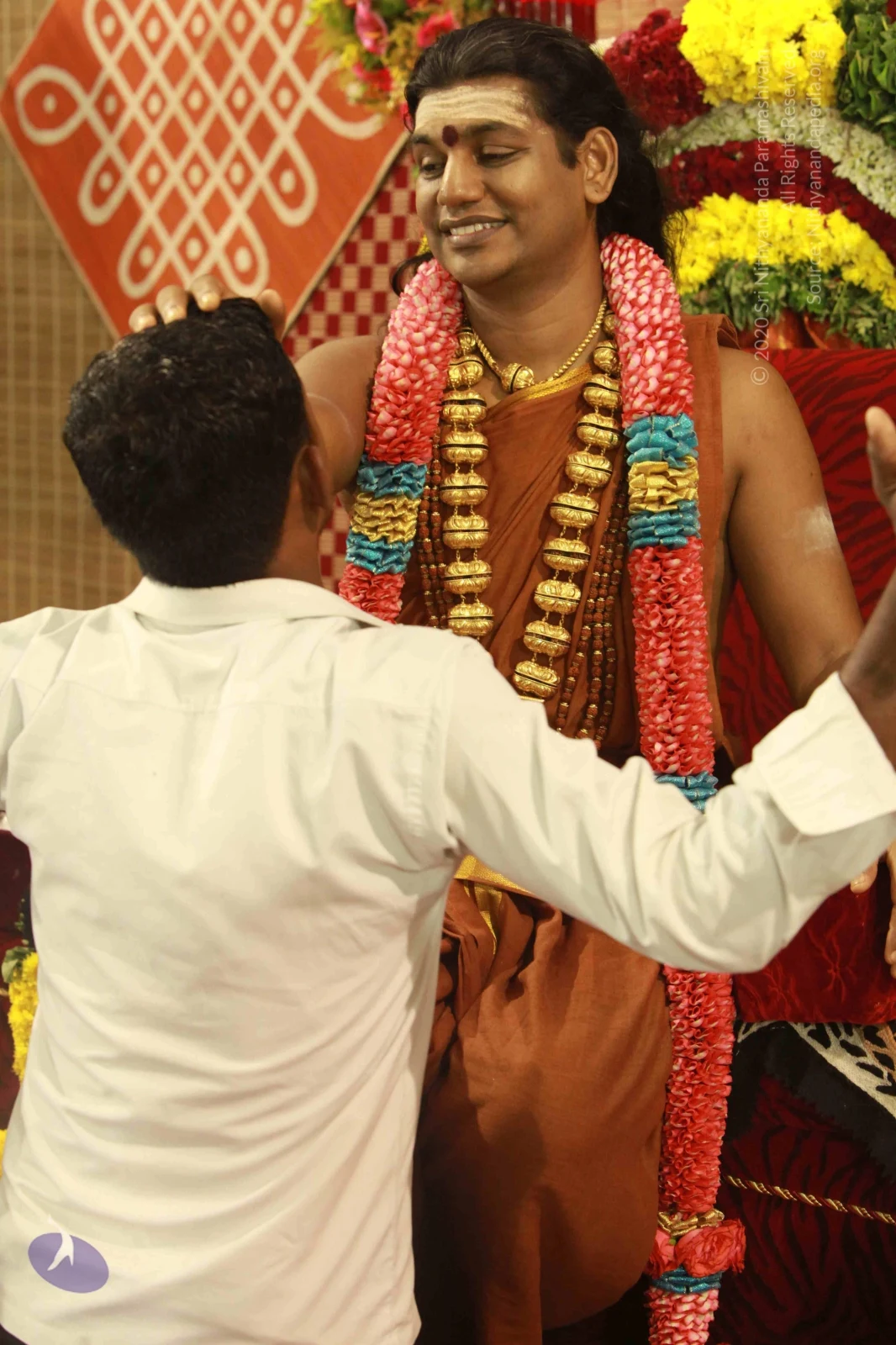
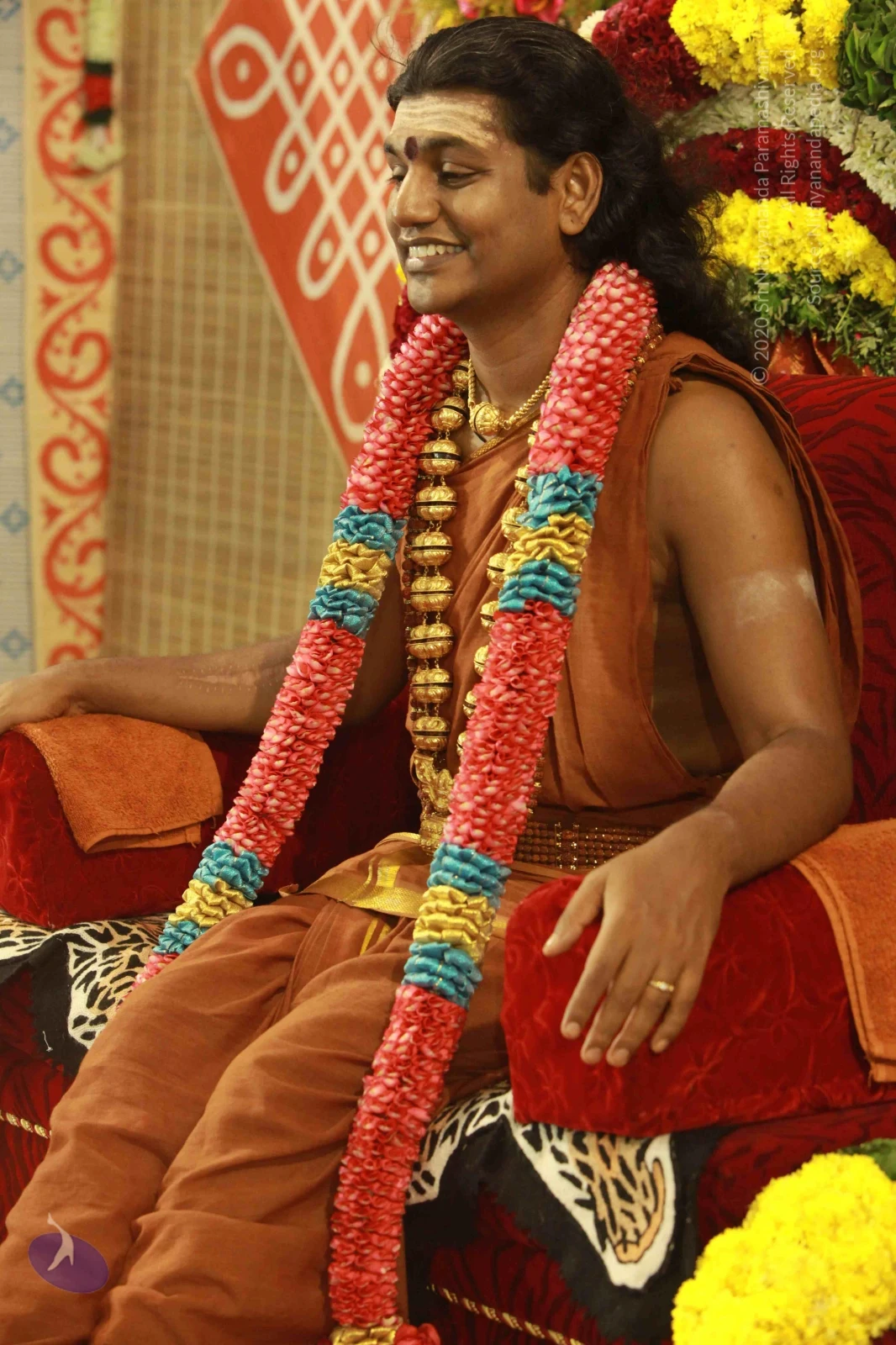
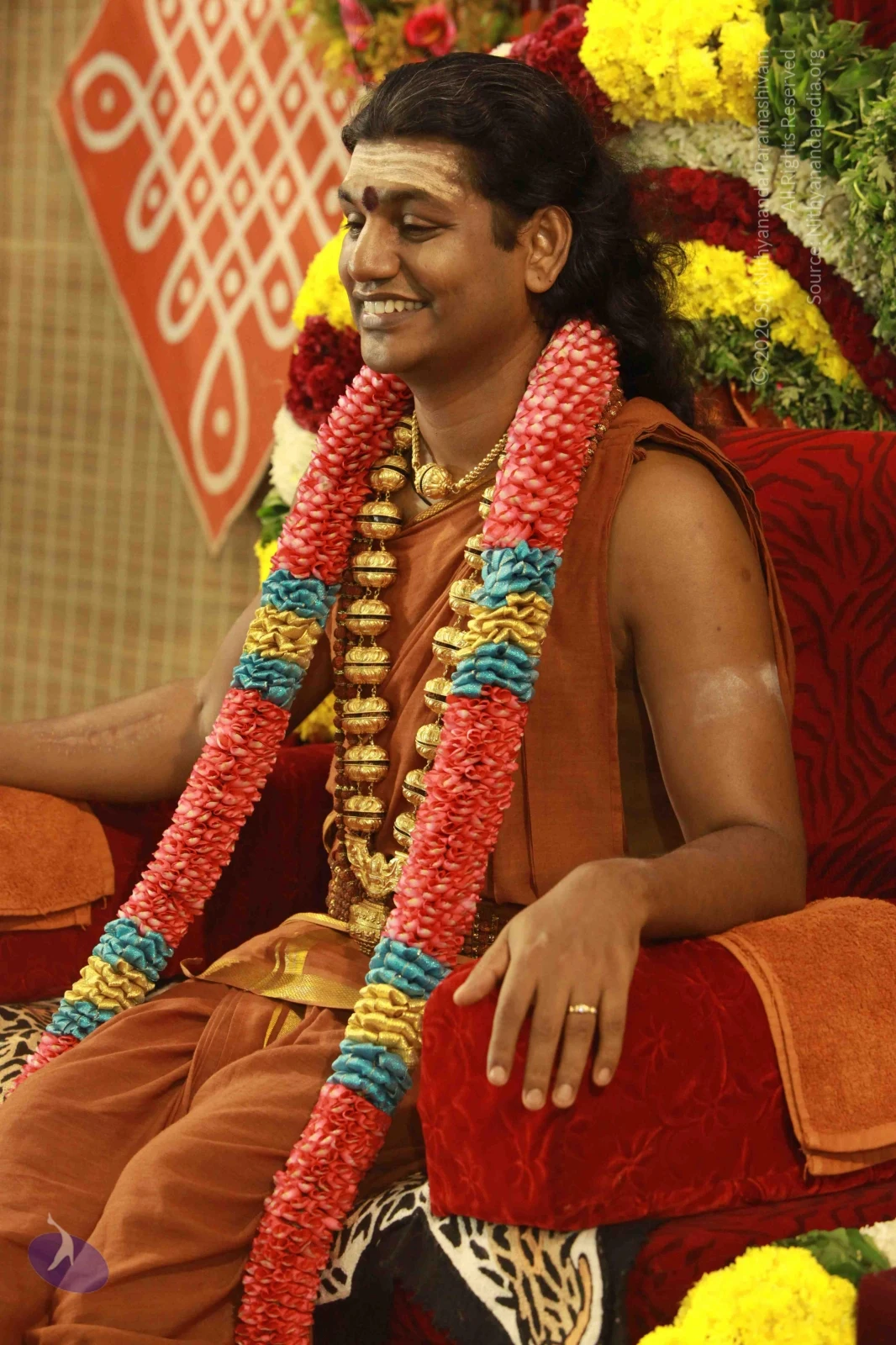
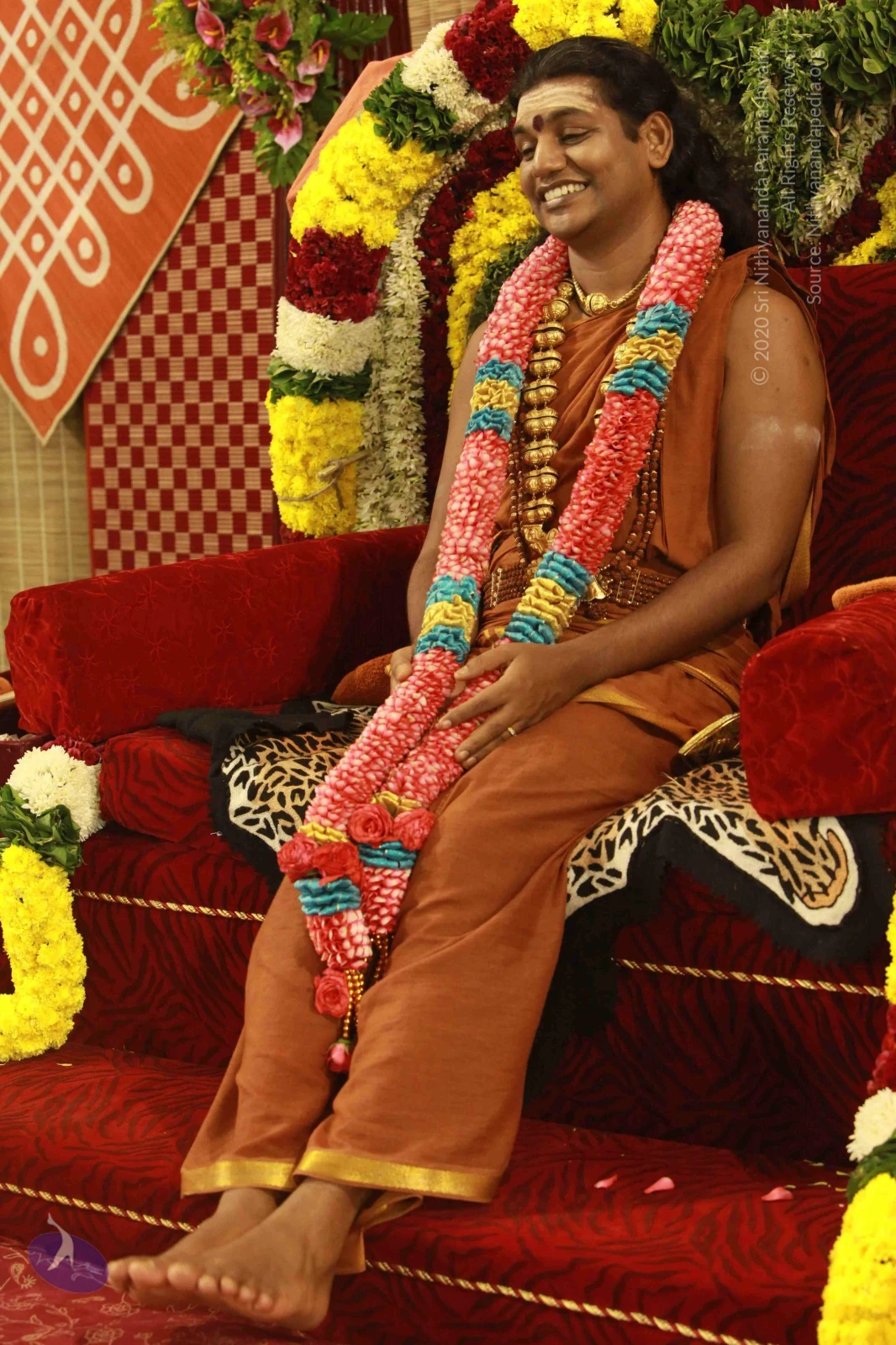
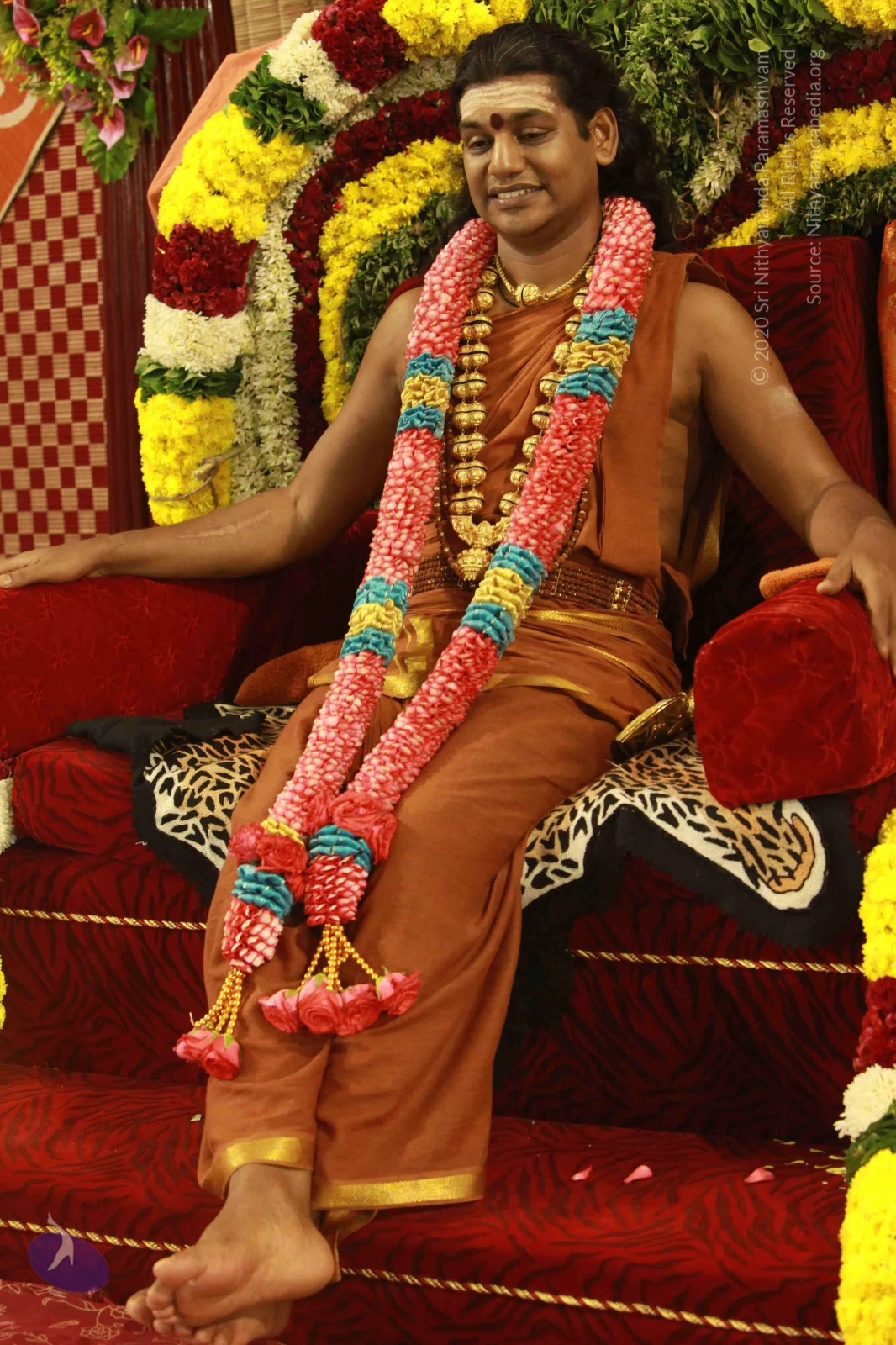
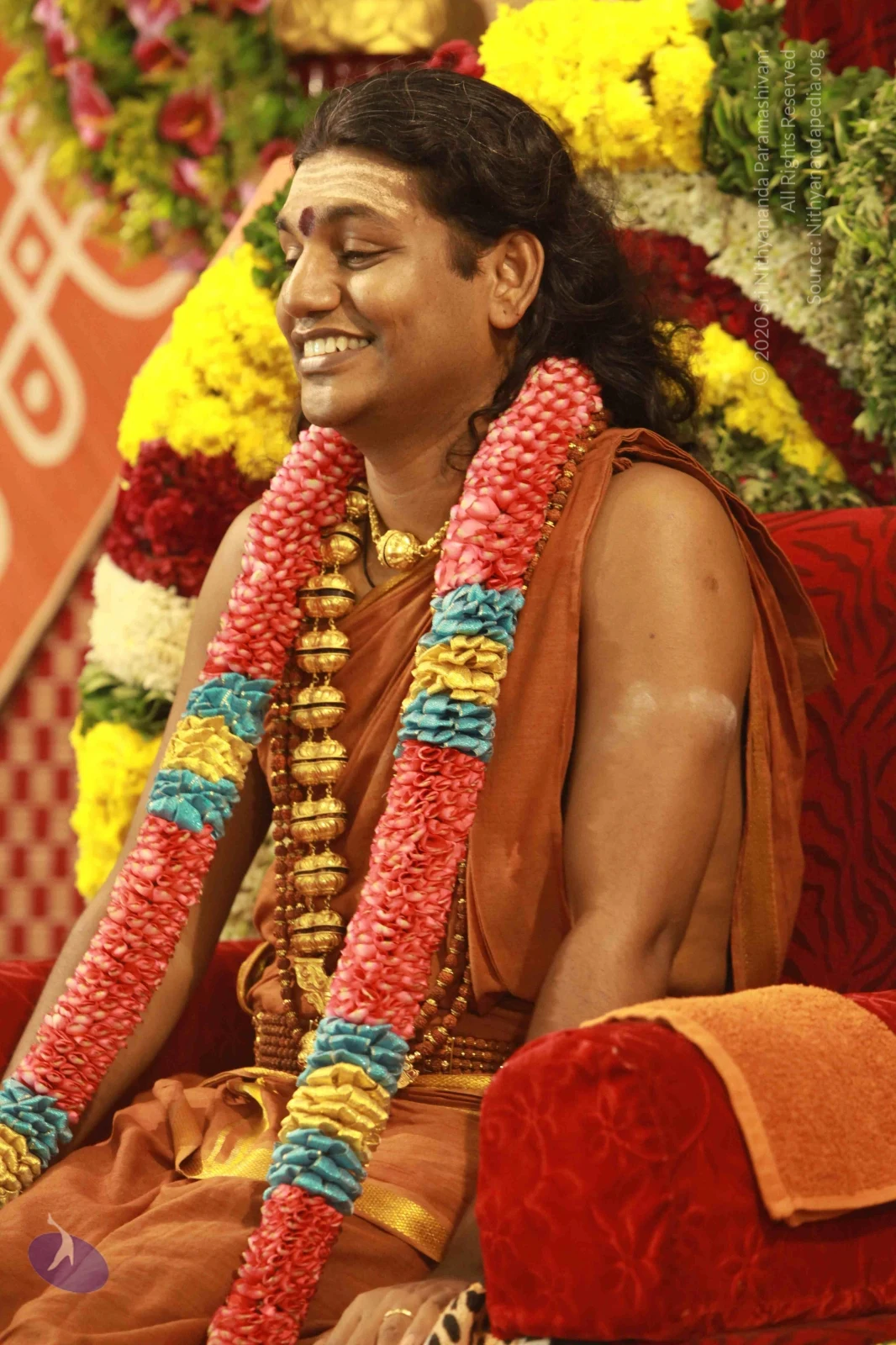
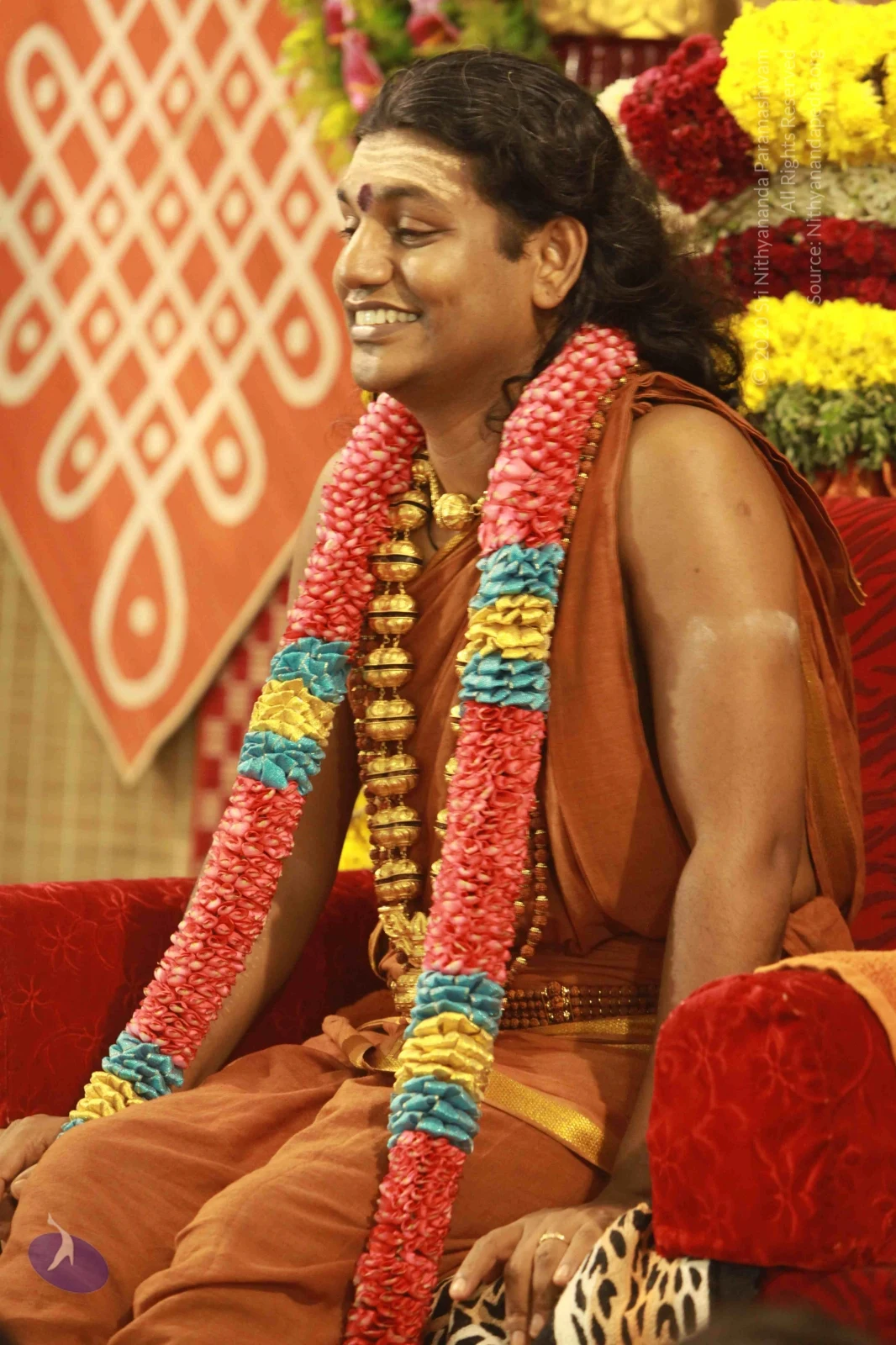
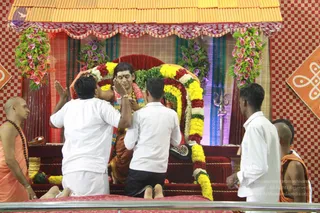
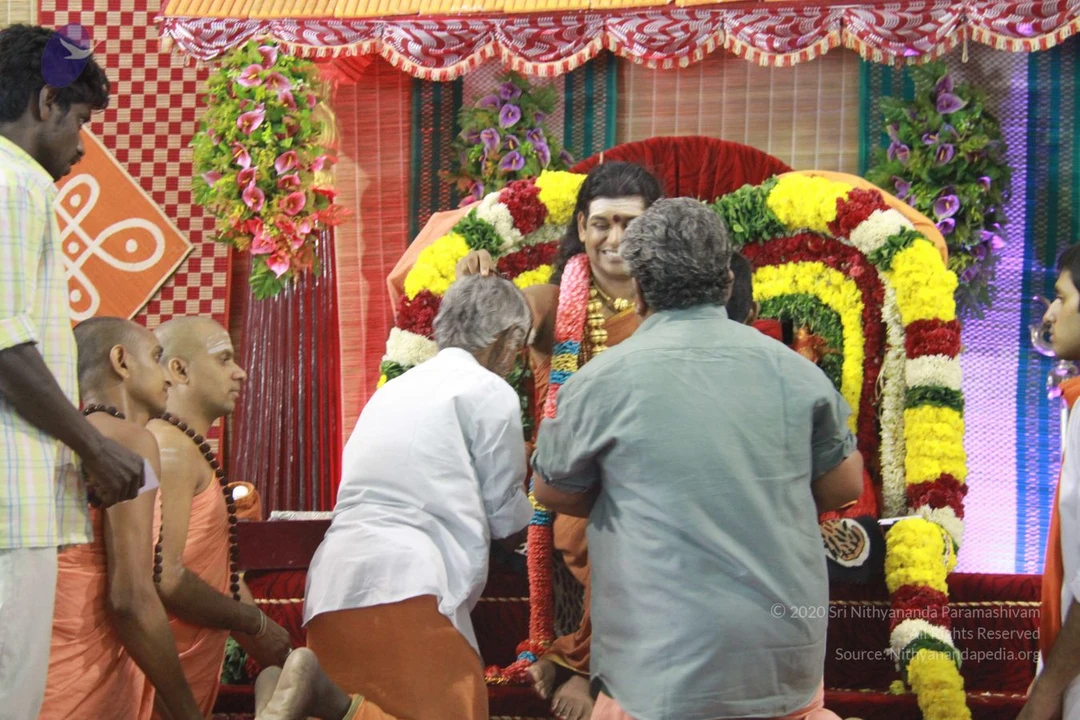
A seated figure on a red-draped throne is garlanded with thick bands of yellow marigolds, red roses and white flowers, with a pink flower garland across the chest. The figure wears an orange-saffron garment, ornate gold necklaces and a tilak on the forehead. Two men in white and grey shirts bend forward to offer homage at the throne. On the left, two saffron-robed monks with rudraksha malas stand beside a man in a checked shirt. Floral arrangements in pink and purple decorate the backdrop, and a red-and-white patterned drape fills the upper background. The figure appears to be a person by appearance cues (saffron clothing, ornate gold necklaces and garlands), but is seated on a throne being honoured, so the identity is uncertain.A seated man in an orange-brown robe sits on a red-cushioned throne decorated with yellow, red and white marigold garlands and pink flower strands, with purple lilies in the background. He wears a long pink-and-blue garland, a multi-strand rudraksha mala and heavy gold necklaces, and has a white tilak on his forehead. He reads a small white paper held in his hand. Two men stand at his sides, one in a pale checked shirt seated at his feet and one in a white shirt beside him. At left, two saffron-robed men with rudraksha malas and white forehead marks sit to the side. Swamiji (probable): the seated figure shows long swept-back hair, ornate gold necklaces, saffron-brown clothing and a garlanded throne, so this is a probable identification with the role of a seated spiritual figure receiving written papers.A smiling man with long dark hair, a red bindi and white forehead markings sits on a flower-decorated throne framed by a semicircle of yellow, red and white marigold and garland arrangements. He wears an orange-brown wrap, a pink and white garland, a gold necklace and a rudraksha mala, and rests a hand on the head of a devotee bowing before him. Two people in the foreground are seen from behind: one in a white shirt, one in a striped shirt. Purple flowers and bamboo mats fill the background. The image is a photograph; Swamiji (probable) is indicated by the long hair, orange wrap, gold necklace and rudraksha mala, seated as an honoured guest with devotees bowing.A photograph of a seated man on an ornate red throne decorated with yellow, red and white flower garlands. He wears an orange-brown robe, a long gold and bead necklace, a multicoloured garland with blue and gold beads, and a tilak on his forehead; his long dark hair falls past his shoulders and he has an eyes-closed, serene expression. Beside him stands a bald man in an orange robe holding a folded gold-bordered cloth. A leopard-print cushion lies on the throne, and a trident stands at the right edge against a red and green backdrop. Swamiji (probable) is seated on the throne based on his long hair, saffron-toned ornate clothing and rudraksha-style necklaces.A seated guru figure on a richly decorated throne covered with garlands of yellow, red, green and white flowers, with a red velvet backdrop and floral arrangements behind. The seated figure wears an orange-brown robe, a gold necklace with a multi-strand gold chain, and a striped multicolour garland. A forehead marking is visible. To the left, a bald man in orange clothing with a rudraksha mala leans in and holds a sheet of paper and a golden-bordered cloth. The seated figure appears to be a person, identified by the throne setting, ornate gold ornaments and the orange robe. A trident stands at the right edge.A photograph of a seated figure on a red-cushioned throne draped in a thick garland of yellow, white, red and green flowers, with a long rudraksha-style chain and gold ornaments visible. Two men in white shirts and white dhotis stand before him, one with hands raised and the other touching his head in blessing, while a bald monk in saffron robes with a rudraksha mala stands at the left edge and another saffron-robed devotee at the right. A wall of red-and-white checked drapery, flower arrangements, and a trident stand behind the scene.
Darshan
233 photosSource gallery
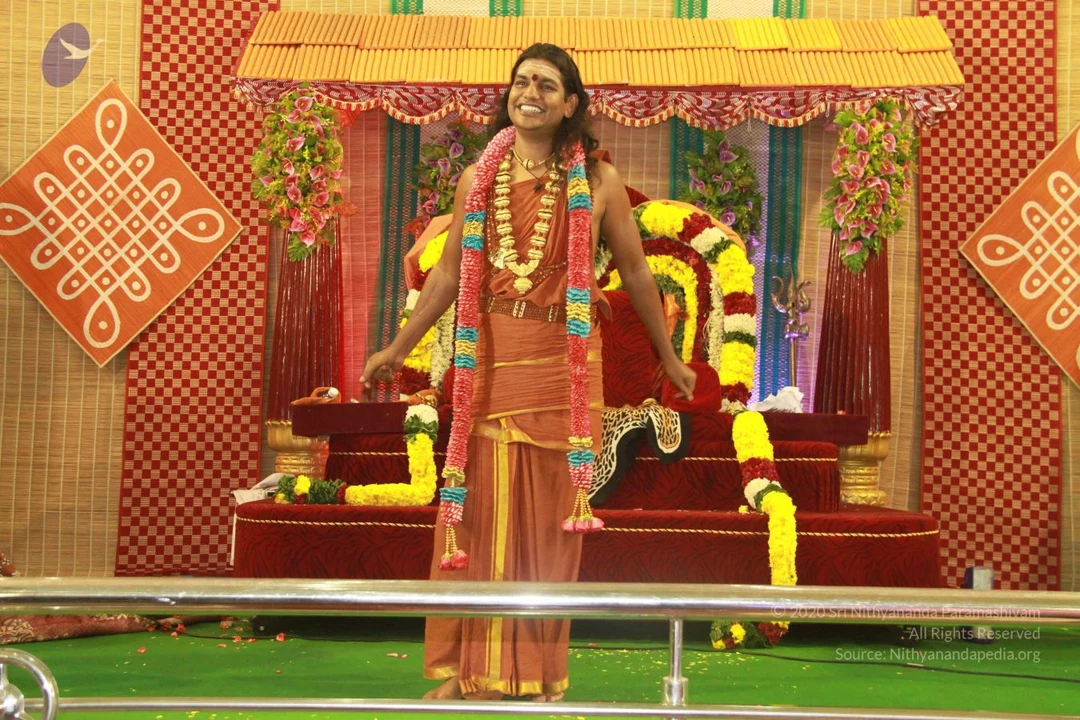
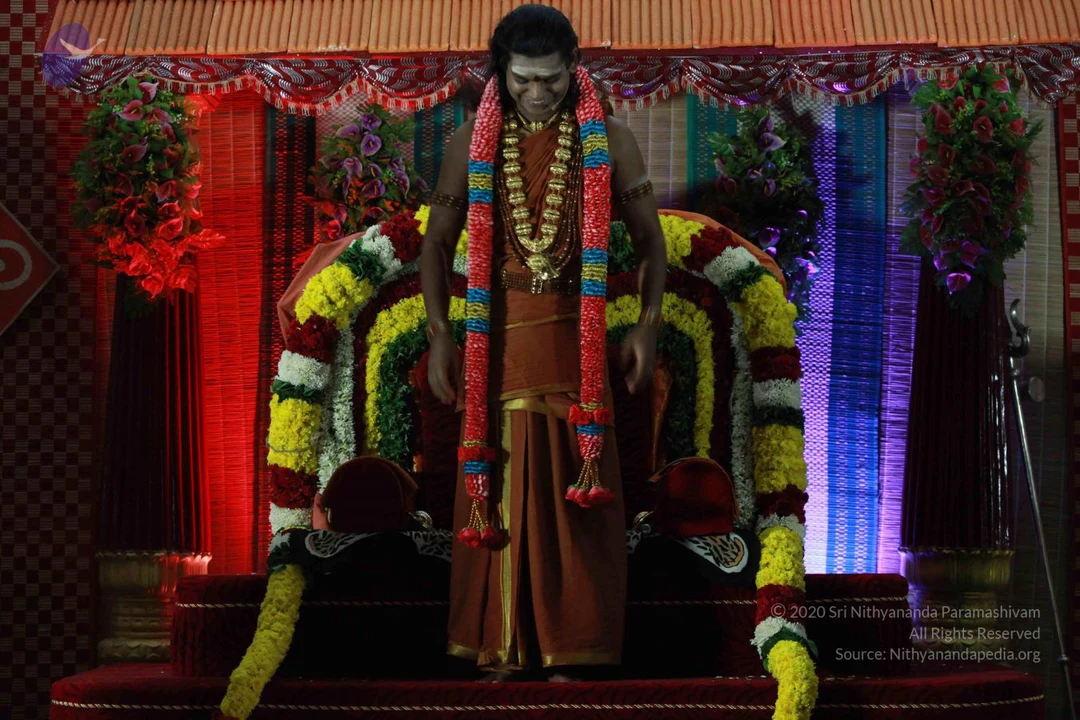
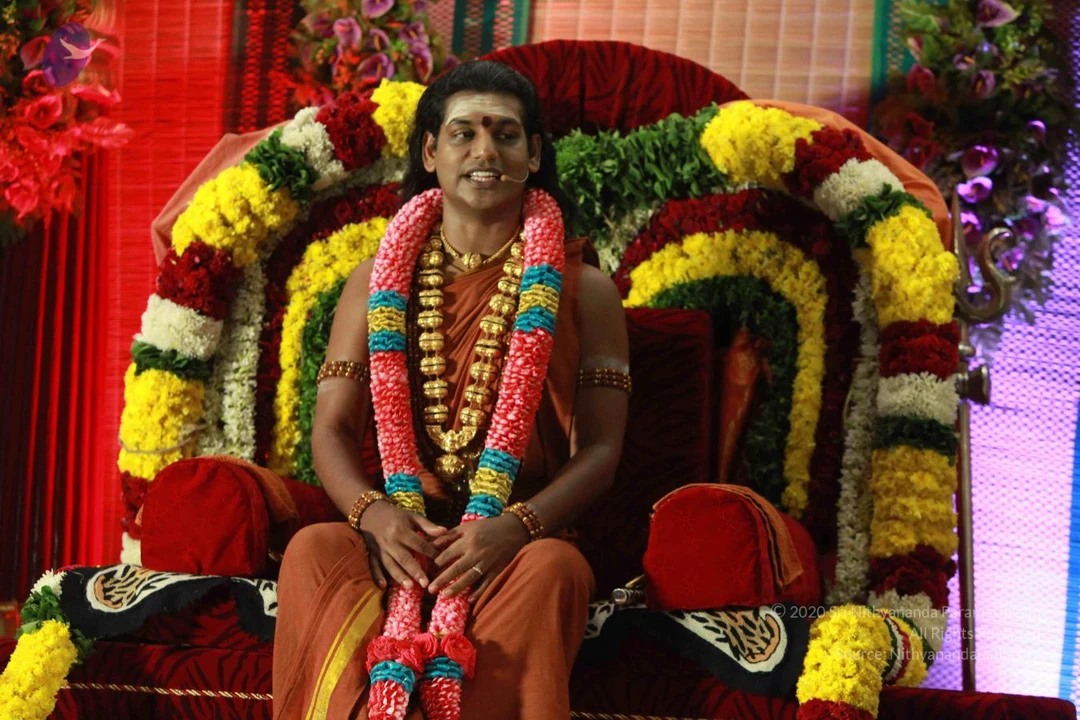
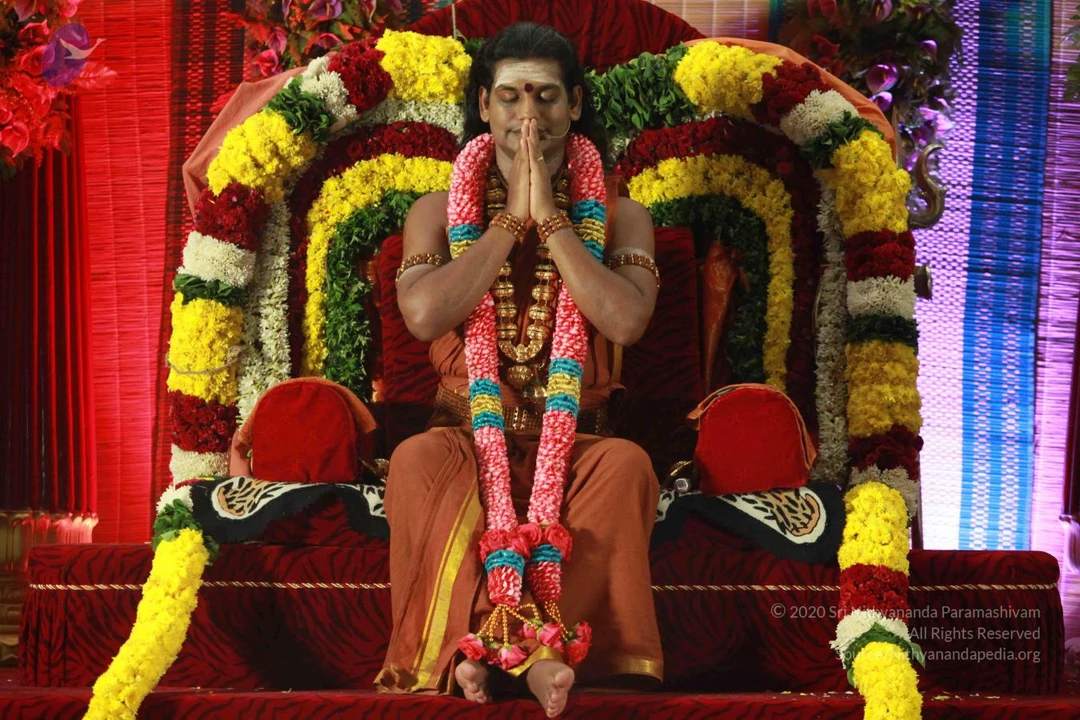
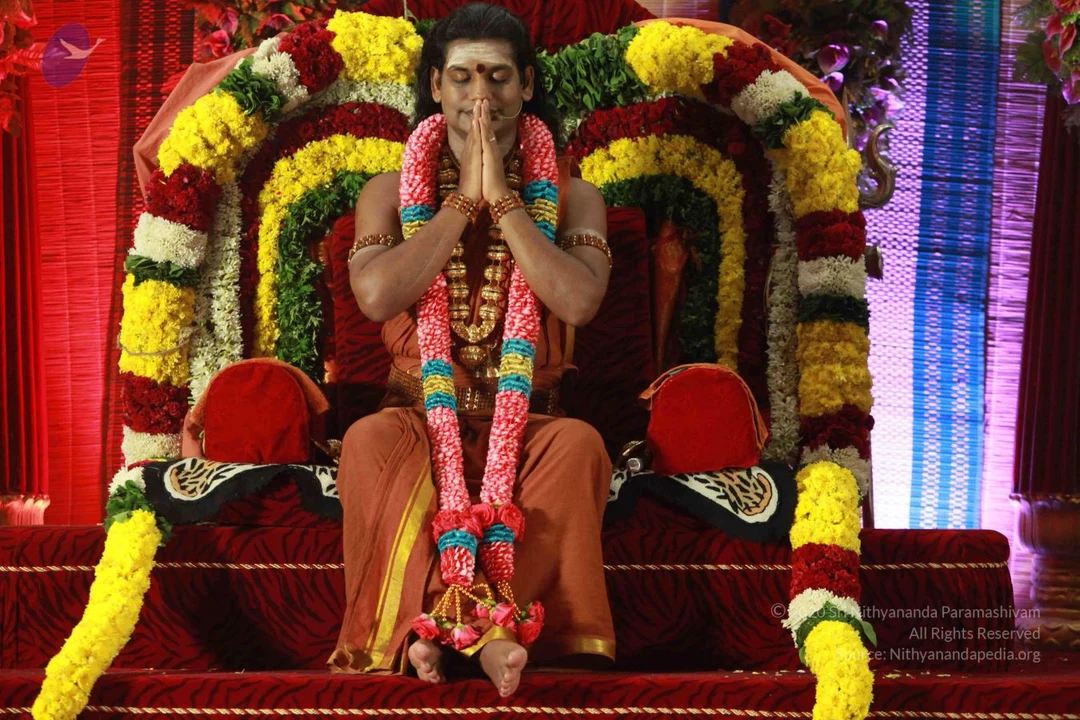
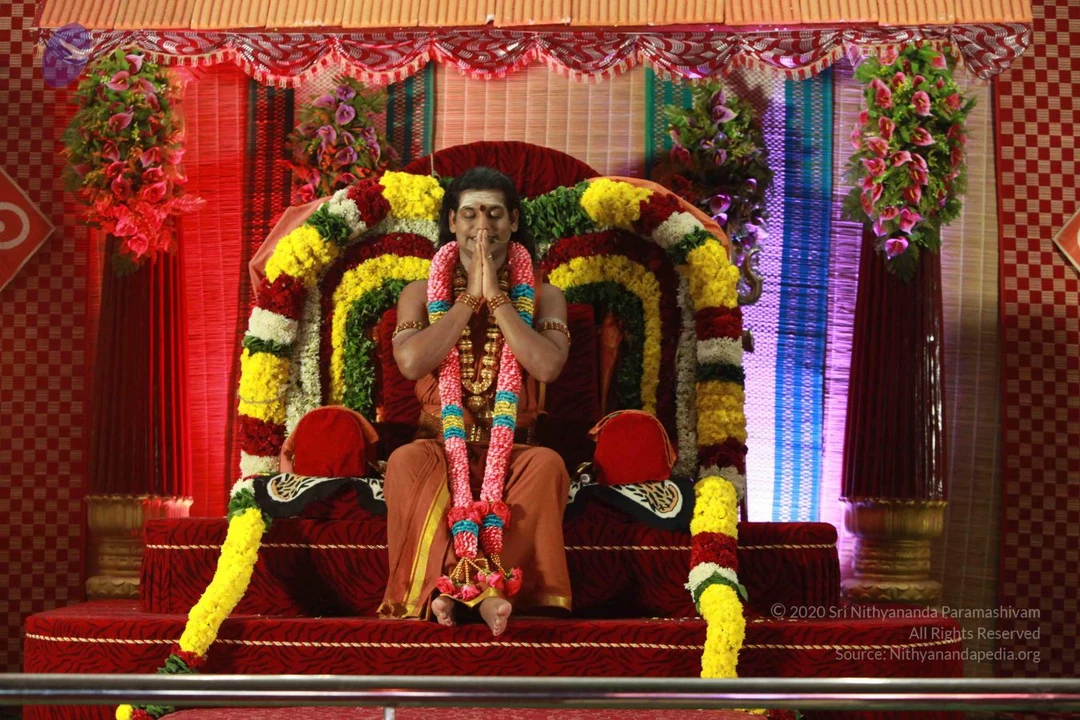
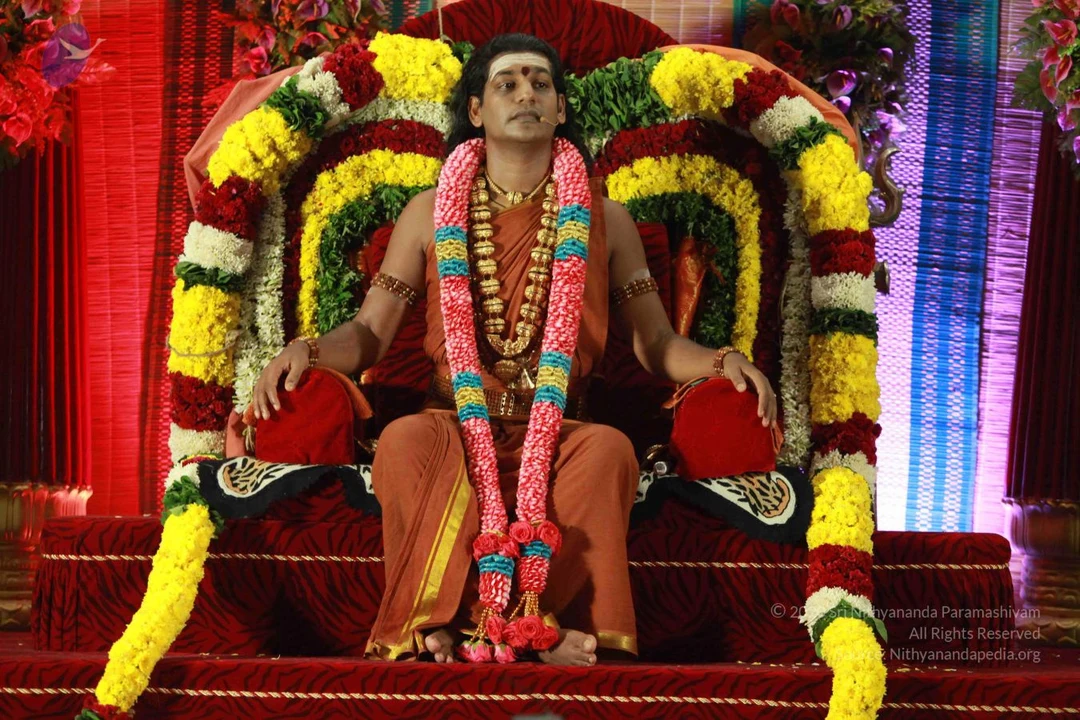
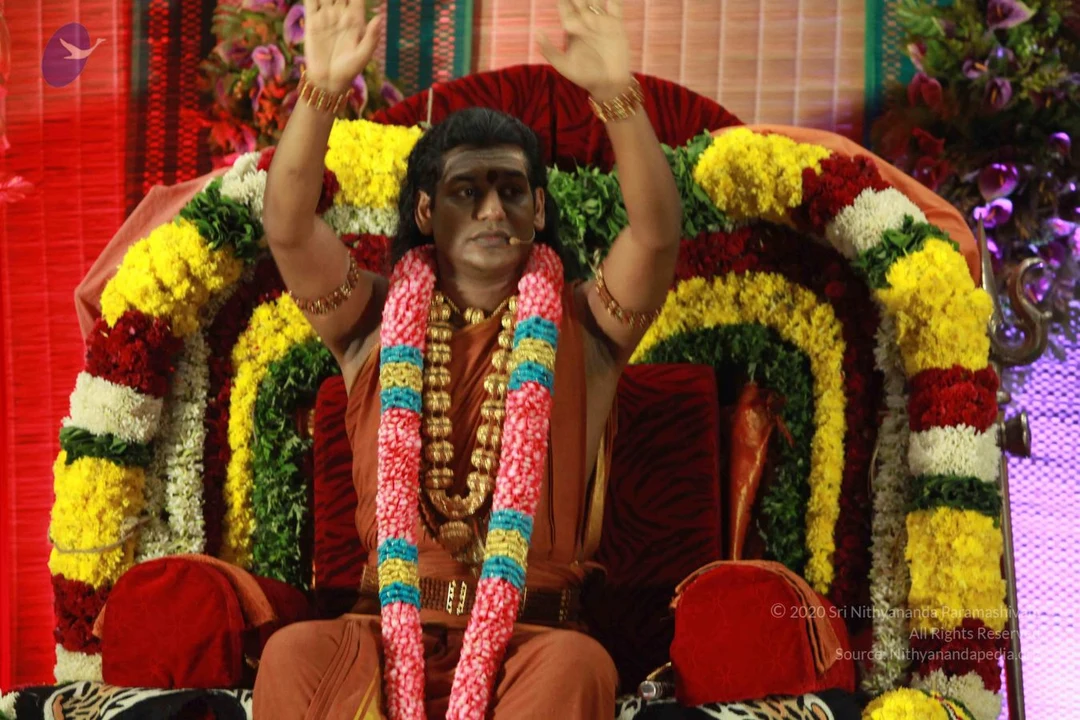
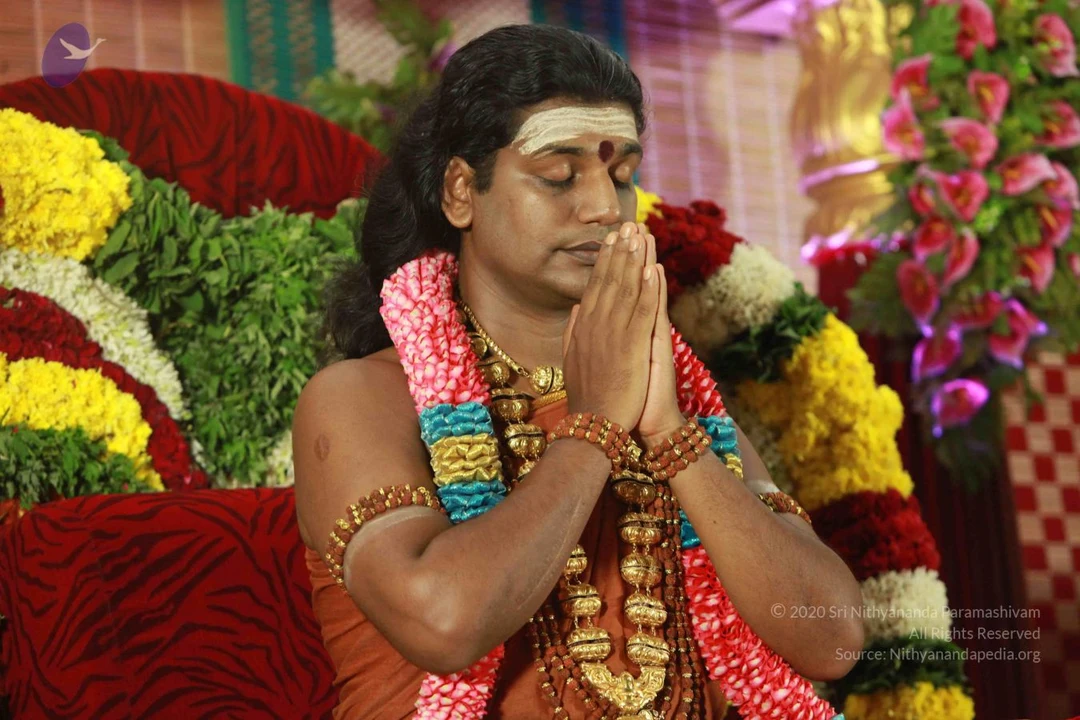
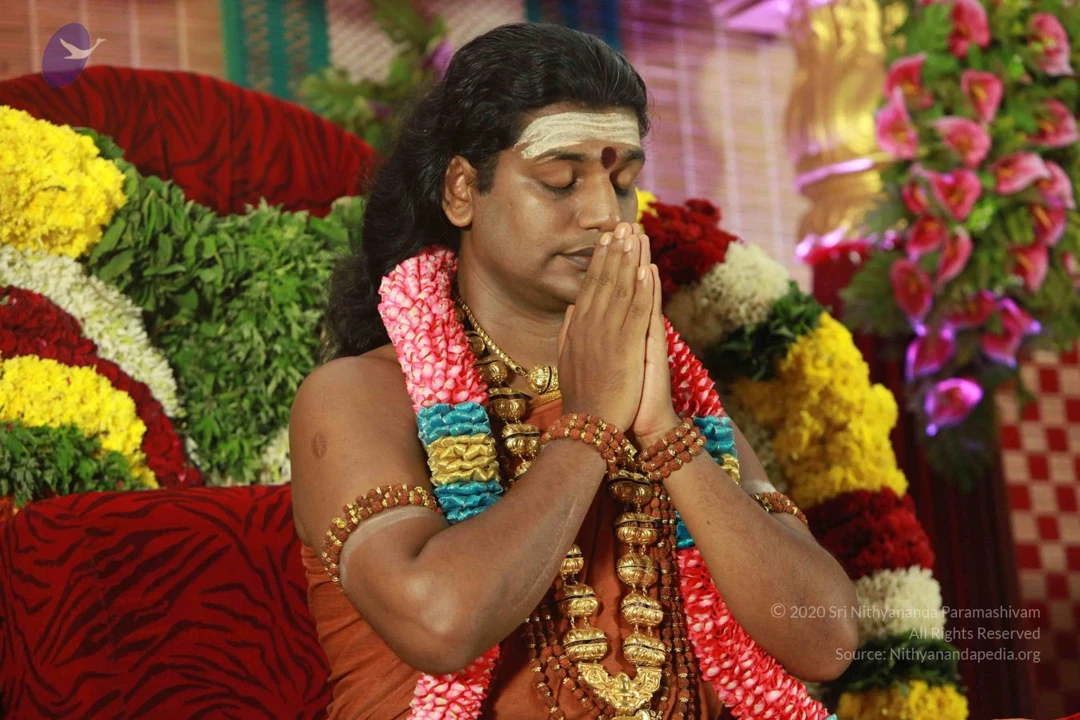
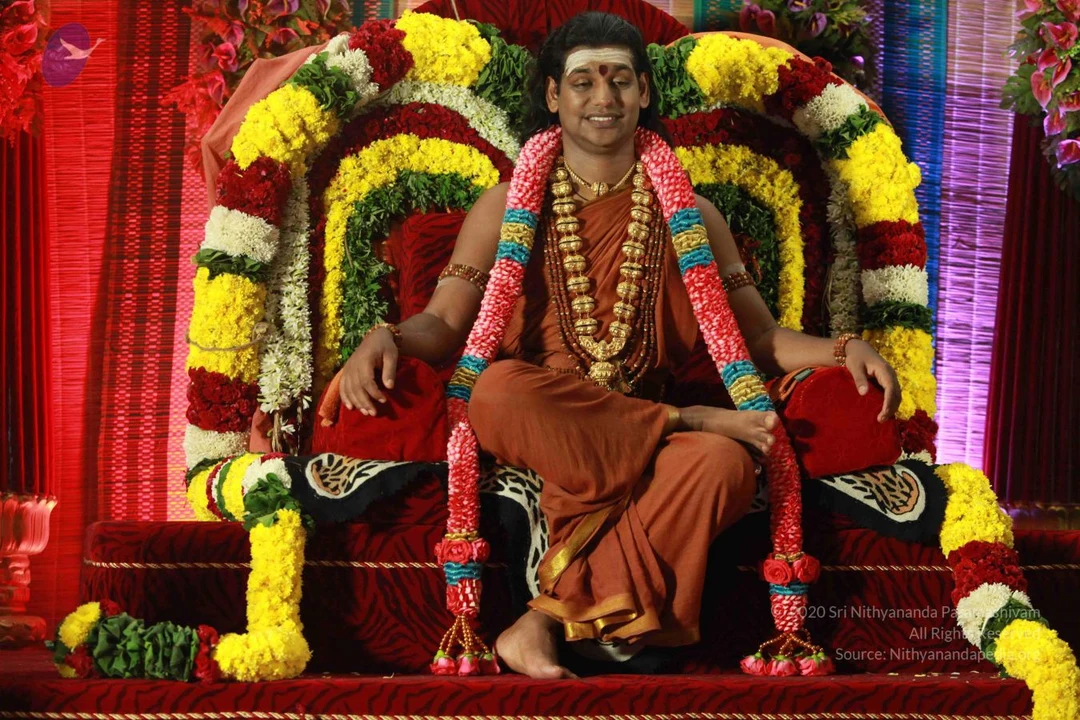
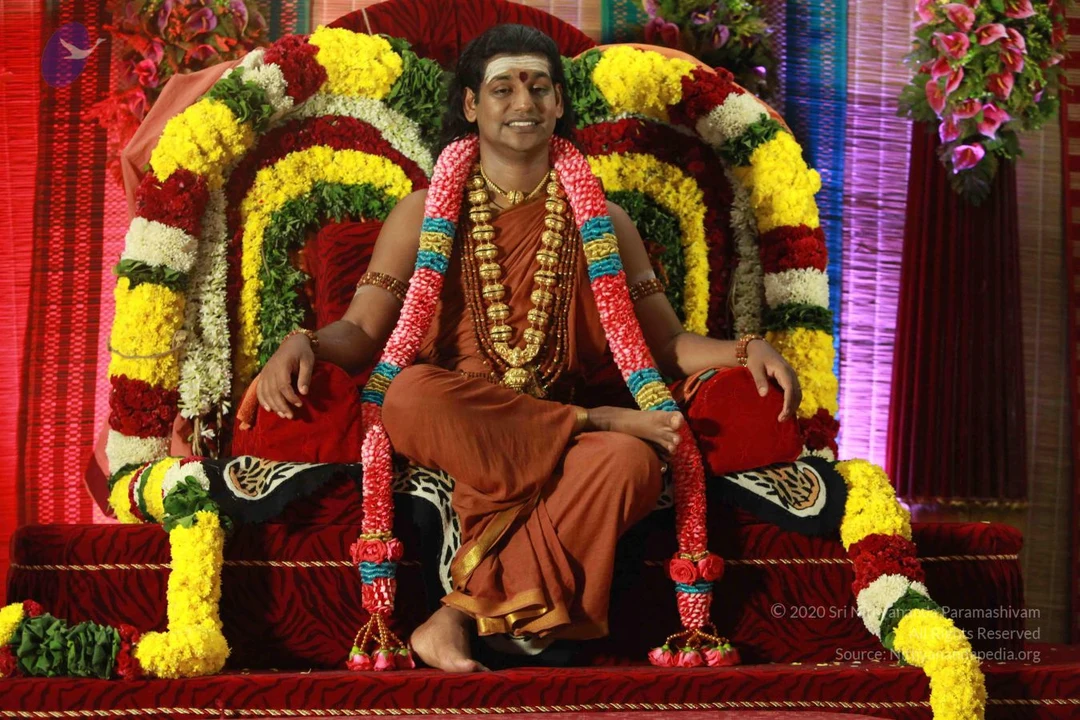
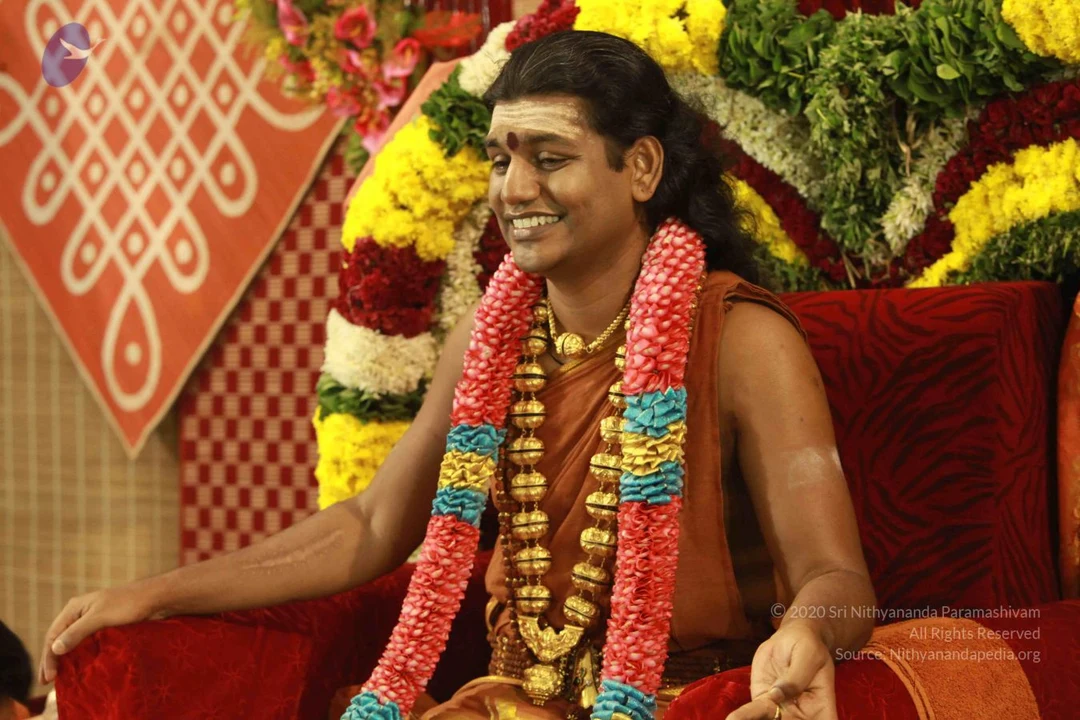
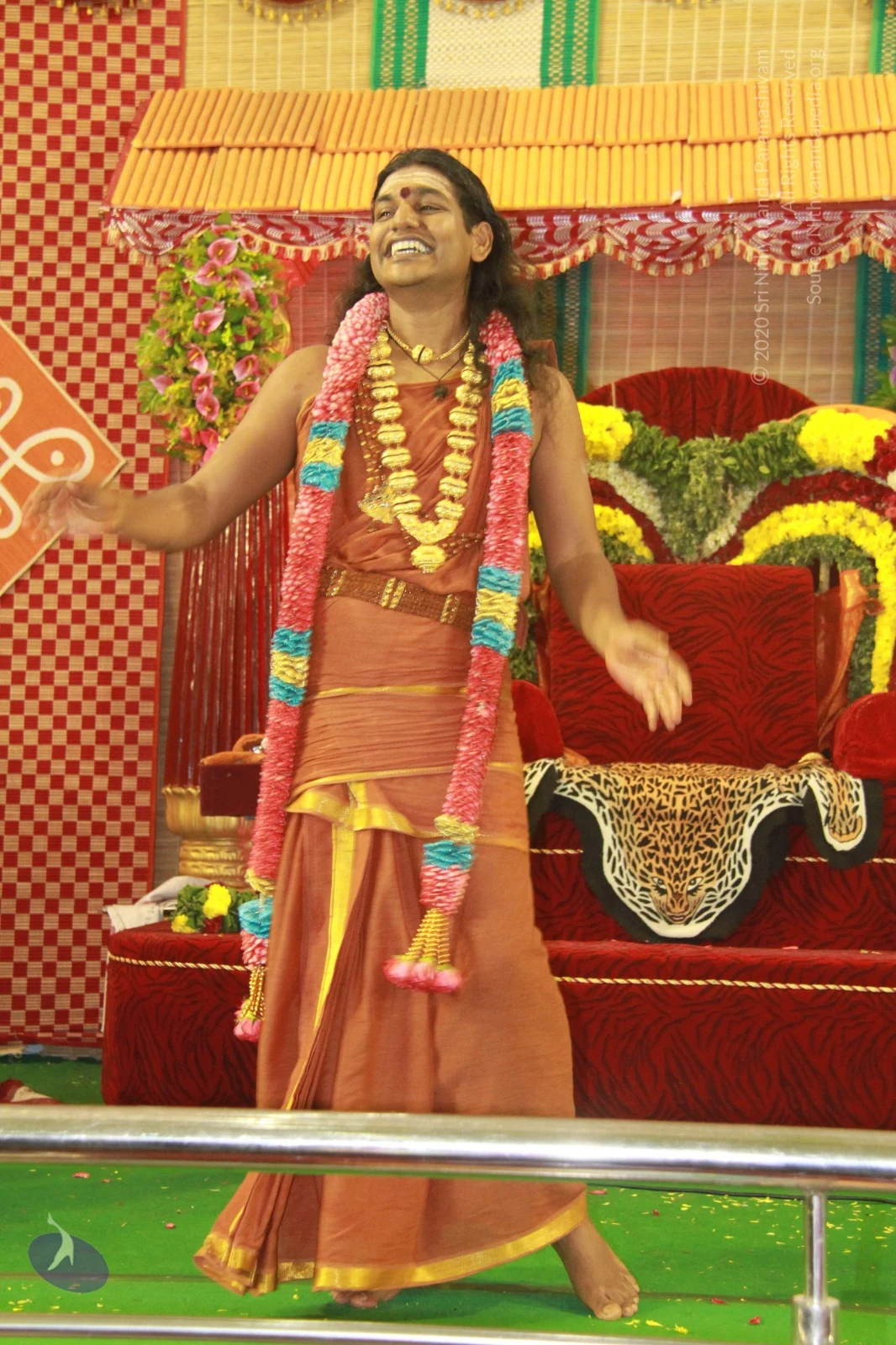
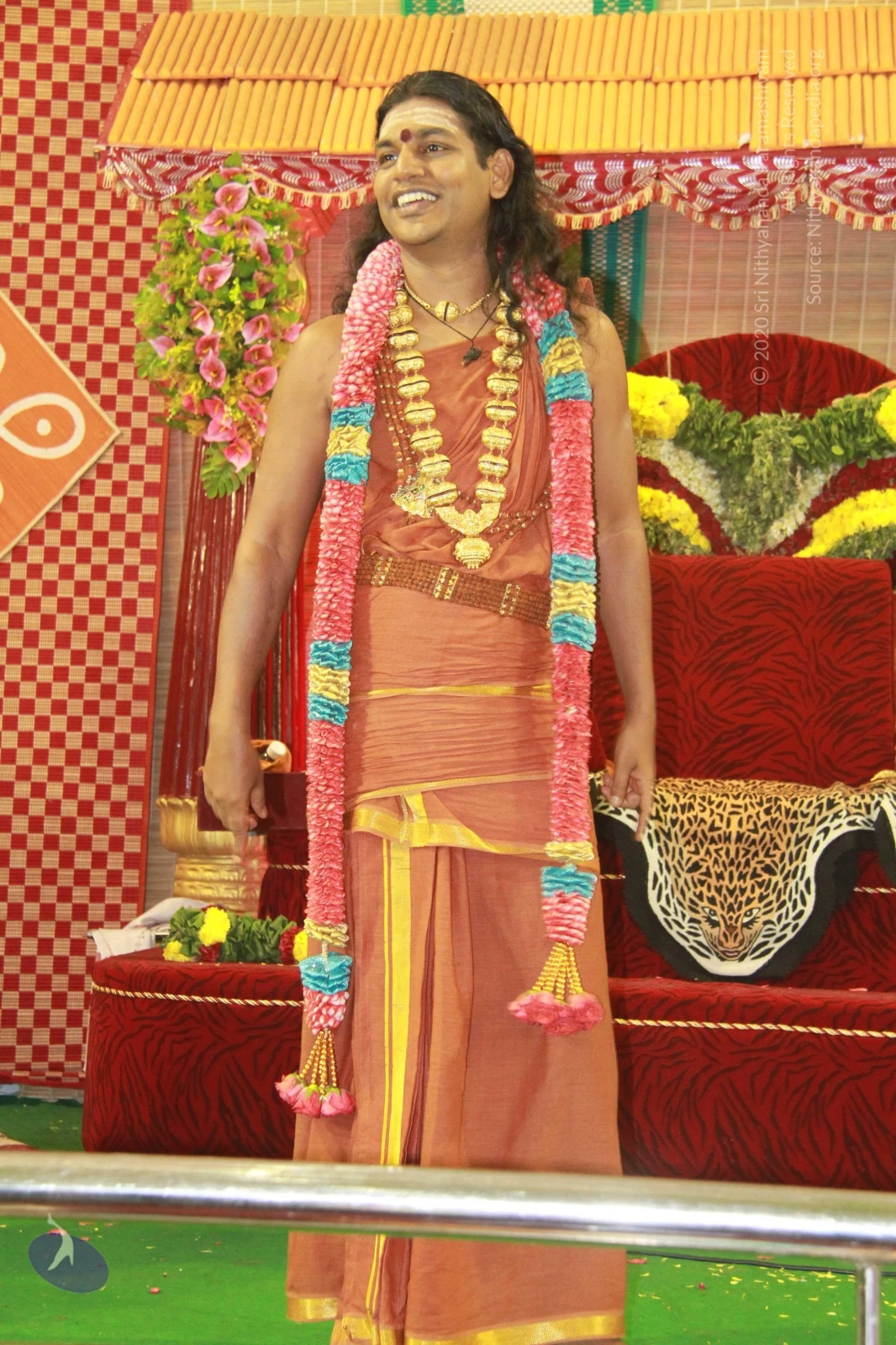
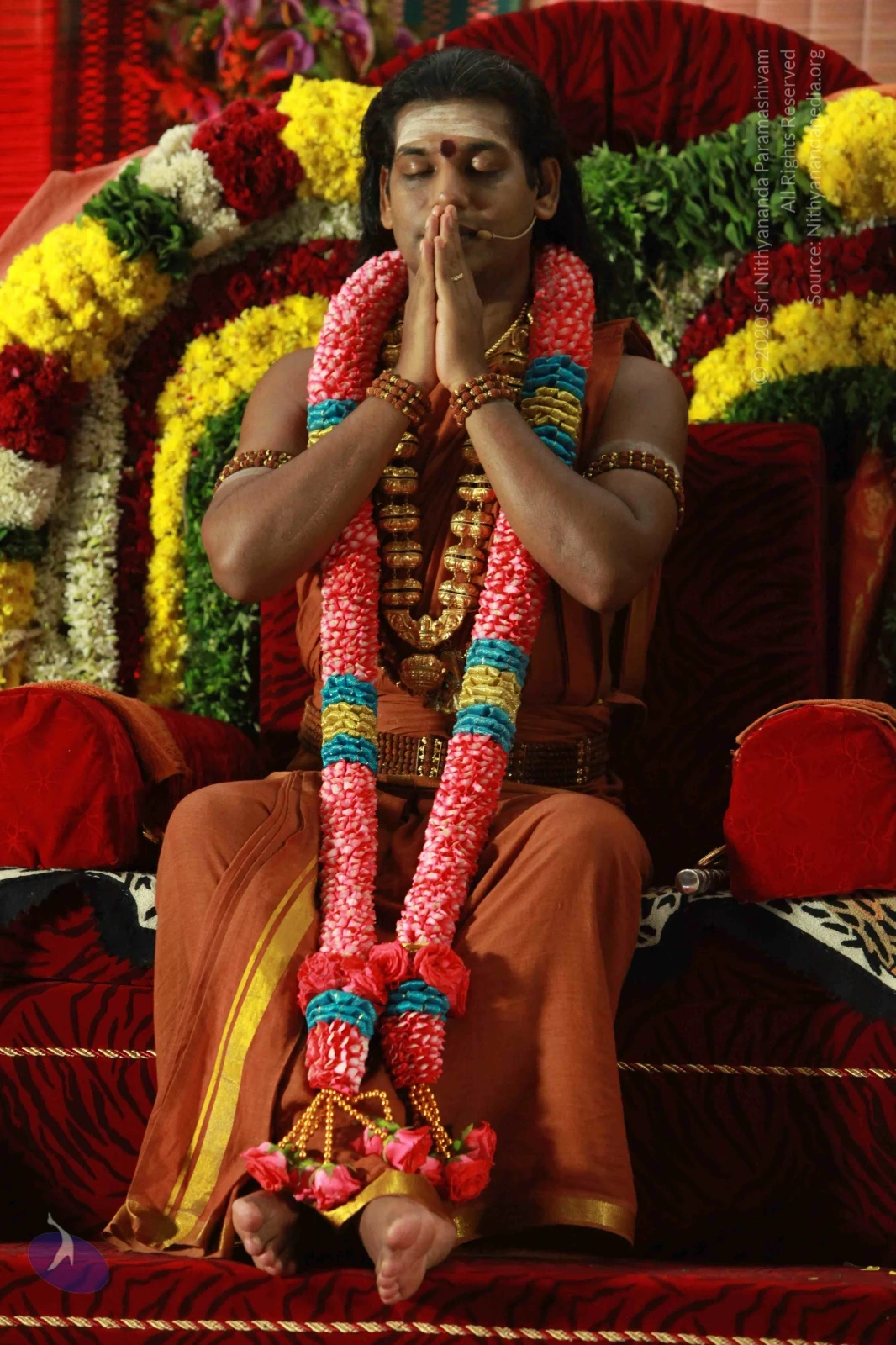
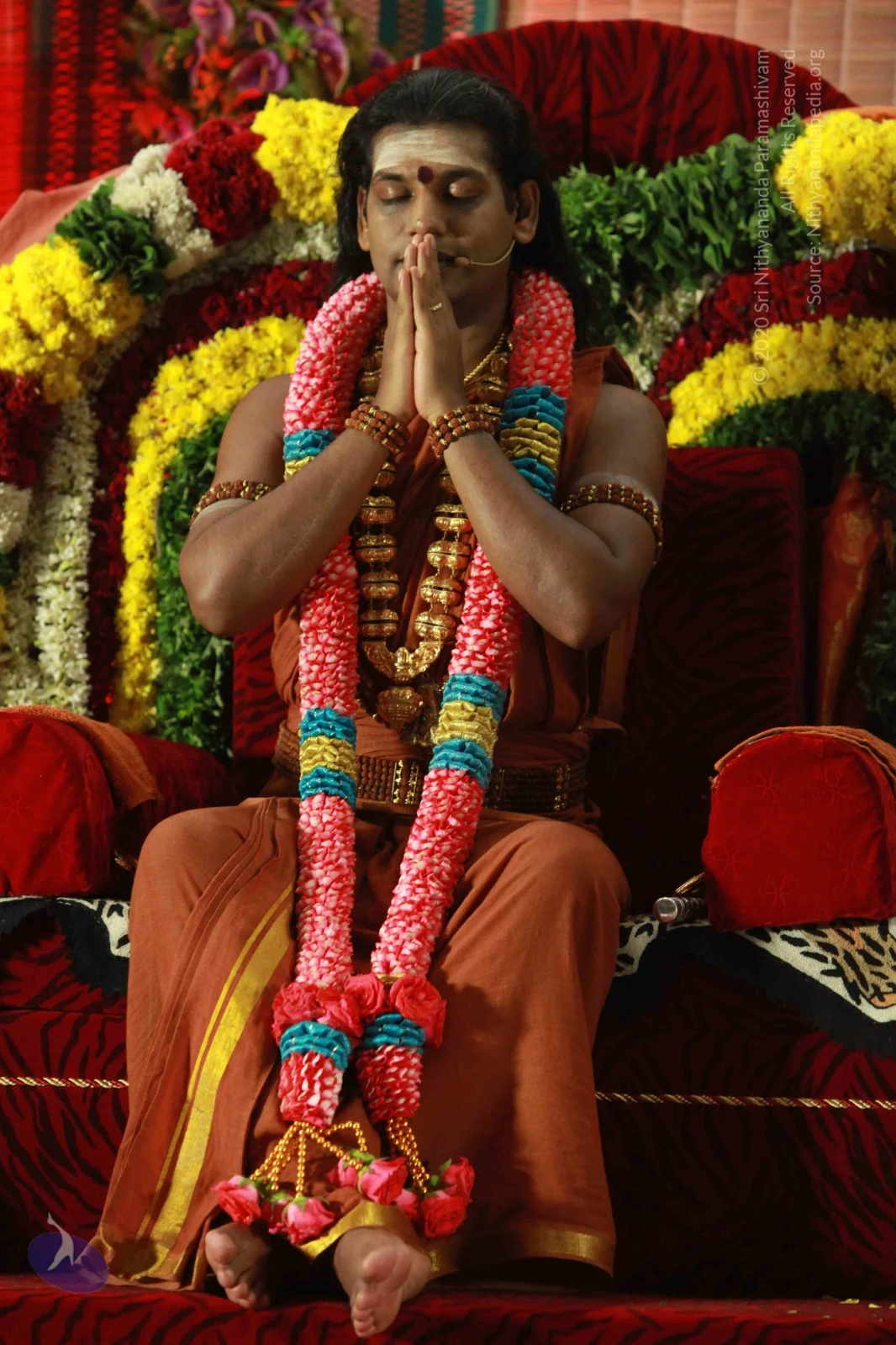
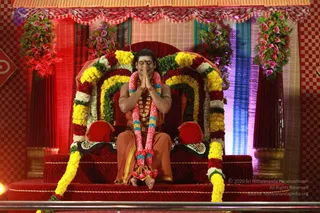
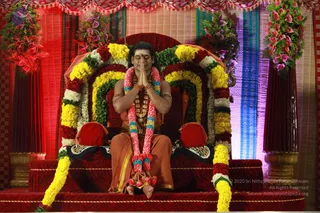
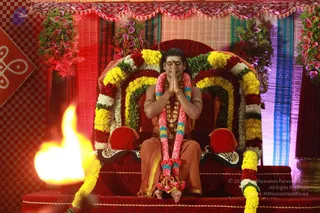
A man stands on a raised red-carpeted dais in front of a throne-like seat draped with bright garlands of yellow, white, red and green flowers. He wears an orange-brown dhoti and a gold-colored upper cloth, with heavy gold and beaded necklaces, a long layered red and blue garland with tassels, and gold armbands. His face is painted pale with white markings and his hair is long and dark. Floral arrangements in red and purple flank the backdrop, which is draped with red, orange and purple curtains. A microphone stand is visible at the right edge. The image is a photograph of a single person in an ashram-style stage setting, with a candidate matching the Swamiji appearance cues of long hair, ornate gold necklaces and orange-saffron clothing, presented as probable Swamiji (probable) in an in_person setting.A photograph of a seated man on a red throne draped with a zebra-striped cloth and a tiger-print cushion, his palms pressed together in namaste with eyes closed. He wears a pink, yellow and green flower garland, a gold and beaded necklace, a saffron-orange wrap and dhoti with a gold border, gold armbands and bangles, and a red tilak on his forehead. The throne is framed by a large arch of yellow, red and white marigold and rose garlands against a red and purple draped backdrop with artificial flowers at the top. This is a probable depiction of a person, identified by the saffron/orange clothing, ornate gold necklaces and throne-side garlands, and is seated in a posture of reverence. Only one person is physically present.A man seated cross-legged on a red-upholstered throne with a curved backrest, eyes closed and palms pressed together in namaste. He wears a saffron-orange dhoti and shawl, a gold necklace, gold armlets and bangles, and a long pink-and-white flower garland. The throne is framed by an arch of yellow, red, white and green flower garlands, with pink flowers on pillars behind and a red-and-white checked backdrop. a person, identified by the saffron clothing, ornate gold necklace and garland honouring him on a throne.A seated man with a shaved head and a red bindi sits with palms pressed together in anjali on a red throne-like dais decorated with wreaths of yellow, red and white flowers and green leaves. He wears an orange-saffron dhoti-style garment, a gold necklace and a rudraksha mala with multicoloured flower garlands draped over his shoulders, and gold bangles on his wrists. Behind him are red and pink floral arrangements, pleated cloth drapes in red, green and blue, and a red-and-white checked backdrop. The setting suggests a satsang seat, though no crowd is visible in the frame.A photograph of a man seated in meditation on a red velvet throne decorated with a rainbow-striped garland of yellow, red, green and white flowers. He sits cross-legged with palms pressed together in namaskar, eyes closed, wearing an orange-saffron dhoti and shawl, gold armlets, a gold-beaded necklace and a pink-and-blue flower garland draped over his shoulders. A red bindi is on his forehead.A photograph of a man seated on a red throne with yellow, red and green flower garlands framing the seat, hands pressed together in namaste at chest level with eyes closed. He wears a saffron-orange dhoti and upper cloth, a multicoloured flower garland, gold necklaces and armlets, and a forehead marking. A bright flame burns in the foreground at left, and pink and red flowers decorate the backdrop. a person seated in meditative prayer; the throne, garlands and flame suggest a satsang or puja setting, with the ornate saffron clothing and layered garlands as cues.