Skip to content
Saturday

22 September 2012

The Secret of Natural Enlightenment

Dated photos
858
Source pages
1
Media
5
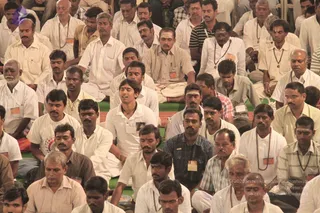
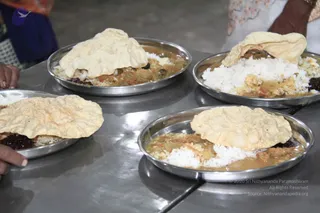
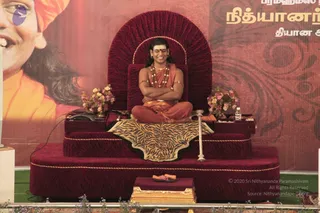
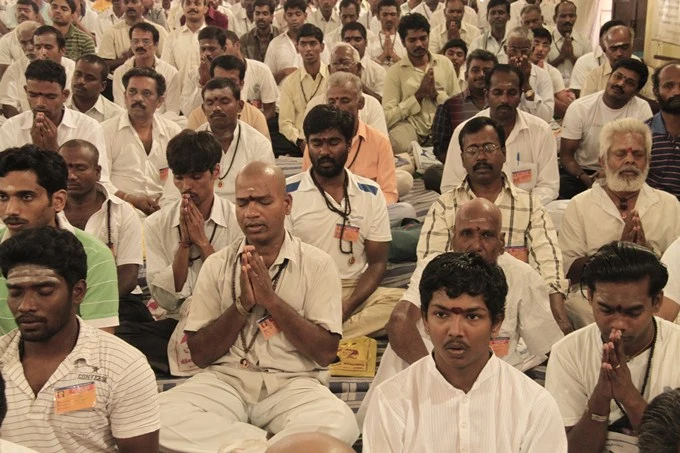
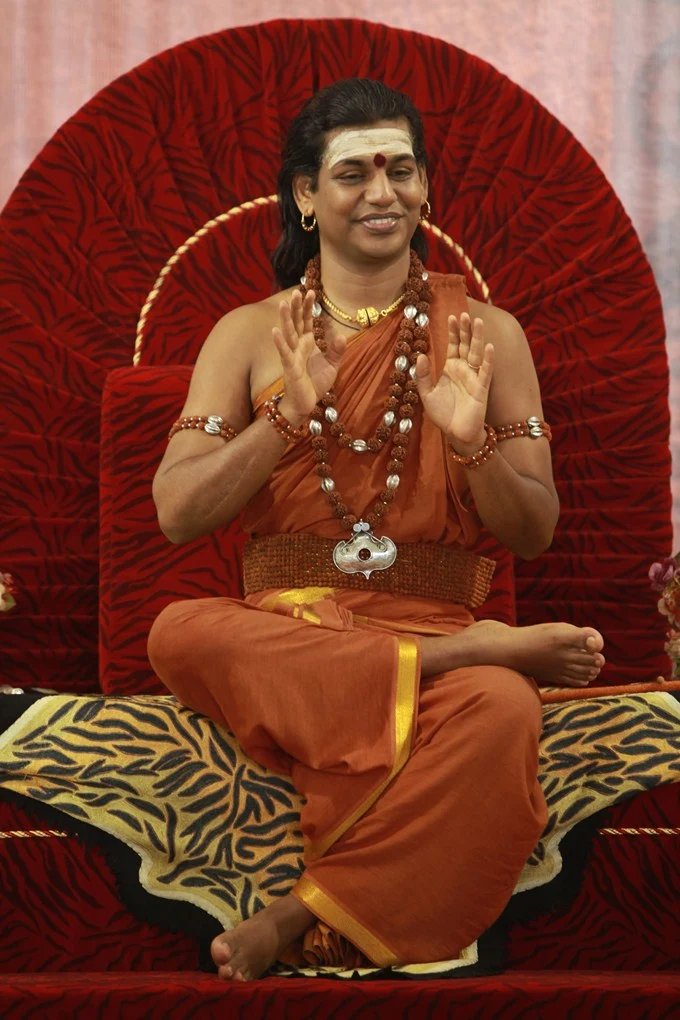
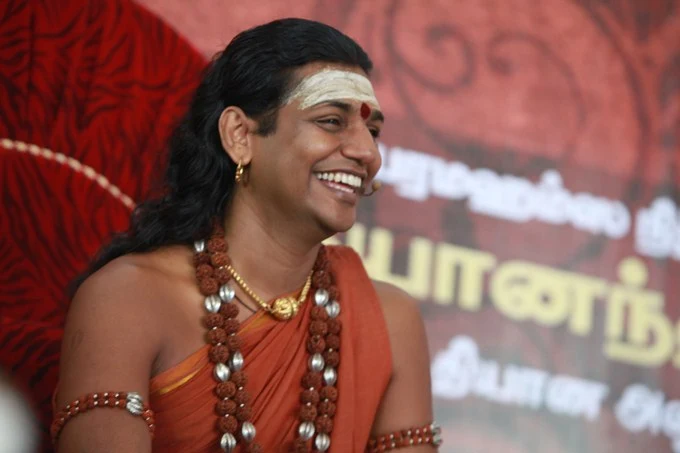
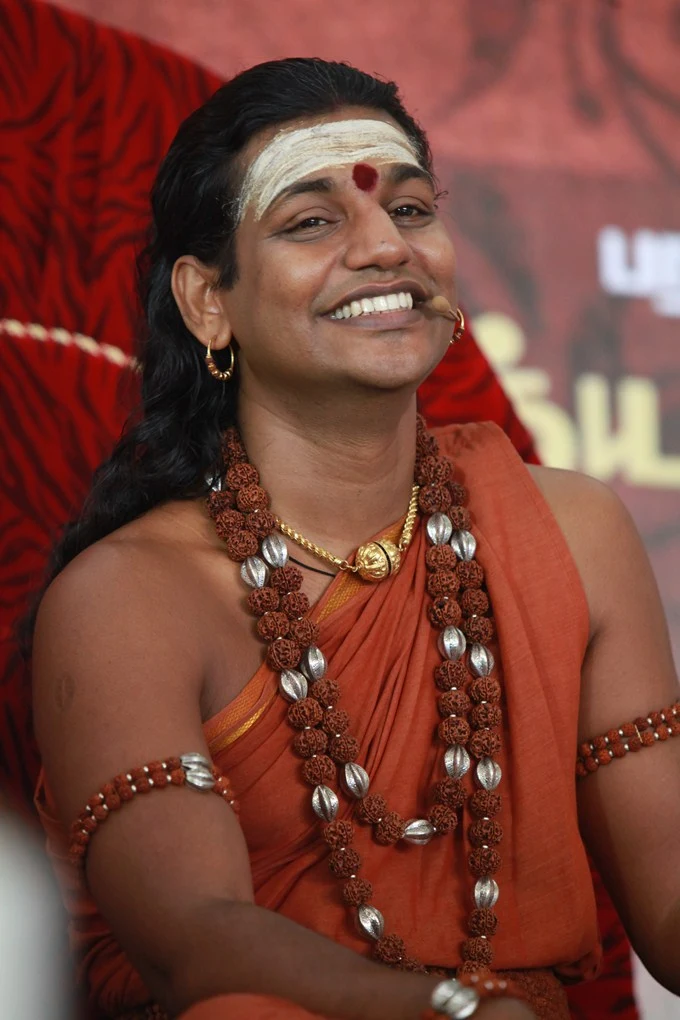
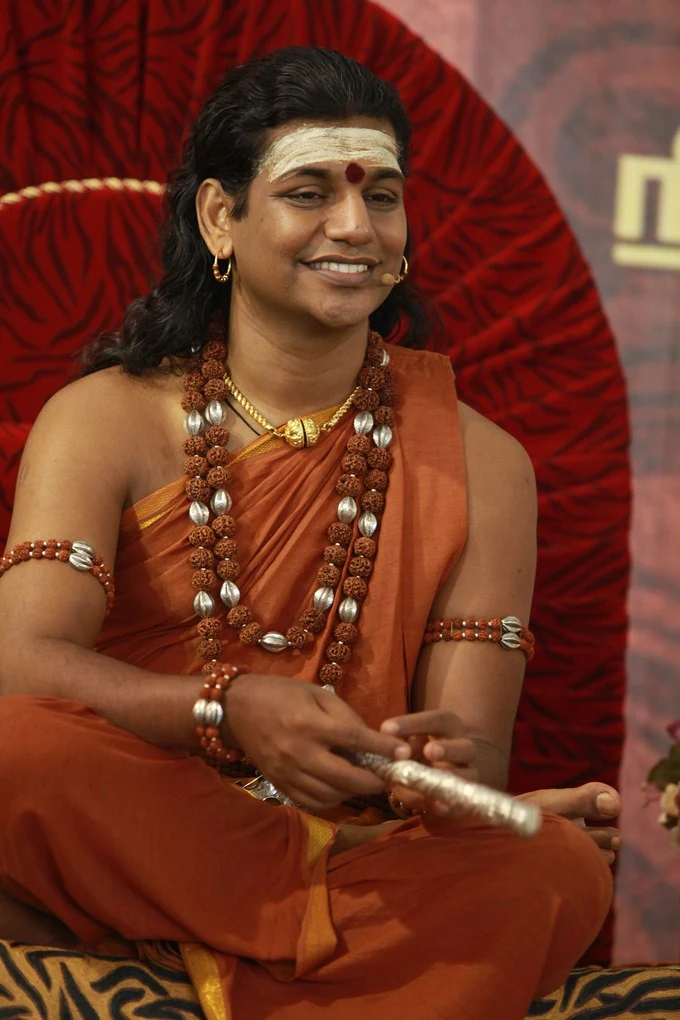
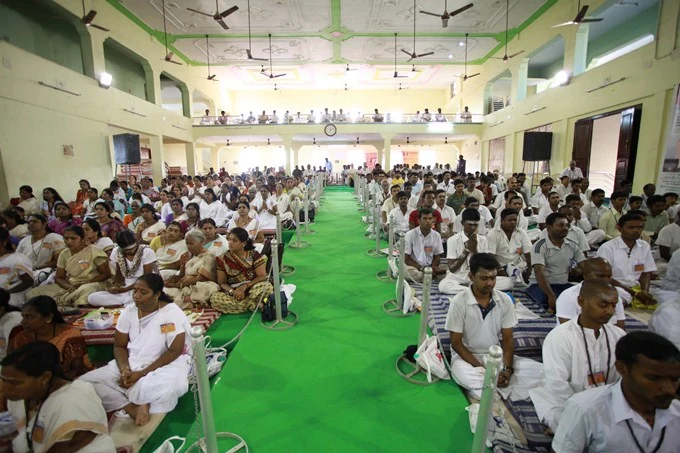
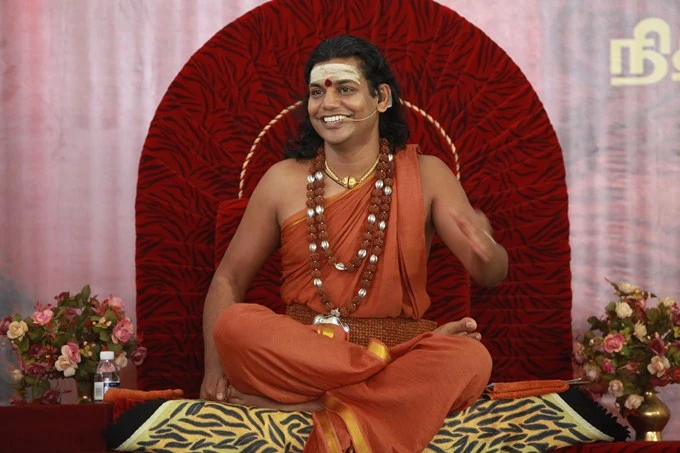
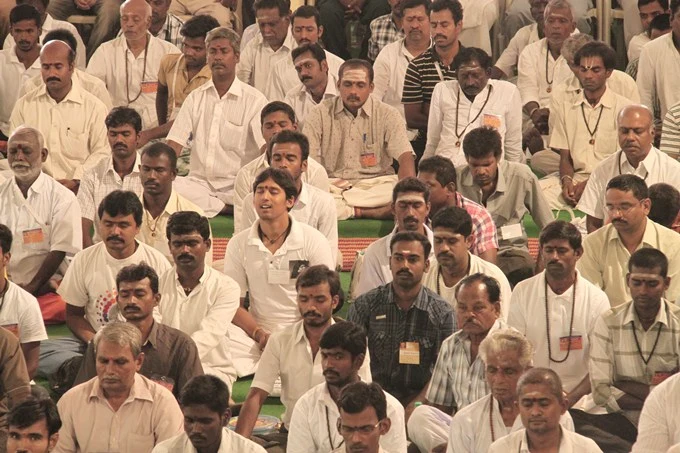
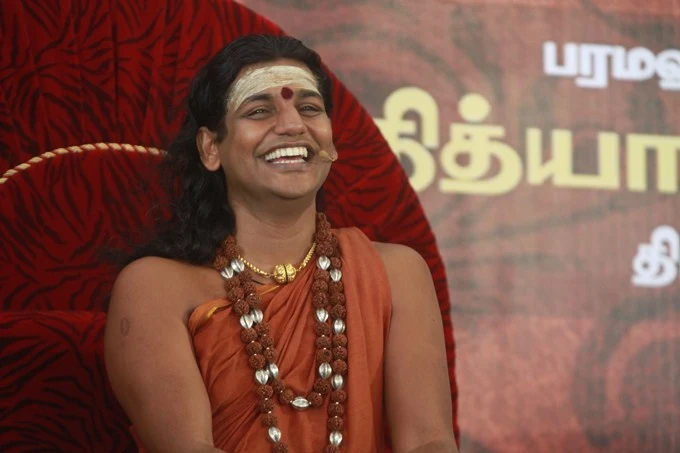
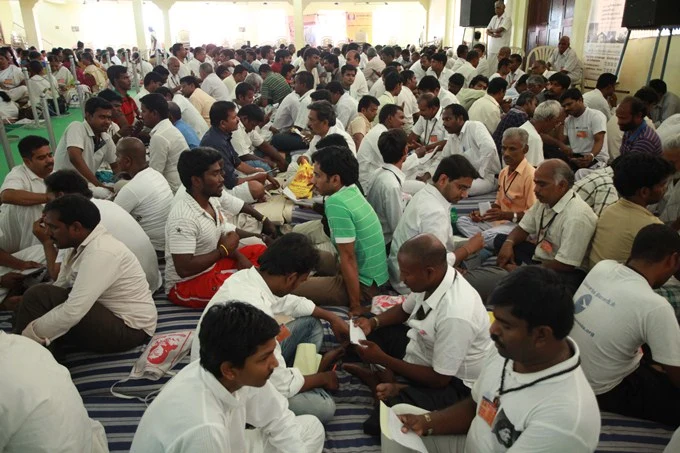
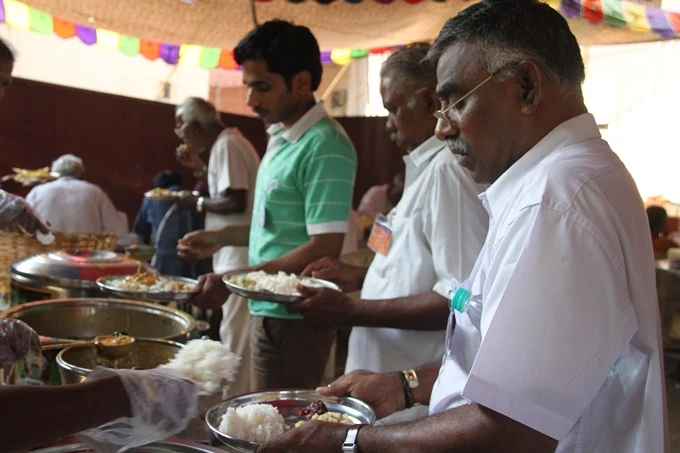
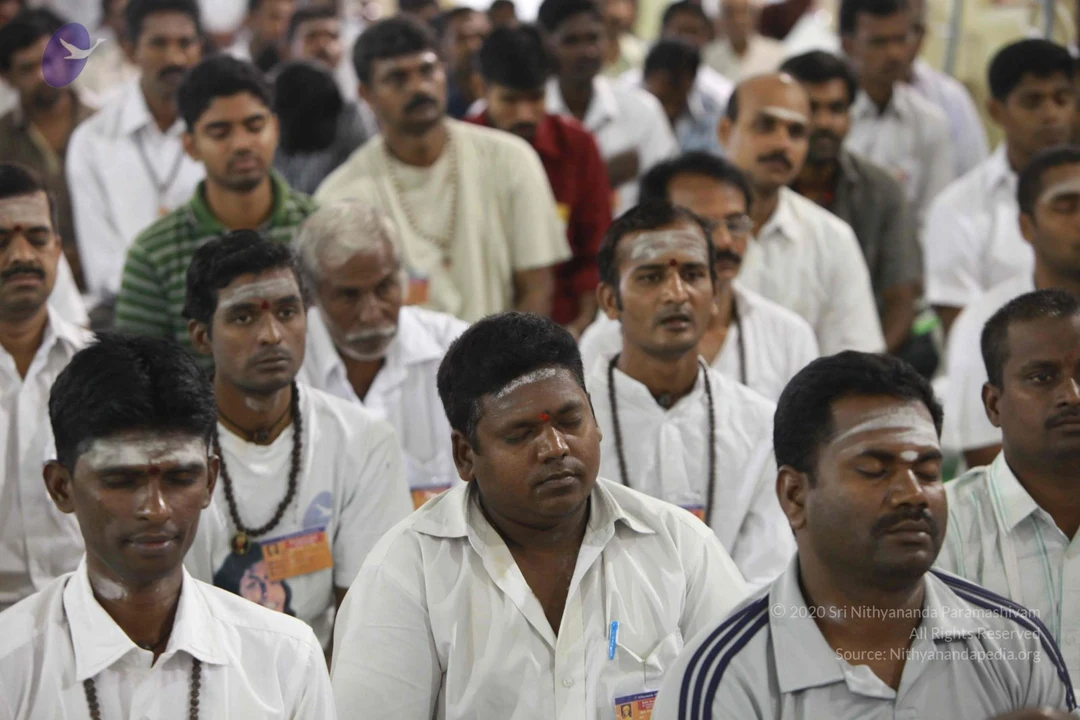
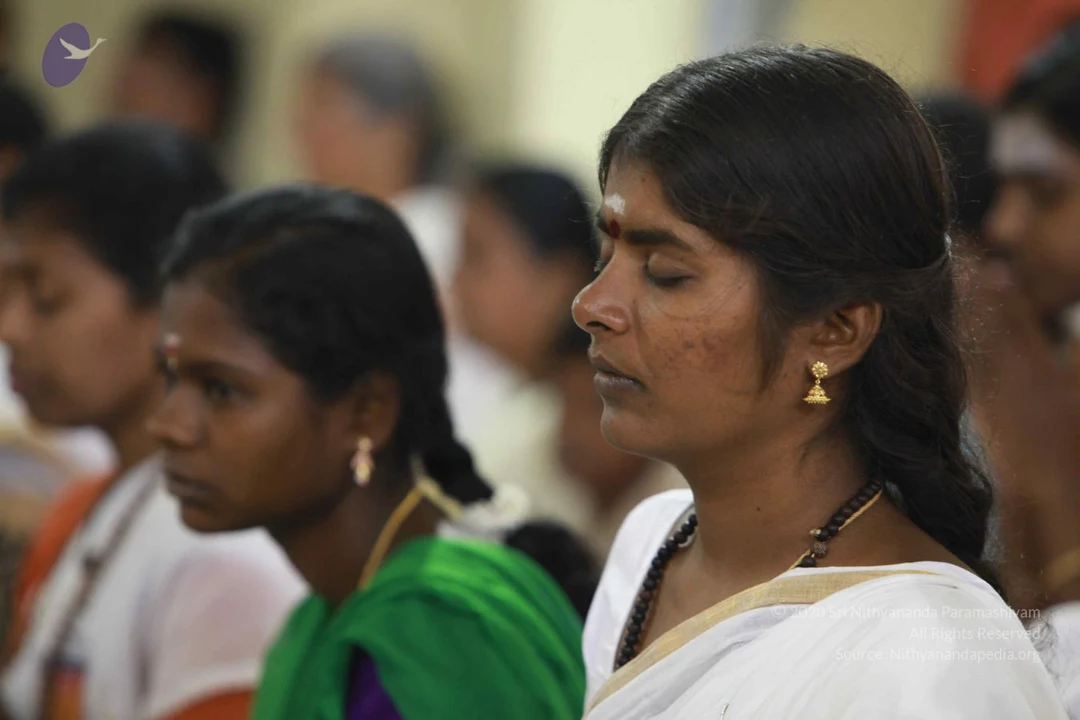
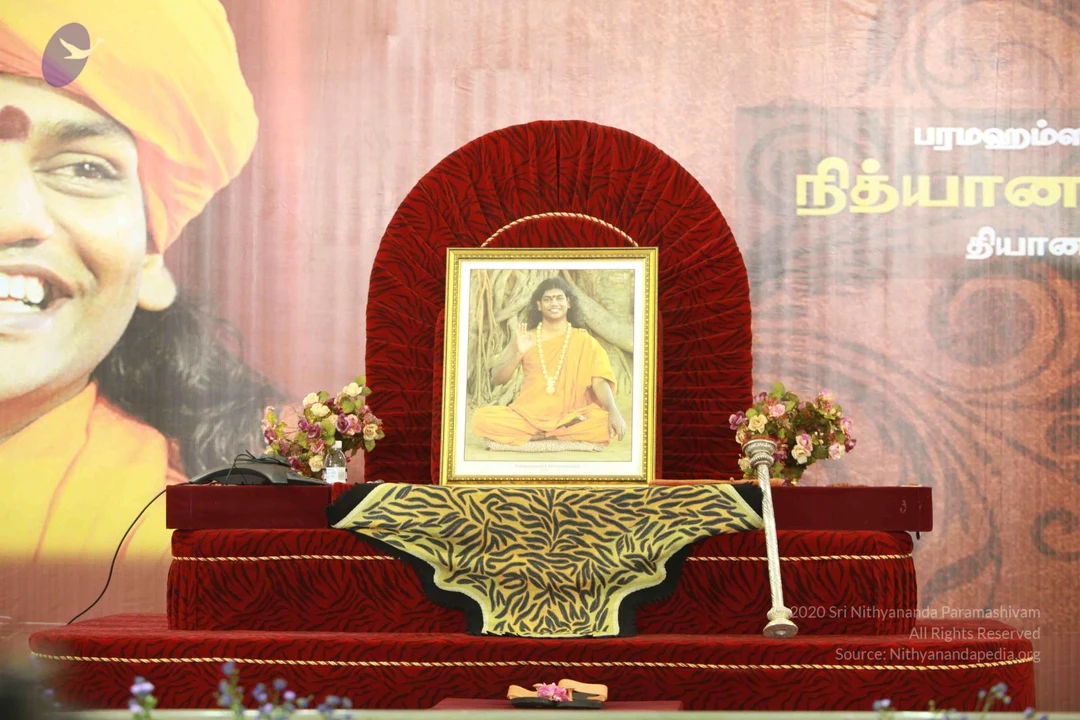
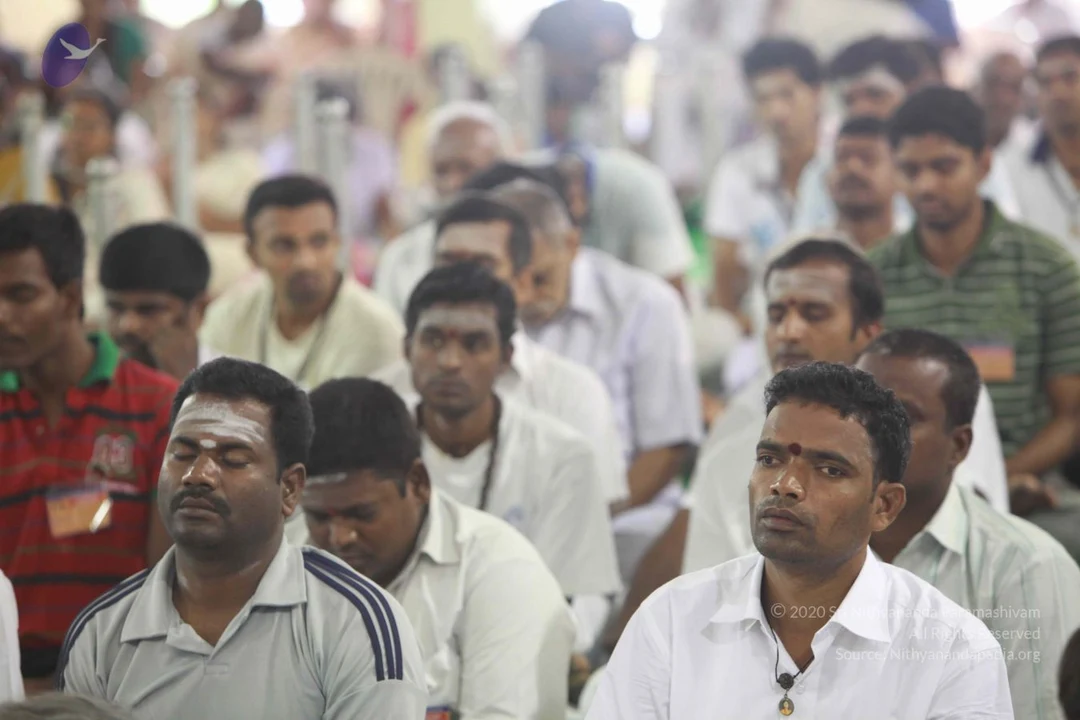
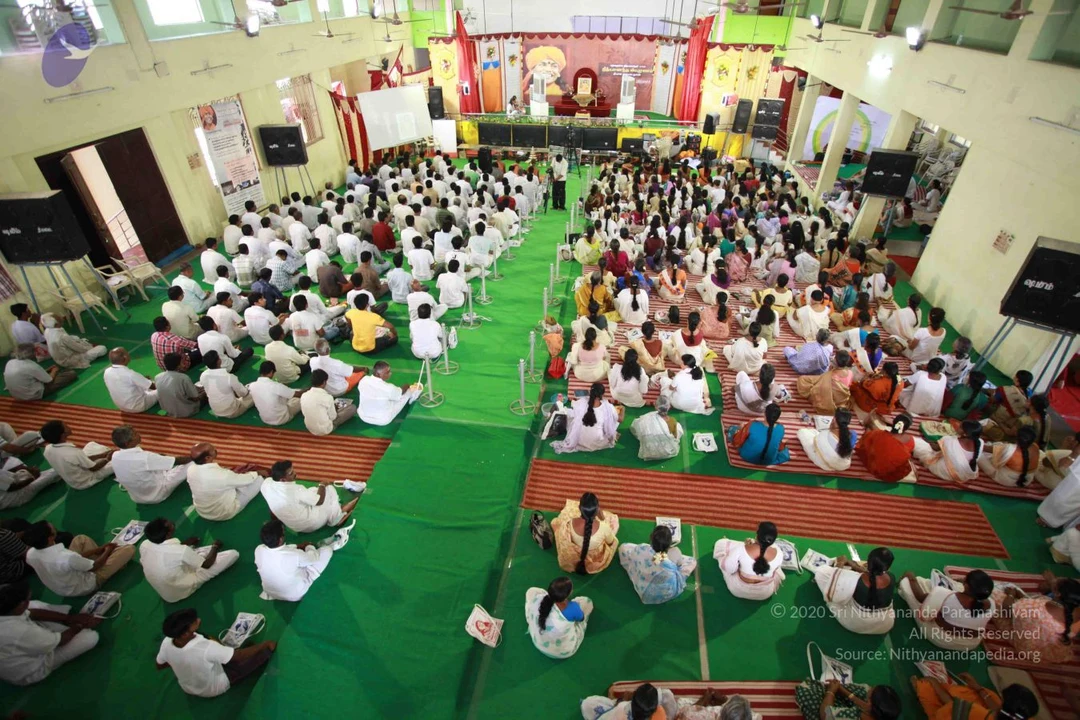
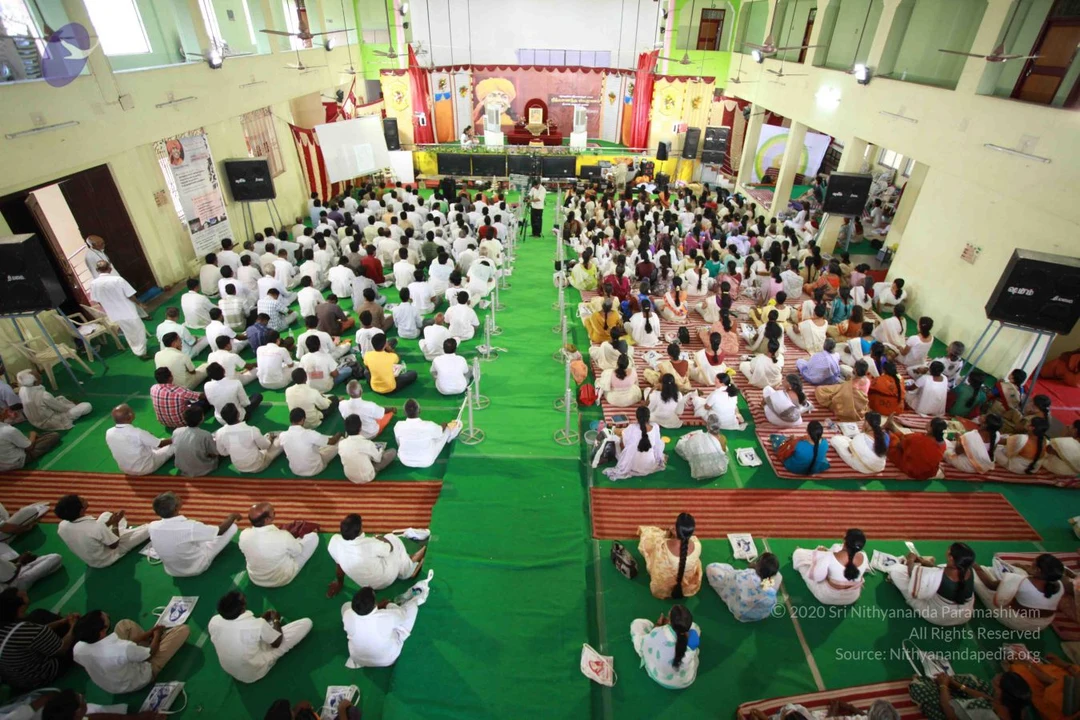
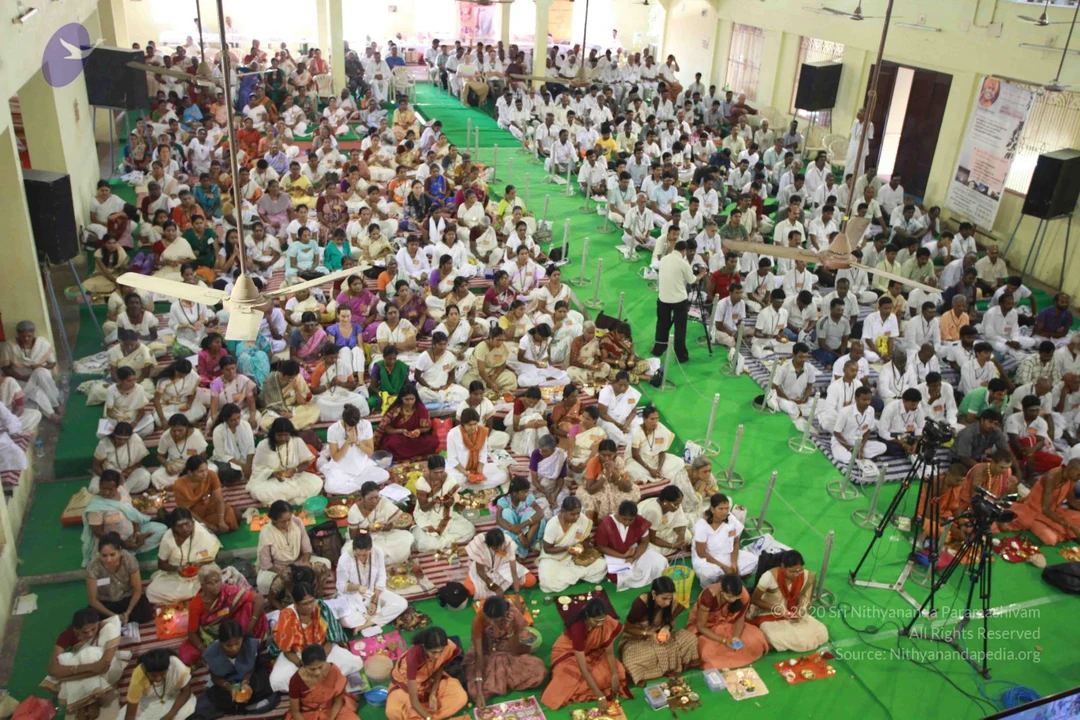
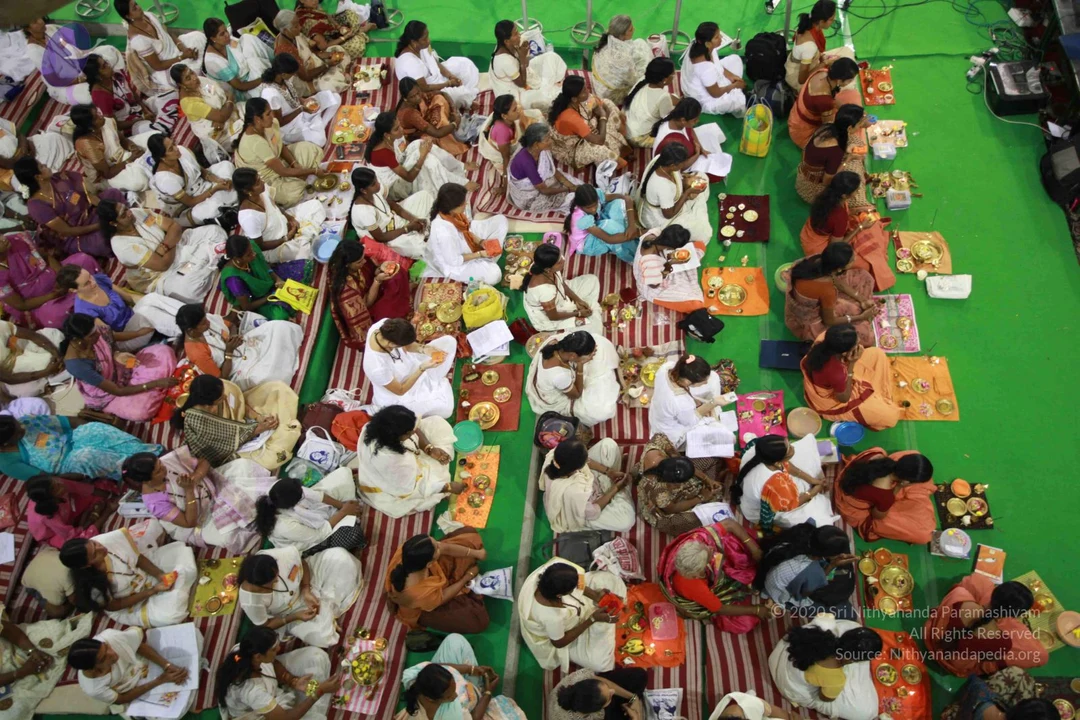
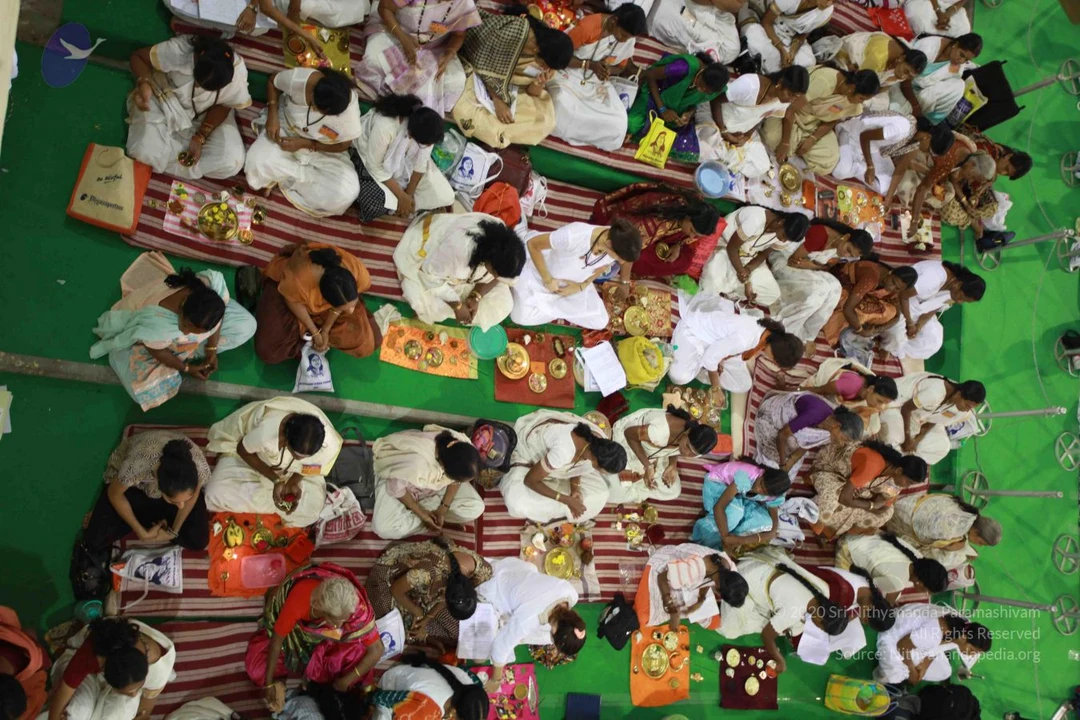
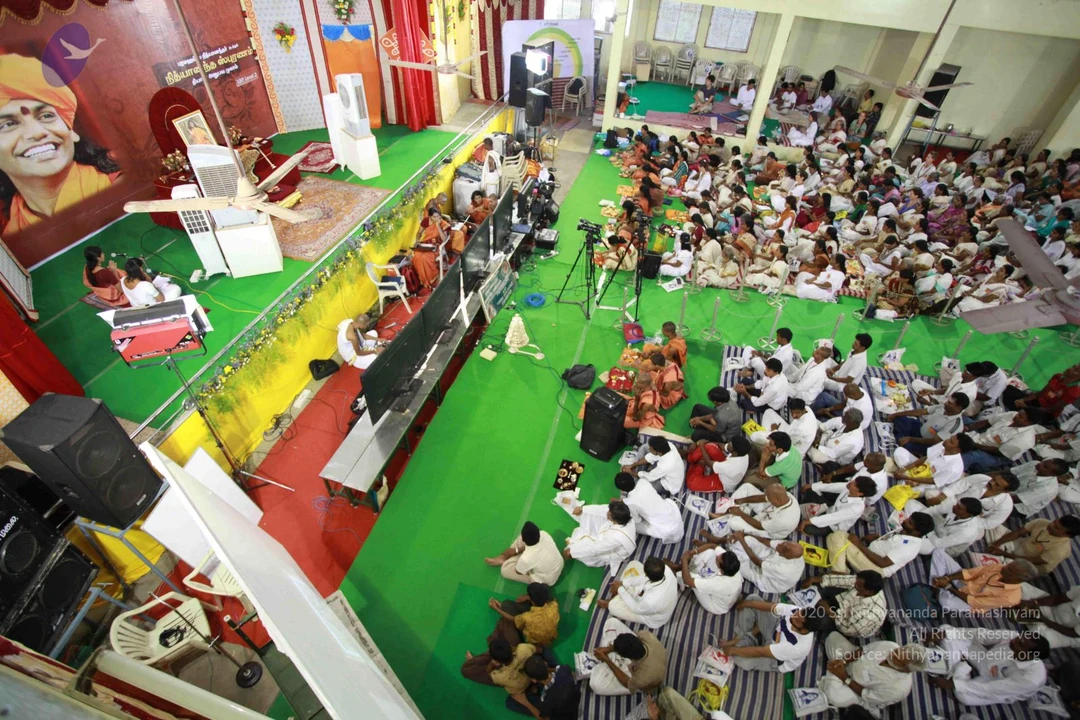
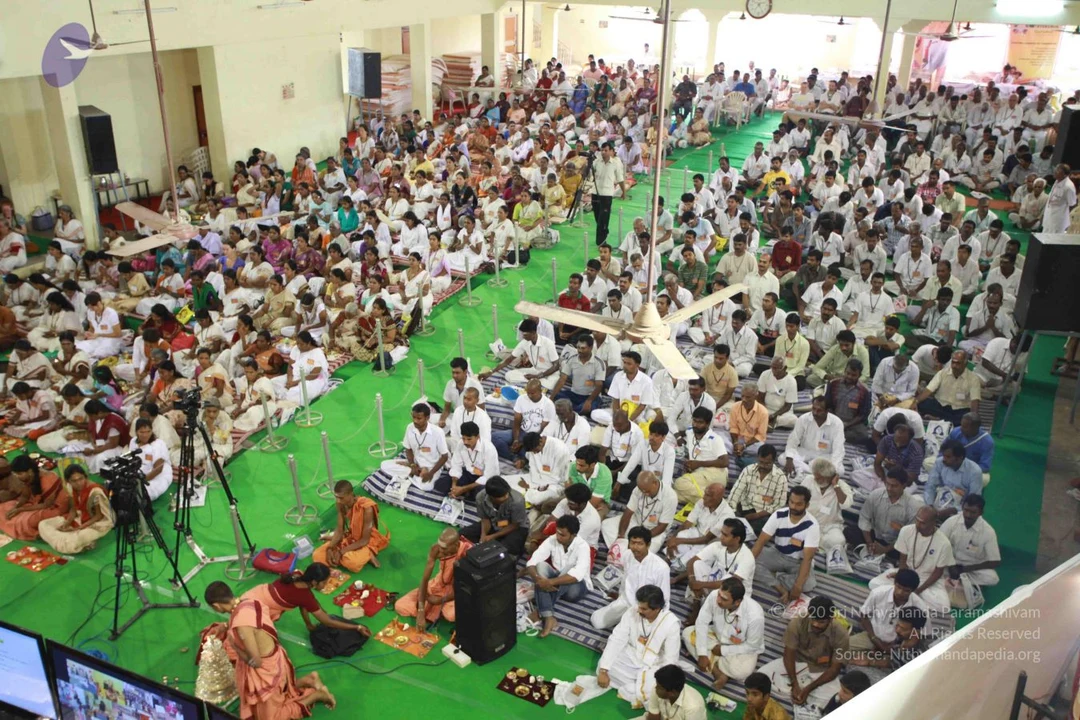
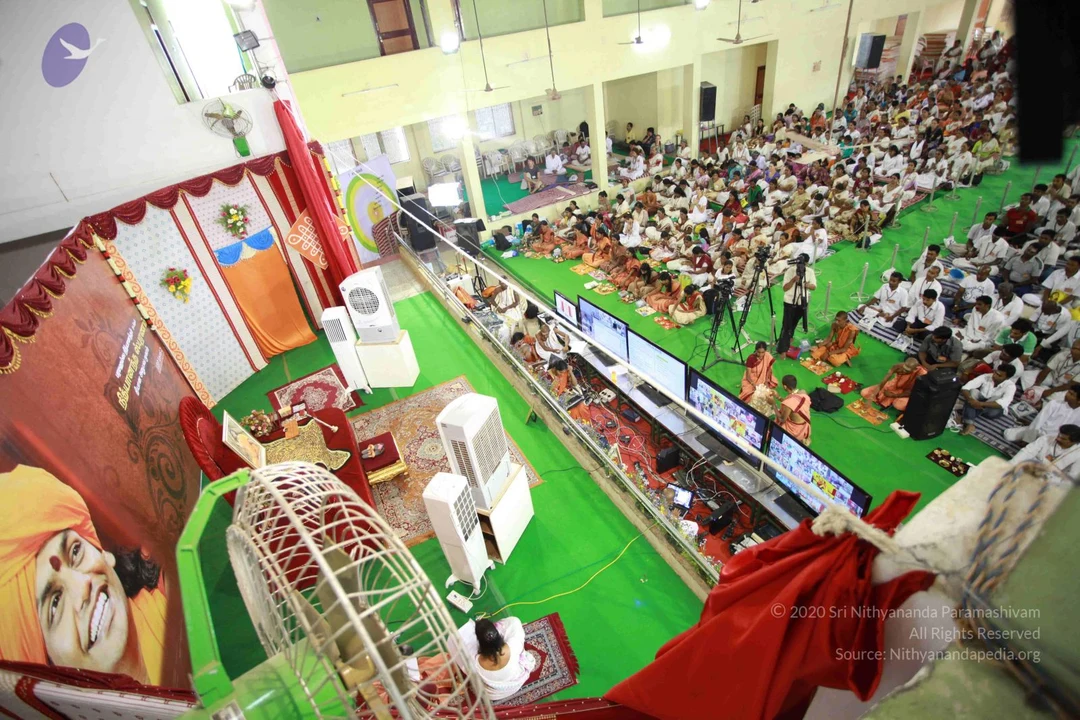
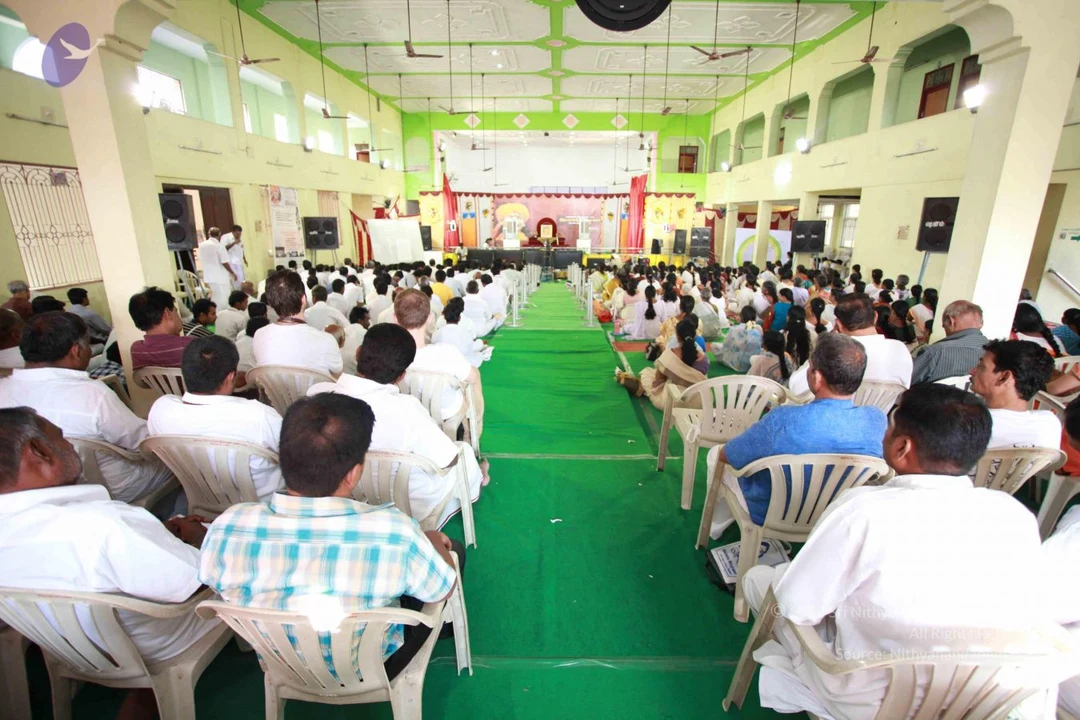
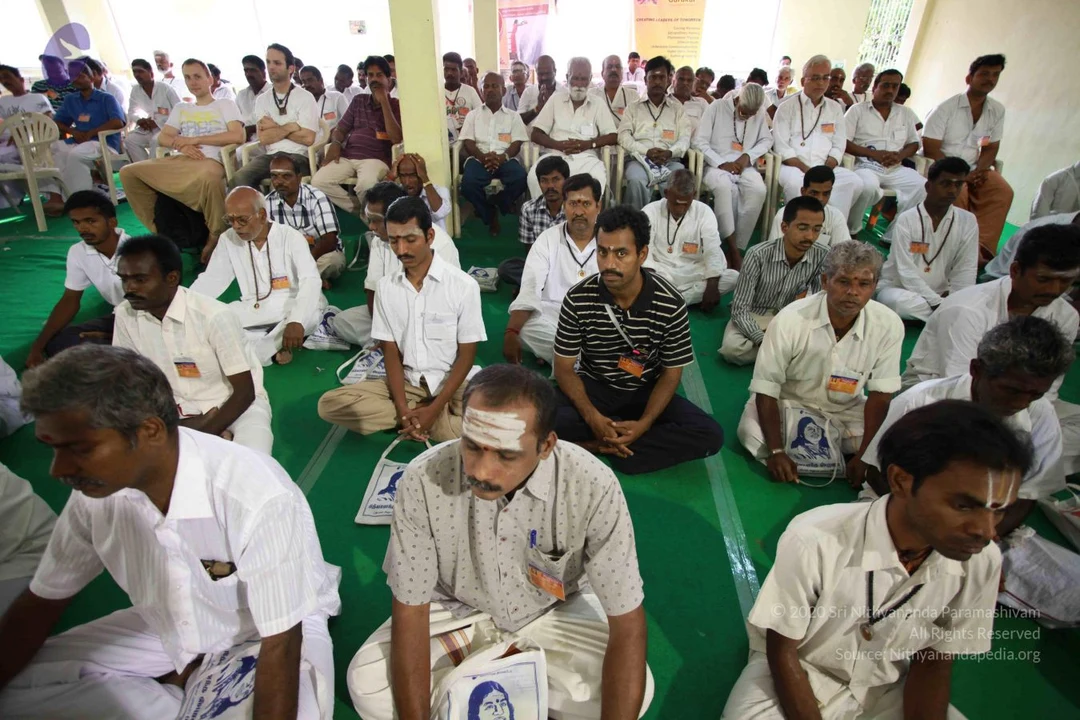
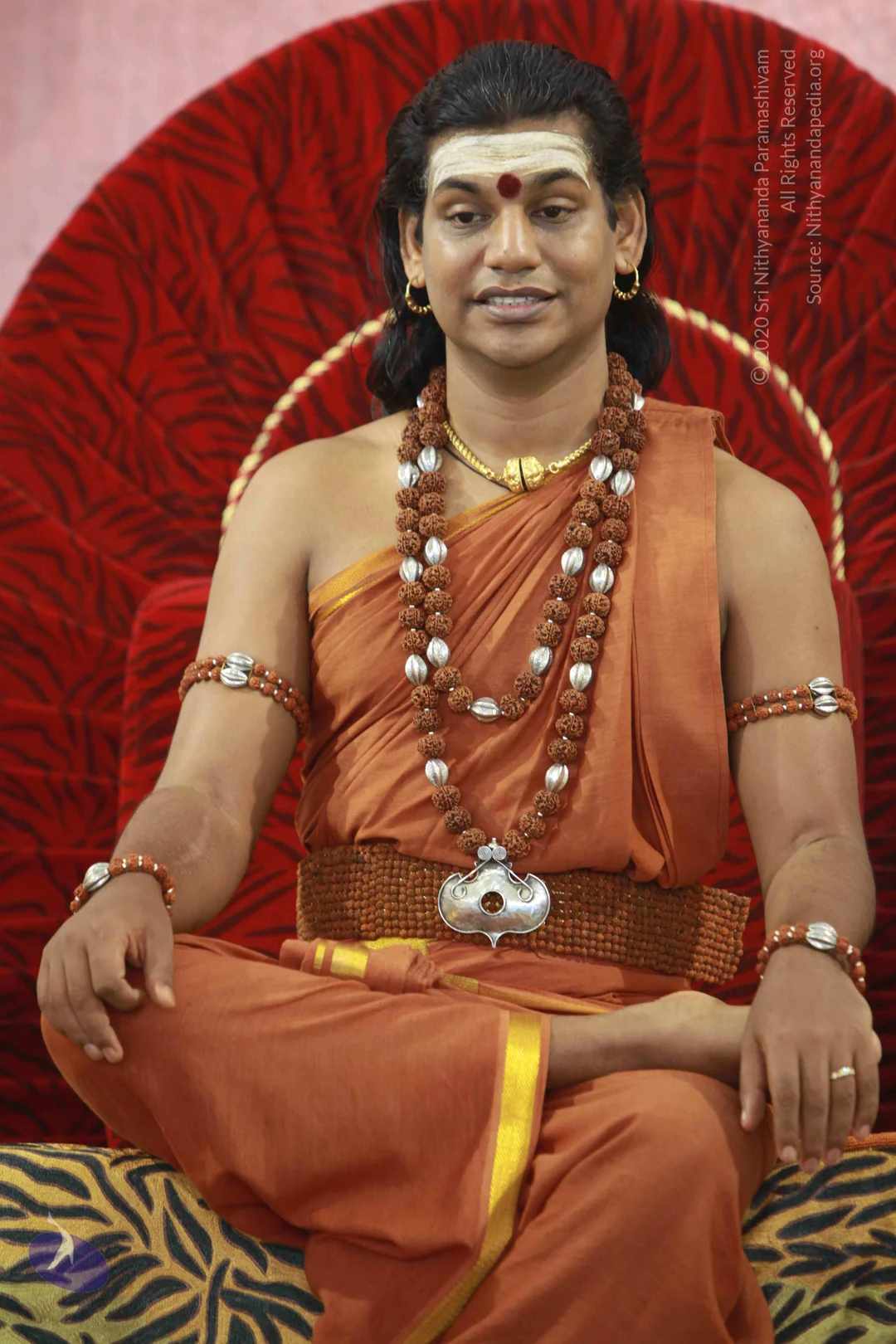
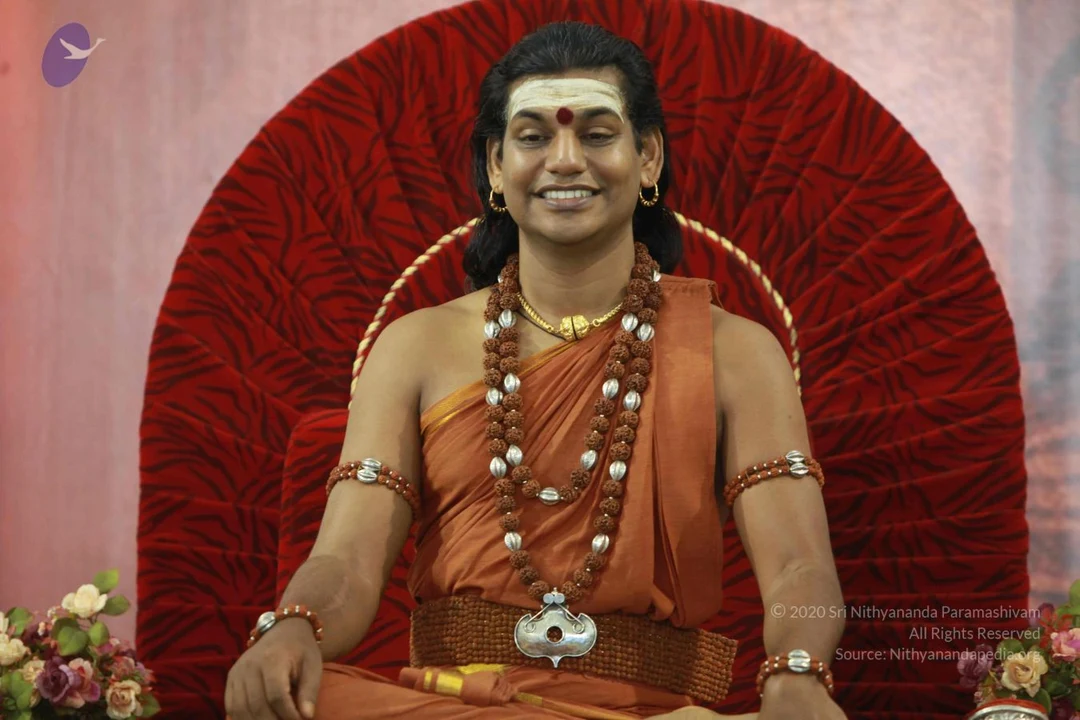
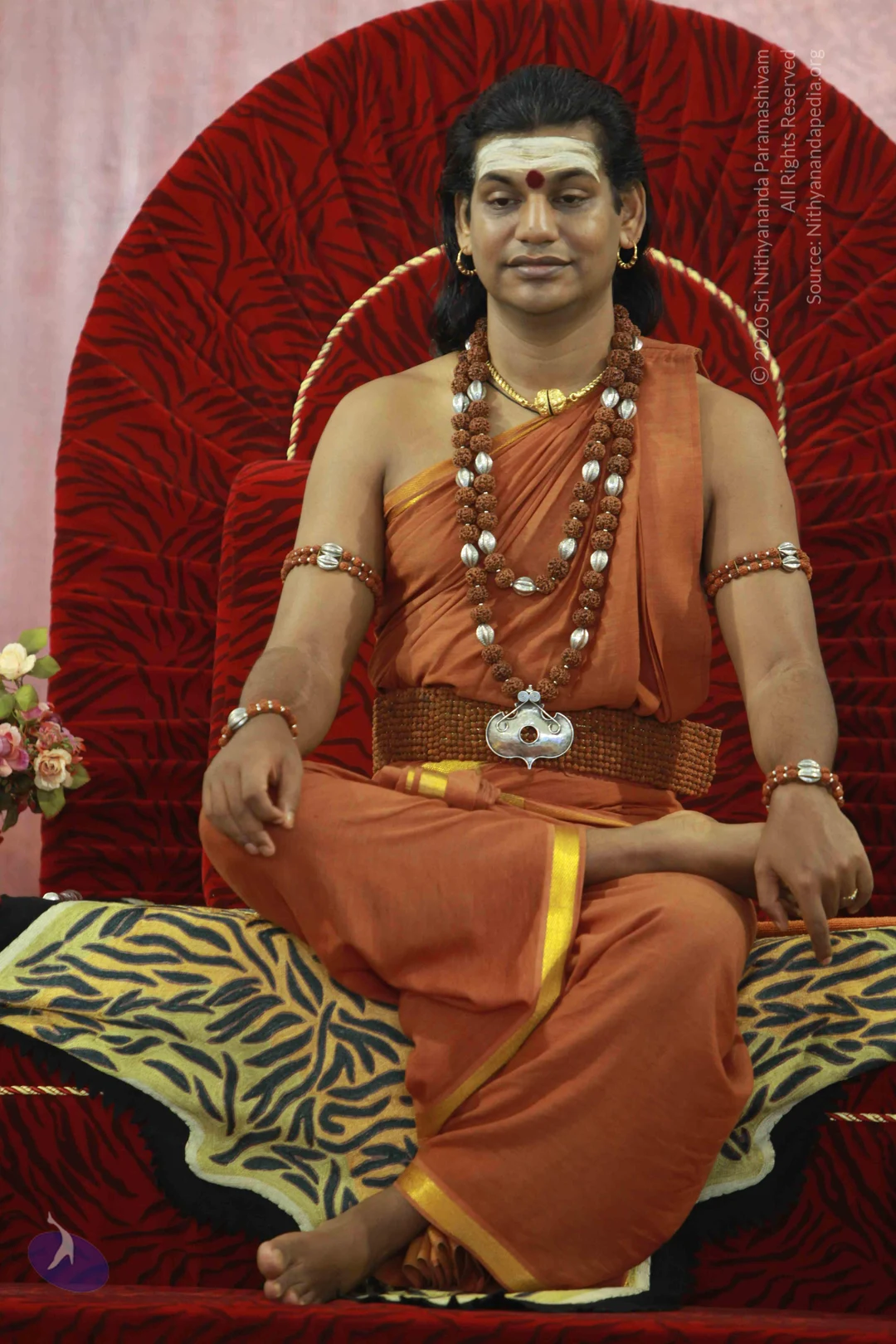
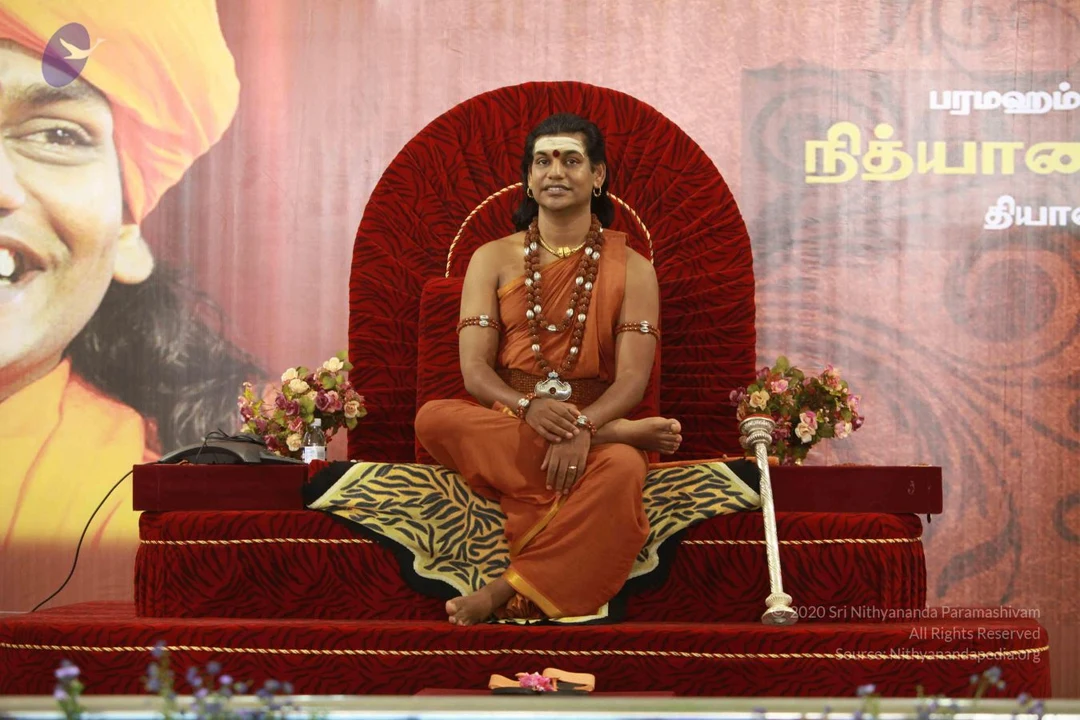
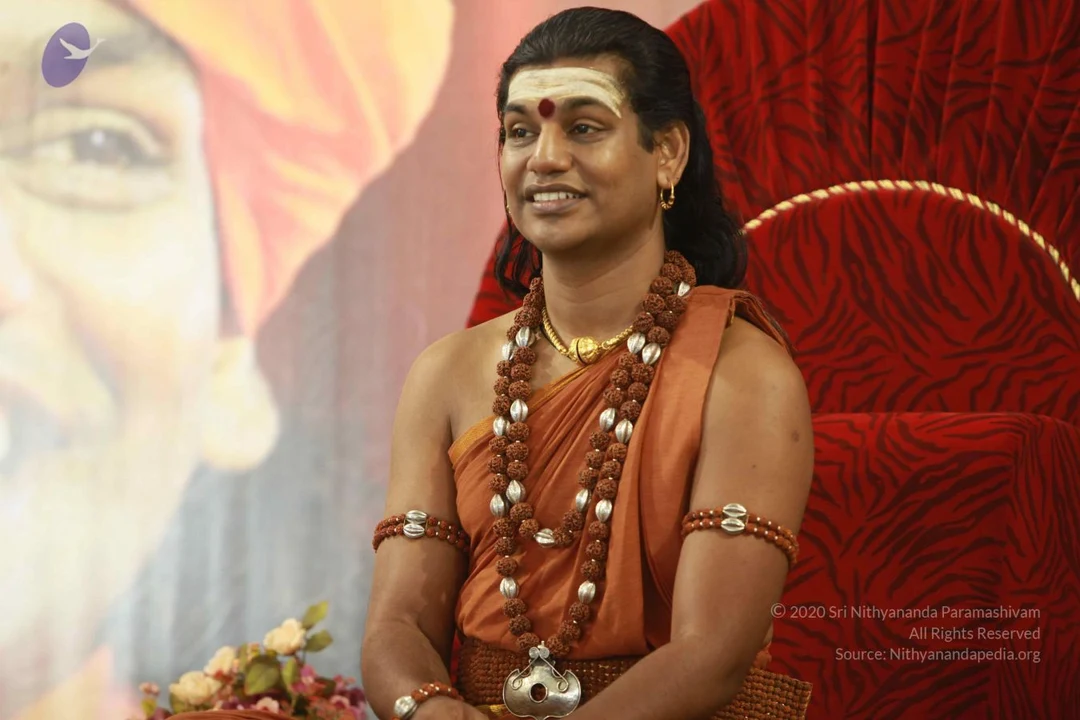
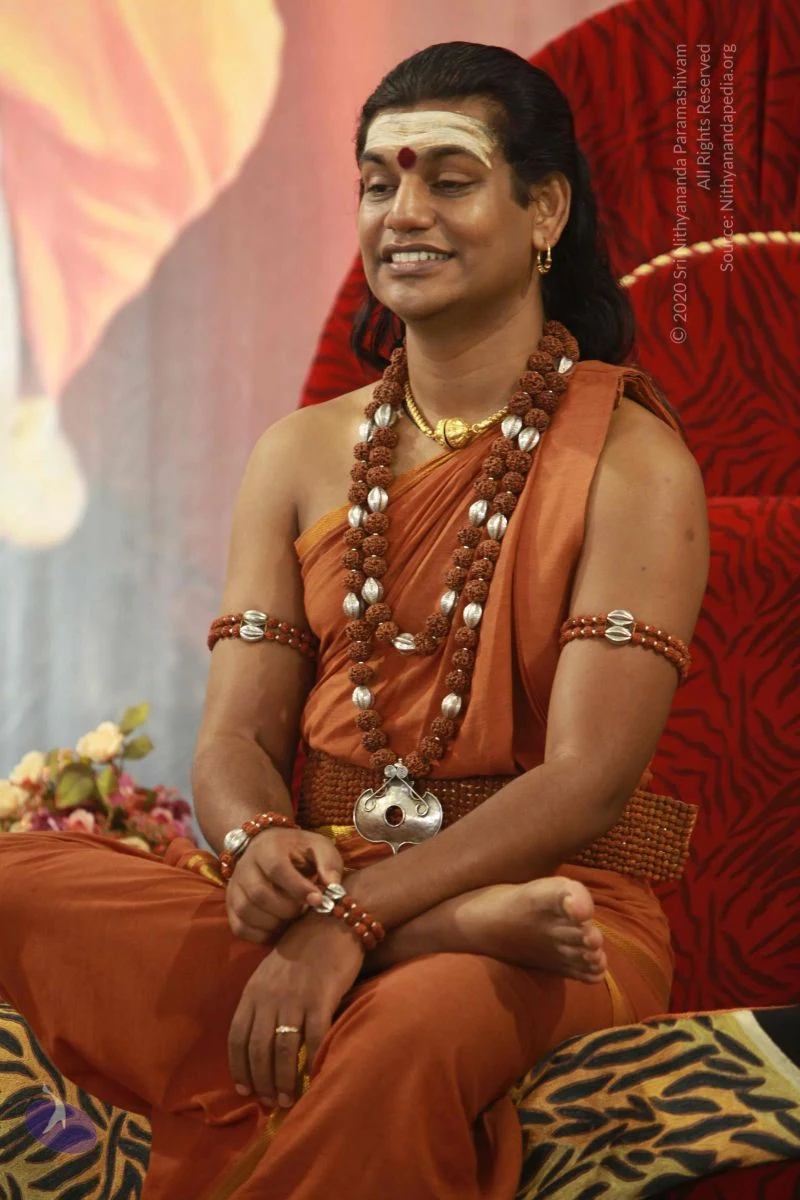
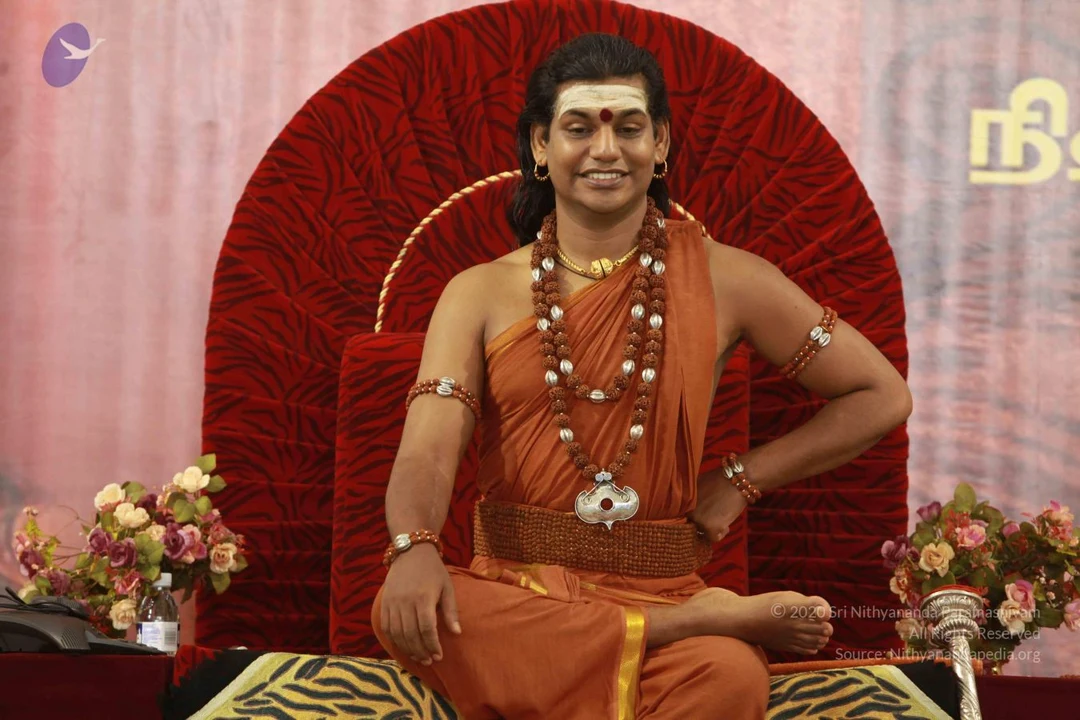
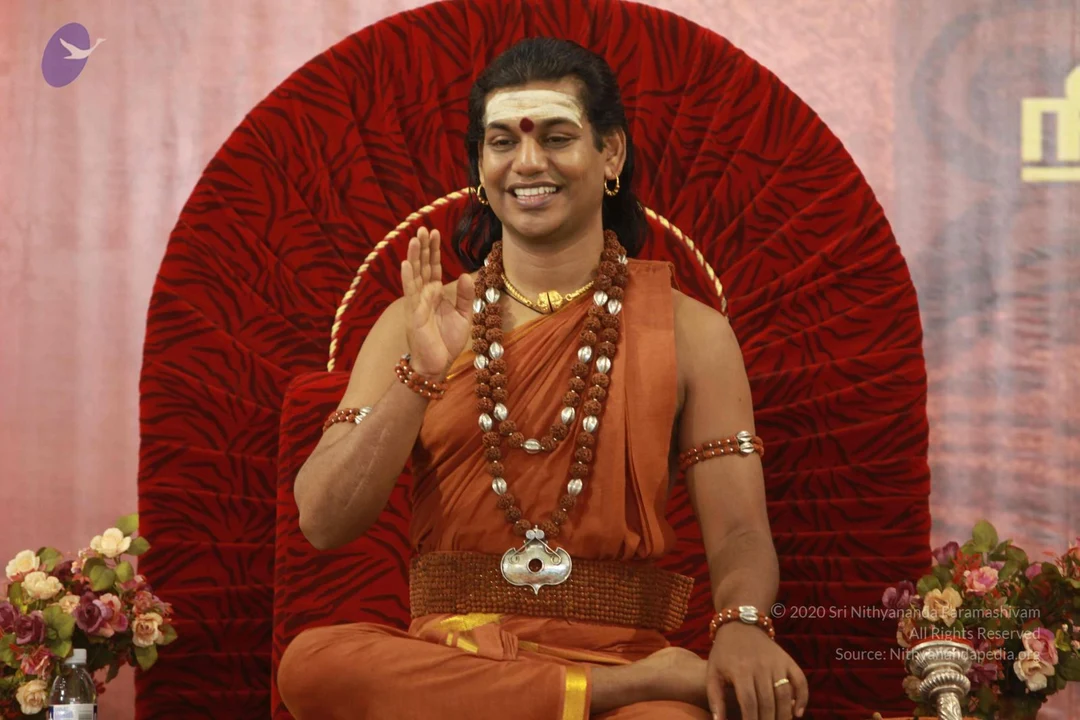
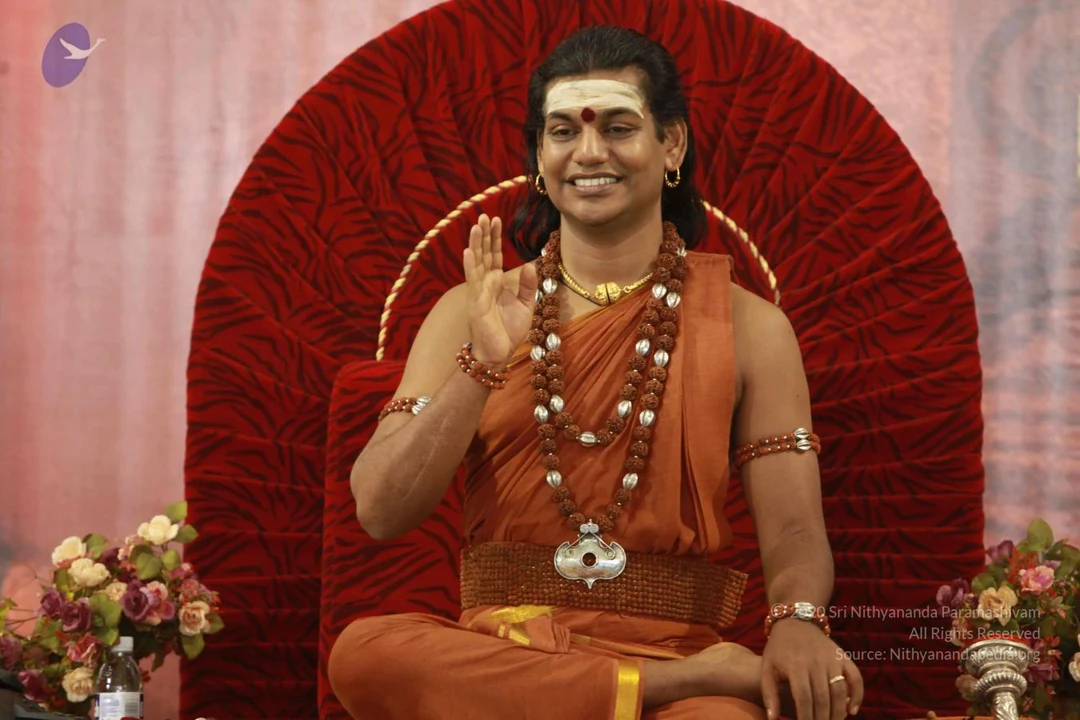
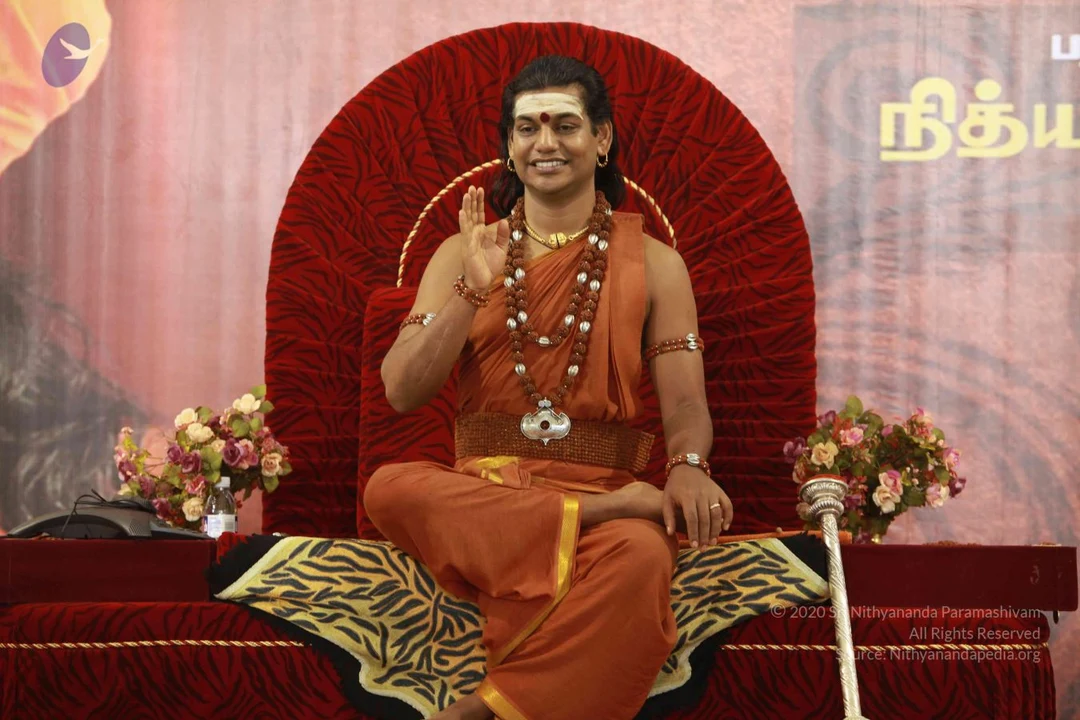
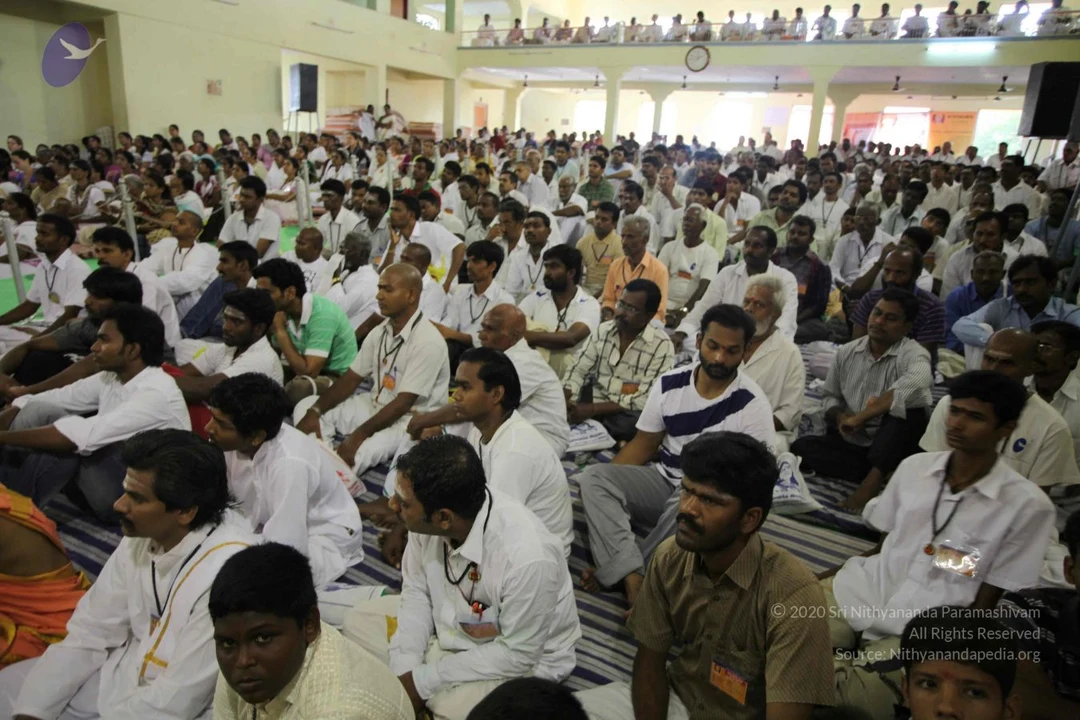
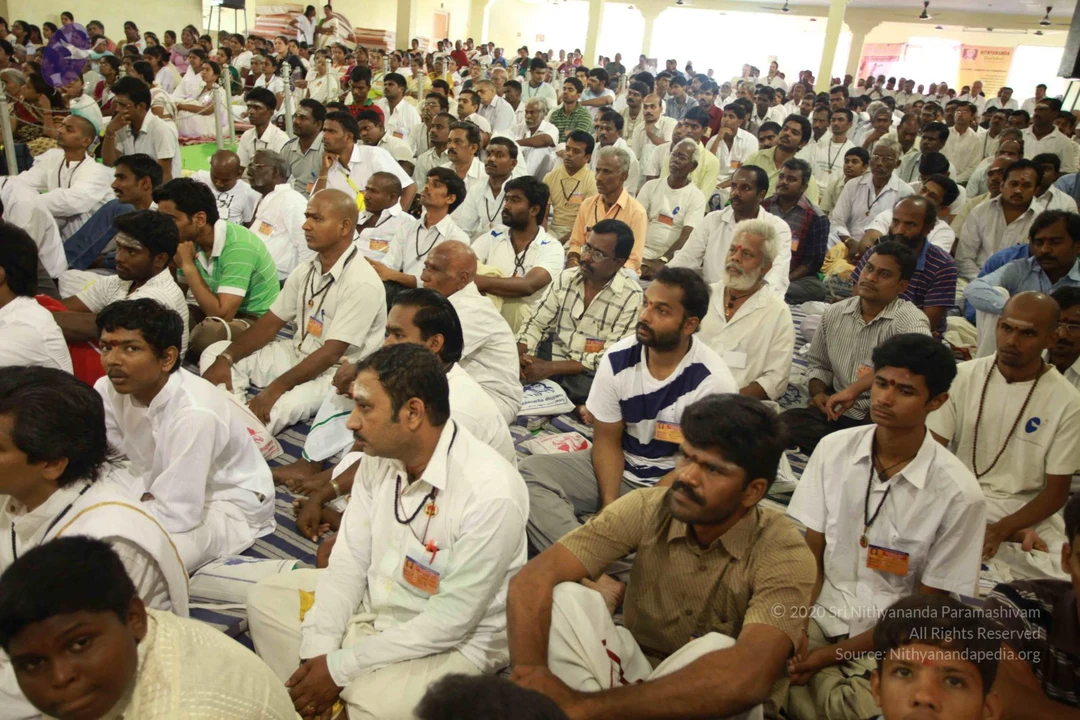
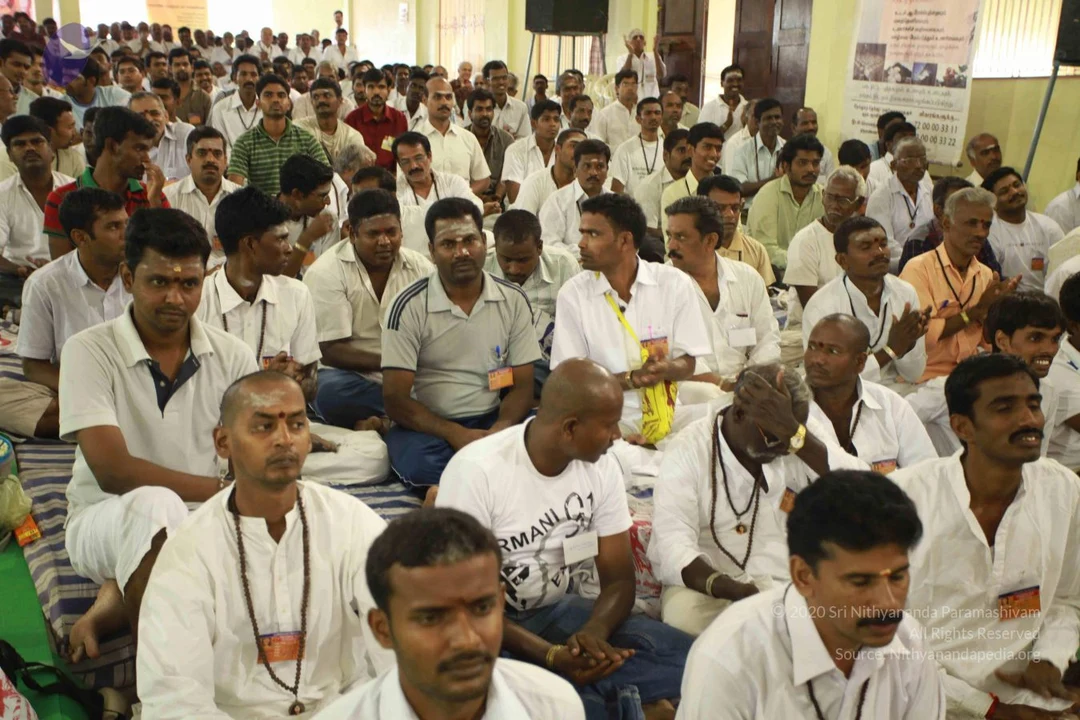
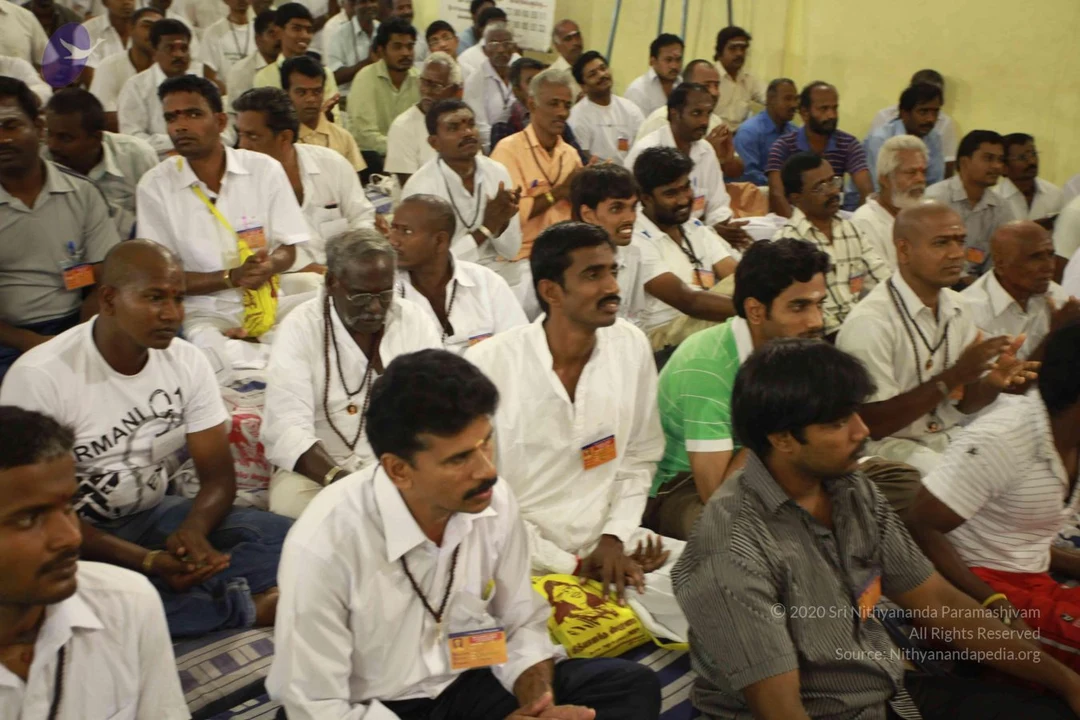
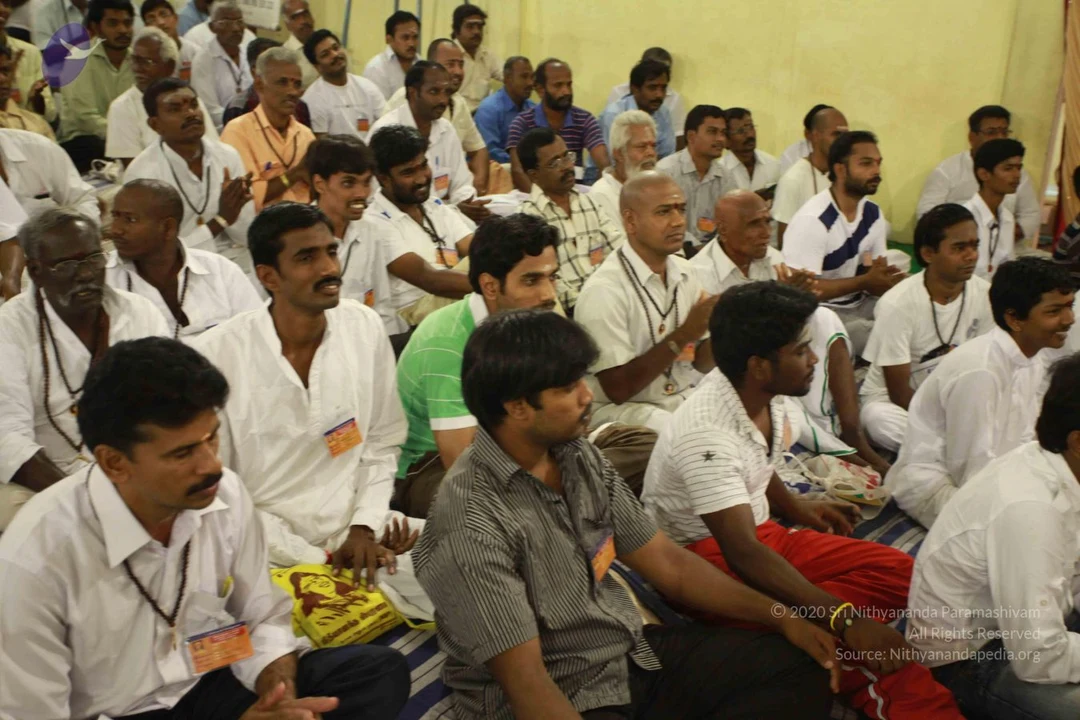
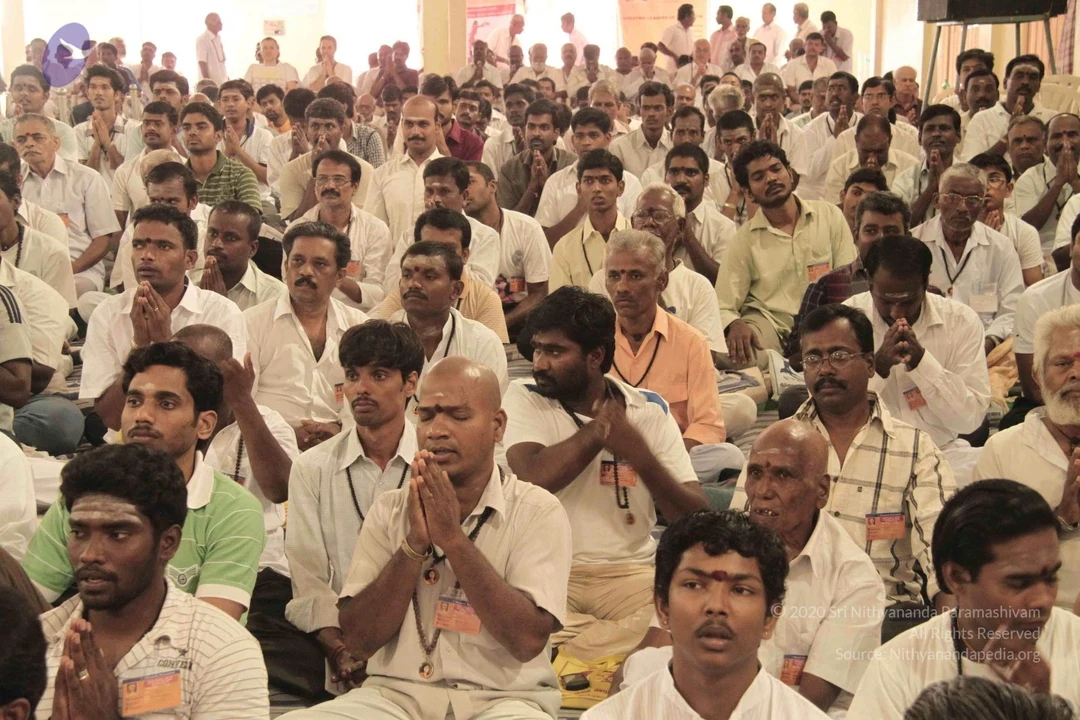
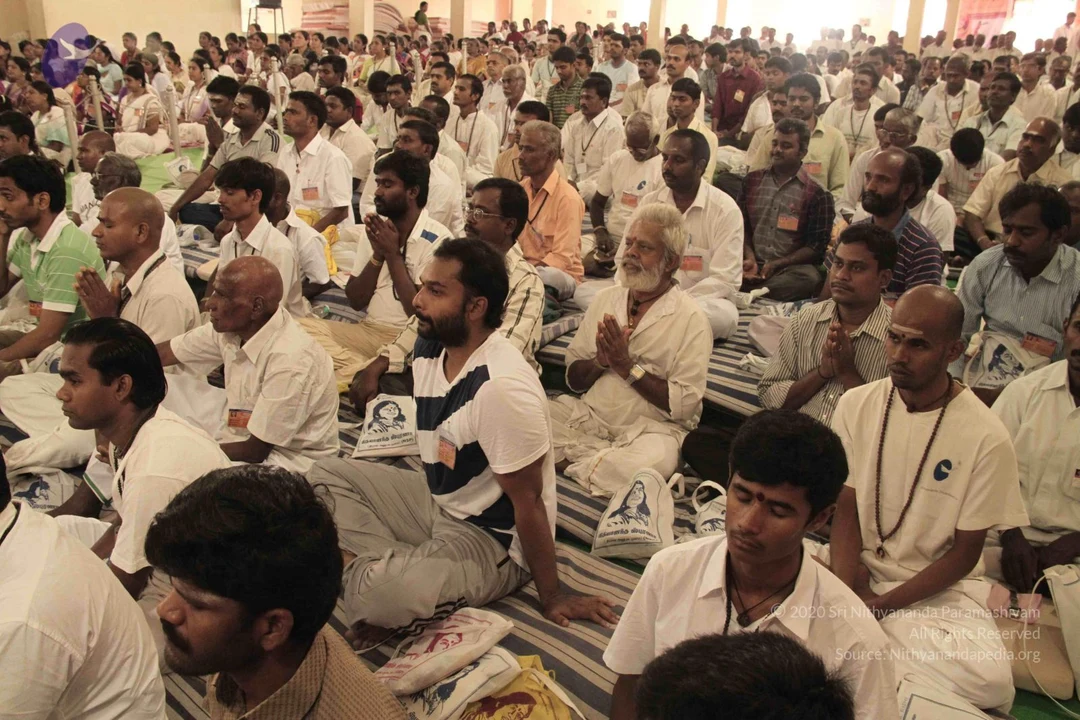
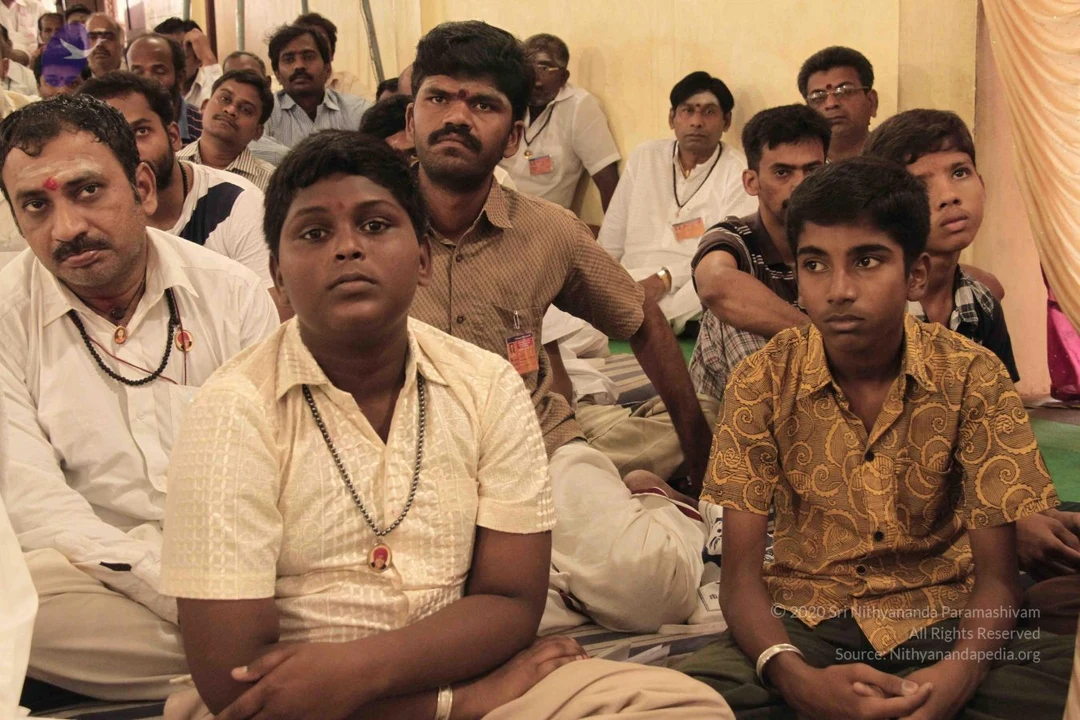
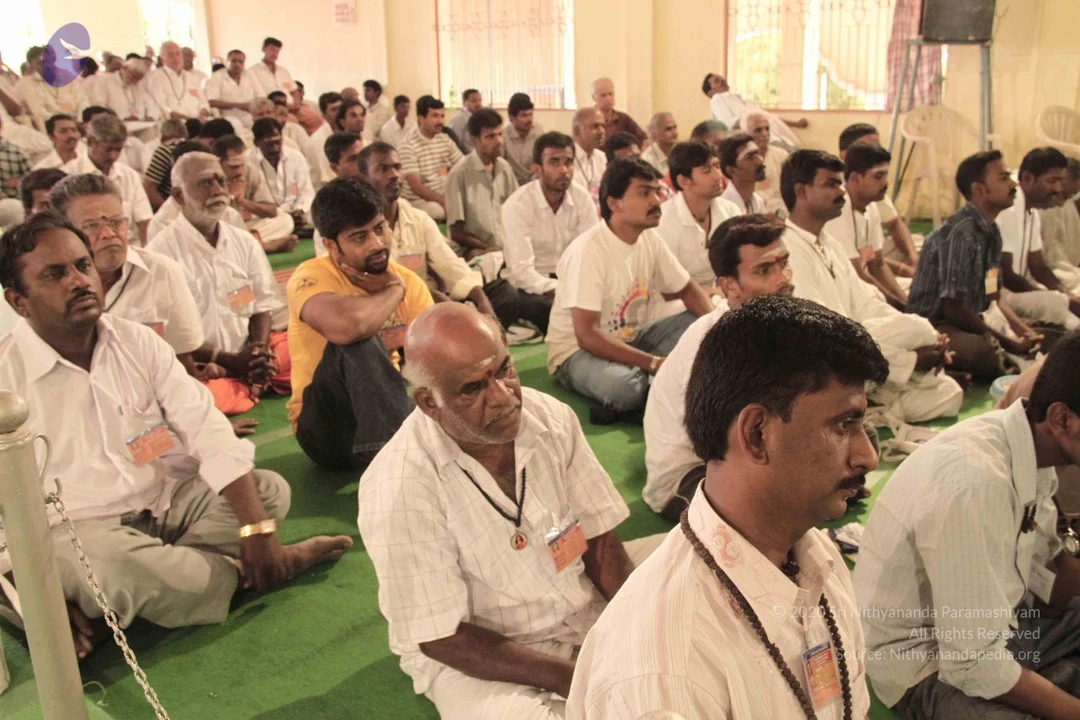
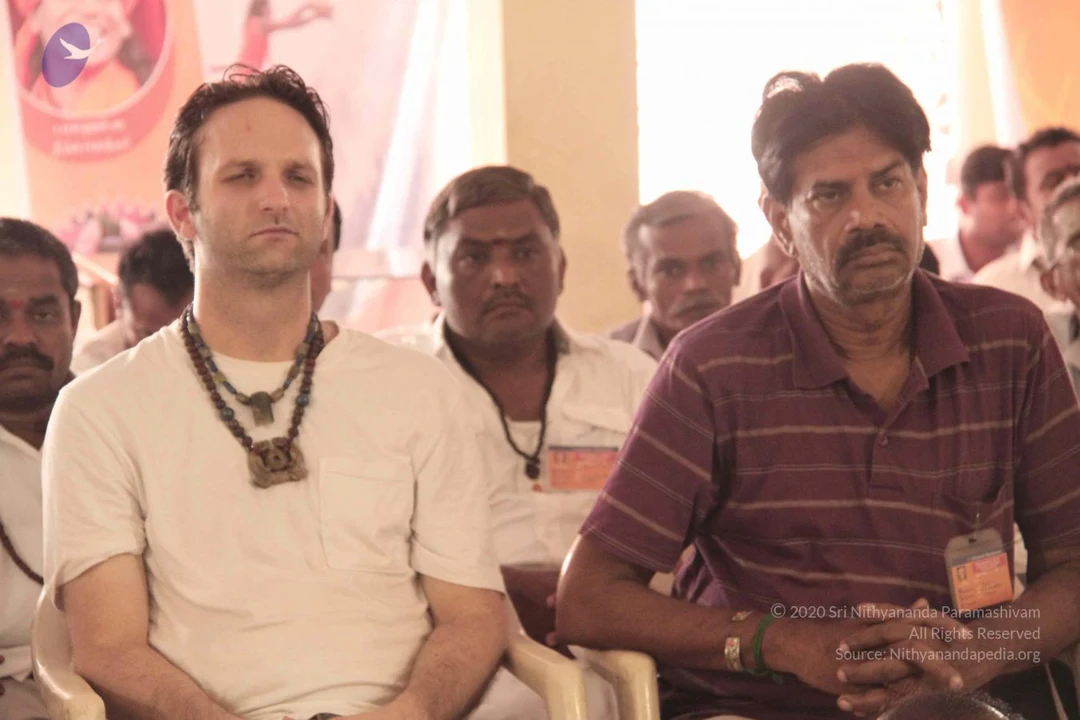
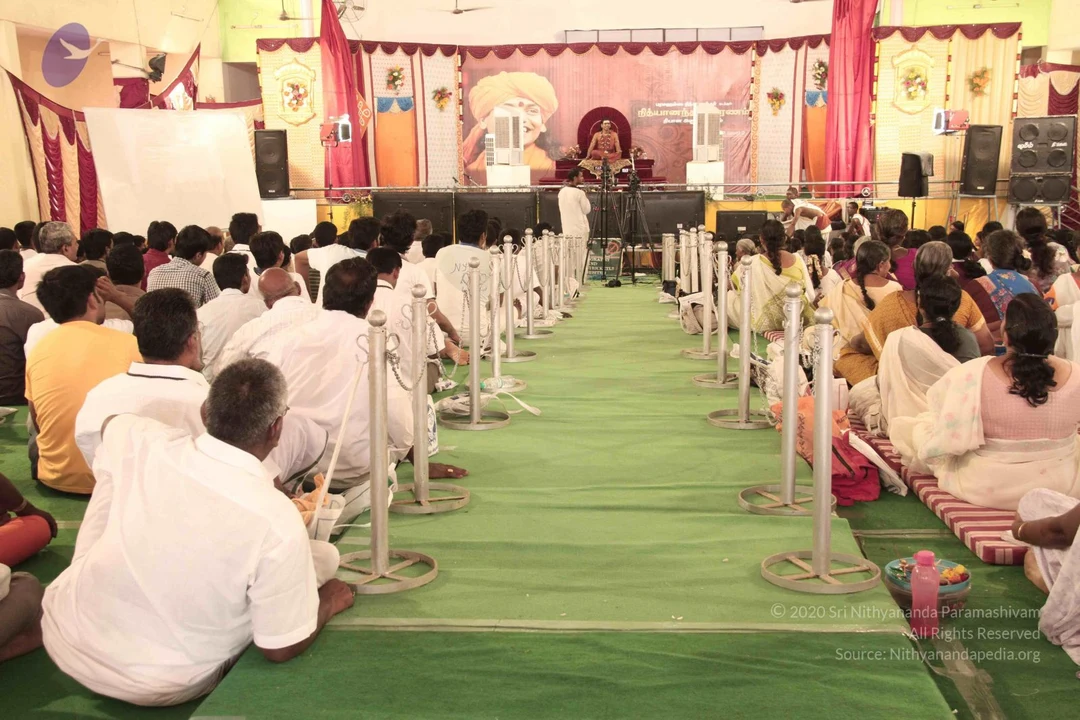
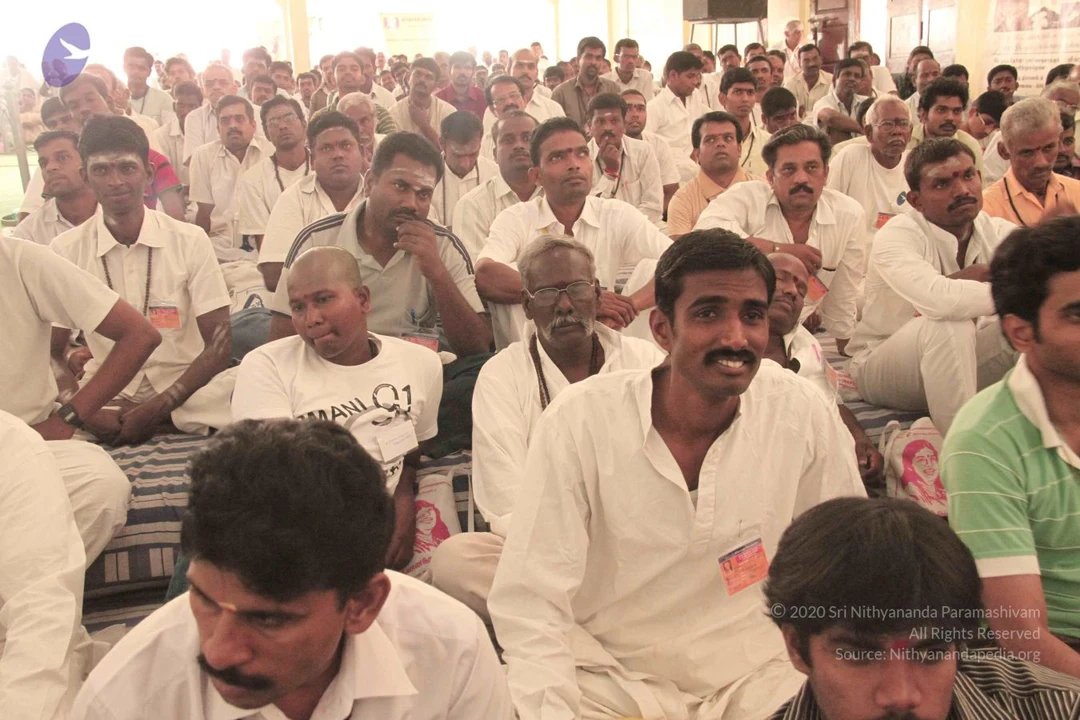
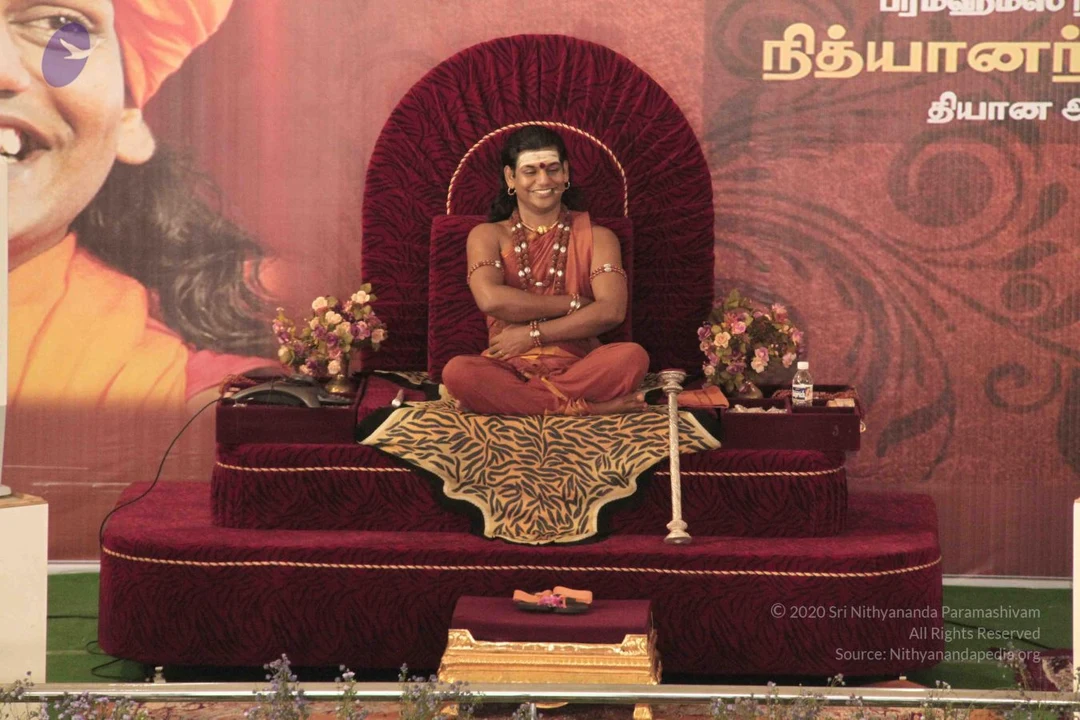
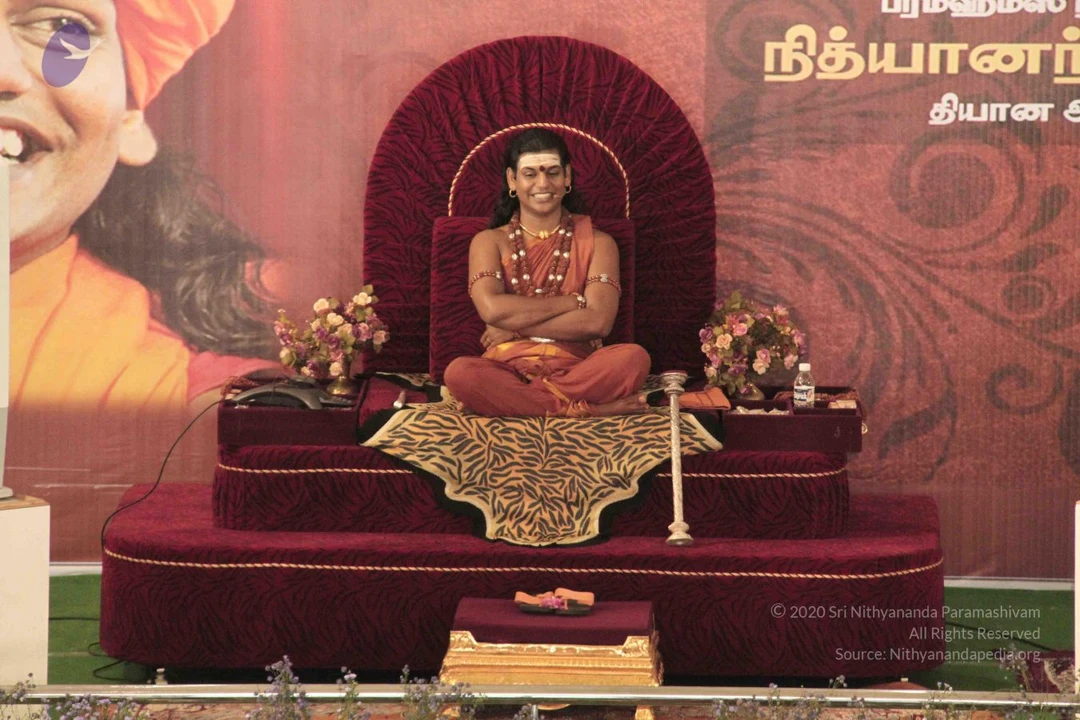
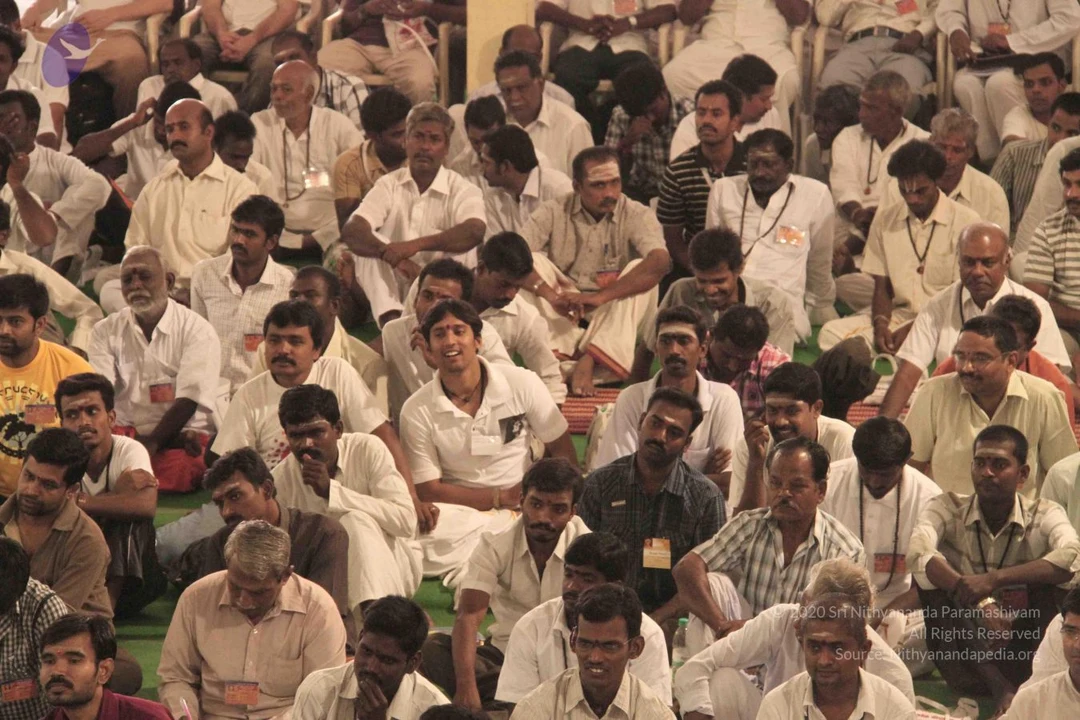
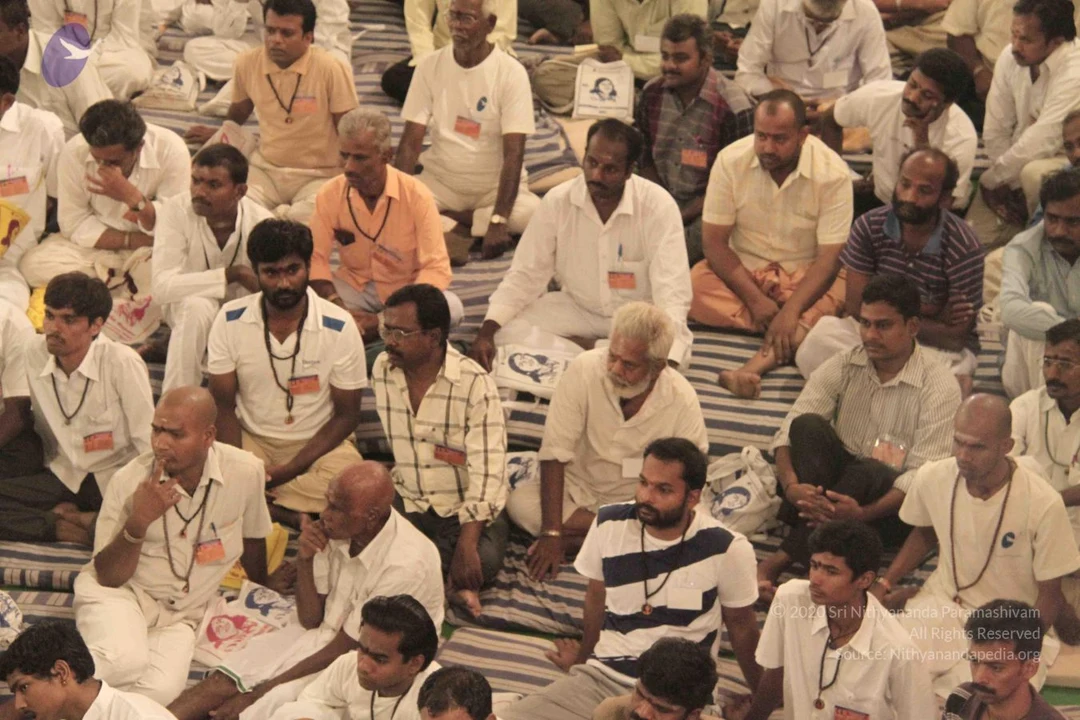
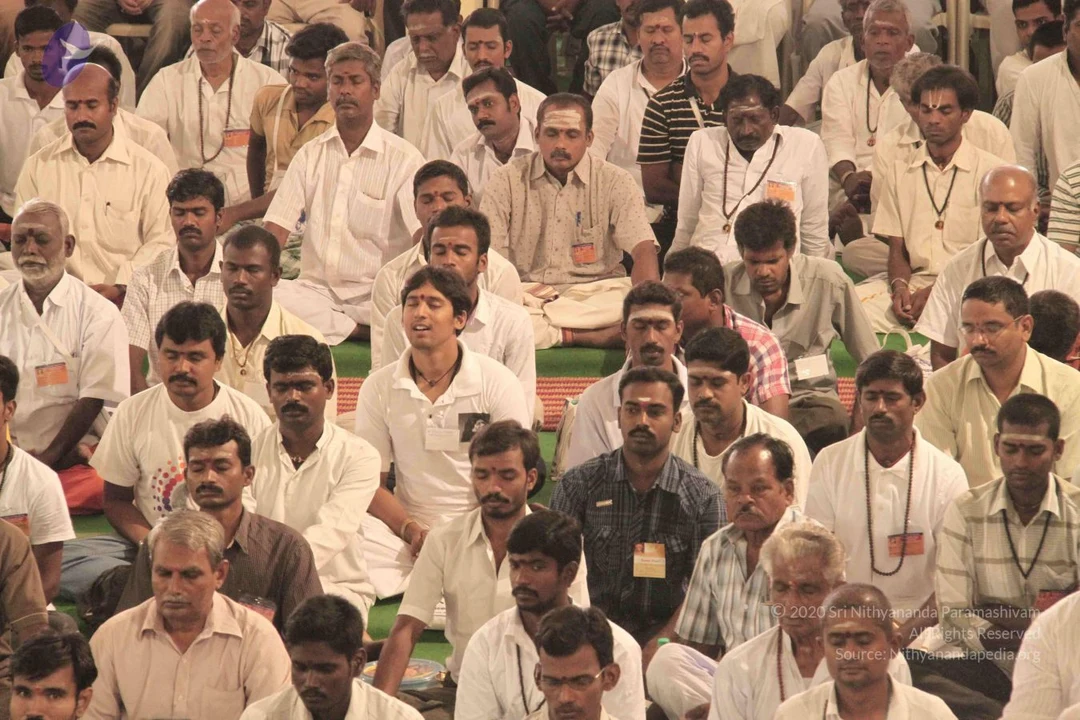
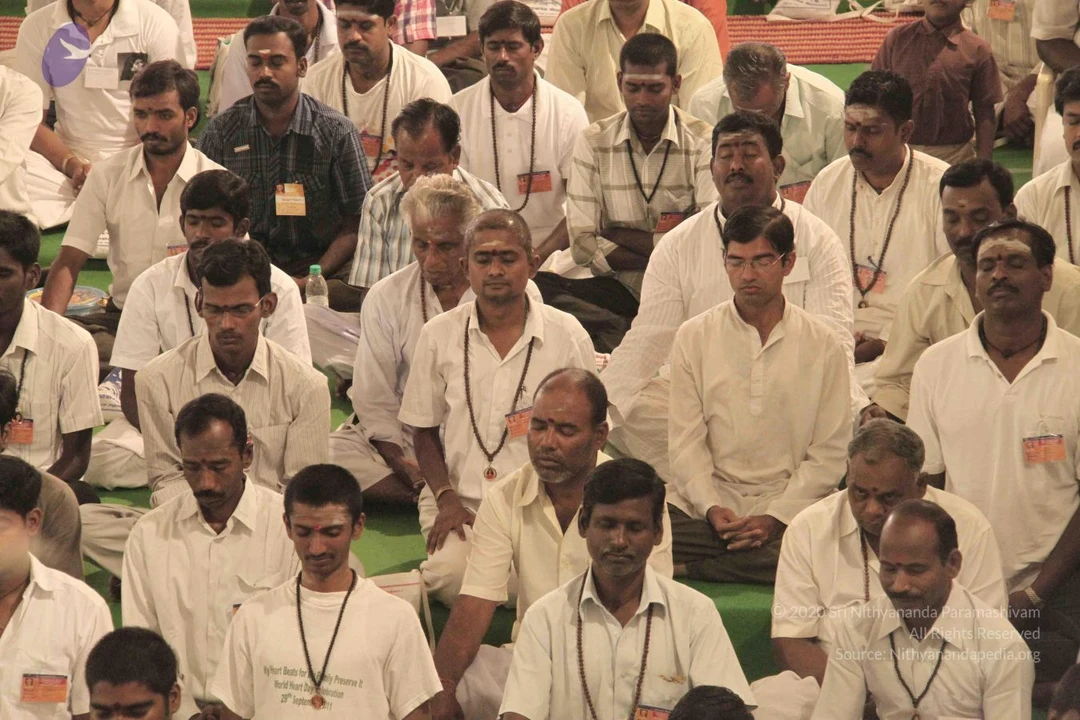
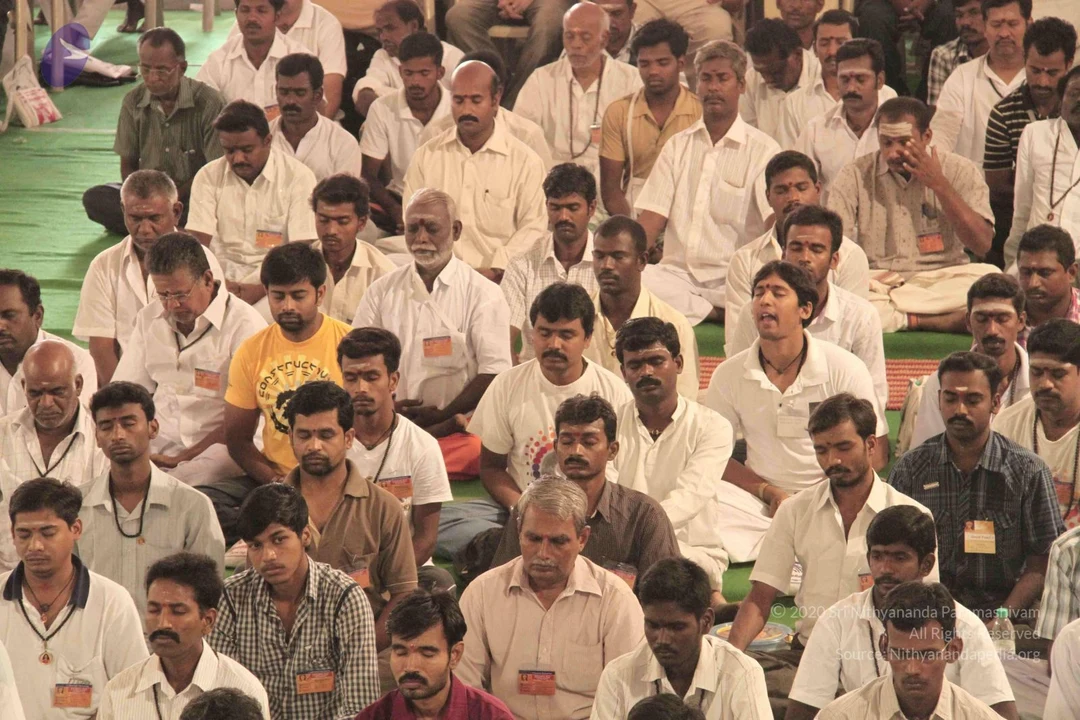
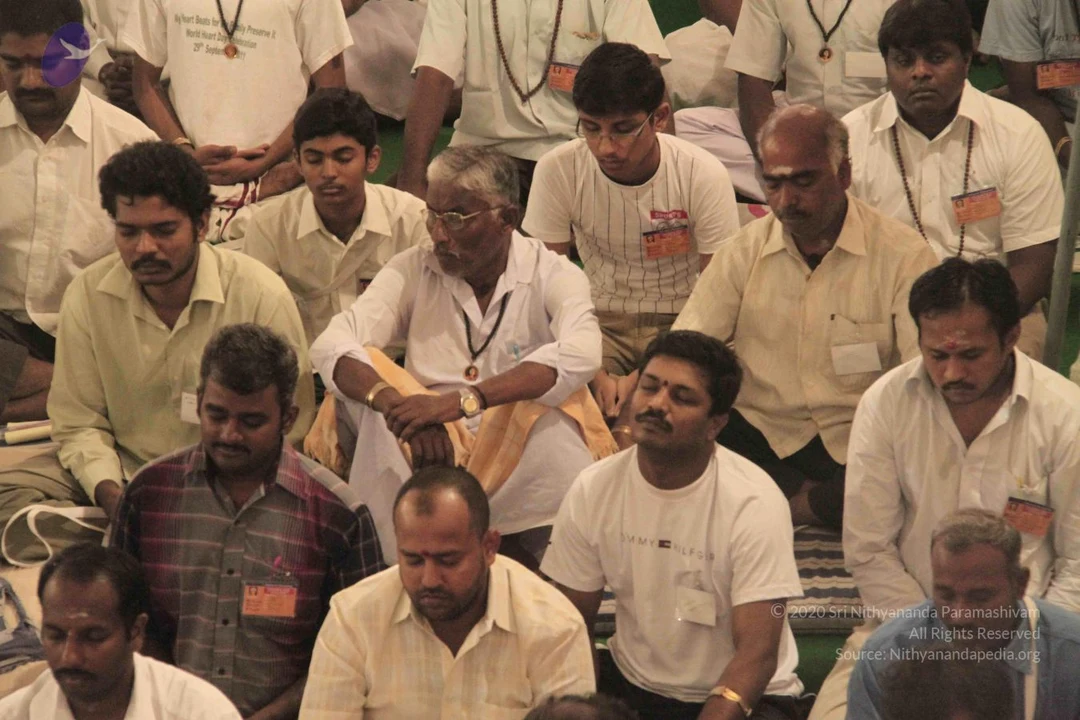
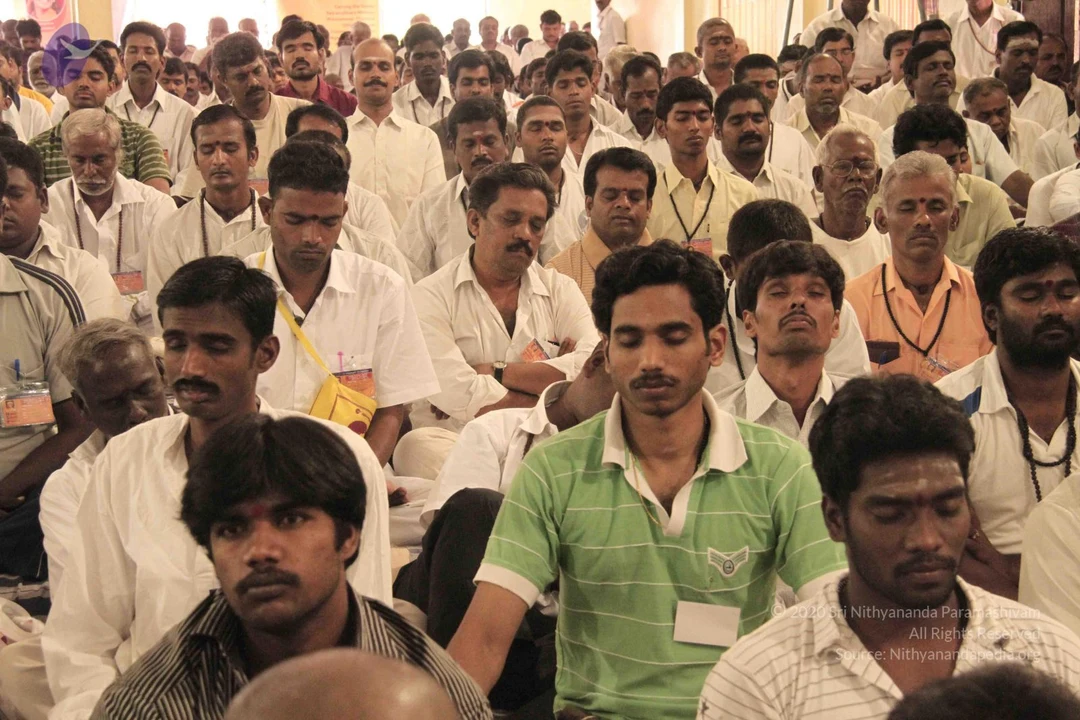
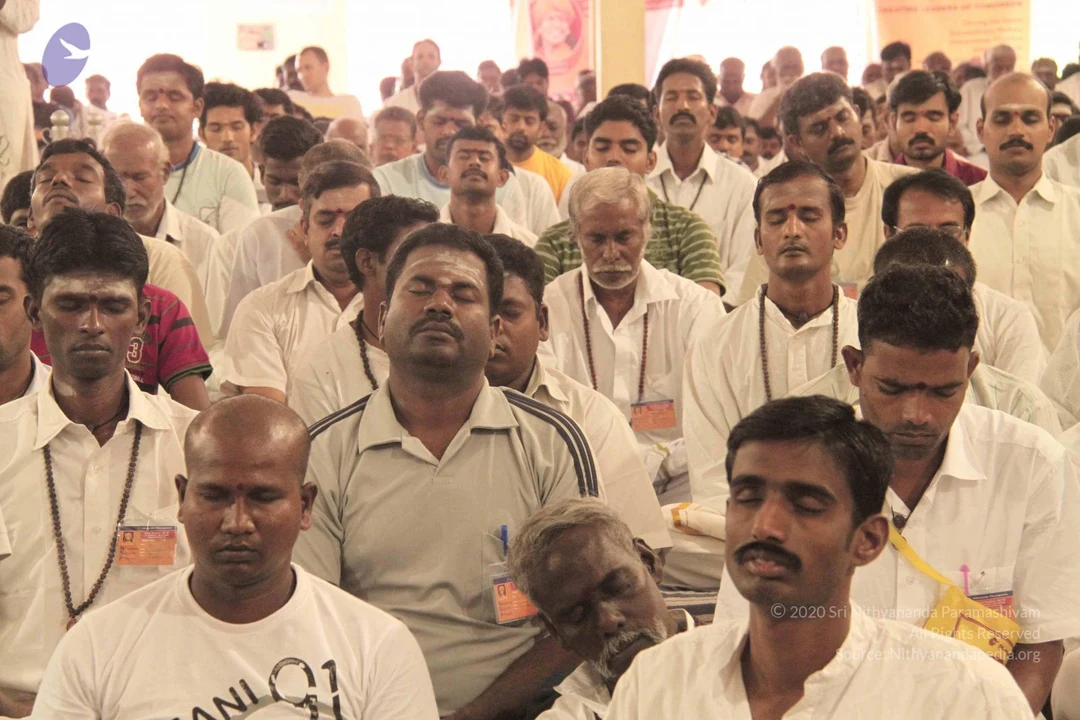
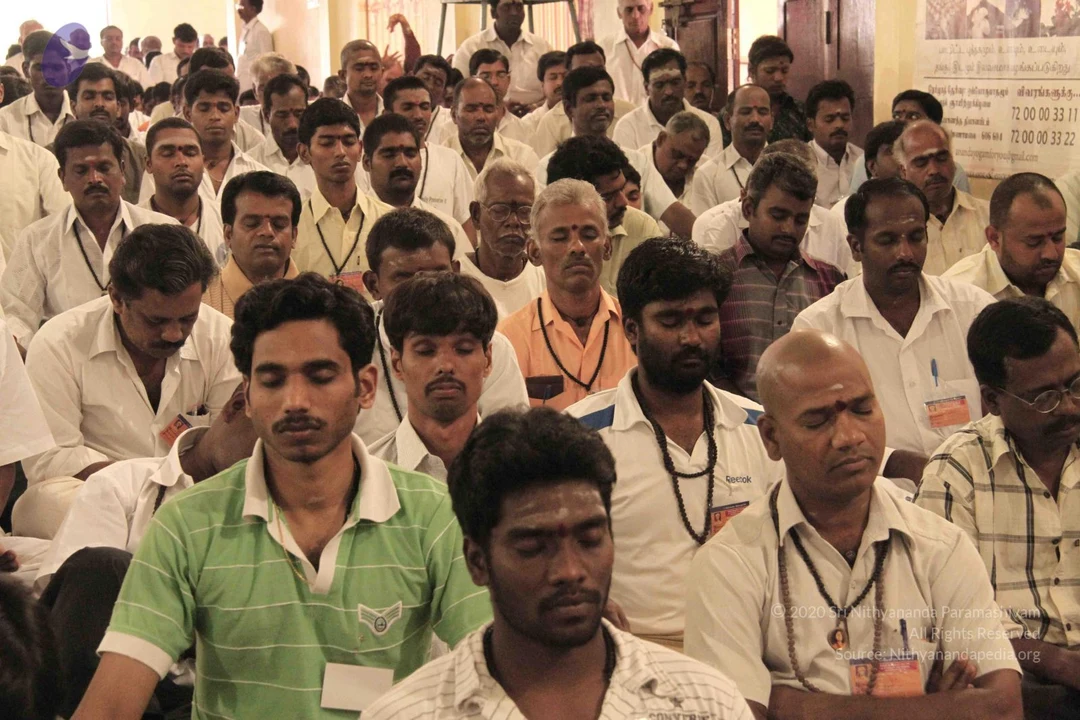
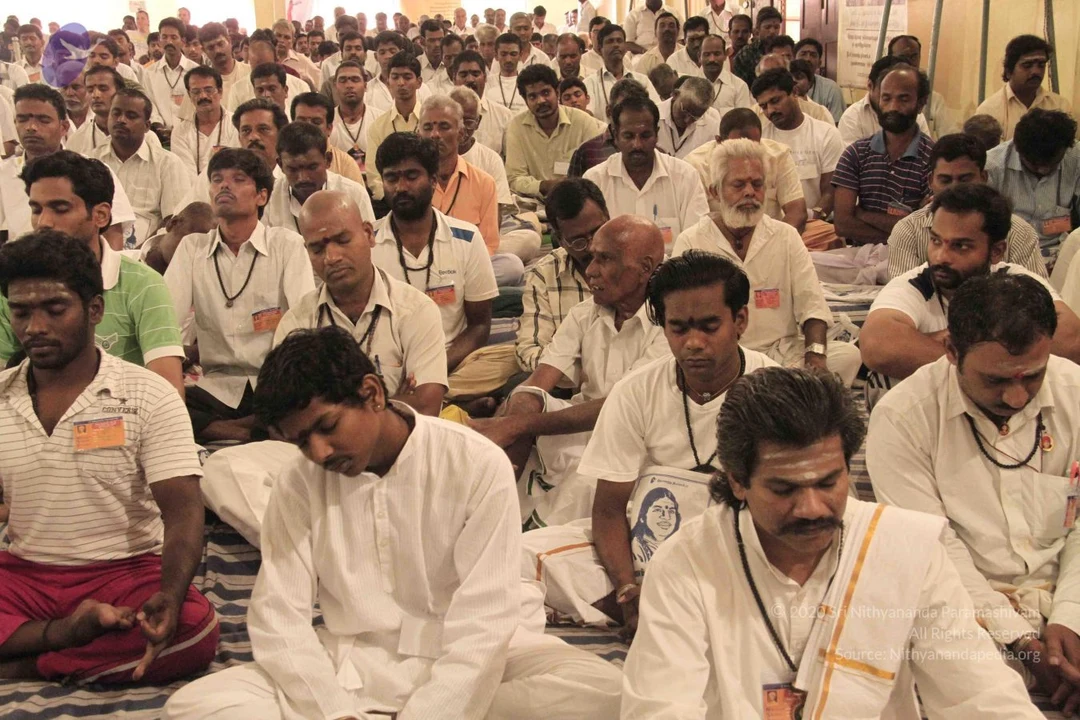
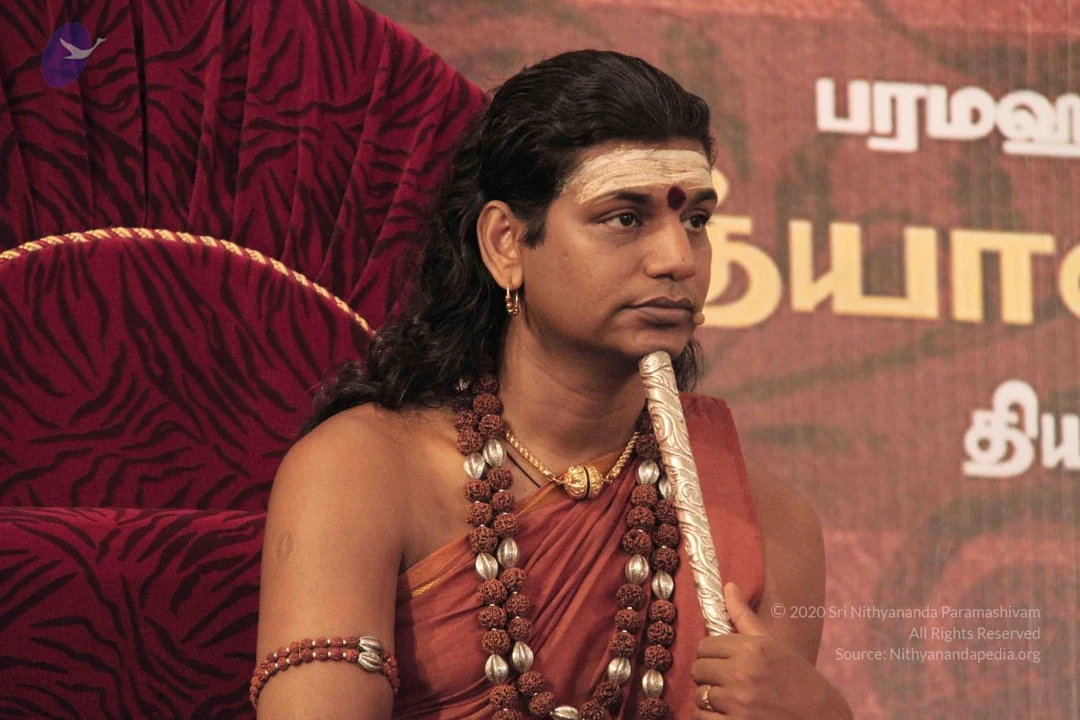
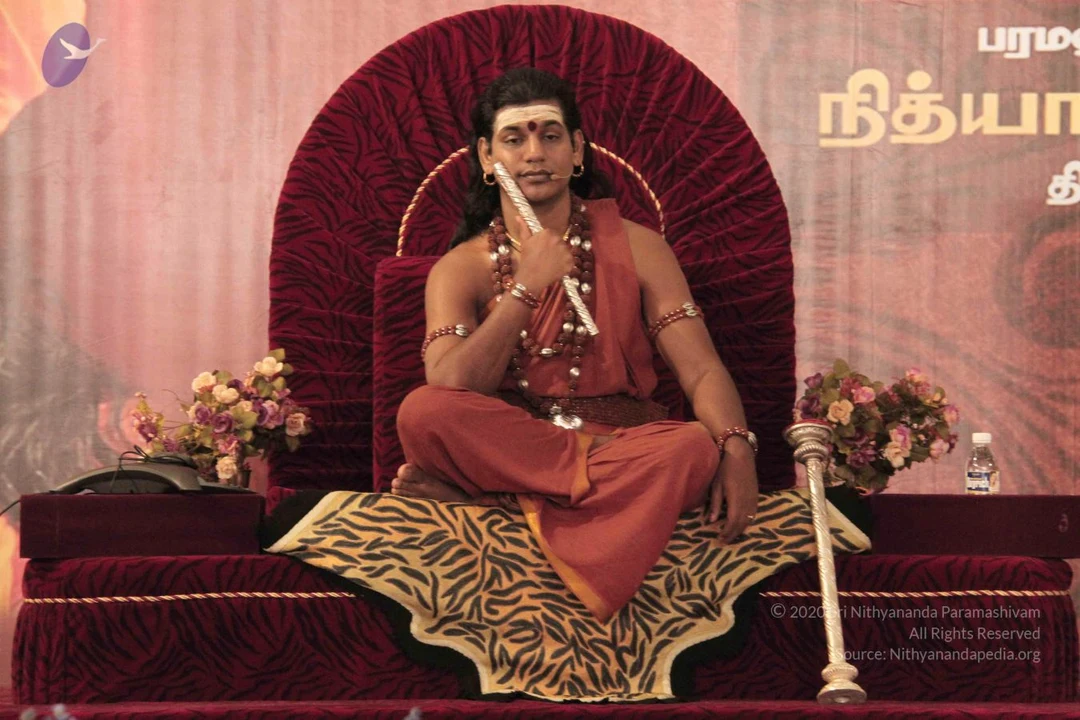
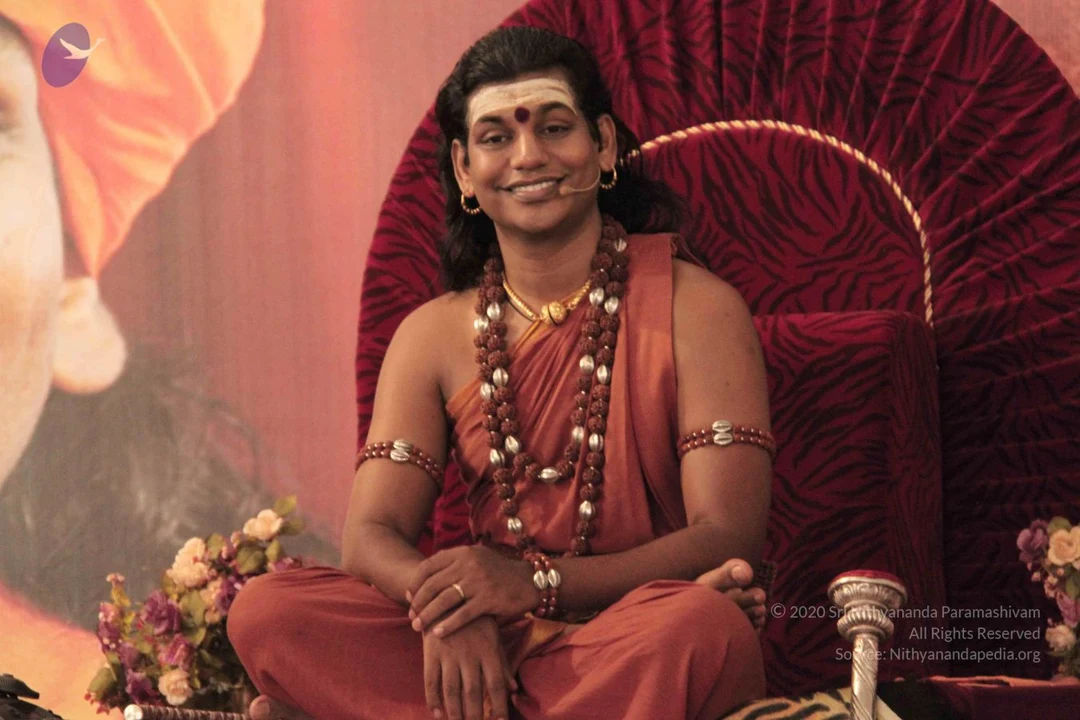
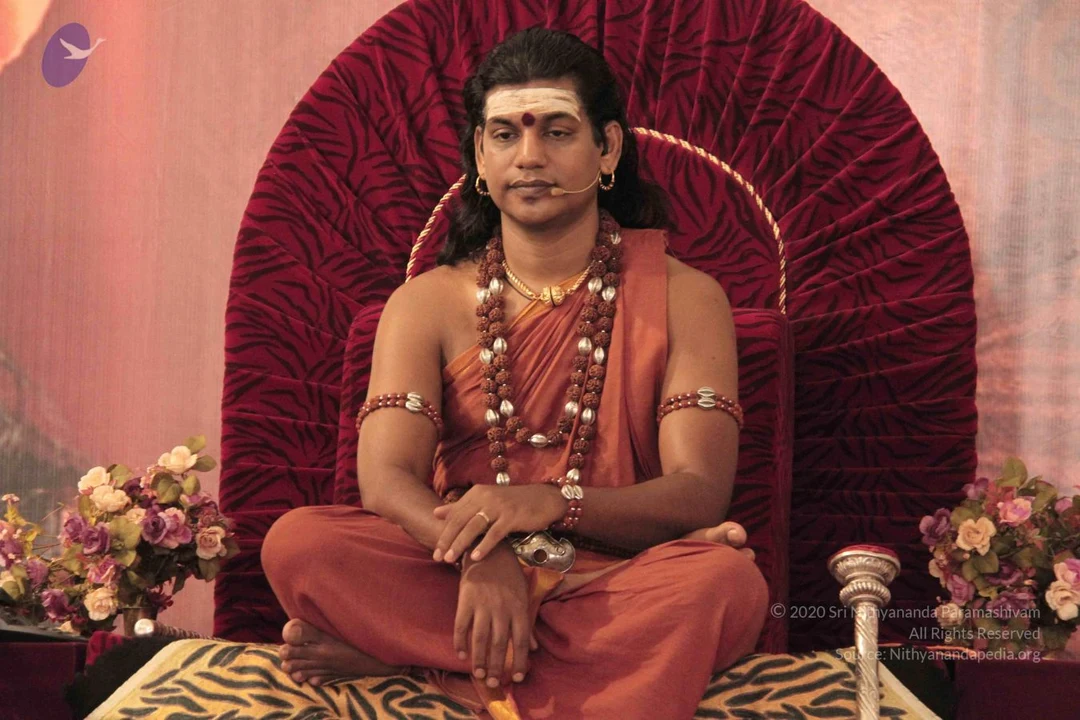
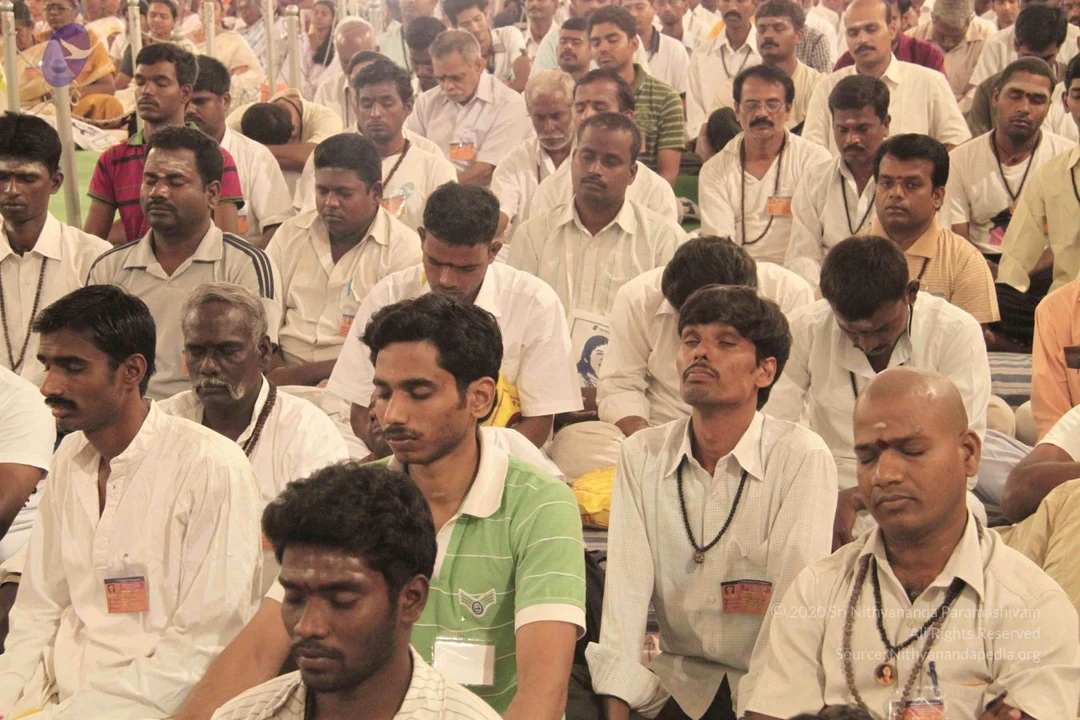
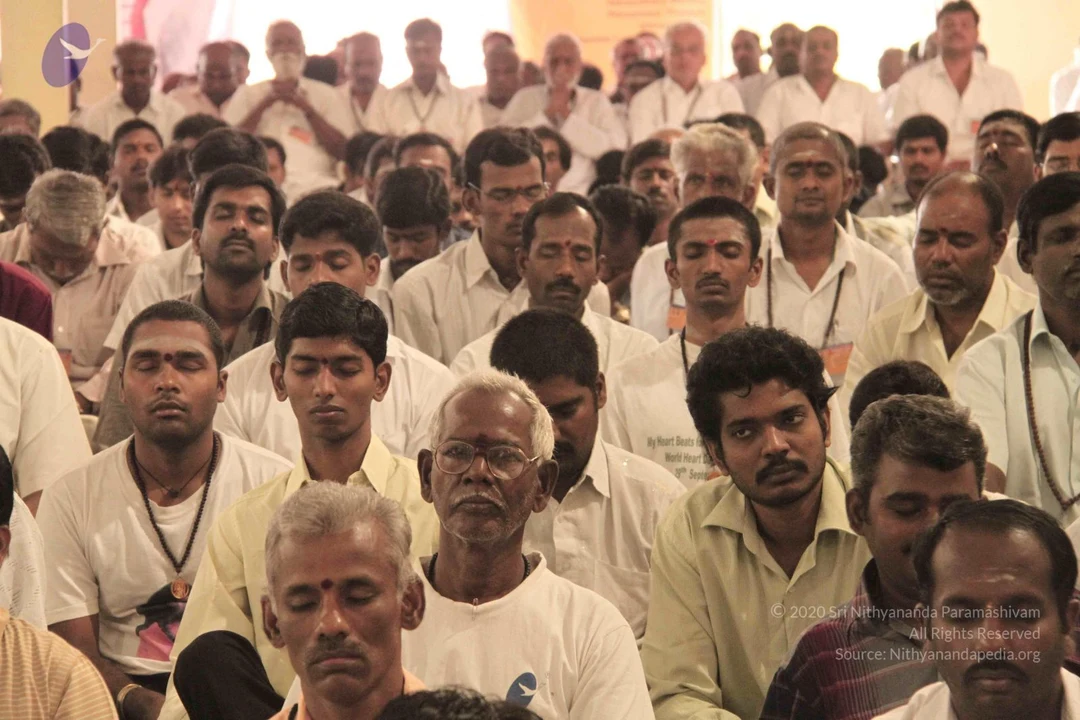
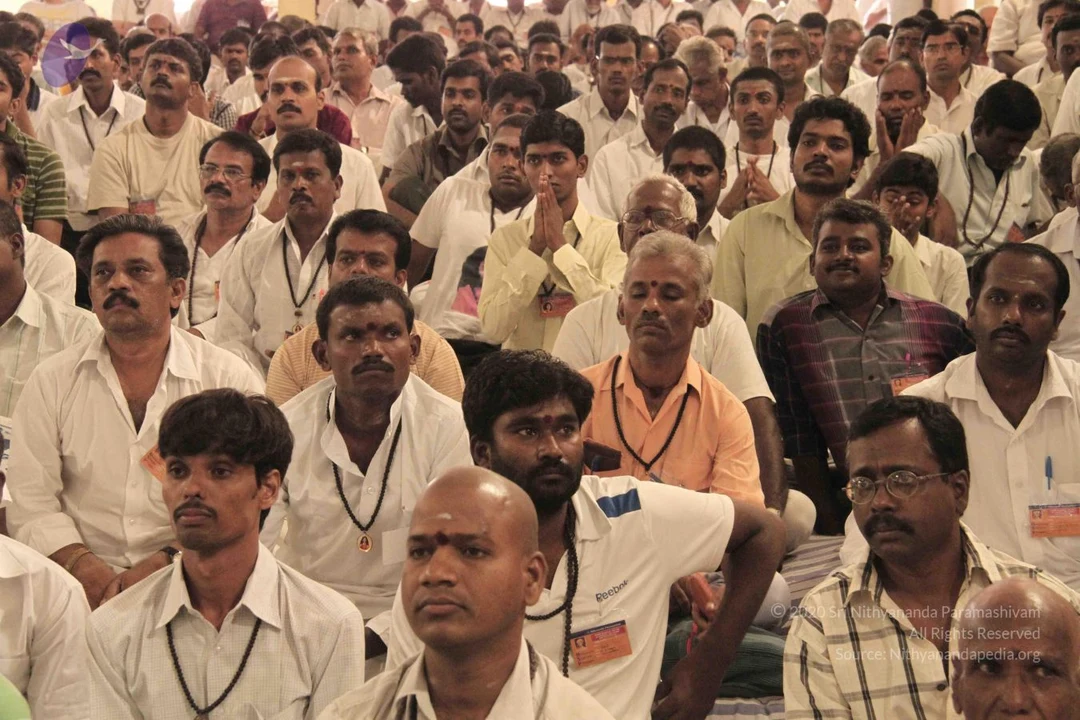
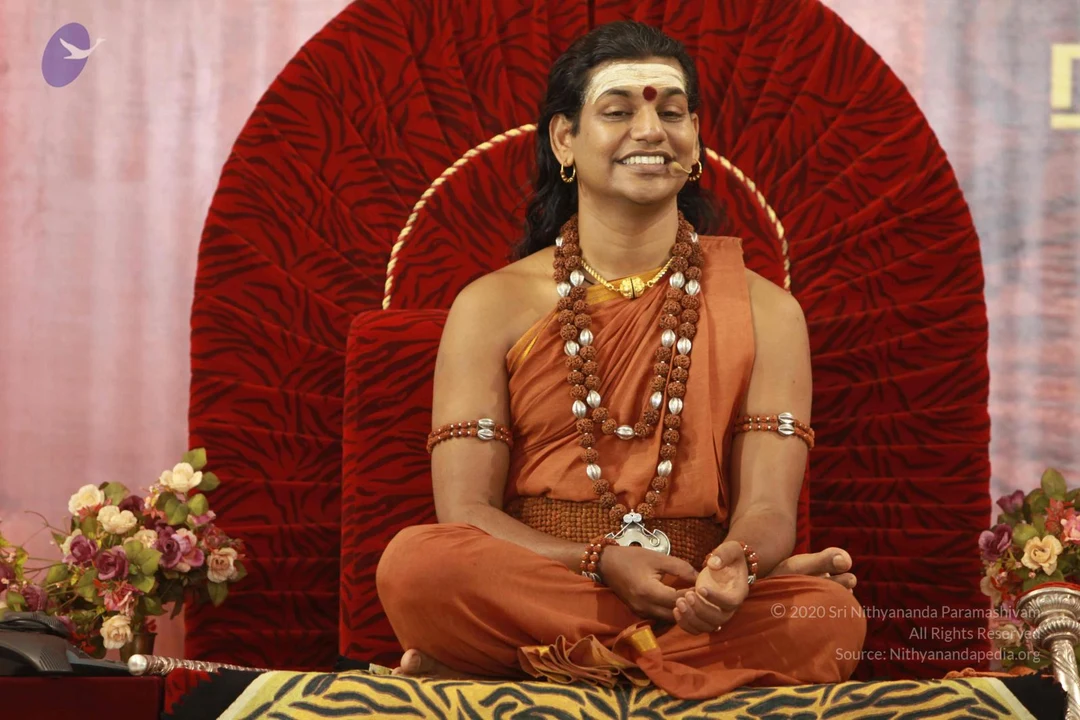
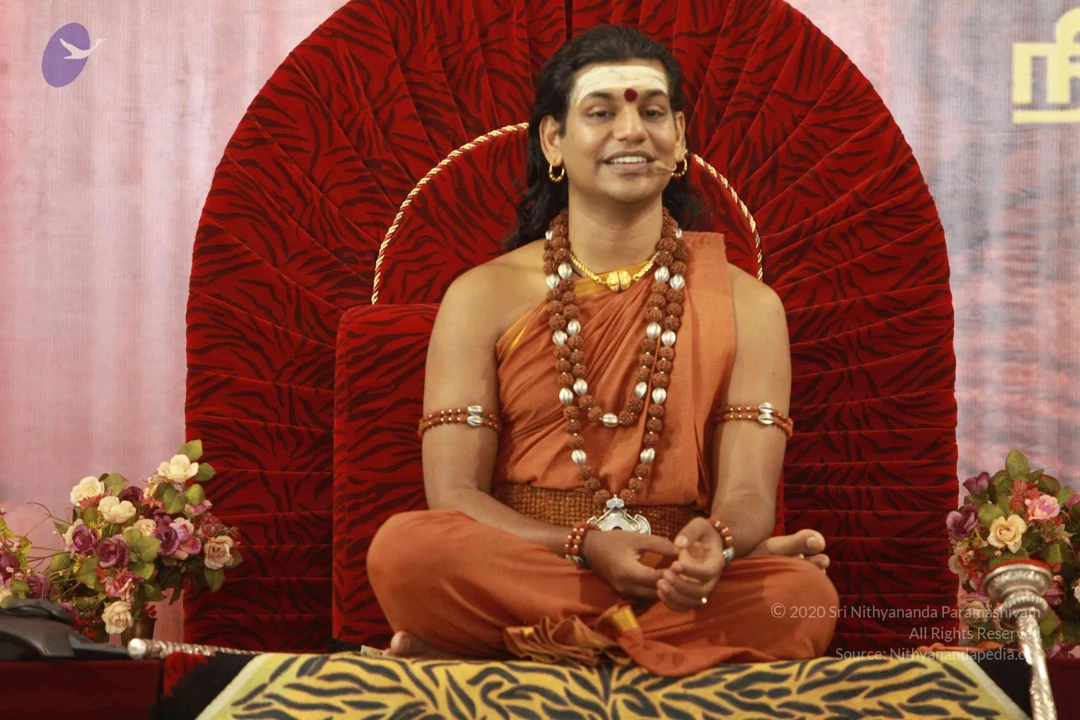
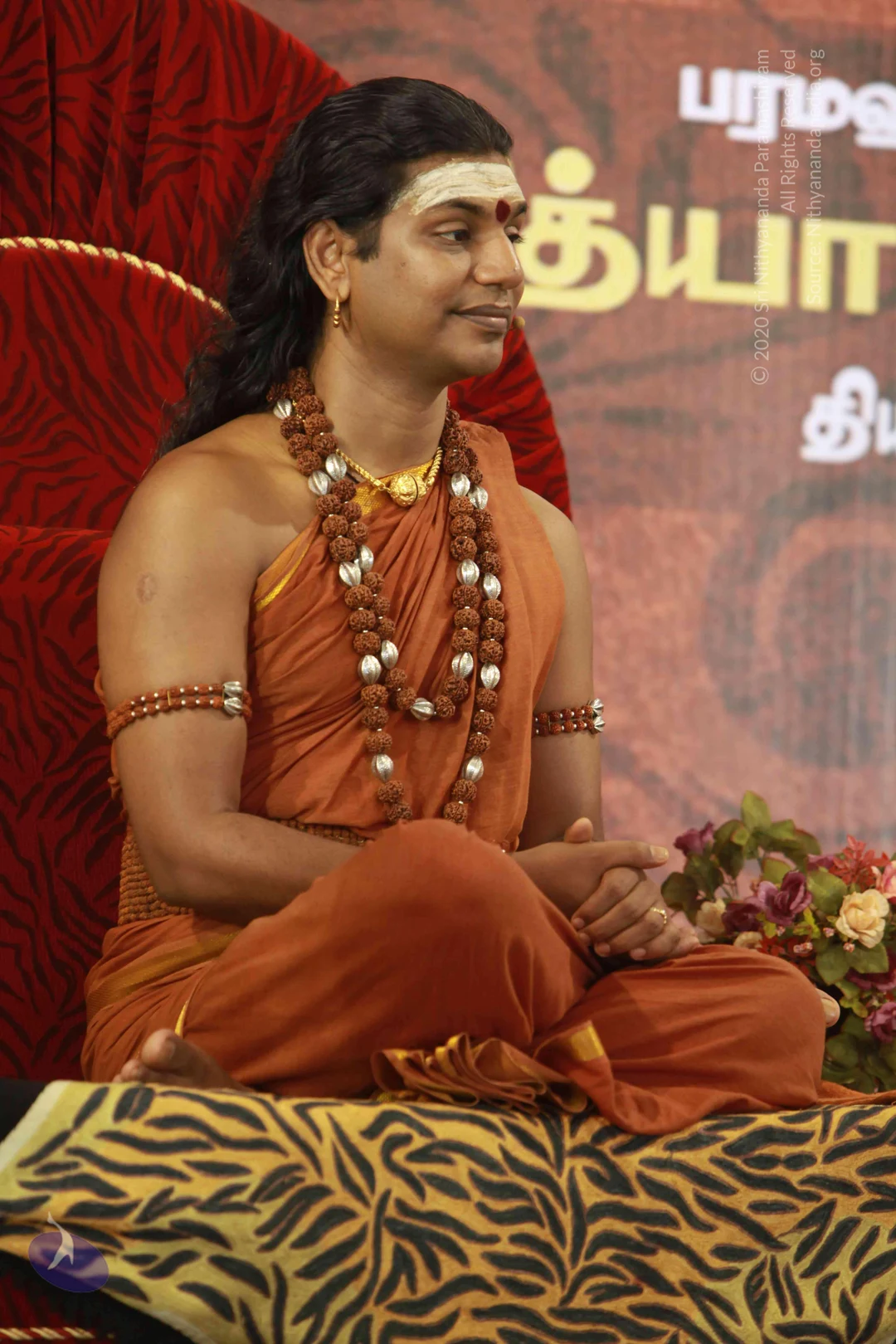
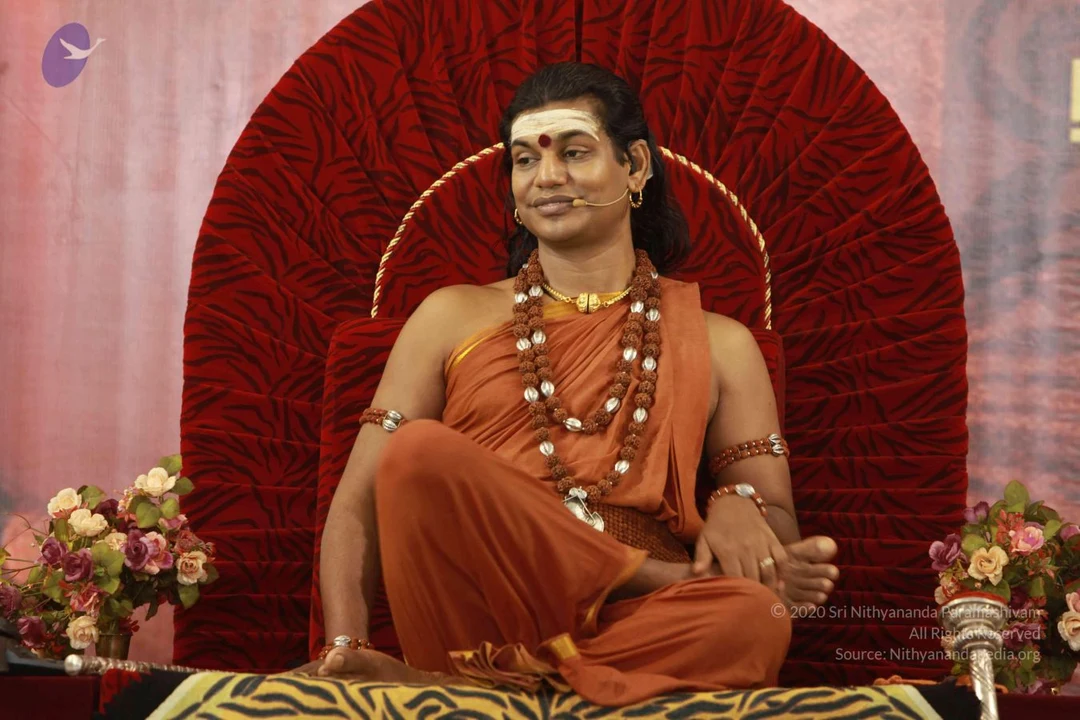
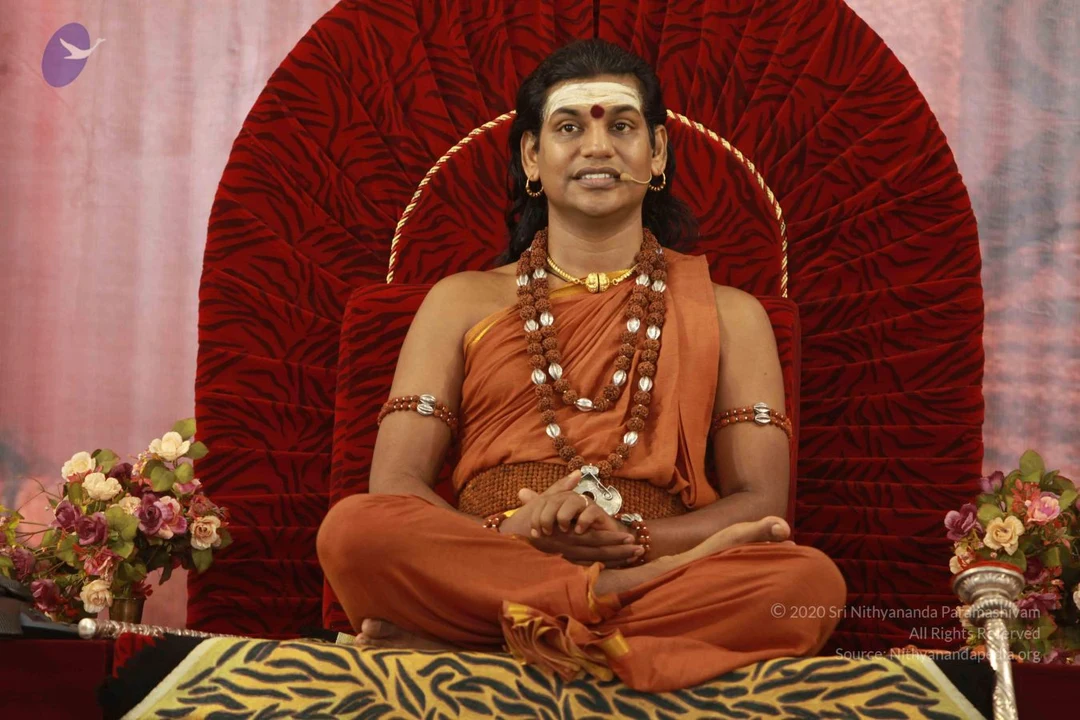
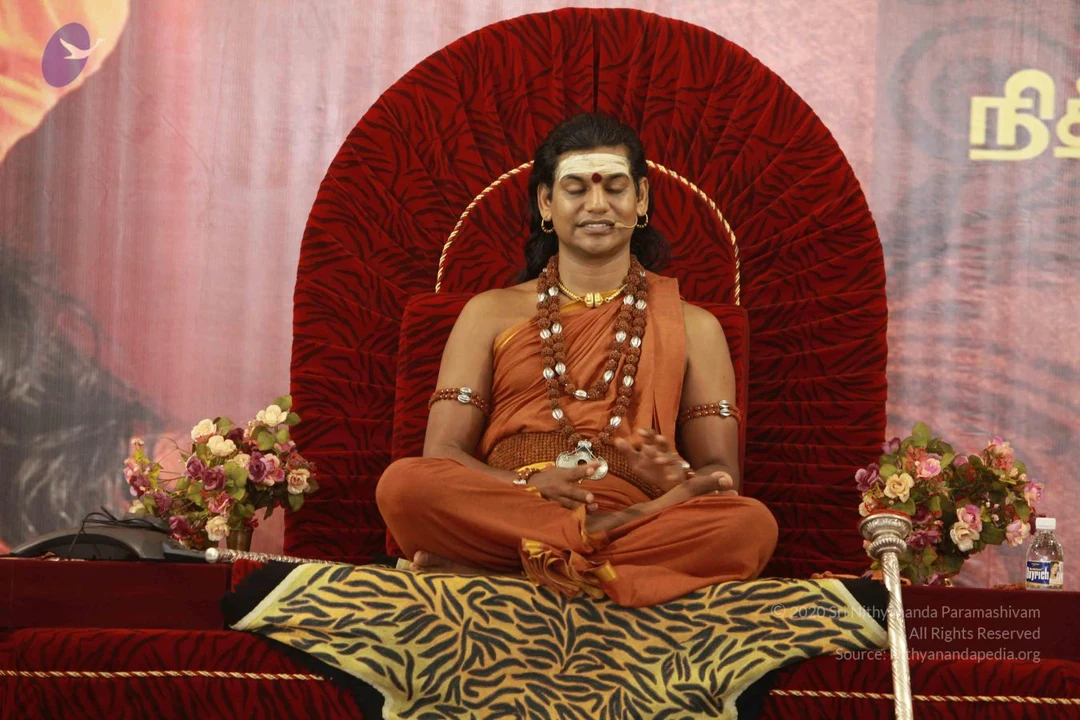
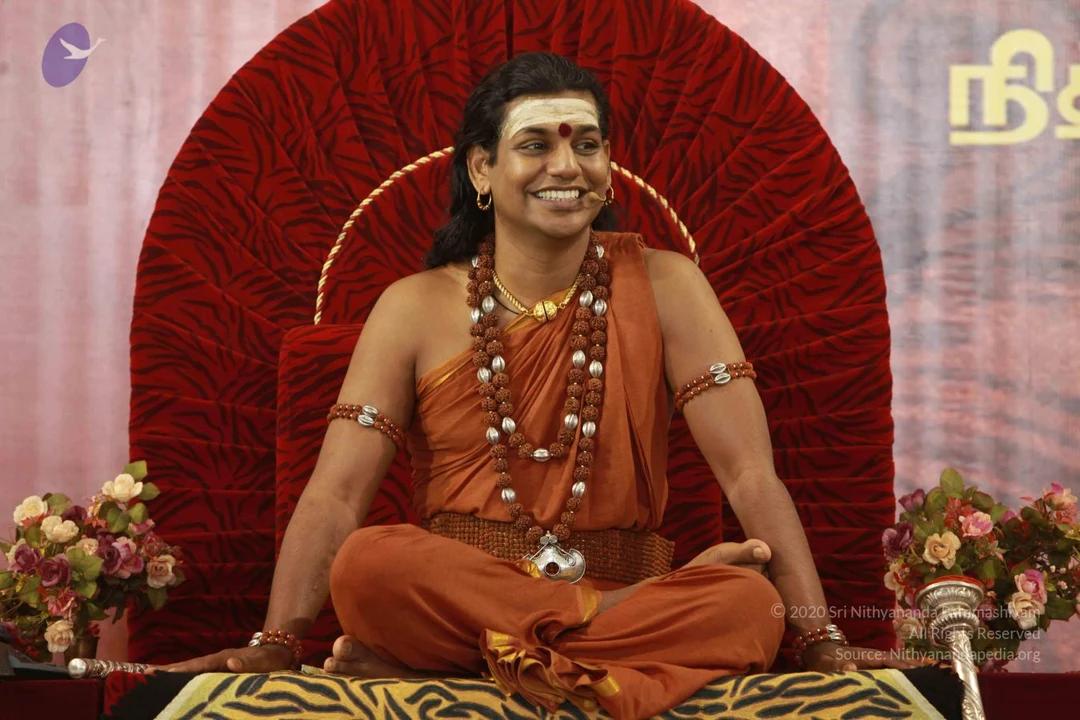
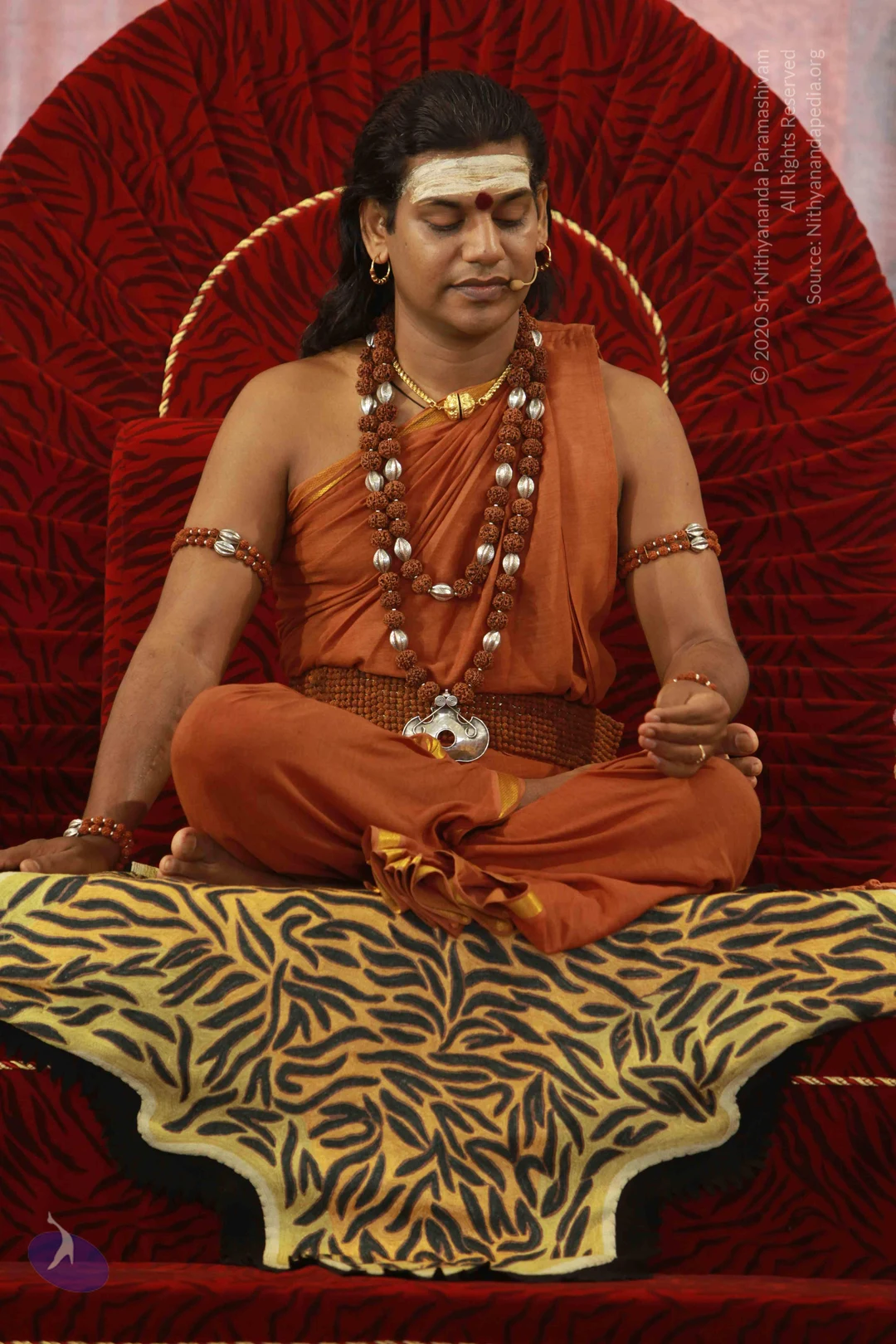
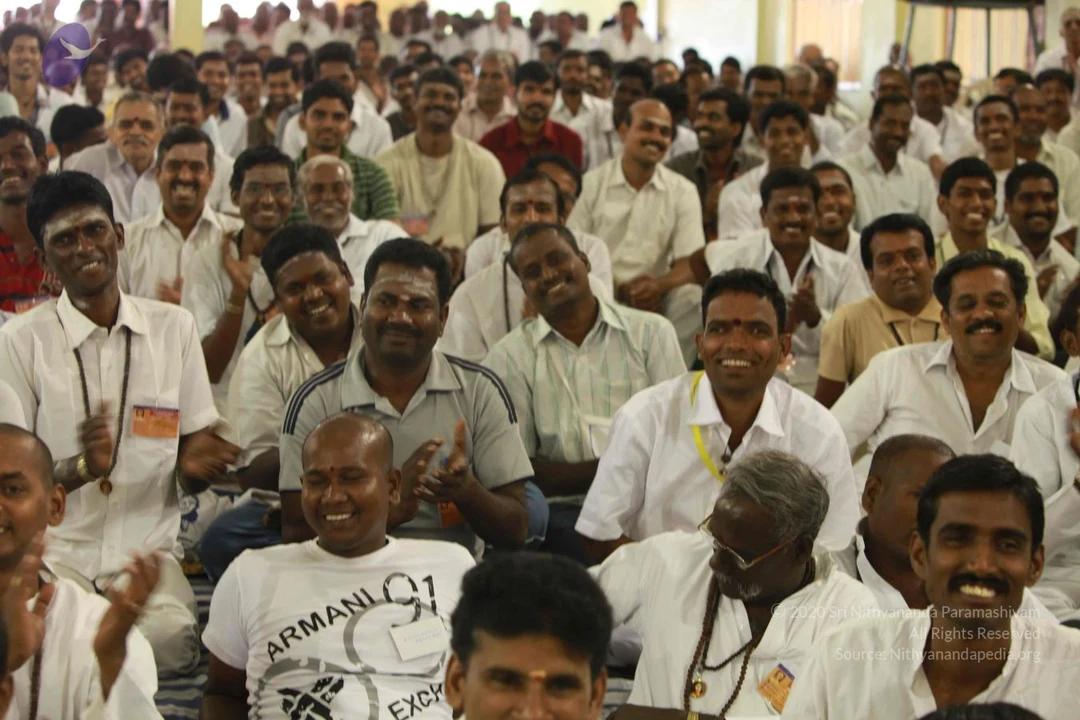
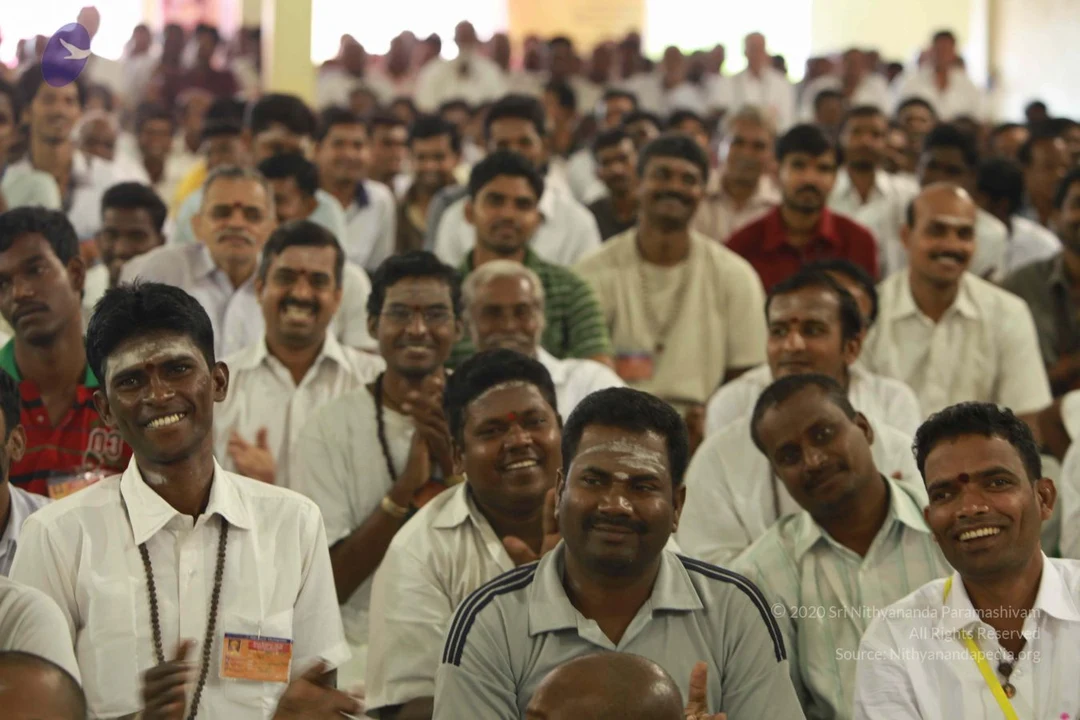
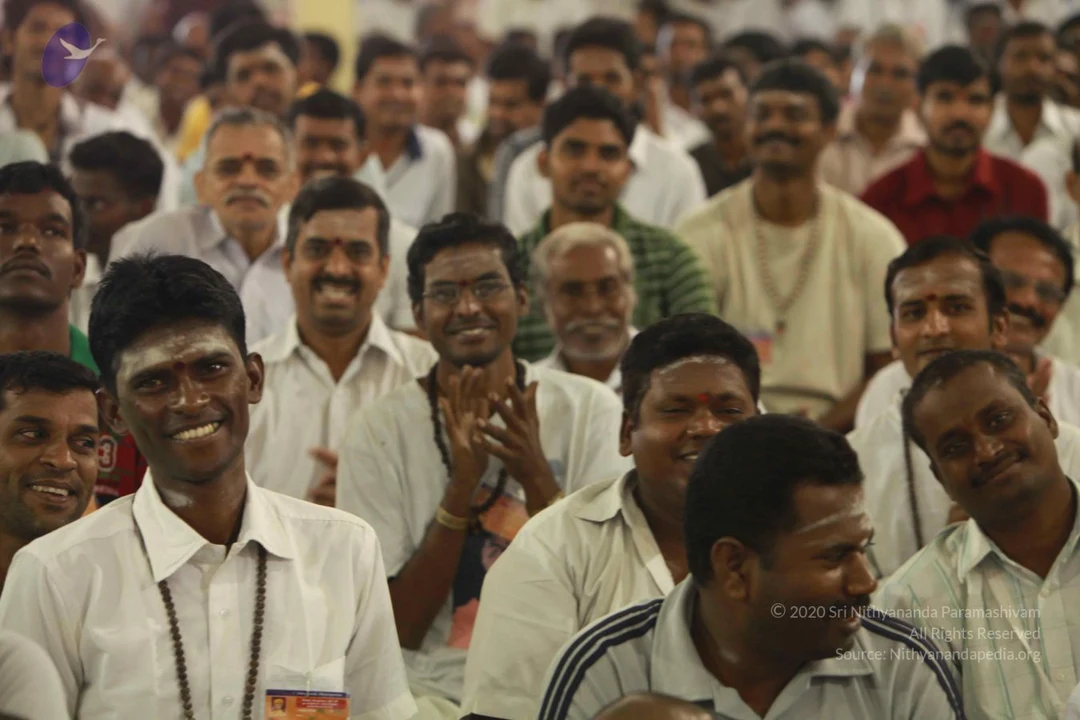
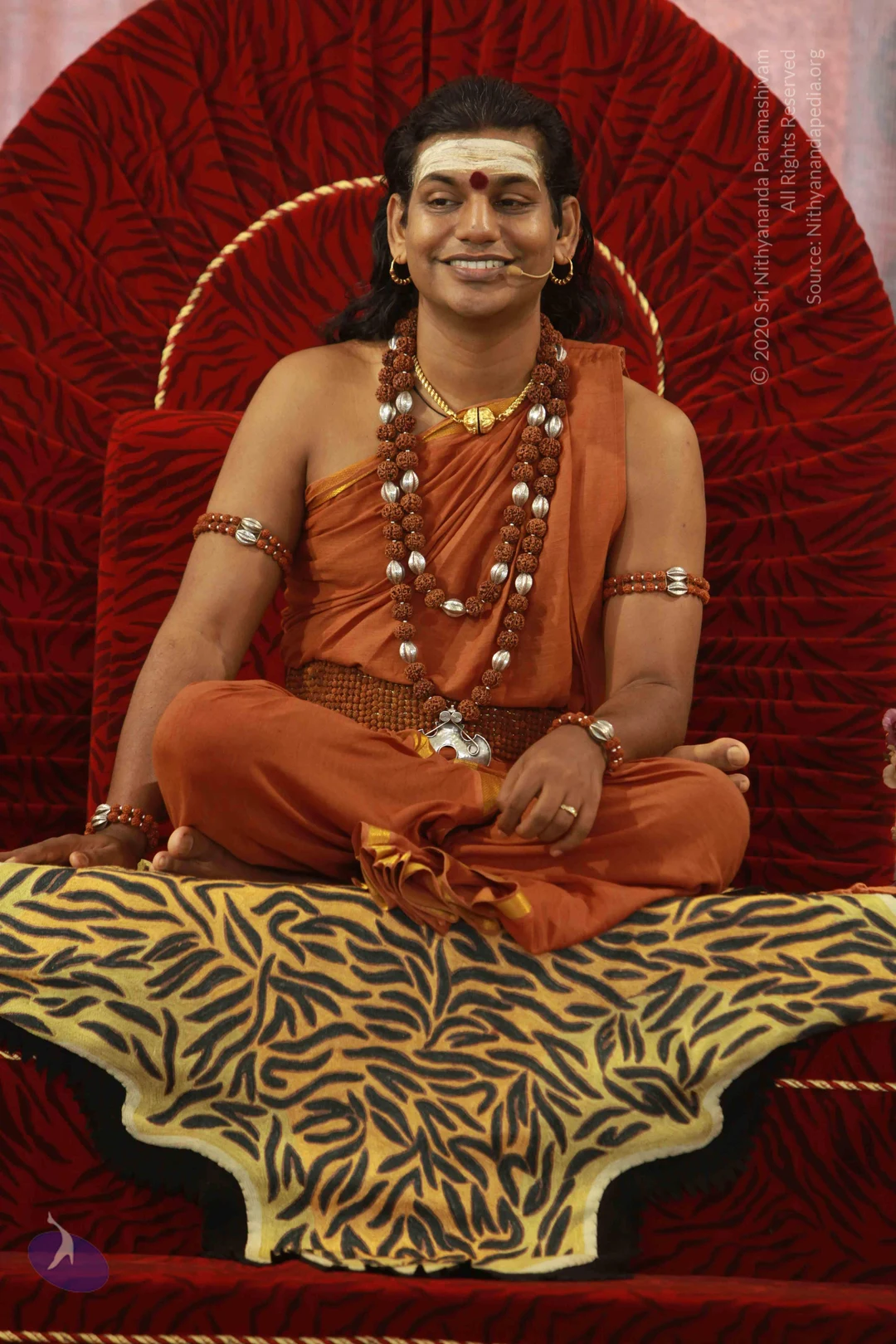
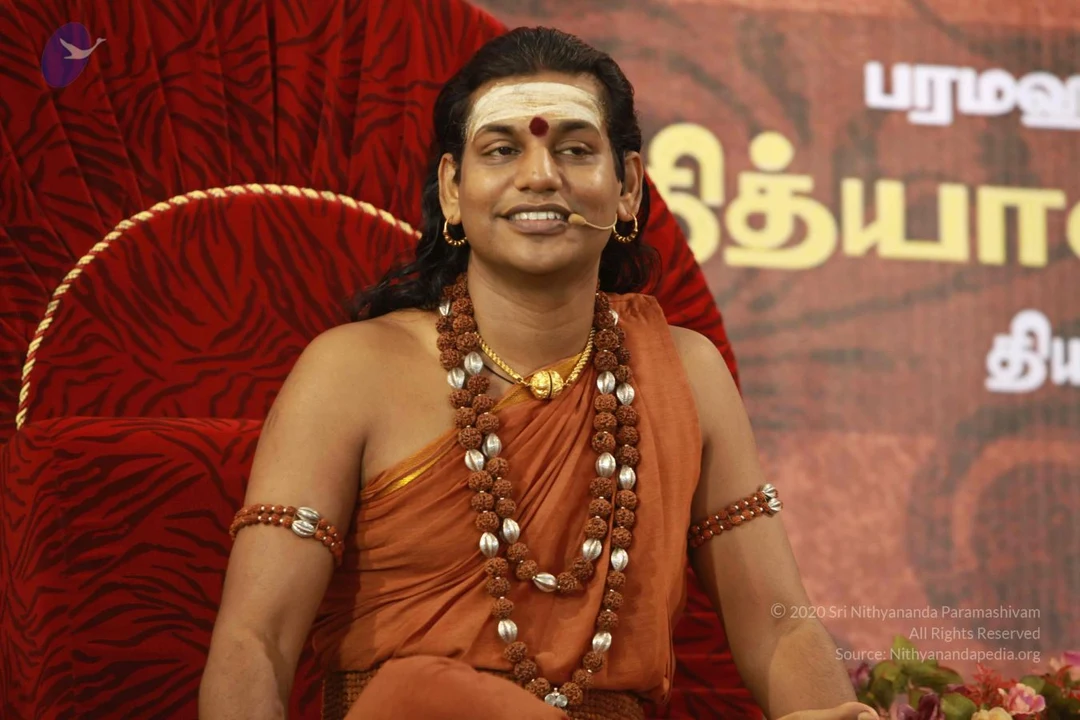
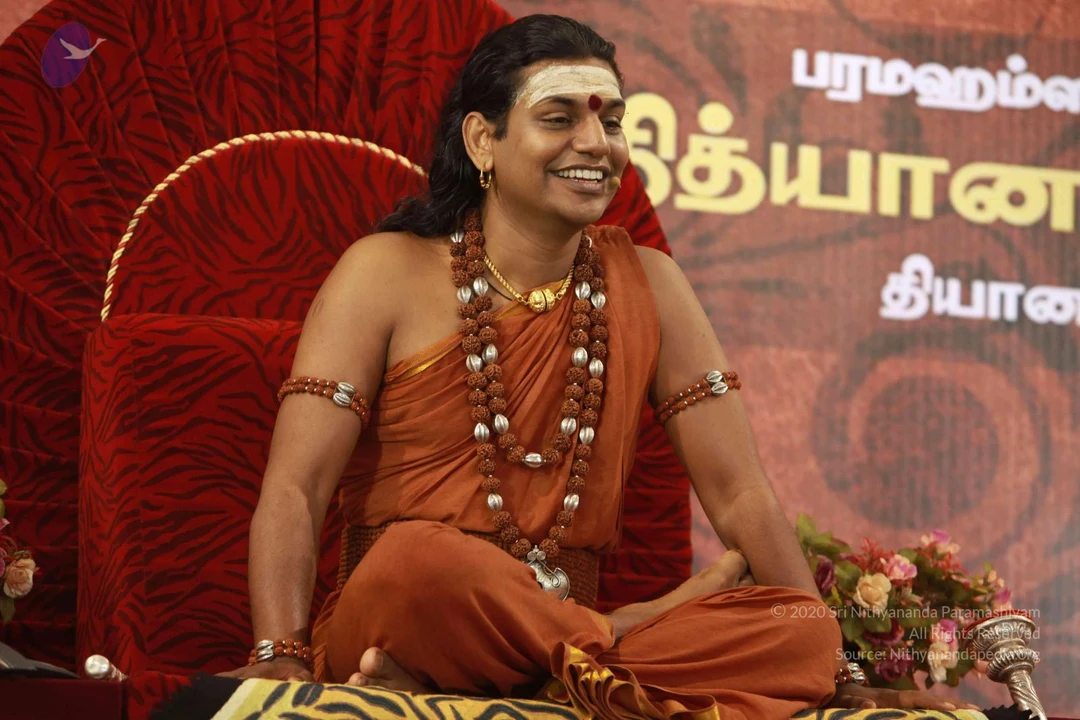
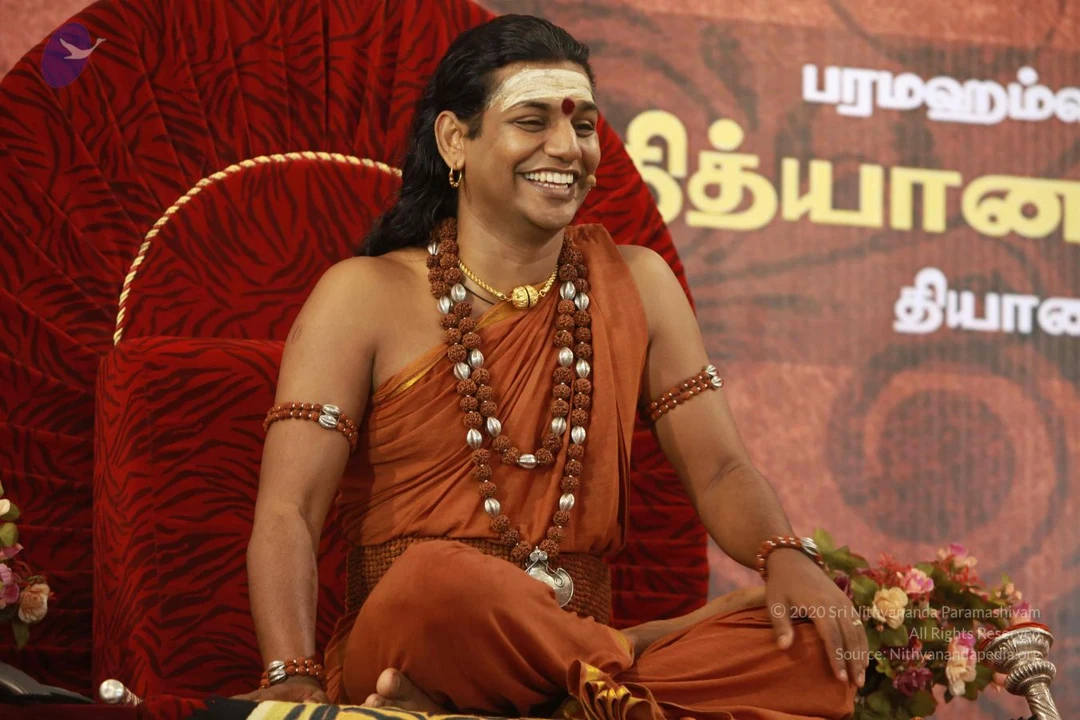
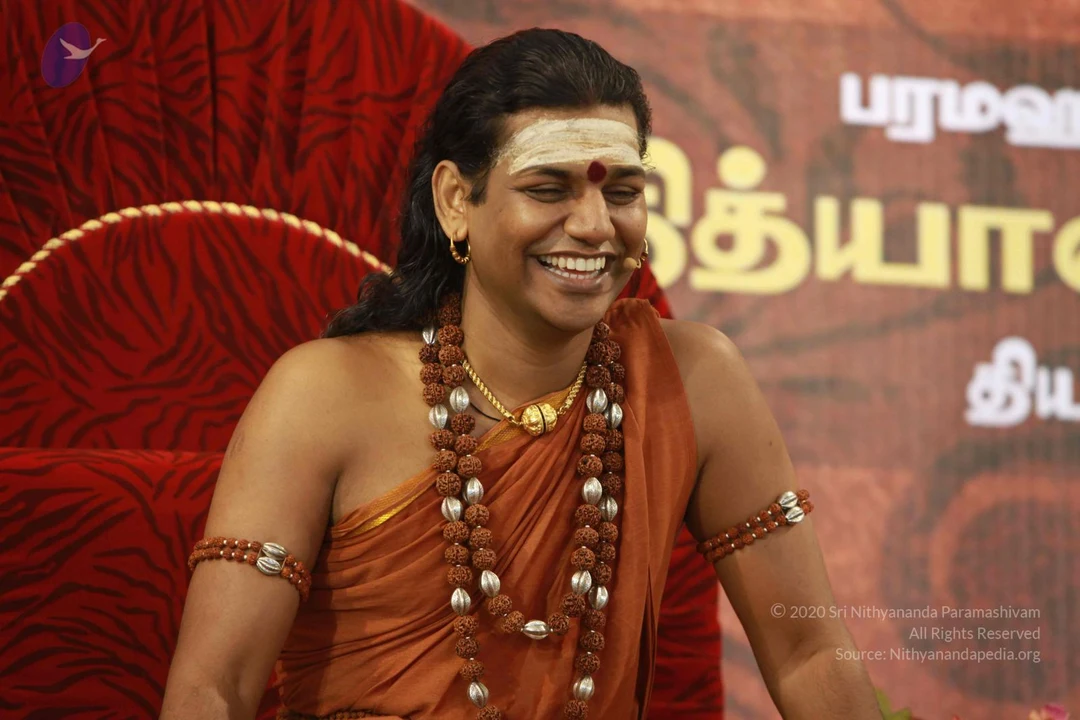
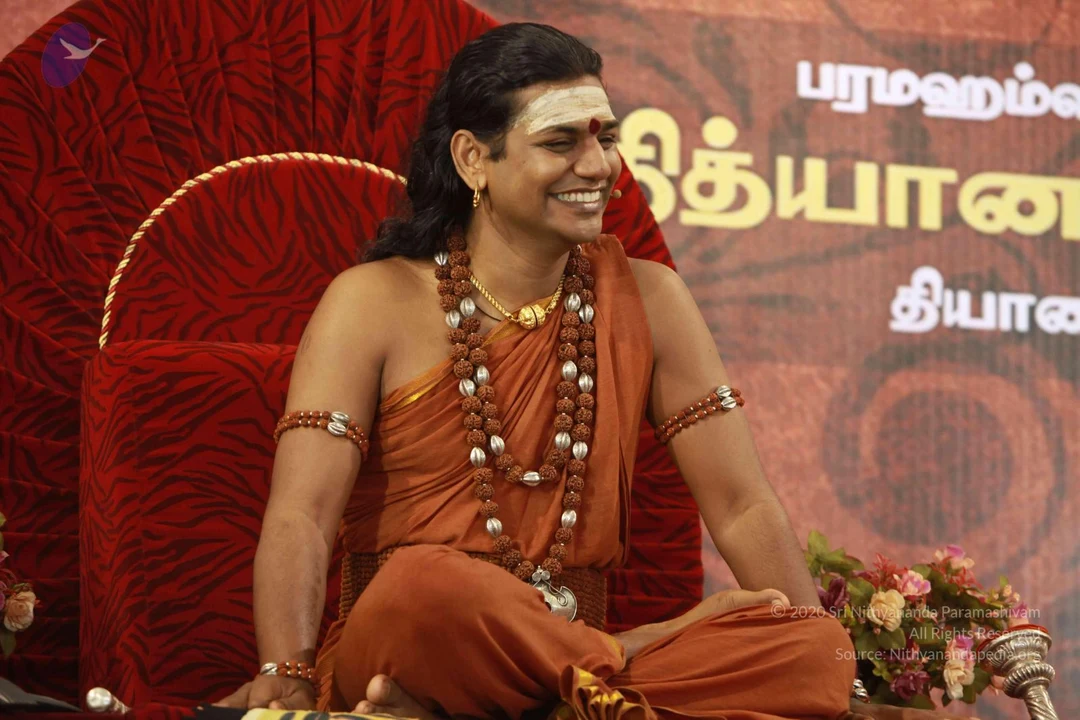
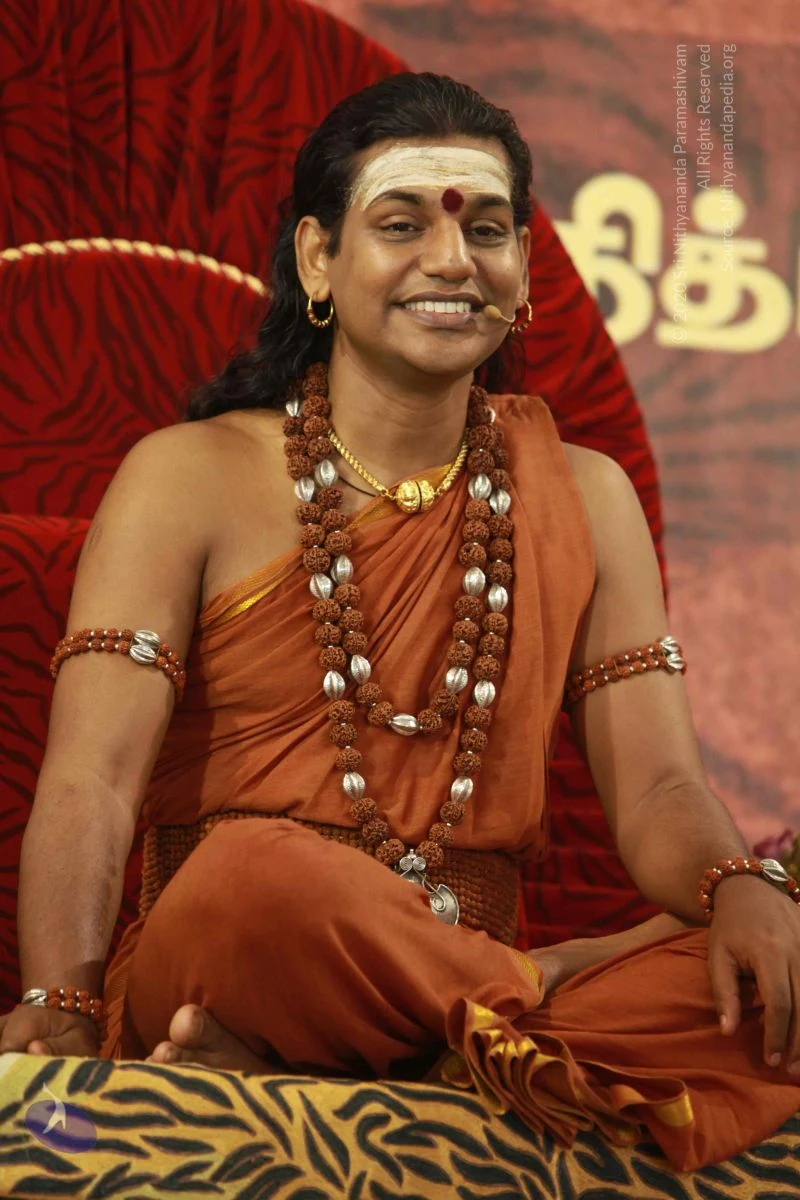
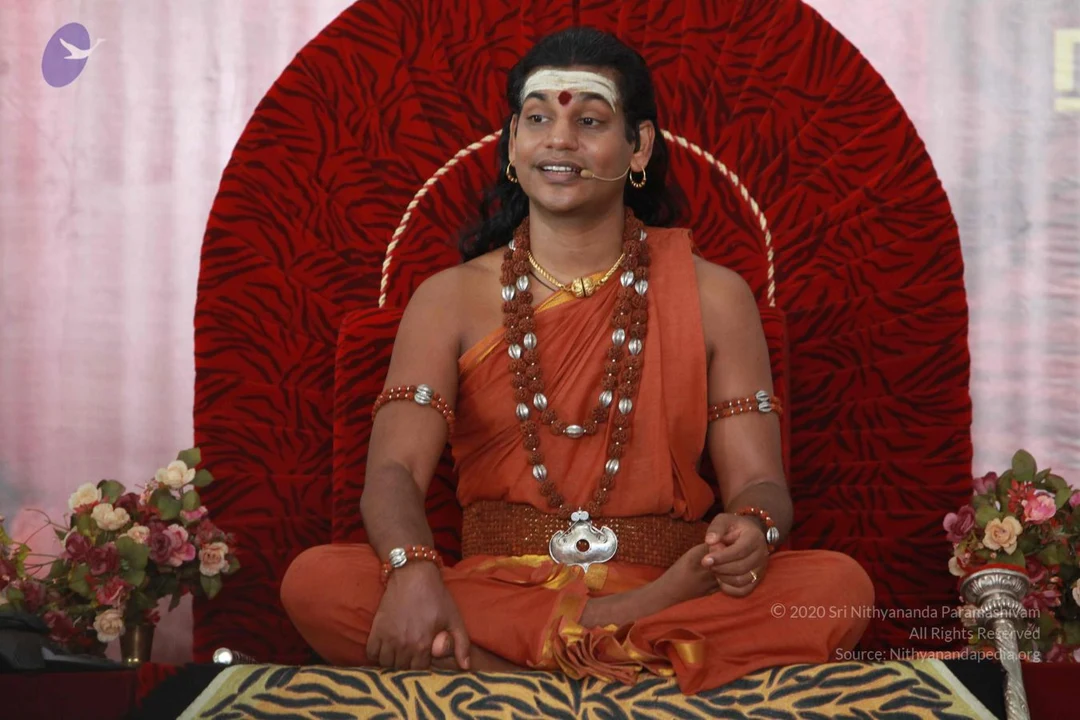
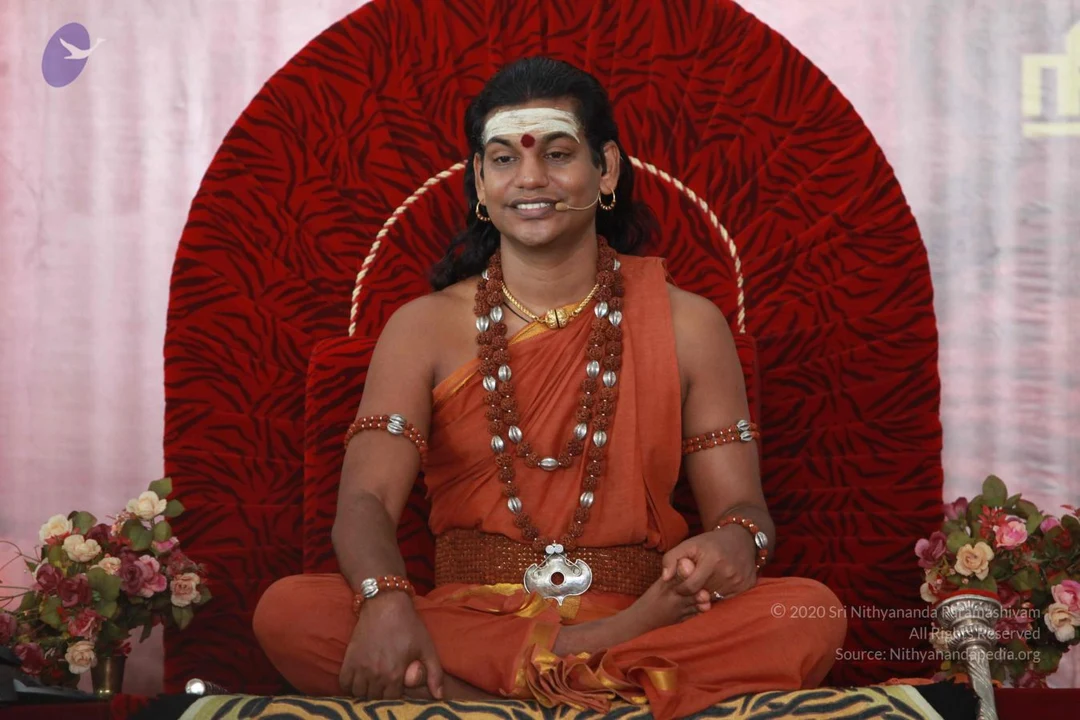
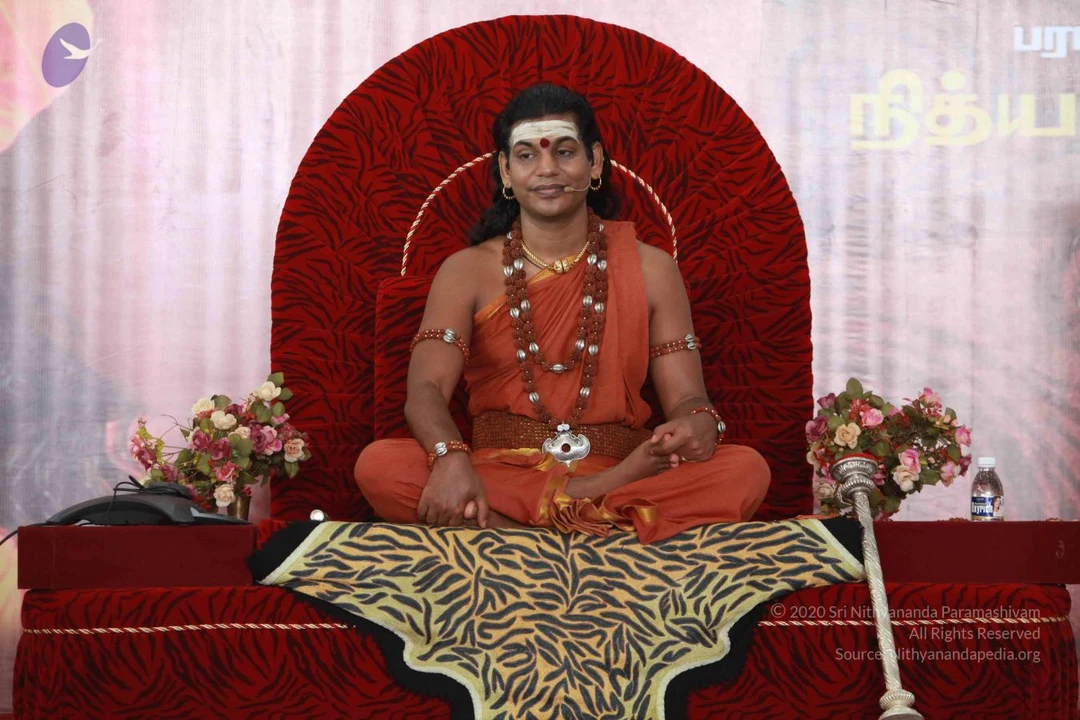
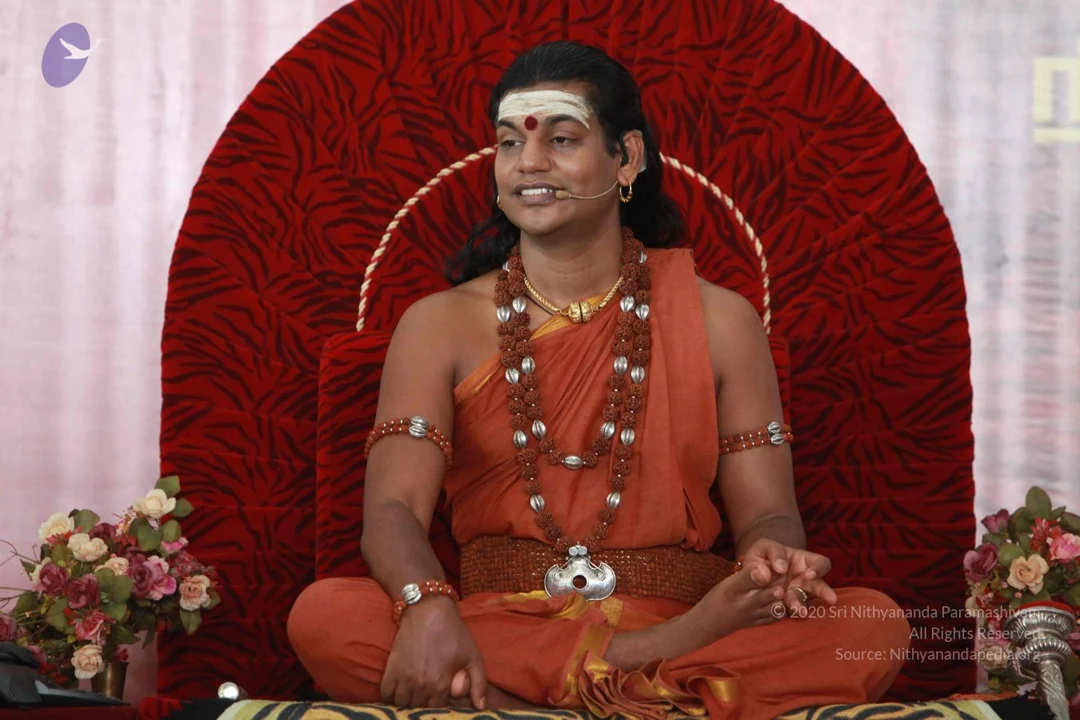
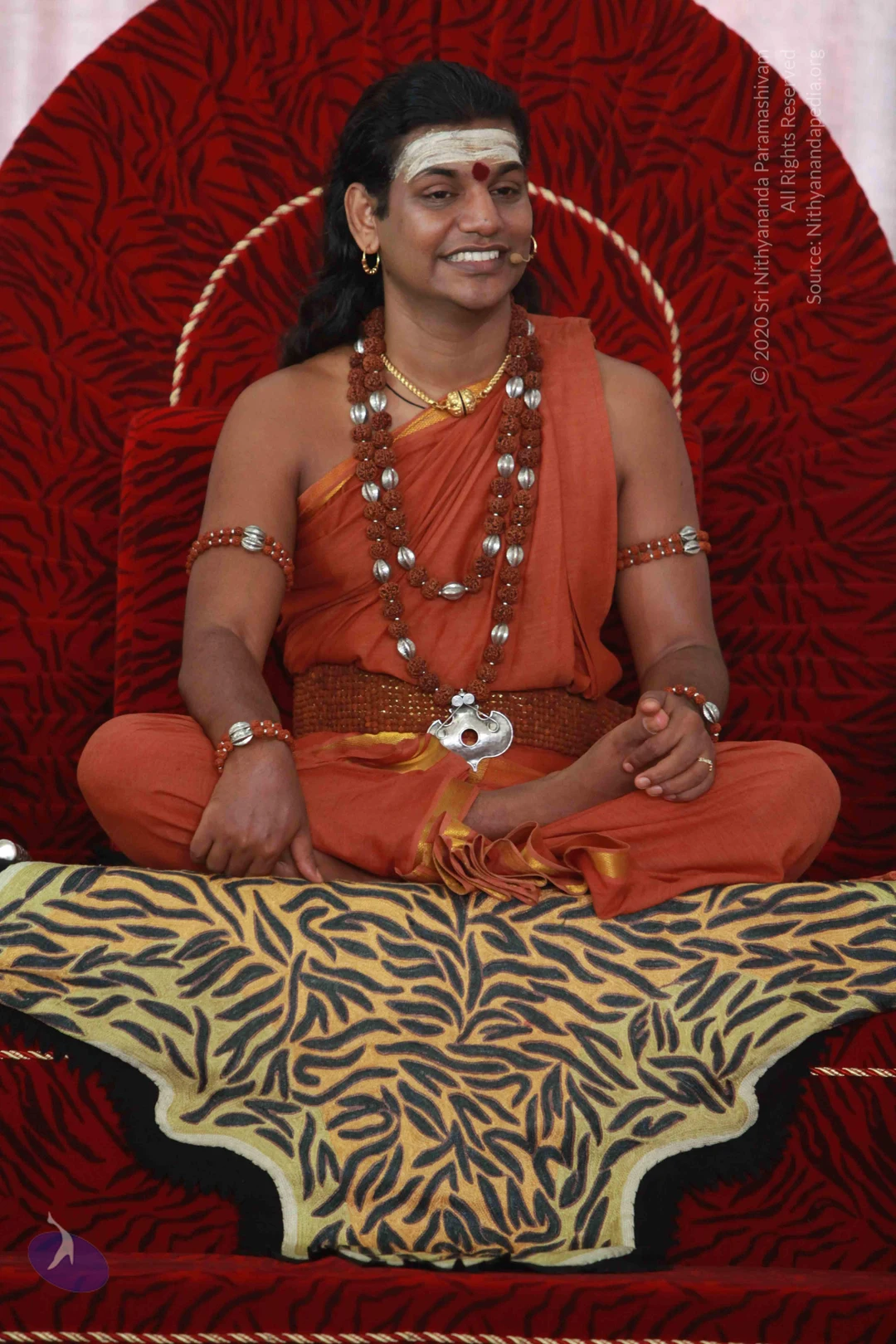
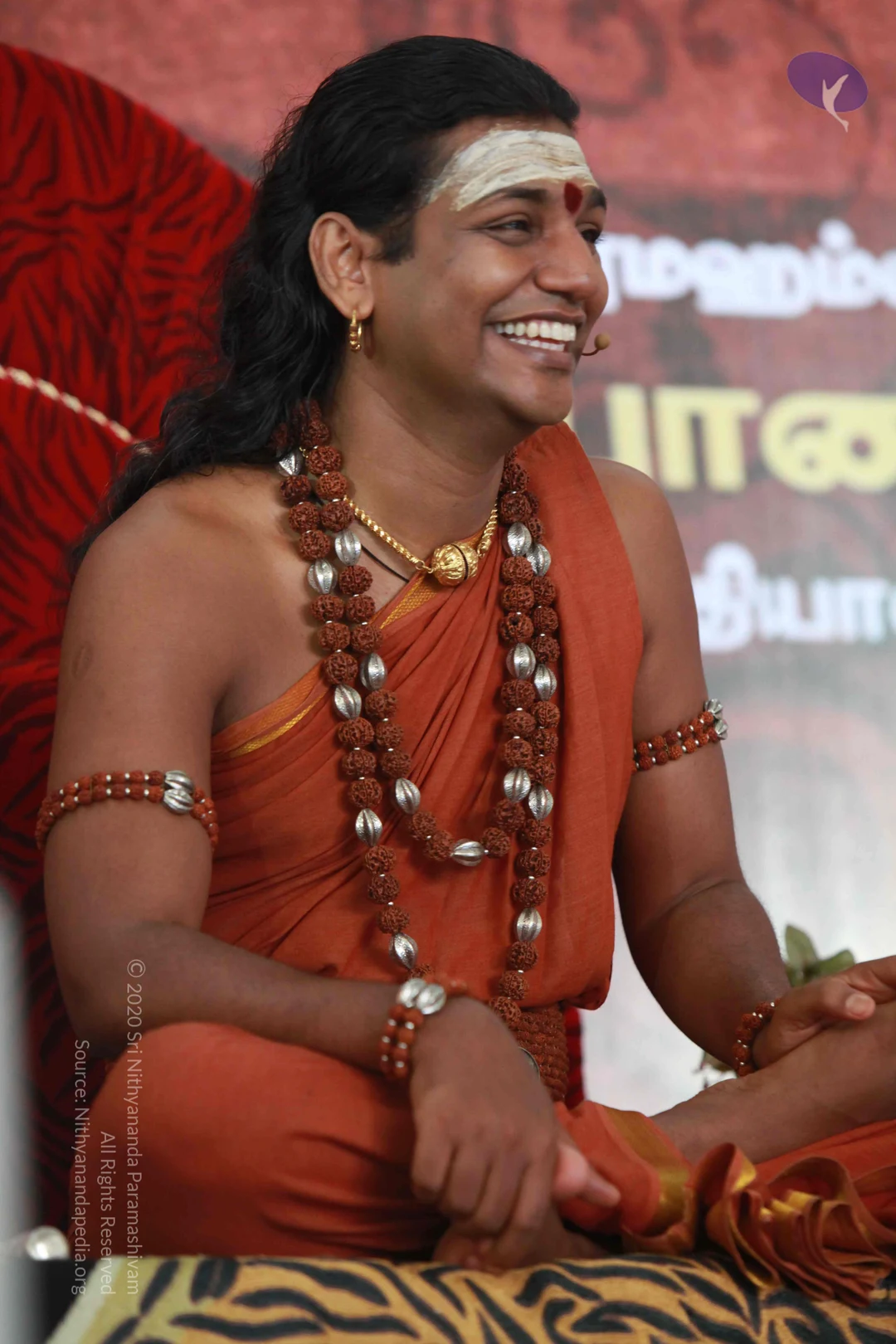
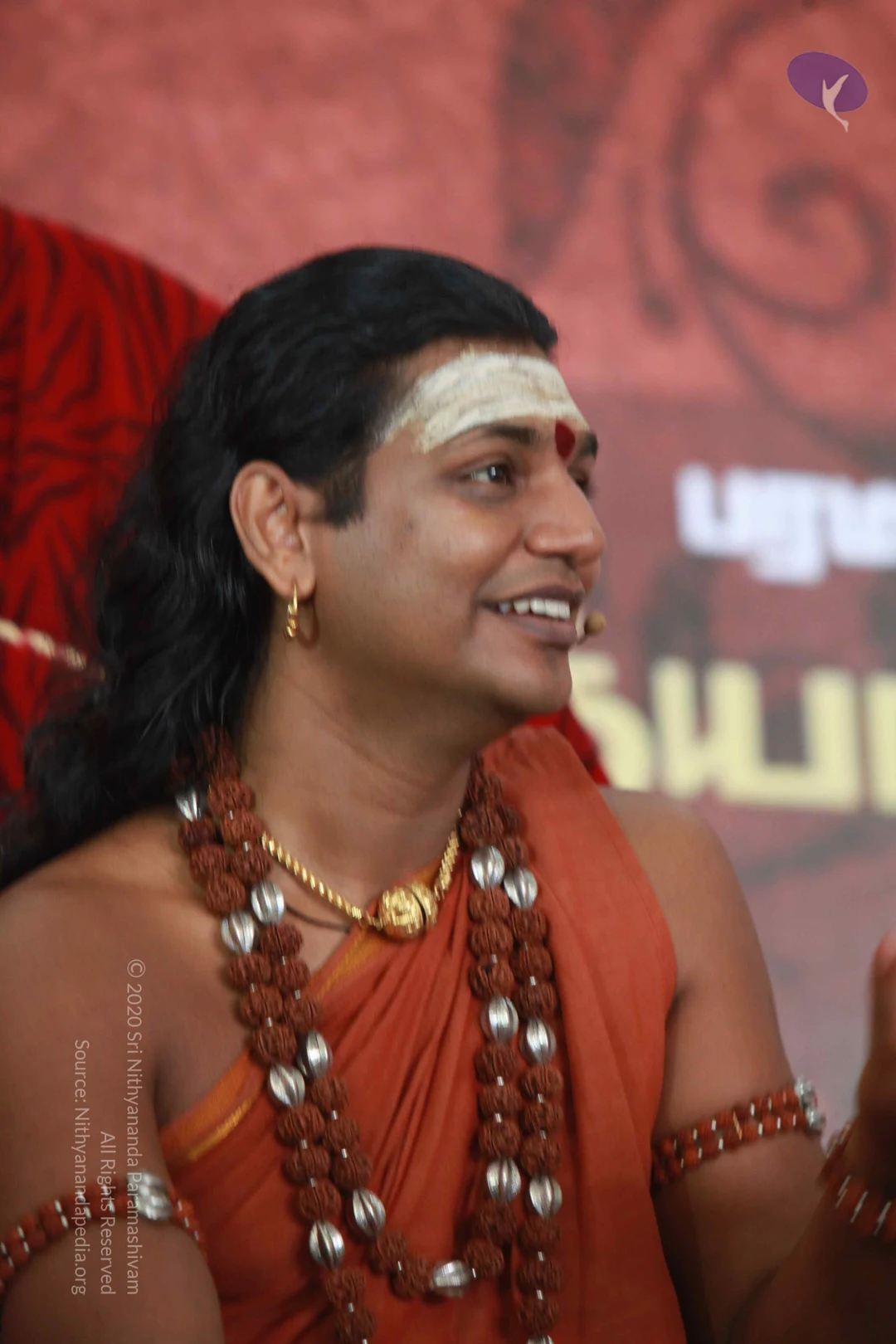
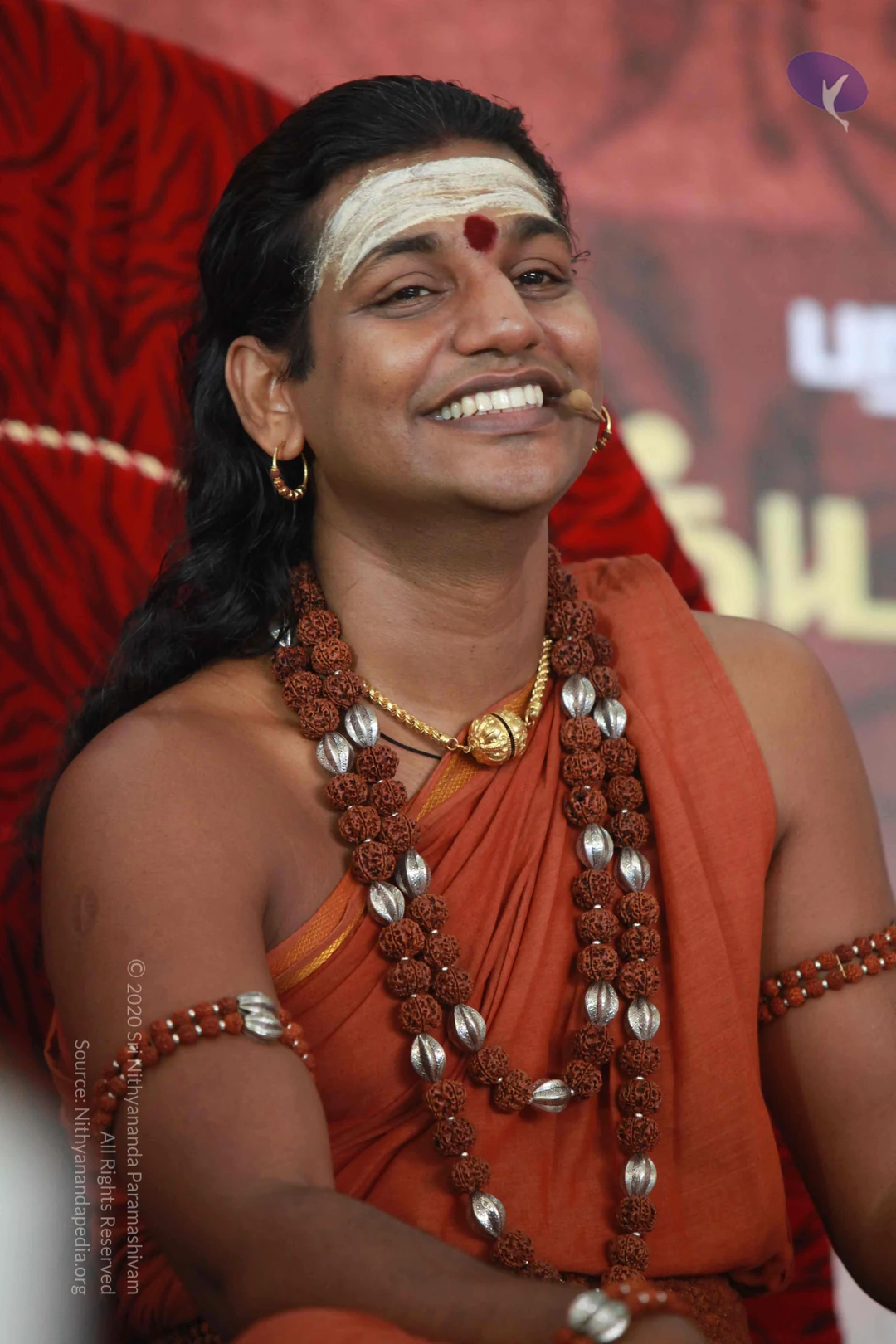
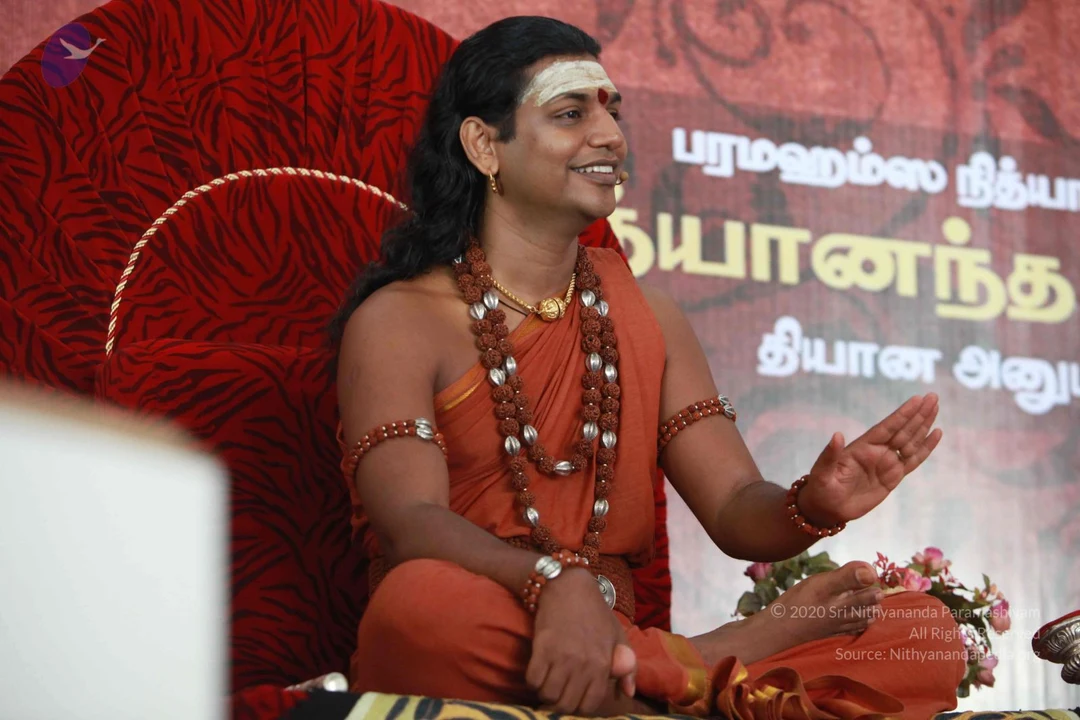
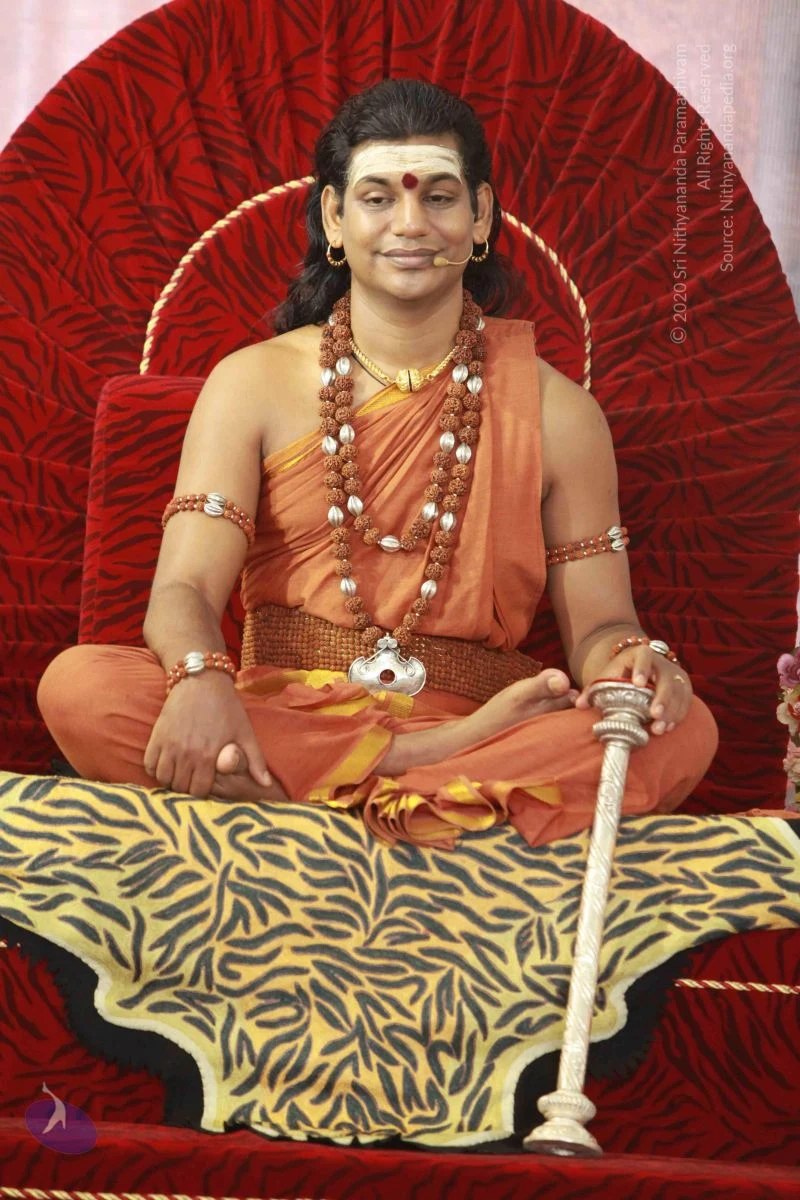
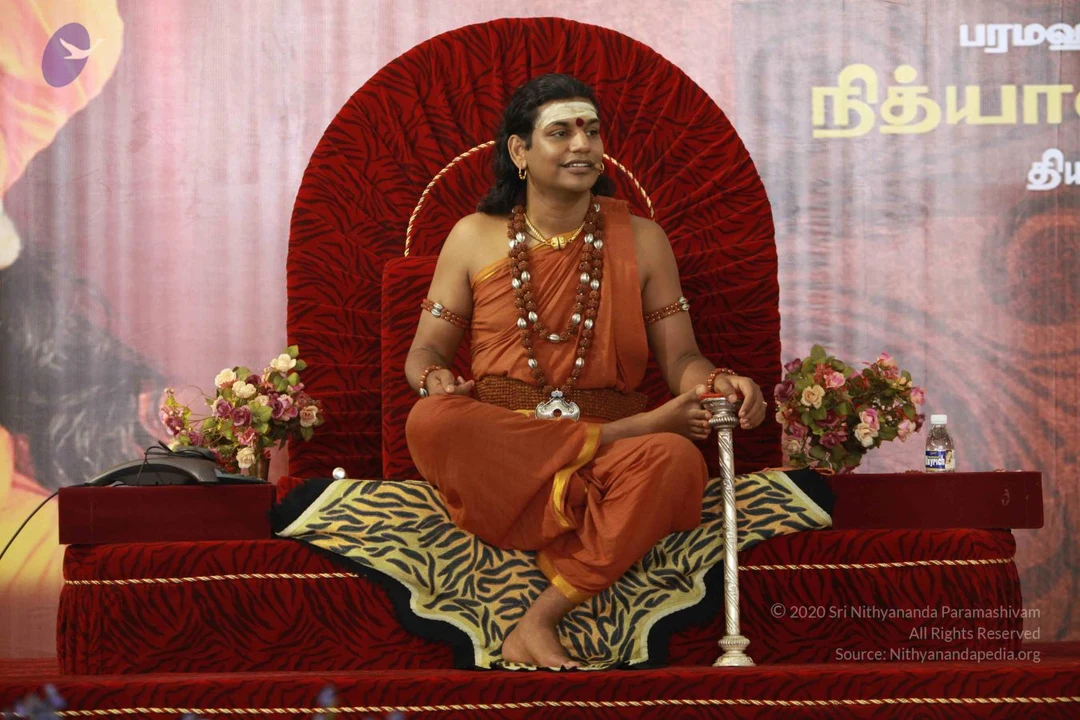
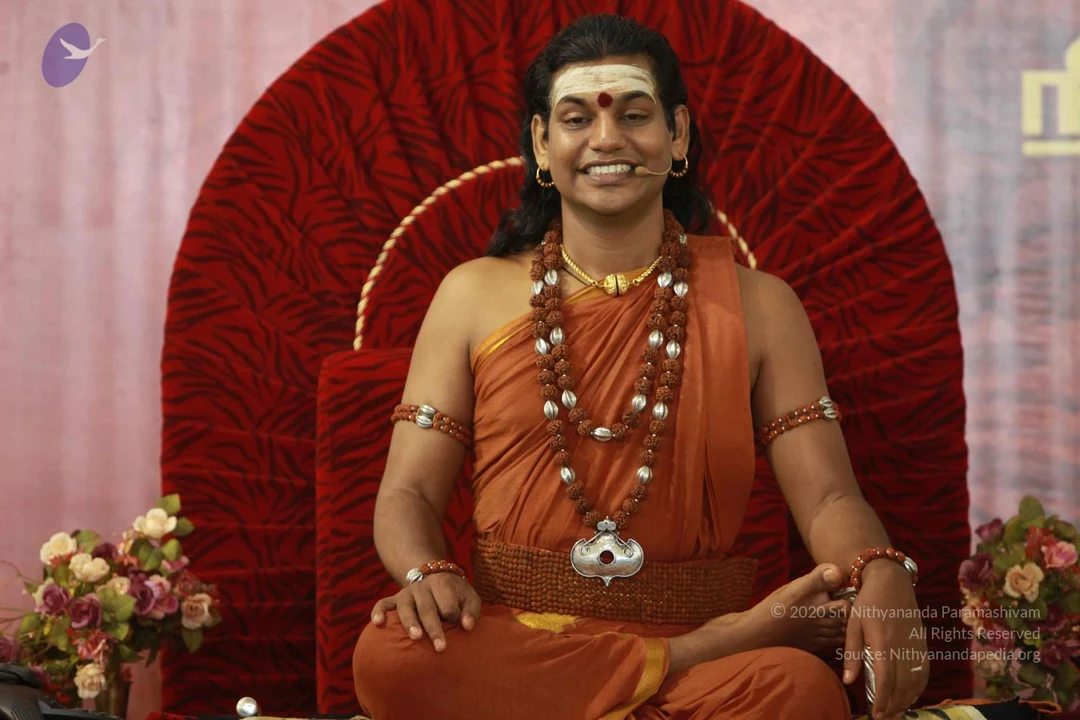
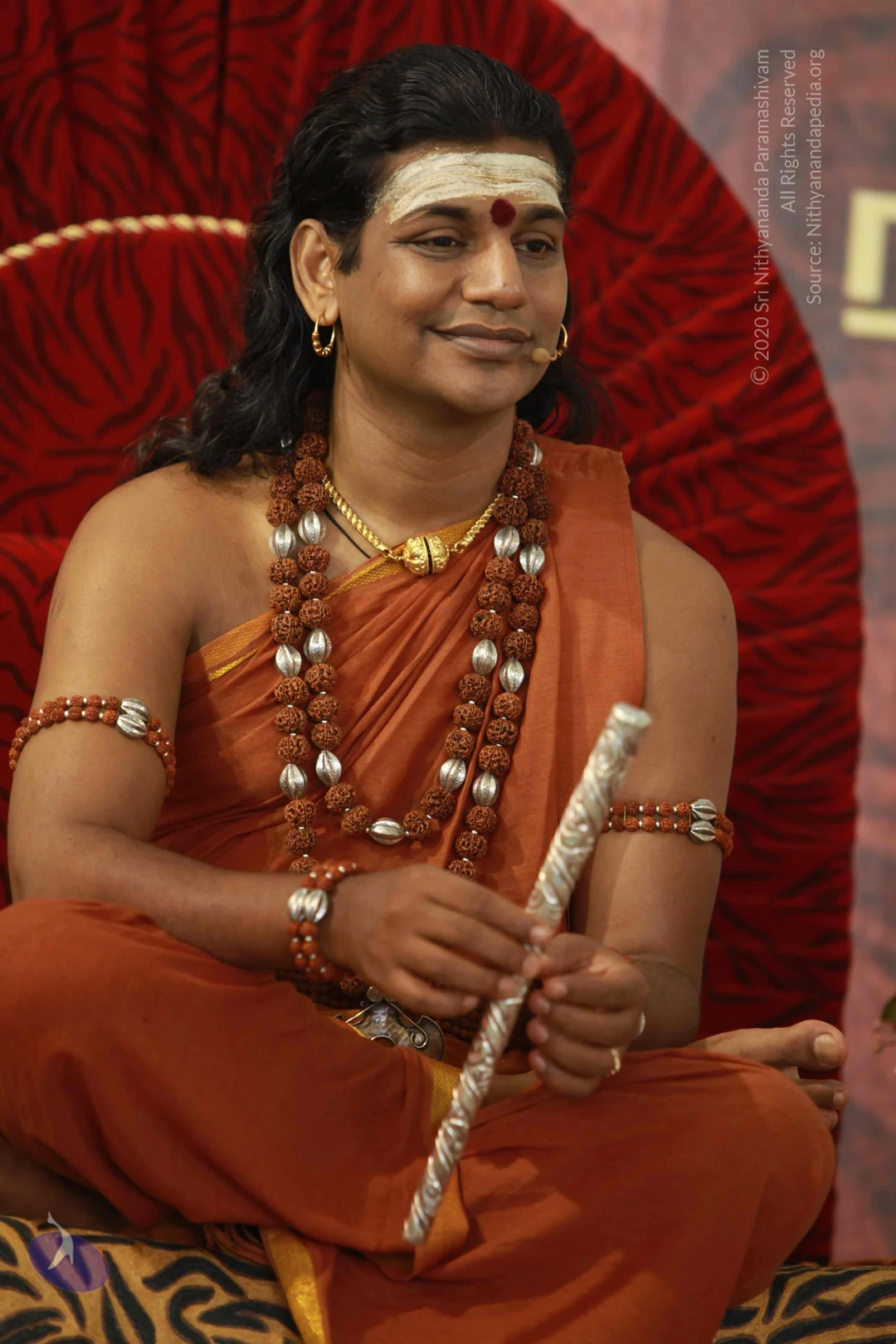
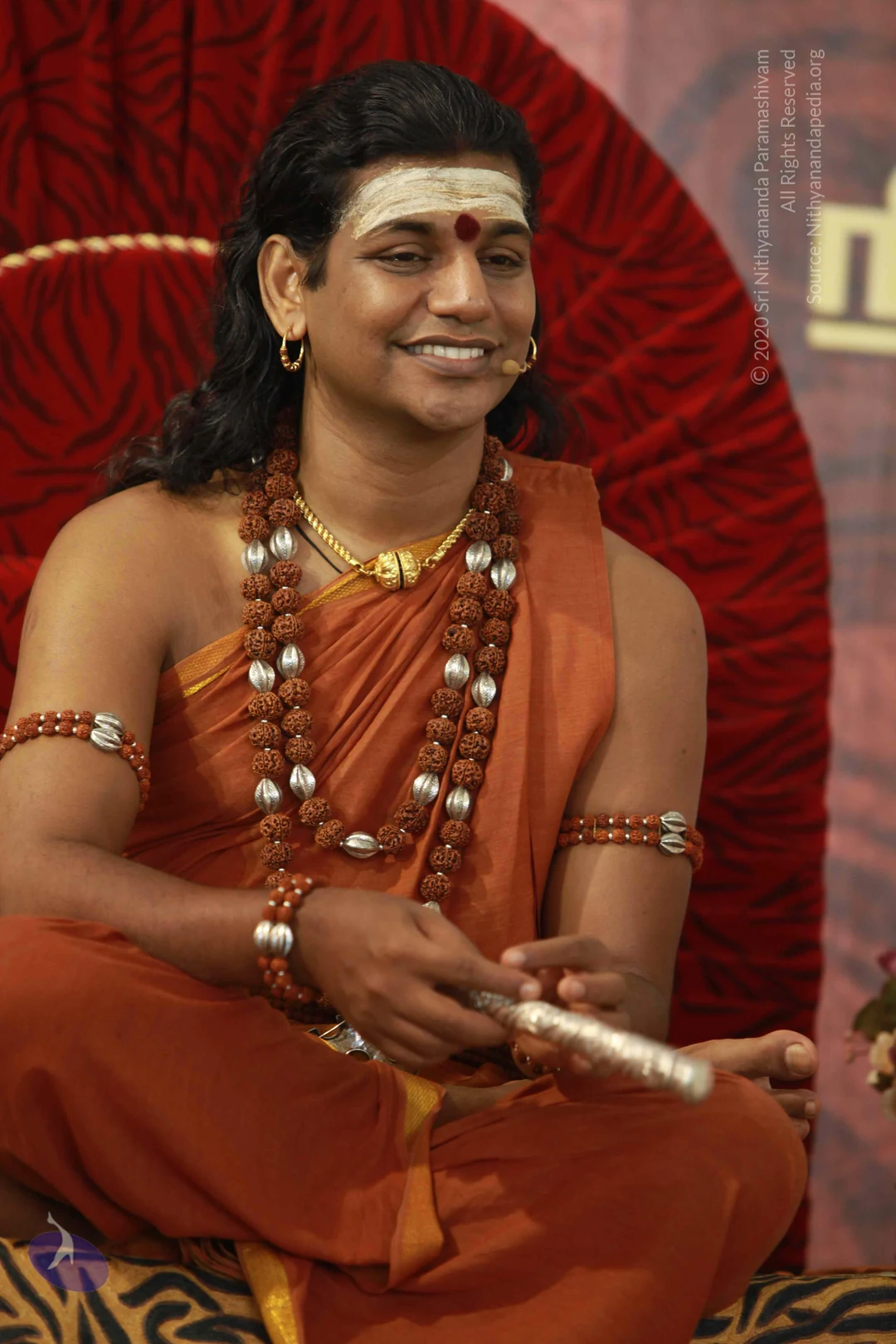
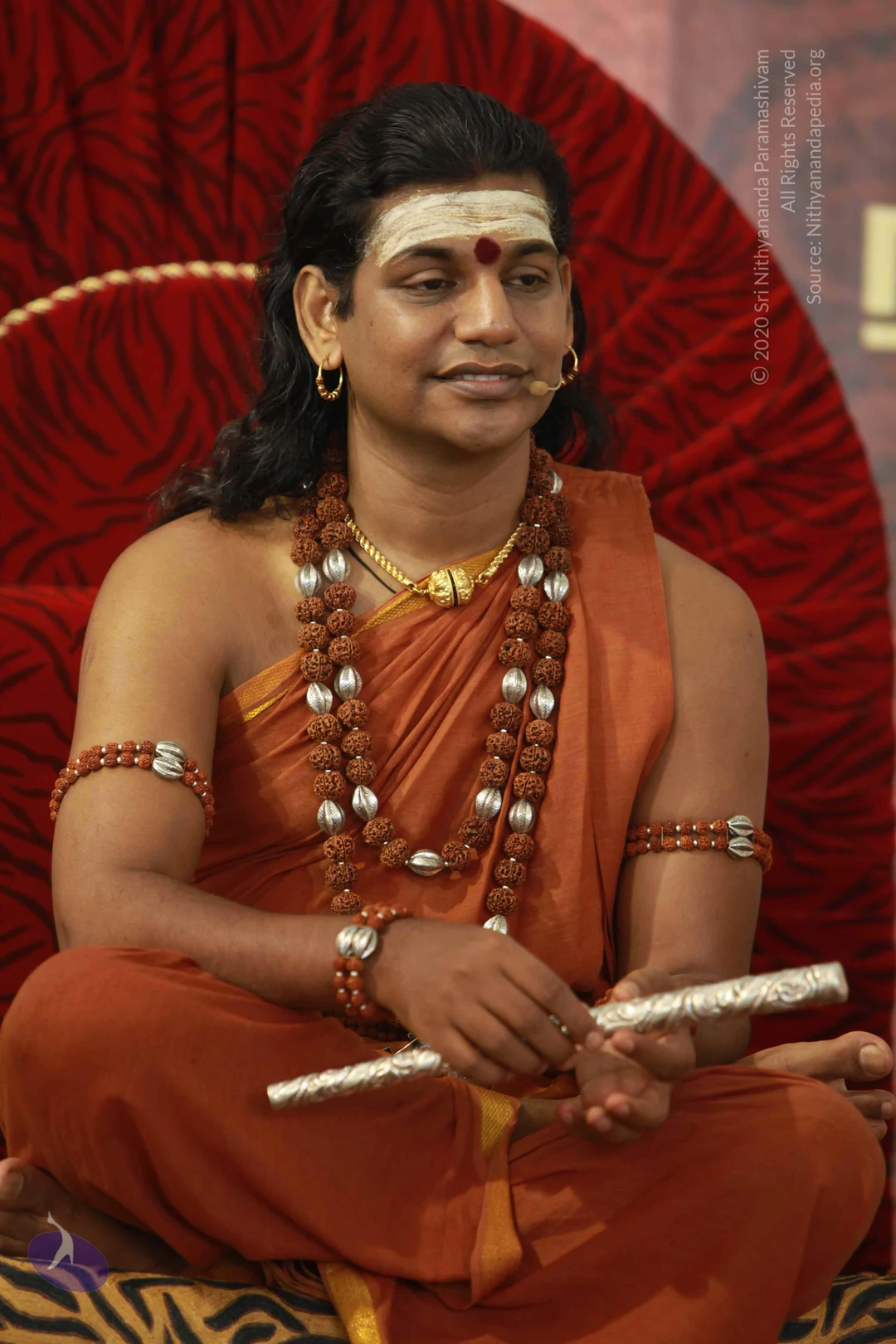
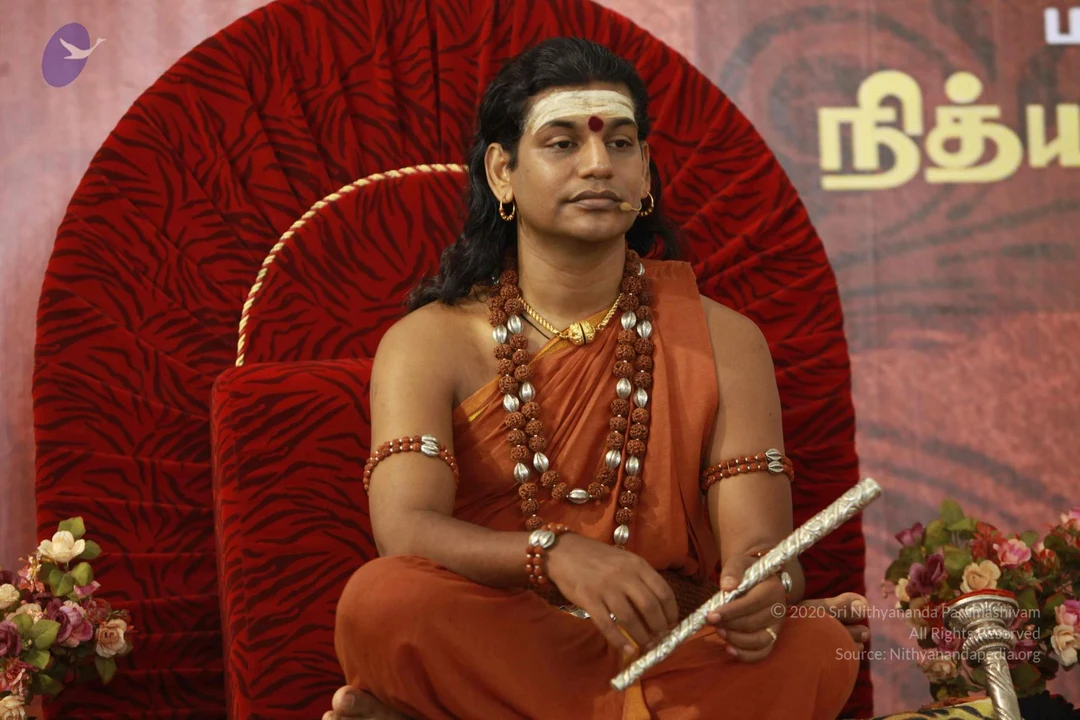
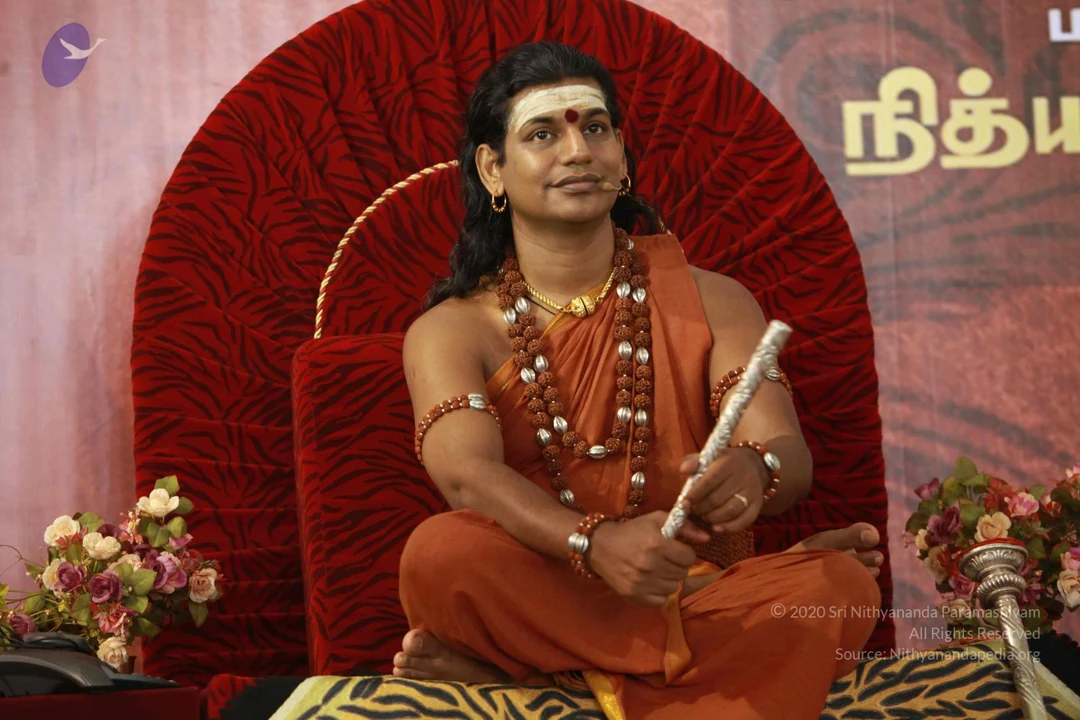
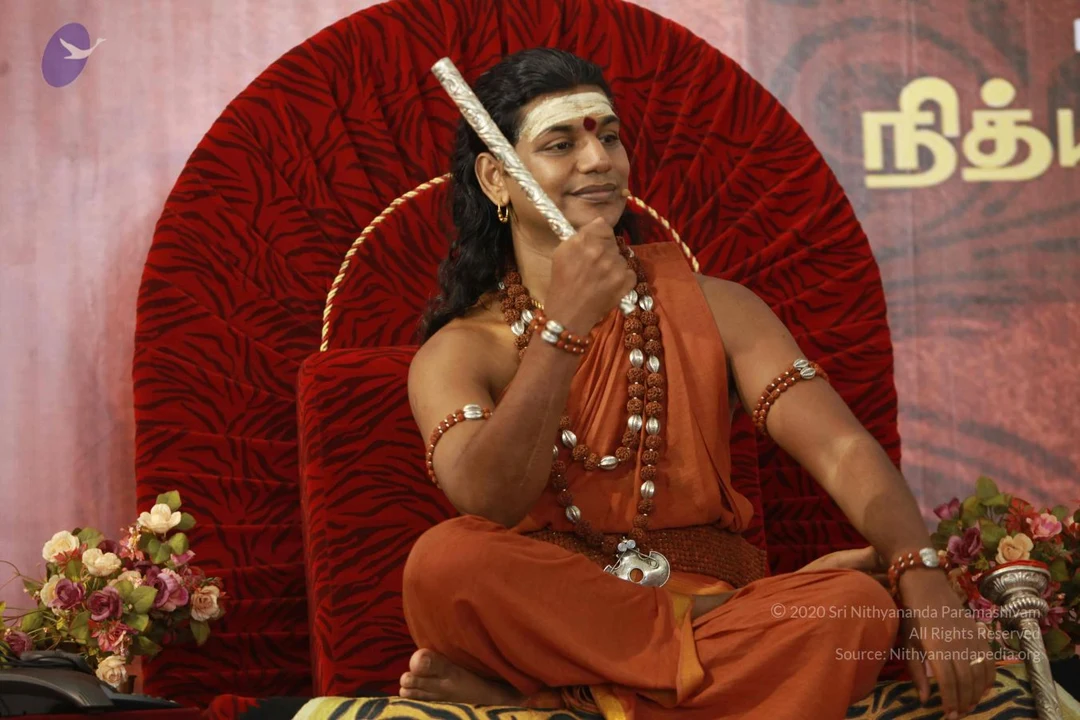
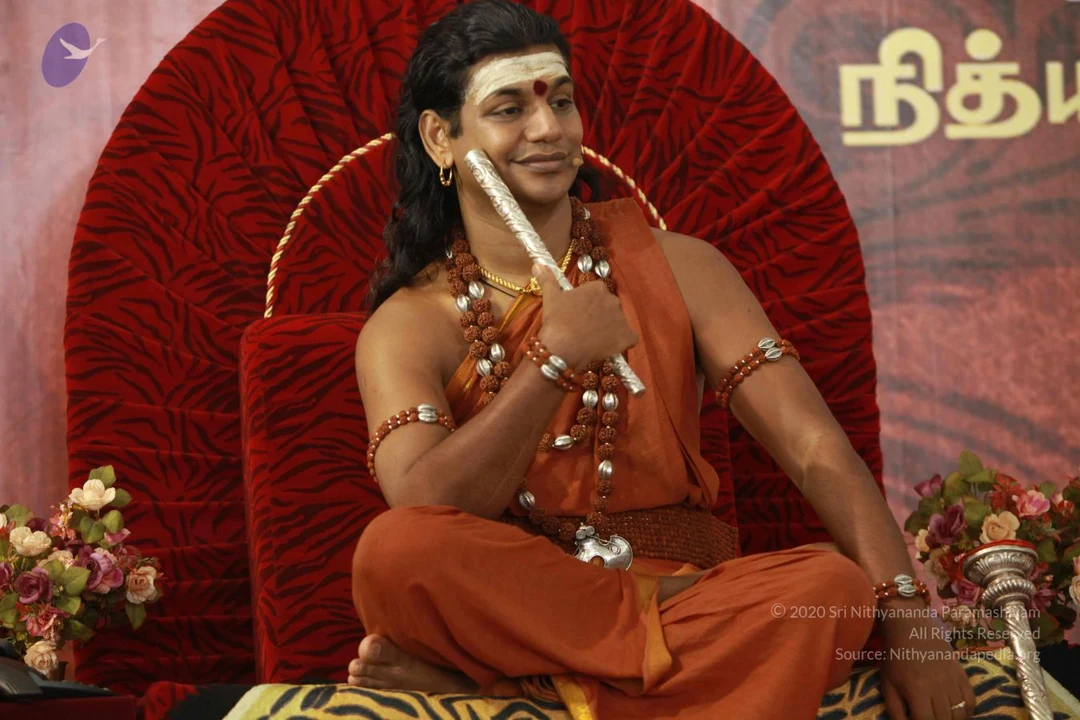
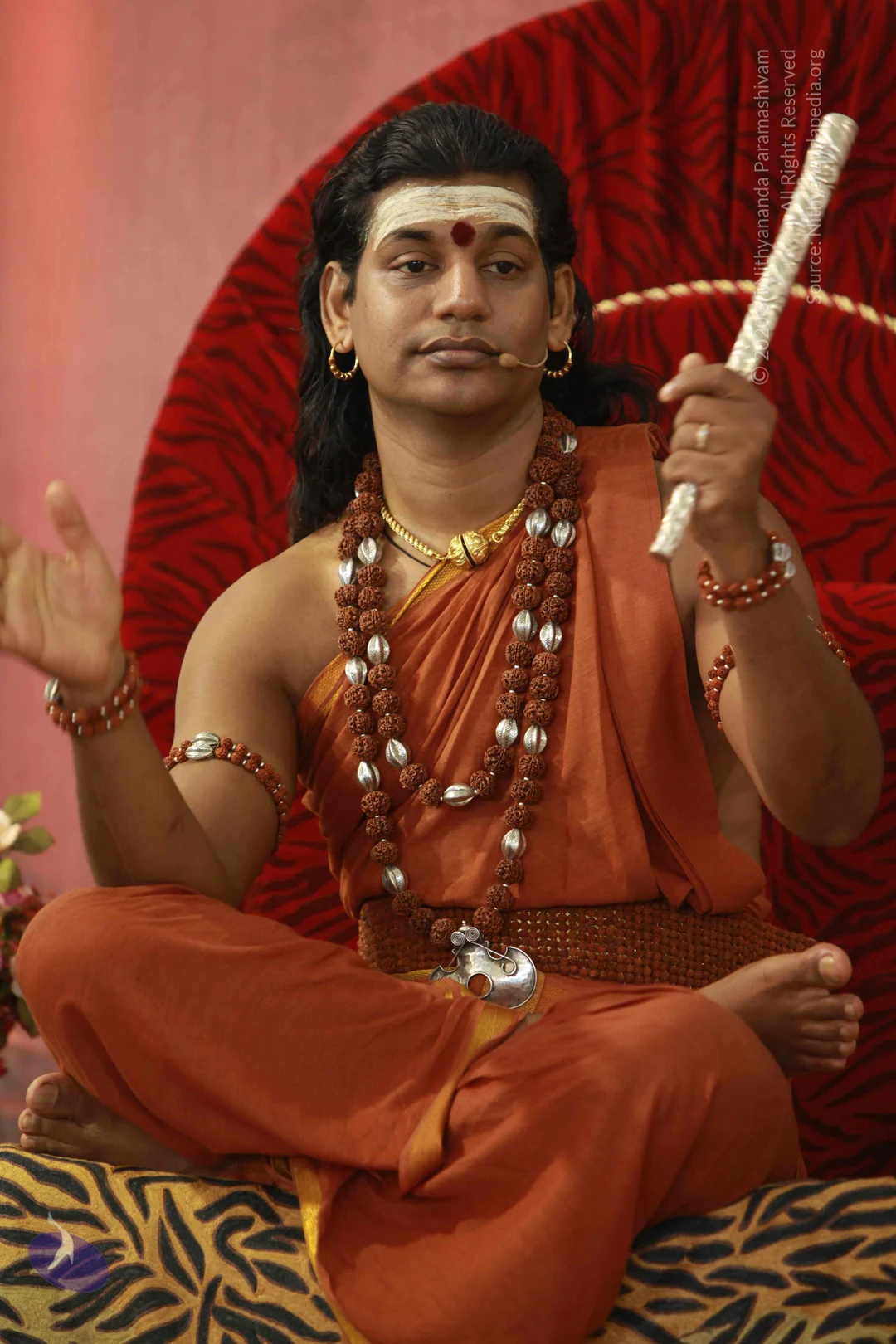
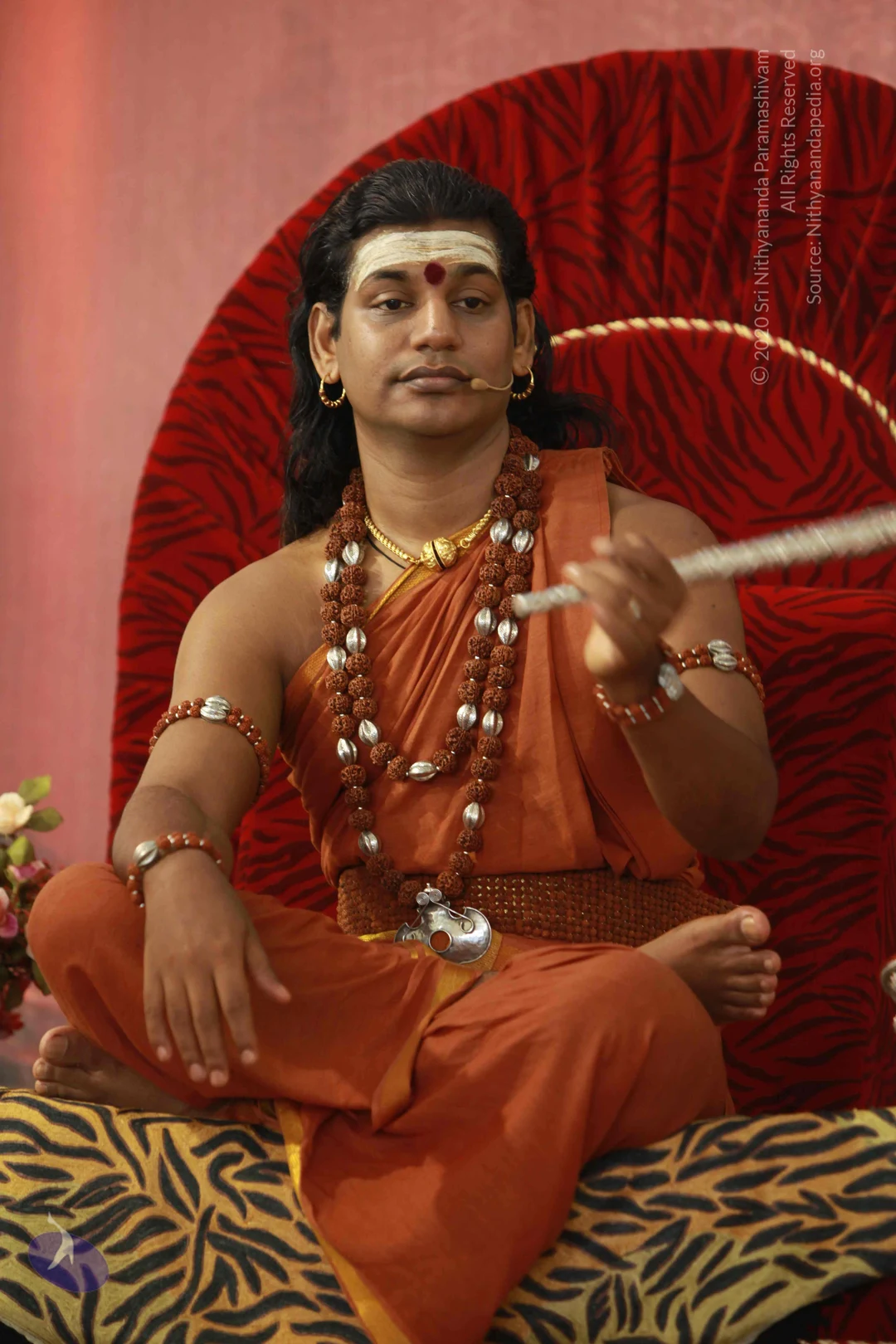
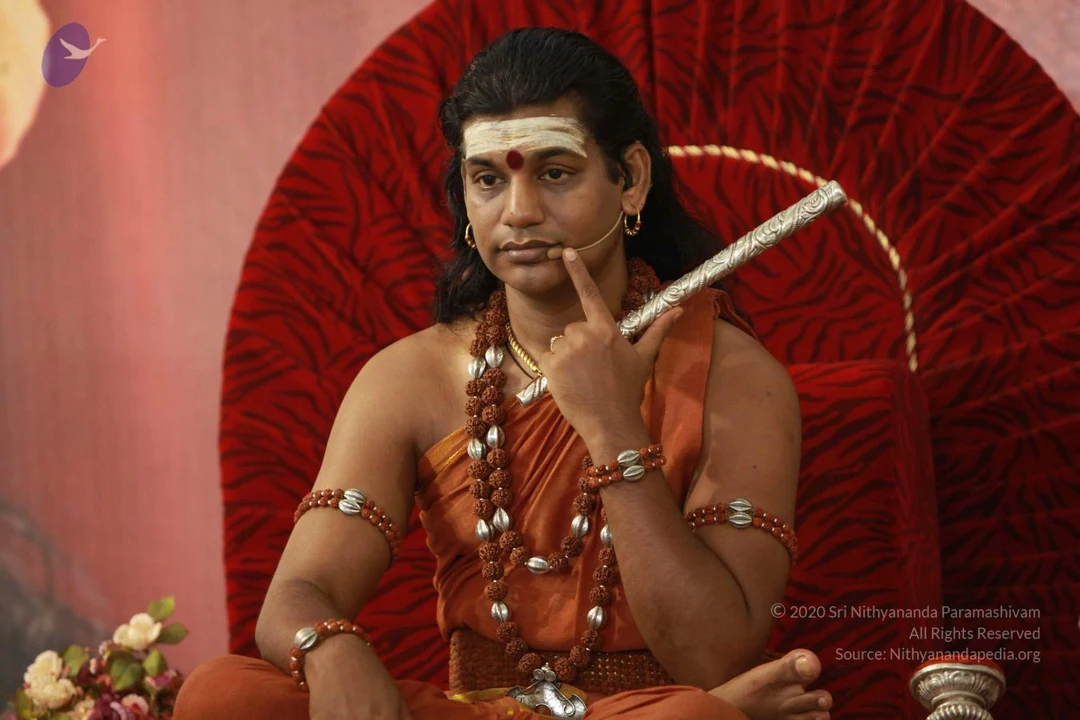
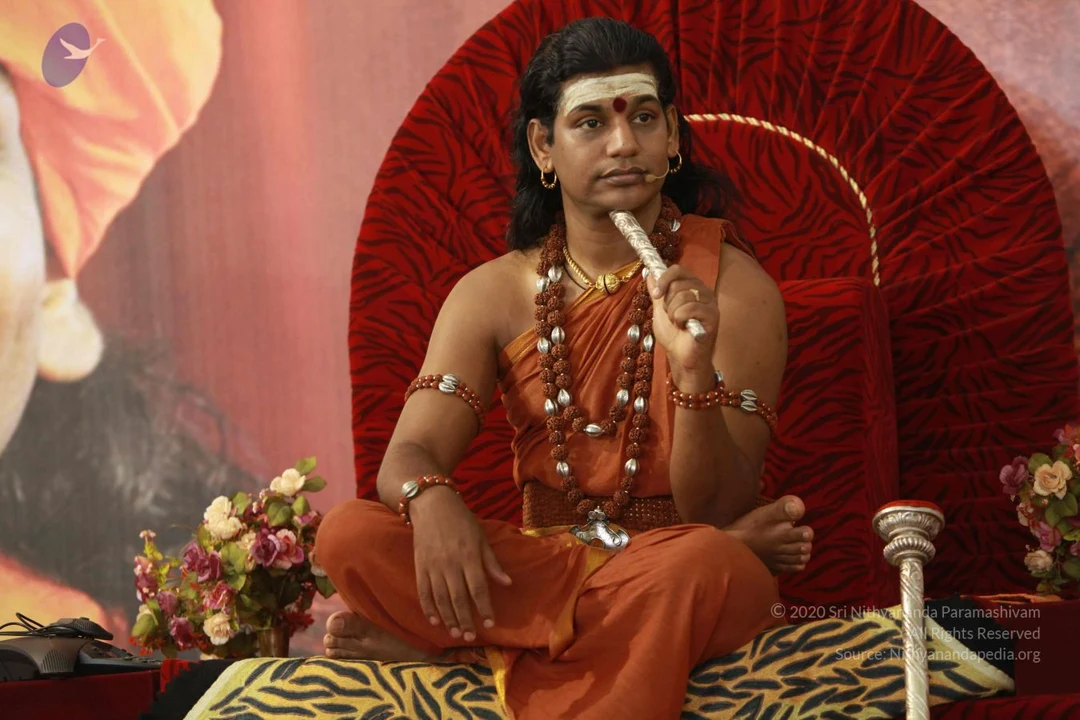
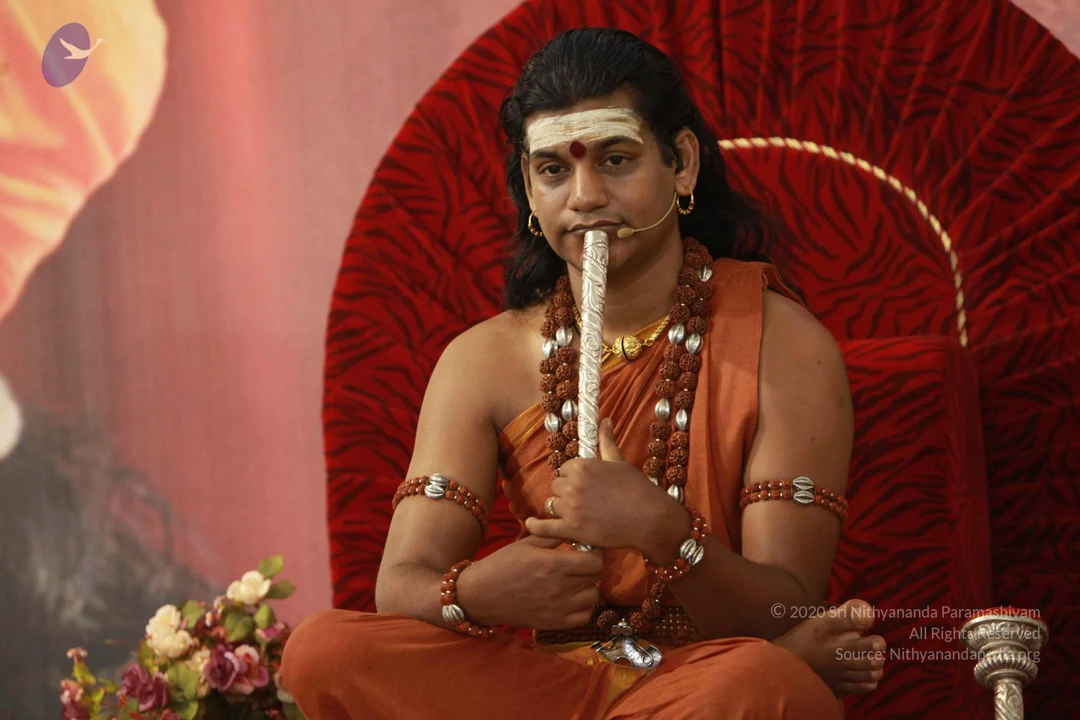
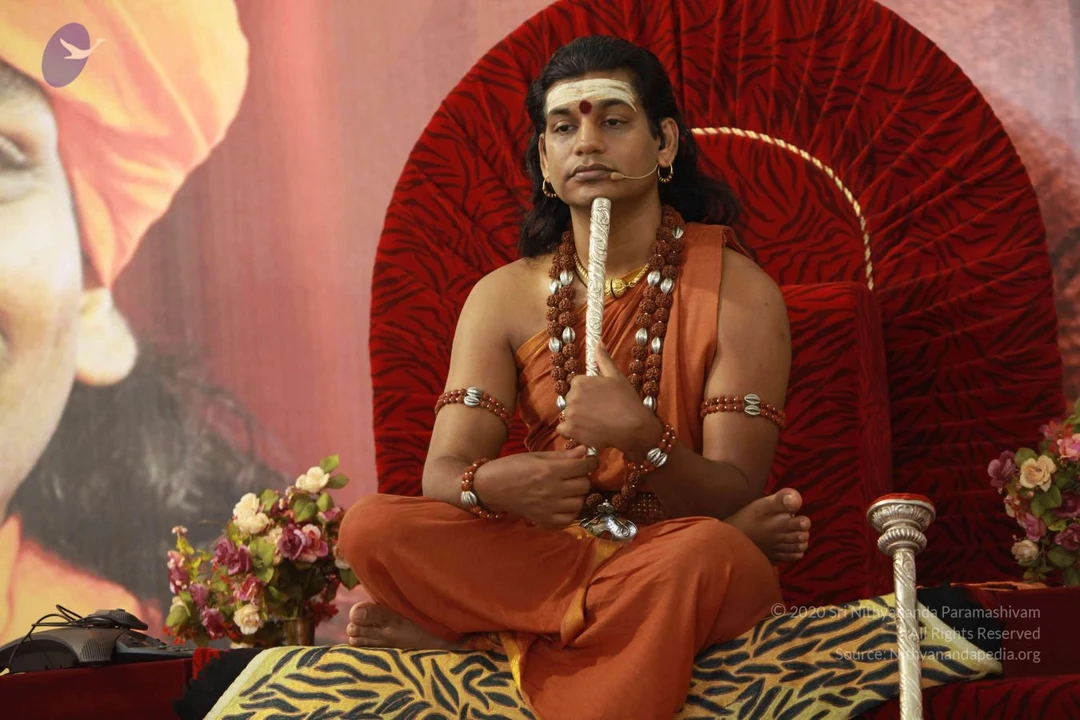
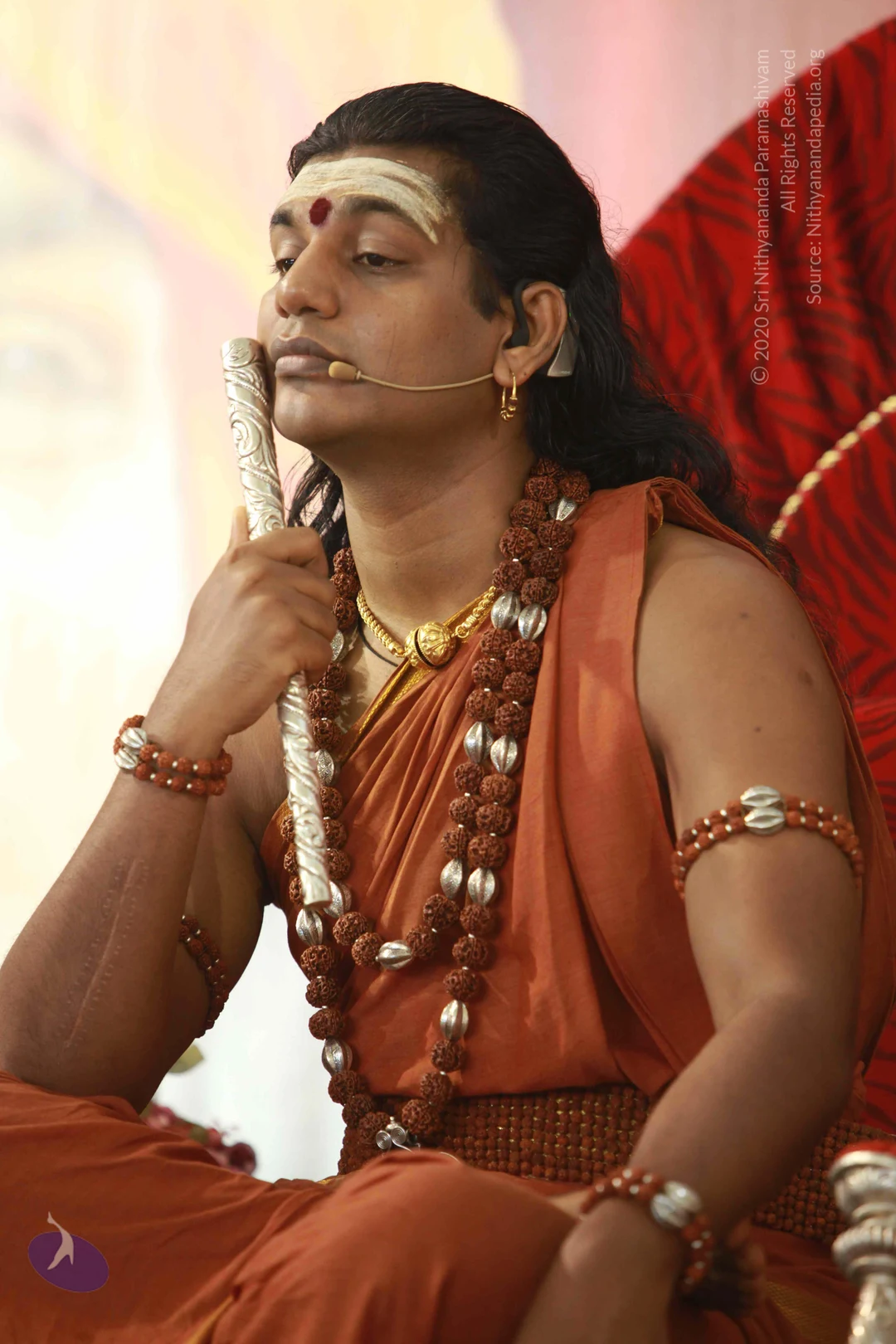
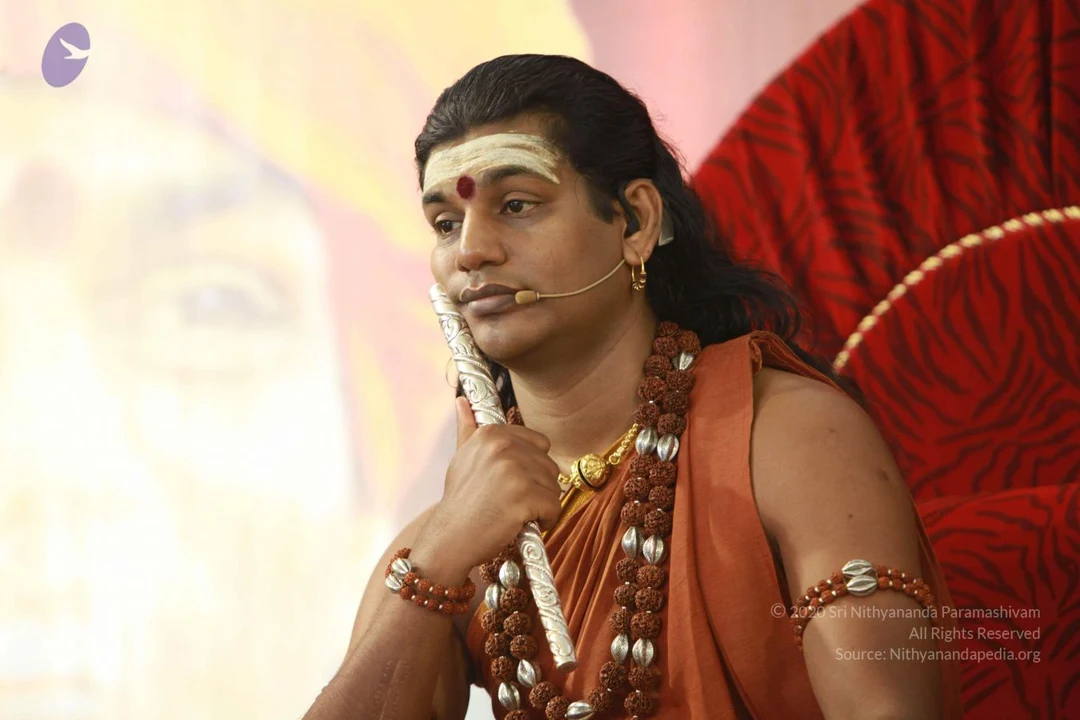
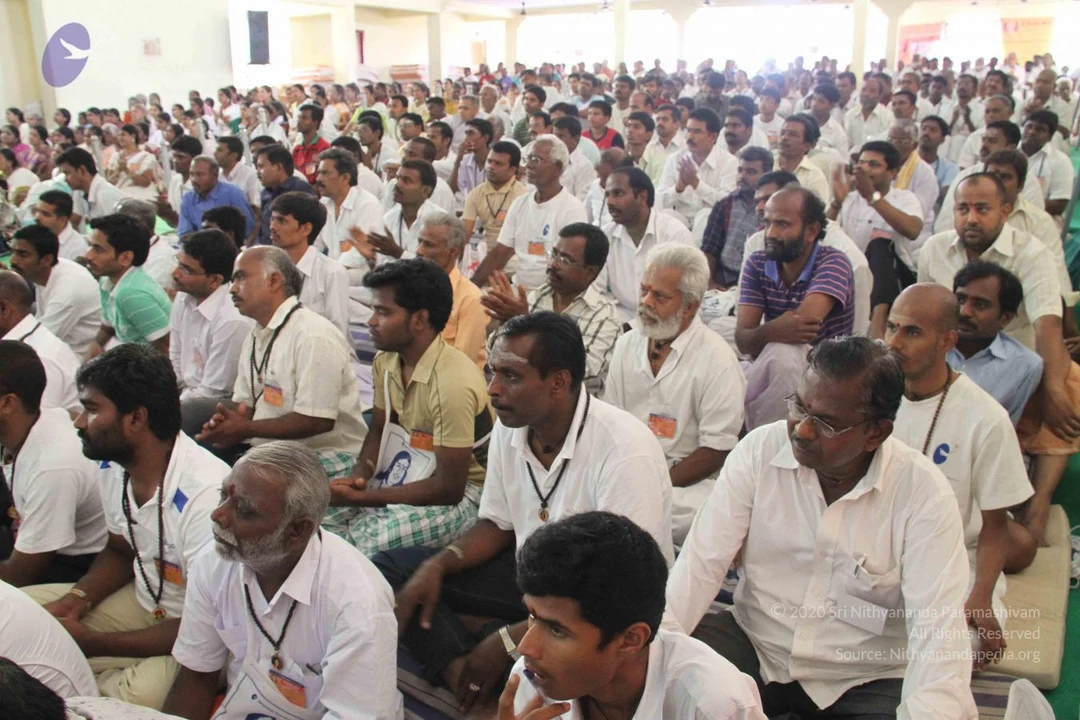
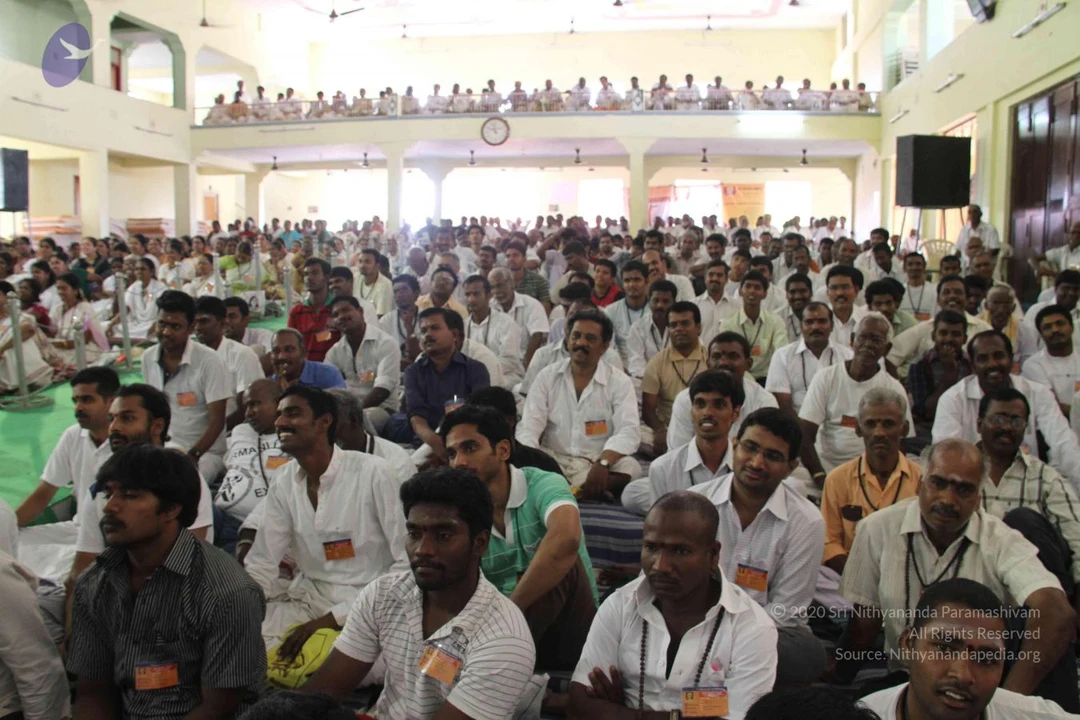
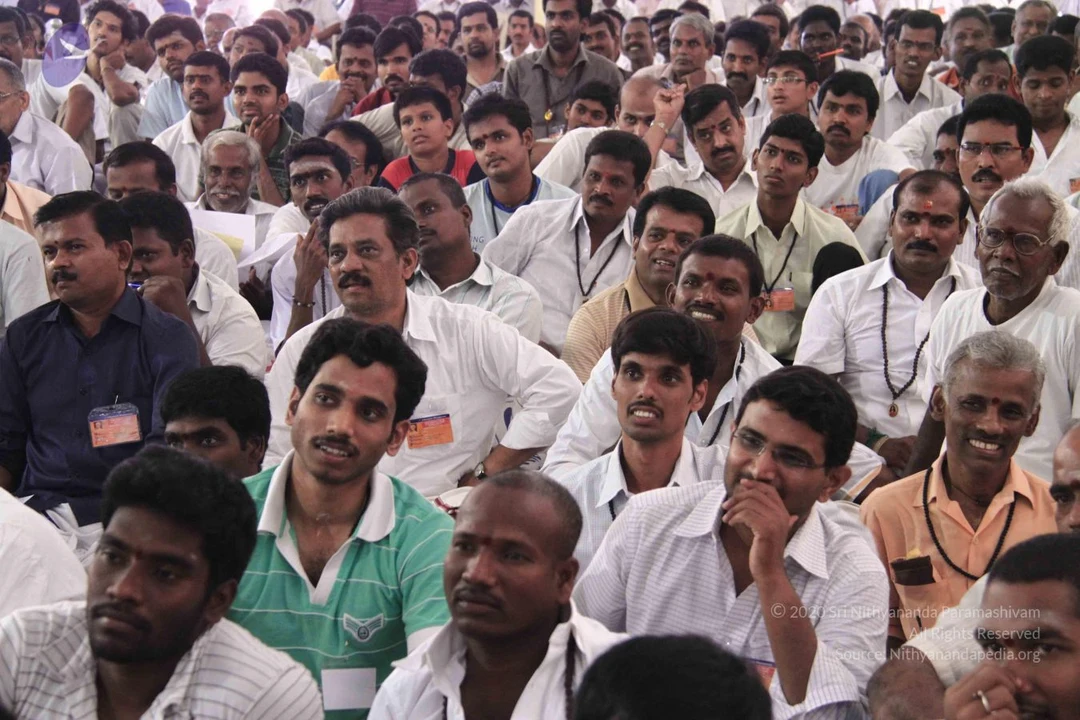
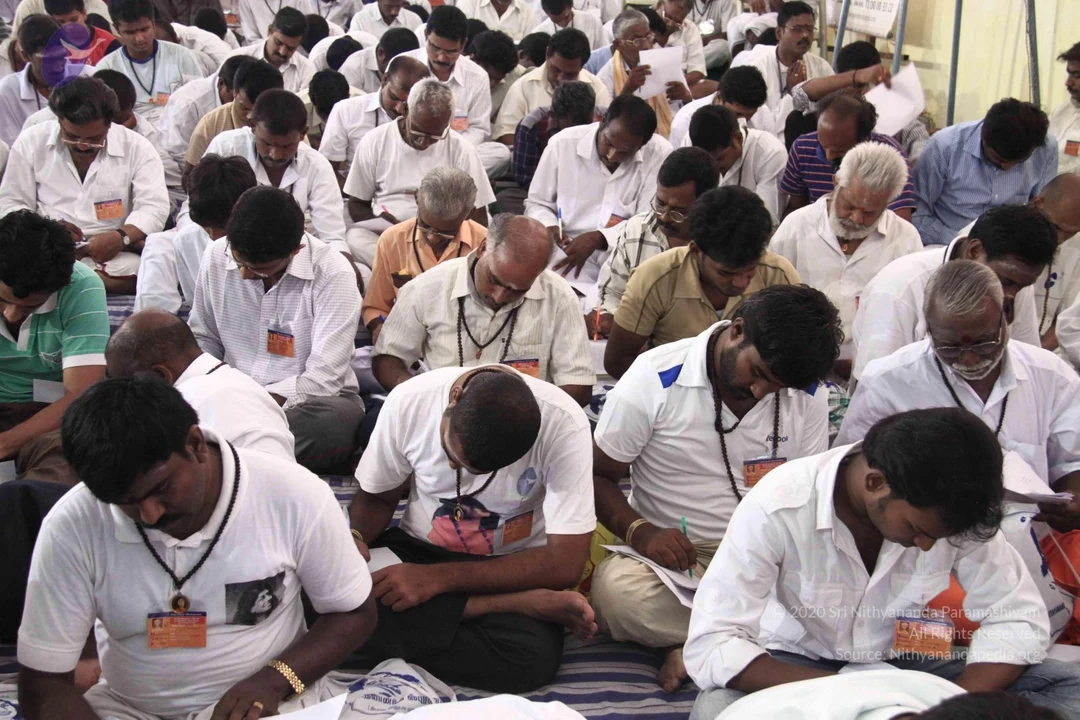
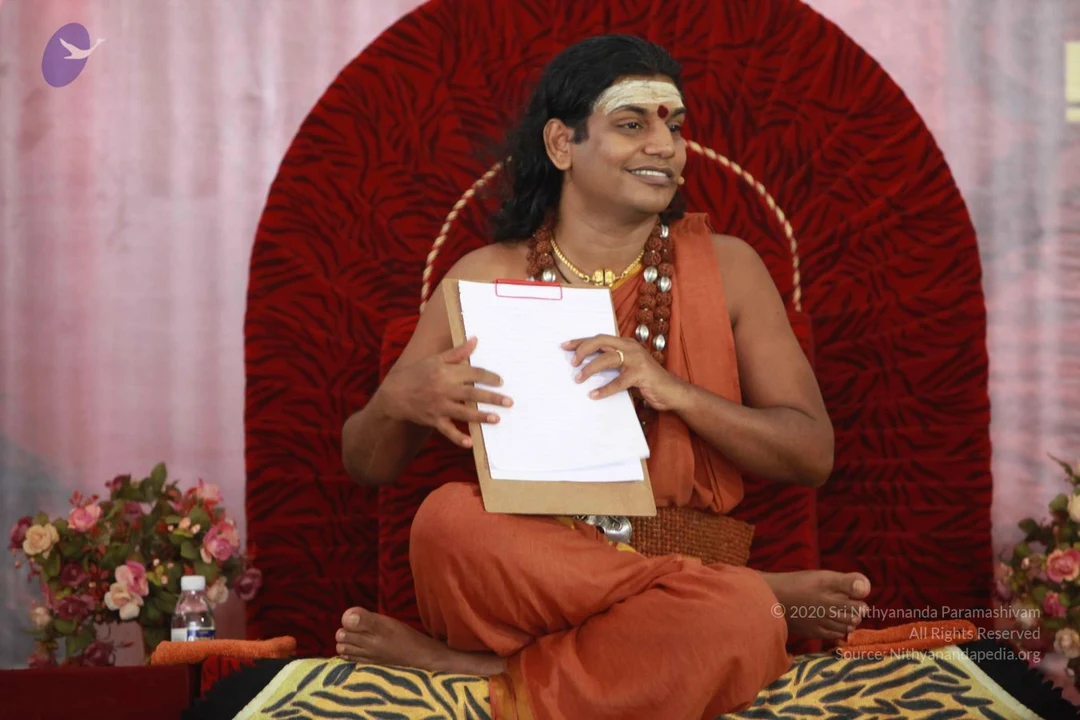
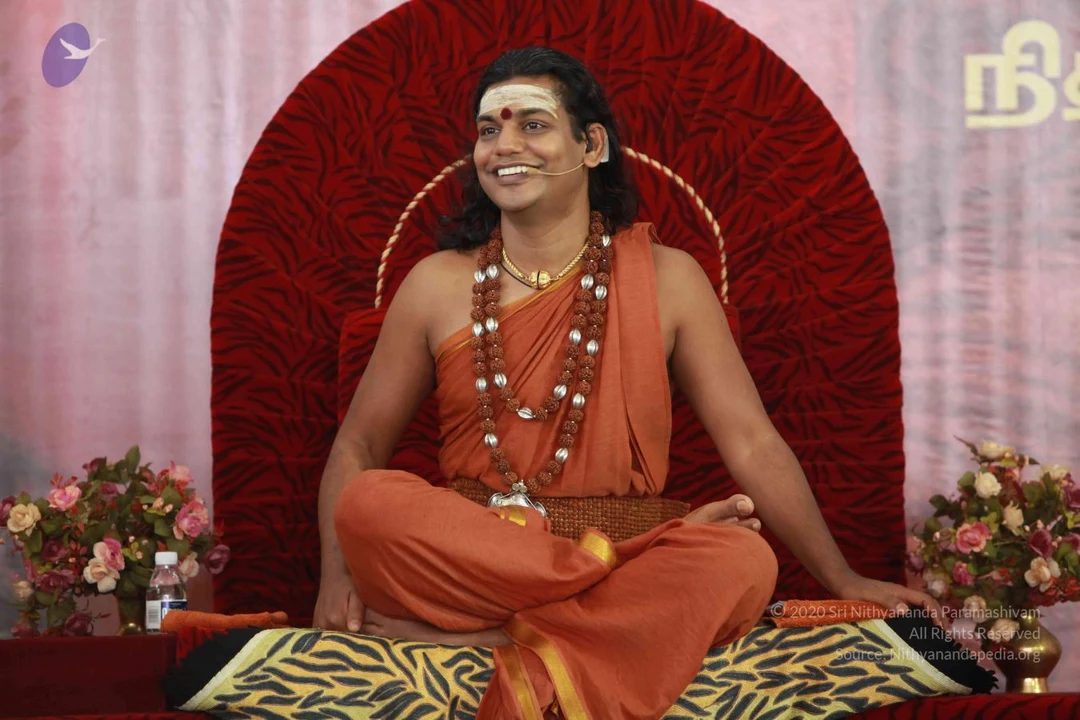
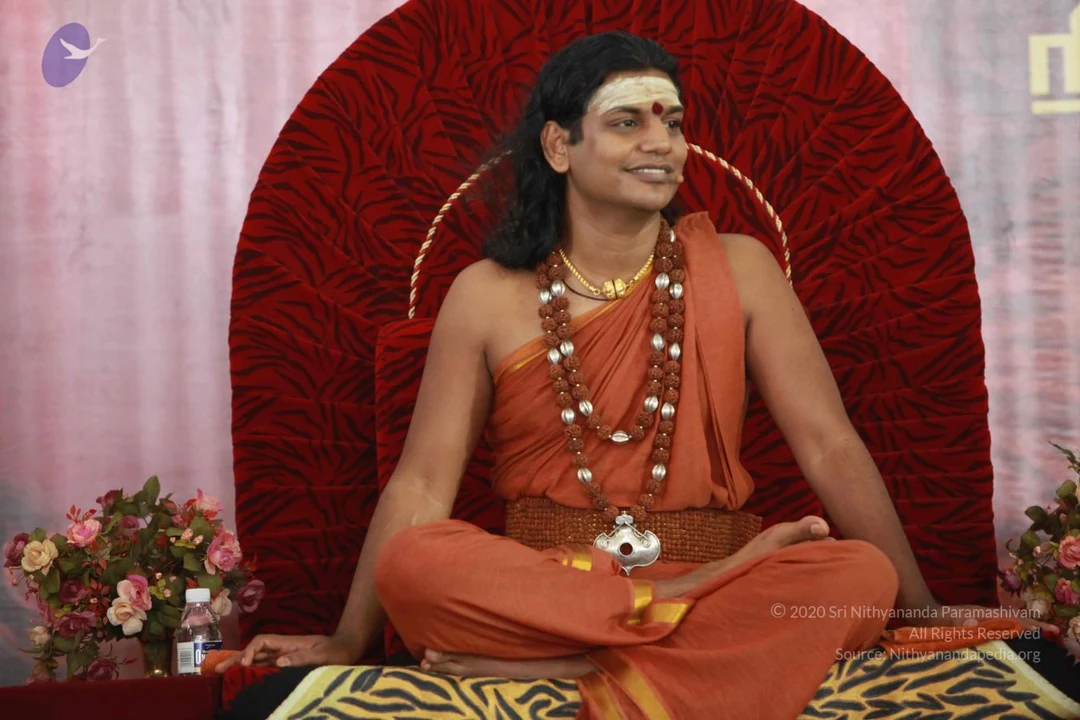
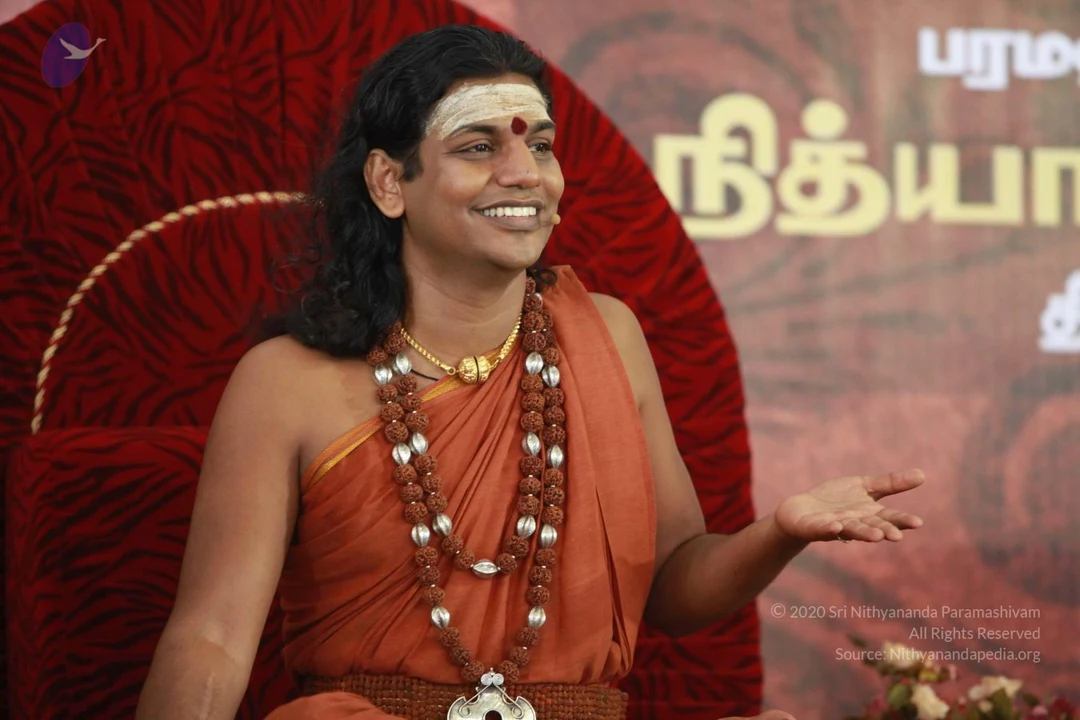
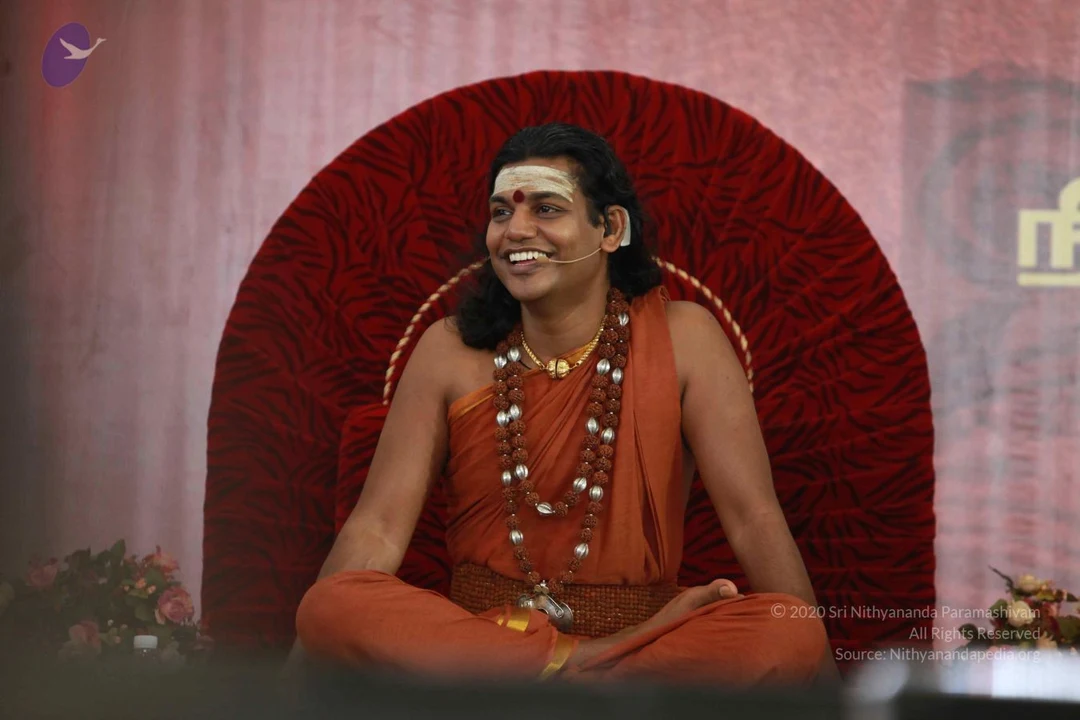
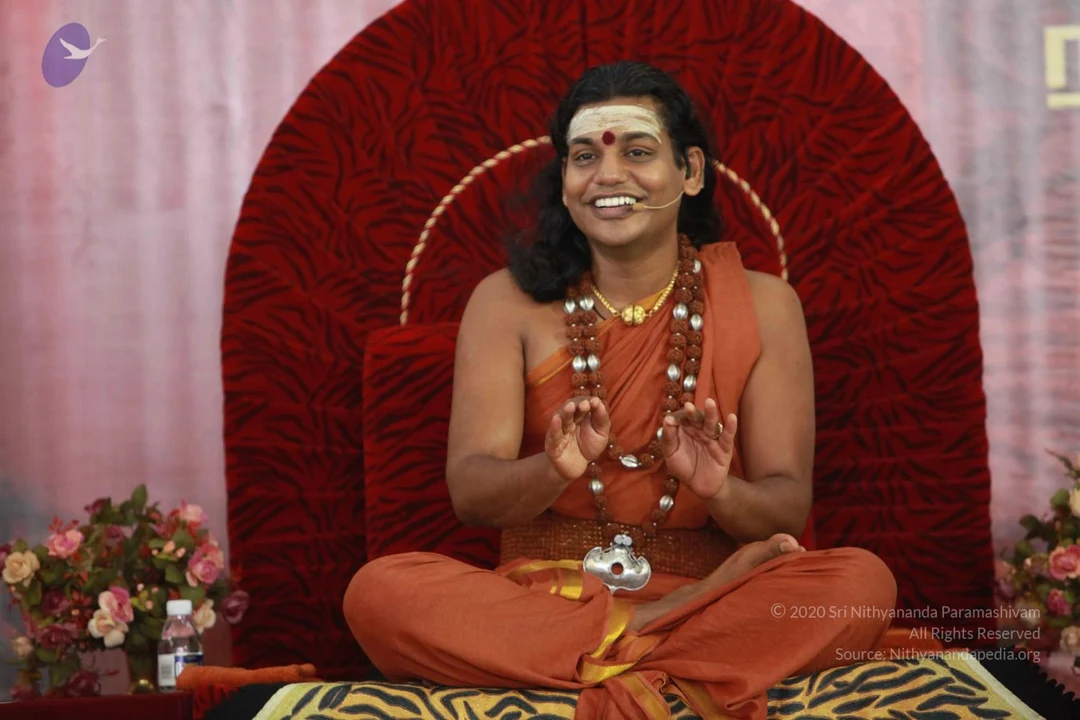
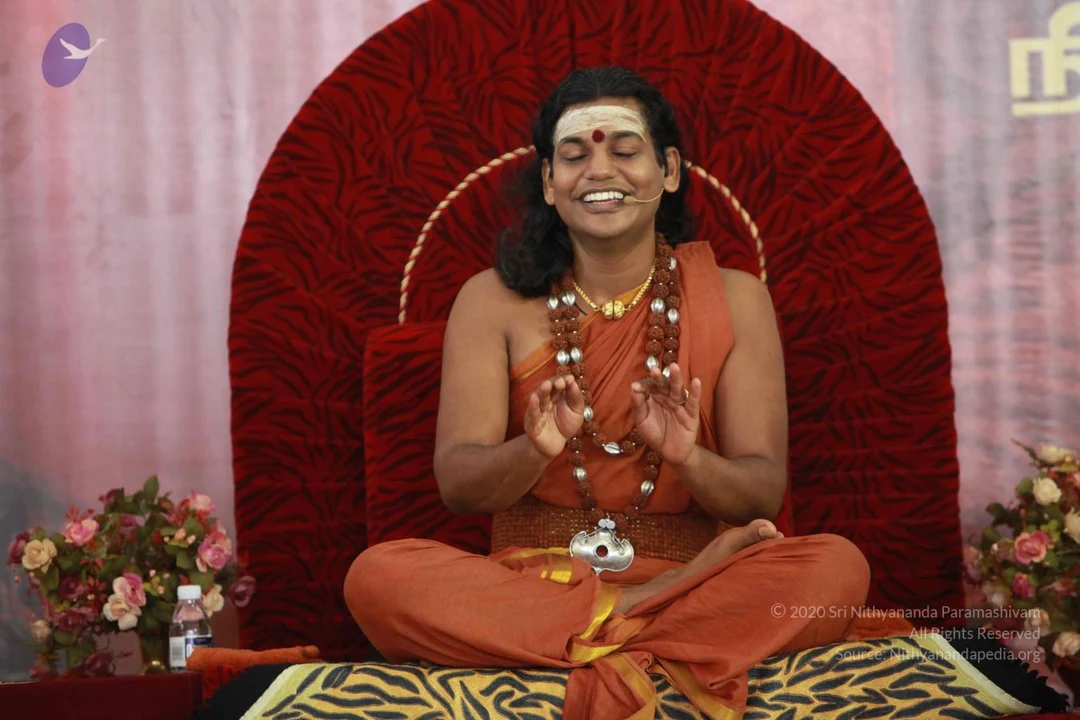
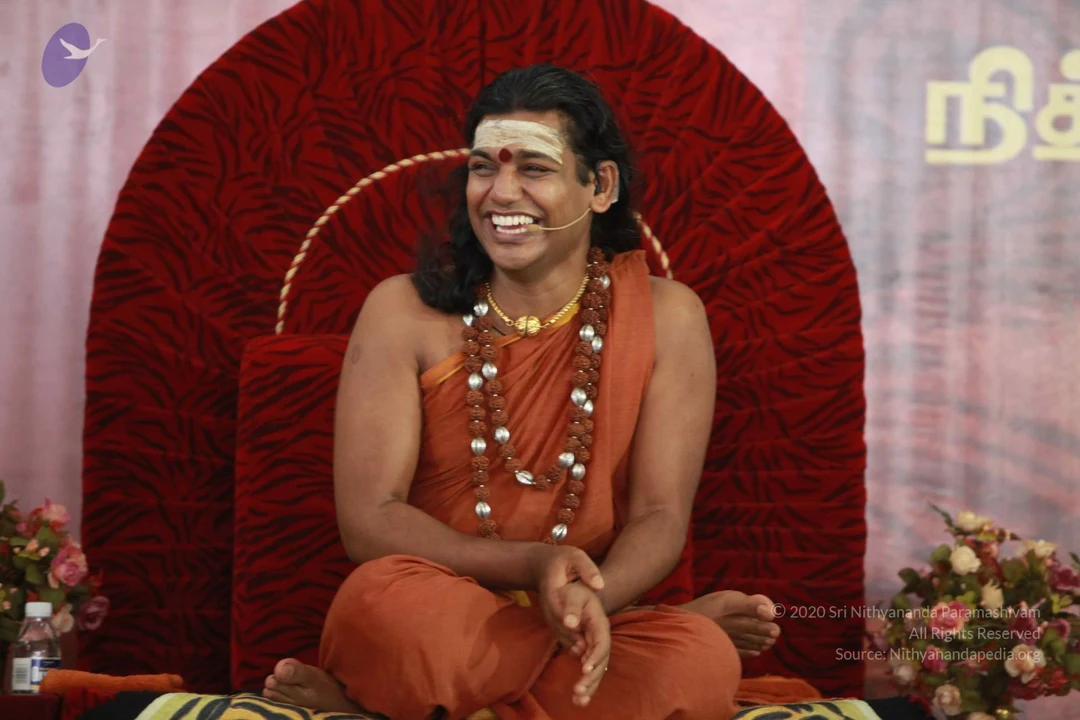
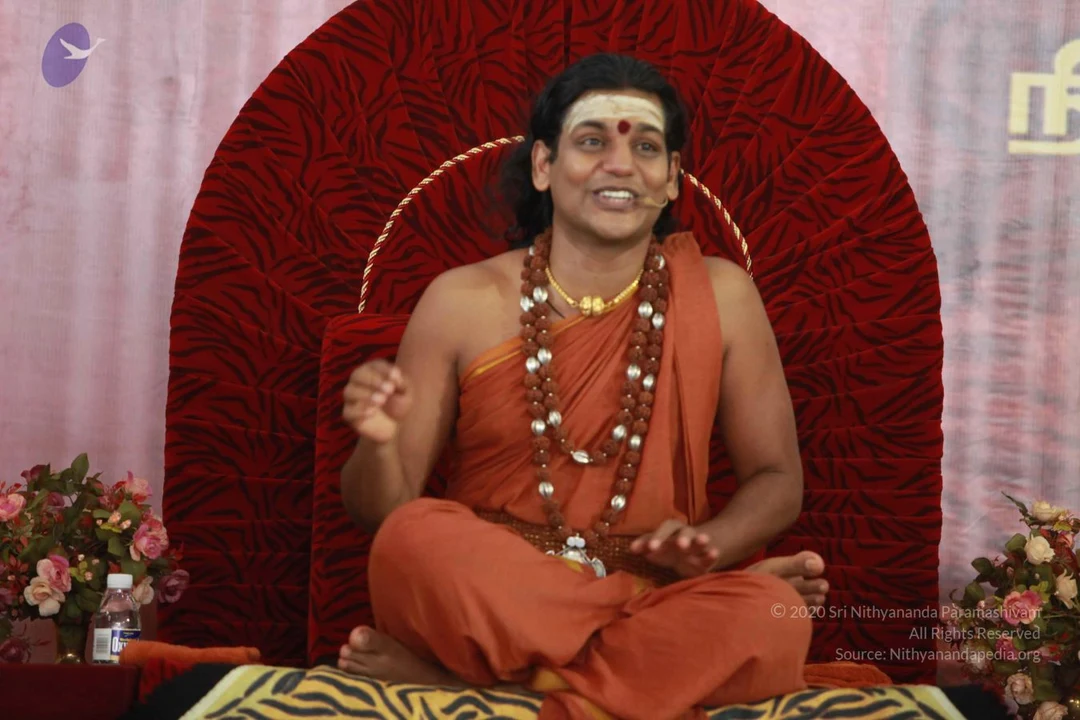
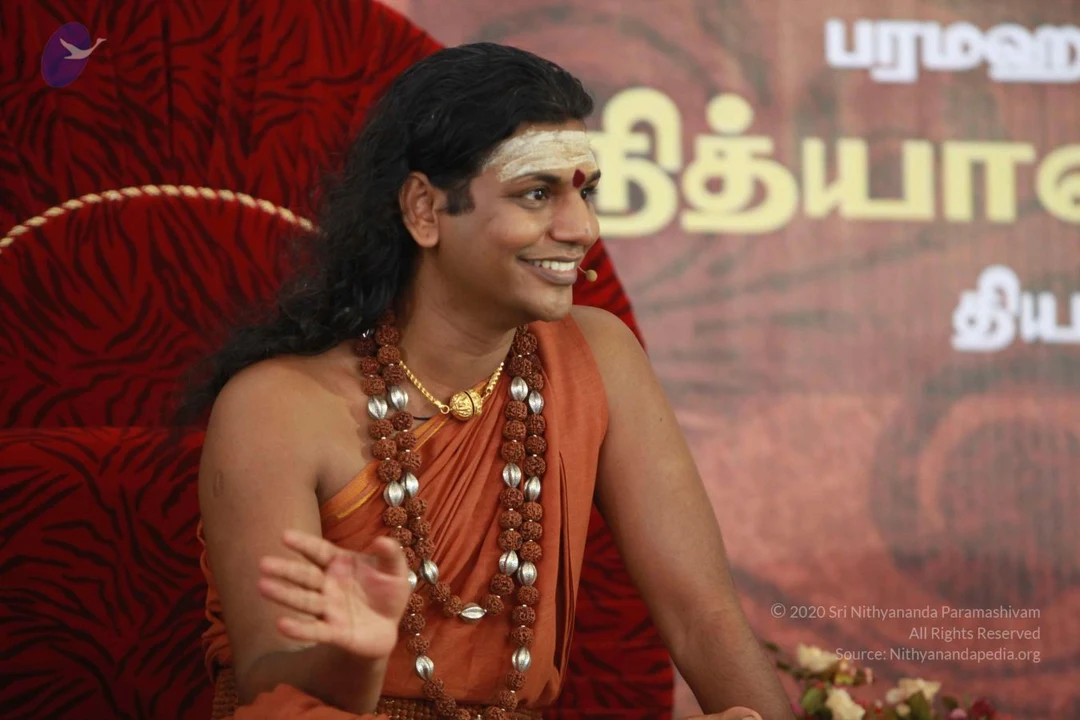
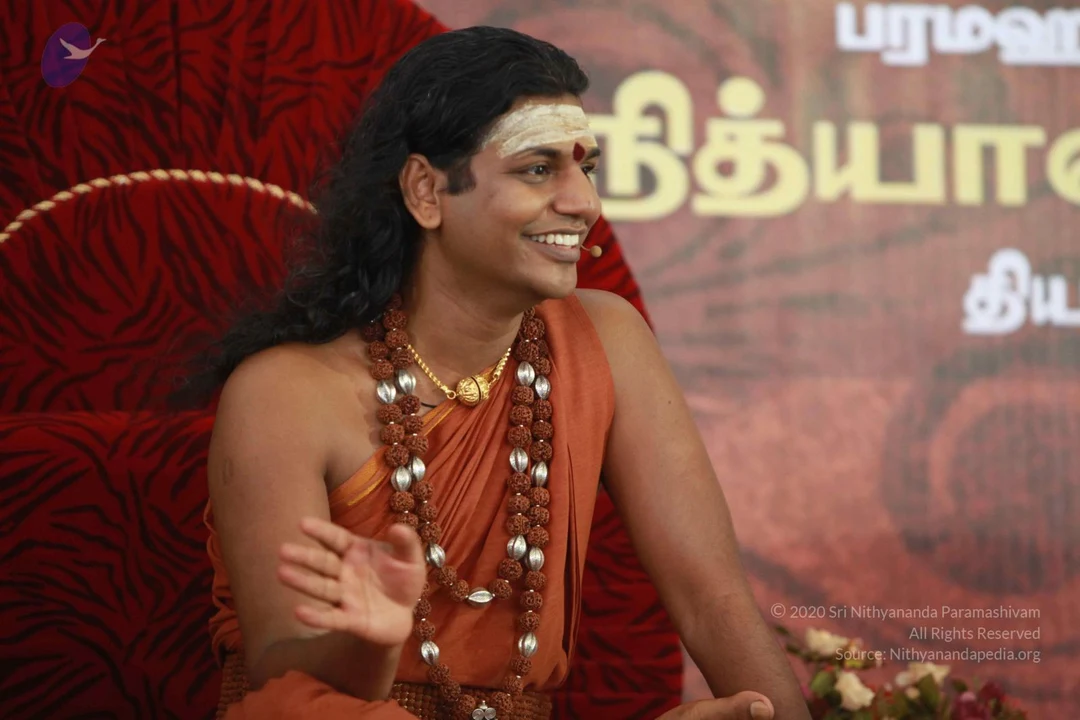
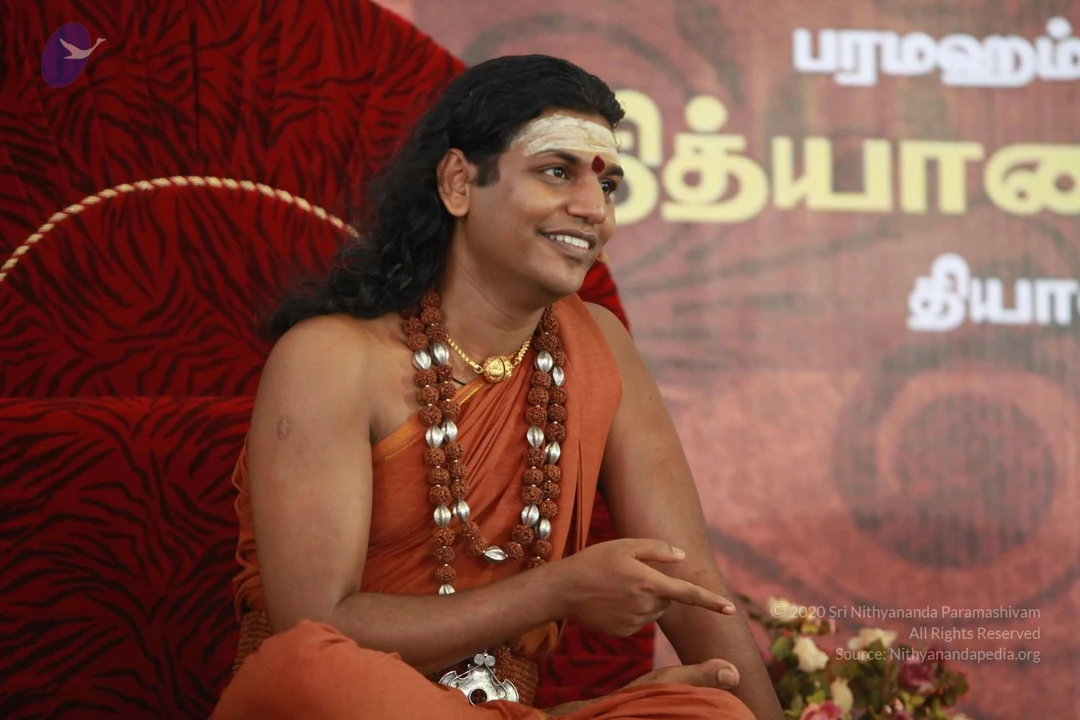
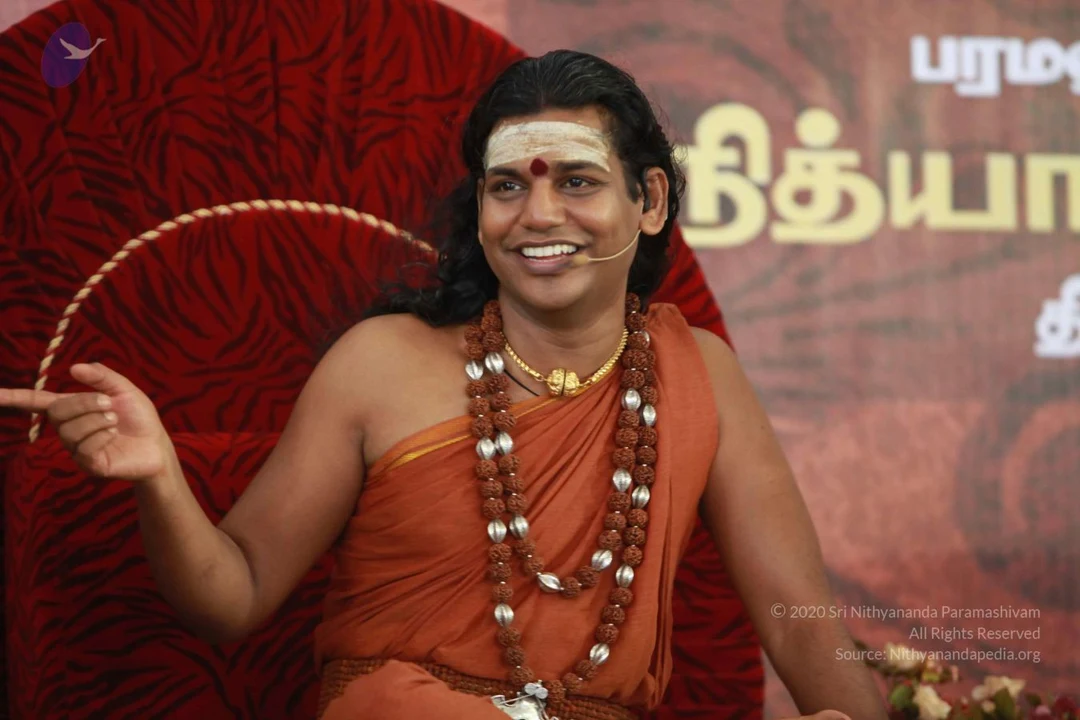
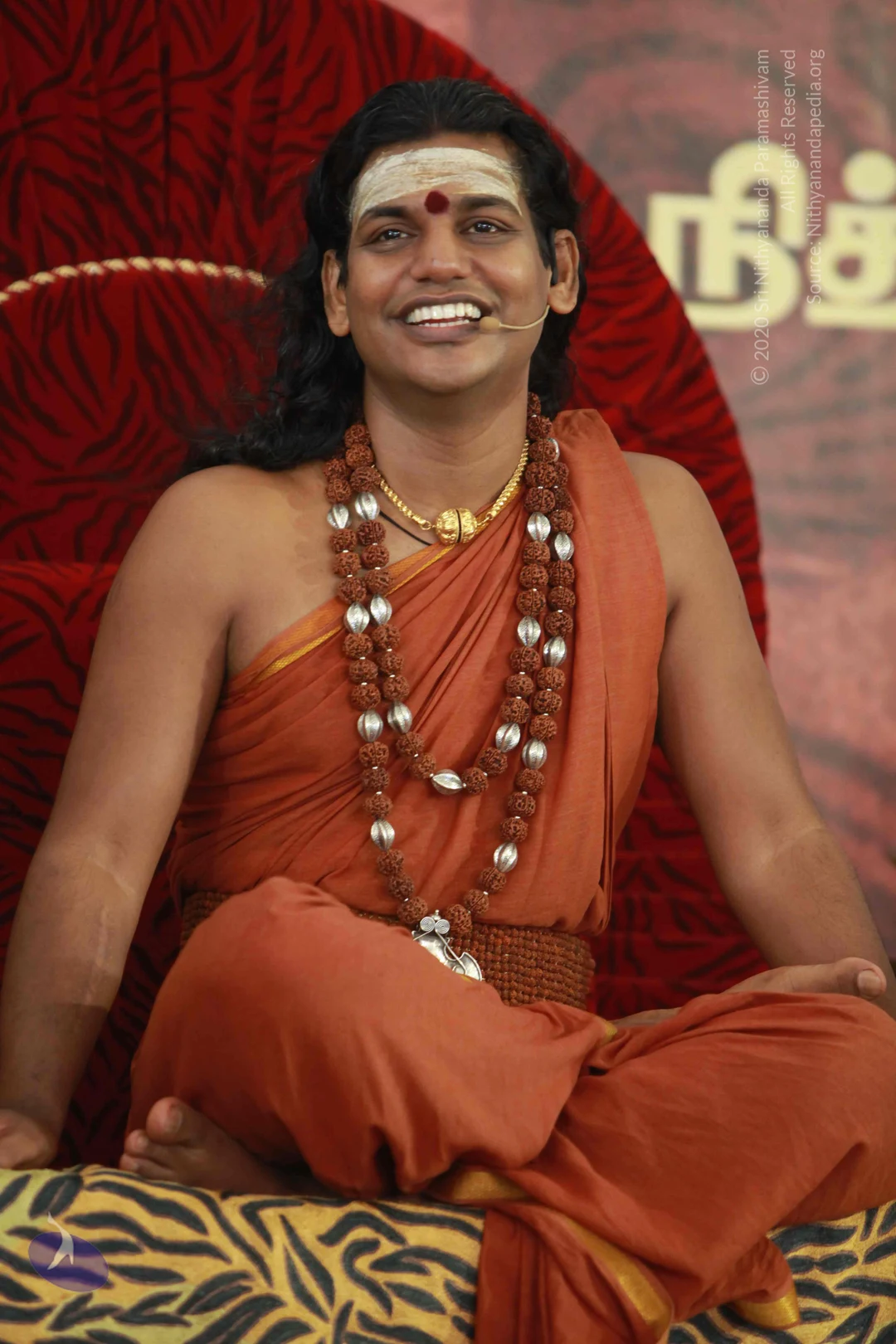
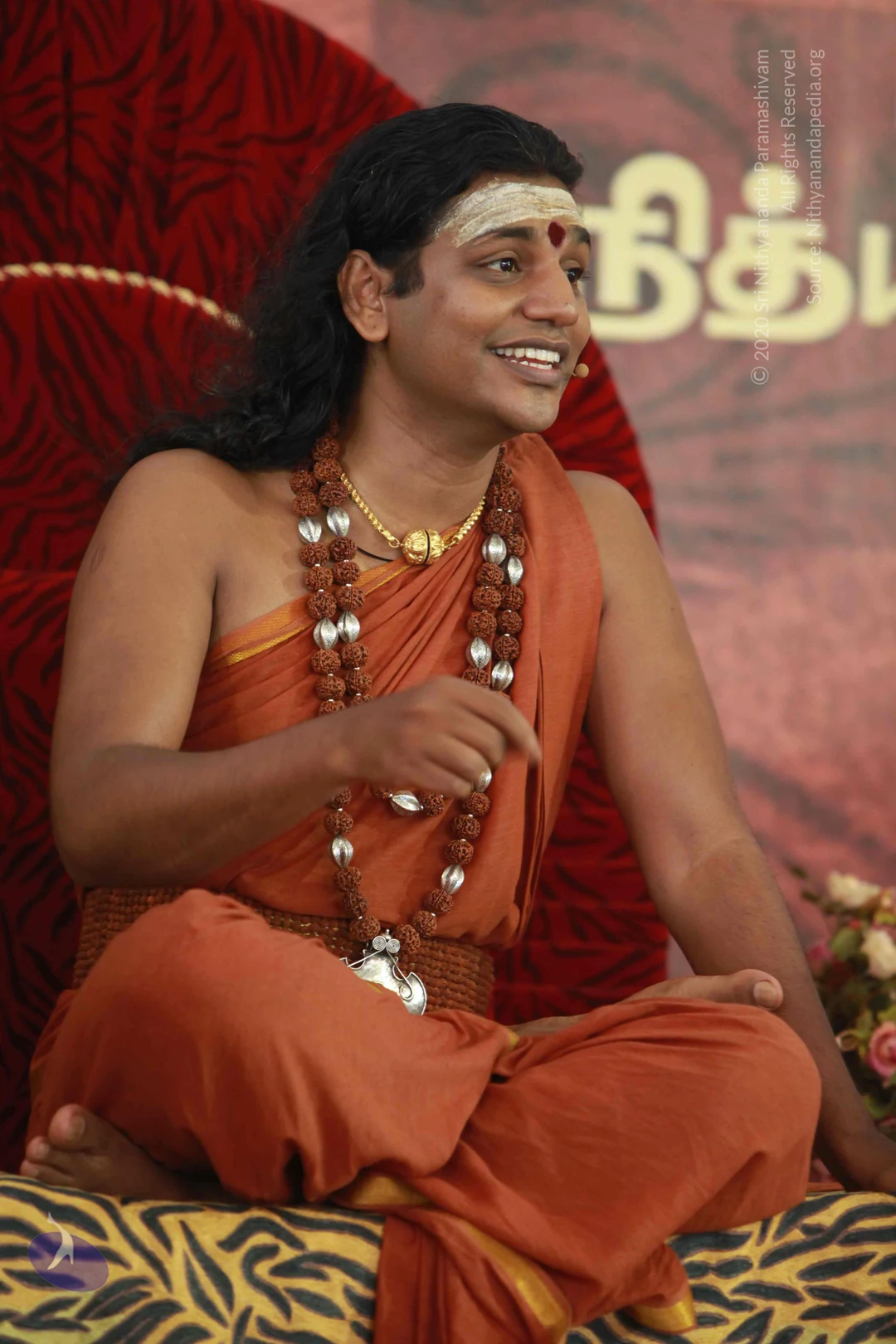
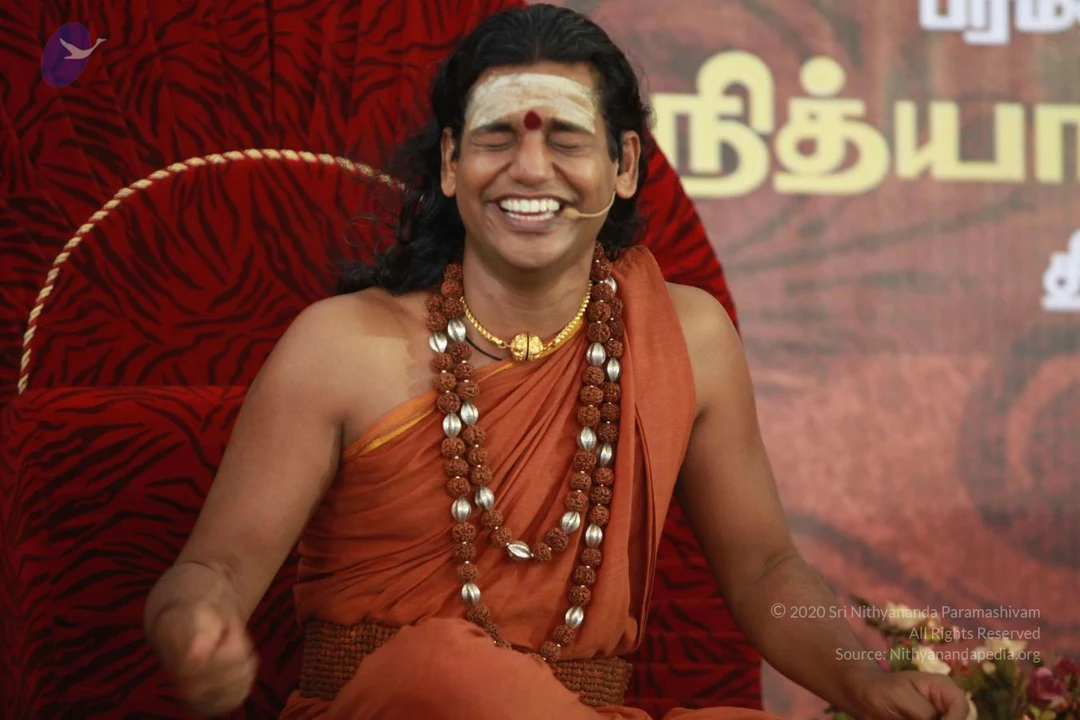
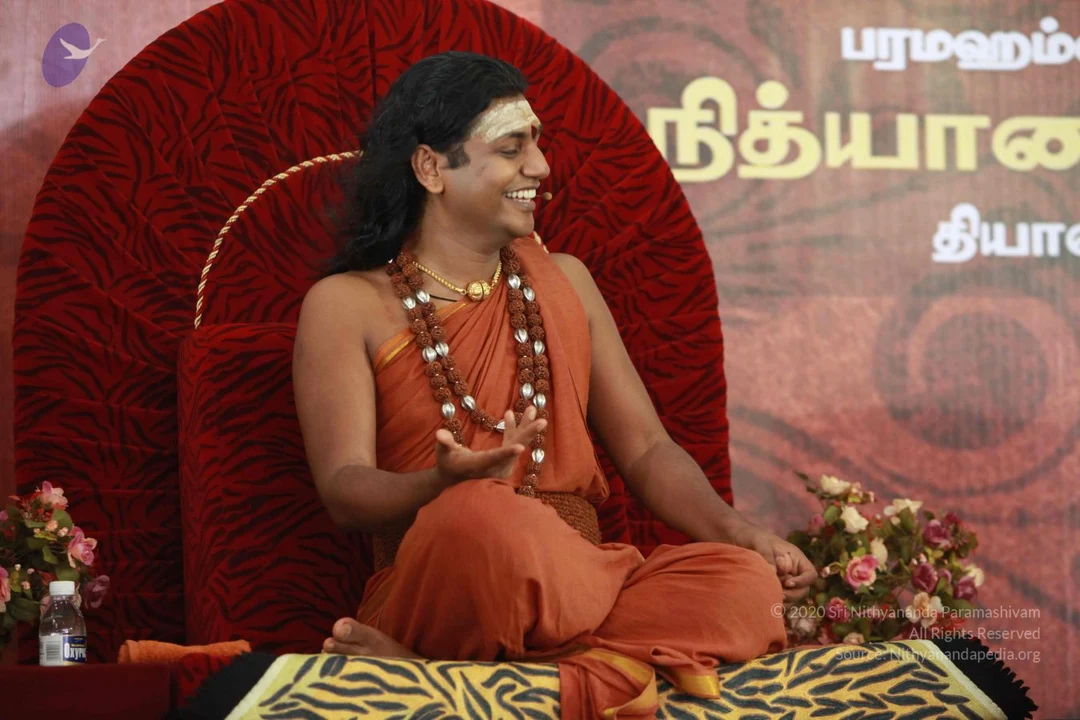
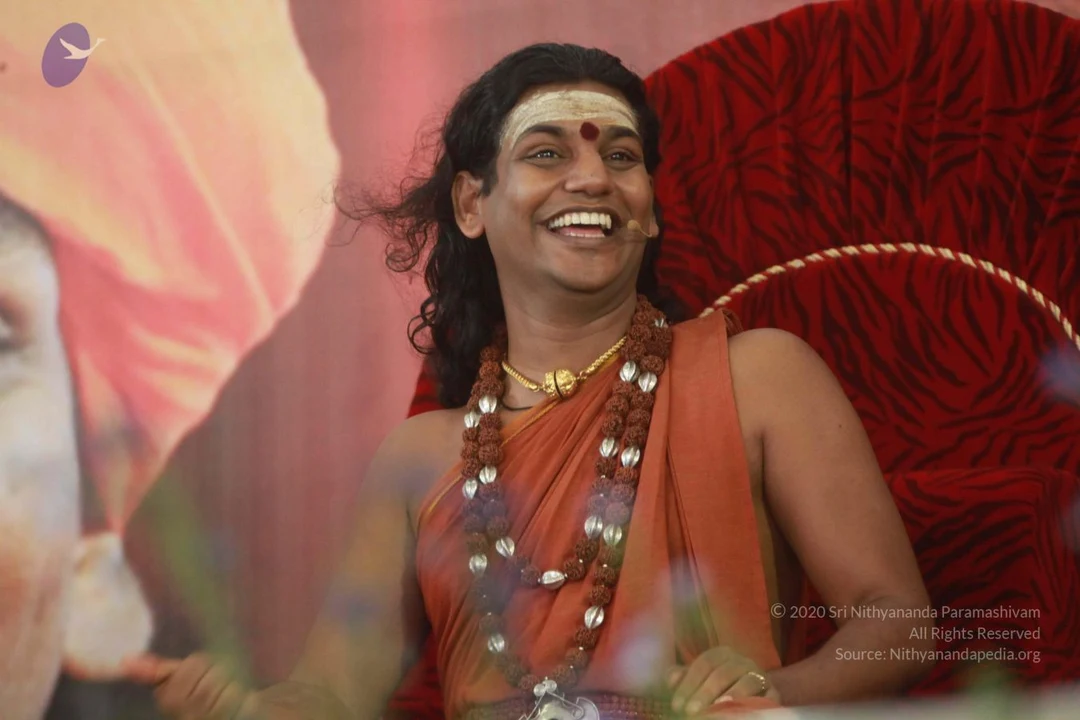
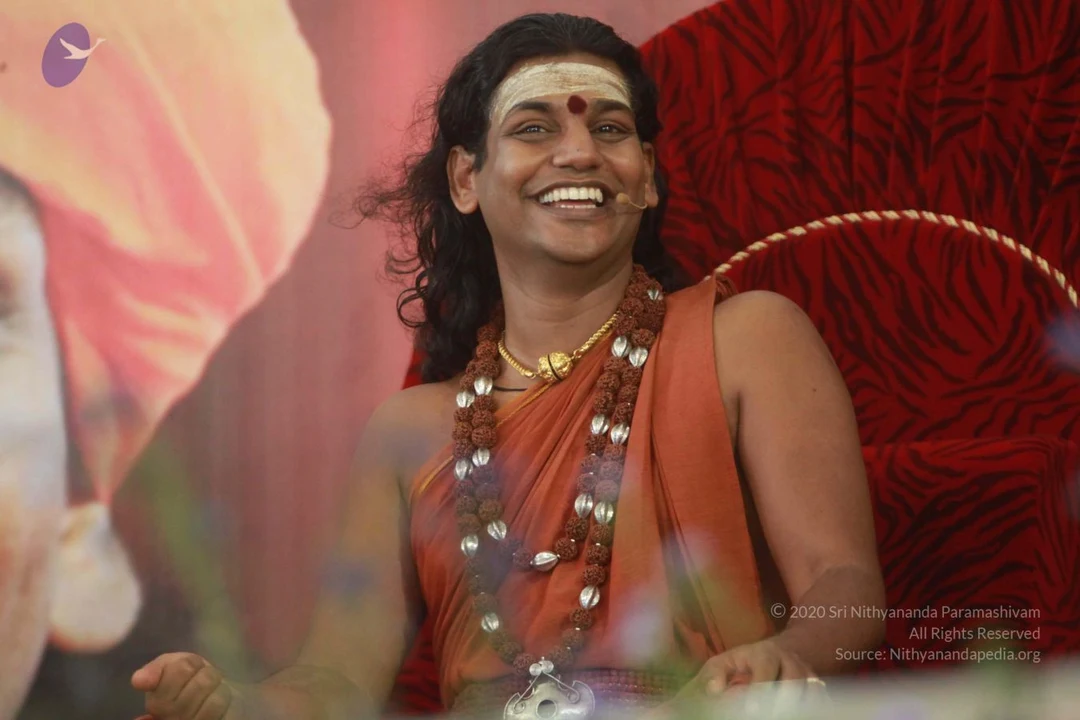
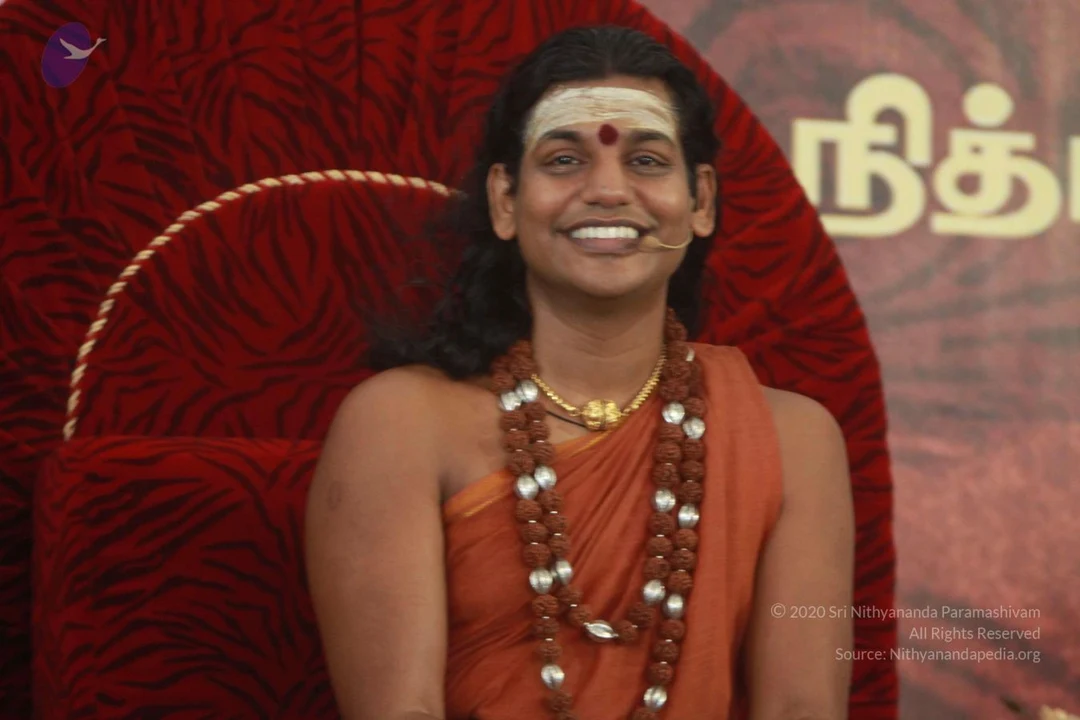
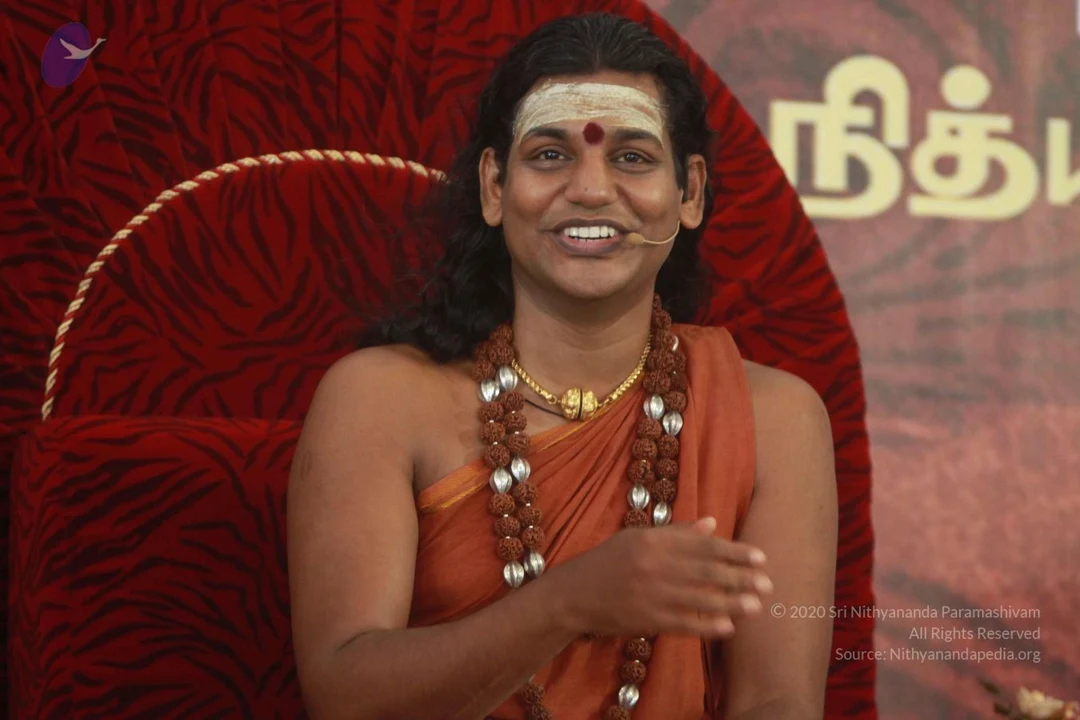
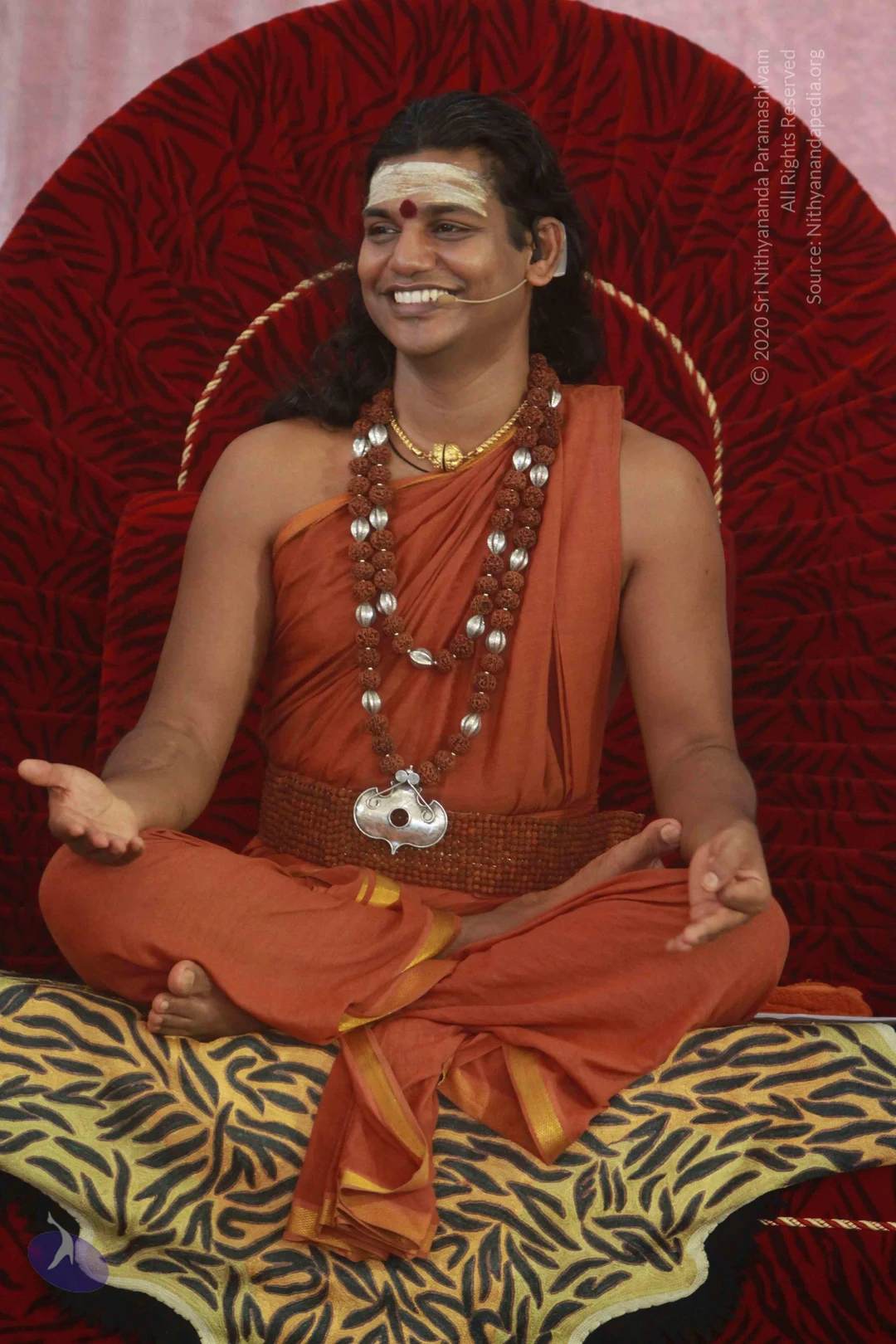
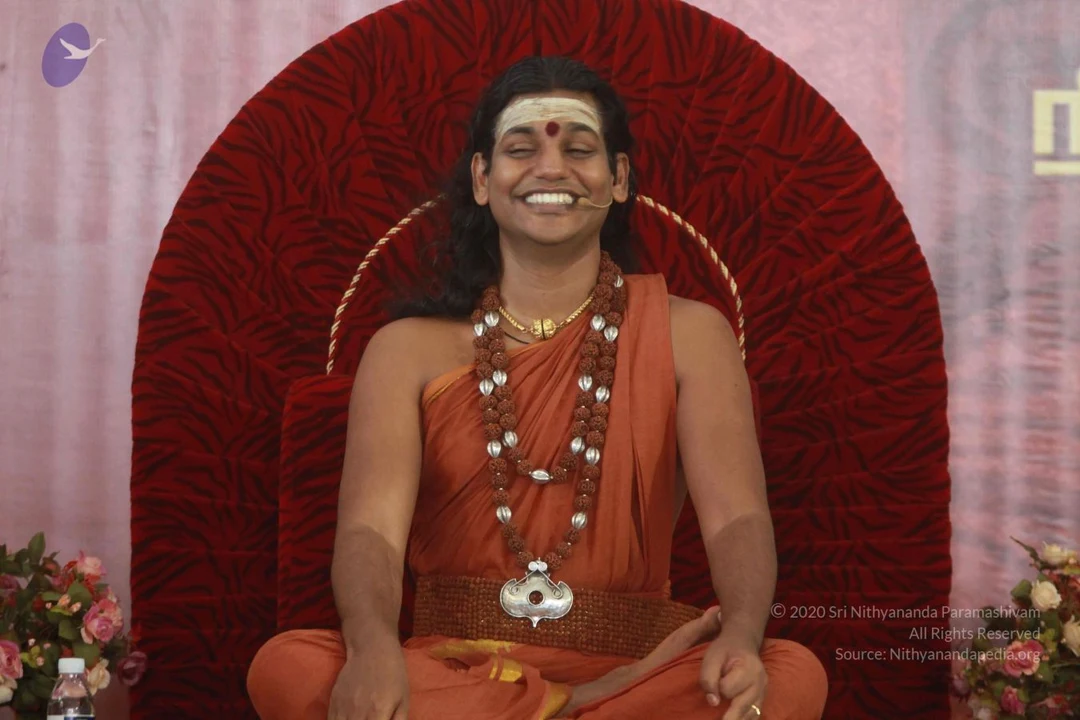
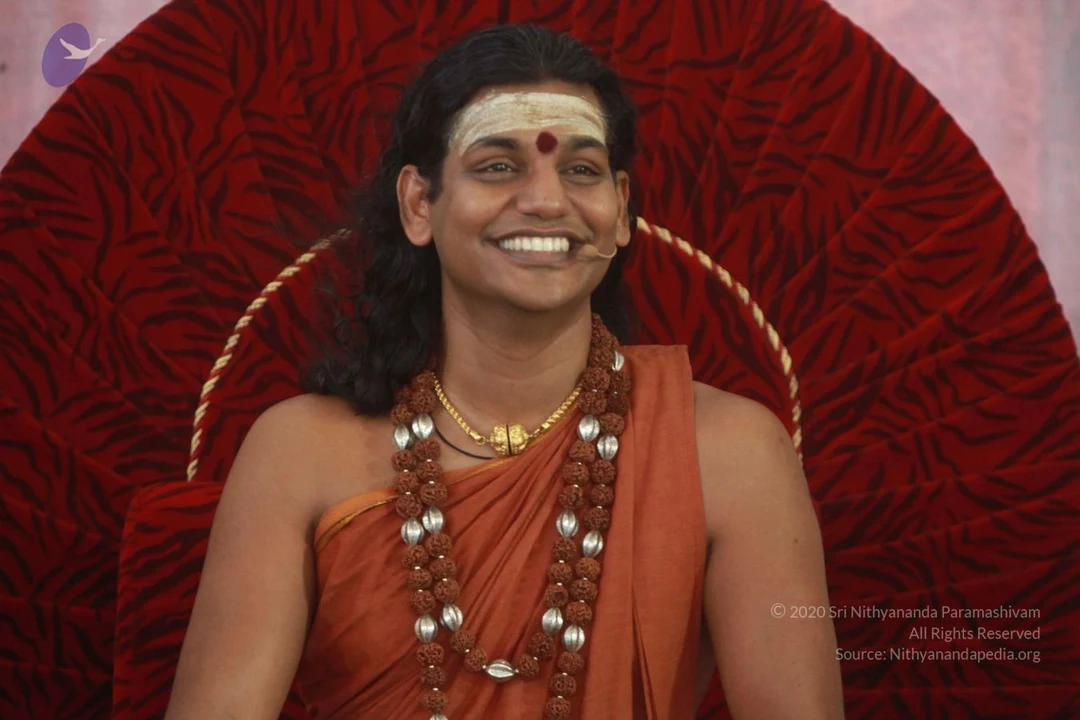
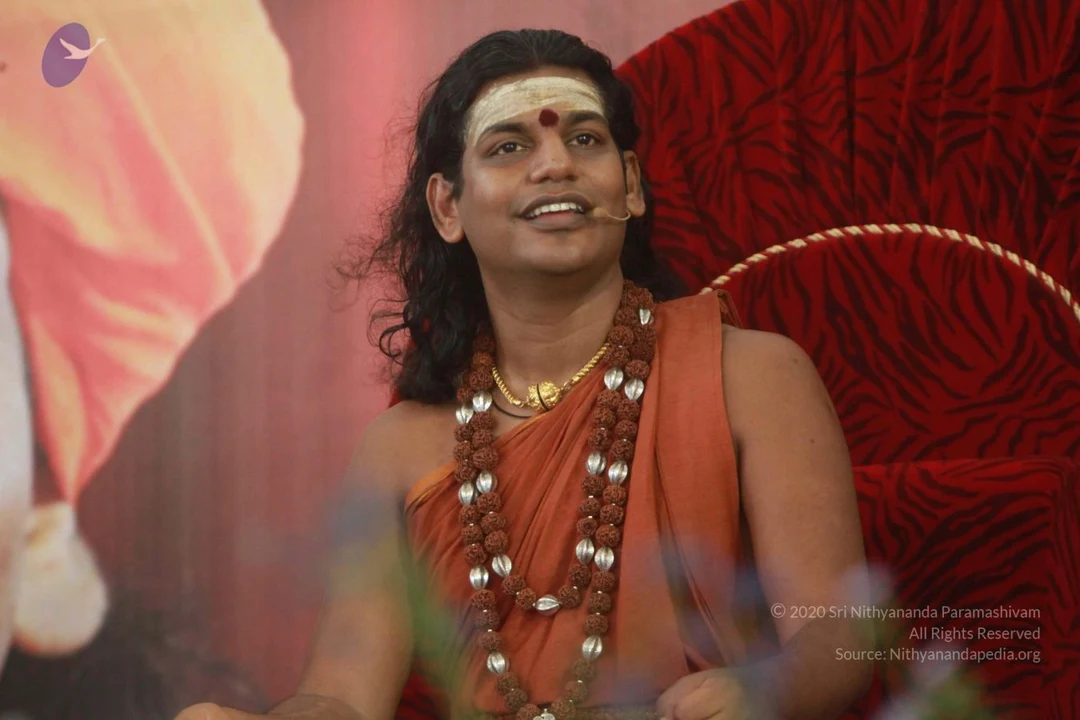
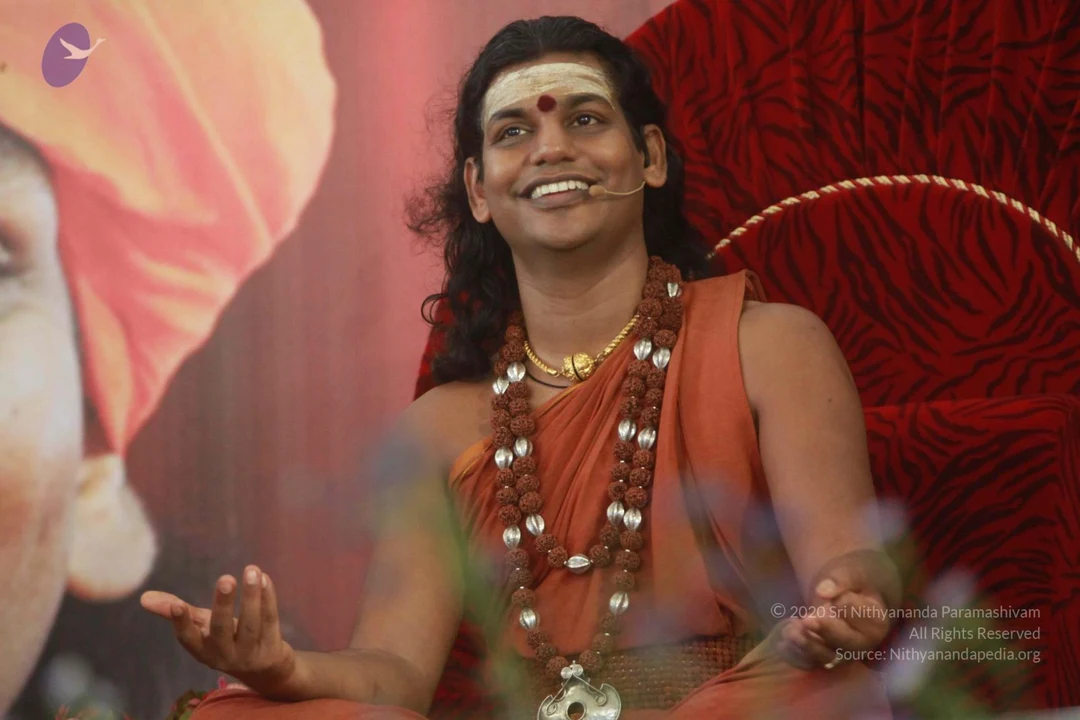
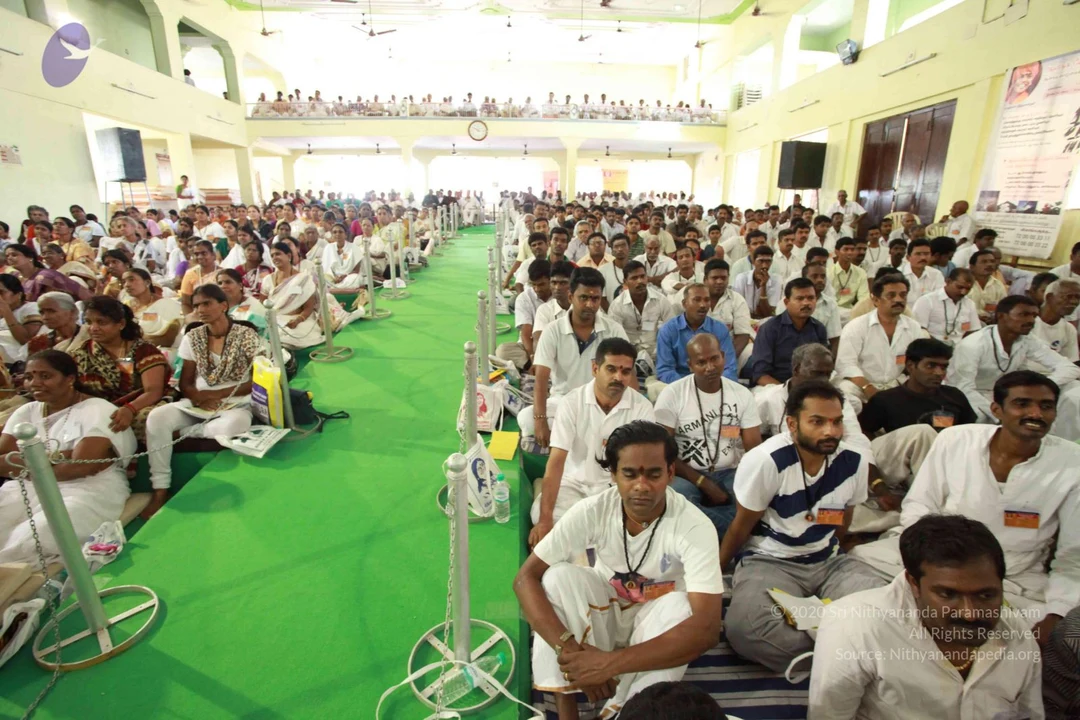
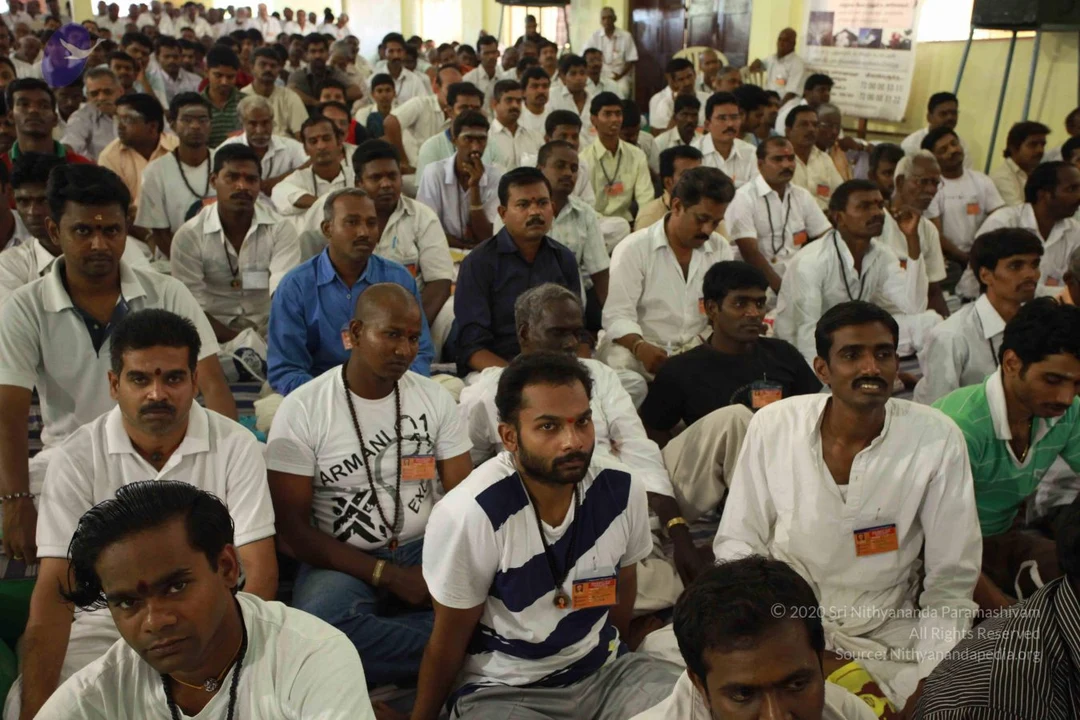
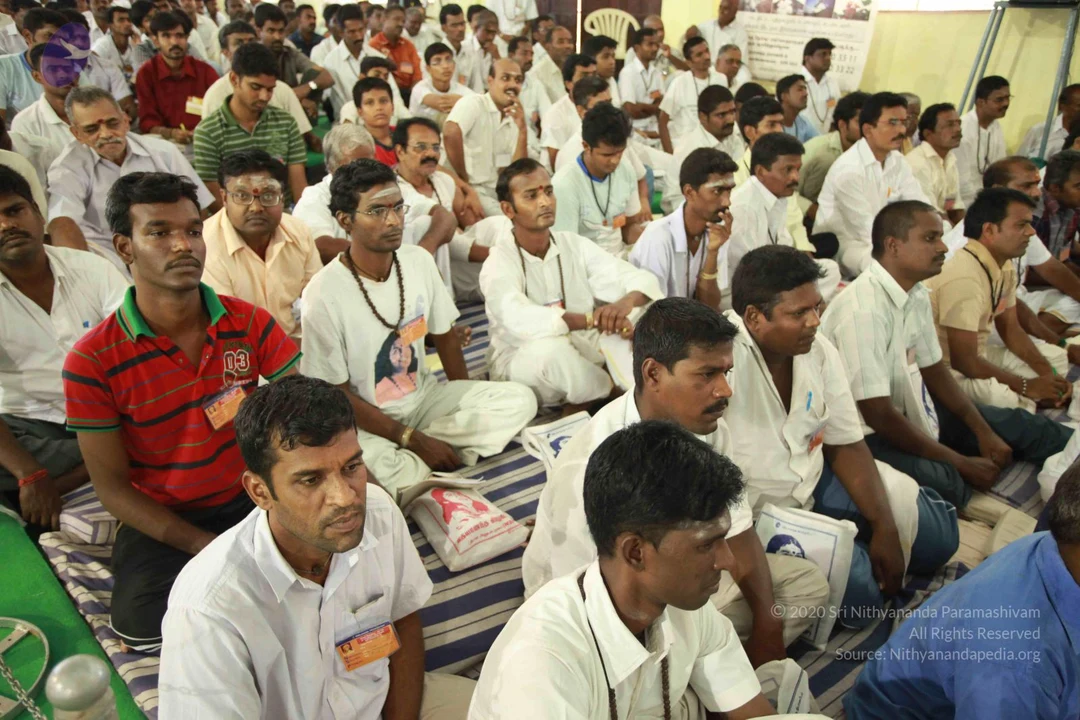
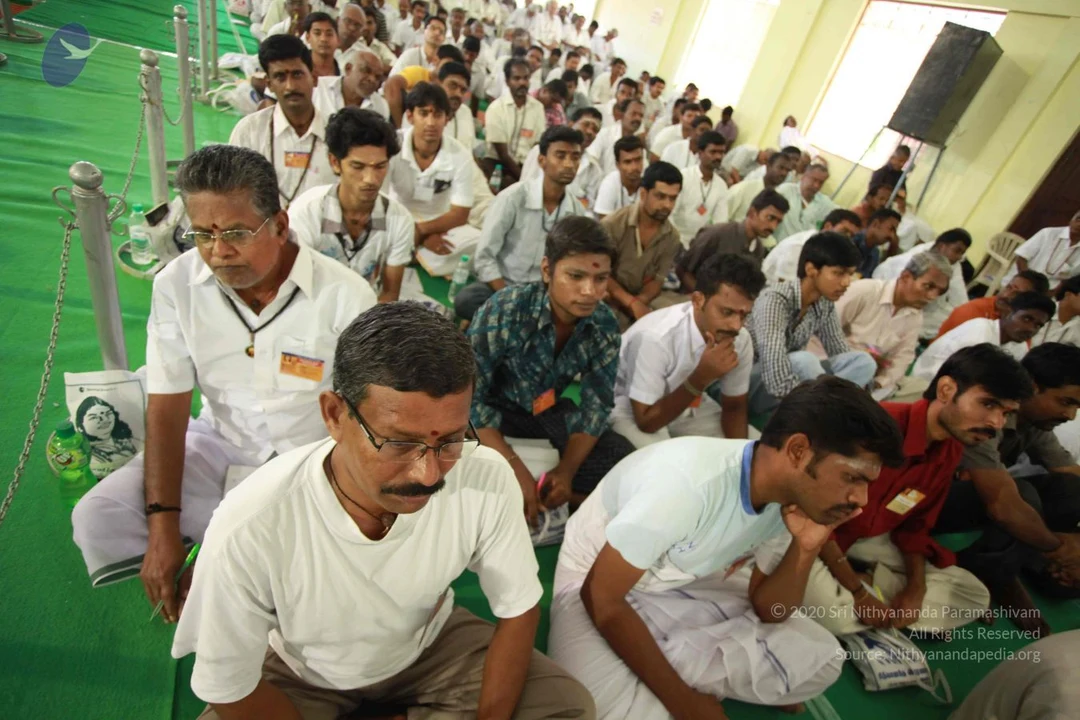
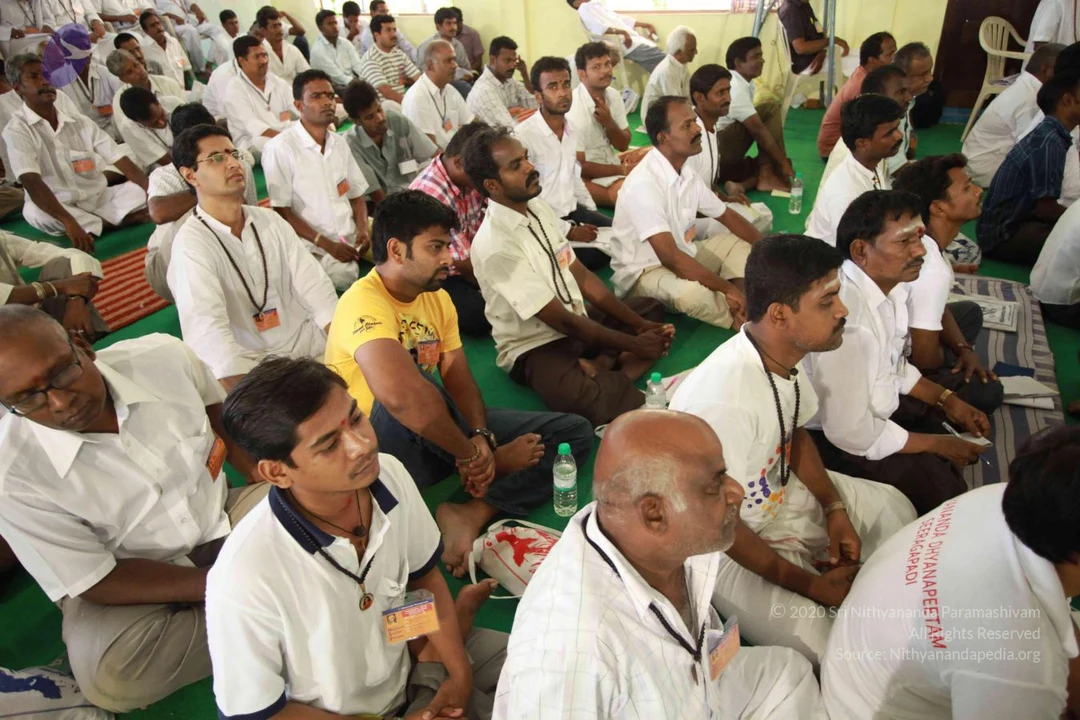
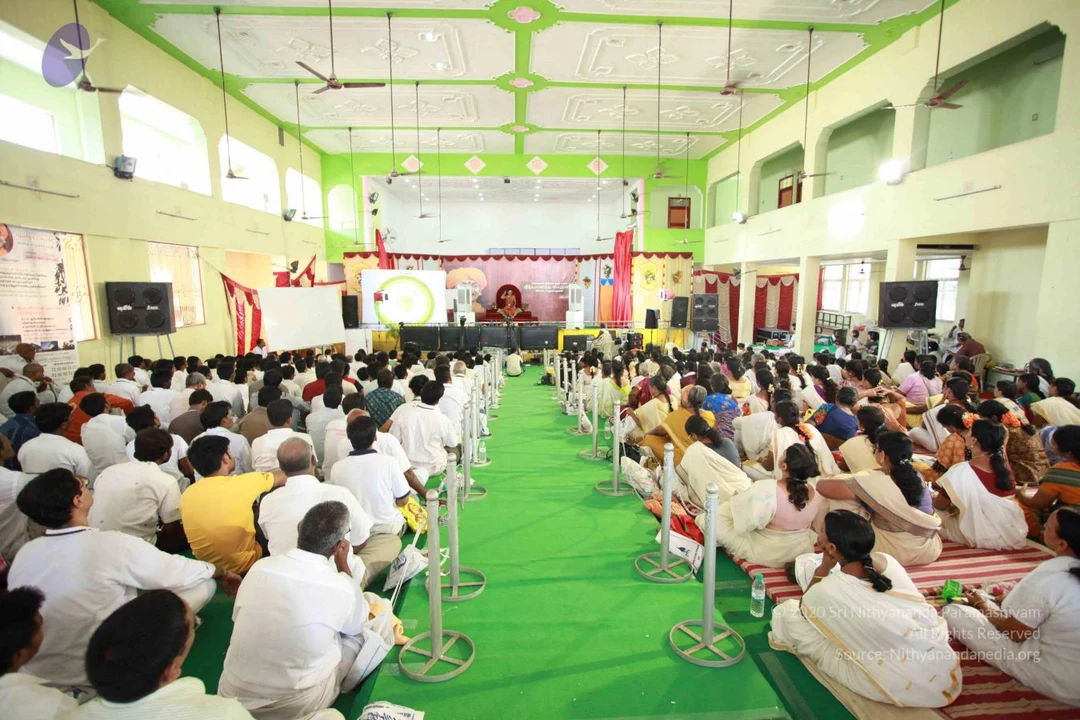
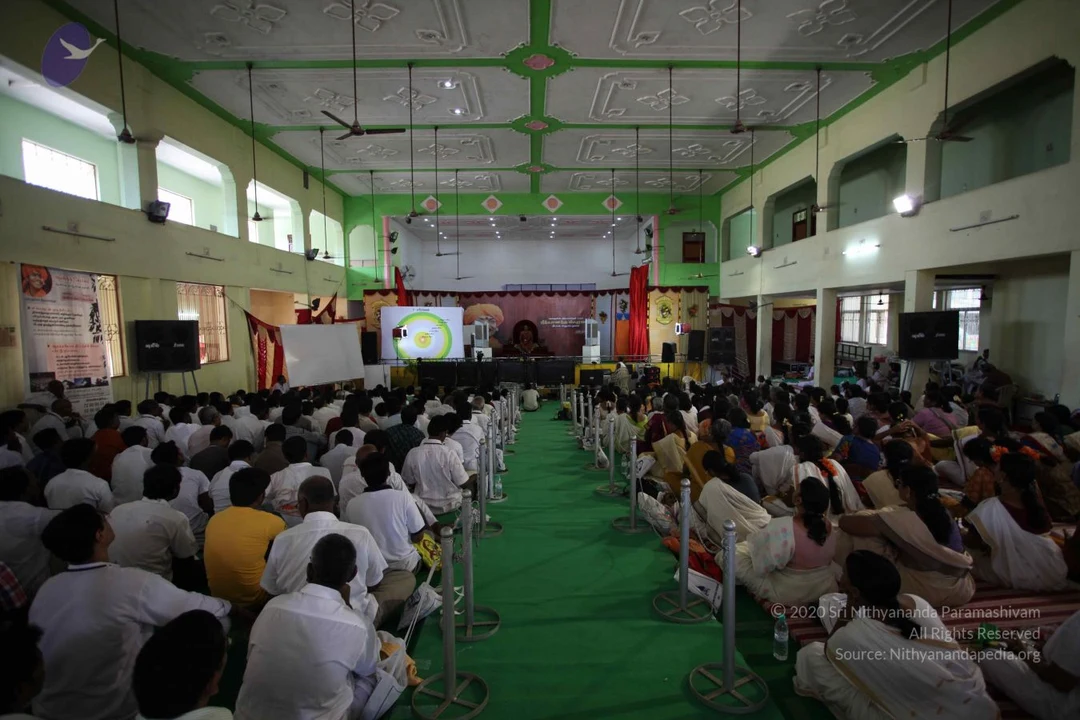
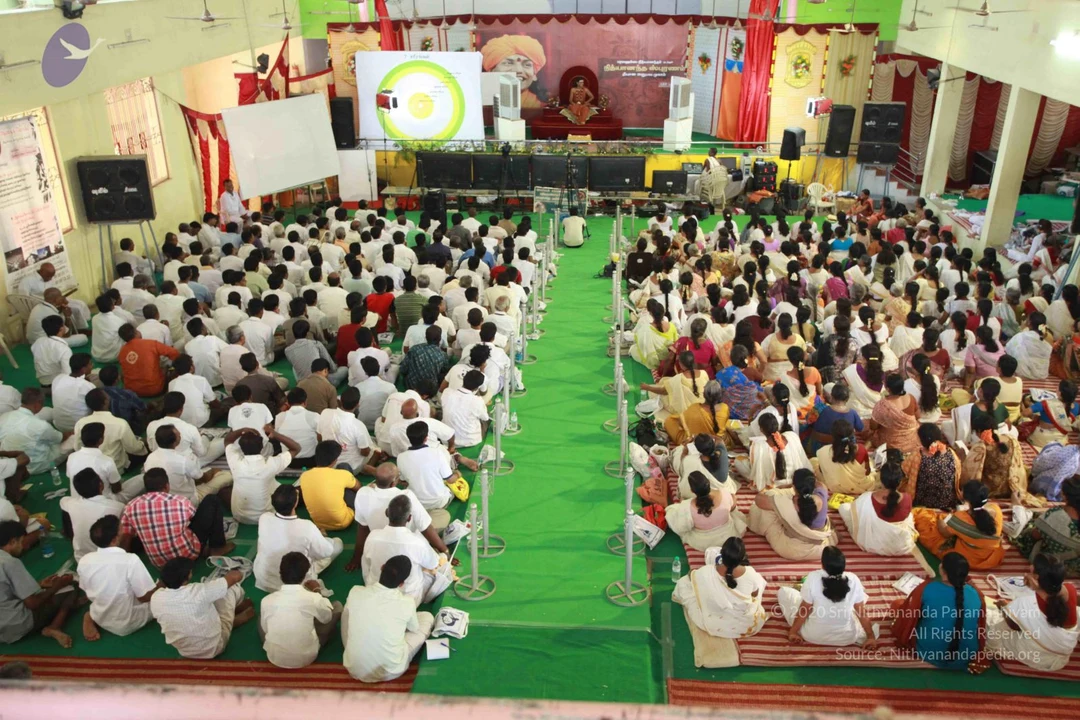
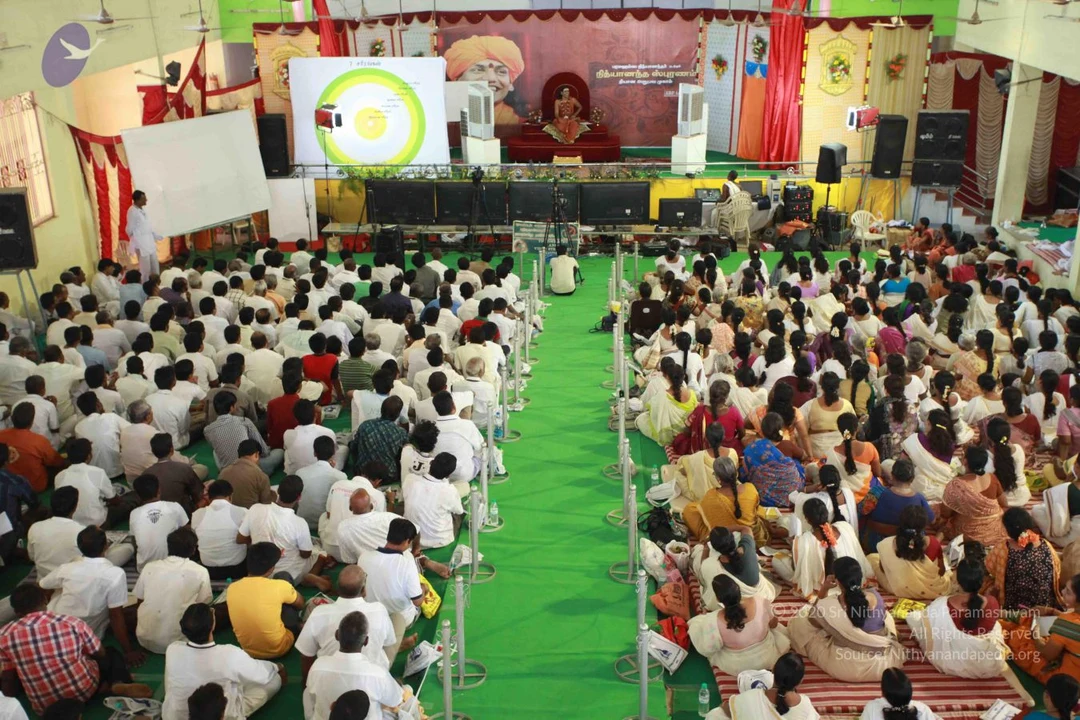
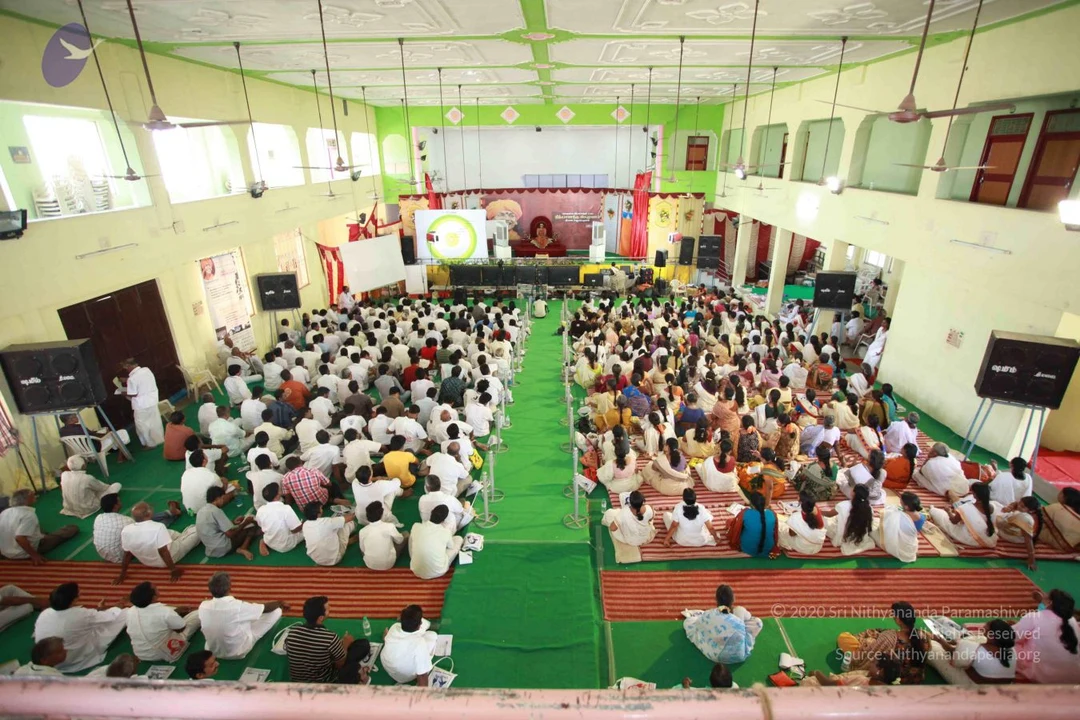
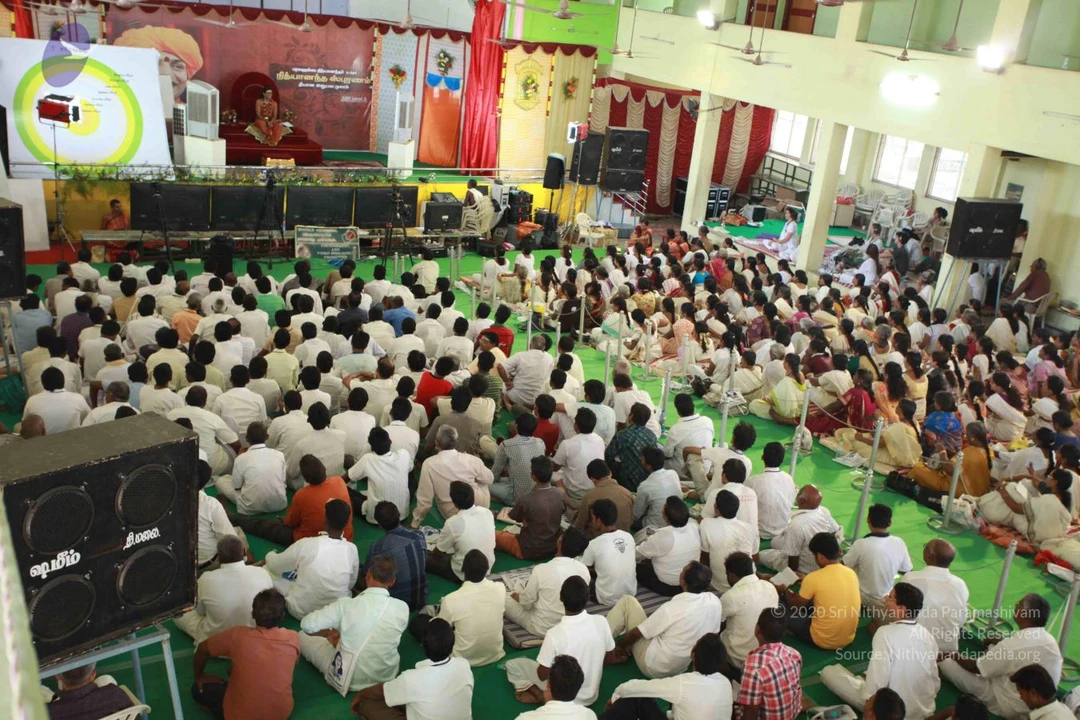
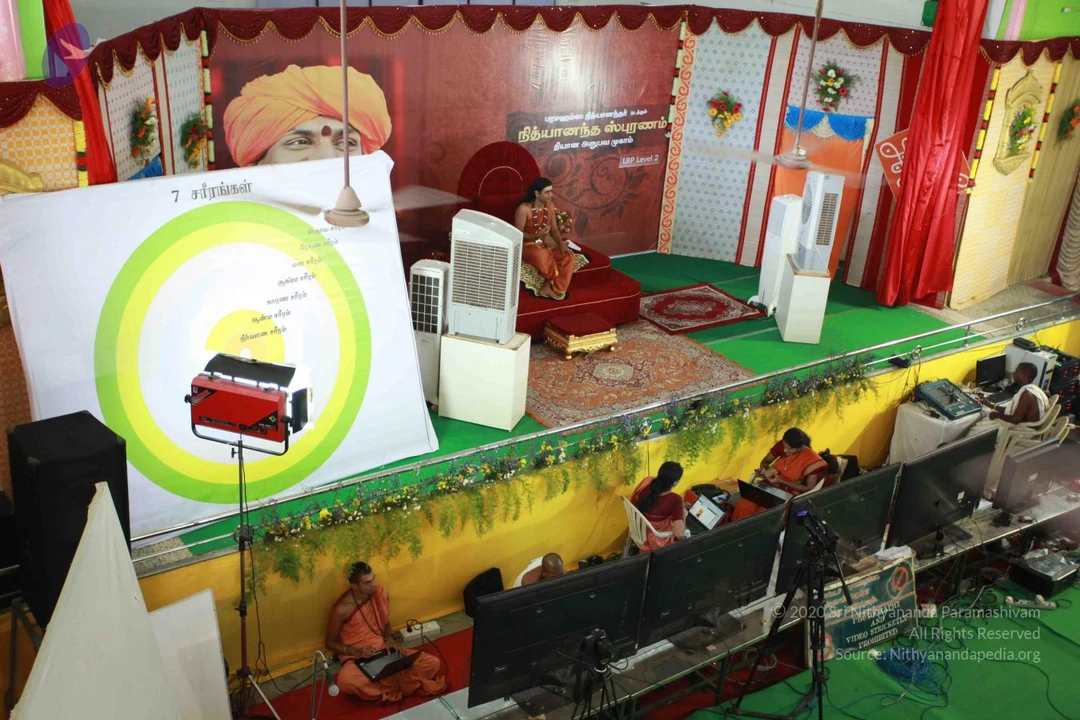
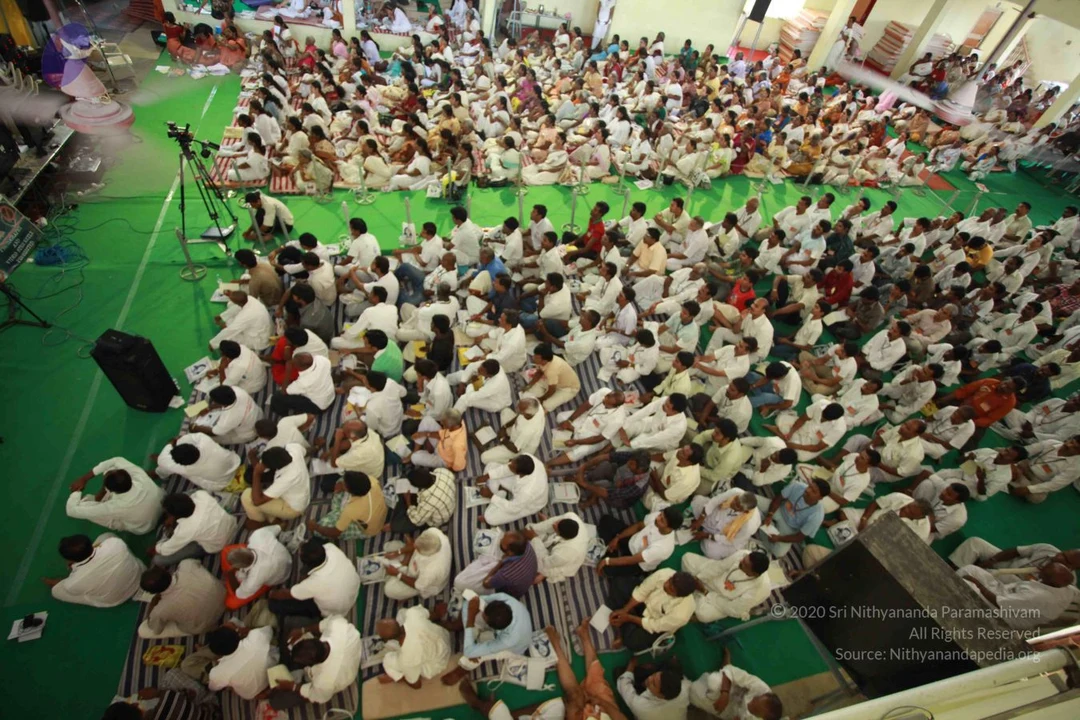
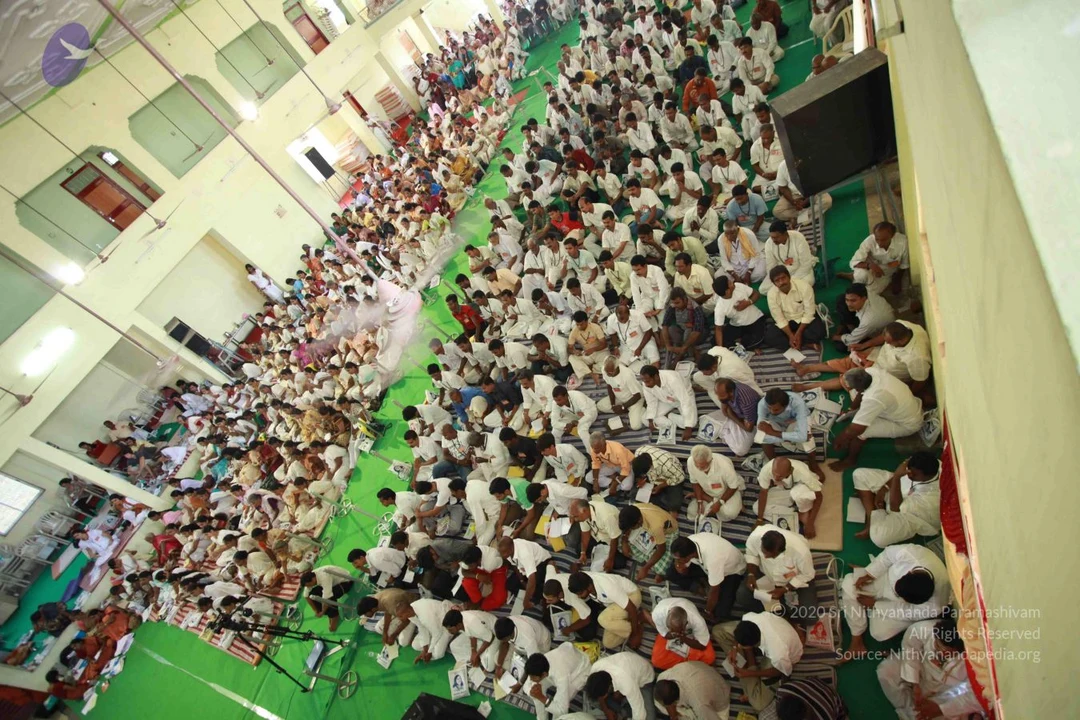
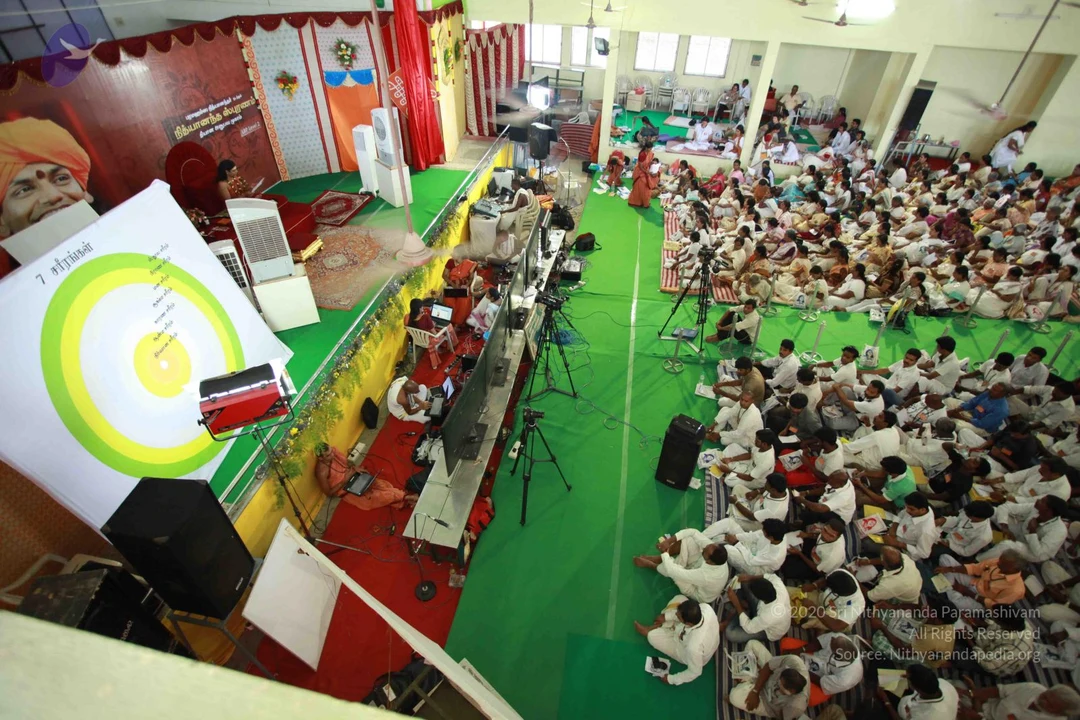
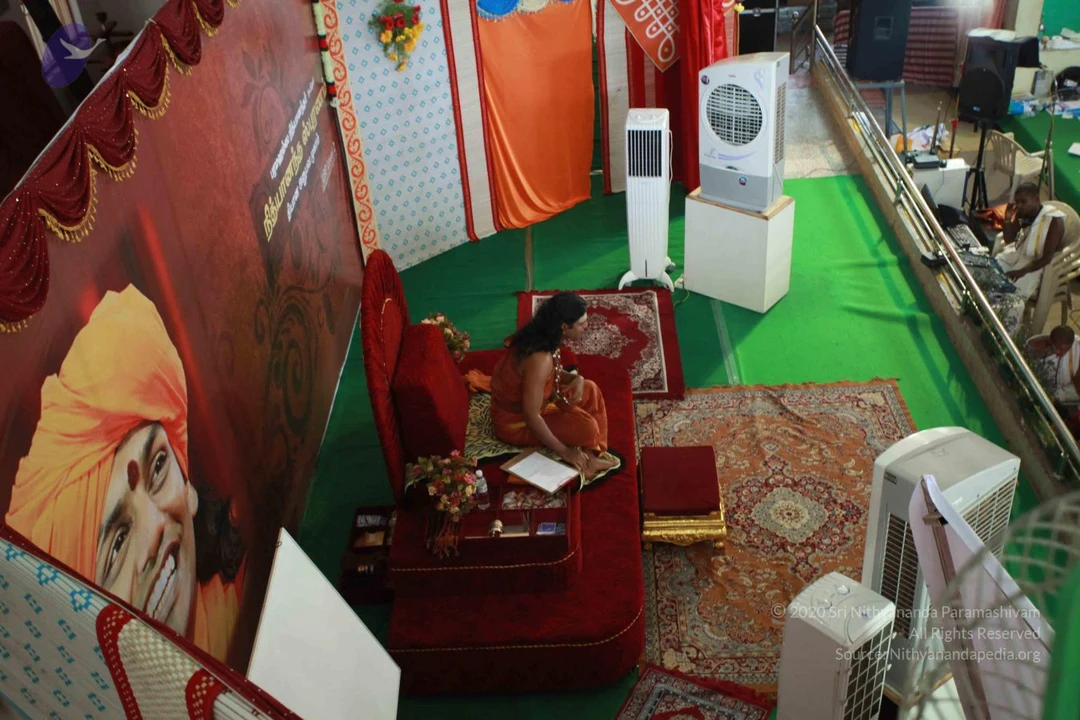
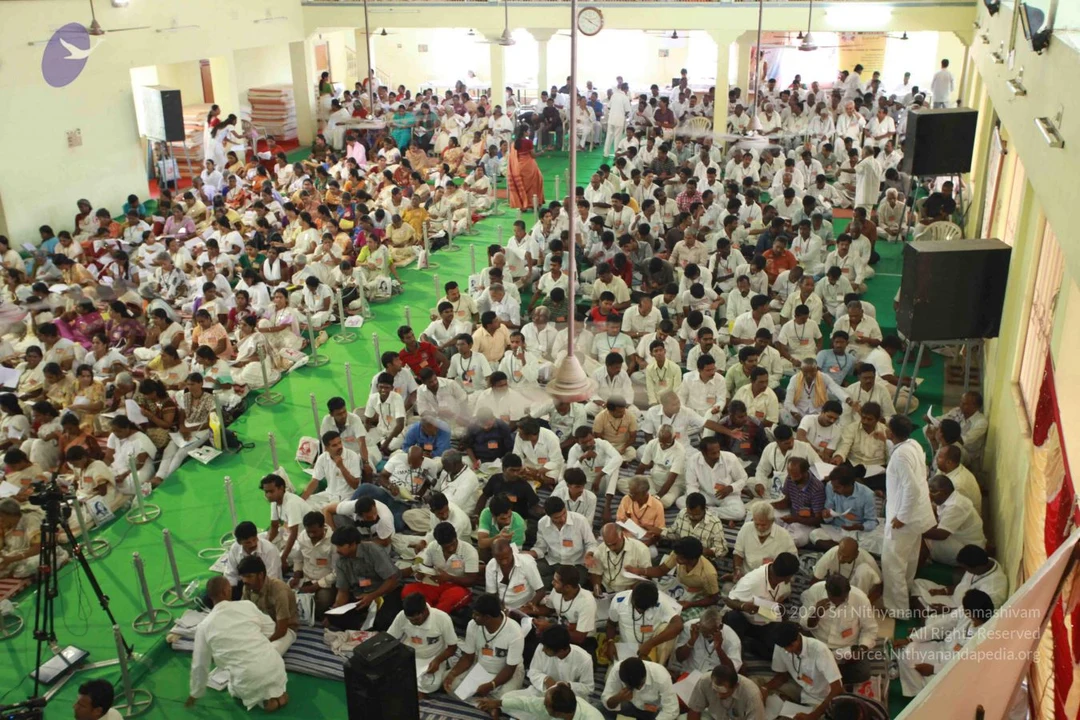
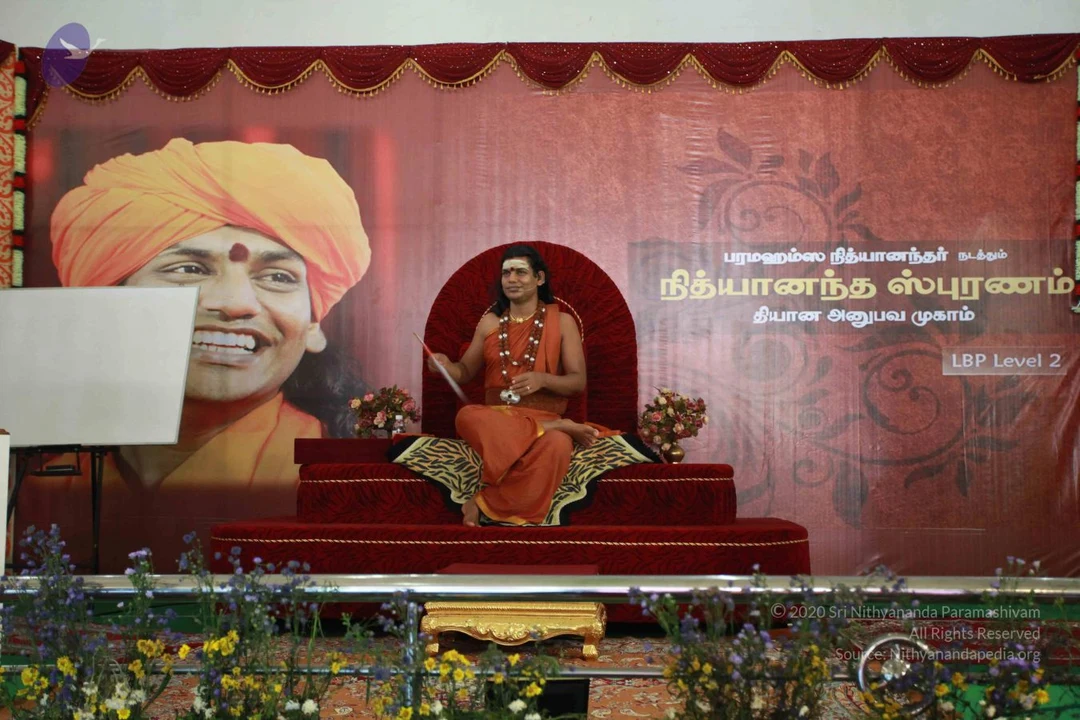
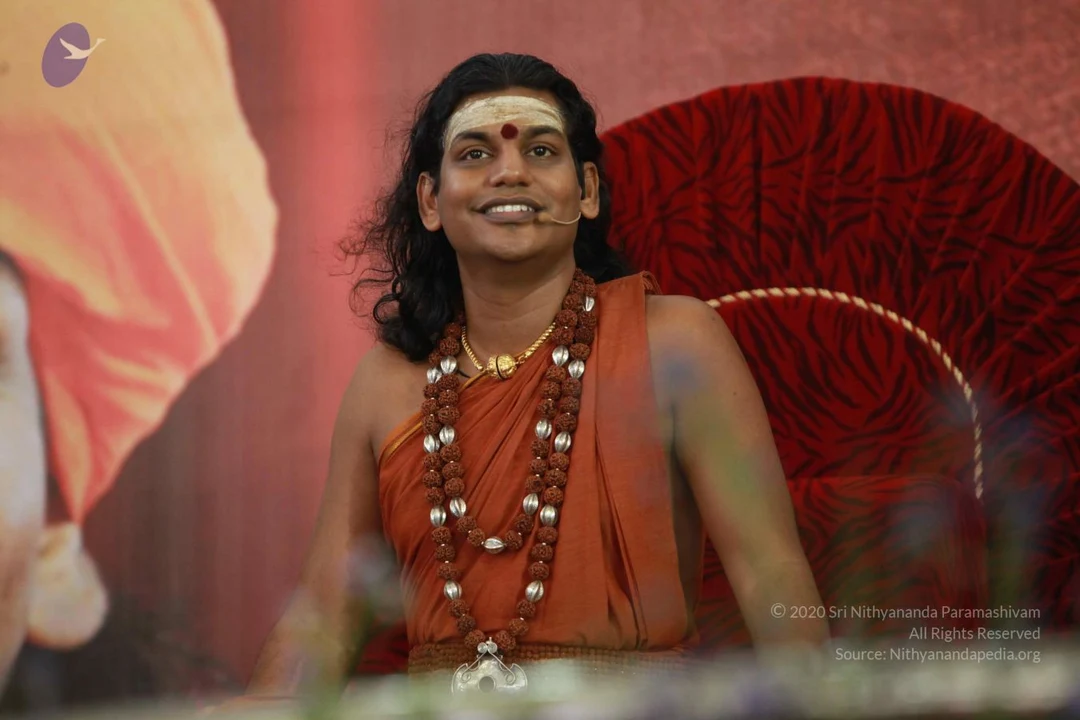
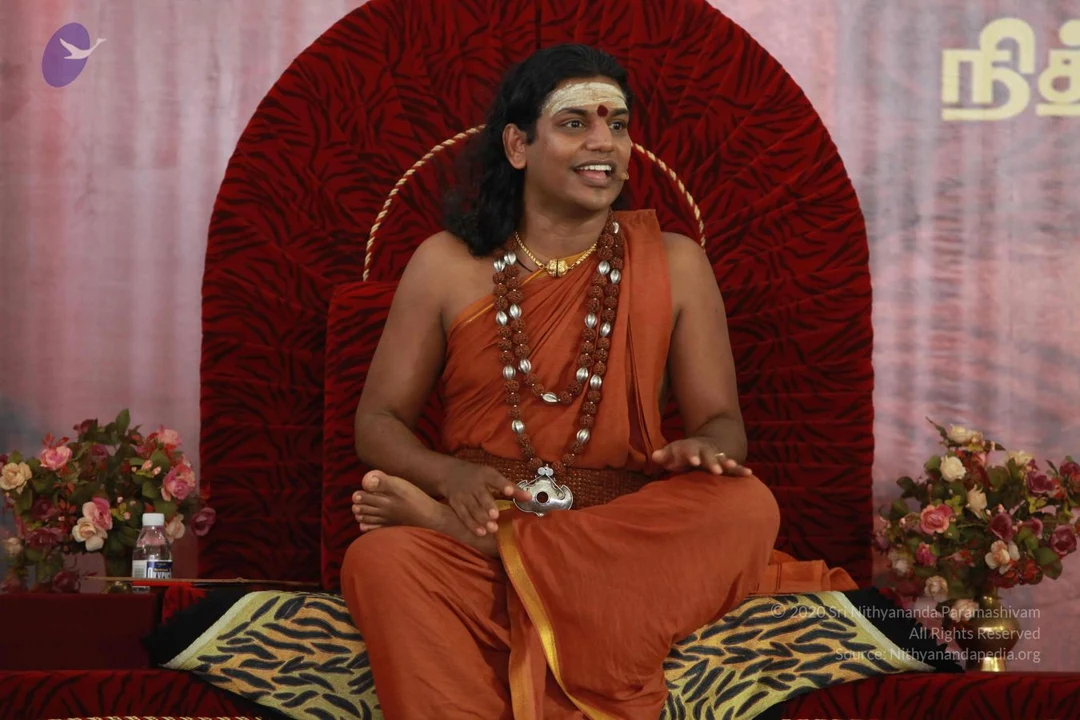
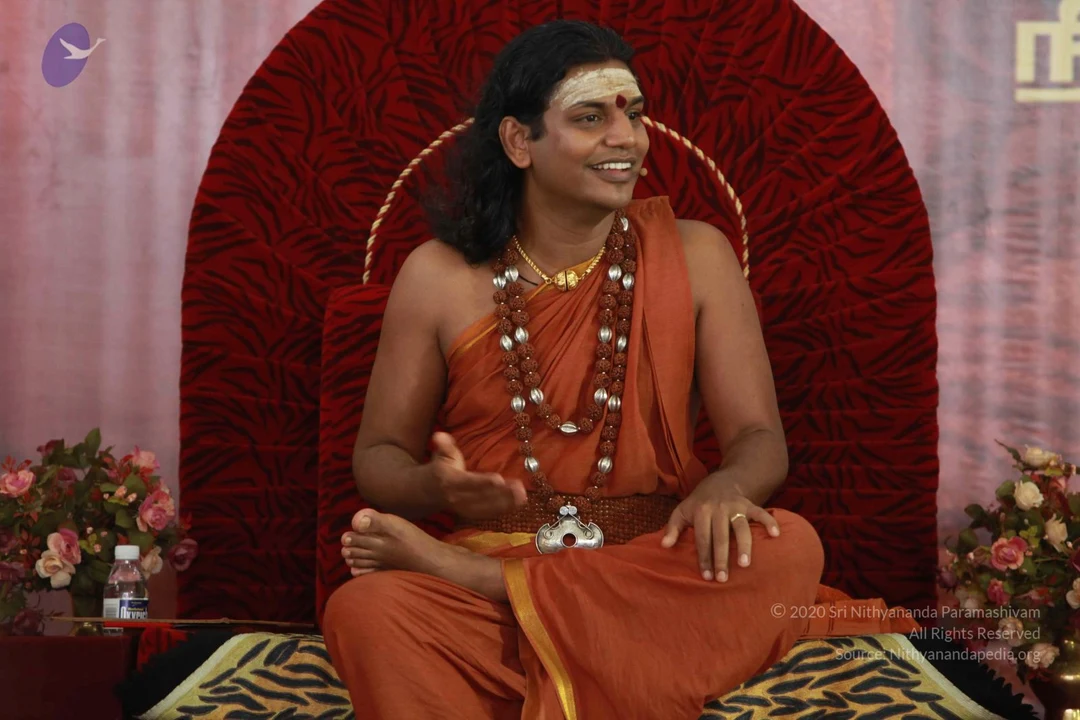
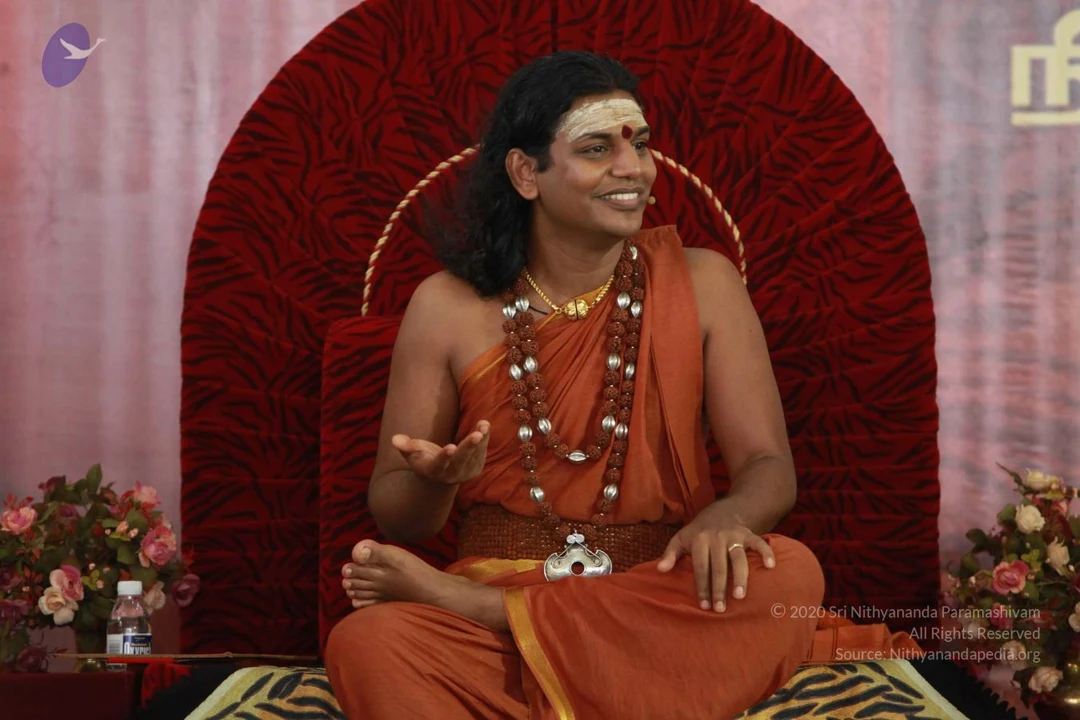
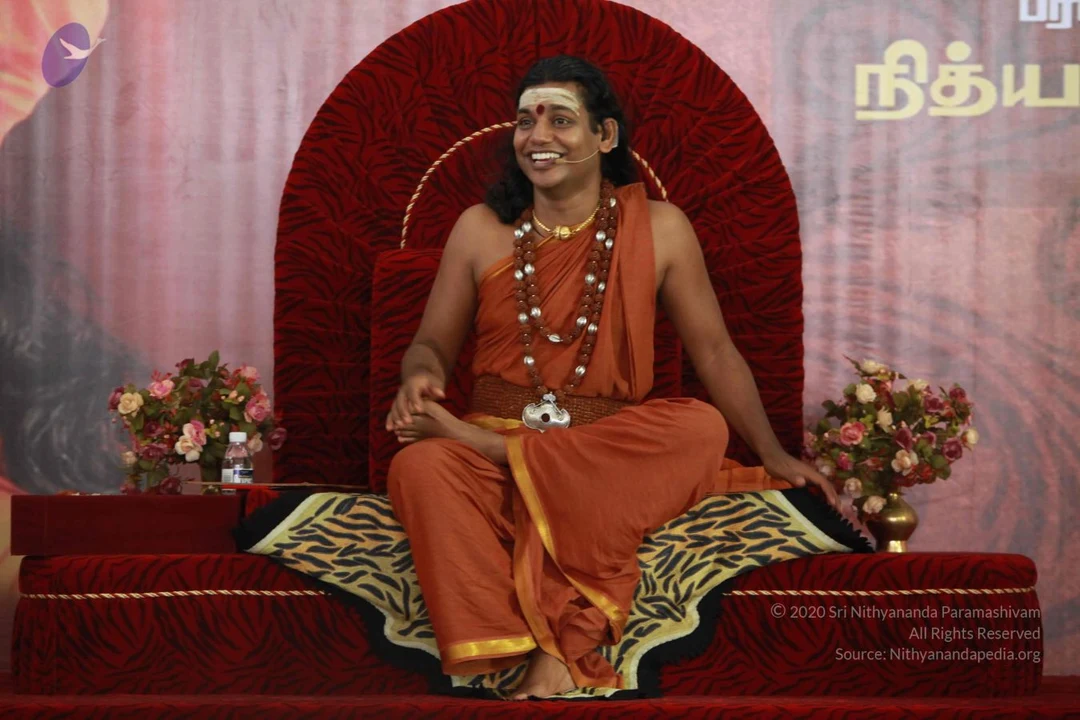
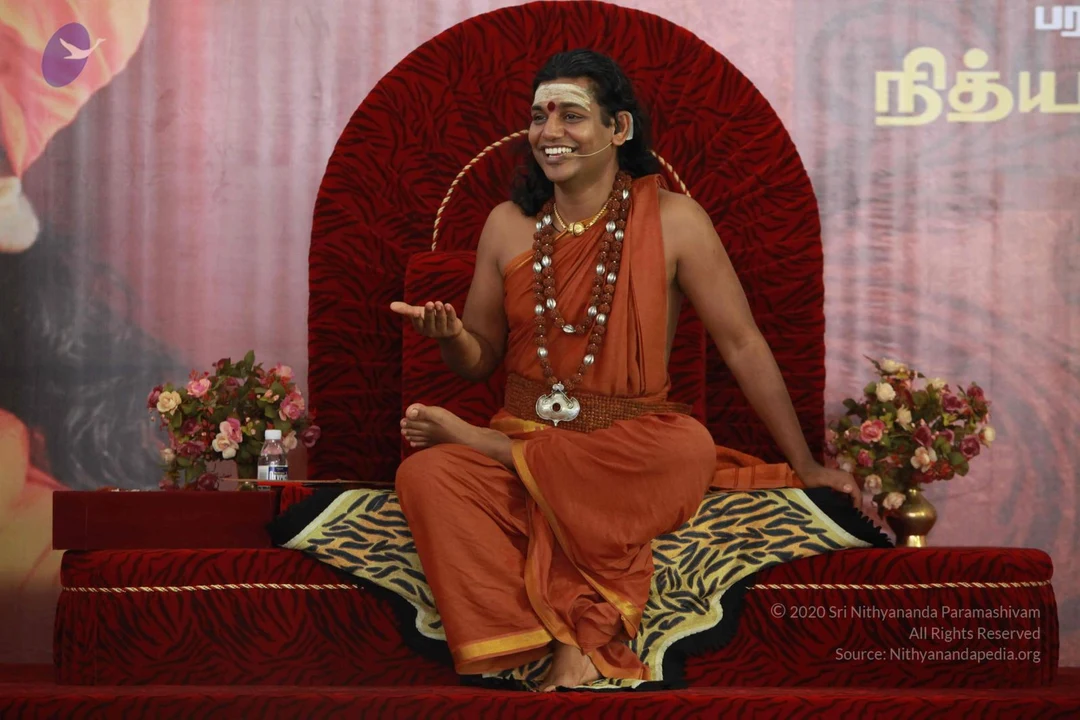
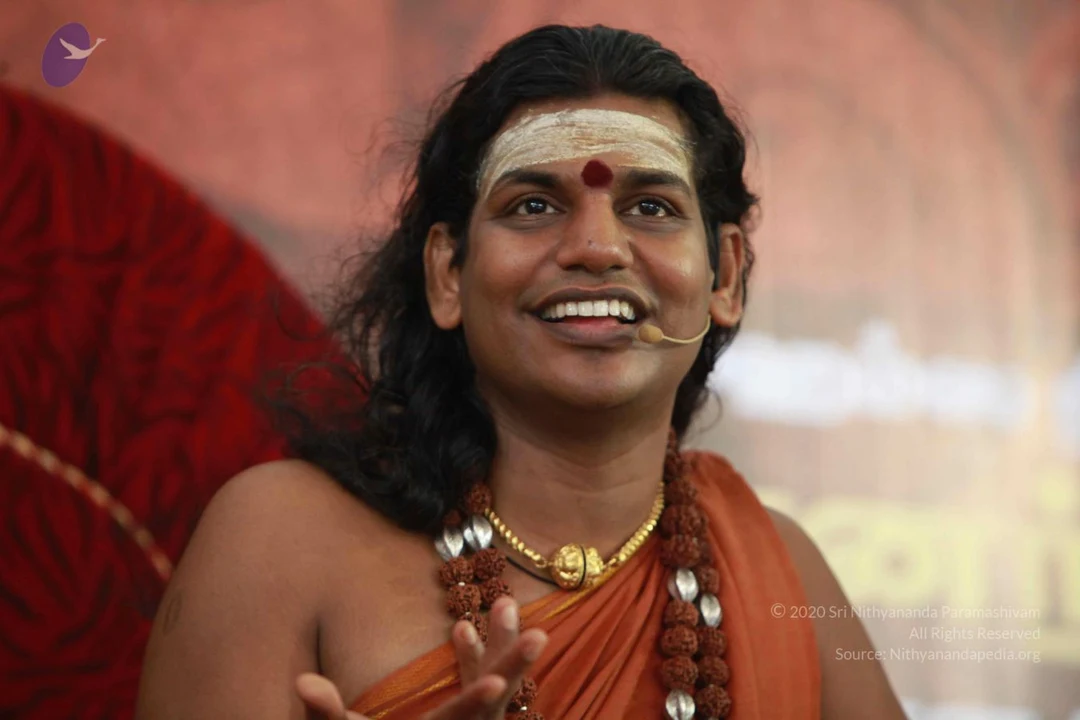
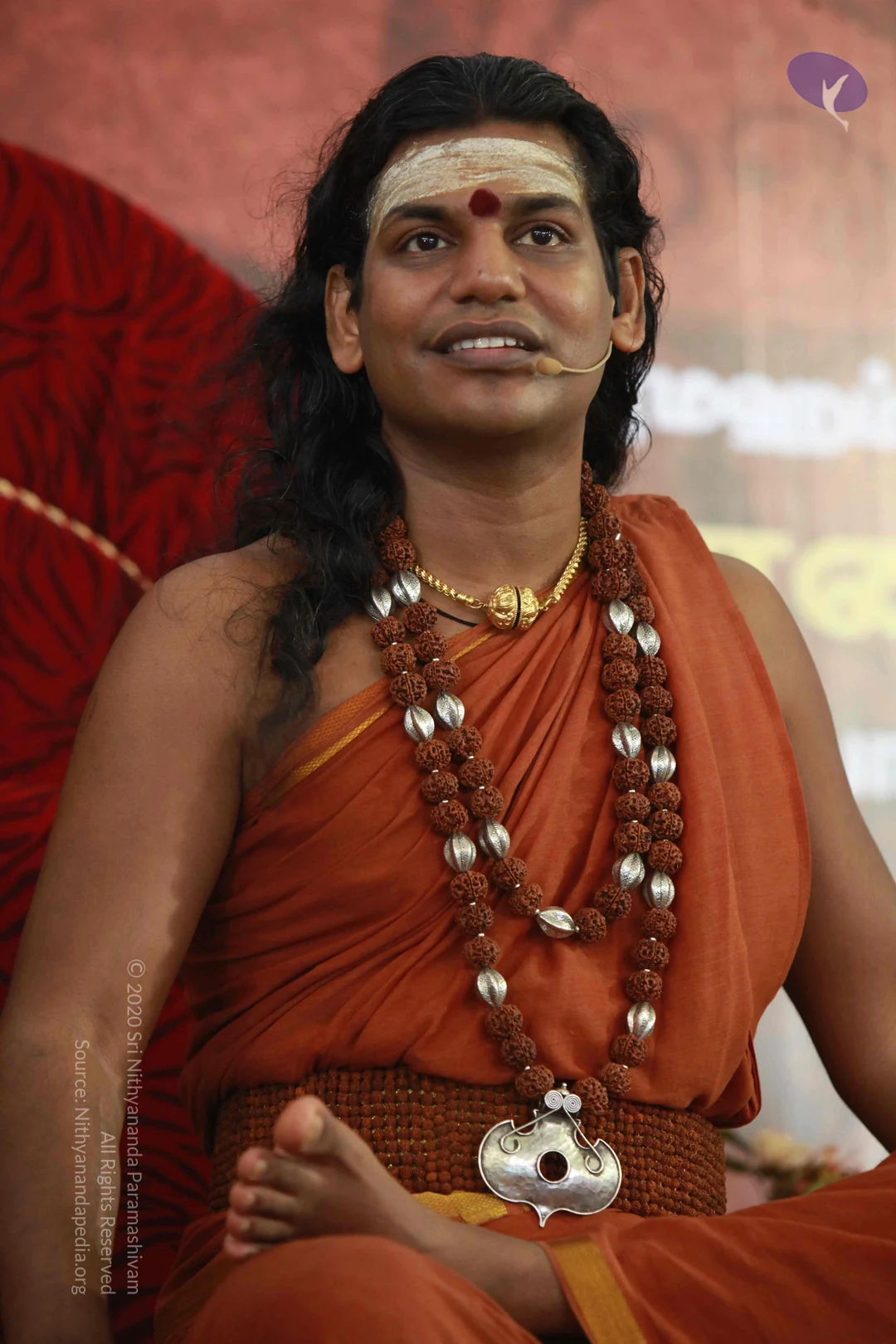
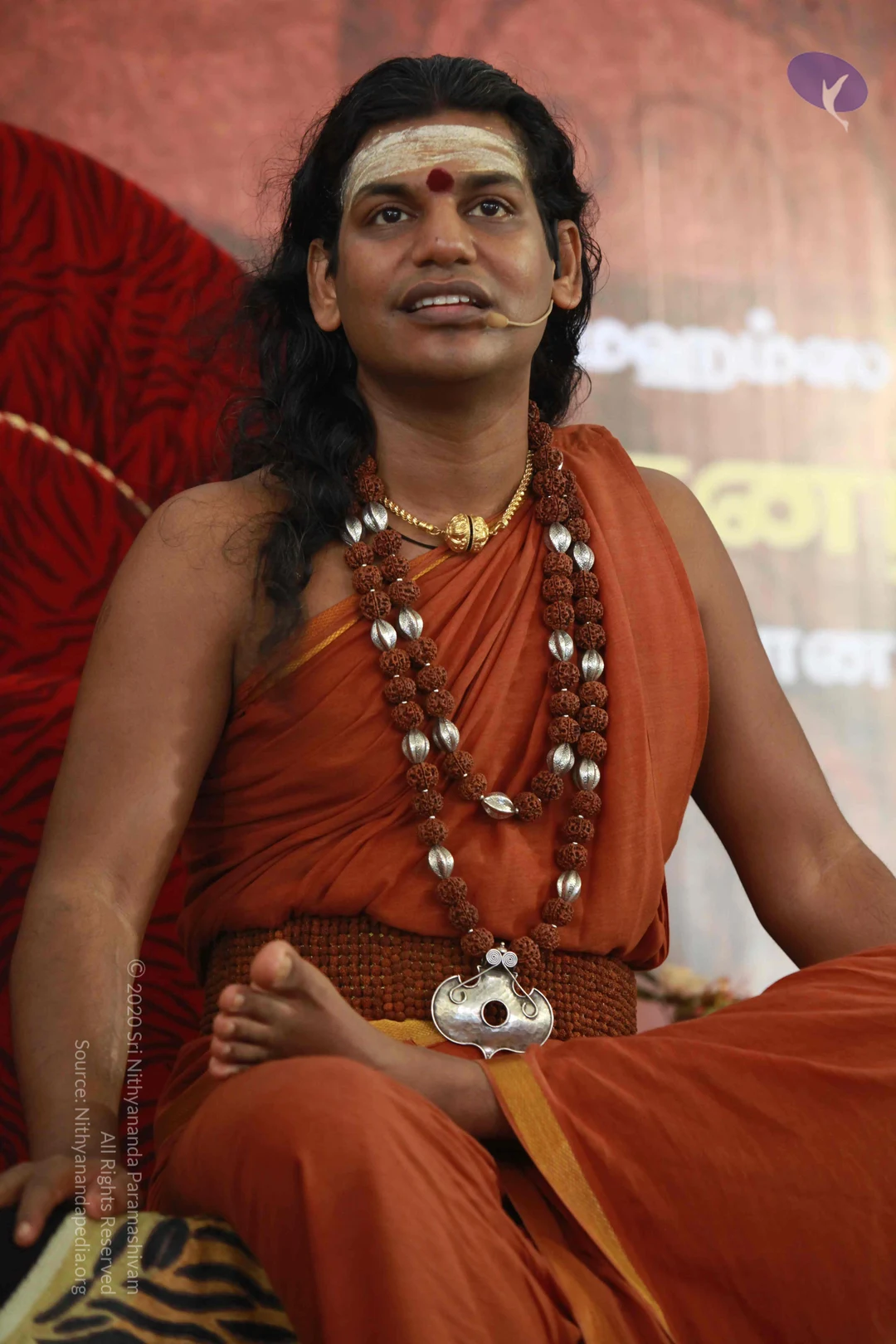
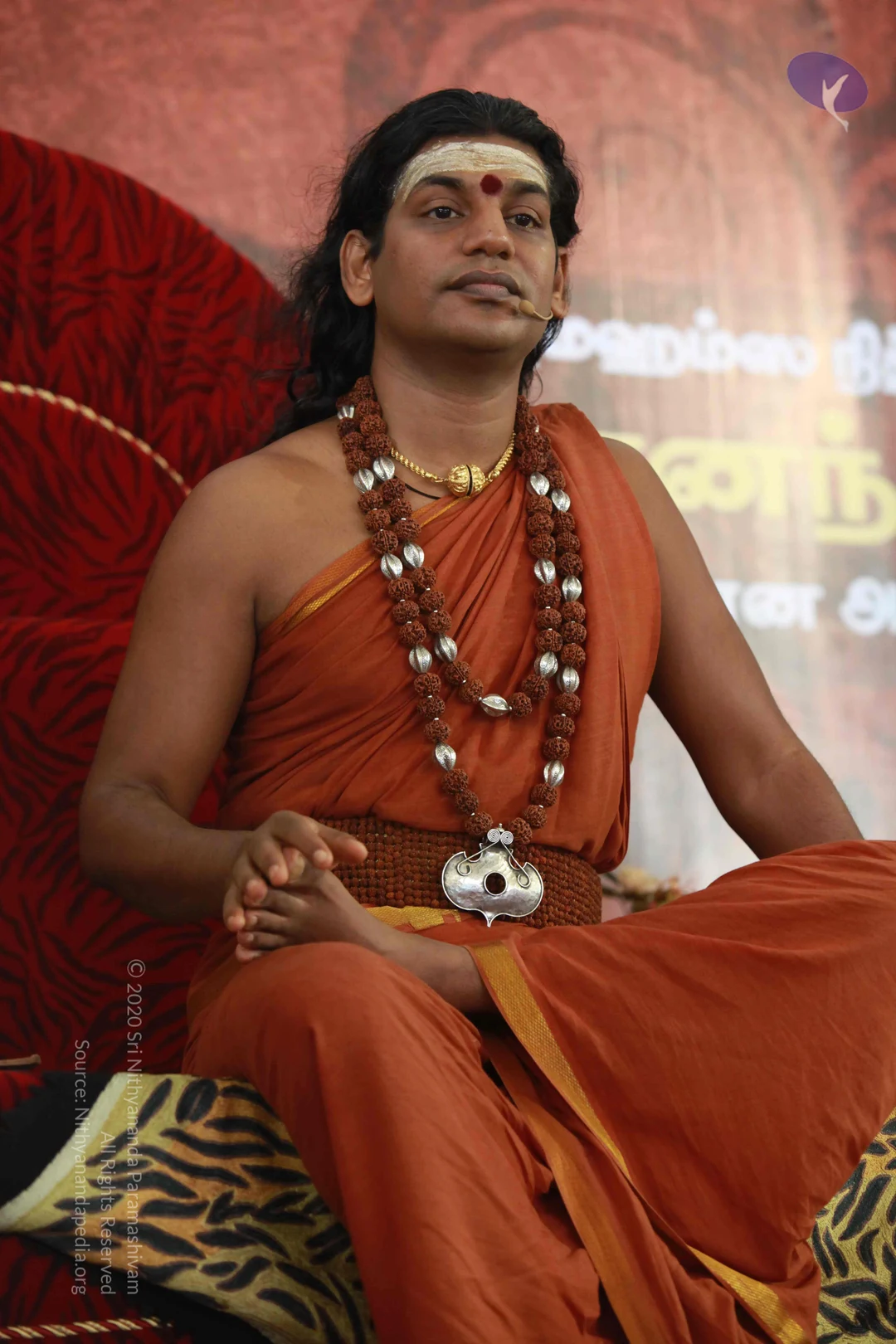
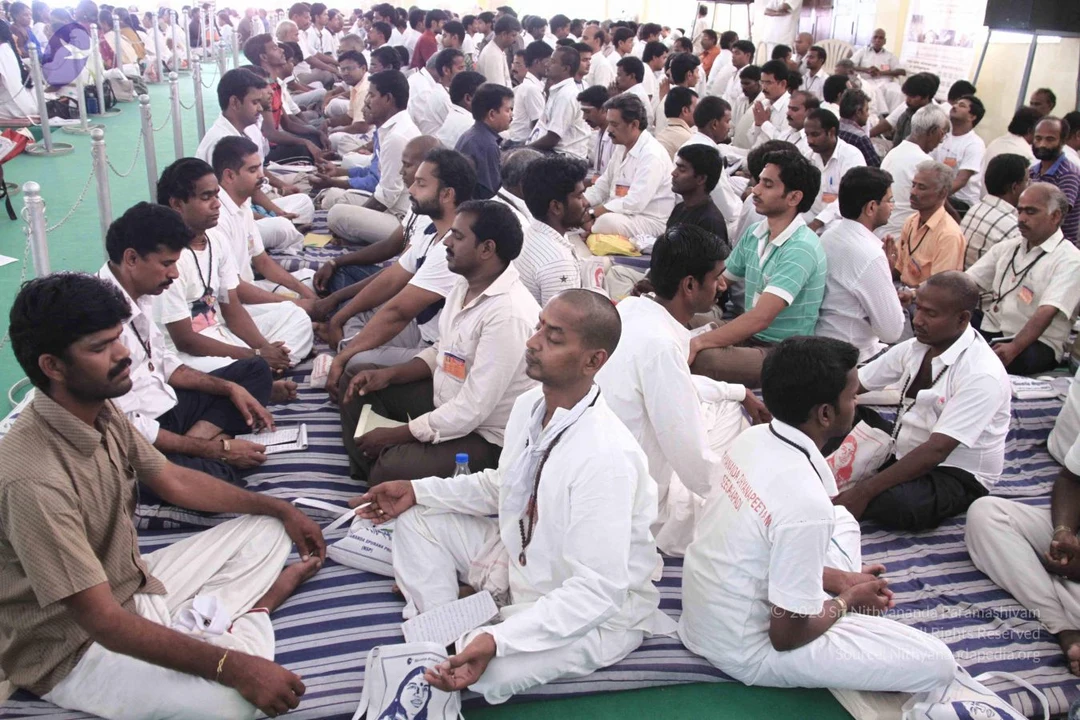
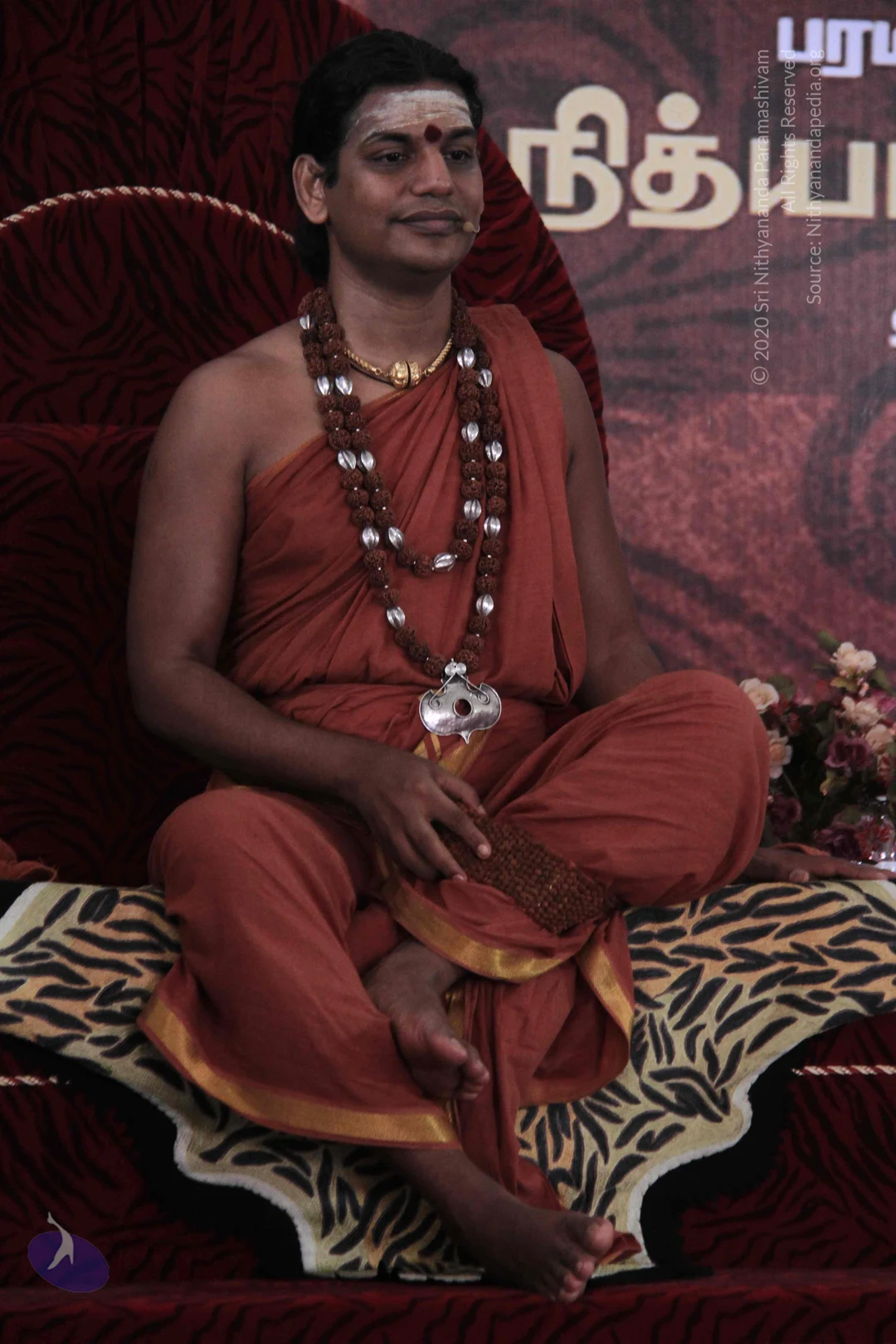
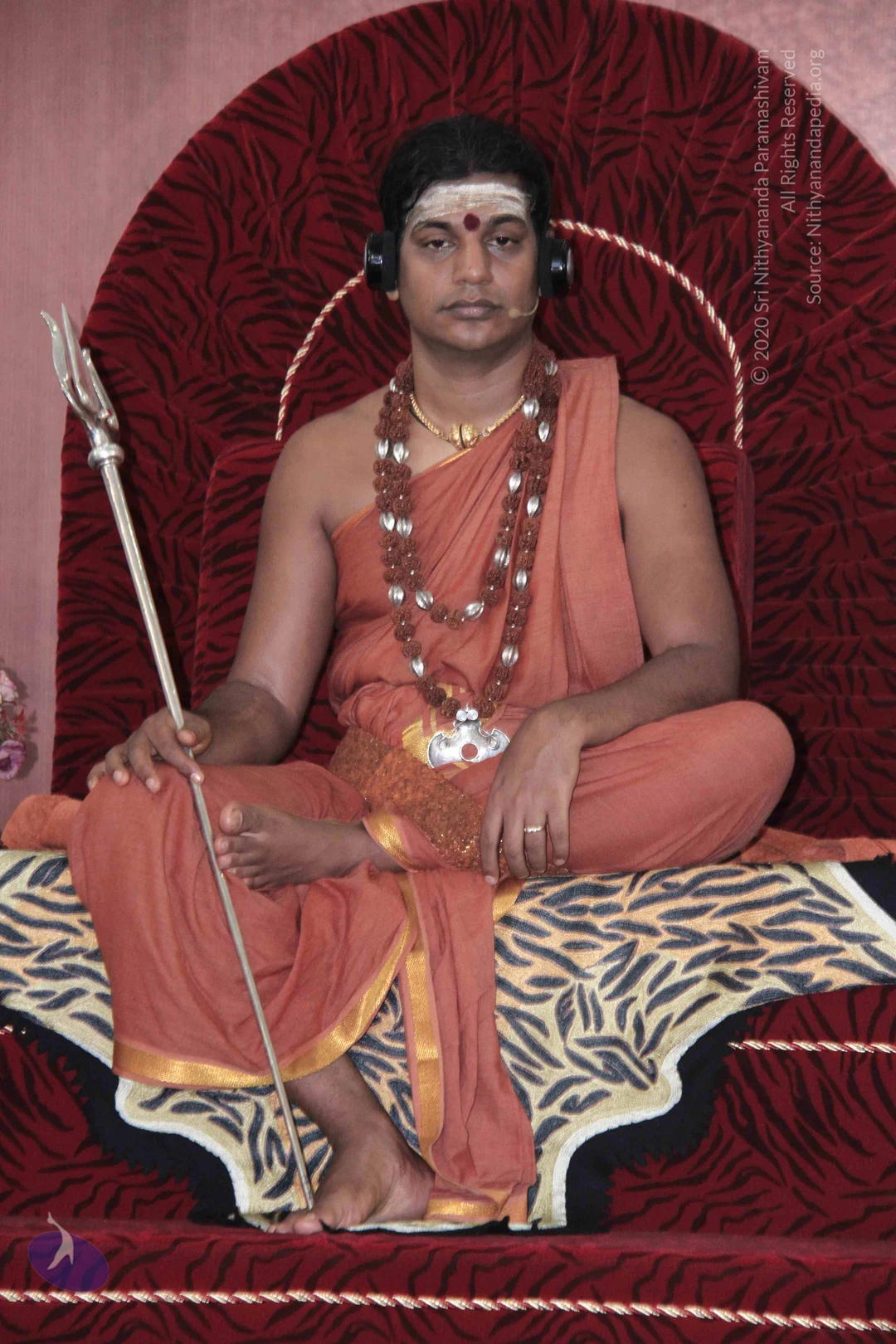
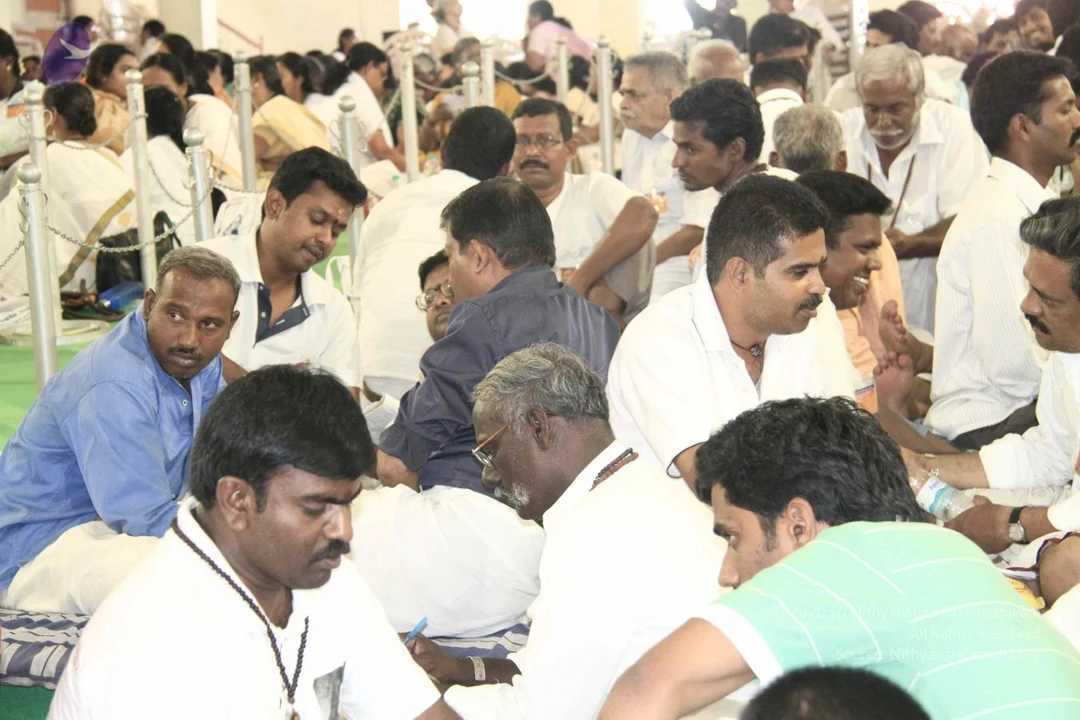
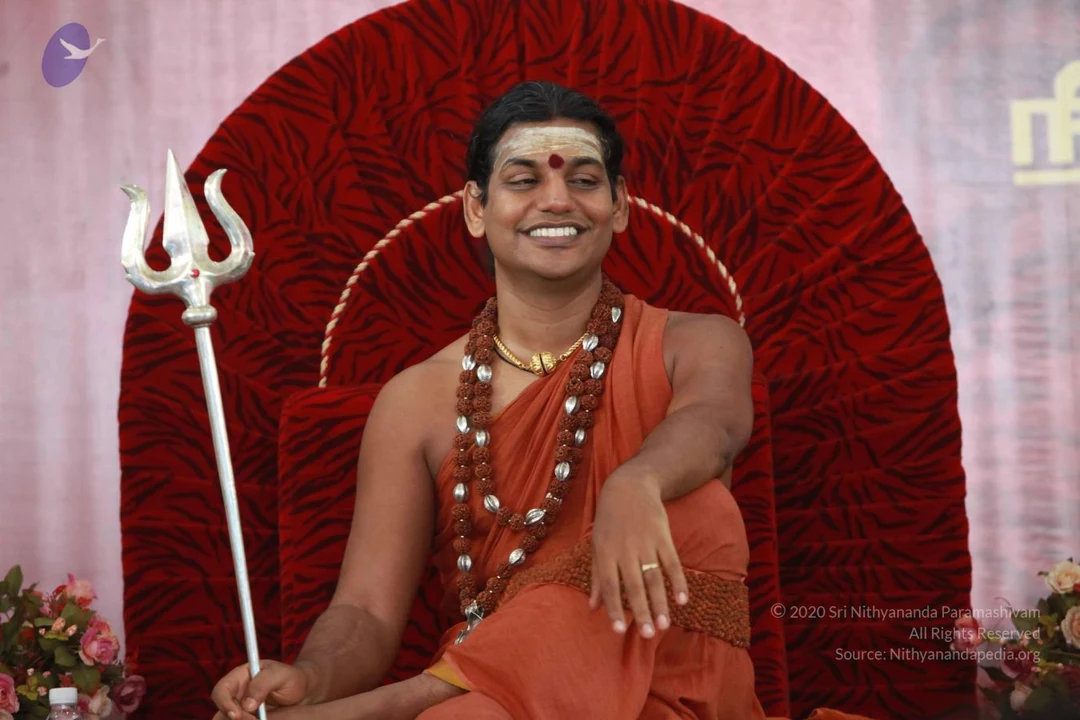
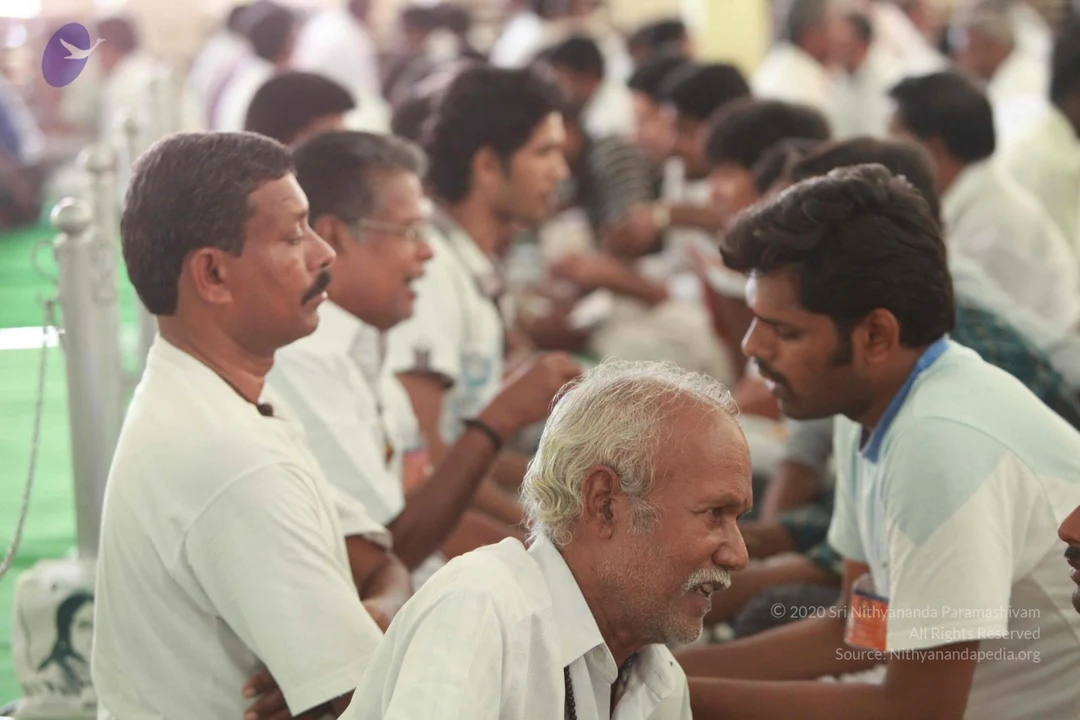
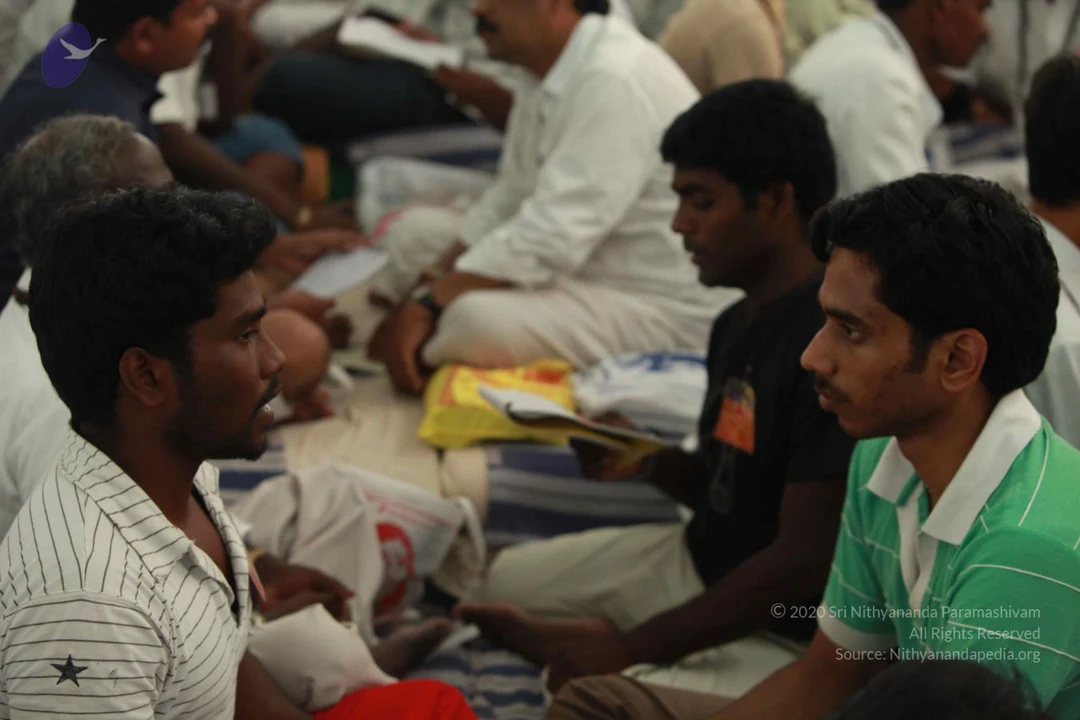
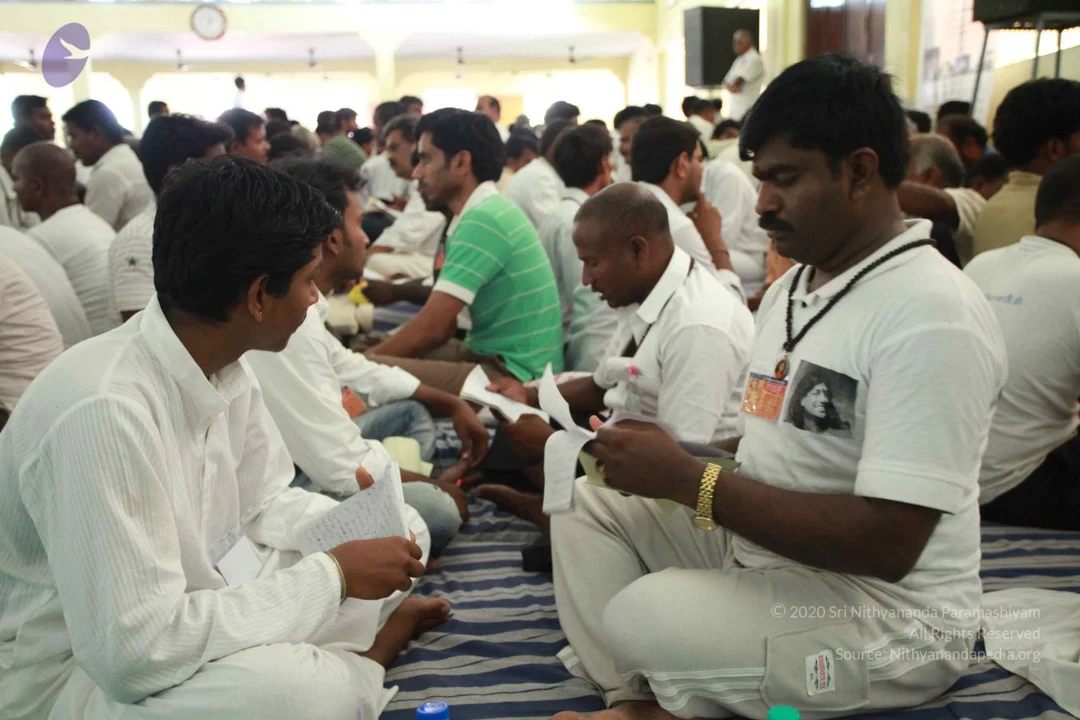
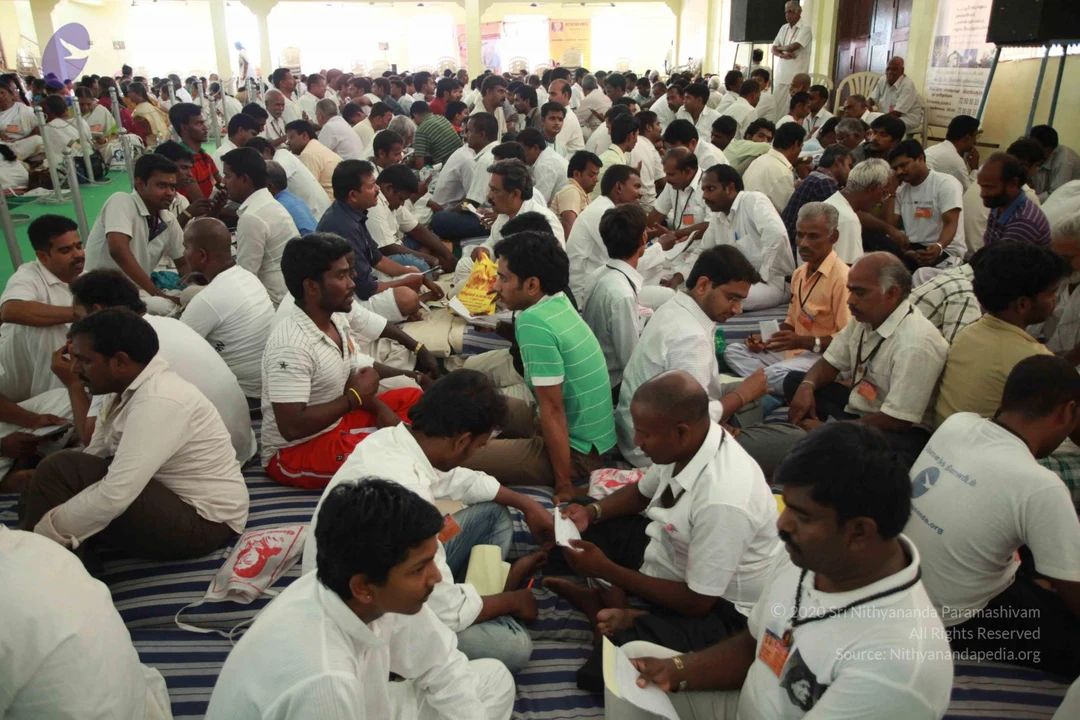
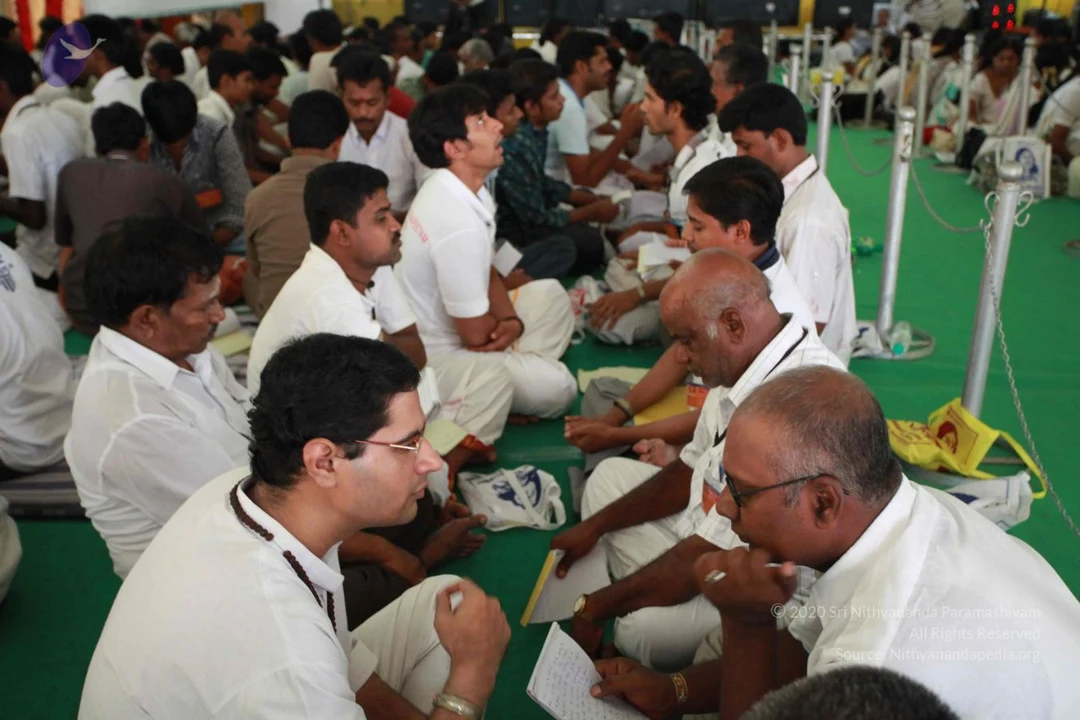
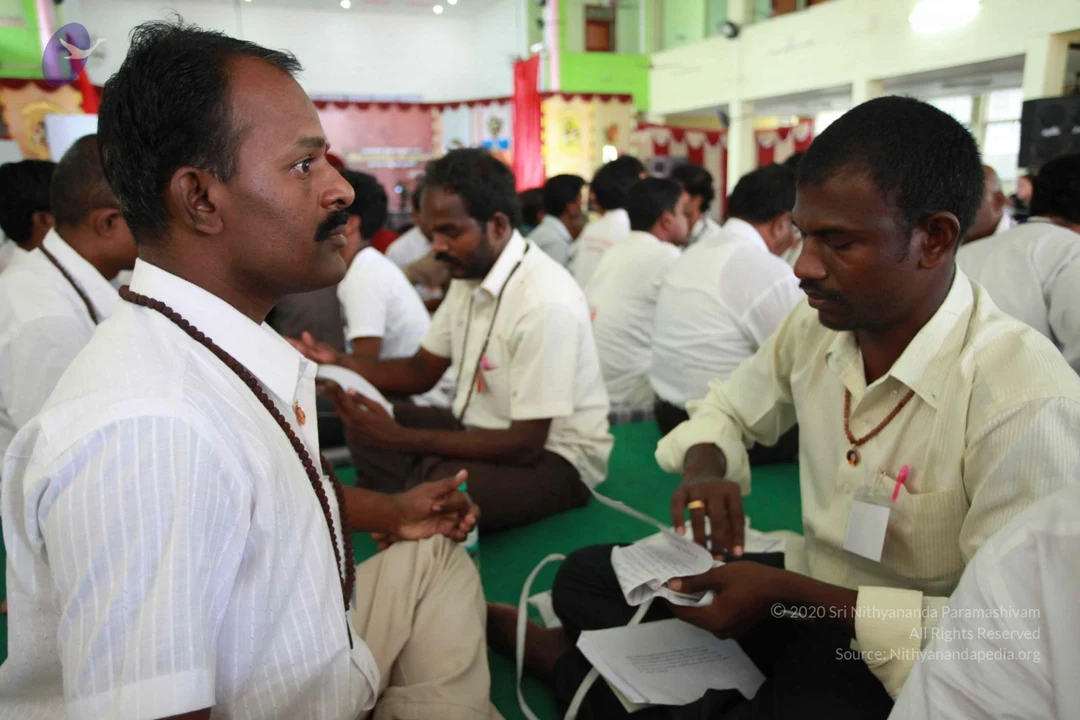
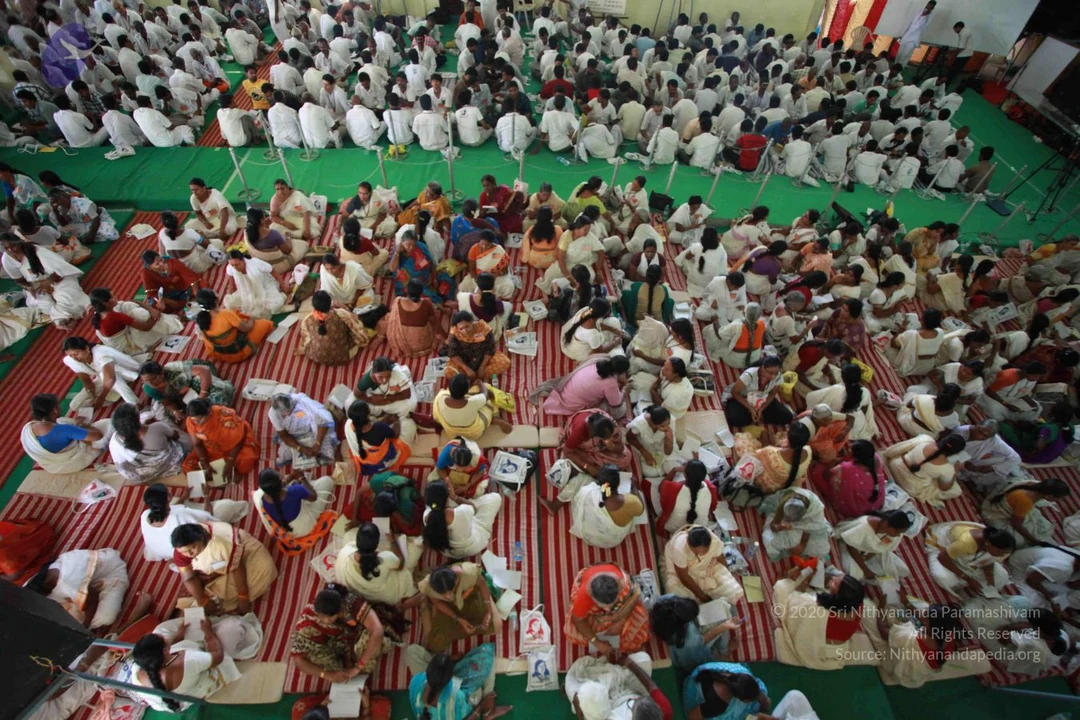
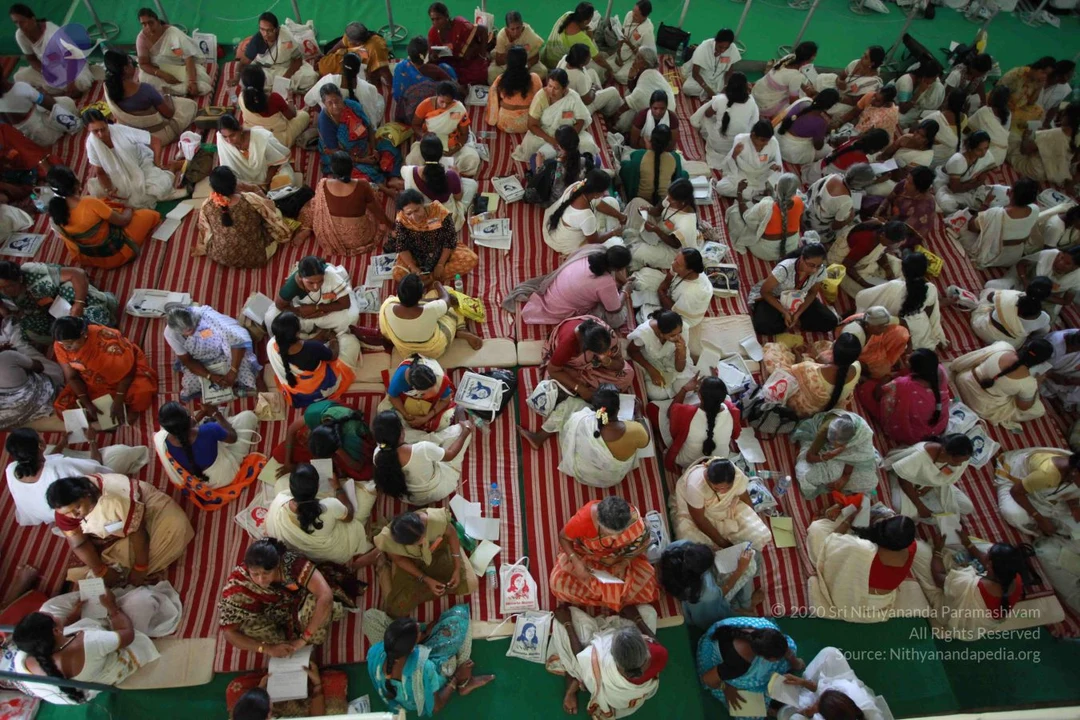
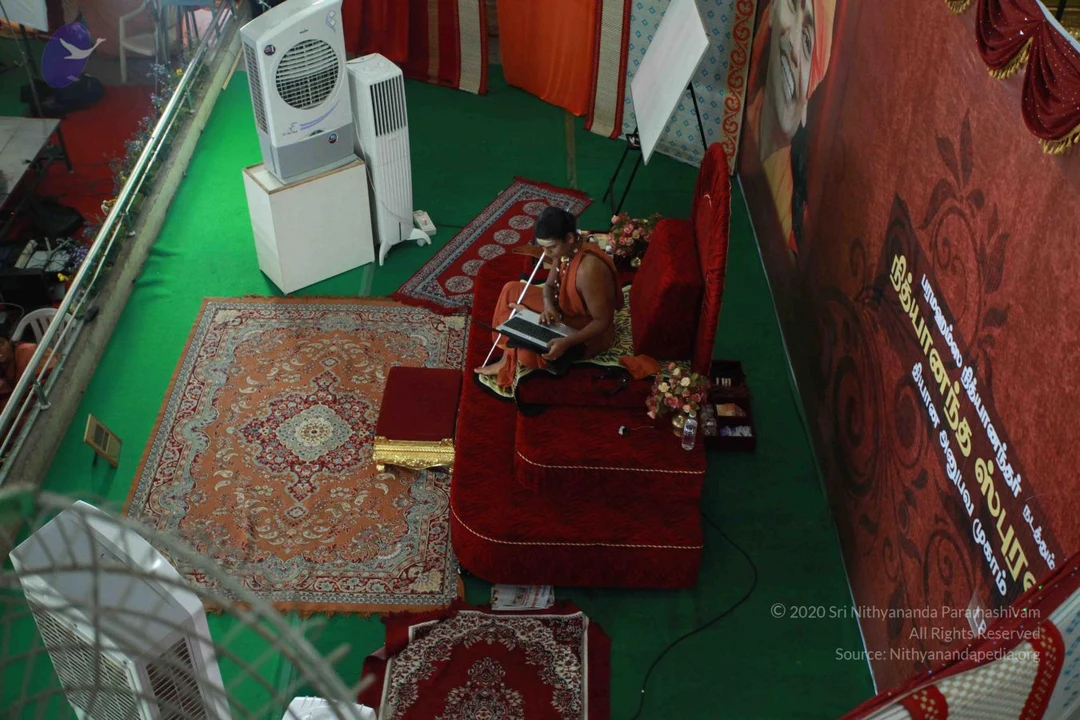
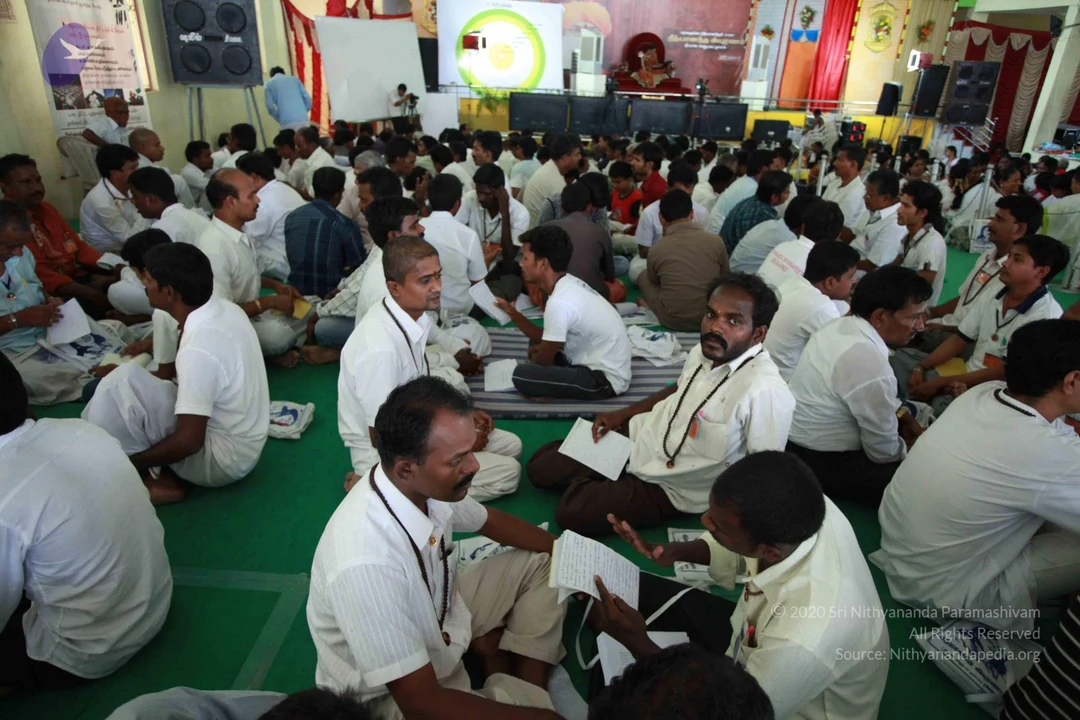
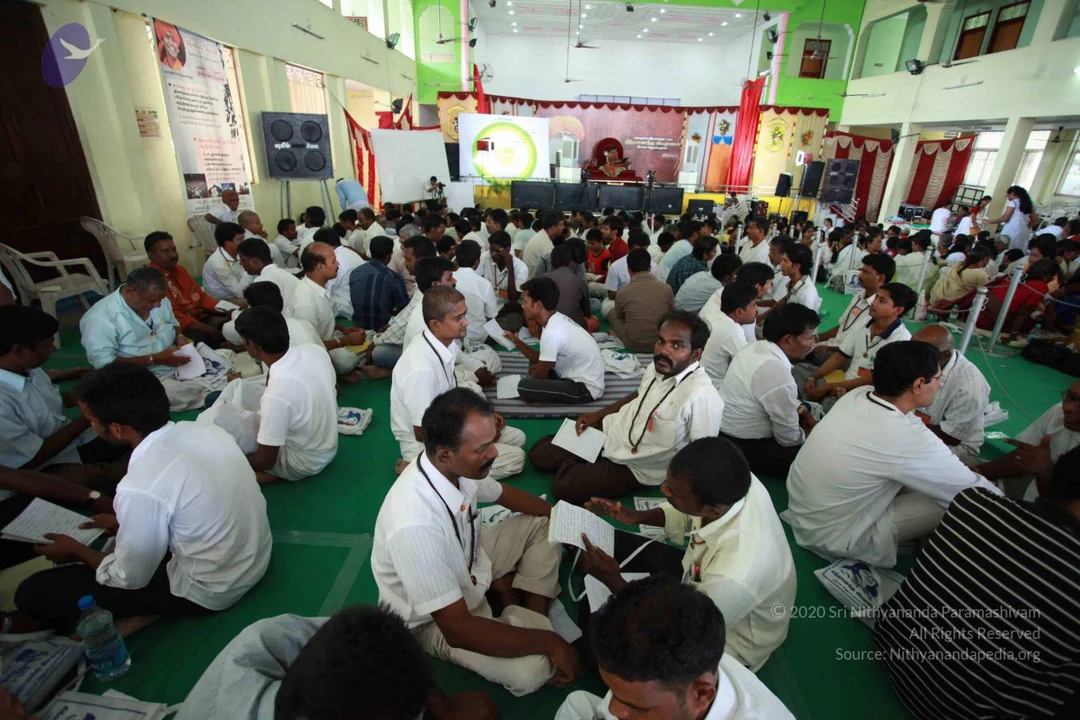
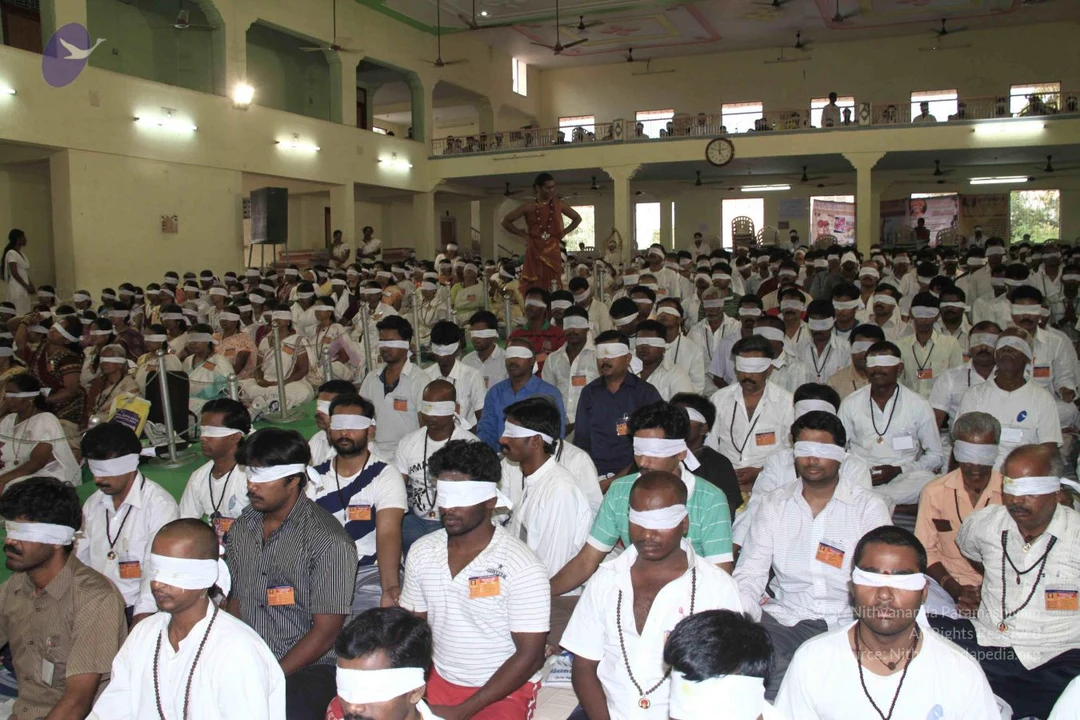
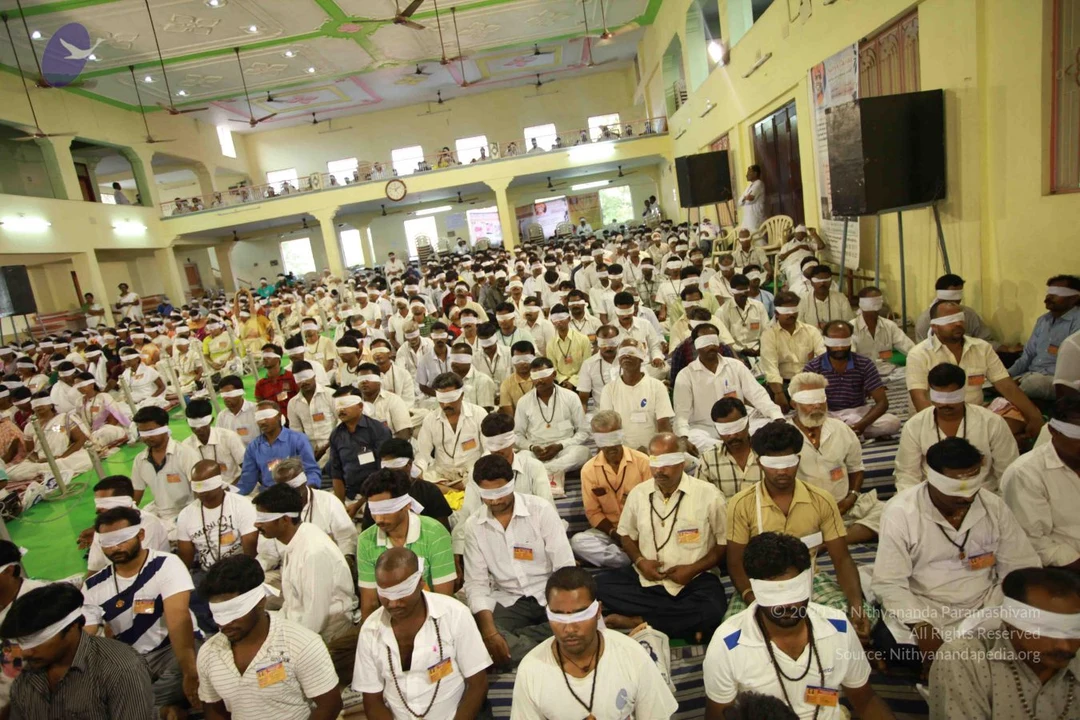
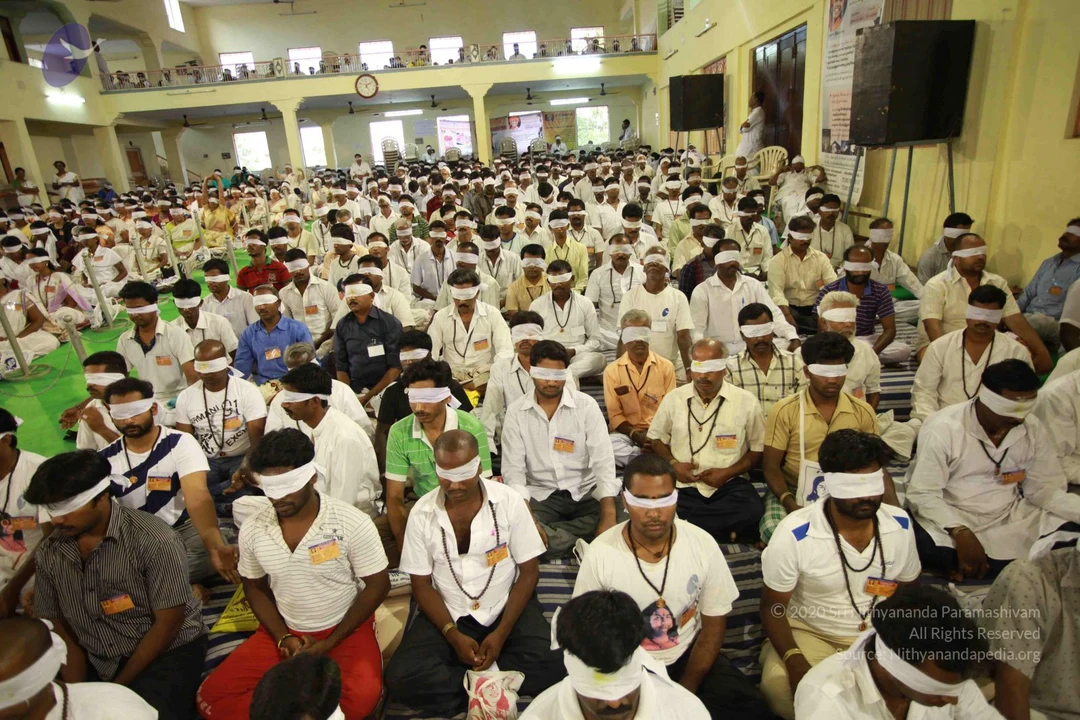
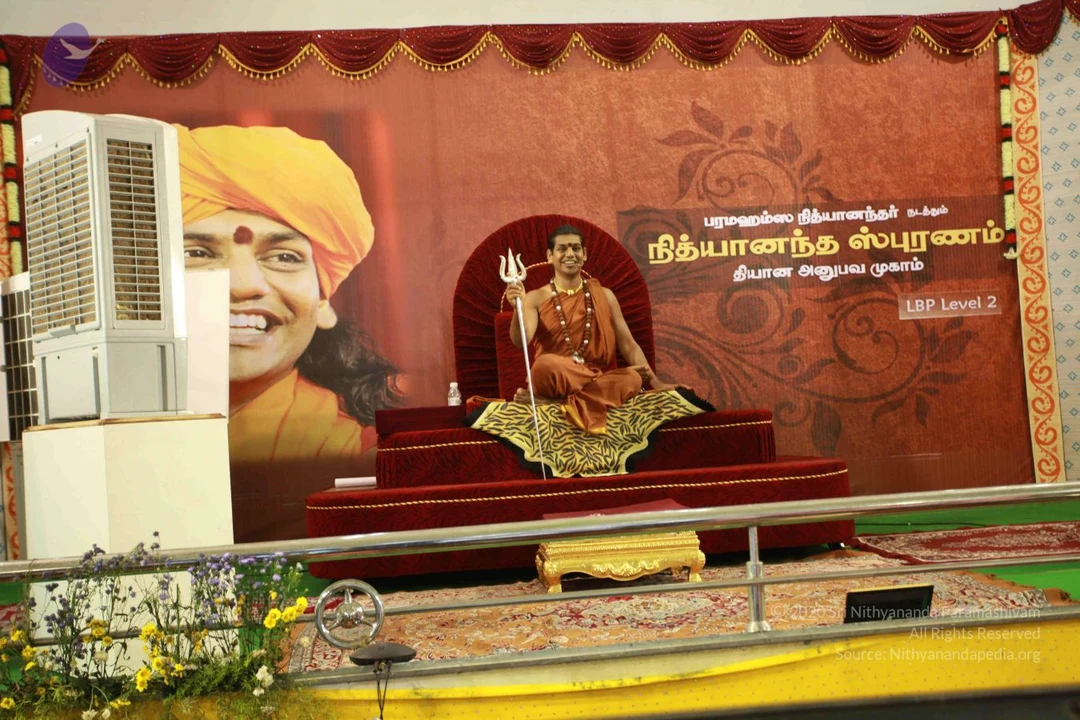
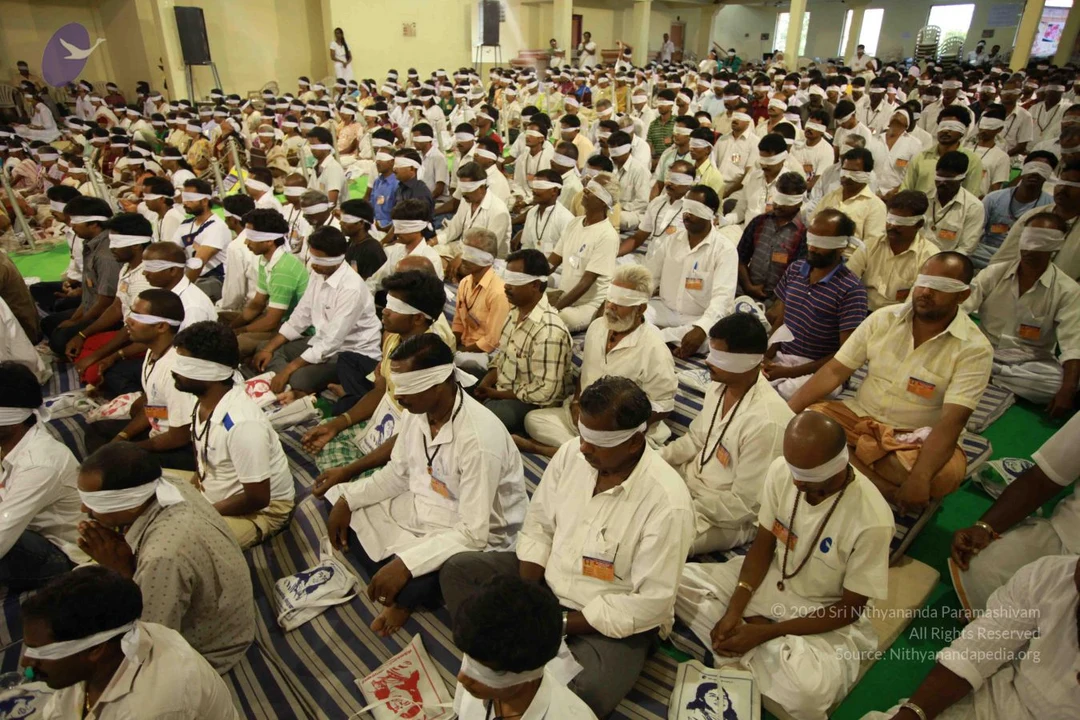
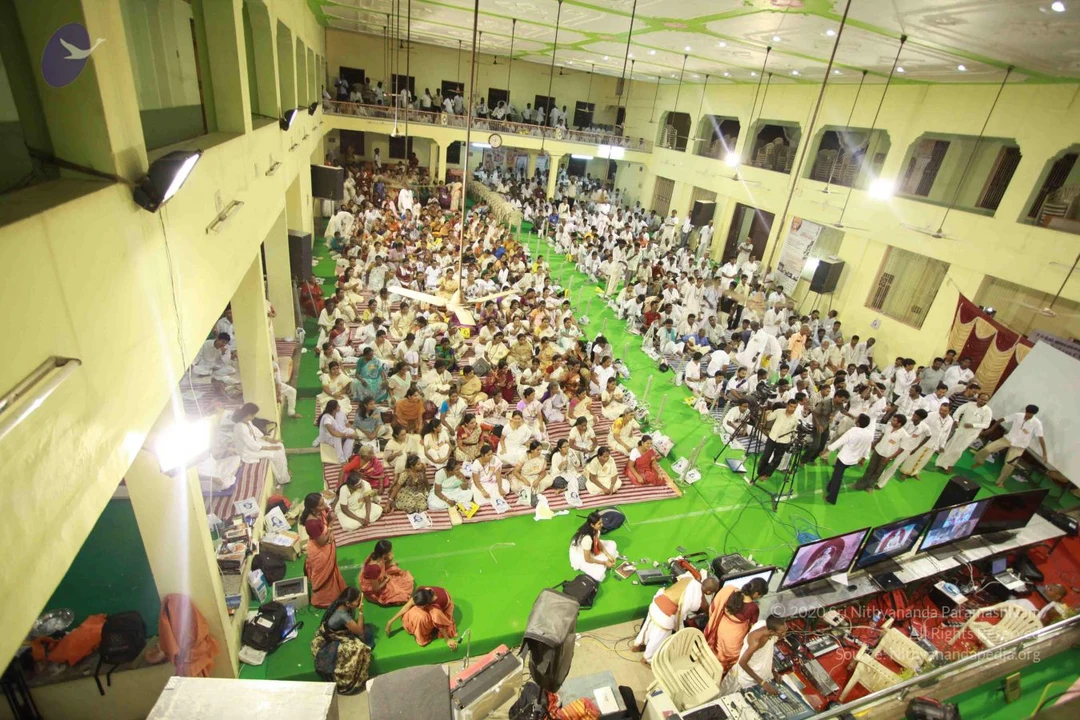
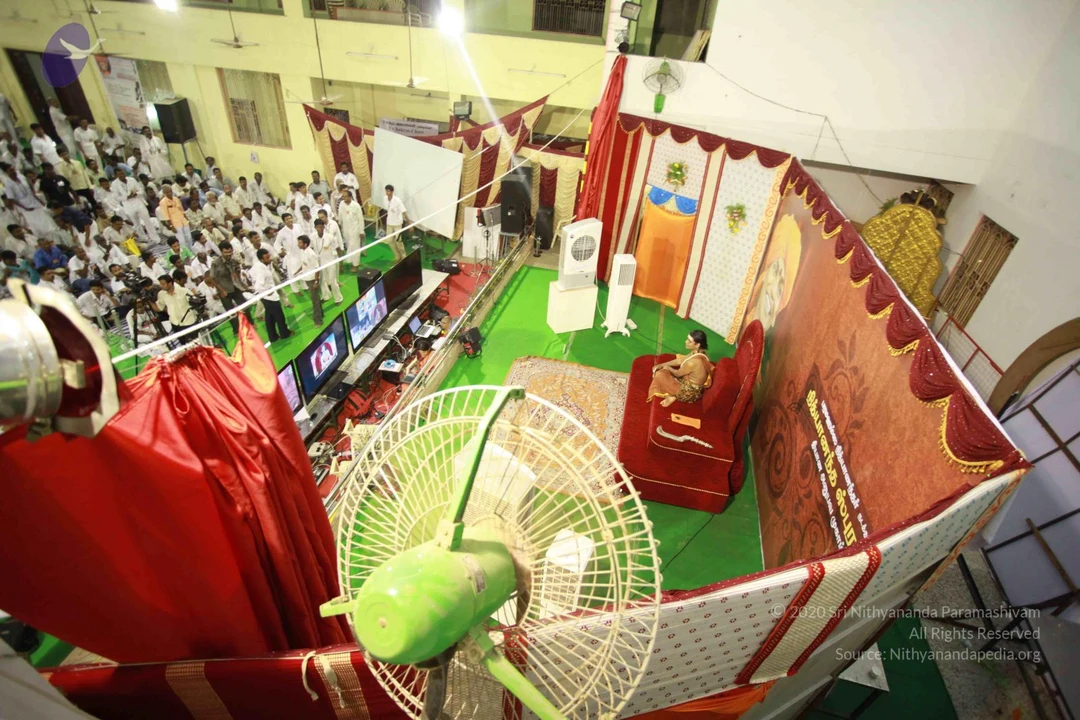
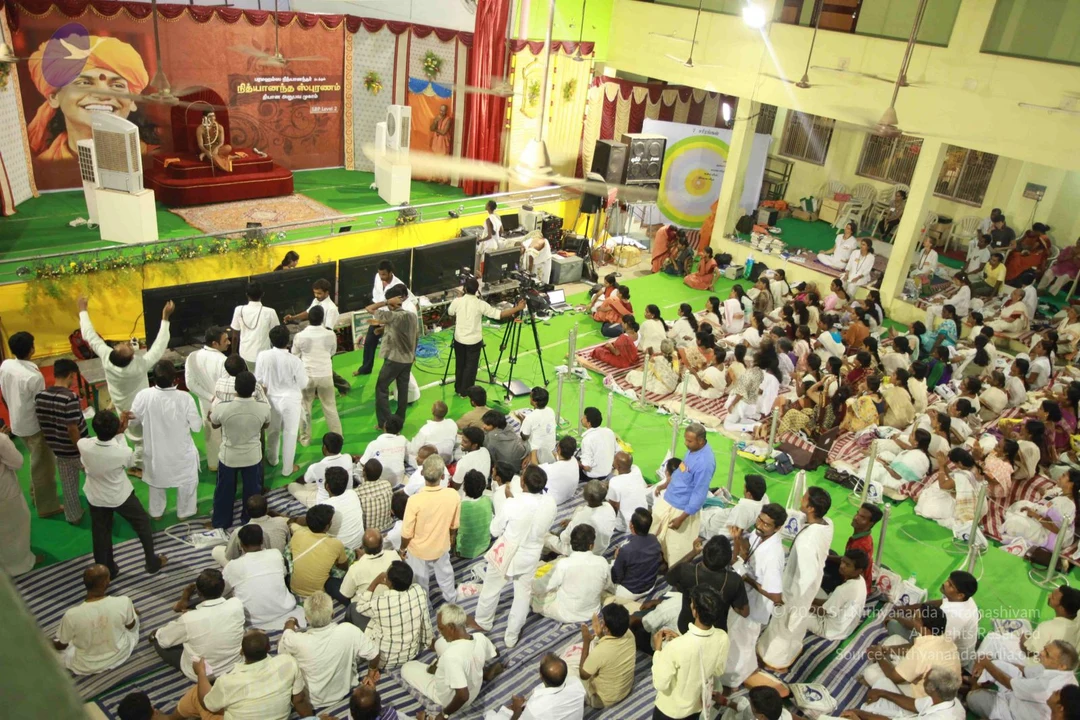
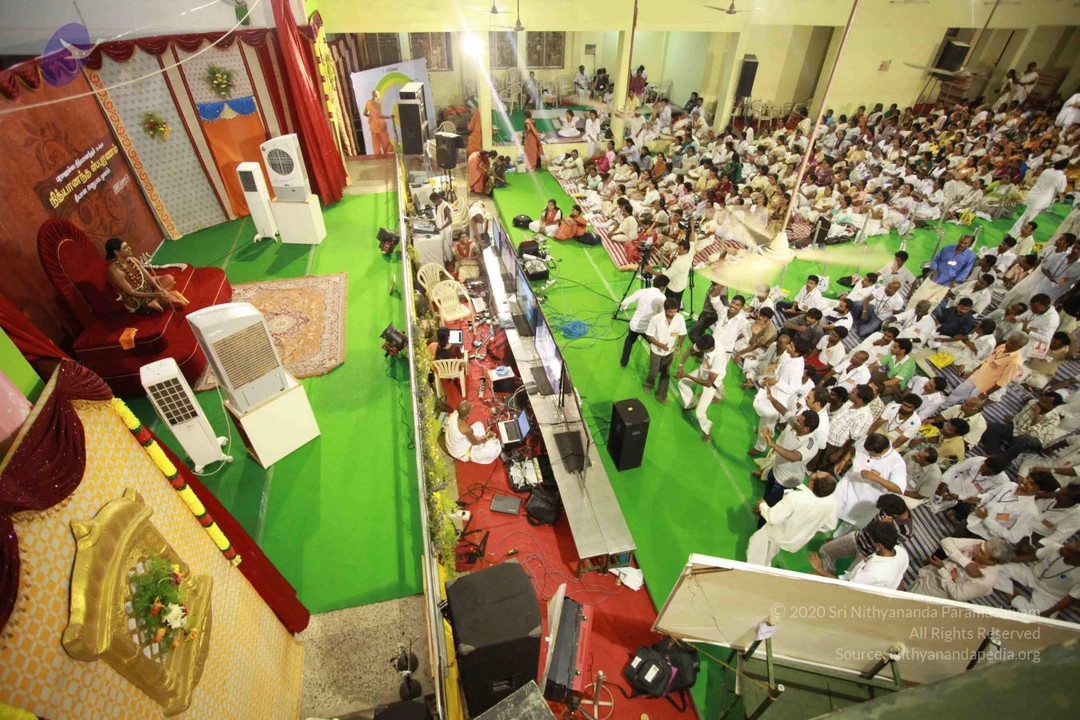
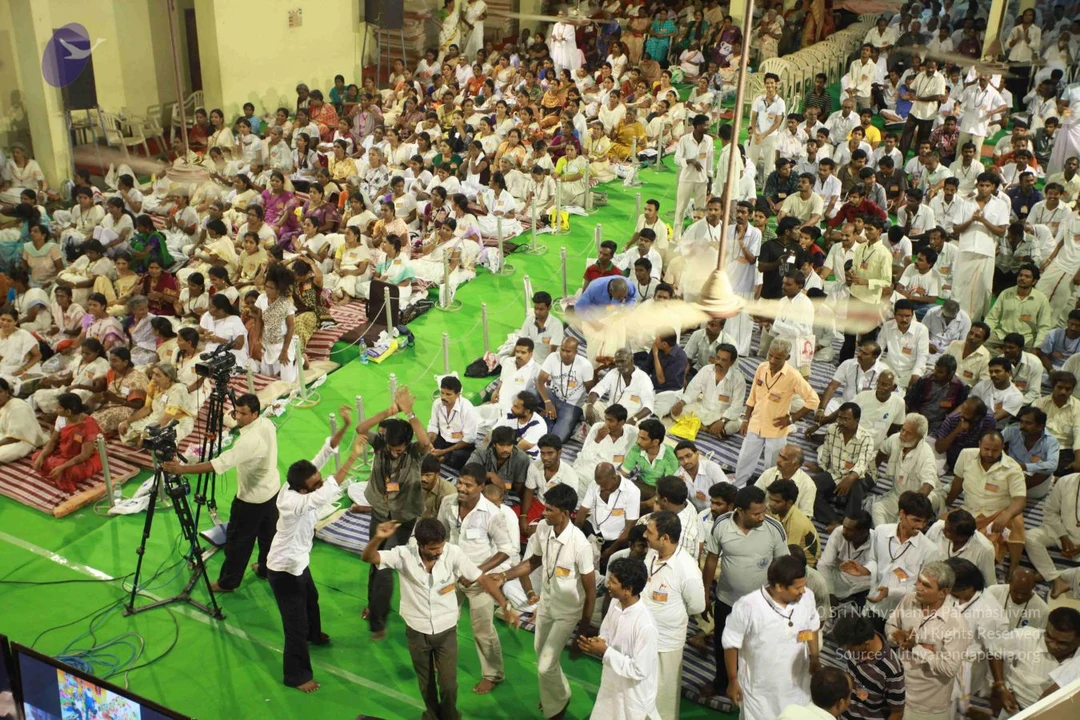
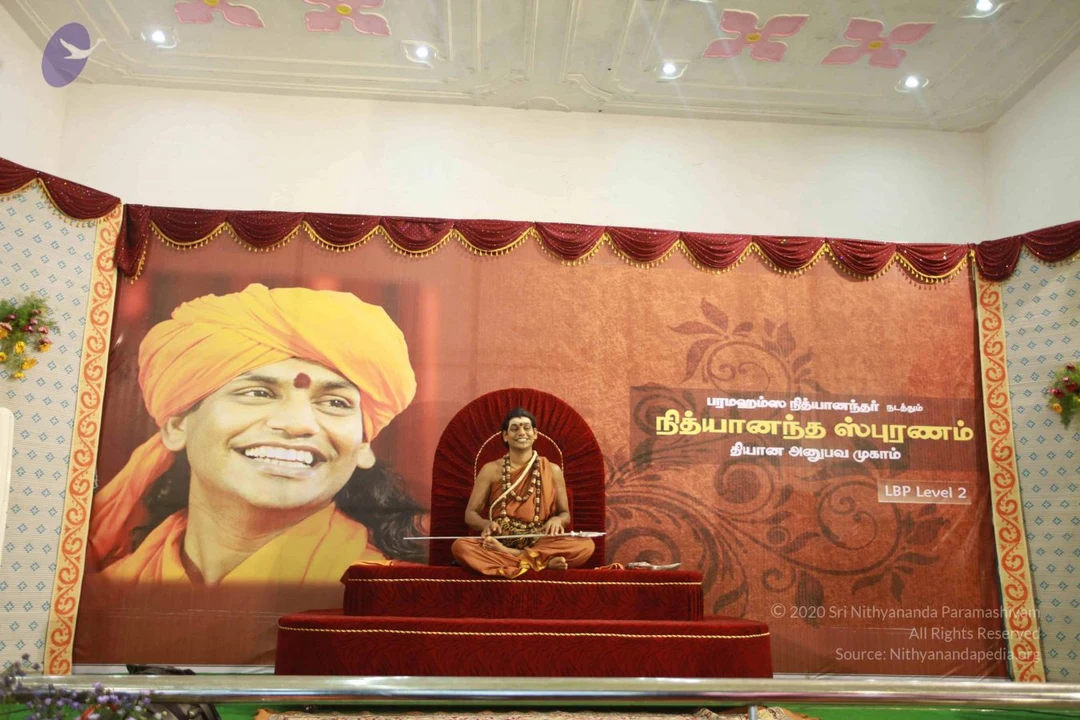
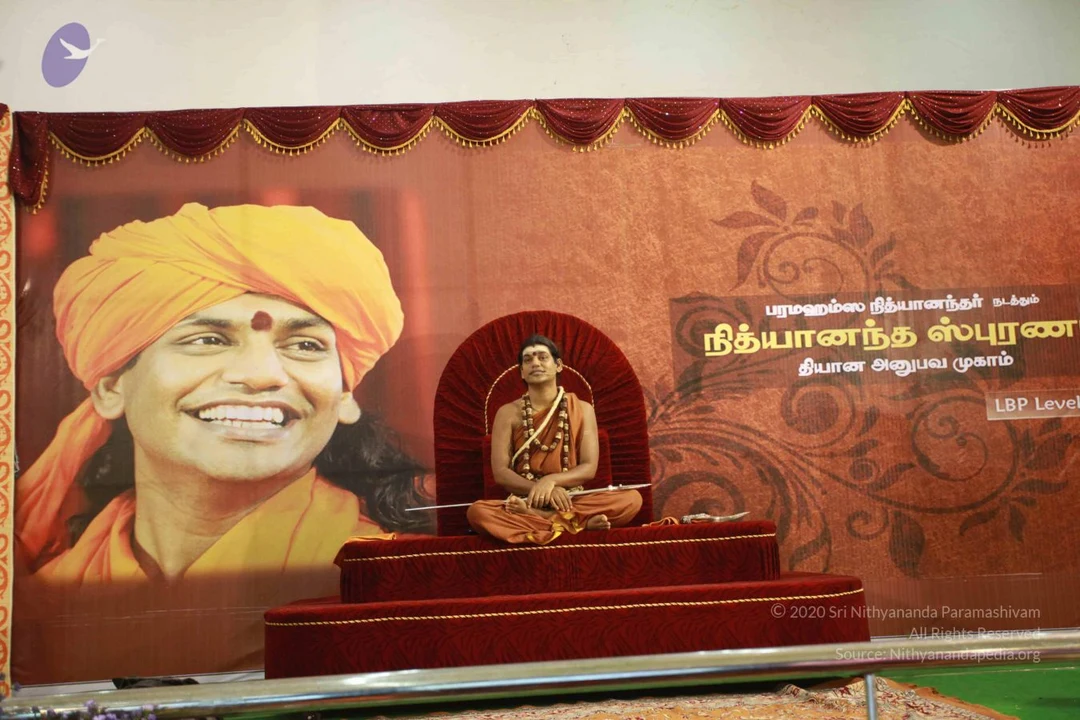
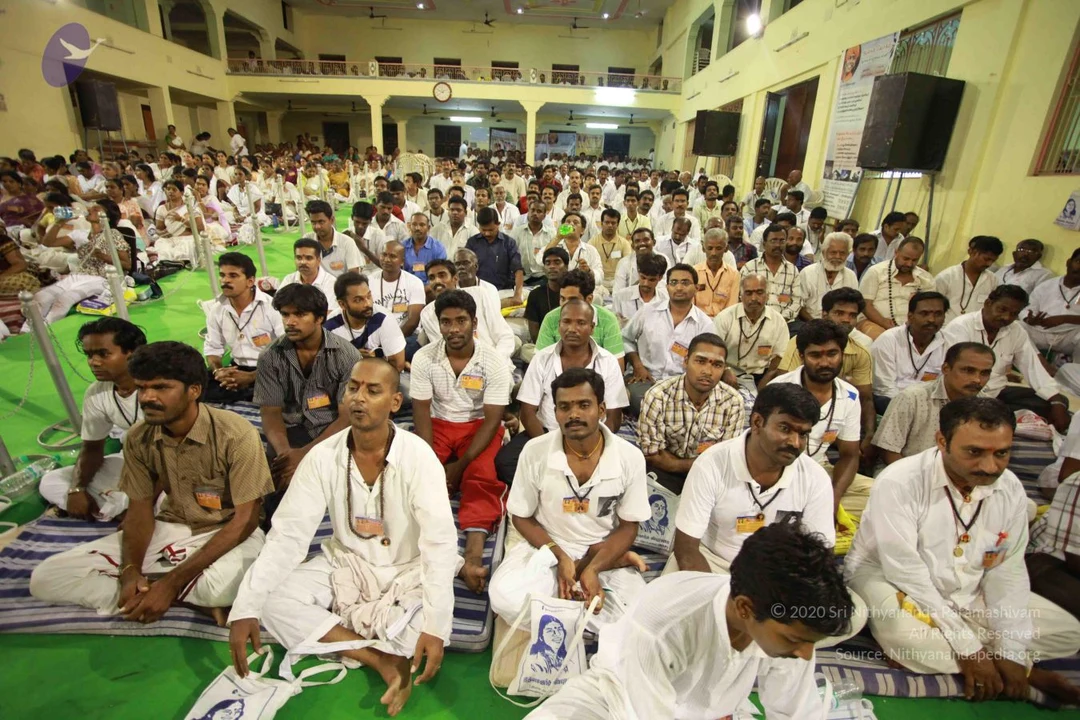
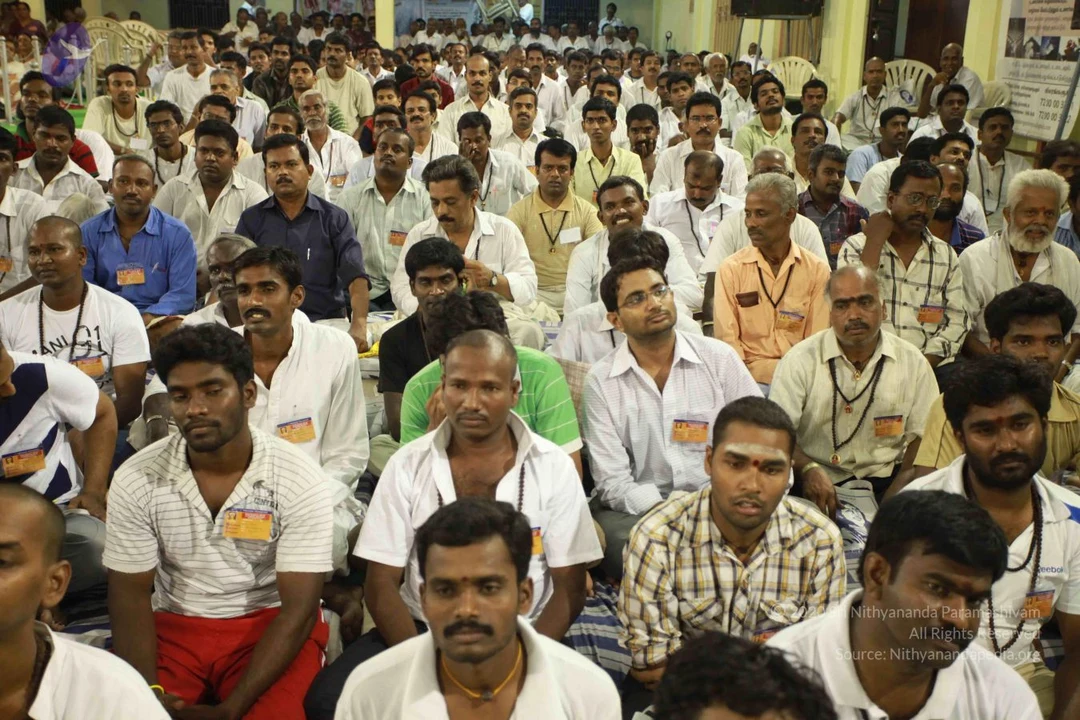
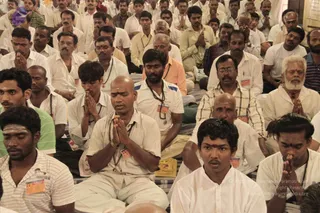
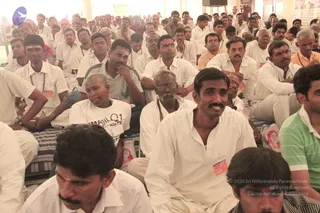
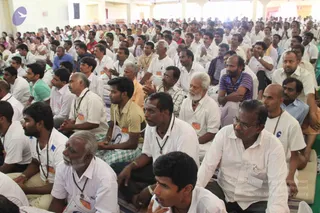
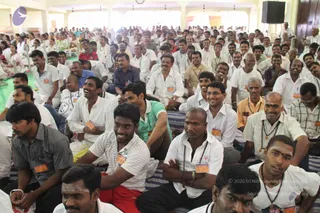
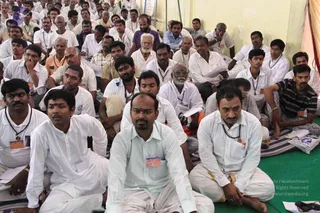
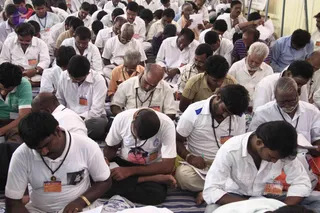
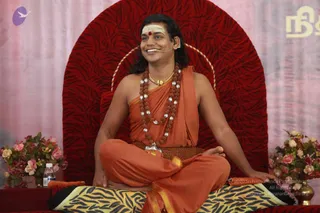
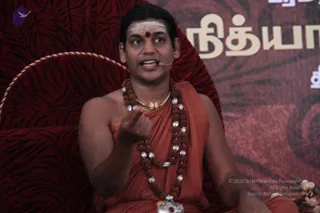
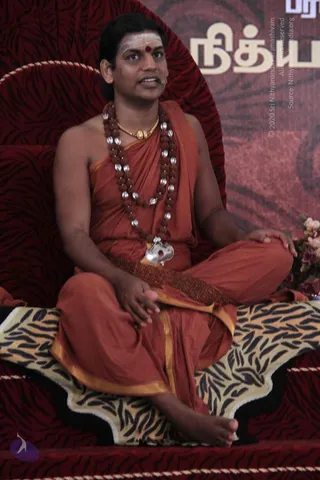
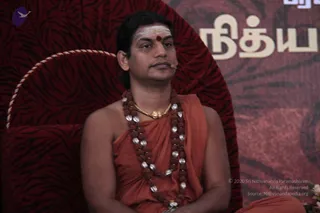
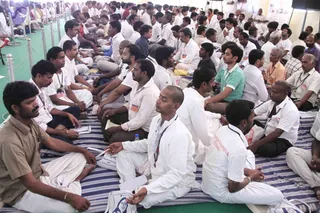
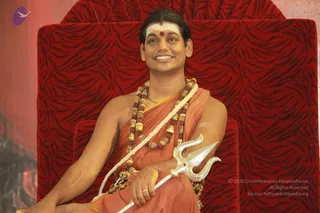
A photograph of a large seated congregation at a satsang, filling the frame with rows of men sitting cross-legged on green mats. Most wear white dhotis and white shirts, and many have rudraksha malas around their necks. Several wear name badges on lanyards, some with orange and white tags. A few have sandalwood or vibhuti markings on their foreheads. A man in the centre-left wears a white shirt and dark trousers with a badge, eyes closed as he sings or chants. Some men wear checked or striped shirts among the white. The room appears crowded and attentive, with an older man in a light shirt at the lower left and a bald elderly man in white at the upper right.Photograph of four stainless steel plates of meal served on a metal table. Each plate holds white rice, a brown vegetable curry with visible pieces, and a large thin fried puri or papad-style flatbread laid over the food. A dark chutney or pickle sits at the edge of some plates. Partial arms of people are visible at the left edge and top right, one wearing a bangle and patterned clothing, but they are not the focus. The setting appears to be an ashram dining or annadan serving area.A seated man on a tall deep-red velvet throne on a raised dais, arms folded across his chest, eyes closed and smiling. He wears an orange-saffron cloth draped over his body, a red-and-white rudraksha mala, a gold necklace, and bangles, with a tilak on his forehead and long dark hair. A tiger-striped cloth covers the seat, flanked by vases of pink and white flowers and a water bottle. Behind him a large banner shows a smiling figure in orange with a turban and bold Tamil lettering reading as a title with Nithyananda, plus a warm red patterned backdrop. Appearance-based label: a person, seated on the throne at a satsang setting.

September 22 2012

Original wiki page
Contents

Title:

The Secret of Natural Enlightenment

Description:

TALKS FROM MORNING SATSANG ON SEPTEMBER 22, 2012 AT TIRUVANNAMALAI ASHRAM, INDIA Bhagavad Gita (Song of God) is a timeless treatise on the essence of living enlightenment. The Gita was imparted by the enlightened Hindu incarnation Sri Krishna to the warrior-prince Arjuna over 5000 years ago. Amazingly, the spiritual wisdom and life solutions offered in the Gita are so universal and current that even today it is used as a personal transformation guide. In today’s talk on Bhagavad Gita, chapter 6, verse 22, Paramahamsa Nithyananda (Swamiji) describes the ultimate state of enlightened lifestyle. When we are completely unclutched in our inner space, and still able to function smoothly in ordinary life, we embody the state of sahaja samadhi, which is the perpetual state of all enlightened masters. Once our kundalini is awakened, we achieve the highest level of consciousness and our spirit naturally flows toward this ultimate destination of sahaja samadhi.

Link to Video:

VideoAudio

Title:

I Have Come For The World's Youth : Nithyananda In today's satsang, Paramahamsa Nithyananda (Swamiji) observes a unique phenomenon among his followers. Commonly, the elder generation in a family is more religious and the younger members are rebellious, not wishing to attend temple or sit for spiritual instruction. In Nithyananda's sangha, however, the reverse is often true. Young people are drawn to the dynamic teachings and life-changing practices, while their elders feel more resistance. Nithynananda points out that older devotees often grow more youthful and energetic once they attend his programs, demonstrating that it is never too late to rejunvenate oneself.

VideoAudio

Transcript:

The Secret of Natural Enlightenment

Bhagavad Gita 6.22

22 September 2012

Bhagavad Gita Chapter 6, Dhyana Yoga, Verse 22

yam labdhvaa chaaparam laabham manyate naadhikam tataha |

yasmin-sthito na duhkhena gurunaapi vicaalyate ||

Translation: Having obtained which one does not esteem any other acquisition as something more and being established in which one is not shaken by even the most grievous suffering.

Bhagawan is describing one of the greatest state of advaida experience. Please understand, there are various states, various stages of Samadhi – Sabija, Nirbija, Savikalpa, Nirvikalpa, Bhava Samadhi. There are various stages of Samadhi. Bhagawan is describing the ultimate Sahaja Samadhi. If you can move your body and mind and relate with the ordinary world as they understand life but completely being established in your nirvikalpa Samadhi, it is called sahaja Samadhi.

Please understand, being established in the nirvikalpa Samadhi in your inner space, completely unclutched in the inner space, with that if you are able to move your body and mind in a so-called society’s normalcy, that is sahaja samadhi. The most powerful, the ultimate spiritual state, even Gods need to do tapas to achieve this state. Even Gods who achieved their states by the various practices need to do unique special tapas to achieve this state.

yam labdhvaa chaaparam laabham manyate naadhikam tataha |

yasmin-sthito na duhkhena gurunaapi vicaalyate ||

Having obtained which state one does not esteem any other acquisition as something more and being established in which state one is not shaken by even the most grievous suffering is Sahaja Samadhi. We call it Sahaja Sthithi.

The state where the space where thoughts are not required for the smooth functioning of your body and even mind. Mind can function without thoughts. Please understand, even though usually the mind is bunch of thoughts it can function without thoughts. You may ask, “How can mind which is bunch of thoughts can function without thoughts.” Just by the presence of the super consciousness, without any agitation or the after effects and side effects which will be usually created by thoughts, mind can function, mind can flow. Unless the mind functions you wont even be able to stand, sit and walk. It functions without any thoughts. No thought. No movement. That is why I always tell people; I am not existing as you think of me. Same way, after I leave the body I am not going to be absent as you think of the absence. Understand, an enlightened master, a person who is established in sahaja samadhi, he will not be present as you understand presence, he will not be absent as you understand absence.

Krishna says very beautifully, whoever understands the way I function, will be liberated. Understand he says, if you understand how I am functioning you will be liberated. How funny it is! You may think, “Ah! How will I be liberated if I know how Krishna is functioning”. You will understand your mind is also functioning in the same way and just your ignorance creates complication. You will just unclutch that very moment. “Wow! This is what! Then why was I connecting all the thoughts unnecessarily and creating constant suffering for me. I wasted my time creating constant suffering for myself.” When you create constant suffering for you, even the good thing you want to do to others will become suffering for them and you will cry, “Oh! Even if I do good things people take it bad.” They are not taking it bad; you are doing it as bad even though you plan good. But when you stop torturing yourself, when you stop giving suffering to you, even if you do something what you think or you may feel as bad, will end up as good. When an enlightened master uses his trishool even then He only heals. When an ordinary man even if he gives gift he only destroys others.

In Calcutta, when I was staying, I saw, I was staying in the banks of the Ganges; two neighbours, every day morning there will be a fight. They will scream in that village Bengali. Scream means really scream. But I saw, one fellow, everyday evening he will give sweets to that daughter of the neighbour. She is a small child. Morning both fathers fight. Evening this fellow gives sweet to the daughter everyday, full pot rasagullas he will give. I asked him, “How come you love her so much? But with this father you have a fight?” And it is not some real fight. Very frivolous things. This fellow says, “No..no.. I hate that fellow and the daughter both. I give lot of sweet because daughter wont be able to eat everything and that fellow is diabetic. He will eat, he is such a miser he will not throw the sweet out, he will eat and get more sick. Understand, and it really happened. That fellow is such a miser, he can’t throw the sweet out. The daughter can eat only one. It is almost 30 – 40 rasagulla and this fellow religiously will eat and fall sick in once in a week. But that does not stop him eating. So, even by giving sweet you can kill people.

Even though I give kadukai podi, I help you guys. I tell you guys—if you take Haritaki powder every night, your non-mechanical parts of the brain gets awakened which directly leads to continuous unclutching even while you are functioning normally. Even while your life is moving normally. Even when you are doing all your activities normally.

If you continuously establish yourself in the space of unclutching even while your body and mind is functioning, that is what I call Sahaja Samadhi. Bhagawan is talking only about that sahaja samadhi here. When I awaken your kundalini, you experience sahaja samadhi only. Your brain, how it is in waking state, how it is in dream state, how it is in deep sleep state. When I awaken the kundalini you can see it is in highest awareness like a peak of waking state and highest rest like a depth of sleep state. Both together. That is what I call sahaja samadhi. Sahaja Samadhi – restful awareness. Even if everything is happening in a deep, staying in the state of deep rest, I tell you, when I am giving the akashik reading, Kalabhairava dharshan, people say, “You are so active and alive Swamiji.” I tell you, that is the time when I feel the extraordinary peace inside. No movements of thought. Continue to unclutch, unclutch and unclutch to establish yourself in sahaja samadhi.

Today with this, I will move to the next segment of the morning satsang.

See, there are two types of compassion. Compassion – Immediate compassion. Oh! You are sick. Go and sleep. If you are hungry go and eat. Lie down. Without thinking about the purpose of life. The real compassion is supporting a person to fulfil the life’s purpose even if it is little difficult in the initial times.

Come on! Lets start the questions.I will answer your questions.

We first have a gratitude email from Kaveena Ananda from Seattle for Inner Awakening and she is saying, “Nithyanandam, to attend the Inner Awakening program I used to postpone because of my 3 year old son. I didn’t know who would take care of him while I attend 21 days program with Swami. I sent my intention form and paid the money. Swami responded saying that he will take care of this. Very surprisingly, my husband who doesn’t believe in Swami and any Masters, flew from US to take care of our son while I attend the program. He suddenly became very supportive and he even once came to the ashram. And other concern was my son used to get sick every time we came to India for vacation. During my IA trip, he remained healthy all through 21 days and beyond. These are true miracles from Swami.

Life After IA: Now I truly understand as I experience that Inner Awakening happens every day, every second. It is not just 21 days. I can see that Swamiji is part of me and I have a direct connection to Him. Whatever I think He touches those topics in satsang. If I have any questions He answers them immediately in the next day satsang. While I talk about Swami to my friends I can see Swami talking through me and winning the arguments. I can feel His presence all the time in me. I can feel Swami’s strong presence at home. I have the home security system and I had a thought at 9.30am while driving to office that what if the motion sensors detect Swami walking and I get a call from Security Monitoring team. I can’t believe it how fast it happened. At 10.45am, I got a call on my cell phone while I was in office that the alarm went off and if they have to call the police. I had a strong belief that it is a false triggered because of the thought and I told them it is not required. I will check myself. My colleague said, “Are you mad? Why do you want to take the risk?” I just smiled and did not say much. I checked online and found out that the bedroom motion sensor triggered the alarm and that is where my puja room is. It is an amazing experience to me.

I have experienced success in my job too. I work at Microsoft in a Senior Manager role. During the recent performance review, I got the top most rating 1+ in 300 people organization and for that rating, rewards pour in through cash and stocks. I was thinking what did I do differently after Inner Awakening. I was honest and never differentiated between my job and others. I was genuinely helping people to be successful. Love for people. I was not afraid to take risk. Presentations became much smoother after Inner Awakening as I didn’t have fear. I started getting creative ideas to implement at work.

Lot more miracles happened to me during Inner Awakening. I asked Swamiji in energy dharshan that how much ever I meditate I am not able to go beyond this body. One night, while sleeping during early morning hours, I had a dream where I am leaving the body. Then immediately I was very much aware and merged into the source of light. This was a great feeling to carry for several days. Then once more, I had the same dream of me merging into the light. I was touched by the experience and could clearly remember how I left the body and merged into the source of light. When I woke up I was surprised to see awareness I had in my sleep state. This is definitely the result of Inner Awakening and Swamiji.

Several times I have felt the vibrations of Ananda Gandha chakra and now I can always feel the vibration in my body with lot of energy flowing and kundalini awakening when I just sit. Never ending miracles and bliss has taken over everything else in my life. I can see myself floating in the ocean of honey bliss. This is what is the effect of Inner Awakening. My deepest gratitude to Swami for showering both outer world and inner world success on me. Whatever I say in words here is very less. Everyone should experience it.”

In Nithyananda

Ma Kaveena Ananda.

Actually, my presence cannot be felt by the detective alarms. Because she wanted, that my presence should be felt, see..the moment she thought, she really wanted. “Will it really happen?” she had a deep desire inside. So just to prove to her I made my presence to be detected by the alarm.

The next question is from Aradhana Patel, New Jersey, USA, who is asking,

“Swamiji, after hearing you talk about the Gurukkul system in morning satsang, I wish my son had been young enough, I would have sent him there. But he is 17 now and I am really scared of what might happen to him. A teenager growing up in the USA. Any guidance for Indian youngsters in the west, Swamiji?”

Actually, I am designing a program especially aiming at Indian youngsters in the west. For them to be like a 3 month semester course to give all the universal, spiritual values embedded in the vedic tradition to learn, experience and live just through internet. The program is getting designed. Soon the teaser will be released then the release of the program will happen.

The next question is from Bhavana from Chennai who is asking, “Dear Swamiji, Nithyanandam. I am from Tamil Nadu. I became your devotee just by watching your morning satsangs for the past 10 months. I have not attended any of your programs except one kalpataru. Till now, my parents don’t know that I am watching the satsang daily. If they come to know, they will treat me as if I am pregnant before marriage. So I can’t wear mala or participate in the Nirahara samyama. What do you want to tell to people like me?”

Bhavana, it is very unfortunate. Usually elders go to the spiritual Gurus and youngsters don’t go. And elders have to force the youngsters. But in my case, it is always opposite. Youngsters come and settle down with me, pull their parents. I am a special edition of consciousness for youth. It has become very difficult for the old brain to think a creative, alive, awakening of spirituality is possible. I tell you, even if the elderly people who come to my programs or accepted me, they become young in heart.

So, understand, these great spiritual teachings, see, even if you are not established in unclutching whole day, even if you remember 100 times, “Let me try to unclutch. This Swami says something.” Your mind will say something, “Ah.. He will say thousand things. Don’t waste your time.” But then, no..no..no..no..I will try. Even if you try unclutching every day your eyes start shining. Your system grows younger. I am not saying only if you become successful you will achieve all these qualities. No.. Even if you try.. This Nirahara samyama also, thousands of people try. Hundreds are only successful. But even the people who tried and failed got many benefits like health, they become better, many benefits. If you are successful, then the benefits are immeasurable. Even if you are a failure, you lose weight, your health becomes great, so many wonderful things you receive.

So understand, Krishna says in Gita, even if you practise these great truths little bit, He is not saying you have to do completely whatever I am saying. Even if you practise little bit, great good things will happen to you. Try Nirahara samyama. It is a.. 1st level is 2 days, 2nd level is 7 days, 3rd level is 11 days. Even if you fail in the 2nd level, you will have tremendous confidence. “Wow! I did not eat for one week! How did I manage leaving my bonda and pakoda?” So, even if you try little, so many wonderful things will happen.

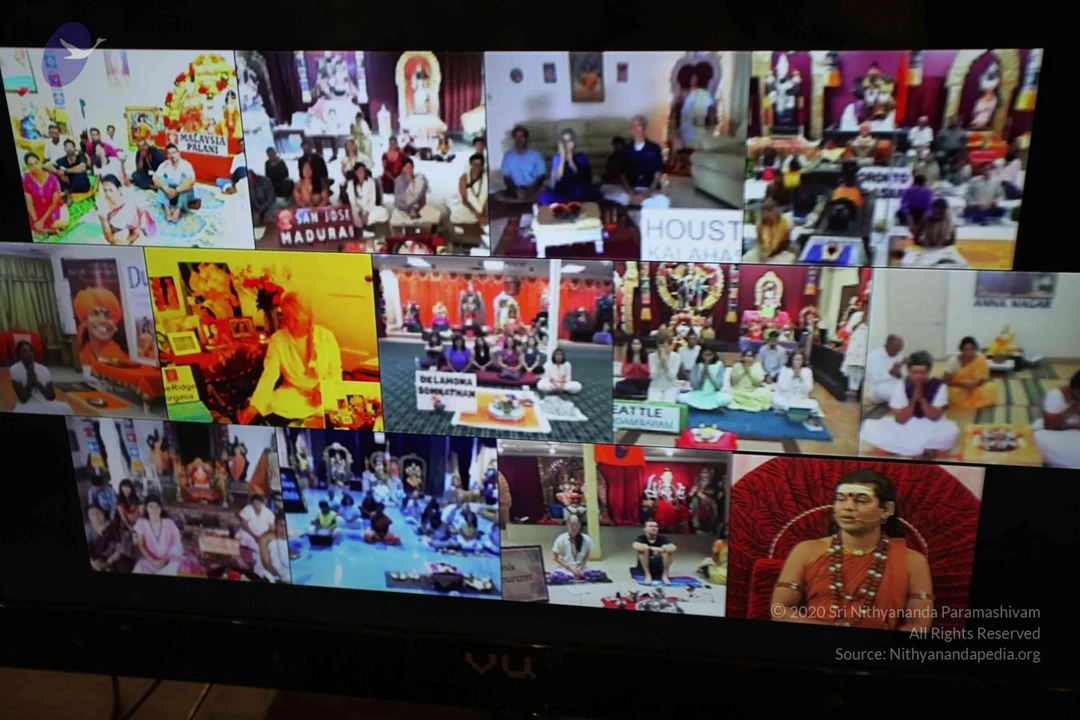
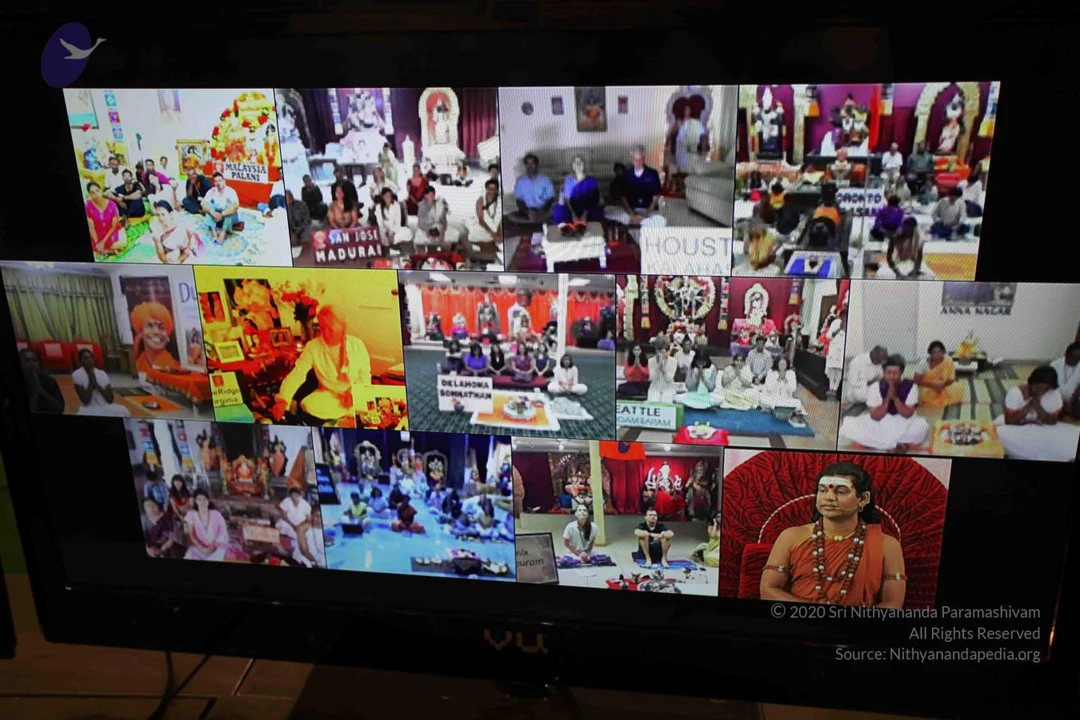
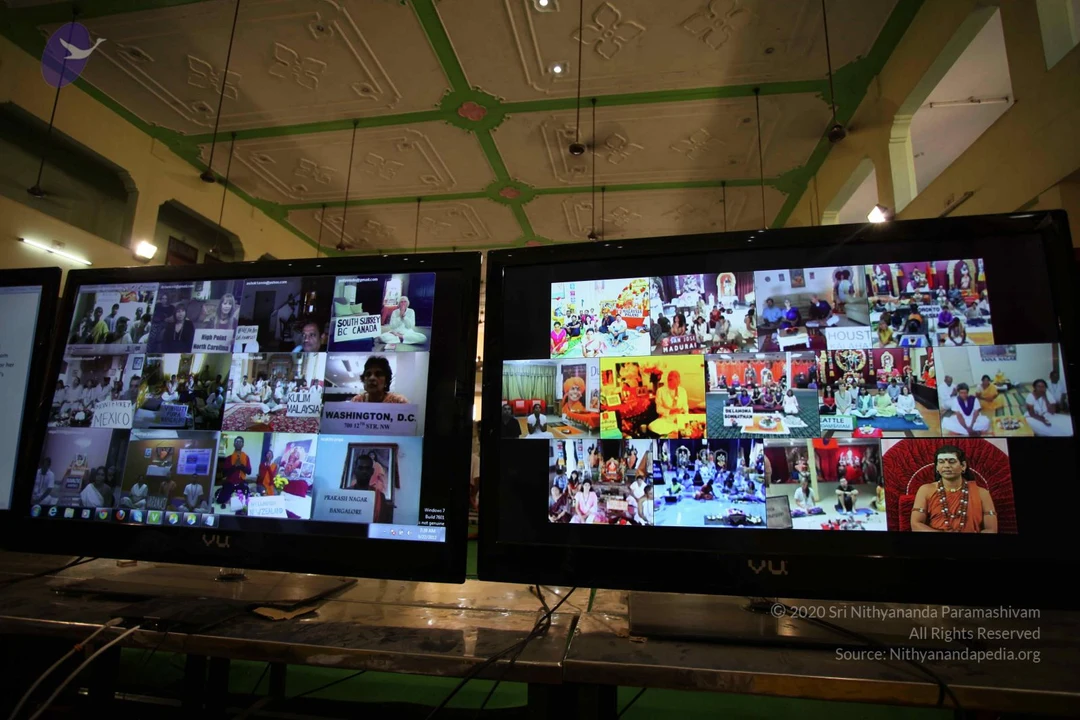
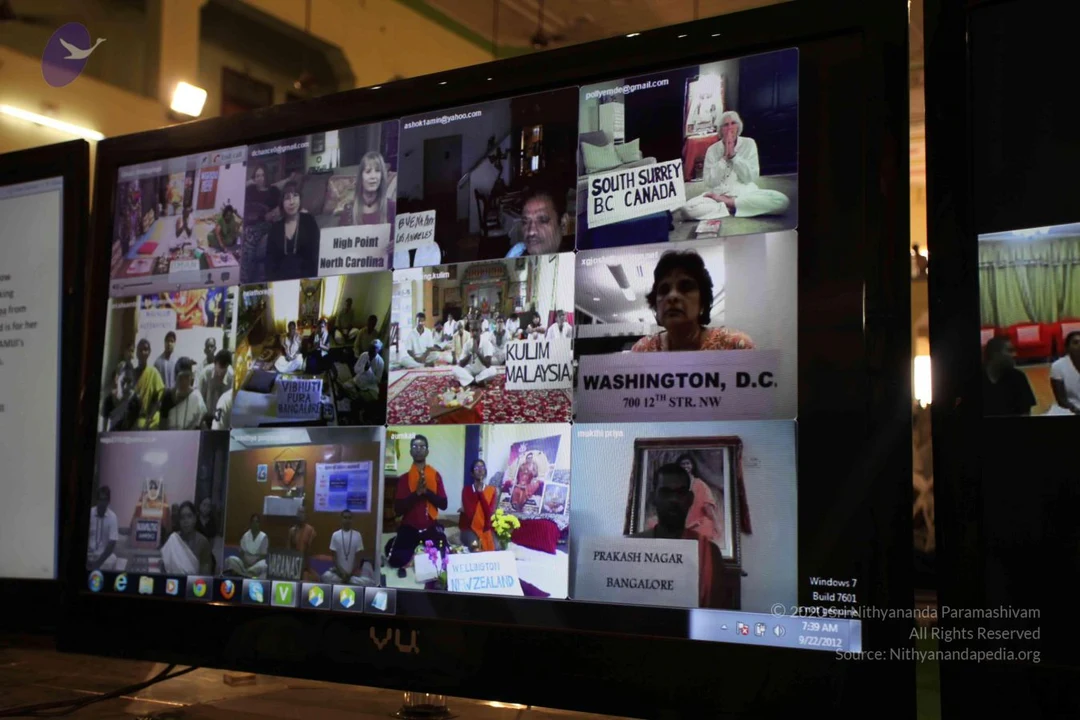
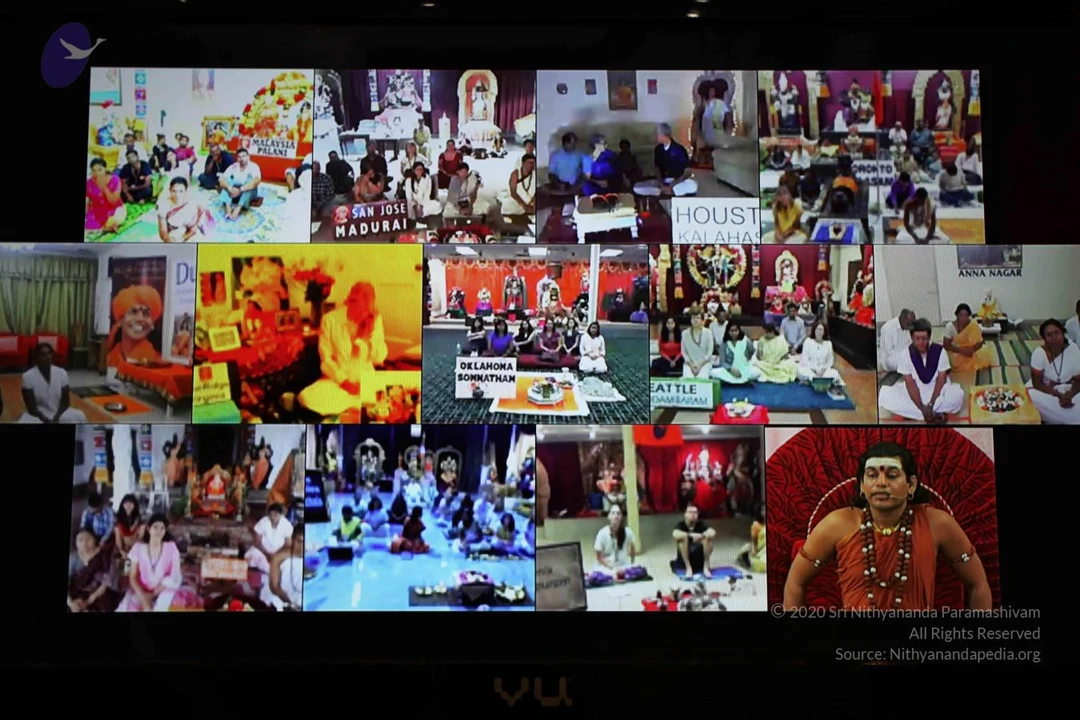
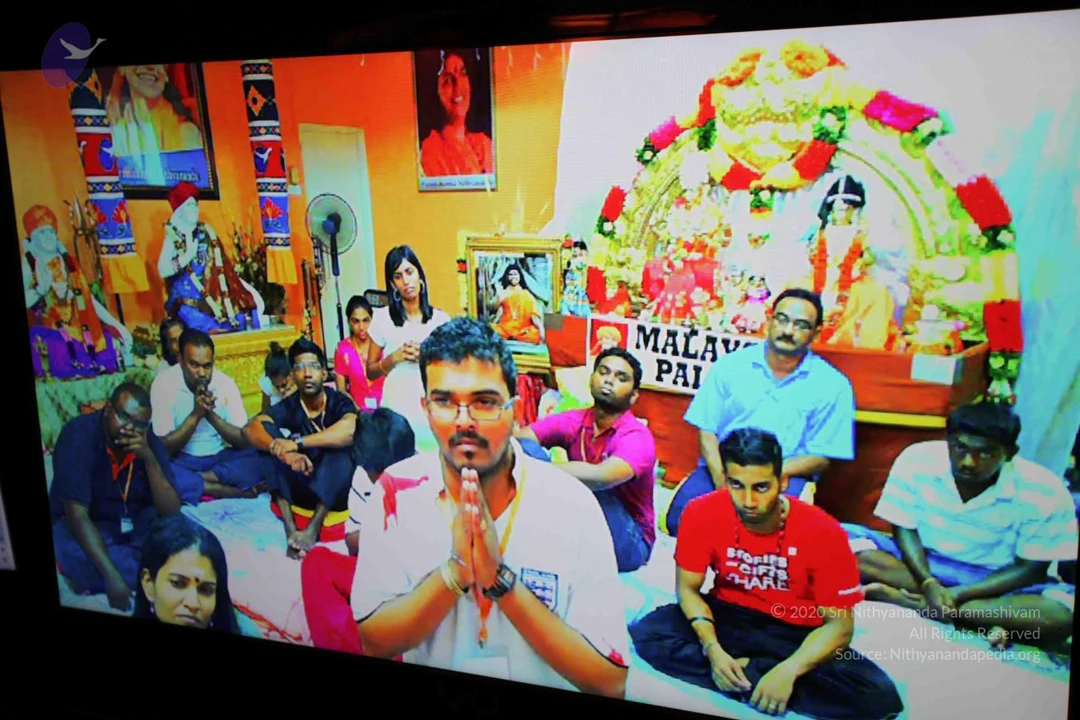
I bless you all who are sitting with us around the world at this moment in 1093 places through Nithyananda TV and Youtube Live, 48 places two-way video conferencing having Nayana Deeksha in 259 cities in 28 countries.

I bless you all, let you all achieve, experience, live, express, radiate, share and explode in eternal bliss Nithyananda. Thank you.

Photos From The Day:
Sakshi Pramana:

Sharing from Paramashivogam

Tags:

Paramahamsa Nithyananda, ultimate, enlightened lifestyle, inner space, life embody, samadhi, perpetual, enlightened masters, kundalini, awaken, consciousness, spirit, destination.

Photos Of The Day:

NITHYA-YOGA
PADA-POOJA
NITHYA-SATSANG

SARVA-DARSHAN

SESSION-ON-PAIN

SAMKSKARA-DAHANA-KRIYA

LUNCH

KUNDALINI-AWAKENING-SESSION

AKASHIC-READINGS

NIGHT-MEDITATION

Photos from this day

View all 858 photos

NITHYA-YOGA

4 photosSource gallery
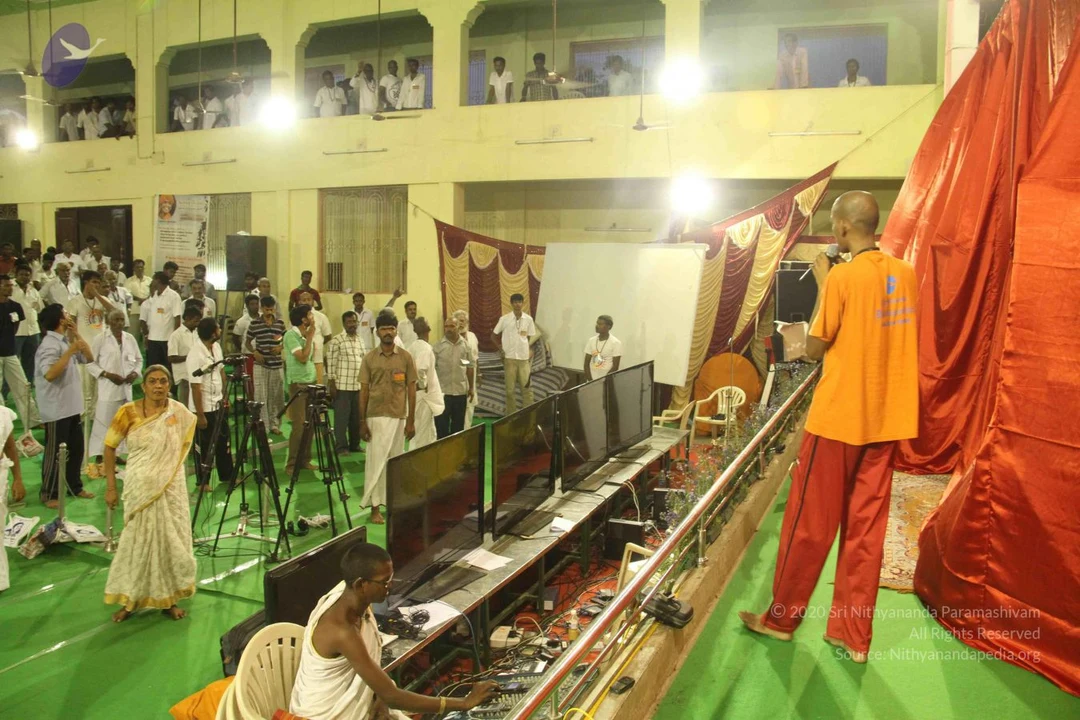
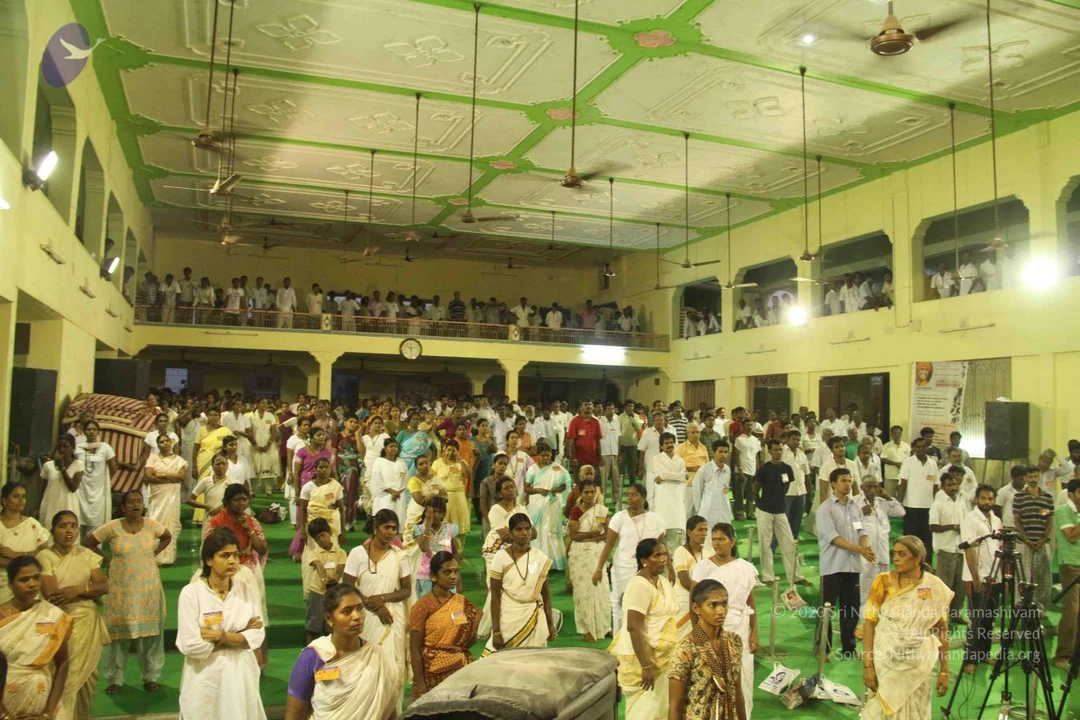
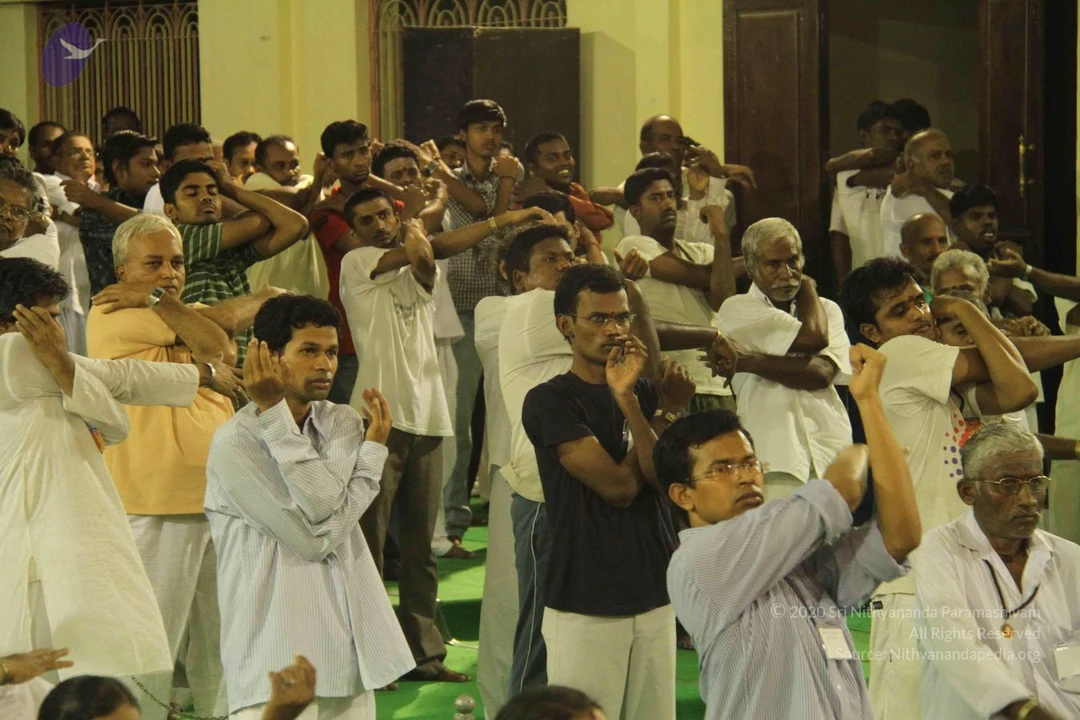
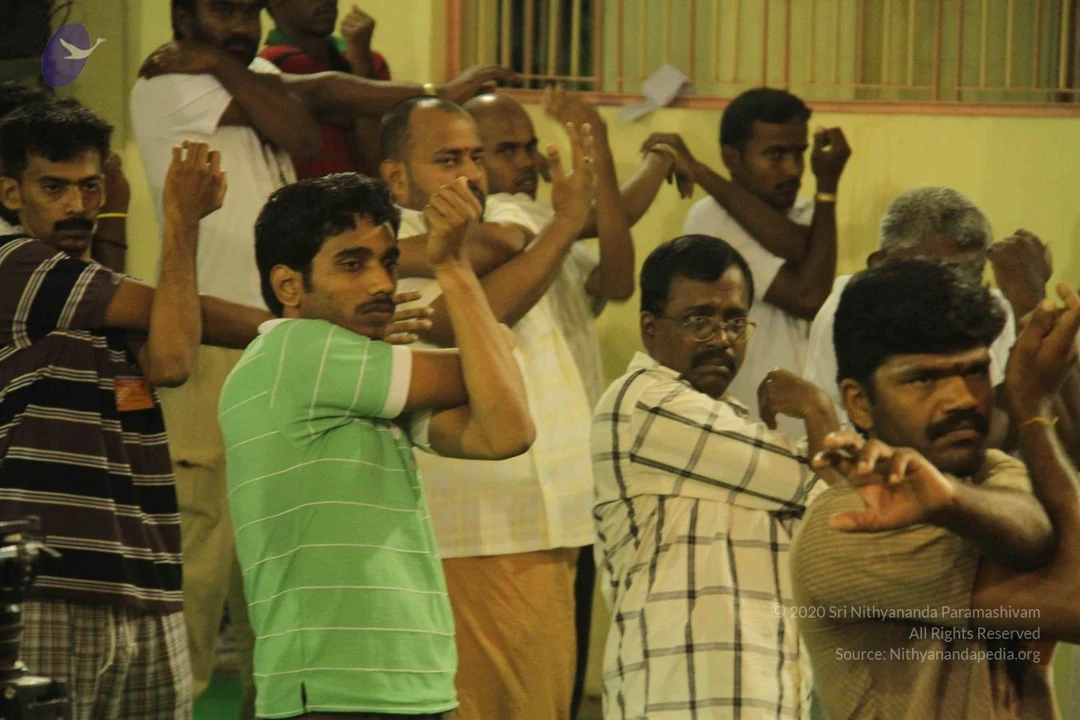
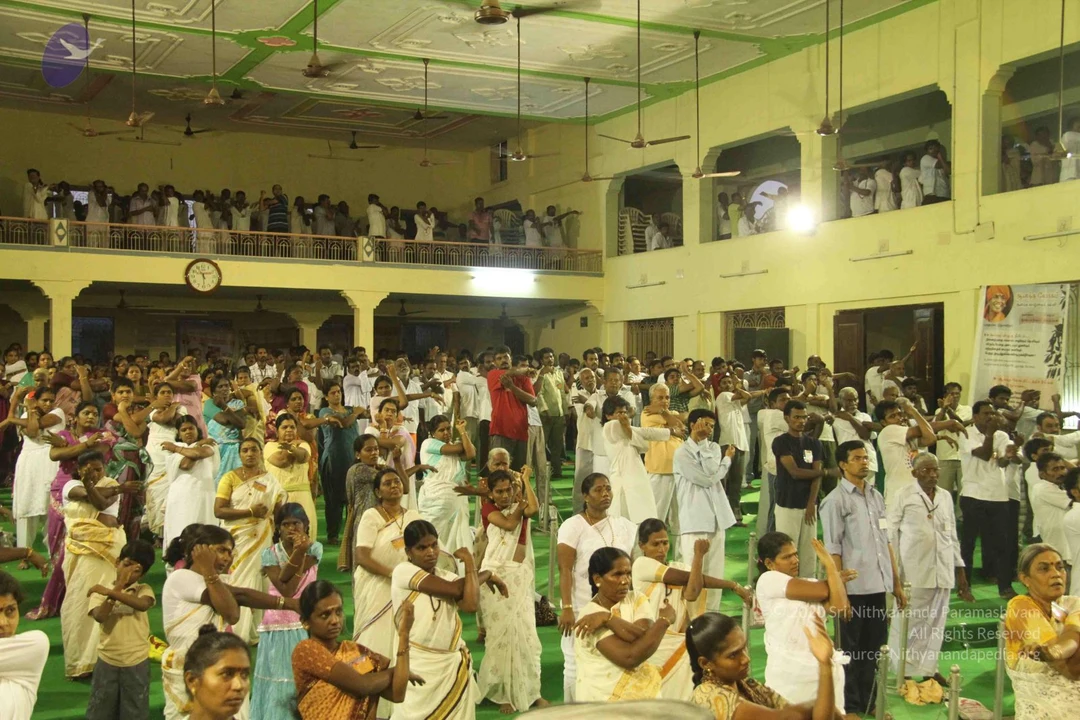
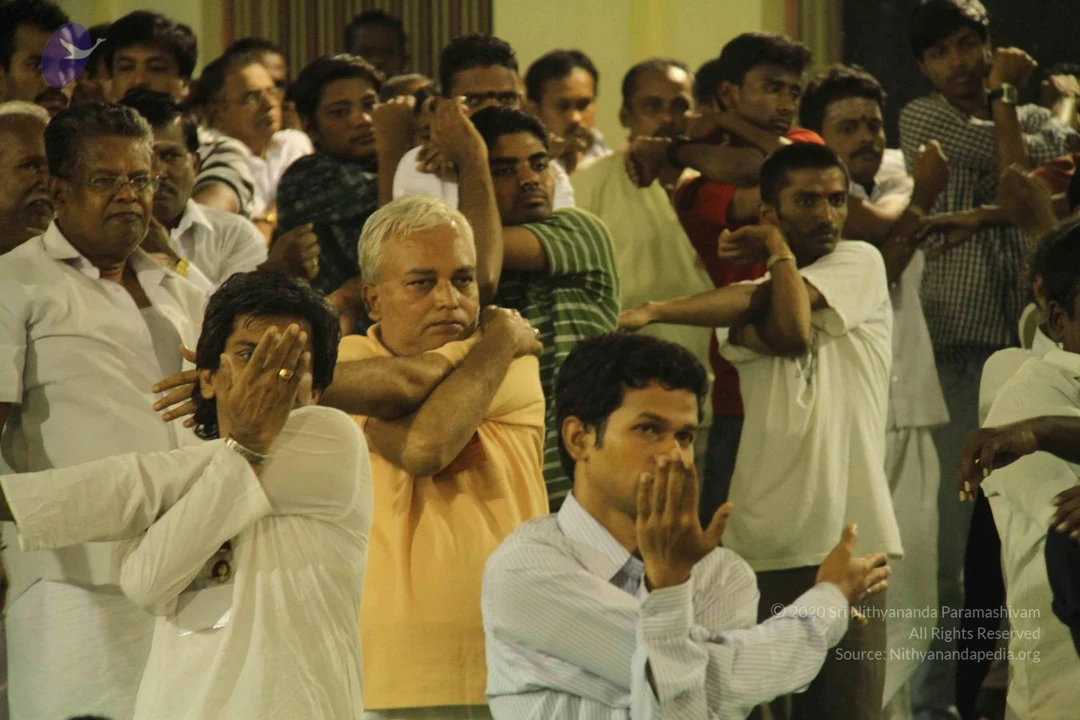
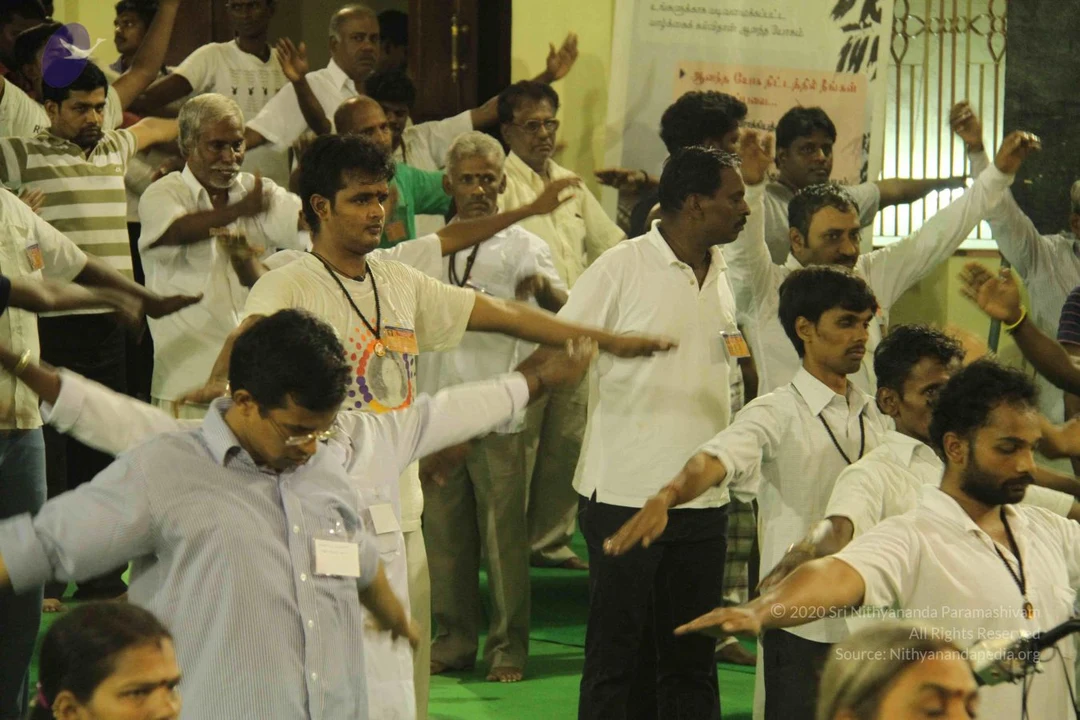
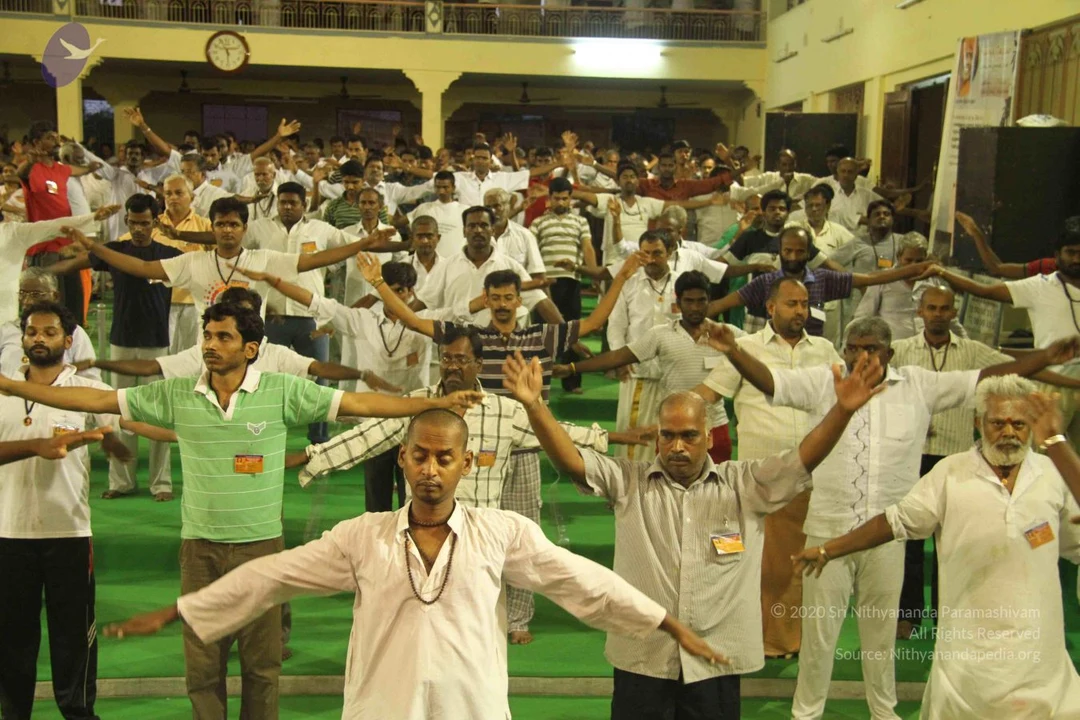
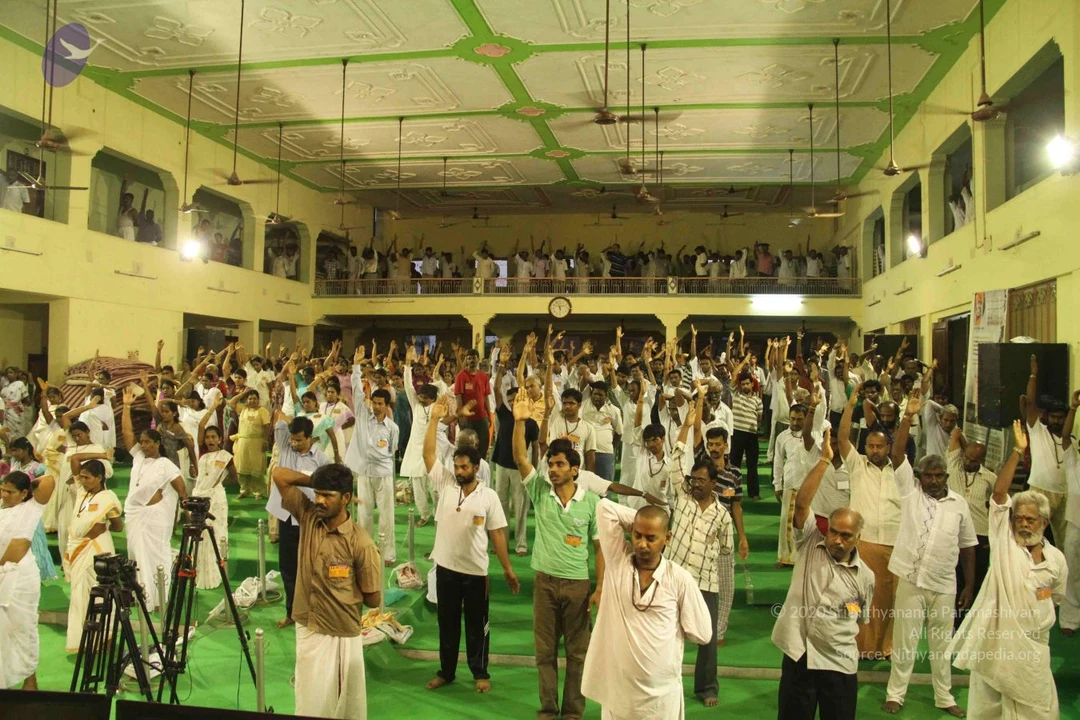
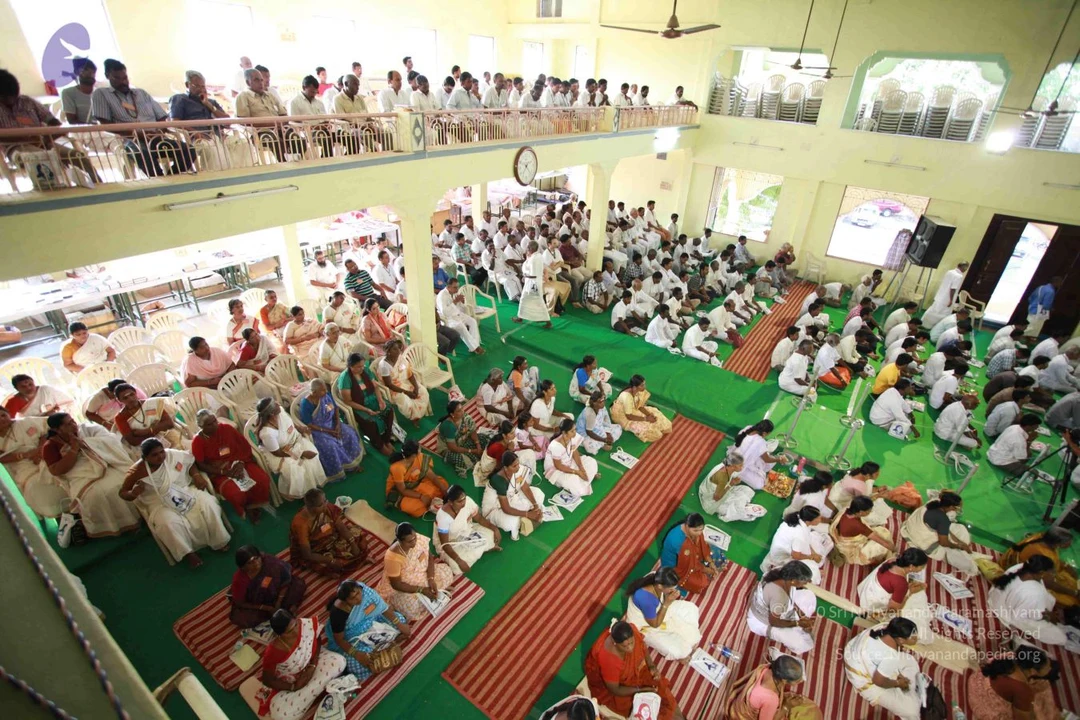
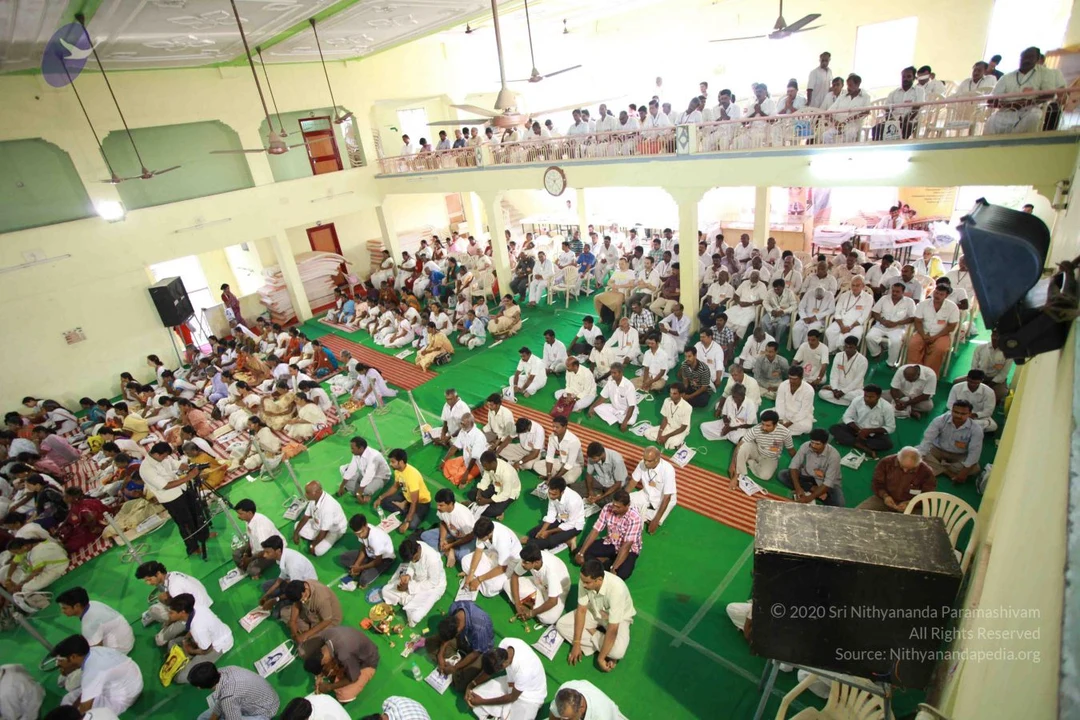
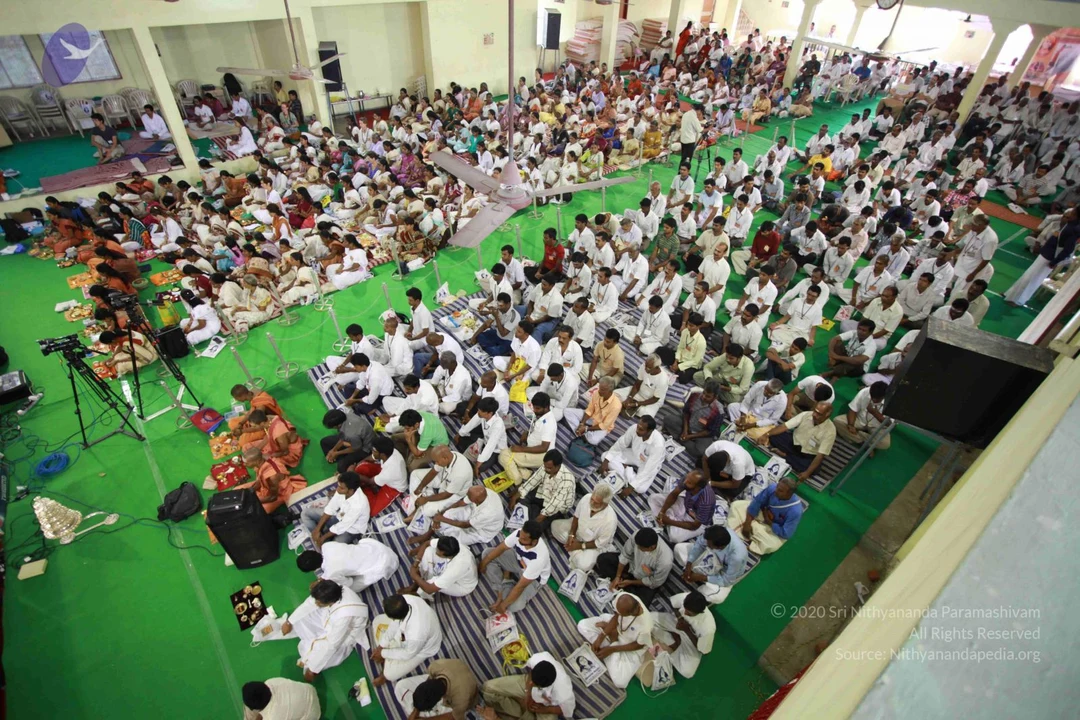
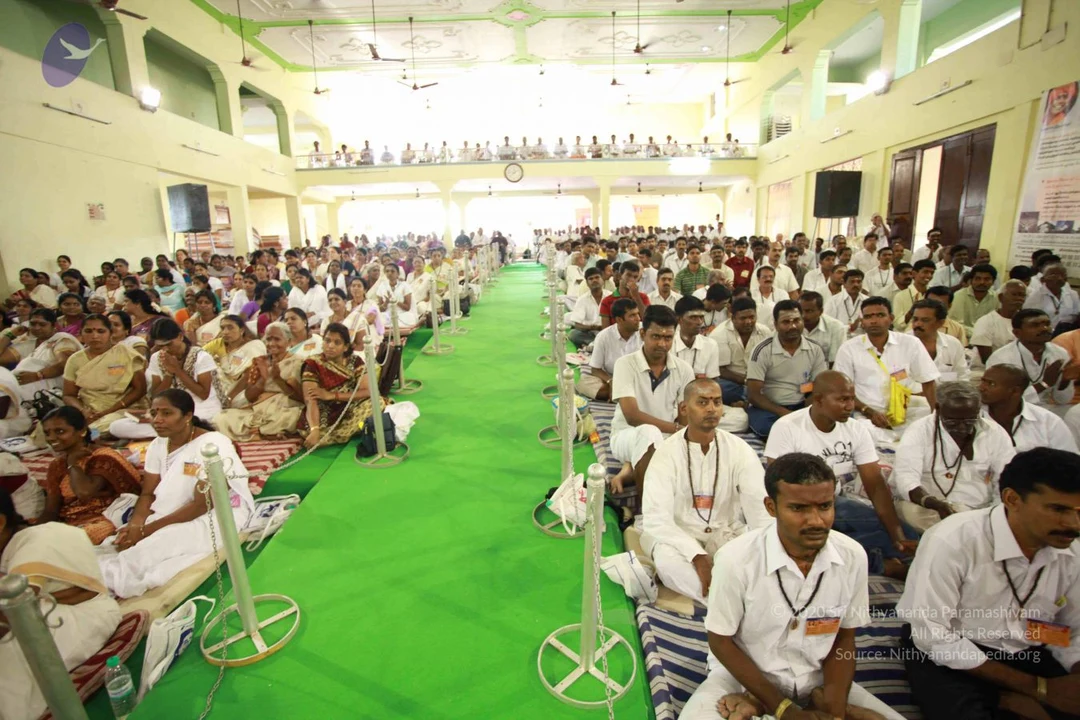
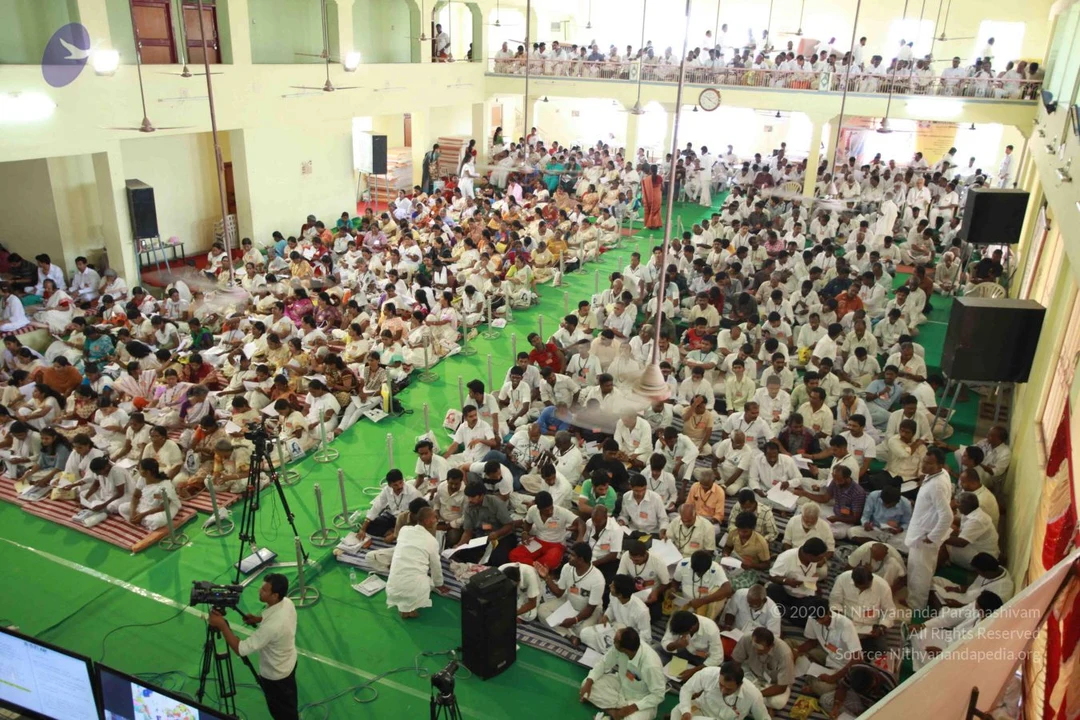
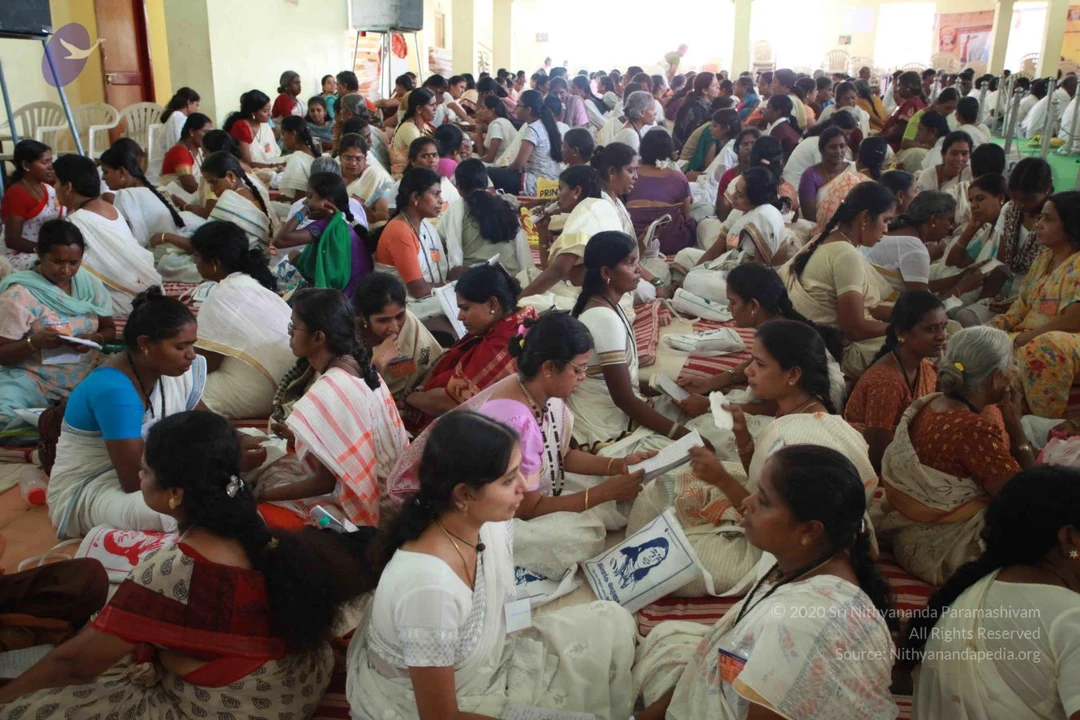
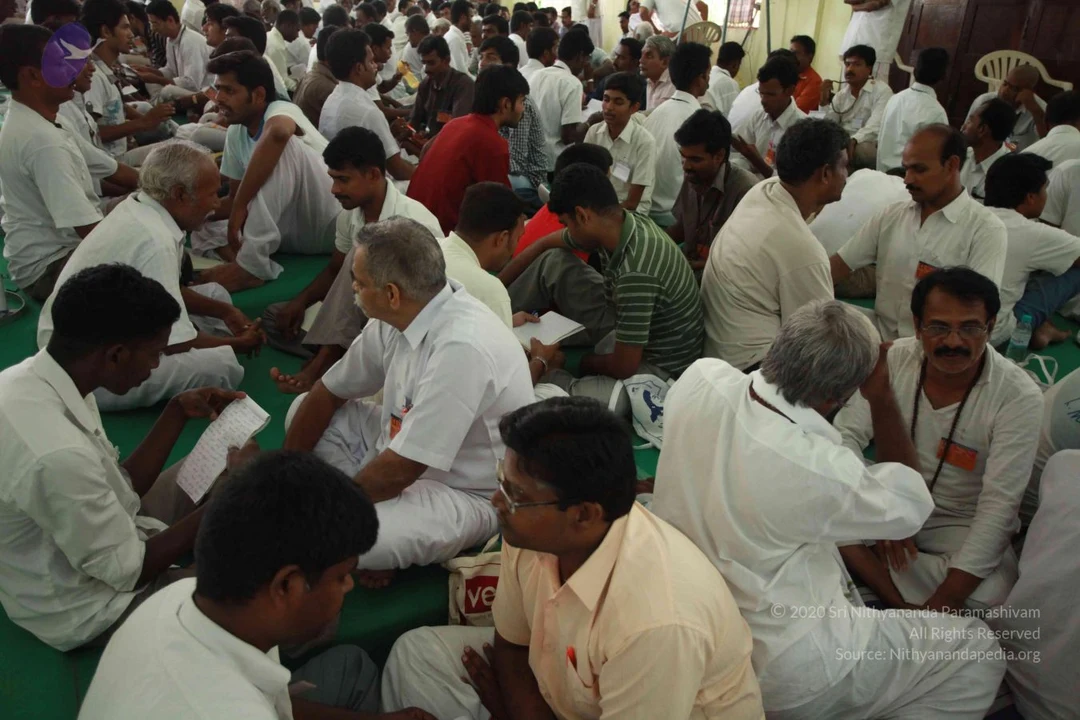
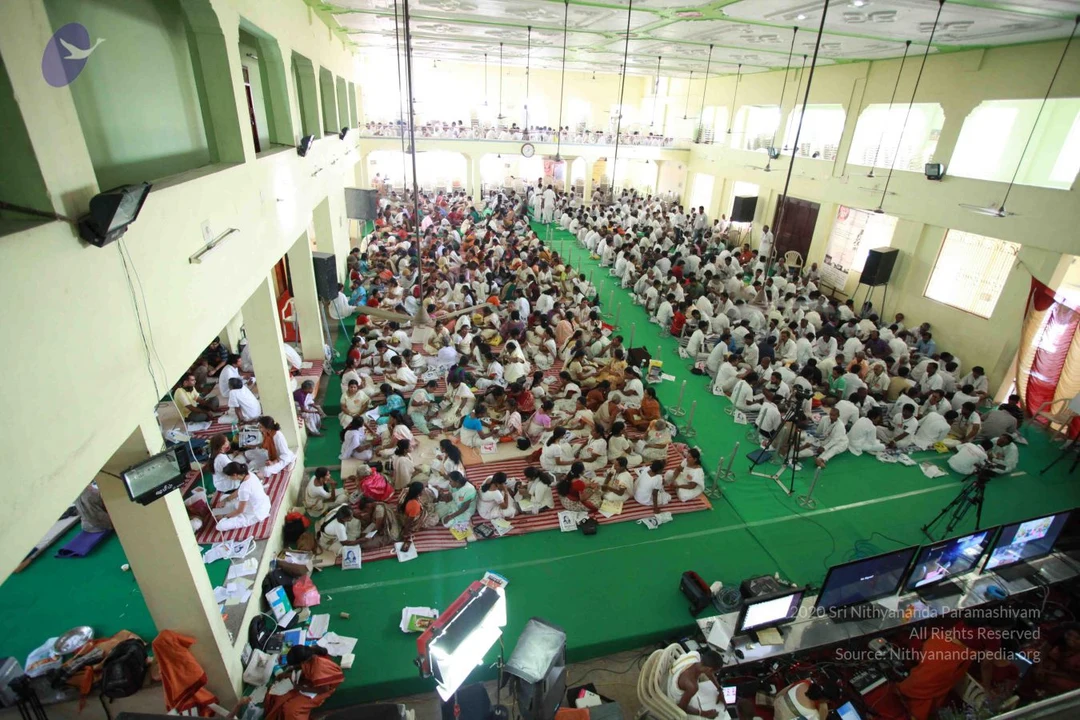
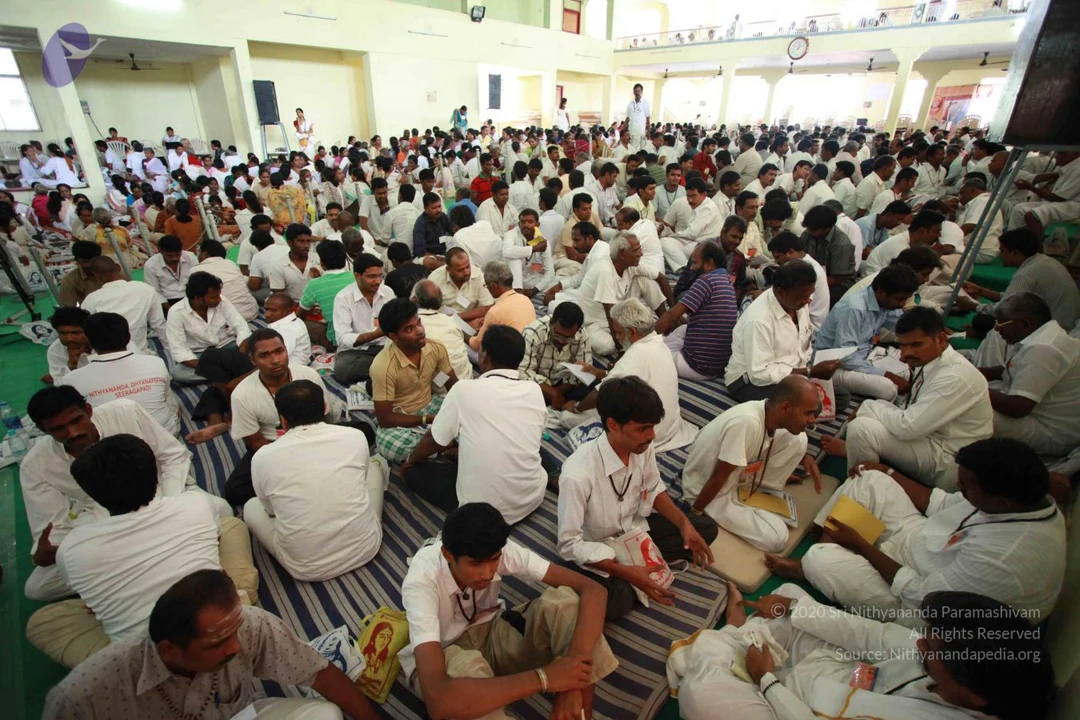
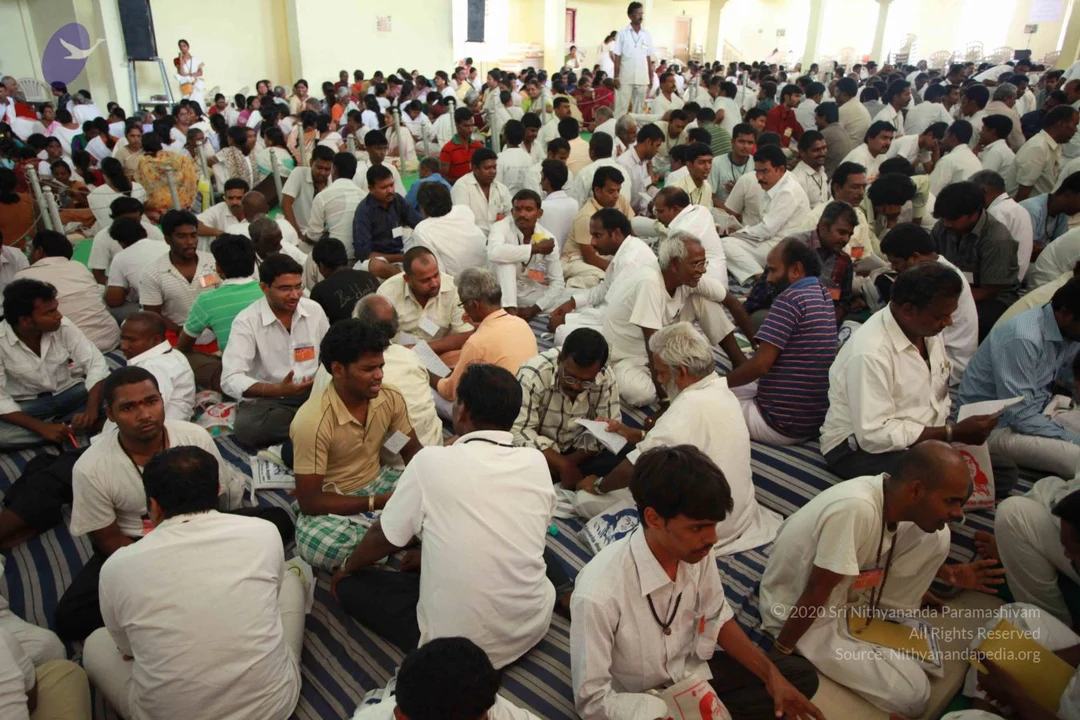
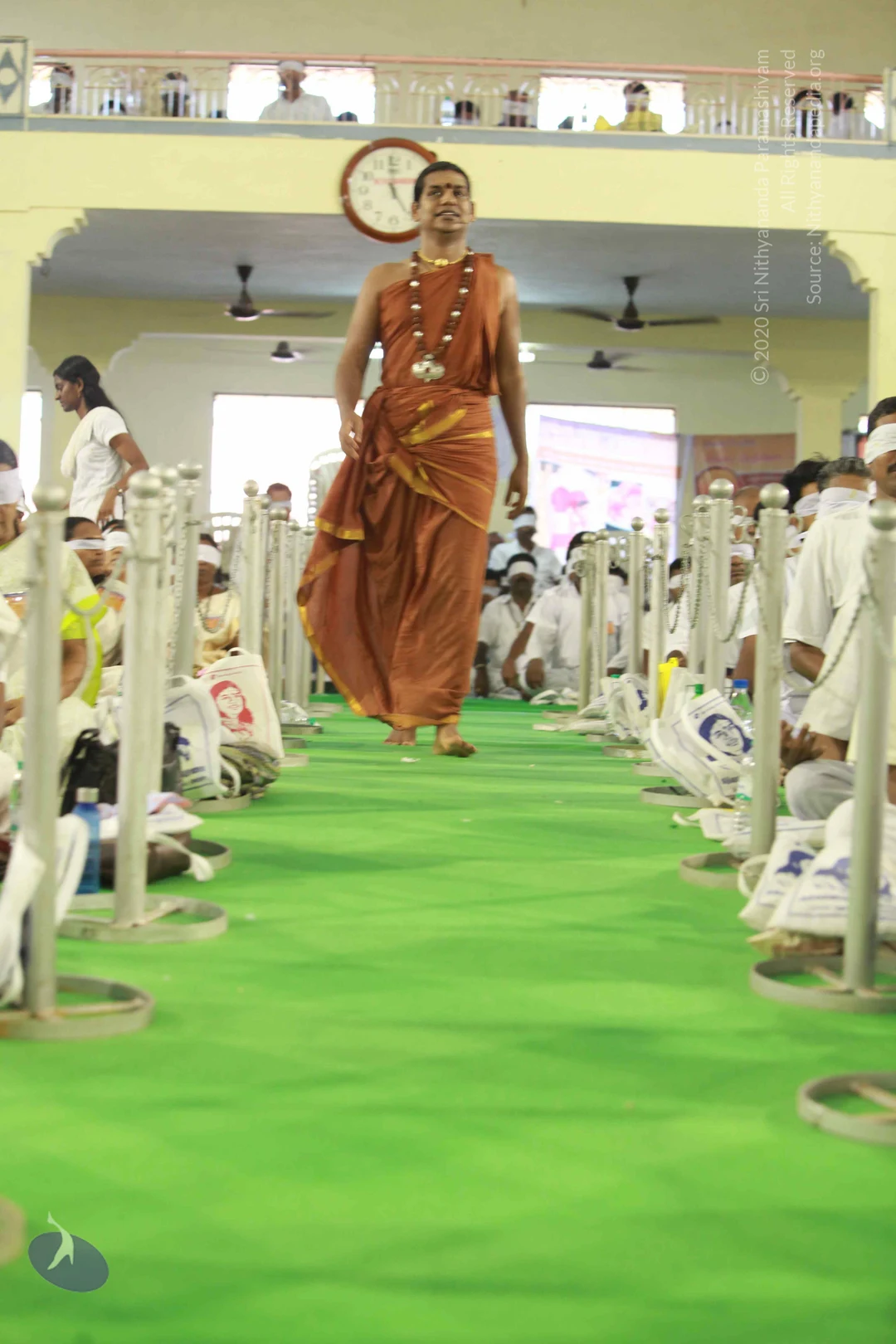
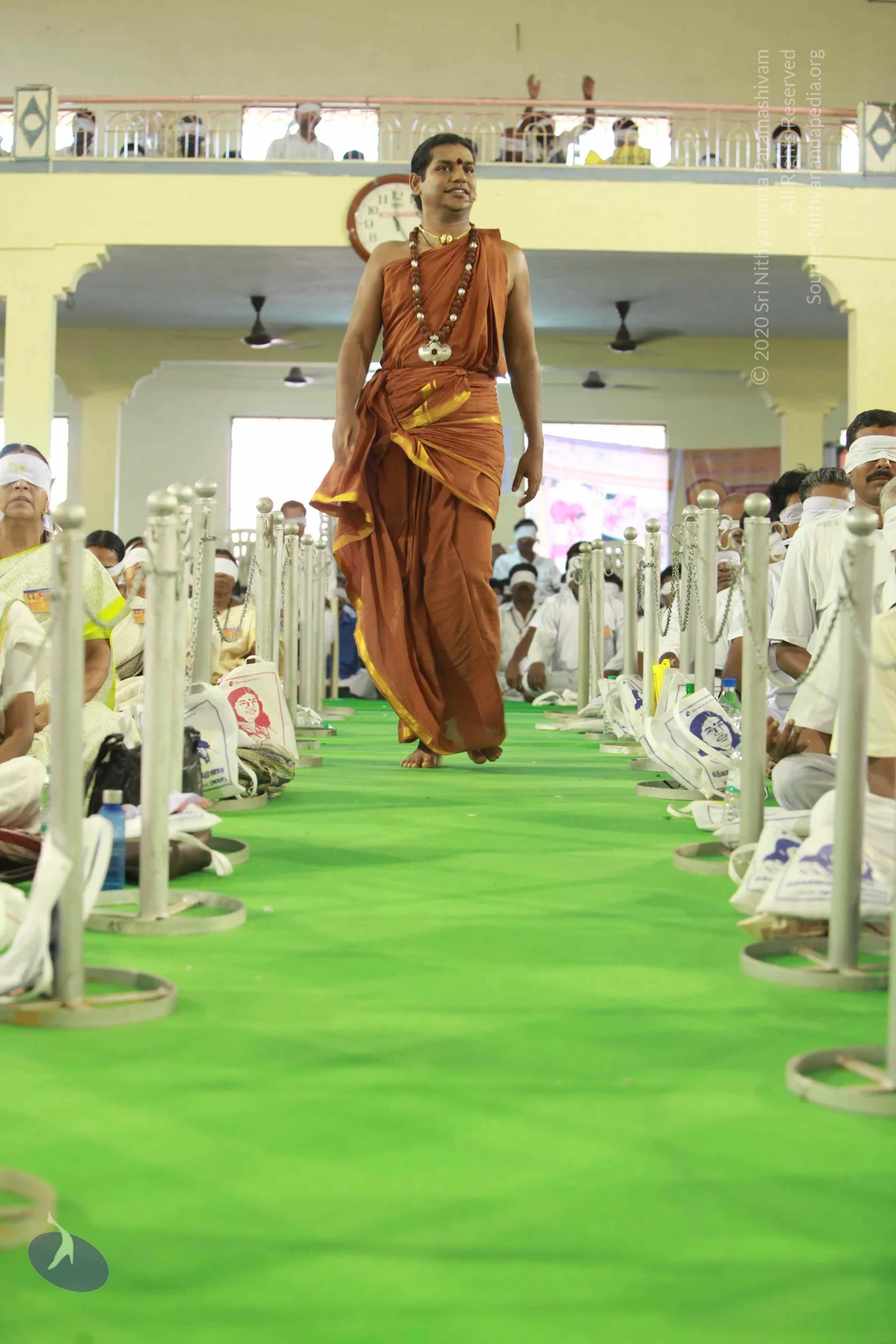
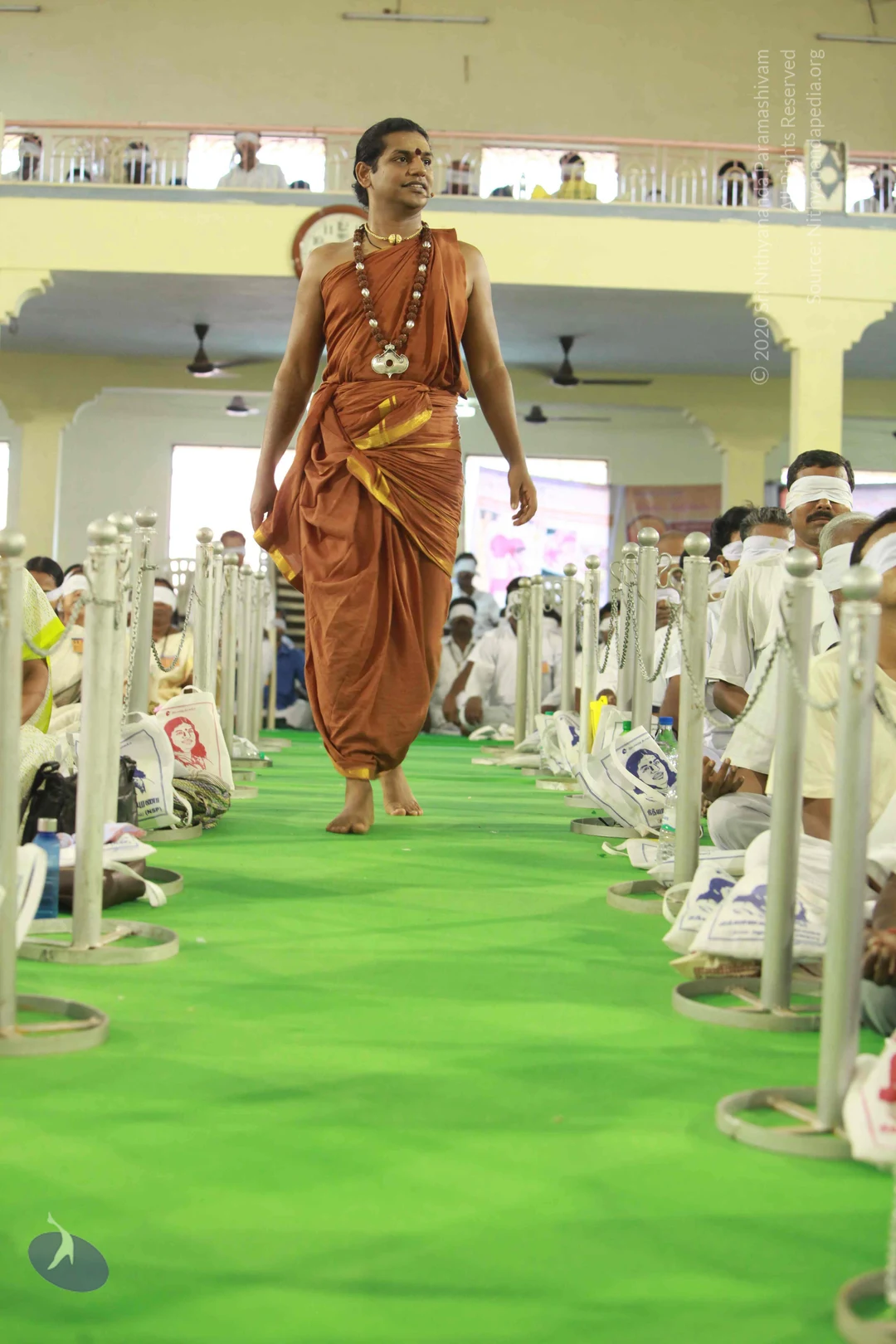
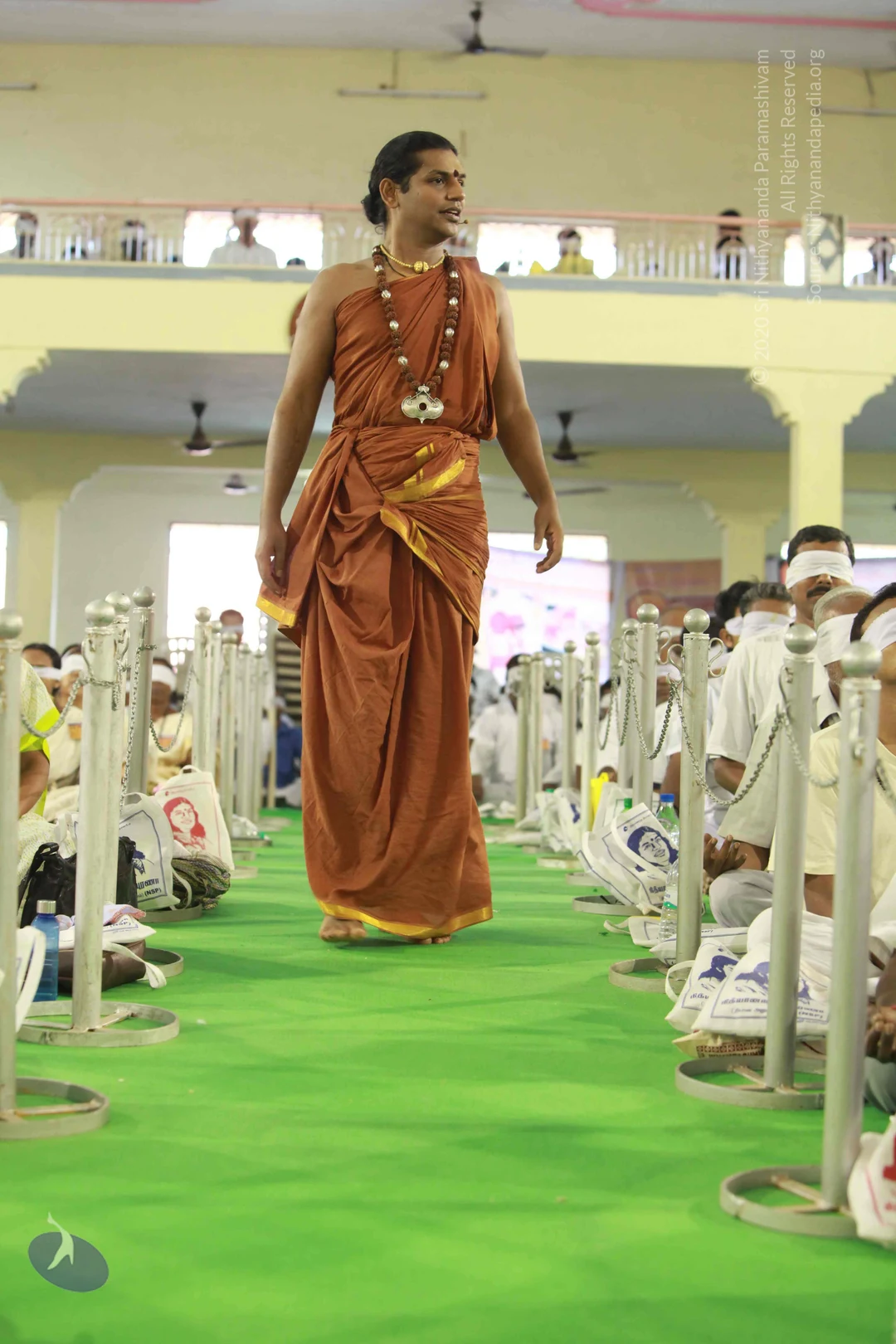
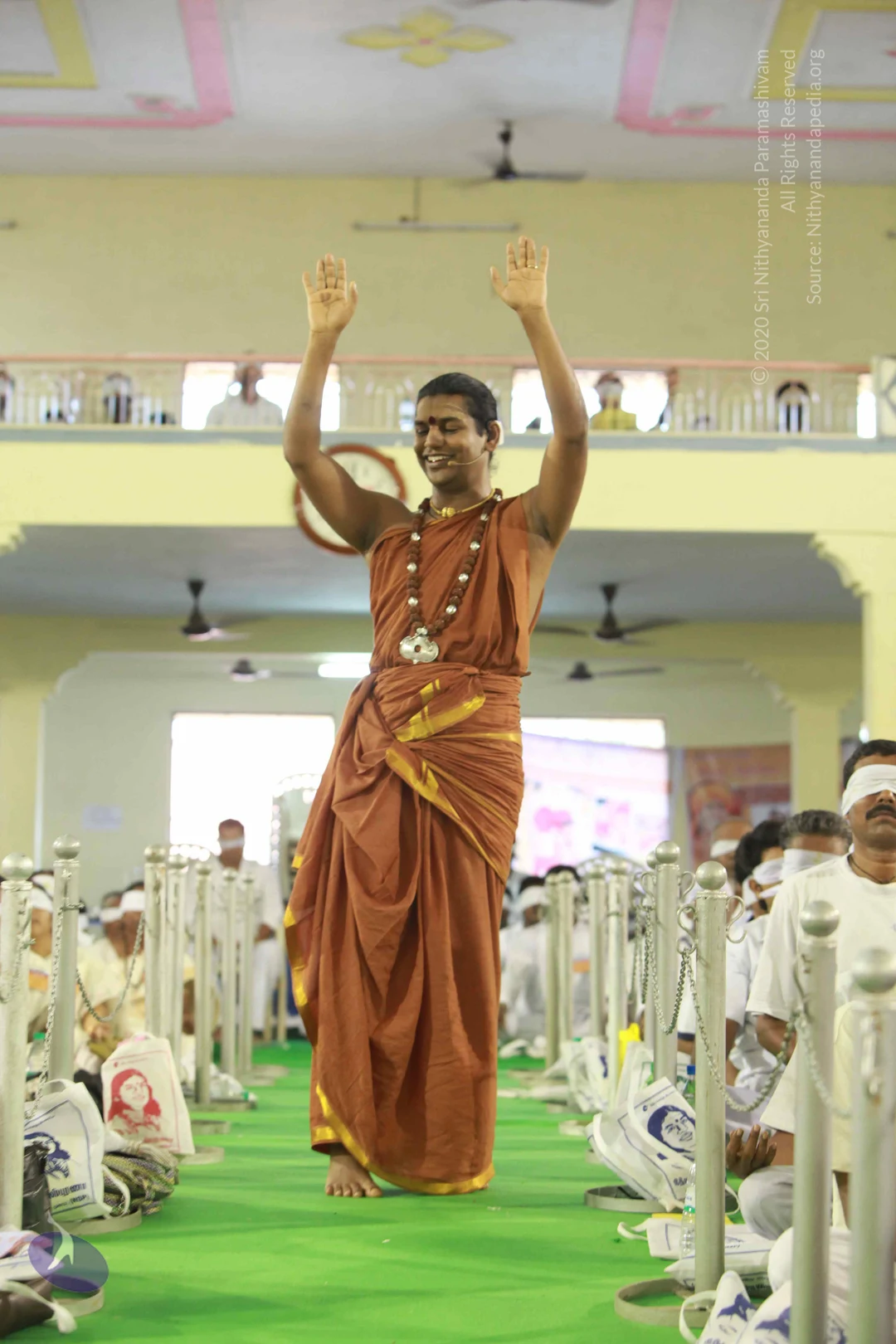
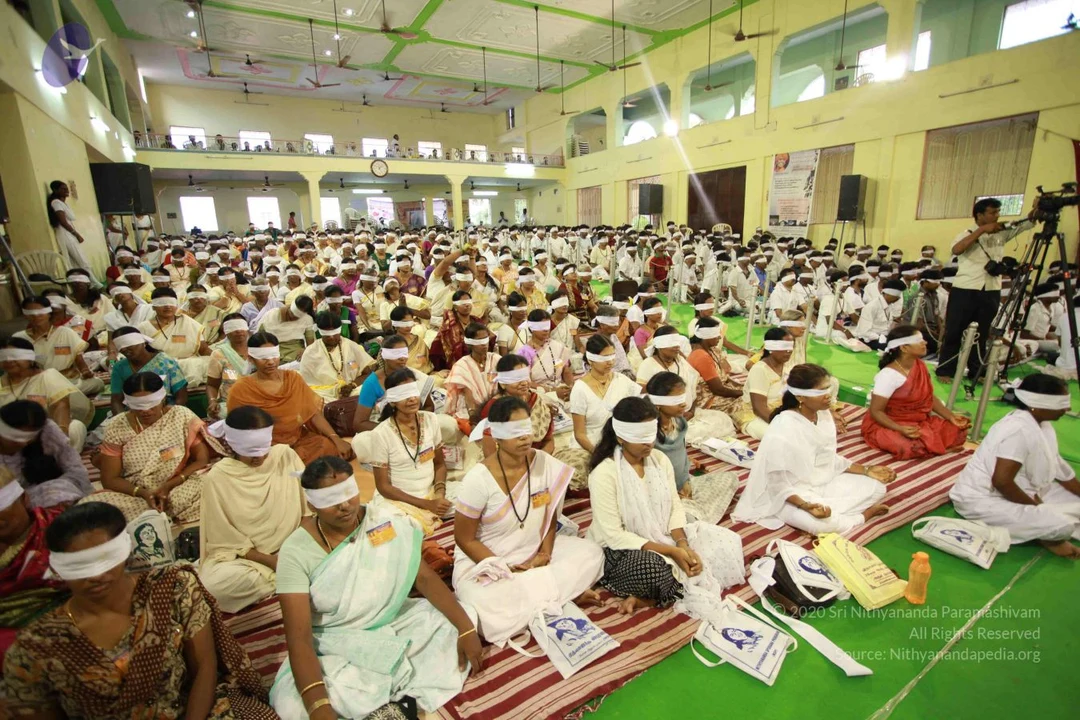
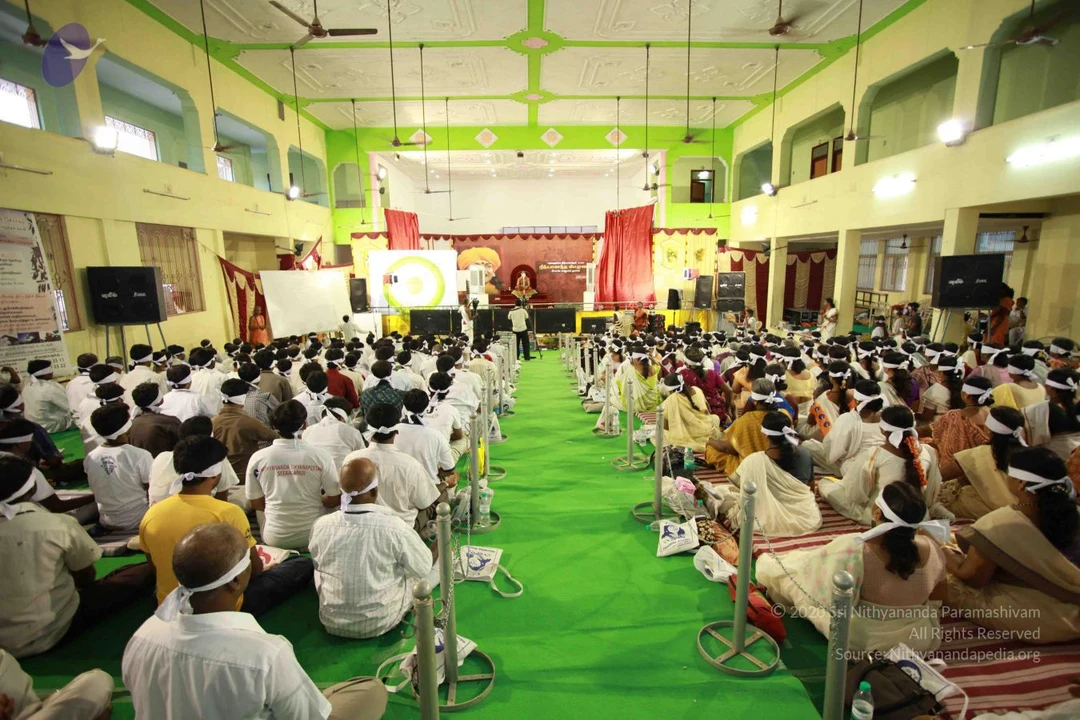
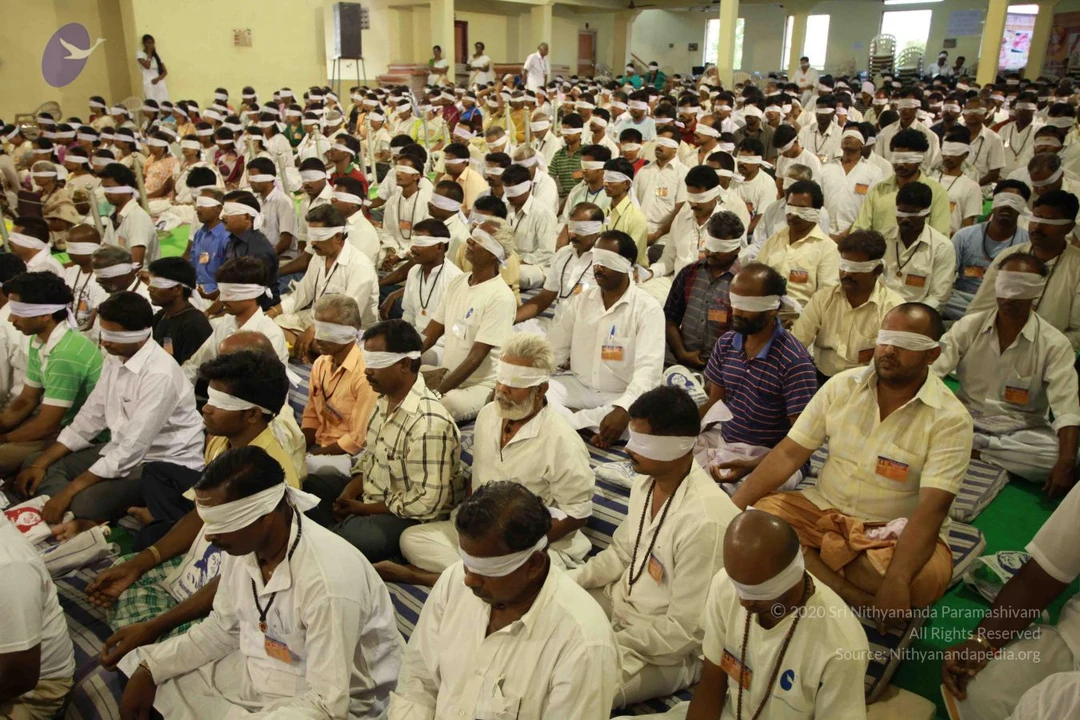
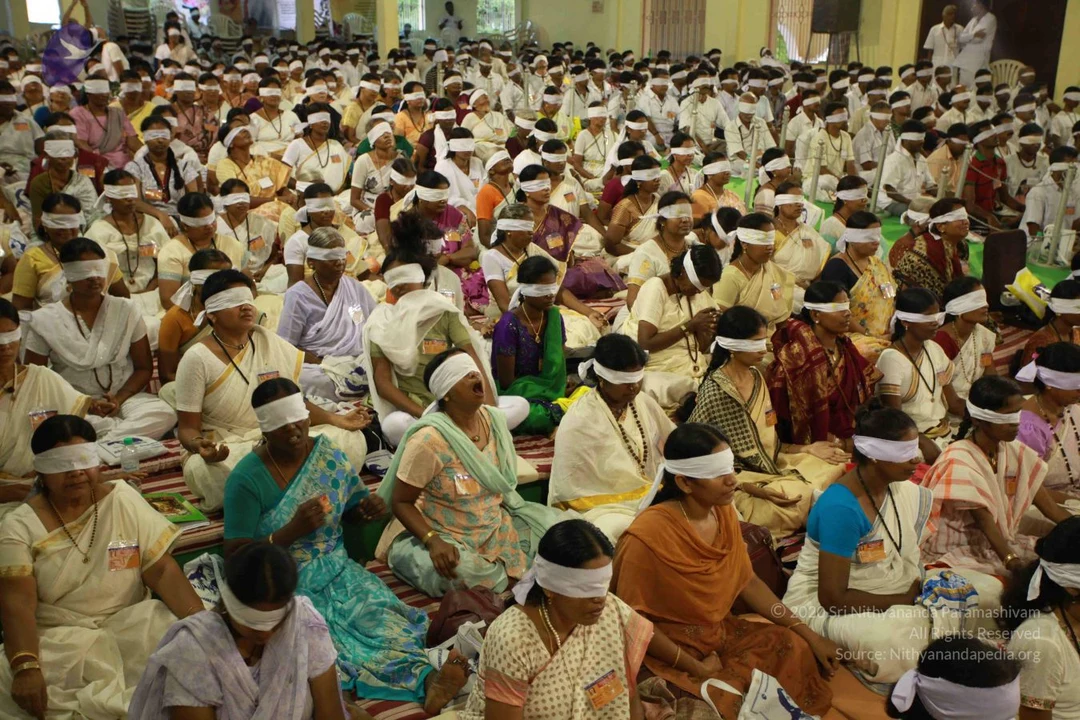
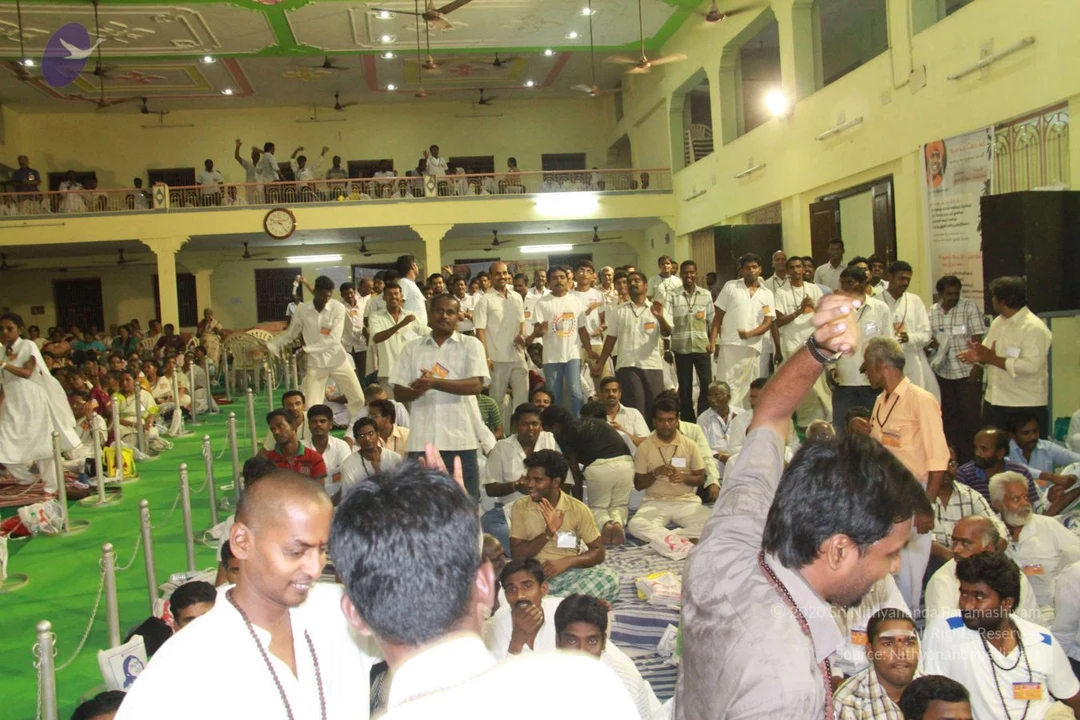
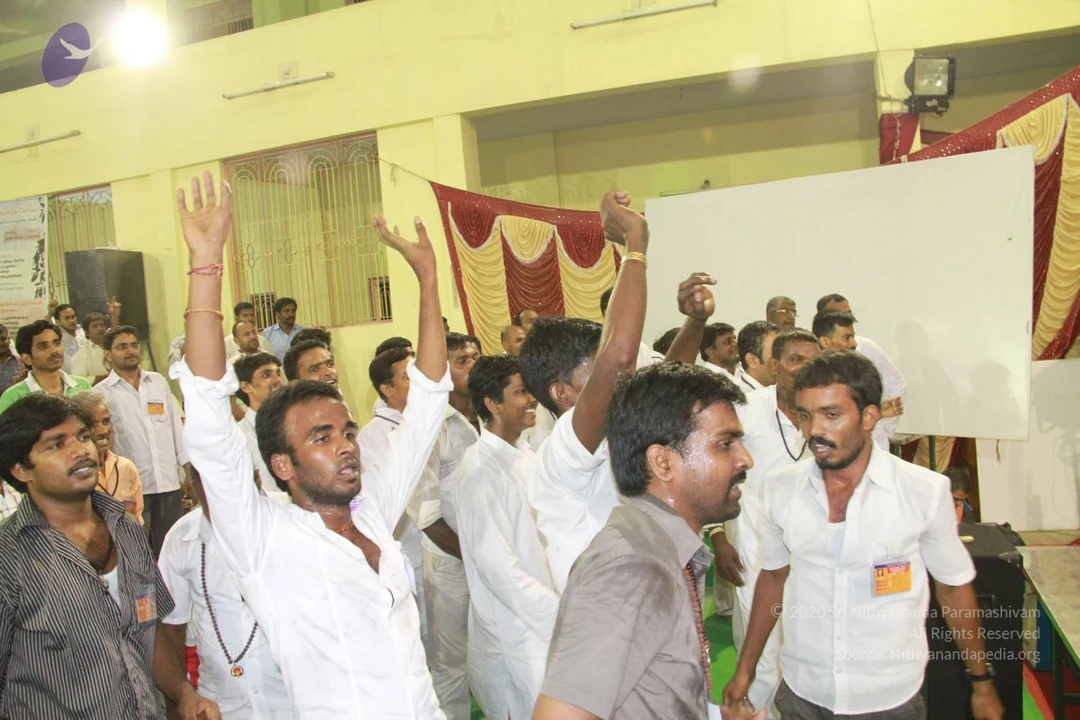
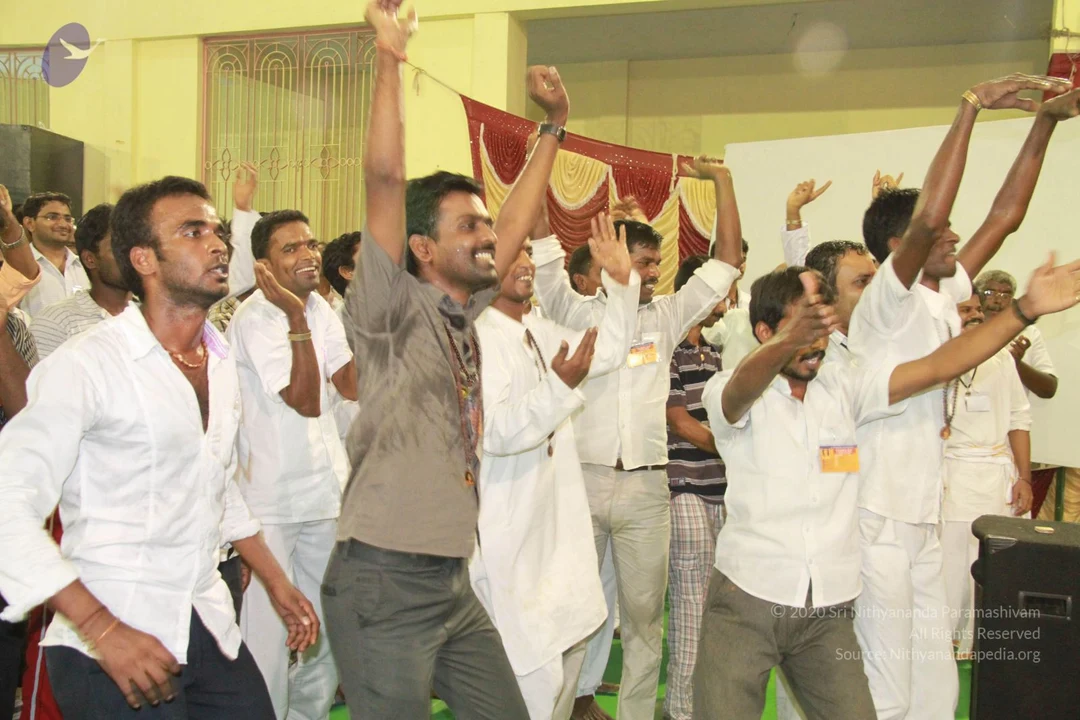
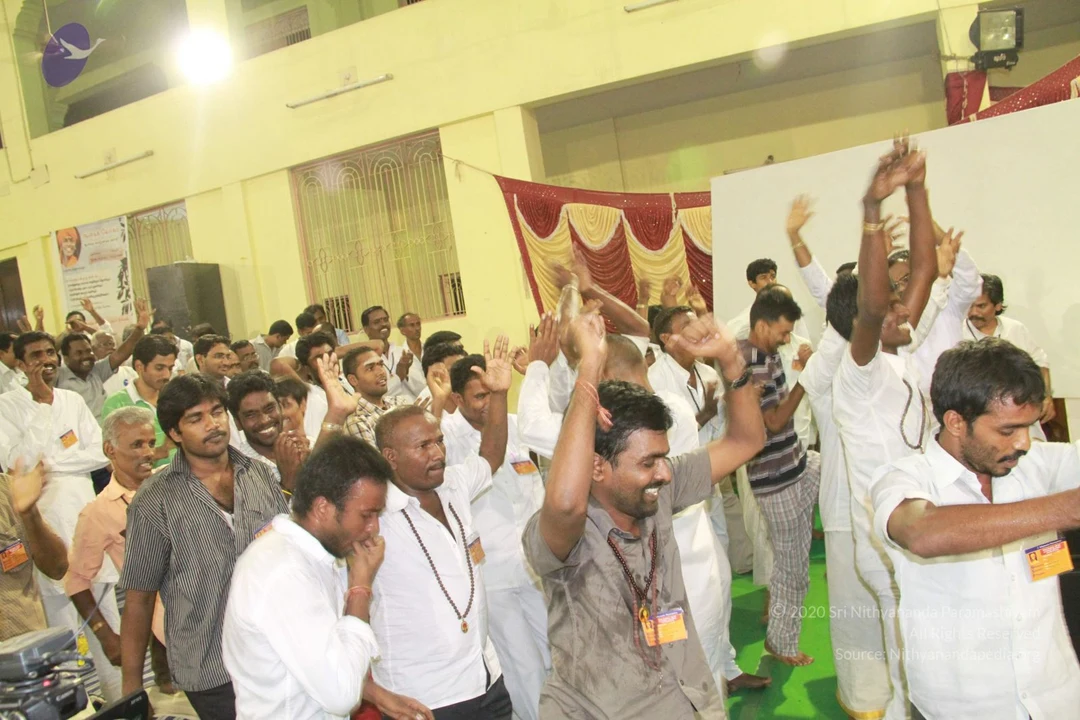
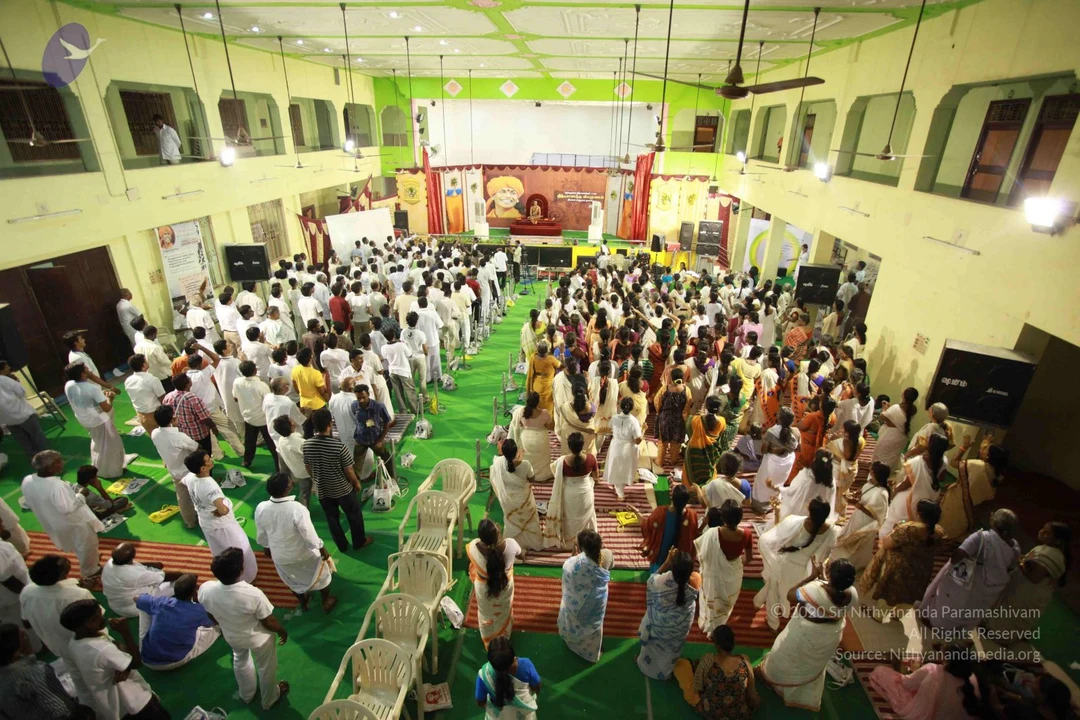
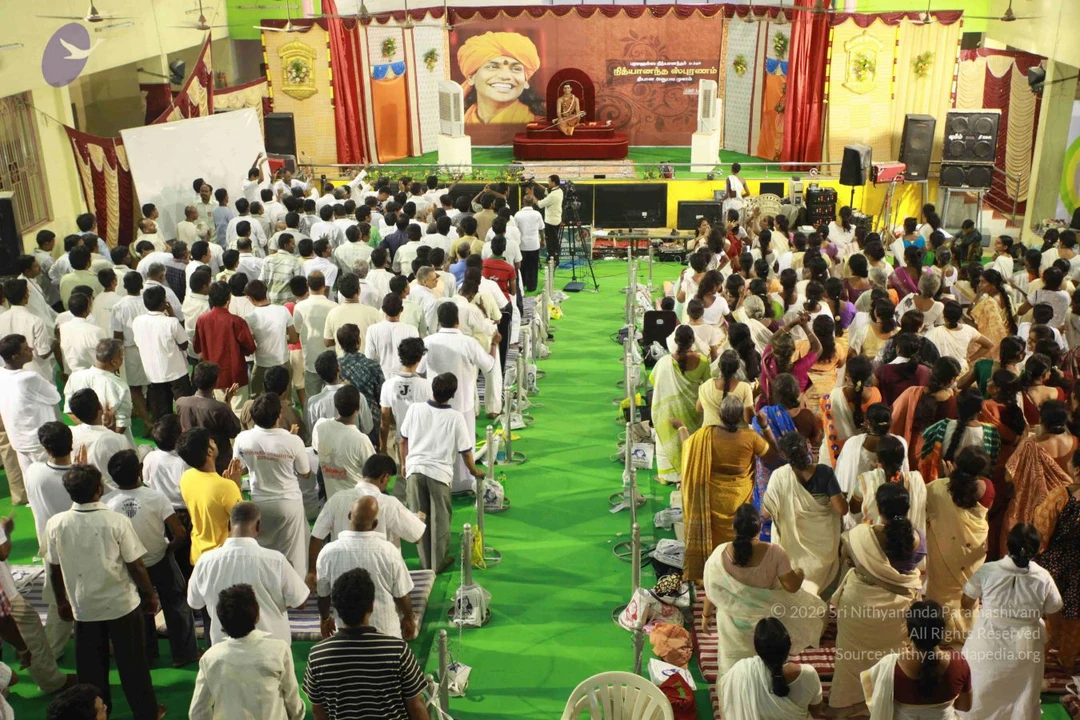
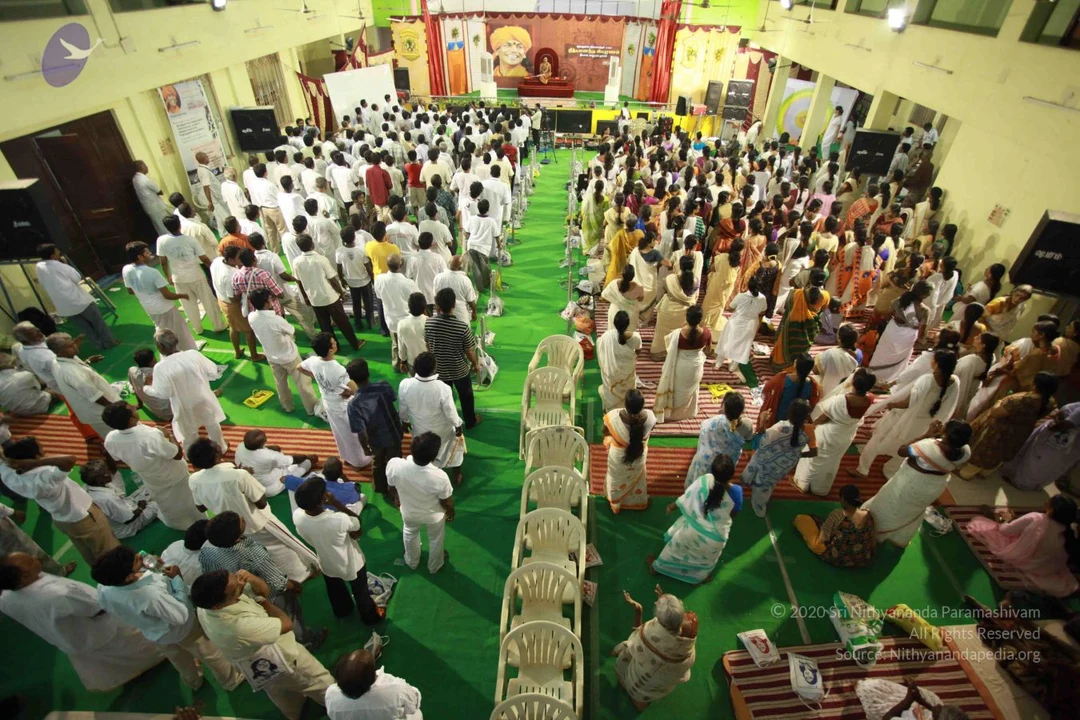
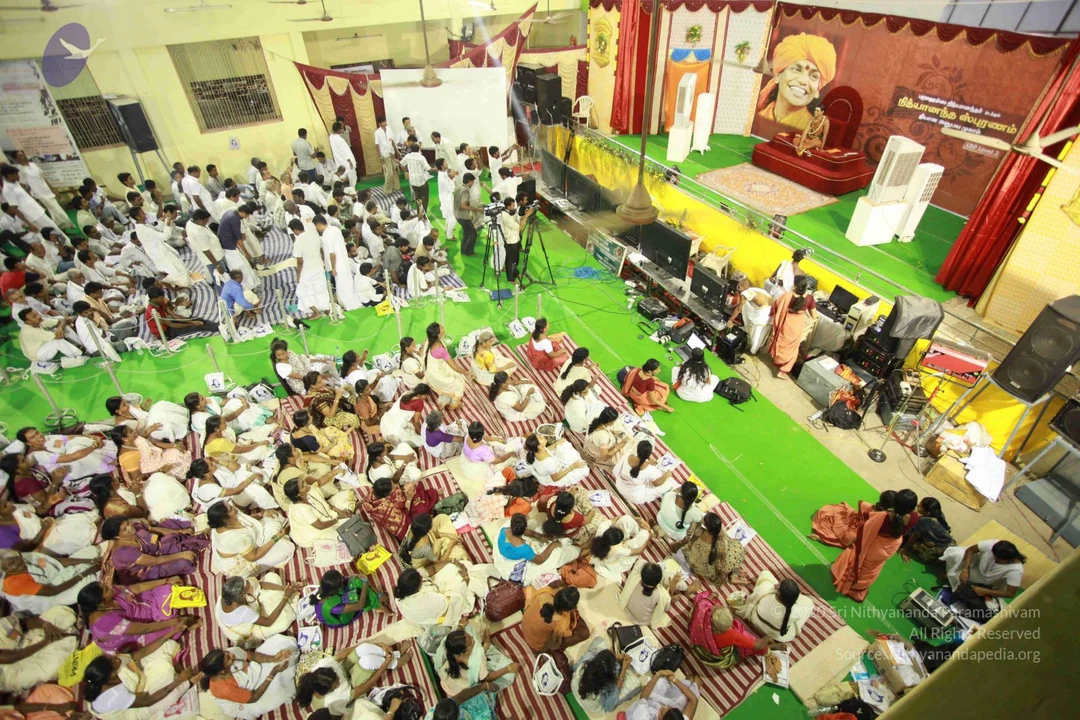
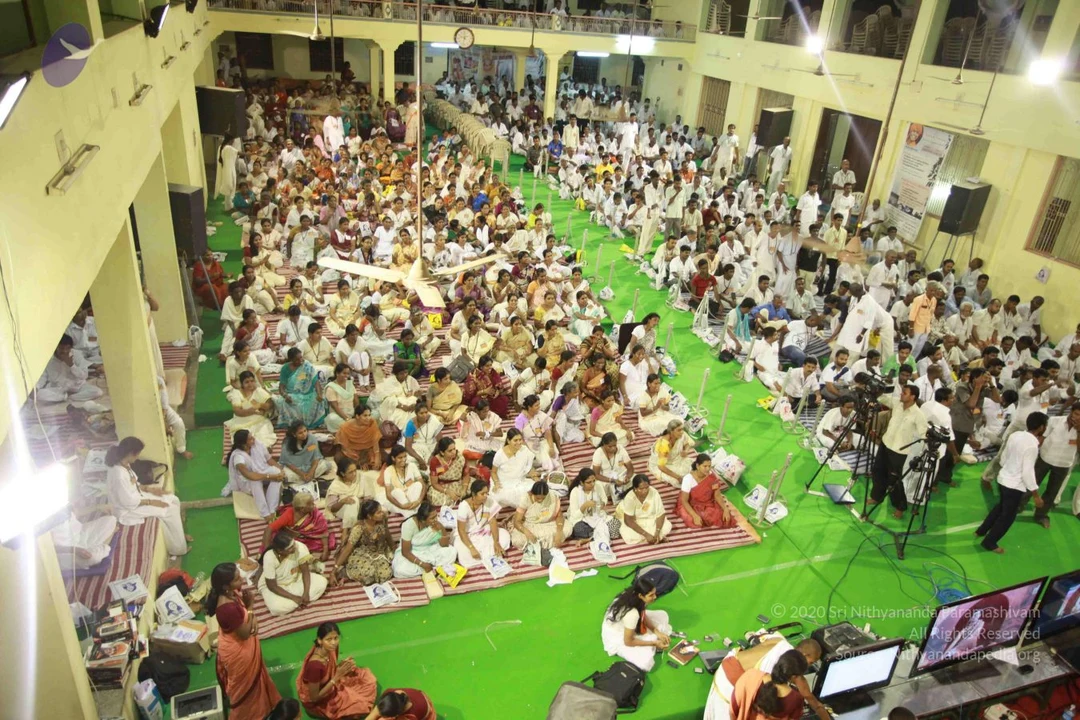
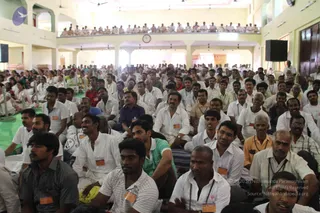
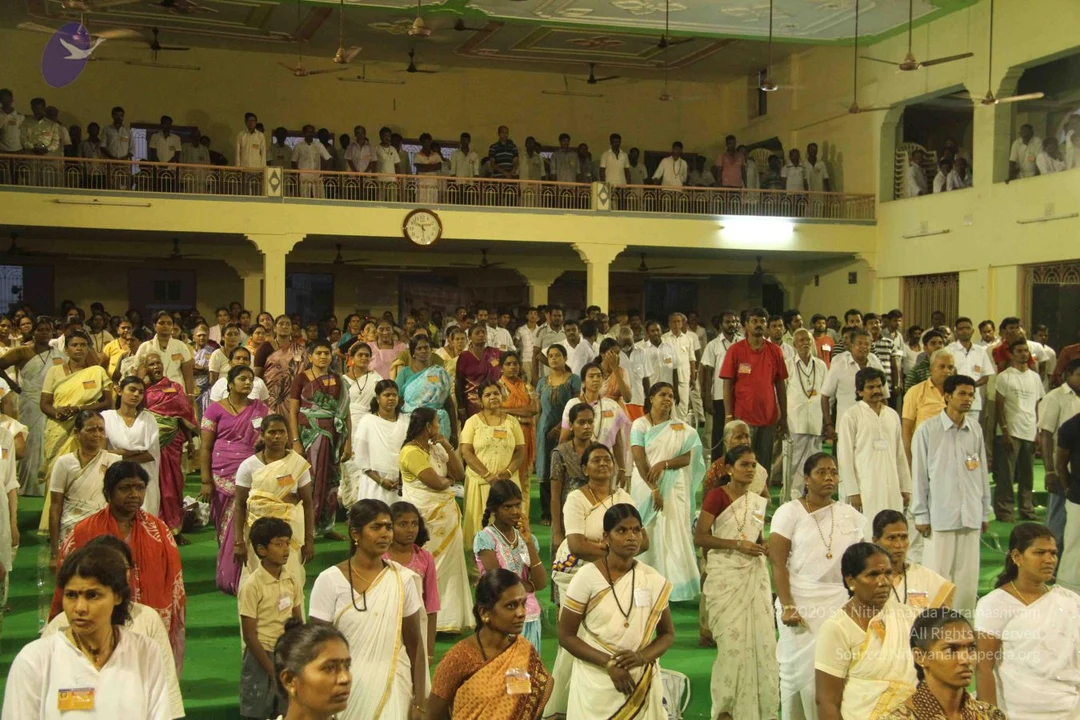
A large indoor satsang hall with green carpeting and a cream-painted interior. A dense crowd of devotees stands on the floor, most women in saris in white, yellow, pink, and blue, with some men in white dhotis and shirts. Many wear rudraksha malas and lanyard-style name badges. Figures stand along a balcony railing above, and a wall clock hangs in the upper area. No individual is clearly identifiable as a person in this view; the front of the hall is out of frame.A large indoor hall with green flooring and yellow walls holds a dense crowd of devotees standing in rows, many with arms crossed over their chests or extended, performing a synchronized group practice. Women wear white and cream saris with coloured borders, while men wear white shirts and dhotis. Many people stand on an upper balcony overlooking the hall, and ceiling fans hang from a green-trimmed ceiling. On the right, a banner with a portrait and printed text hangs on the wall. A wall clock is visible on the left balcony edge.A crowd of devotees at an evening satsang gathering stands in close rows with arms crossed over their chests and hands pressed to their ears or cheeks in a meditative gesture. In the foreground a man in a white shirt and white dhoti with glasses stands at left, a man in a yellow polo shirt with arms crossed stands center, and a young man in a striped collared shirt with hands raised to his face sits or stands at lower center. Behind them men in white shirts, a green striped shirt, a red shirt and a checked shirt fill the frame, all facing forward. No swami is clearly identifiable among the people, so the a person candidate is not established.A large hall with green-painted floor and ceiling trim and ceiling fans hangs overhead. Several hundred devotees stand in rows with both arms raised overhead, many in white dhotis and shirts, some in green and brown shirts, a few women in white saris. A balcony upstairs is also filled with standing people raising their arms. A video camera on a tripod stands at the lower left, and a clock is mounted on the balcony wall.

PADA-POOJA
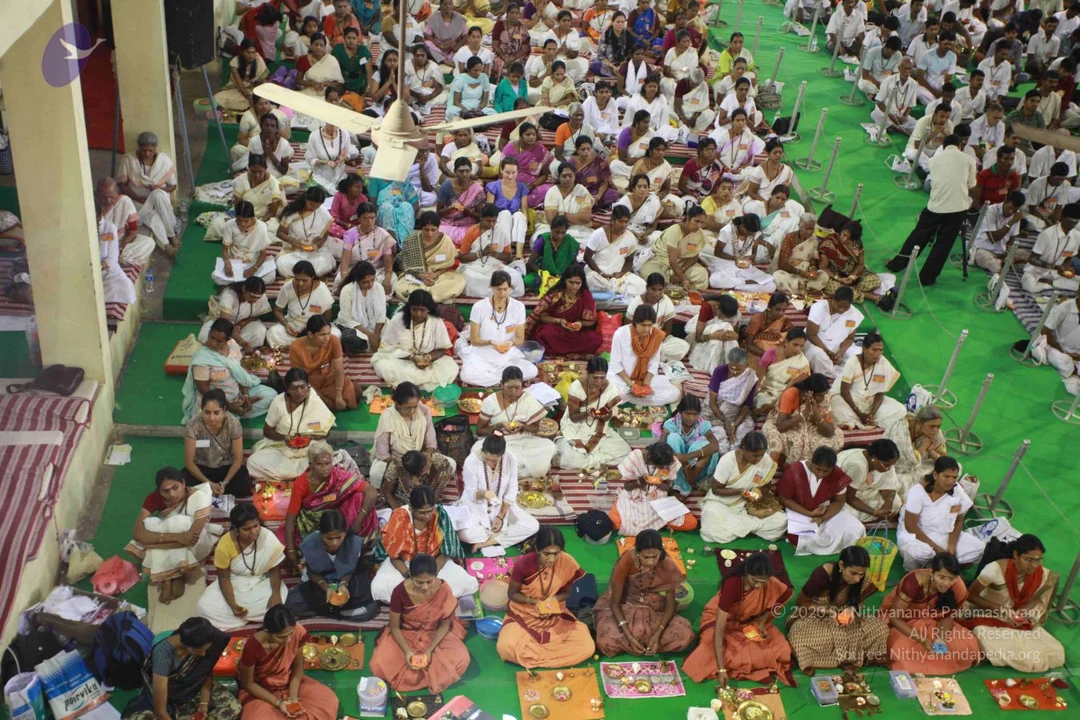
39 photosSource gallery
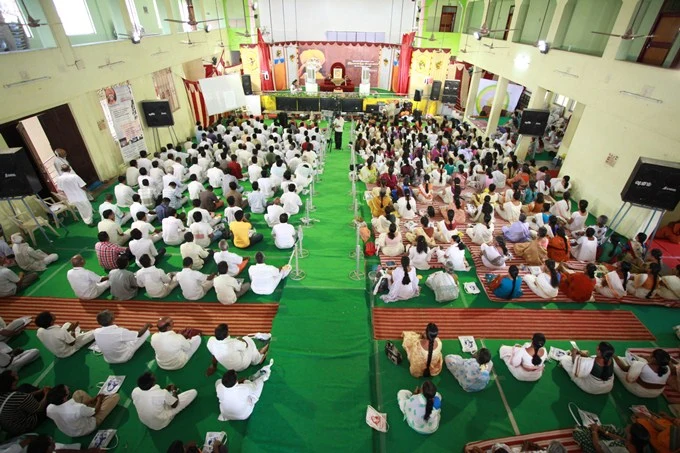
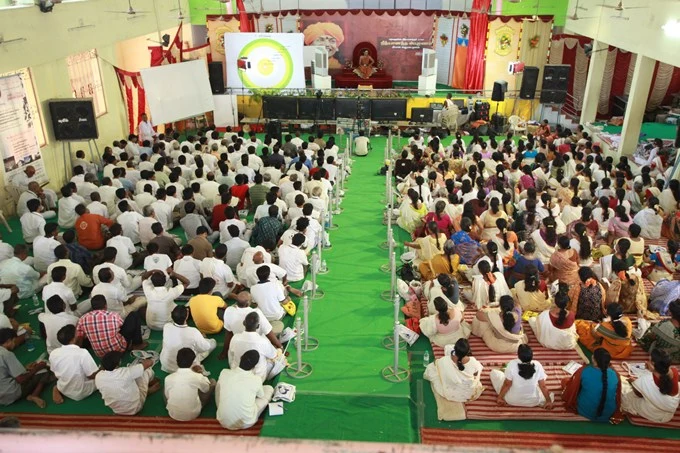
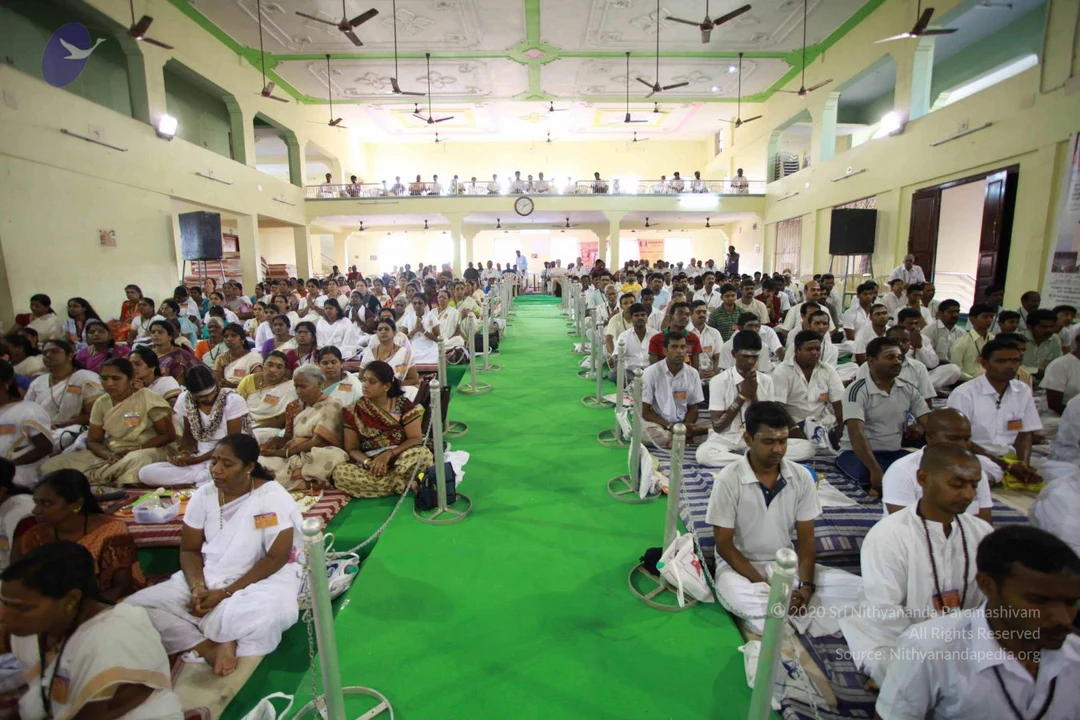
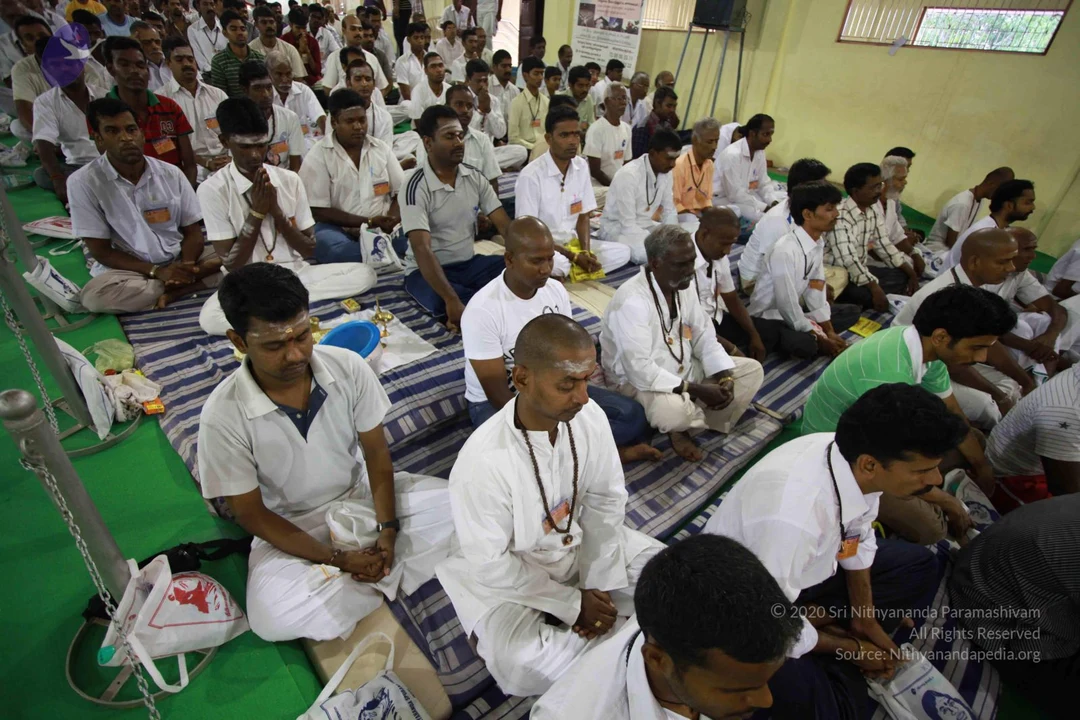
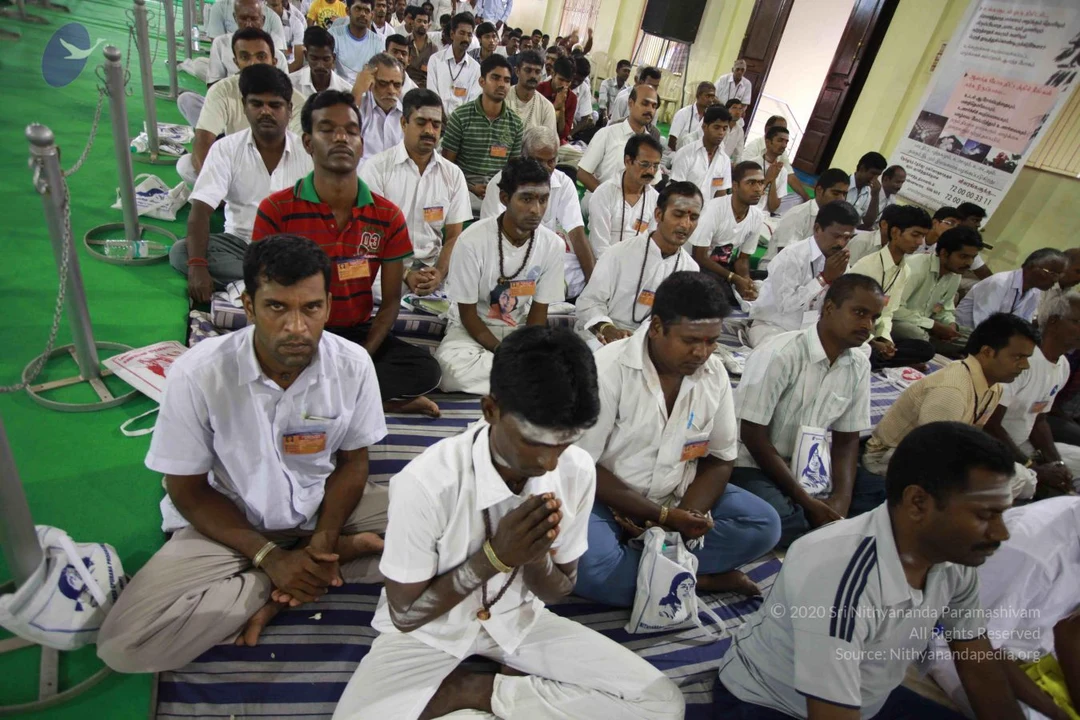
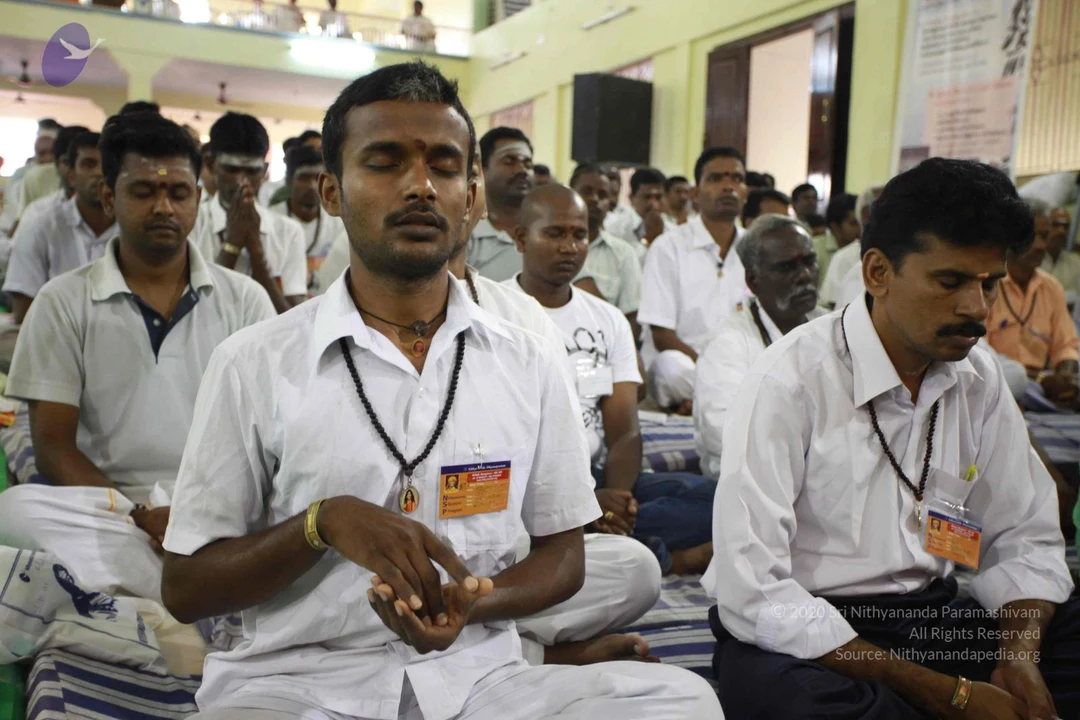
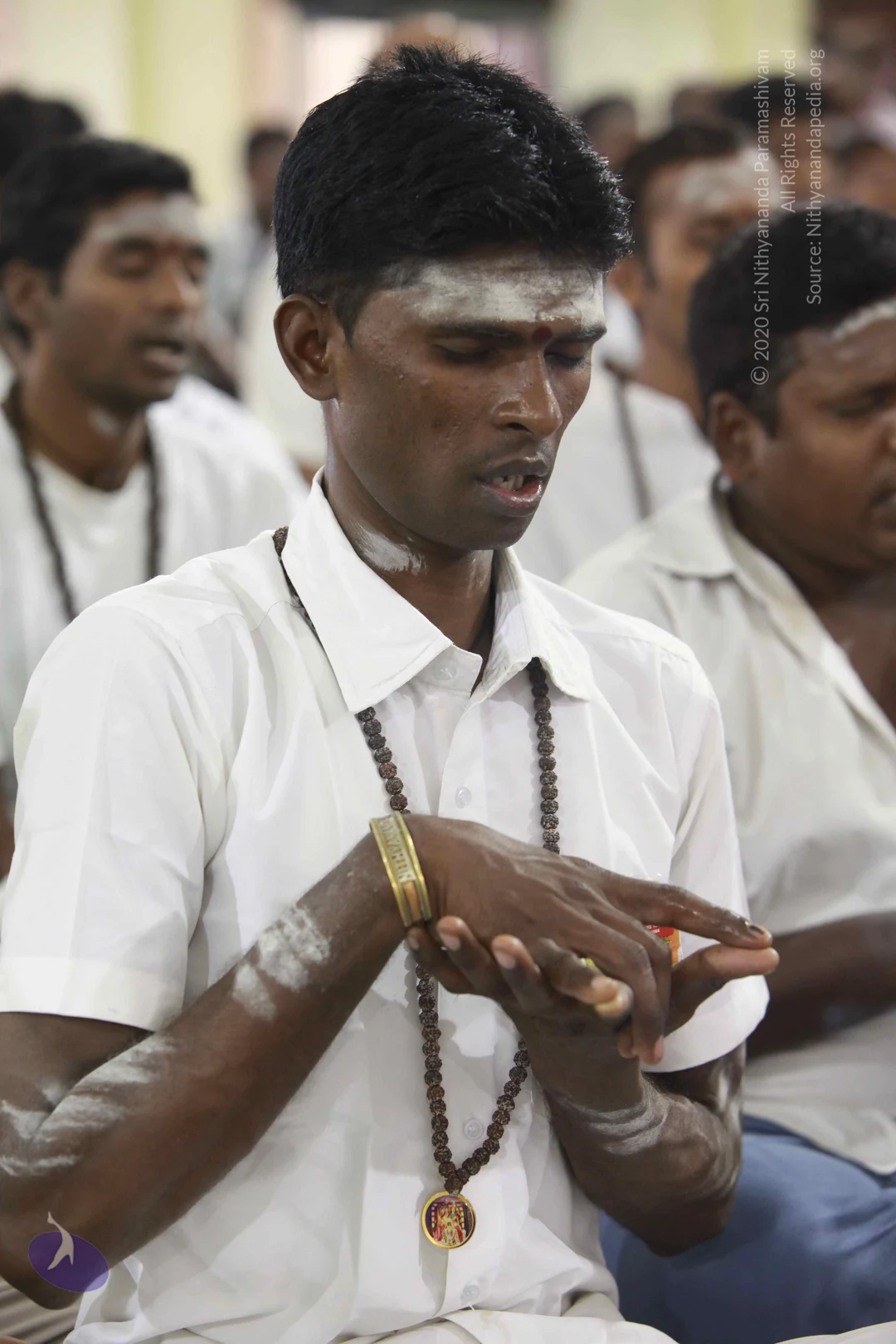
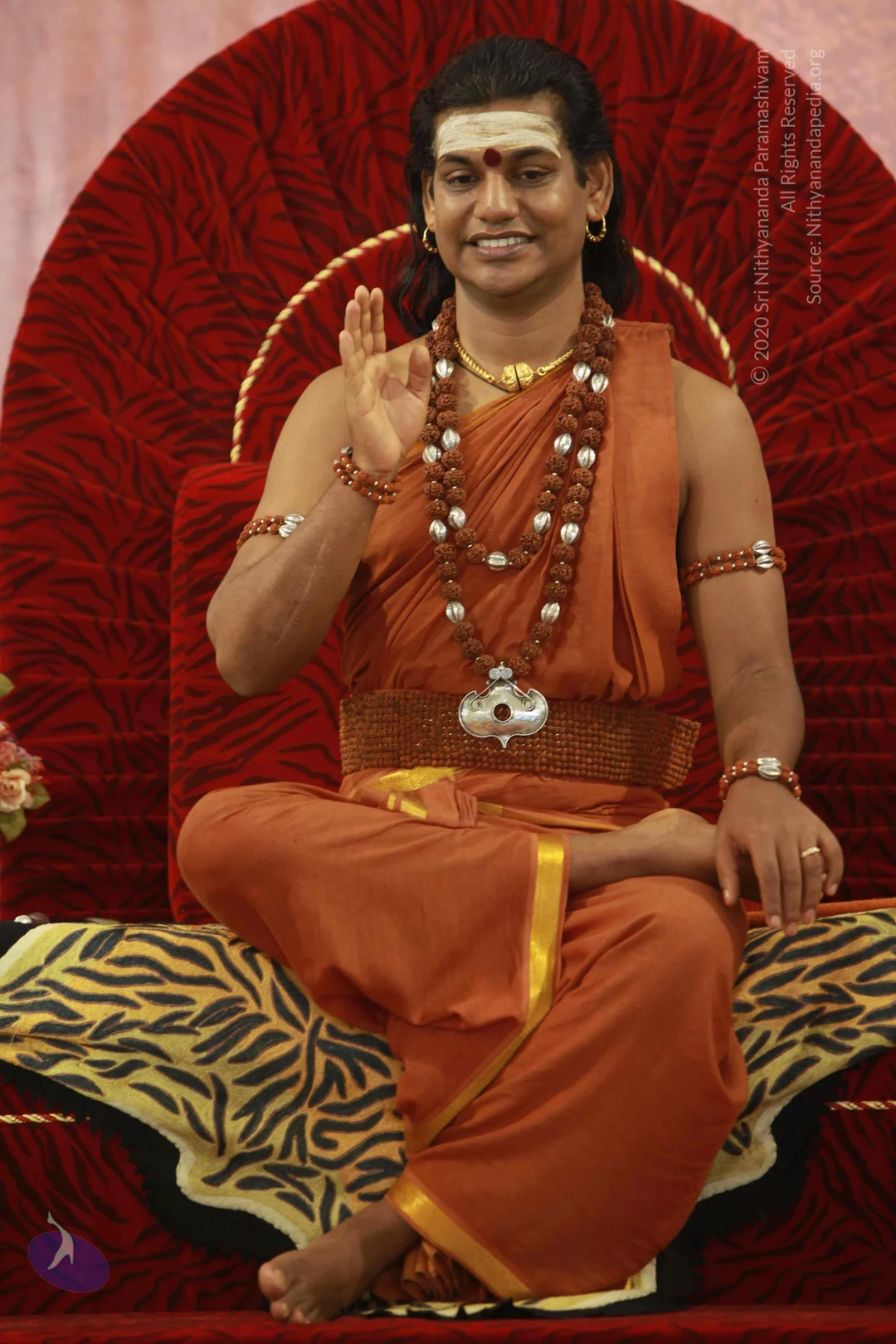
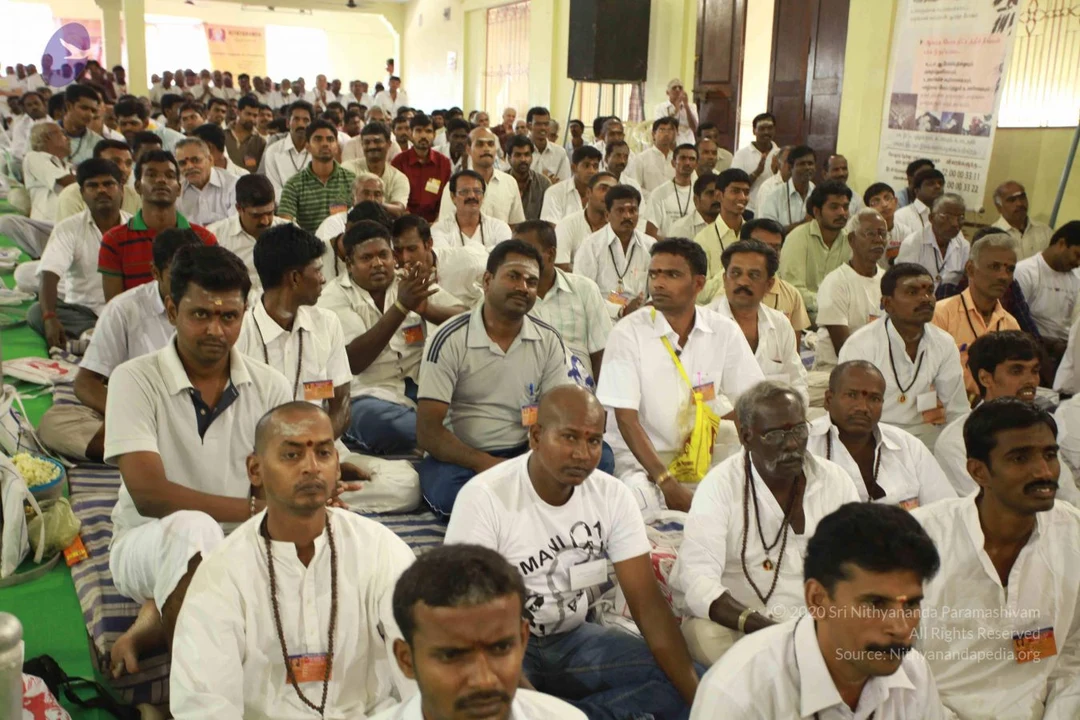
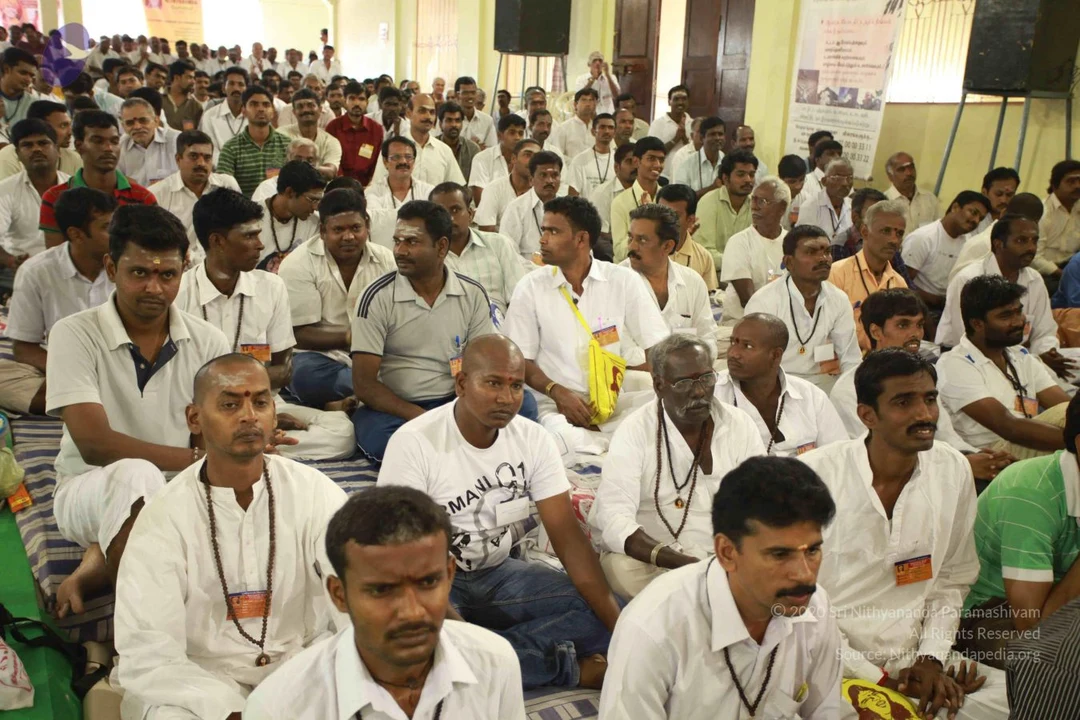
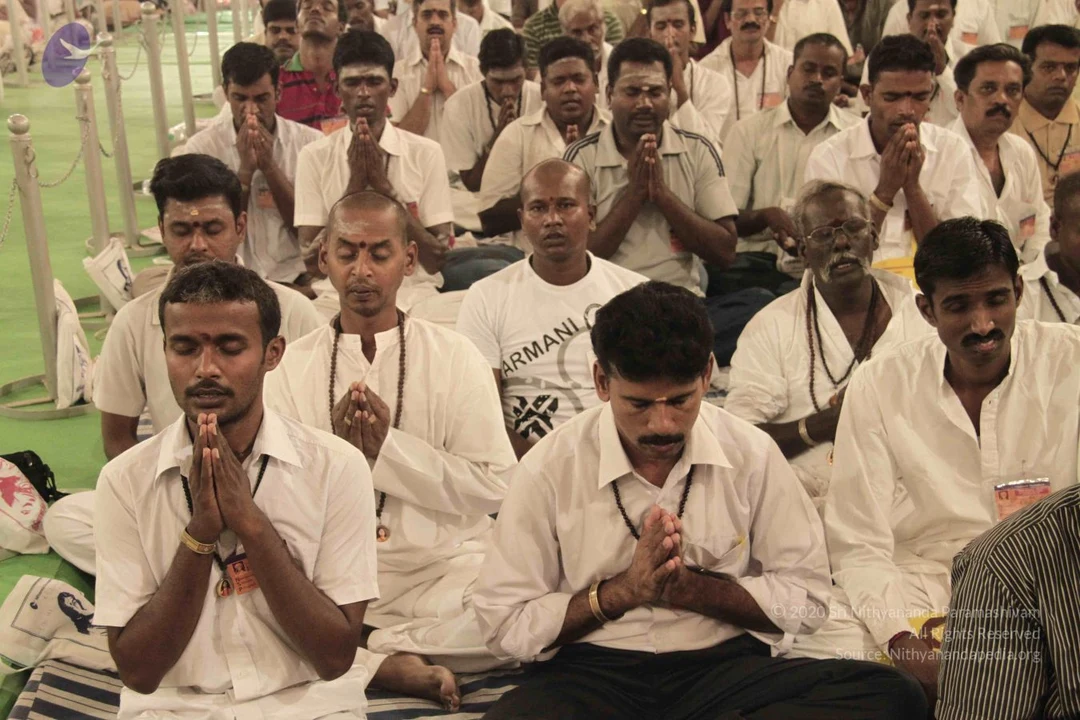
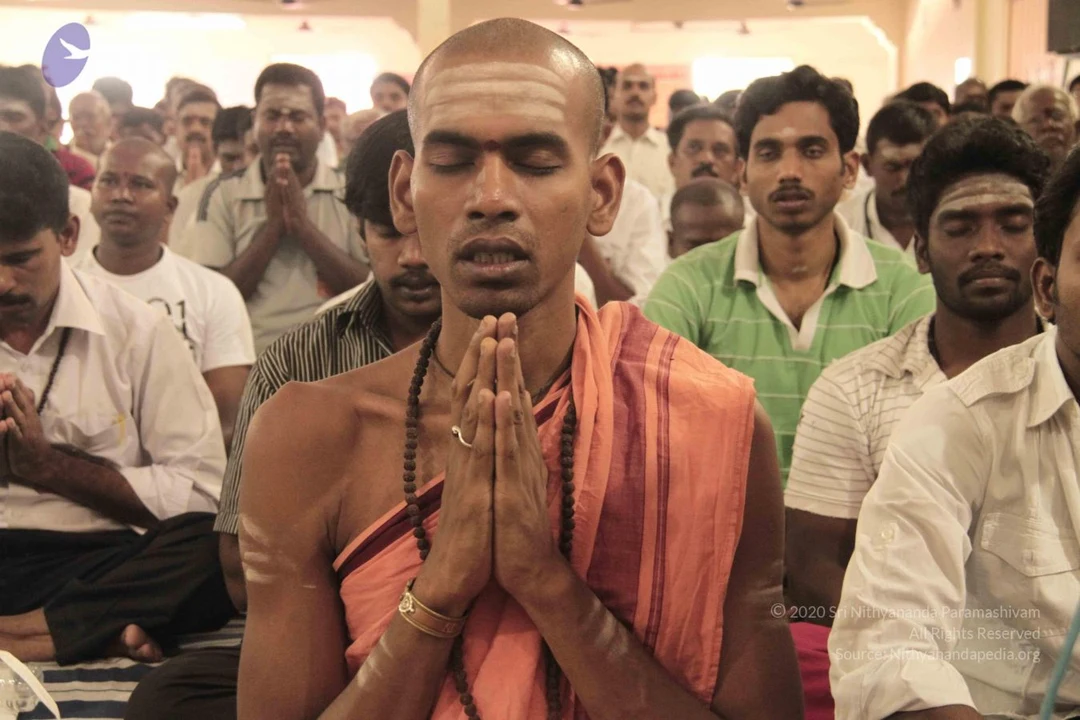
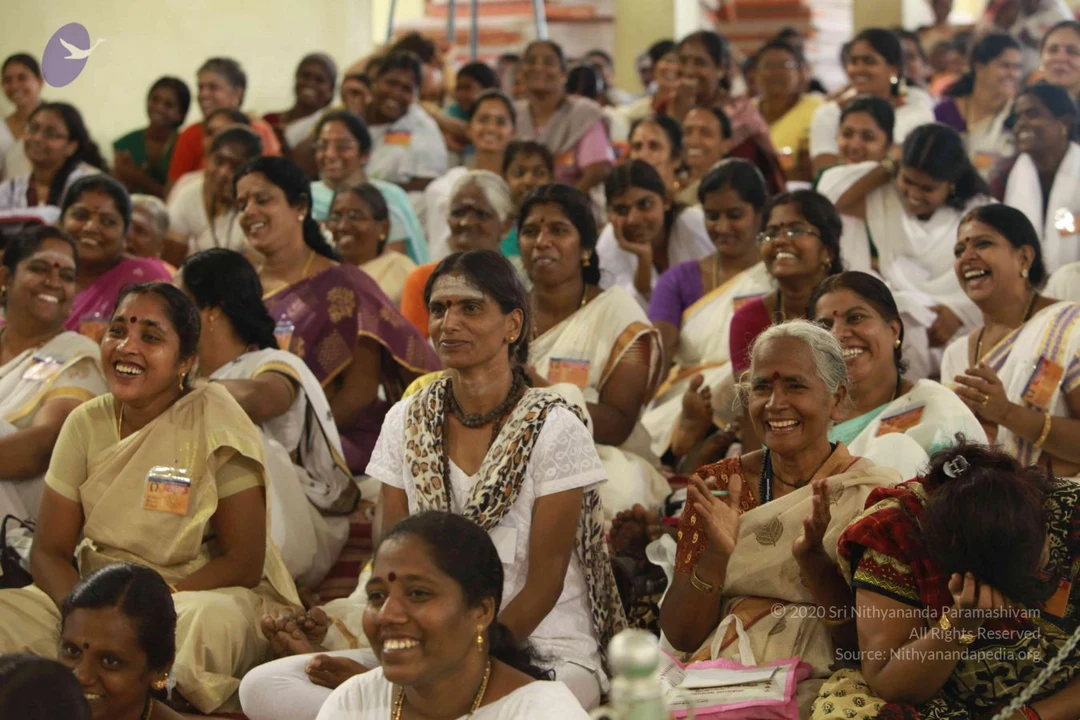
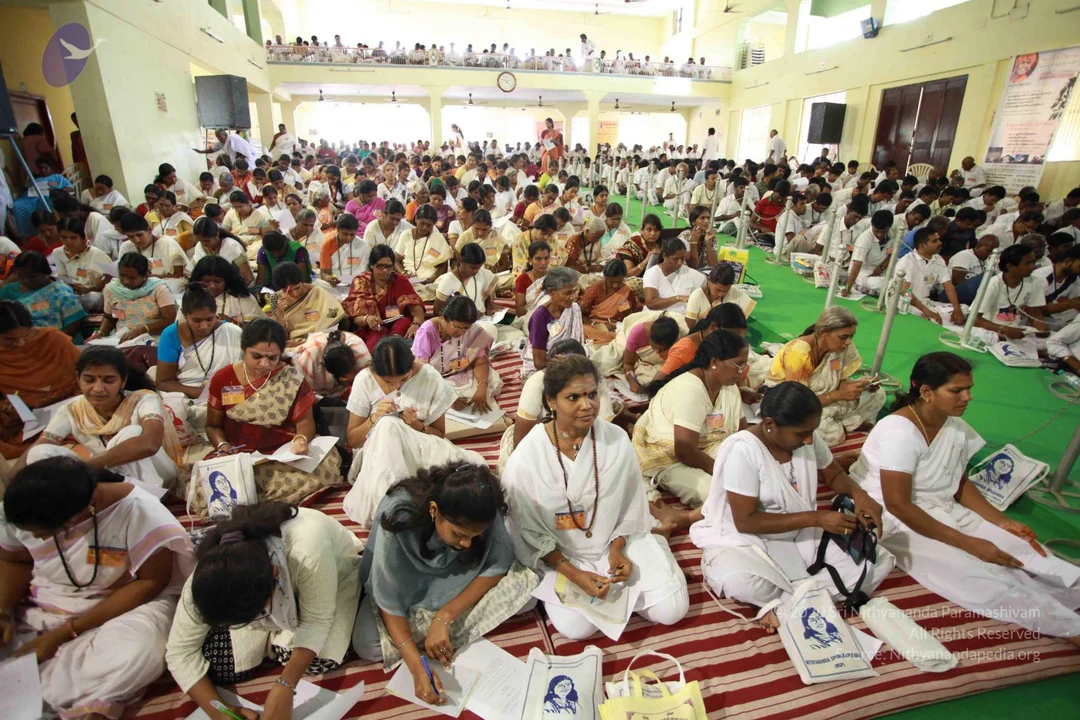
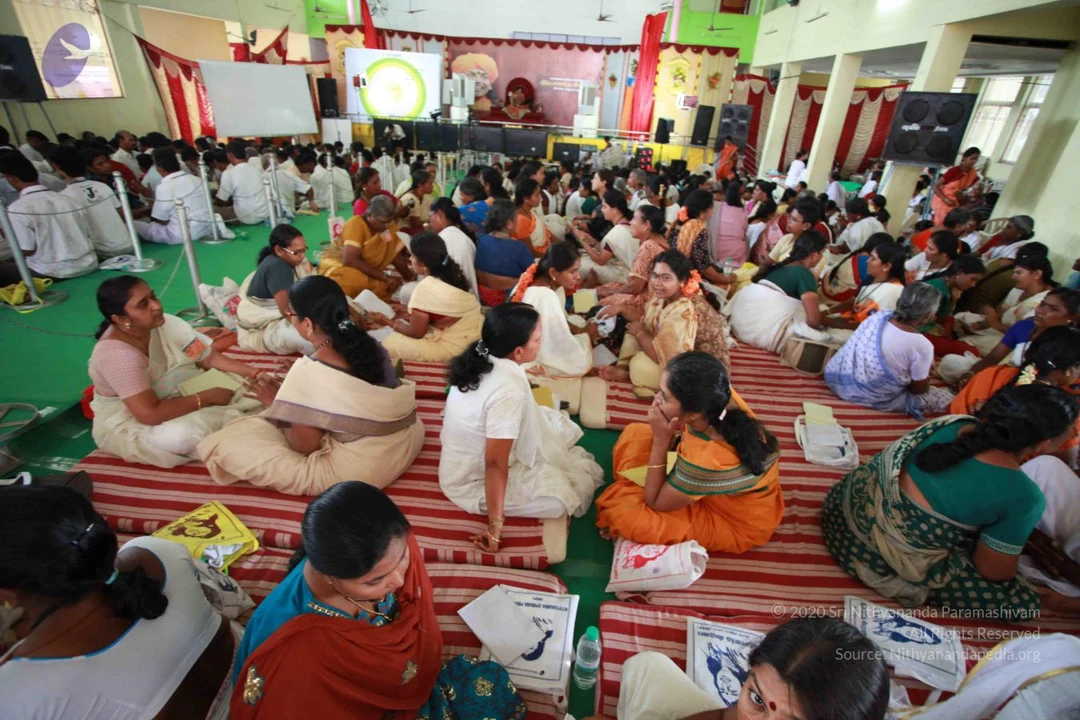
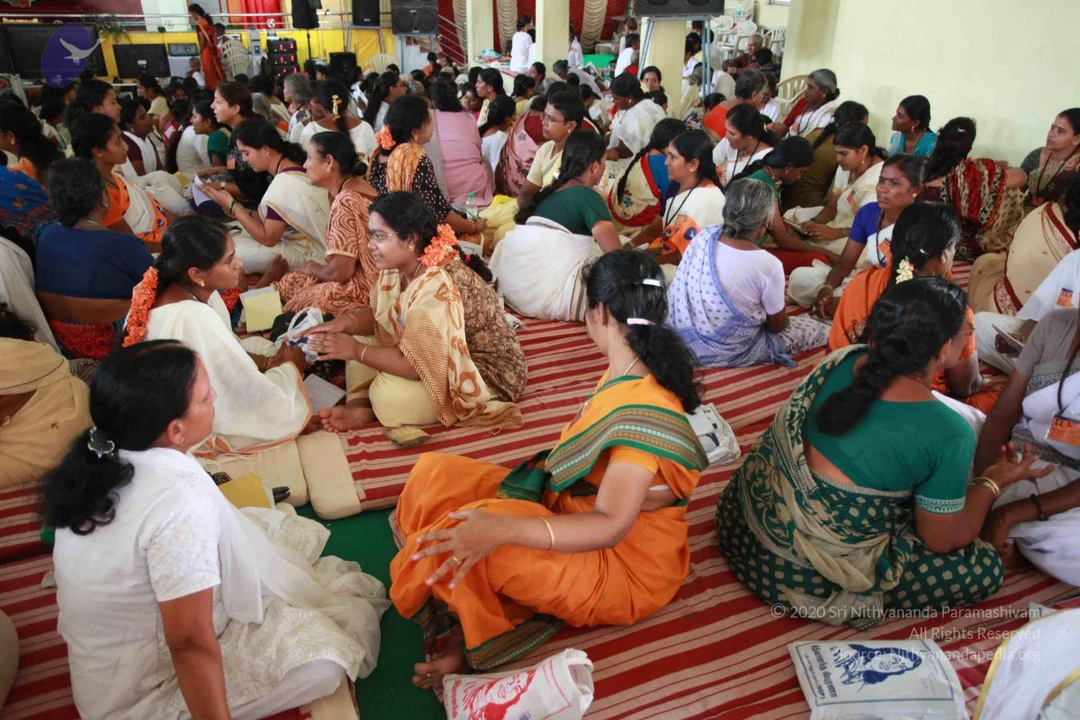
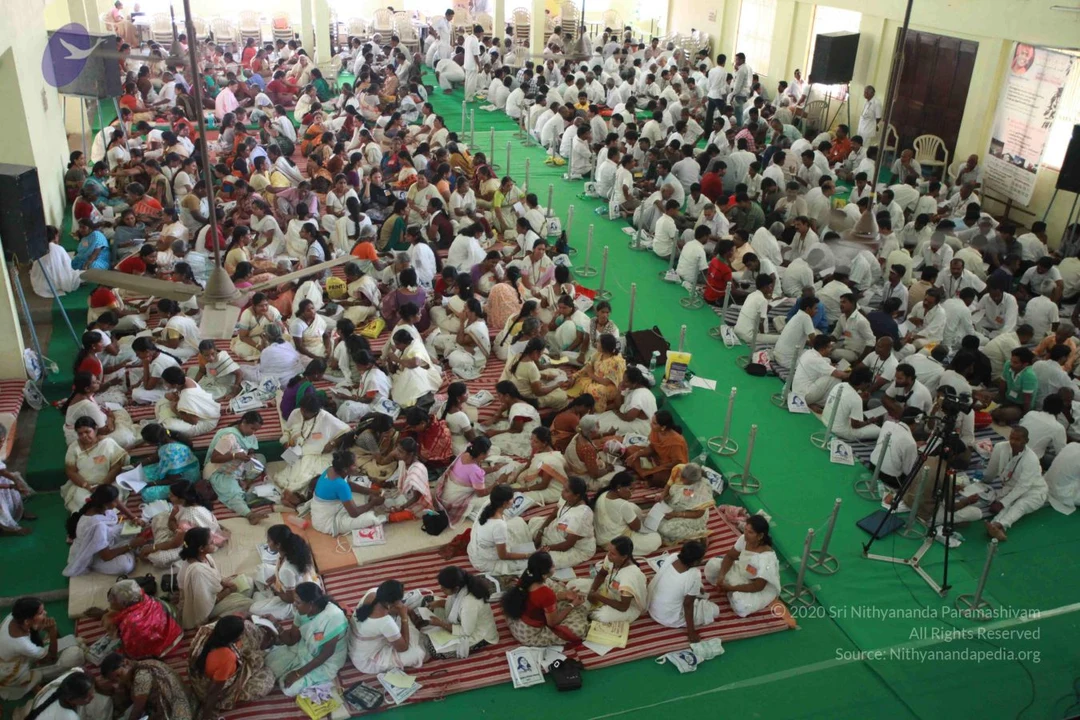
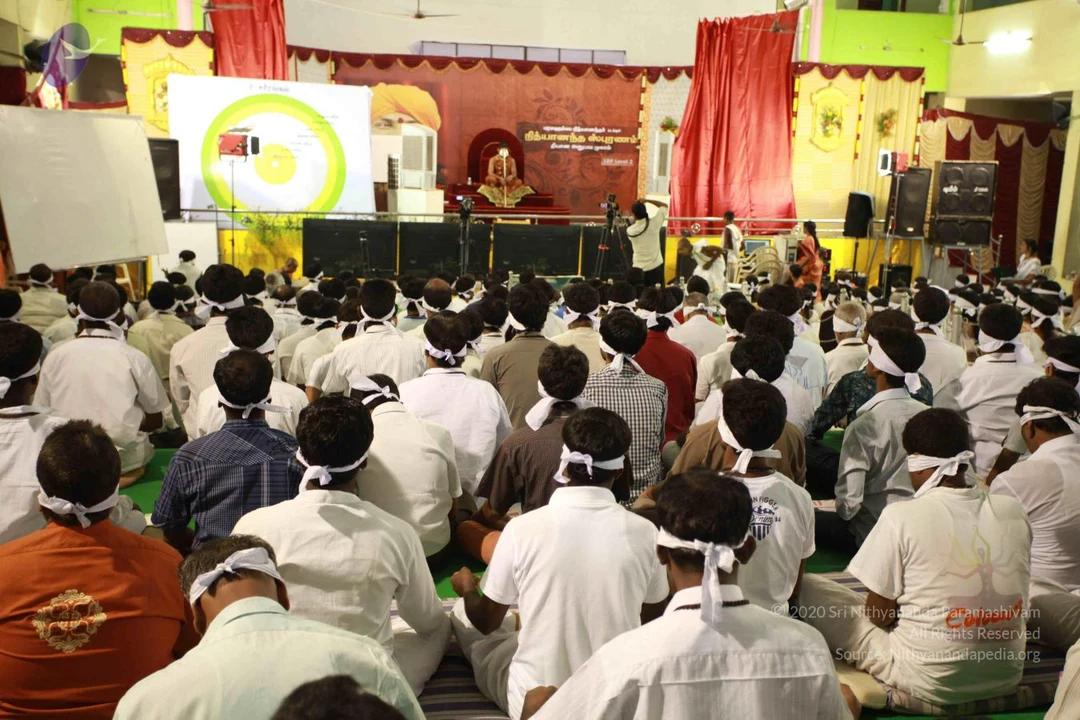
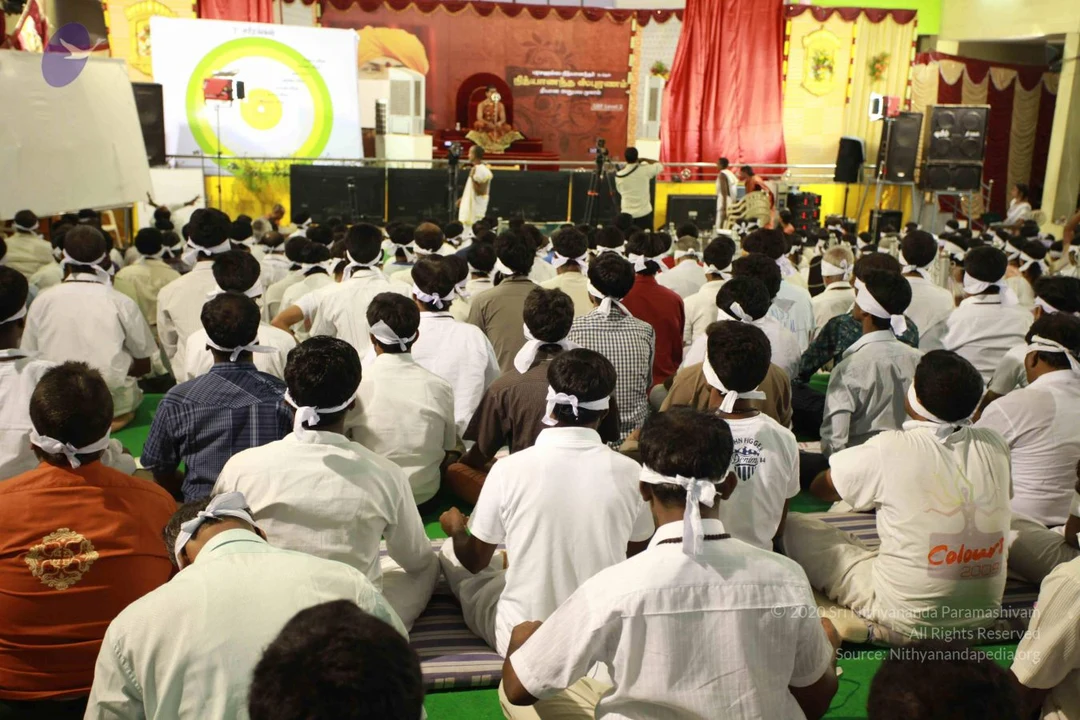
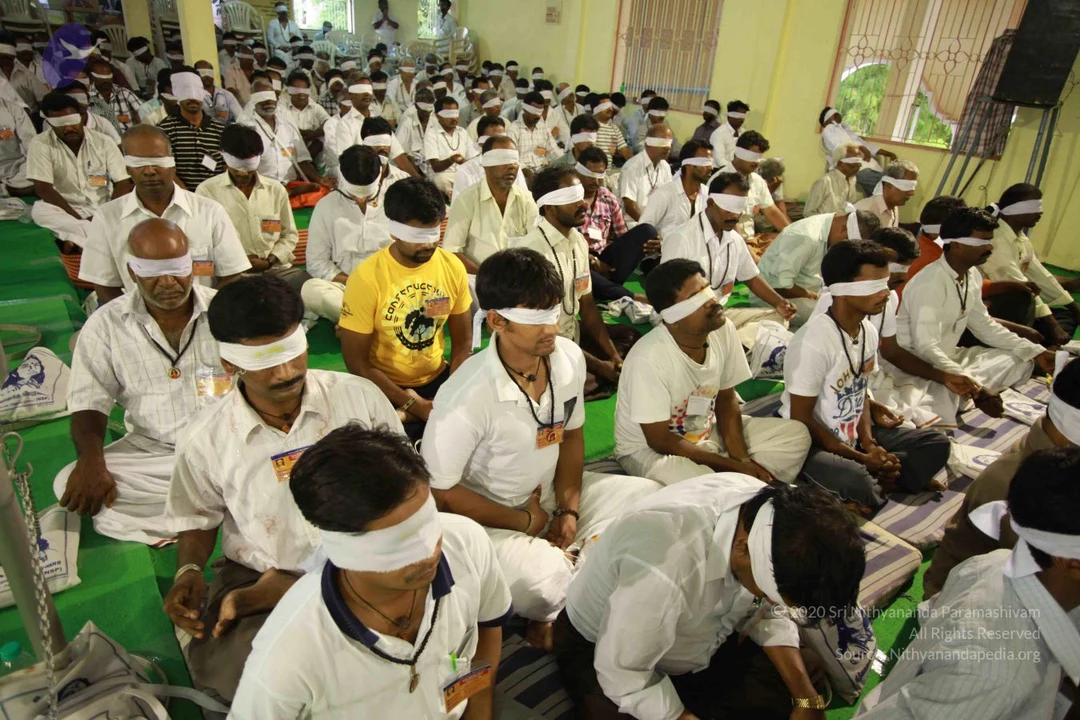
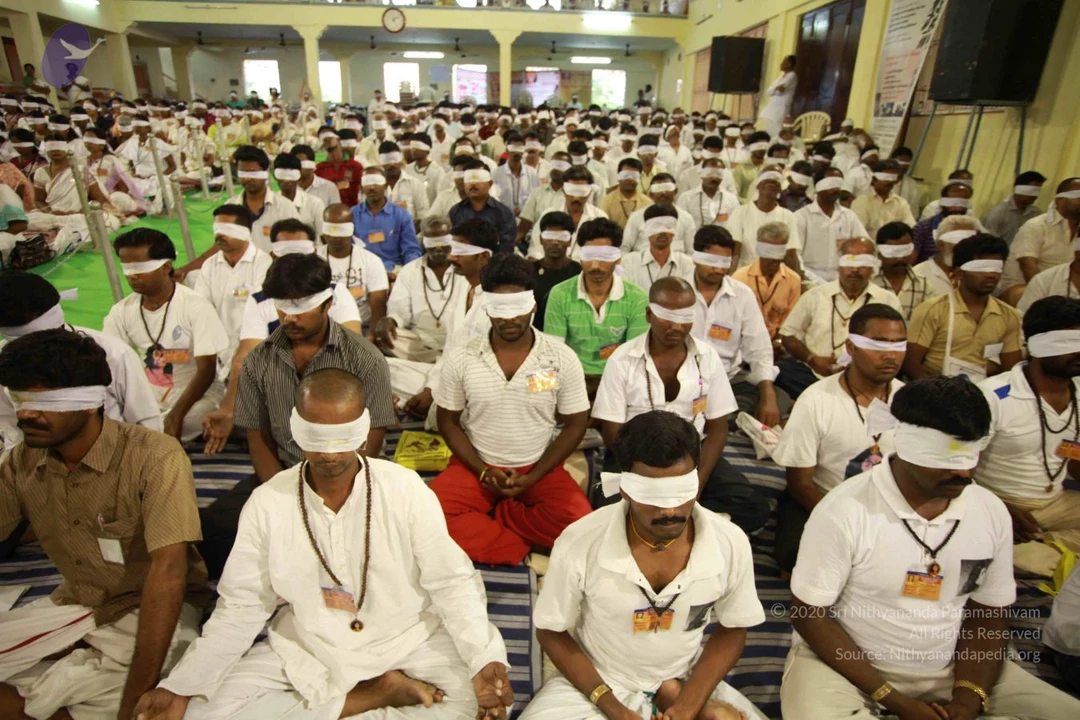
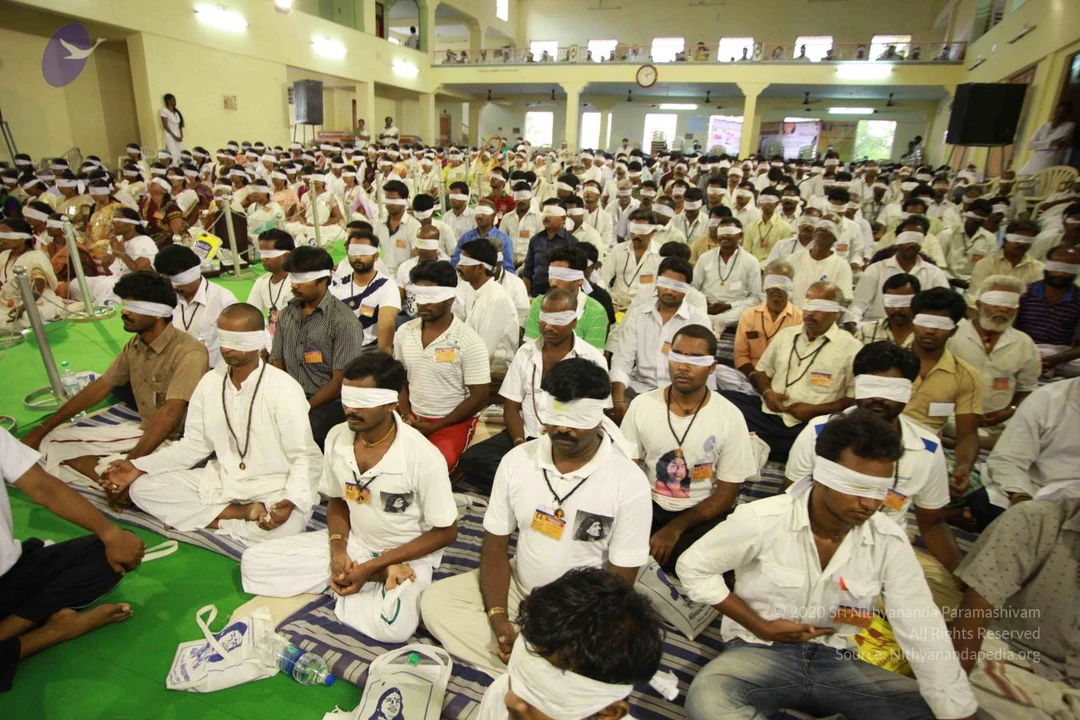
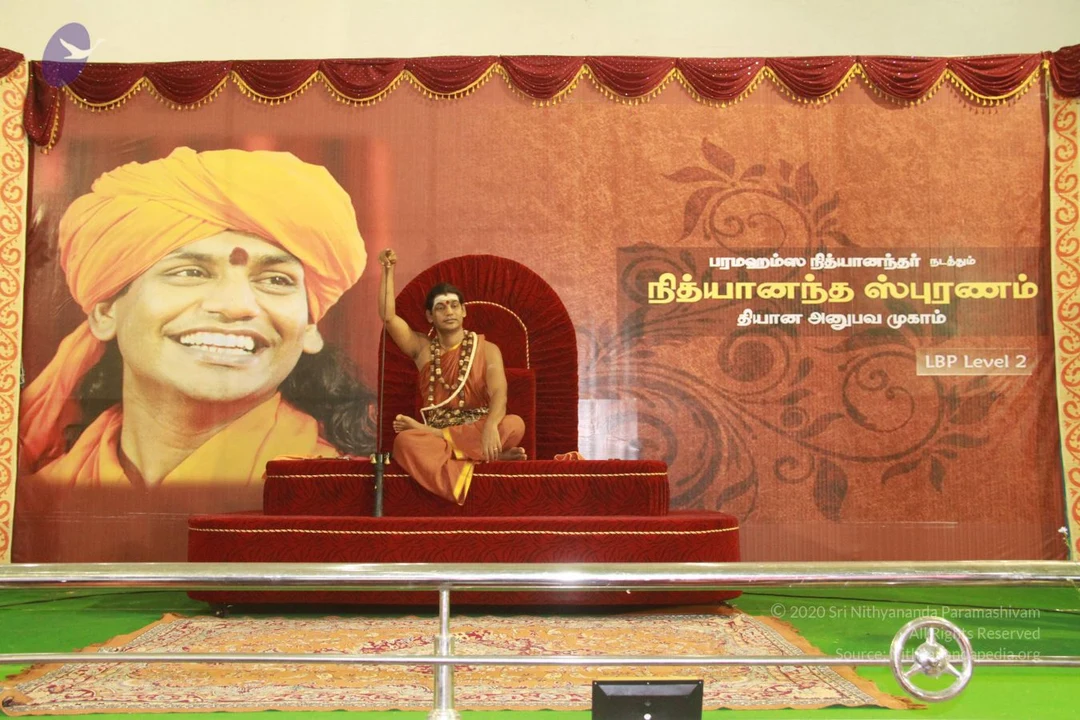
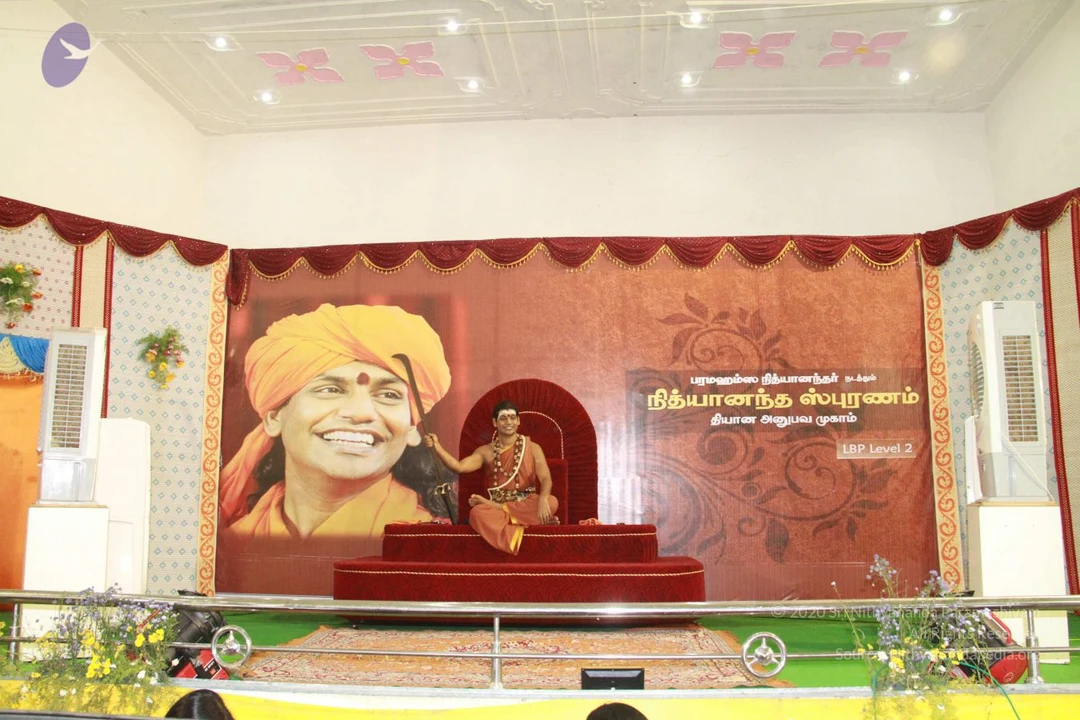
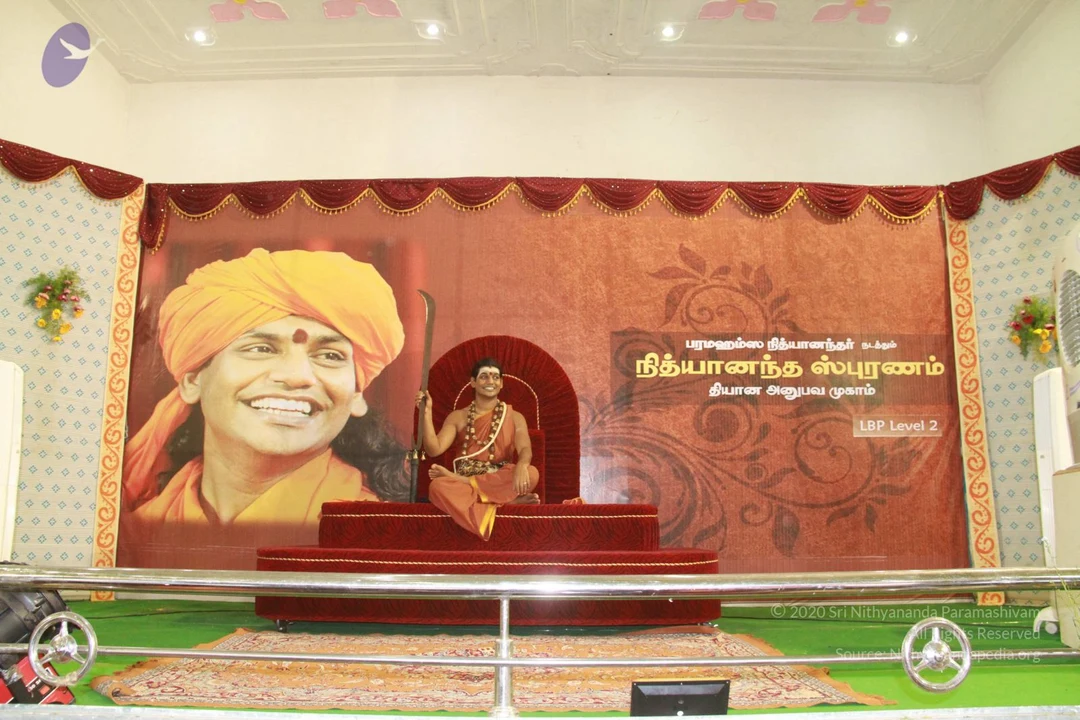
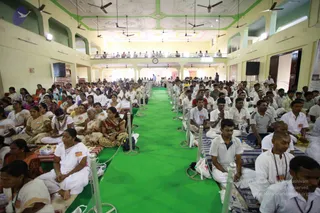
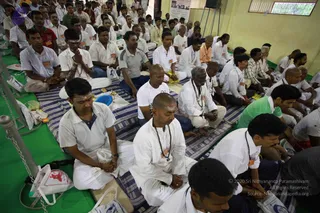
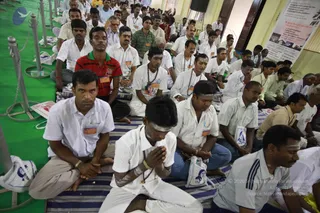
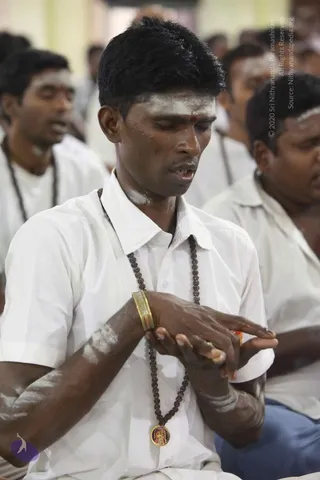
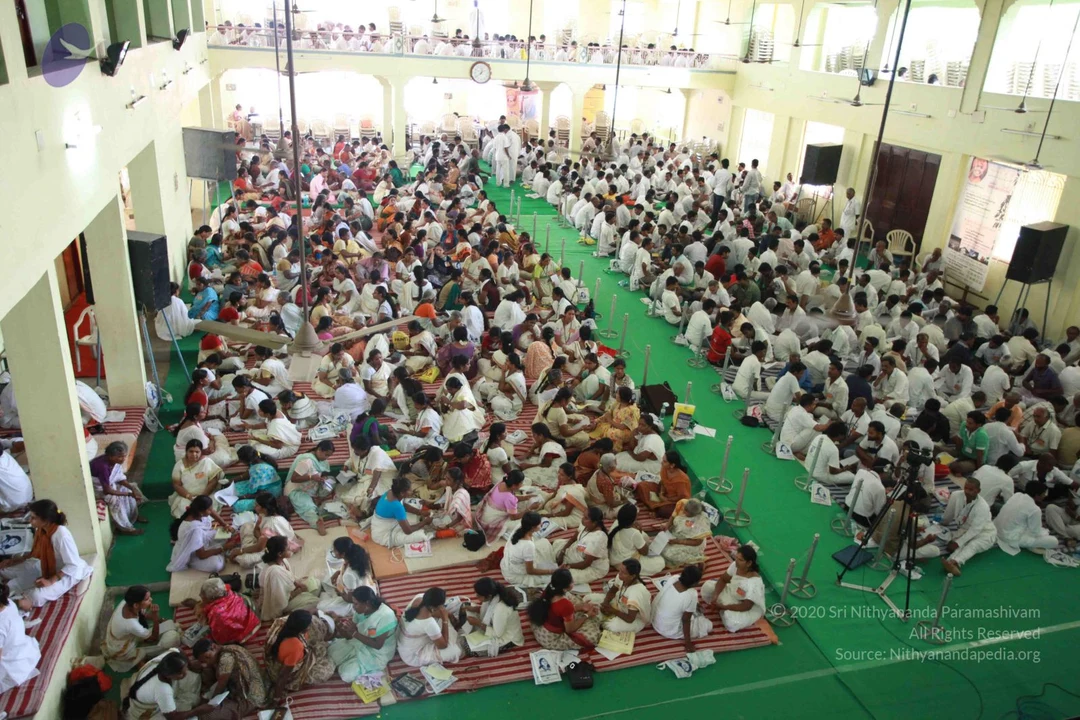
A wide view of a large hall during a seated satsang, with rows of devotees sitting on mats and cushions on both sides of a green carpeted central aisle. Many wear white clothes; some women wear saris in yellow, orange and red, and several men wear white shirts. Some devotees have their hands folded in prayer, and a few hold small items. People also sit along a balcony on the upper level. Ceiling fans, pale yellow walls, green trim and metal stanchions line the aisle, and speakers are mounted on the walls. The front of the hall is not visible, so no presiding figure can be identified in this view.A photograph of a large seated congregation inside a hall with green floor matting and striped blue-and-white mats. Many men sit cross-legged in rows, mostly in white shirts and white dhotis, with some in grey or green shirts. A bald man in front wears a white shirt, a rudraksha mala and a white forehead mark, and sits with eyes closed. Another man in a white kurta holds his hands in namaste. Each participant has a small name badge on the chest. Bags and small brass items sit on the floor in front, and a banner hangs on the back wall. No clearly identifiable a person figure is visible in the frame, so this is a satsang gathering of devotees.A photograph of a large seated congregation of men at a satsang hall, most in white shirts and white dhotis or trousers, with some in coloured shirts. Many sit cross-legged on striped blue-and-white mats in rows, eyes closed or heads bowed, one front figure with hands pressed in anjali and a rudraksha mala around his neck. Several wear name badges on lanyards and carry white cloth bags printed with a blue figure. Green carpet covers the floor beside metal stanchions and chain barriers, and a banner with pink and white text hangs on the yellow wall at upper right.A young man in a white short-sleeved shirt sits with eyes lowered and lips slightly parted, as if chanting, his hands joined at chest level. He wears a dark rudraksha mala with a small round gold-framed pendant bearing a red and gold deity image, plus a gold bangle. White sacred ash marks his forehead, neck and arms, with a red bindi between his brows. Behind him, several other men in white shirts with white ash and rudraksha malas sit in a satsang hall, blurred, their eyes closed. No a person candidate is visibly present.A seated congregation of devotees in a hall, most with eyes closed in meditation. Men in white shirts and white dhotis-style clothing dominate; several wear rudraksha malas around their necks and have white vibhuti bands with red kumkum dots on their foreheads. A bald man in a white shirt and an older man with white hair and a white beard sit among them. Some wear lanyard badges, and one man in front wears a grey striped shirt. Behind them, more seated devotees fill the frame. No clearly identifiable a person figure is visible in this crop, so no appearance-based candidate is claimed.Empty satsang stage with a red velvet throne-style seat backed by a tall arched red cushion, draped with a yellow-and-black zebra-striped cloth. Centered on the seat is a framed printed portrait of a young man in orange robes and a white beaded necklace, seated cross-legged before a tree trunk with a raised hand. Pink and white flowers in vases flank the frame, a small water bottle and microphone cable sit to the left, and a sandal-like floral offering lies on the floor. Behind is a large backdrop showing a smiling figure in a yellow turban with a red bindi, and Tamil text in gold lettering. Nobody is physically present.
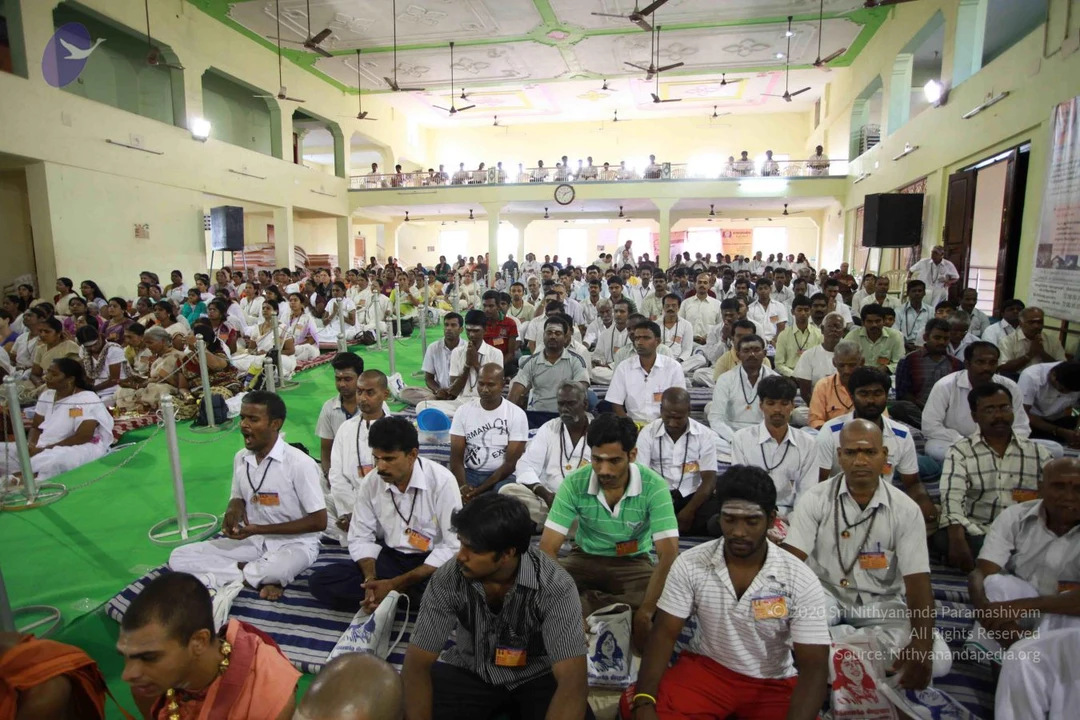
NITHYA-SATSANG
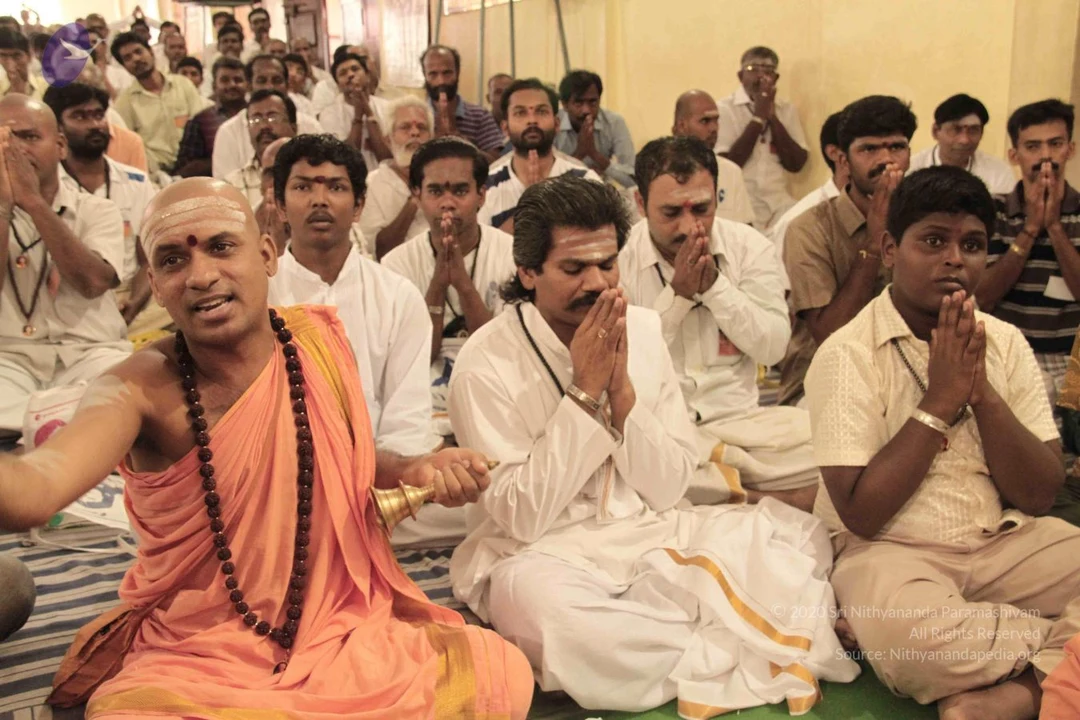
61 photosSource gallery
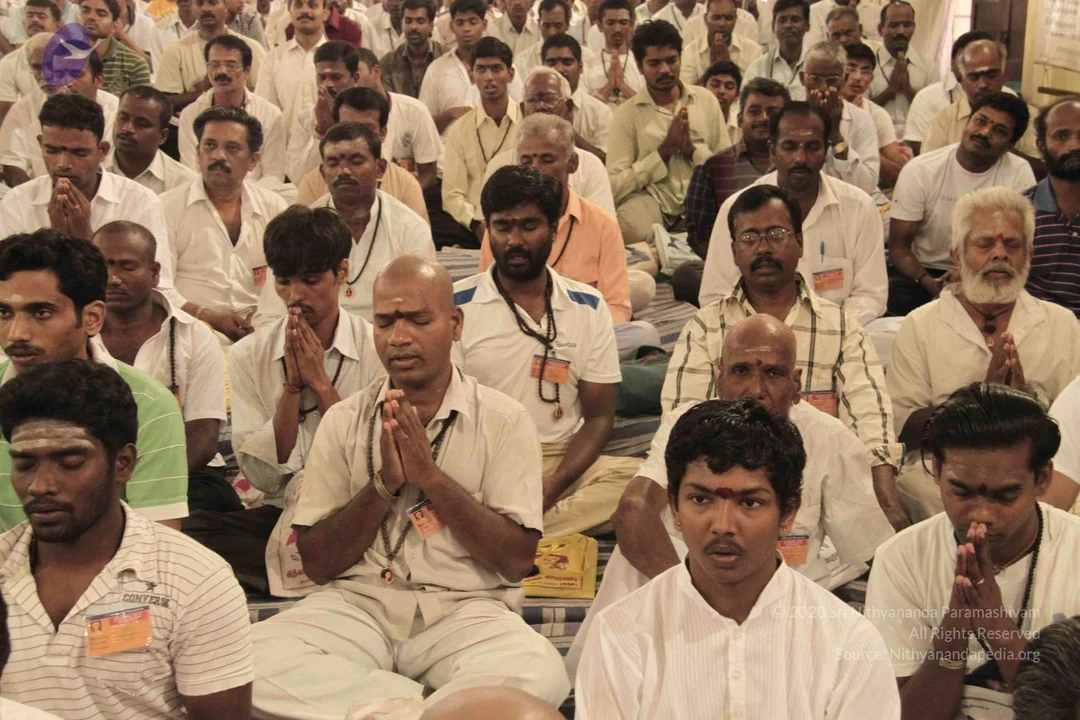
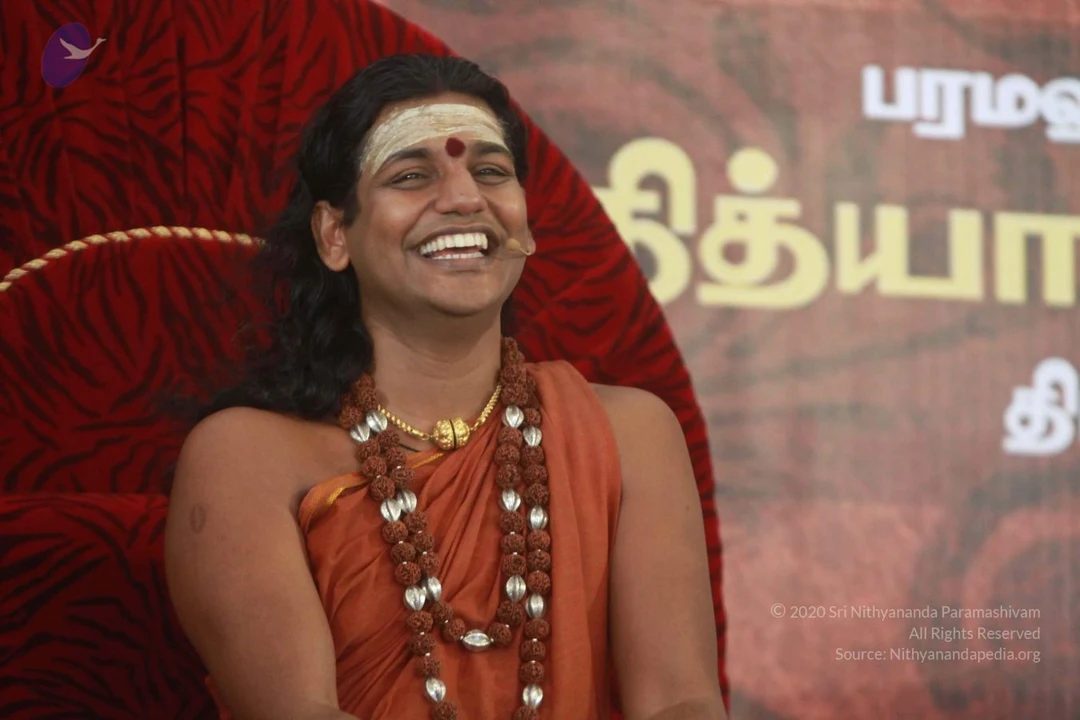
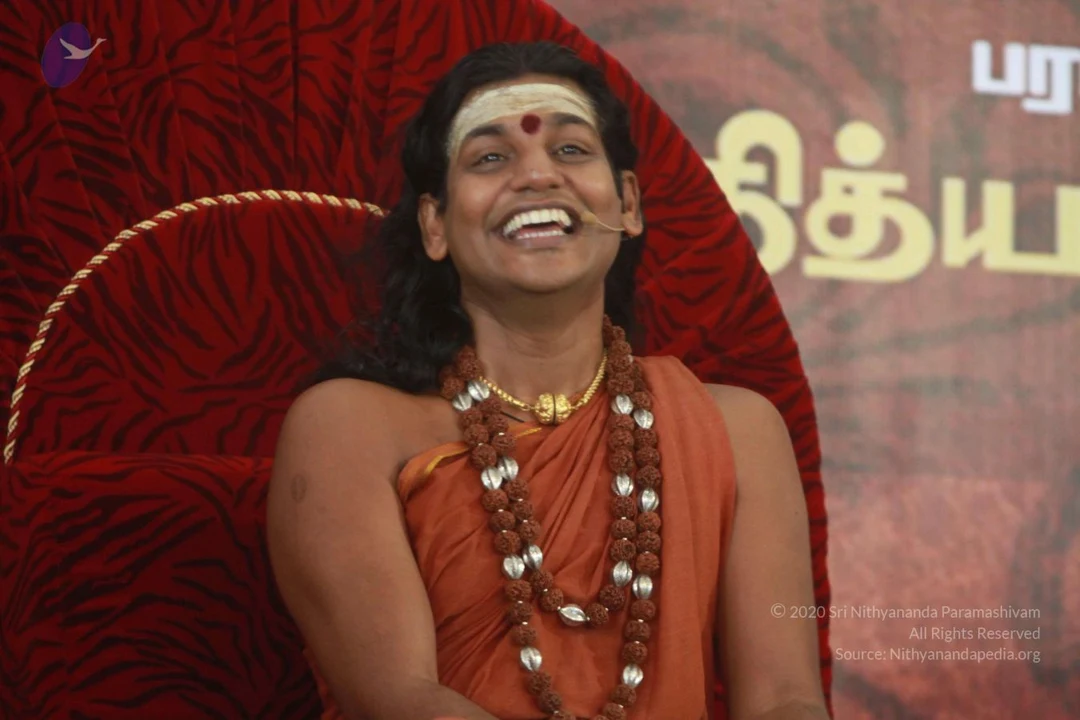
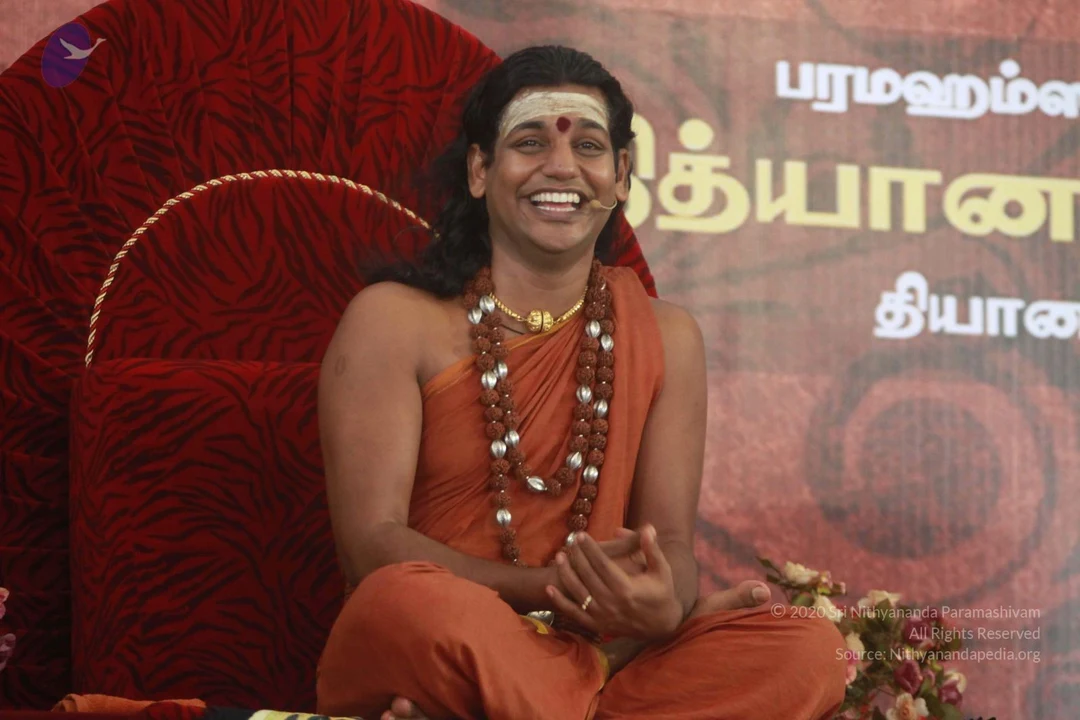
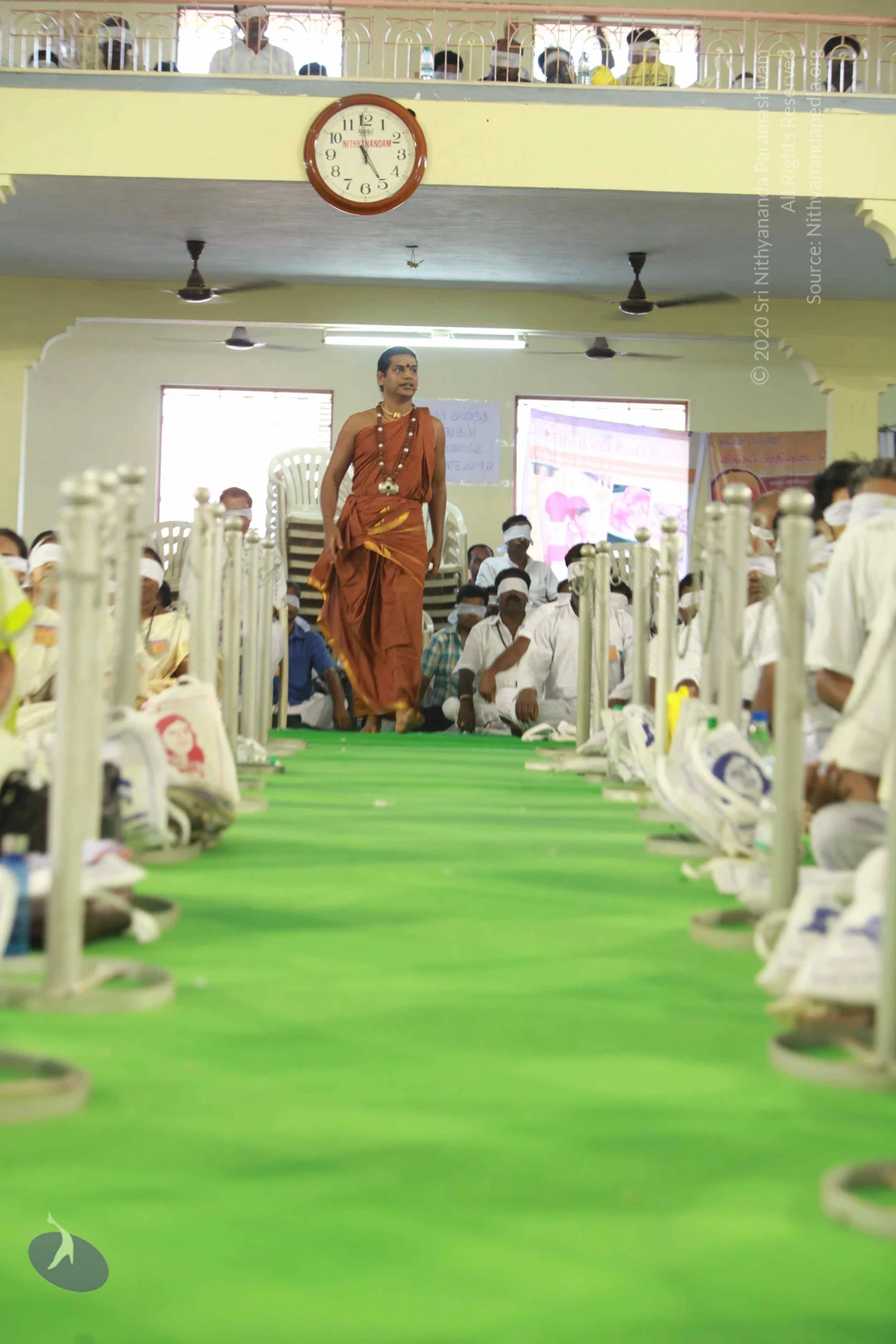
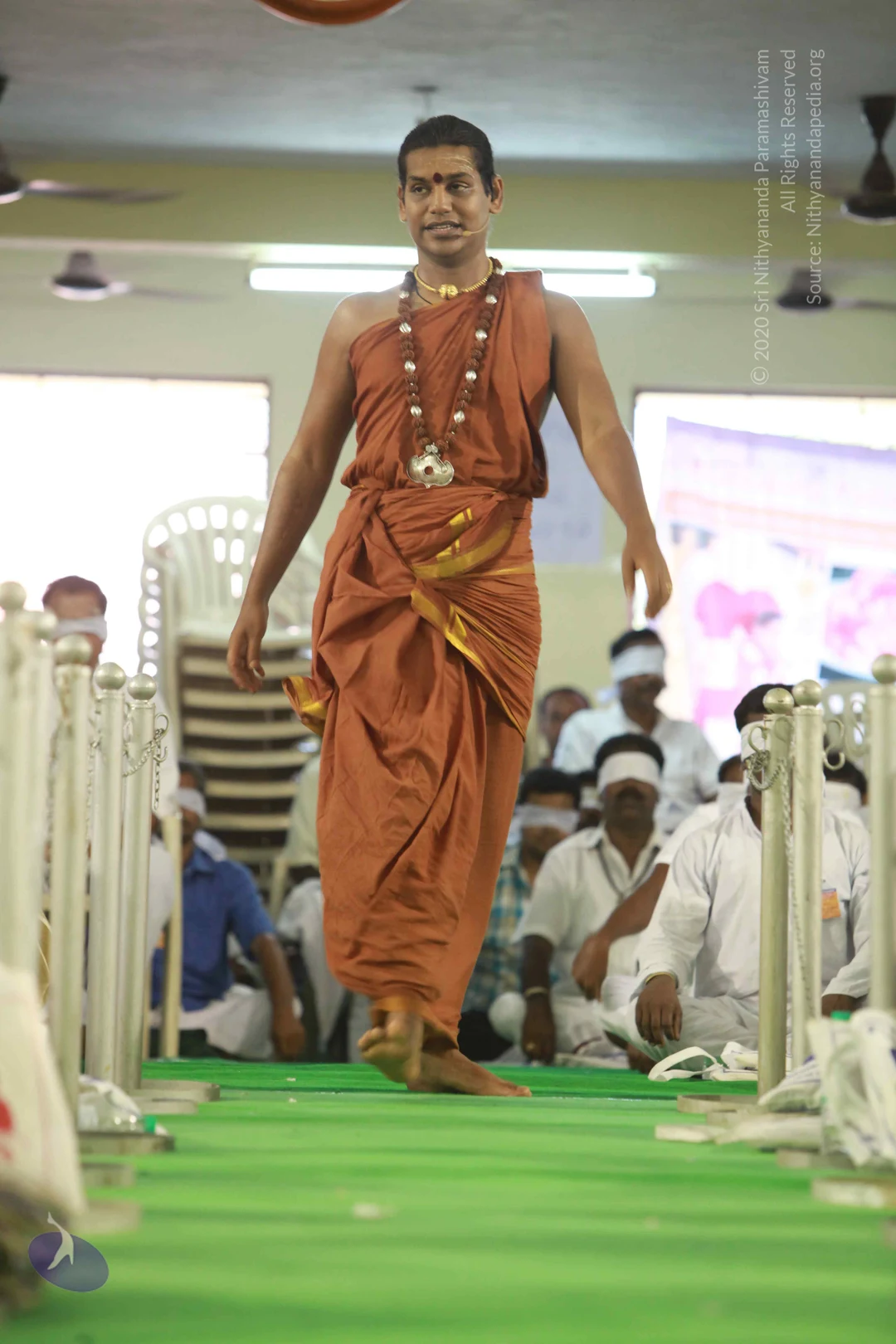
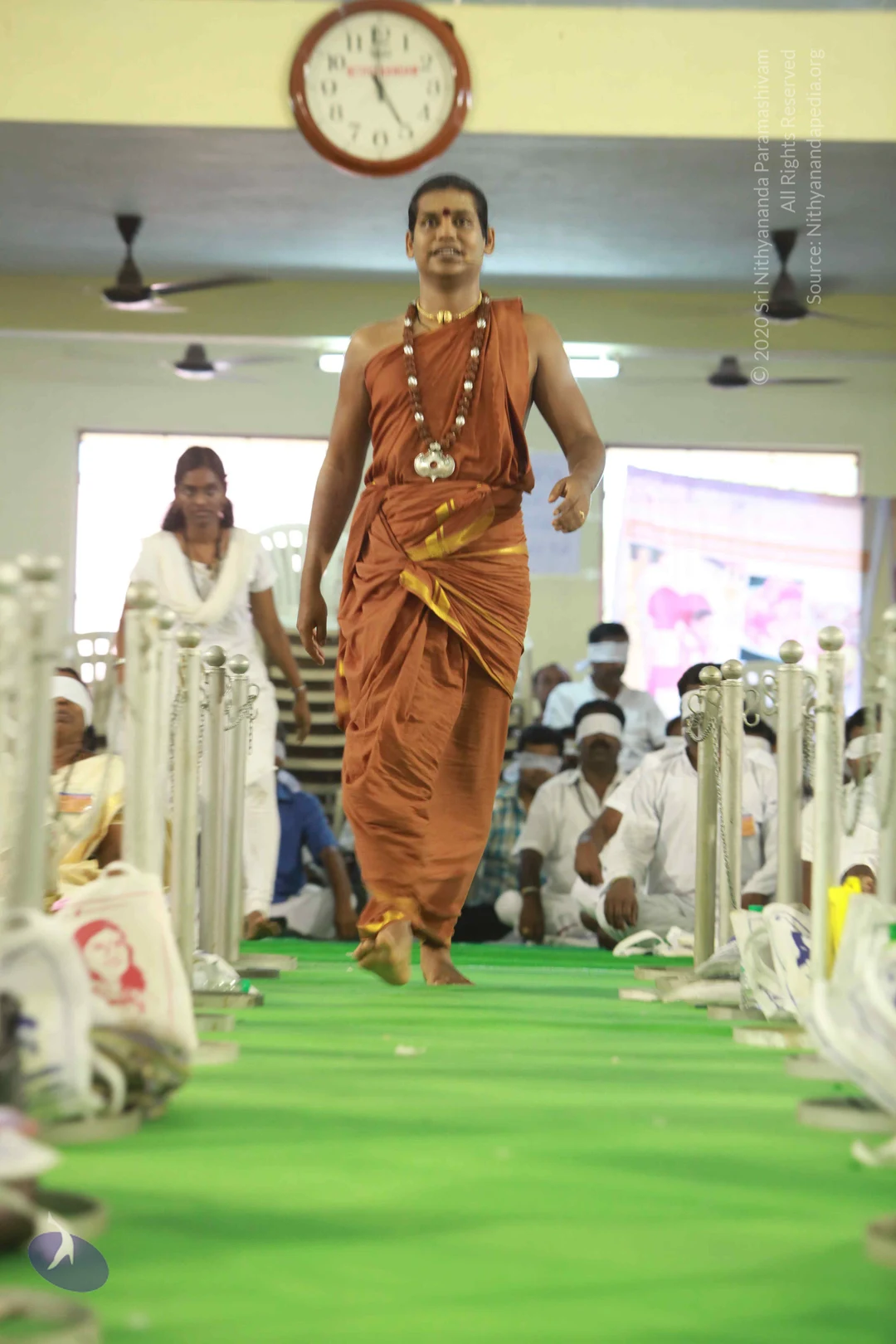
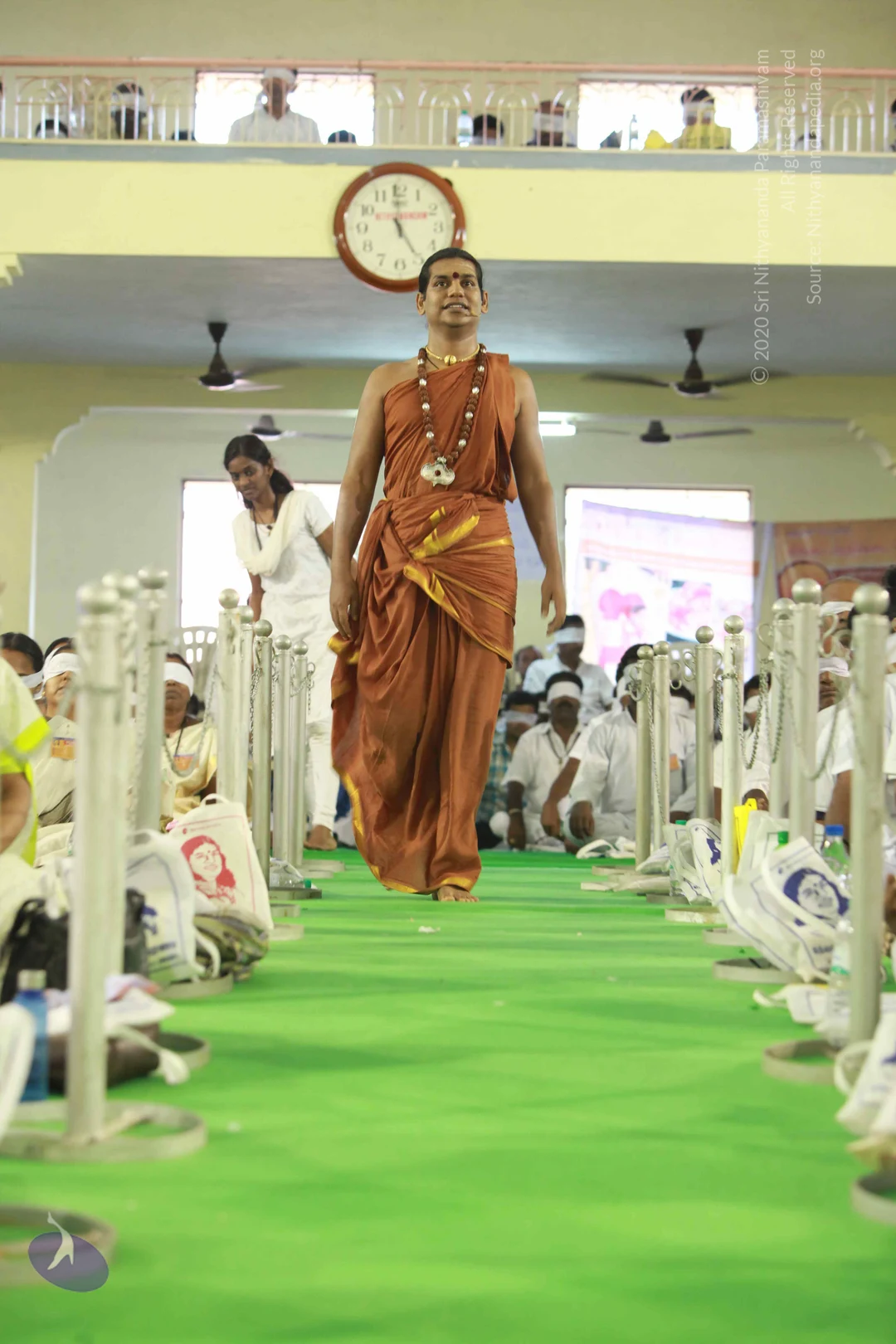
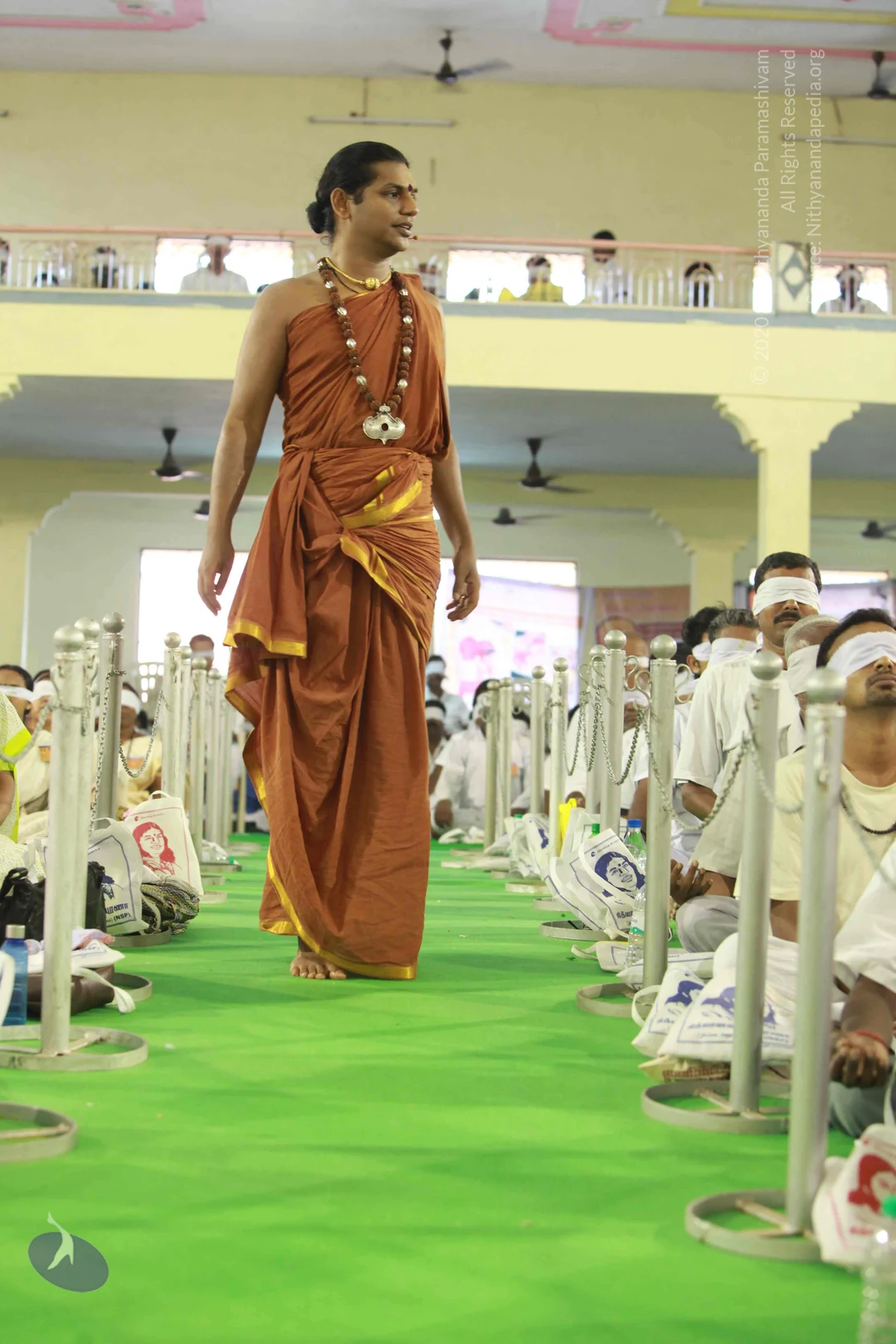
A photograph of a seated satsang gathering in a hall with cream walls and a blue-striped mat. In the foreground at left, a shaved-headed man in saffron-orange robes wears a long rudraksha mala and holds a small brass bell in his right hand while gesturing with his left, with white and red forehead markings. Beside him, a man in white kurta and dhoti sits with palms pressed in anjali, and further right a young man in cream shirt and beige trousers wears a beaded necklace and bangles, also in anjali. Many men in white and light clothing sit behind them with hands folded in prayer, some with tilaka on their foreheads, indicating devotional participation.A large satsang hall filled with seated devotees on striped mats, mostly men in white shirts and white dhotis, many with hands pressed in anjali or eyes closed in meditation. Some wear rudraksha malas and tilak marks; a few wear orange or striped shirts. Several carry white cloth bags printed with a figure. Name badges hang from many shirts. The crowd fills the hall, with a stage and banners visible at the far back.A large seated congregation of men in white shirts and white dhotis sits on green mats with hands pressed together in anjali mudra and eyes closed during satsang. Several wear rudraksha malas; one man in a white t-shirt with dark printed lettering sits in the middle, and a bald man with a red tilak stands out in the centre-left. Metal stanchions and a green floor frame the hall, and some attendees wear name badges on lanyards. No a person is visible in this image.A large seated congregation of men fills a hall at a satsang, many with palms pressed together in anjali mudra and eyes closed. Most wear white shirts and white dhotis, some with rudraksha malas and identification badges on lanyards. A man in the foreground wears a white shirt with a blue-striped collar, holding a mala with palms together. A younger man in white with a red tilak sits near the bottom center. An older bearded man at right wears white with a red forehead mark and joins his hands. Mats and bolsters cover the floor. No a person candidate is visible in the frame; the figures are devotees.A large seated crowd of men fills a tent-like hall at a satsang, most wearing white shirts and white dhotis or trousers with name badges on their chests. In the foreground a smiling man with a moustache in a white kurta sits centrally, while a bald man in a white t-shirt and a bespectacled older man with a white moustache and rudraksha-style beads sit nearby. Rows of attendees extend back toward a stage area with a speaker and framed banners on the walls. The a person candidate is not visible in this frame, so no identity is claimed.A seated man on a tall deep-red velvet throne on a raised dais, arms folded across his chest, eyes closed and smiling. He wears an orange-saffron cloth draped over his body, a red-and-white rudraksha mala, a gold necklace, and bangles, with a tilak on his forehead and long dark hair. A tiger-striped cloth covers the seat, flanked by vases of pink and white flowers and a water bottle. Behind him a large banner shows a smiling figure in orange with a turban and bold Tamil lettering reading as a title with Nithyananda, plus a warm red patterned backdrop. Appearance-based label: a person, seated on the throne at a satsang setting.

SARVA-DARSHAN
6 photosSource gallery
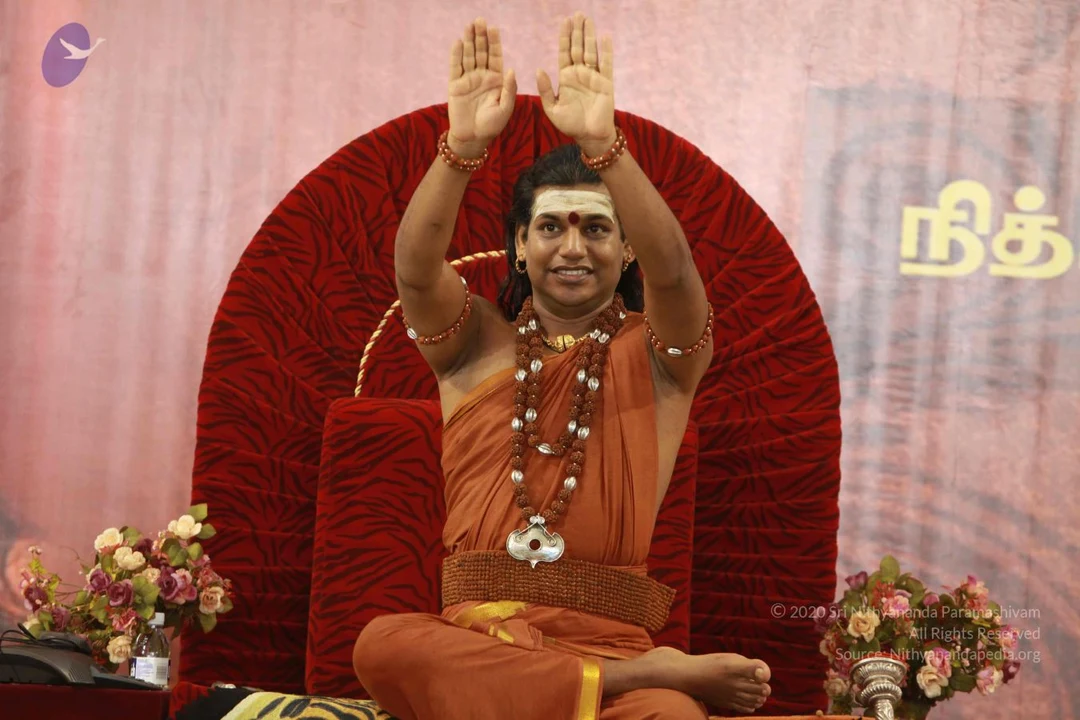
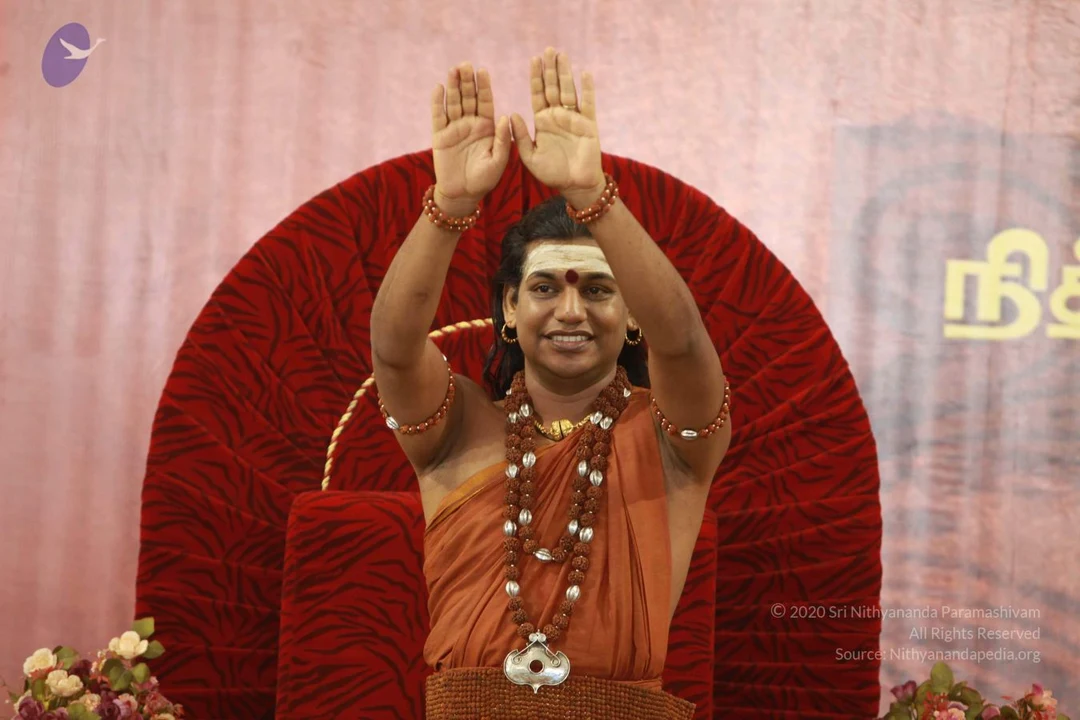
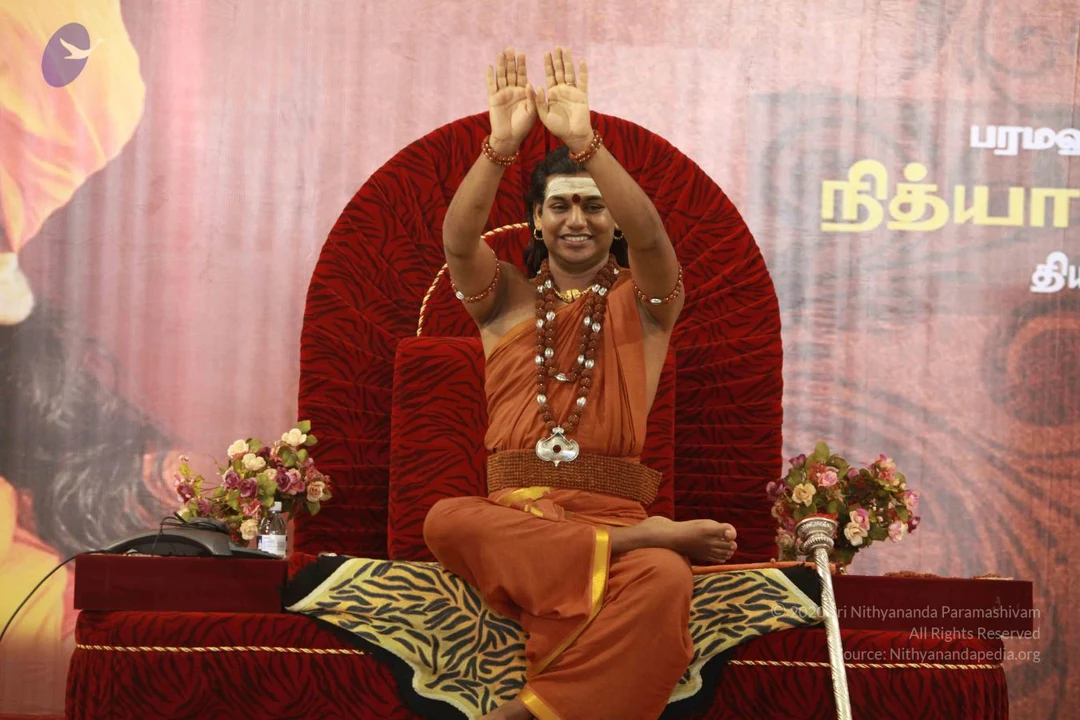
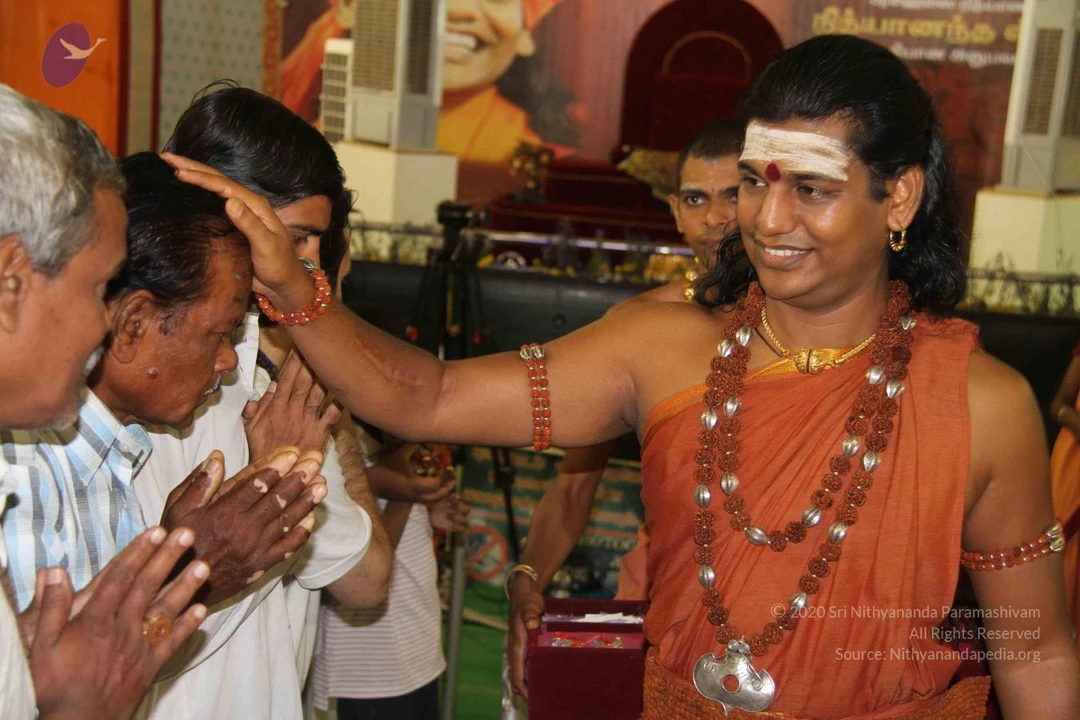
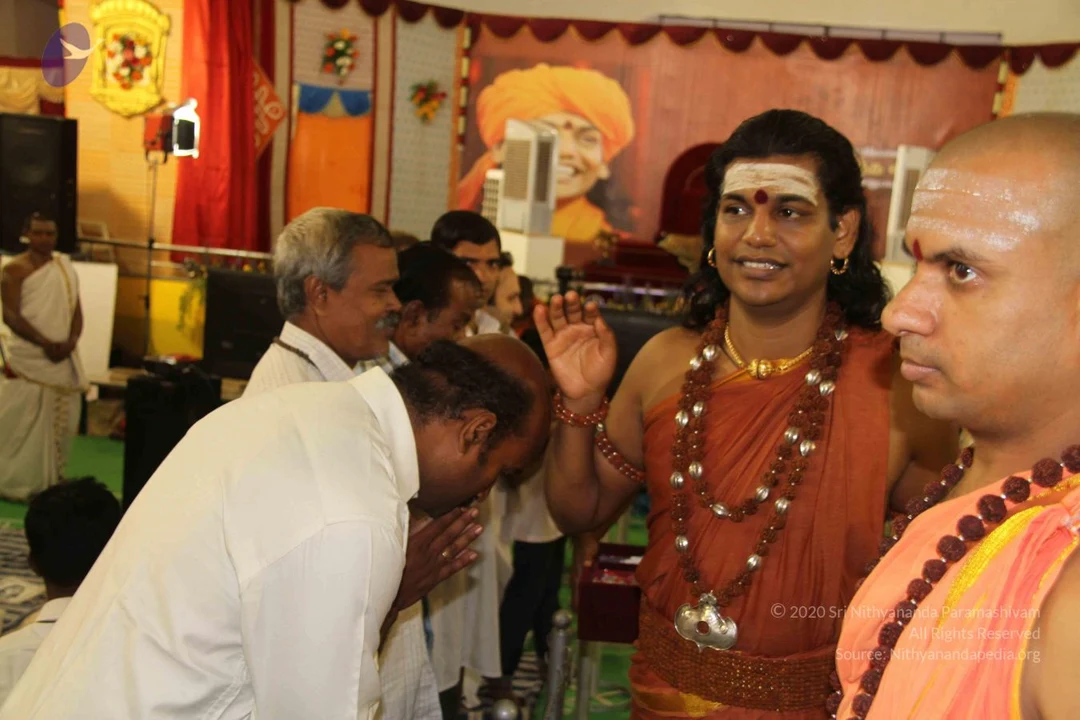
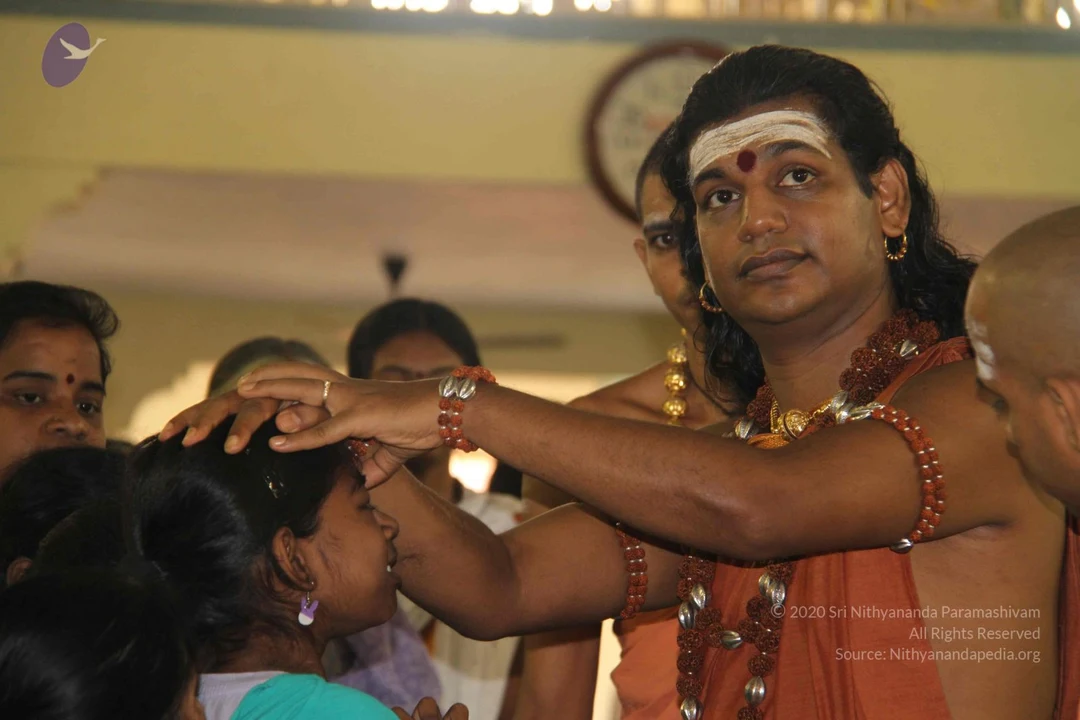
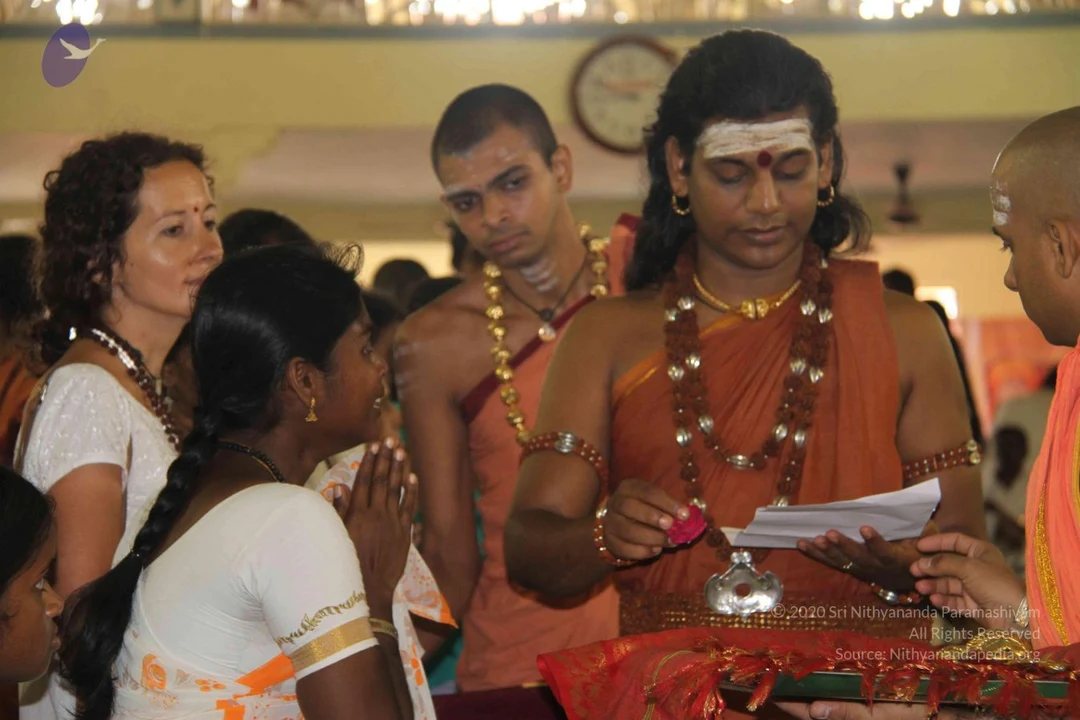
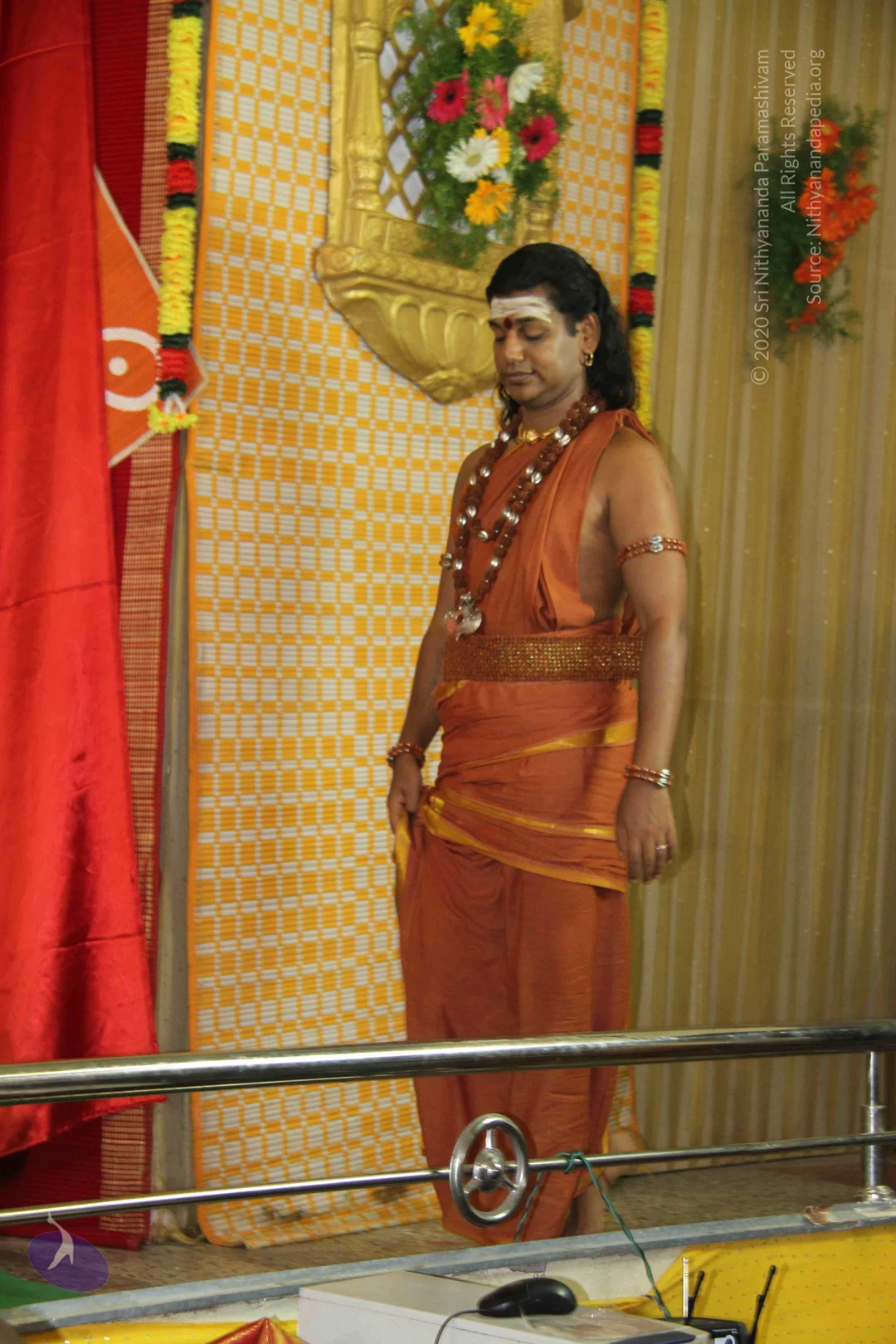
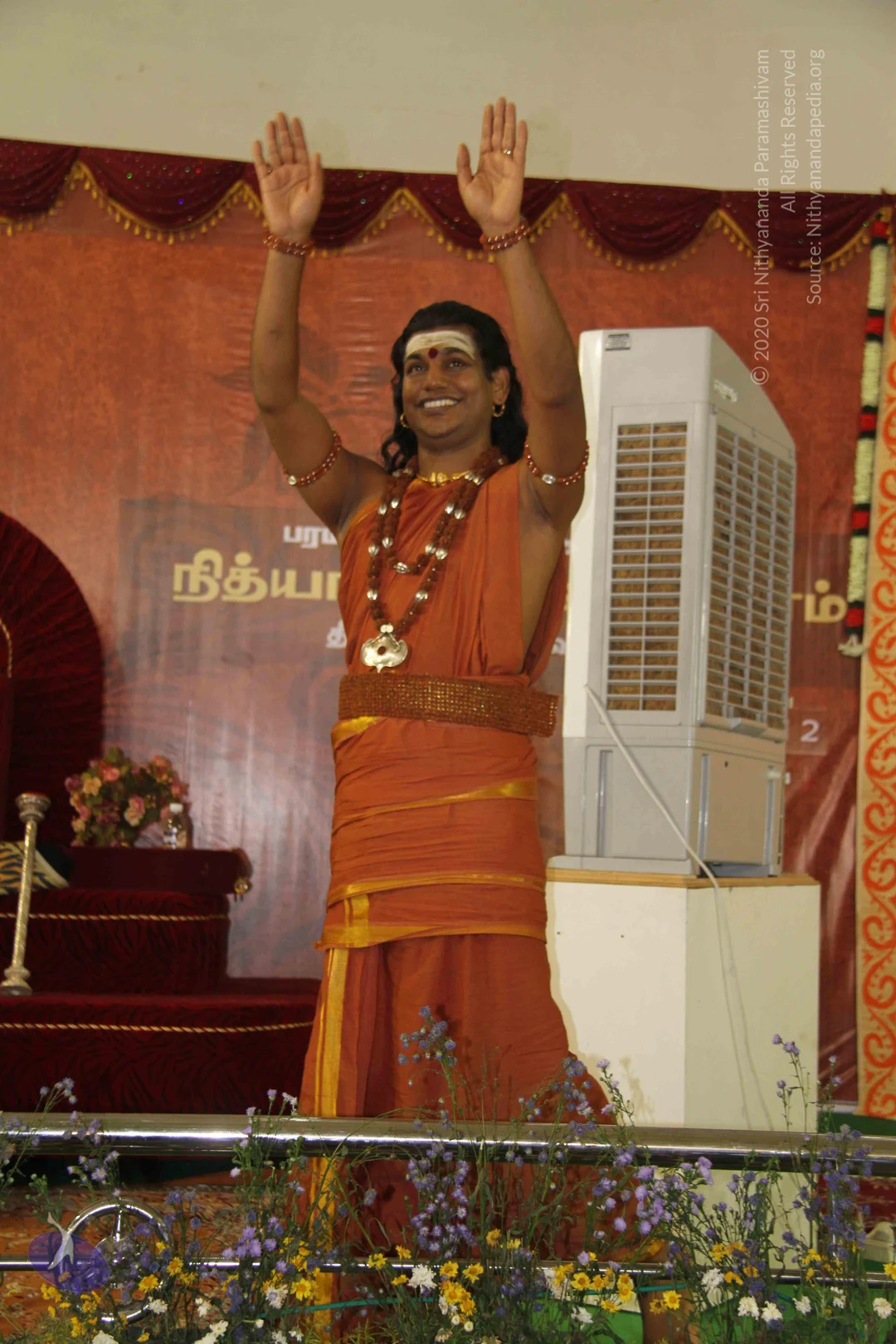
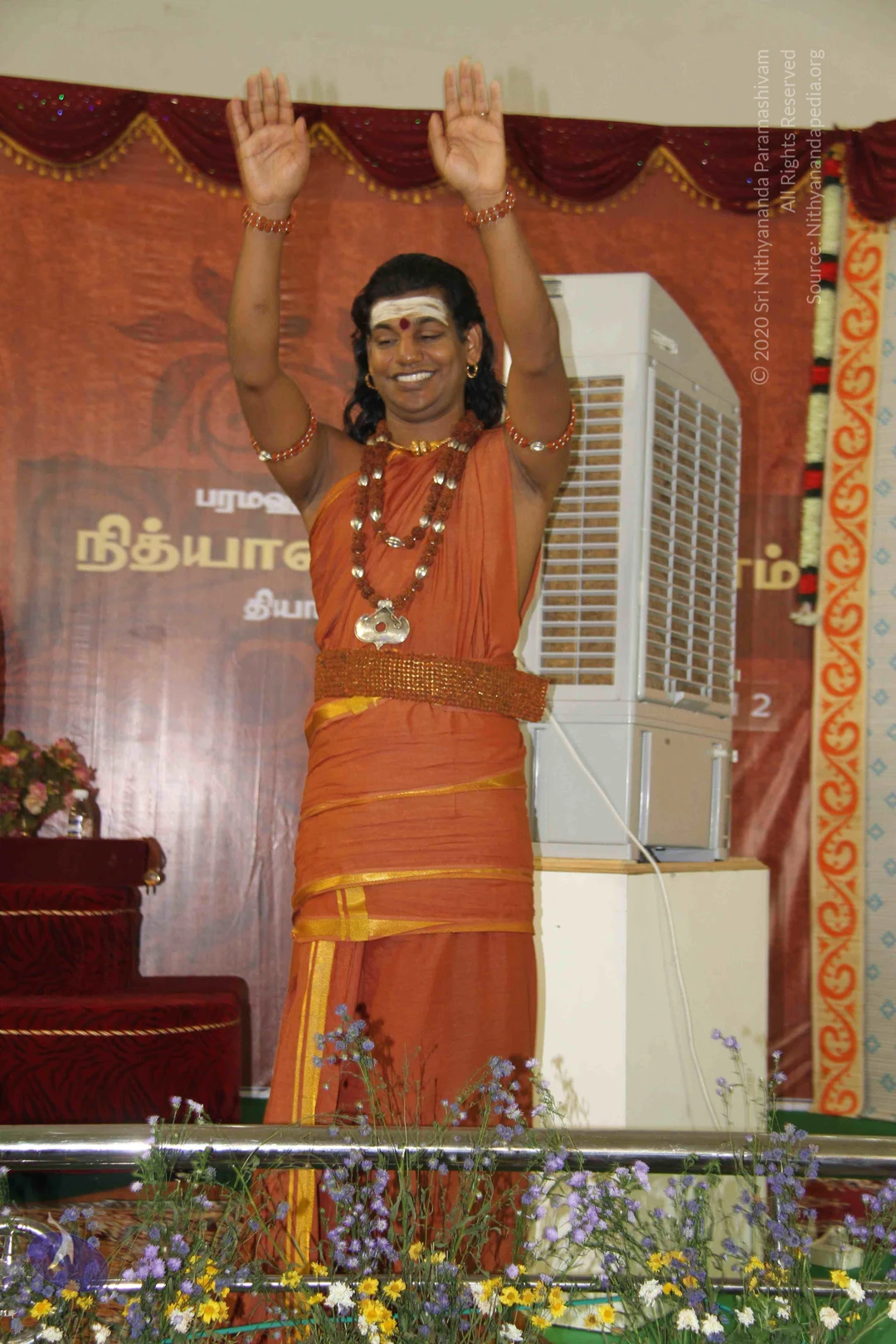
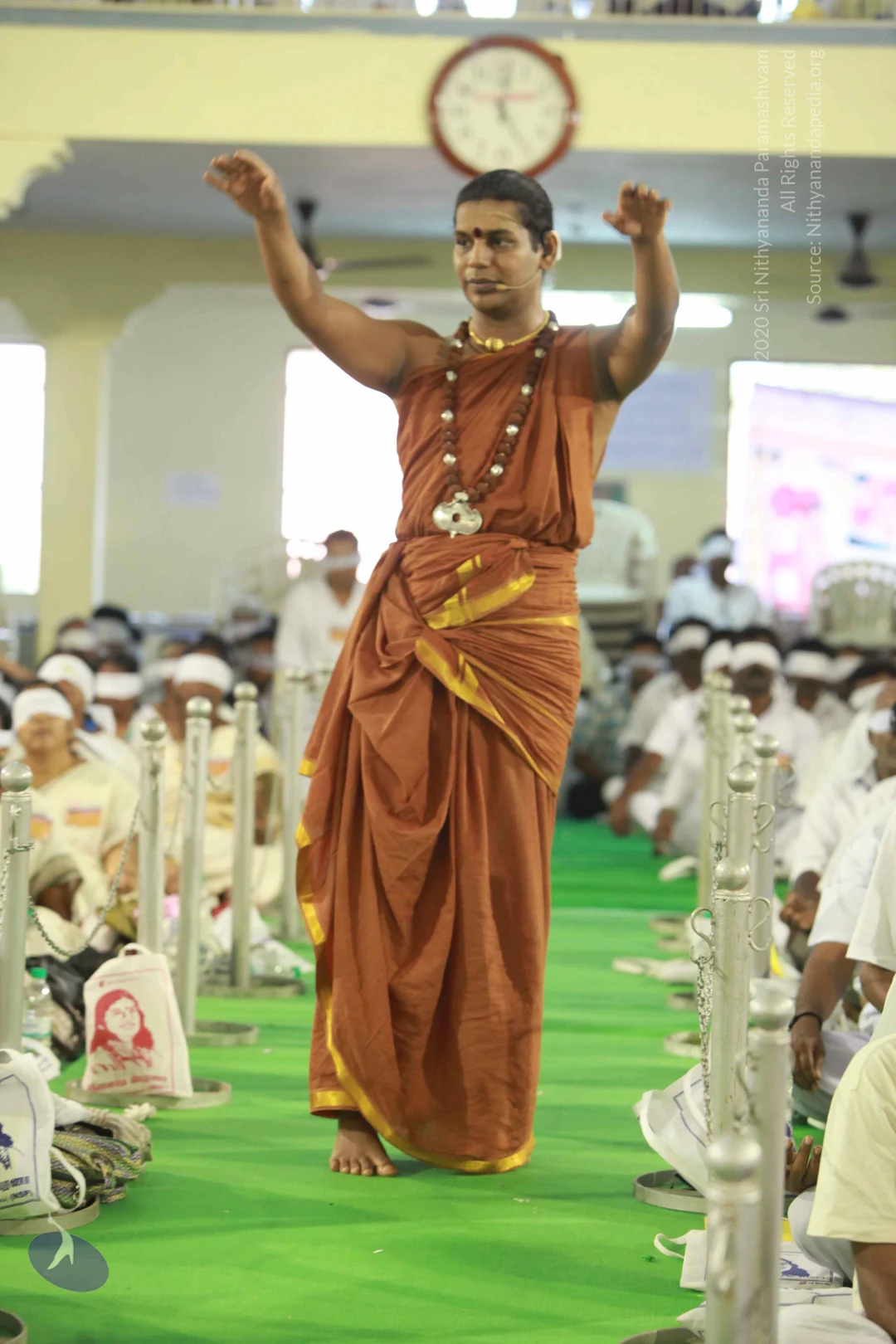
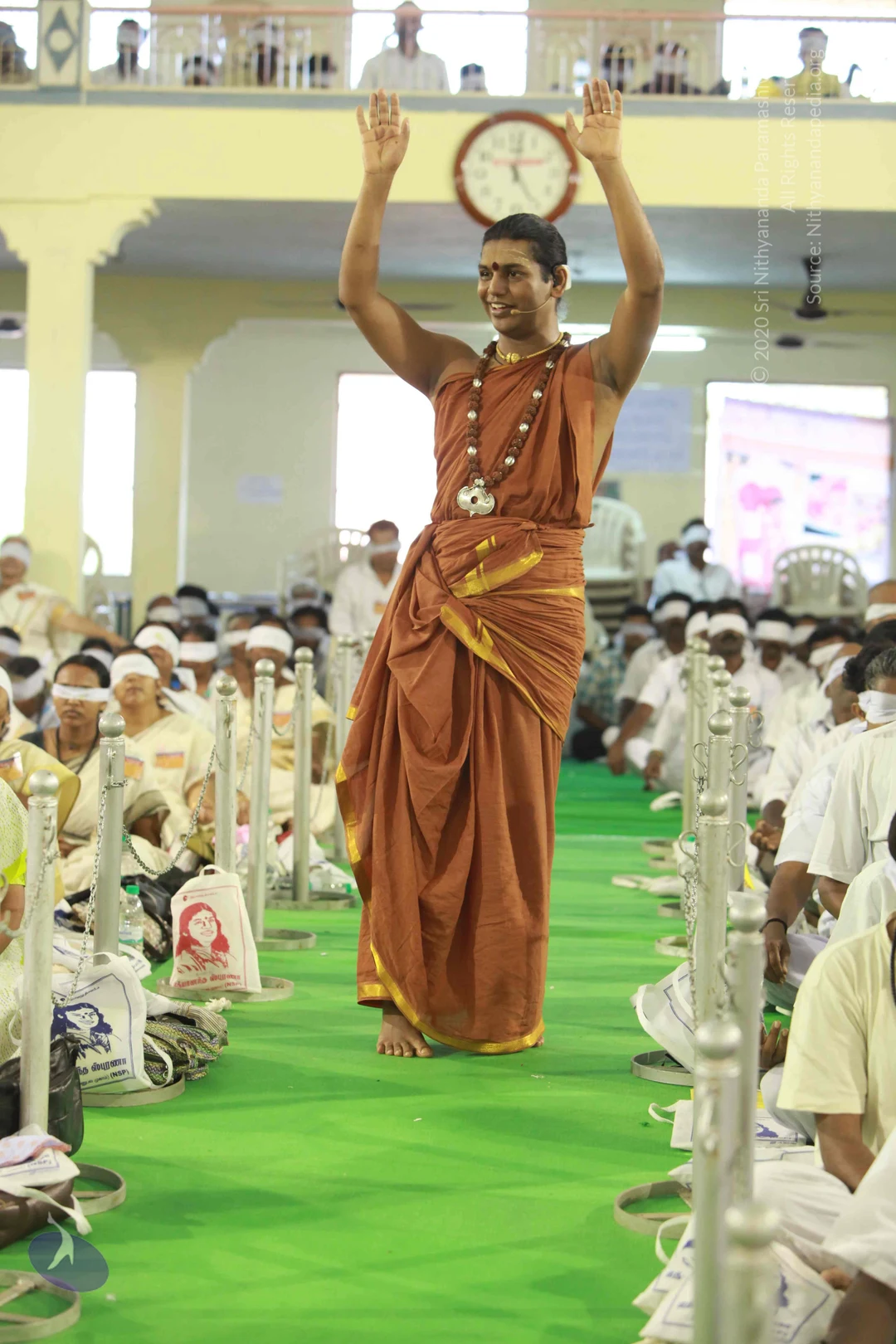
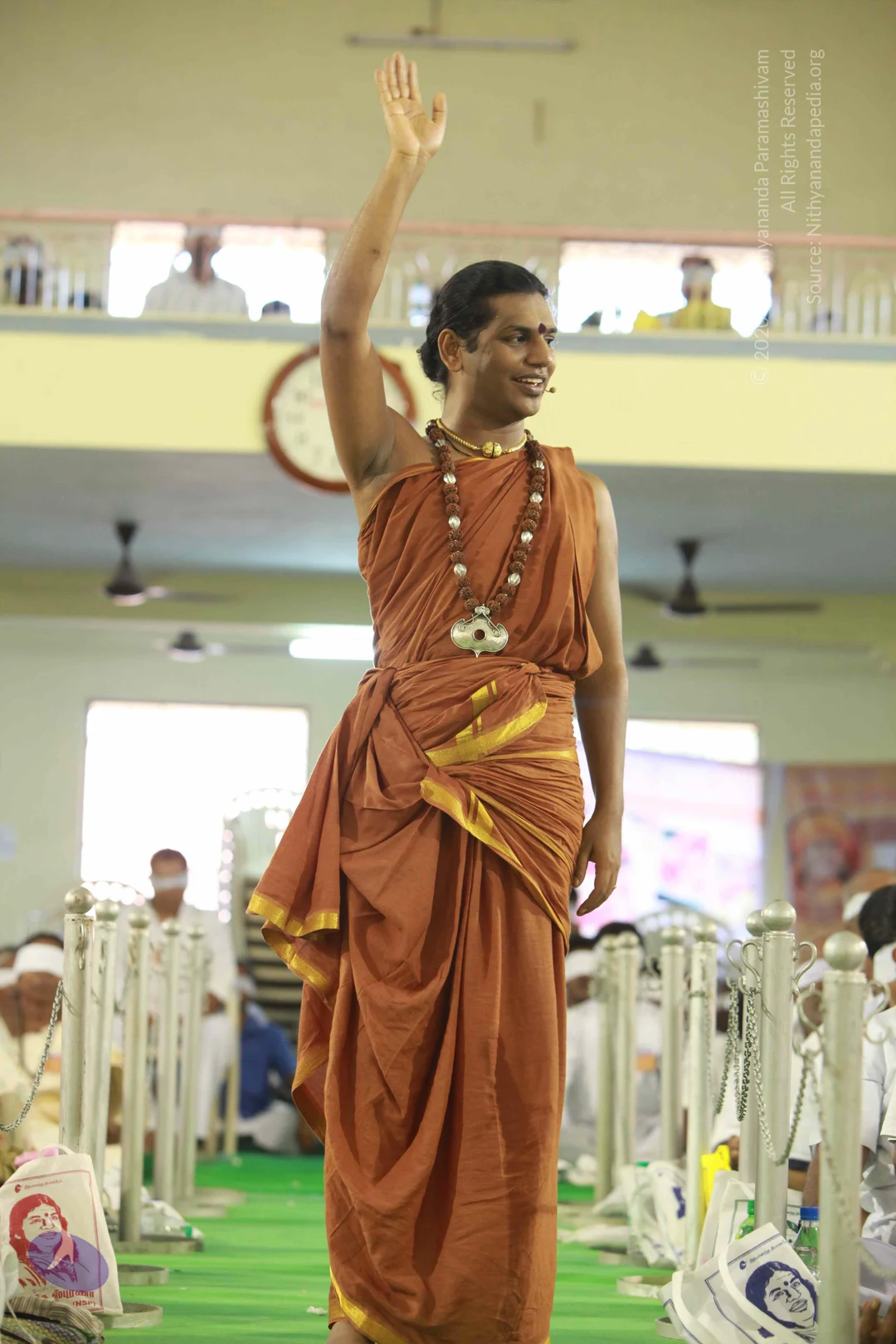
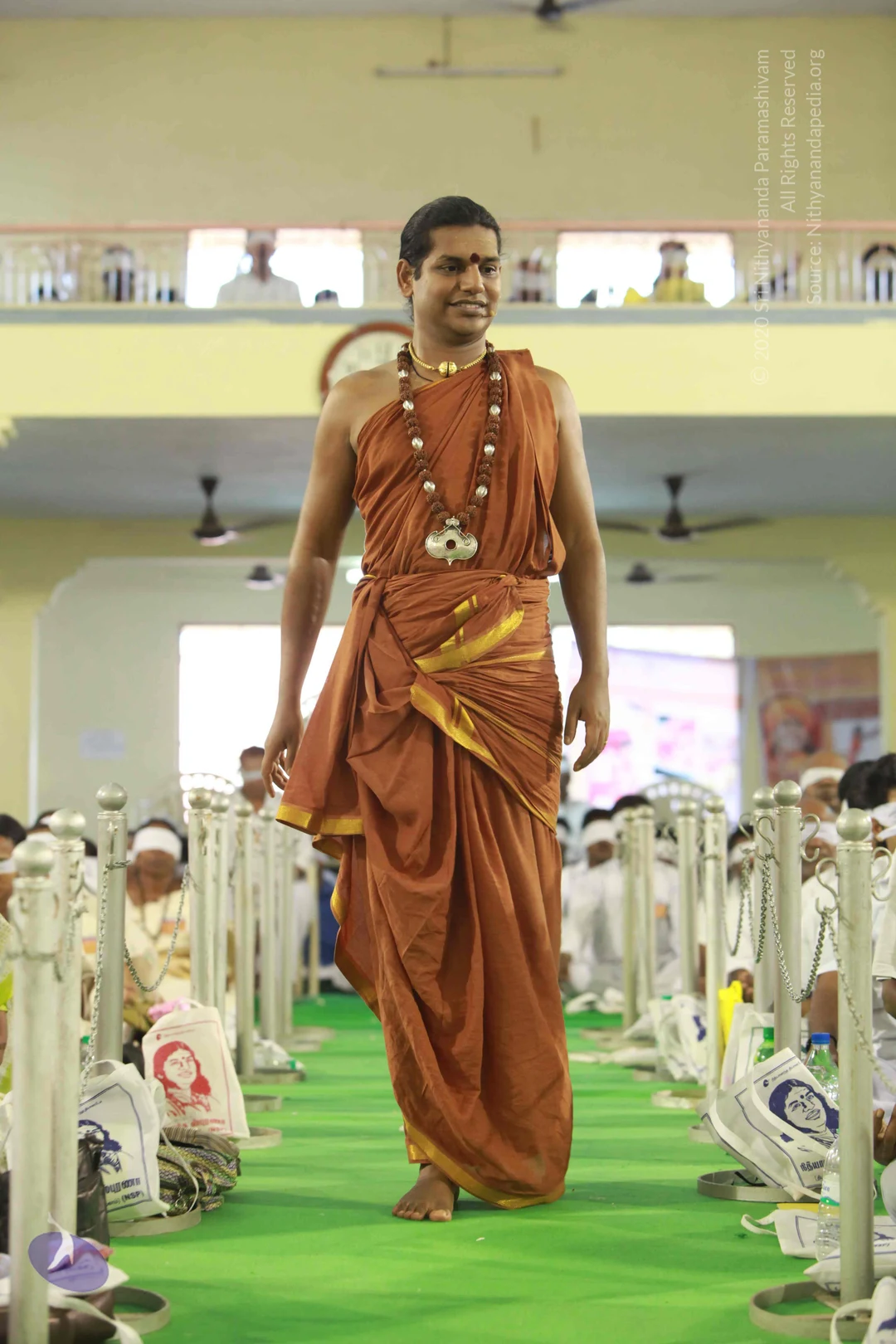
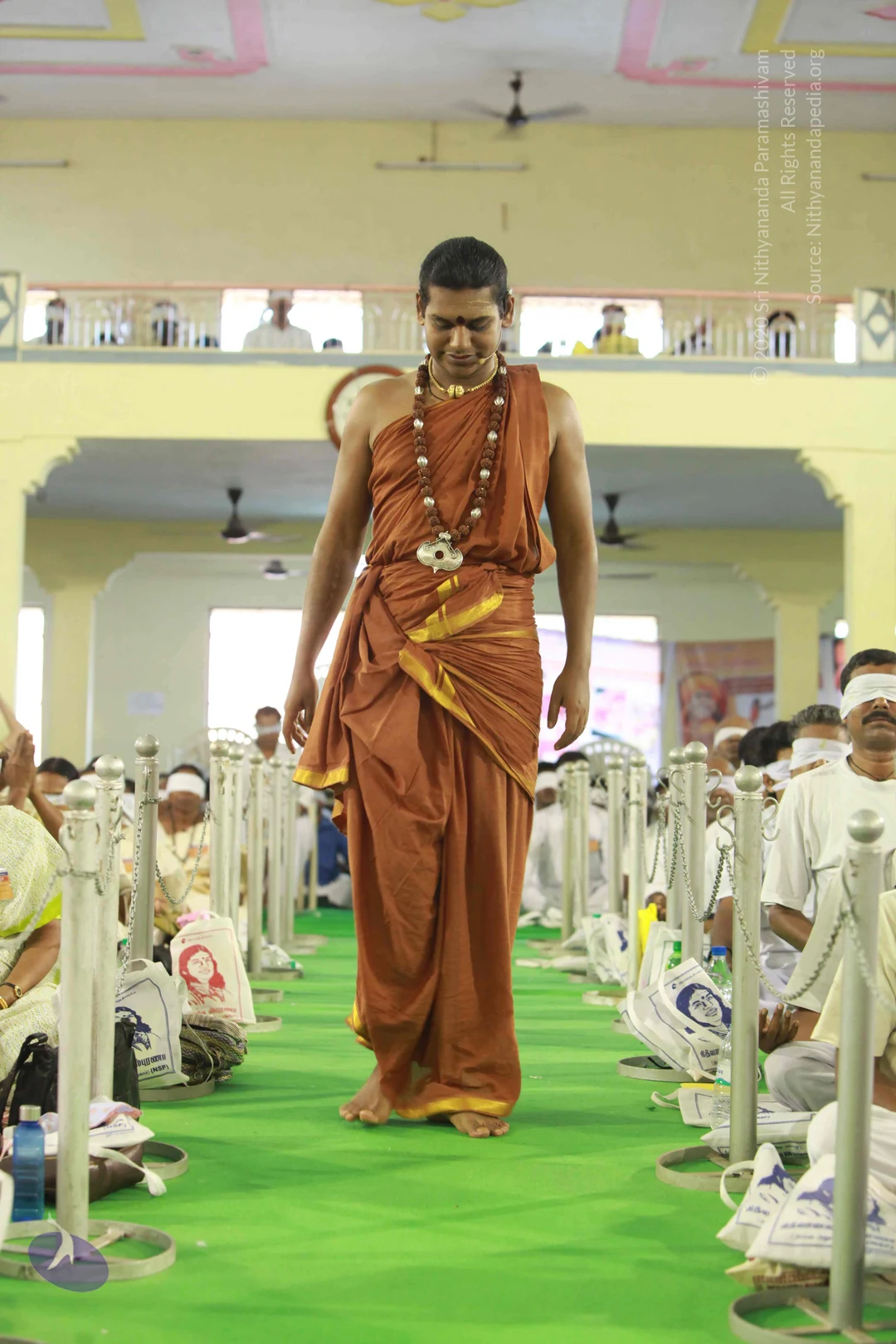
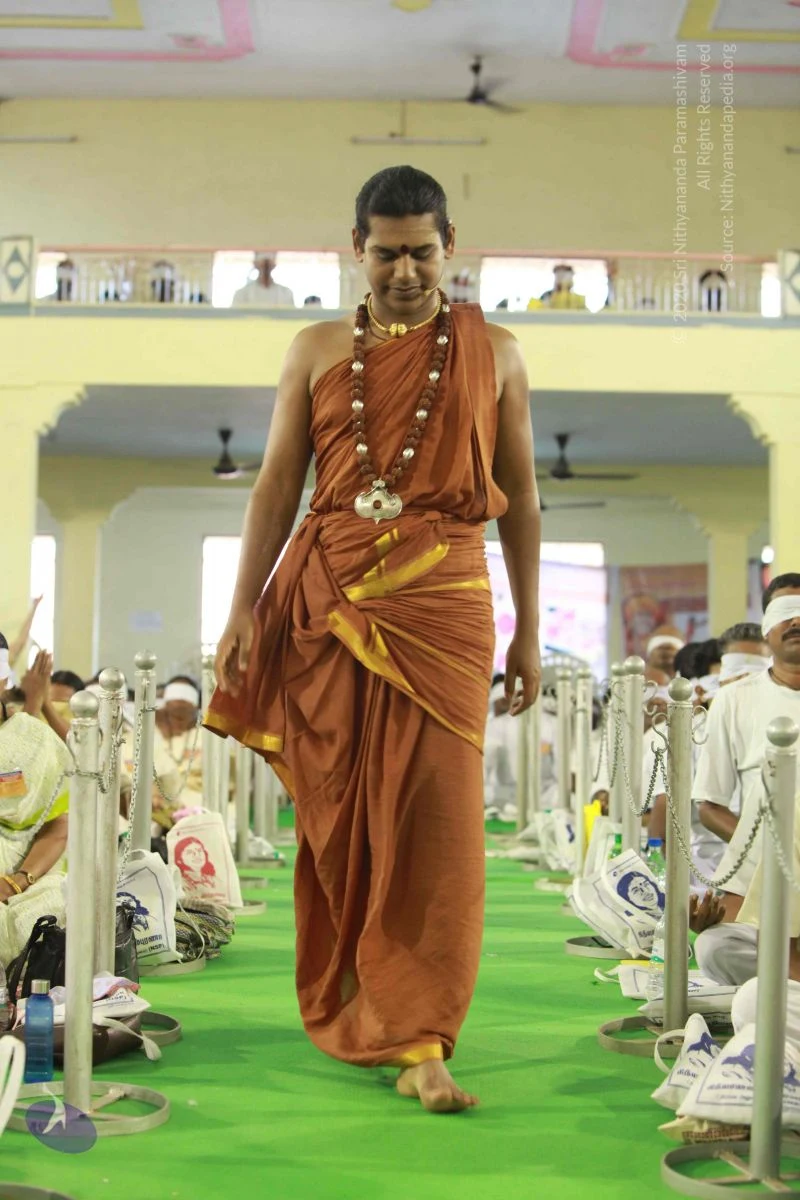
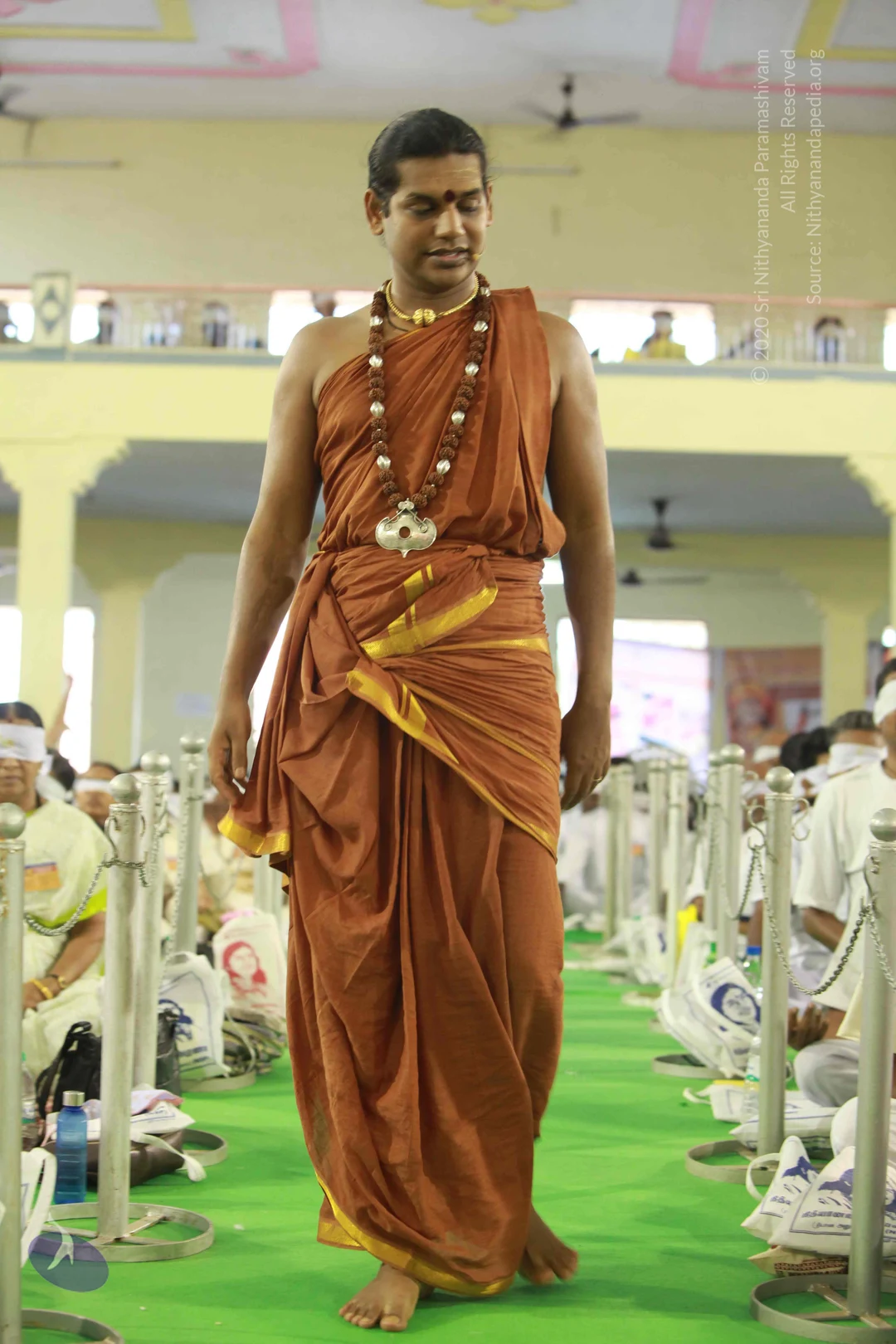
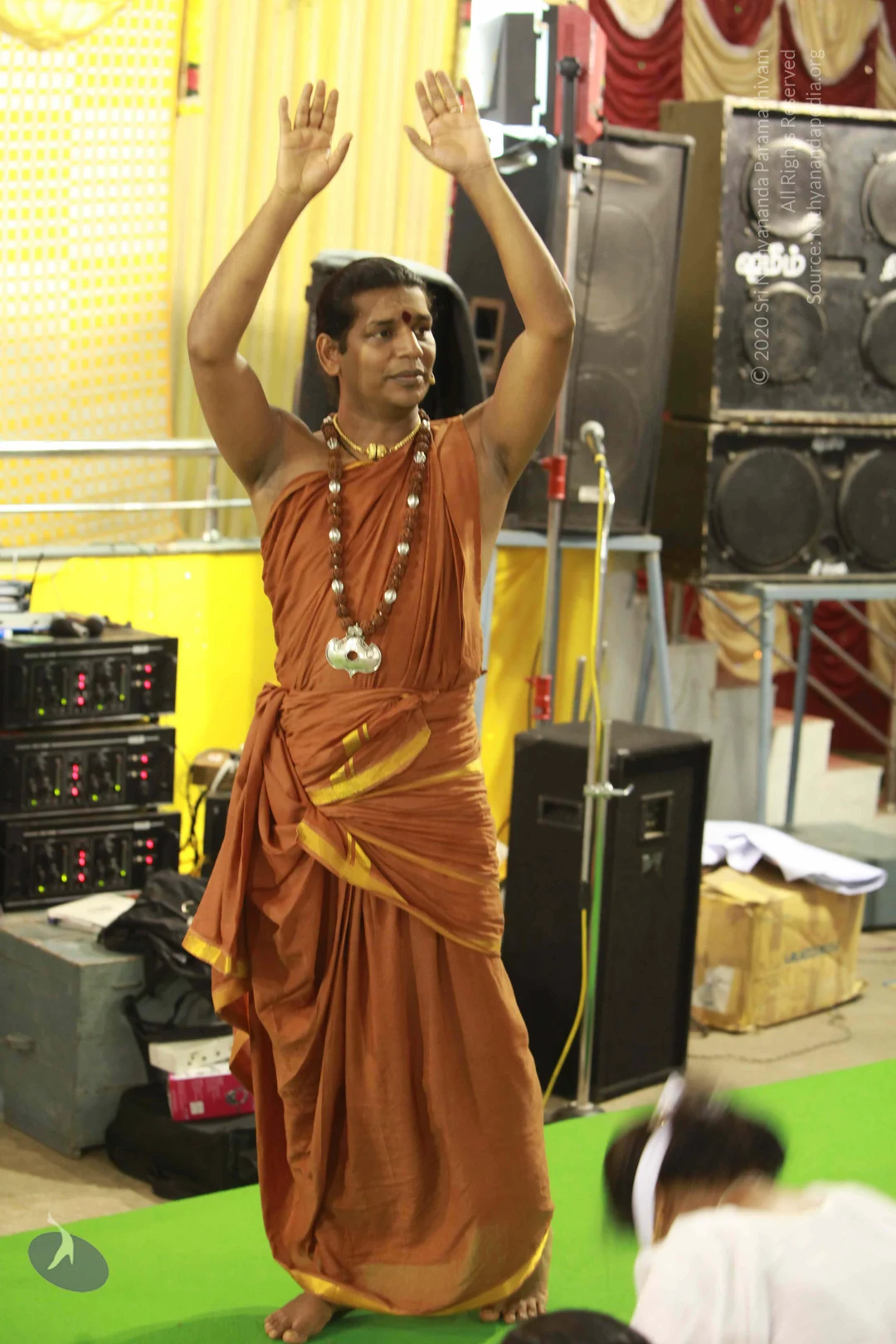
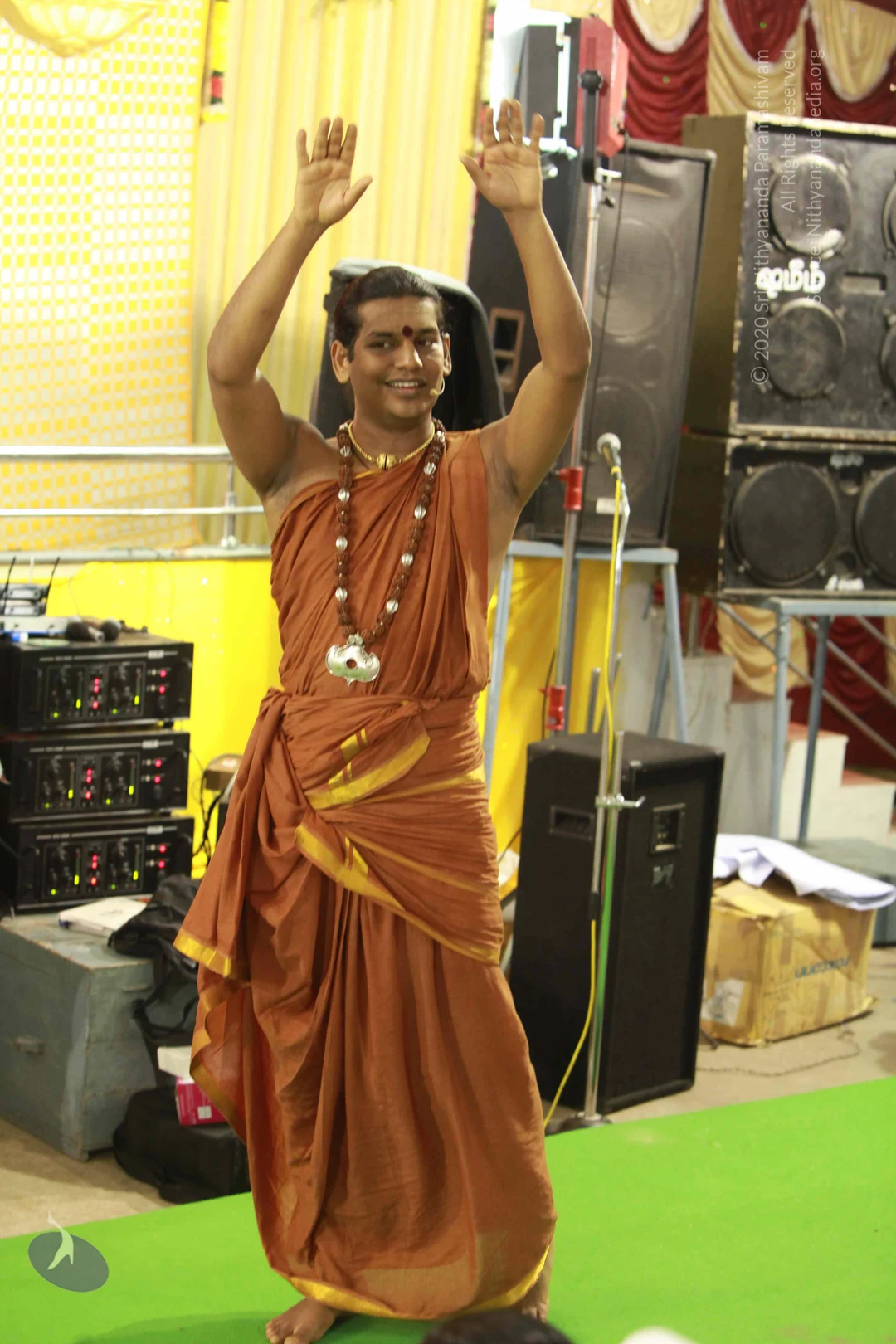
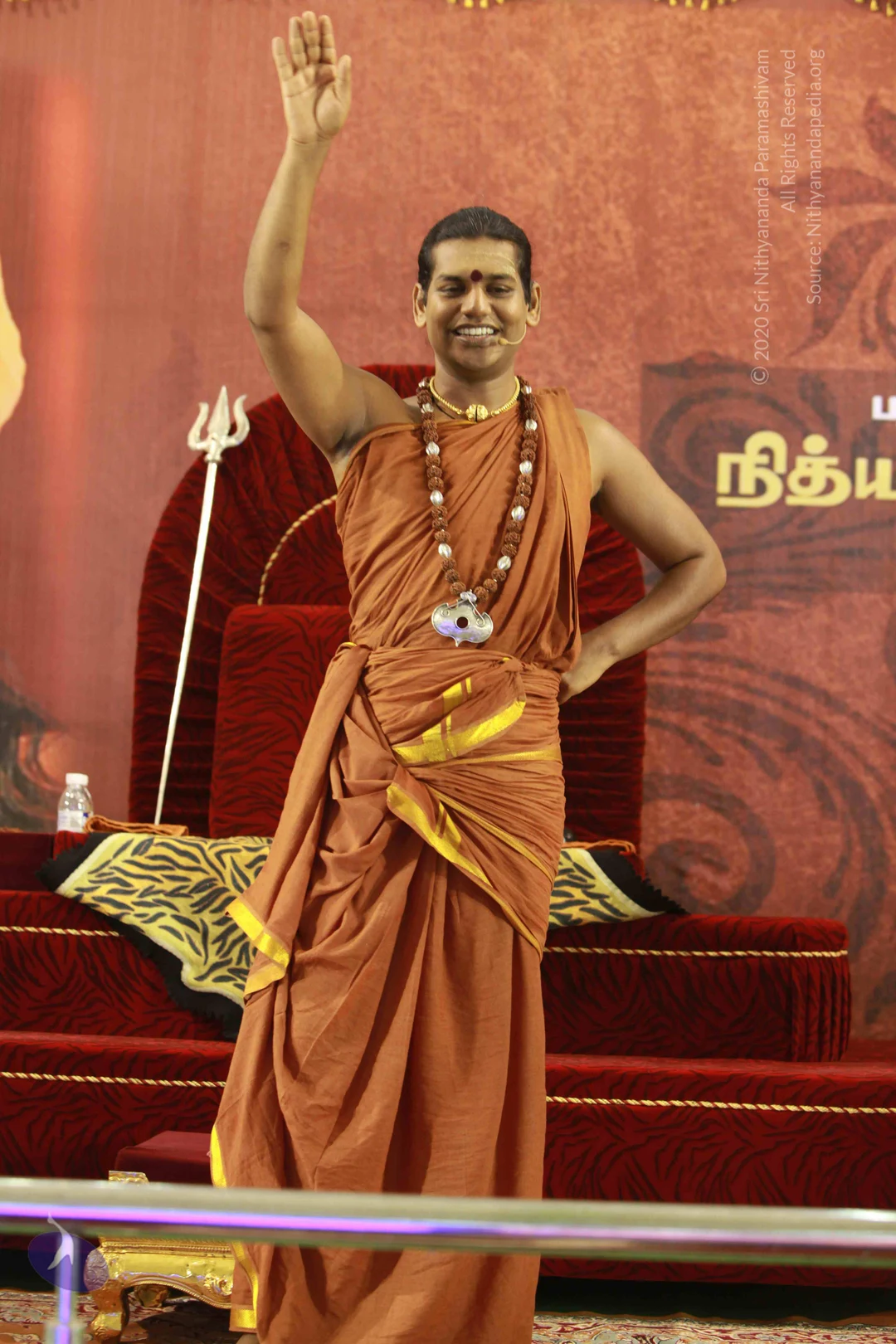
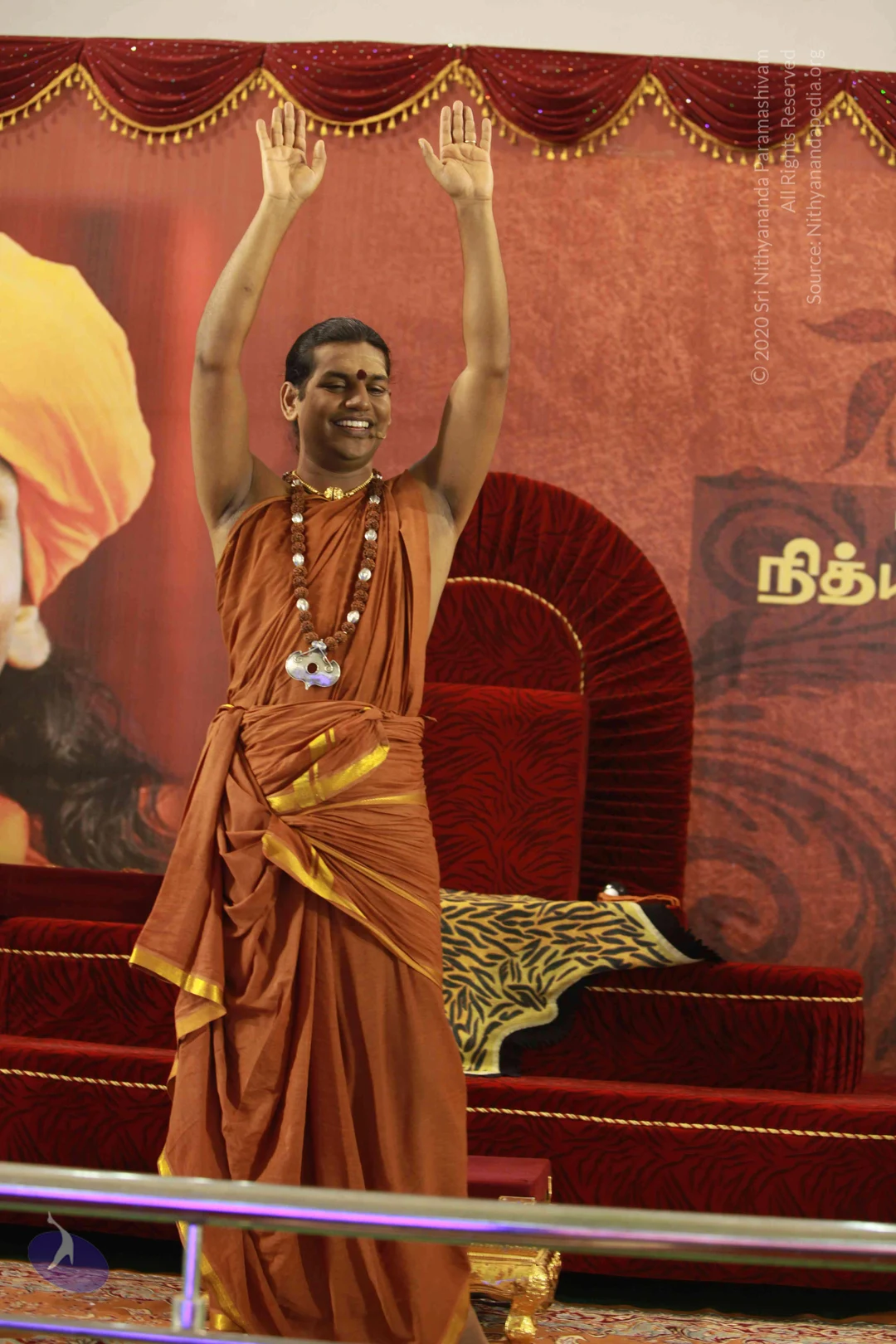
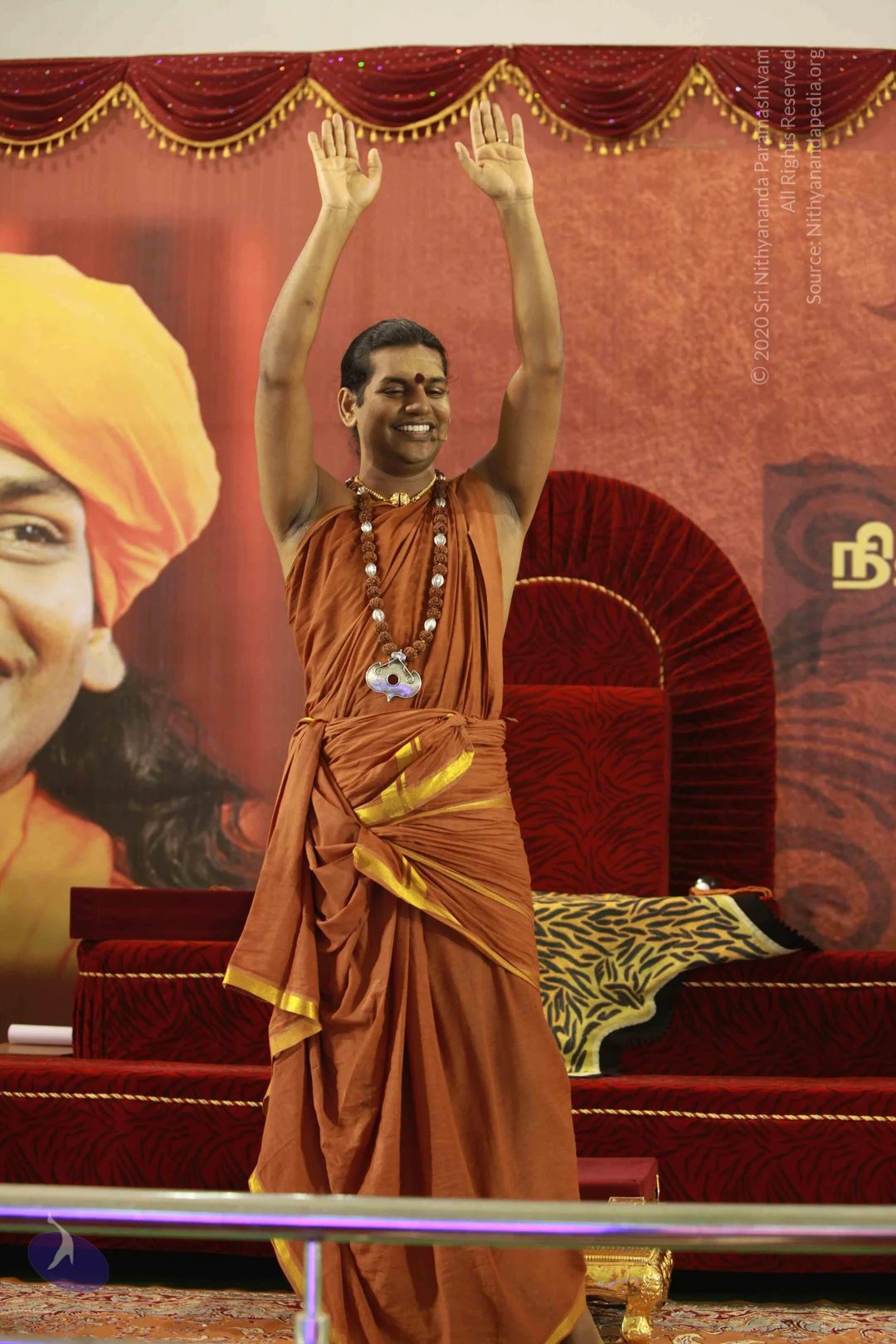
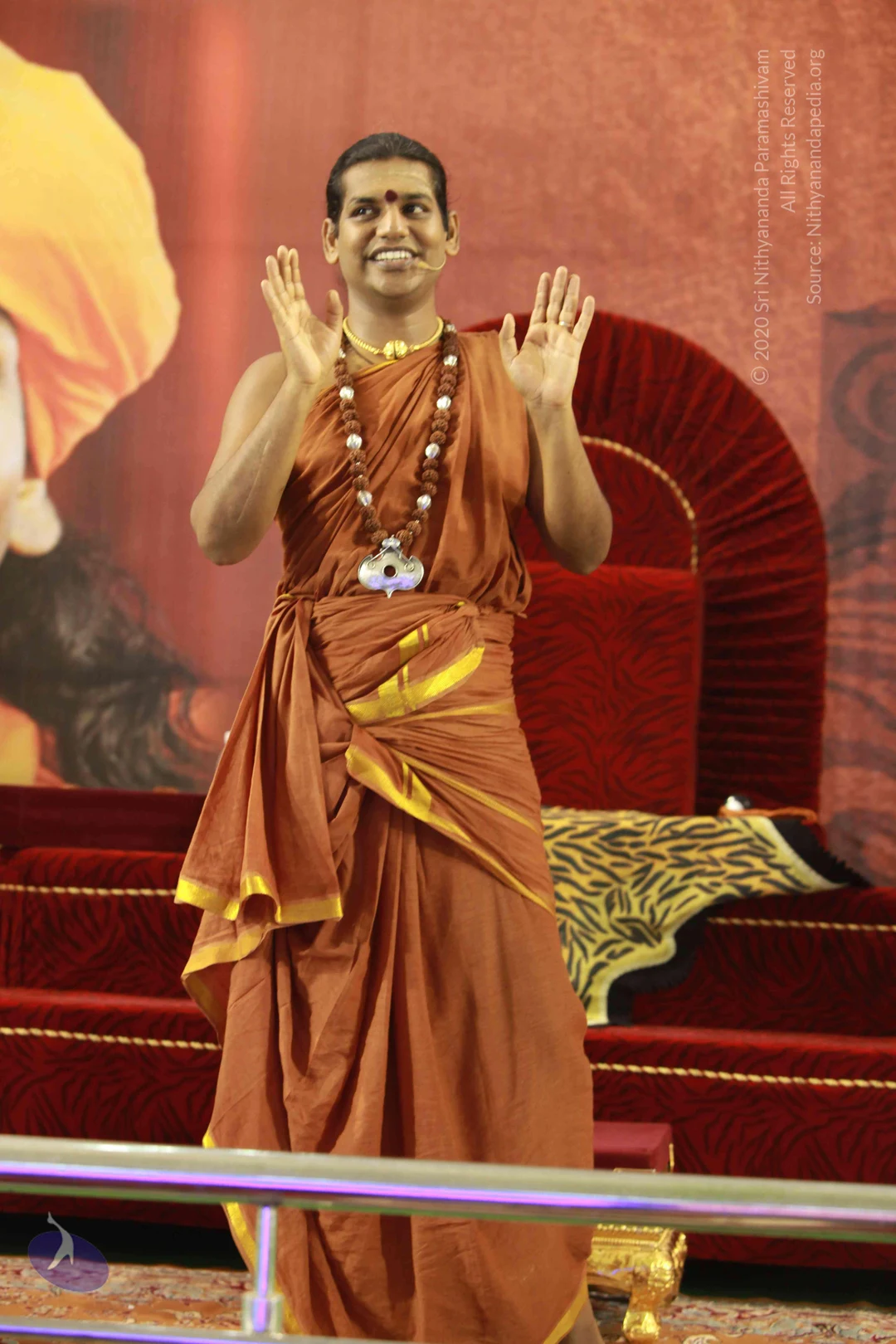
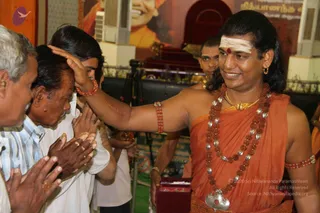
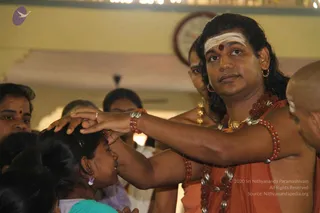
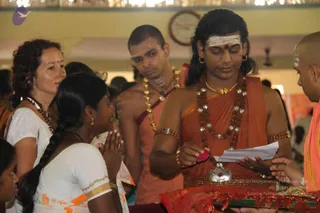
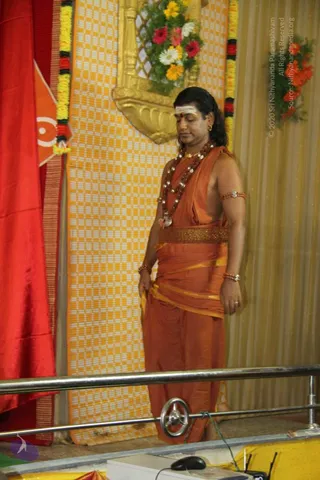
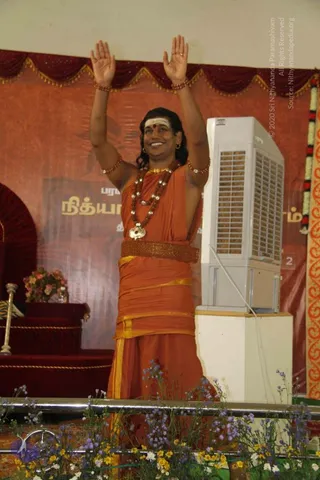
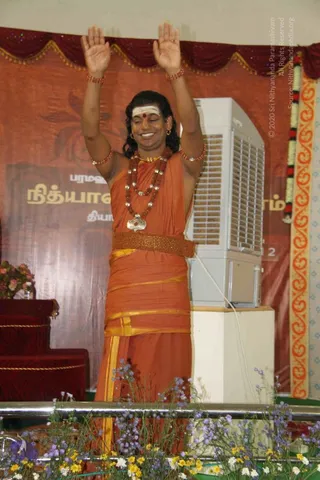
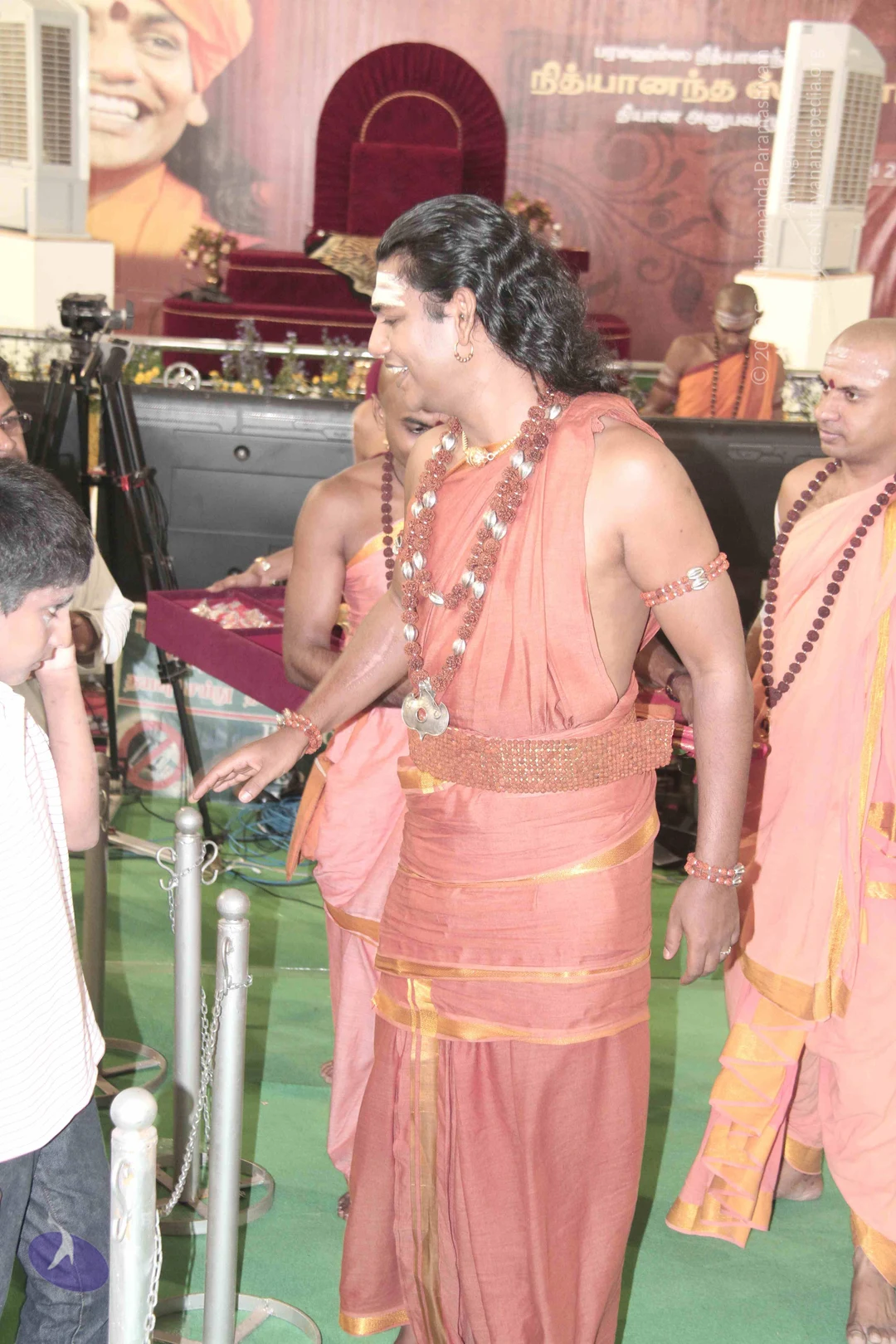
A photo of a bare-shouldered man in saffron-orange cloth with a white vertical tilaka and red kumkum dot, smiling as he lays his right hand on the head of a kneeling devotee. He wears layered rudraksha malas, silver beaded necklaces, a gold chain and a red beaded armlet. Older men in white and checked shirts stand with palms pressed together in namaste. Behind them is a red-draped altar area with a portrait labelled Paramahamsa Nithyananda, a red box of offerings, and a staircase-like altar with flowers. a person is the saffron-clad figure with rudraksha malas and gold ornaments, performing a blessing.A photograph of a man in saffron-orange robes blessing a young girl by placing his right hand on her head. The man has long, swept-back dark hair, a white tripundra mark with a red bindi on his forehead, and wears rudraksha malas in red-brown beads and ornate silver-and-gold beaded necklaces. A gold earring is visible. The girl has her hair in a bun, wears a purple earring and a light teal top, and bows her head. Behind them stand other devotees, including a man with a red forehead mark and a bald man in orange at the right edge, in an ashram hall with yellow walls and a round wall clock. Several people are visible. Swamiji (probable): the man's long swept-back hair, saffron robes, rudraksha malas and ceremonial silver-and-gold necklaces match the page's Swamiji reference, and he is performing the blessing.Indoor satsang scene in an ashram hall with a wall clock and ceiling lights above. A long-haired man in an orange-saffron robe, wearing rudraksha malas, a gold necklace, silver bangles and a white tripundra with red bindi, holds a folded paper and a small red offering. Beside him stands a shaved-headed attendant in orange with a gold chain and white markings. At the right edge, a bald man in orange holds a tray with a red cloth. On the left, a woman in a white sari with red-bordered trim and a red bindi stands near a woman in white with a long braid, hands pressed together in namaskar. Devotees stand in the background. The scene is an in-person darshan or satsang-style ritual exchange.A photograph of a standing man in an orange-saffron dhoti and sleeveless wrap, with a gold-edged sash at the waist and an orange upper cloth draped over one shoulder. He wears multiple rudraksha malas and a pendant around his neck, bangles and an armlet, a white tilak with a red bindi, and hair swept back. His eyes are lowered and he holds the edge of his cloth. Behind him stand a yellow-and-white checked backdrop, a gold frame with pink, white and yellow flowers, a red silk drape, and yellow-and-red flower garlands. A stainless steel railing and a microphone and equipment sit in the foreground. Appearance-based candidate: Swamiji (probable), with qualifying cues of long swept-back hair, saffron clothing, rudraksha malas and a gold neckpiece, present in person at the satsang stage.A man in saffron-orange robes stands on a stage with both arms raised high, palms open, smiling broadly. He wears a white vibhuti line with a red kumkum dot on his forehead, red and beaded bracelets, multiple rudraksha malas and a large ornate gold-toned pendant. A gold-embroidered orange waist sash is tied at his waist. Behind him hangs a red and gold swagged drape, a white floor cooler stands to the right, and a red-draped seat with a flower arrangement sits at left. Blue and yellow flowers line the foreground railing. A Tamil-language banner on the backdrop shows a large name in gold script.A smiling man in saffron-orange robes stands on a stage with both hands raised high, palms open, in a devotional gesture during a satsang. He wears a white vertical tilak with a red dot on his forehead, a long swept-back hair style, rudraksha mala necklaces with a silver ornament, and beaded red wrist bands. A gold-trimmed saffron cloth wraps his waist with a sparkling belt. Behind him hangs a maroon draped backdrop with gold trim, and a white cooler stands at right. Fresh flowers in purple, yellow and white line the stage edge, with a red-draped throne-style seat at left. A Tamil banner is partly visible behind him. The appearance-based cues of long hair, saffron clothing, rudraksha malas and ornaments make him a probable Swamiji in this speaking setting.

SESSION-ON-PAIN
62 photosSource gallery
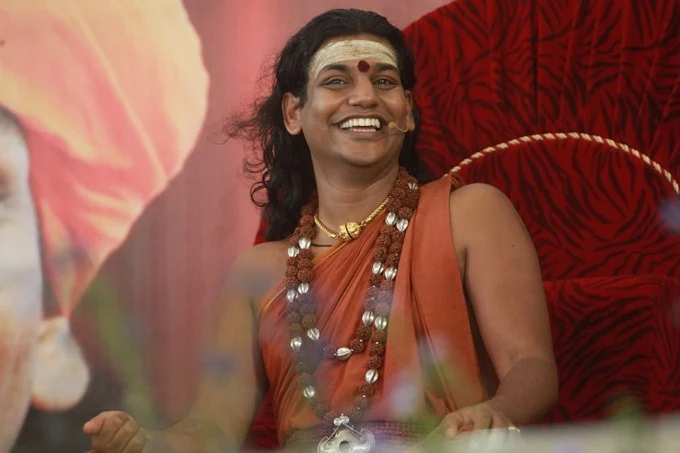
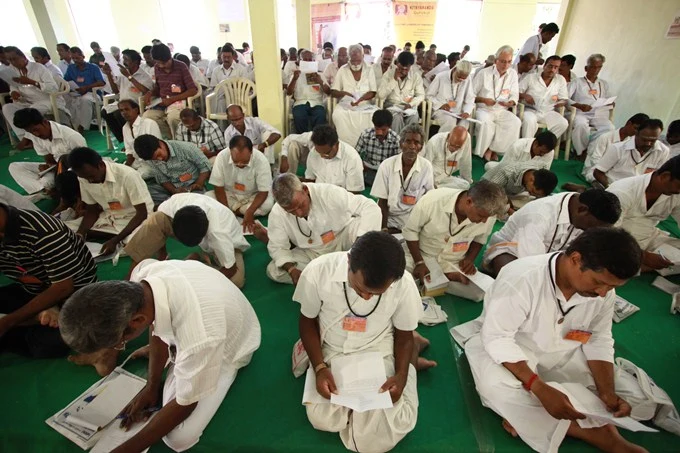
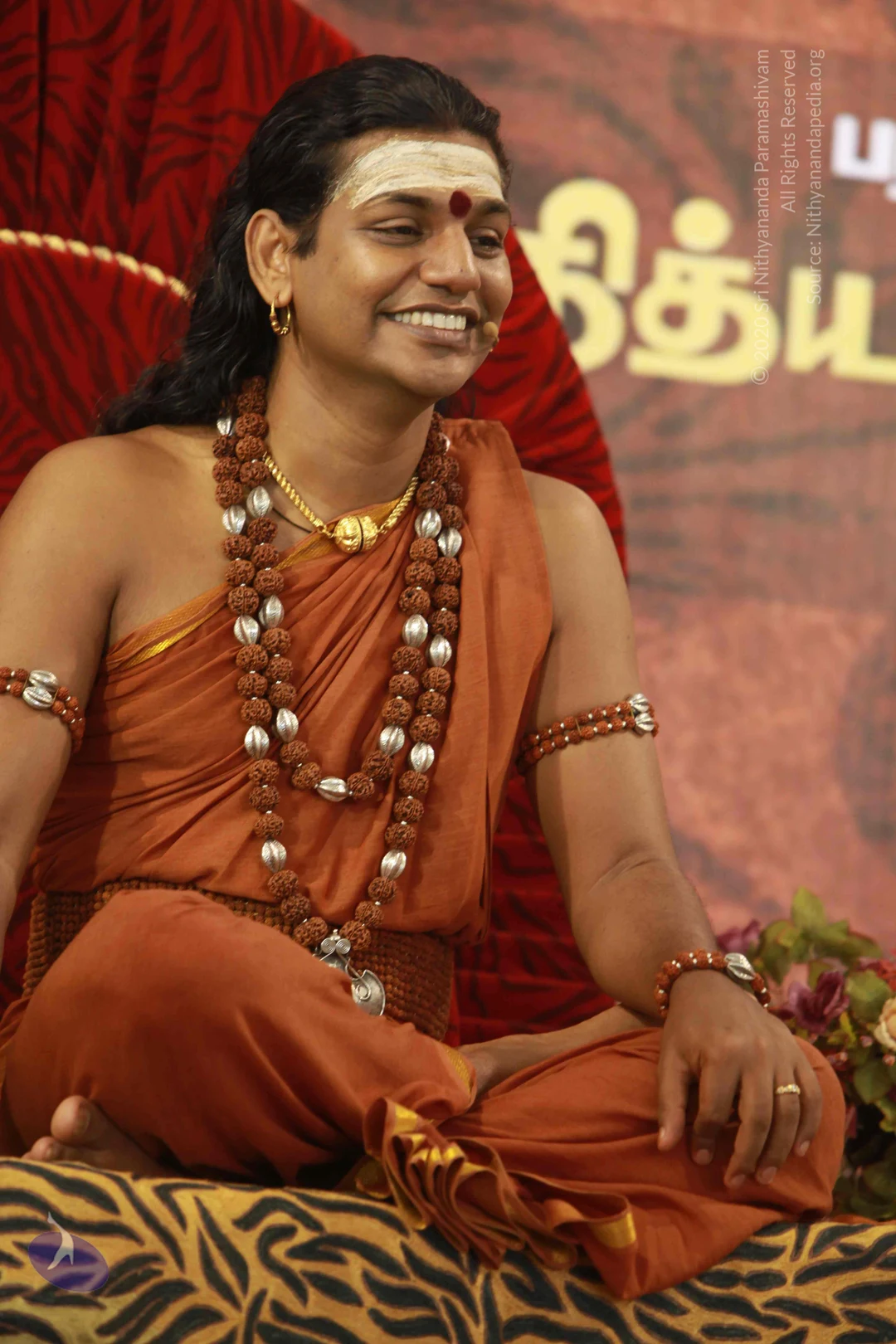
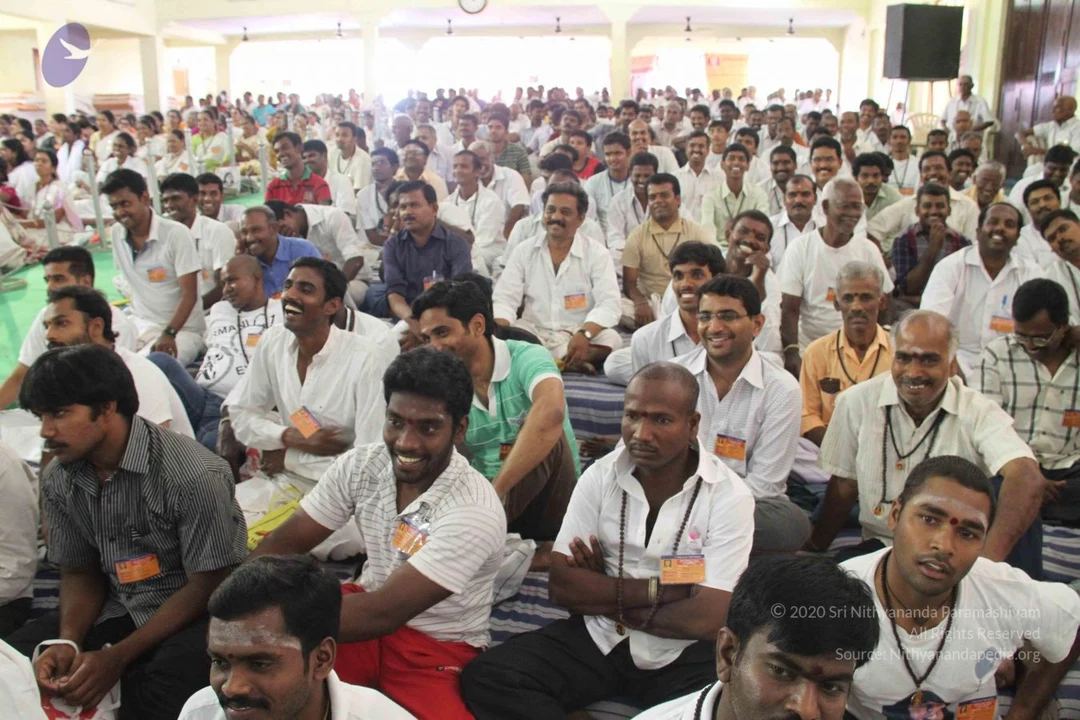
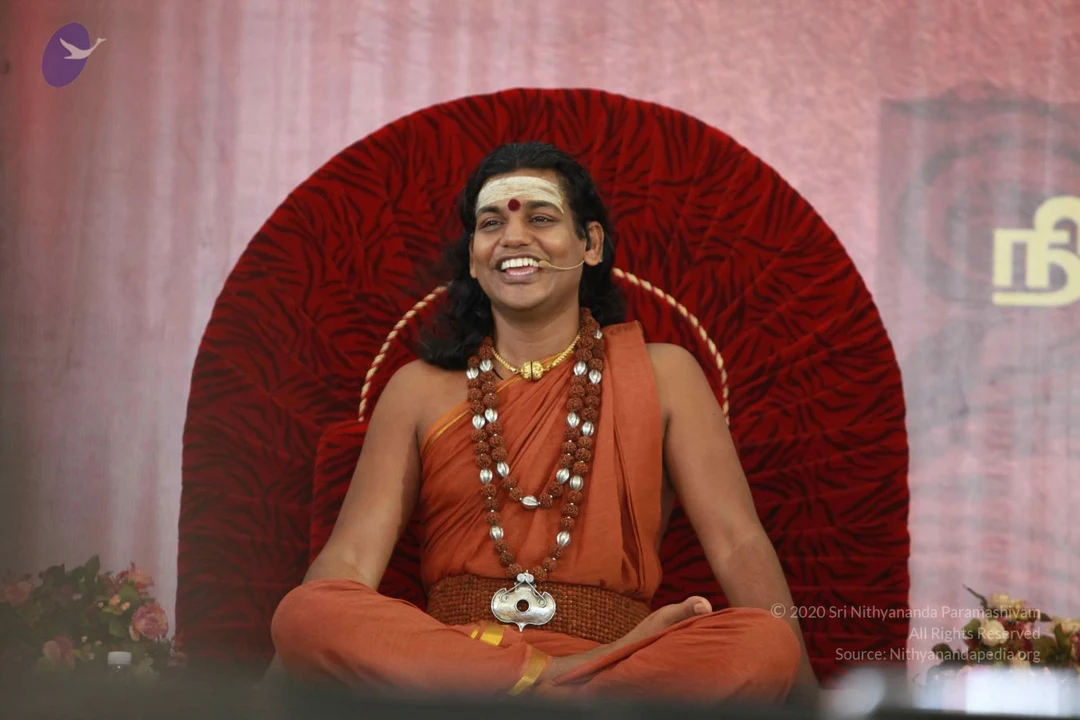
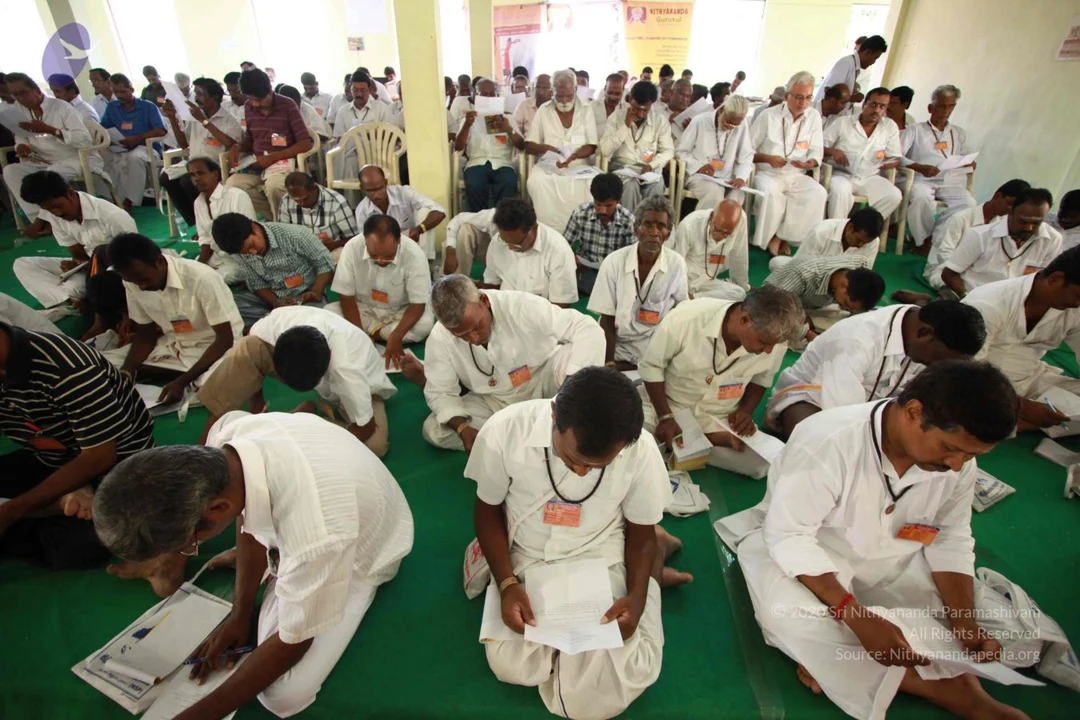
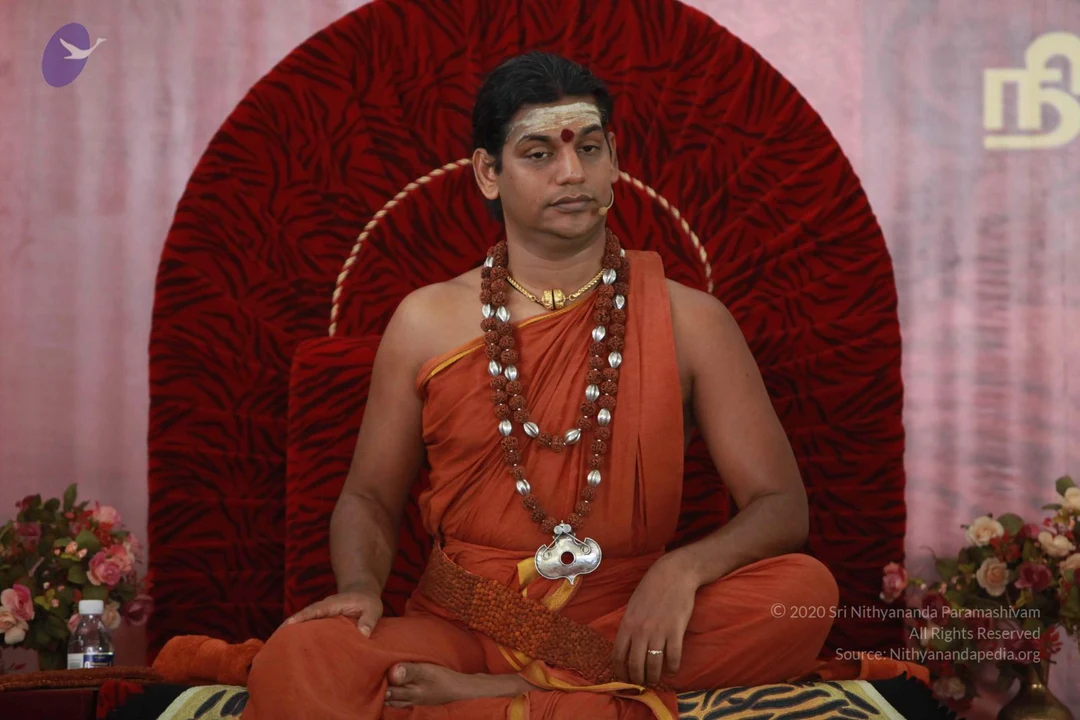
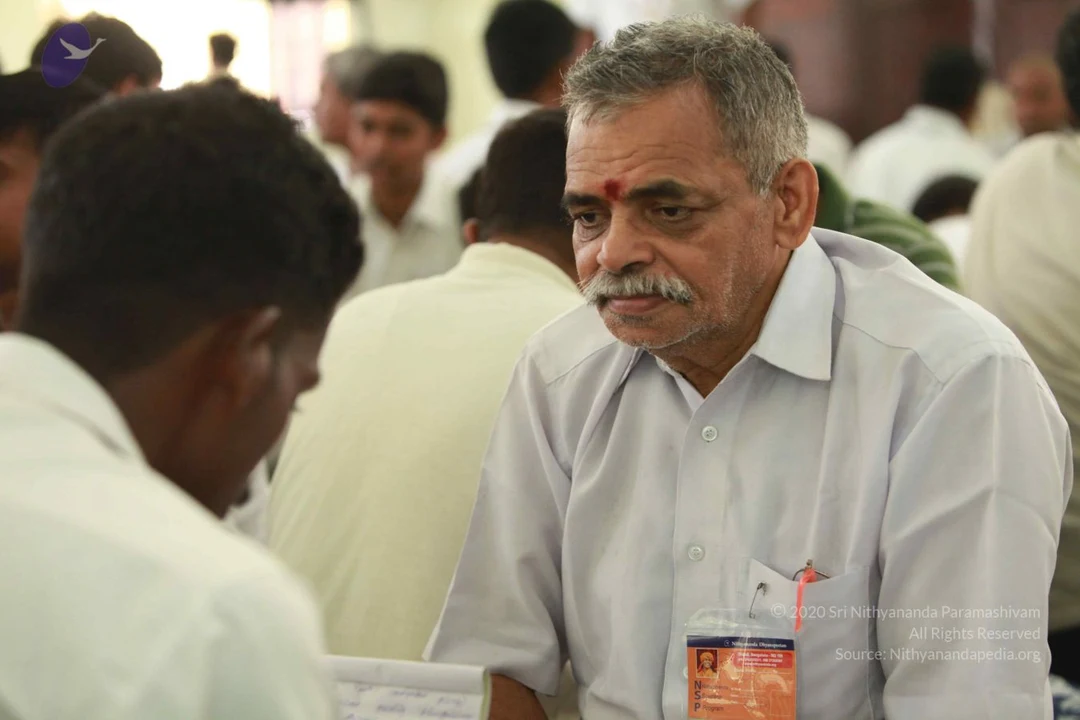
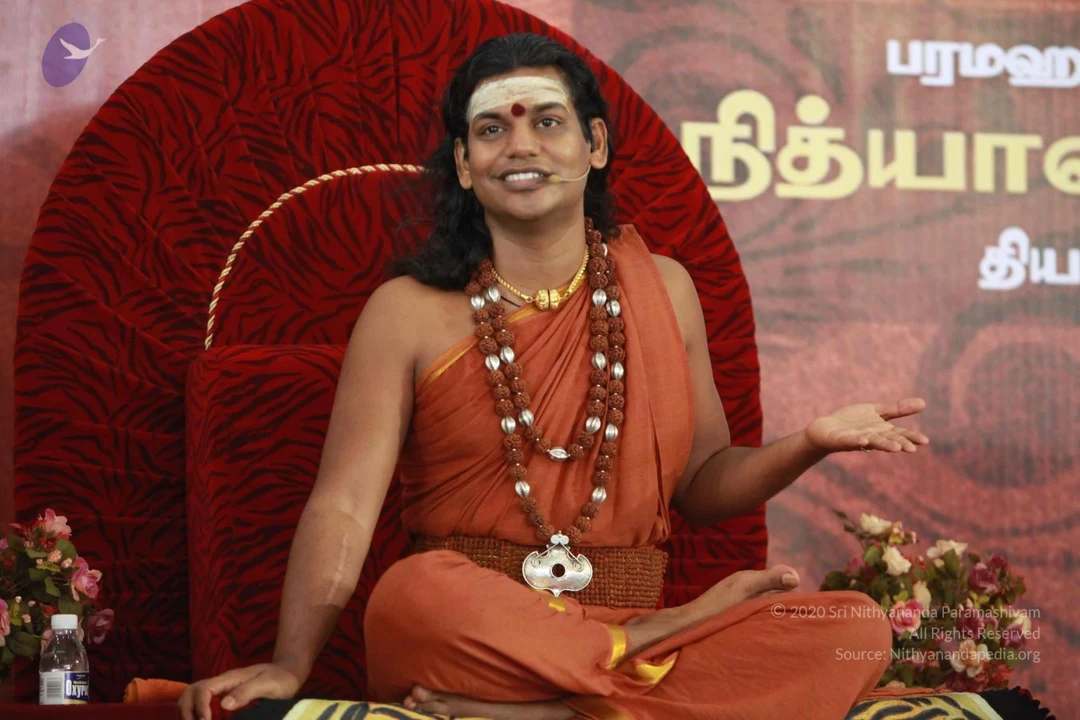
A large seated congregation fills a hall during a satsang, with many men in white shirts and white dhotis sitting cross-legged on mats. Several wear rudraksha malas and small identification badges on lanyards. One bearded man at the centre wears glasses and a white shirt, another in a purple striped shirt sits to the right, and a man in a yellow shirt and checked lungi sits near the front. Many attendees appear to be gesturing or listening attentively, and the hall has pillars and a bright open doorway in the background. There is no clearly visible speaker or throne in the frame.A large indoor satsang hall filled with seated devotees, mostly men, in white shirts and dhotis or trousers, many wearing orange or white identity lanyards. Several have vibhuti or tilak marks on their foreheads and rudraksha malas around their necks. Some smile, others look attentively forward toward a stage out of frame, where a black speaker box hangs on a pillar at upper right. Striped cushioned mats cover the floor, and white pillars and a wall clock frame the hall. No speaker is visible, and no figure in the scene qualifies as a person candidate.A large seated audience fills a bright hall during a satsang at the Tiruvannamalai ashram. Most attendees wear white shirts and white dhotis, and many wear orange or saffron-coloured lanyard badges. Rows of people sit on a green floor covering in the foreground, some with folded arms, and more devotees watch from a balcony railing above. Ceiling fans, arched pillars, a wall clock and a speaker are visible. No clearly identifiable a person figure is seen on stage in this view, so the speaker's presence is uncertain.A photograph of a large seated congregation at a satsang inside a tent with a green floor covering and cream walls. Men in white shirts and white dhotis sit cross-legged or on mats, many wearing lanyard identity badges with orange and pink tags, and some holding papers or notebooks. A few men in striped, grey, or blue shirts are mixed in. Several older men with white beards and glasses are visible. A man in the foreground wears a red tilak mark on his forehead. The audience faces forward, attentive, with a dense crowd filling the frame to the back of the tent.Dense rows of seated men in white shirts and white dhotis sit cross-legged on striped mats inside a tent, most bent over notebooks or papers and writing with pens. Many wear rudraksha malas and orange or white identity badges on lanyards. A few older men with white hair and beards are among them, and one man in a green polo shirt sits at the left edge. A man in a white shirt with a photo print on the chest sits in the foreground. Mats and tent fabric fill the background.A man sits cross-legged on a cushion on a red throne-like seat with a zebra-striped cover, smiling, with eyes half-closed in a relaxed posture. He wears saffron-orange clothing draped over one shoulder, a long rudraksha mala and a silver-bead necklace with a gold pendant, and a white tilak with a red bindi on his forehead. He wears a small headset microphone. Flower arrangements of pink and yellow roses sit on either side and a water bottle is at the lower left, with a red-and-gold backdrop behind him. Probable Swamiji based on the swept-back long hair, ceremonial gold necklace and rudraksha malas, with the page indicating his presence at this satsang.

SAMKSKARA-DAHANA-KRIYA

29 photosSource gallery
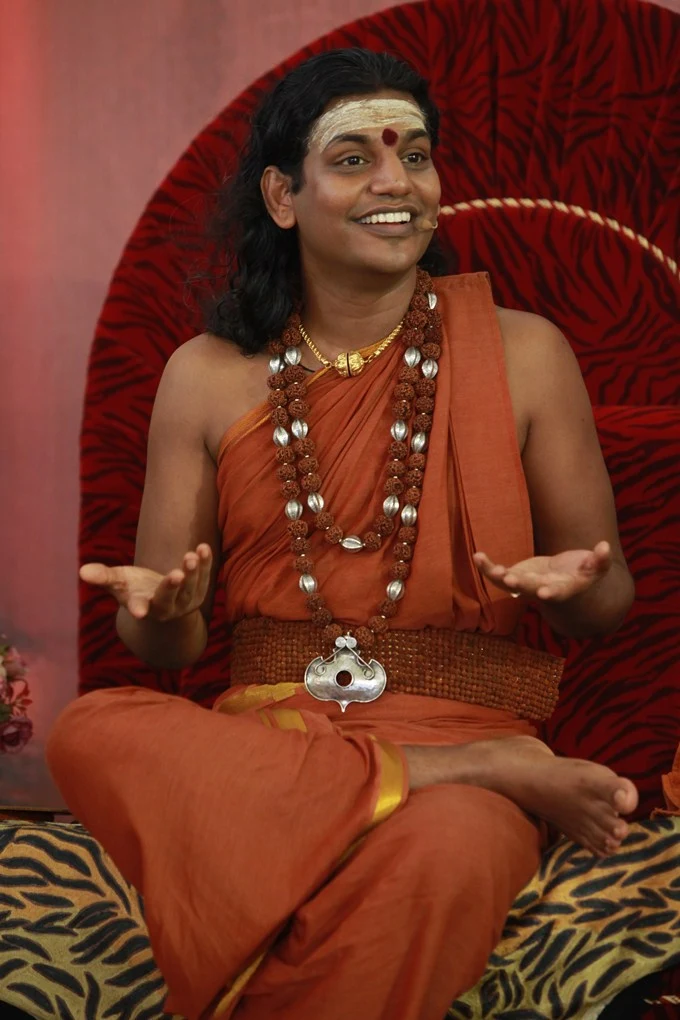
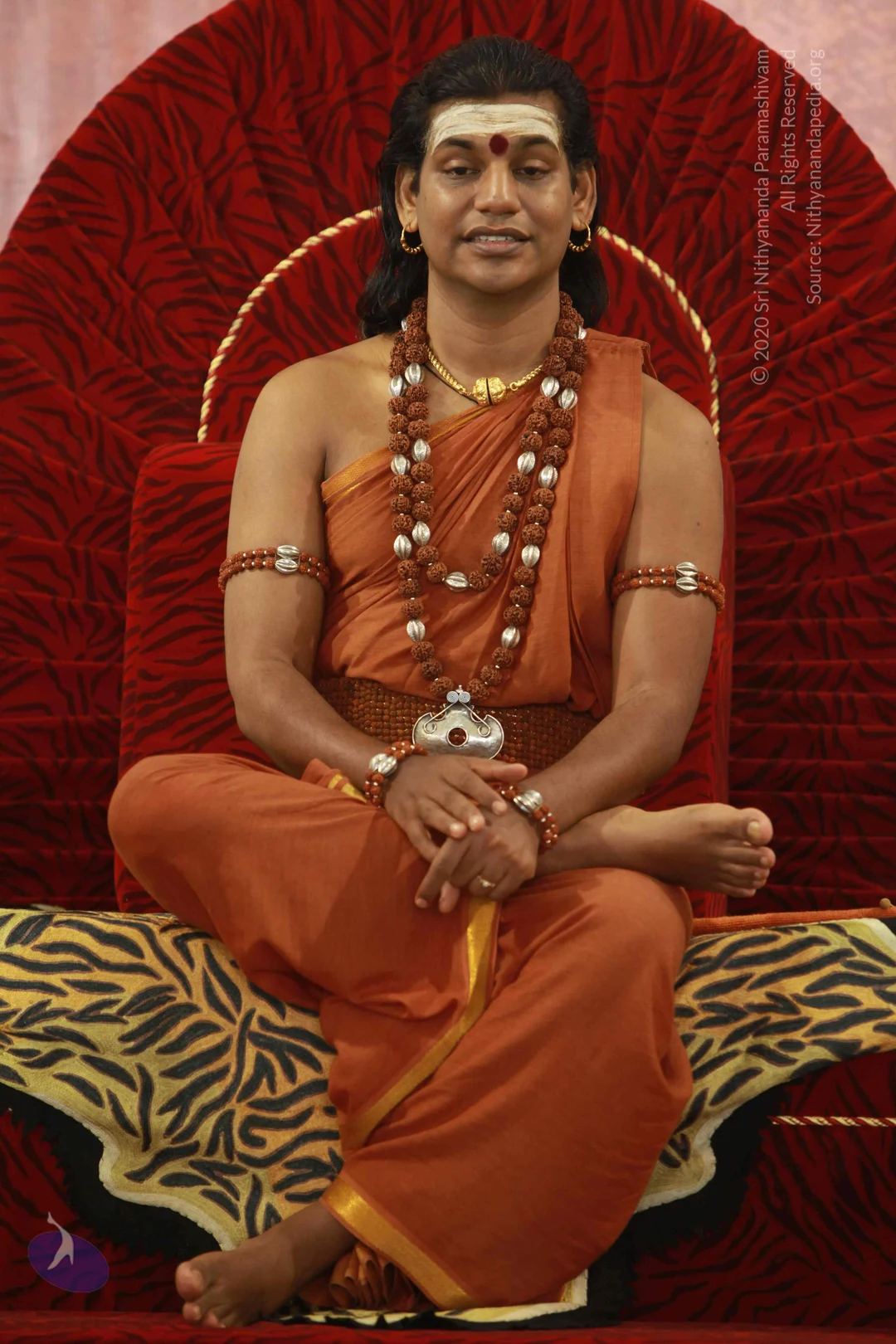
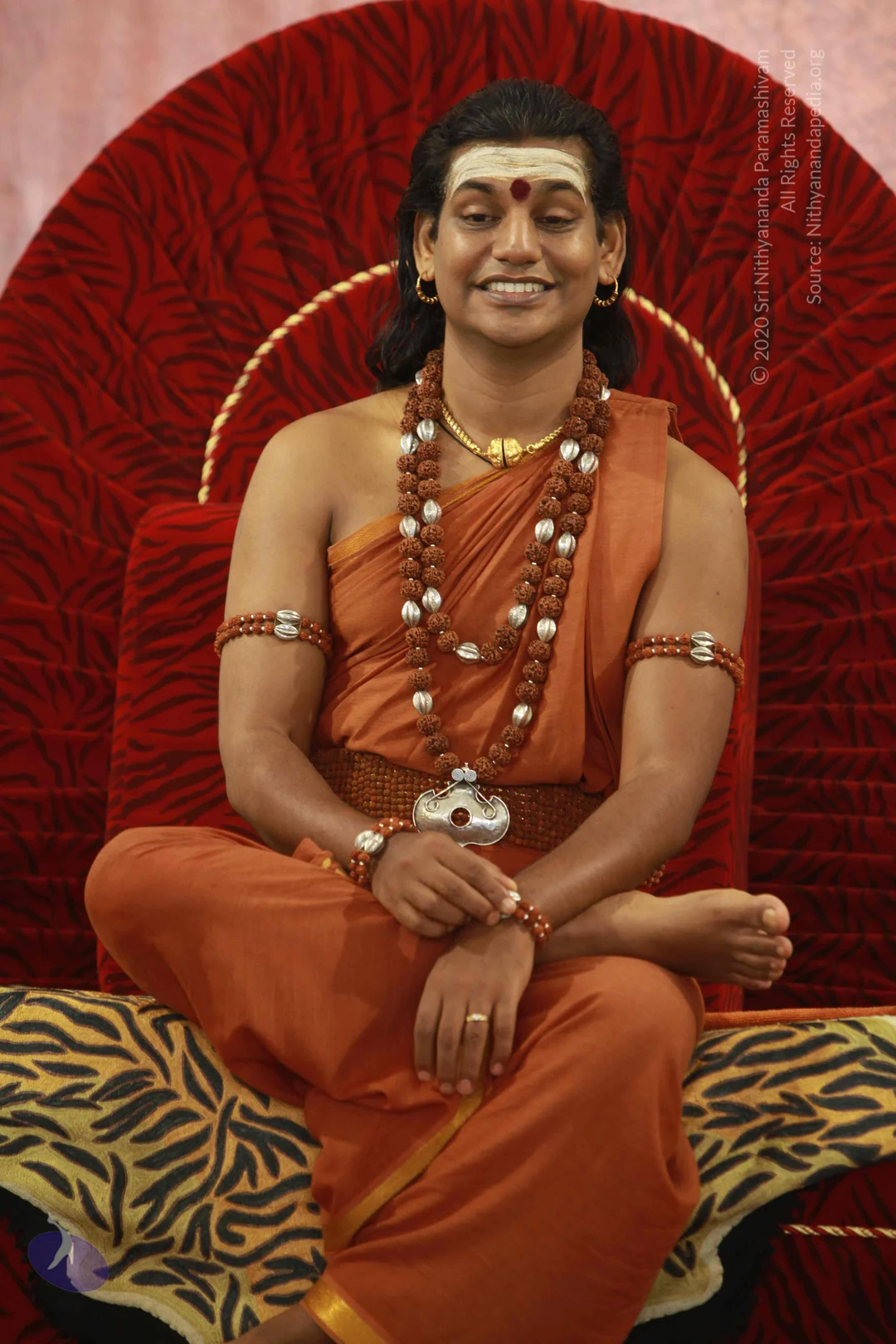
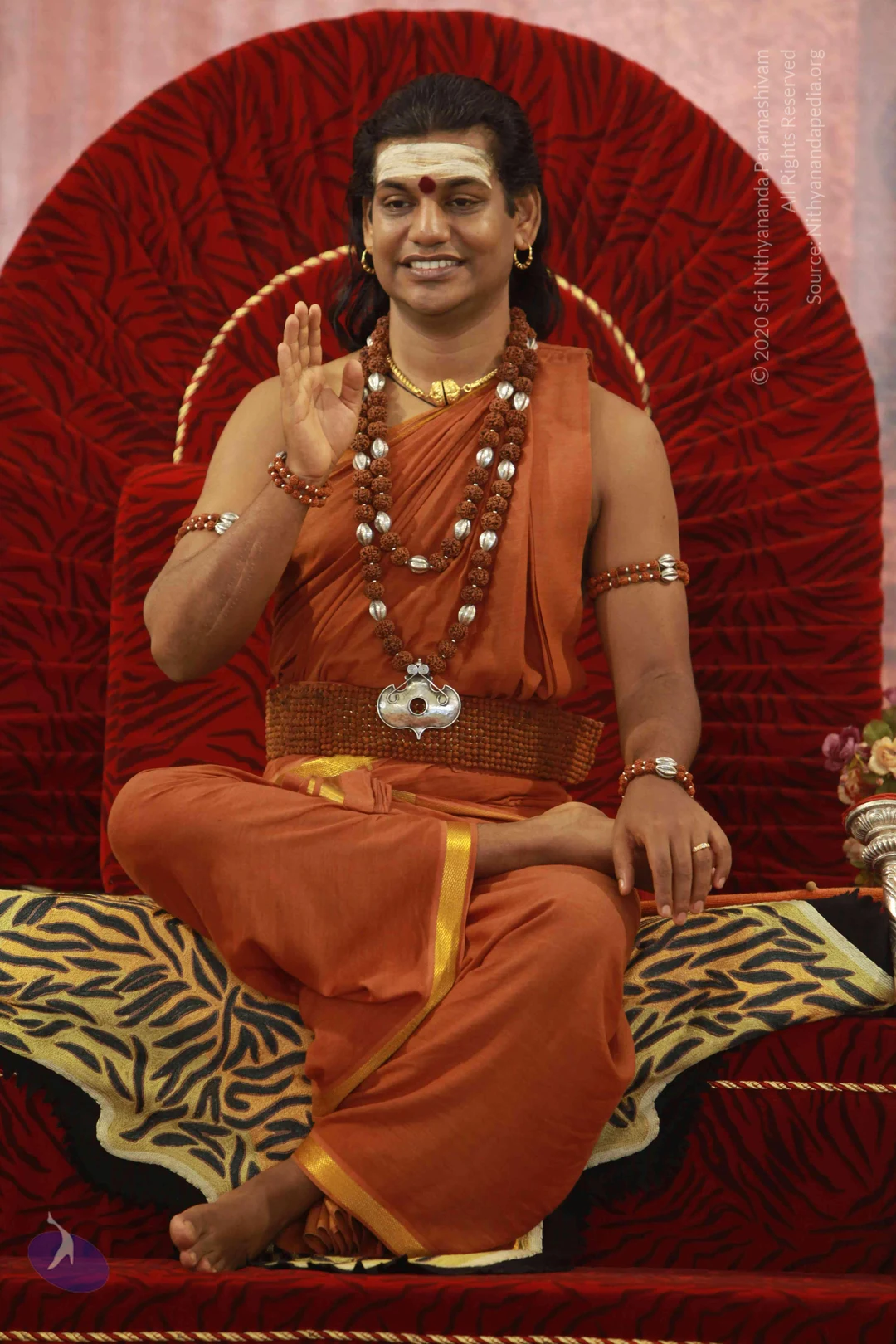
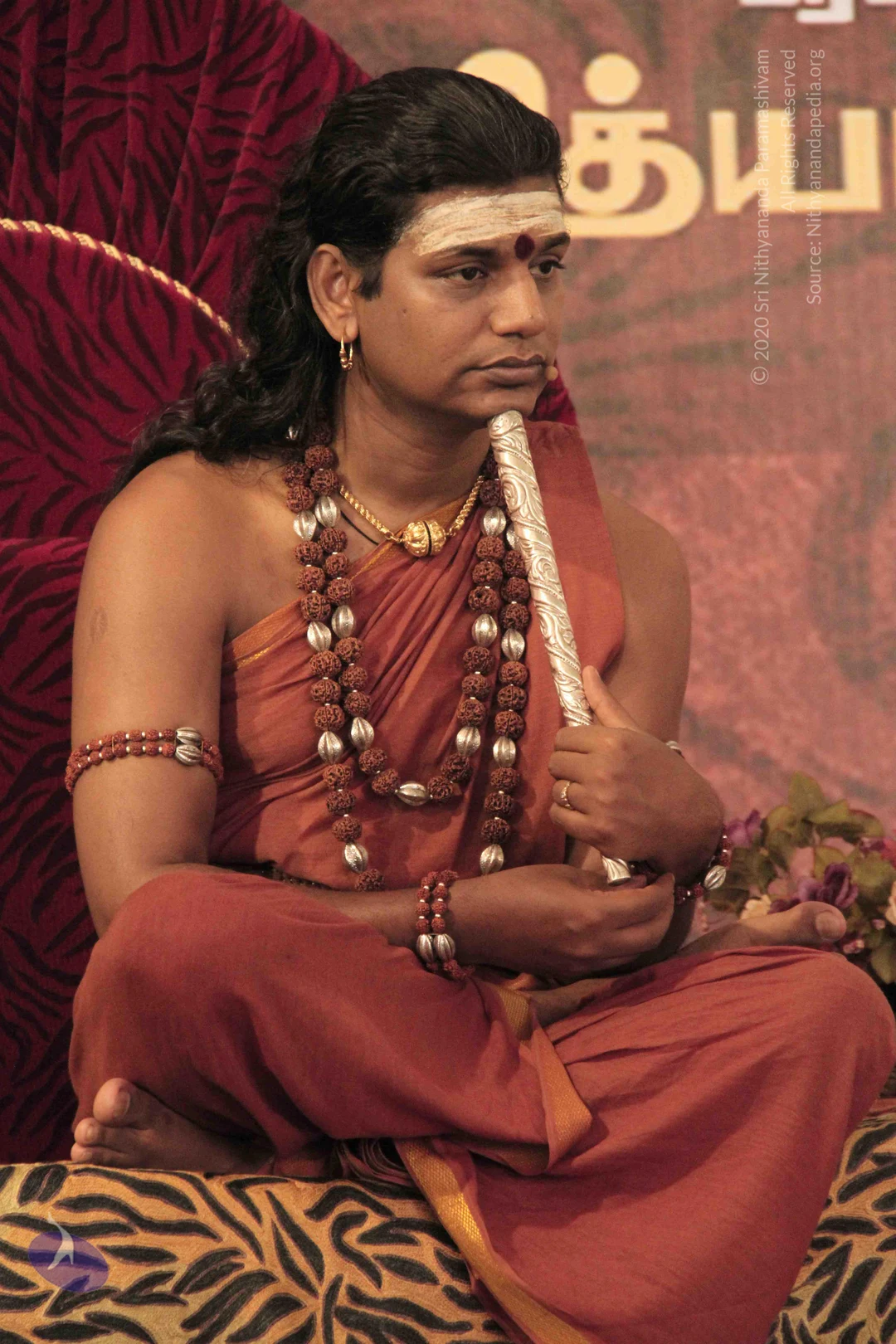
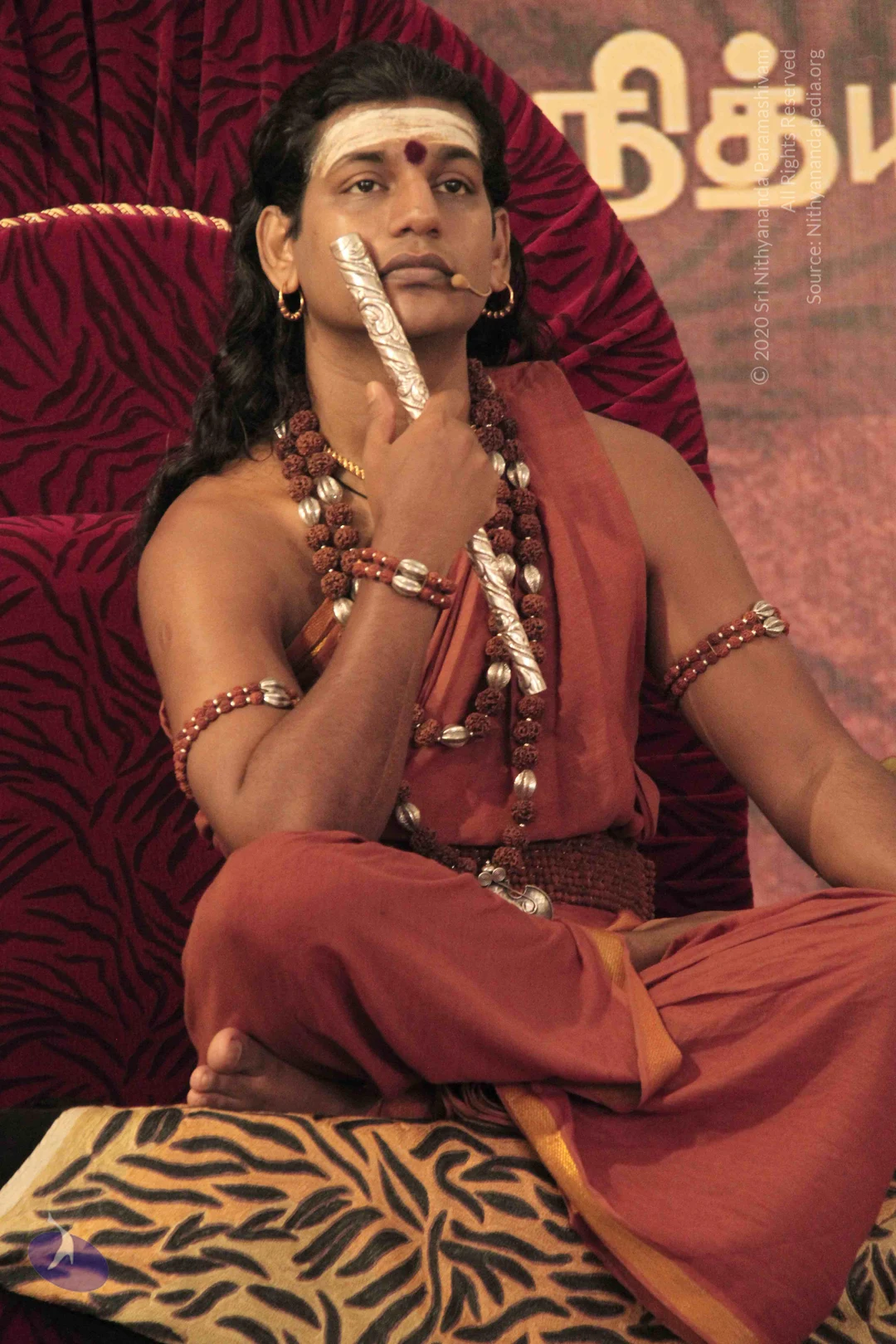
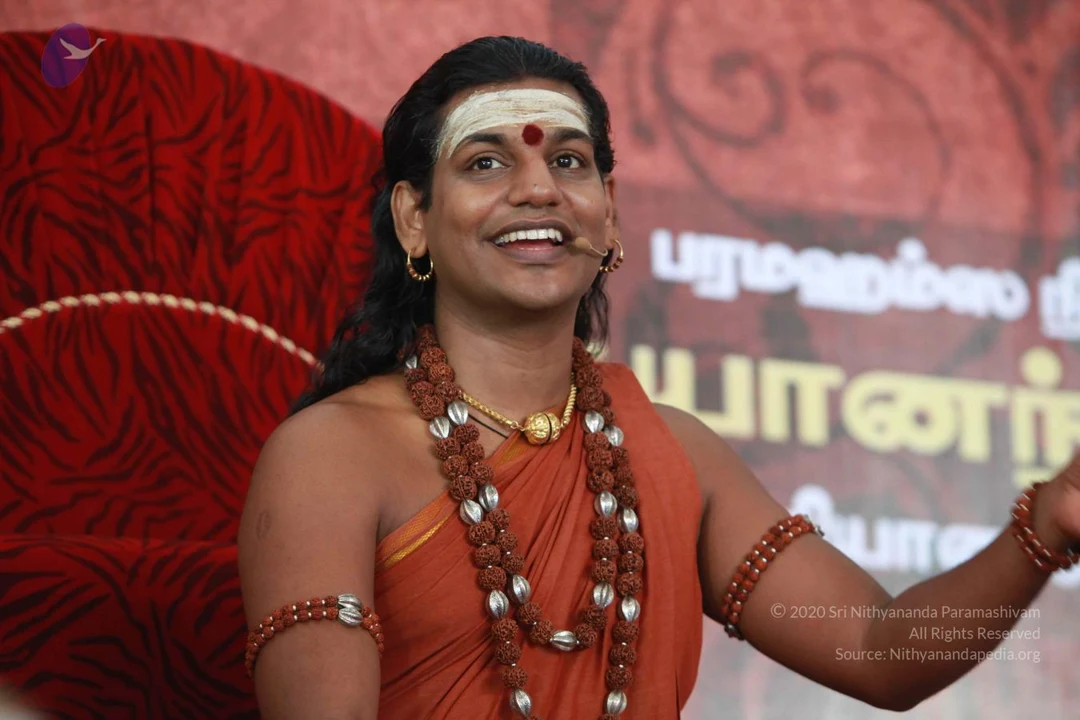
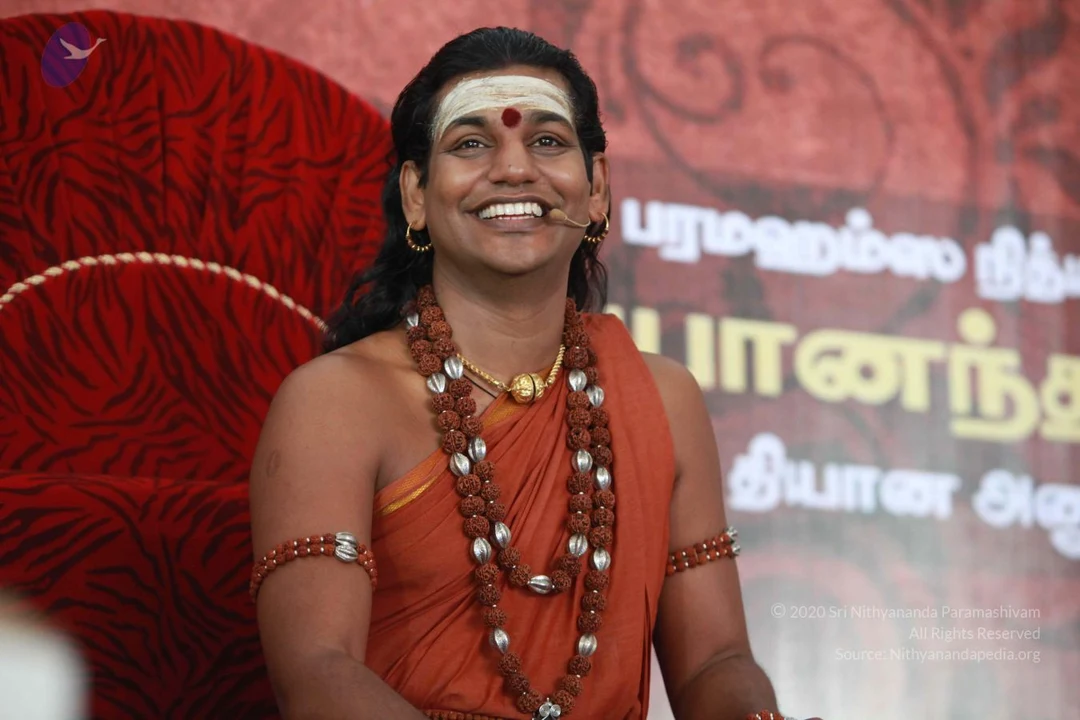
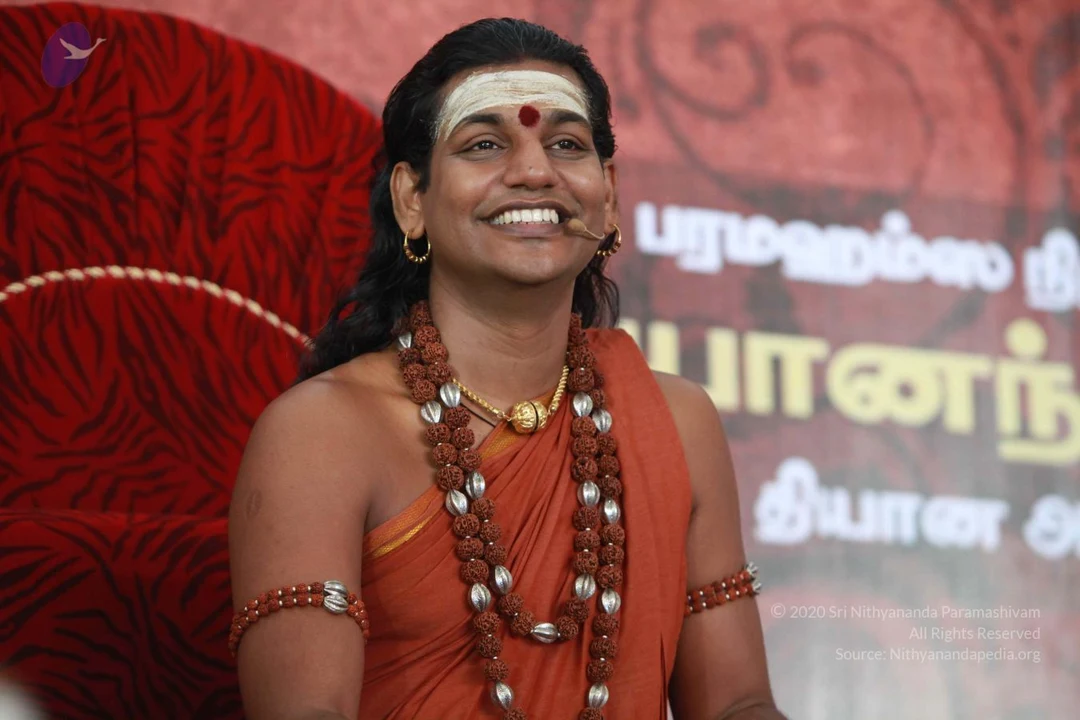
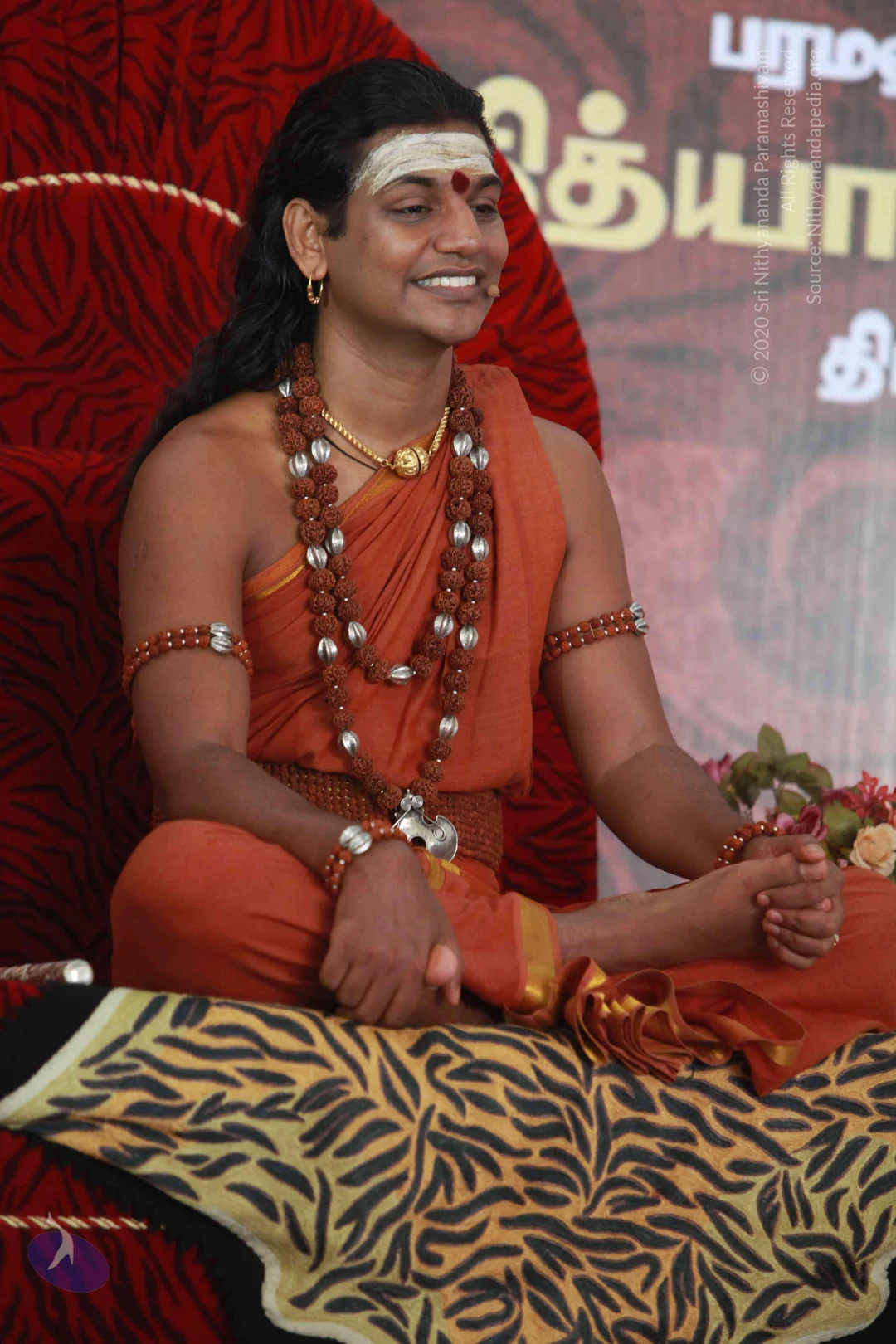
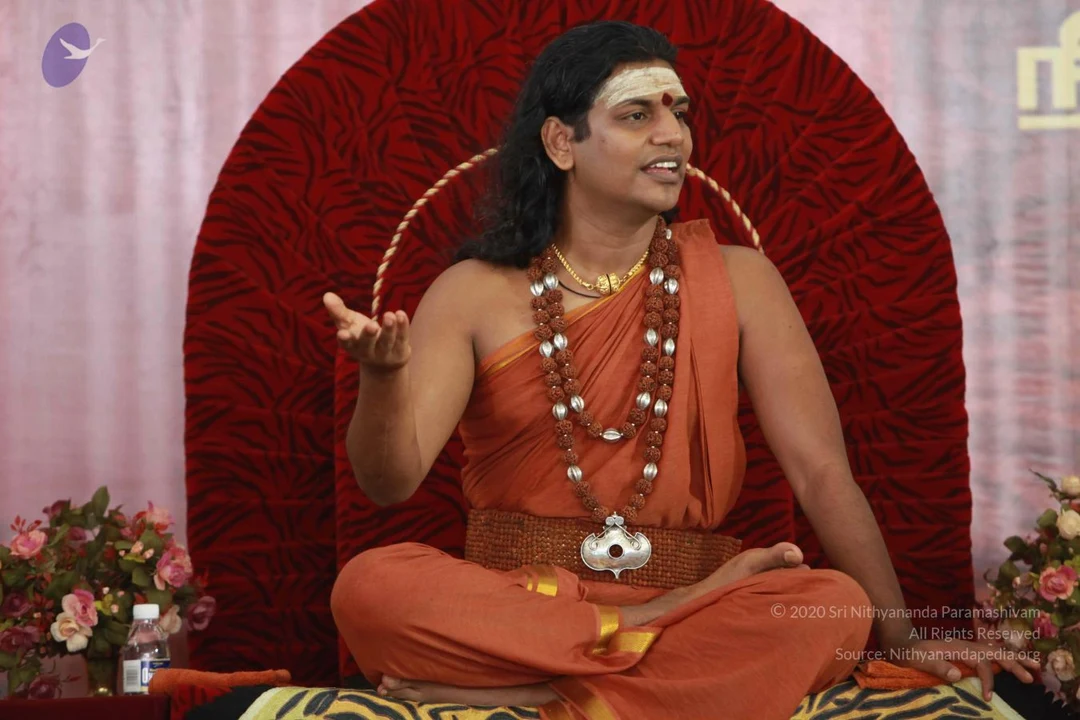
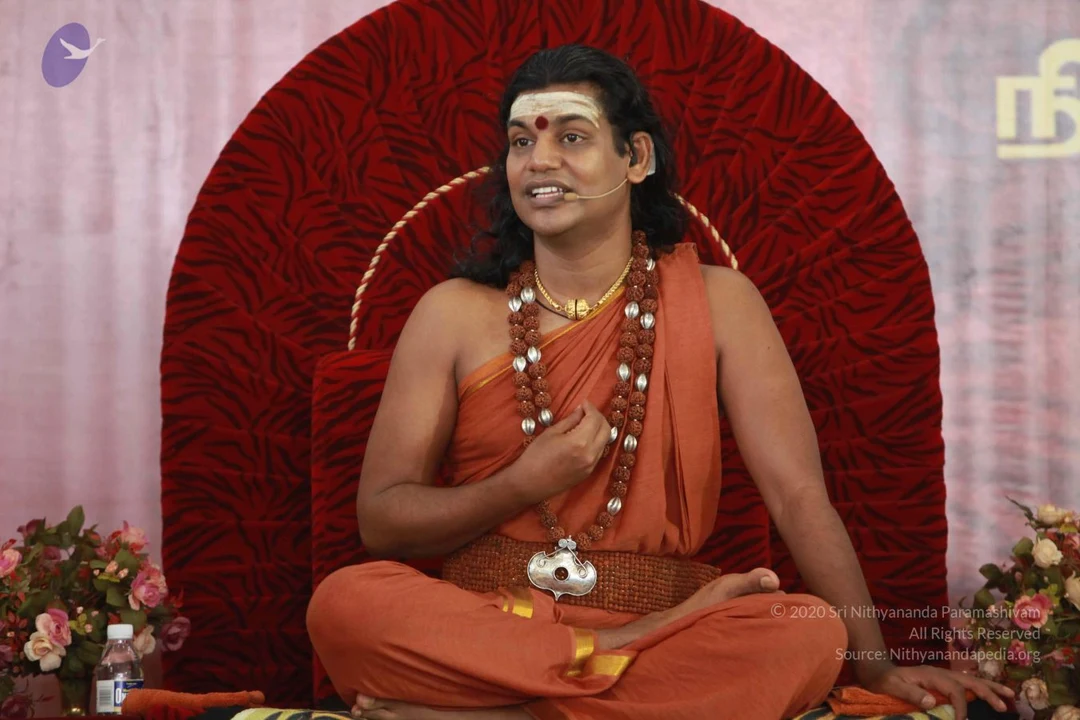
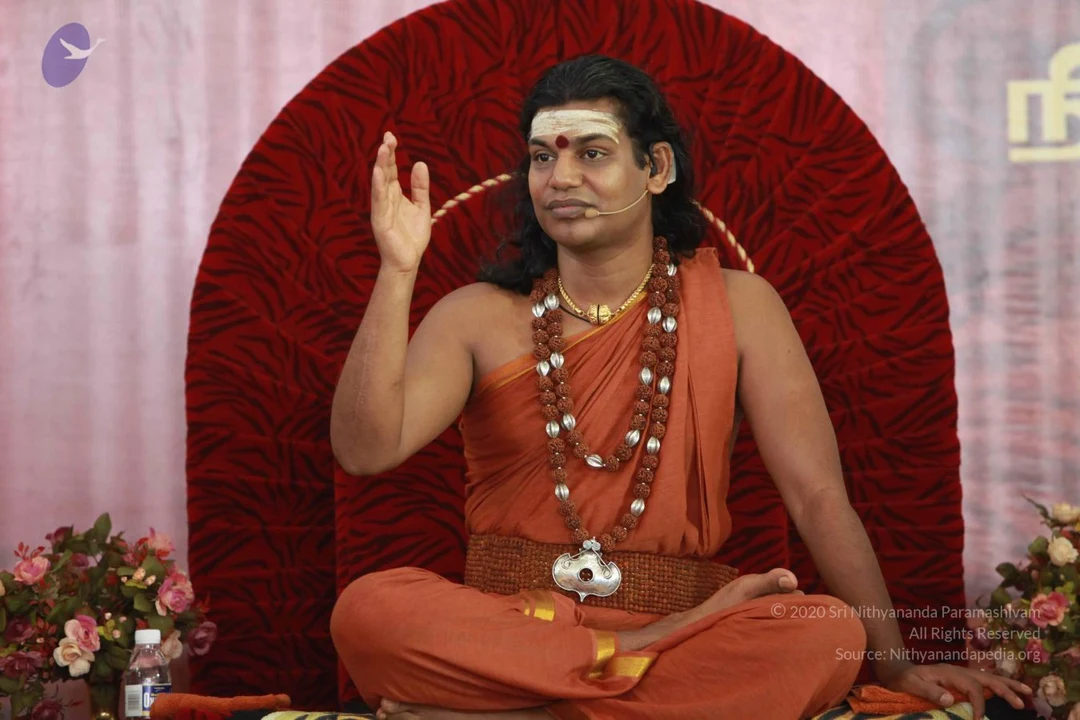
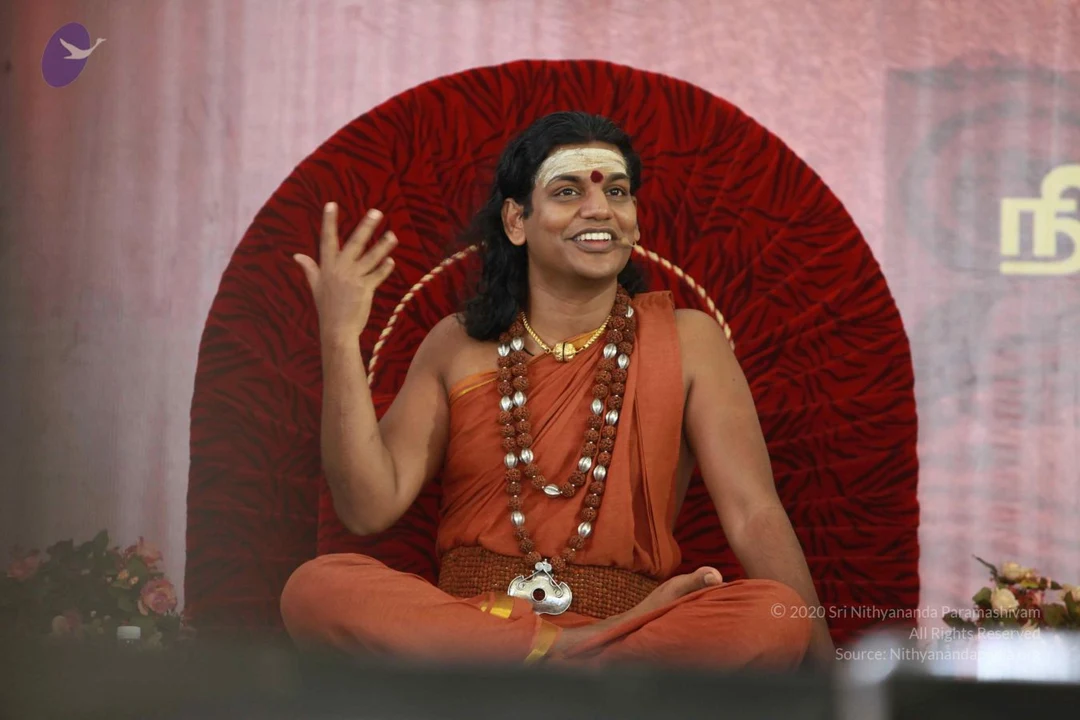
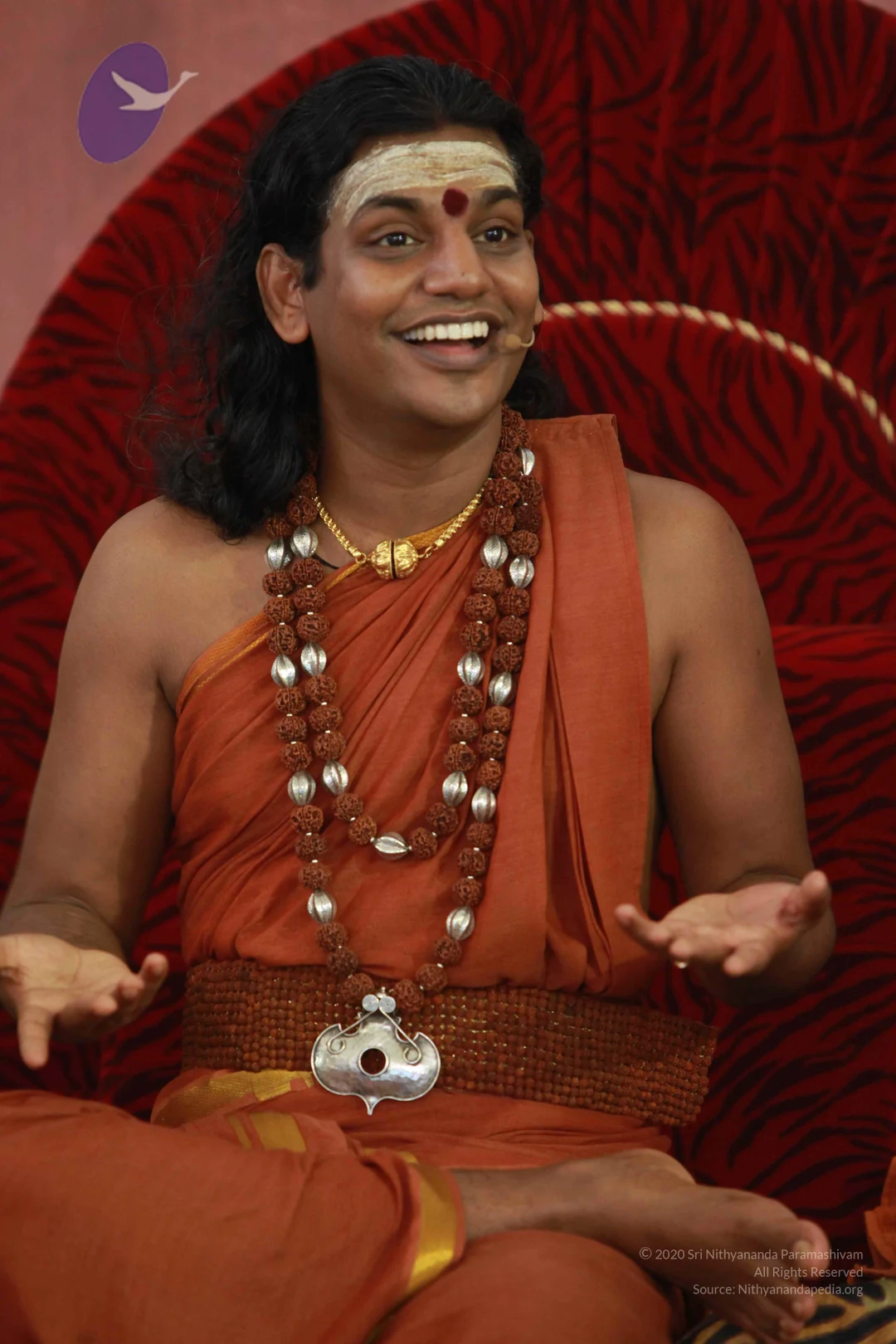
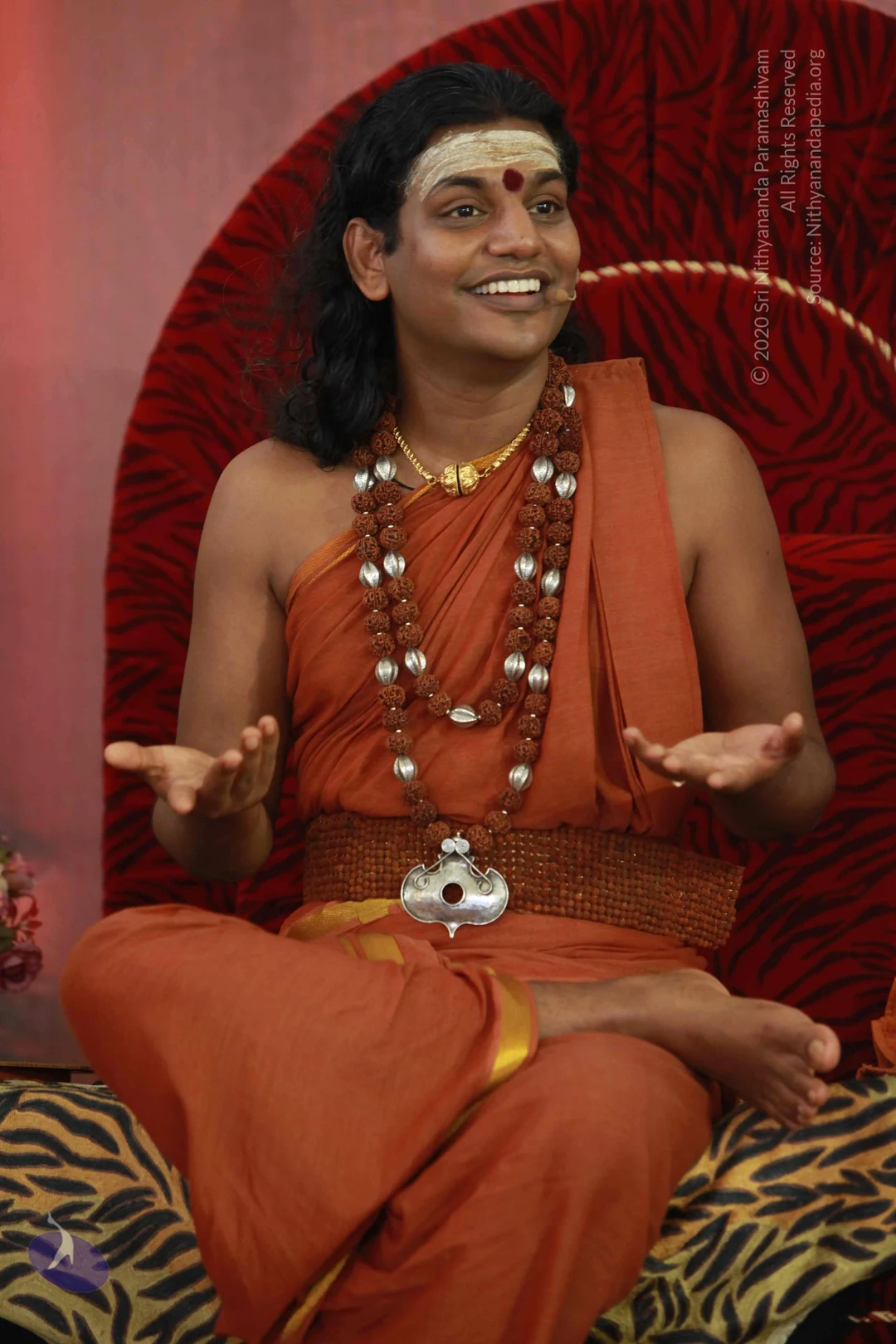
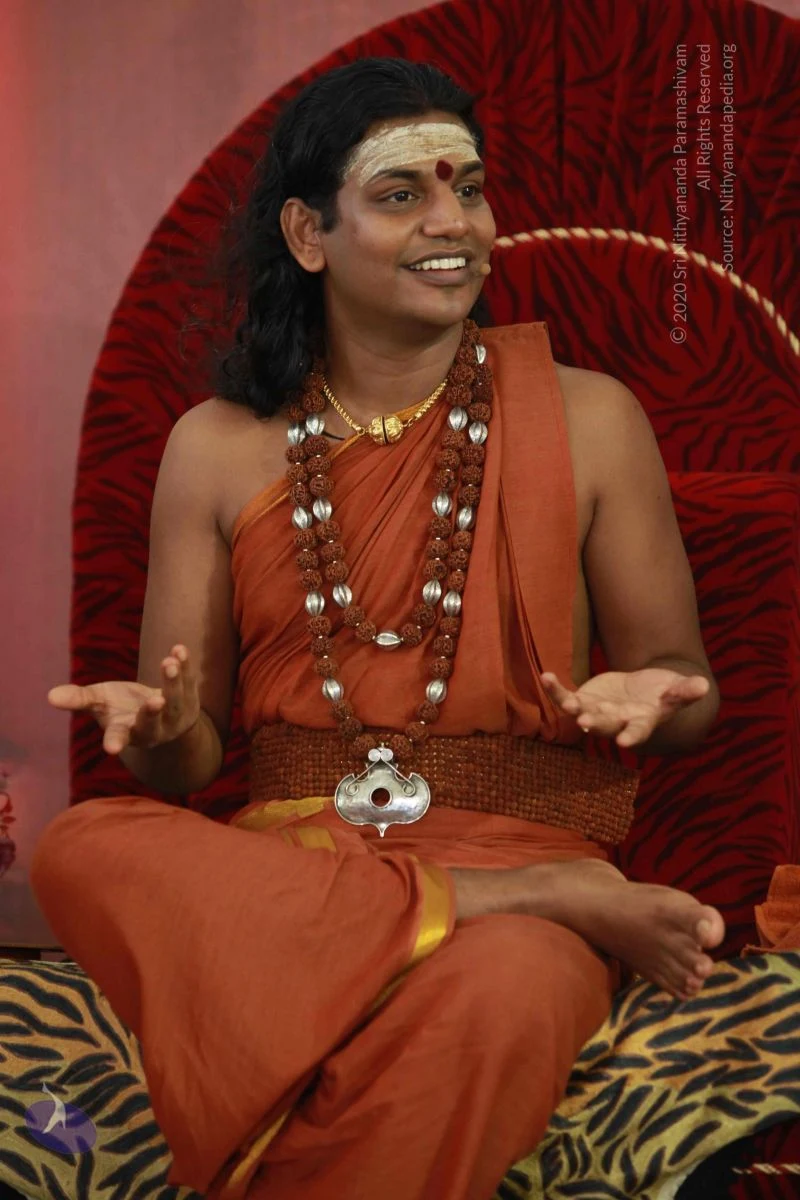
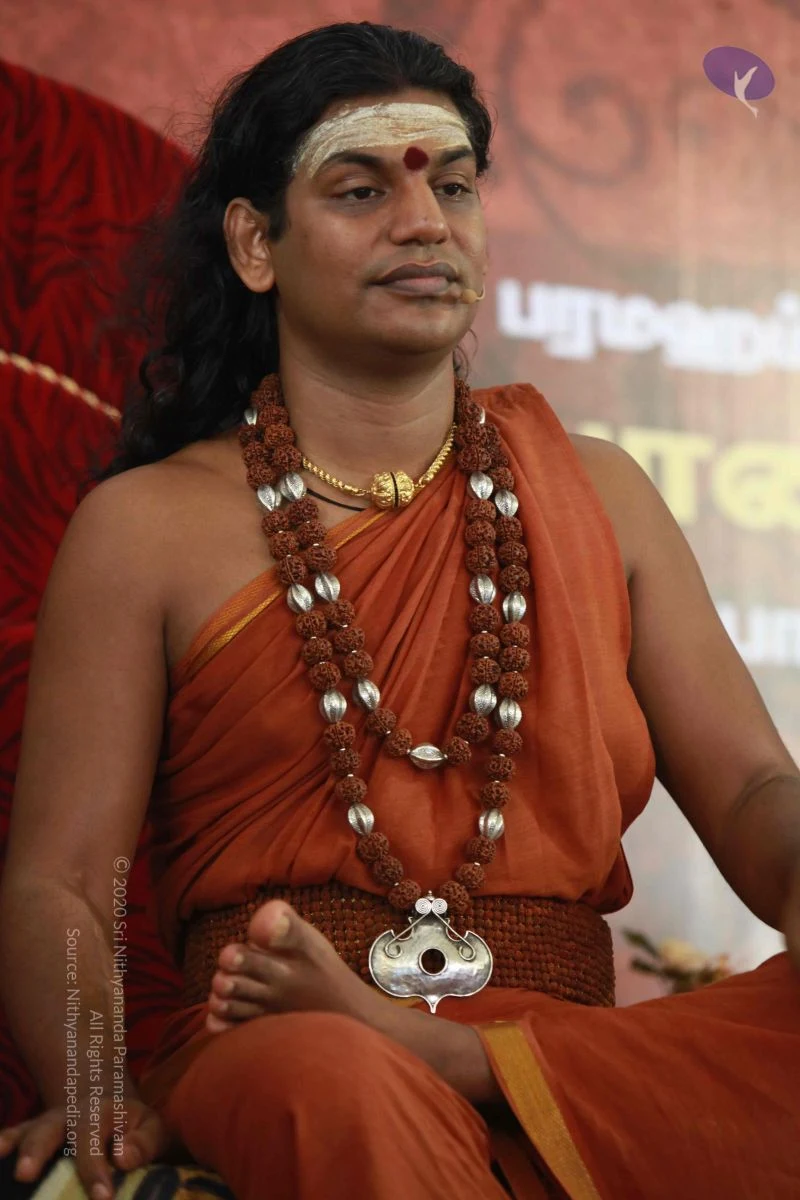
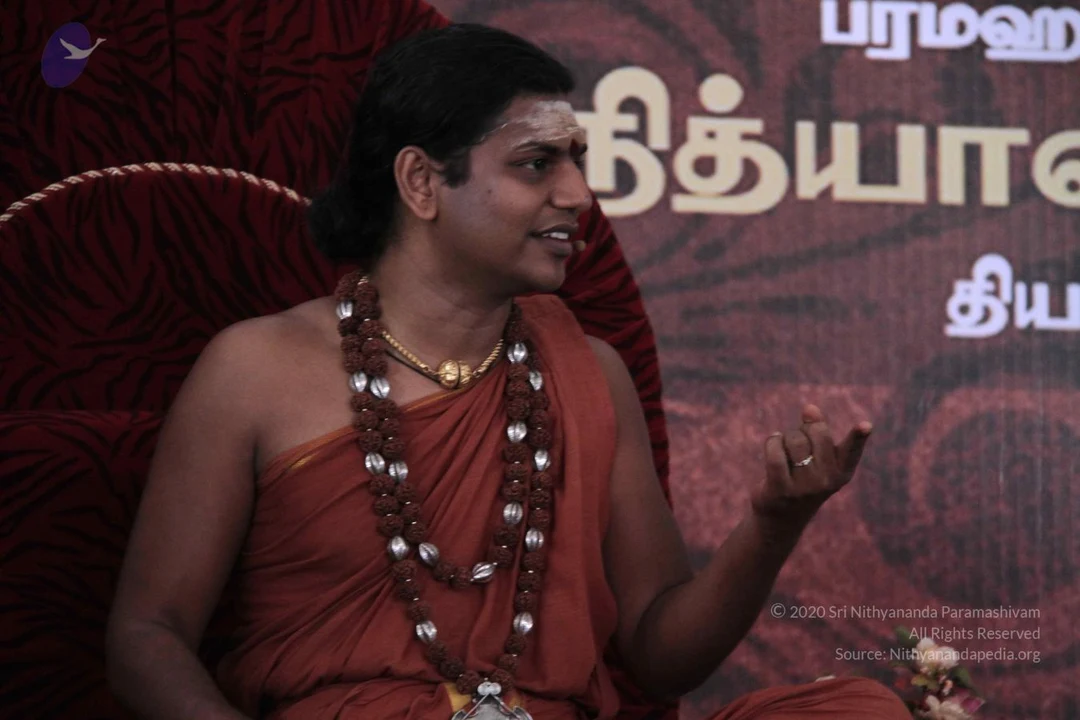
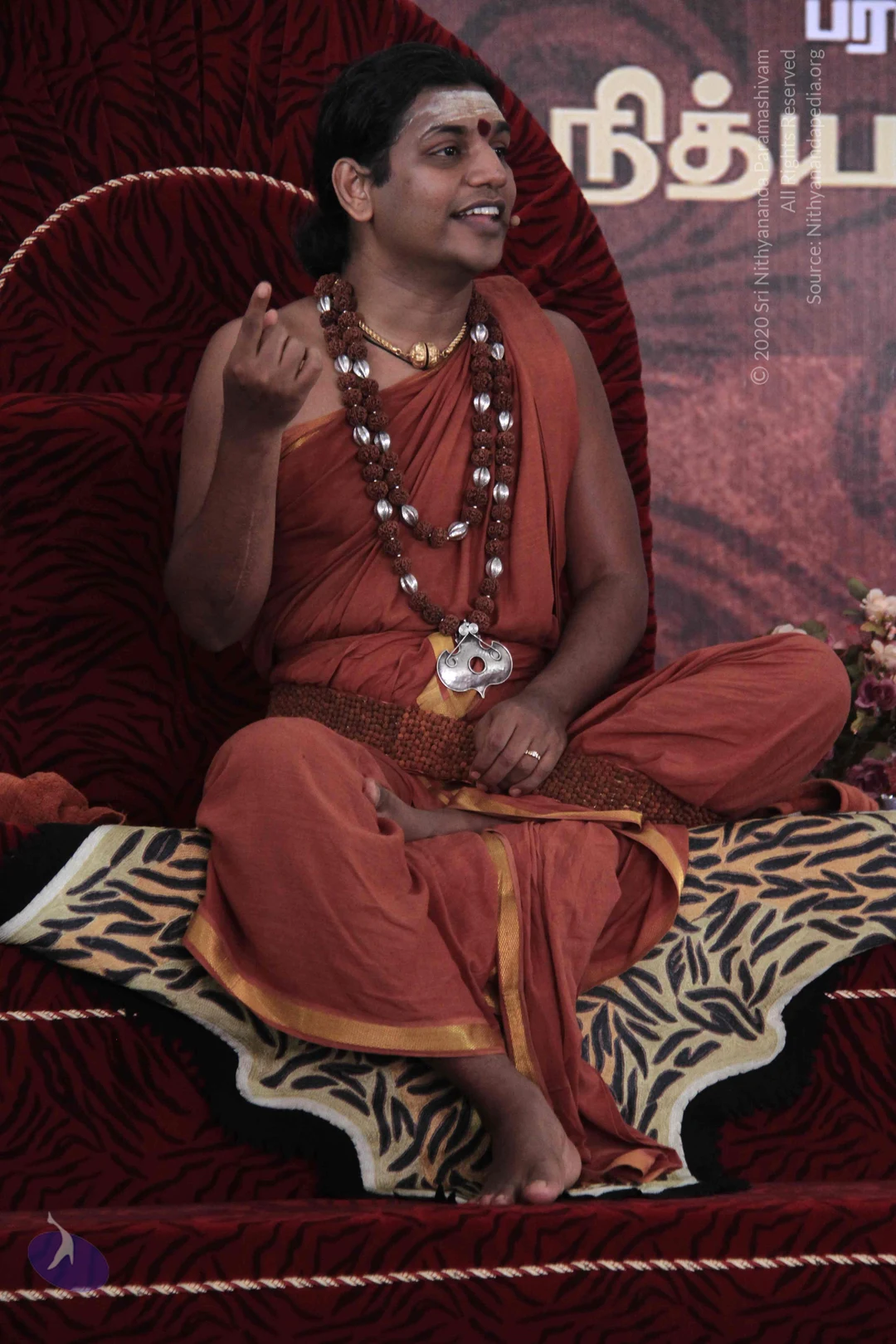
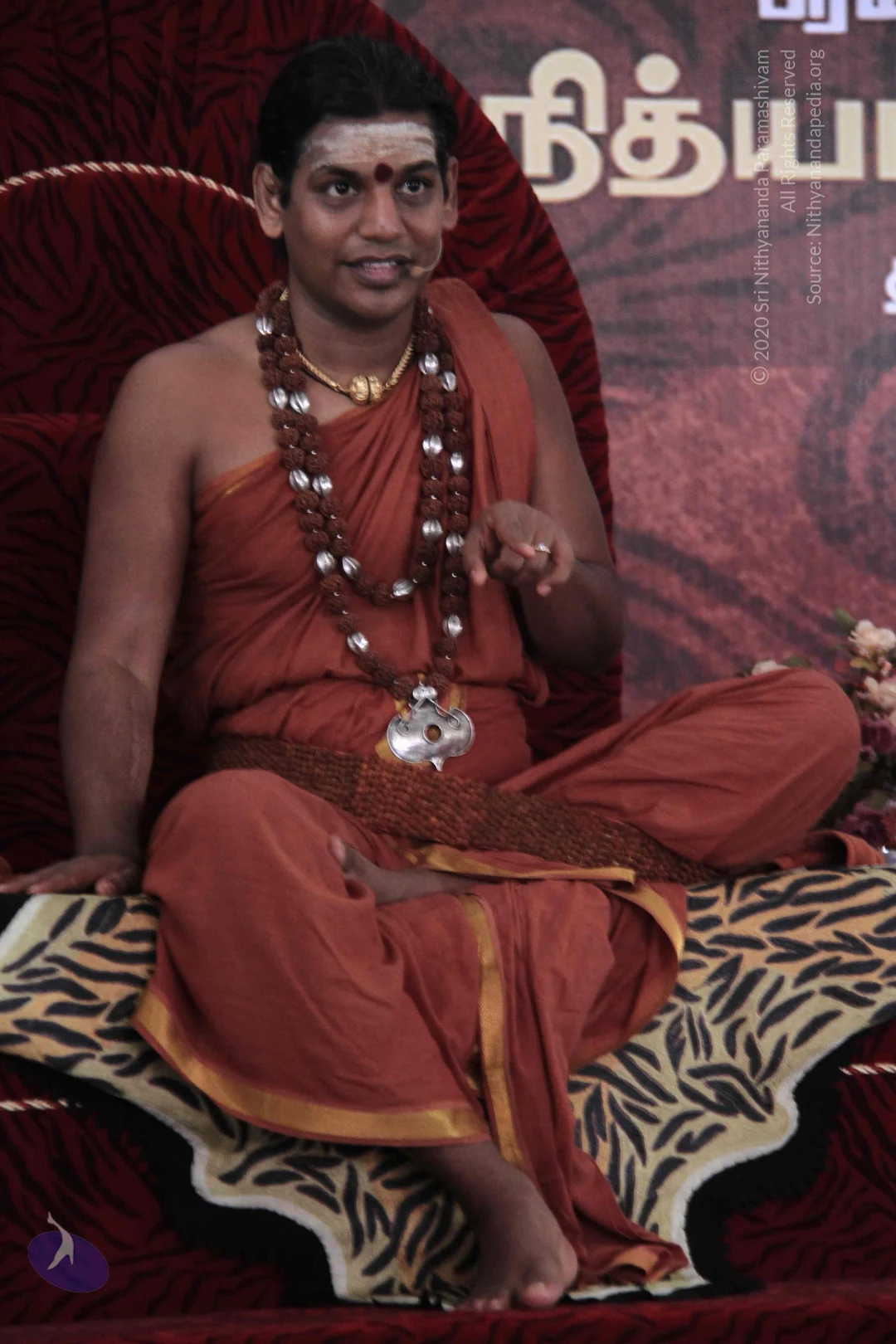
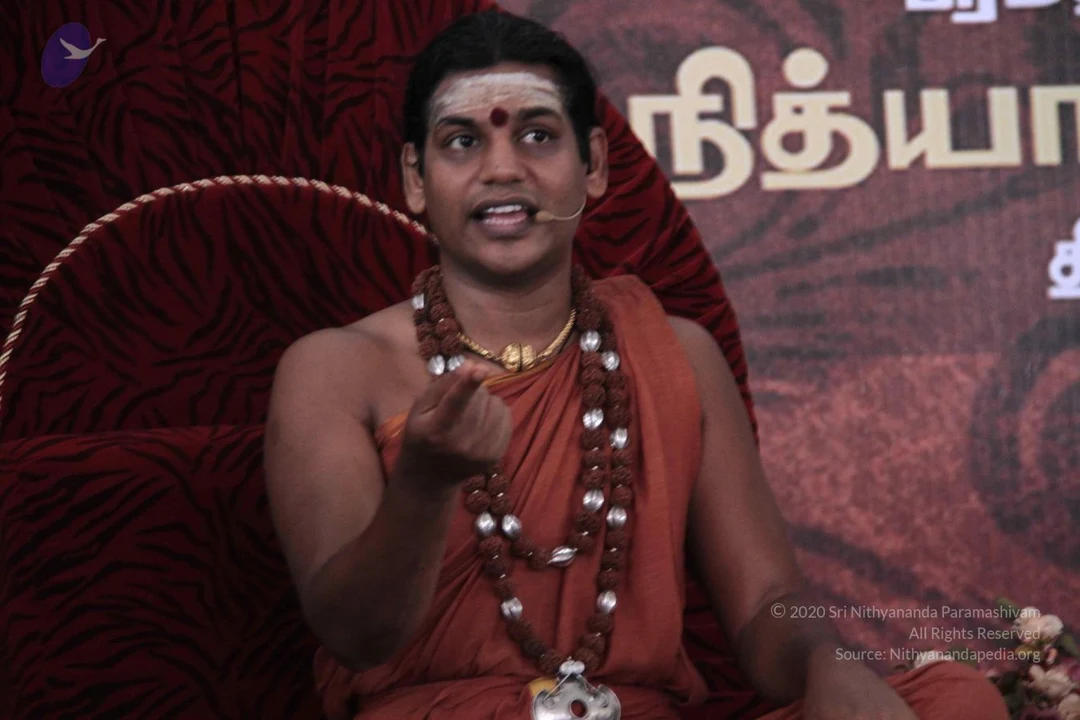
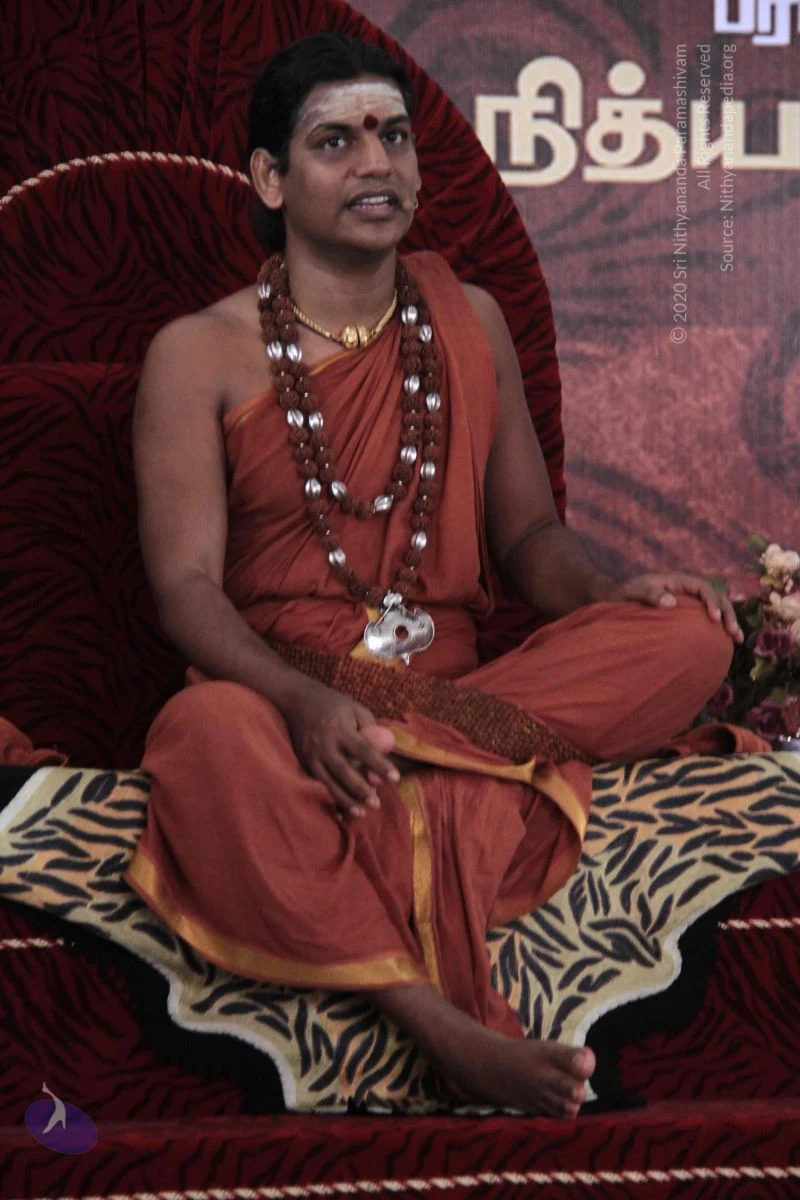
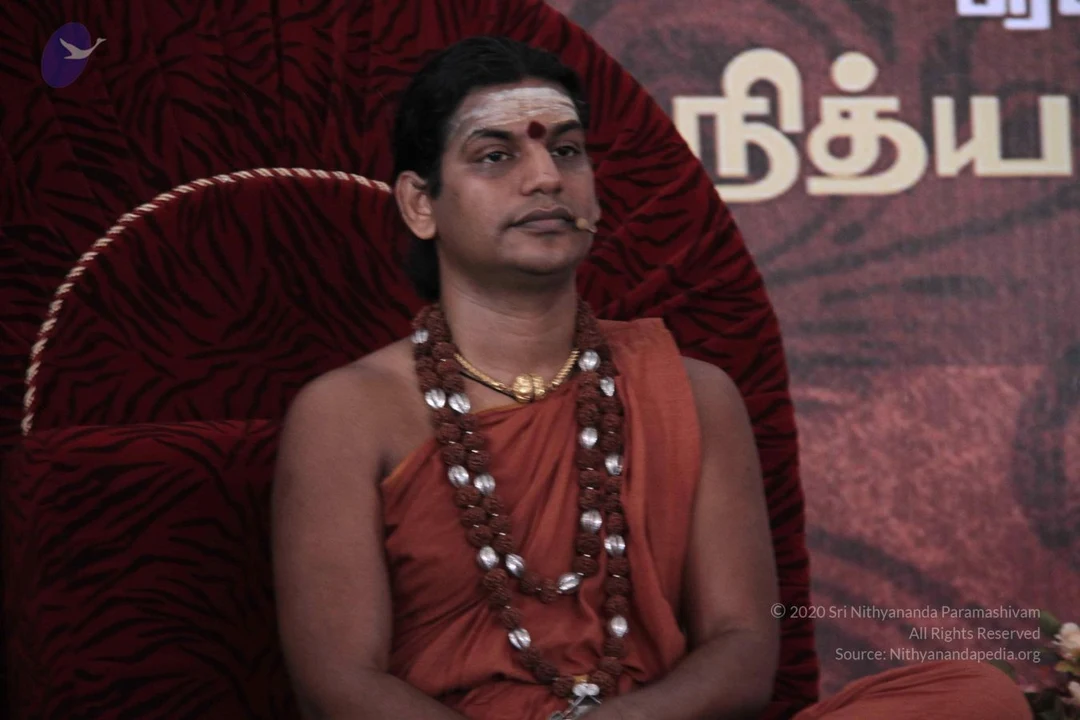
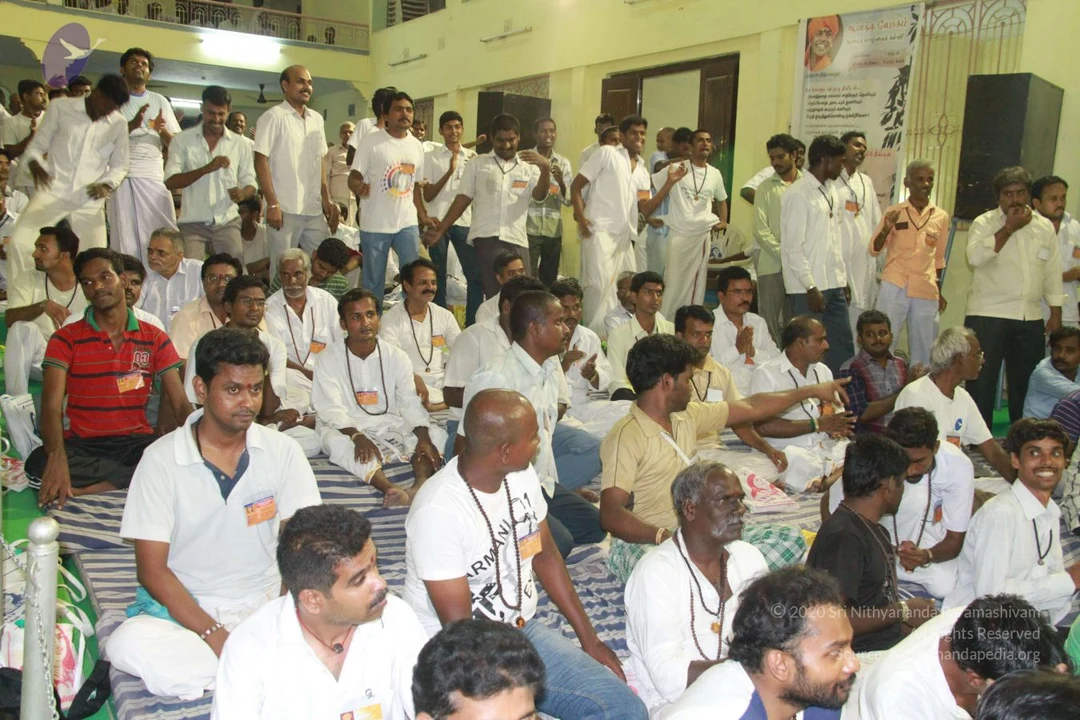
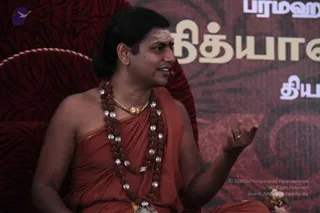
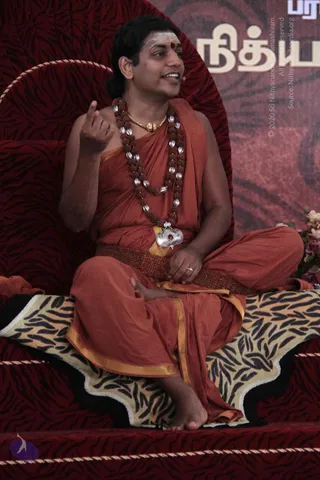
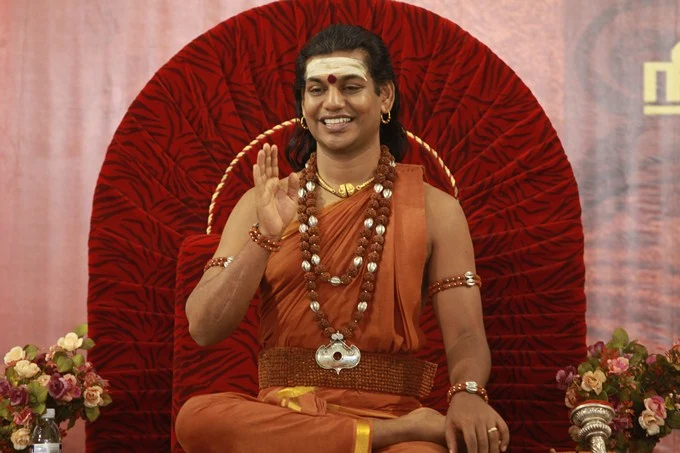
A photograph of a man seated on a red velvet chair with a zebra-stripe pattern, speaking and gesturing with his right hand raised, palm turned outward. He wears a rust-orange shawl draped over his shoulders and bare chest, a long rudraksha mala with silver beads, and a gold necklace pendant. He has a white and red tilak on his forehead. Behind him is a maroon backdrop with large gold Tamil lettering. a person cues are present: a rudraksha mala, ceremonial gold necklace, orange shawl and a red throne-like chair, with a satsang discourse setting.A photograph of a man seated cross-legged on a red velvet throne with black tiger-stripe pattern, speaking while raising one hand in a gesture. He wears a saffron-orange robe with gold border, a thick rudraksha mala with silver beads, a silver and gold pendant, a rudraksha waist belt, and a red bindi with white forehead markings. Behind him is a red backdrop with Tamil script and flowers at the side. a person: the seated speaker in saffron robes and rudraksha malas matches the page's satsang context, so this is an appearance-based label rather than confirmed identity.A man in orange saffron robes sits on a red and black tiger-striped throne-style chair, speaking with his right hand raised in a gesture. He wears a wide white tilak with a red bindi on his forehead, multiple strands of rudraksha beads with silver beads, and a gold ceremonial pendant necklace. A small clip-on microphone is visible near his face. Behind him is a red backdrop with large cream-coloured Tamil script and a faint decorative pattern.A man sits cross-legged on a red velvet throne with a zebra-striped cushion, speaking as if addressing an audience. He wears an orange-saffron drape over his shoulder, a rudraksha mala with silver beads, a gold necklace with a pendant, and a white vibhuti mark with a red bindi on his forehead. Behind him a backdrop shows a red patterned design with Tamil lettering and a small flower arrangement sits at right. a person (saffron clothing, rudraksha and silver mala, ceremonial gold necklace, seated on a throne while teaching), seated and speaking, identity uncertain from appearance alone.A man seated on an upholstered red chair with dark zebra-stripe pattern and a braided cream cord edging, wearing an orange-saffron shawl draped over bare shoulders, a rudraksha mala with silver-toned beads, and a gold necklace. He has a white vertical tilak on his forehead with a red dot at the centre, and a small clip-on microphone is at his jaw. Behind him is a red backdrop with a Tamil-script banner. Floral decoration appears at the lower right.A large crowd of men sits cross-legged on blue-and-white striped mats under a white tent during a satsang gathering. Most wear white dhotis and white shirts, and many have white or grey cloth draped over the shoulder and ID lanyards around their necks. Some hold notebooks or books, a few sit with hands in meditation mudra, and white barriers with green carpet line the foreground. A man in a green polo shirt and a shaved-headed man in white sit in the front row. Pale-clothed people fill the background, and a banner hangs at the top right. Several people are seated with eyes closed. No clearly identifiable a person figure is visible.

LUNCH

19 photosSource gallery
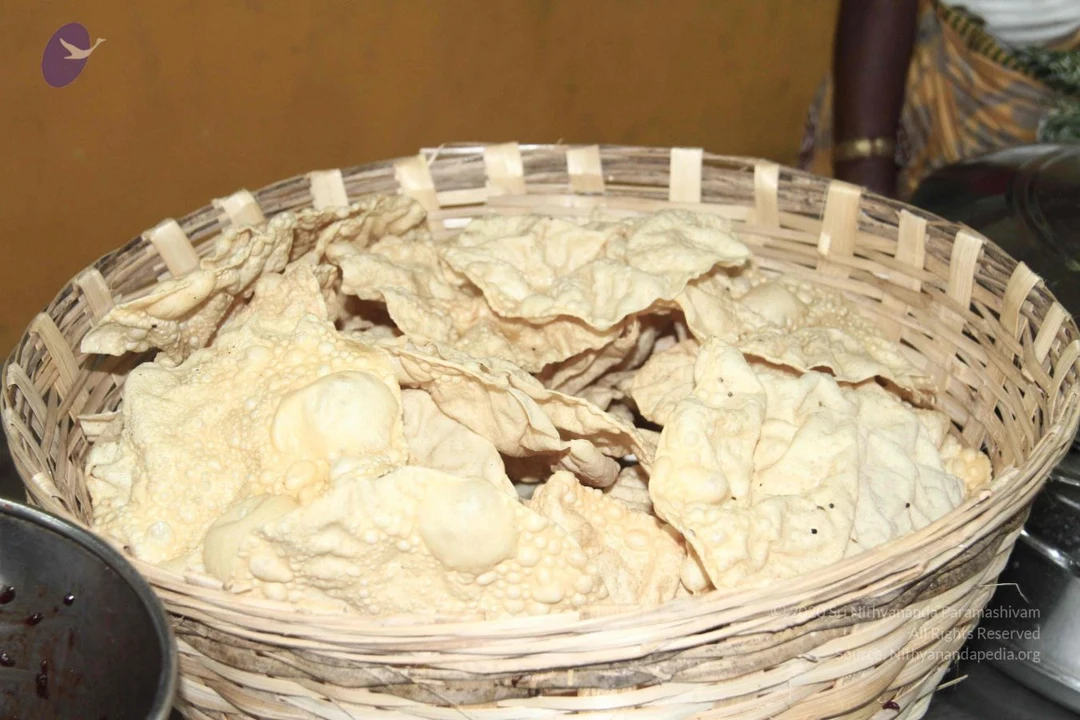
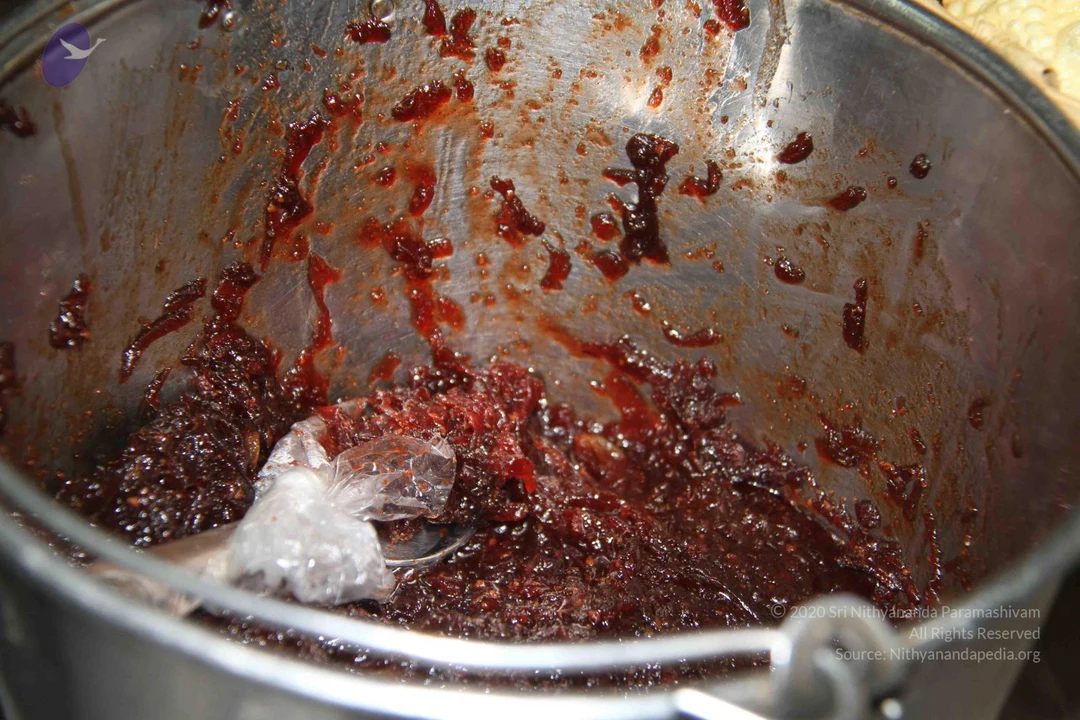
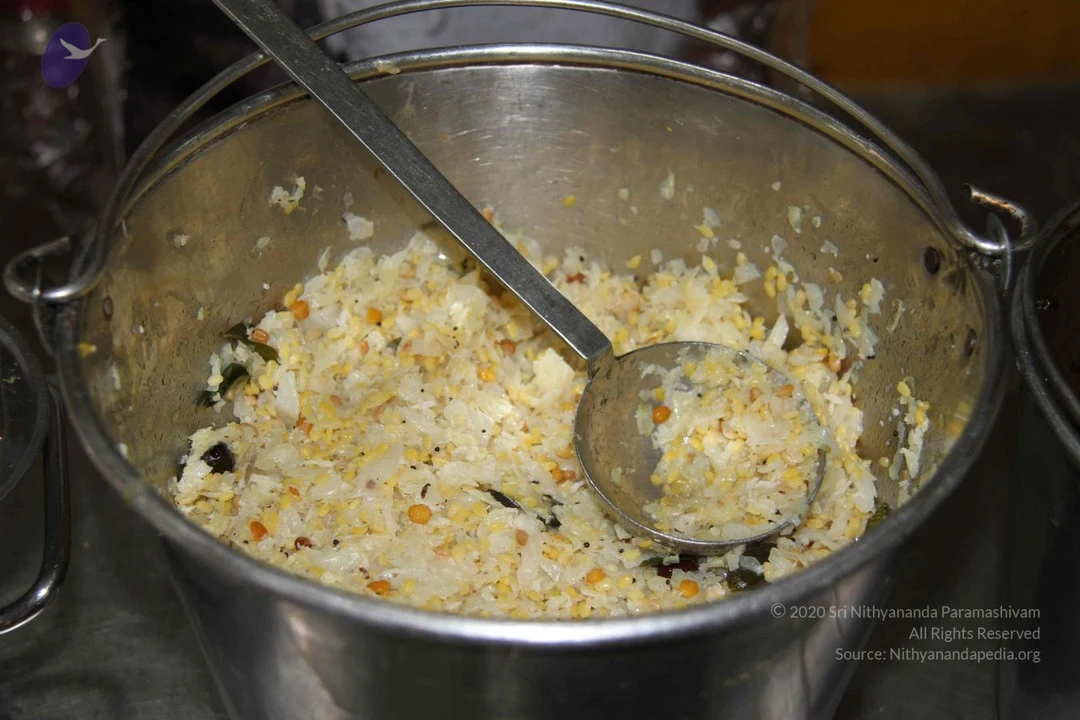
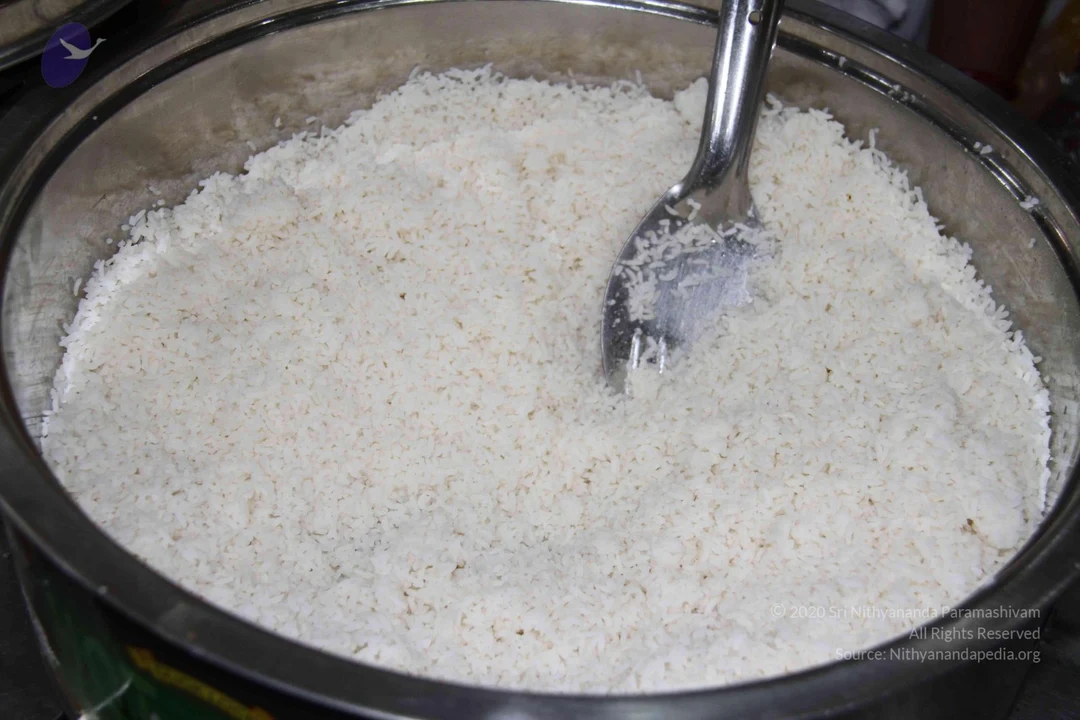
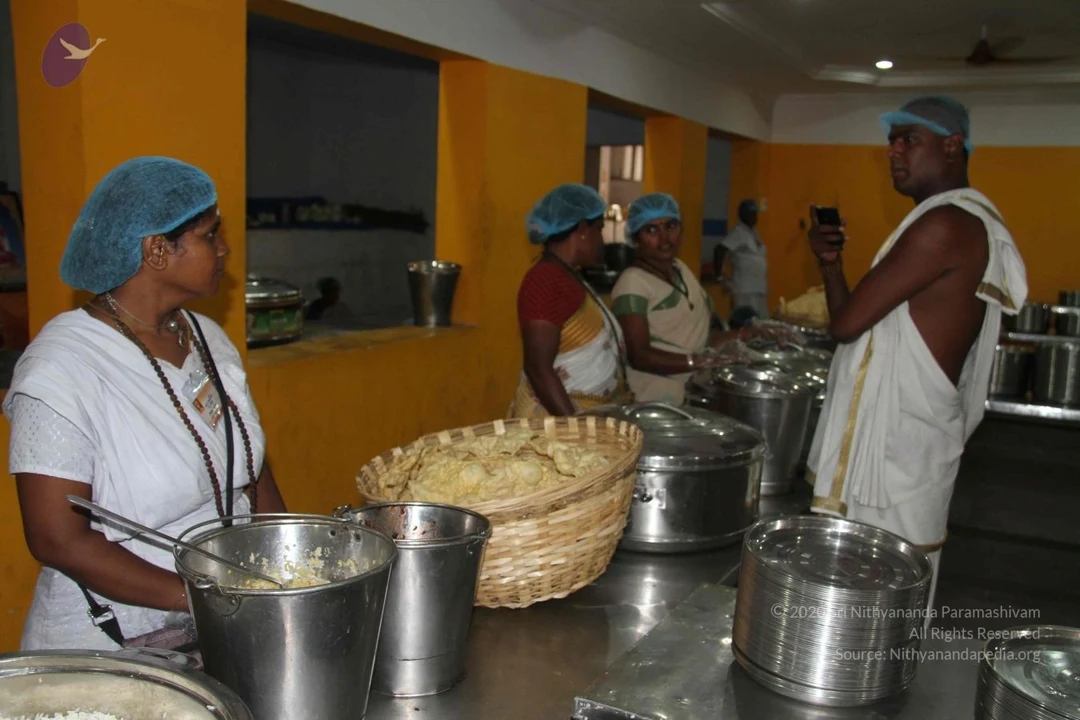
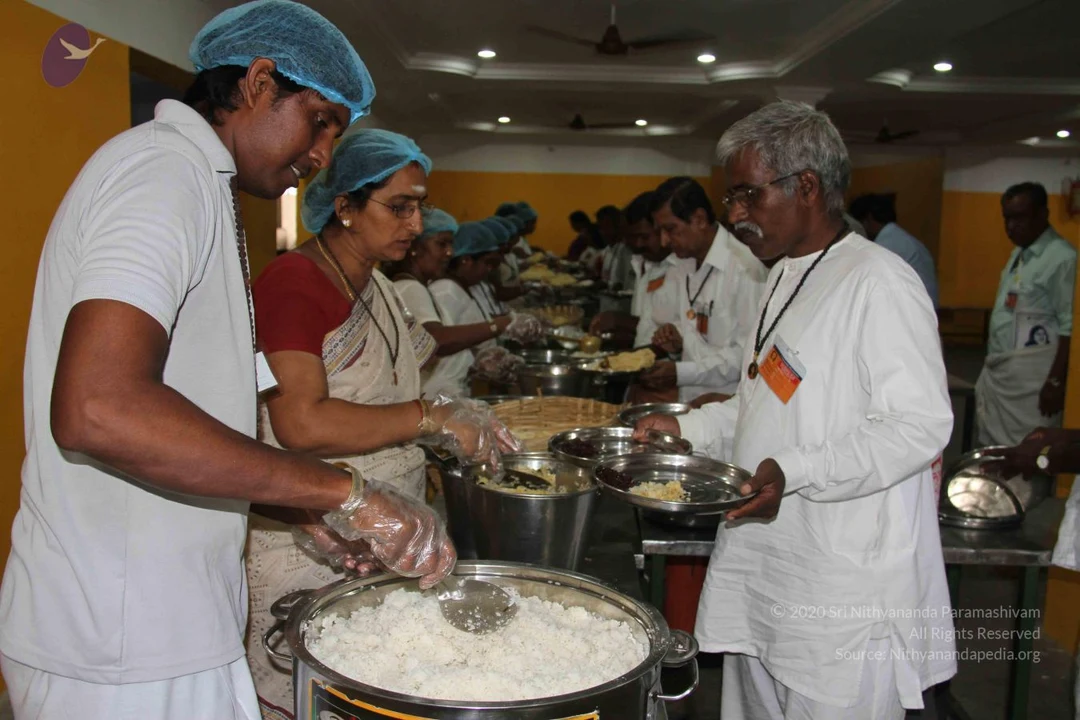
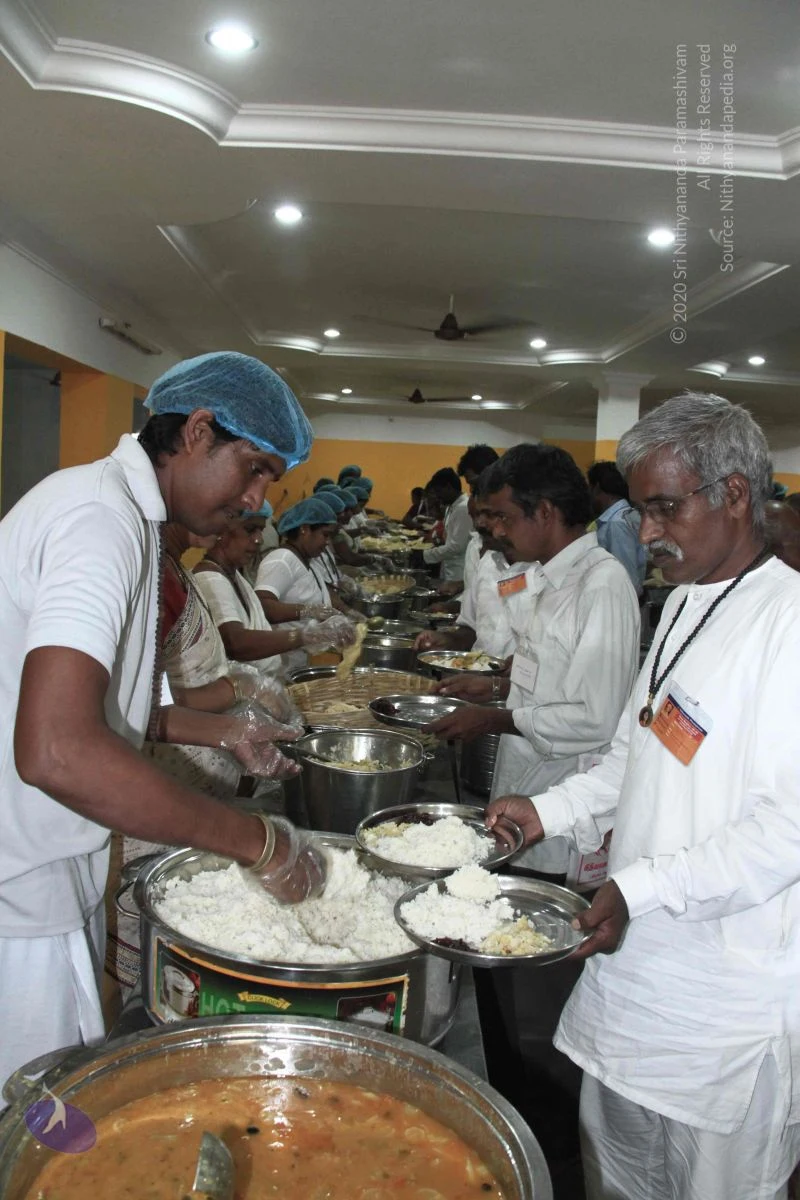
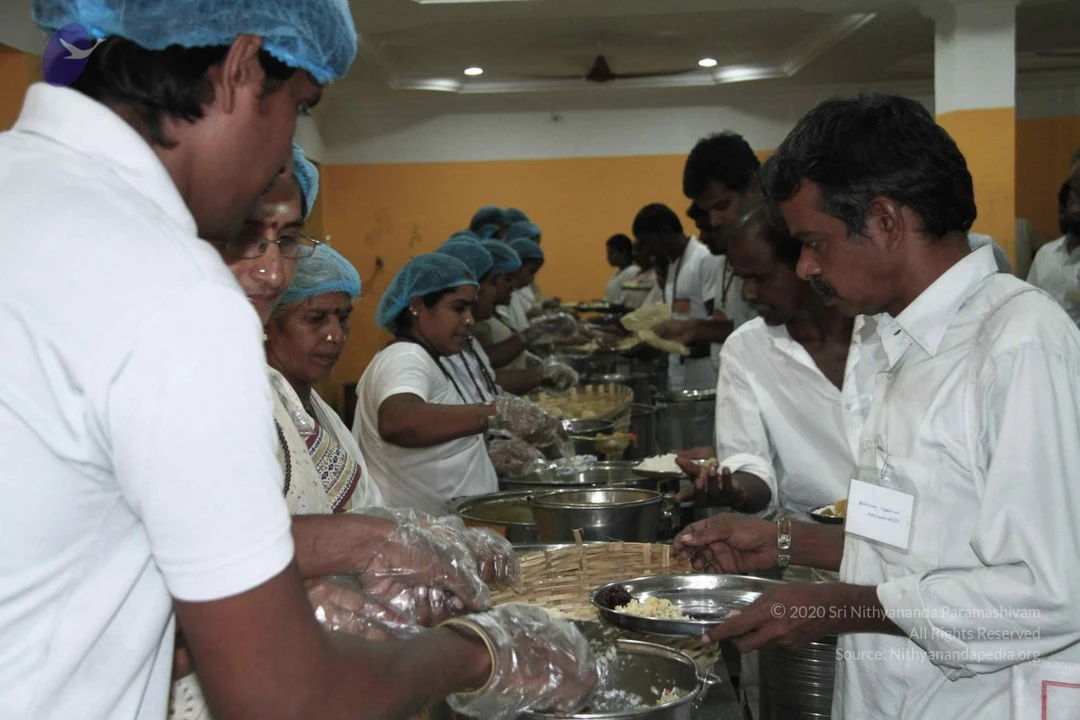
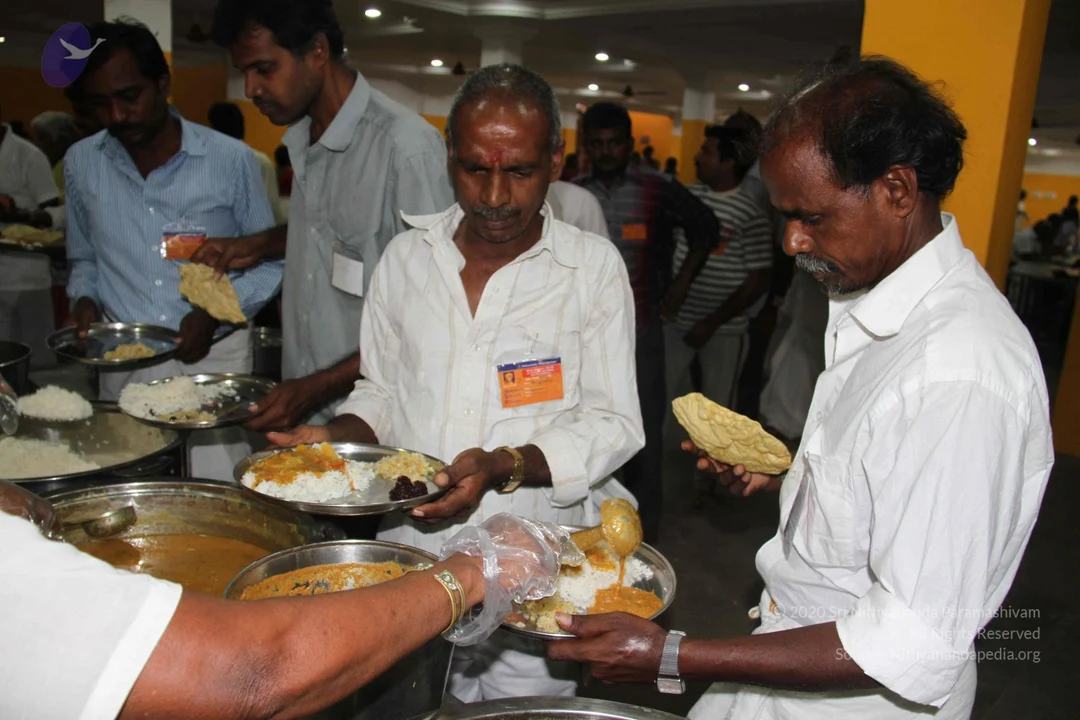
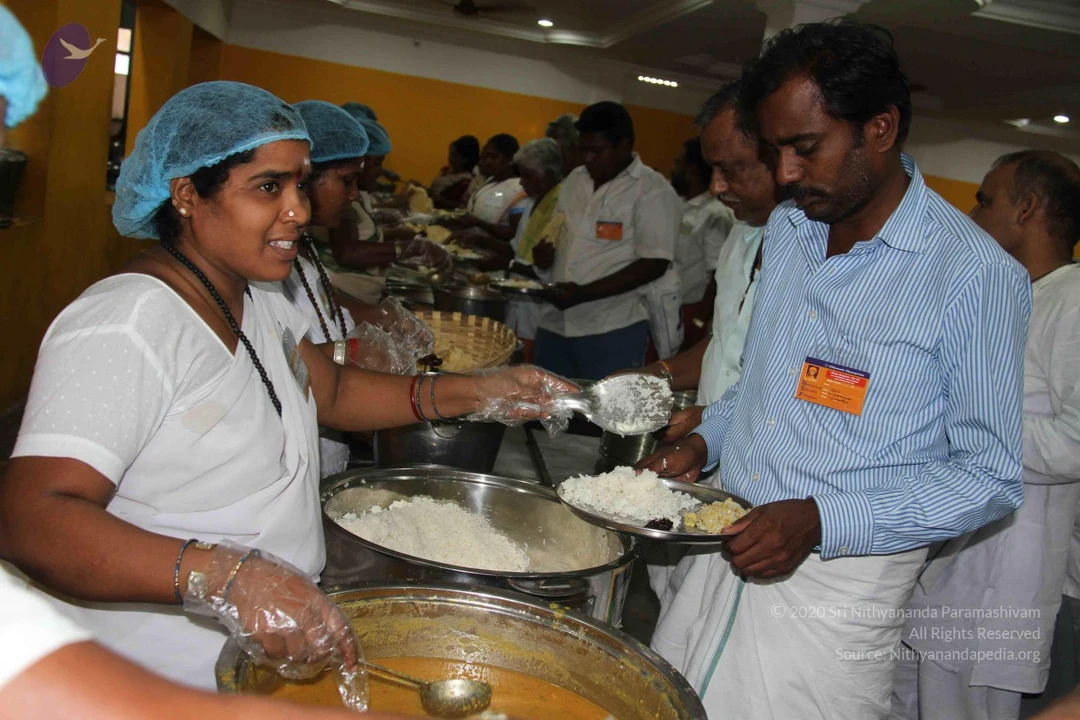
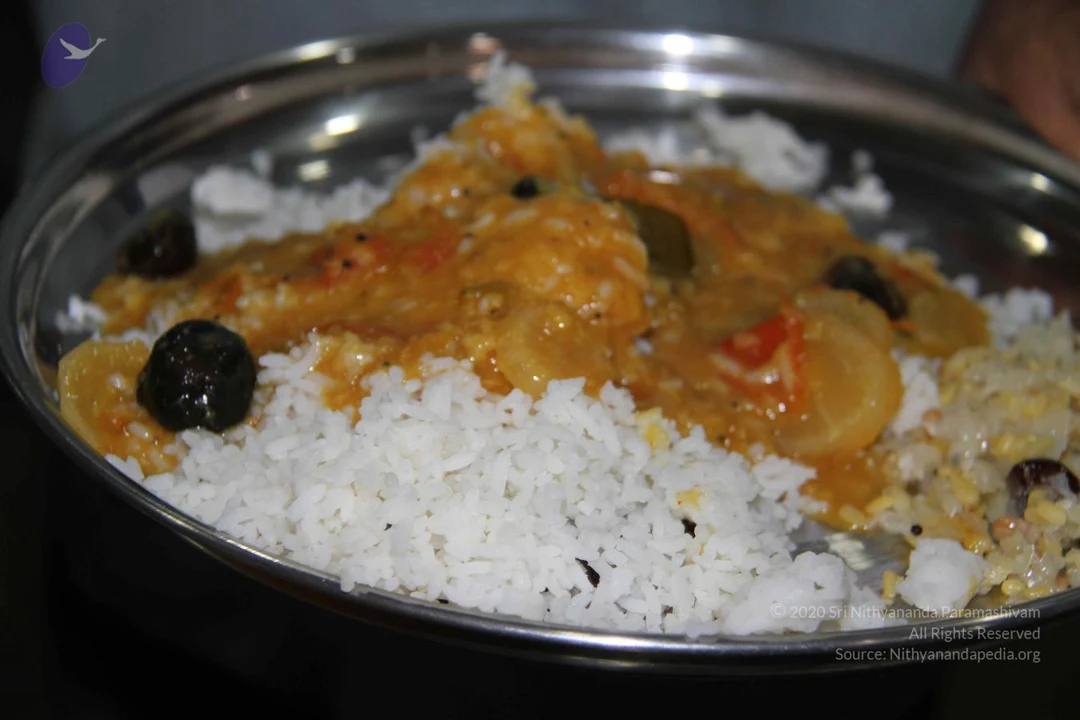
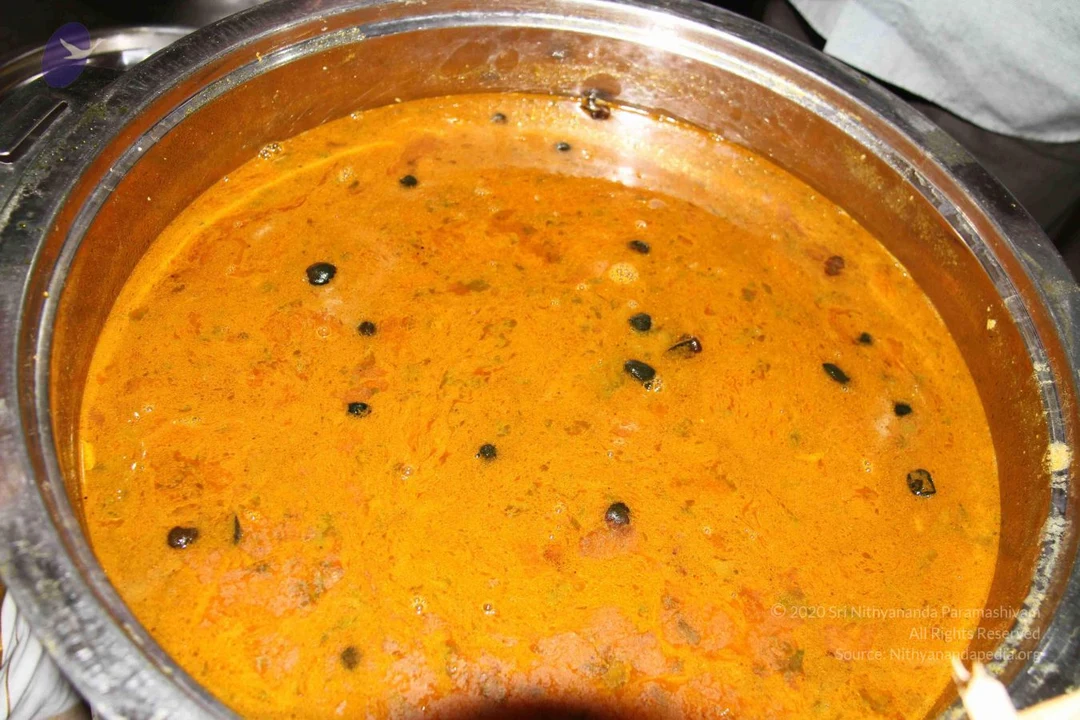
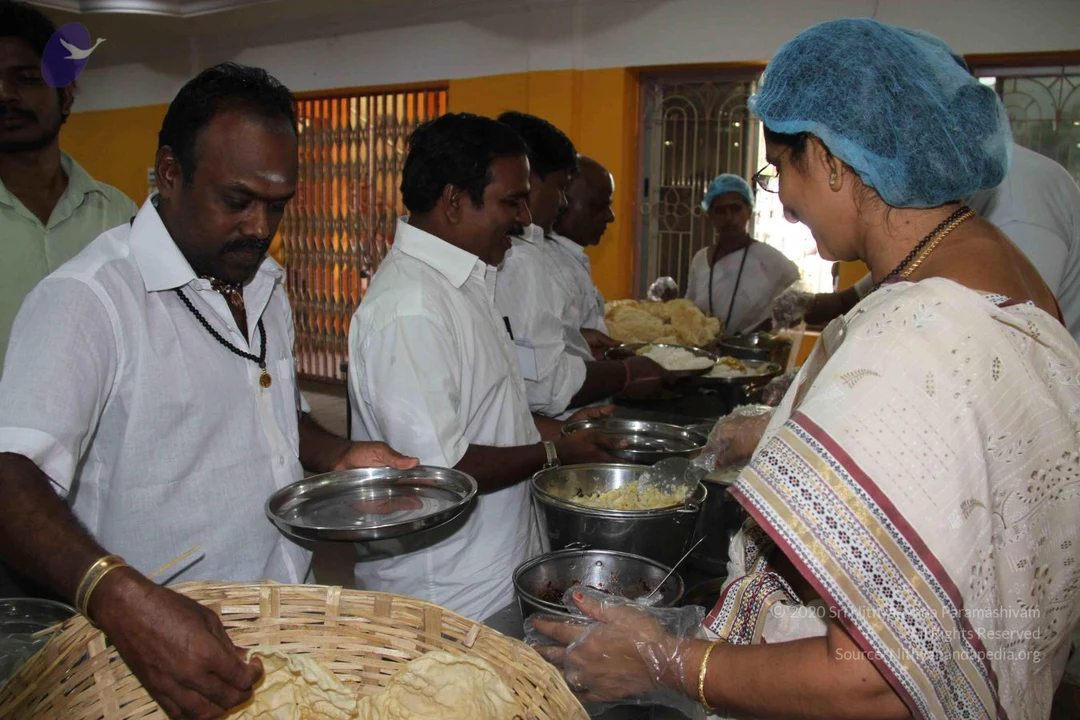
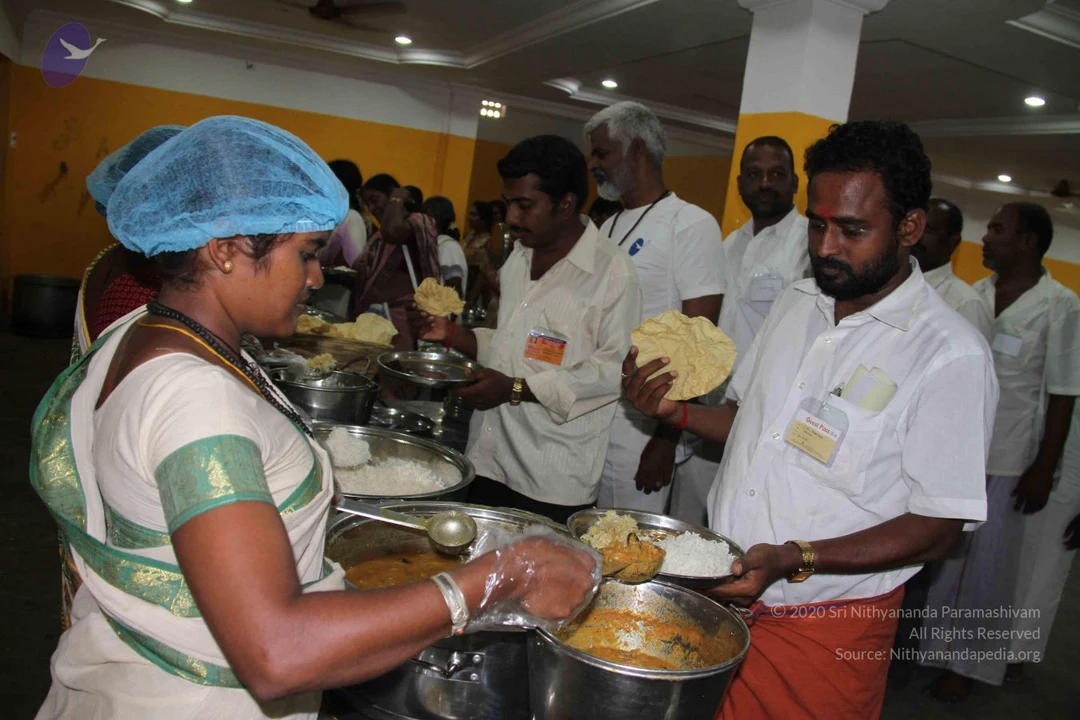
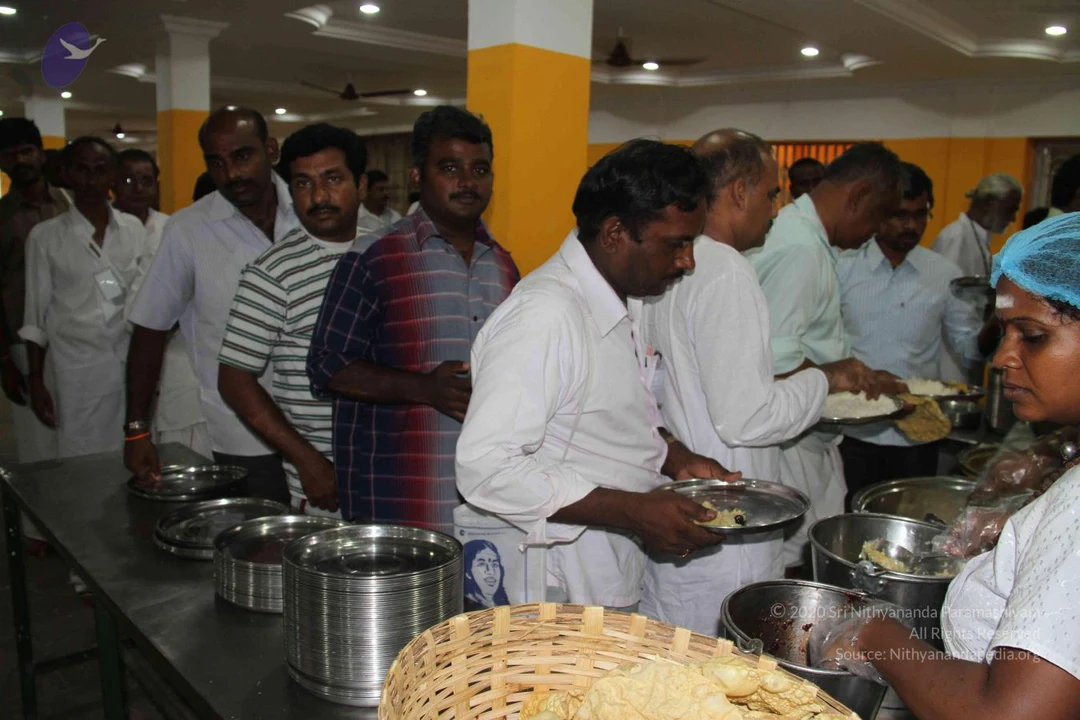
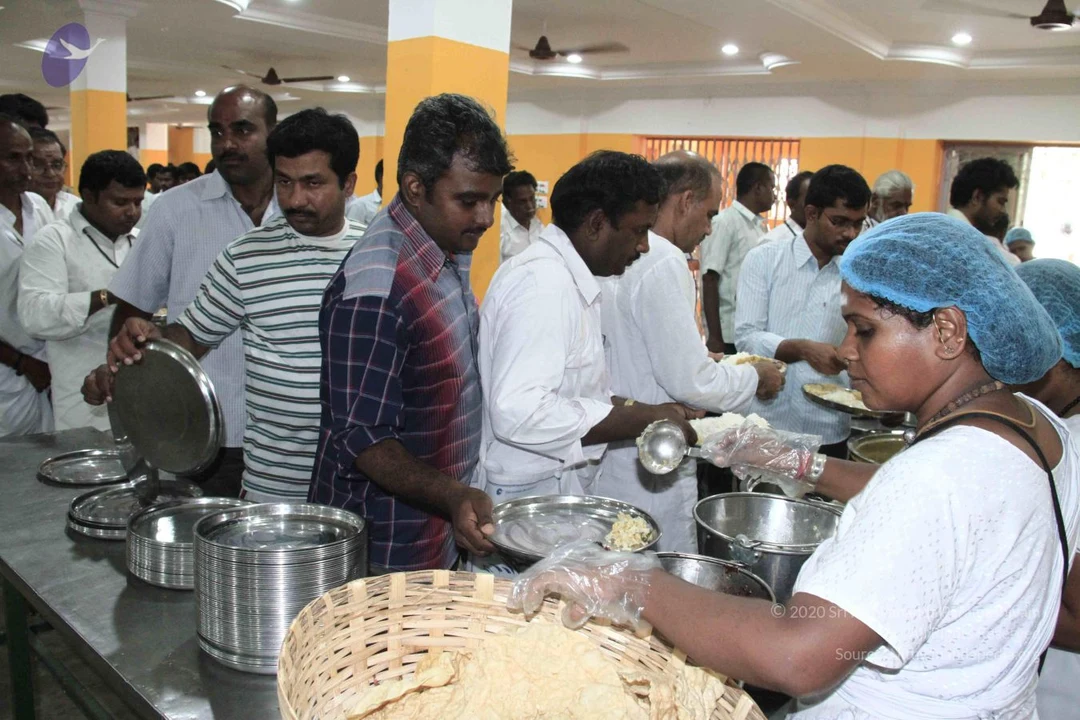
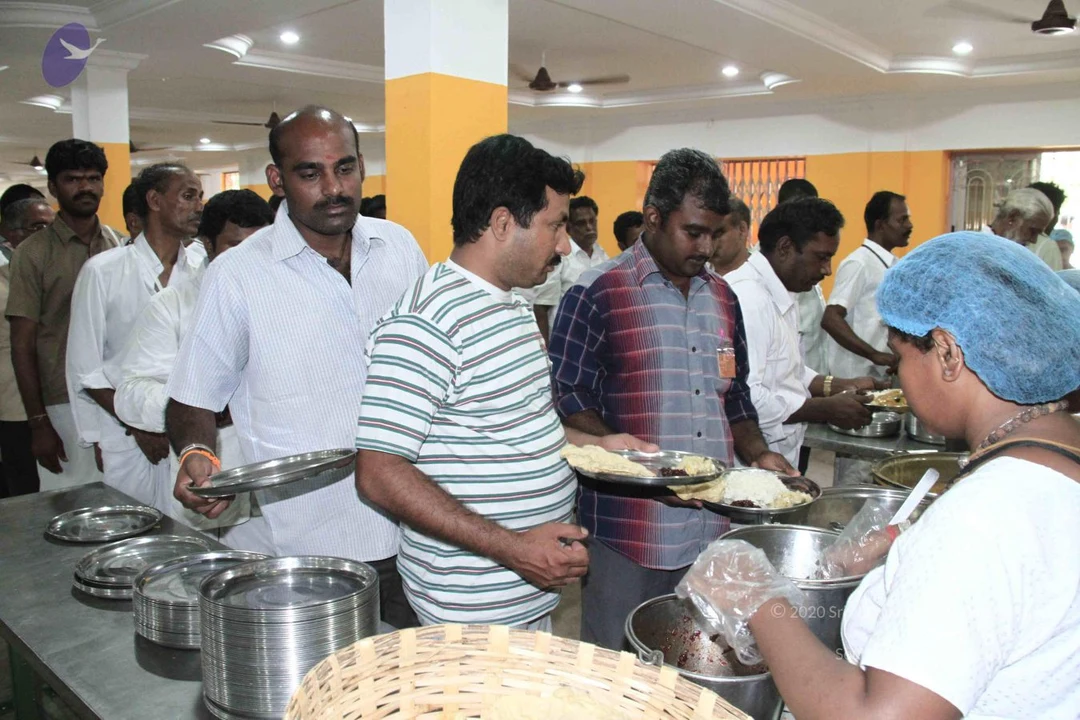
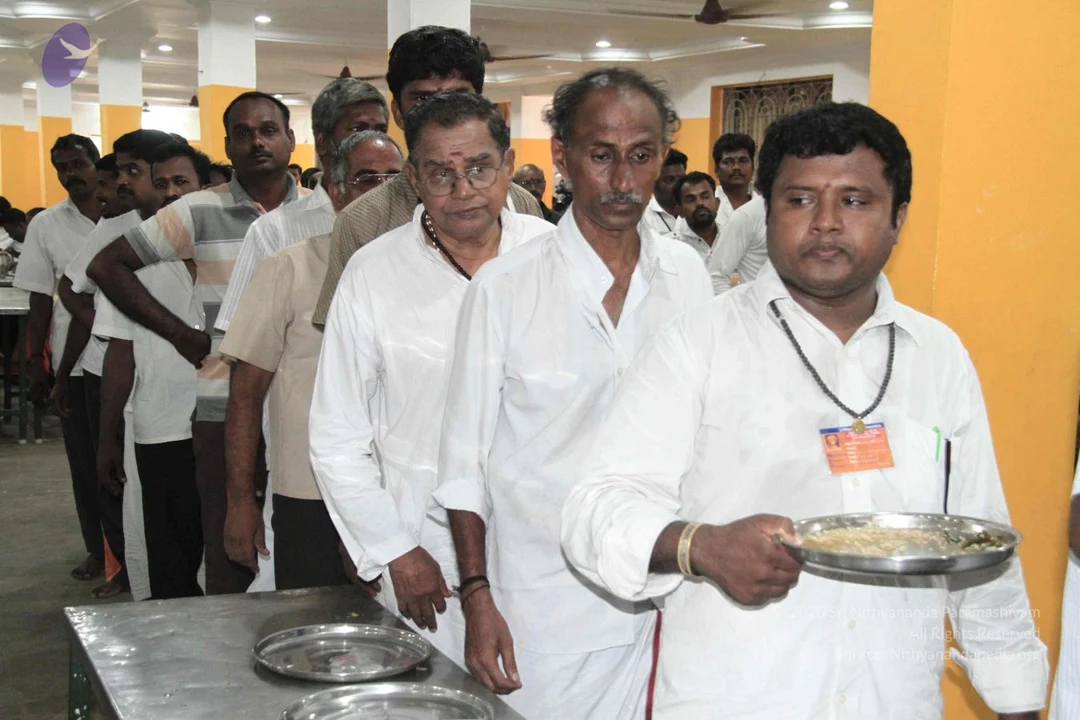
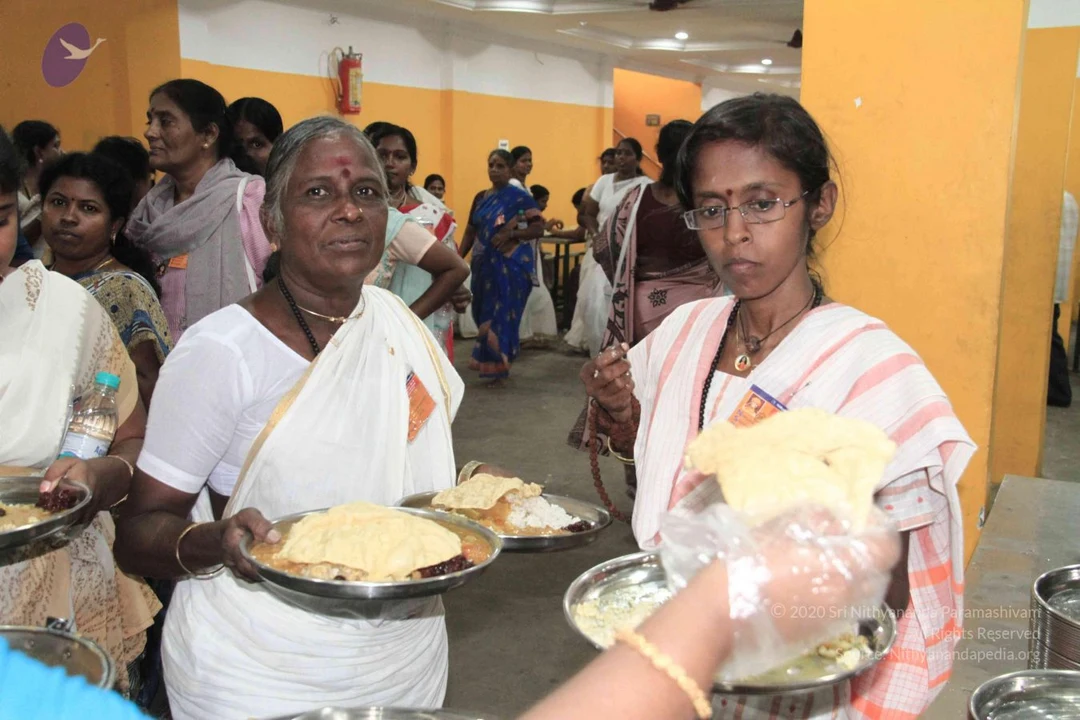
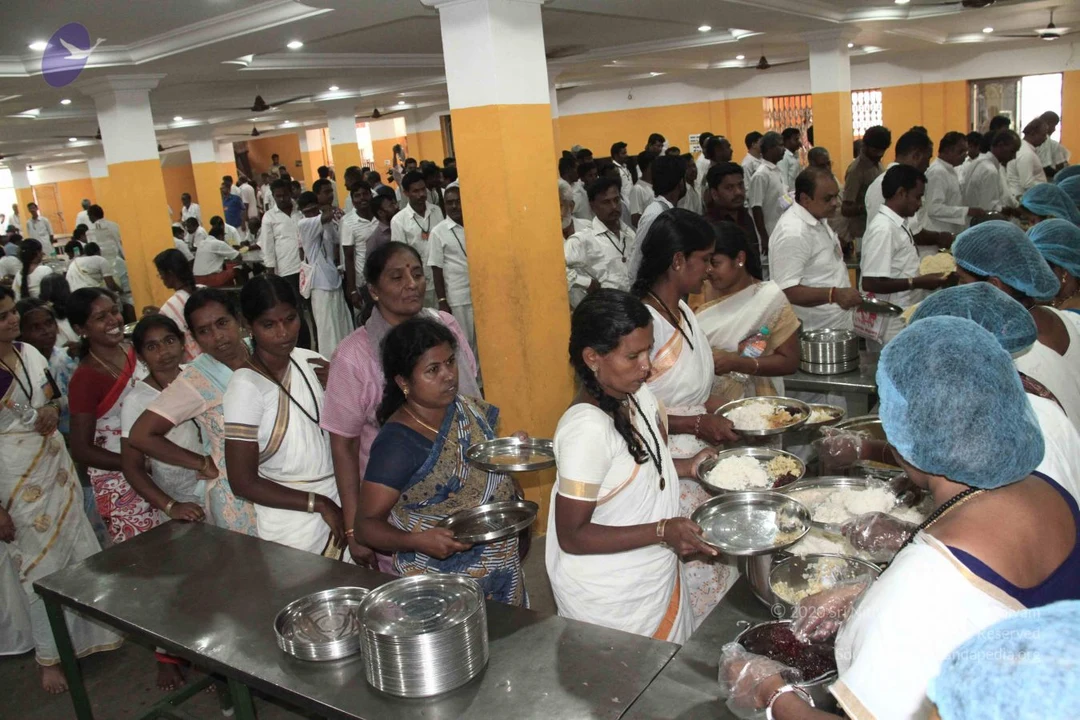
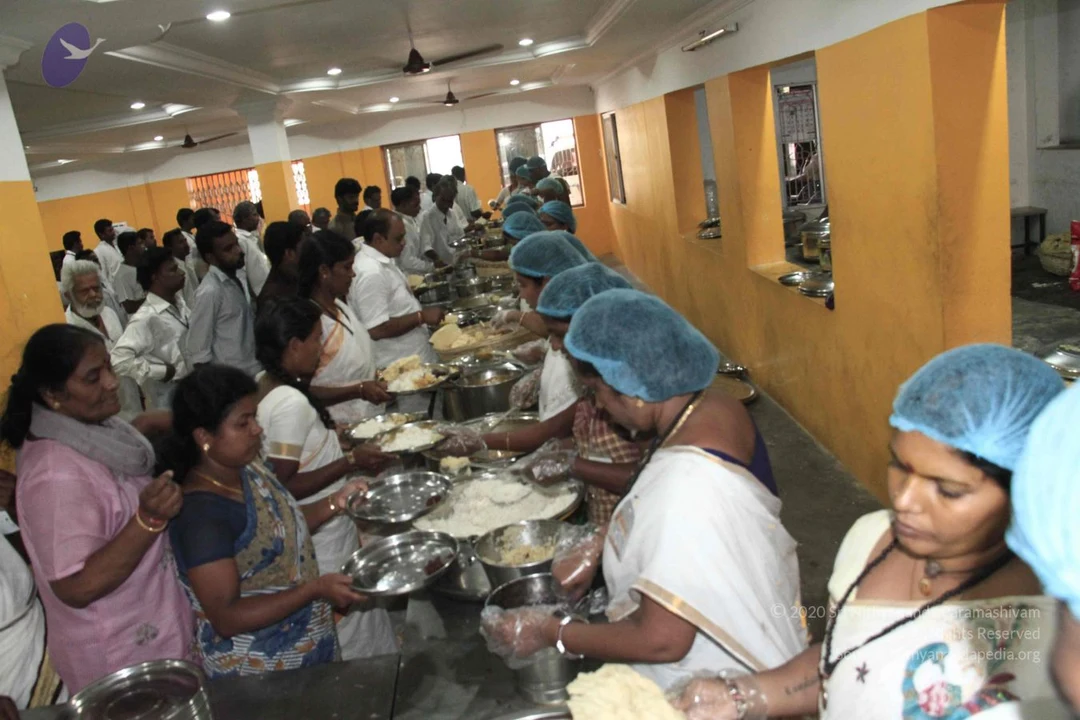
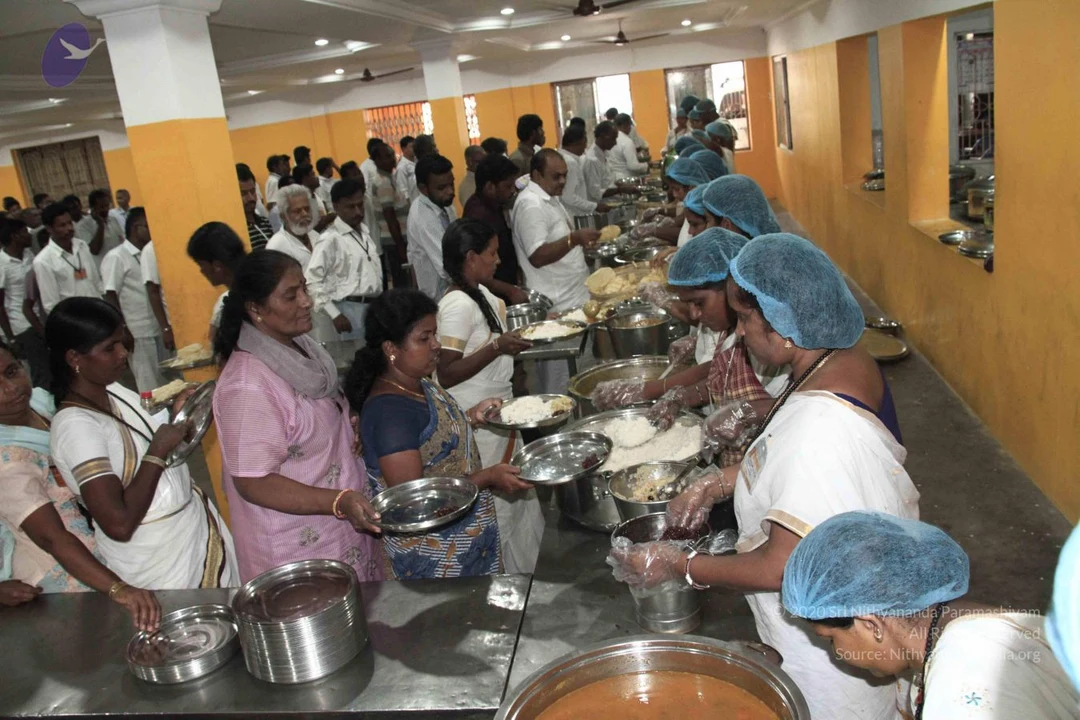
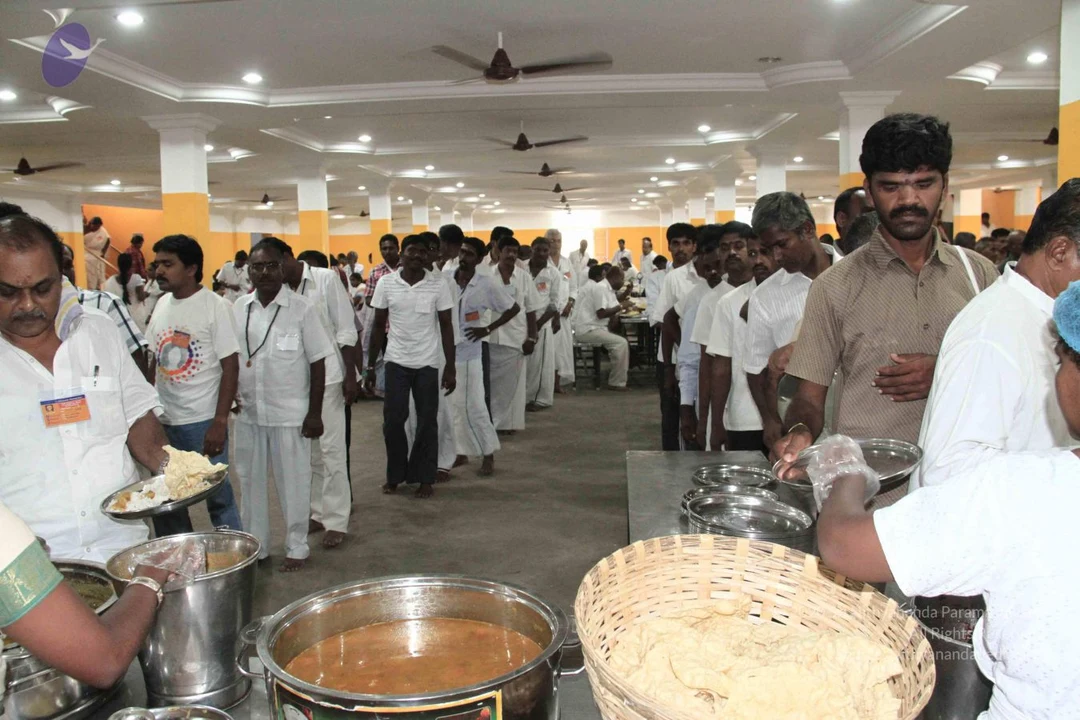
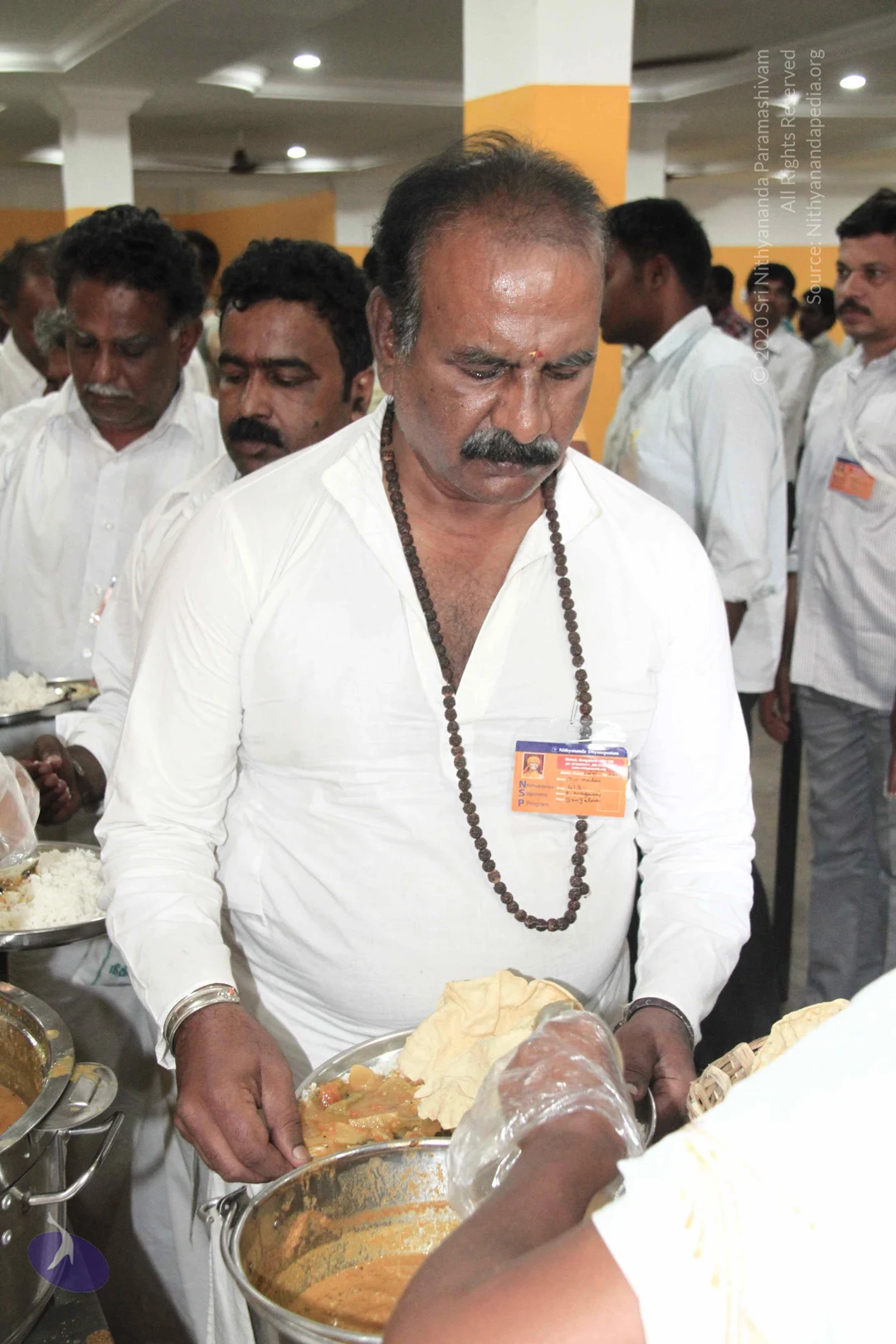
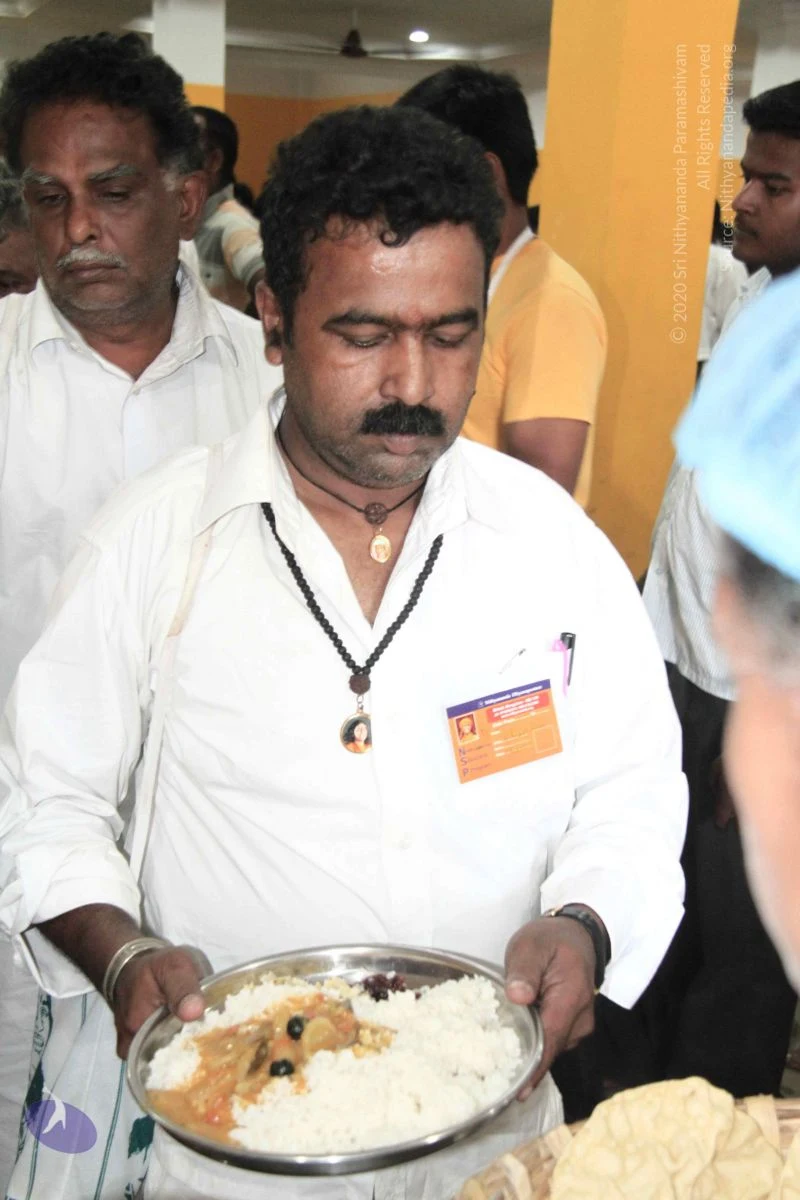
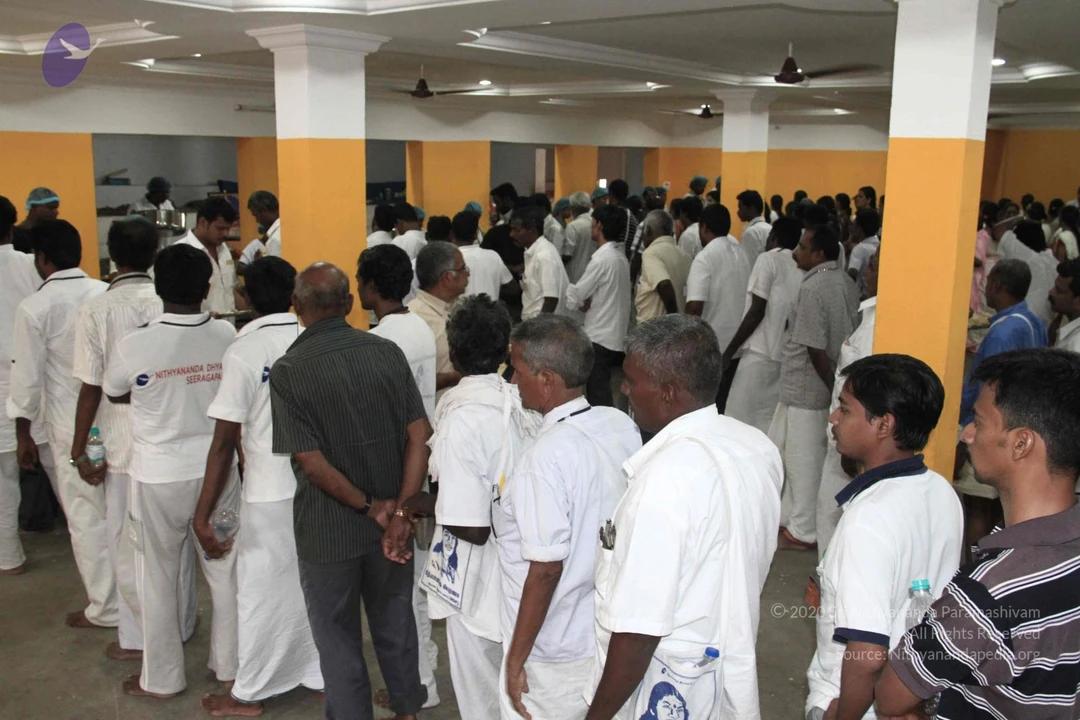
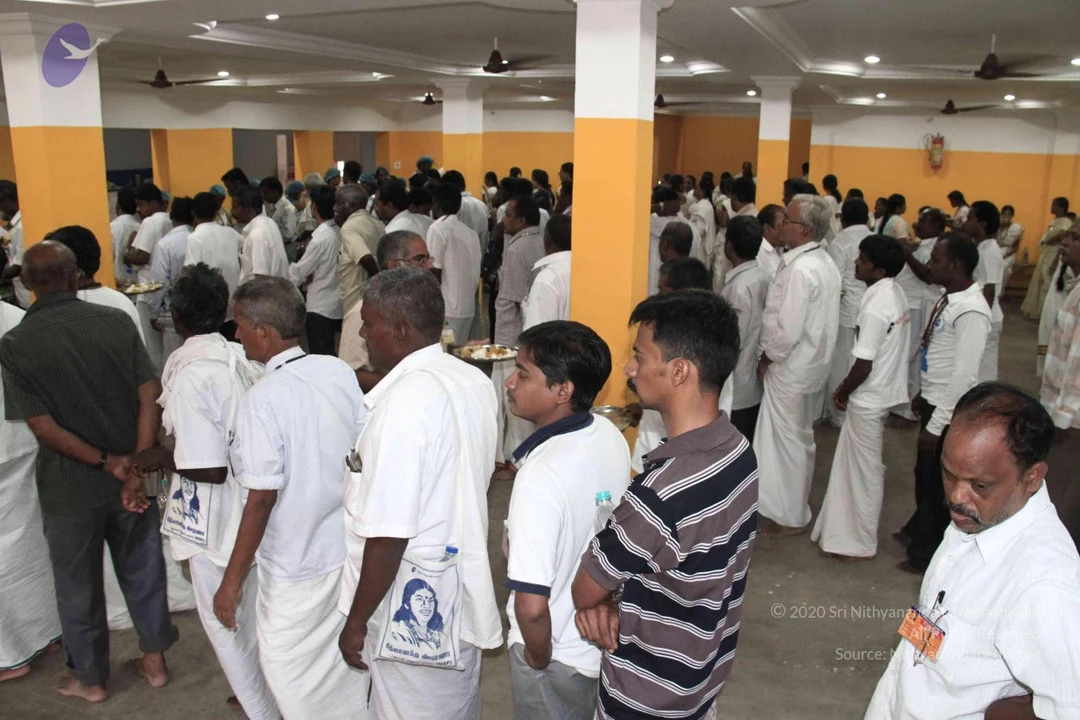
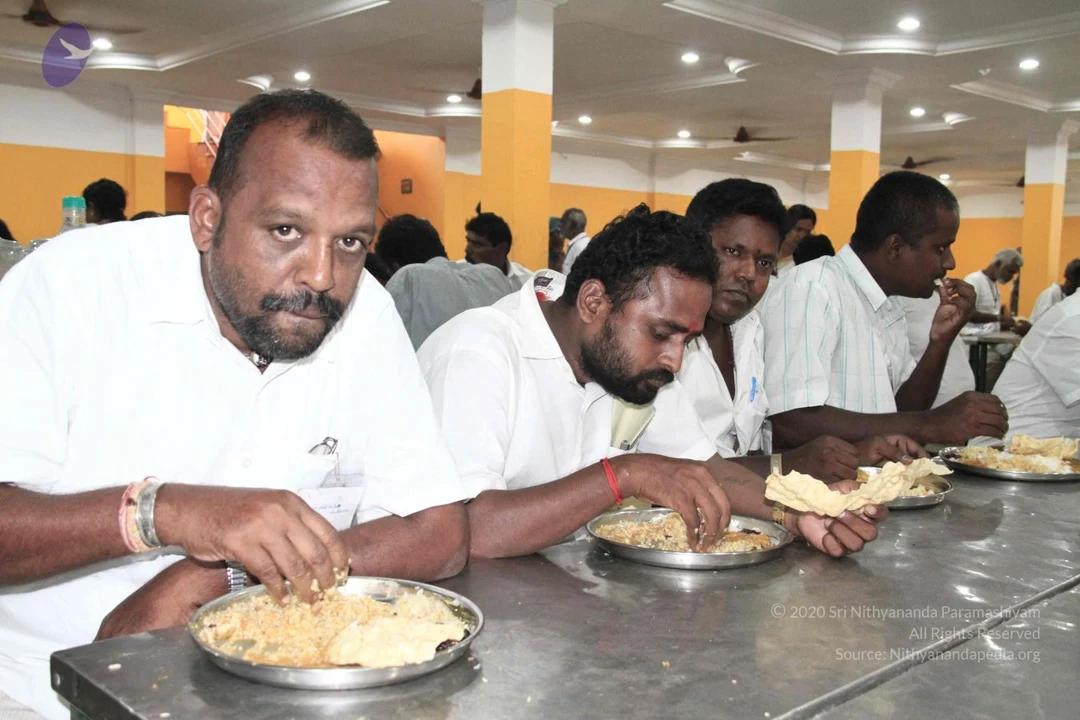
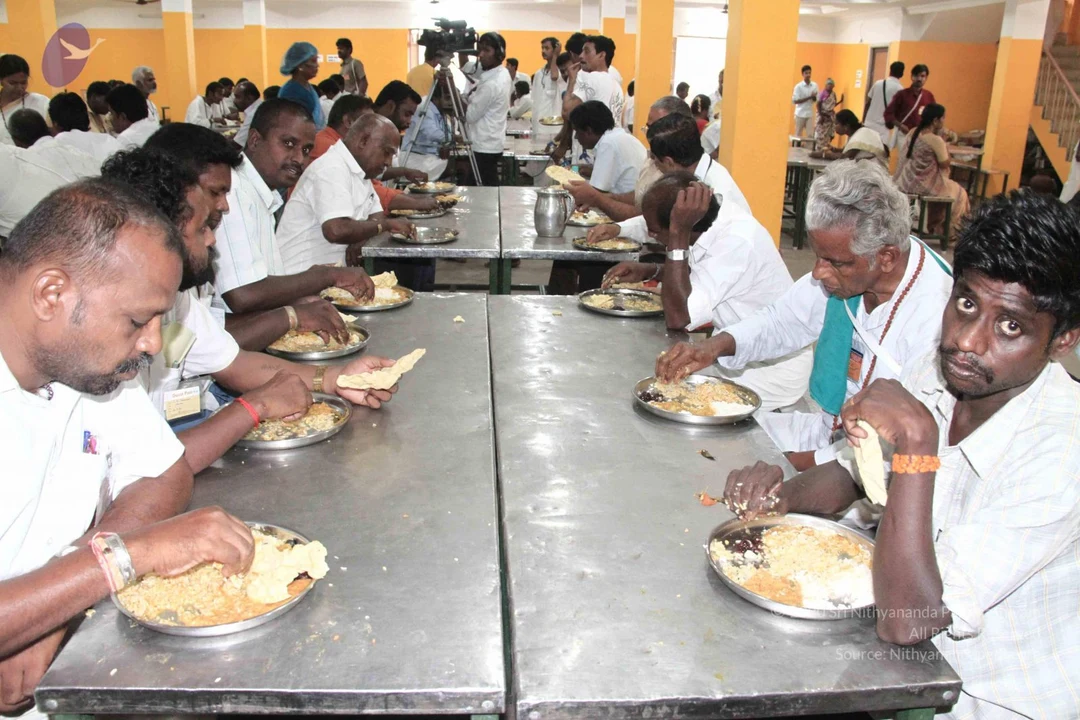
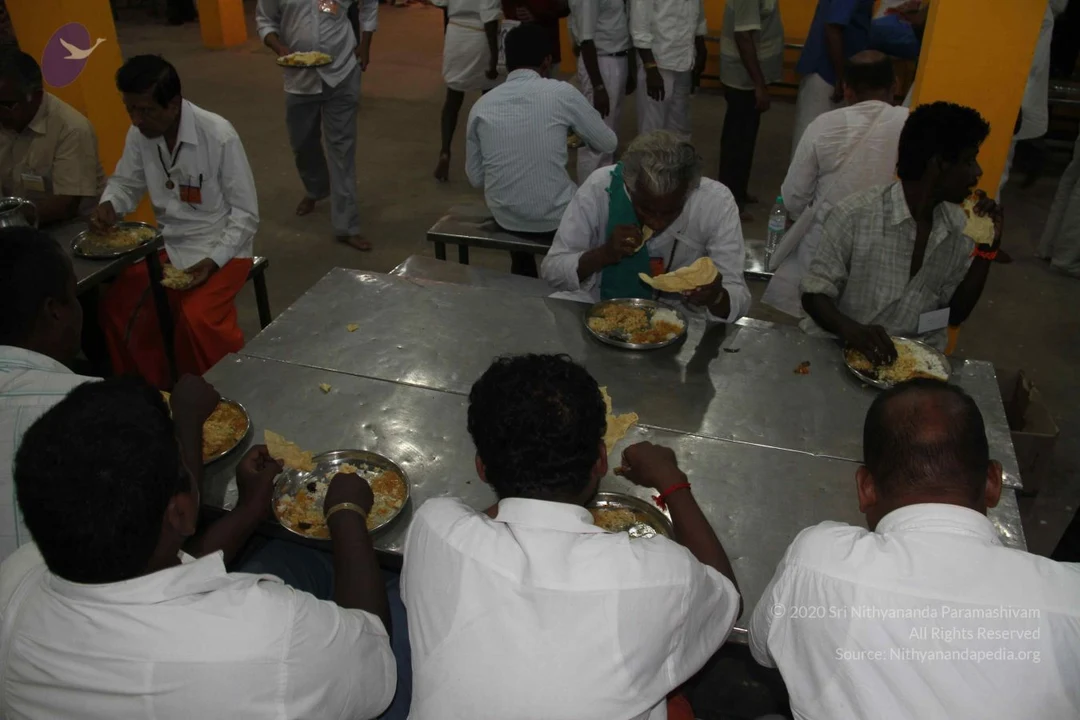
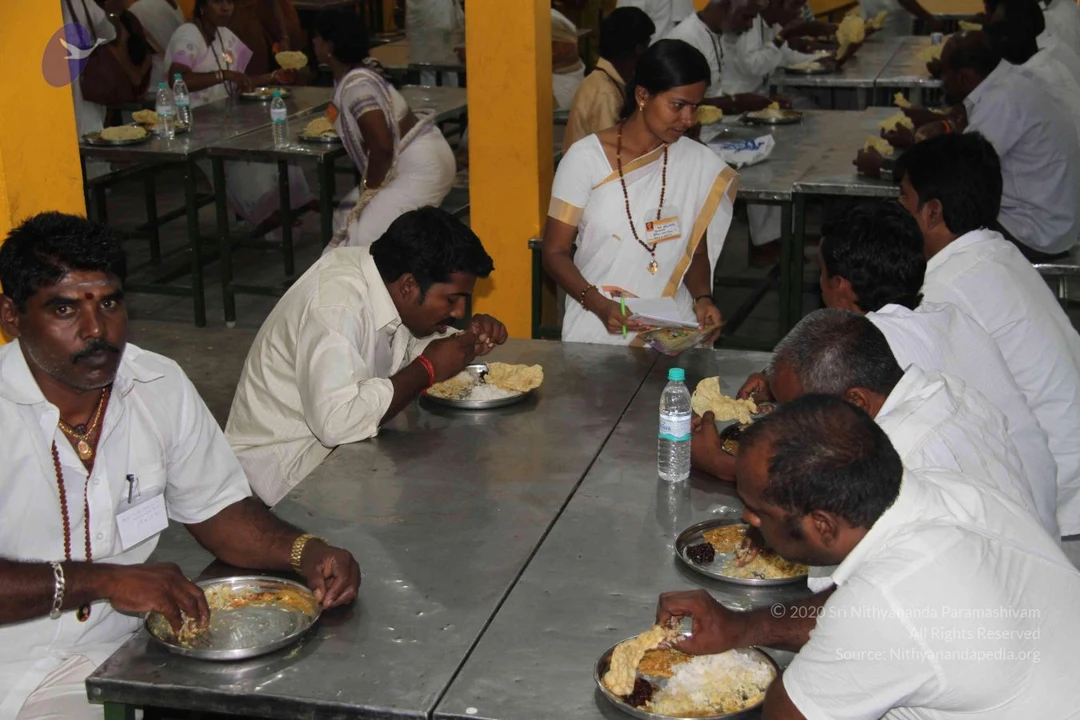
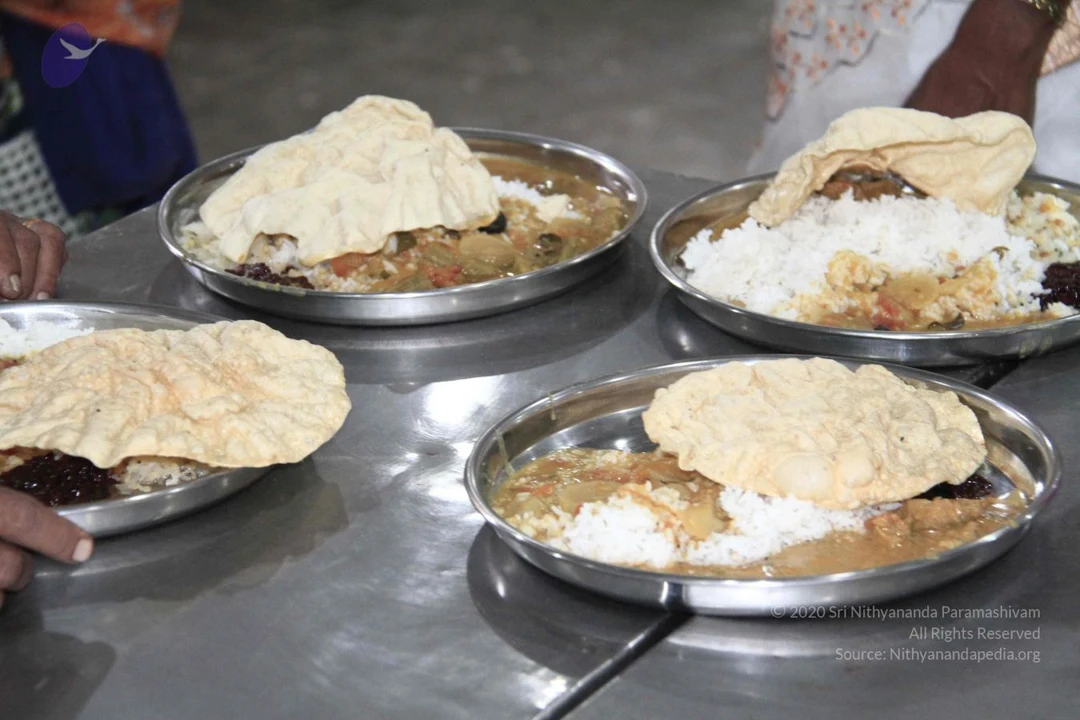
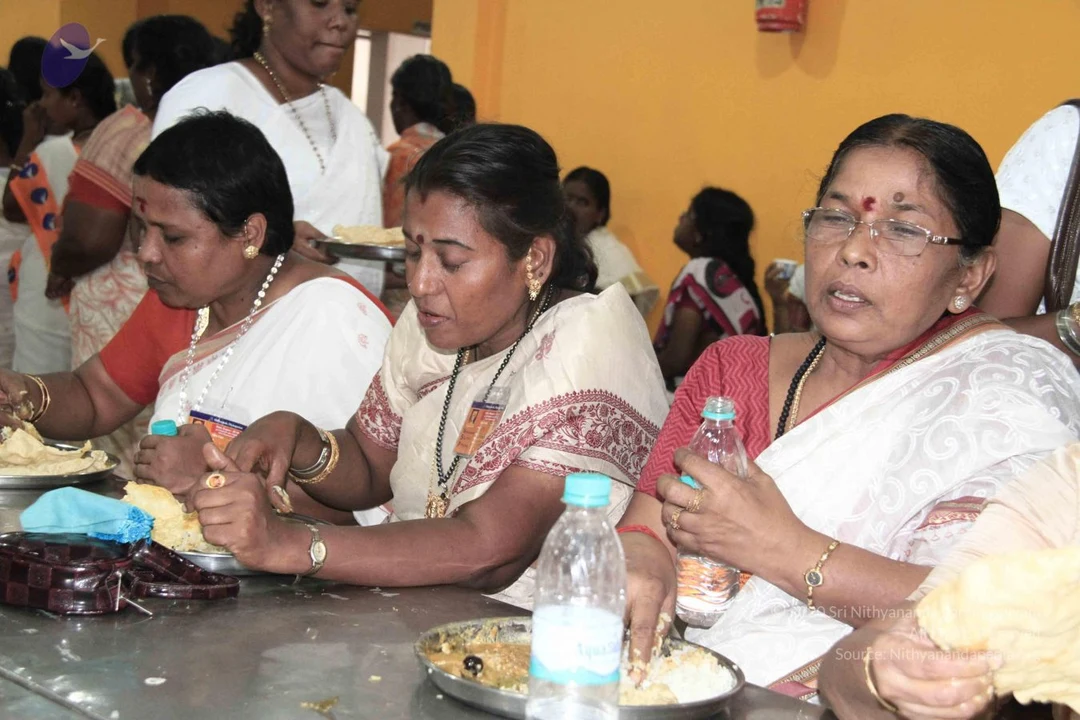
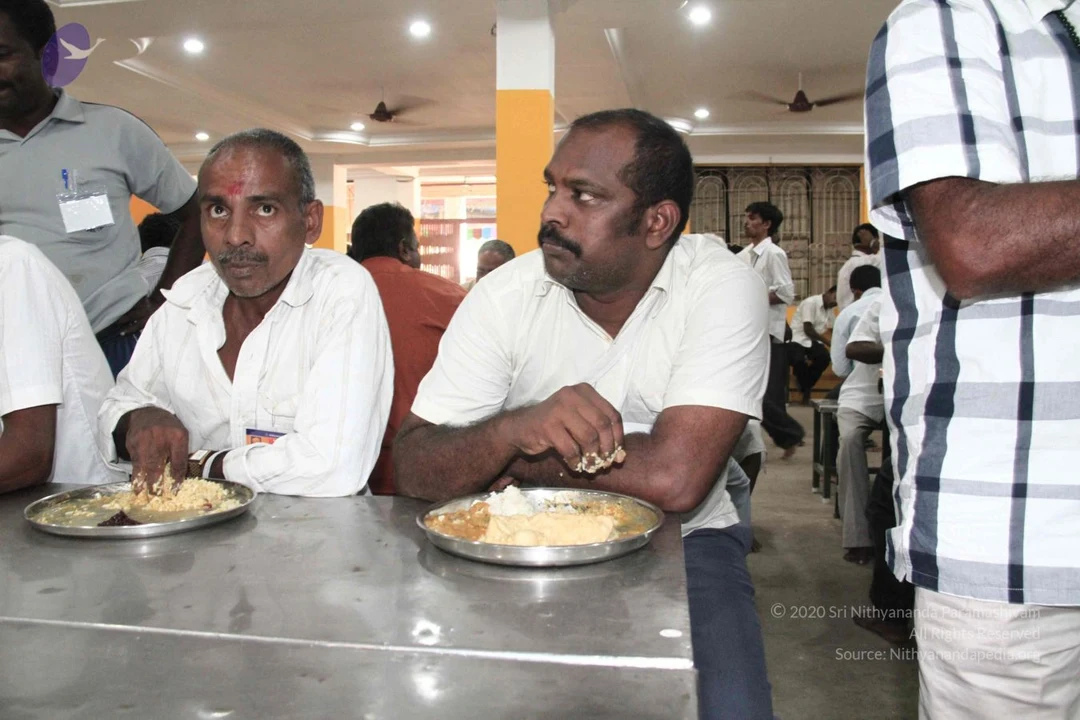
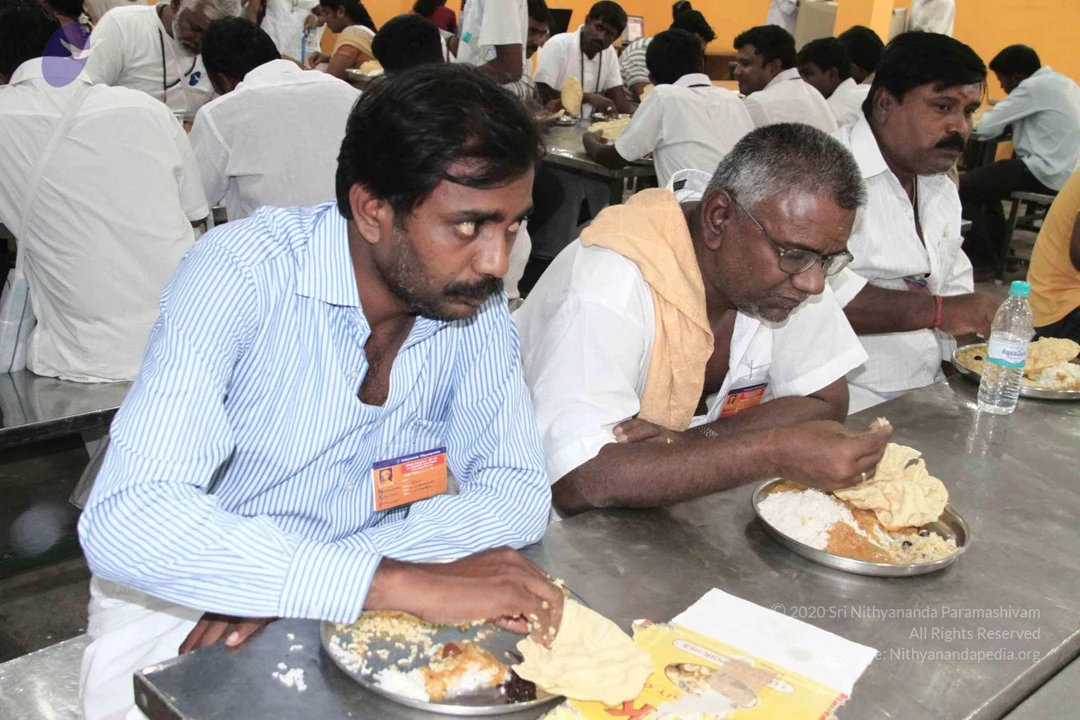
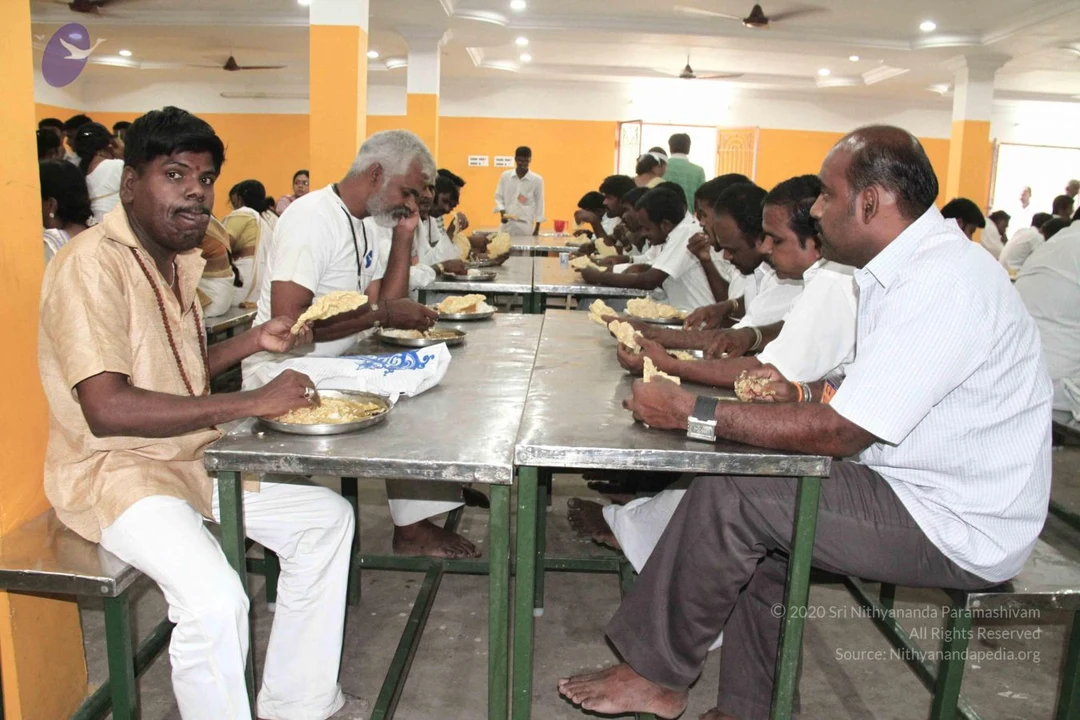
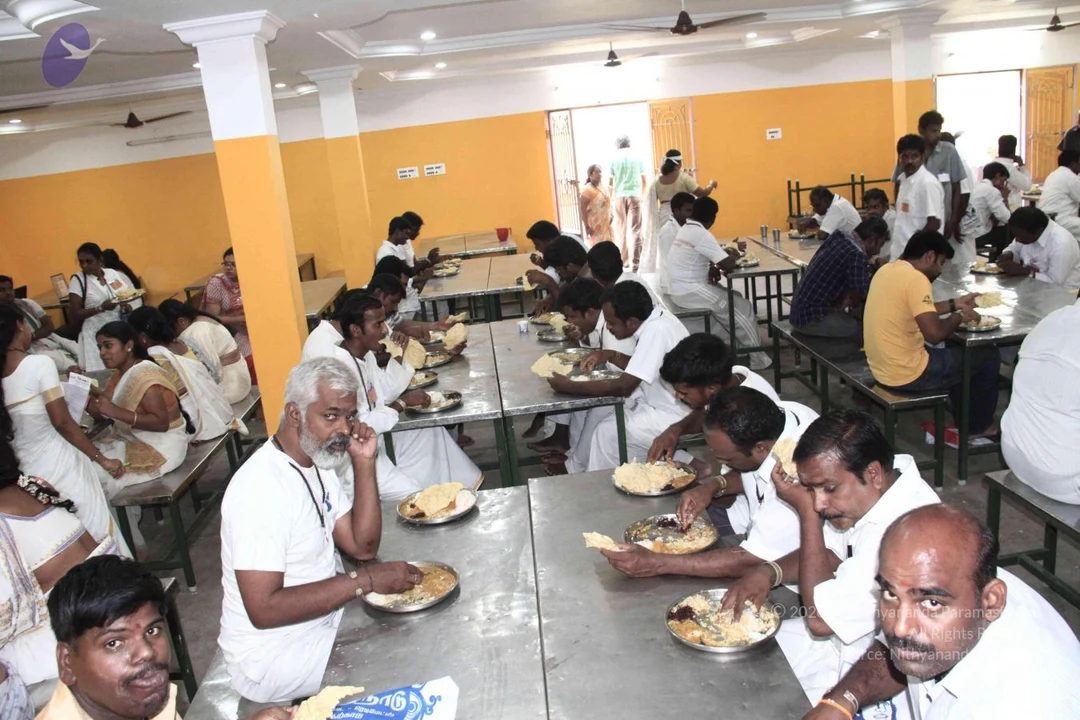
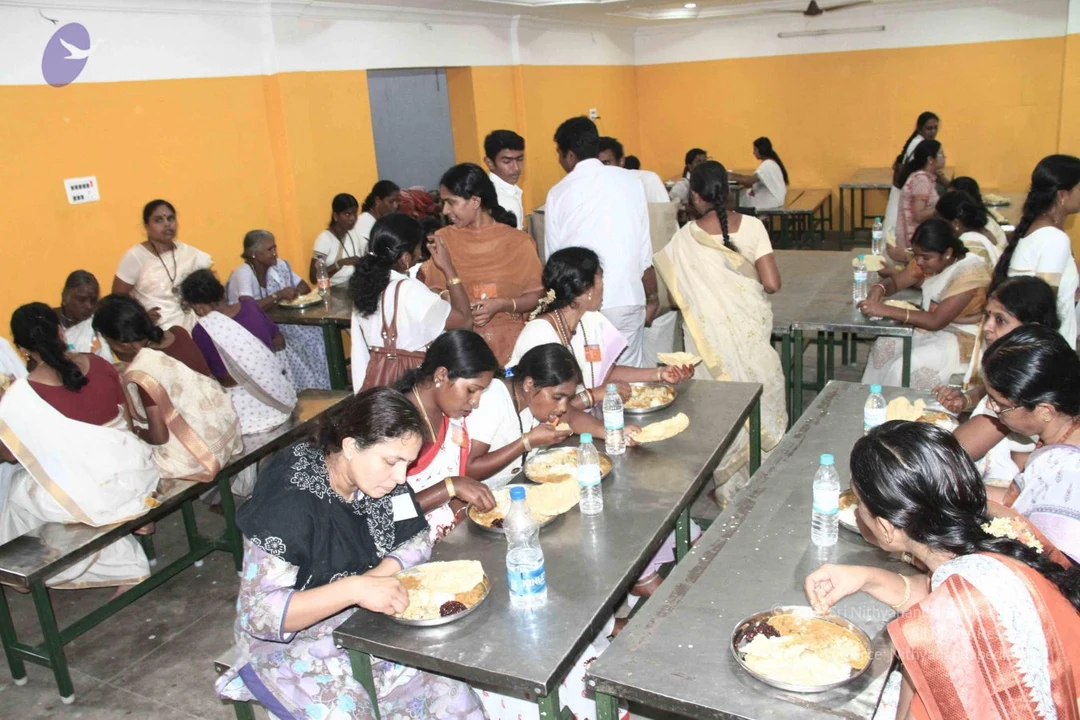
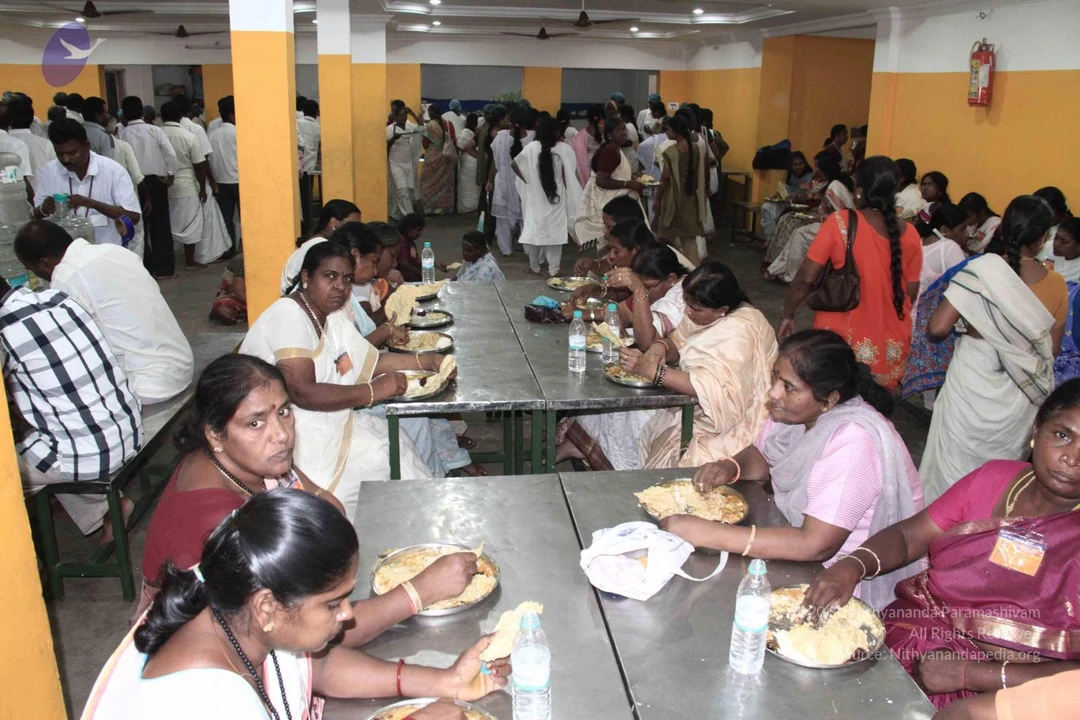
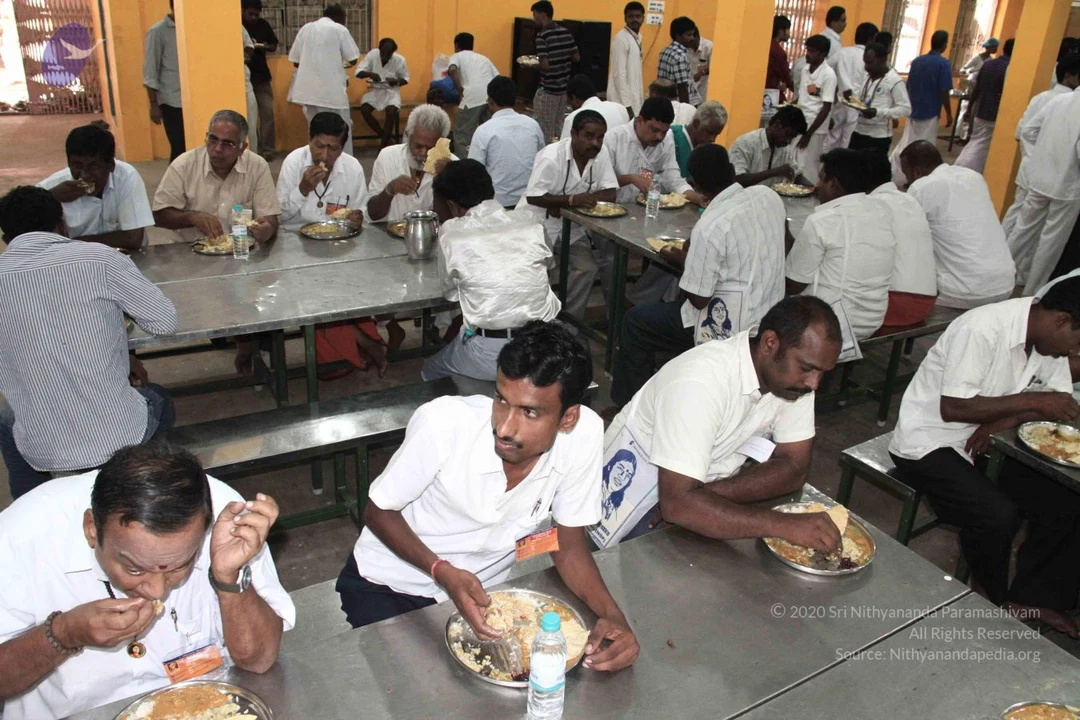
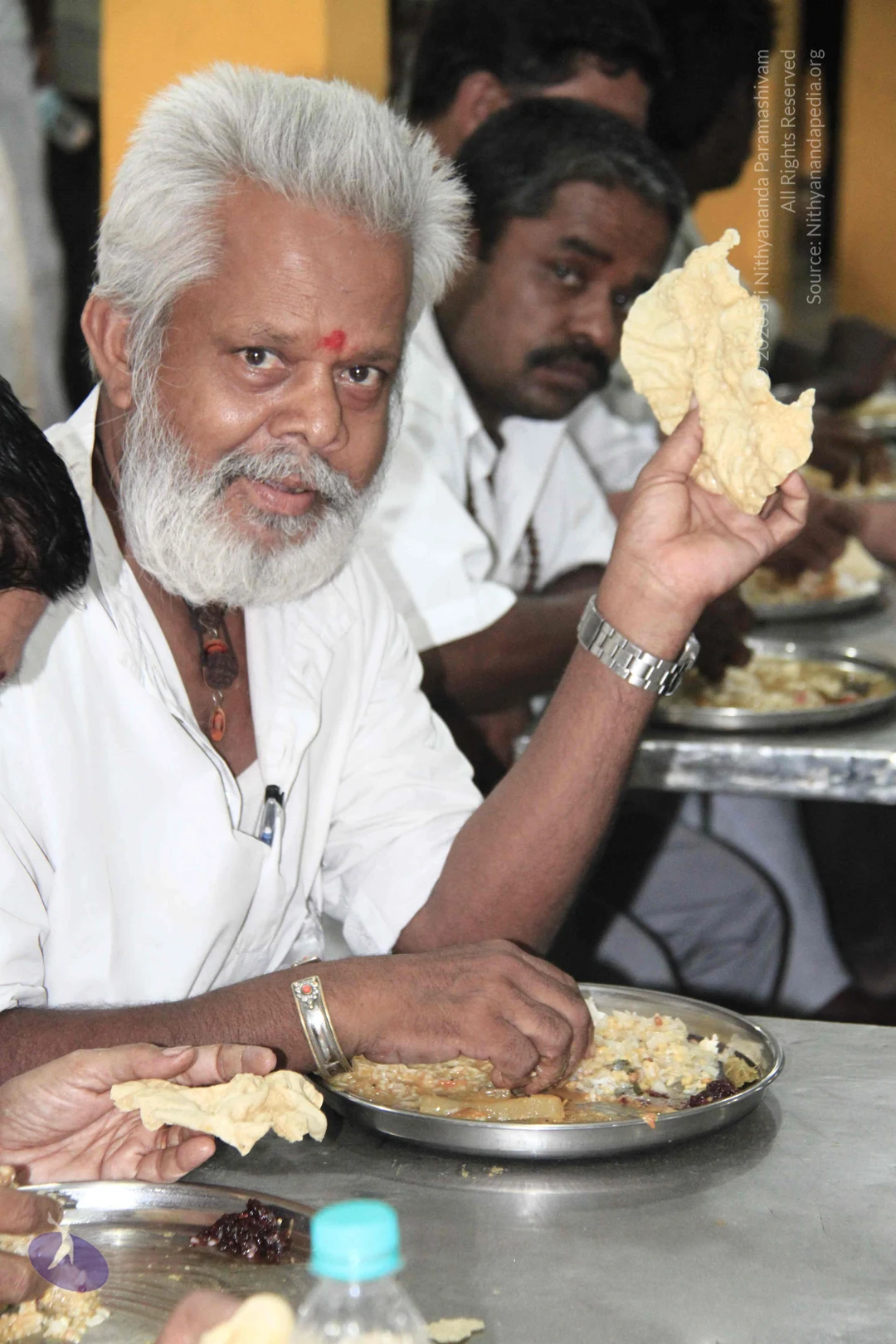
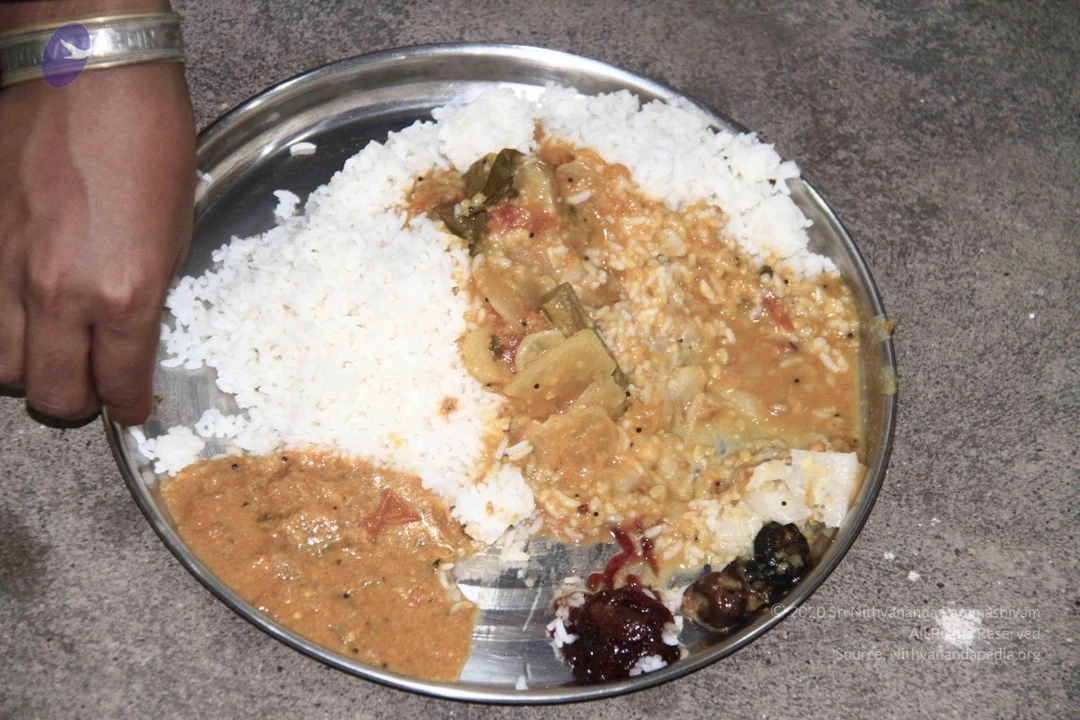
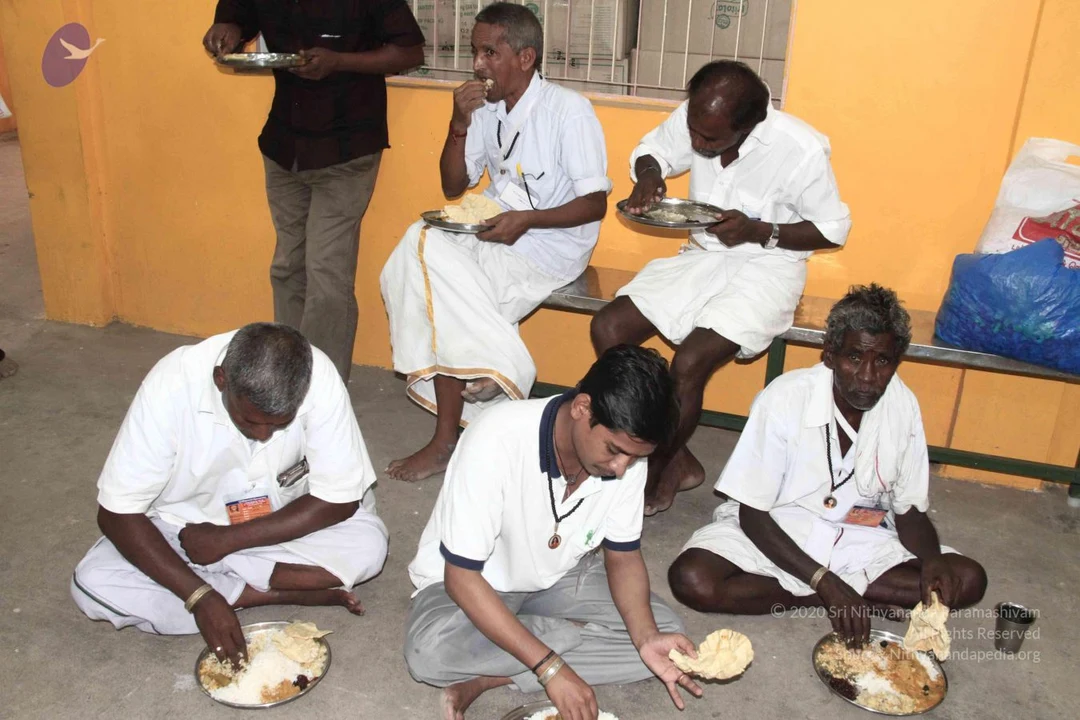
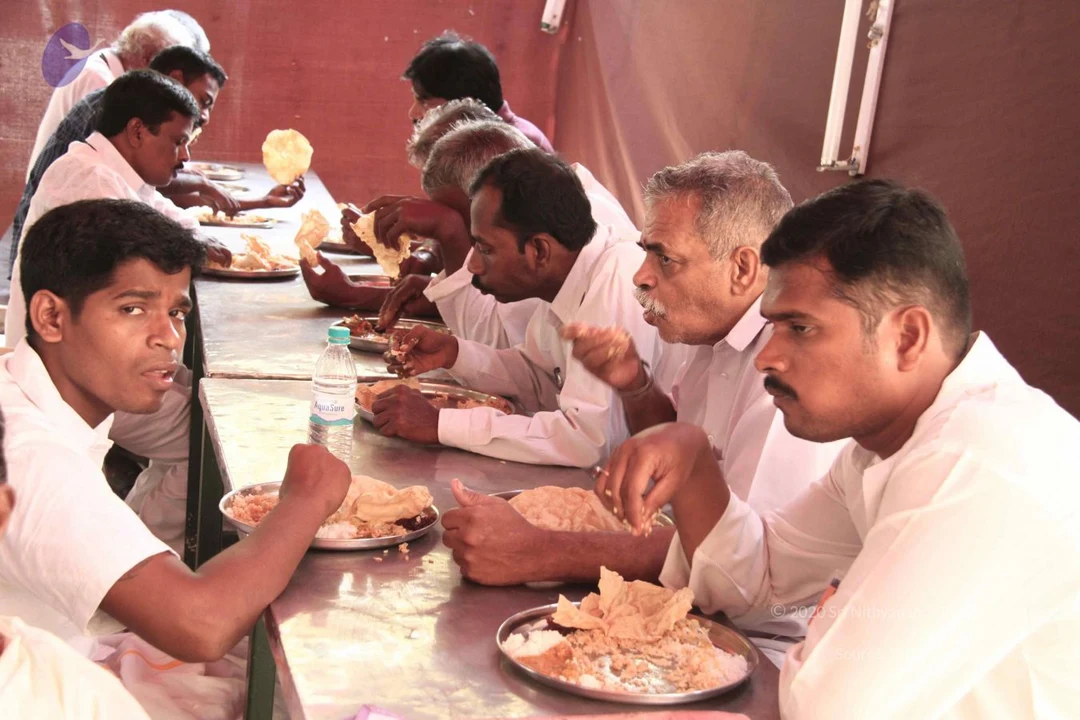
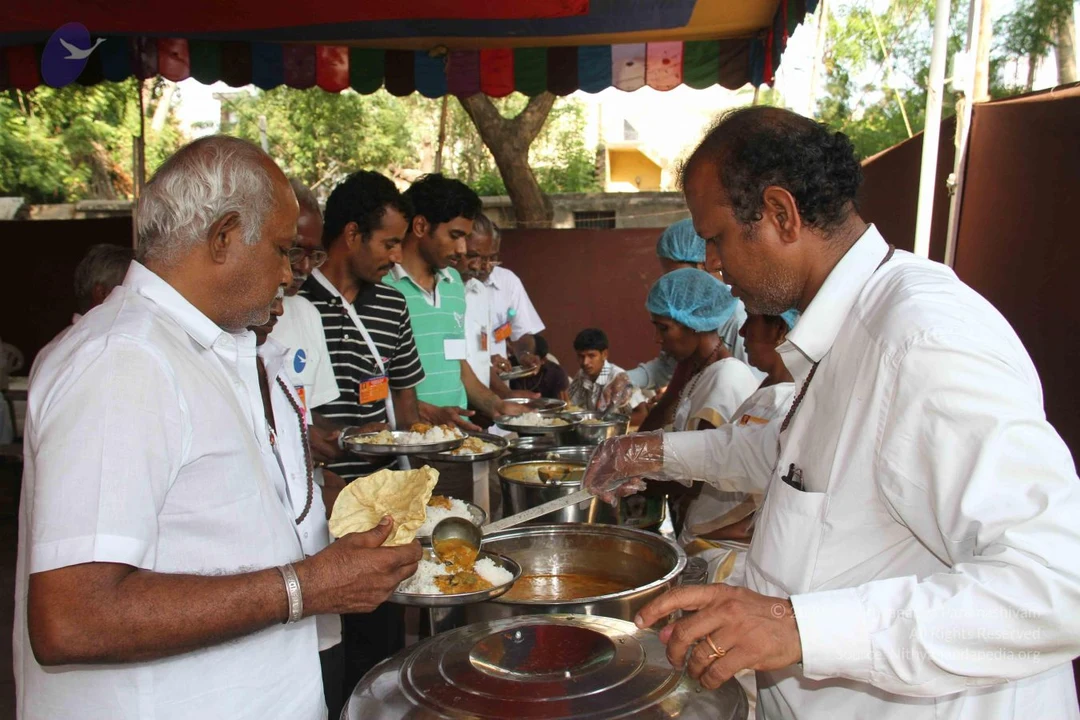
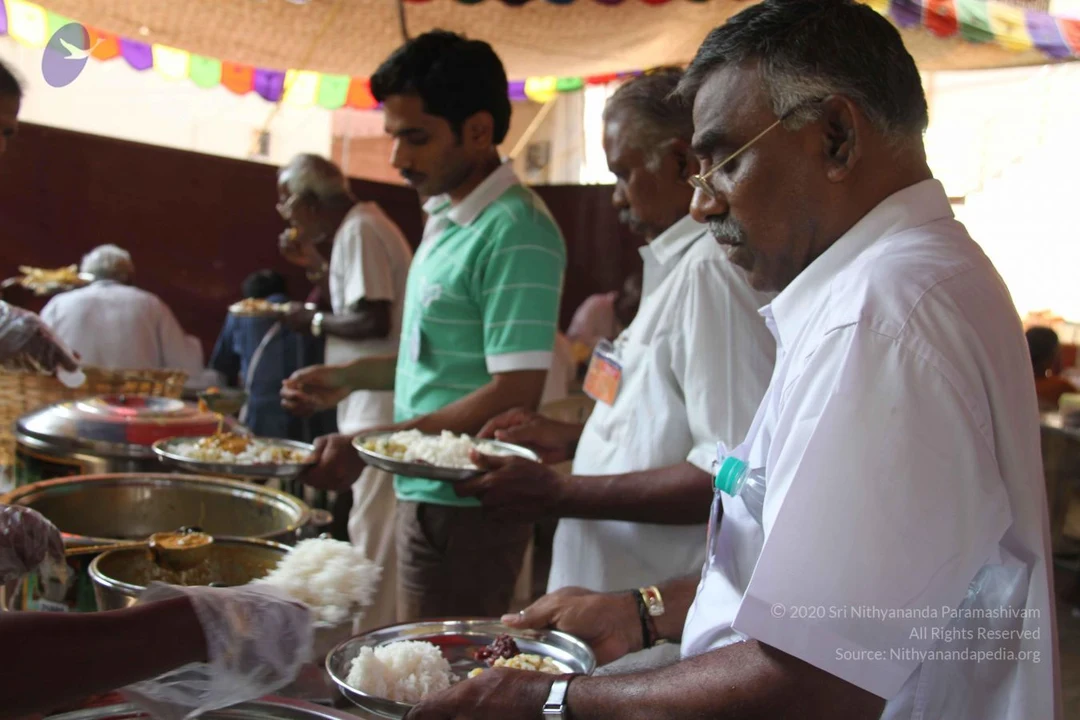
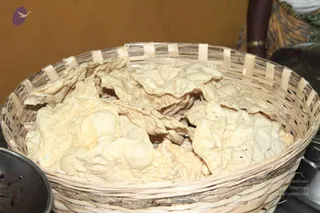
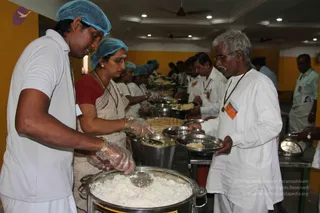
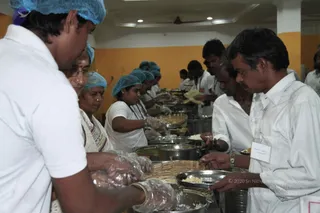
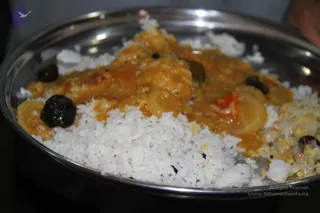
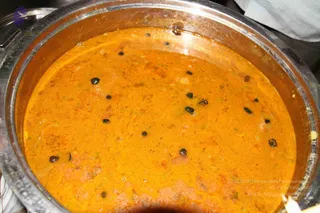
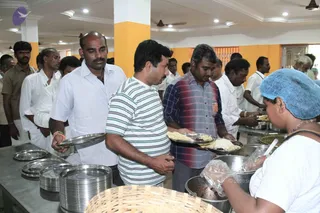
A photograph of a woven bamboo basket filled with crisp, pale, puffed fried snacks, resembling papad or pappadam with bubbly textured surfaces. The basket sits on a surface beside a metal bowl containing a dark liquid at the lower left, with a warm ochre wall and a glimpse of a brown wooden object and patterned cloth in the background. No people are visible in the frame.A photograph of a communal meal service in a hall with yellow walls and ceiling fans. In the foreground, a man in a white polo shirt and white dhoti, with a rudraksha mala, scoops rice from a large steel pot using a ladle. Beside him, a woman in a red blouse and white sari with gold bangles and a light blue hairnet serves from a steel vessel. On the right, an older man in white kurta and dhoti with a rudraksha mala, glasses and a grey moustache holds a steel plate of food. Several other volunteers in blue head coverings and white clothes work along a long serving counter with steel containers in the background. No identifiable a person depiction is visible.A communal kitchen serving line in an ashram hall with yellow-orange walls. Volunteers in white shirts and blue hairnets, plus disposable plastic gloves, stand behind steel pots and trays serving food onto plates. A man in a white shirt with a name badge holds a steel plate of rice at right, while a woman in a white sari with a red and gold border serves at left. Stacked steel plates, wicker baskets of food and a row of volunteers extend into the background.Close-up photograph of a steel plate of food served at the ashram. White rice fills the lower left and centre, topped with a orange-yellow curry containing tomato pieces, sliced root vegetables and dark green herbs or spices, with a few black olive-like pieces scattered across it. A portion of yellow lentil or dal sits at the right edge beside whole dark seeds. The metal rim reflects light and a partially visible hand is at the upper right. No people are shown in focus and no ritual is visible.Close overhead view of a large stainless steel pot filled with orange-red curry or sambar-style stew, with scattered dark whole spices or seeds floating on the surface. The pot's rim and handle edge are visible at the frame borders. No people are visible; the image shows food in a cooking vessel.A photograph of a communal dining hall where men queue along a stainless steel serving counter to receive food. In the foreground a man in a white-and-green striped shirt and another in a blue plaid shirt hold steel plates heaped with rice and curry. A woman in a blue hairnet and white top serves from a steel pot at the right, and stacks of steel plates and a bamboo basket sit at left. Walls are painted yellow and white with ceiling fans overhead. Several men in white dhotis and white shirts stand in the line behind them.

KUNDALINI-AWAKENING-SESSION
68 photosSource gallery
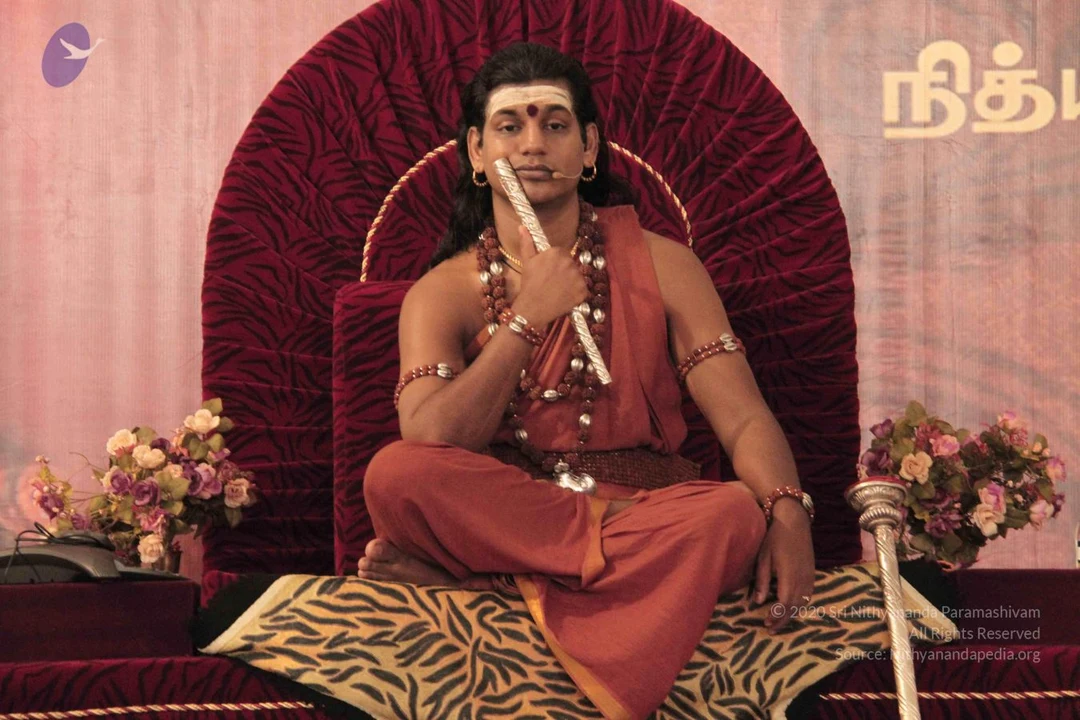
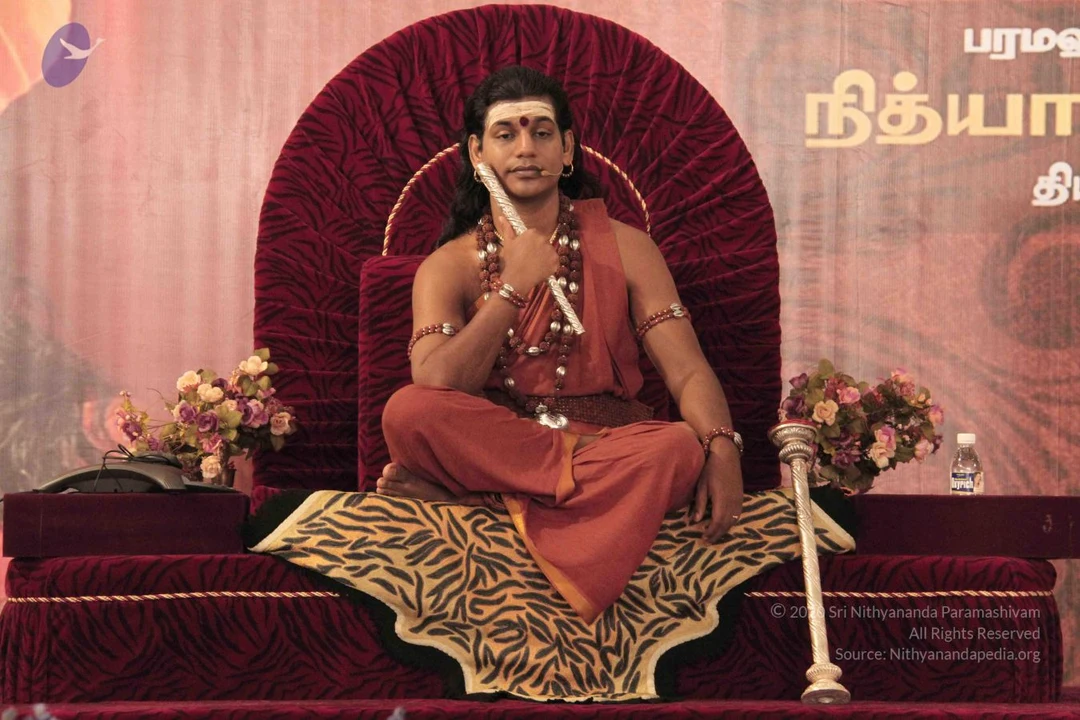
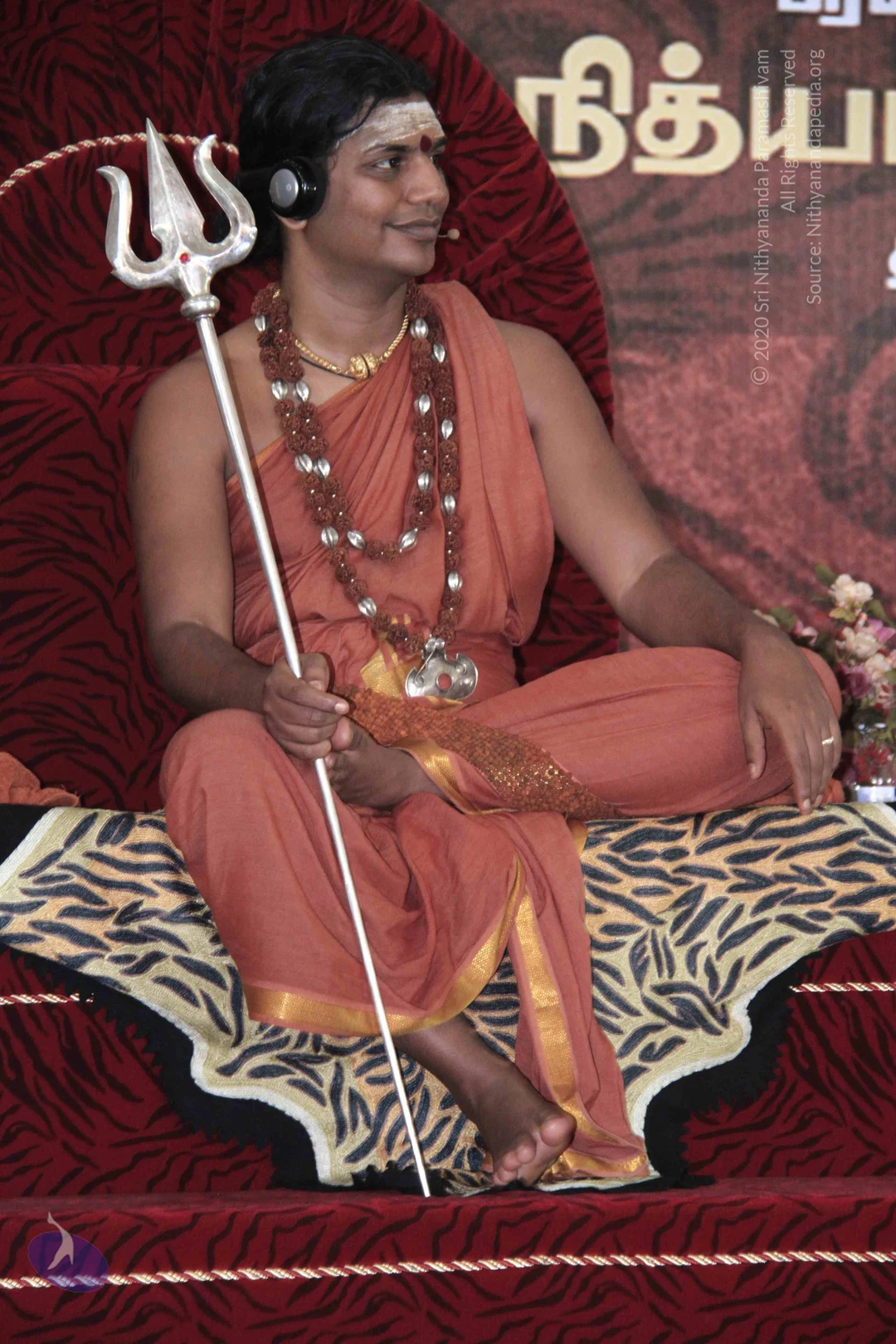
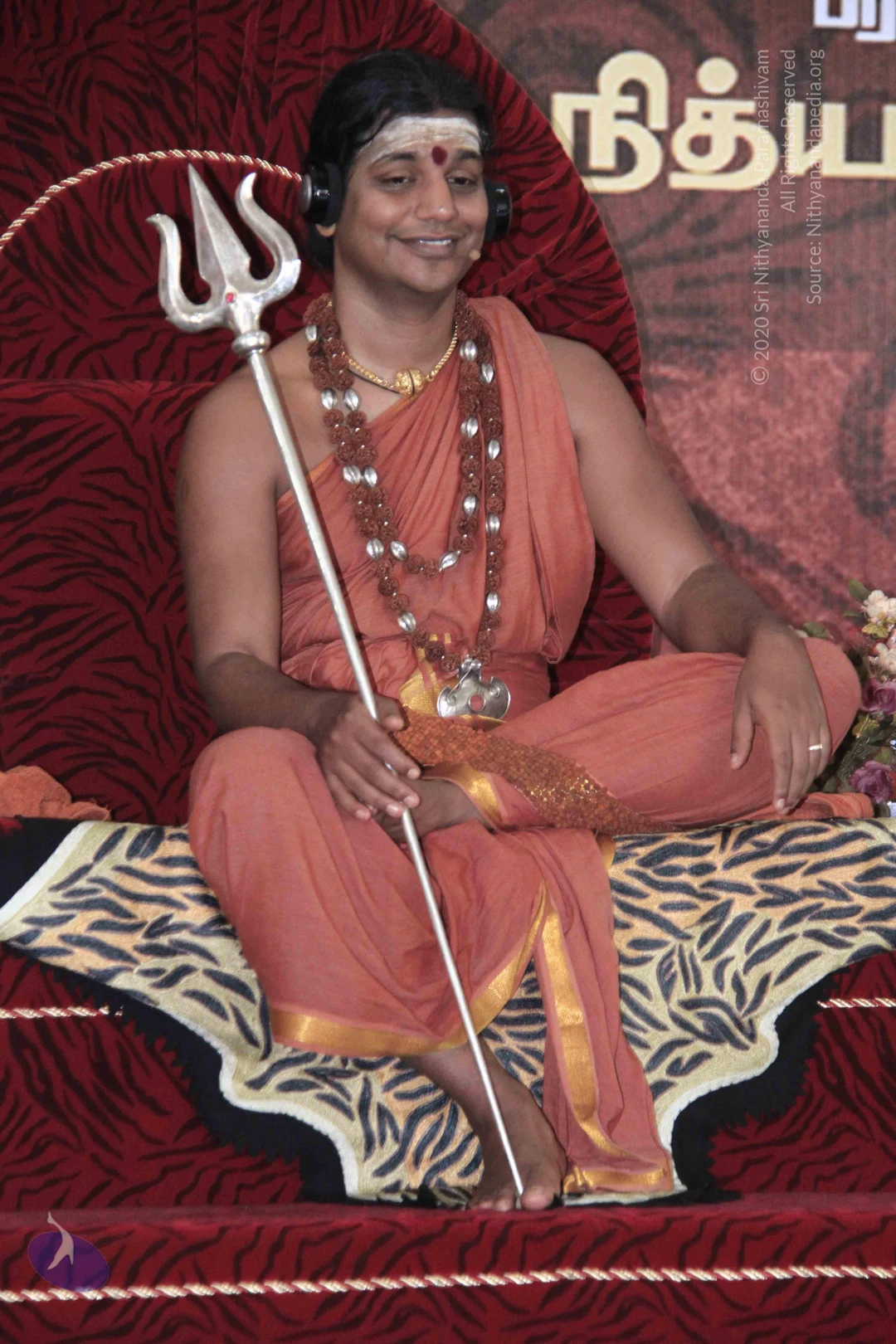
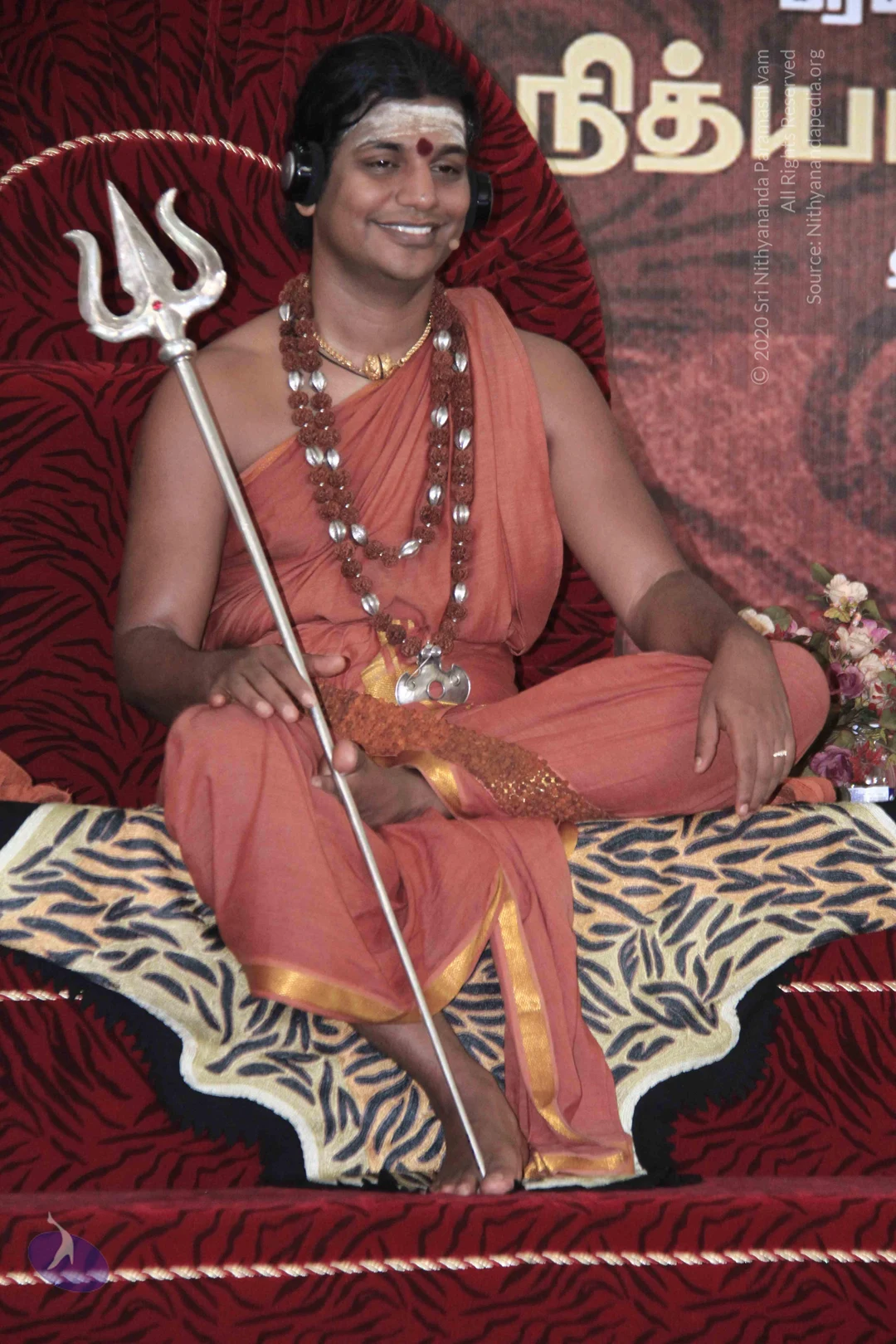
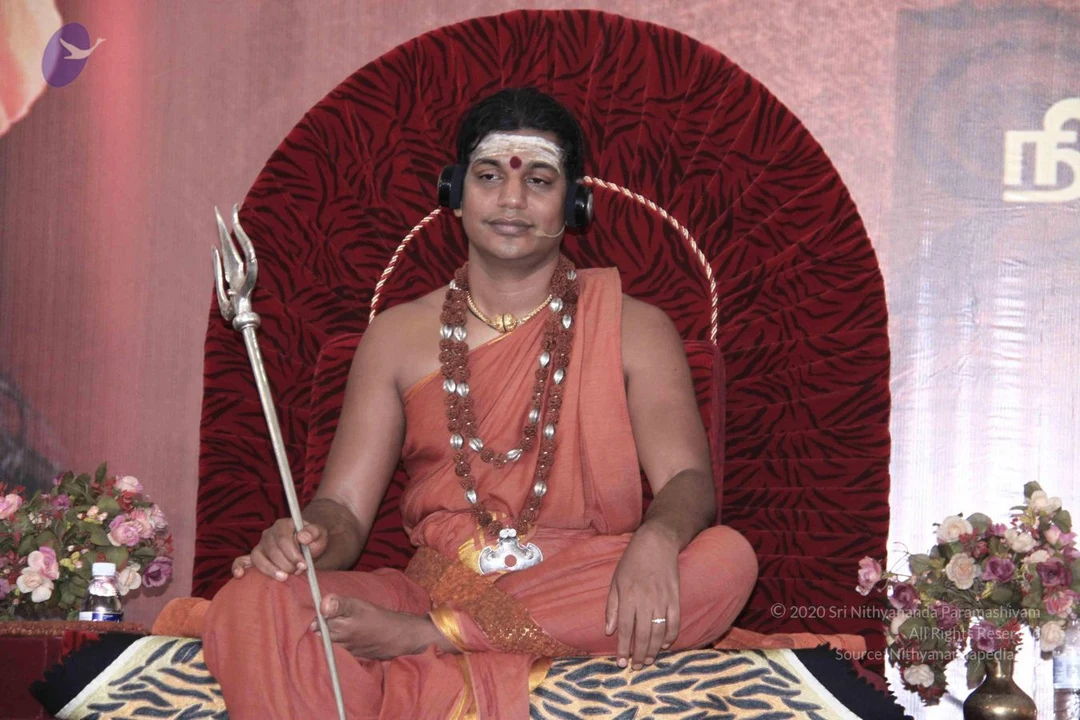
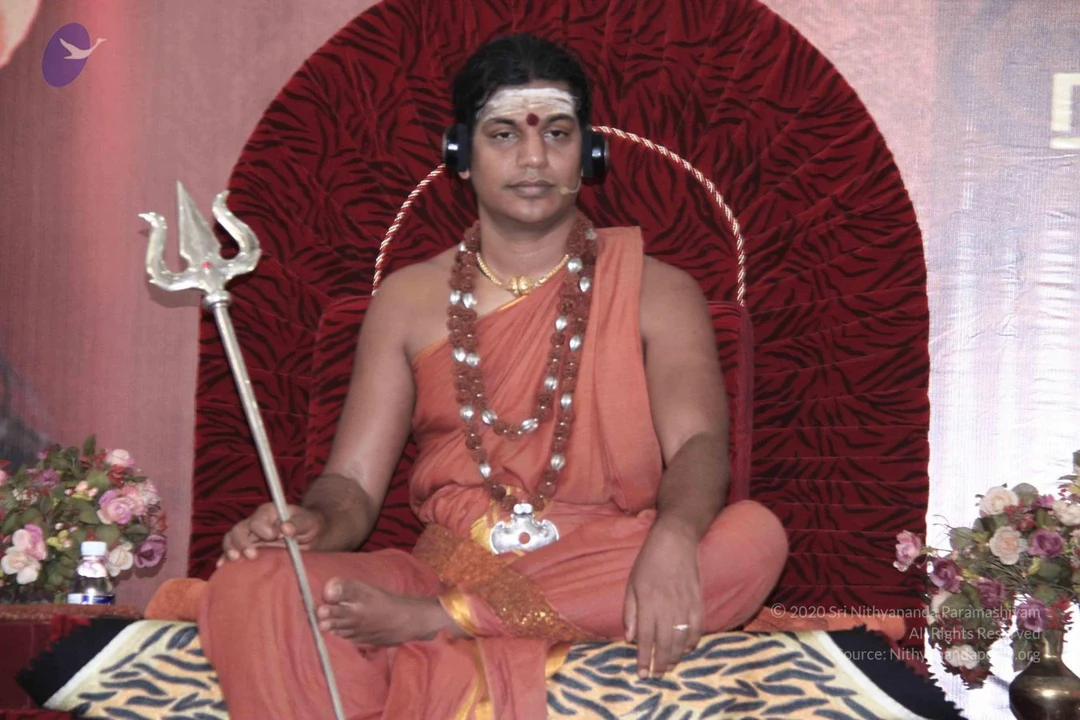
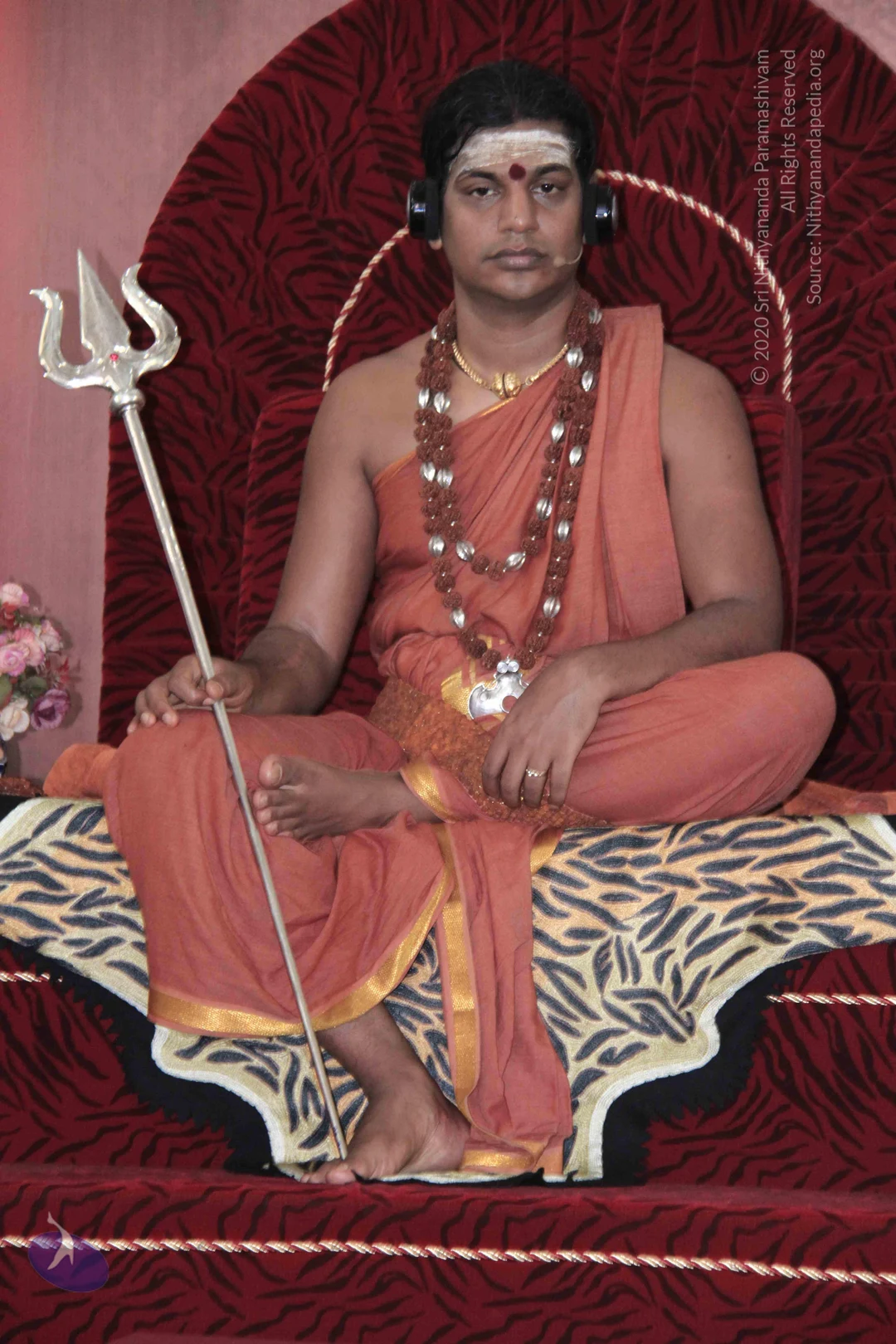
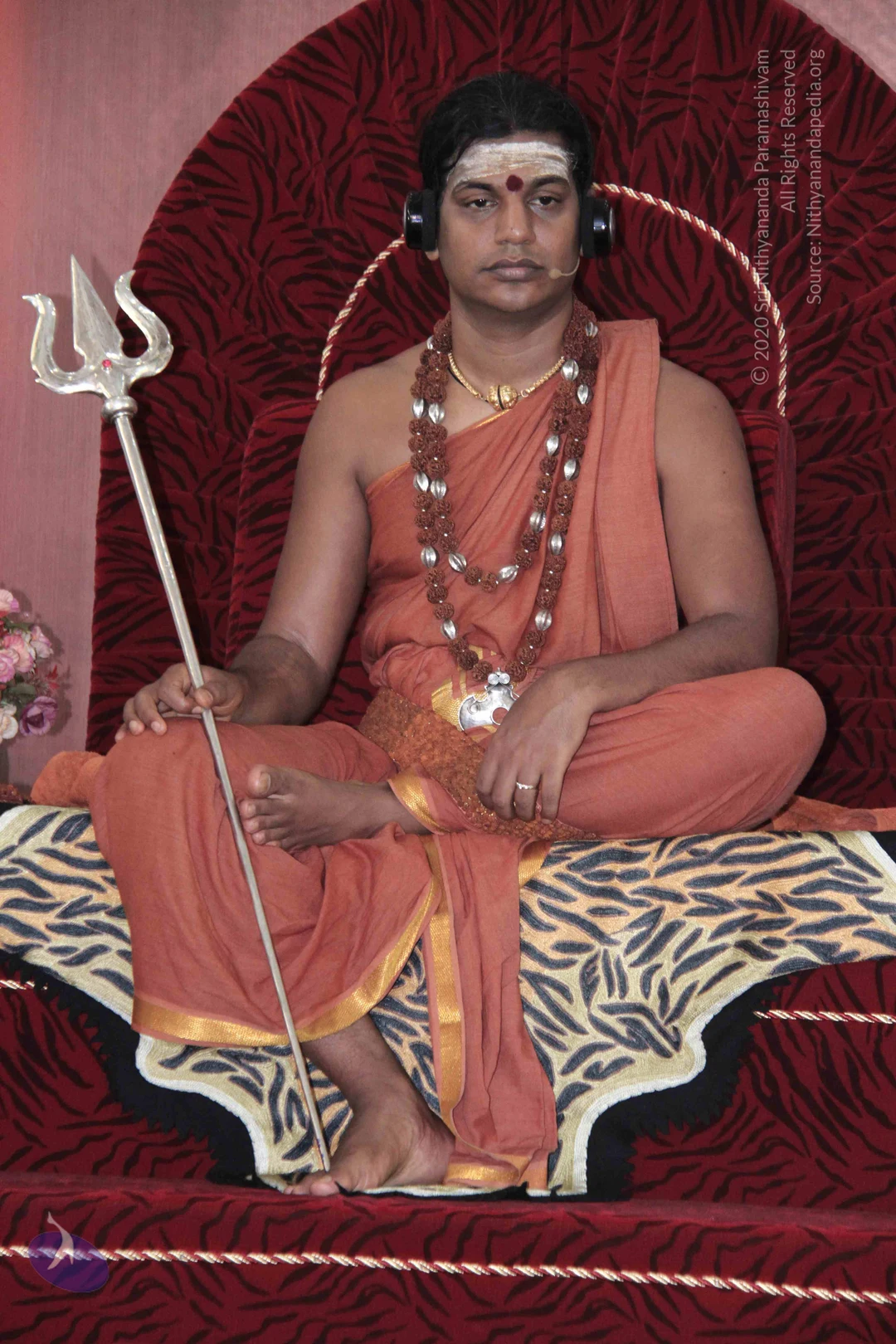
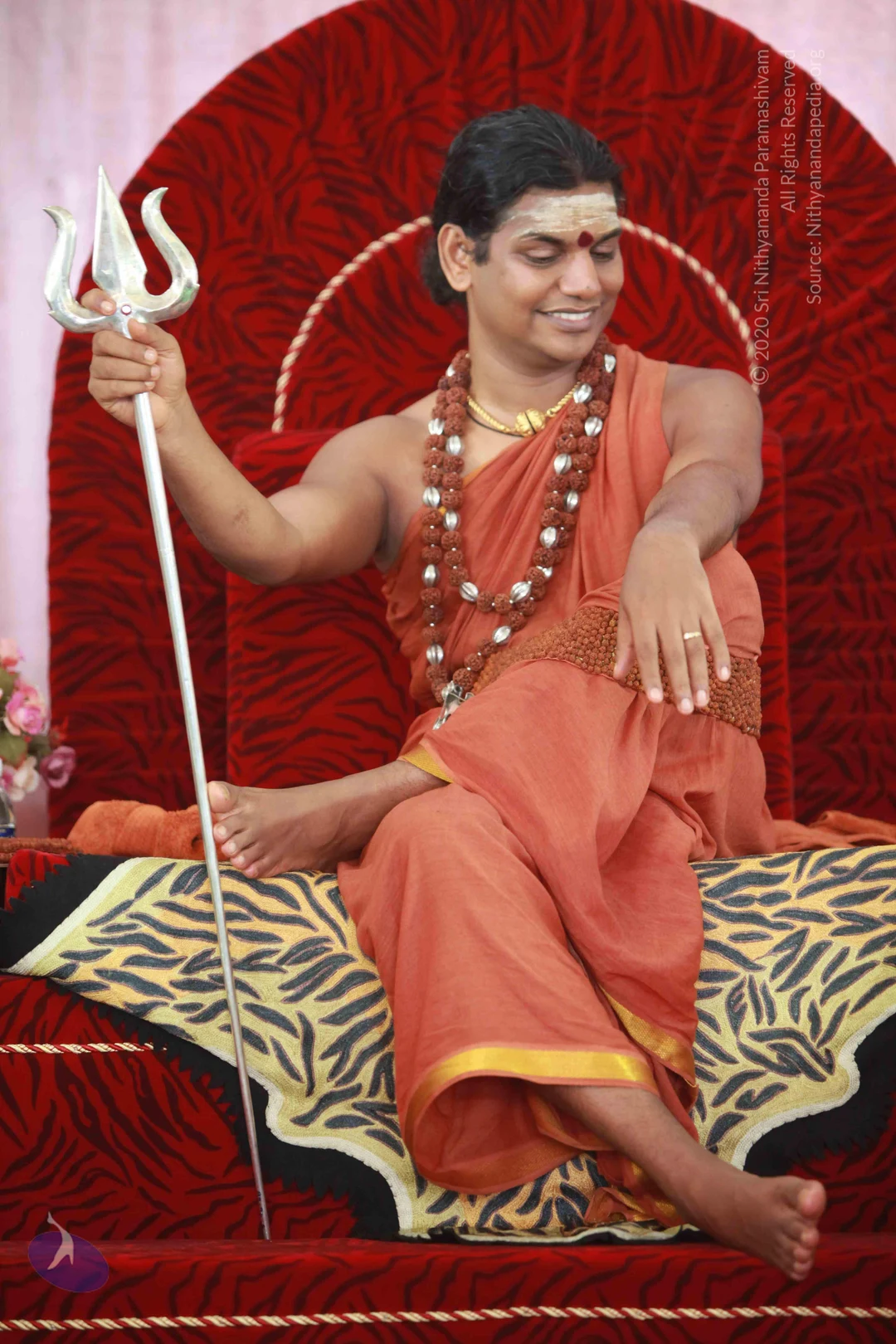
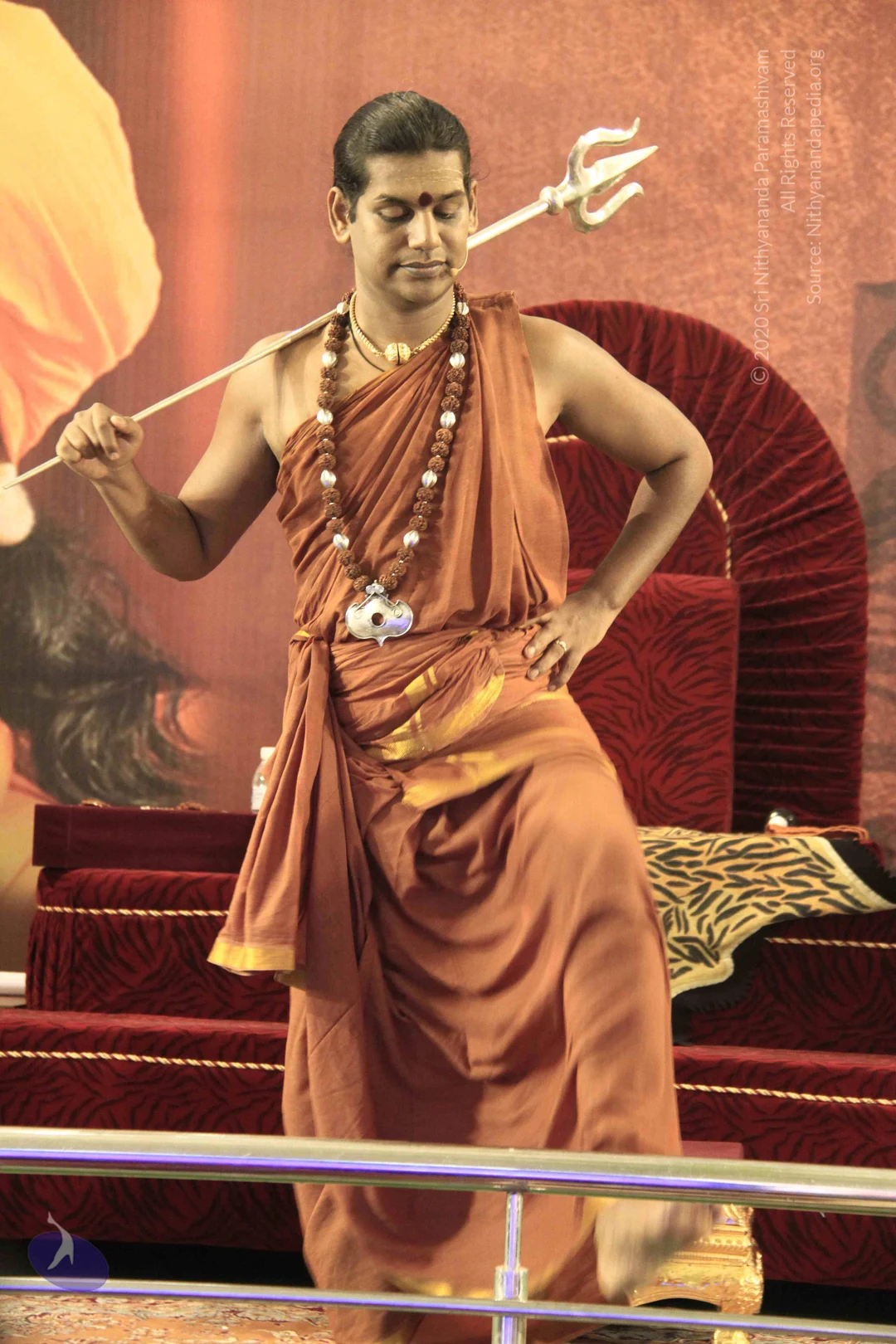
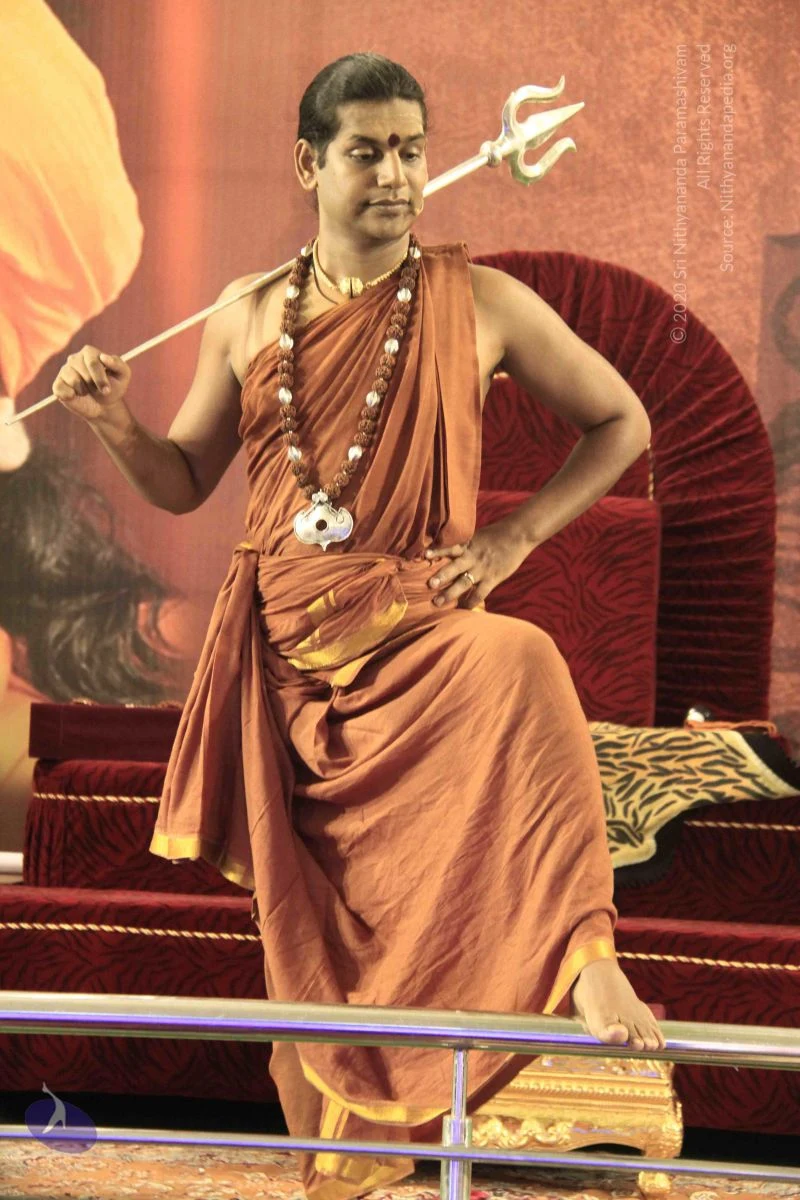
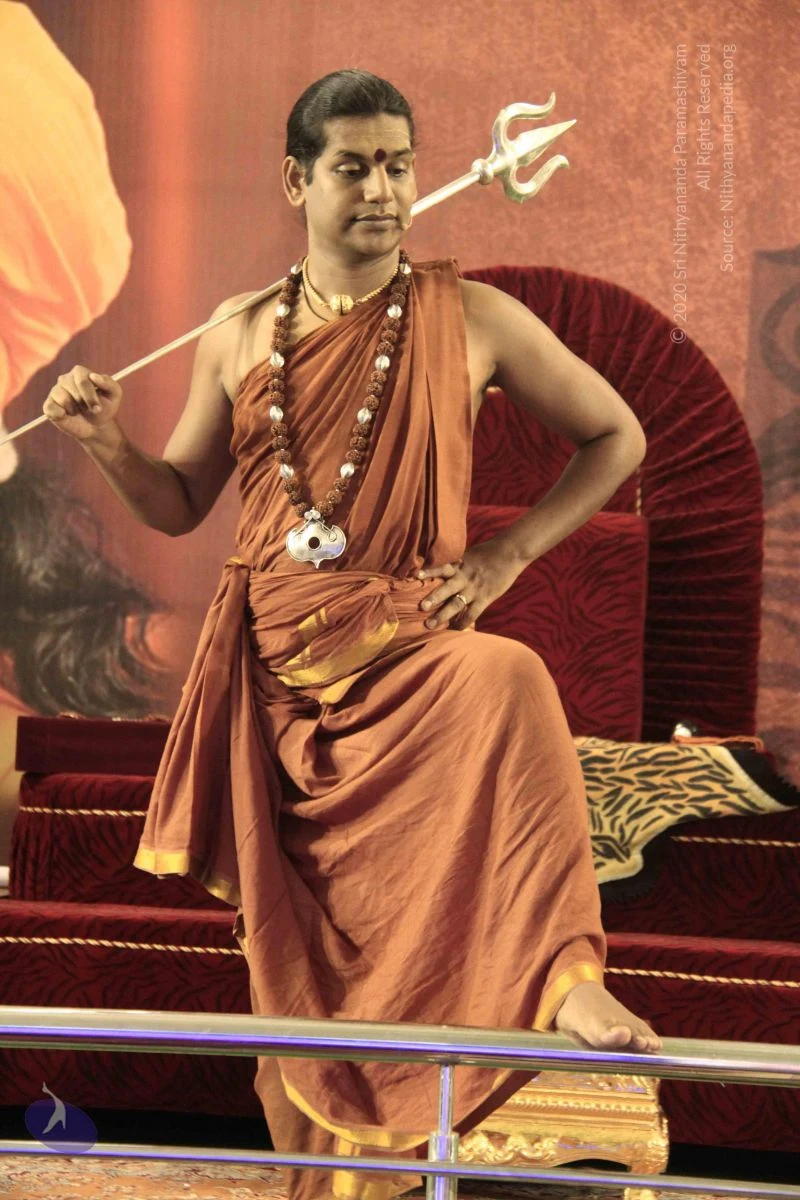
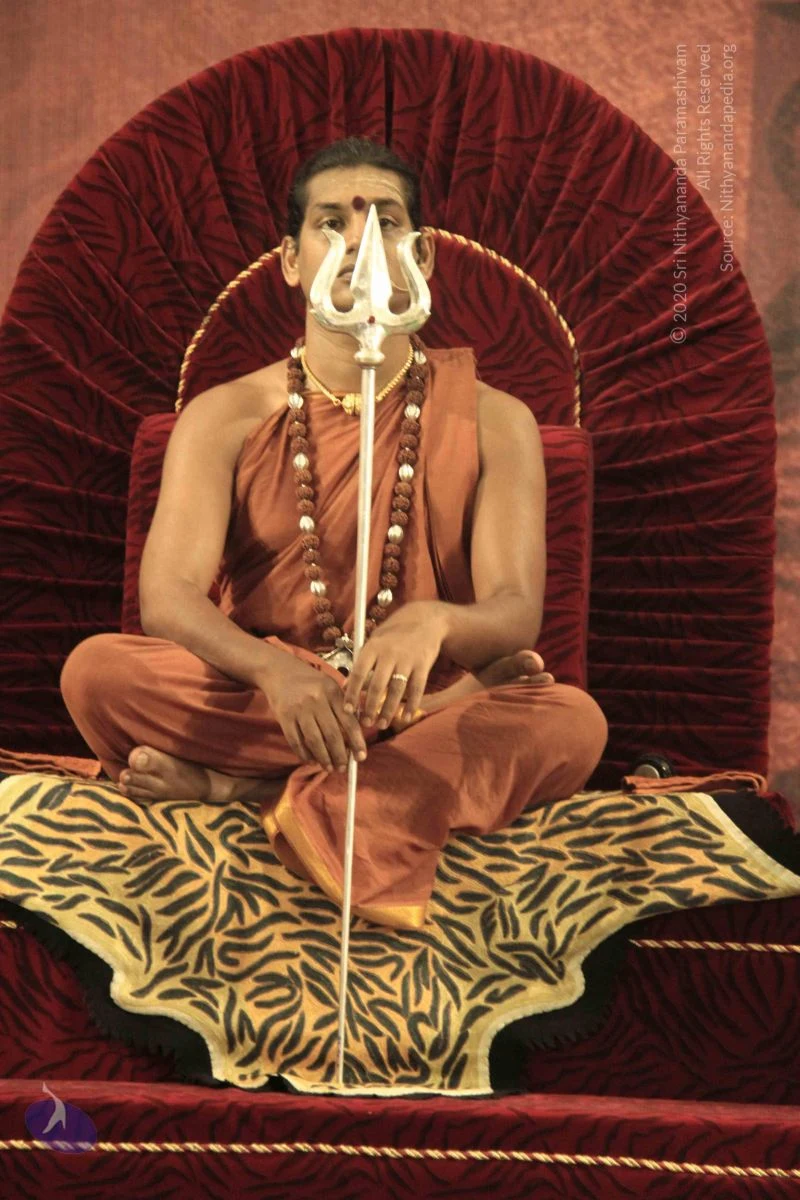
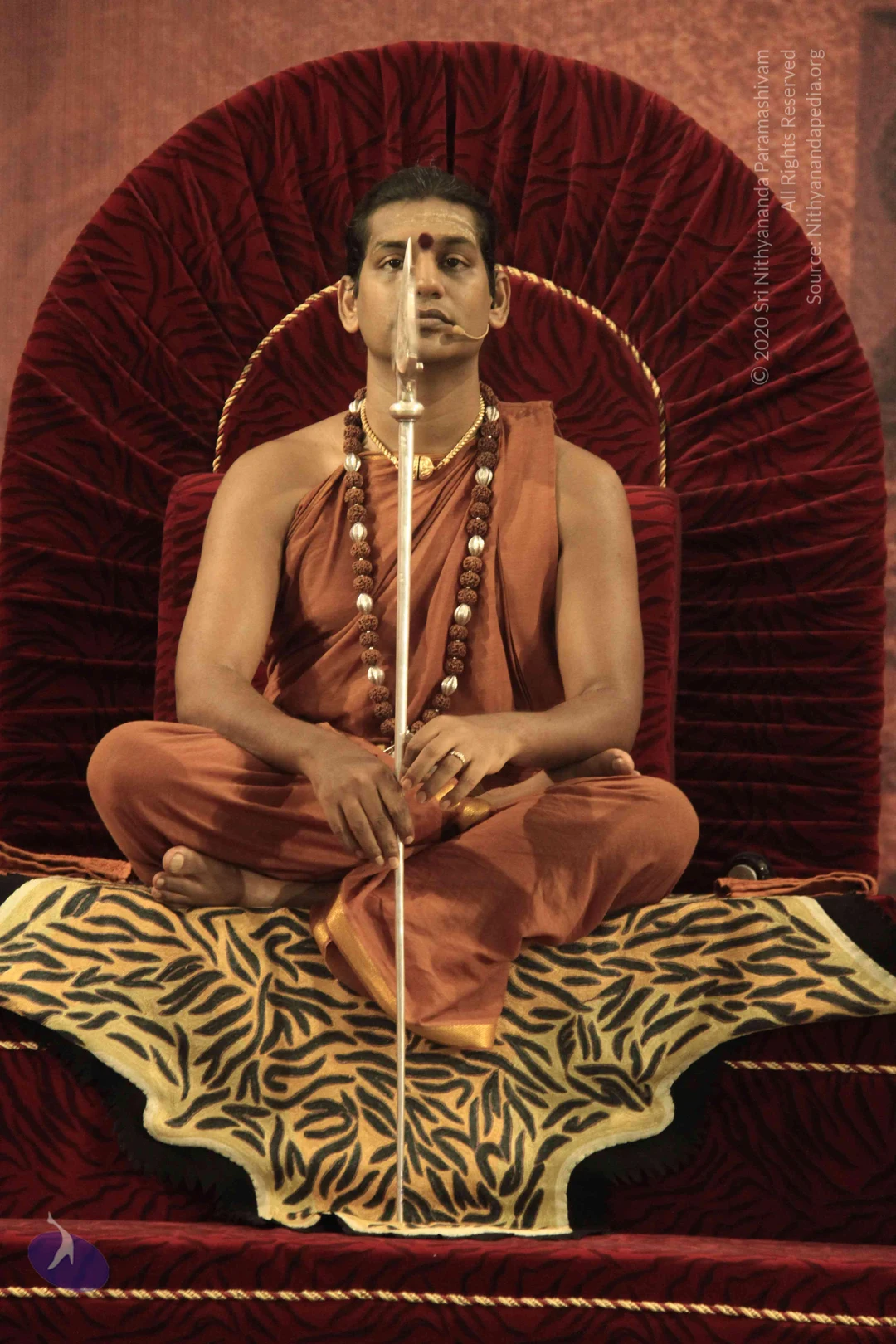
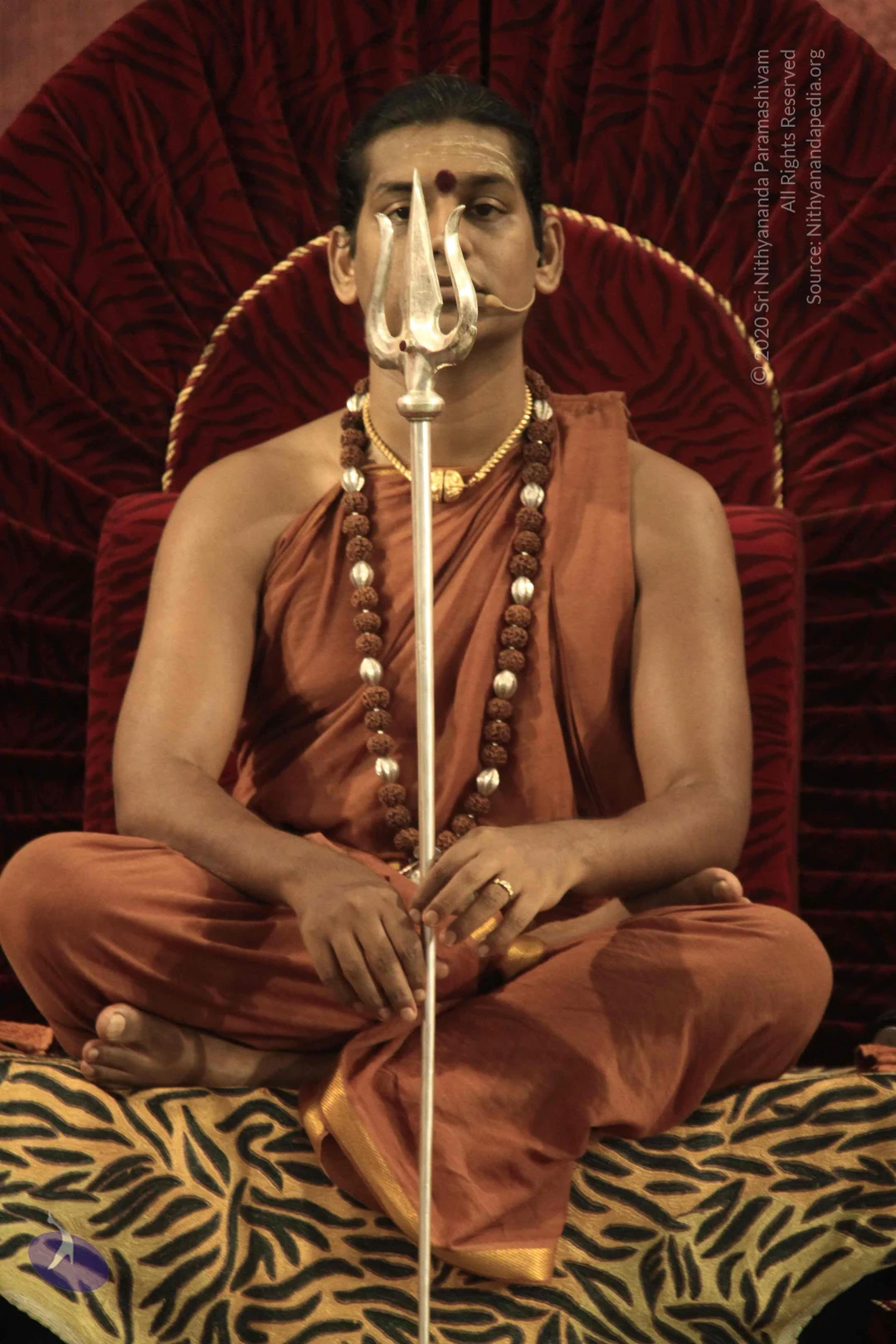
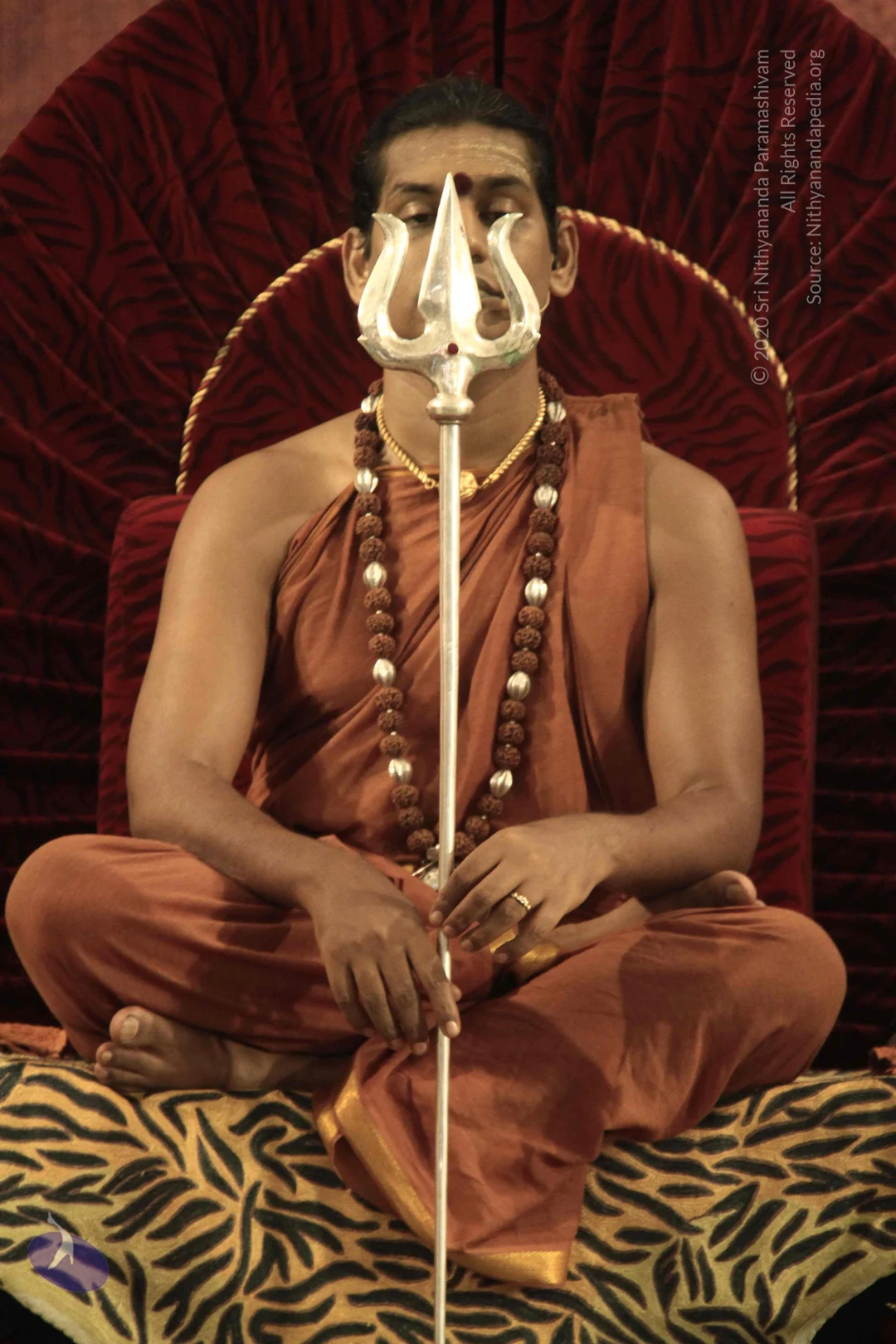
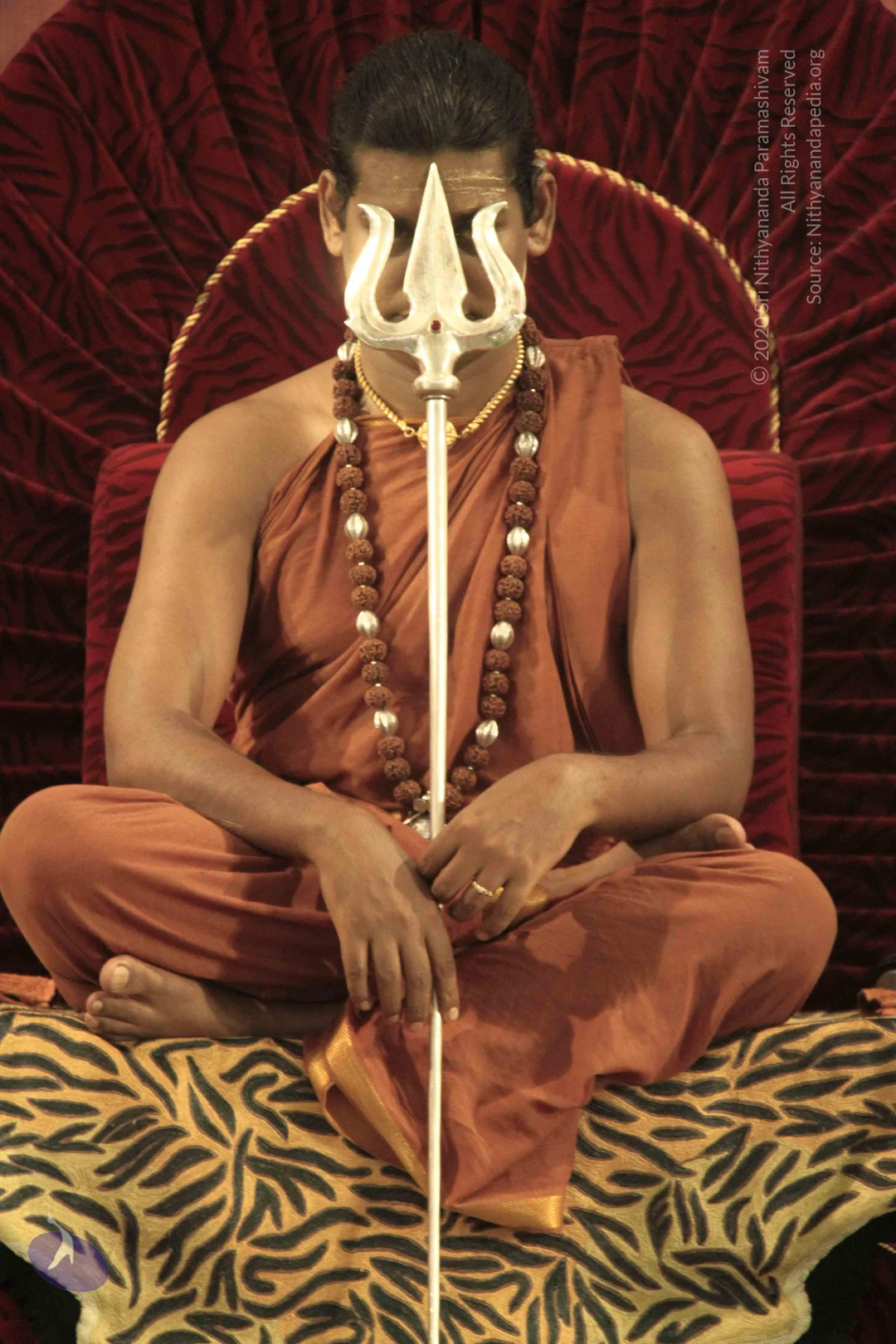
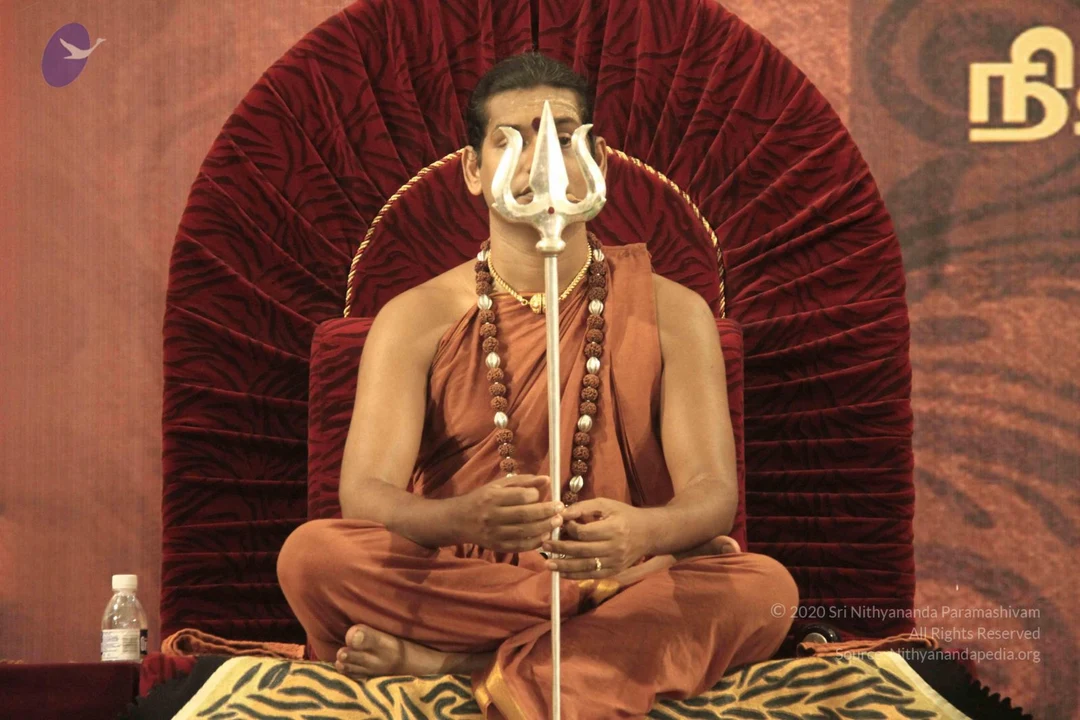
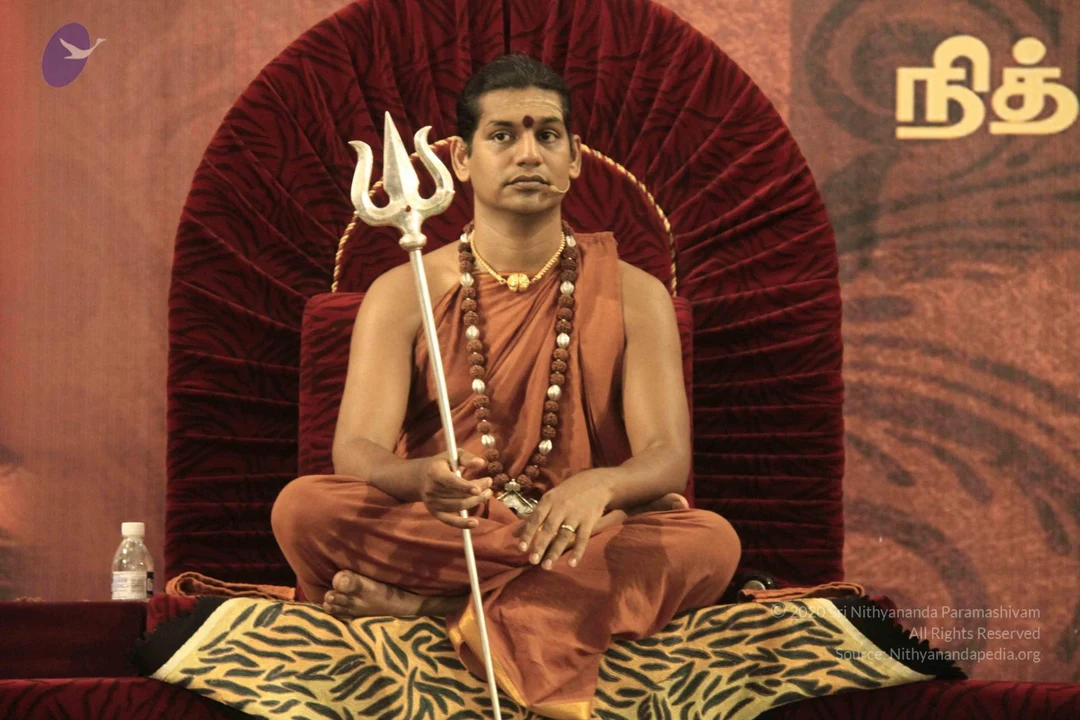
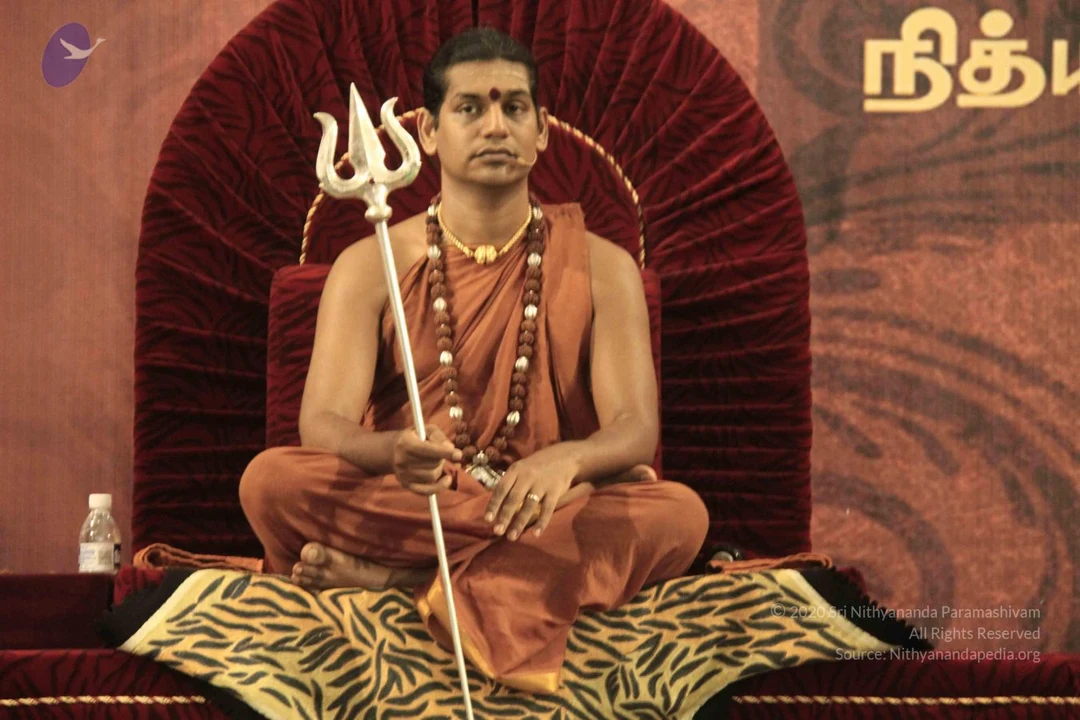
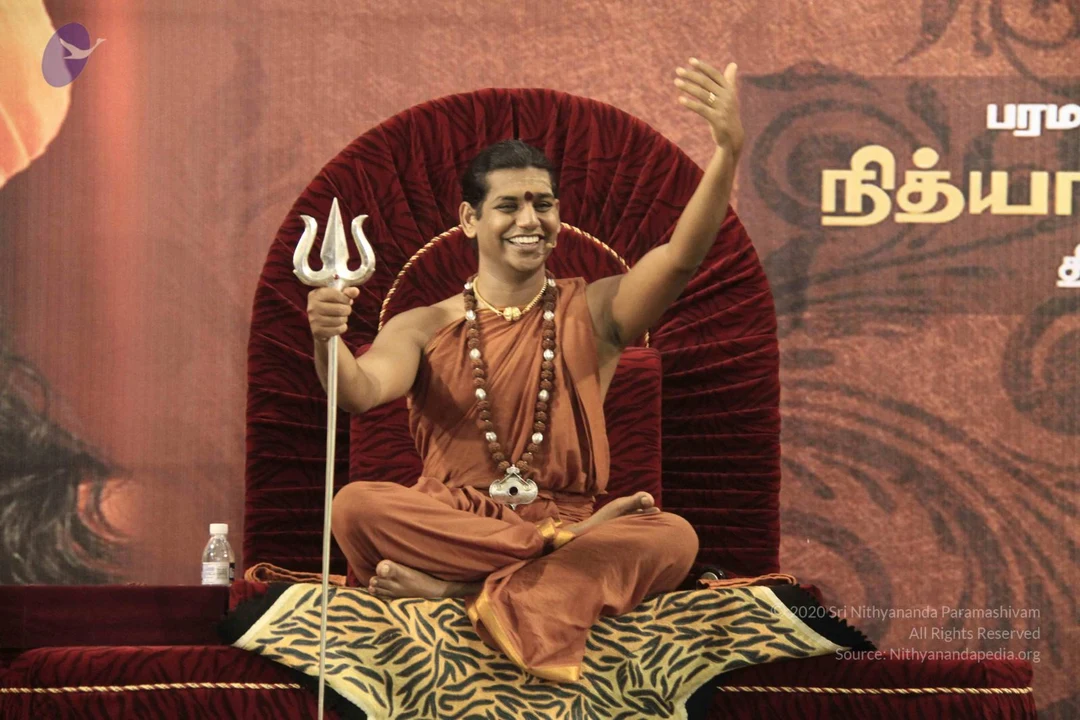
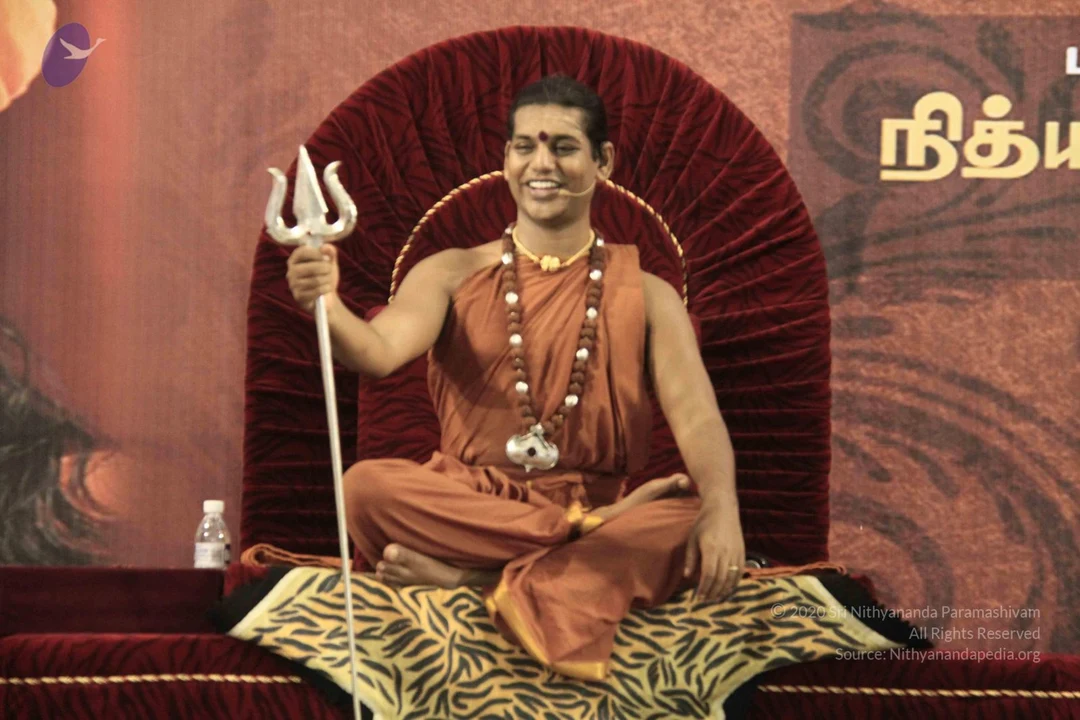
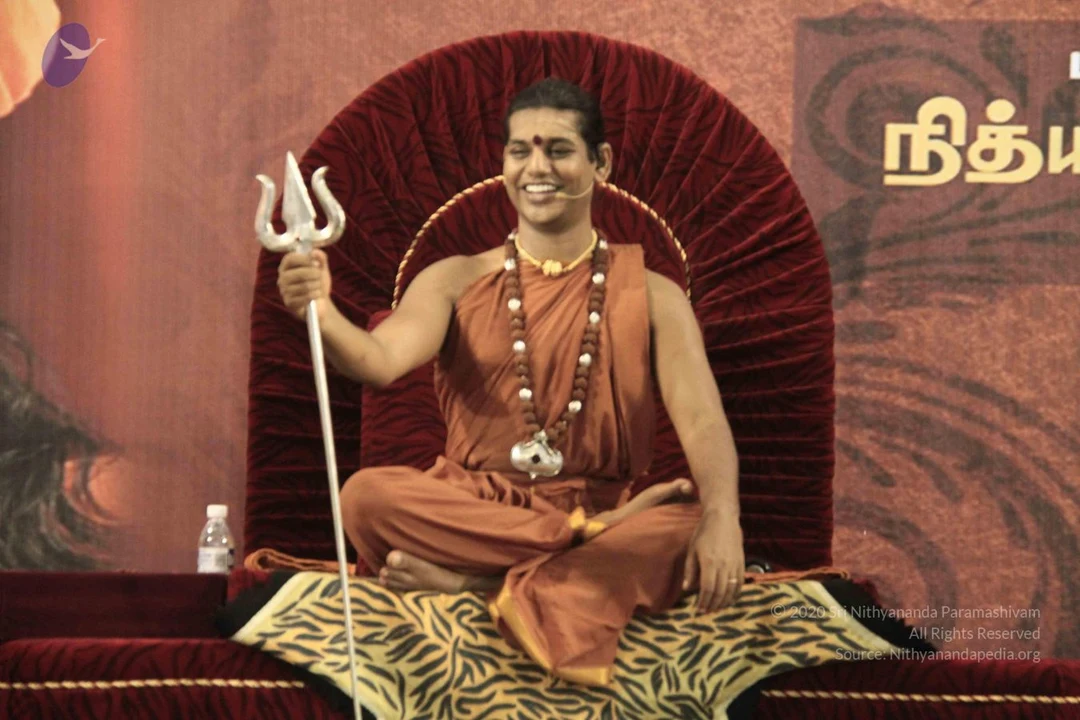
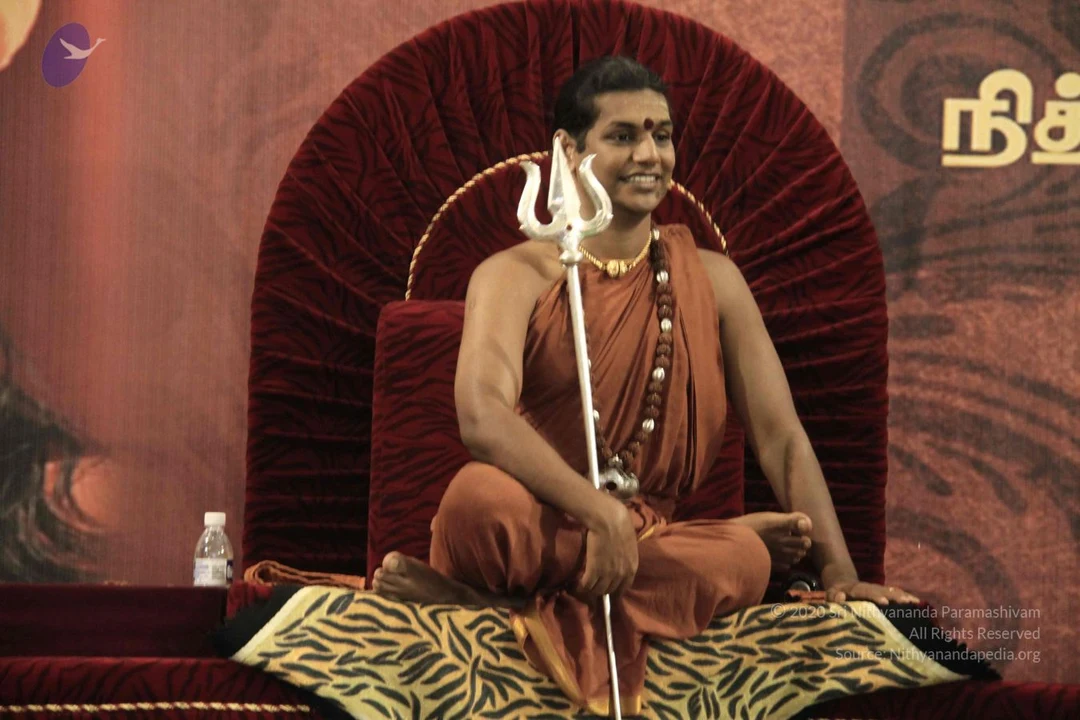
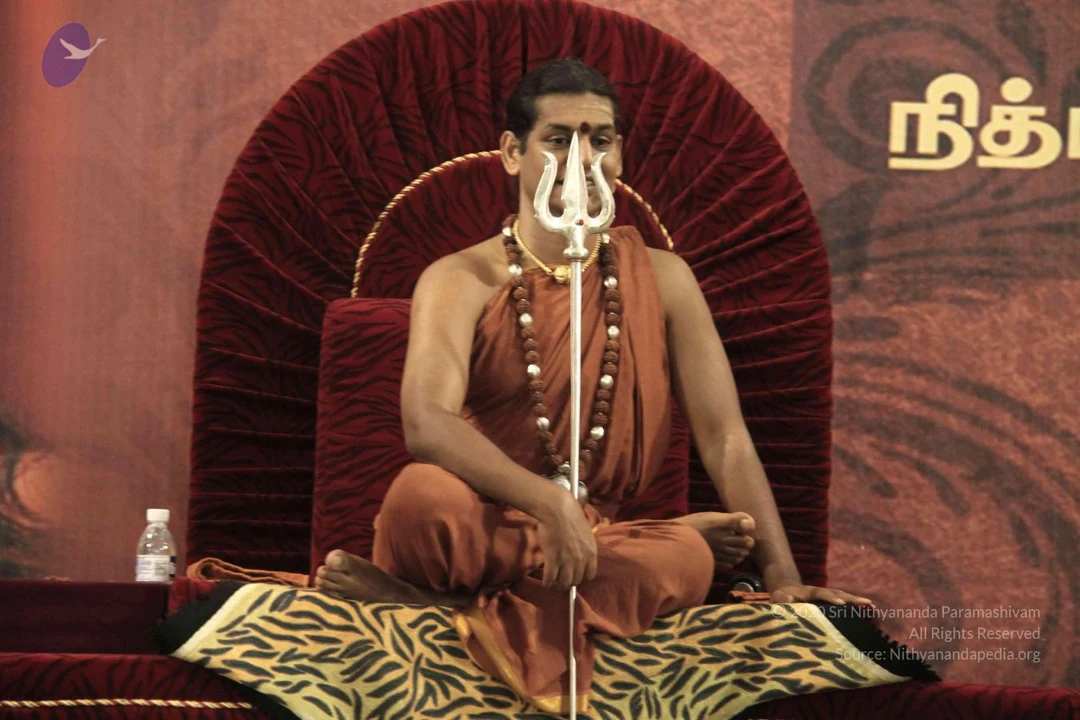
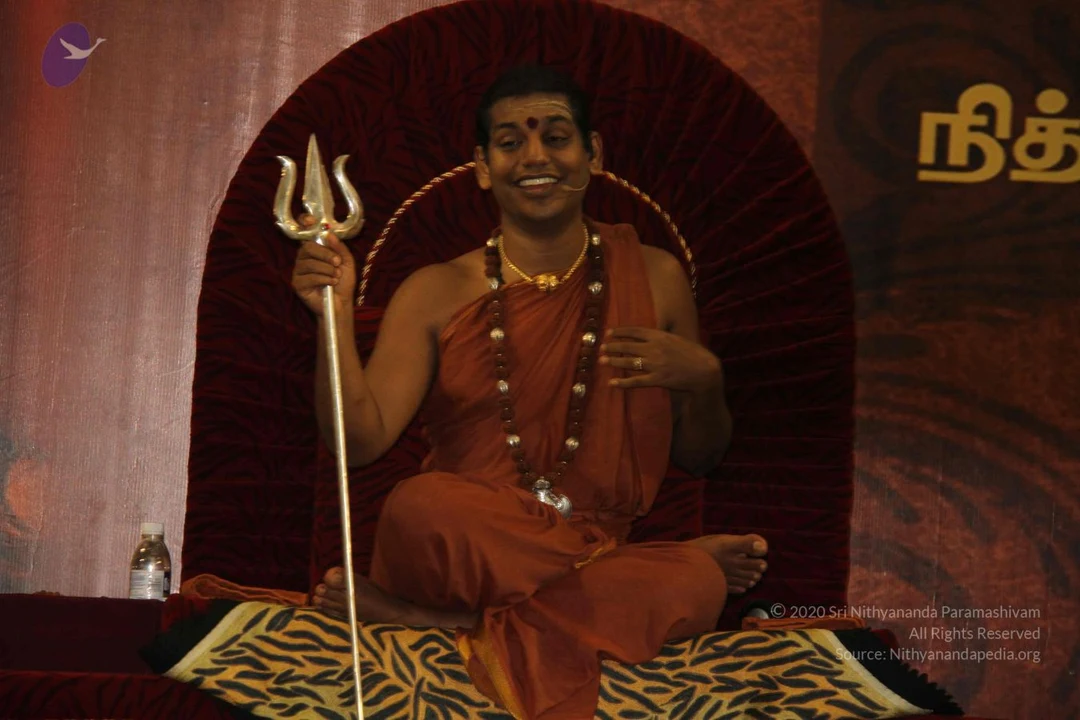
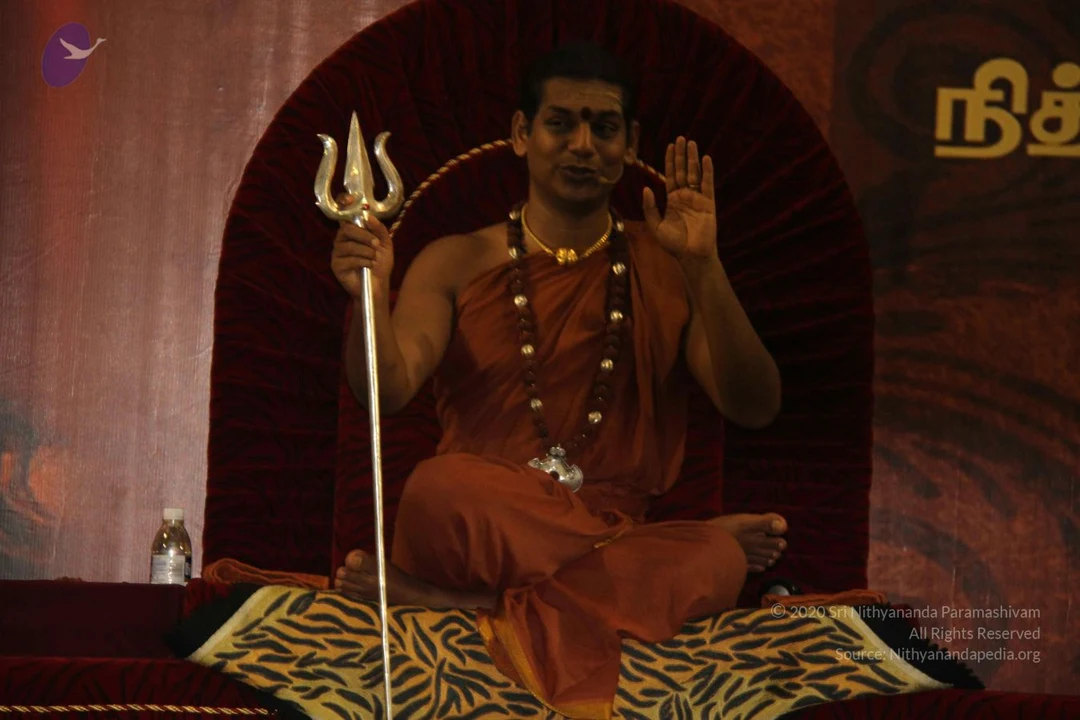
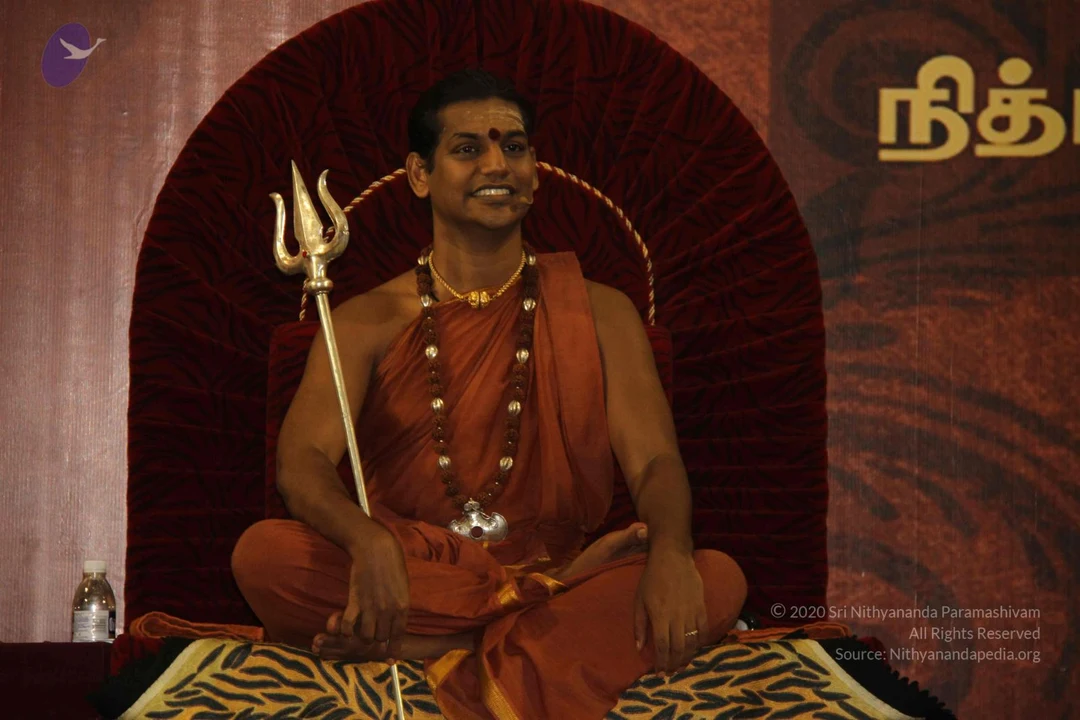
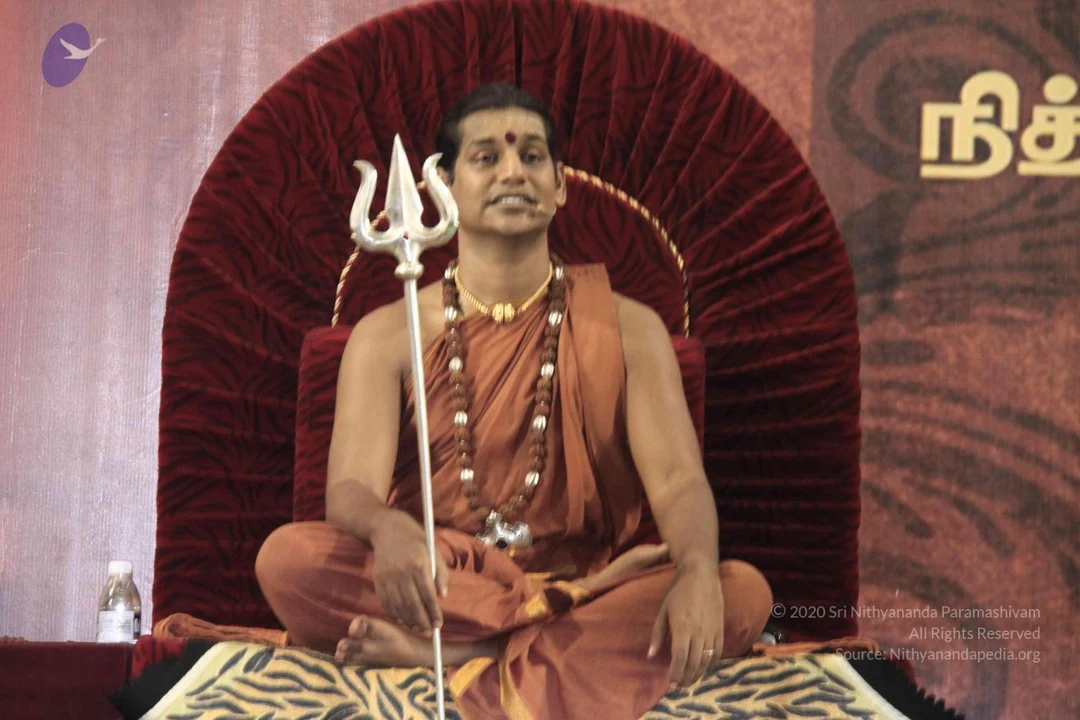
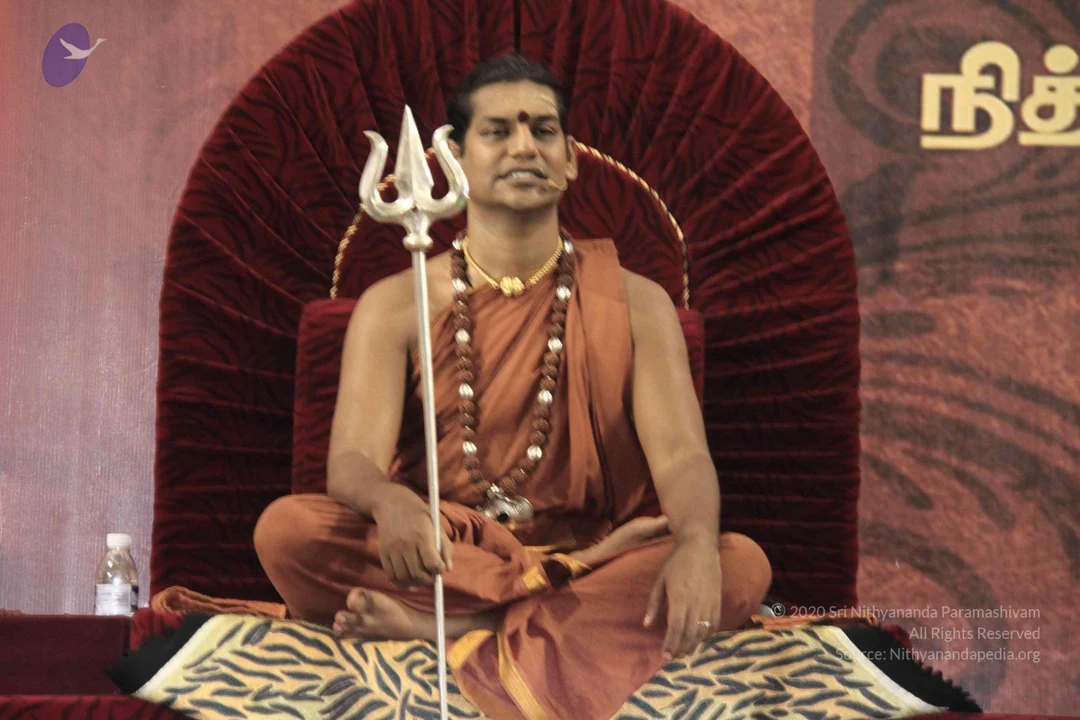
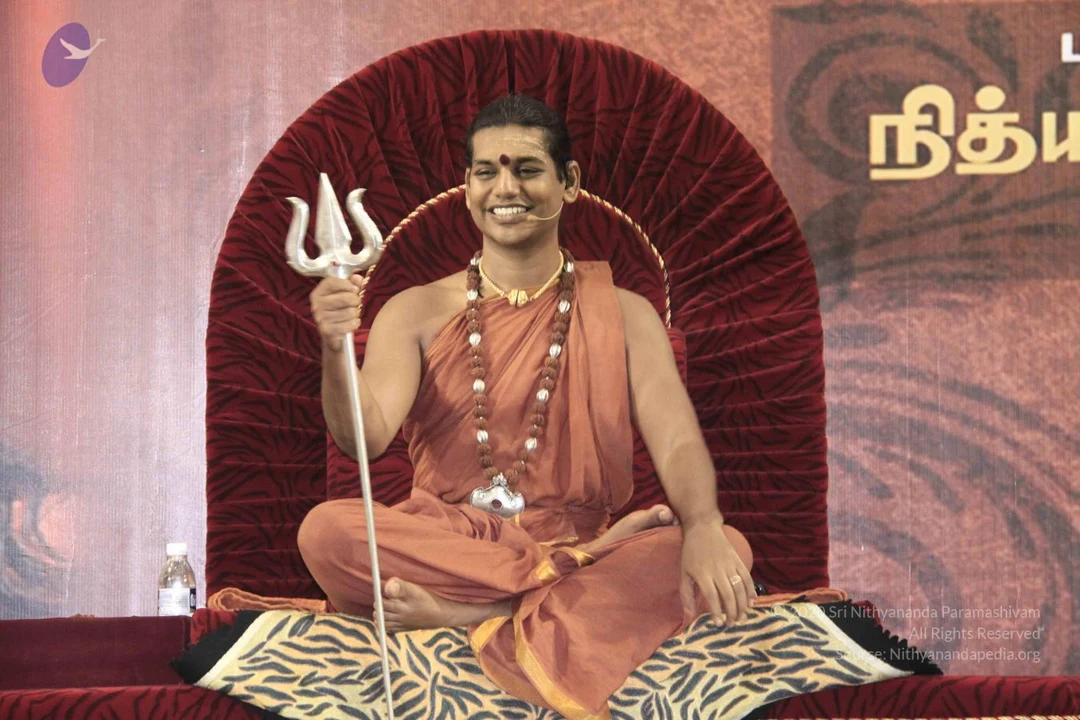
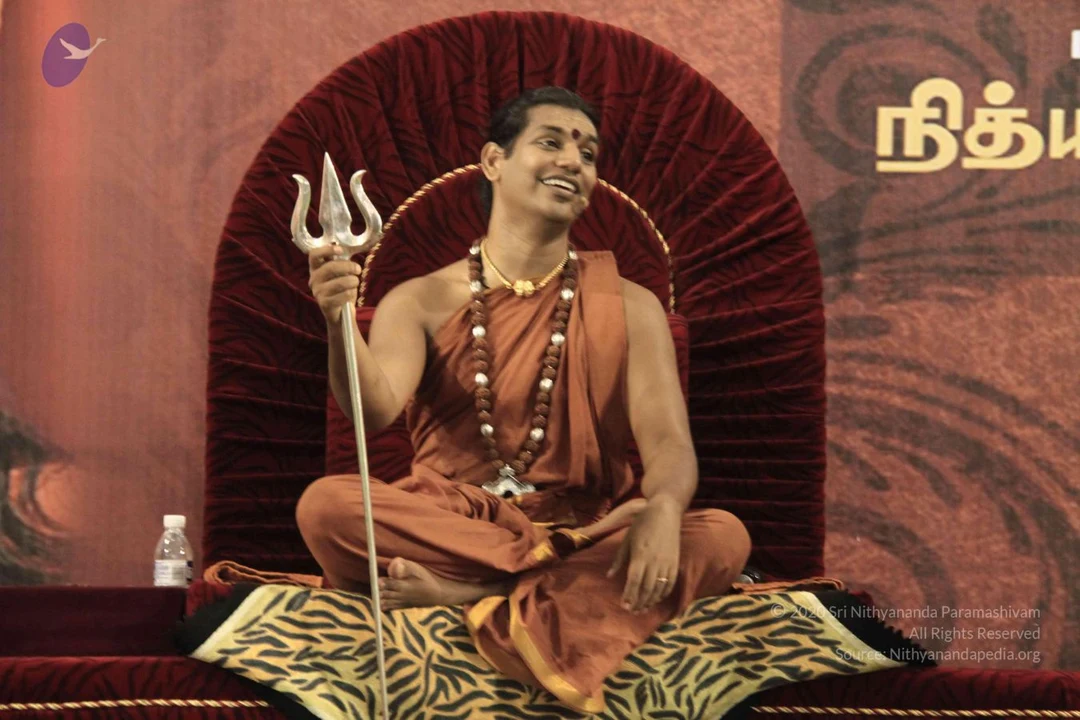
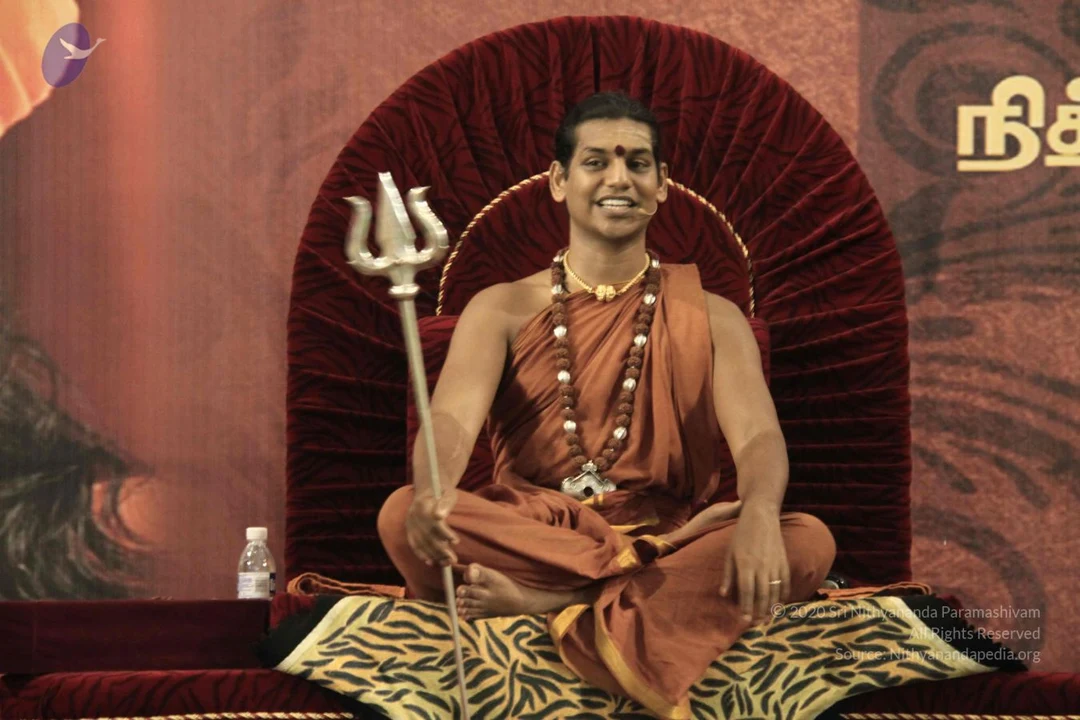
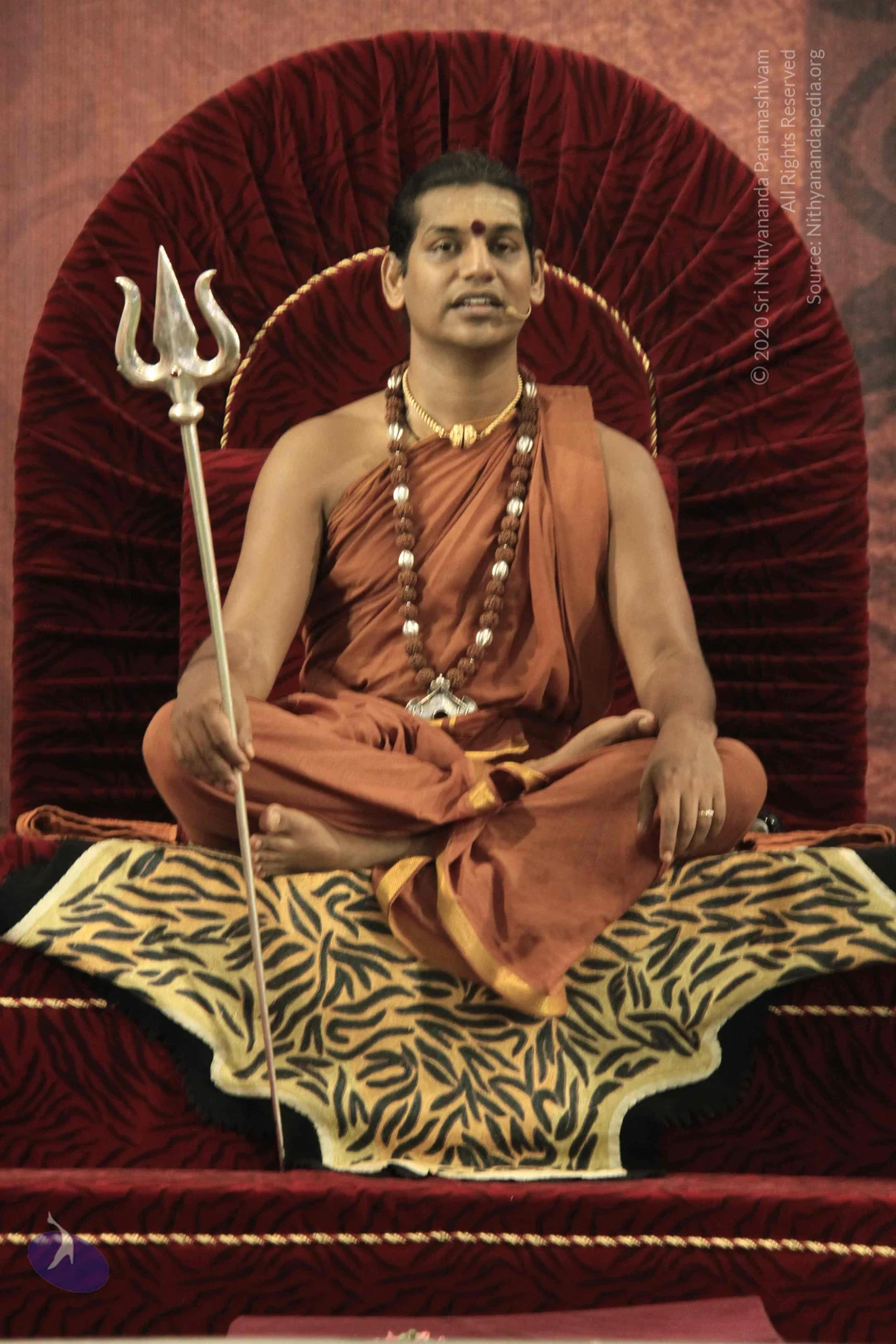
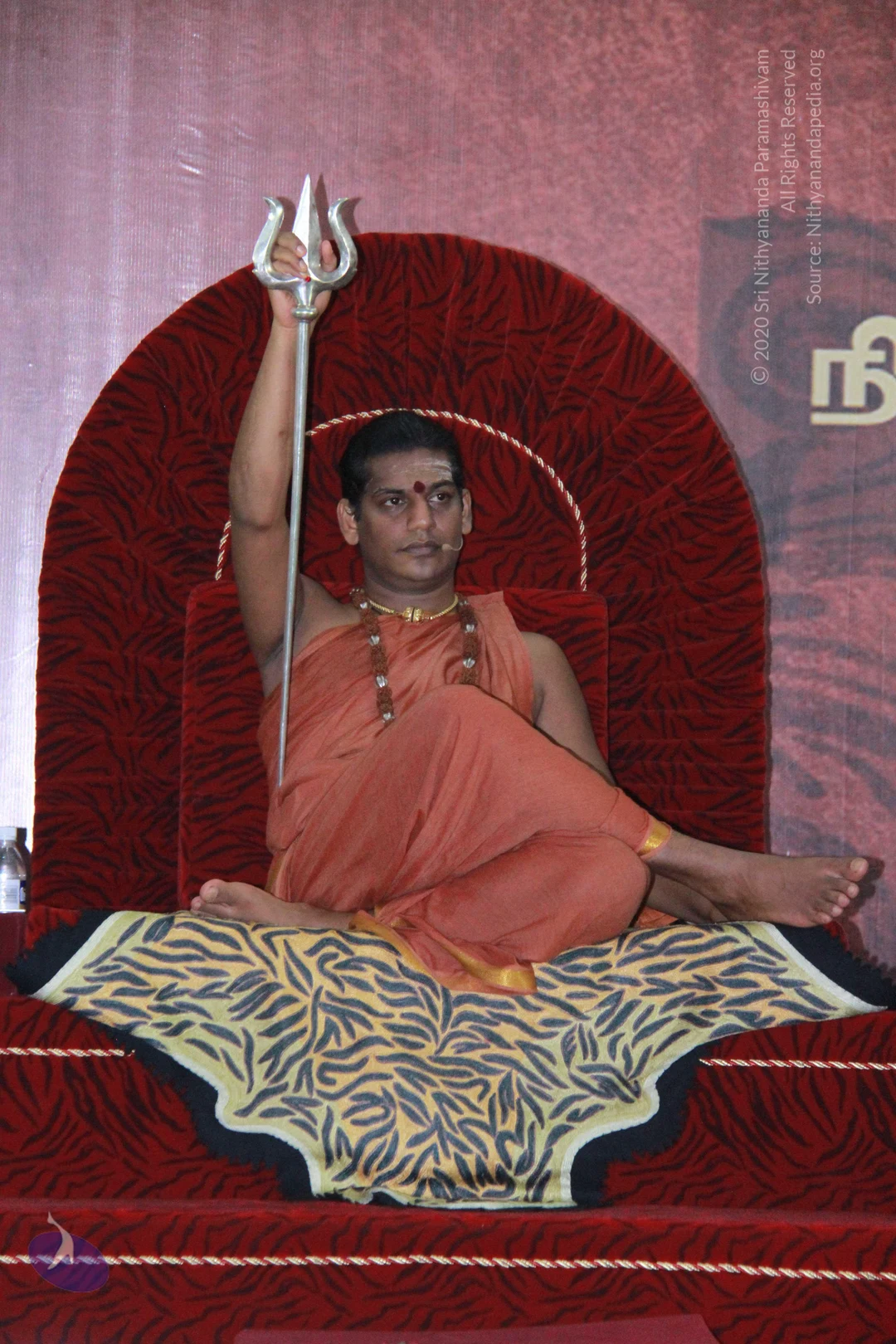
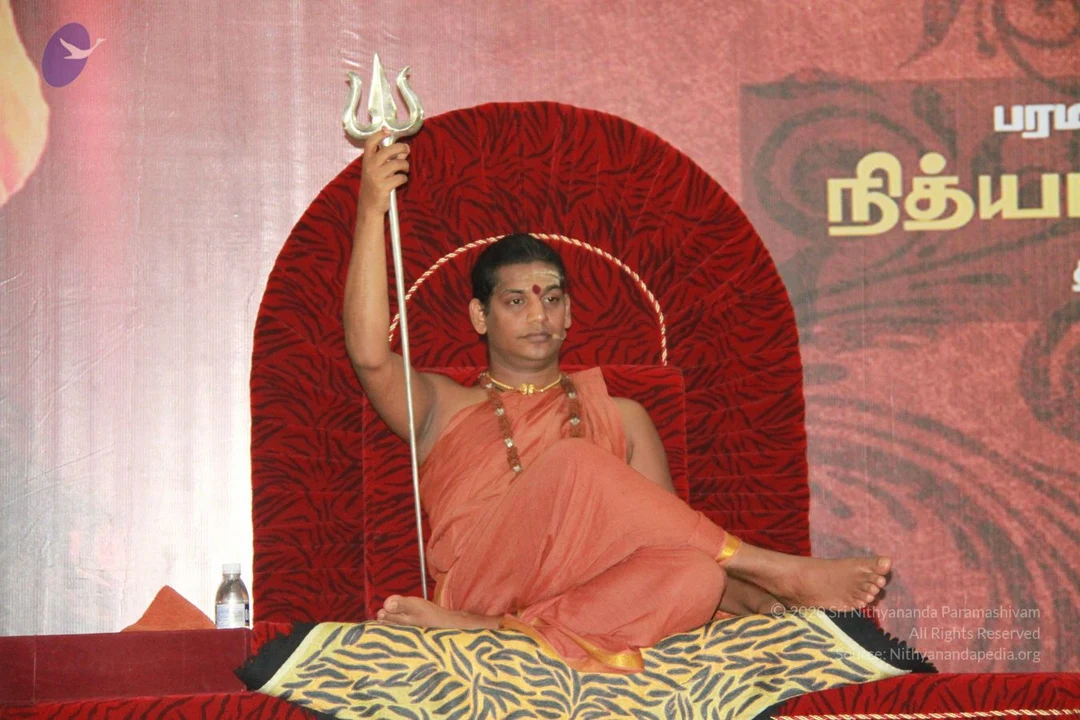
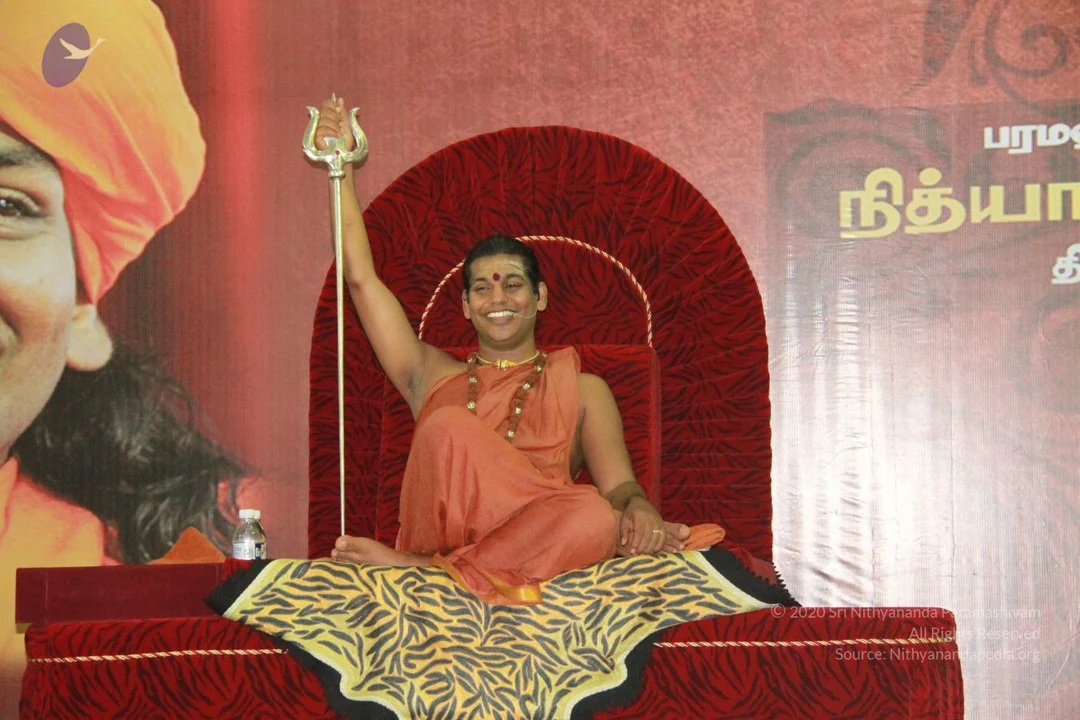
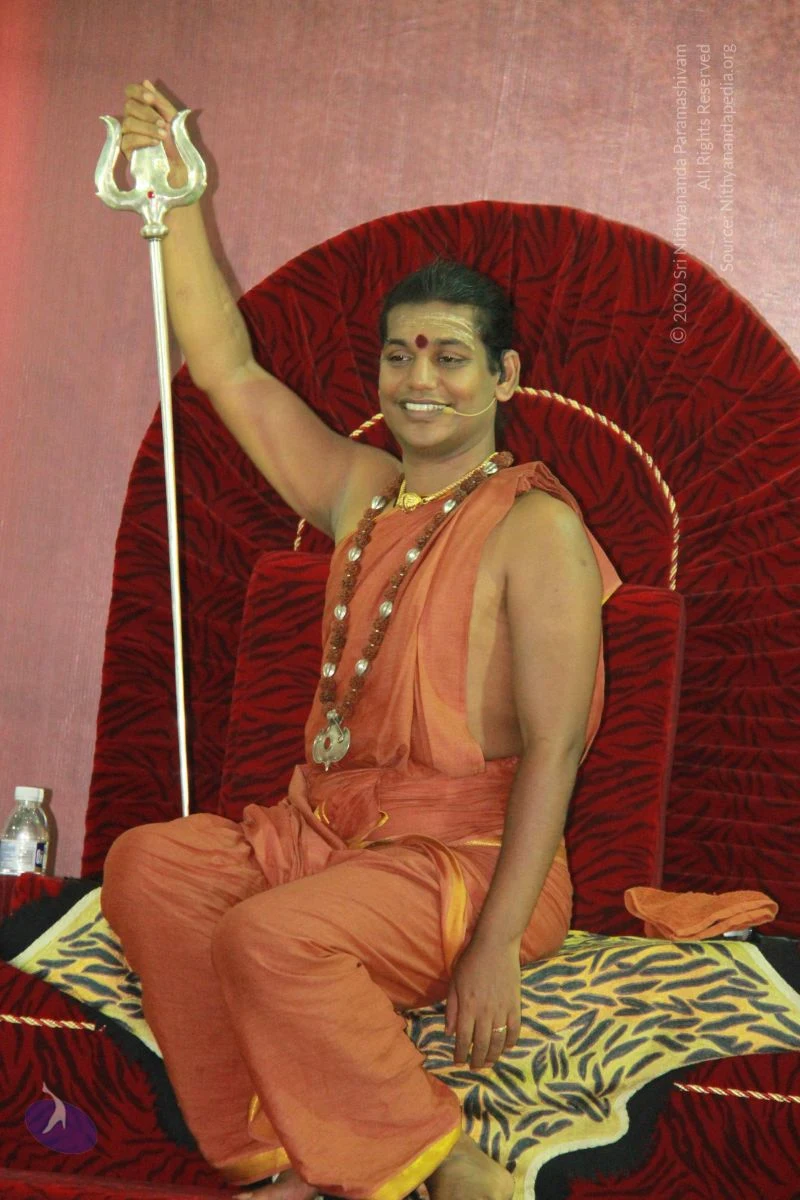
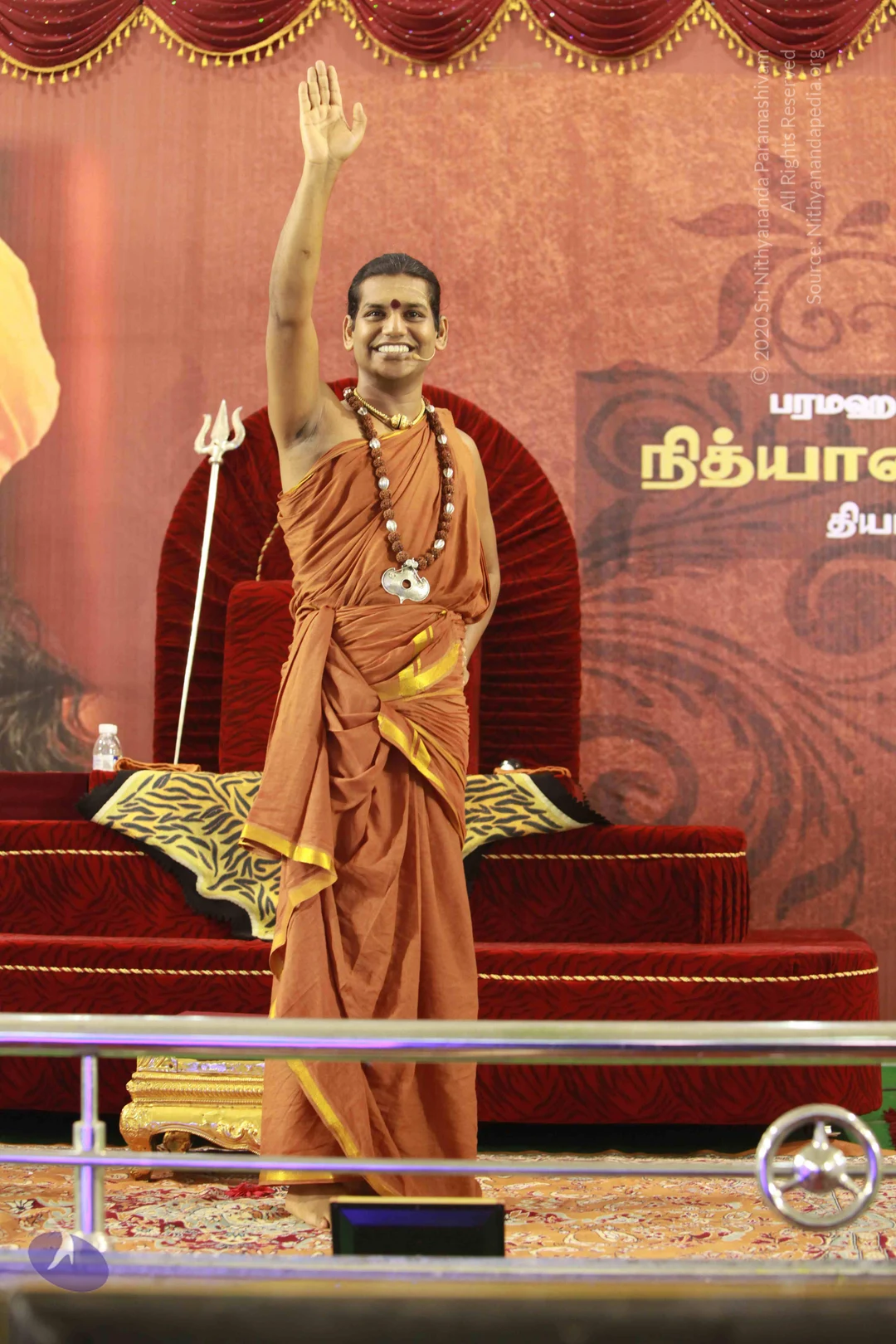
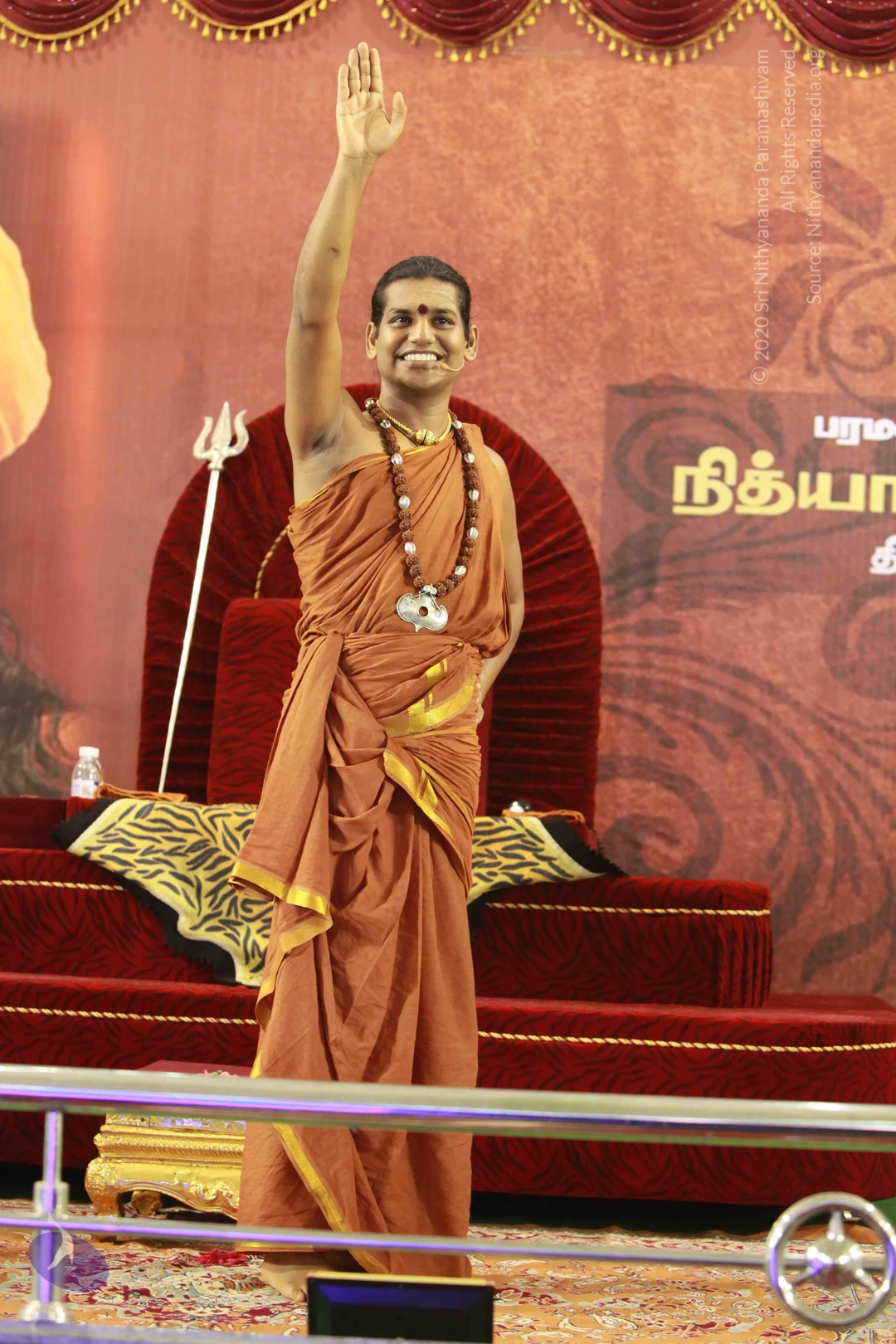
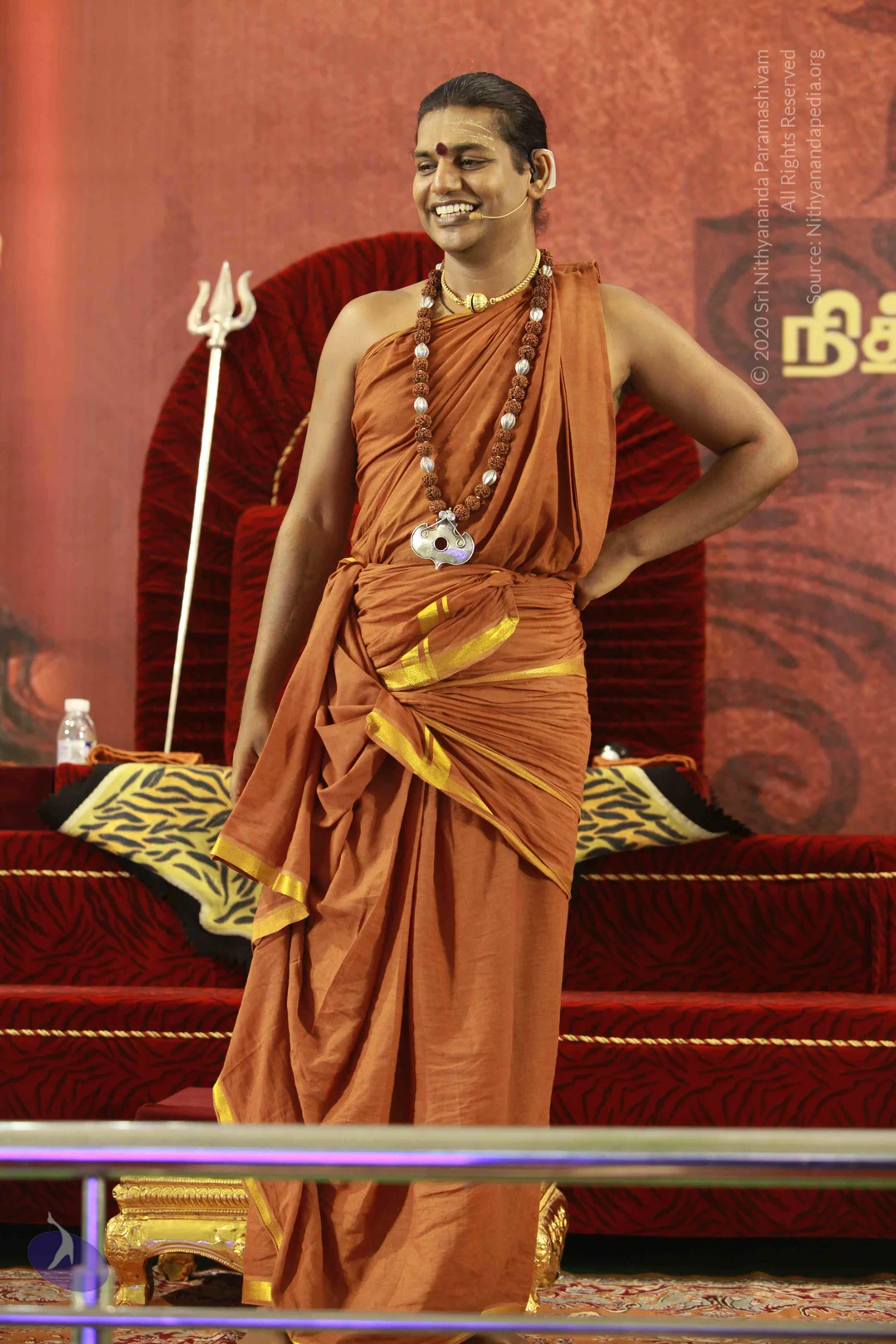
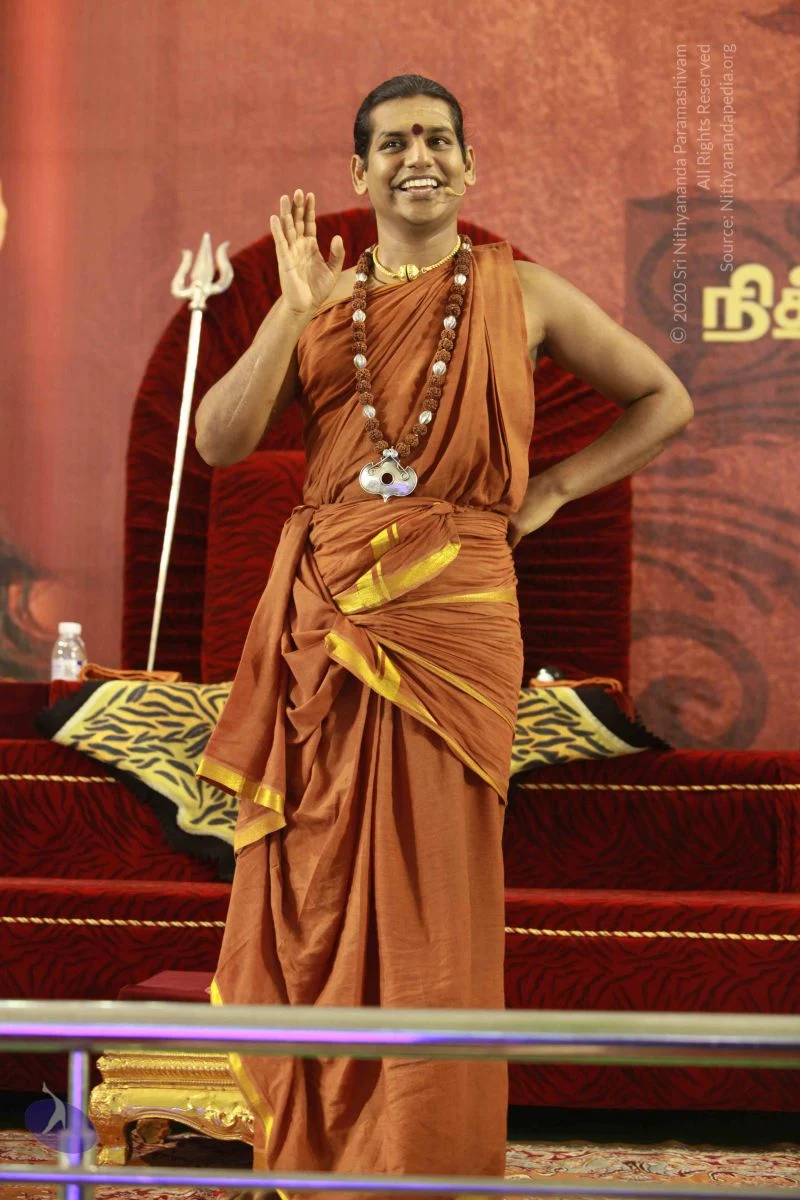
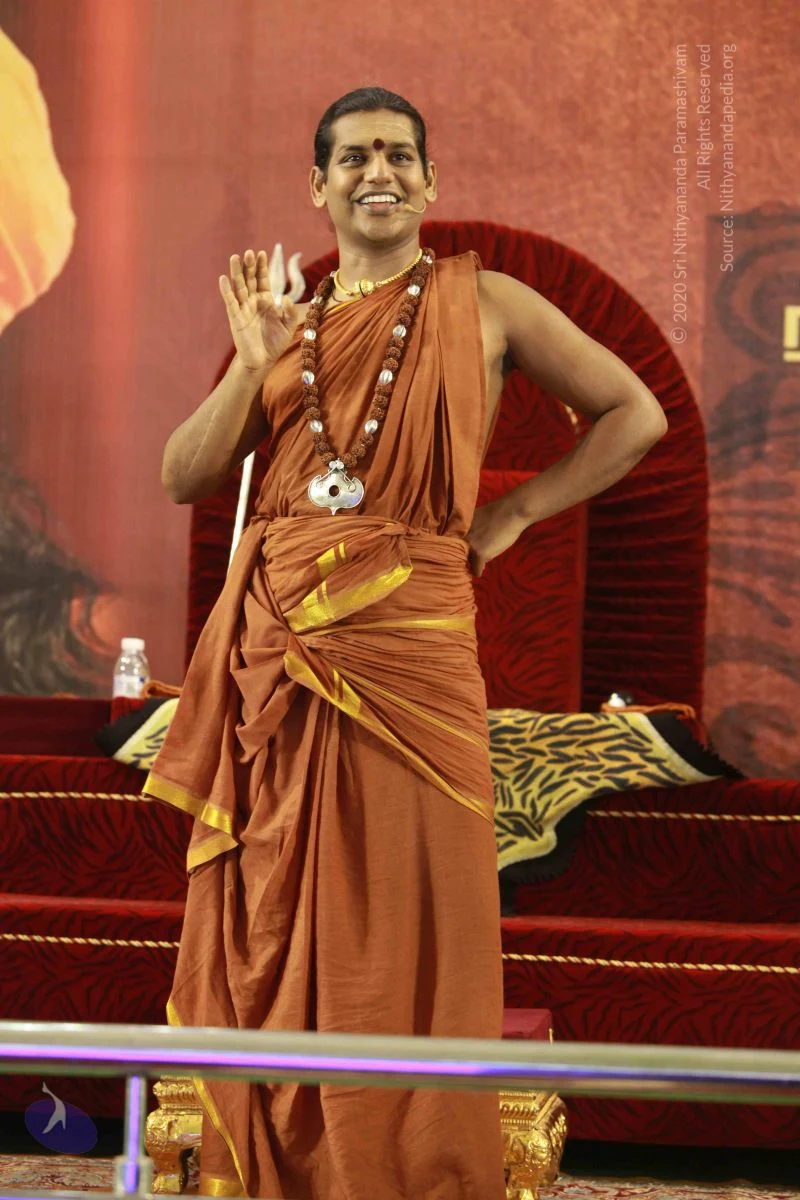
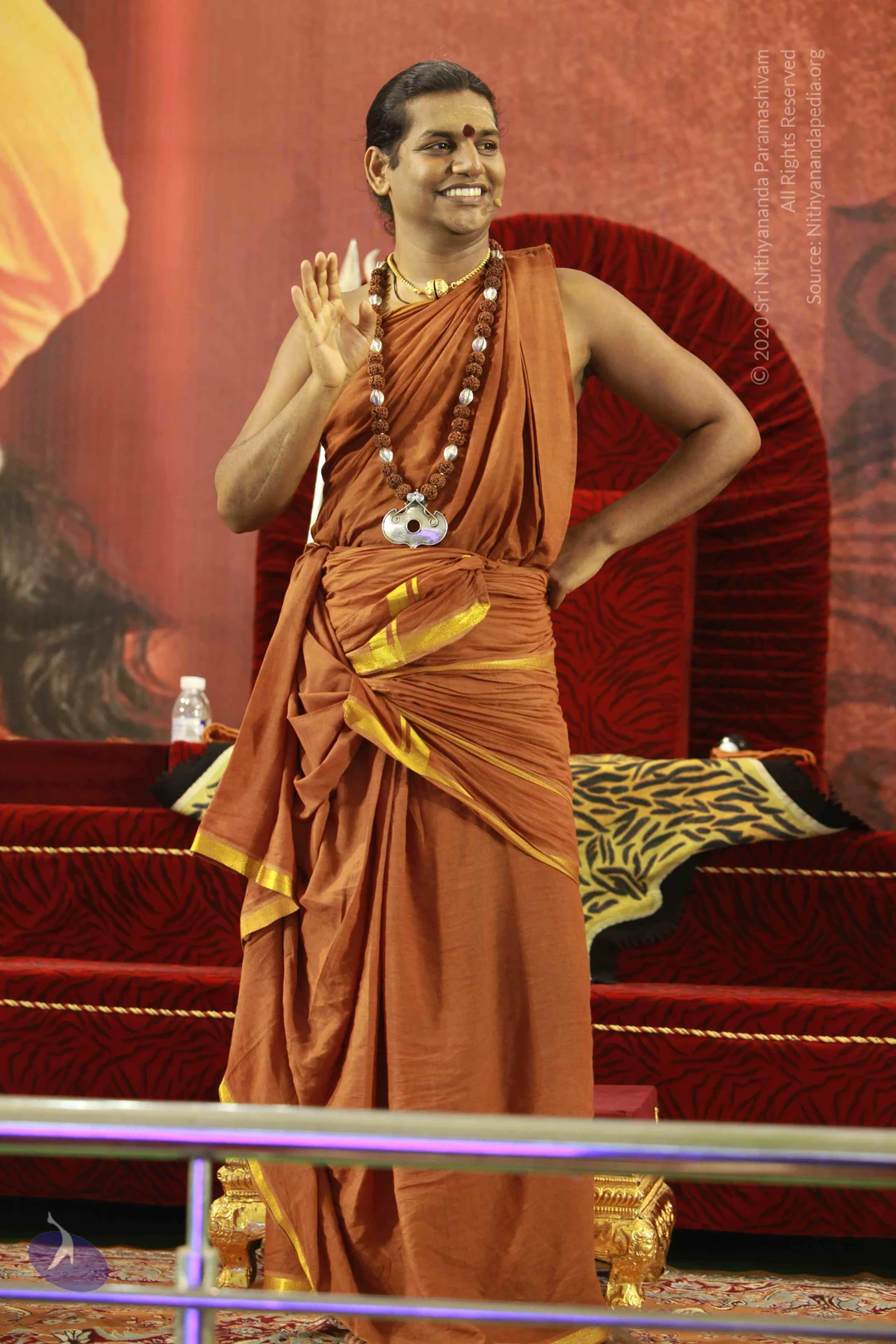
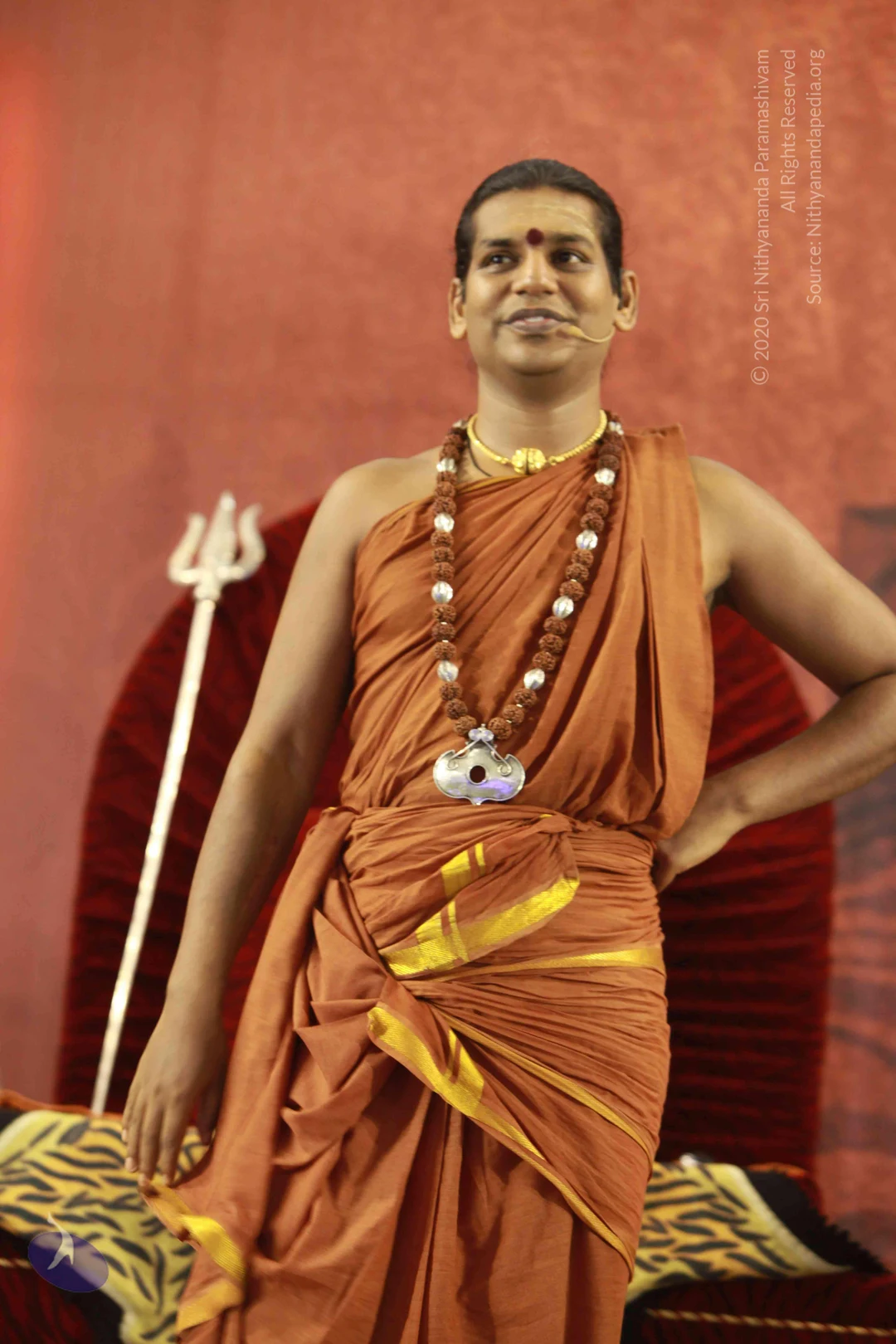
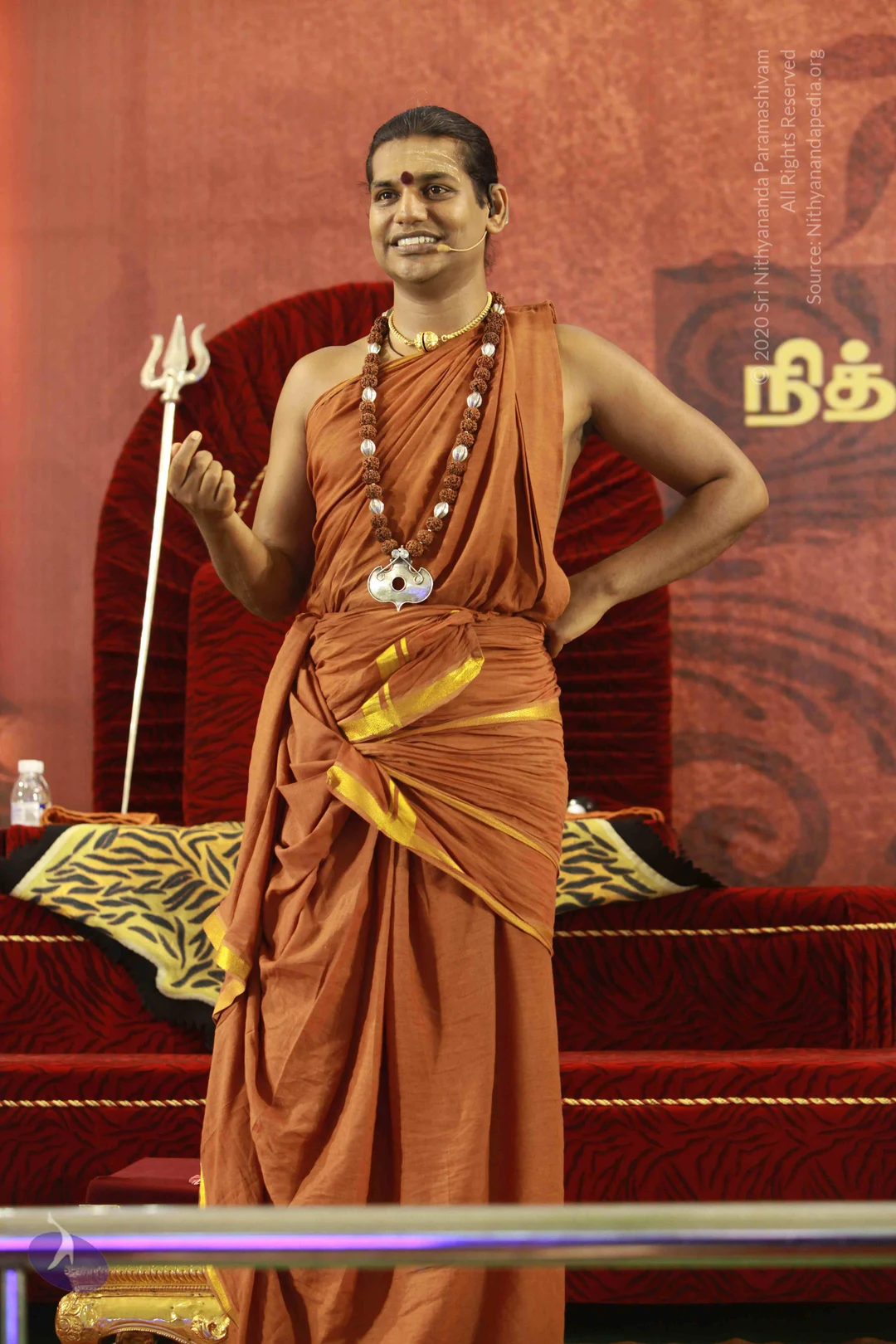
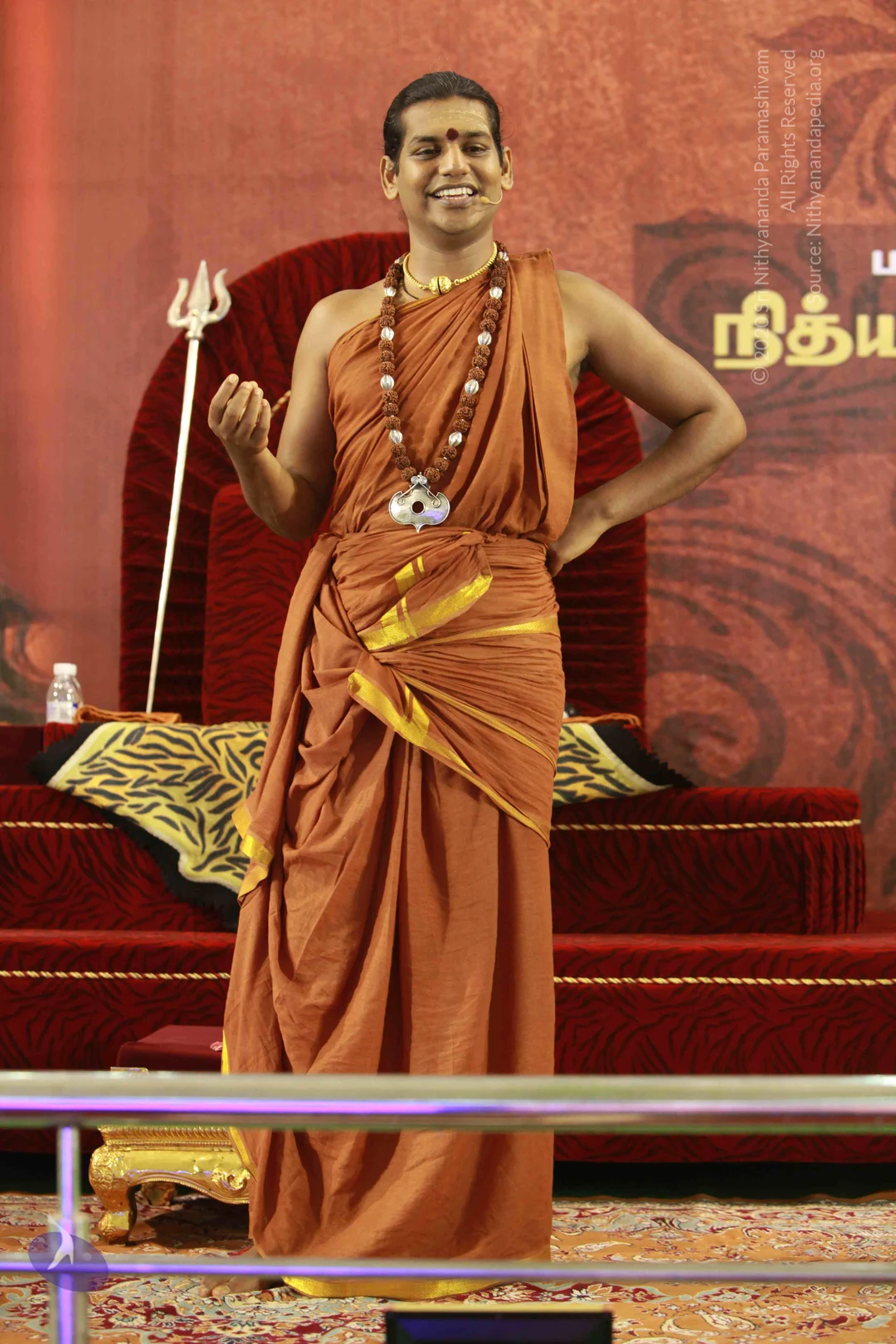
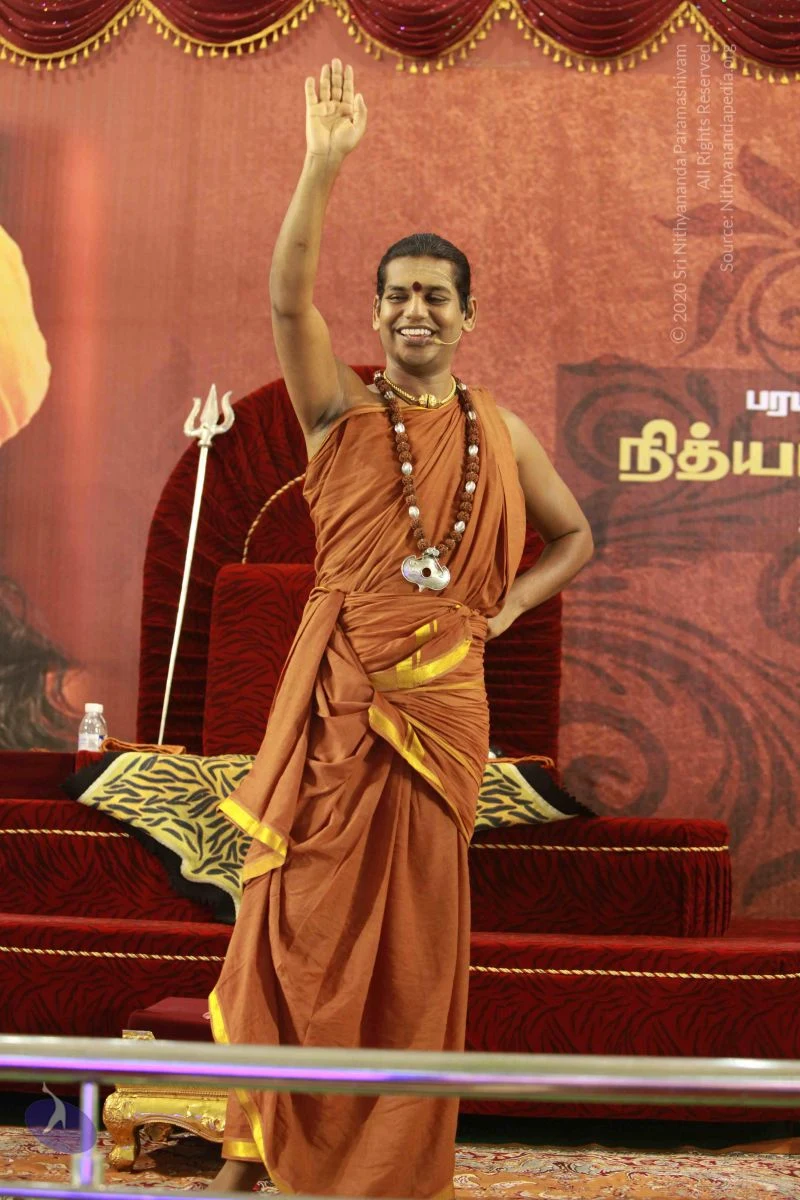
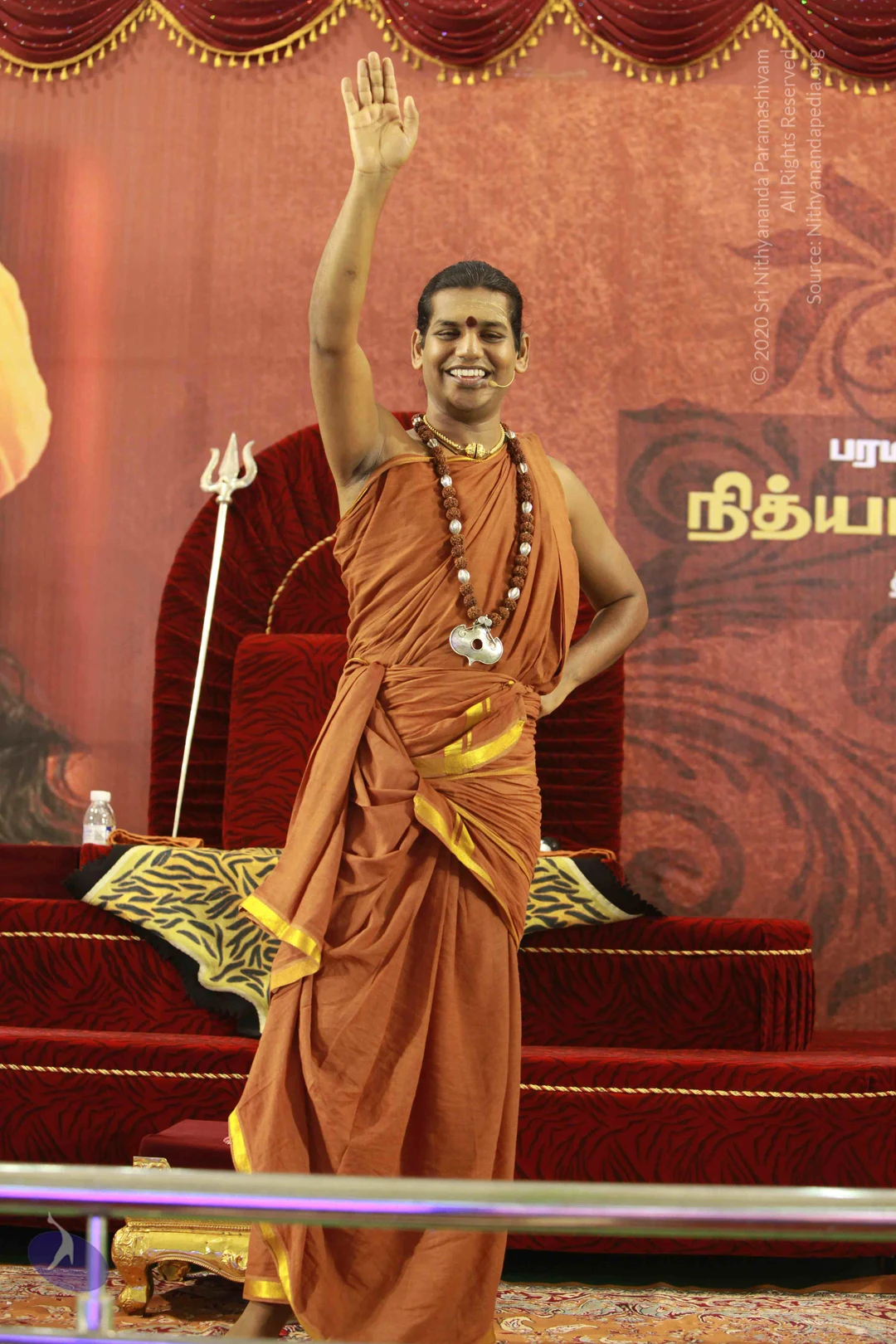
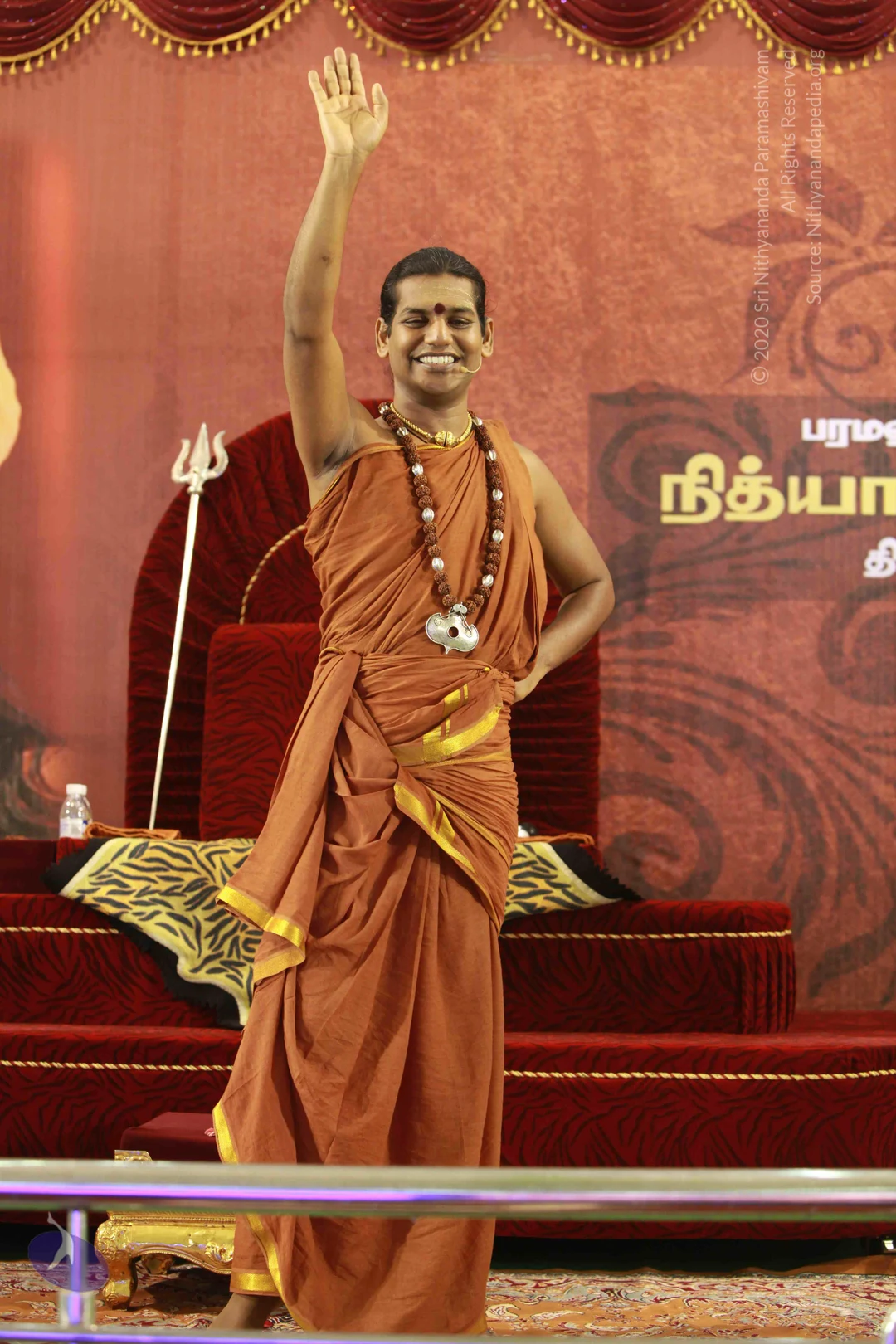
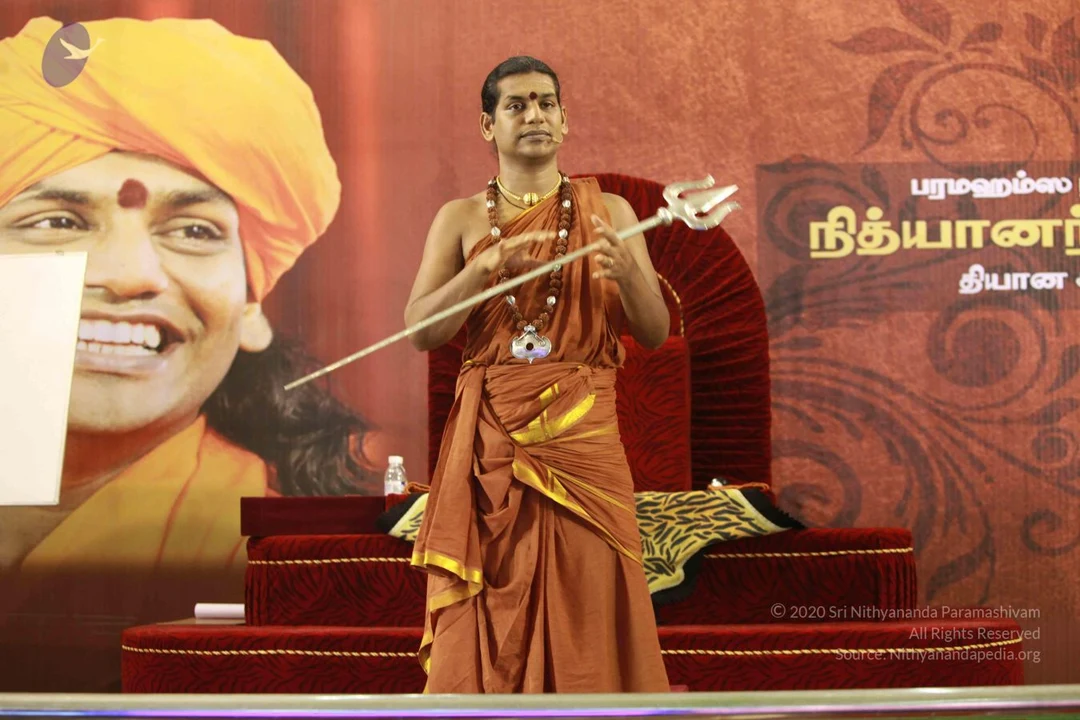
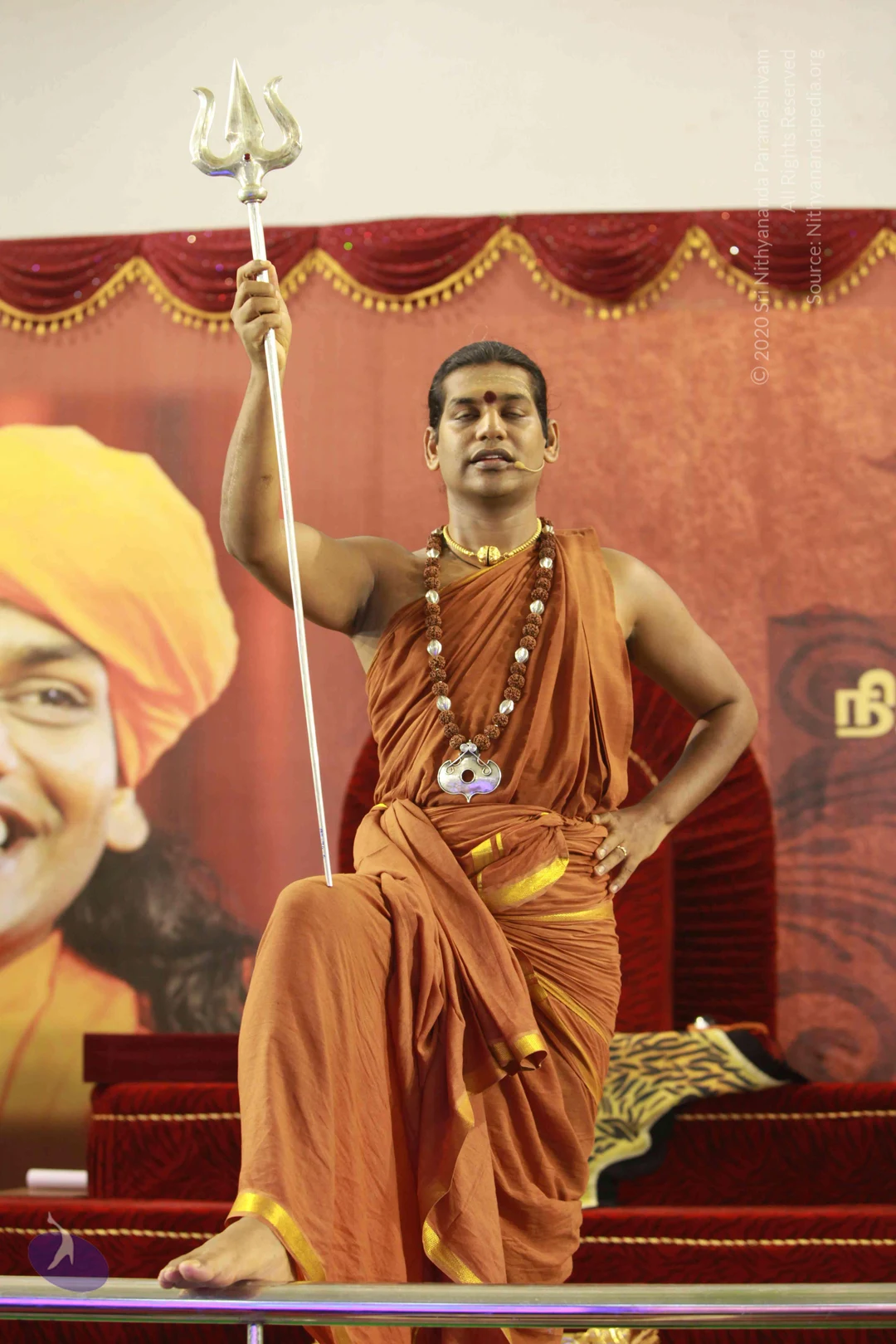
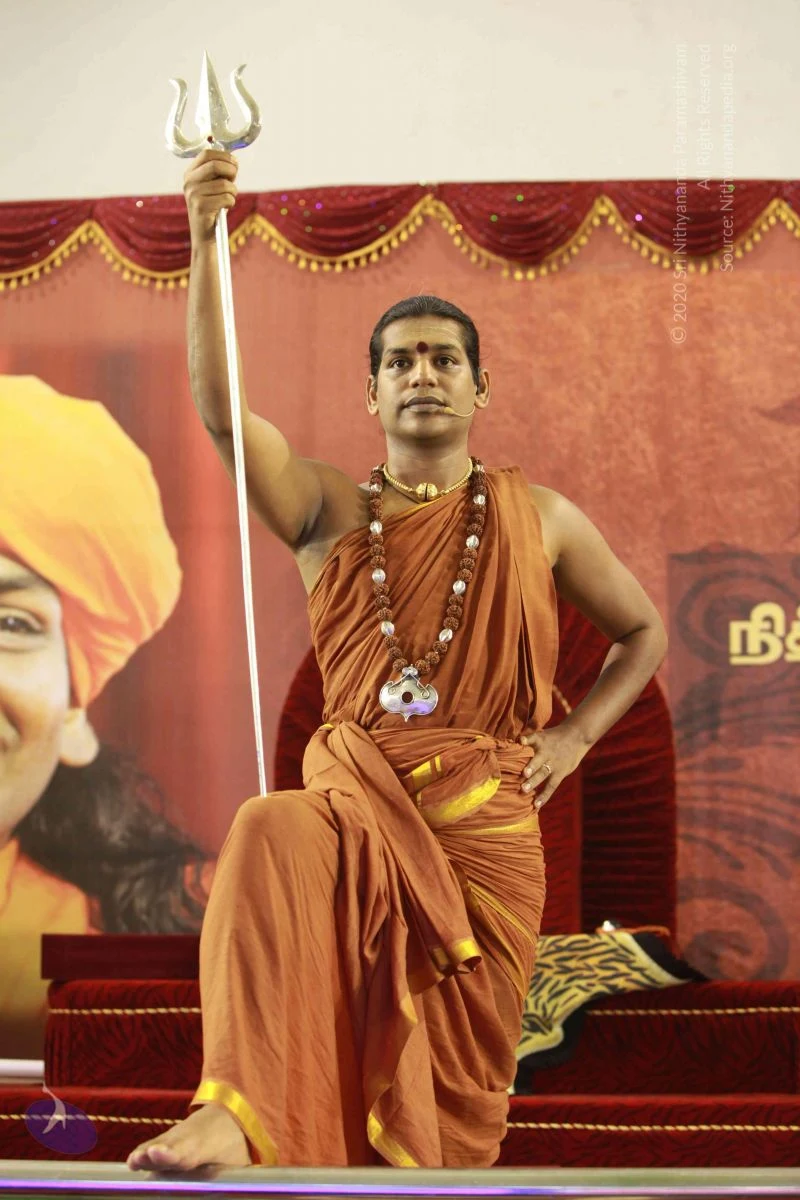
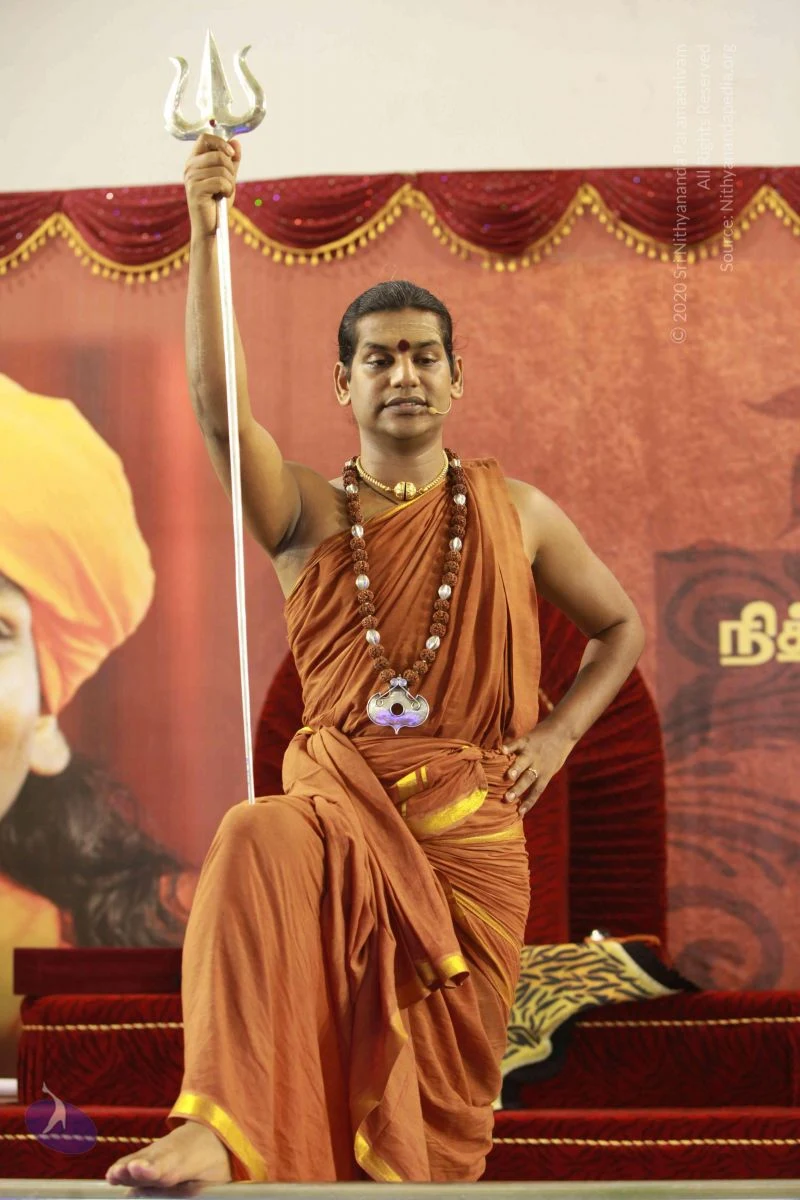
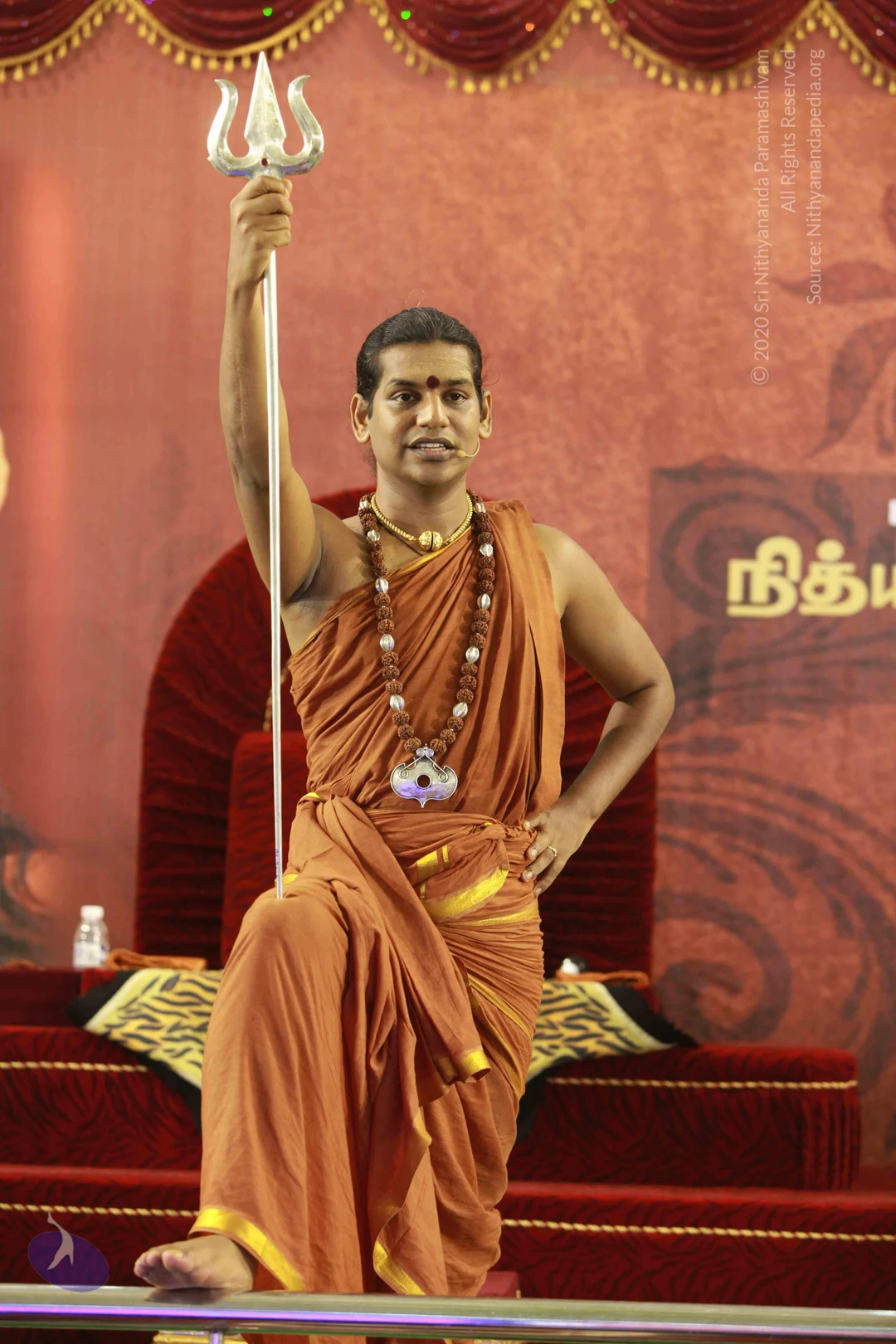
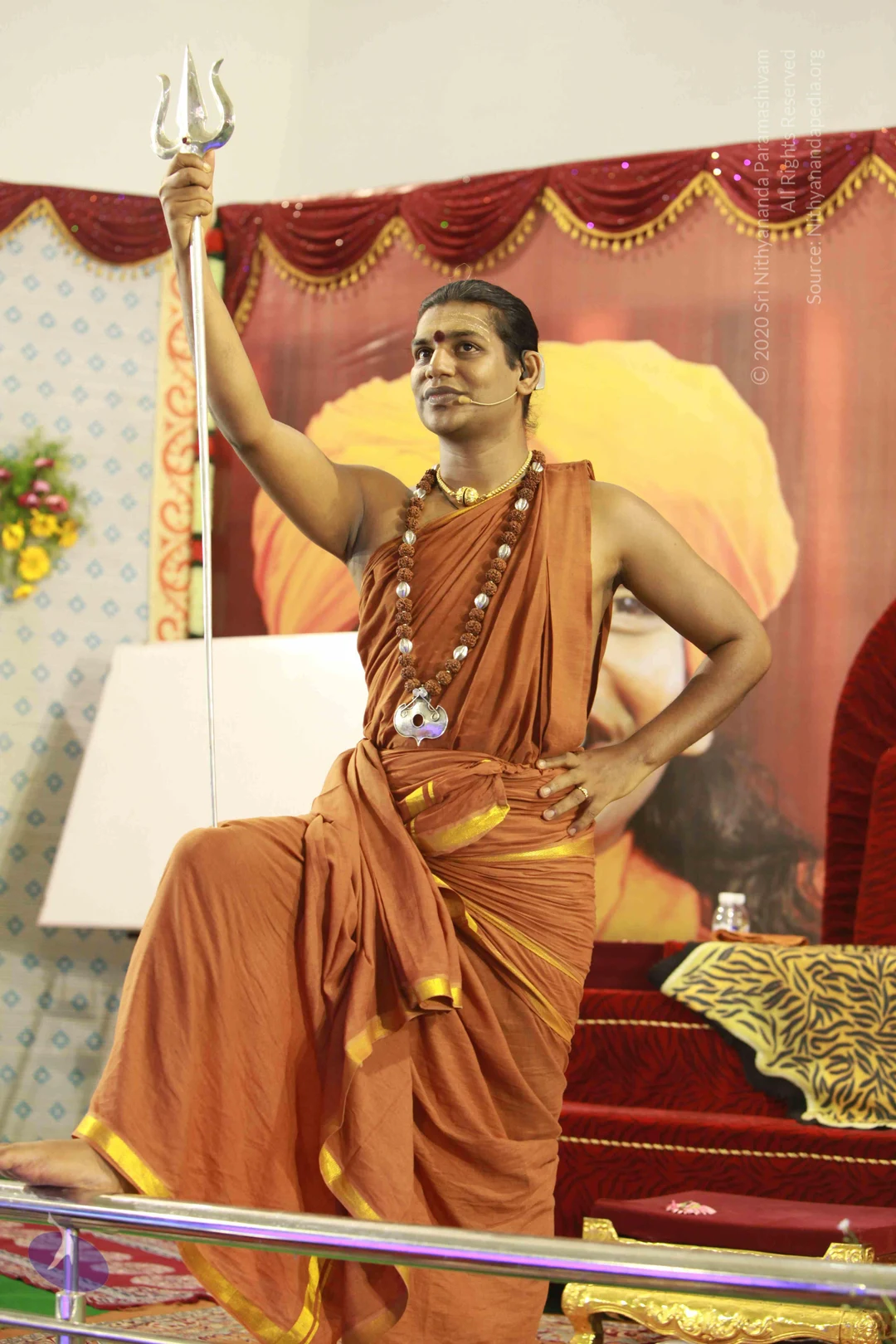
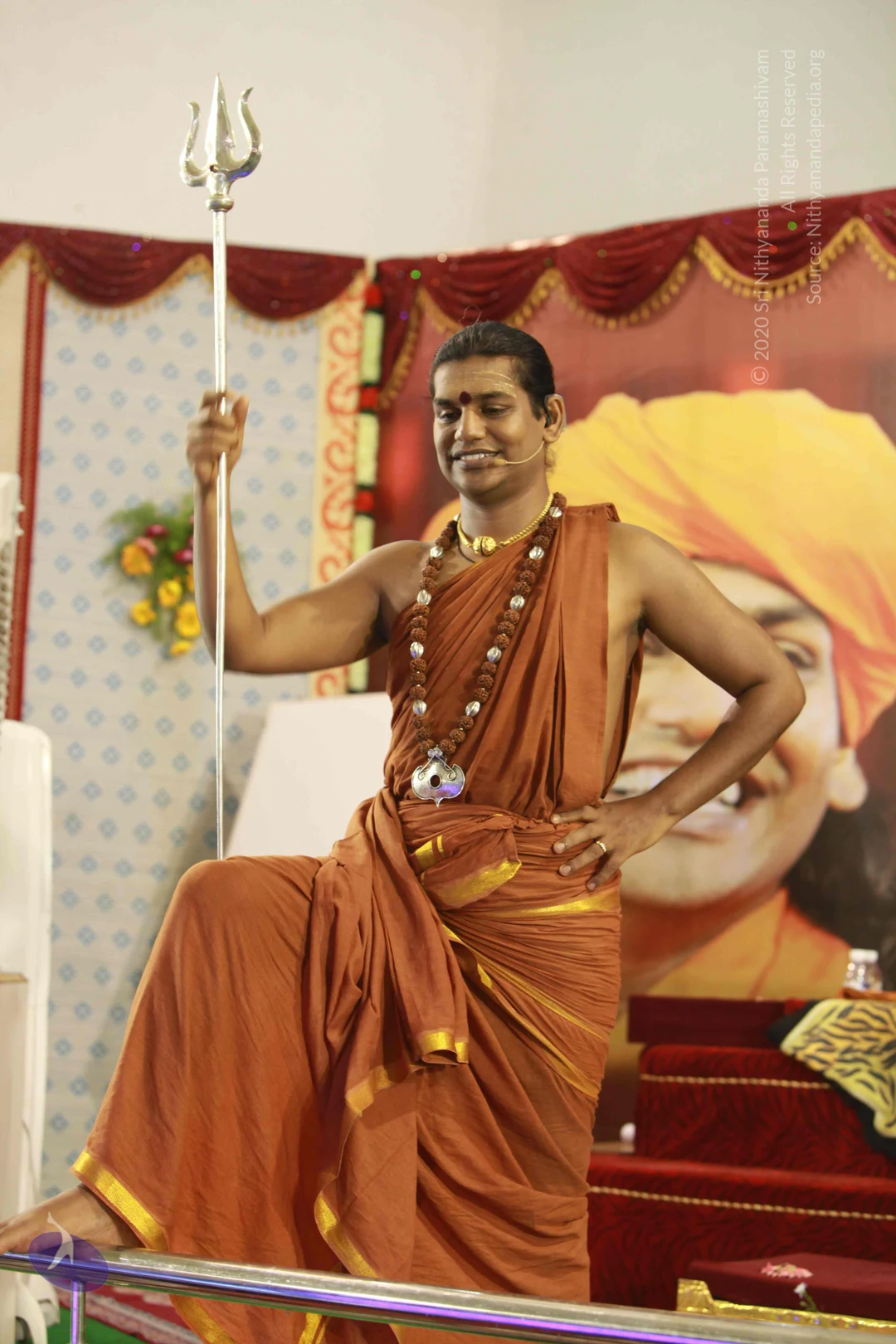
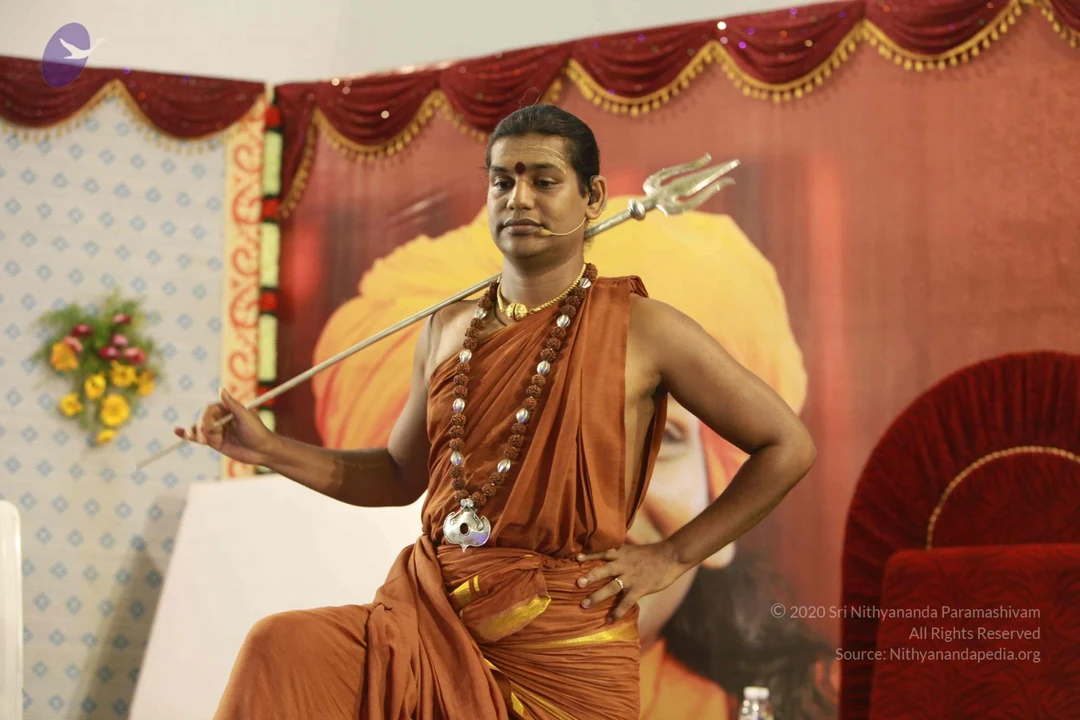
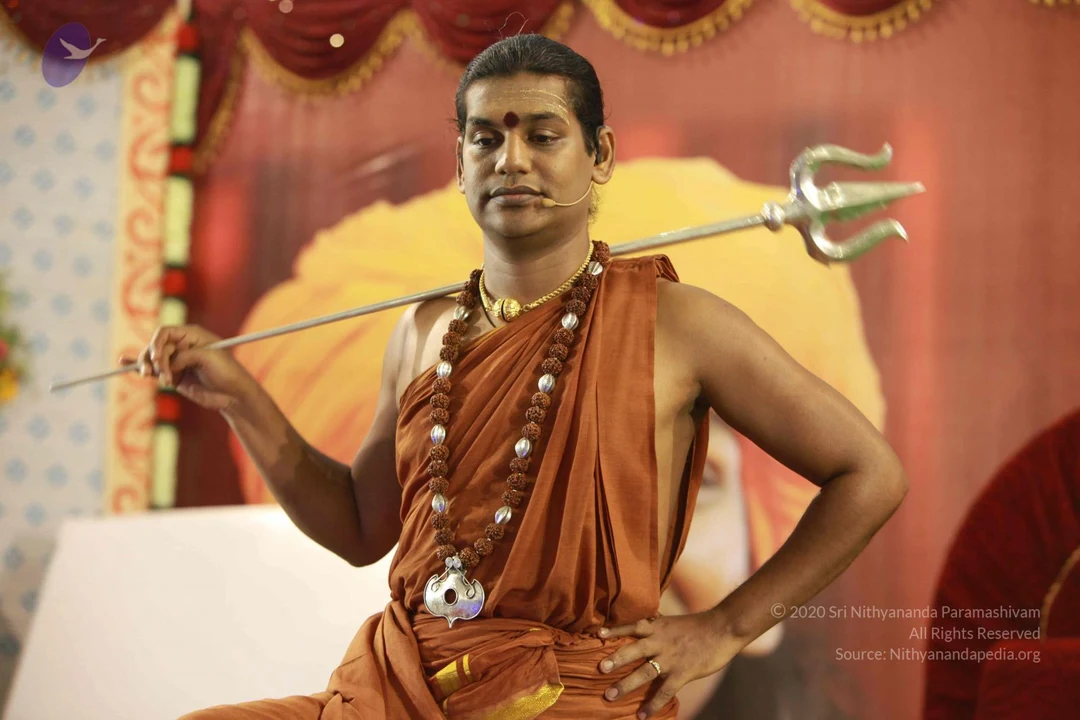
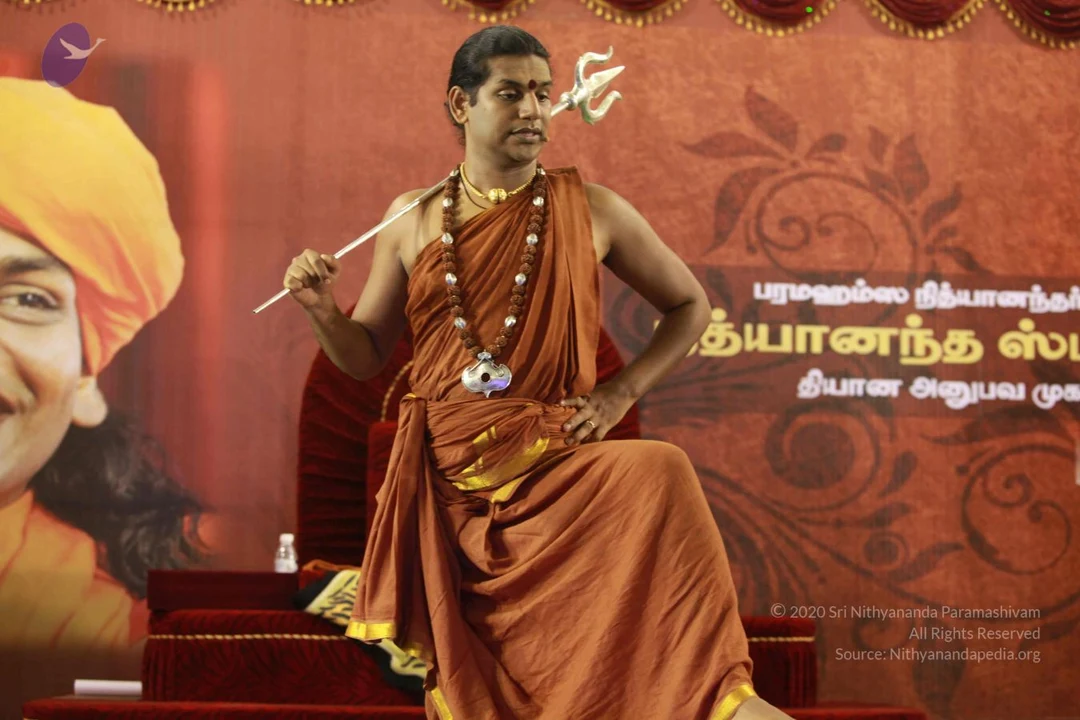
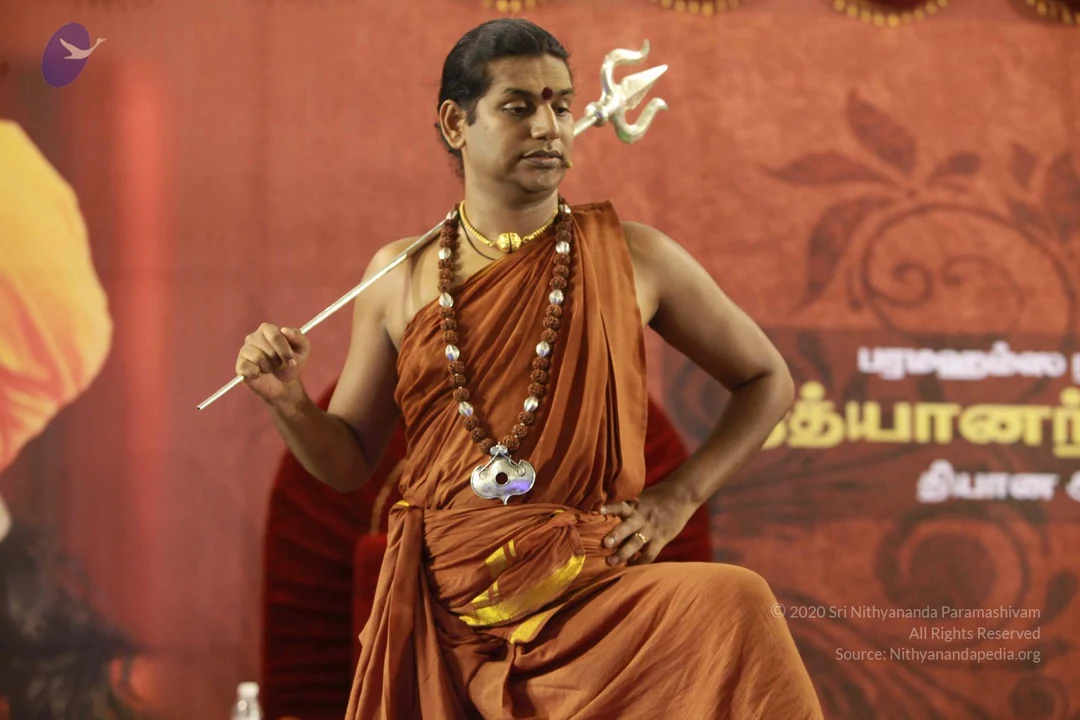
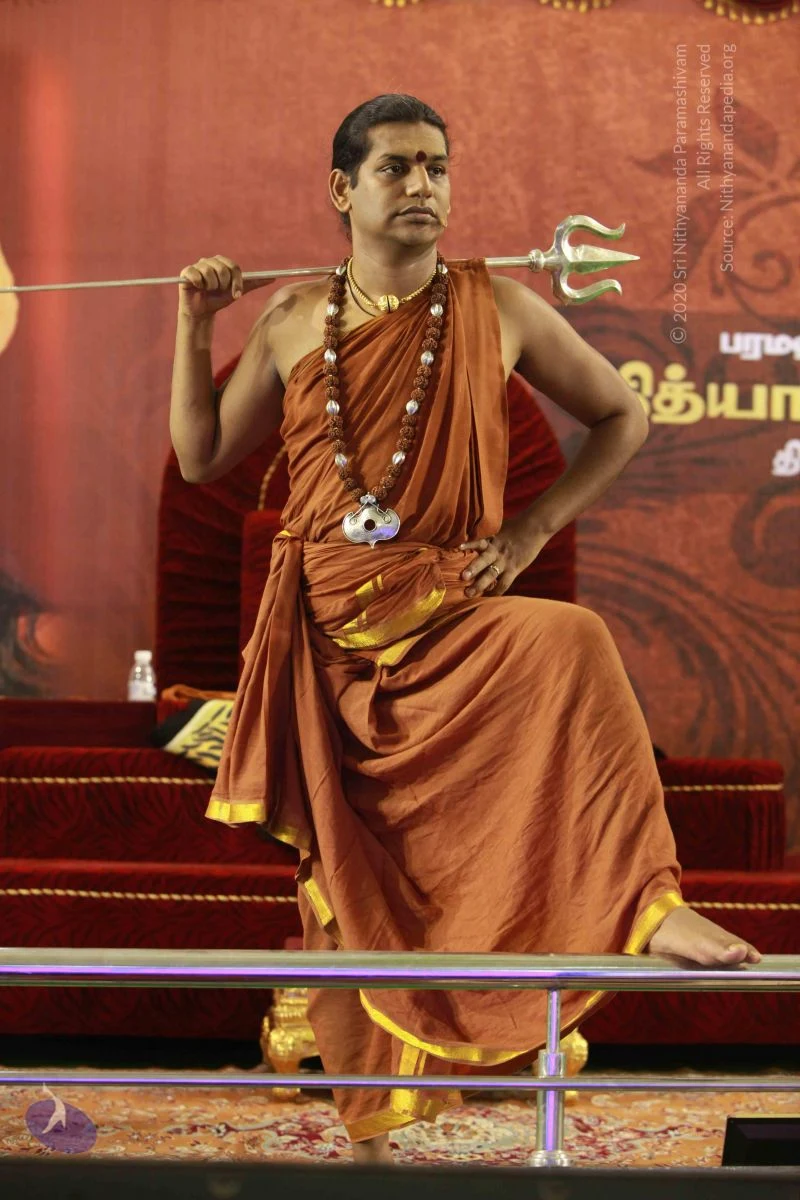
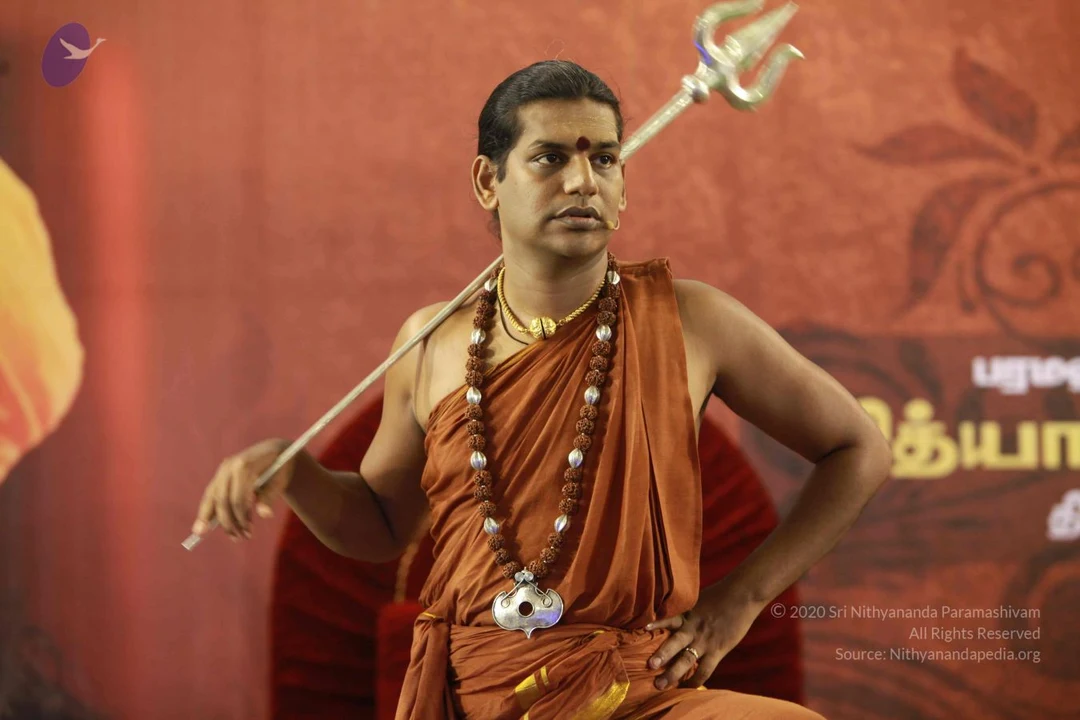
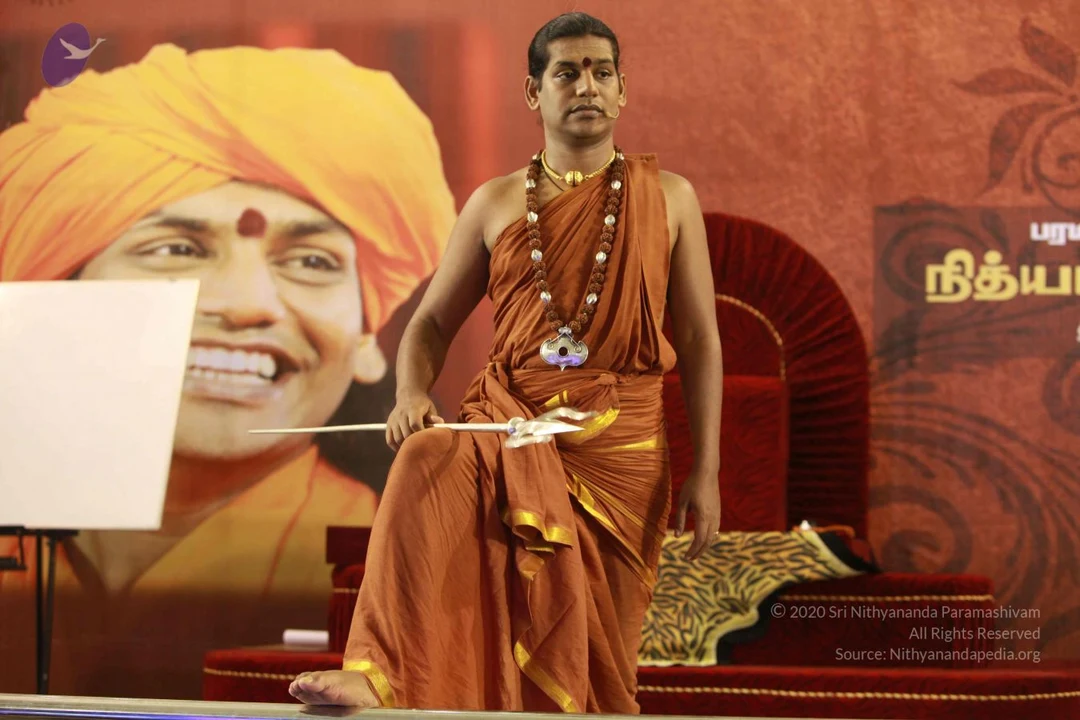
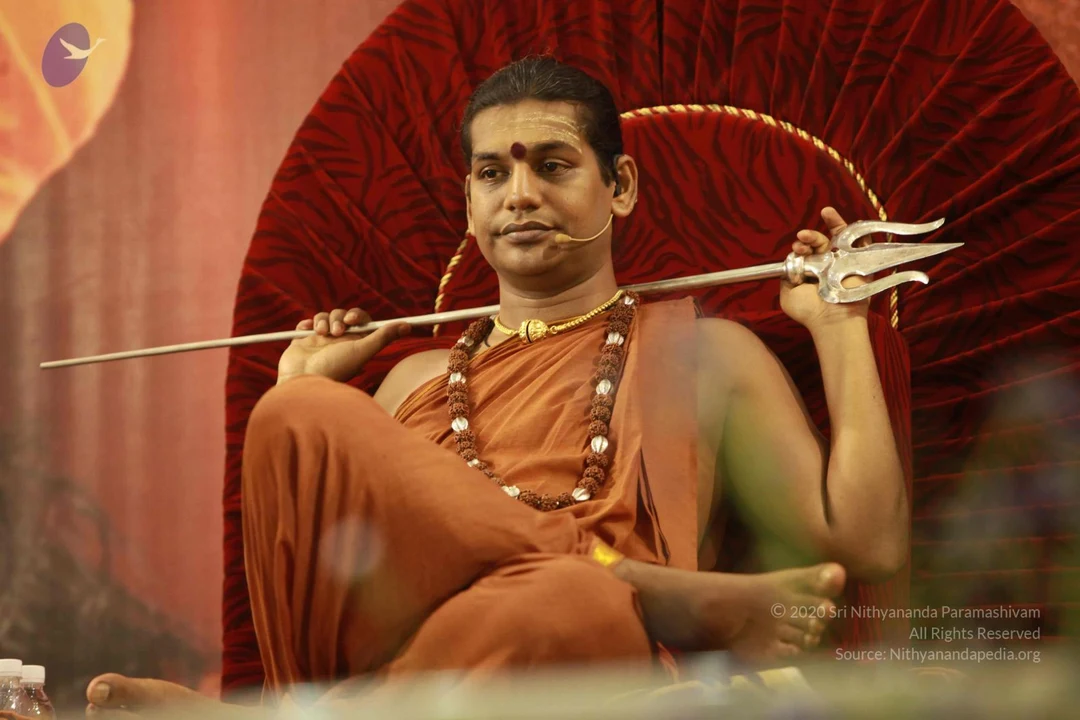
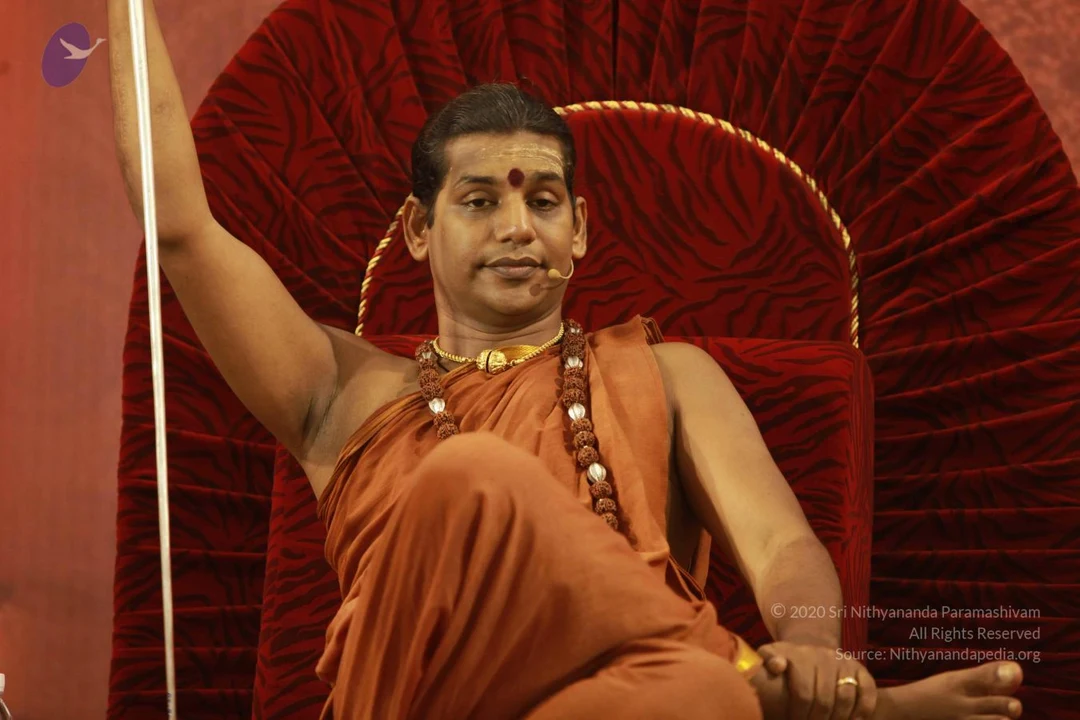
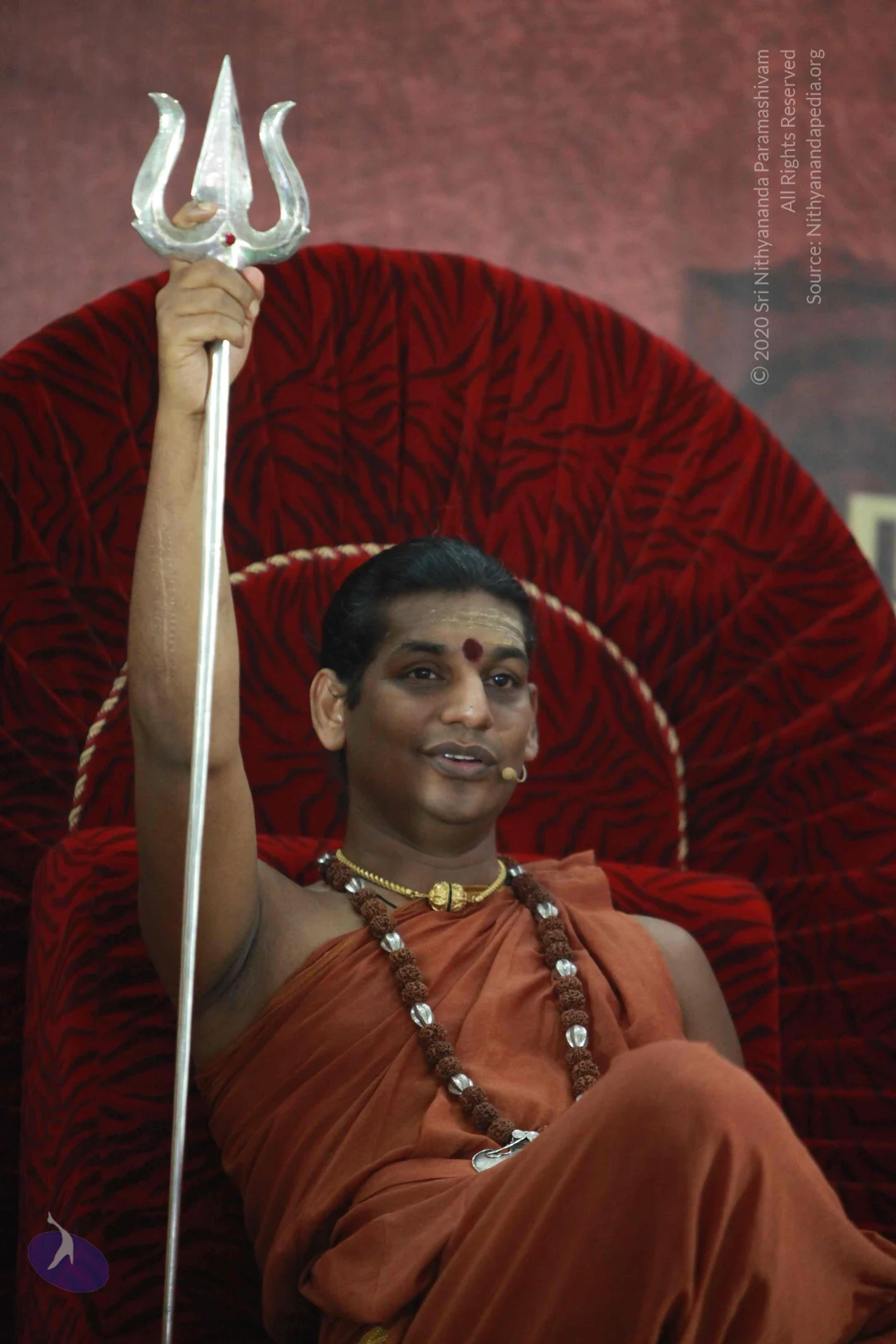
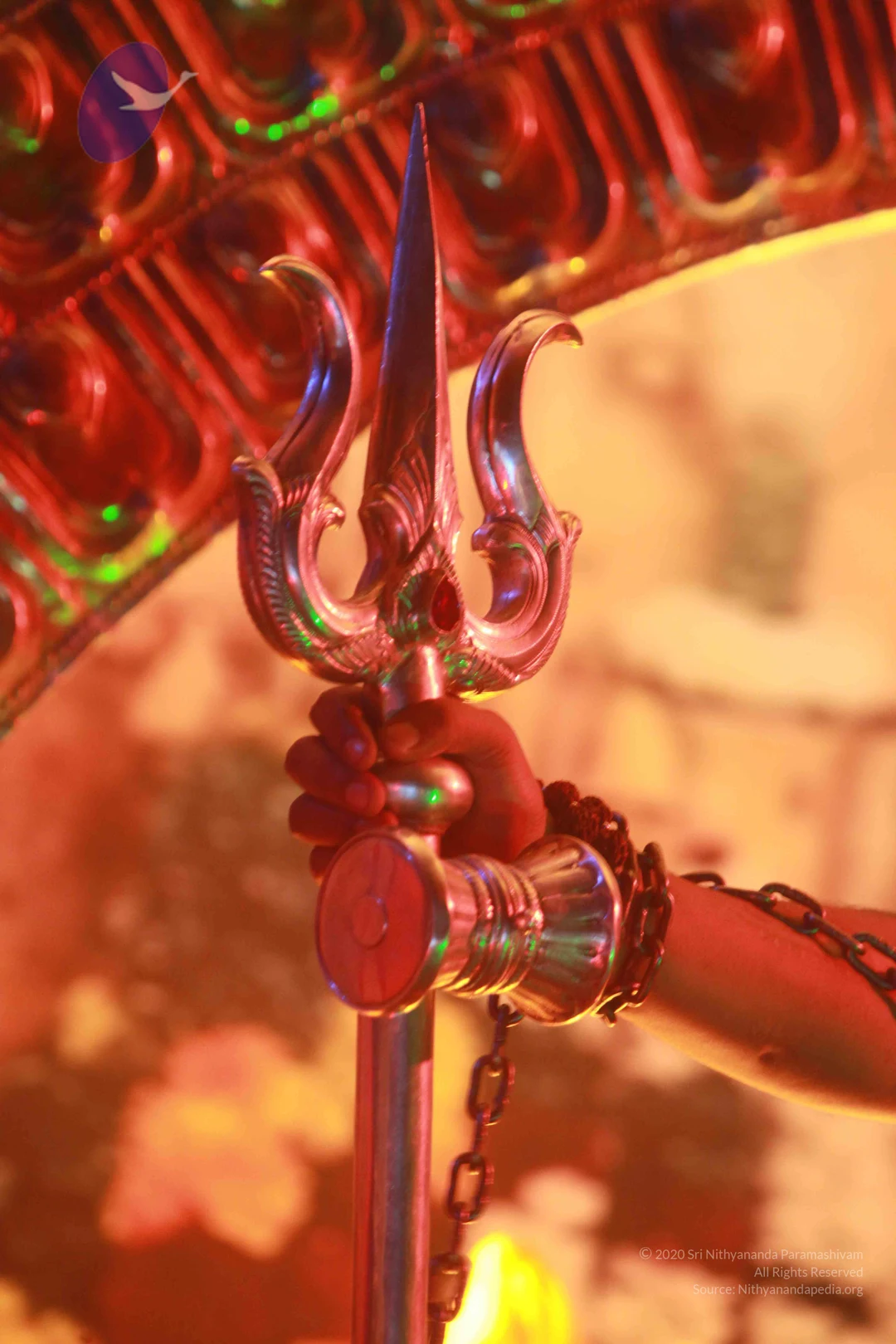
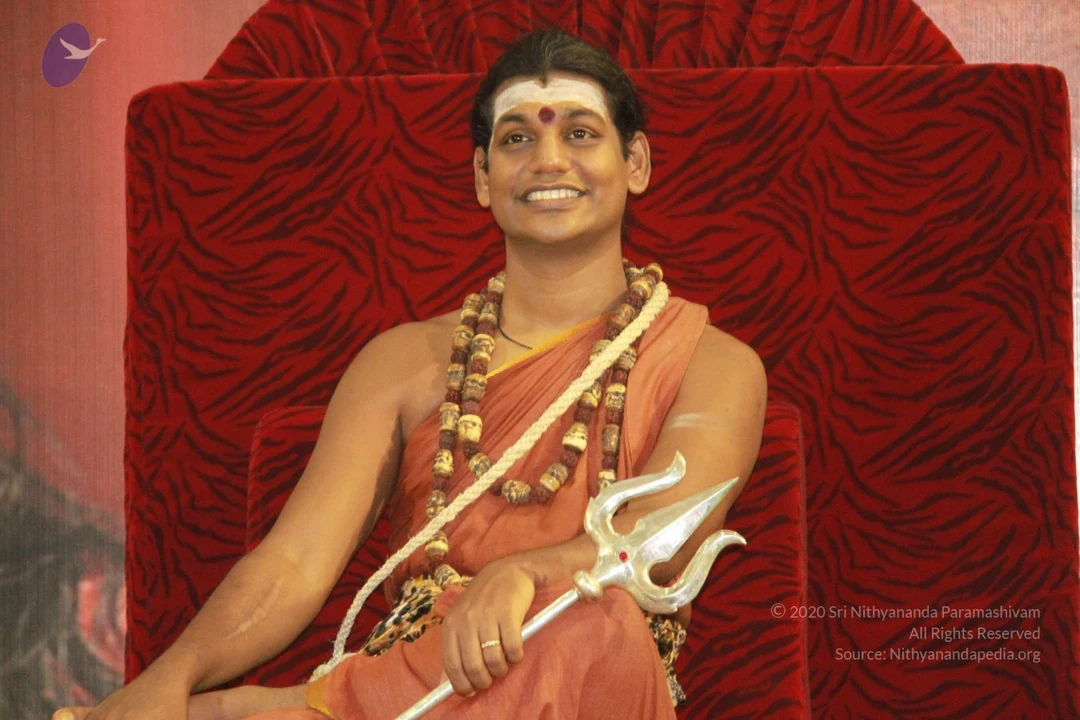
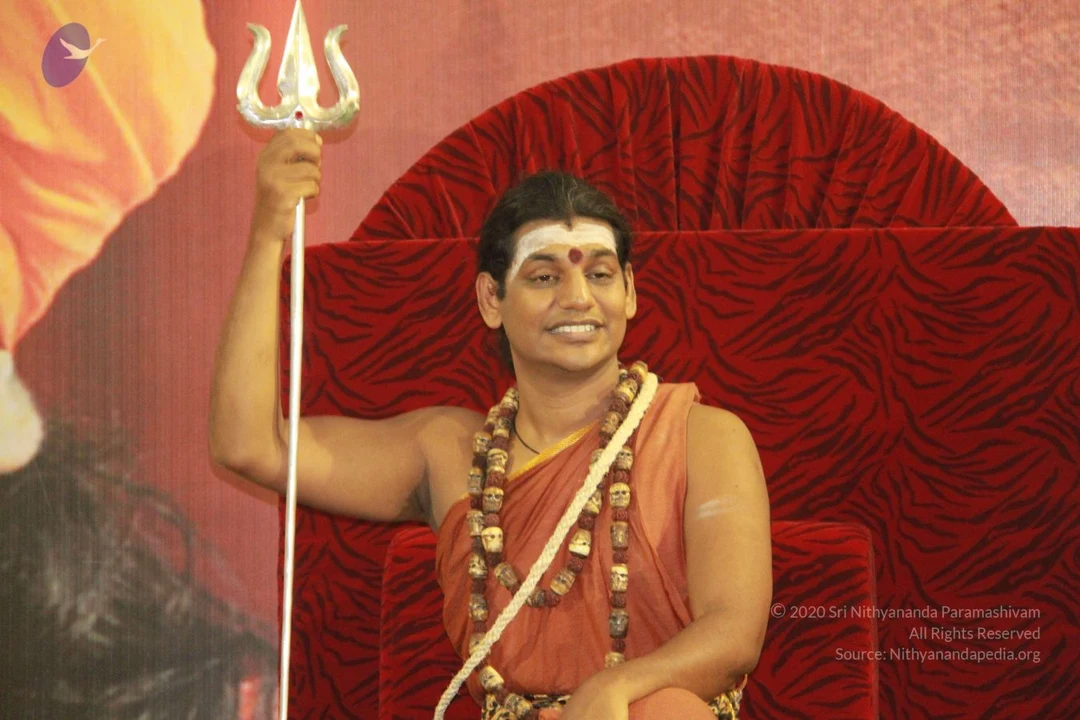
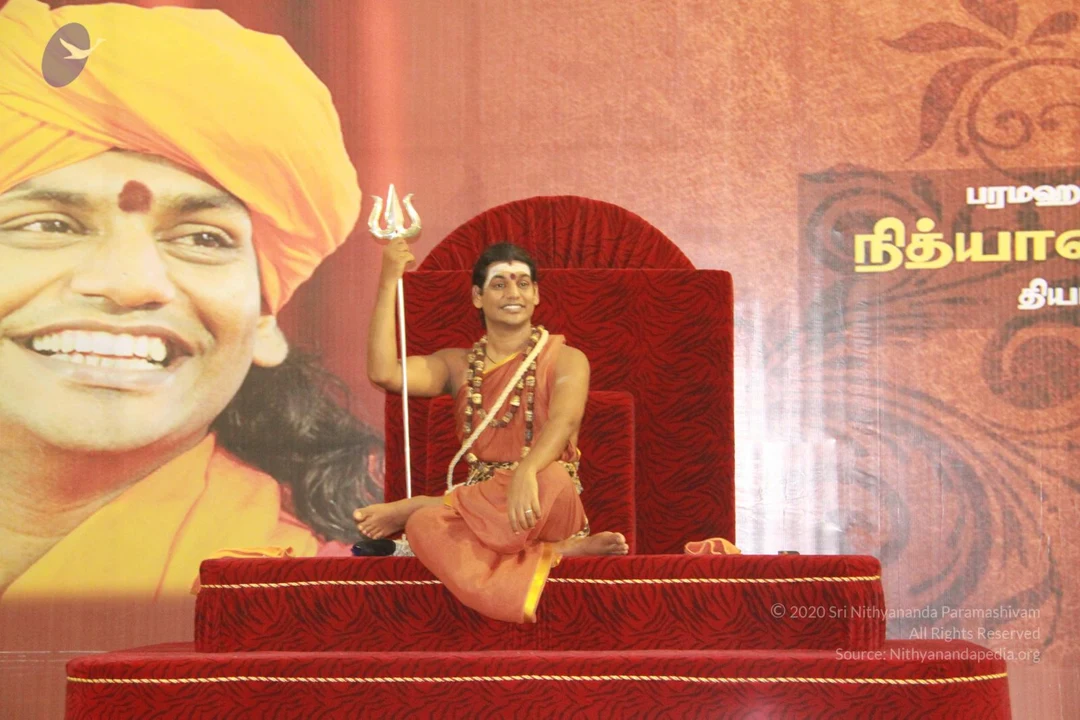
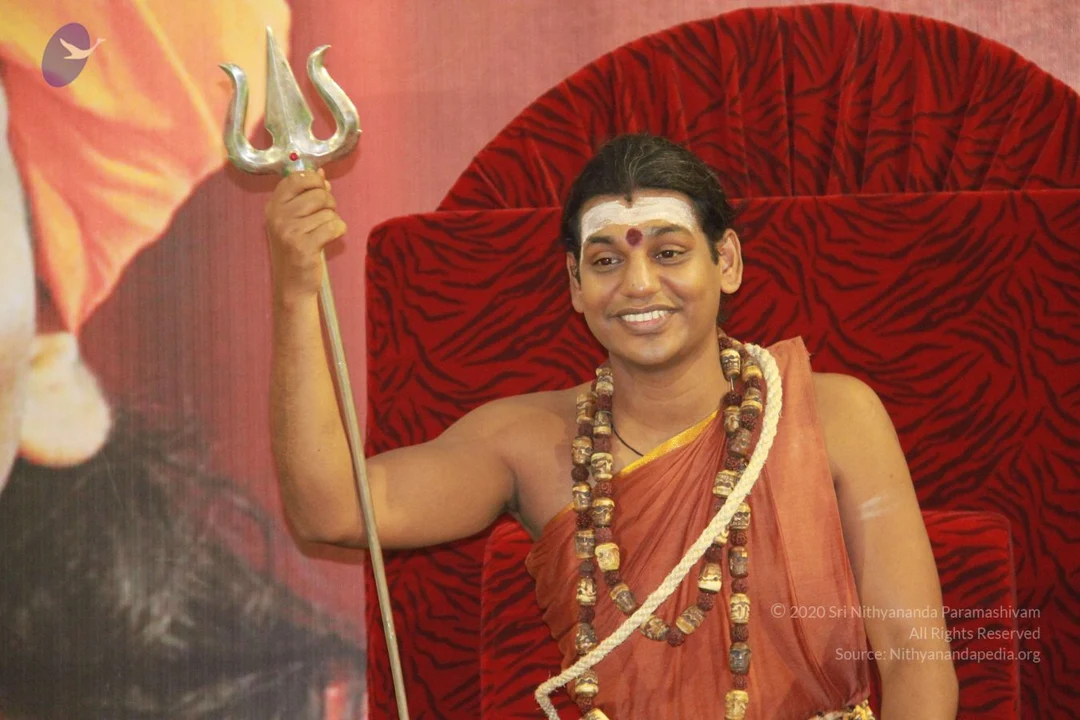
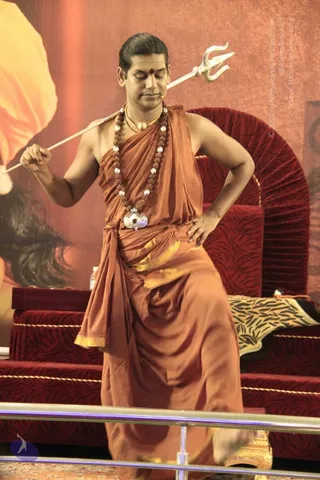
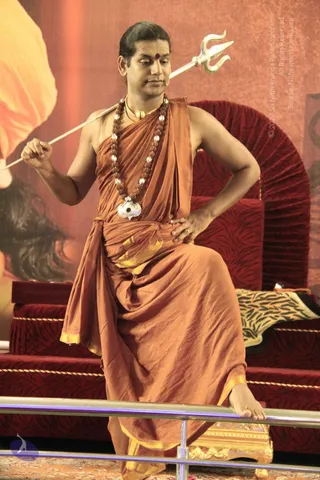
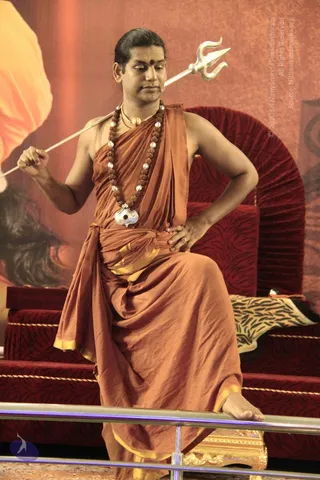
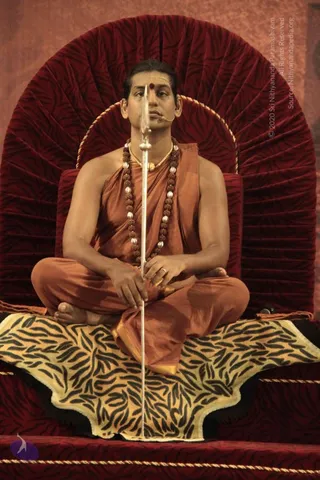
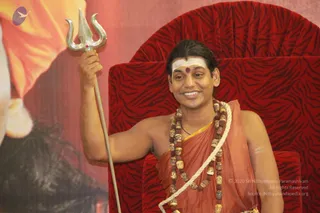
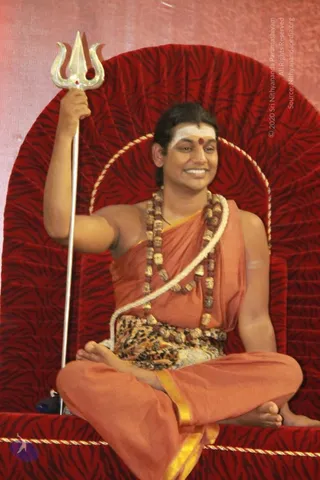
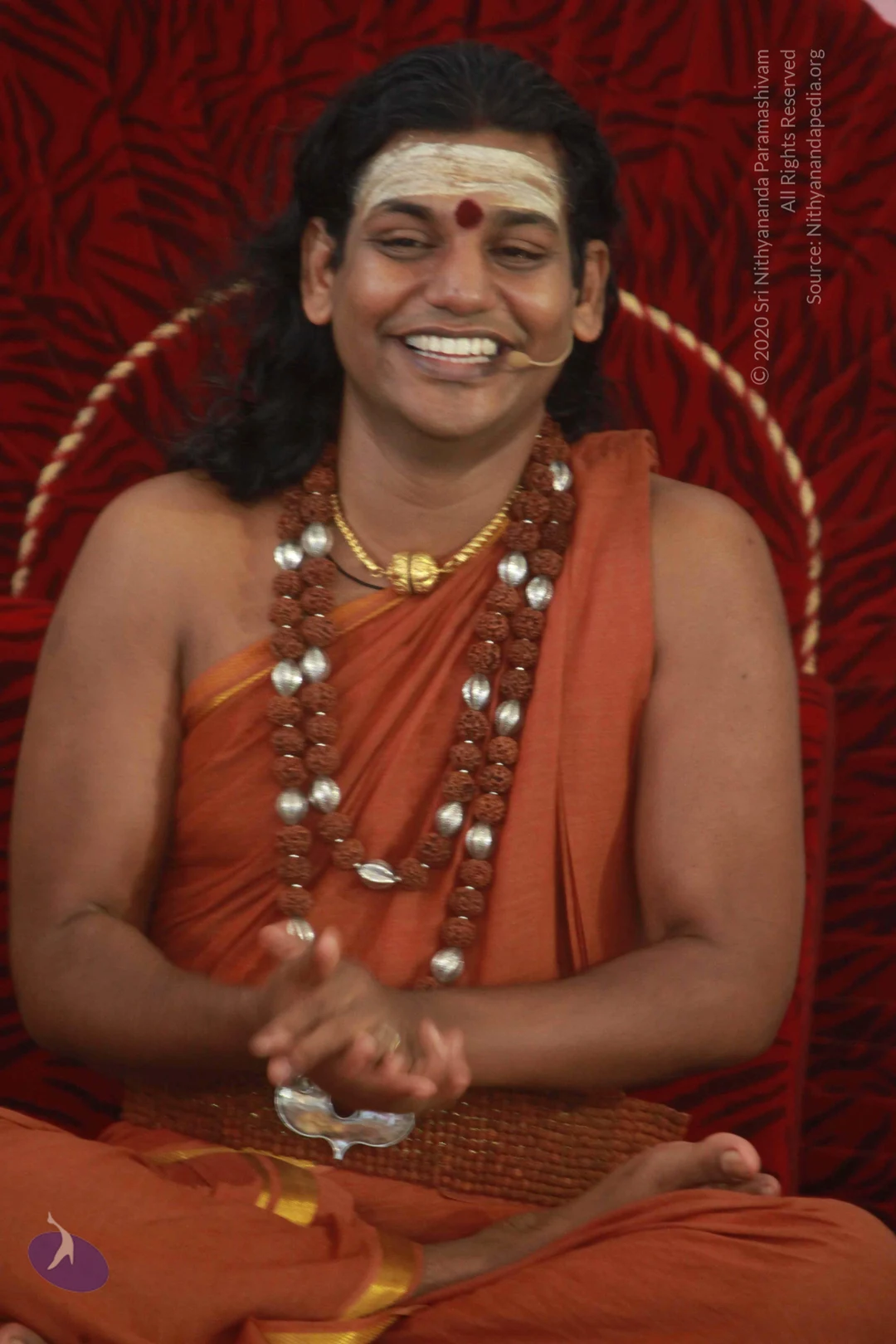
A man stands on a stage in a rust-orange draped garment with a gold-bordered hem, wearing a long rudraksha mala with white beads, a silver pendant and a gold necklace. He rests a silver trident over his right shoulder and holds it with his left hand while his other hand rests on his hip. A red forehead mark is visible. Behind him is a red velvet throne with a zebra-striped cushion and a backdrop of warm red-orange fabric. A metal railing runs across the lower foreground. The figure is a person, based on the saffron clothing, rudraksha mala, ceremonial gold necklace and trident cues, and the page says Swamiji was present at this satsang.A man seated on a red velvet throne with gold trim, holding a silver trident over his right shoulder with his right hand. He wears a rust-orange draped garment with gold border, a long rudraksha mala with a large silver pendant, a gold necklace, and a red bindi on his forehead. His left hand rests on his hip and his bare foot rests on a gold-trimmed stand, with a metal railing in front. A large painted backdrop with orange and red tones, and a leopard-print cloth on the throne, complete the setting. The man is the only person visible.A man in a rust-orange draped garment with gold-bordered edges stands beside a red velvet throne, holding a silver trident over his right shoulder with his right hand. He wears a rudraksha mala with white beads, a silver ornamental pendant and a gold necklace, and a red bindi on his forehead. His left hand rests on his hip and his left foot is raised onto a metal rail. Behind him are a leopard-print cloth on the throne and a painted backdrop with a tiger-like figure. a person is shown in person with the trident, rudraksha mala and saffron-orange drape cues.A man sits cross-legged on a tiger-striped cushion on a deep red velvet throne with a high arched back trimmed with gold cord. He wears an orange-rust draped garment with gold border, a long rudraksha mala with silver beads, and a gold necklace. A red bindi and tilak mark his forehead. A tall silver staff. The cushion and throne suggest a satsang setting. Appearance-based label: a person, seated in a throne with saffron-orange robes and rudraksha mala.A seated man in an orange-brown robe sits cross-legged on a striped tiger-print mat before a deep red velvet throne with a rounded back. He holds a silver trident upright before his face, gripping its shaft with both hands. He wears a rudraksha mala with silver beads and a thin gold chain. A water bottle sits at the left edge and a gold-lettered backdrop is at the right.A photograph of a man seated cross-legged on a red velvet throne with a rounded back, on a stage with a tiger-striped cloth draped over the seat. He wears a saffron-orange cloth draped over one shoulder, a rudraksha mala with a silver pendant, and a gold necklace, with a red bindi on his forehead. He holds a silver trident in his raised right hand and smiles, with a small microphone near his face. A water bottle sits on a red-covered table at left. Behind him is a backdrop with Tamil script and a patterned design.
AKASHIC-READINGS

181 photosSource gallery
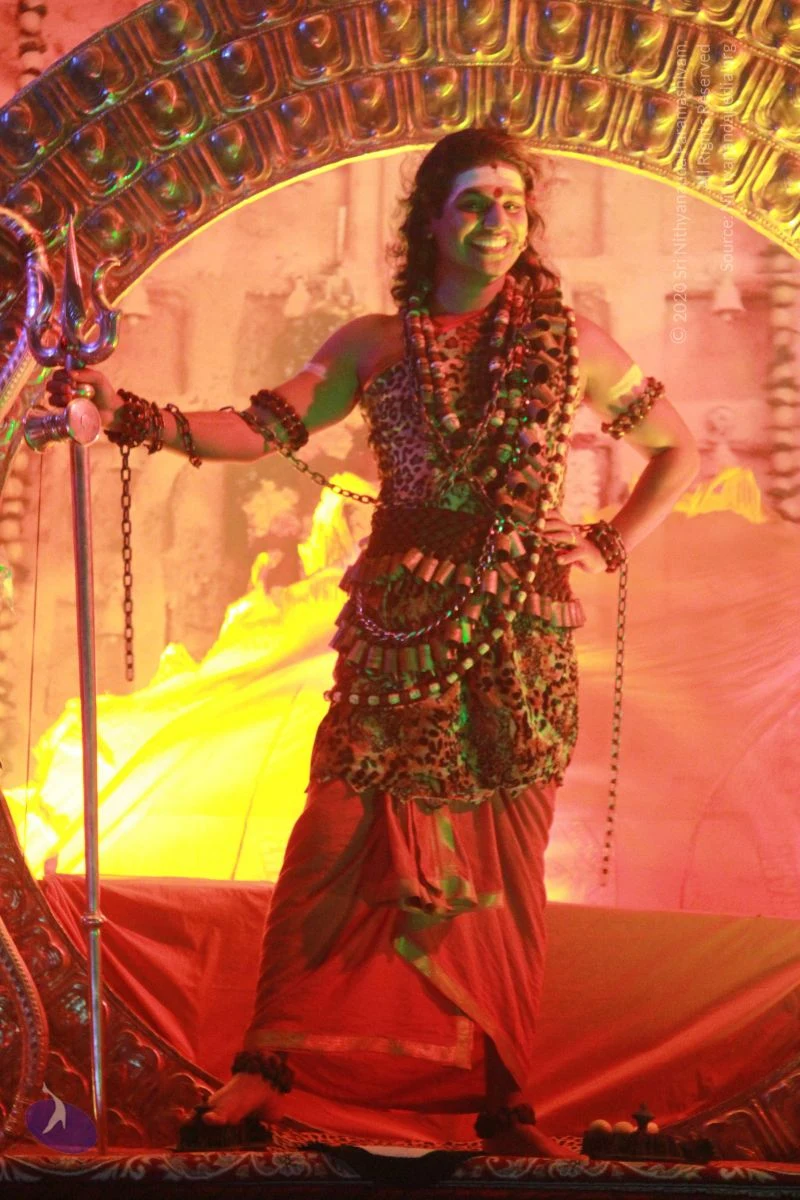
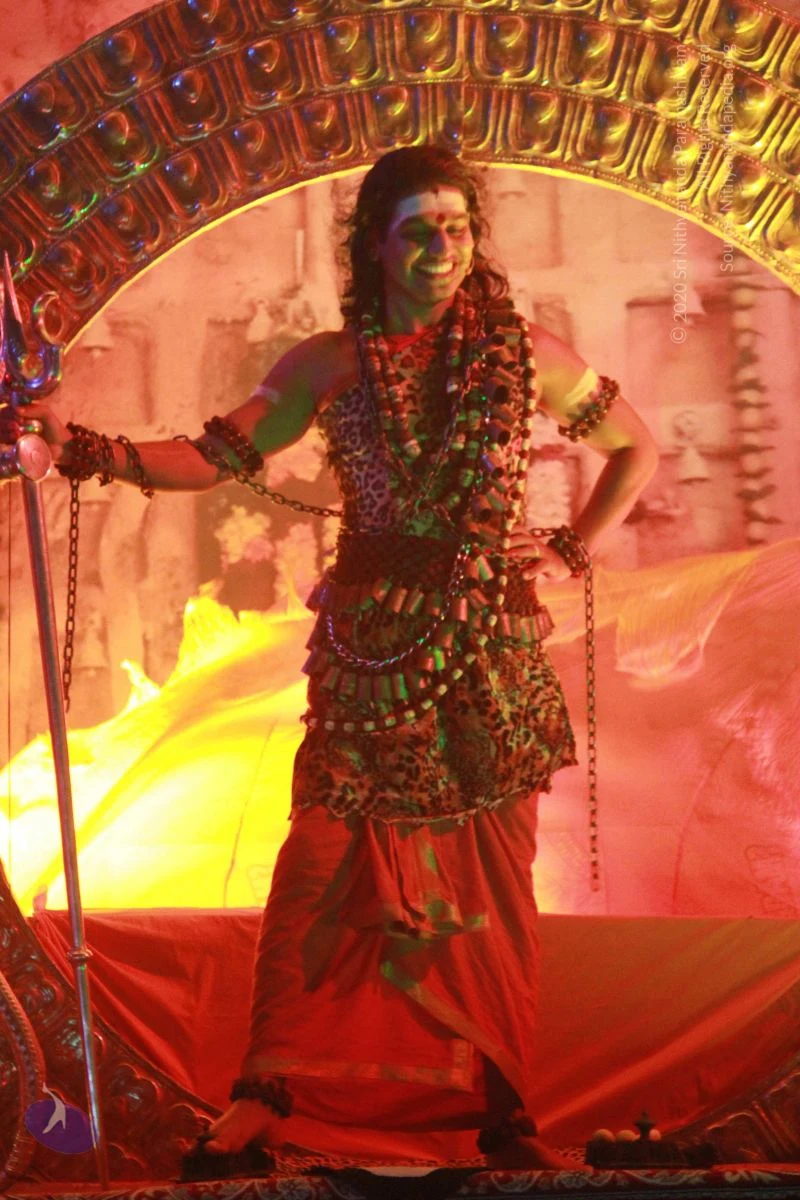
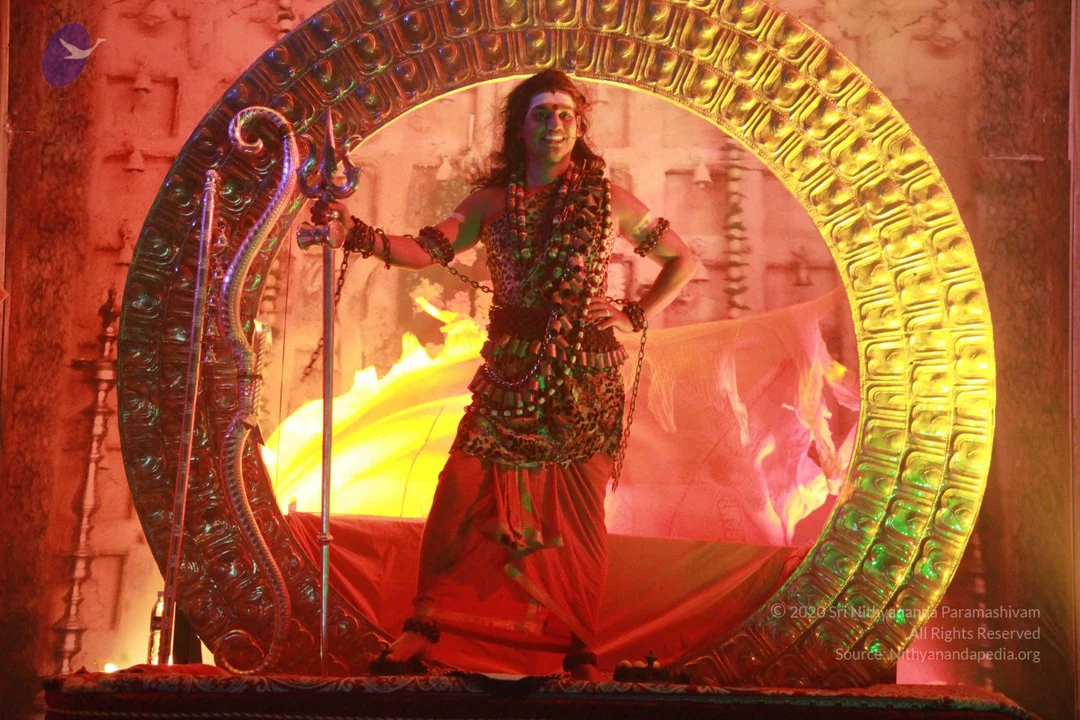
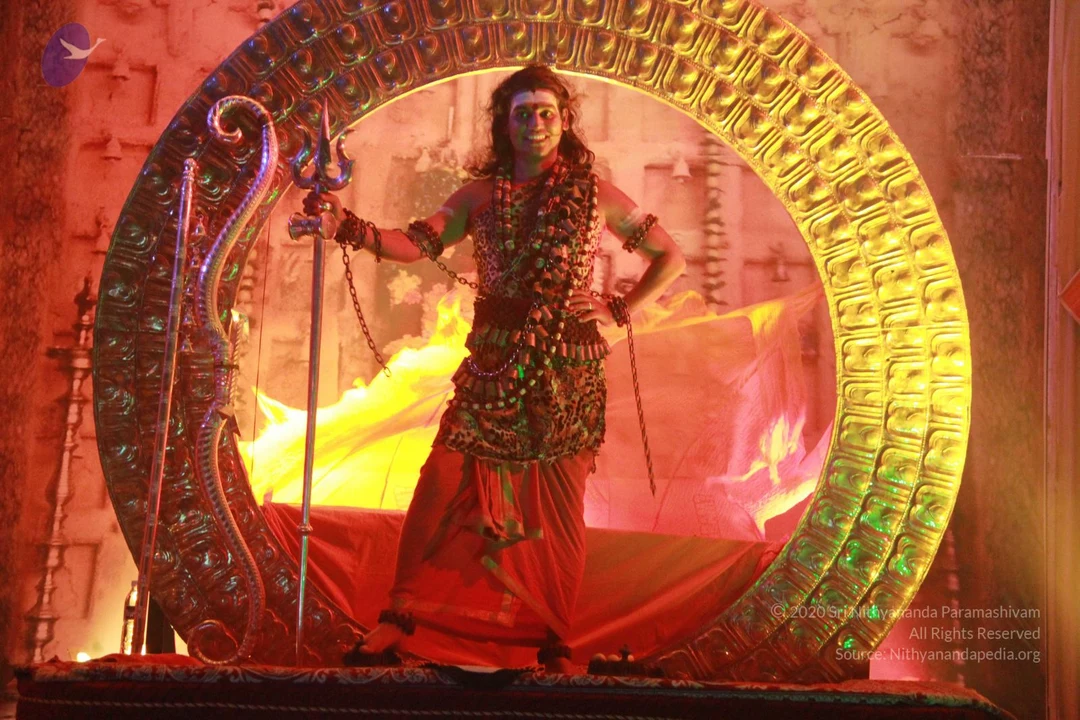
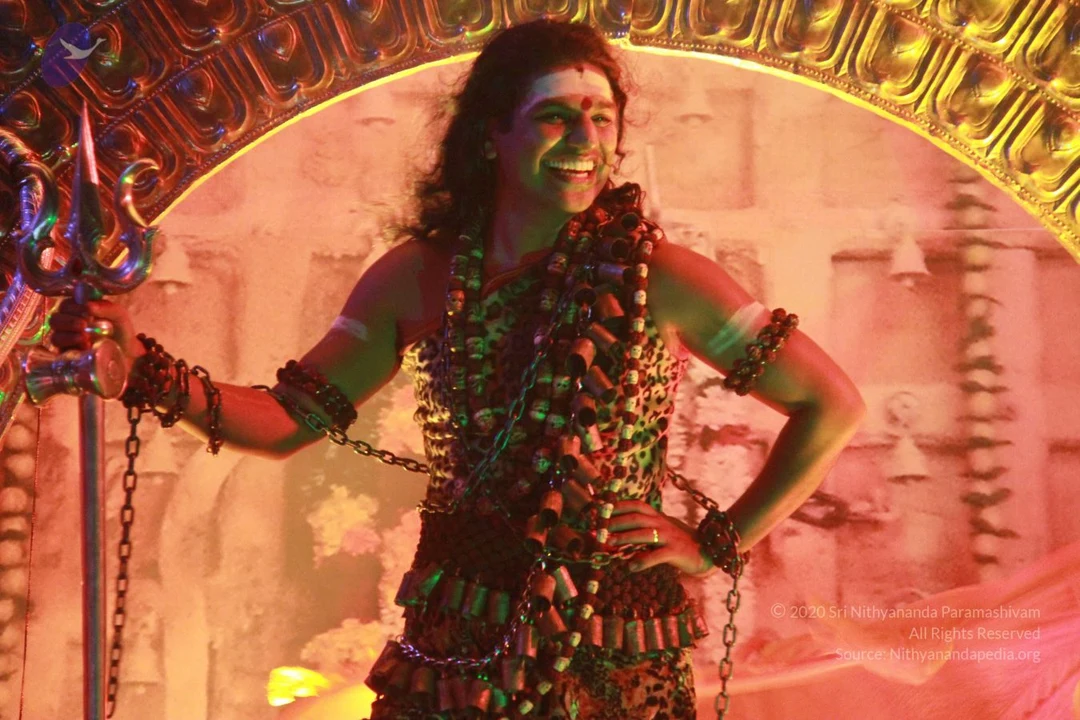
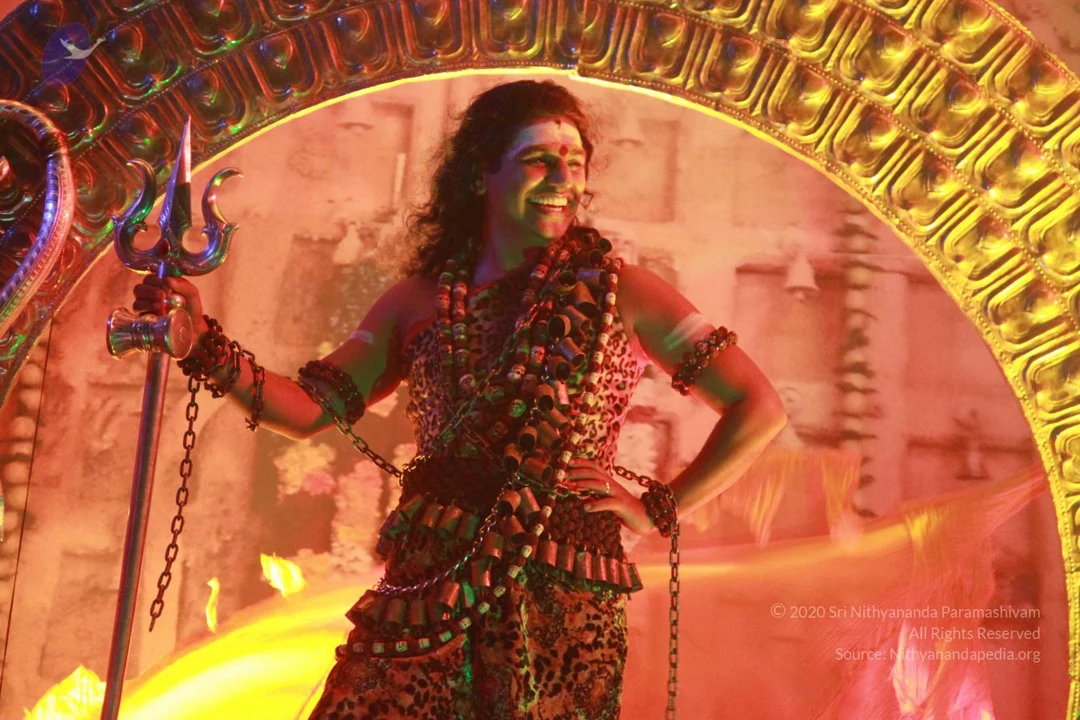
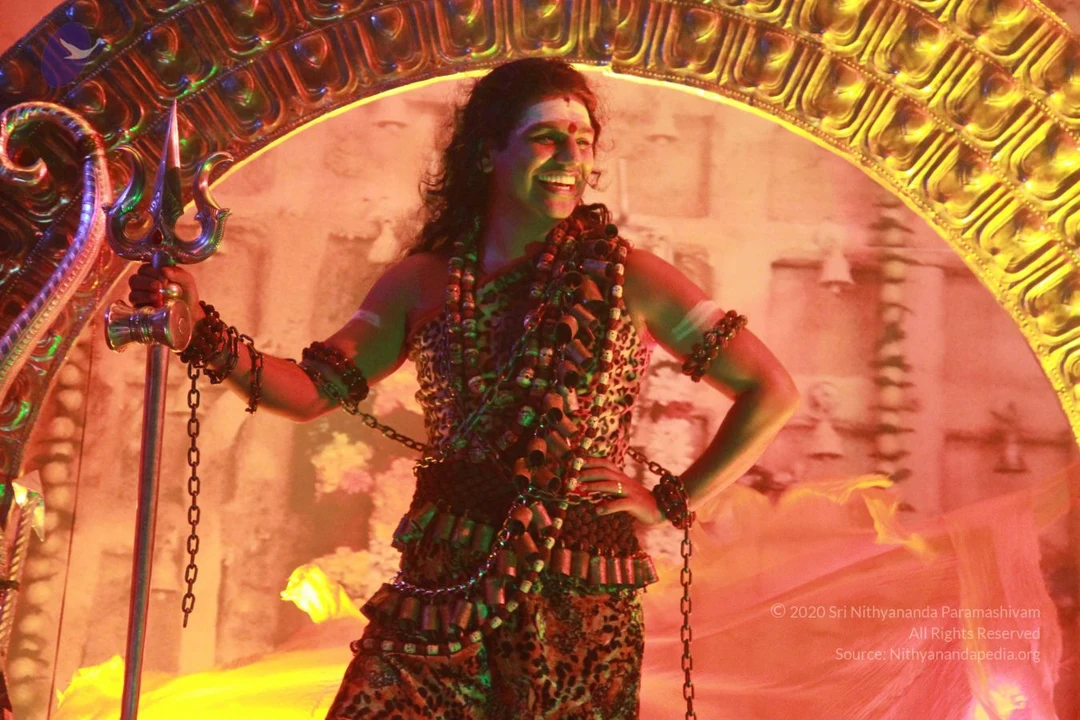
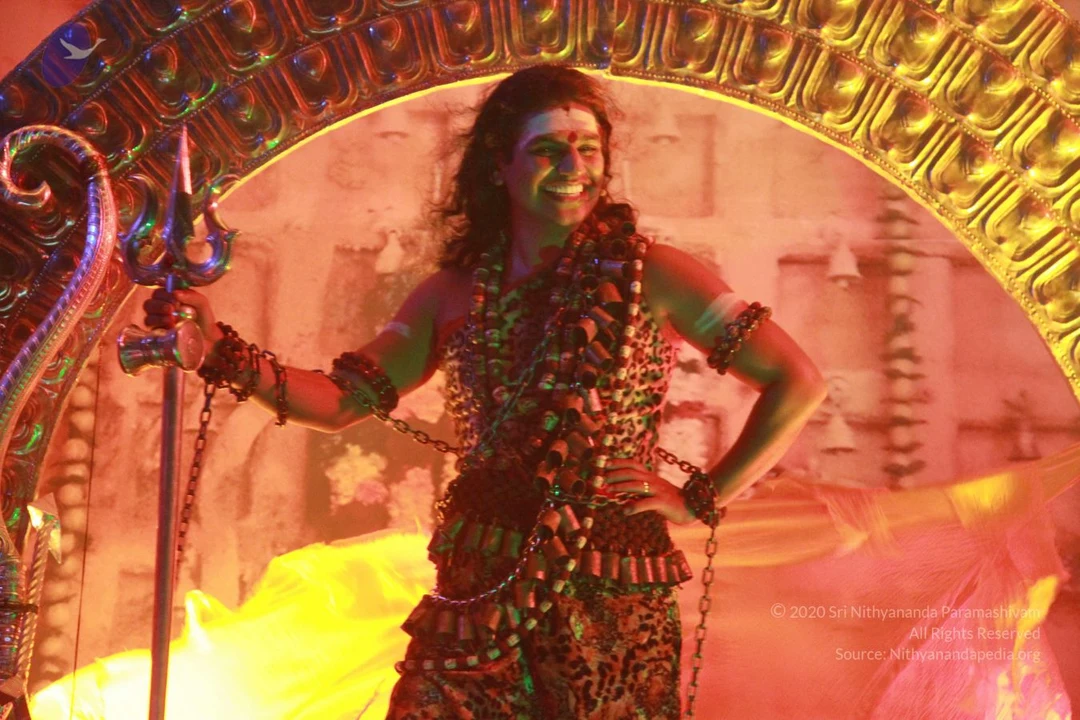
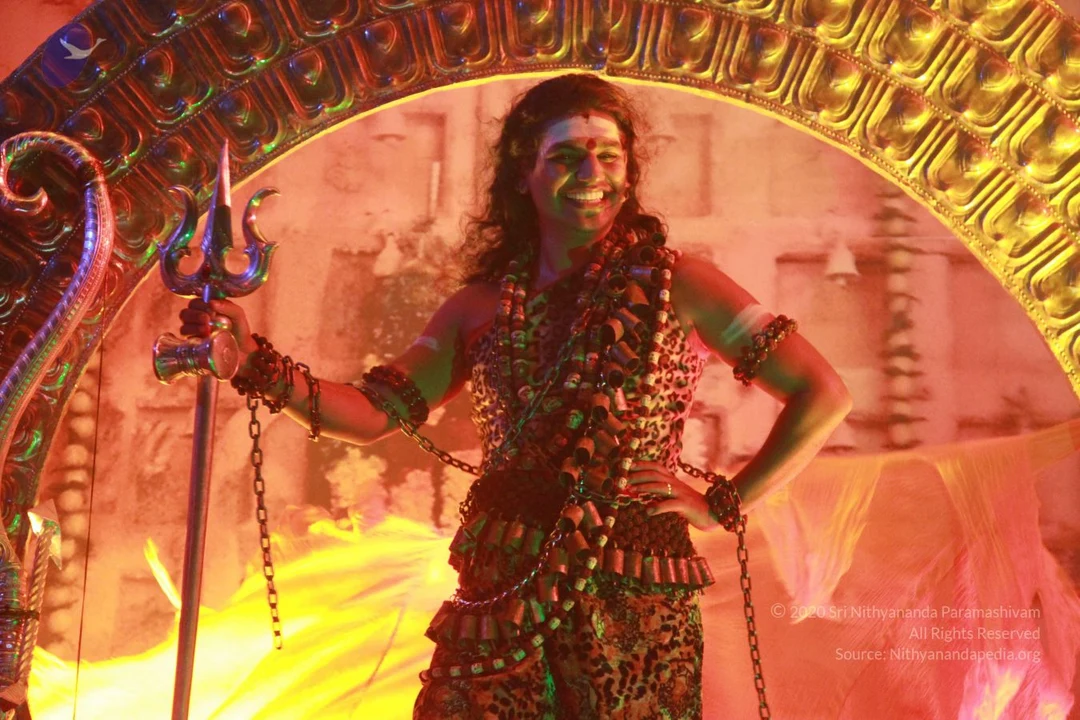
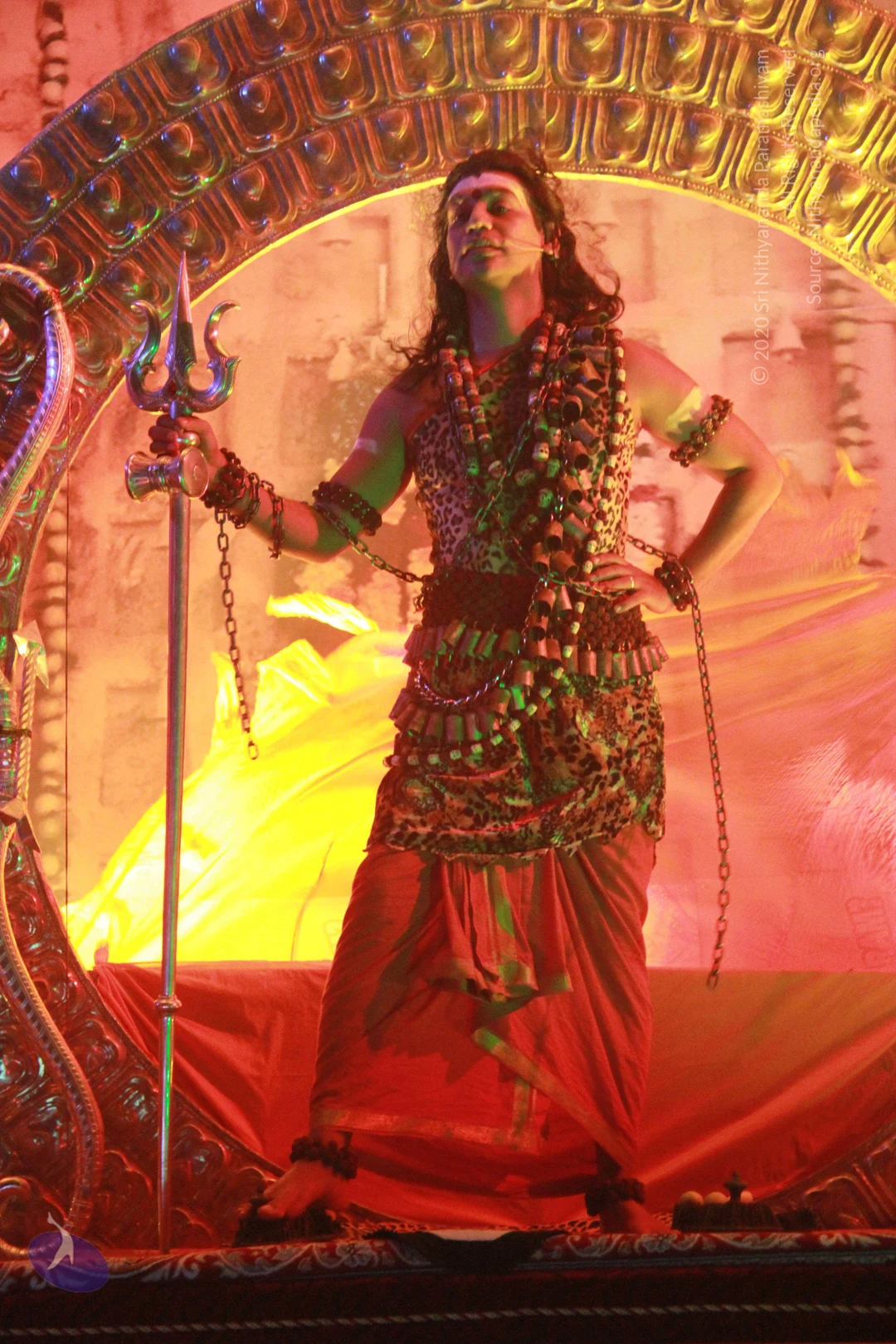
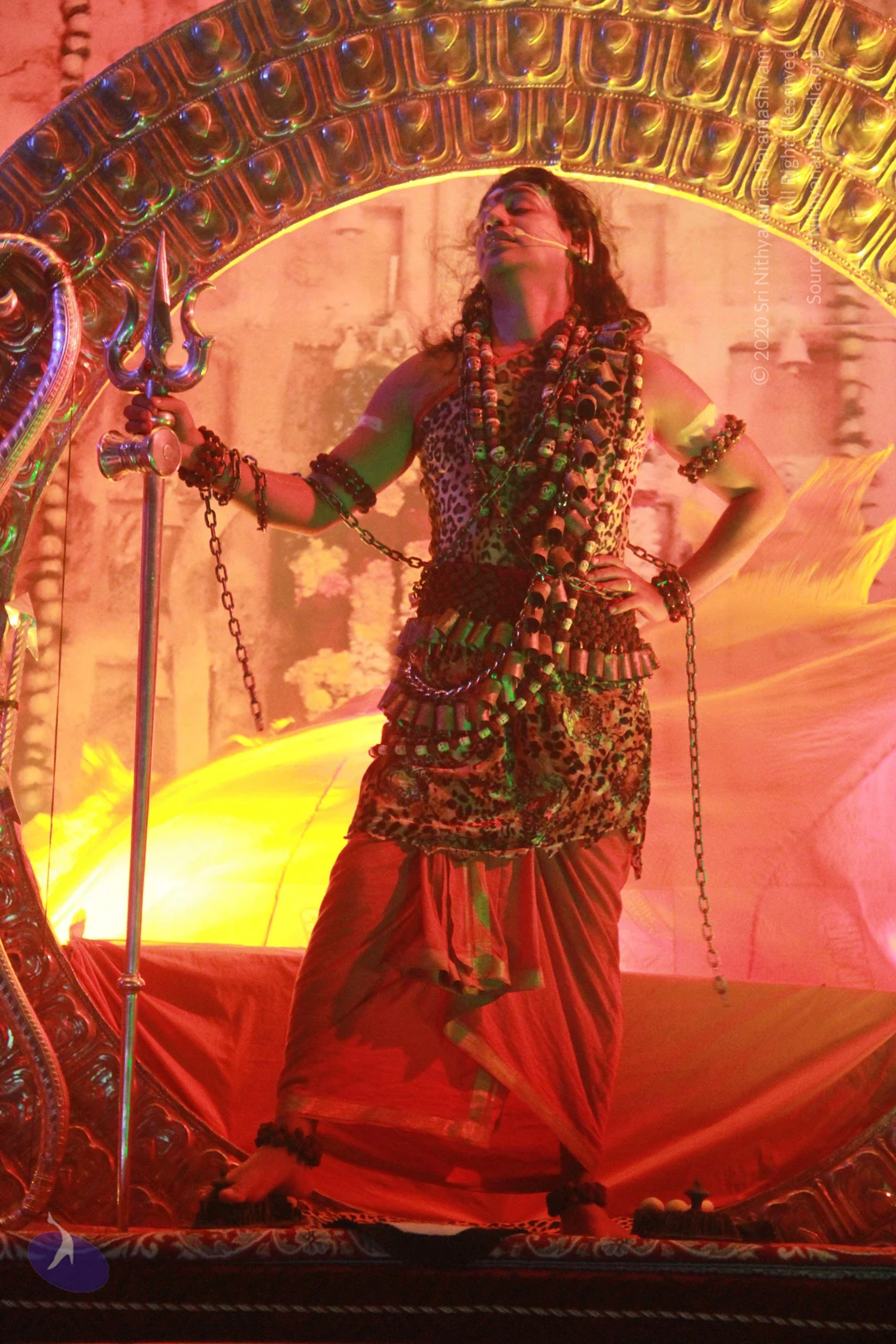
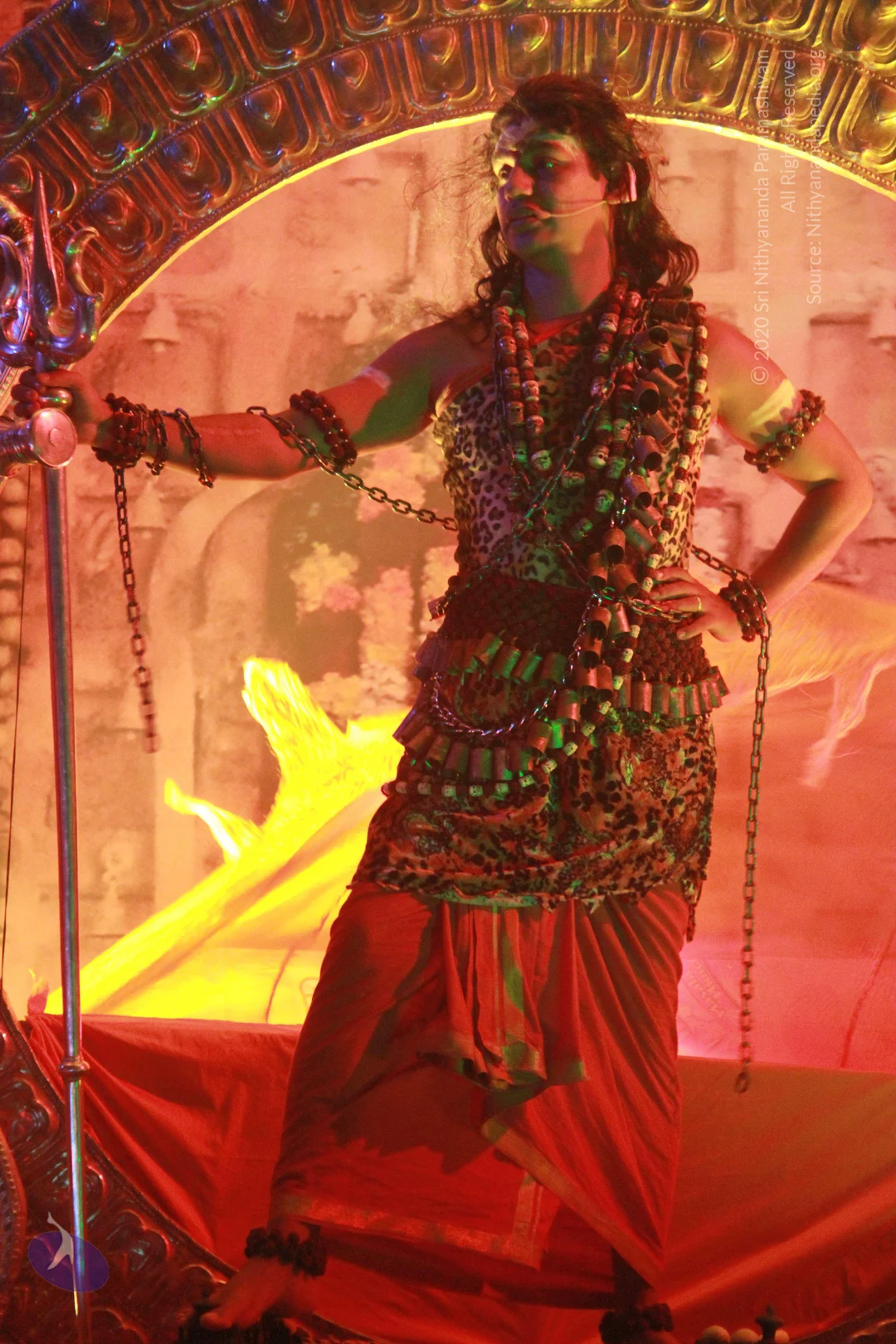
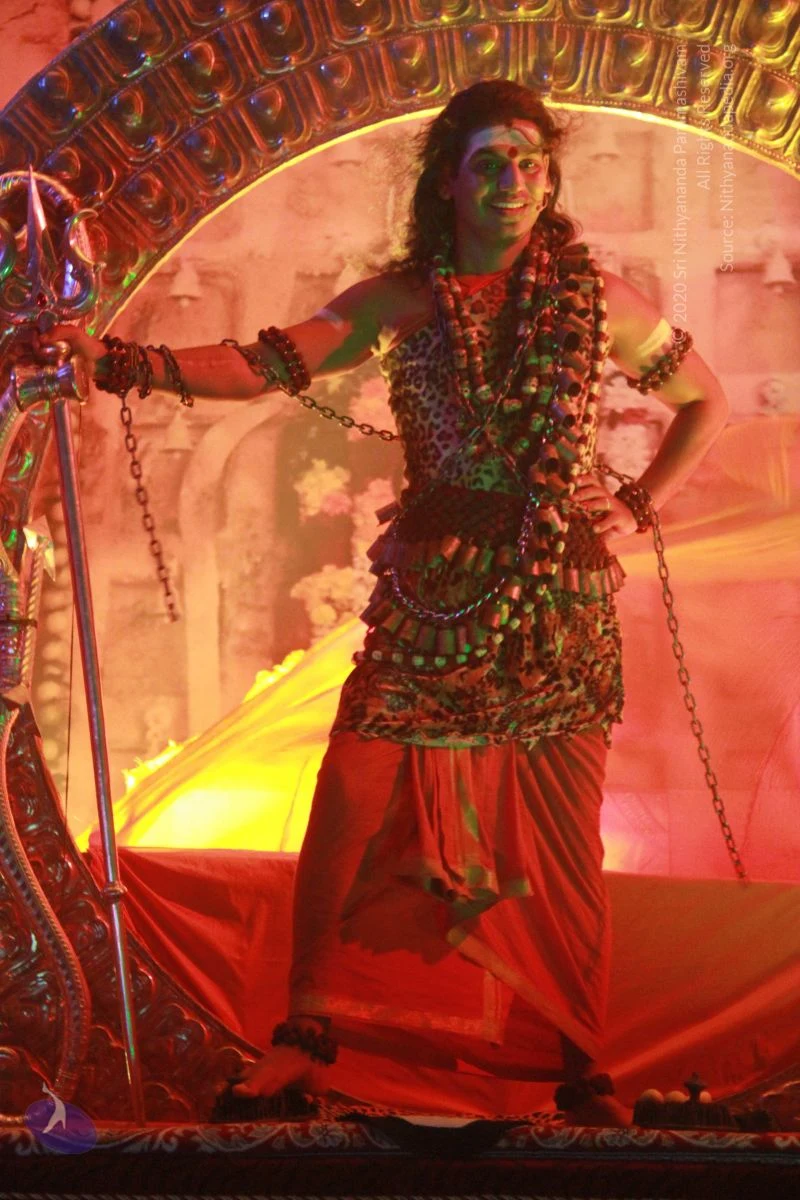
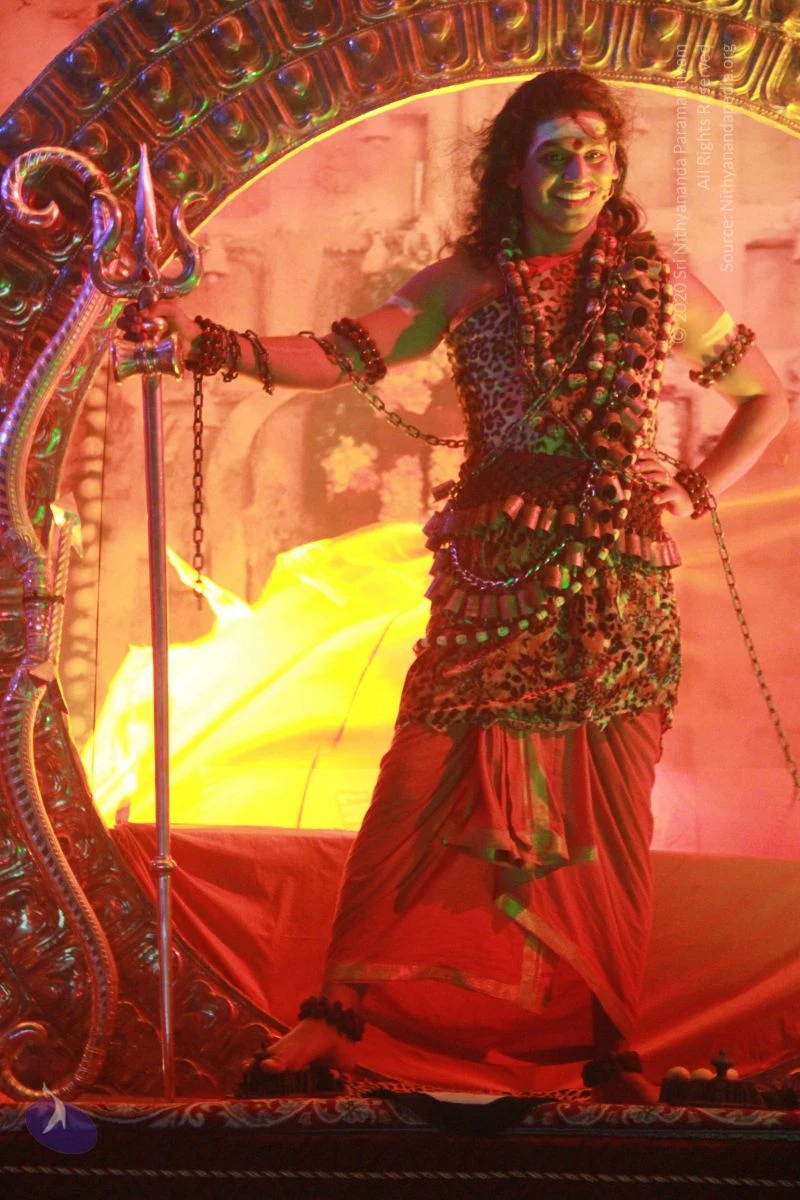
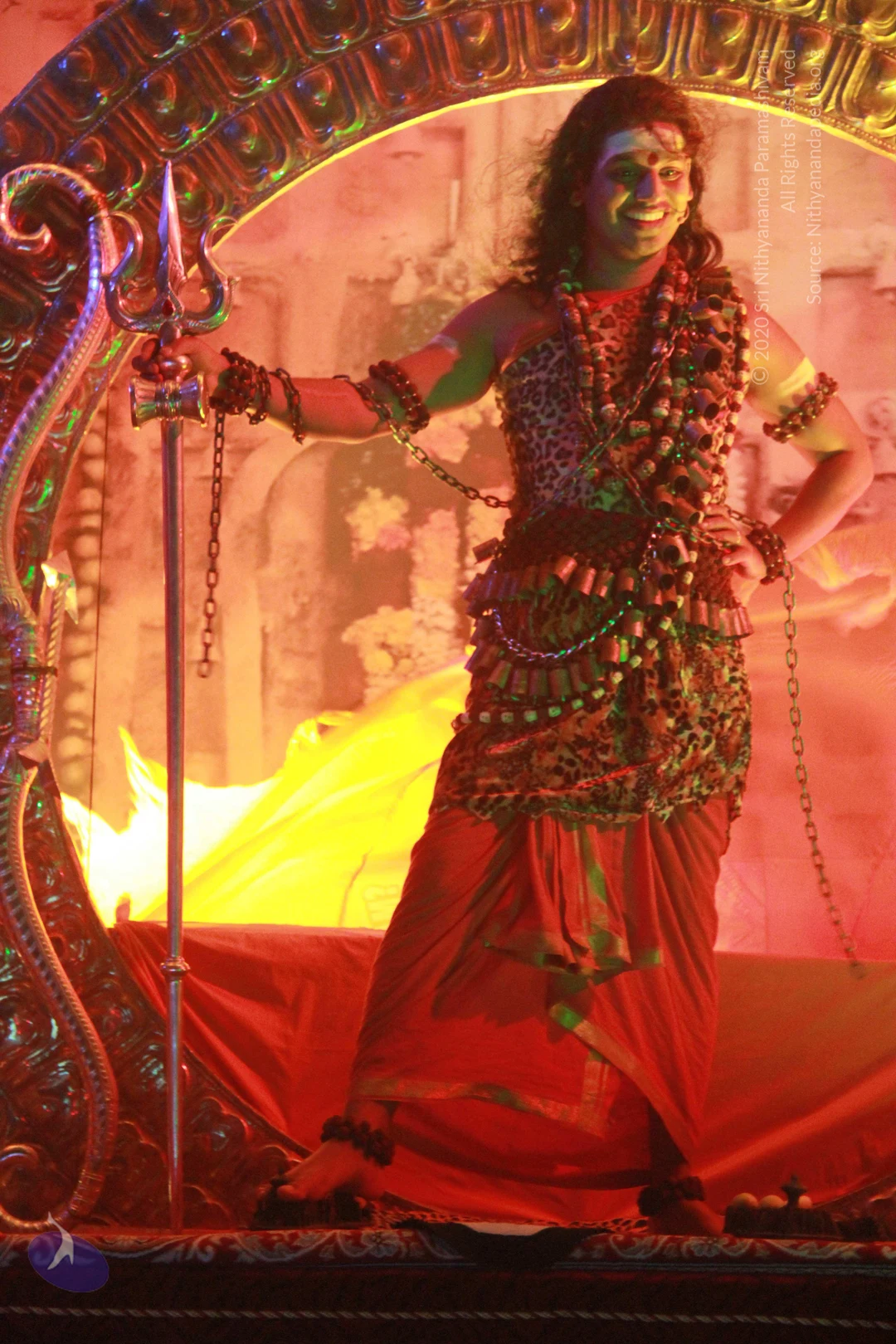
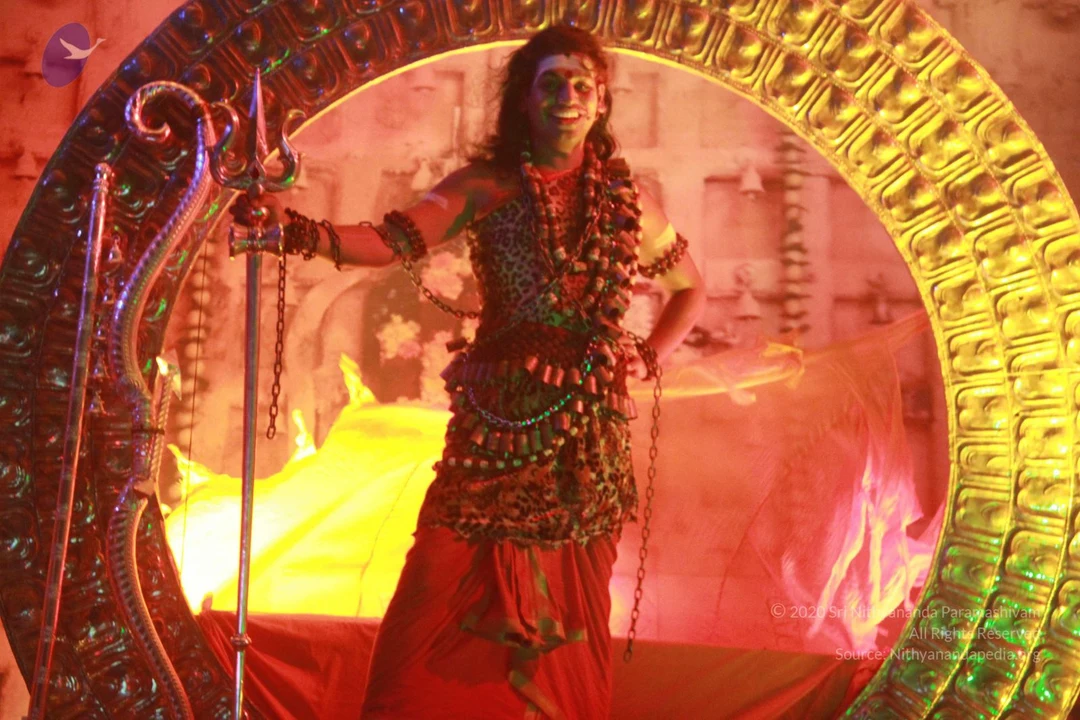
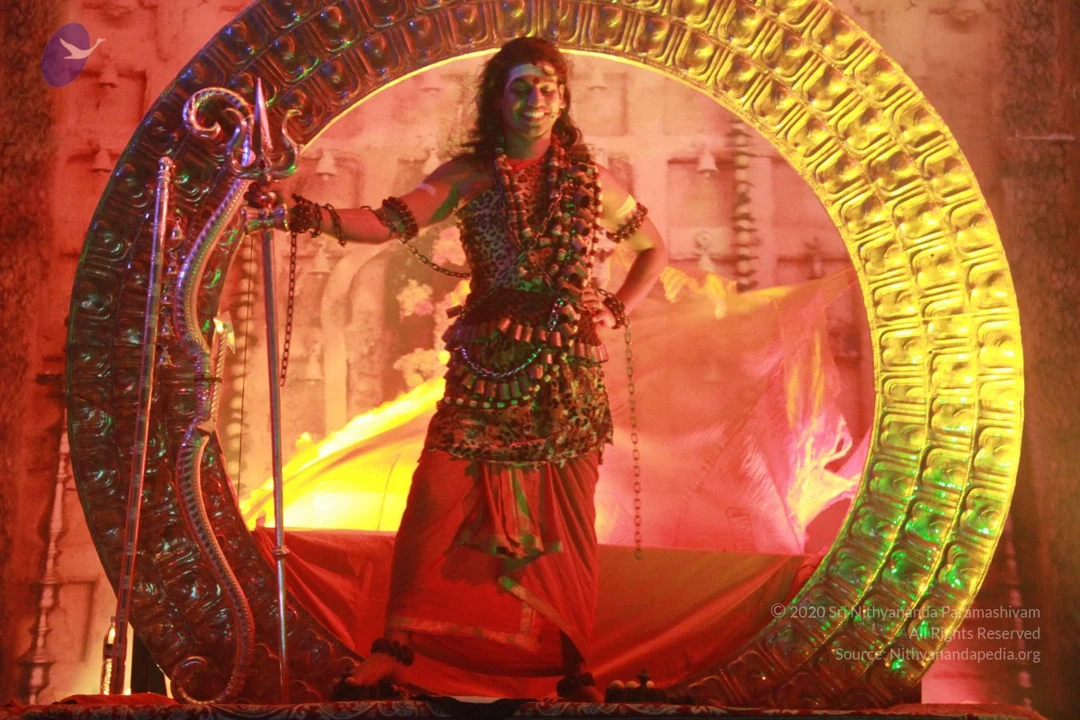
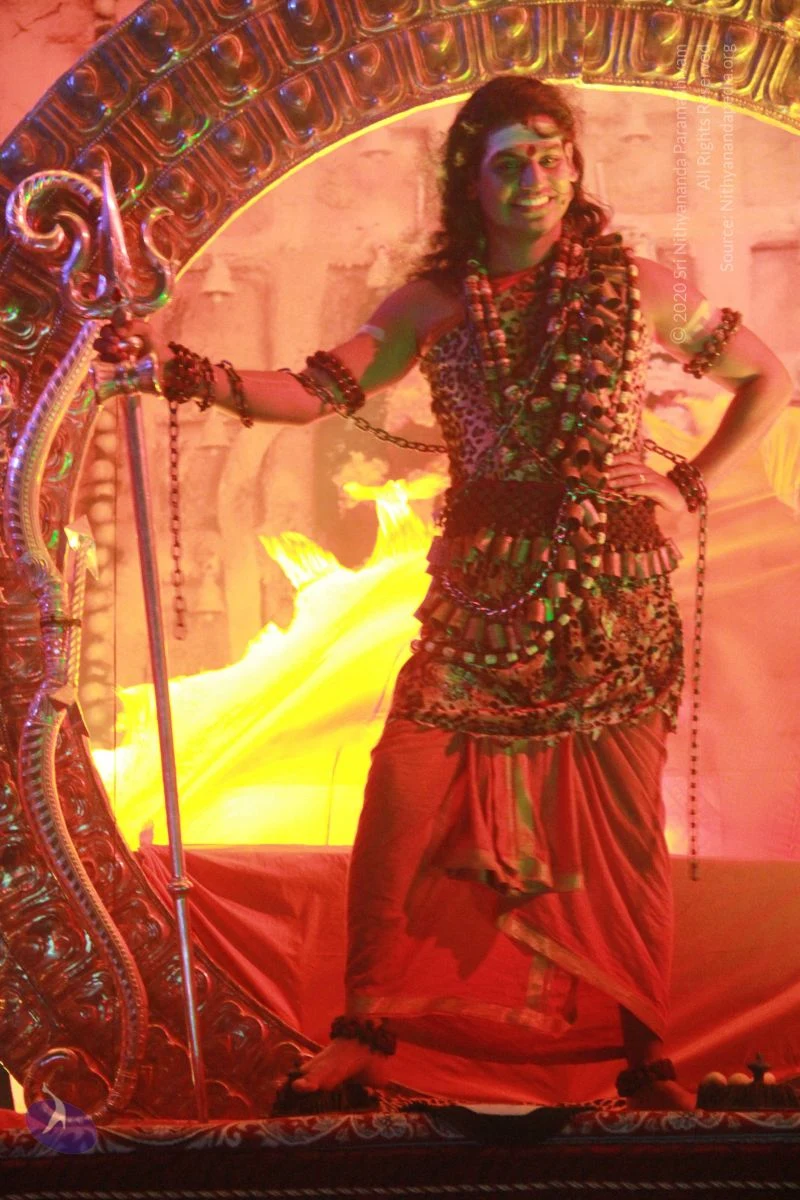
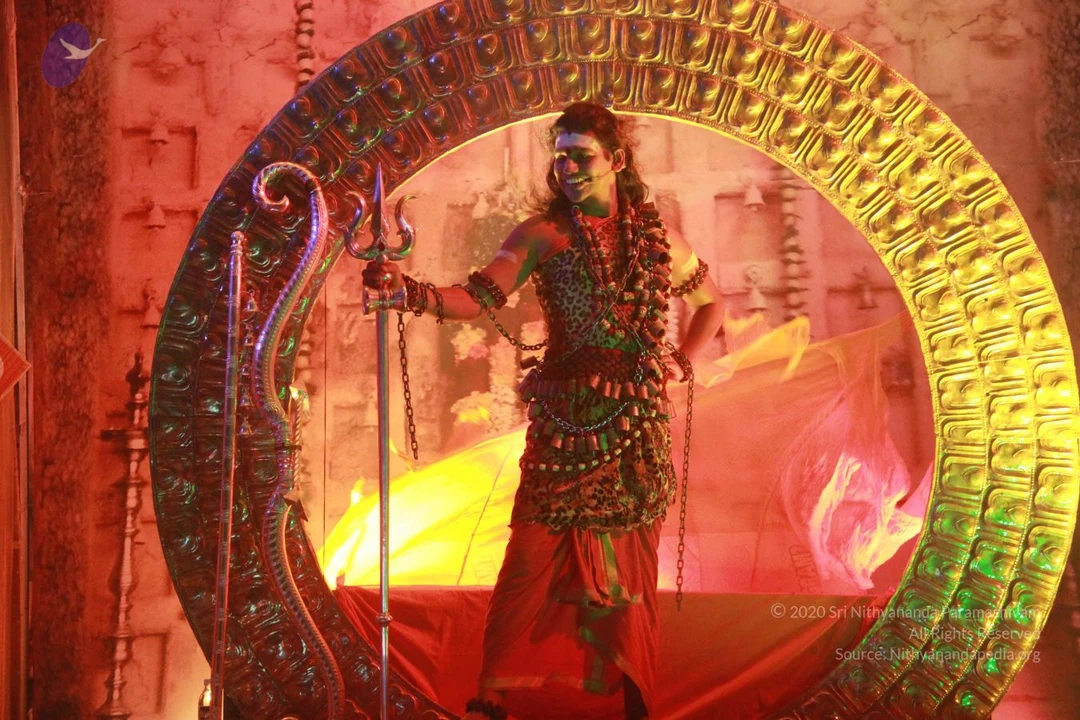
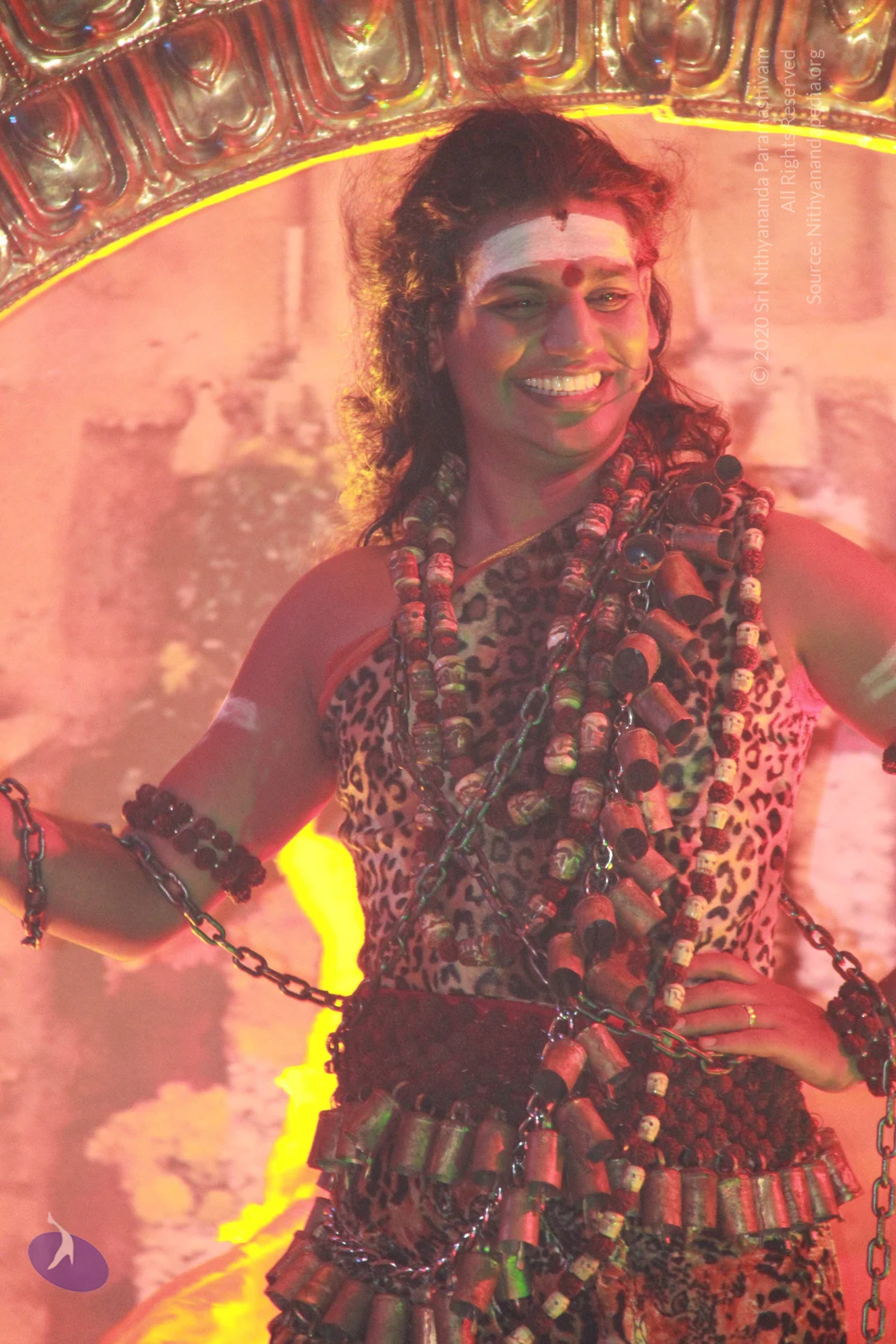
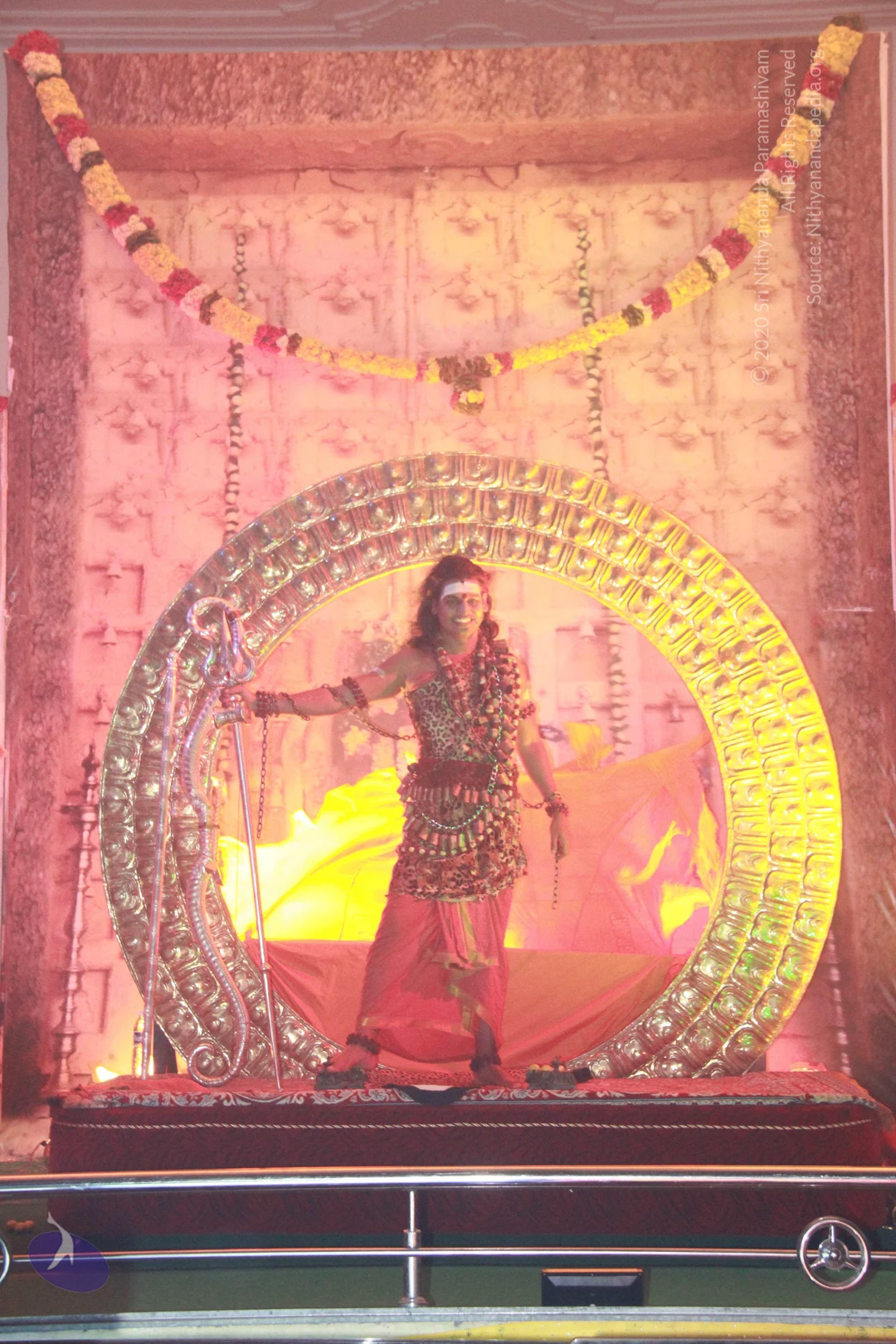
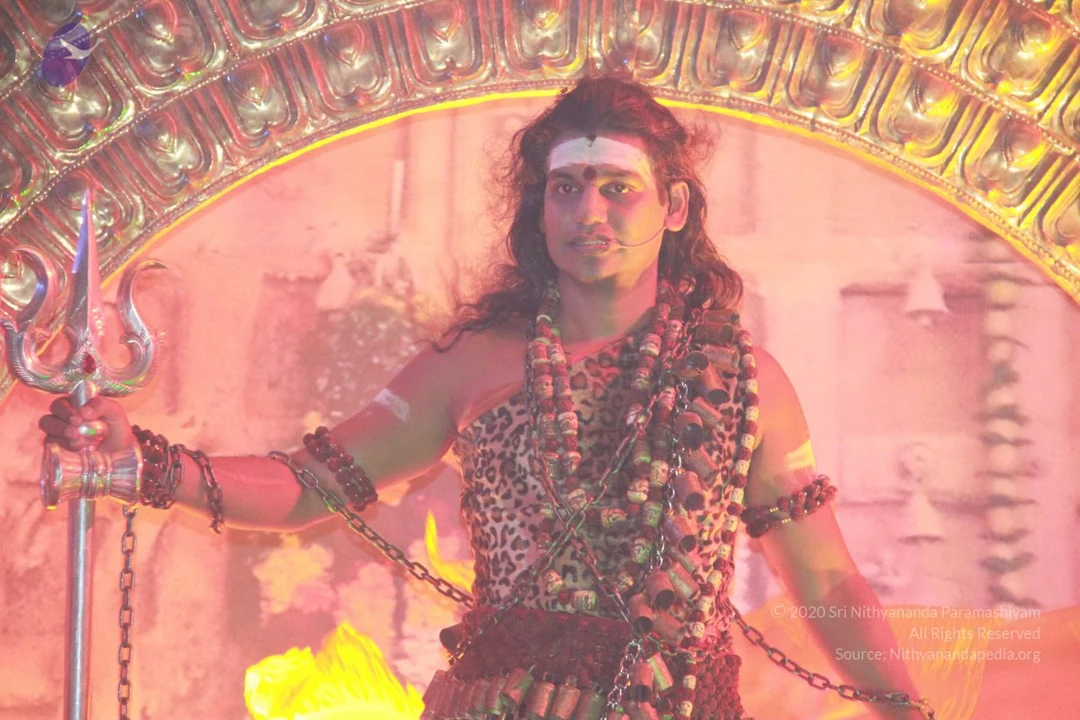
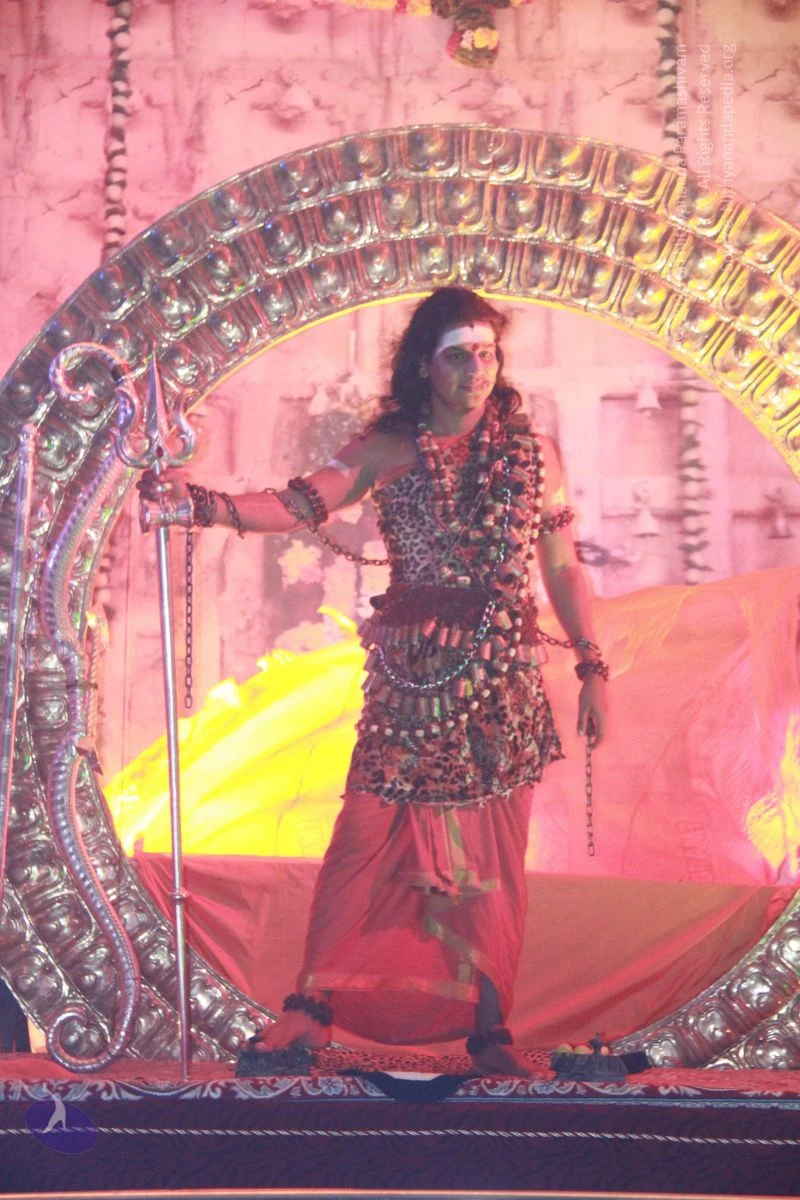
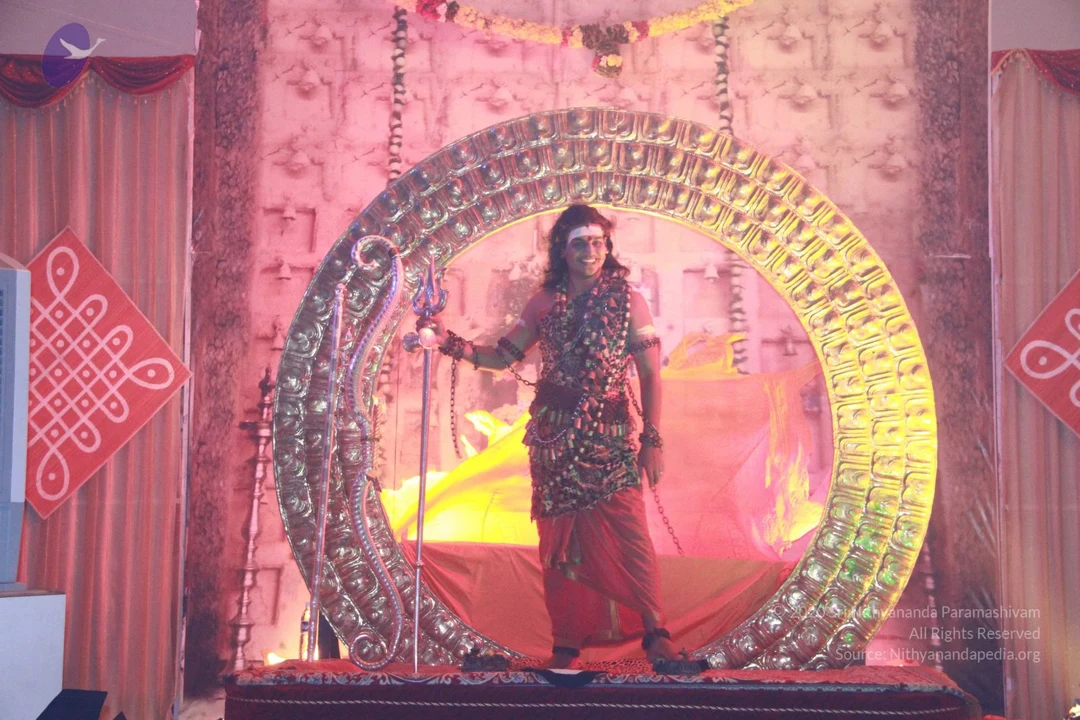
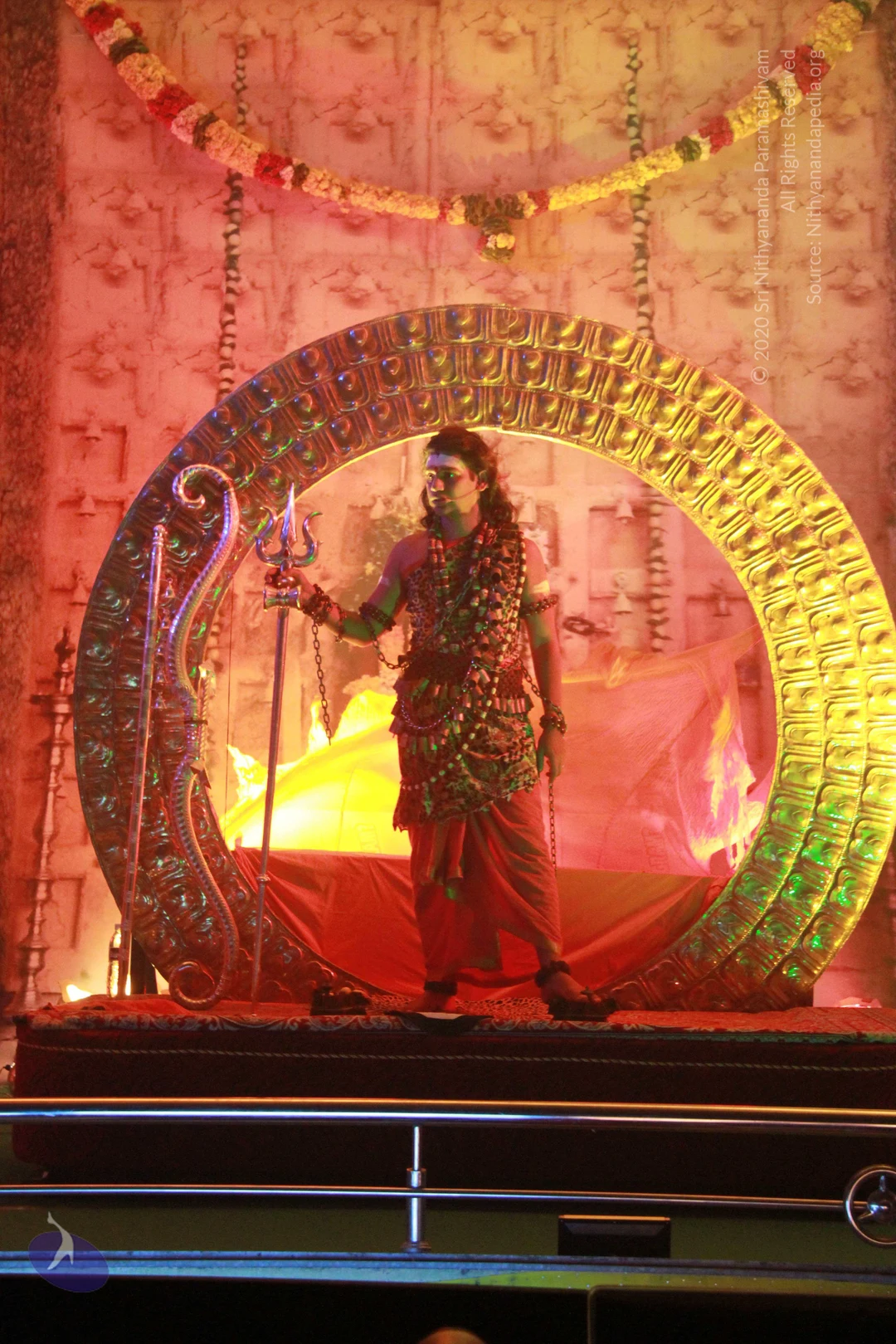
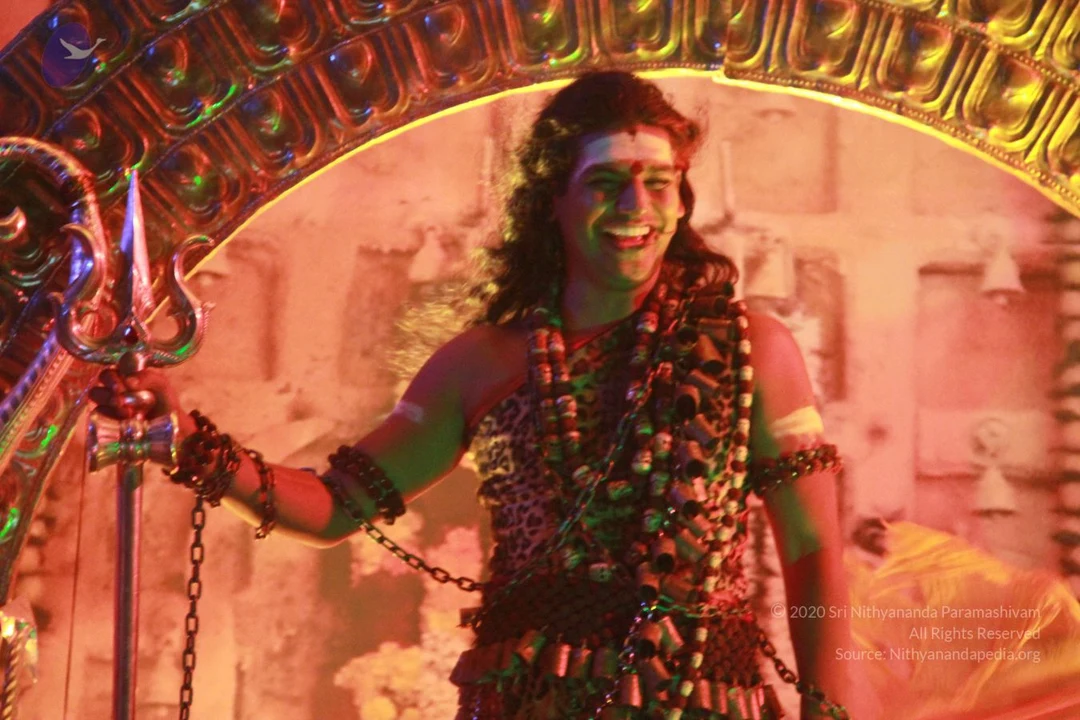
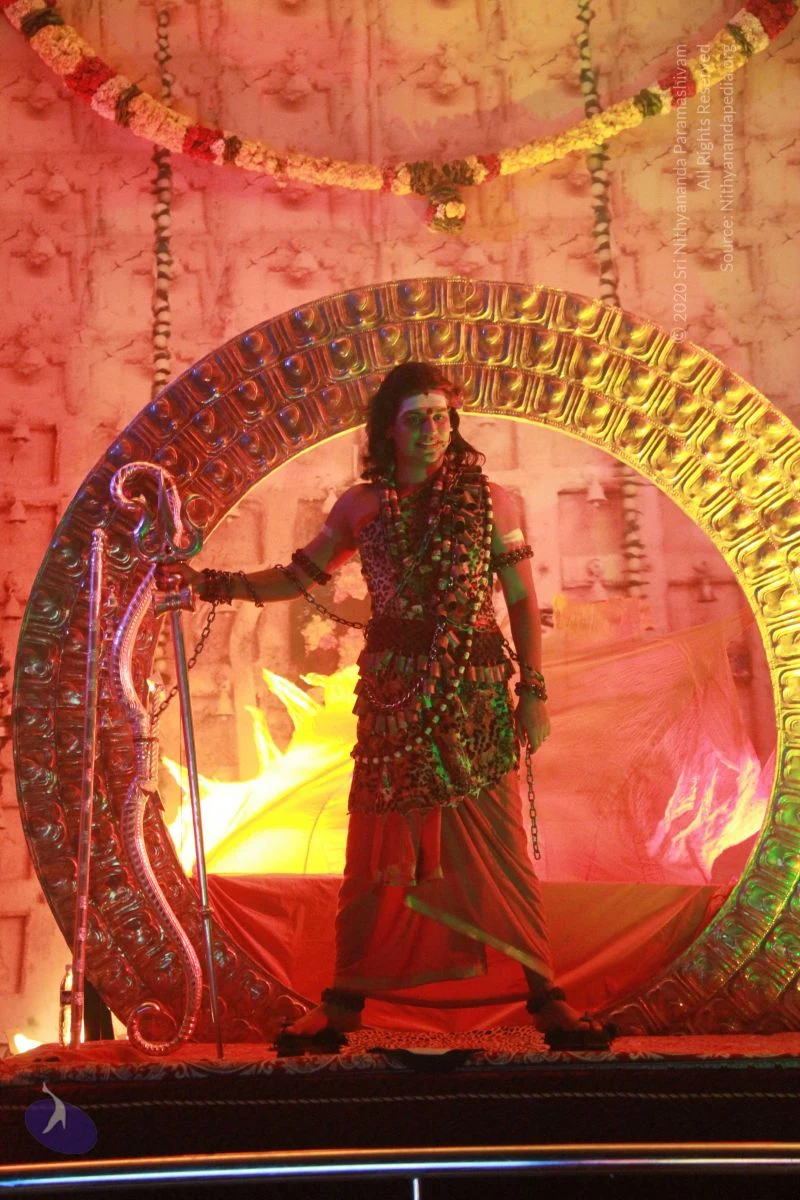
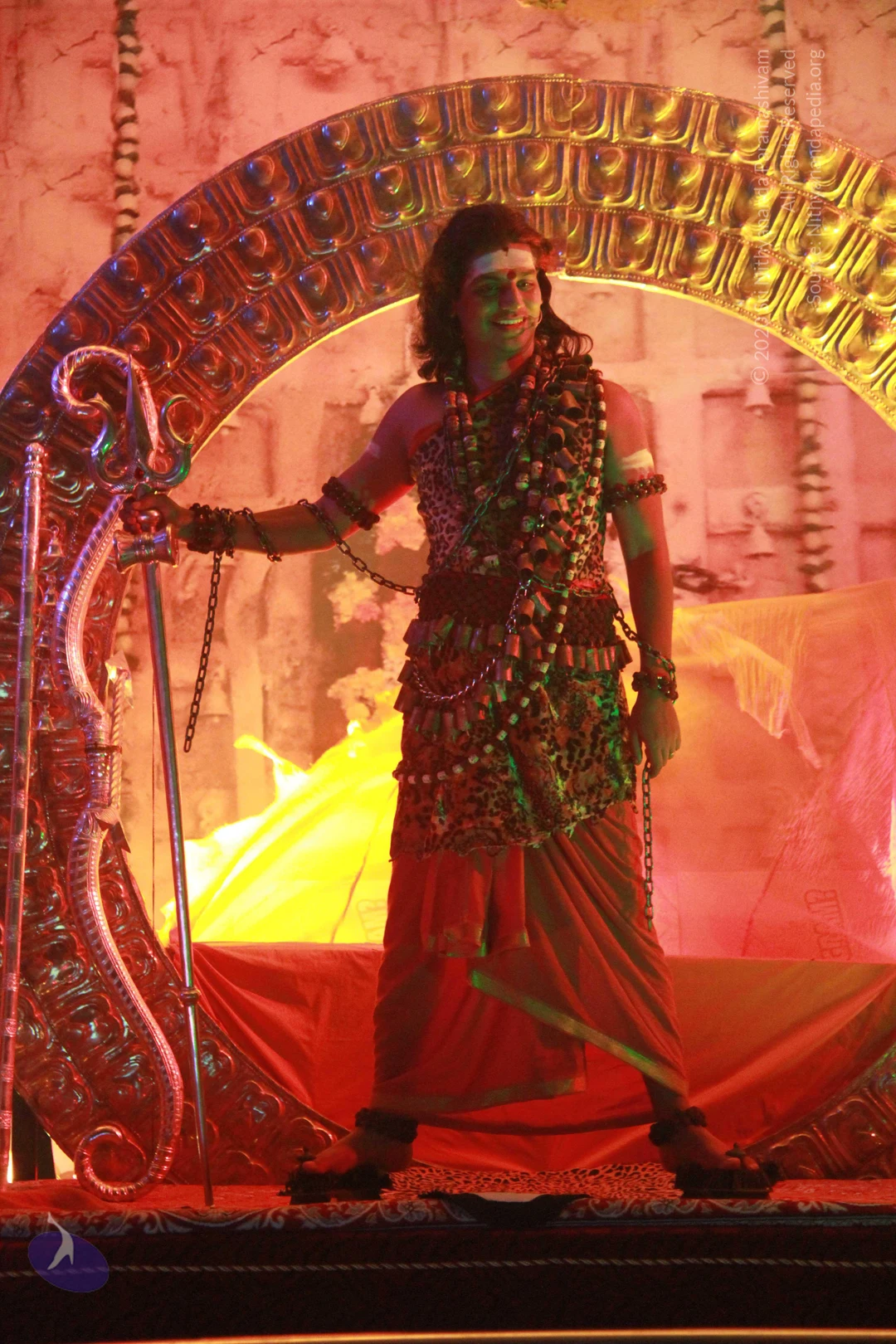
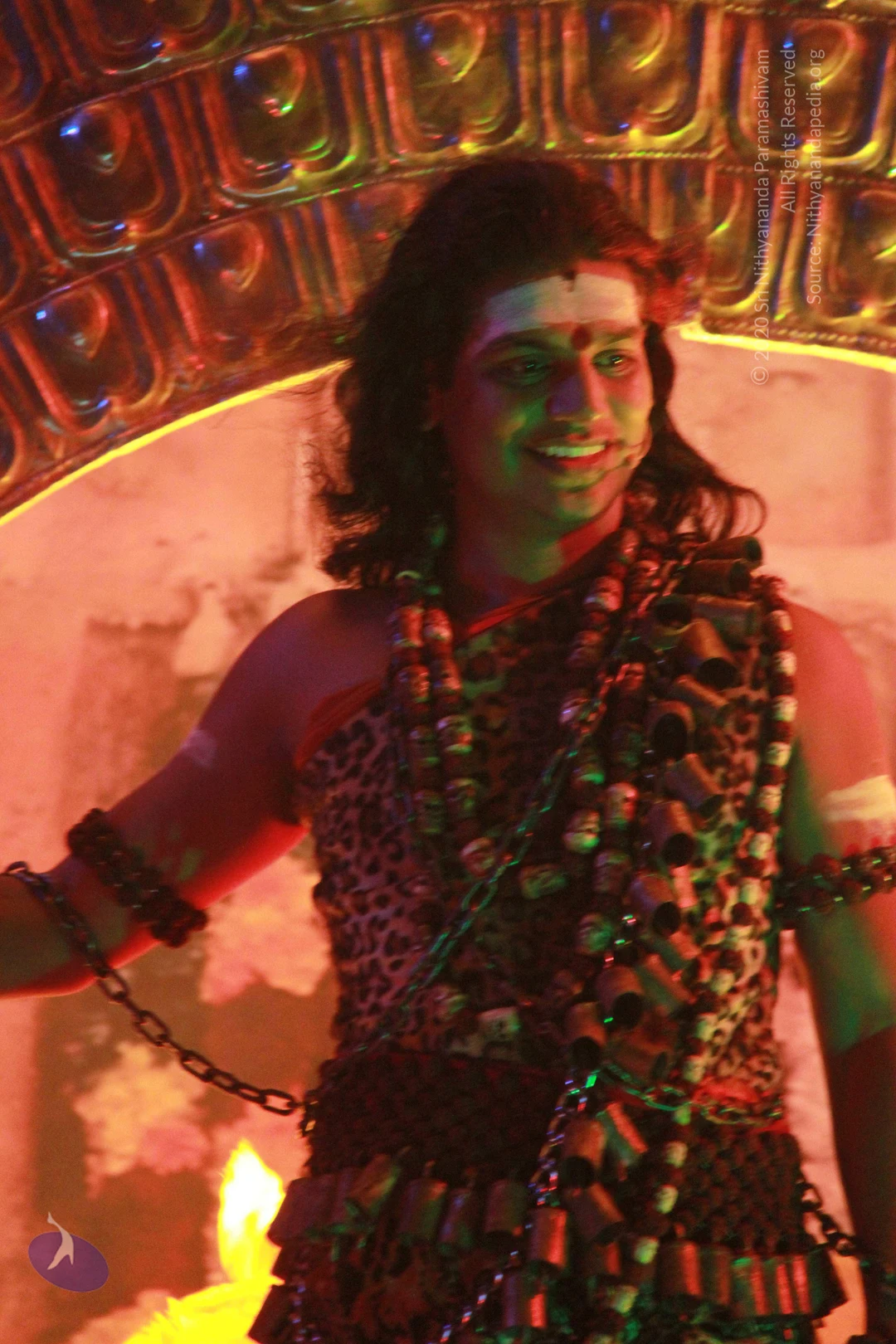
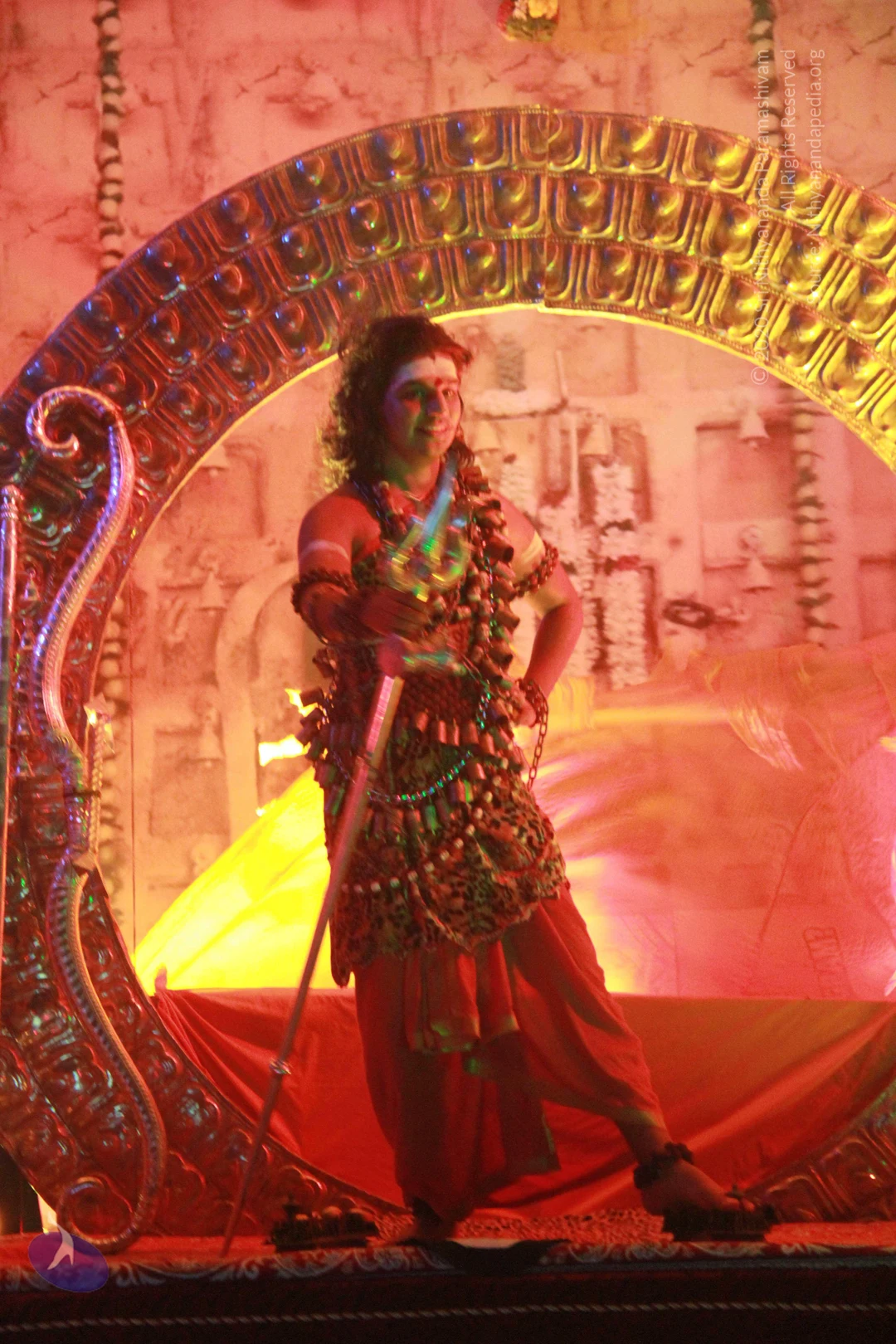
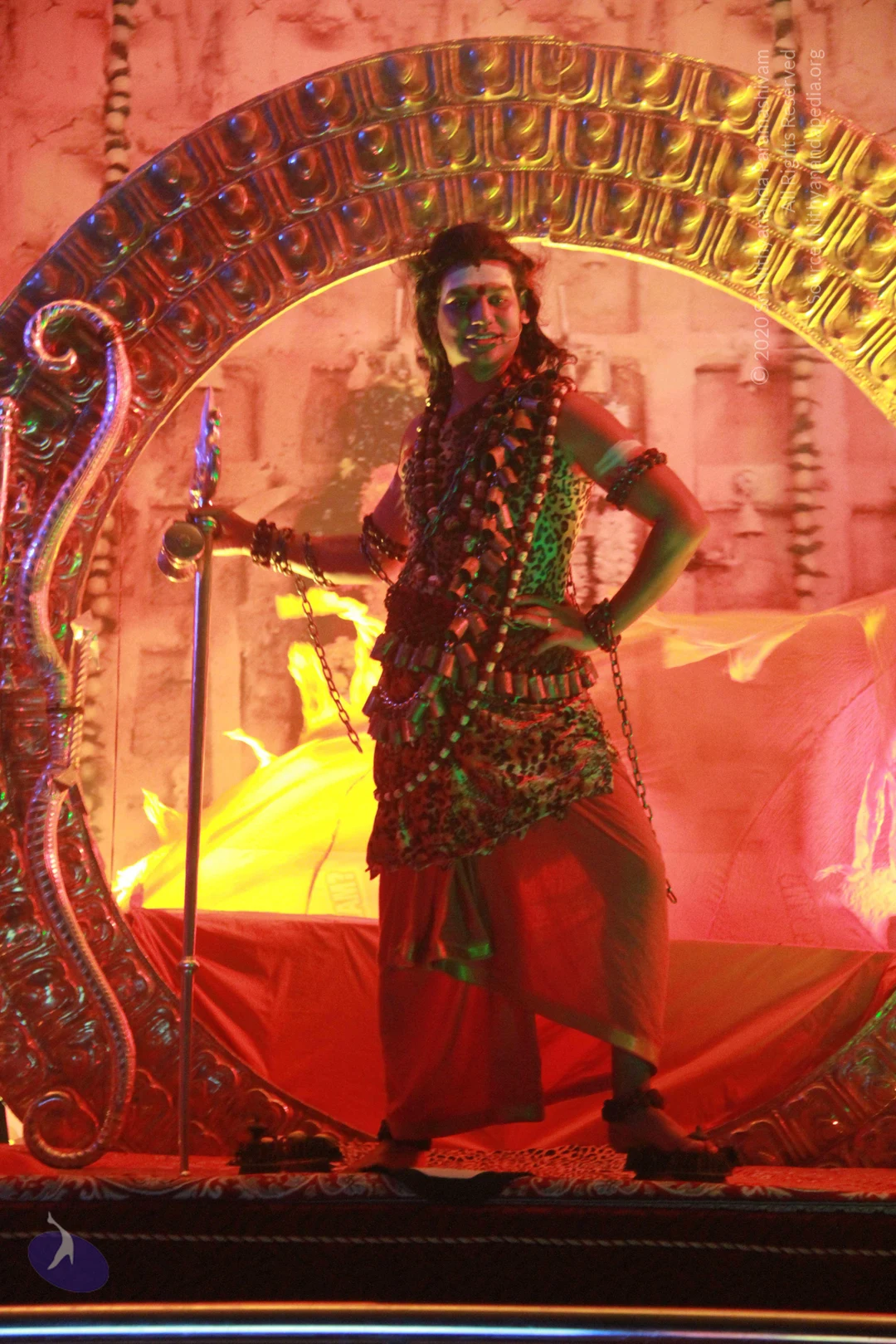
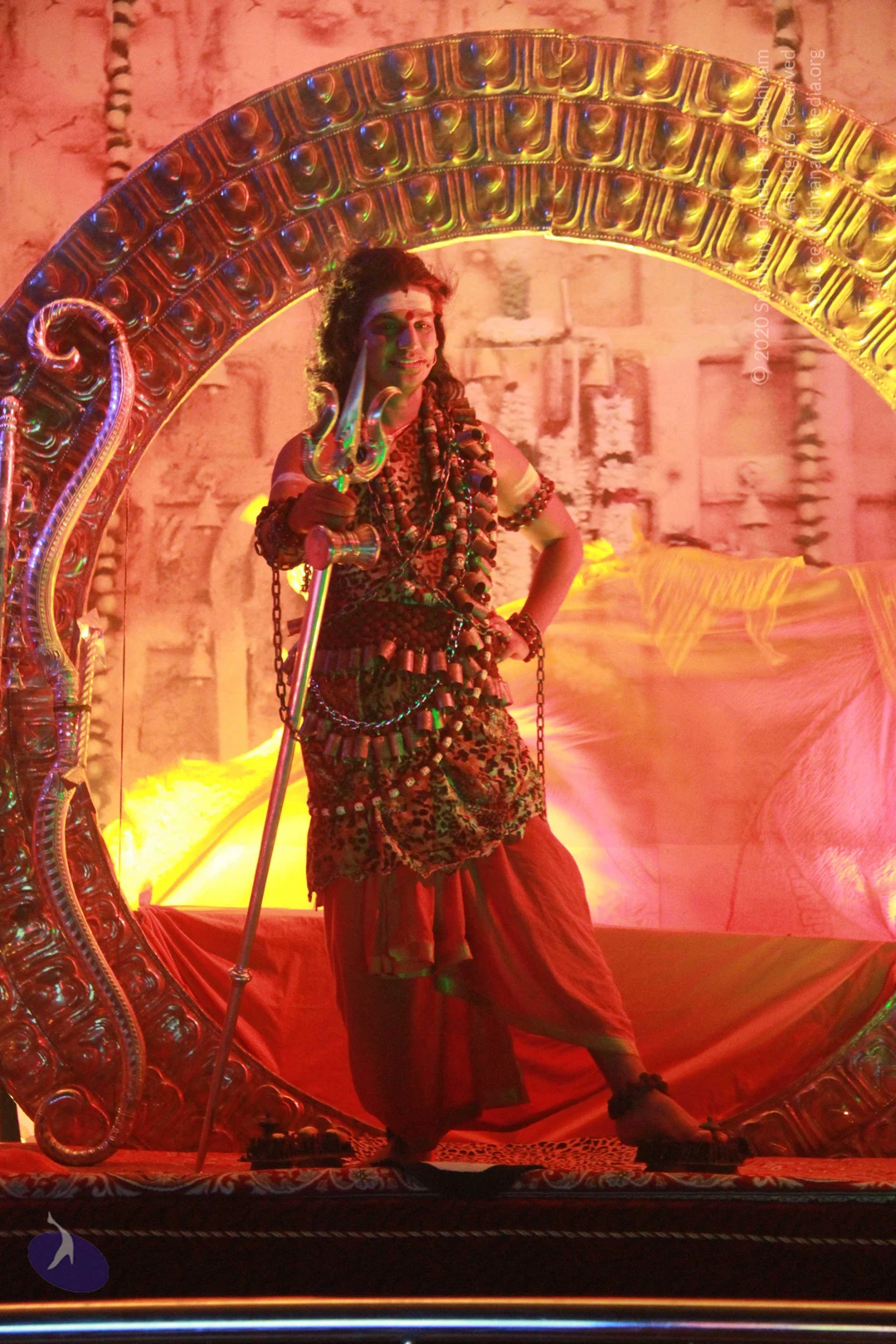
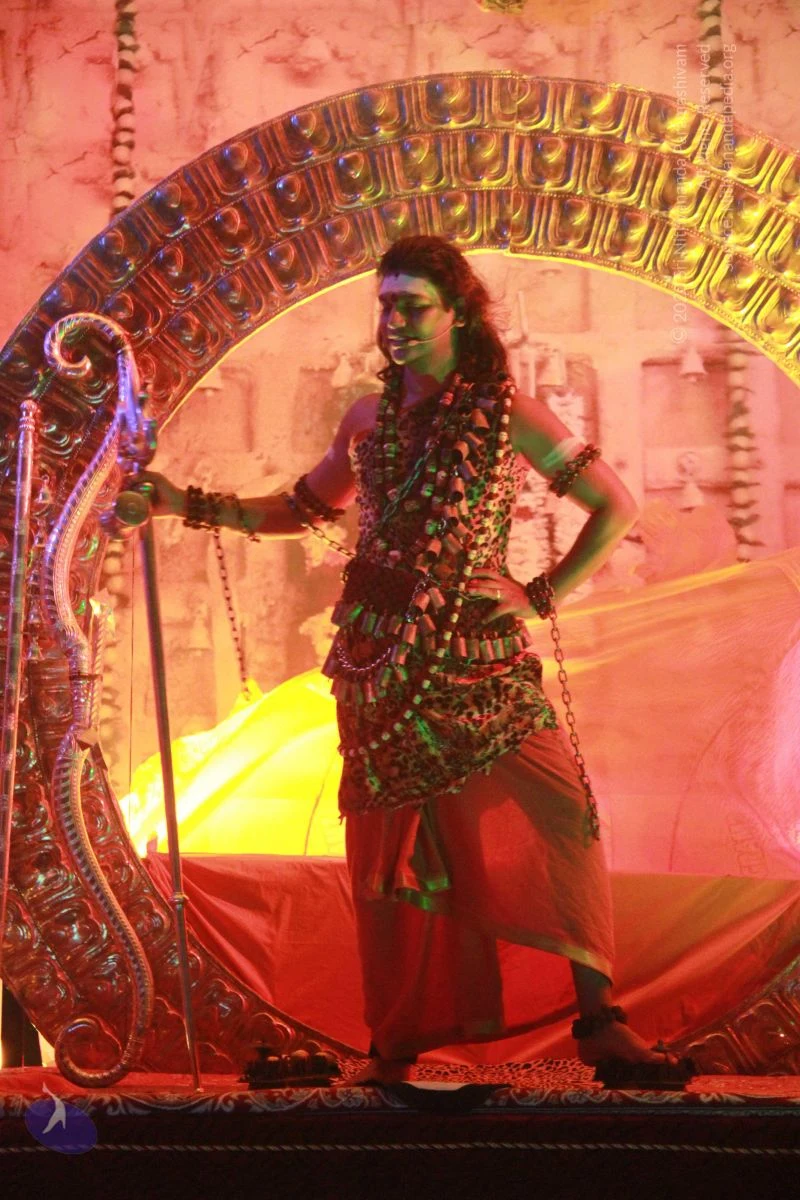
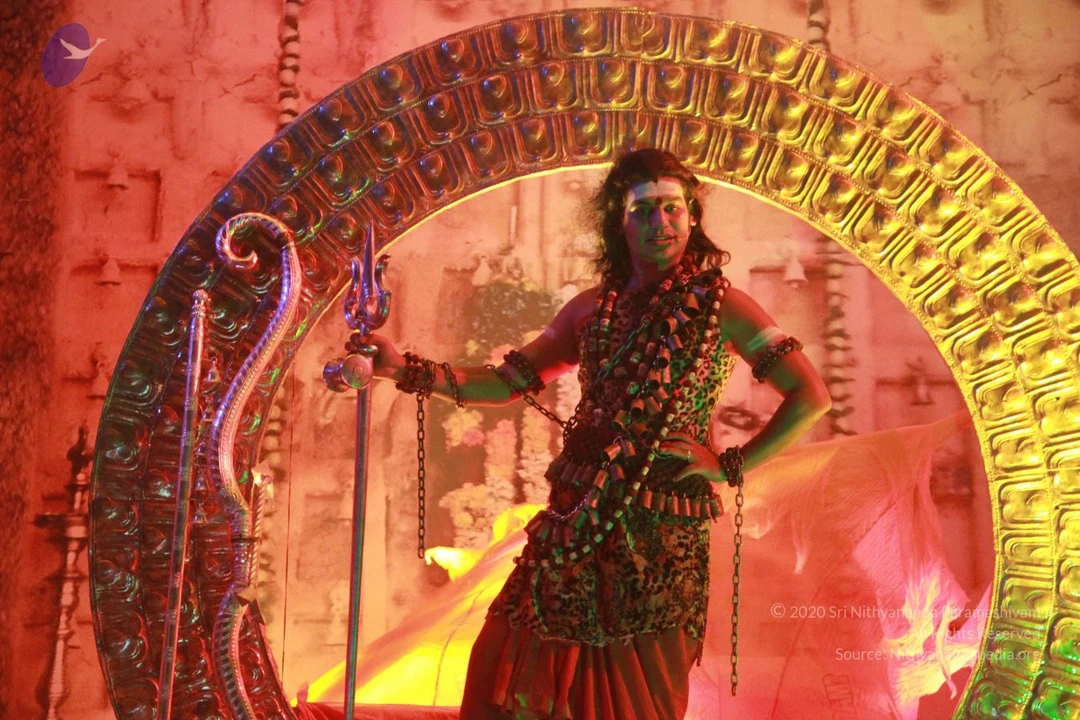
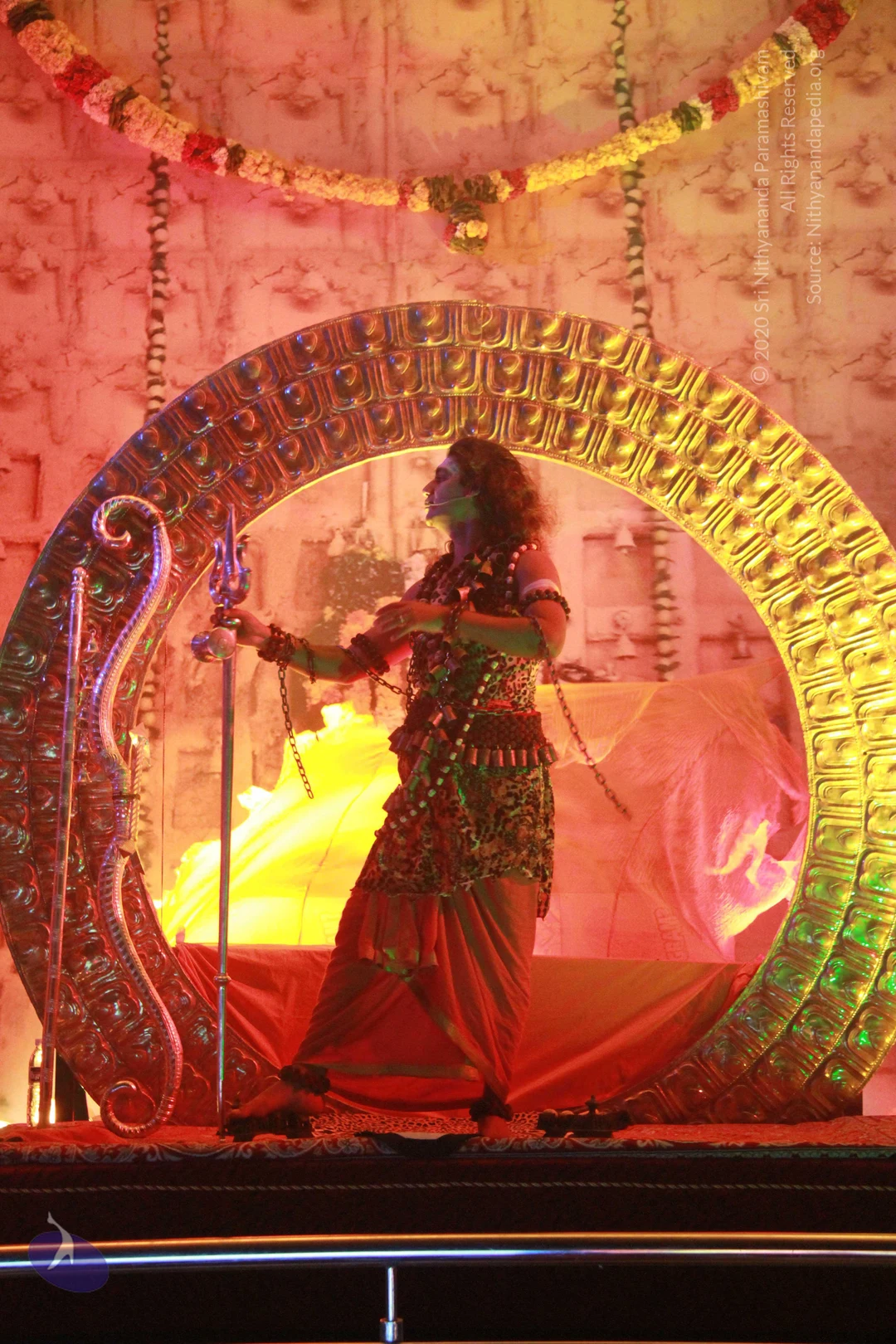
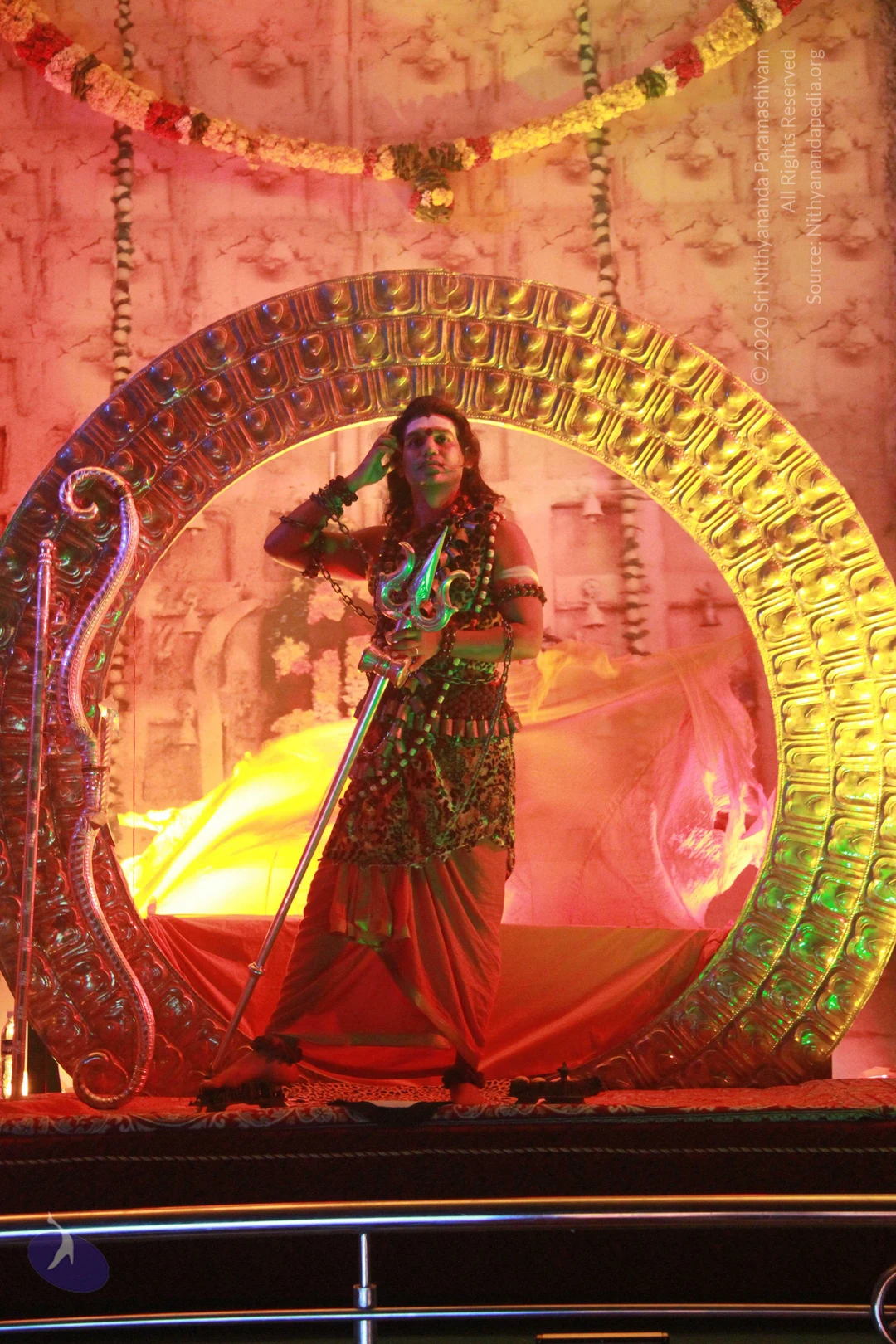
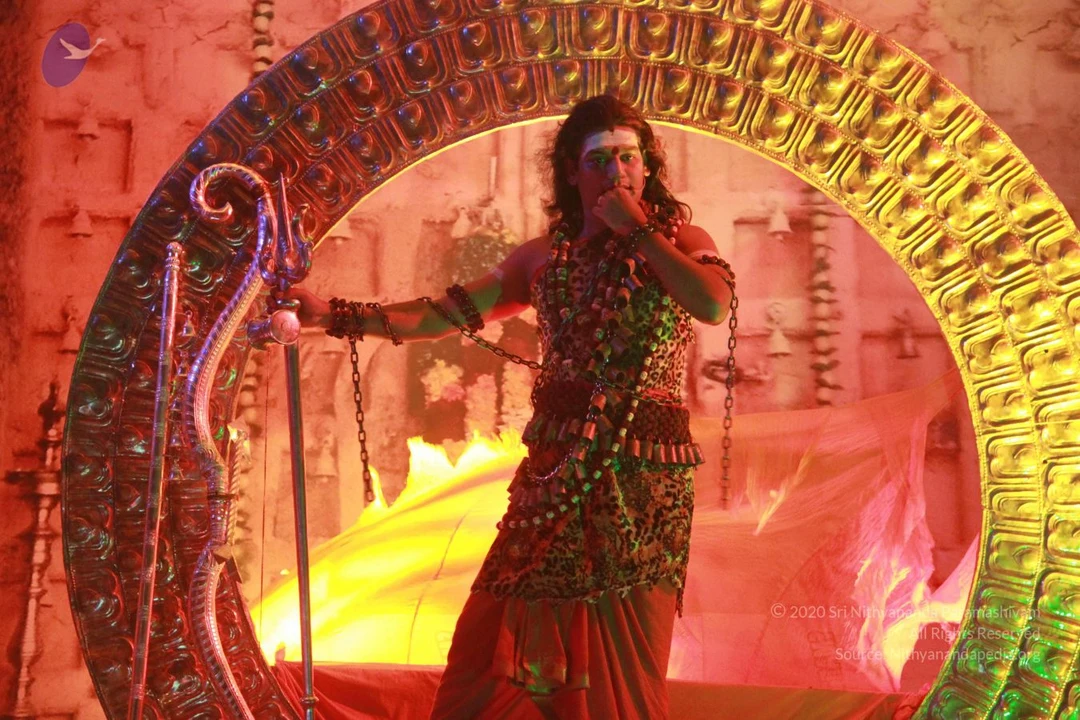
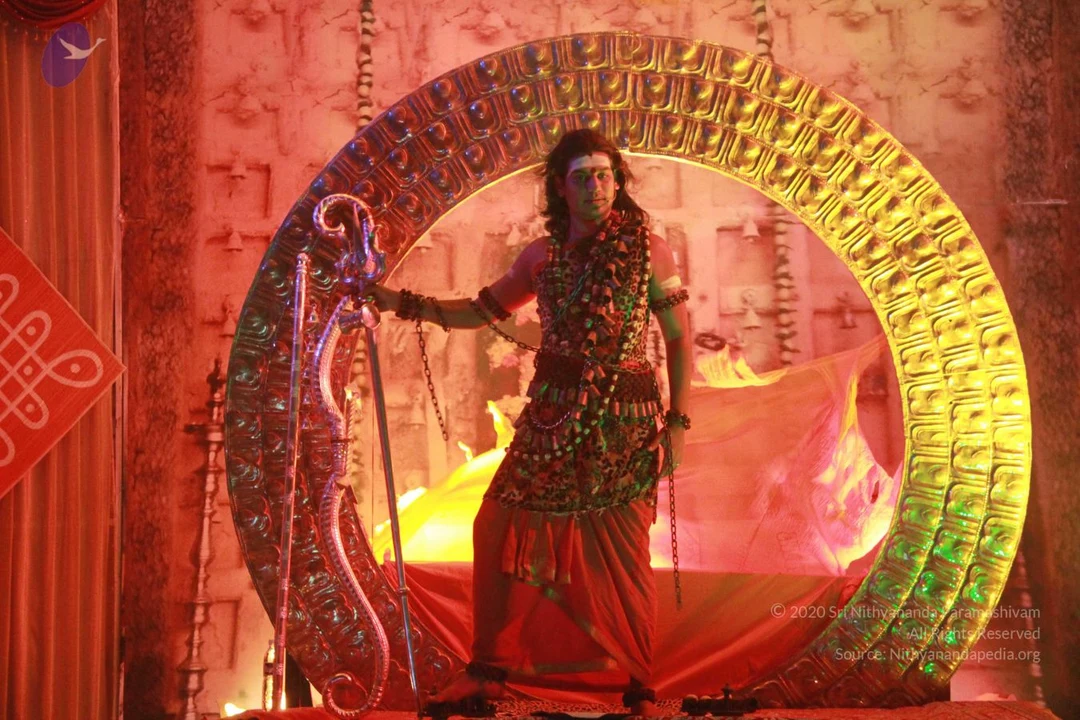
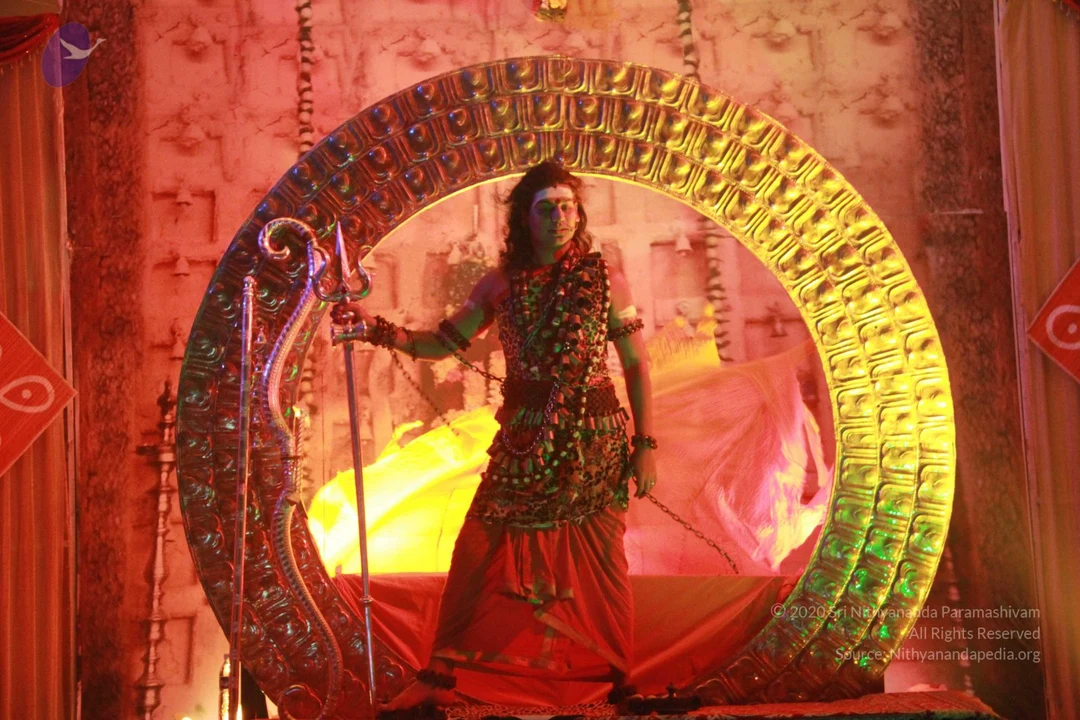
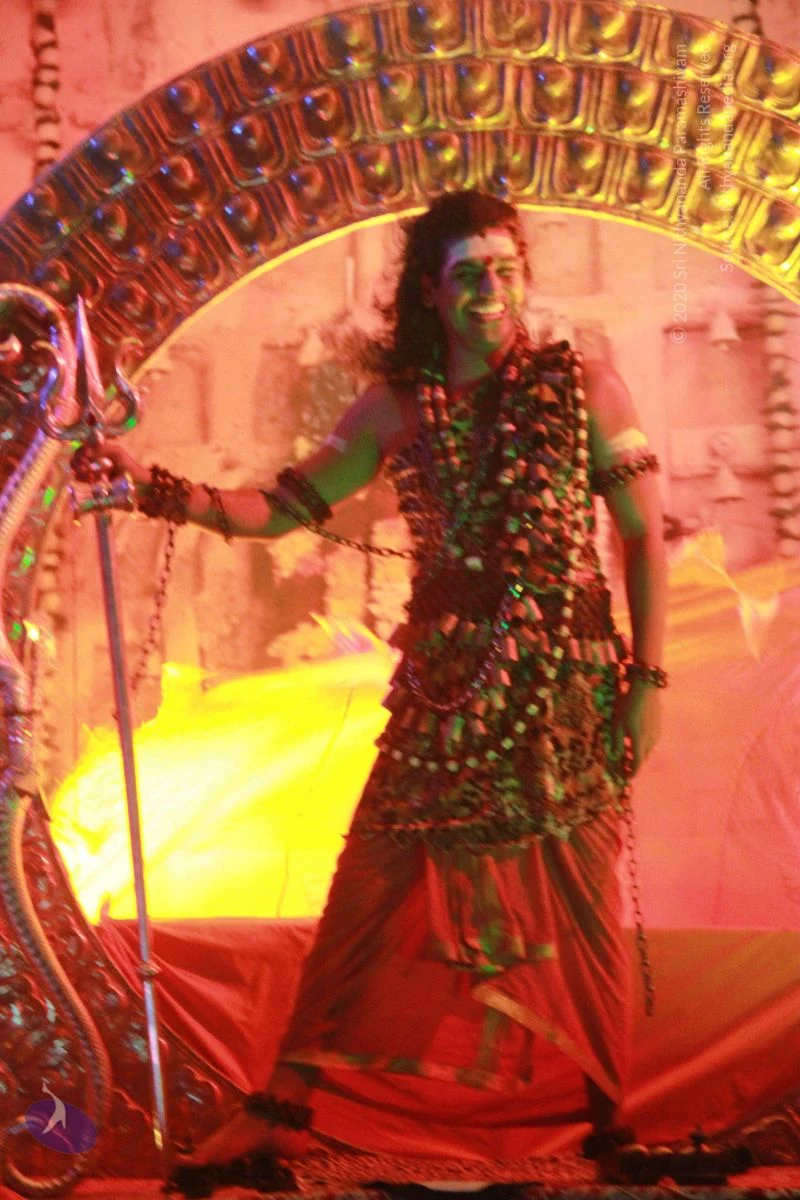
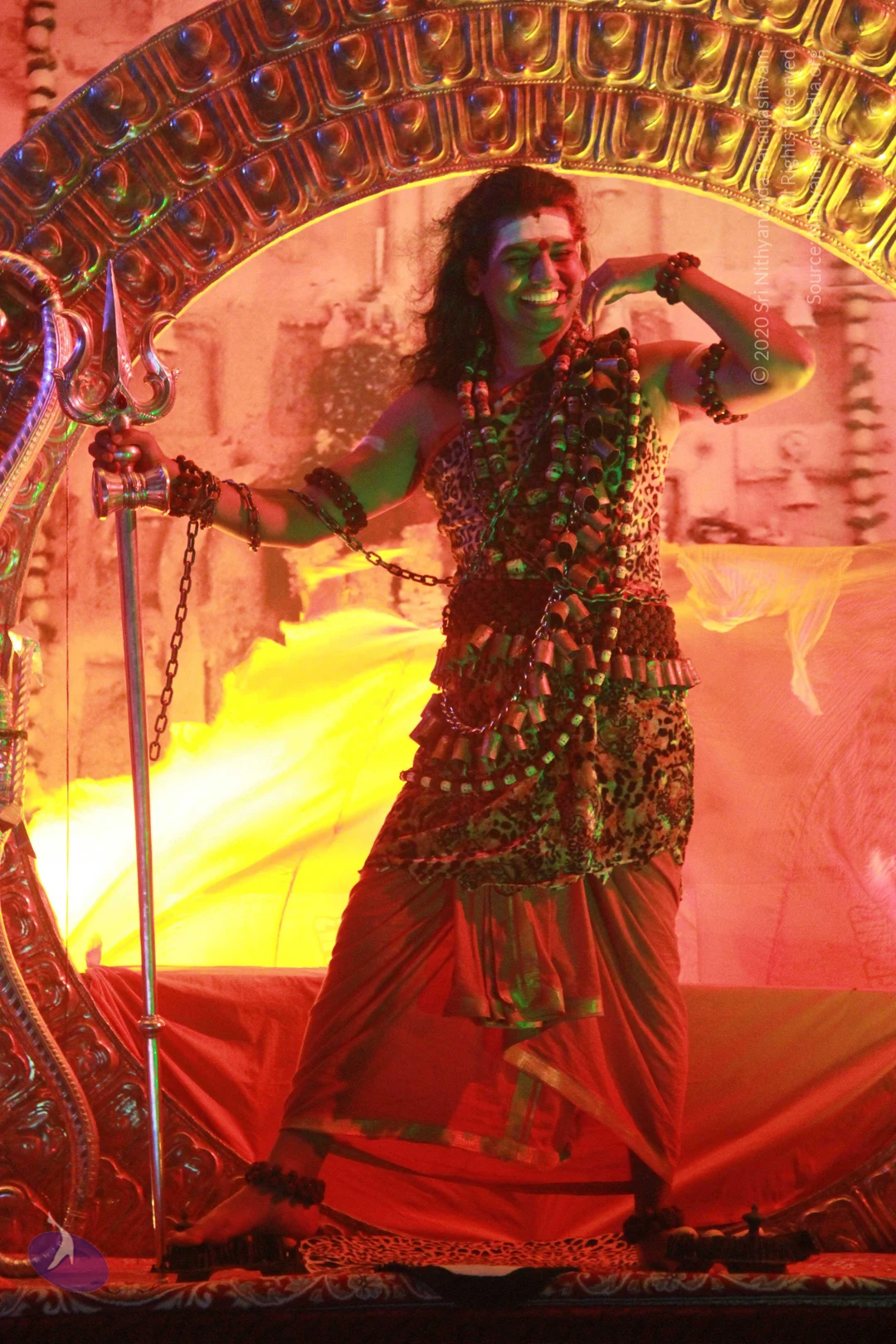
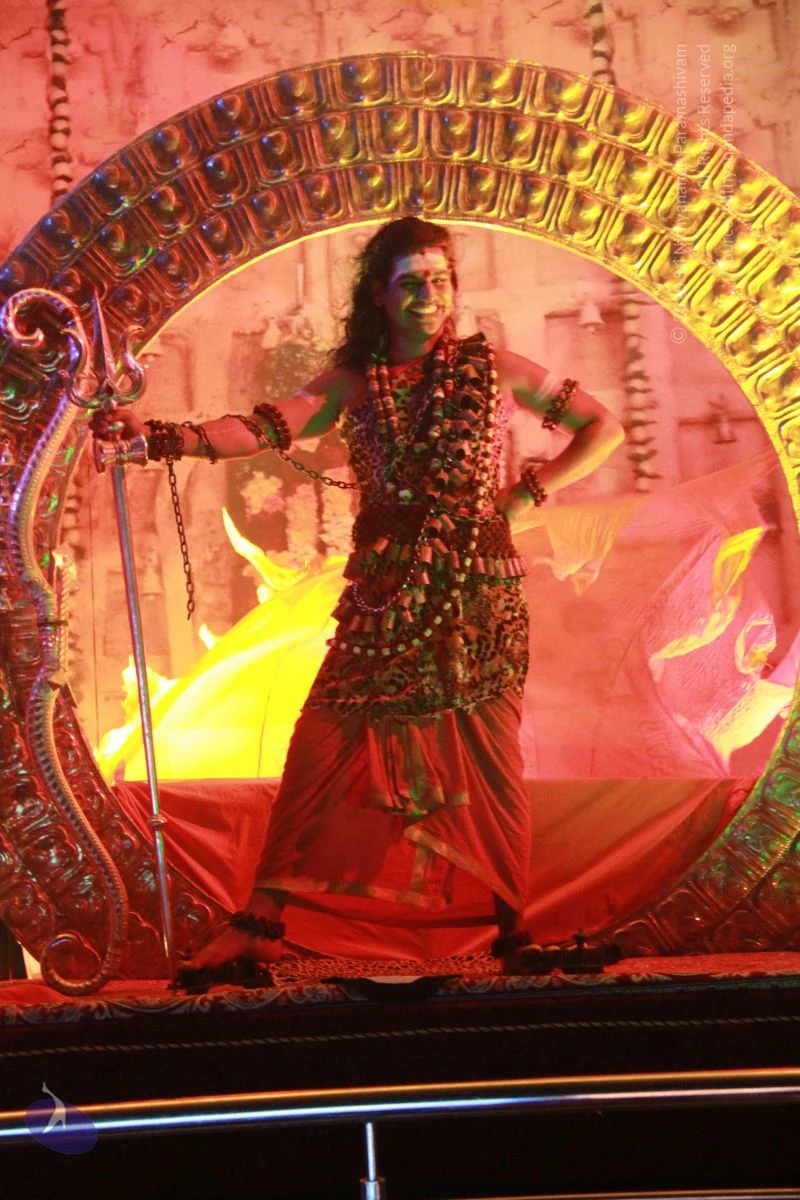
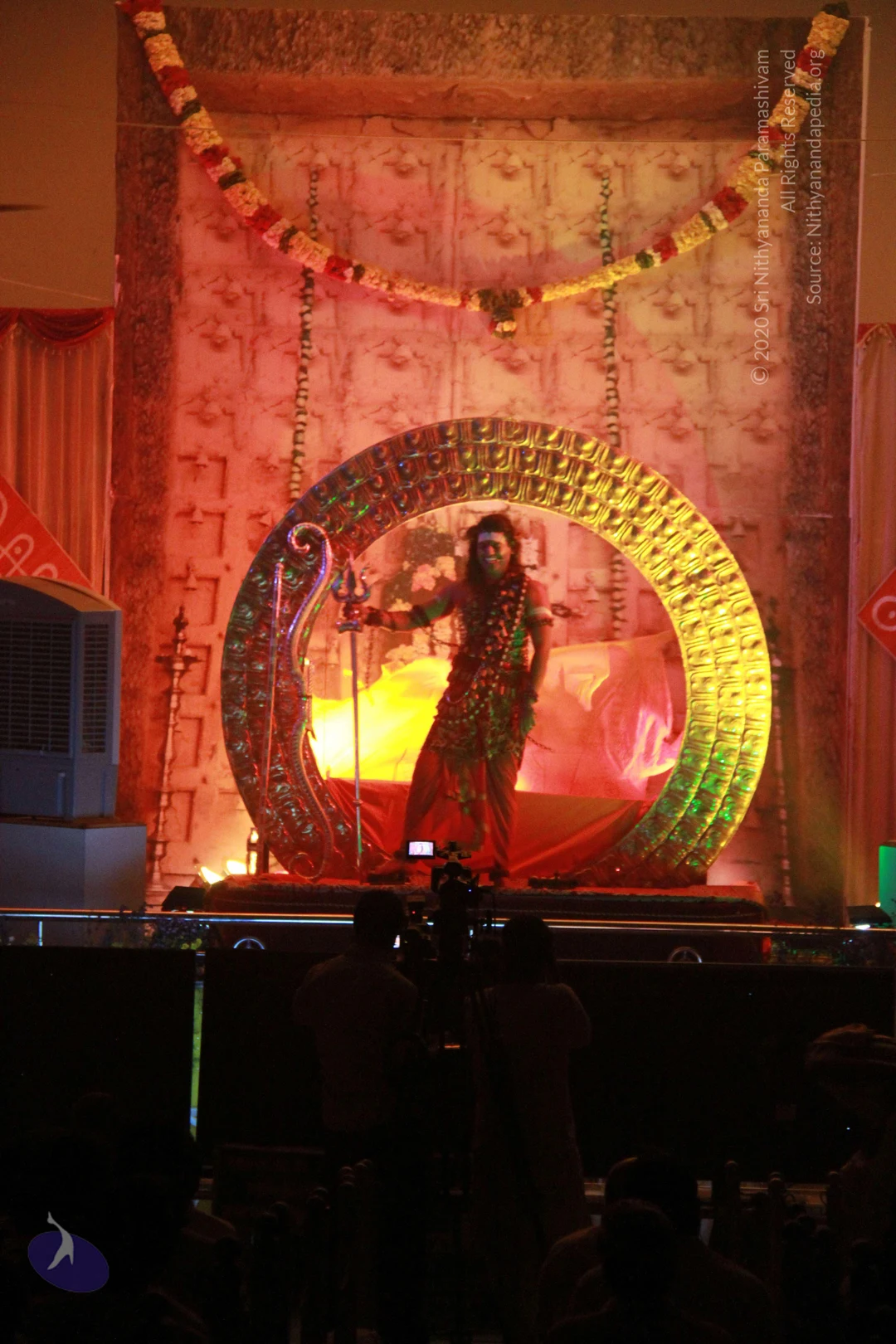
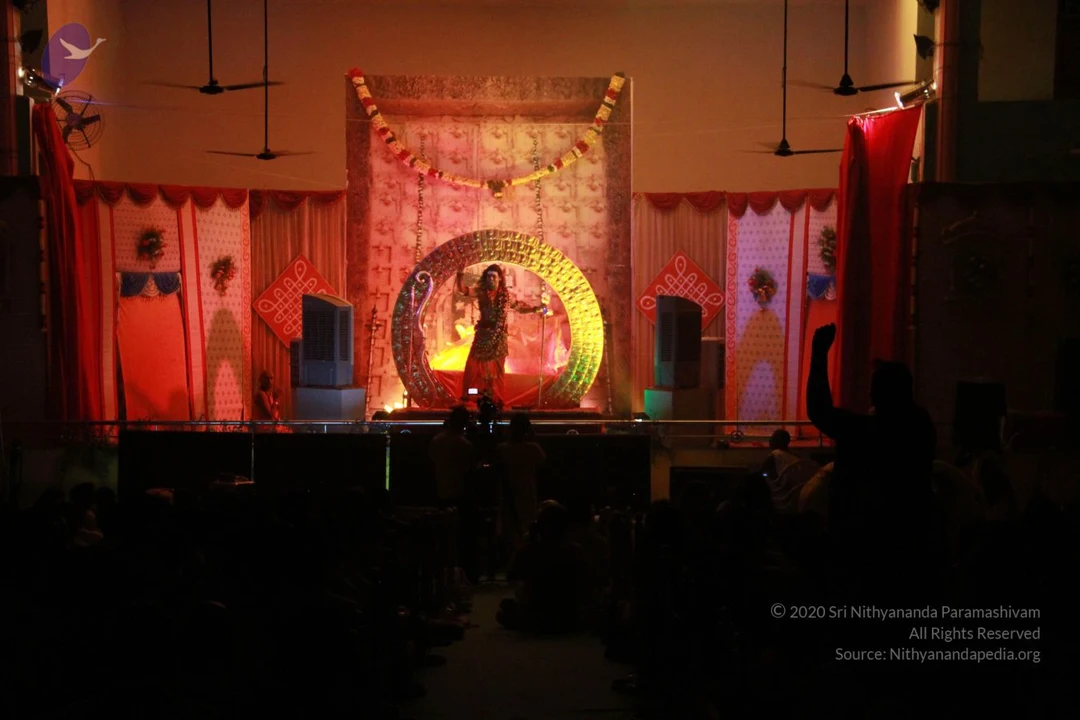
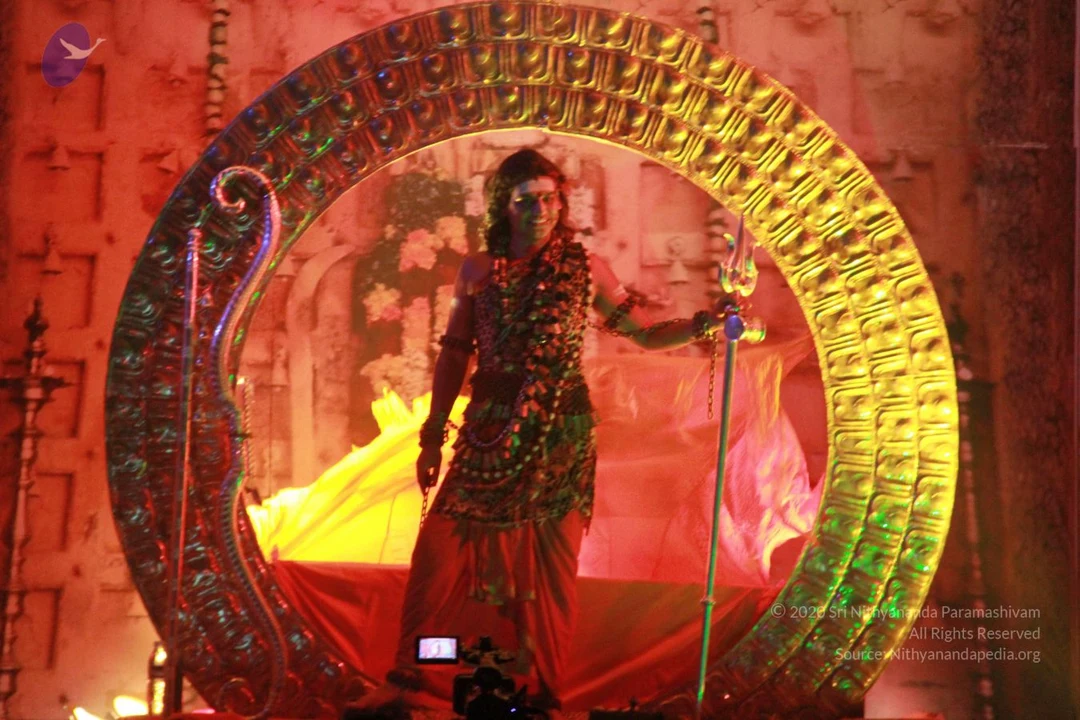
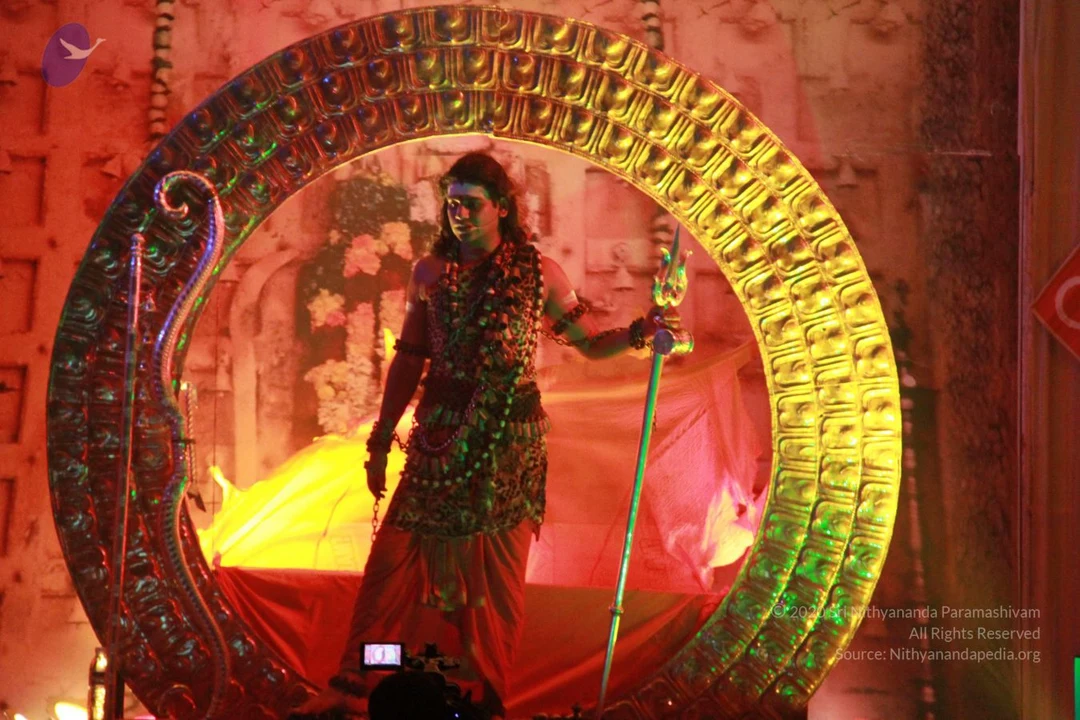
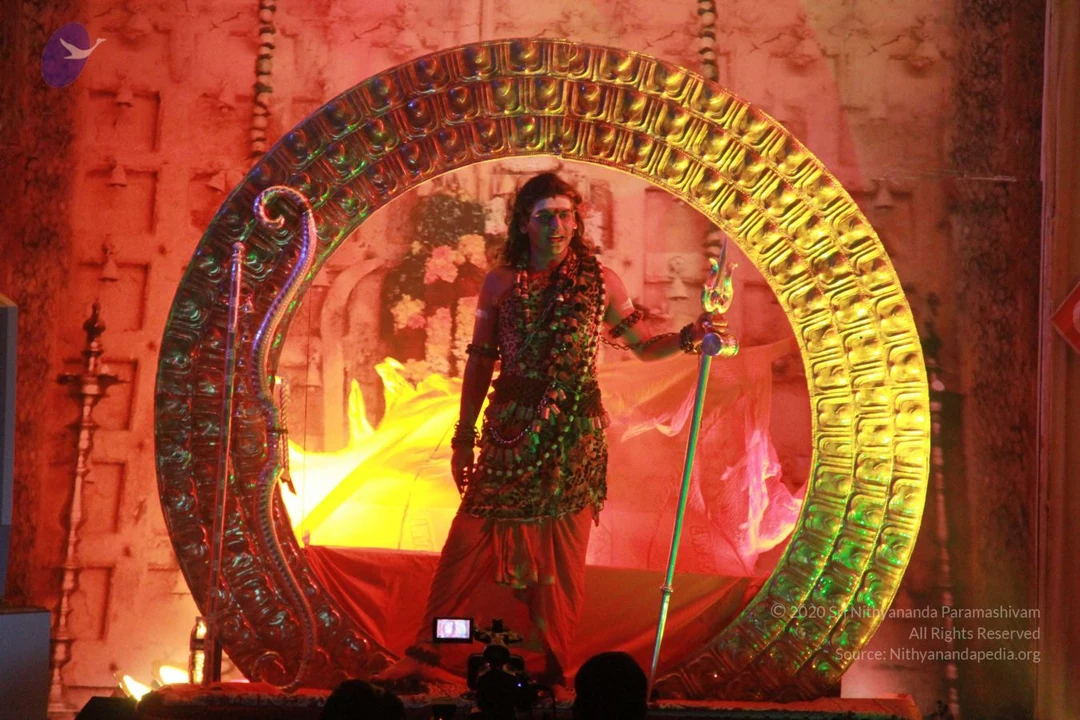
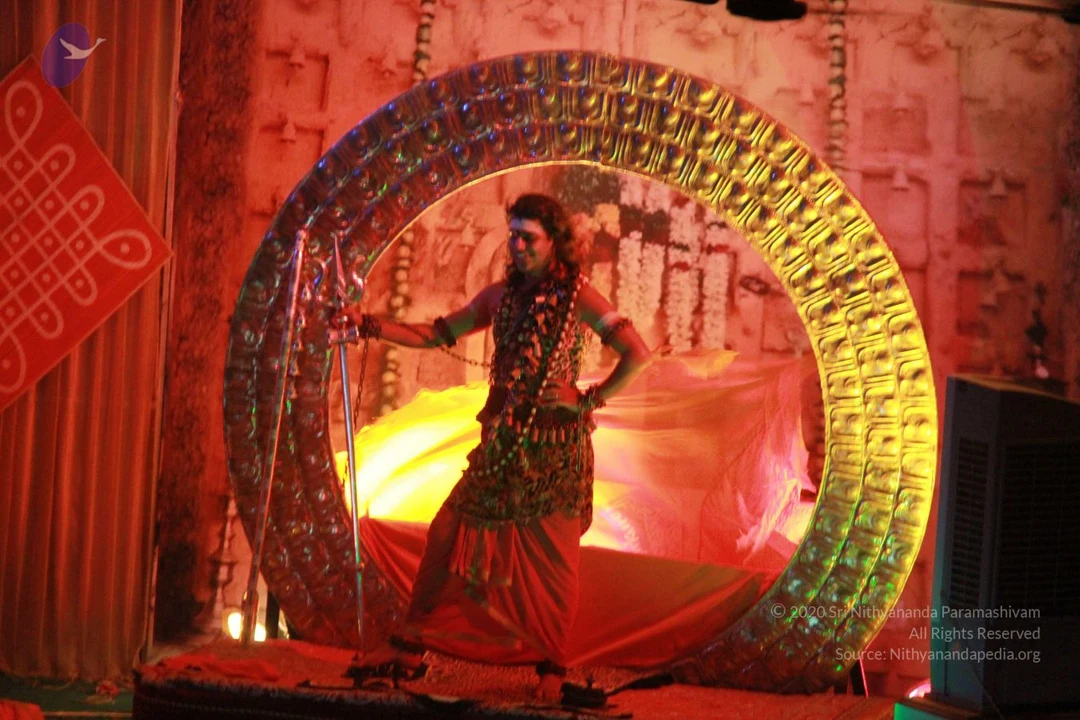
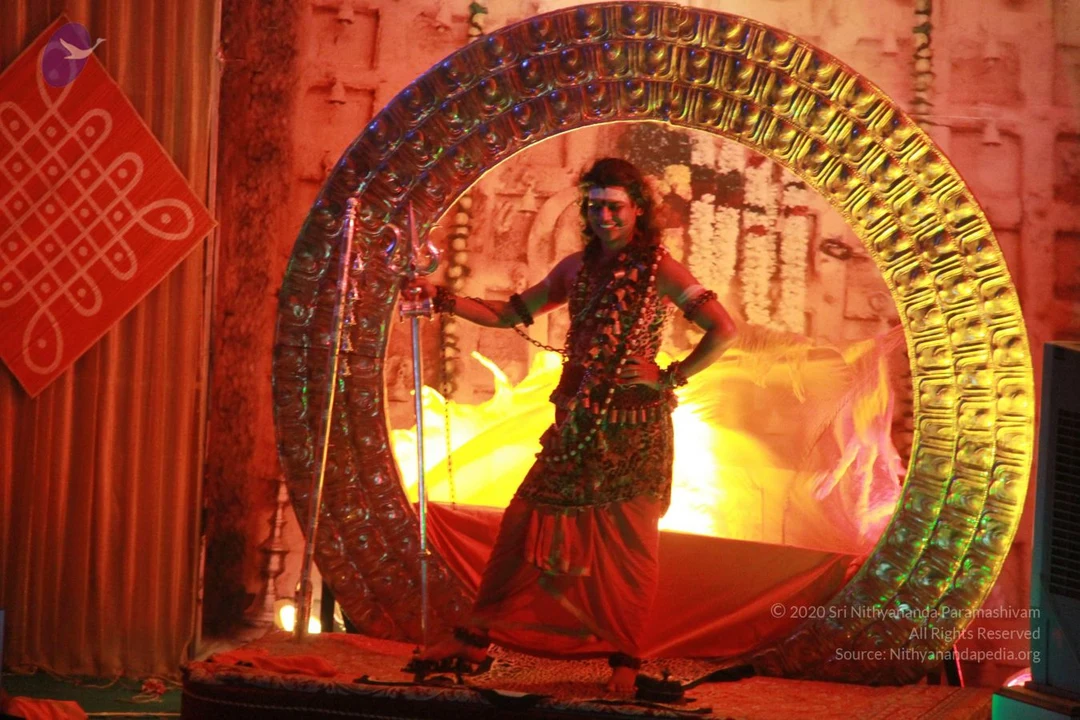
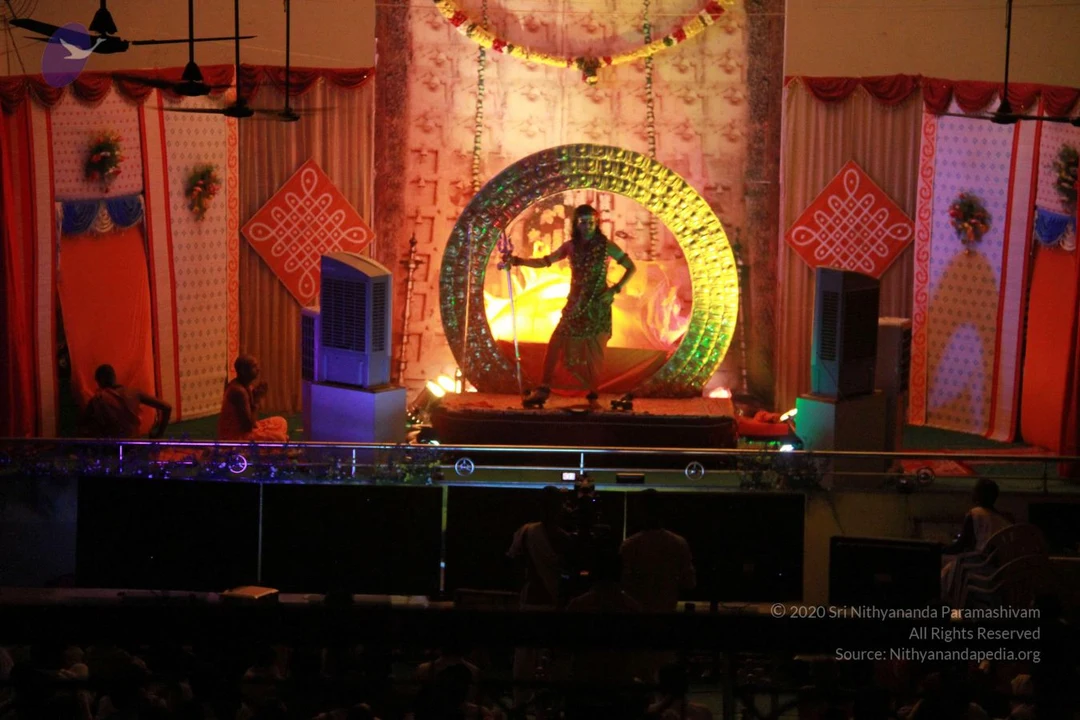
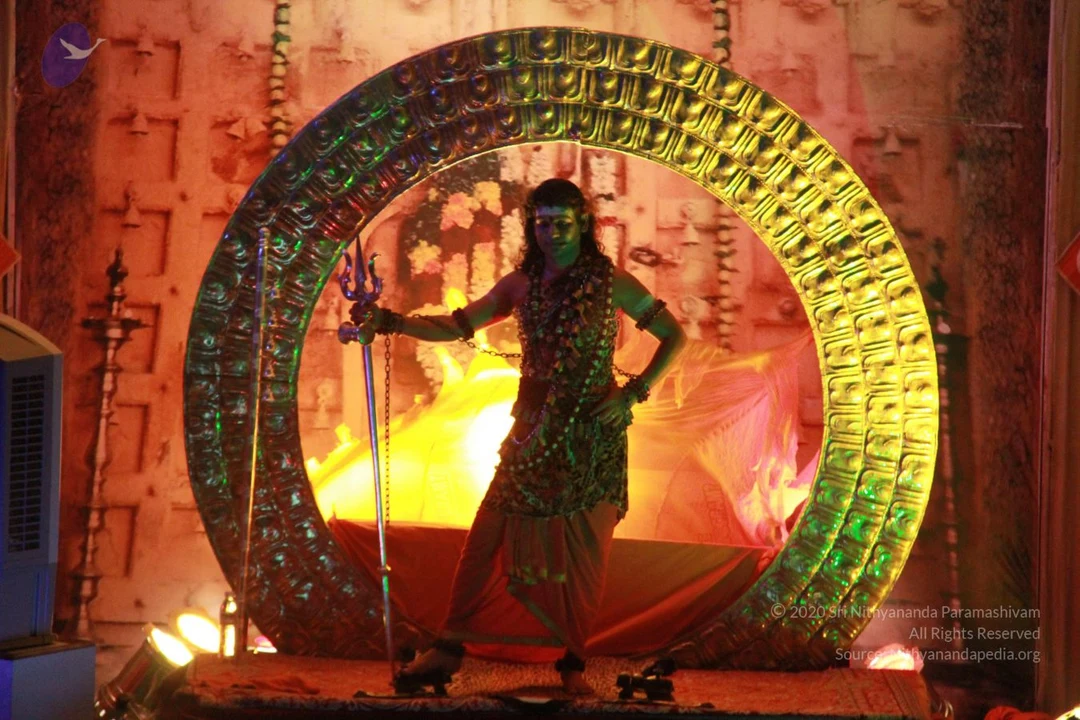
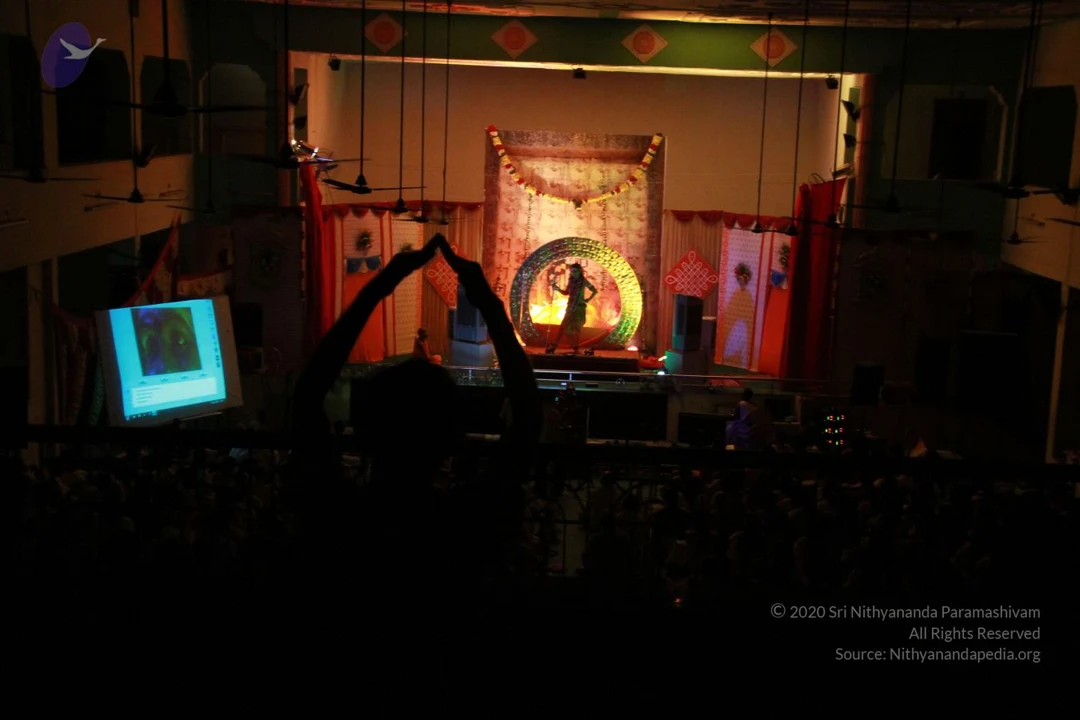
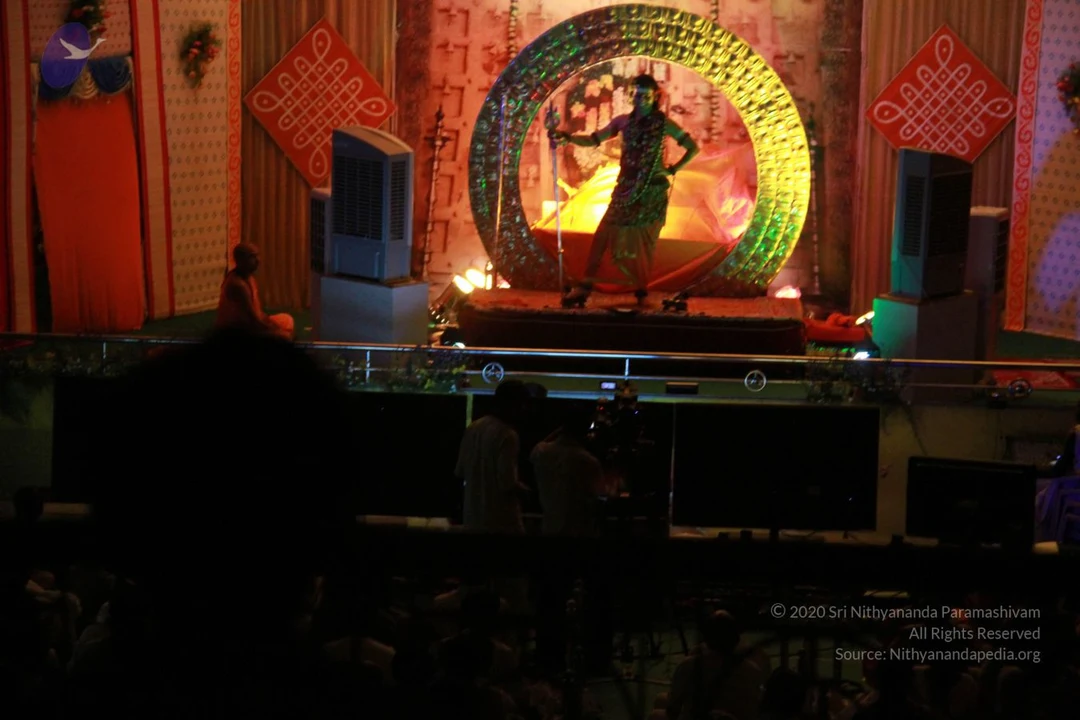
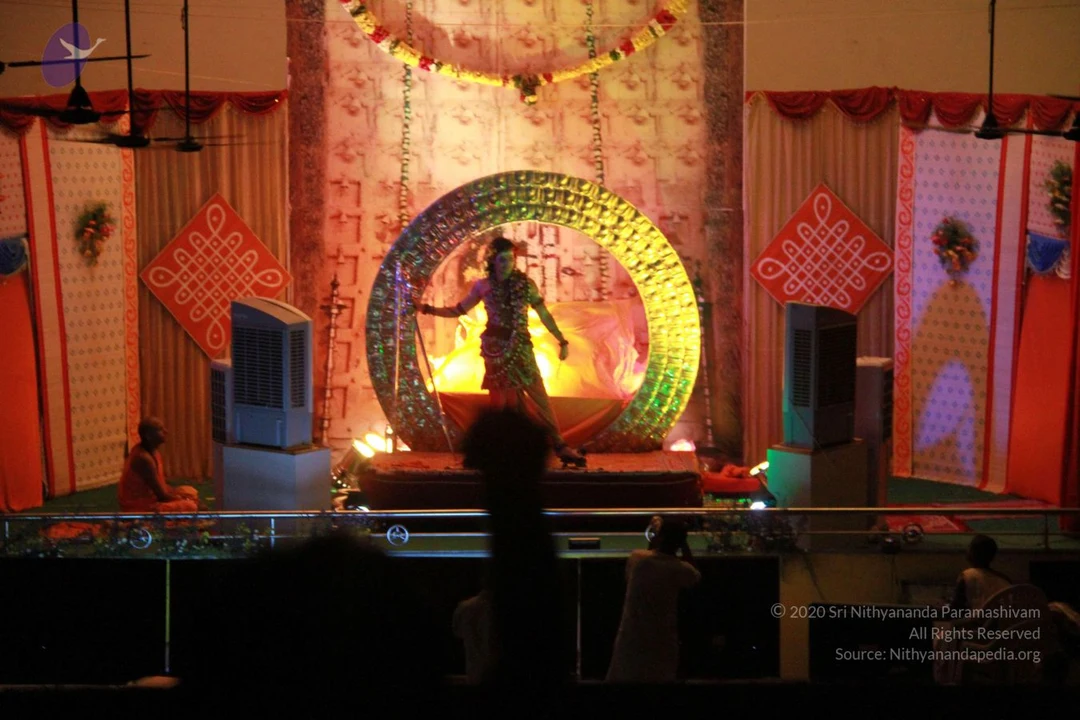
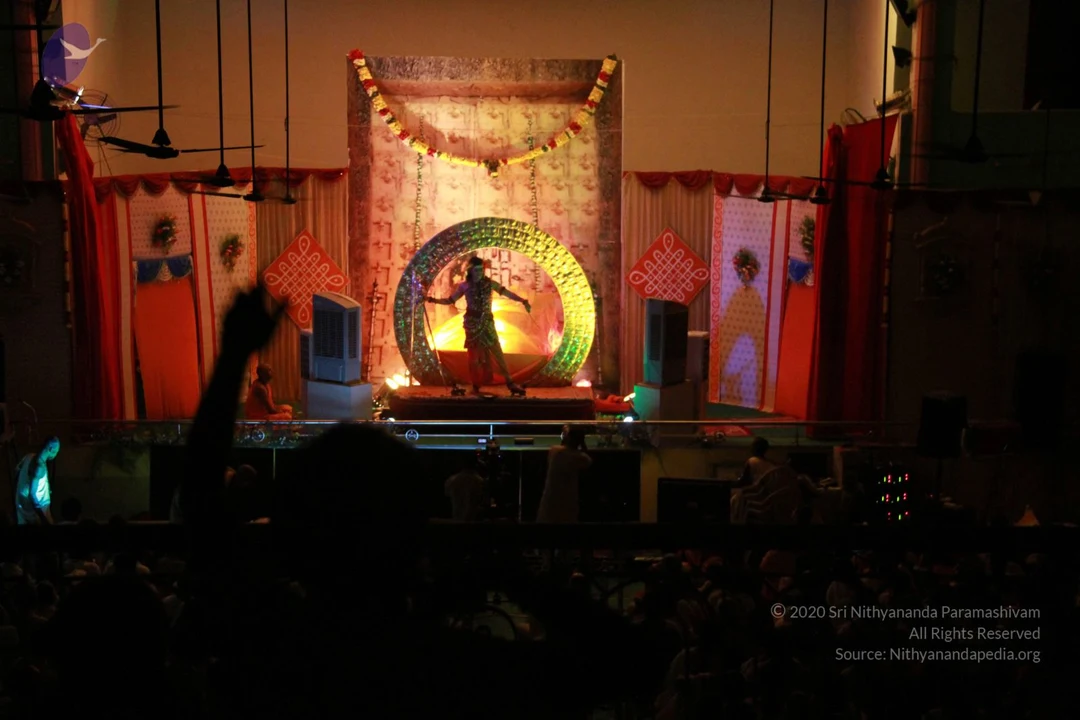
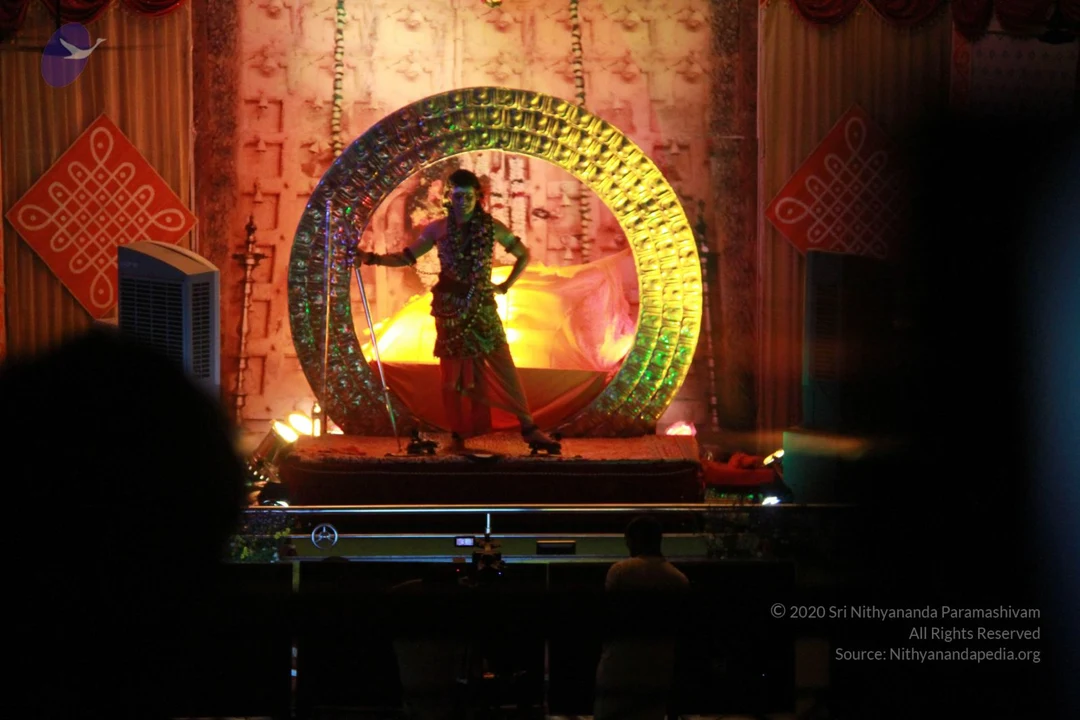
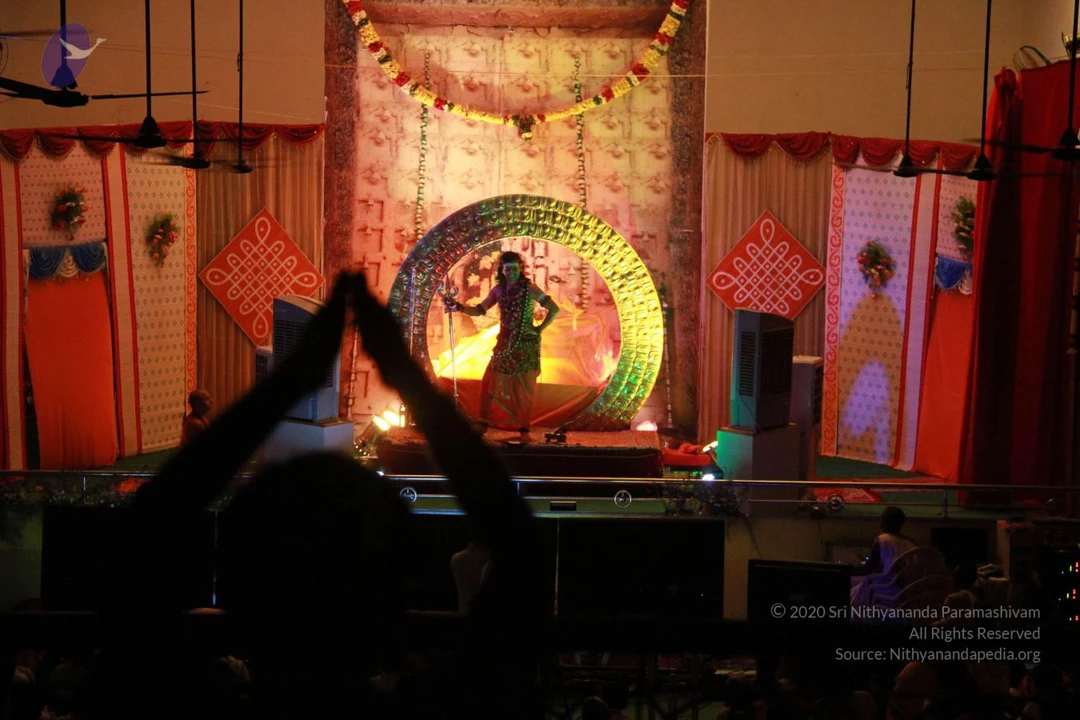
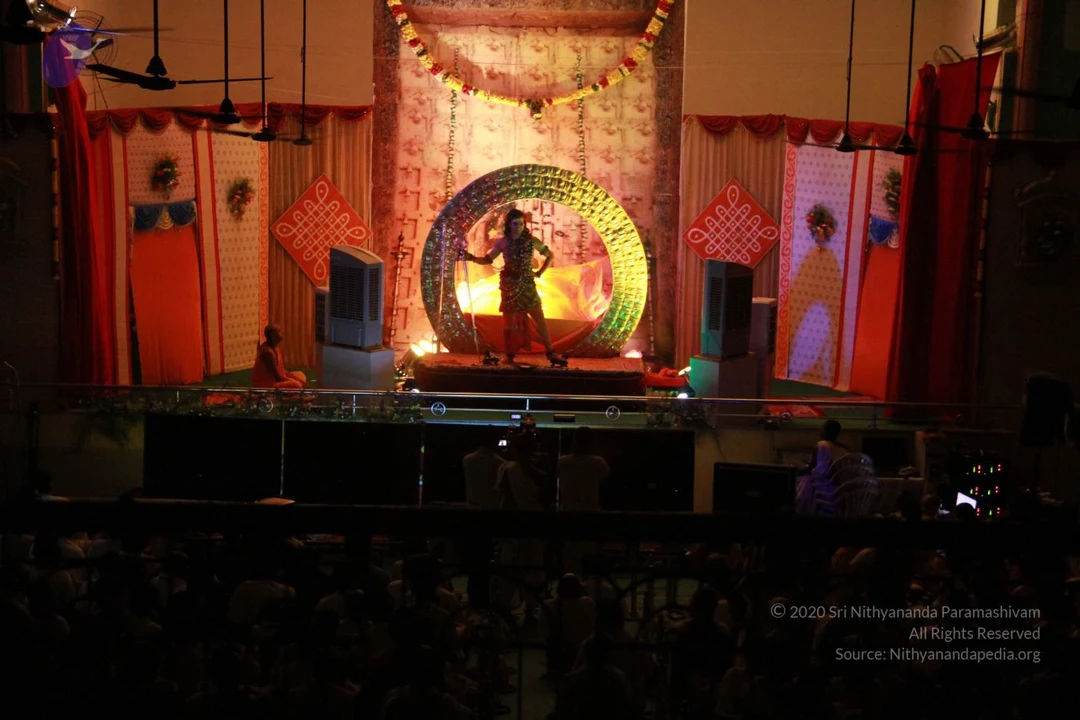
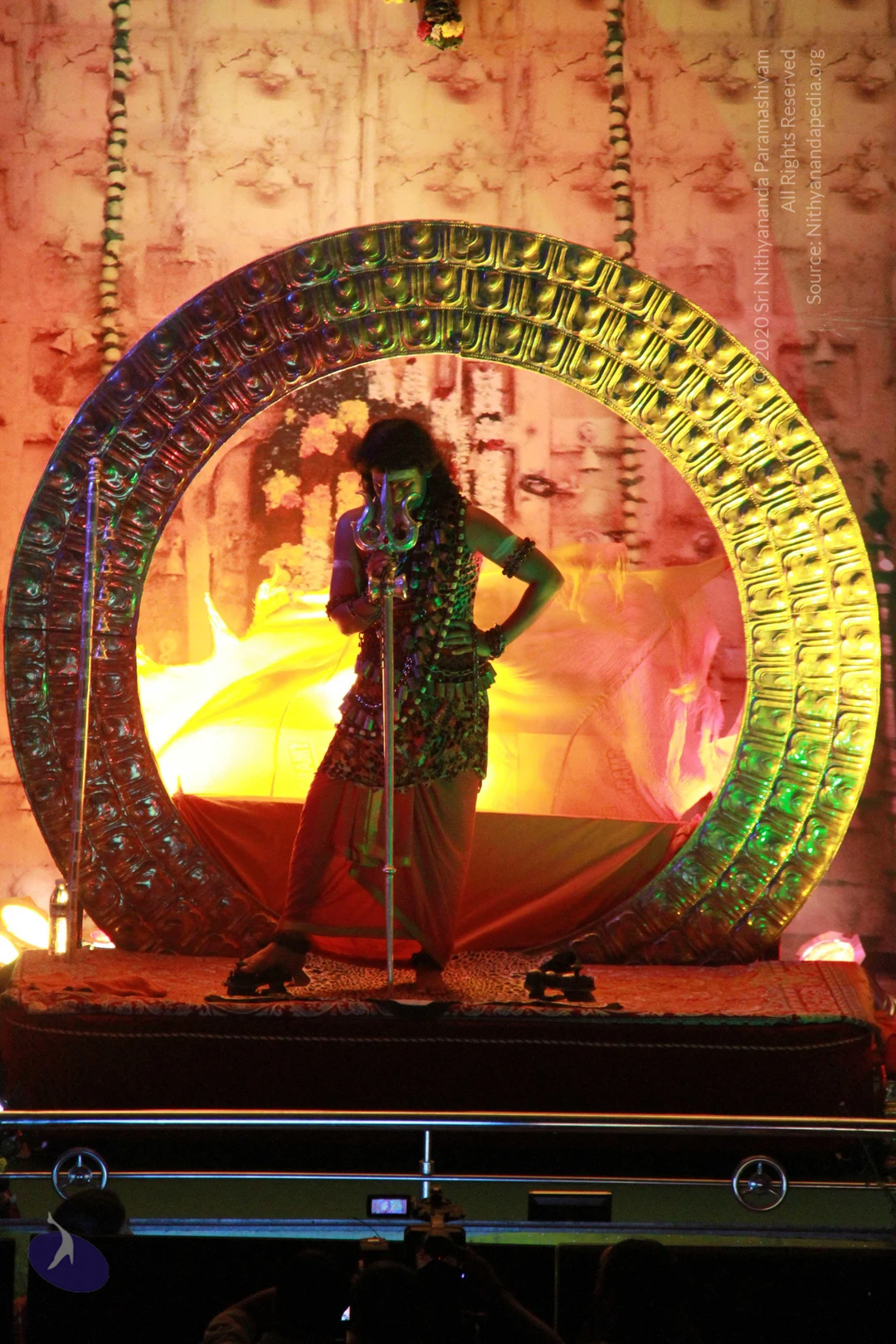
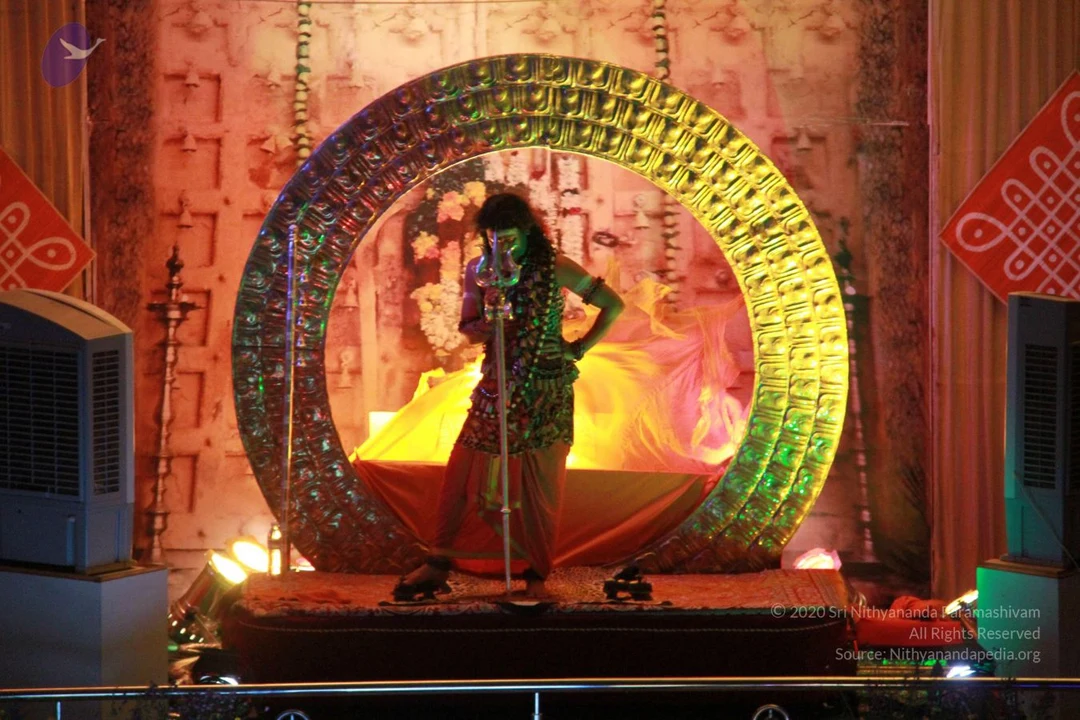
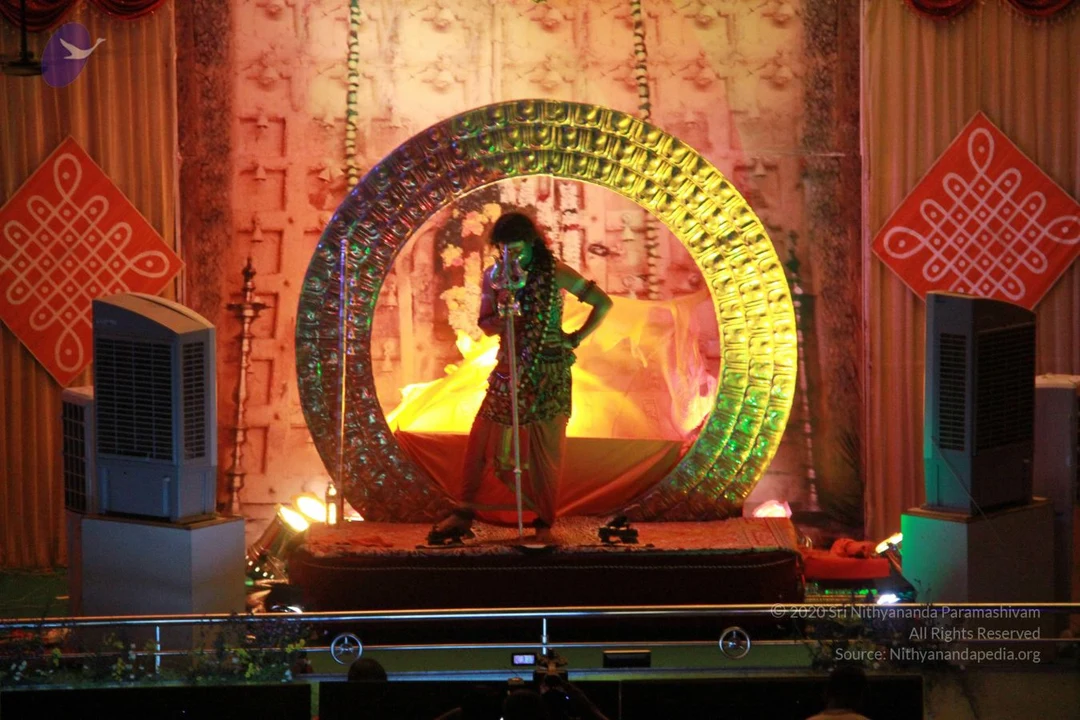
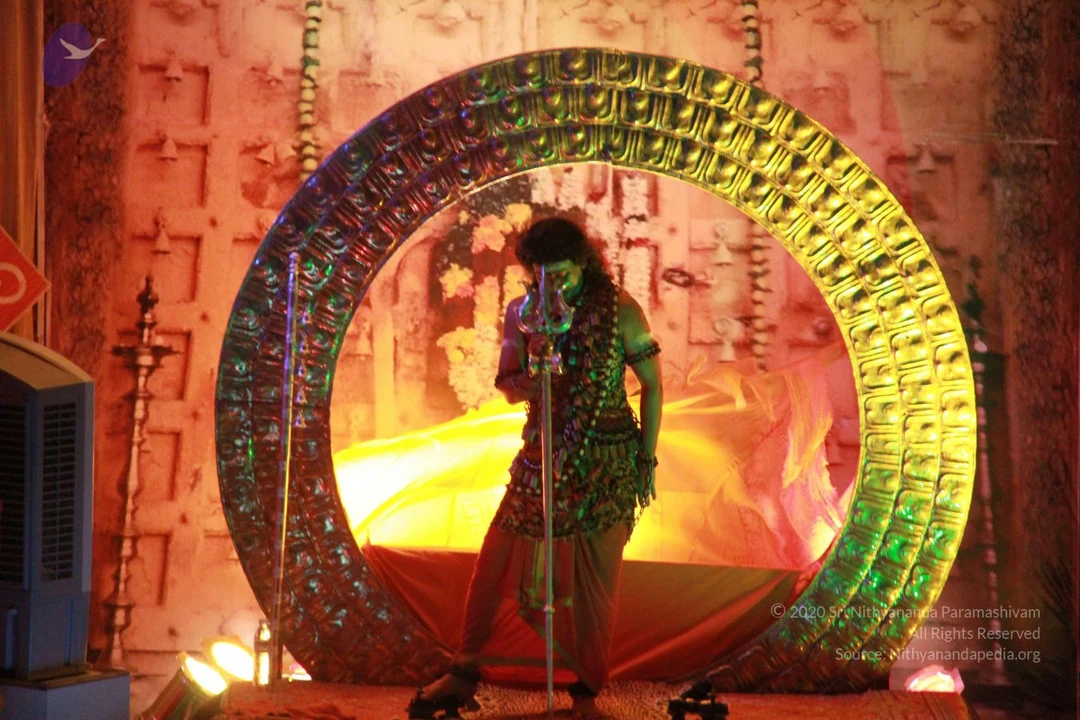
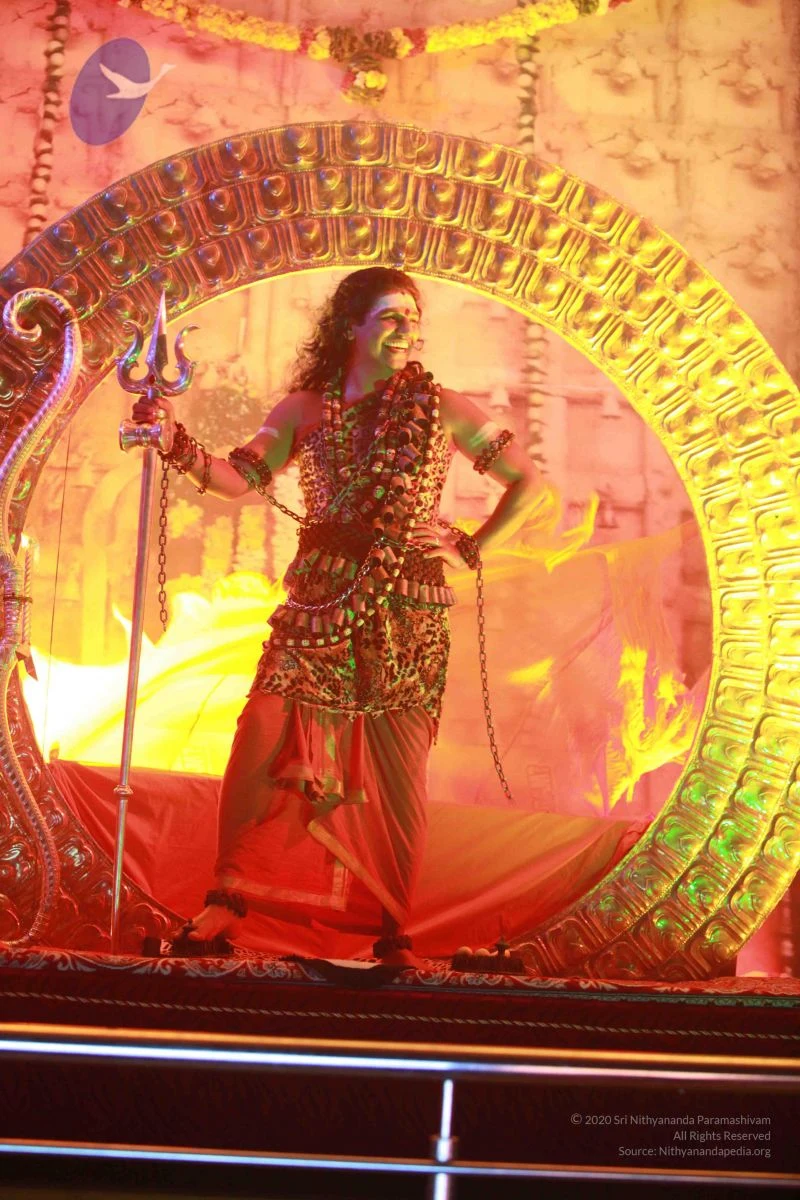
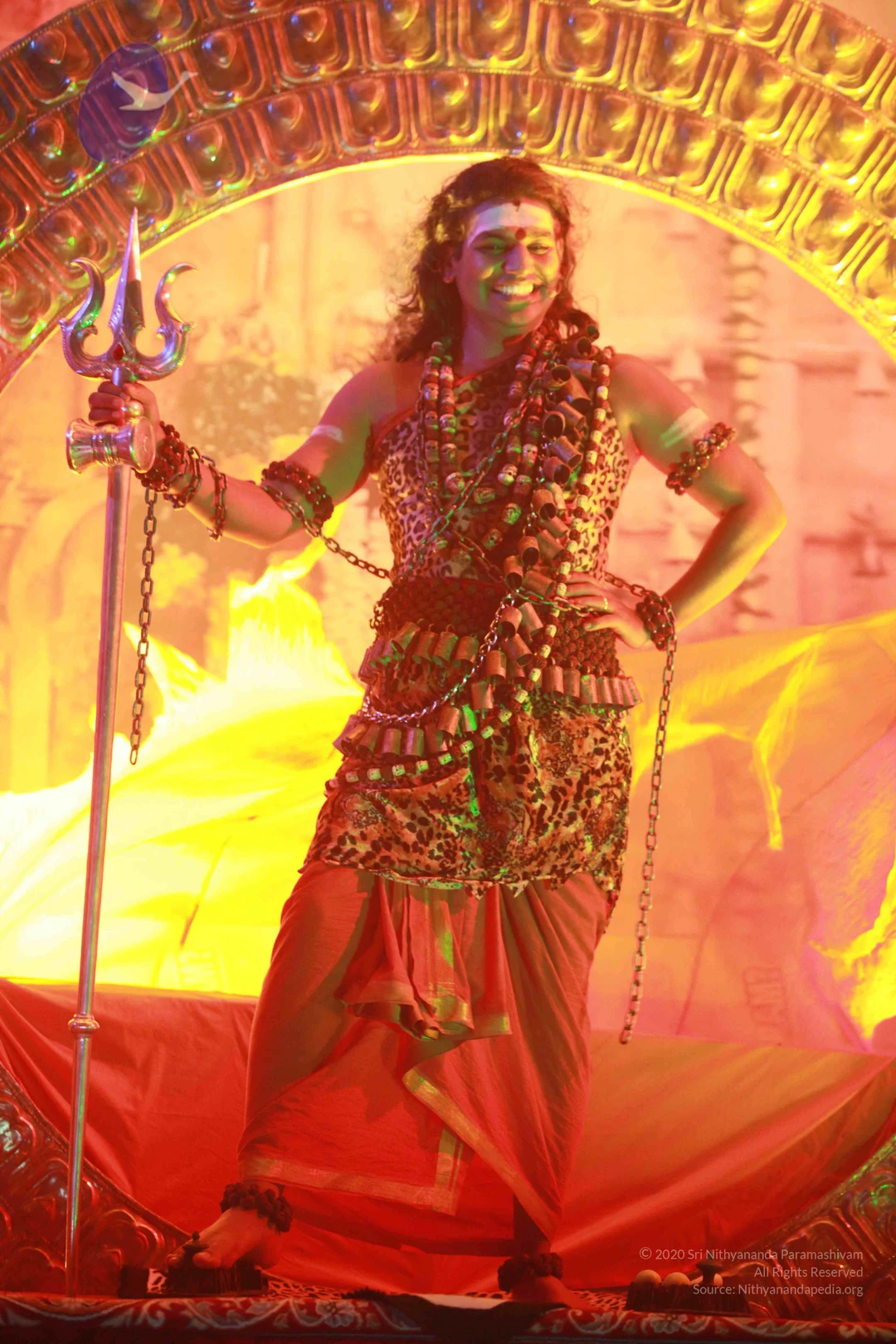
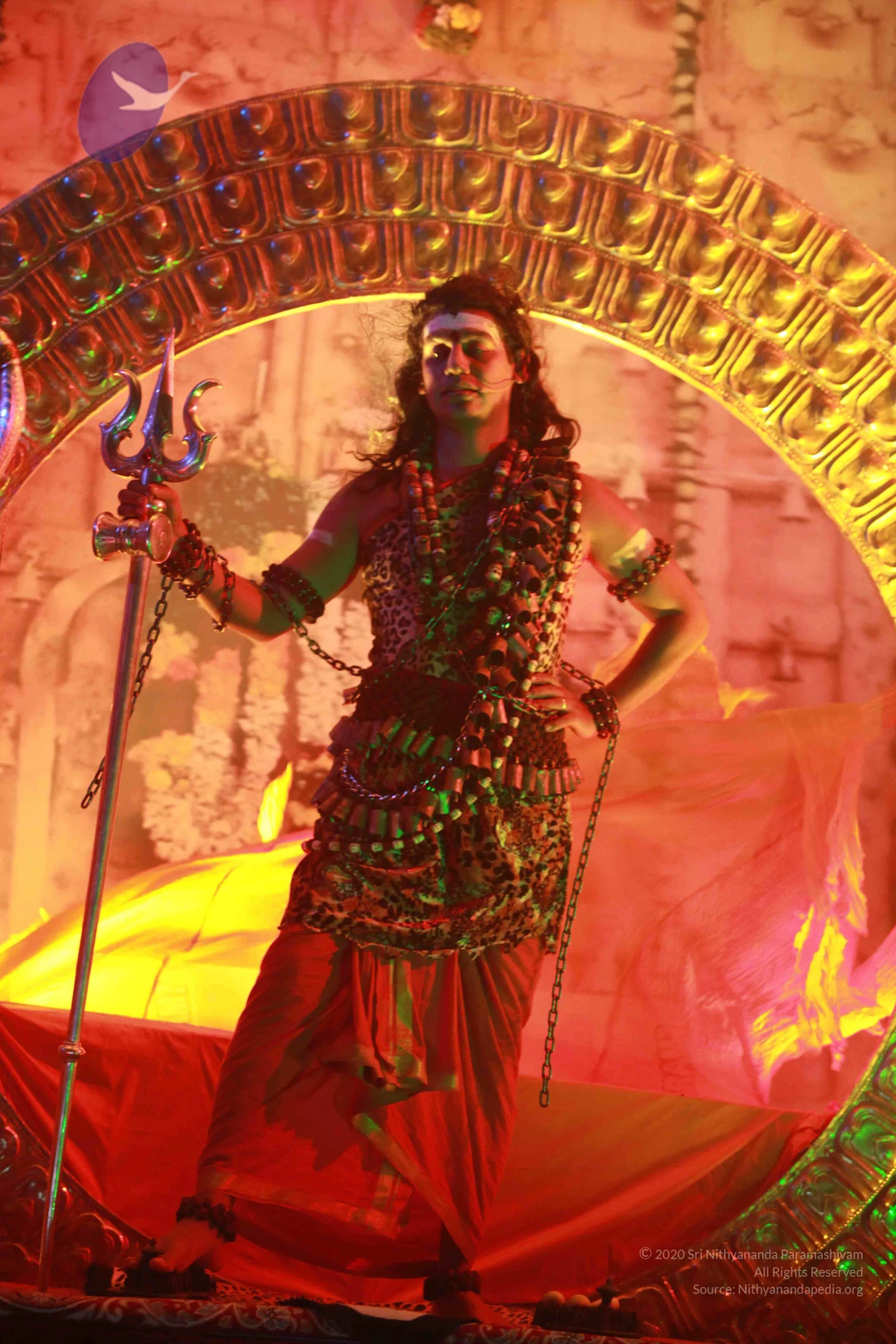
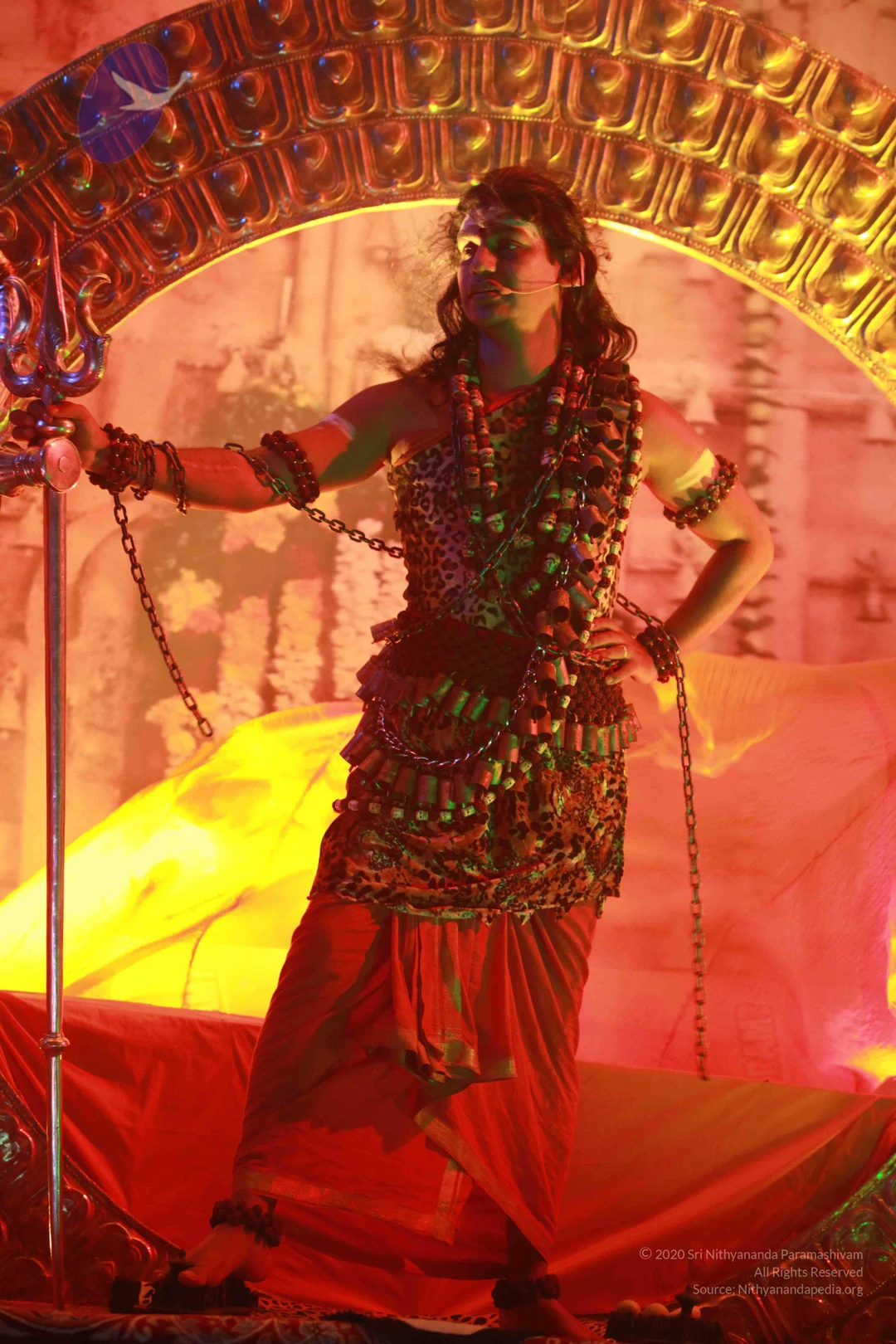
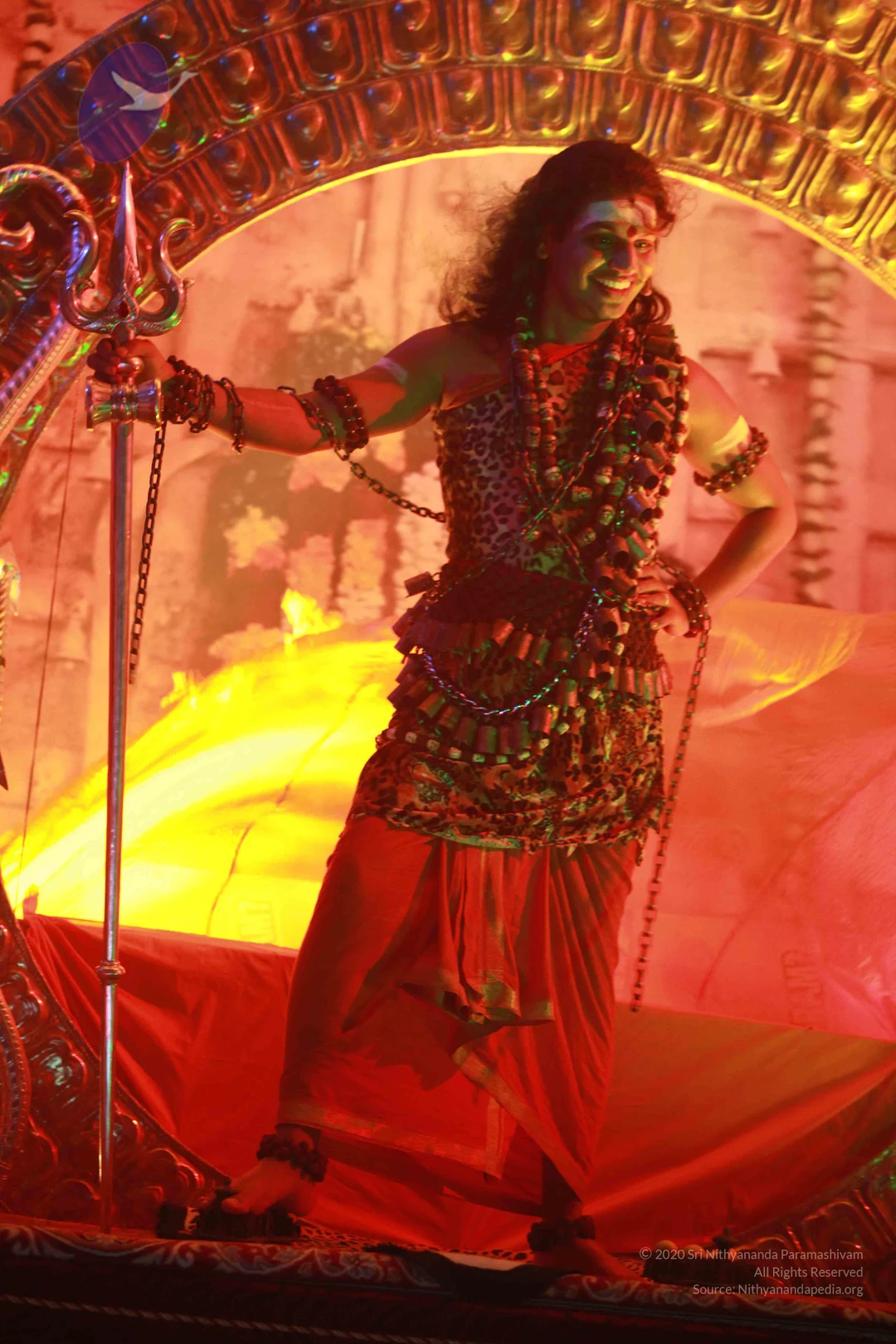
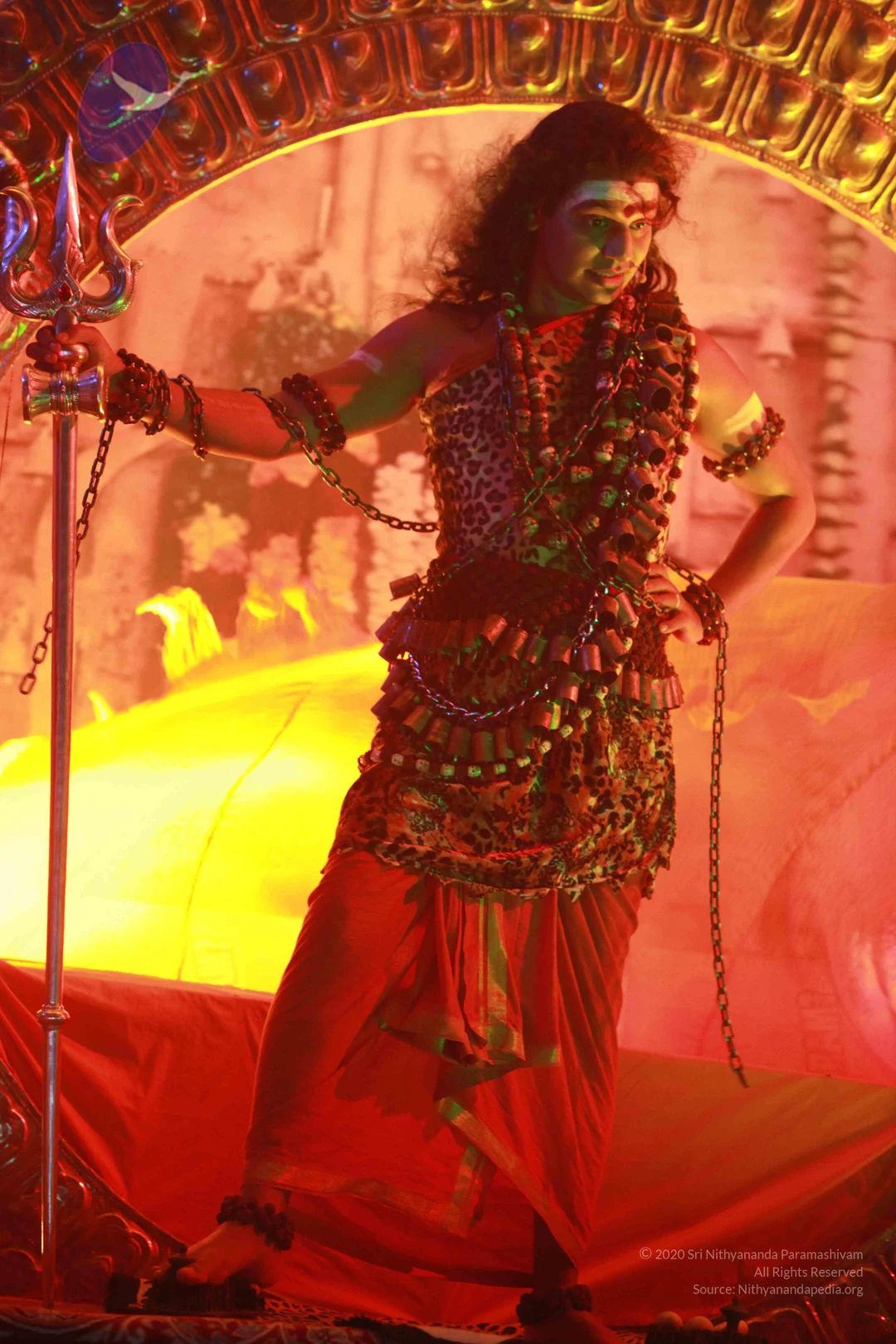
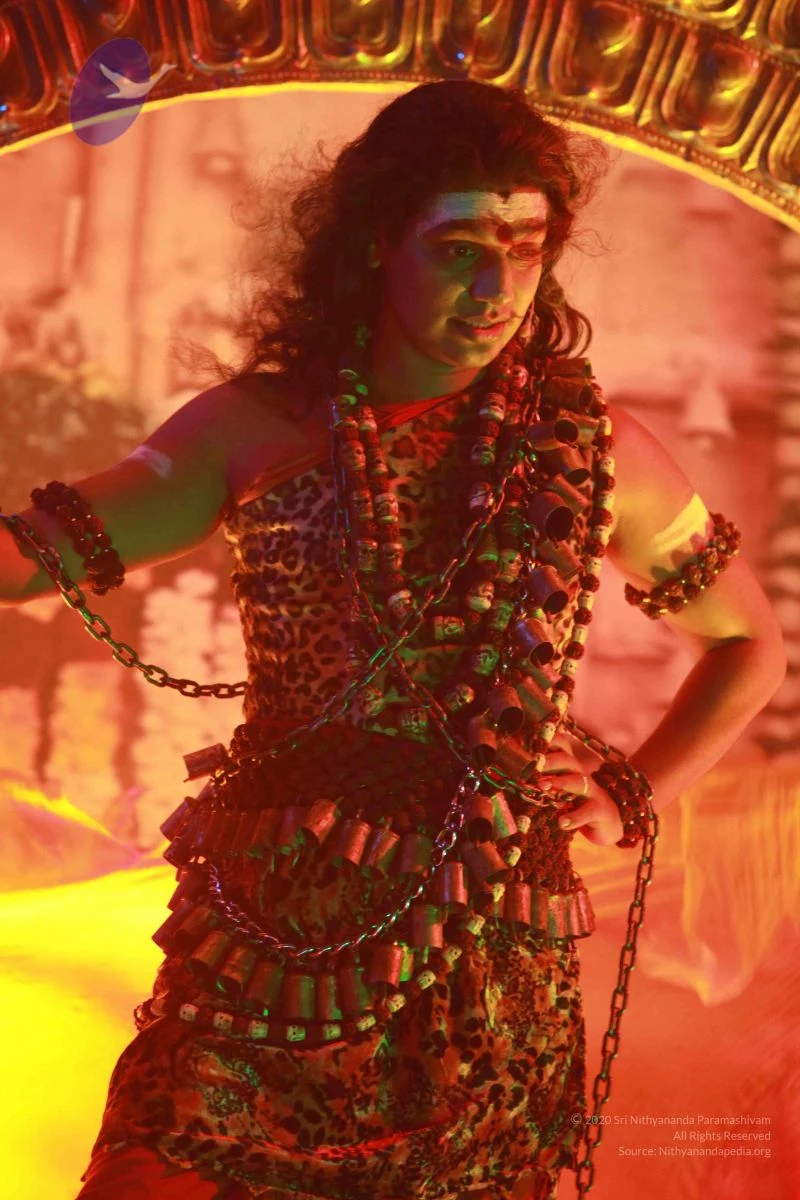
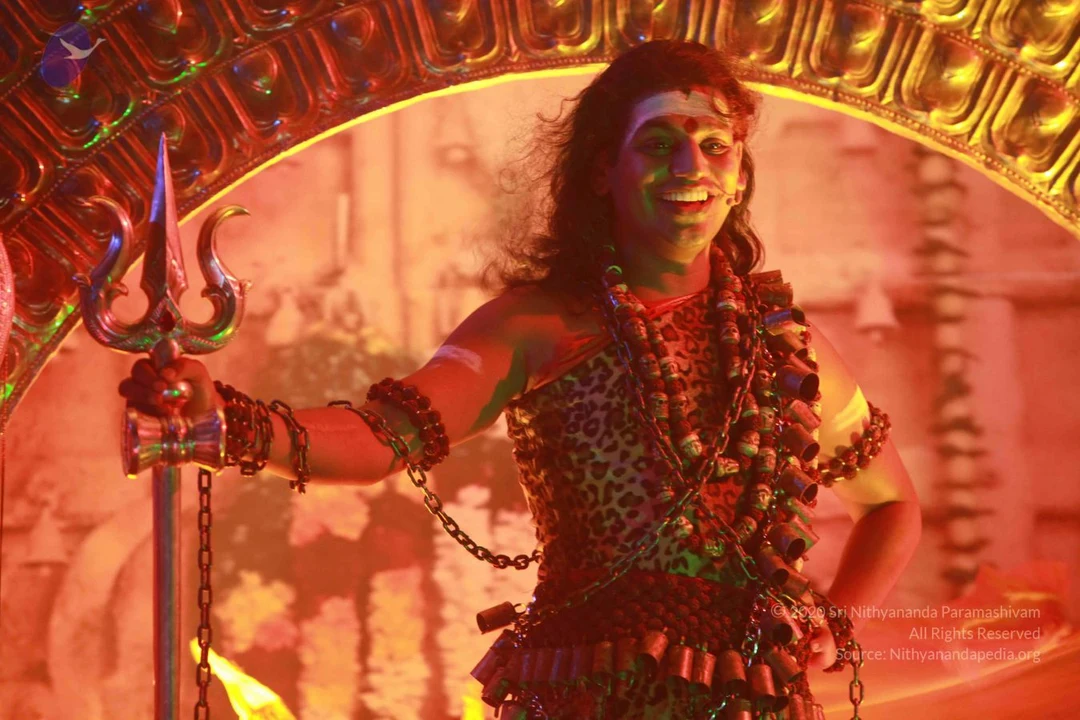
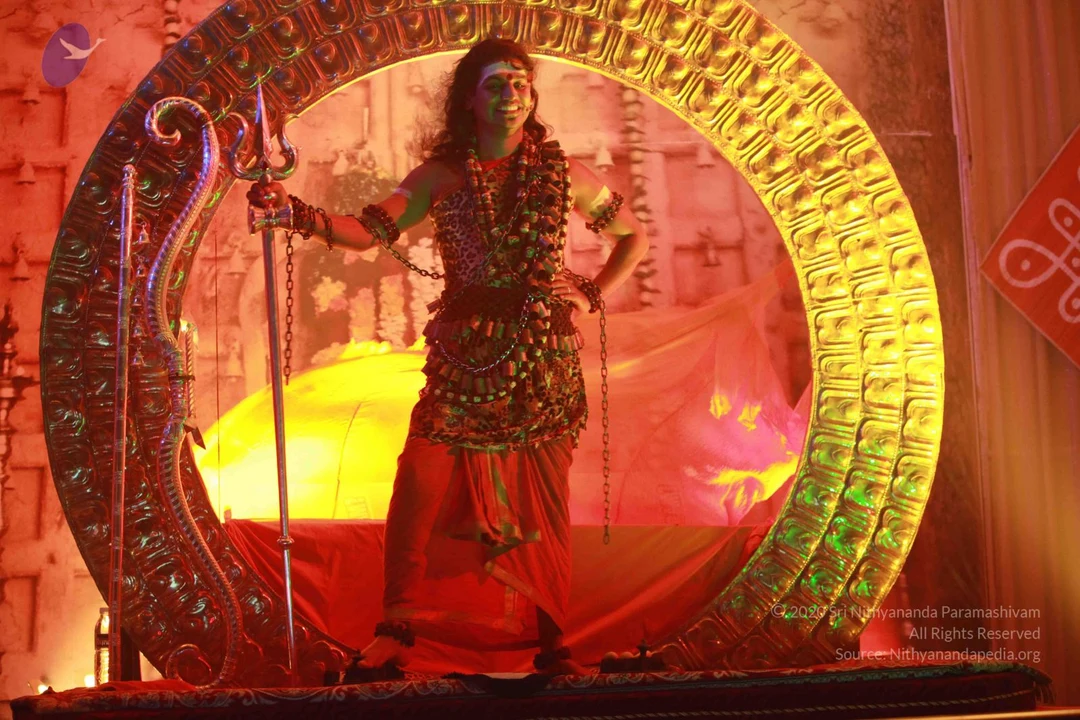
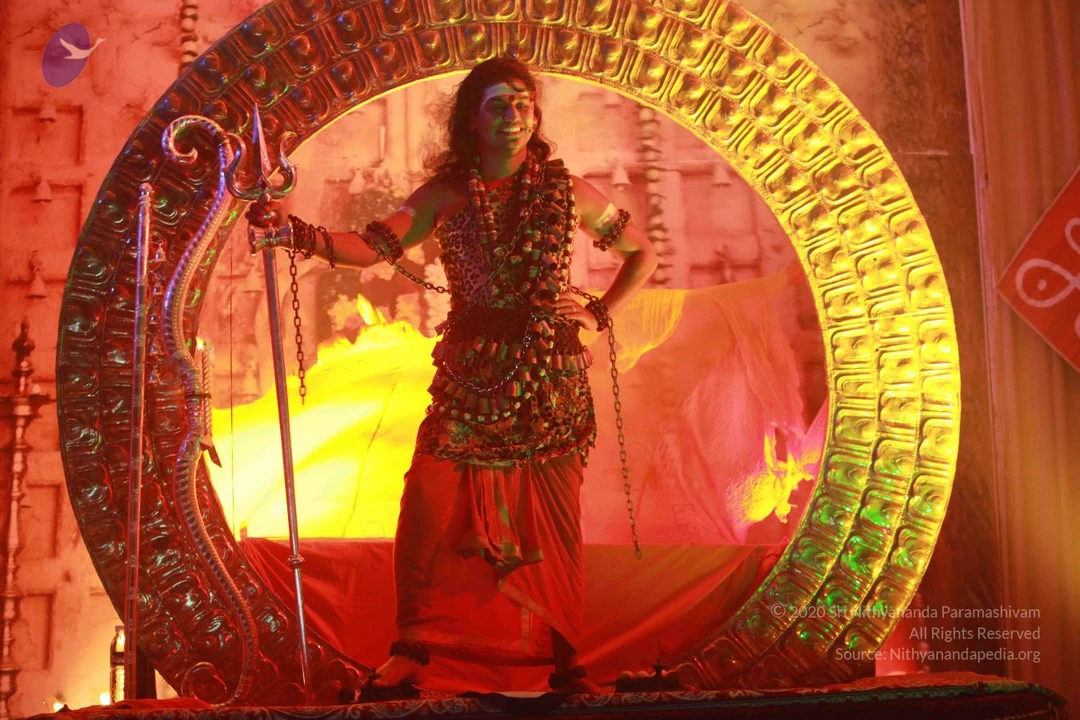
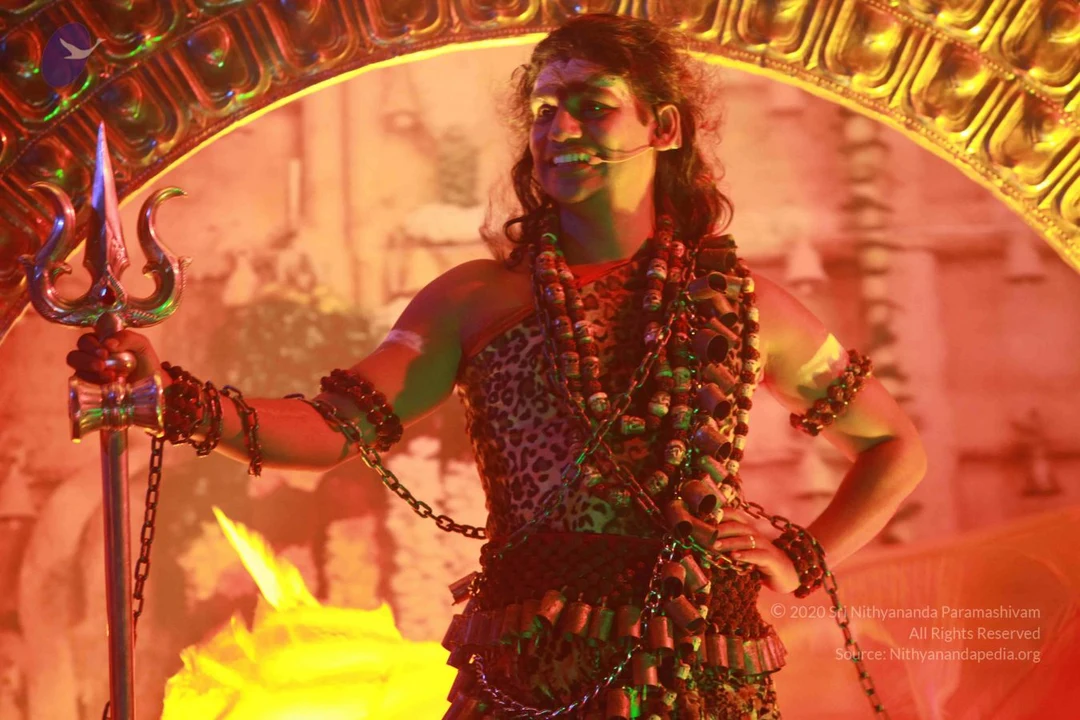
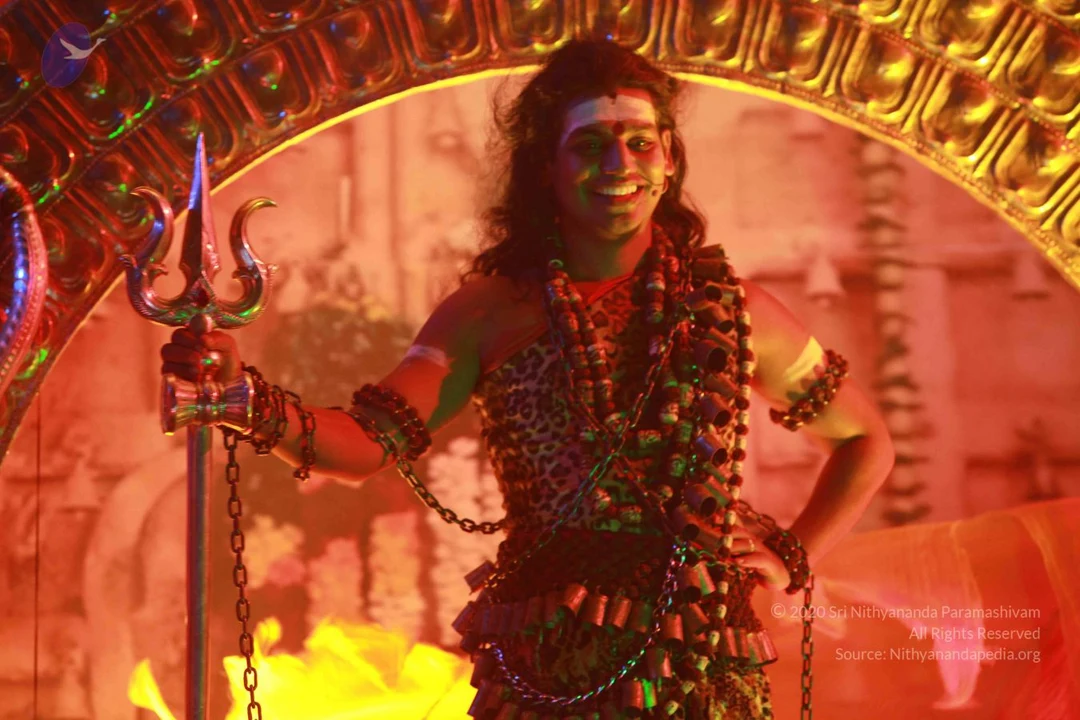
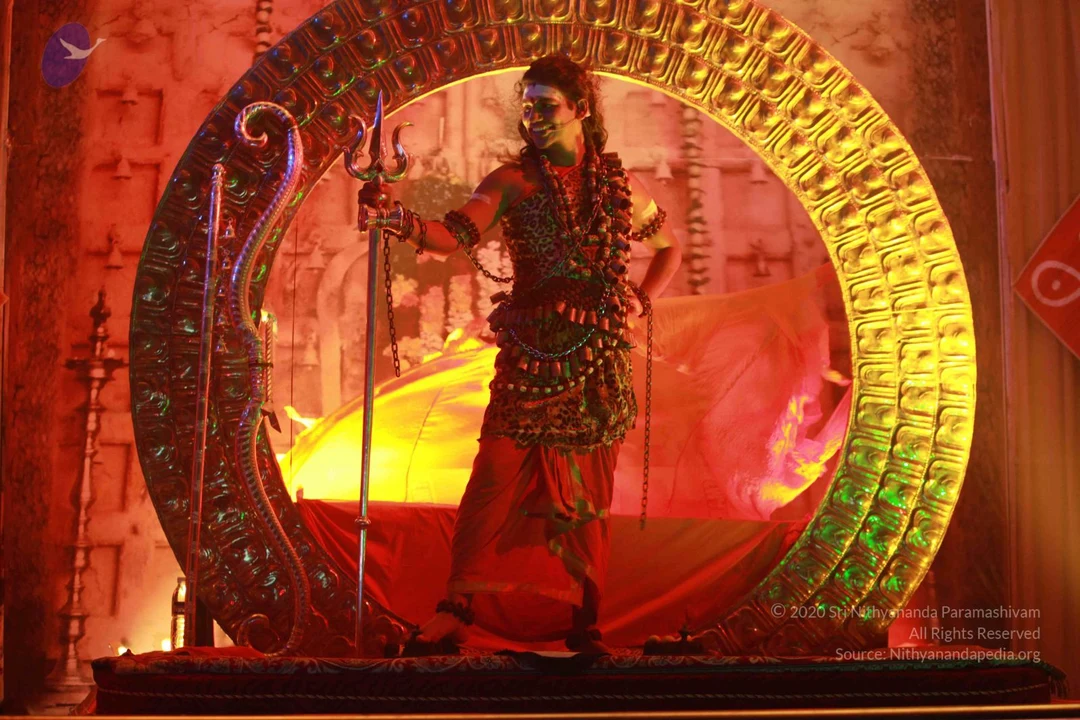
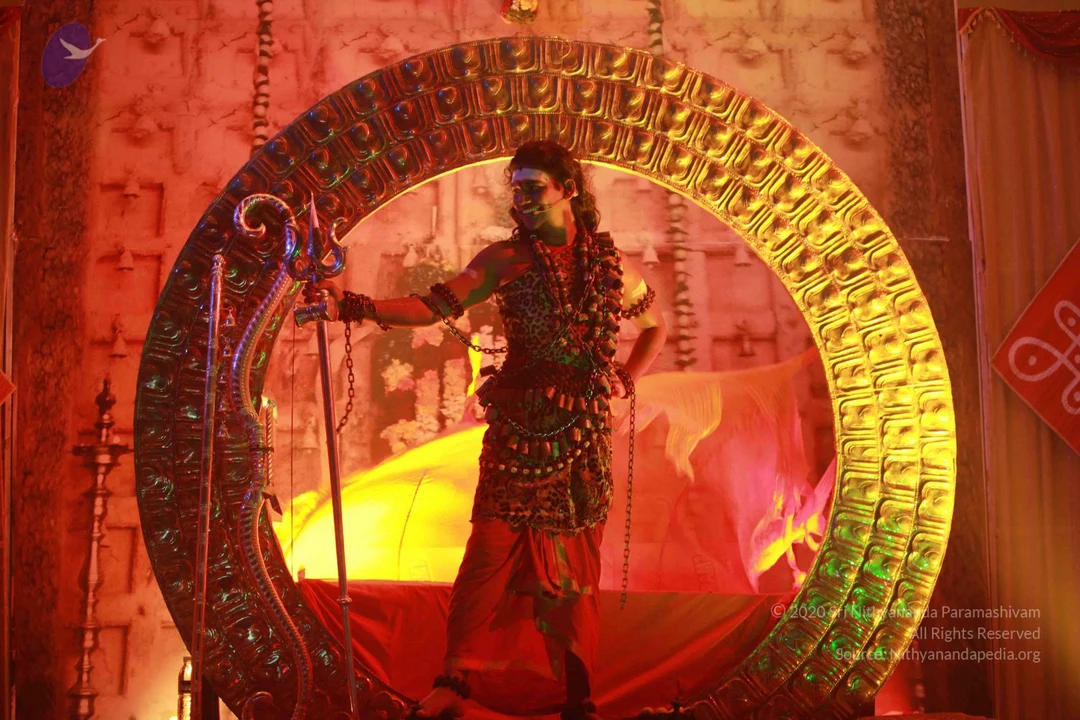
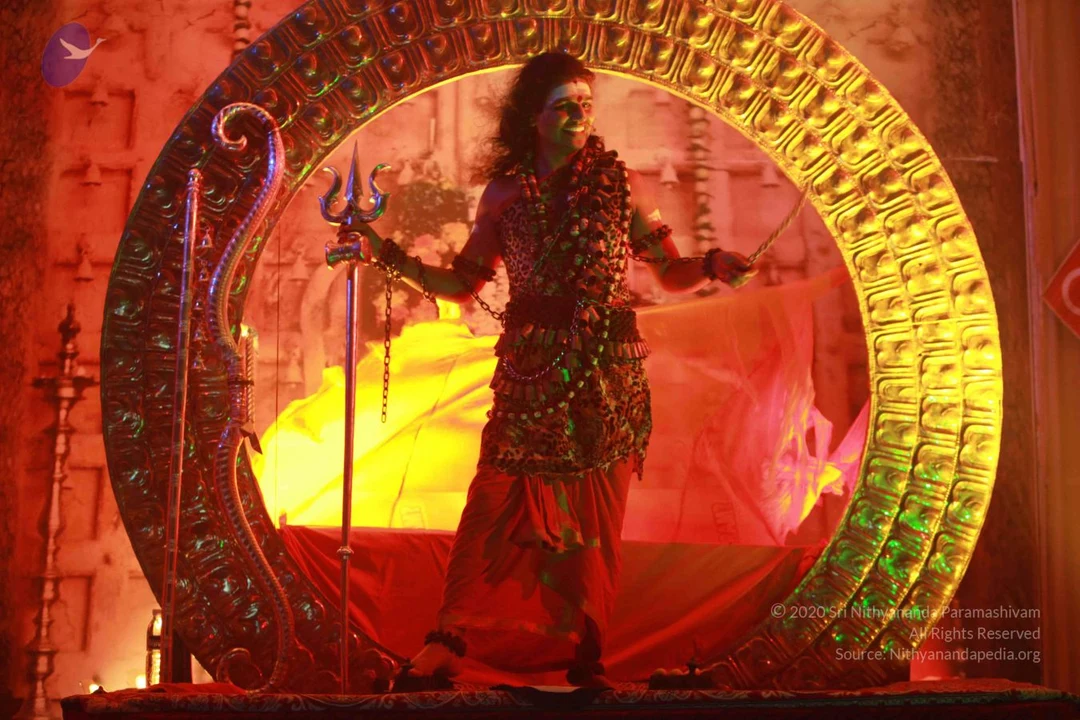
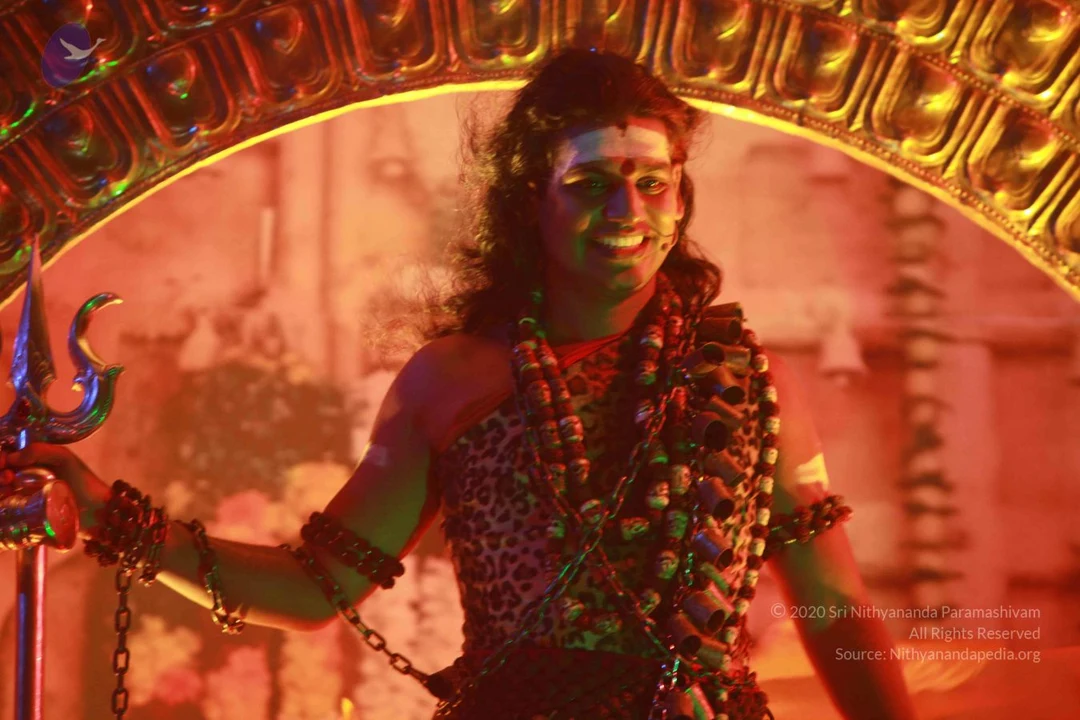
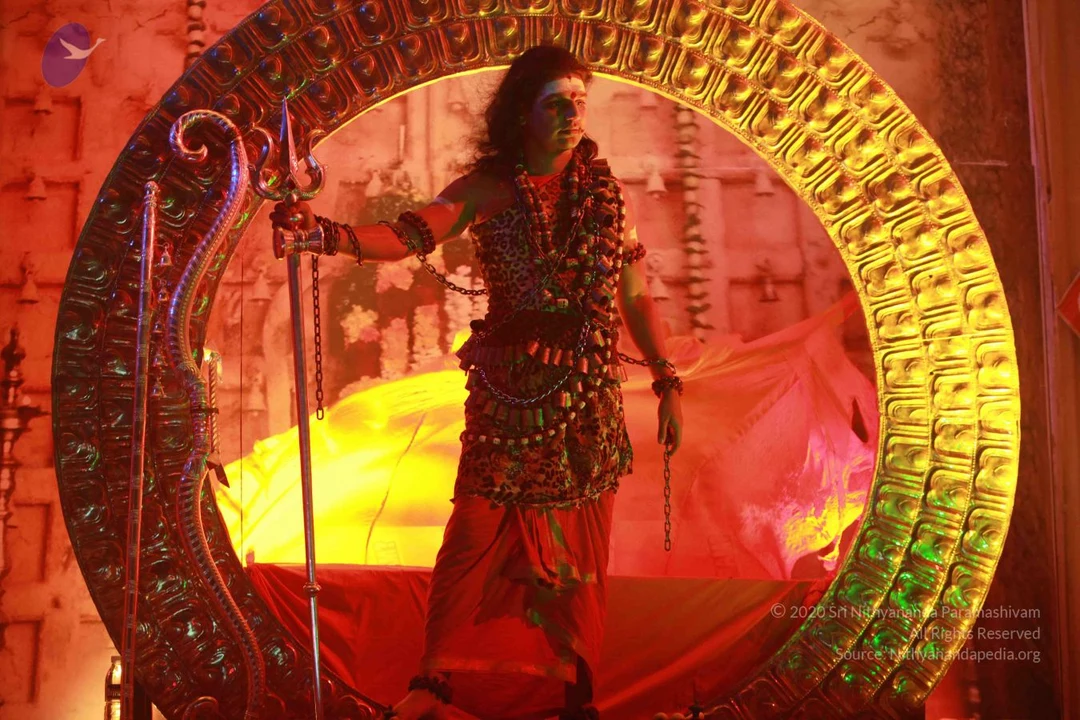
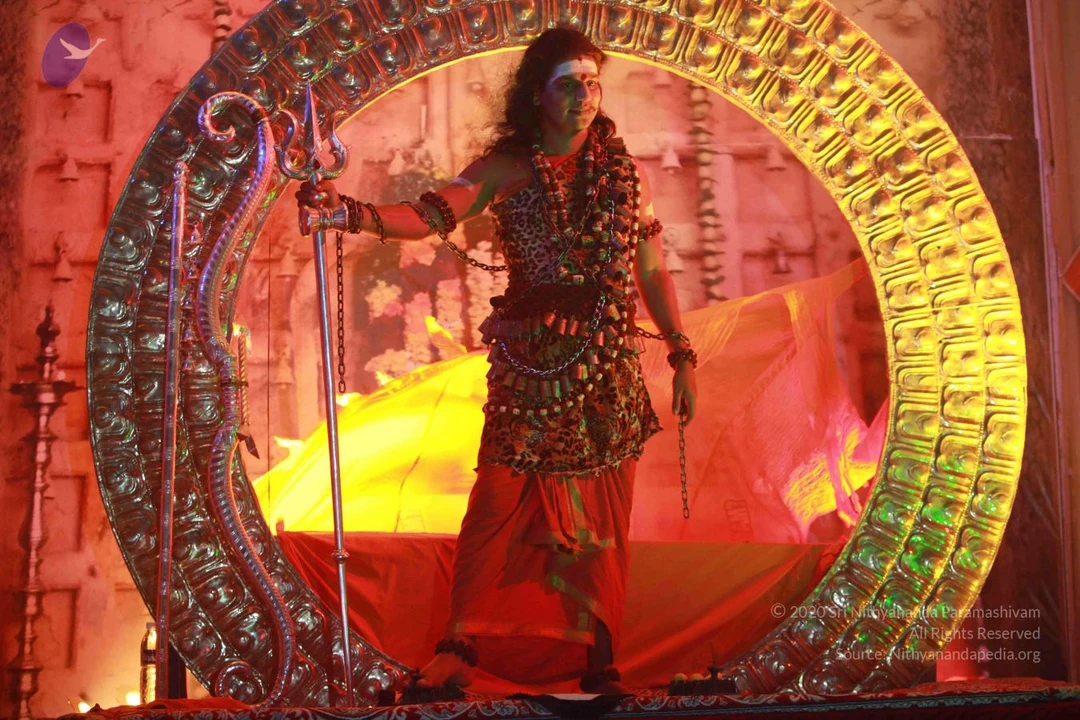
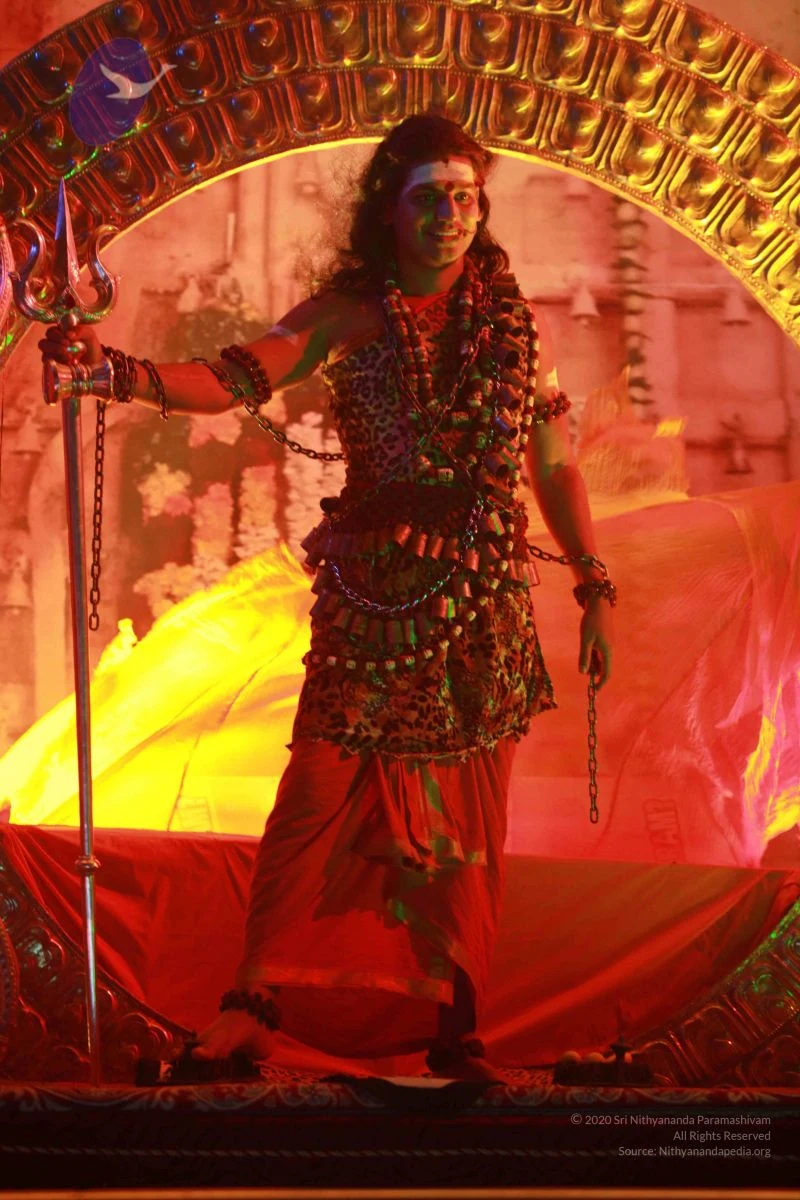
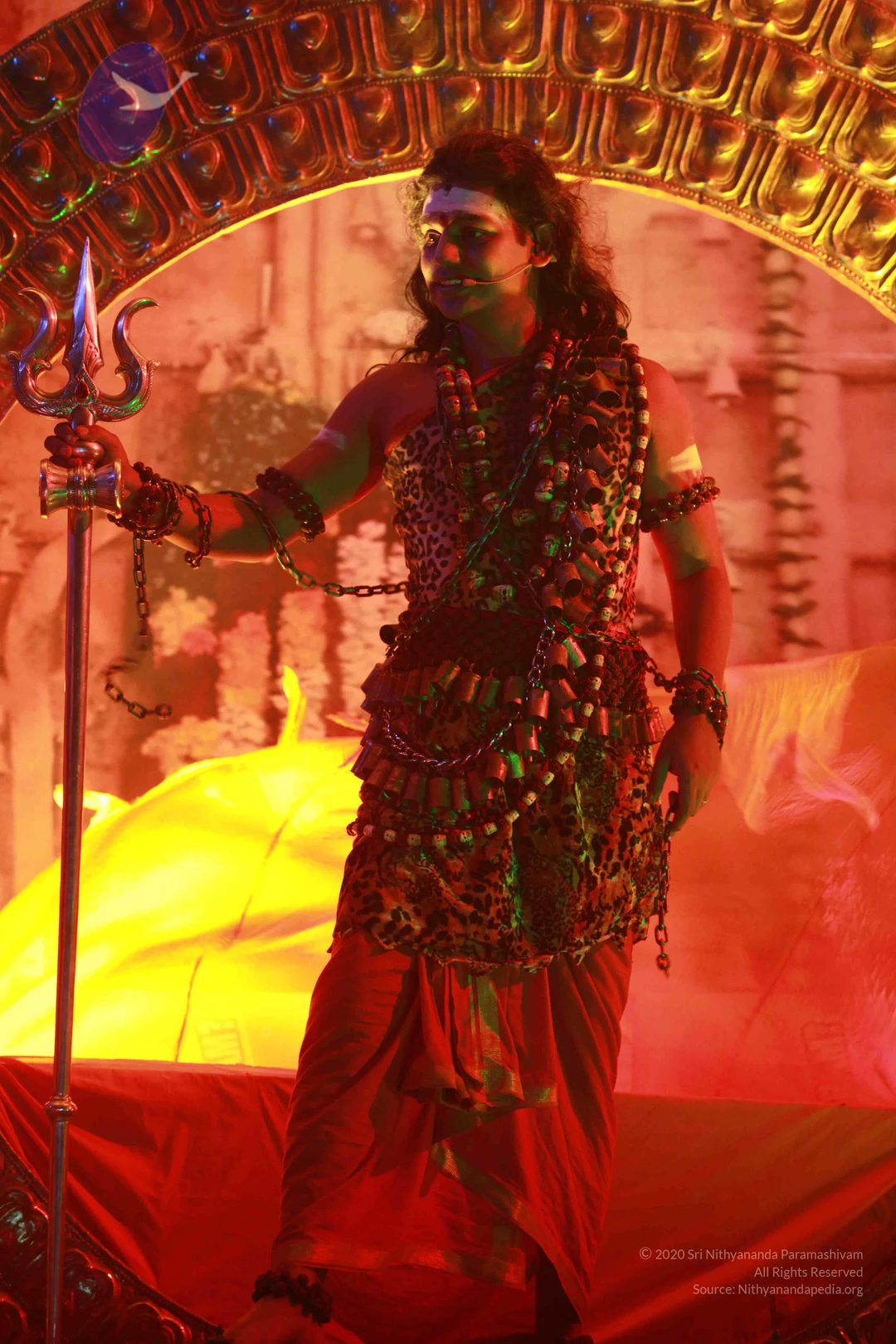
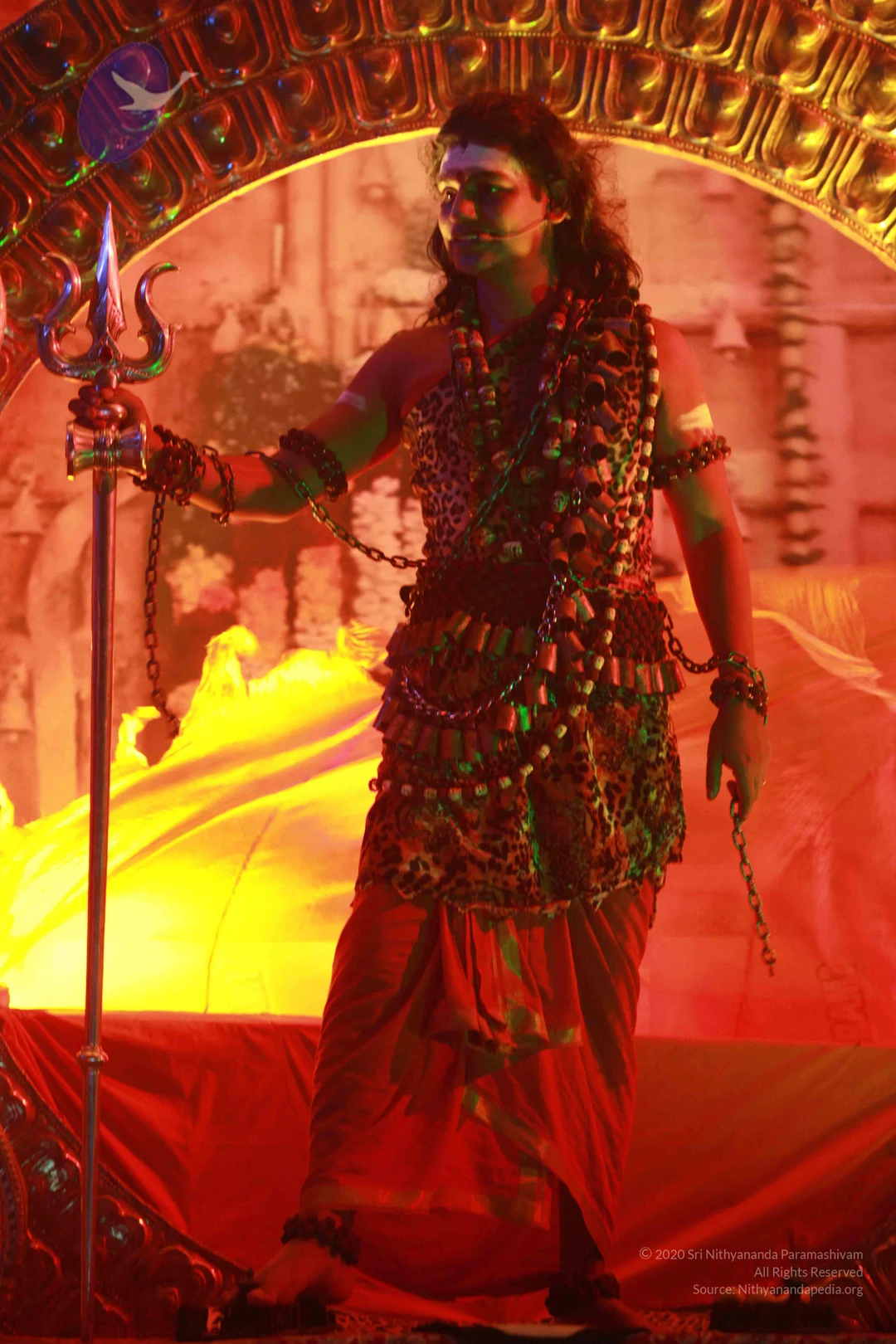
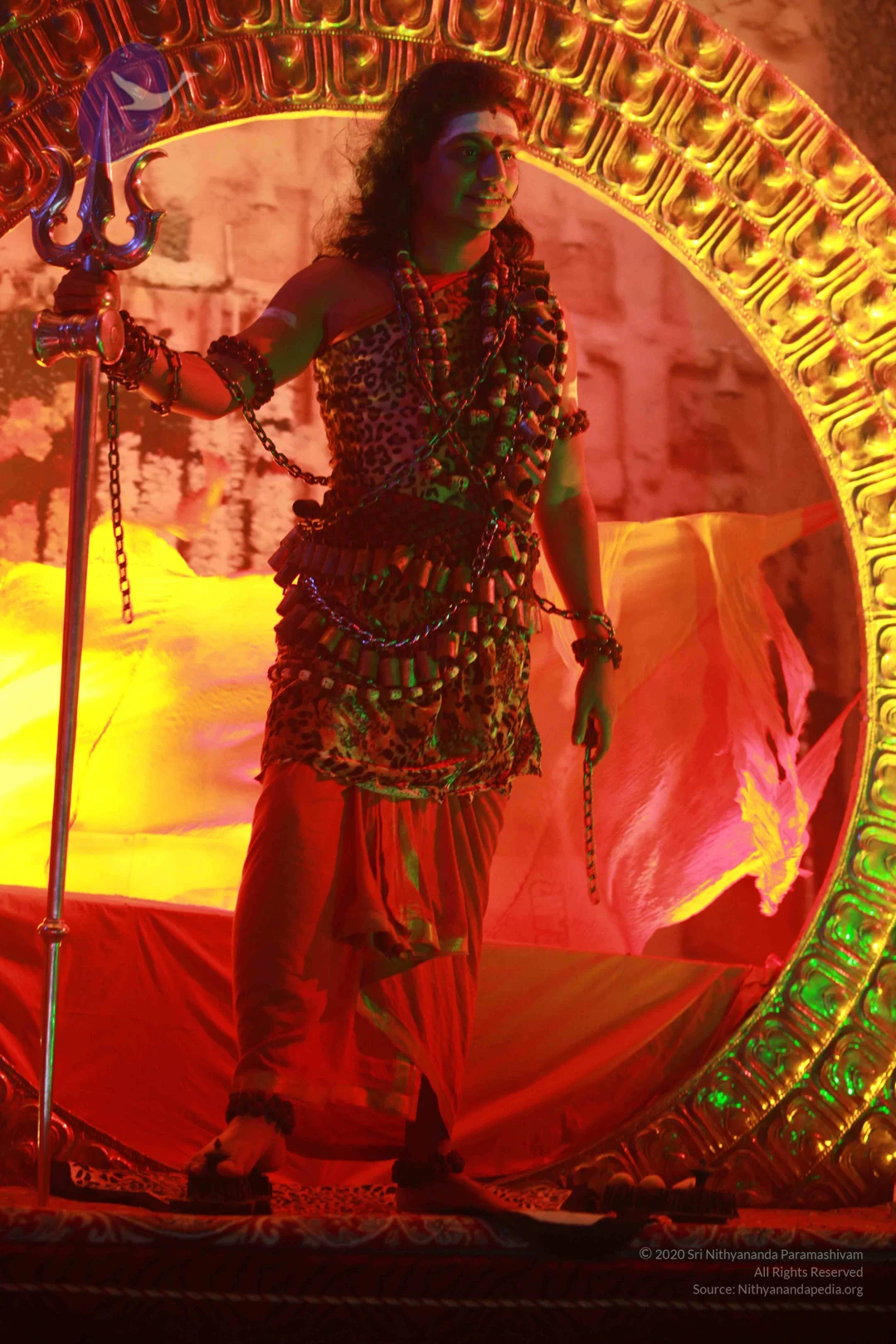
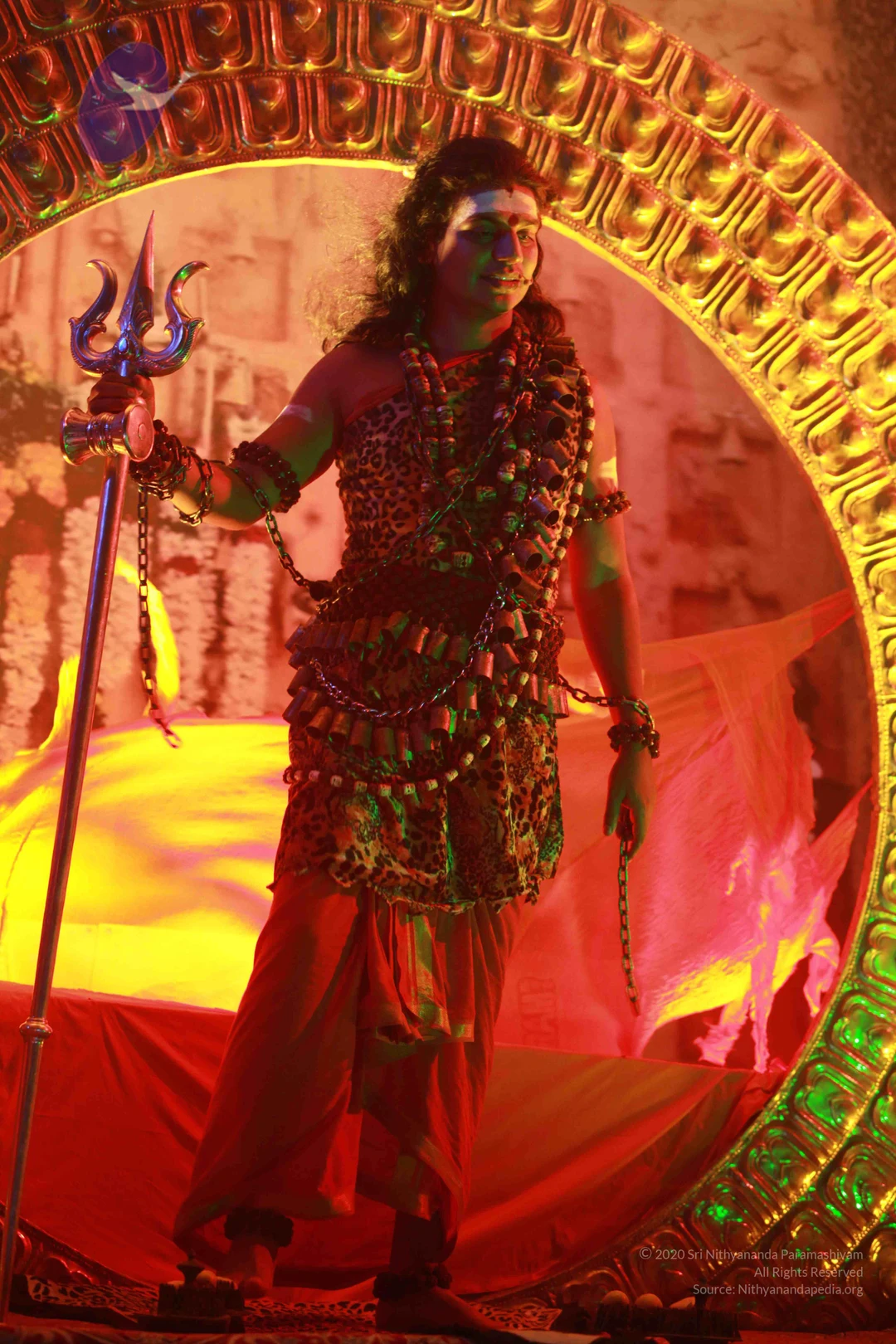
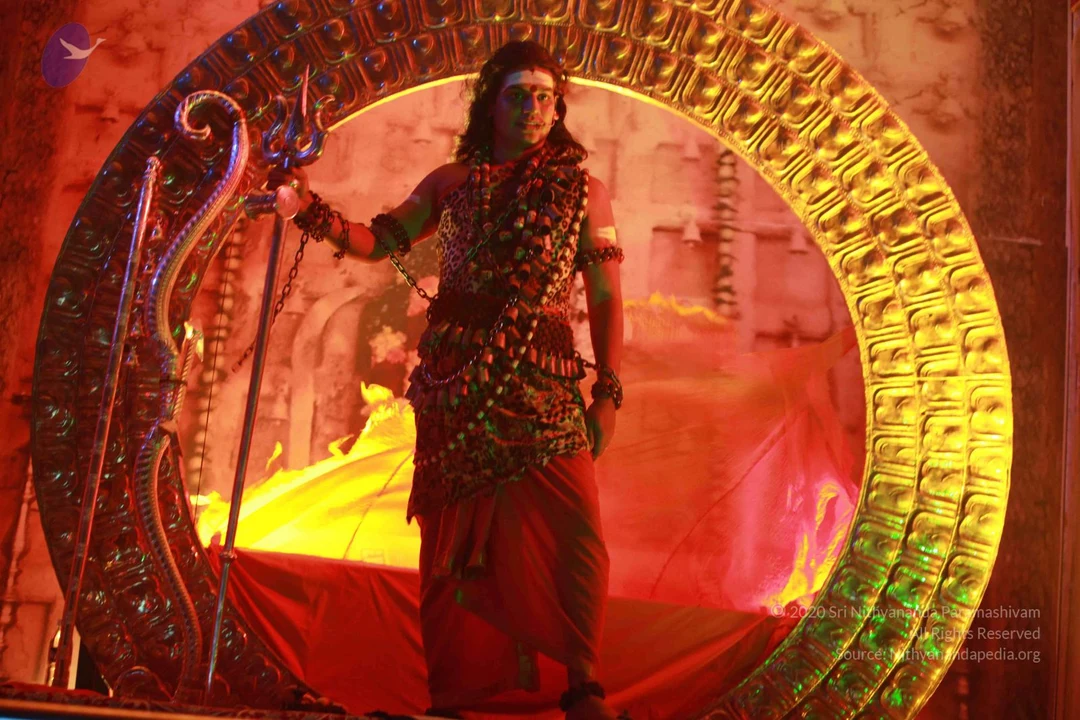
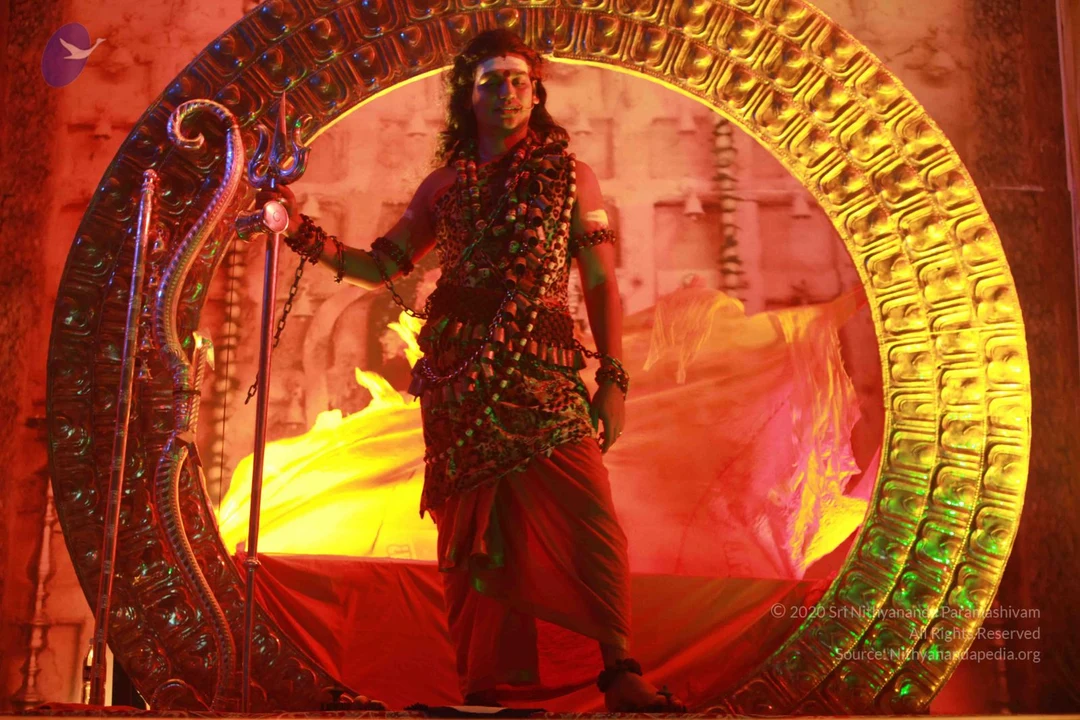
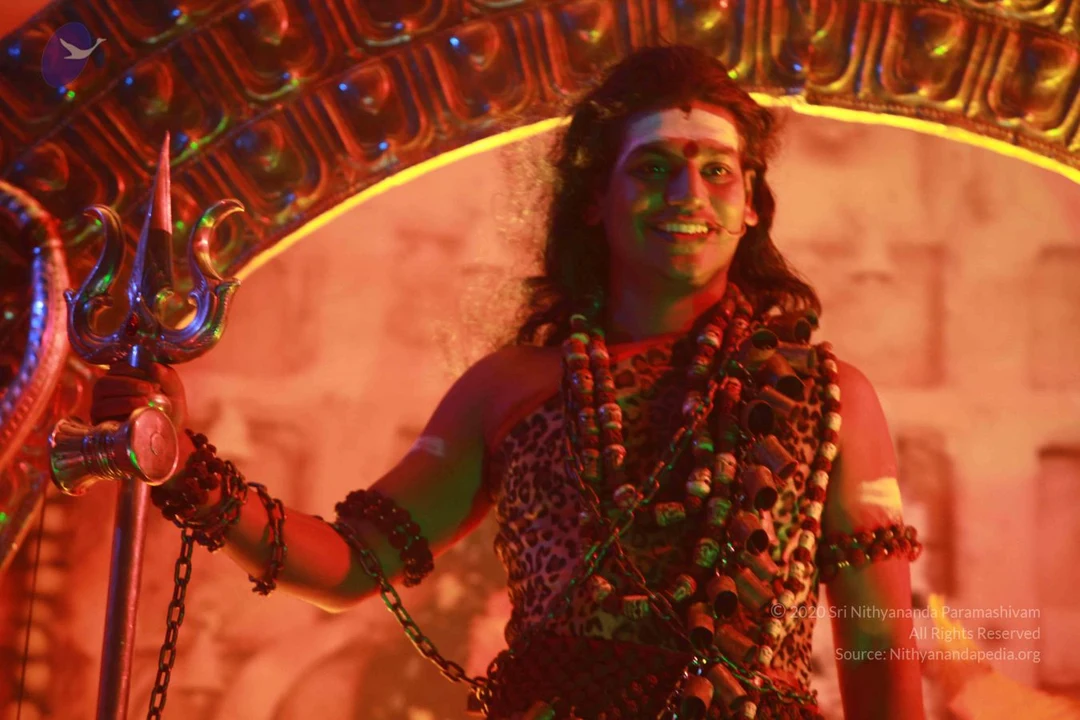
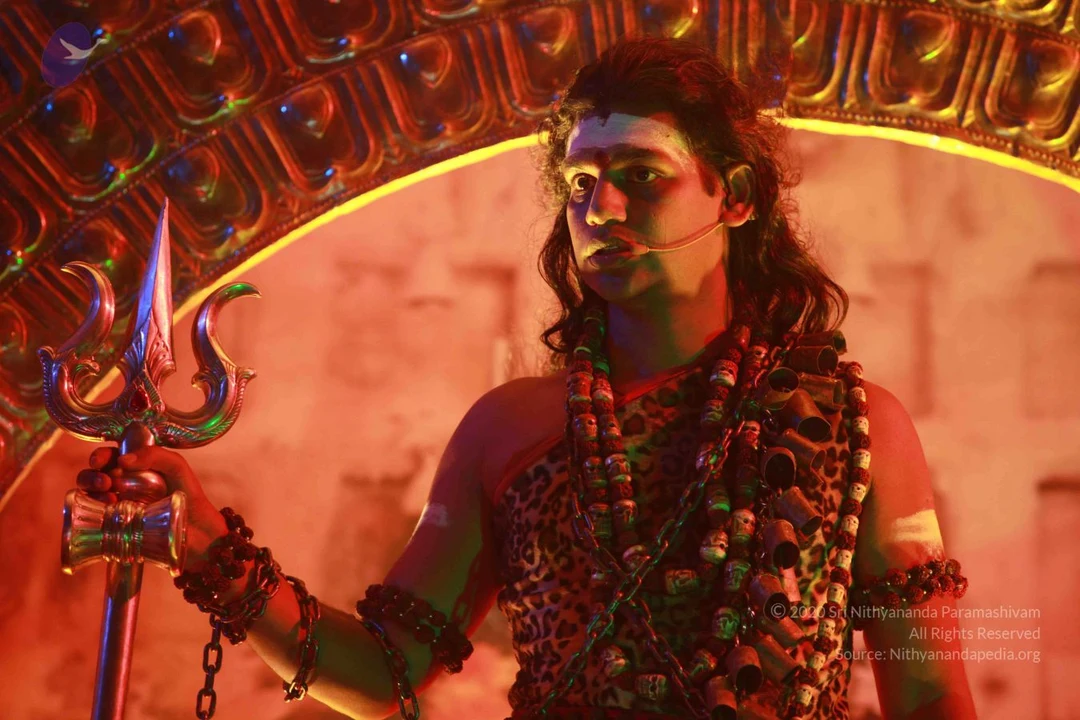
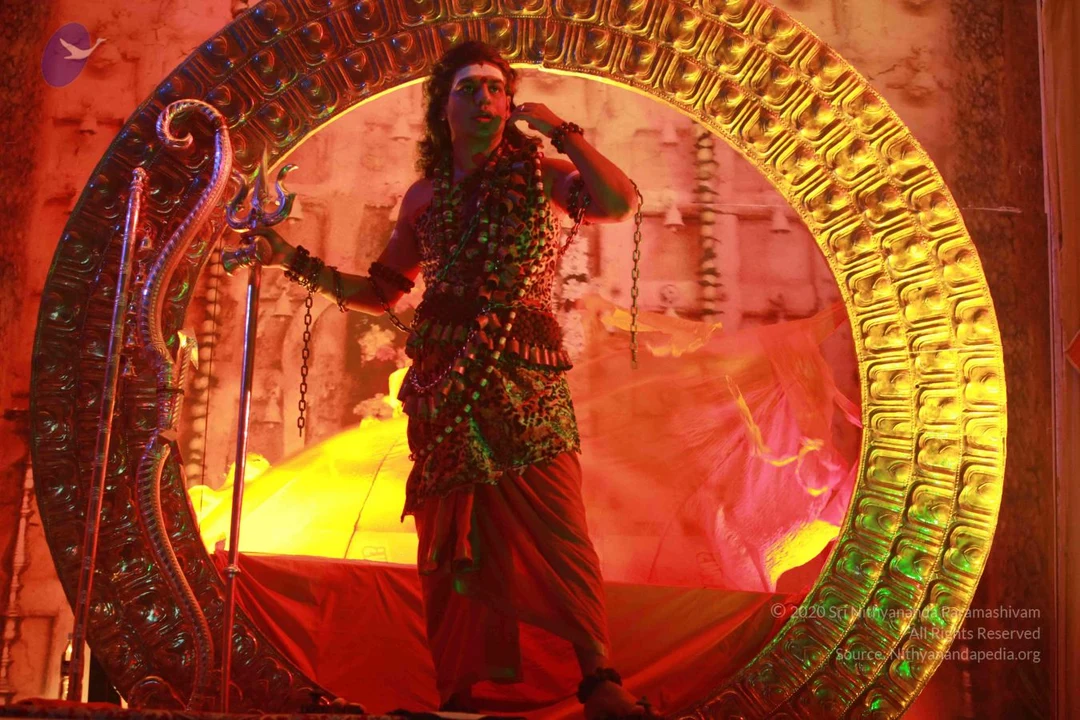
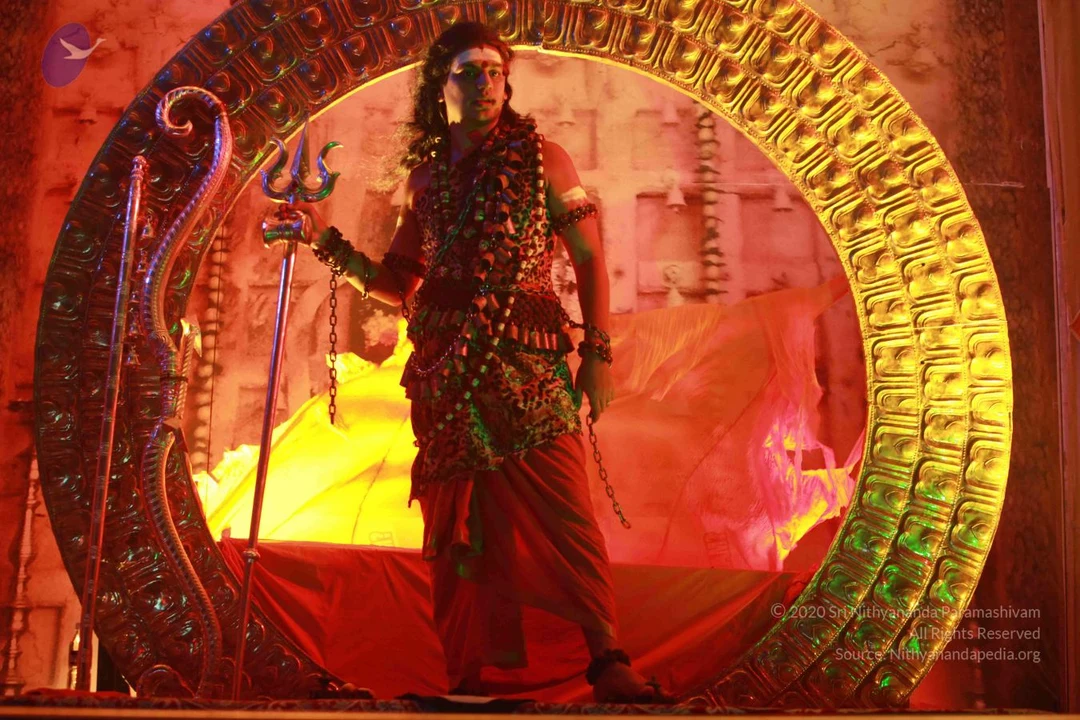
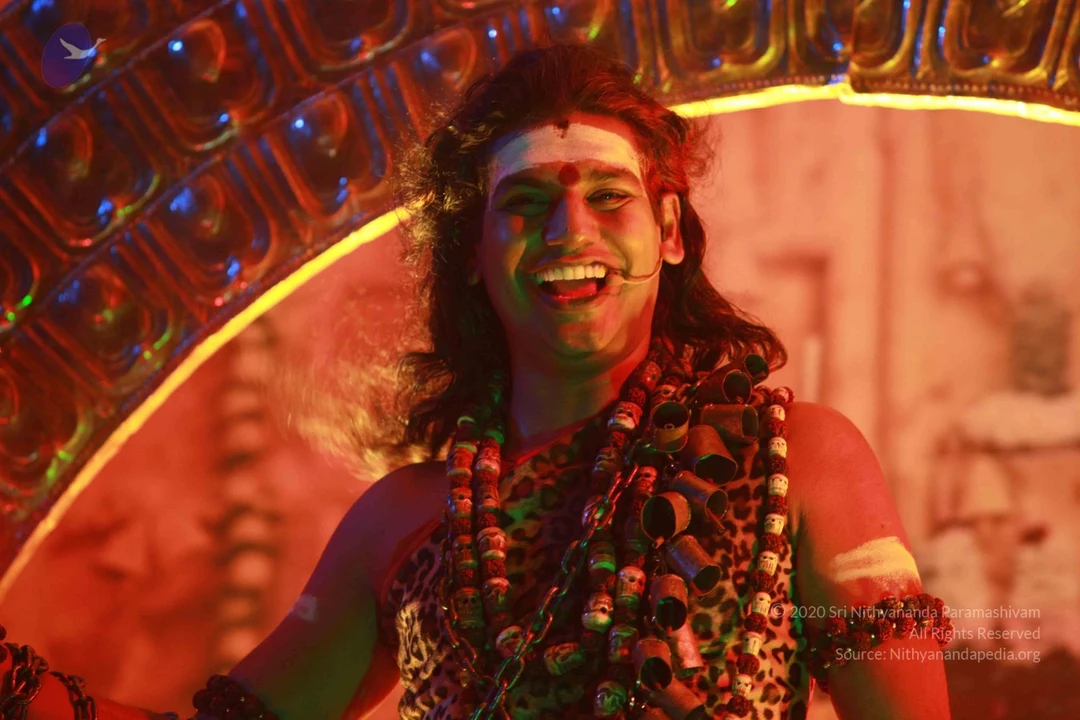
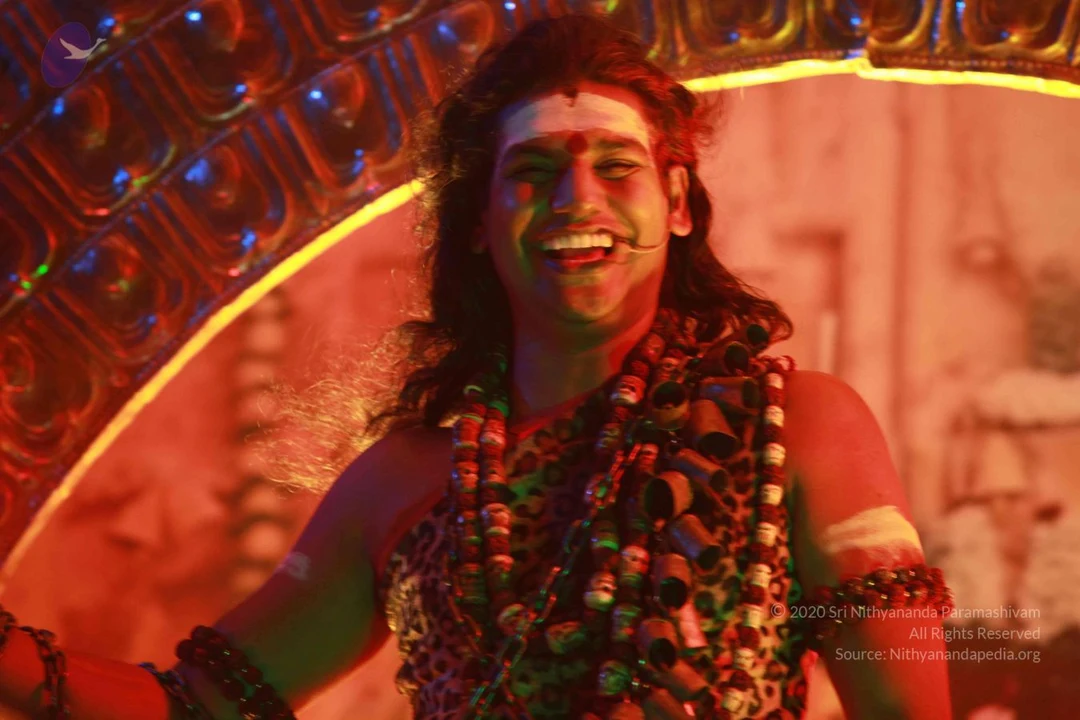
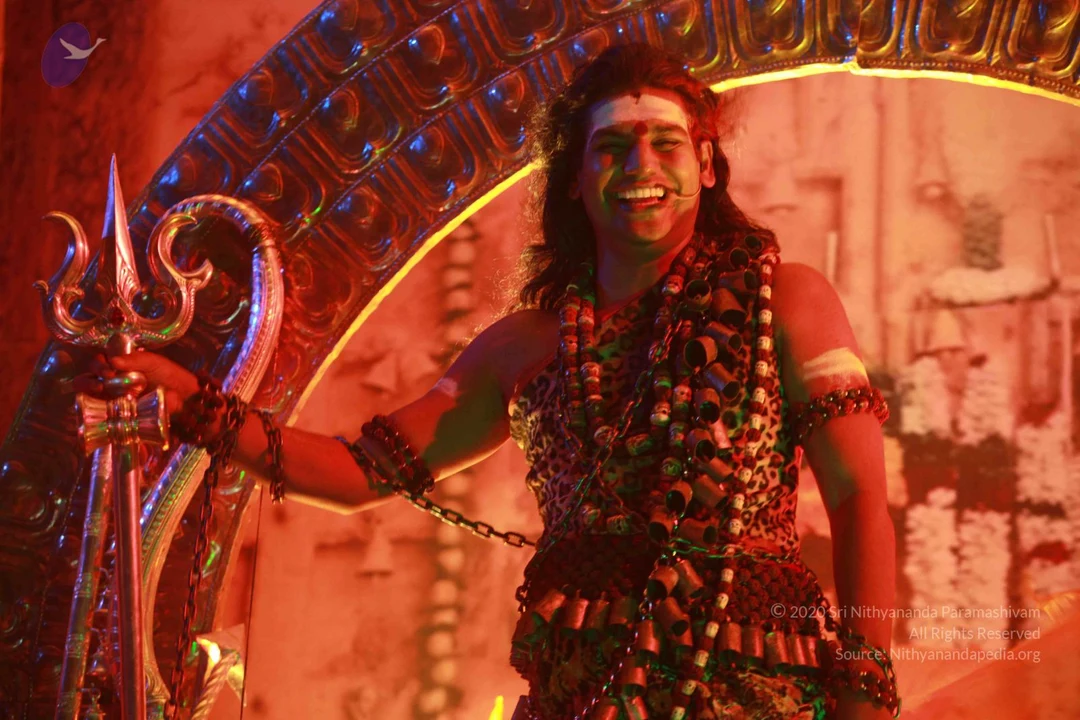
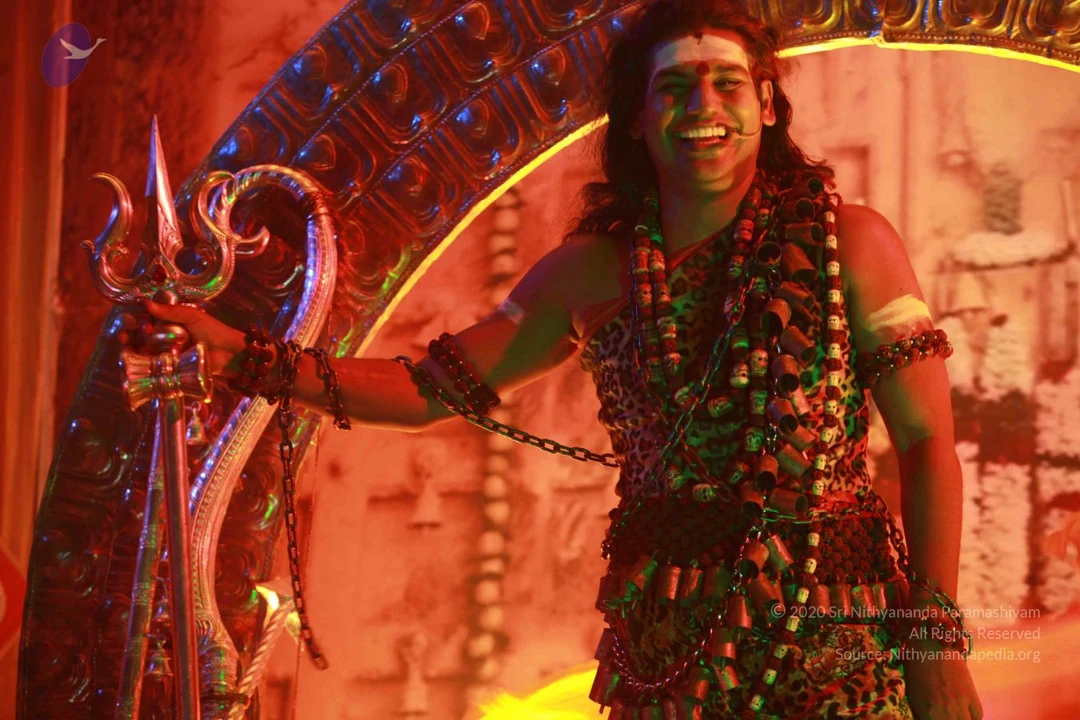
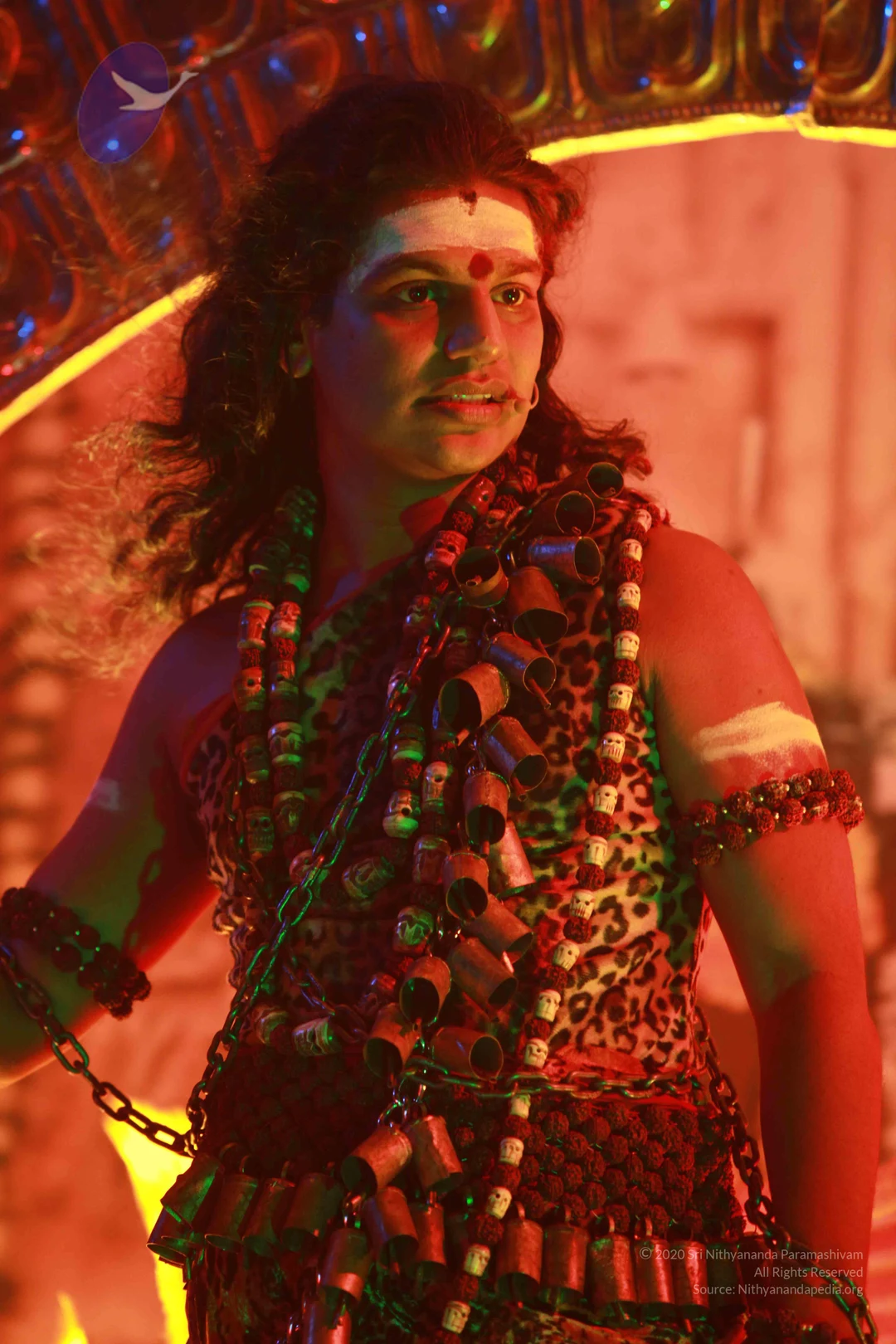
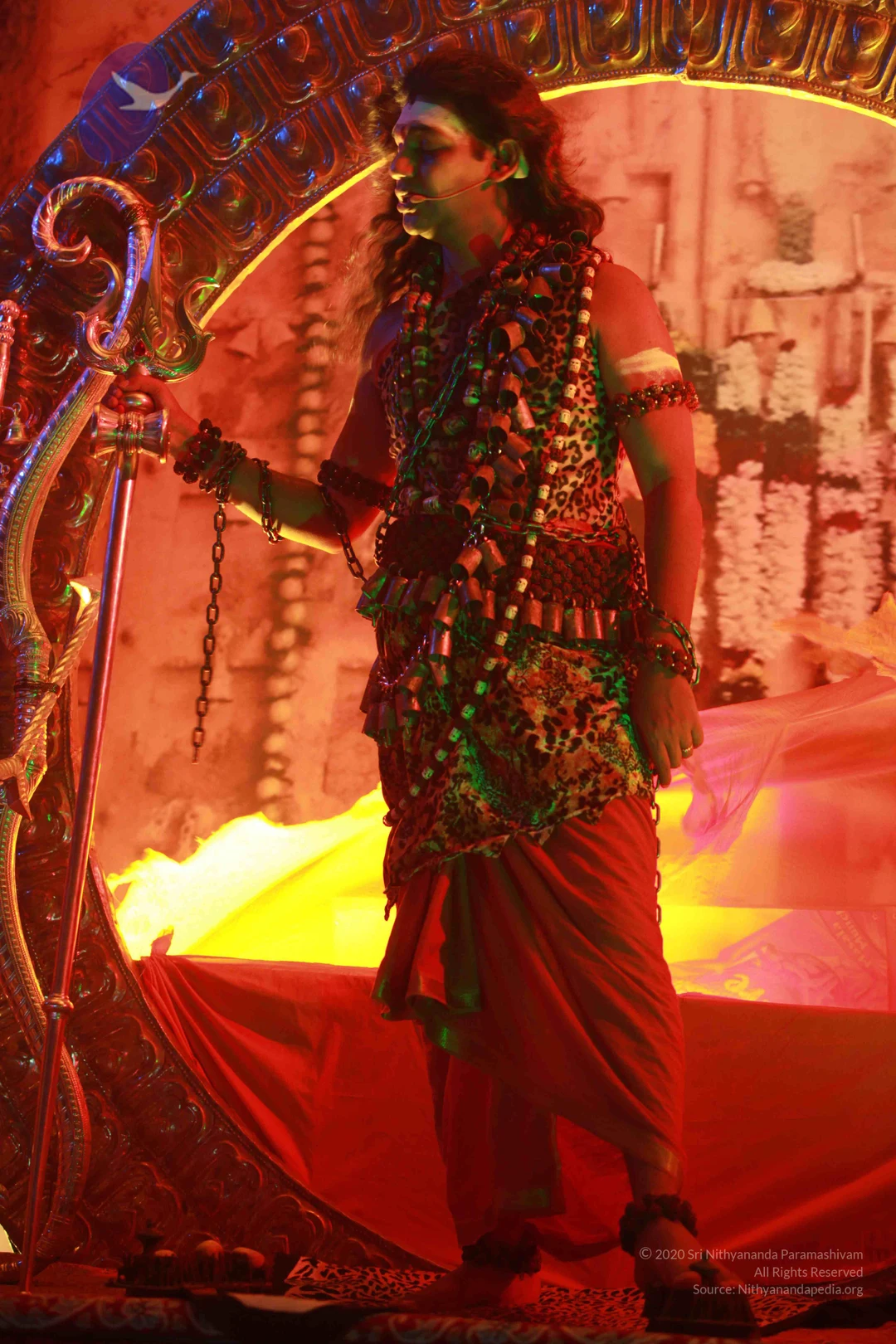
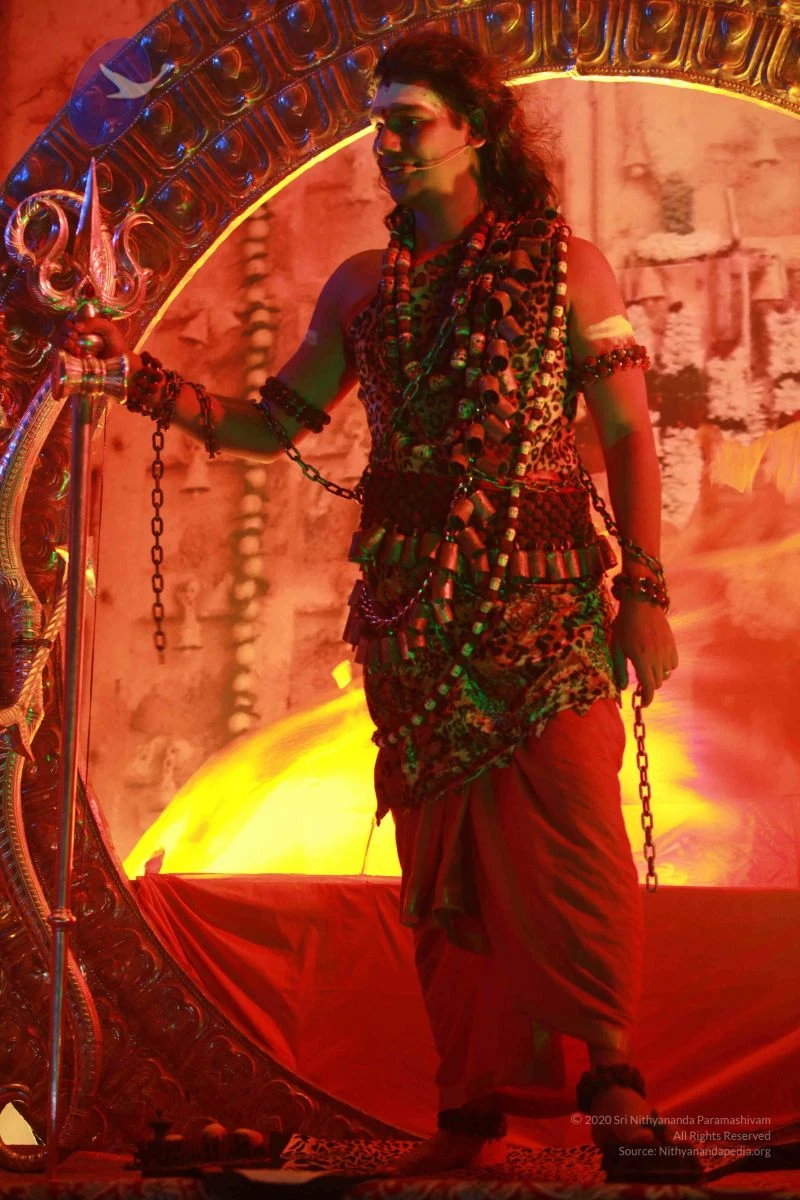
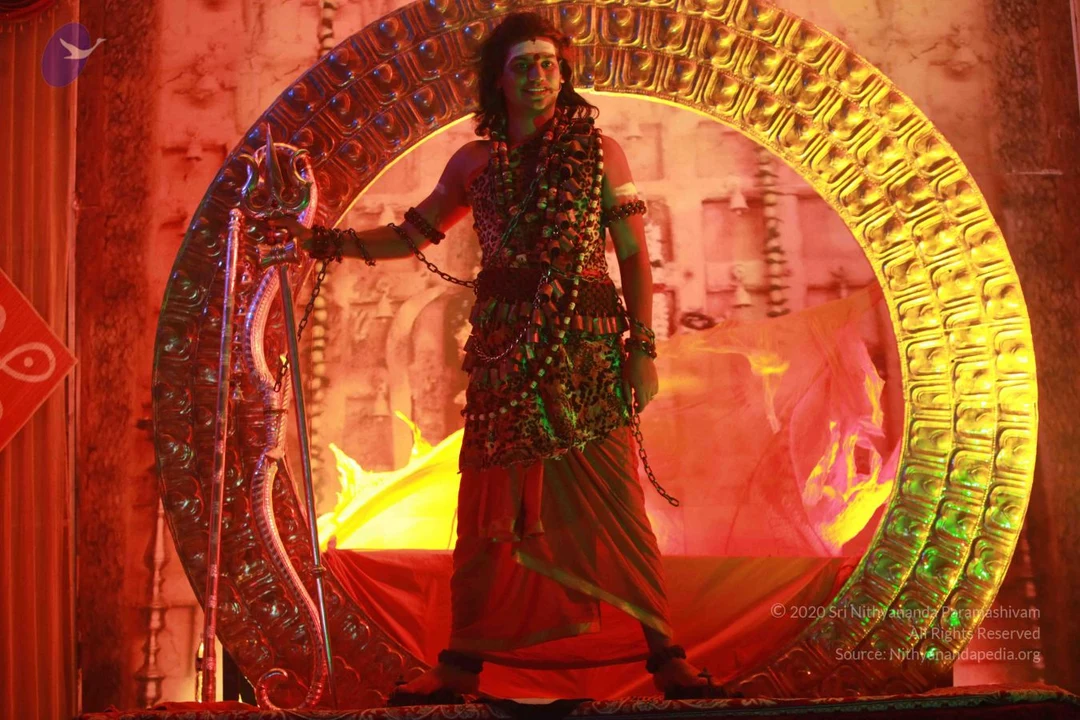
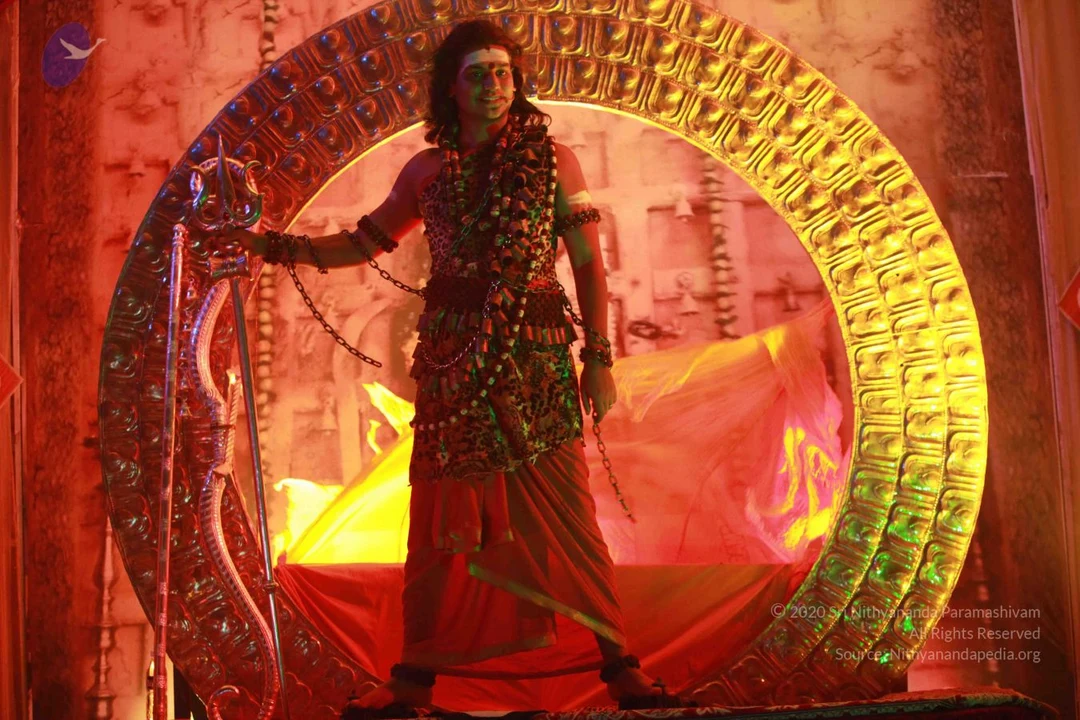
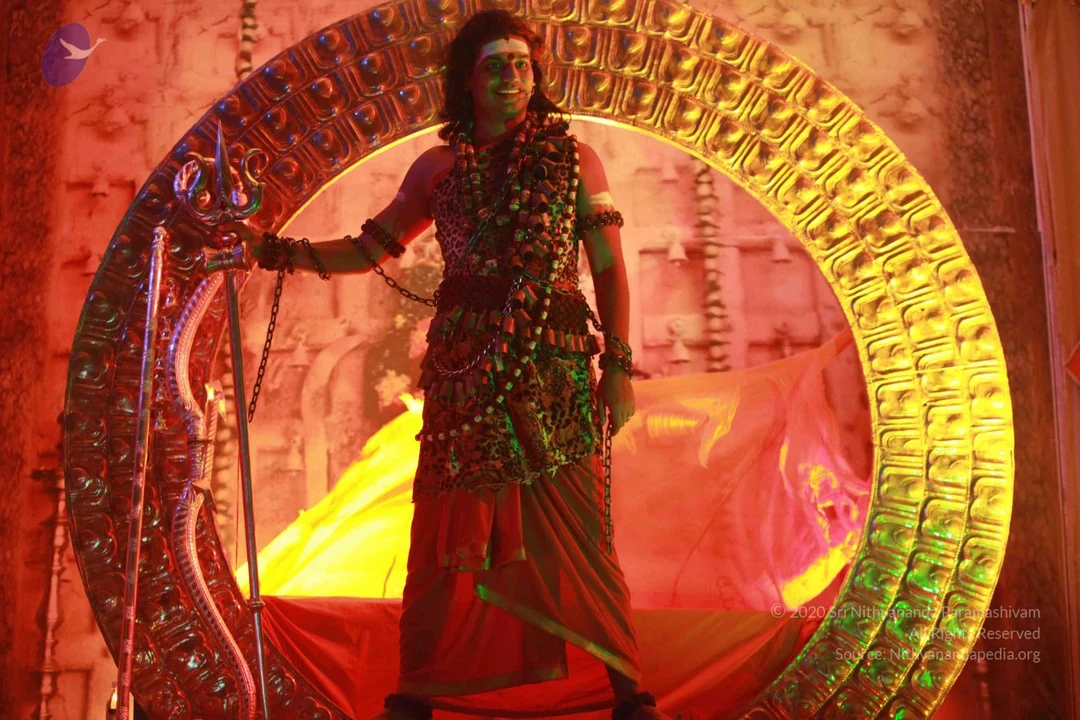
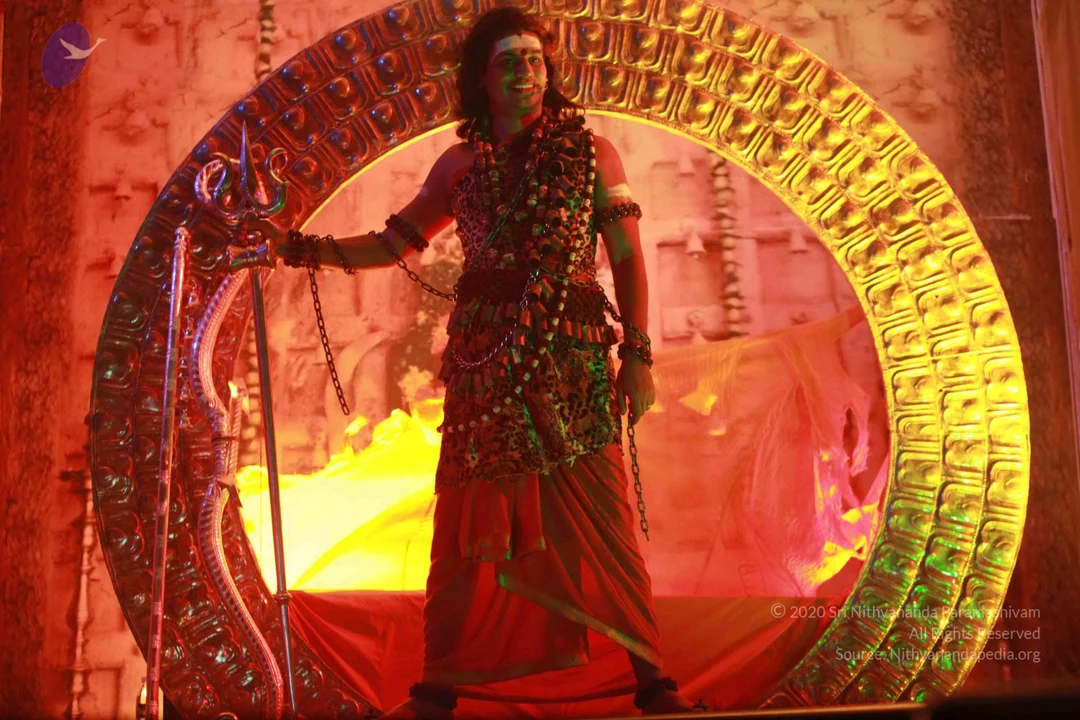
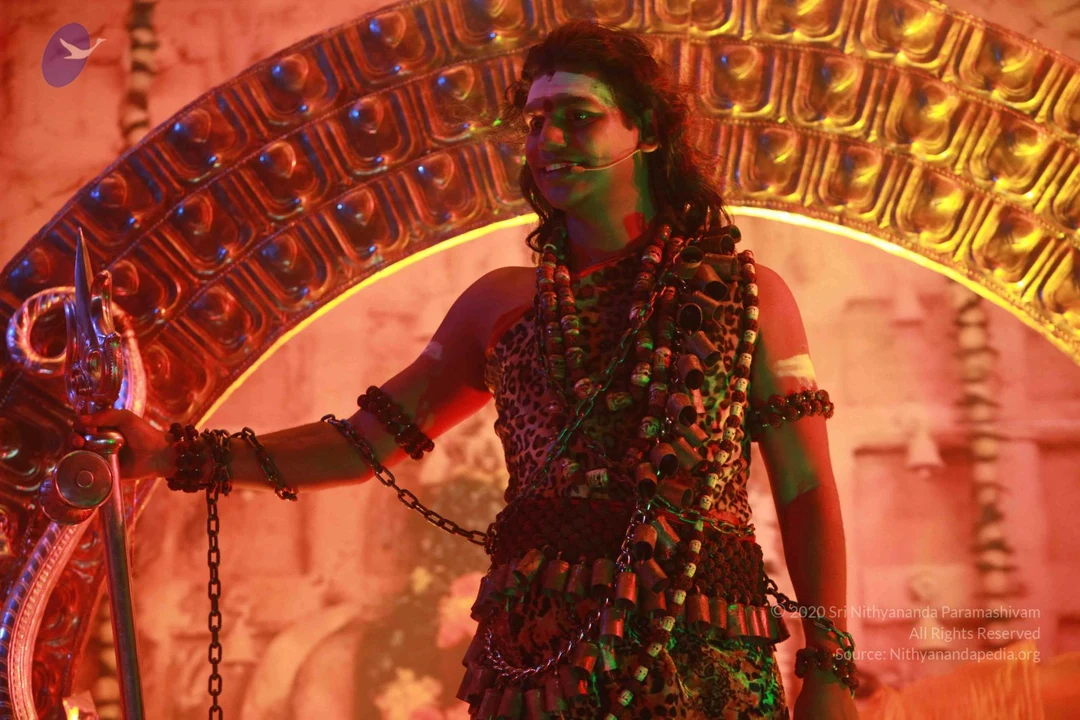
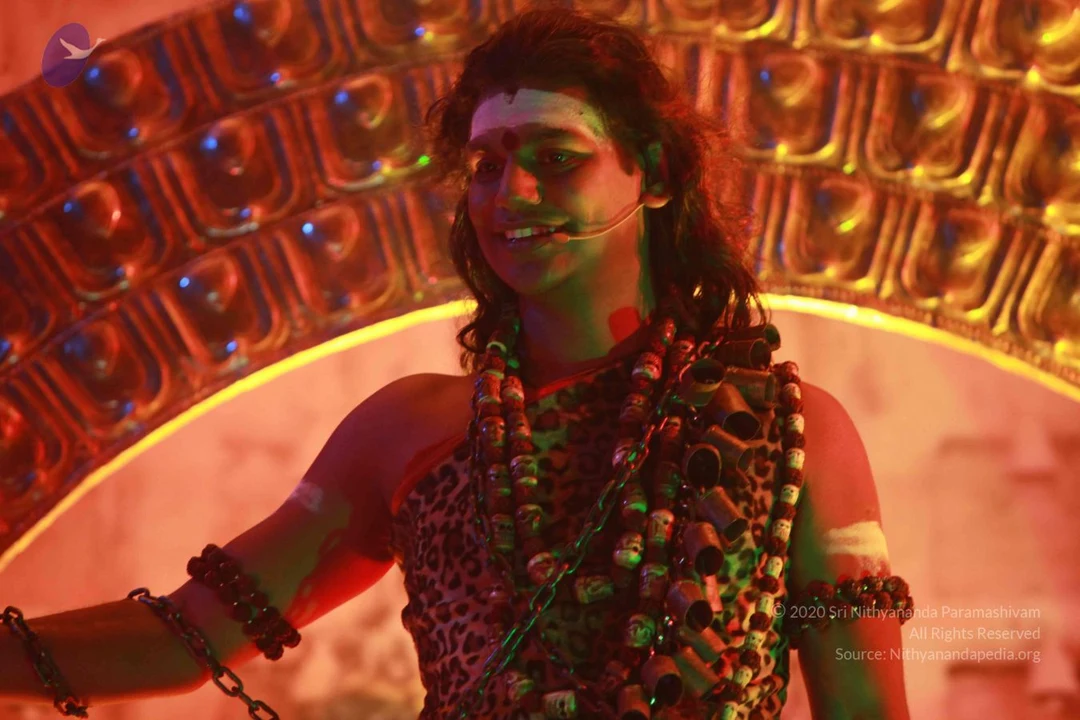
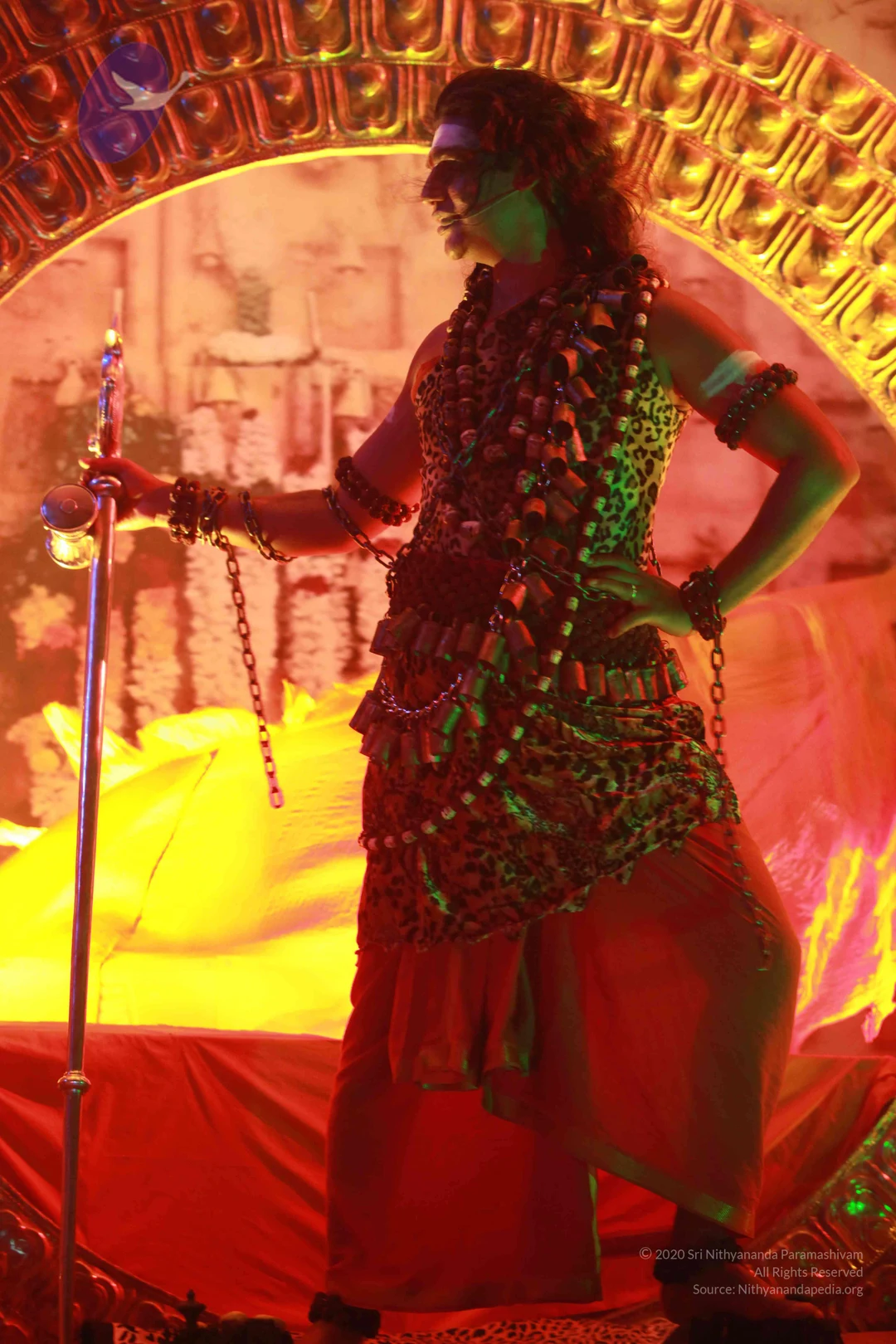
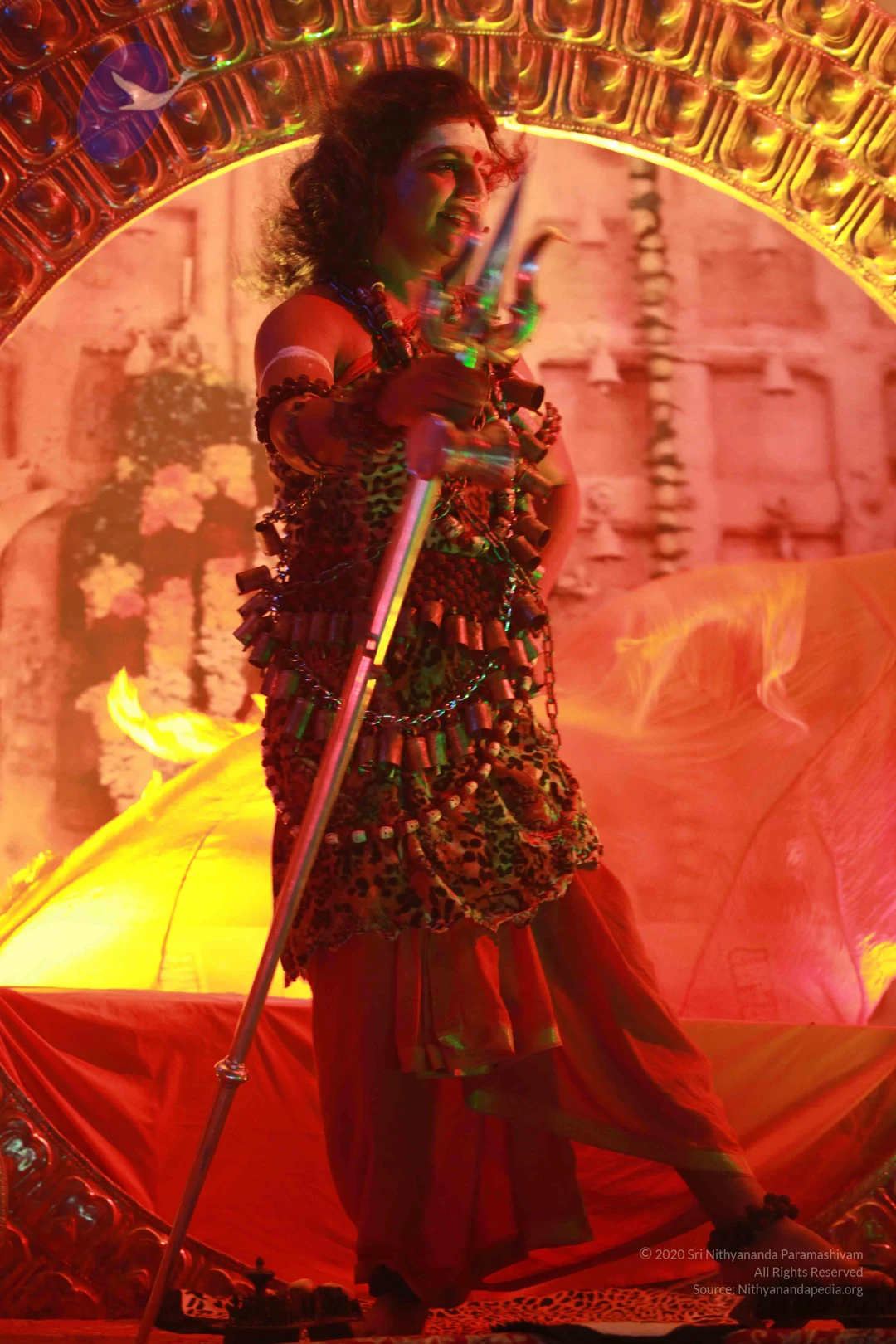
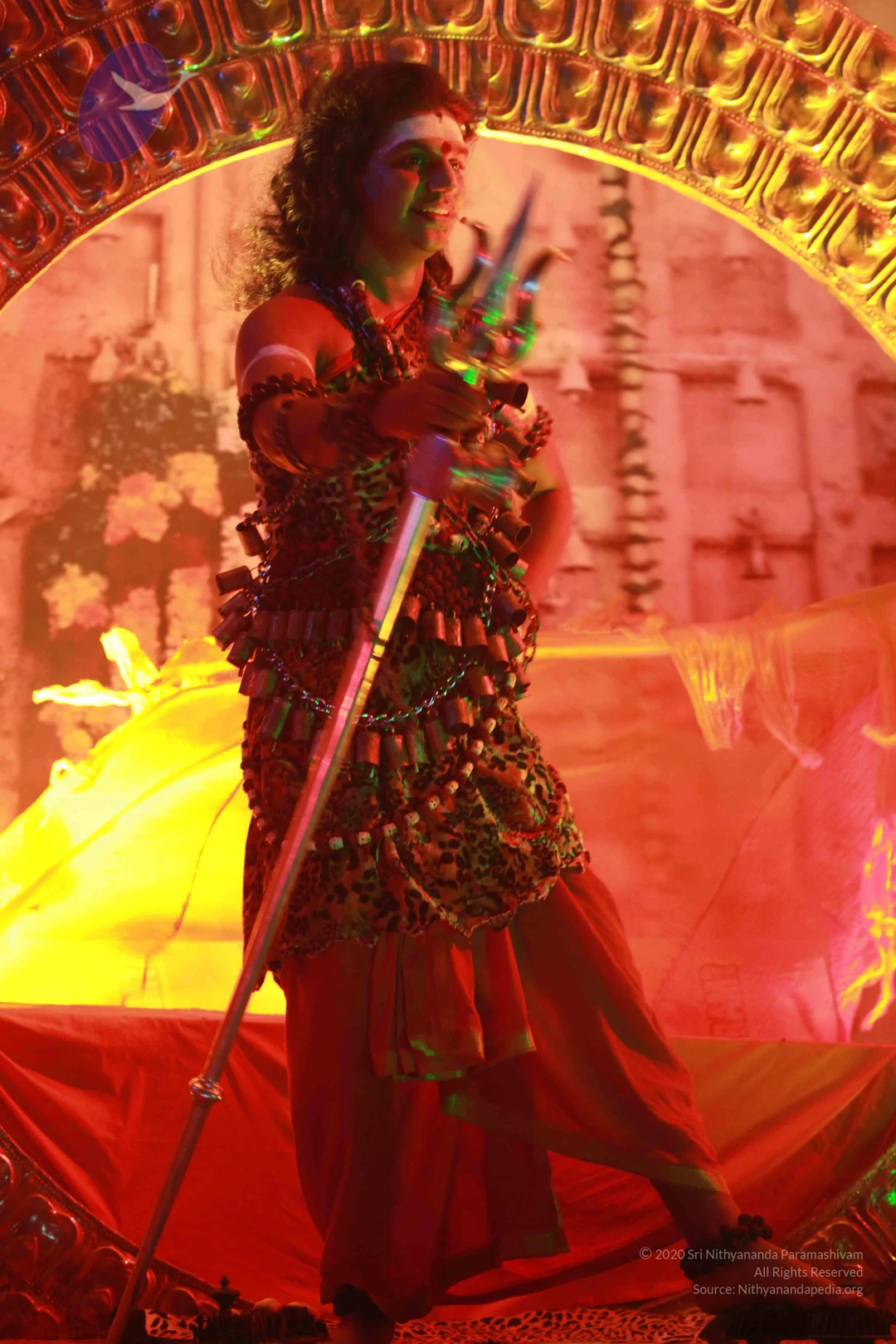
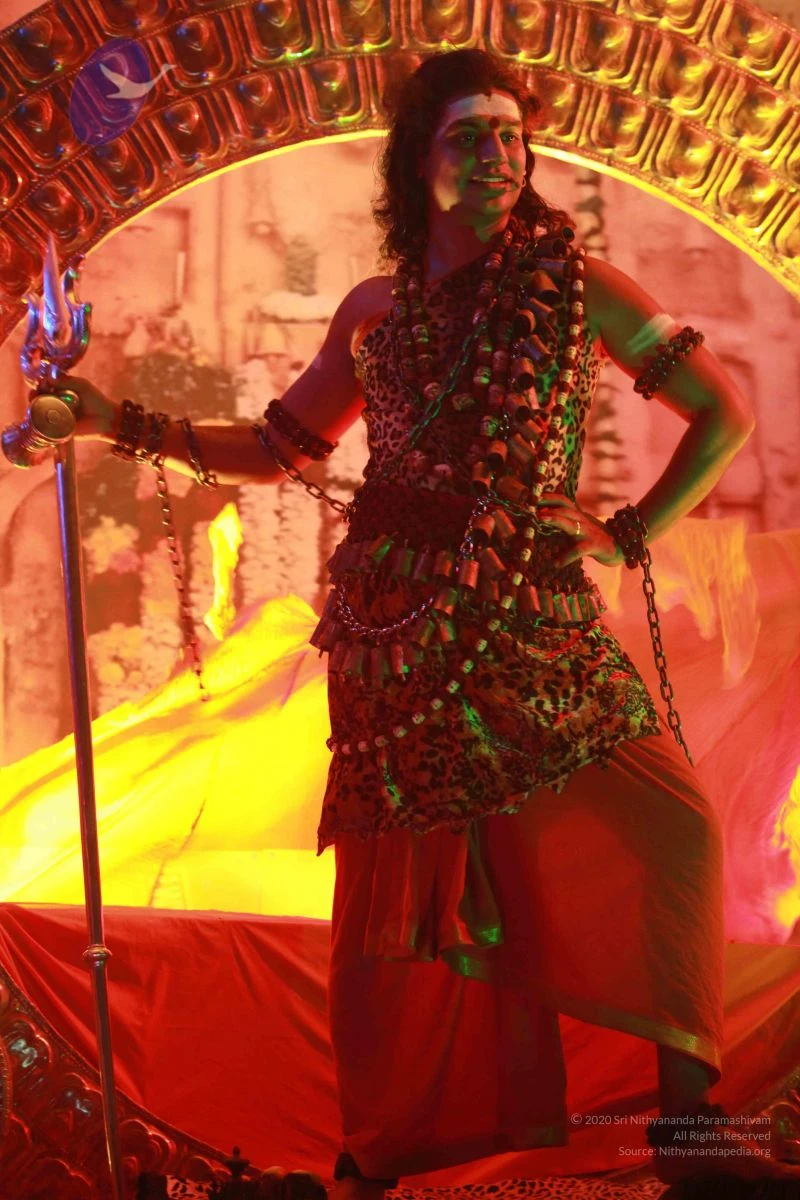
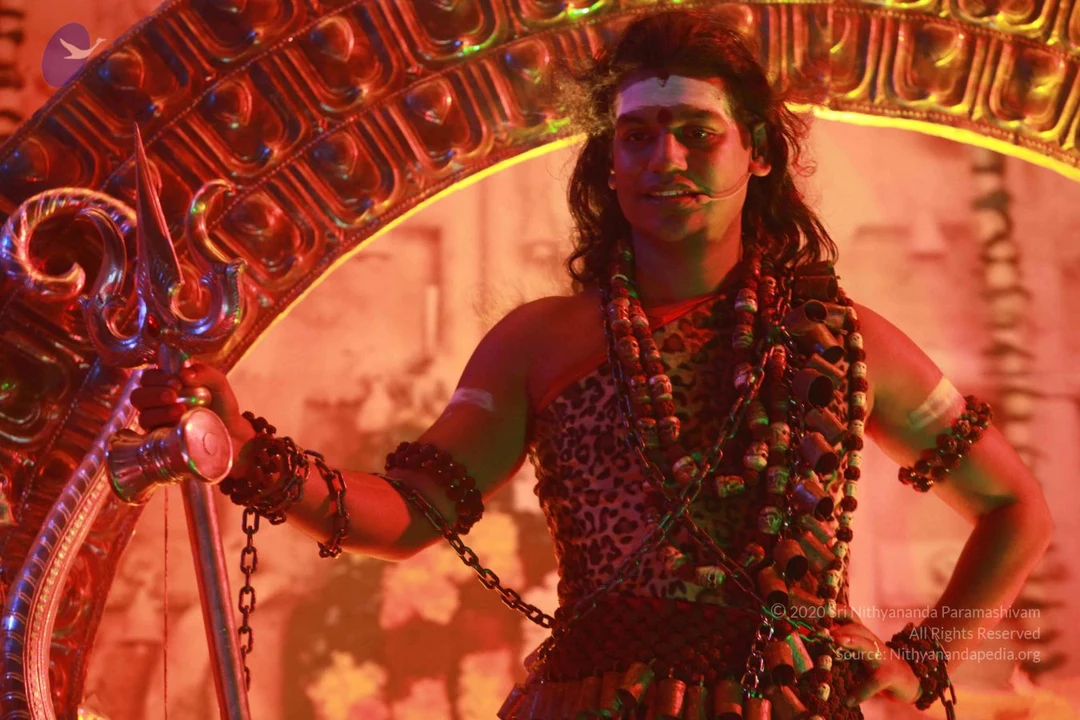
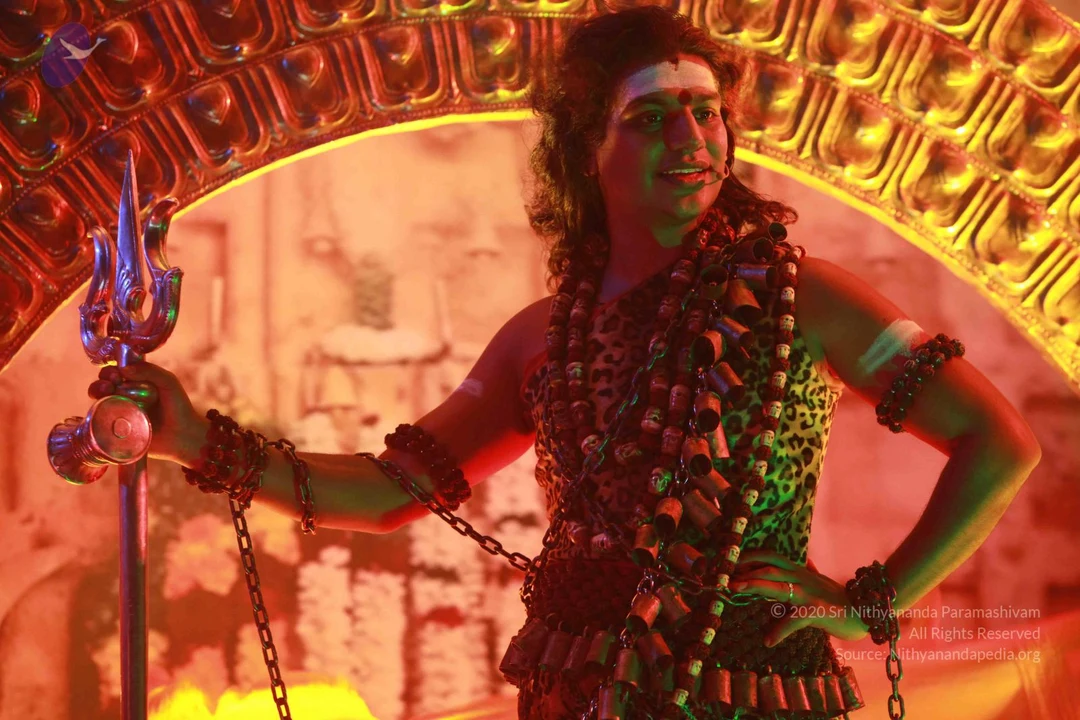
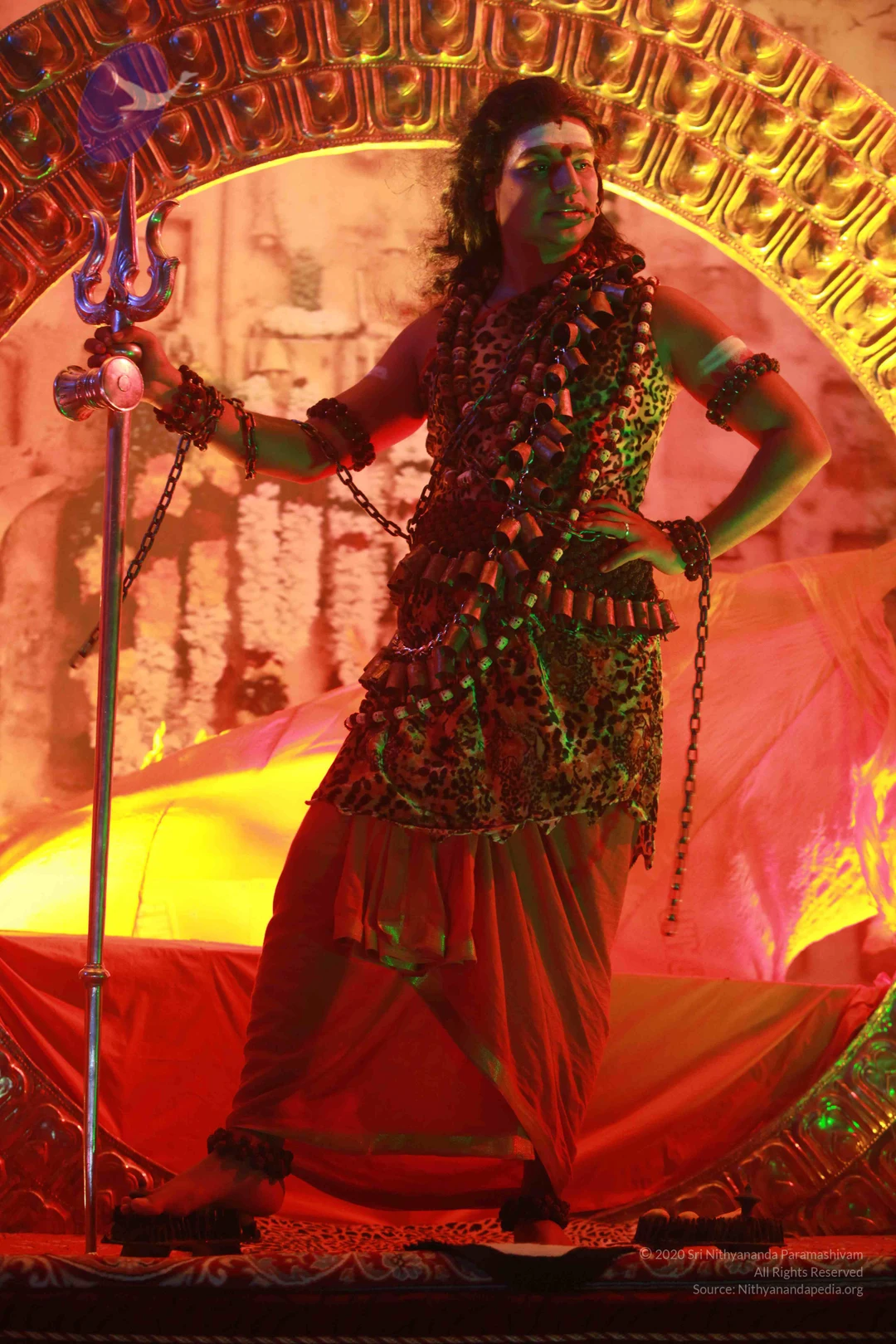
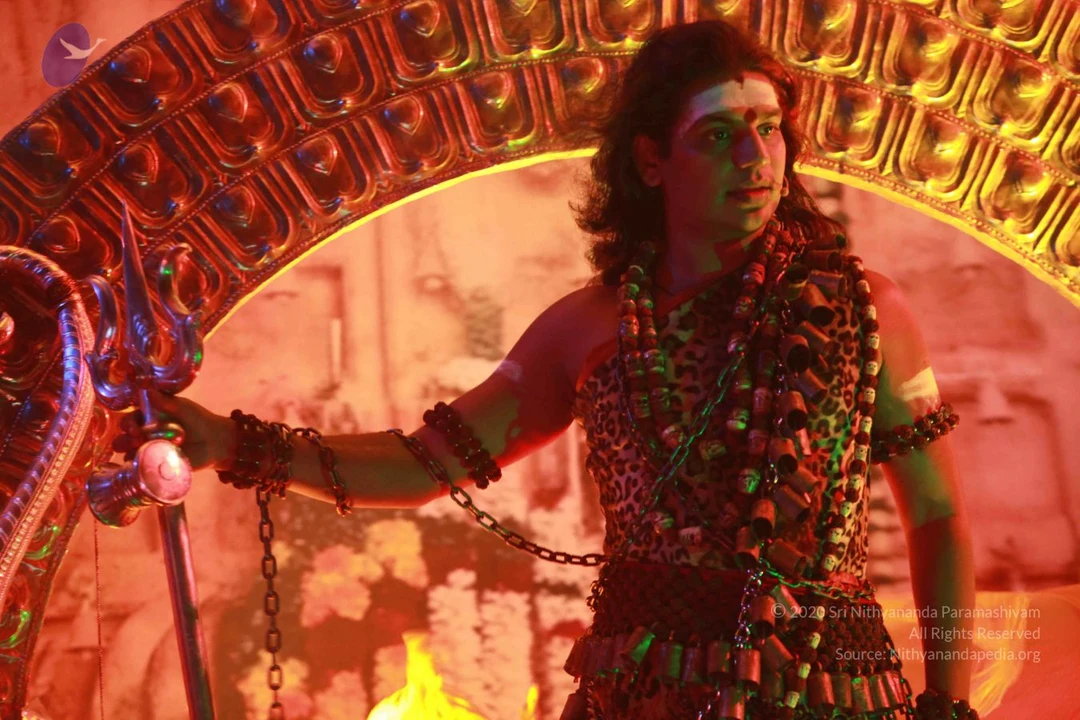
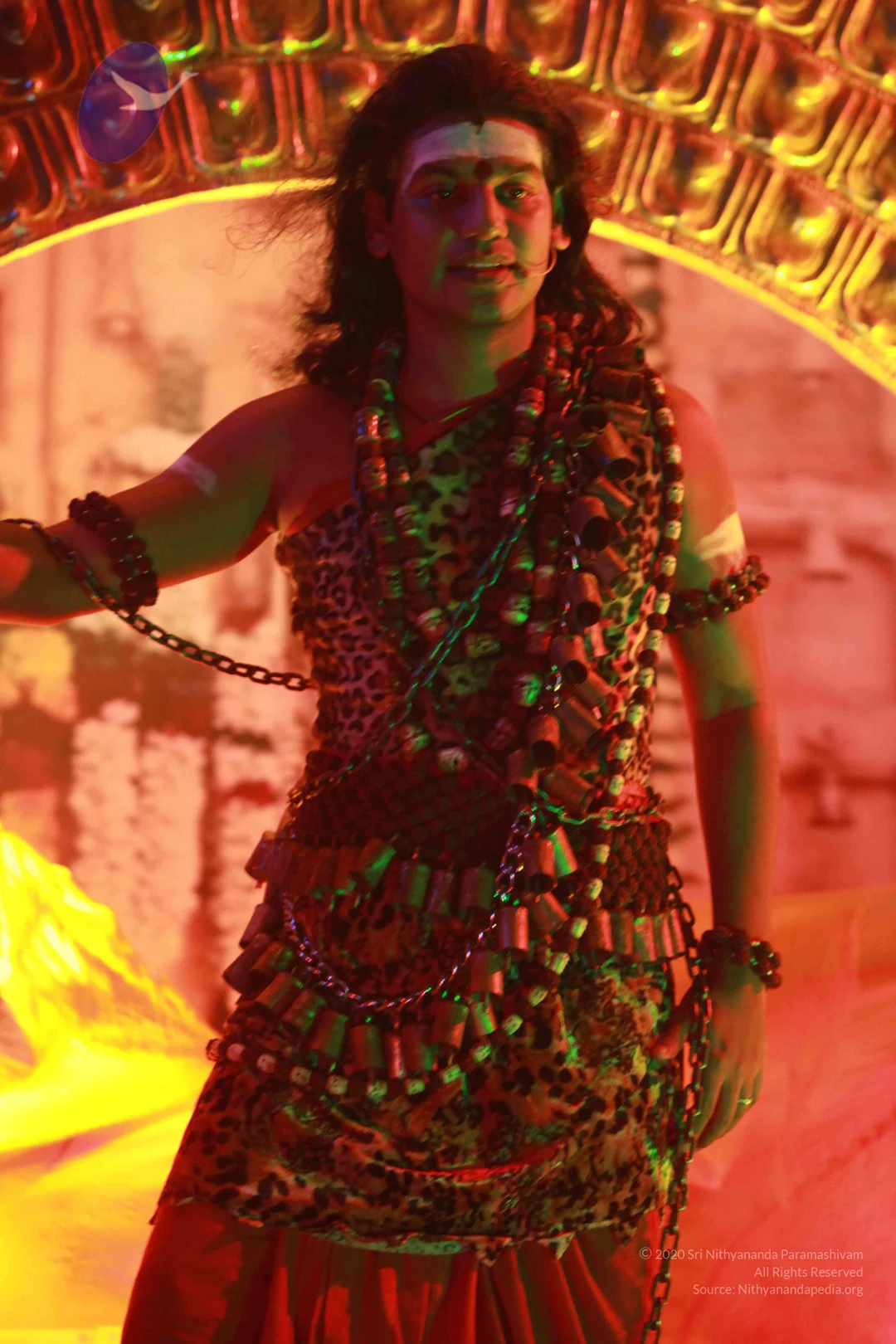
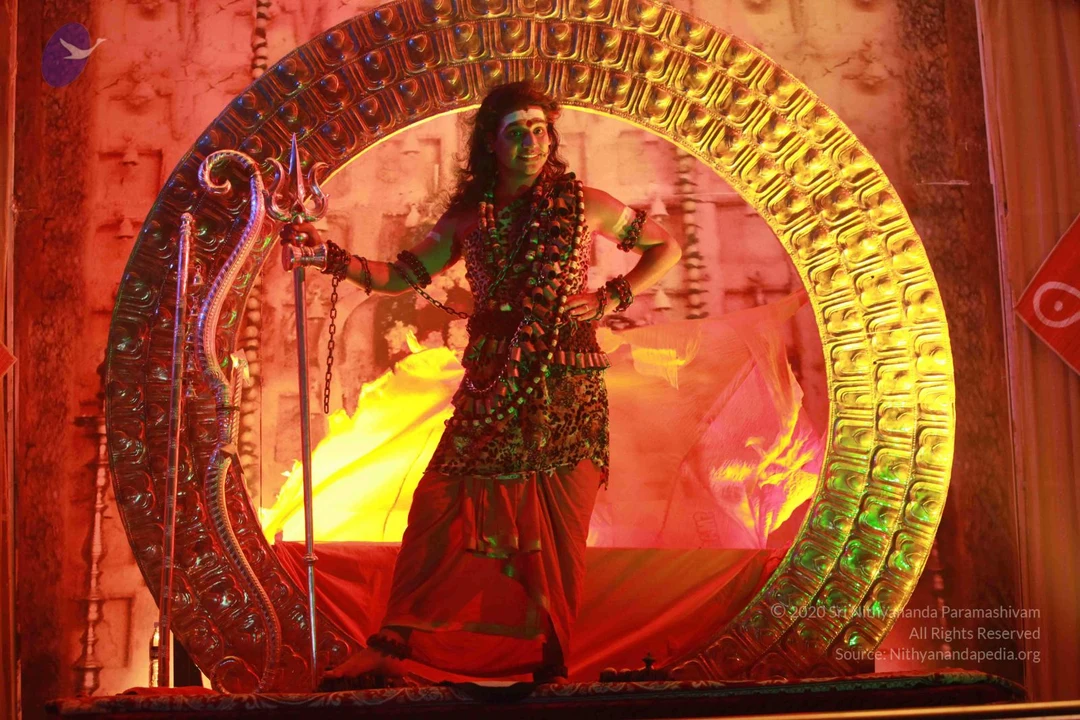
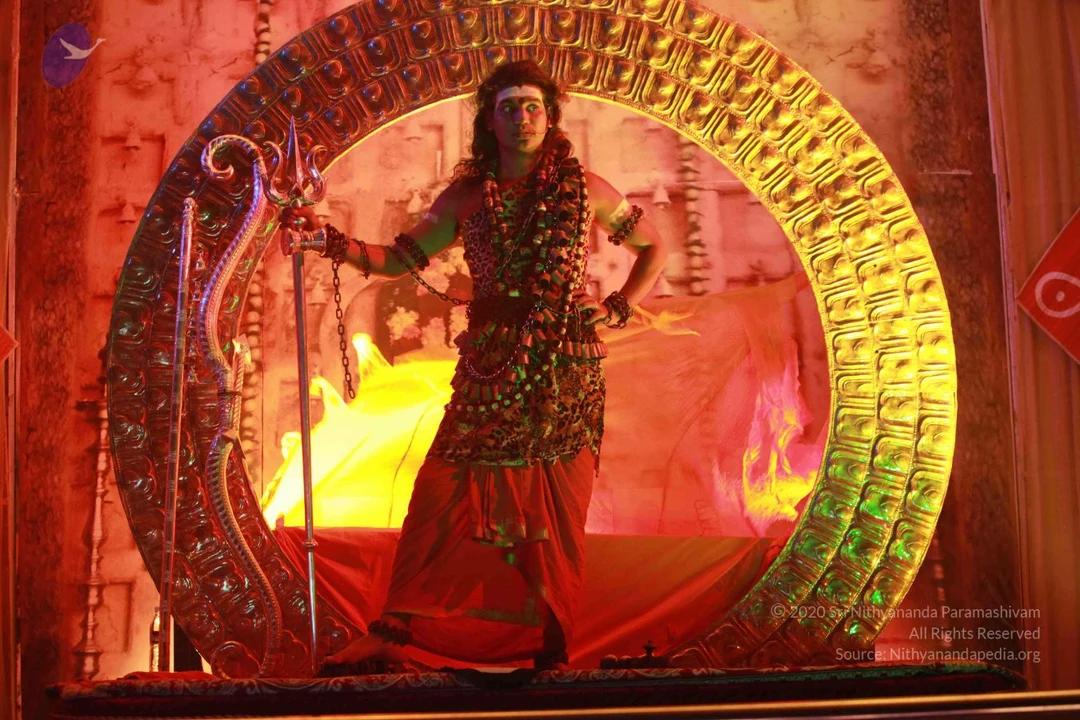
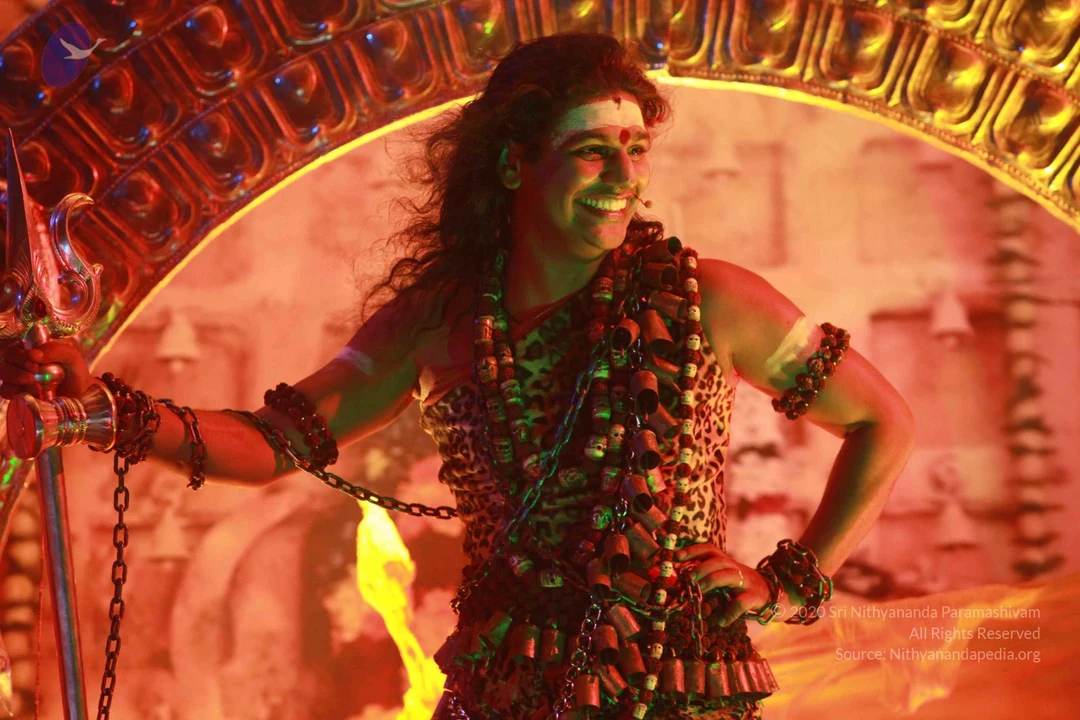
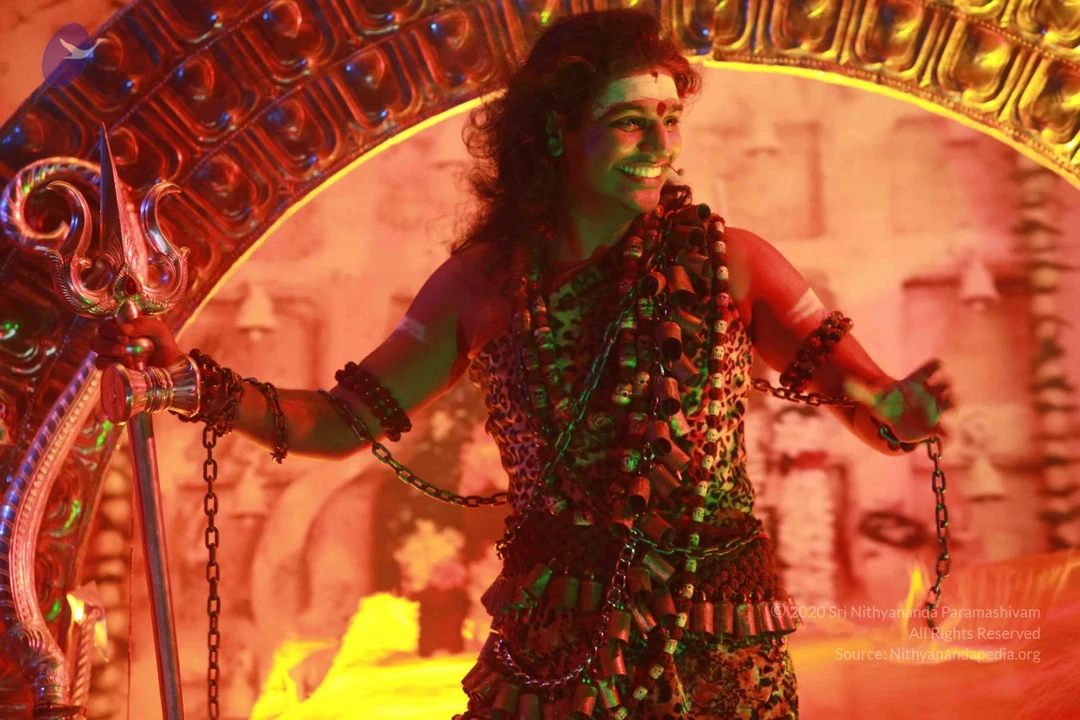
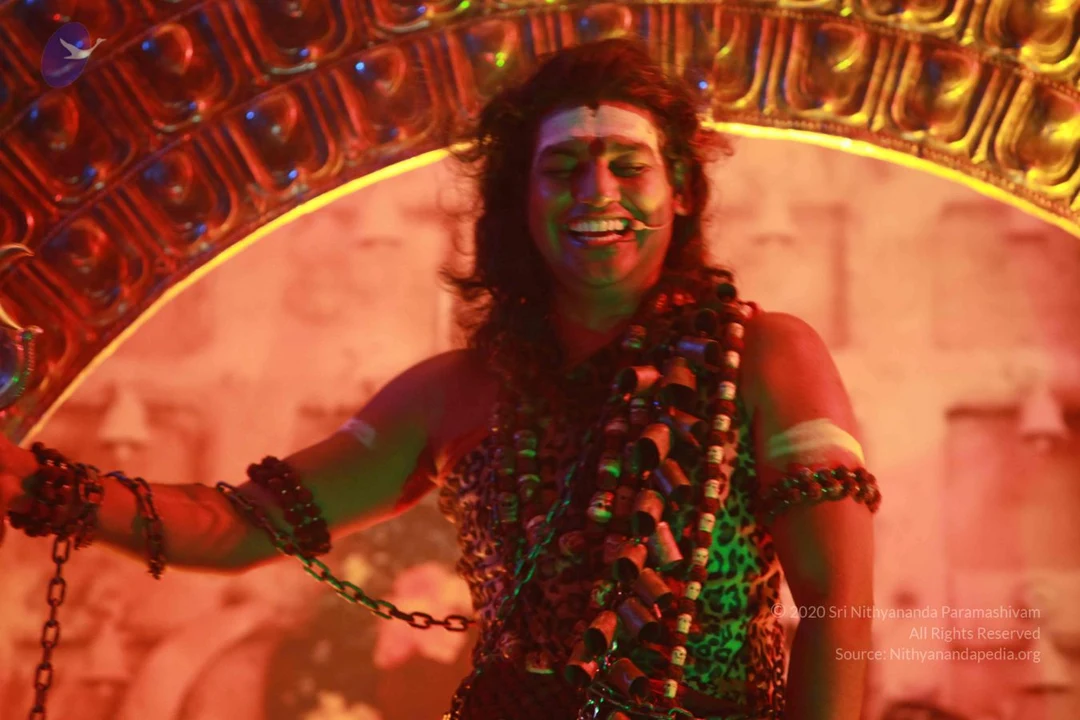
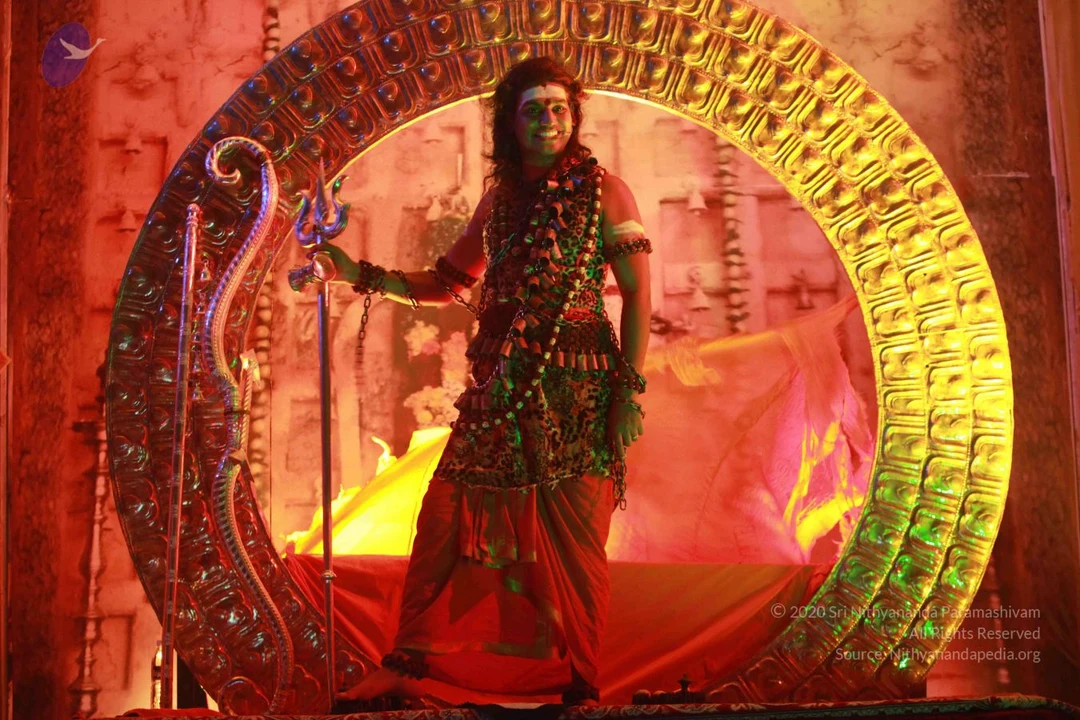
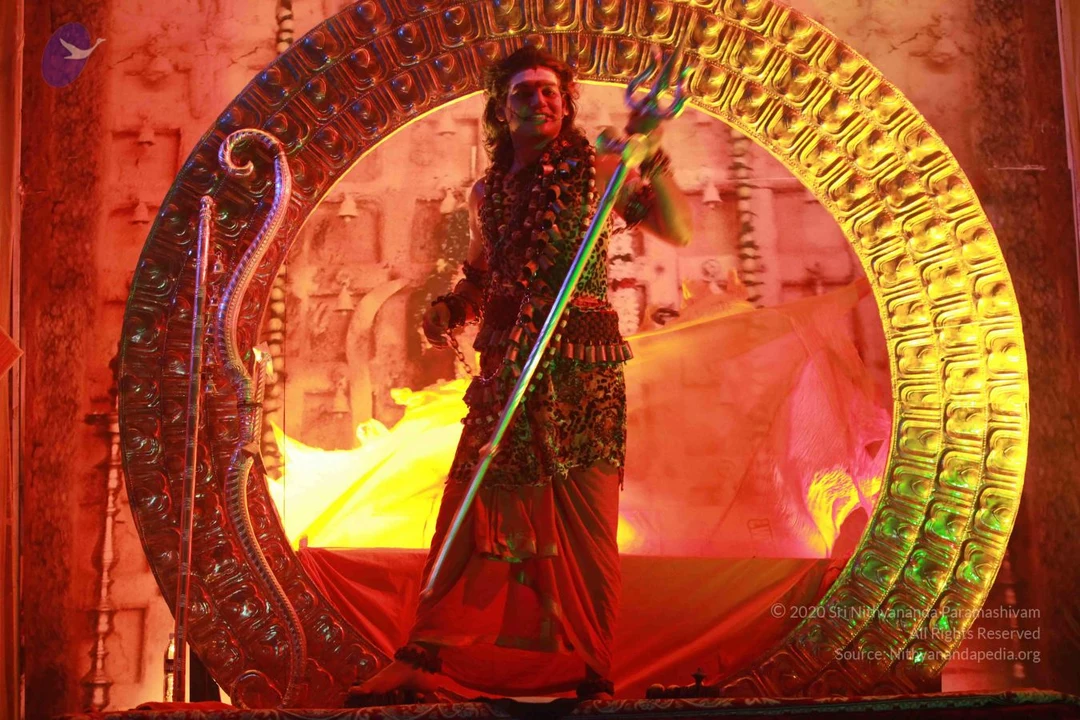
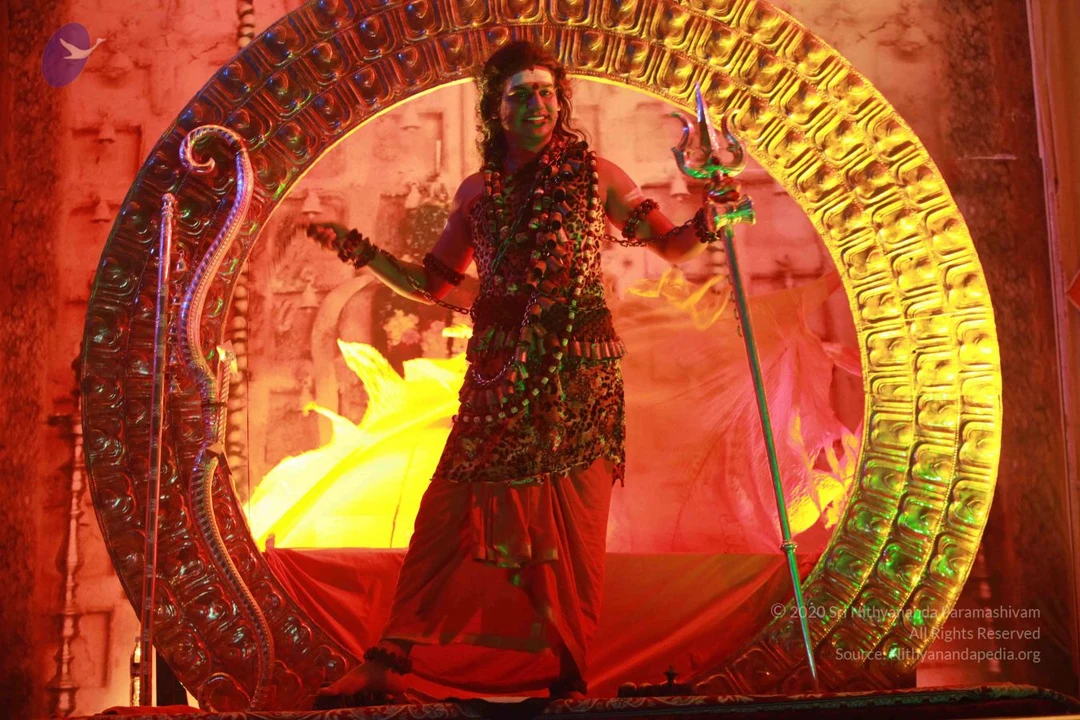
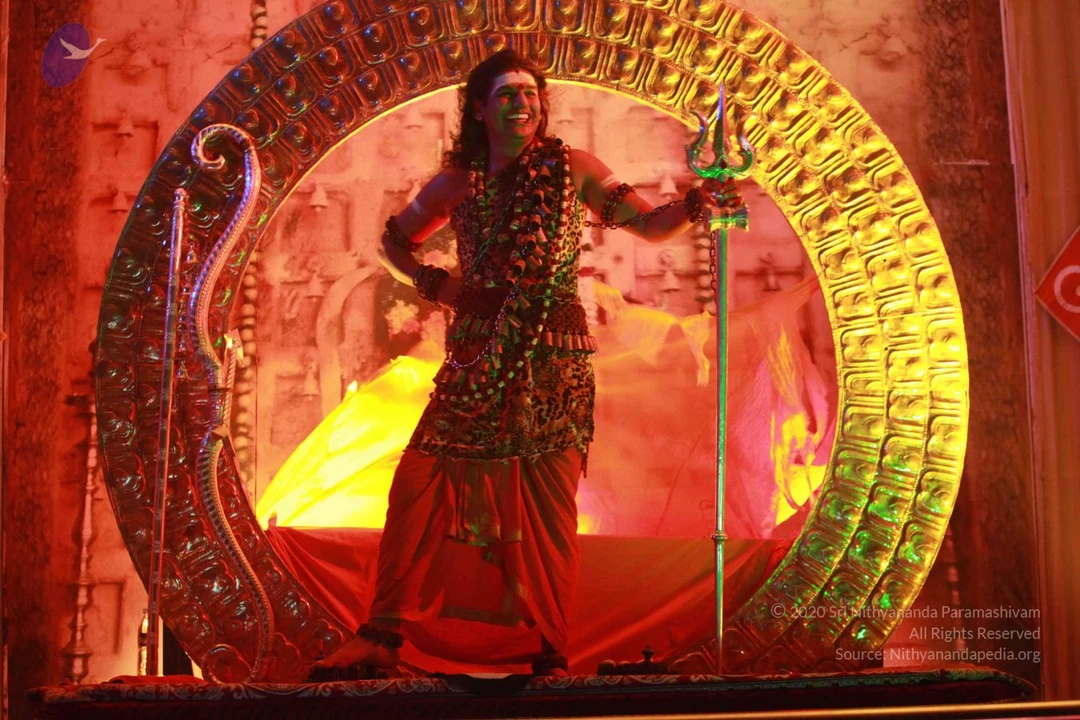
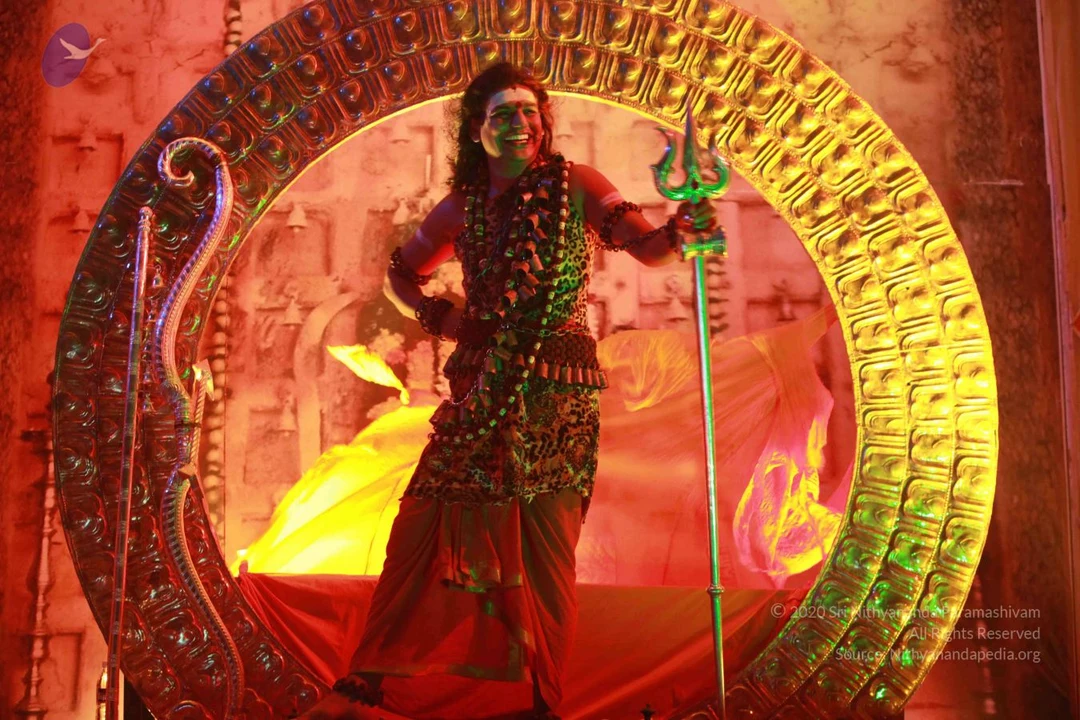
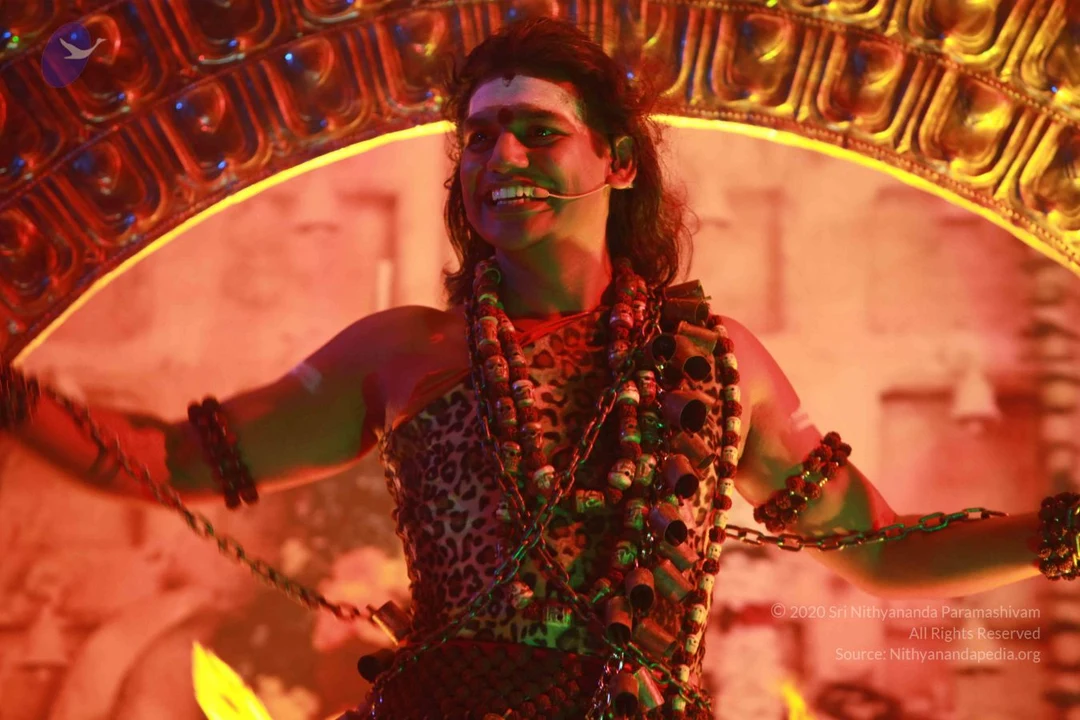
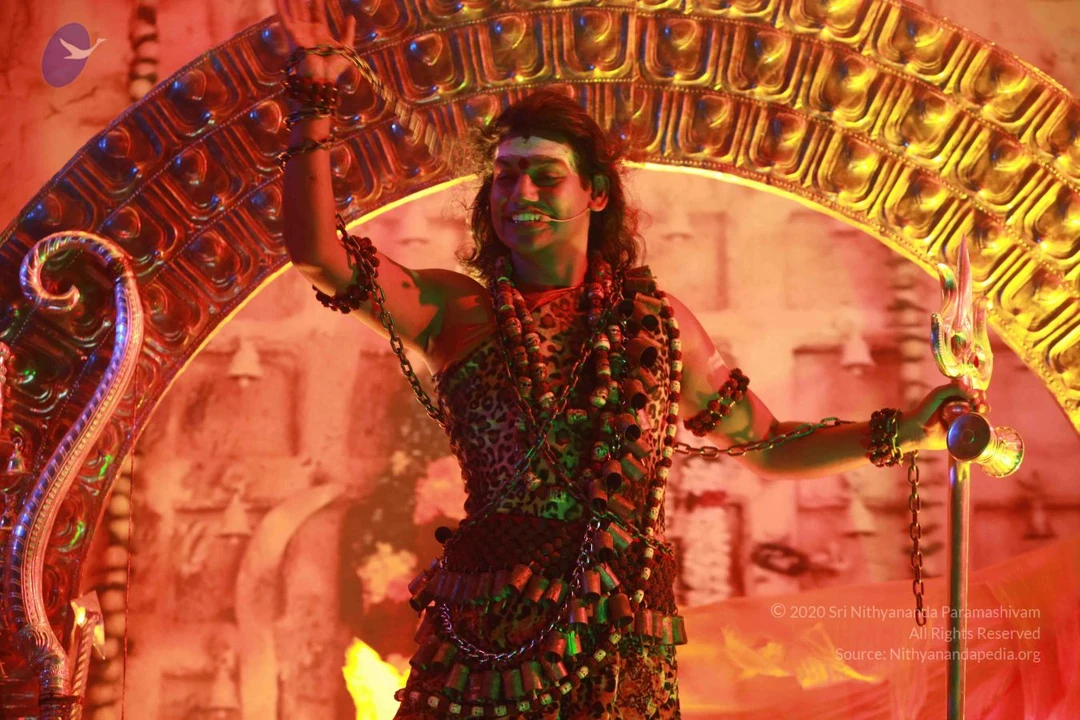
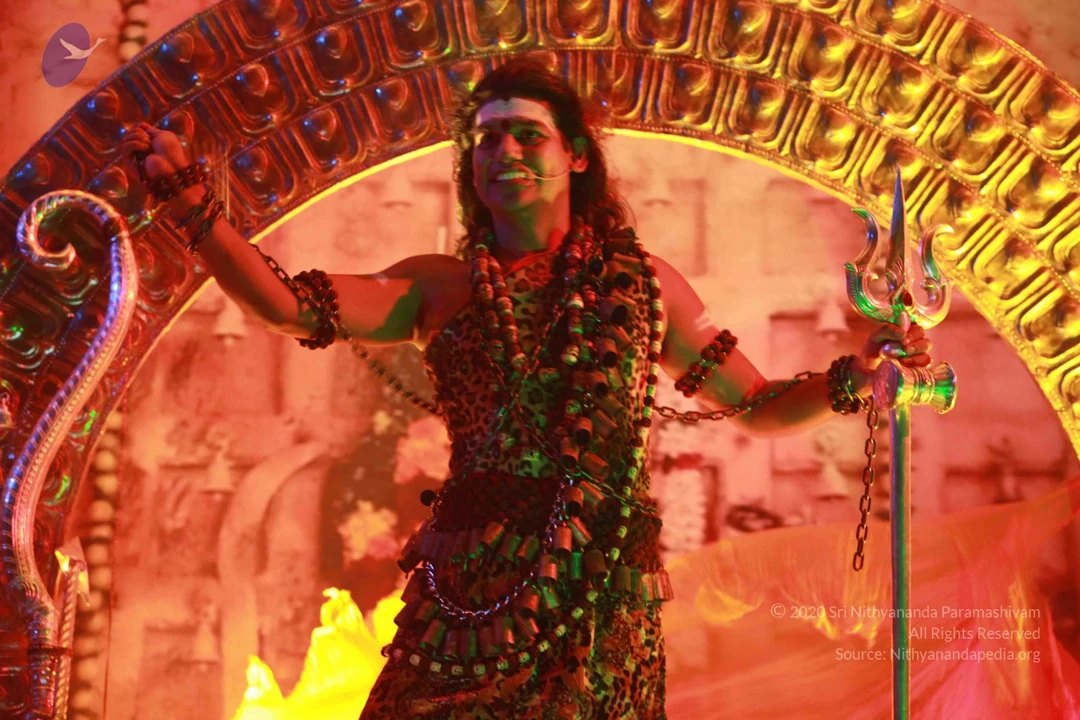
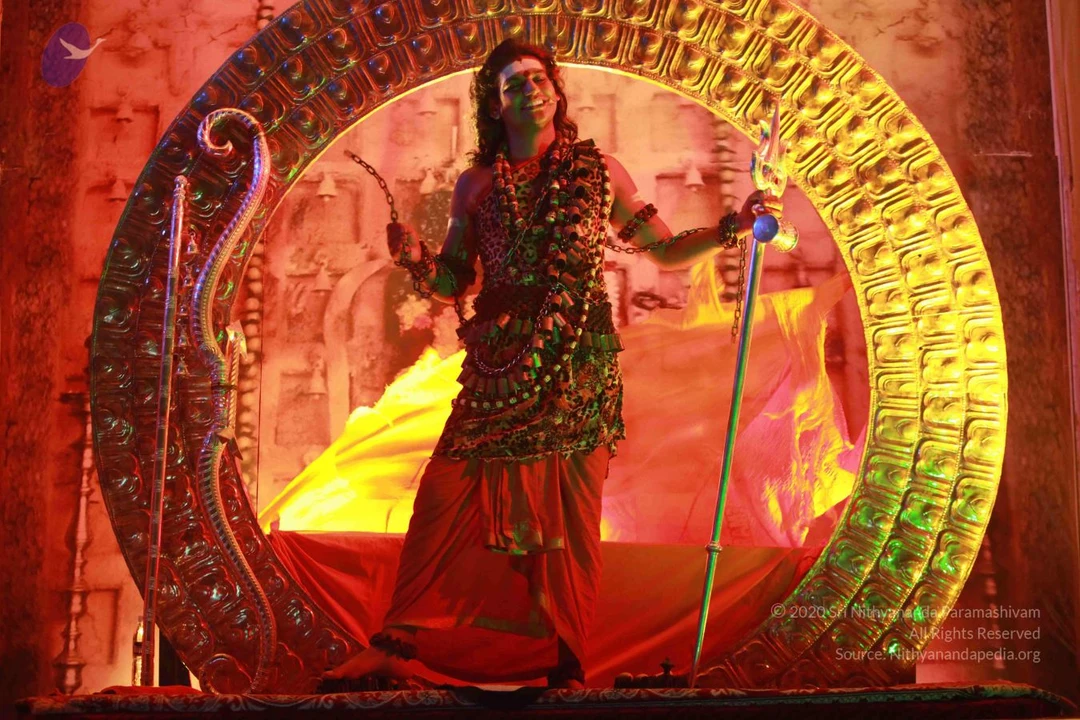
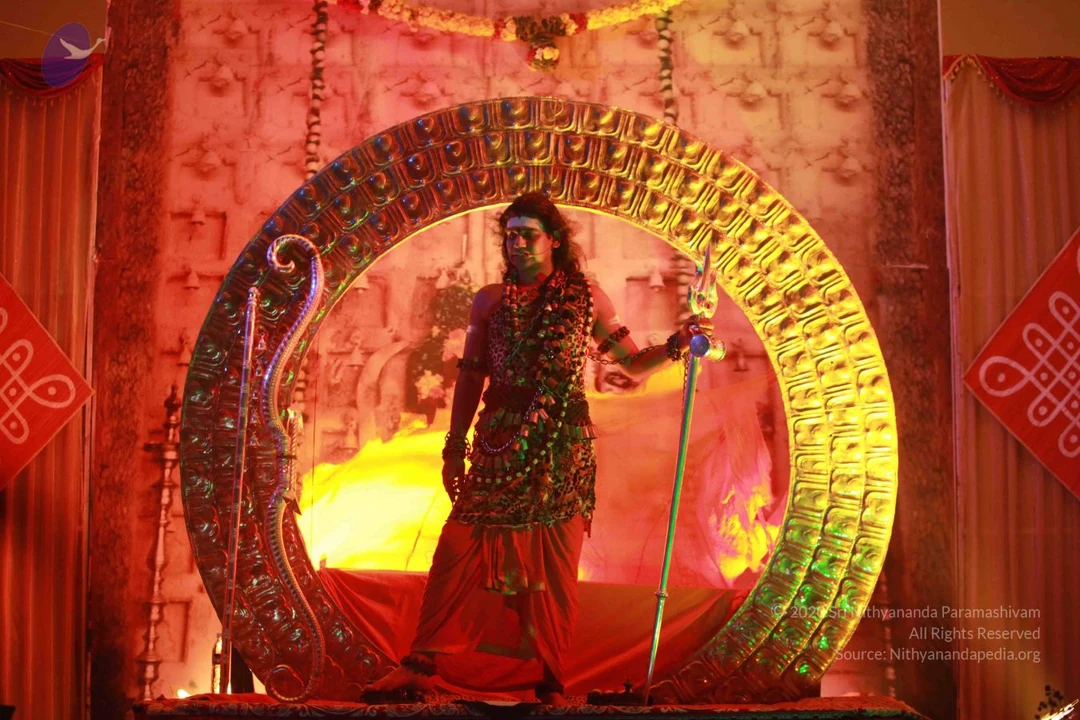
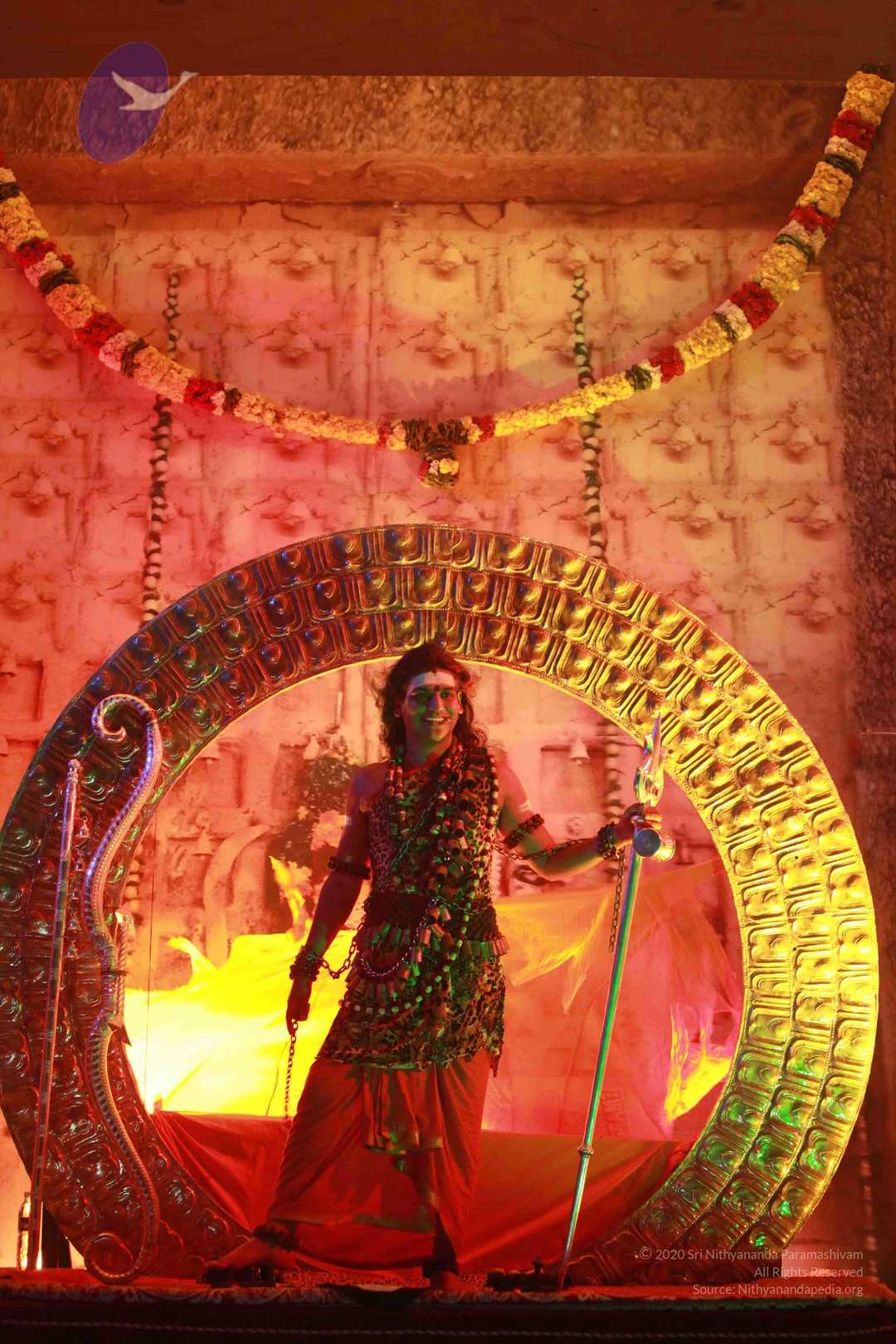
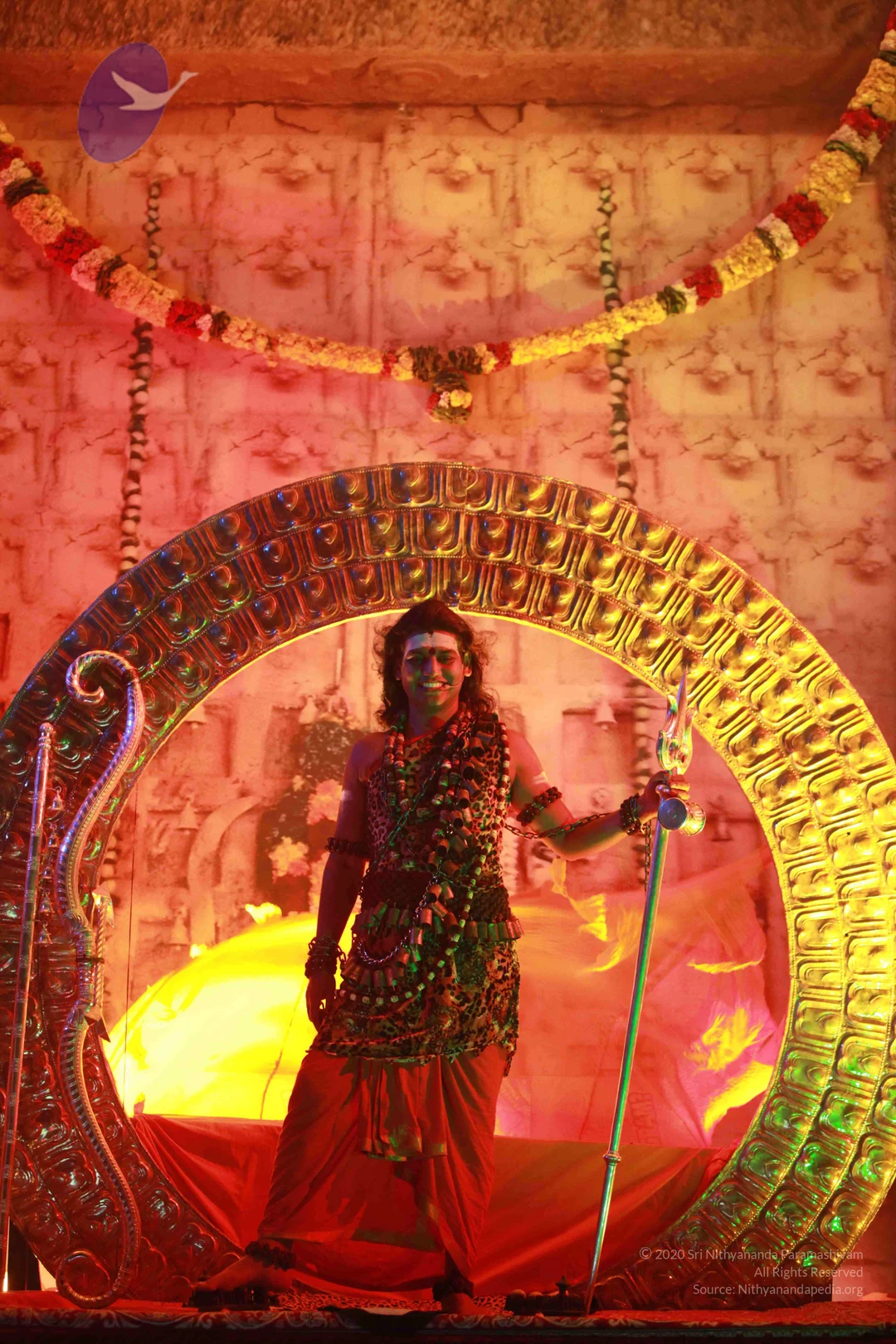
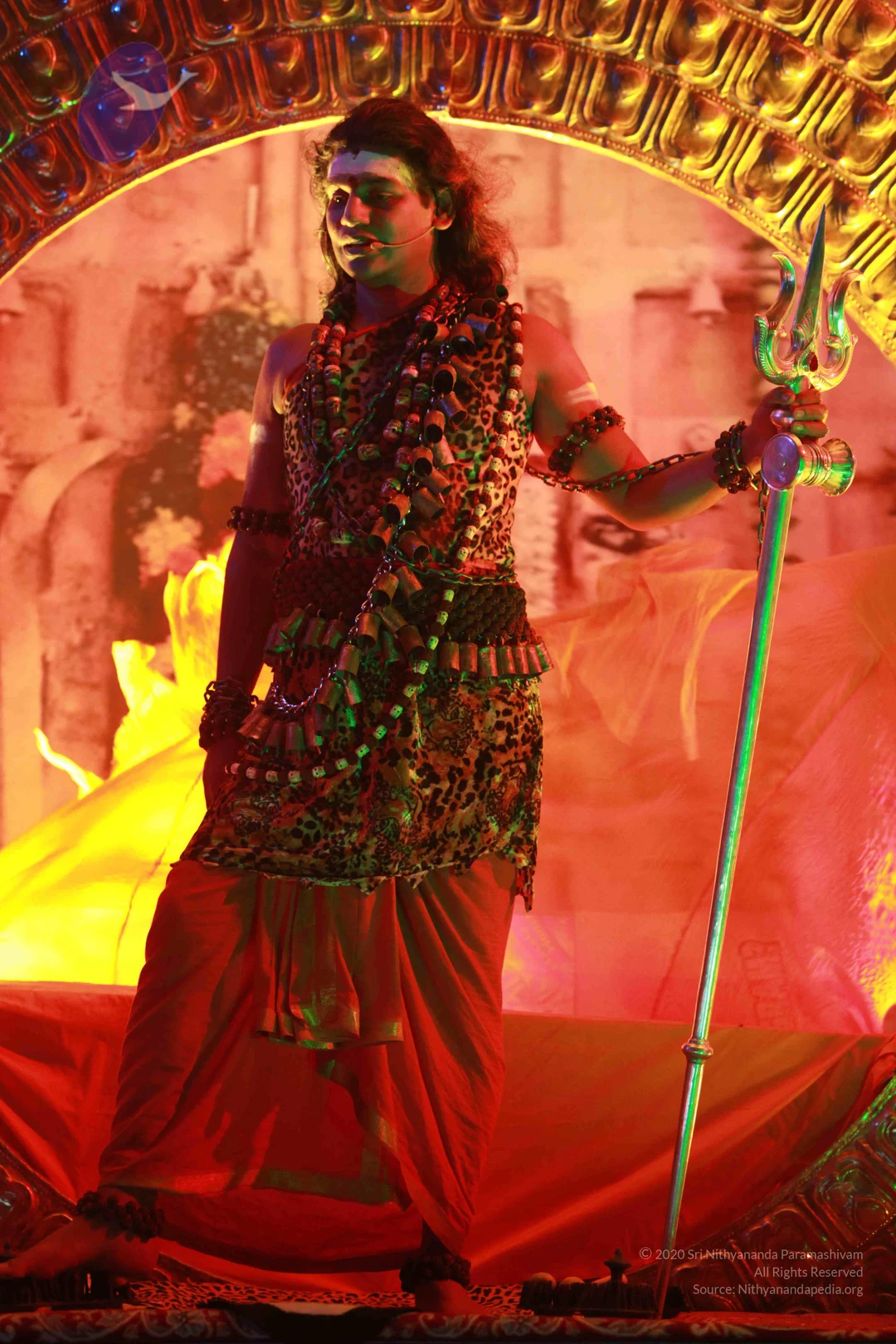
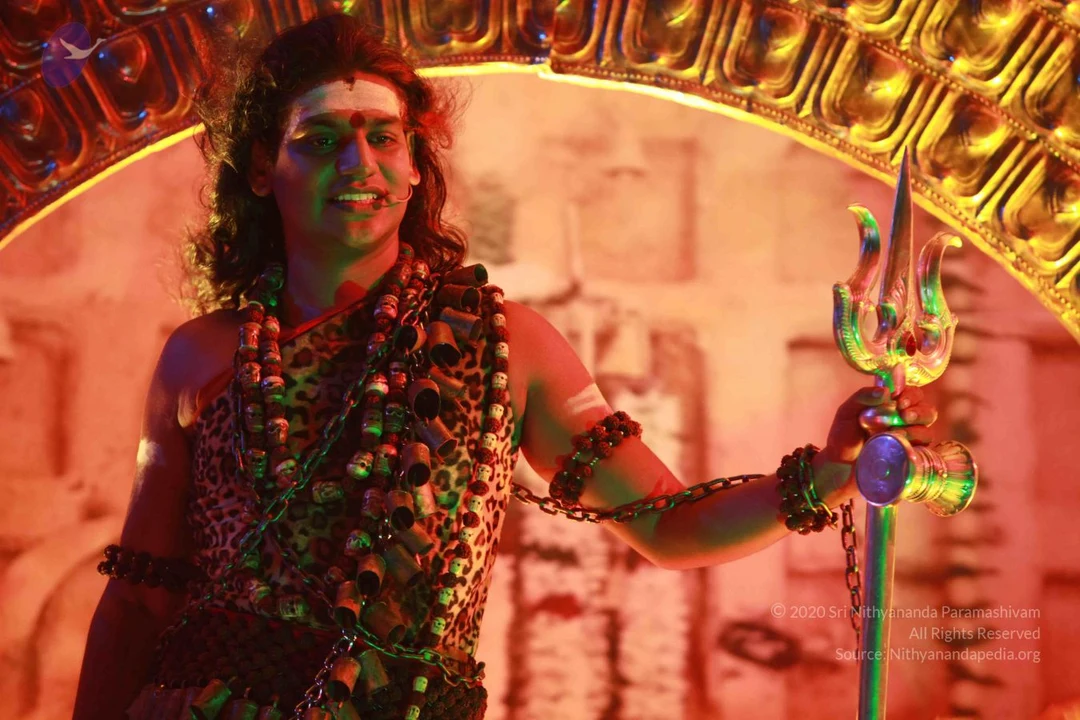
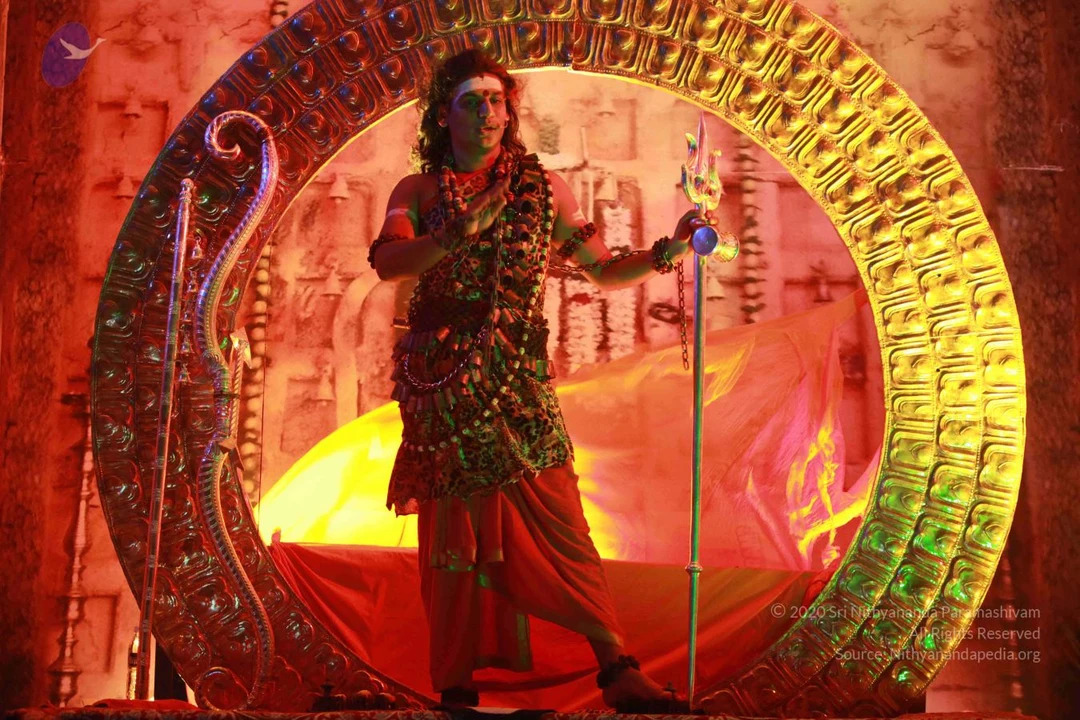
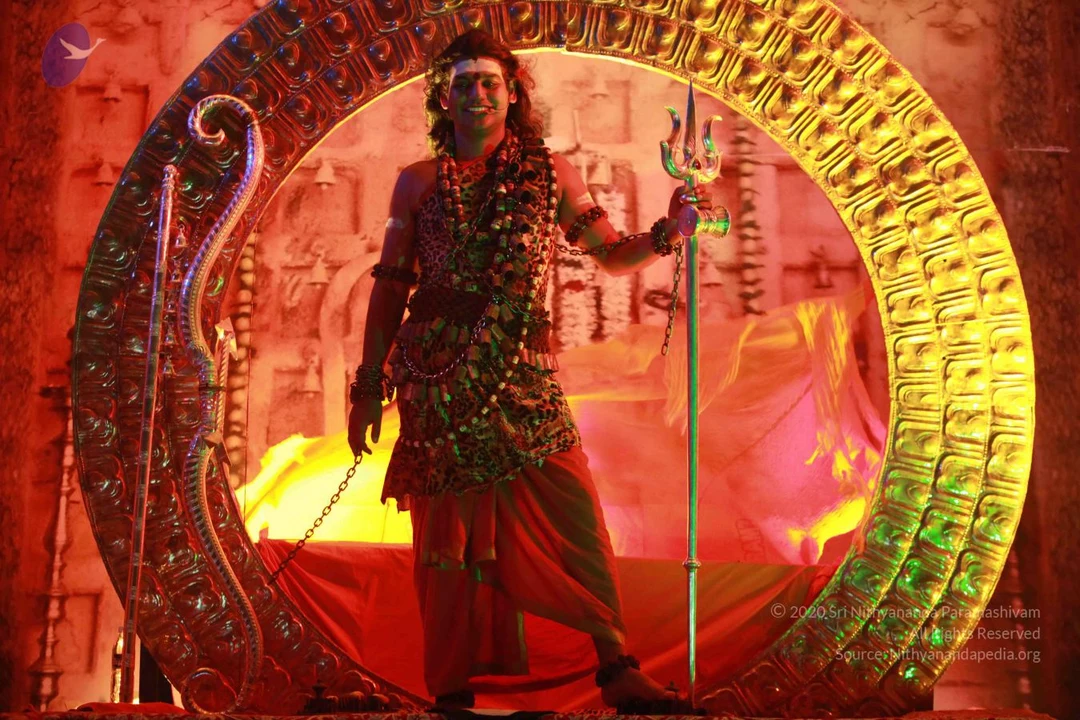
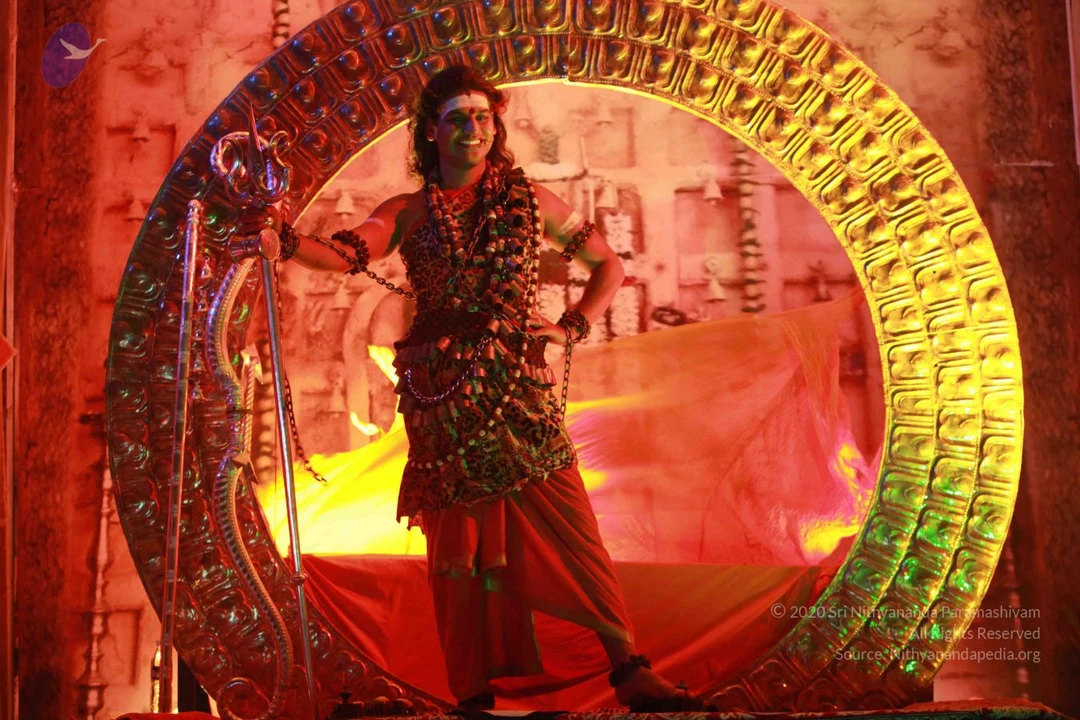
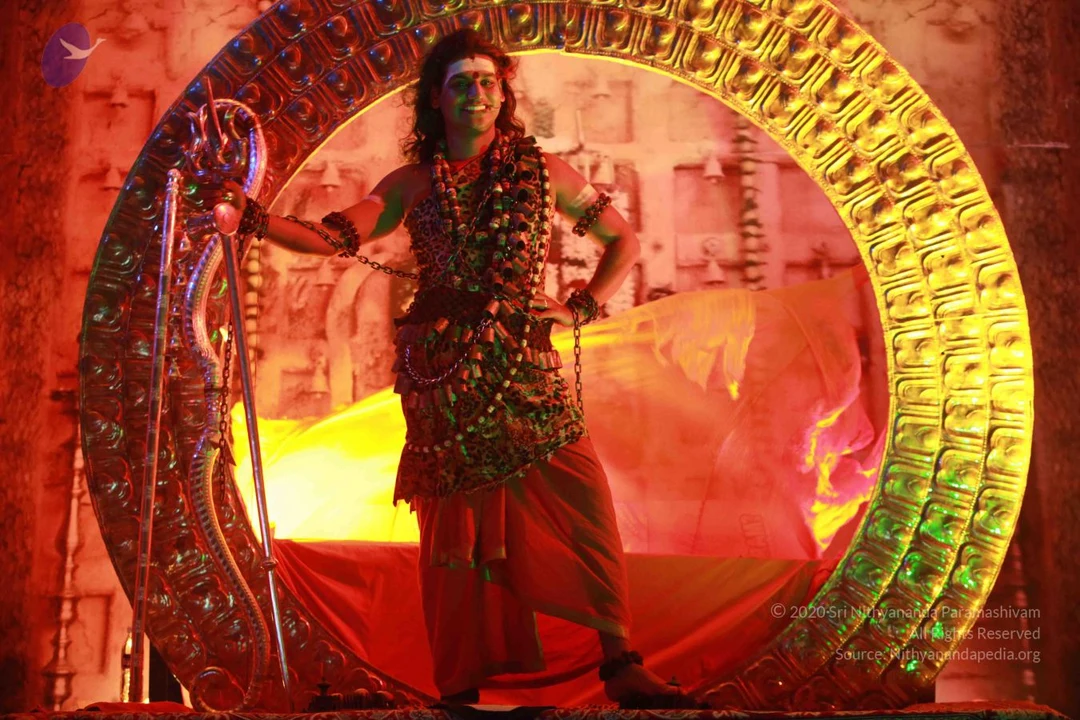
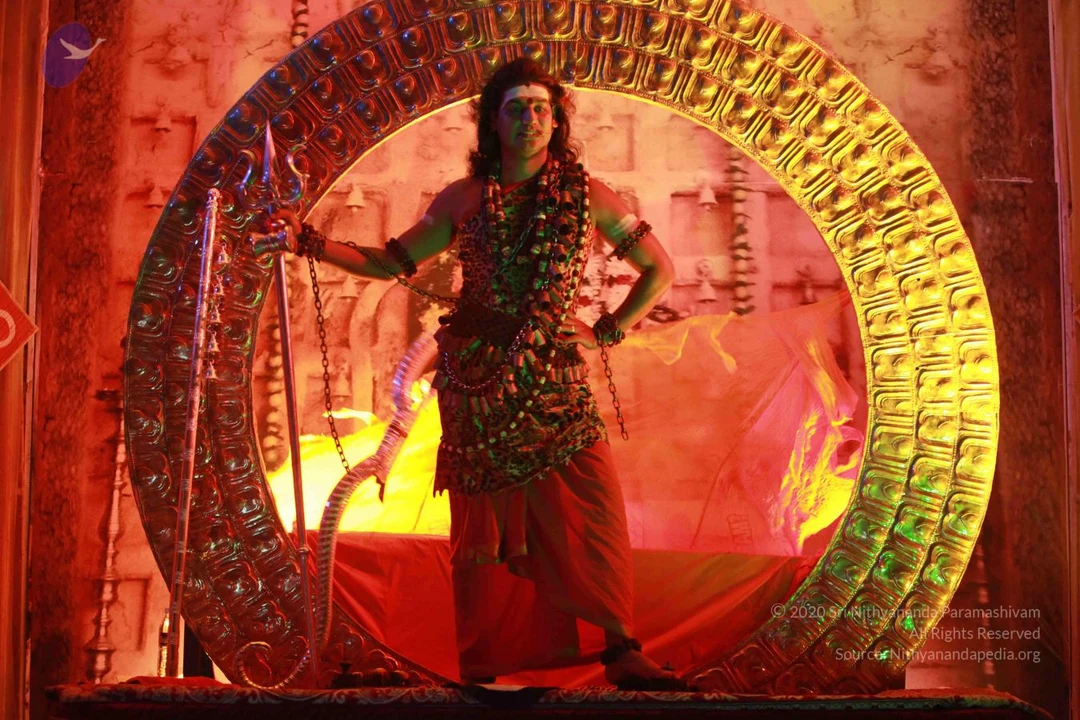
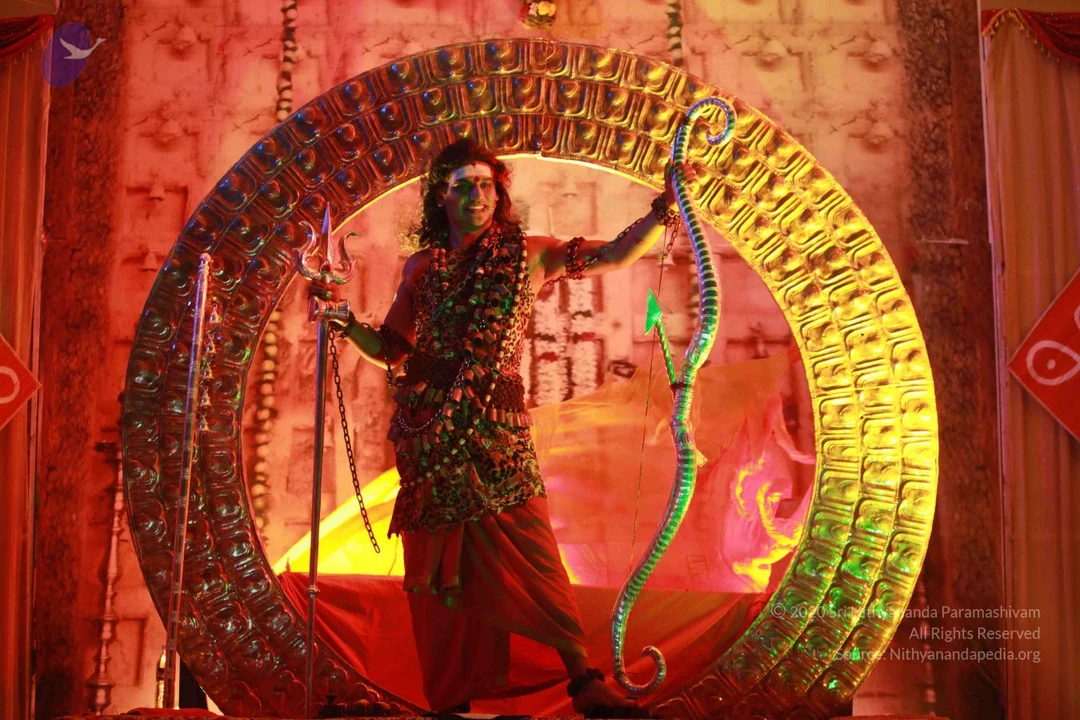
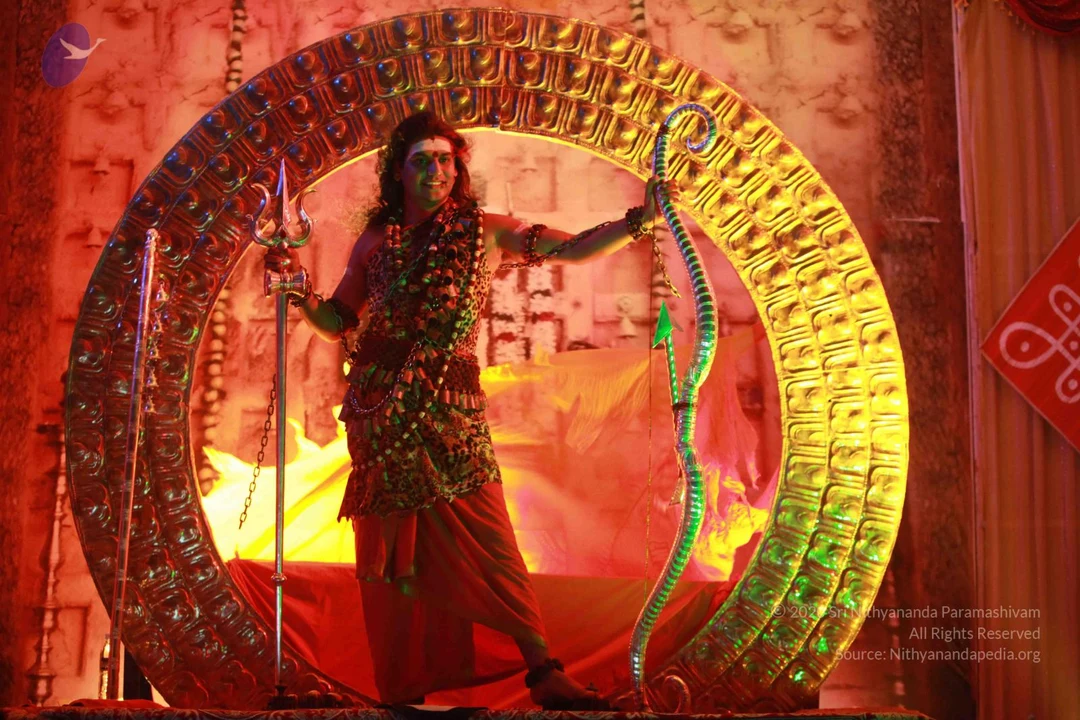
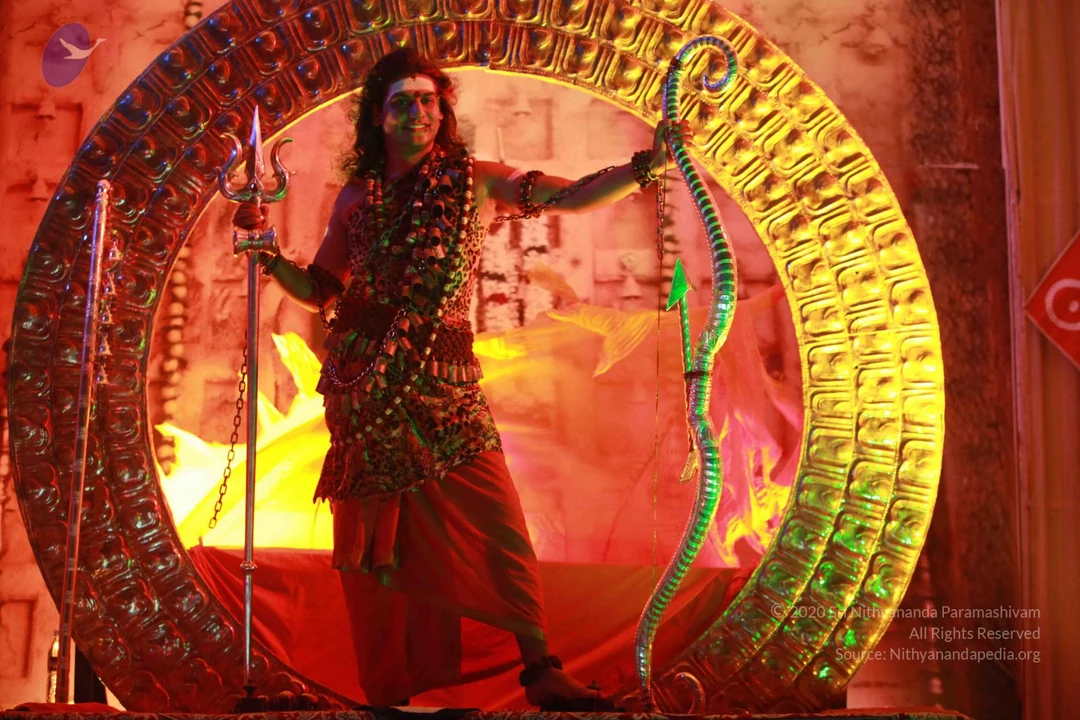
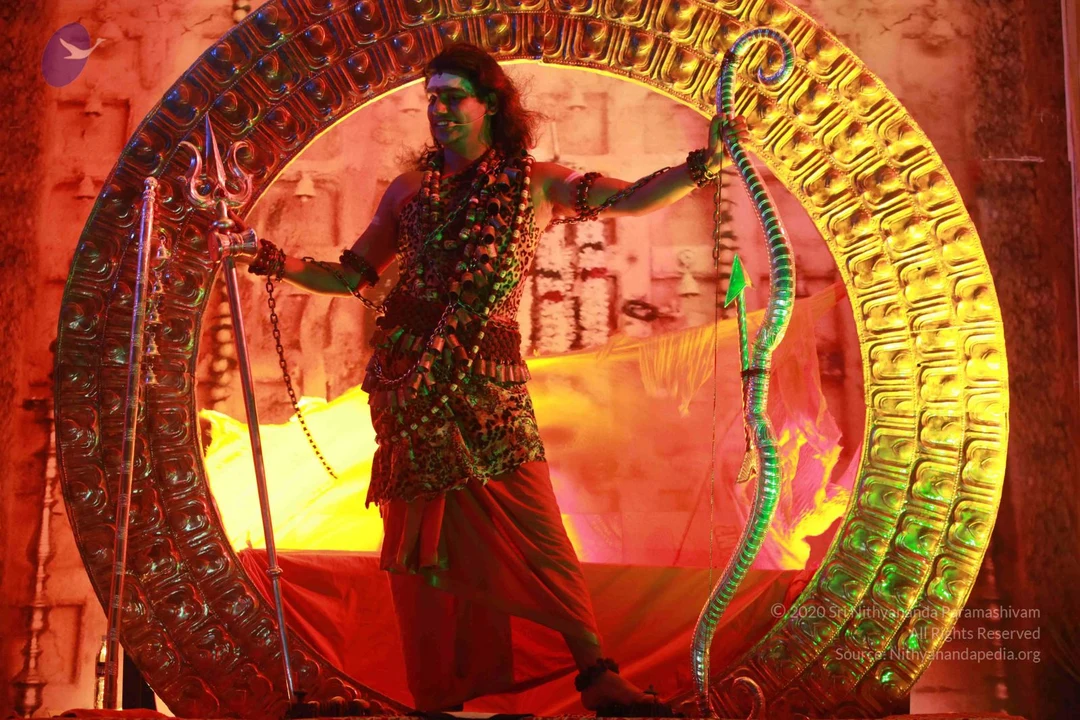
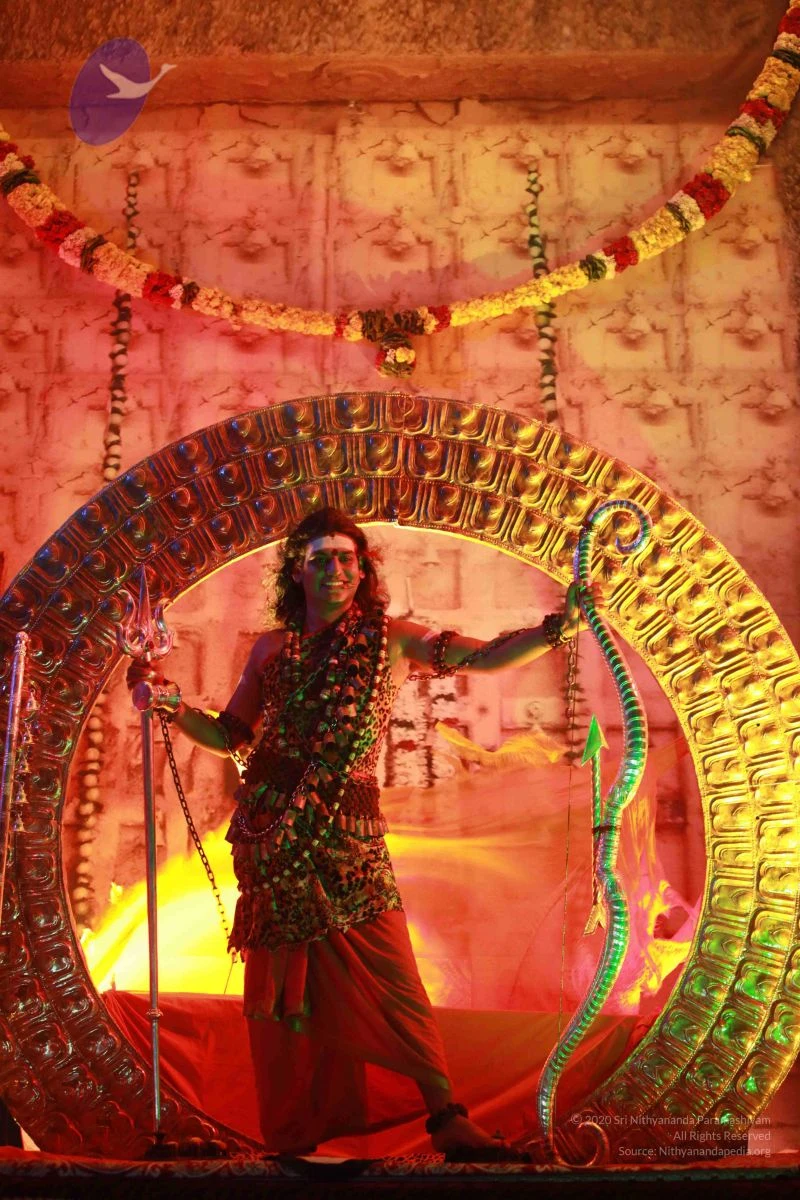
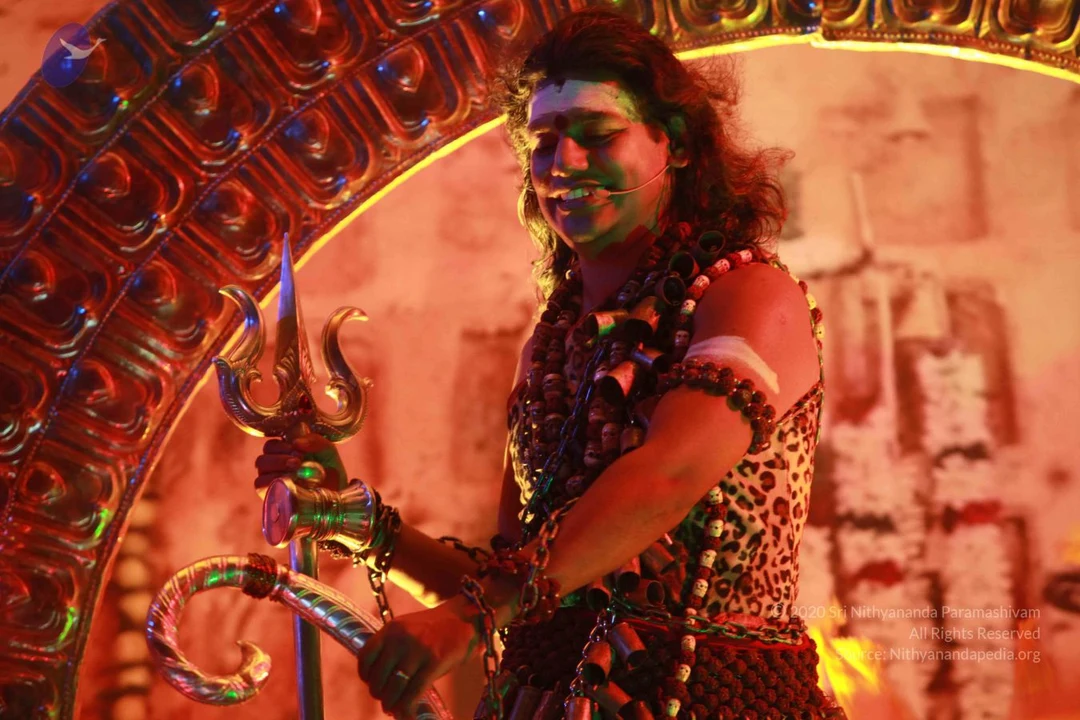
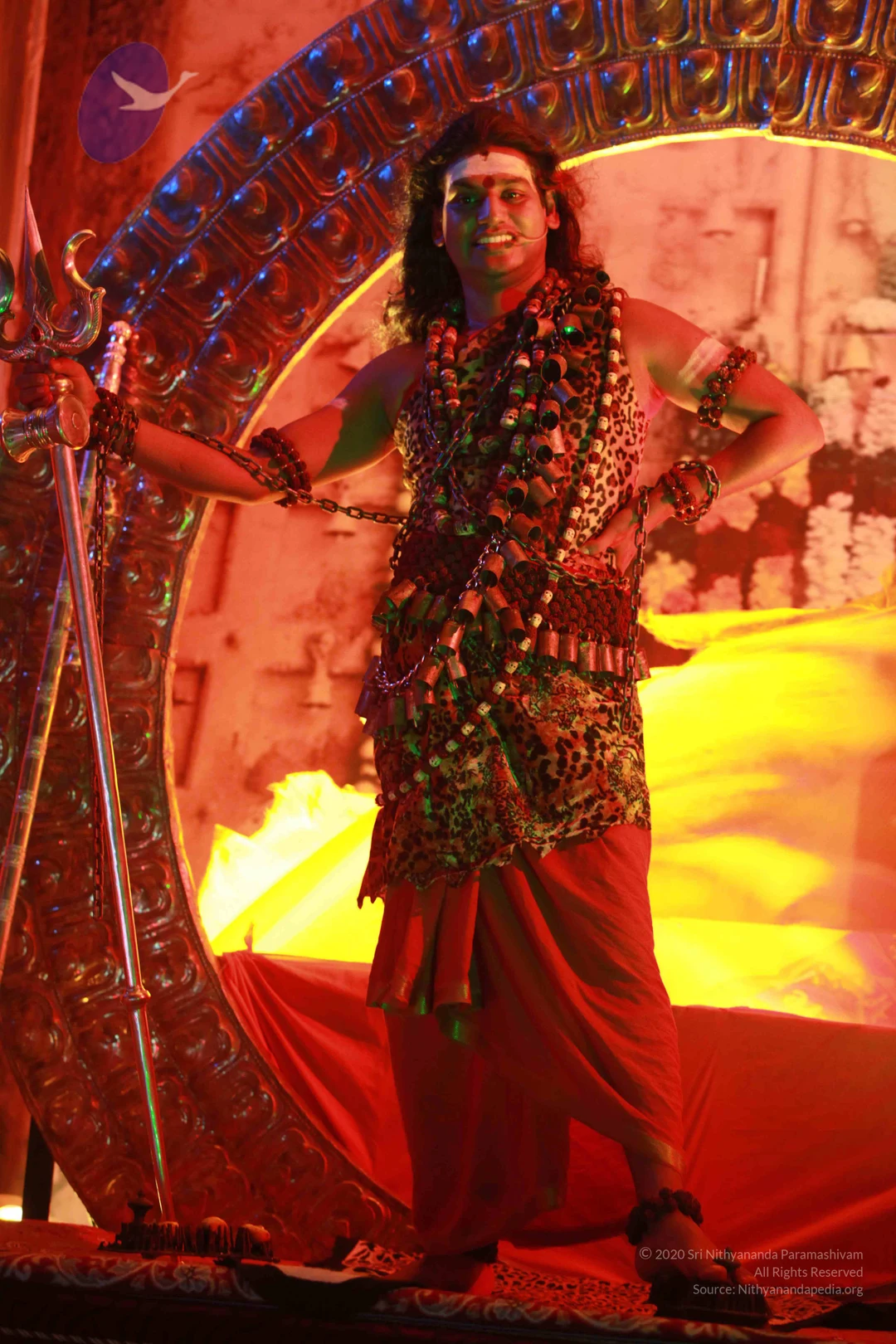
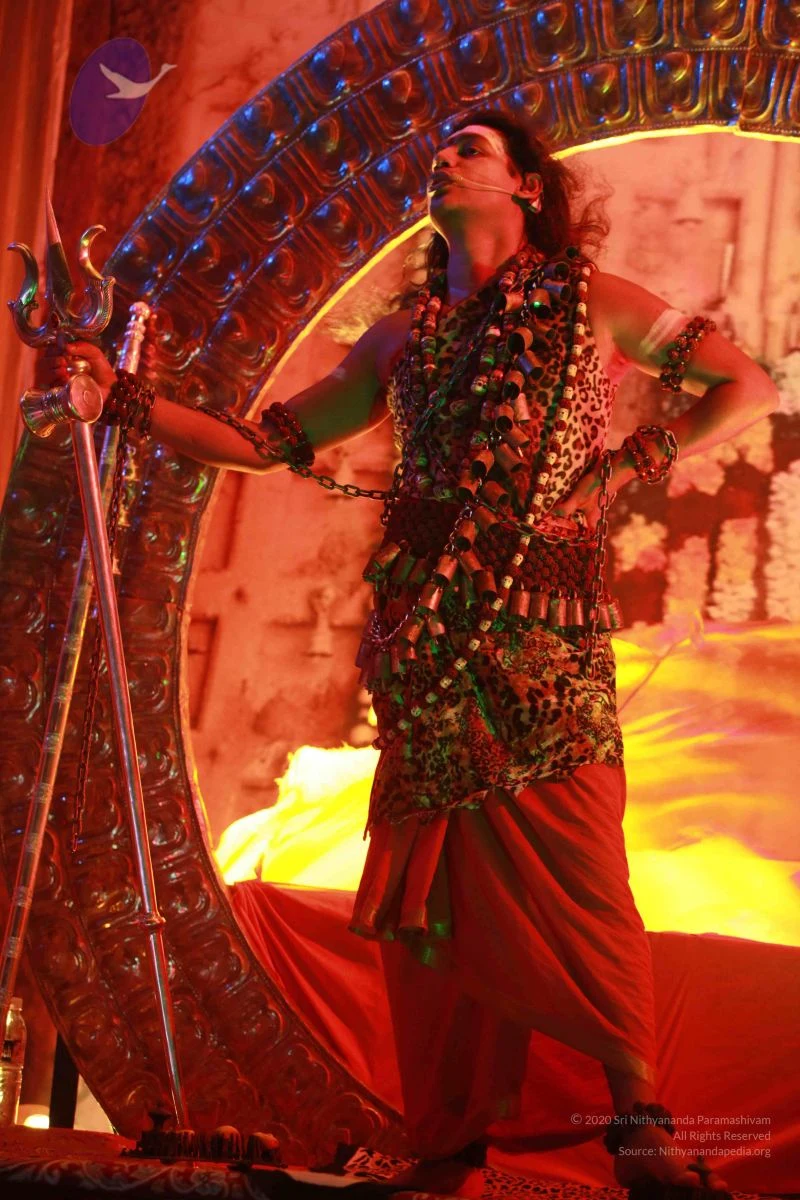
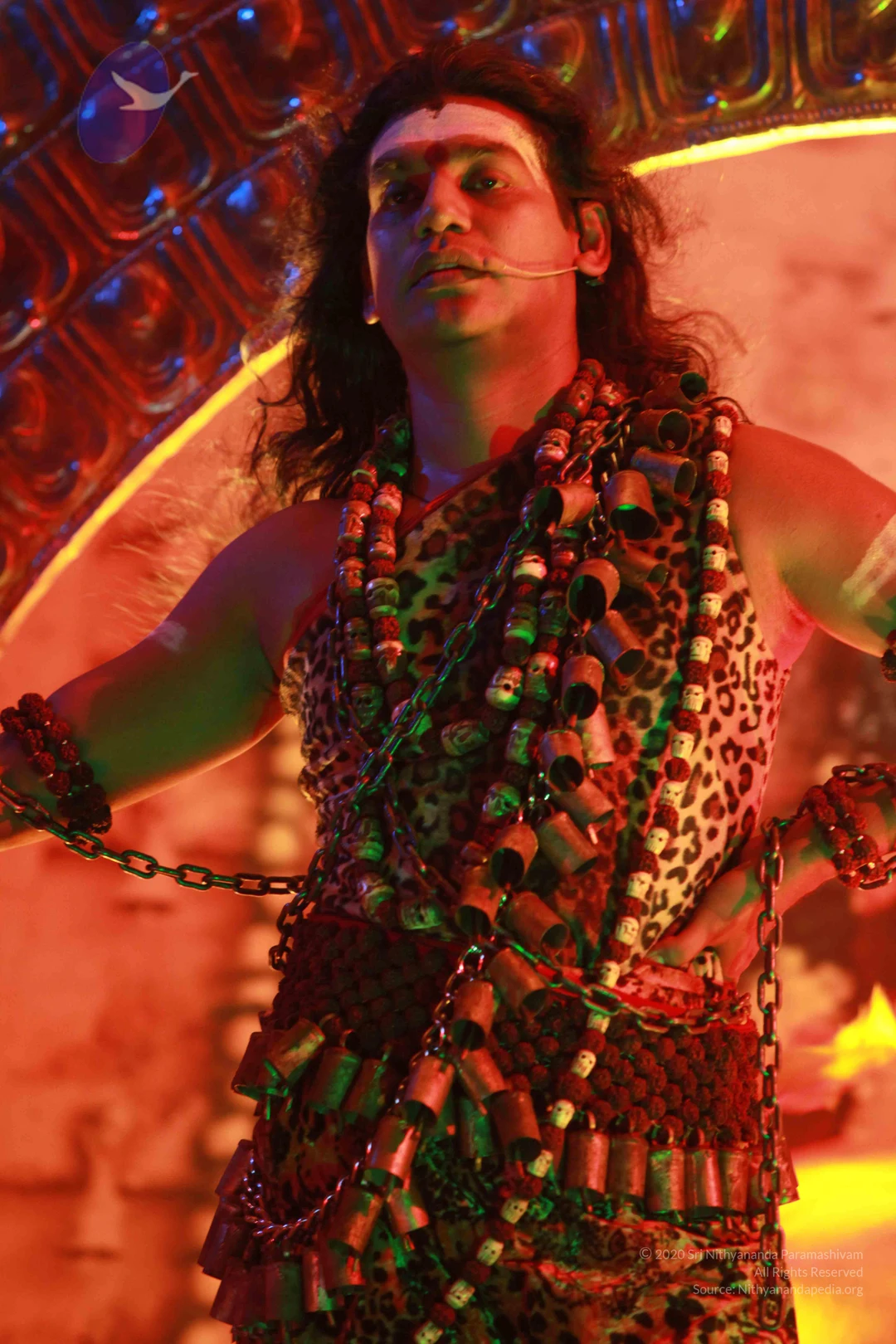
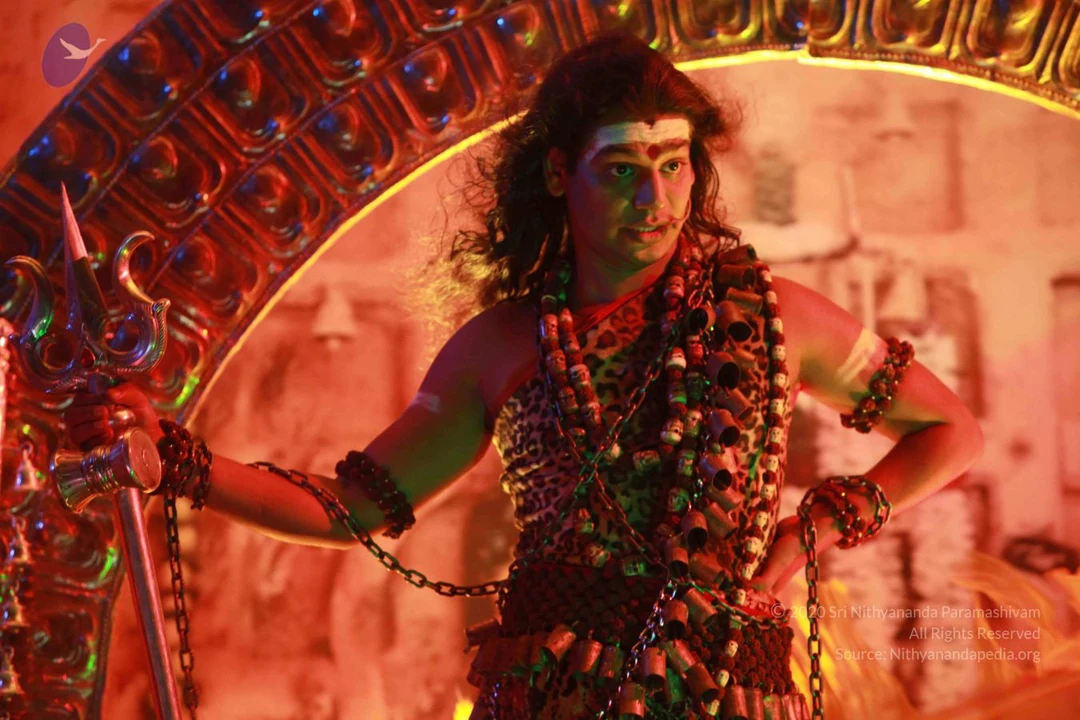
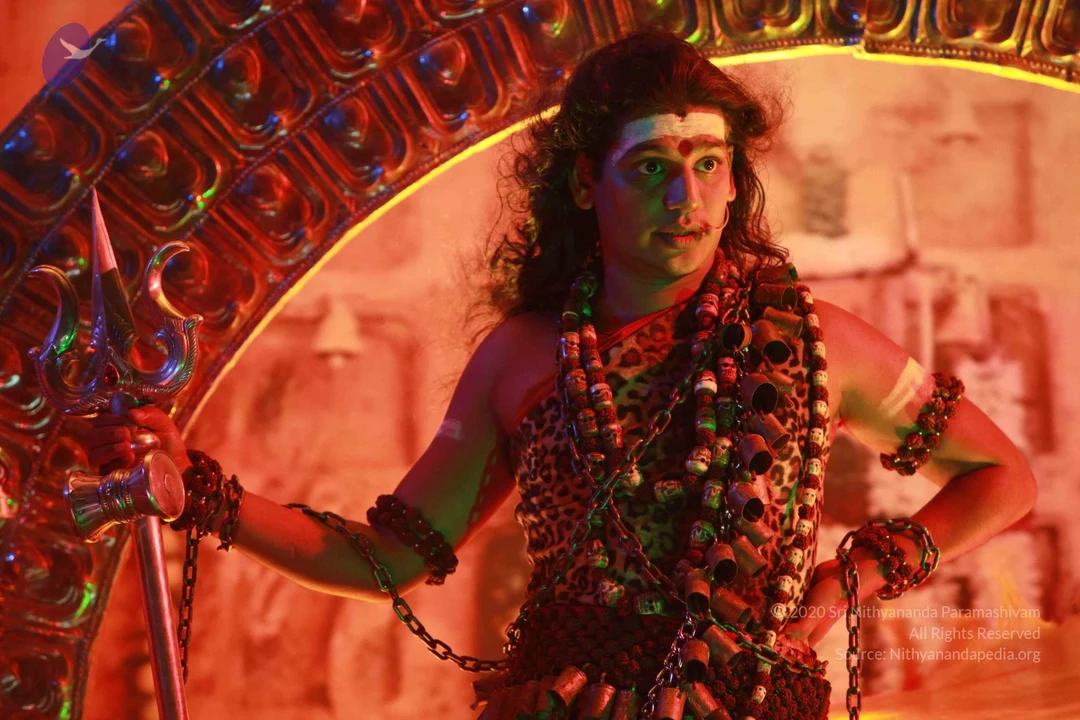
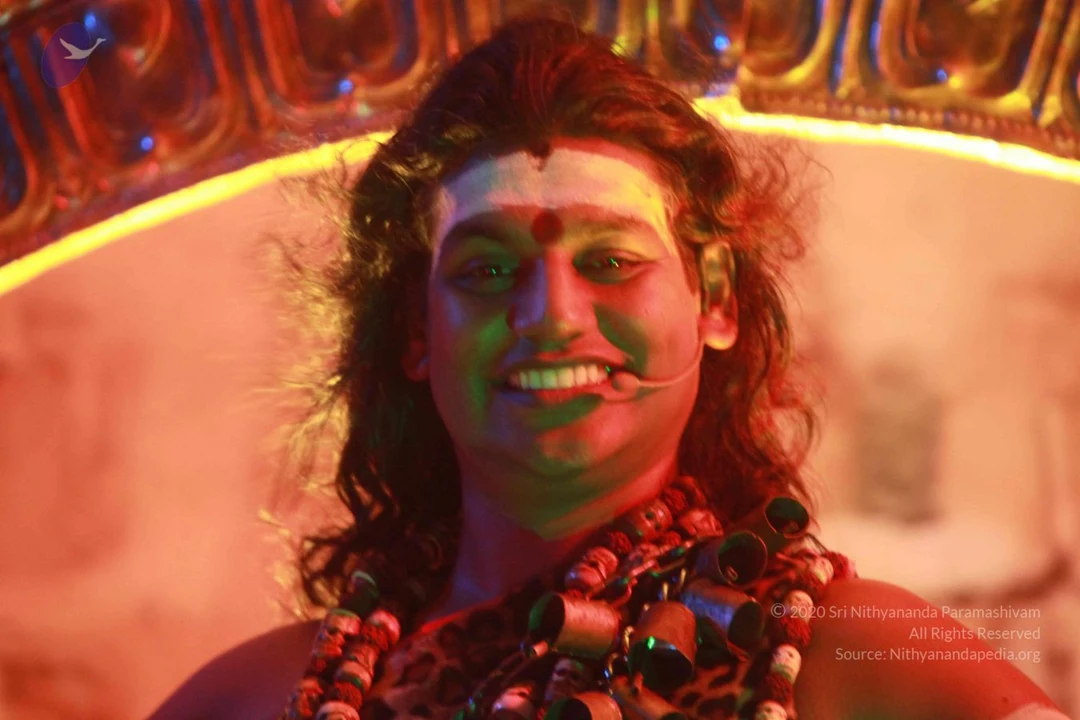
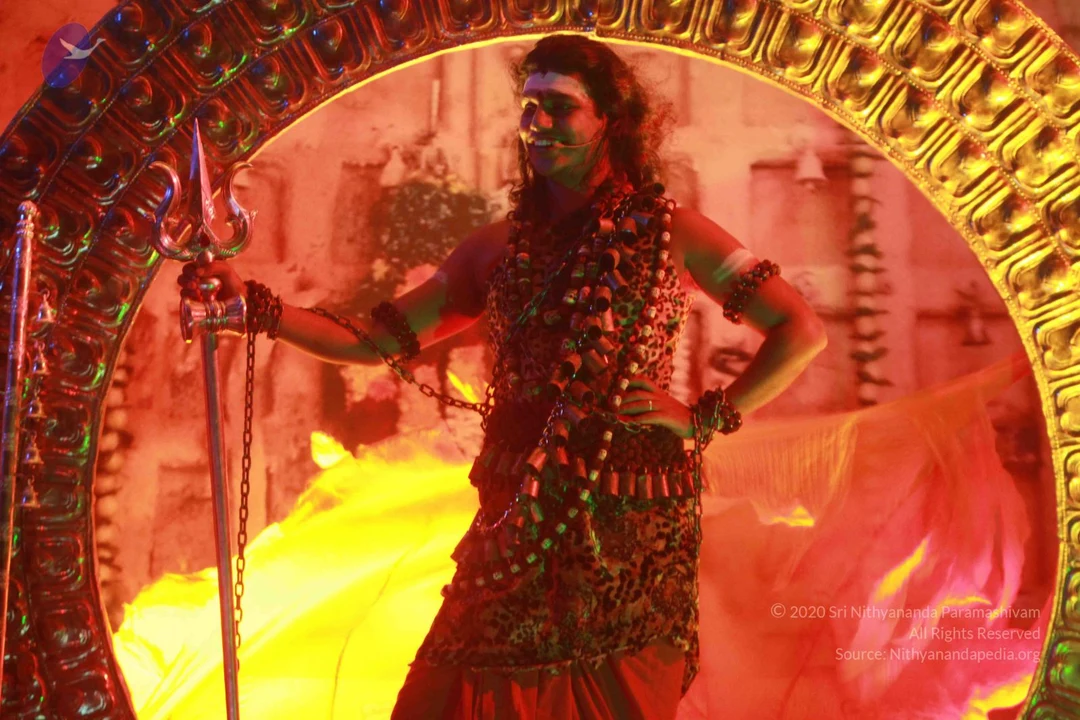
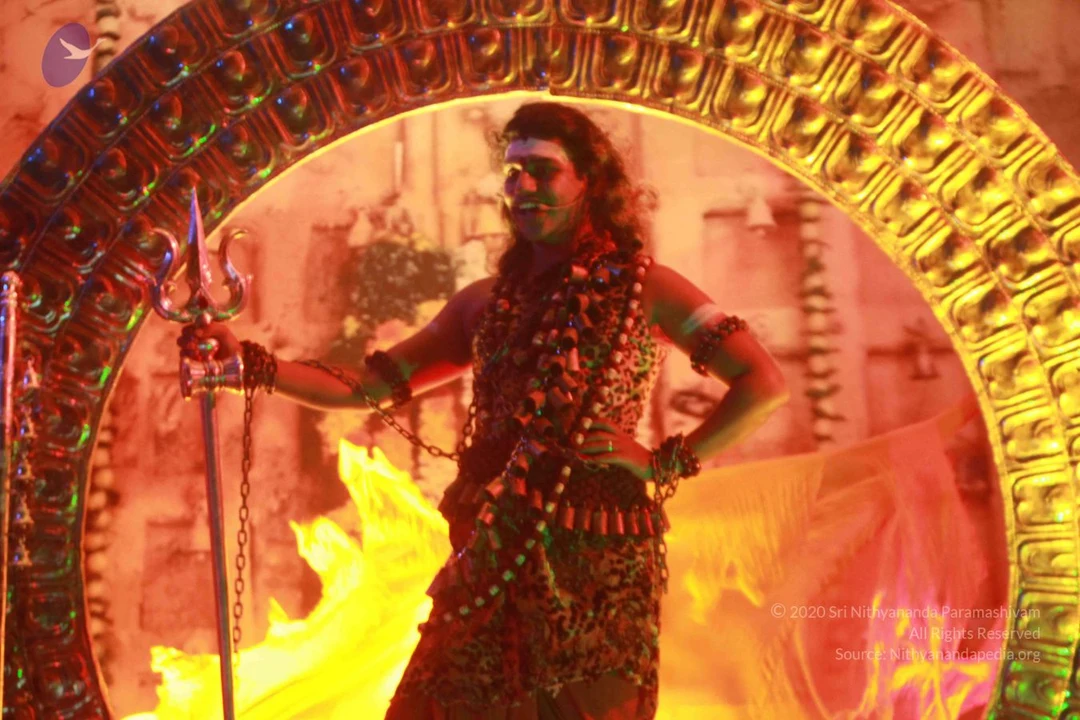
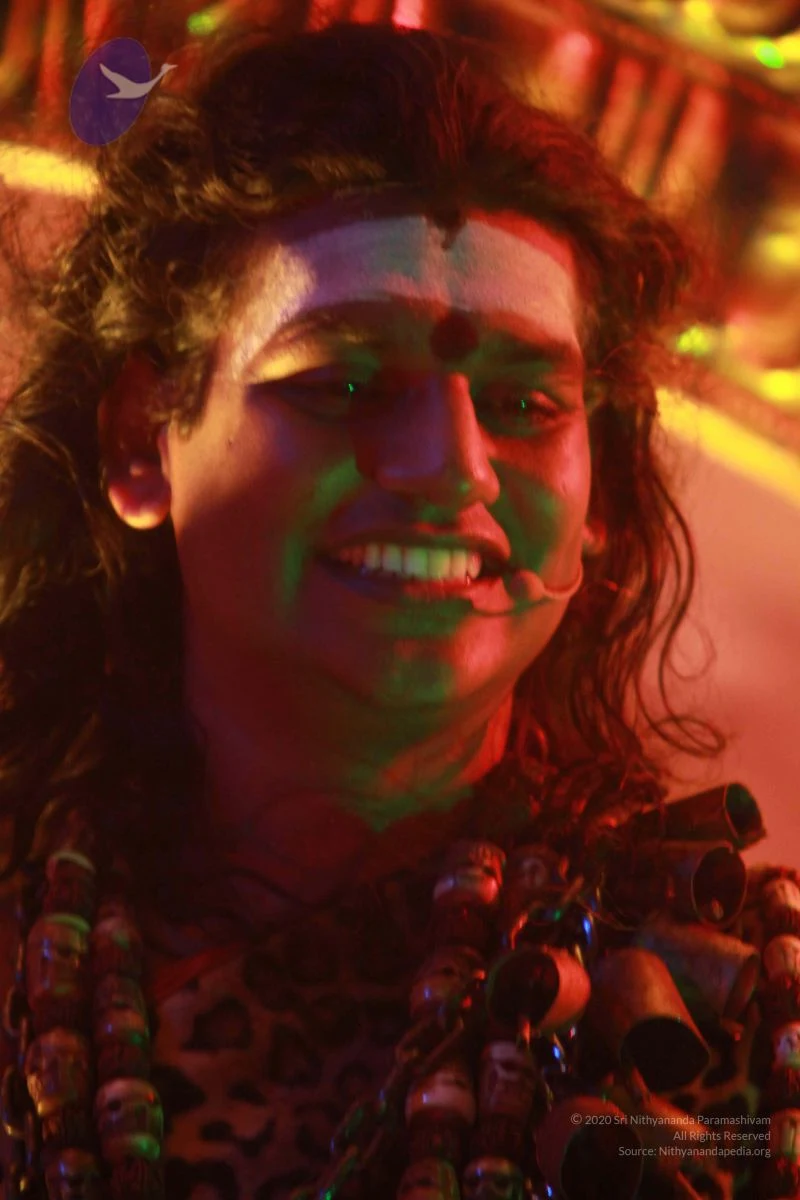
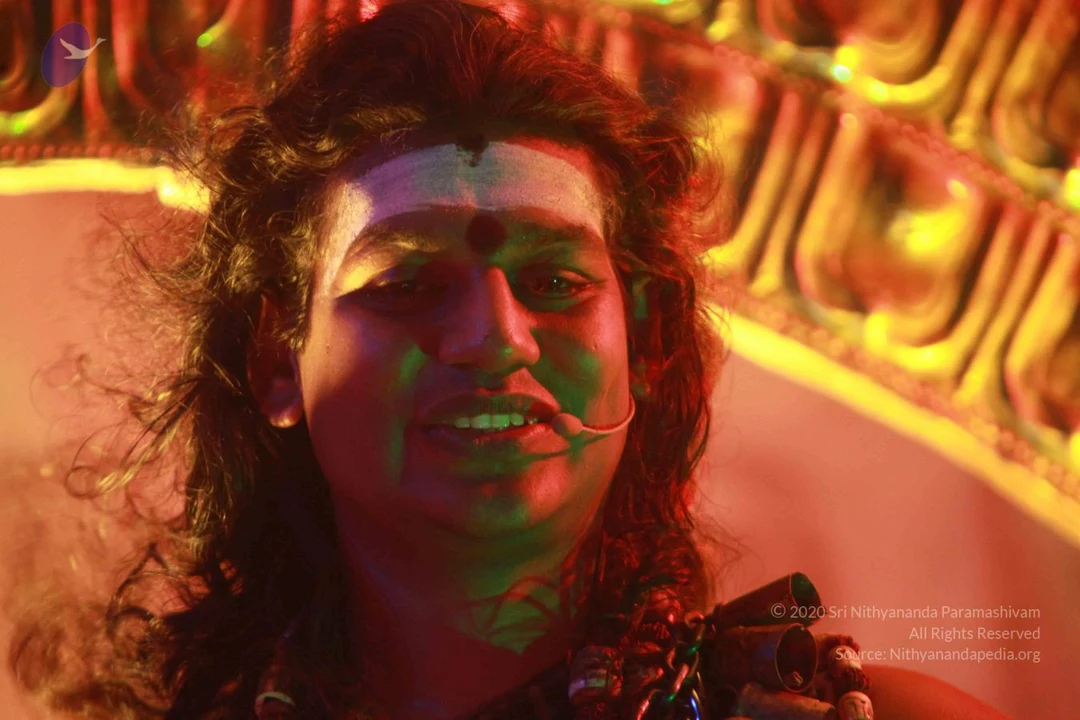
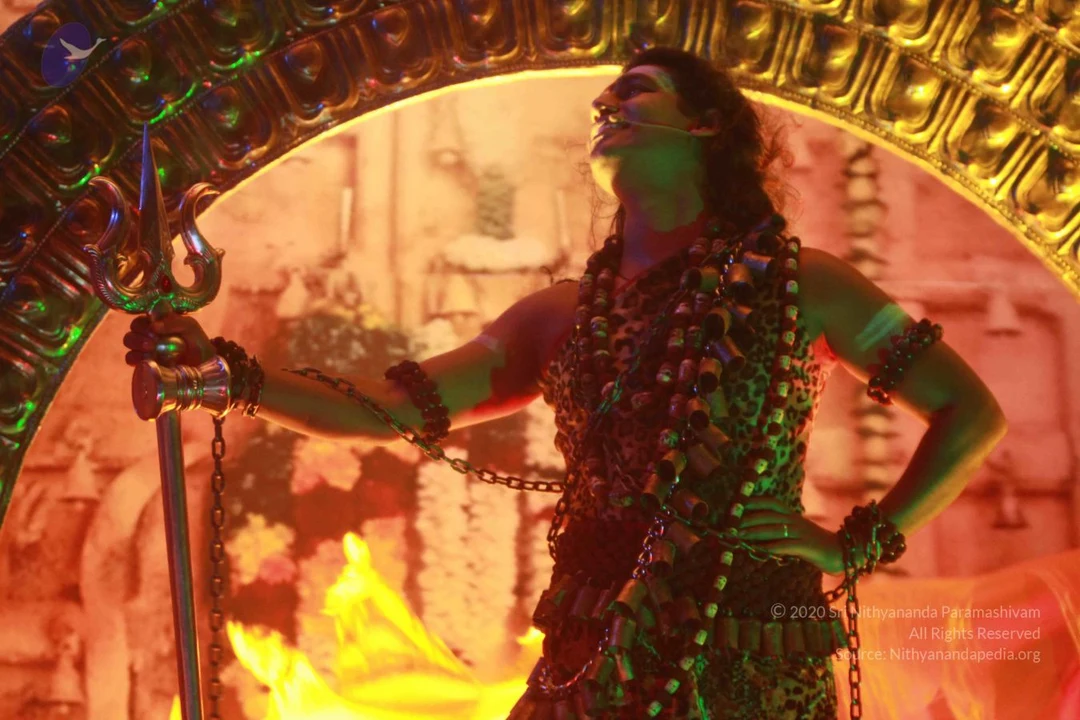
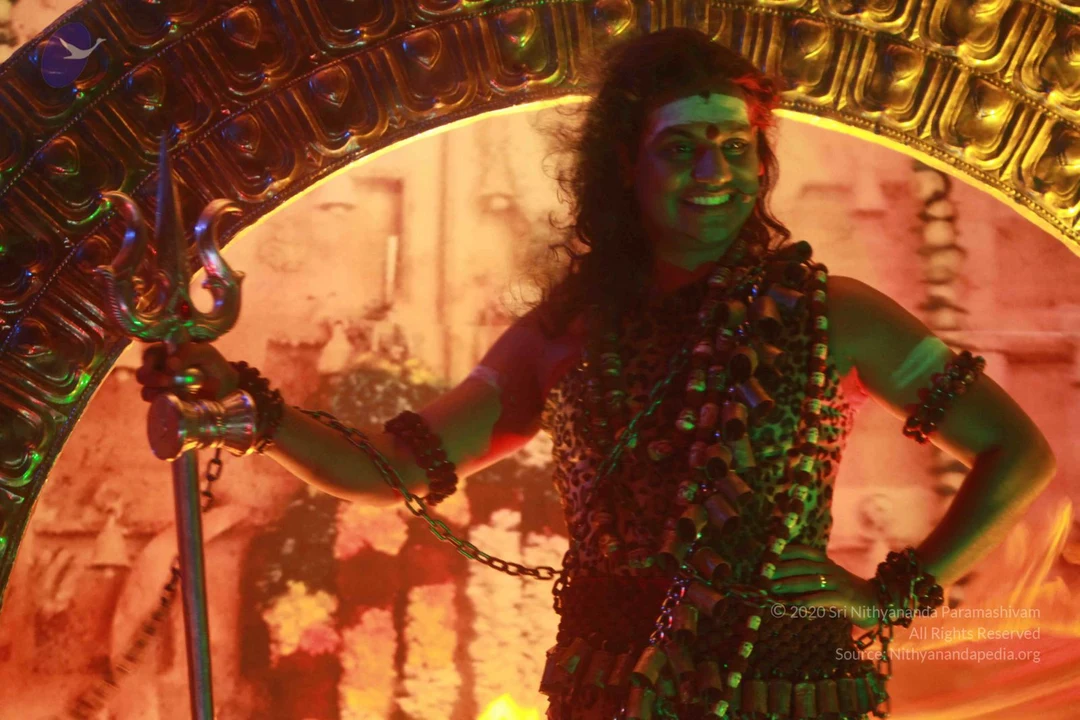
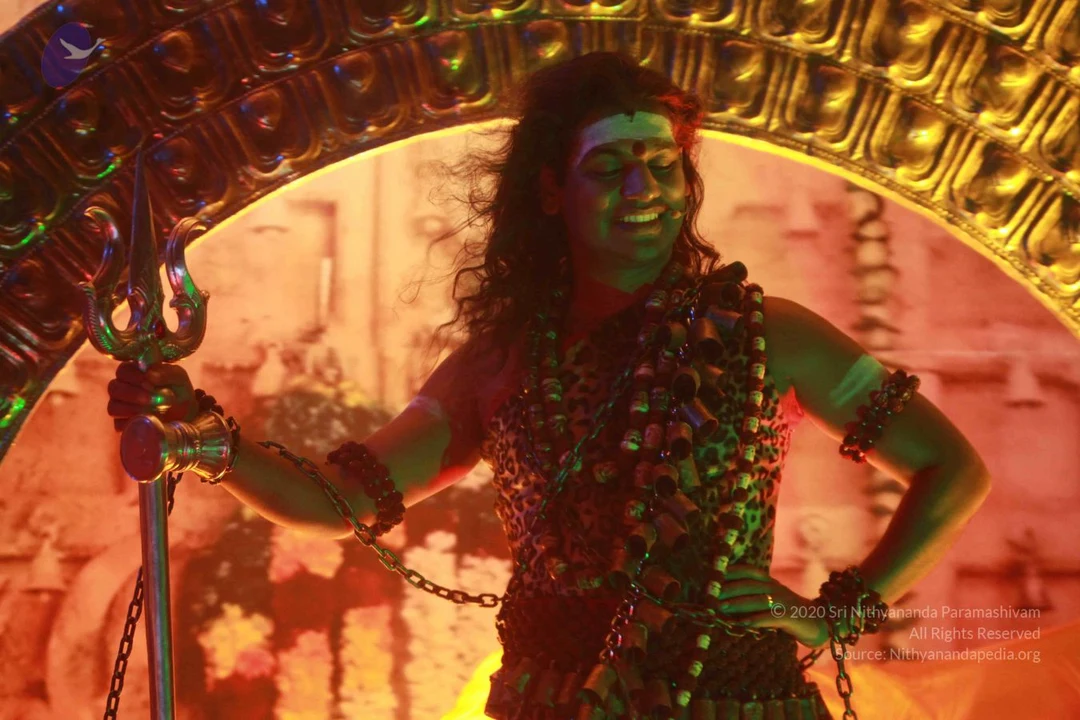
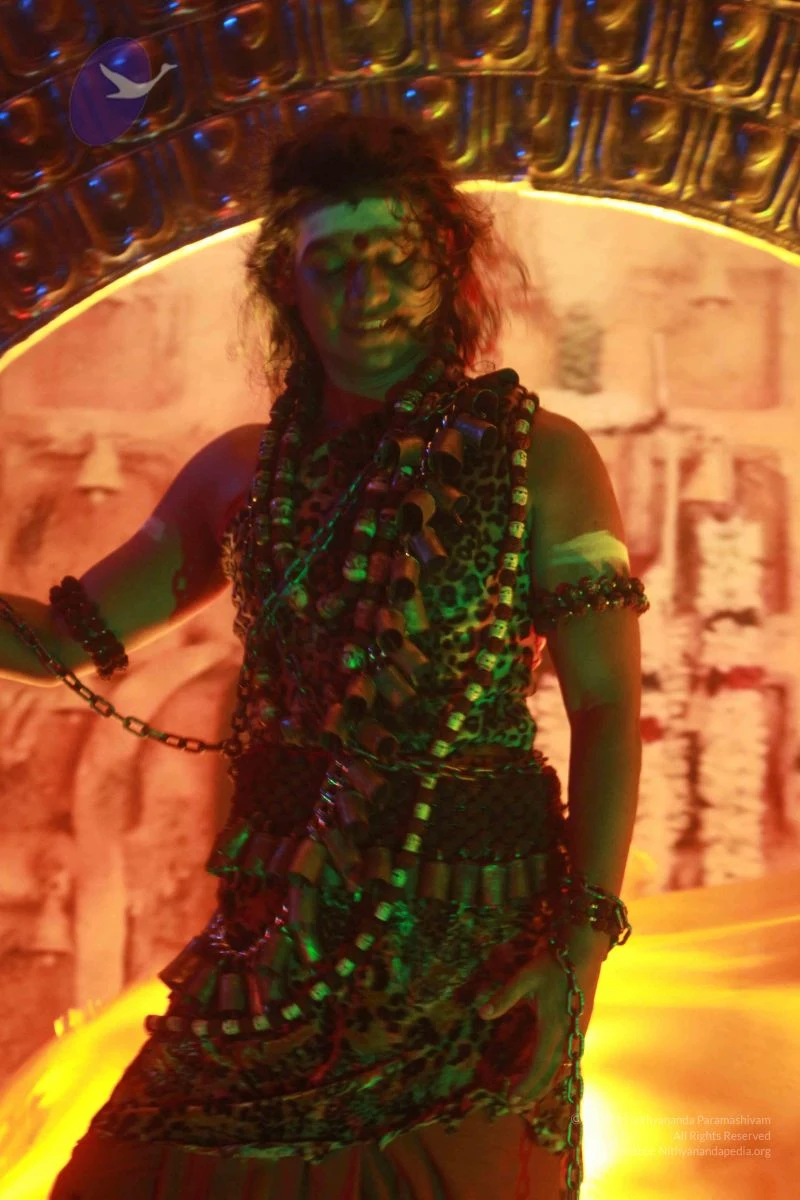
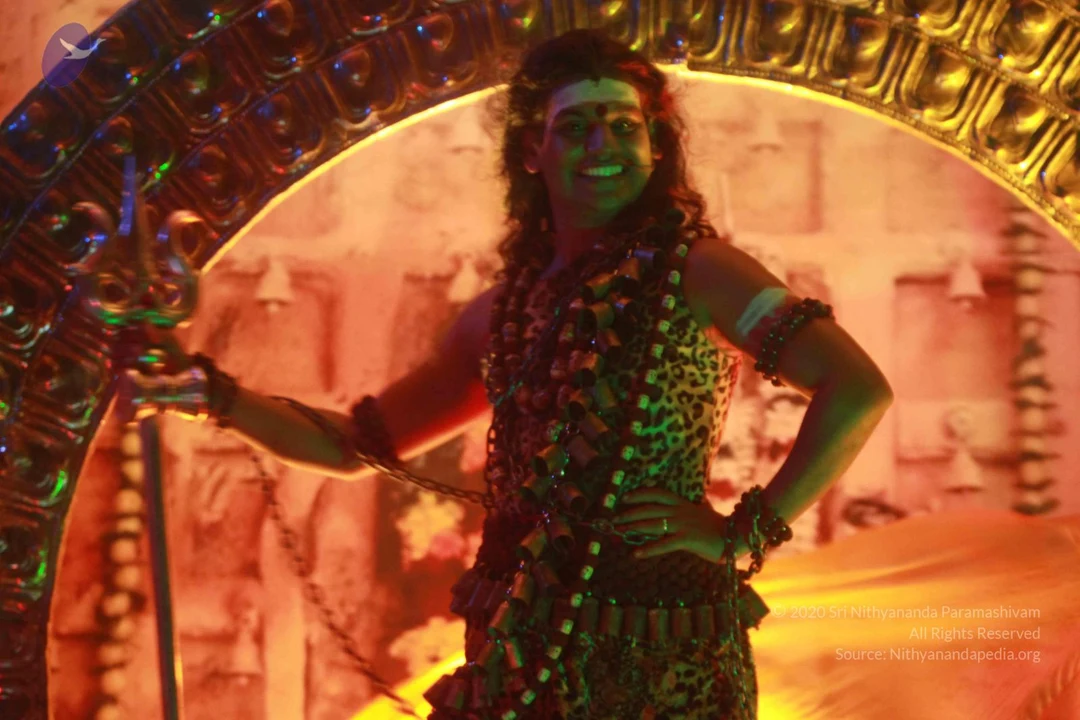
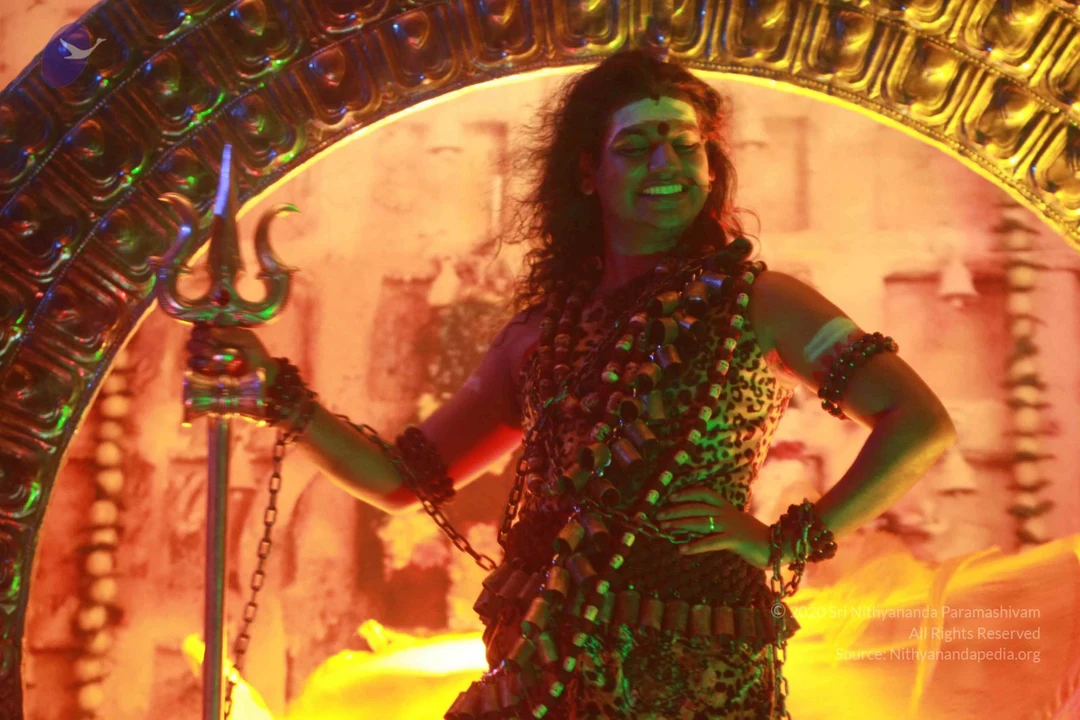
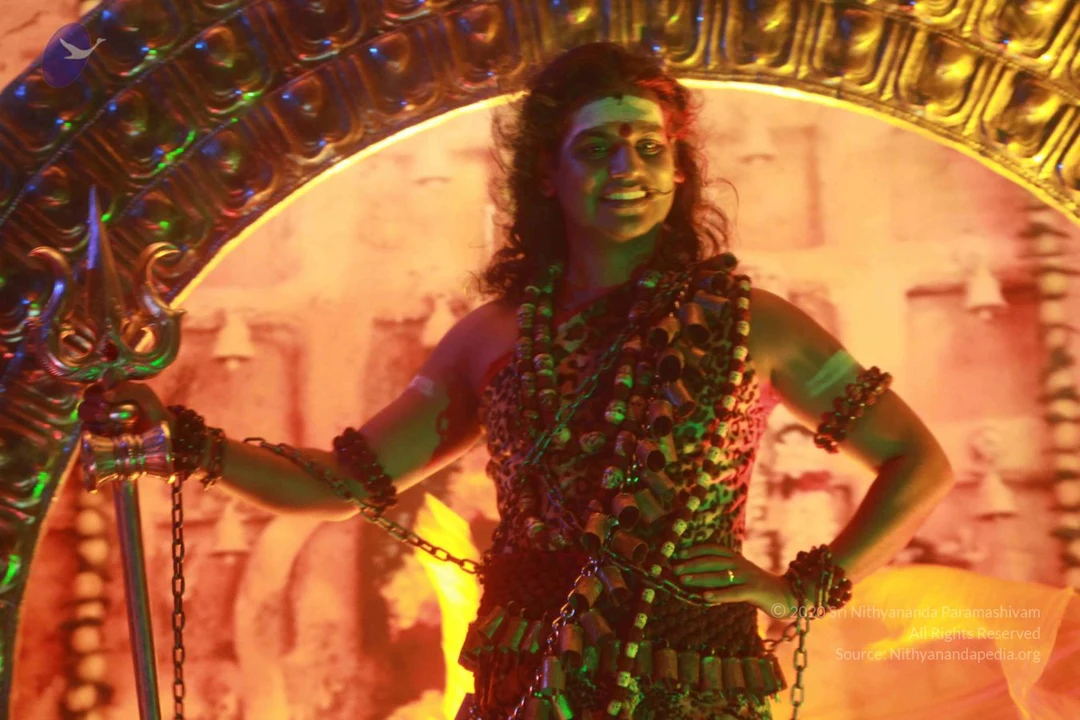
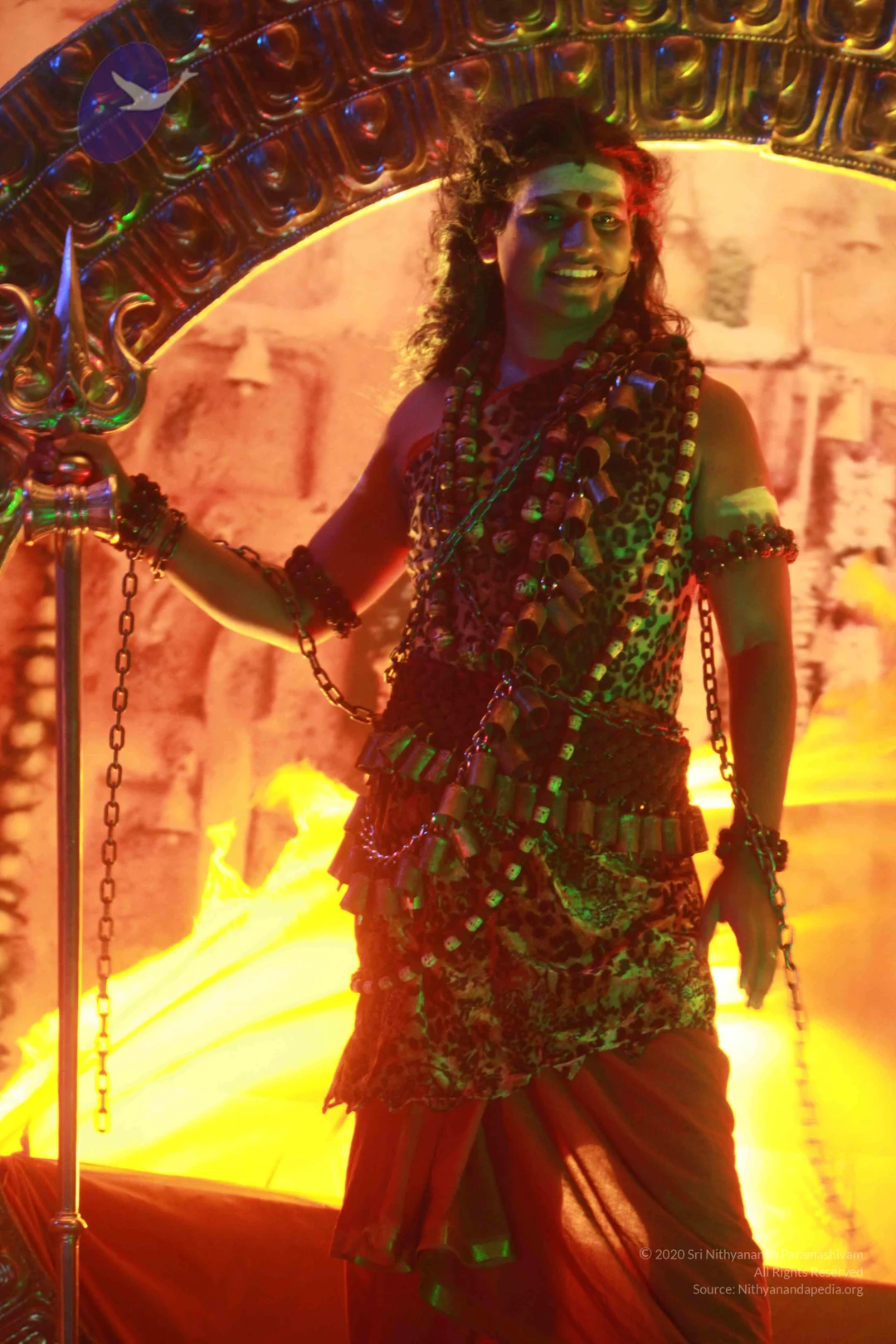
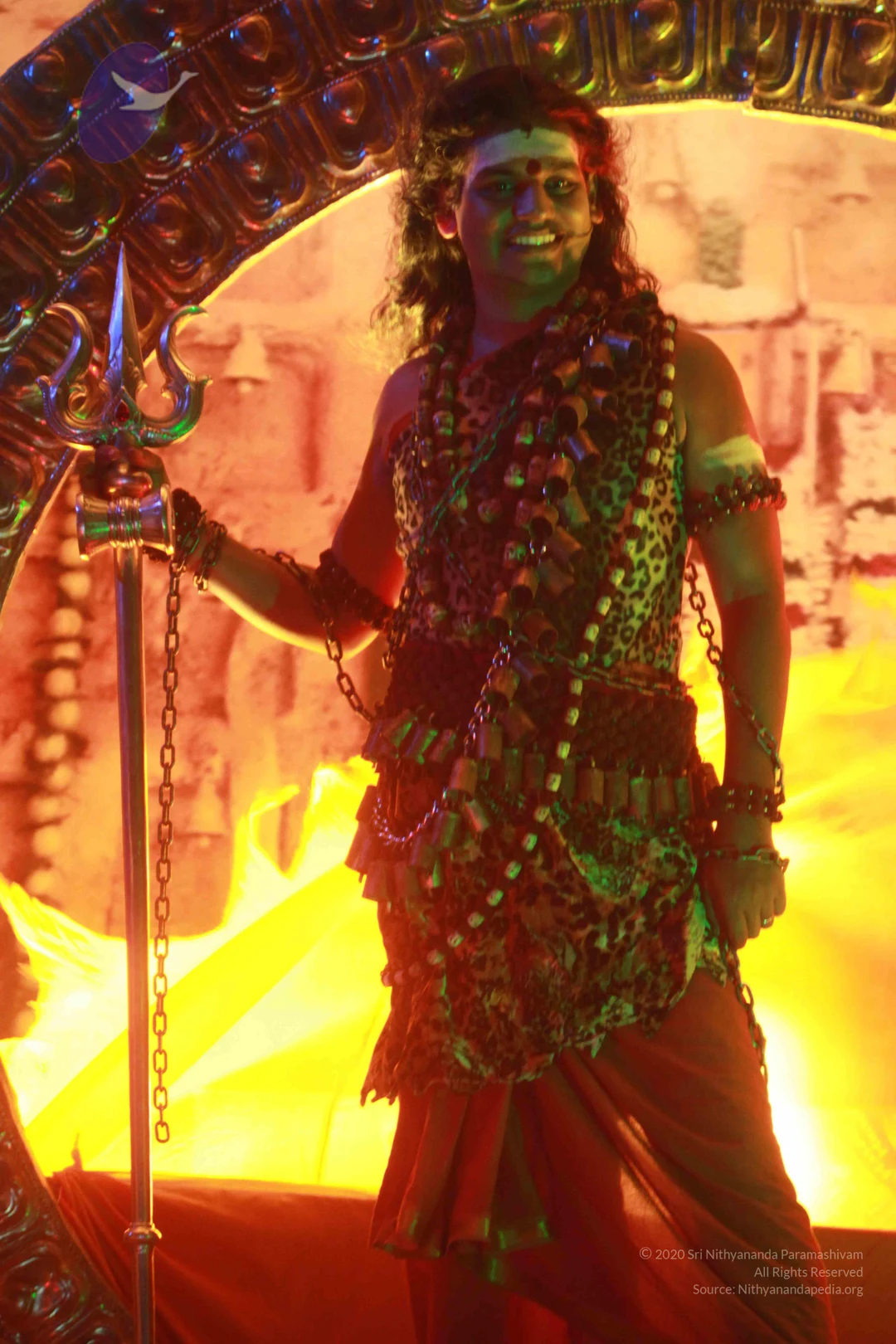
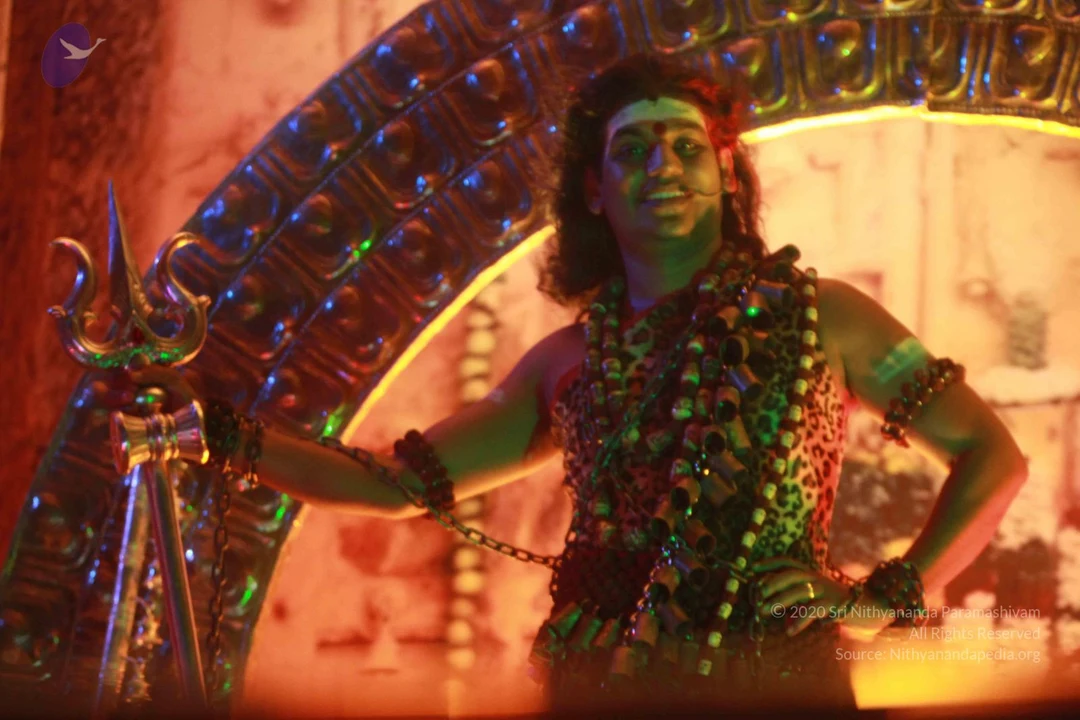
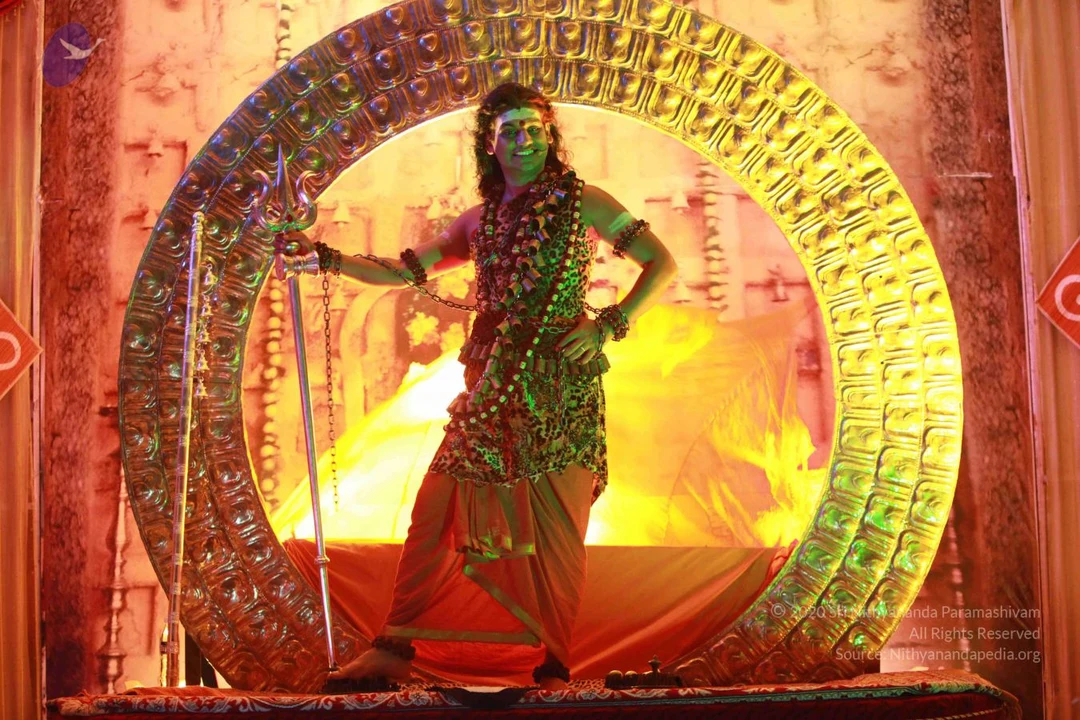
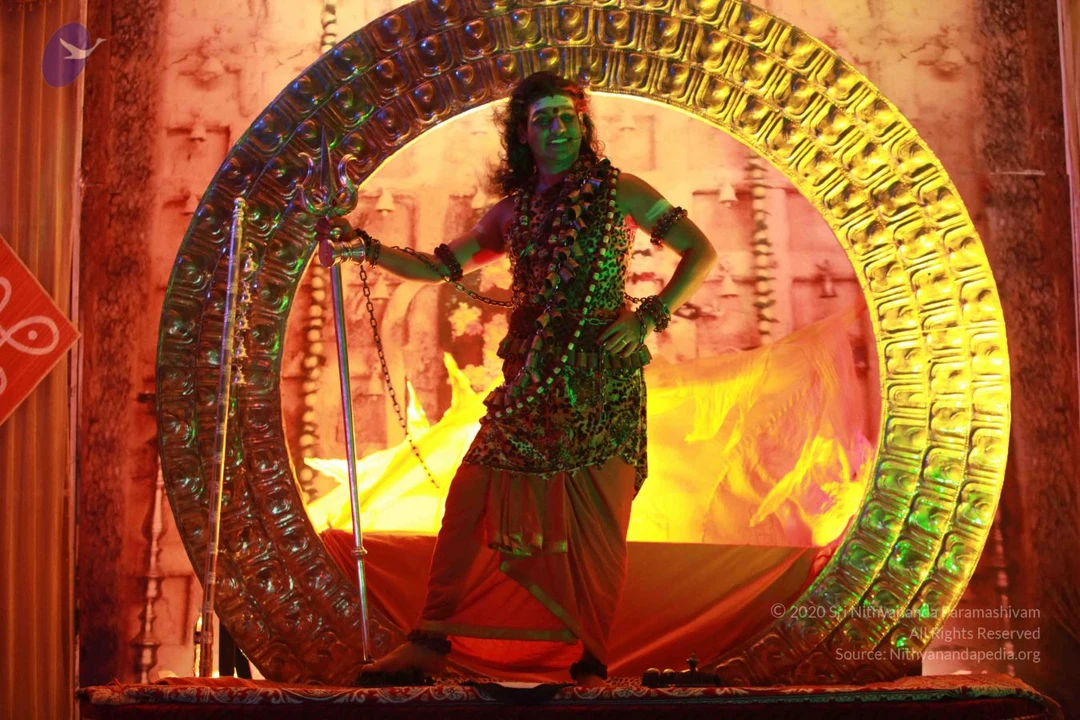
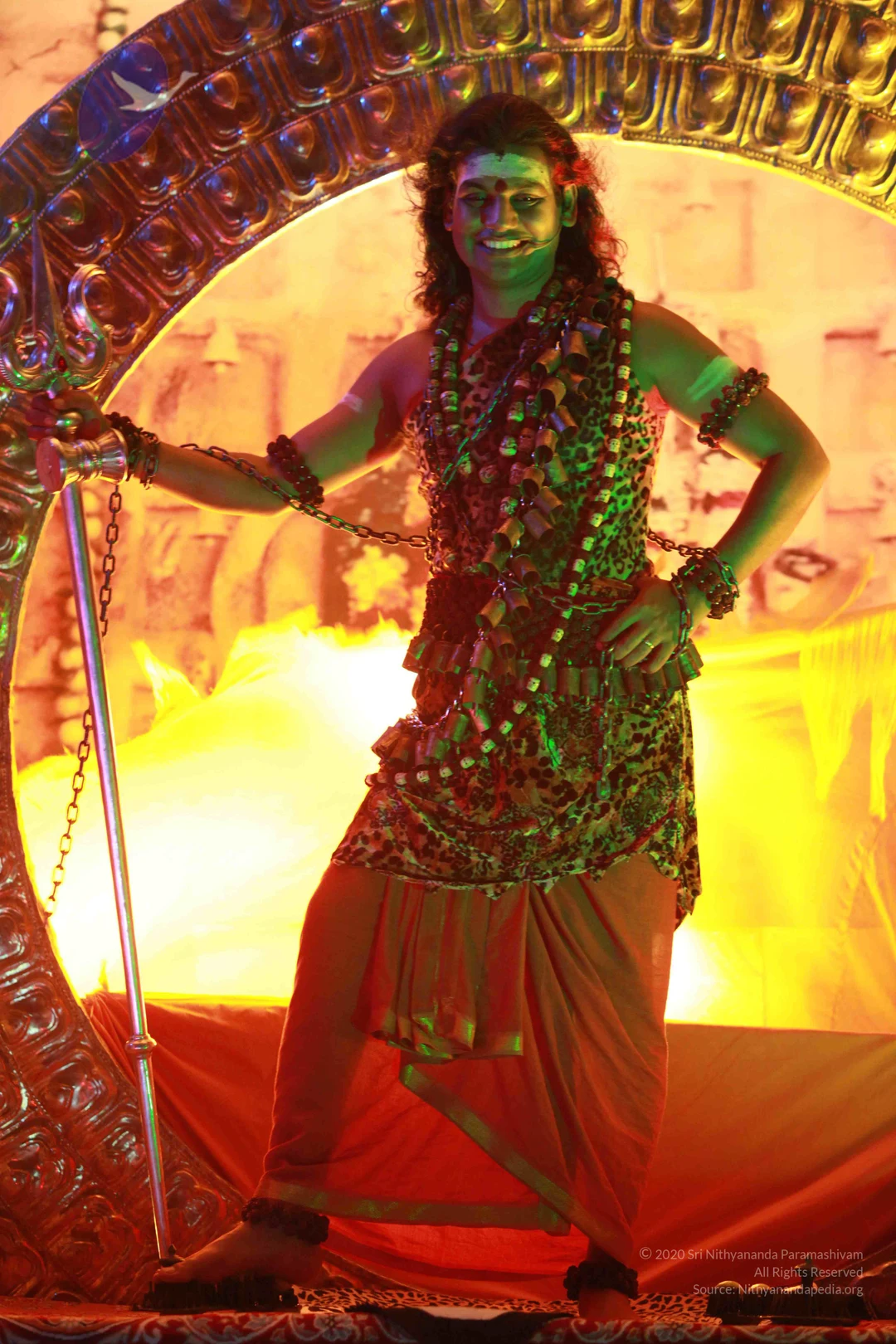
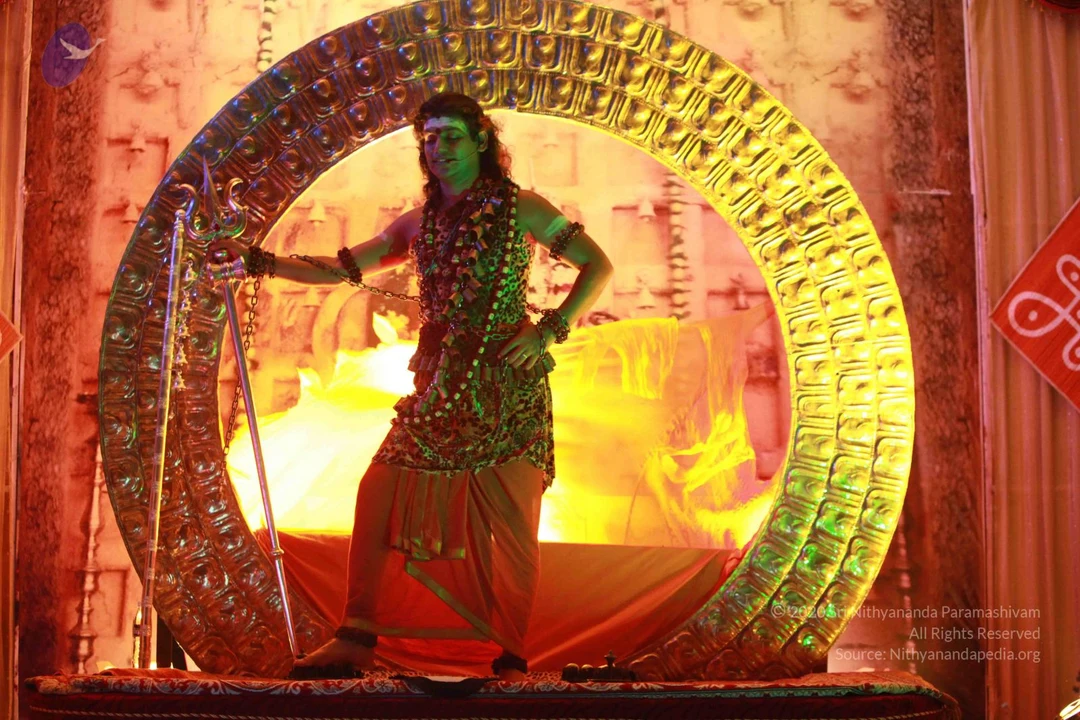
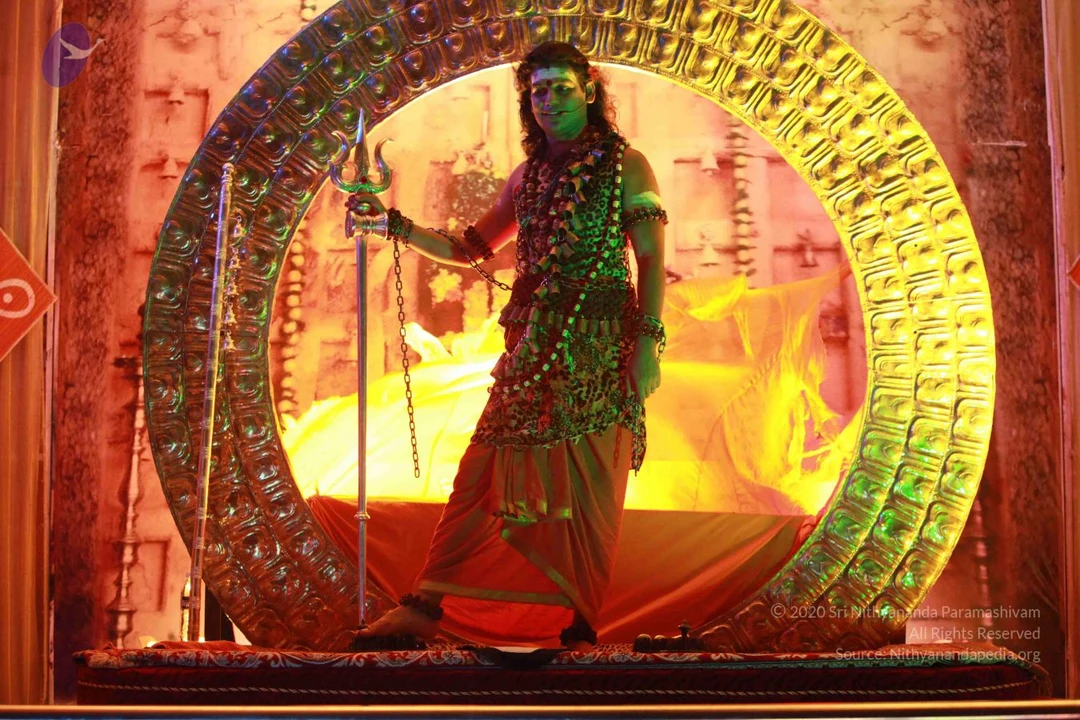
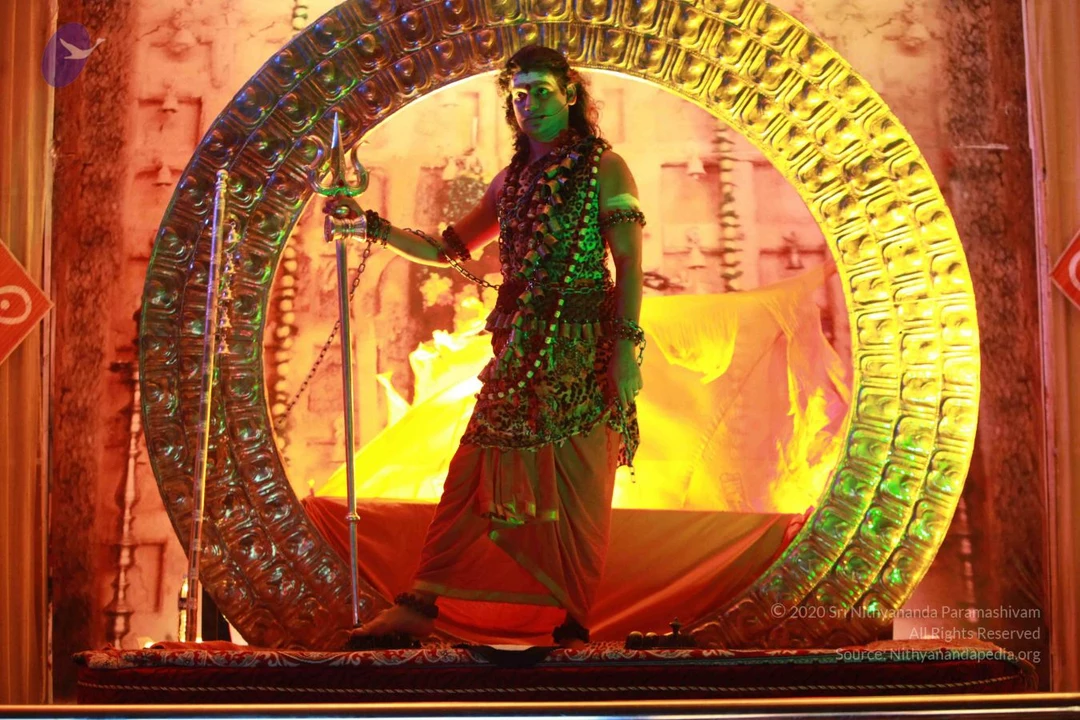
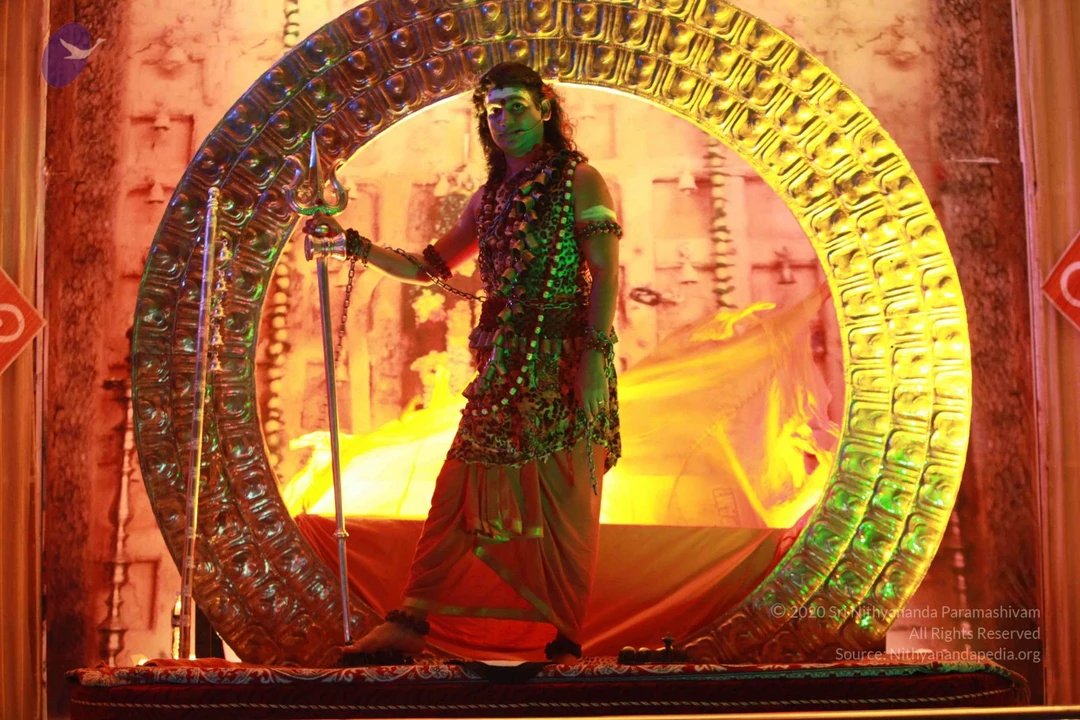
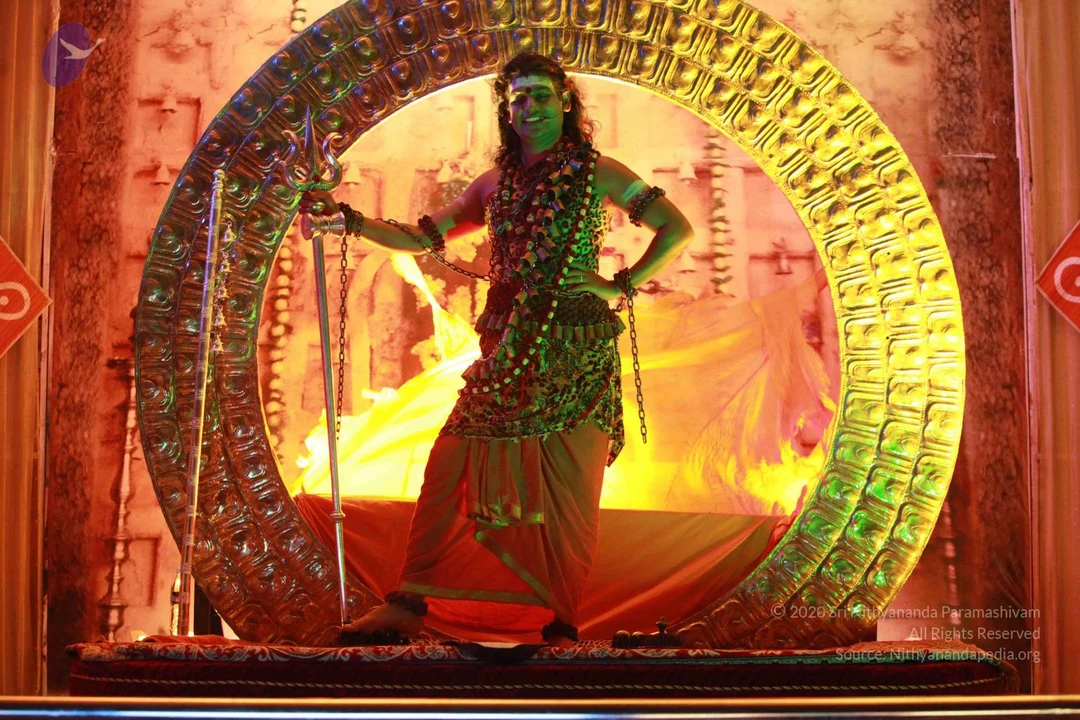
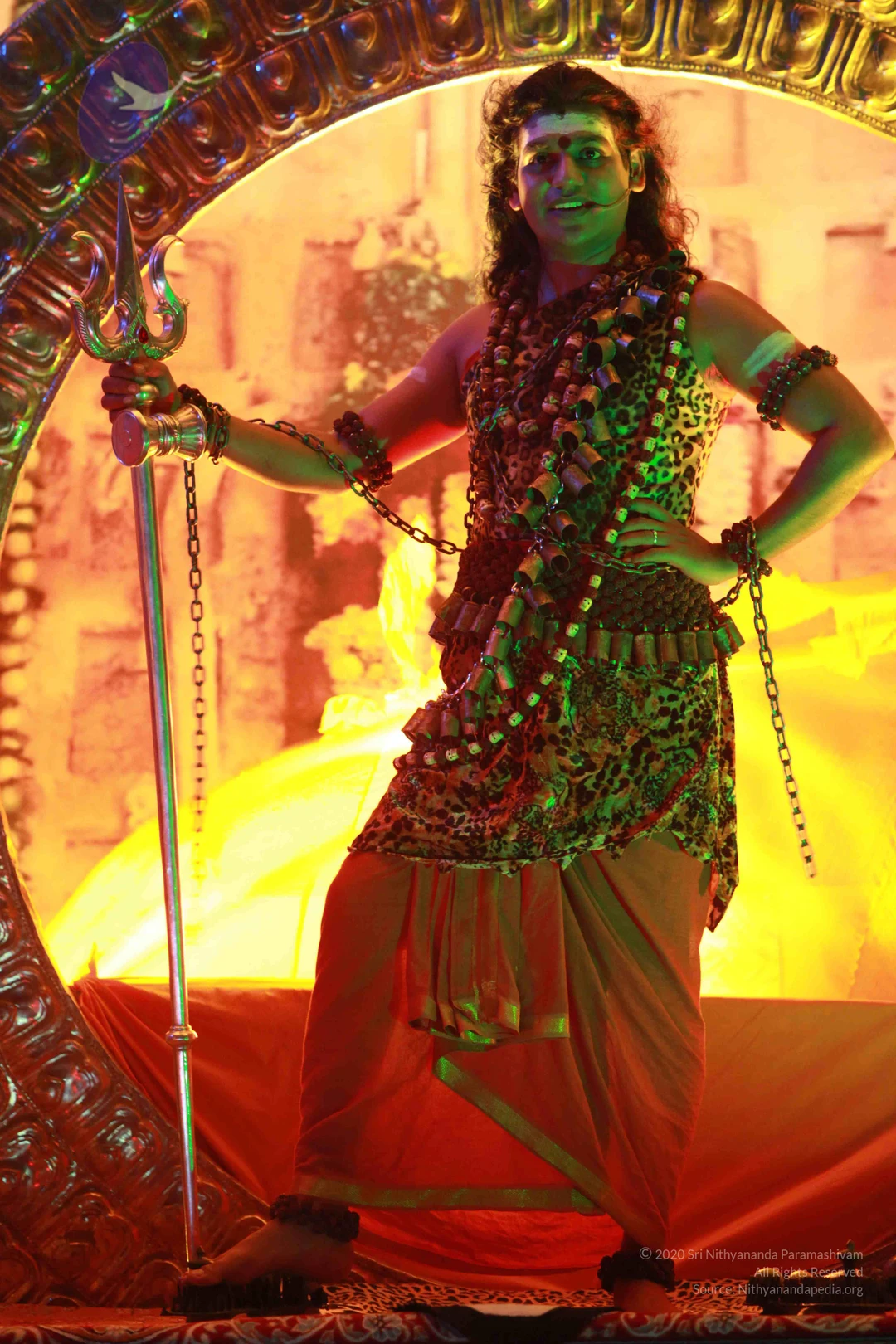
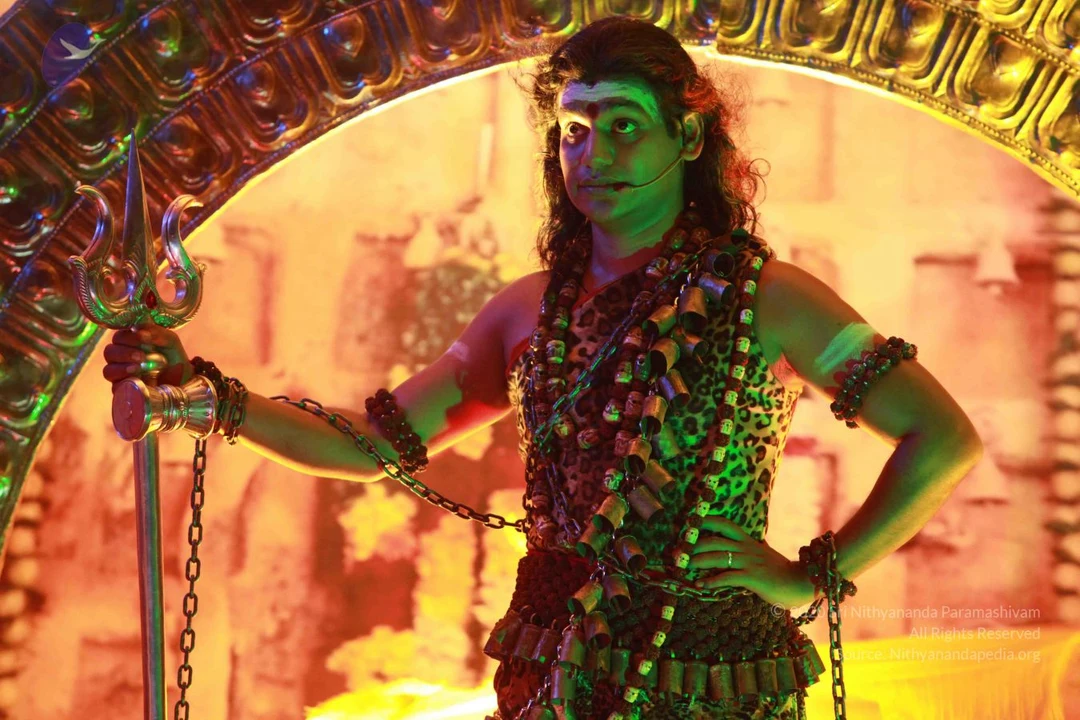
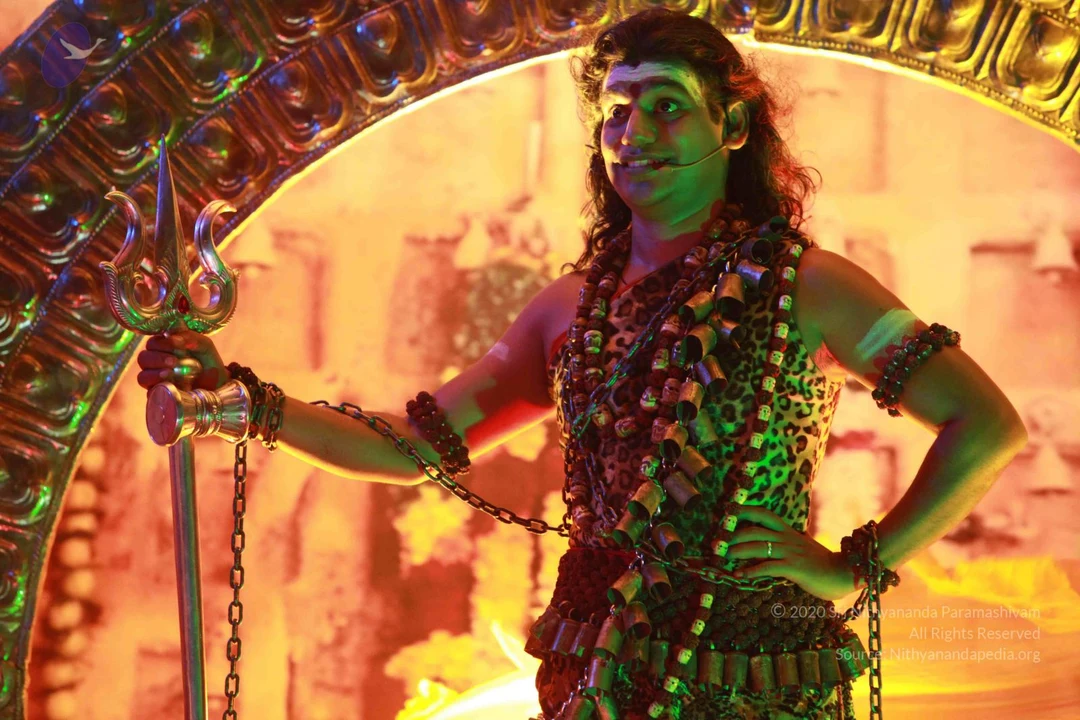
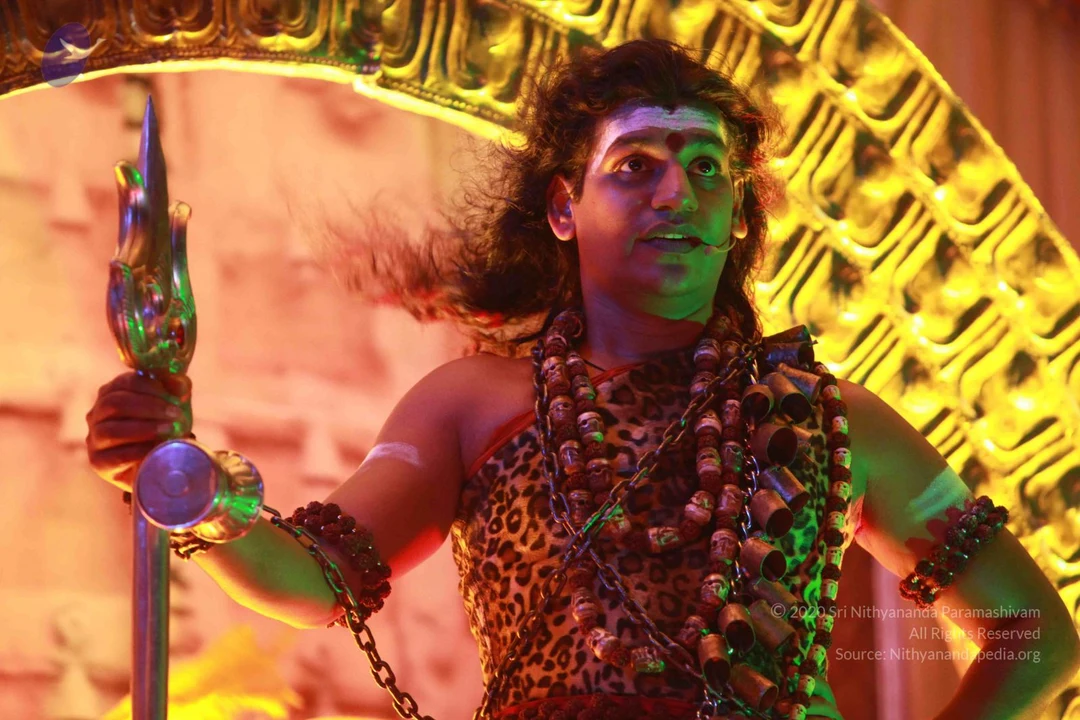
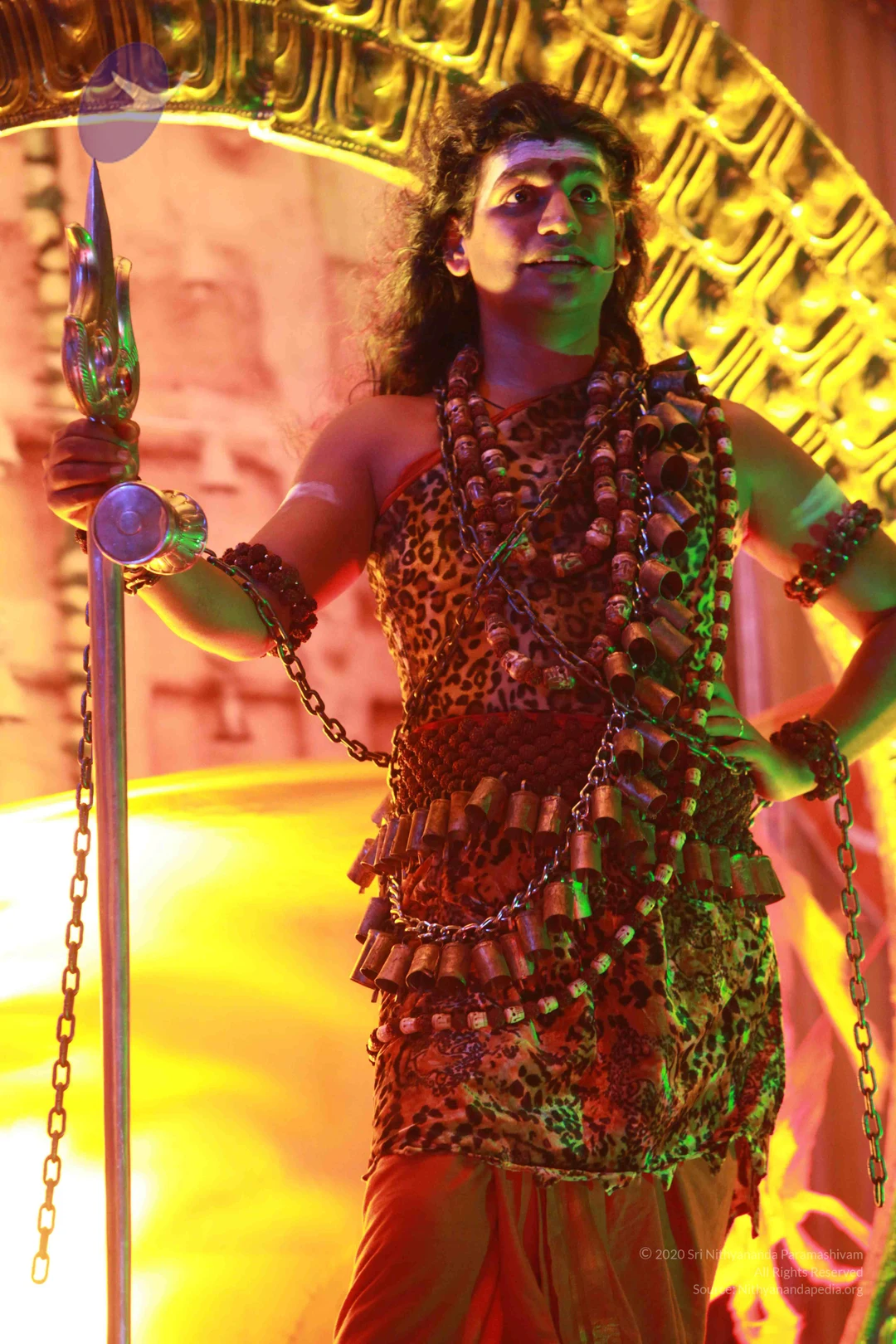
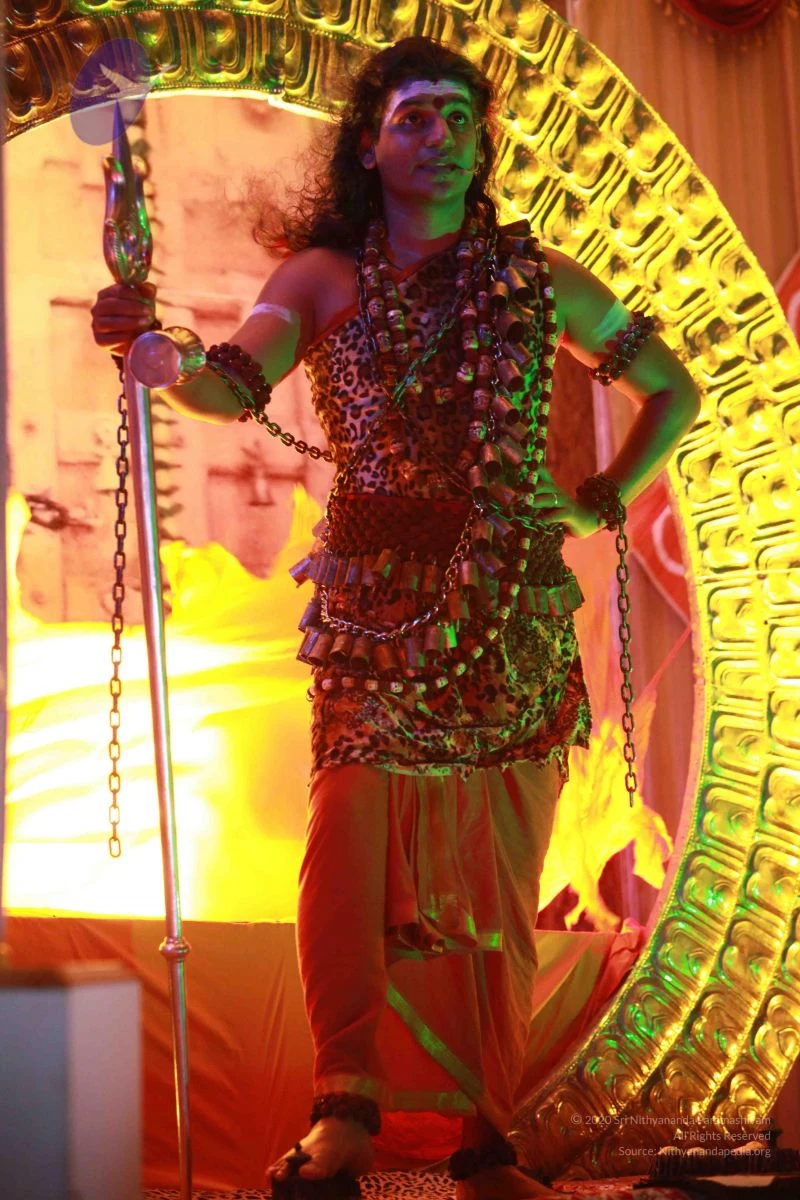
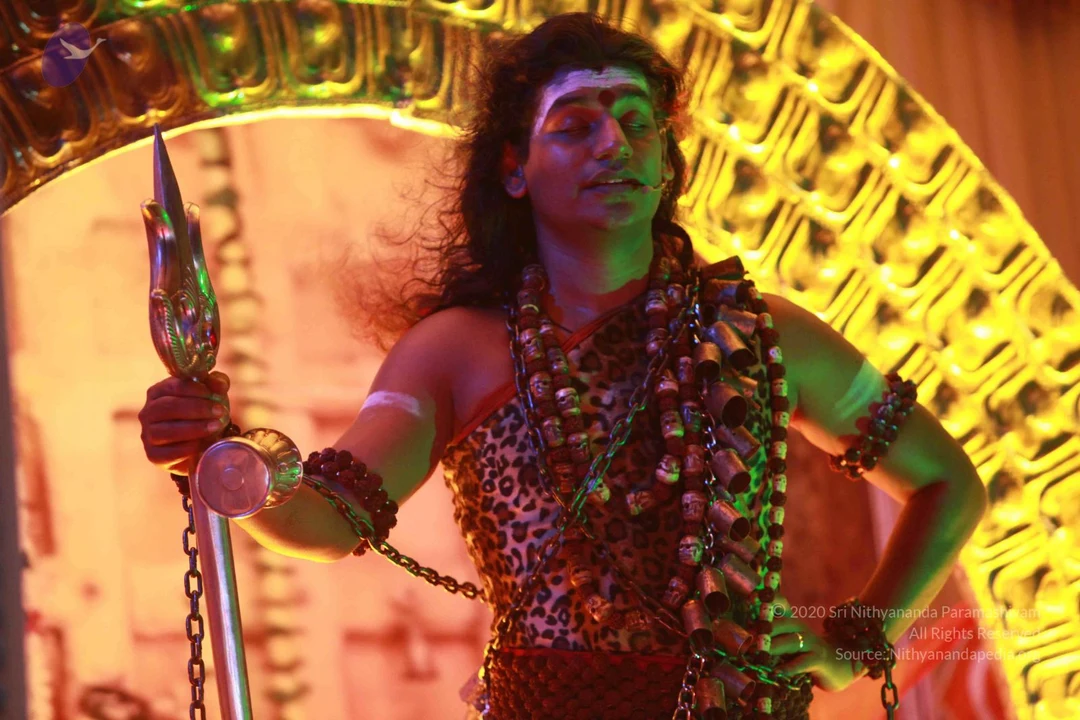
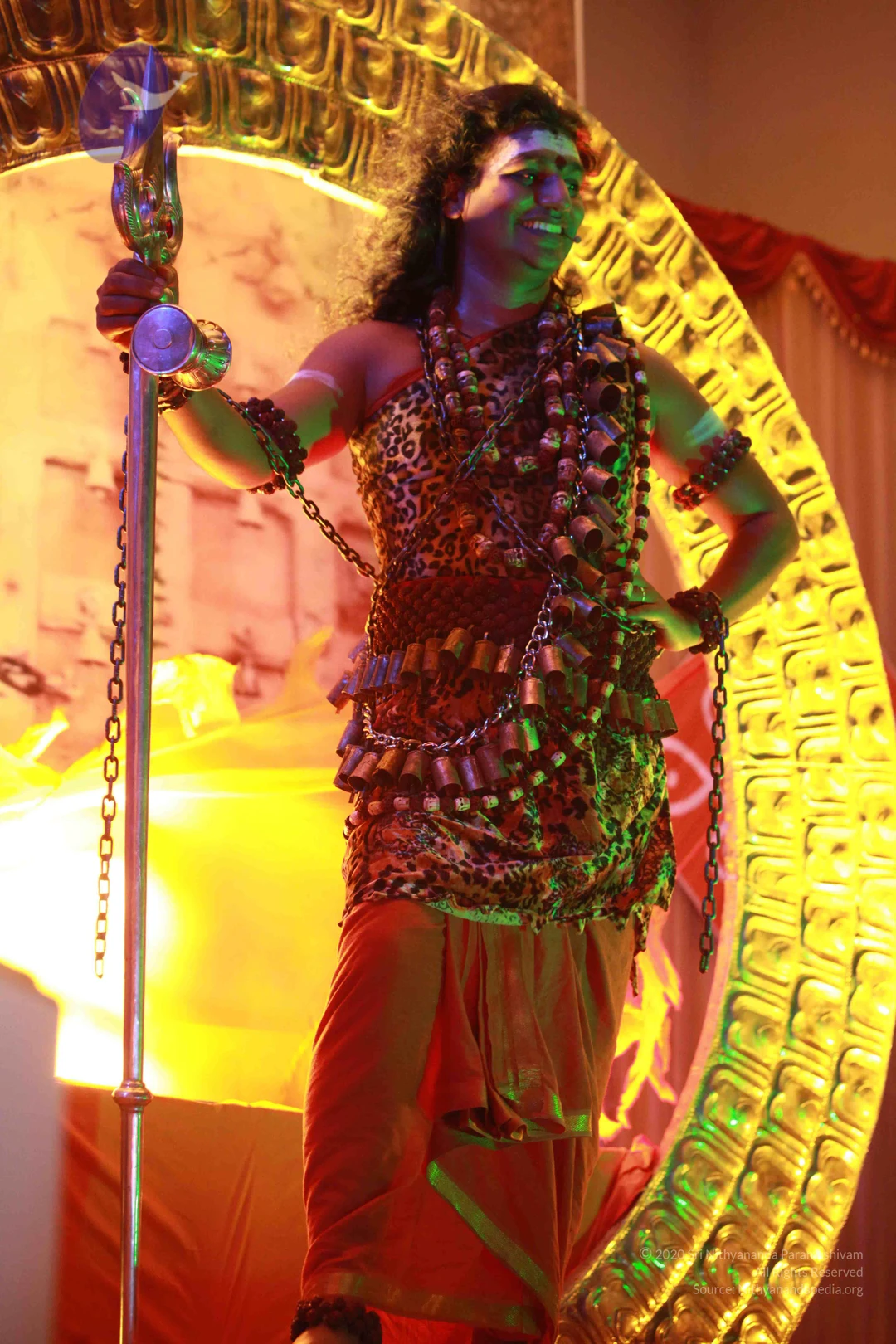
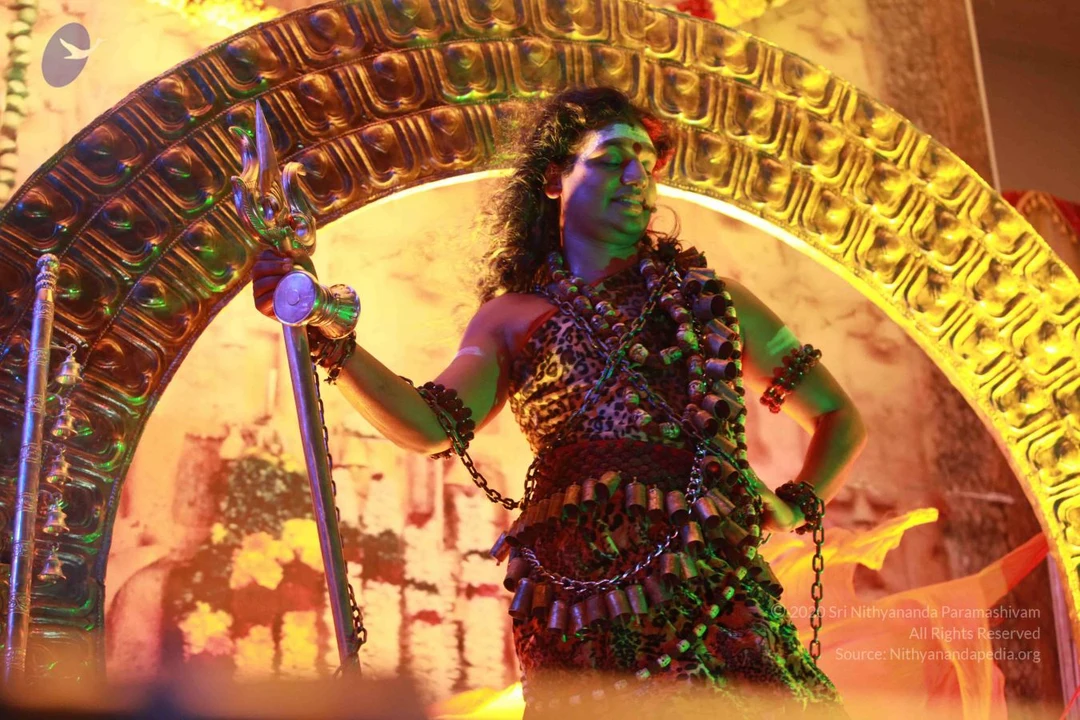
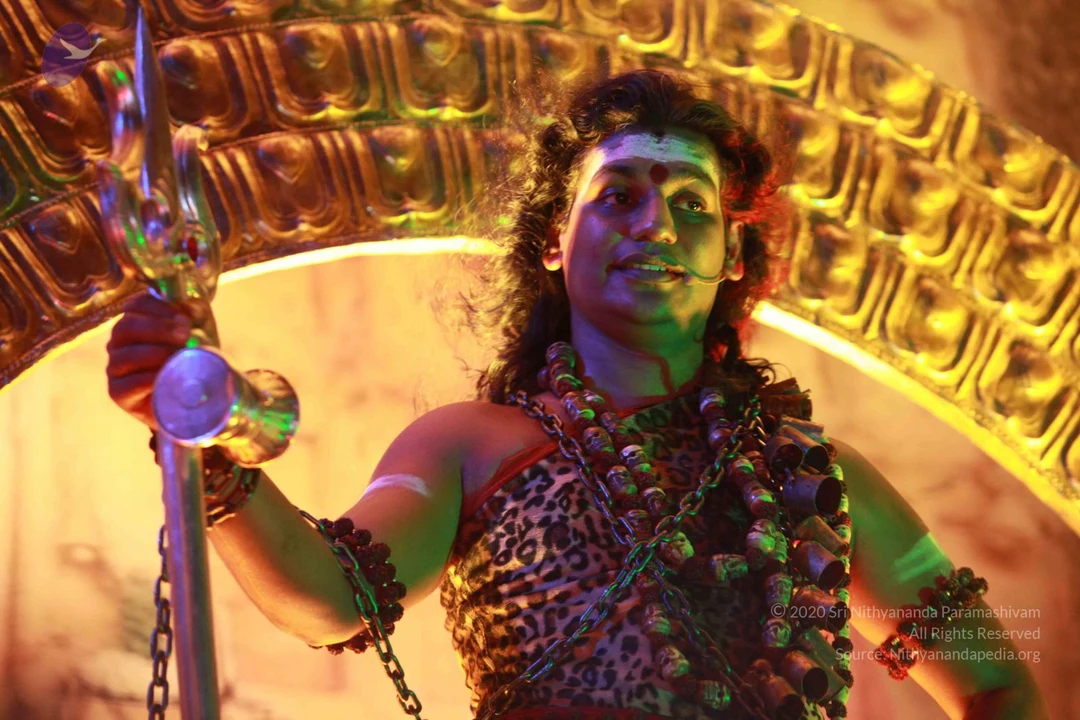
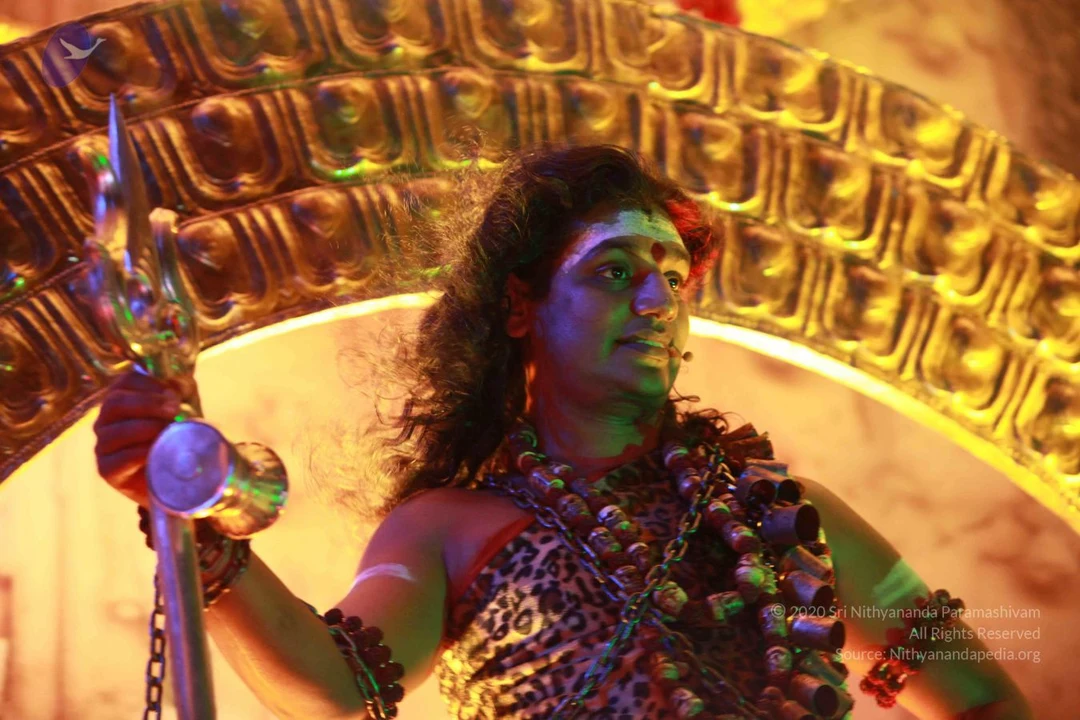
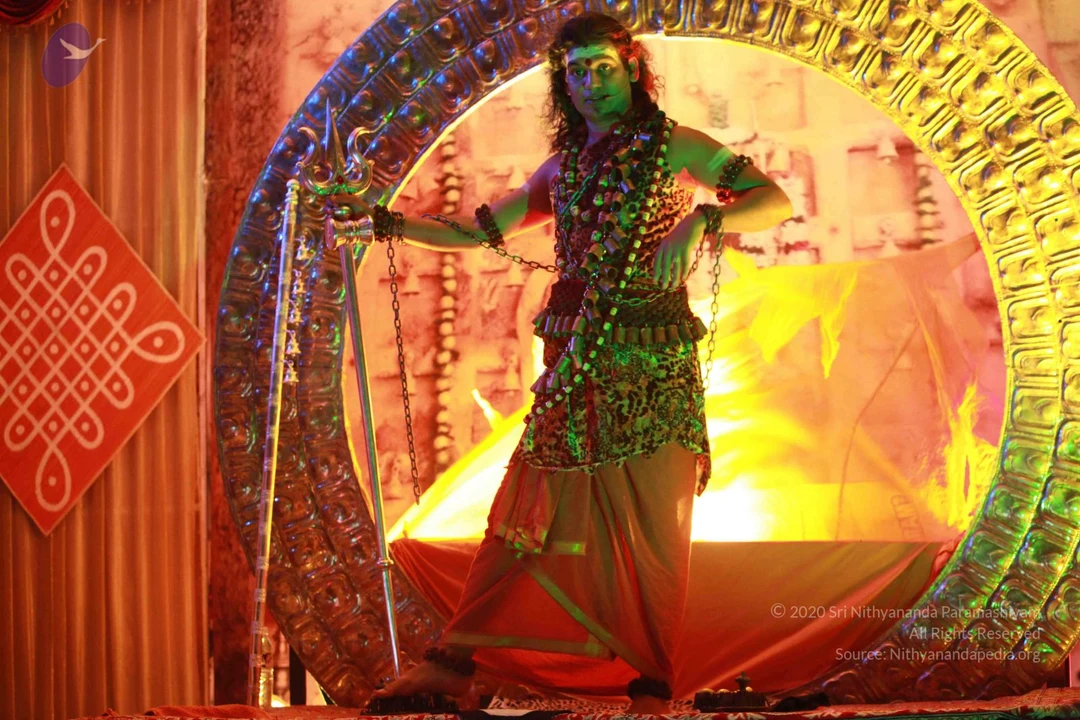
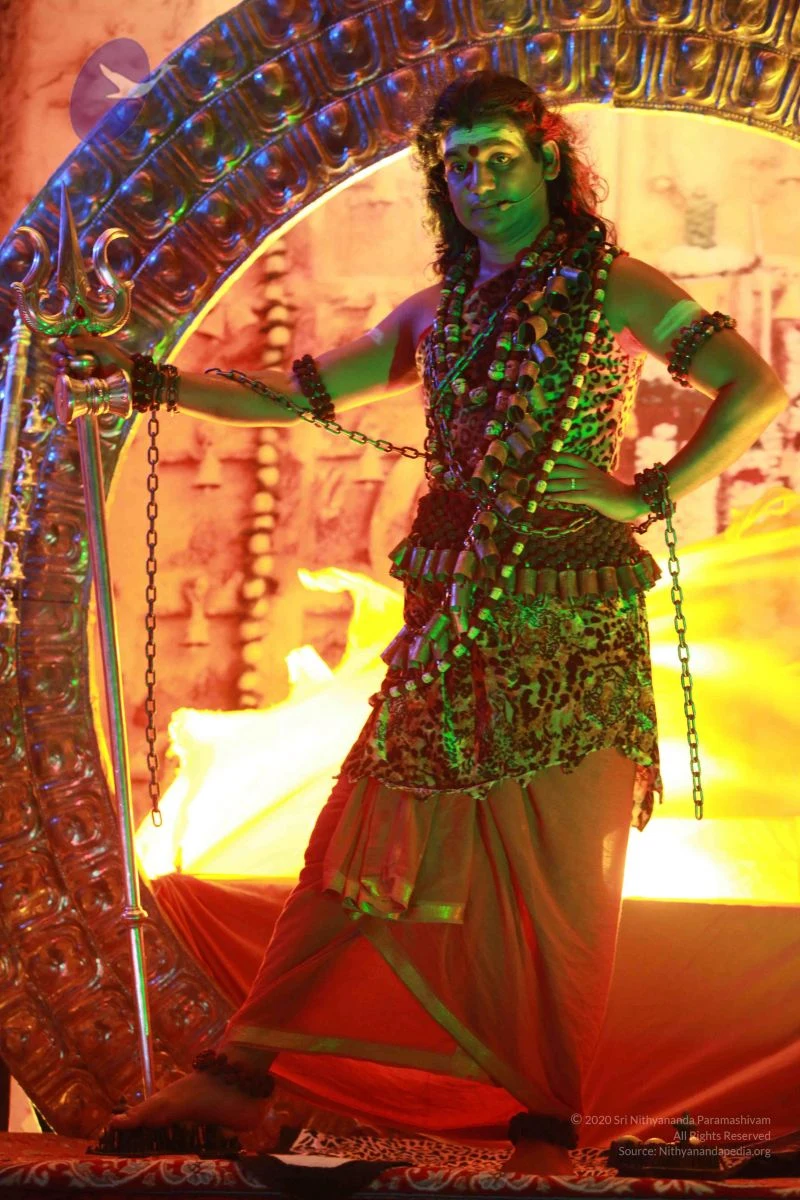
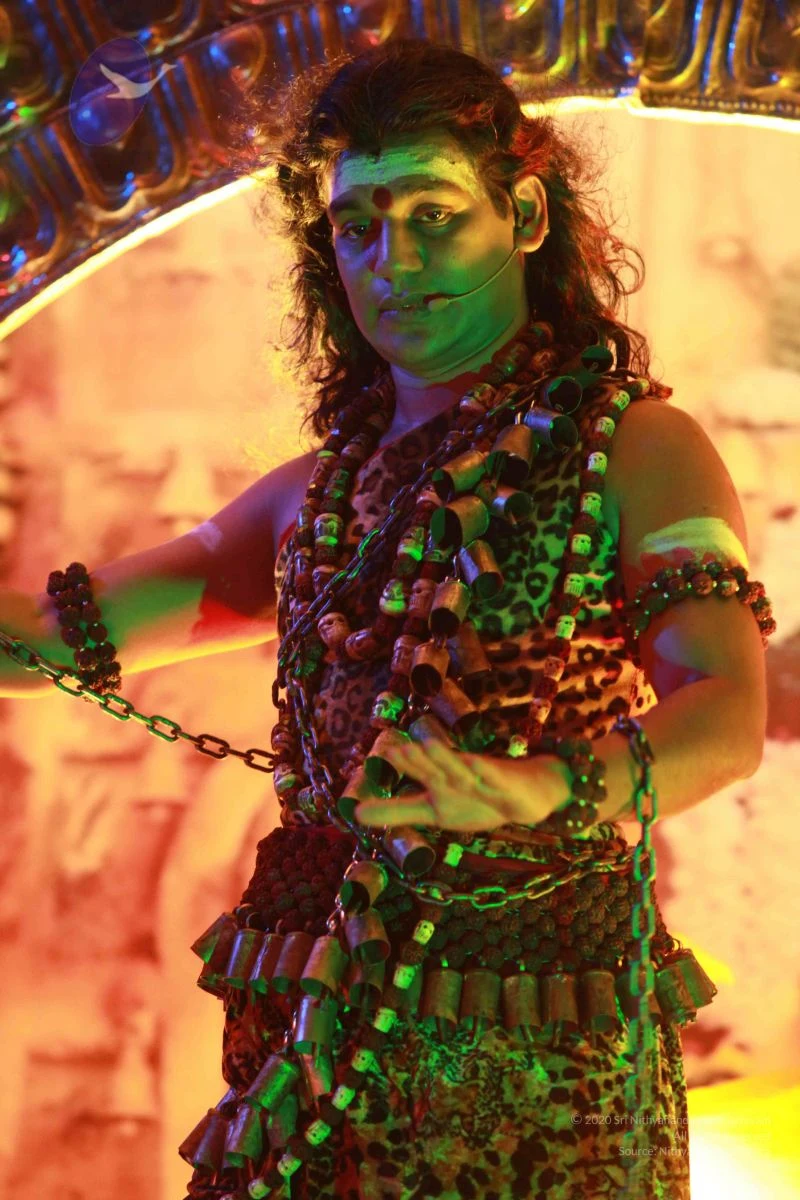
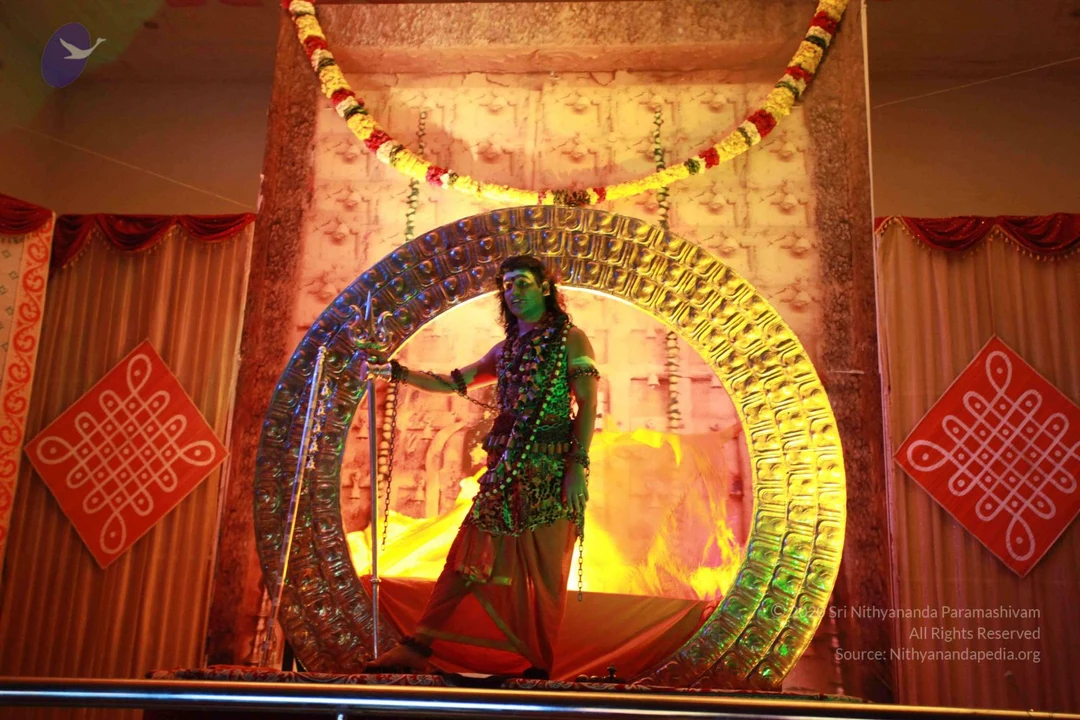
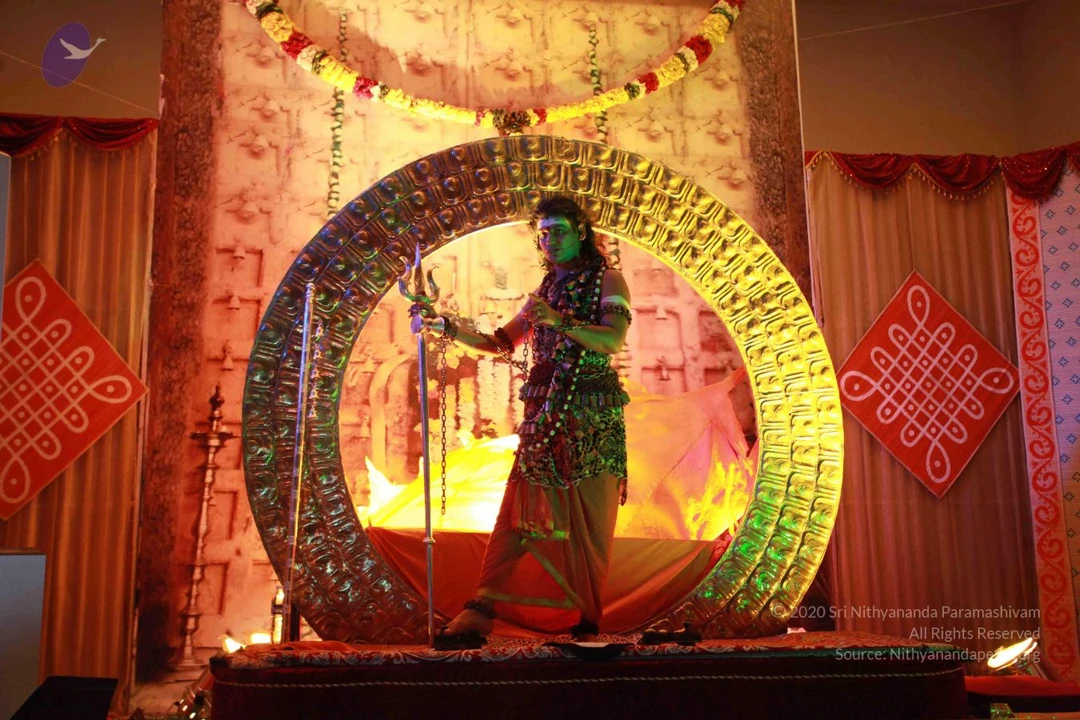
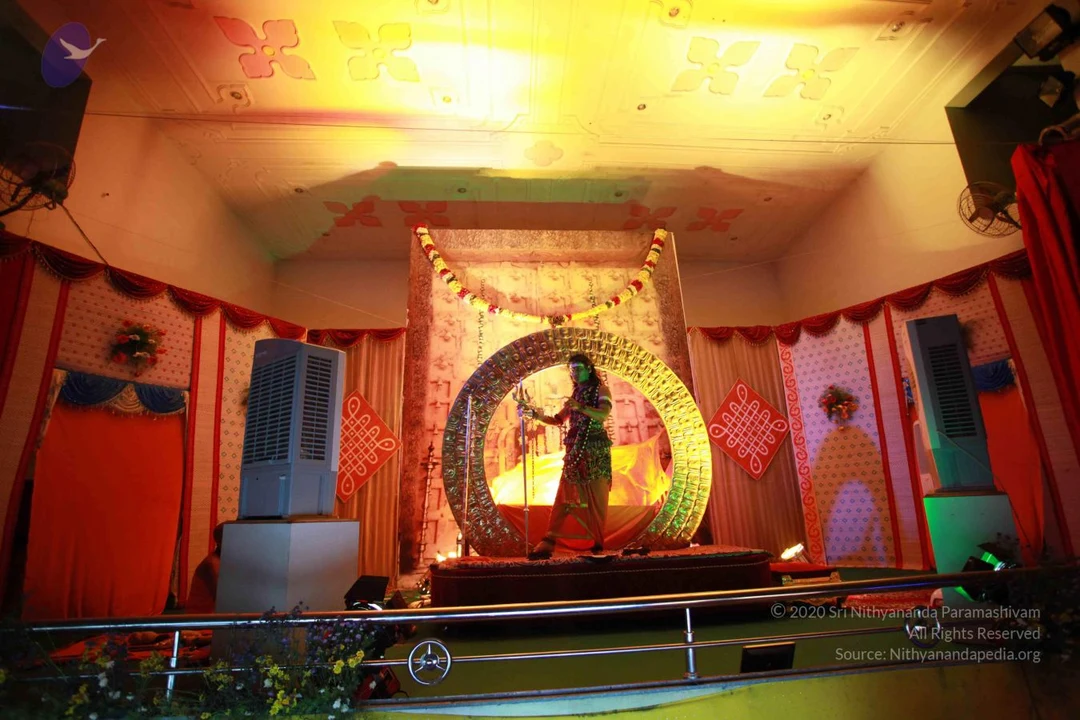
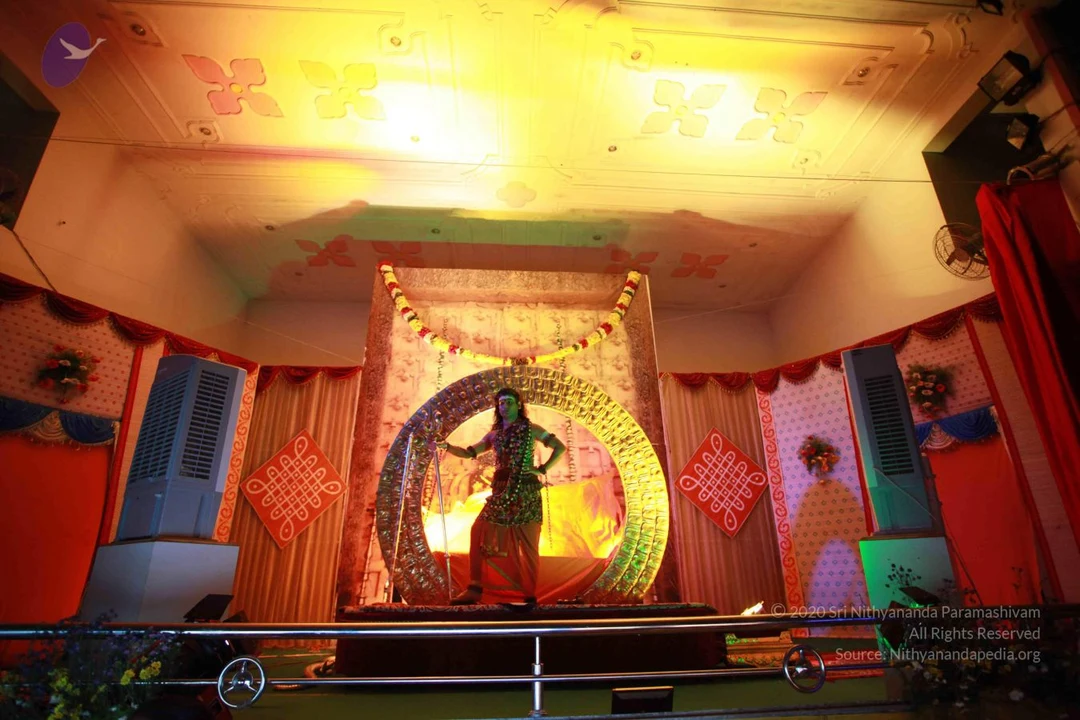
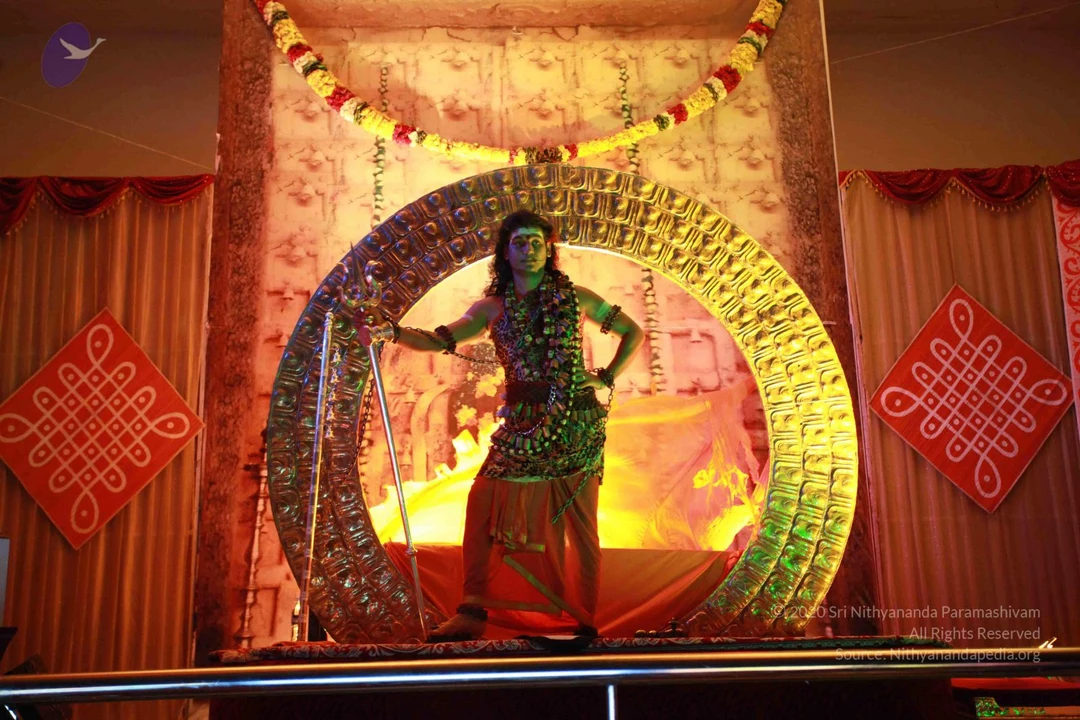
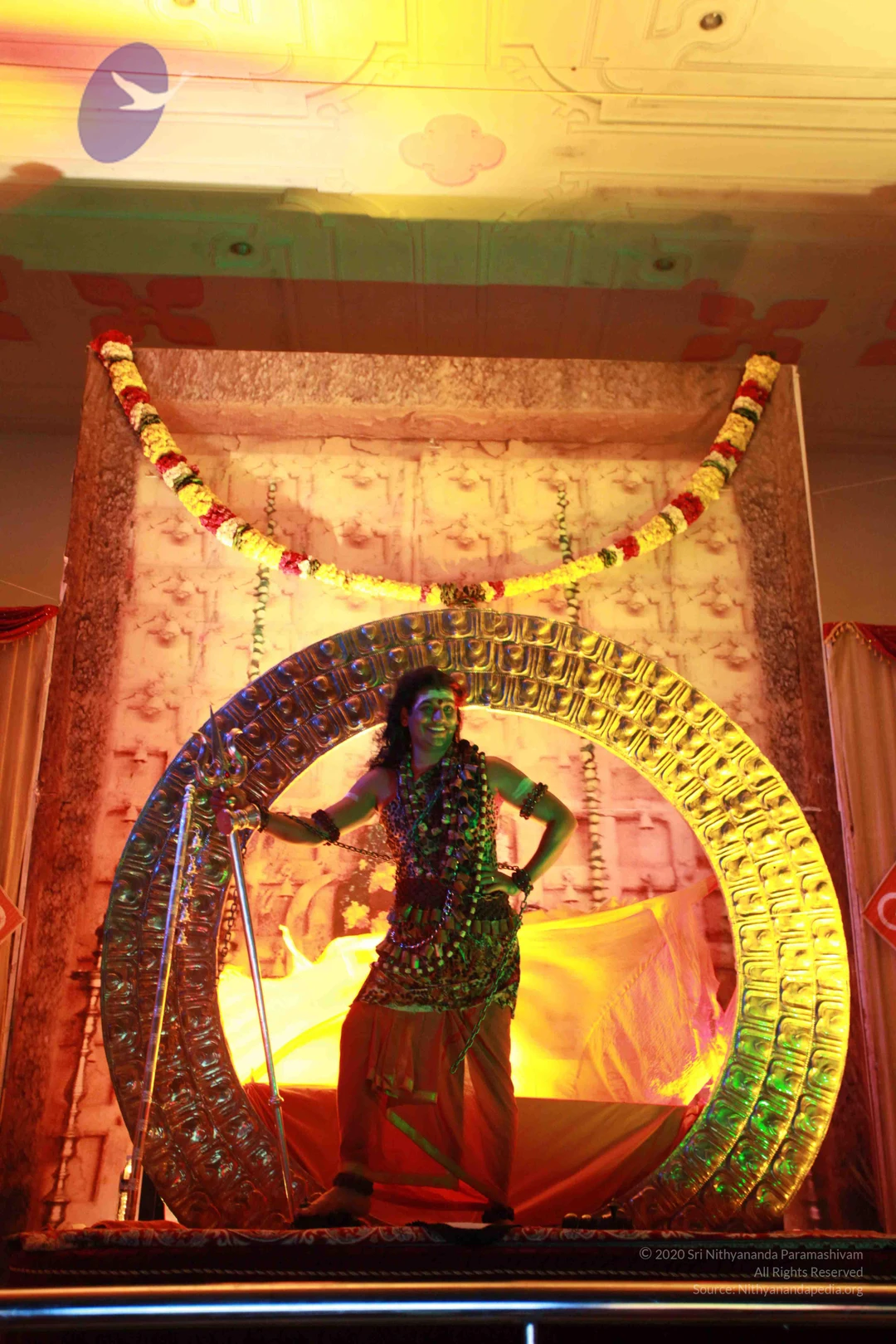
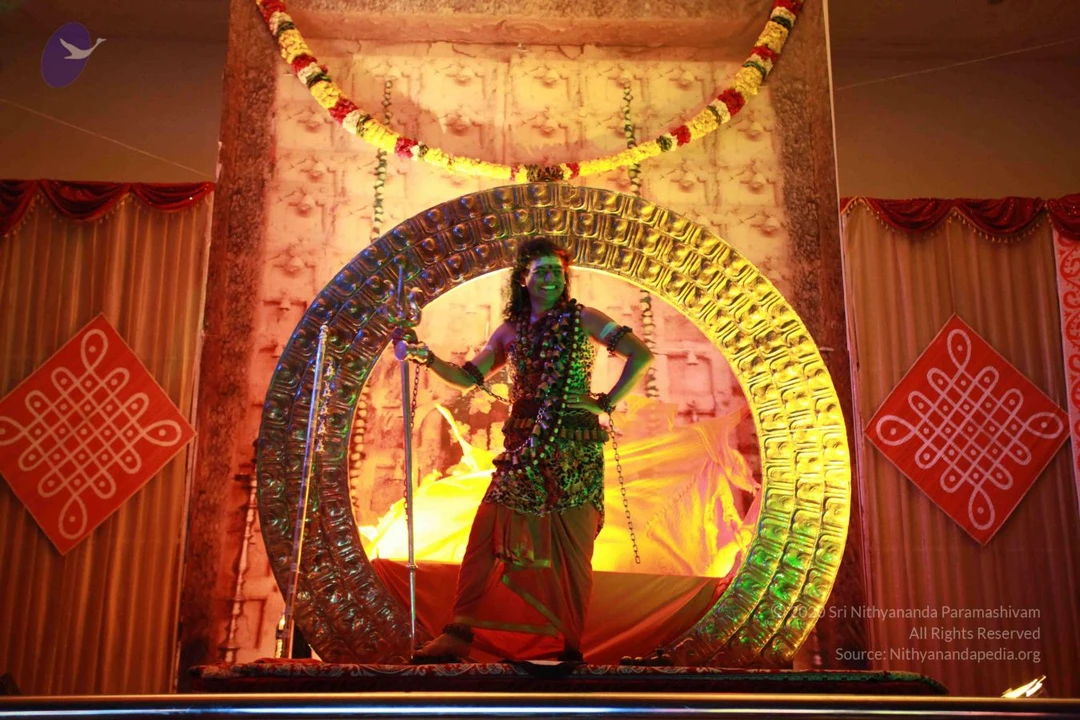
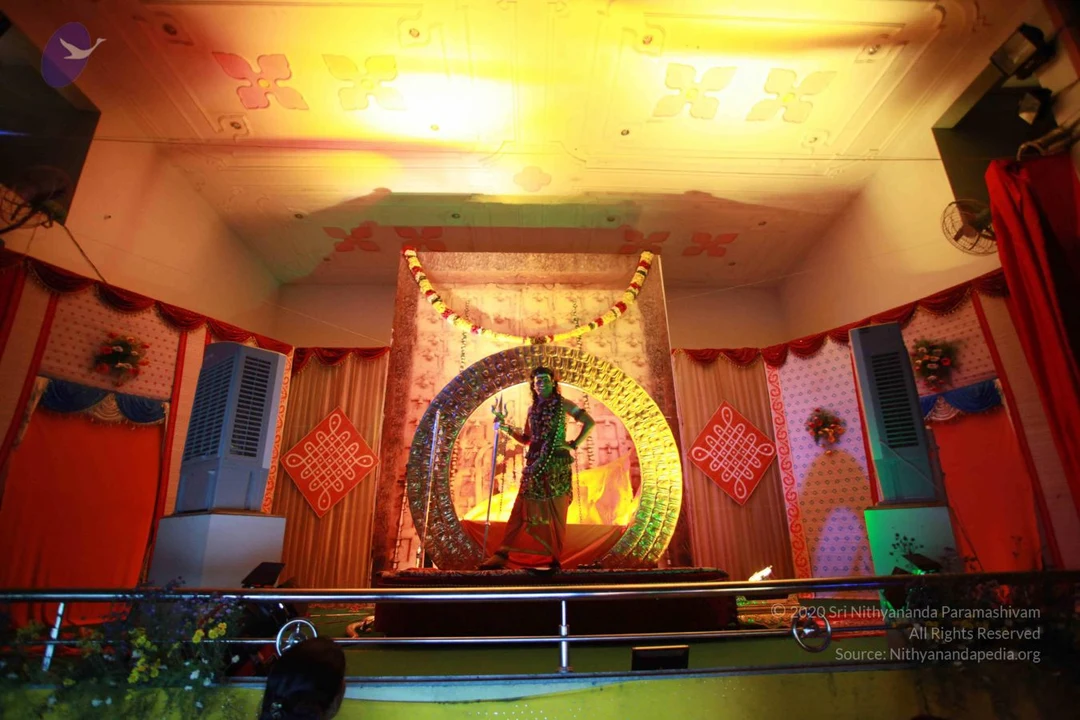
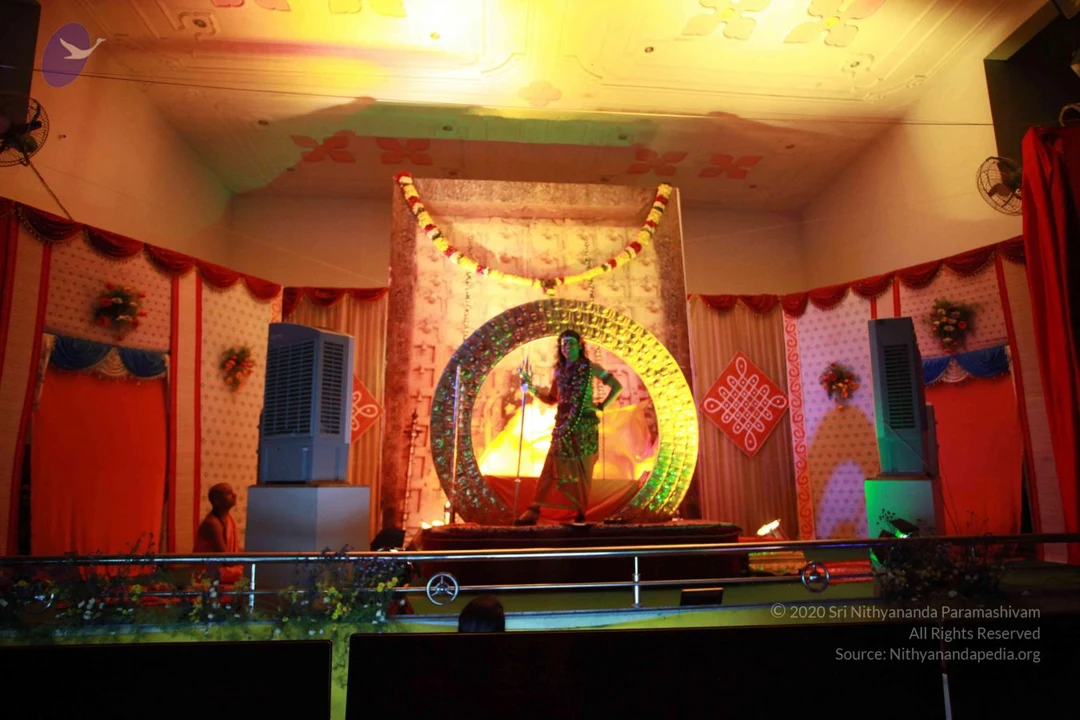
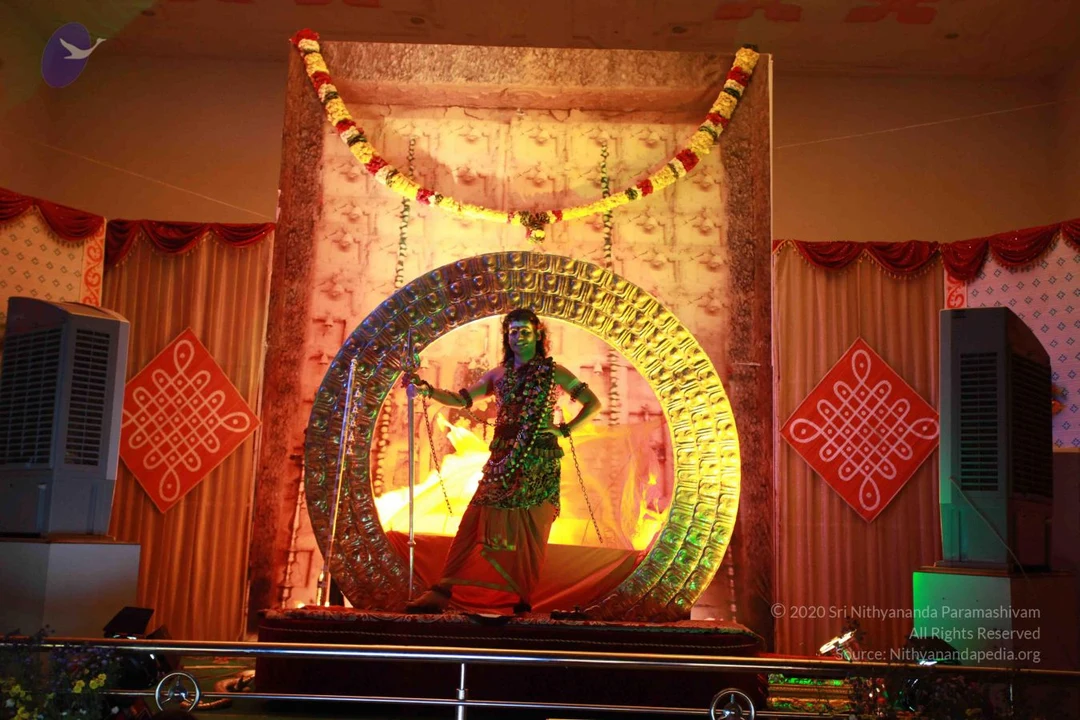
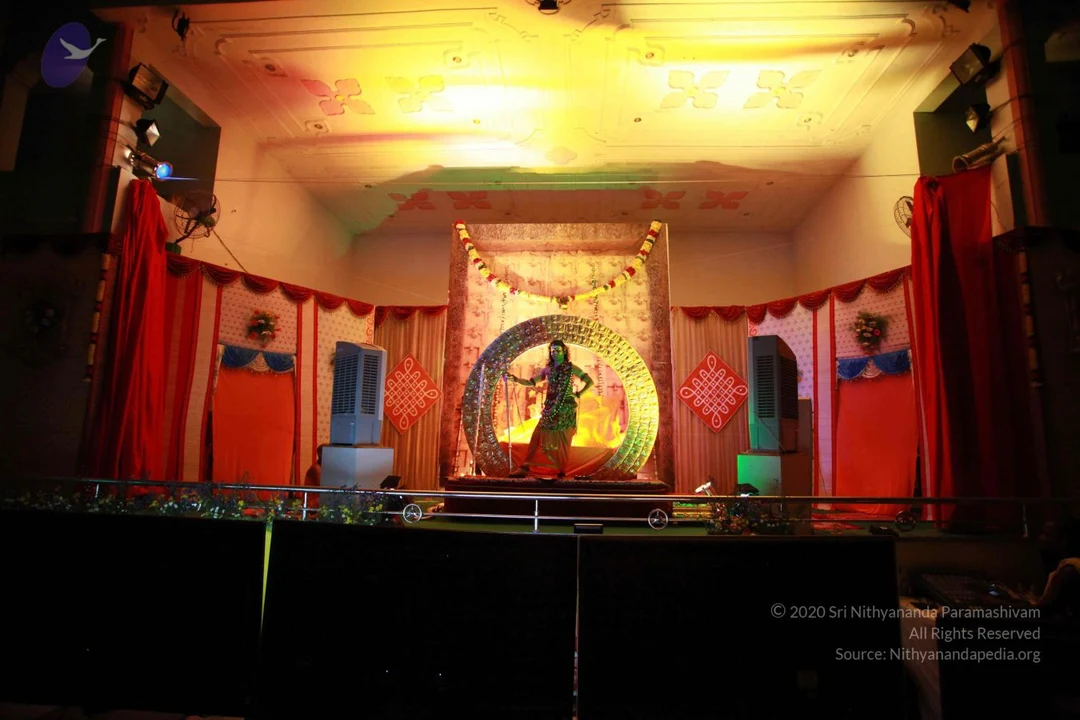
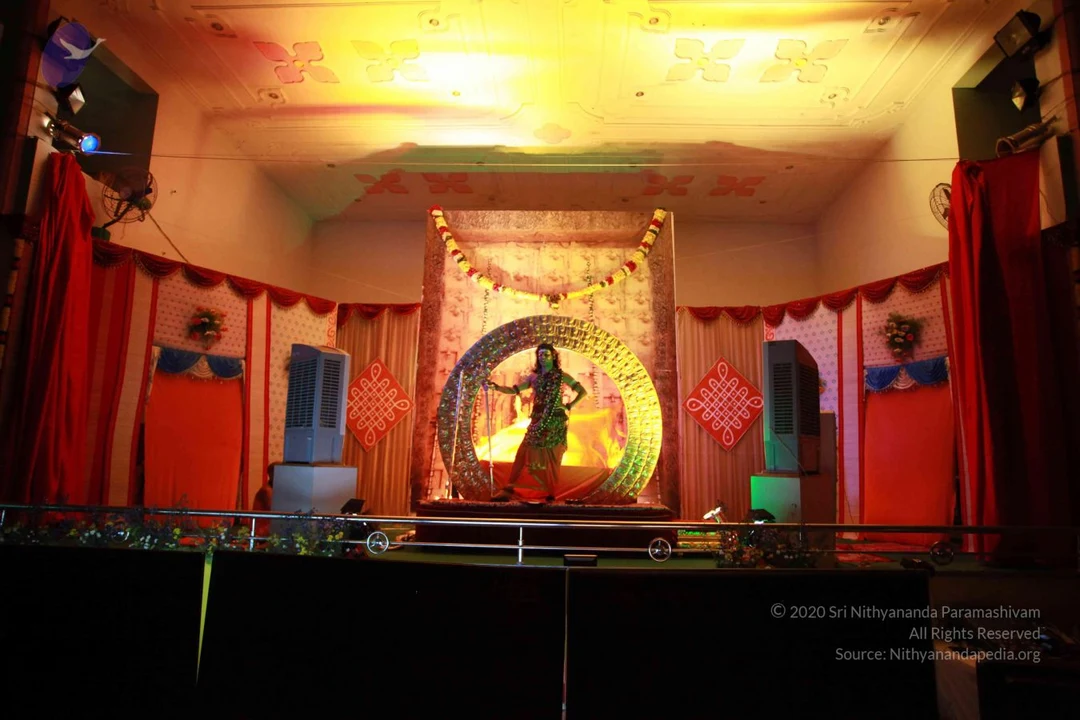
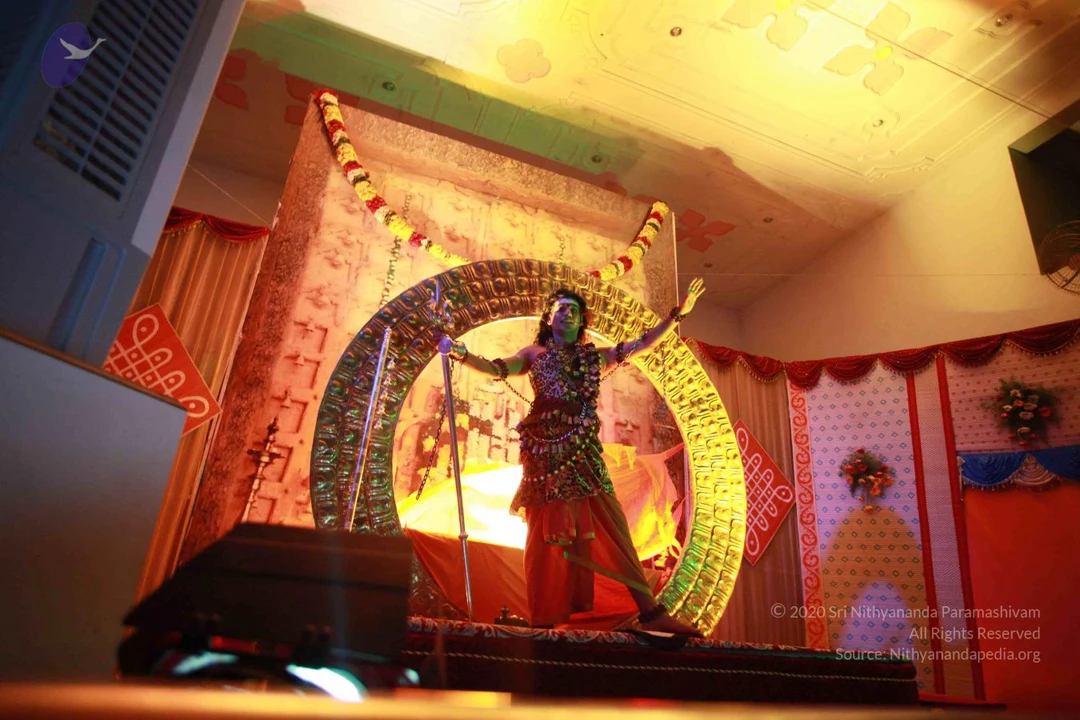
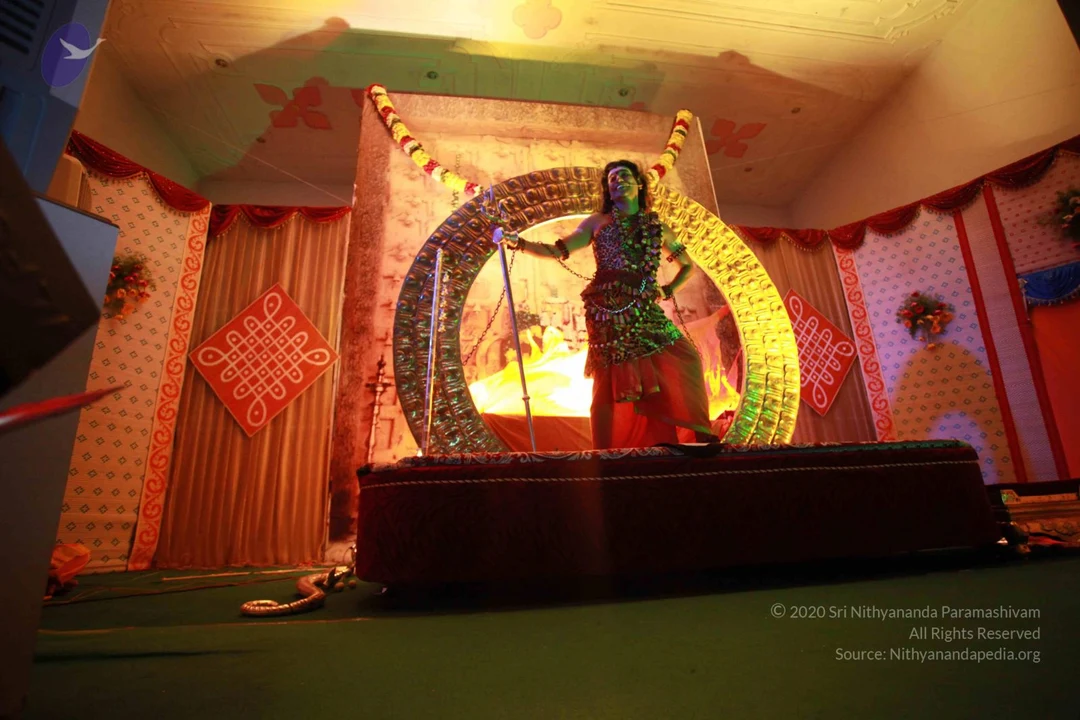
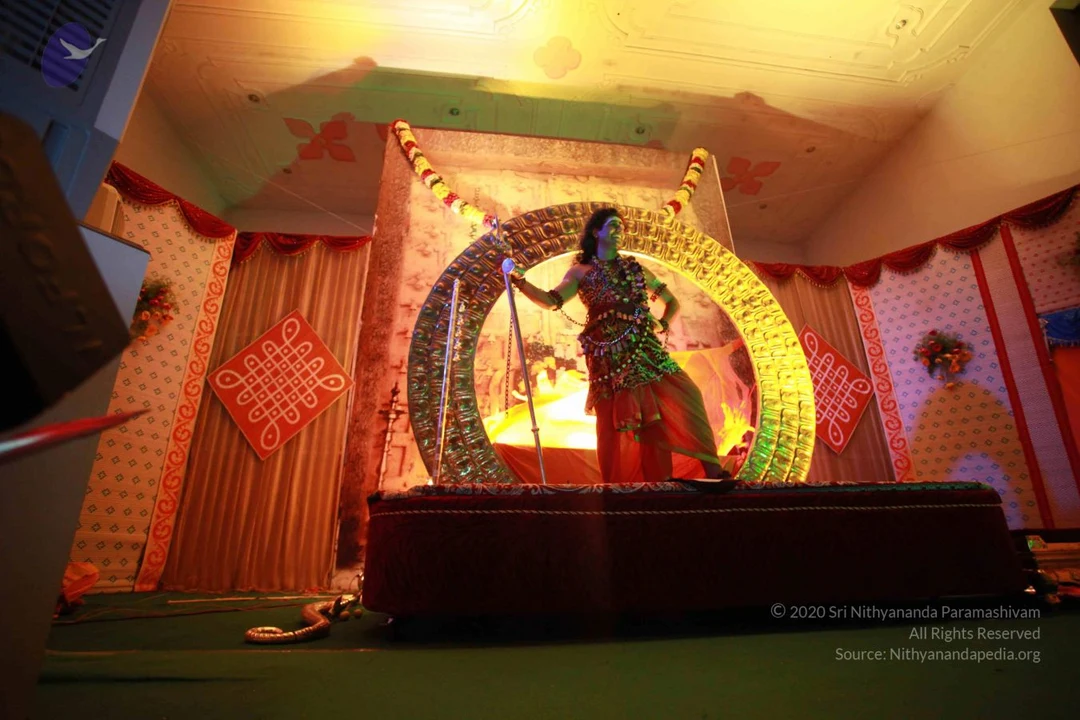
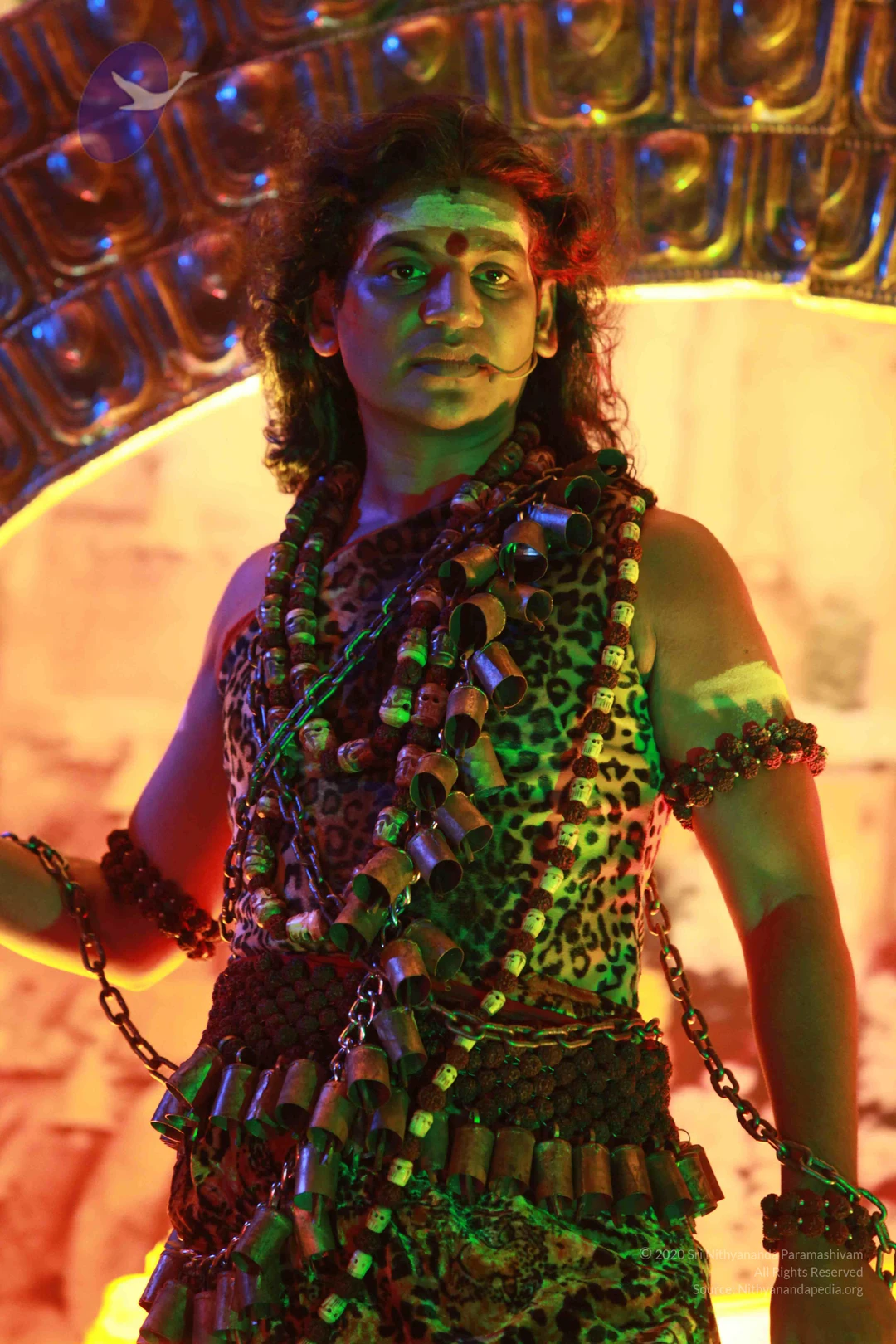
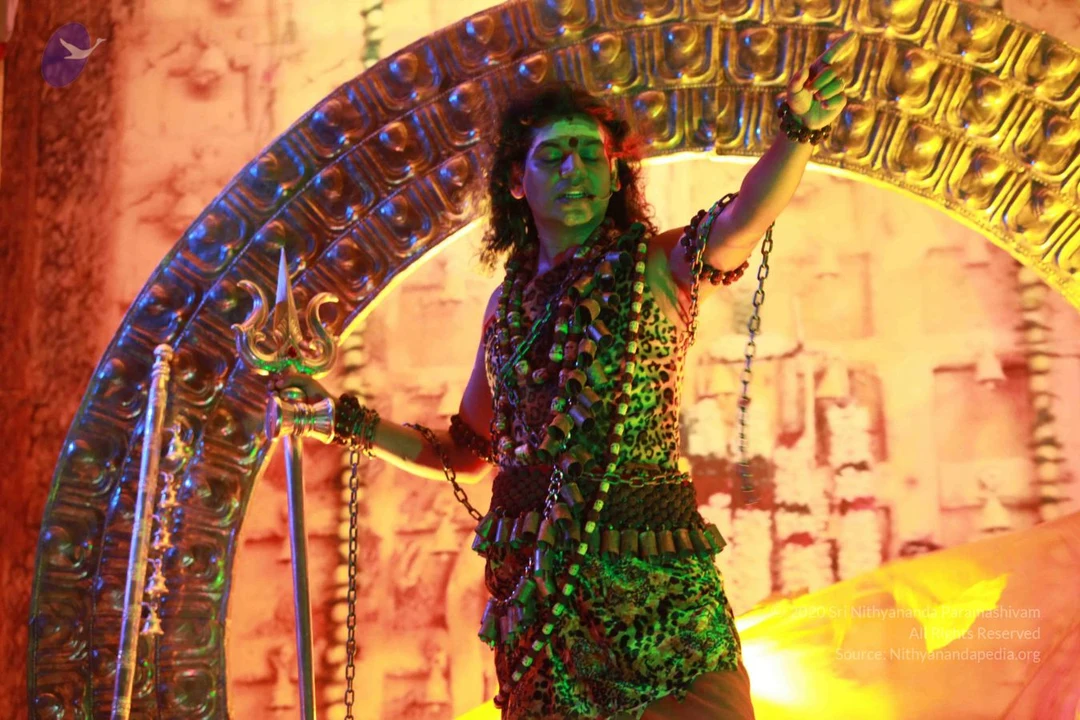
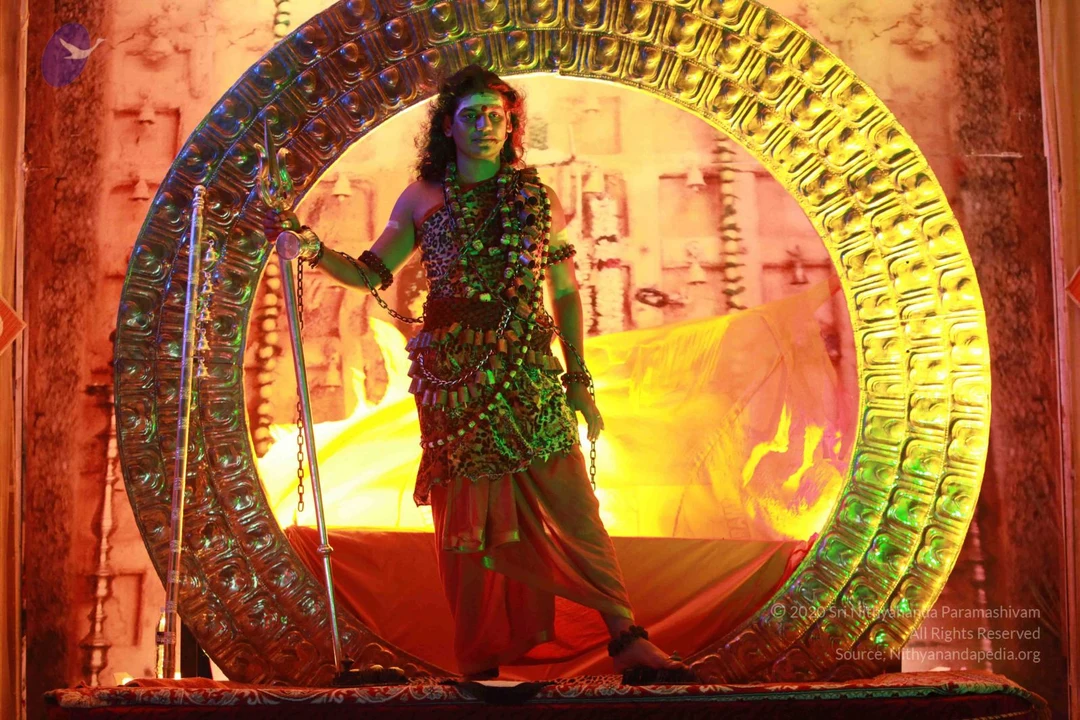
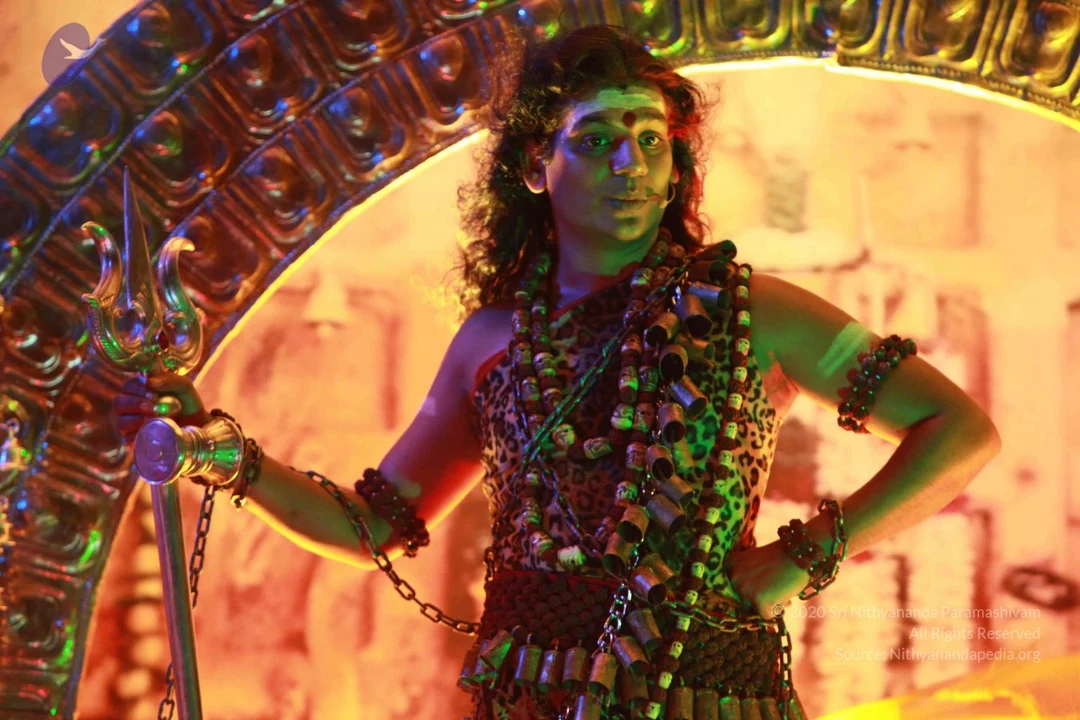
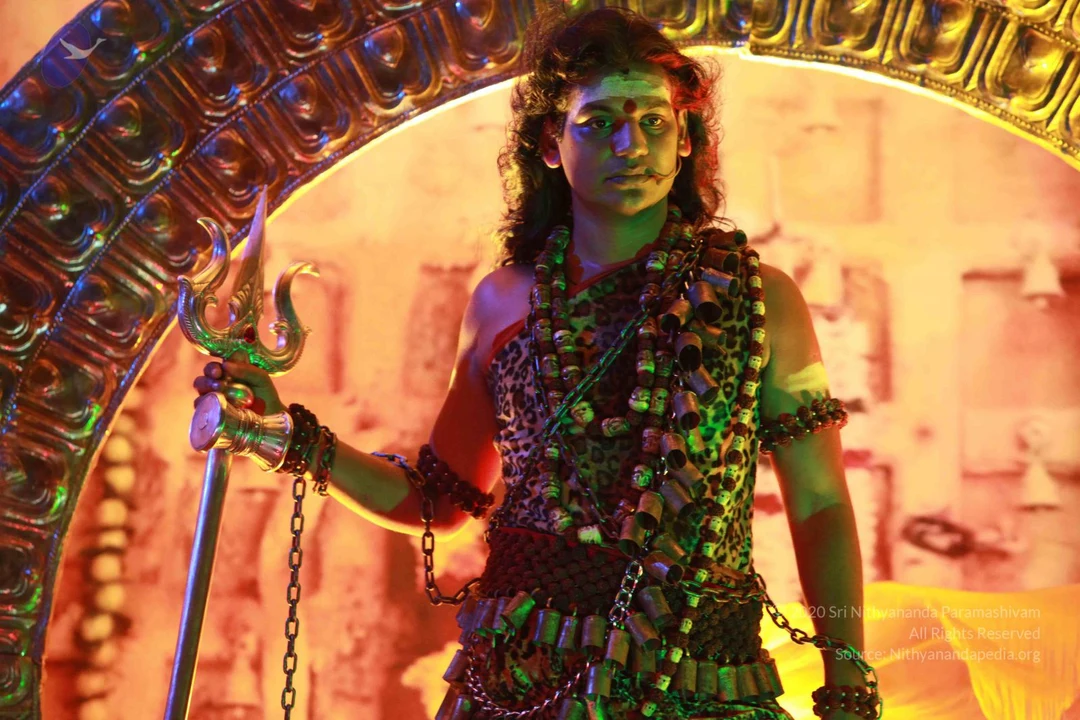
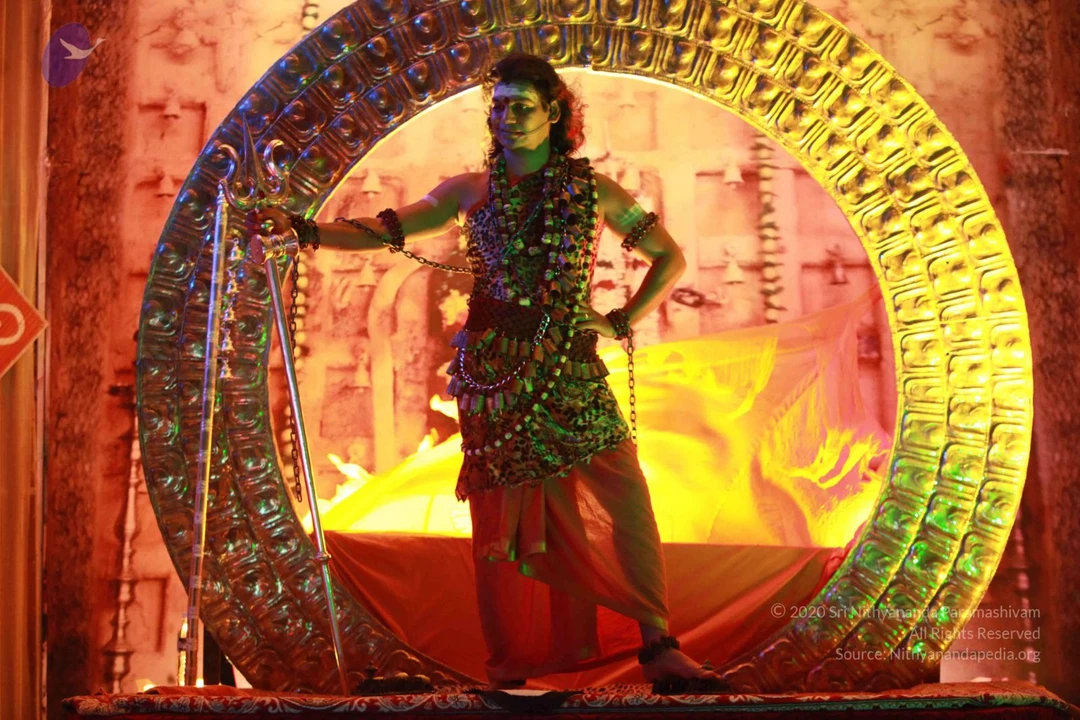
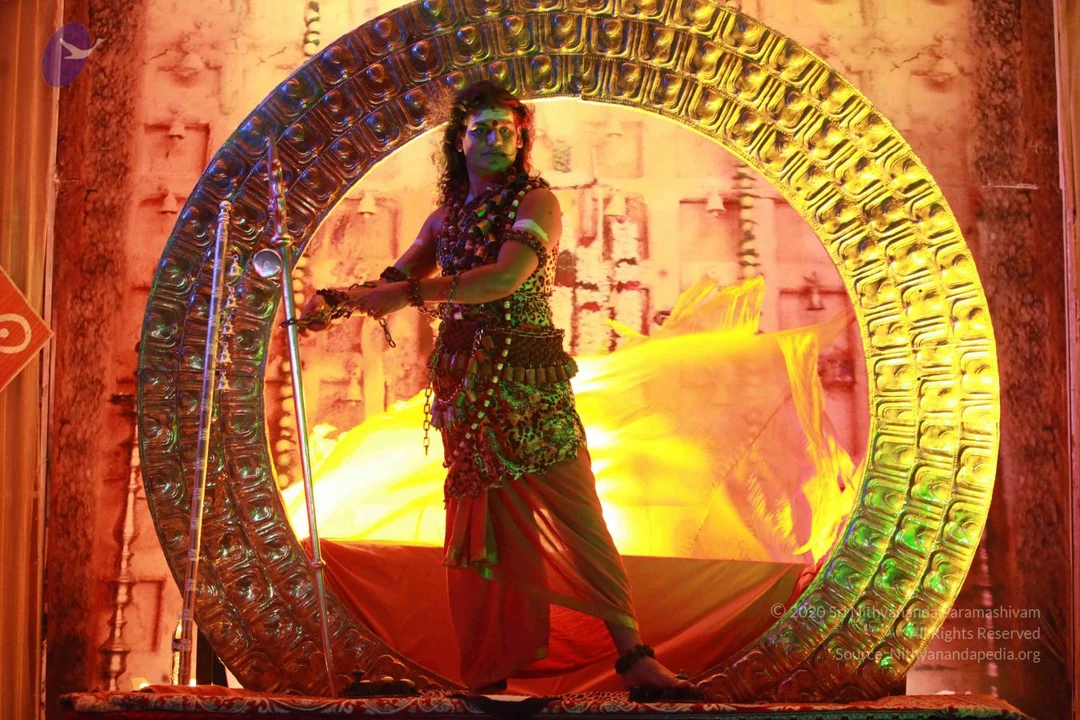
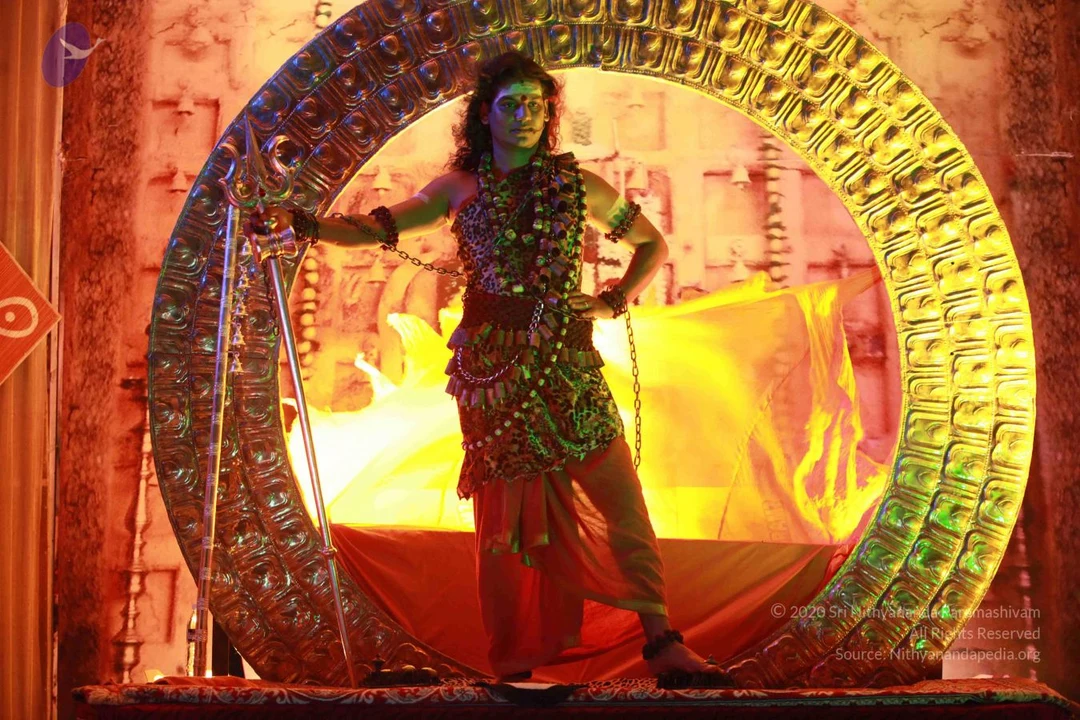
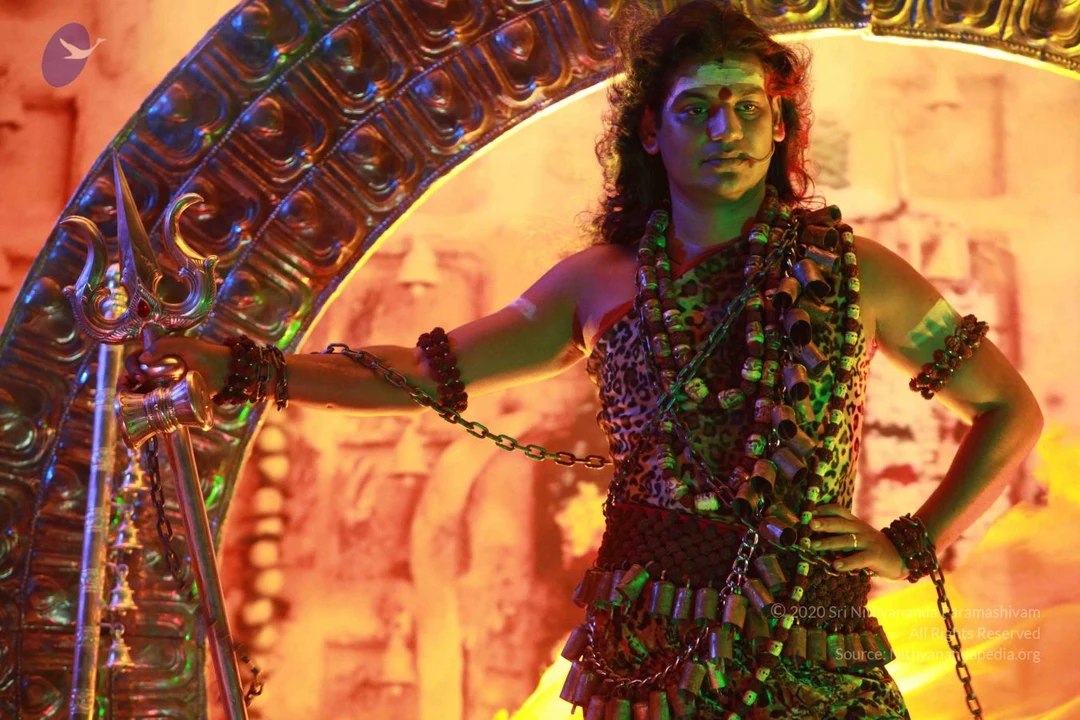
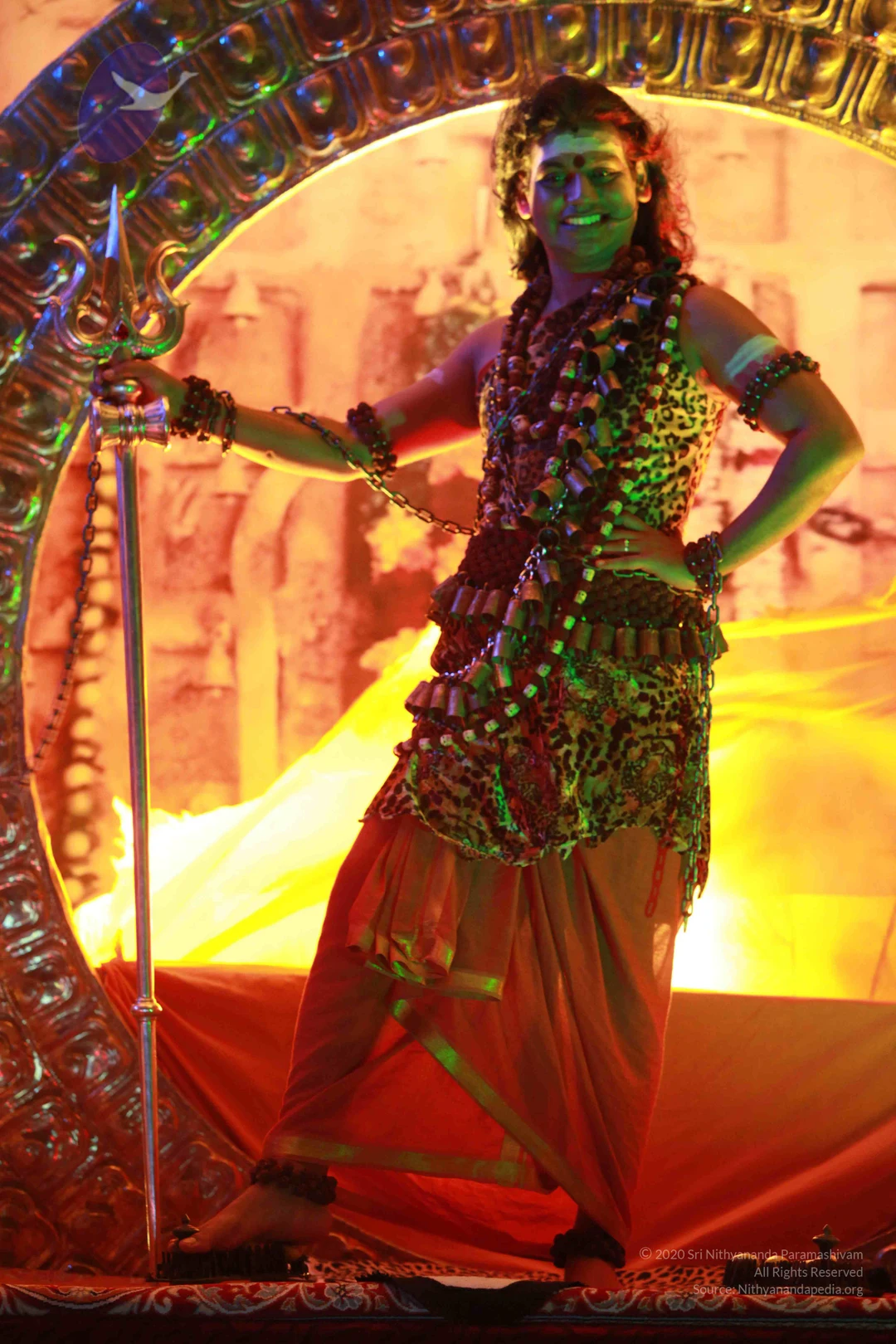
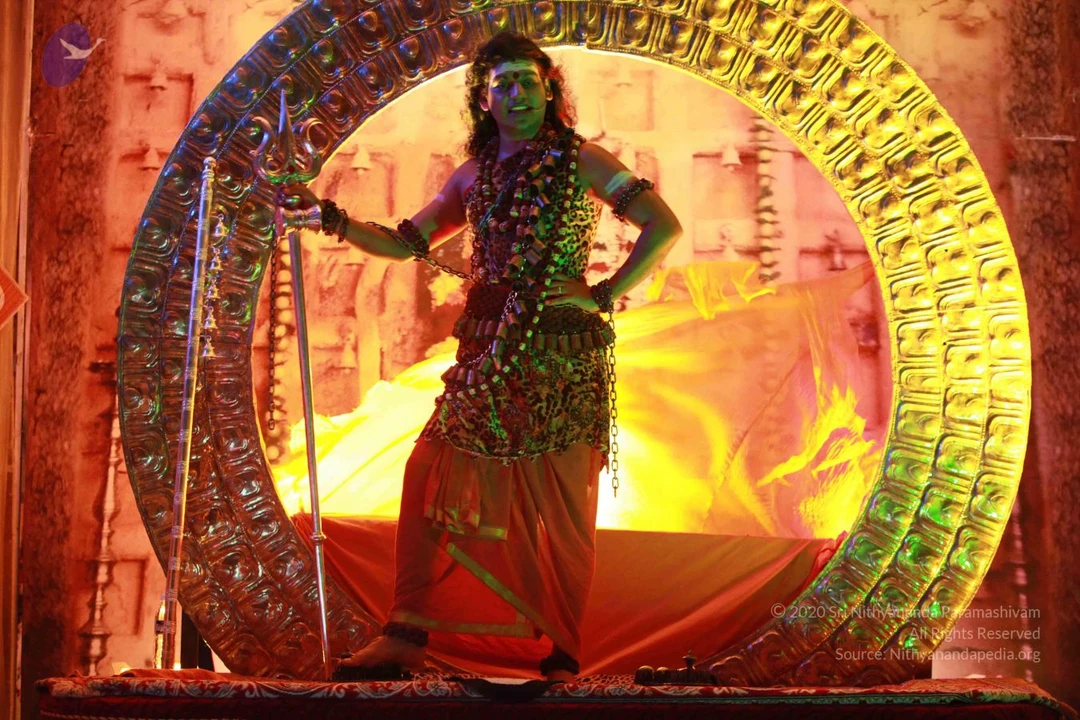
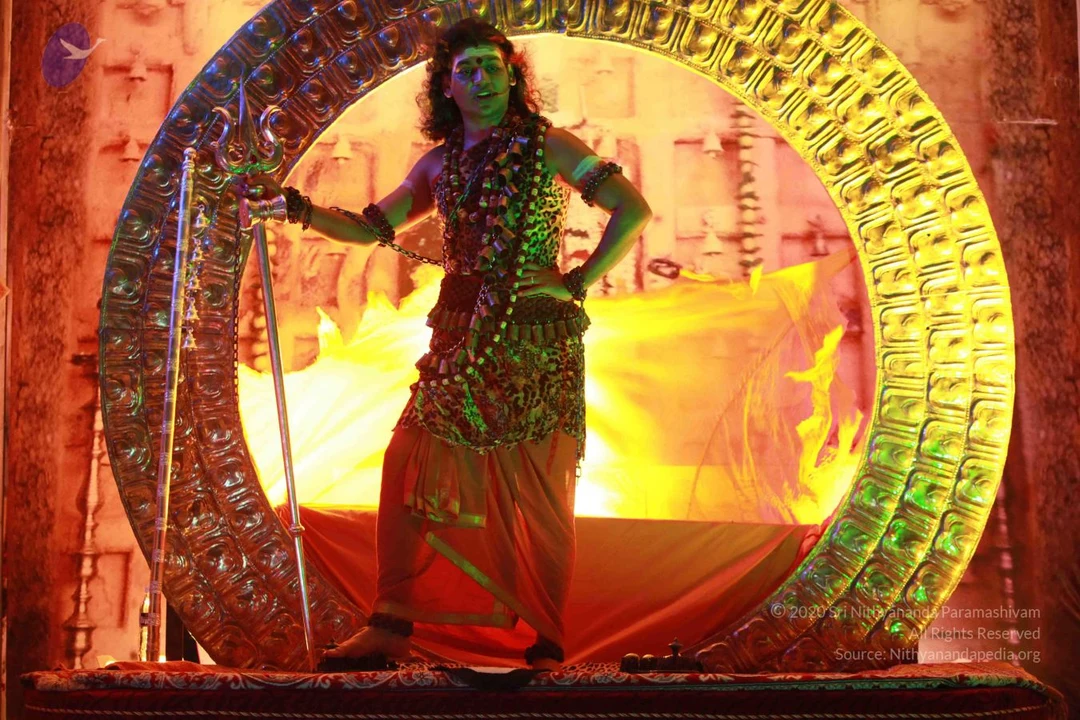
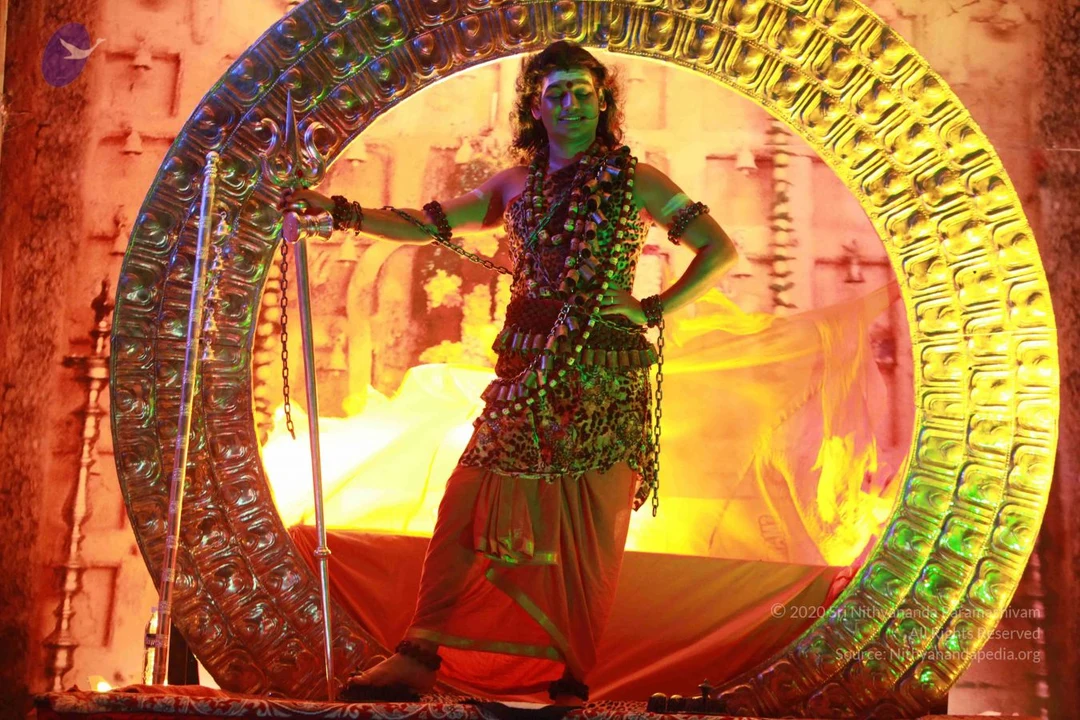
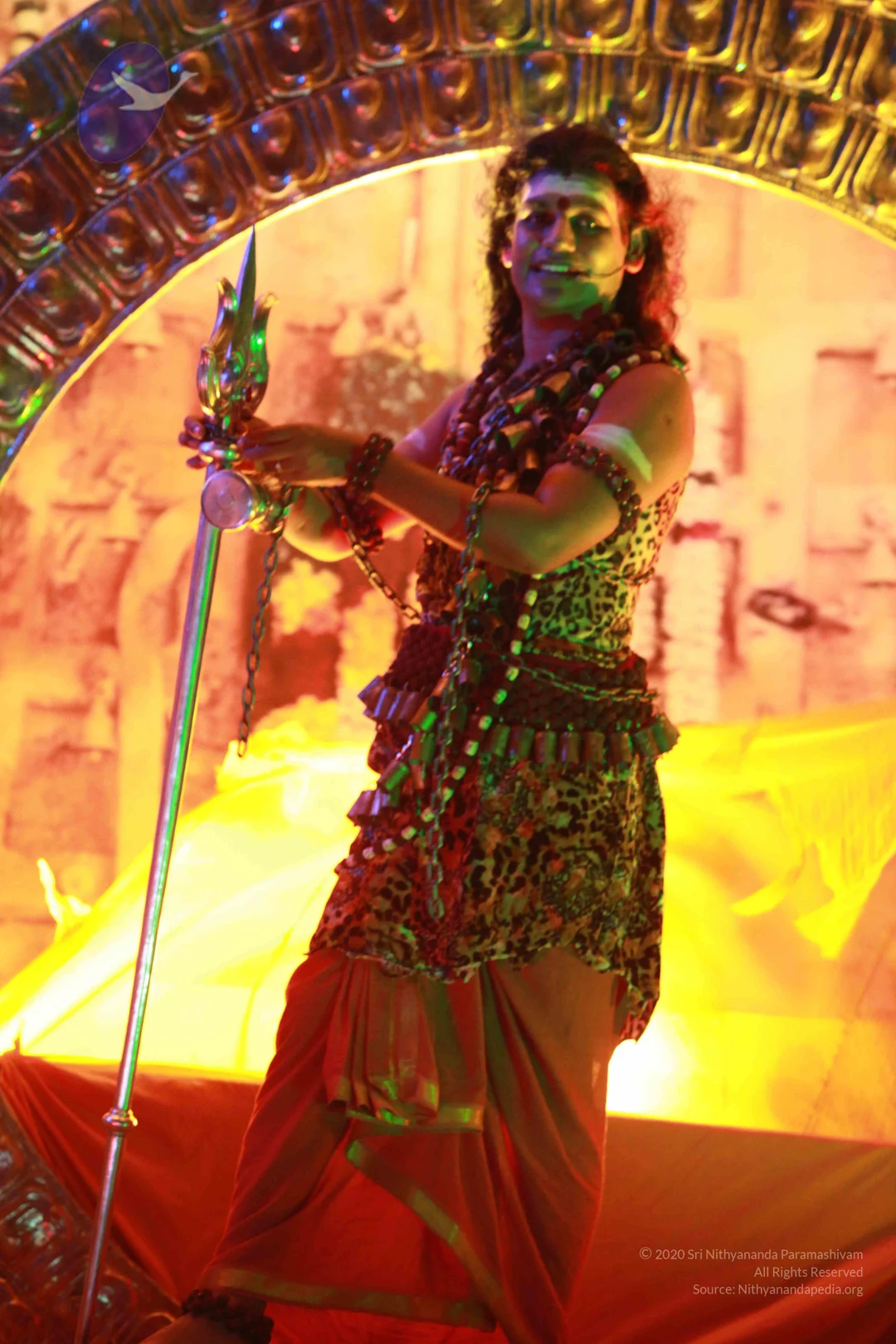
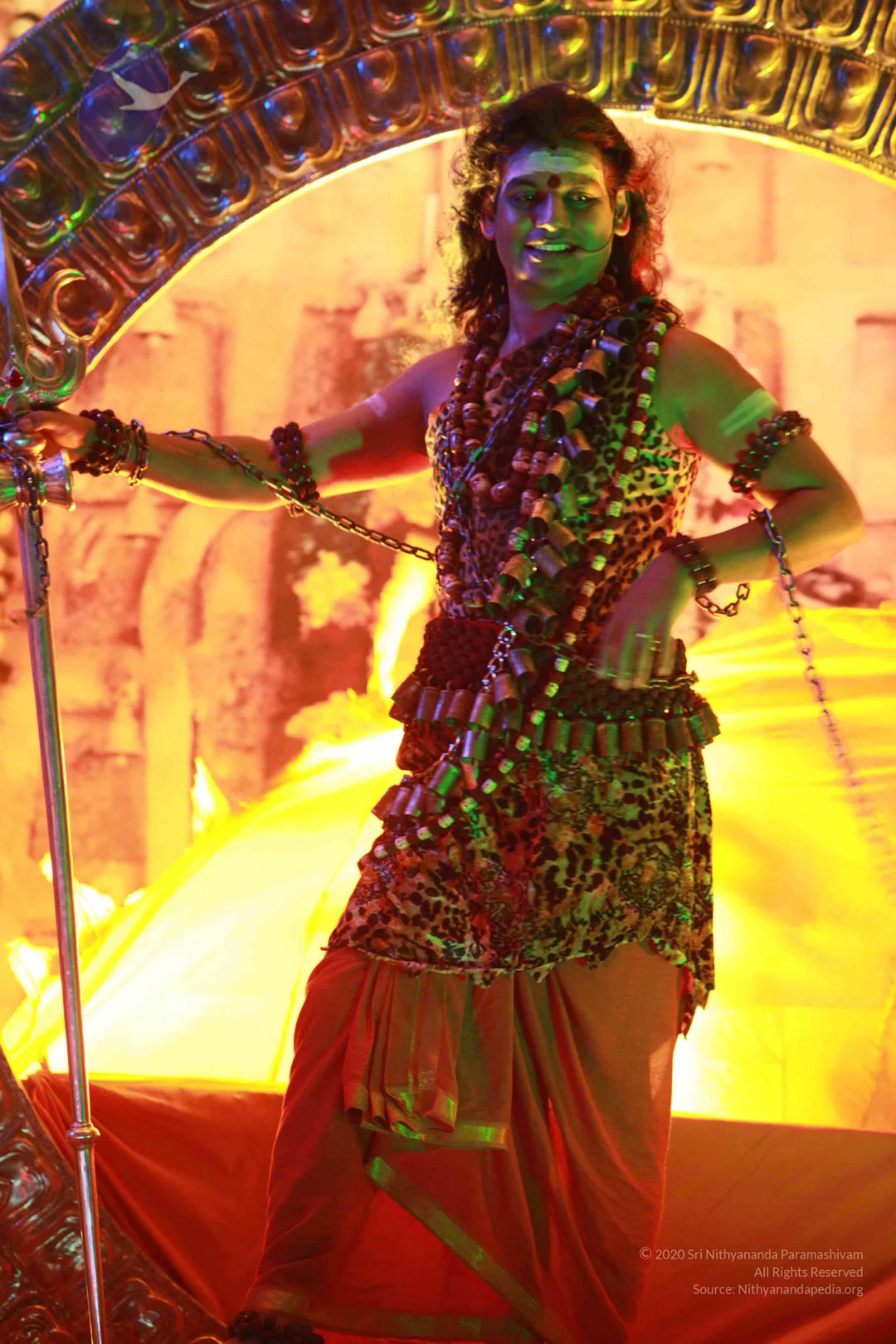
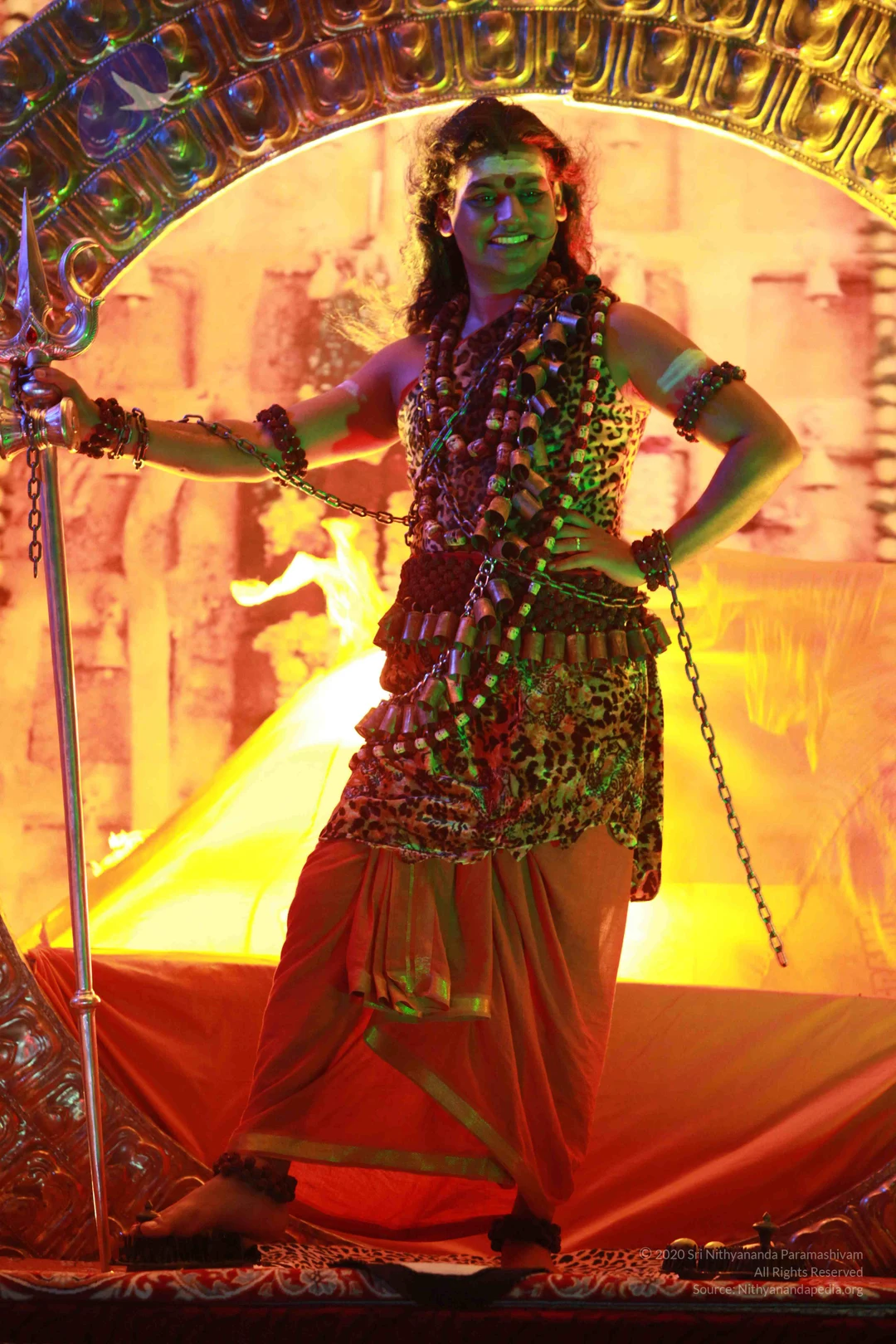
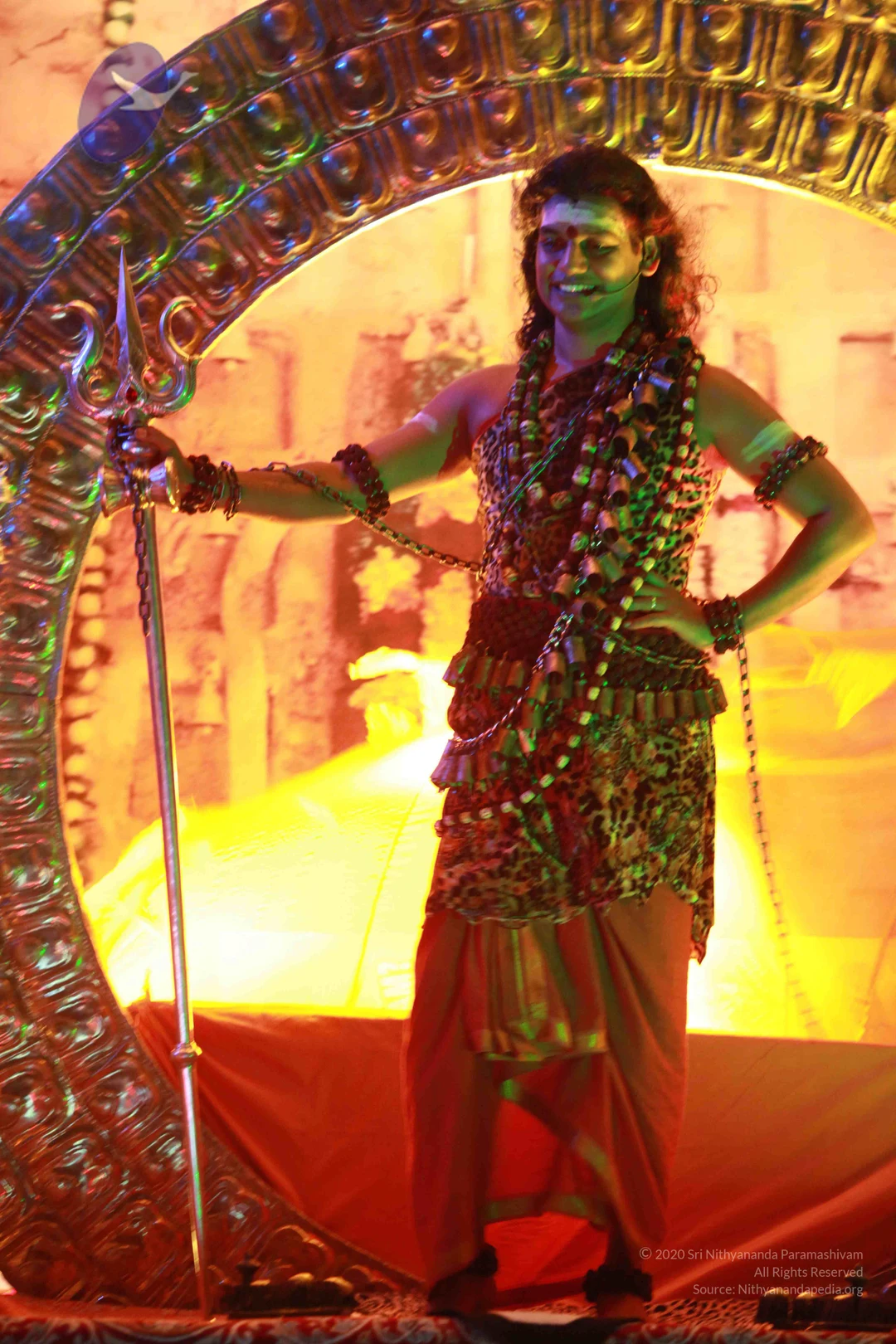
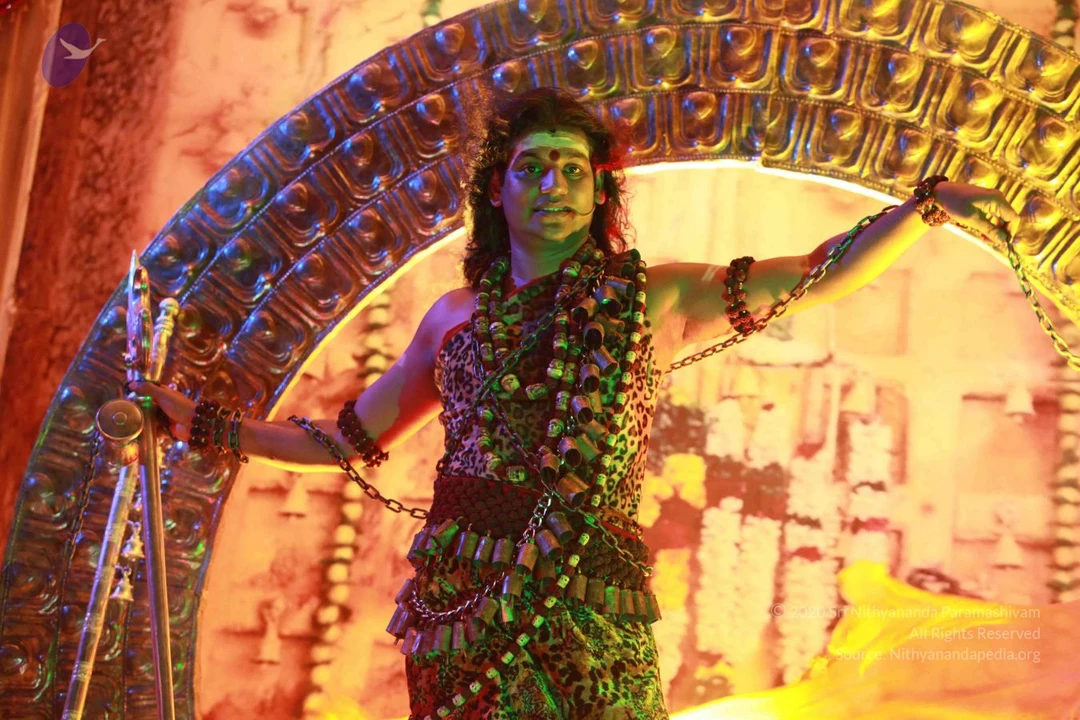
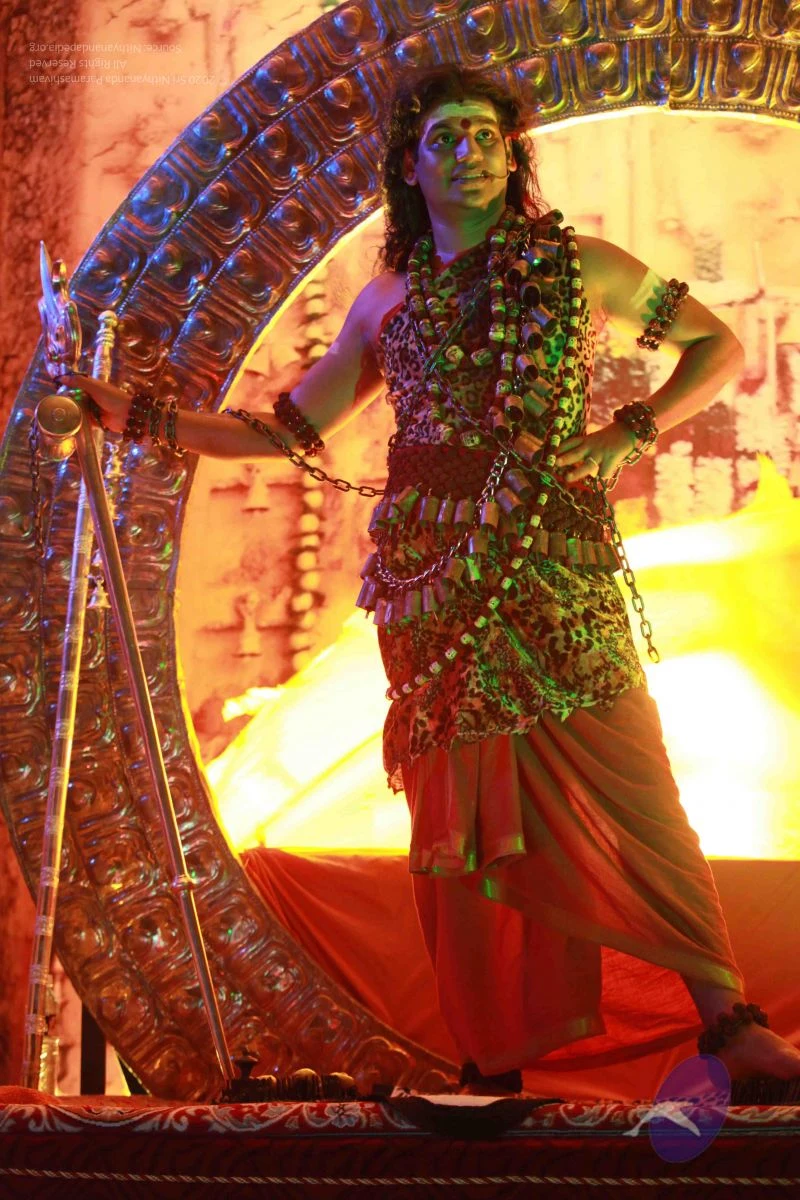
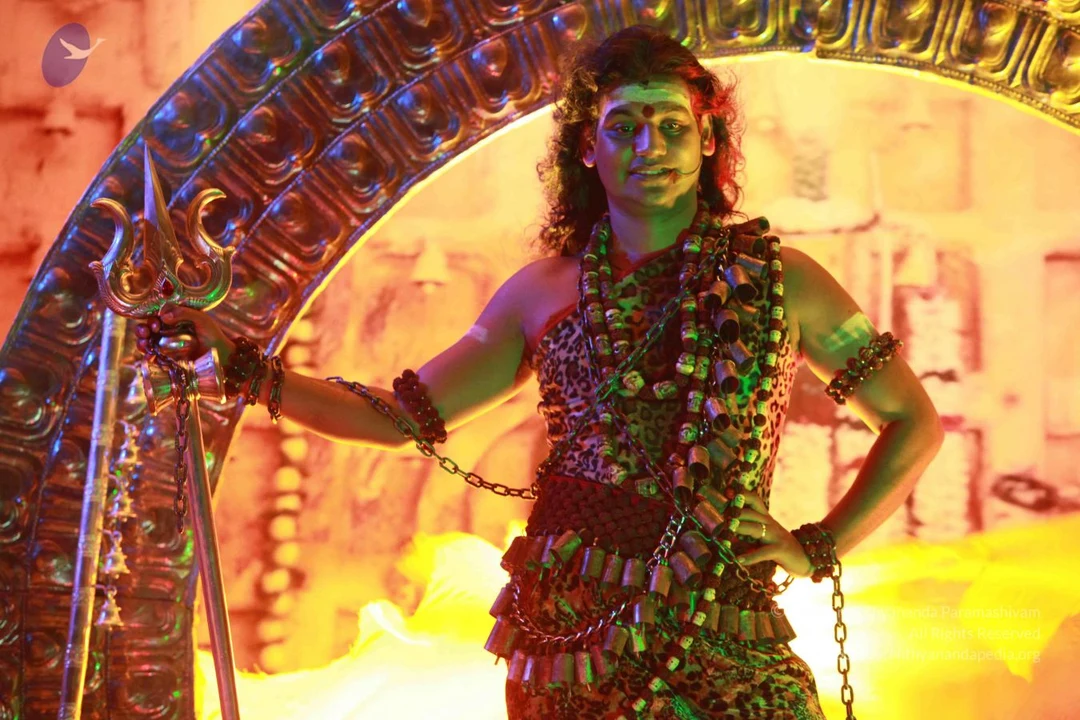
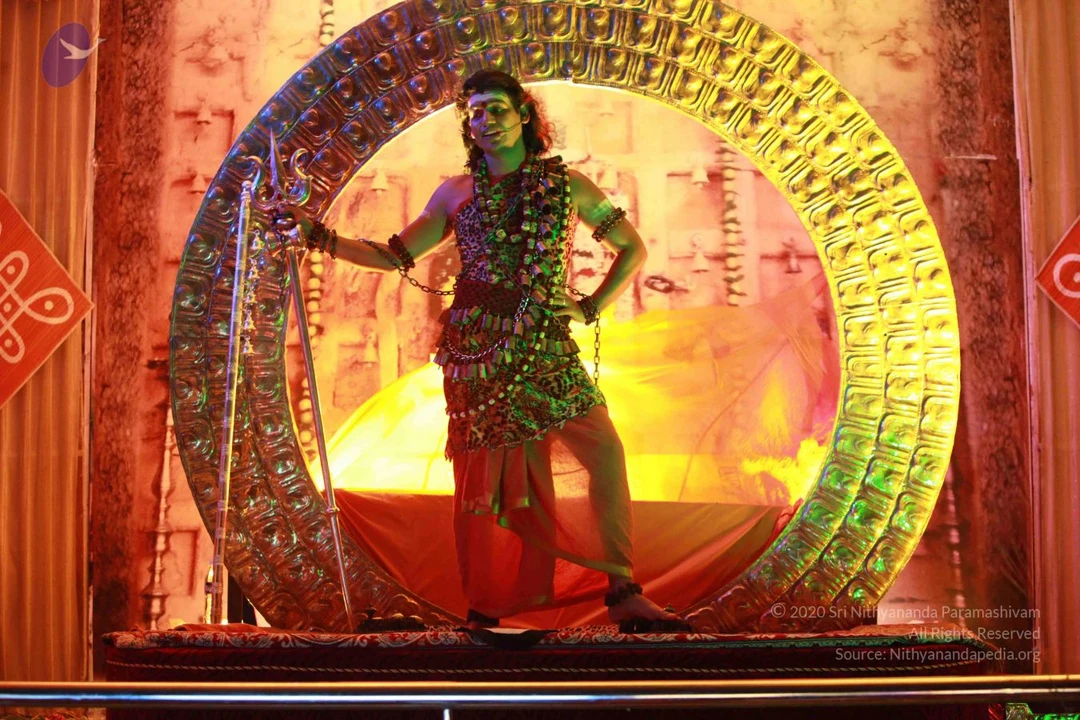
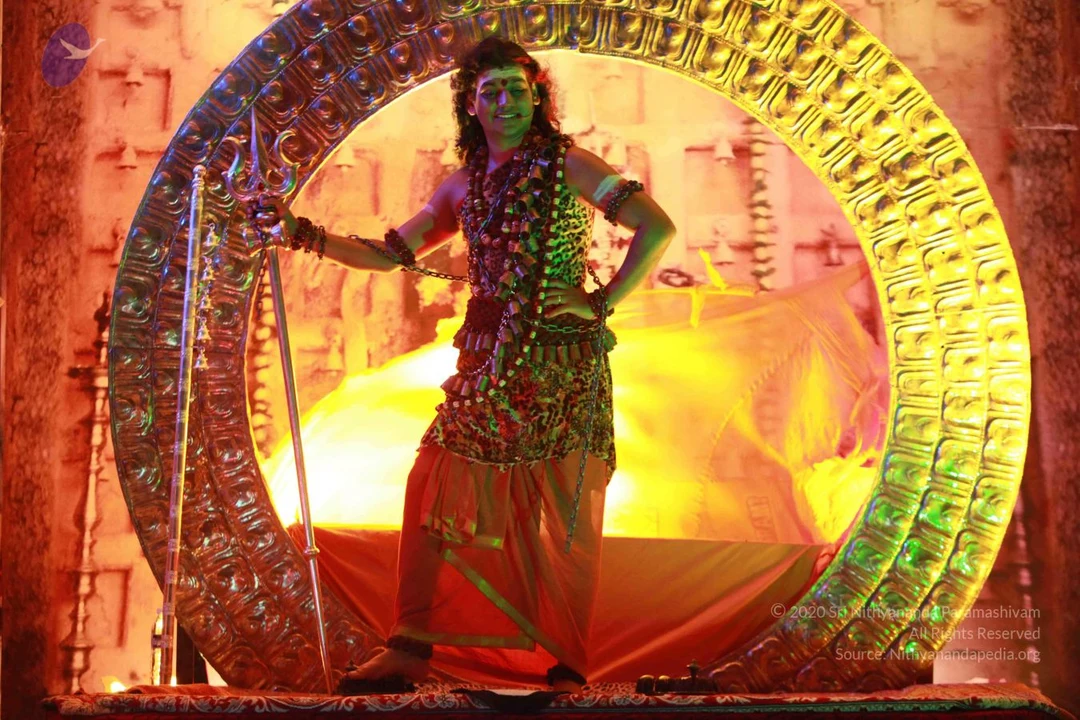
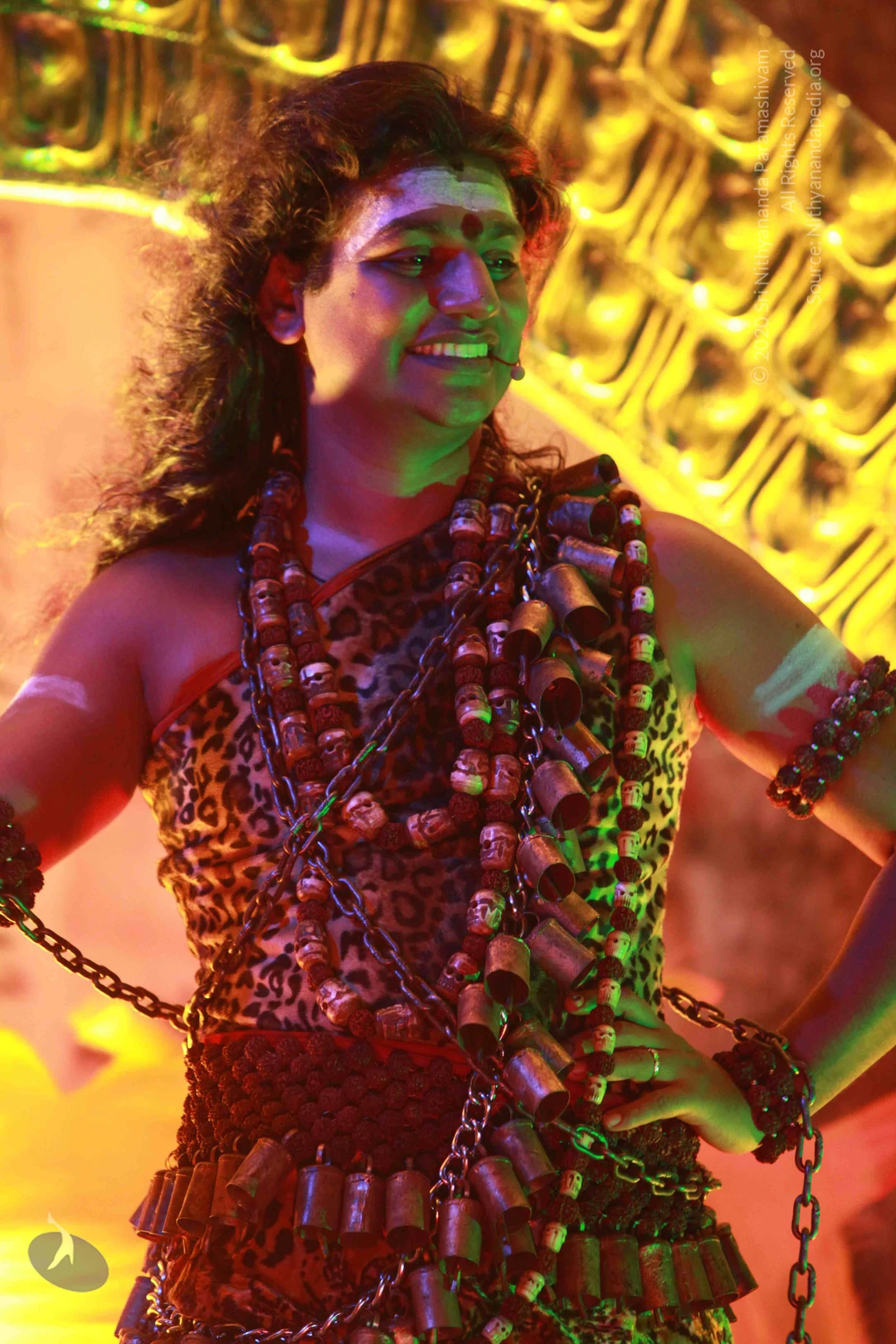
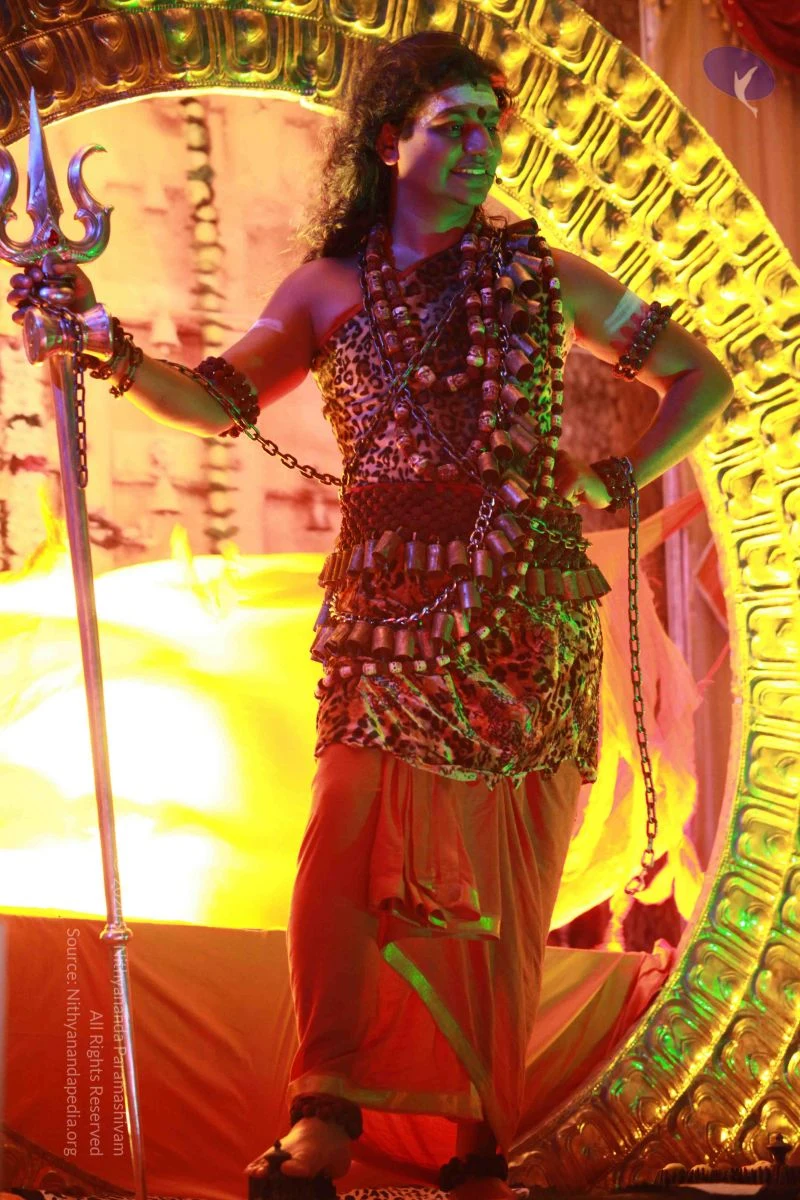
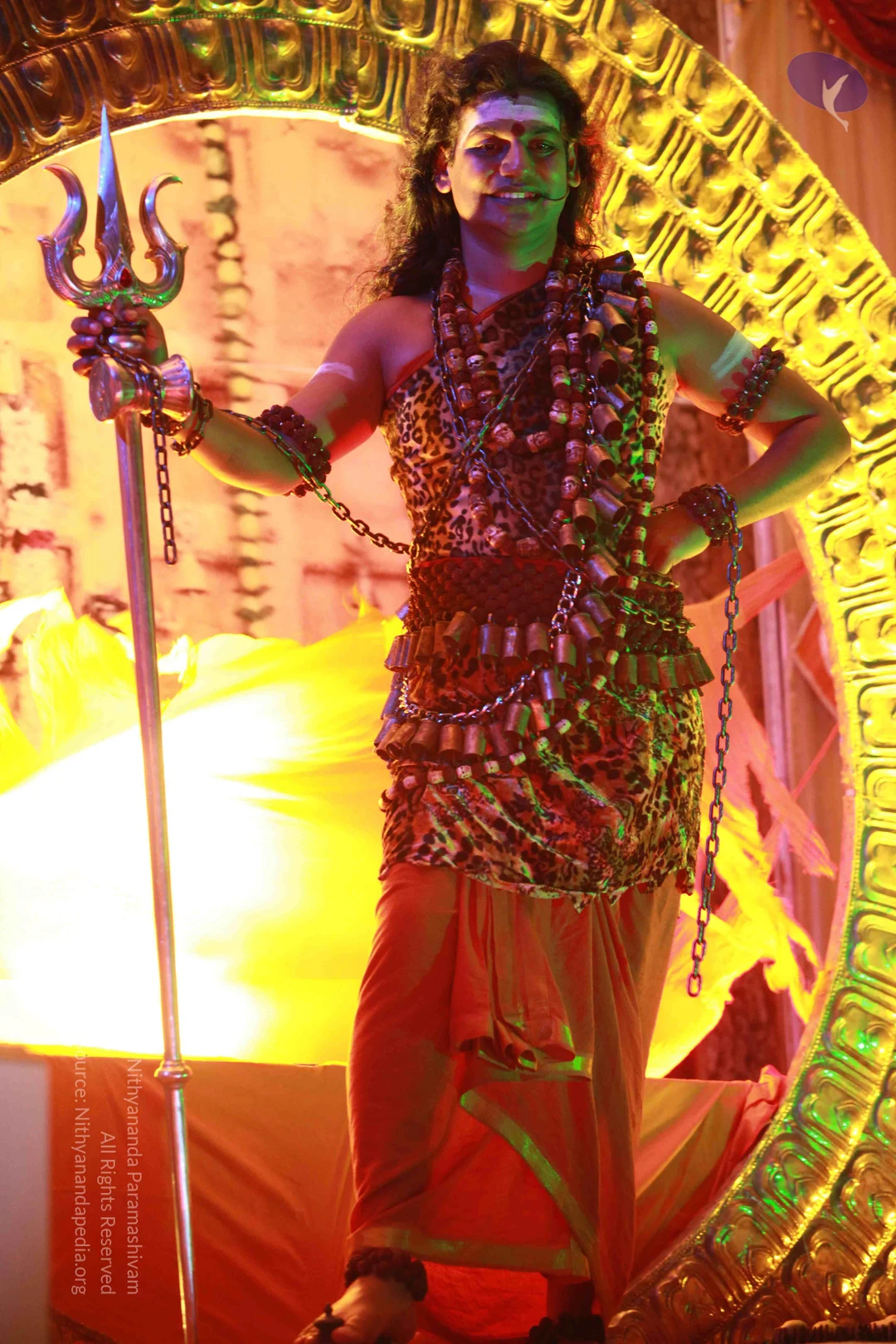
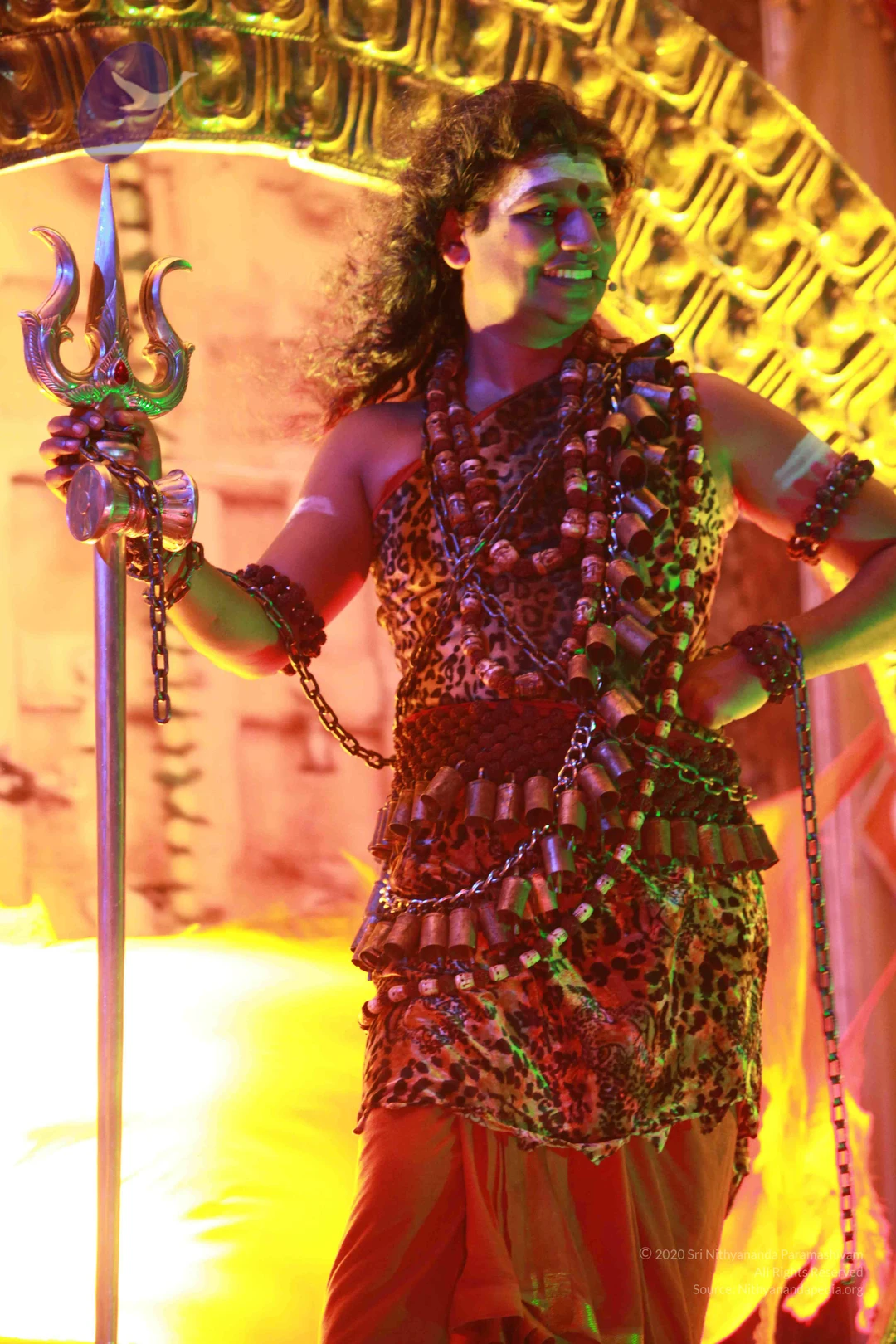
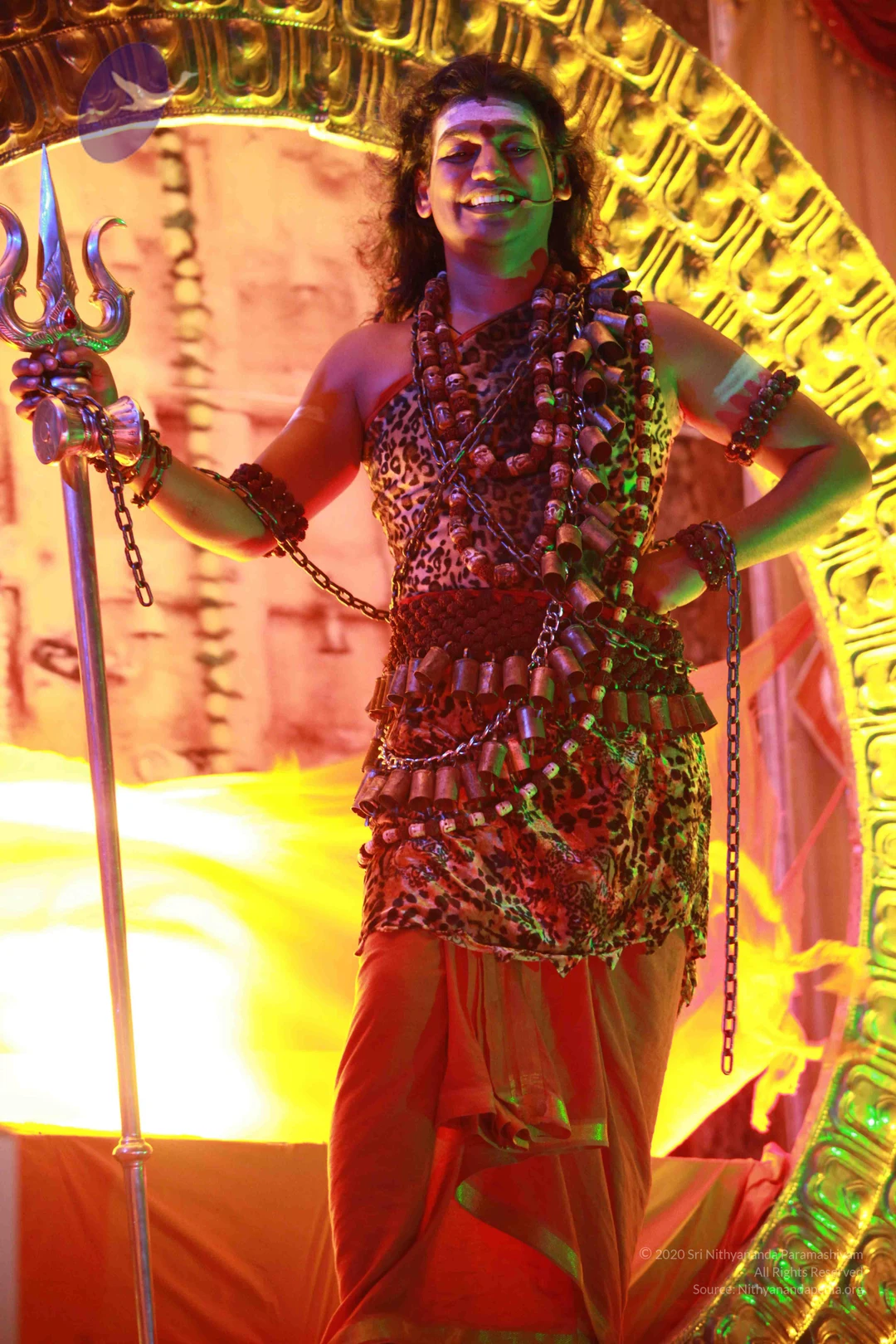
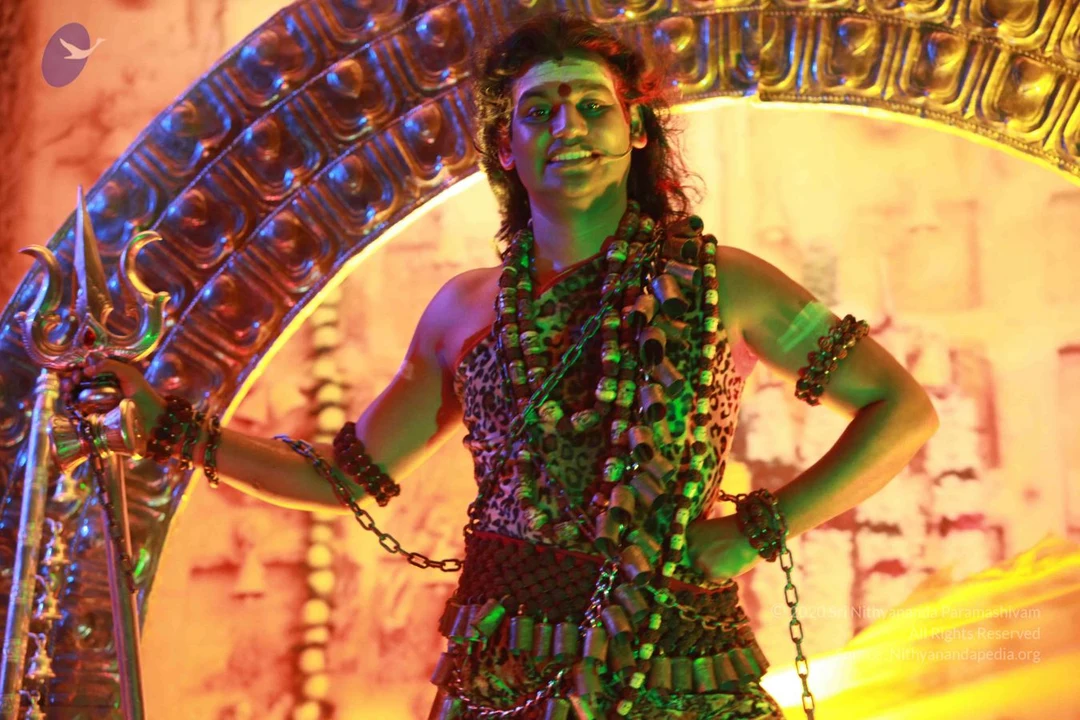
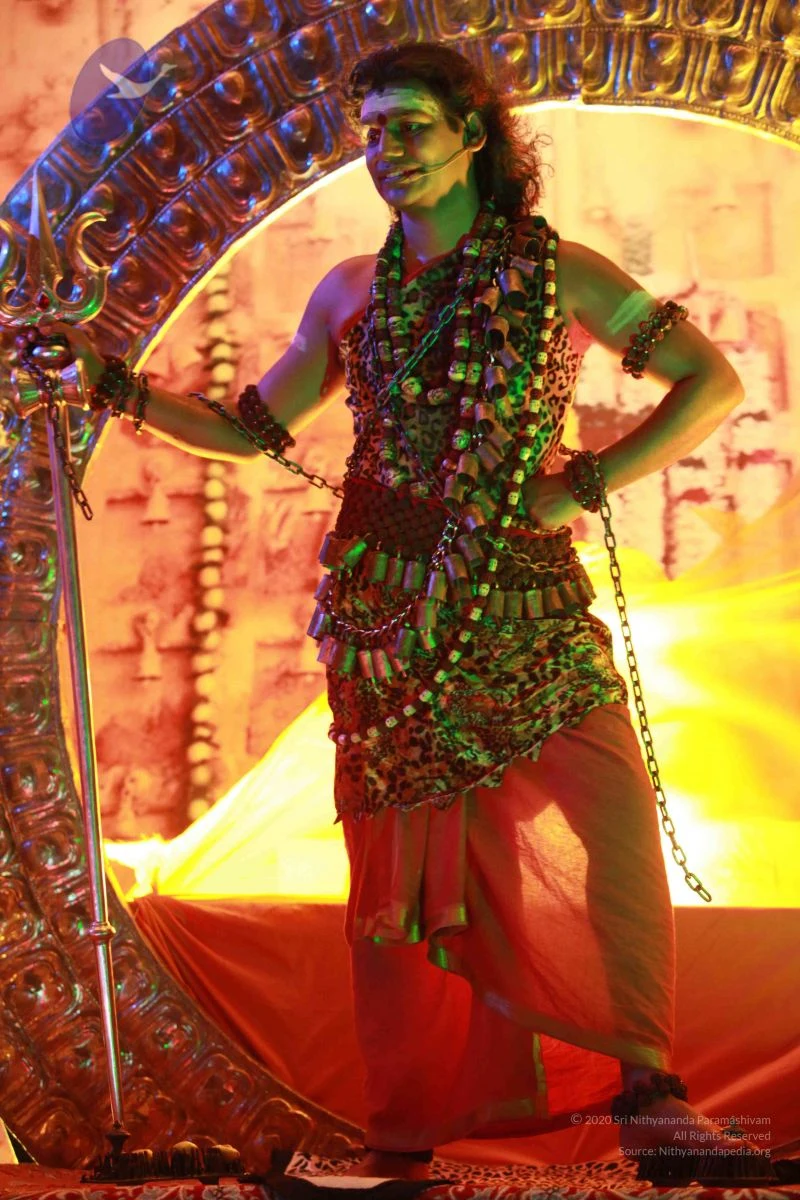
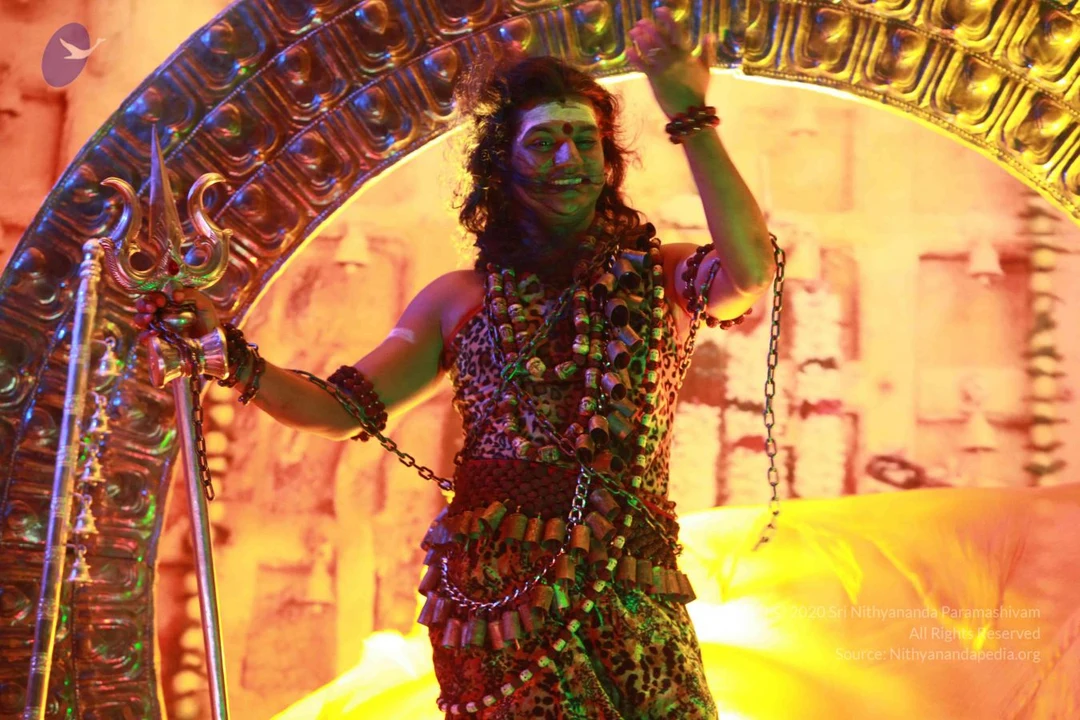
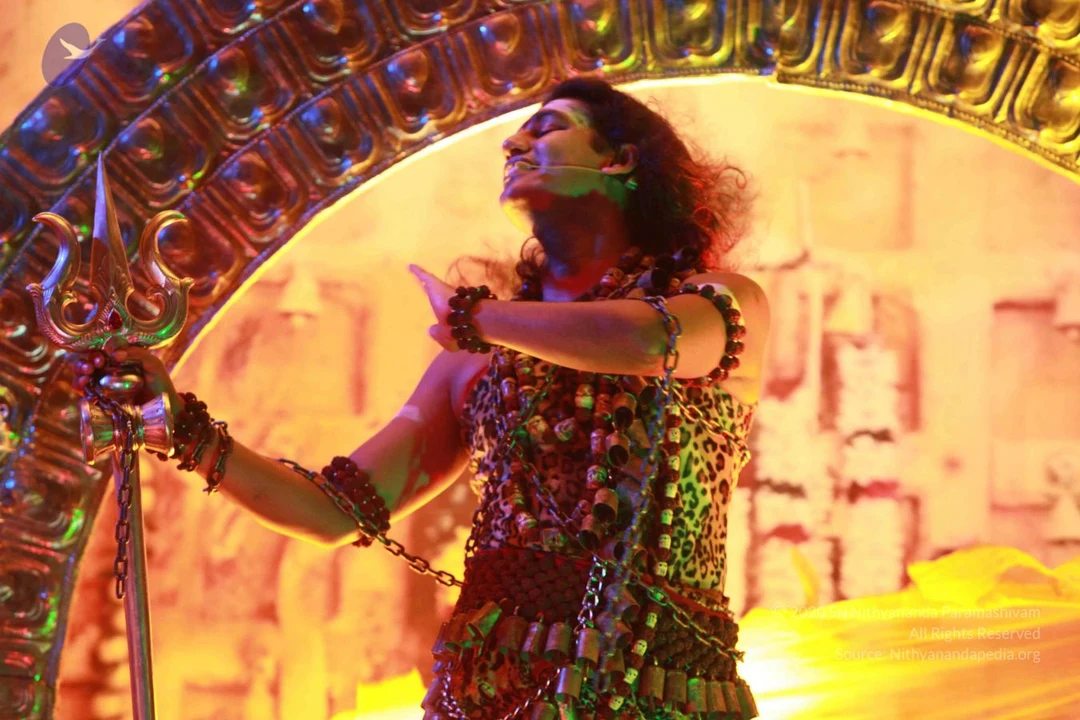
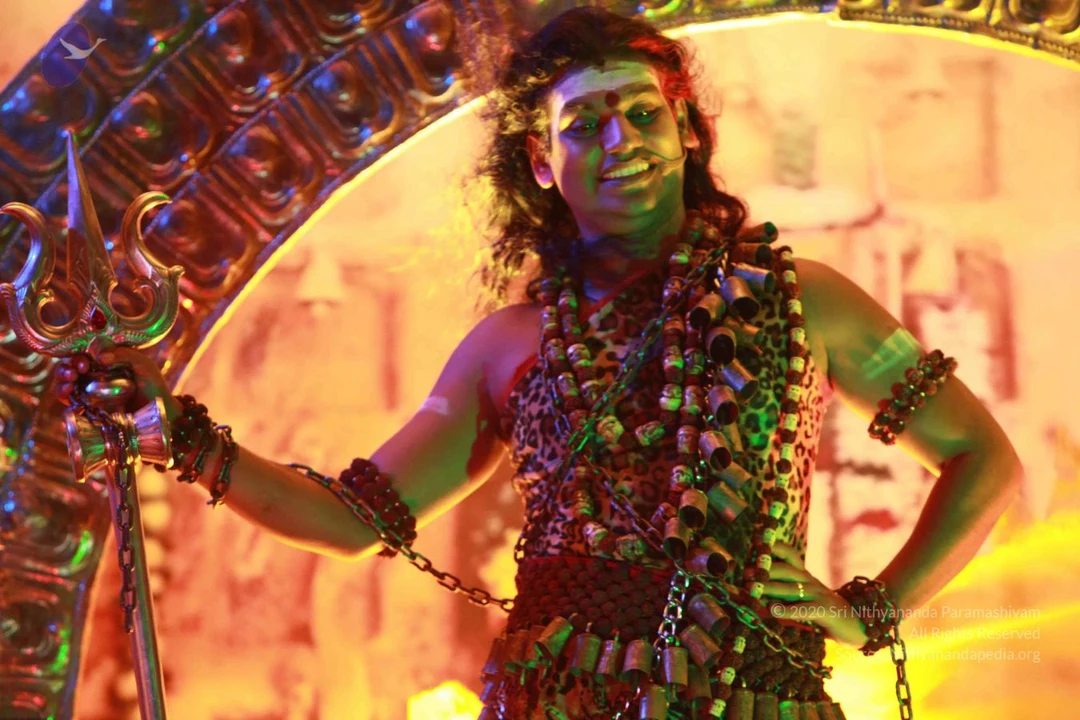
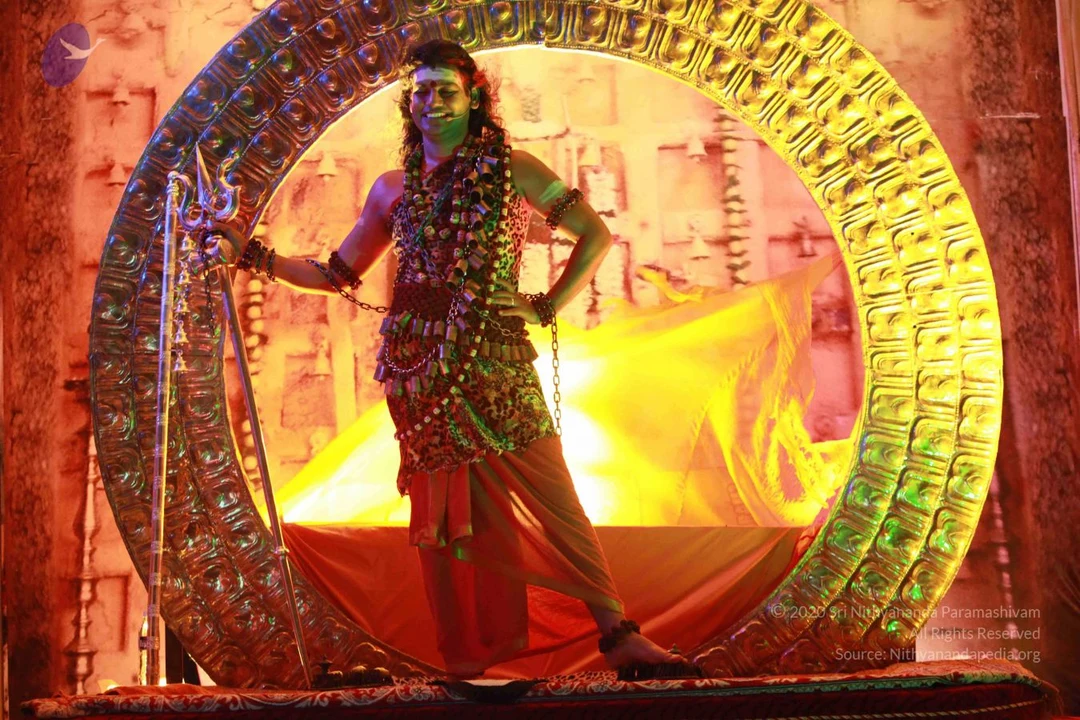
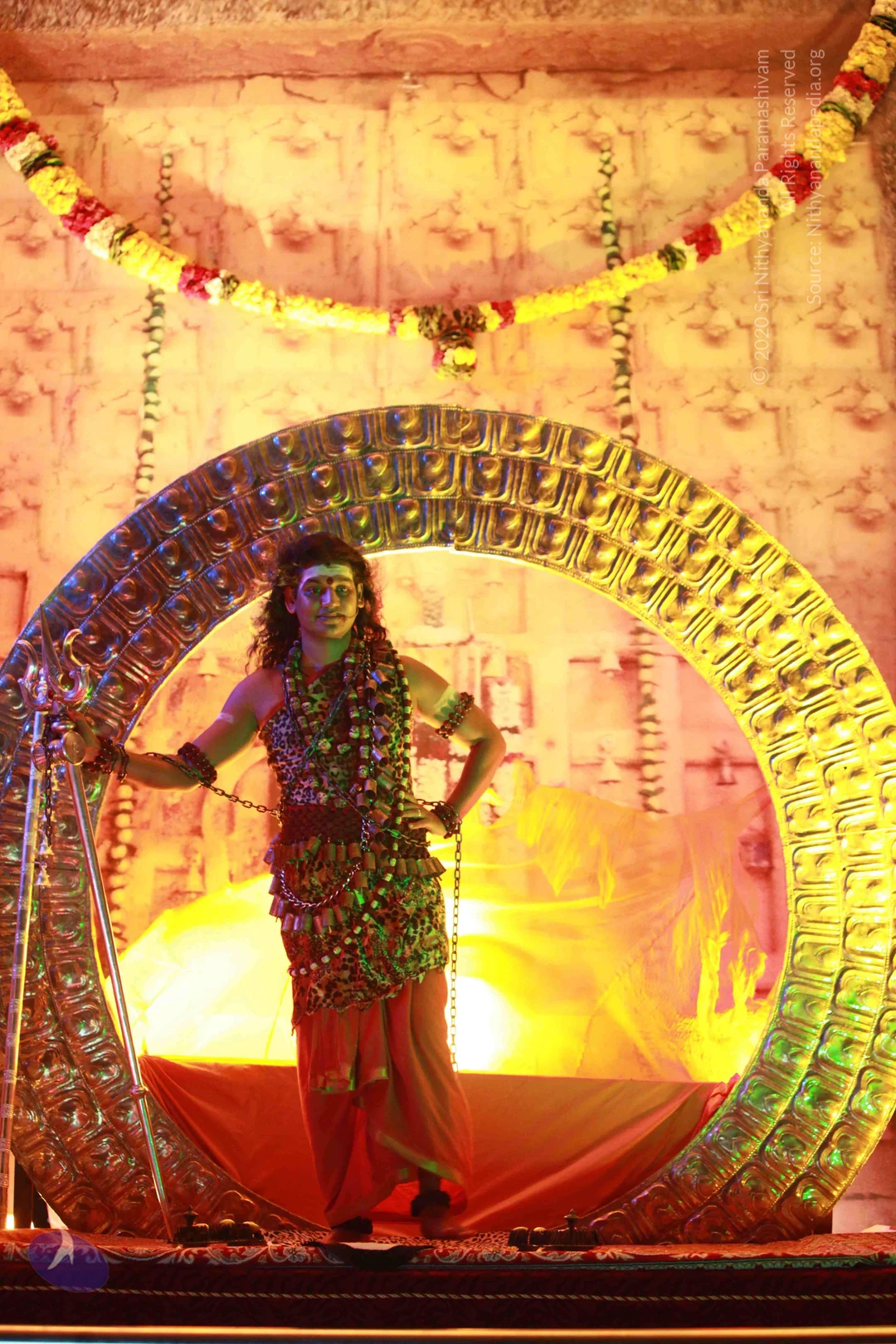
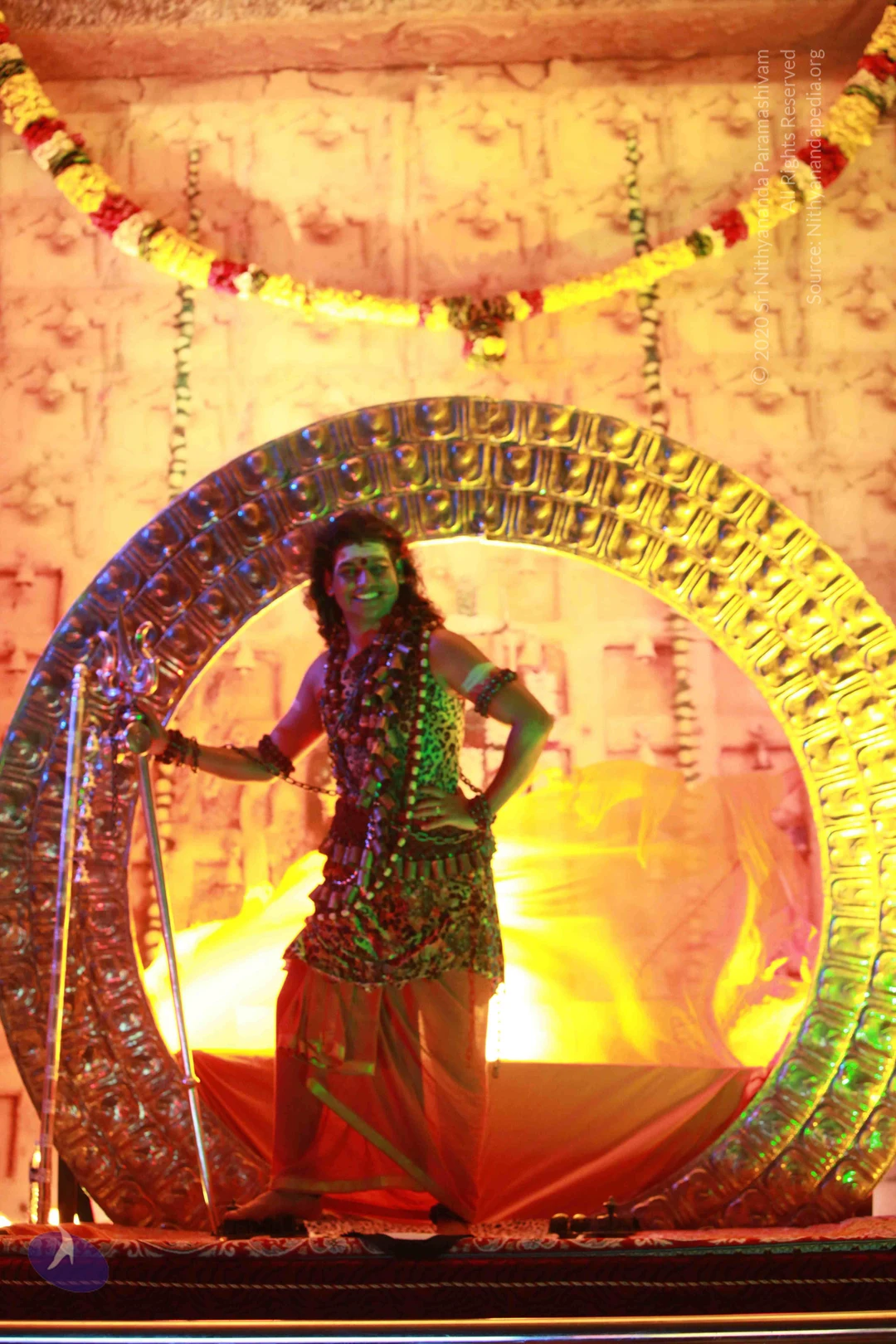
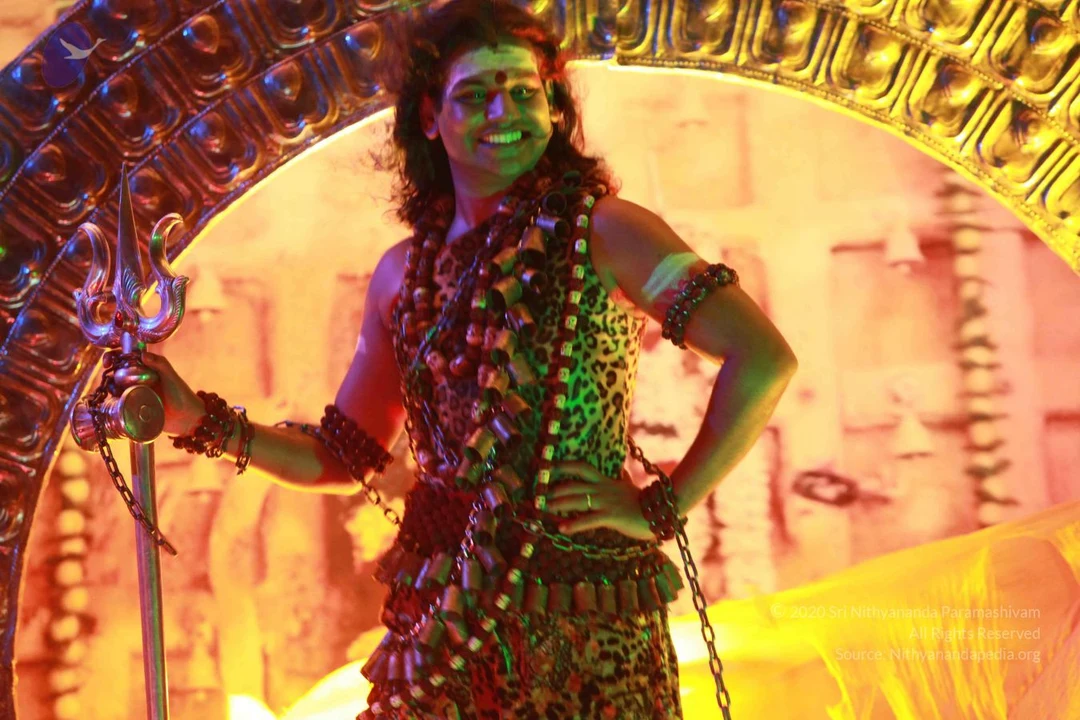
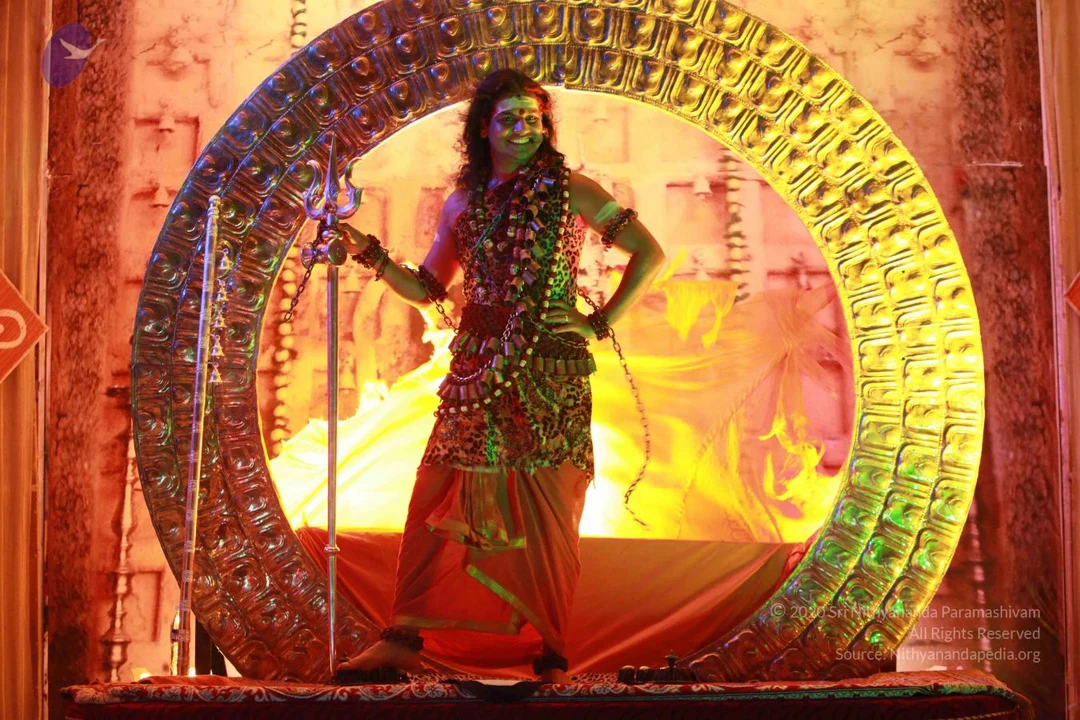
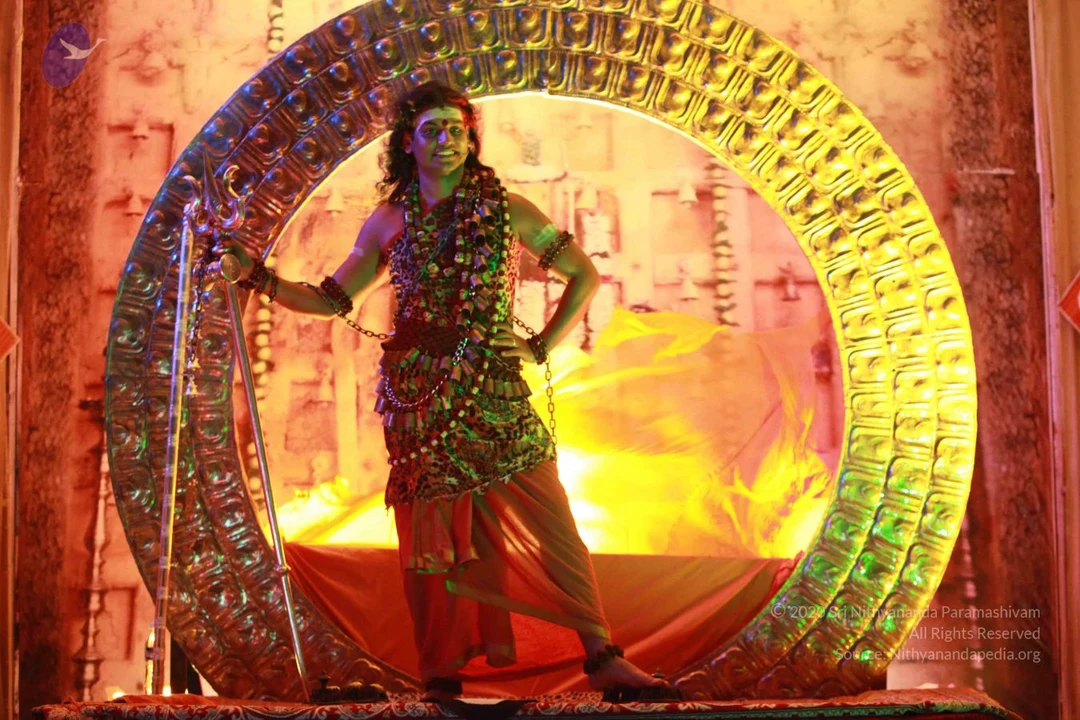
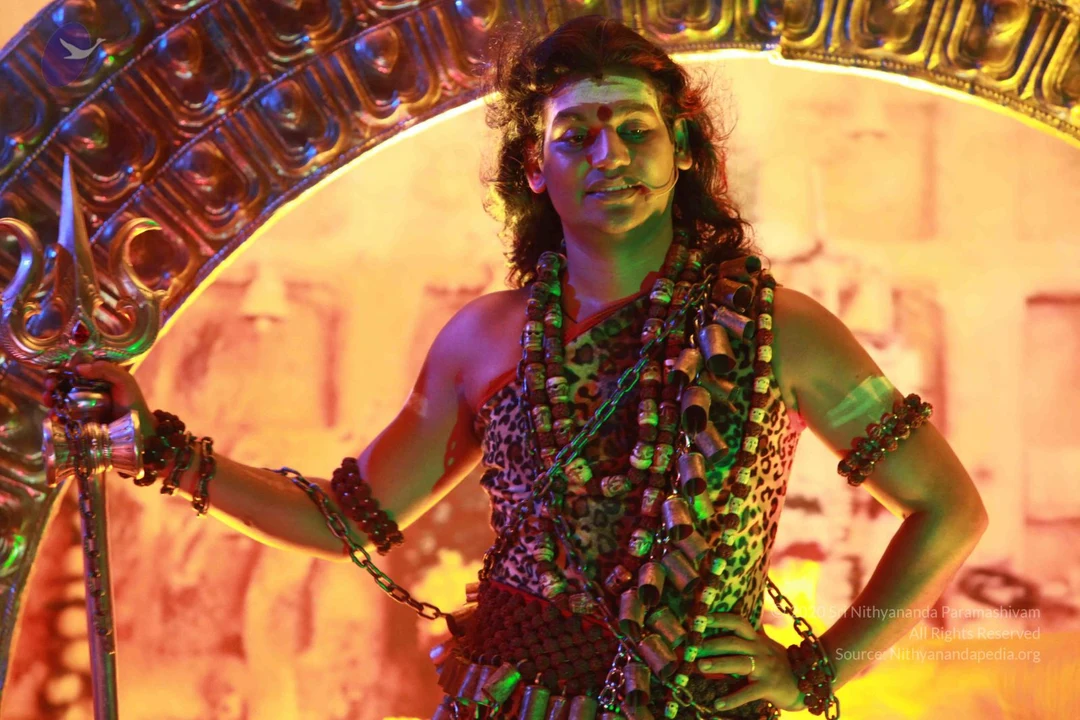
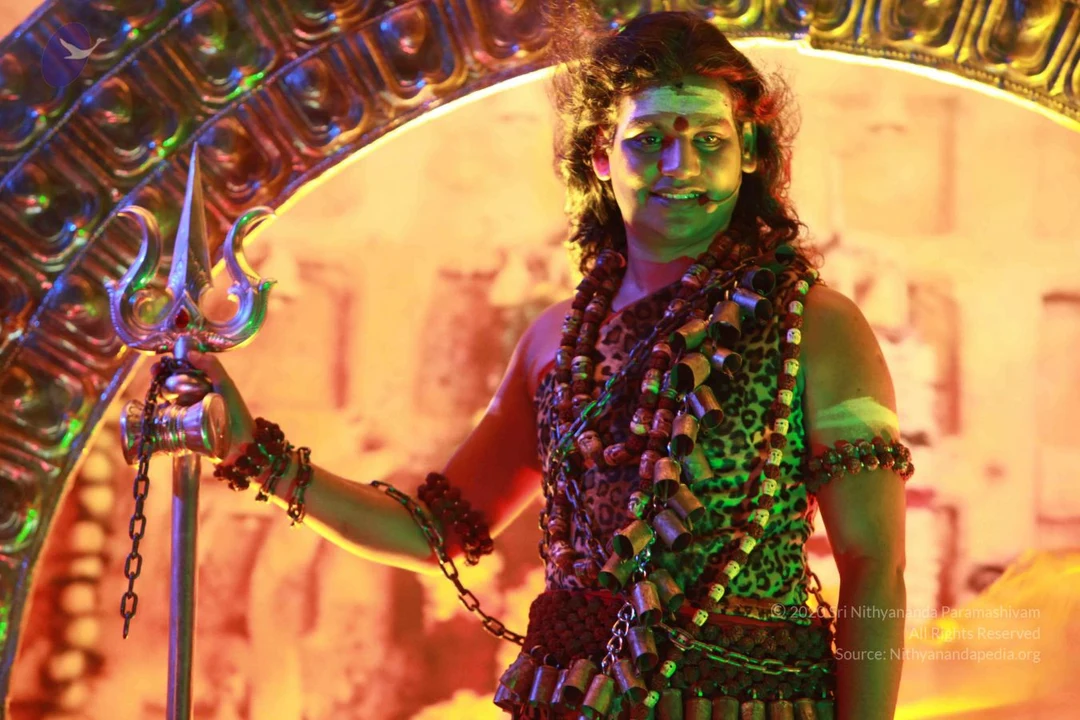
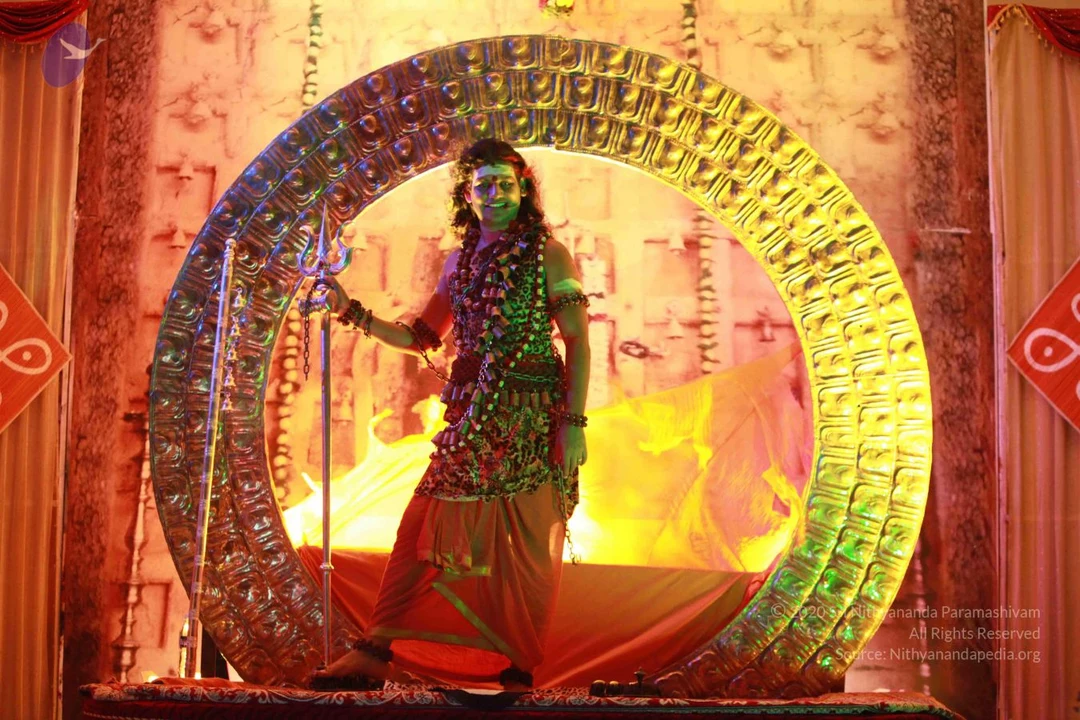
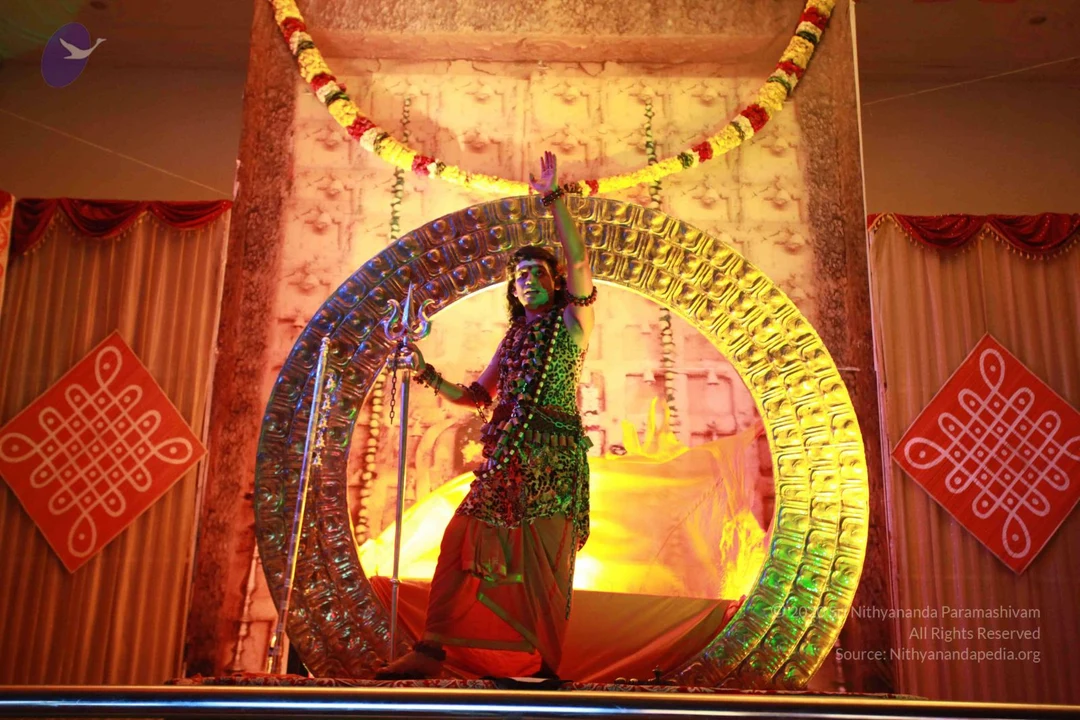
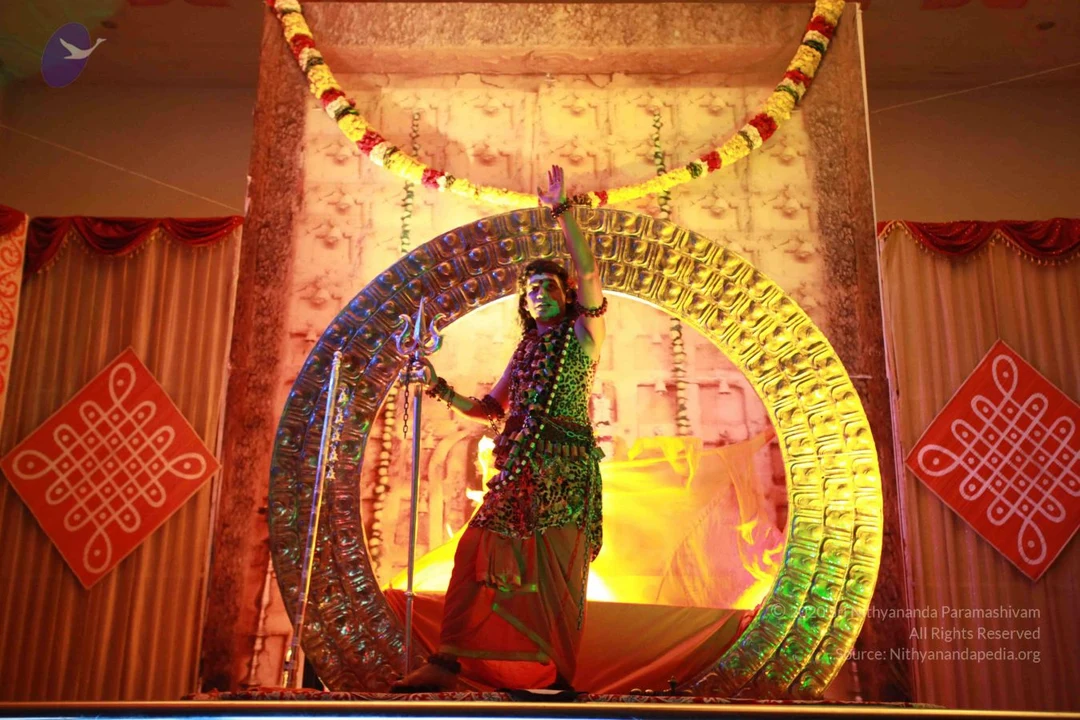
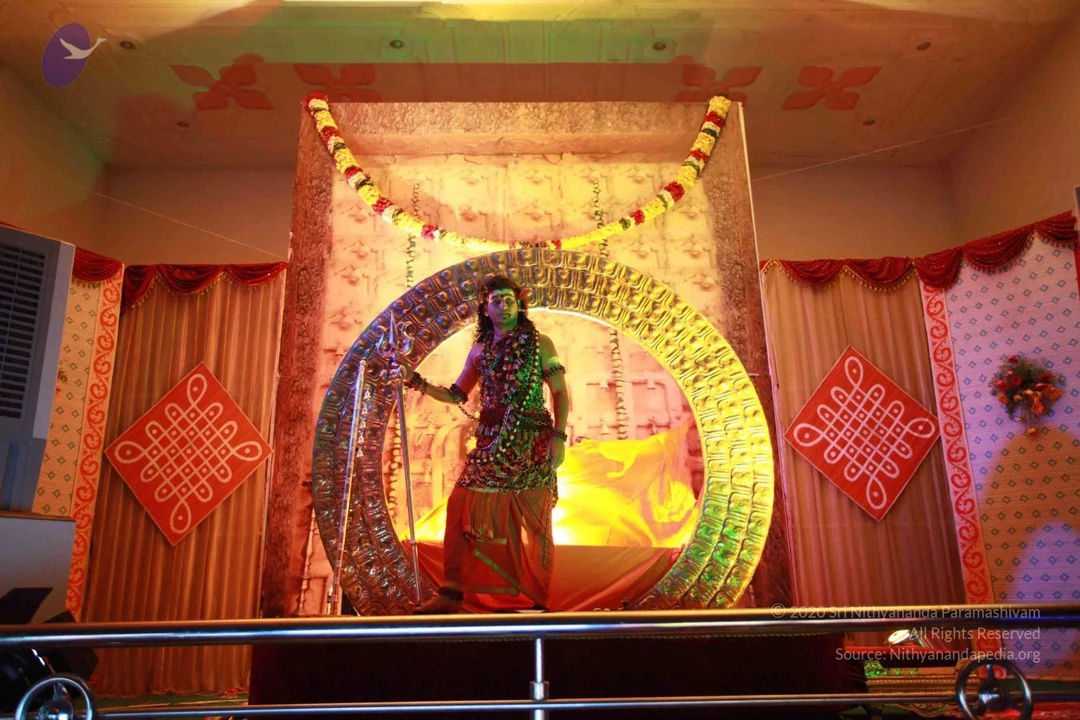
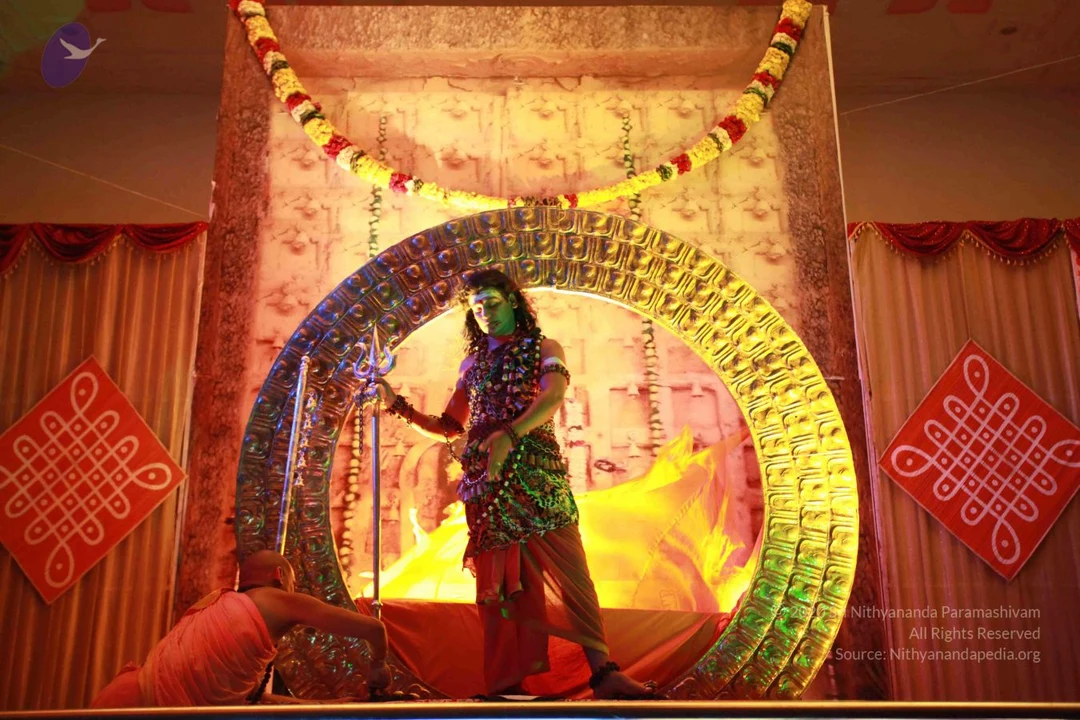
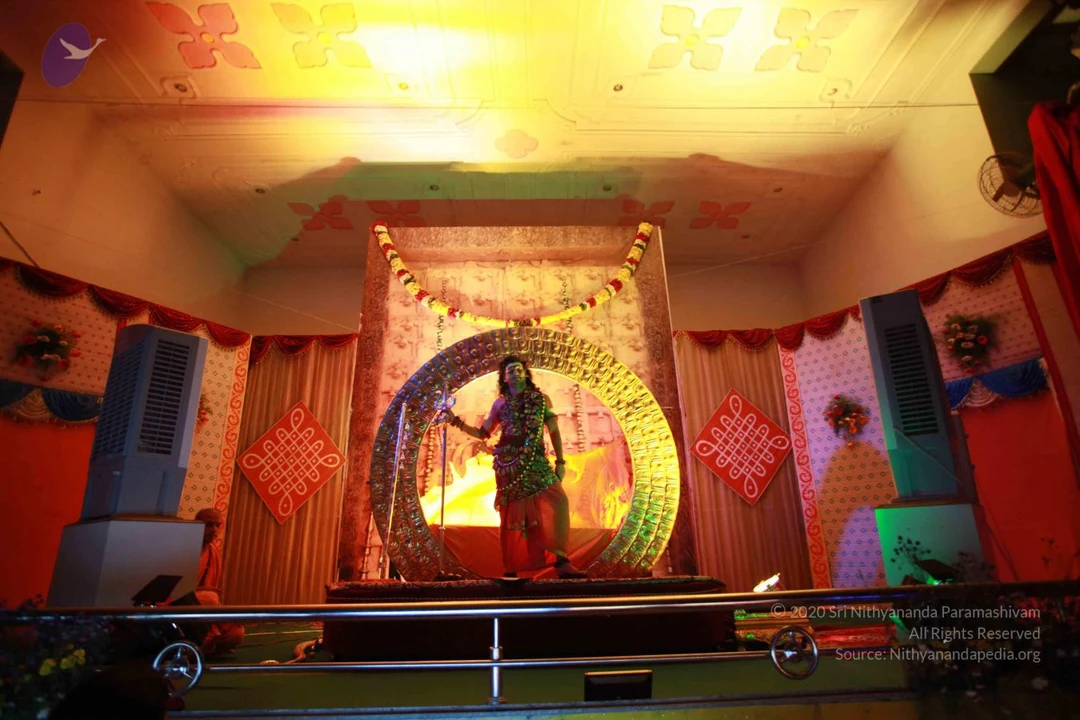
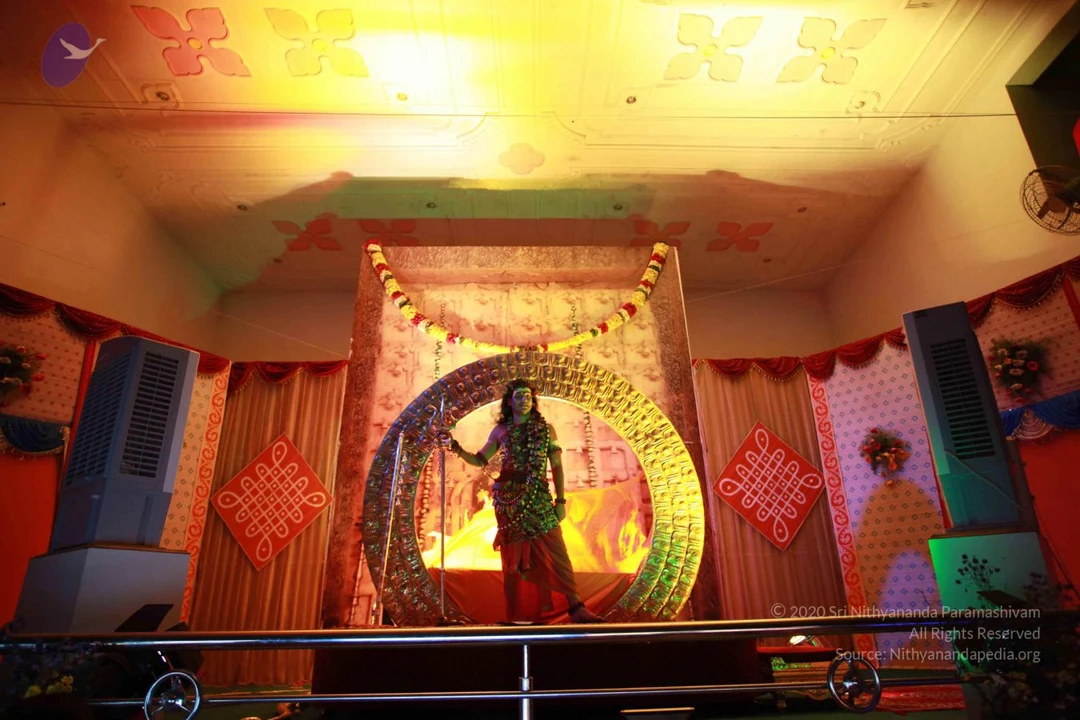
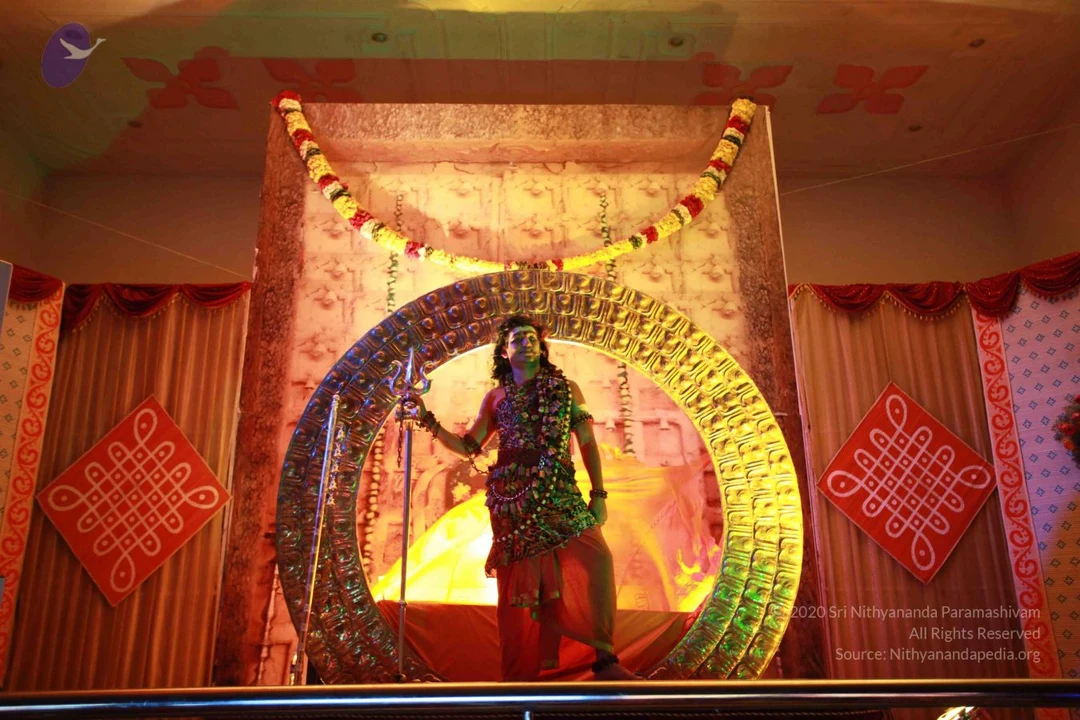
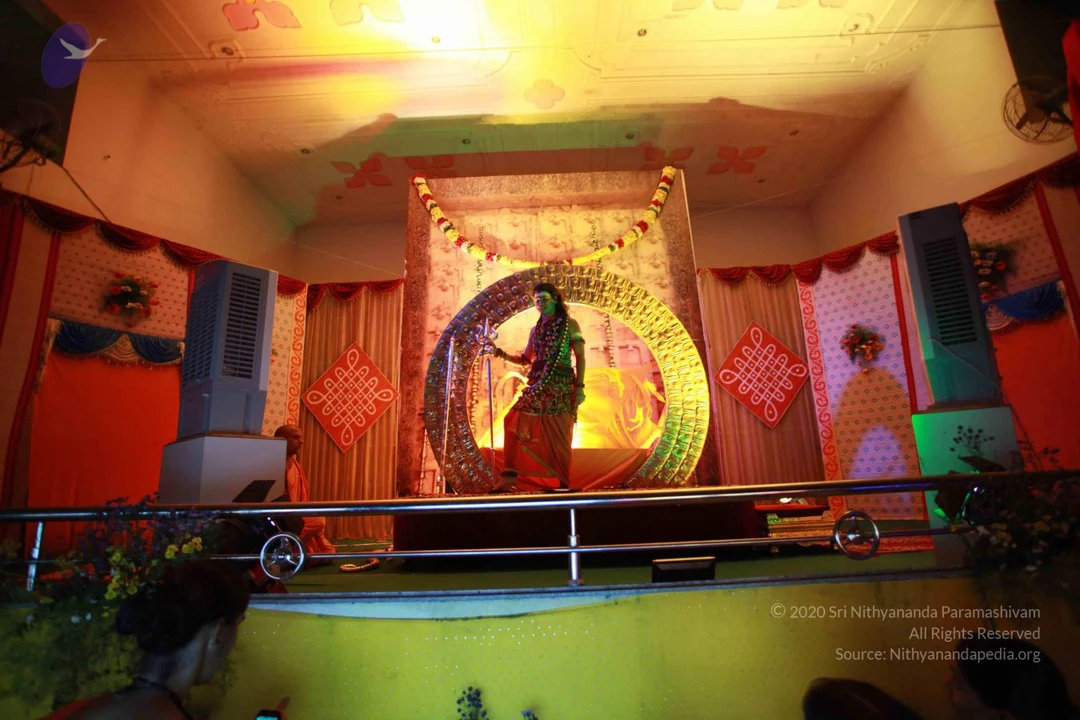
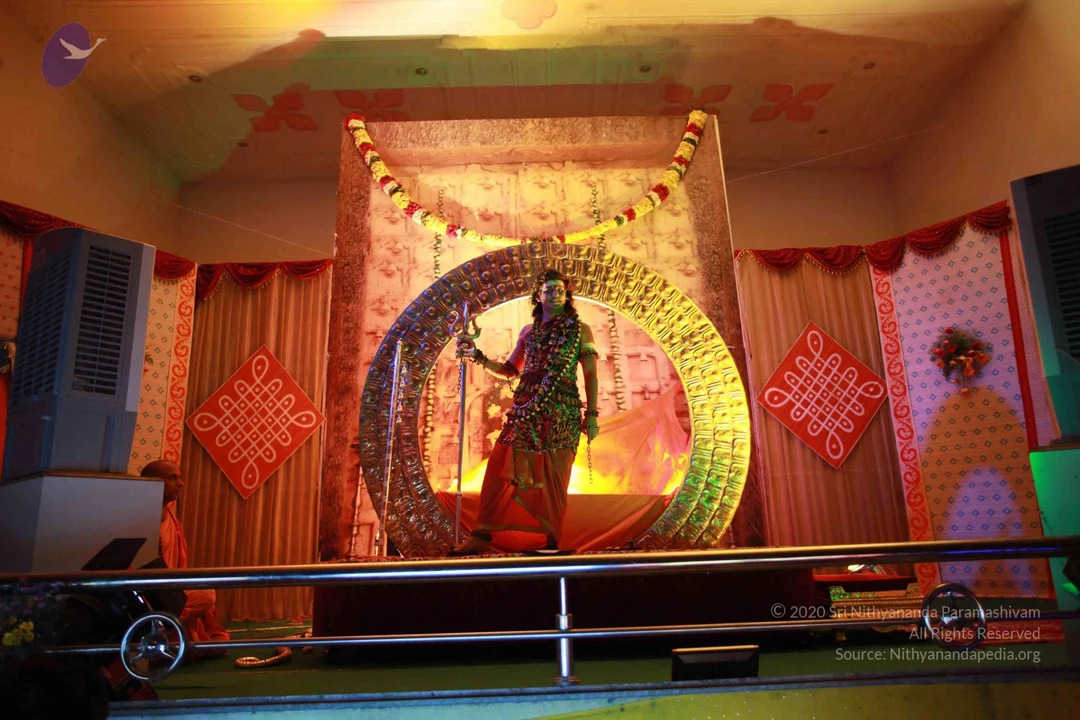
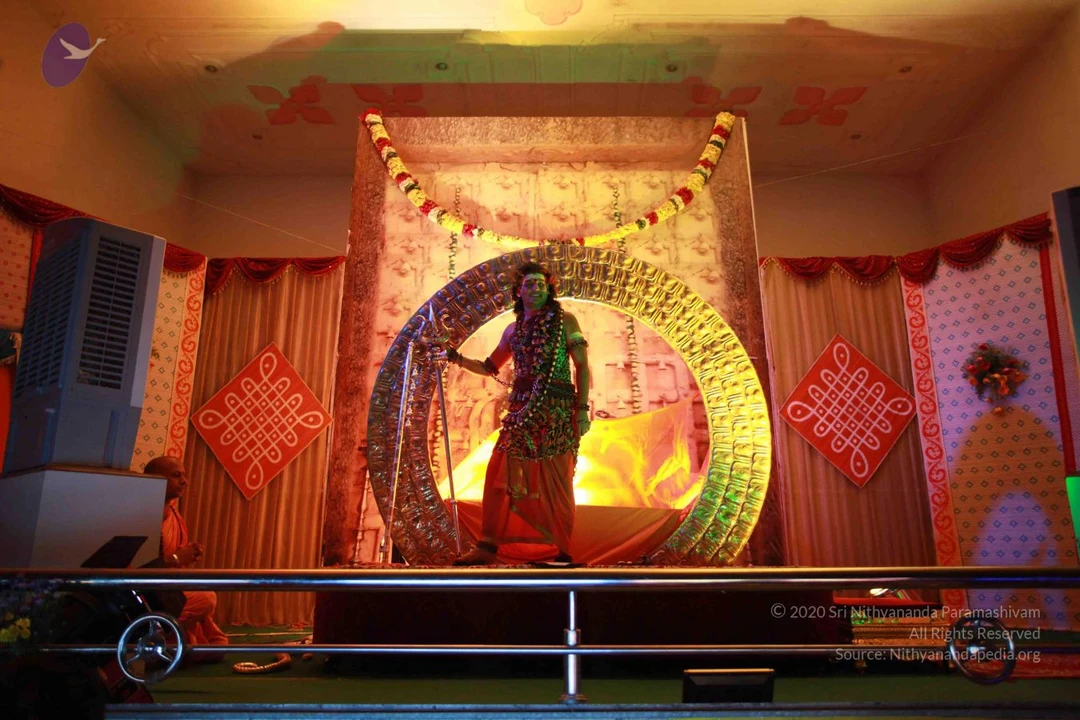
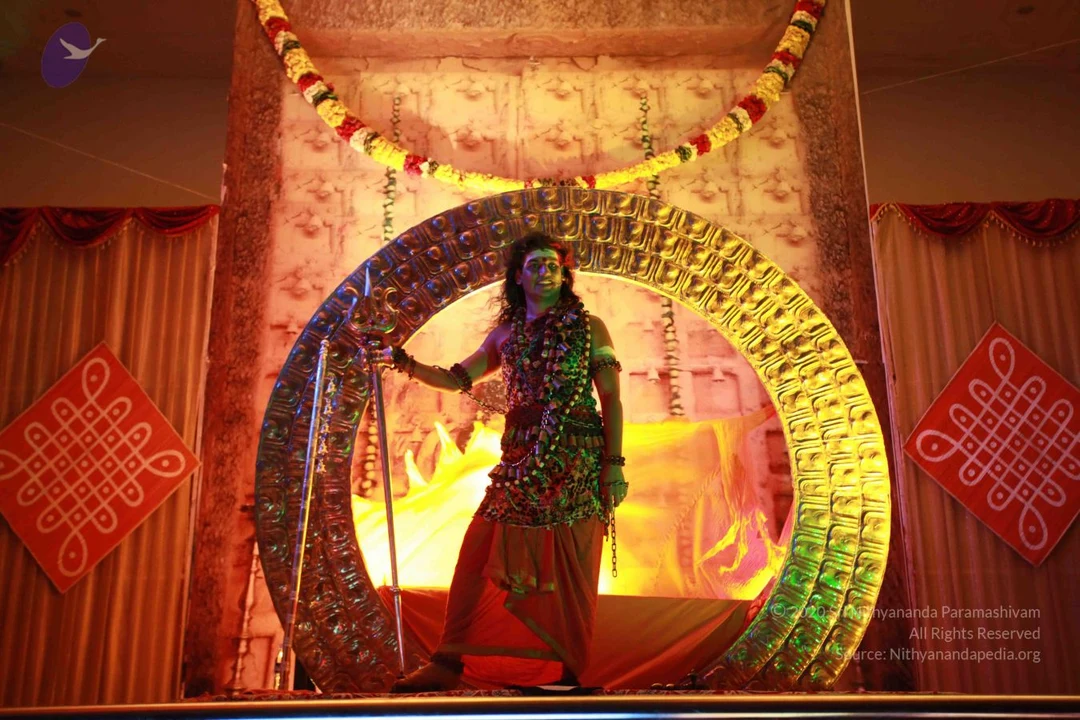
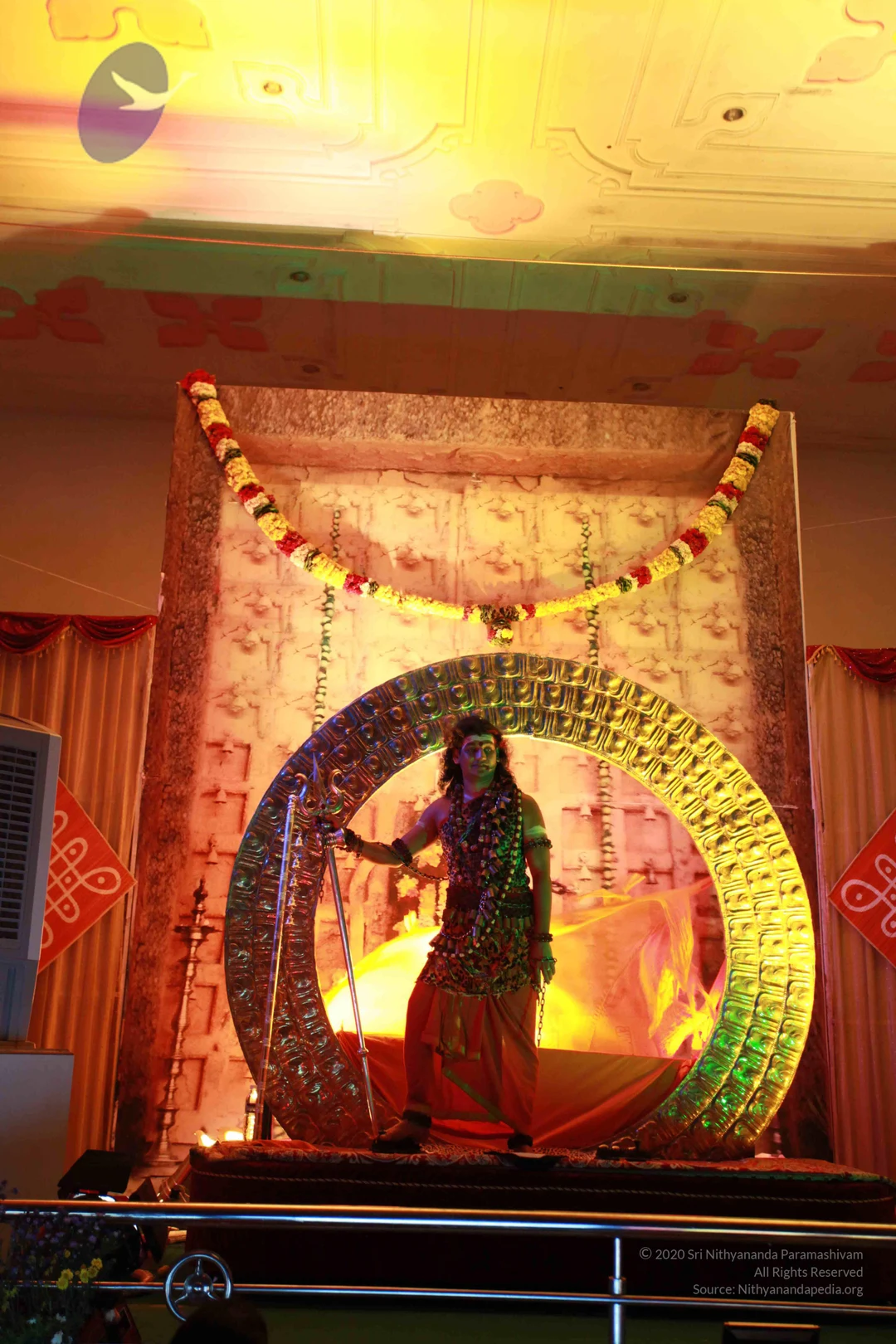
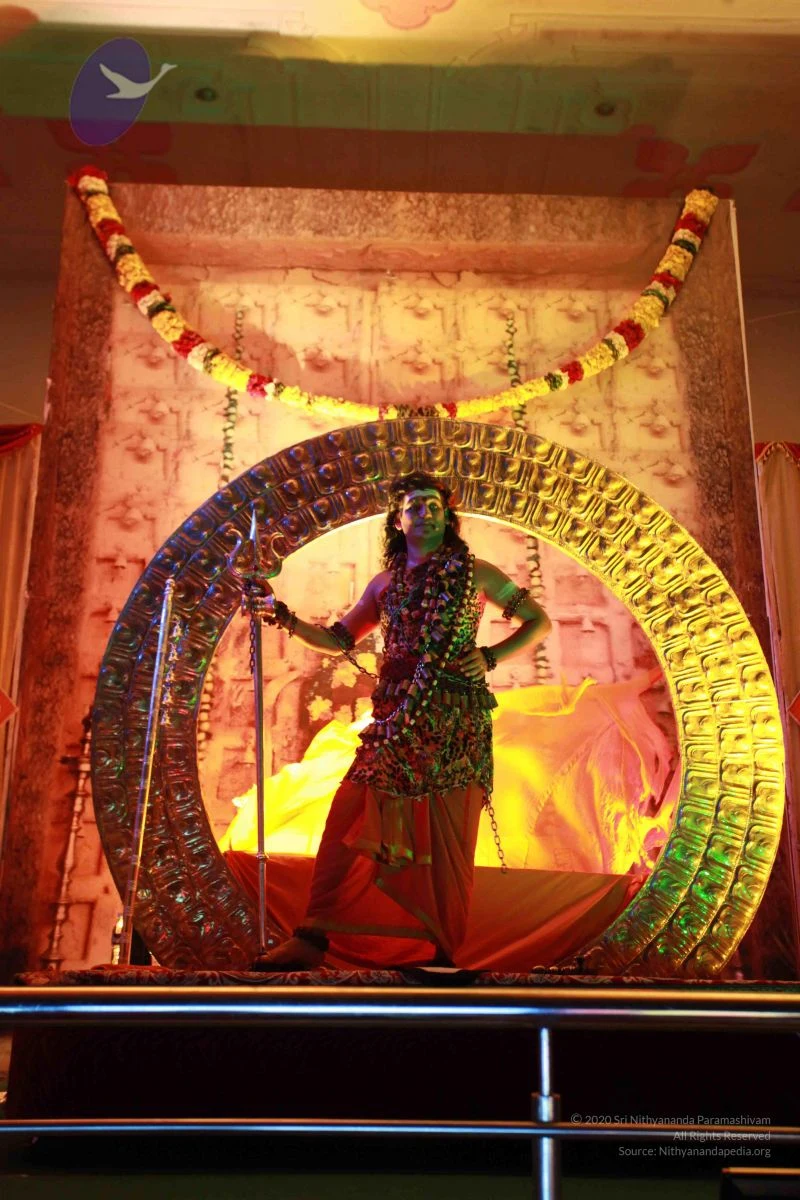
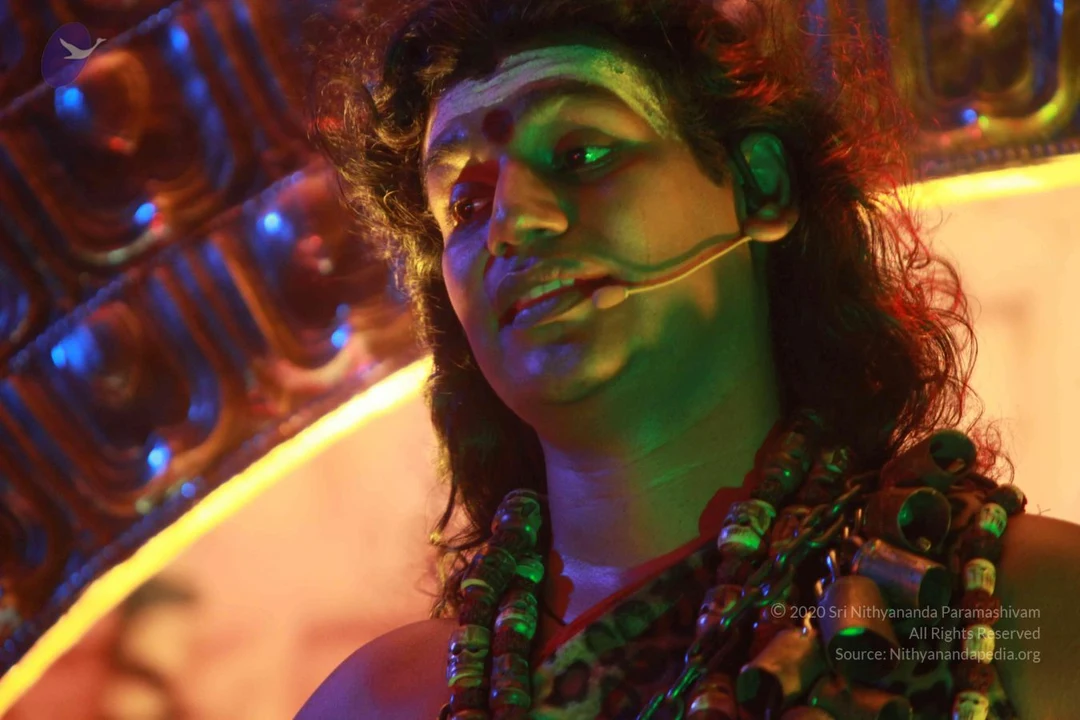
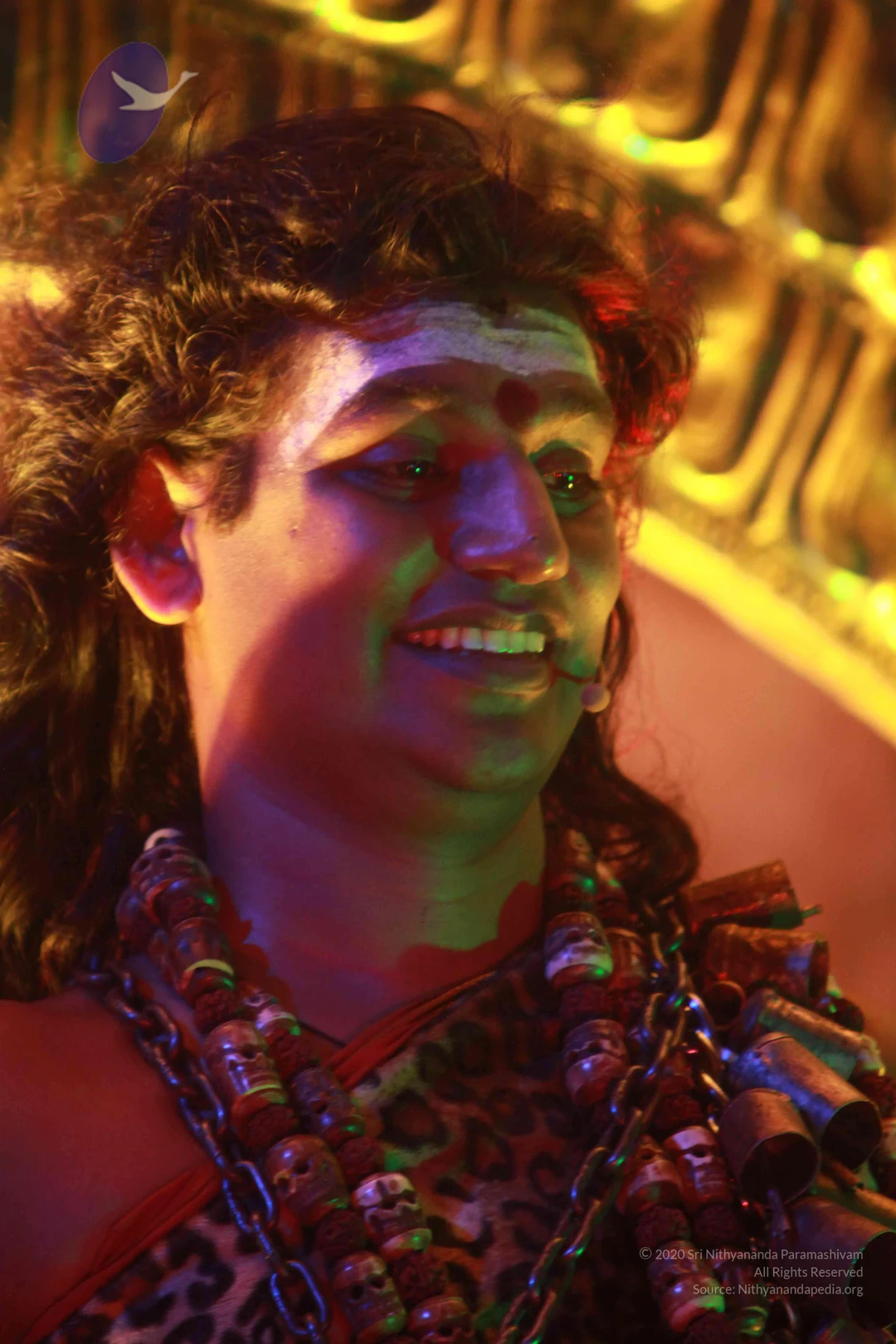
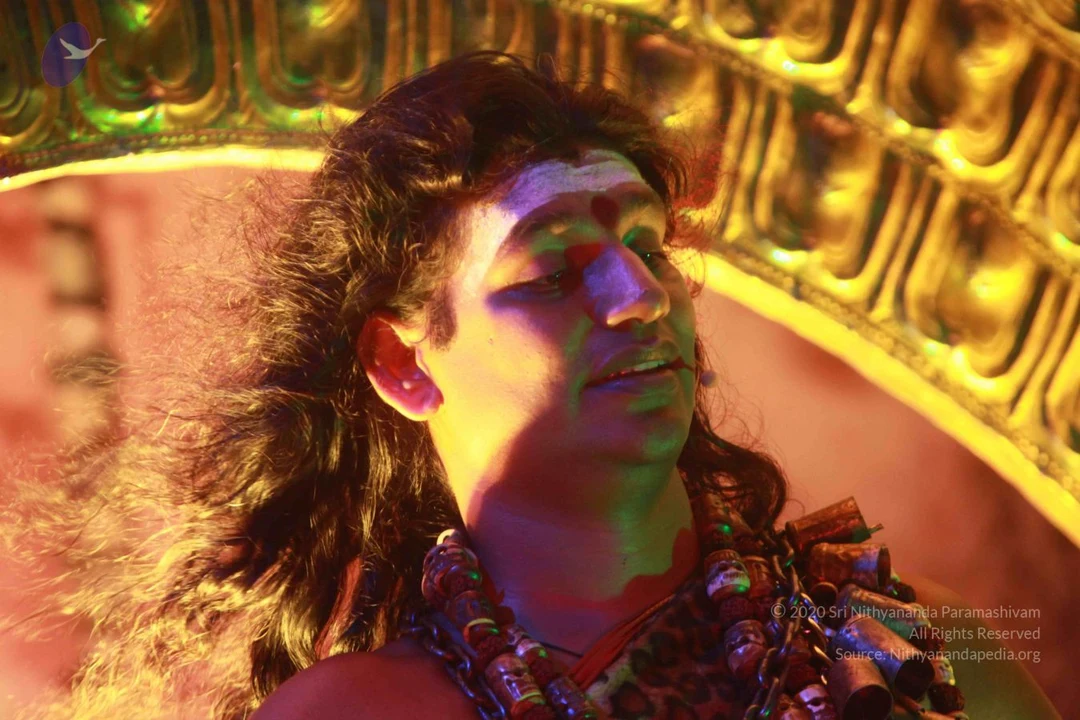
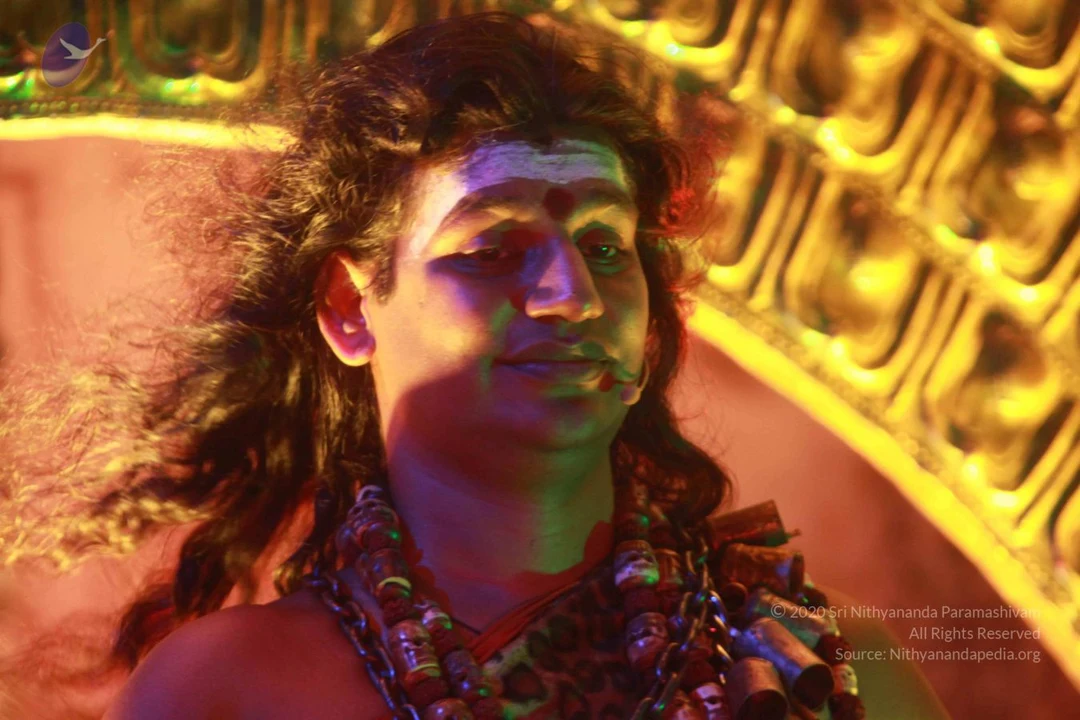
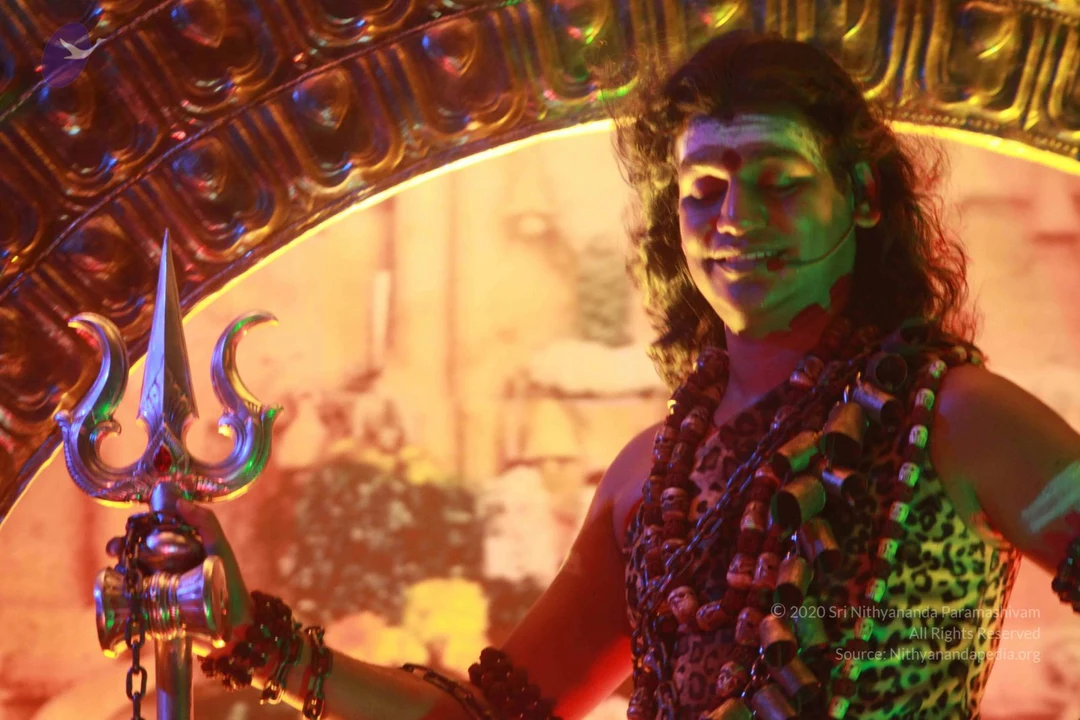
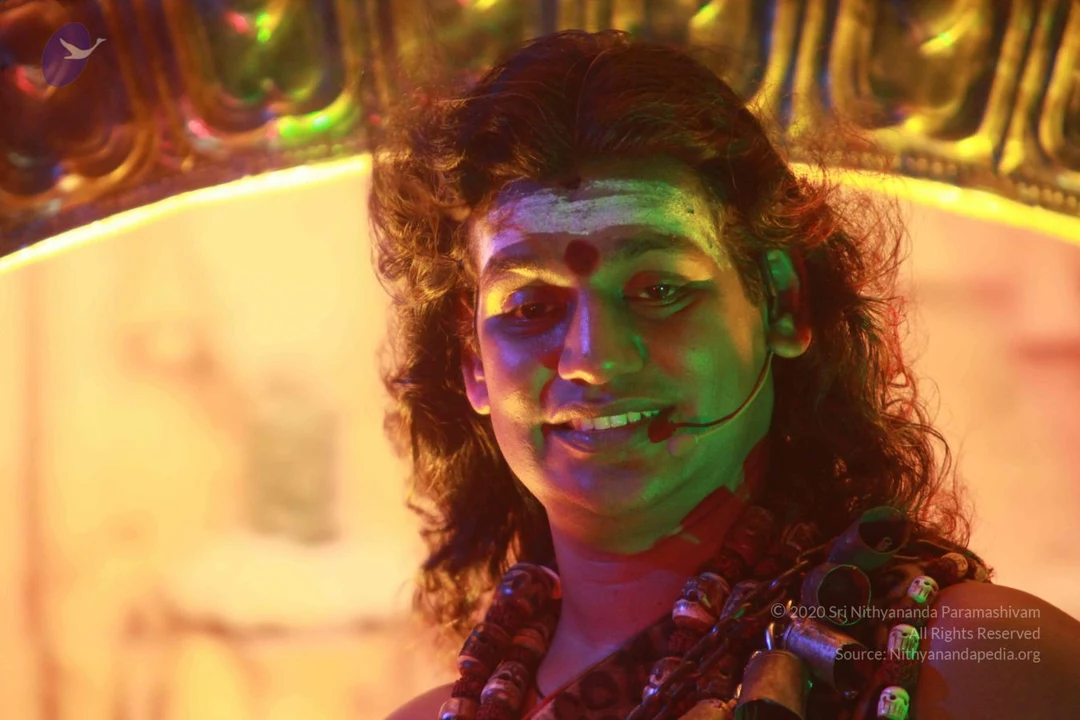
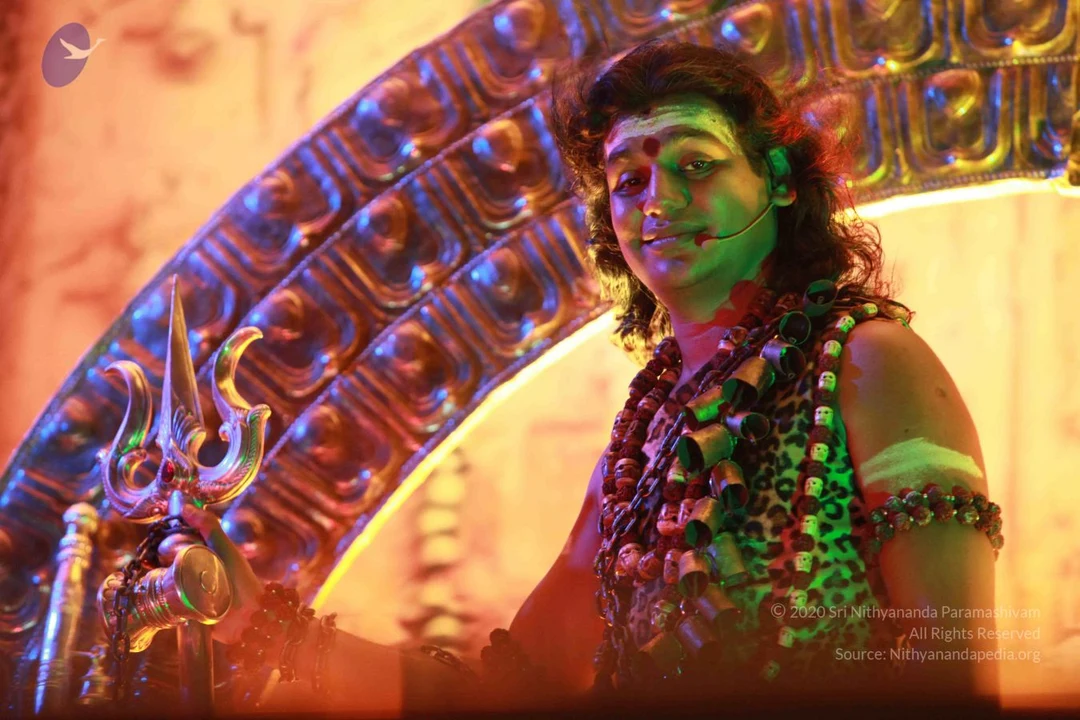
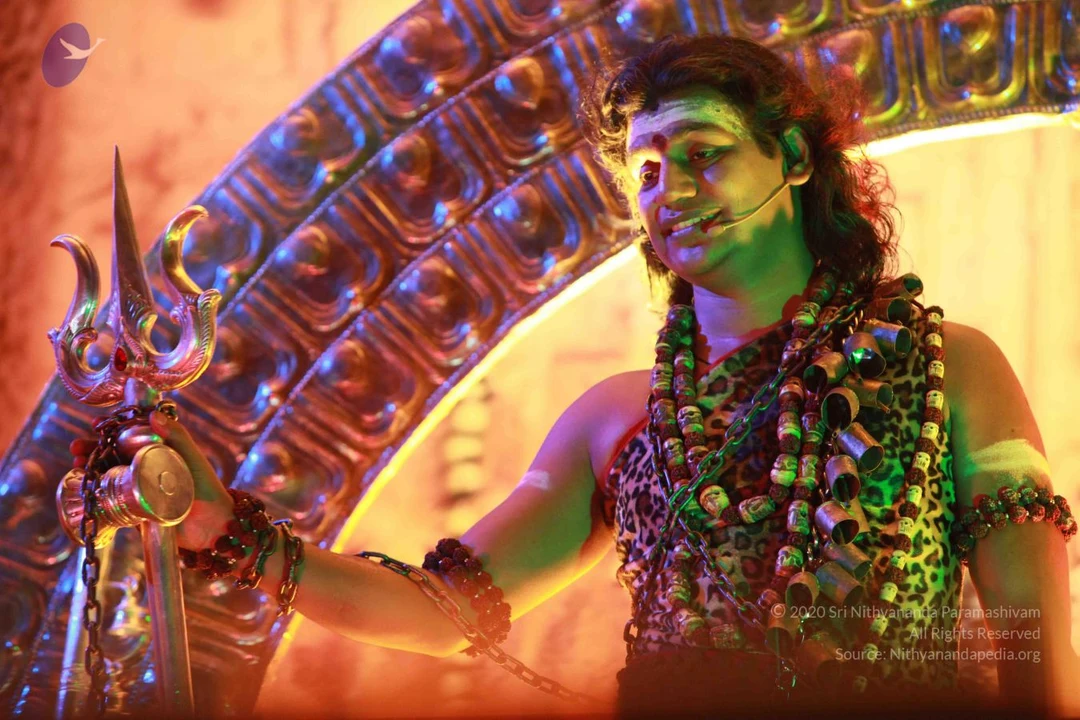
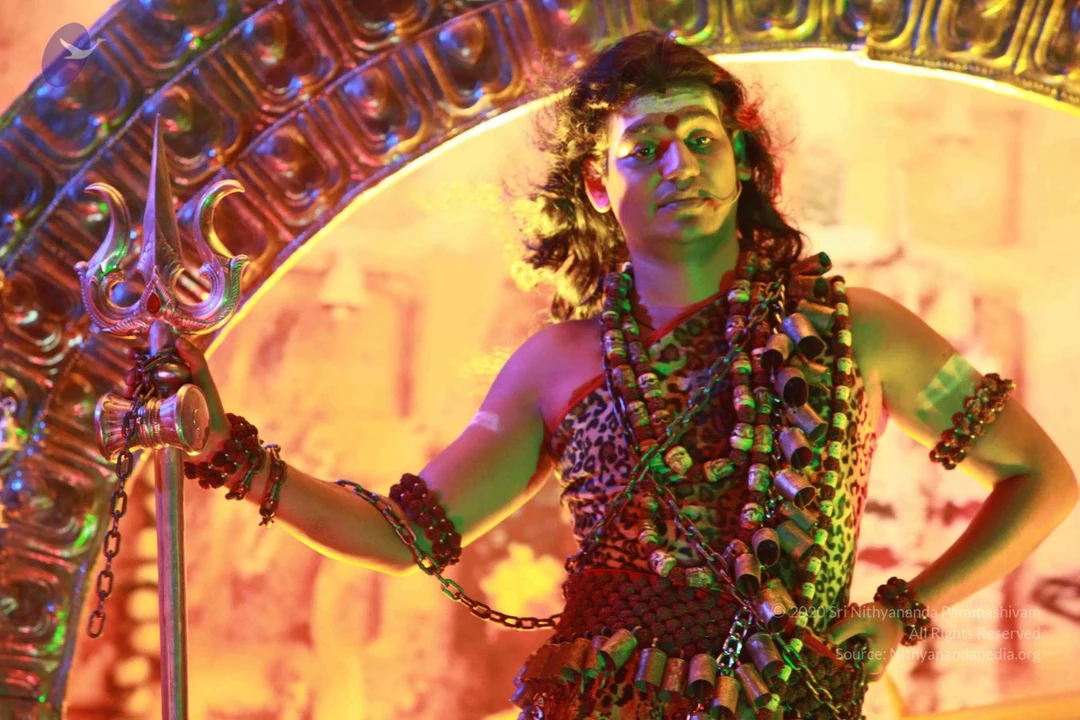
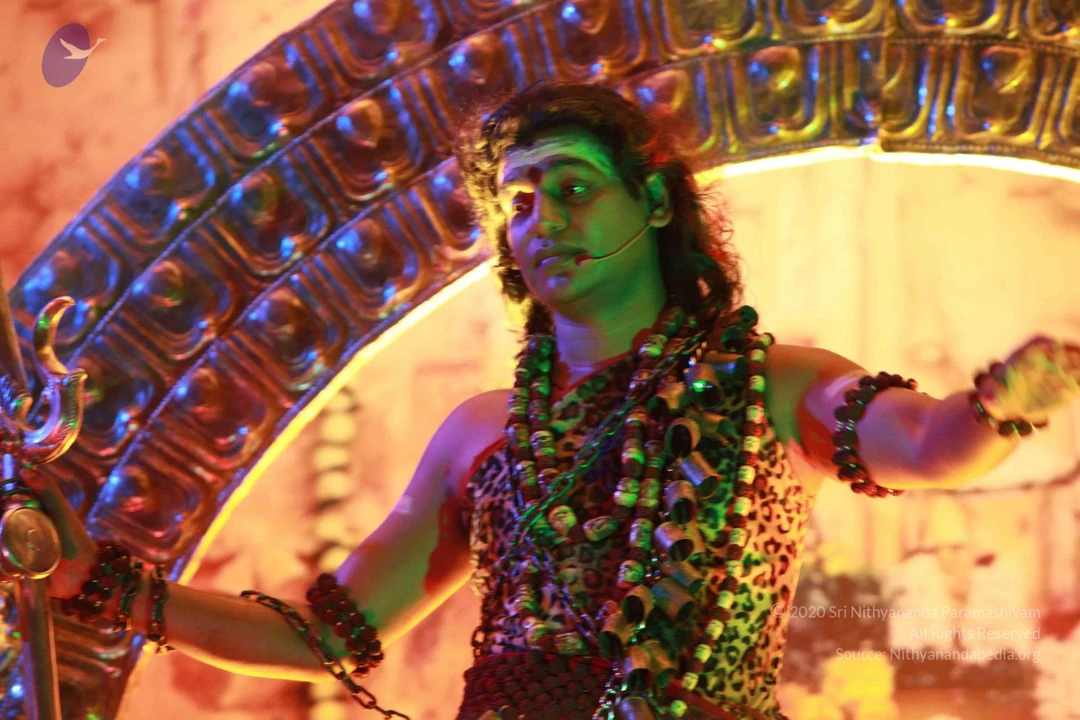
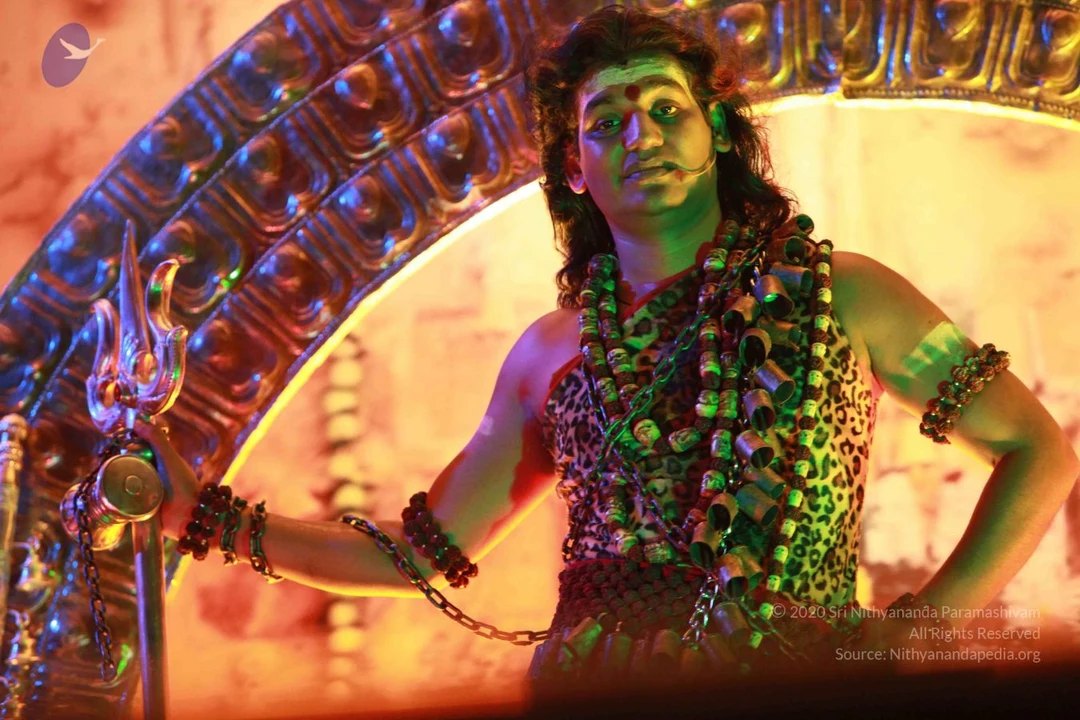
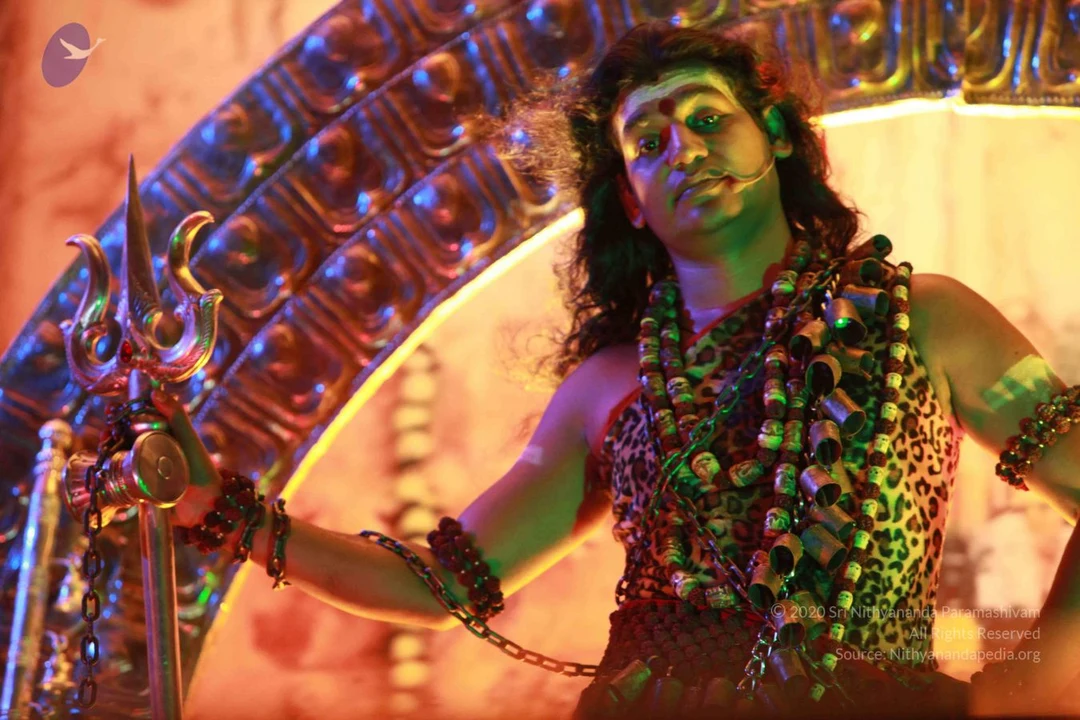
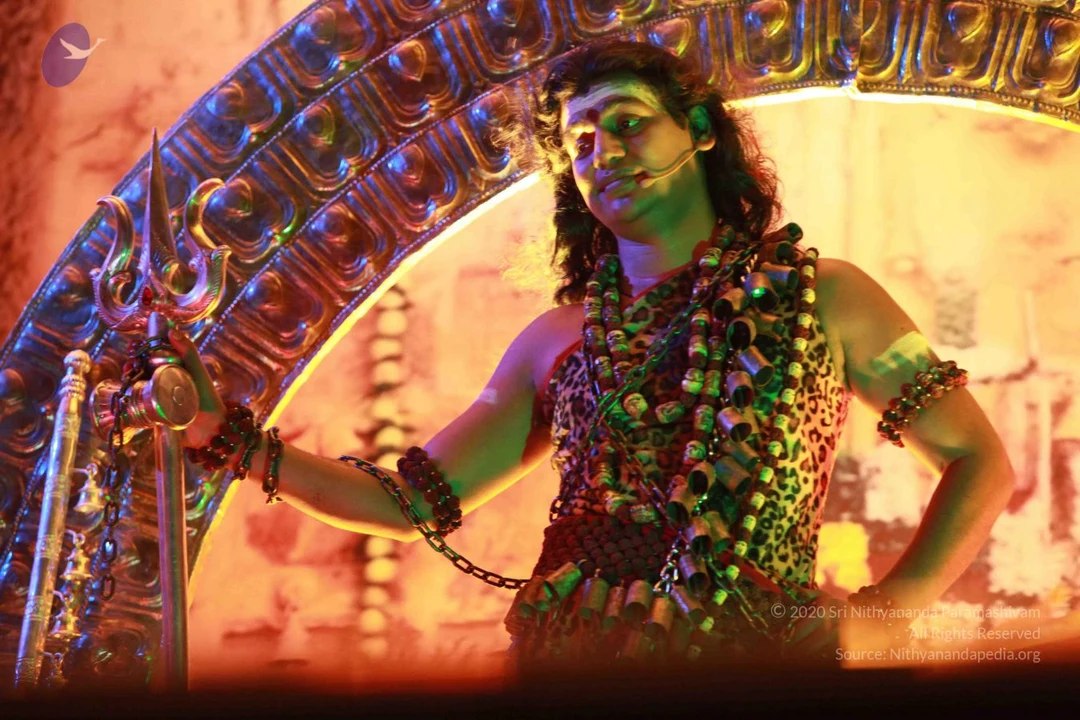
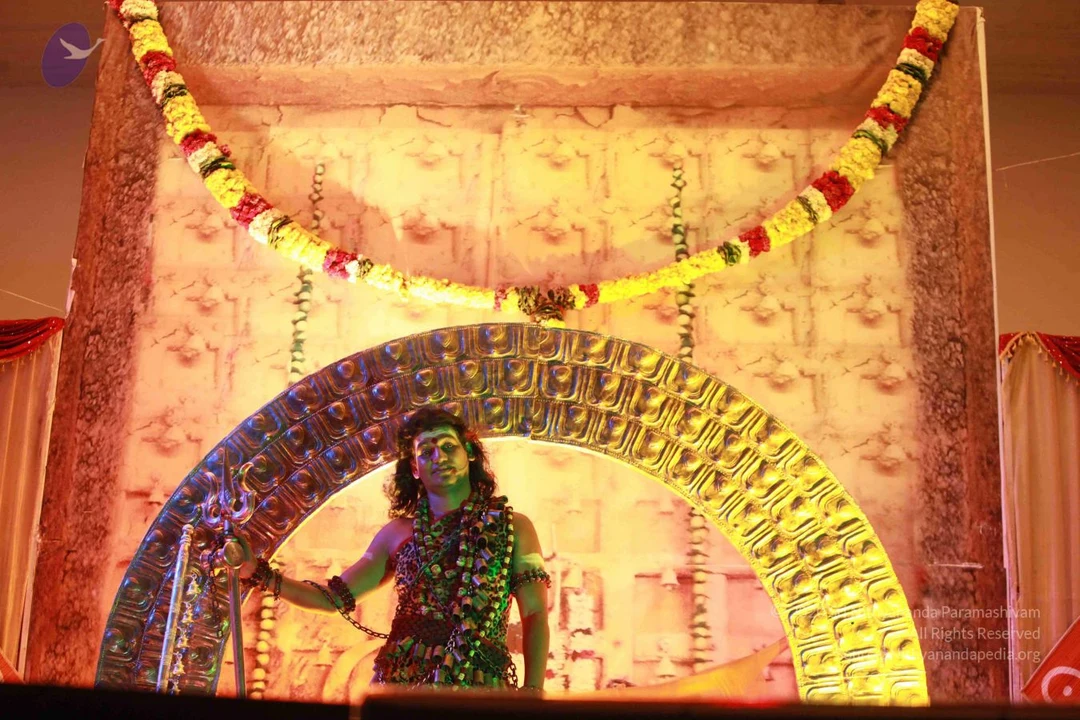
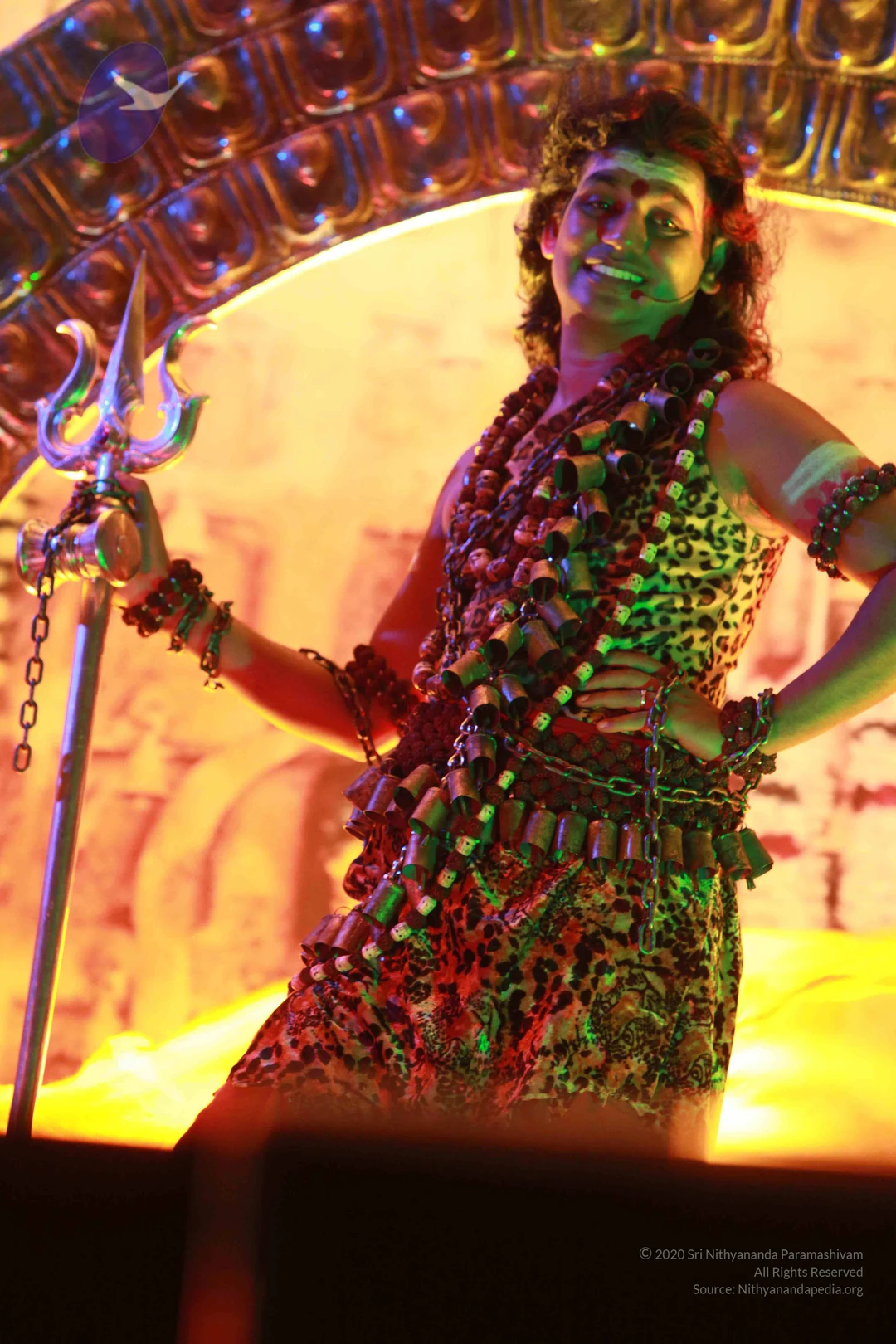
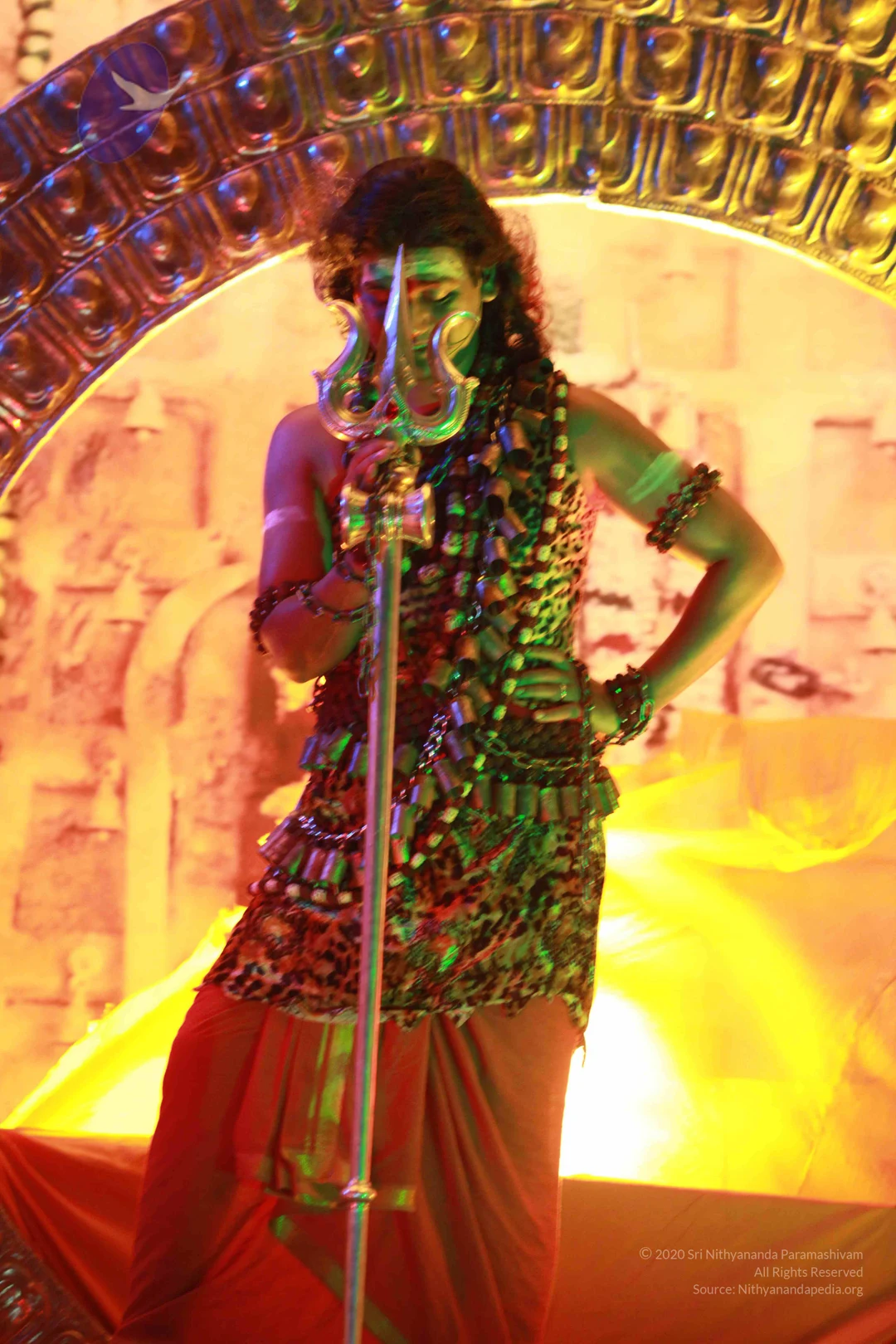
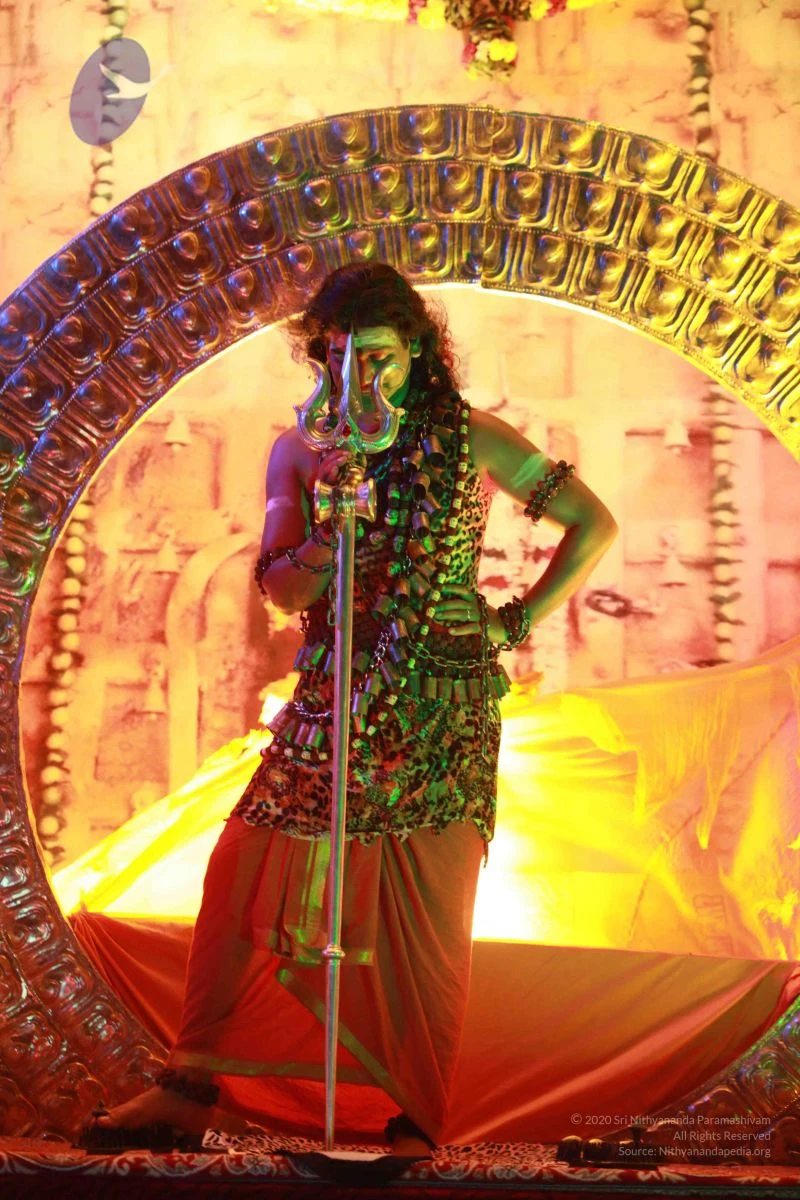
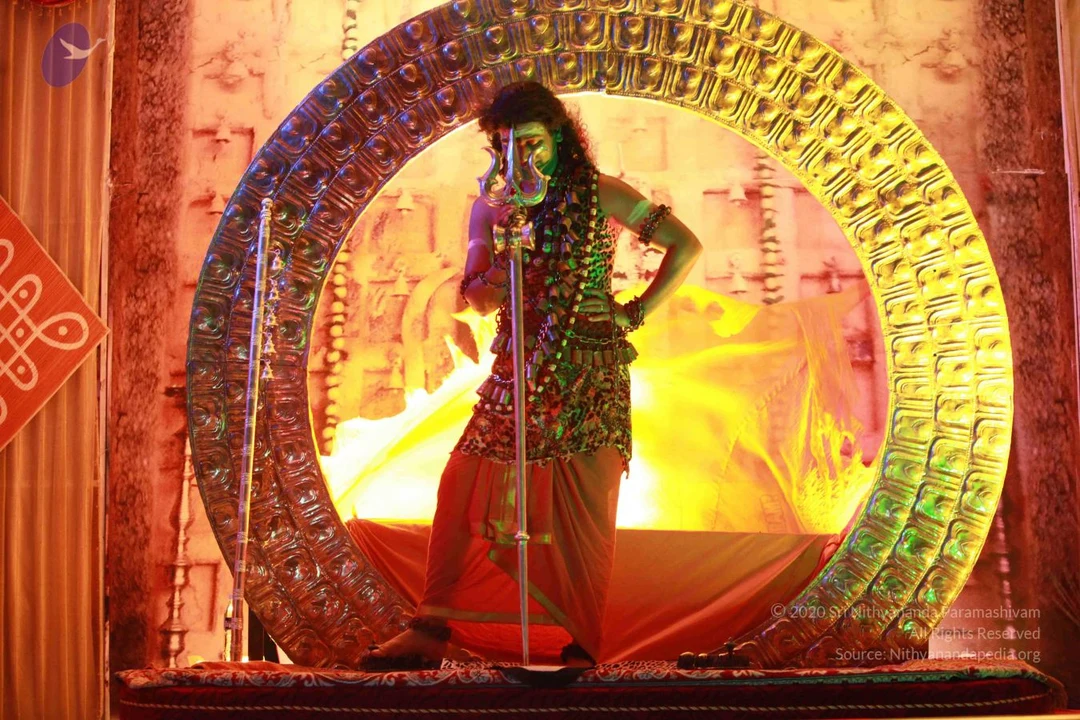
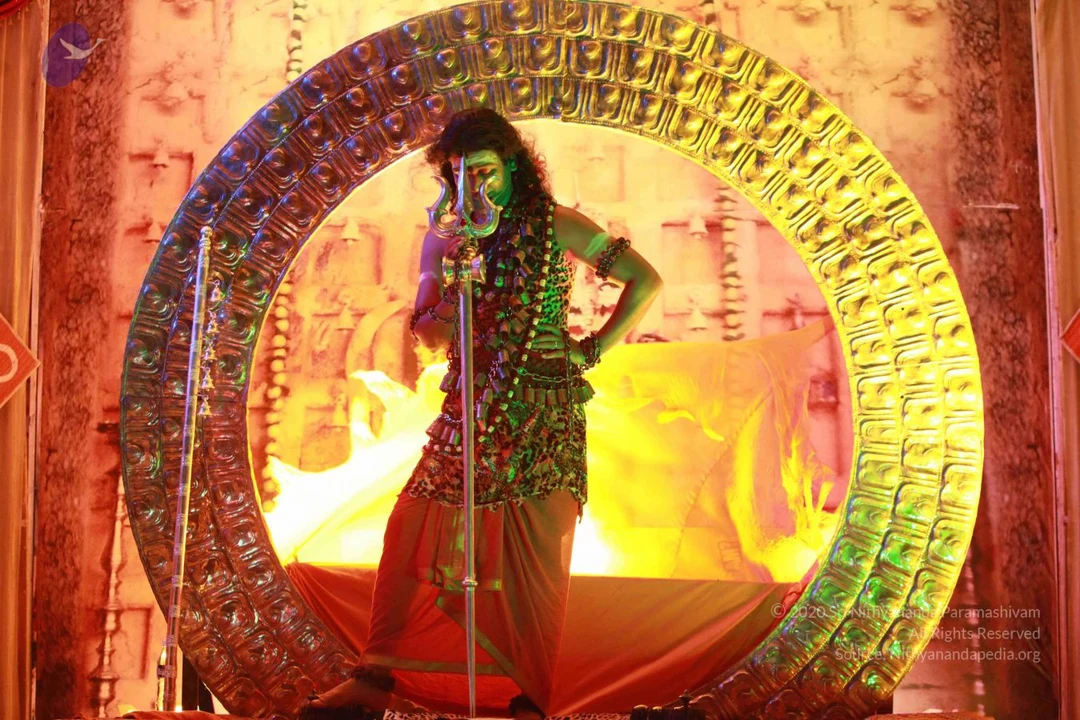
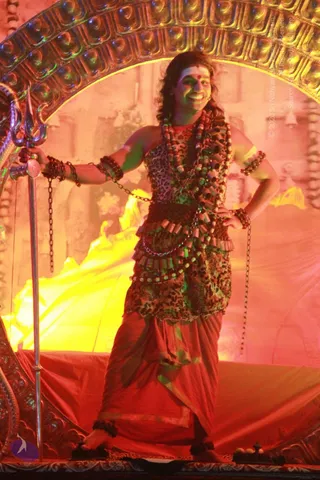
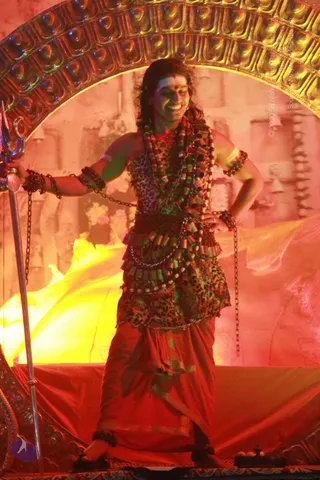
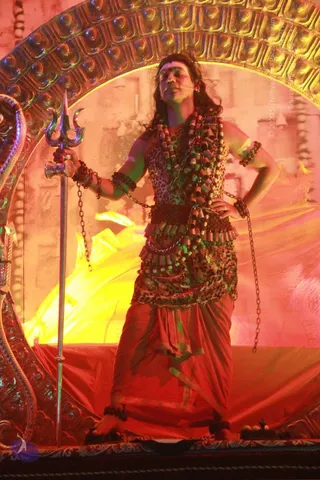
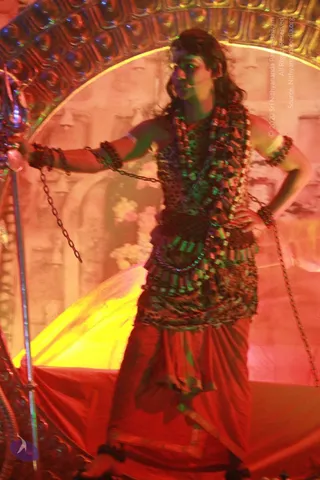
A smiling performer stands on a stage beneath an ornate golden arch, holding a silver trident in his left hand and resting his right hand on his hip. He wears a leopard-print sleeveless top, a red-and-gold dhoti-style skirt, and layered rudraksha-style beaded malas and chains across his chest and waist. Red and white face paint and a red tilak mark his forehead, and wide bangles cover his arms. Warm red and yellow stage lighting and a painted temple backdrop surround him. A few small offerings sit on the stage at his feet. The costume and trident suggest a Shiva-themed role in a theatrical or devotional performance. The figure's appearance is consistent with a dramatic costume rather than a clear identification, so the a person value is unsure.A performer in a theatrical Shiva costume stands on a red stage beside a silver trident, smiling broadly. He has white and red forehead markings, long dark hair, and wears layers of rudraksha-style beaded malas, a leopard-print bodice, a beaded belt and a red-orange dhoti, with bangles on his wrists and arms. Behind him is an ornate golden arched backdrop lit with warm red and yellow light and a billowing yellow cloth.A standing figure in a golden ornate circular arch framed by flames and warm red-orange lighting. The figure wears a red dhoti-like lower garment, a patterned sleeveless top, a long necklace of rudraksha beads and malas, layered metal armbands and chain bracelets, and holds a trident on a long staff at the left. A large ceremonial hoop with carved metallic relief surrounds the figure, with a fire or flame backdrop behind. Presentation cues match Swamiji (probable), with long swept-back hair, rudraksha malas and ornate ceremonial dress, posed as a stage tableau at a festival-style event.A photograph of a smiling man in a theatrical Shiva-style costume stands in front of an ornate golden arch with a glowing, pink-and-yellow stage backdrop. He holds a silver trident in his right hand and rests his left hand on his hip. He wears a leopard-print garment, layers of rudraksha-style beads and bead malas, metal chains and bangles on his arms, and a red bindi with a tilak on his forehead. Behind him a yellow cloth flutters, and a dark background shows sculpted pillars. The image appears to be a stage performance or dramatic display rather than a formal satsang. One person is visible.A man stands on a raised stage in a dramatic Shiva-themed costume, holding a silver trident in his right hand and resting his left hand on his hip. He wears long dark wavy hair, a leopard-print tunic with layered rudraksha-style beads and a dark wrapped belt, chains draped across his shoulders and wrists, and a red-orange dhoti. Behind him is an ornate golden arch and a yellow draped backdrop lit in warm red and yellow light. Appearance-based candidate for a person, performing in a costumed theatrical role with a trident and bead ornaments.A performer in a theatrical costume stands on a red-draped stage under warm pink and yellow lights, one hand resting on a hip and the other gripping a tall metal staff. The figure wears a sleeveless bodice and wraparound skirt of red cloth covered with dark chains, beaded strands and many long necklaces, with chain bracelets on the arms and feet. Behind is an ornate golden arch with a painted temple-like backdrop and floral decoration.

NIGHT-MEDITATION

31 photosSource gallery
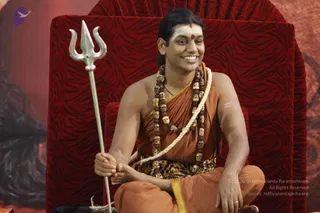
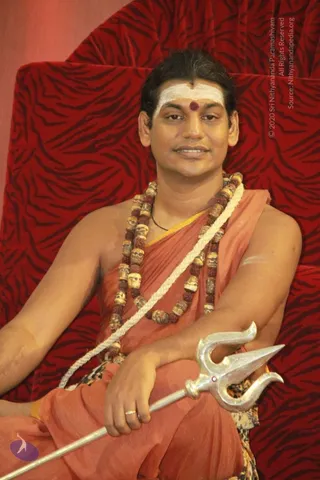
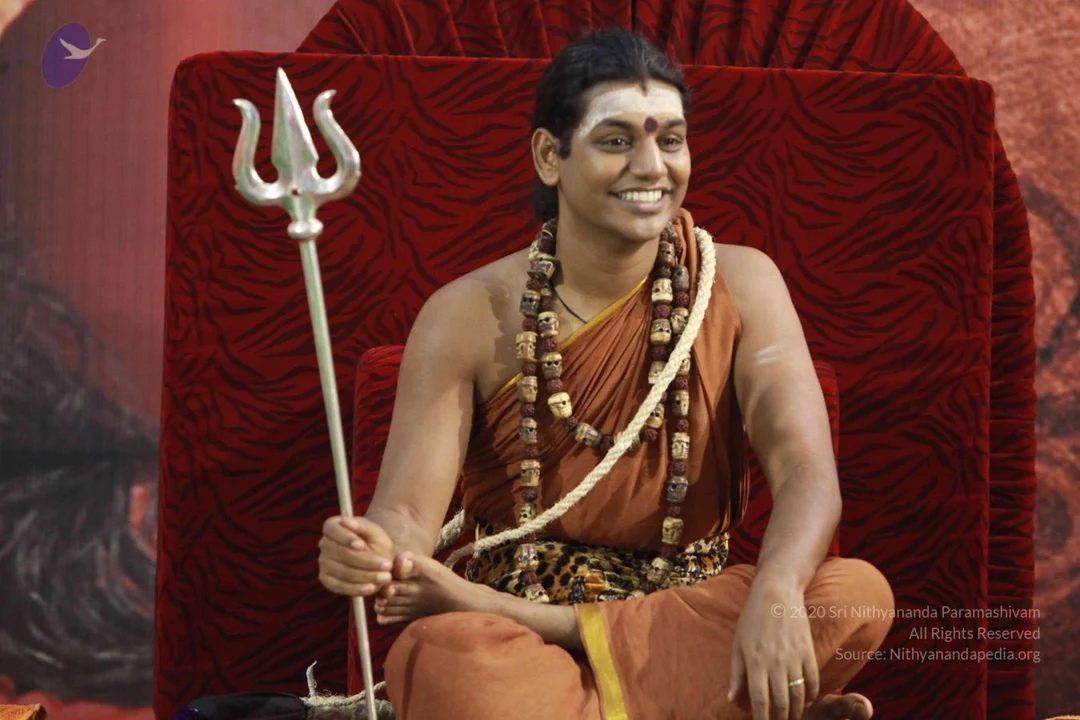
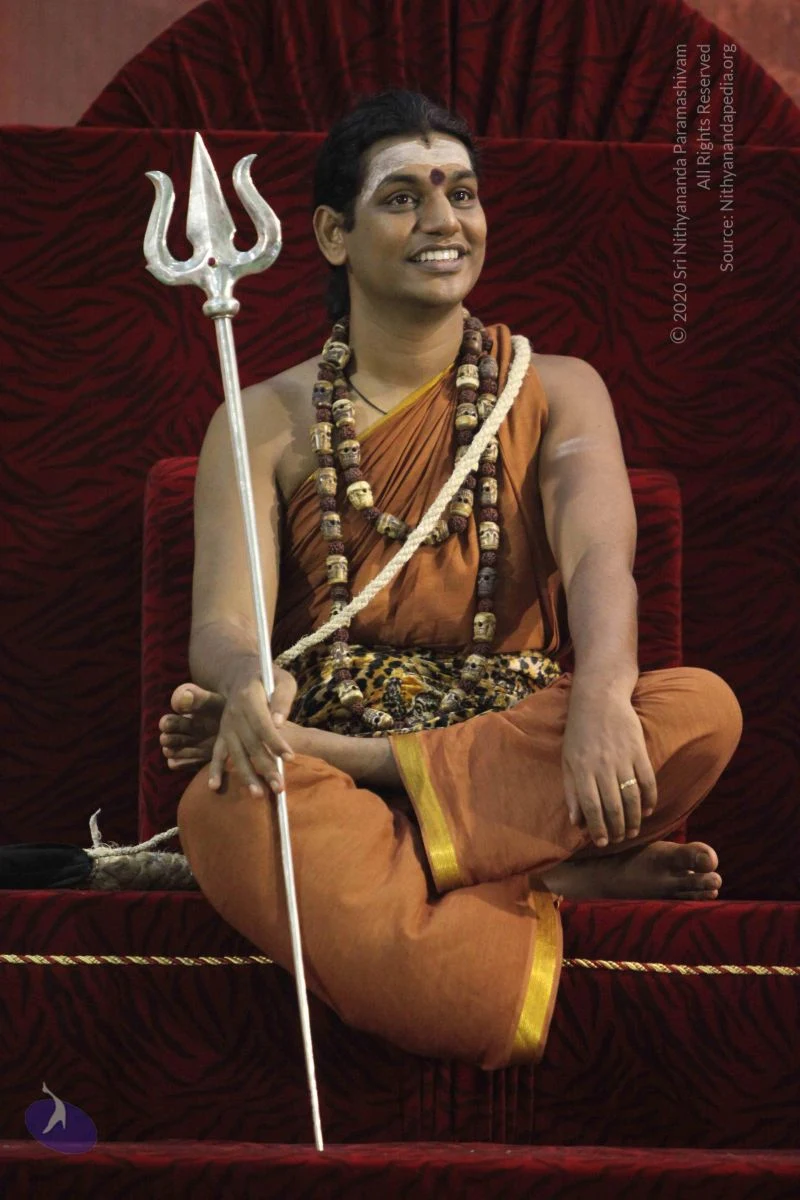
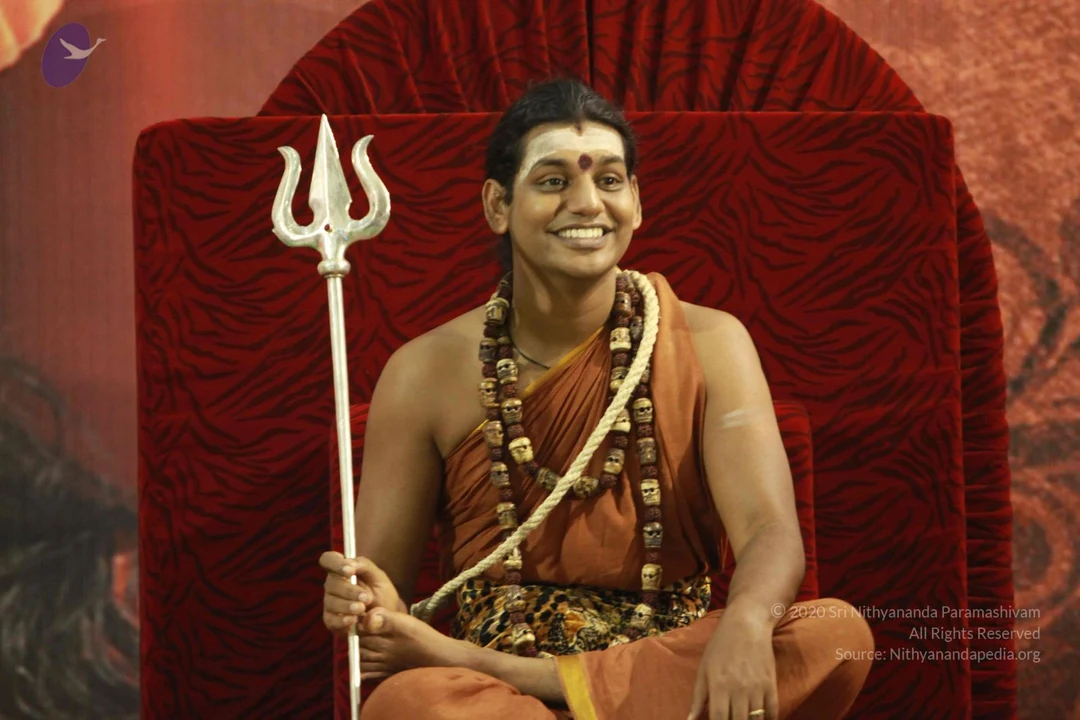
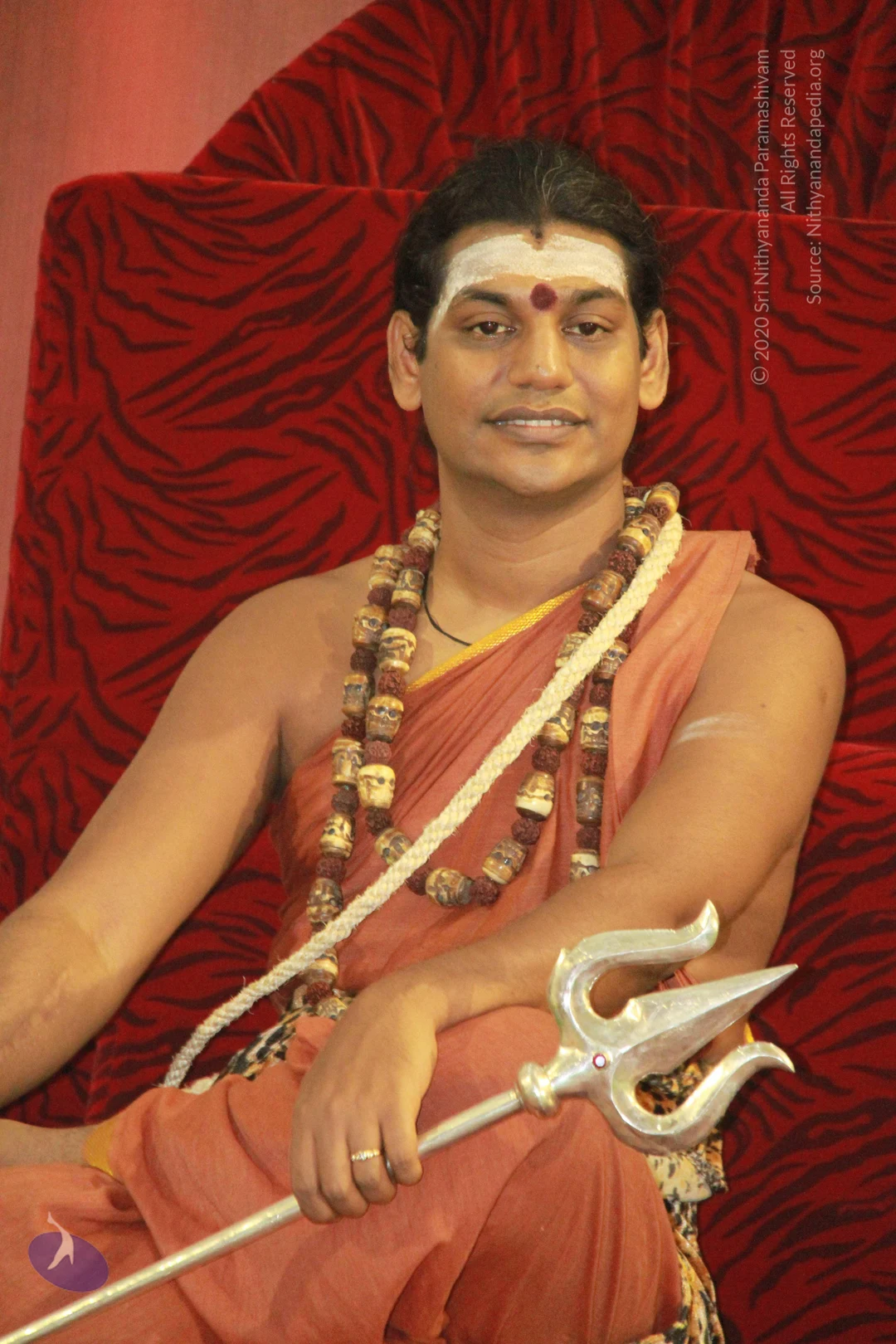
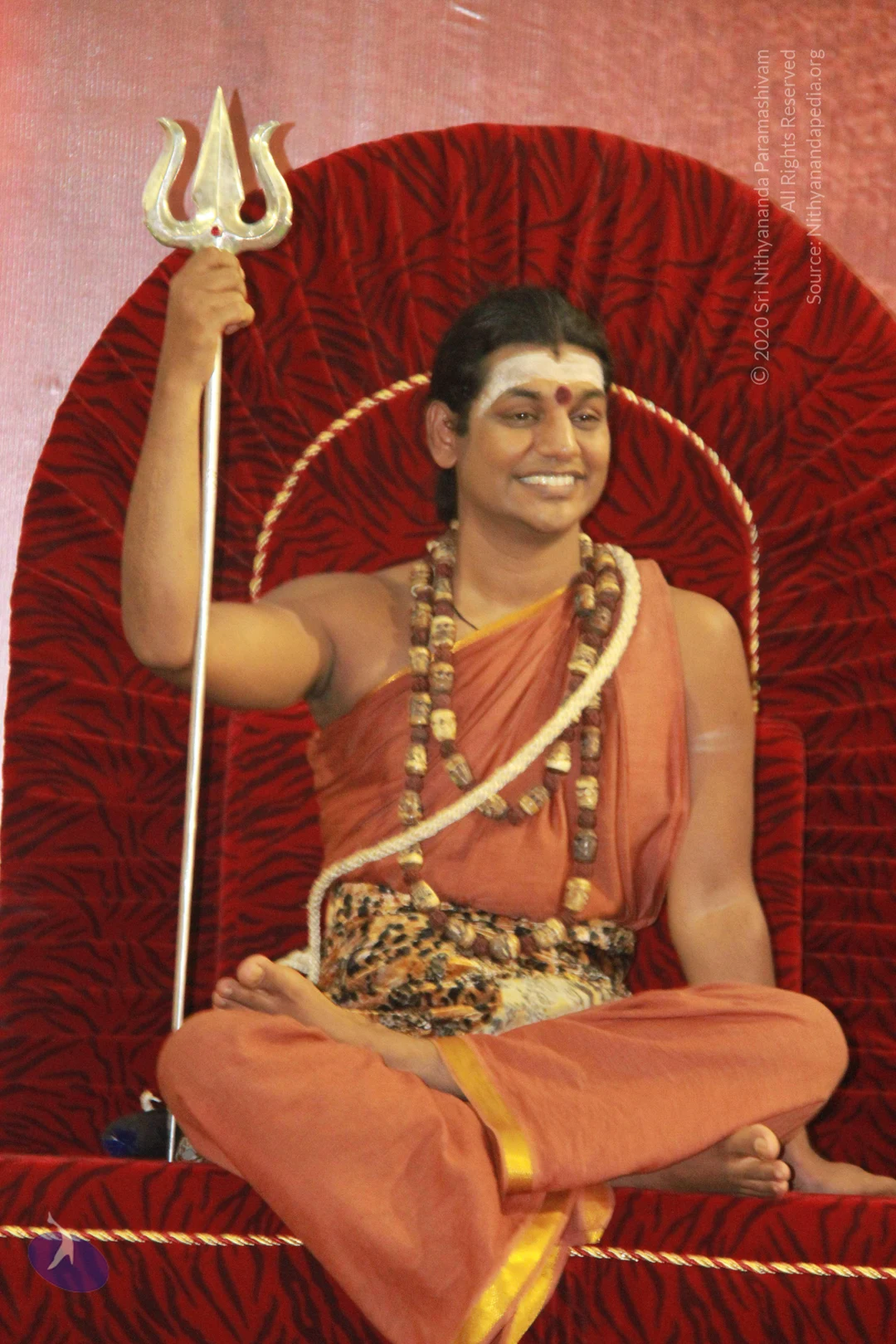
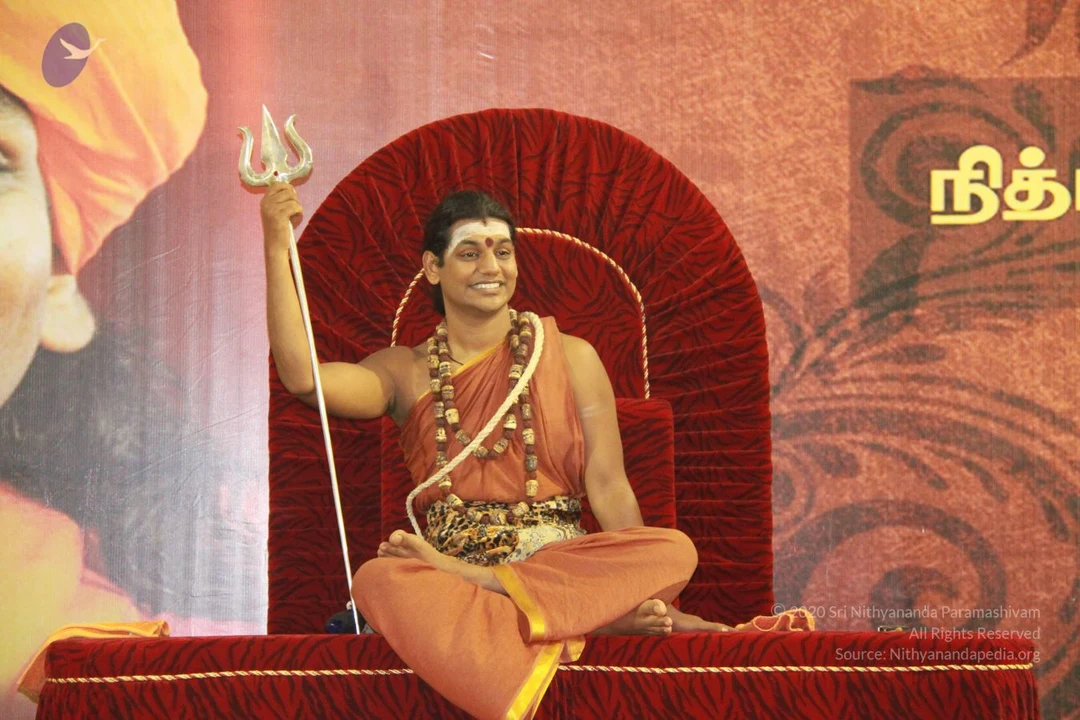
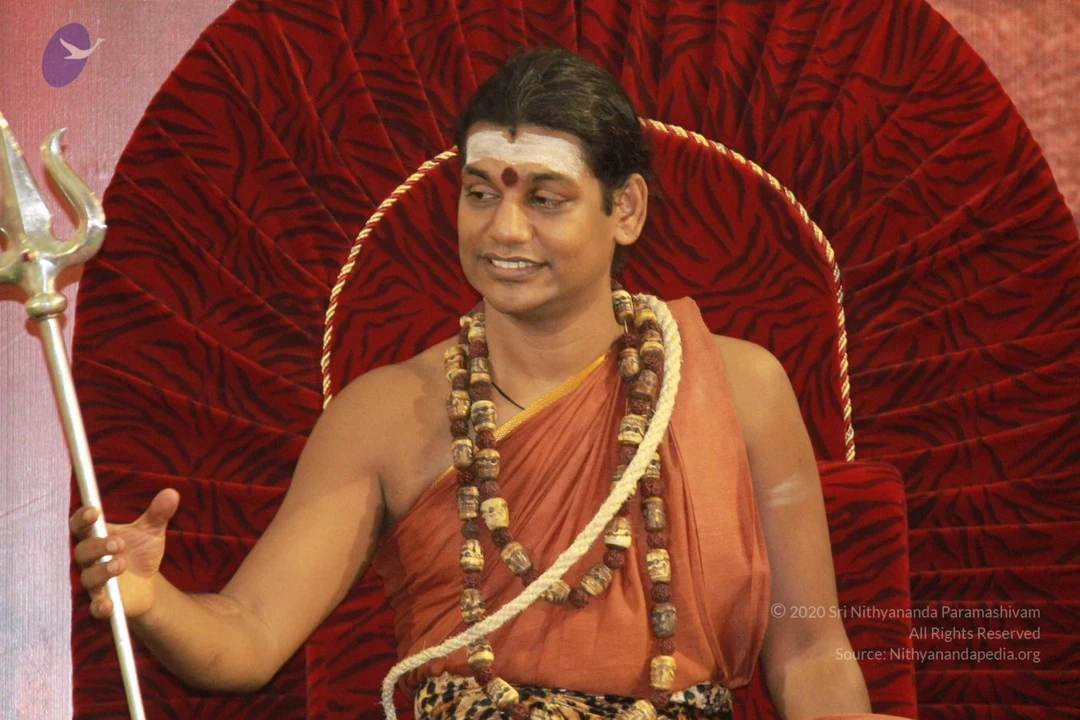
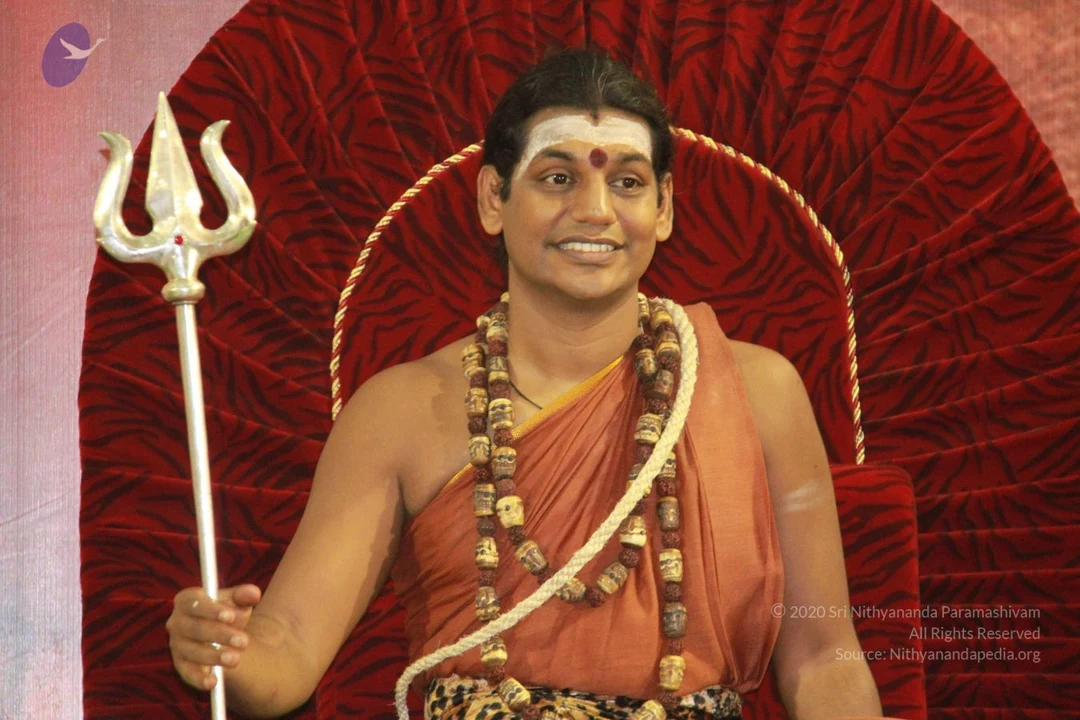
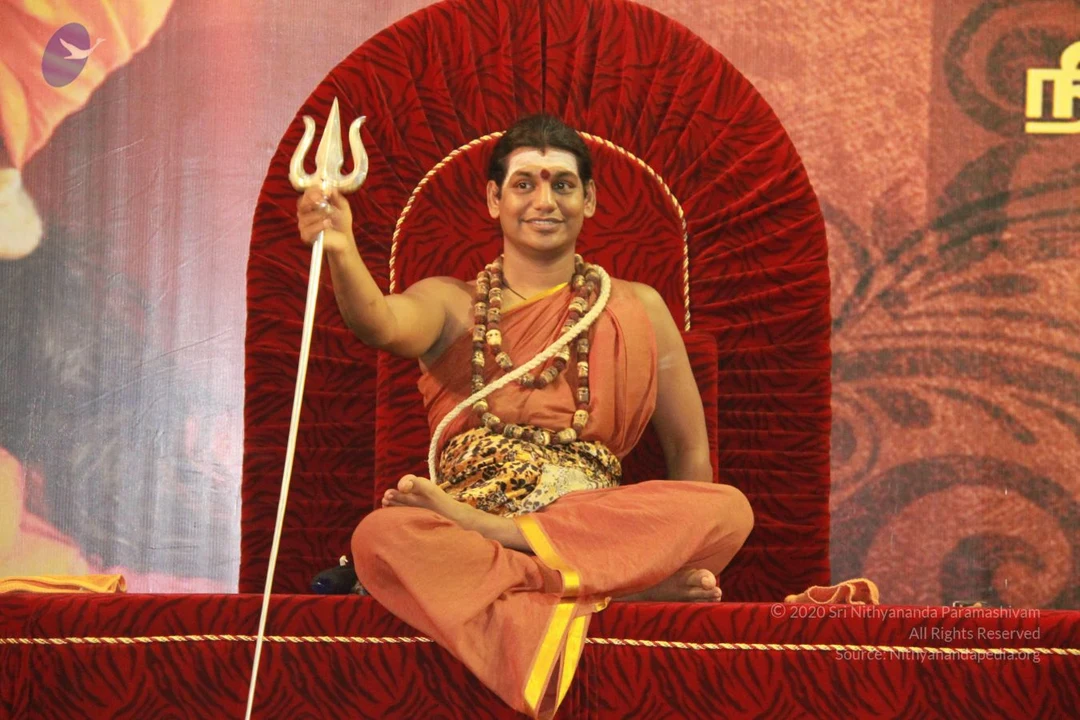
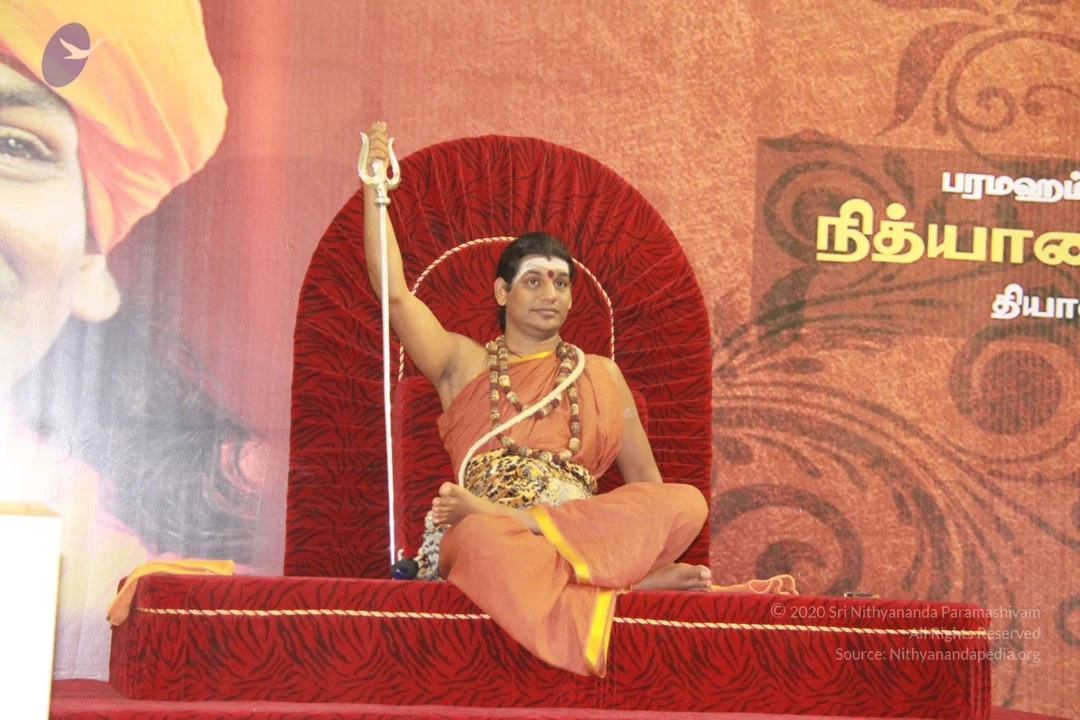
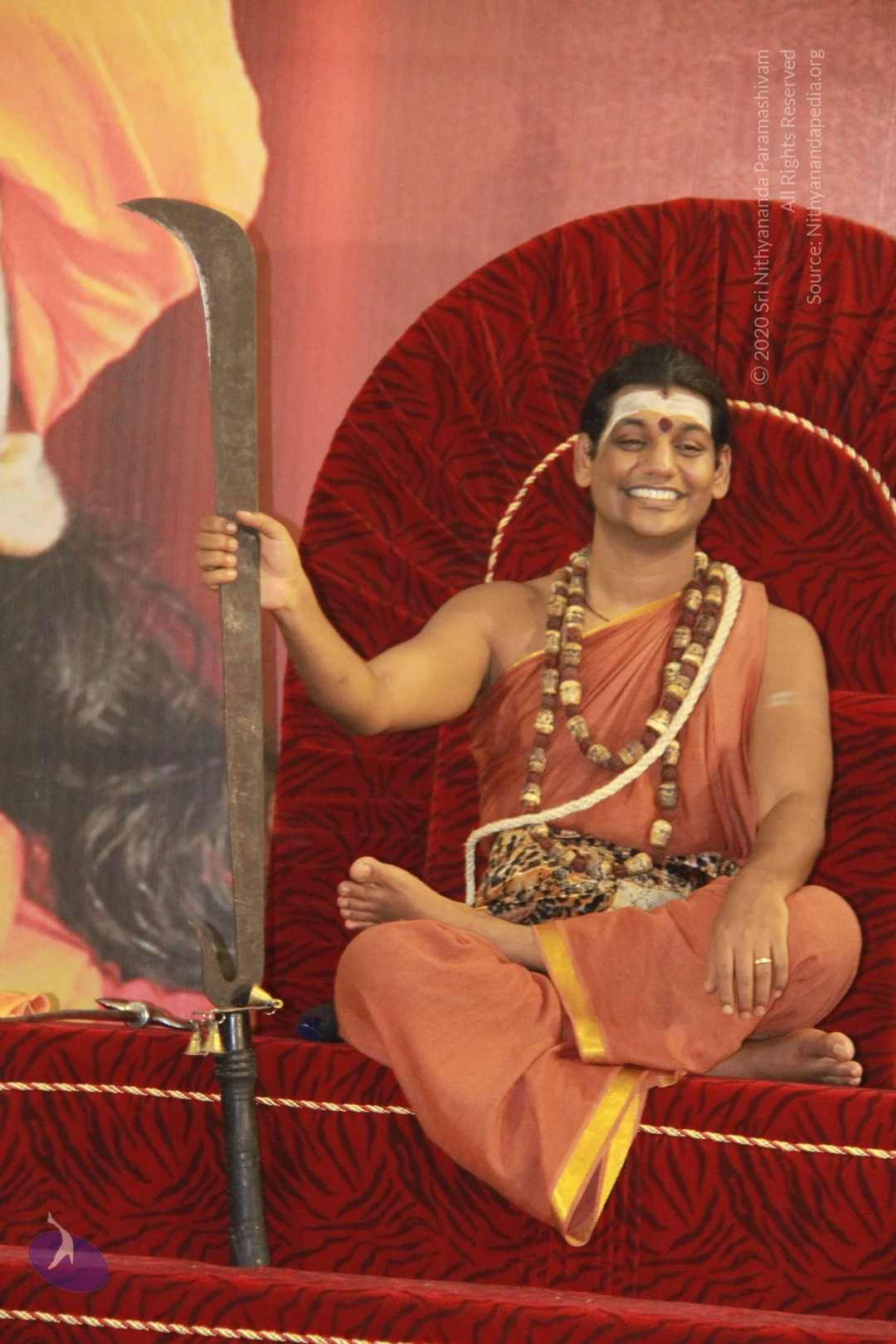
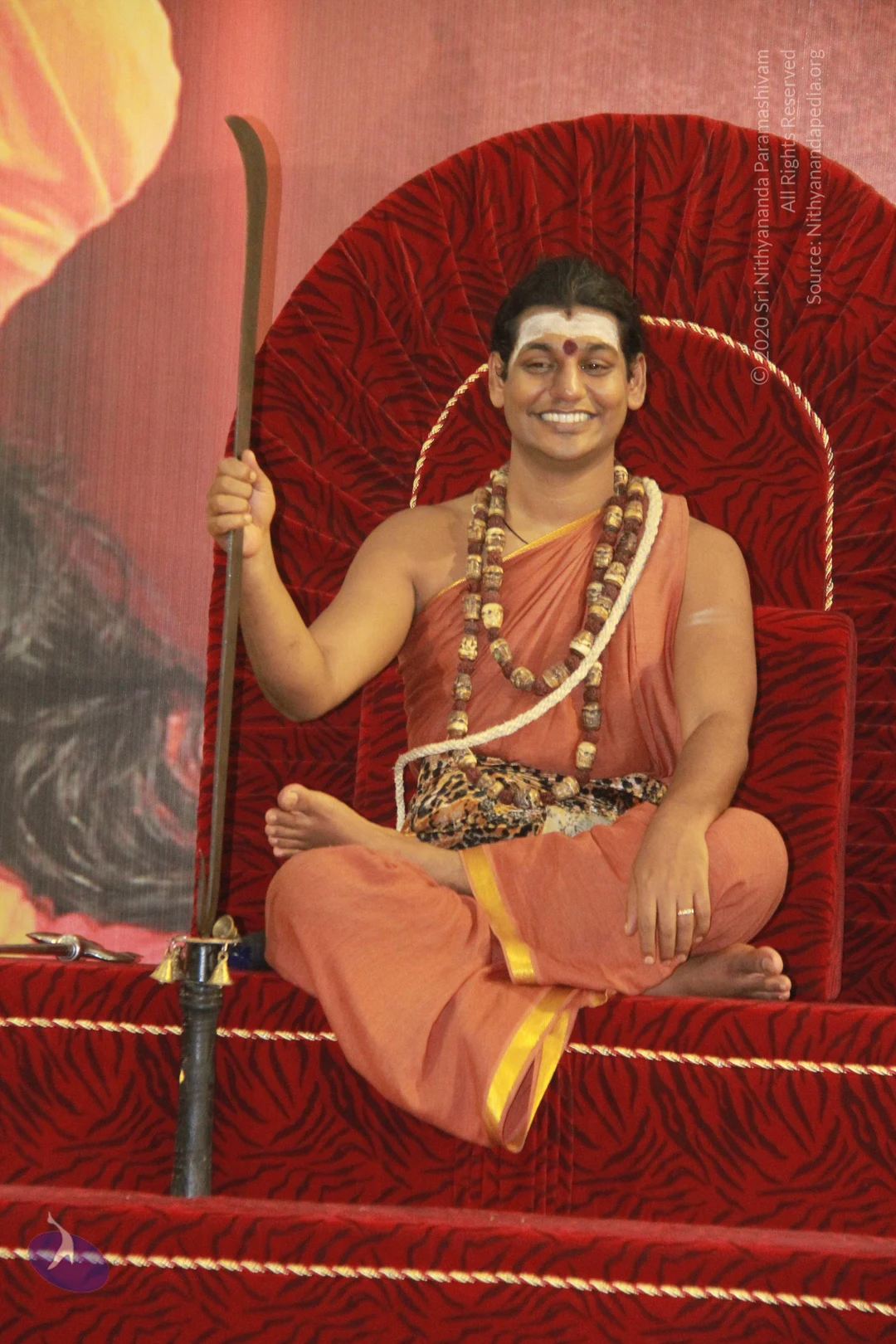
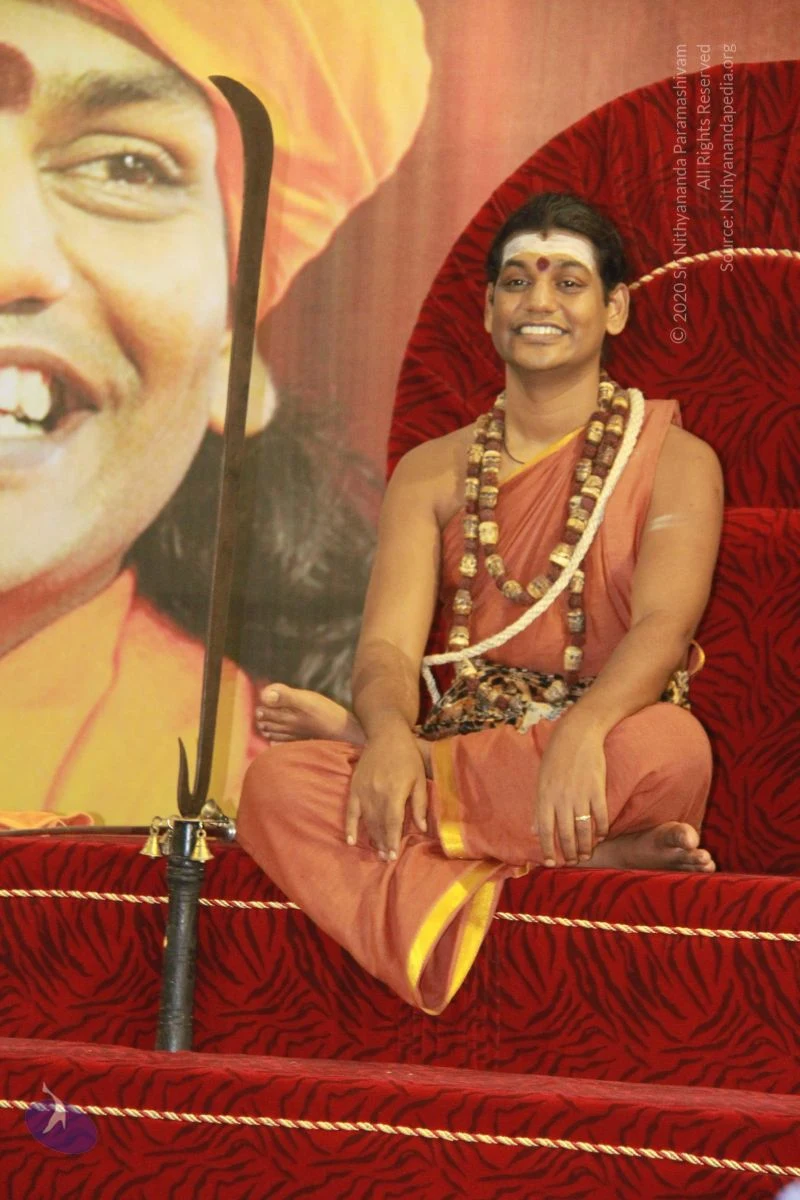
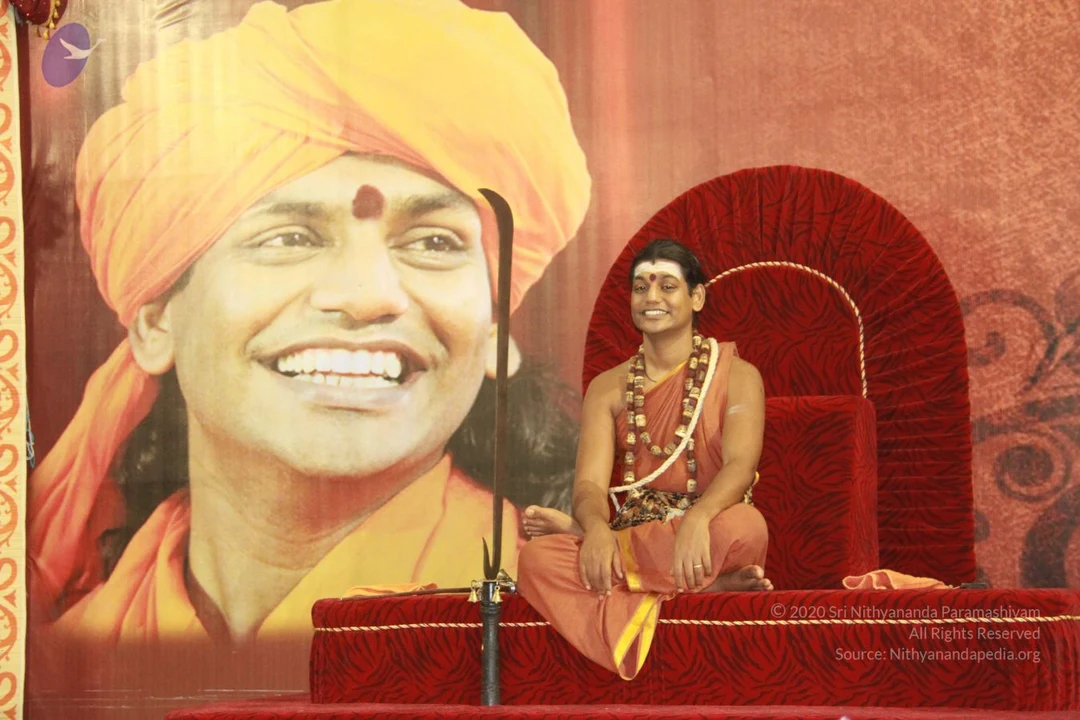
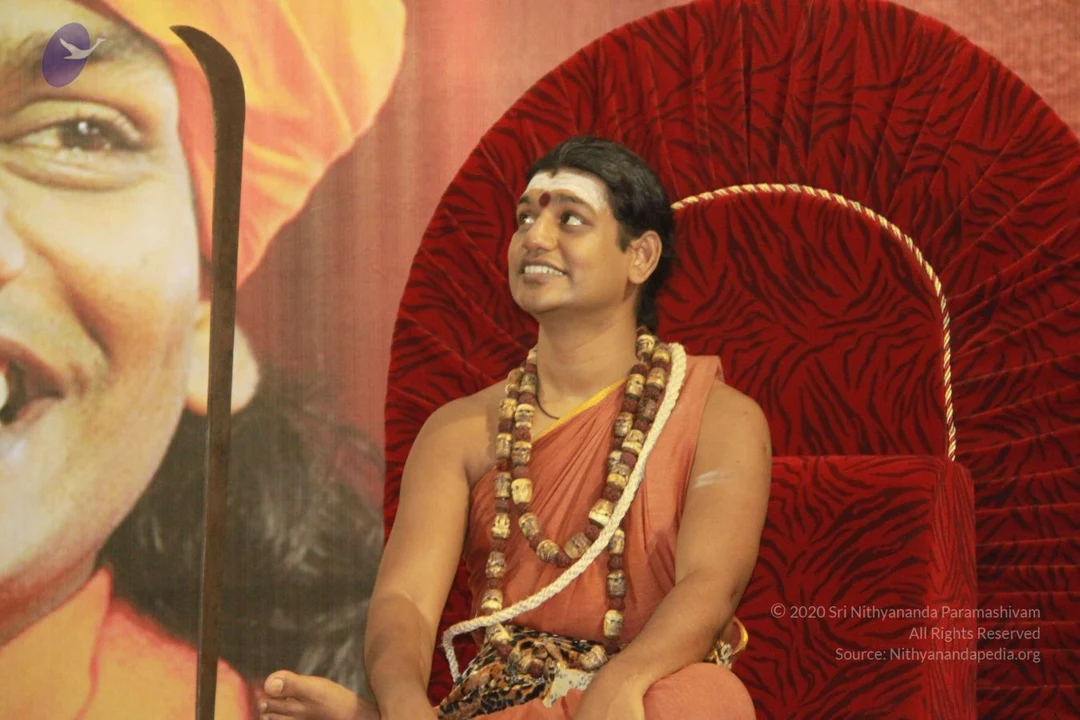
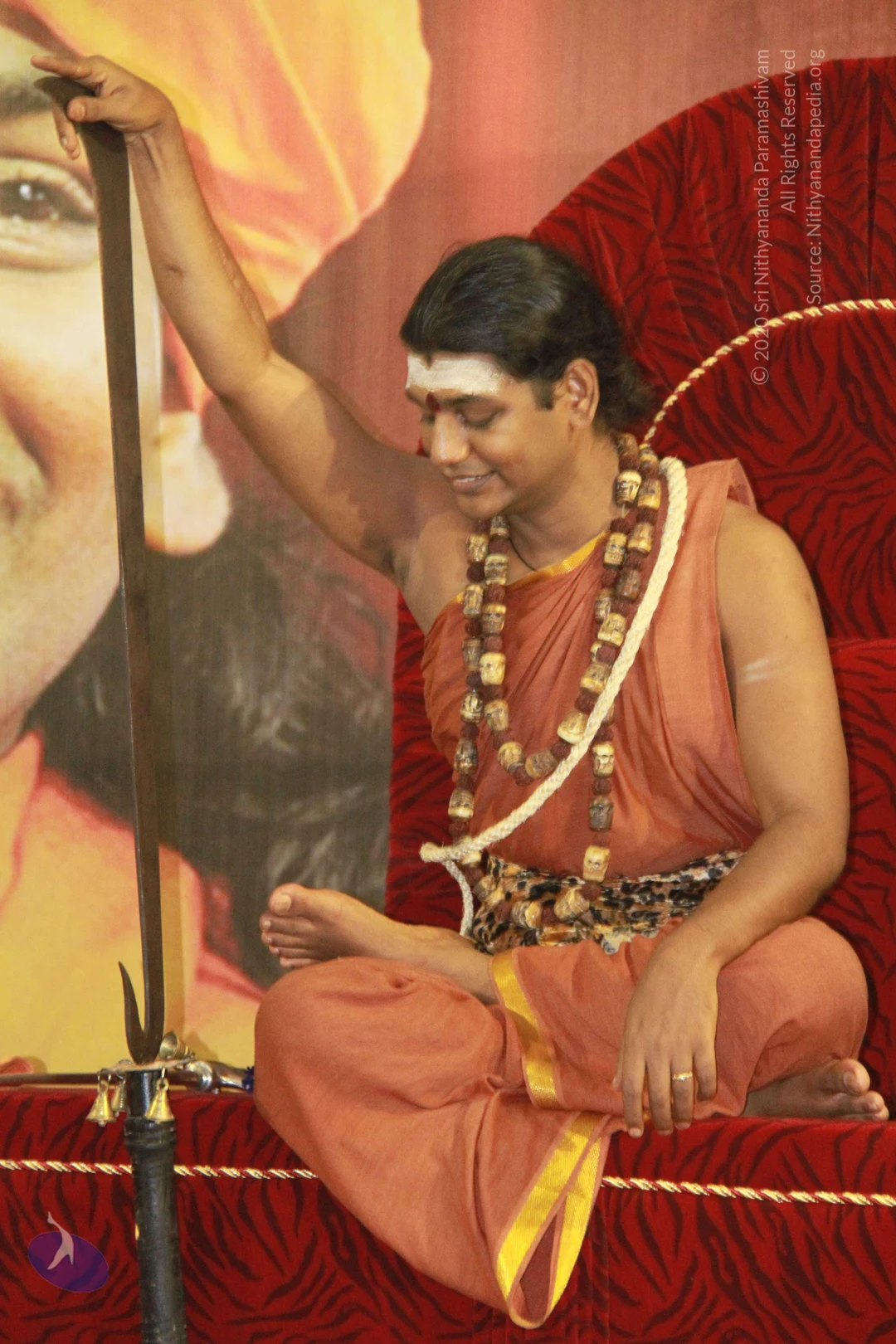
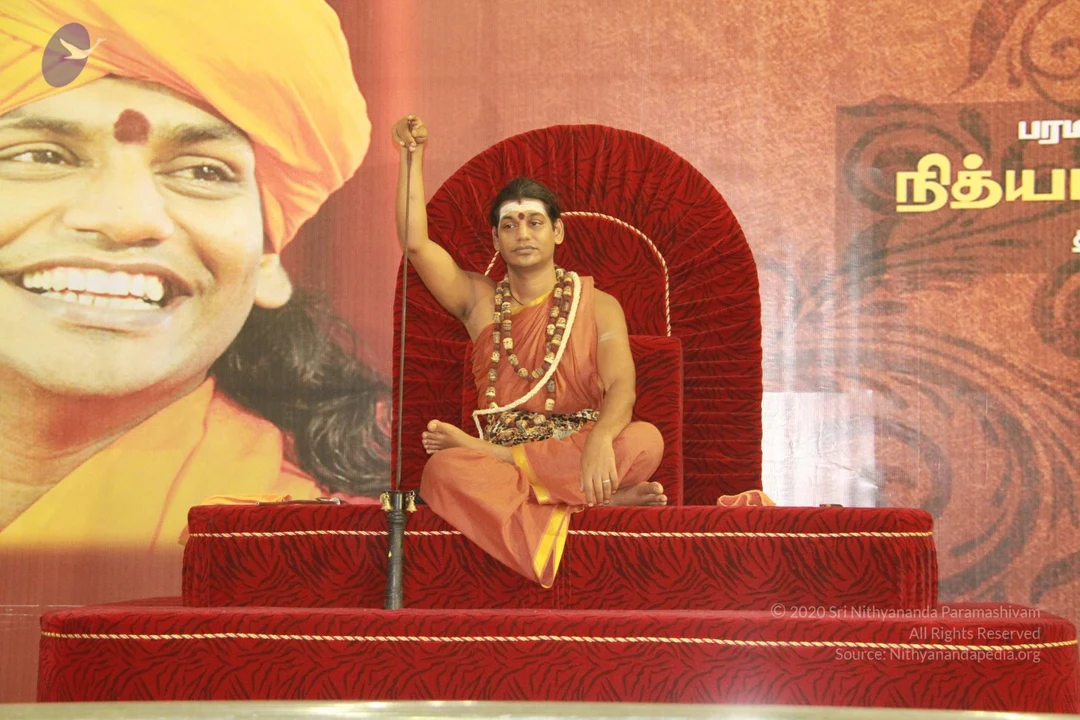
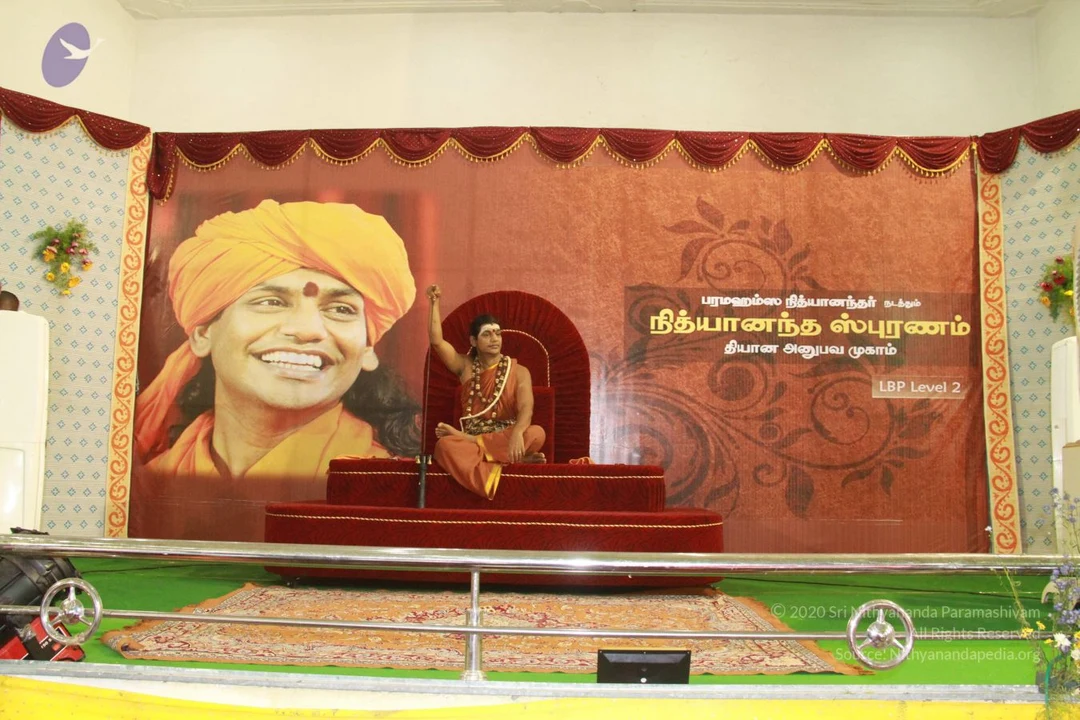
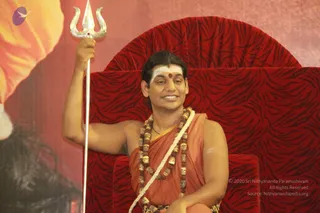
A smiling man sits cross-legged on a red velvet throne with a zebra-striped pattern, holding a silver trident in his left hand. He wears an orange-brown cloth draped over his bare upper body, a leopard-print lower garment, and a long rudraksha mala with bead-like pendants plus a twisted white cord across his chest. A red bindi and white markings adorn his forehead and arms. a person appearance-based label: the rudraksha mala, saffron-orange clothing and trident are the qualifying cues for this presentation. A red backdrop with a faint painted figure sits behind him.A man seated on a red velvet throne with black zebra-stripe pattern, wearing an orange-red ochre wrap with a yellow border over bare shoulders, a long beaded mala of rudraksha and carved bone-like beads with a white cord across the chest, and a white vertical tilak with a red bindi on his forehead. He holds a silver trident with his right hand resting on his knee.A man seated on a red velvet throne with tiger-stripe pattern, smiling and gazing upward. He wears an orange-saffron cloth draped over his shoulders and a multi-strand rudraksha mala with a white sacred thread. He has a white tilak with a red dot on his forehead and holds a silver trident across his lap, wearing a ring on one finger.A man seated on a red velvet throne with zebra-stripe pattern, smiling, holding a silver trident upright in his raised right hand. He wears an orange-red unstitched cloth over a bare upper body, a long necklace of rudraksha beads with skull-shaped beads, a white sacred cord, and a white horizontal tilak with a red dot on his forehead. Behind him is a large painted backdrop with orange and yellow flower forms. Probable Swamiji cues: long swept-back hair, saffron-red ceremonial clothing, rudraksha mala, and a trident, seated in the presiding role.A photograph of a smiling man seated on a red velvet throne with black zebra-stripe pattern. He wears a rust-orange draped cloth over one shoulder with a yellow edge, a long rudraksha bead mala across his chest and a white sacred thread. He has white vertical tilak on his forehead with a red dot, and holds a silver trident in his raised right hand. Behind him is a large red and orange backdrop with a partial painted figure. A small purple logo appears at the top left. Appearance-based label: Swamiji (probable), seated in person, with long swept-back hair, rudraksha malas and orange saffron clothing.A man sits cross-legged on a red velvet throne with a tiger-stripe pattern and gold rope trim, smiling broadly. He wears a saffron-orange robe with a gold border, a multicoloured patterned waist cloth, and a long string of rudraksha beads across his chest. He holds a silver trident aloft in his raised right hand. He has white vertical tilak on his forehead with a red dot at its centre. A white cord crosses his body. Swamiji (probable) by appearance cues: long swept-back hair, saffron clothing, rudraksha malas and trident, seated on a throne.