Skip to content
Wednesday

19 September 2012

Ganesha Worlds Most Worshiped God

Dated photos
689
Source pages
1
Media
2
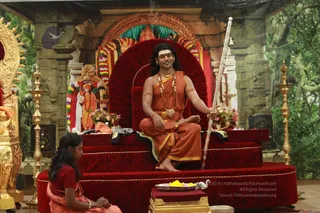
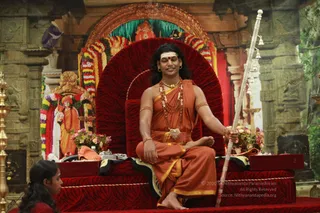
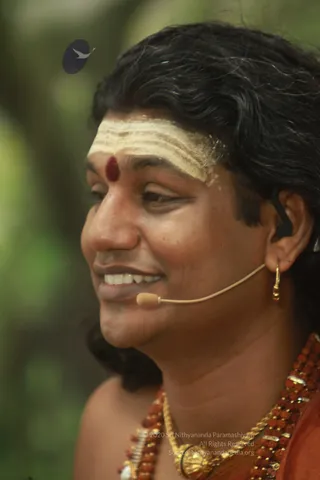
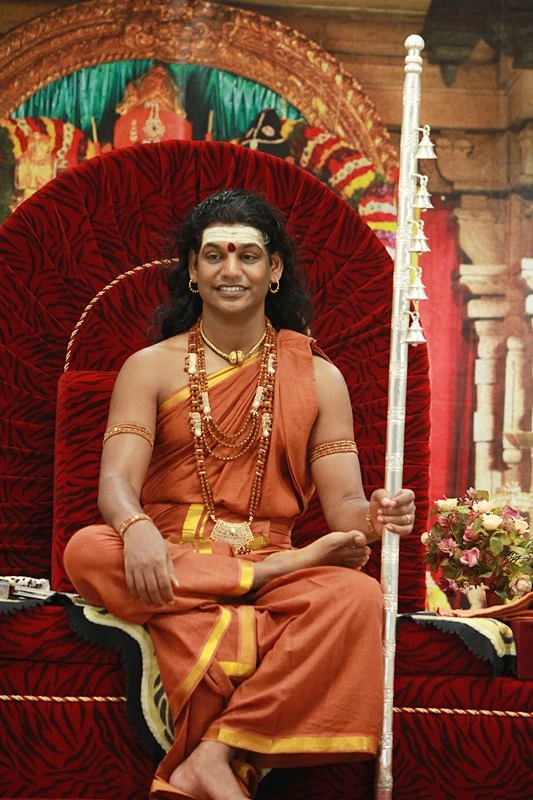
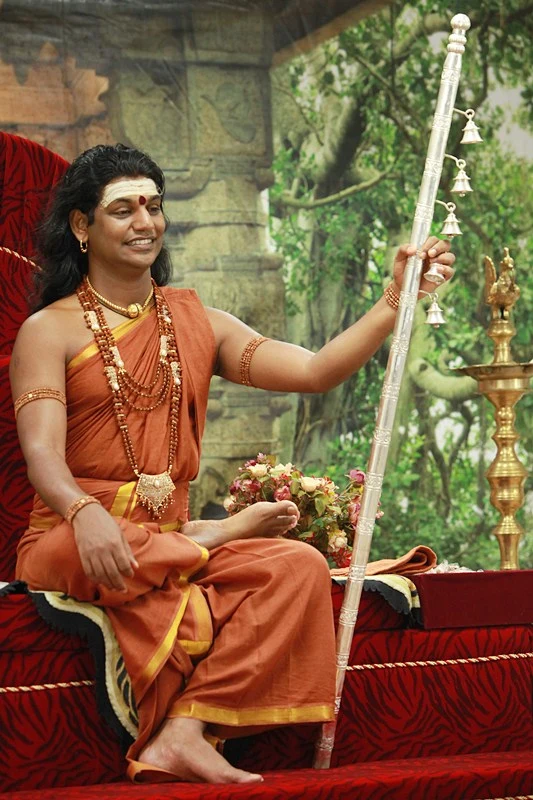
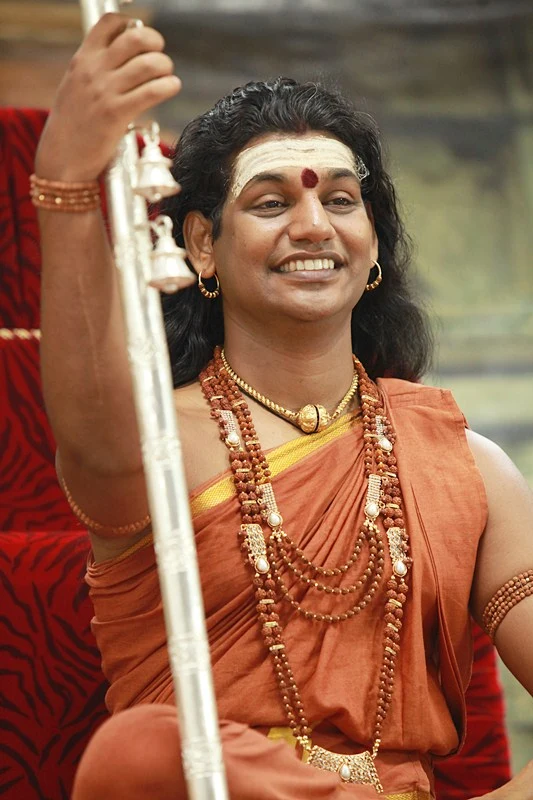
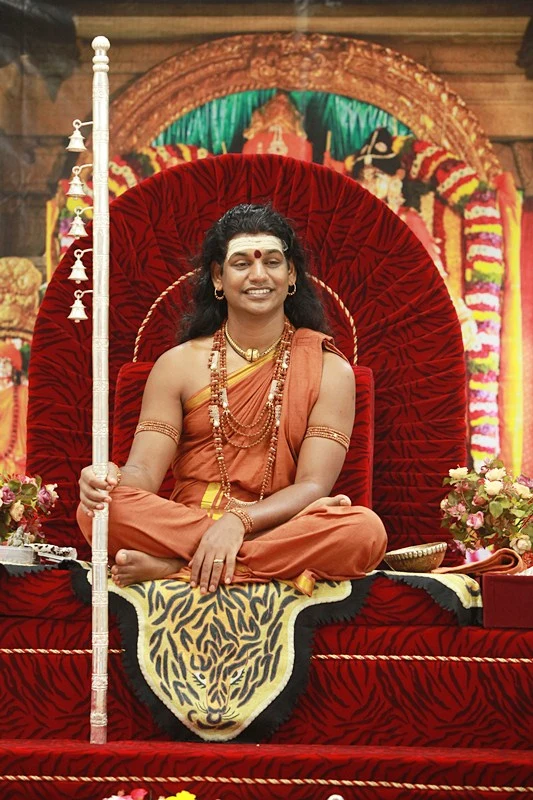
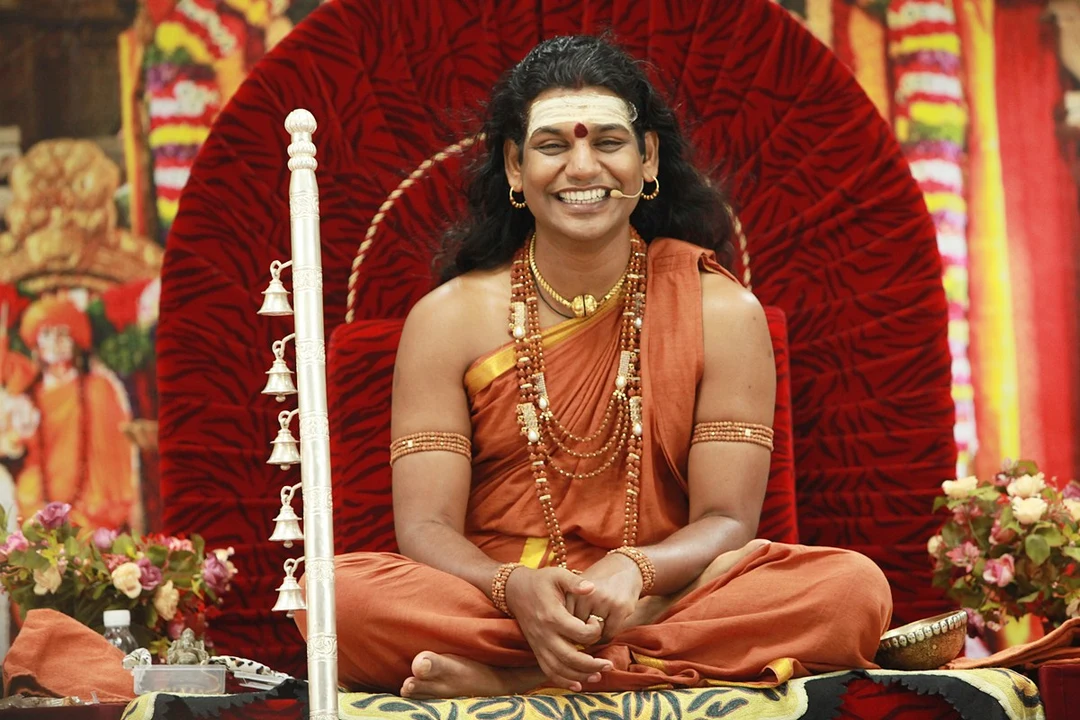
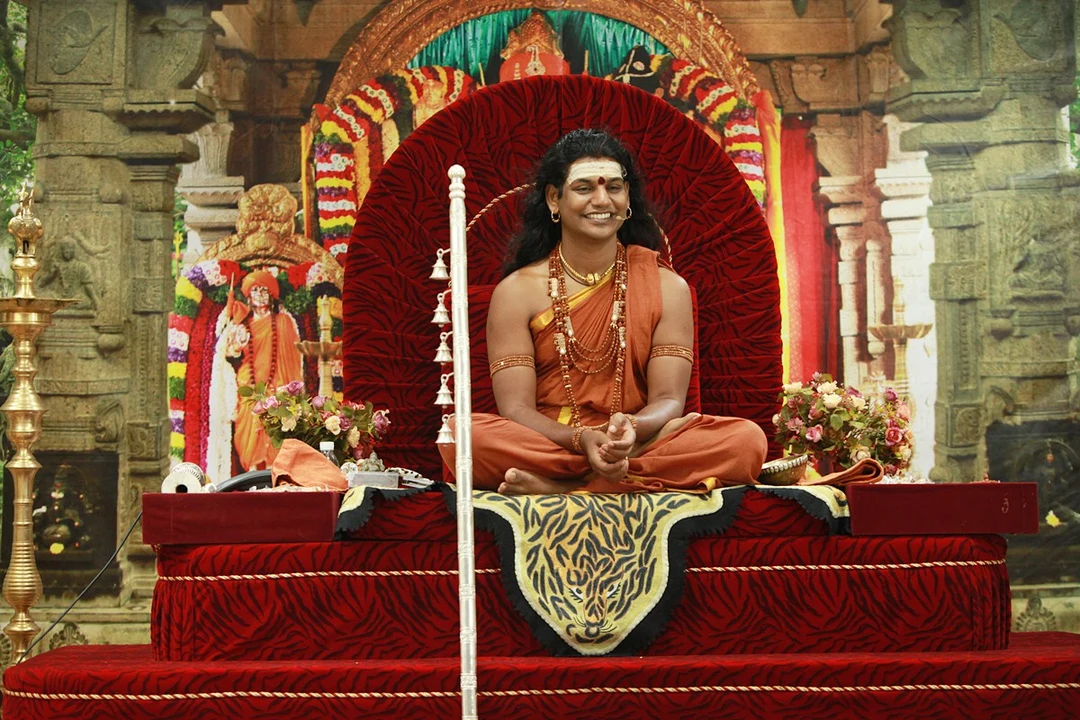
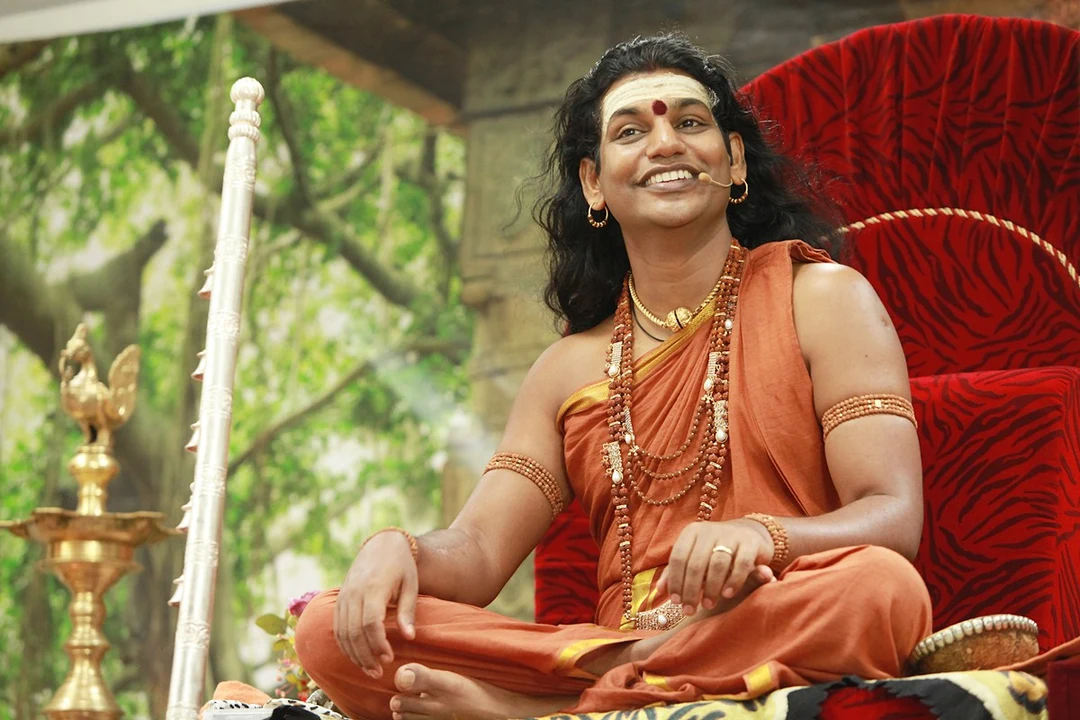
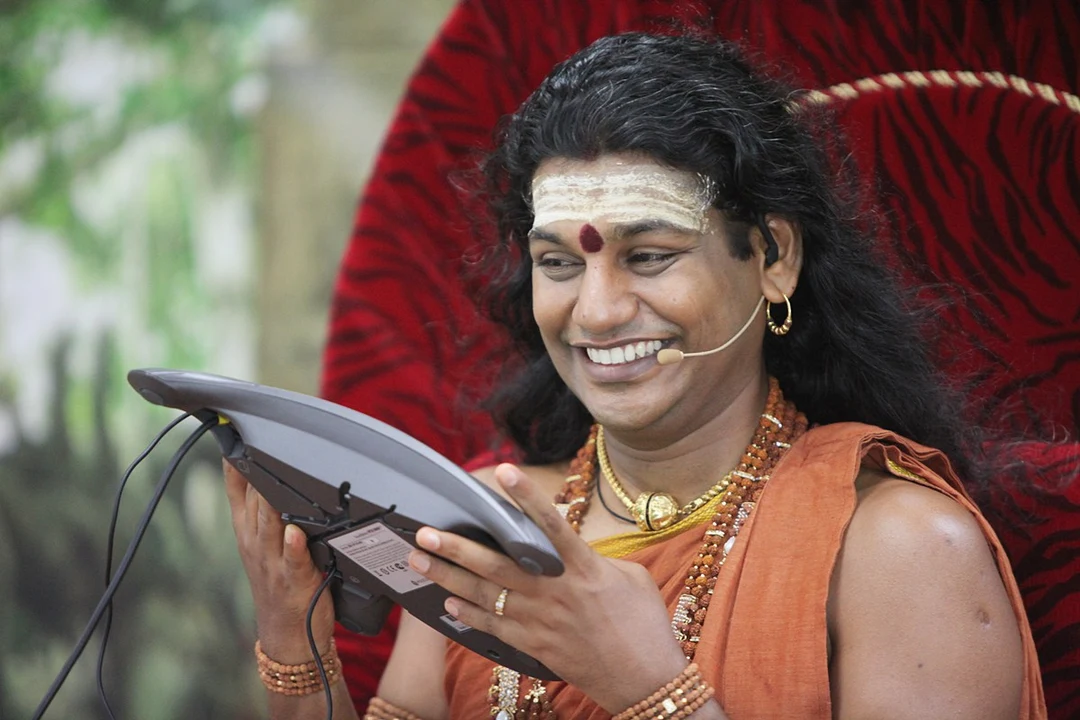
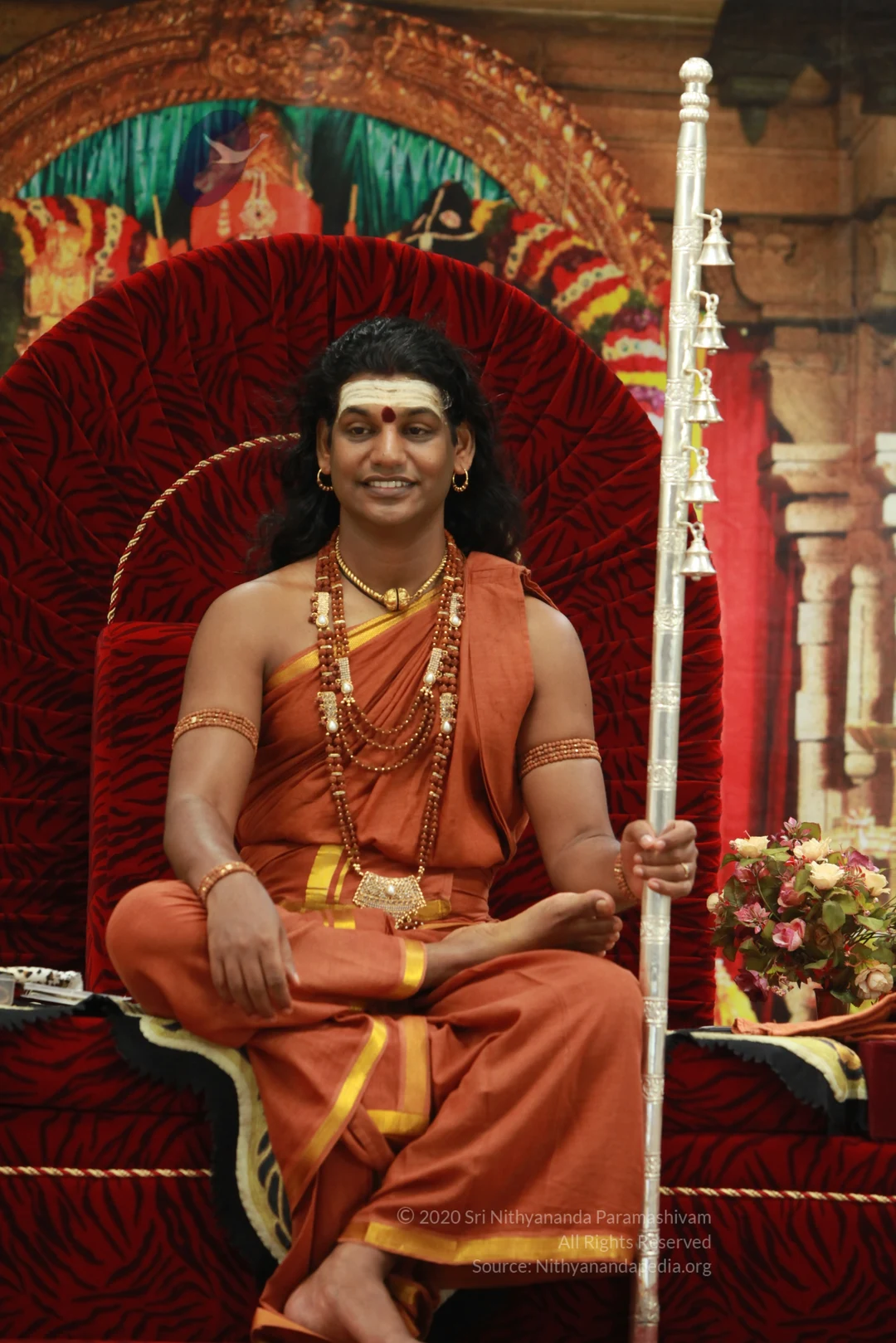
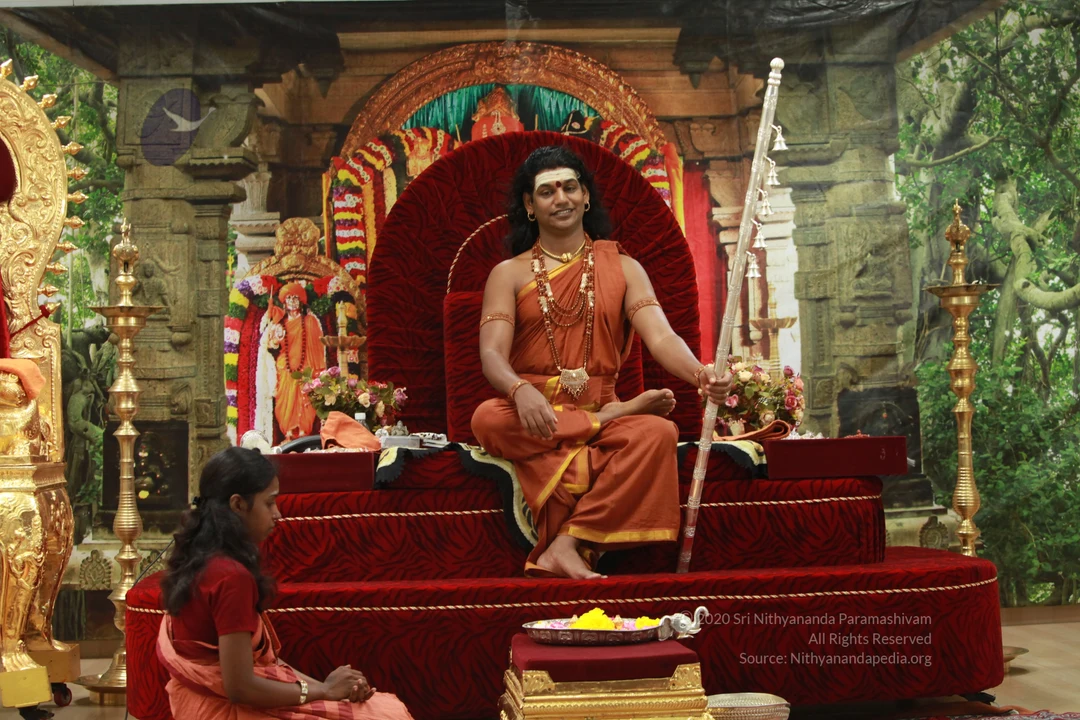
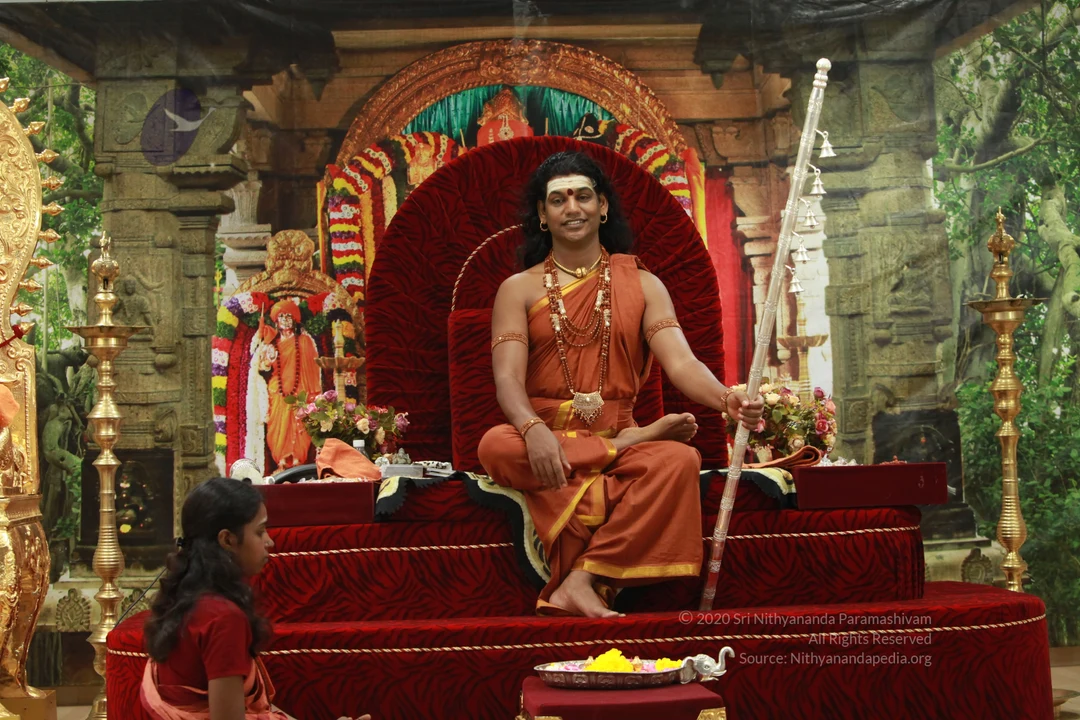
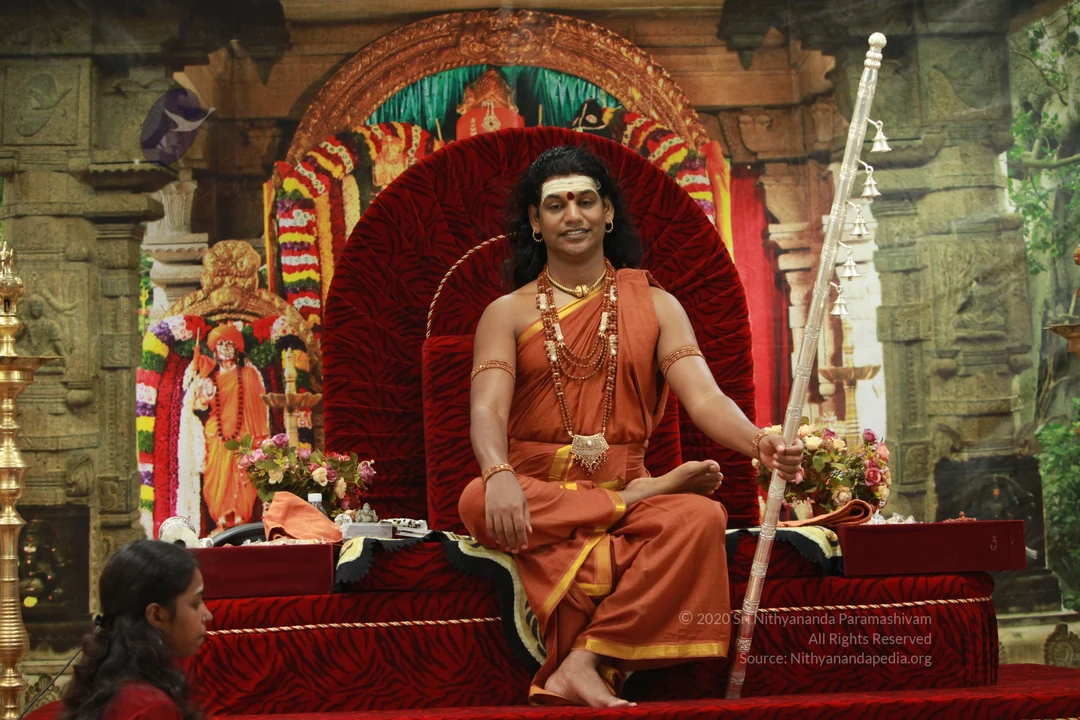
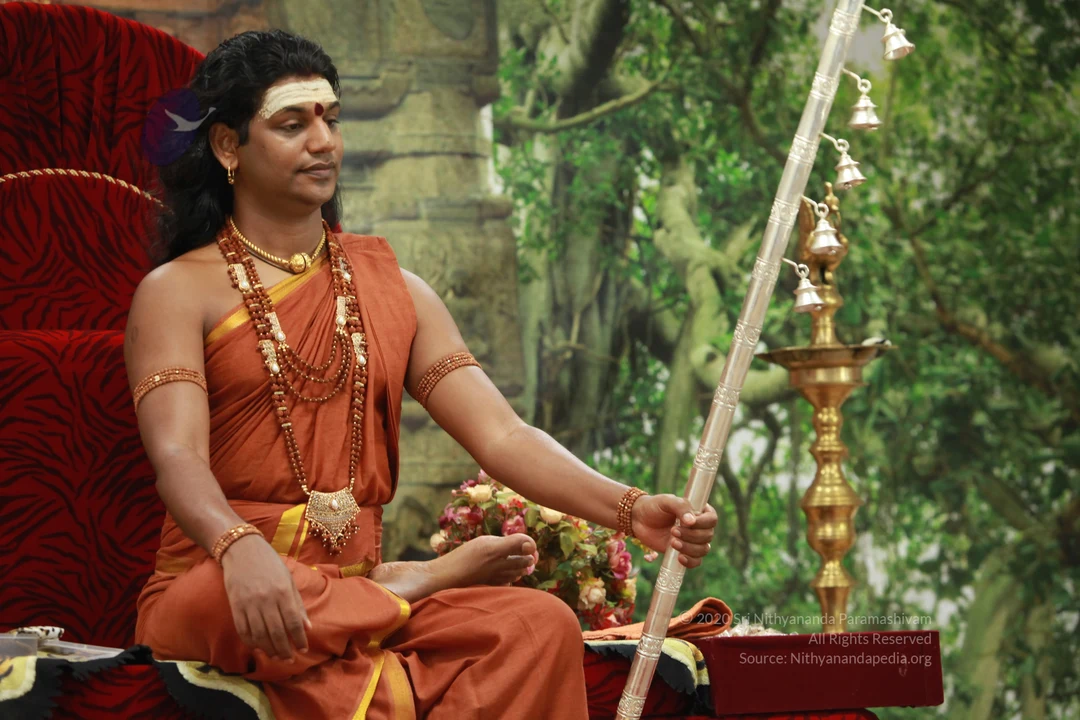
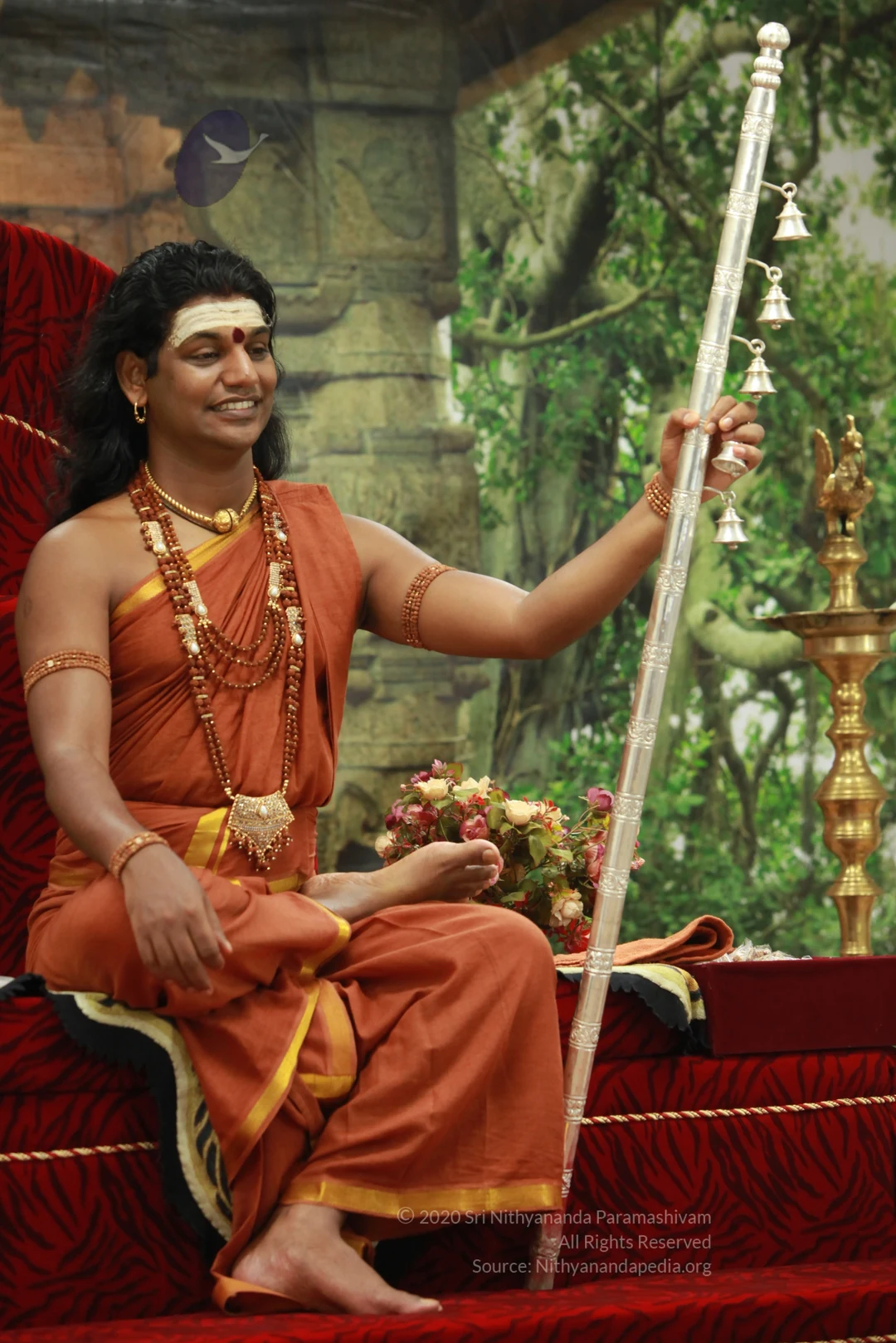
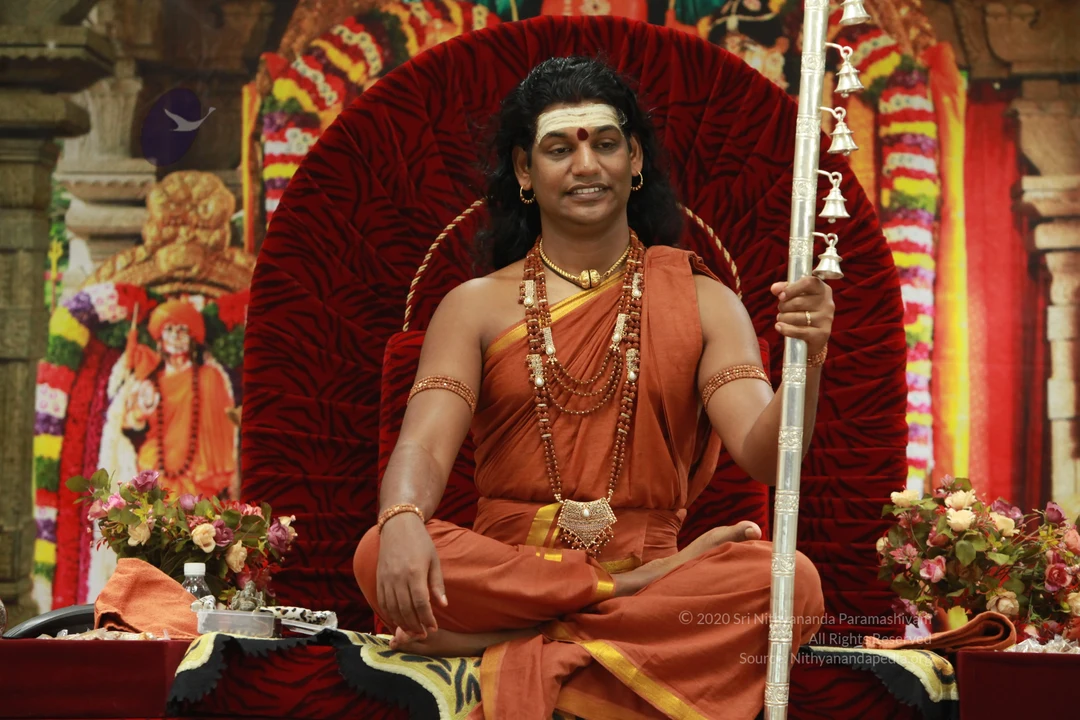
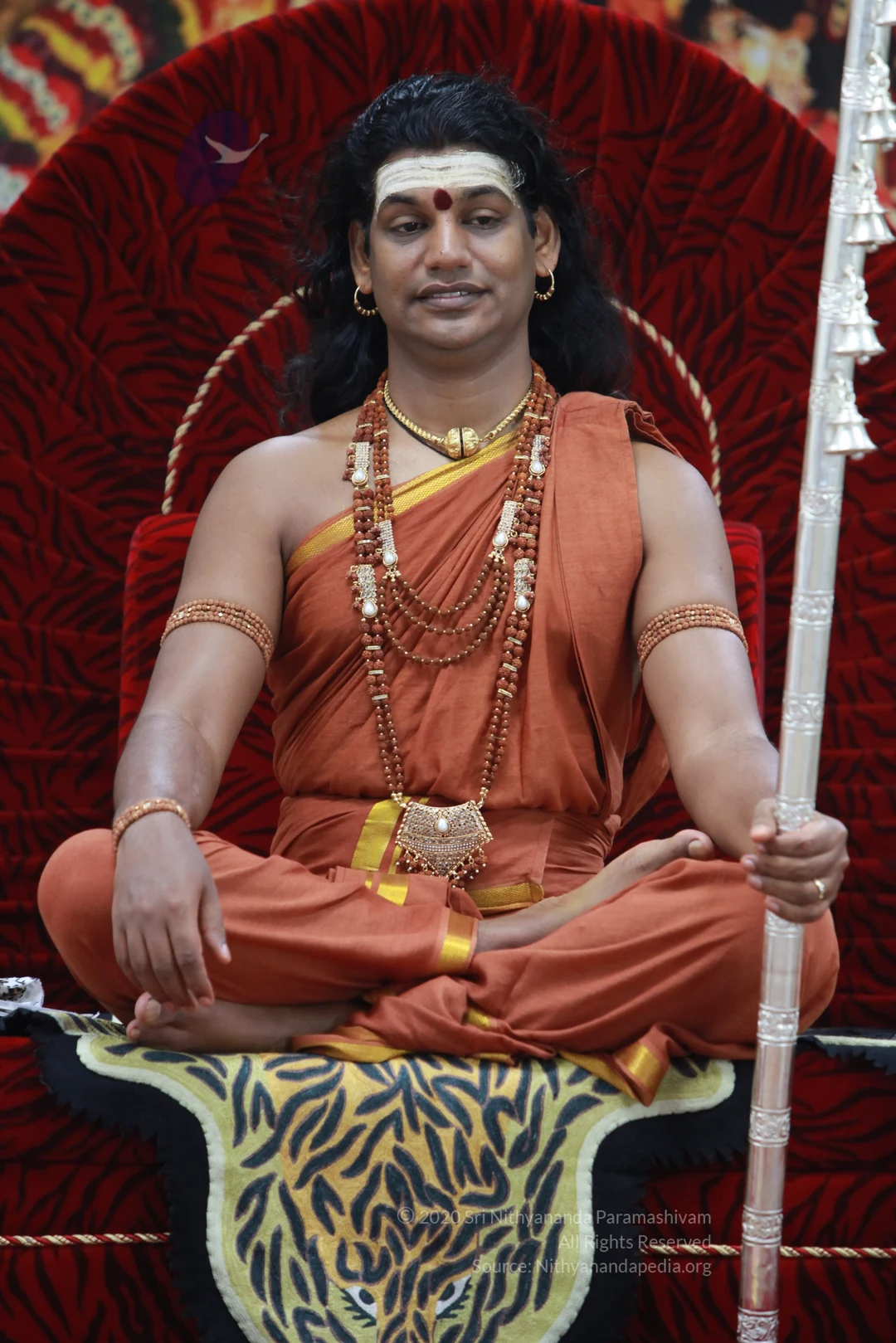
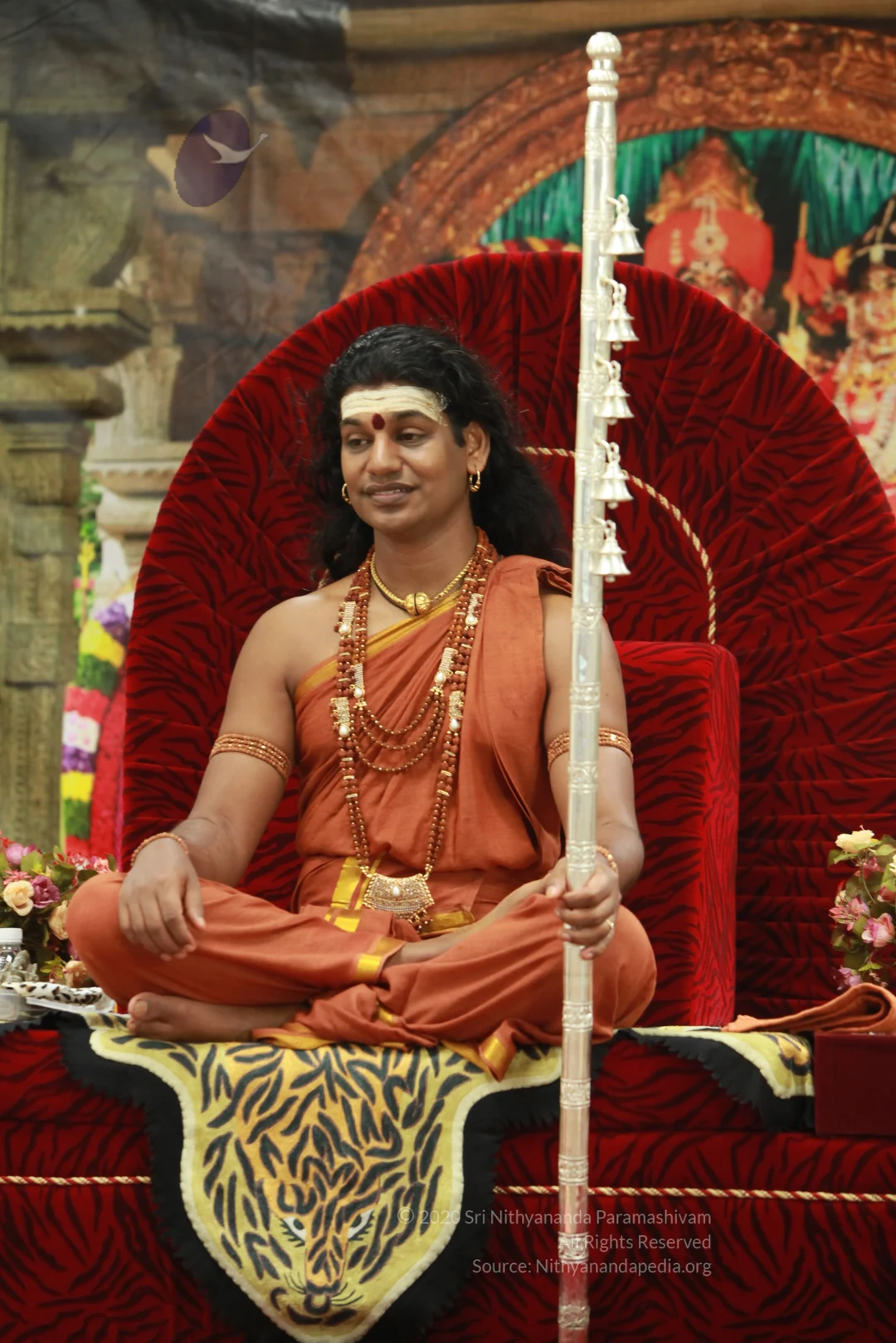
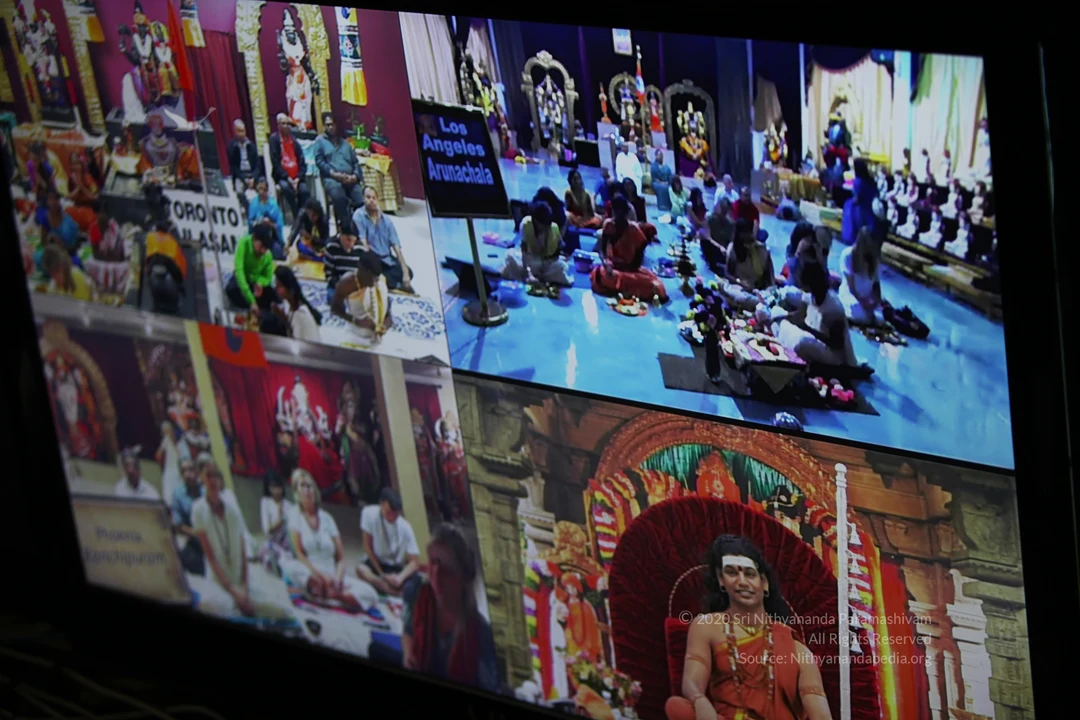
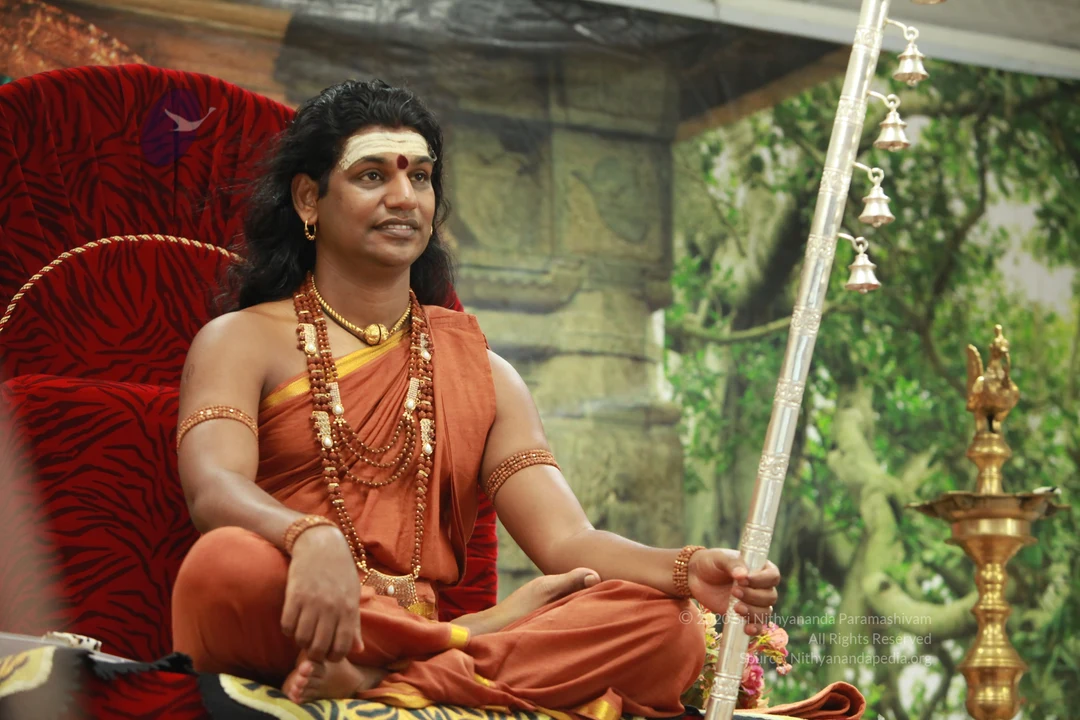
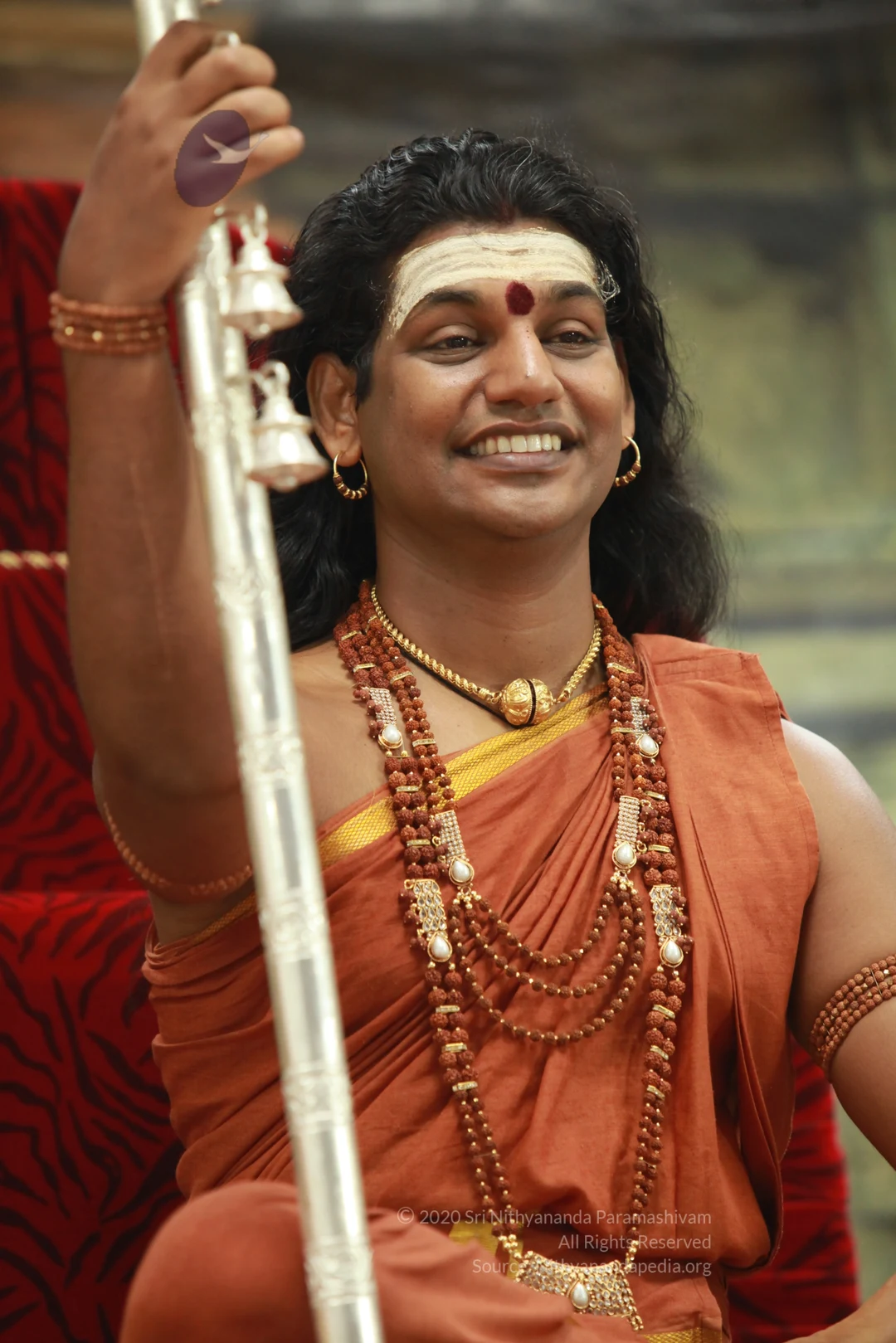
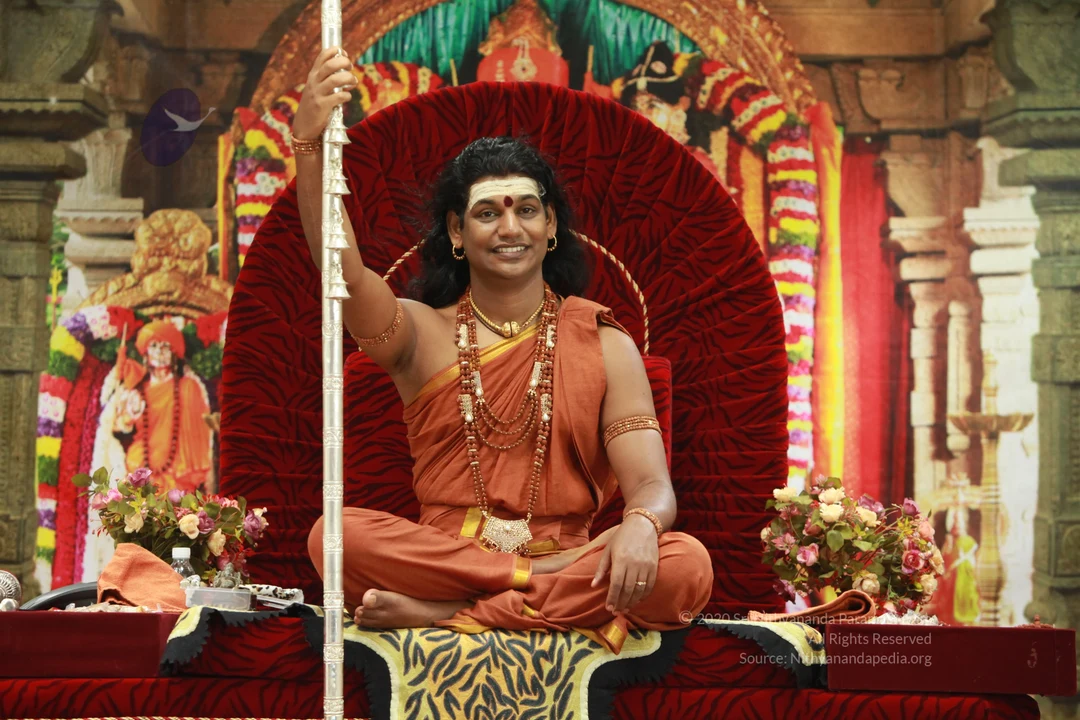
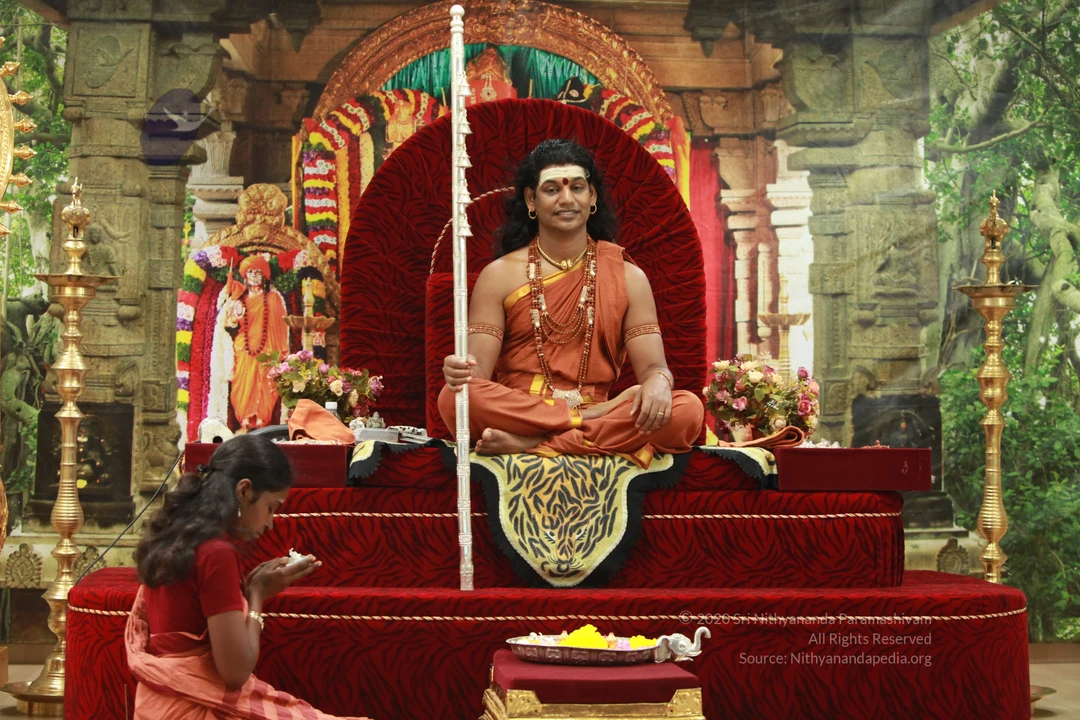
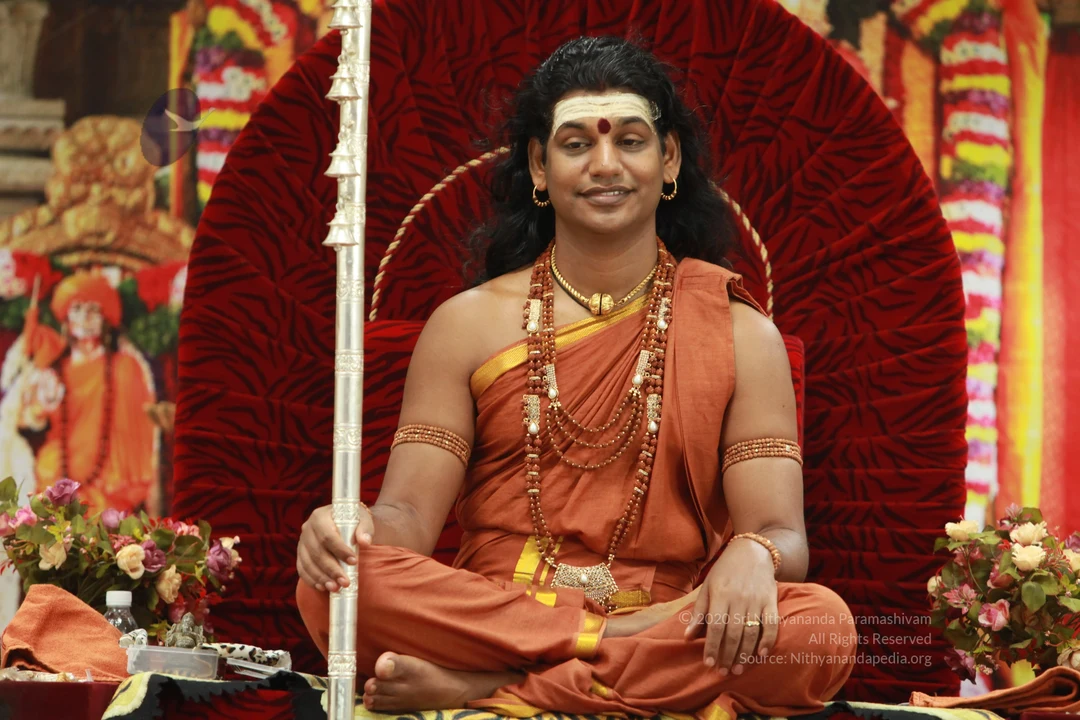
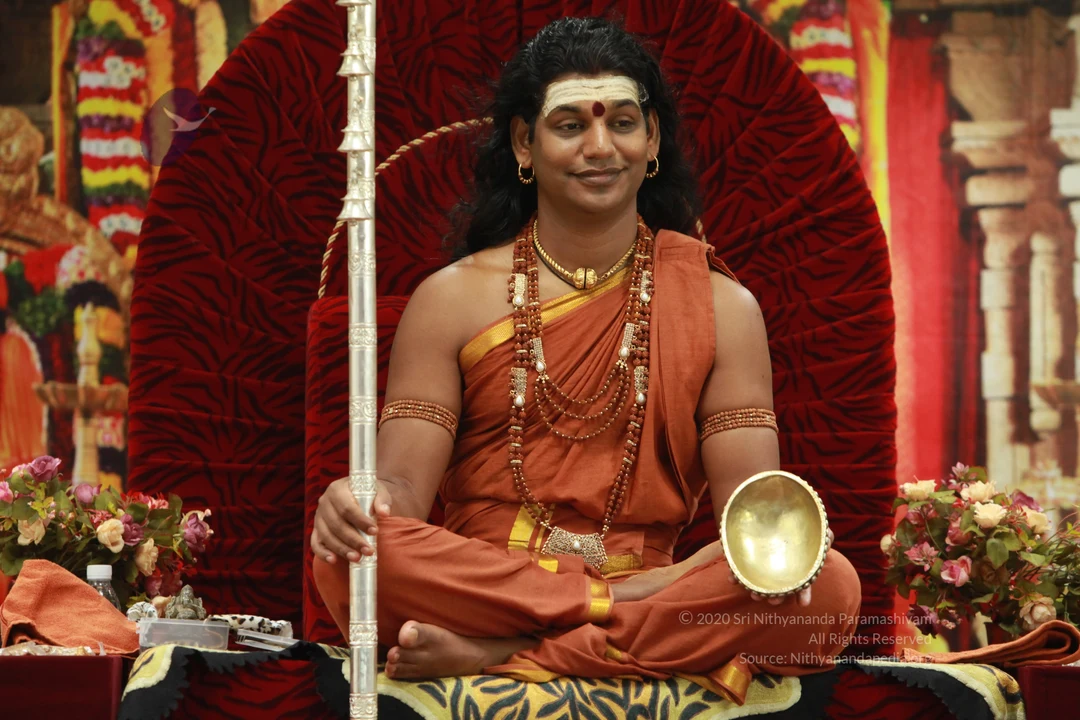
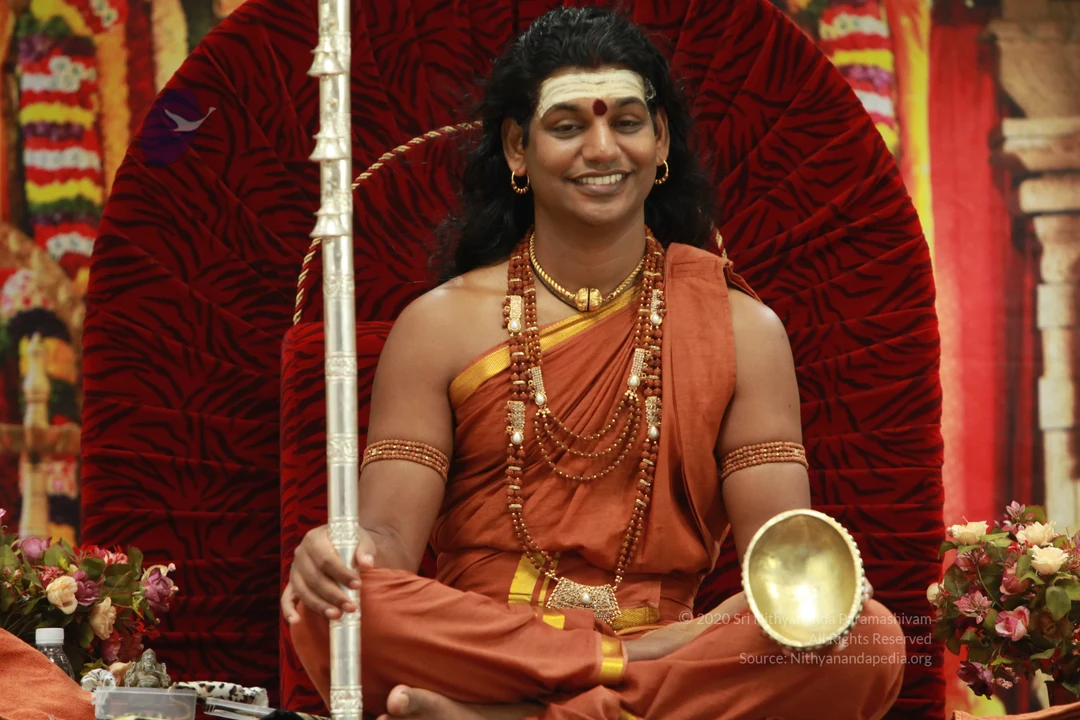
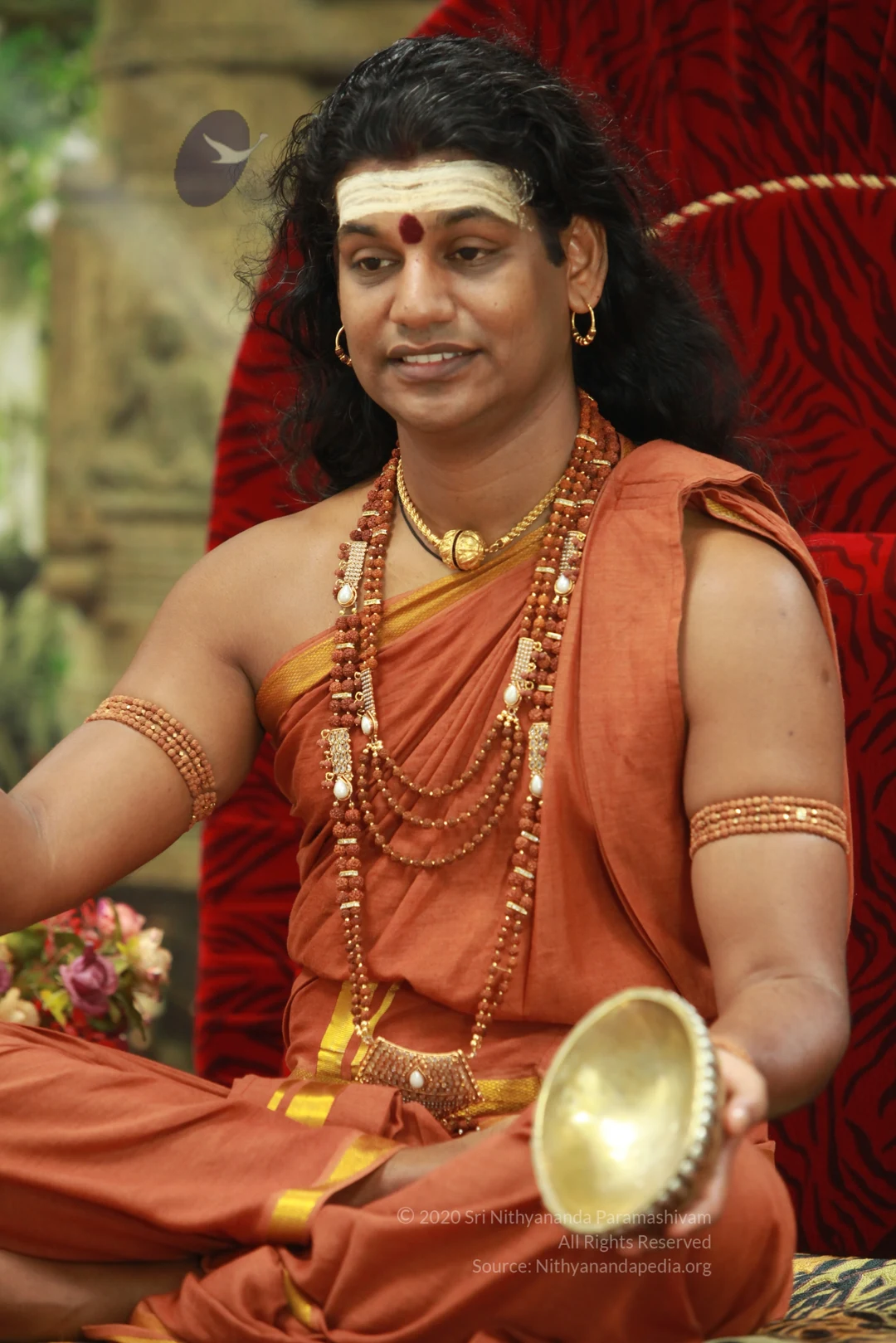
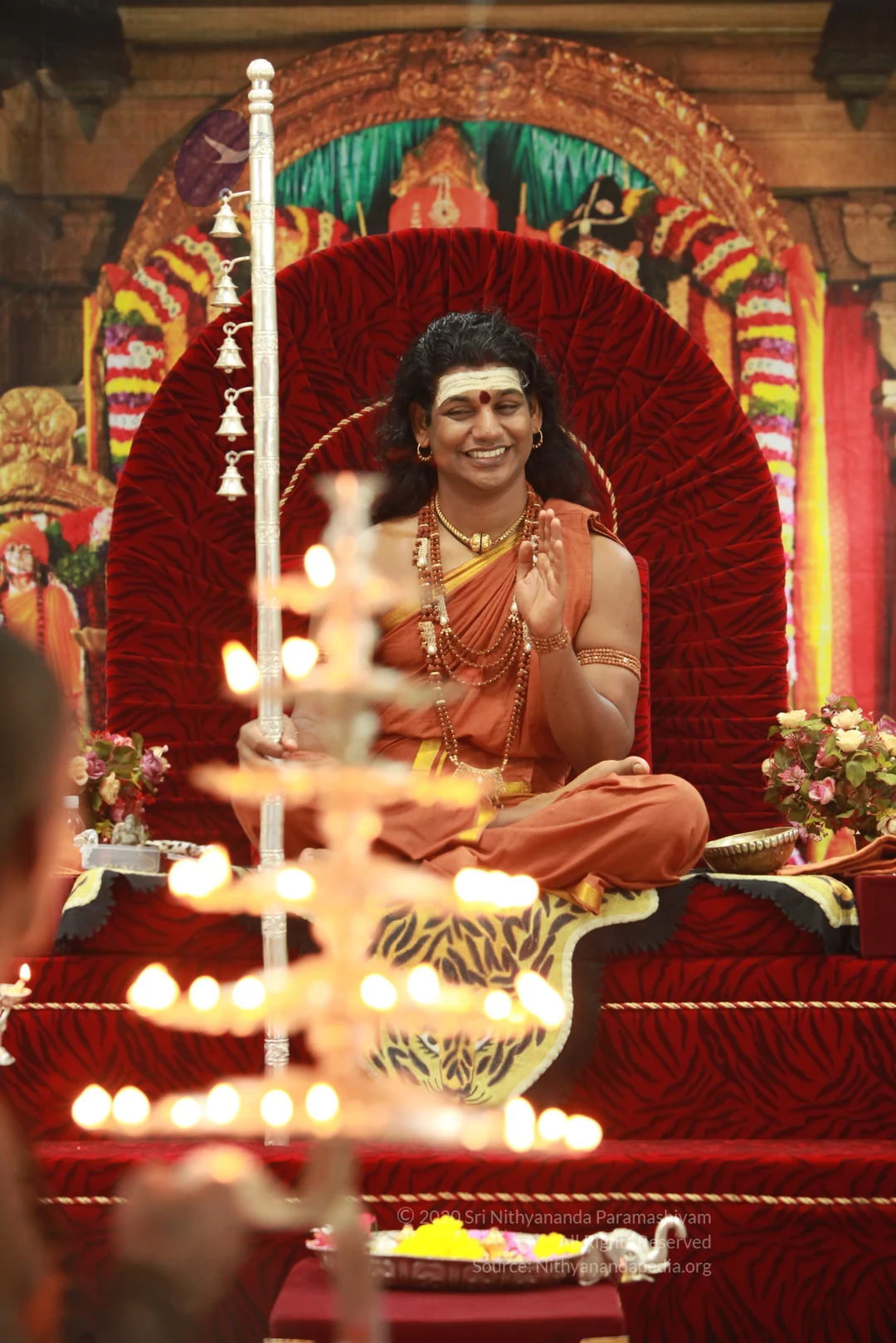
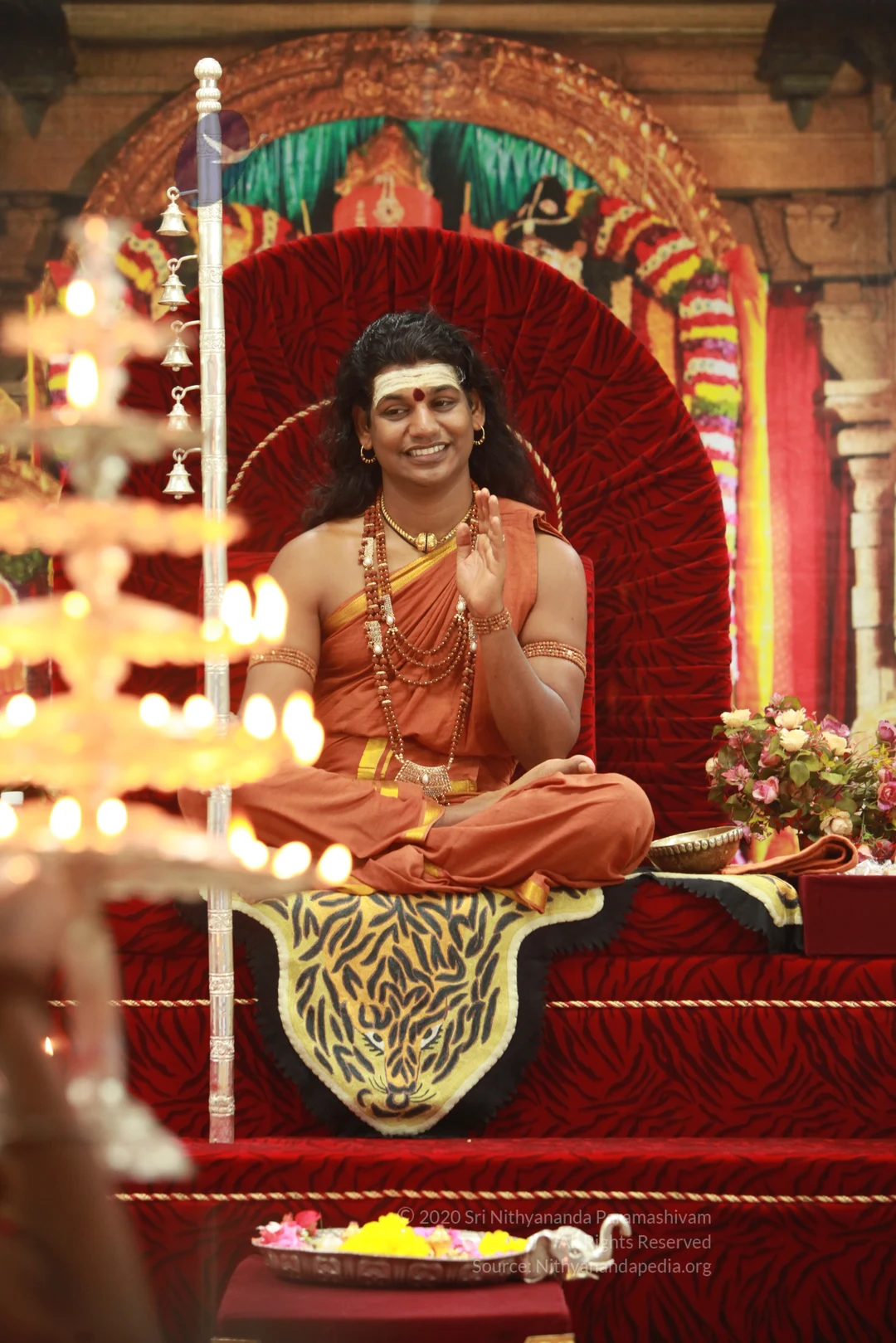
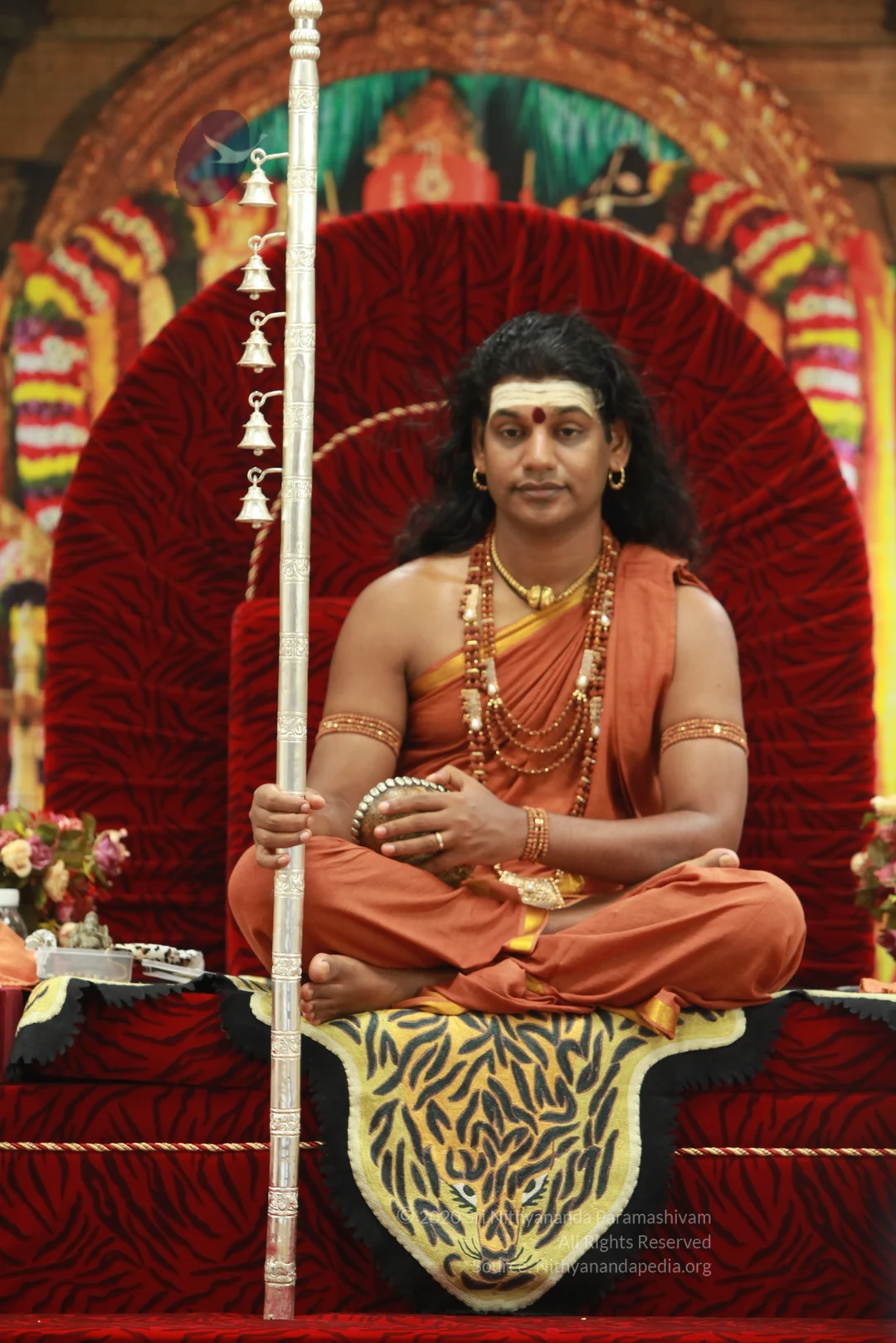
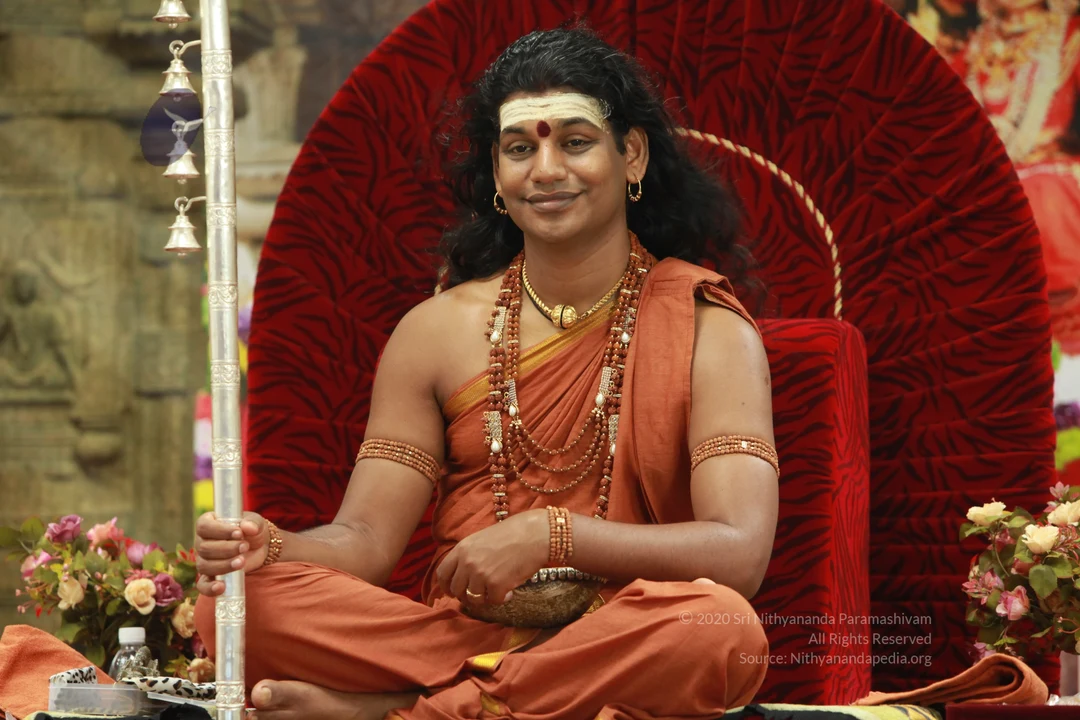
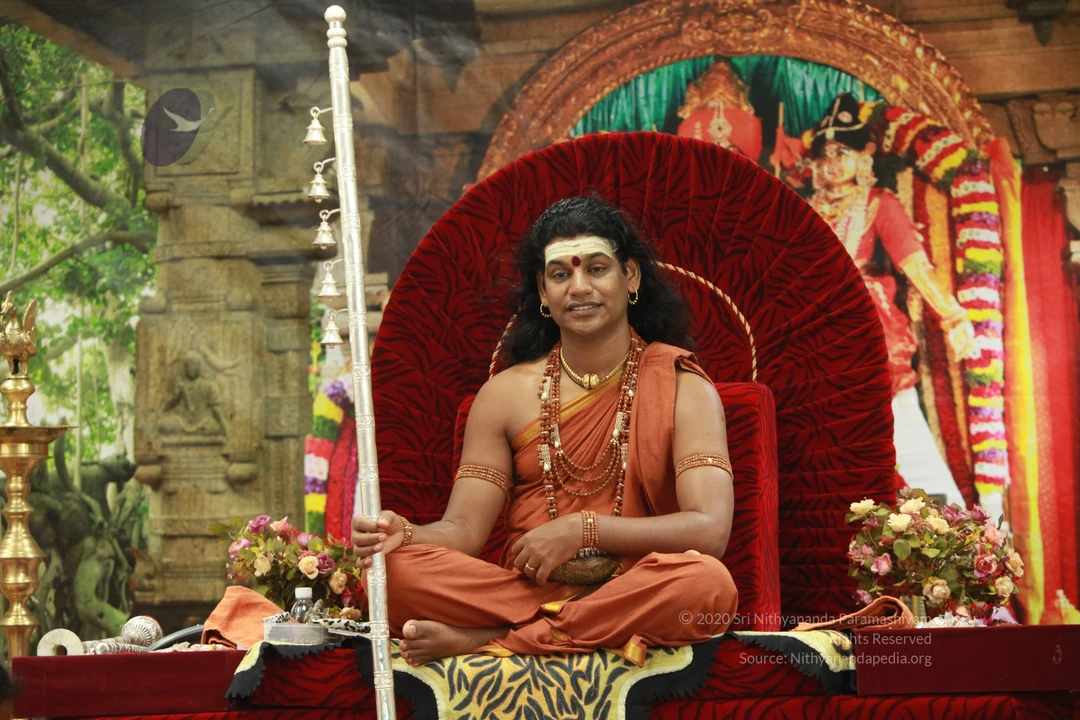
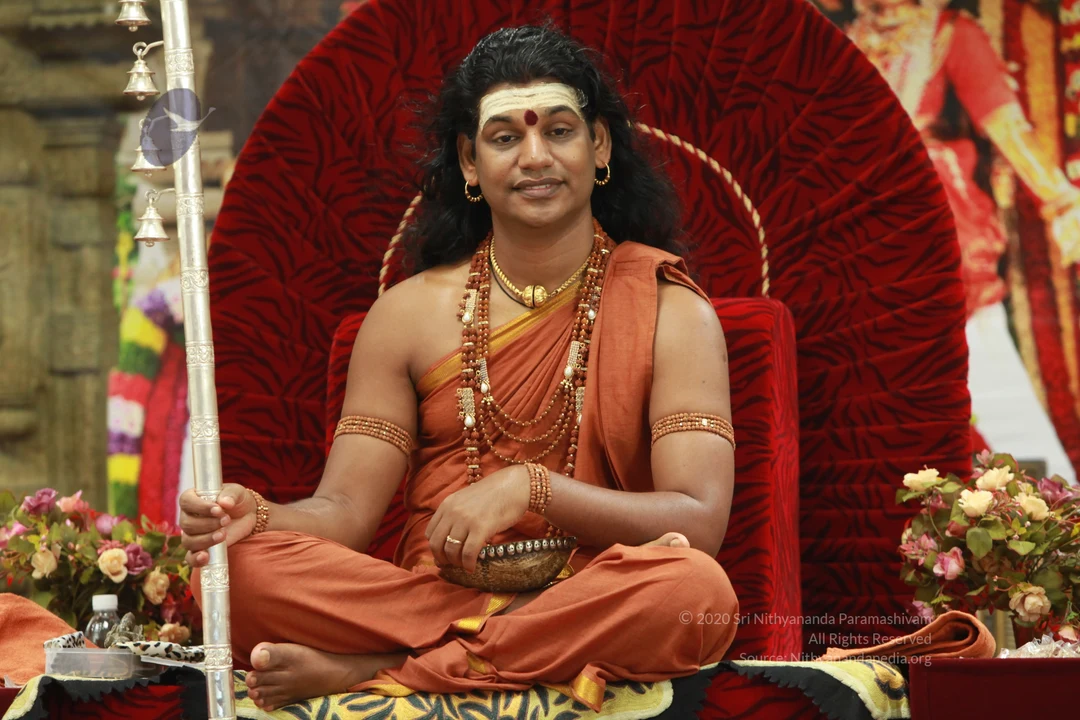
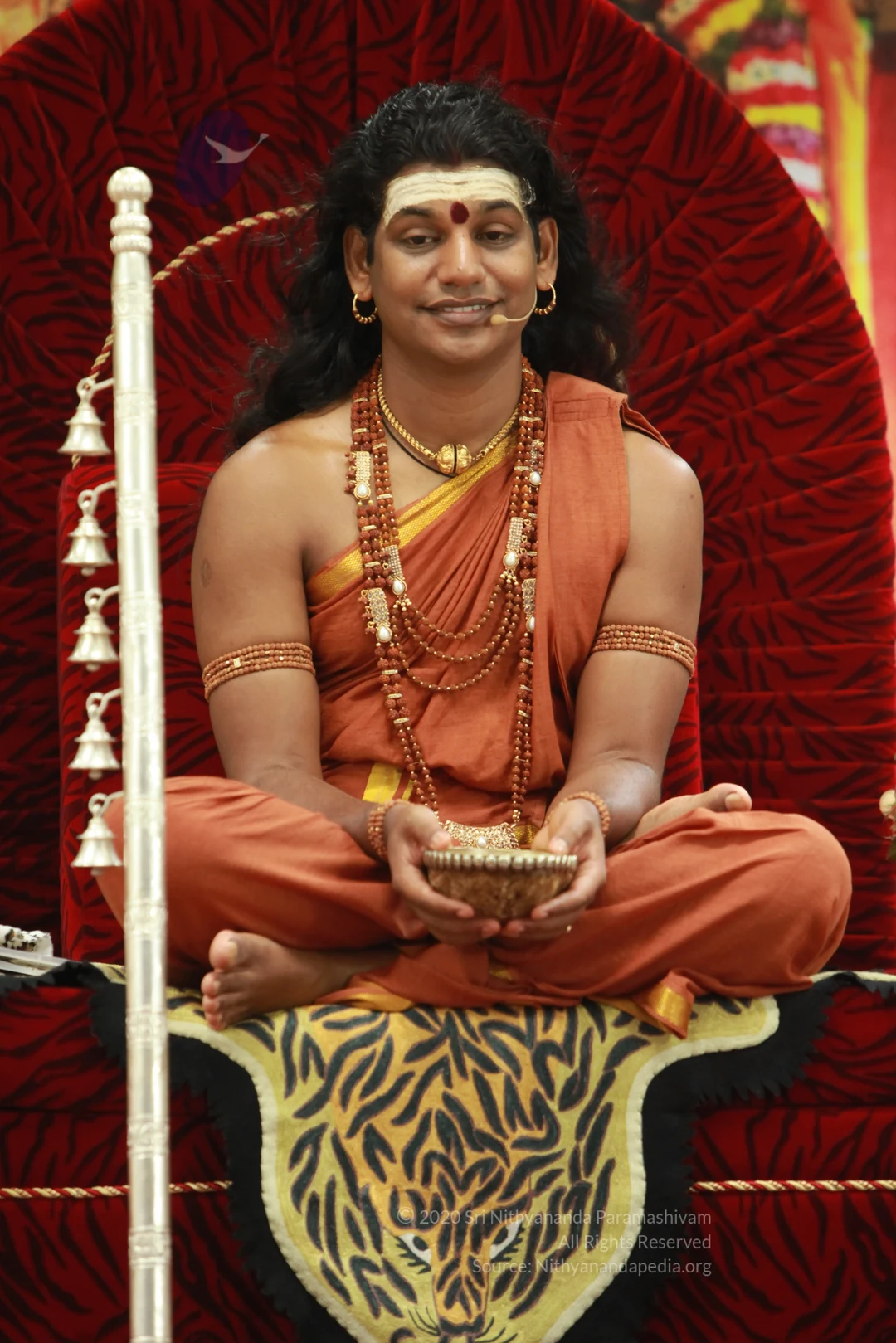
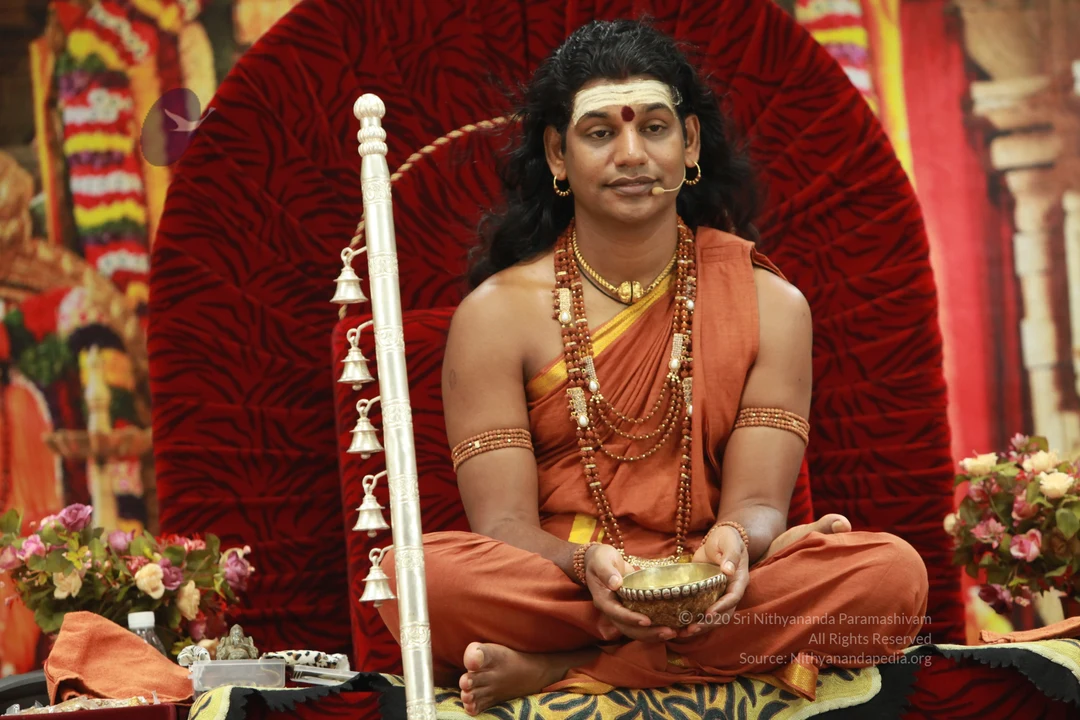
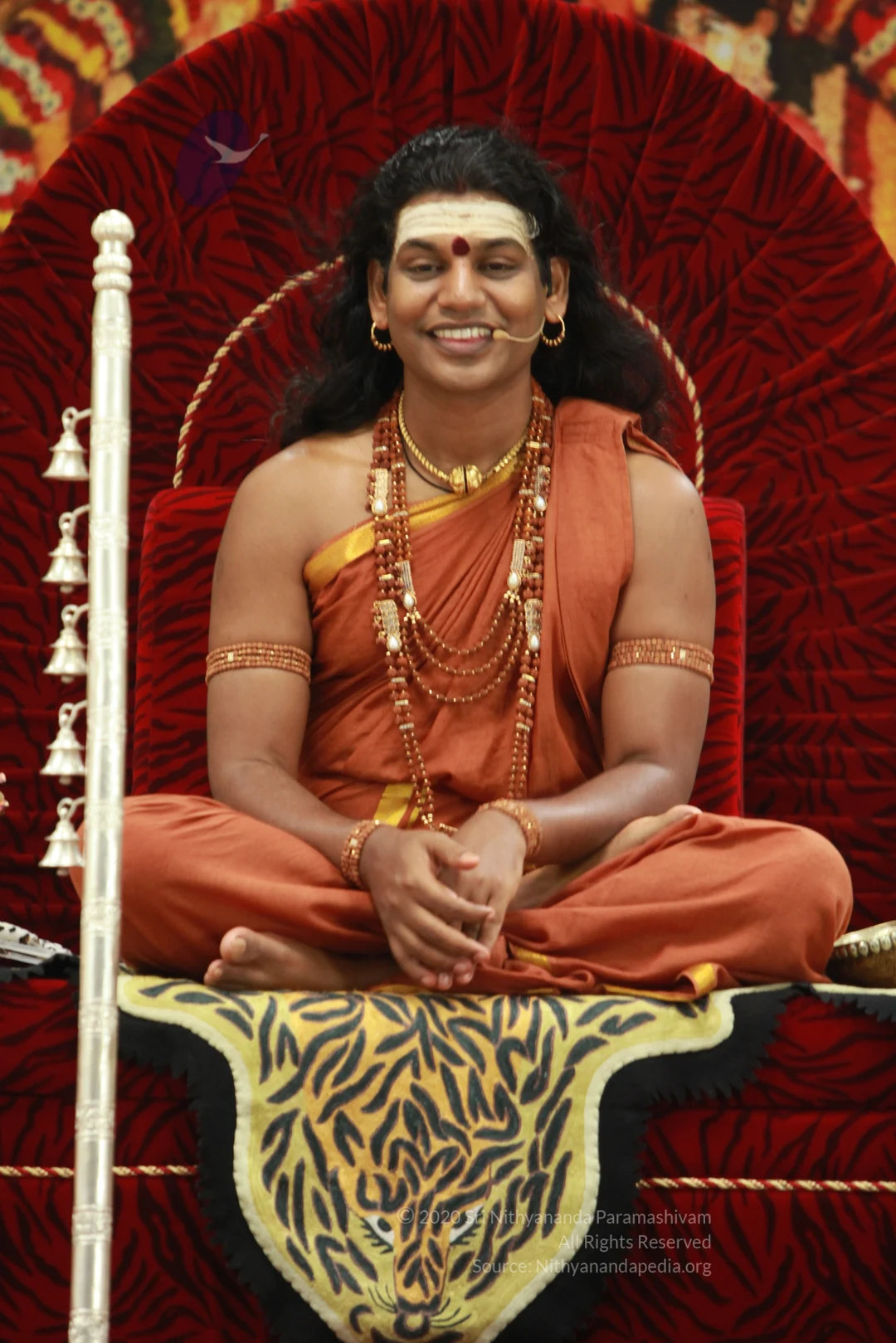
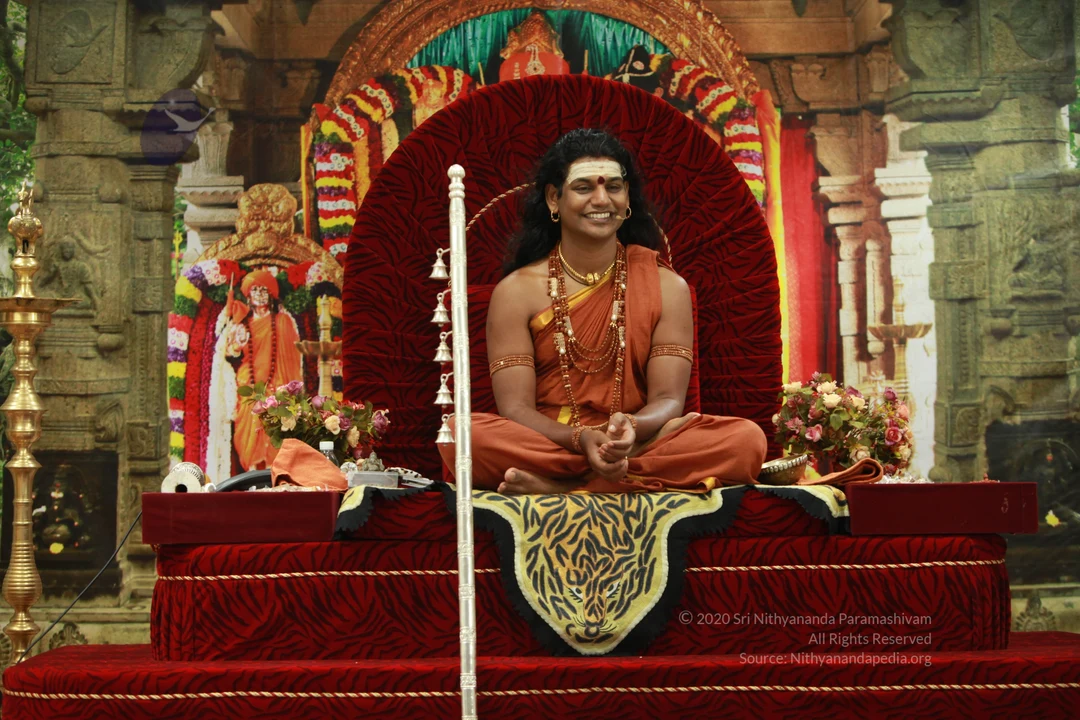
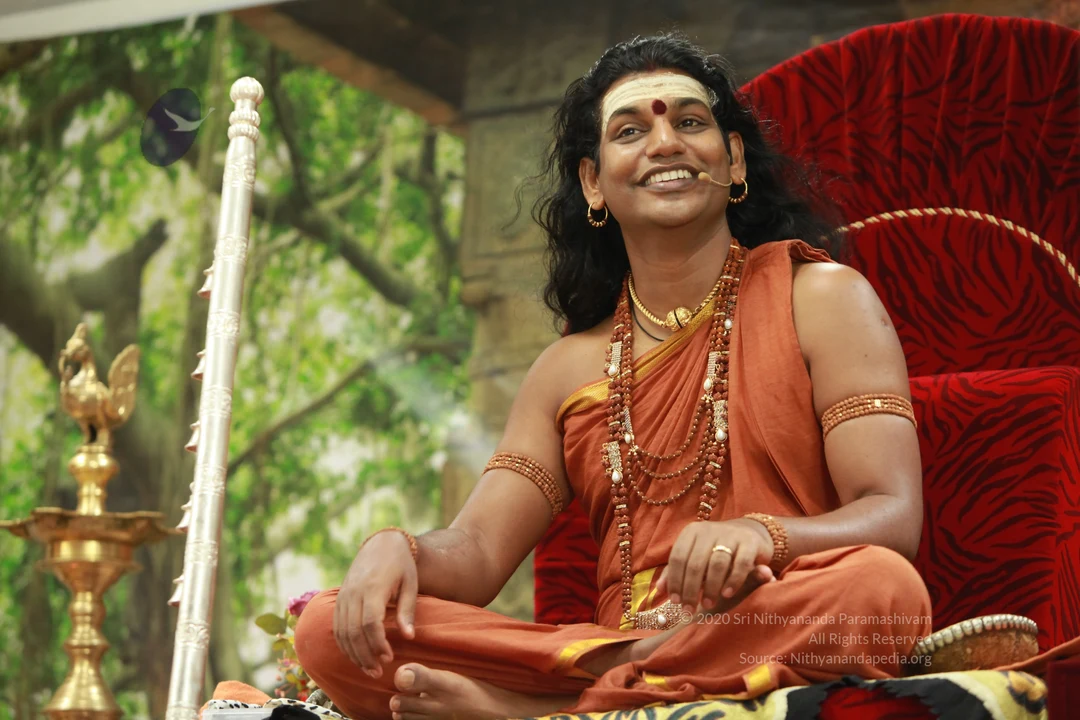
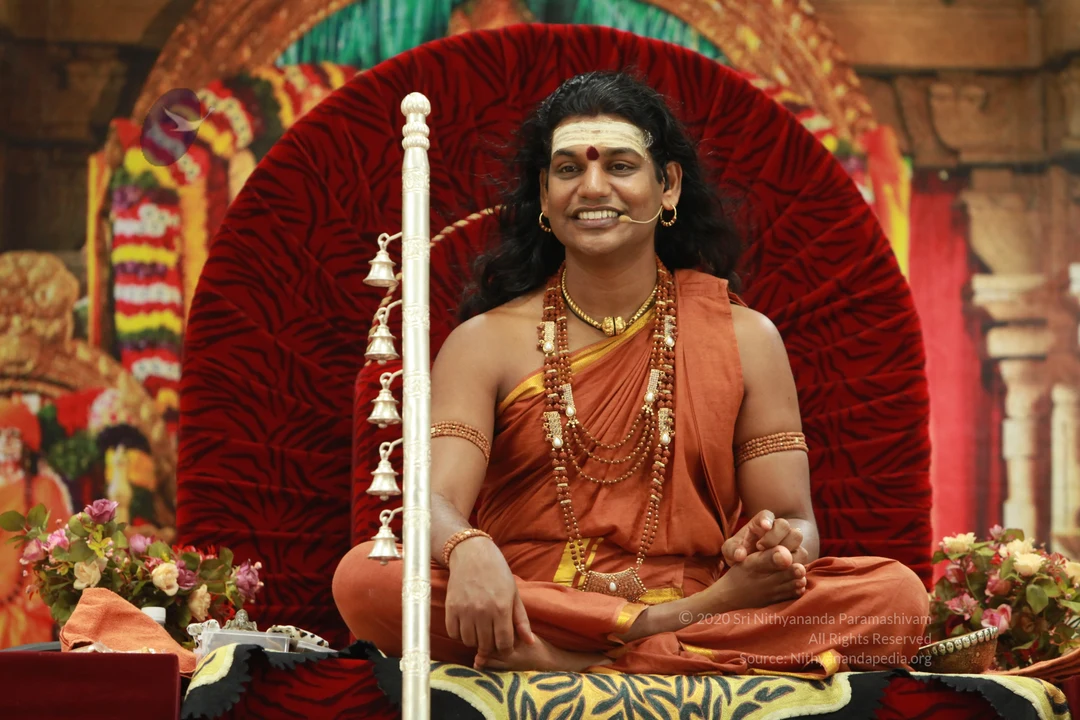
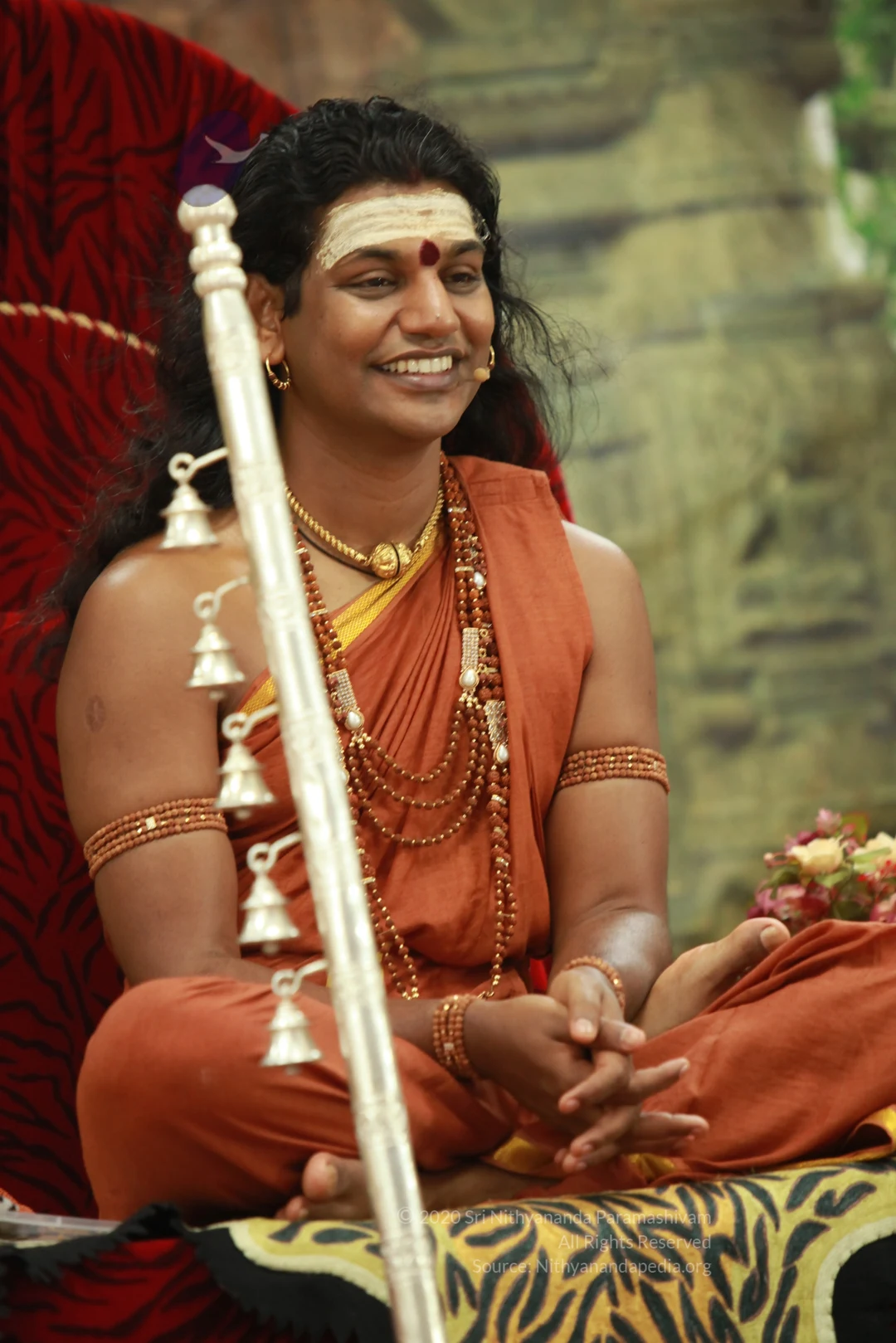
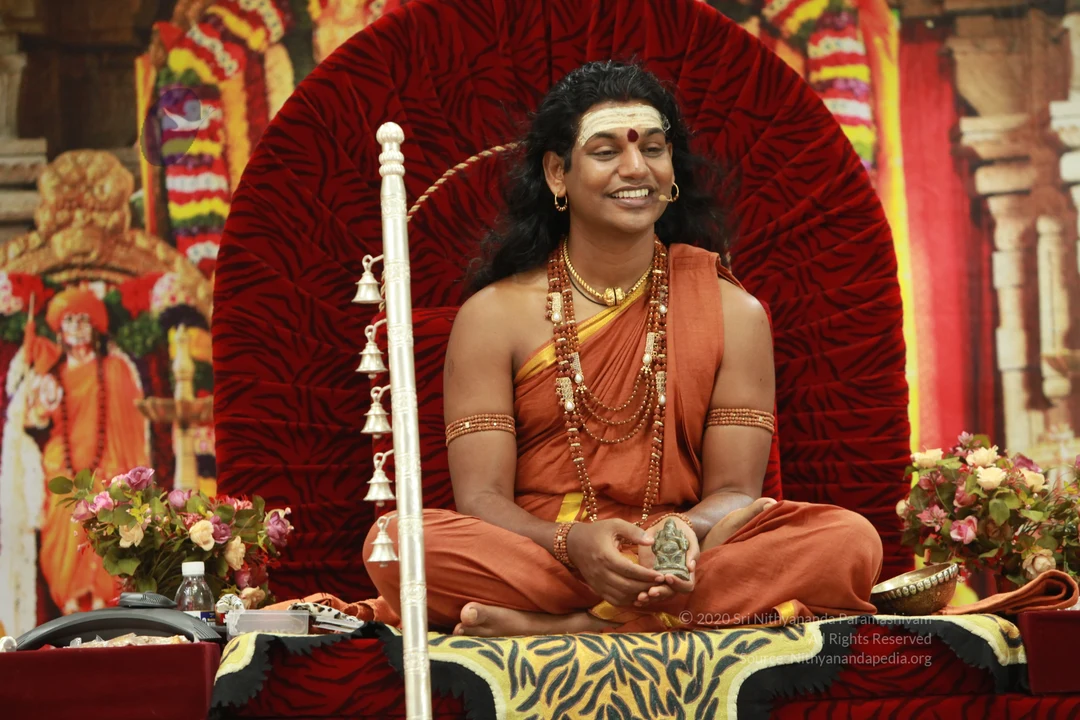
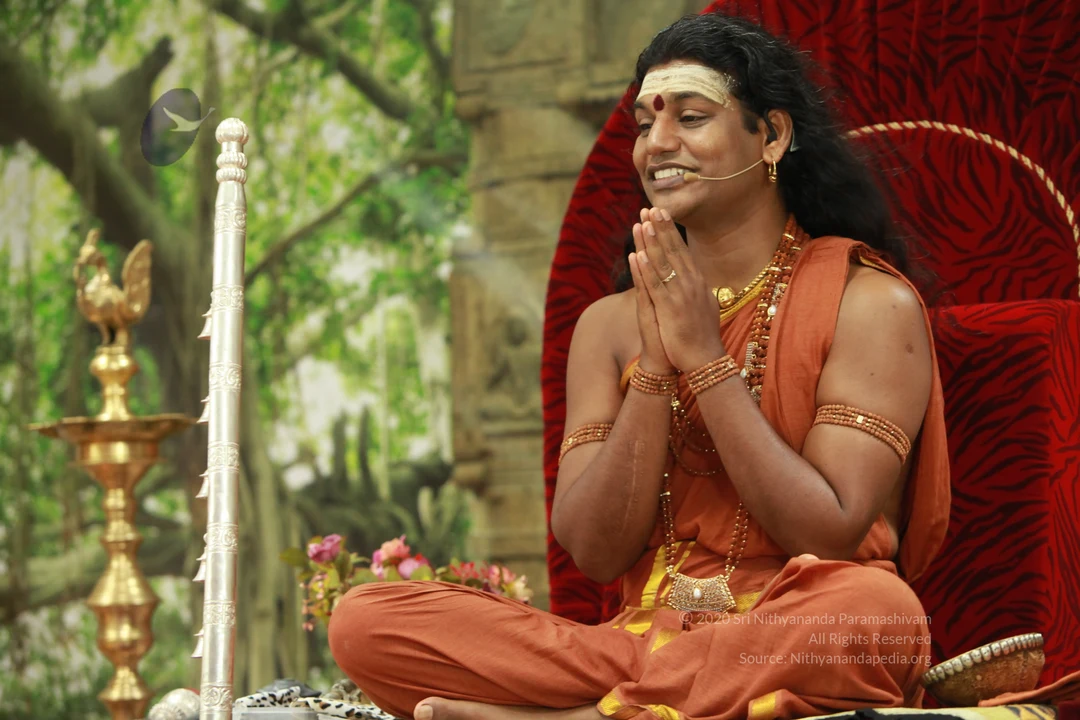
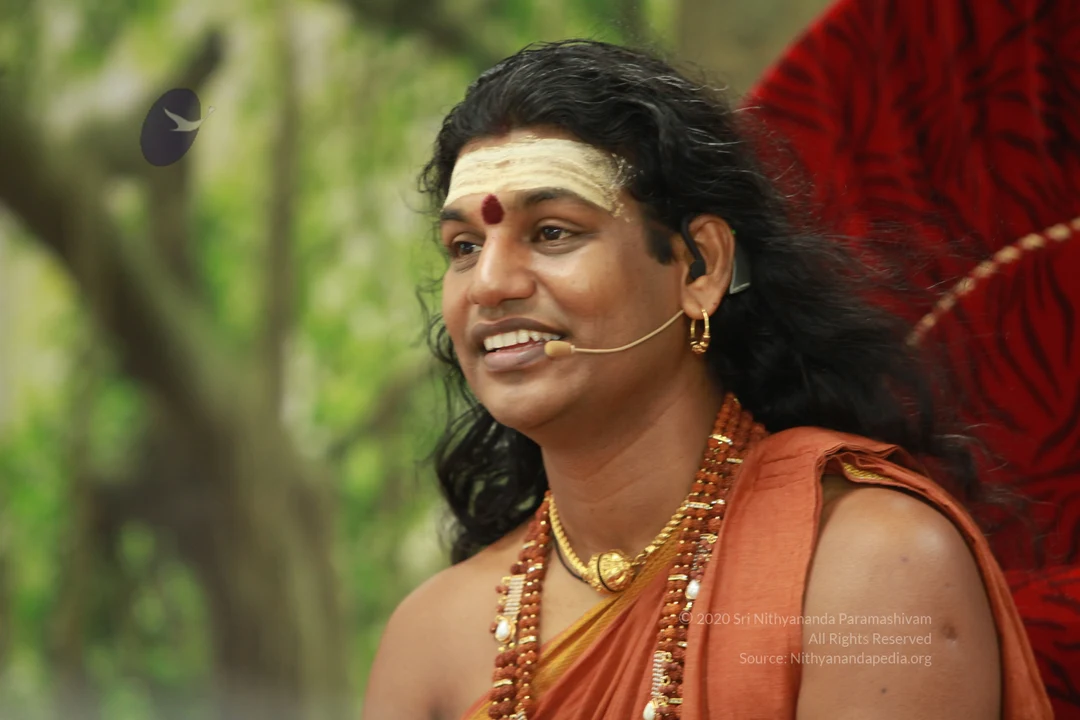
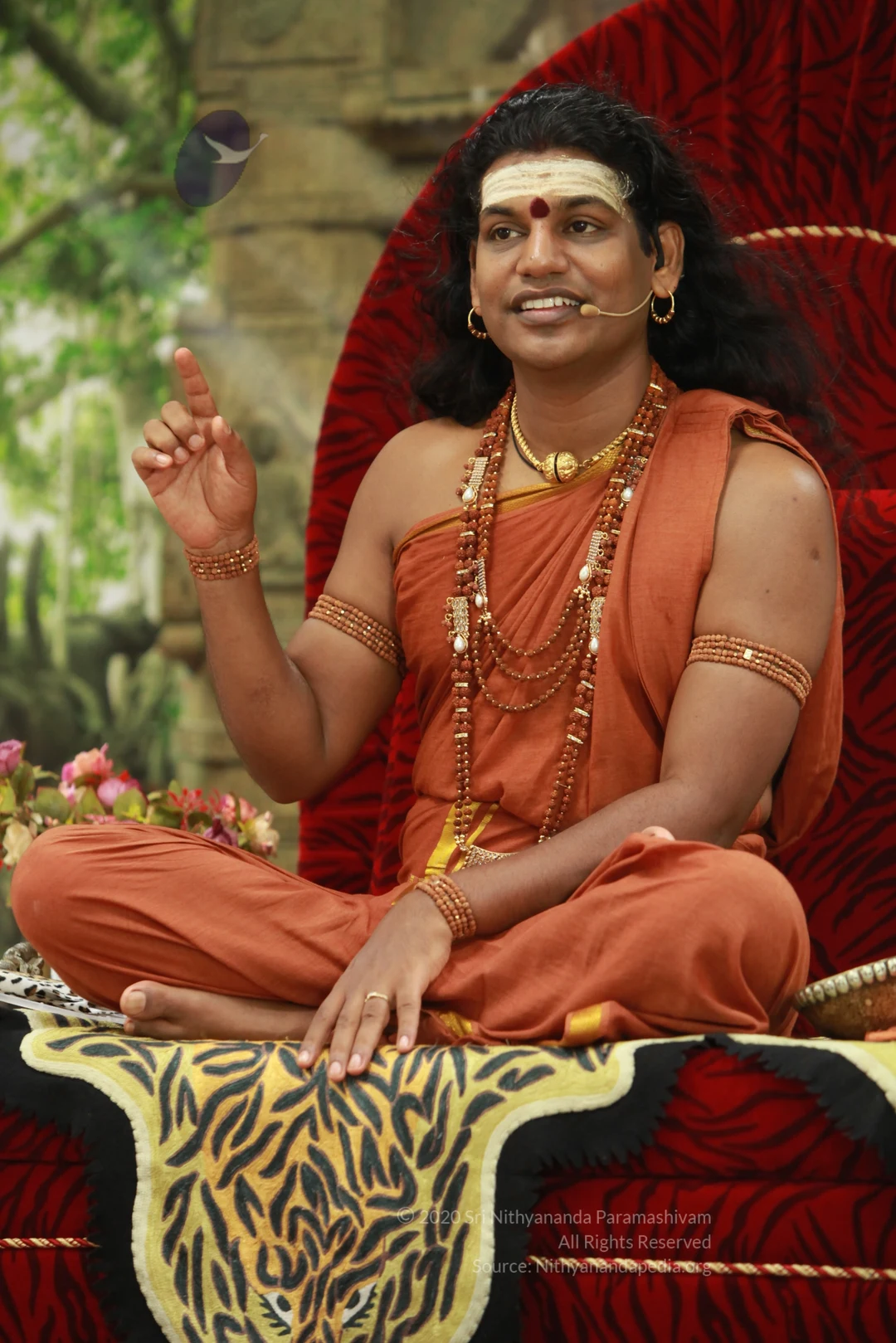
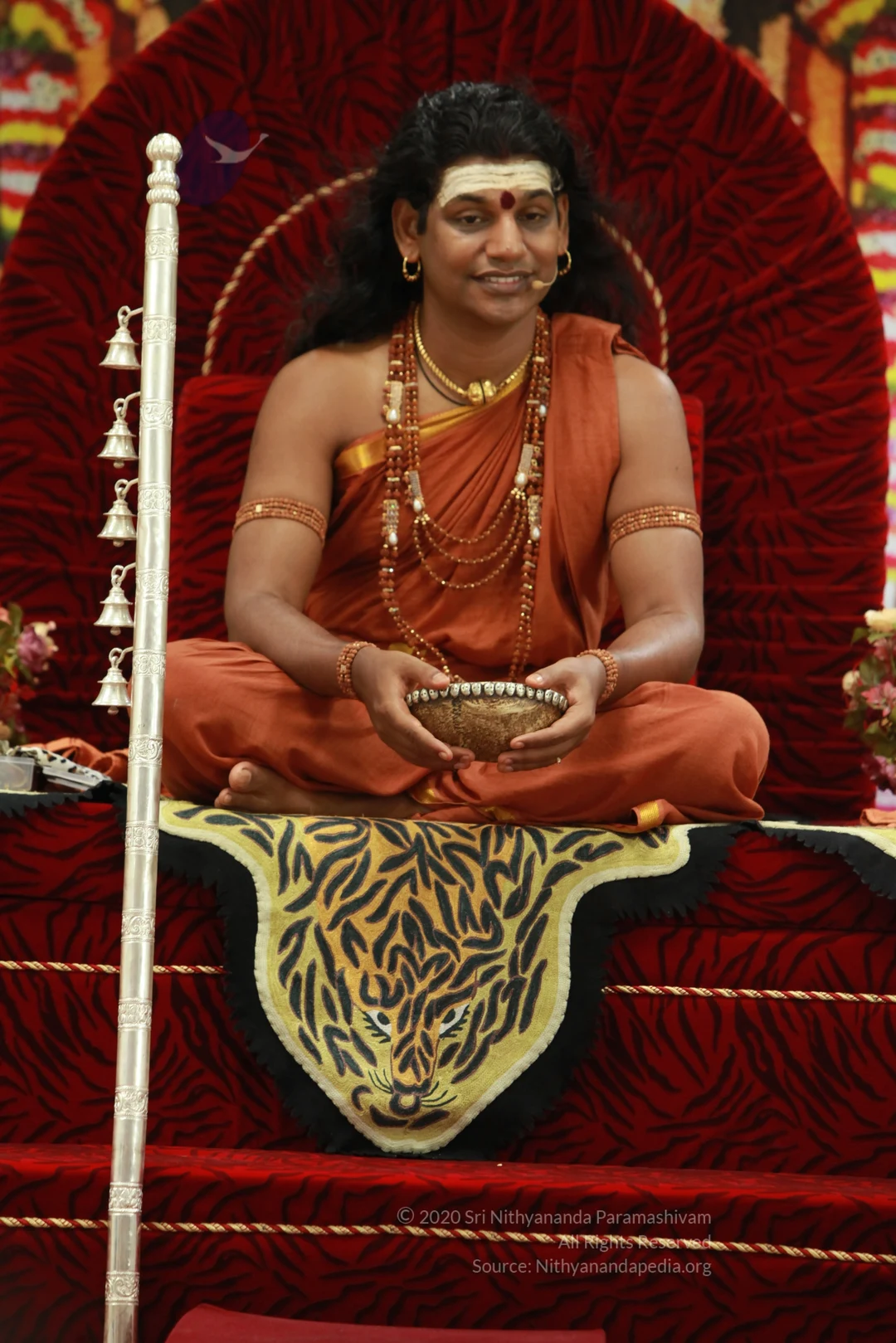
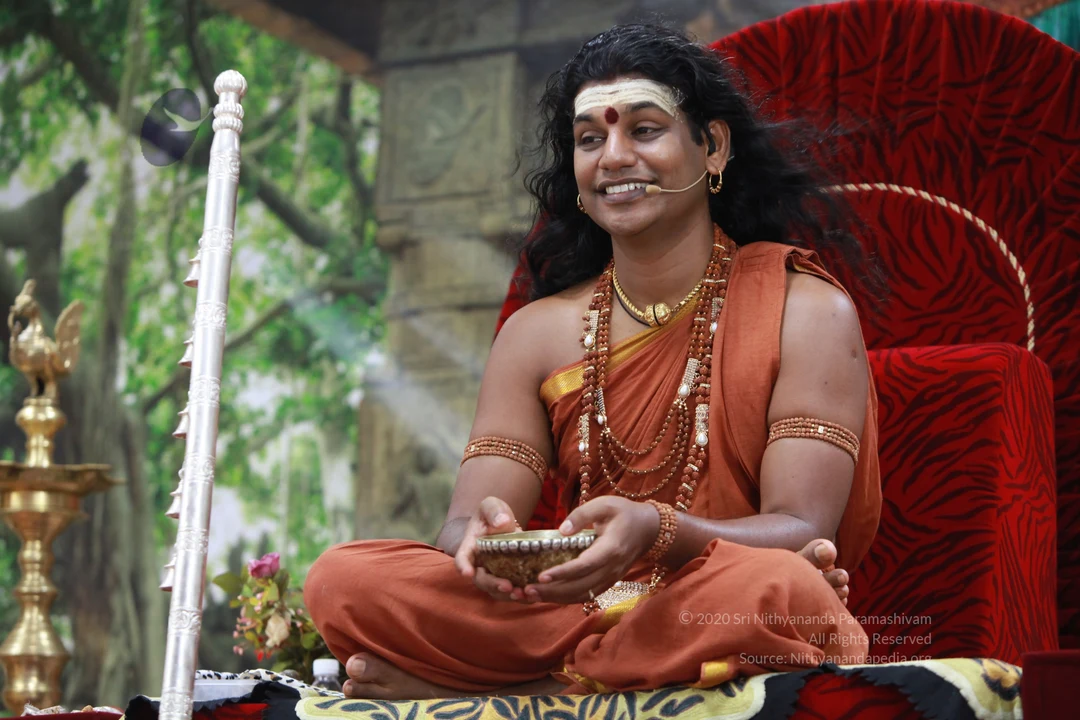
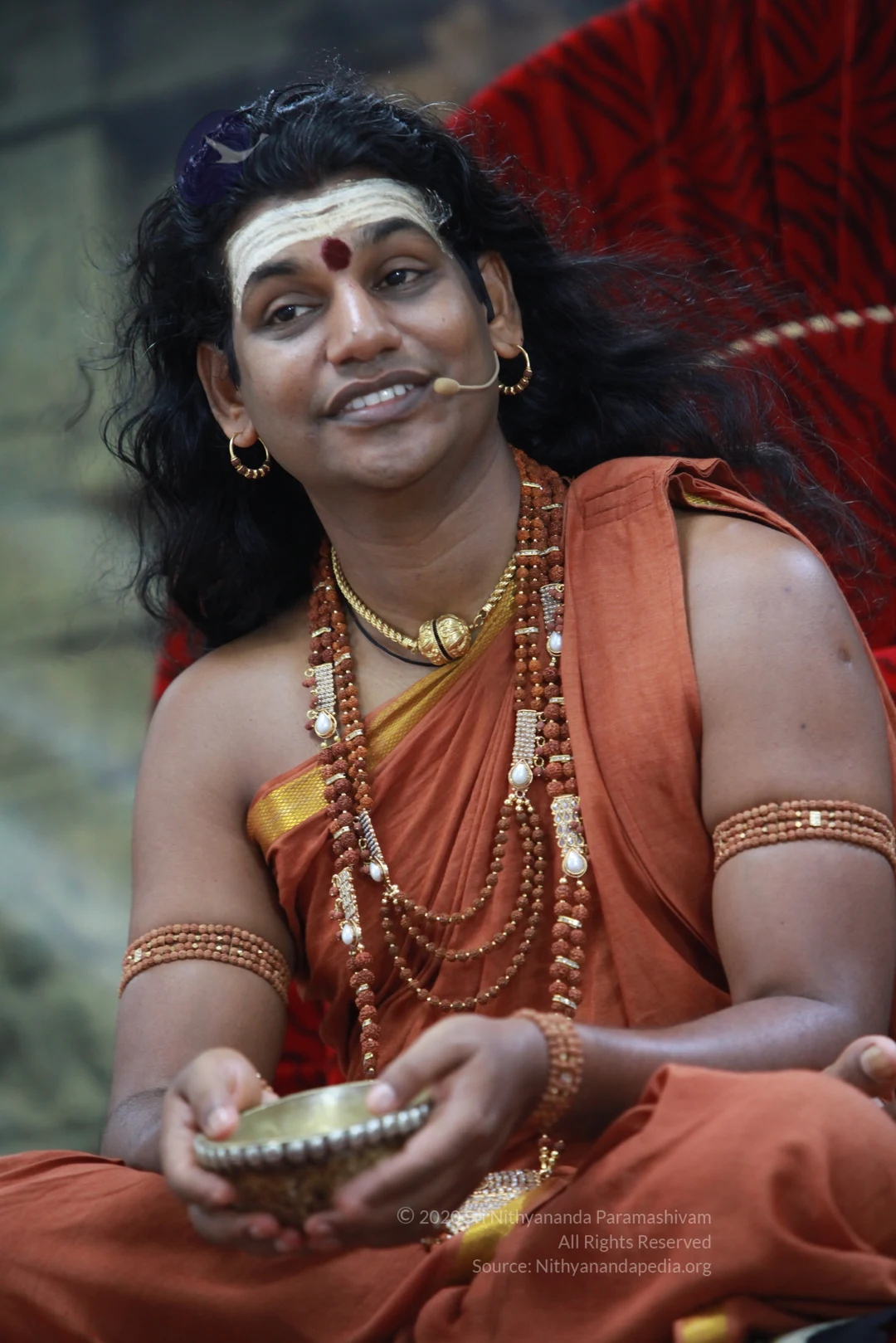
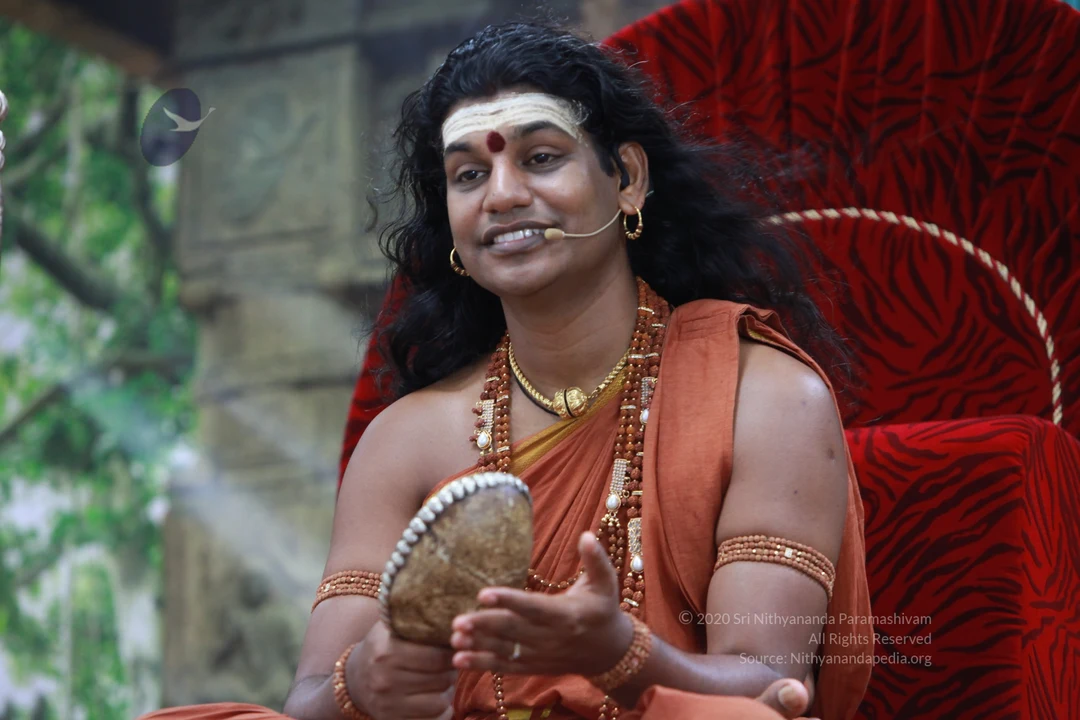
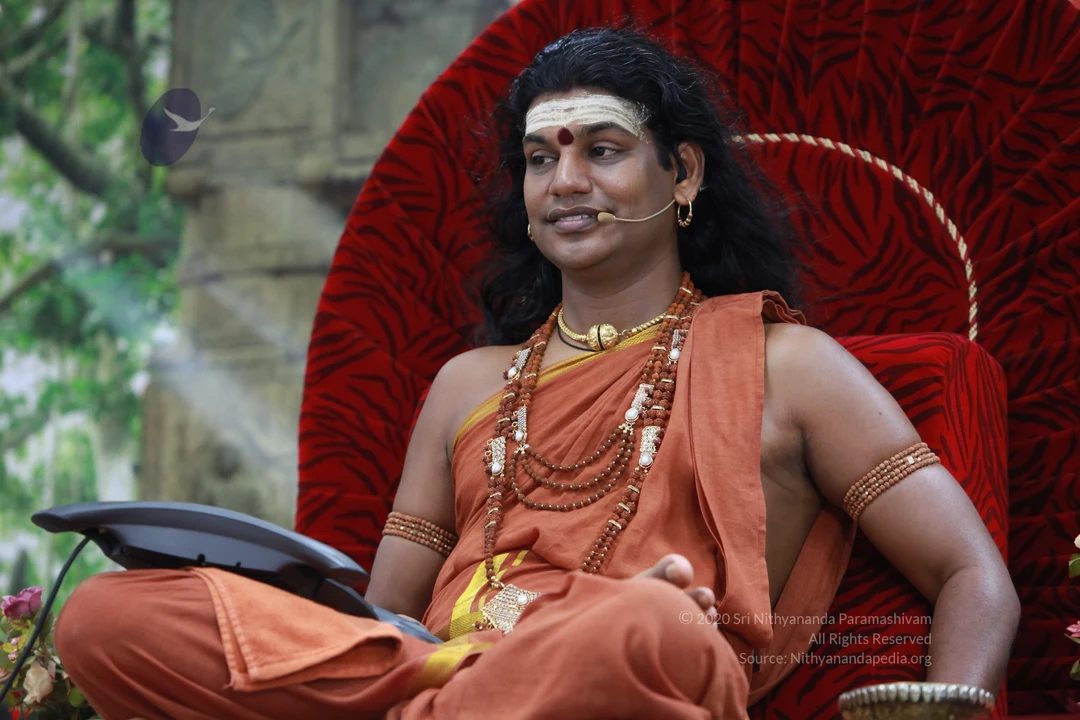
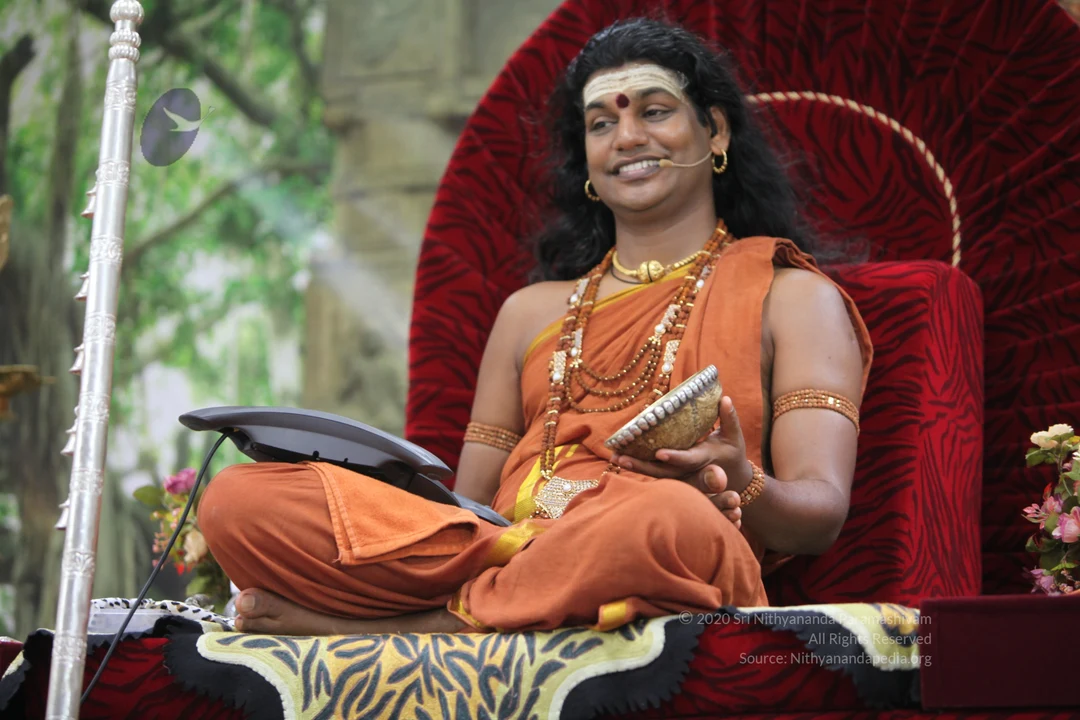
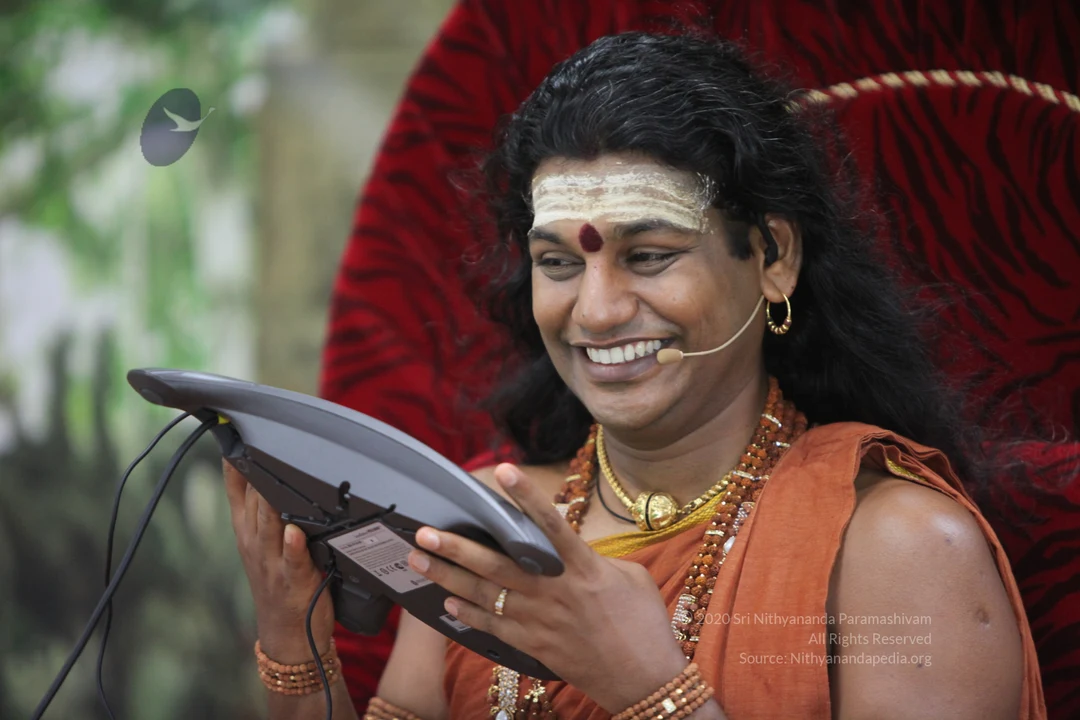
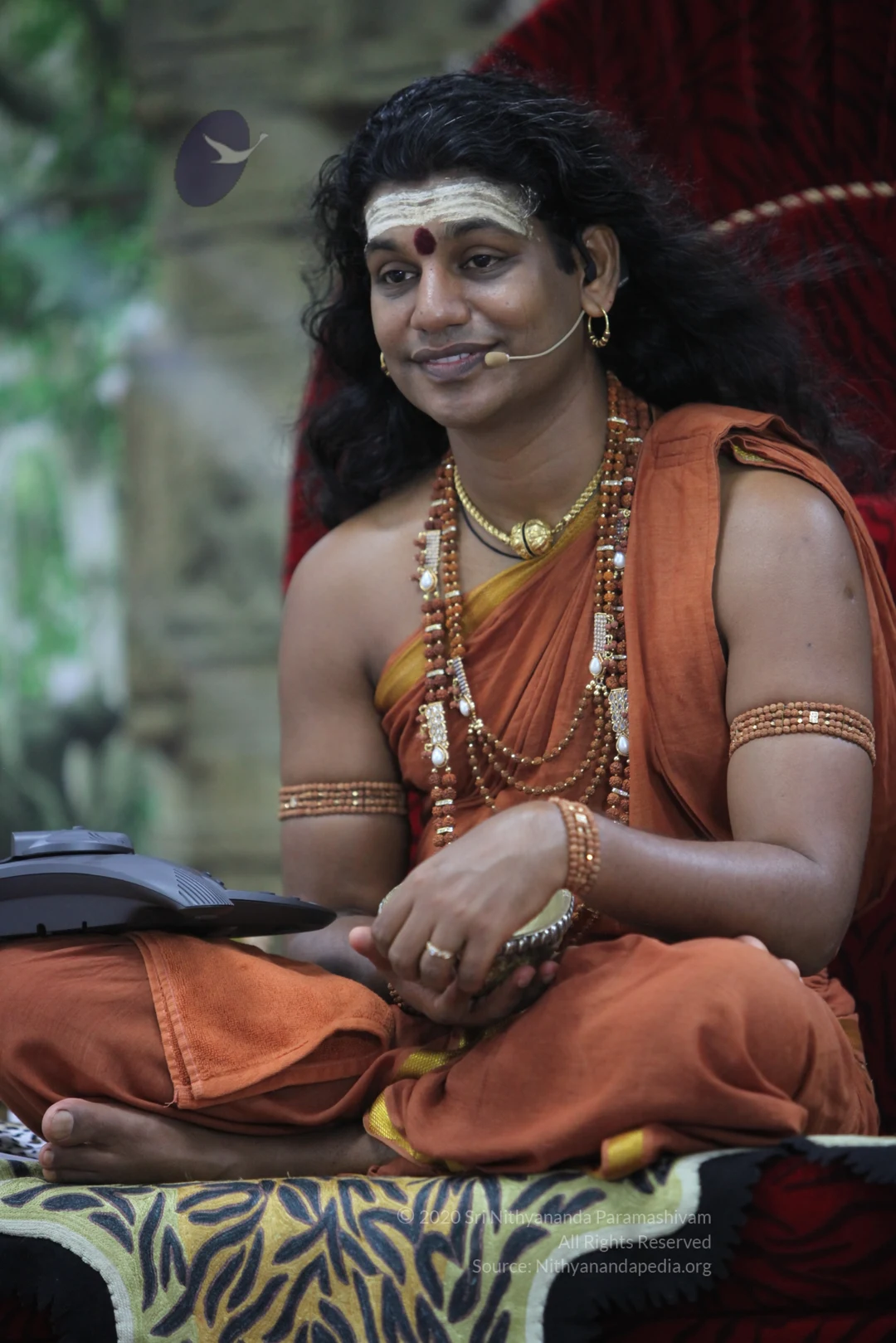
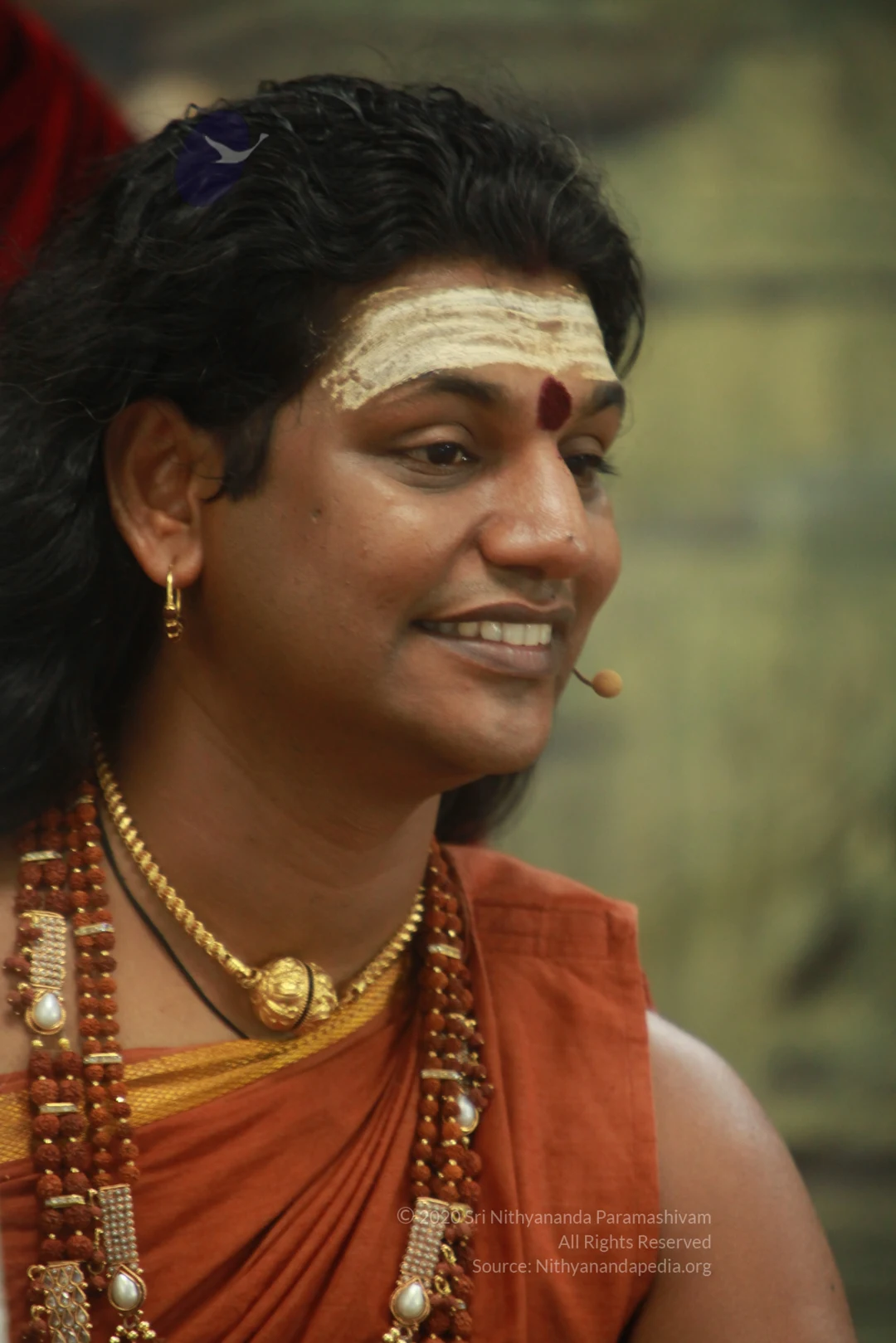
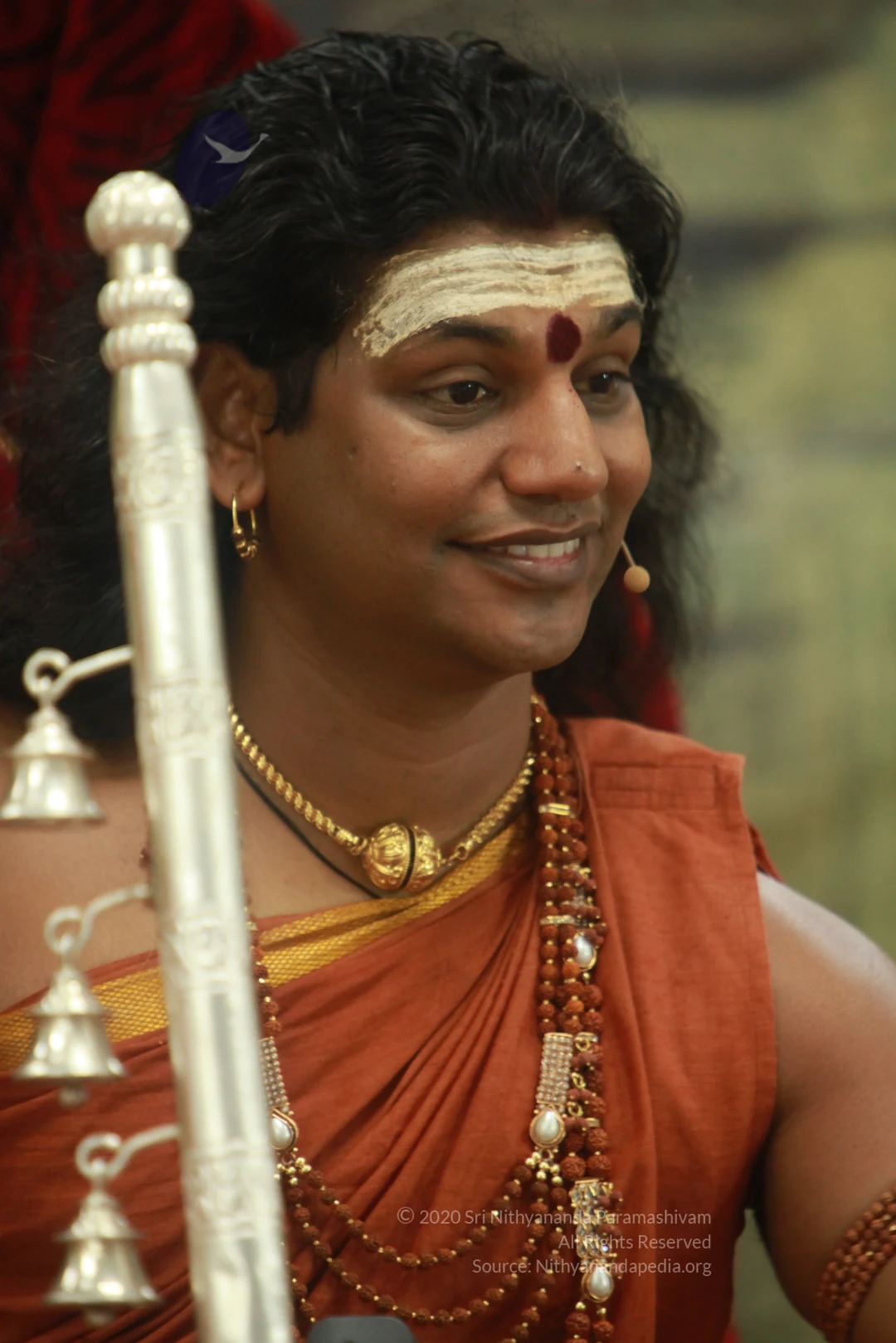
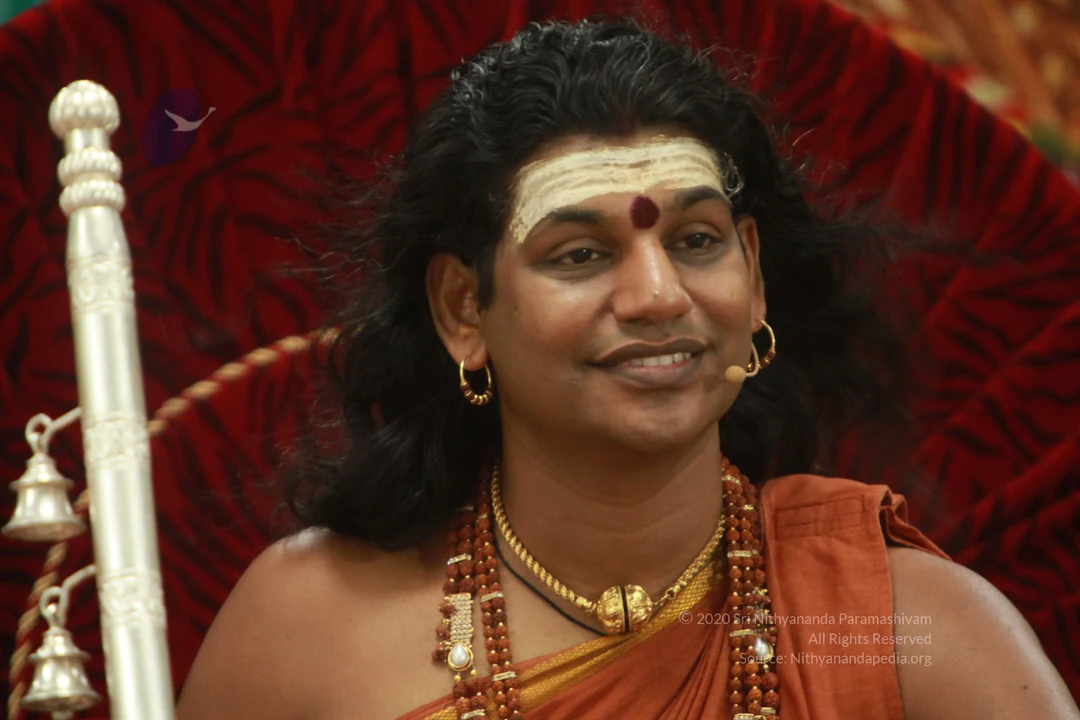
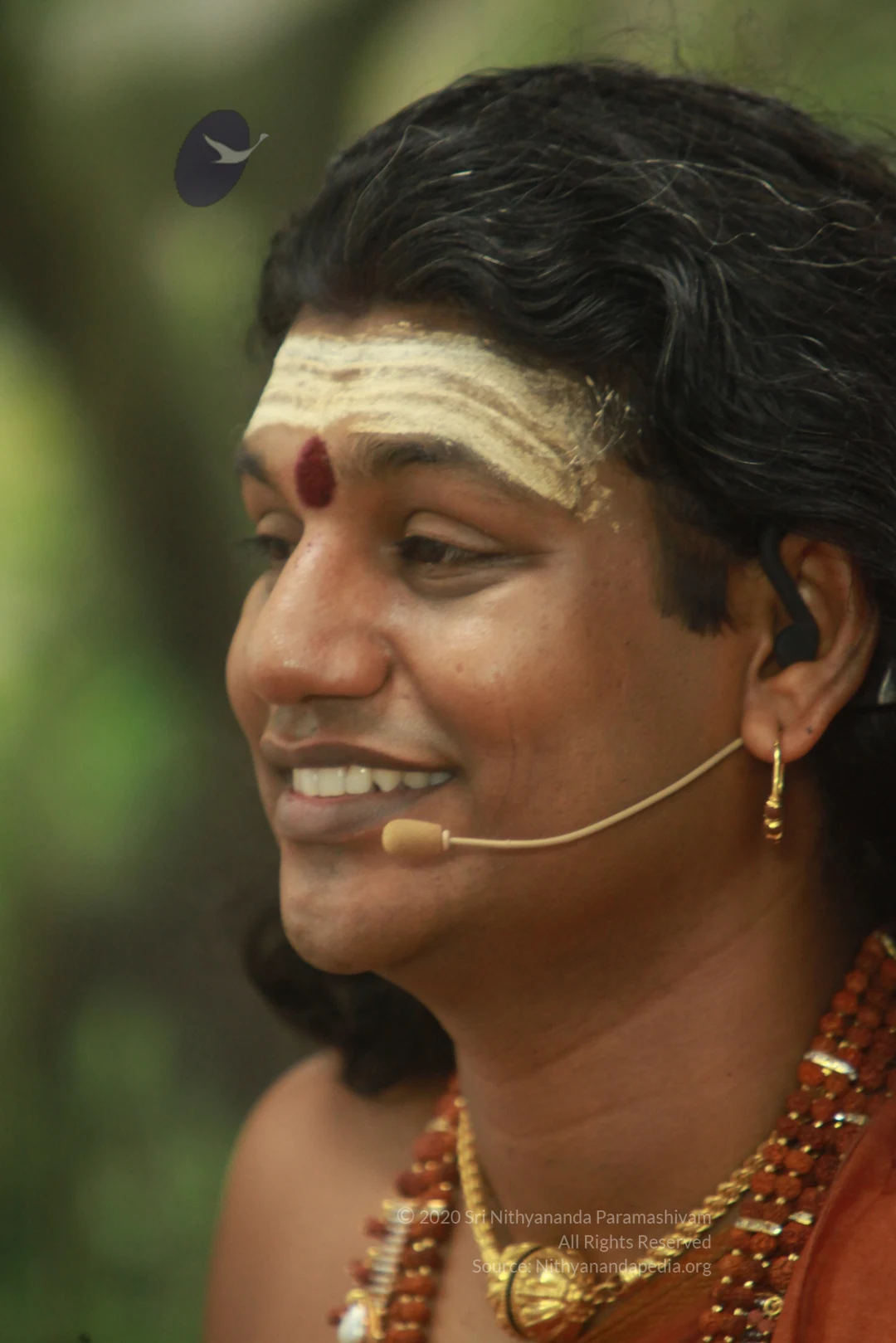
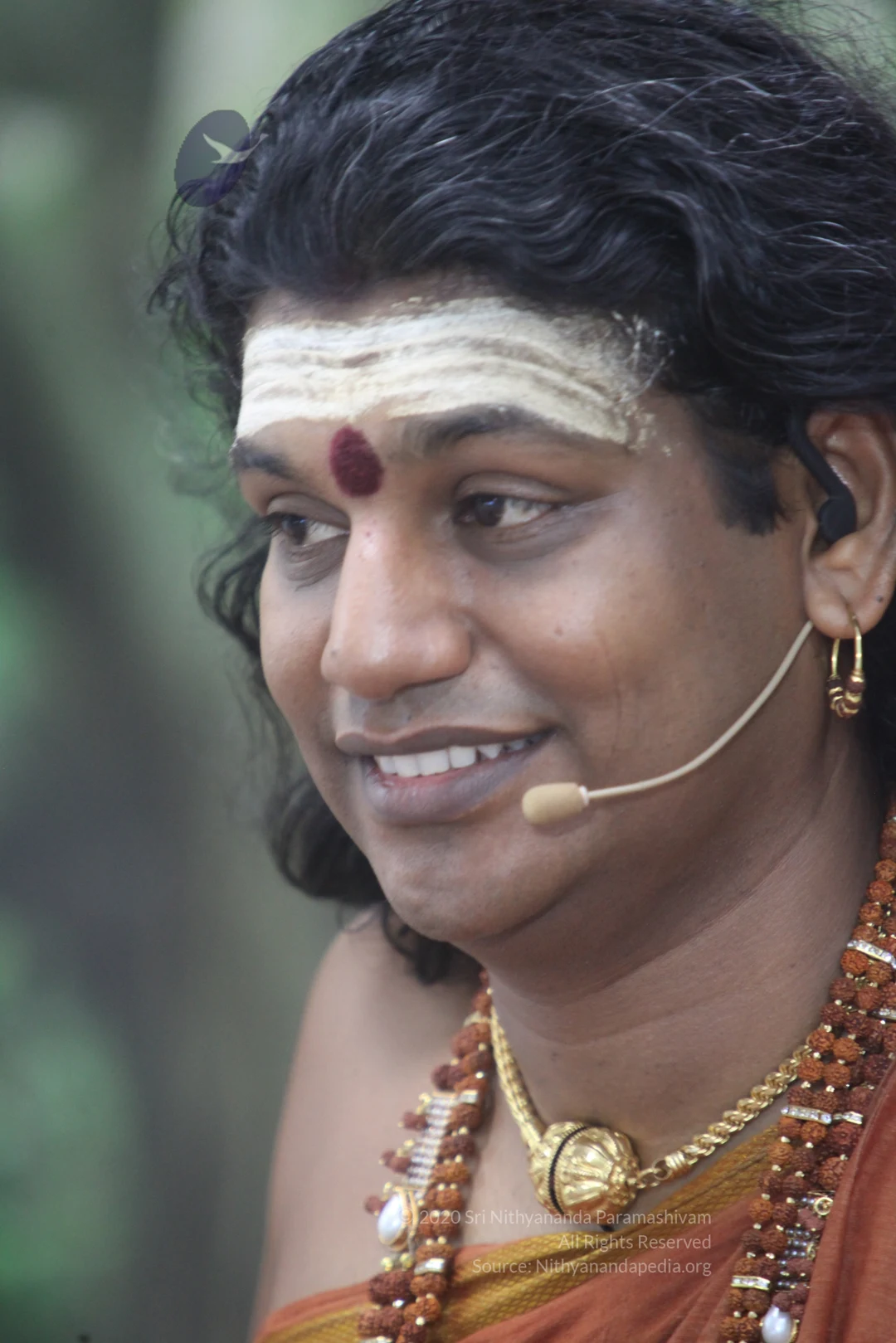
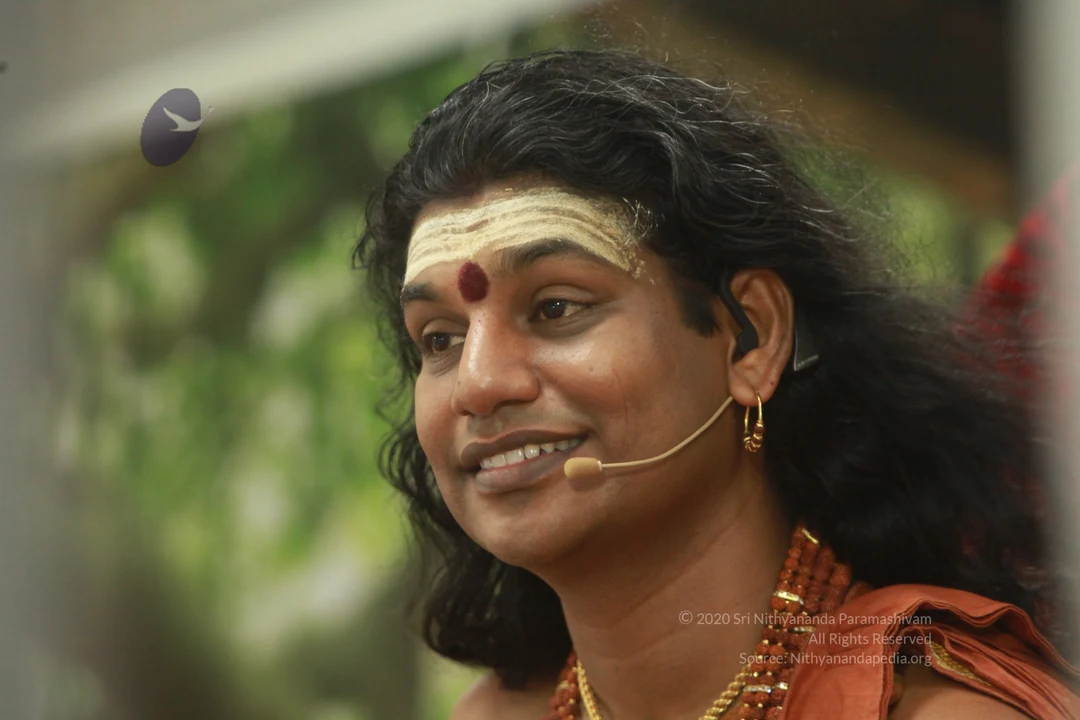
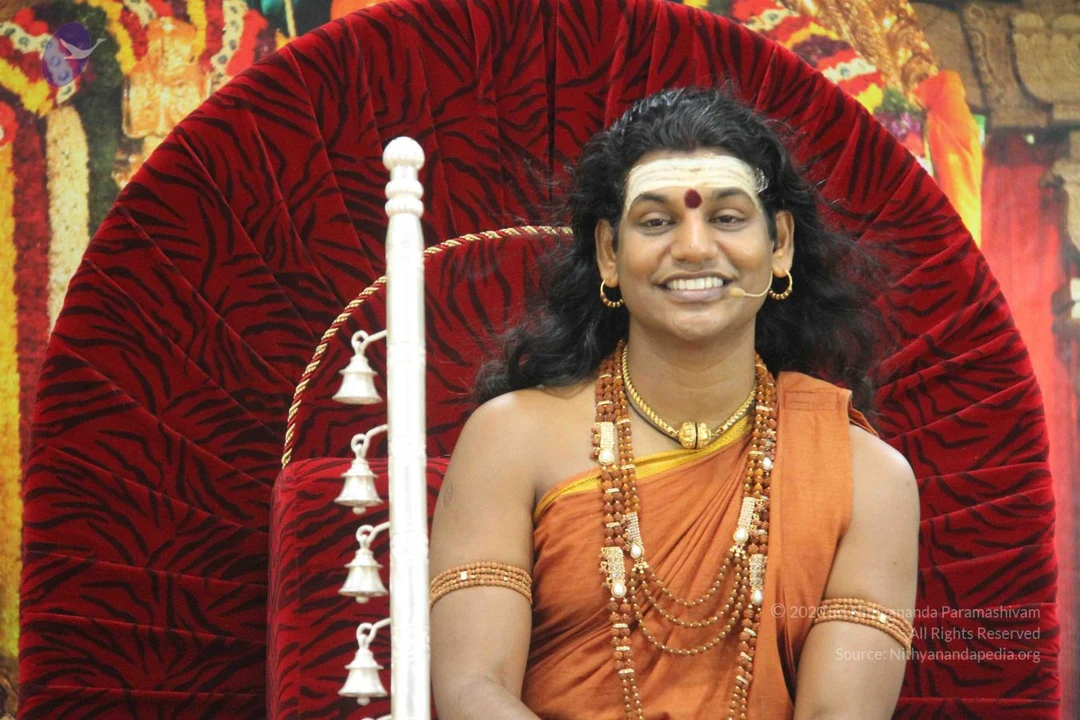
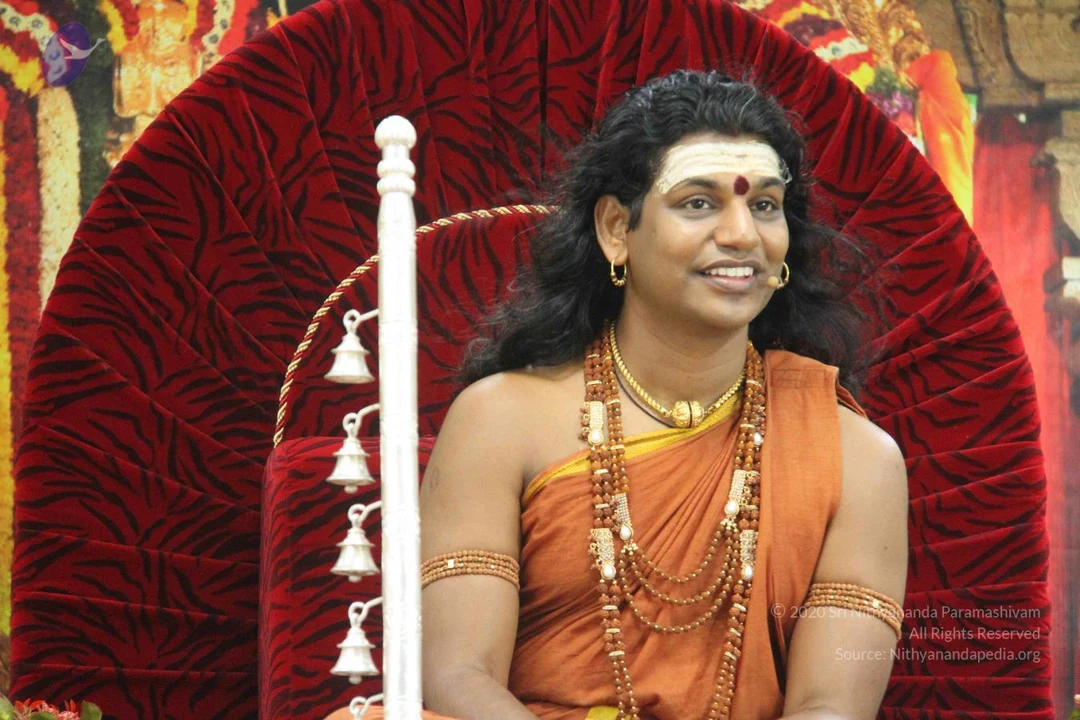
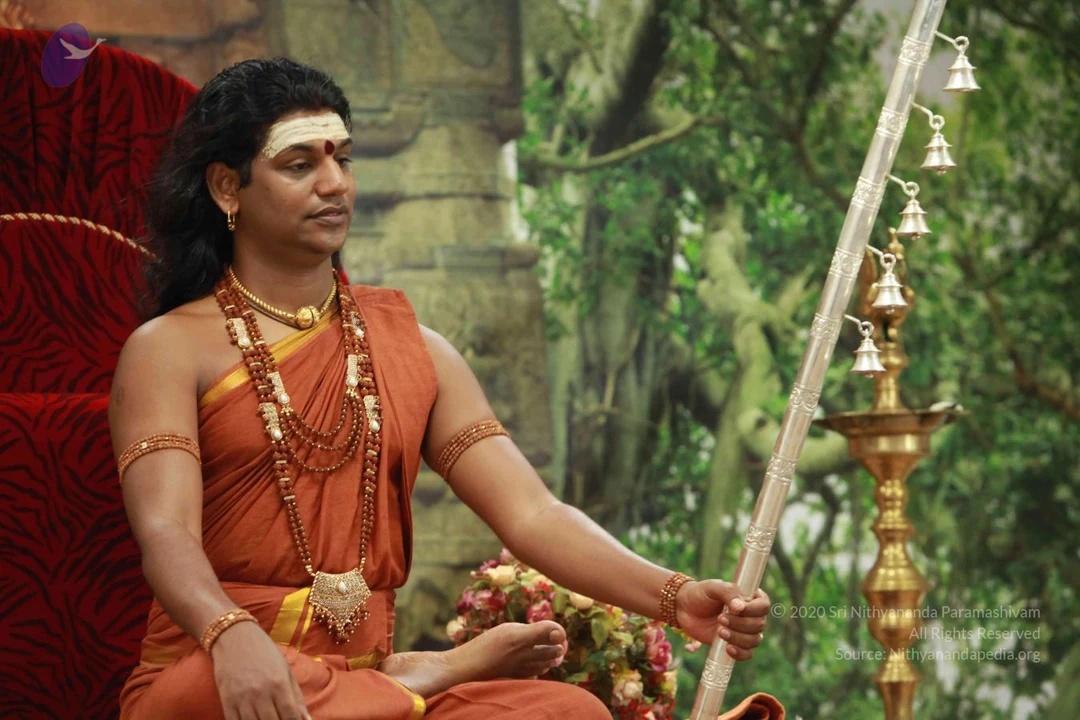
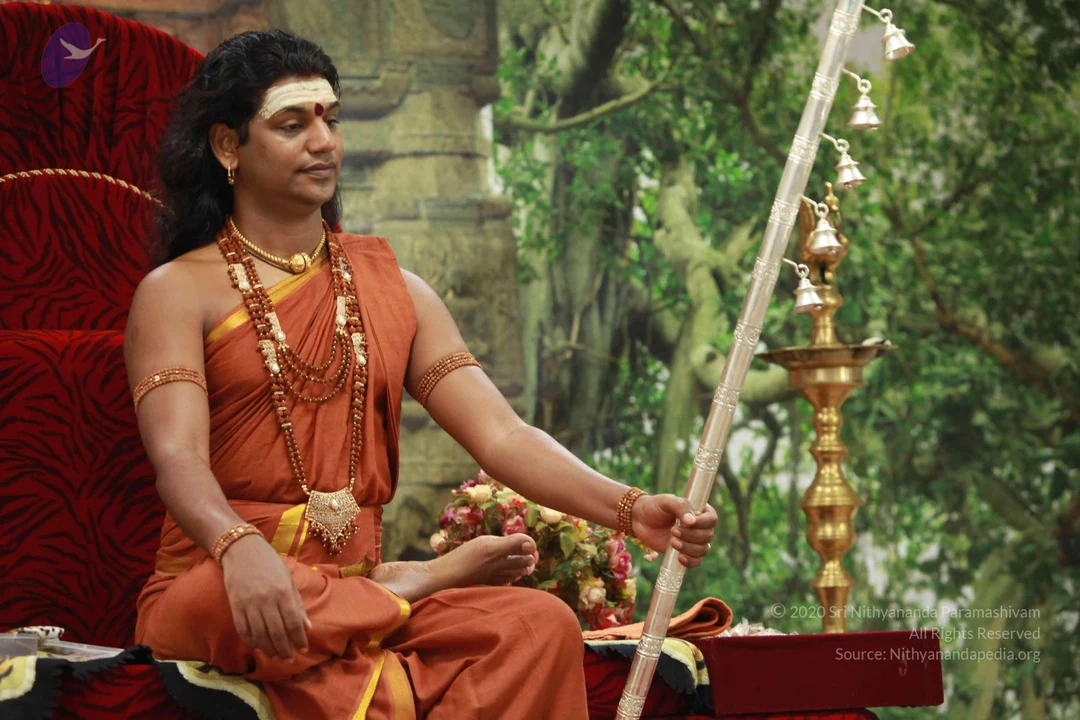
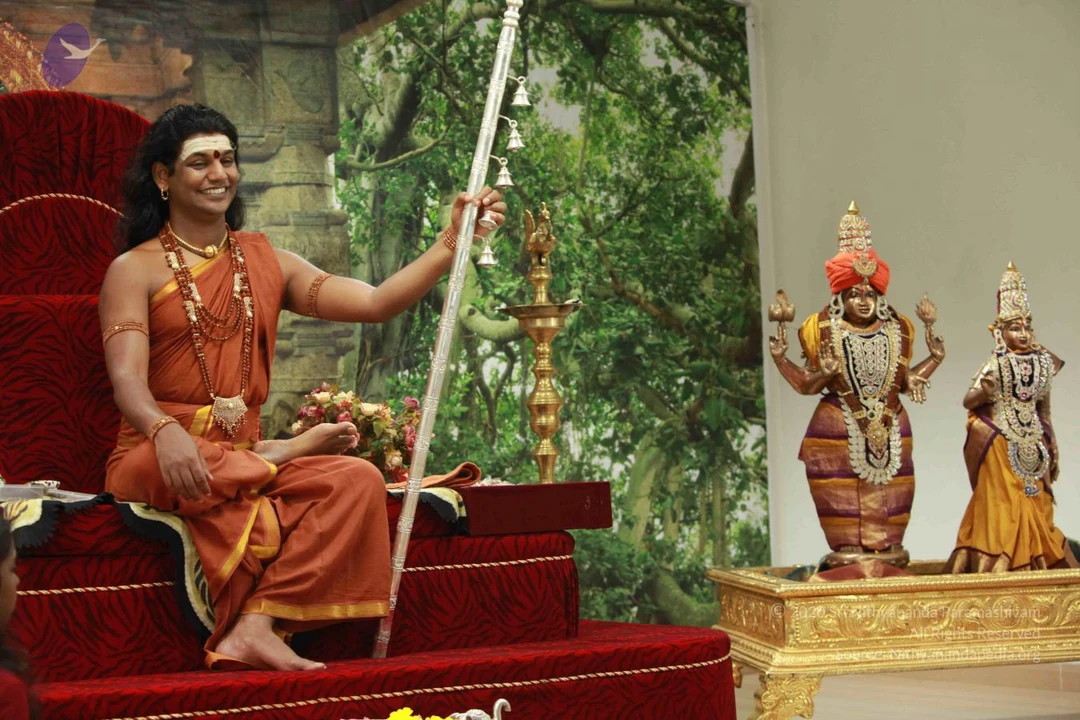
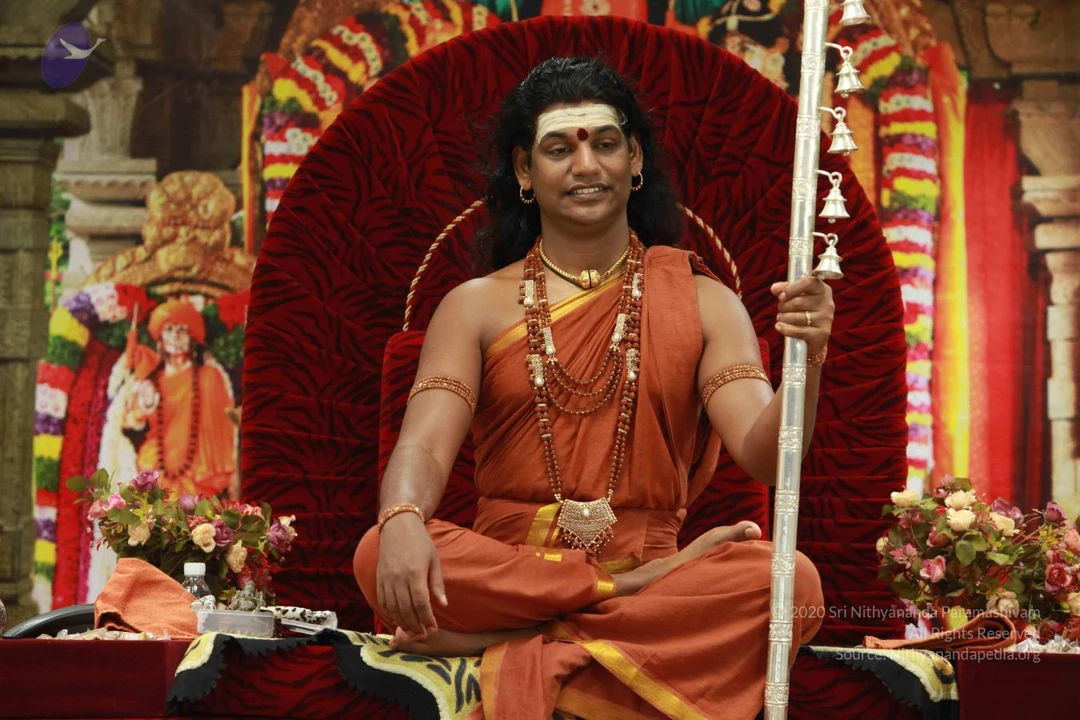
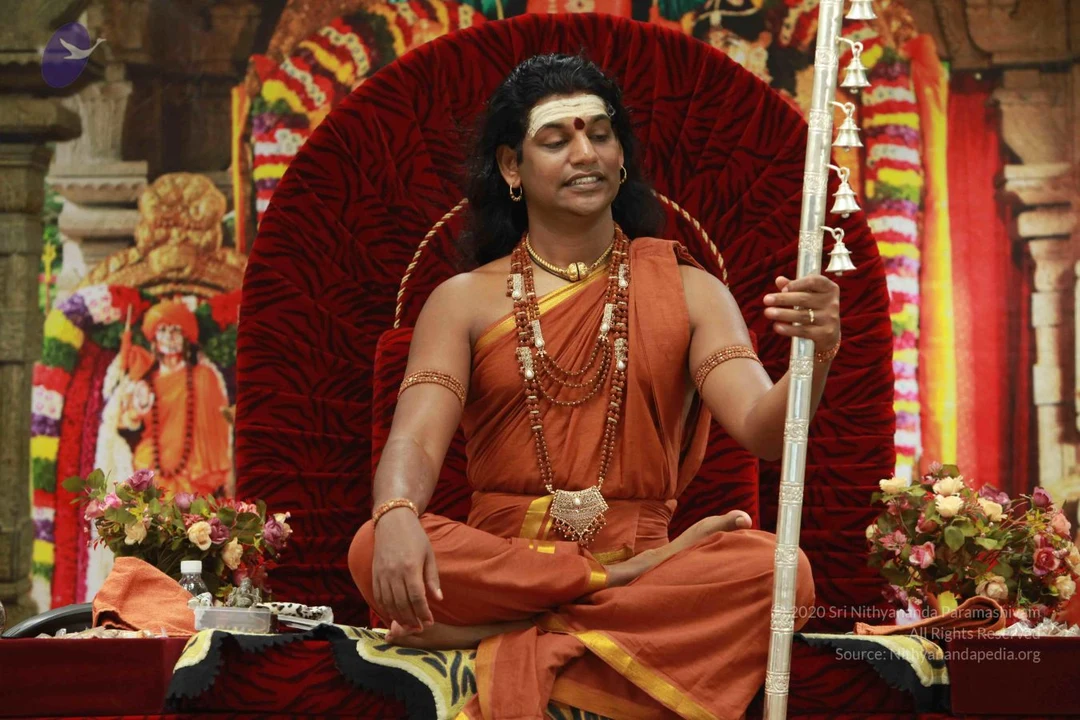
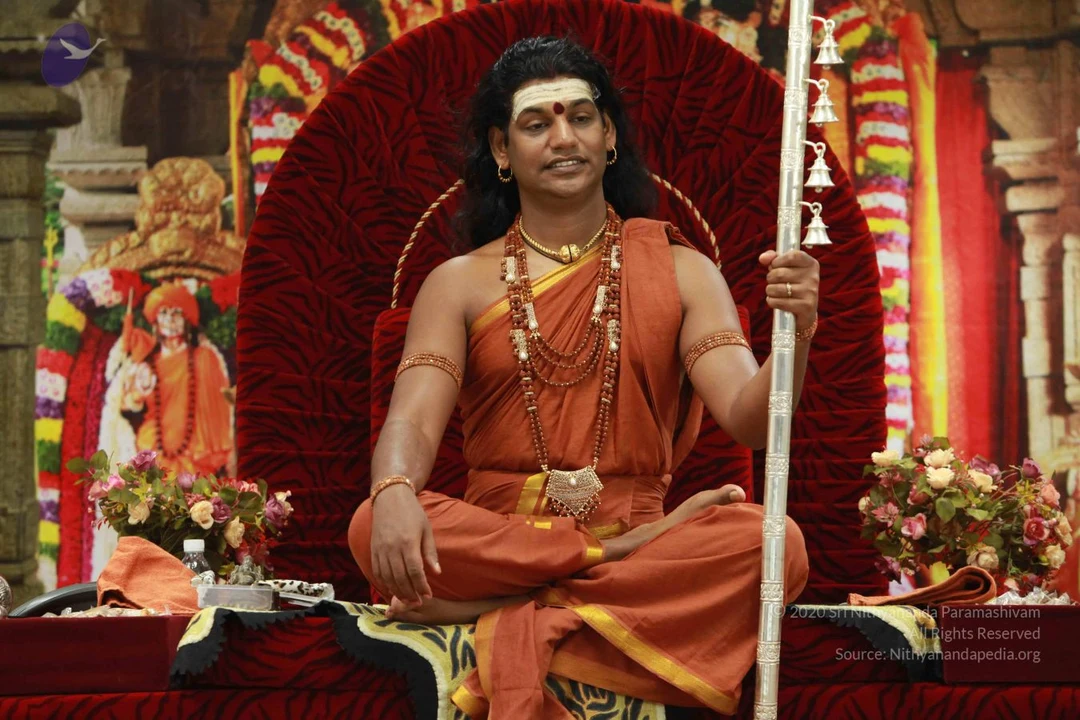
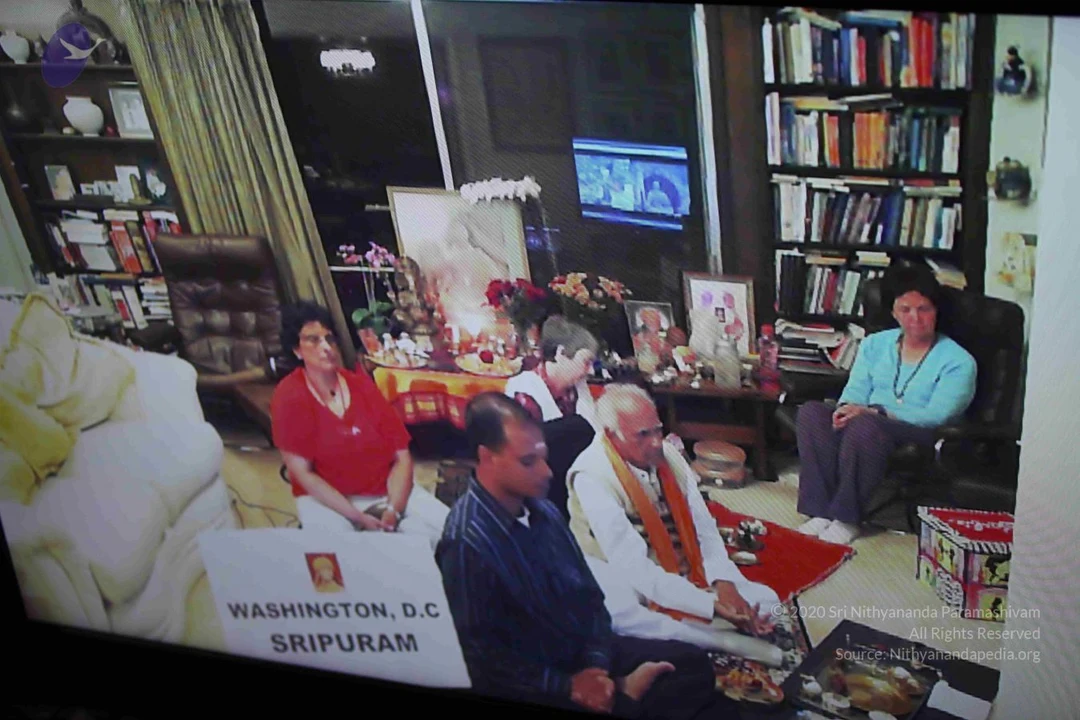
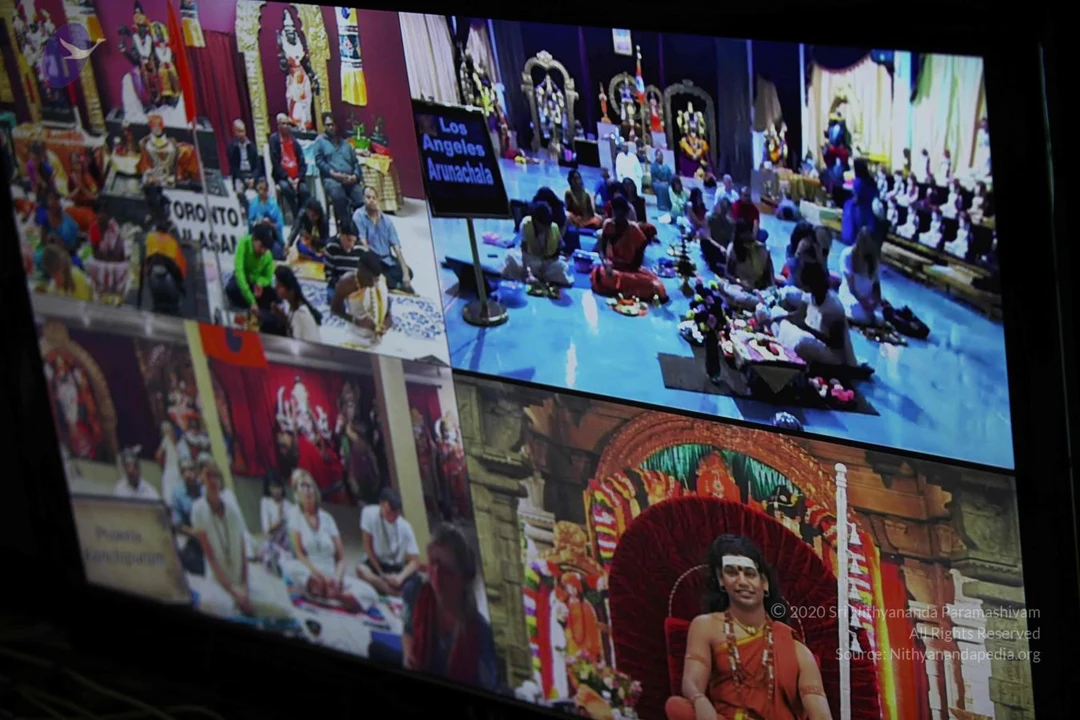
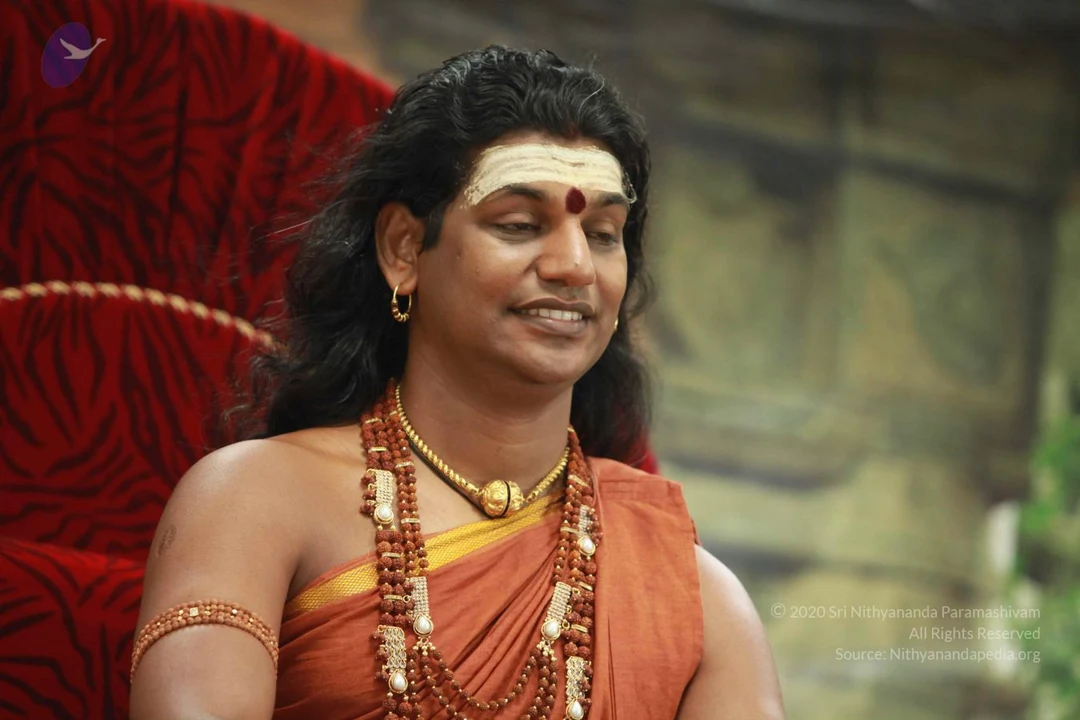
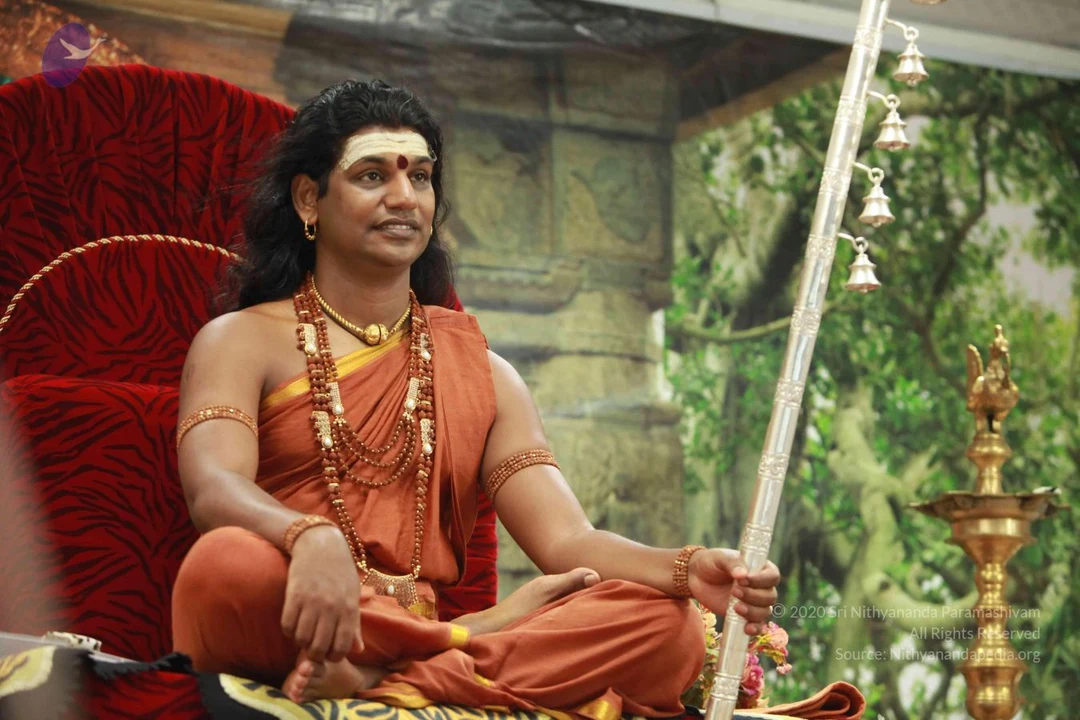
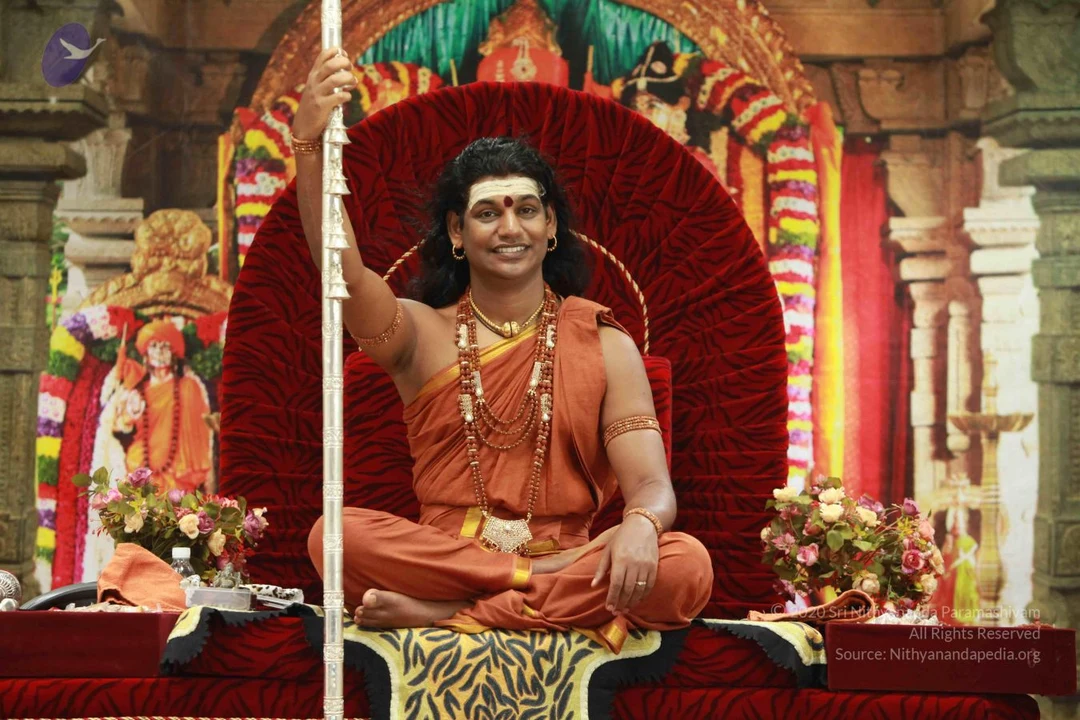
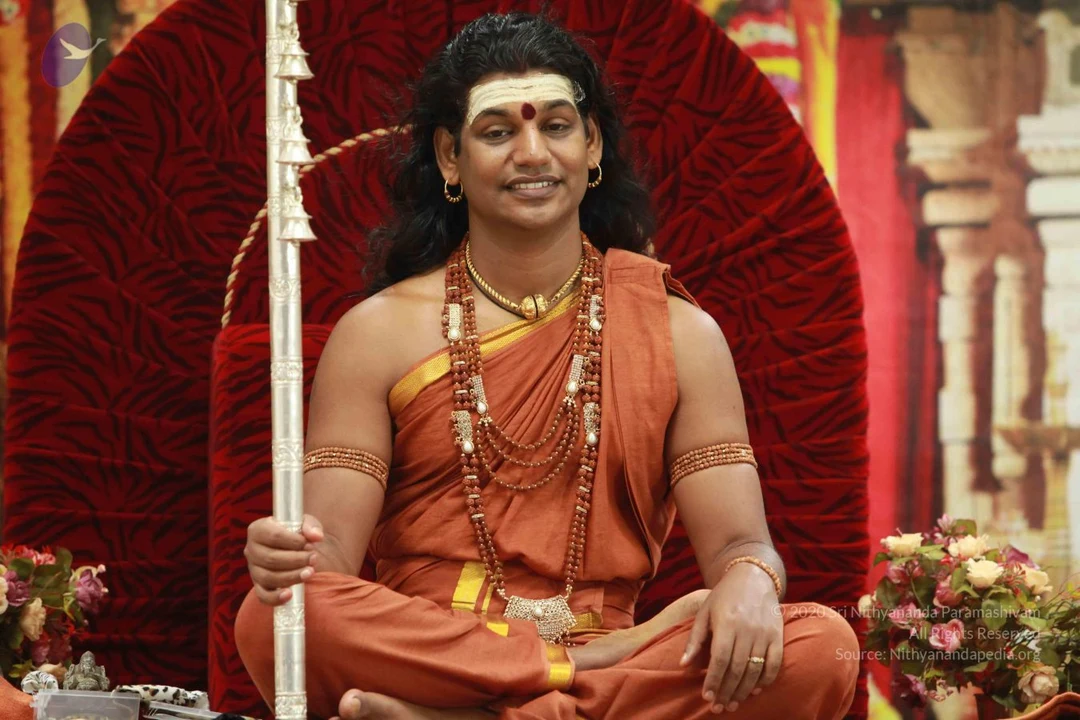
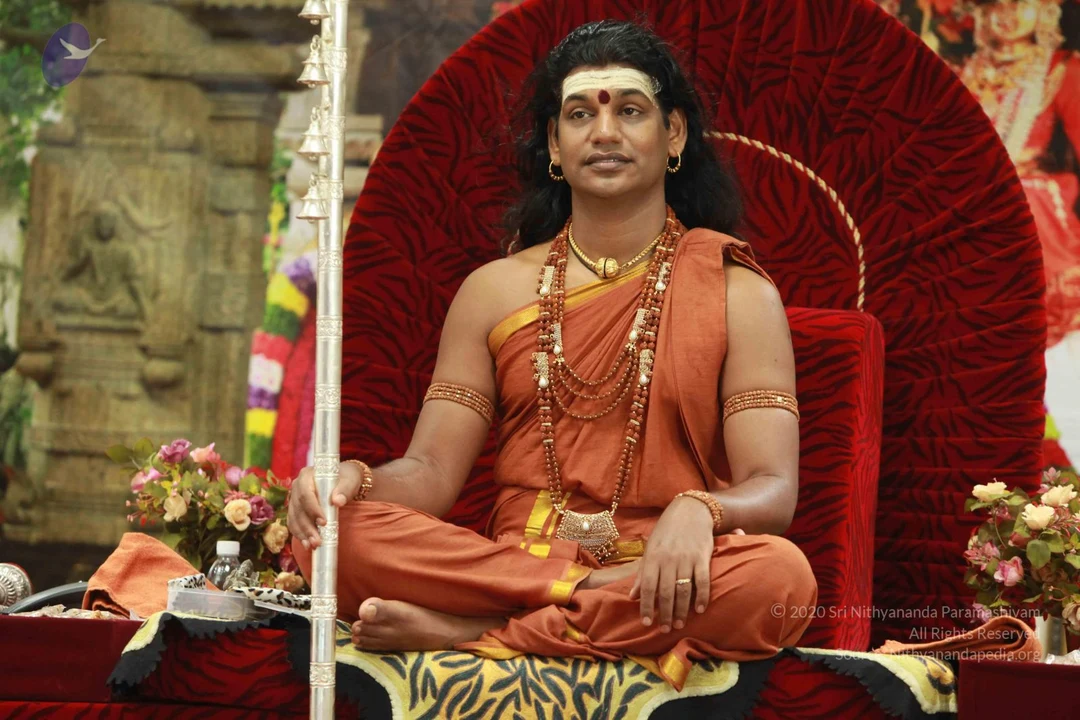
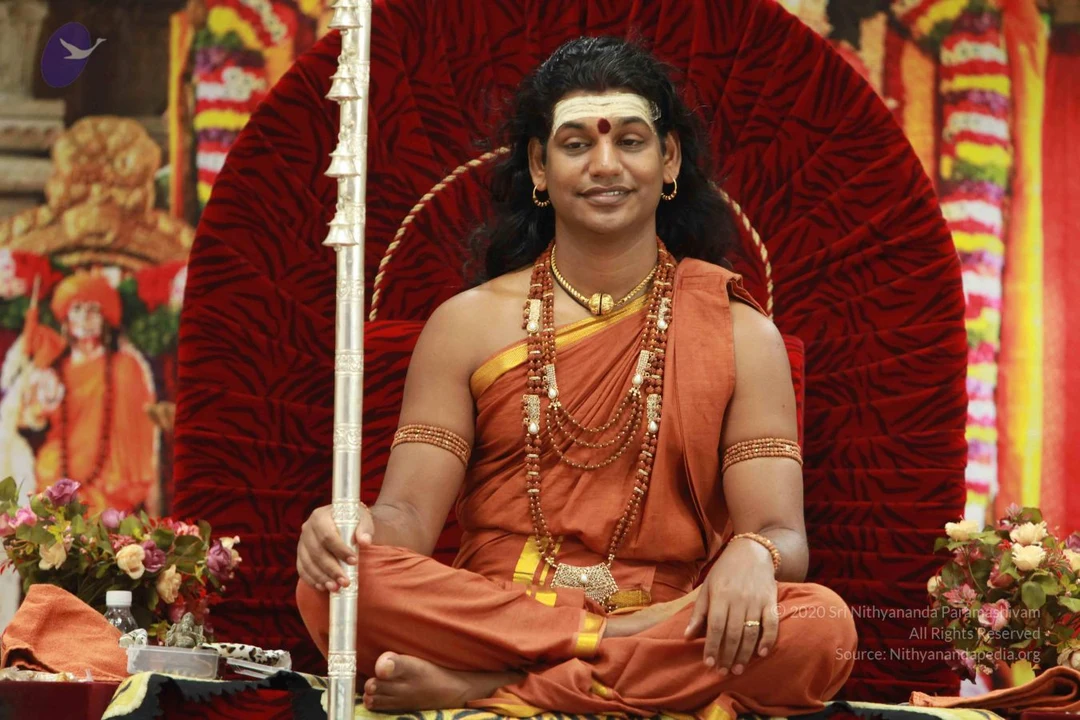
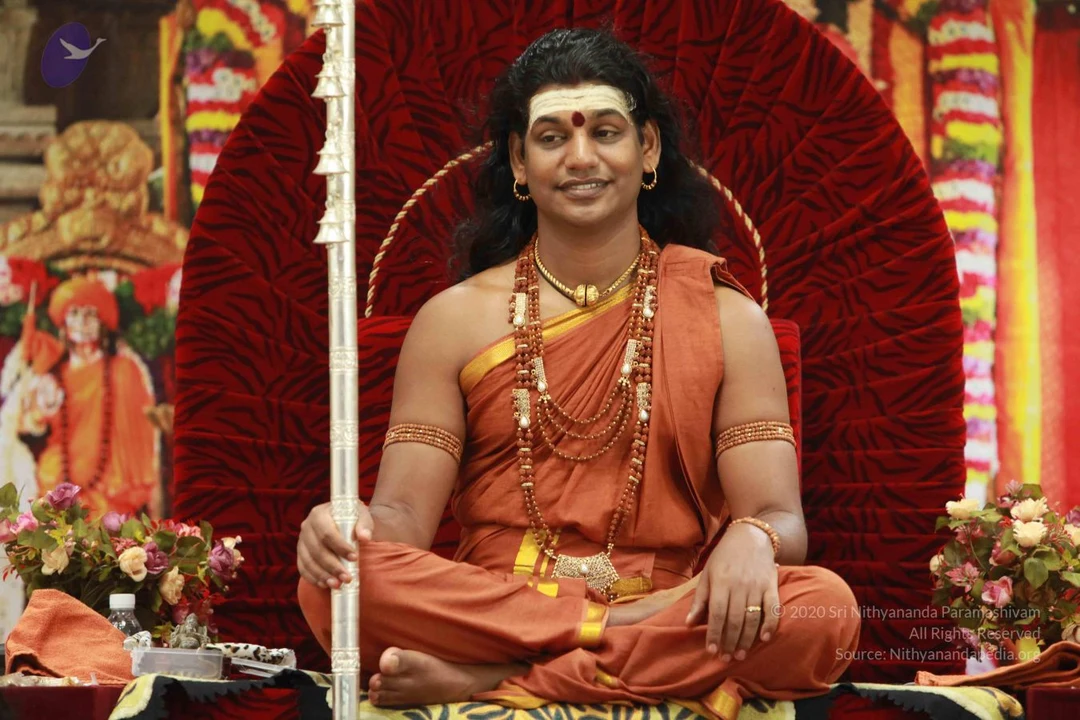
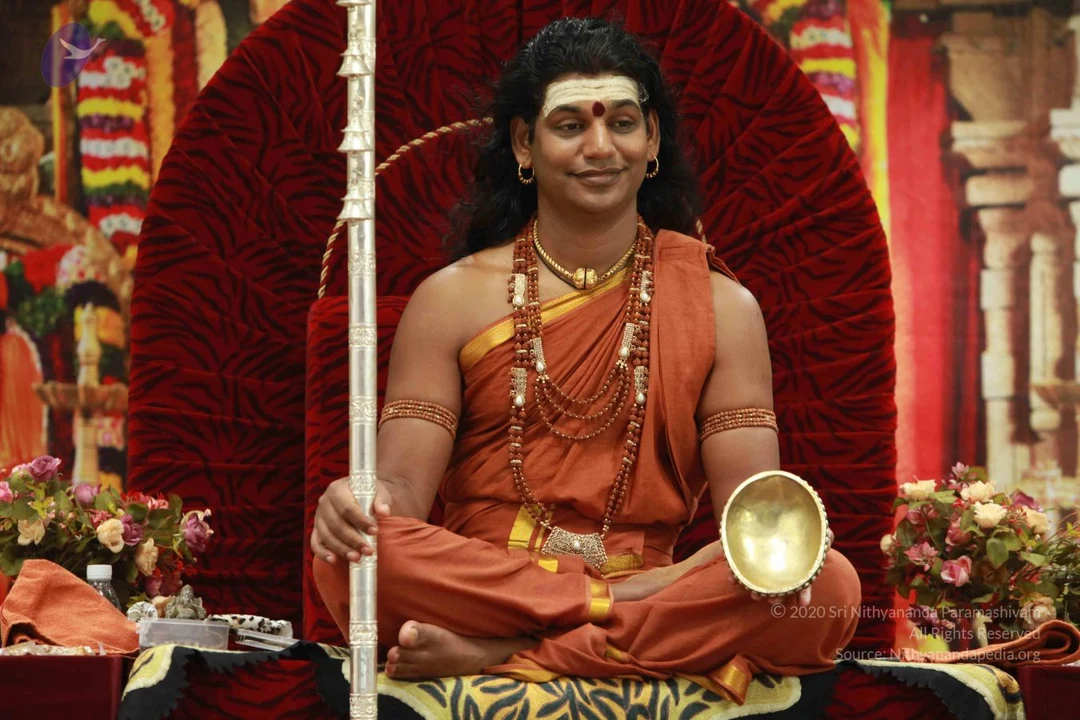
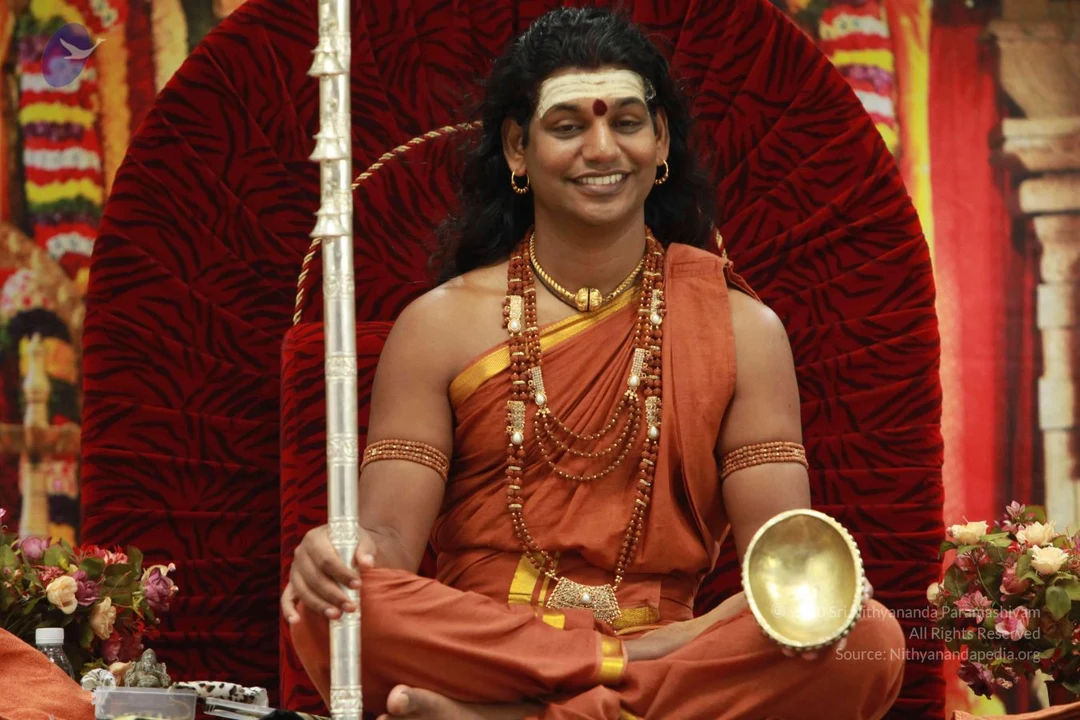
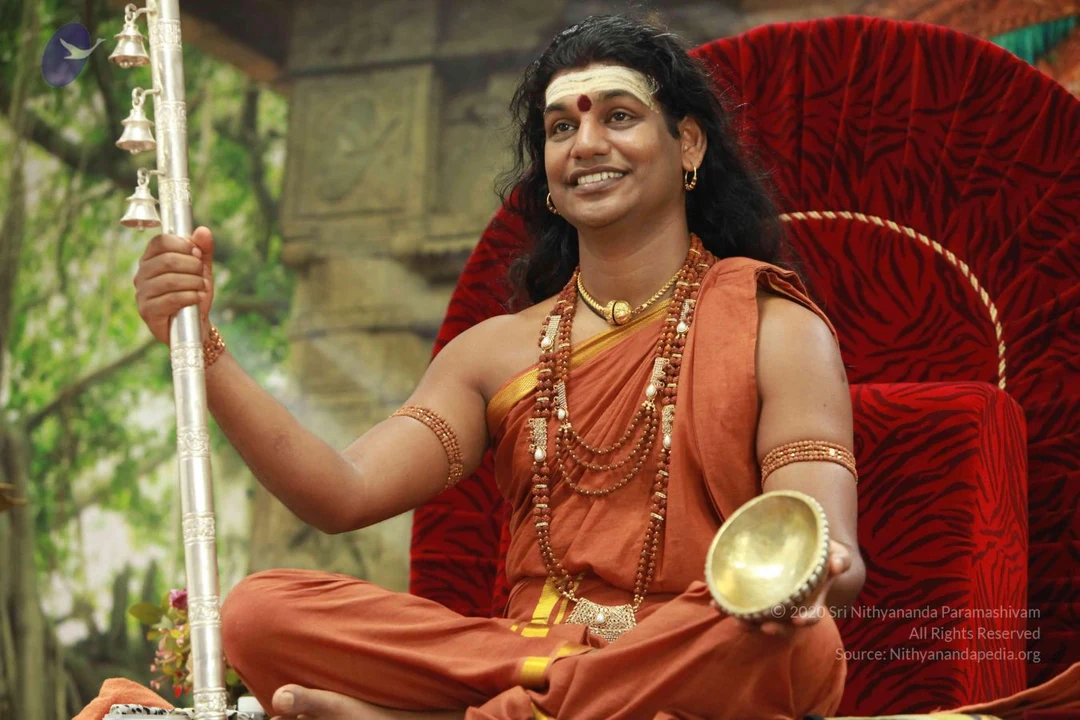
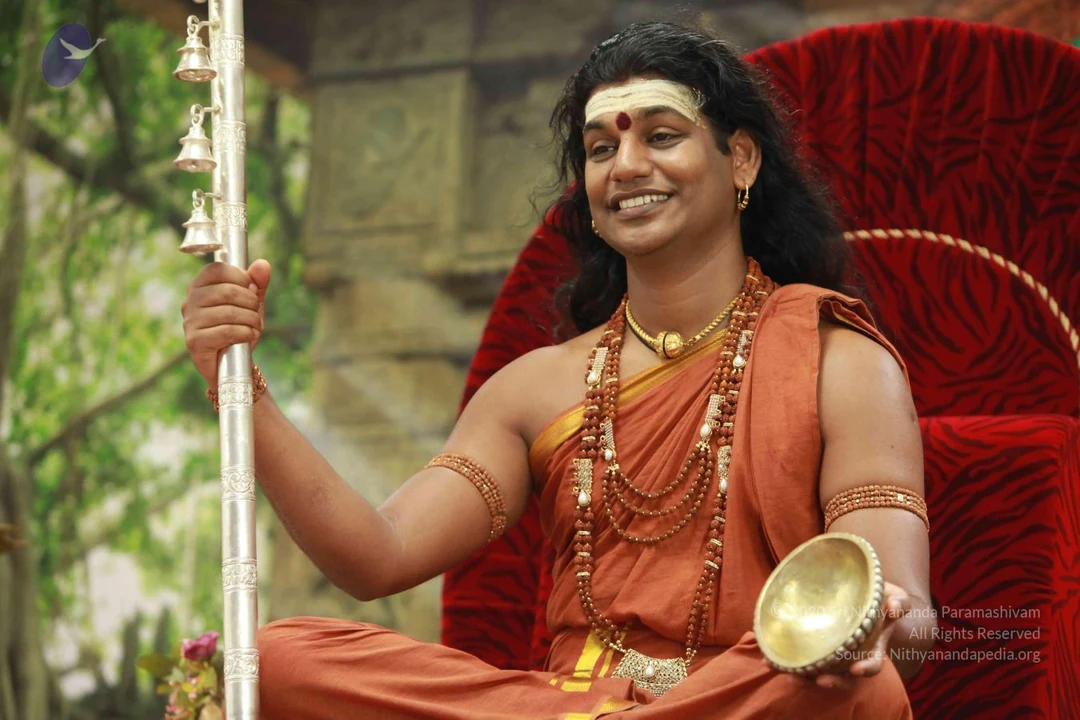
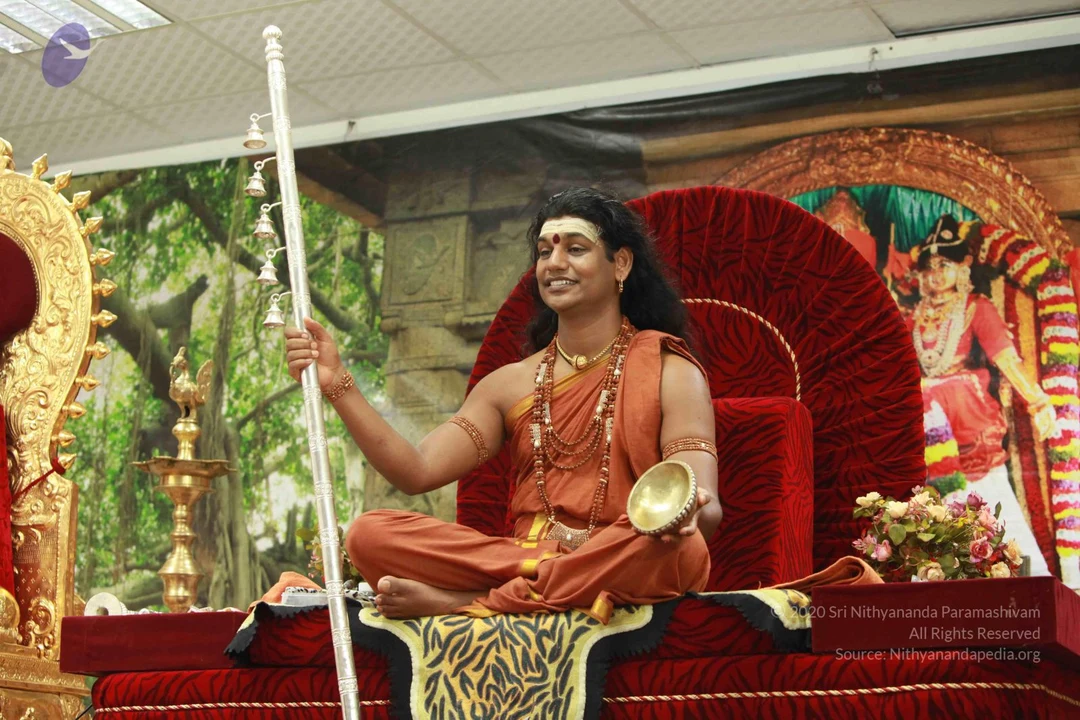
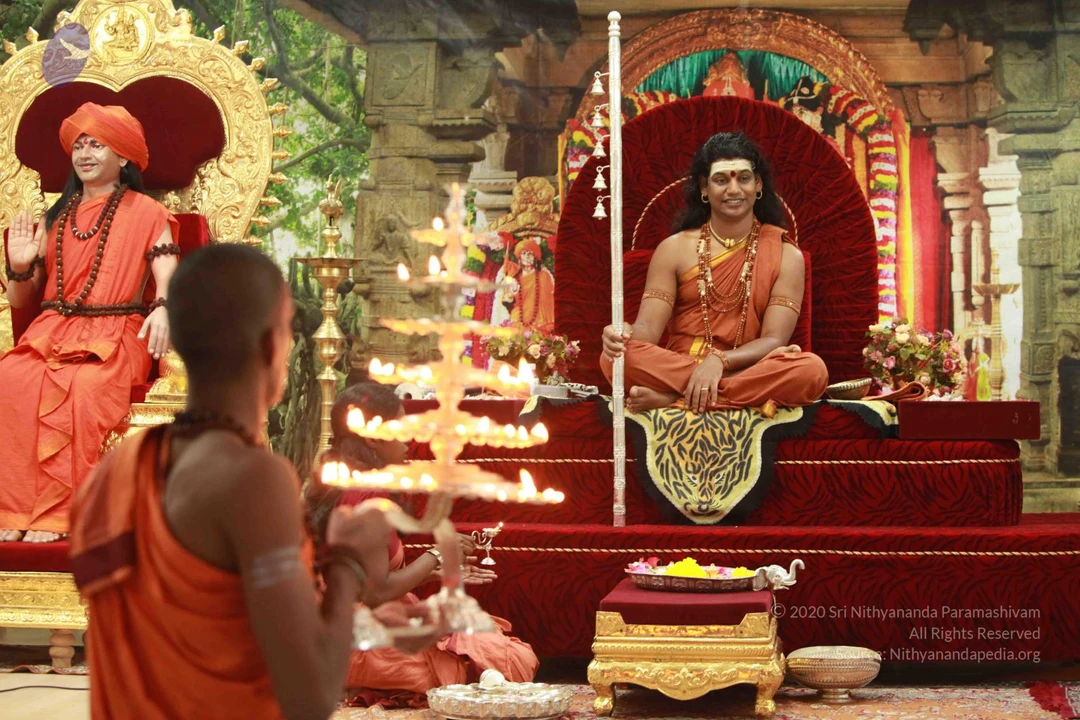
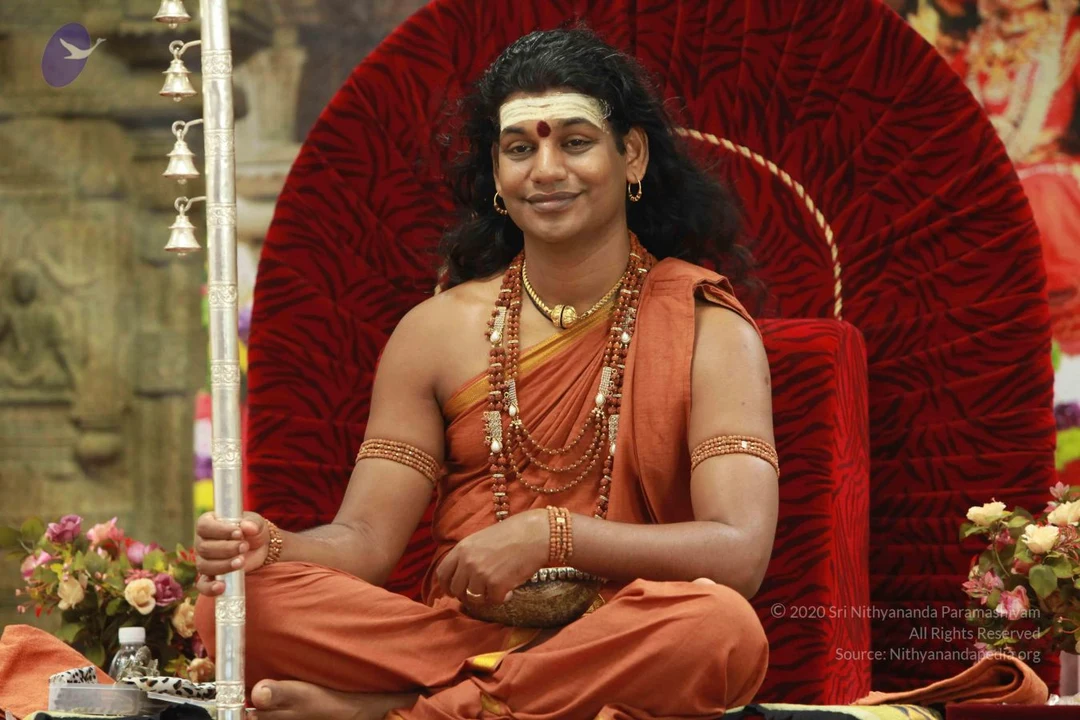
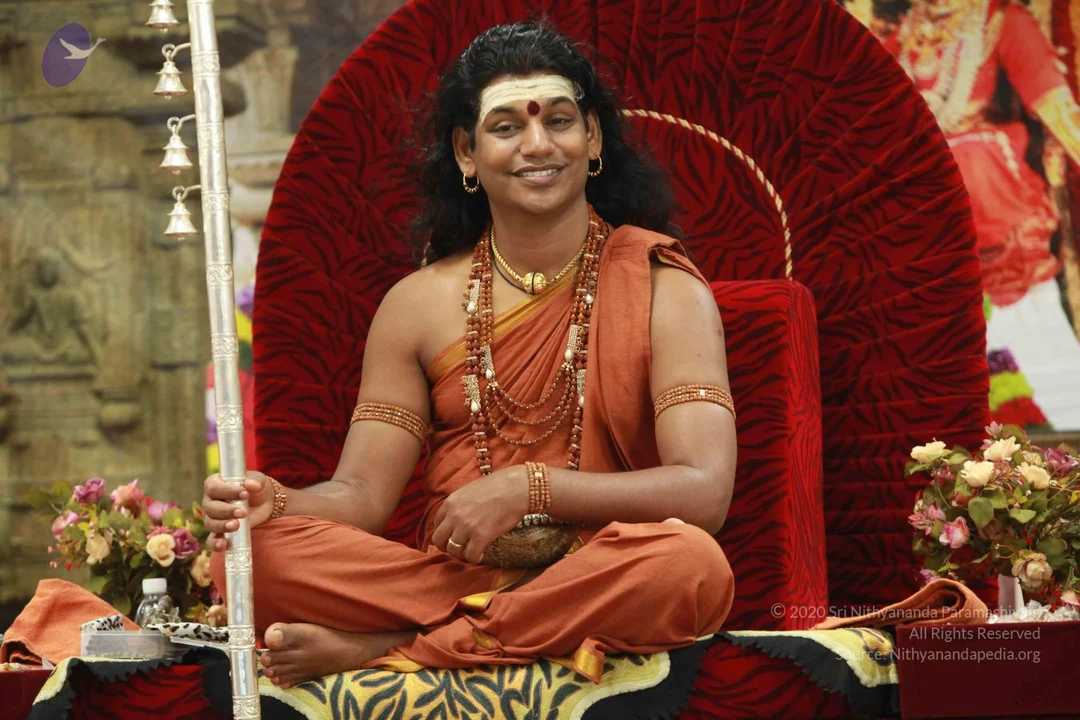
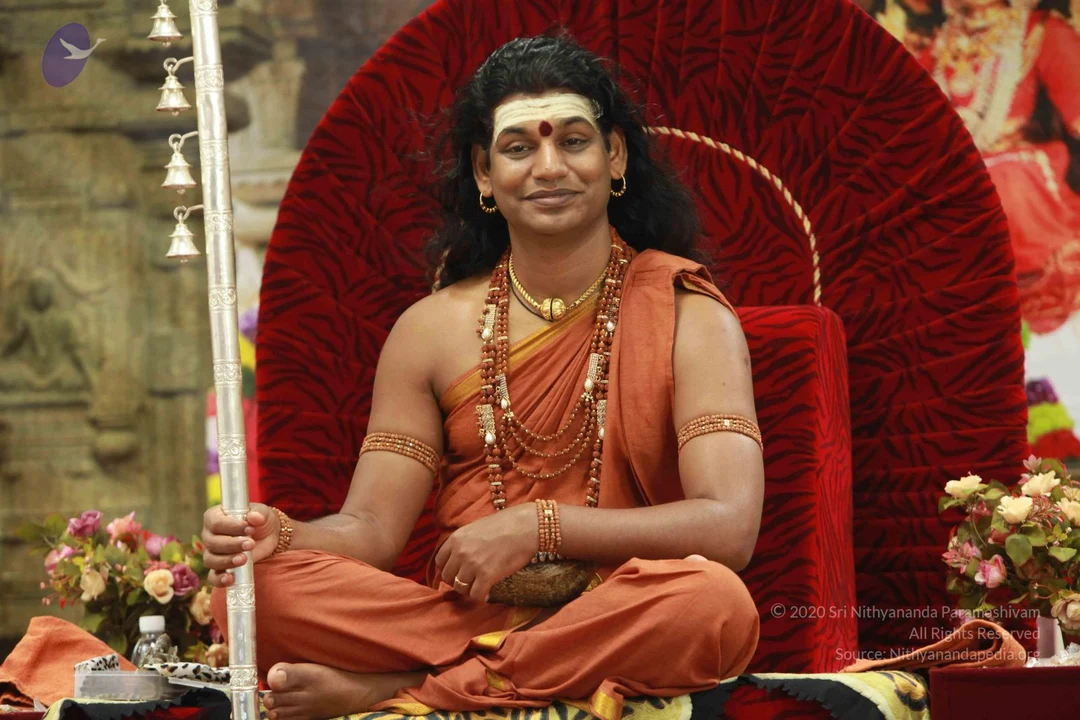
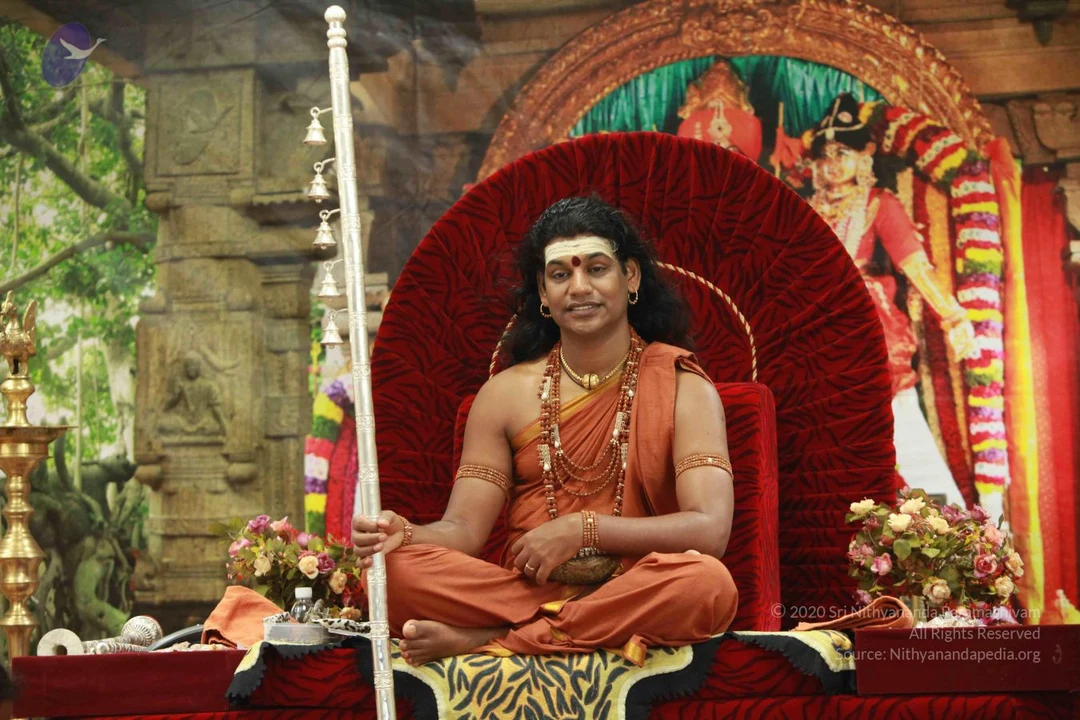
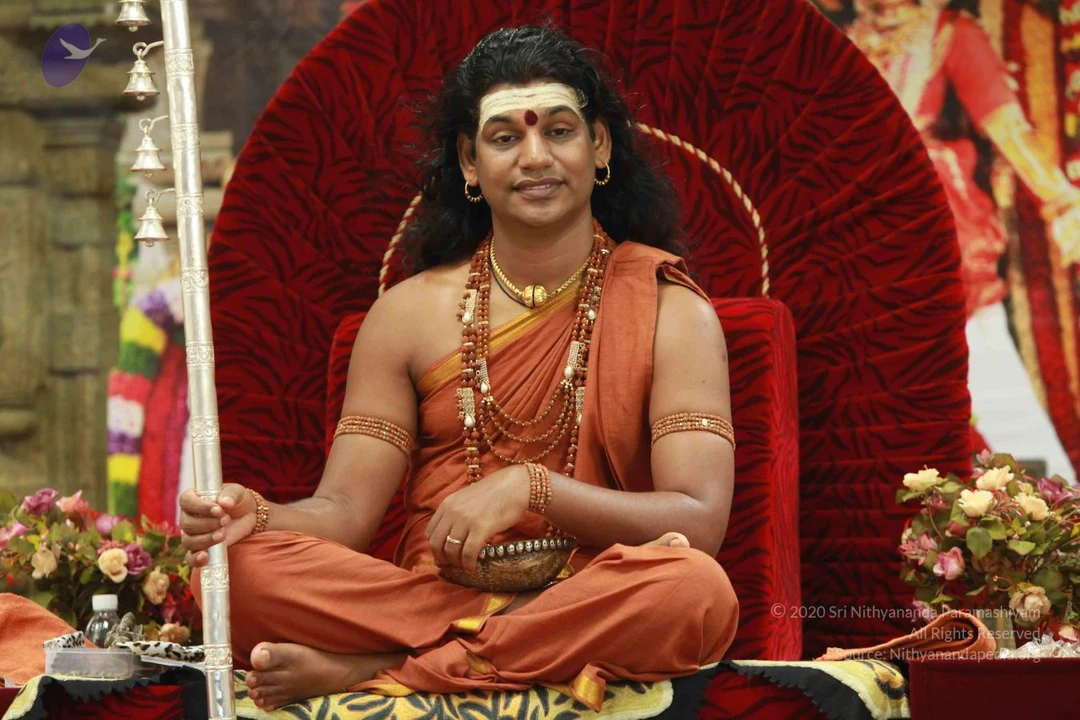
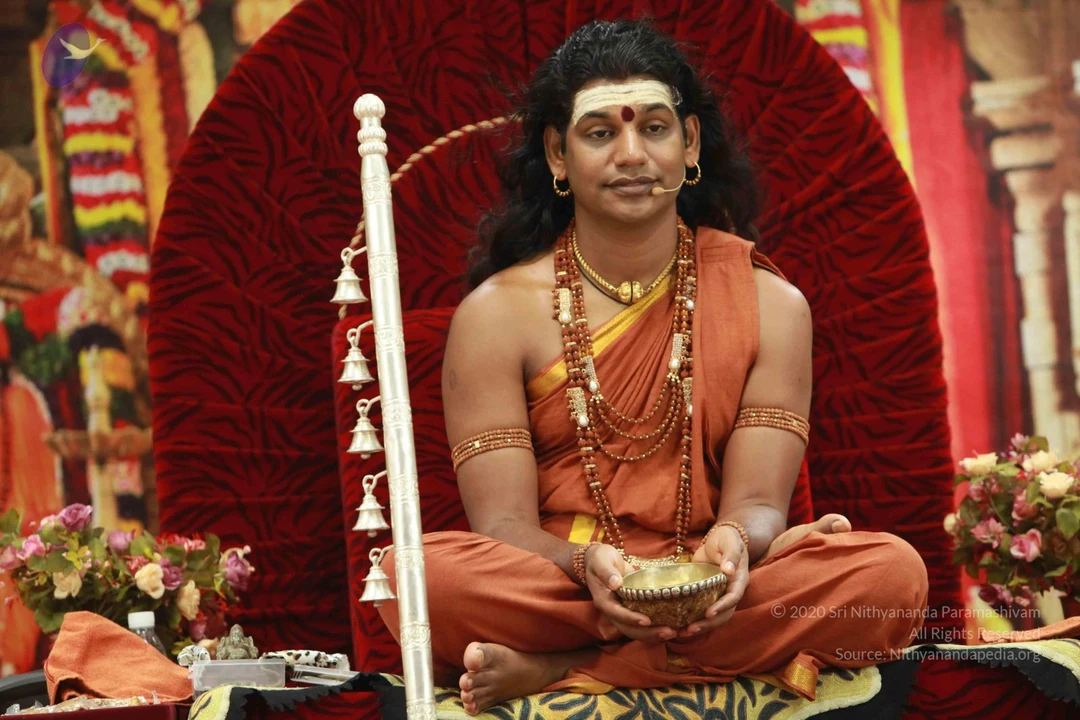
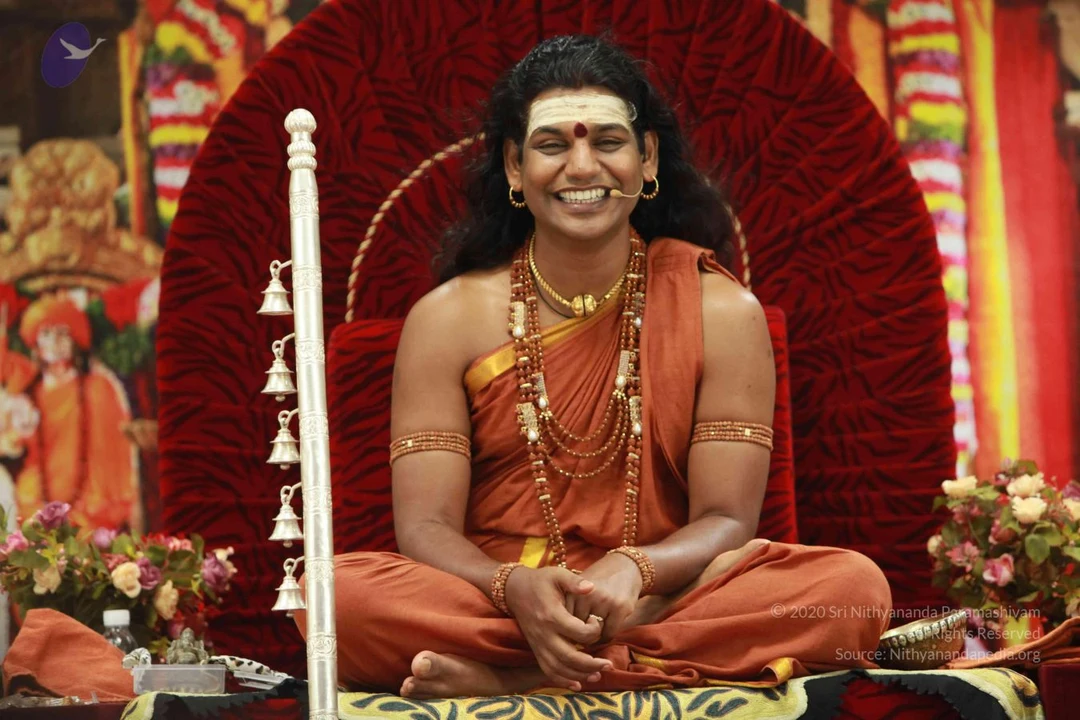
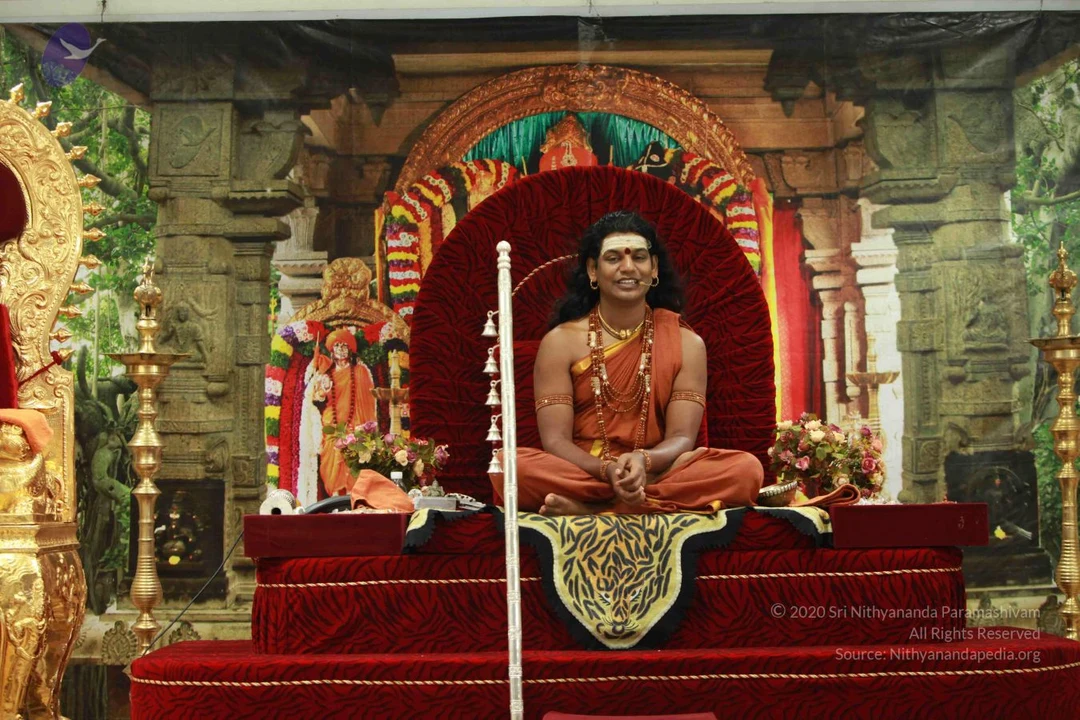
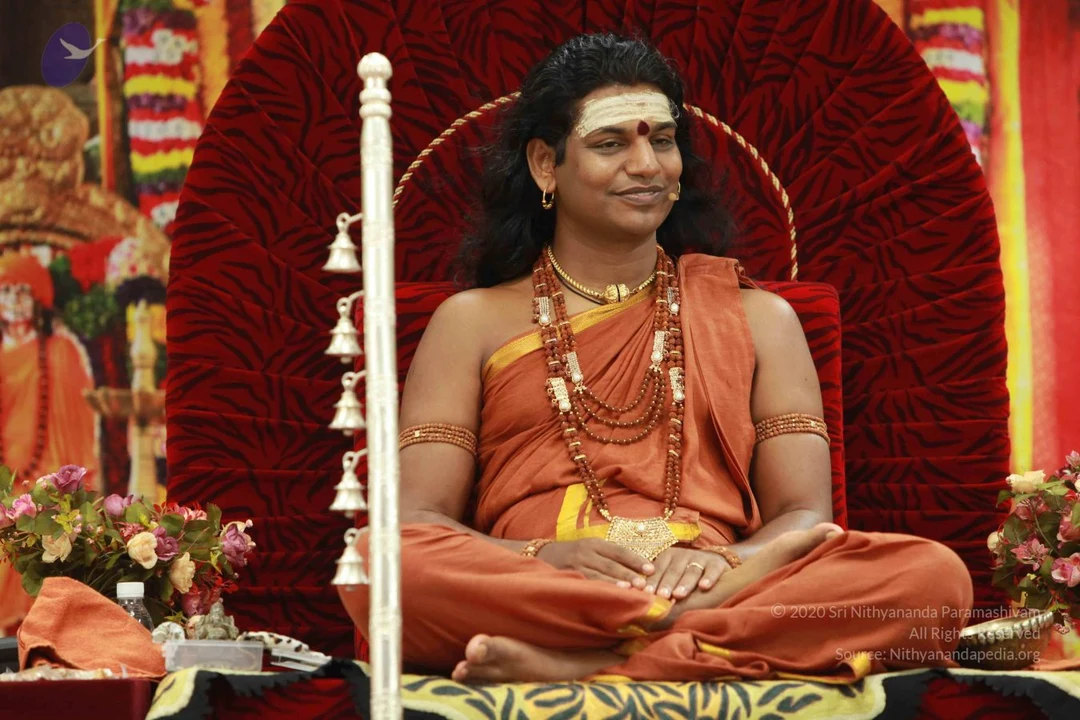
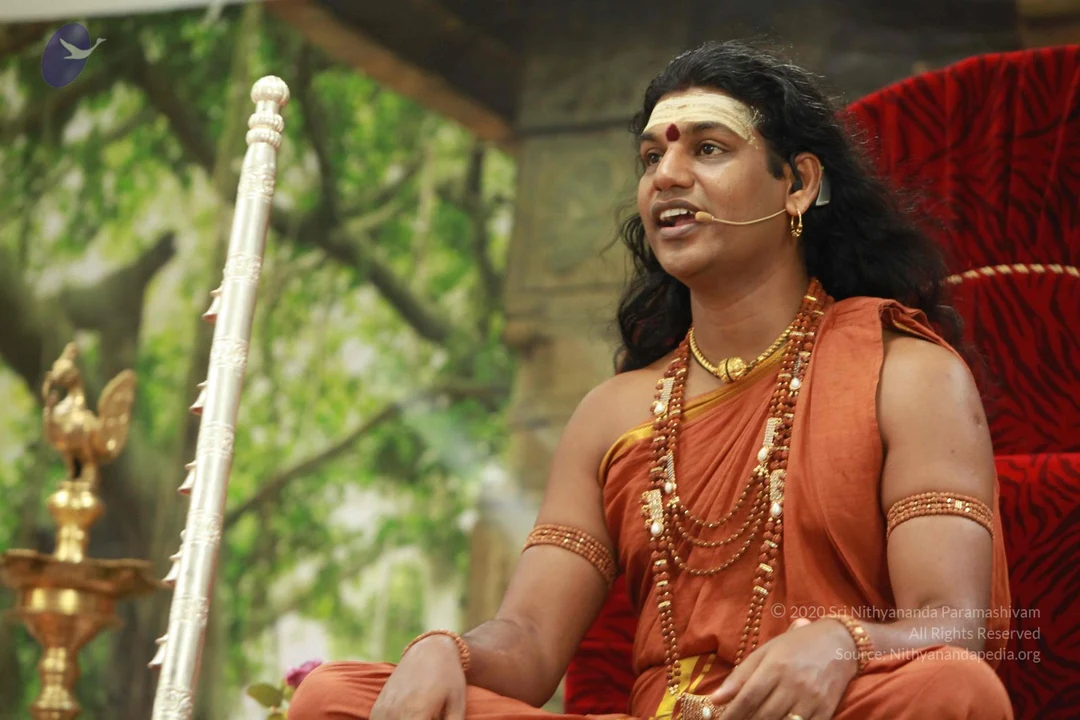
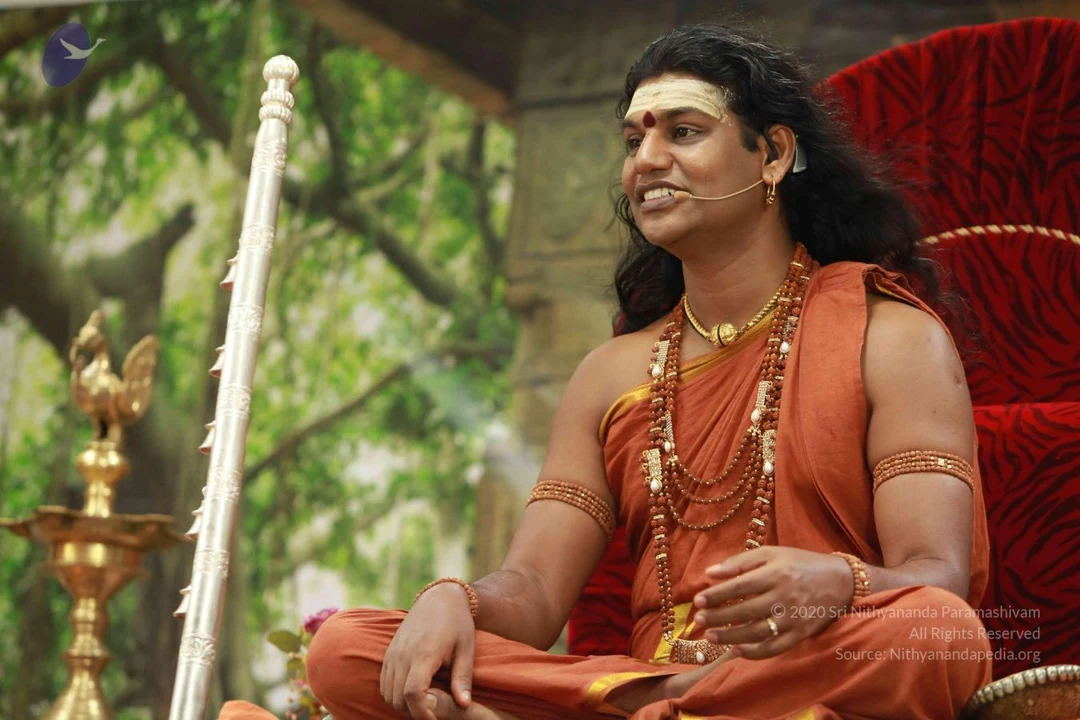
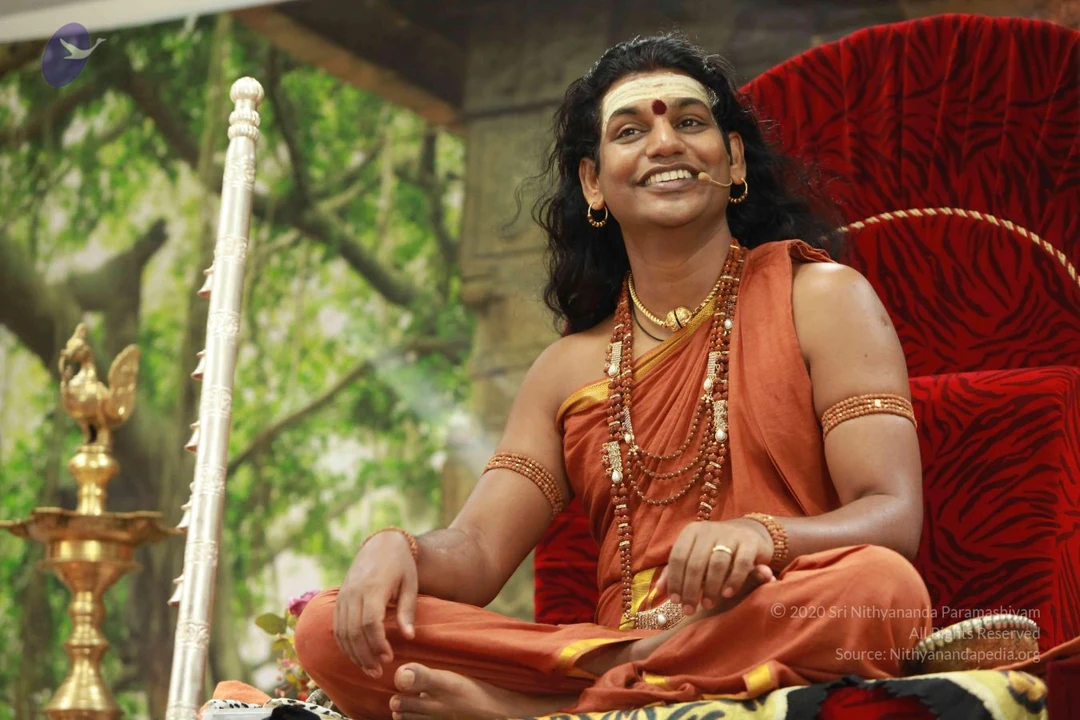
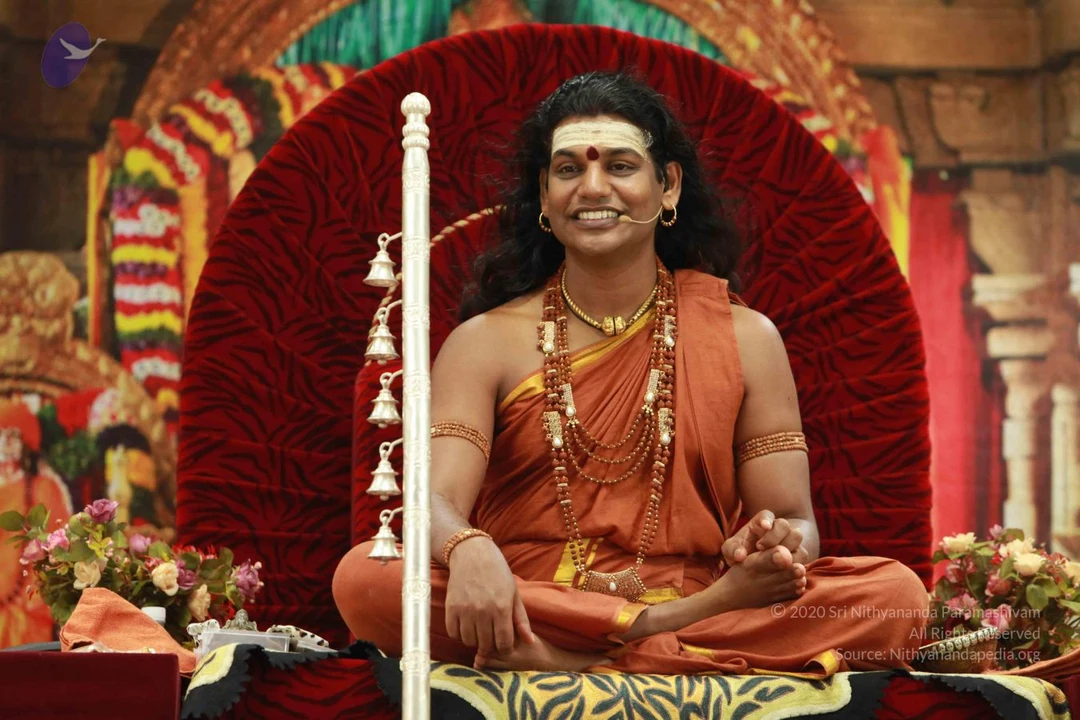
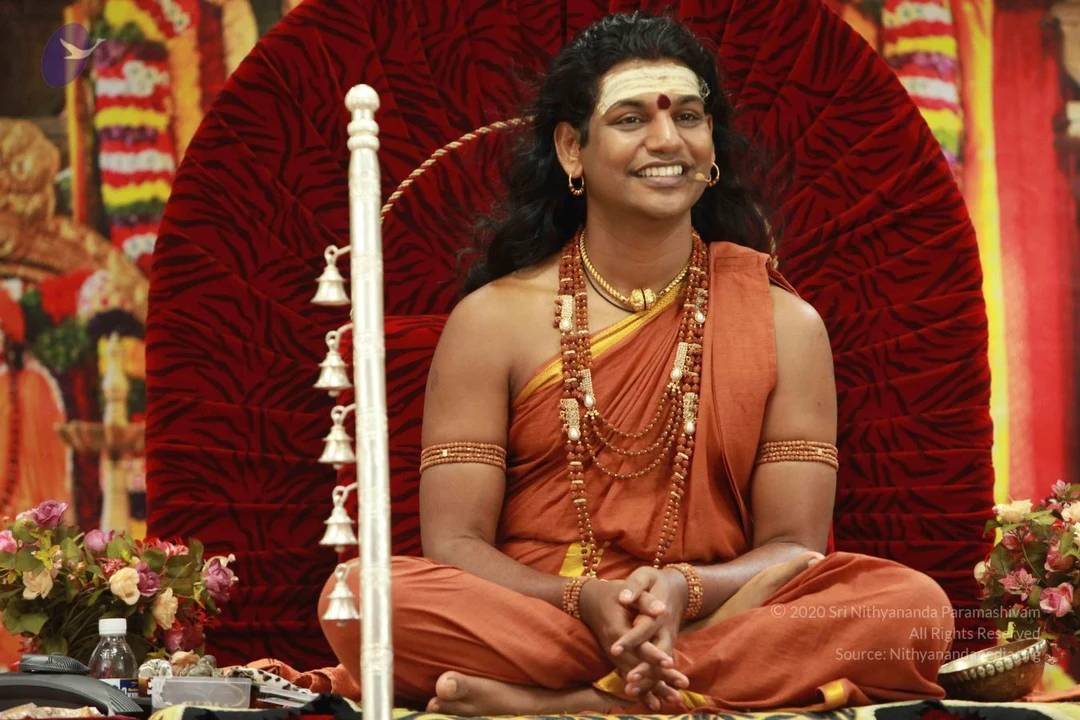
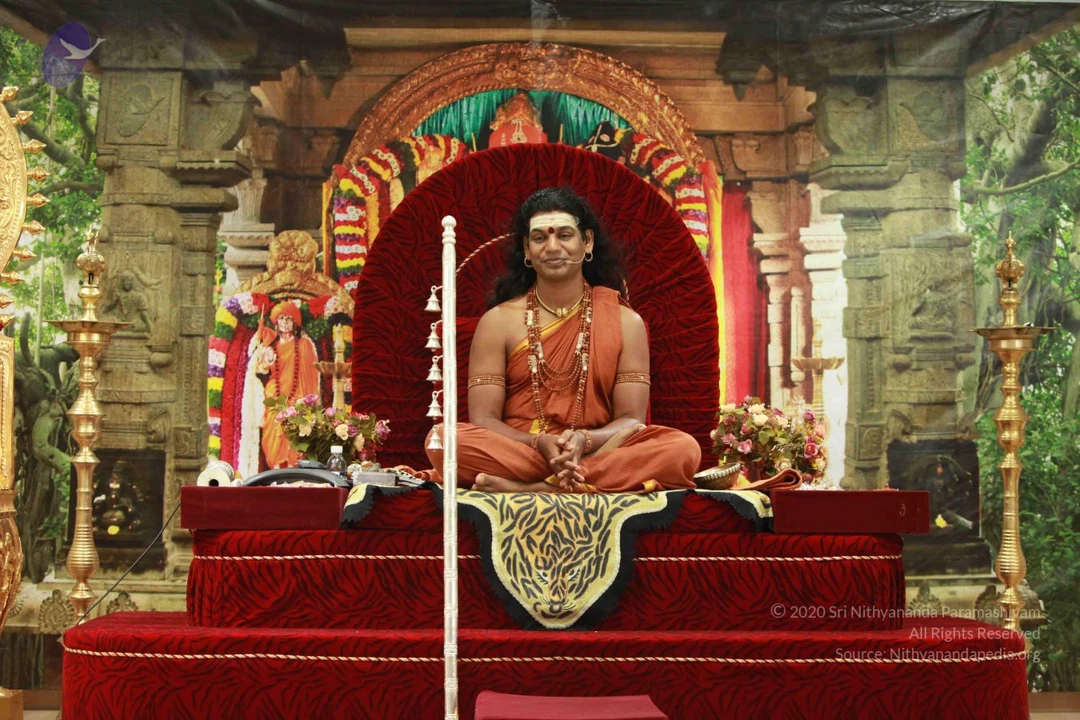
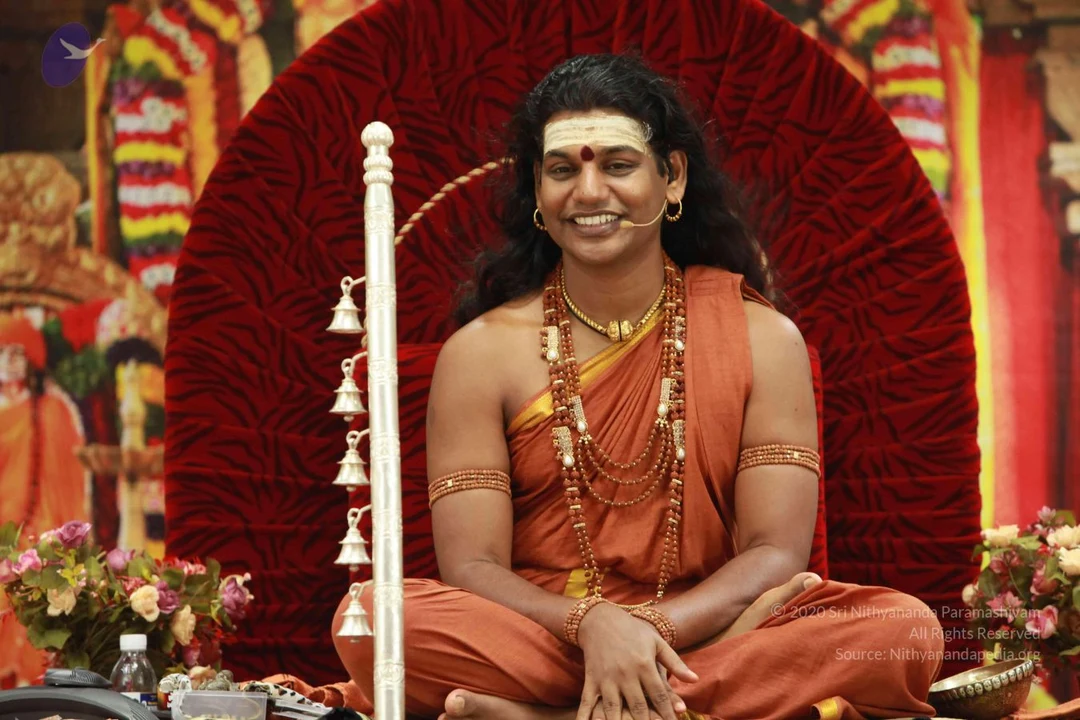
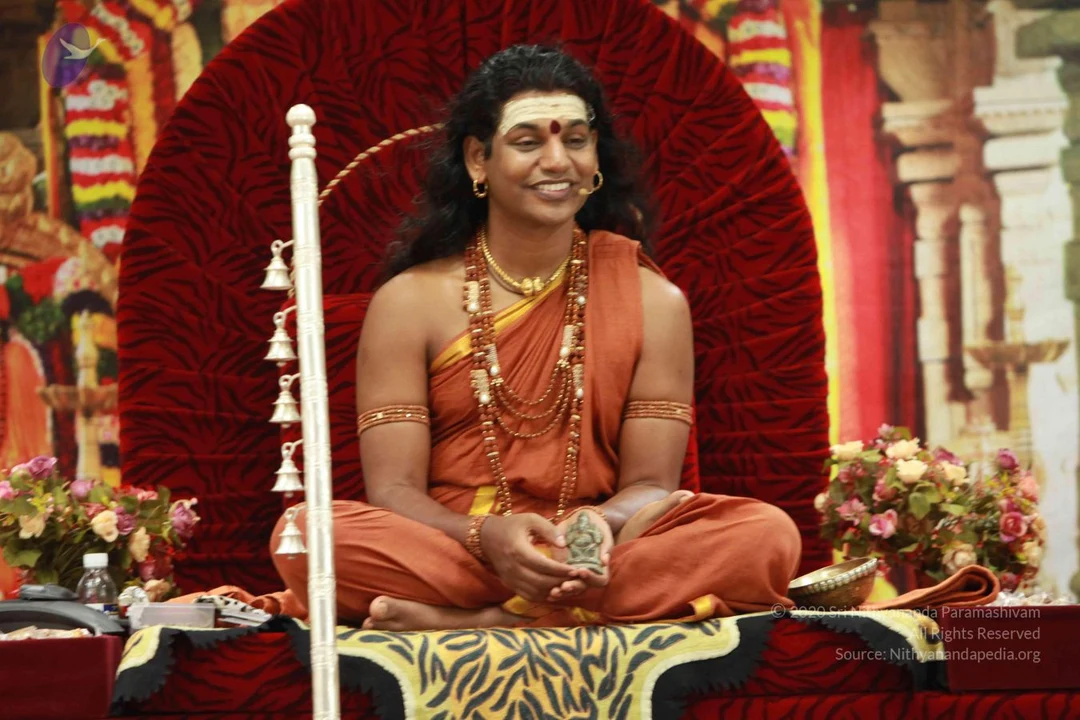
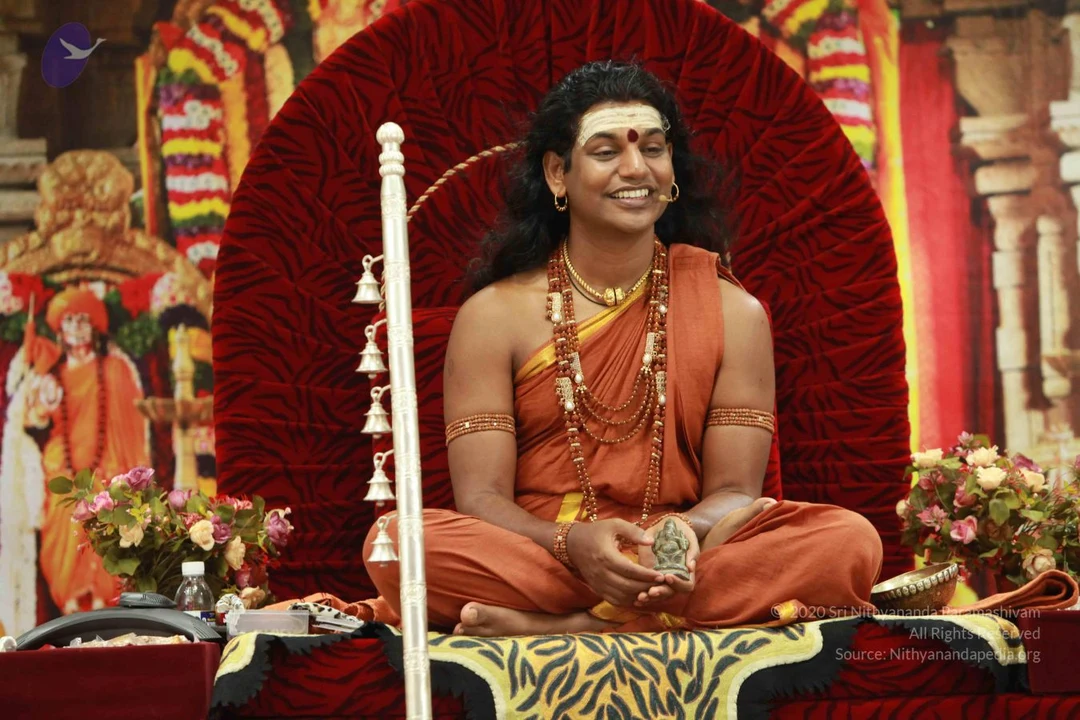
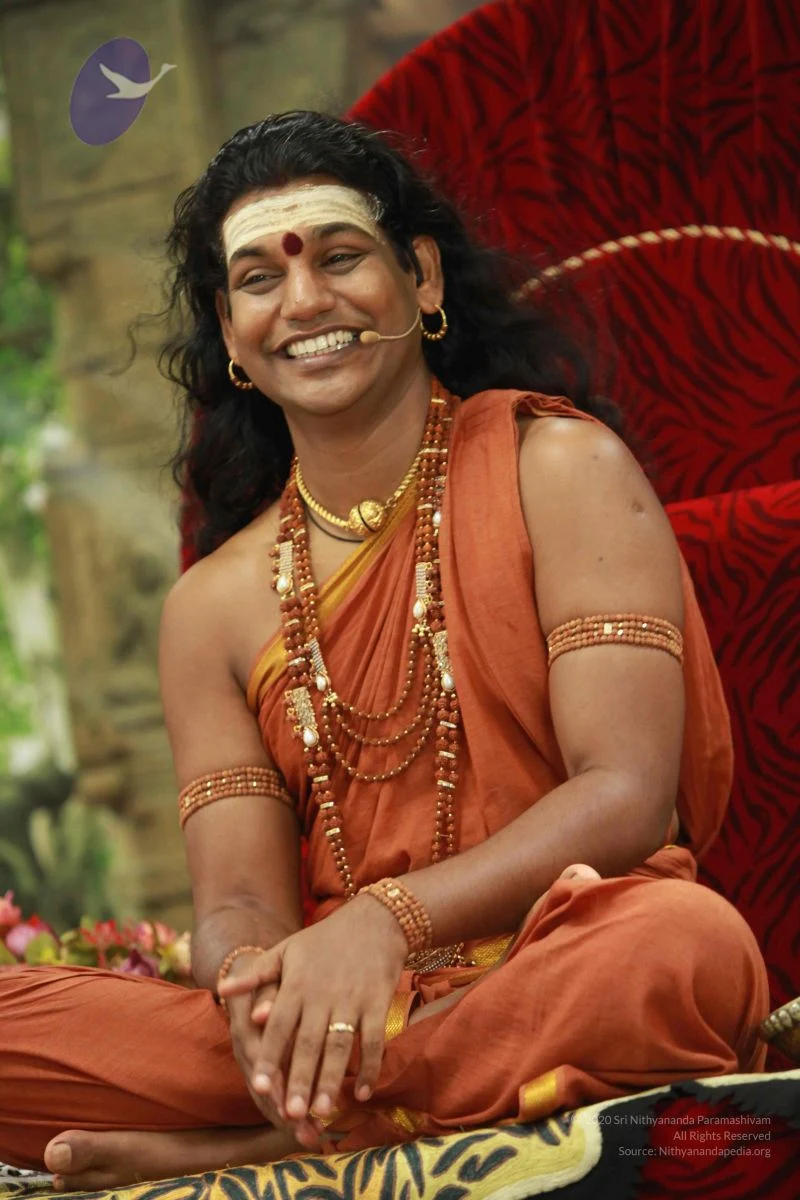
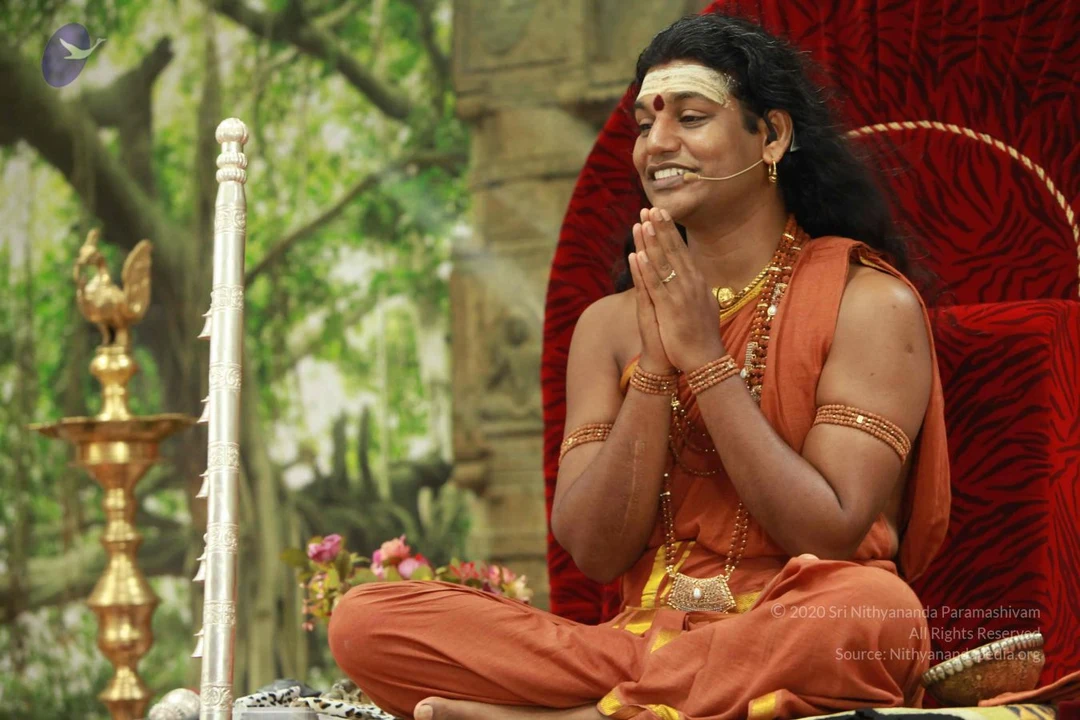
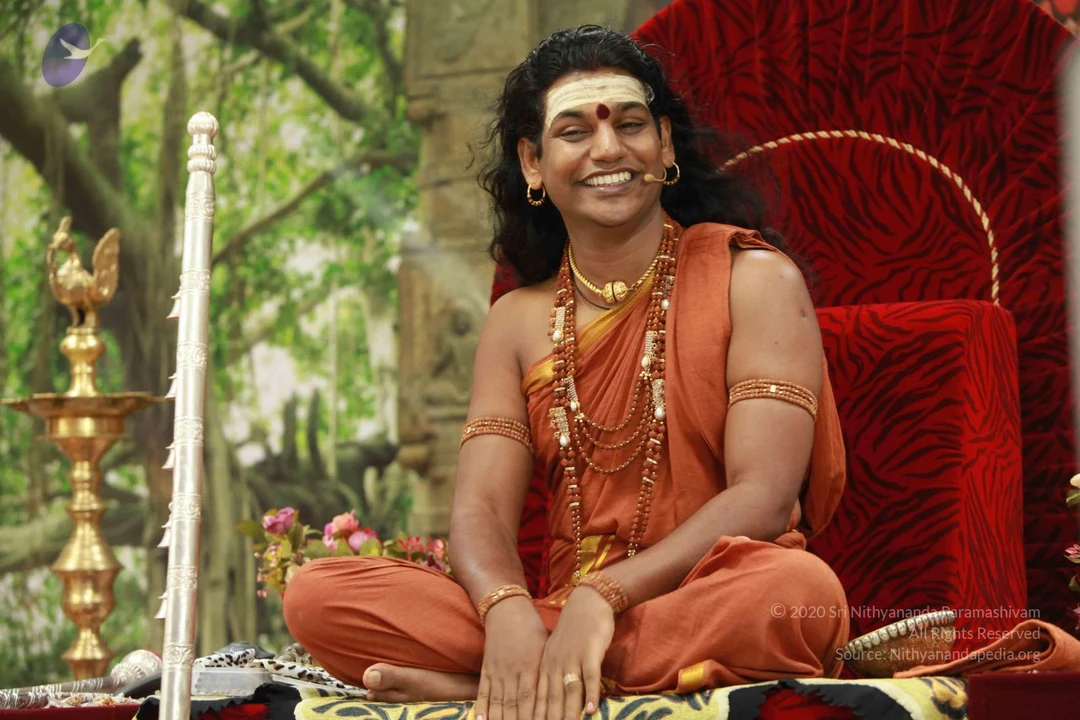
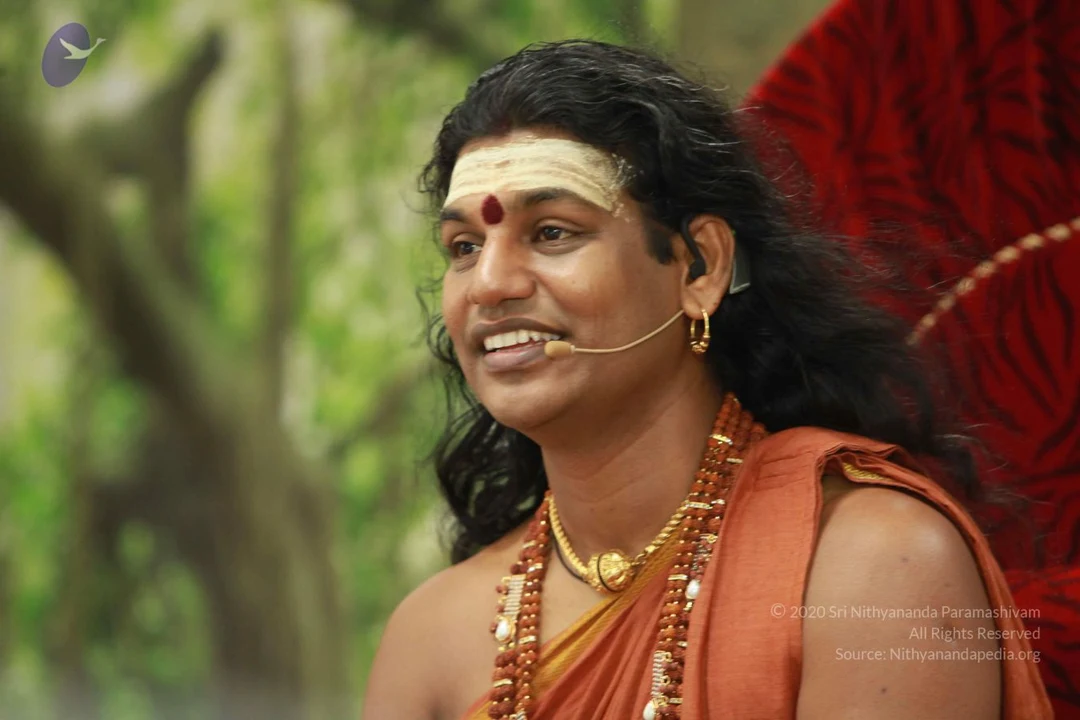
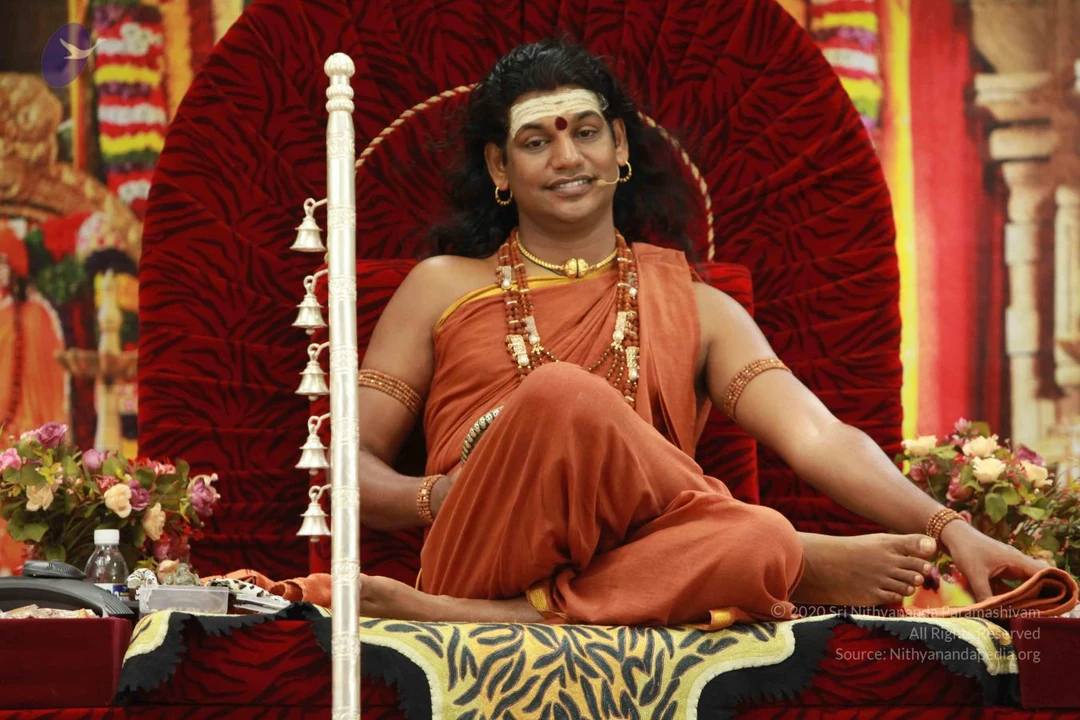
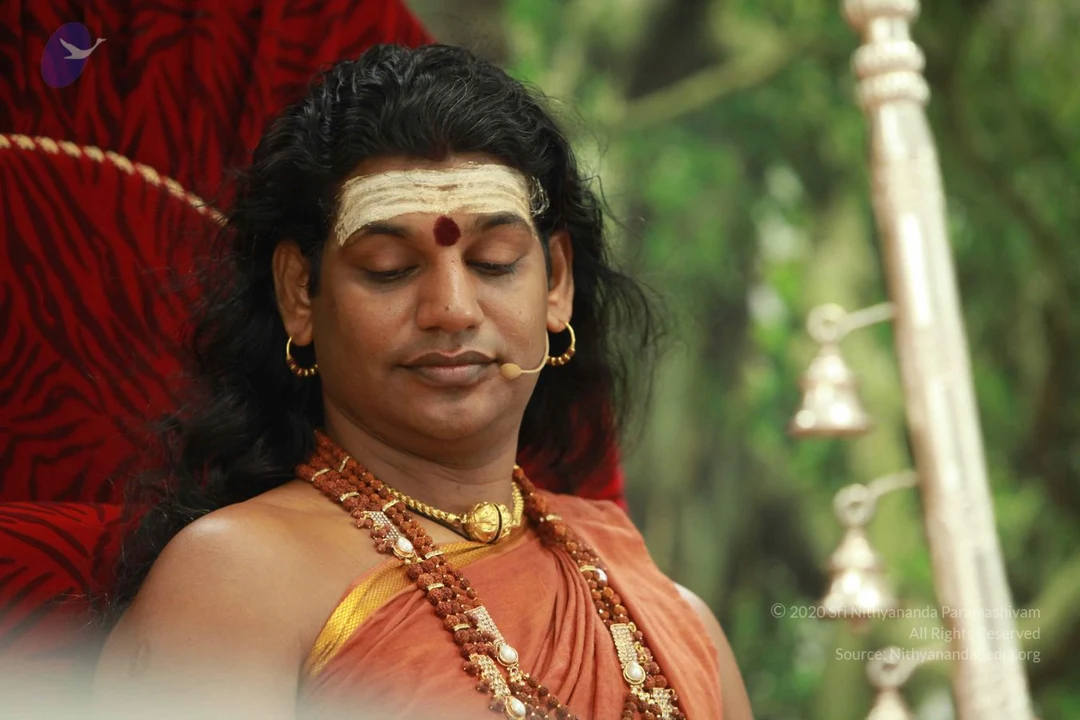
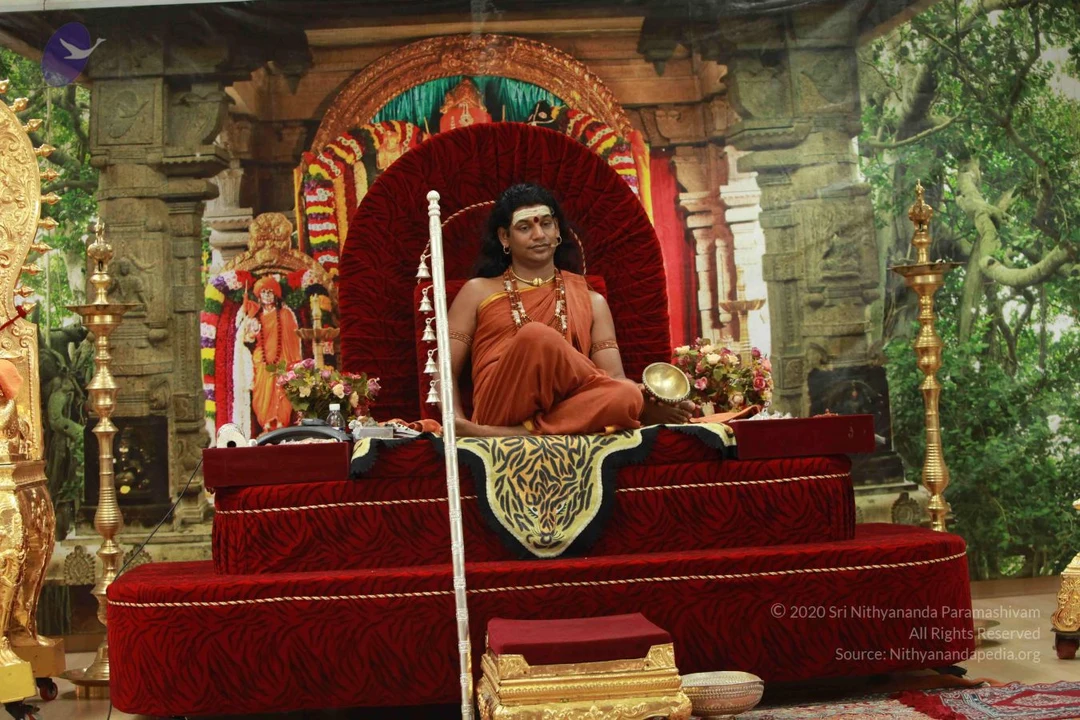
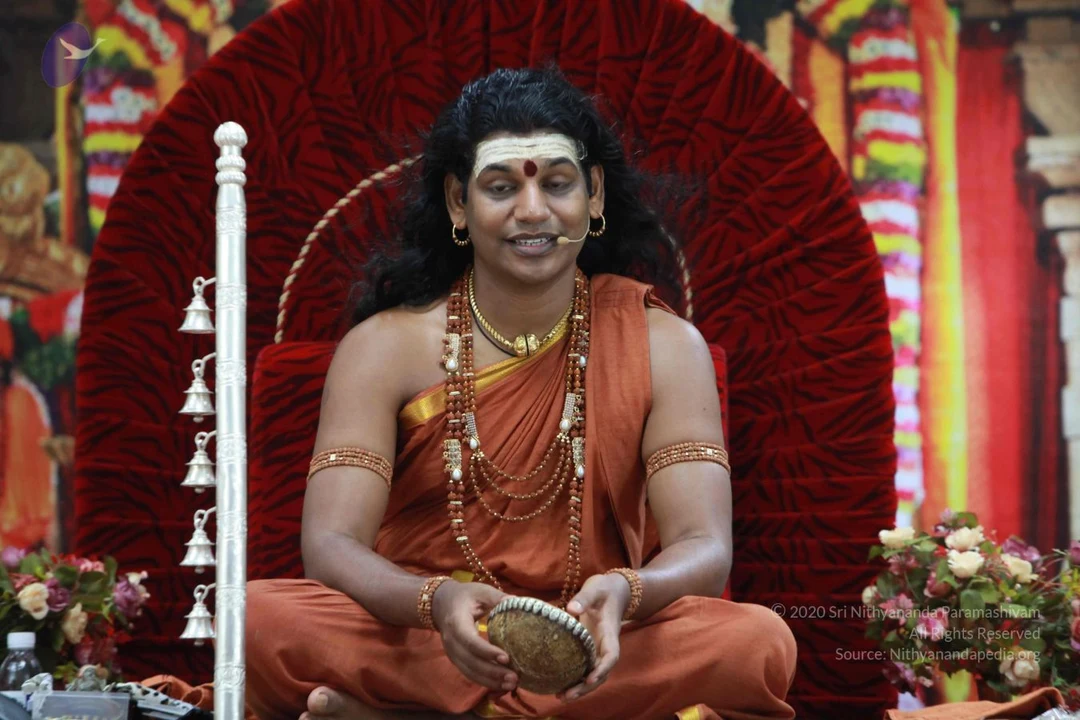
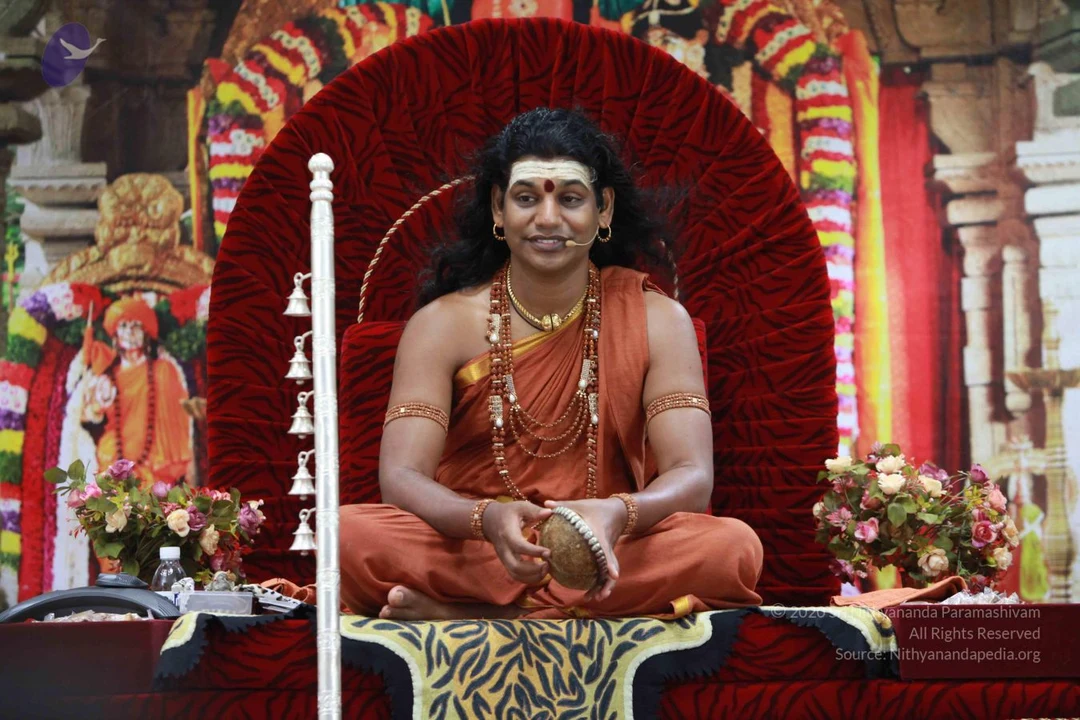
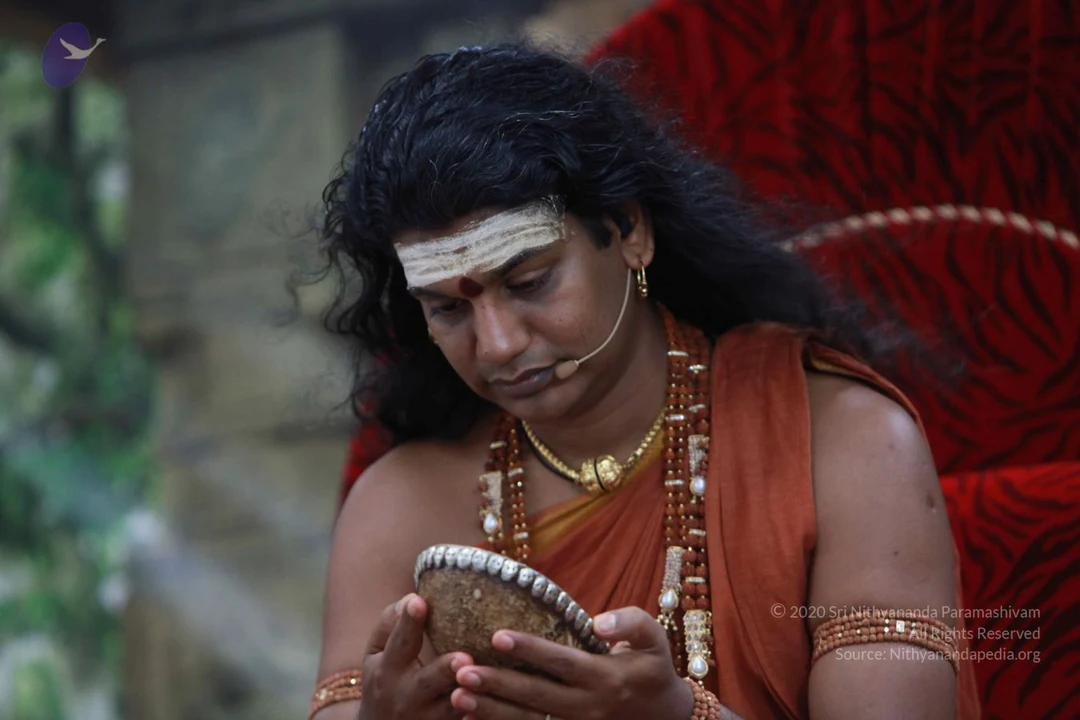
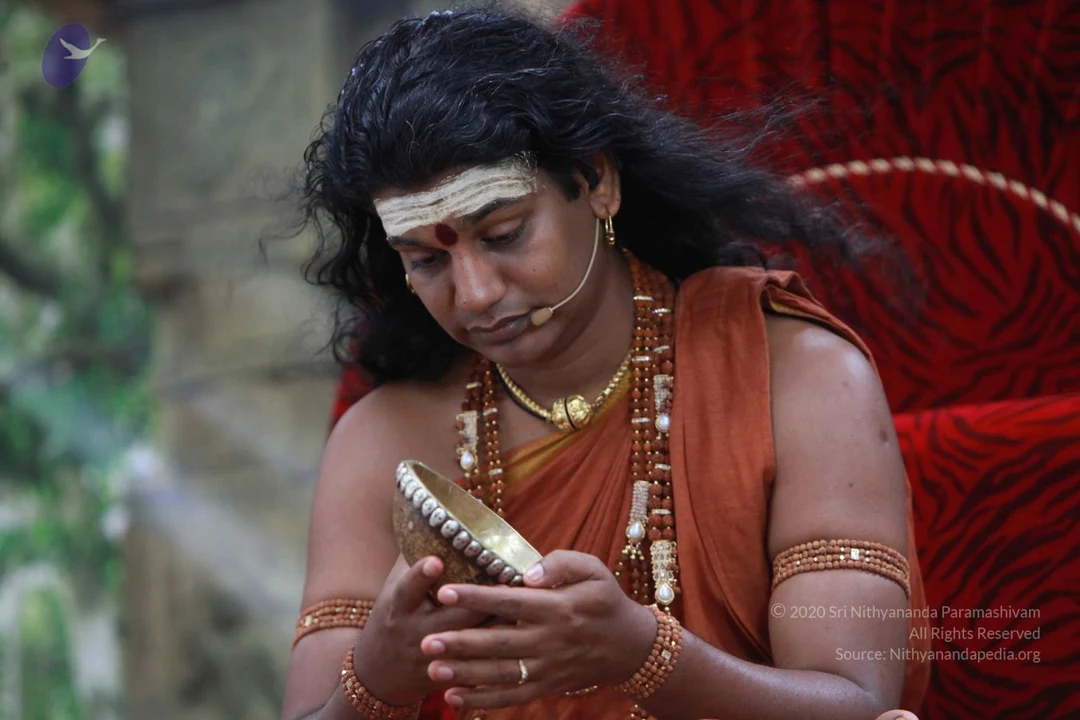
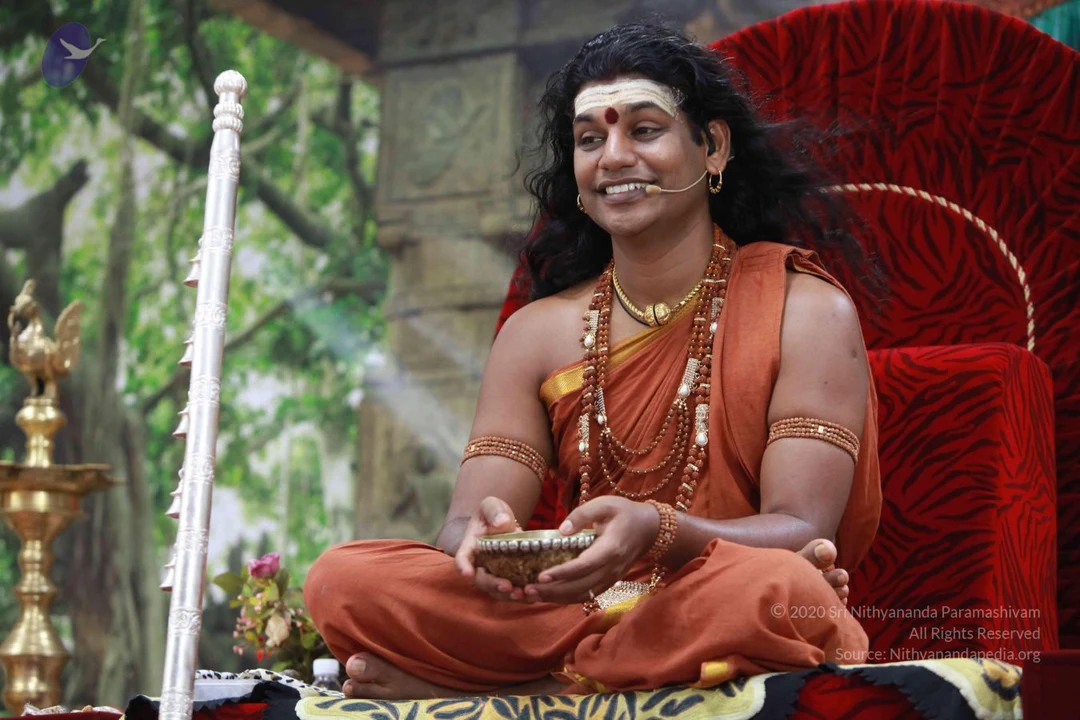
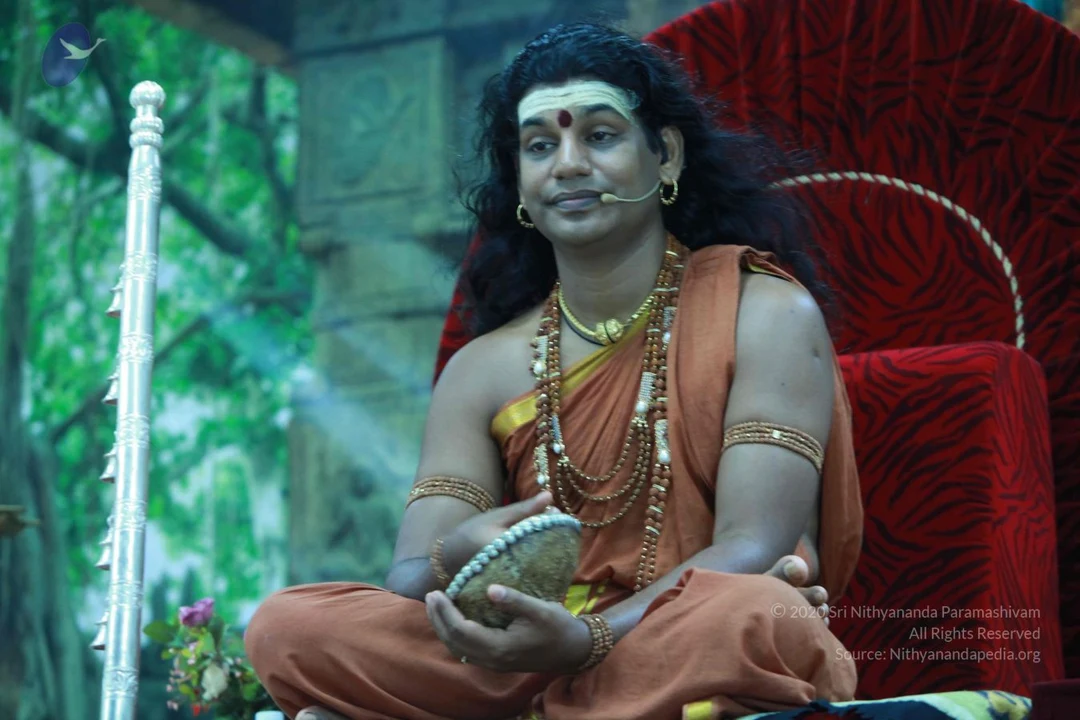
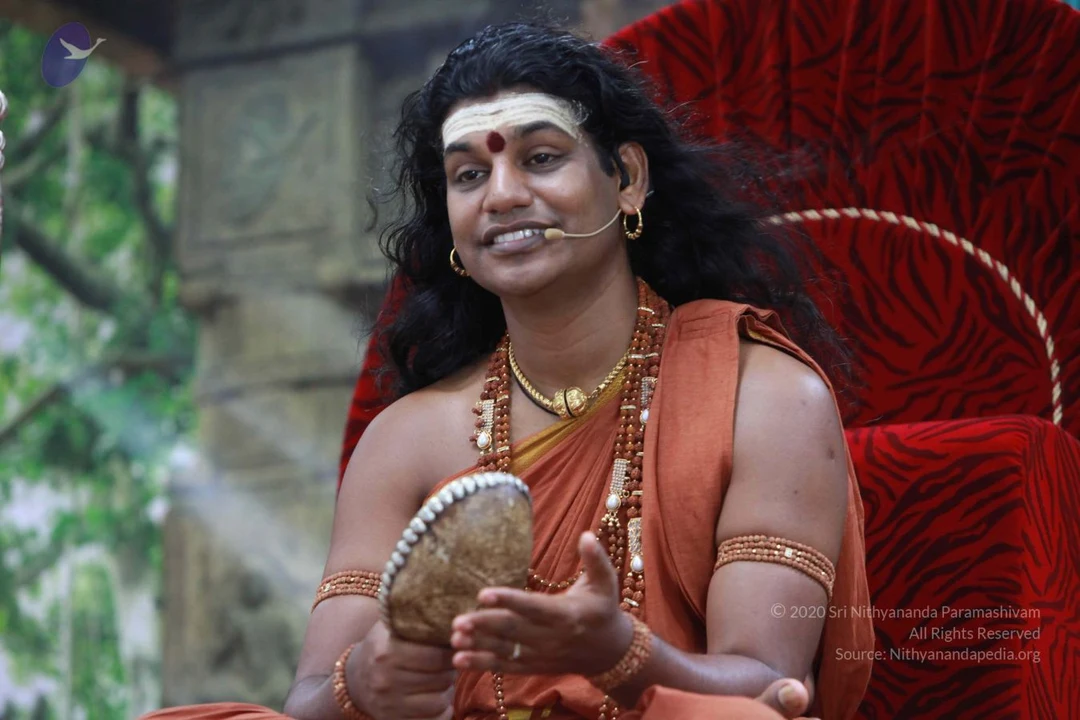
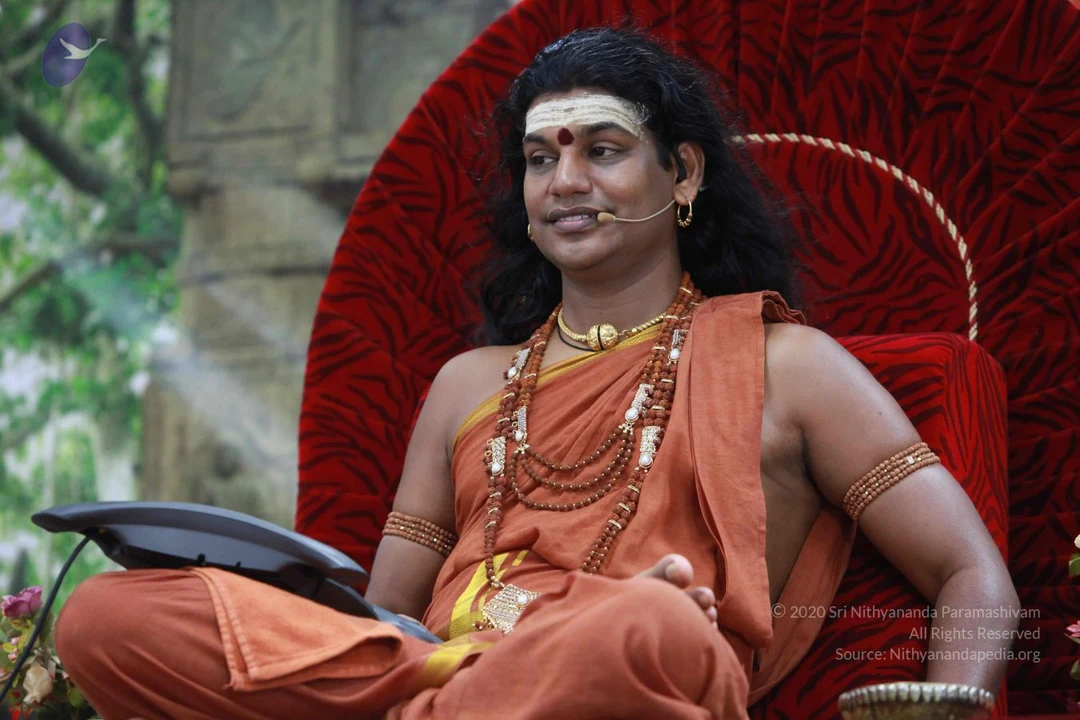
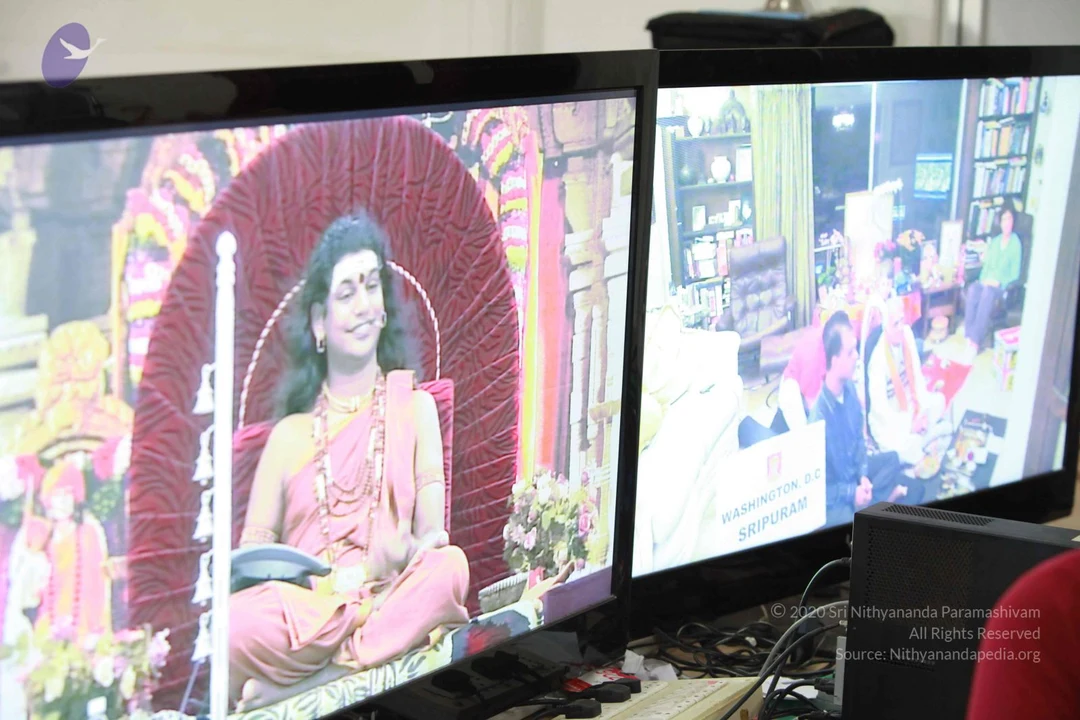
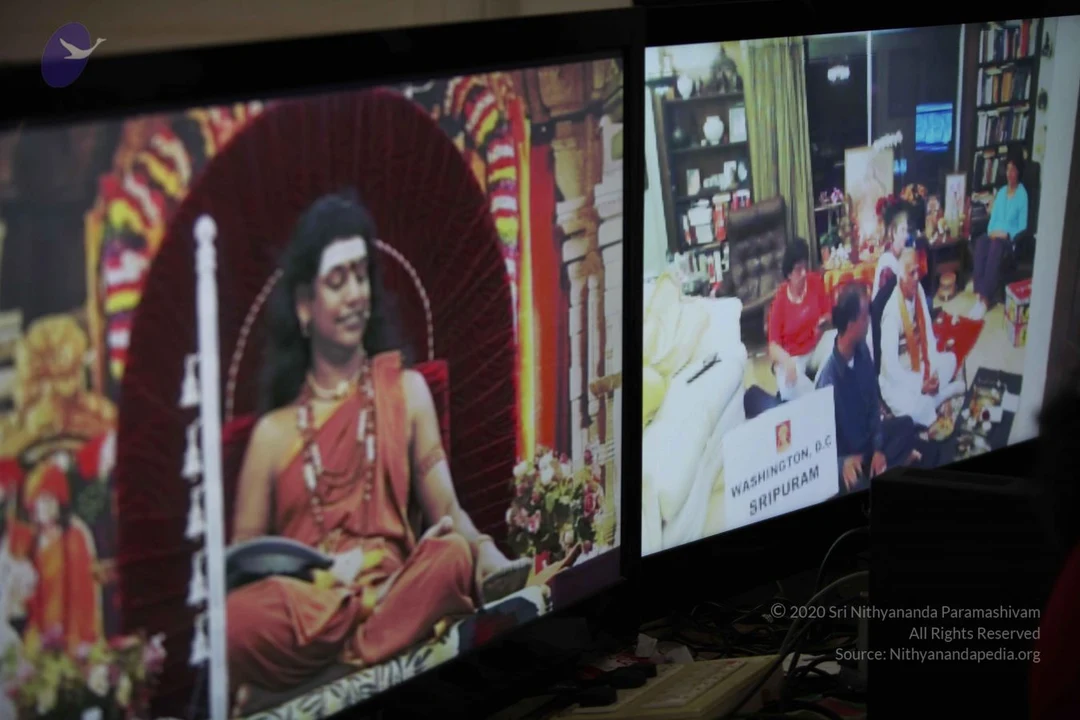
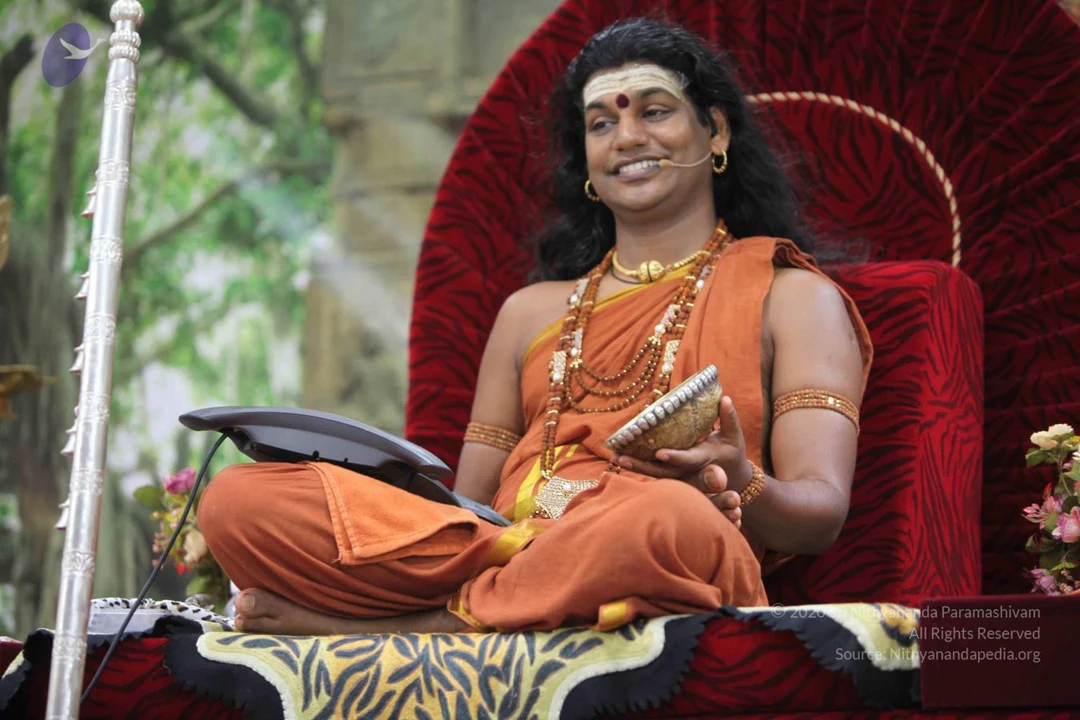
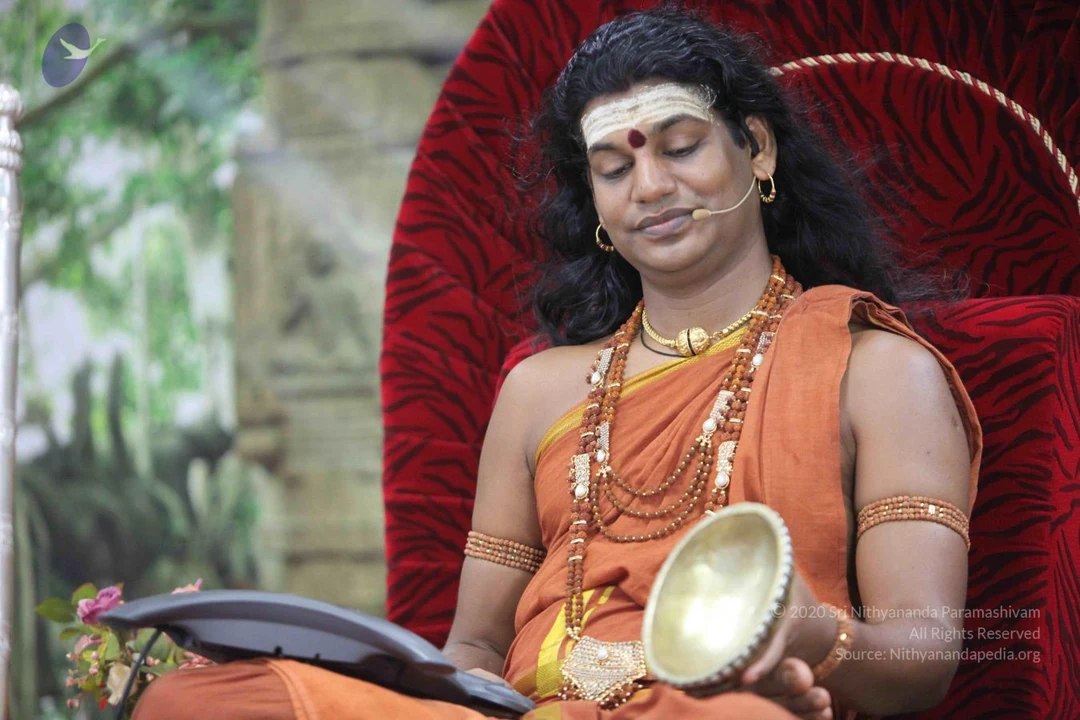
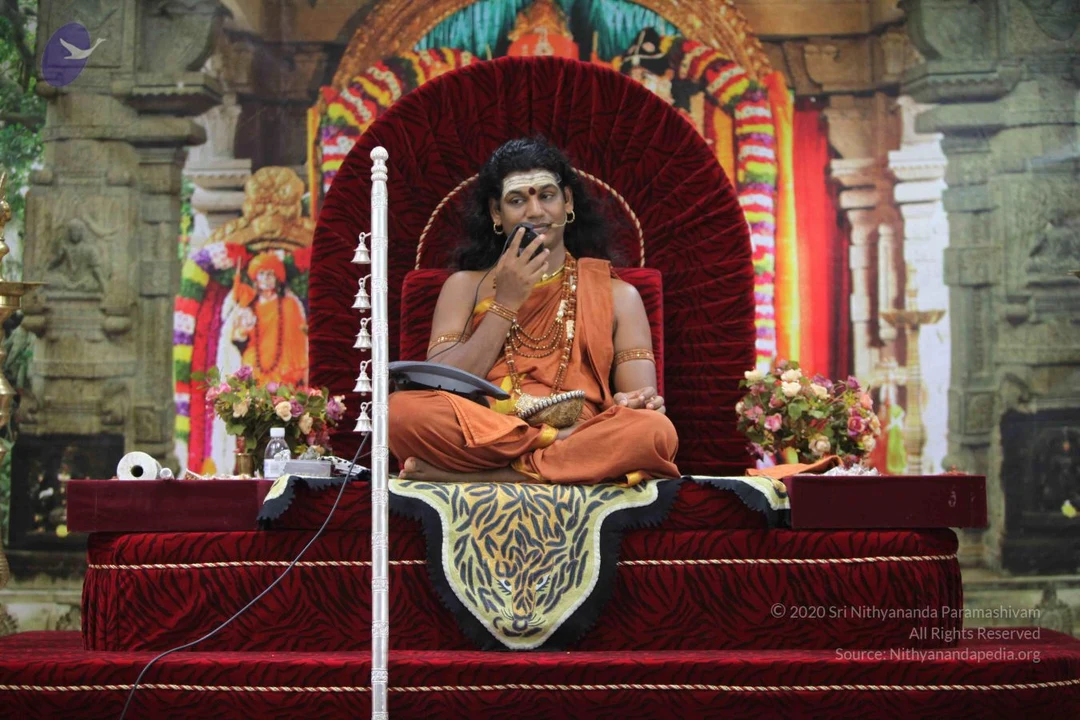
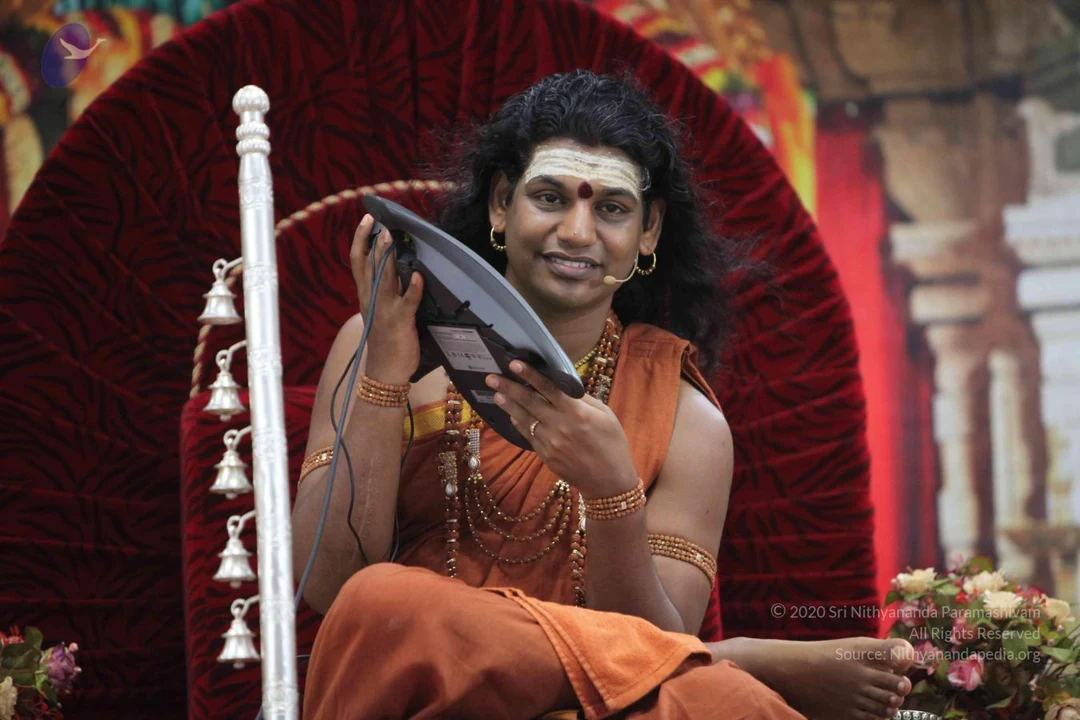
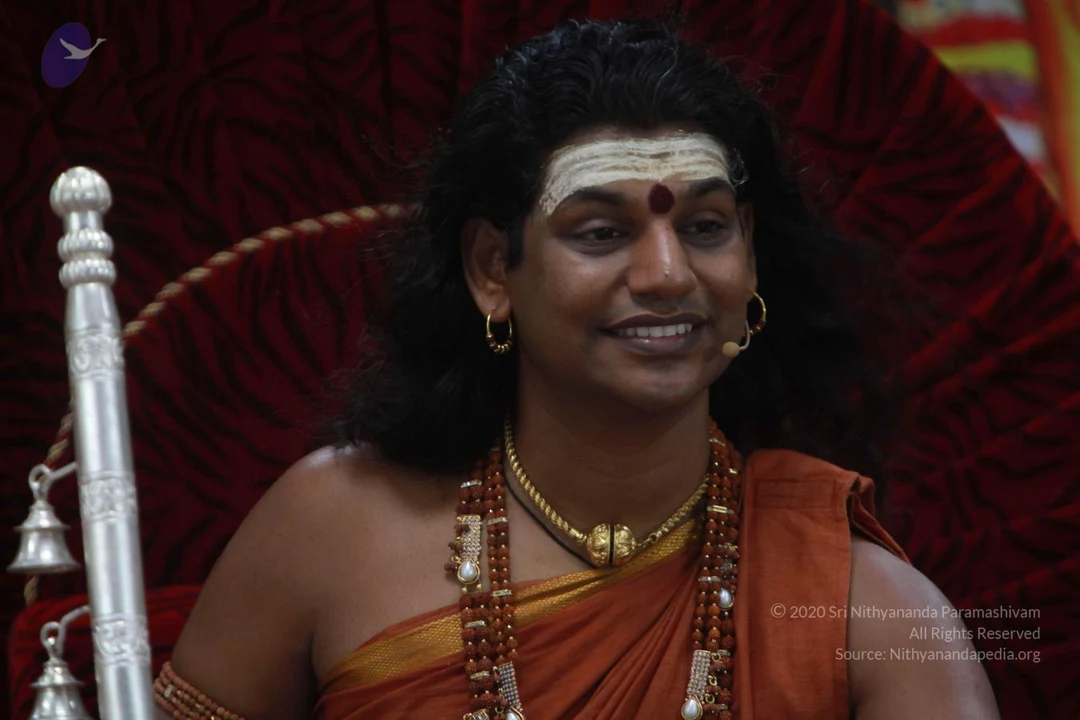
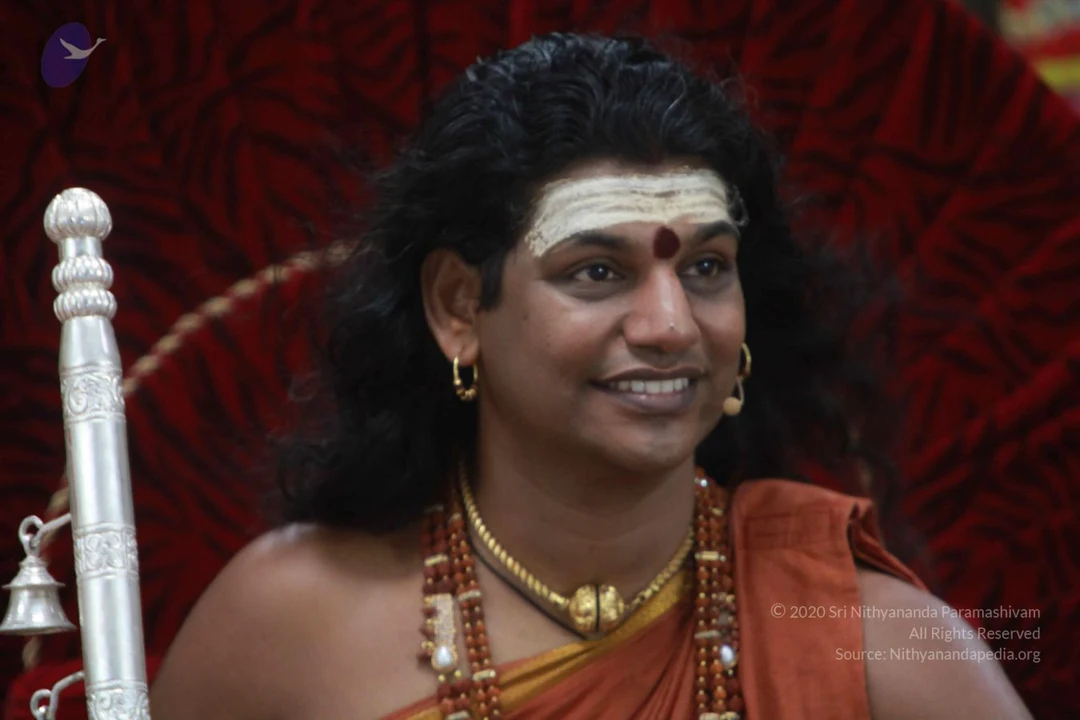
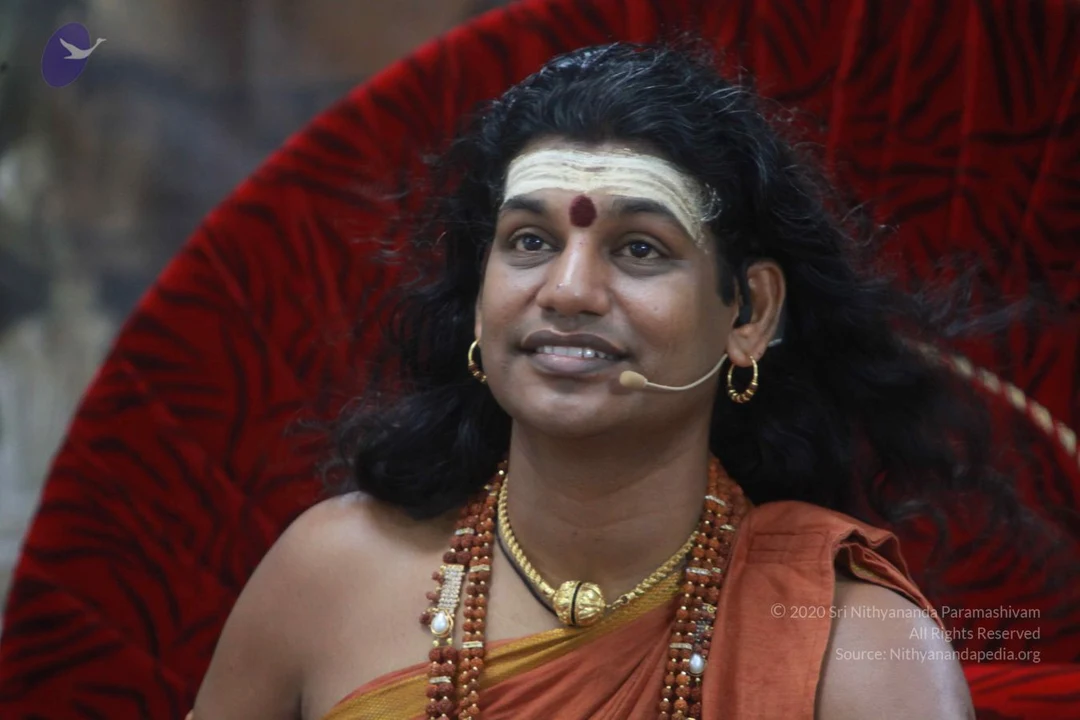
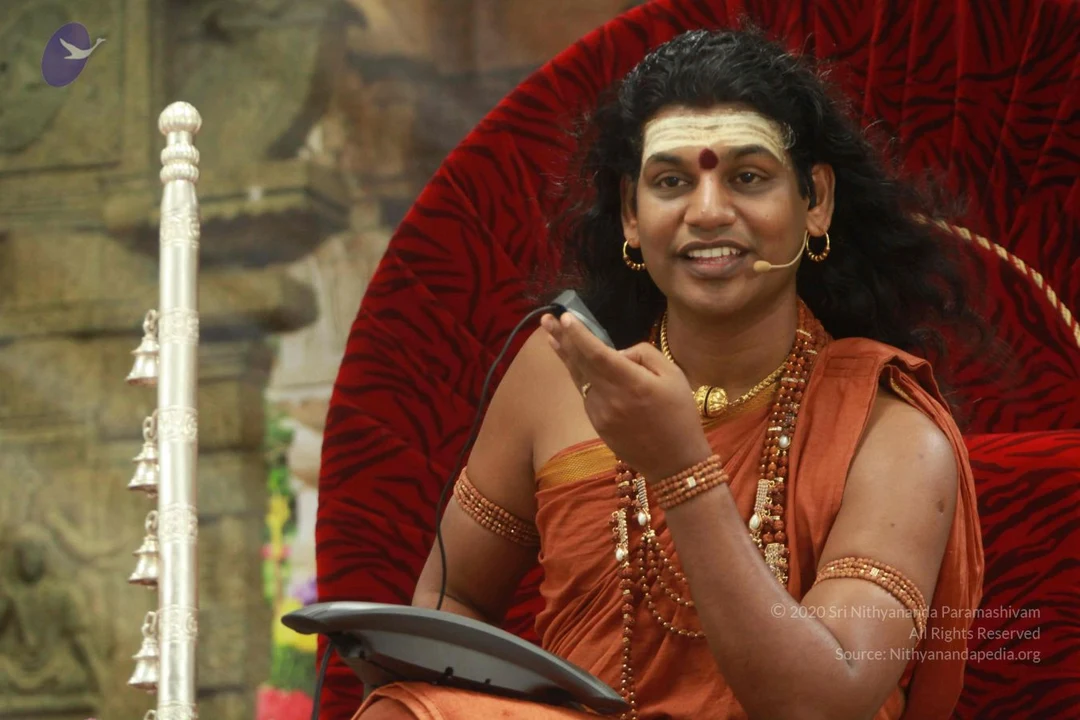
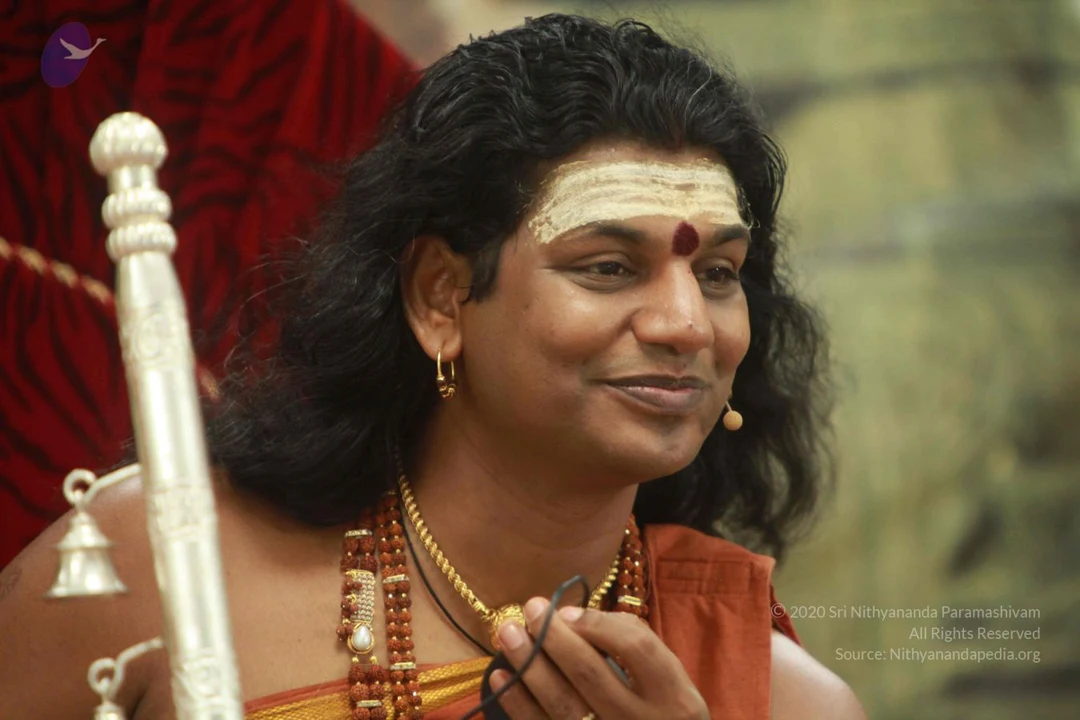
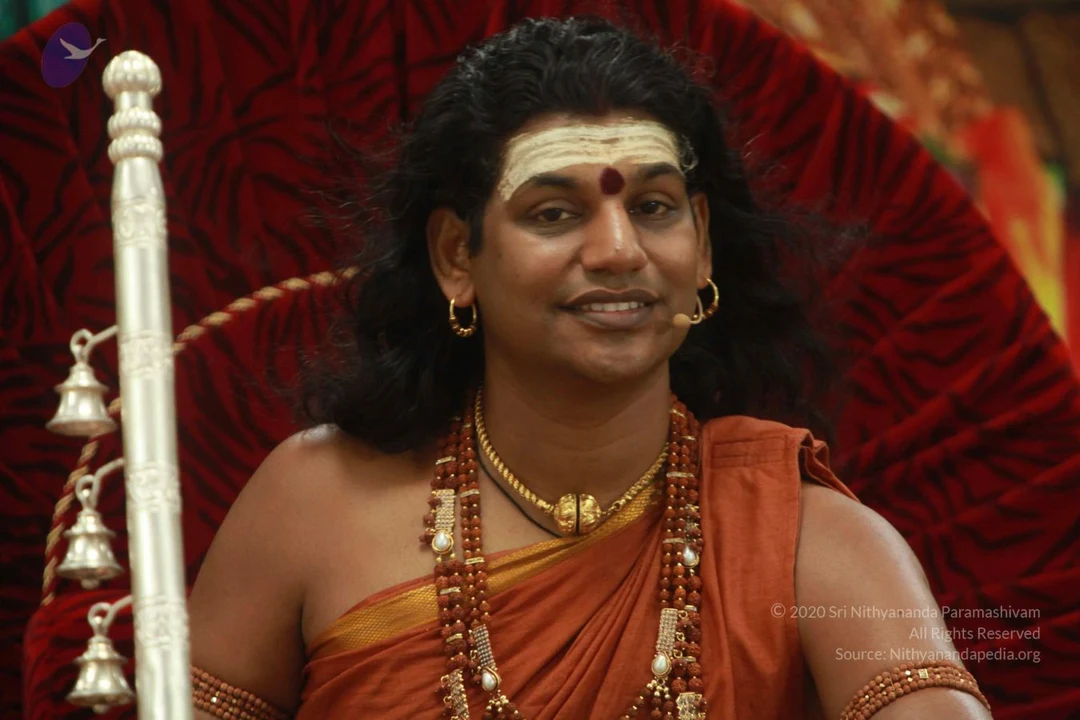
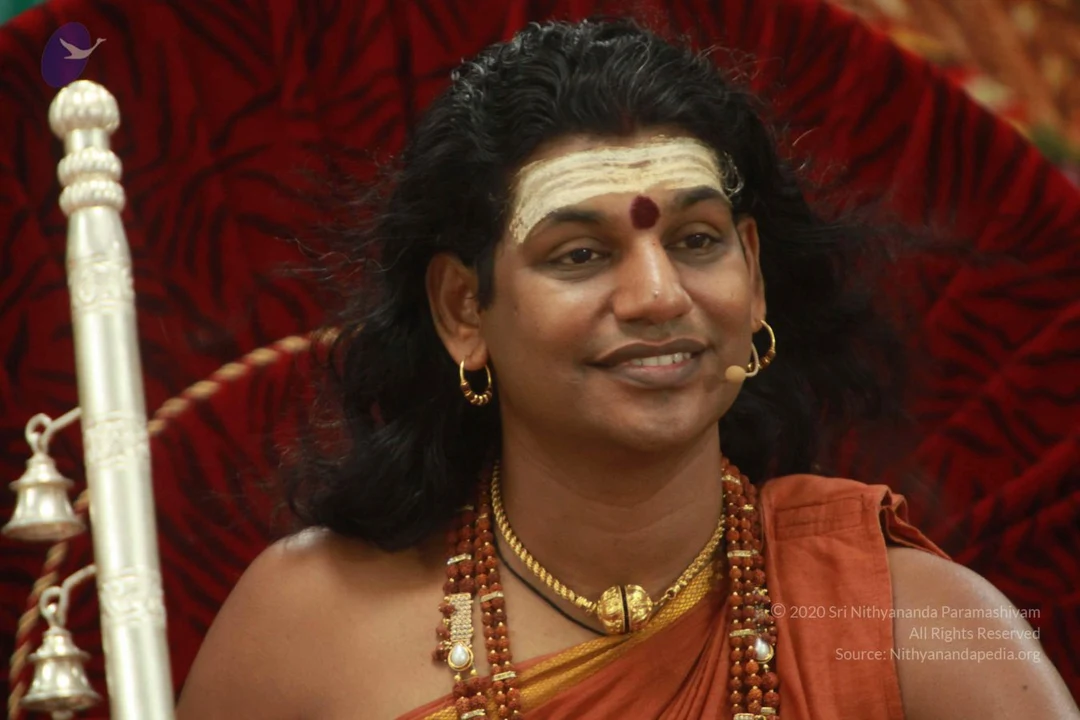
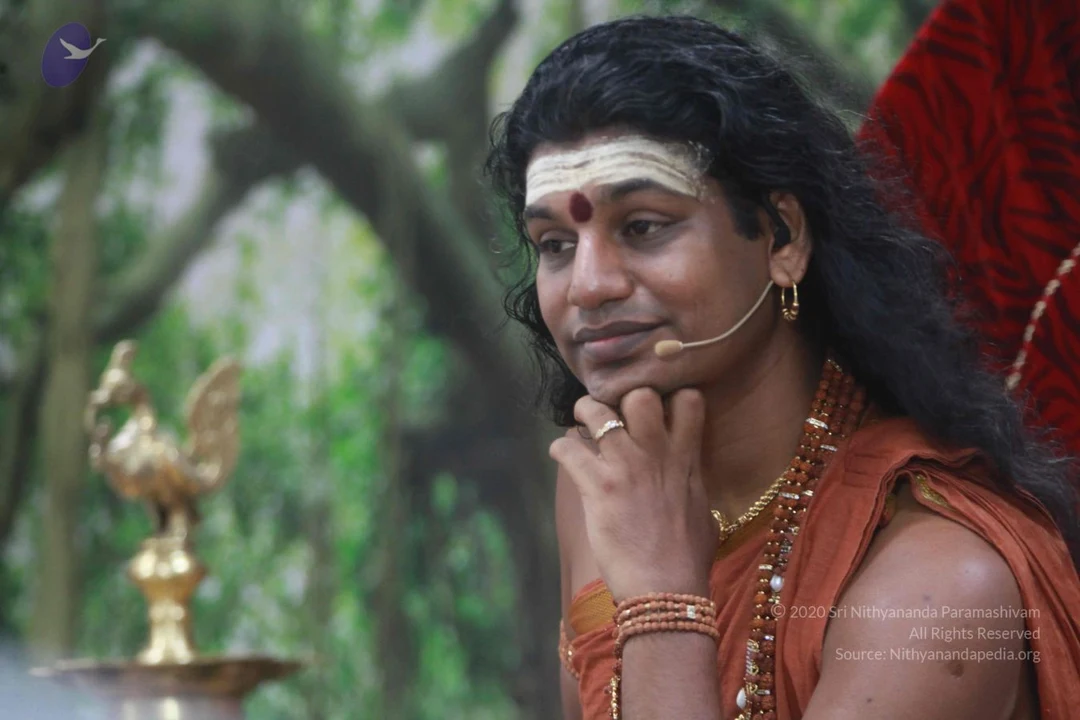
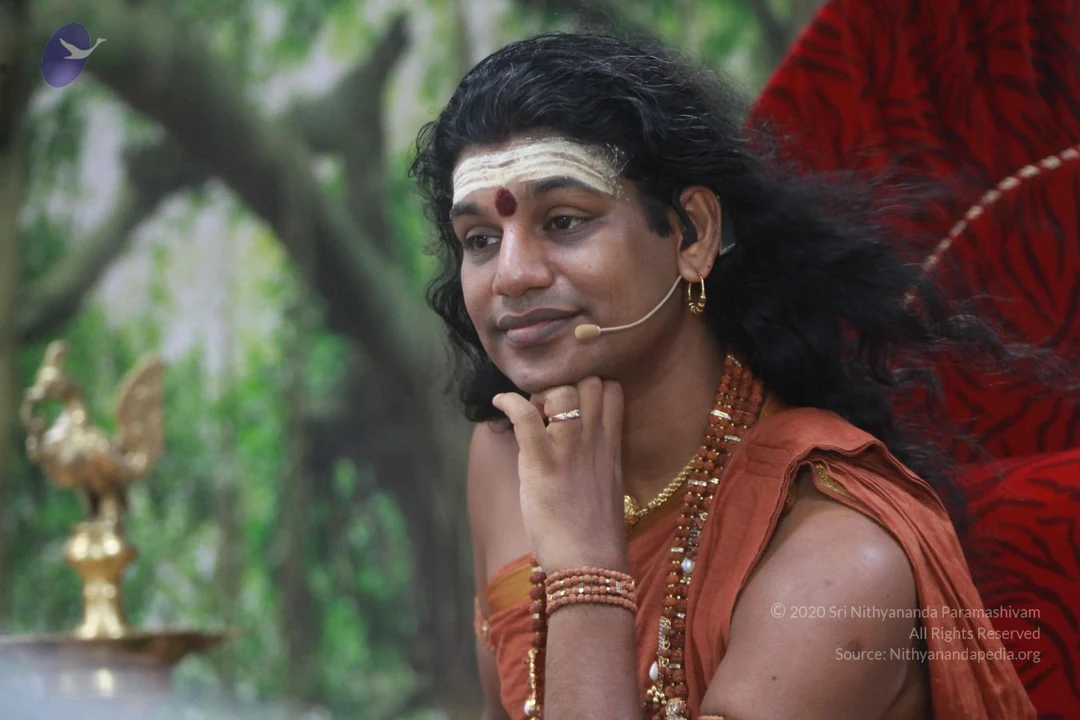
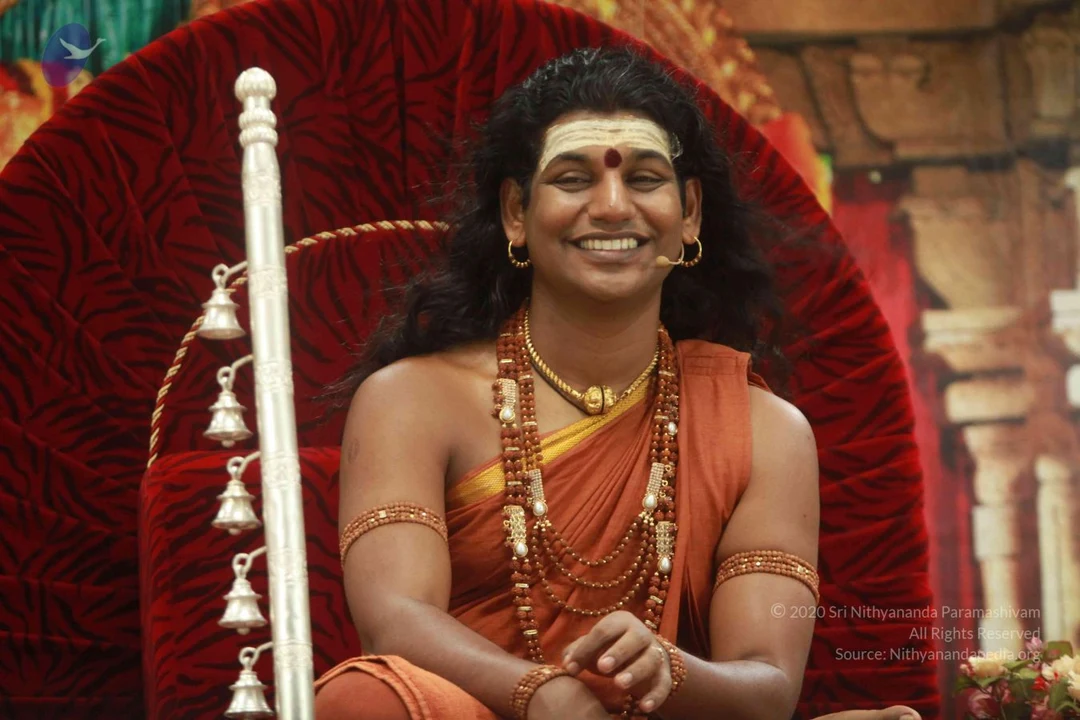
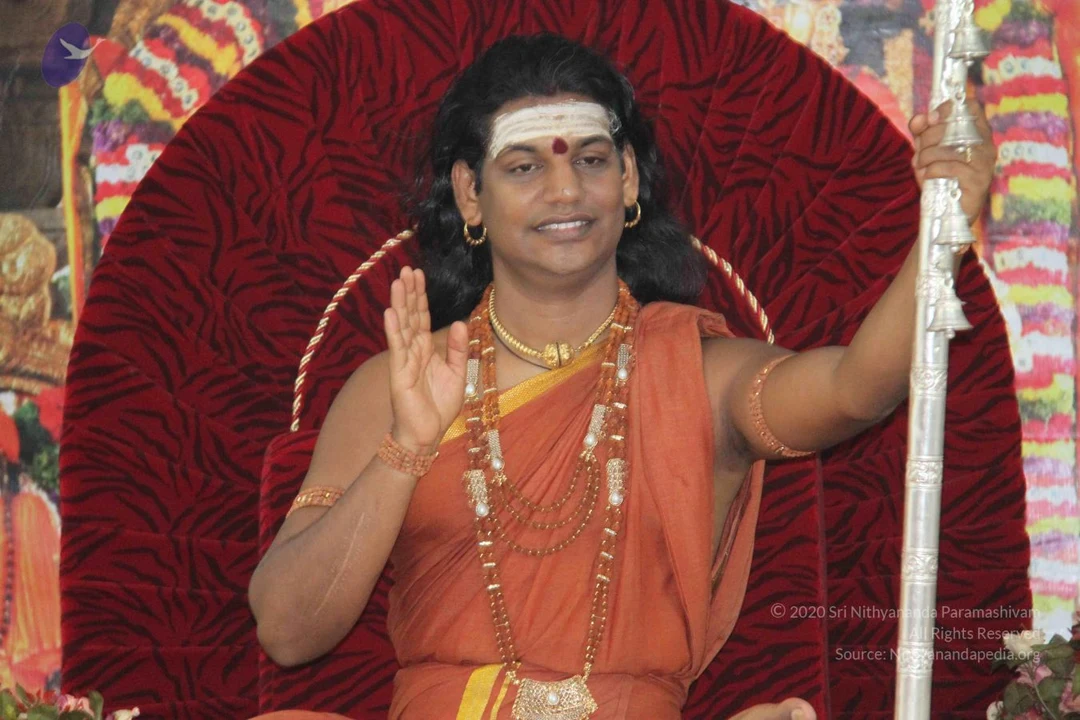
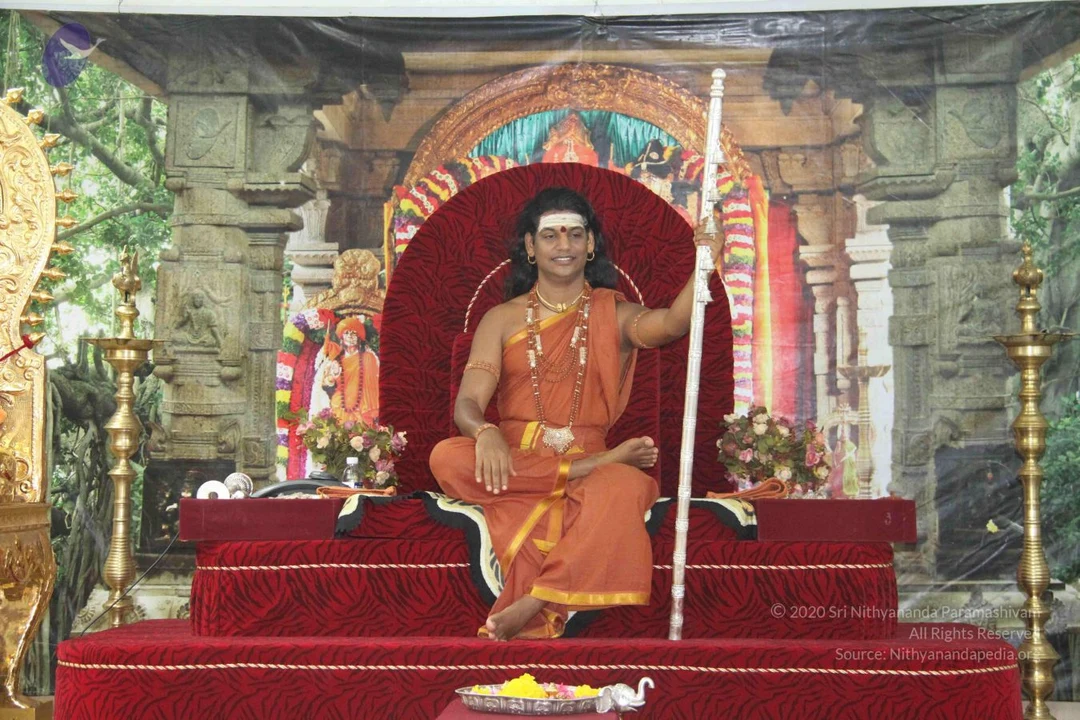
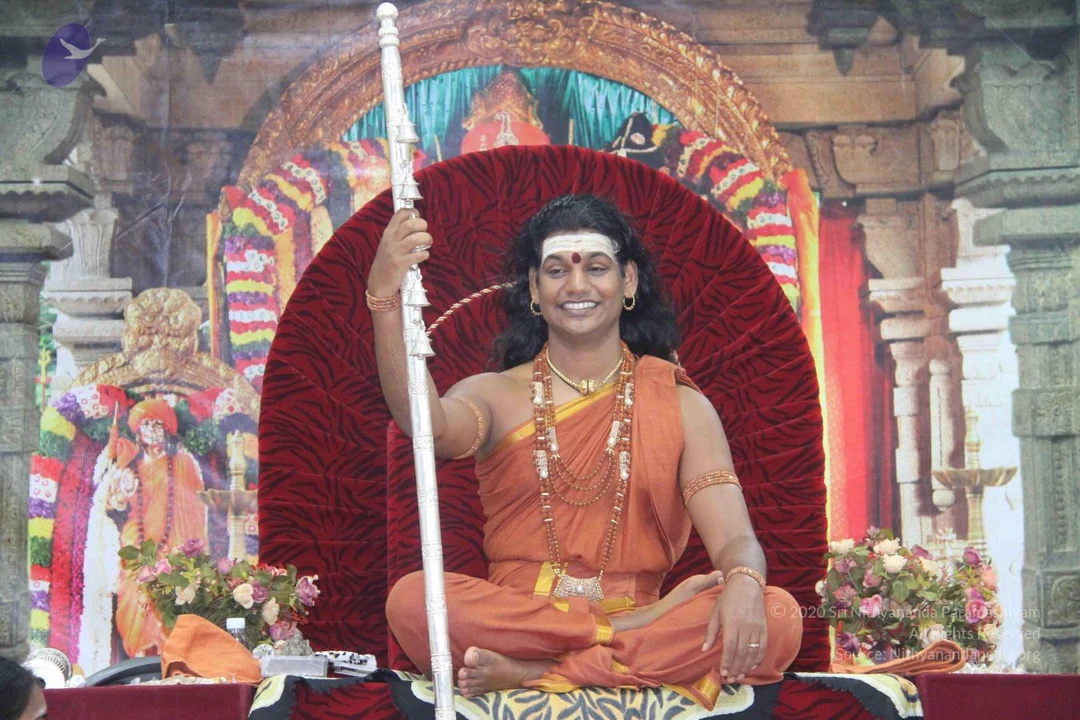
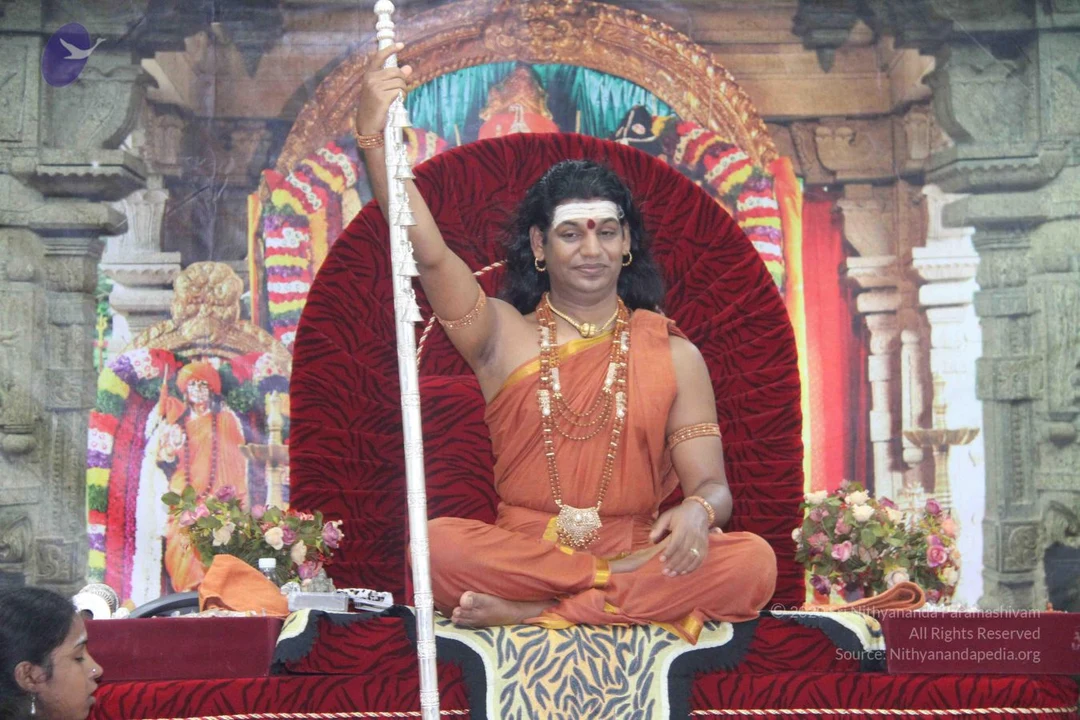
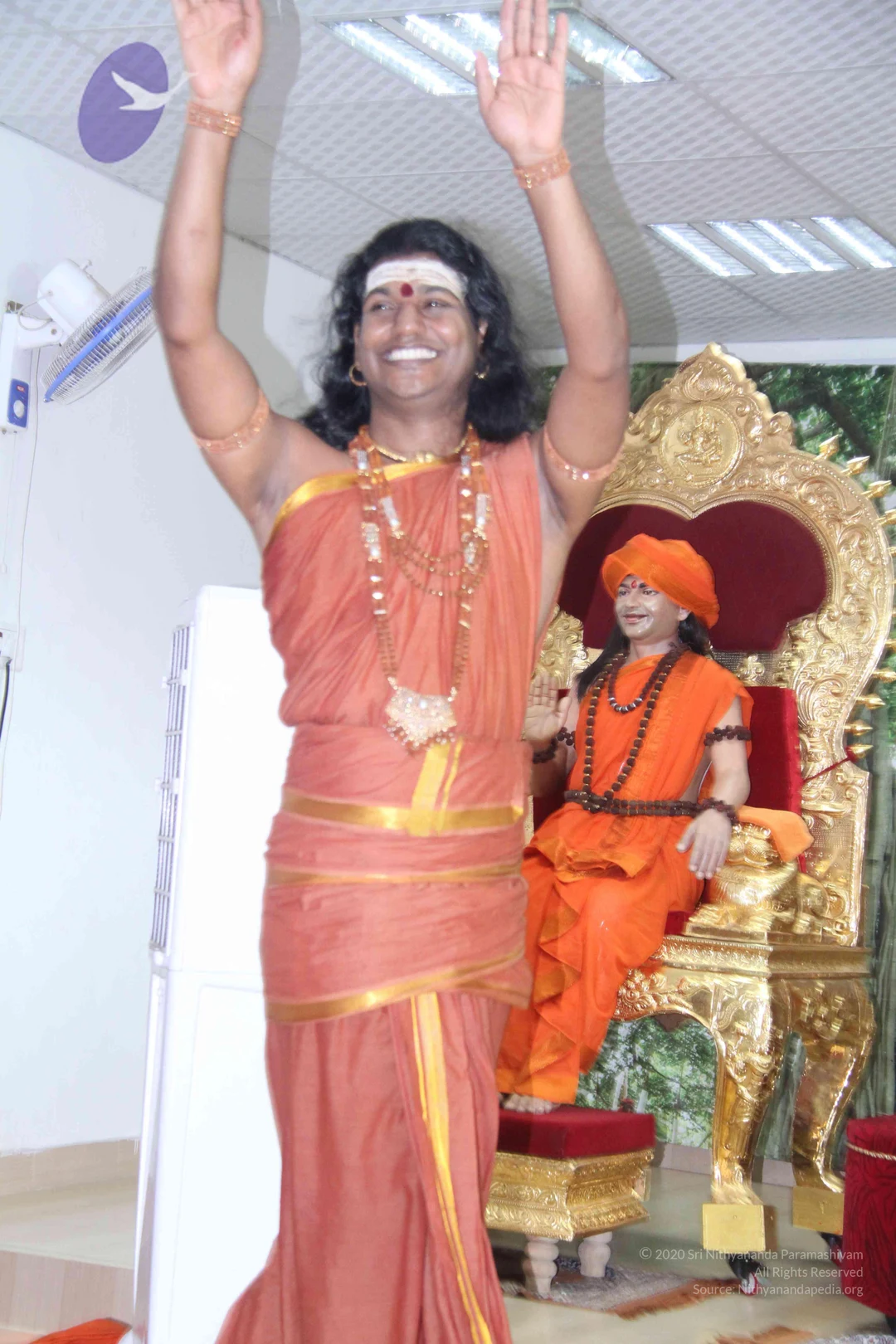
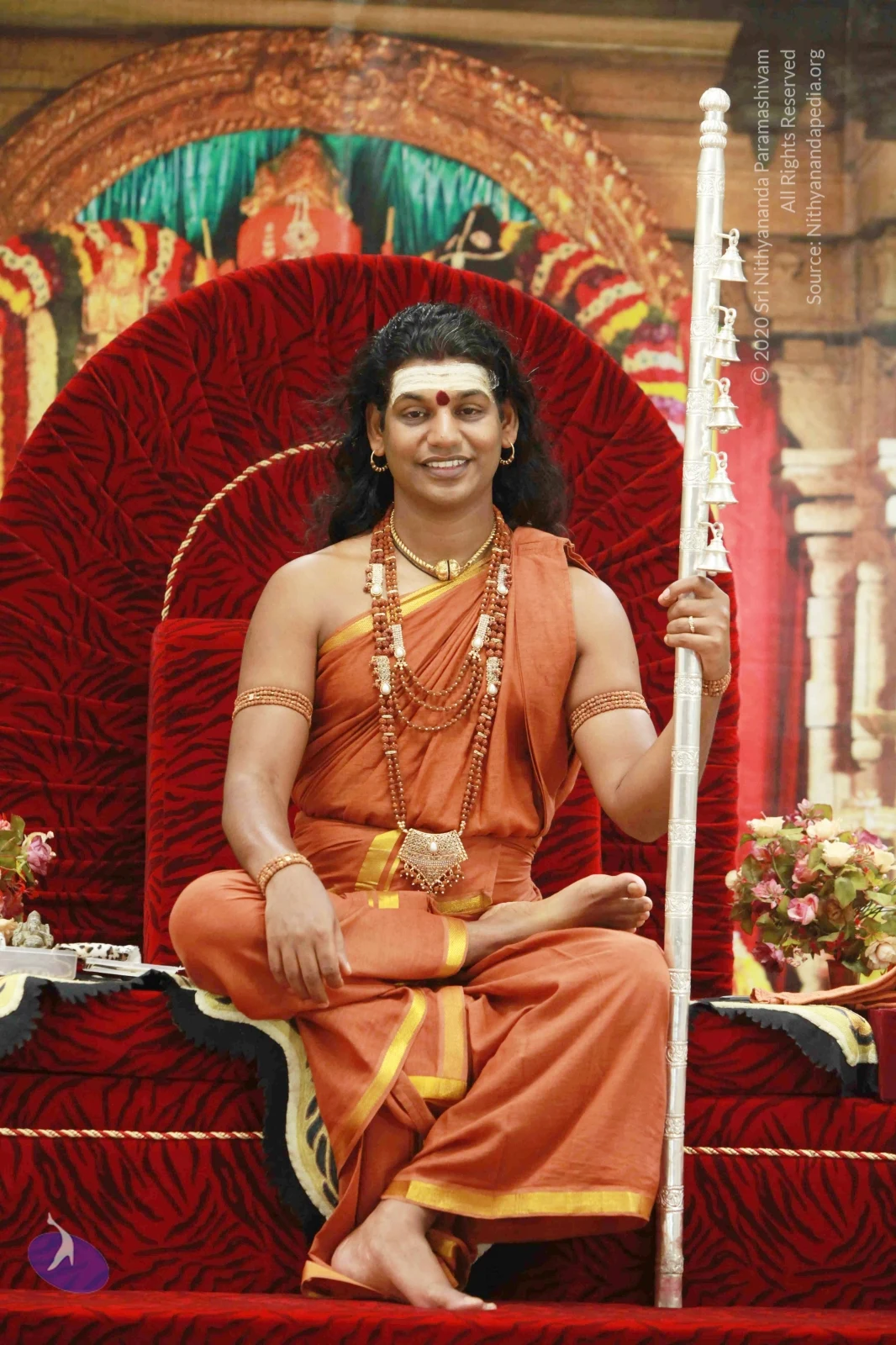
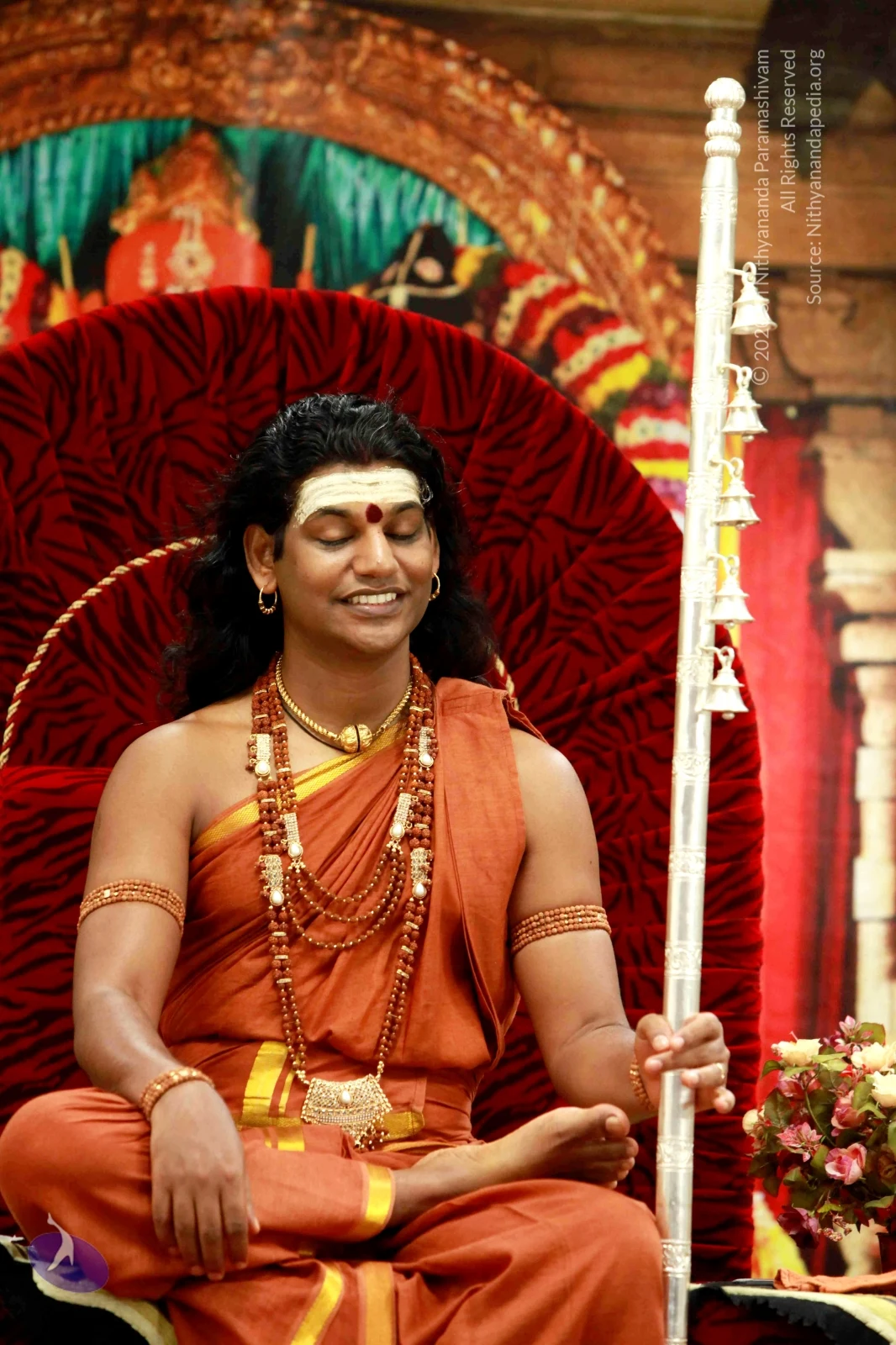
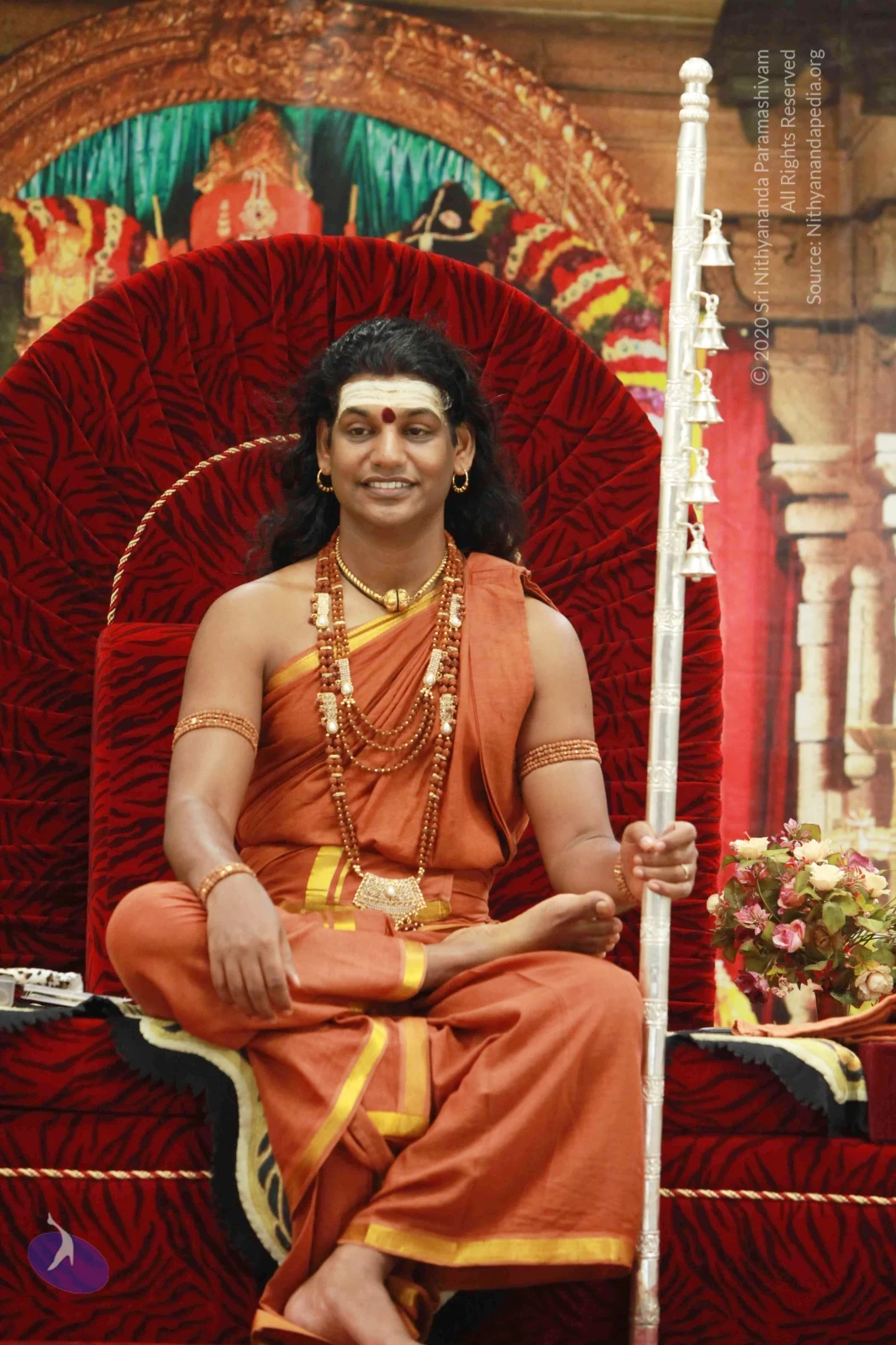
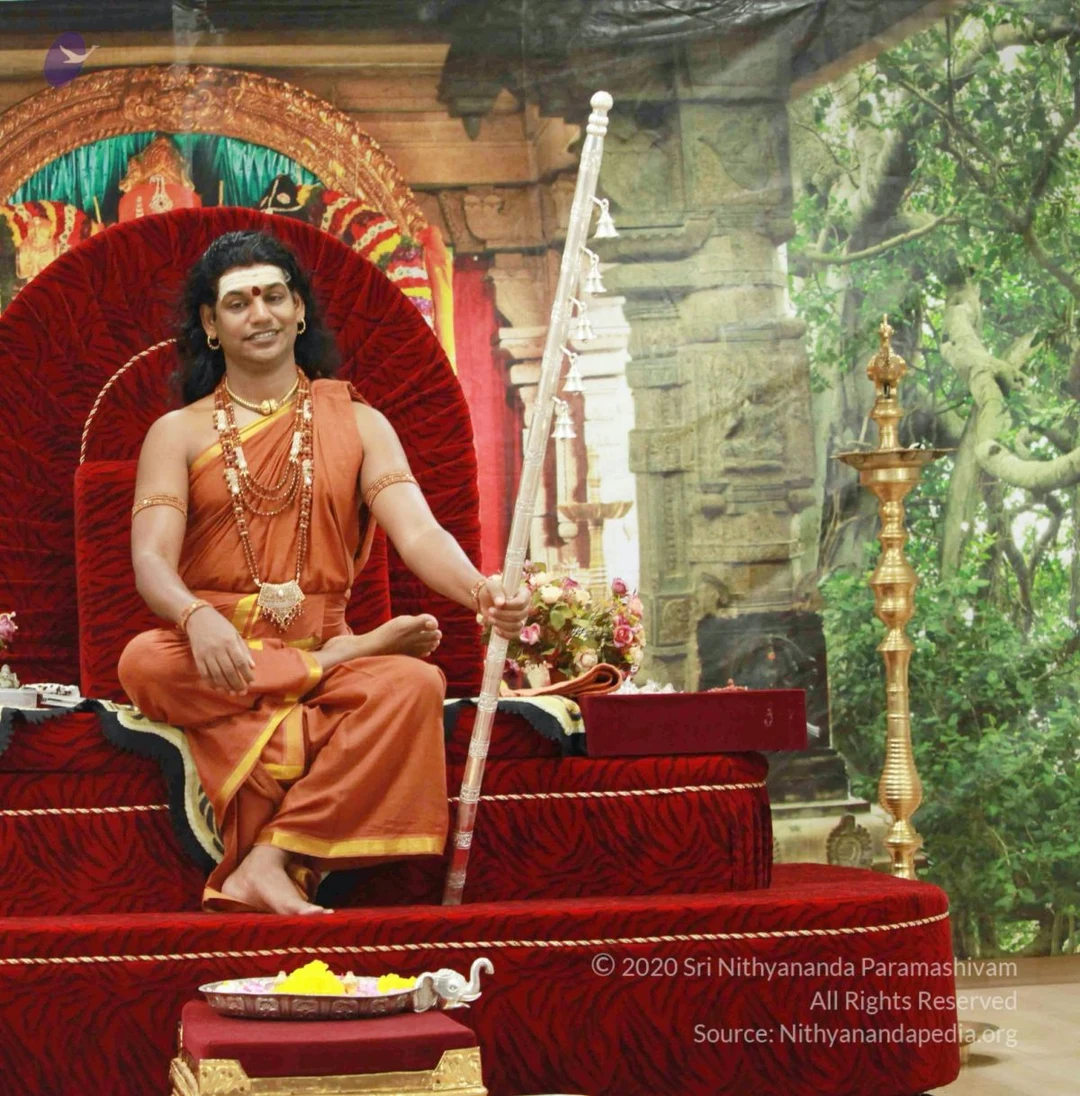
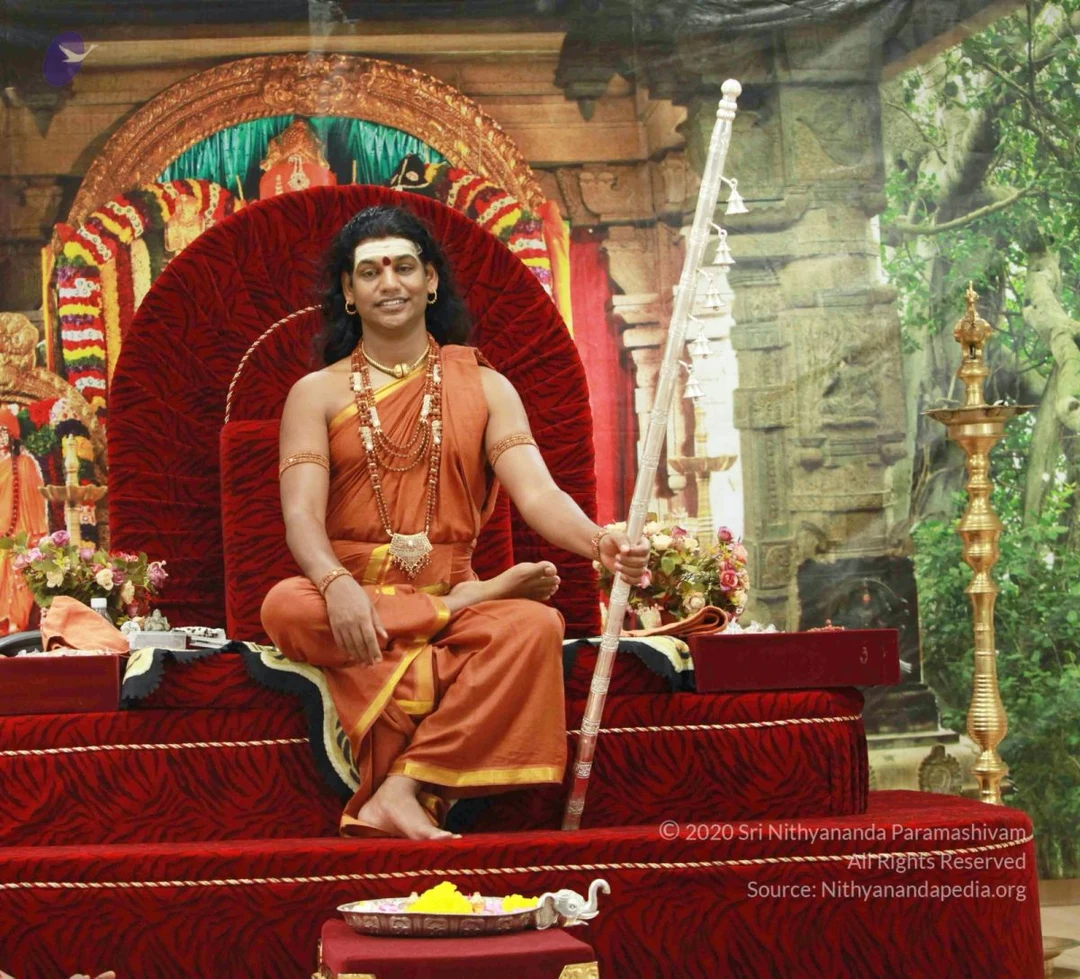
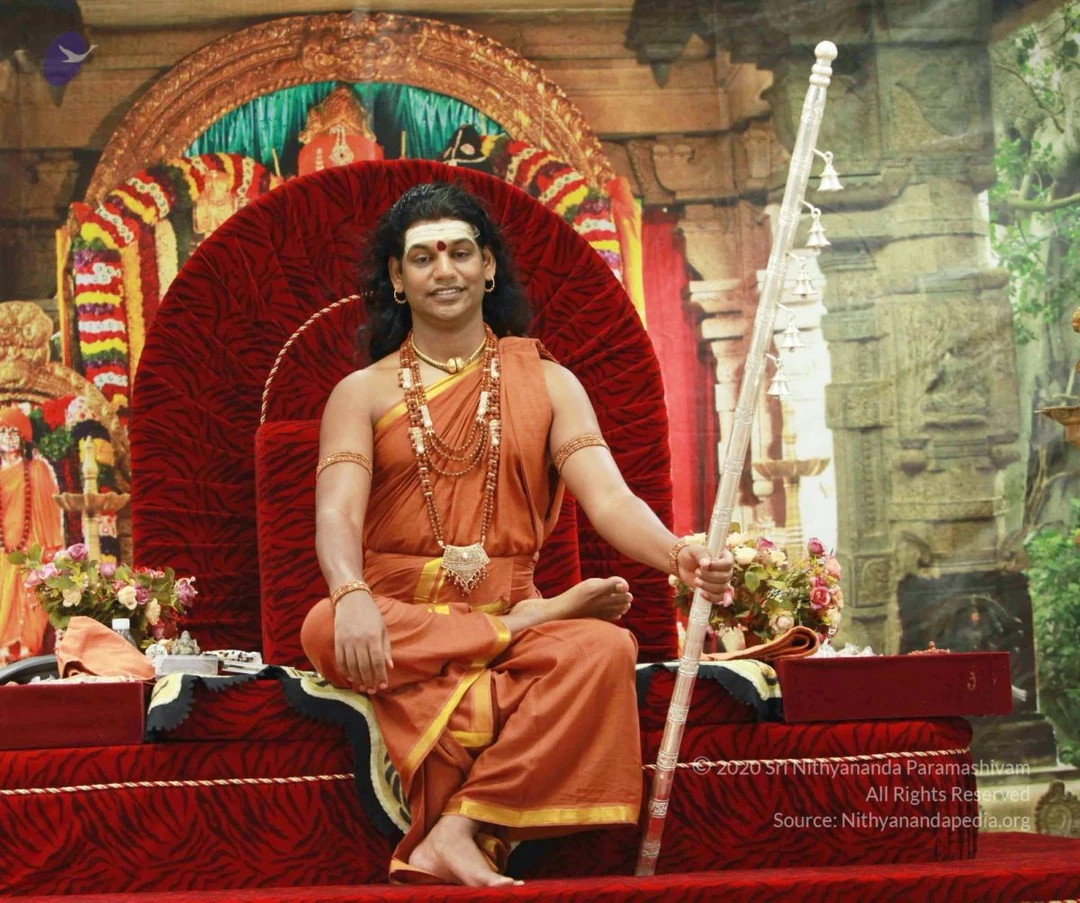
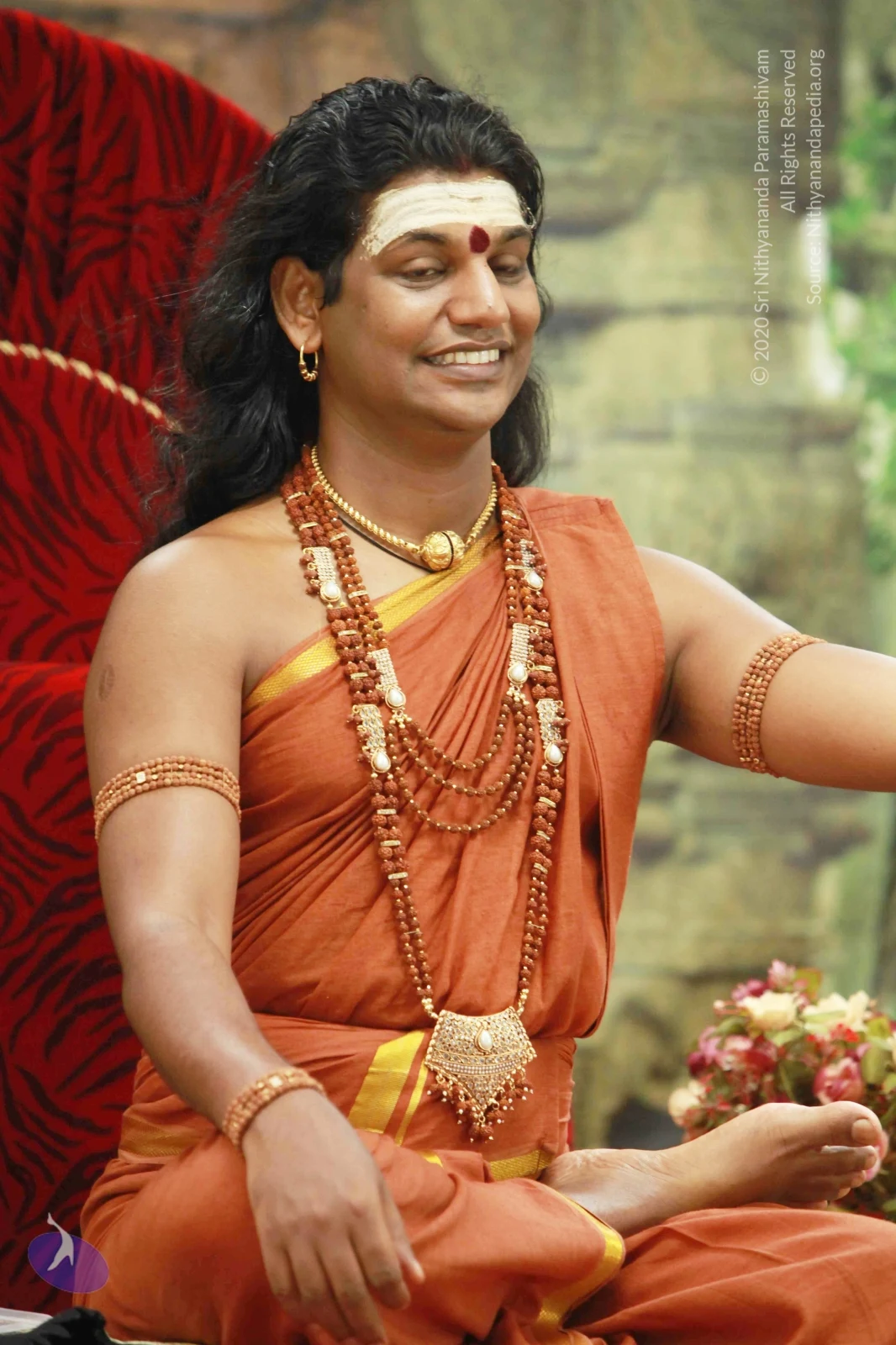
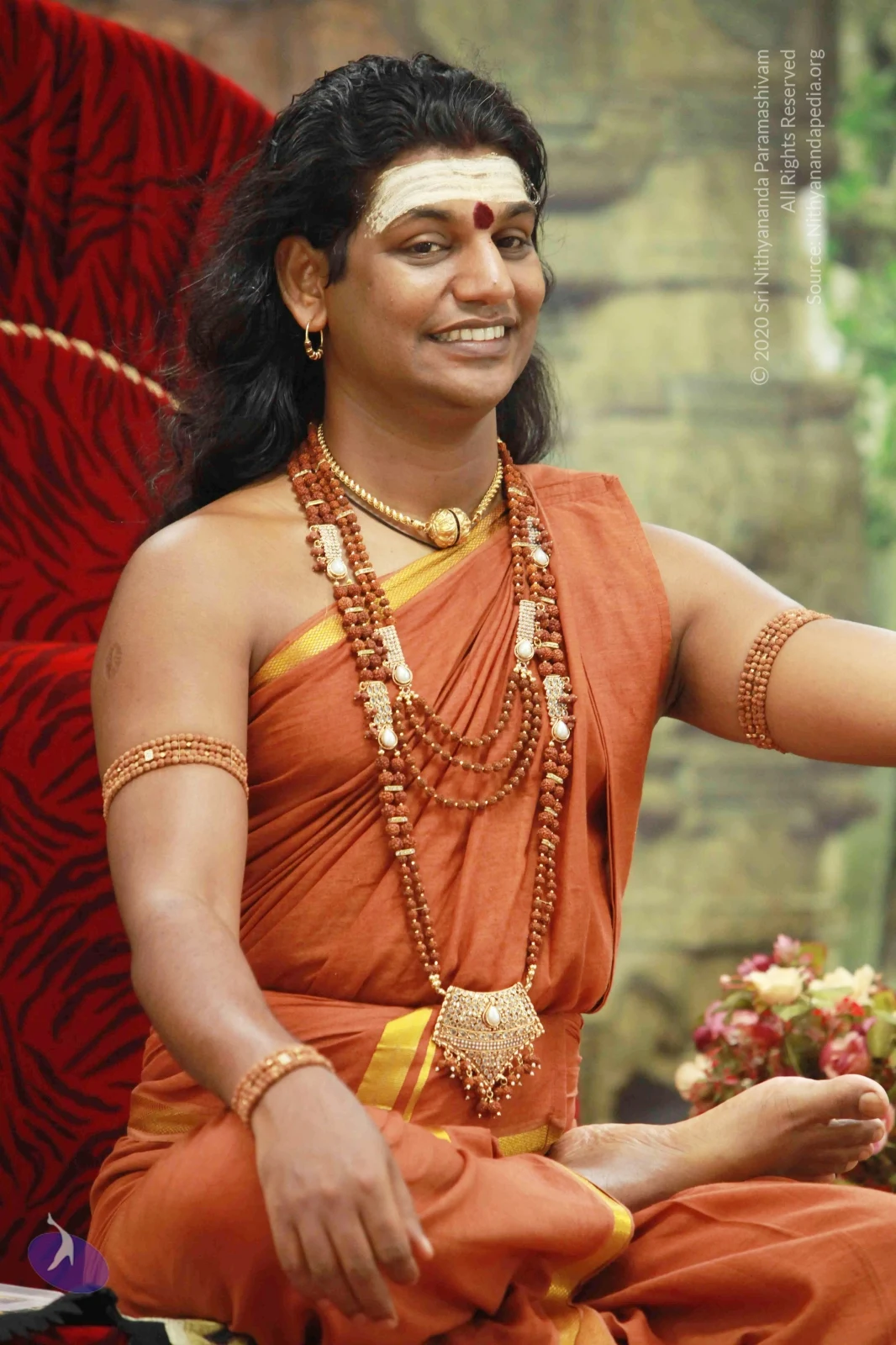
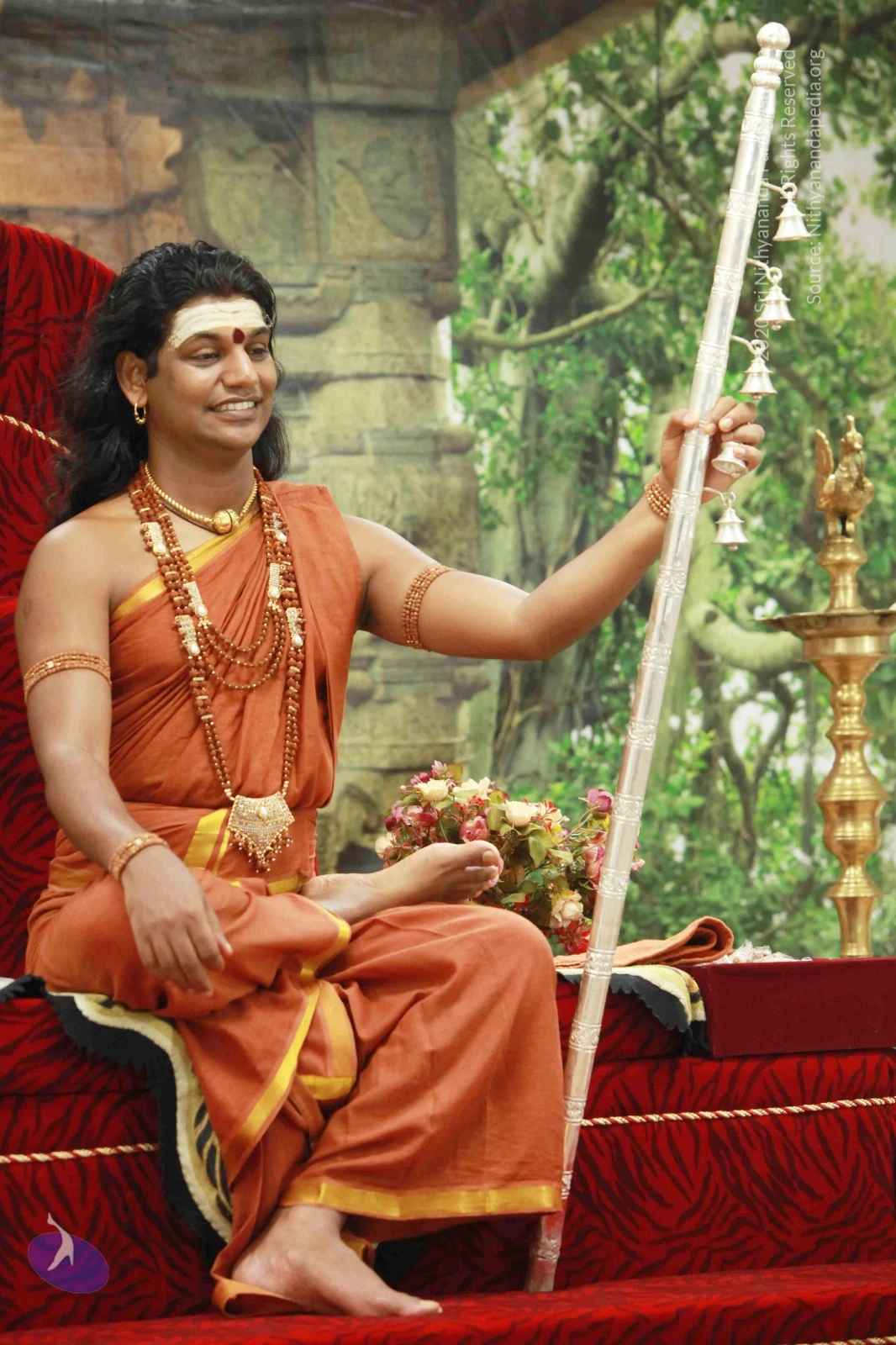
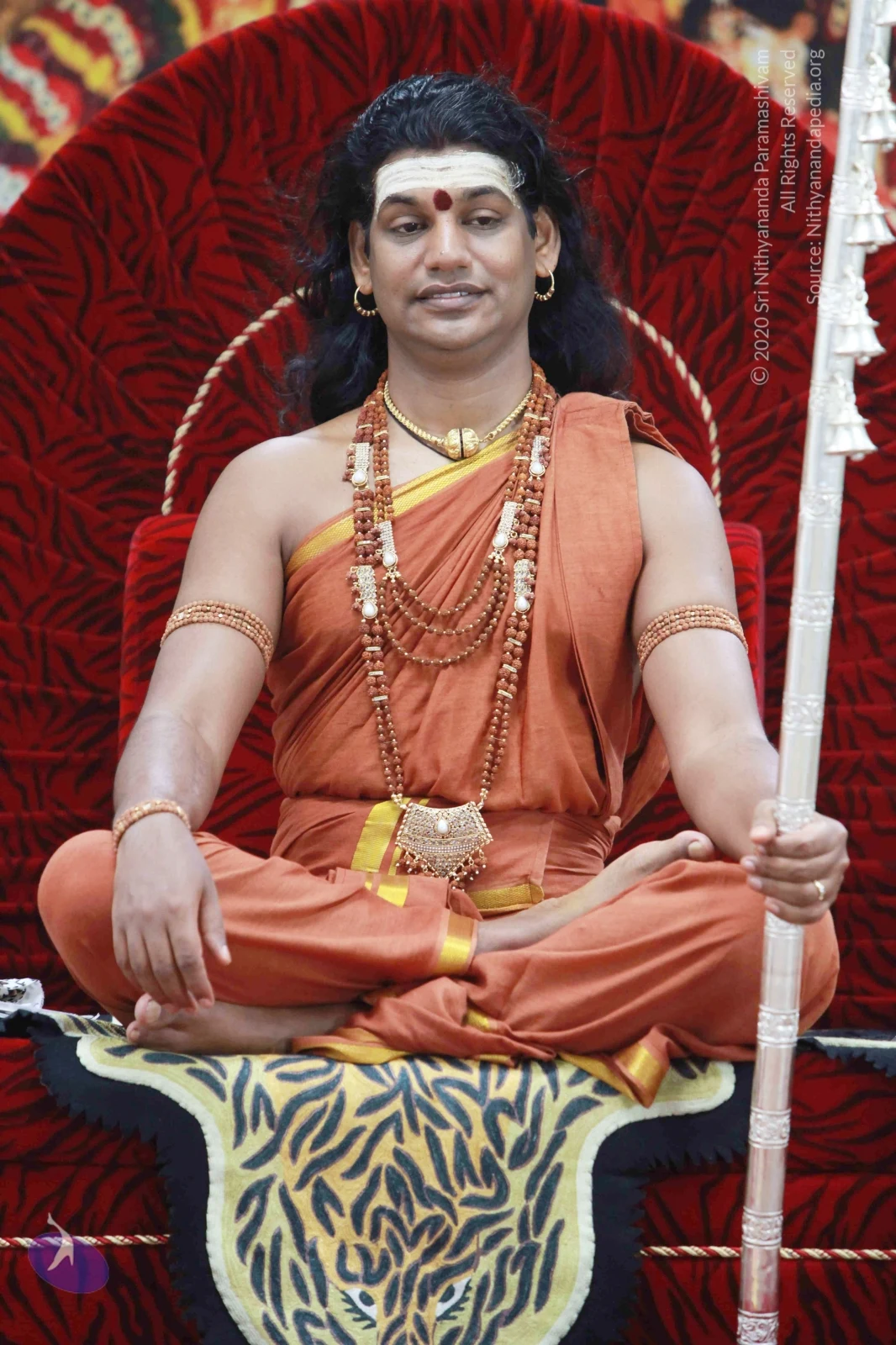
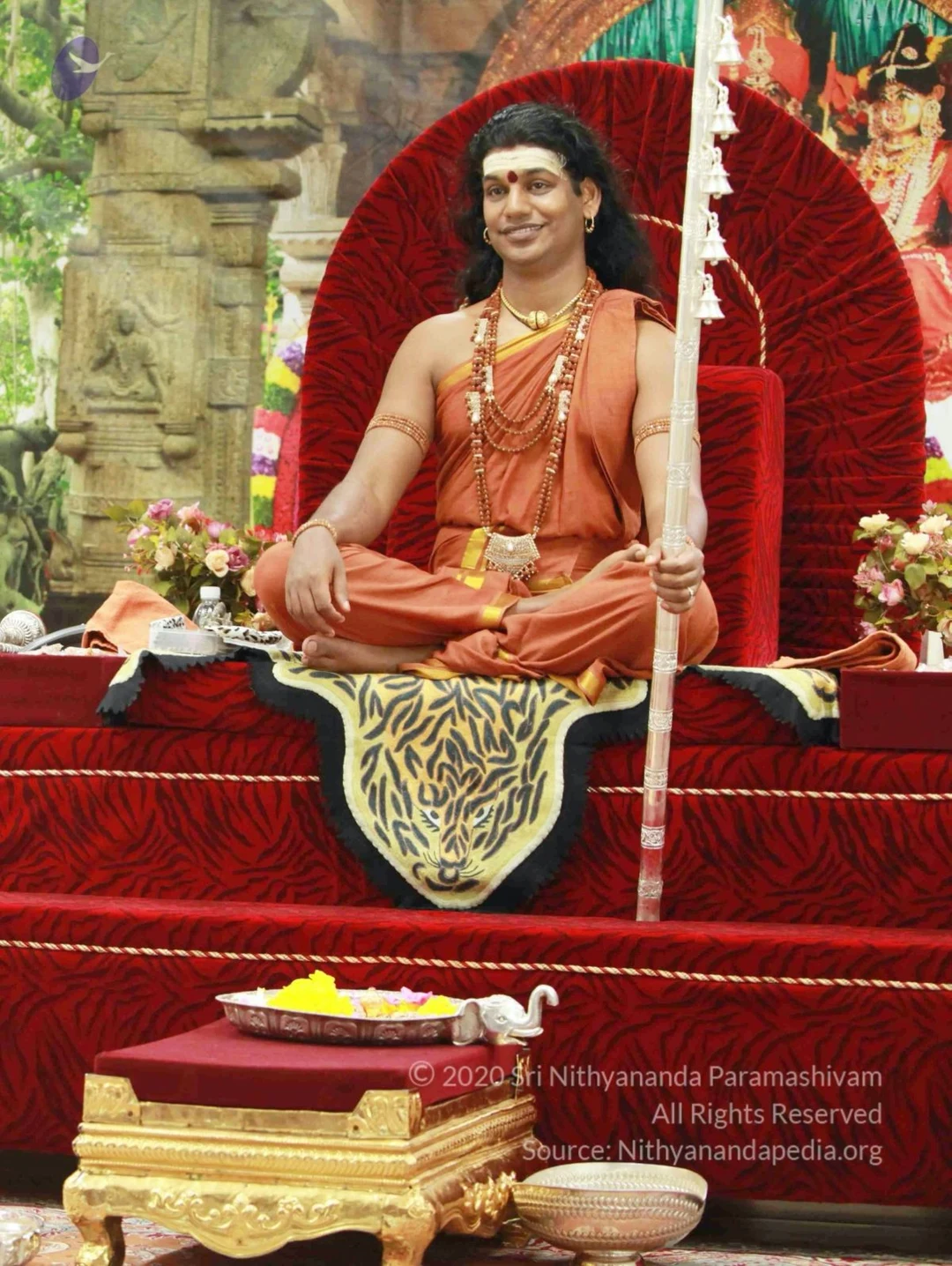
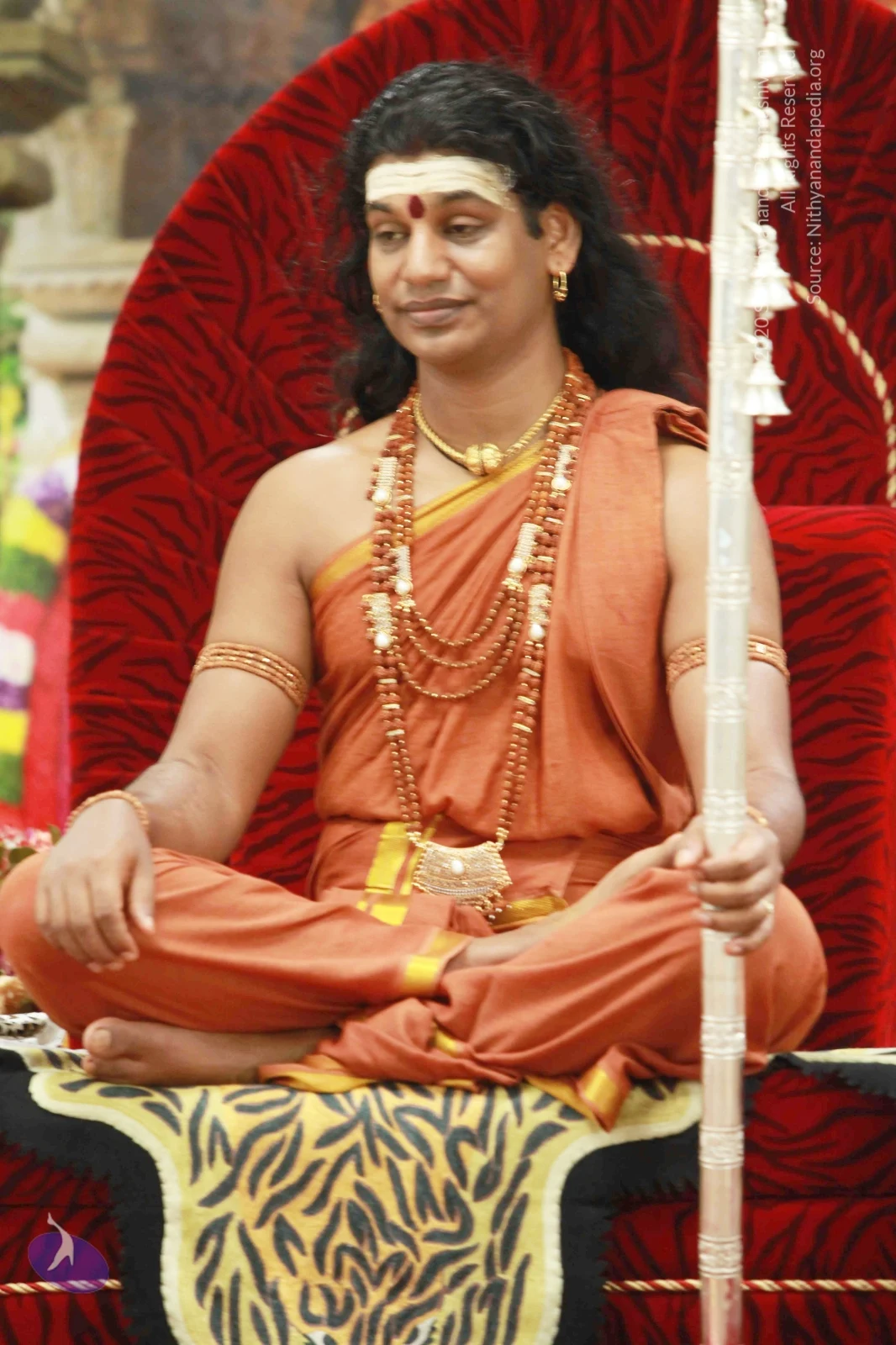
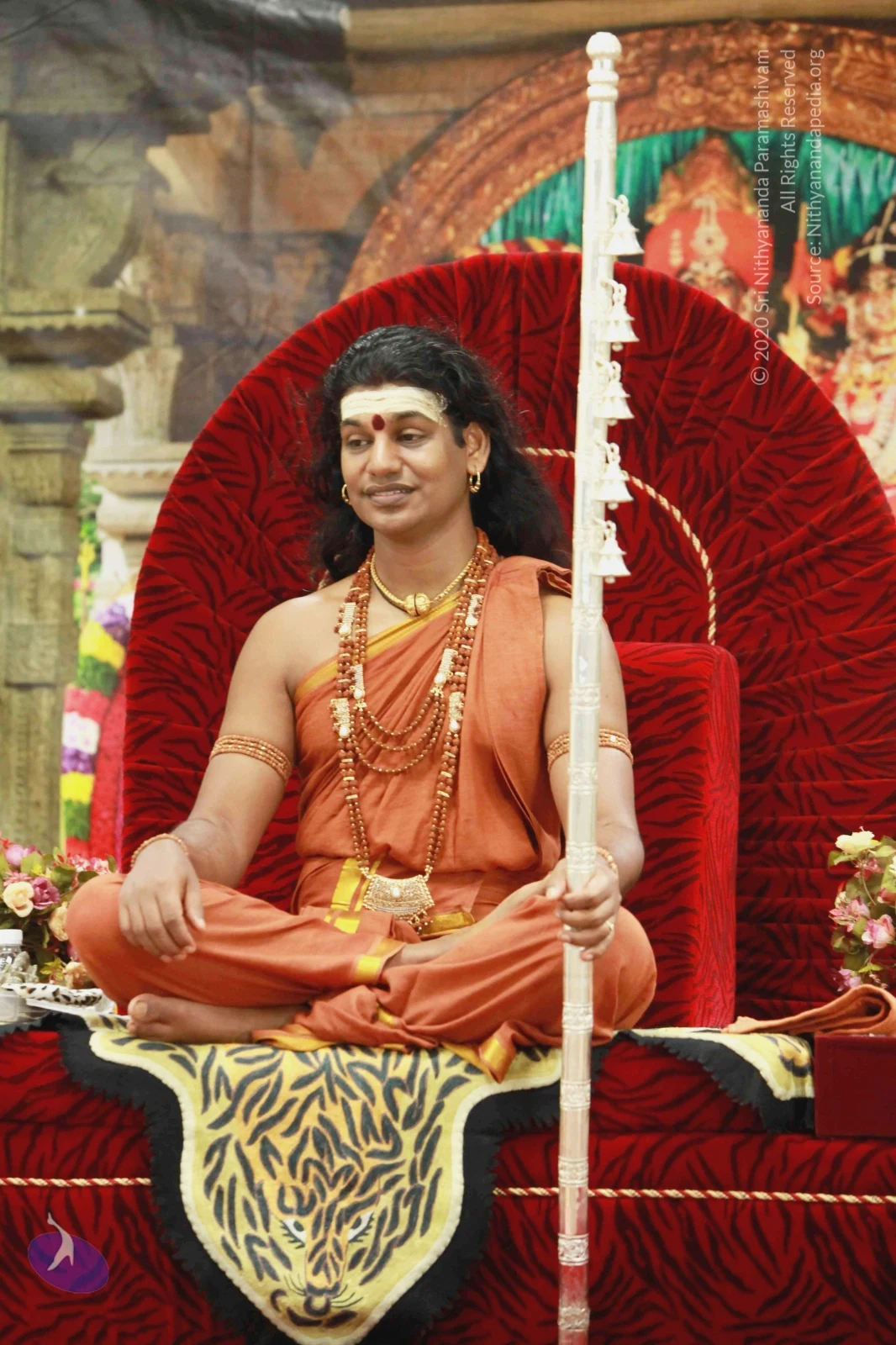
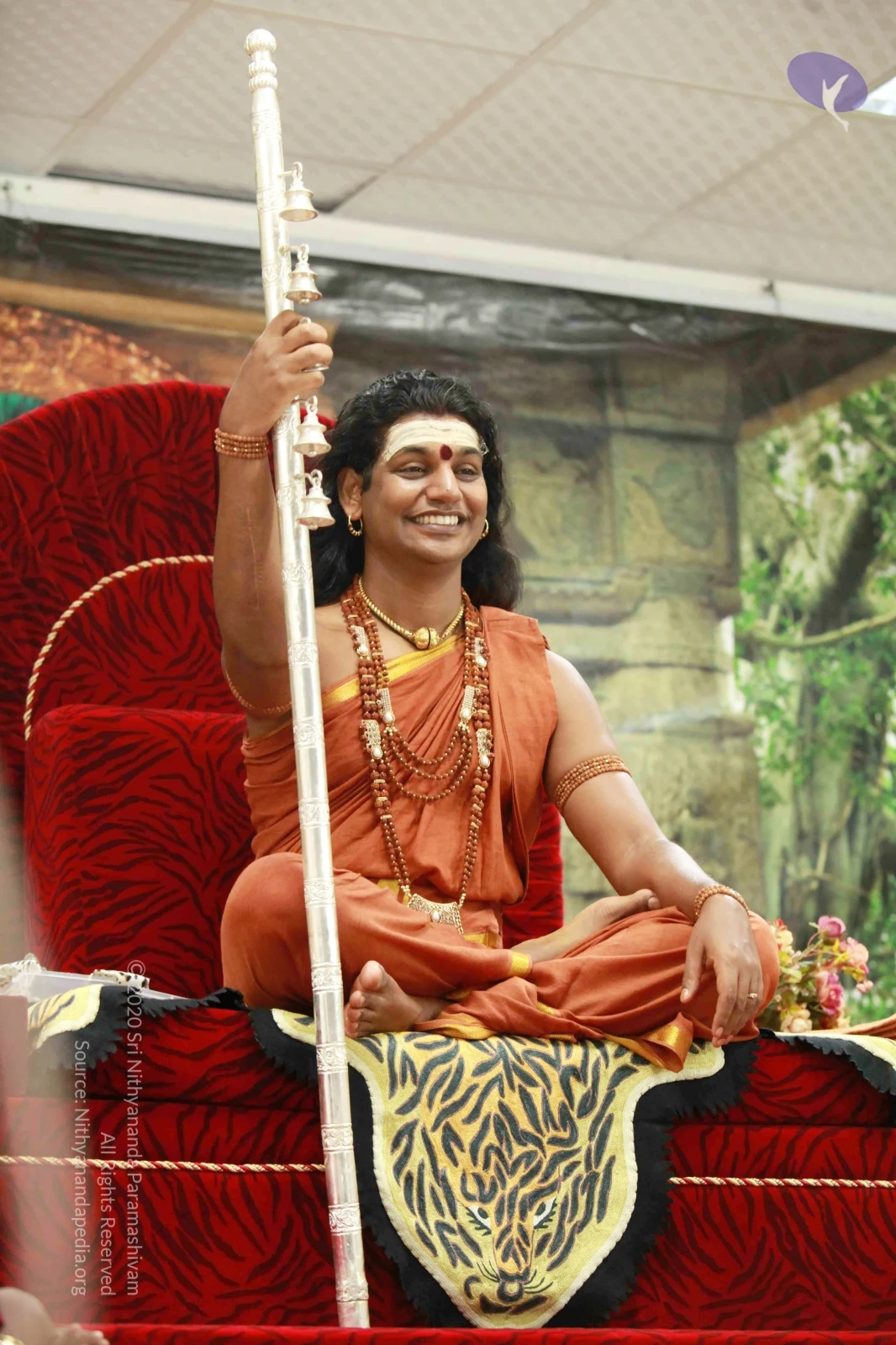
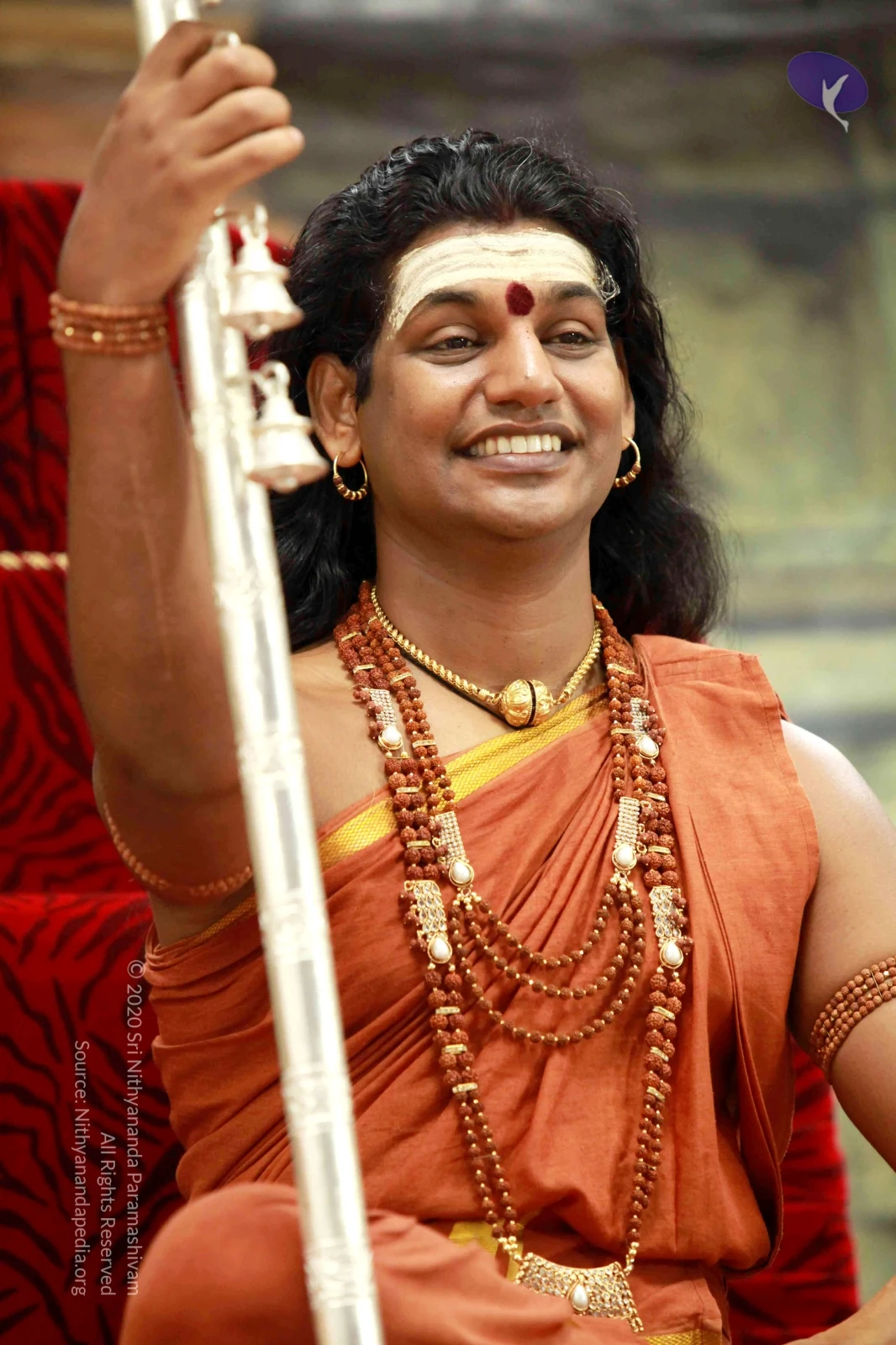
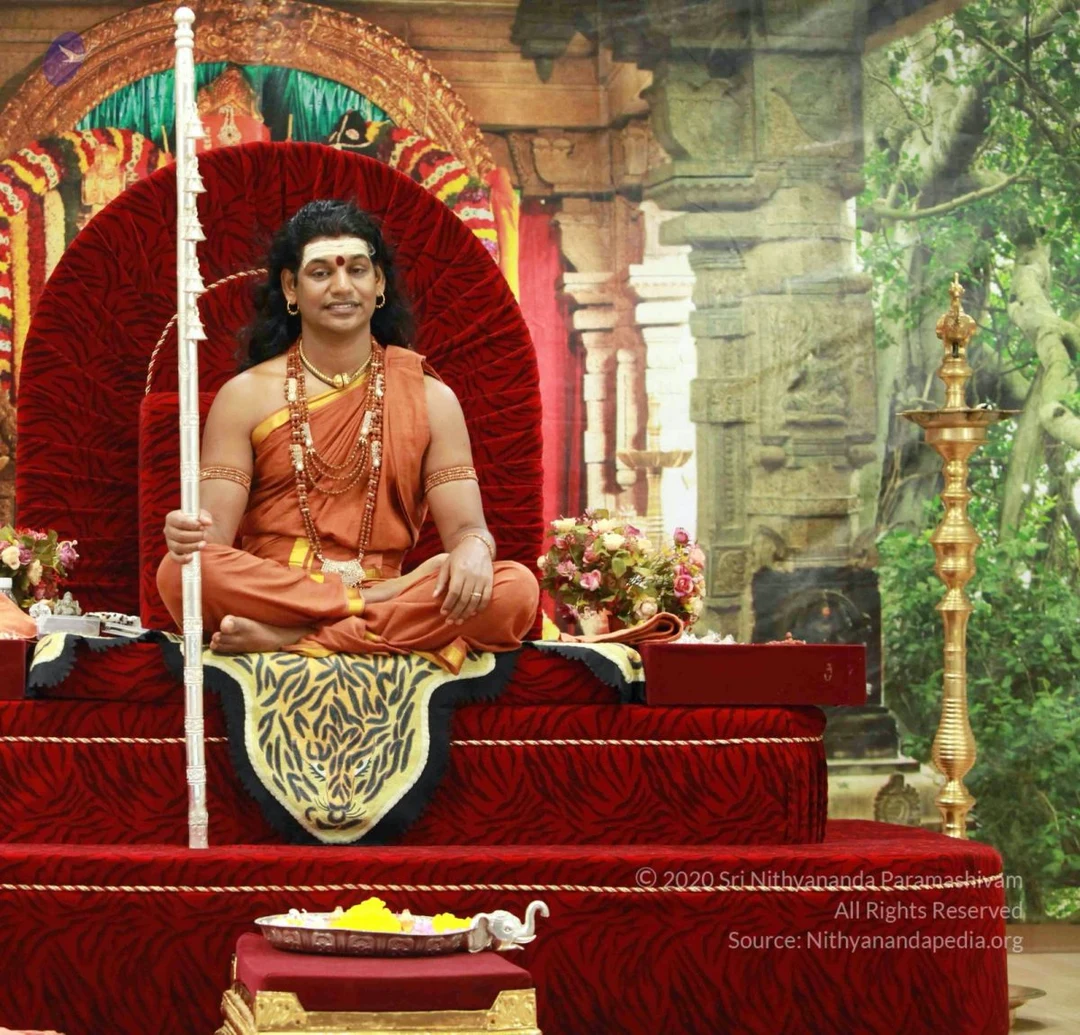
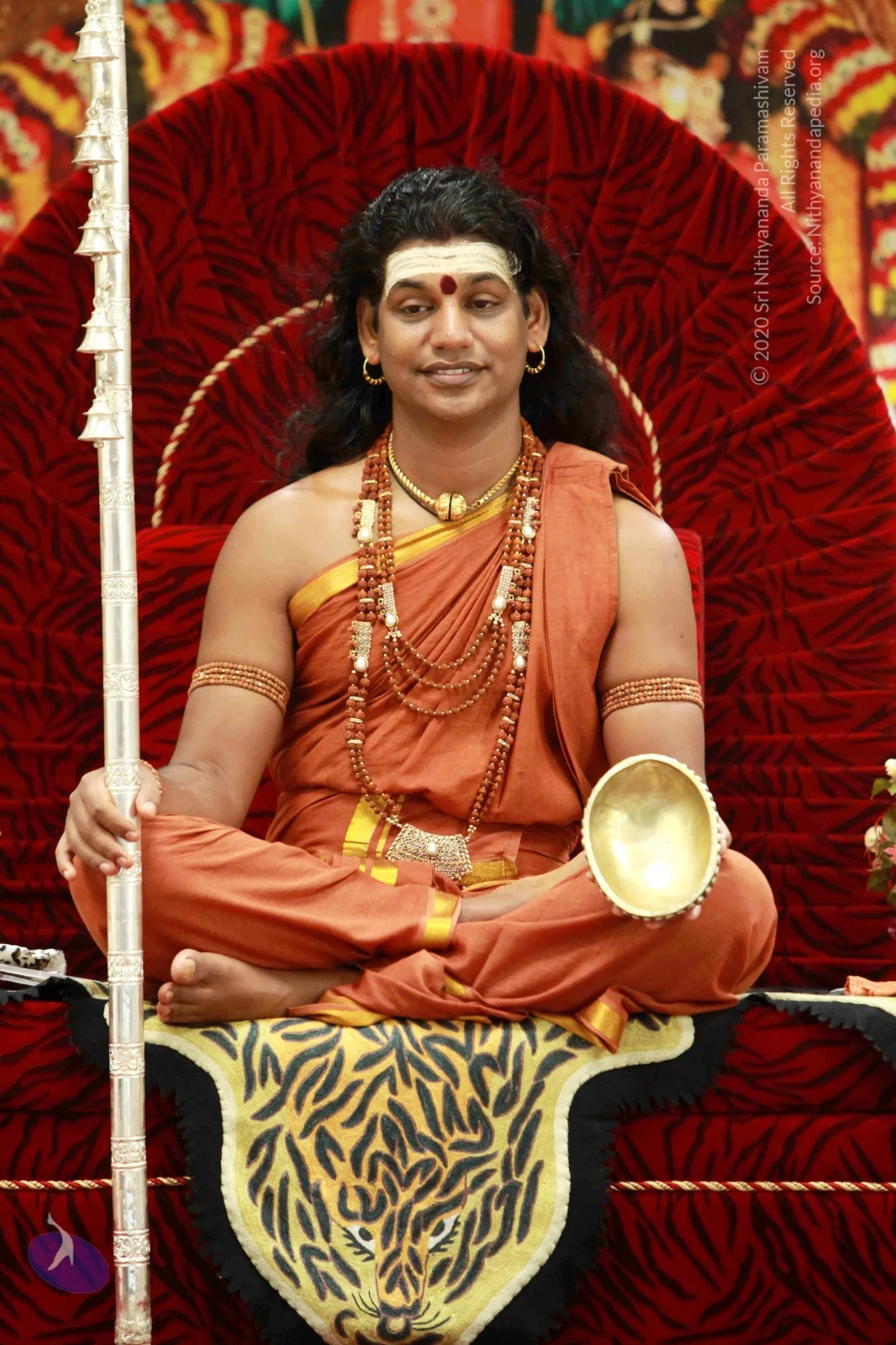
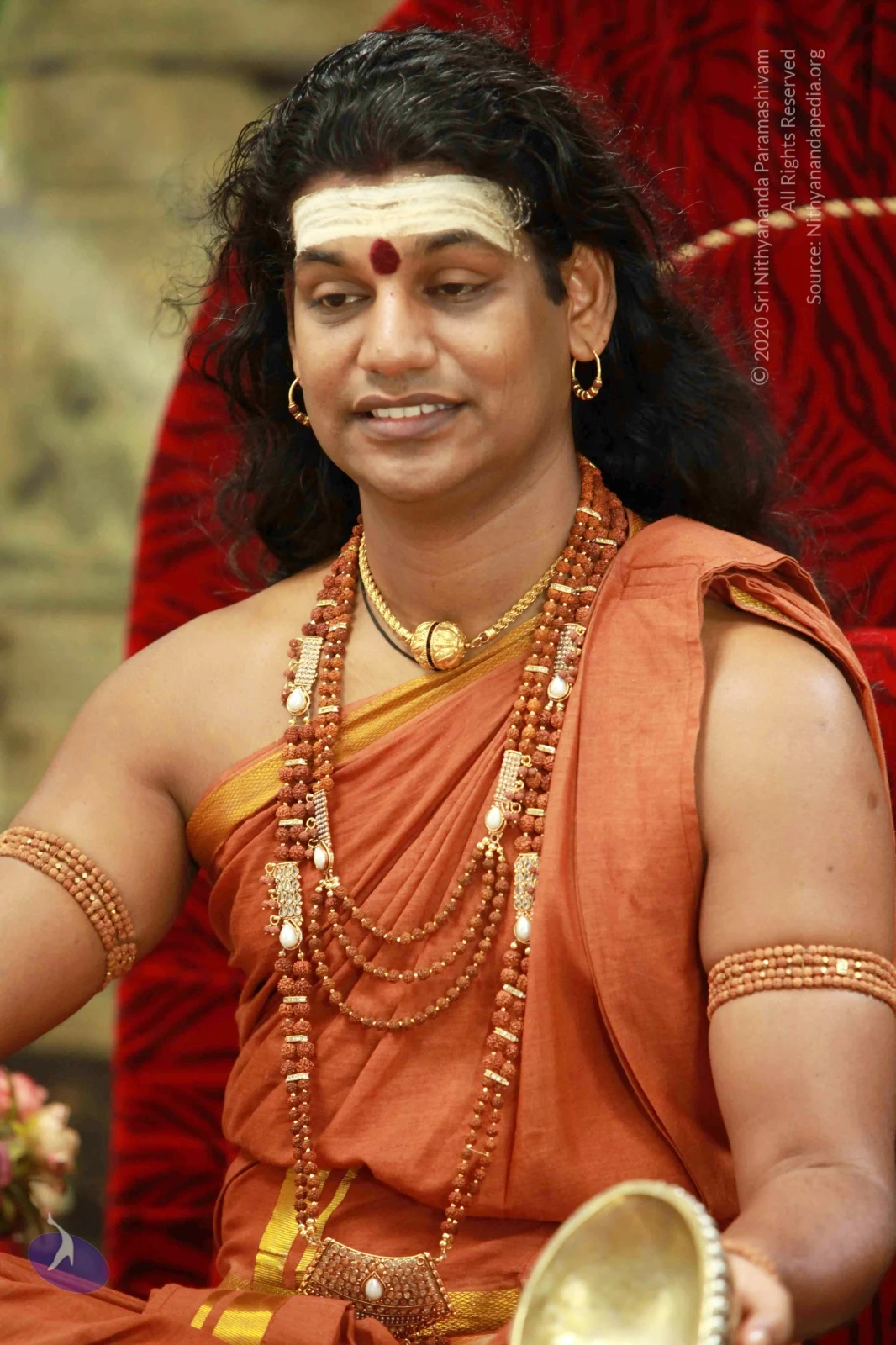
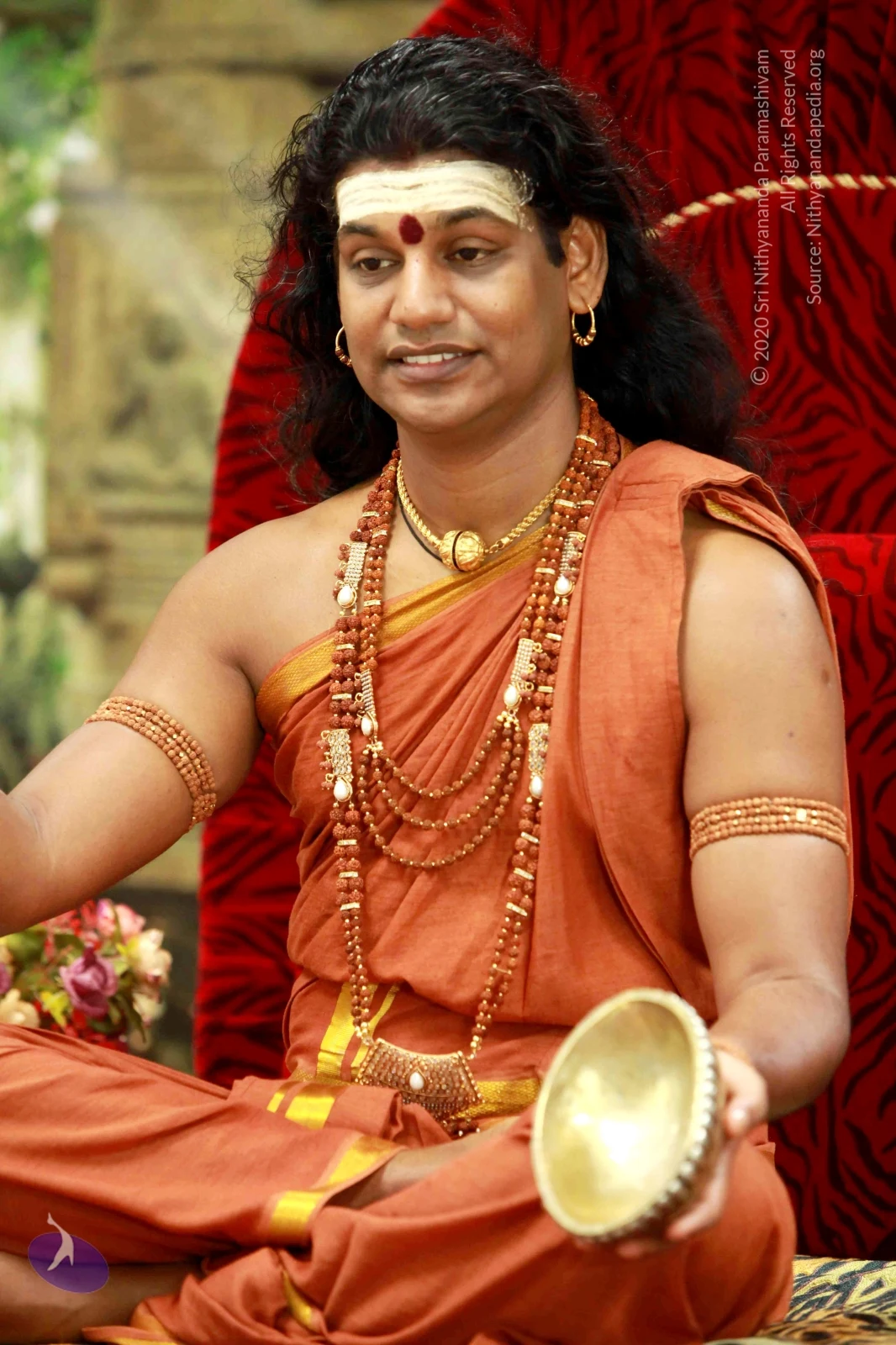
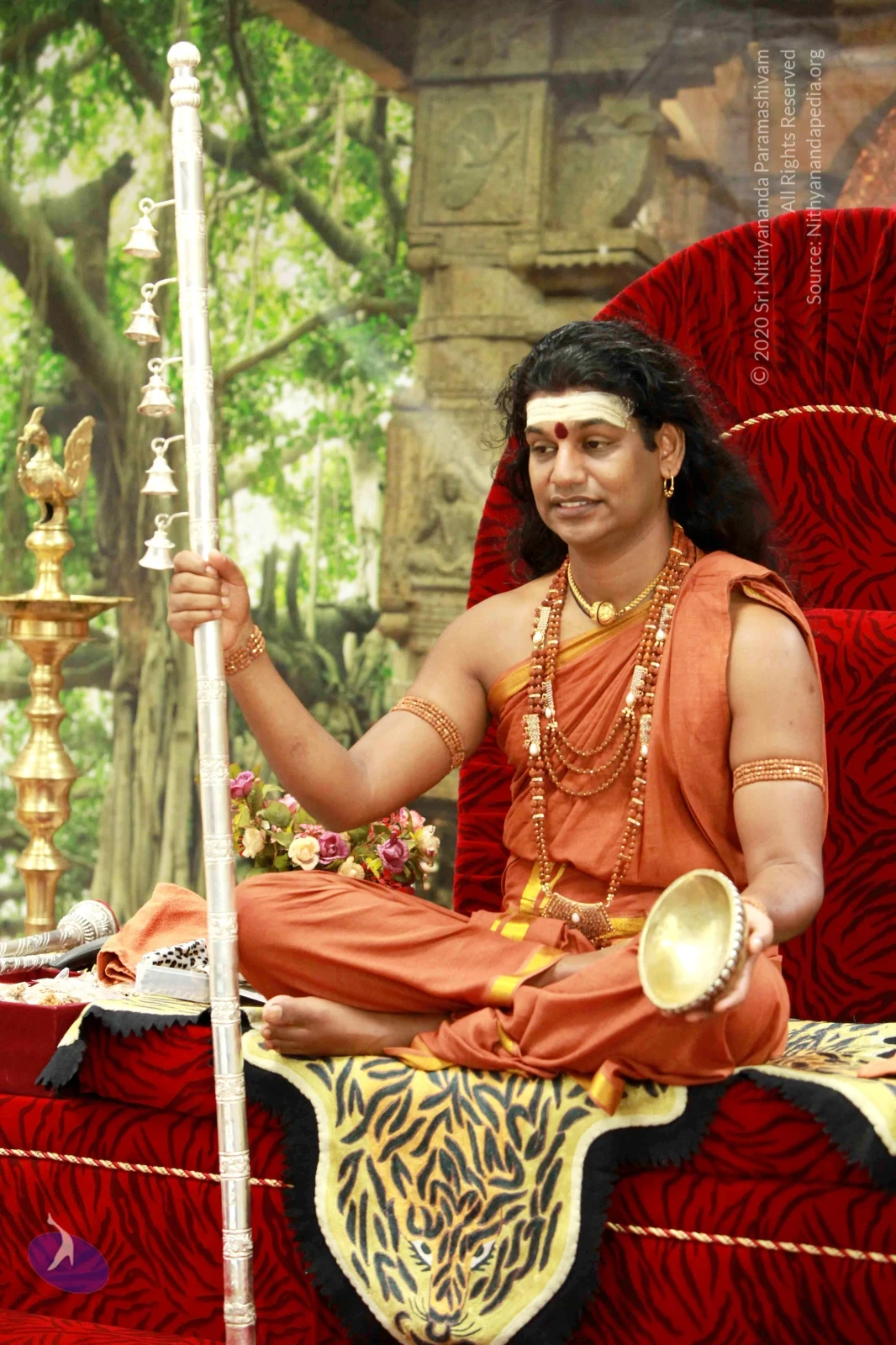
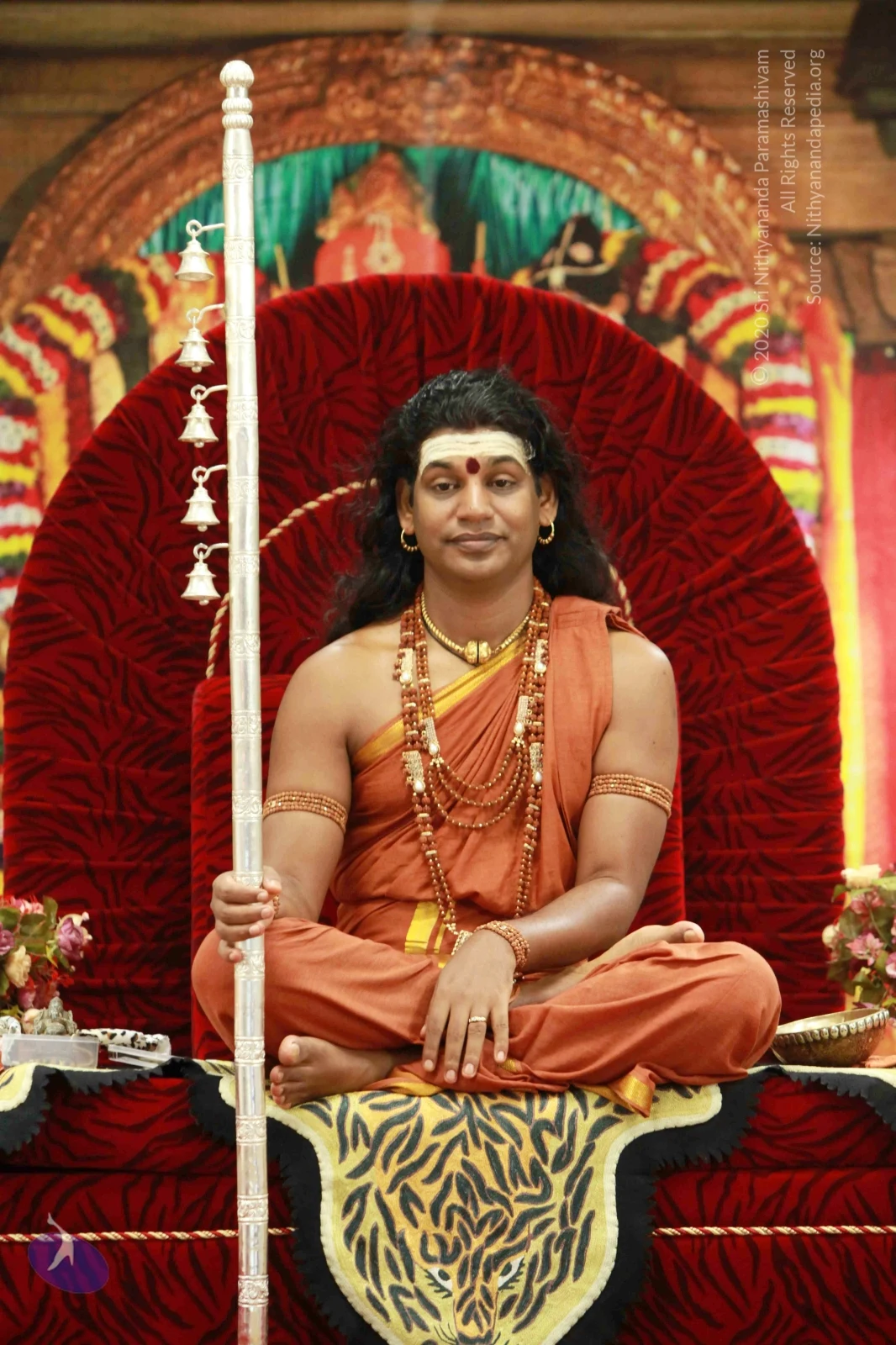
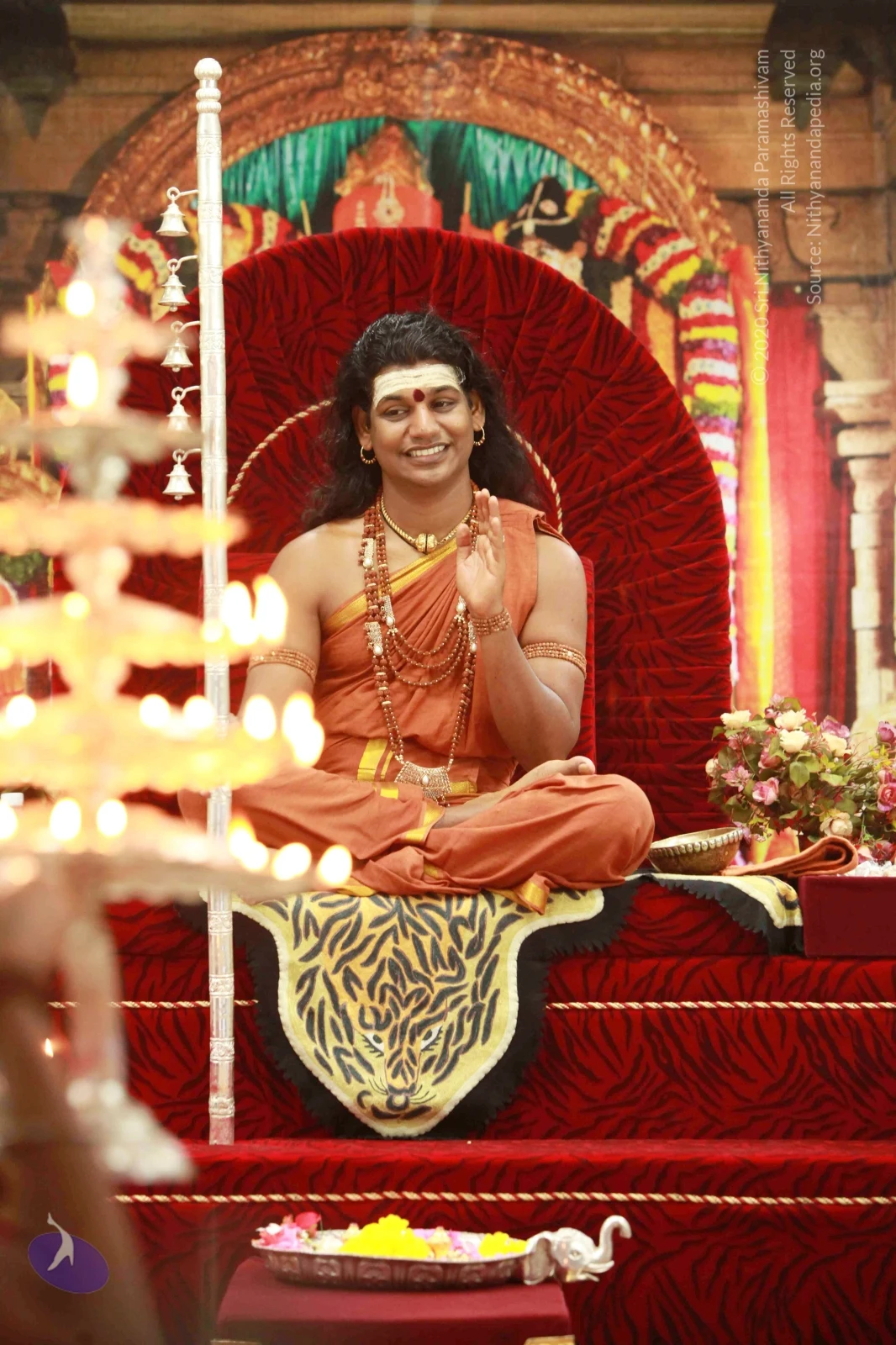
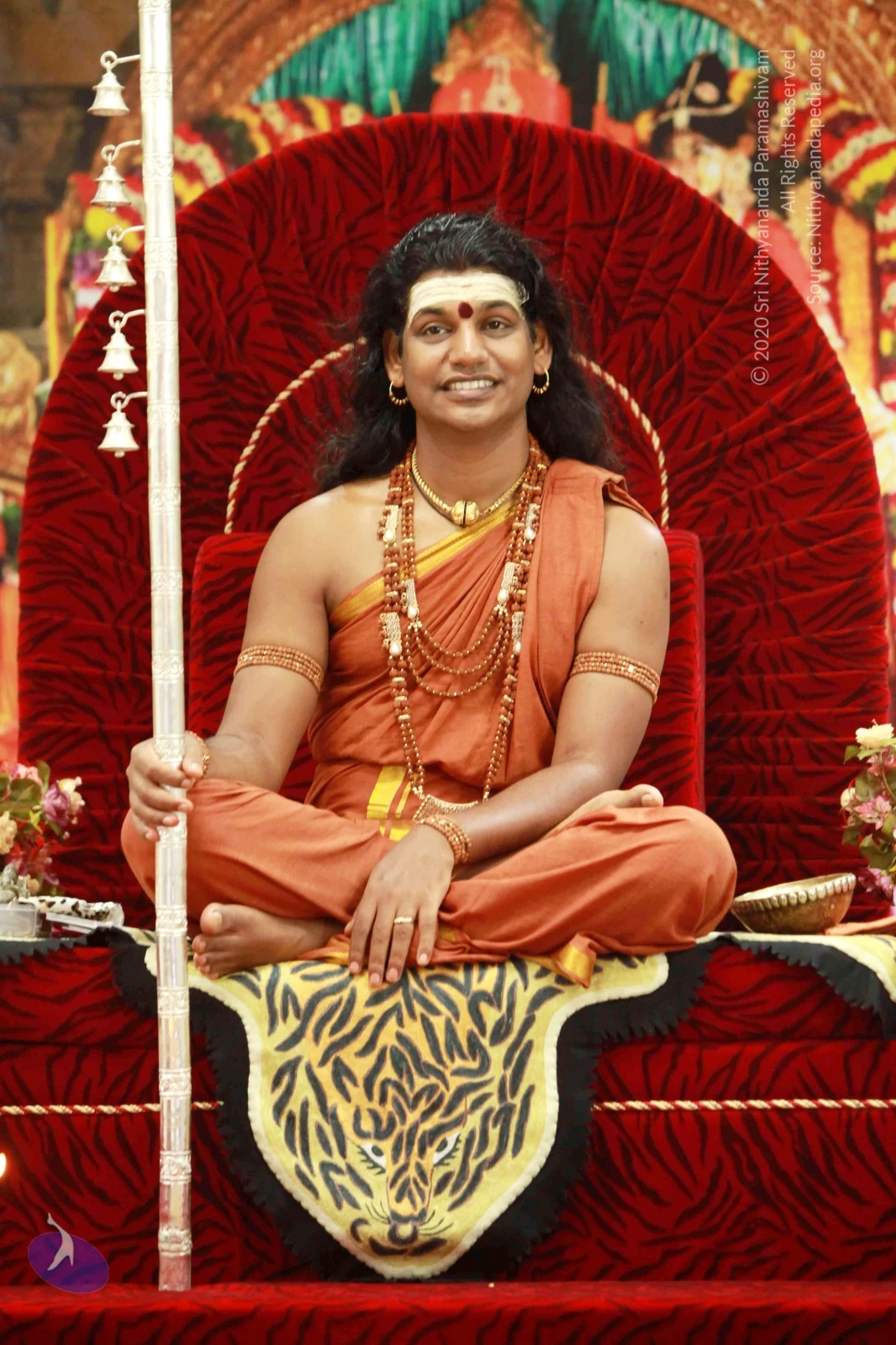
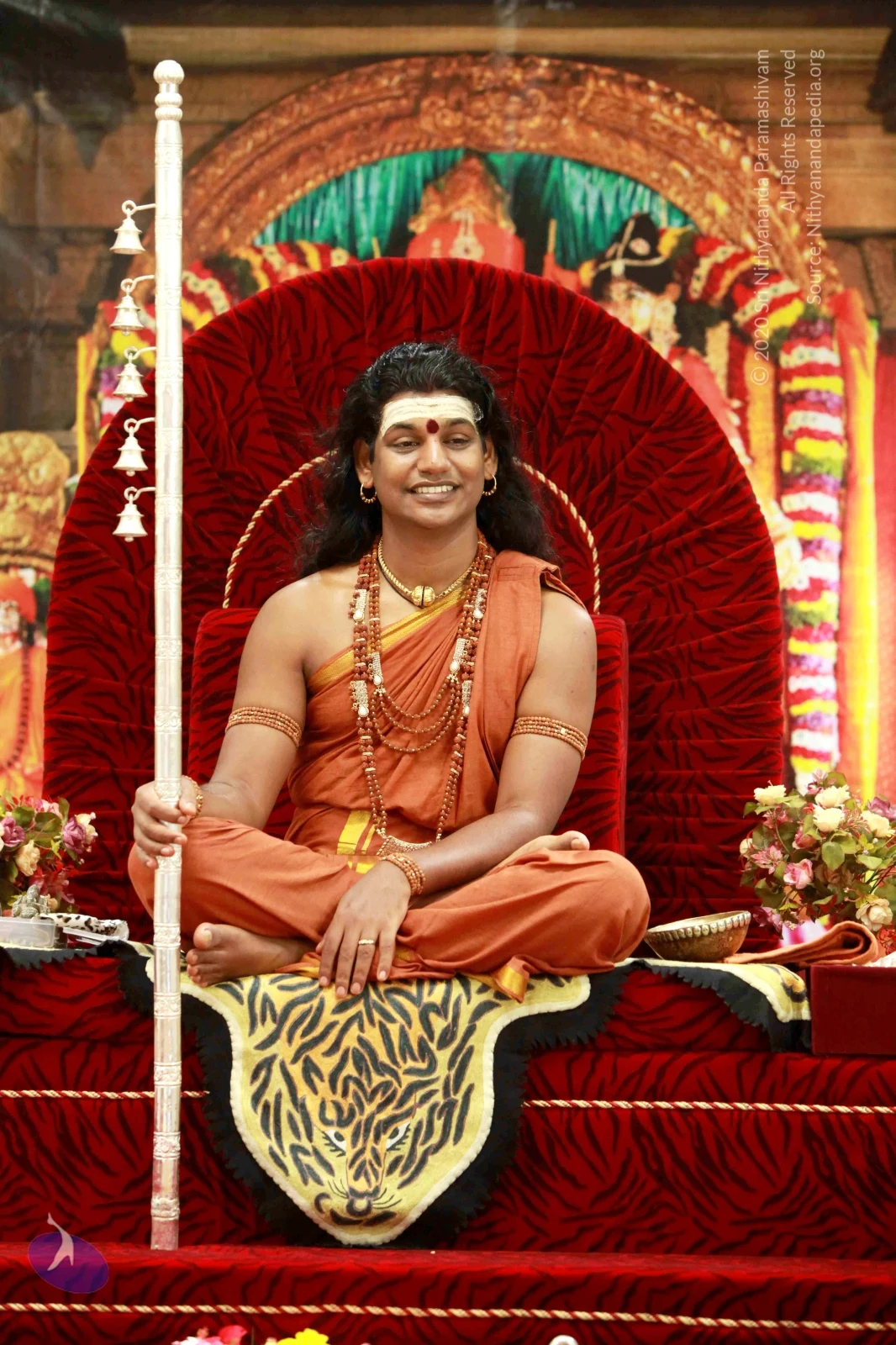
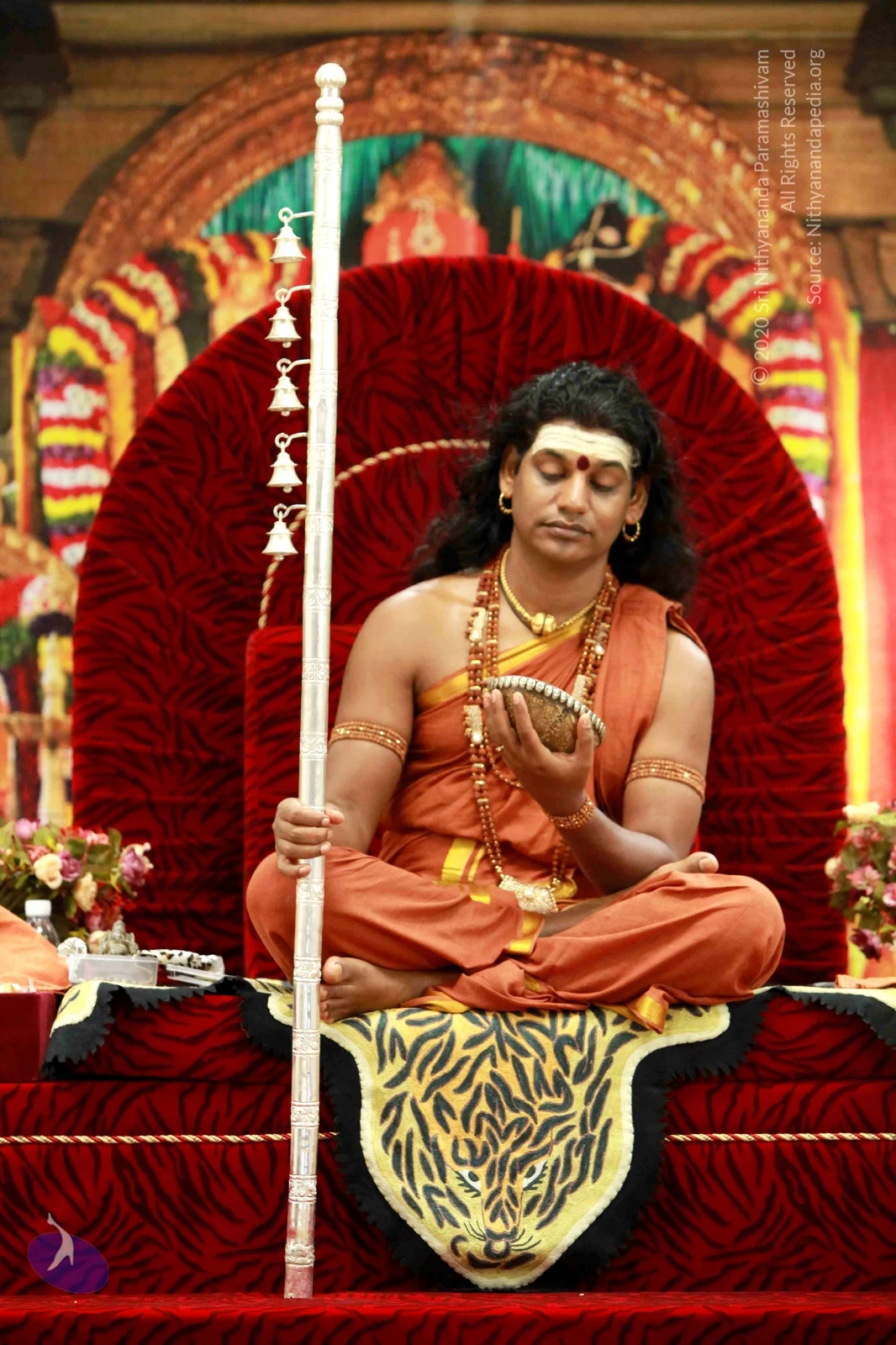
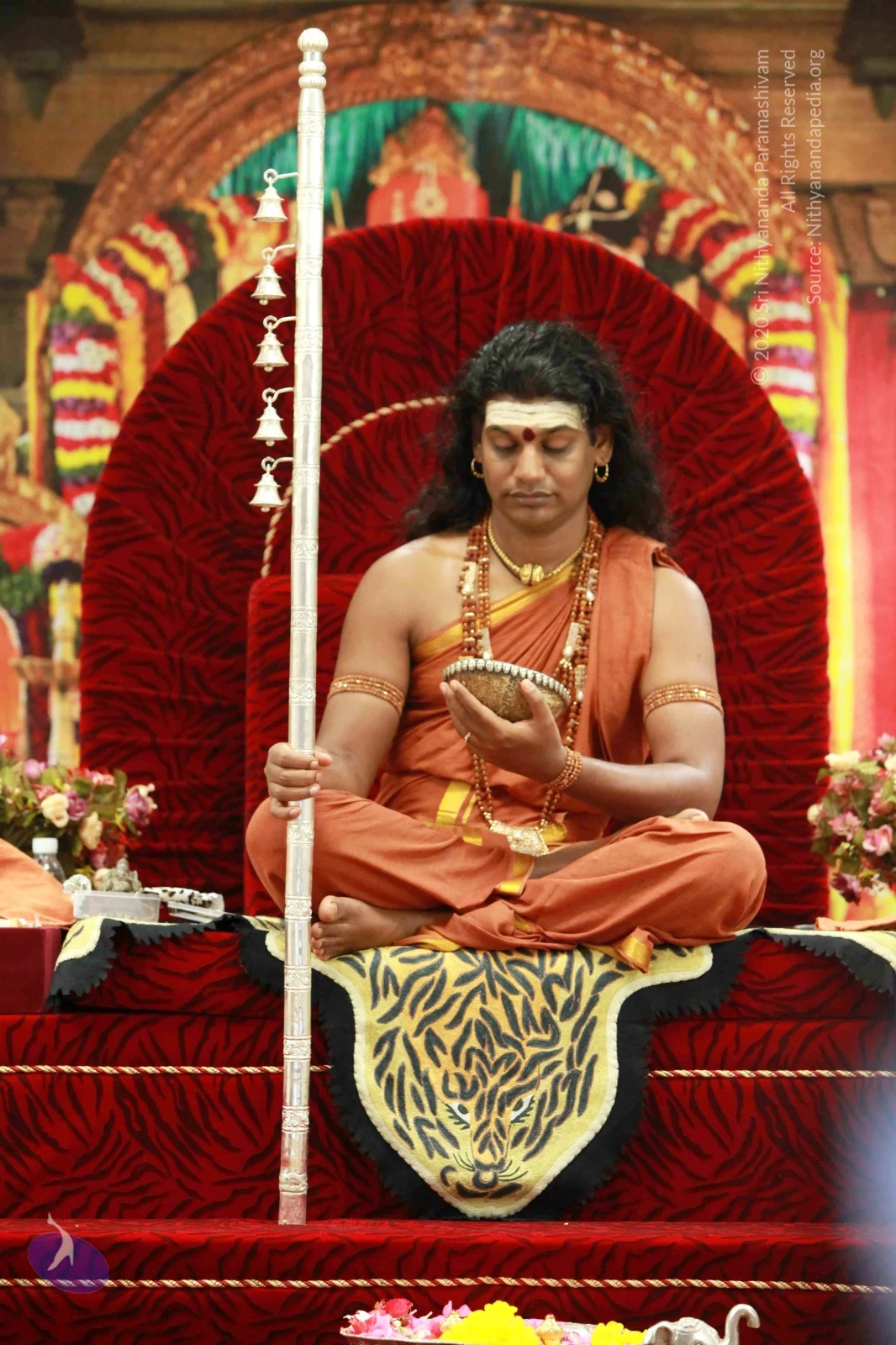
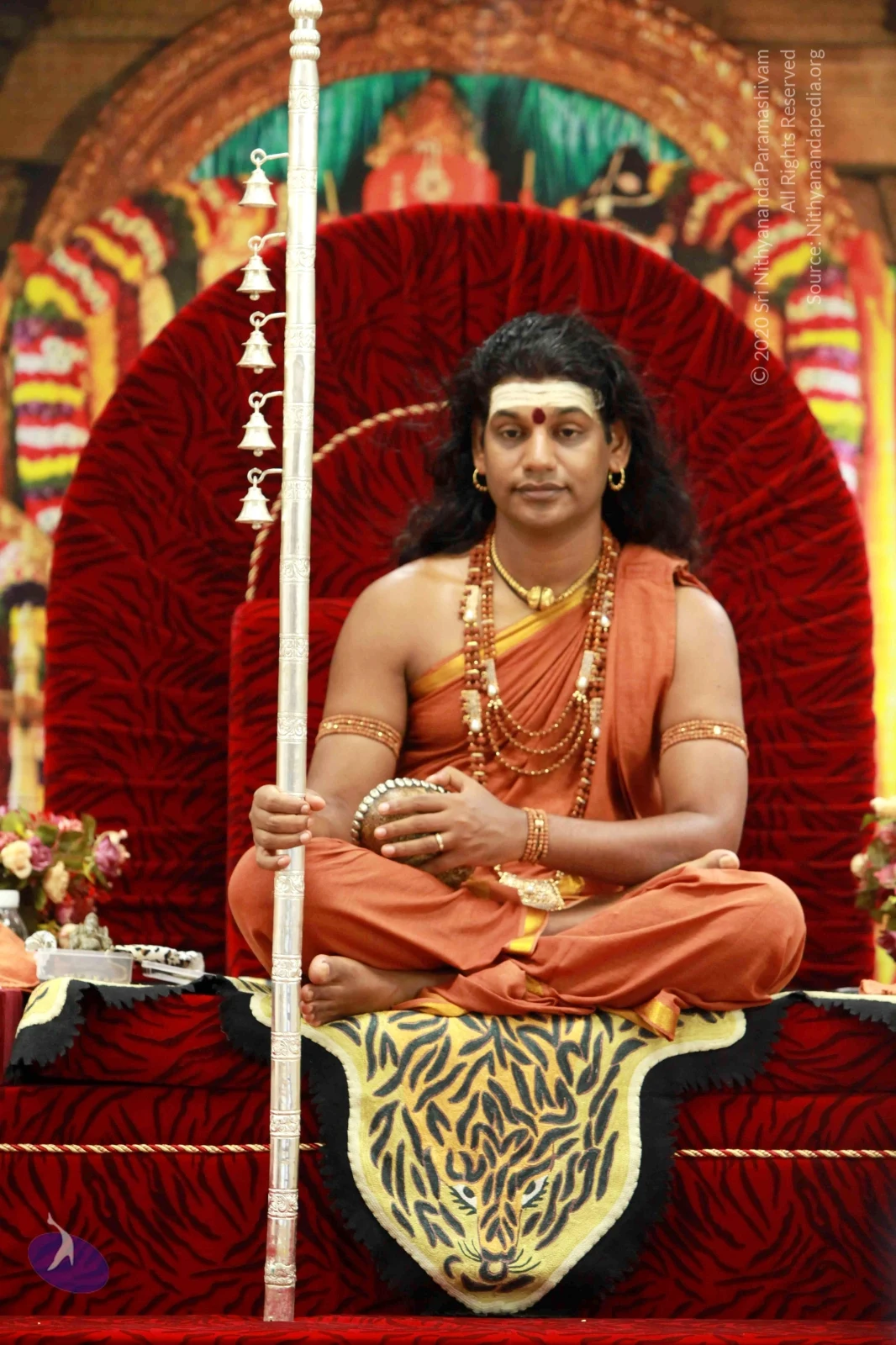
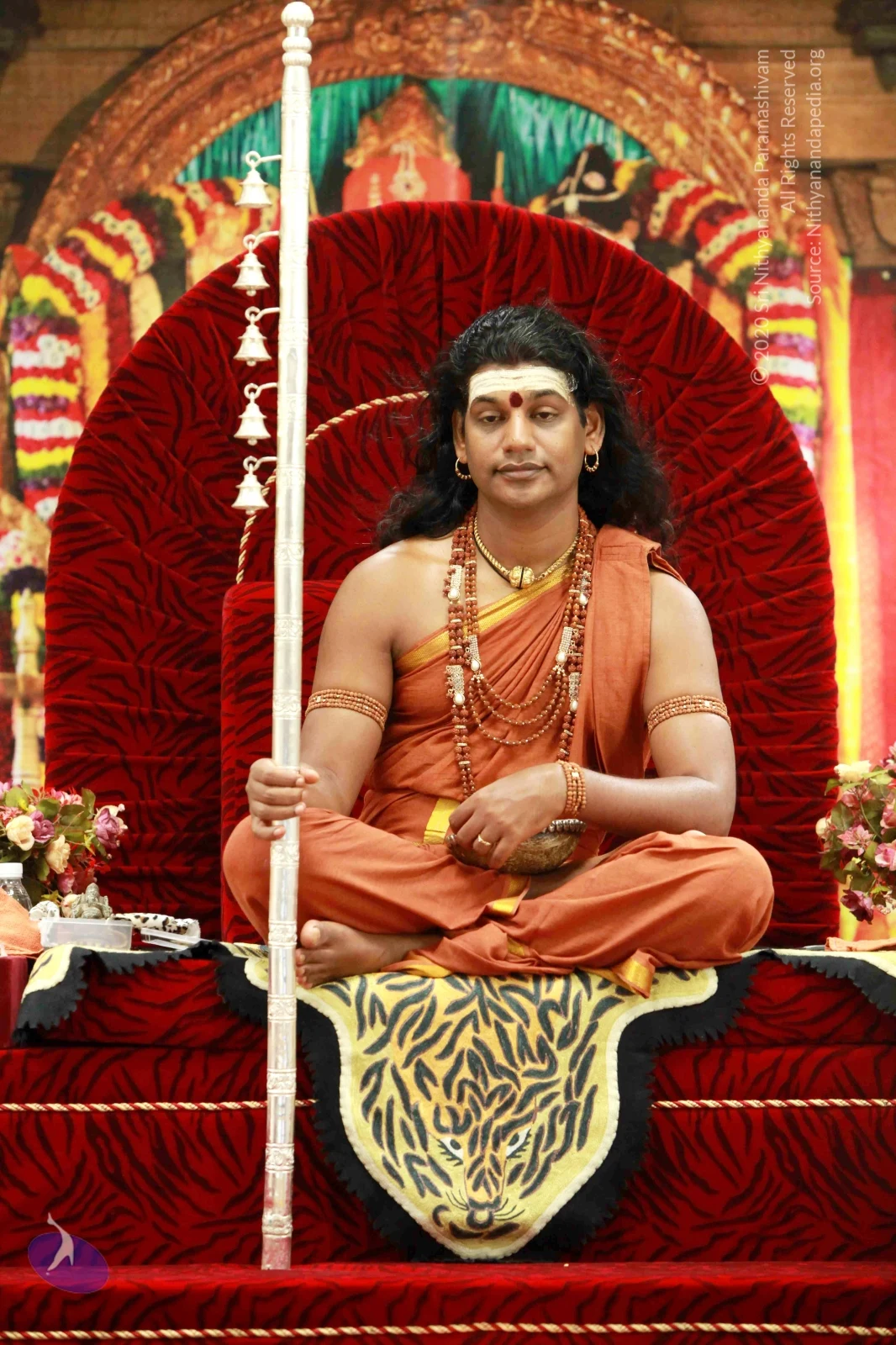
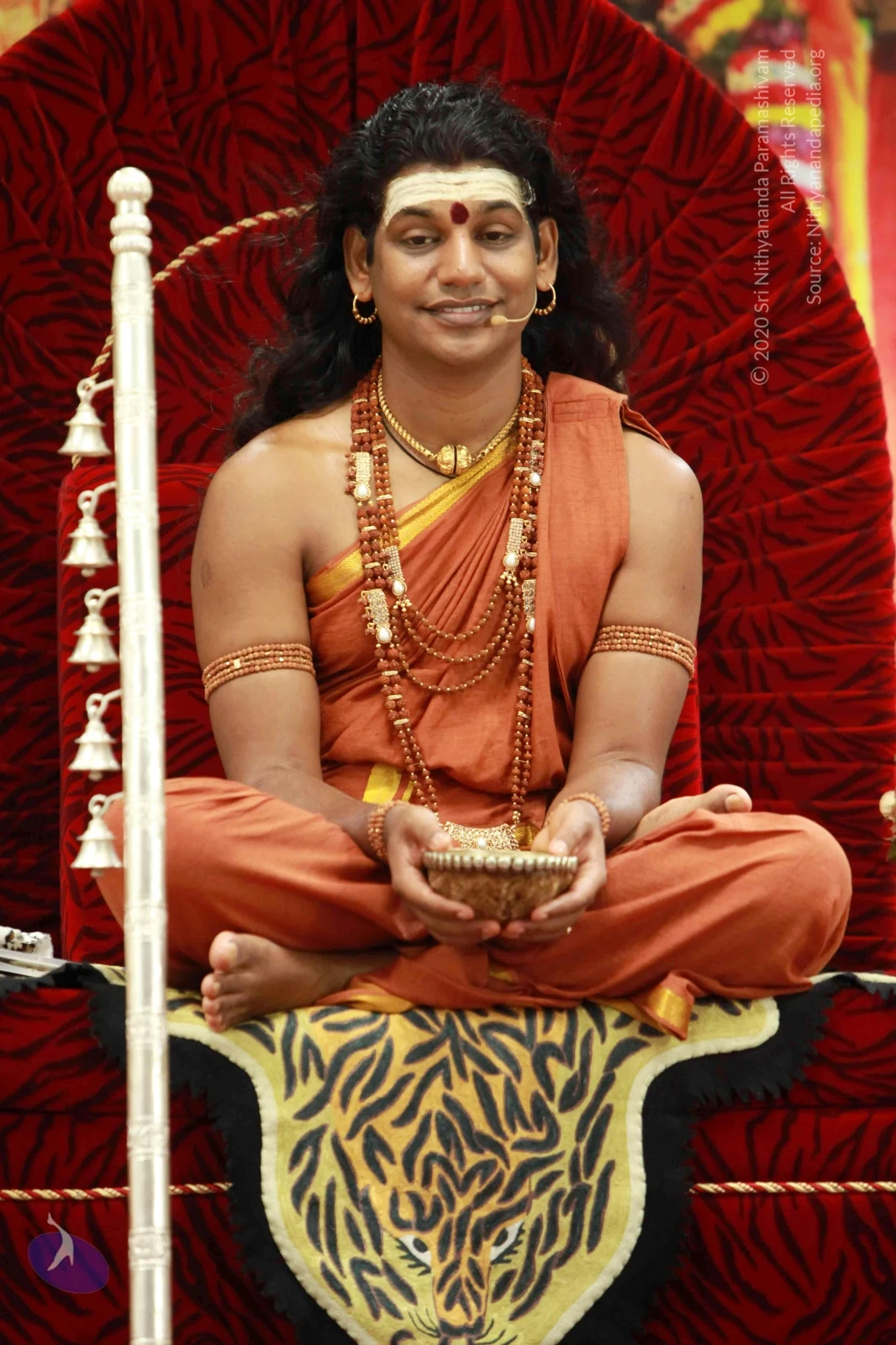
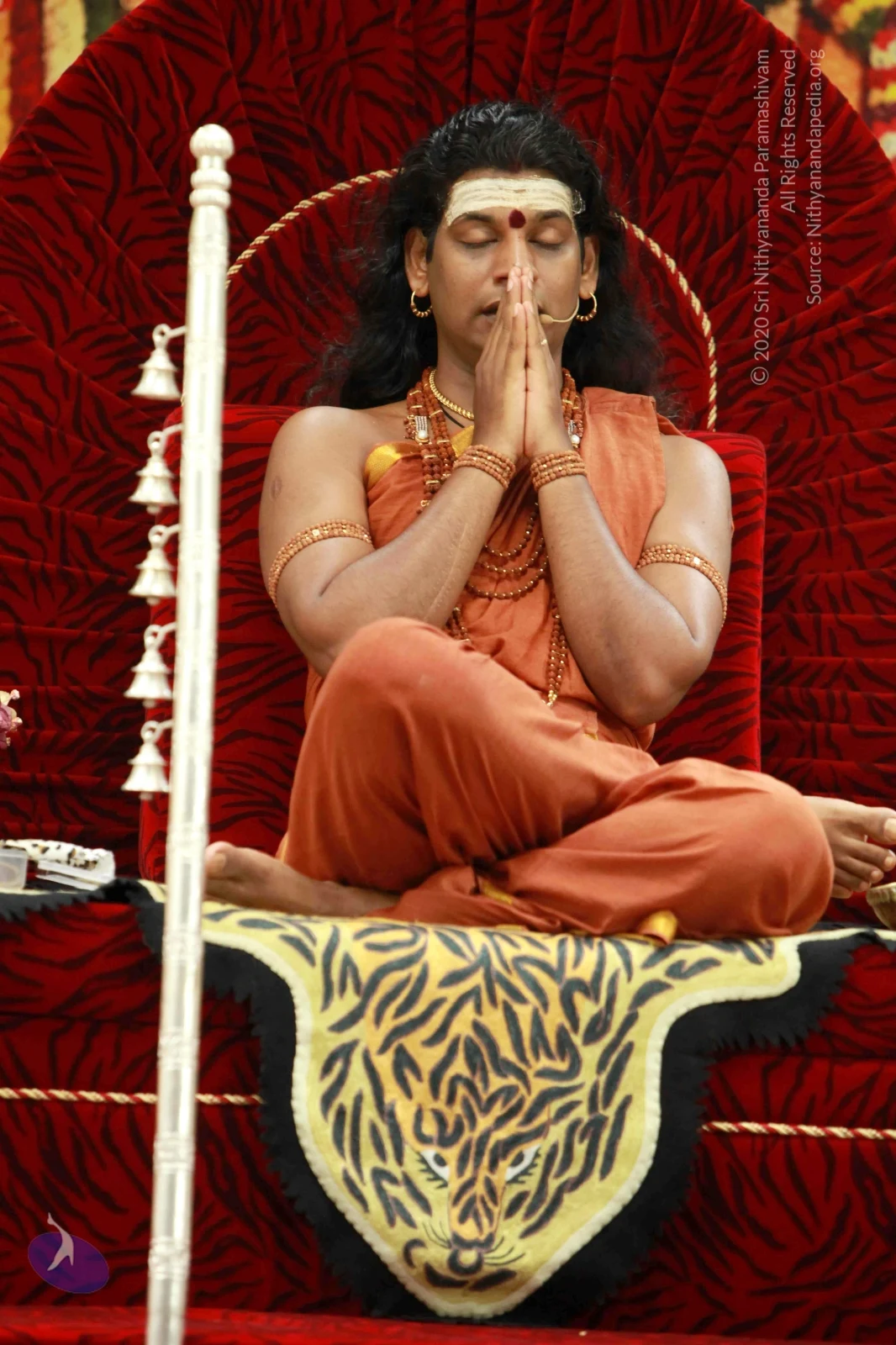
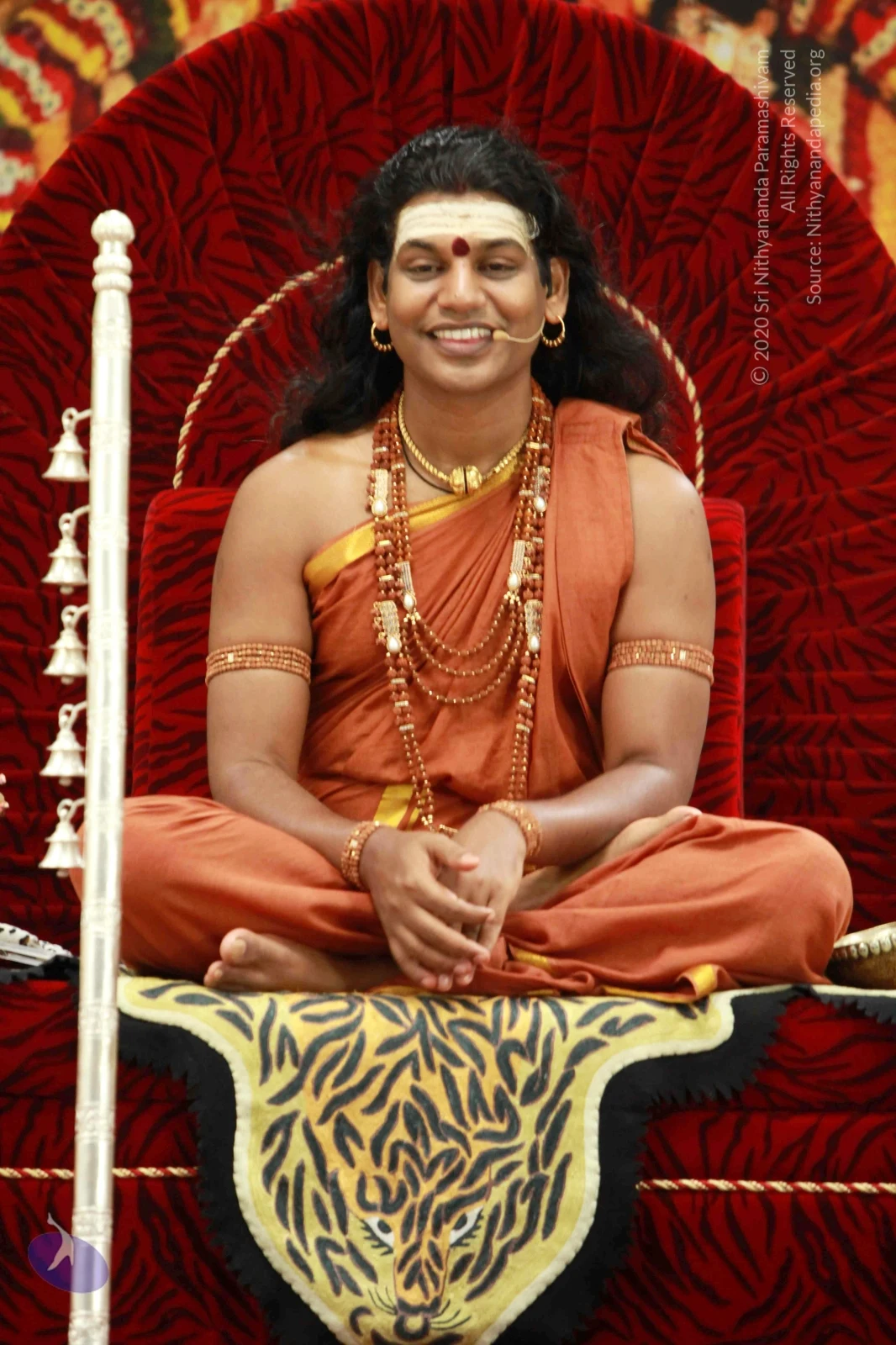
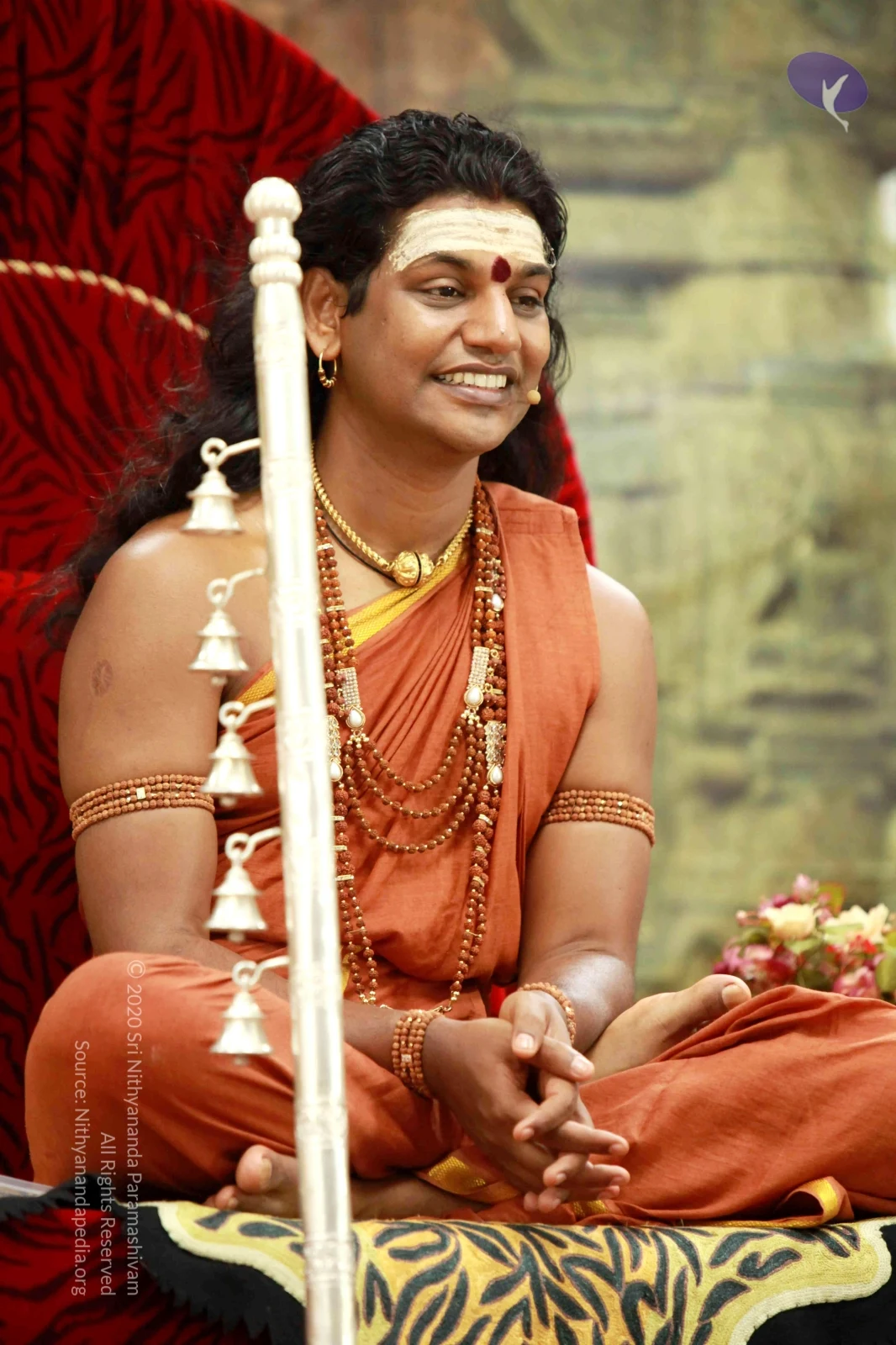
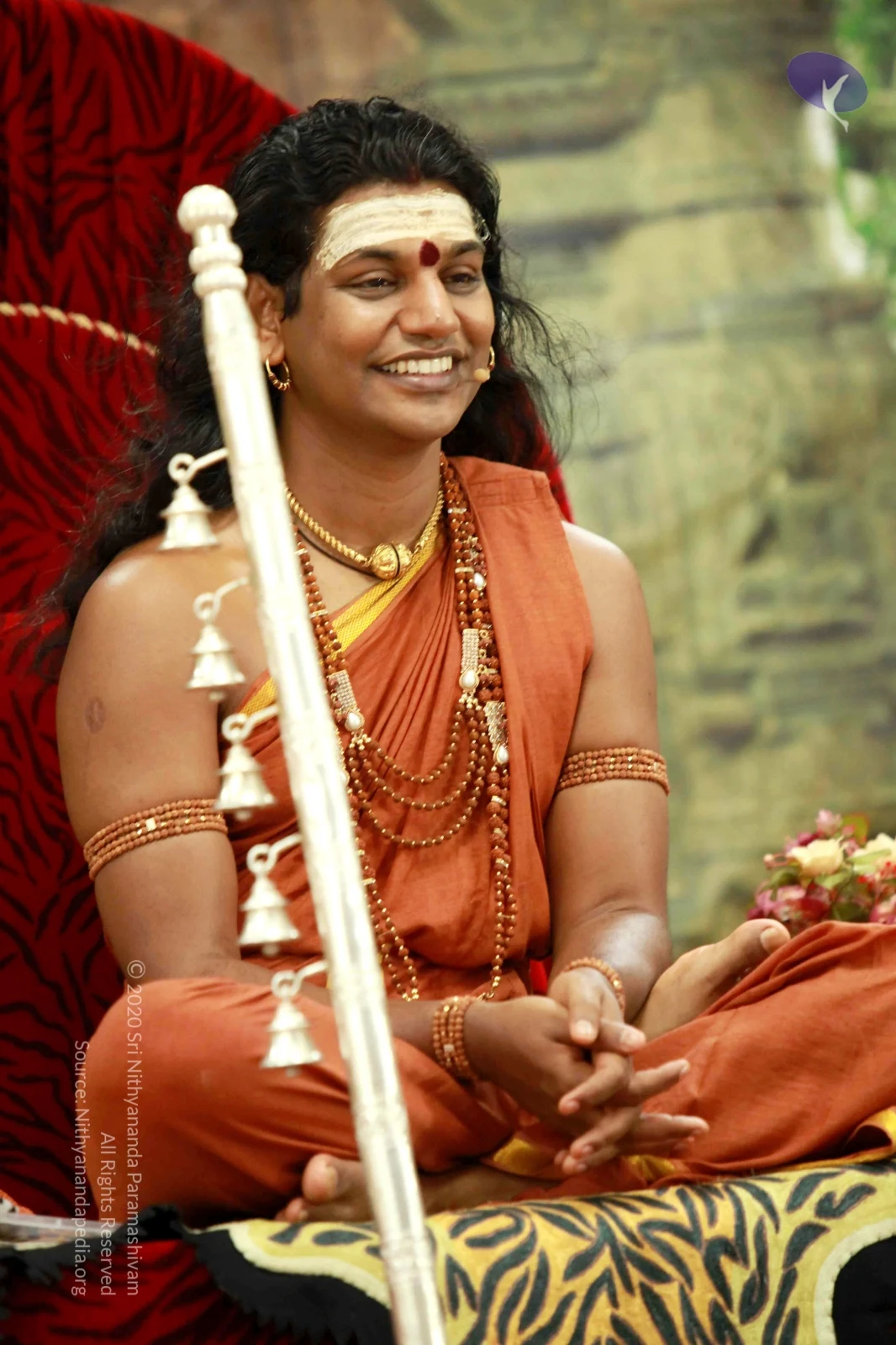
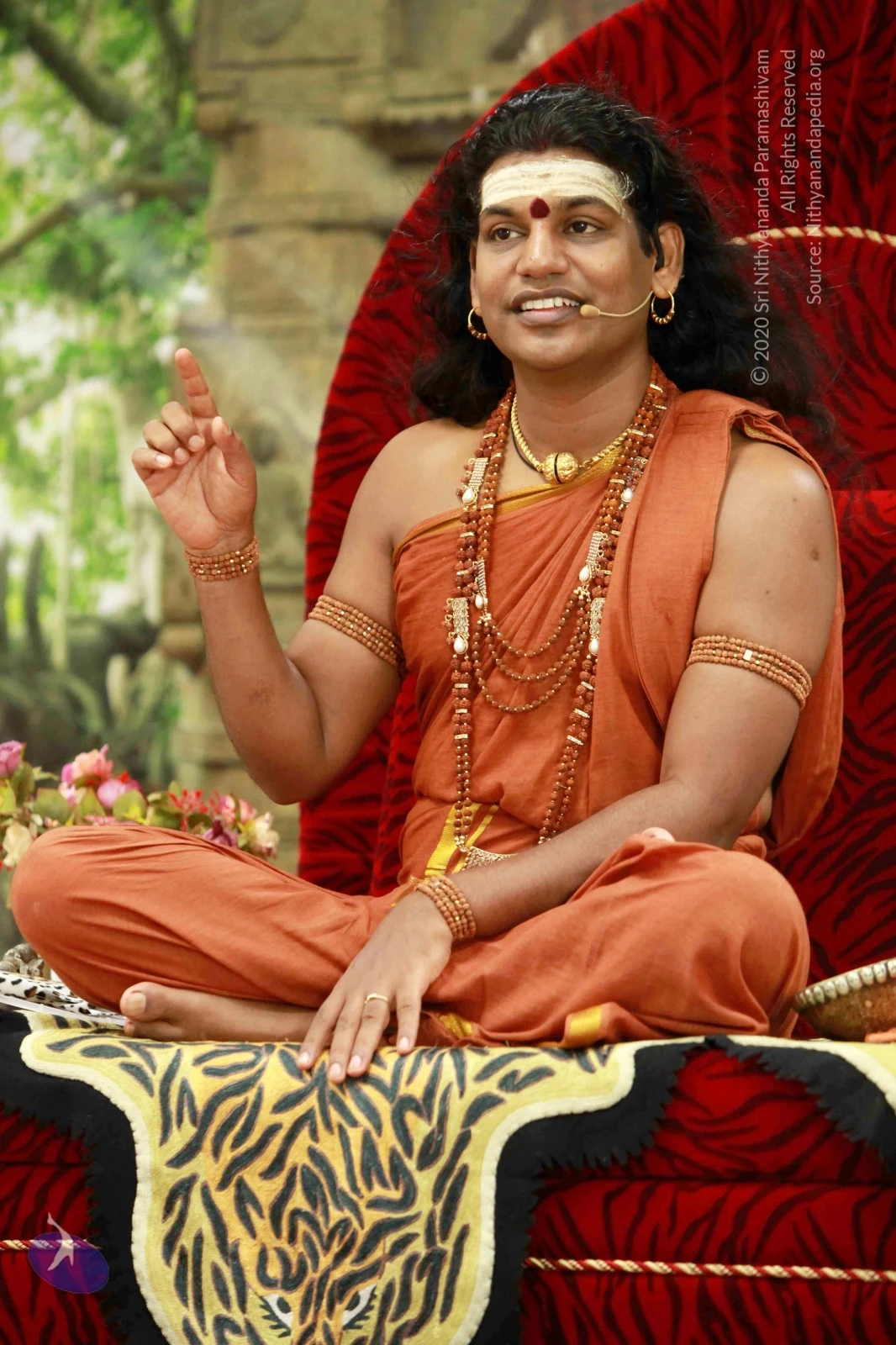
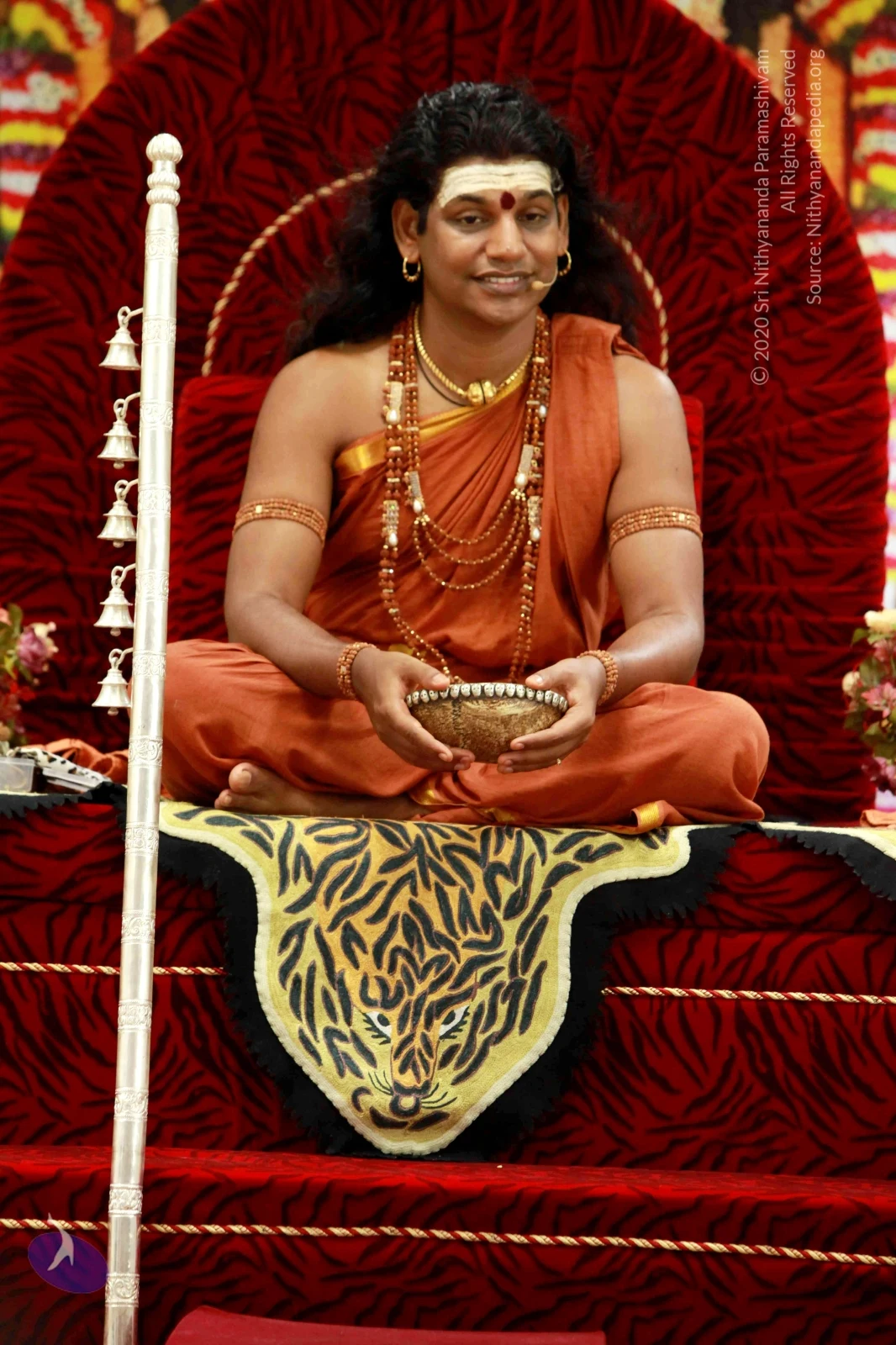
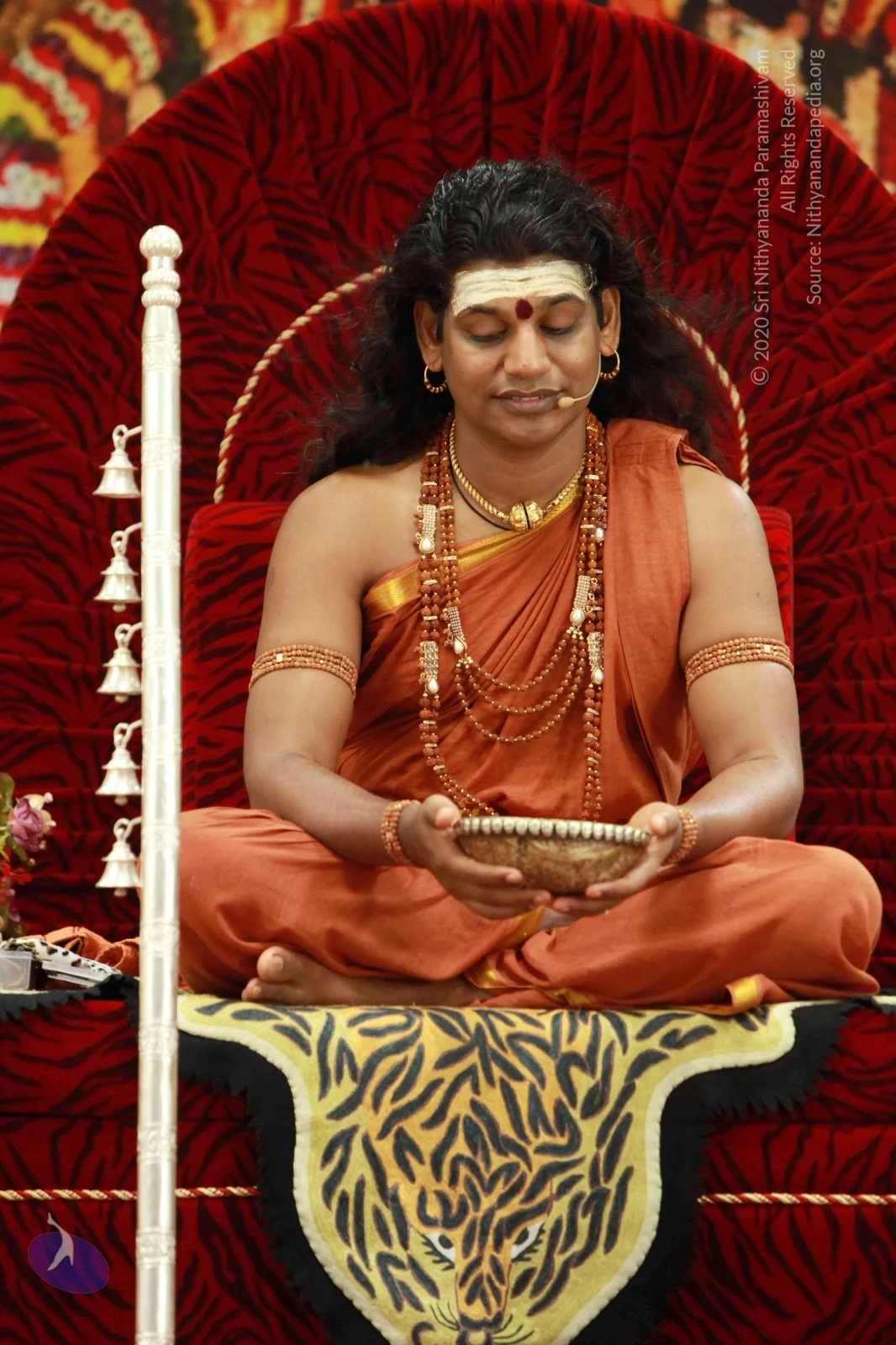
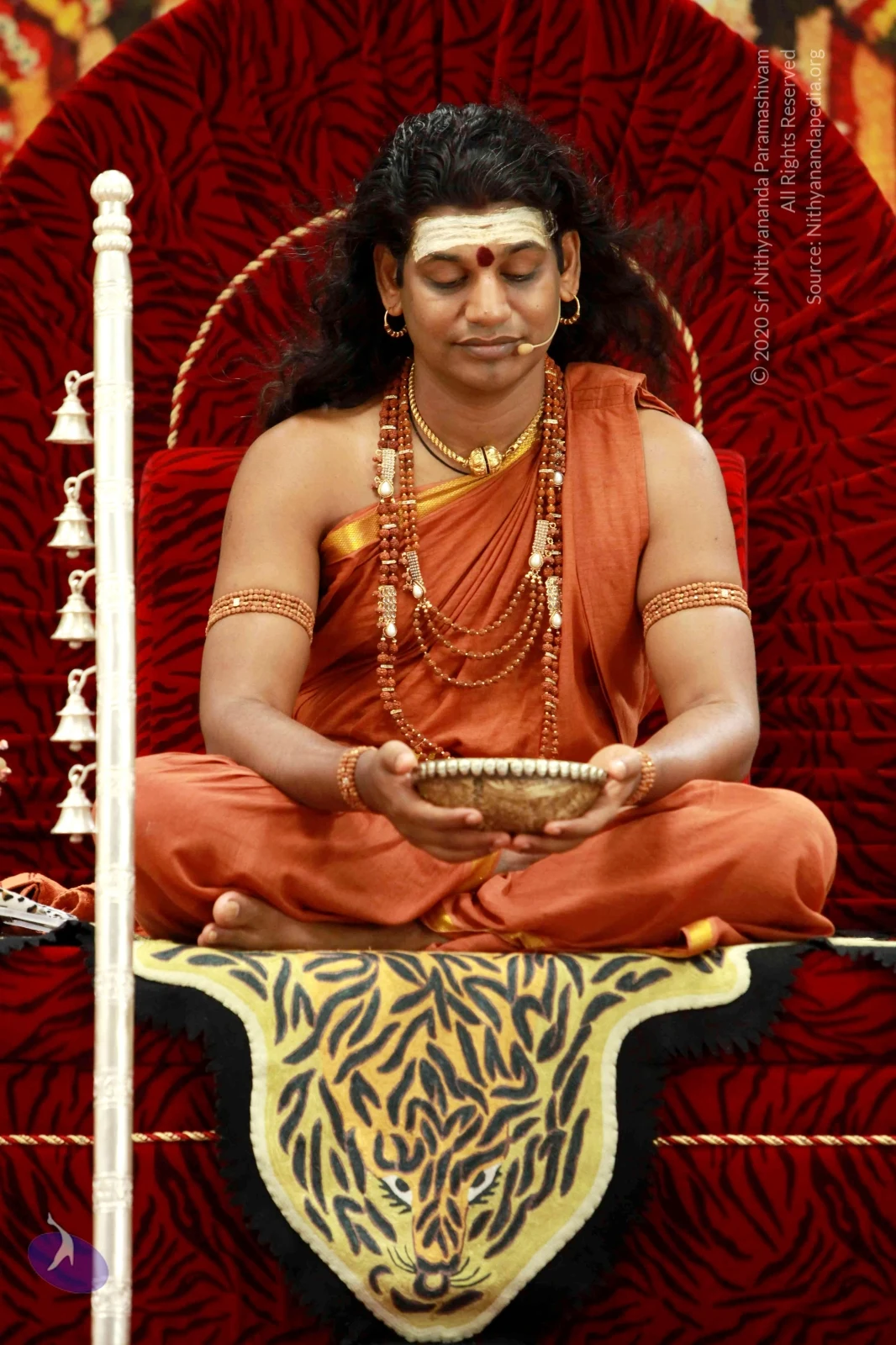
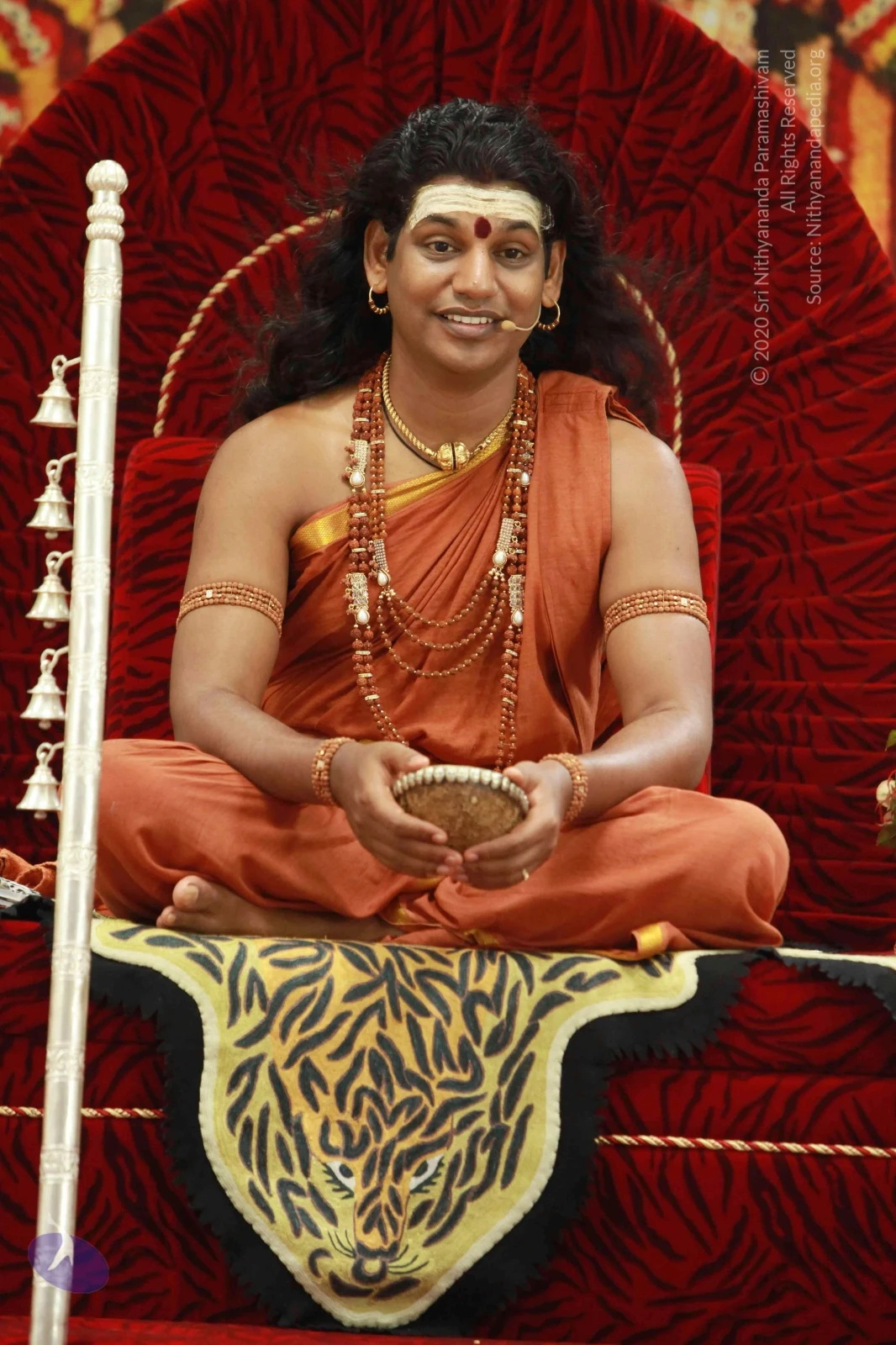
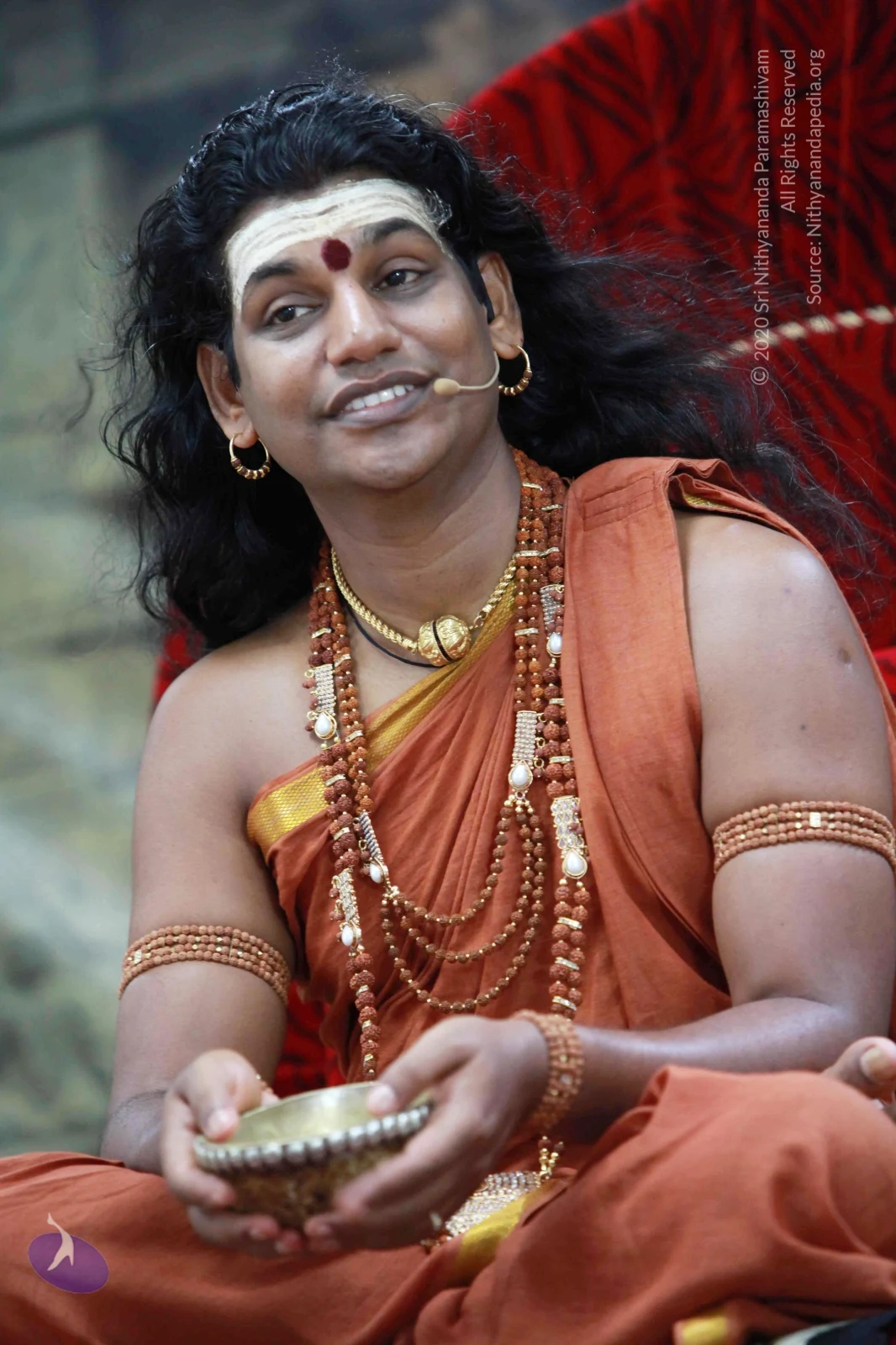
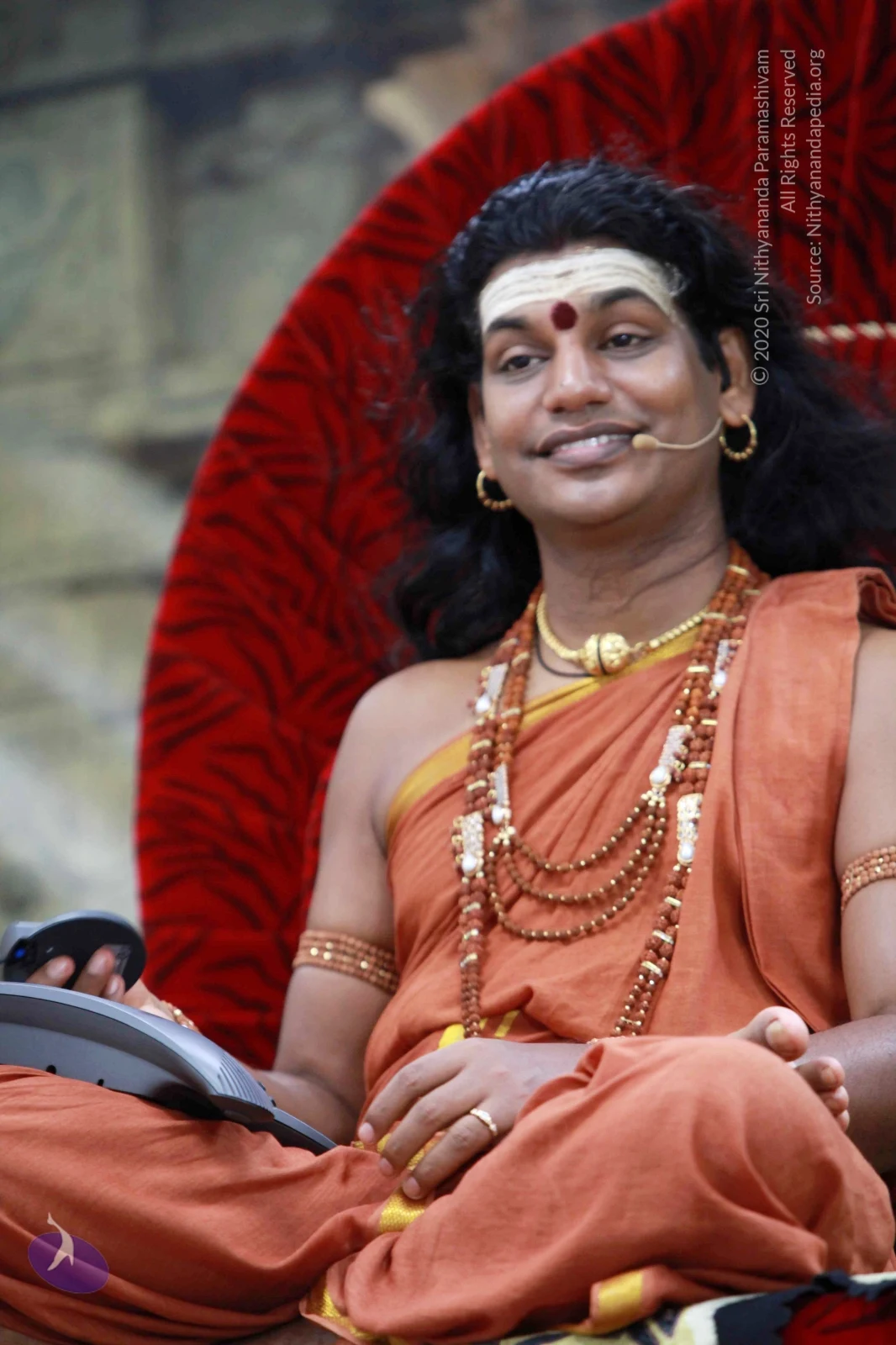
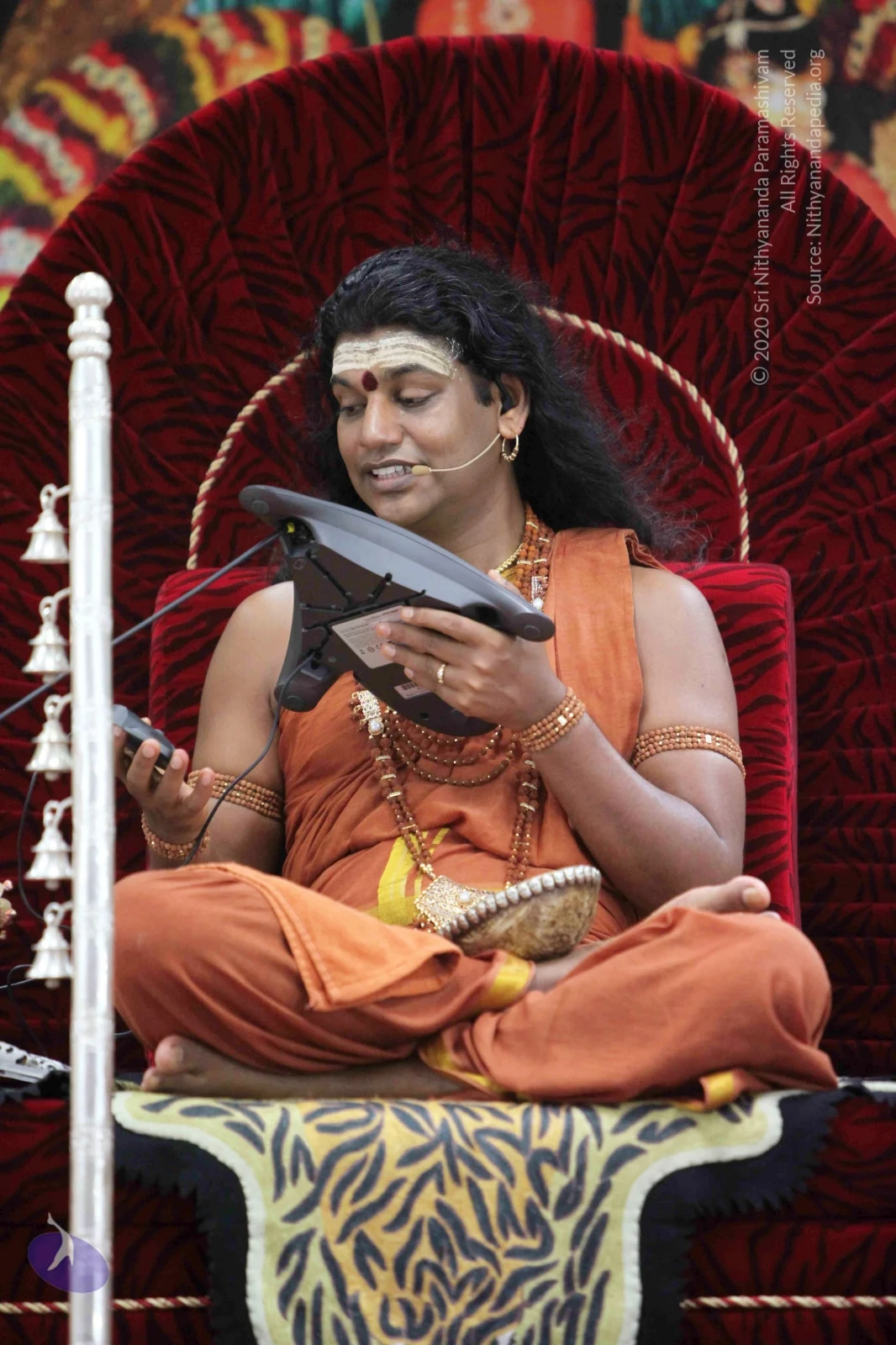
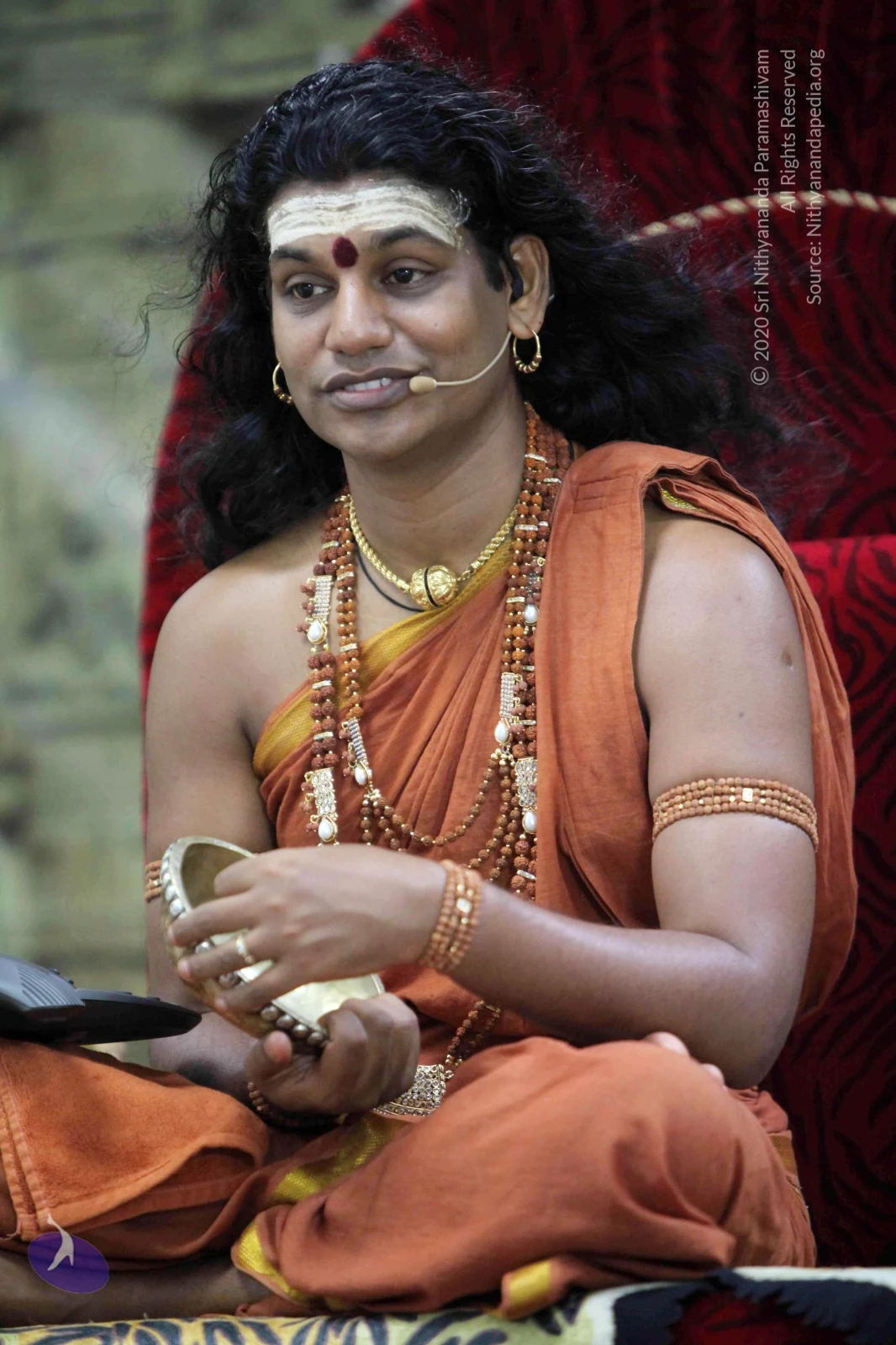
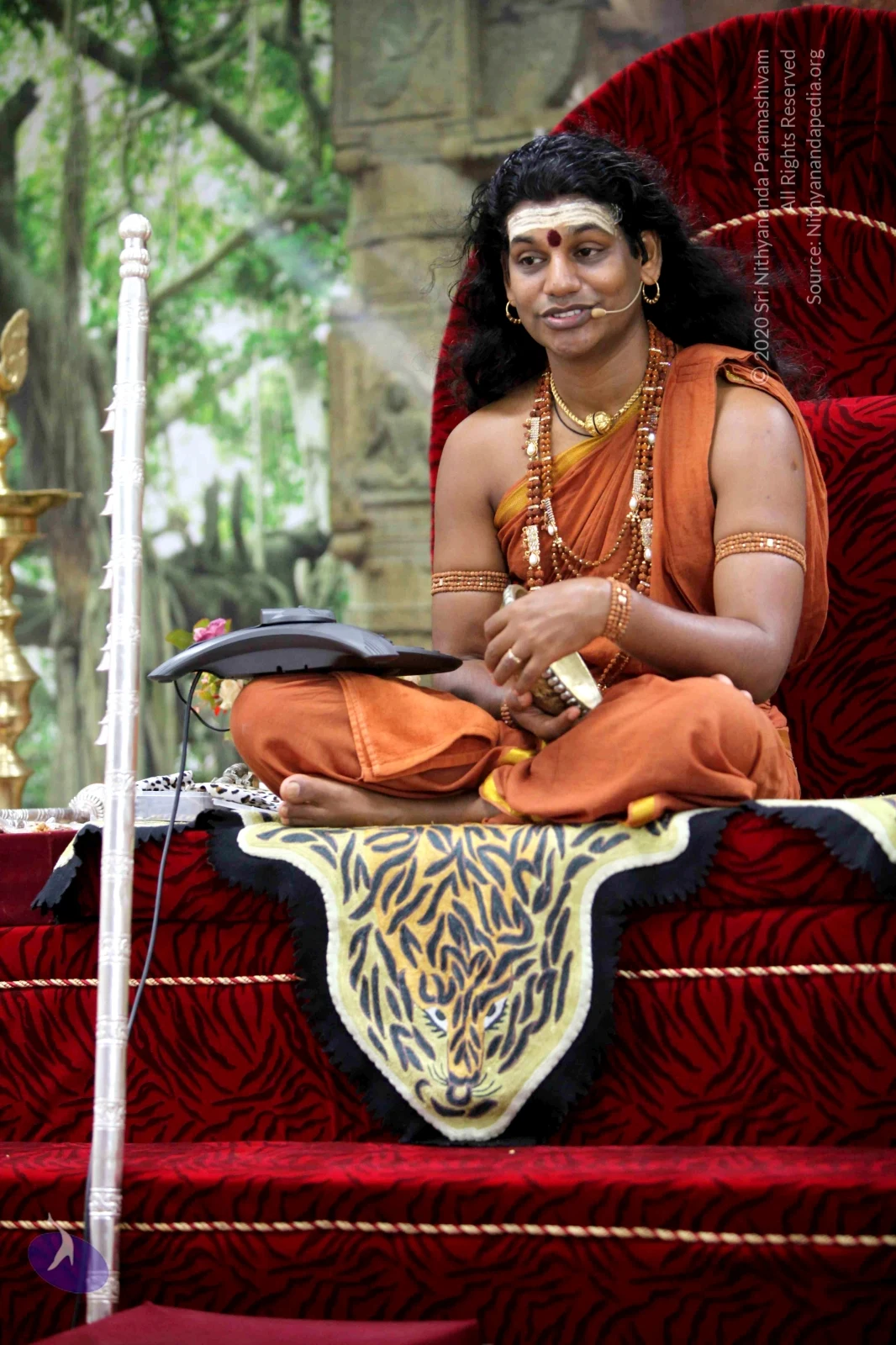
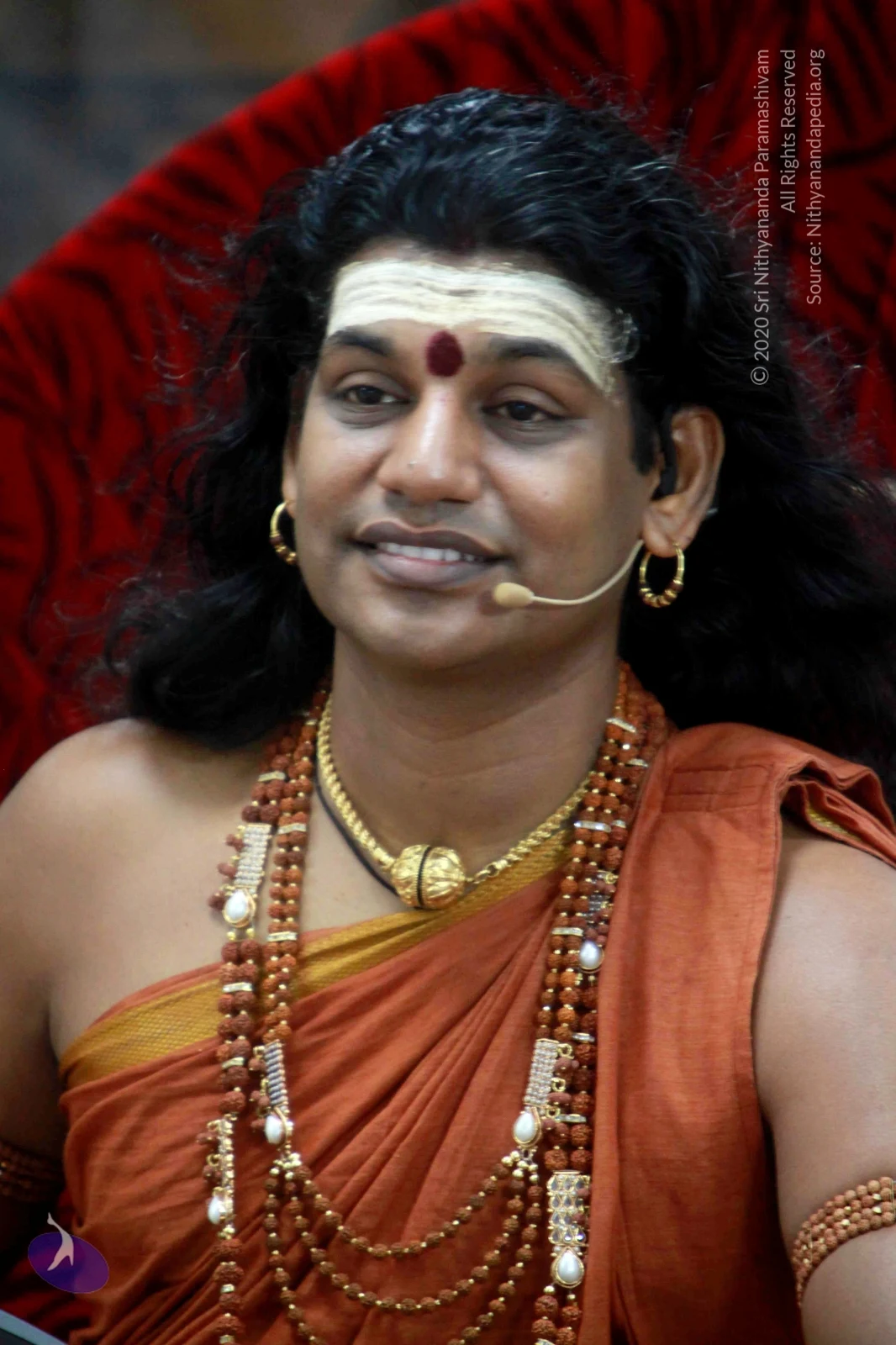
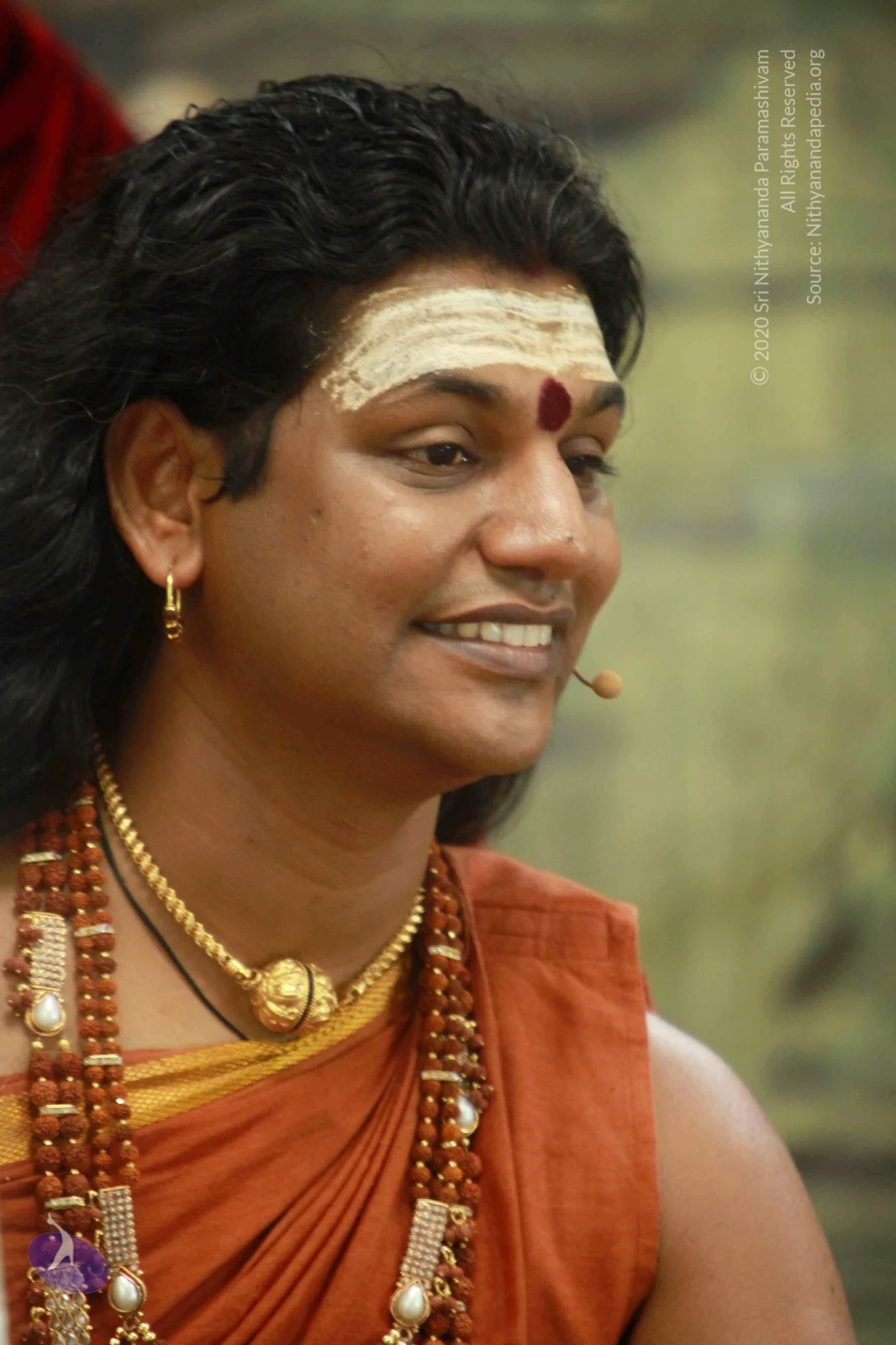
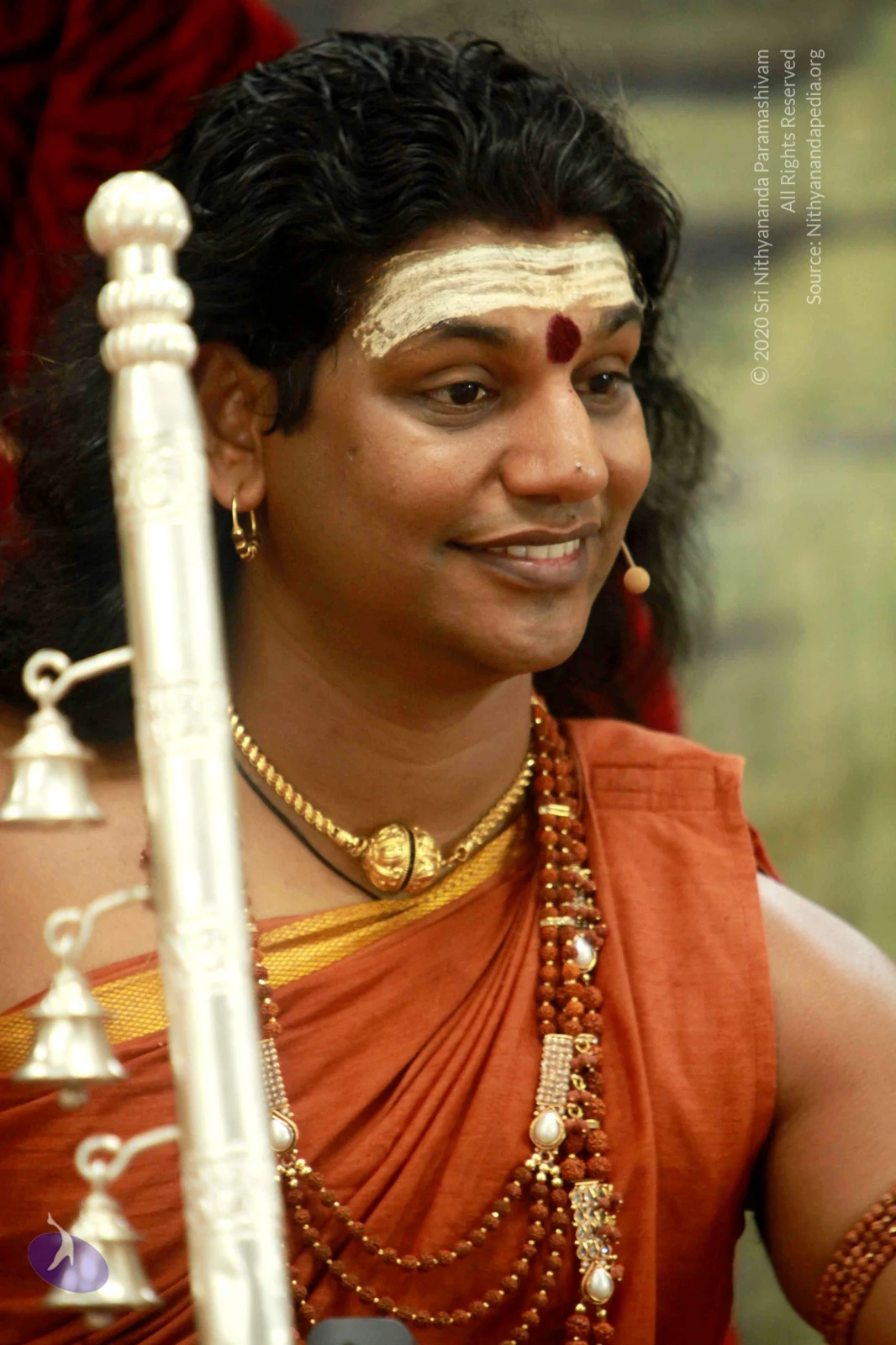
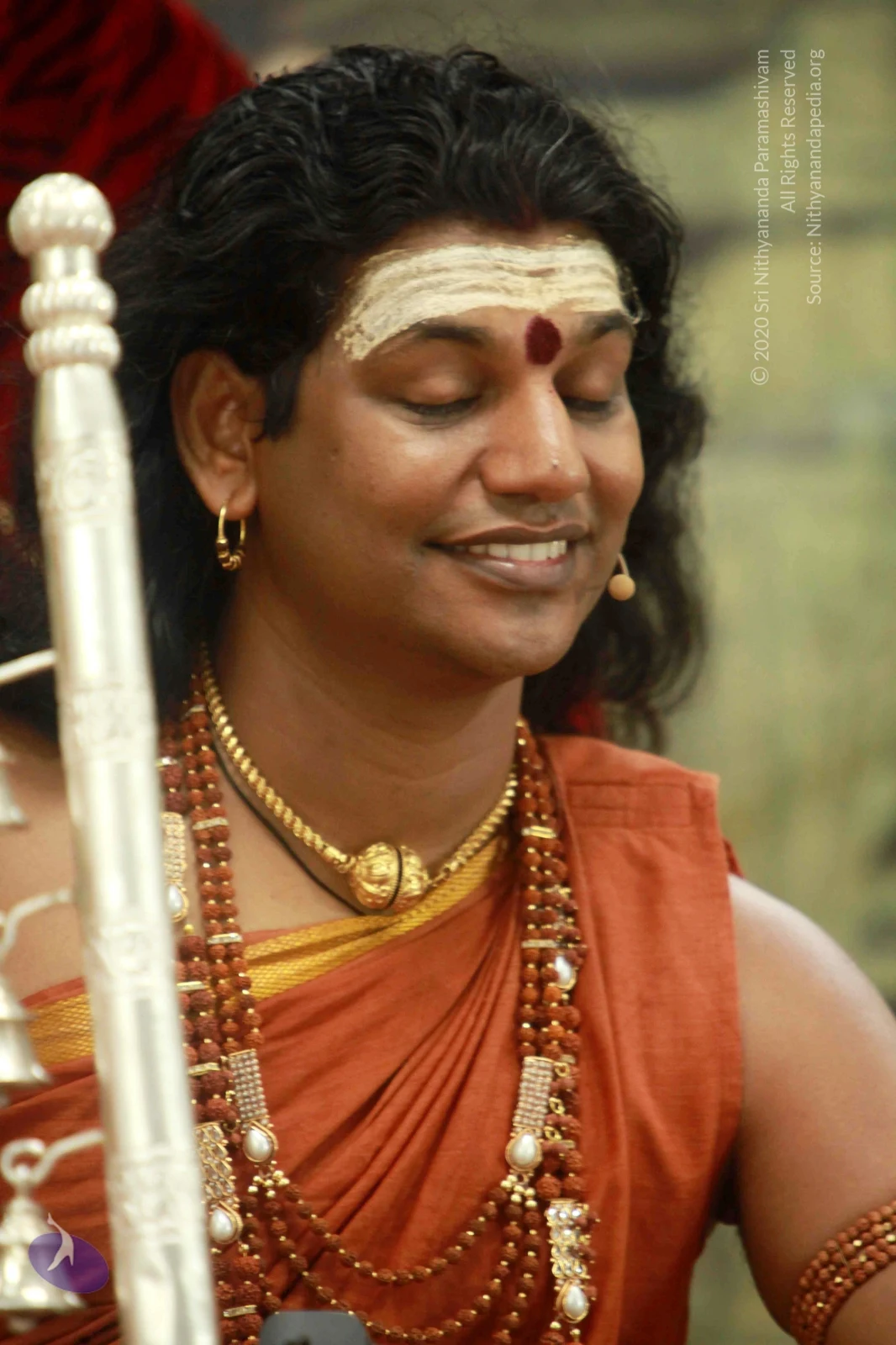
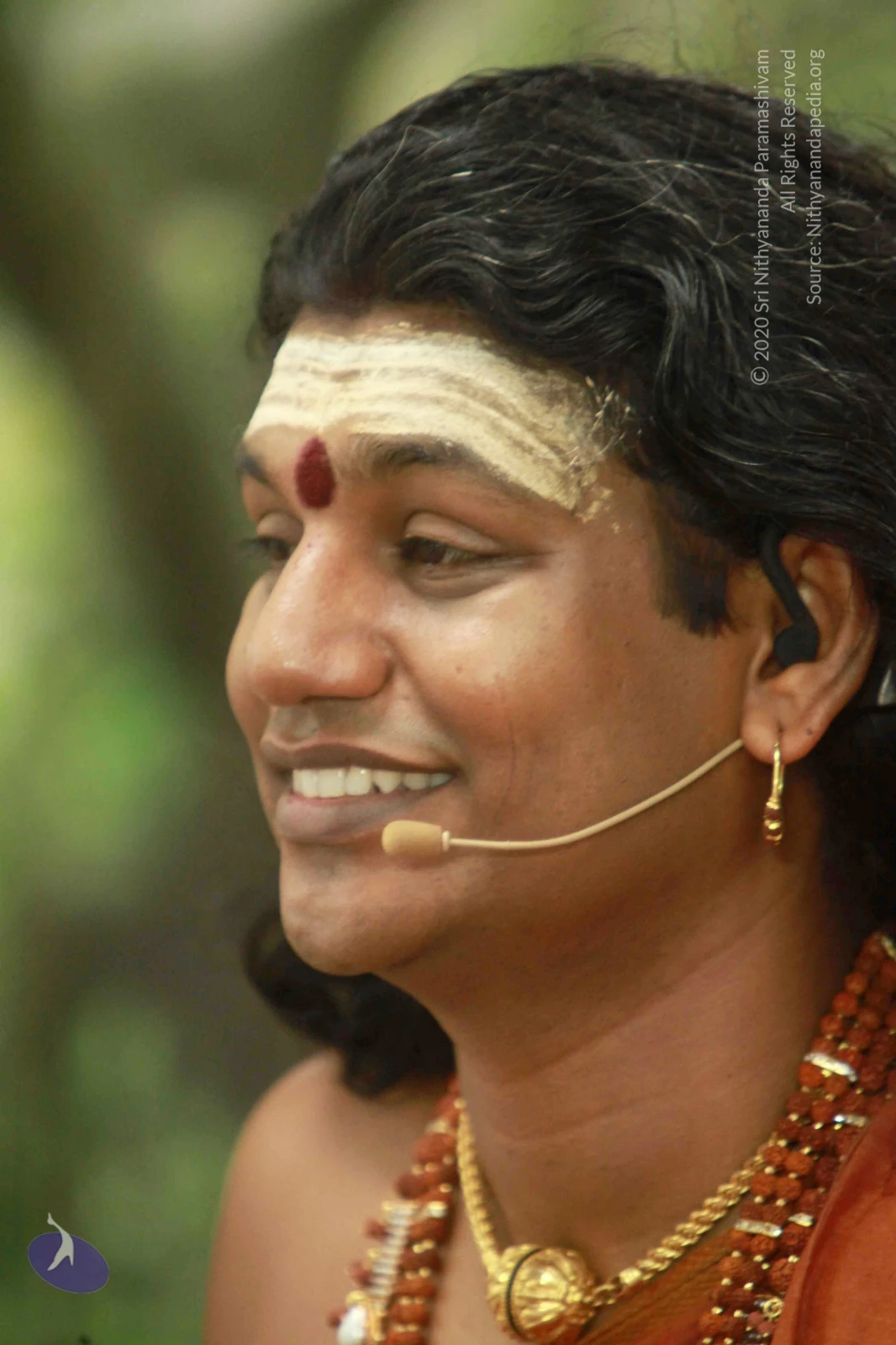
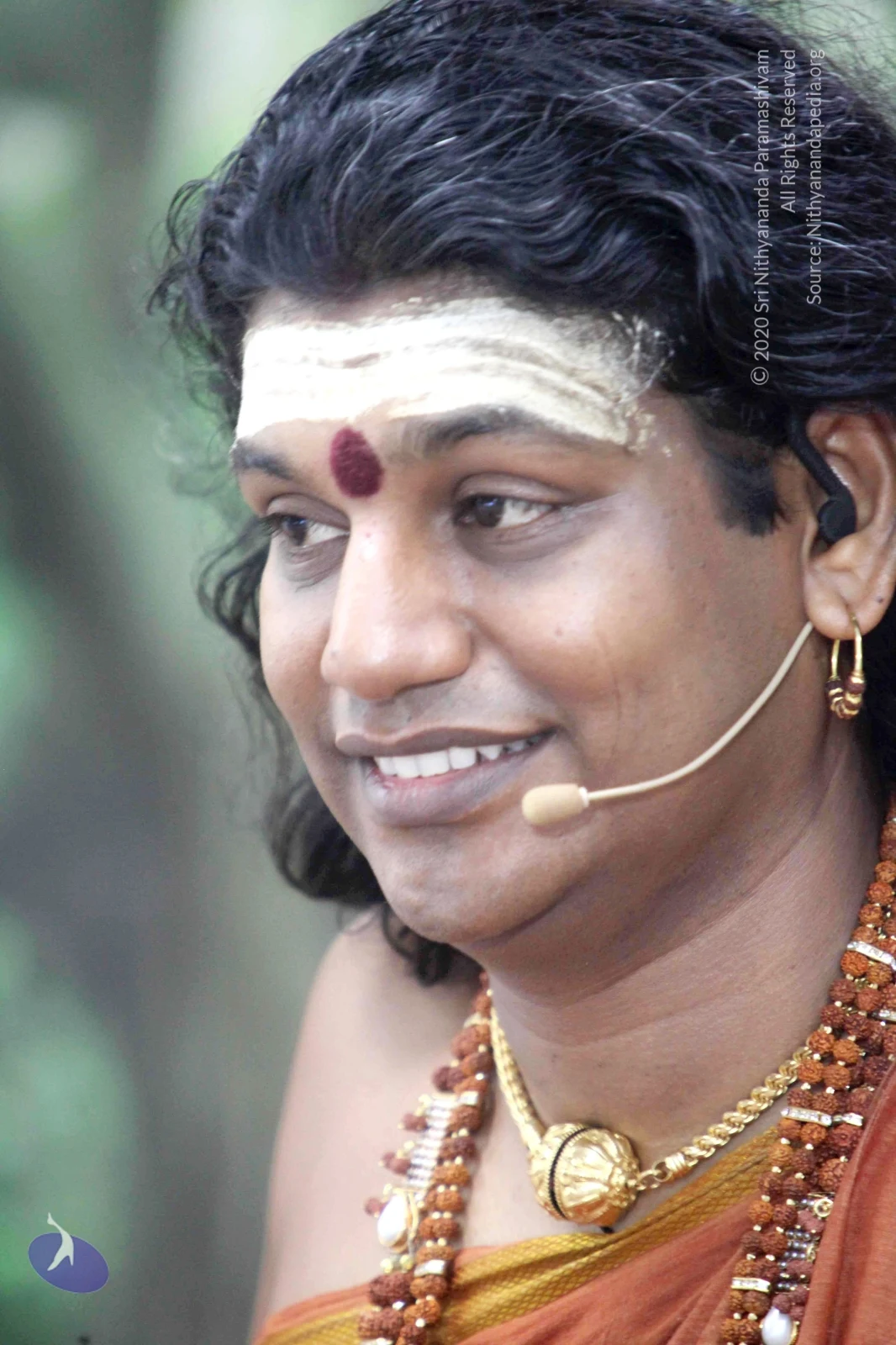
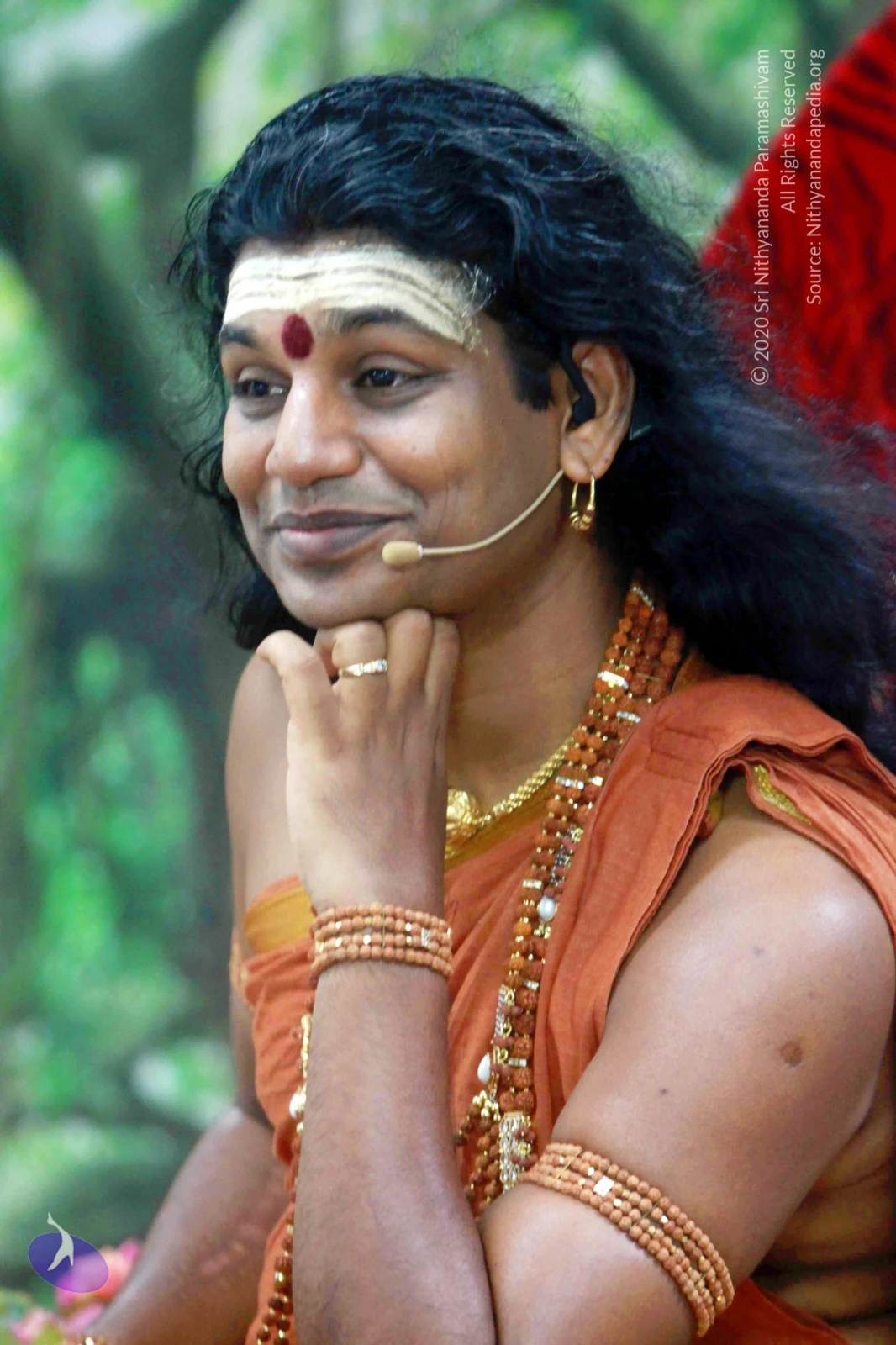
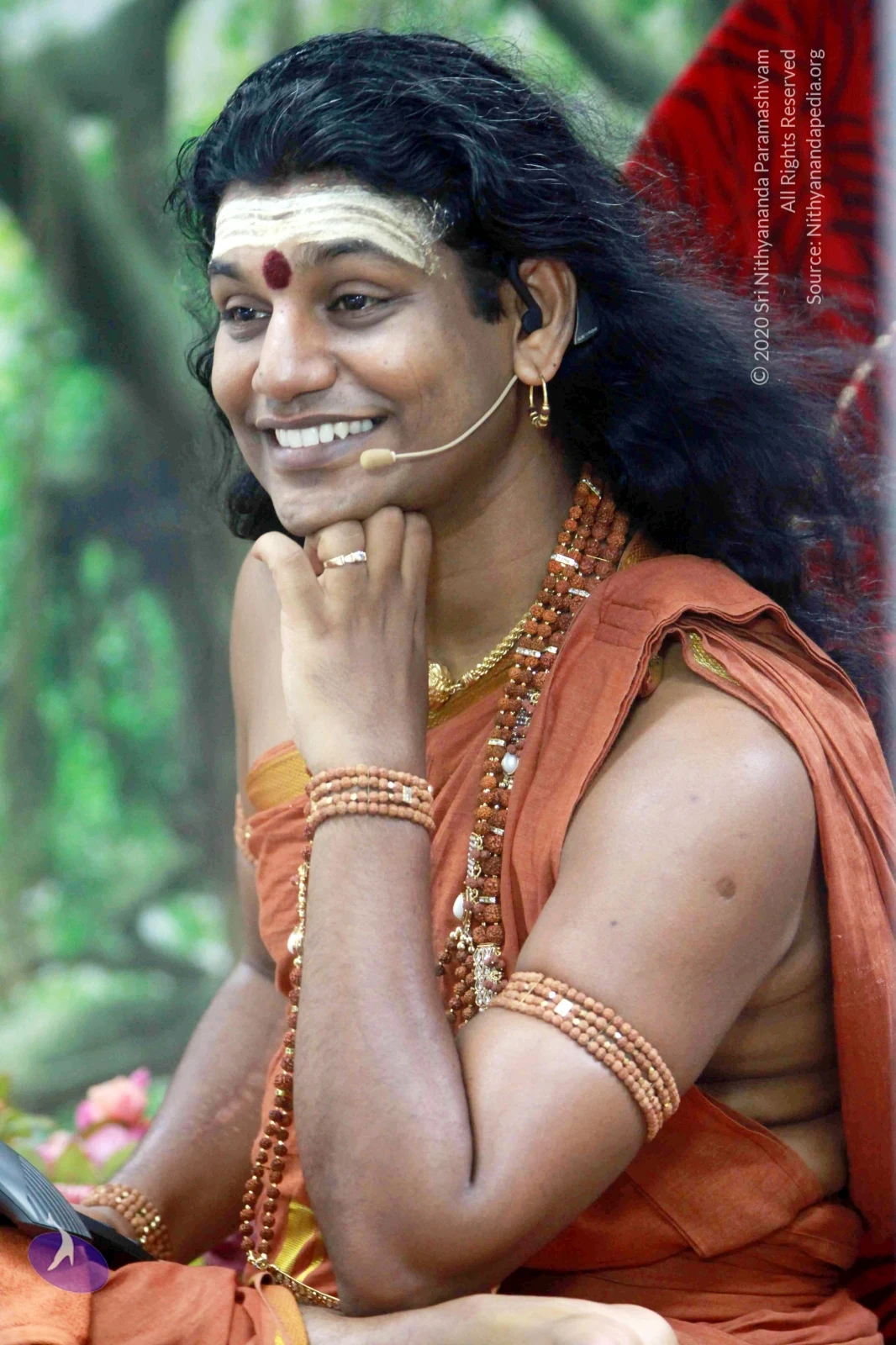
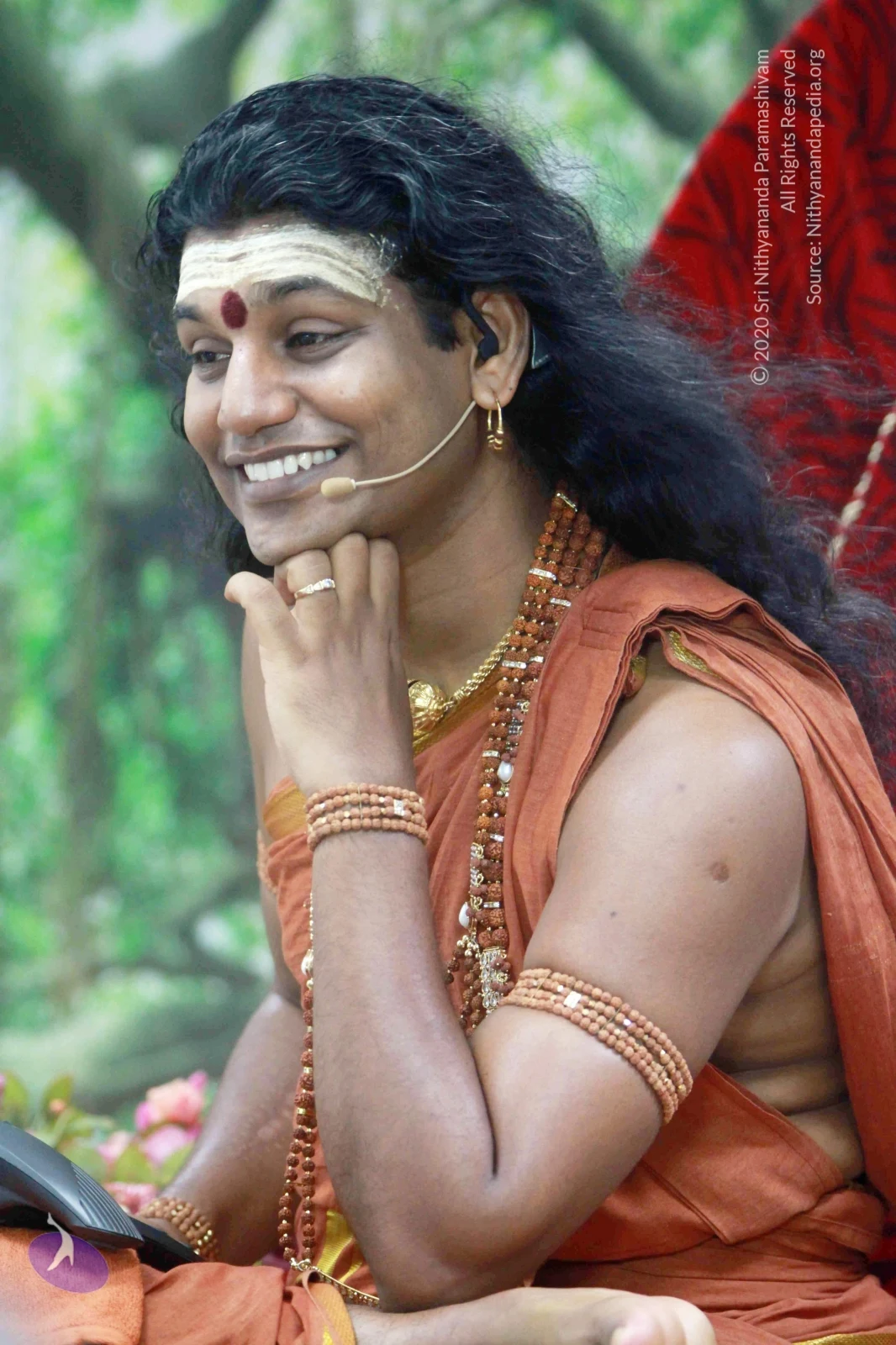
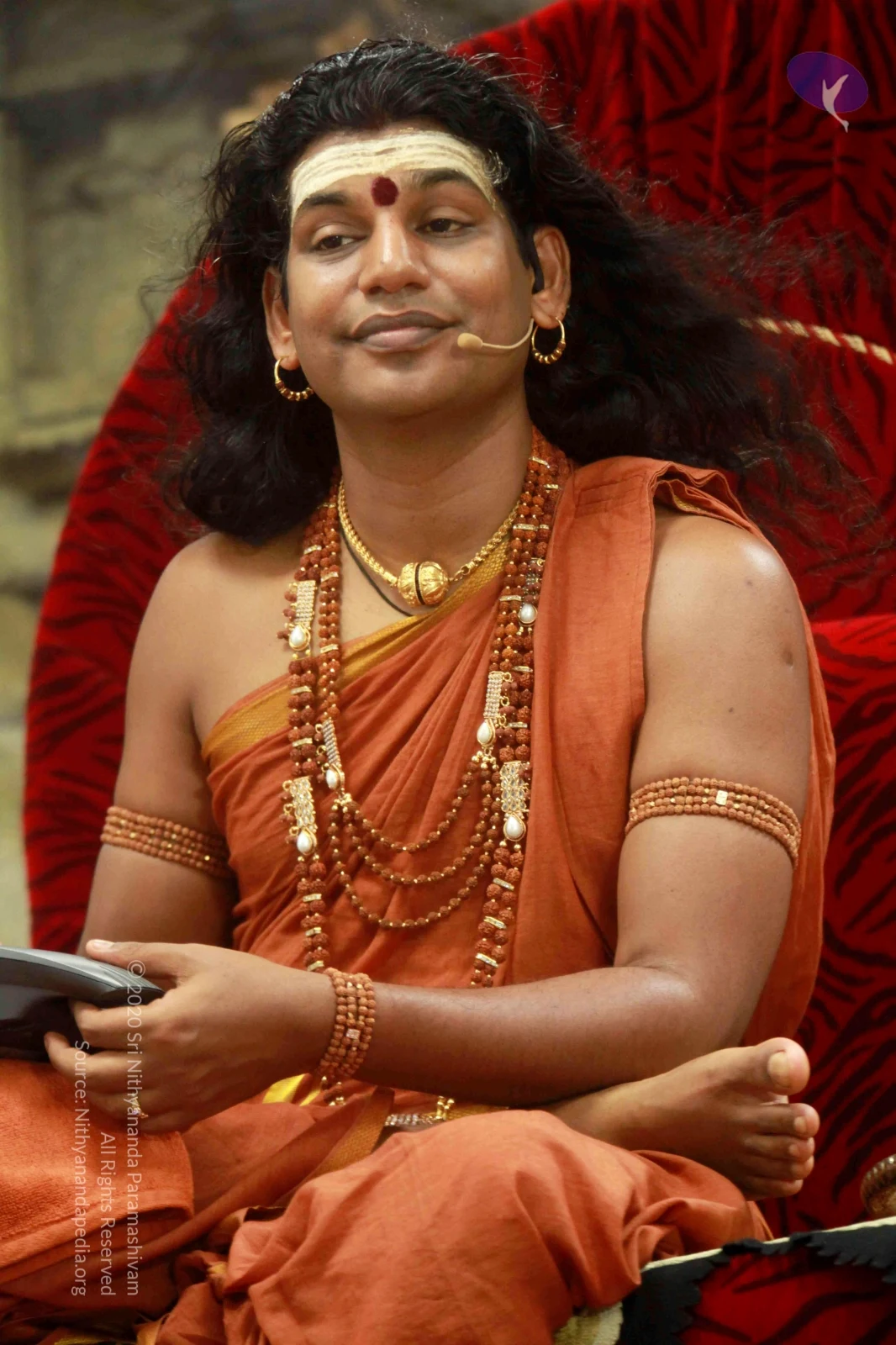
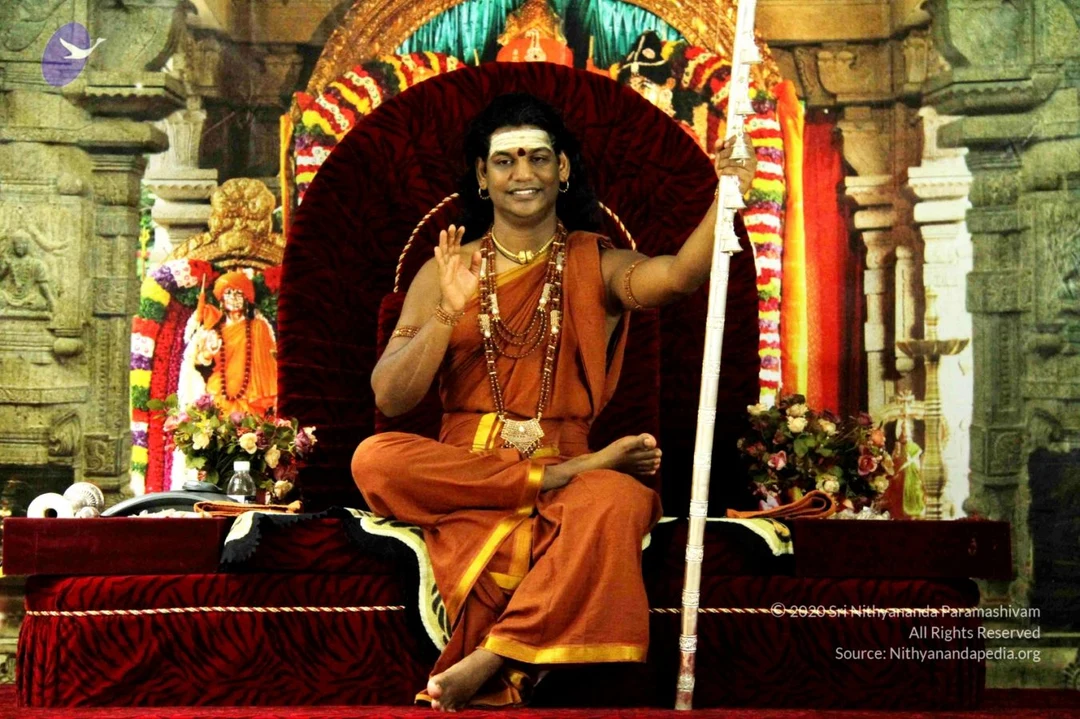
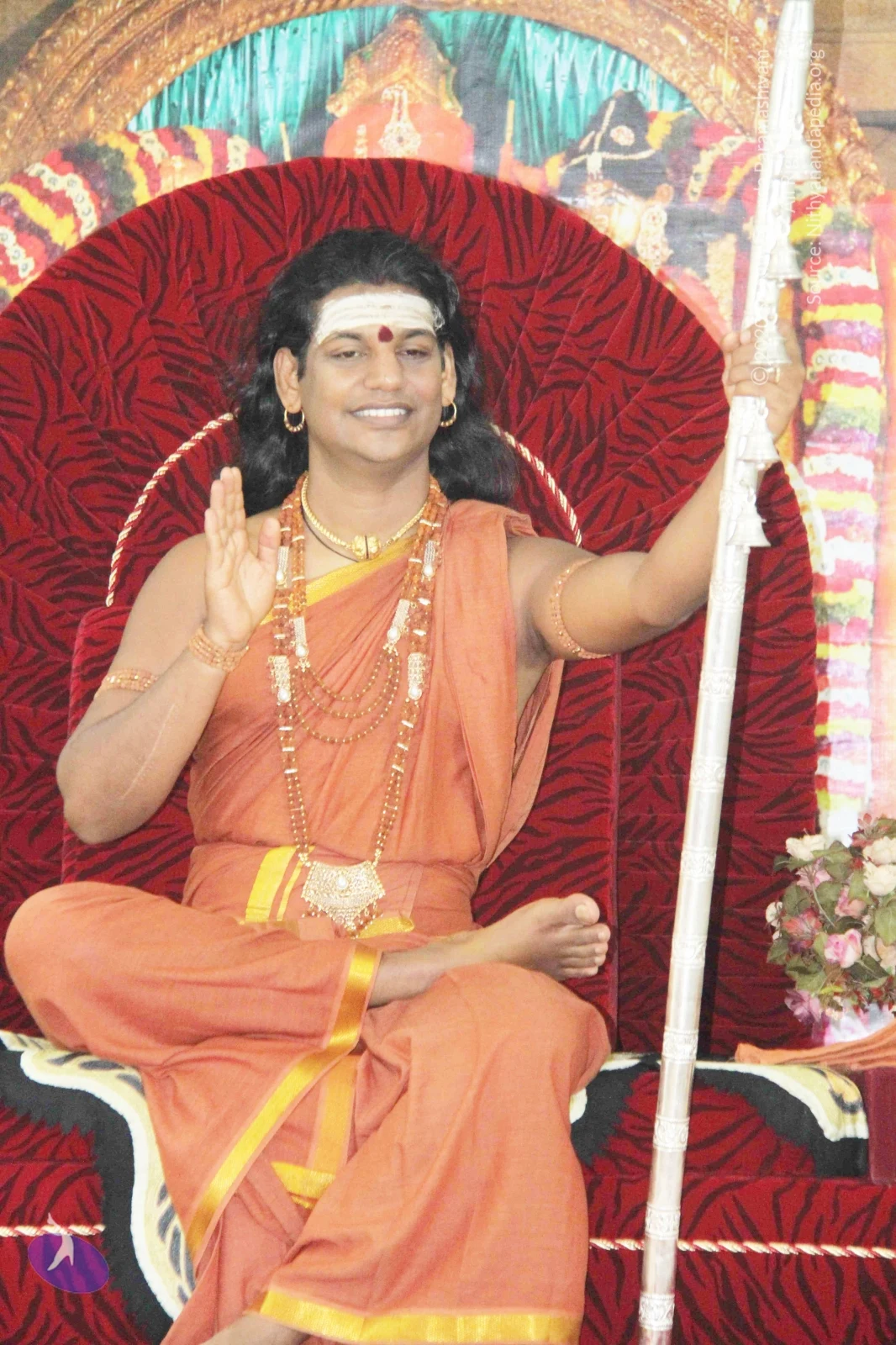
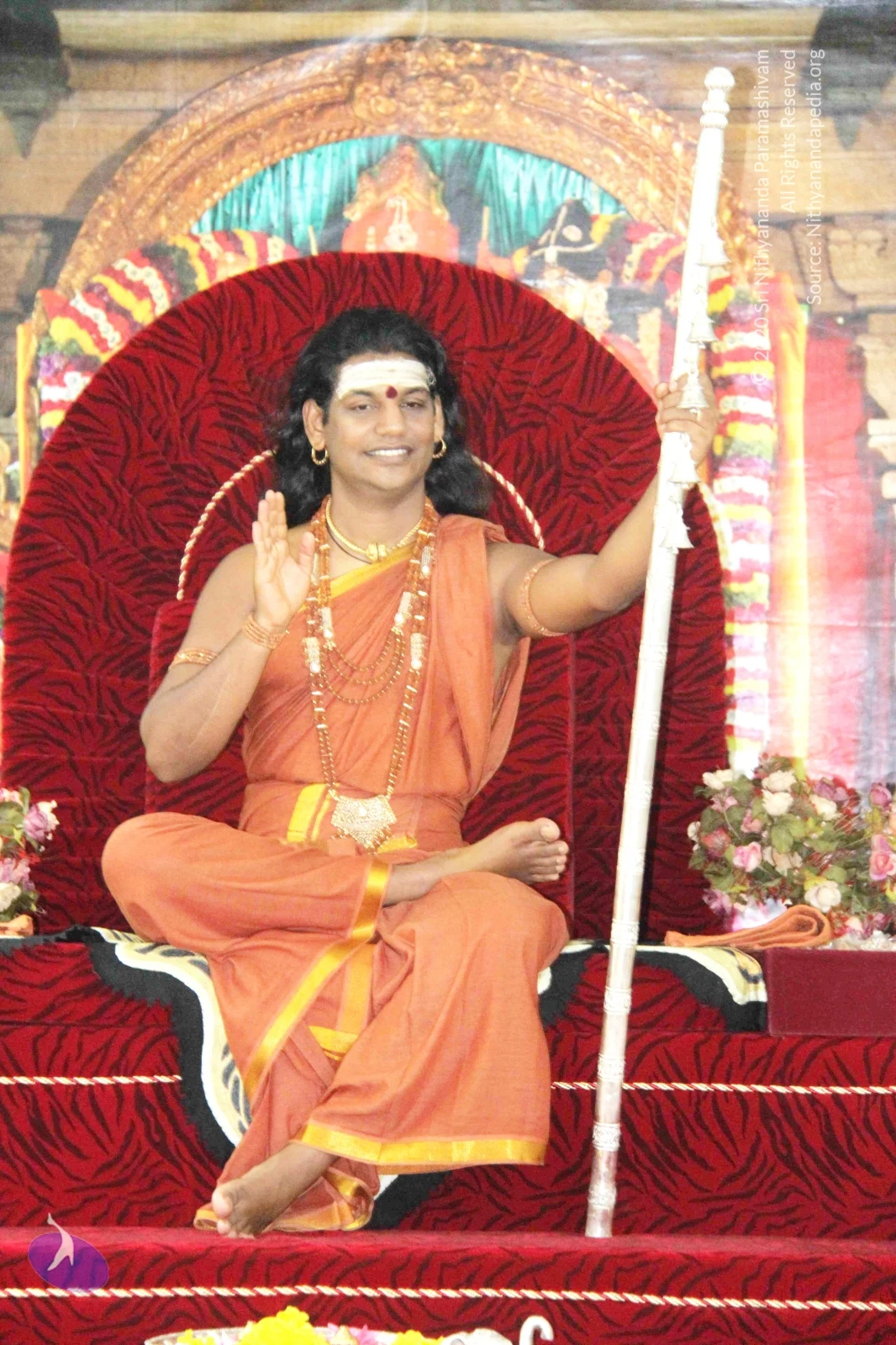
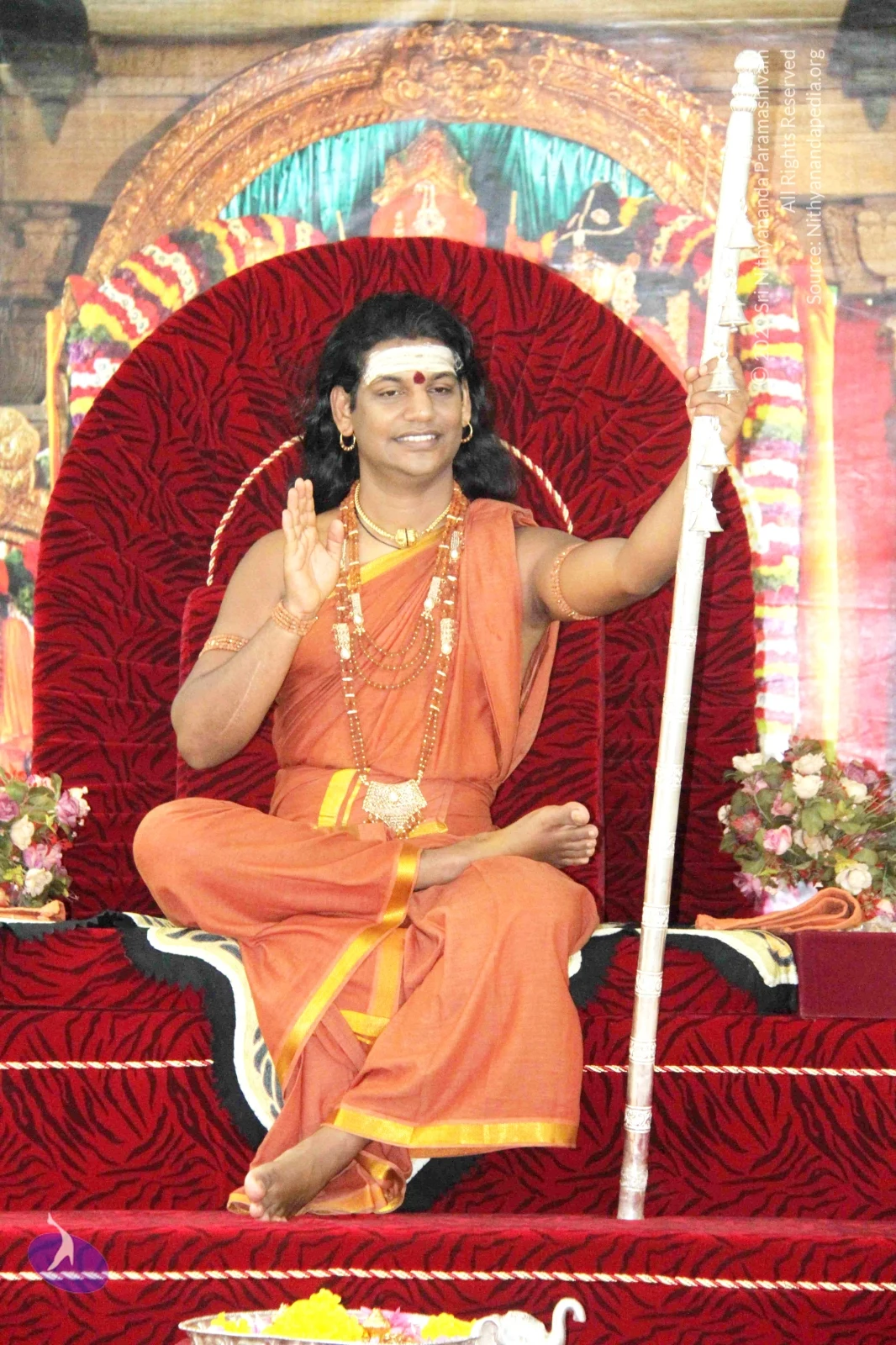
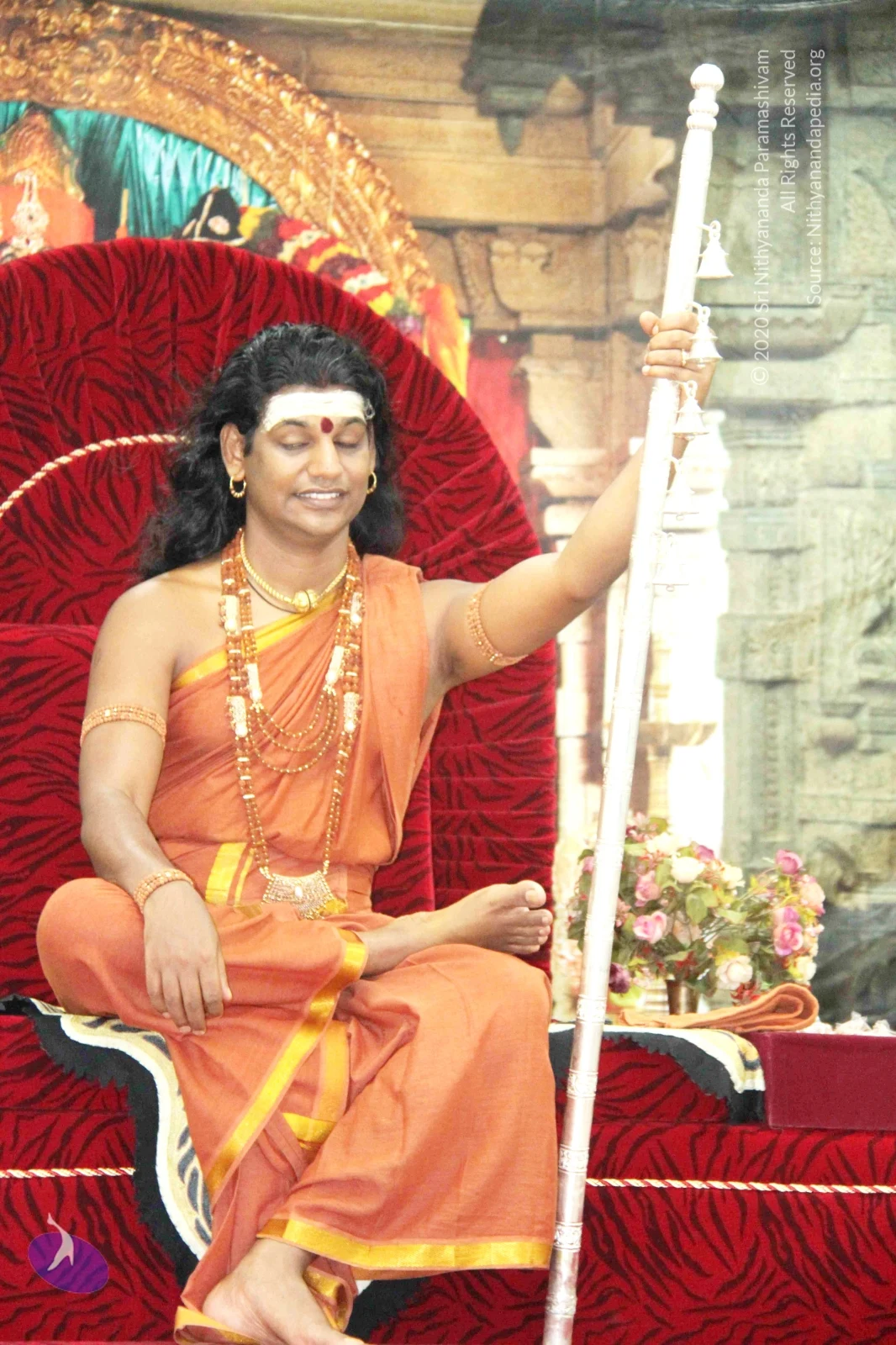
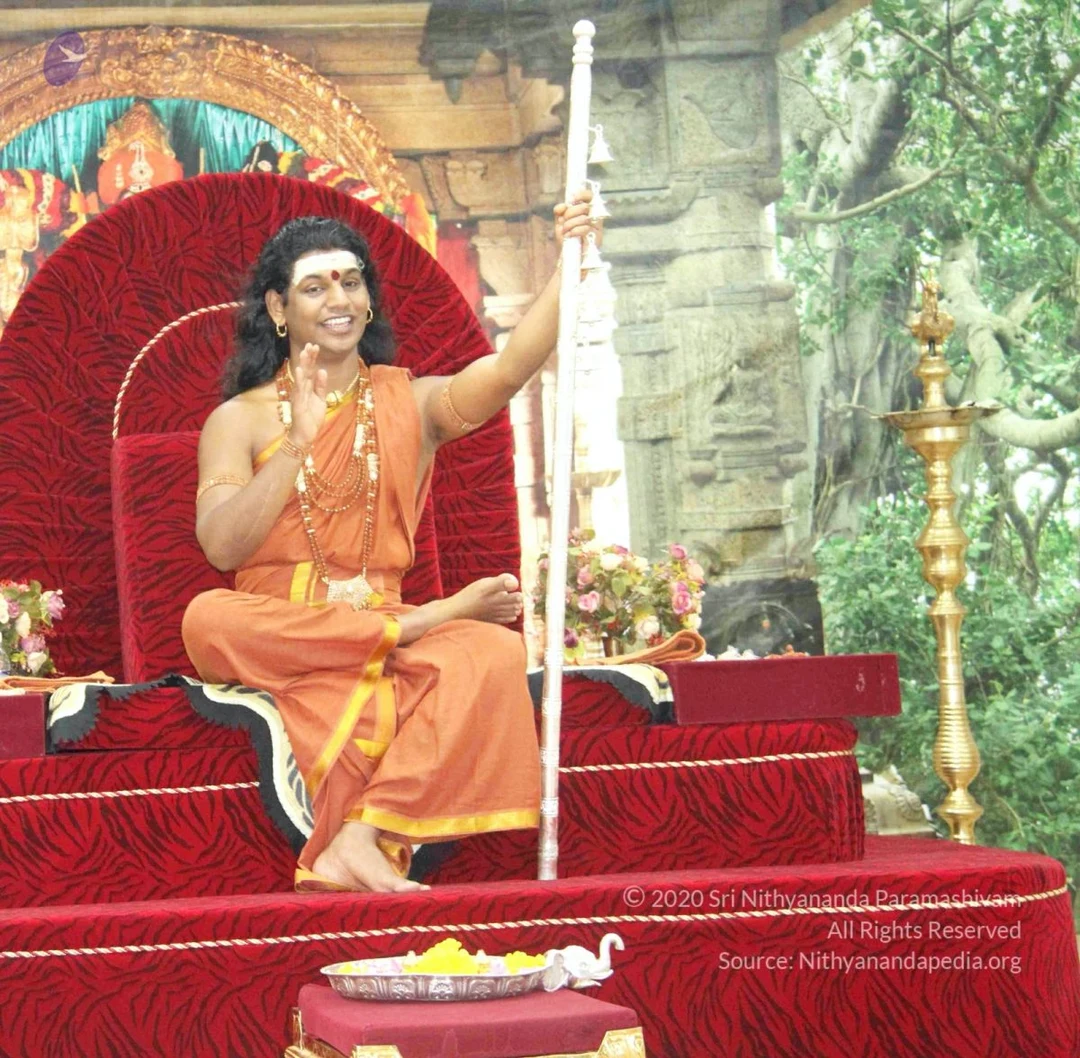
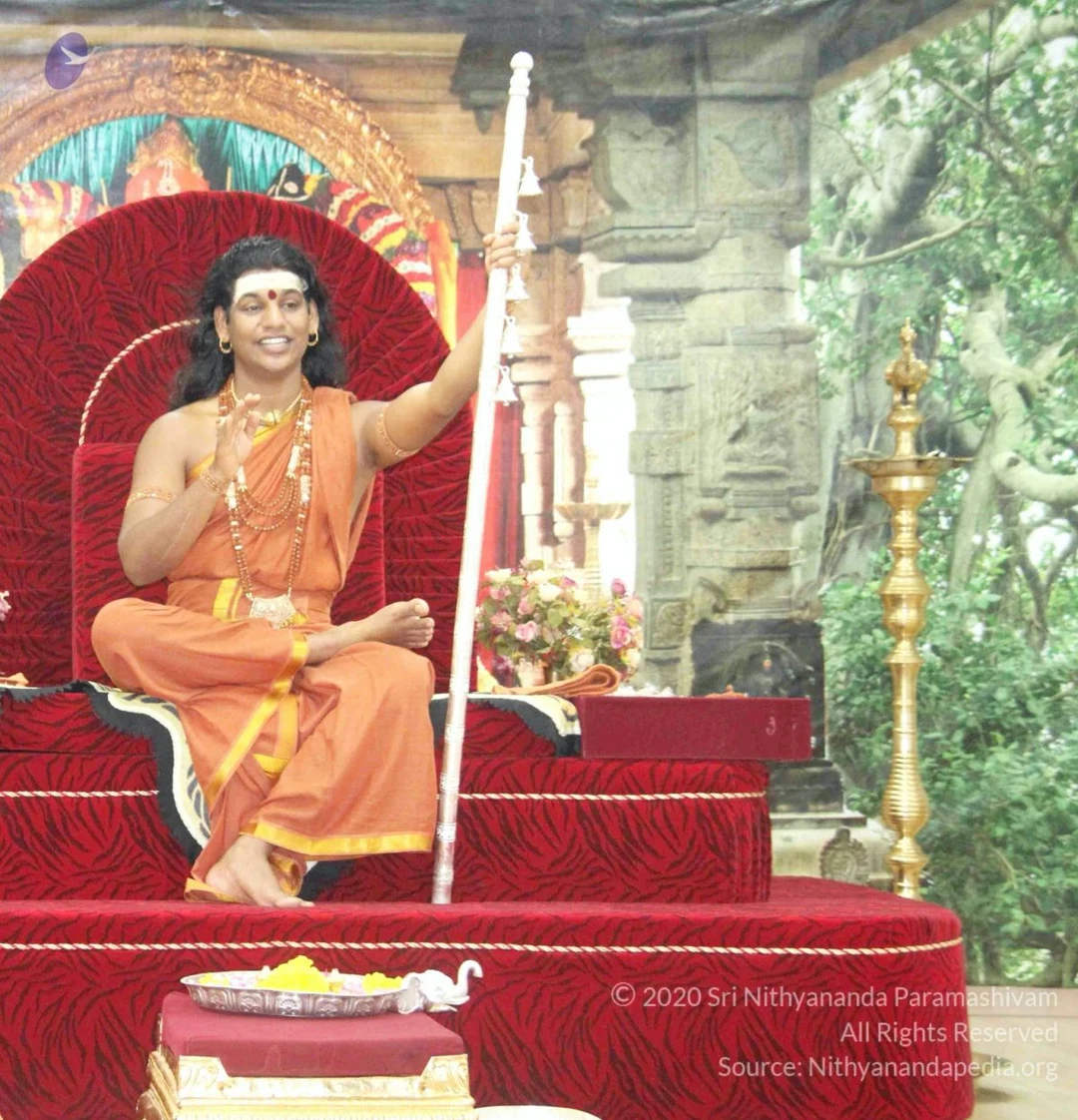
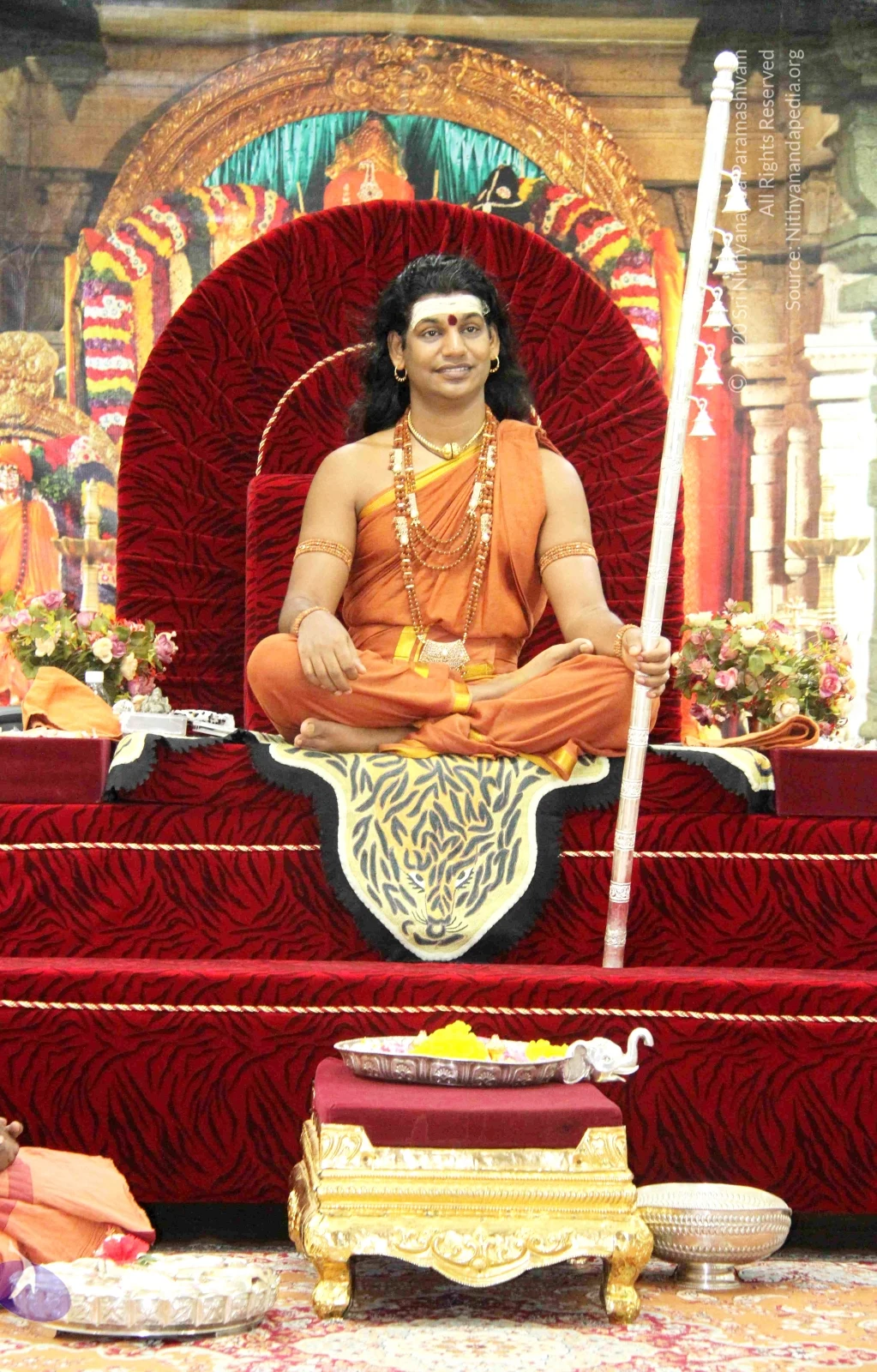
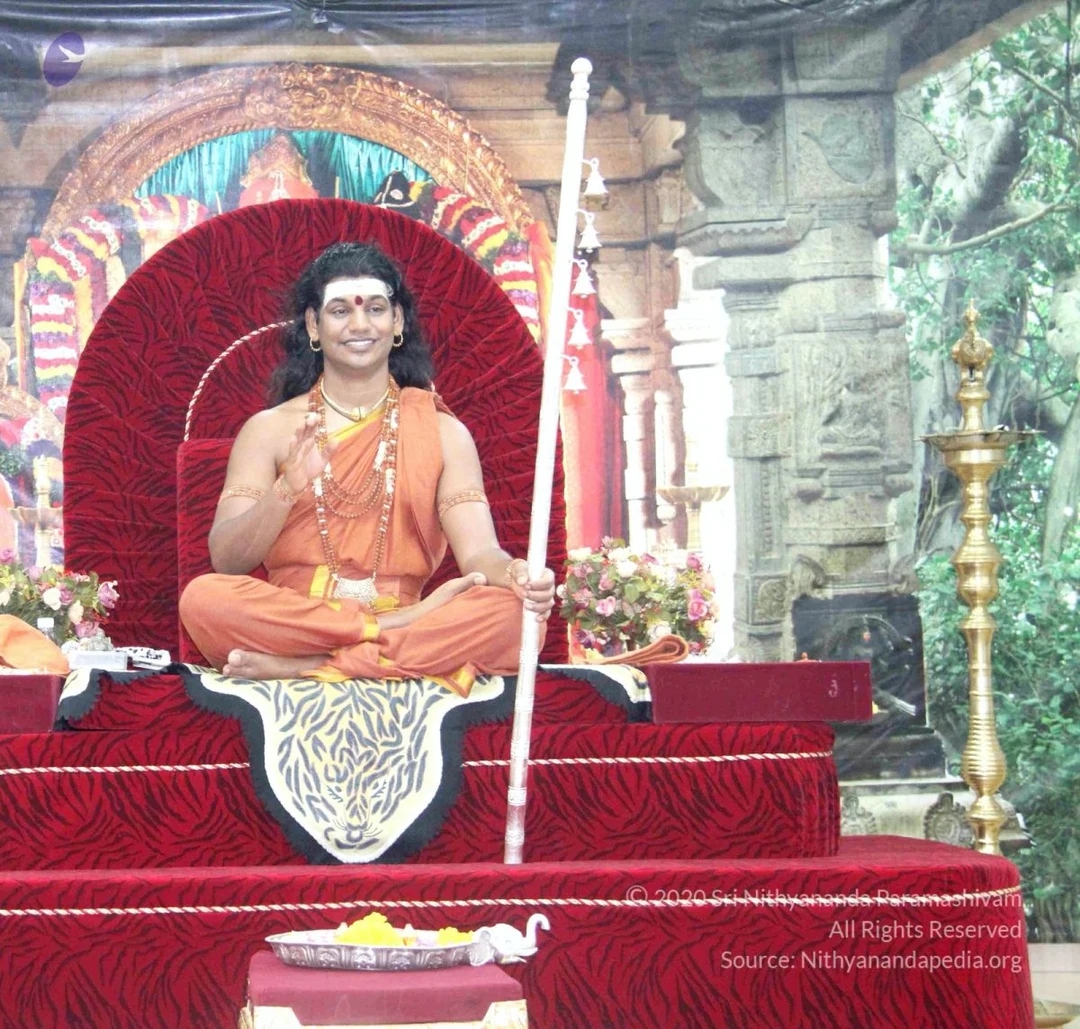
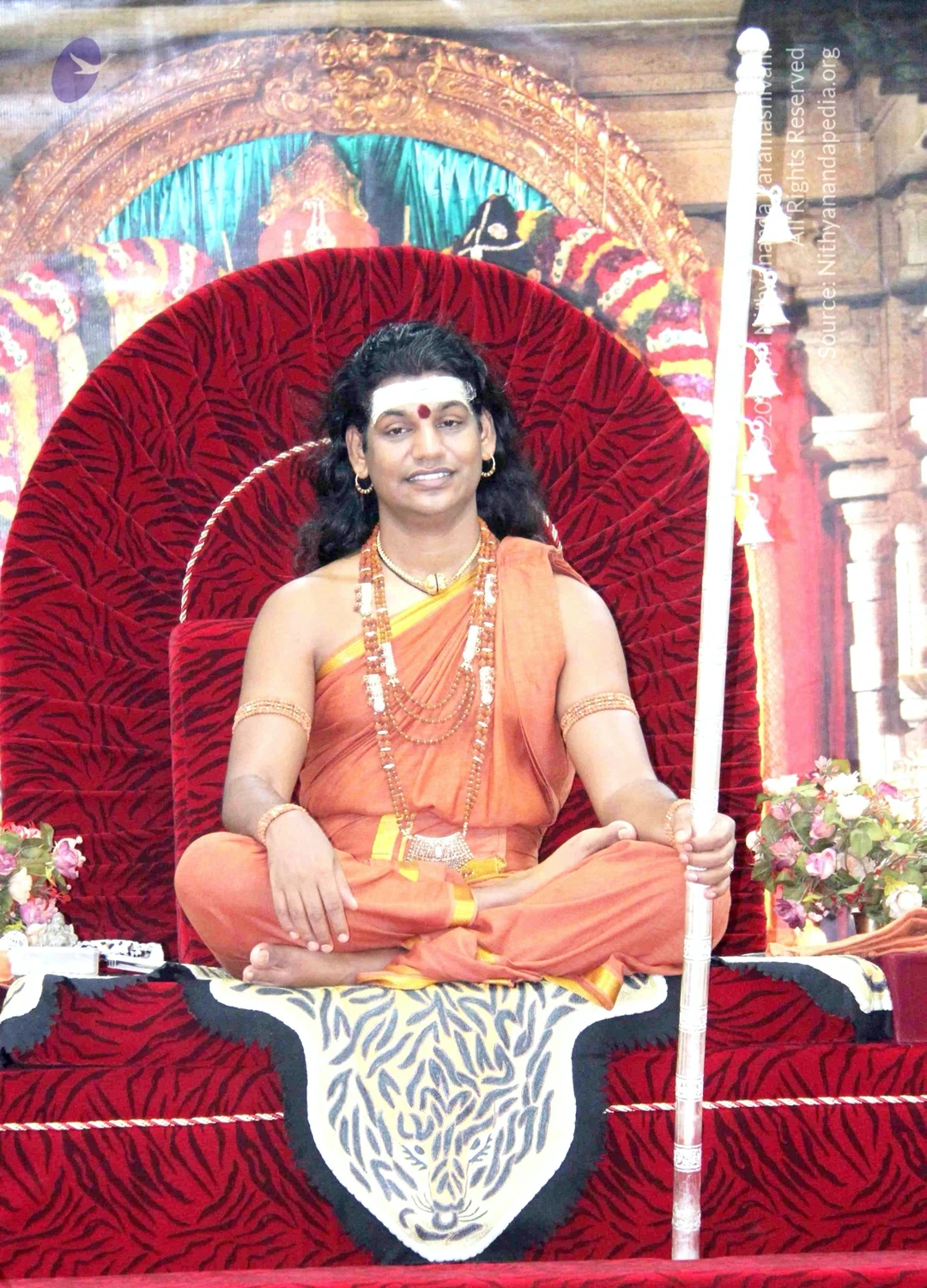
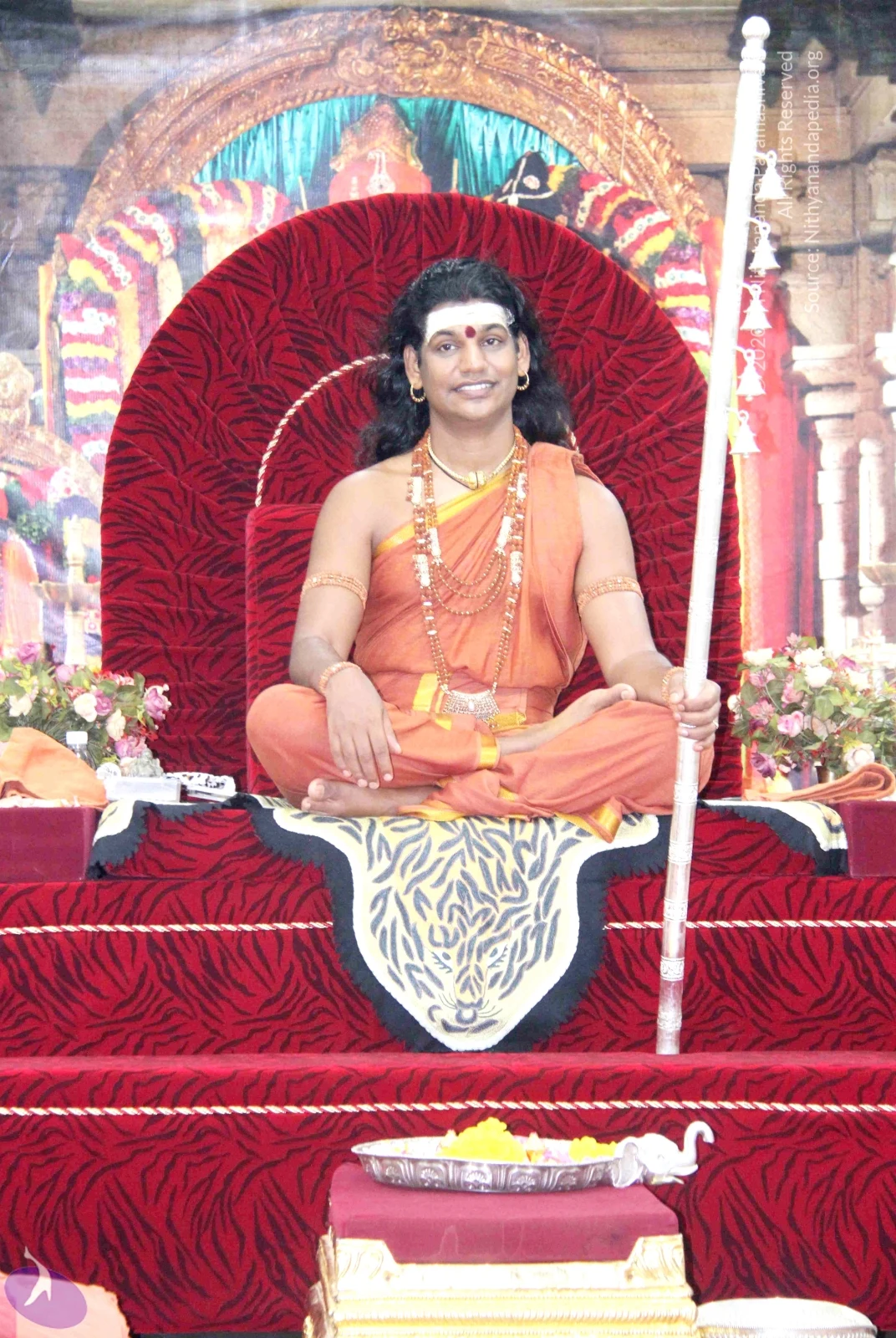
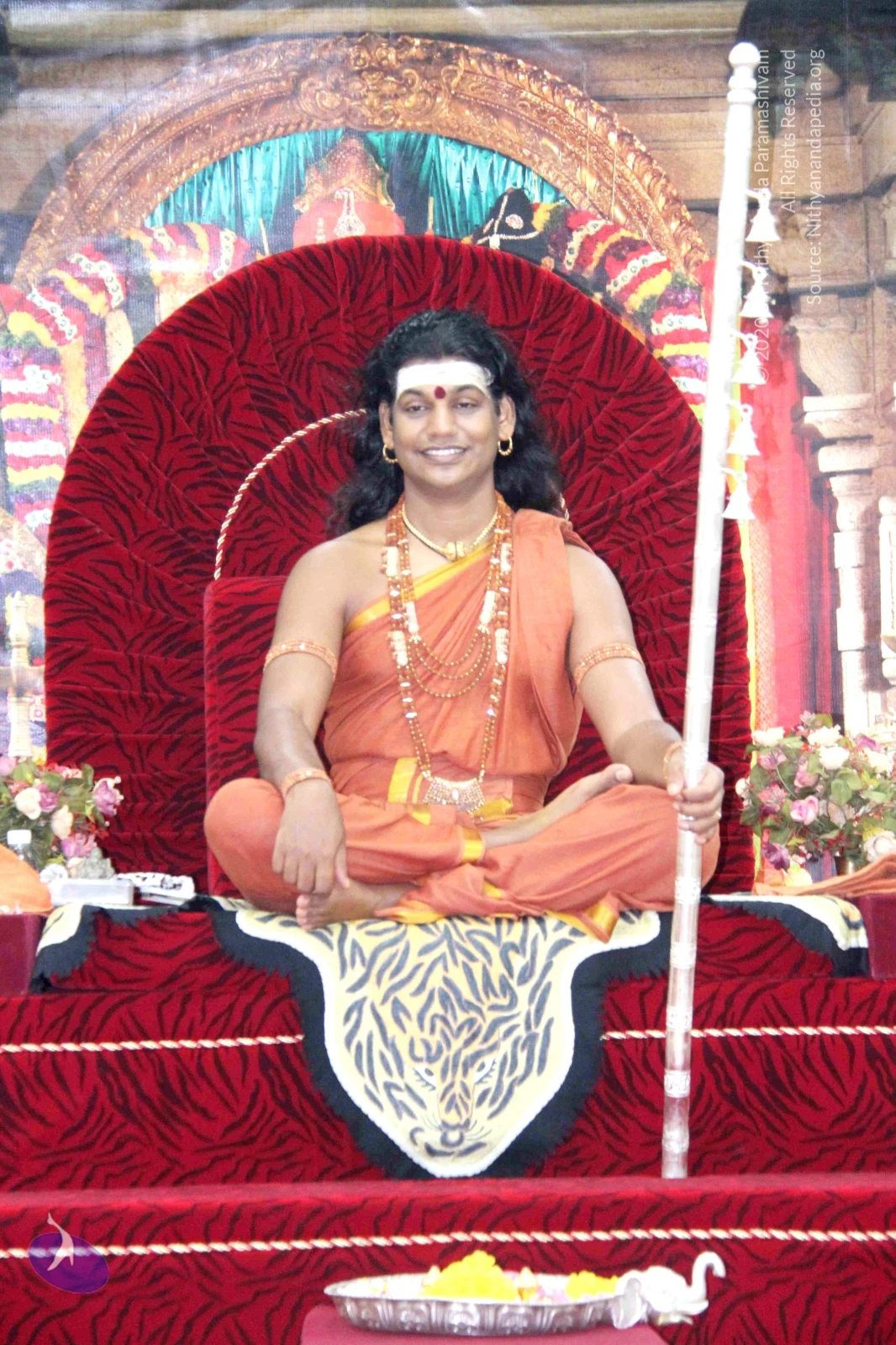
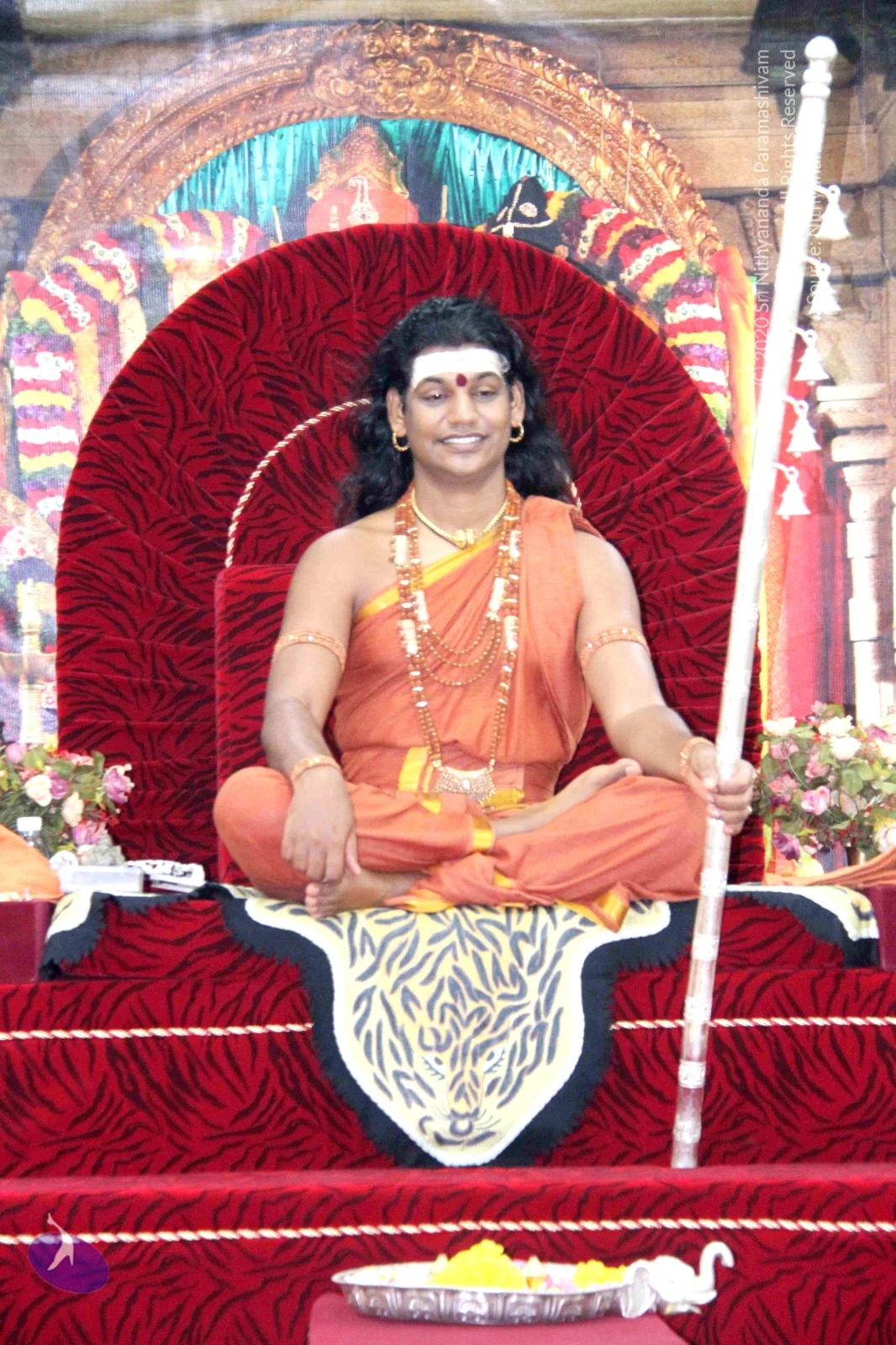
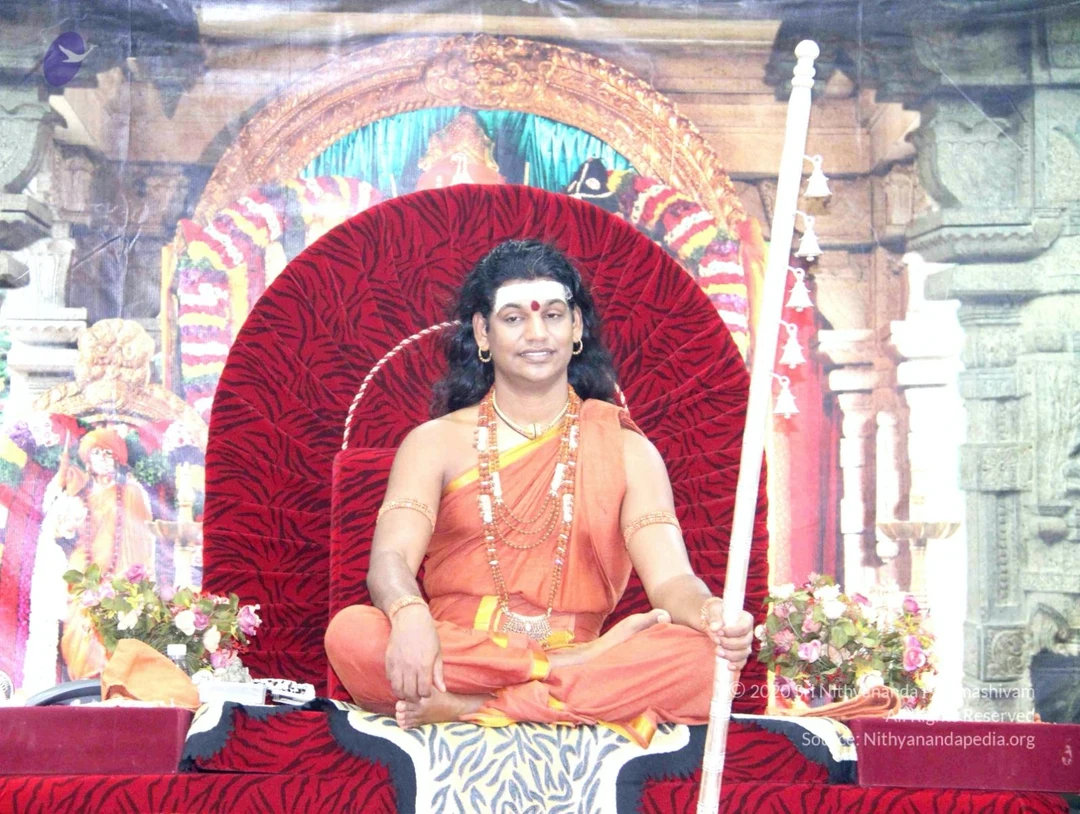
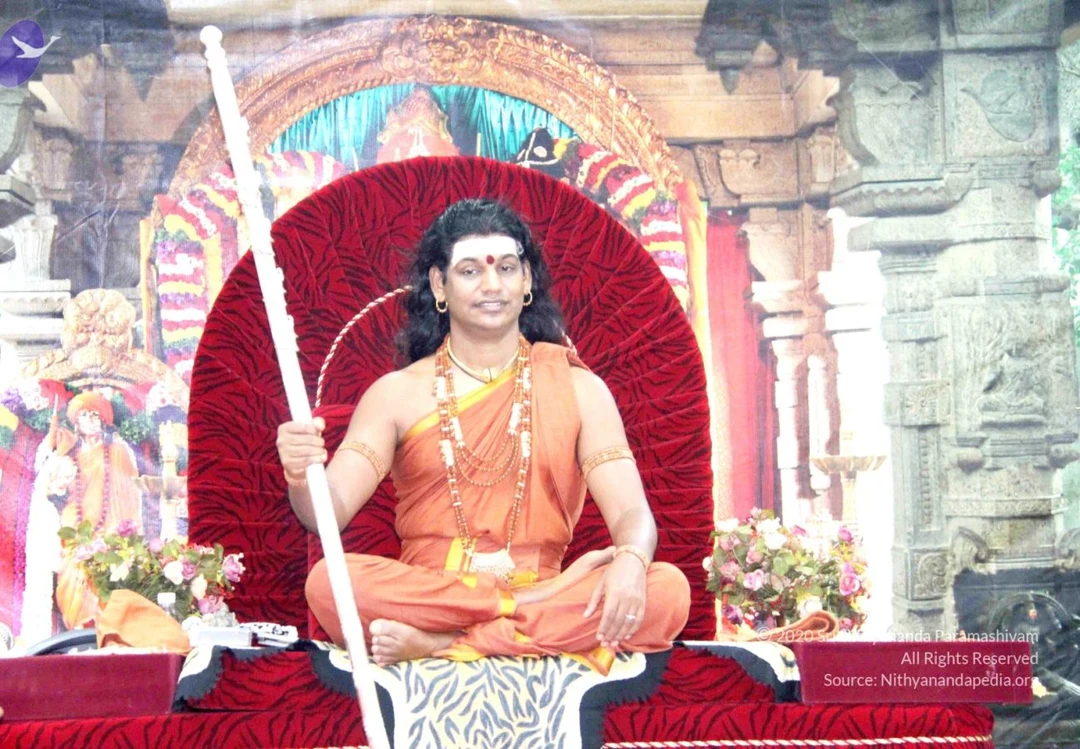
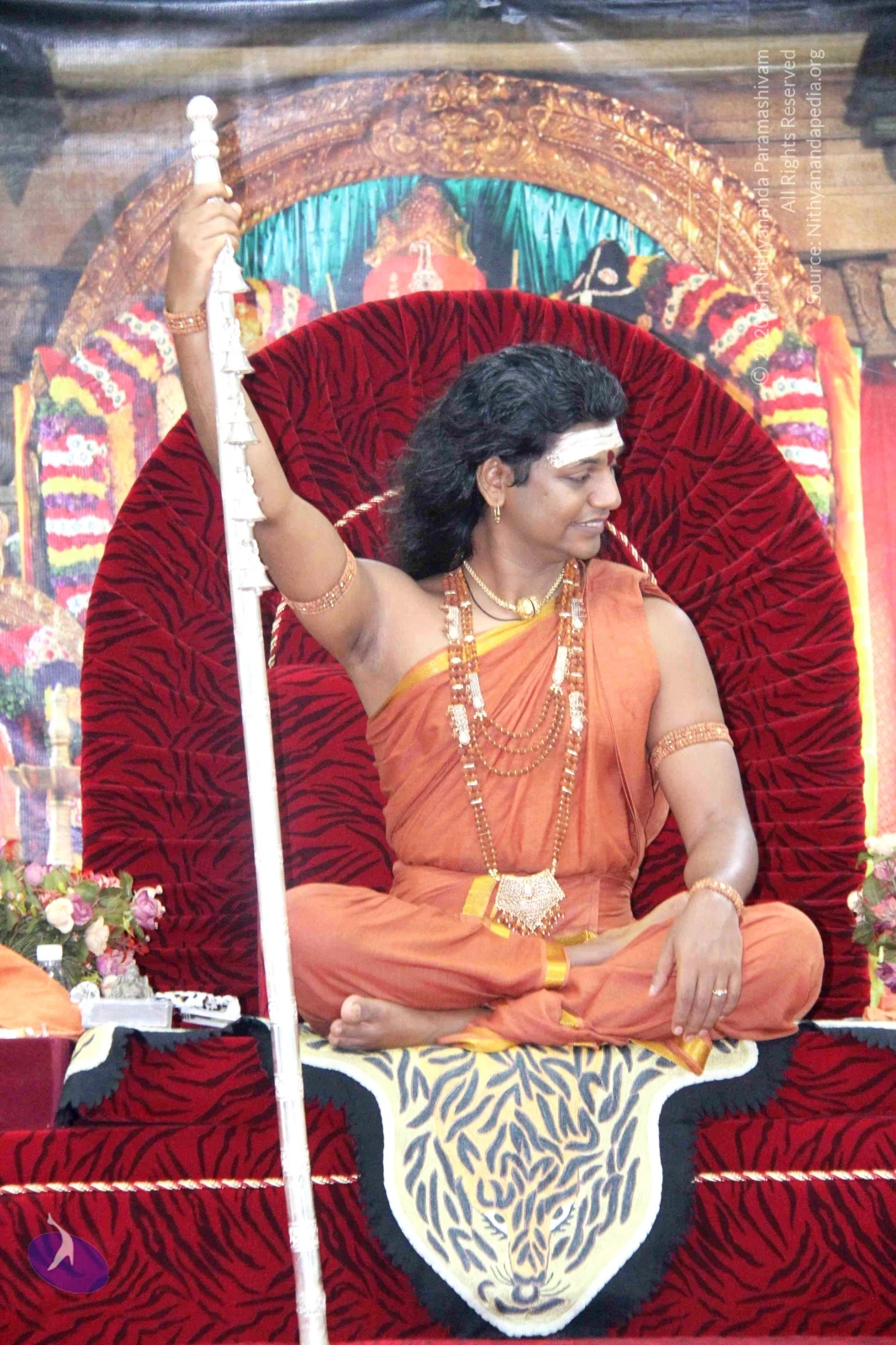
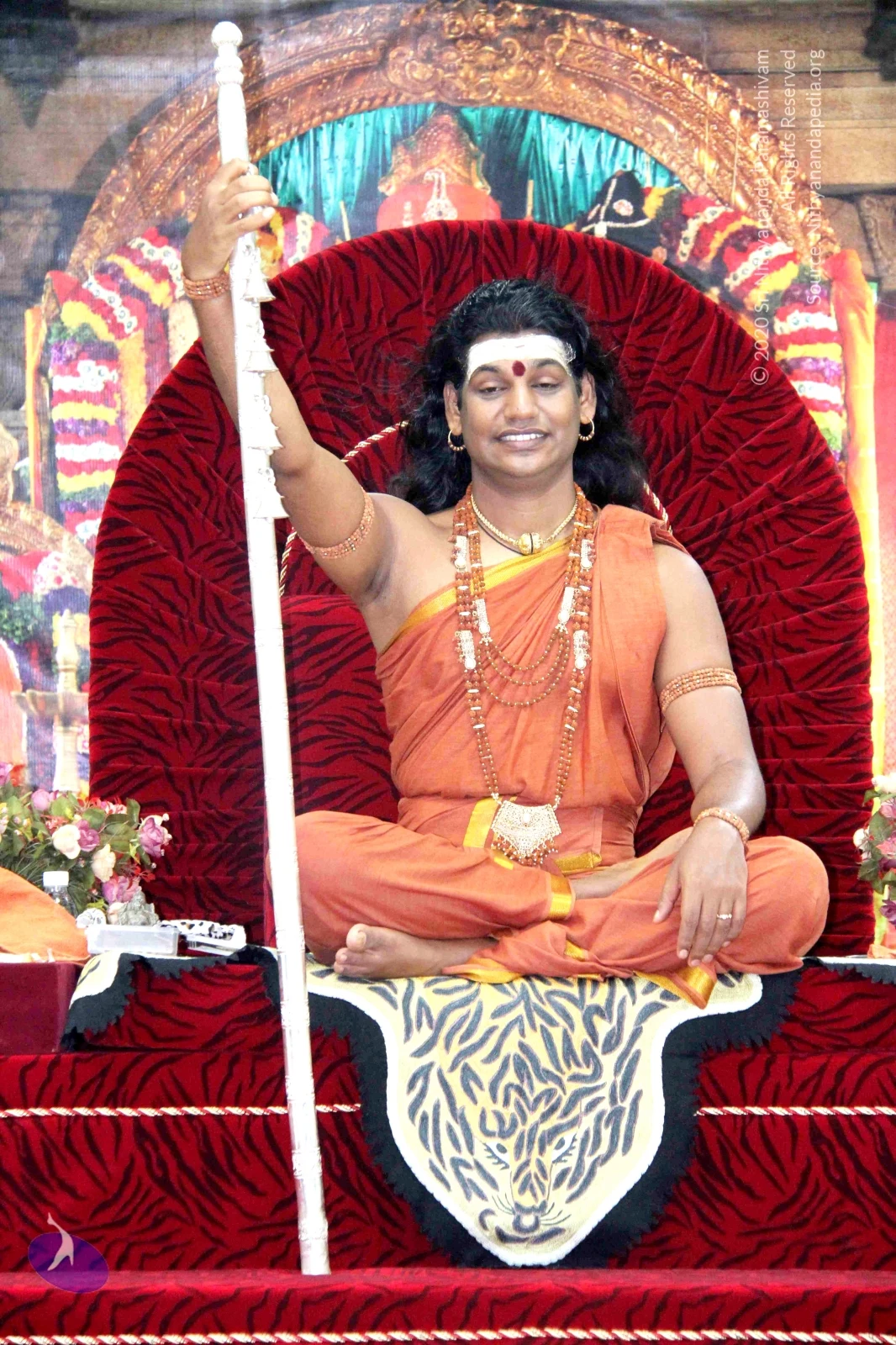
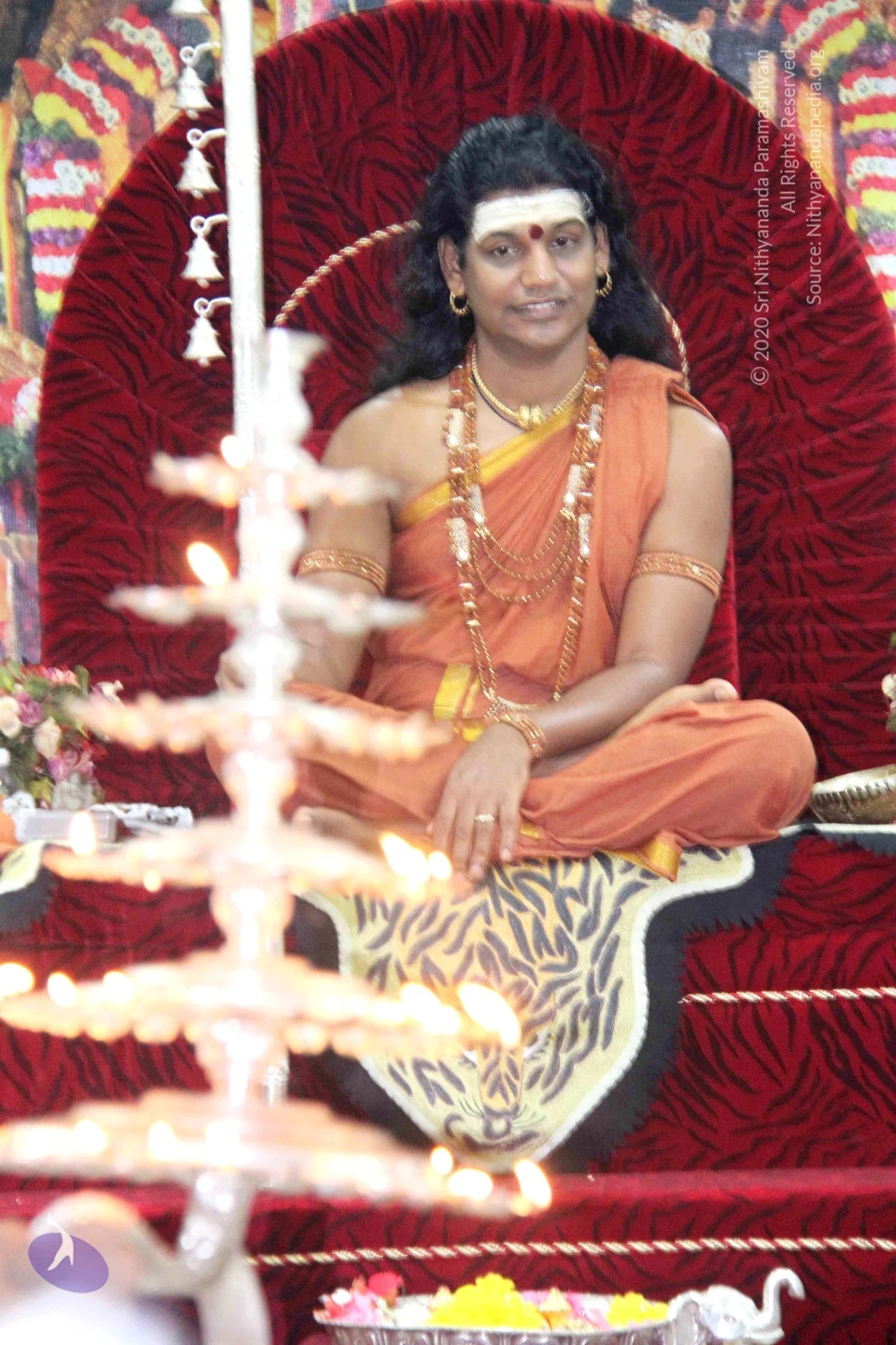
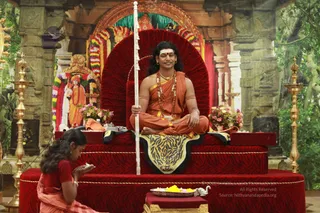
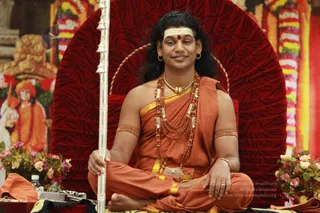
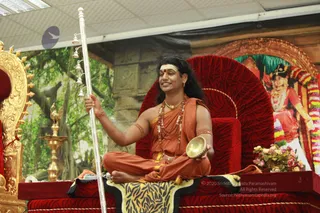
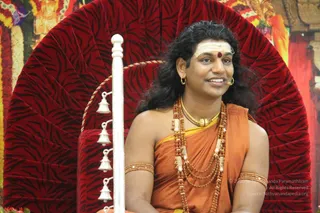
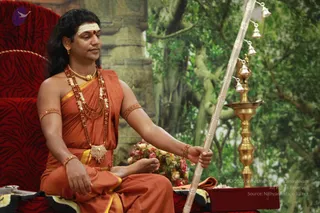
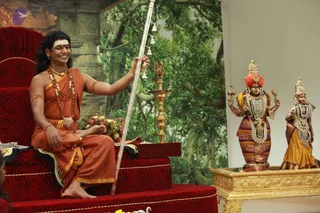
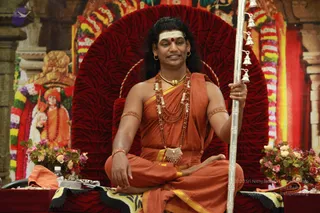
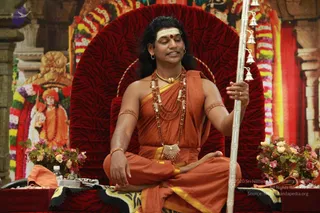
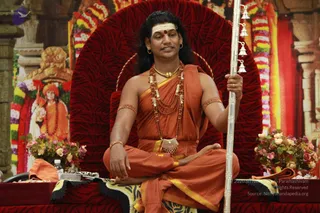
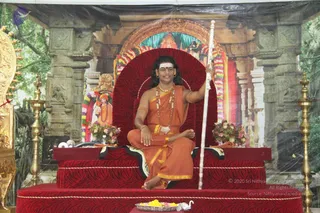
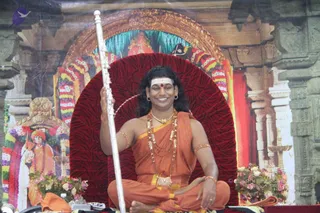
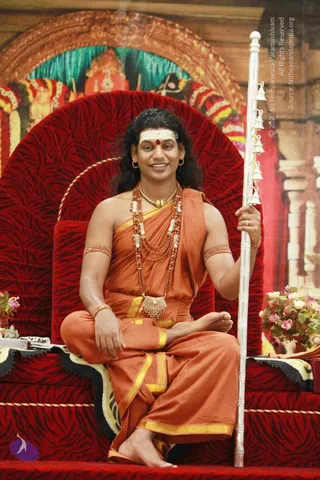
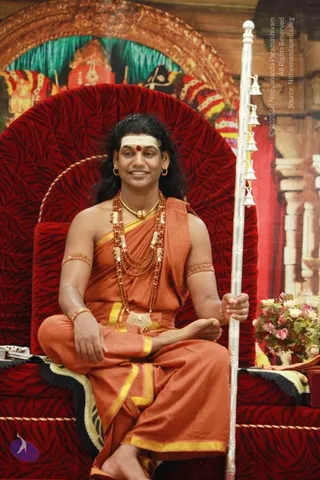
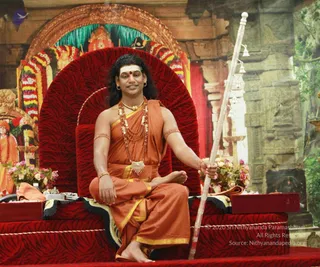
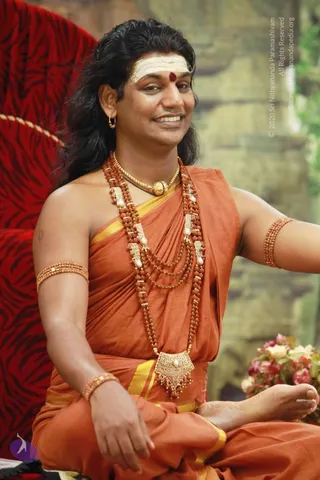
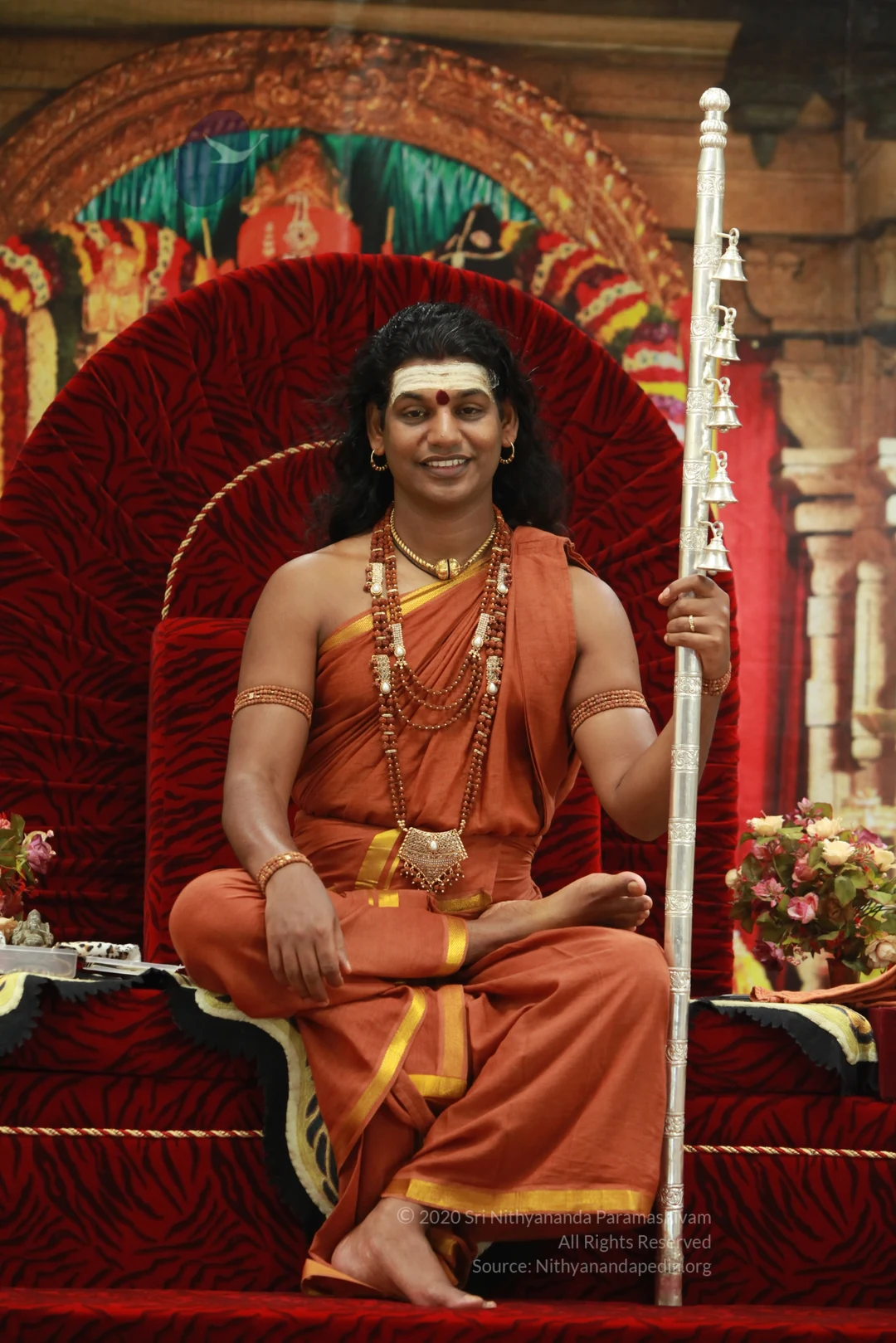
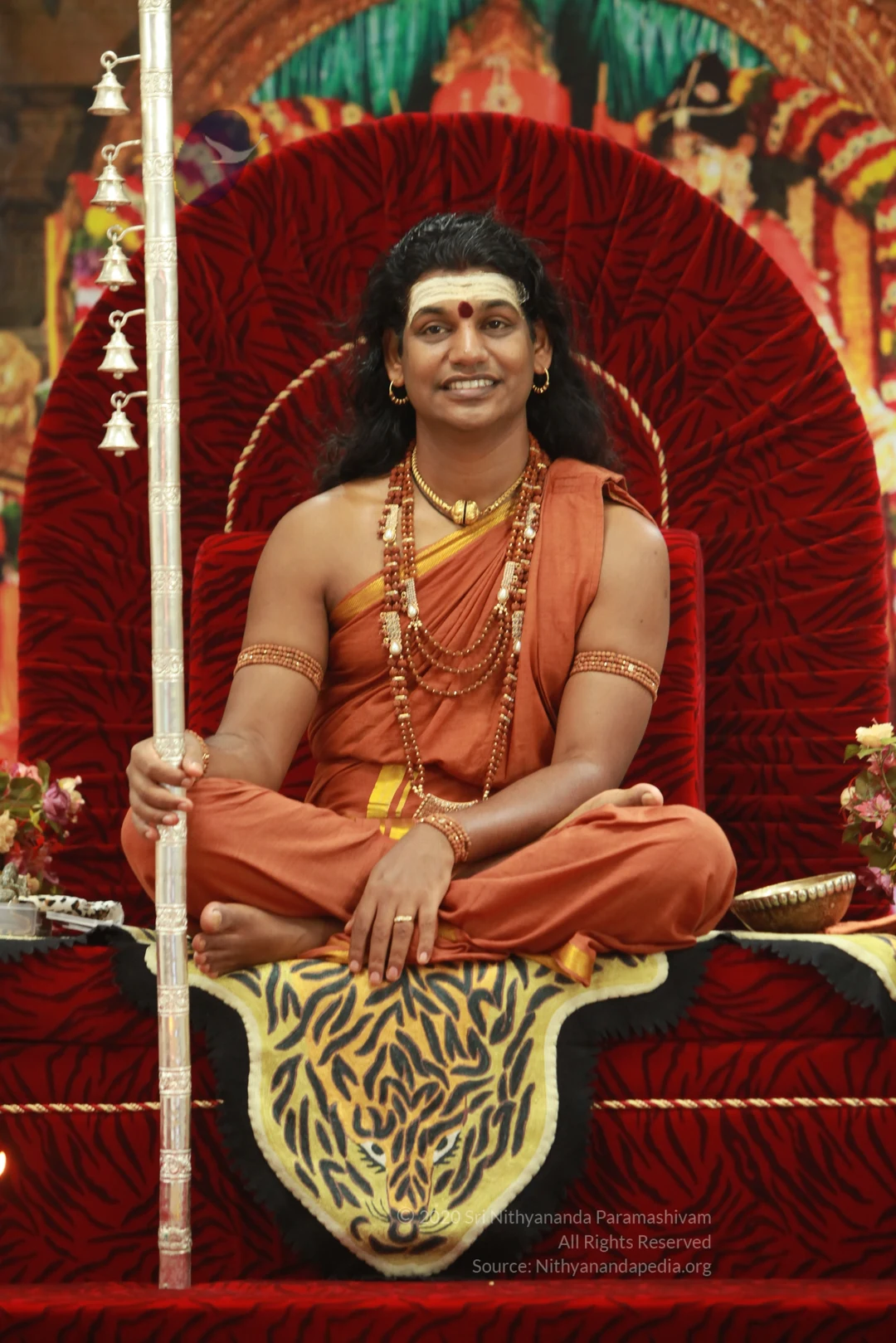
A seated man on an ornate red velvet throne in a temple-style hall, dressed in saffron-orange robes with a red-and-gold shawl, rudraksha malas and a gold necklace, a vibhuti mark on his forehead, holding a silver staff with bells. Behind him is a painted temple backdrop with carved columns, a deity murti decorated with garlands, and a green forest scene. A woman in a red blouse and orange sari sits on the floor at his left, hands folded, beside a brass tray of yellow flowers. Brass lamps stand at the sides. a person on the throne, shown with saffron robes, rudraksha malas and a silver staff; the seated woman is a devotee.A seated man in saffron-orange robes sits cross-legged on a red zebra-striped velvet throne before an ornate temple-style backdrop with carved stone pillars and a garlanded deity murti. He wears a white tilak, gold-toned ornaments on his arms, layered rudraksha-style beads and a pendant necklace. In his right hand he holds a long silver staff with hanging bells, and a bouquet of flowers rests beside him. A brass oil lamp stands at the left edge, and a woman in red sits at the lower left corner. Swamiji (probable): long swept-back hair, saffron robes, rudraksha malas and ornate necklace, presiding over a satsang on the throne.Close-up photograph in profile of a smiling man with swept-back dark hair, a white sacred ash band across his forehead with a red bindi, and a small headset microphone at his cheek. He wears a gold drop earring, a gold pendant on a gold chain, and rudraksha malas with an orange-red garment over the shoulder. The background is a blurred green outdoor setting.

September 19 2012

Original wiki page
Contents

Title:

Ganesha Worlds Most Worshiped God

Description:

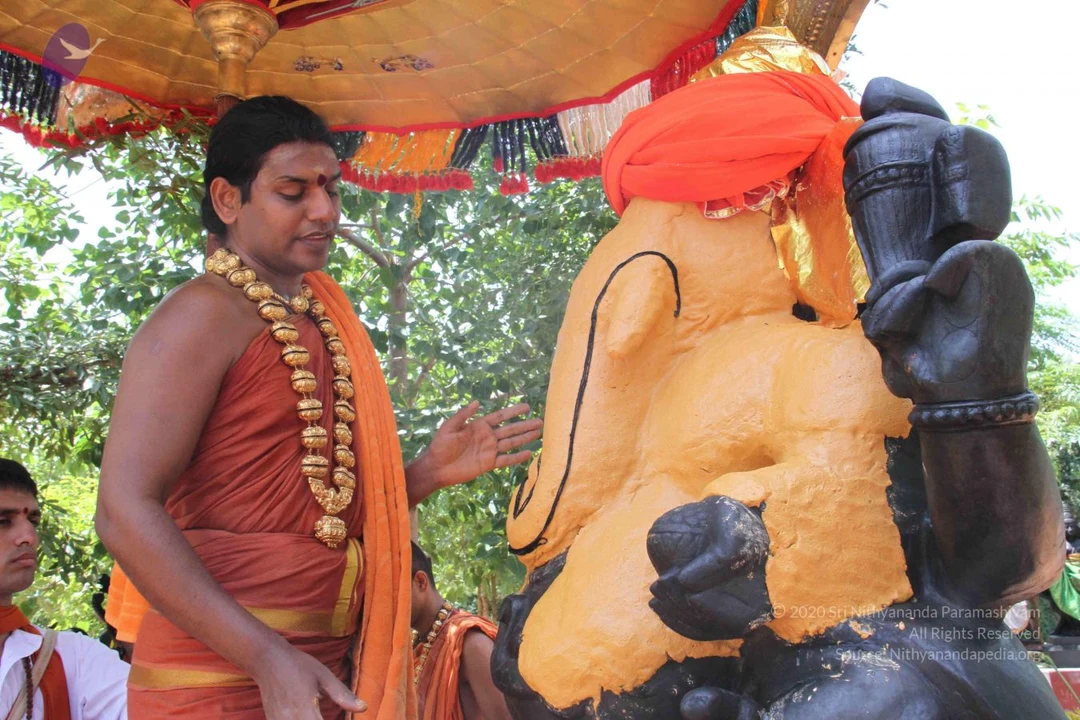
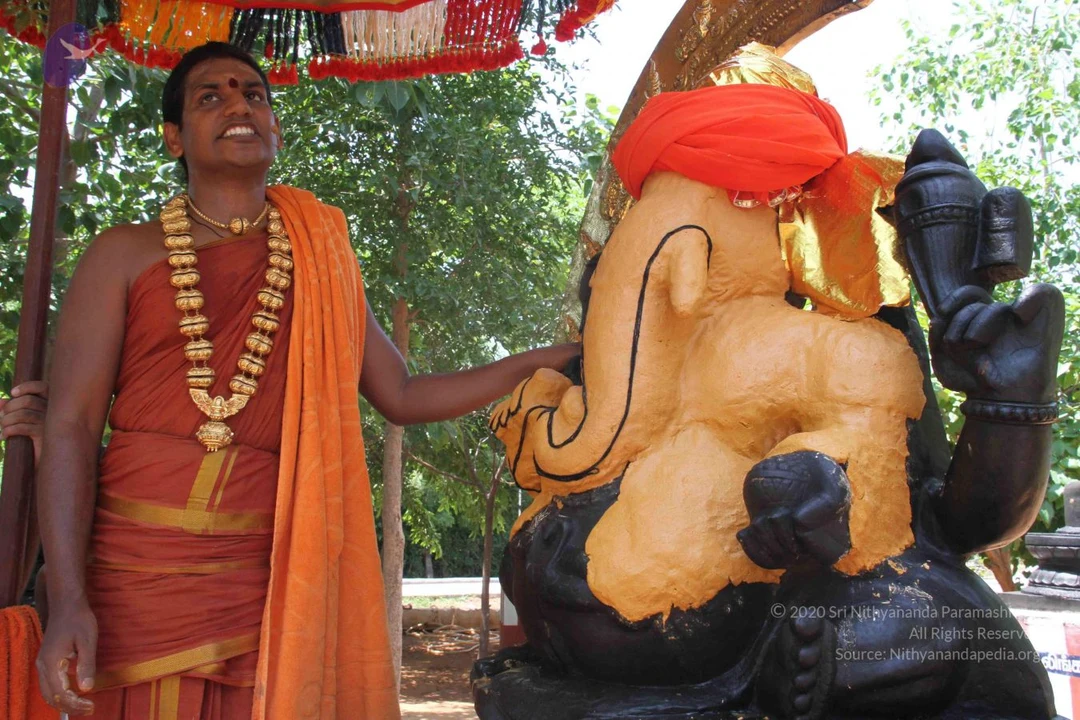
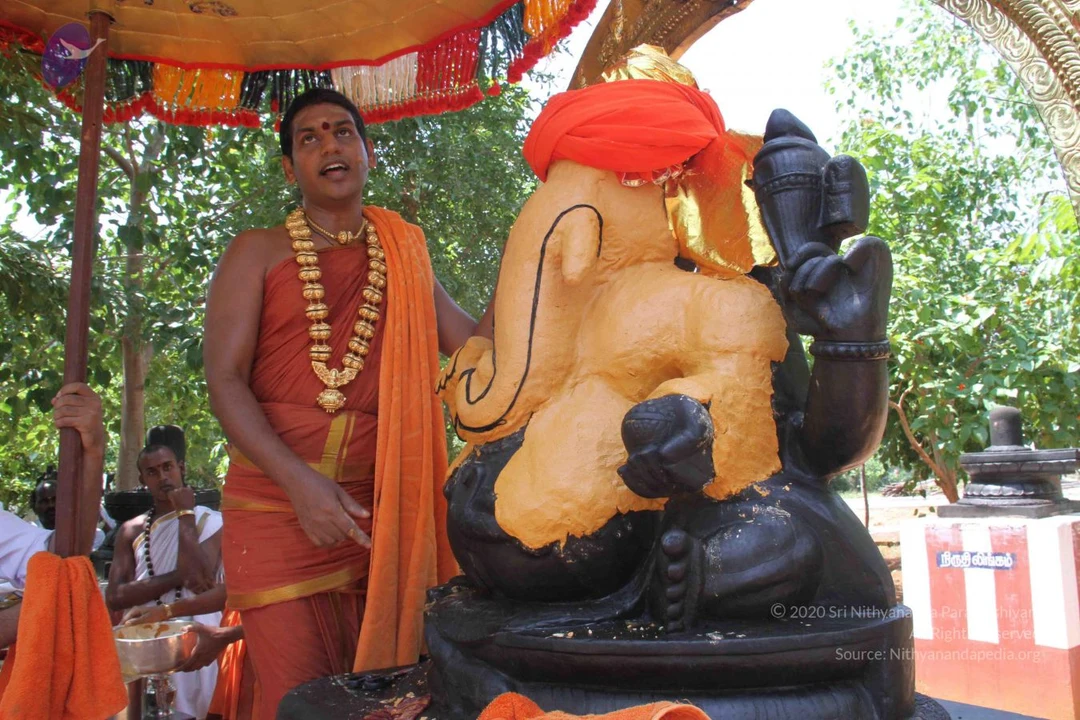
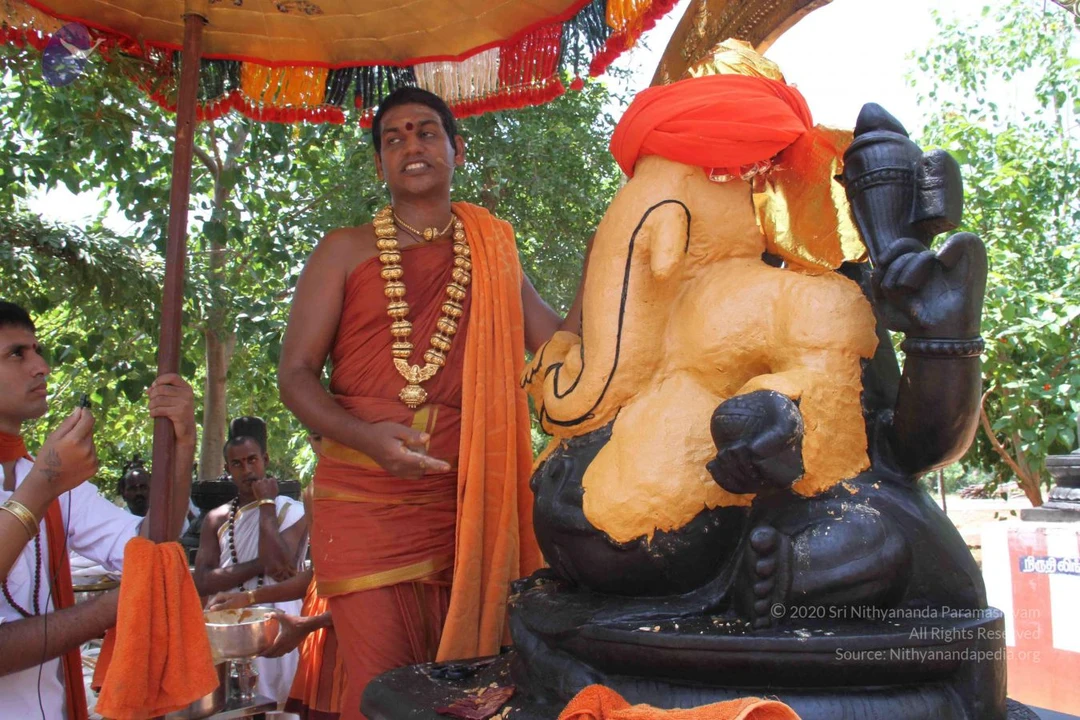
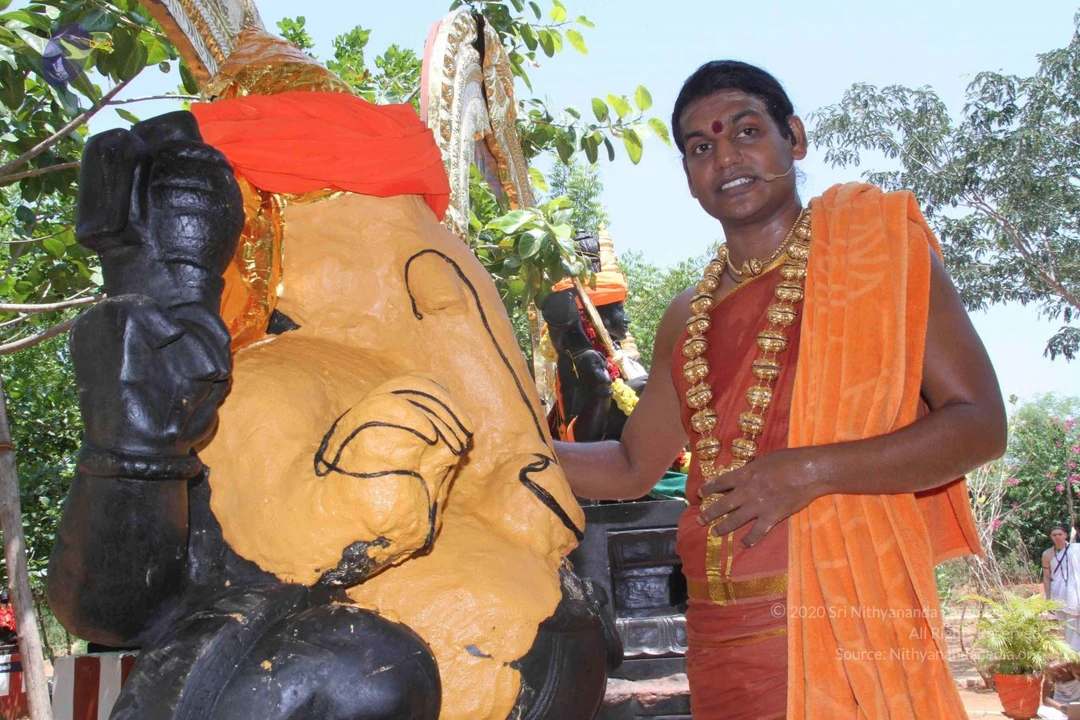
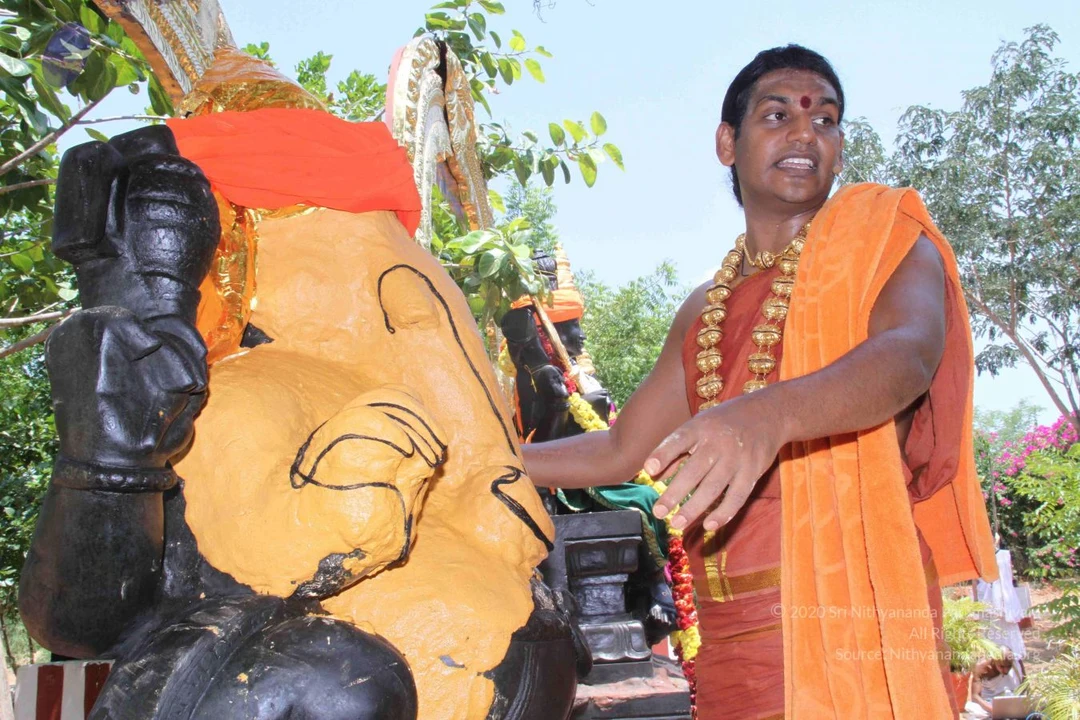
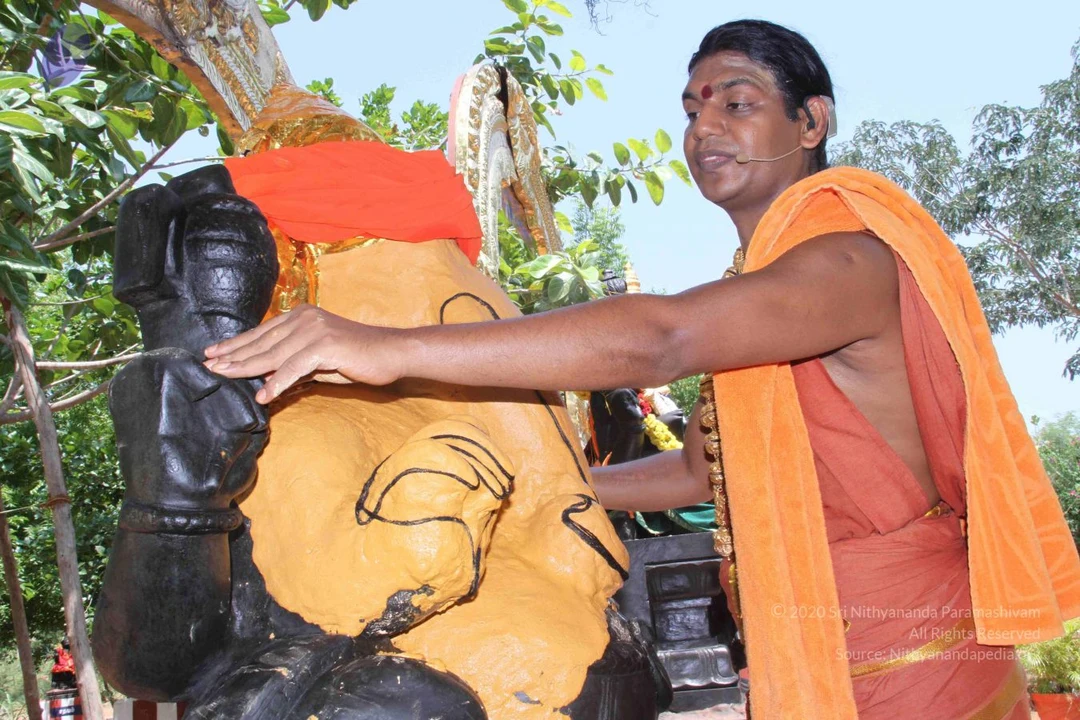
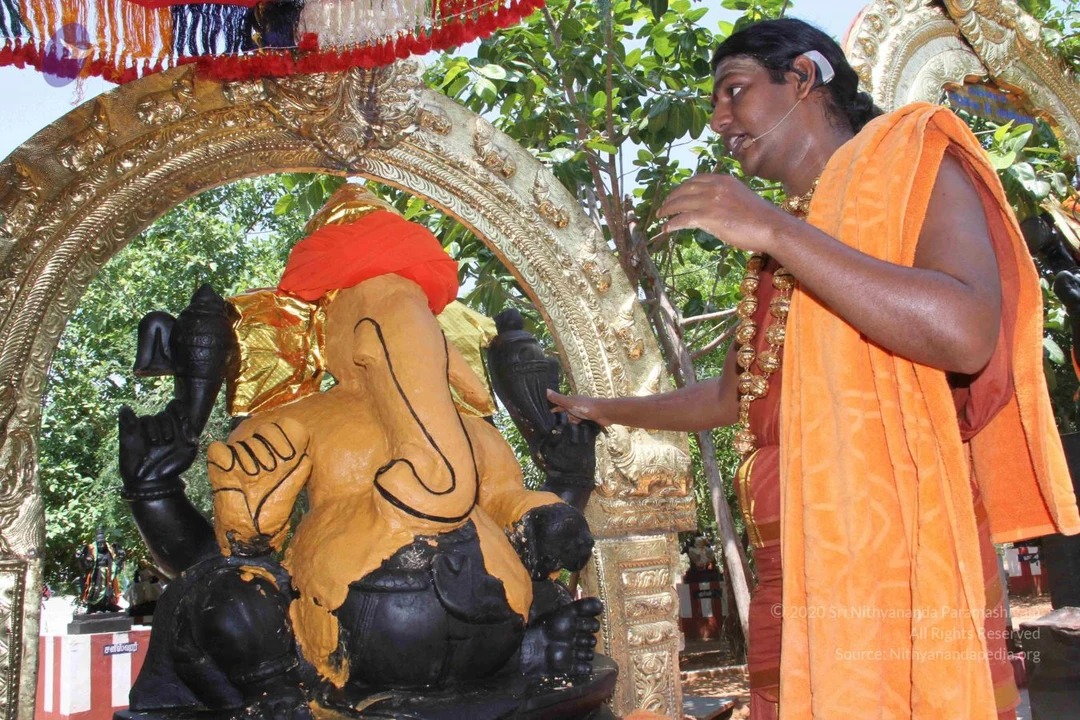
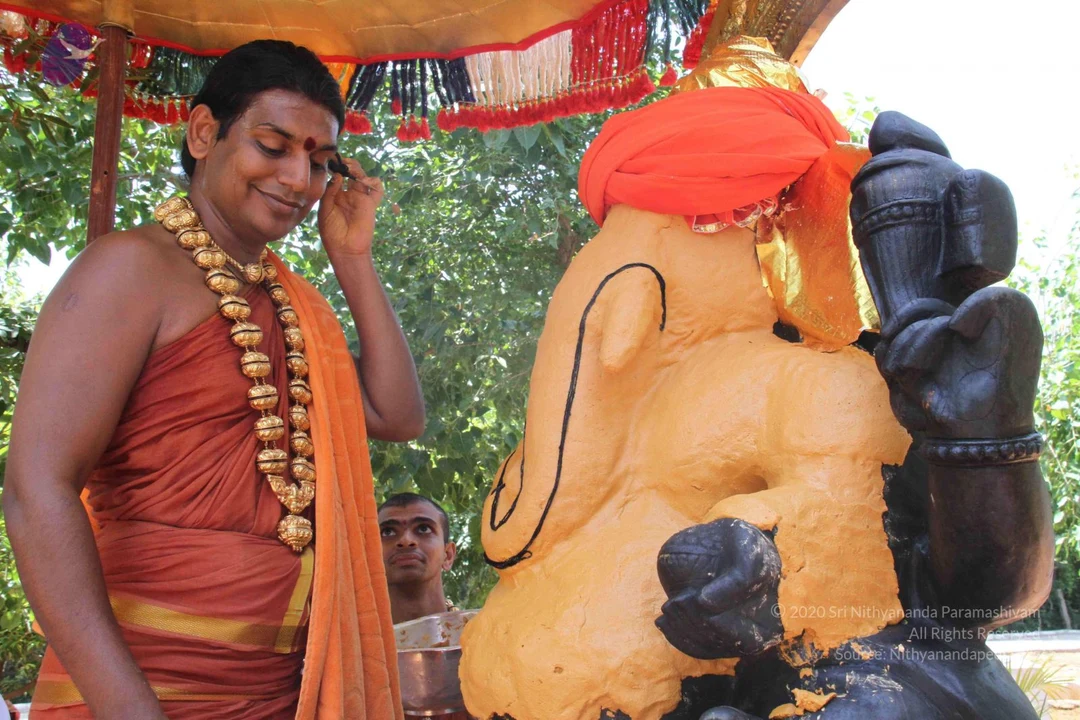
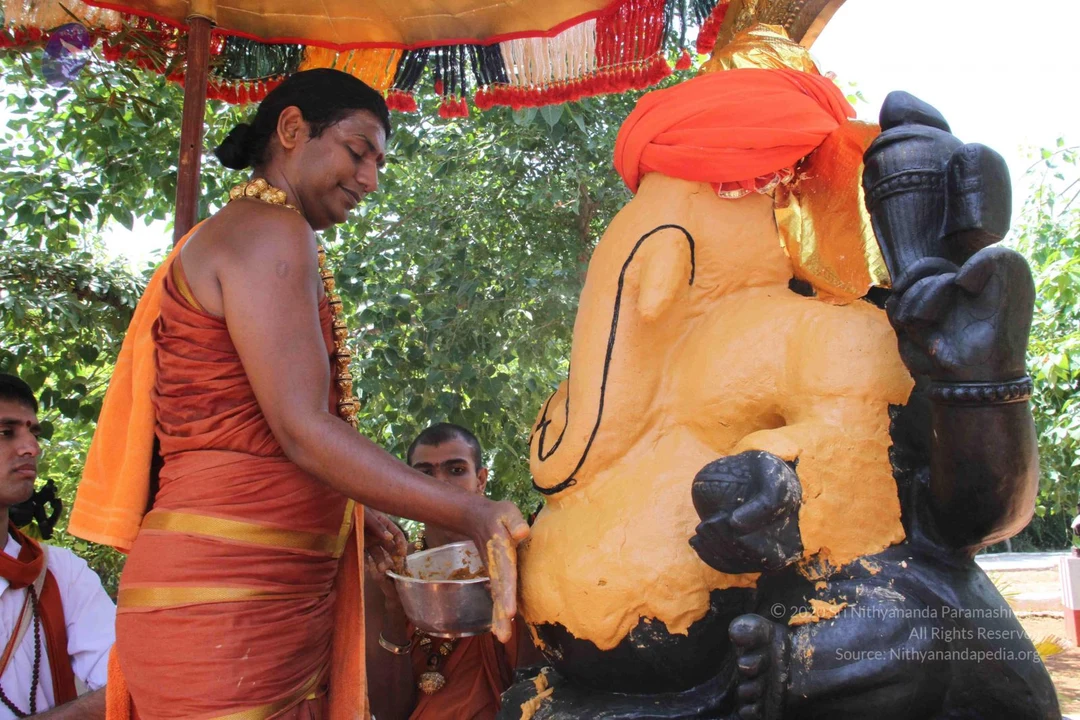
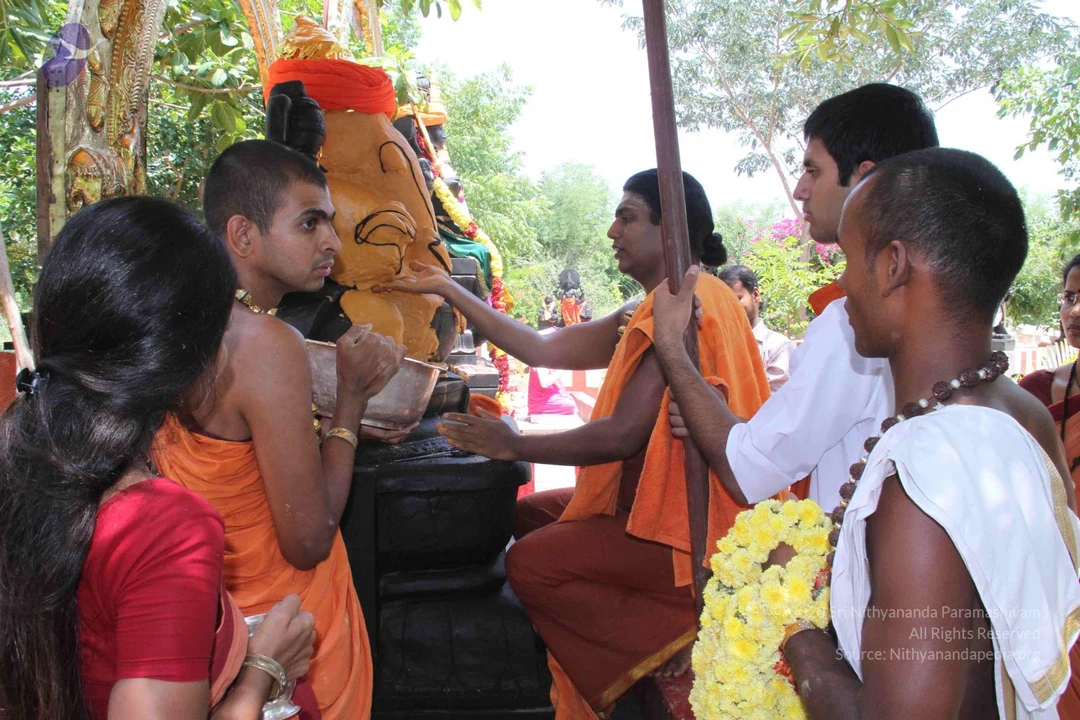
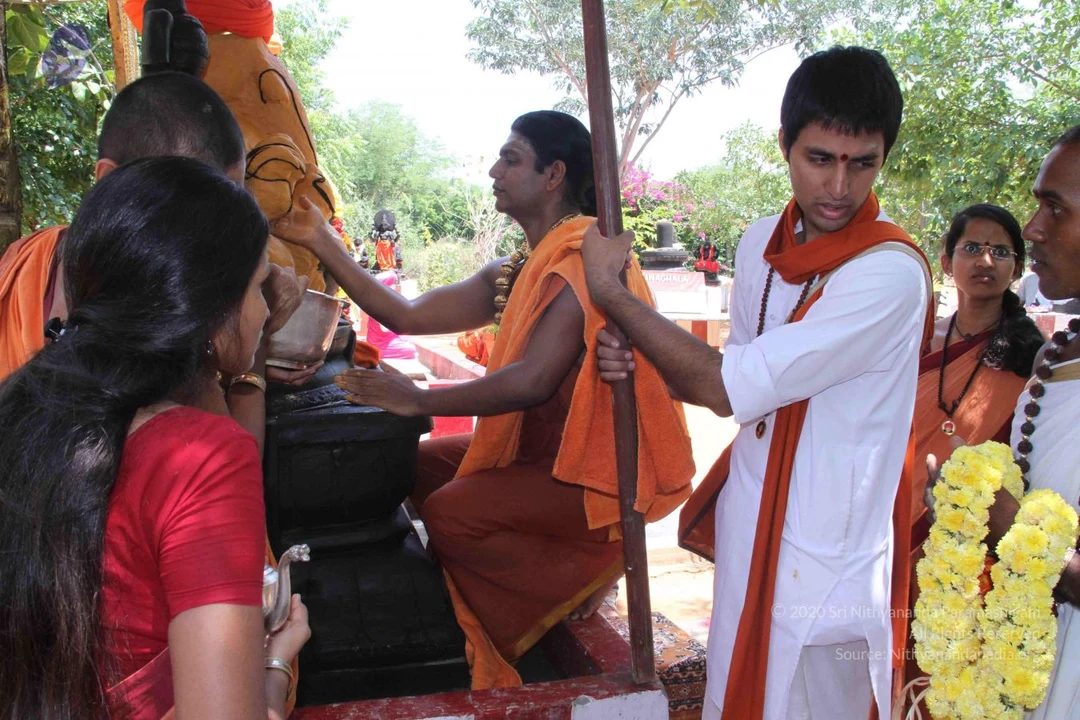
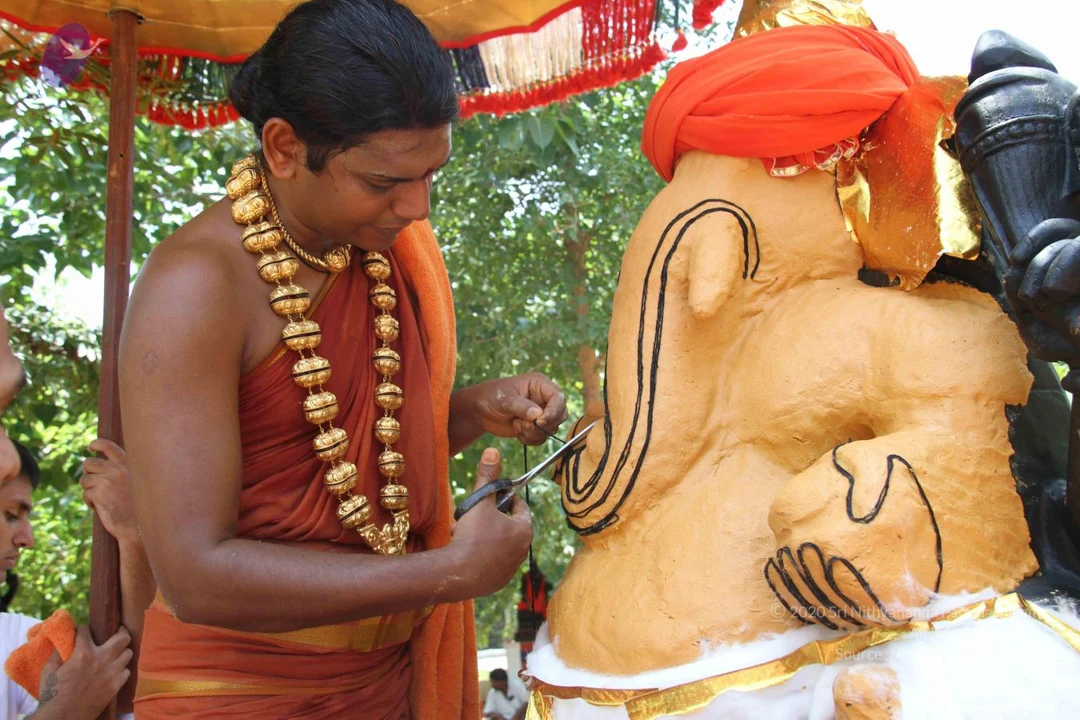
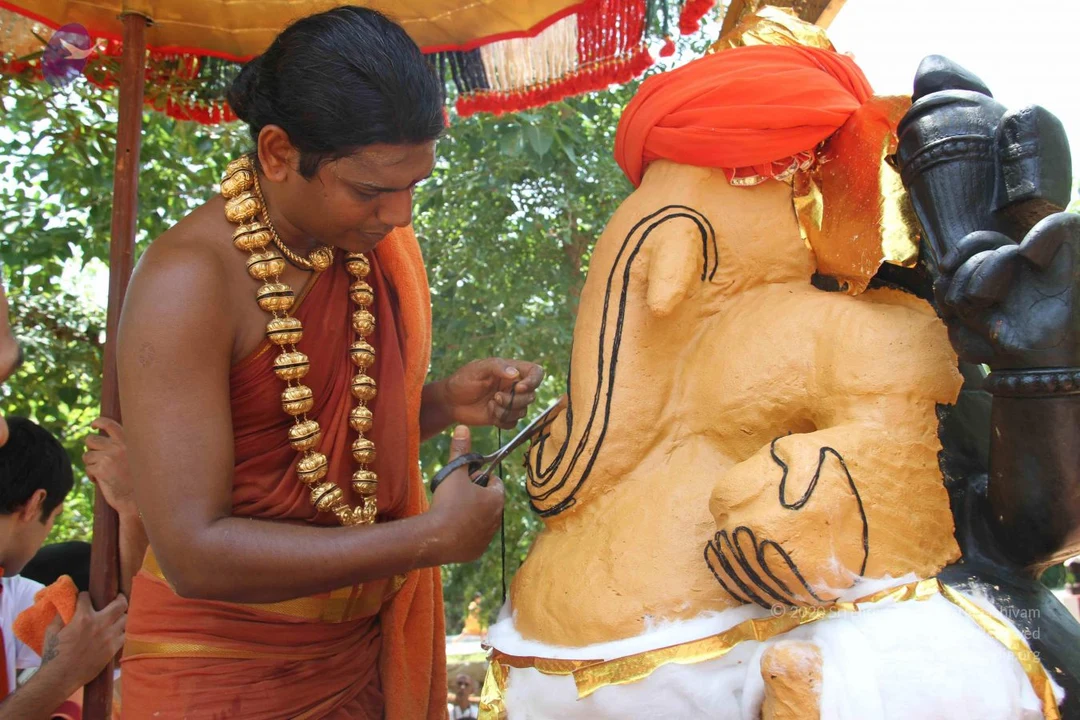
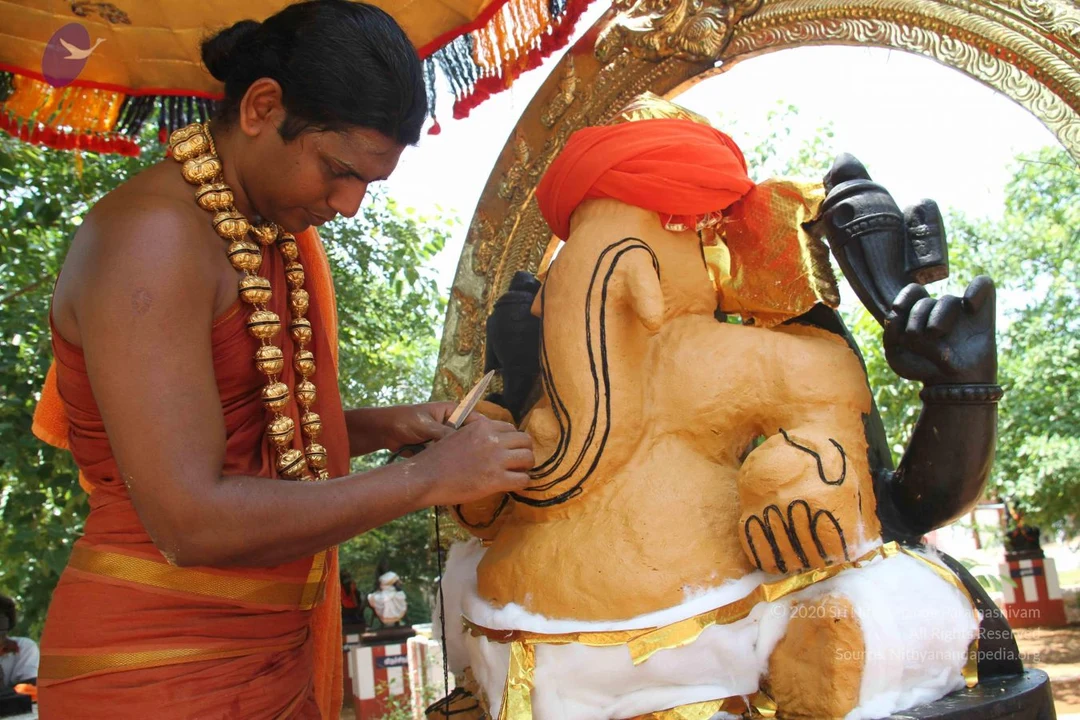
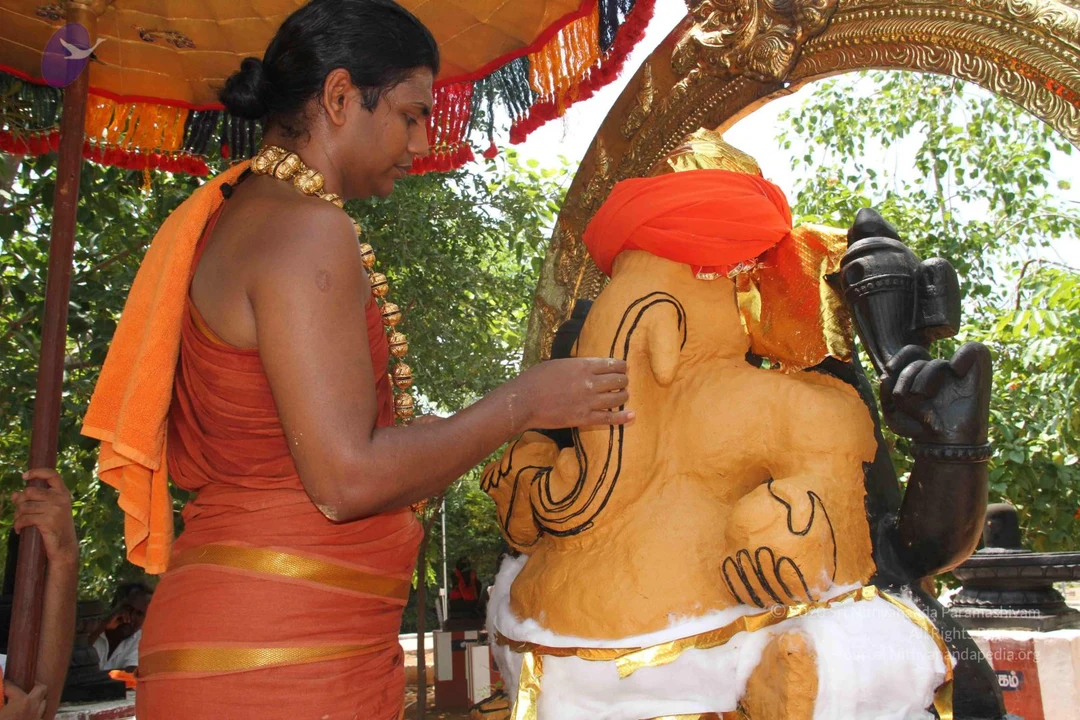
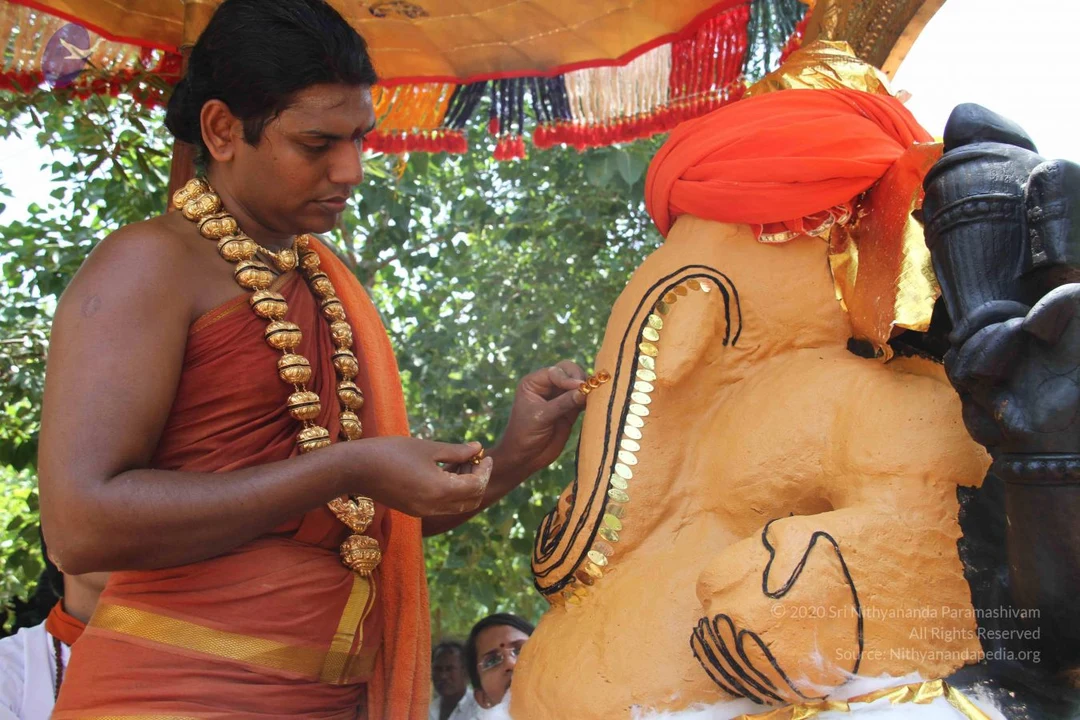
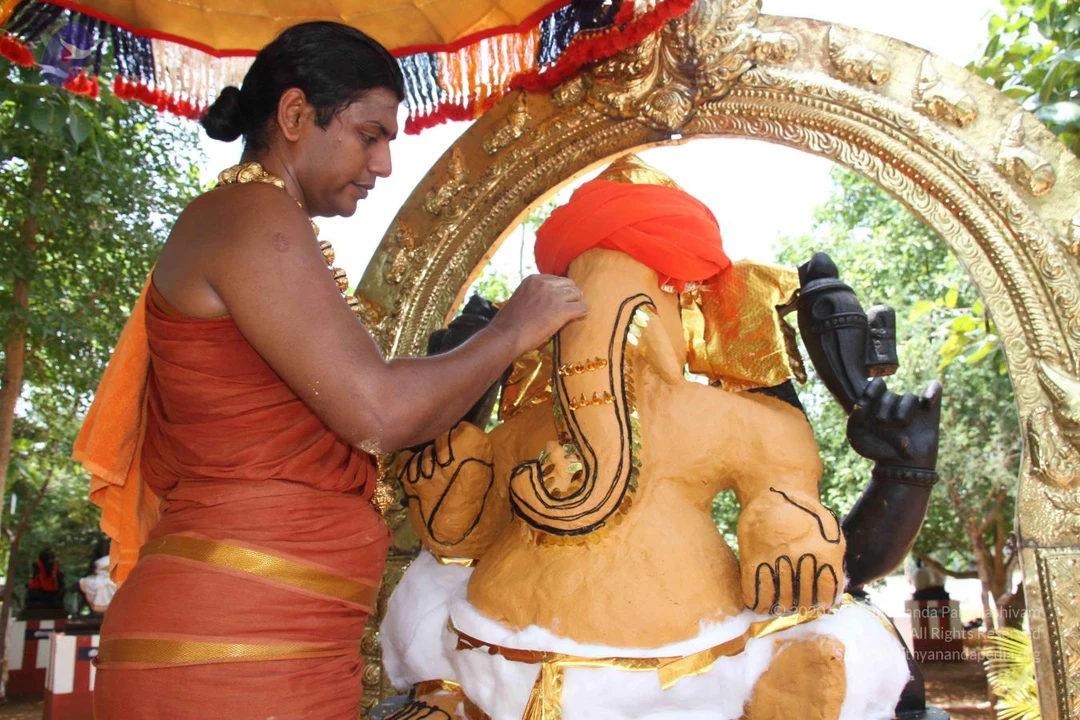
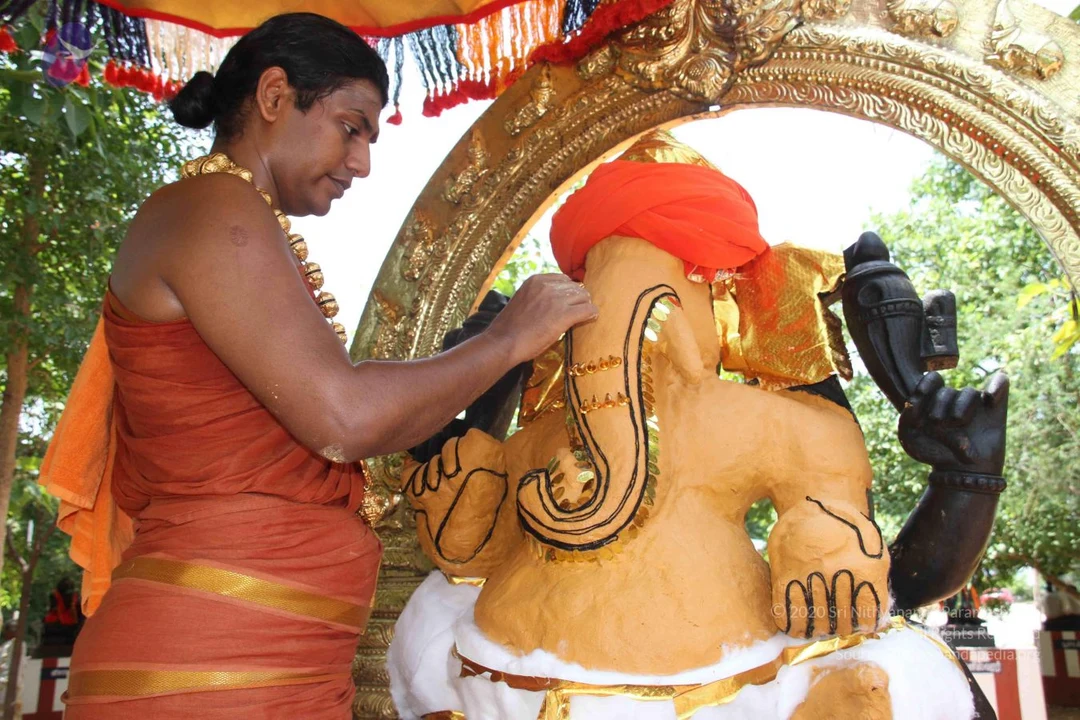
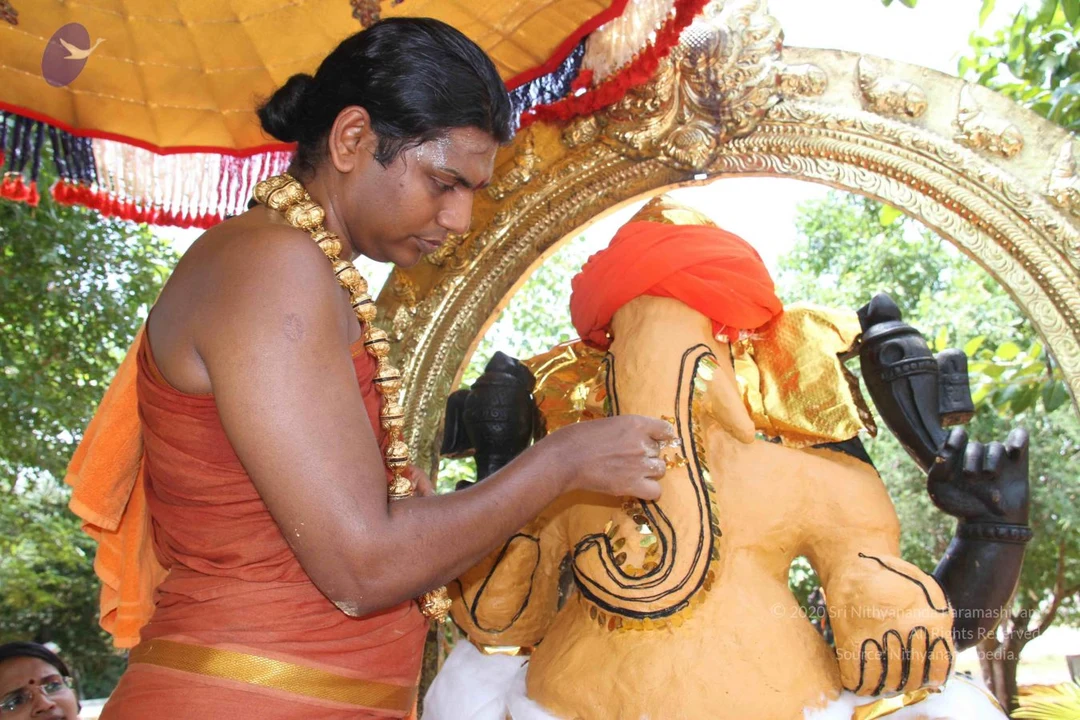
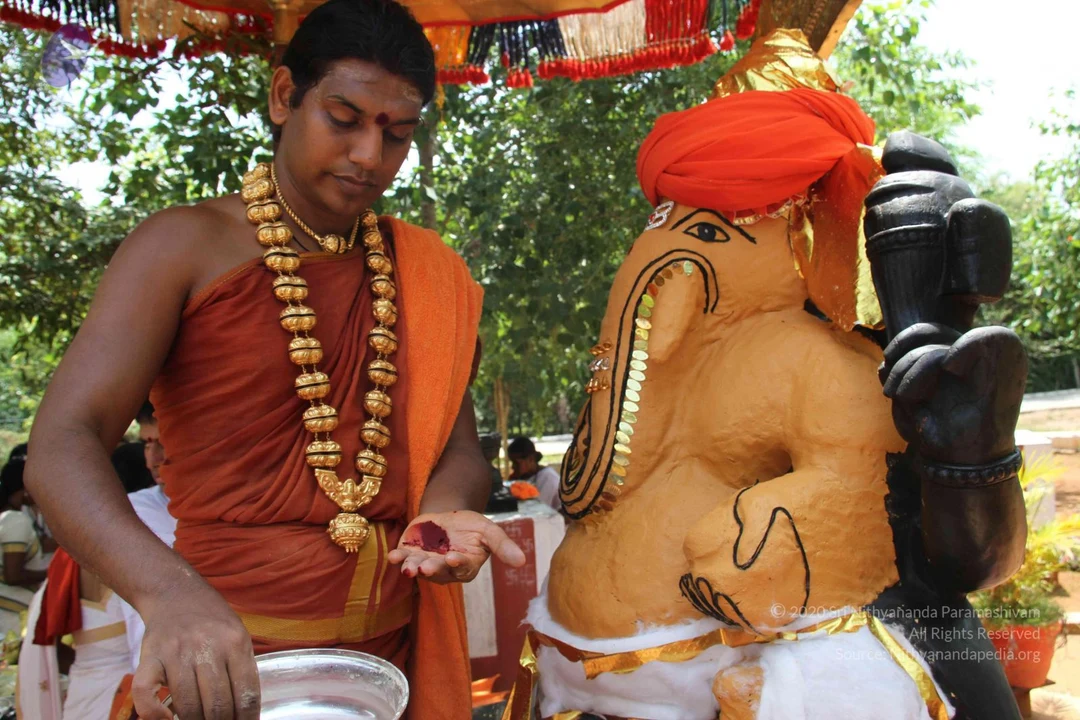
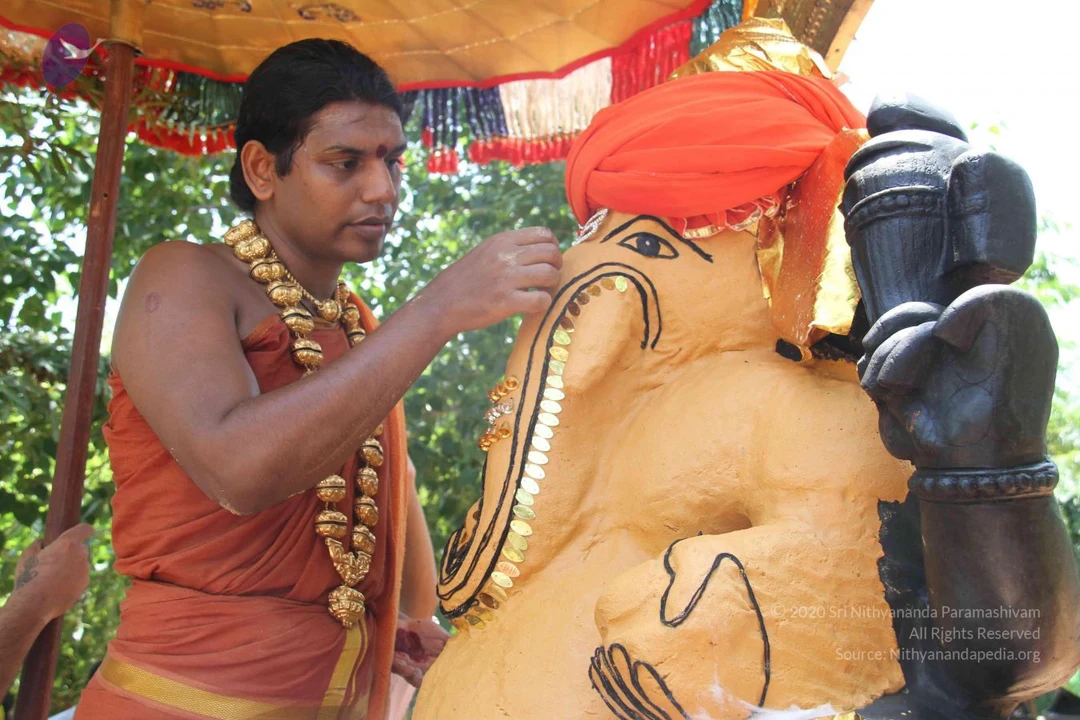
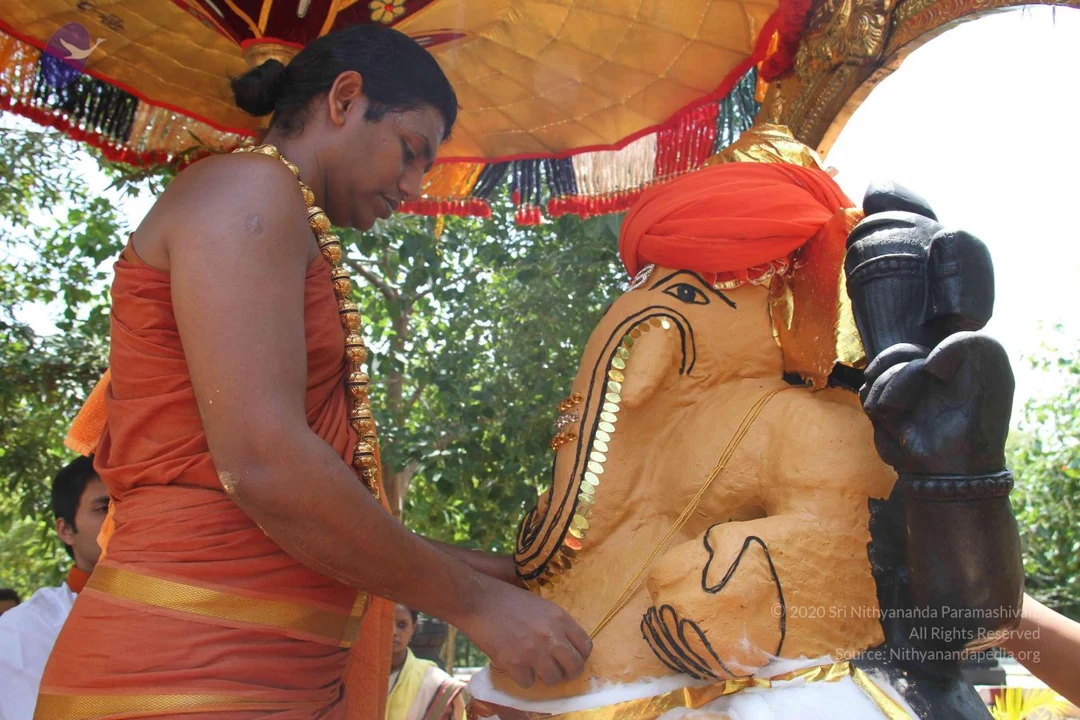
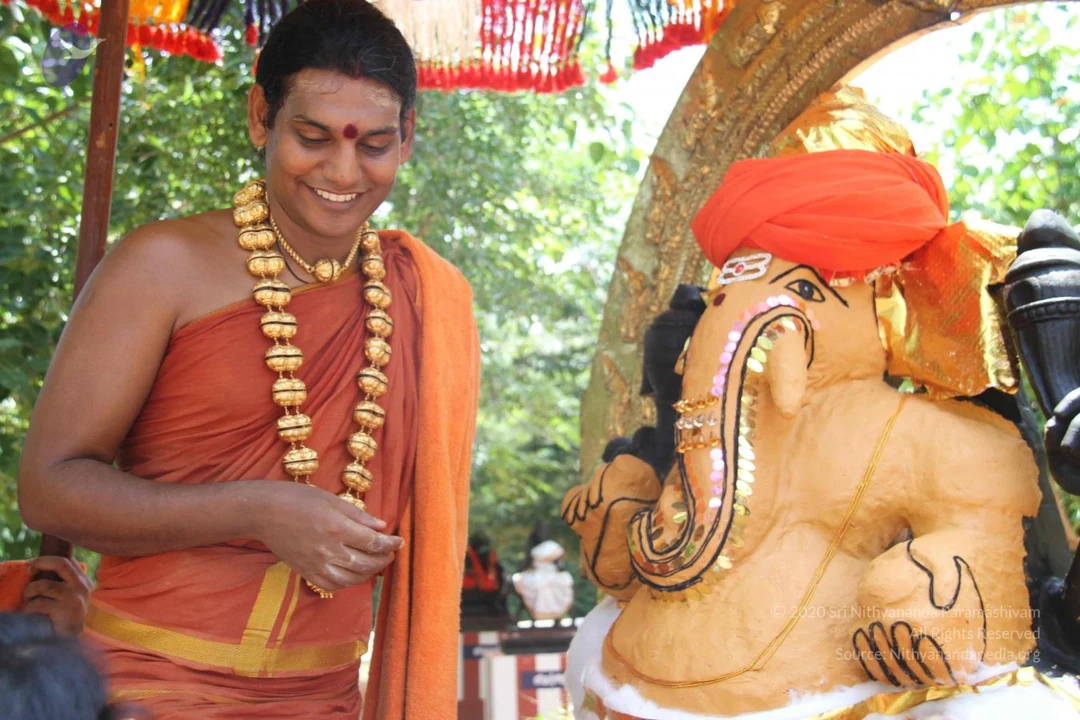
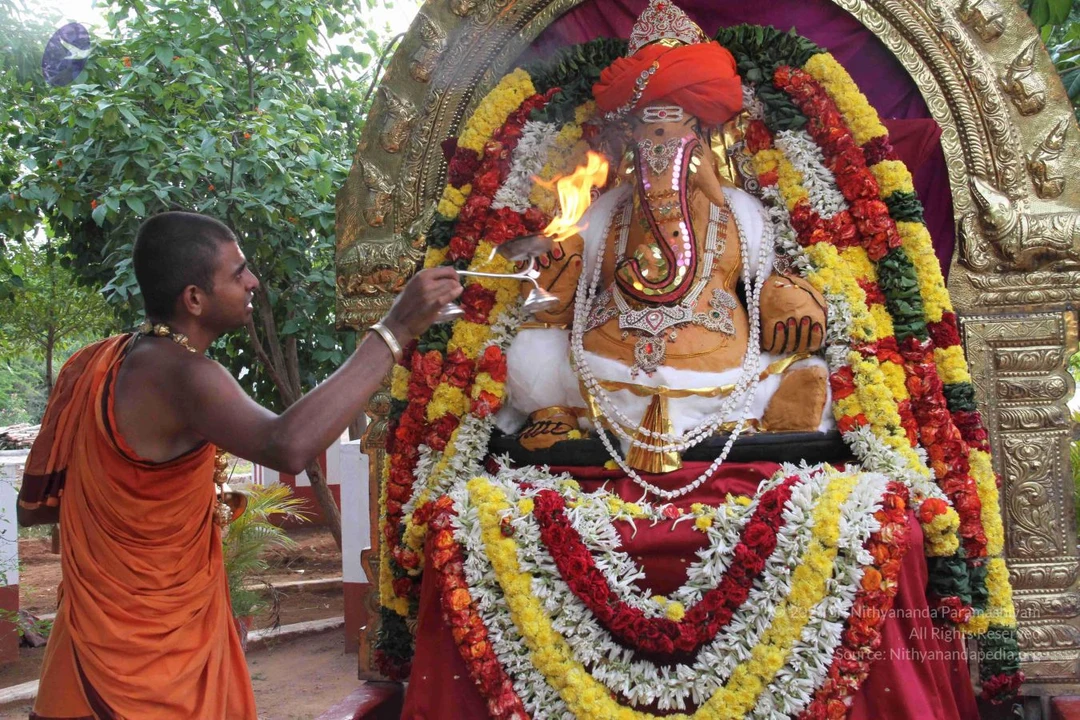
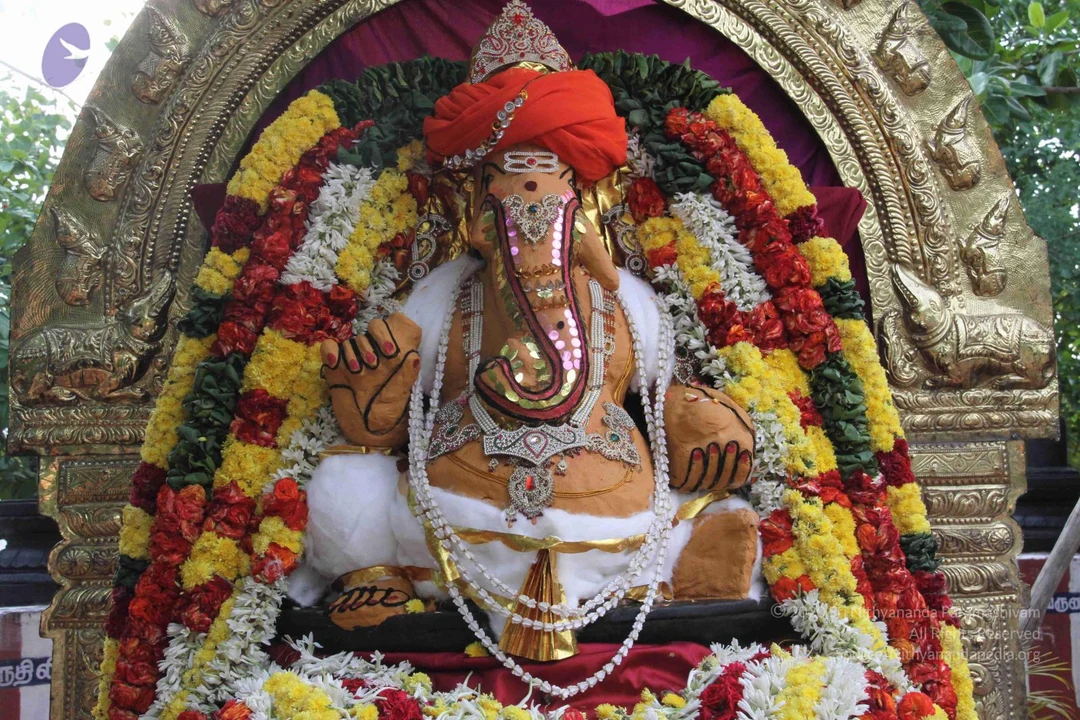
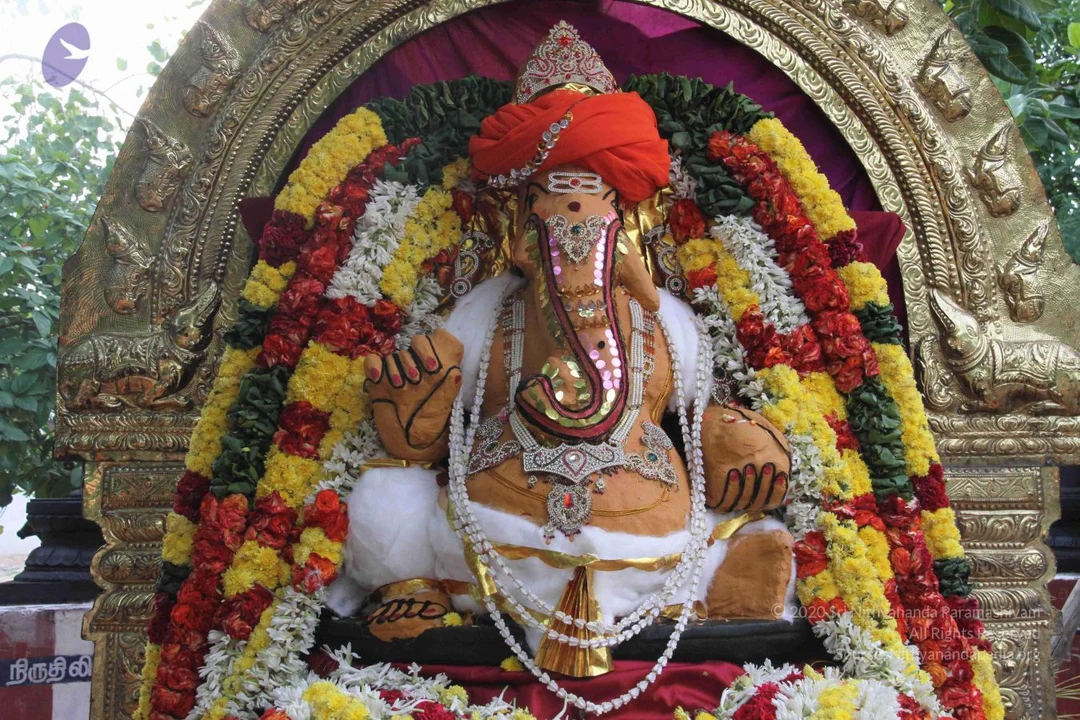
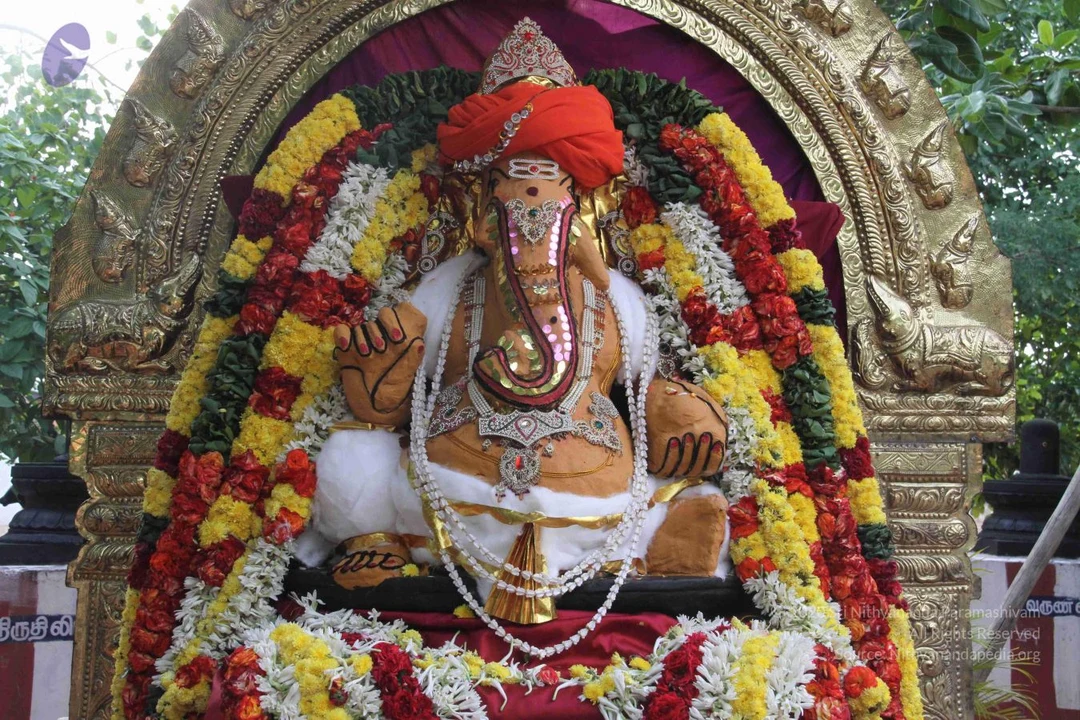
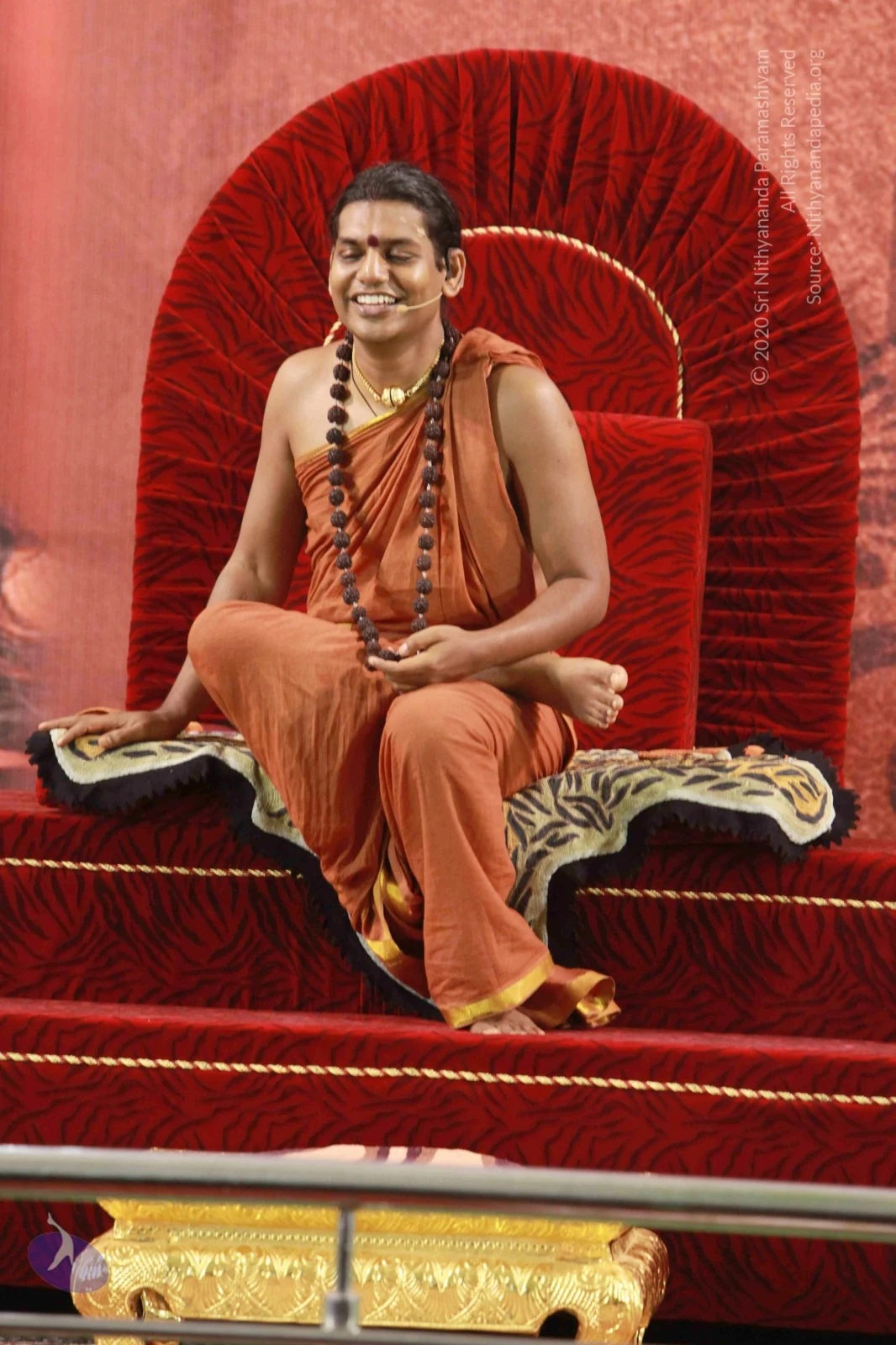
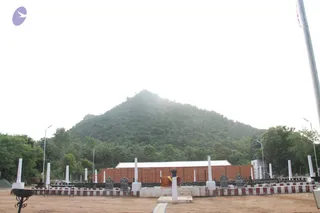
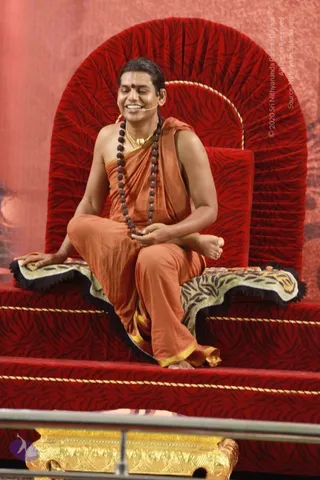
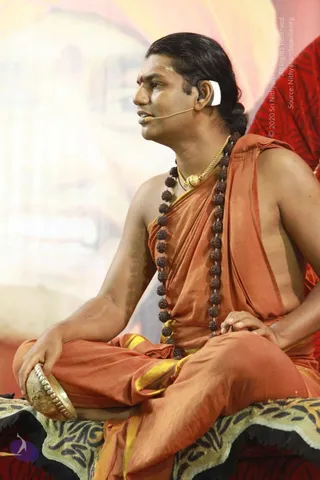
TALKS FROM MORNING SATSANG ON SEPTEMBER 19 2012 AT TIRUVANNAMALAI ASHRAM, INDIA On the great festival day of Ganesh Chaturthi, Paramahamsa Nithyananda (Swamijii) speaks on Hinduism’s most beloved God. He comments that Ganesha is more like a household family member than a deity. Sometimes the rituals and rules of temple worship can create distance between devotees and God, but in Ganesha’s case there is no such problem. Everyone is equally welcome at His temples; and He is accepted by worshippers in every sampradaya.

Link to Video:

VideoAudio

Transcript:

Ganesha, World's Most worshipped God

Sadaashiva samarambham

Jnana sambandacharya madhyamaam

asmadaacharya paryantaam

vande Guru paramparaam

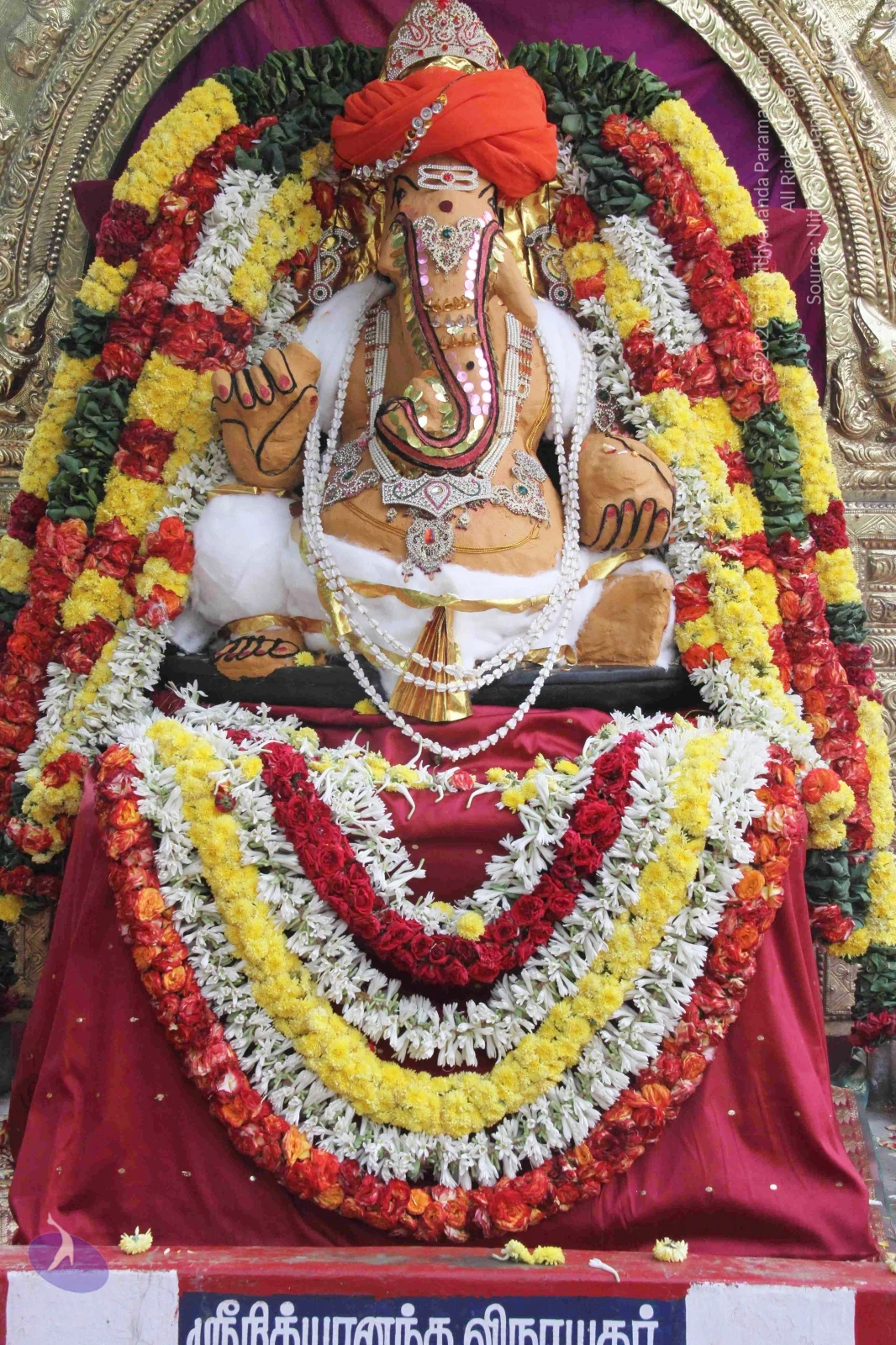
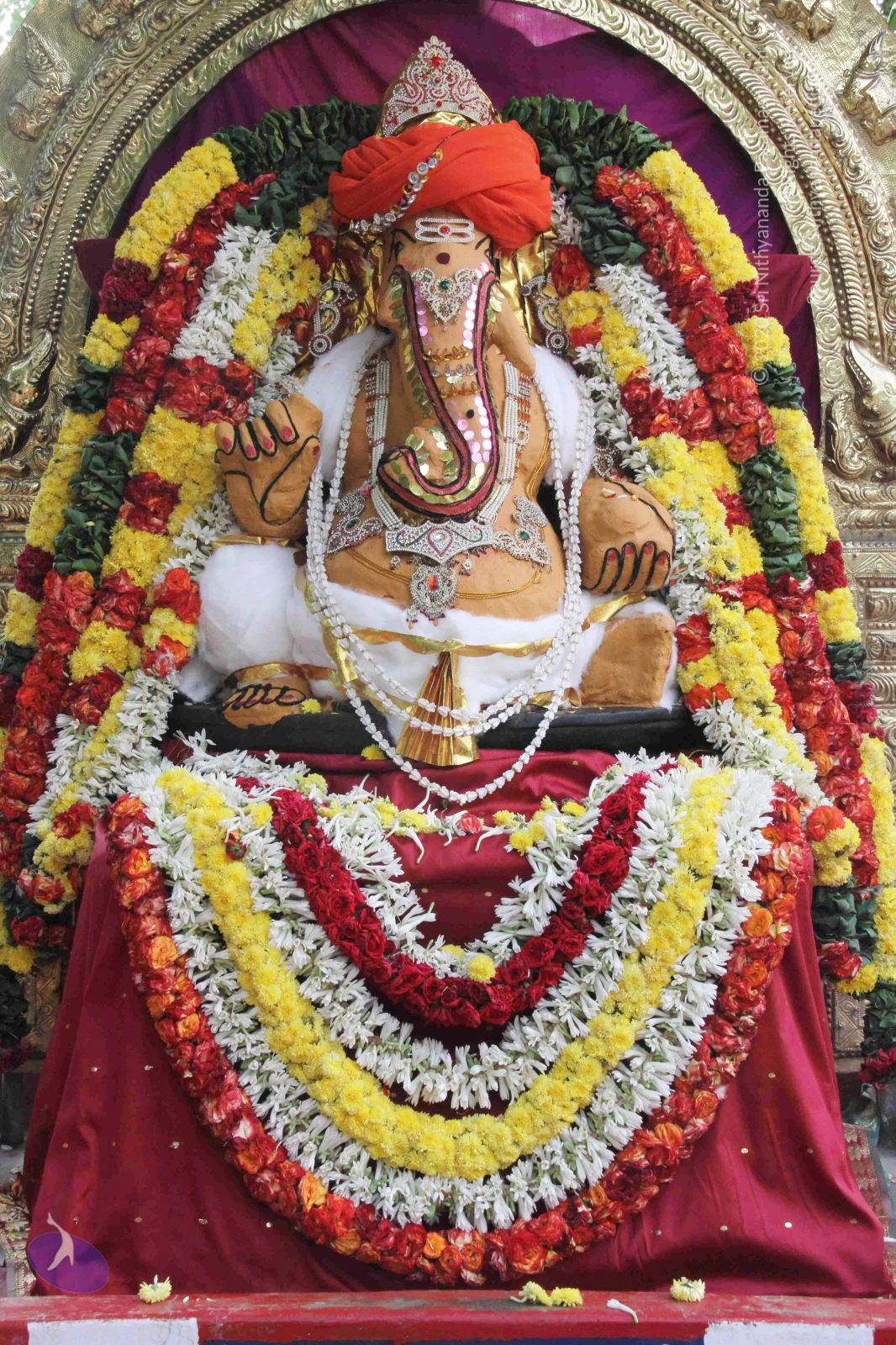
Ganesha, beloved of all hinds. Understand, Ganesha more like a house-hold member of hindu family, than a god. Because he does not carry anything related to the, seriousness of god. but he can create the sacredness in all of us. Embodiment of pranava, omkara sound. He is the first god, in the hindu tradition. His very shape shows he is a happy person. Not bothered about nirahara samyama, not bothered about any other things. Living blissfully, happily eating whatever devotes give, above all, beyond the red tape of agamas.

Sometime, the agamas become red tapism. Stopping us, making us feel 'distanced' from the divine. This happened in me, before going to Ramakrishna mission, I had the darshan of Sri Ramakrishna in my dream, in the visions. I used to feel so close with Sriramakrishna. I just know he is mine I am his' But when I went to the Ramakrishna mission, when I took up the responsibility of pujari, there is so much of rules and restrictions "Don't stand here, Don't sit there, Don't touch this, don't touch that"

With so much of restrictions, I really felt I lost the closeness with Sriramakrishna. Sometimes, the agamas which is created, which was supposed to help you, to feel the deeper connection with the deity or guru or god, creates certain distance. But, when I settled with that system, then I saw, the distance also disappeared, and the system was also flowing properly and the feeling connection was growing, getting built. Anyhow, Ganesha is not bound by any of this agamic, red tapism, bureaucracy. Ganesha temples are the only temples where there is no caste system. Anybody can be a priest. In shiva temples, Iyengars cannot be priests. Even if you are a brahmin, if you are from iyengar family, you can't be a priest. In vishnu temples, even if you are a brahmin, if you are from Iyer sub sect, you can't be a priest. In the saiva siddhanta temples, even if you are a brahmin, if you are iyengar or iyer, you can't be a priest. You have to be only a desigar. Only that sub-sect can be a priest. But Ganesha does not have any restrictions. Not only that, he is the largest worshipped god in the world. Because no other religion has so many gods and there is no hindu who will not worship Ganesha, even if they are vaishnavites they start their rituals with Ganesha. They may not accept shiva or Shaivism but they accept Ganesha.

In hinduism, there are seven Sampradayas.

--> Worshippers of Ganesha

--> Worshipers of Vishnu

--> Worshippers of shiva

--> Worshipers of Devi

--> Worshipers of Surya

--> Worshippers of Subramanya

--> Worshipers of their Gurus

No one god is accepted by all 7 sampradayas other than Ganesha. All seven sampradayas, has to start their rituals with Ganesha worship.

Souras - Worshipping Surya. They don't need to accept Shiva or Vishnu. And in their worship, you will not find place for Shiva or Vishnu.

Shivites - You will not find any place for vishnu in their worship system.

In vaishnavites, you will not find any place for shiva in their worship system. The vaishnavites are said to have a bell in their ears. If they see somebody chanting "shiva shiva", they will ring the bell fast so that the mantra does not enter into their eyes.

Same way, shivites, They are said to never cross any vishnu cities or where the vishnu temples exist. Because they should not get influenced it seems. Anyhow!

Shaktas, put shiva at the feet of Devi. They don't worship any other deities.

But whether you are a shaktha, shaiva, vaishnava soura, gaumara or kartabaja, (Kartabaja means

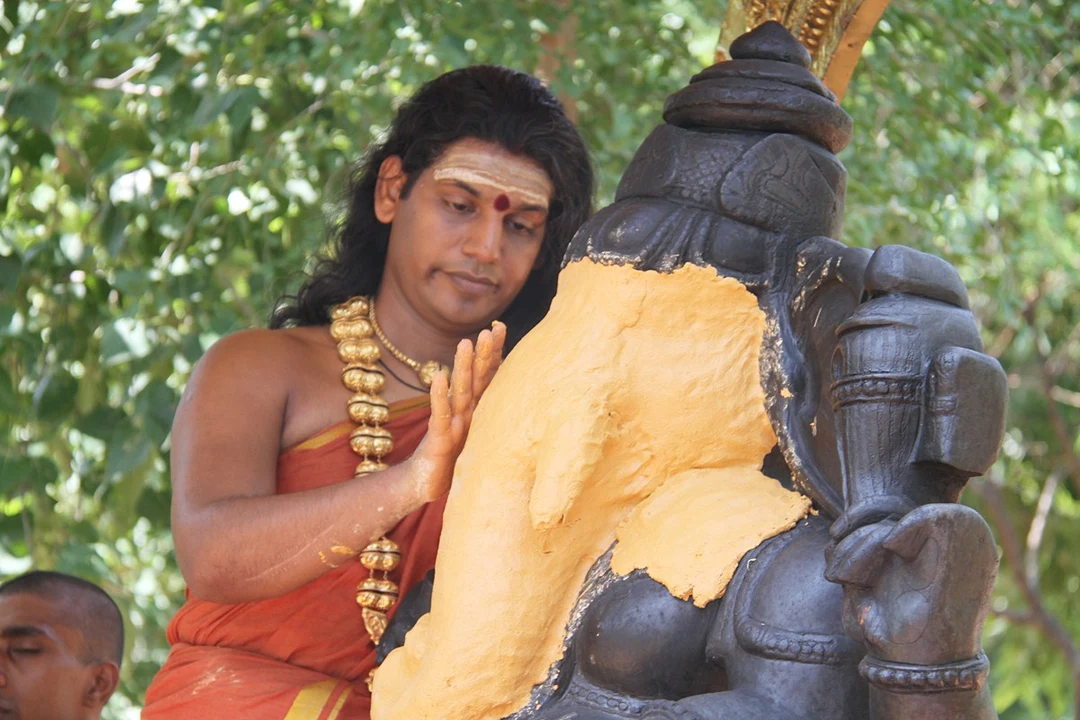
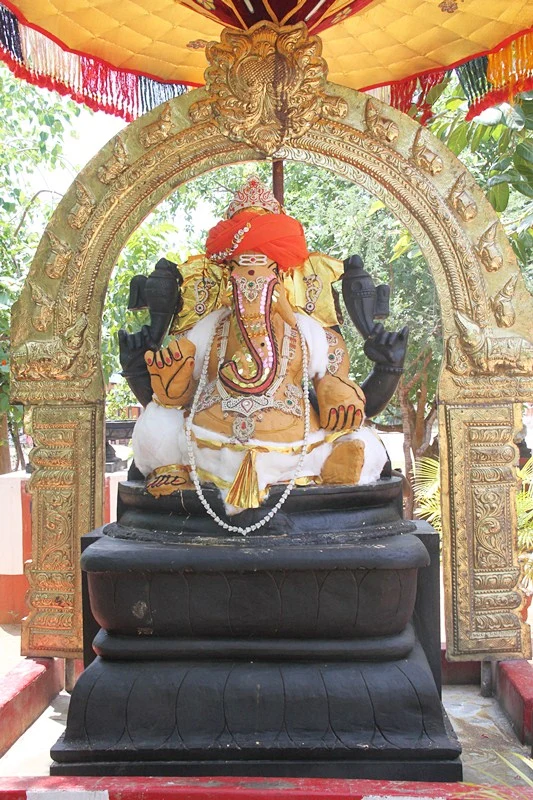
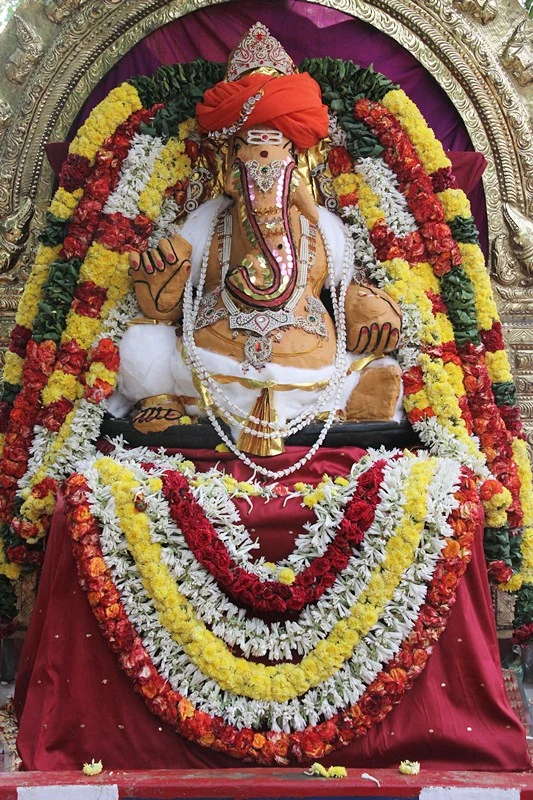
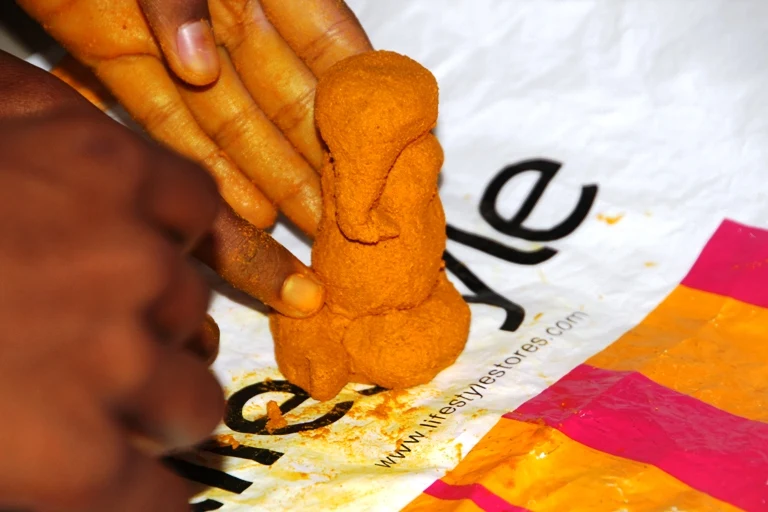
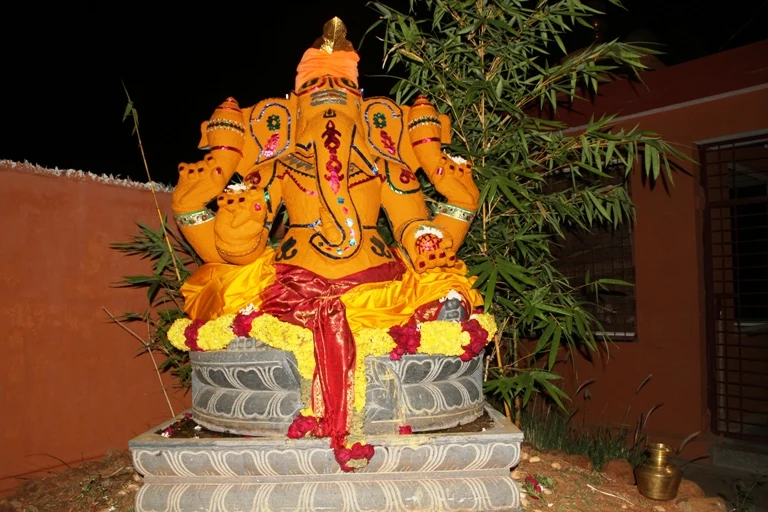
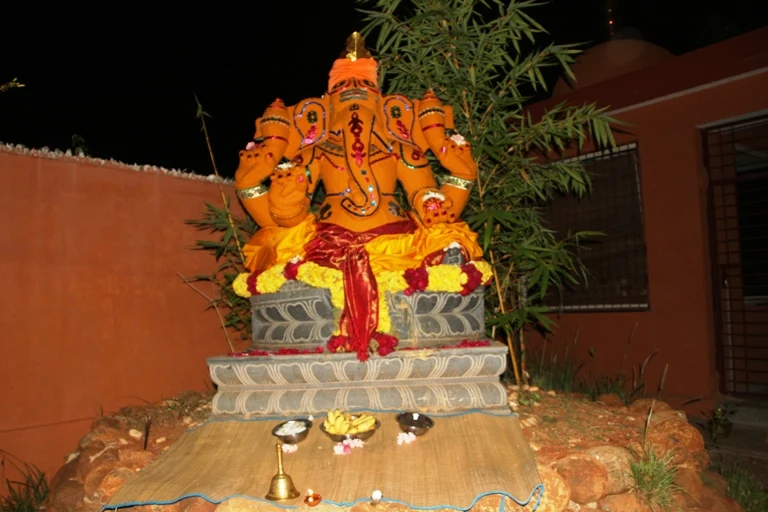
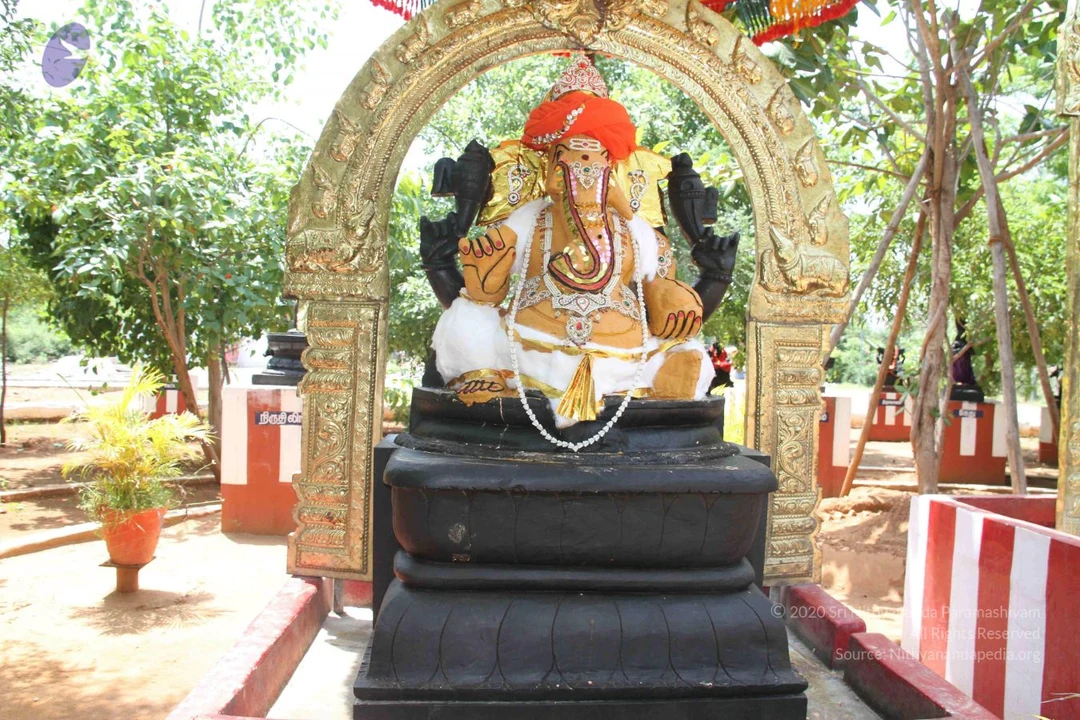
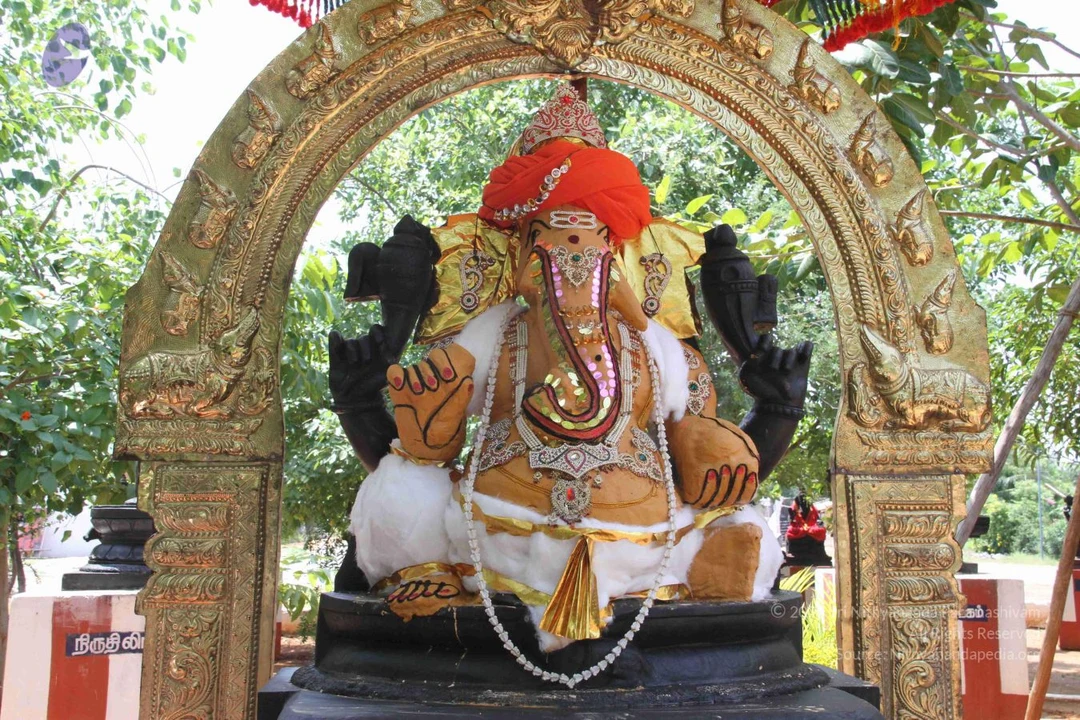
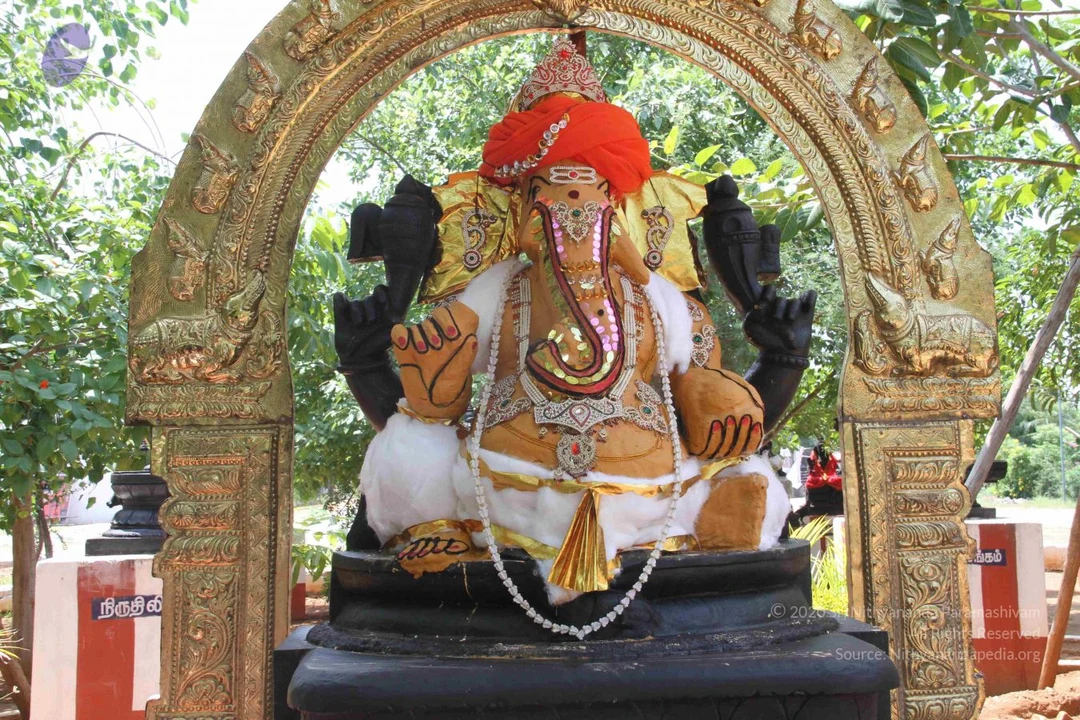
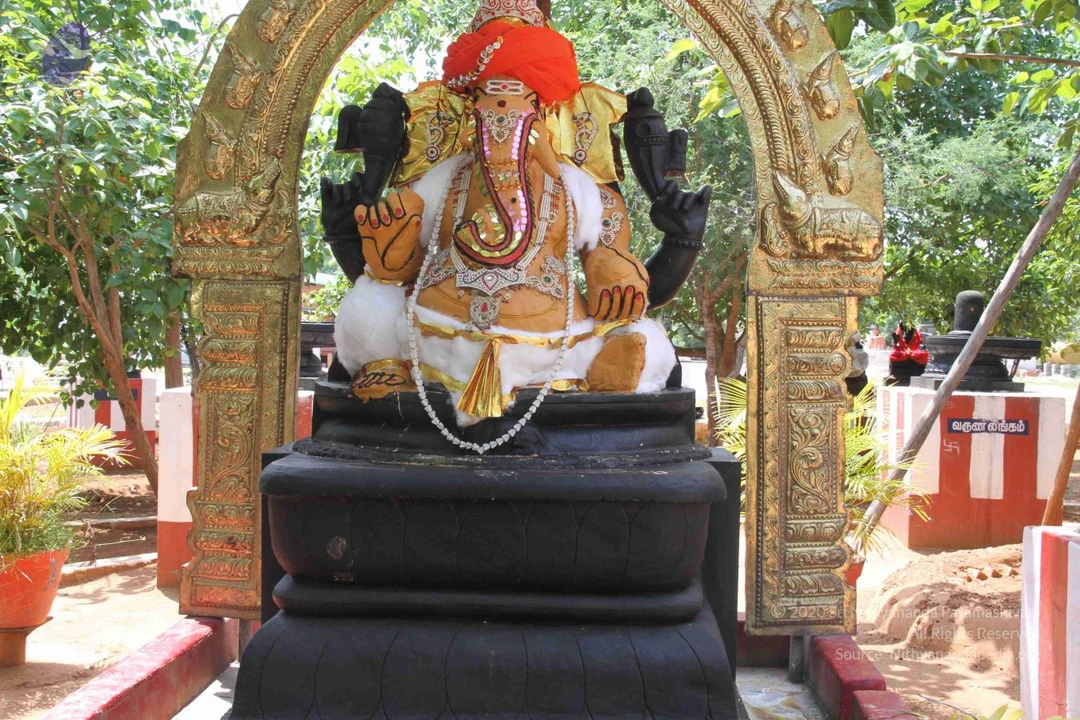
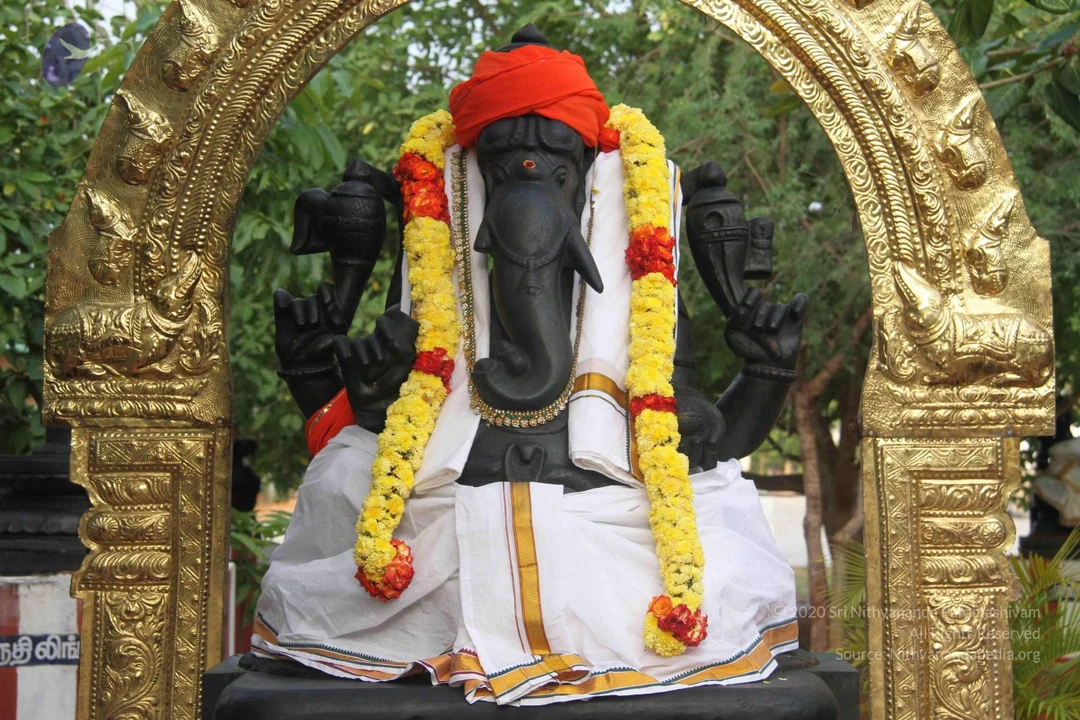
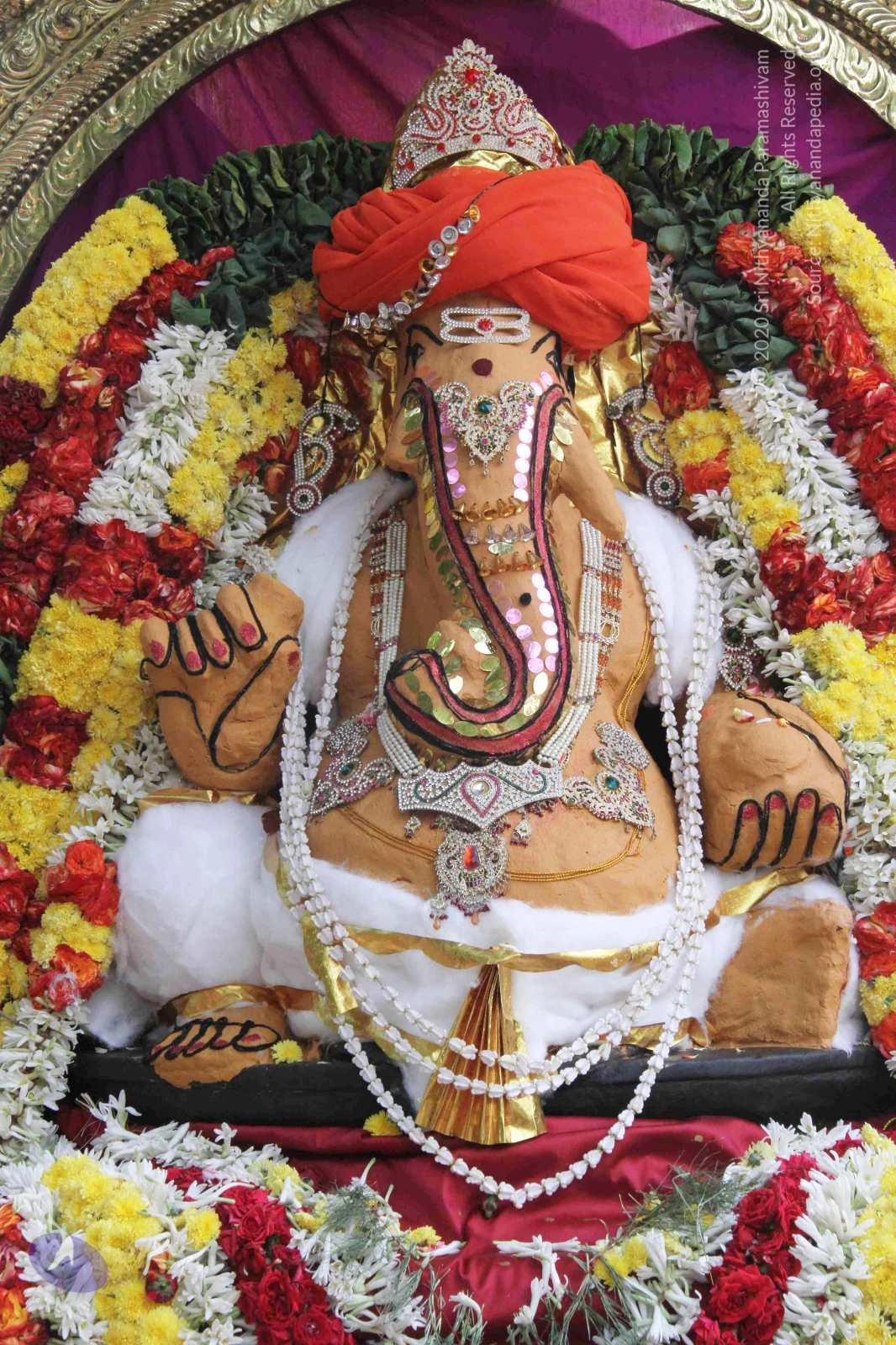
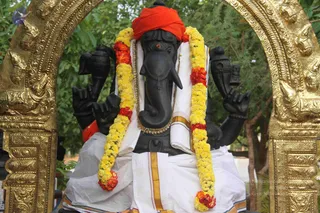
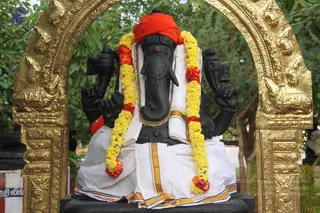
the guru worshippers - people who worship their own guru as incarnation of God). Actually Nithyananda sampradaya will fall under the kartabajas only. You guys are guru worshippers. Basically, you believe your own Guru is an incarnation of God. So you guys are the Guru sampradayas. Kartabaja sampradayas - sampradayigars. Basically vedantis are Guru worshippers. So, what ever sampradaya you may belong to, but you have to start your worship with Ganesha, Ganesha puja. Ganesha, is the most beloved of the whole hindu tradition and who does not create the red tapism of agamas between disciples, devotees followers and himself. Easy to approach, Can be worshipped through any medium, You don't need to even have a big stone deity installed as per agamas. Just cow dung, a piece of cow dung, keep it and say "Ganapathaye namaha", He is there. Thats the beauty of Ganesha. His form is the ultimate. His name is the ultimate. His leelas, most beautiful simple leelas. The very form itself is so friendly. The elephant which almost every human being likes, Even though it looks so huge, it can be domesticated so easily and can be your beautiful friend. He Carries the elephant face which represents the "Omkara". He represents the great philosophy, carries the angusha. Angusha represents the power of 'Unclutching'. Paasha represents the ability to distance yourself from the emotions. And the broken tusk represents the sacrifice and spontaneity. And the modaka represents, if you have all these three qualities, your life will be sweet. He is the embodiment of intelligence and innocence together. Son of Shakthi and life given by Mahadeva. Actually even with Subramanya, there was no involvement of devi. It was just from shiva, other than his sphere, there is no Devi component in Subramanya. Devi gave that sphere to him but in Ganesha, Ganesha was made out of the body perfume of Devi and killed and life was given back by Mahadeva. So Ganesha carries both the elements of shiva and Shakthi. He is the ultimate boon giver. He is pleased just by a coconut. From the time, I remember myself, all my examinations are written by Ganesha only. All you need to give is a coconut. And still, he is the sweet heart of hindu children, especially the exam going children. and a powerful divine being my life- spiritual life has started with Ganesha.

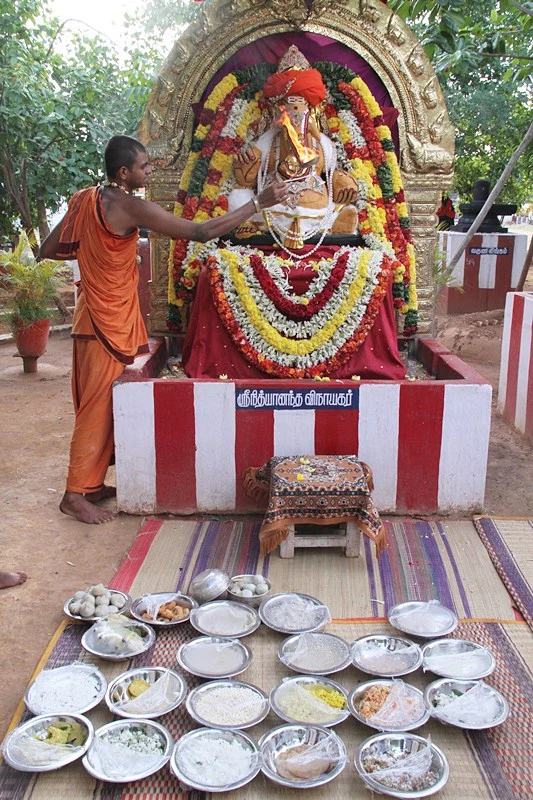
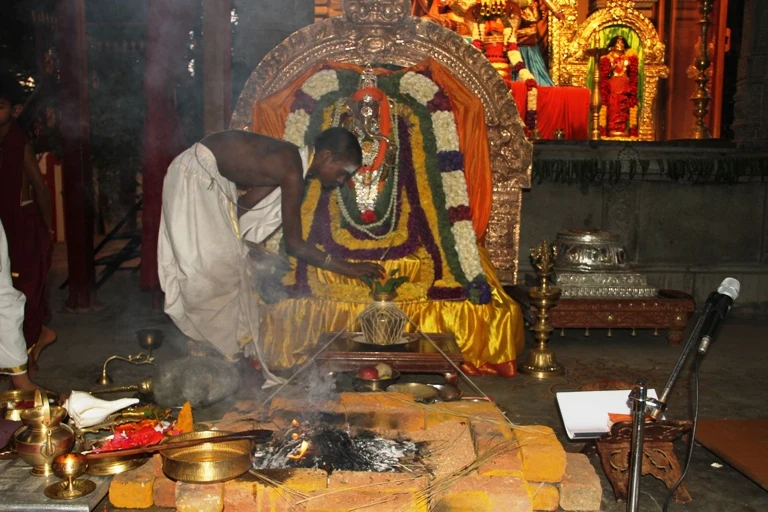
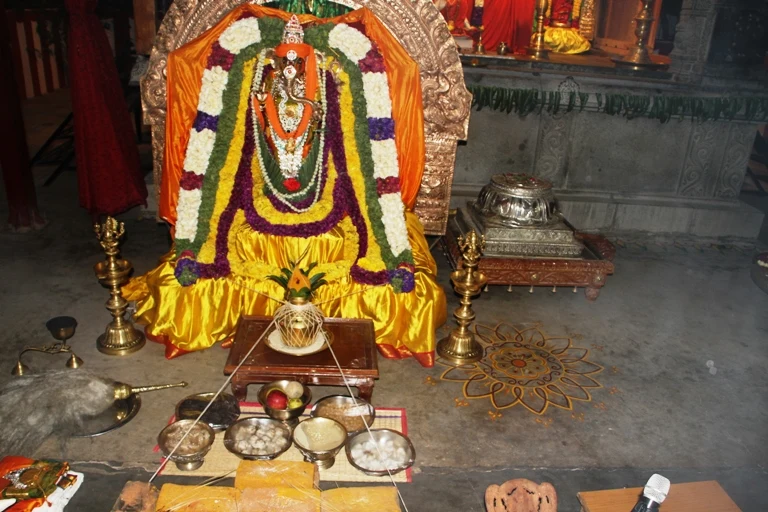
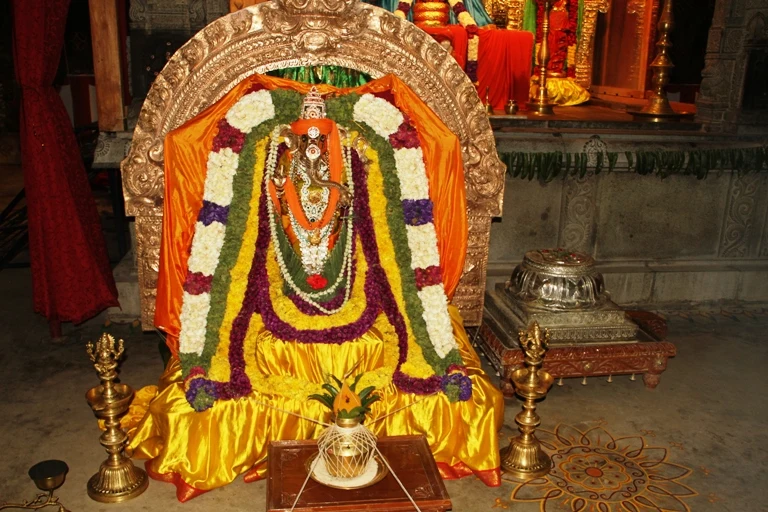
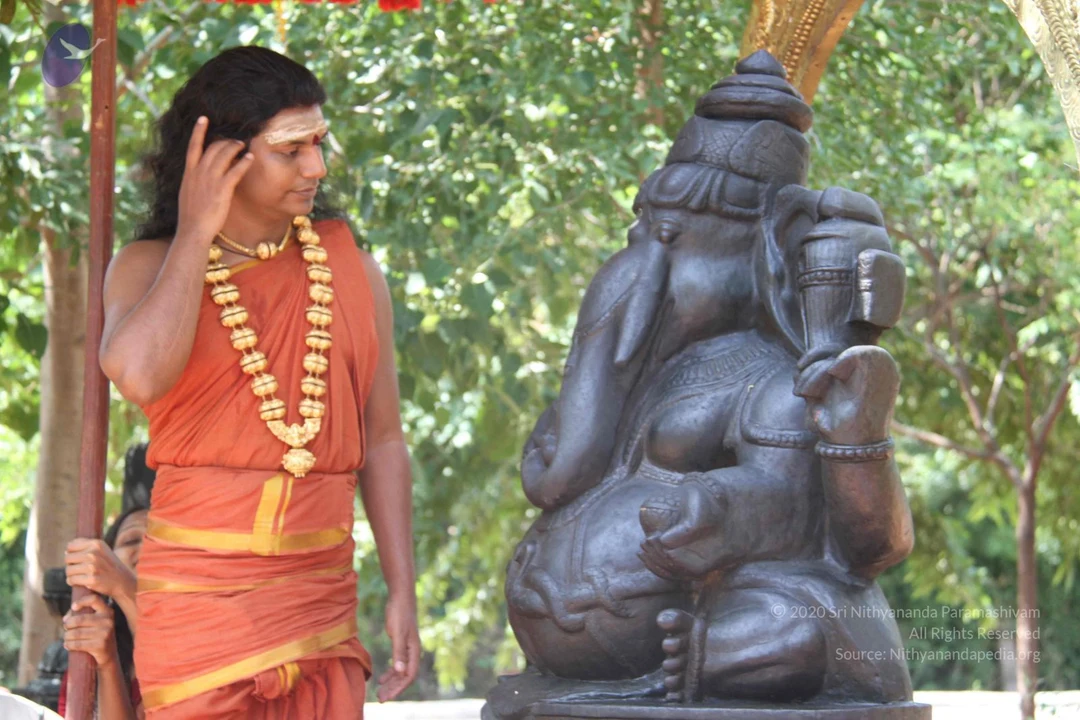
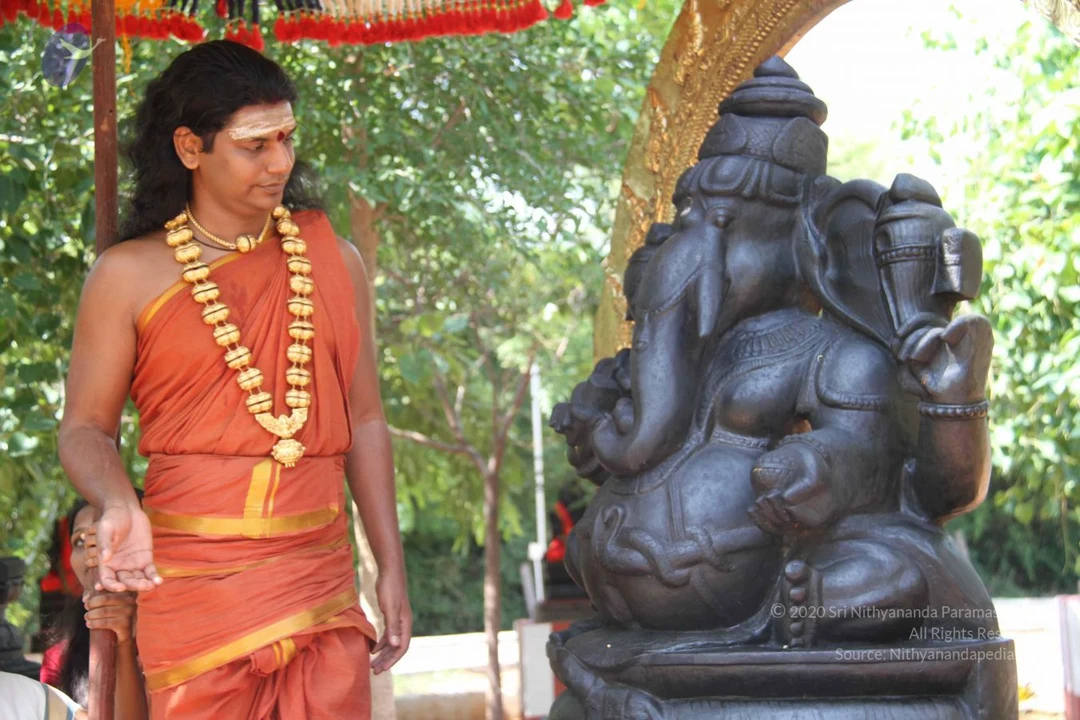
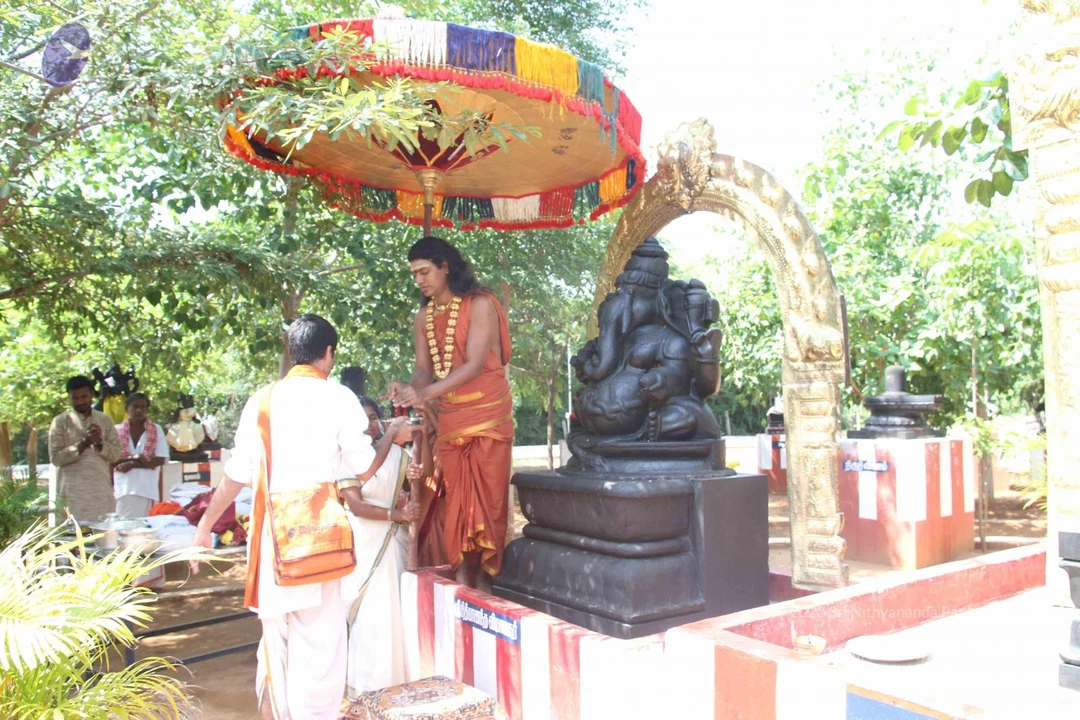
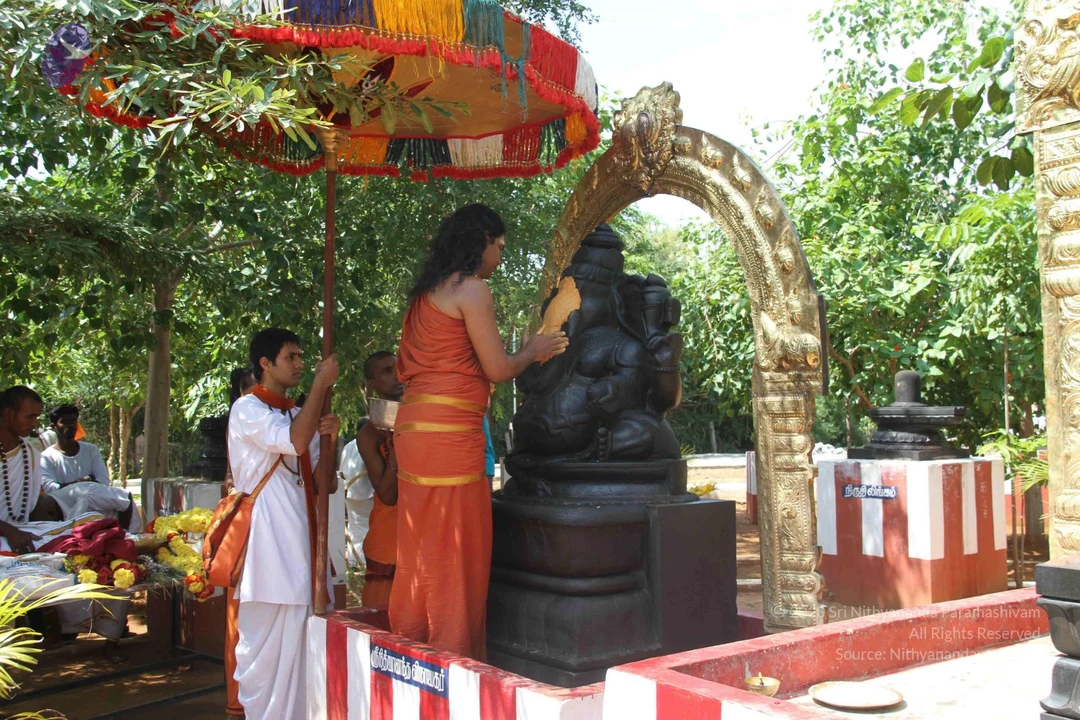
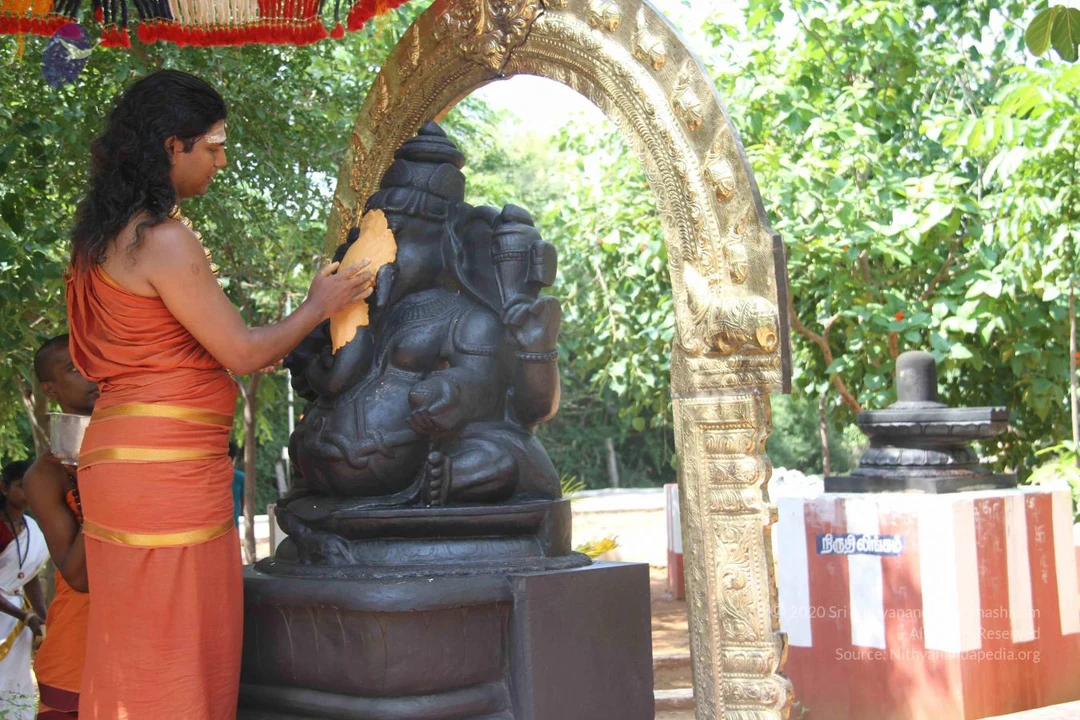
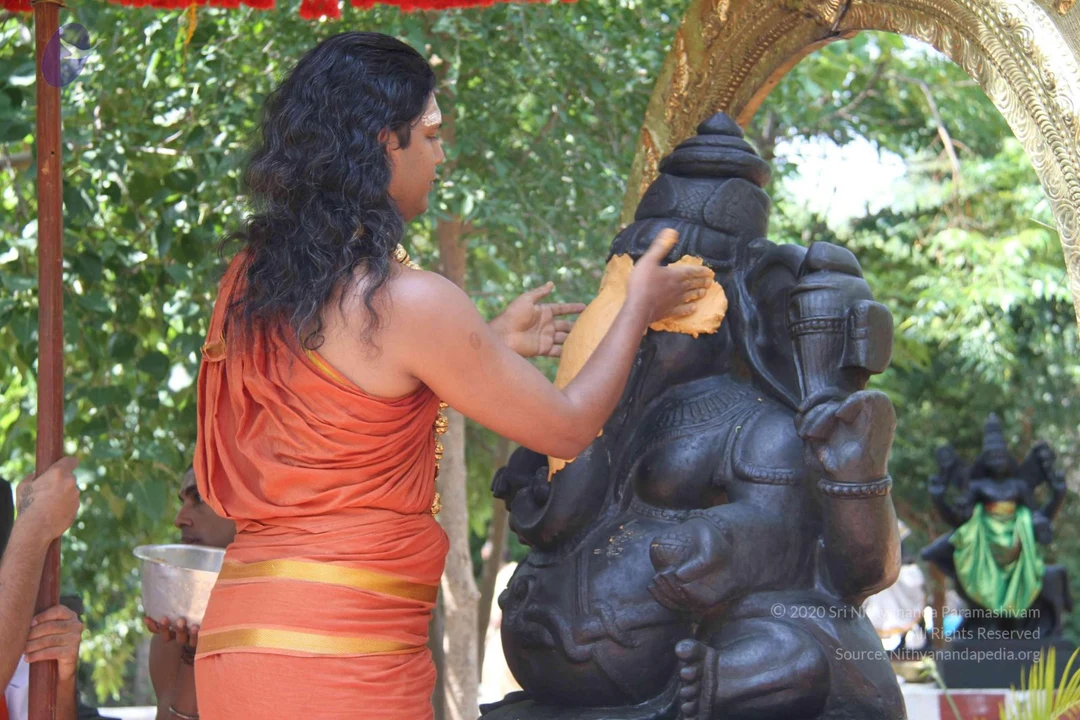
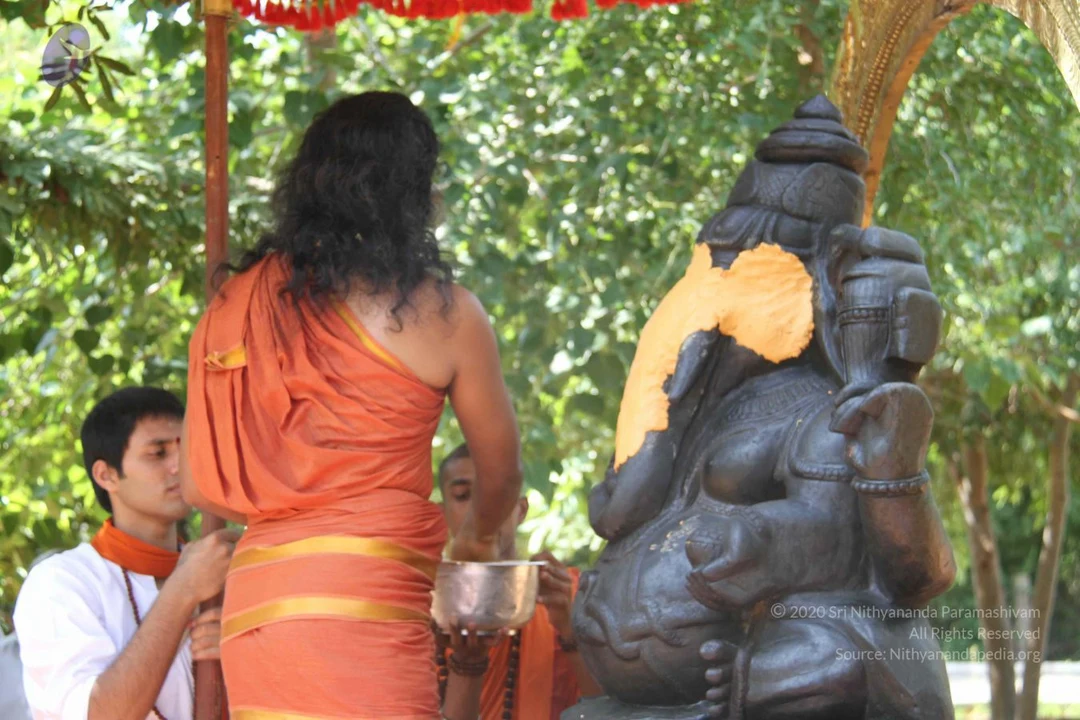
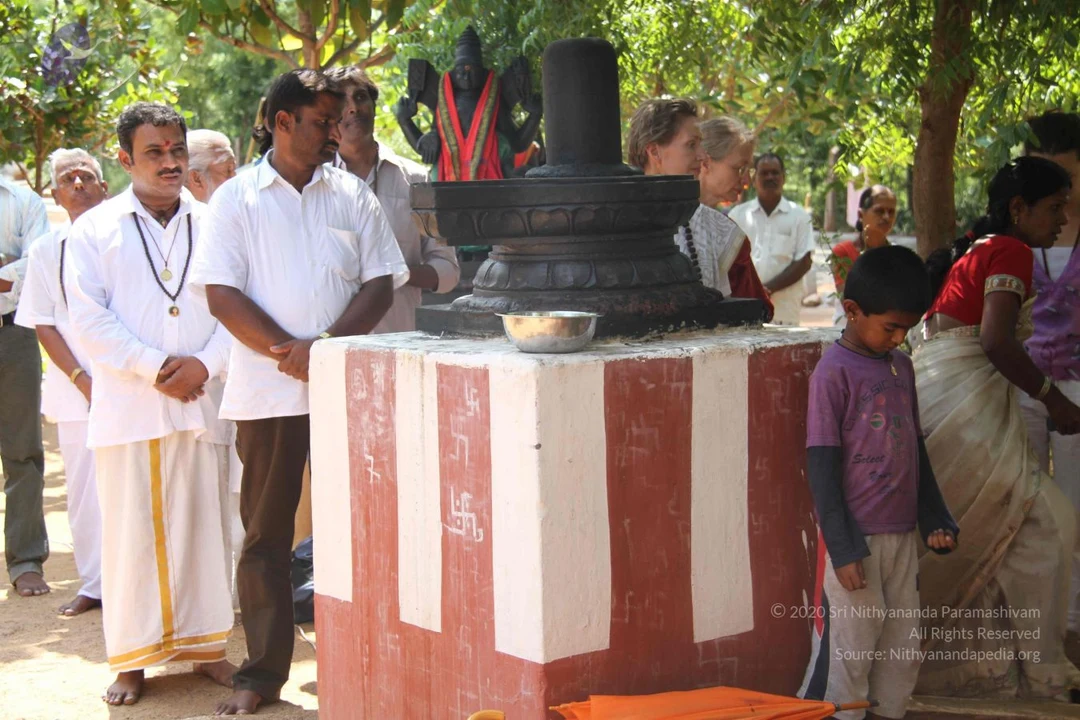
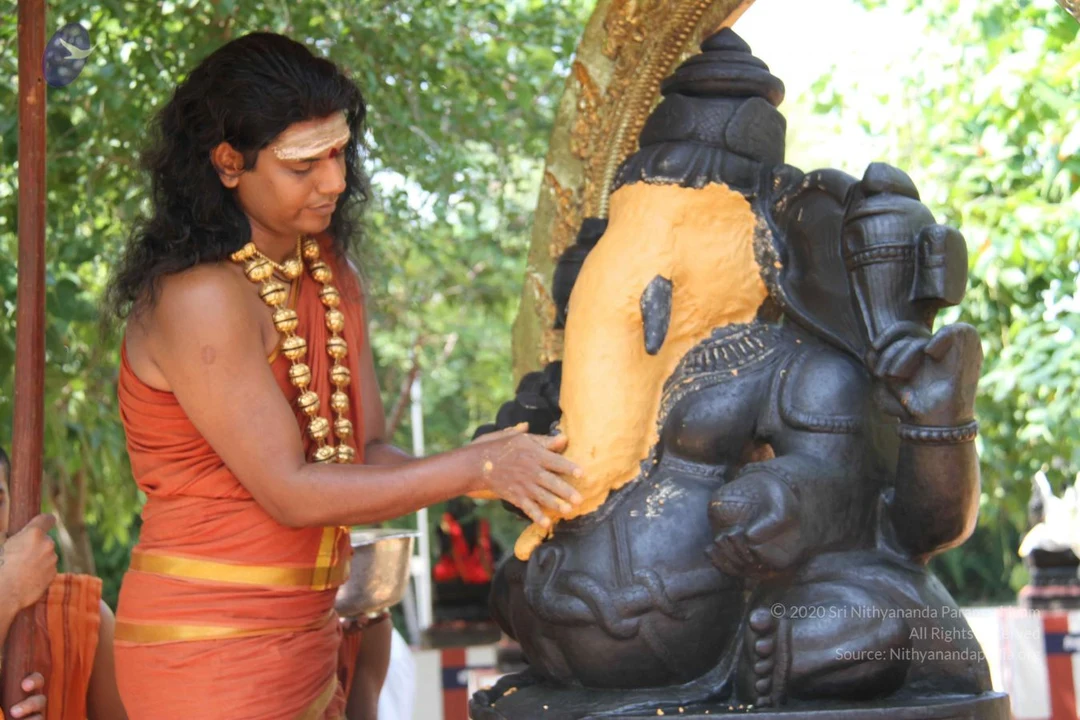
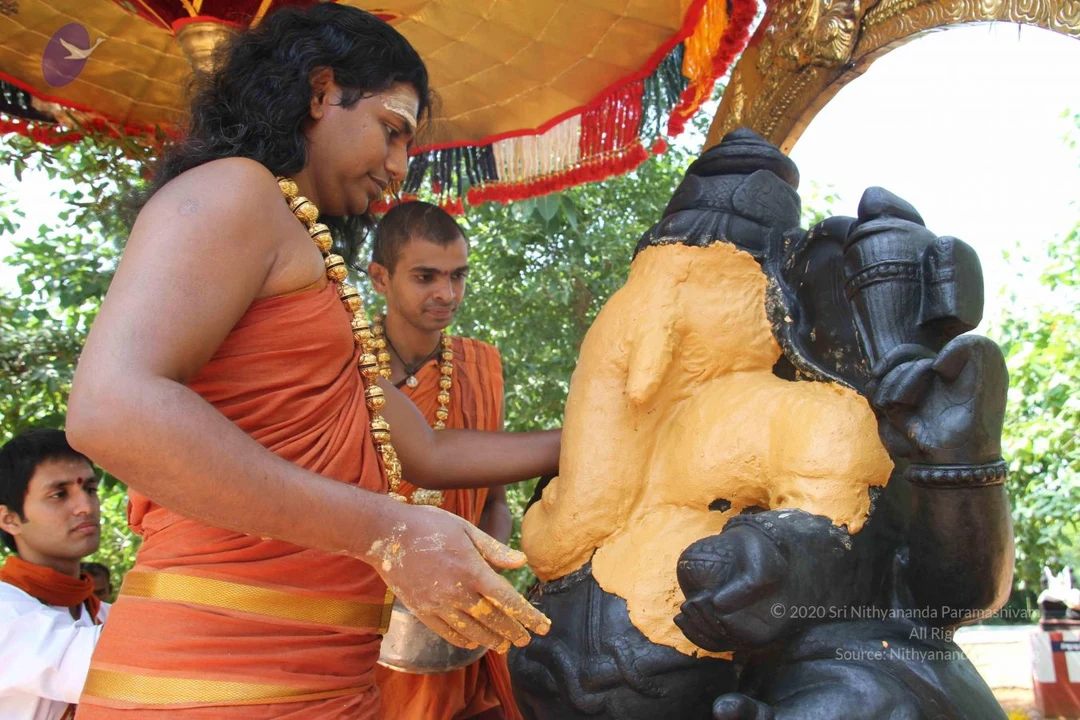
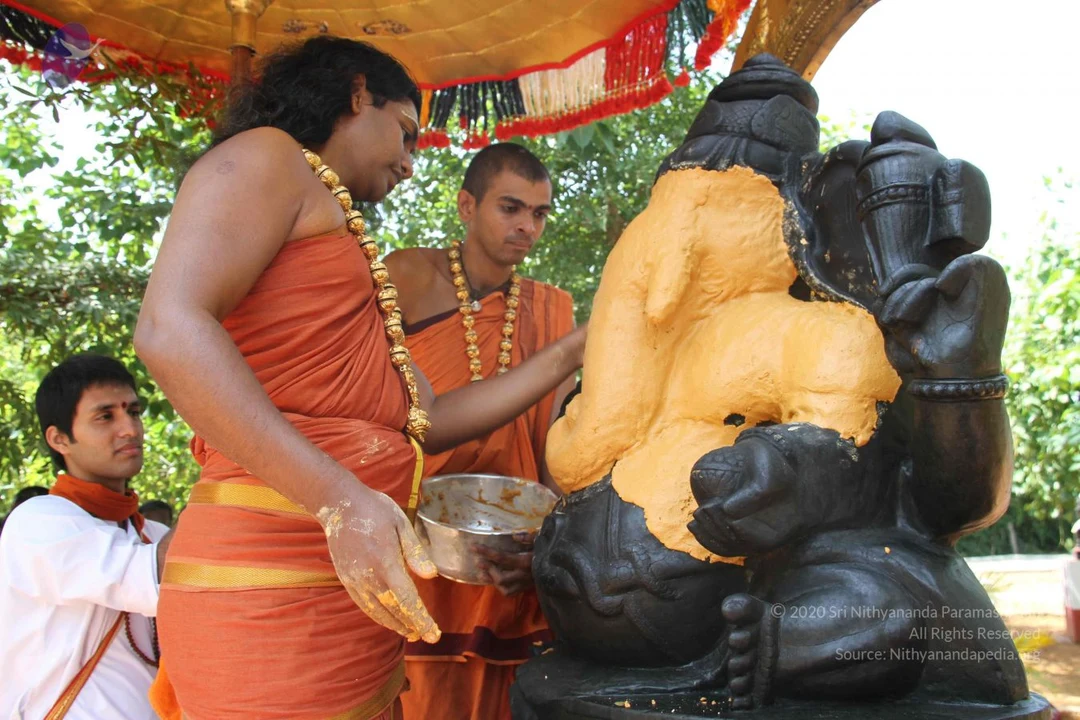
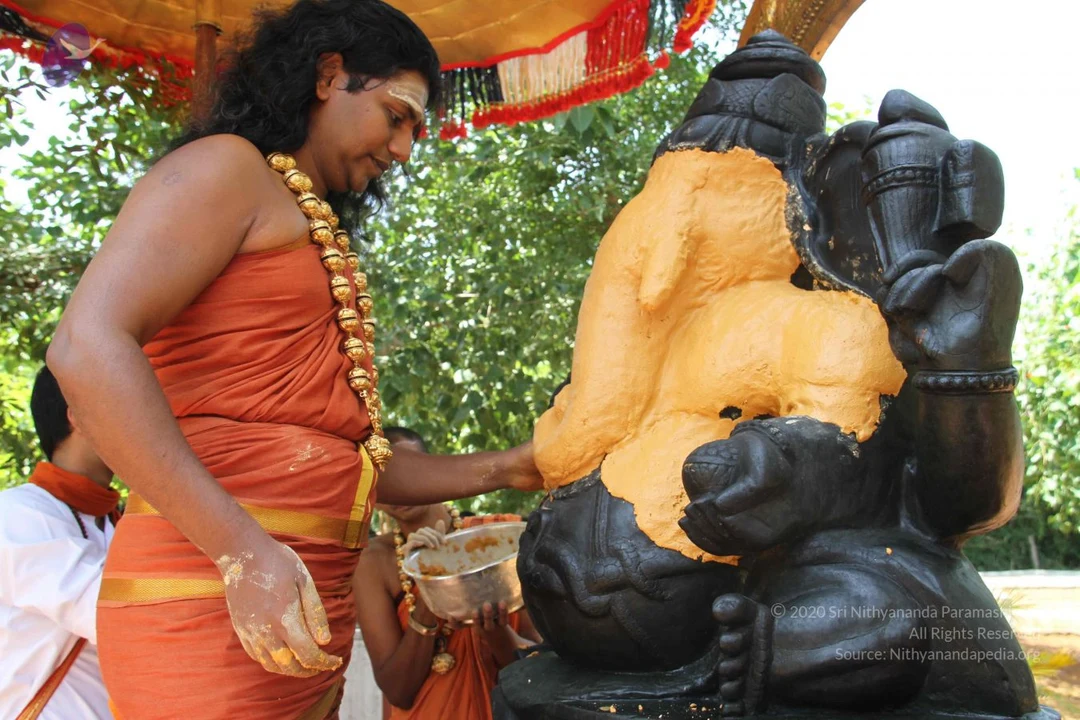
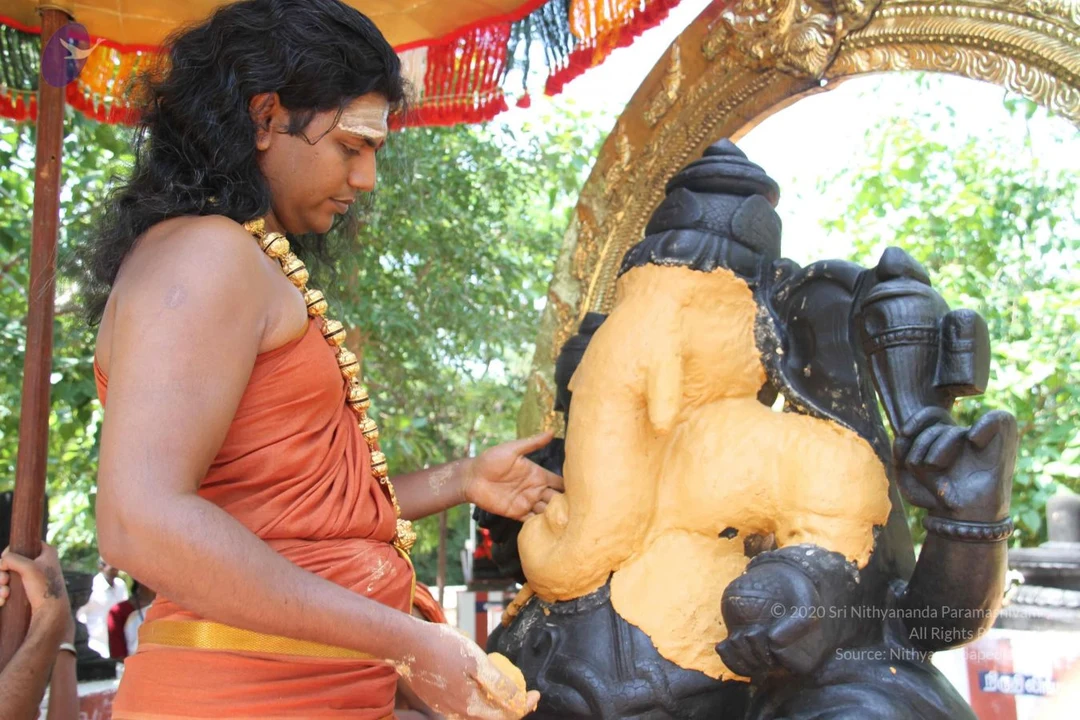
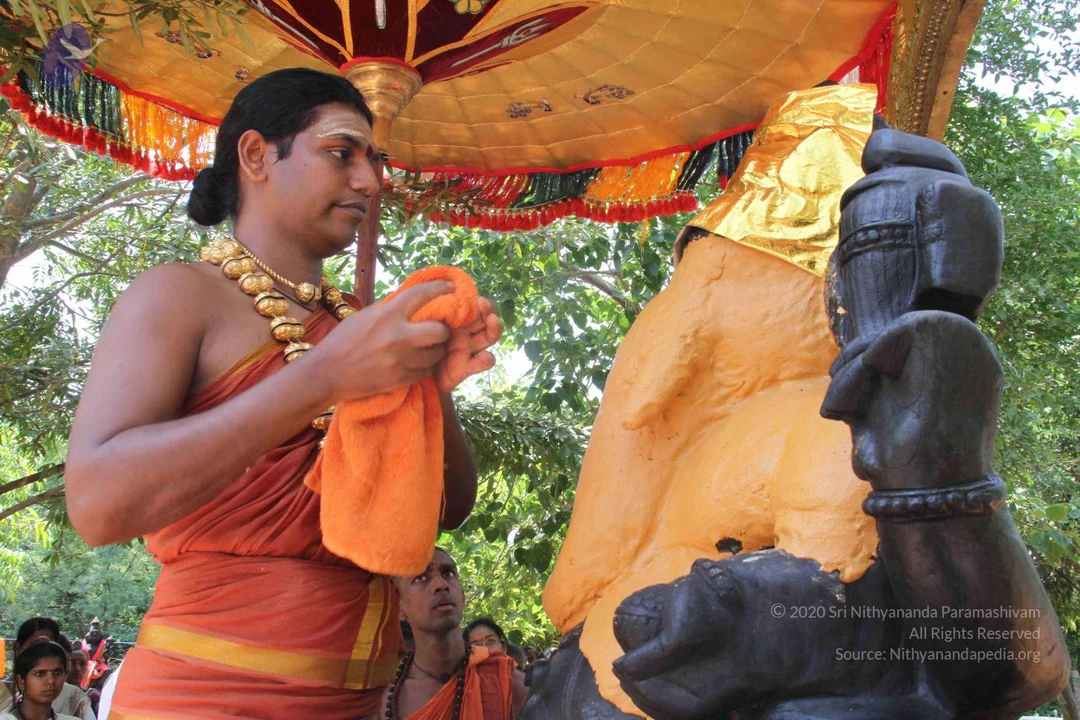
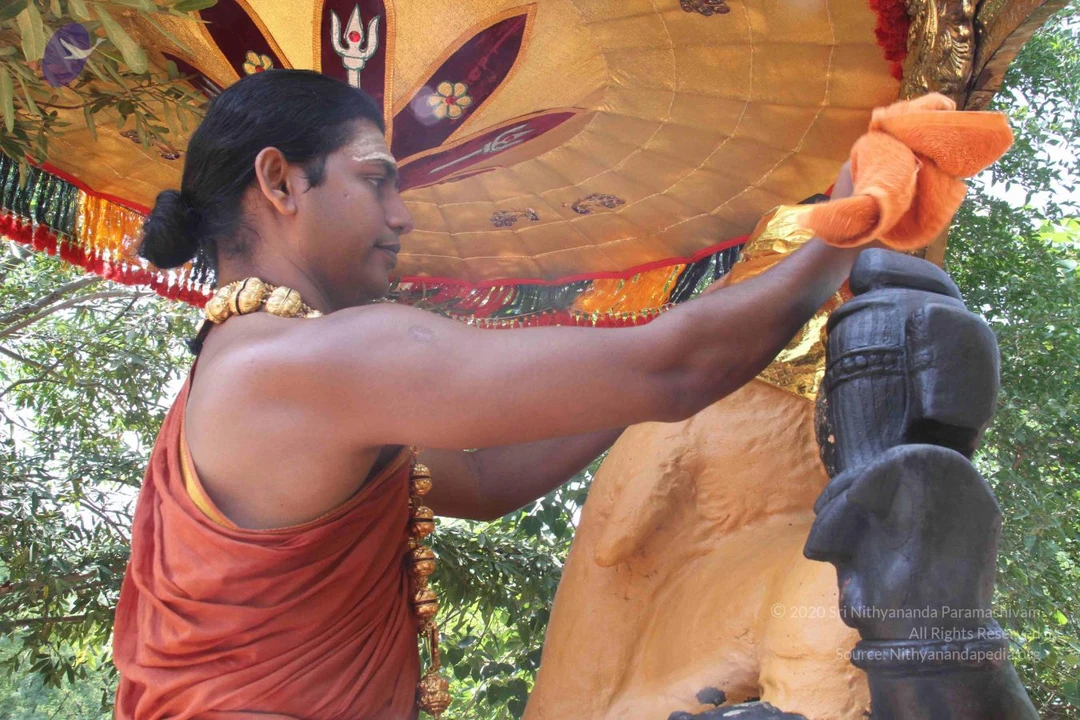
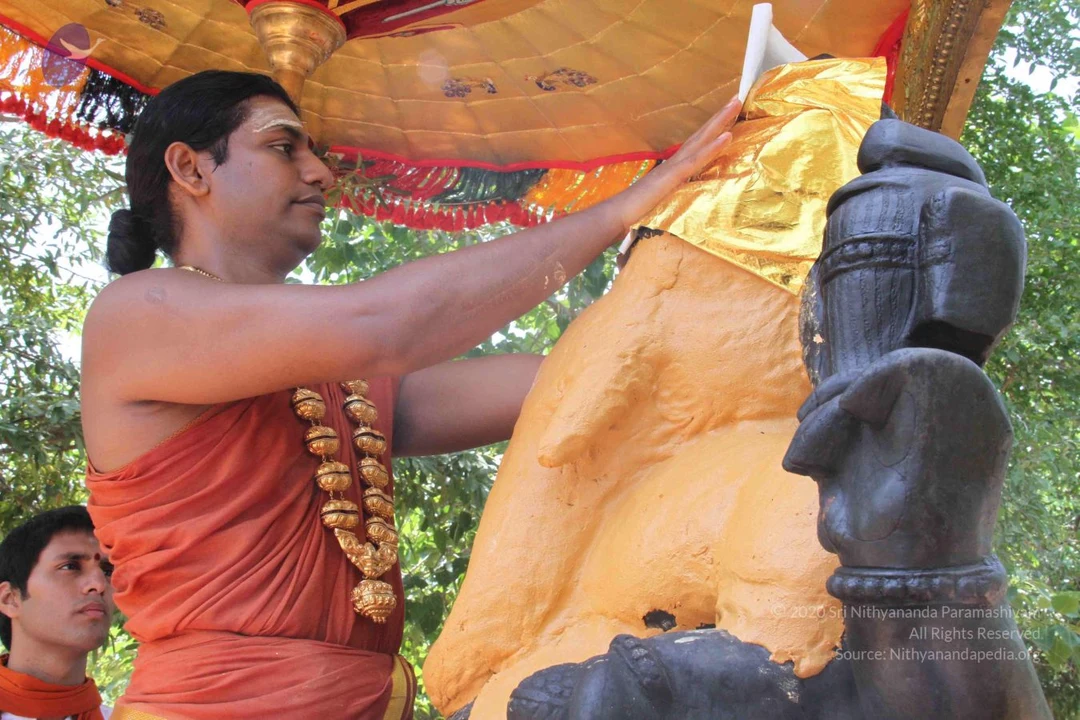
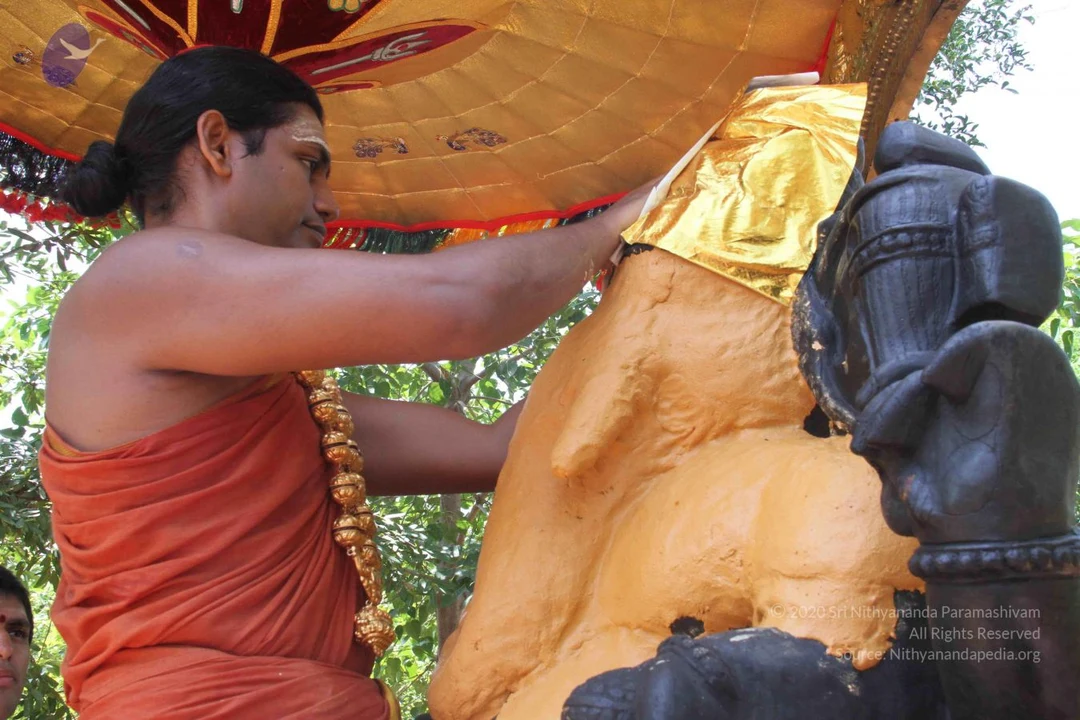
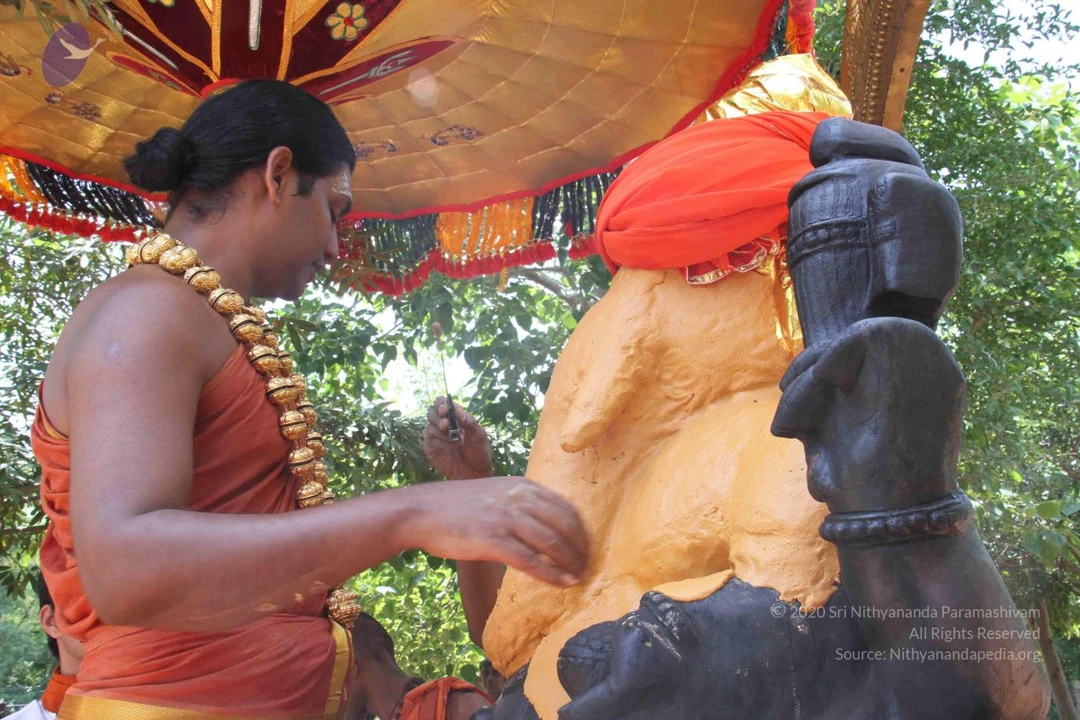
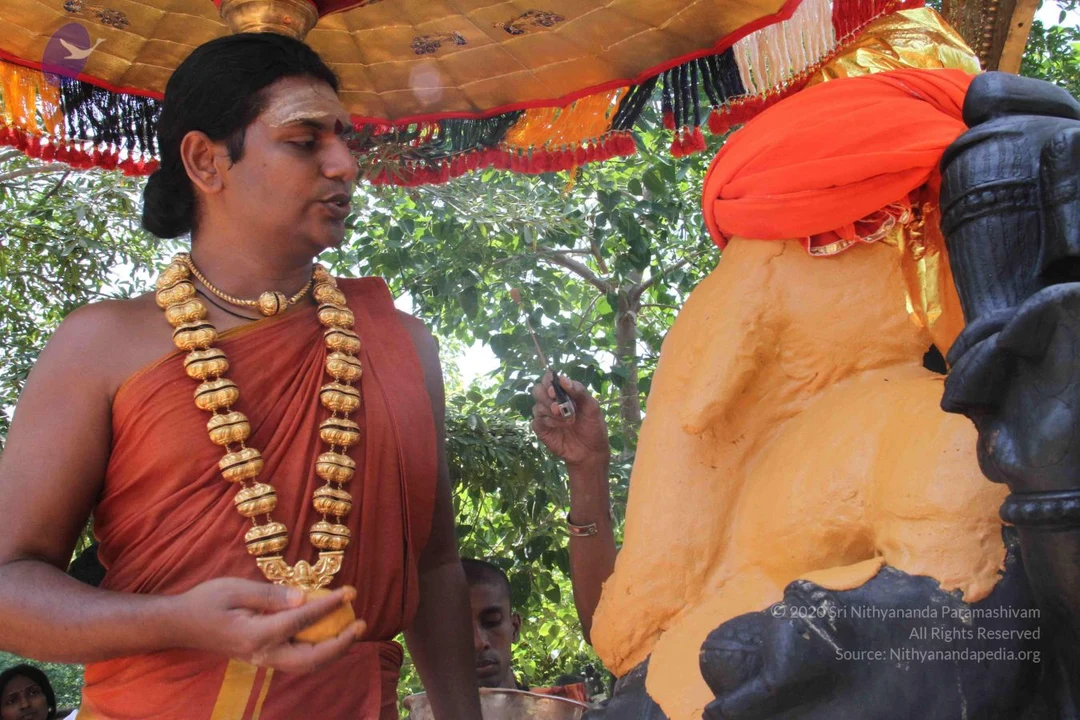
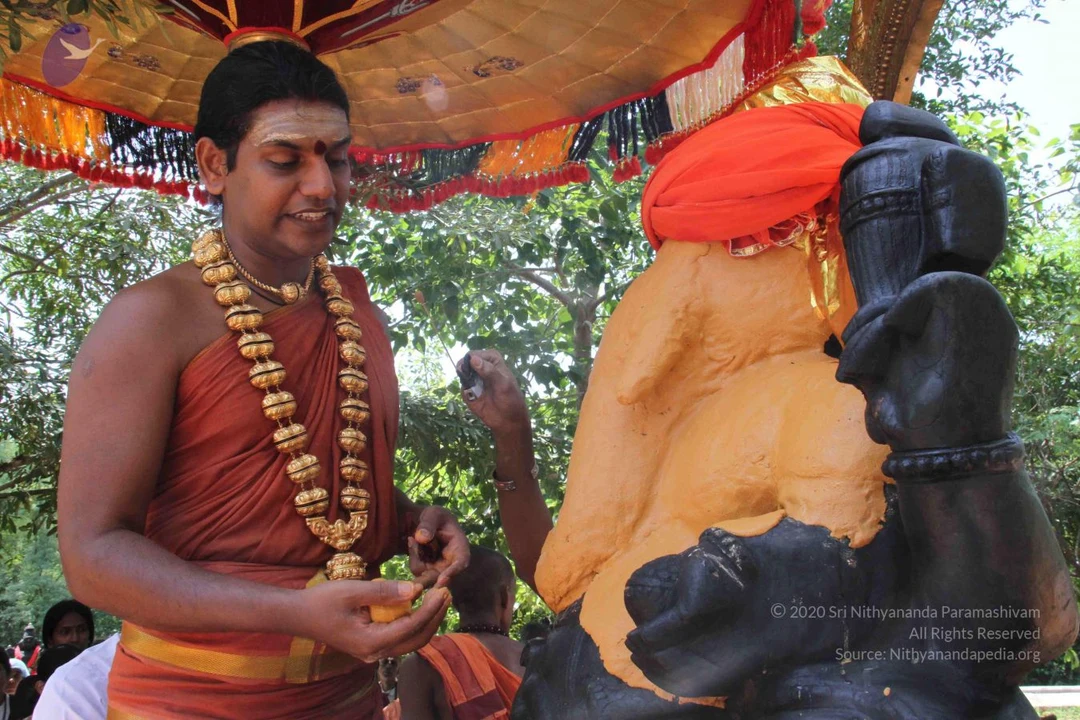
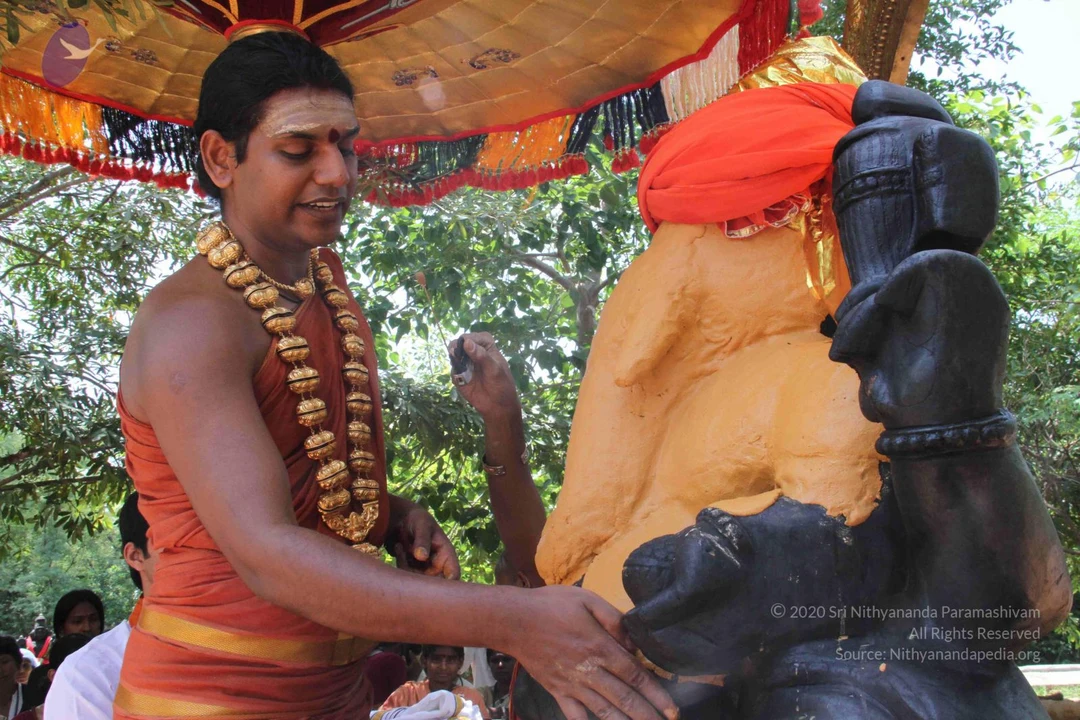
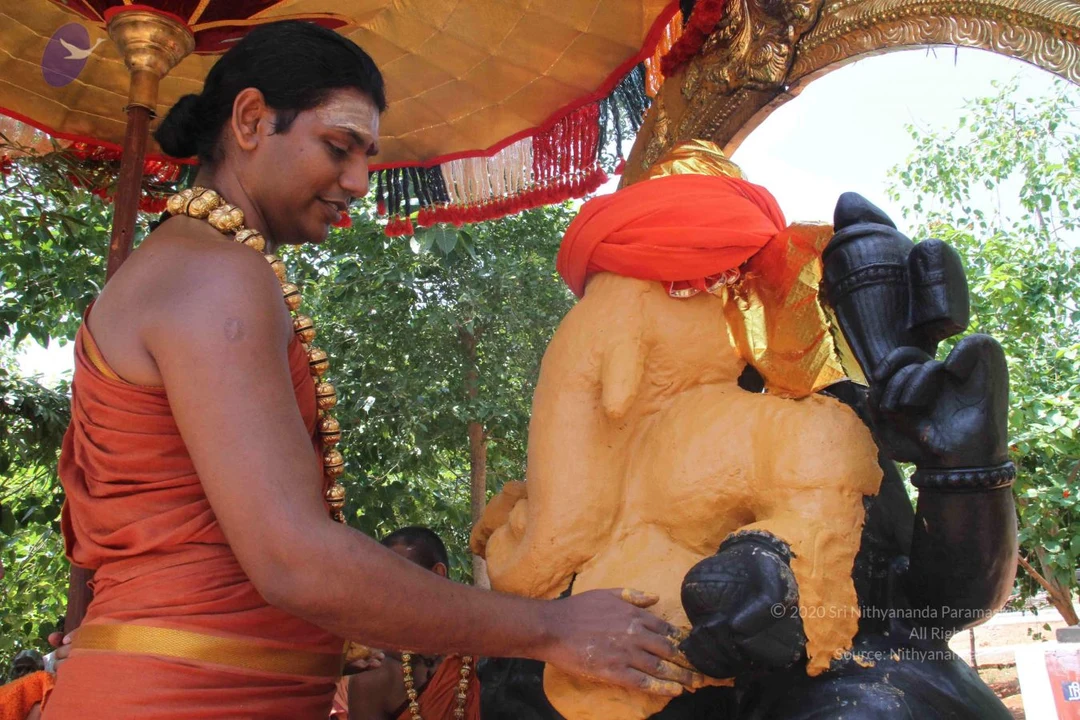
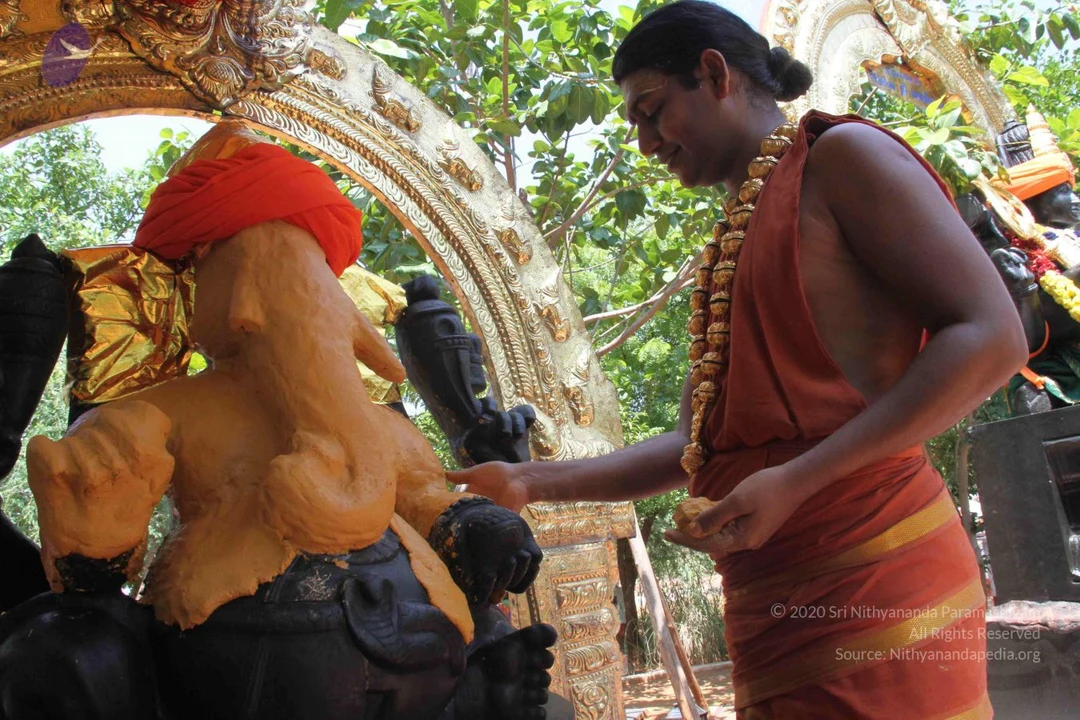
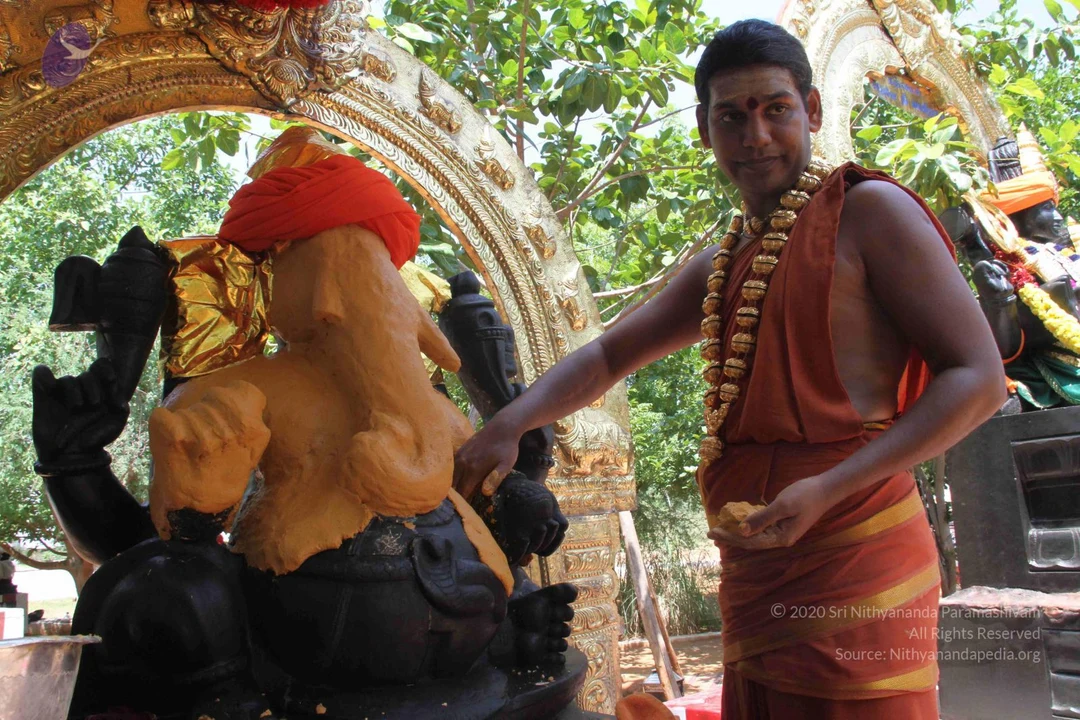
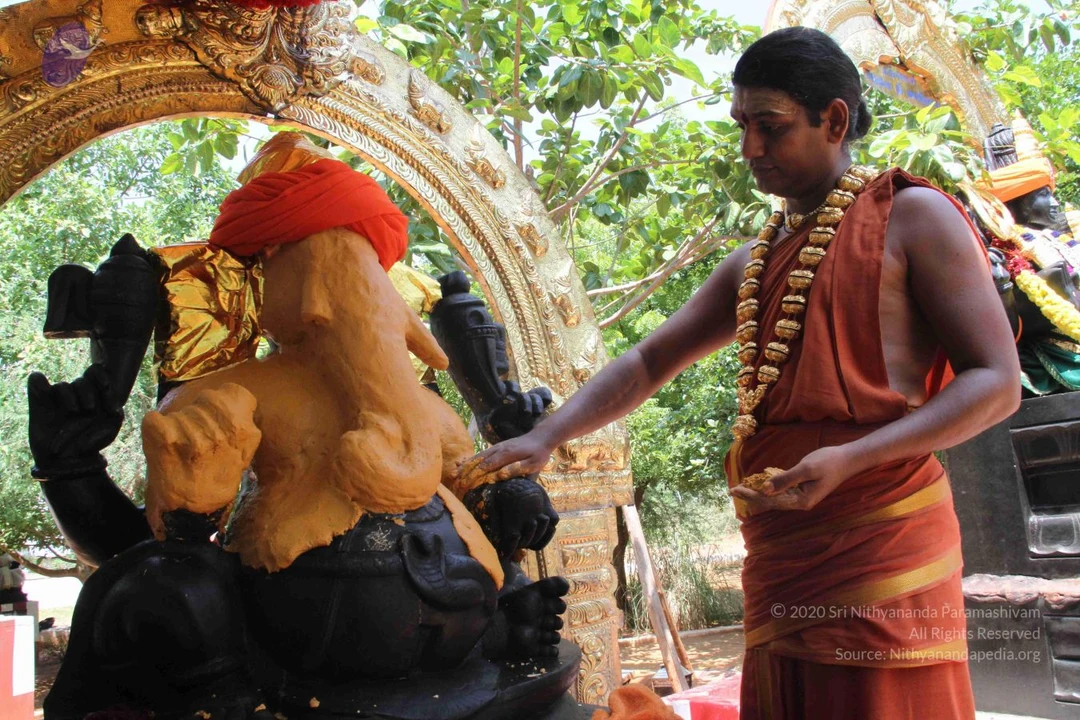
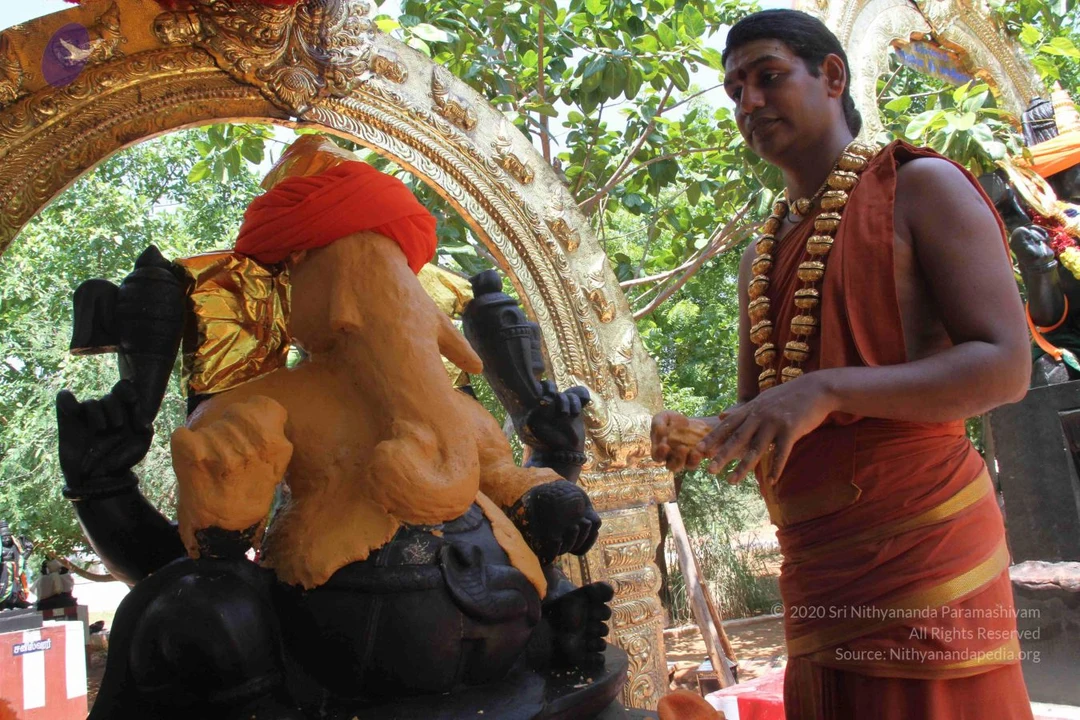
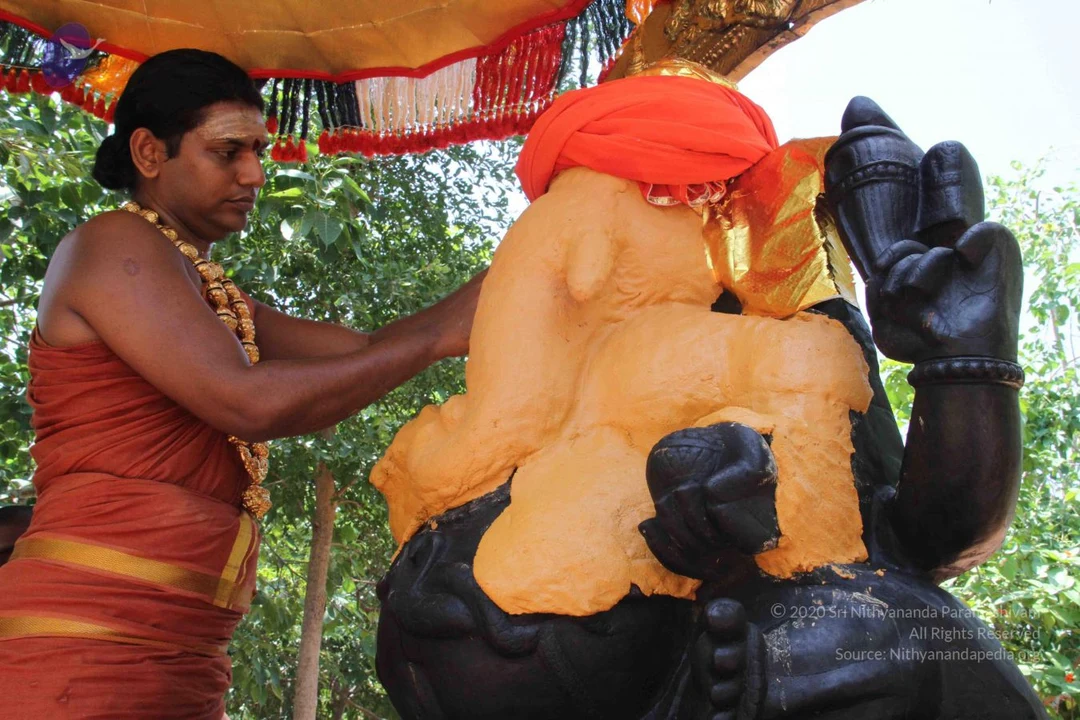
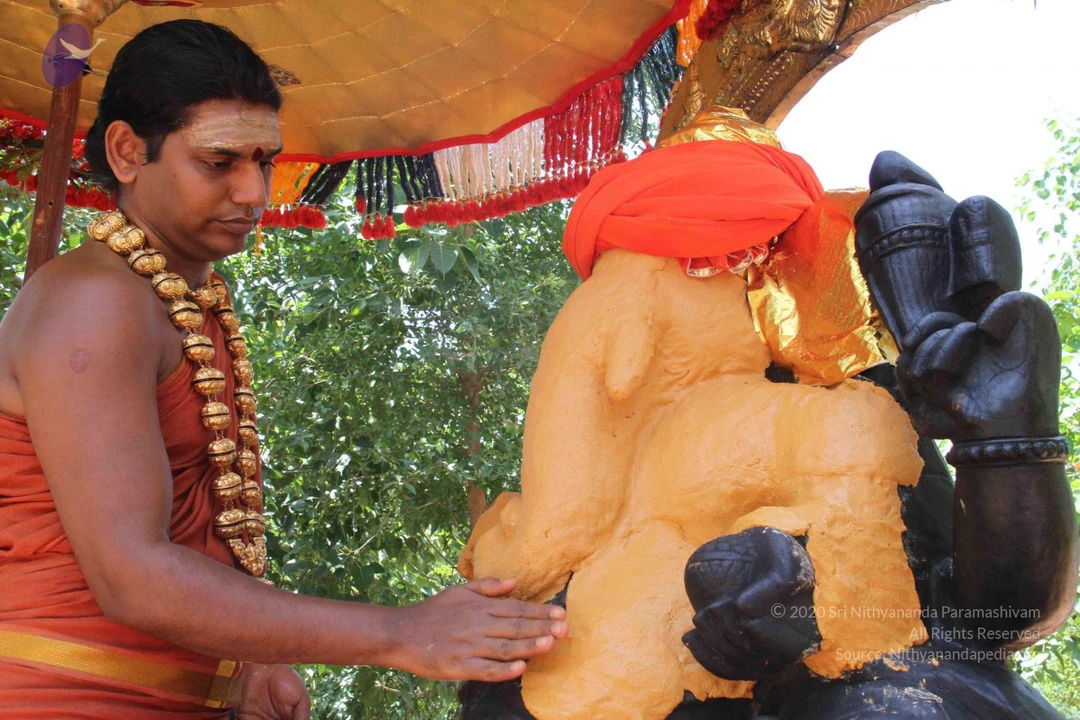
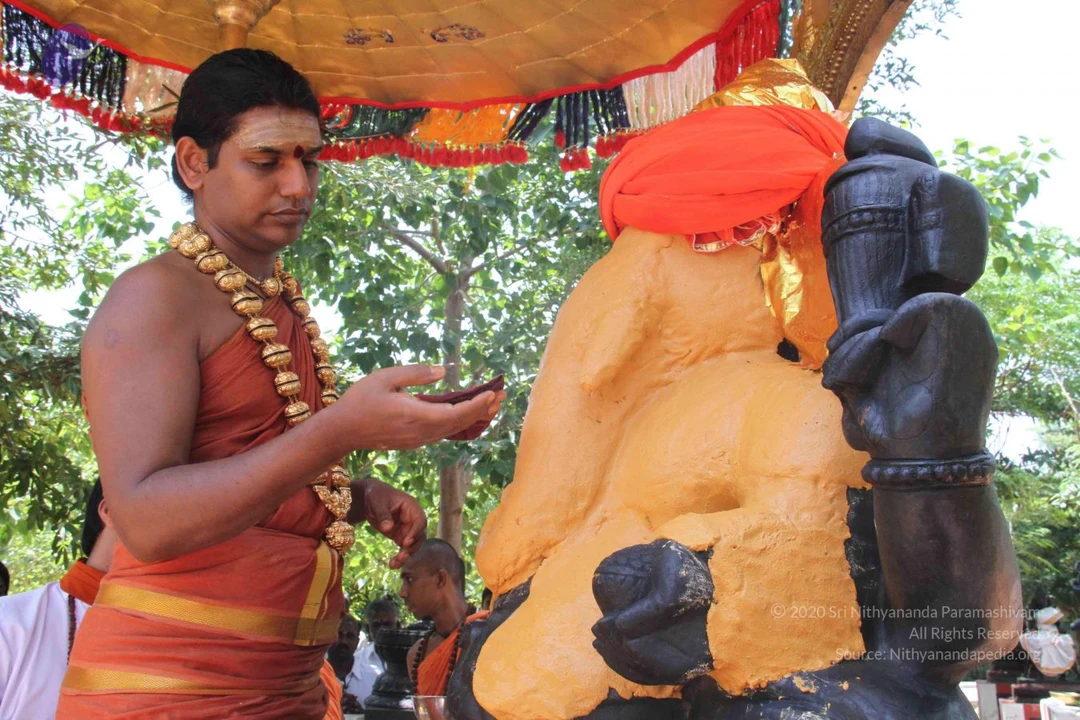
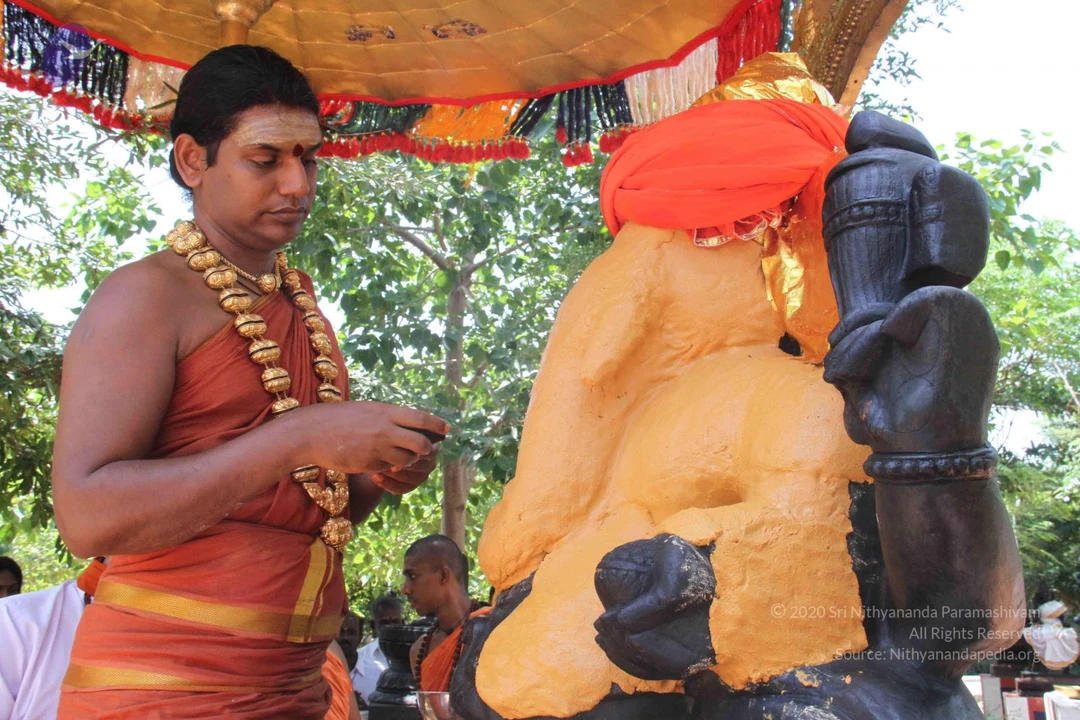
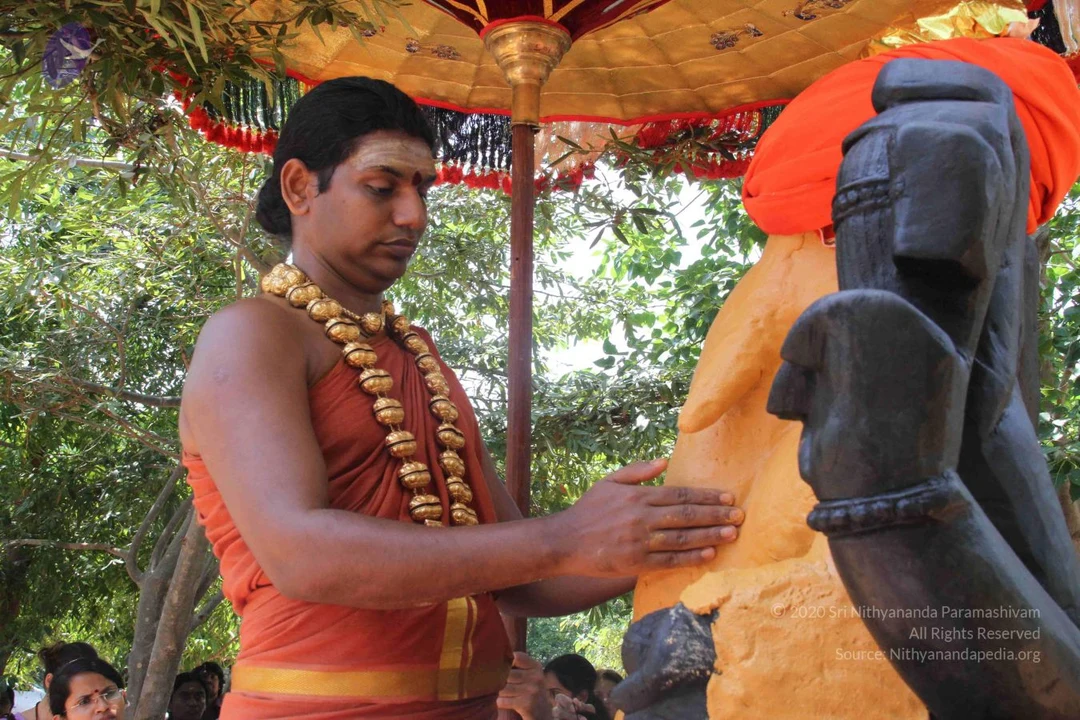
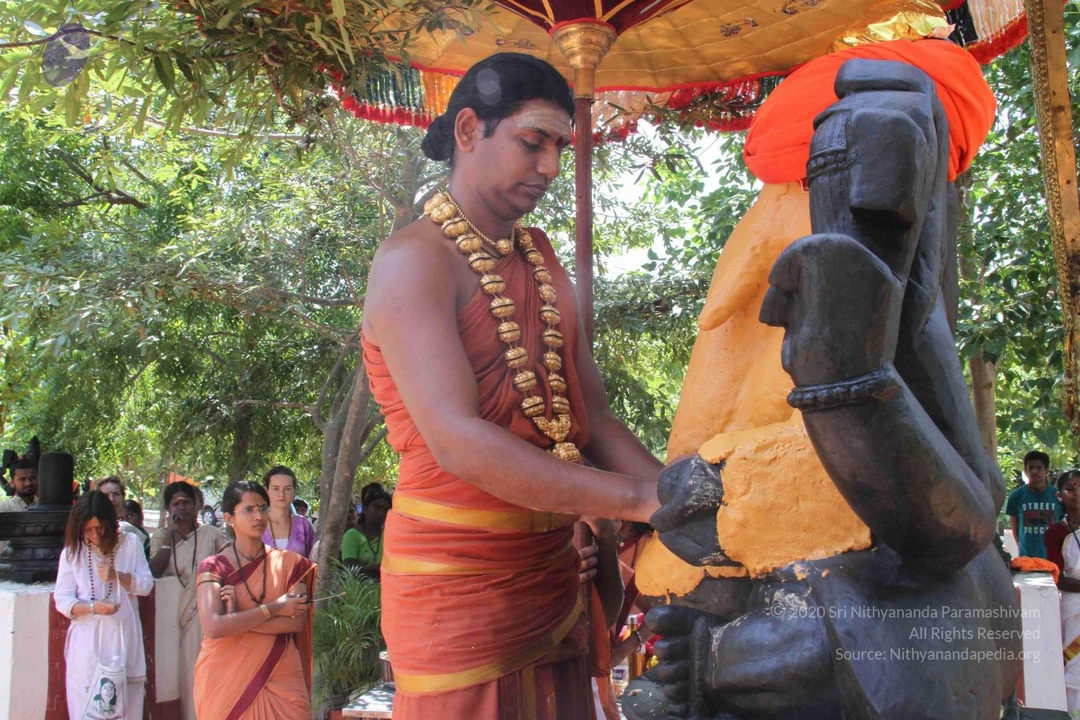
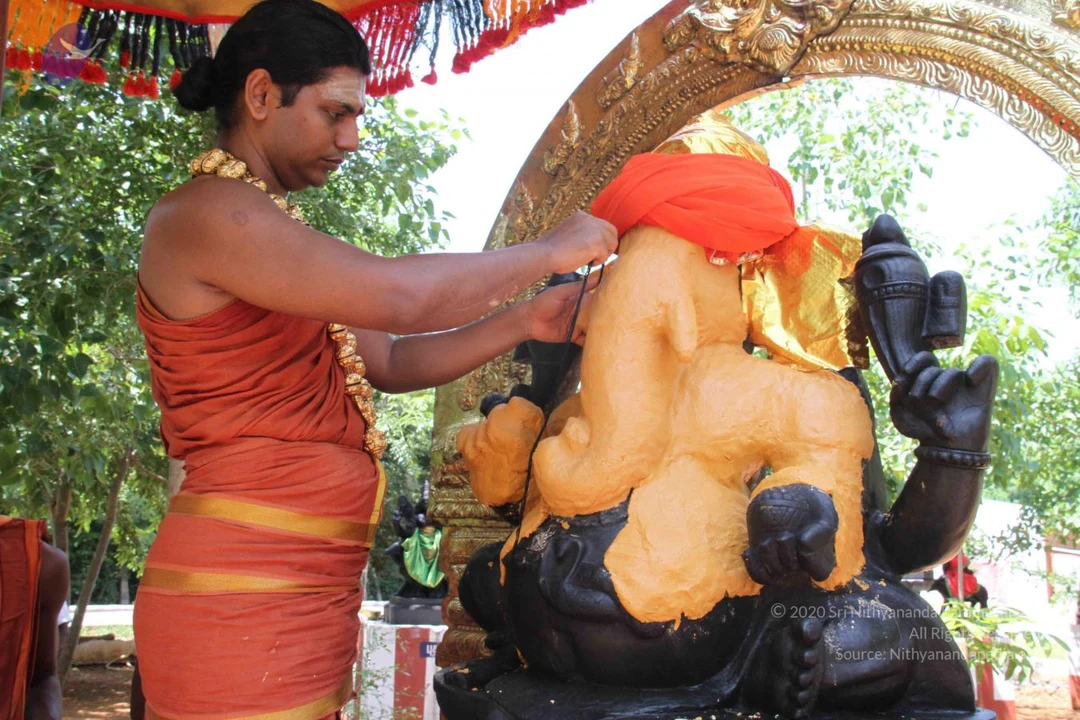
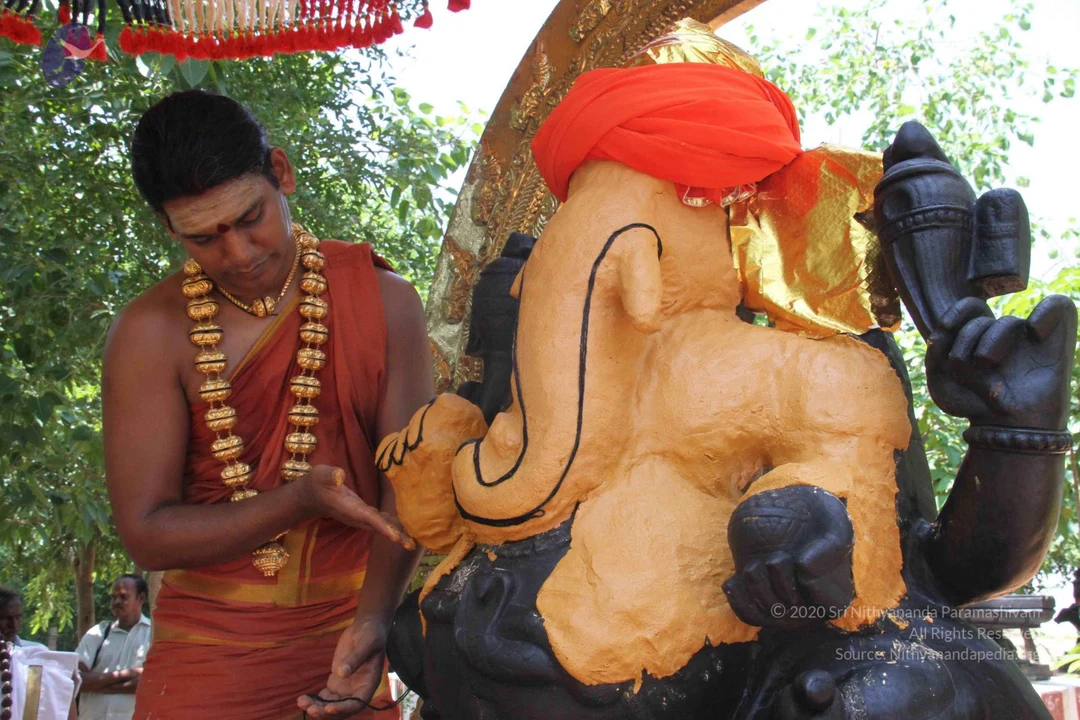
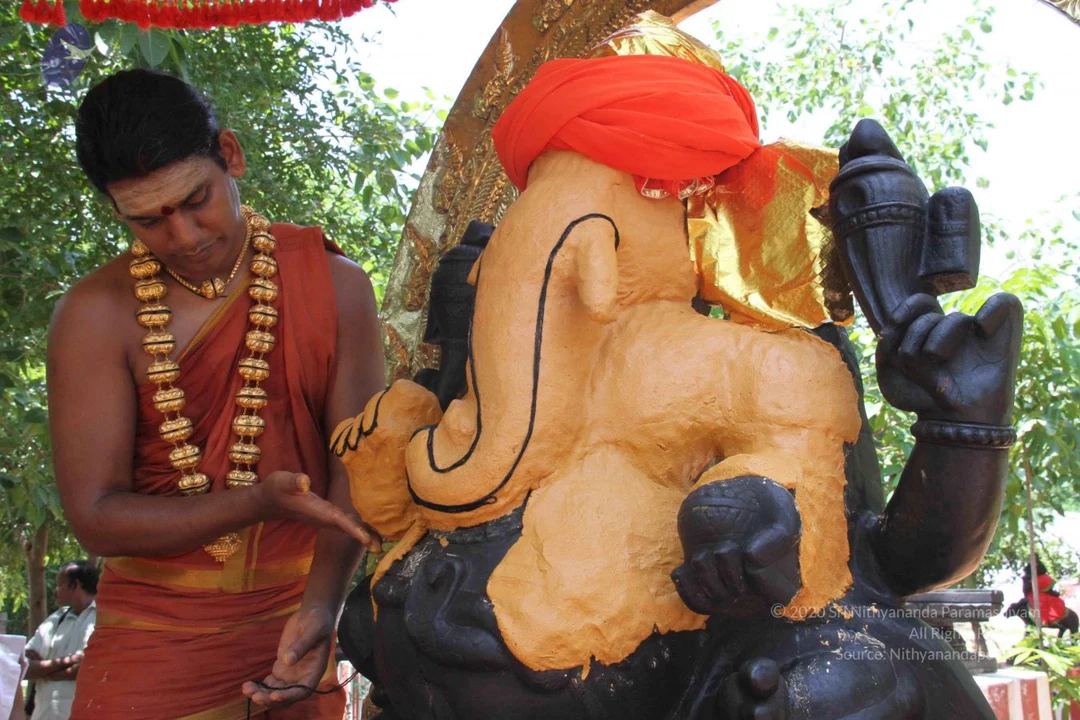
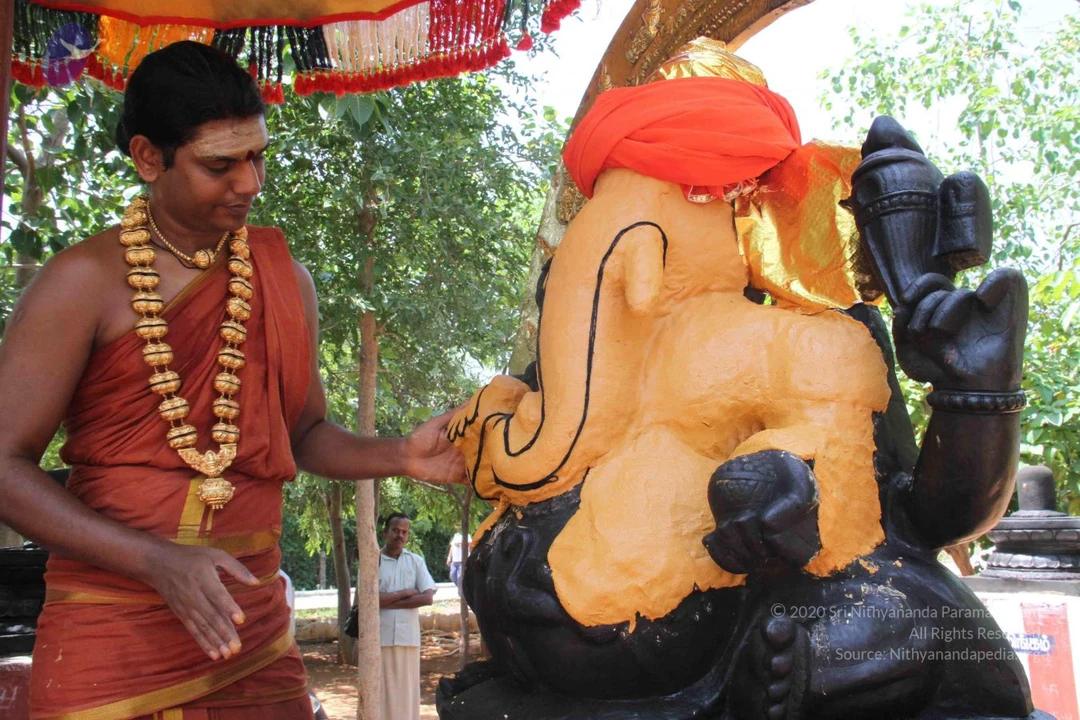
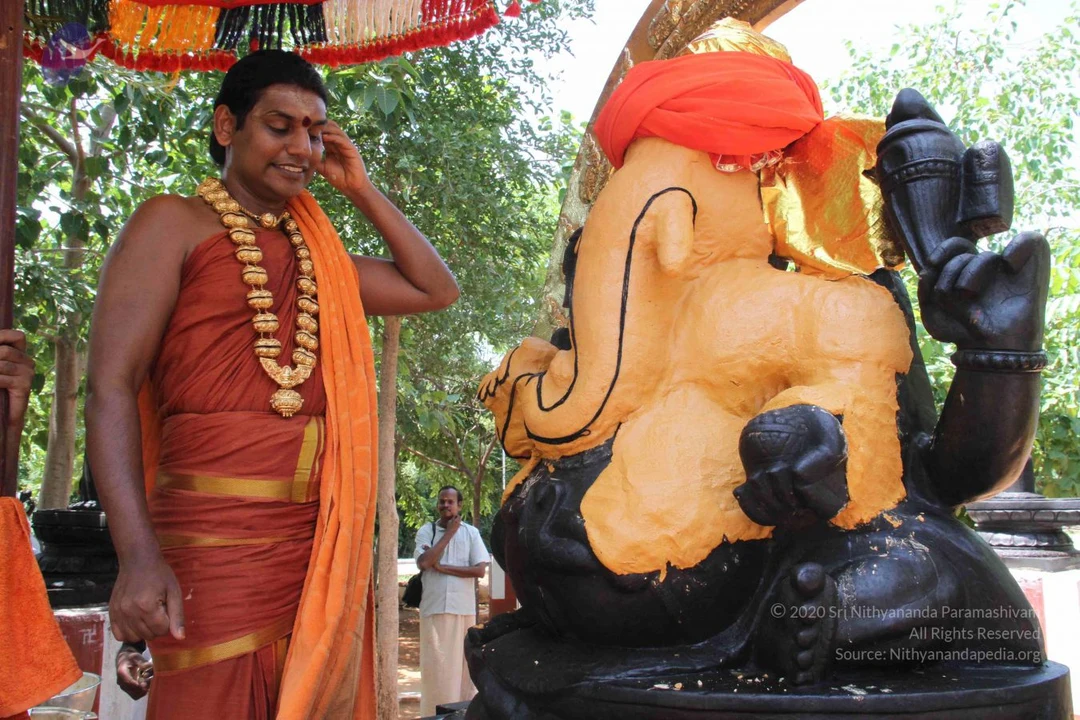
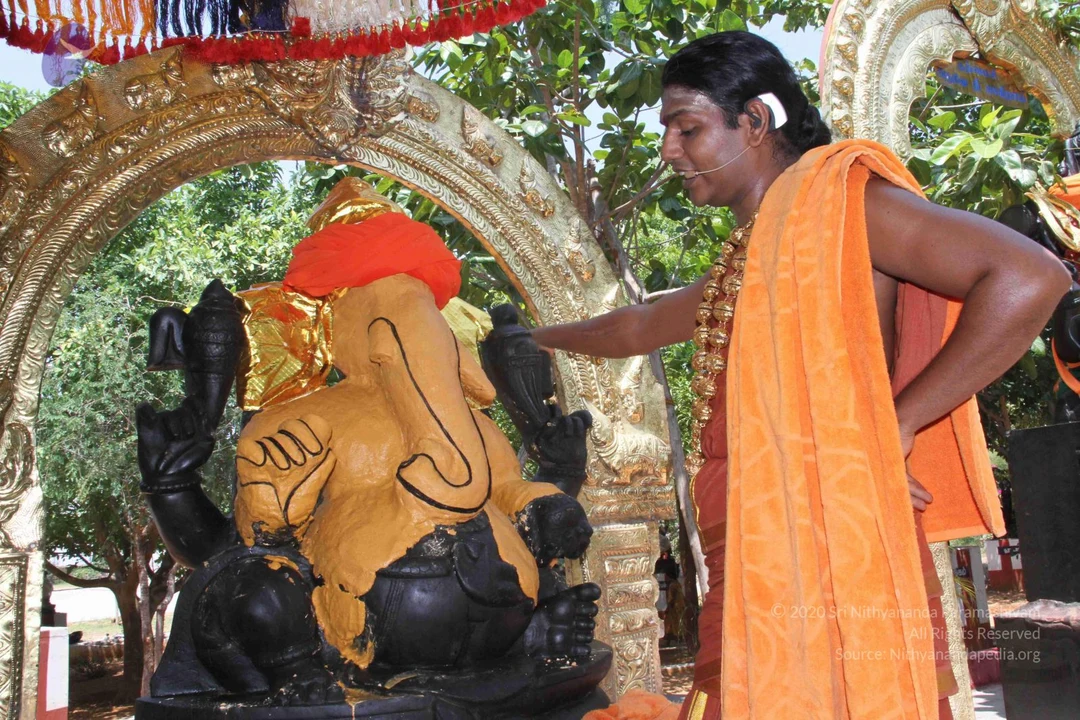
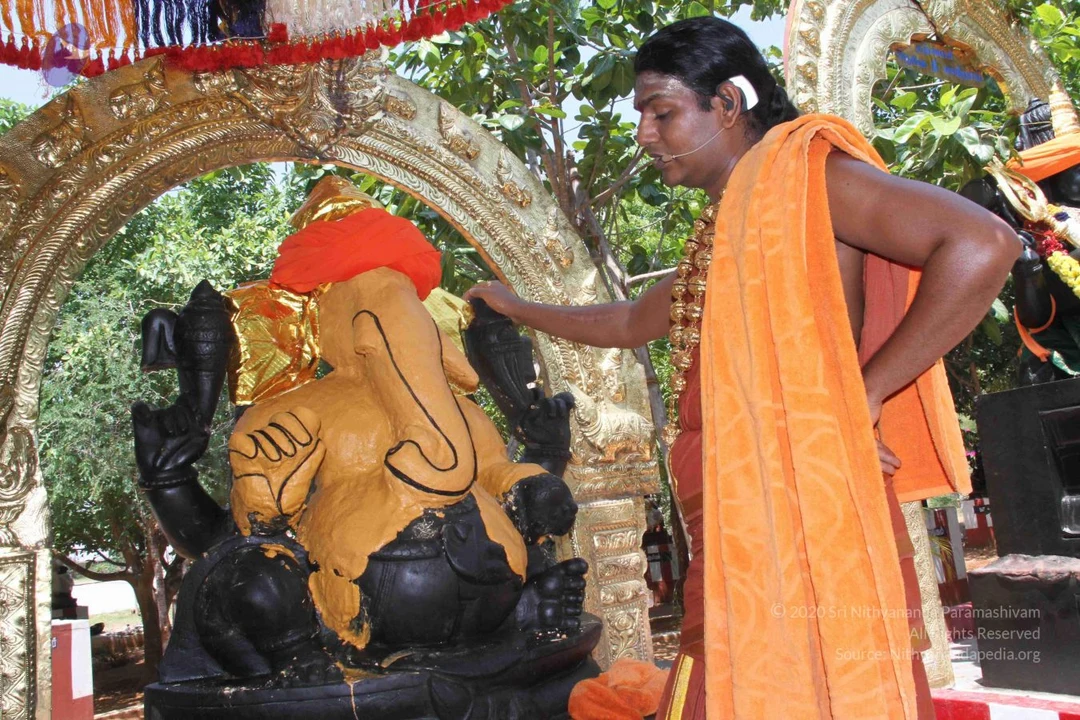
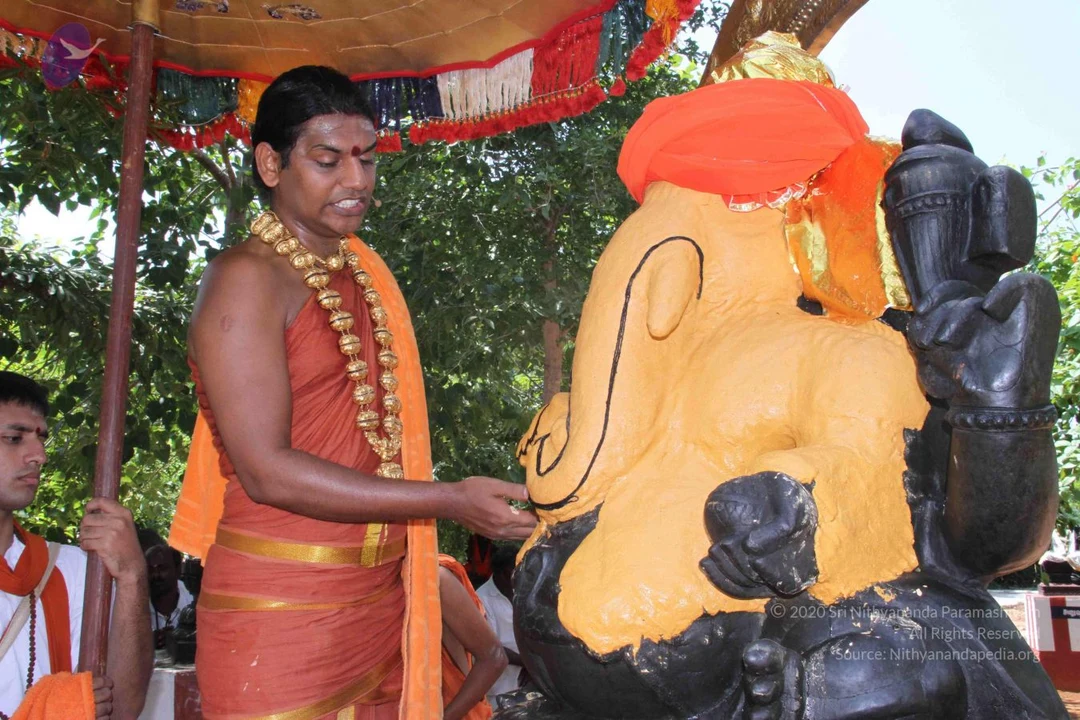
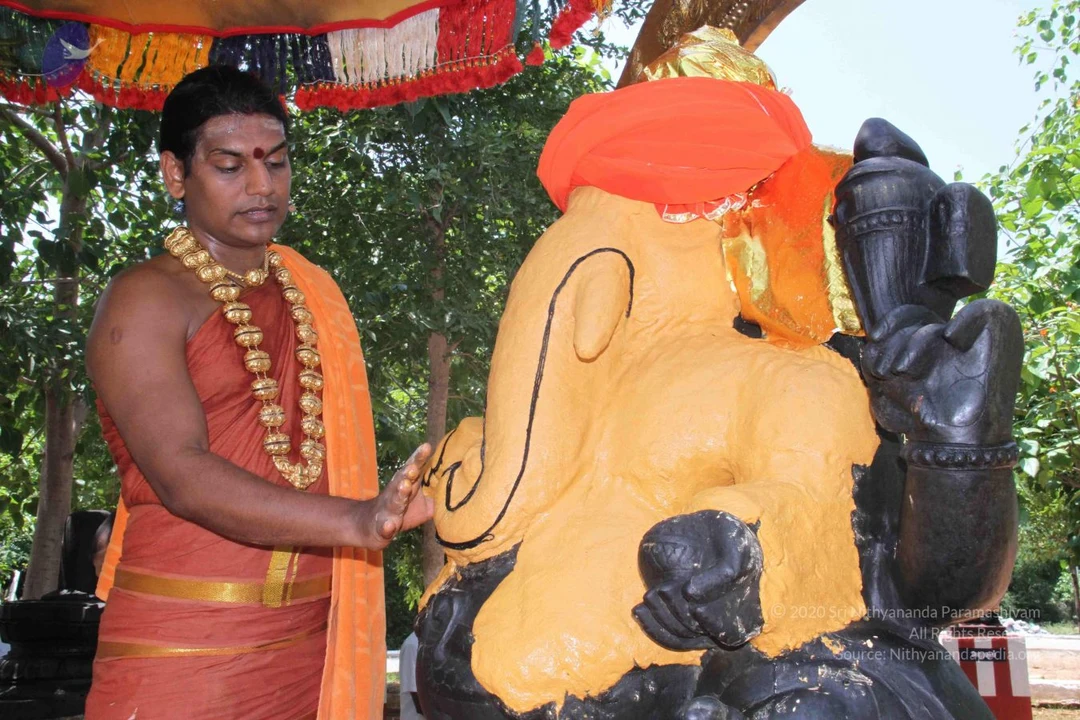
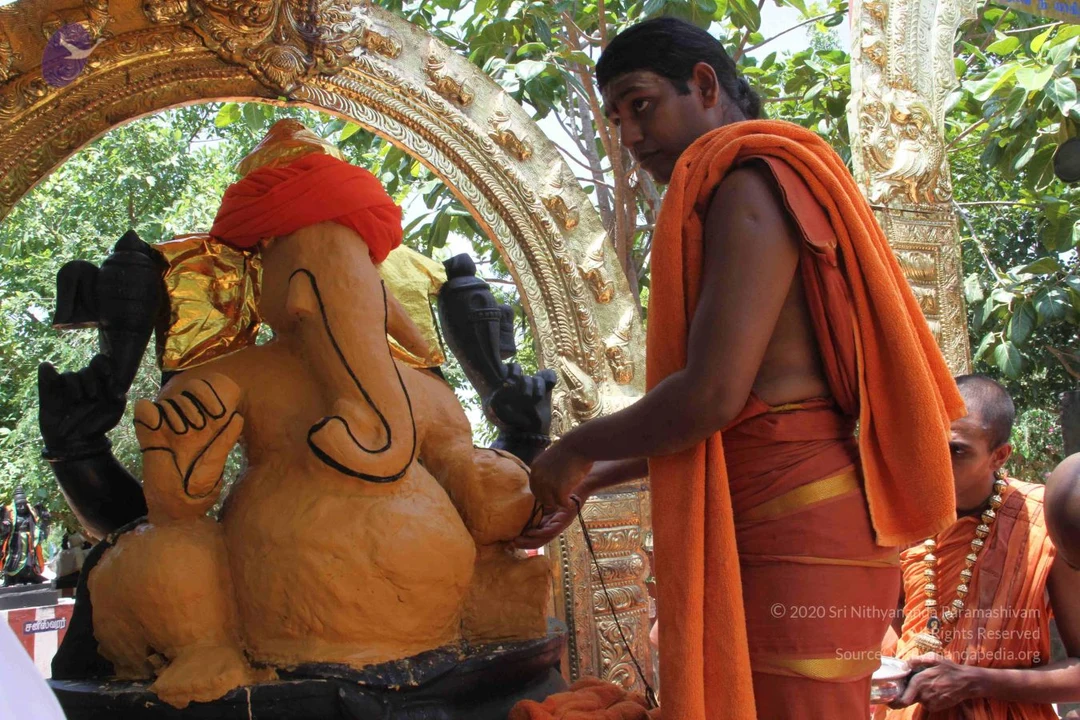
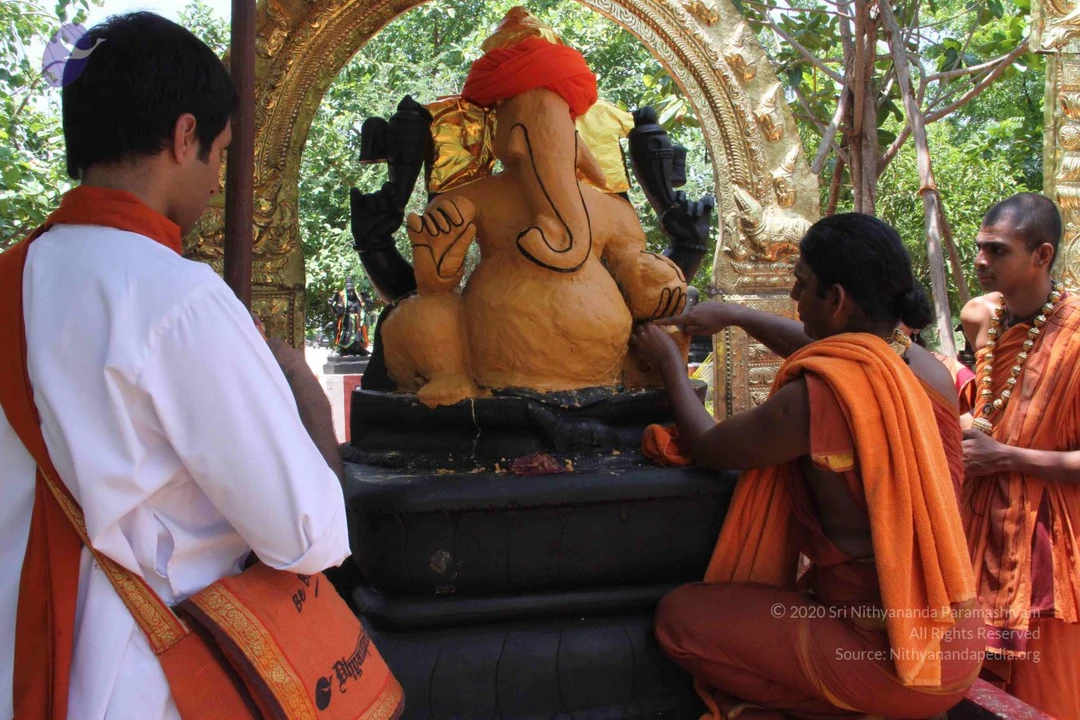
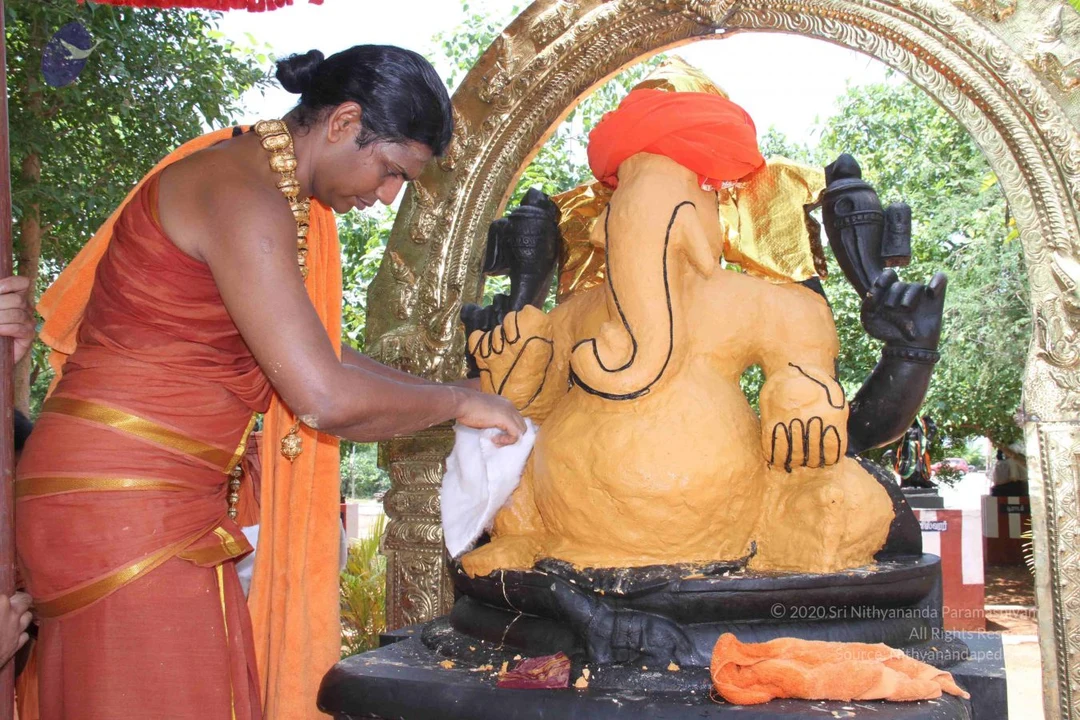
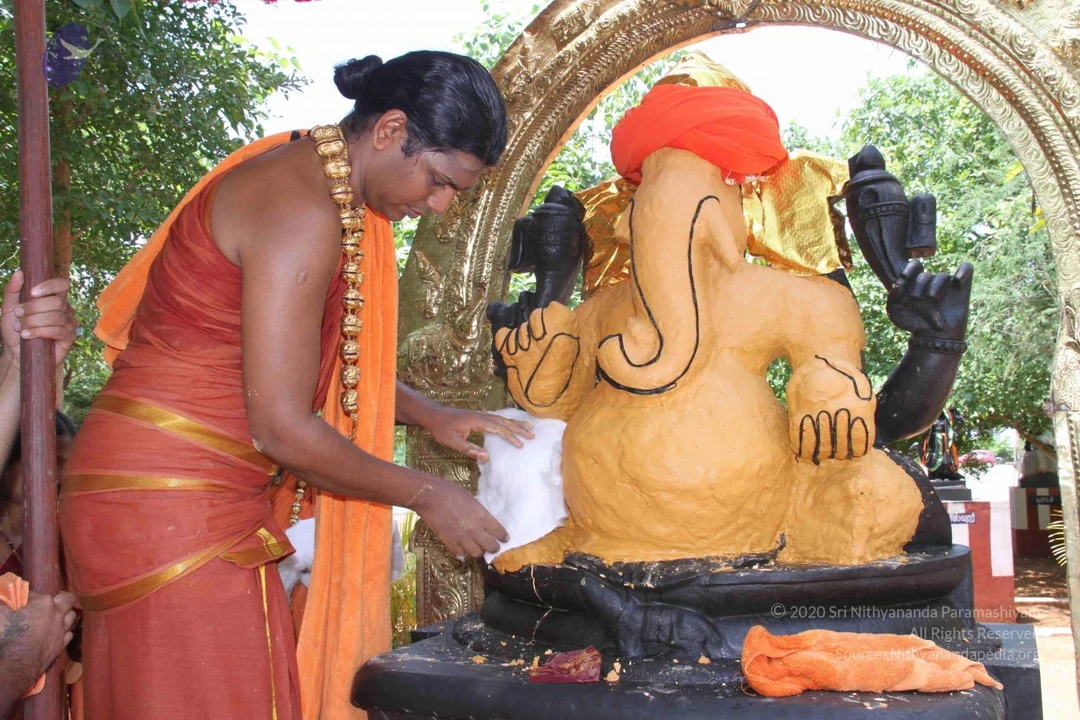
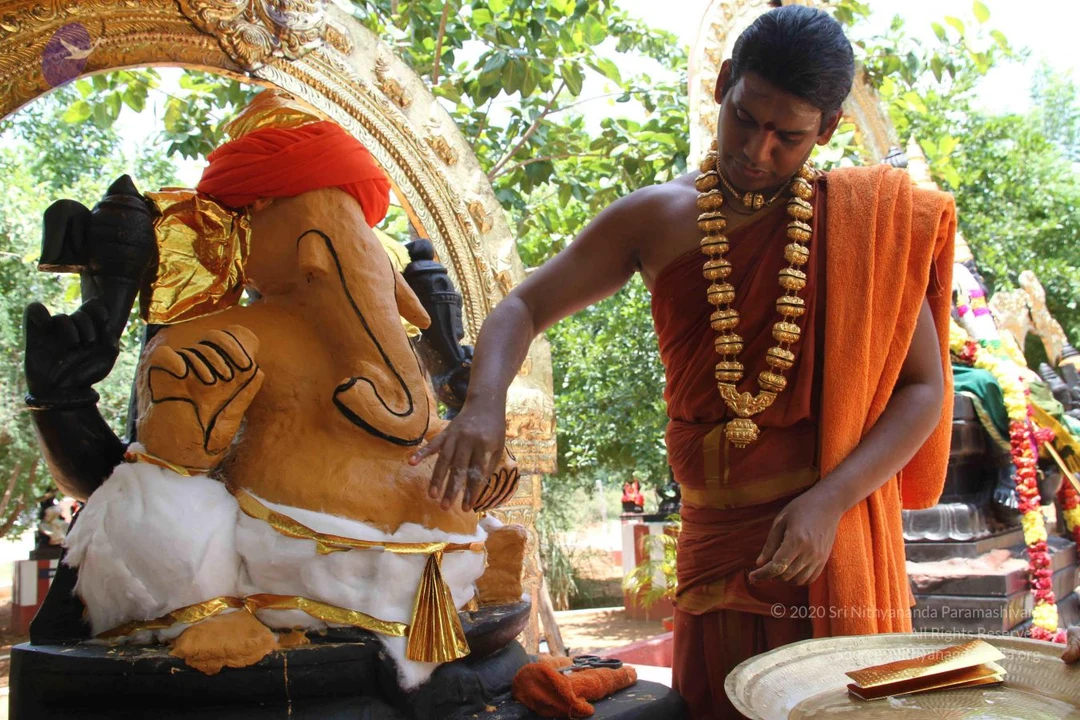
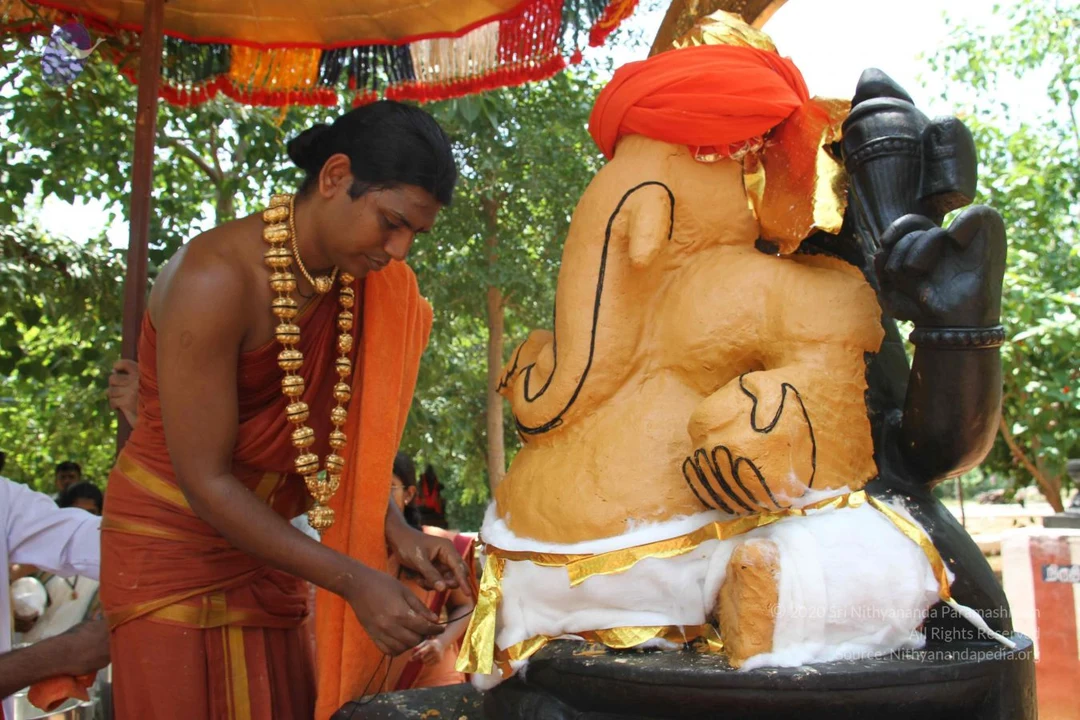
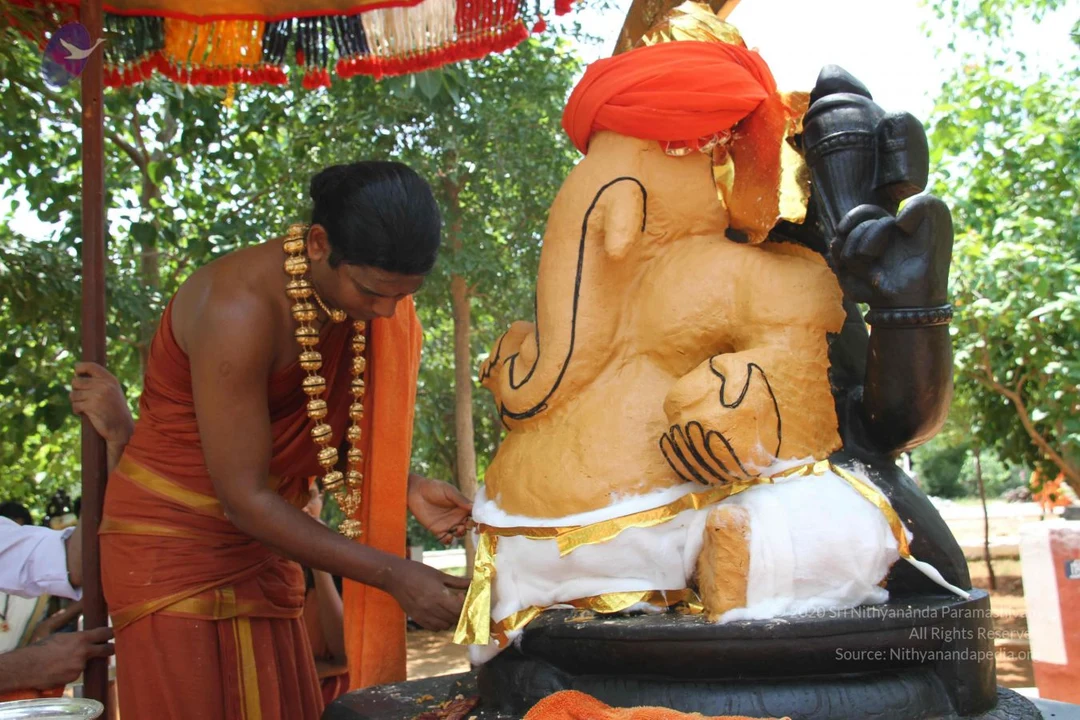
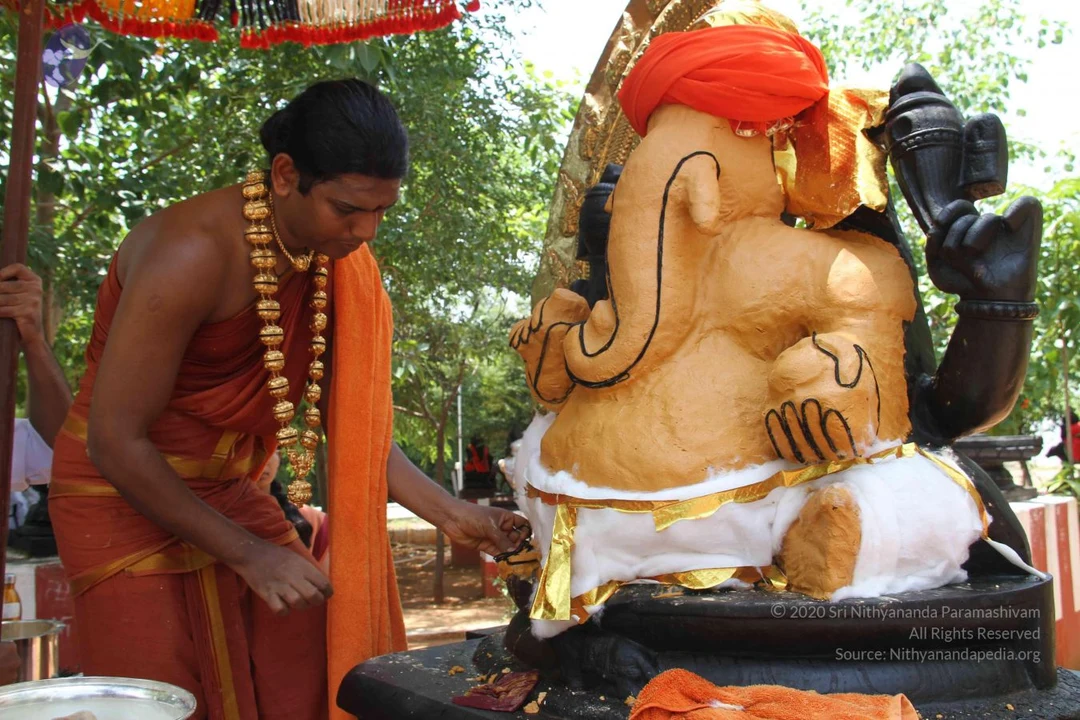
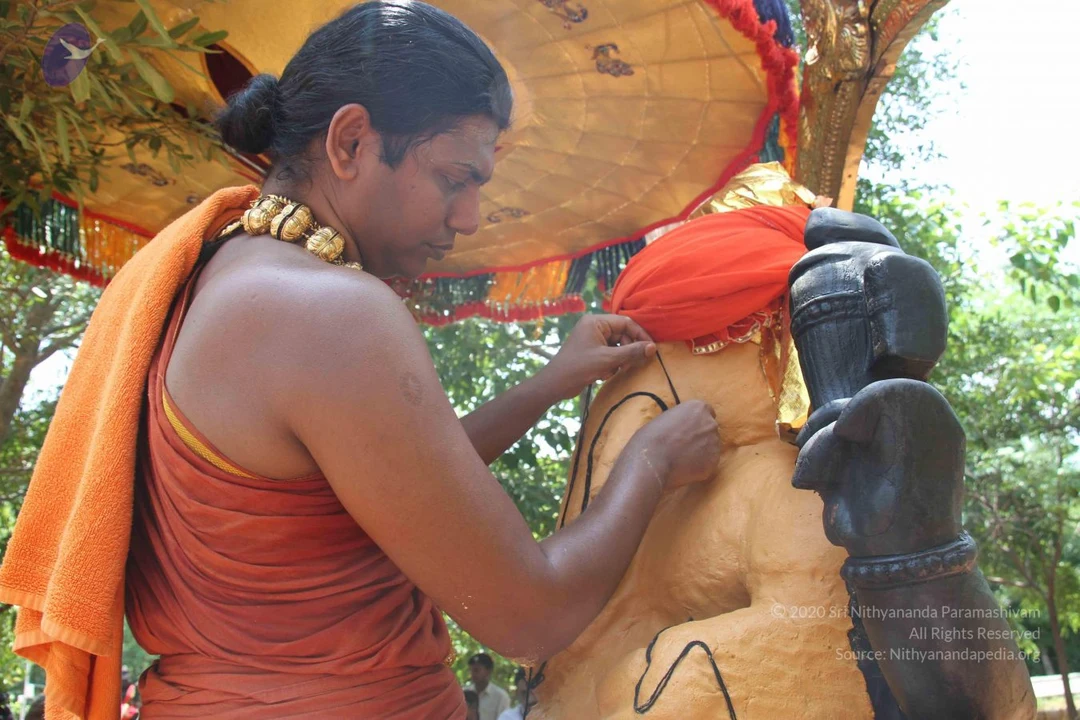
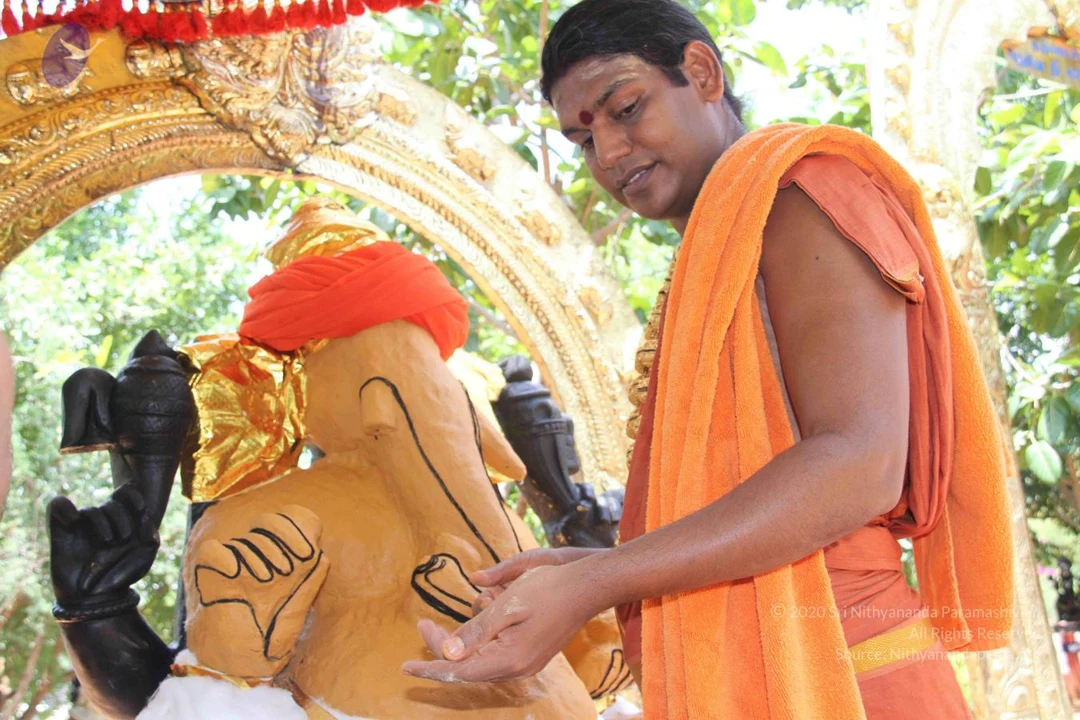
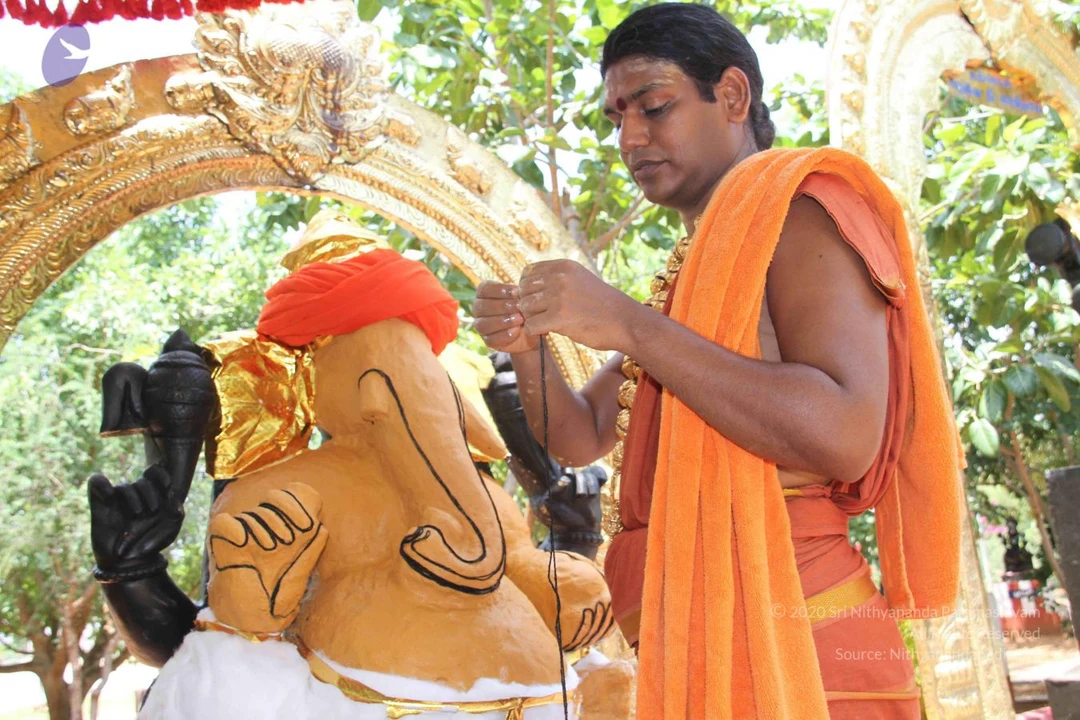
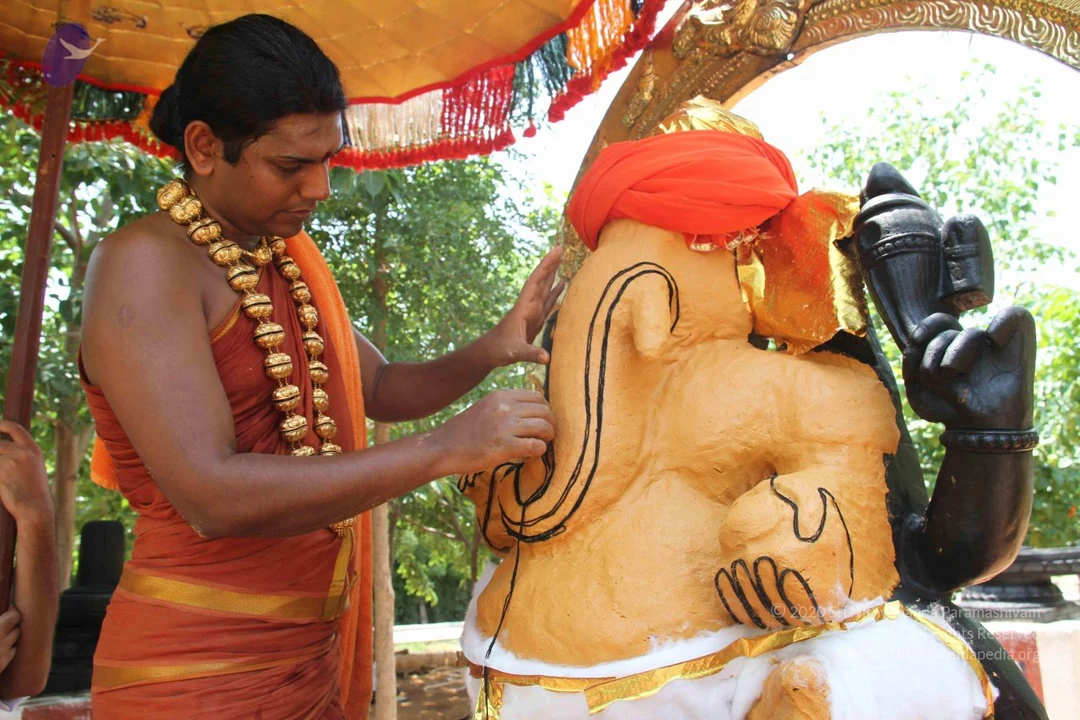
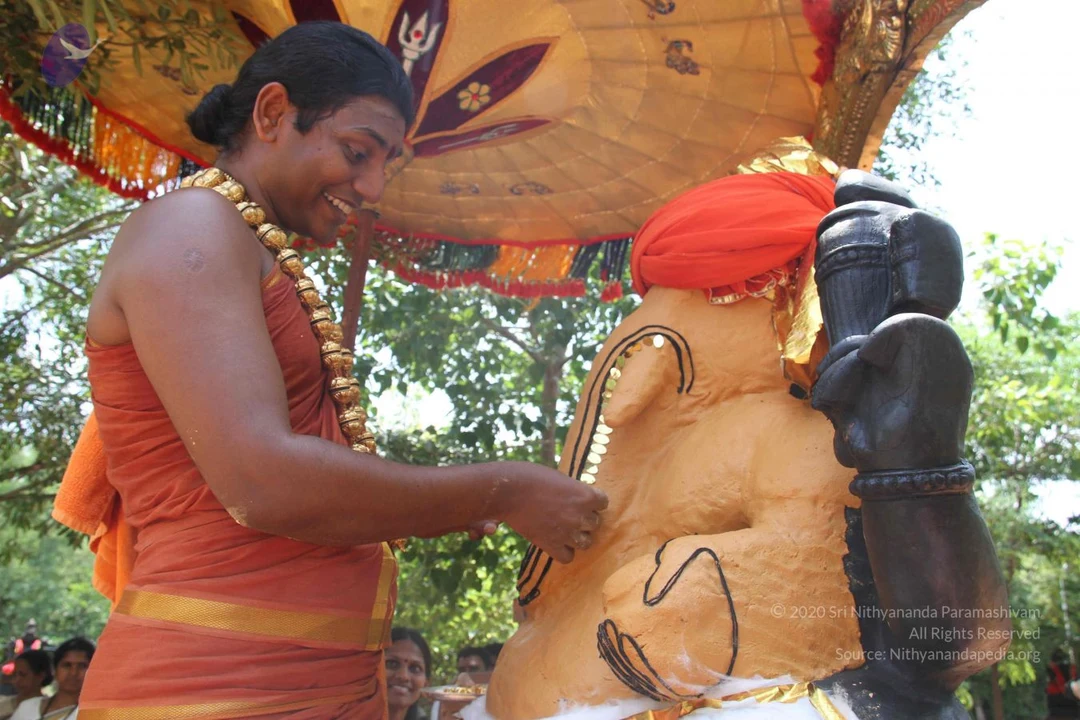
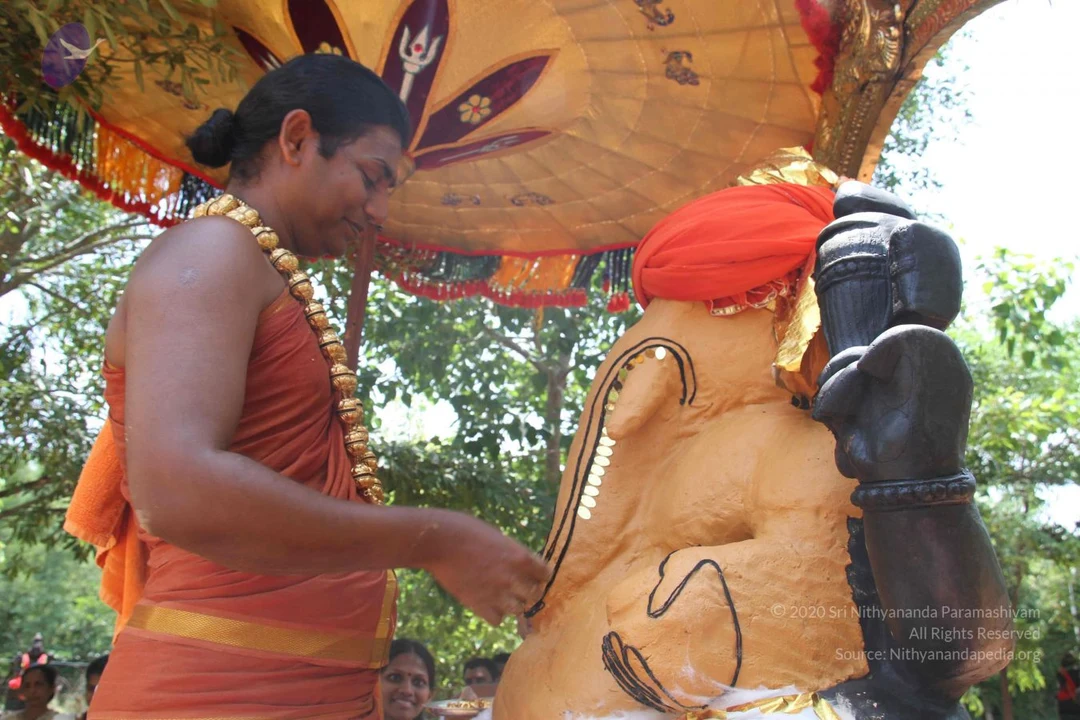
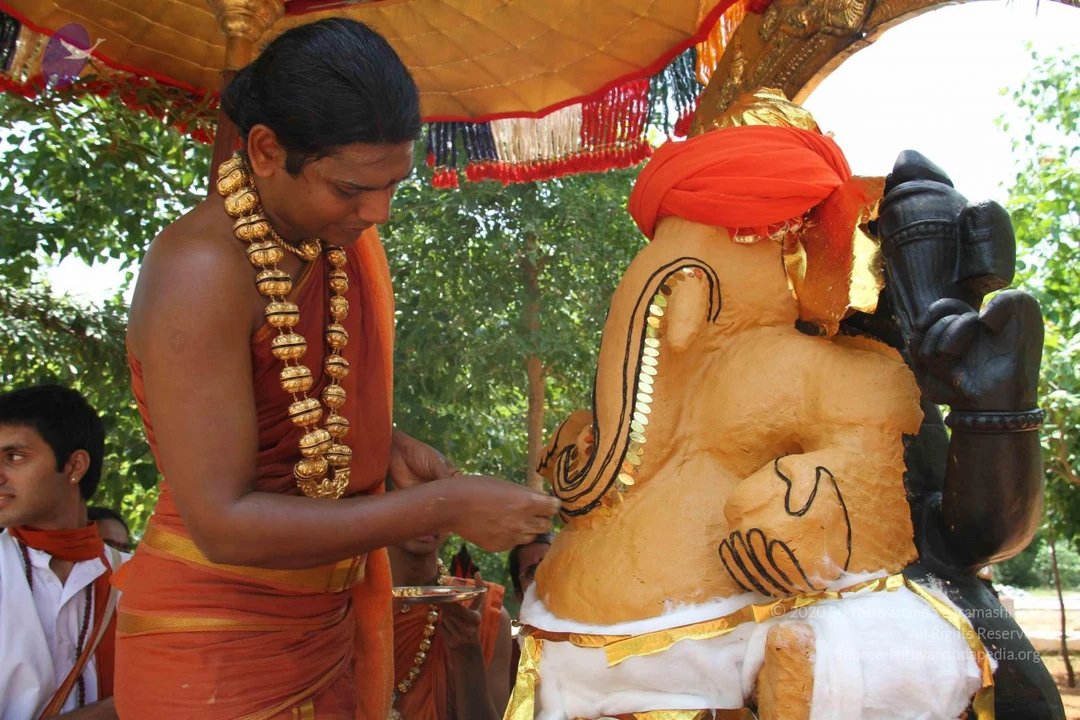
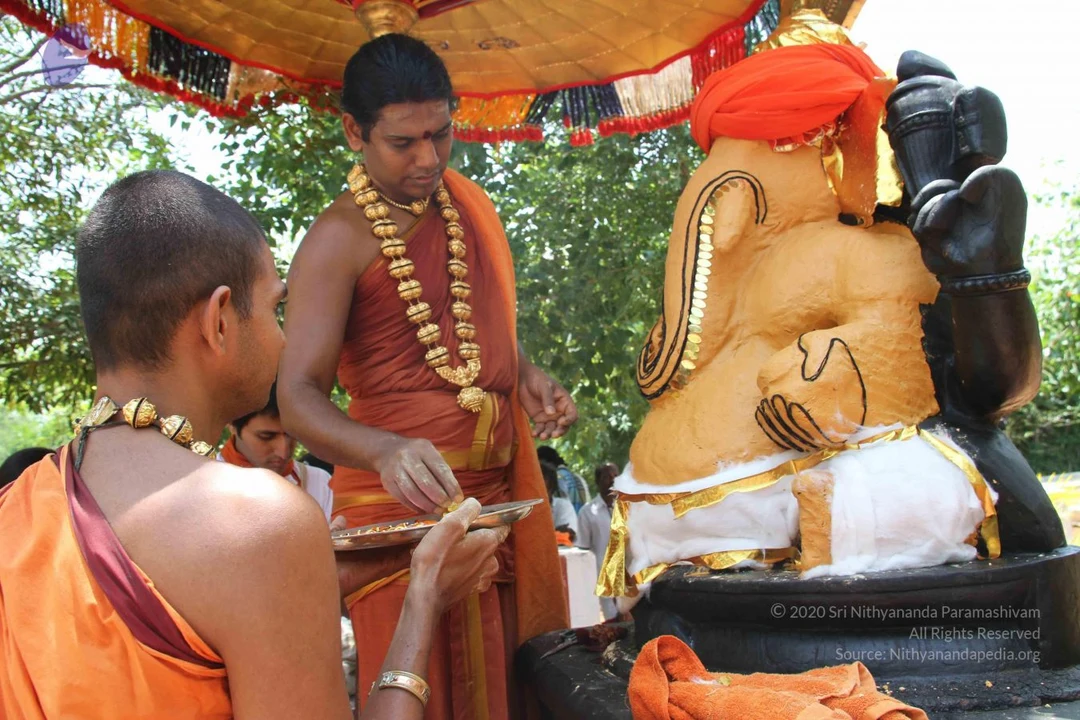
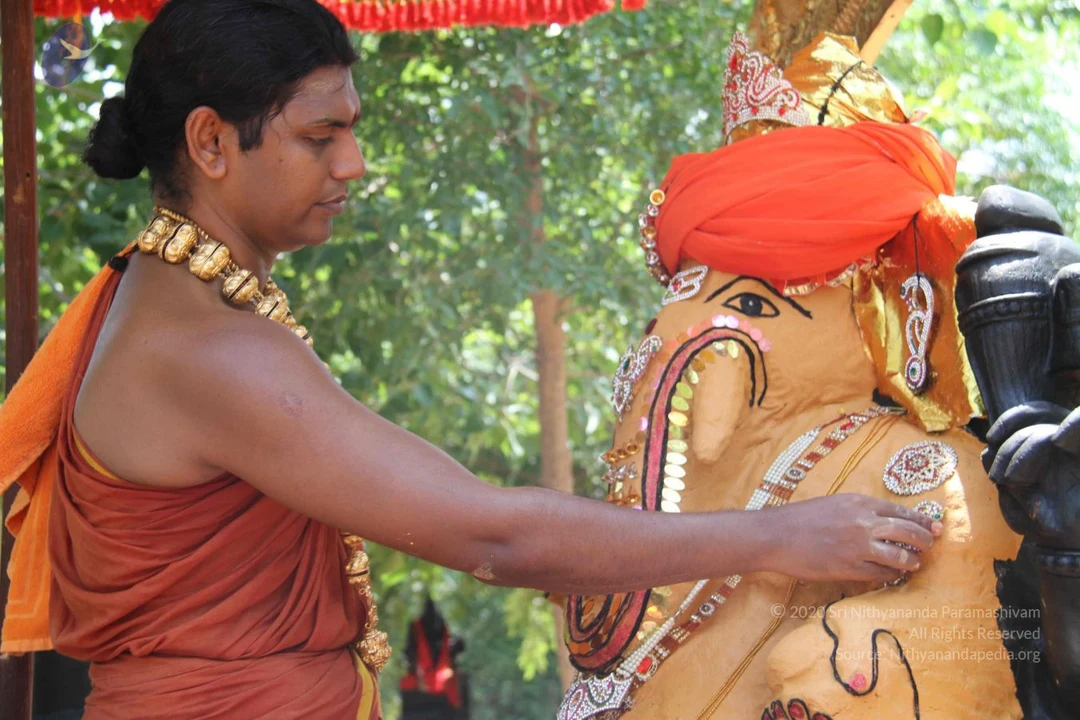
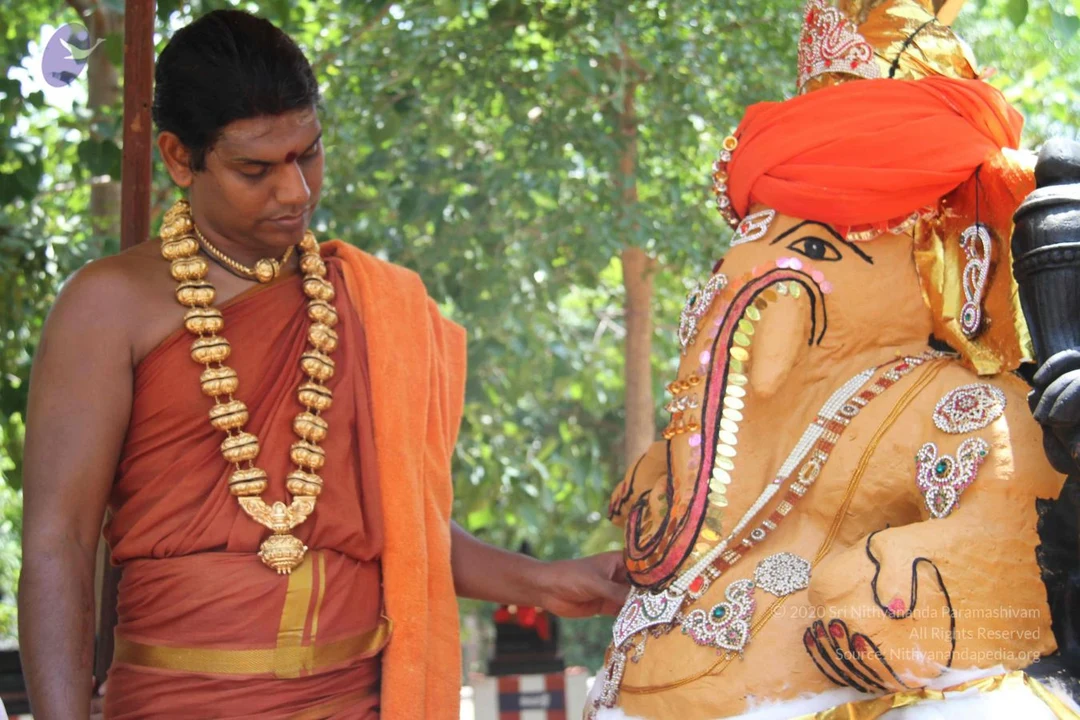
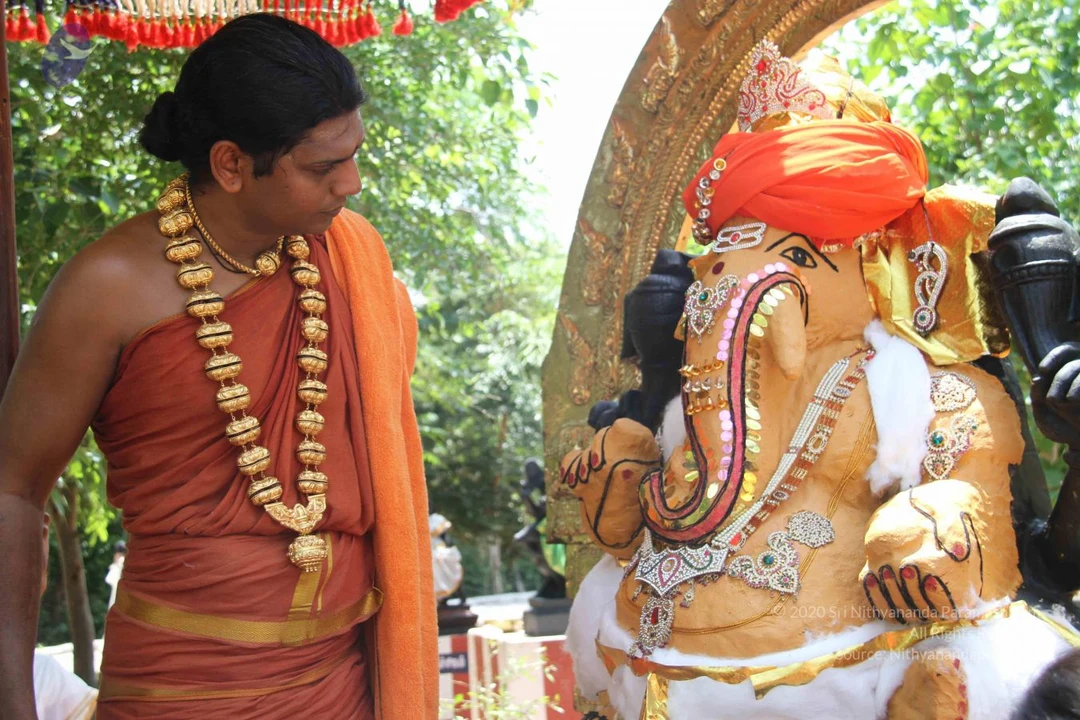
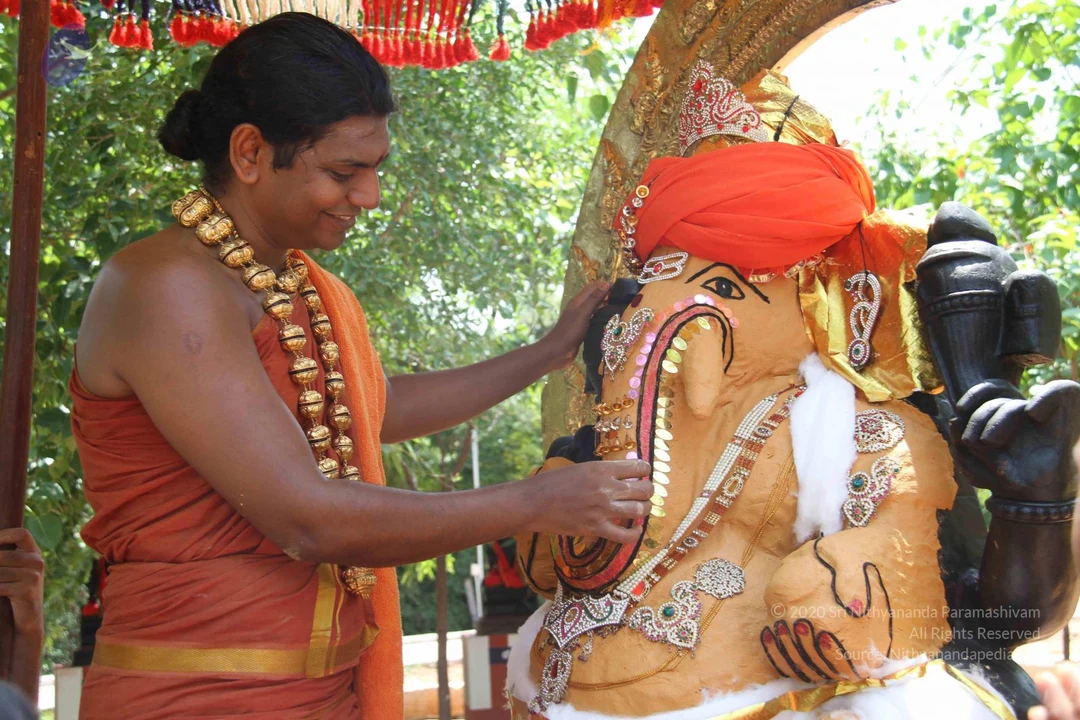
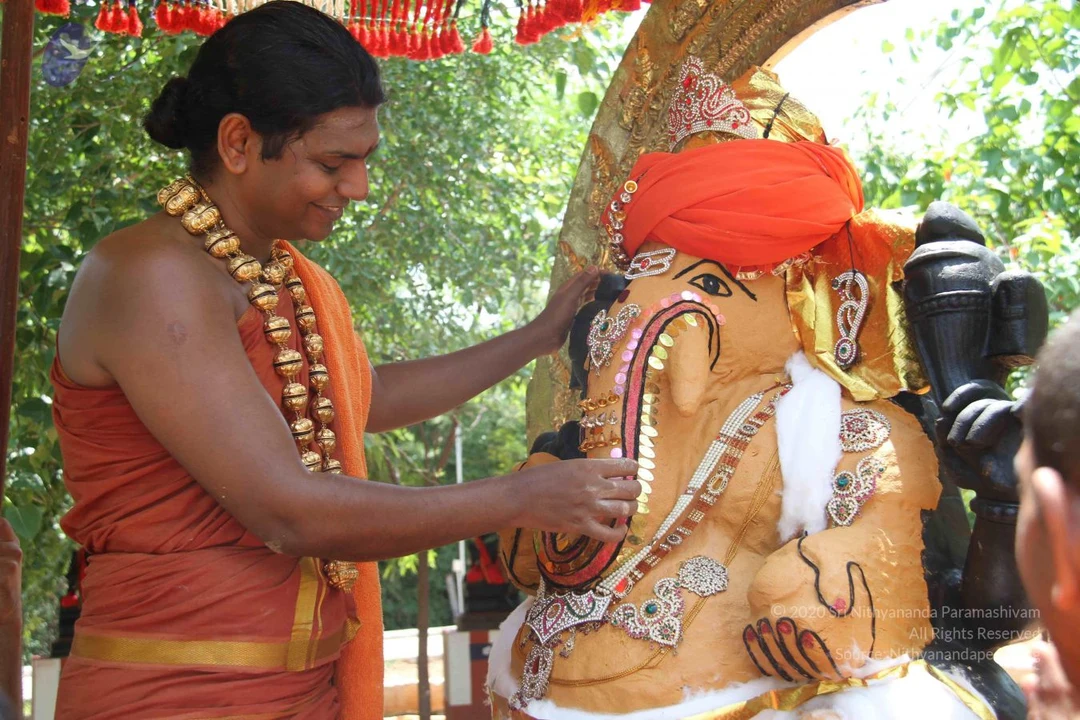
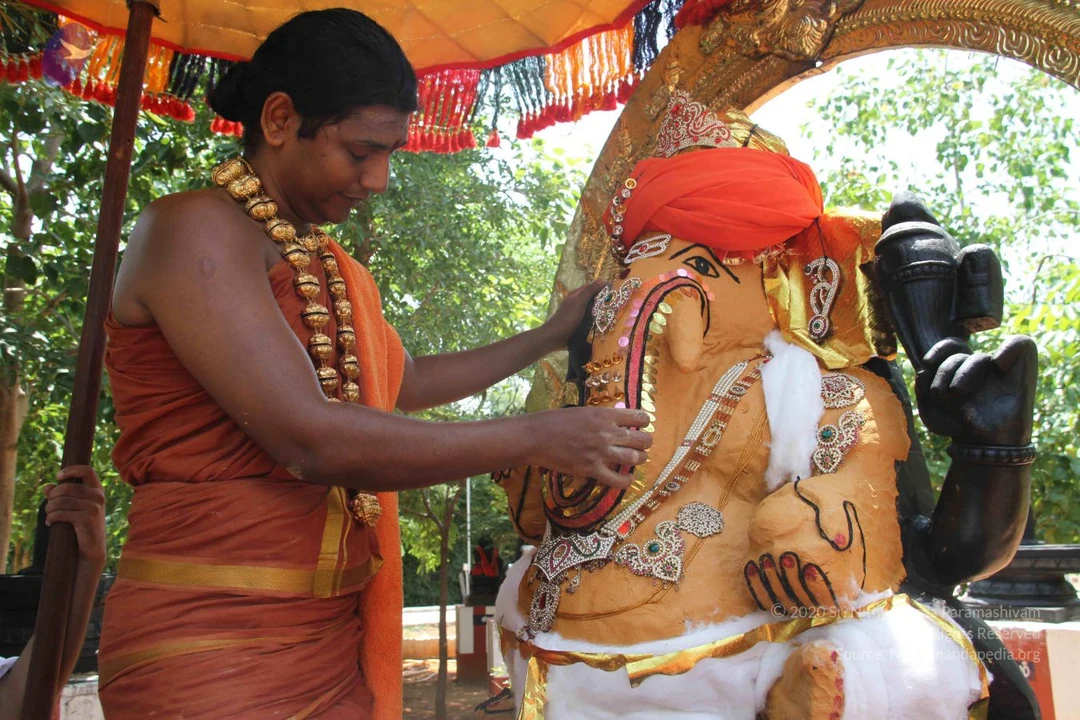
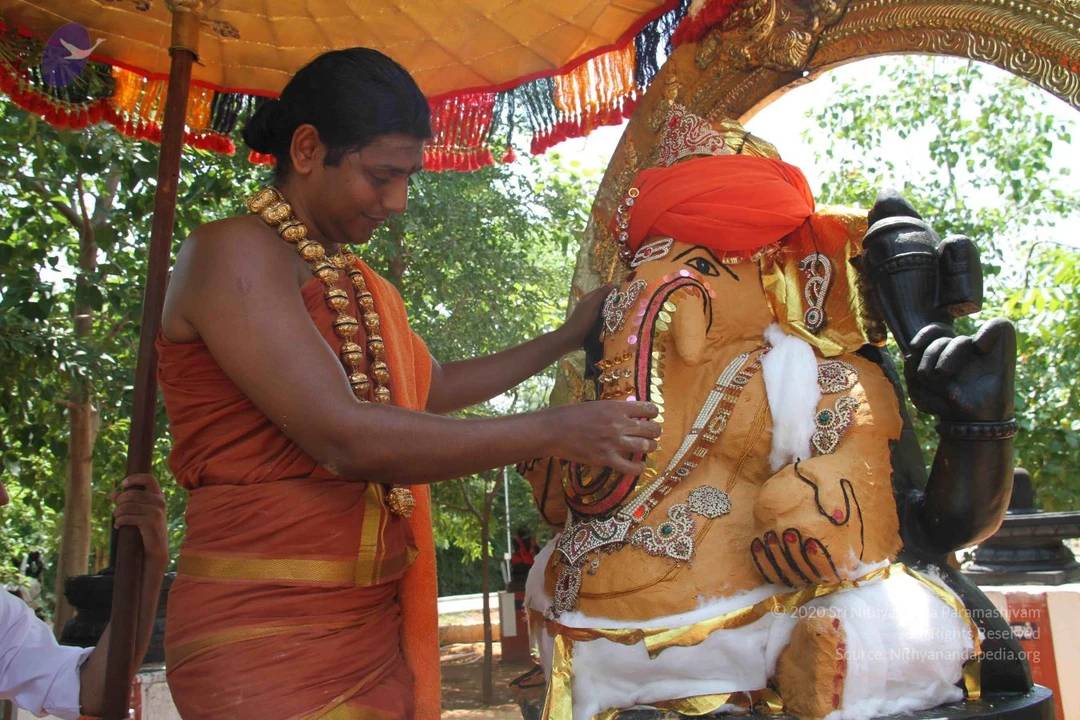
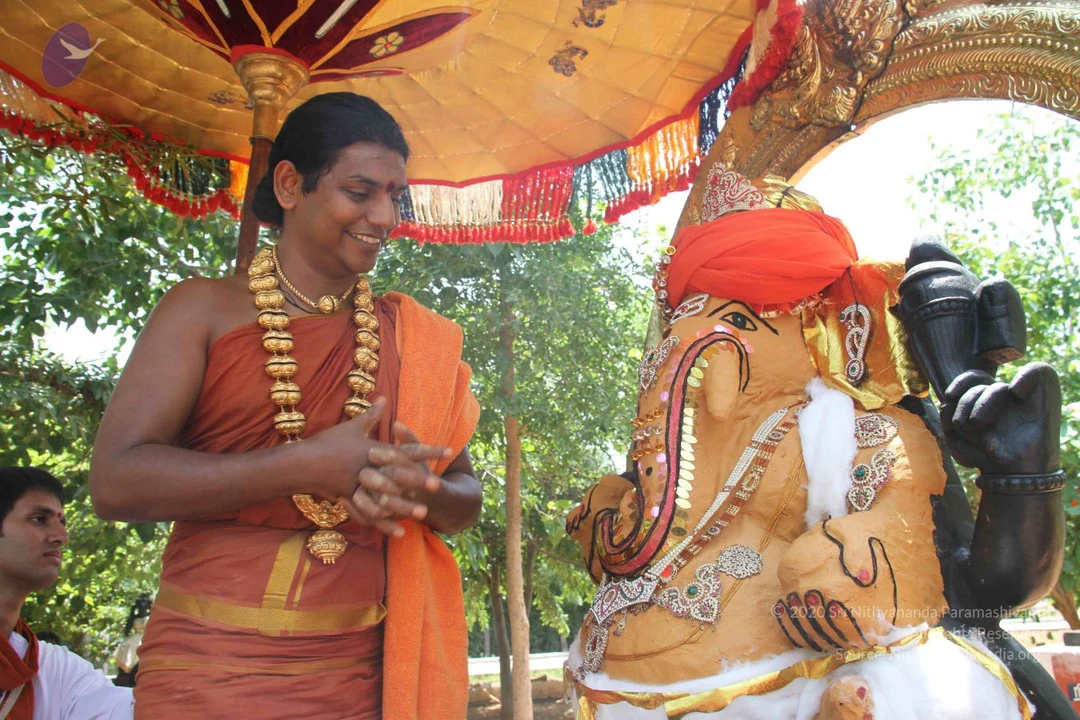
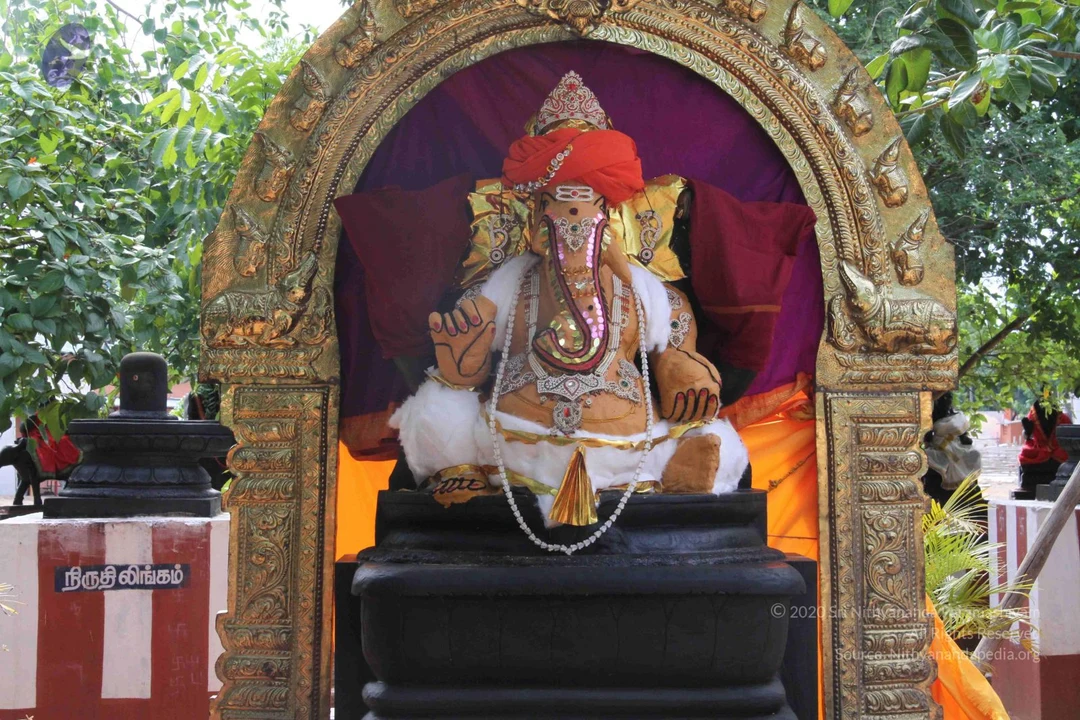
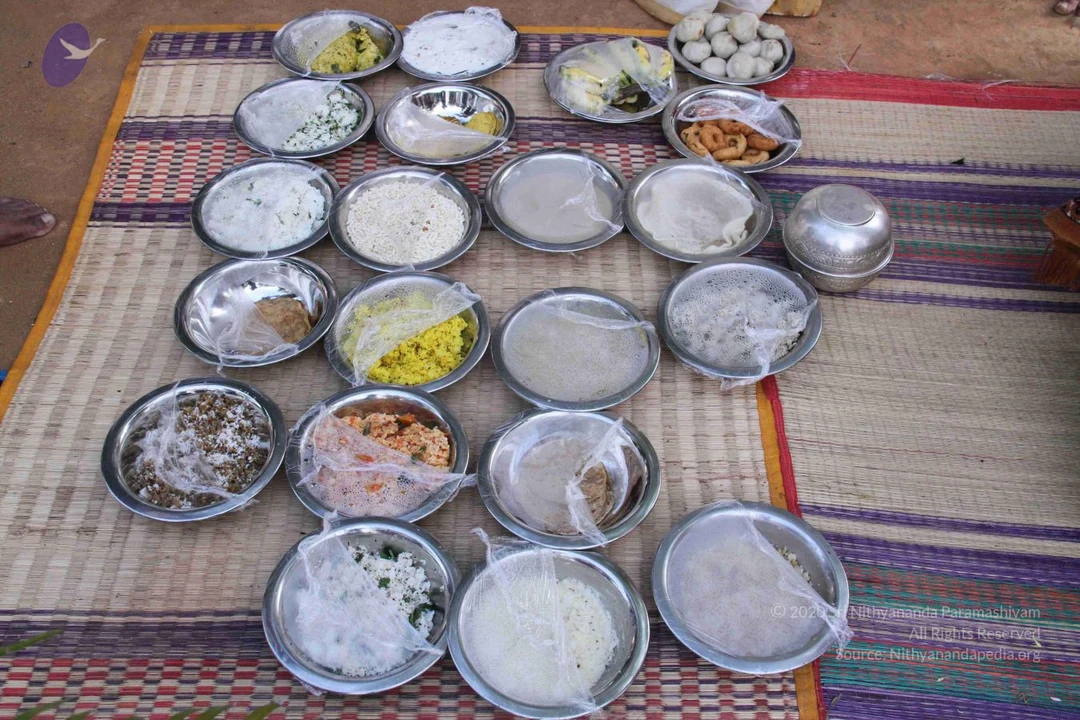
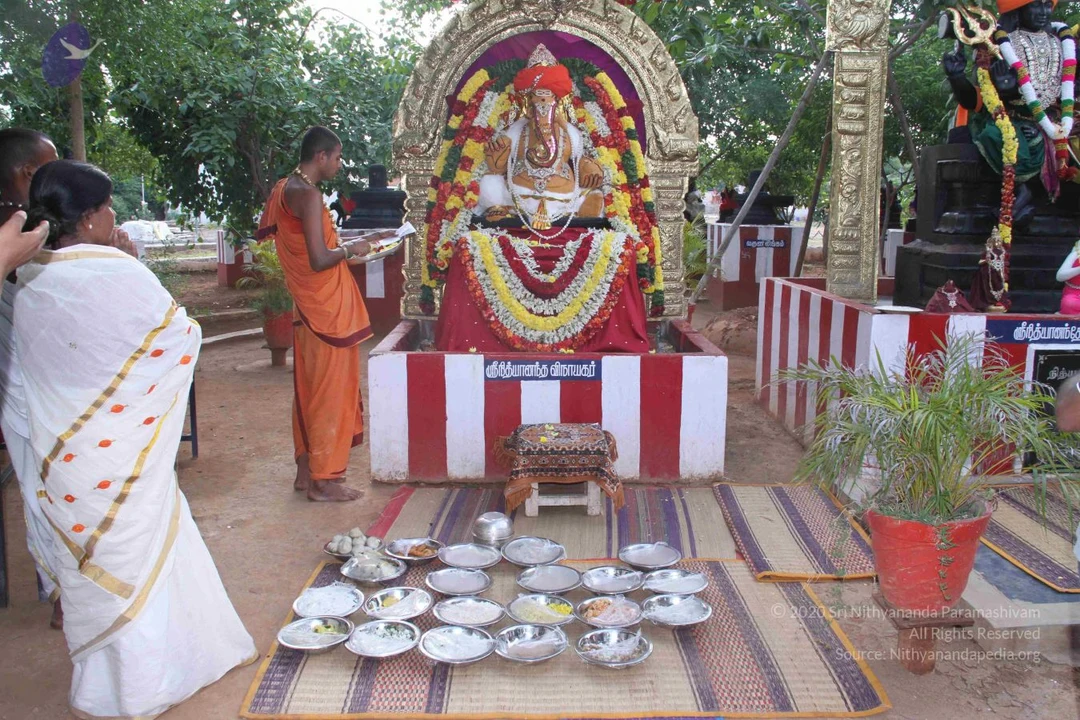
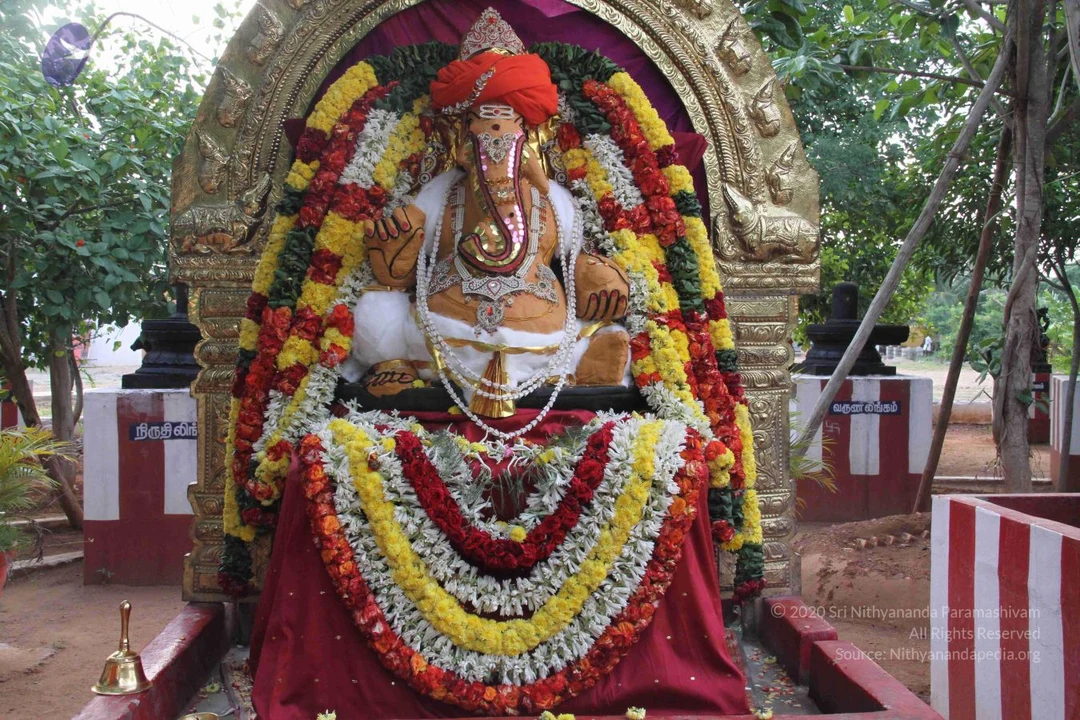
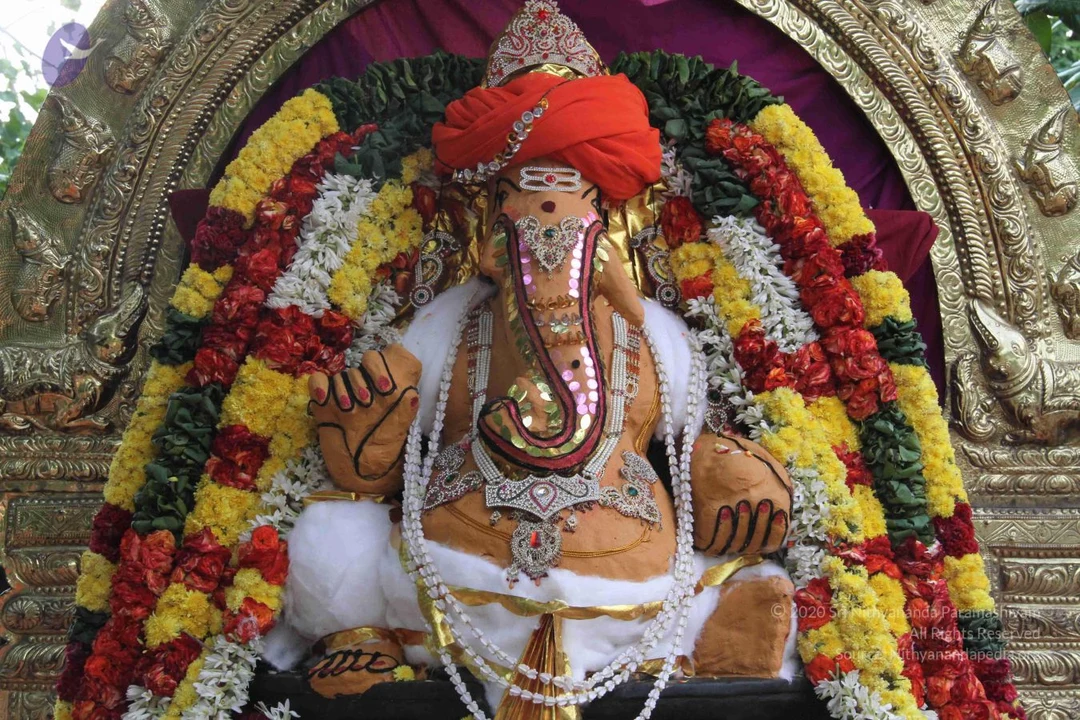
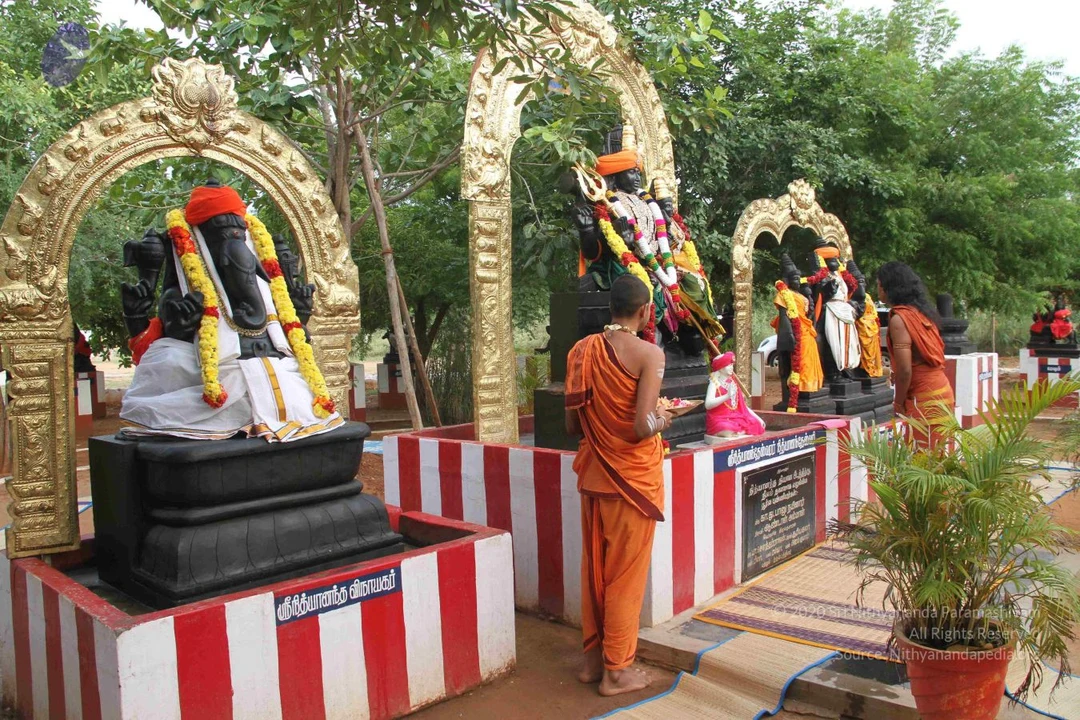
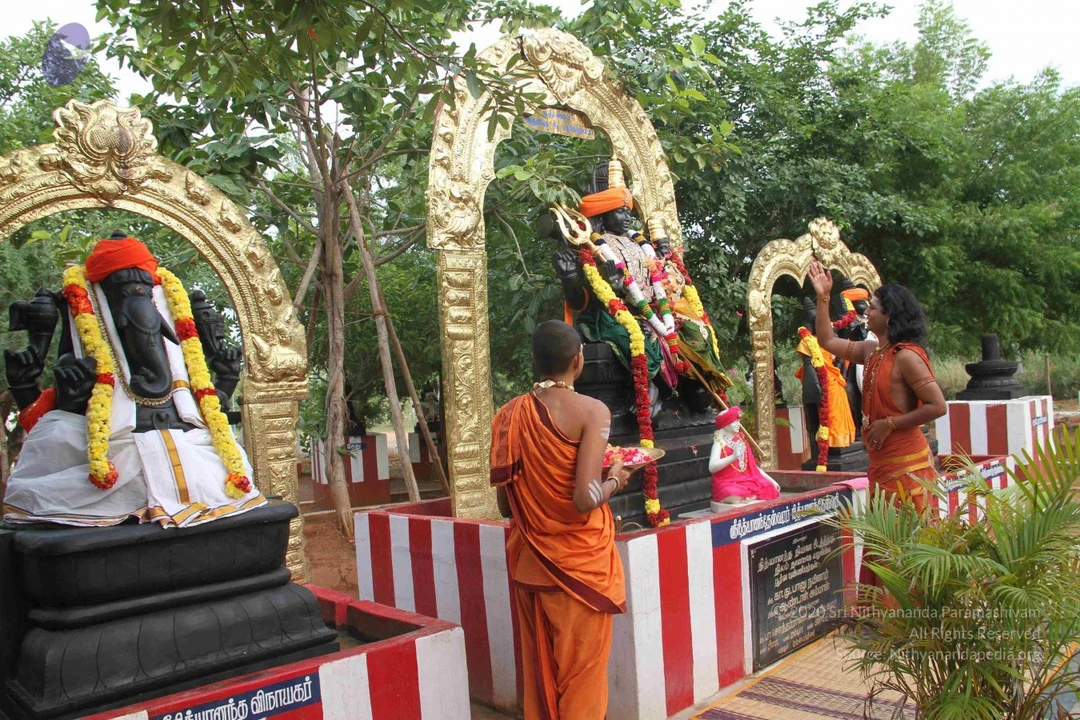
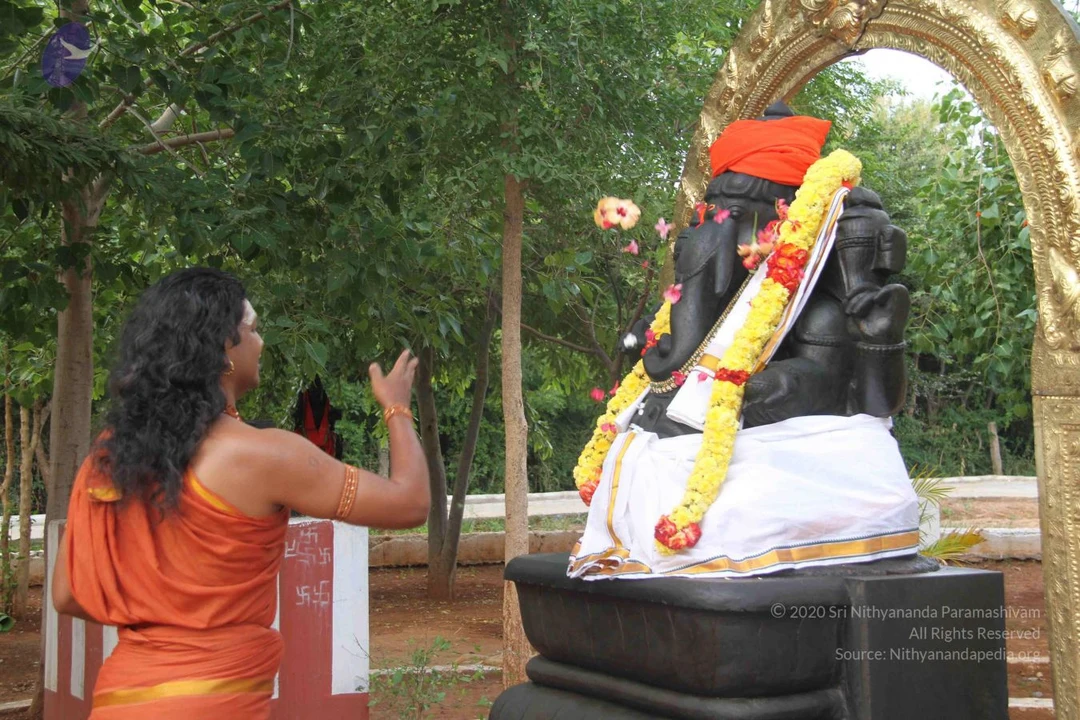
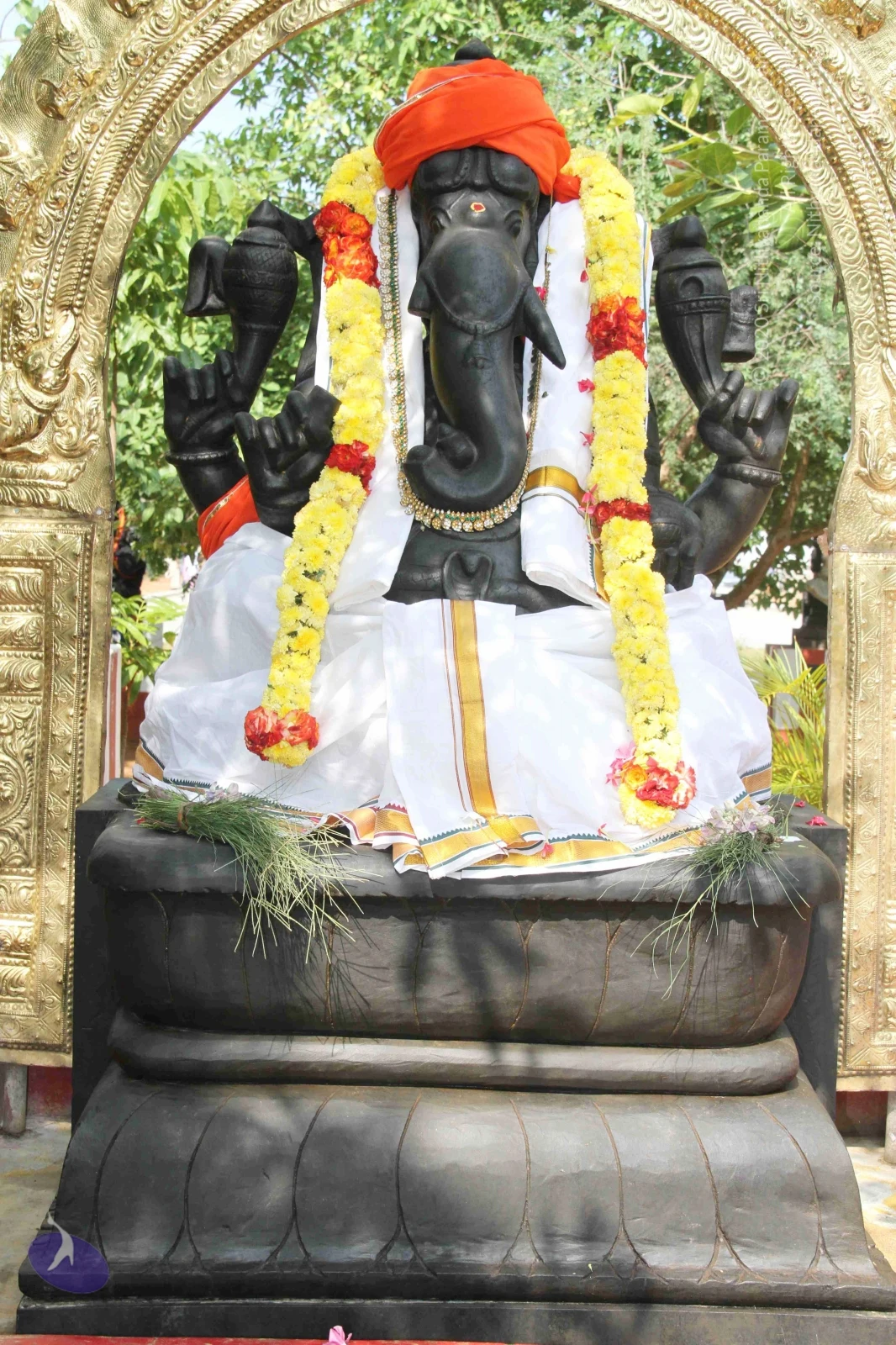
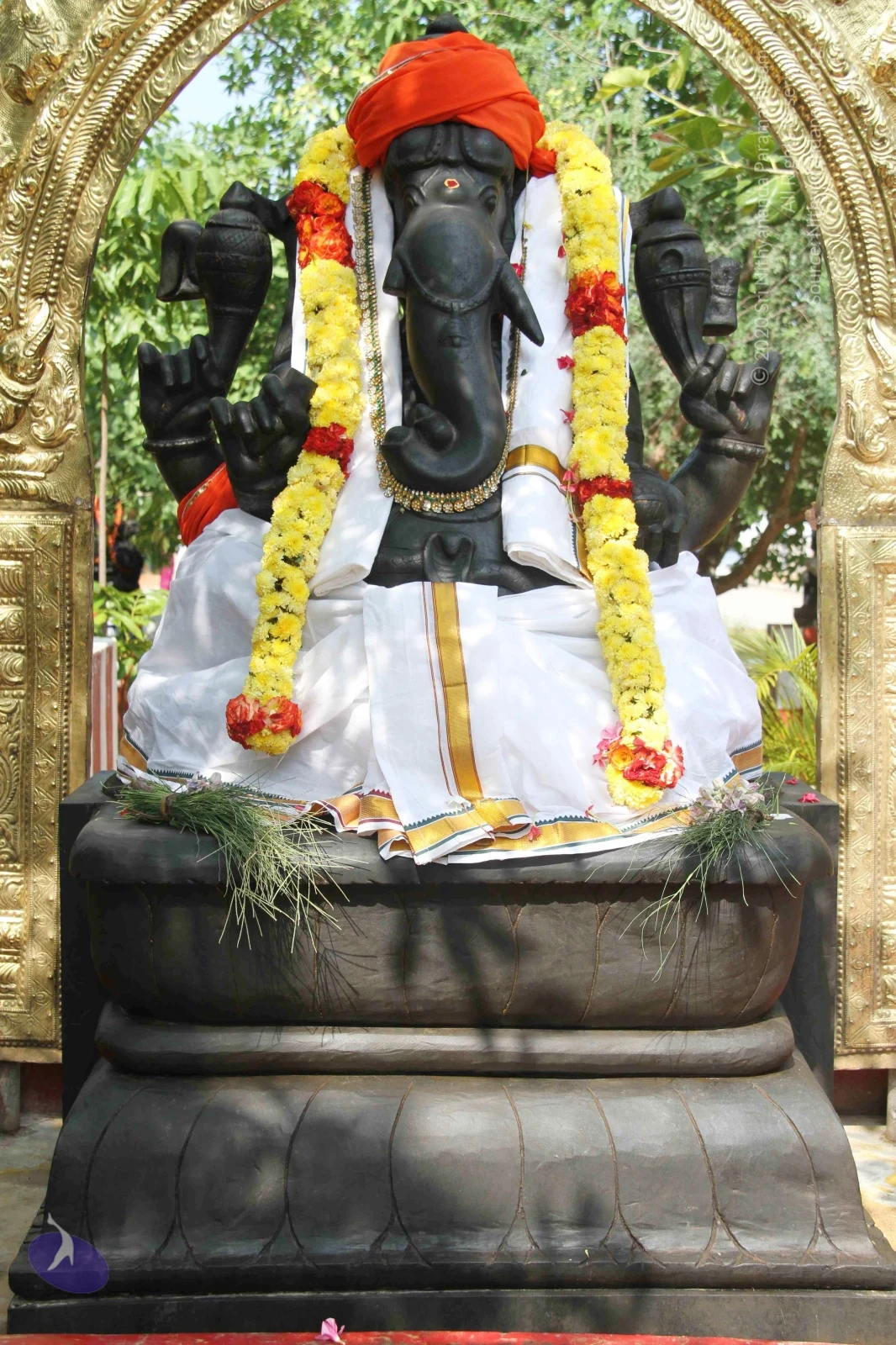
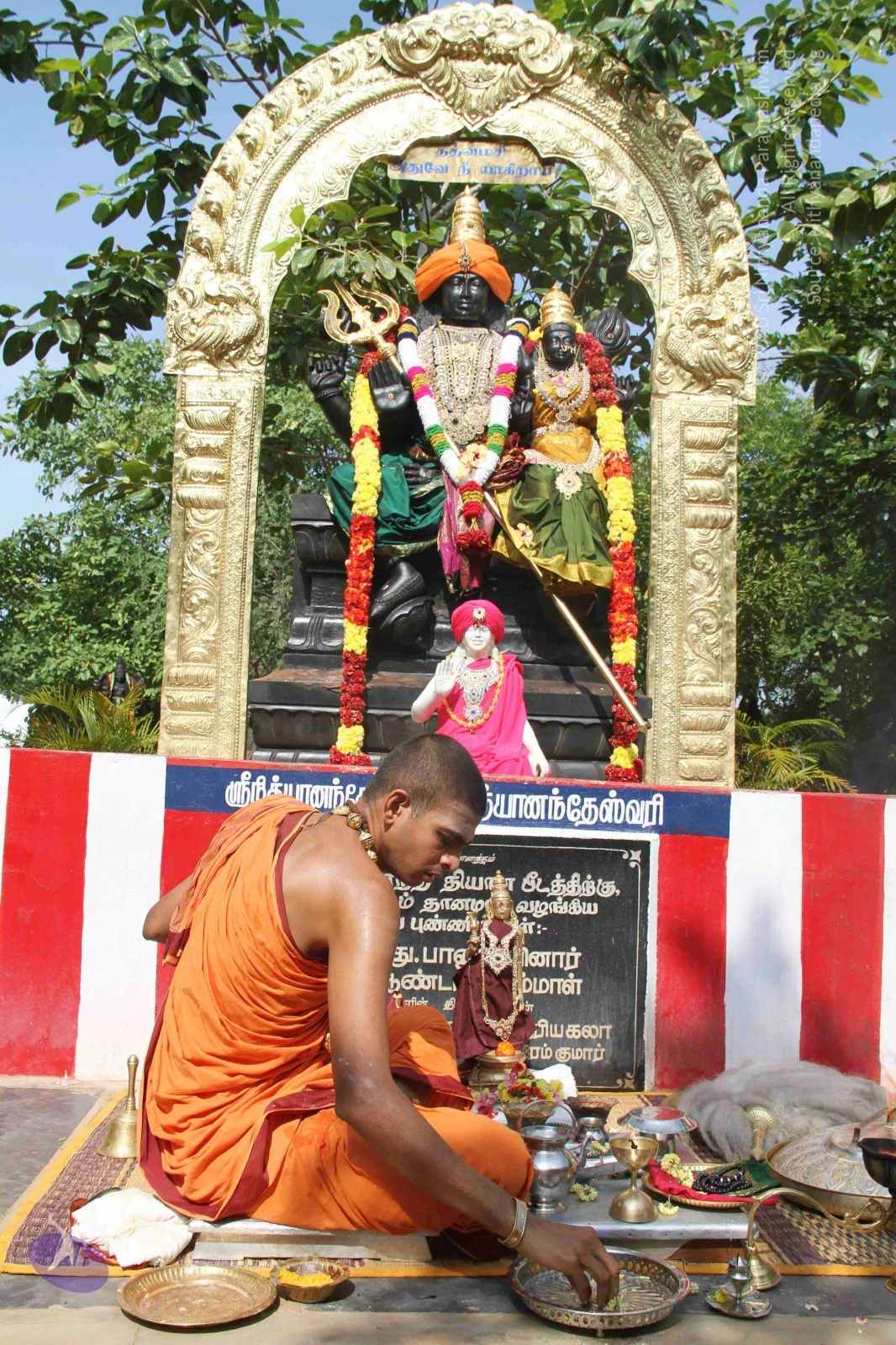
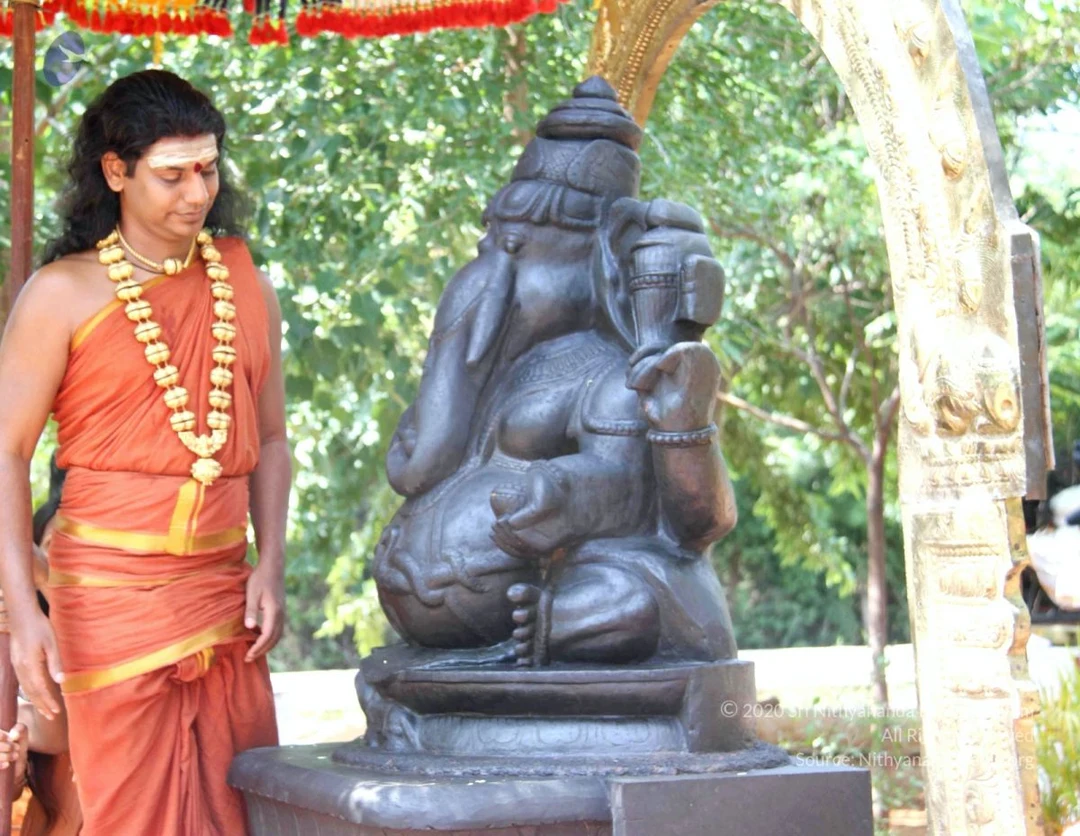
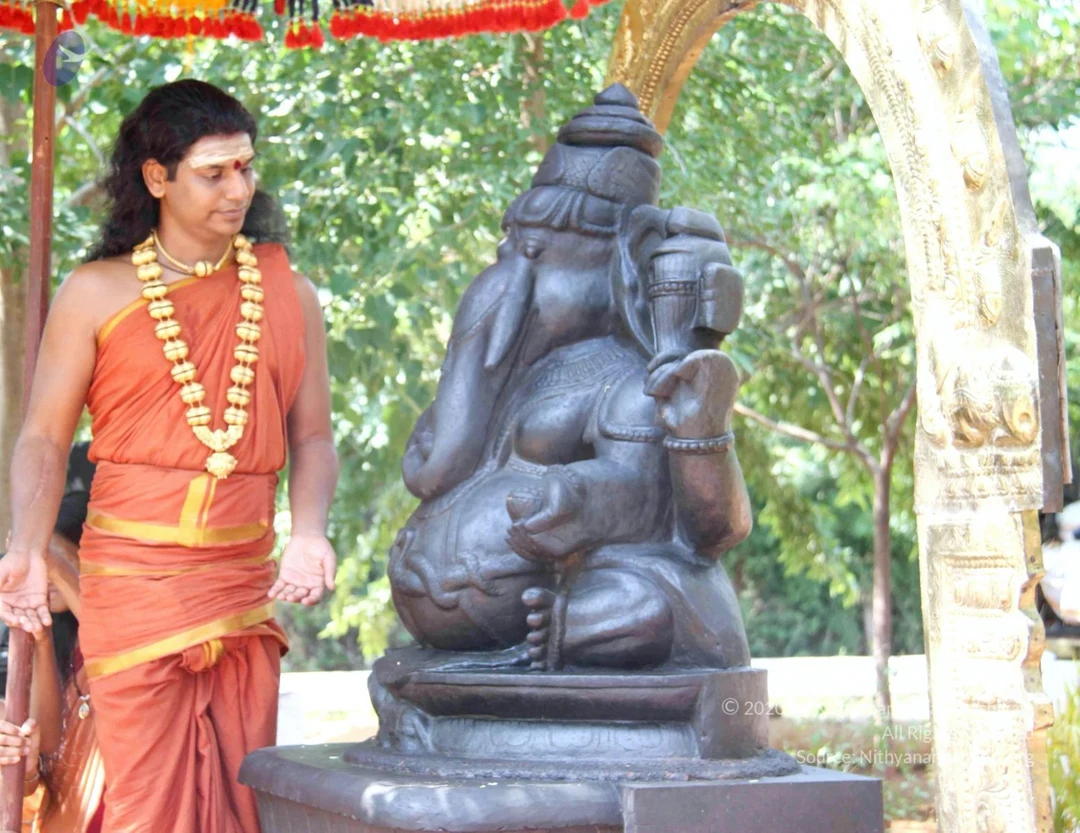
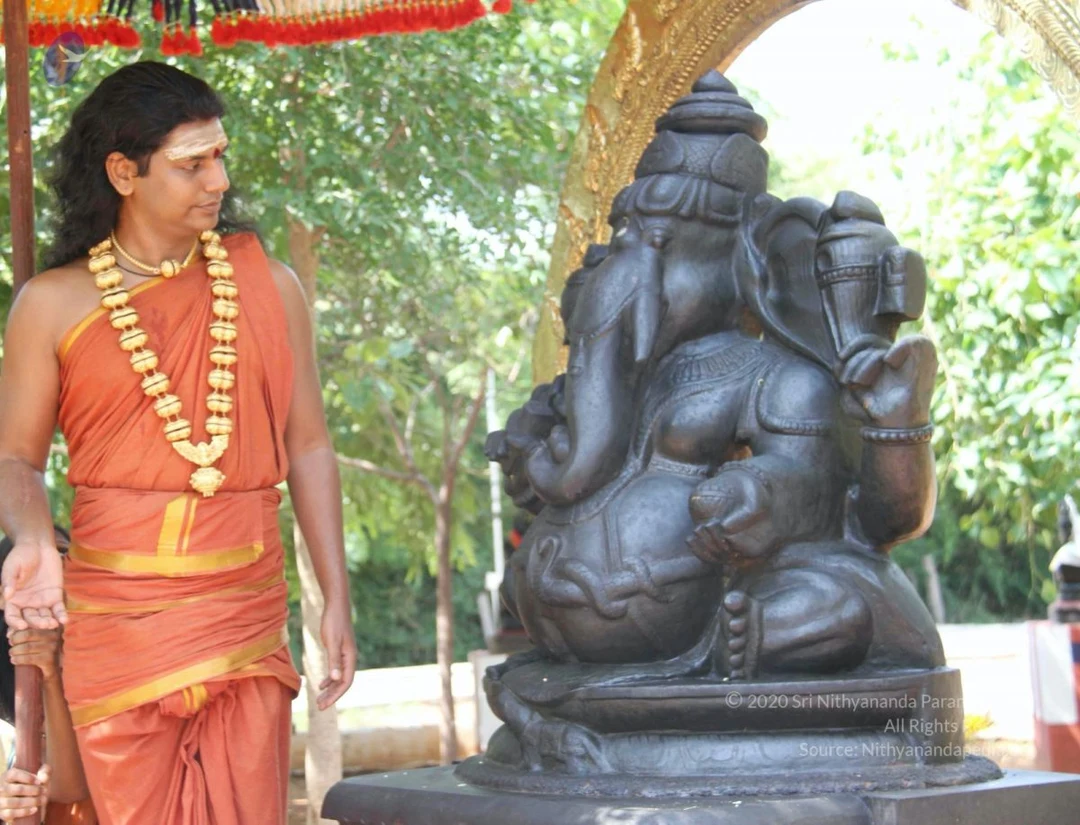
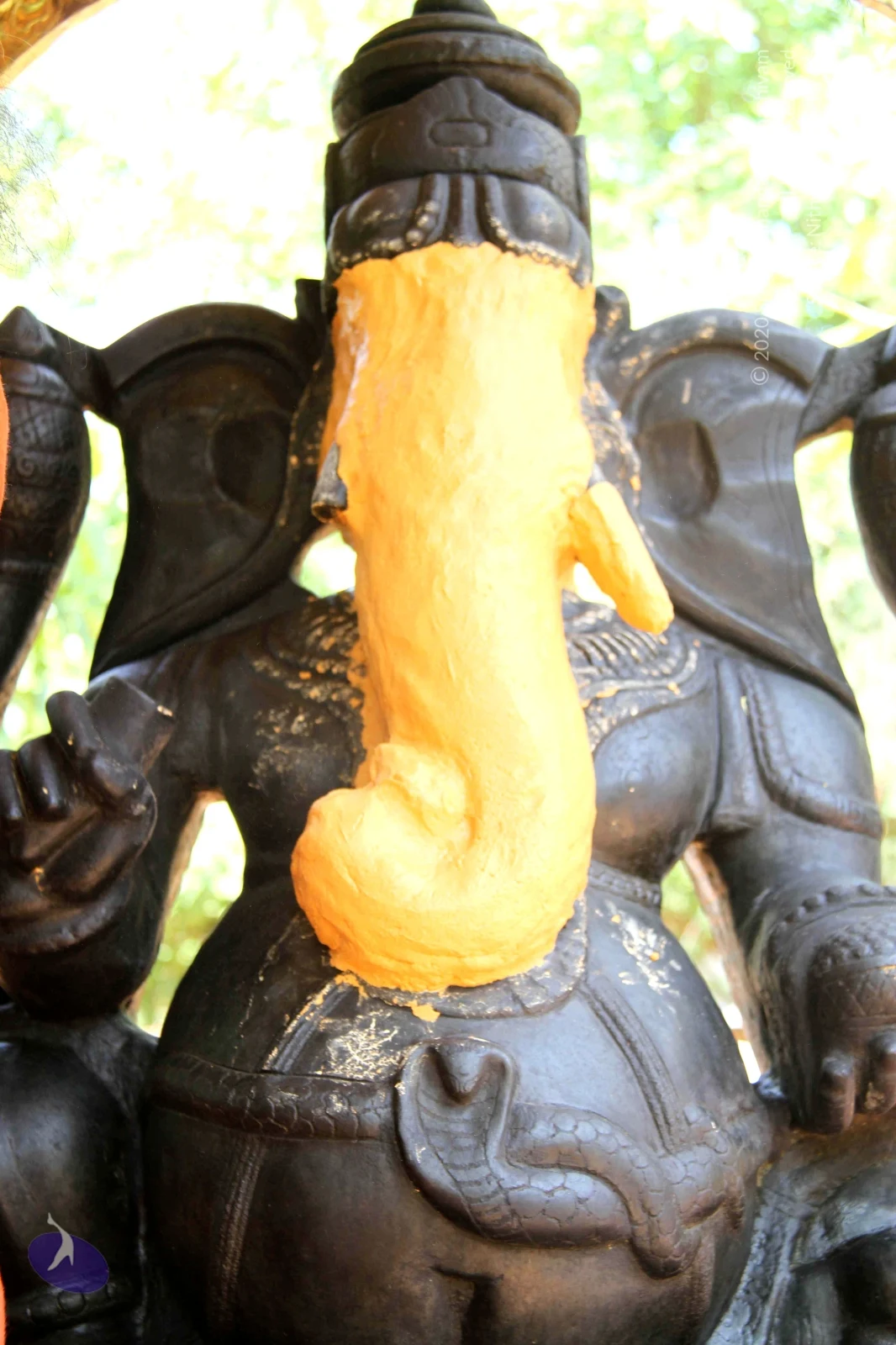
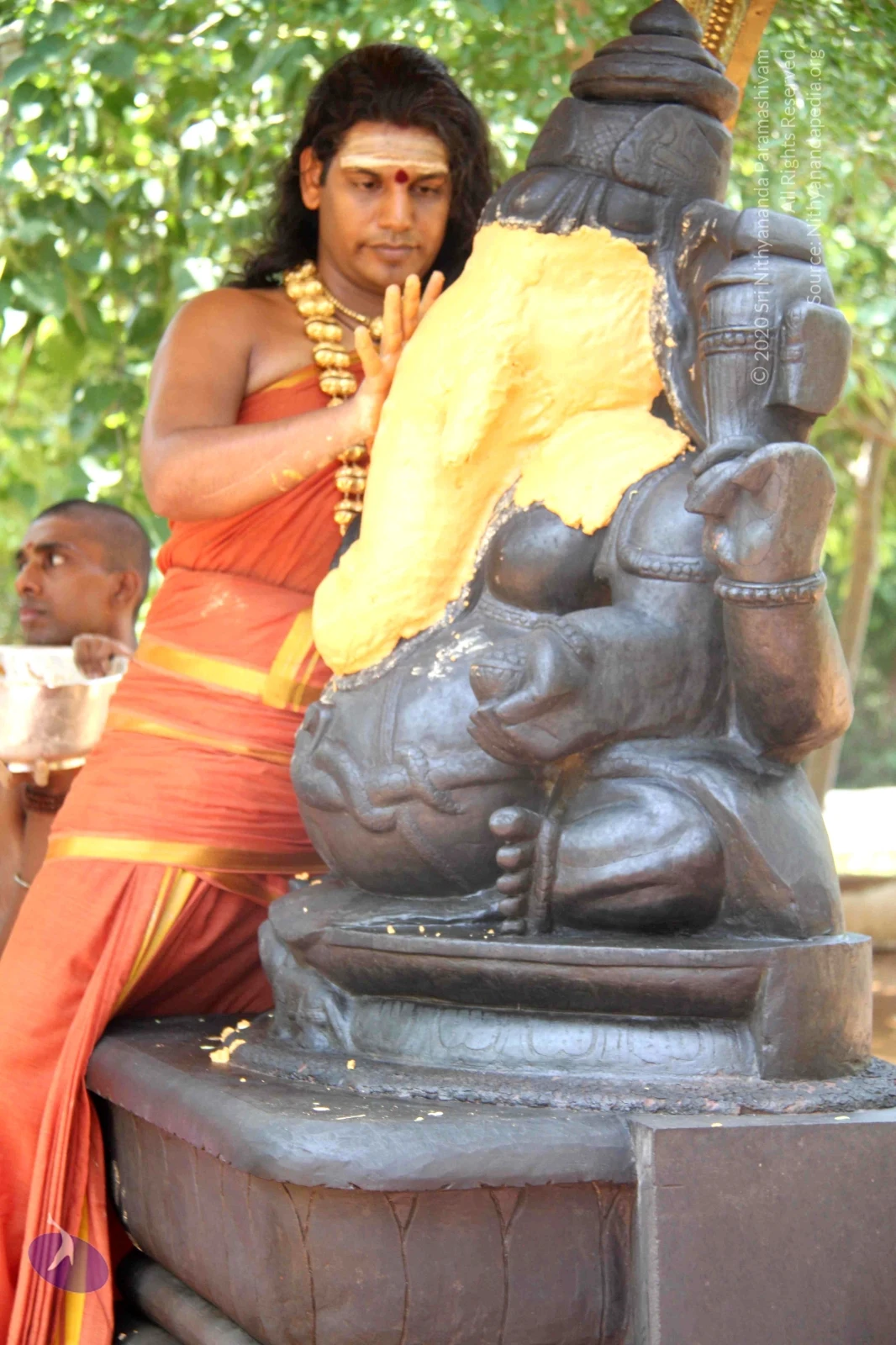
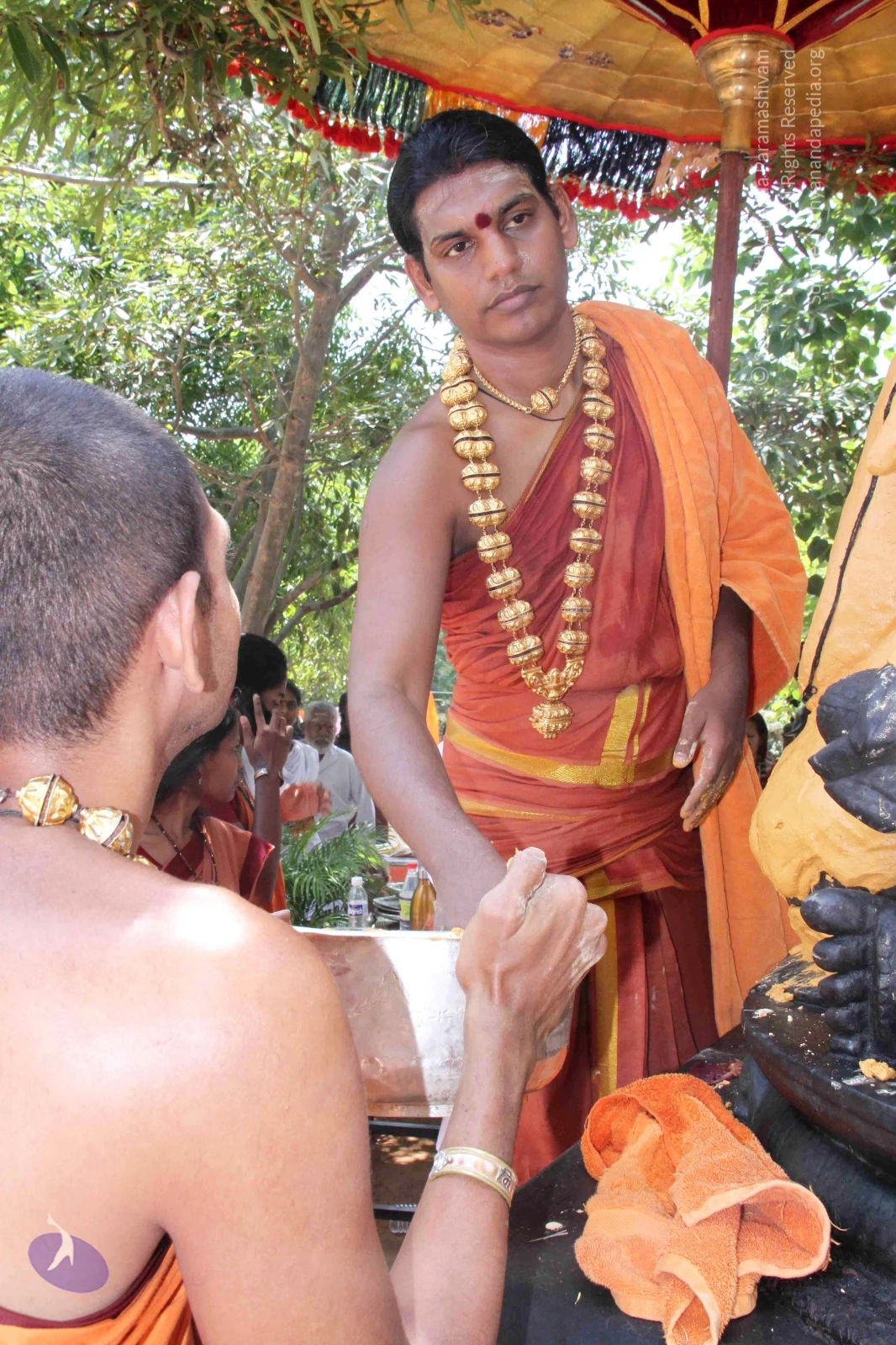
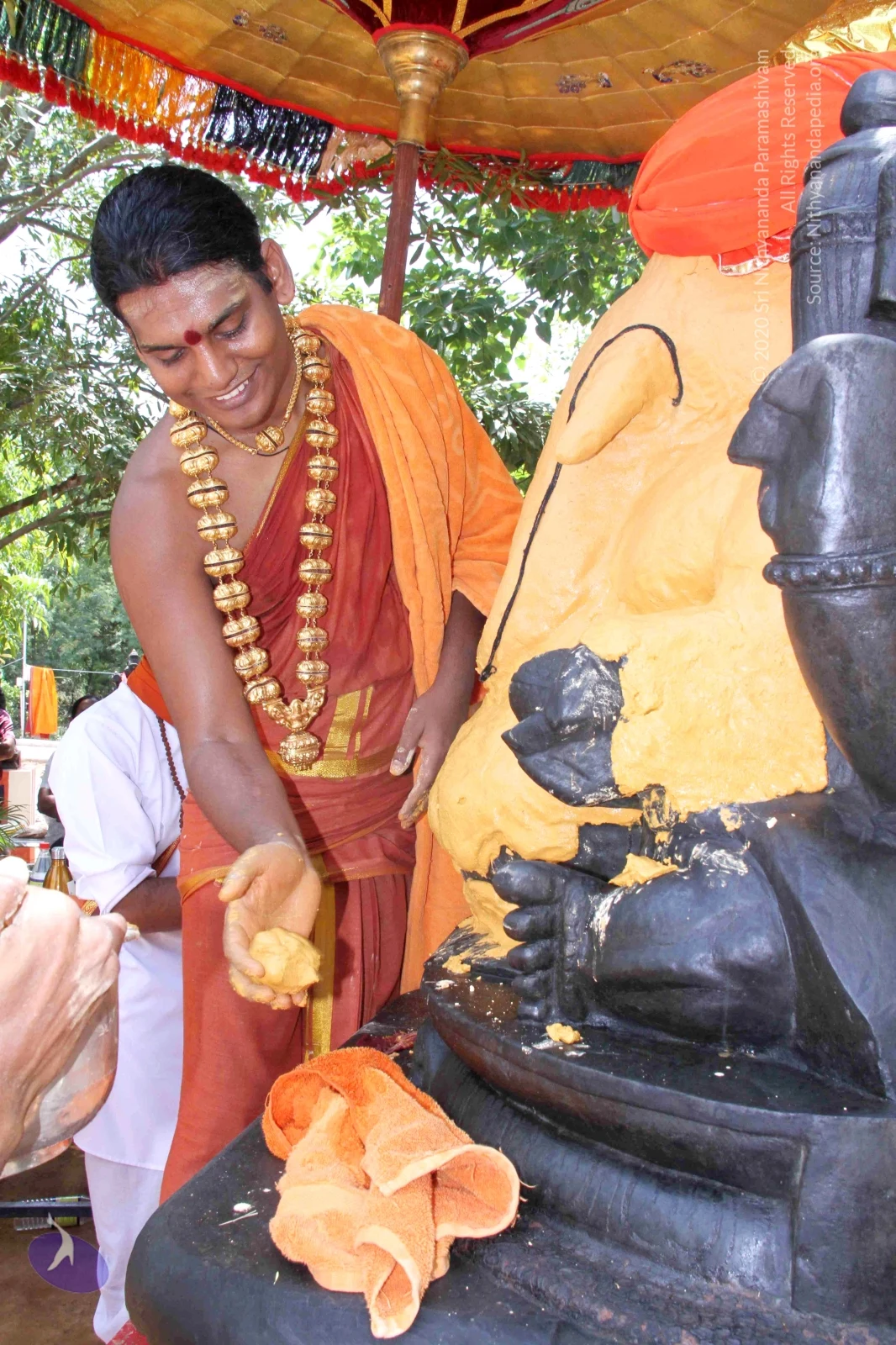
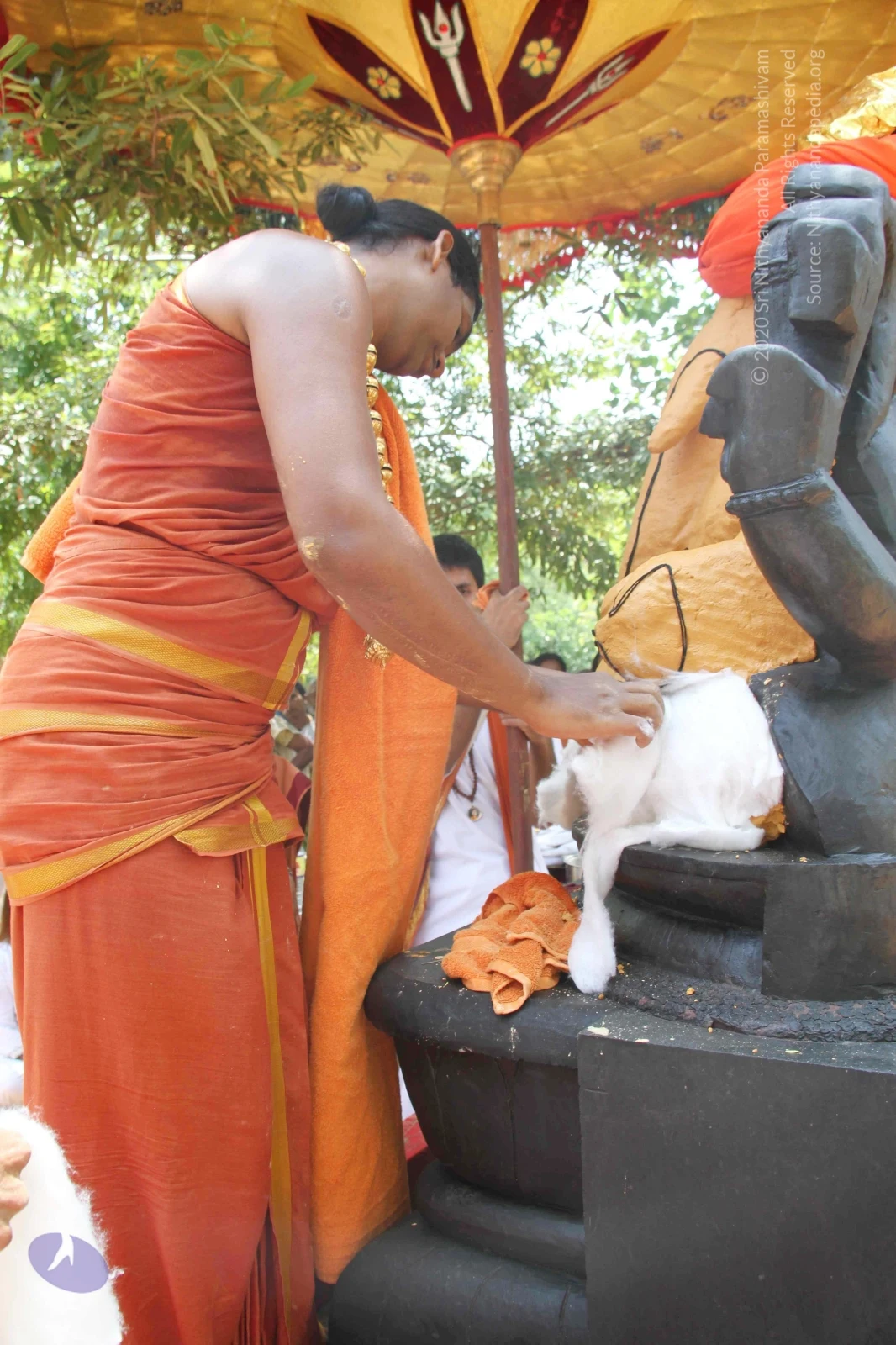
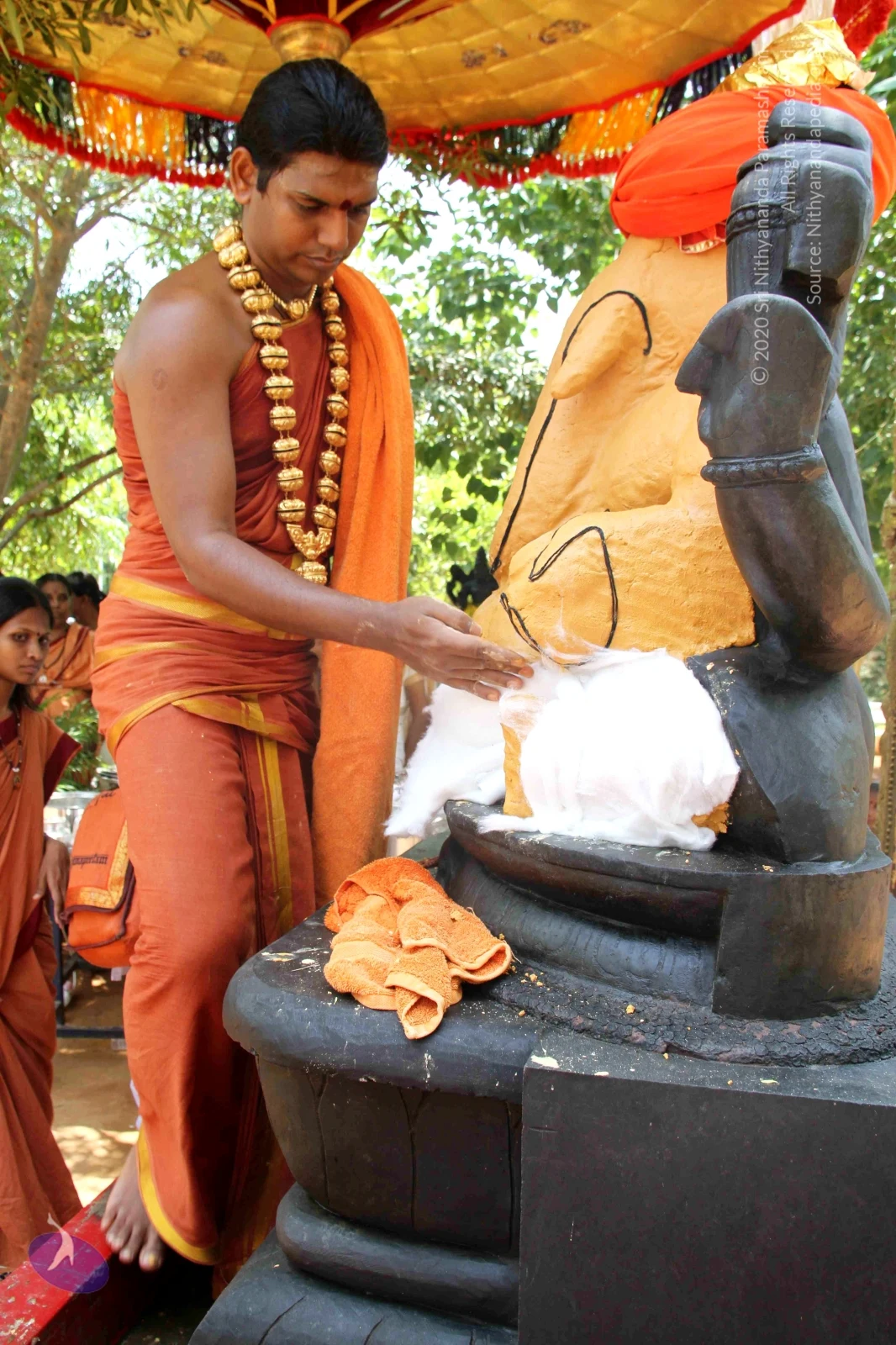
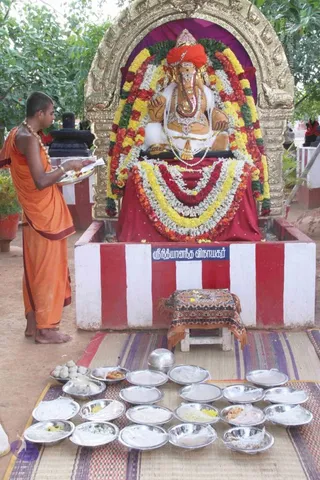
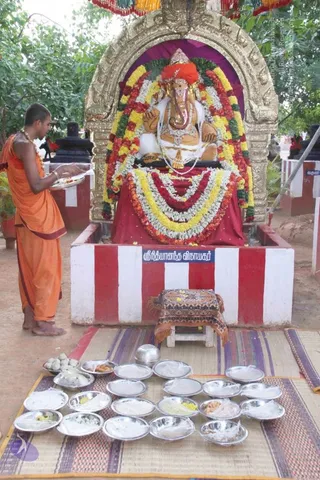
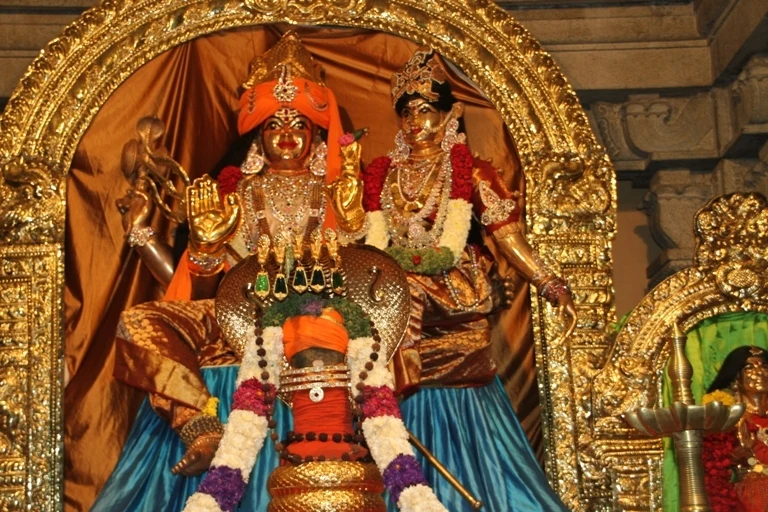
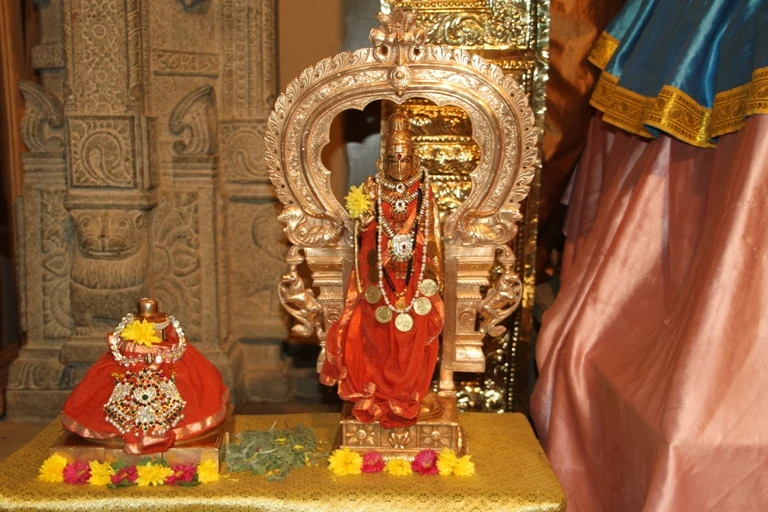
Ganesha eating the food is the first experience happened in my life. And I can say, that is the reason my spiritual journey was successful. And it has unfolded with all its glory, beauty and the spiritual depth. So, here I have today, for all of you to have darshan of Ganesha who ate the food, and inaugurated my spiritual life and initiated my spiritual life. You will be having today, puja for Ganesha, for this deity also. Ganesha is the deity, easy to worship, easy to relate with. You are supposed to start your spiritual life with him. By his grace and. Whether it is Vyasa, the first master or the Most recent master, Ramana Maharshi, all of them have to start with Ganesha. whether they are going to sing a stotra or give a teaching, anything! - or spiritual sutras.. Even if they have to teach enlightenment science which says there is no God in form, God is formlessness, they have to start with Ganesha. Even if they are going to express the message - God is Nirguna brahman, First they say , "Let me bow down to Ganesha to express these great truths properly". Whether it is Vyasa, or Ramana Maharshi, first to last, everyone most ancient to most recent, they have to start with Ganesha. Vyasa starts with Ganesha purana and every book with the remembrance of Ganesha and upanishads, vedas starts with the beautiful upanishad called "Ganapathi Atharva seshopanishad". Get all the auspiciousness and blessings in your life from Ganesha. He is the lord of all the ashramites in kailash. He is the incharge of ashramites. Please understand, all the ashramites in kailash are called "Ganas".

There are 4 levels in Kailash.

--> Saalokya muktha

--> Saameepya muktha

--> Saarupya muktha

--> Saayujya muktha

All saalokya mukthas and saameepya mukthas are called "Ganas".

All saarupya mukthas are called Muni and Rishis.

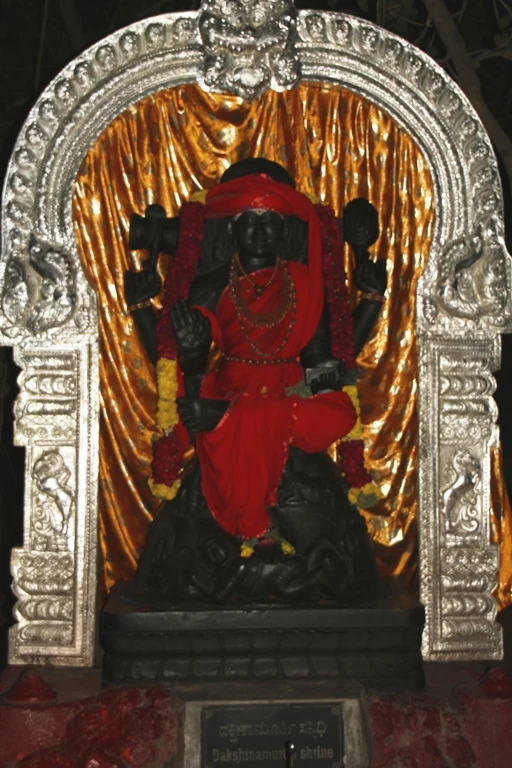
All saayujya mukthas does not have separate individual identity . They disappear into mahadeva. So, all saayujya mukthas are called Mahadeva - Shiva. So, the ganas, all saalokya and saameepya mukthas. These two are called Ganas. Ganesha is in-charge of all of them. That is why he is called Ganesha - Lord of Ganas. He is responsible for all the ashramites in Kailaasa. and he attends to all their needs. He takes care of all of them, including Parvathi. All house keeping needs are supplied by Ganesha. Other than shiva, of course, Munis and Rishis - they don't come under Ganesha. They come directly under Dakshina Murthy. Munishwara! But all the ganas live under Ganesha. He is responsible for taking care of them. In Kailash, each one takes up some responsibility. Munis and Rishis, even though they come directly under Dakshinamurthy, Nandi takes care of them. Thats why all Munis and Rishis are Nandinada Sampradayis. But all others come under Ganesha. Ganesha is the deity easy to worship, easy to relate with. You are supposed to start your spiritual life with him by his grace.

Photos From The Day:
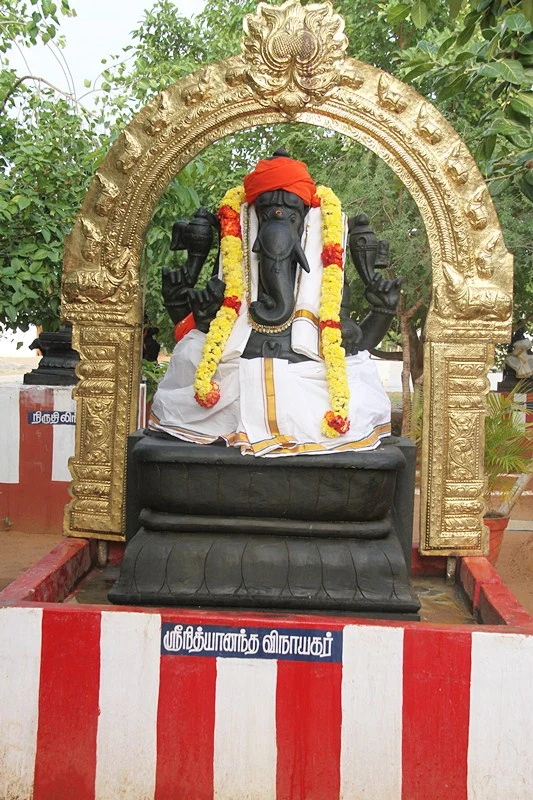
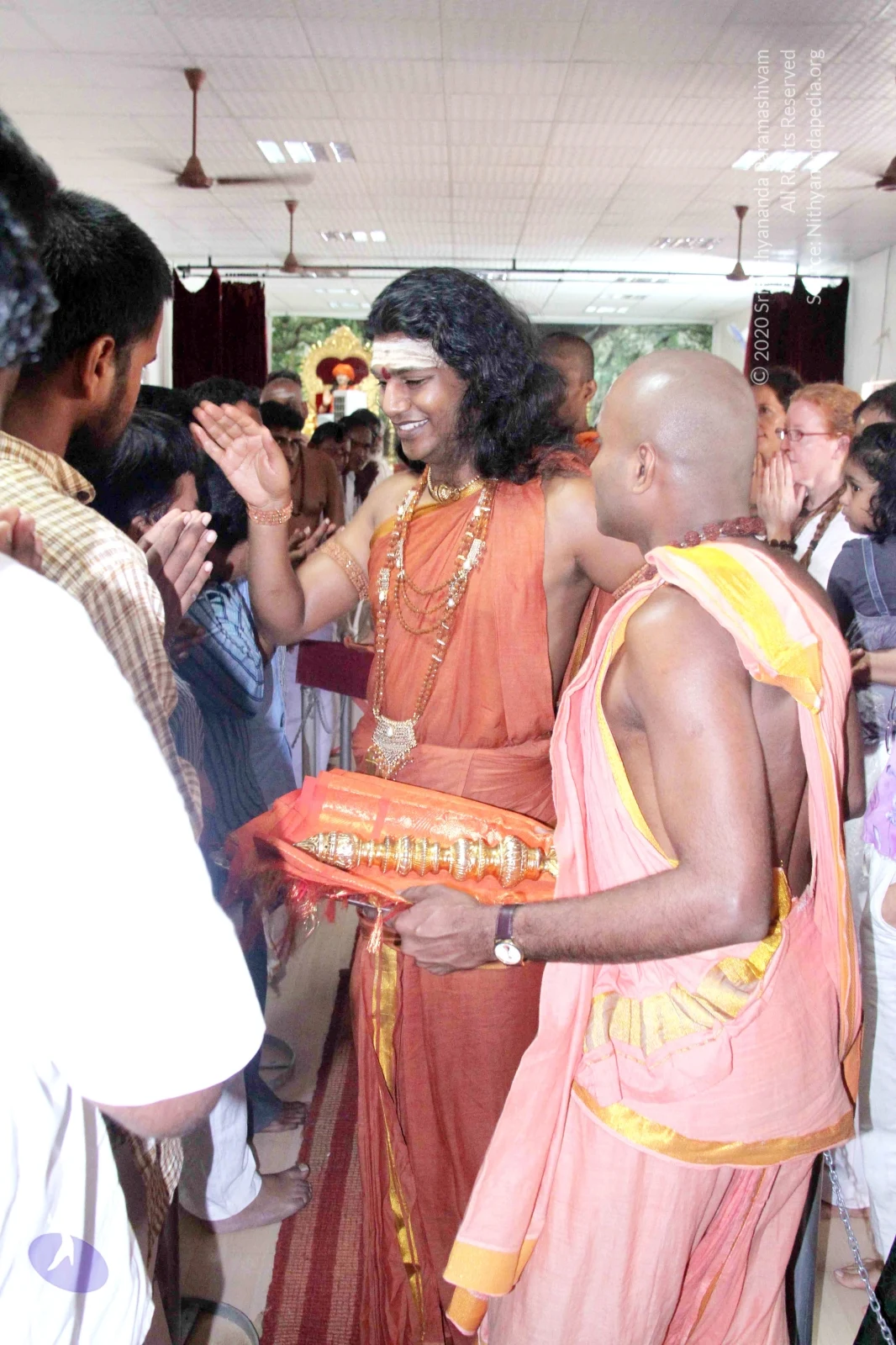
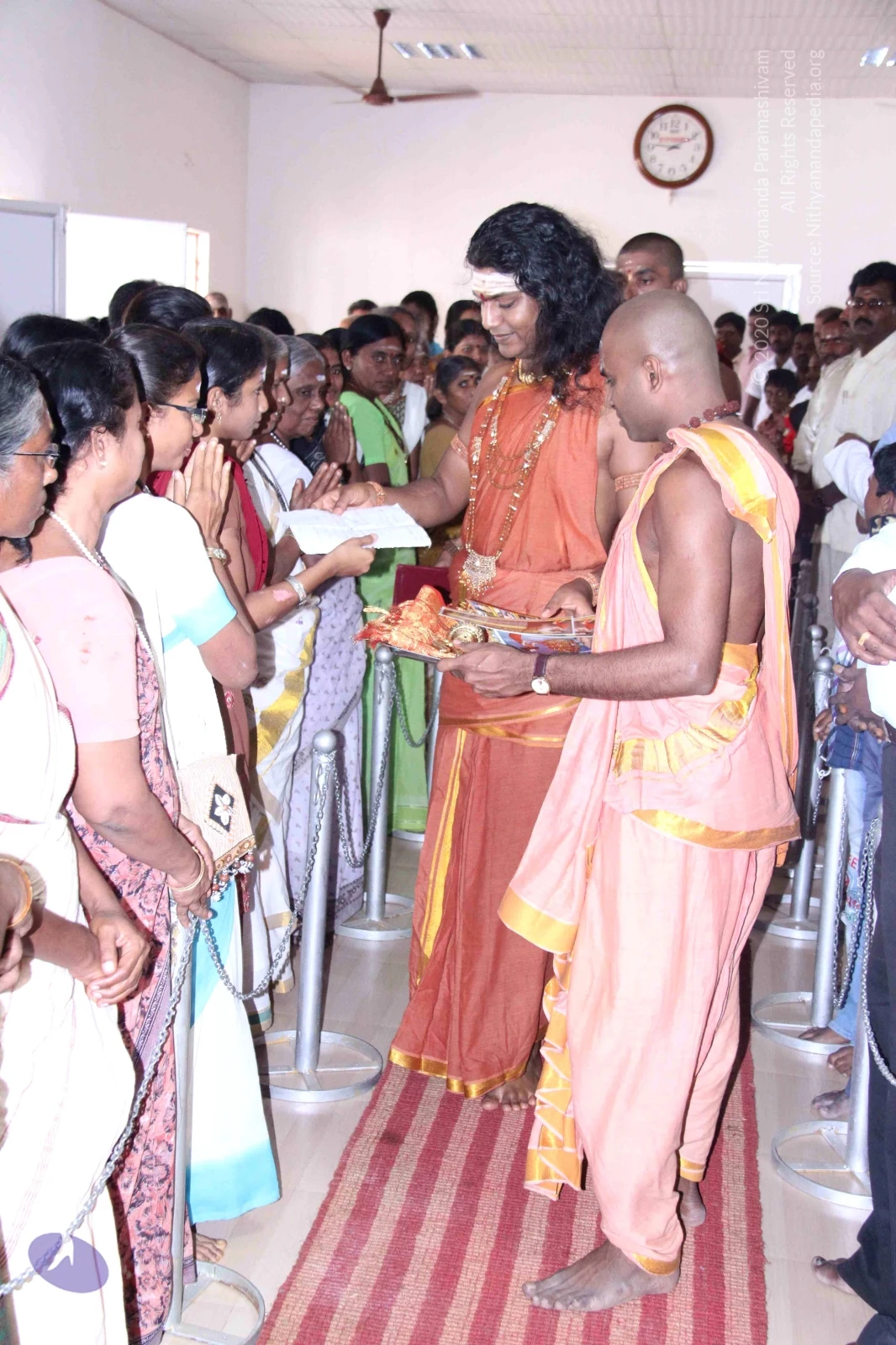
Swamiji-Having-Meeting-With-Nsp-Volunteers

Paadapooja-And-Morning-Satsang

Tags:

Ganesh Chaturthi, Paramahamsa Nithyananda, Hinduism, God, beloved, Ganesha, family, deity, worship, welcome.

Photos Of The Day:
Morning-Satsang

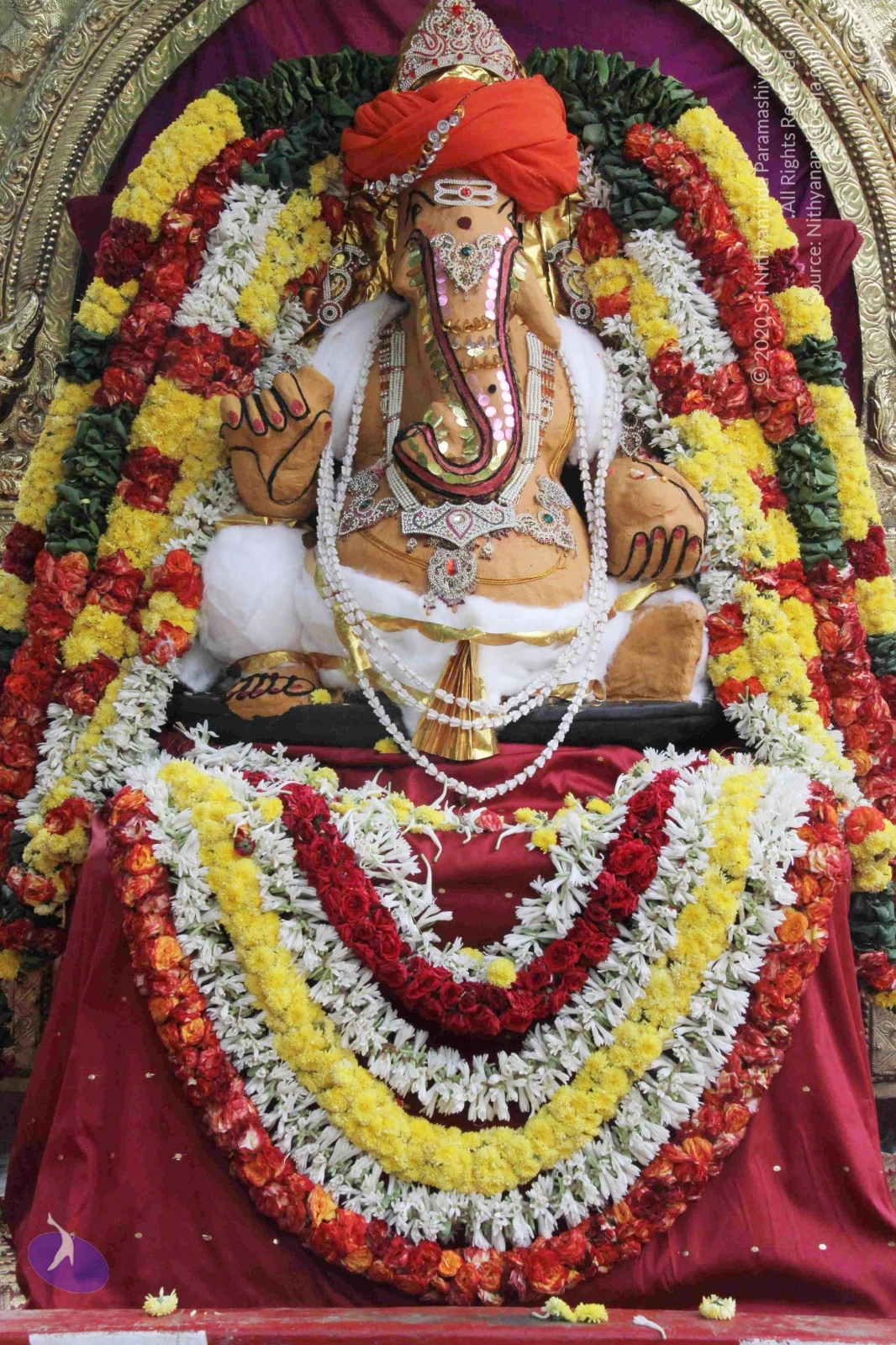
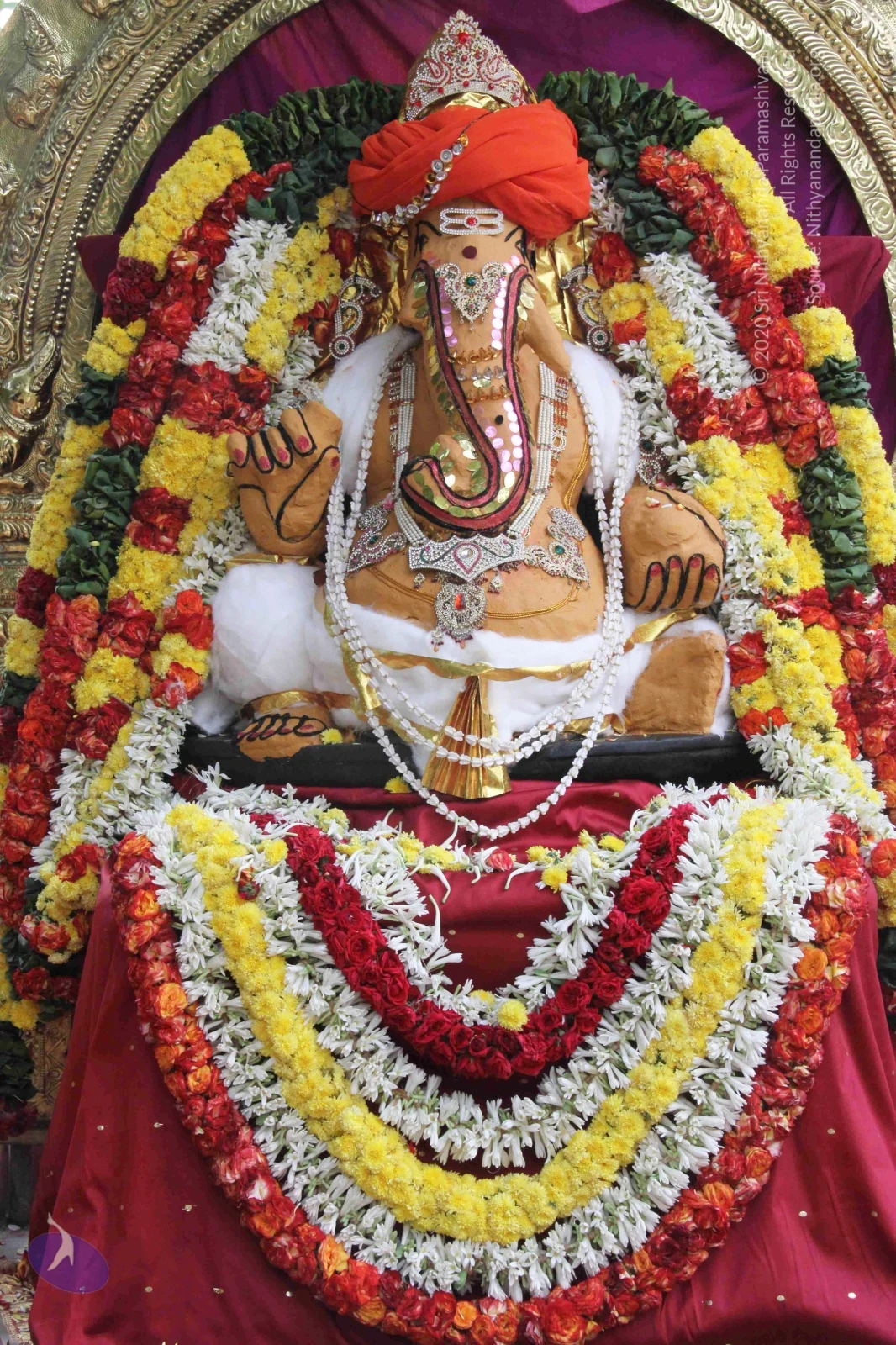
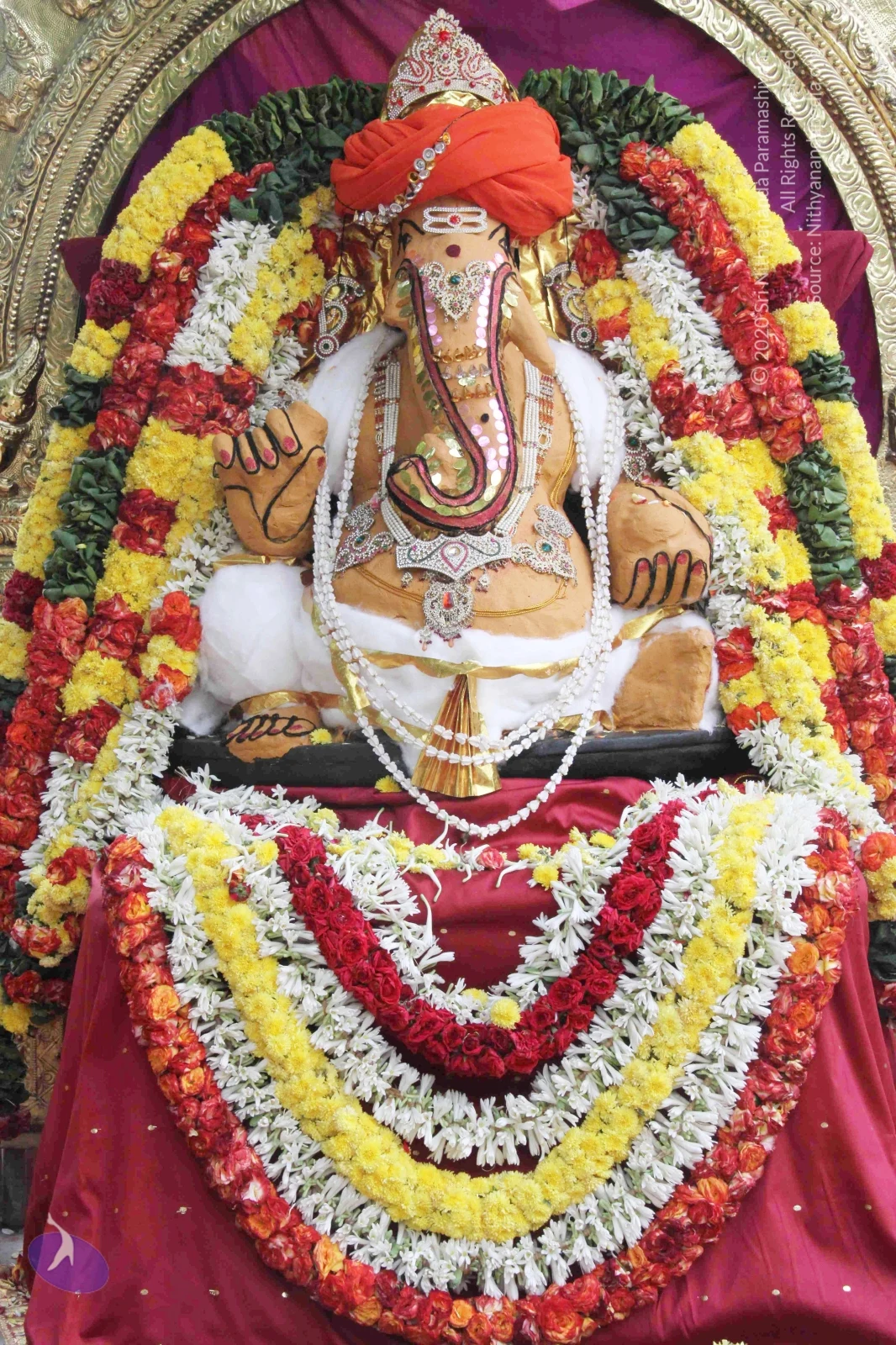
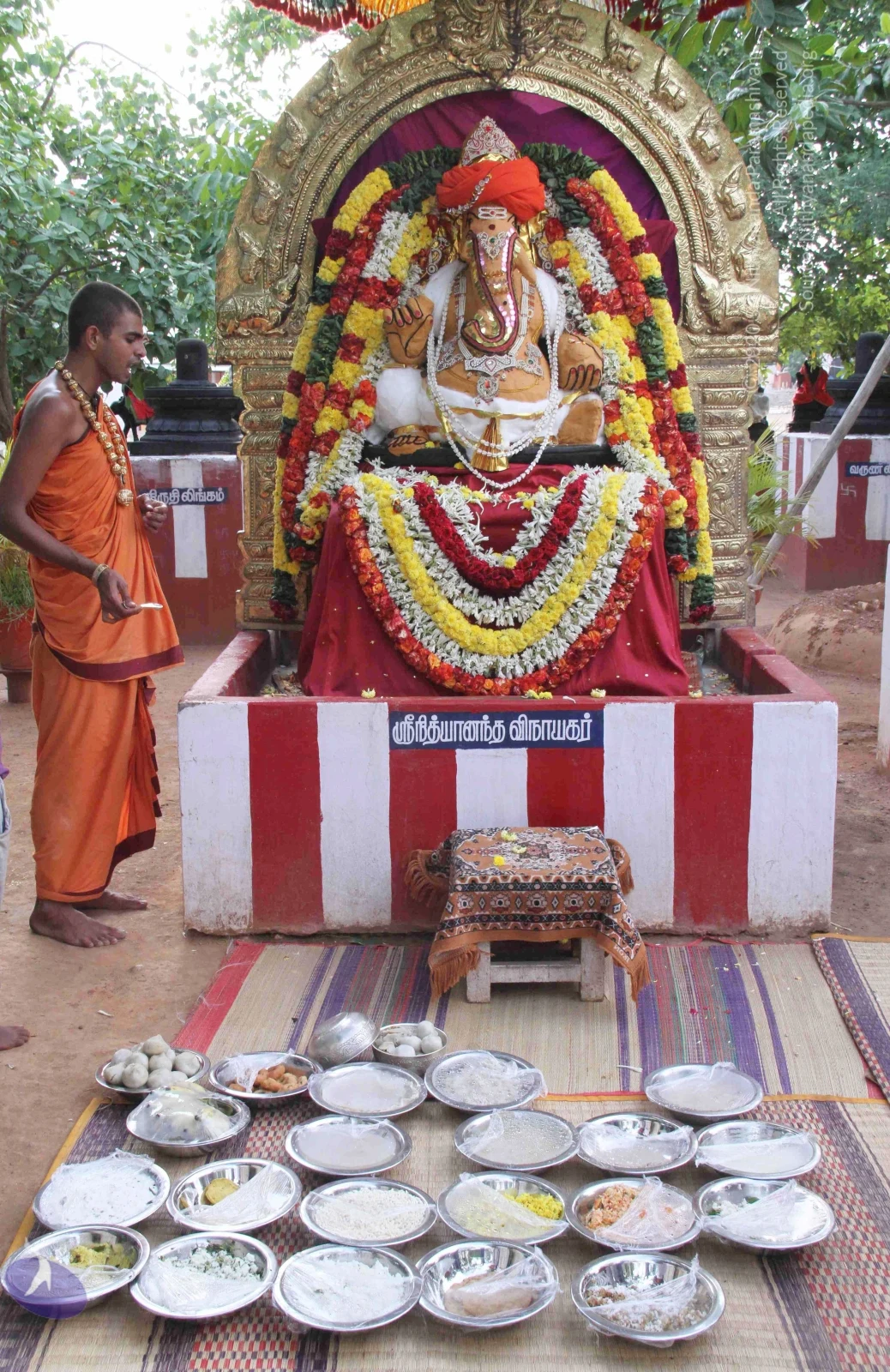
HDH-Ganesha-Alankaram

Homa

Volunteers-Meeting

Arunachala

Darshan

Photos Of The Day:
Morning-Satsang

HDH-Ganesha-Alankaram

Homa

Volunteers-Meeting

Photos from this day

View all 689 photos

Paadapooja-And-Morning-Satsang
11 photosSource gallery
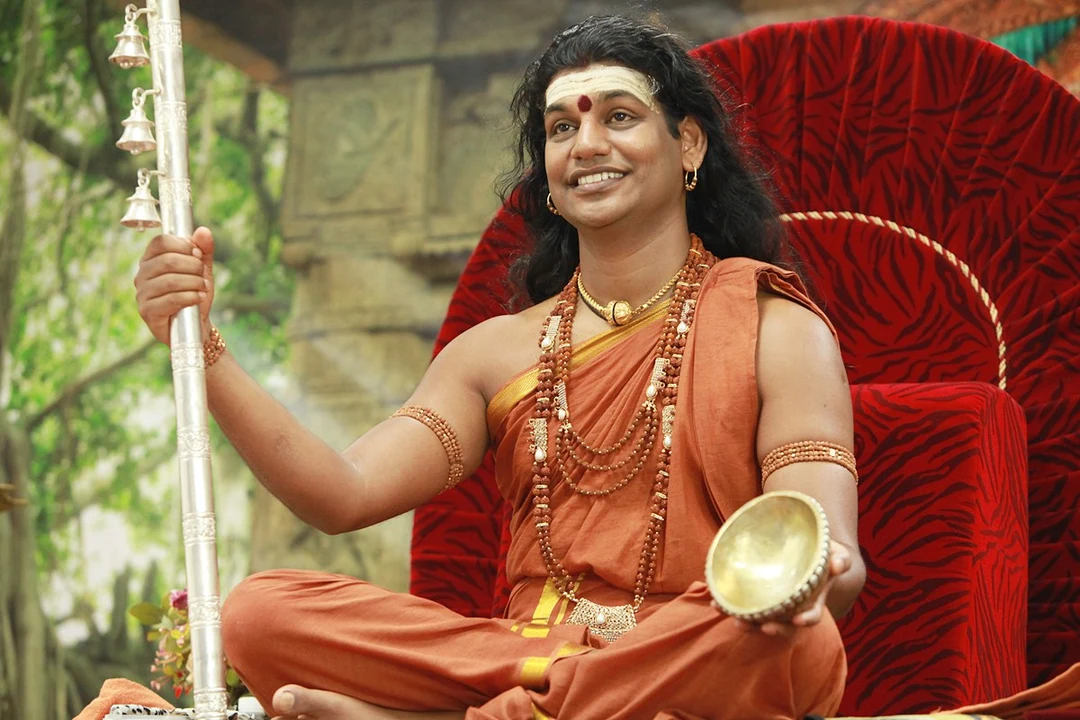
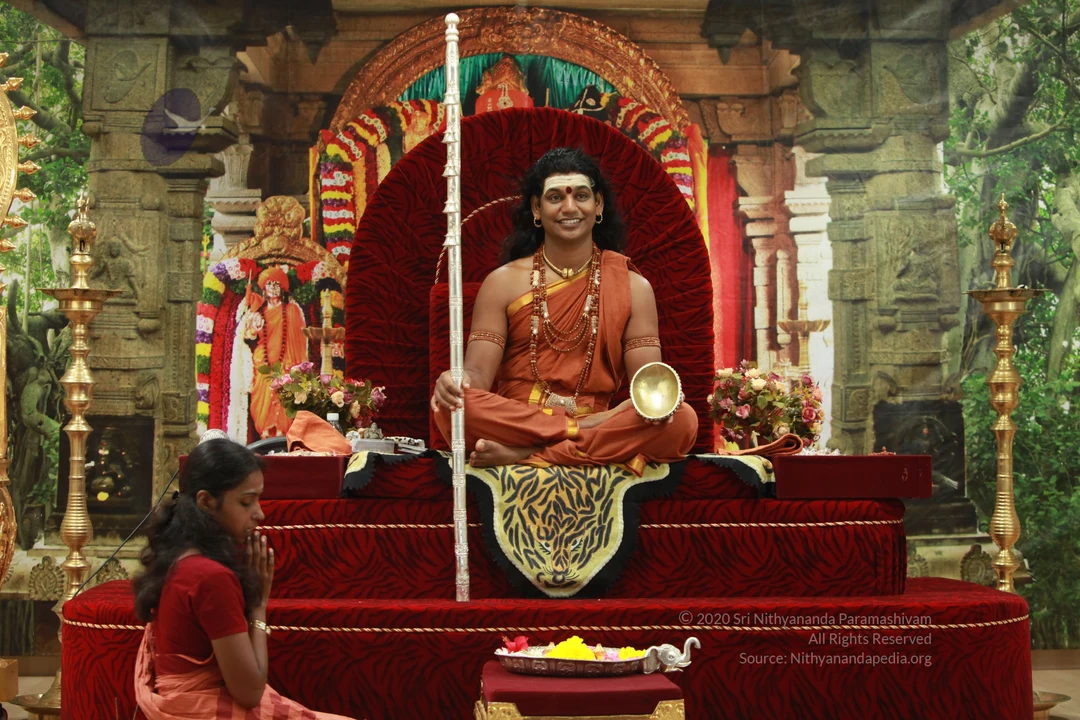
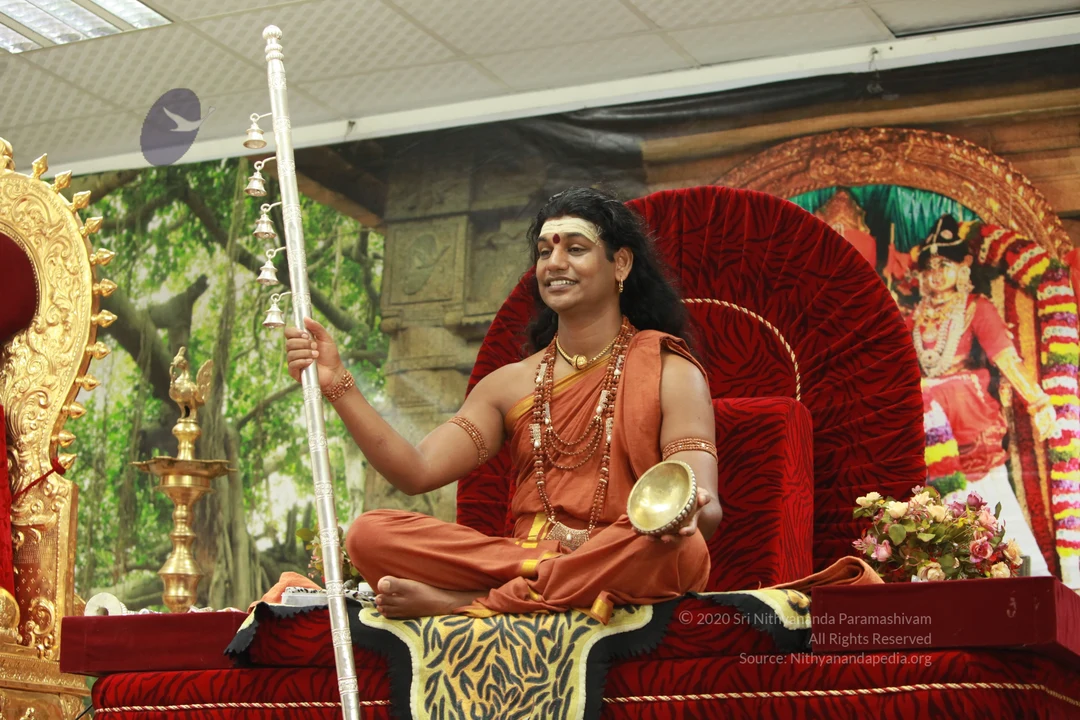
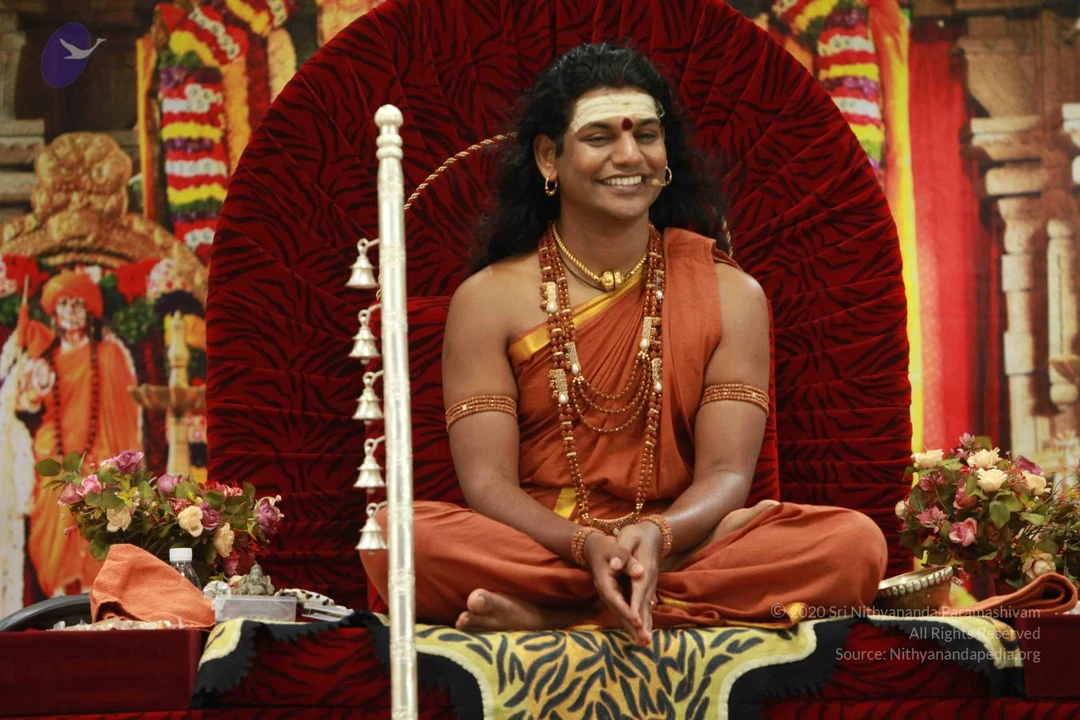
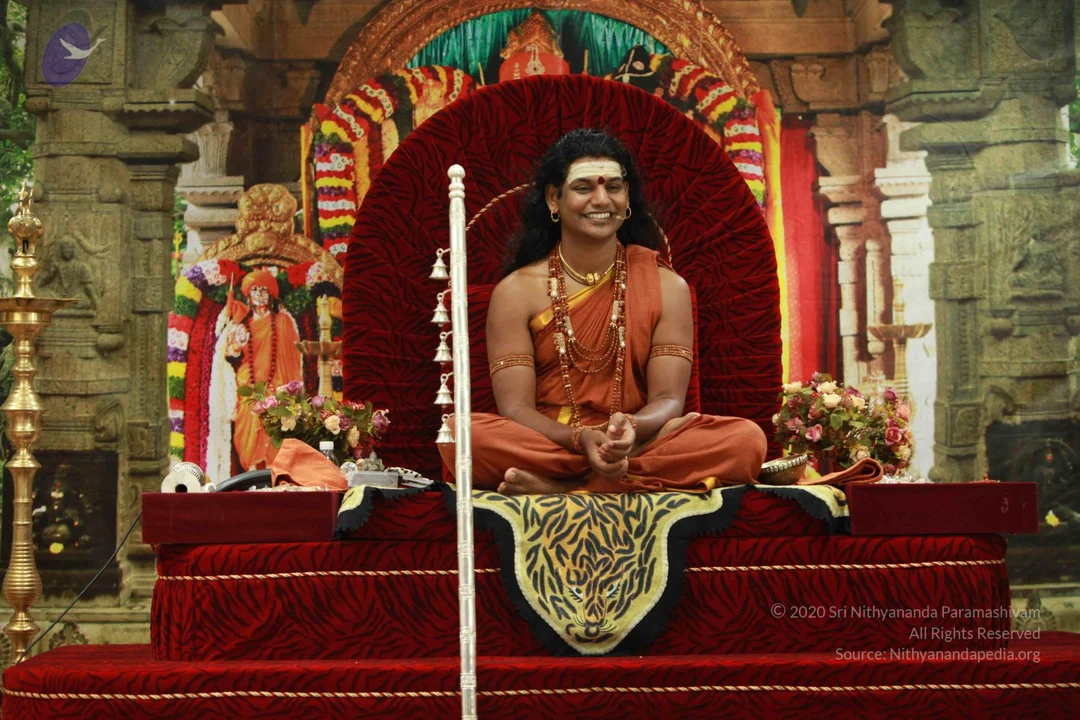
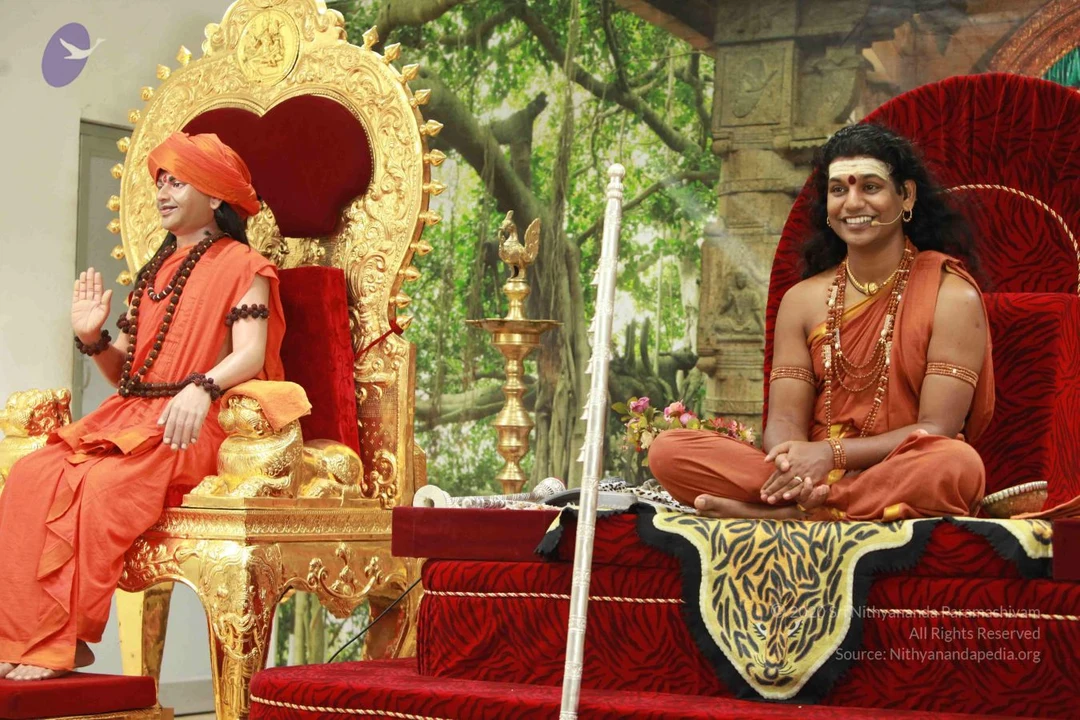
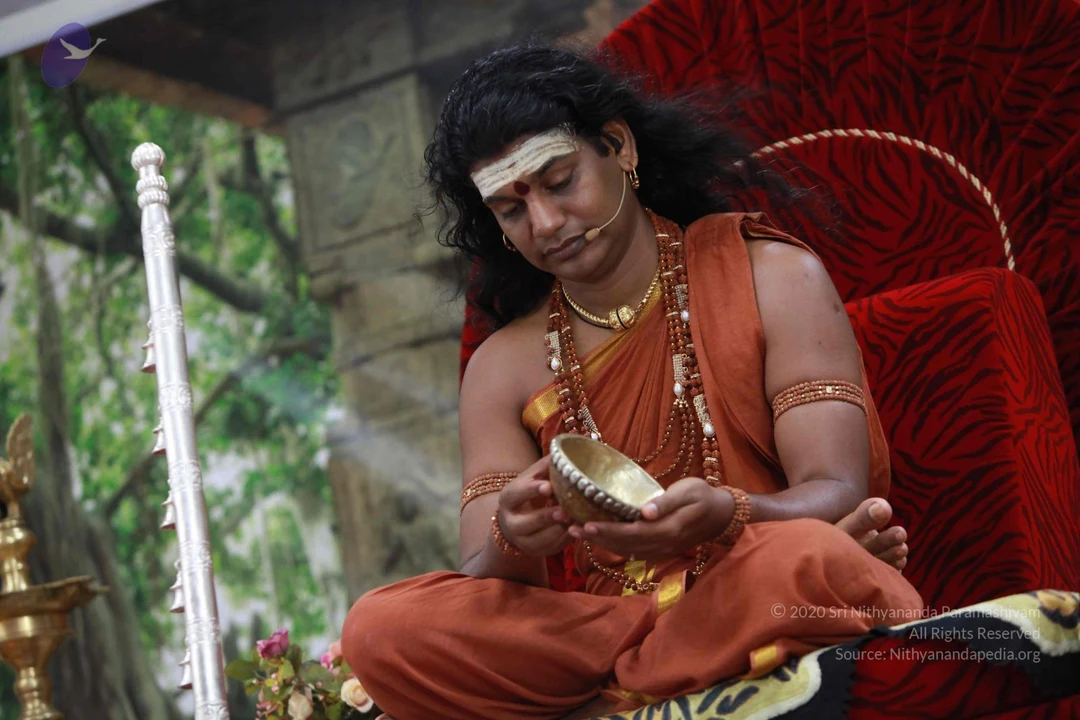
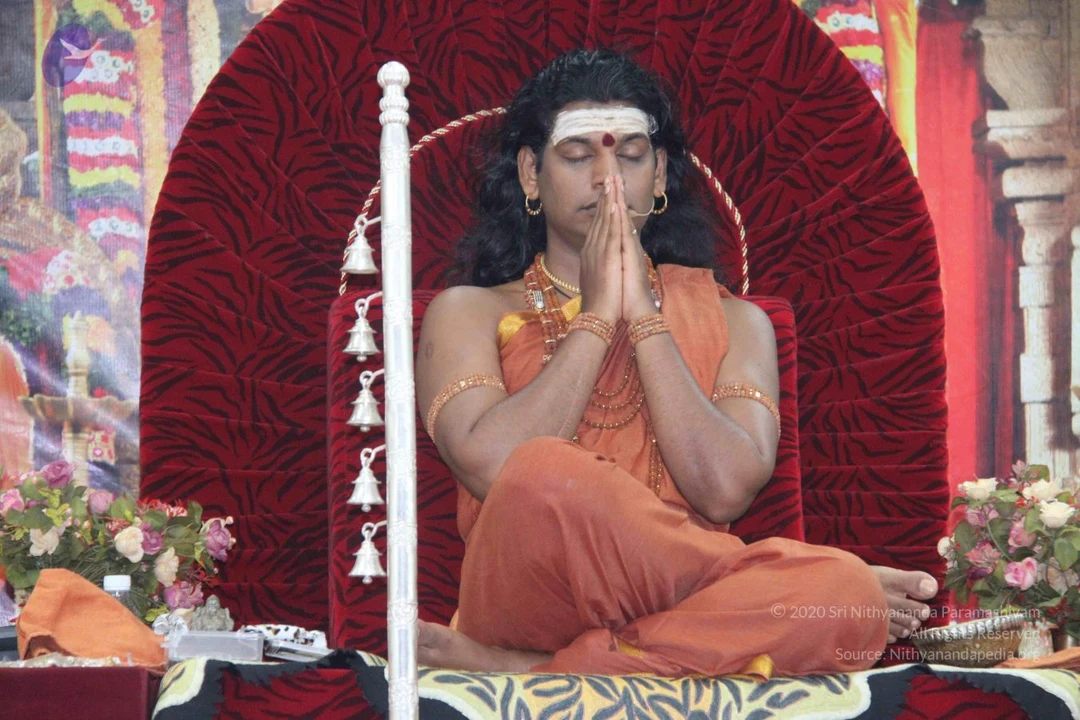
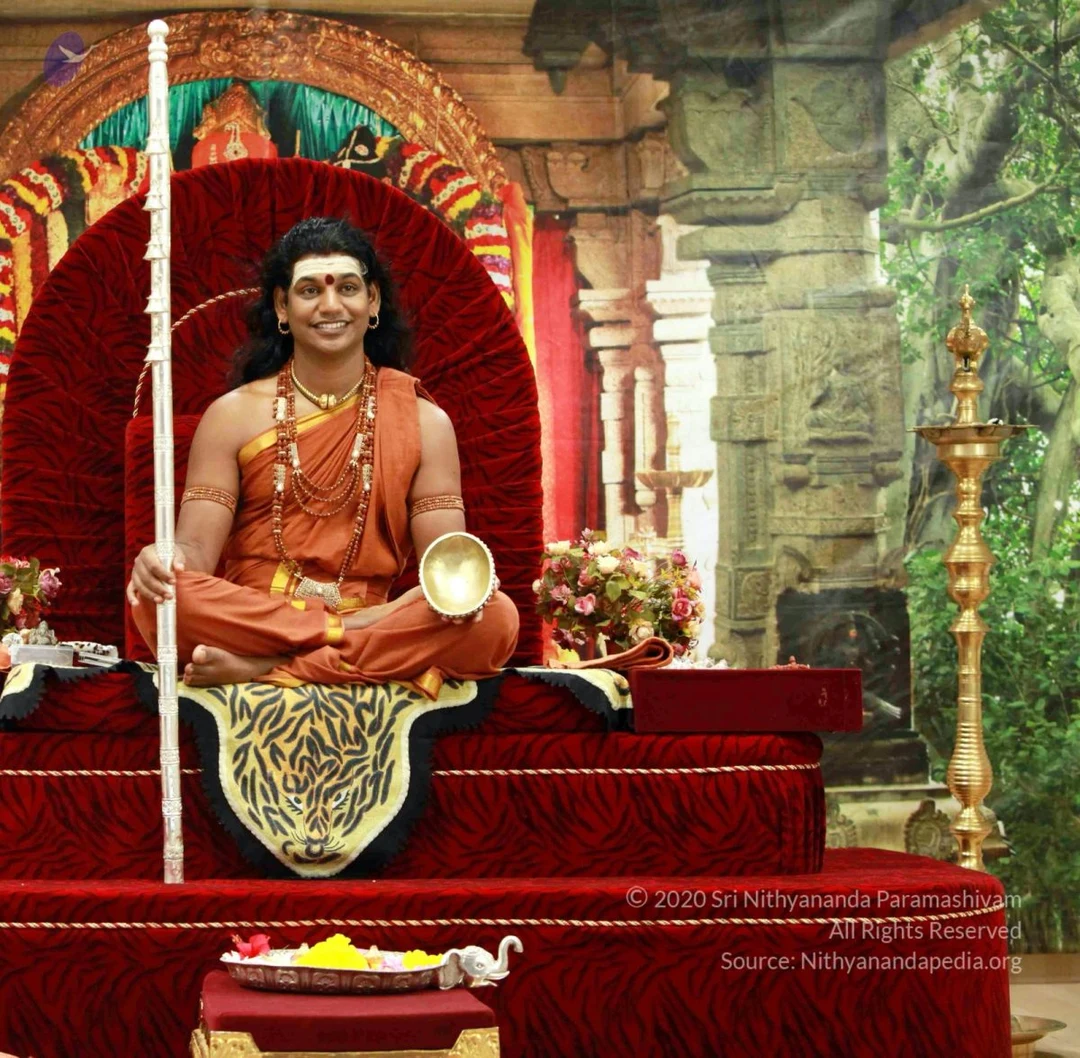
A seated man on an ornate red velvet throne in a temple-style hall, dressed in saffron-orange robes with a red-and-gold shawl, rudraksha malas and a gold necklace, a vibhuti mark on his forehead, holding a silver staff with bells. Behind him is a painted temple backdrop with carved columns, a deity murti decorated with garlands, and a green forest scene. A woman in a red blouse and orange sari sits on the floor at his left, hands folded, beside a brass tray of yellow flowers. Brass lamps stand at the sides. a person on the throne, shown with saffron robes, rudraksha malas and a silver staff; the seated woman is a devotee.A seated man in saffron-orange robes sits cross-legged on a red zebra-striped velvet throne before an ornate temple-style backdrop with carved stone pillars and a garlanded deity murti. He wears a white tilak, gold-toned ornaments on his arms, layered rudraksha-style beads and a pendant necklace. In his right hand he holds a long silver staff with hanging bells, and a bouquet of flowers rests beside him. A brass oil lamp stands at the left edge, and a woman in red sits at the lower left corner. Swamiji (probable): long swept-back hair, saffron robes, rudraksha malas and ornate necklace, presiding over a satsang on the throne.A seated man in saffron-orange robes sits cross-legged on a red velvet throne draped with a striped tiger-skin cloth, holding a tall silver staff upright. He wears a long rudraksha mala, ornate gold necklace, gold armbands and a red-and-white tilak. Before him, a woman in a red blouse and pink sari kneels with her hands together, offering a small white item. A brass tray of yellow flowers sits on the lower red platform. Tall brass oil lamps stand on either side, pink flower arrangements flank the throne, and a painted backdrop of stone temple pillars, garlands and green trees surrounds the scene. A deity murti dressed in orange stands at the left in a floral setting.A seated man in saffron-orange robes sits cross-legged on a red velvet throne with zebra-striped upholstery and a tiger-striped rug. He holds a tall silver staff hung with small bells in one hand and a small brass bowl in the other, wears a red tilak on his forehead, multiple red and beaded malas, gold necklaces and gold armbands. Behind him stands a large framed backdrop showing a green banyan-like tree, a stone arch and a painted goddess figure in red with garlands of flowers. A brass oil lamp and a bouquet of pink roses appear nearby. Swamiji (probable): long swept-back hair, saffron robes, rudraksha malas and ceremonial gold ornaments on a throne in a satsang setting.

Morning-Satsang
60 photosSource gallery
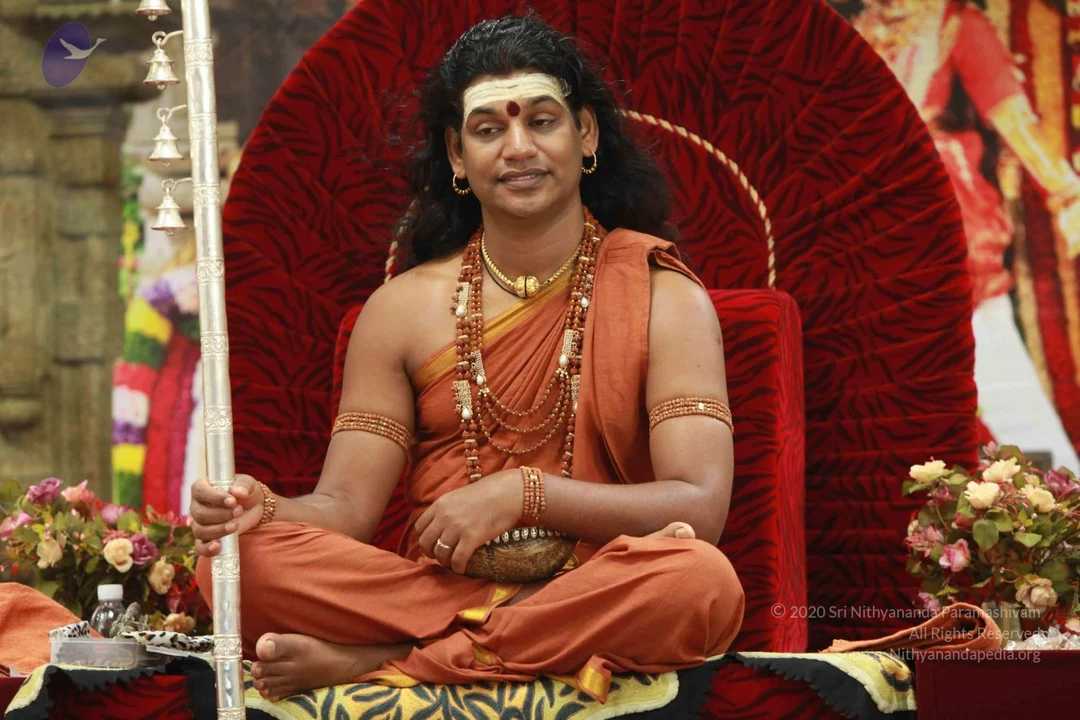
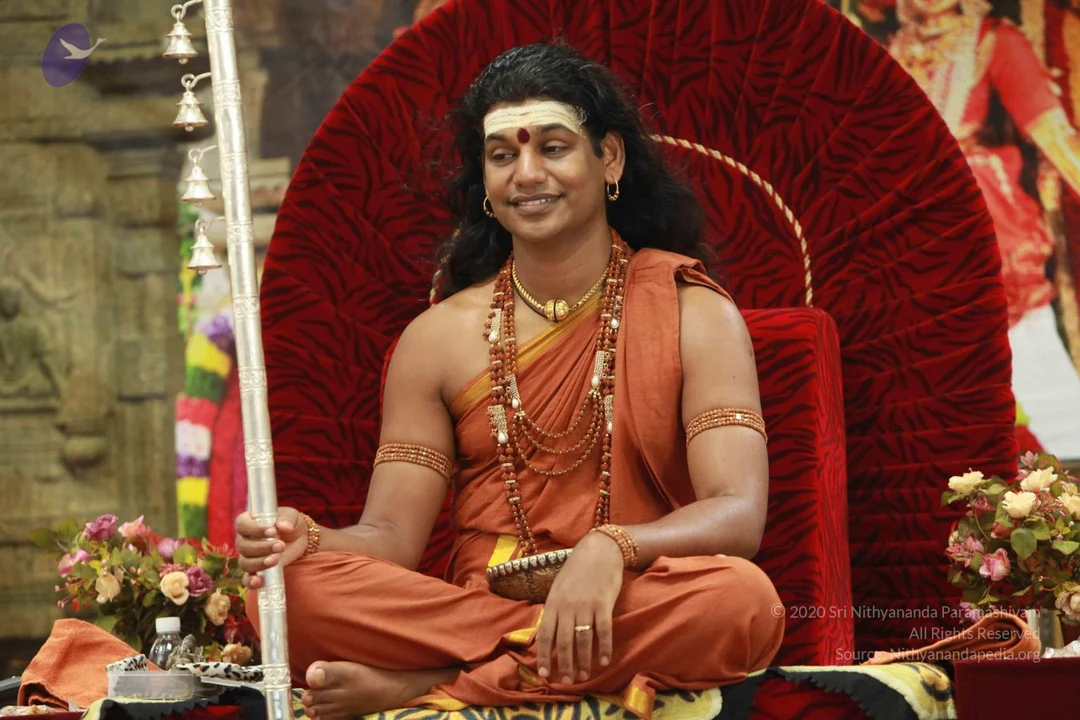
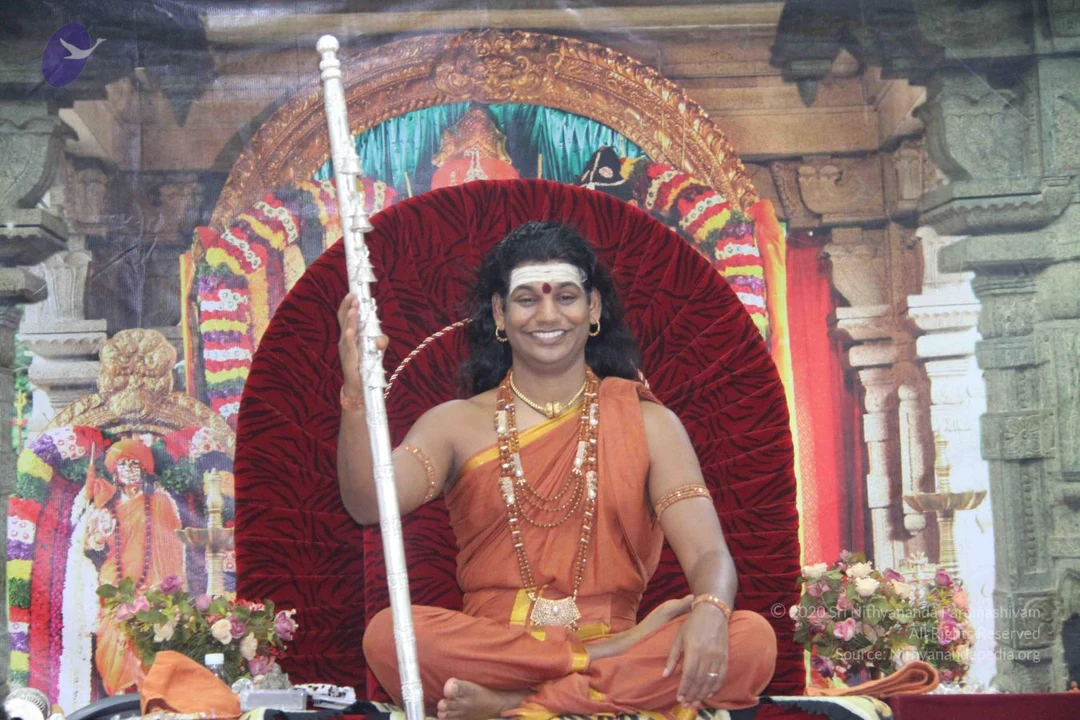
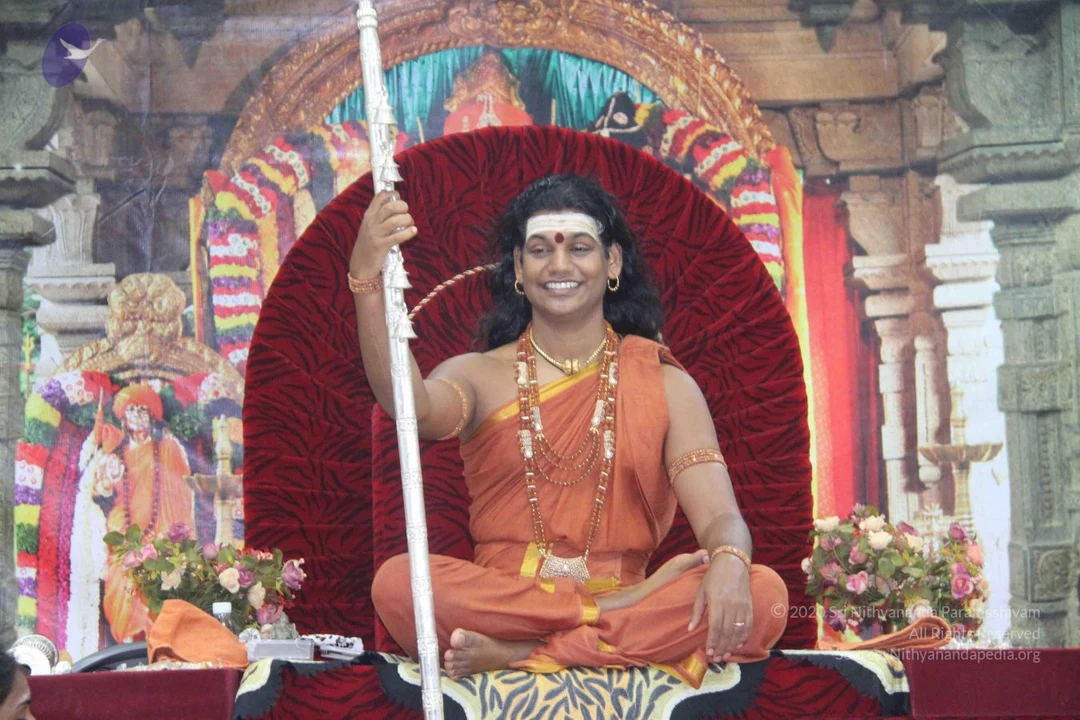
A man with long swept-back dark hair sits on a red velvet throne with black tiger-stripe pattern, smiling. He wears an orange-saffron shawl over his shoulder, multiple strands of rudraksha-style beads and gold chains, gold armlets, gold hoop earrings, a sandalwood tilak with a red kumkum dot, and a headset microphone. A white ceremonial staff with hanging bells stands beside him. Floral garlands and a colourful backdrop are behind him. Appearance-based cues are distinctive, so this is a person seated in person during a satsang discourse, presiding from the throne.A man sits on a red patterned throne-like chair against a backdrop of green foliage and a stone pillar. He wears orange-saffron draped garments with a gold border, a gold necklace, a multi-strand rudraksha-style mala with white beads, gold armlets and bangles, and white sandalwood paste with a red dot on his forehead. He rests one hand on a long silver staff topped with hanging bells, beside a brass lamp stand and a bouquet of pink and white flowers. Appearance-based label: Swamiji (probable), given long swept-back hair, saffron clothing and ceremonial gold necklace consistent with the page's attribution.A seated man in orange-saffron robes sits on a red velvet throne with a zebra-striped pattern, smiling and holding a tall silver staff hung with small bells. He wears a ceremonial gold necklace, rudraksha-style beaded malas, gold armlets and bangles, with white tripundra marks and a red bindi on his forehead. Behind him a green forest backdrop is painted on the wall. Beside him stands a brass oil lamp, a small bouquet of flowers on the floor, and two decorated deity murtis in a gold-trimmed stand on the right, one in a red turban and purple-and-gold dhoti and the other in gold garments with jewelled necklaces. The seated man is in a probable Swamiji (probable) appearance with long swept-back hair, saffron robes, rudraksha malas and ceremonial gold necklace, shown seated on the throne during satsang.A man seated cross-legged on a deep red velvet throne with a high rounded back, wearing an orange-saffron dhoti and shawl with gold borders, a rudraksha mala and a large ceremonial gold necklace. He has long swept-back dark hair, a white vibhuti line with a red kumkum dot on the forehead, and holds a silver staff hung with small bells in his right hand. Behind him are a colourful floral garland backdrop and a painted deity-form image, with flower arrangements and a water bottle at the base of the stage. A candidate matching a person is seated as the speaker, giving a satsang discourse.A seated man in orange saffron robes sits cross-legged on a large red velvet throne with a rounded back. He wears a white tilak with a red bindi, gold hoop earrings, a gold necklace, multiple rudraksha malas and a gold pendant. Gold bangles adorn his arms, and he holds a tall silver staff hung with small silver bells in his right hand while speaking. Pink and white flower arrangements flank the throne, and a backdrop of ornate painted deity imagery and garlands fills the background. A water bottle and small items sit on the dais. Swamiji (probable) appears in this photo: long swept-back hair, saffron robes, rudraksha malas and ceremonial gold ornaments.A photograph of a man seated cross-legged on a red velvet throne with a dark zebra-striped cushion, speaking during a satsang. He wears a saffron-orange dhoti and shawl with gold trim, rudraksha mala beads, a gold necklace and gold earrings, and a white-and-red tilak on his forehead. He holds a tall silver staff hung with bells in his right hand. Behind him are garlands of marigolds and a painted backdrop of a deity figure in orange and red. Pink and white flower arrangements sit on both sides of the dais, and a water bottle rests on the table. The appearance matches the probable Swamiji cues of long swept-back hair, saffron clothing, rudraksha and gold ornaments, seated as the speaker in a satsang setting.

HDH-Ganesha-Alankaram

189 photosSource gallery
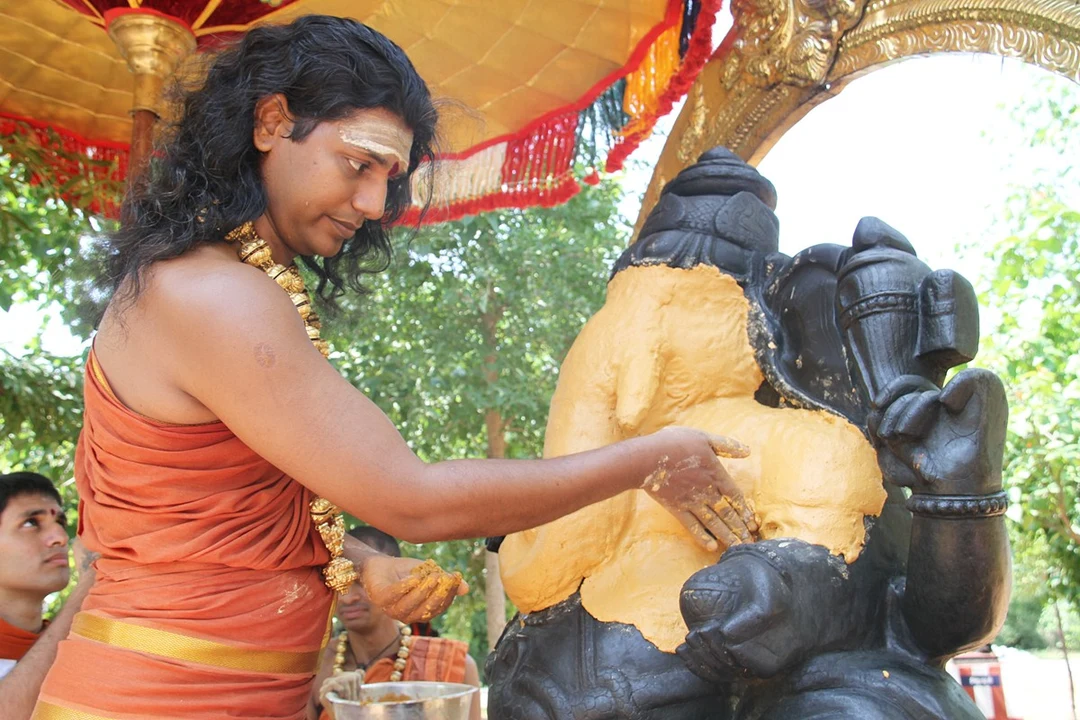
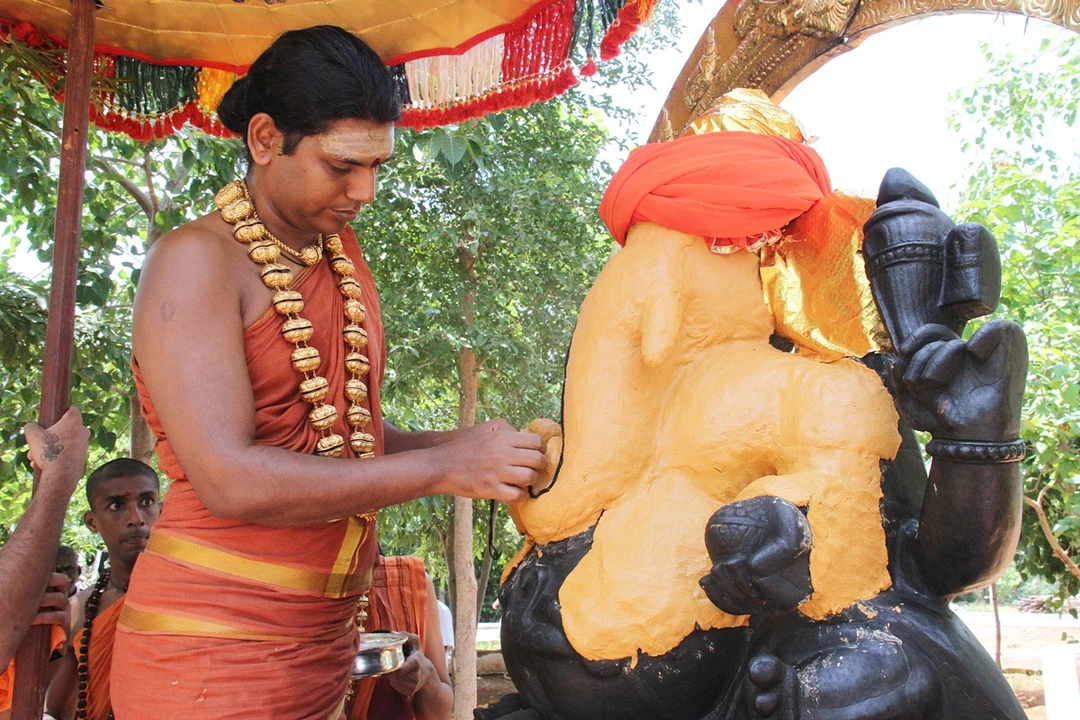
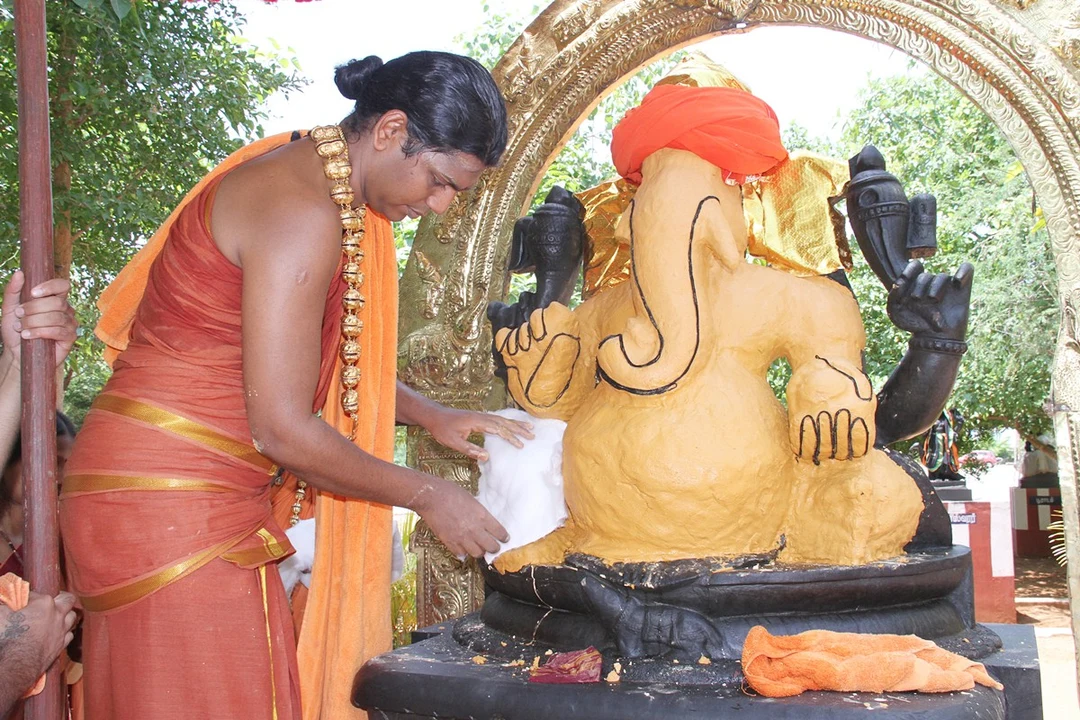
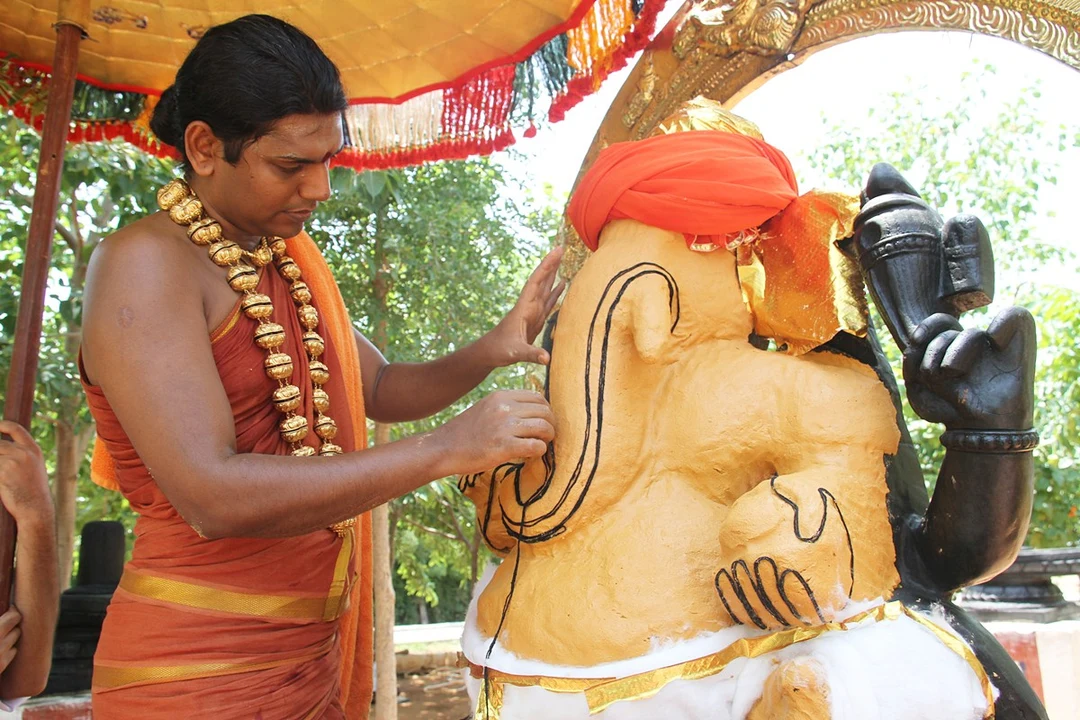
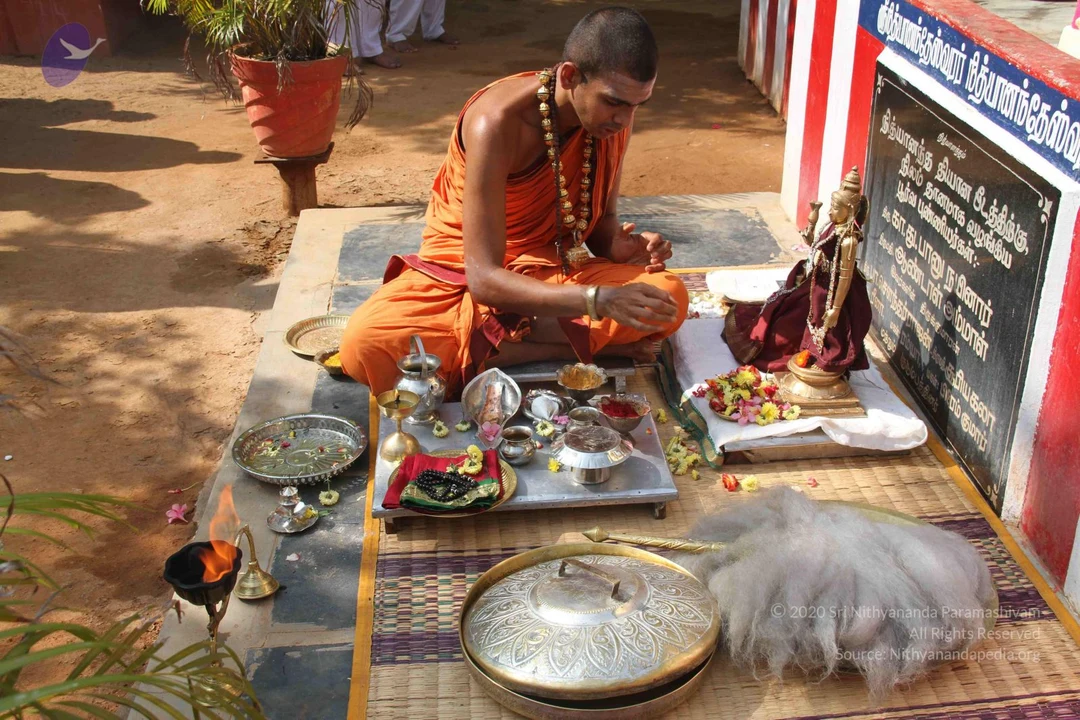
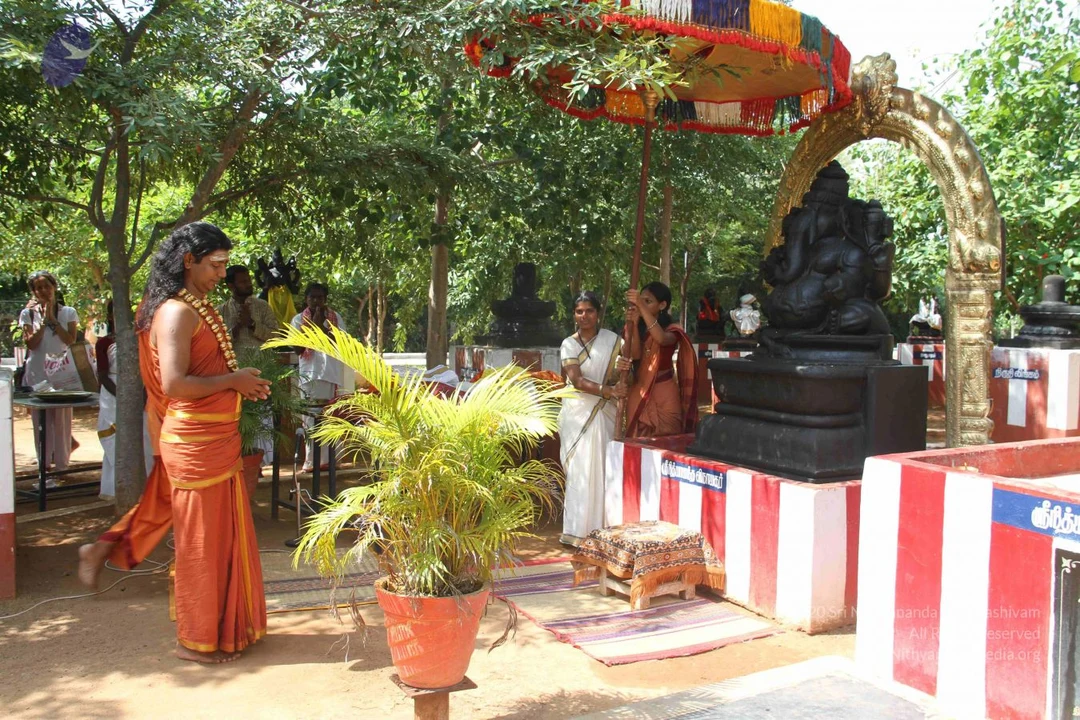
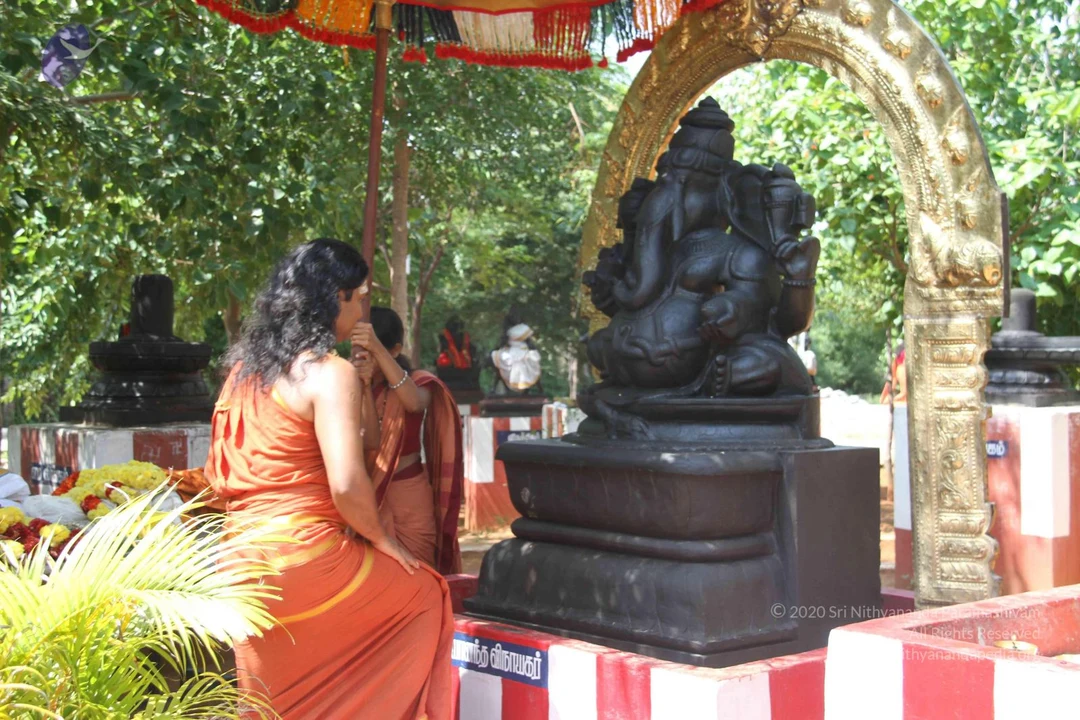
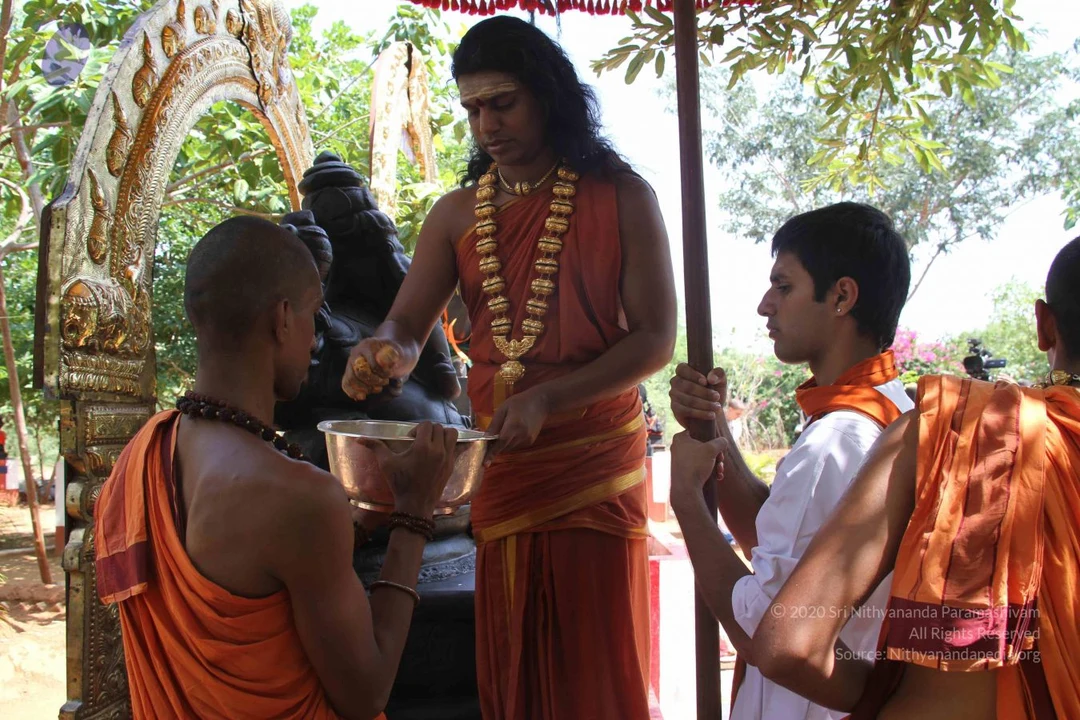
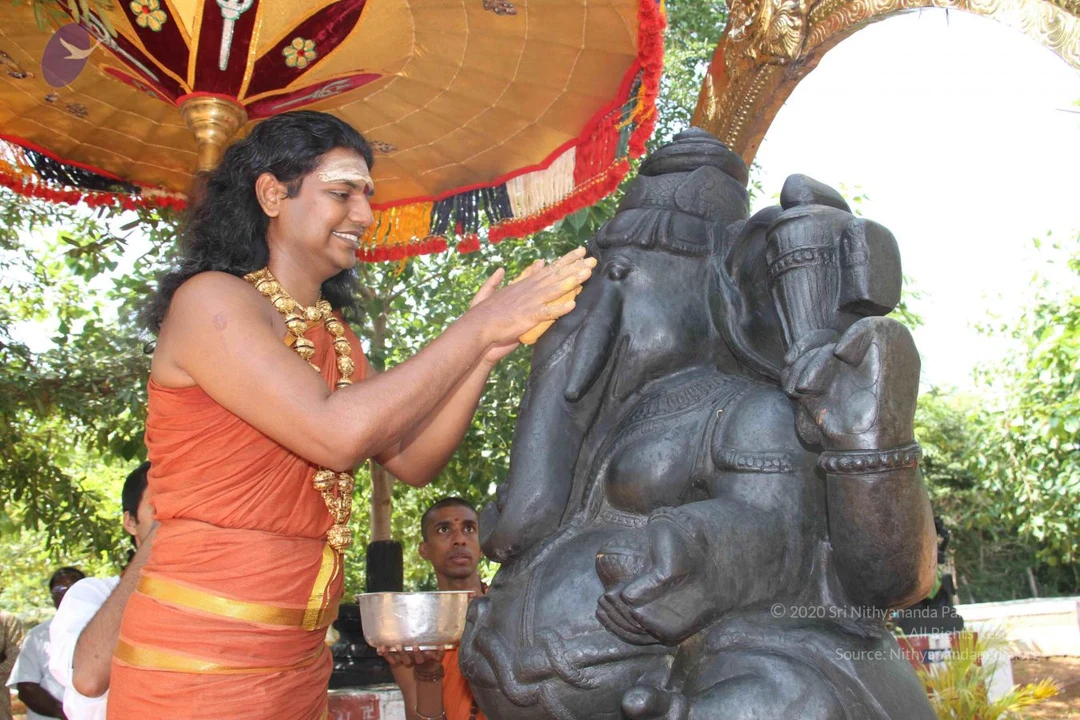
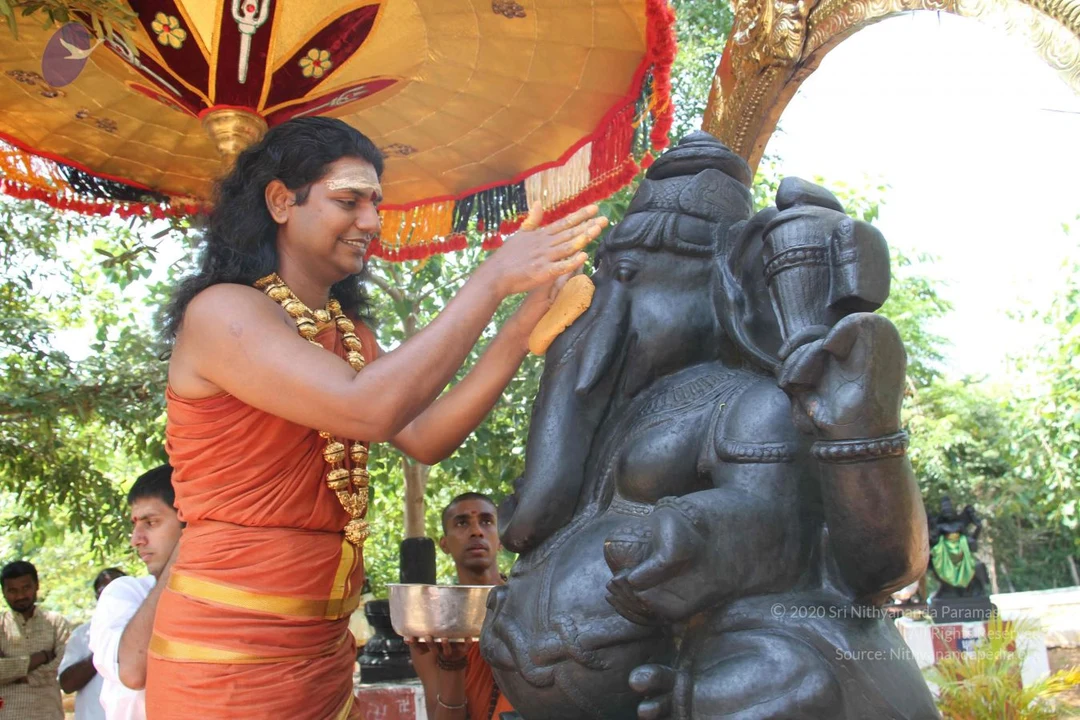
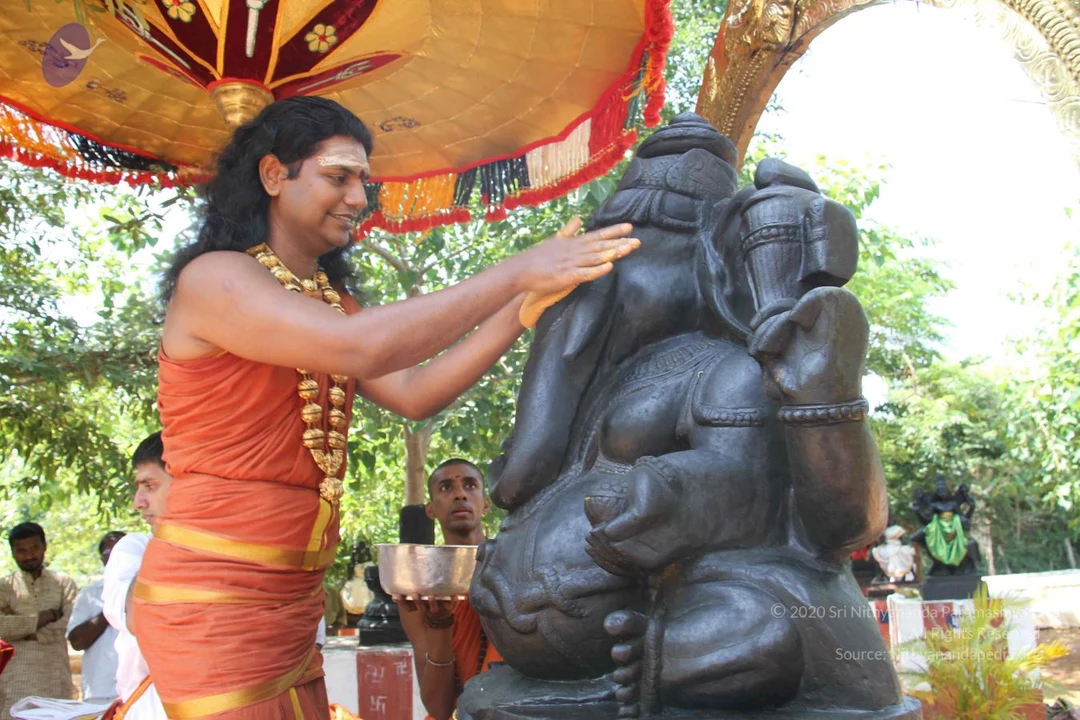
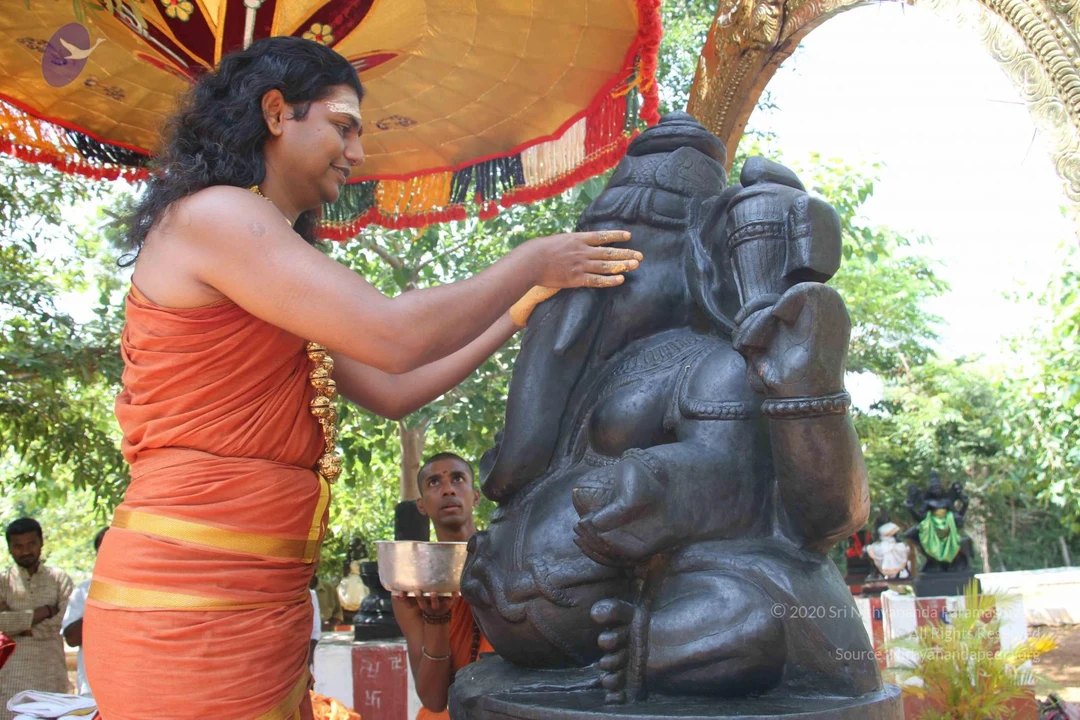
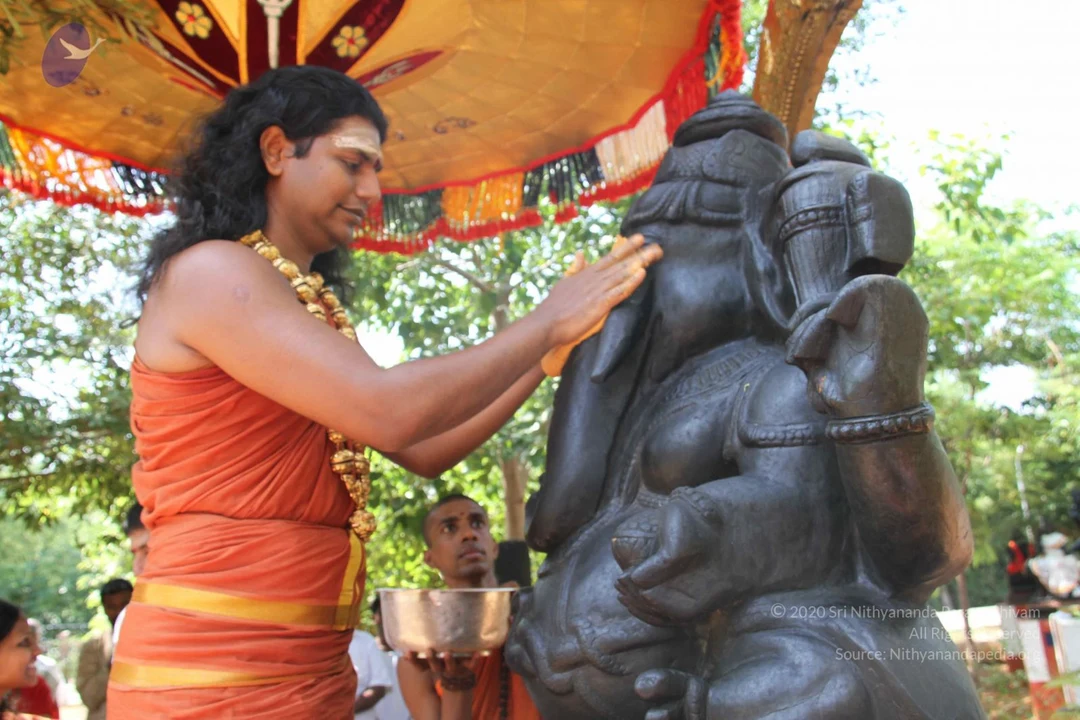
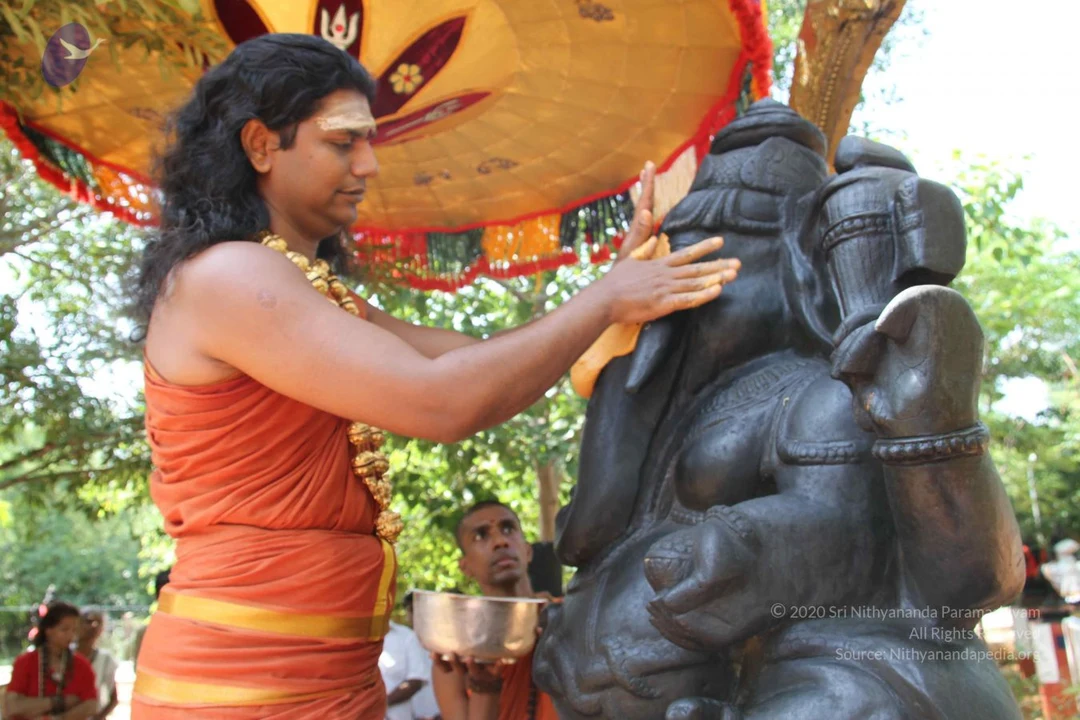
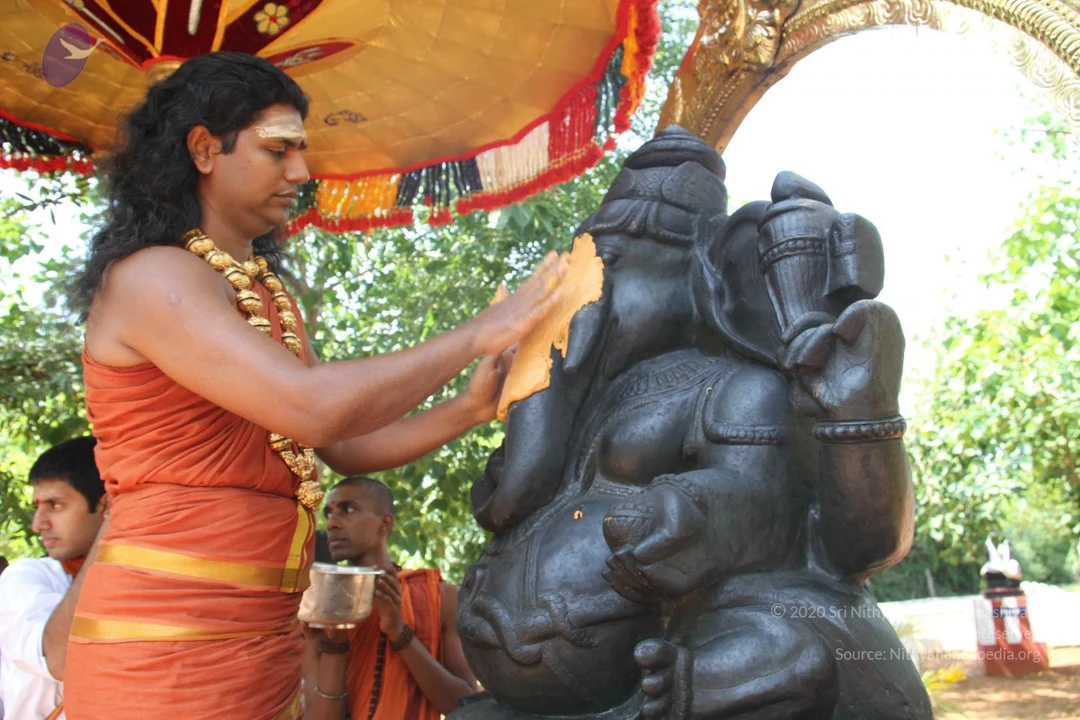
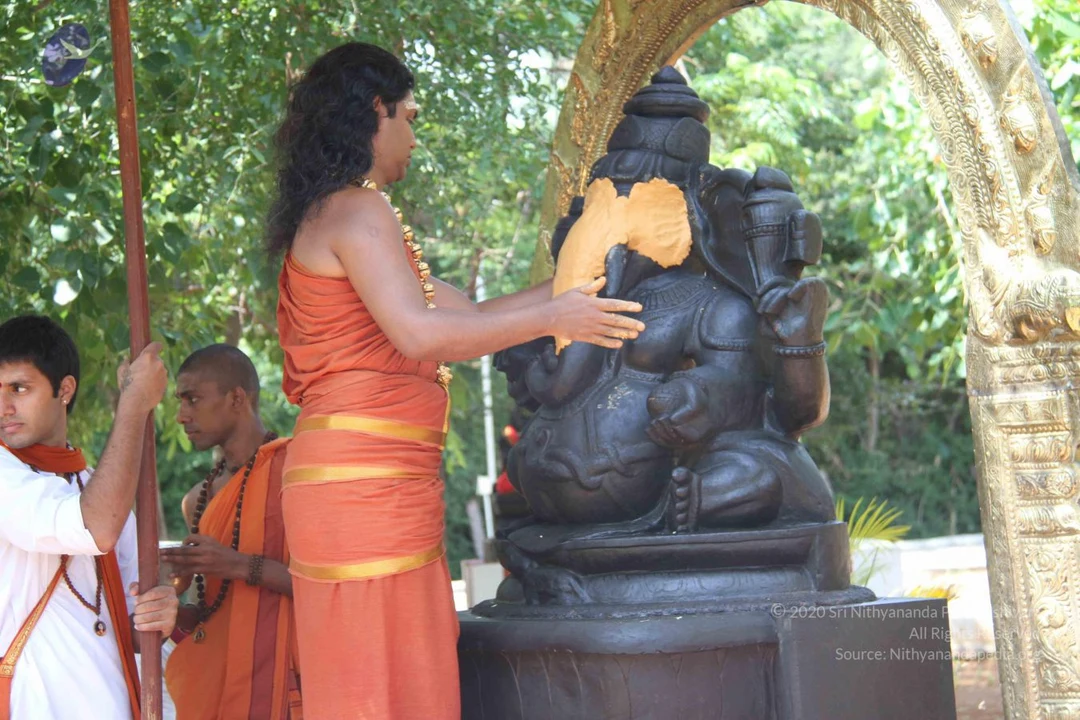
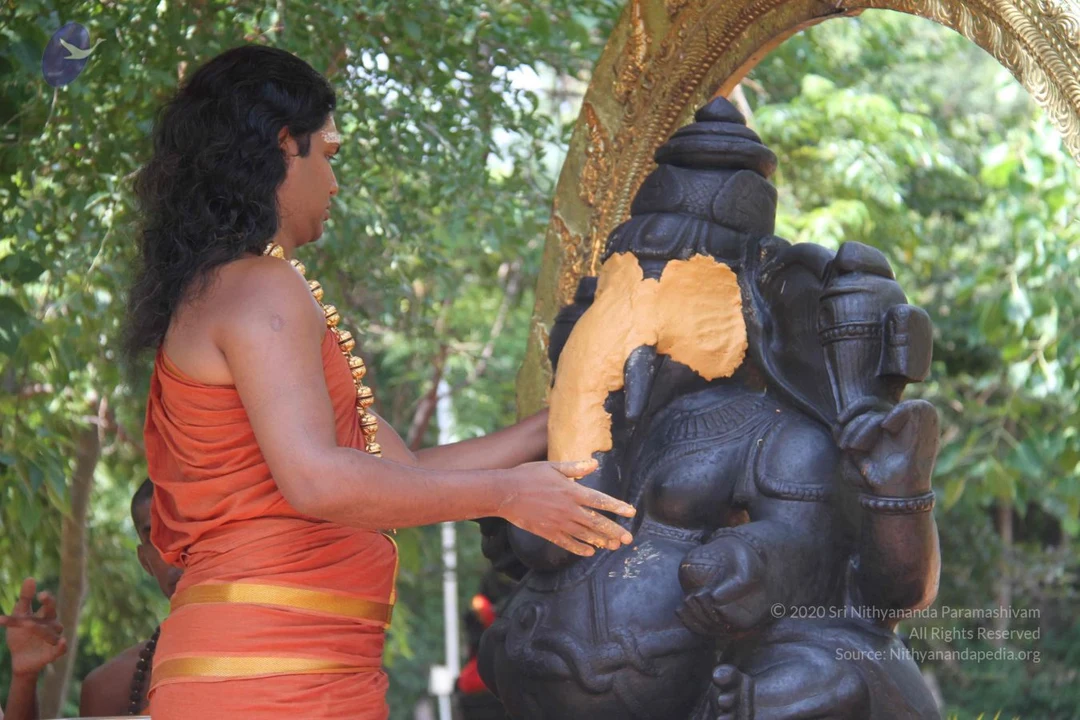
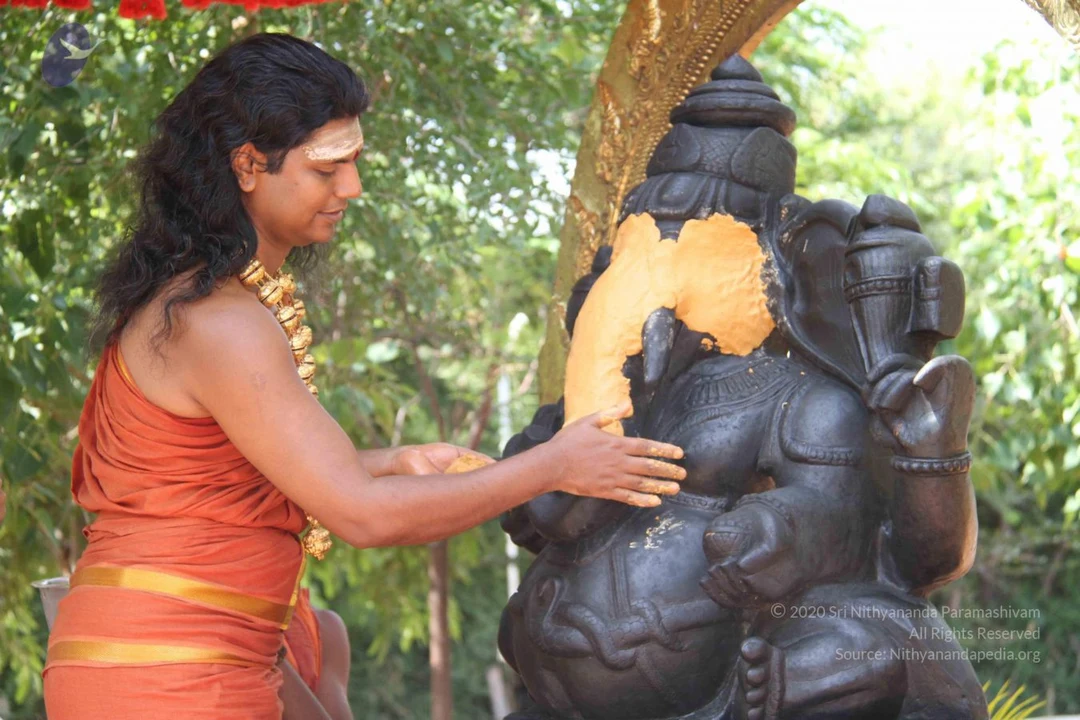
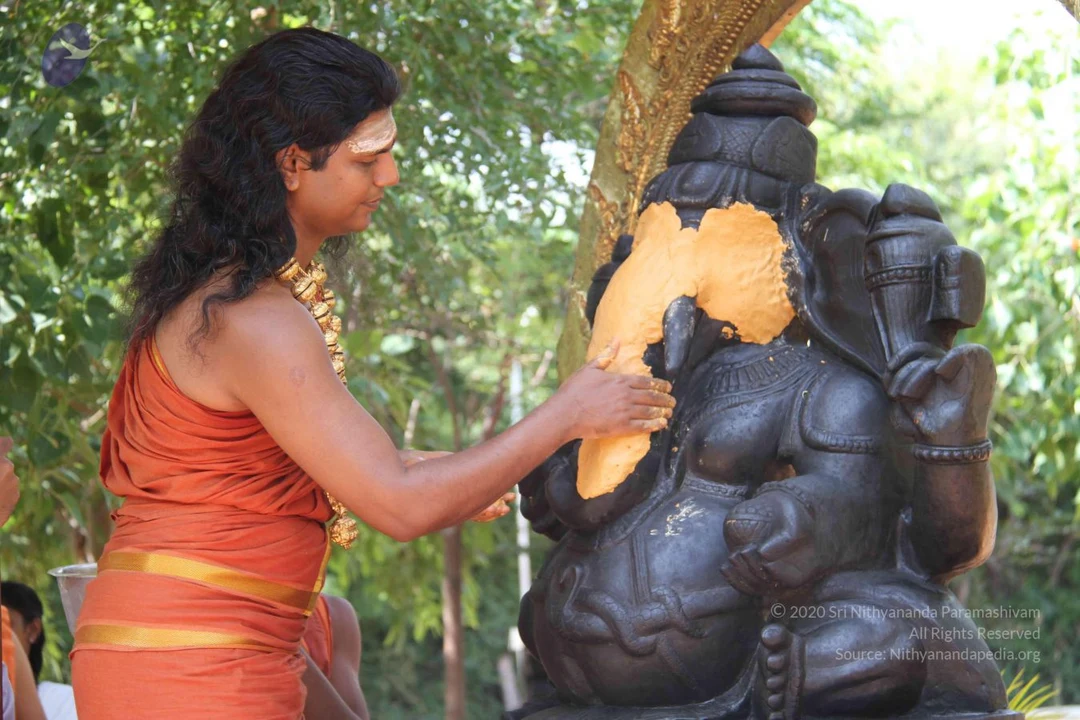
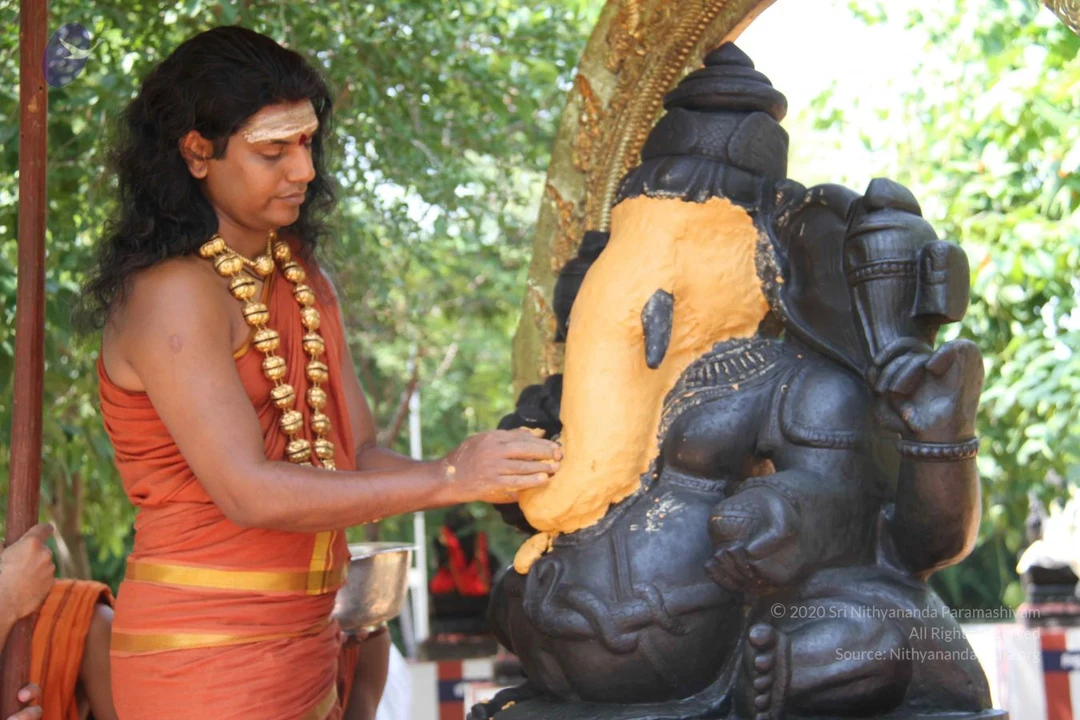
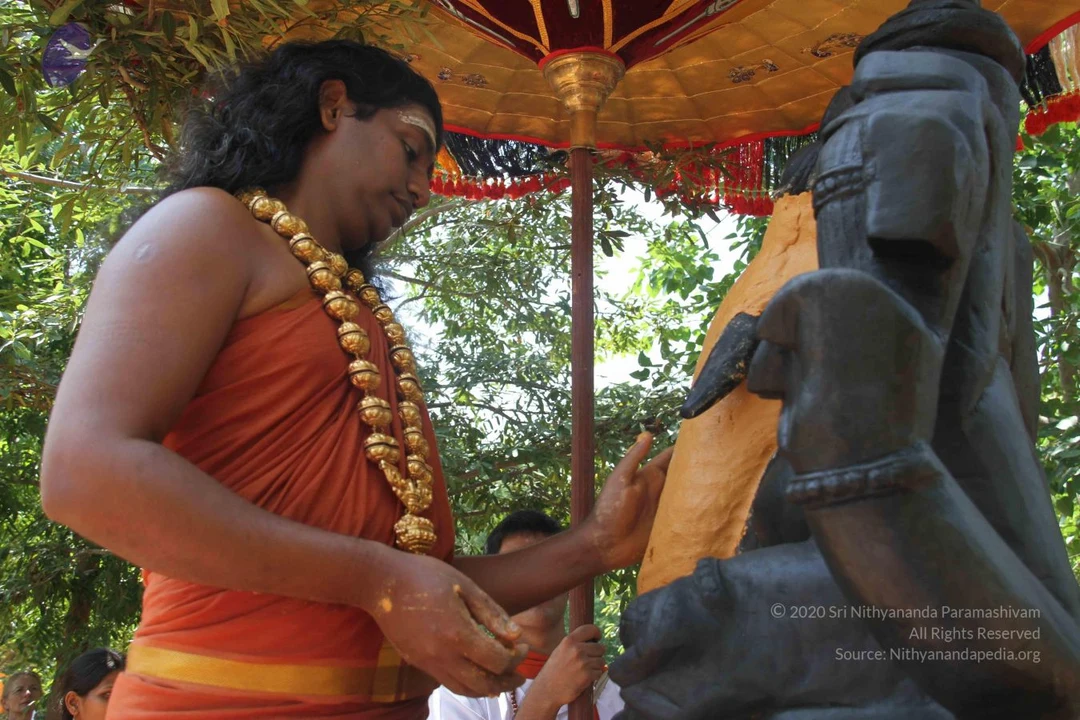
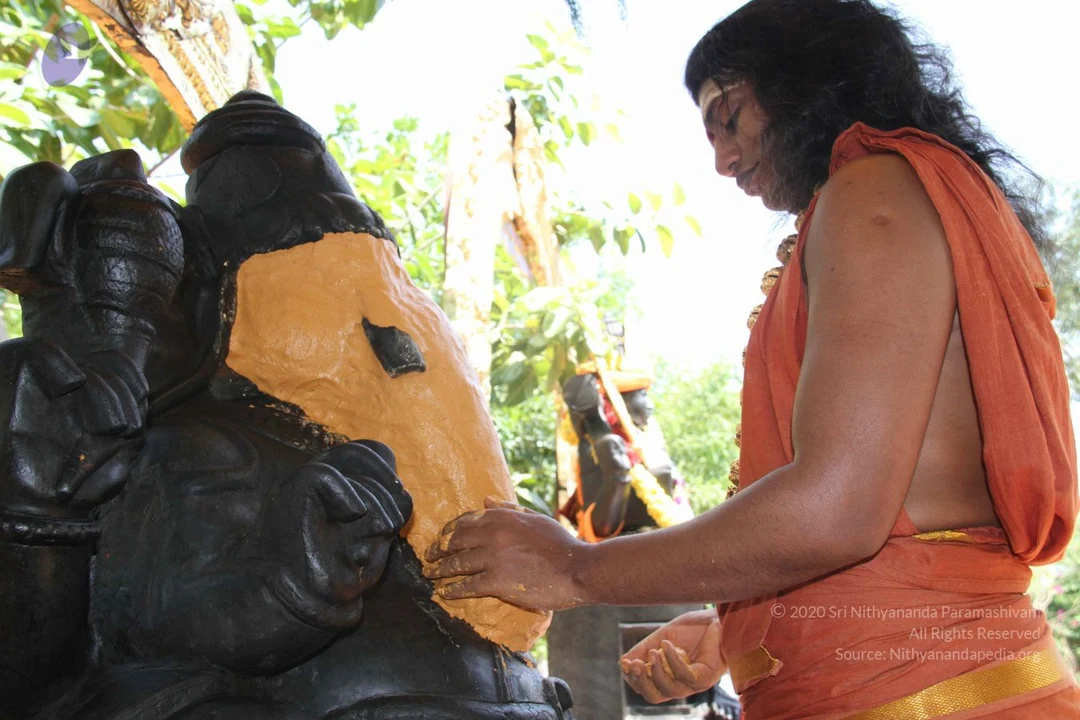
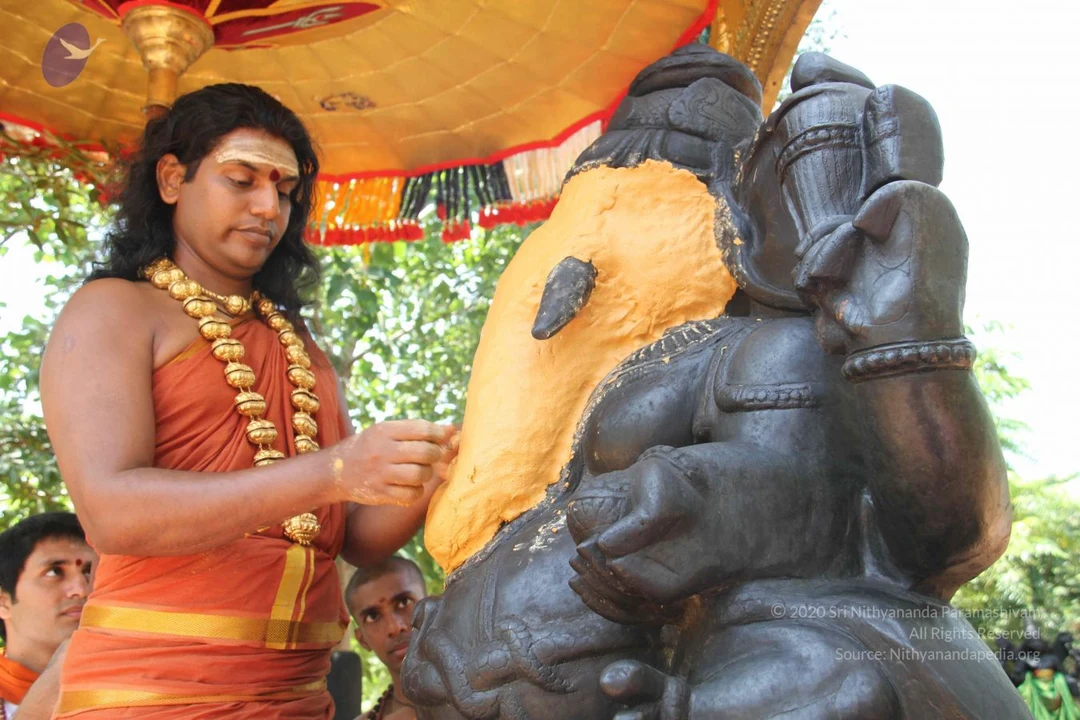
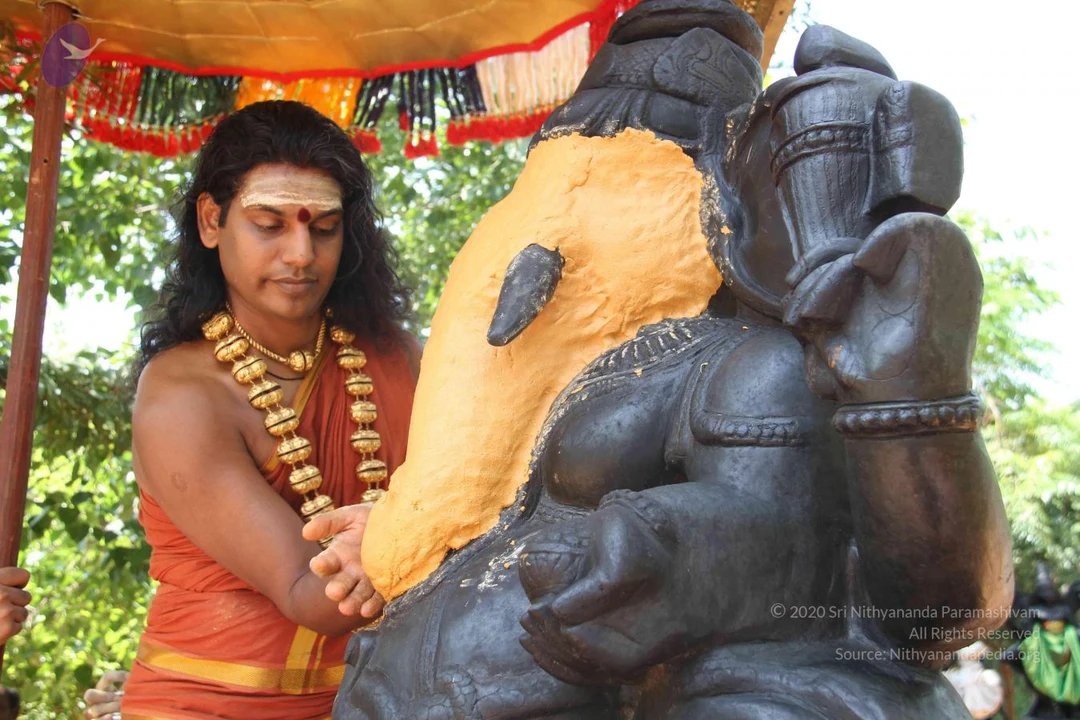
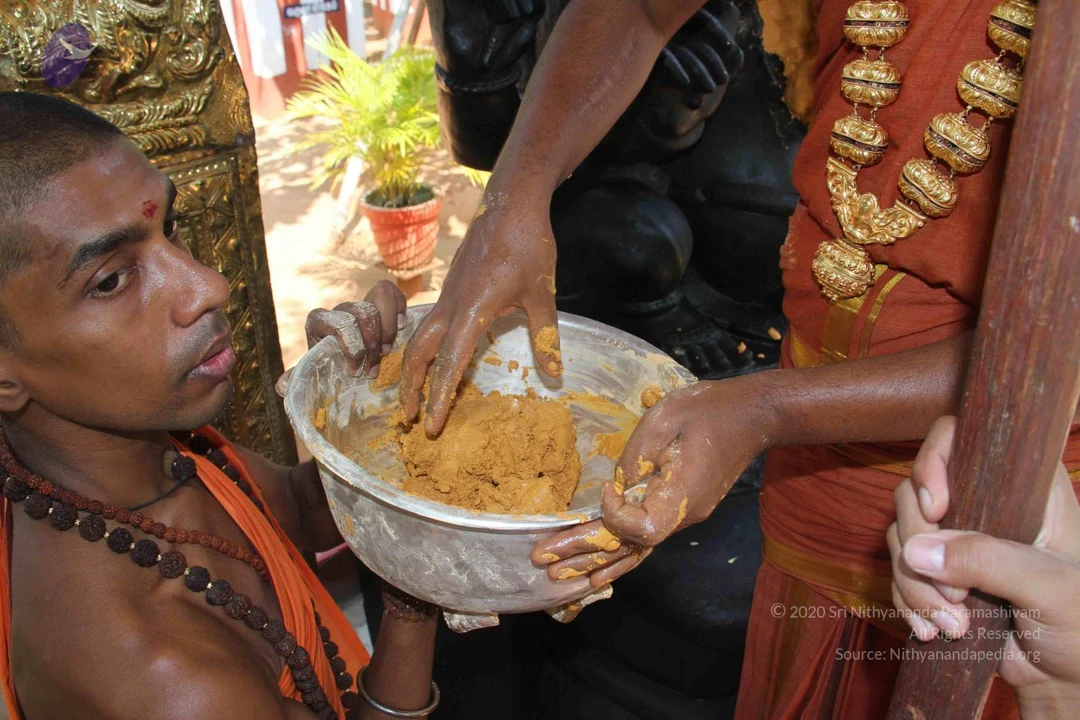
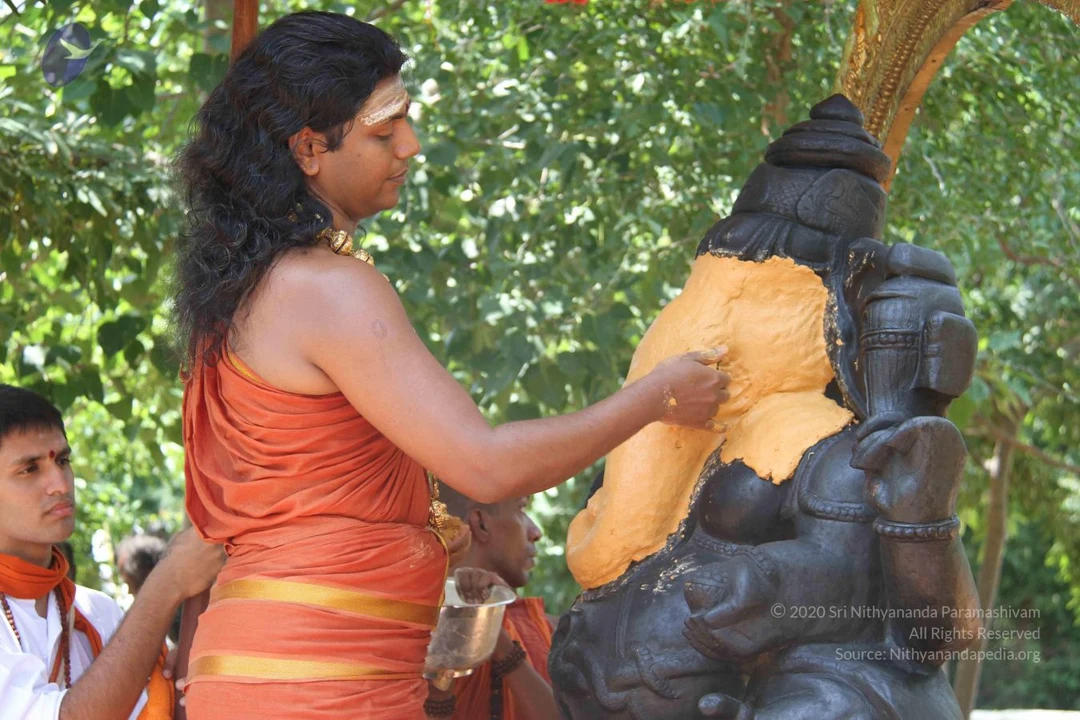
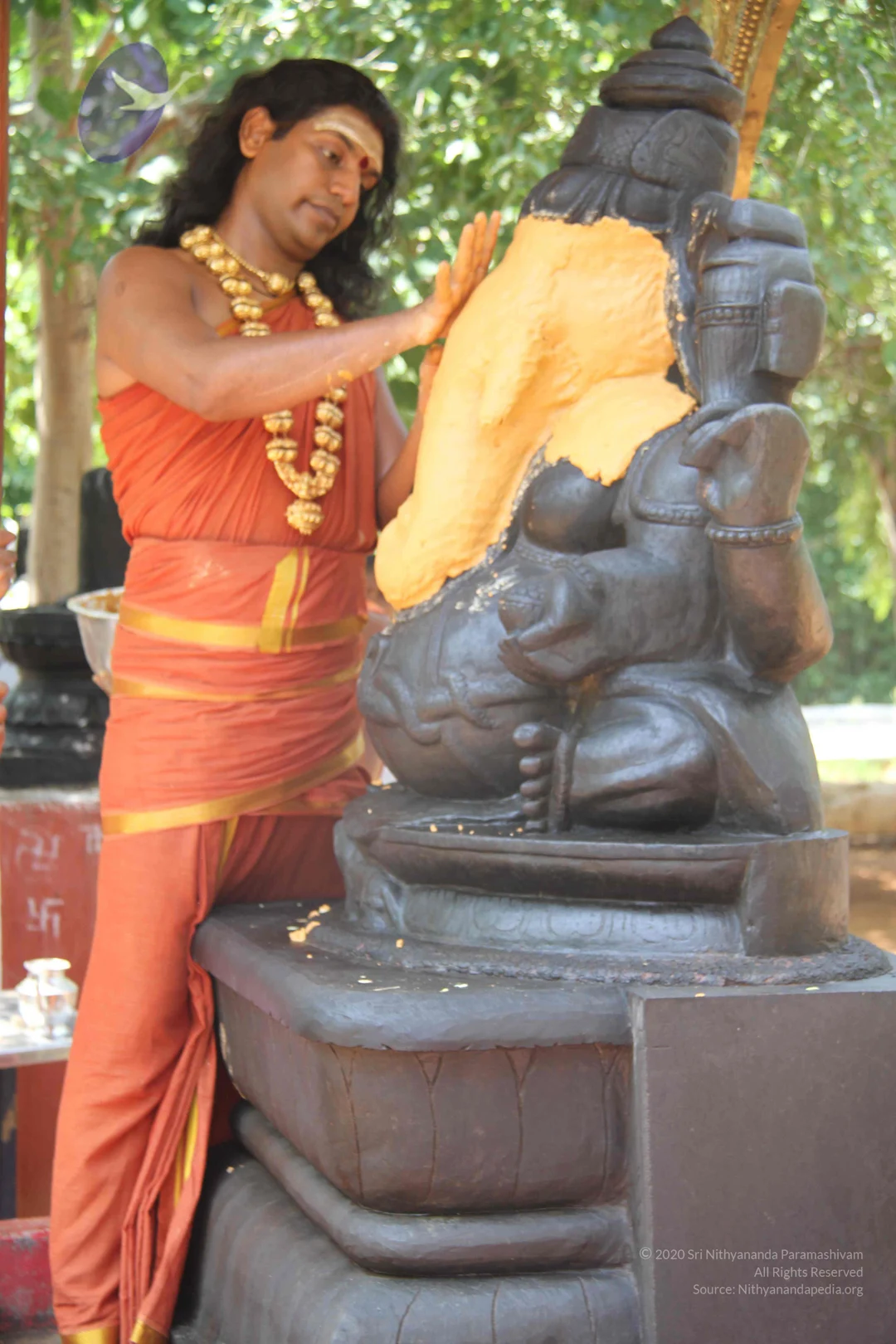
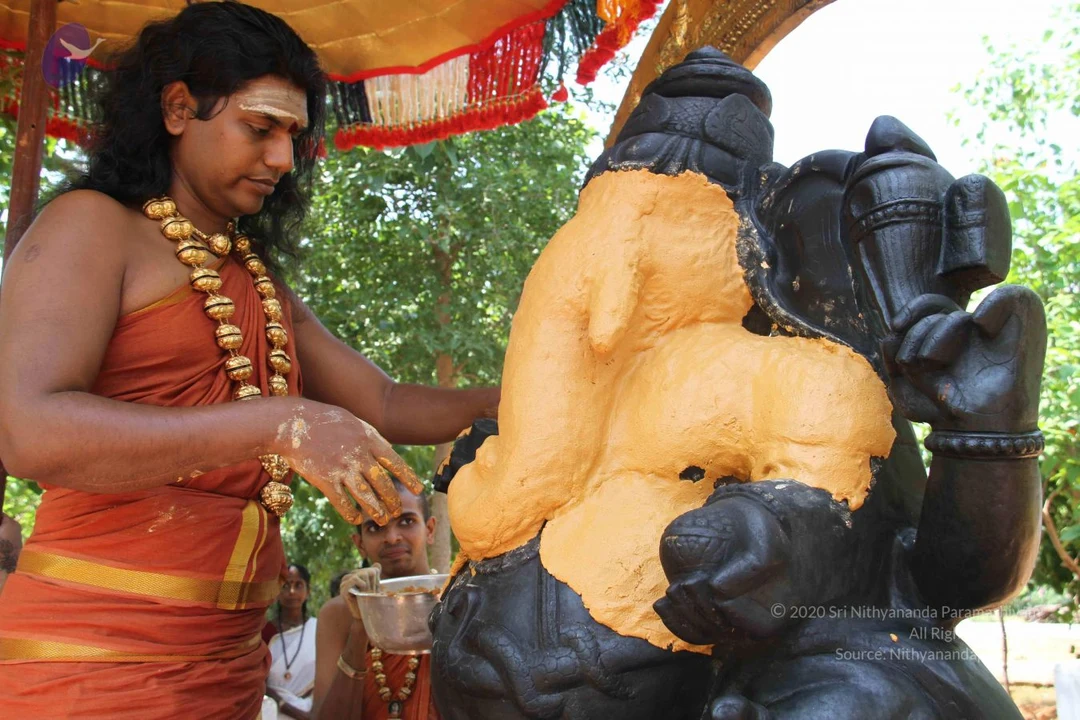
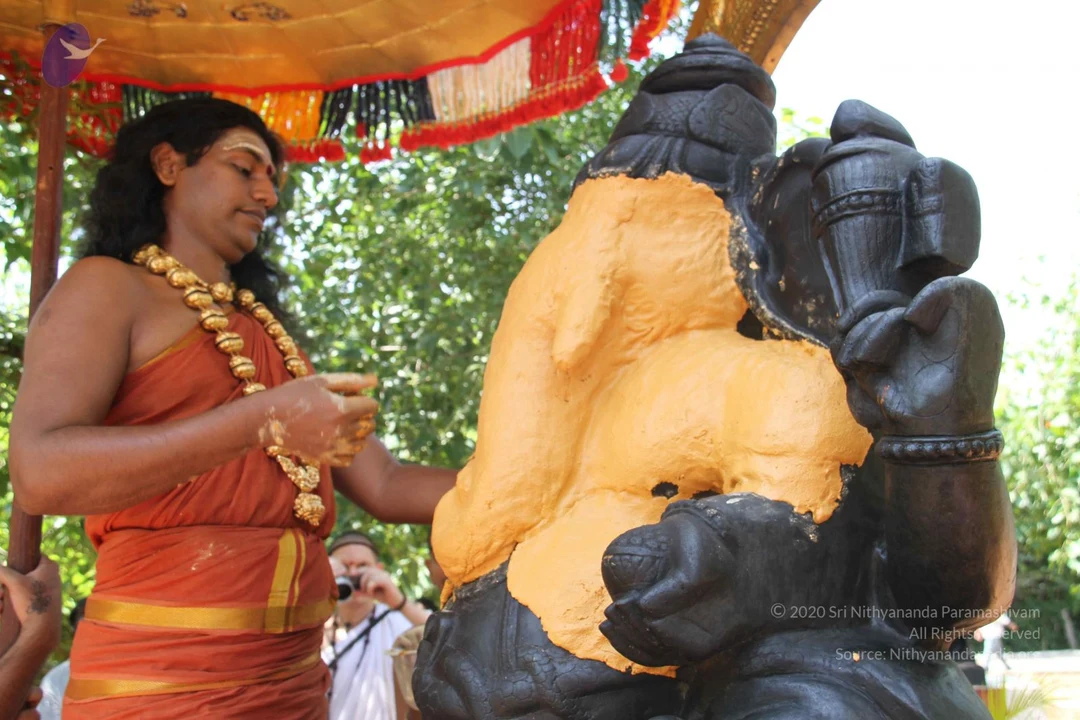
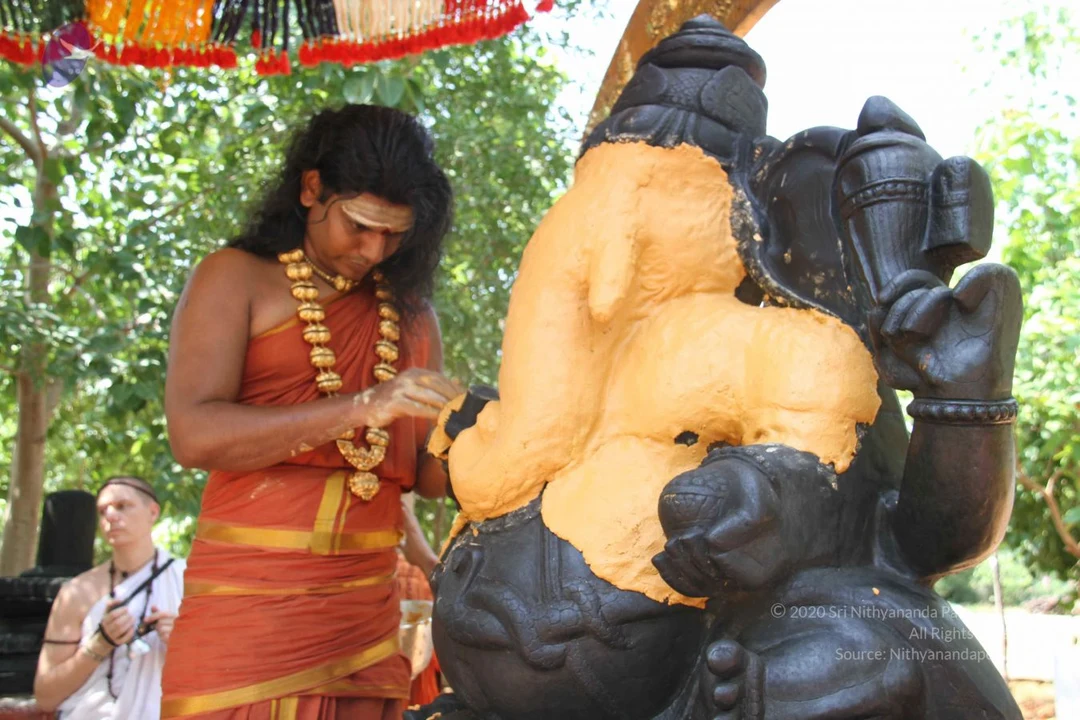
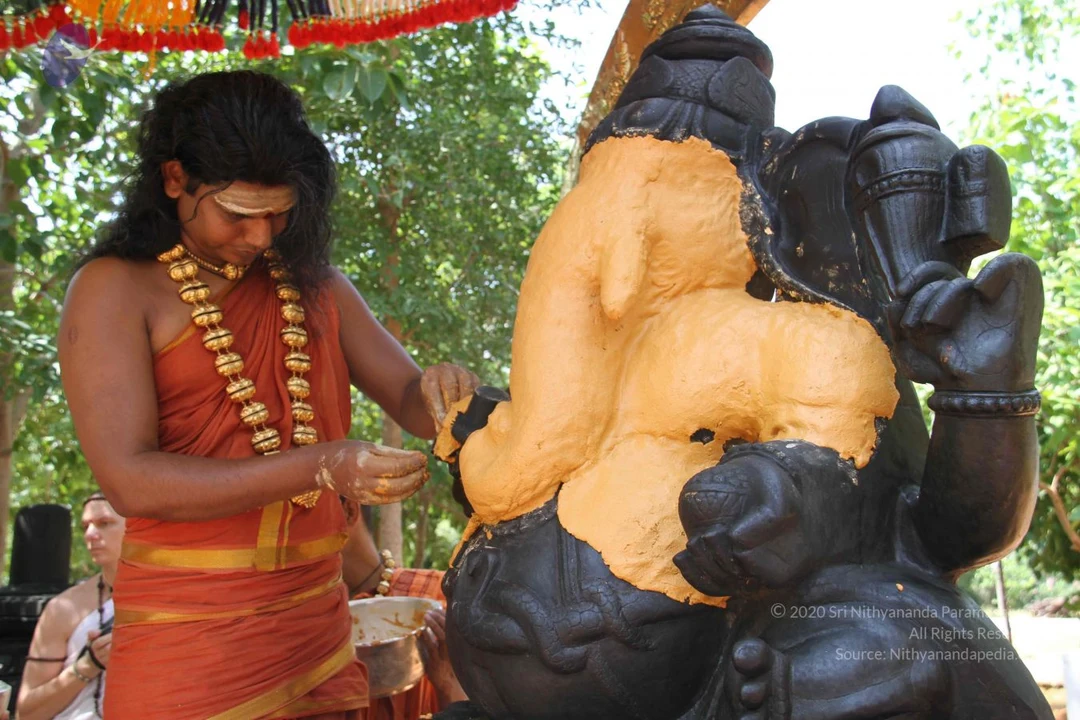
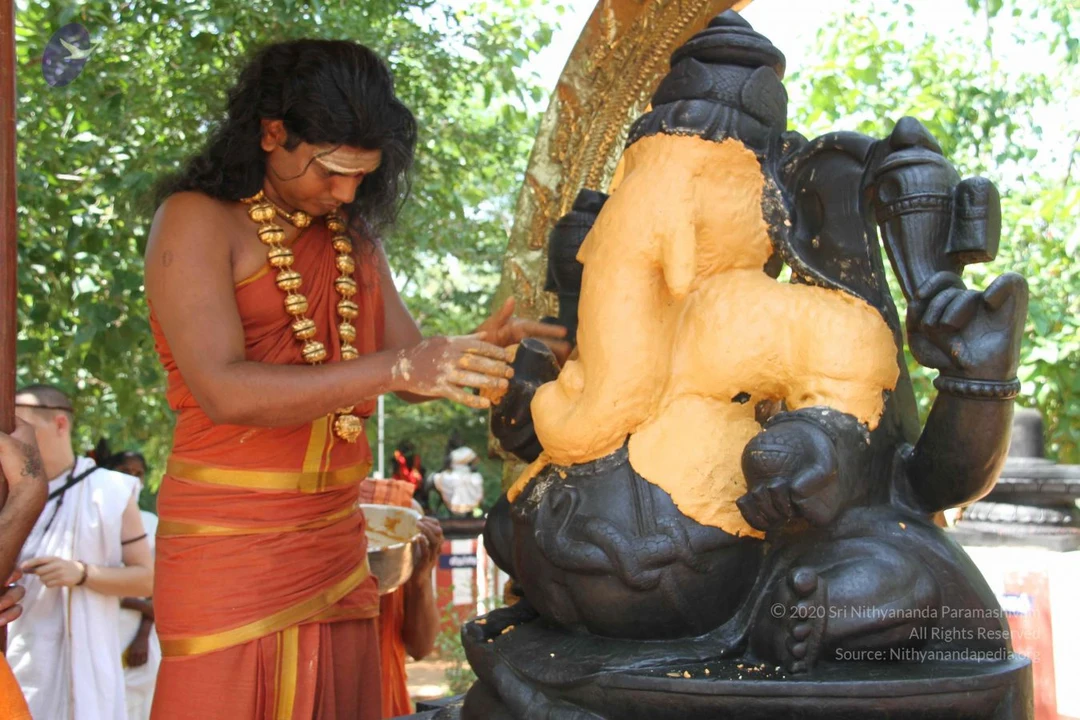
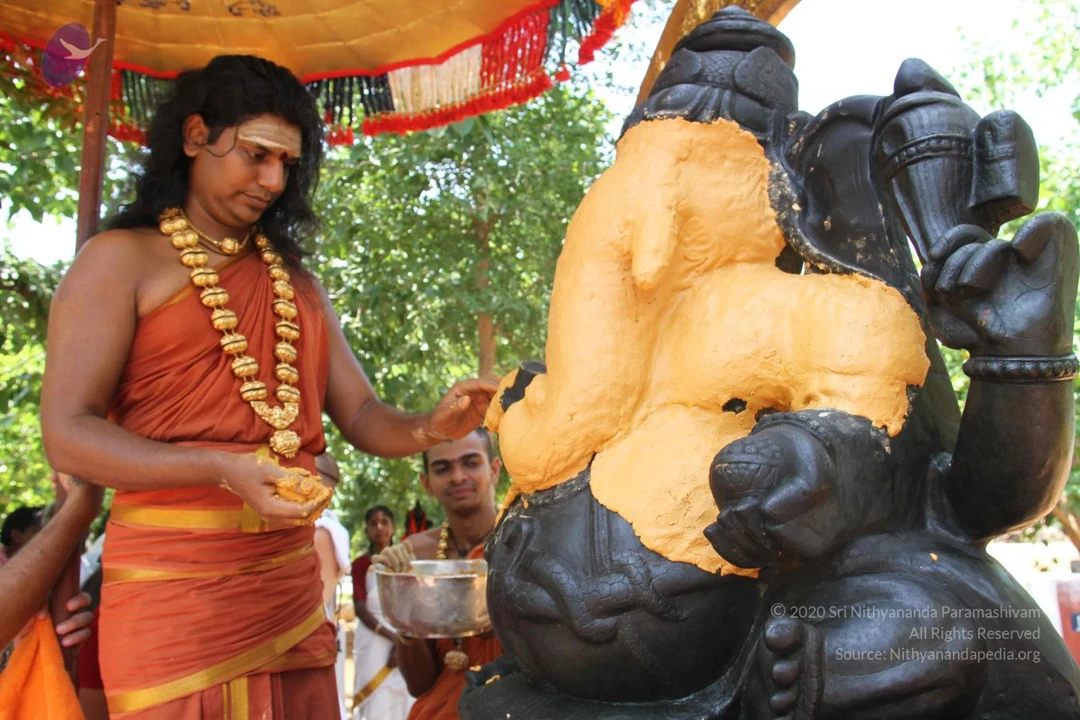
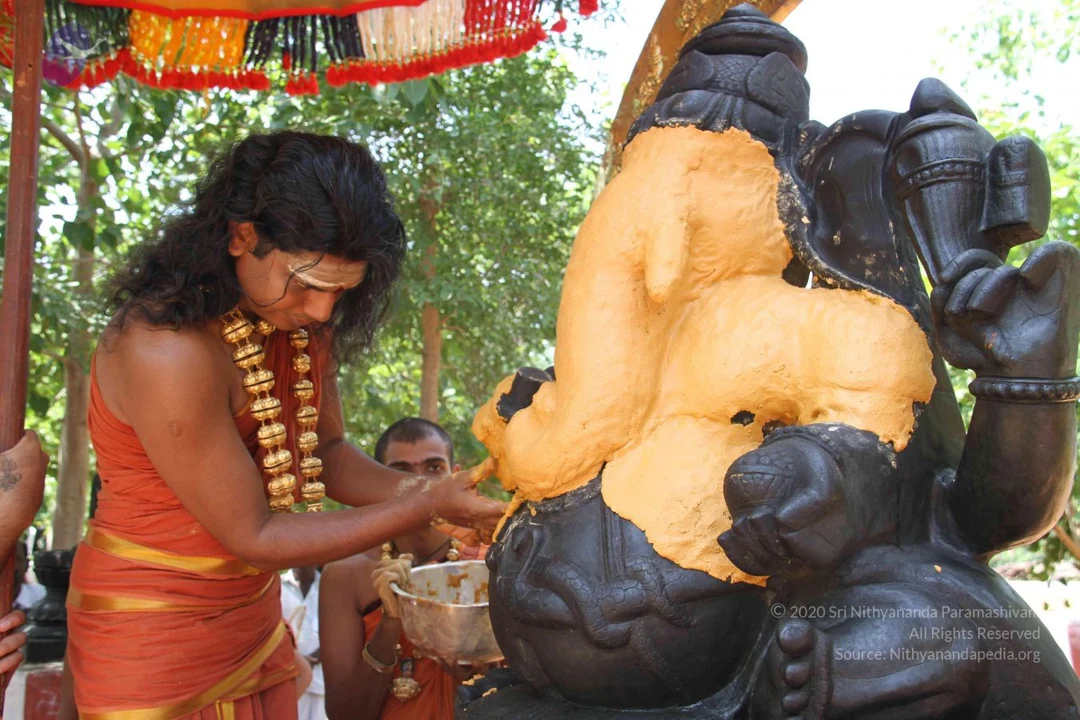
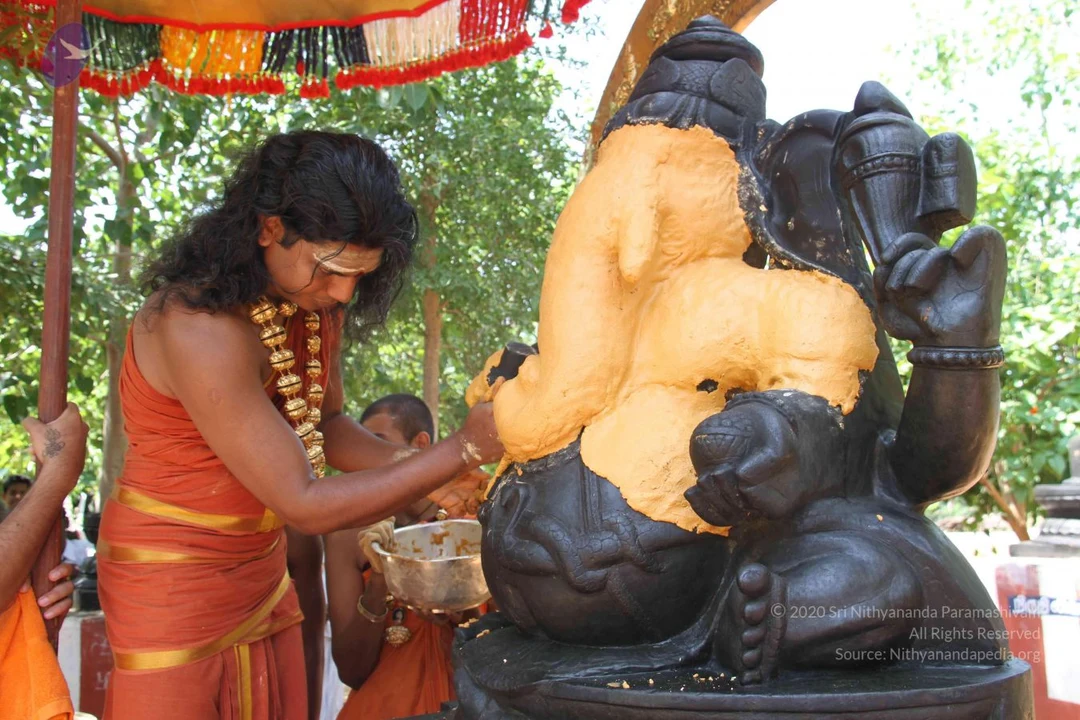
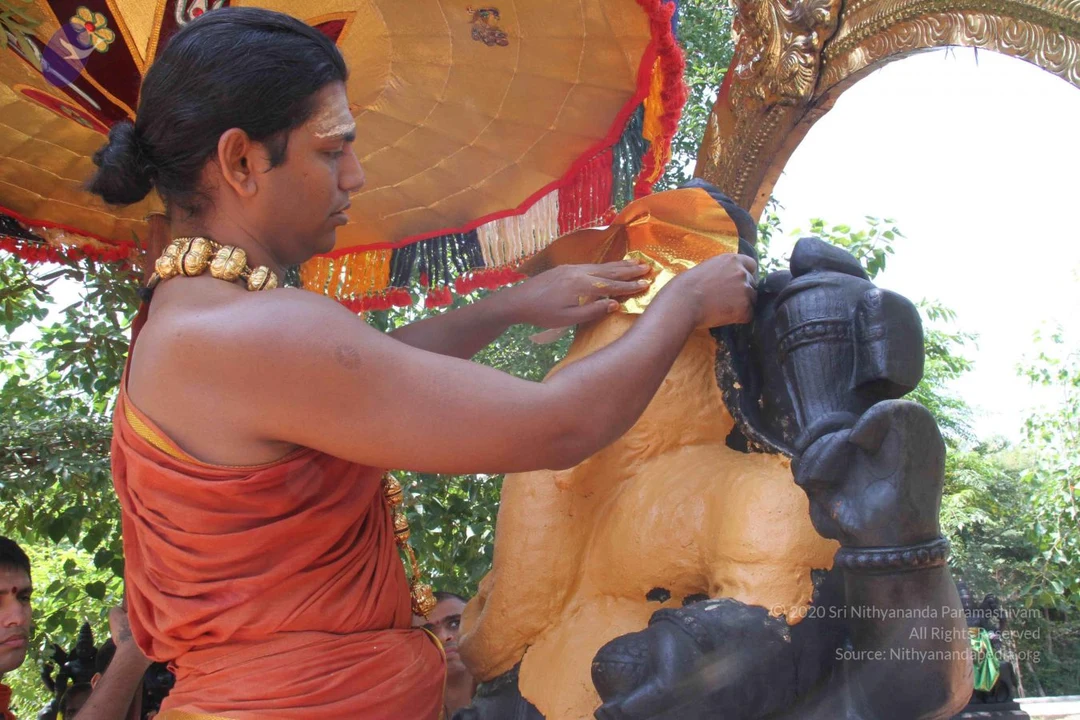
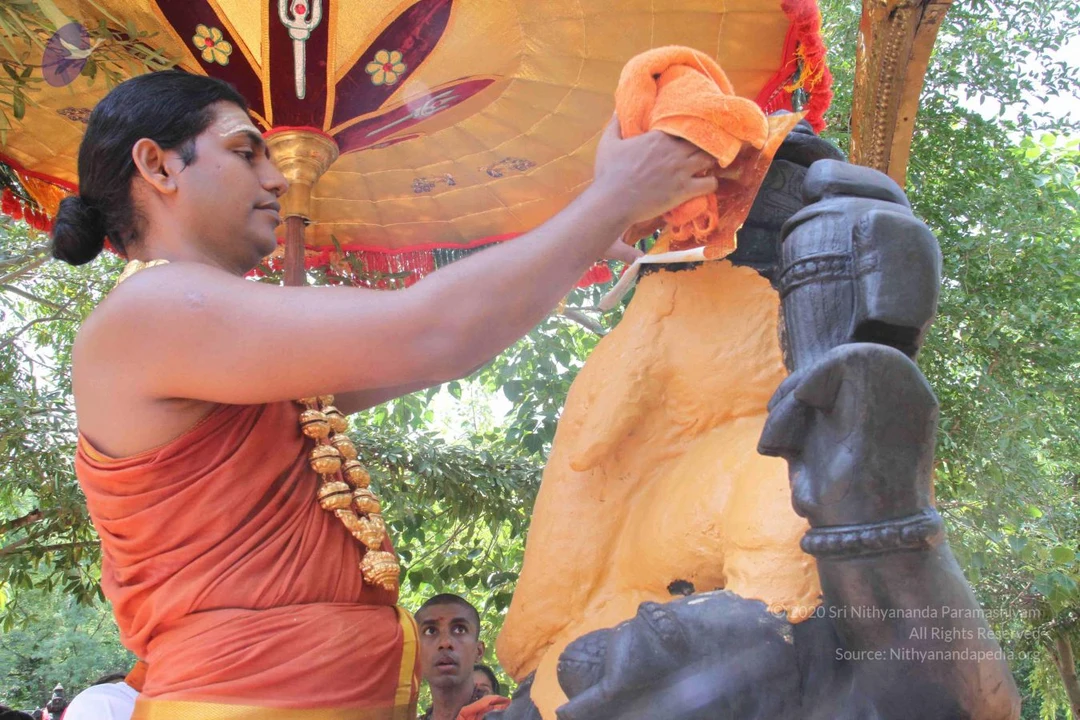
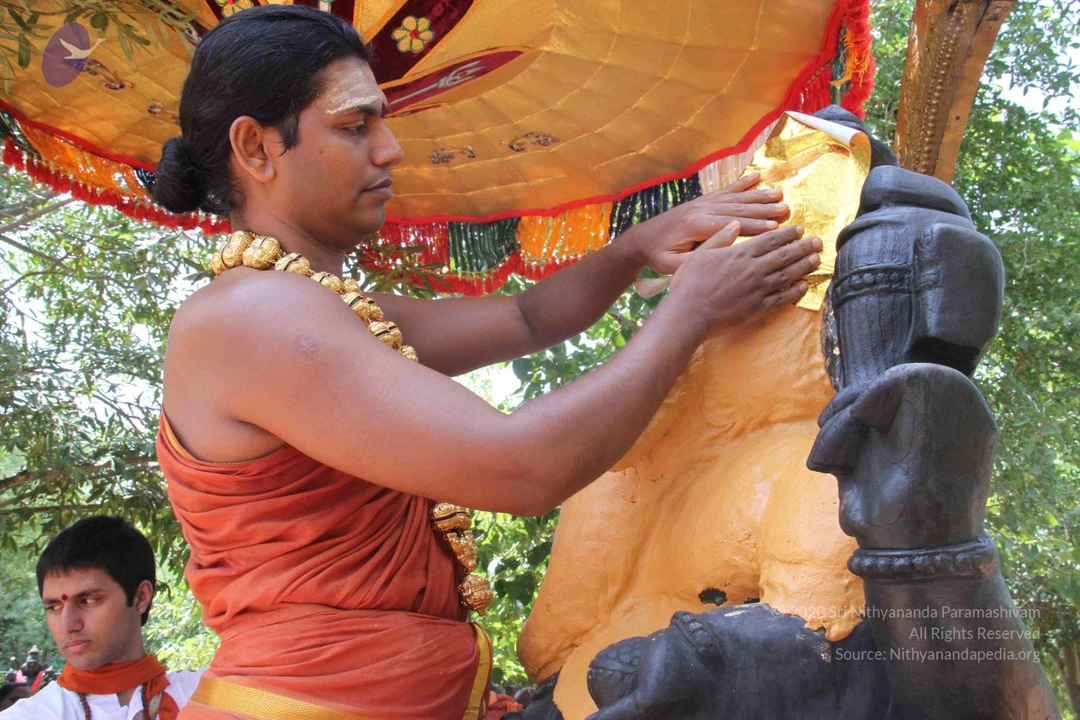
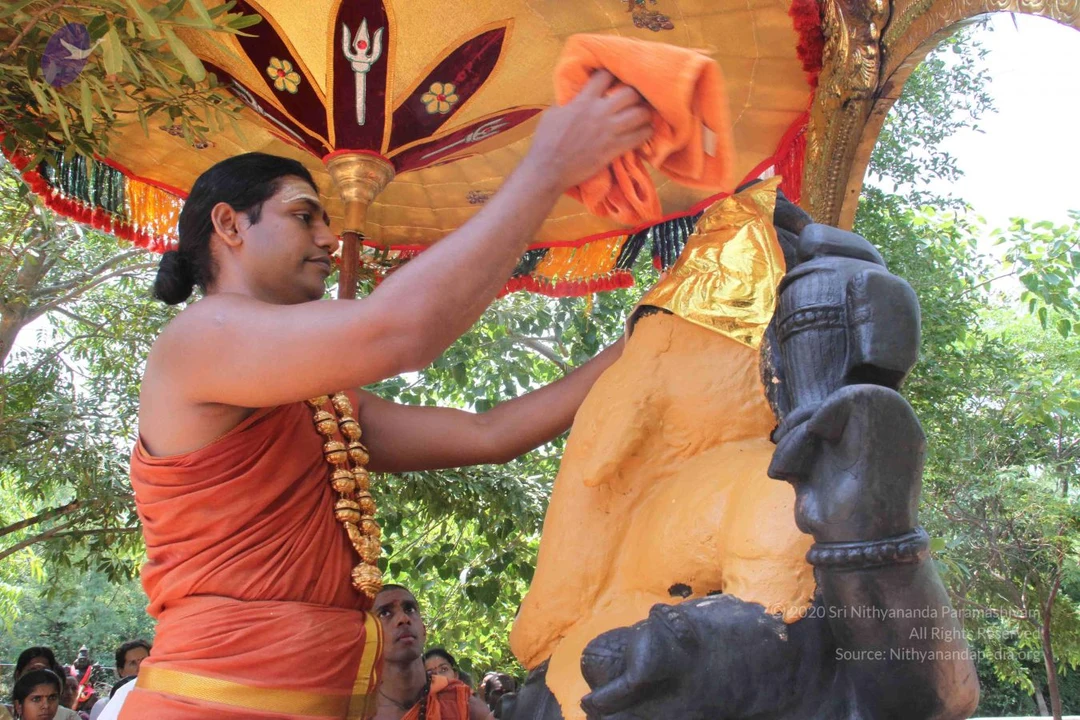
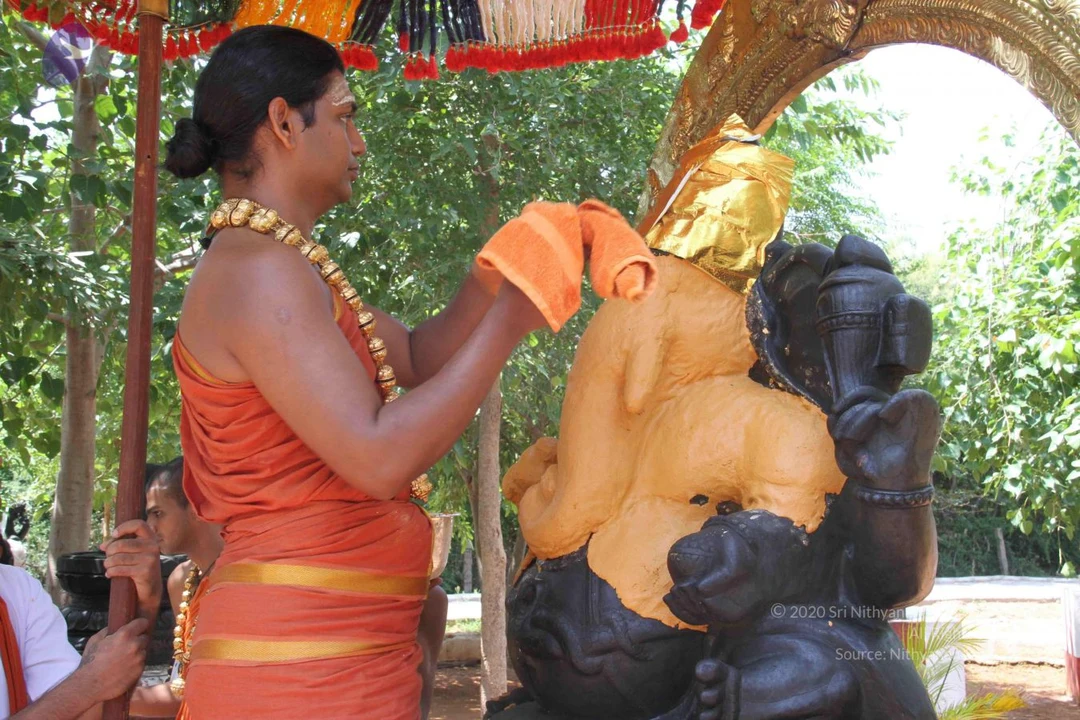
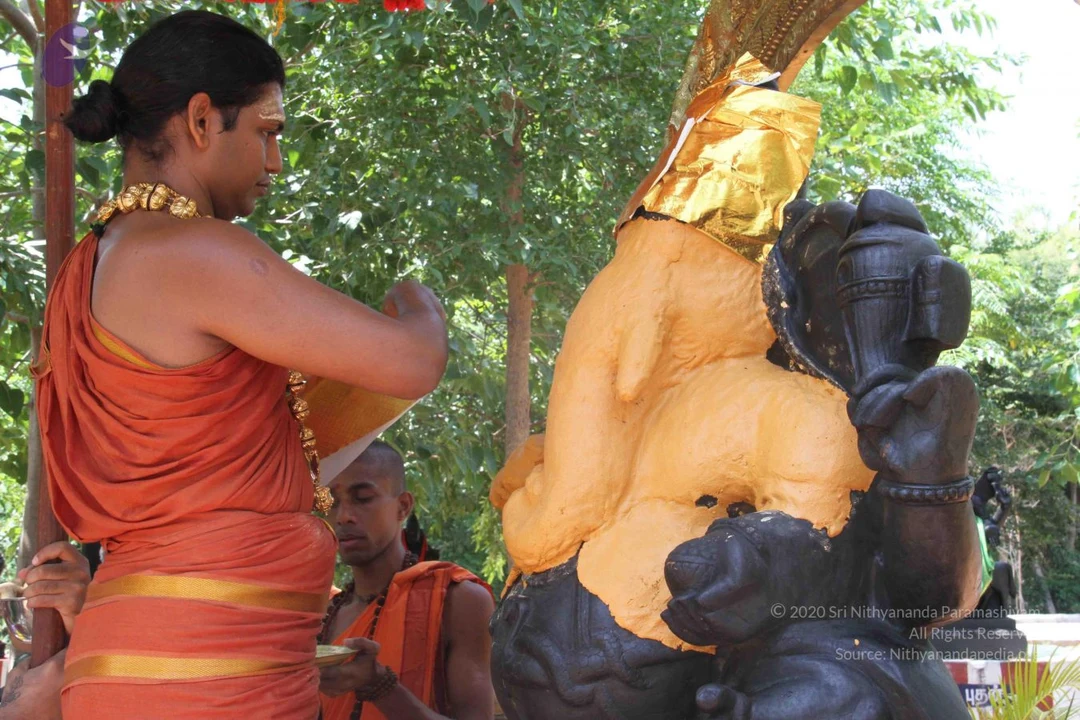
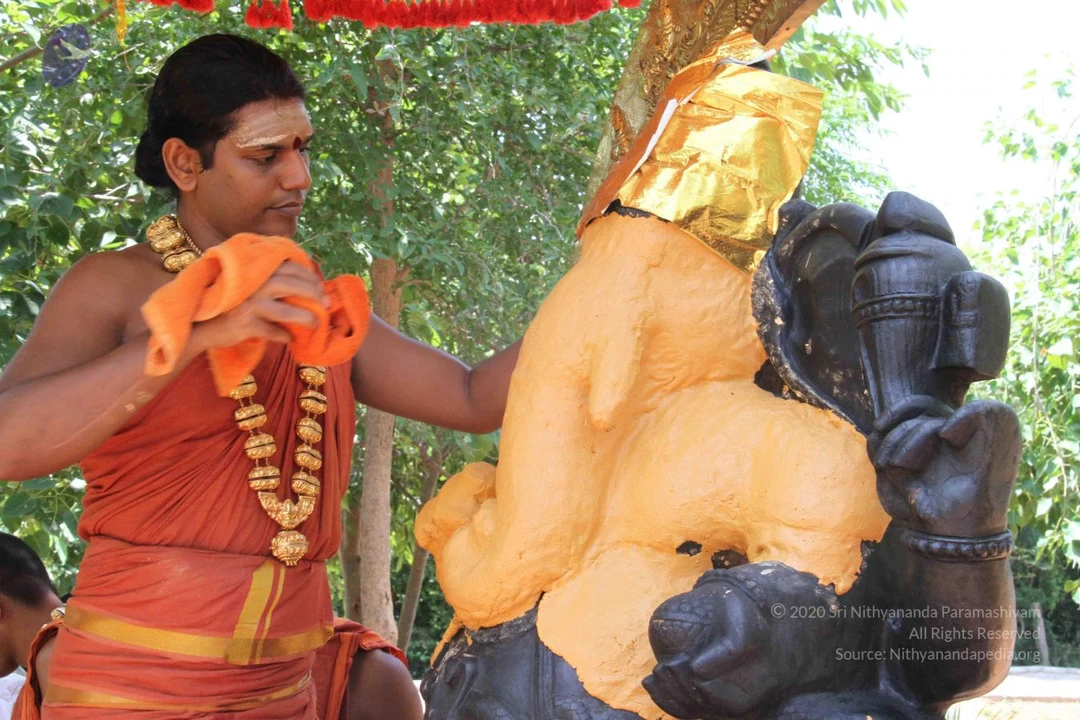
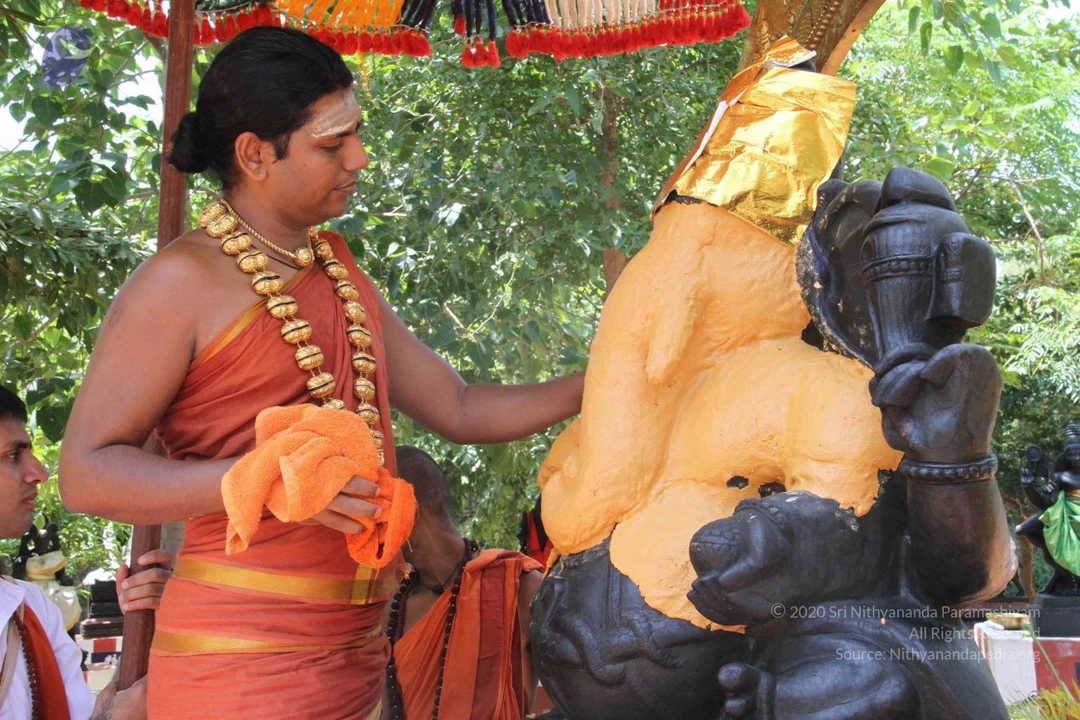
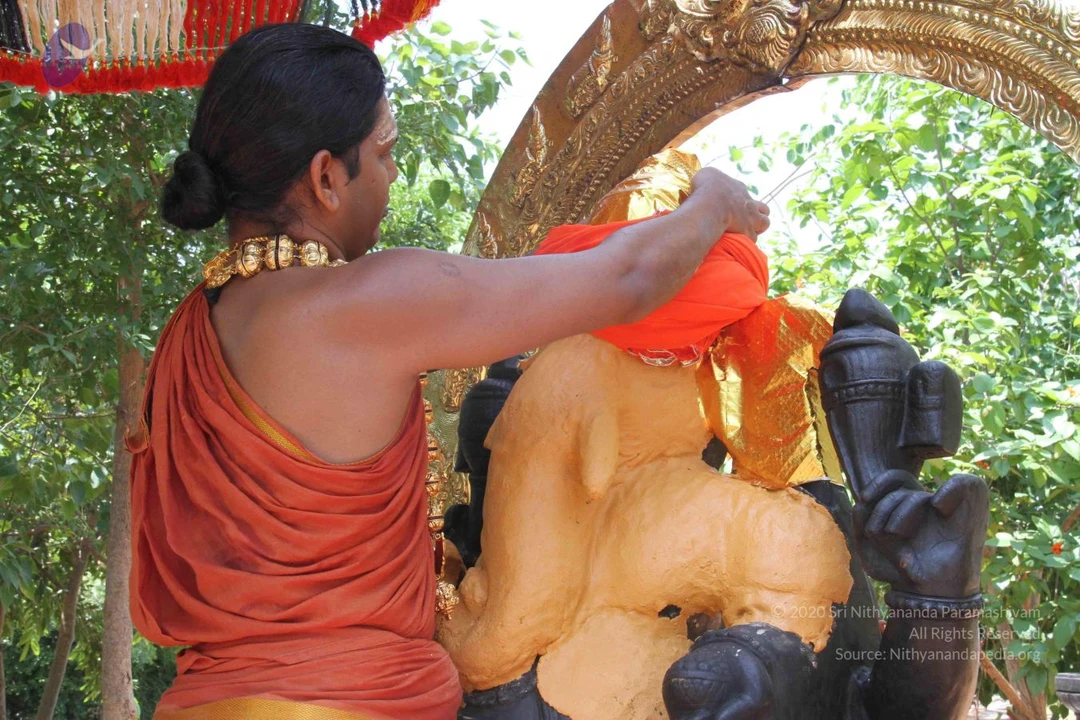
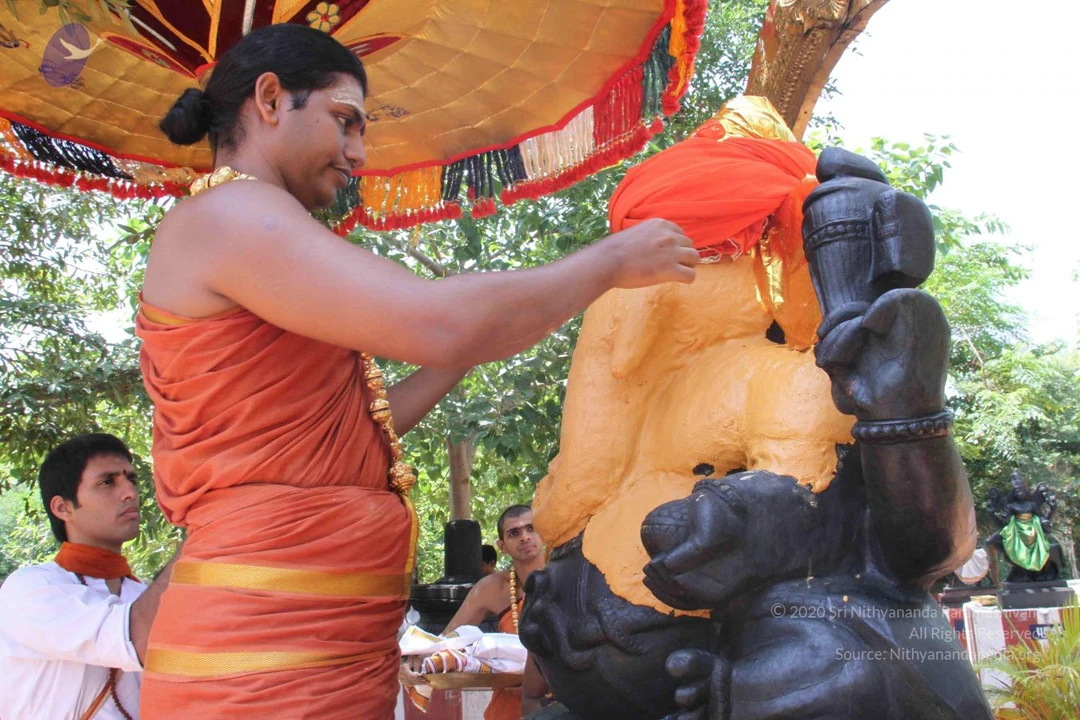
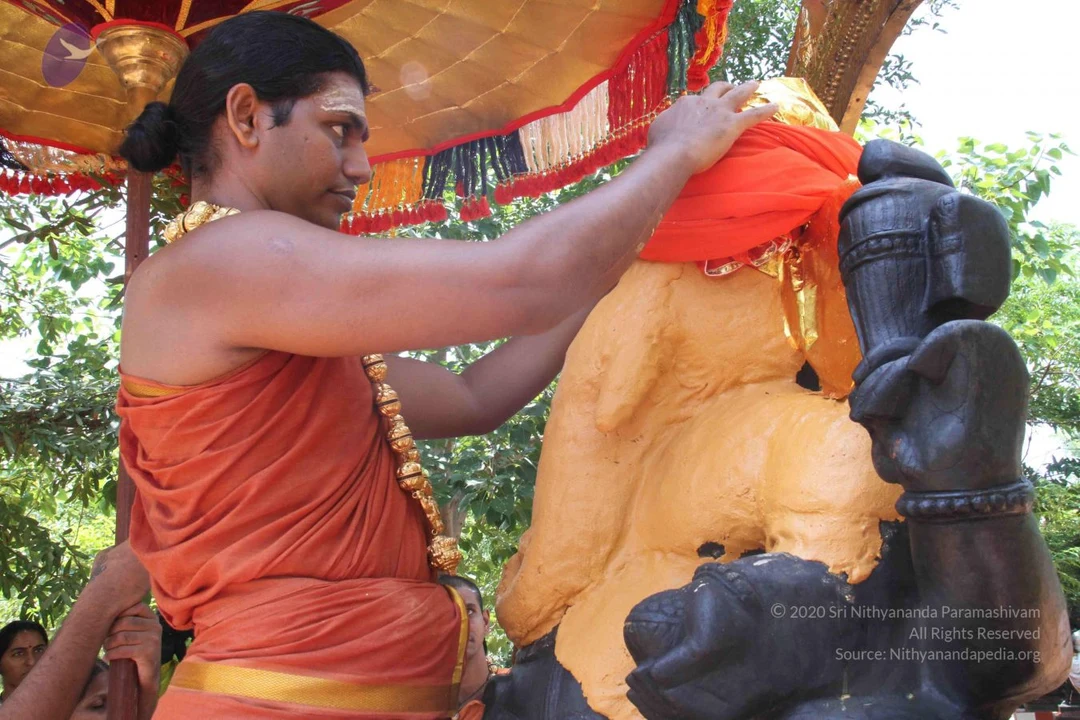
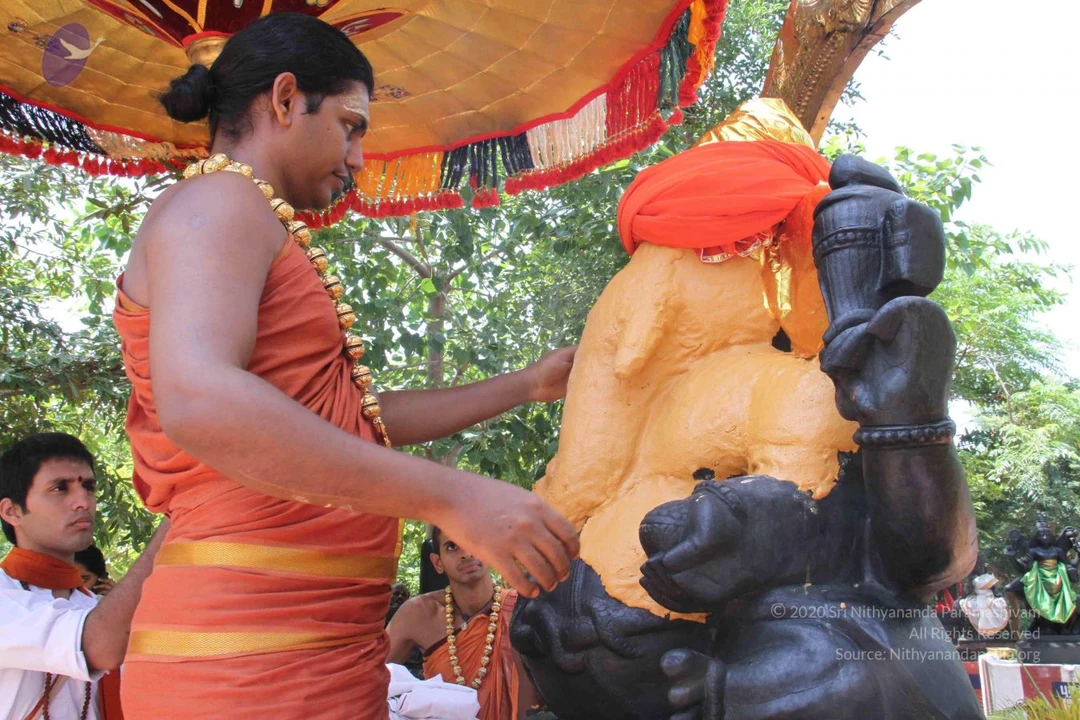
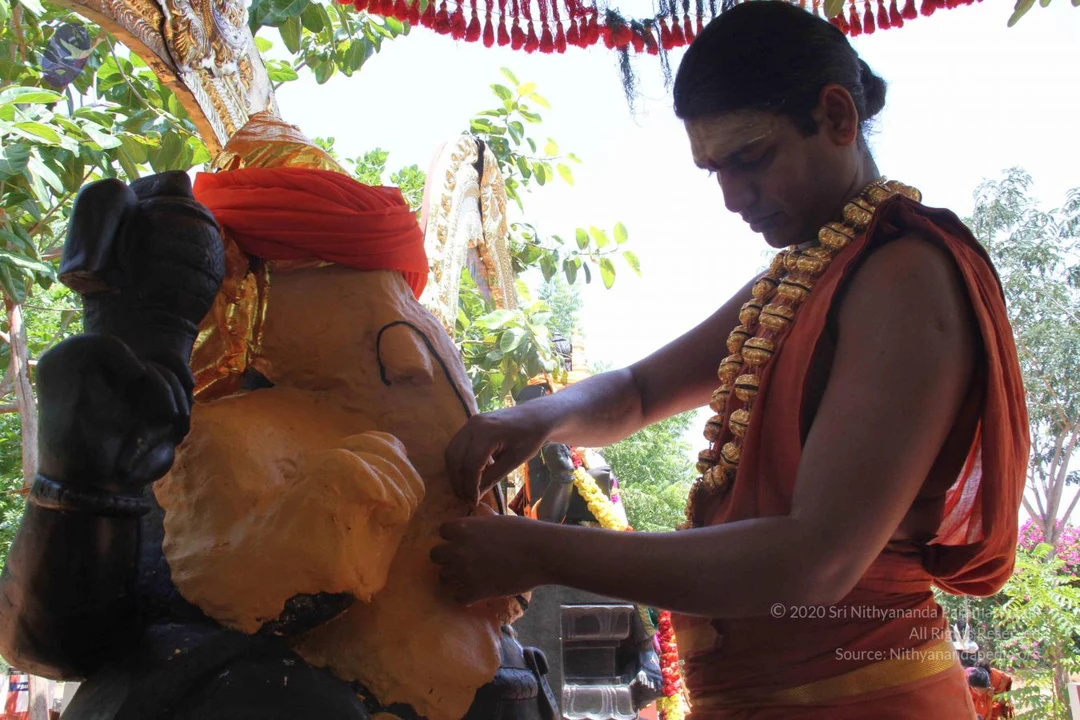
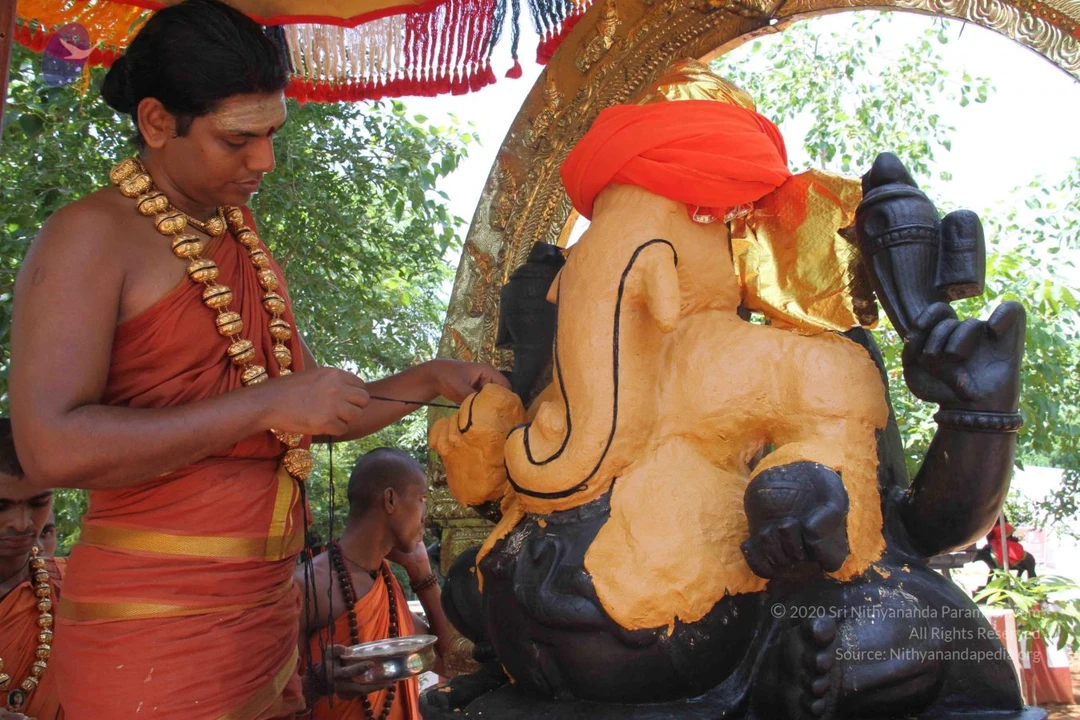
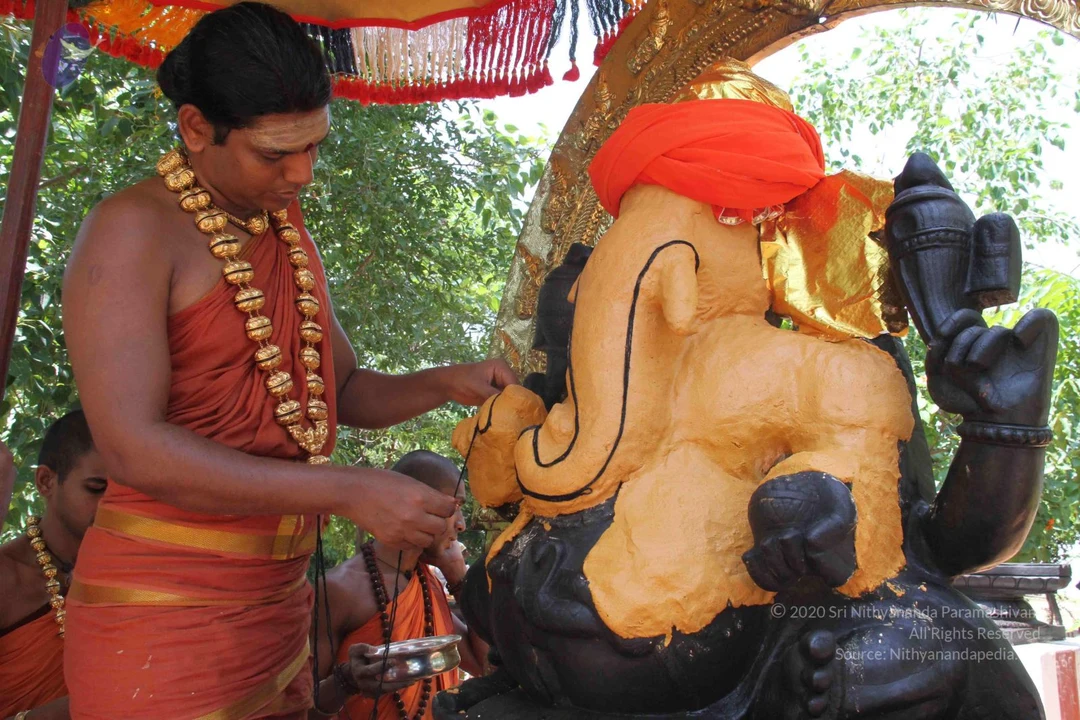
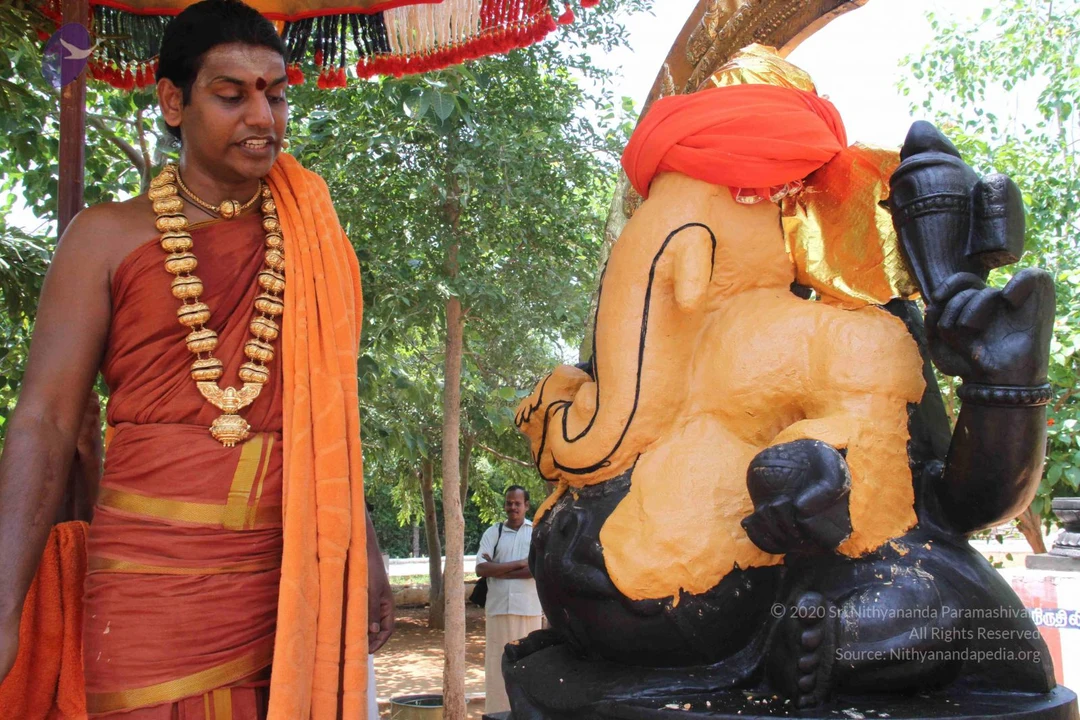
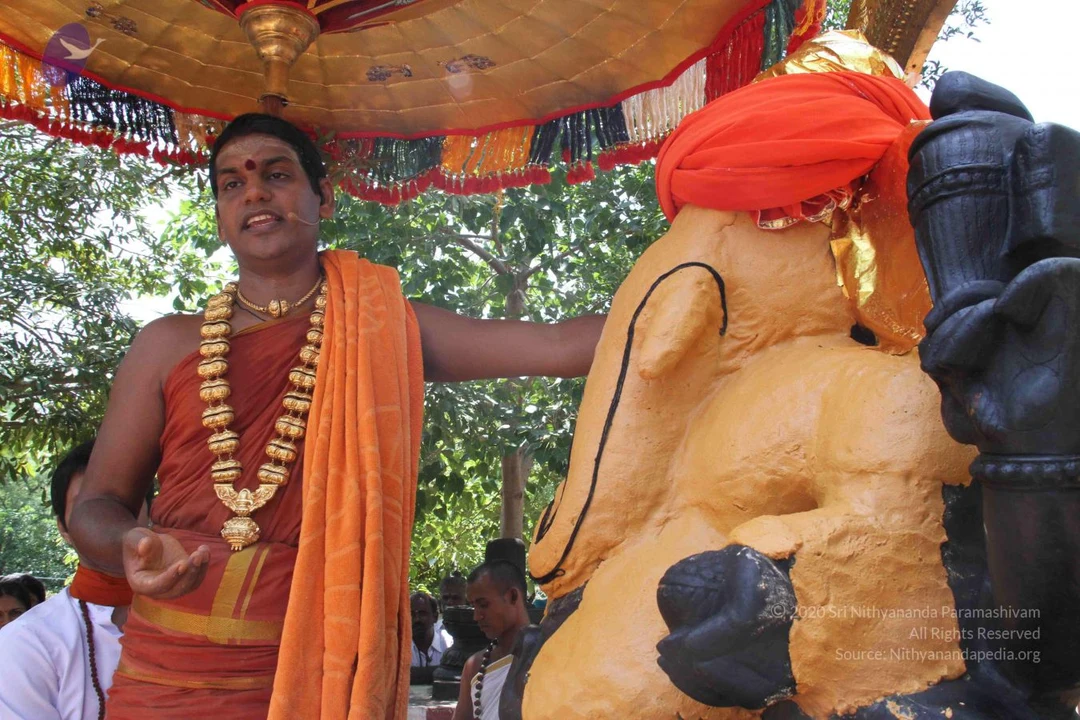
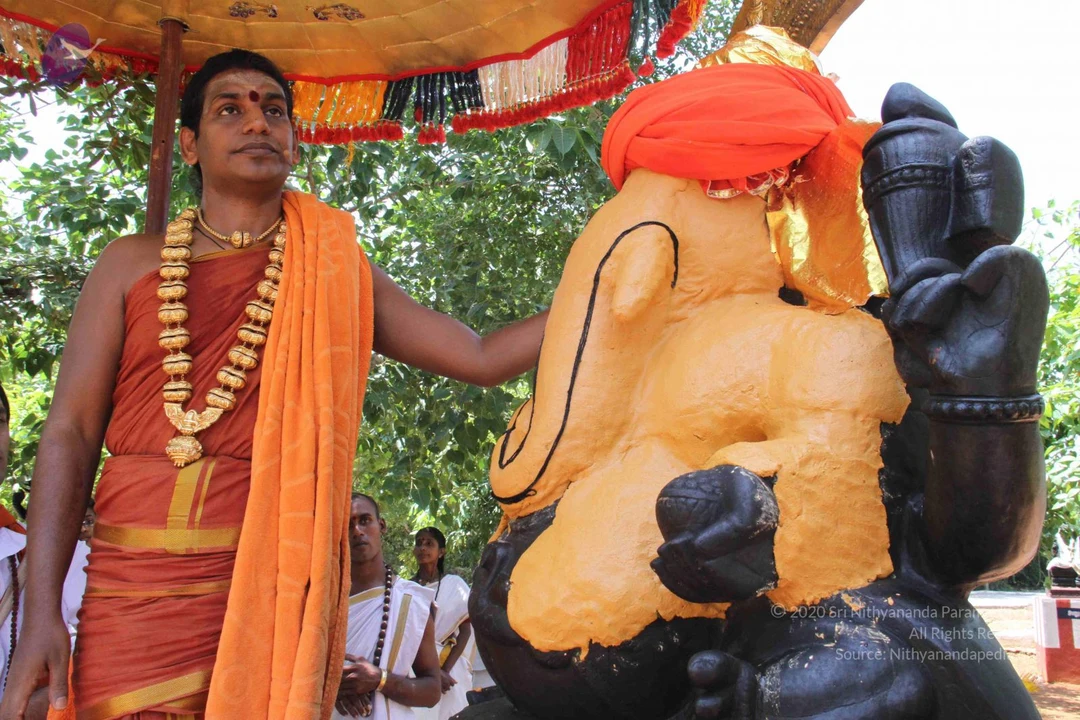
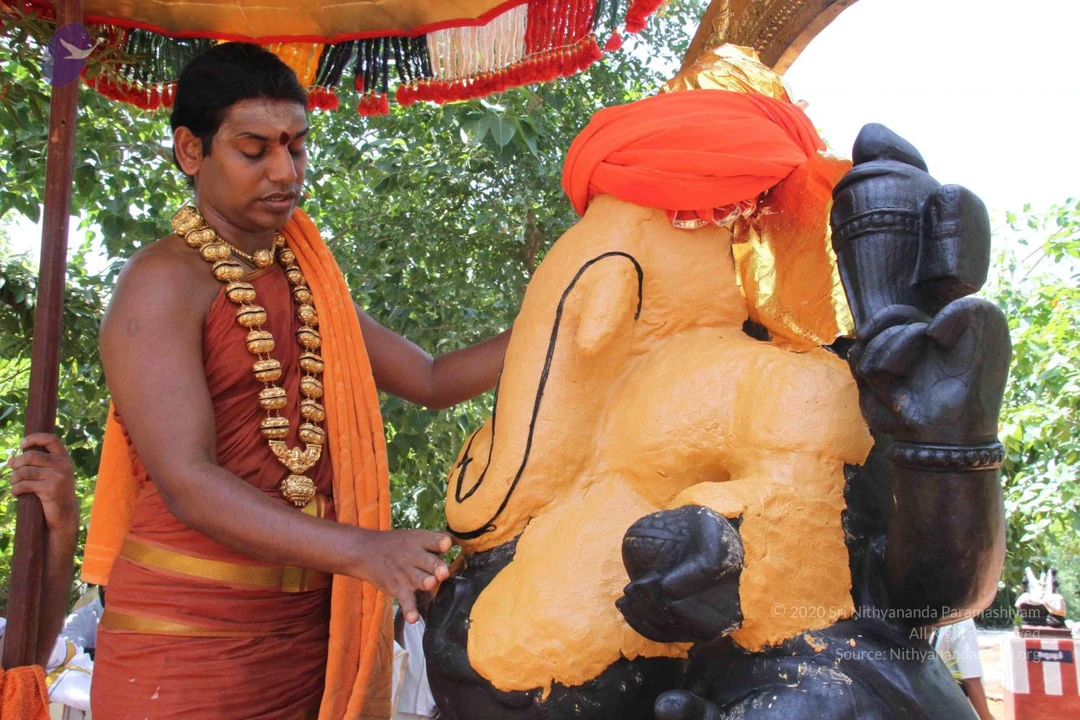
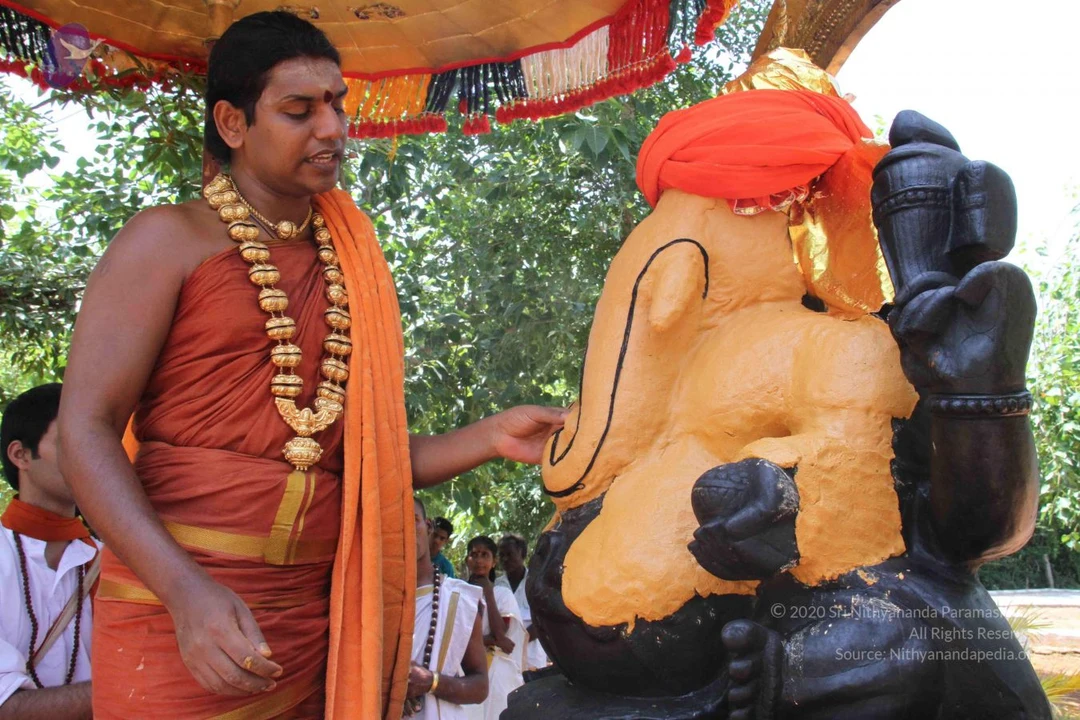
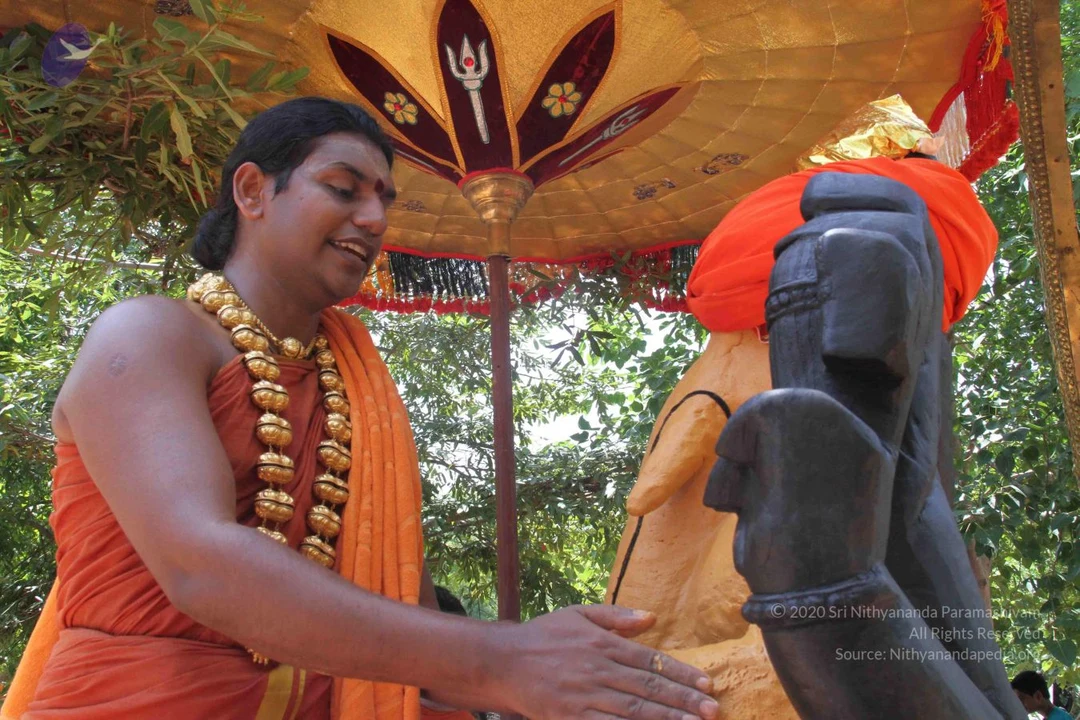
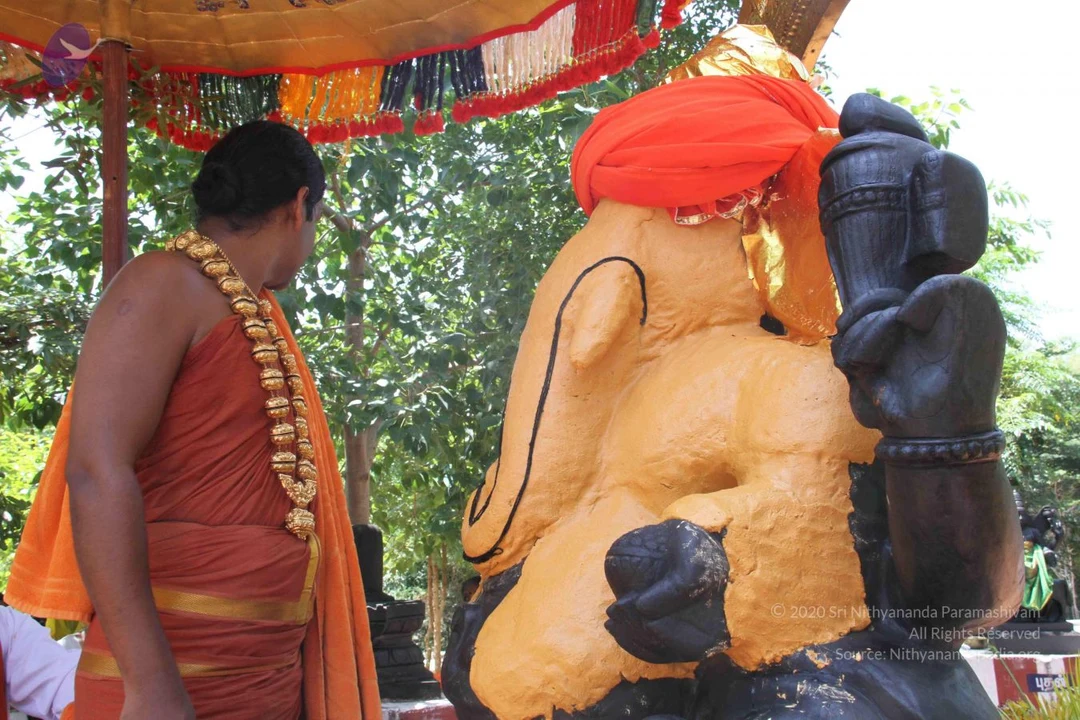
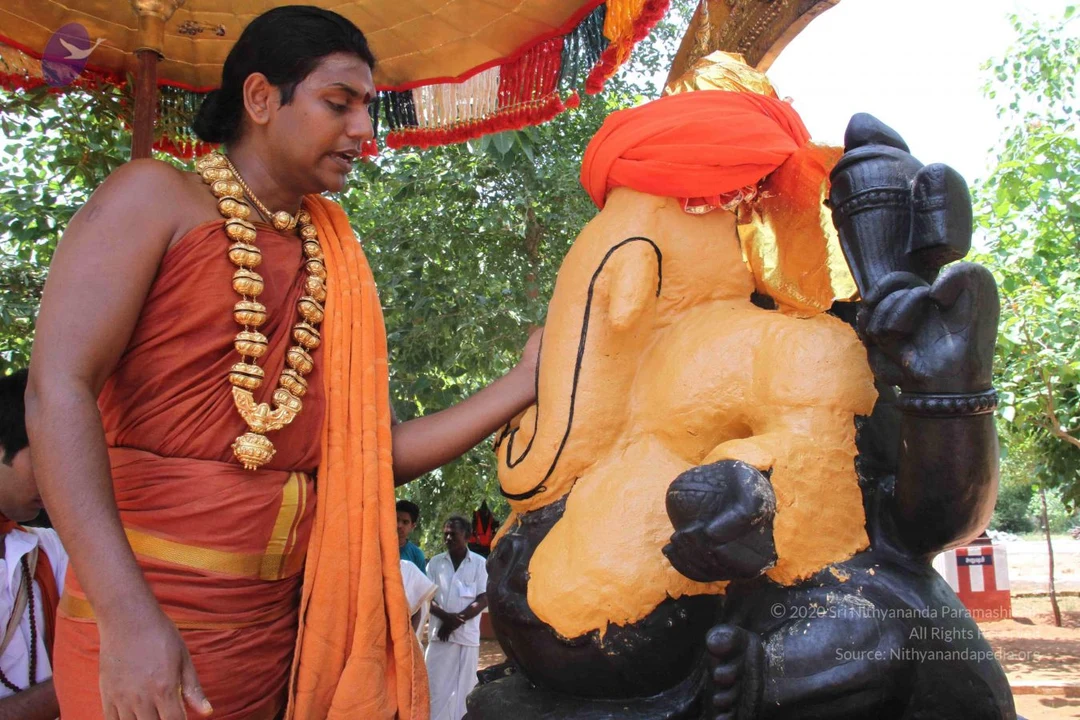
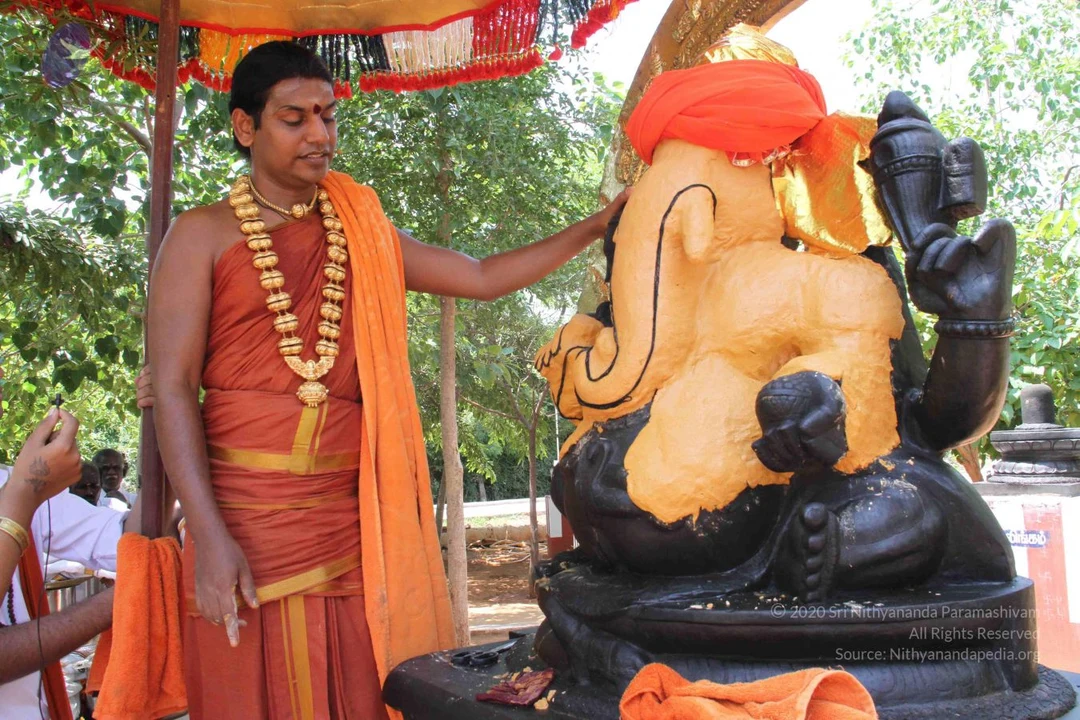
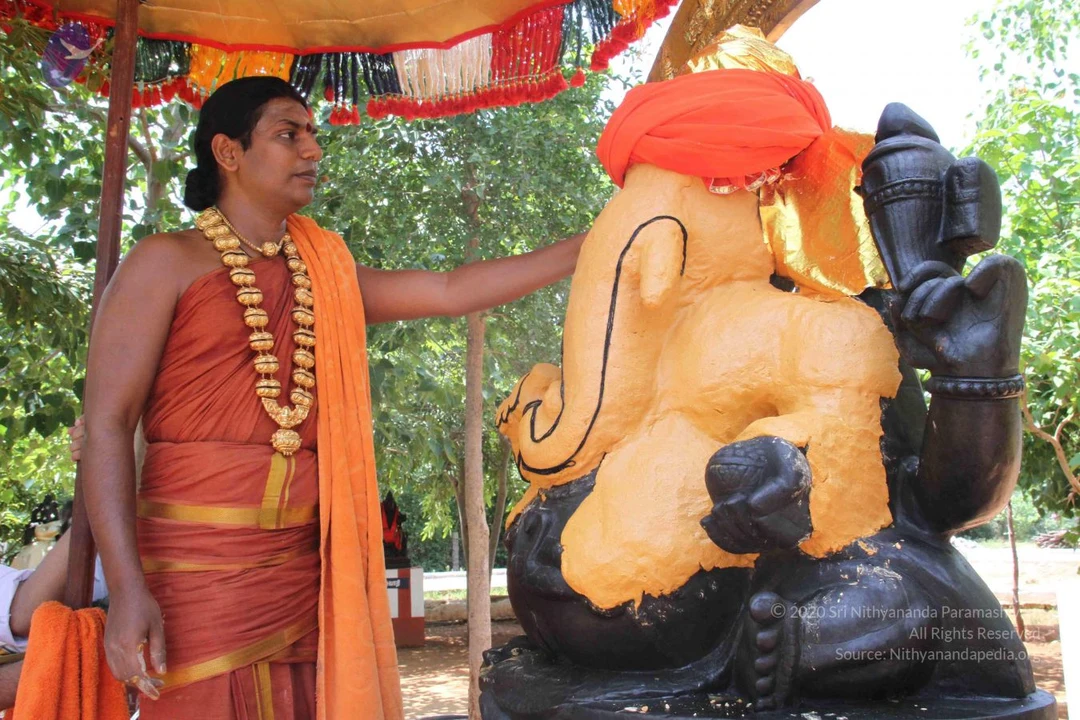
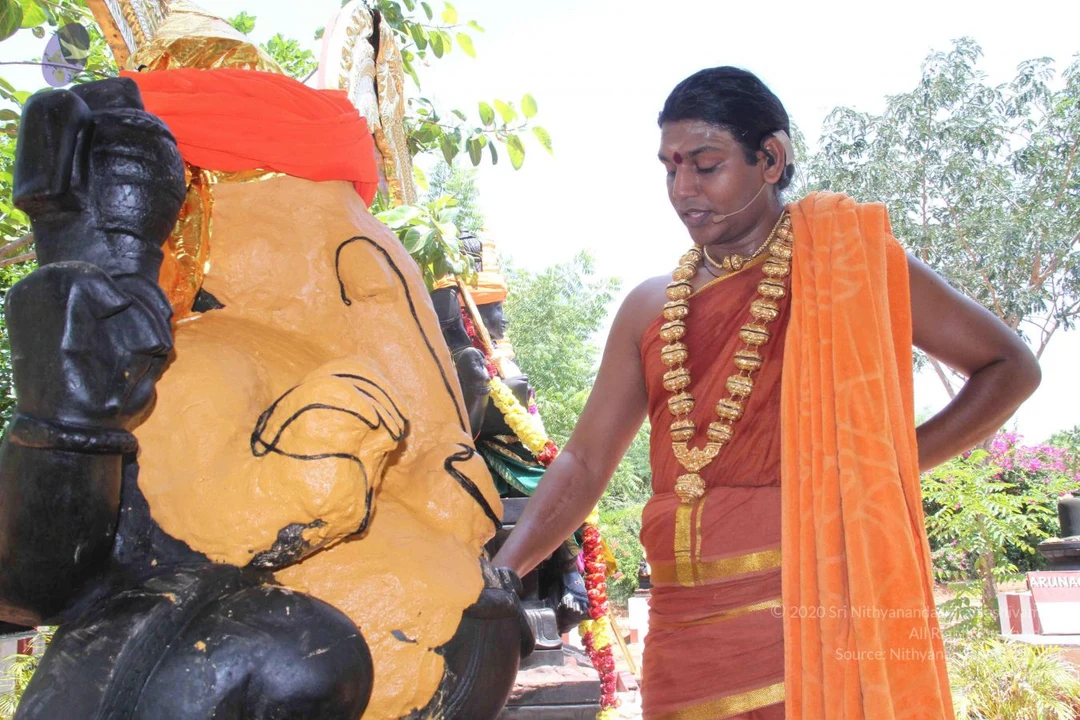
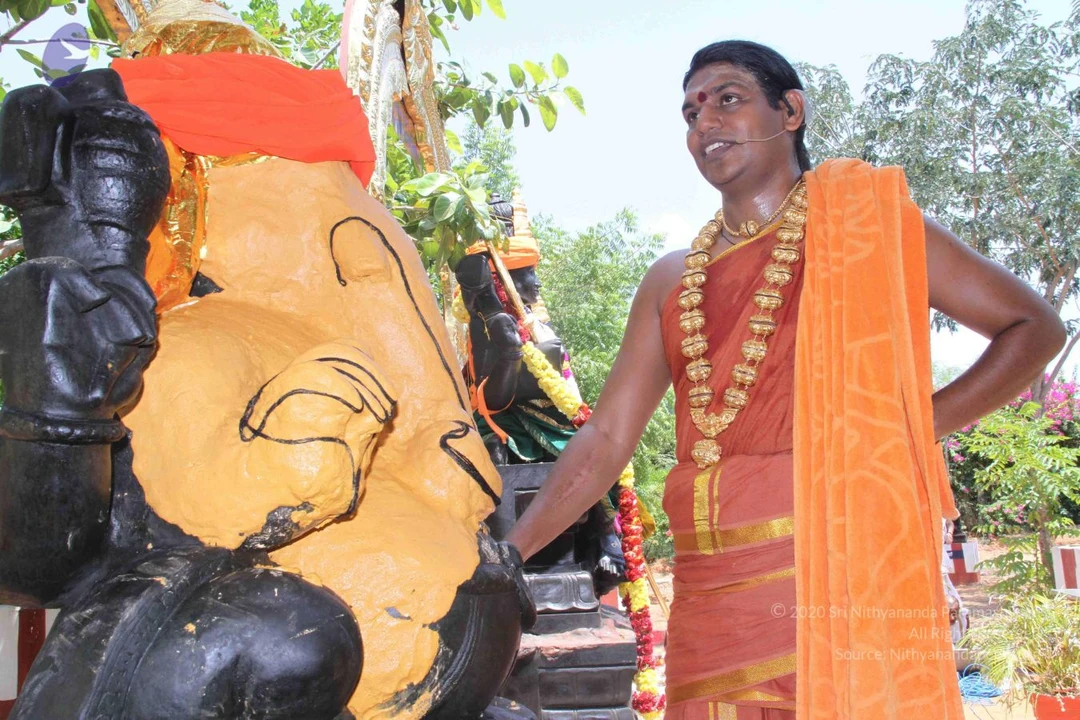
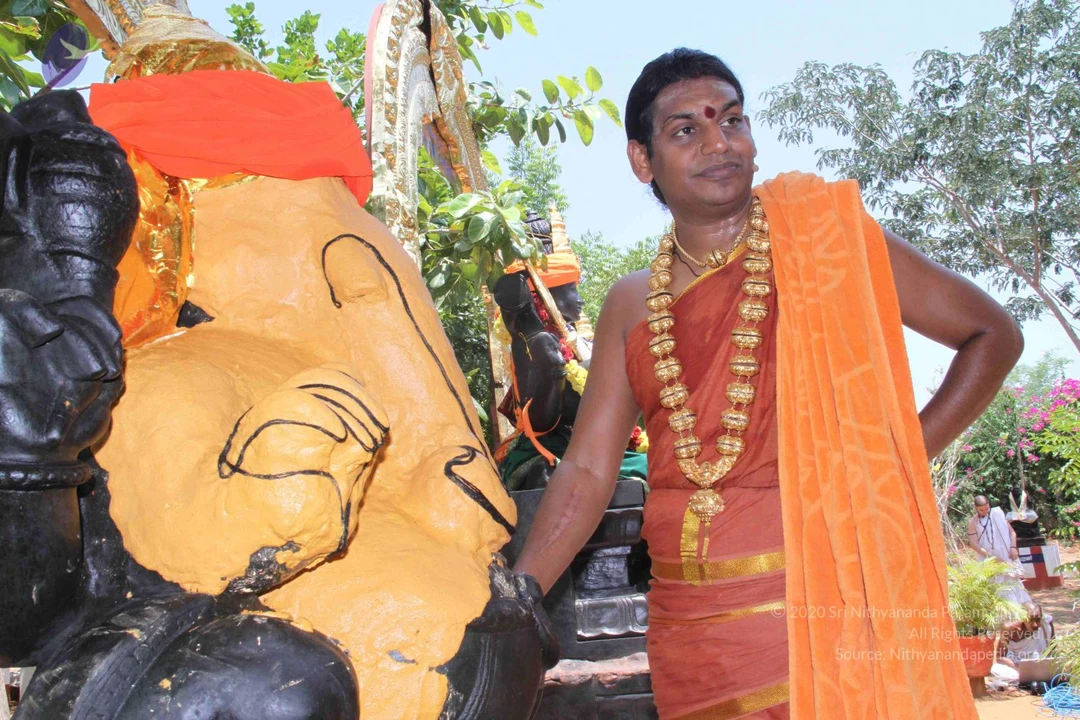
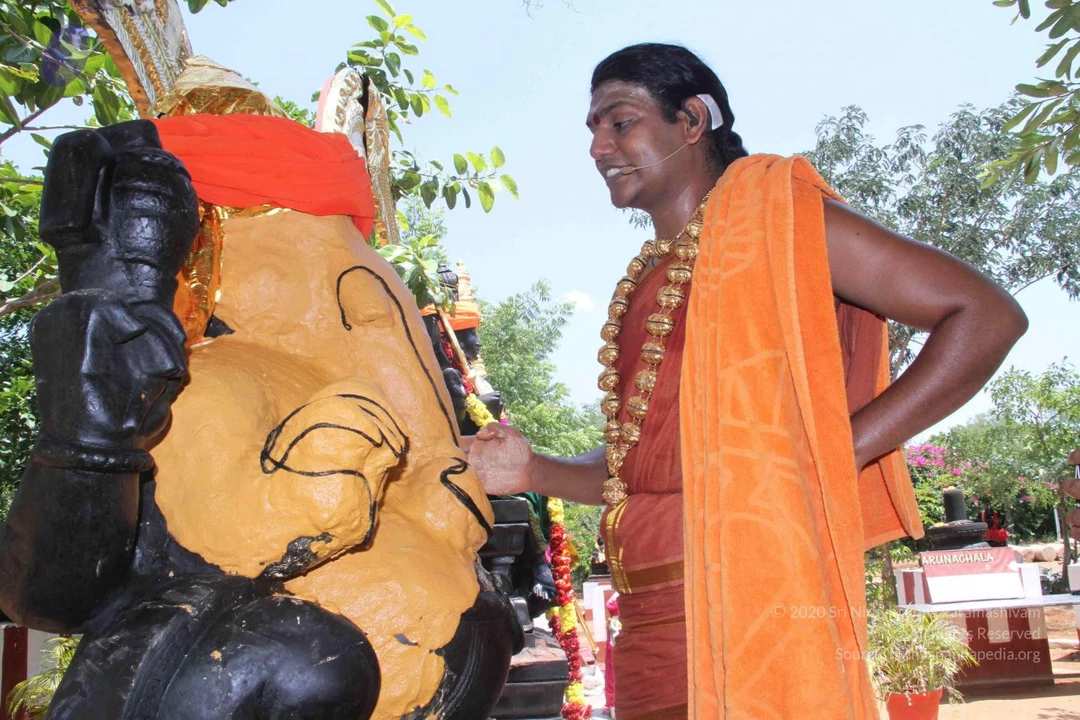
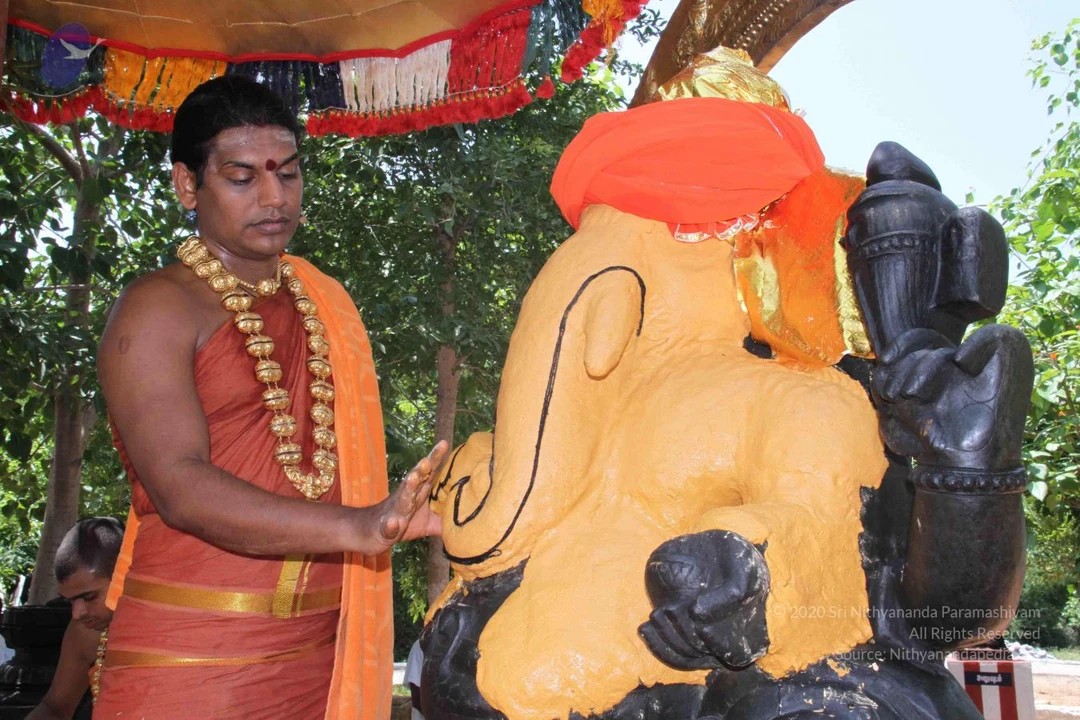
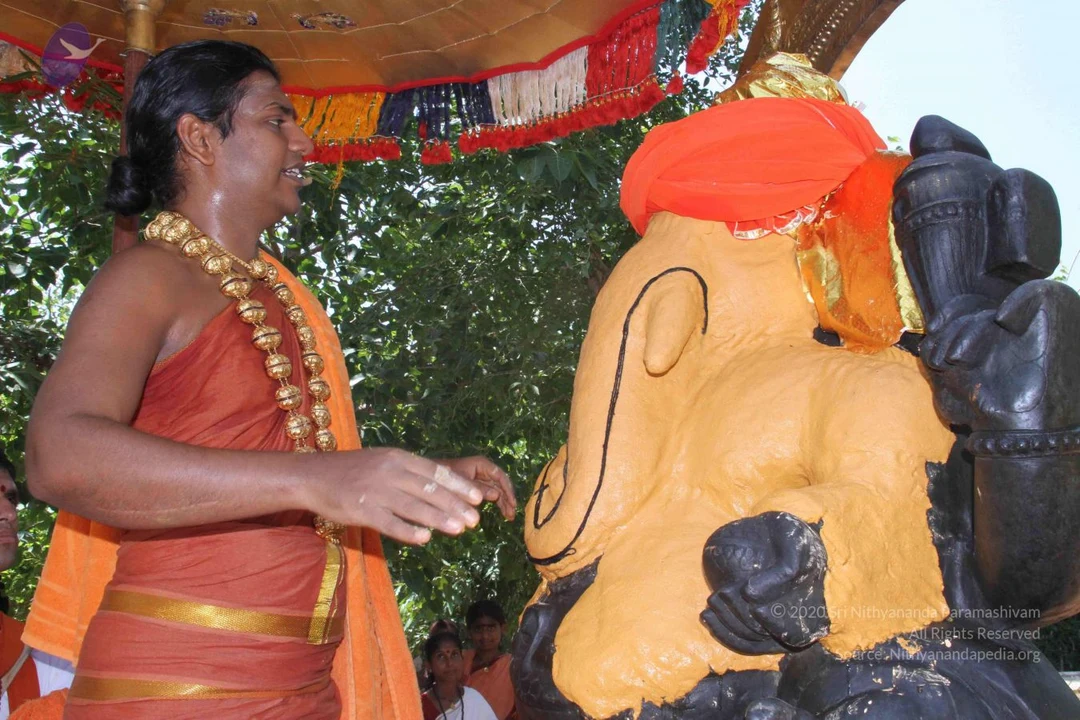
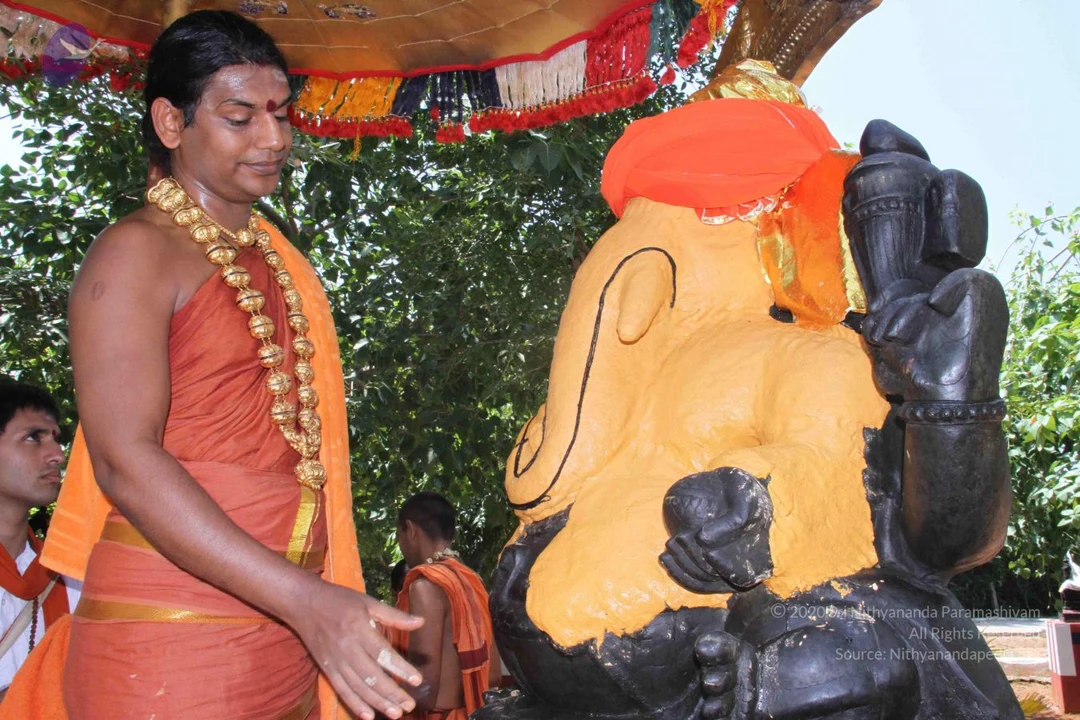
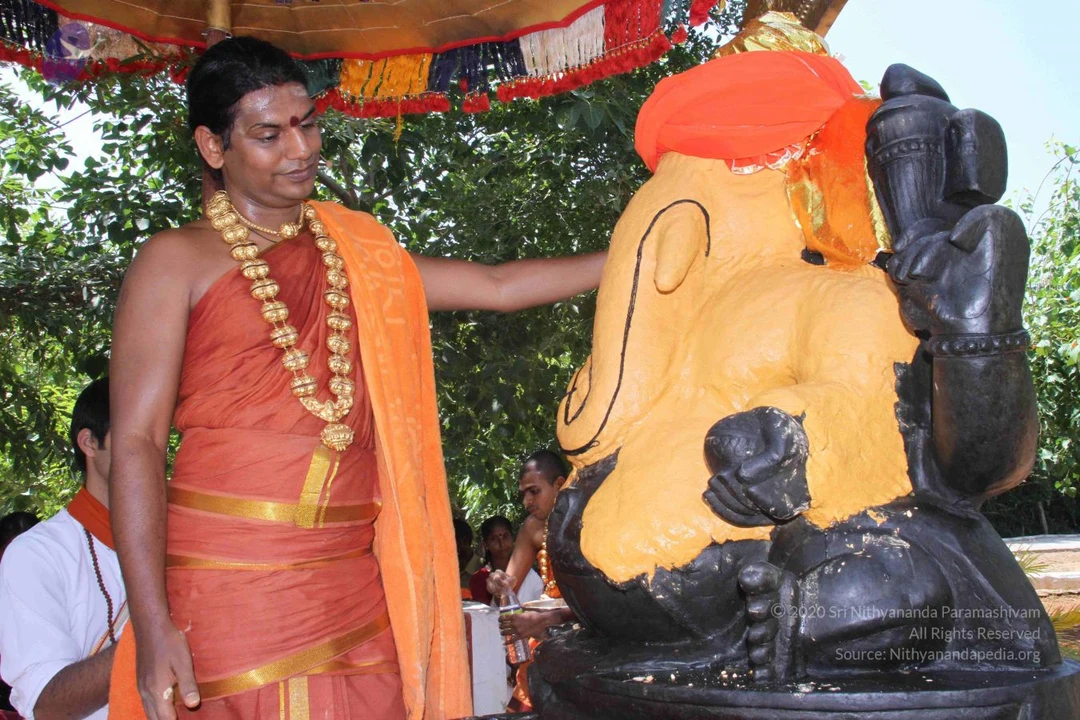
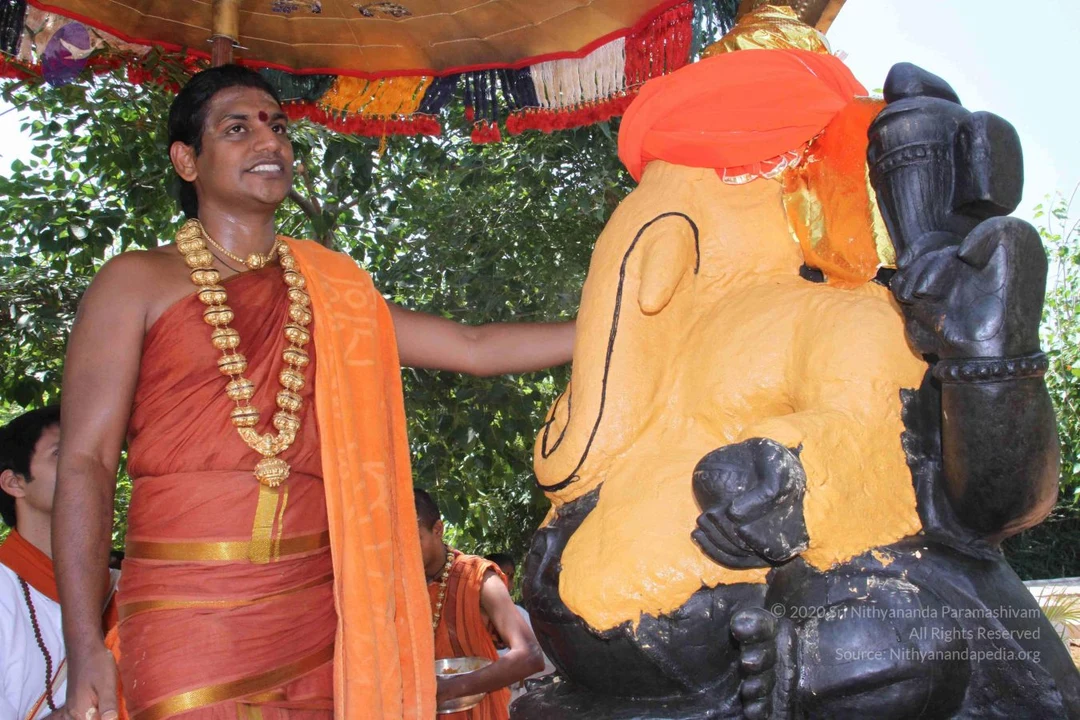
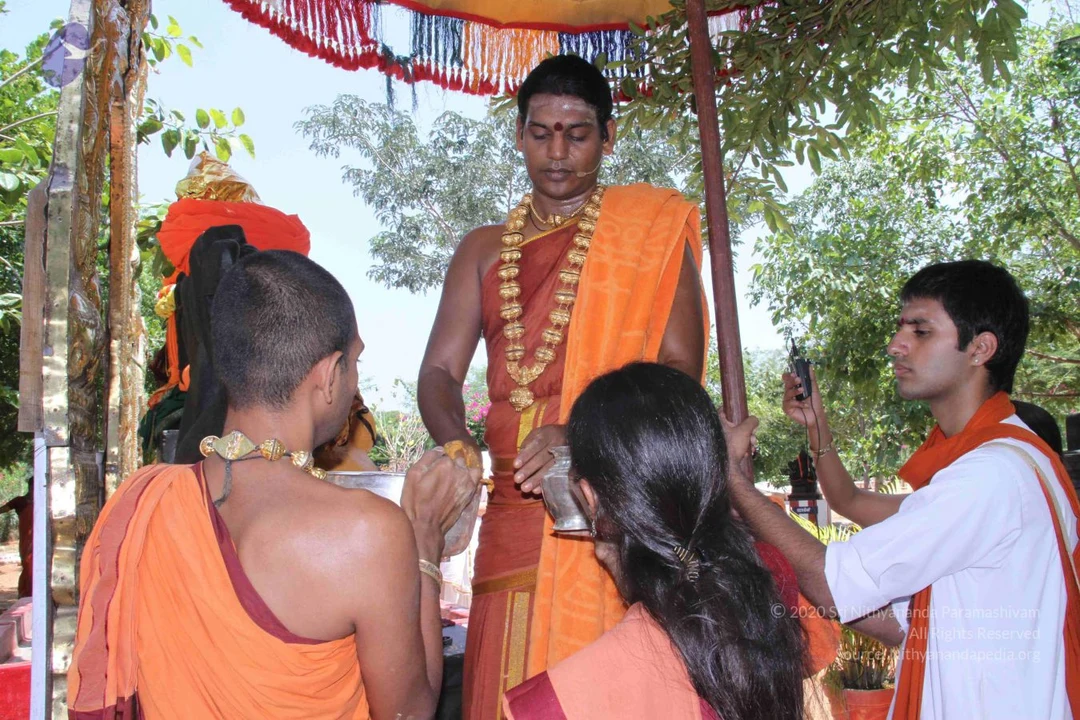
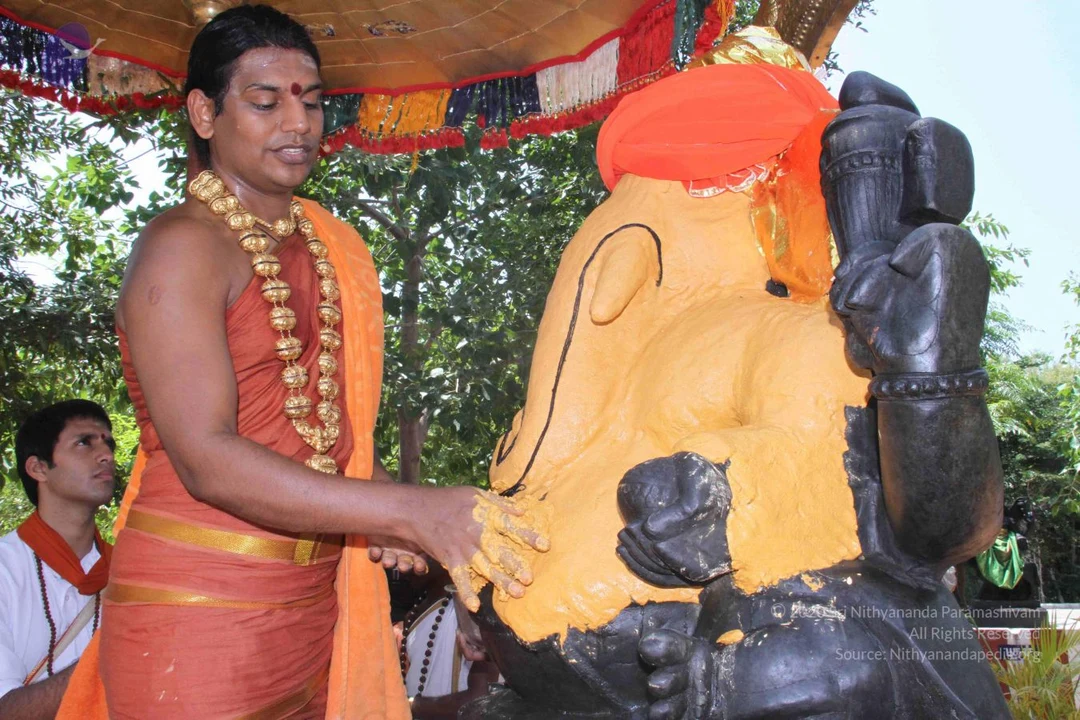
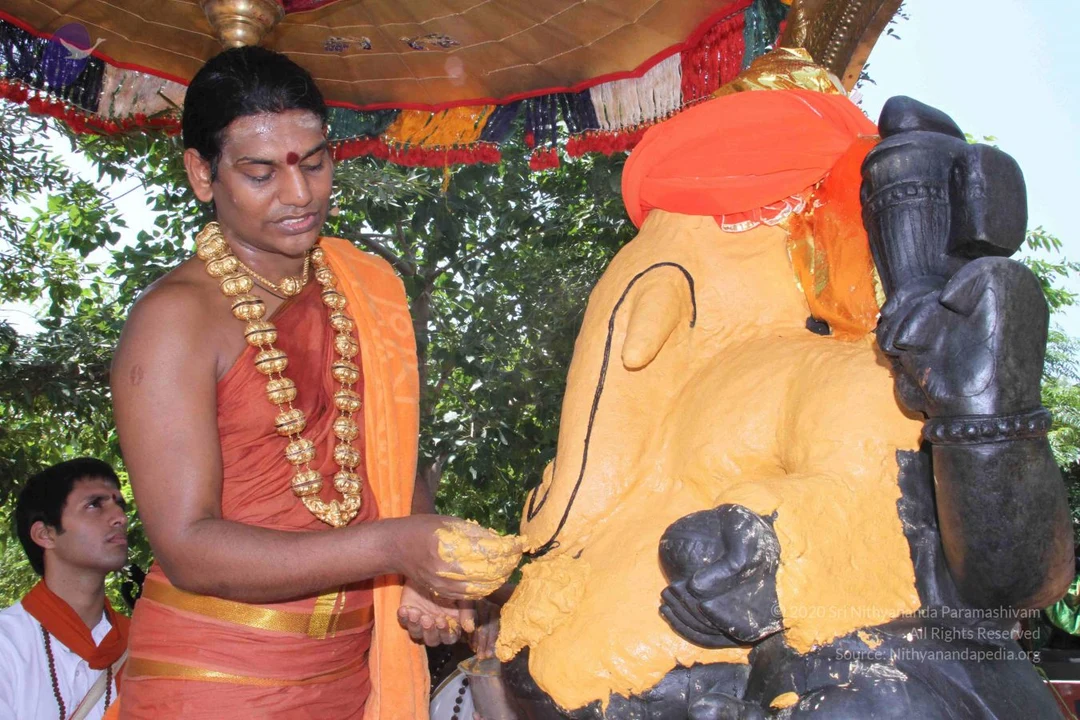
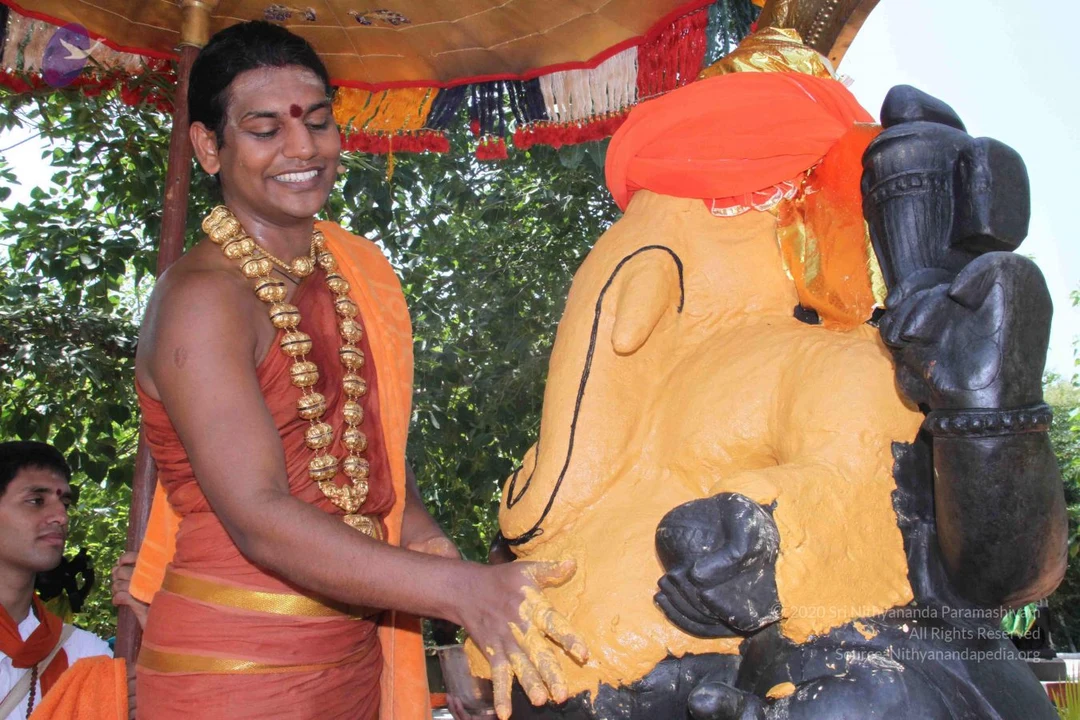
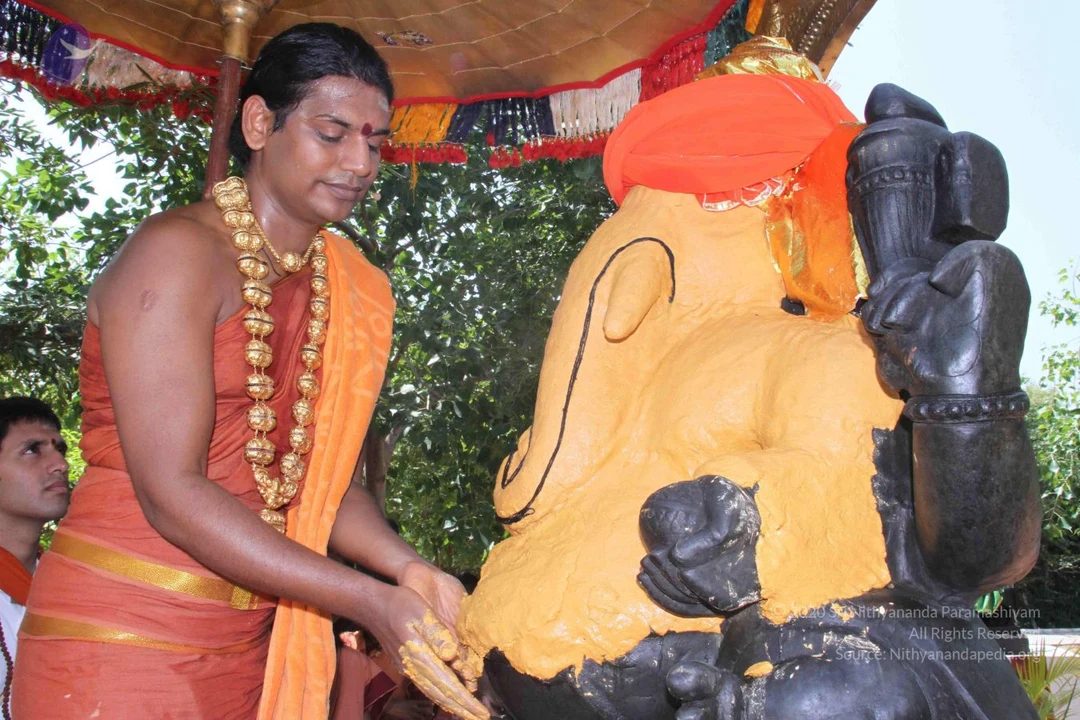
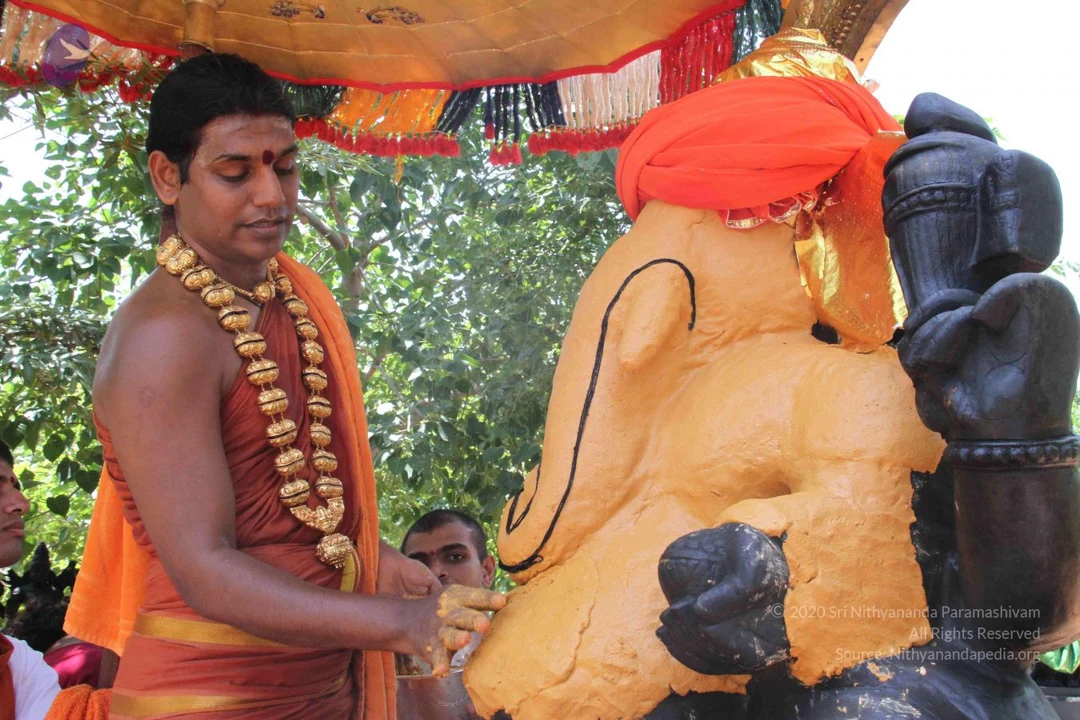
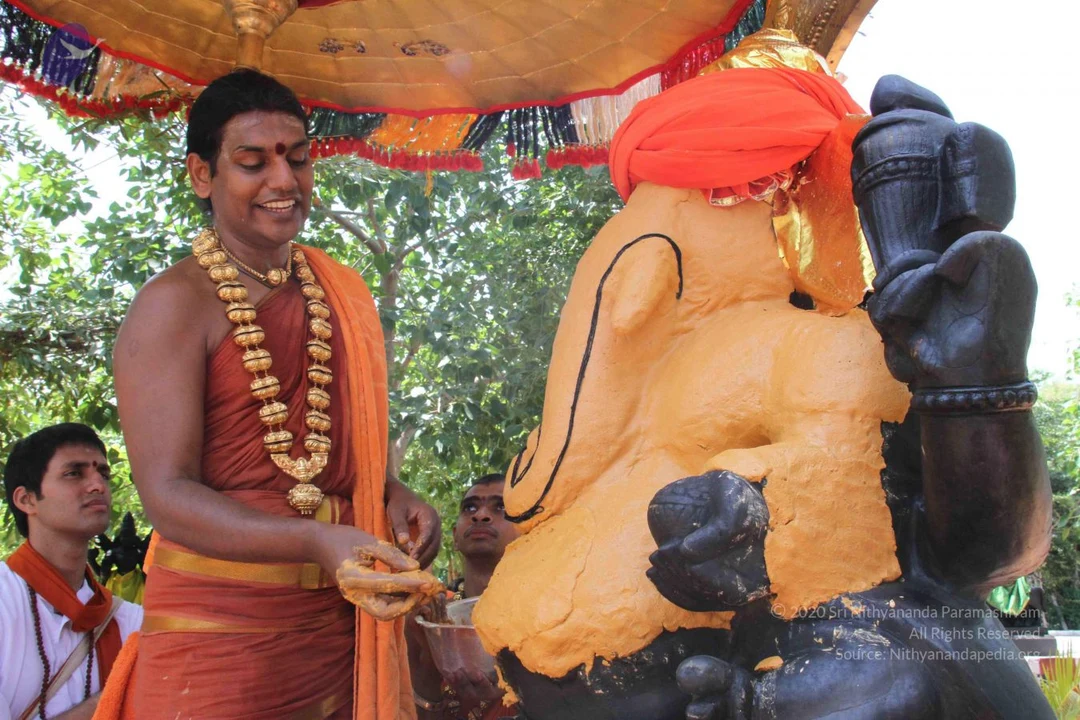
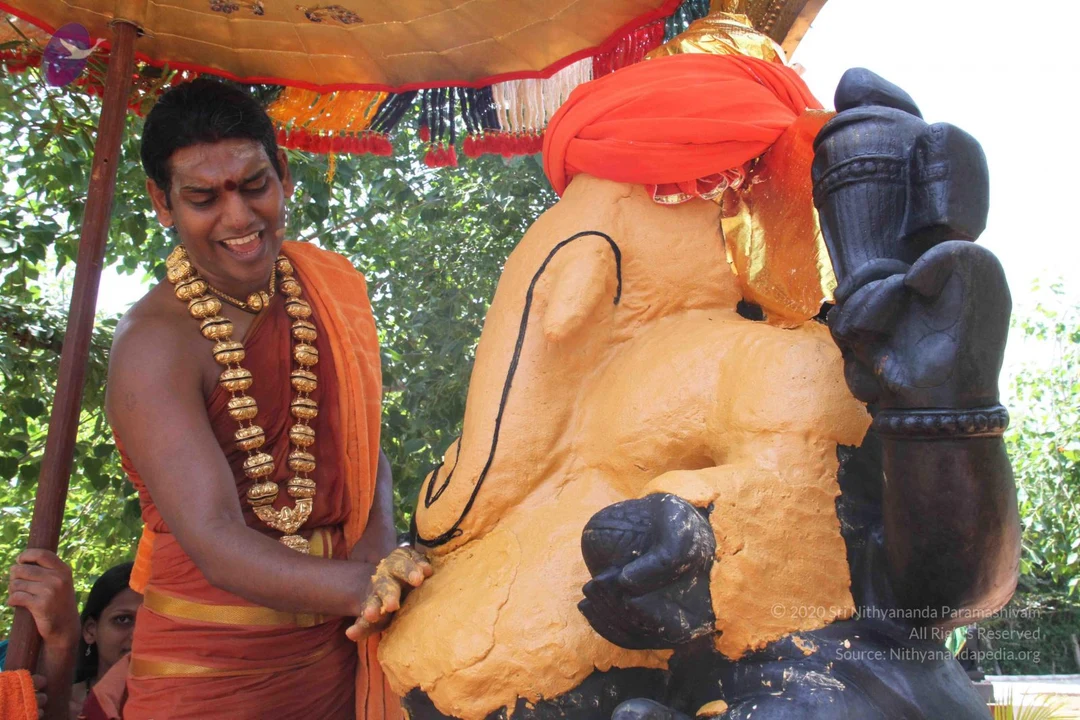
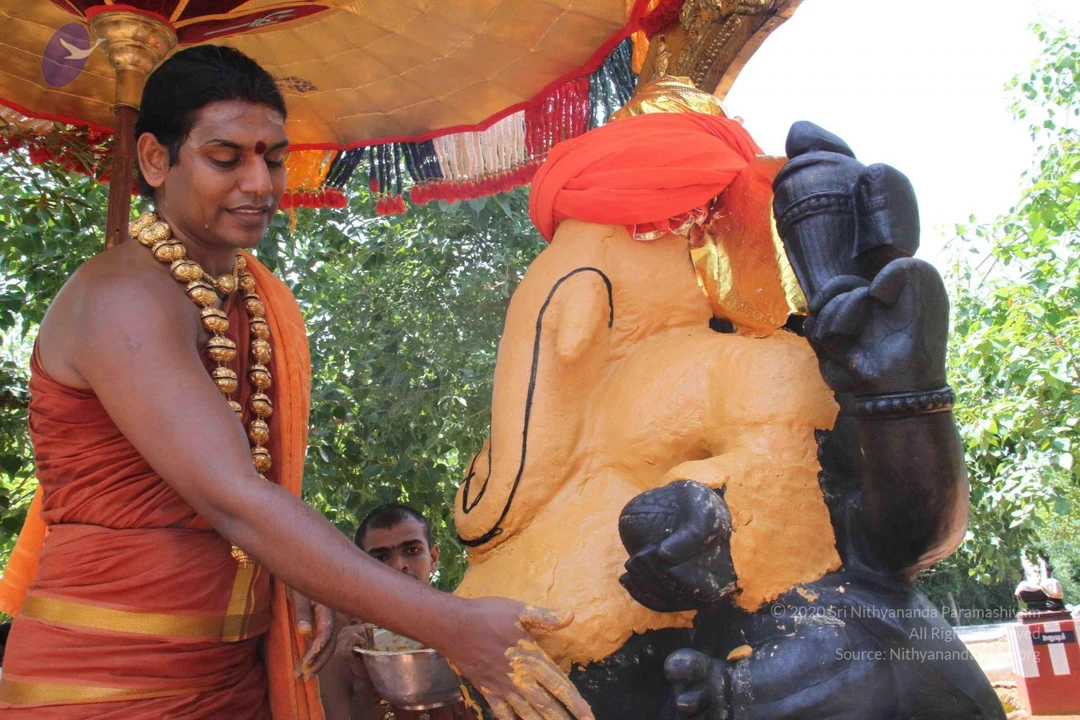
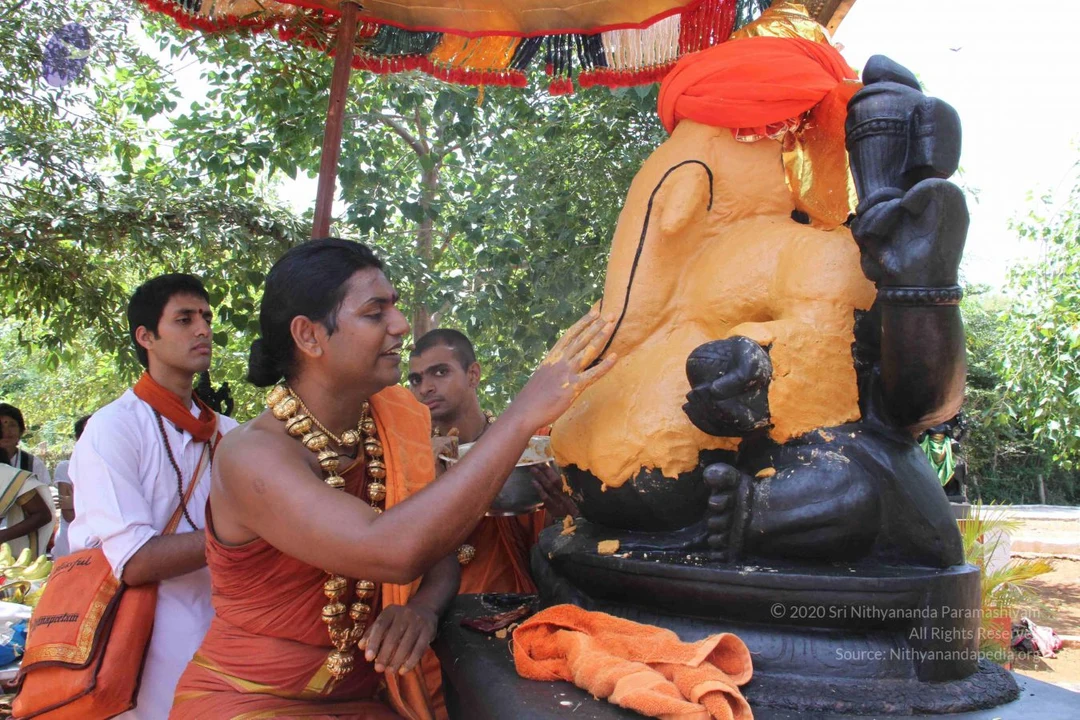
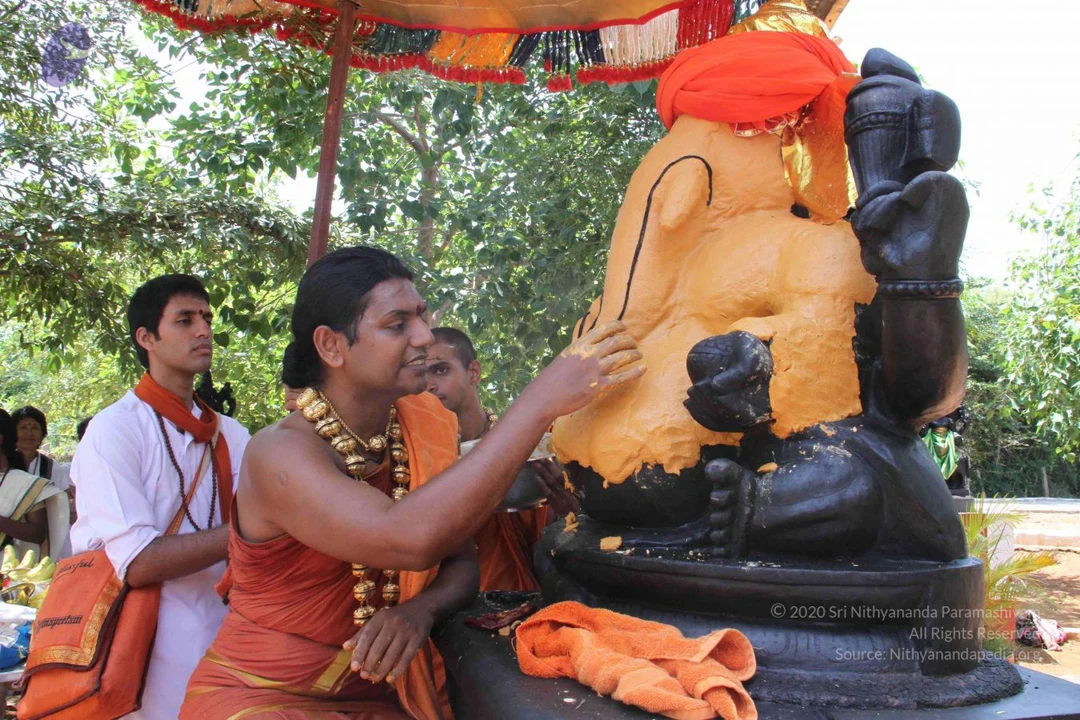
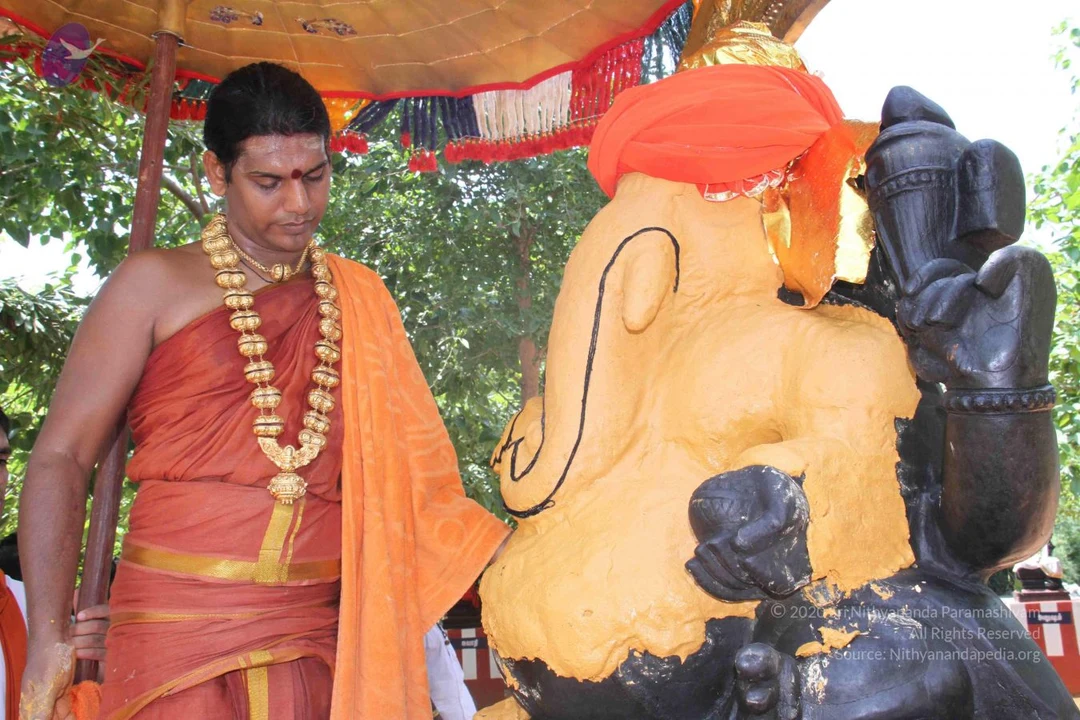
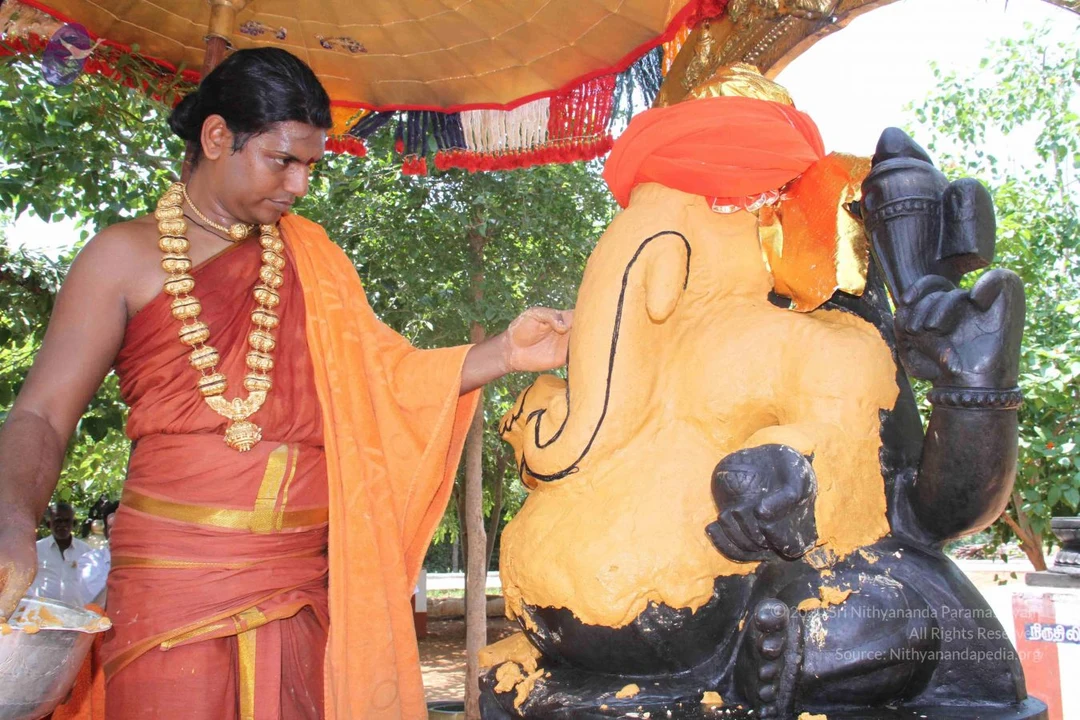
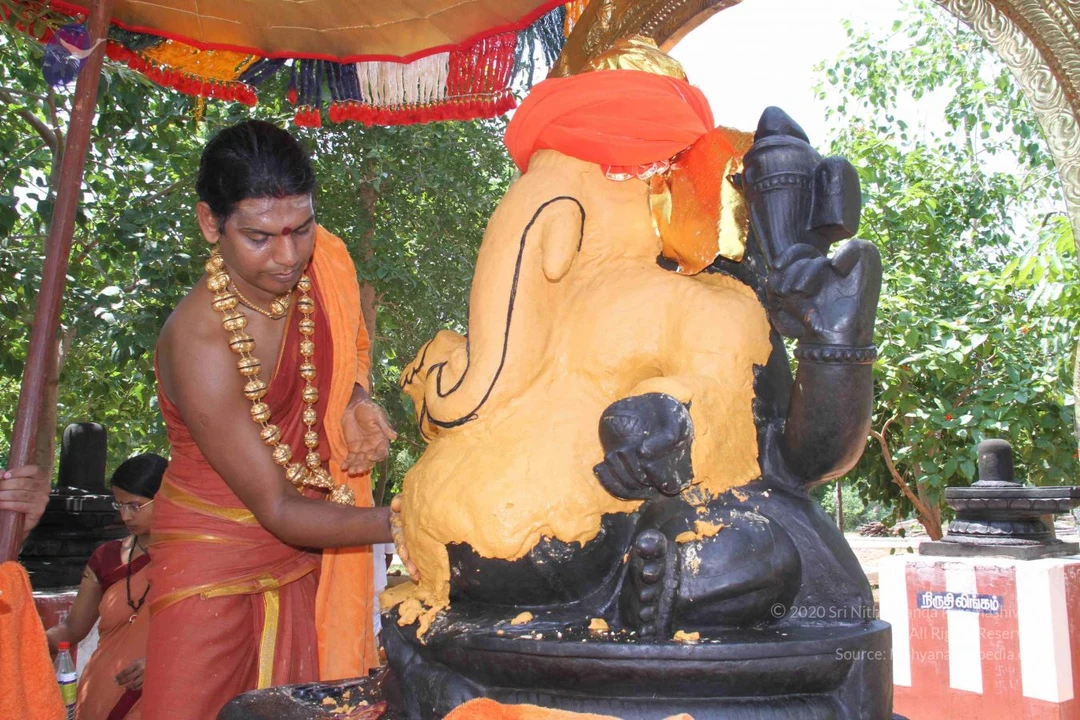
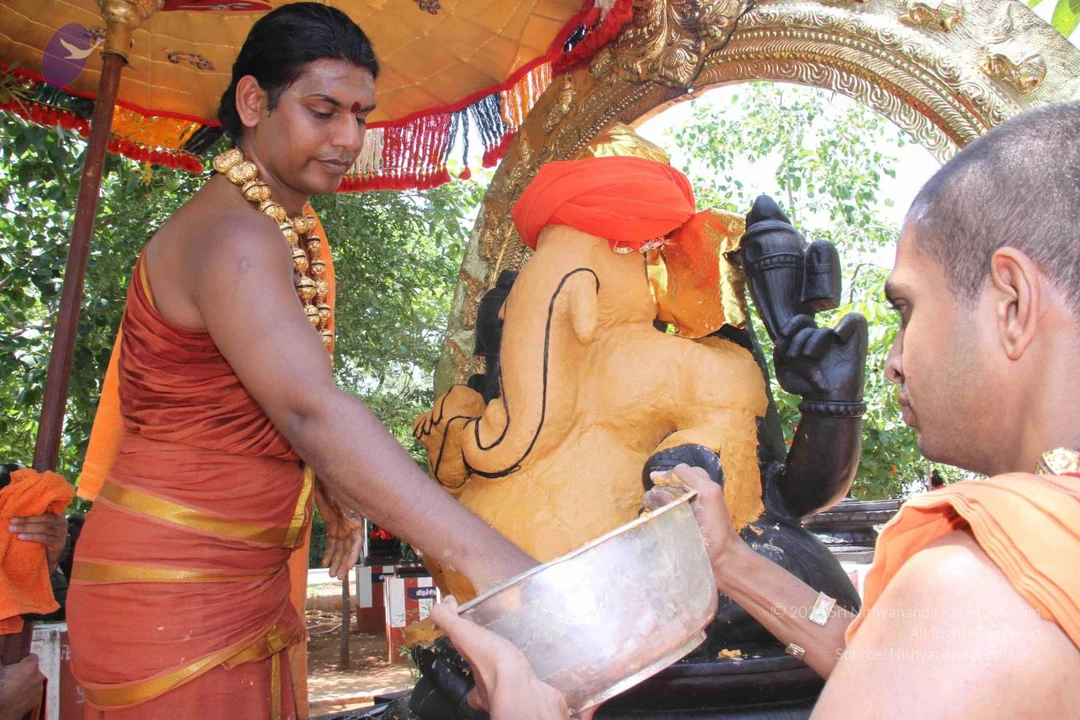
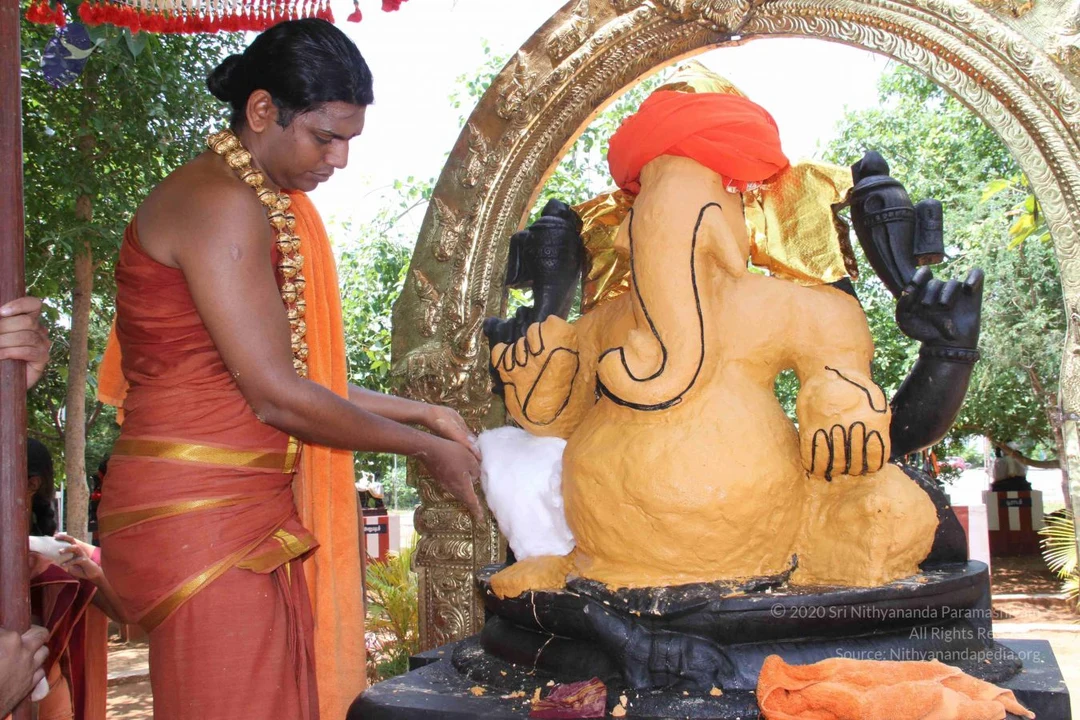
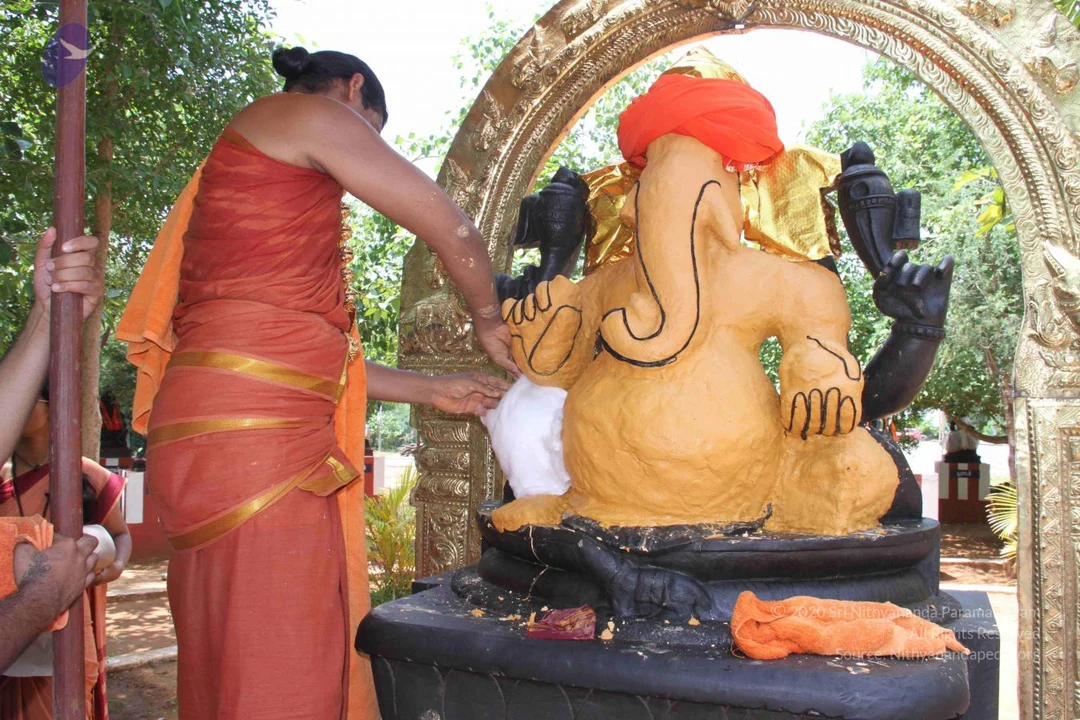
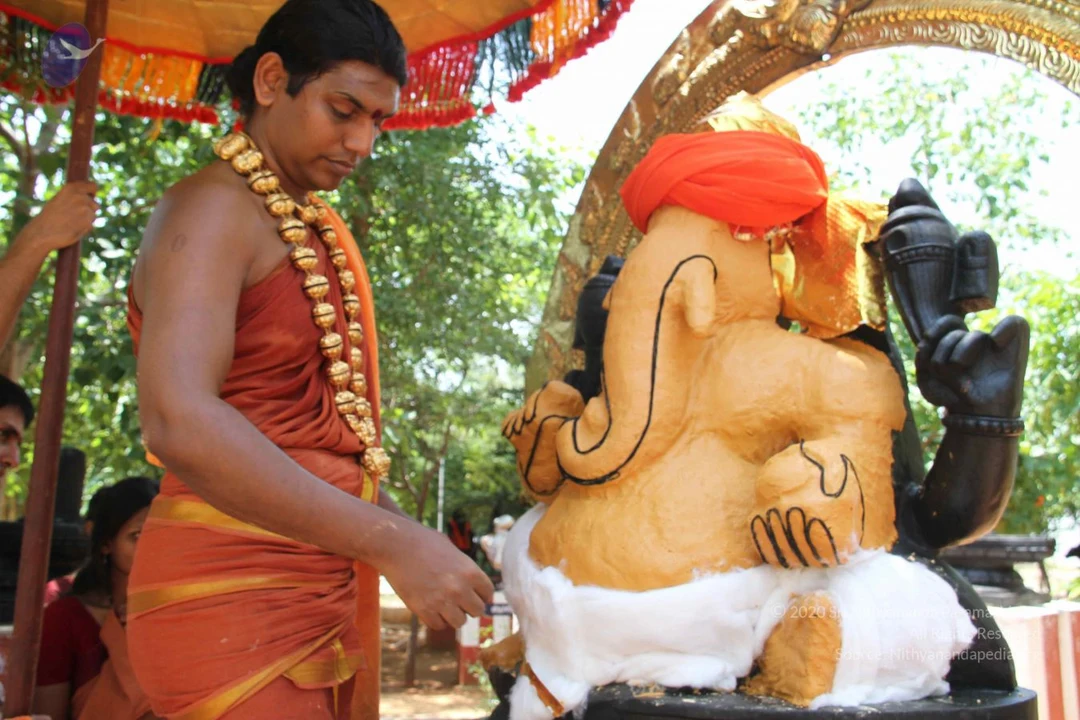
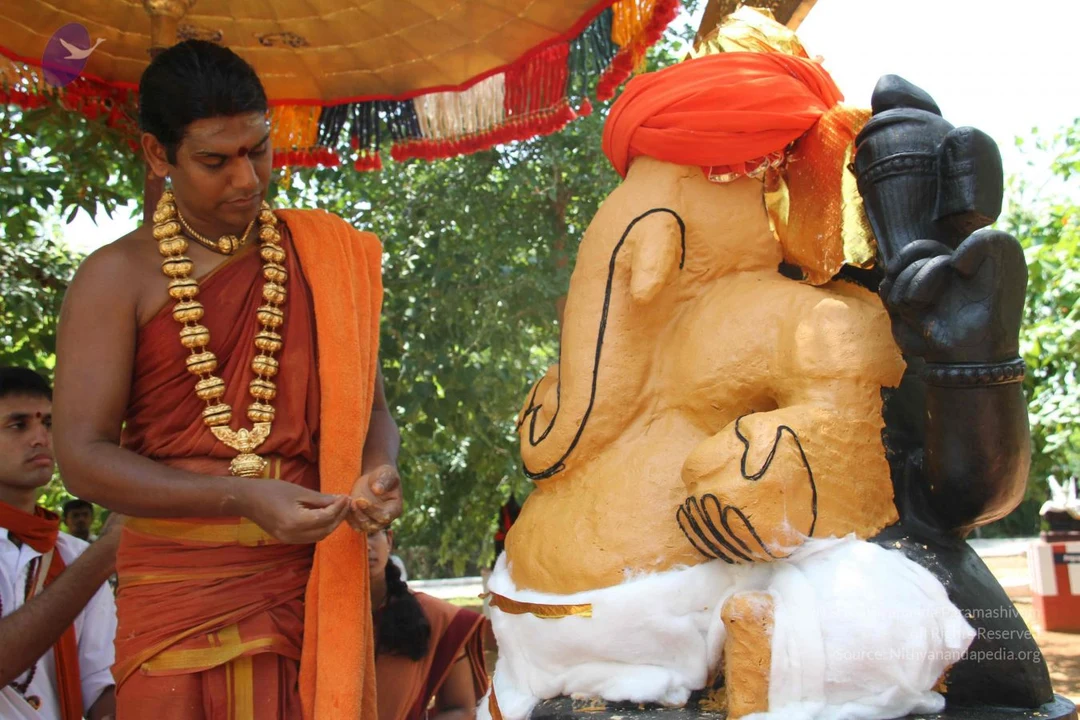
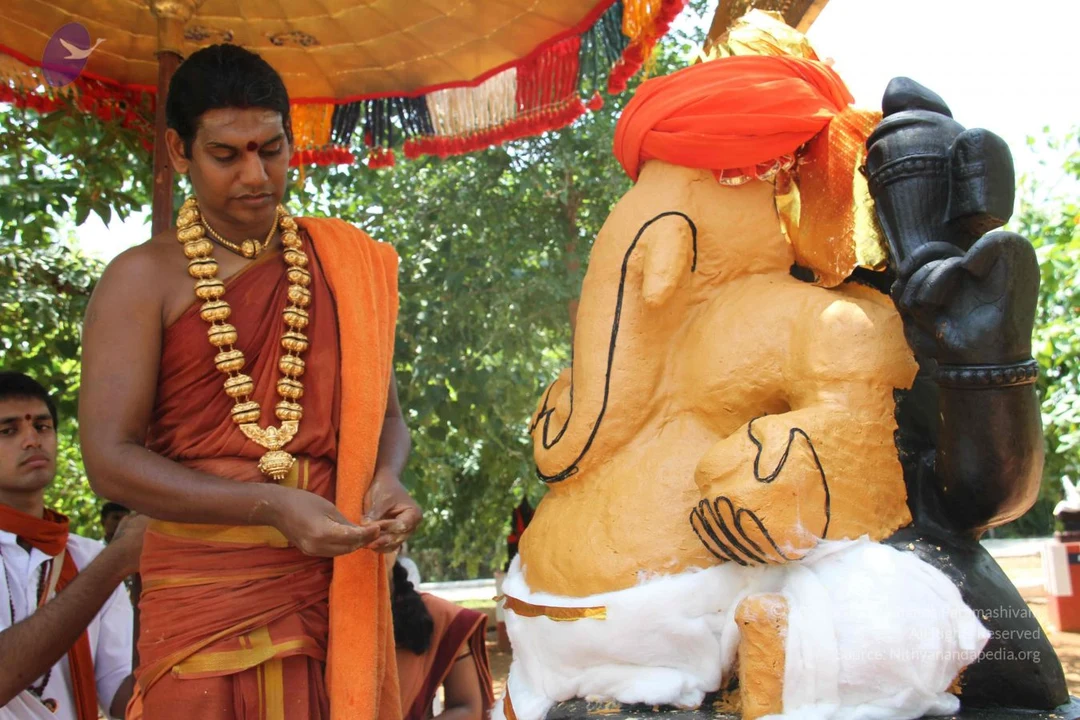
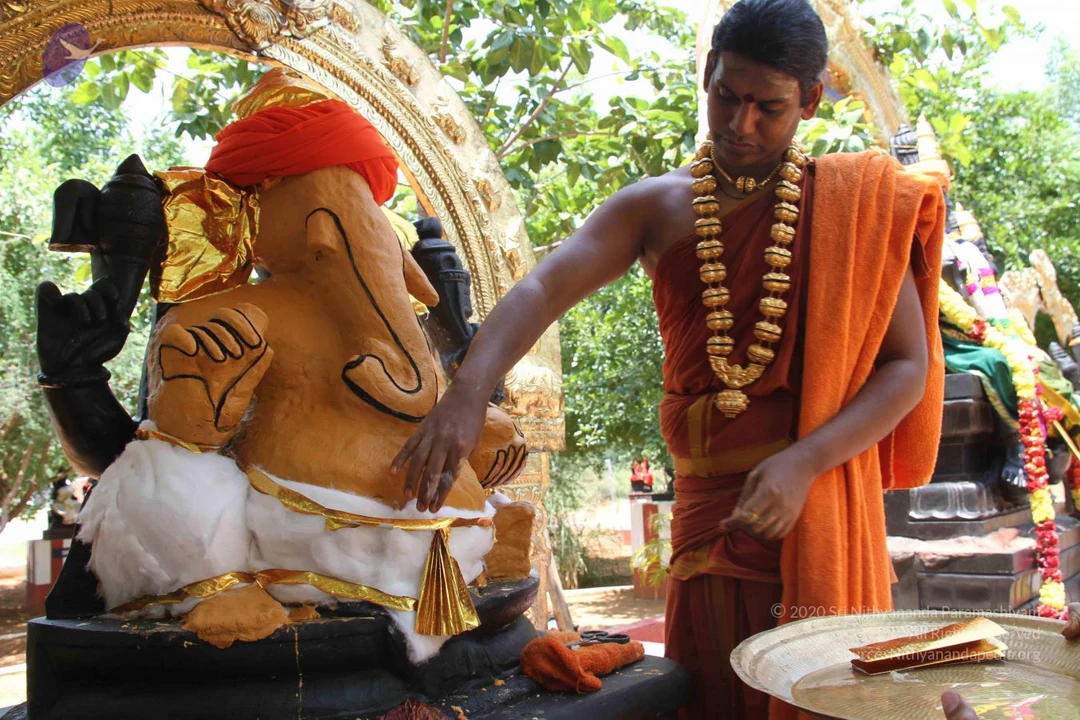
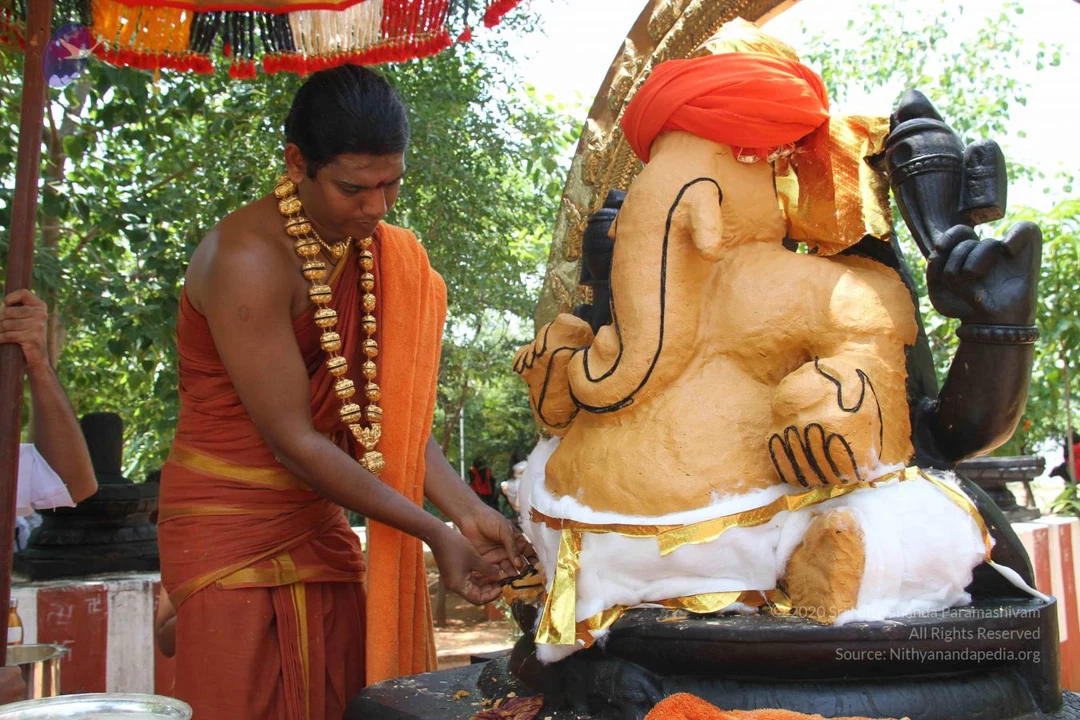
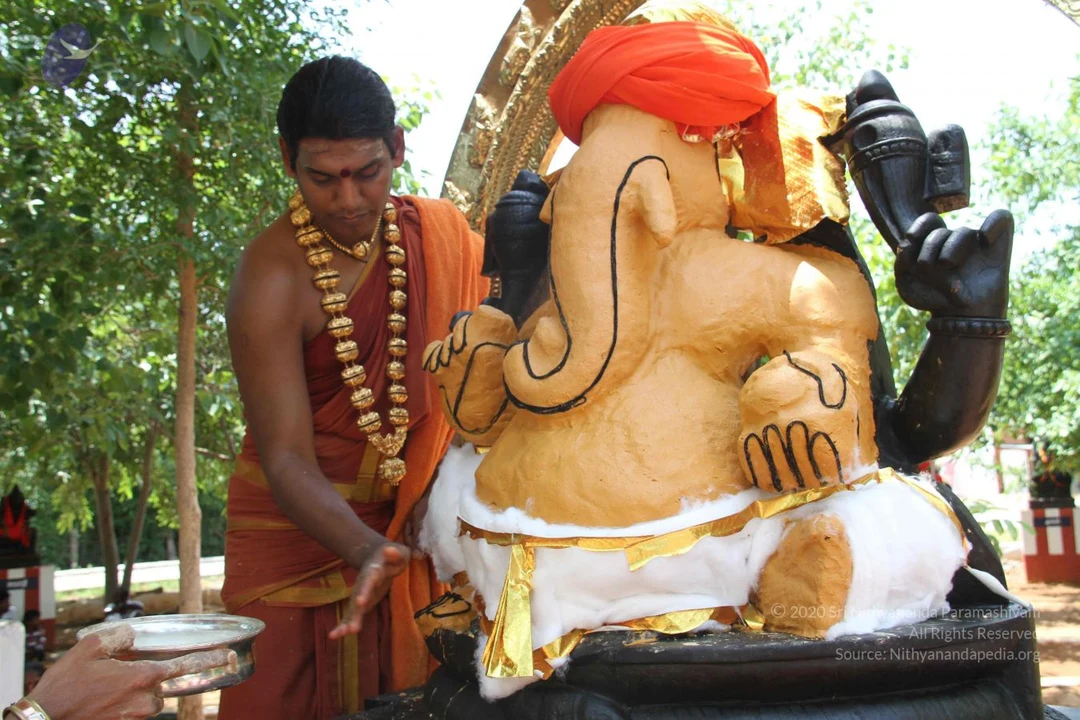
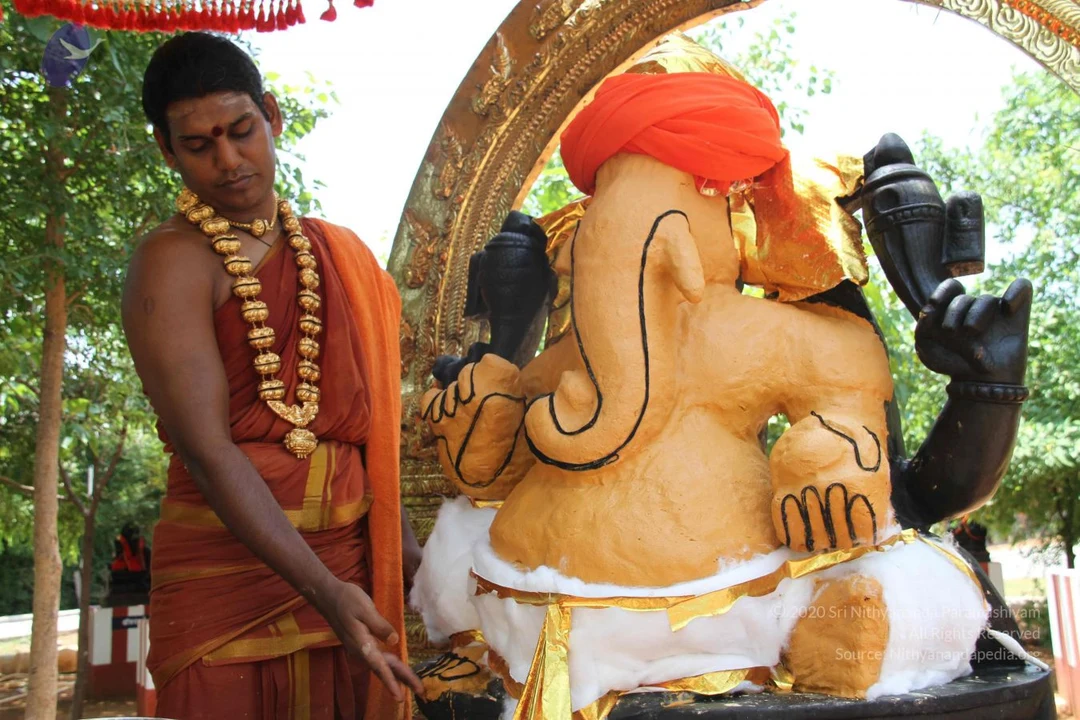
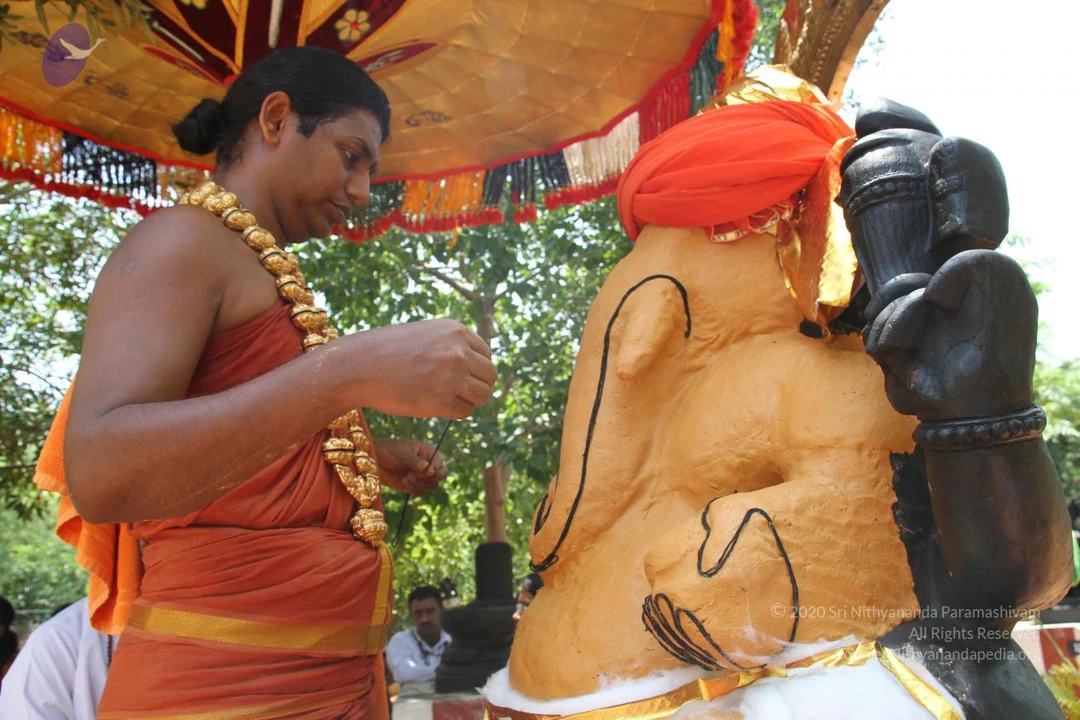
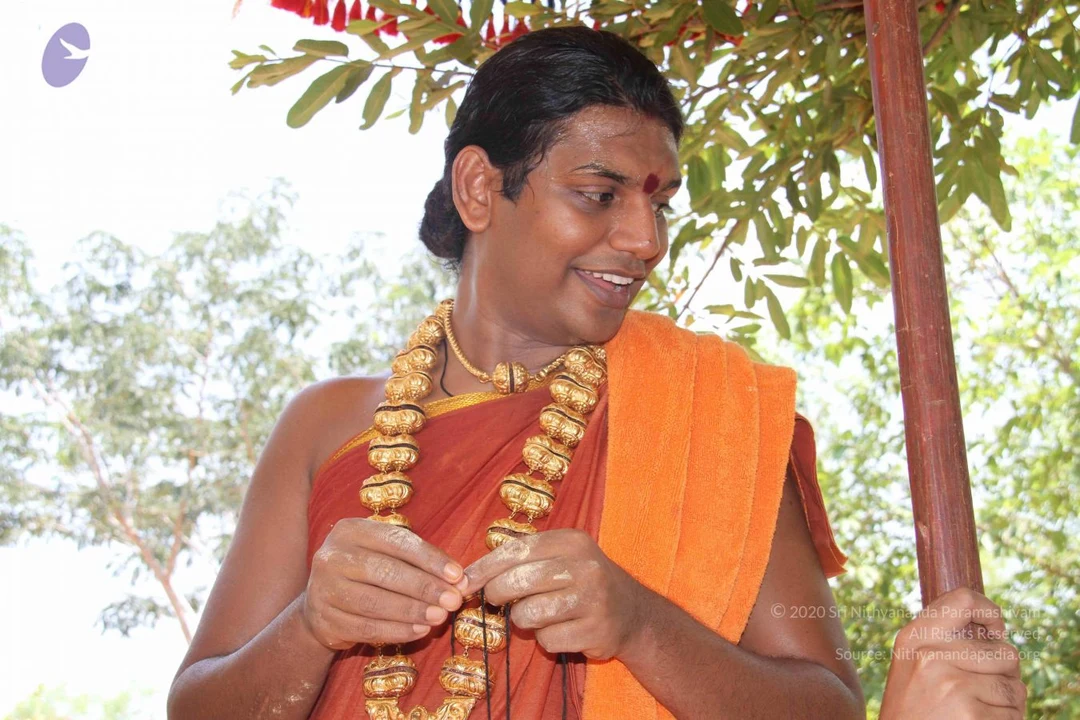
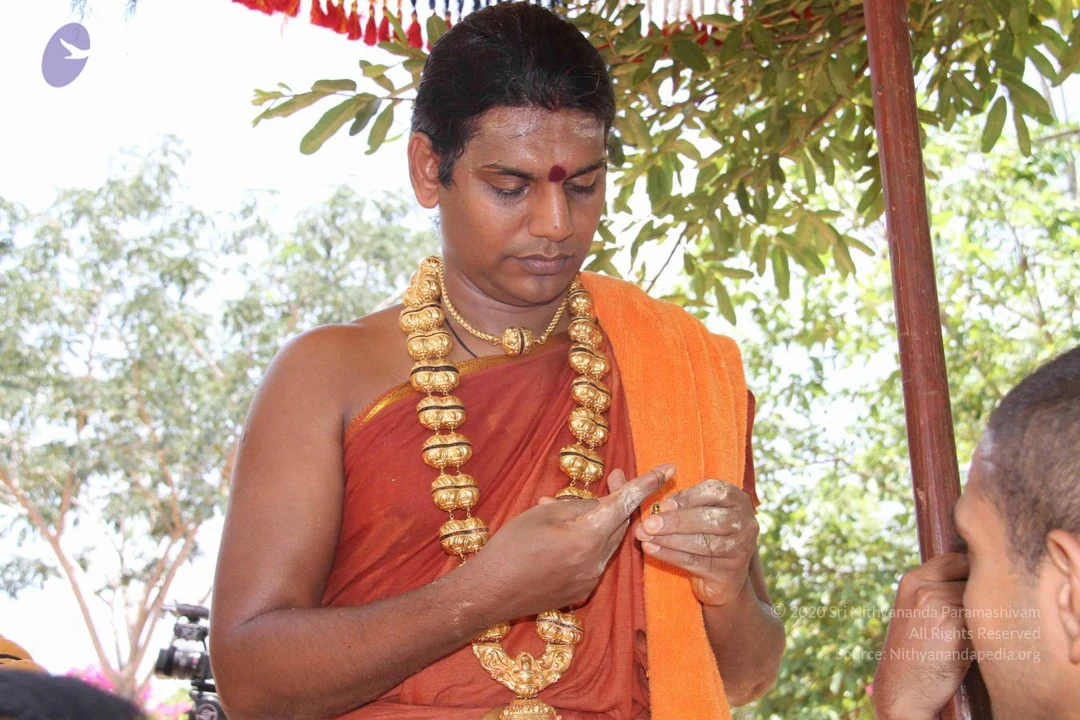
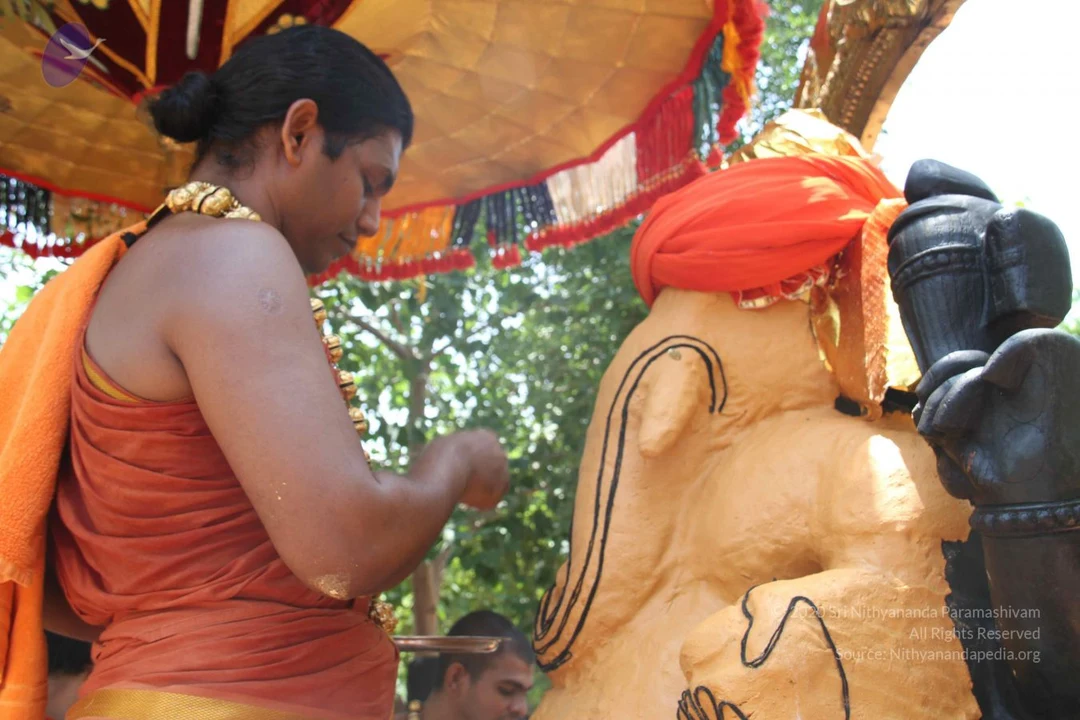
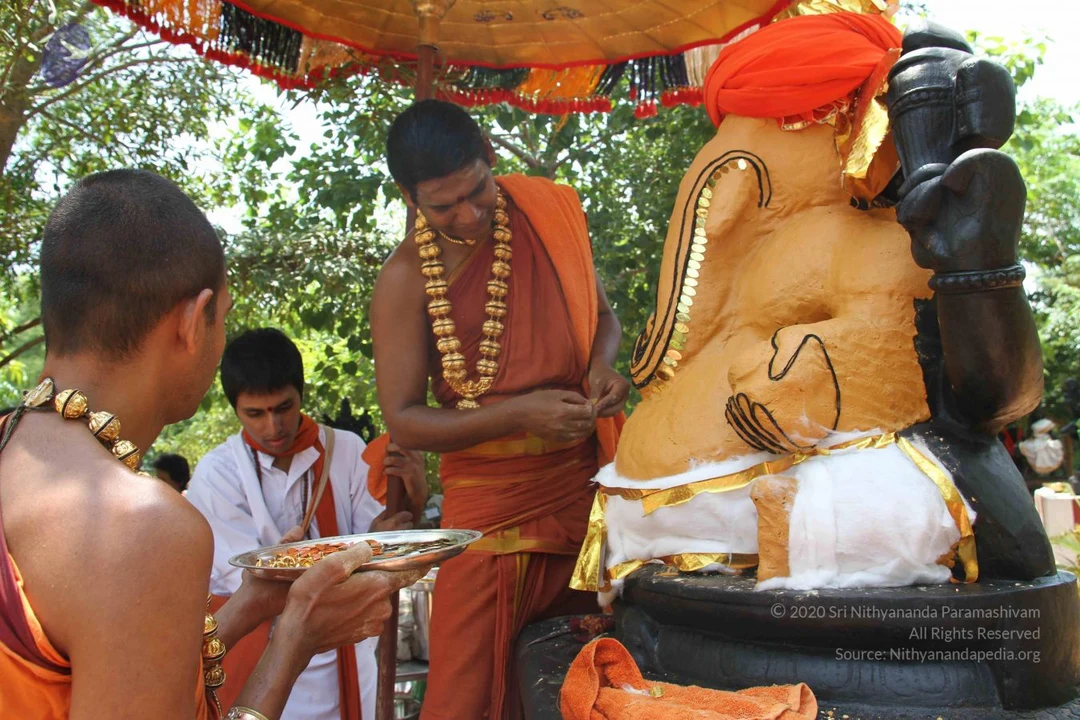
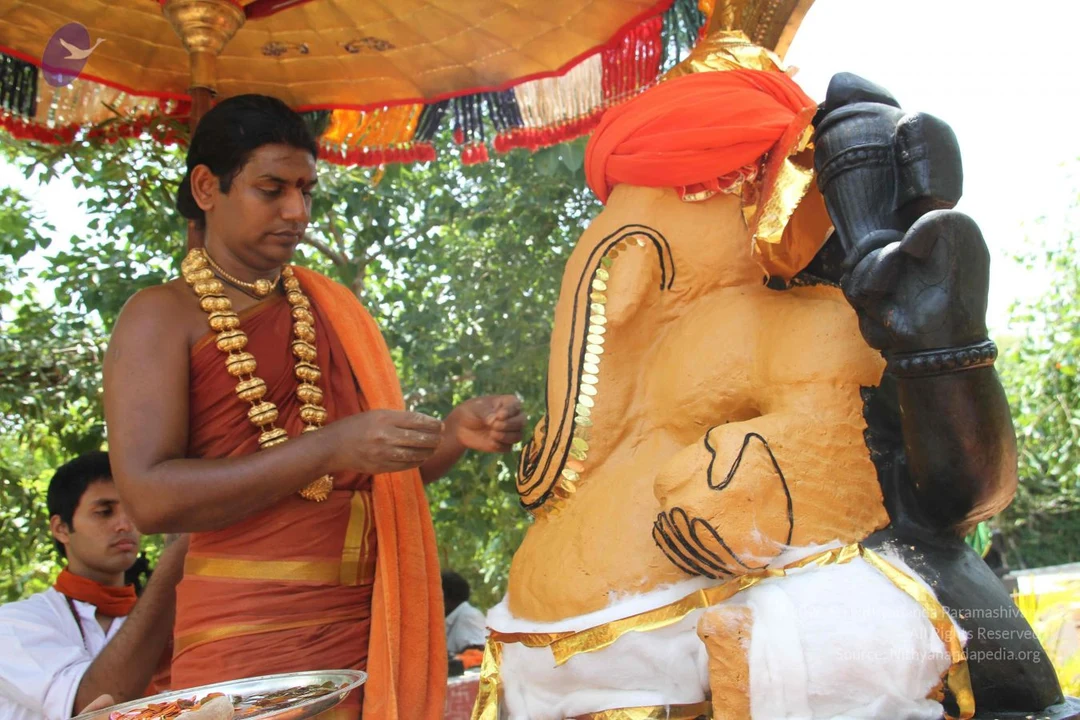
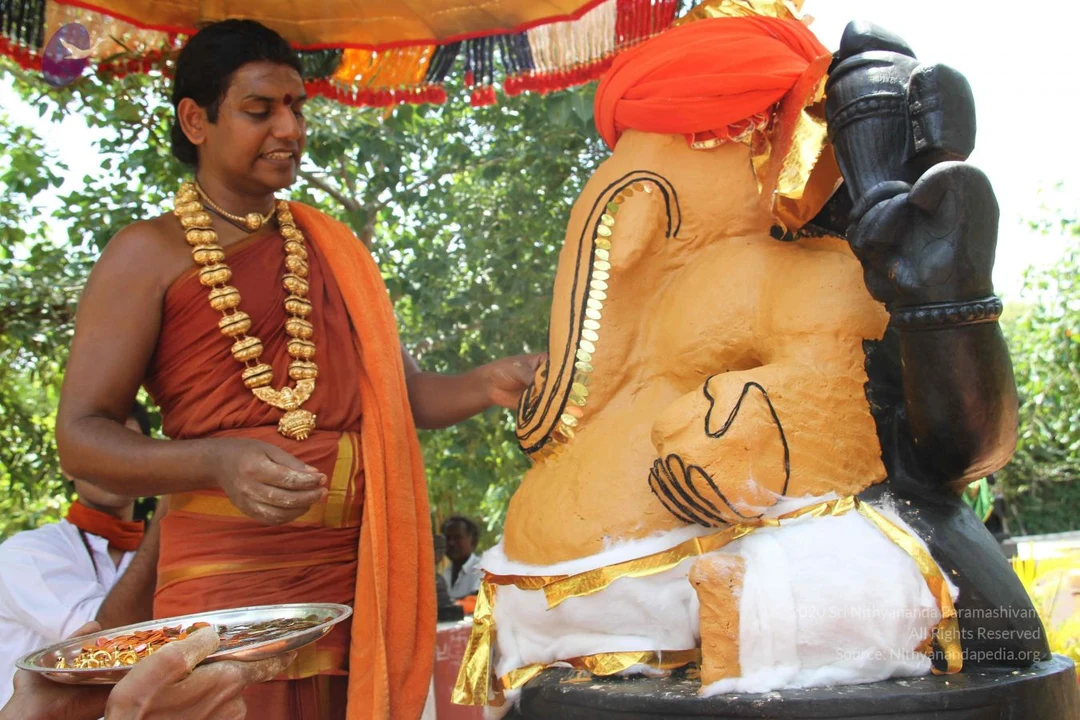
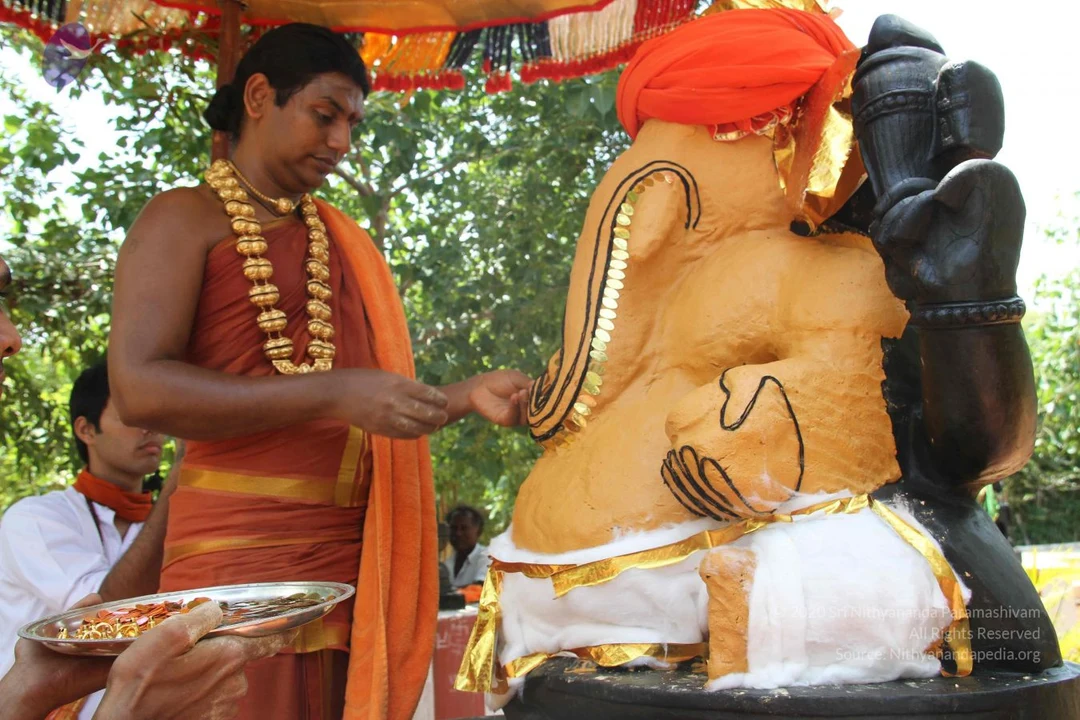
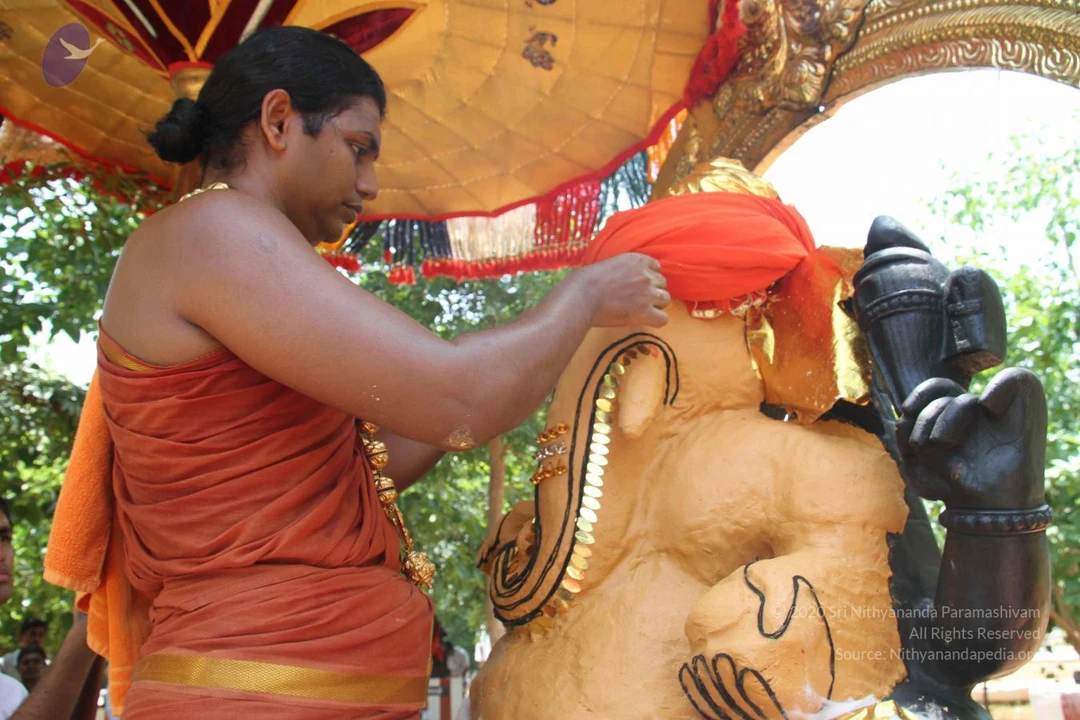
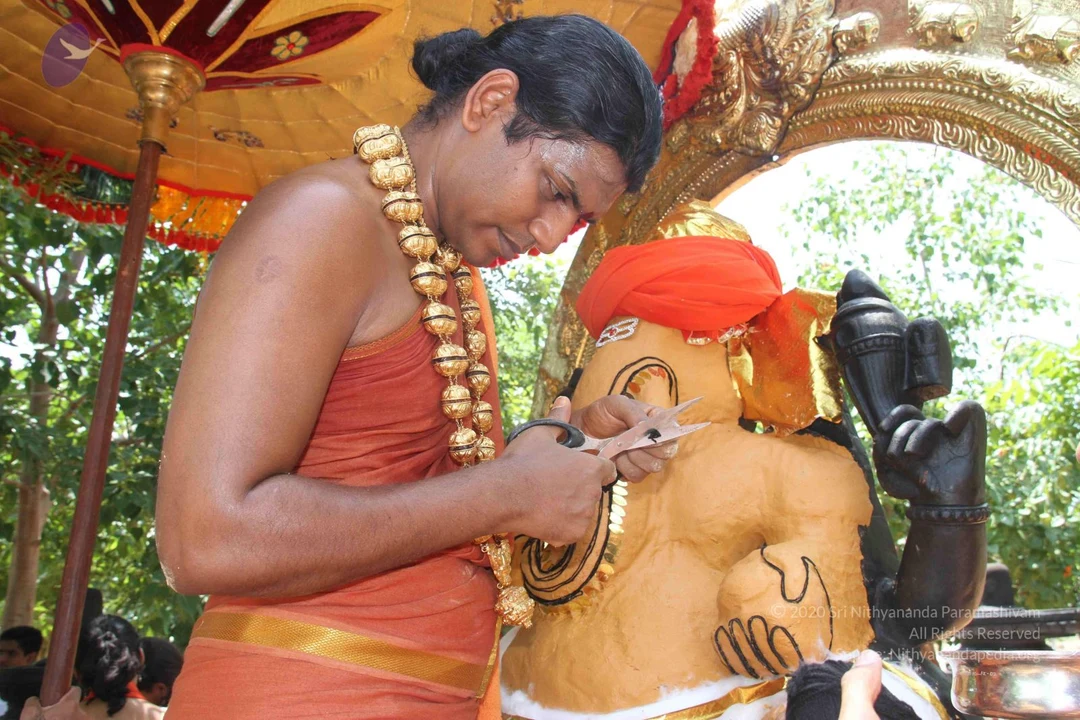
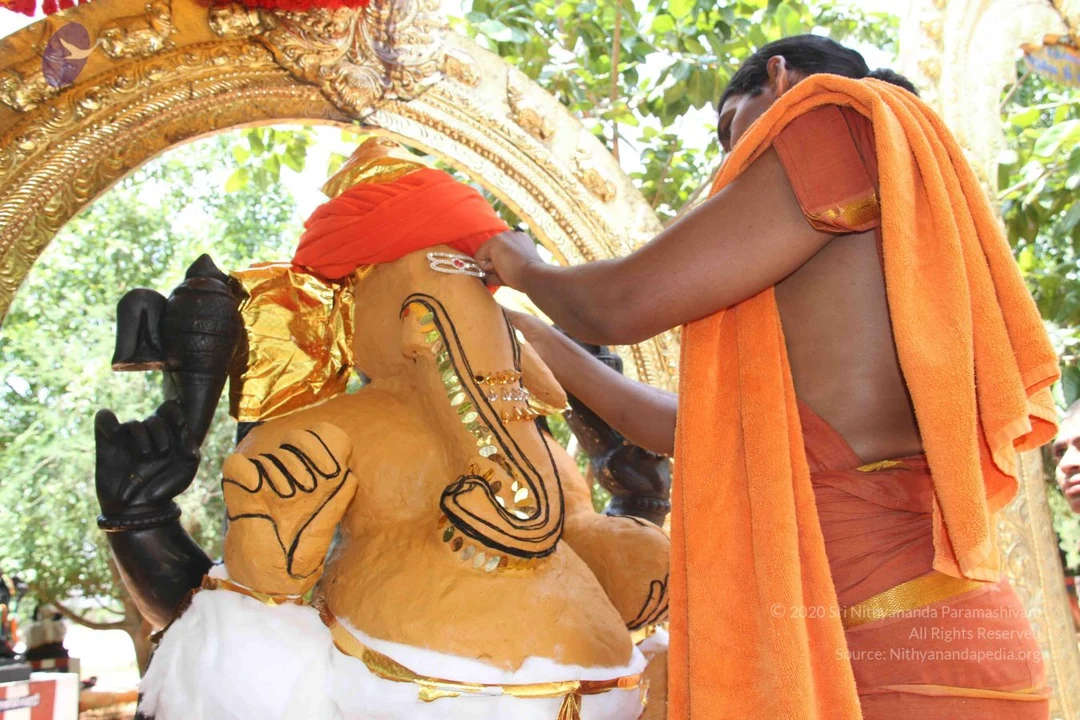
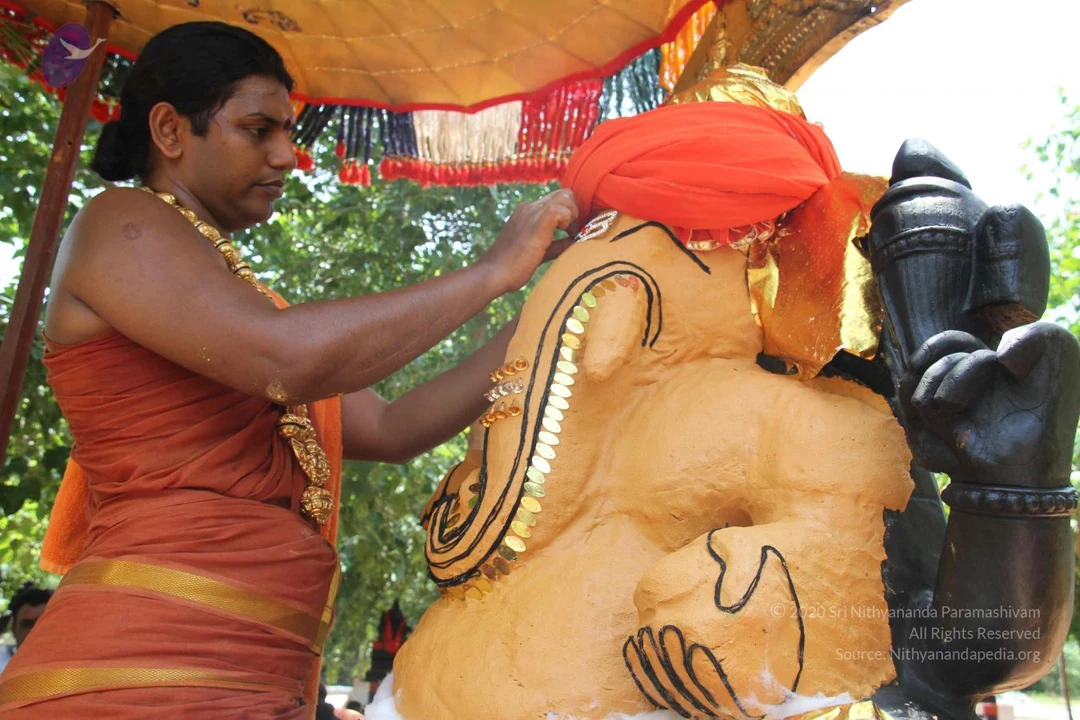
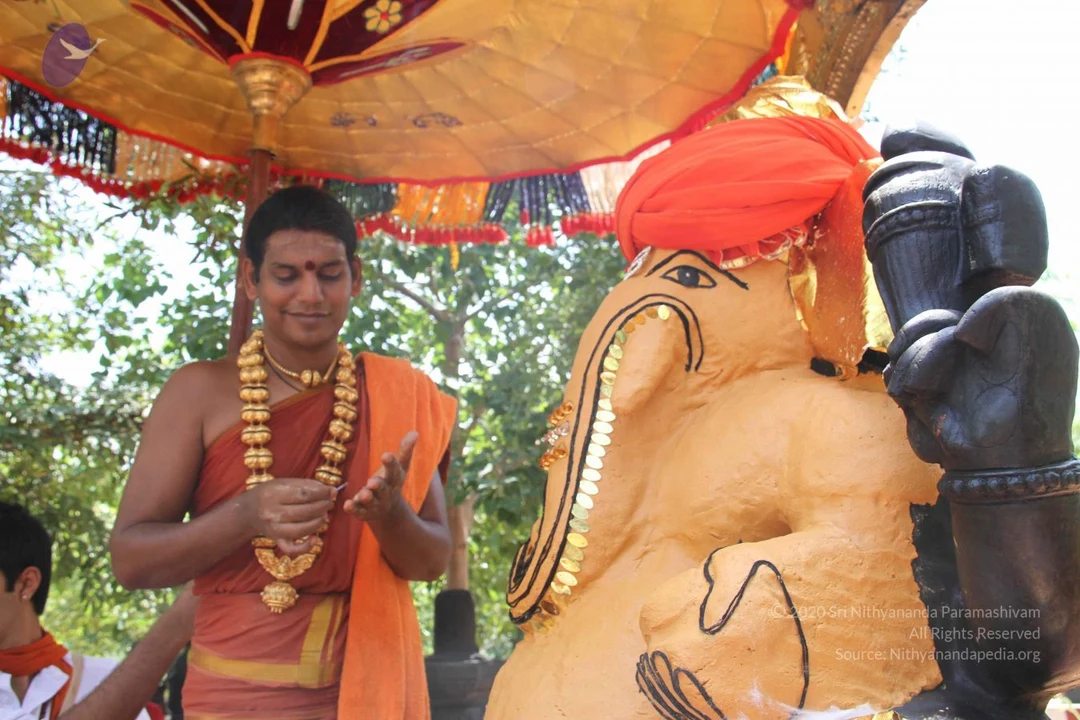
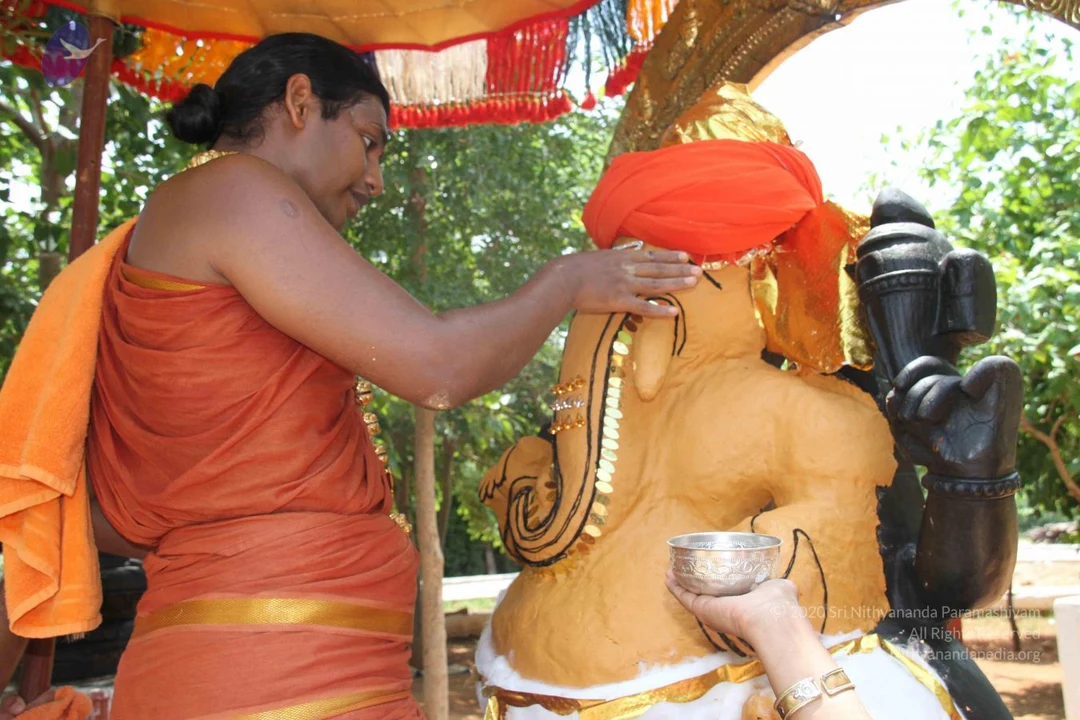
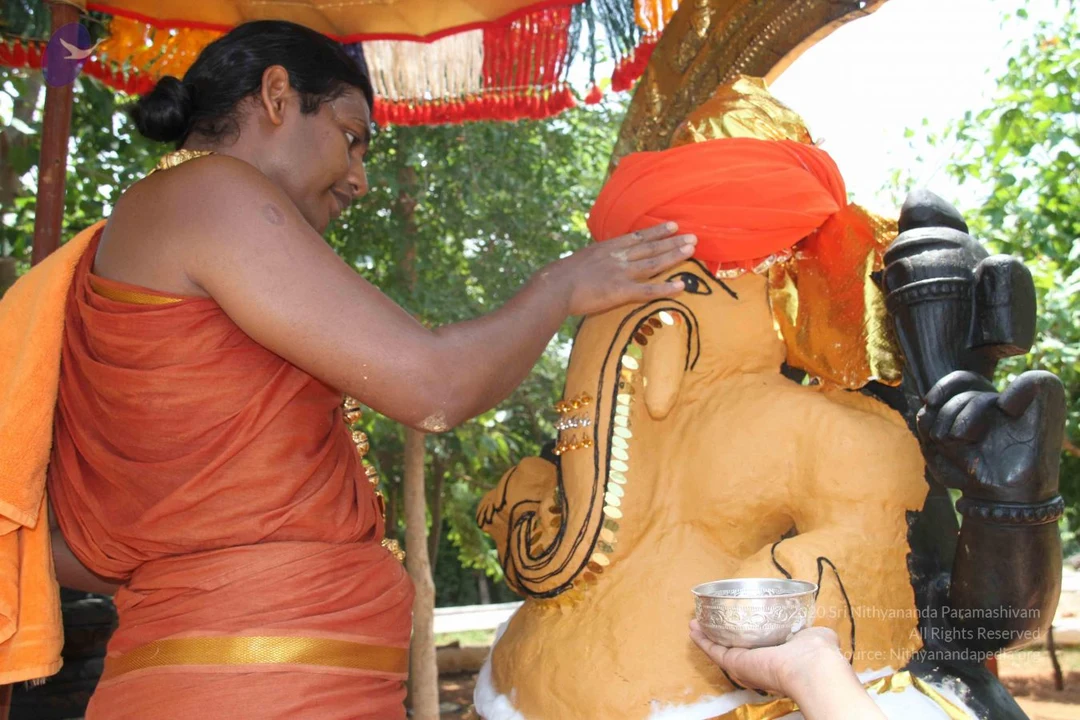
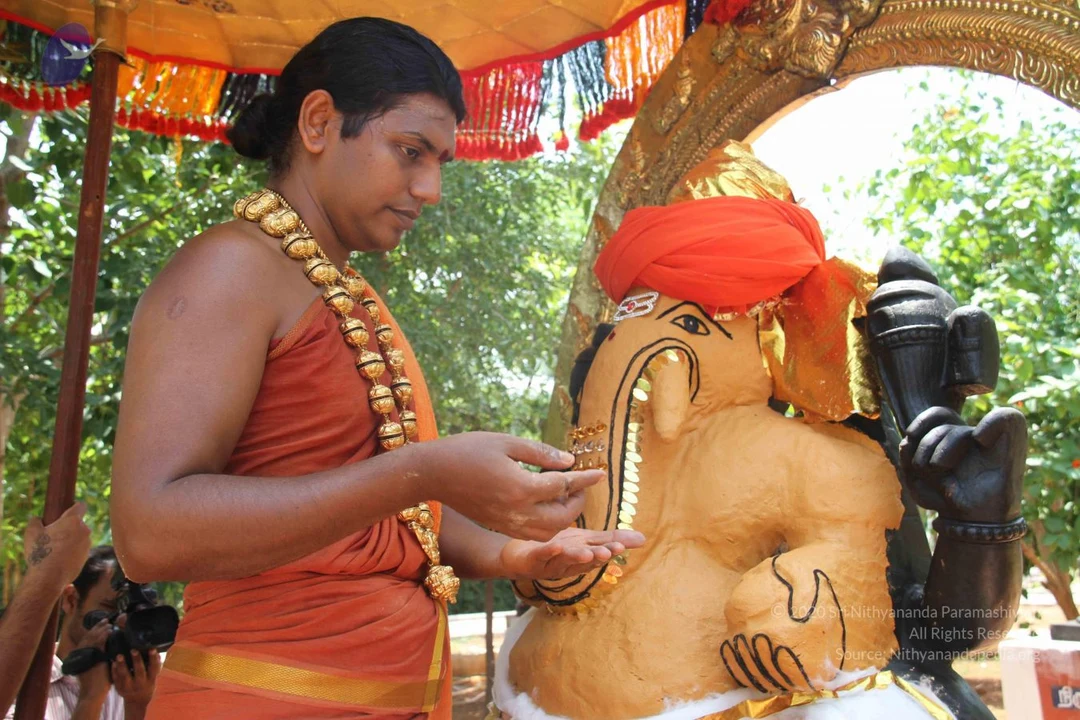
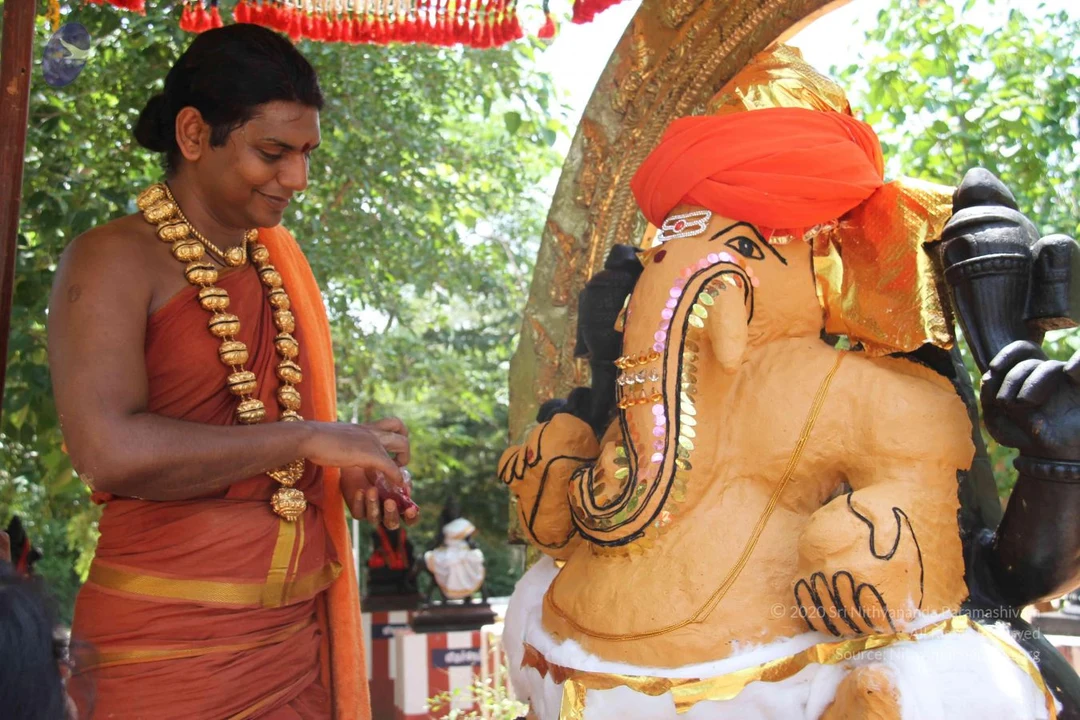
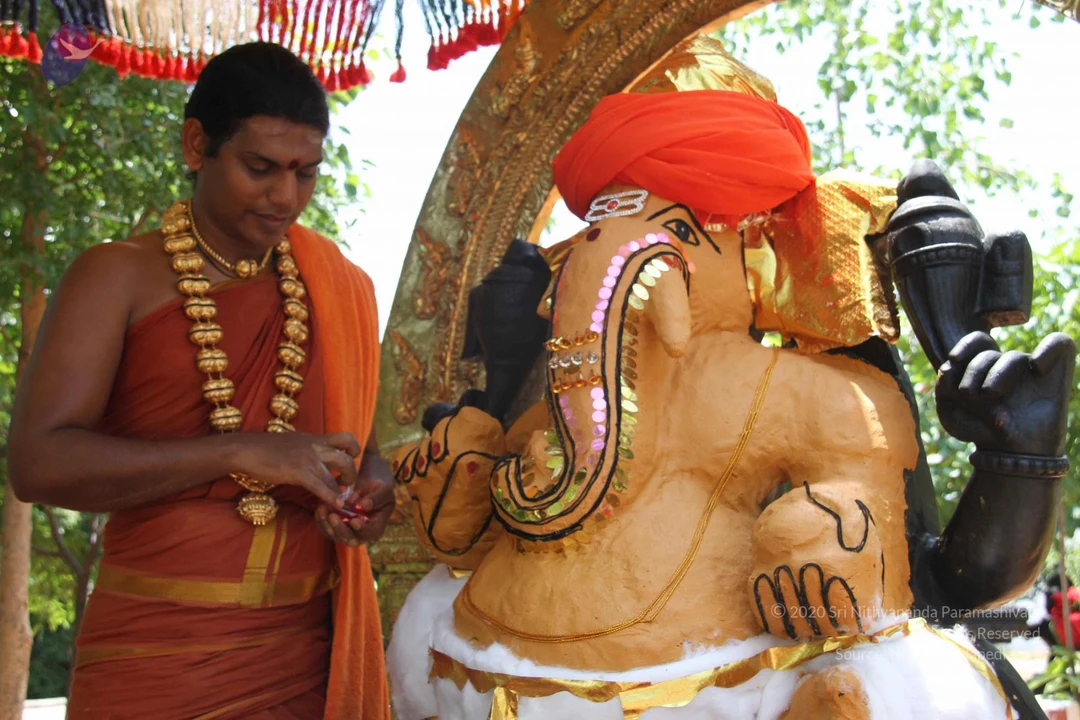
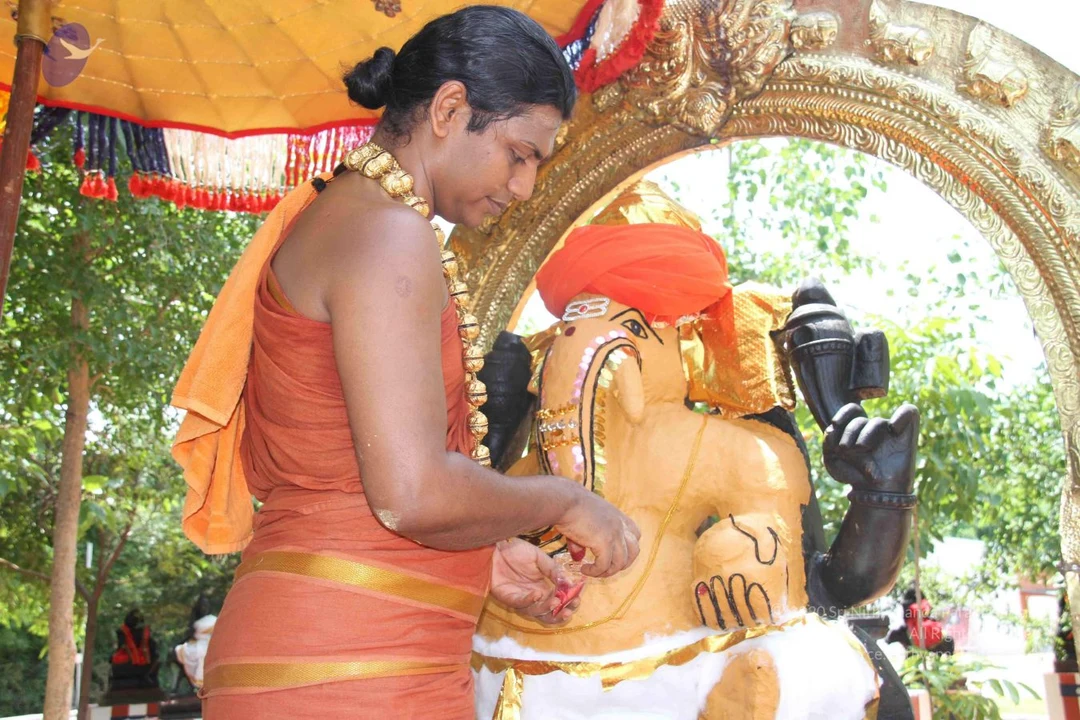
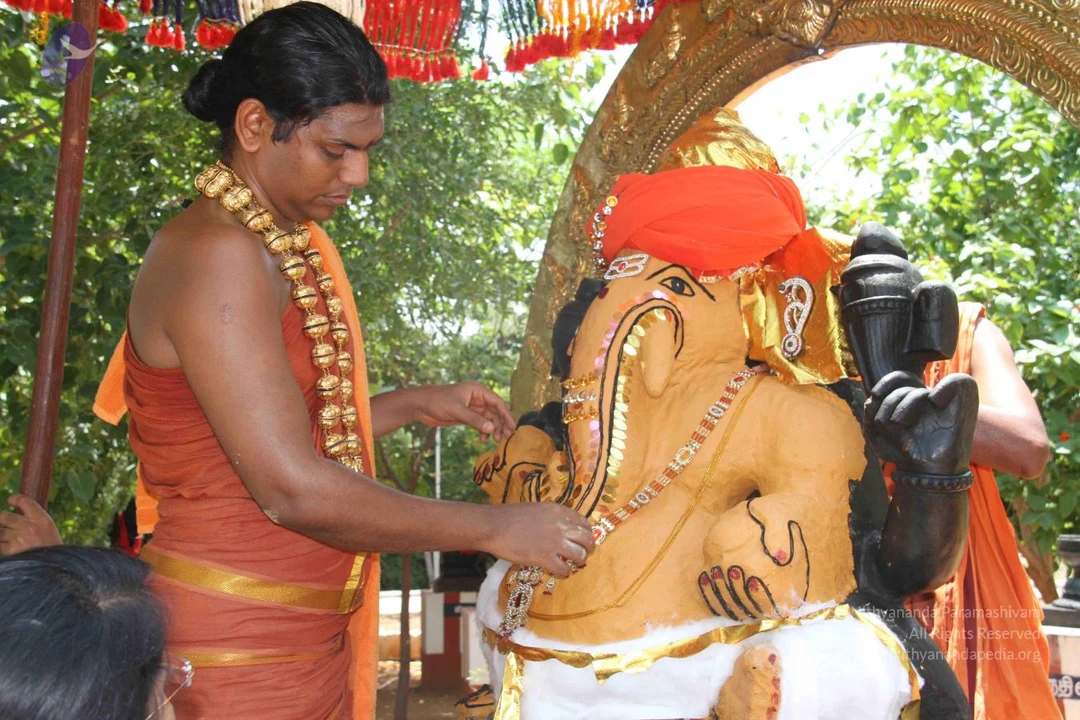
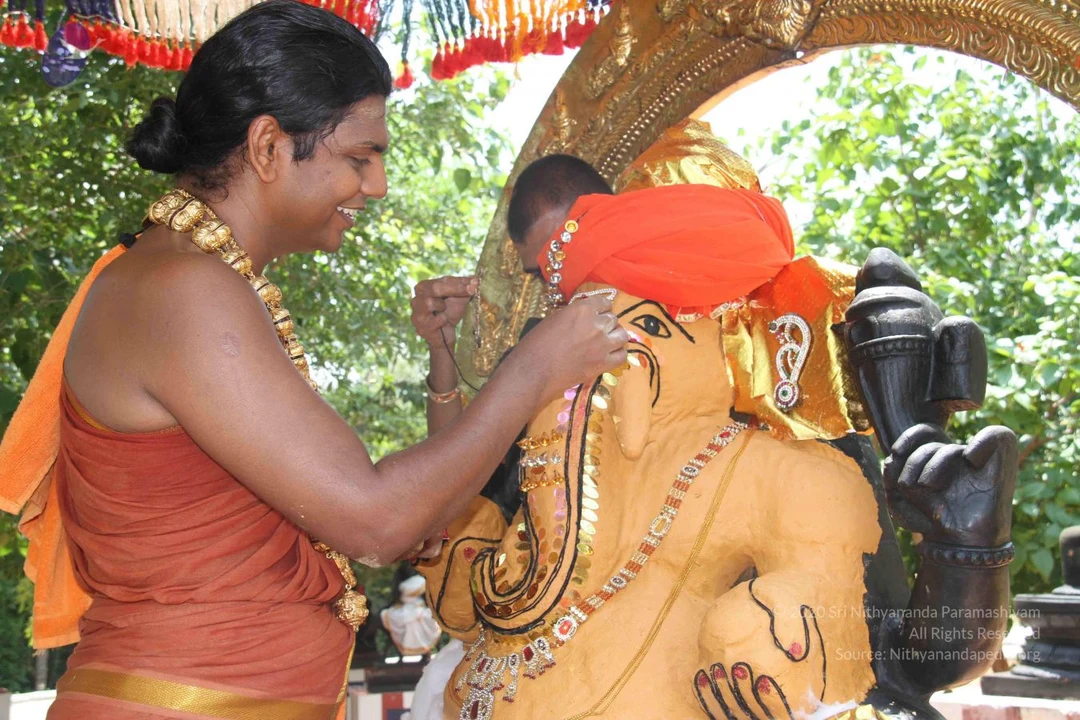
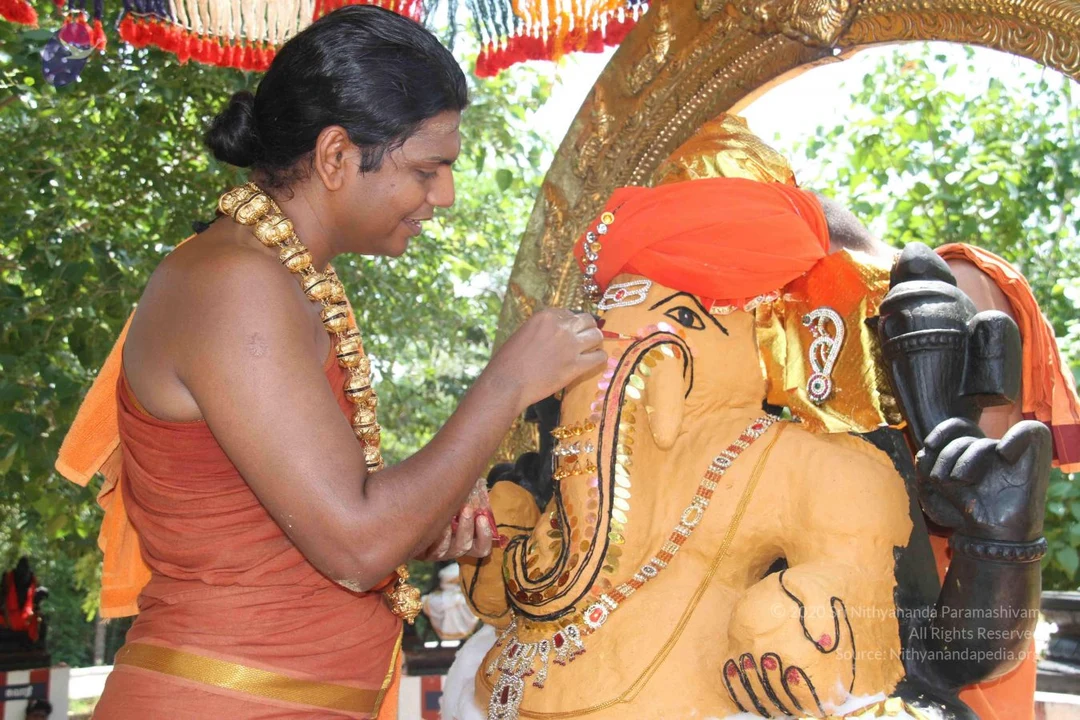
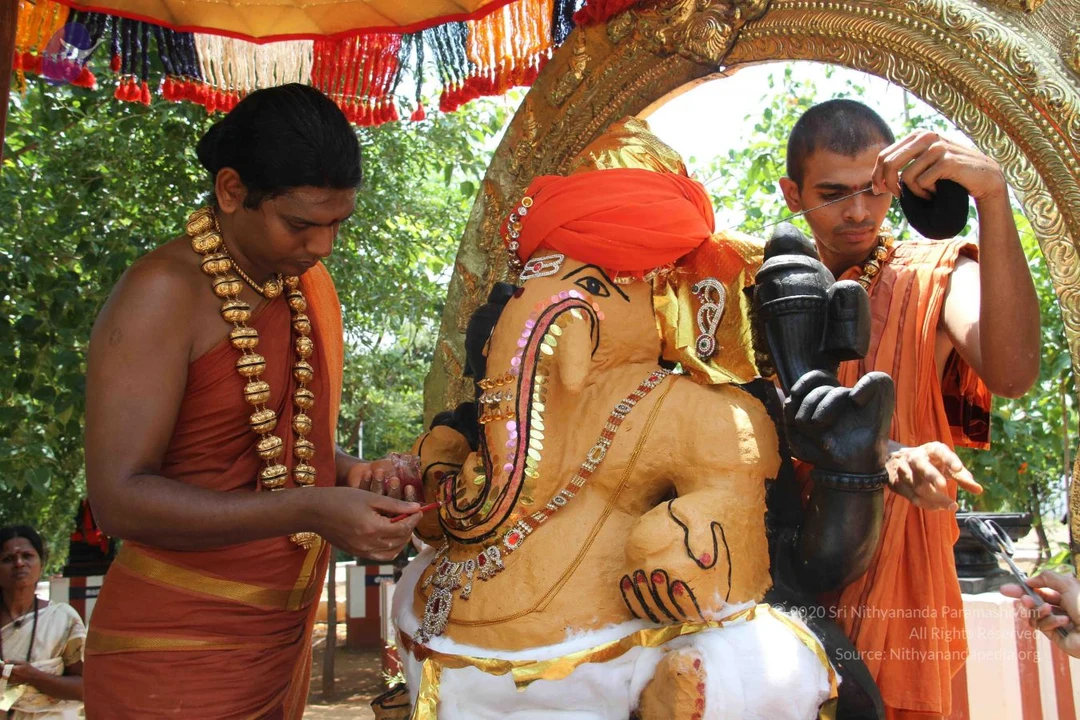
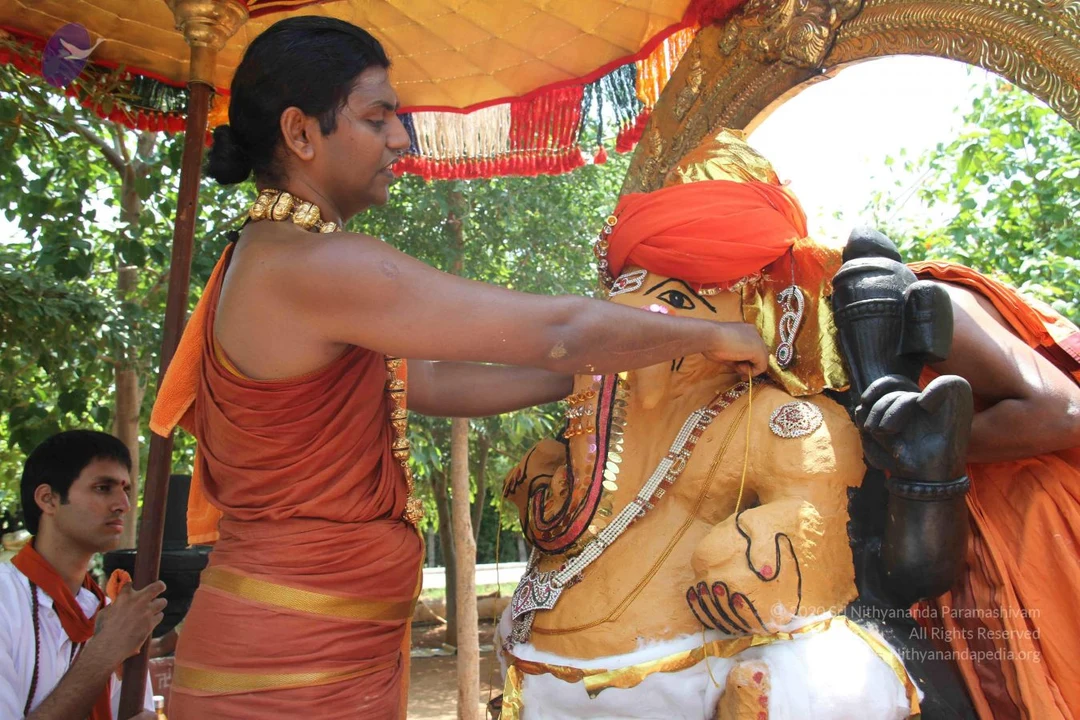
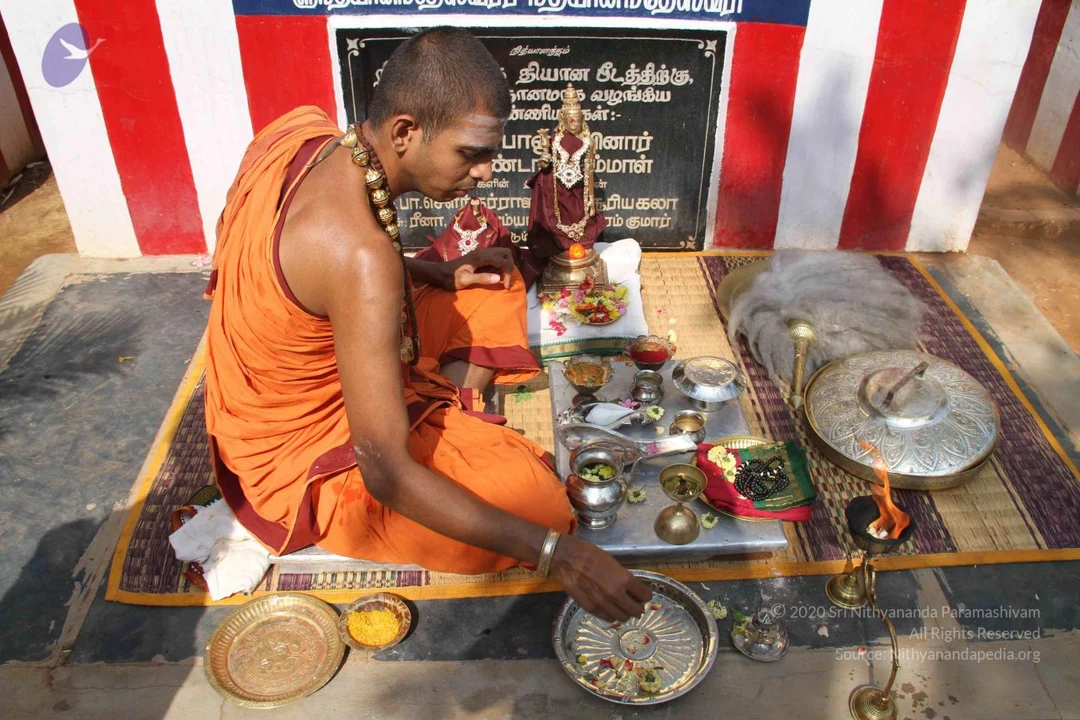
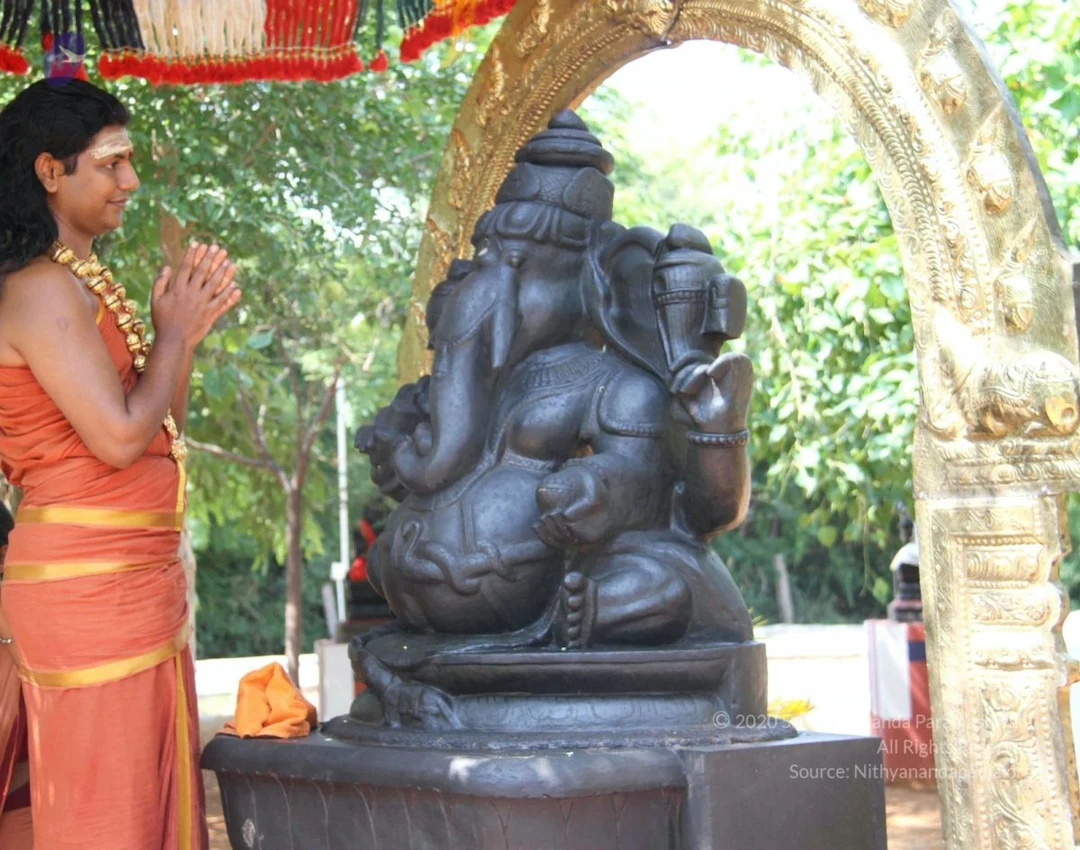
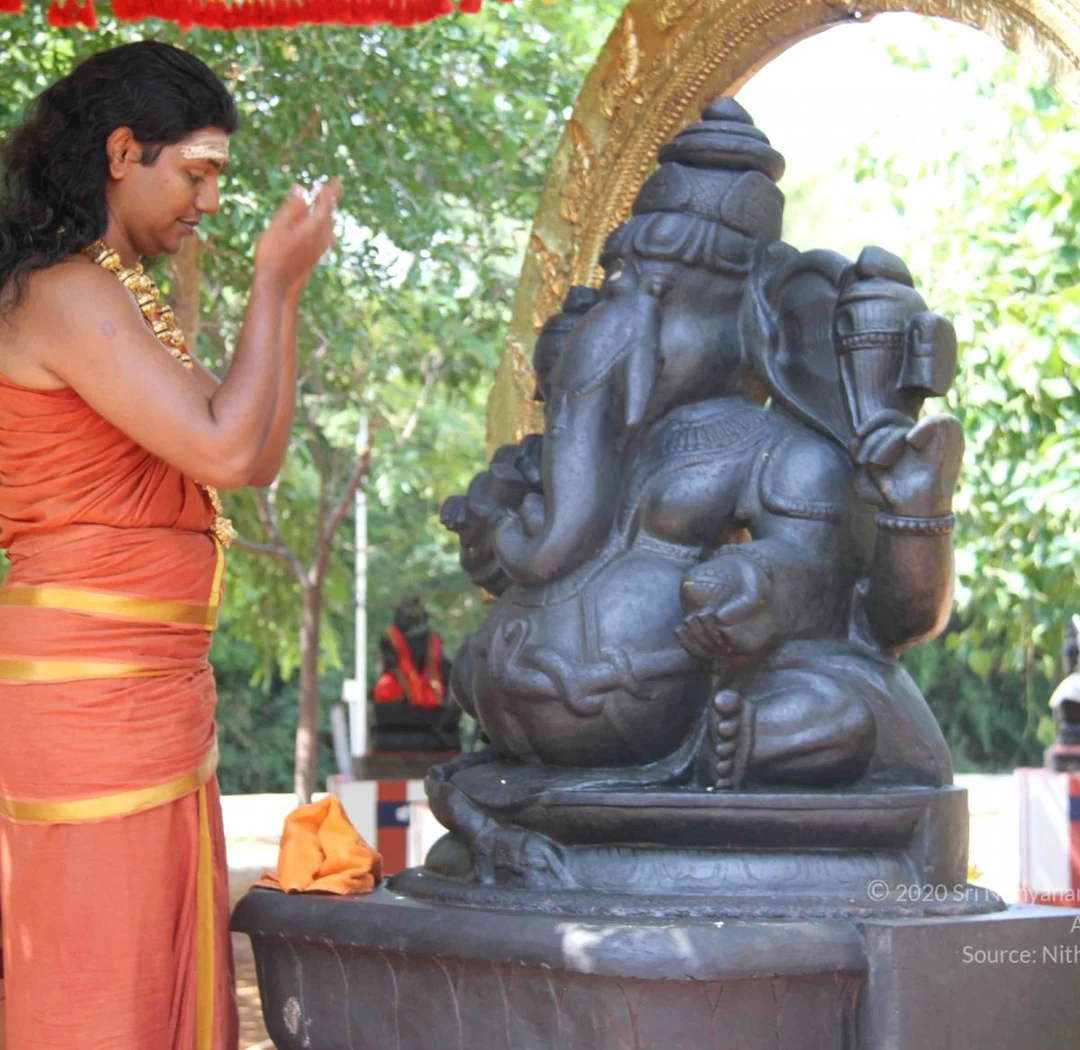
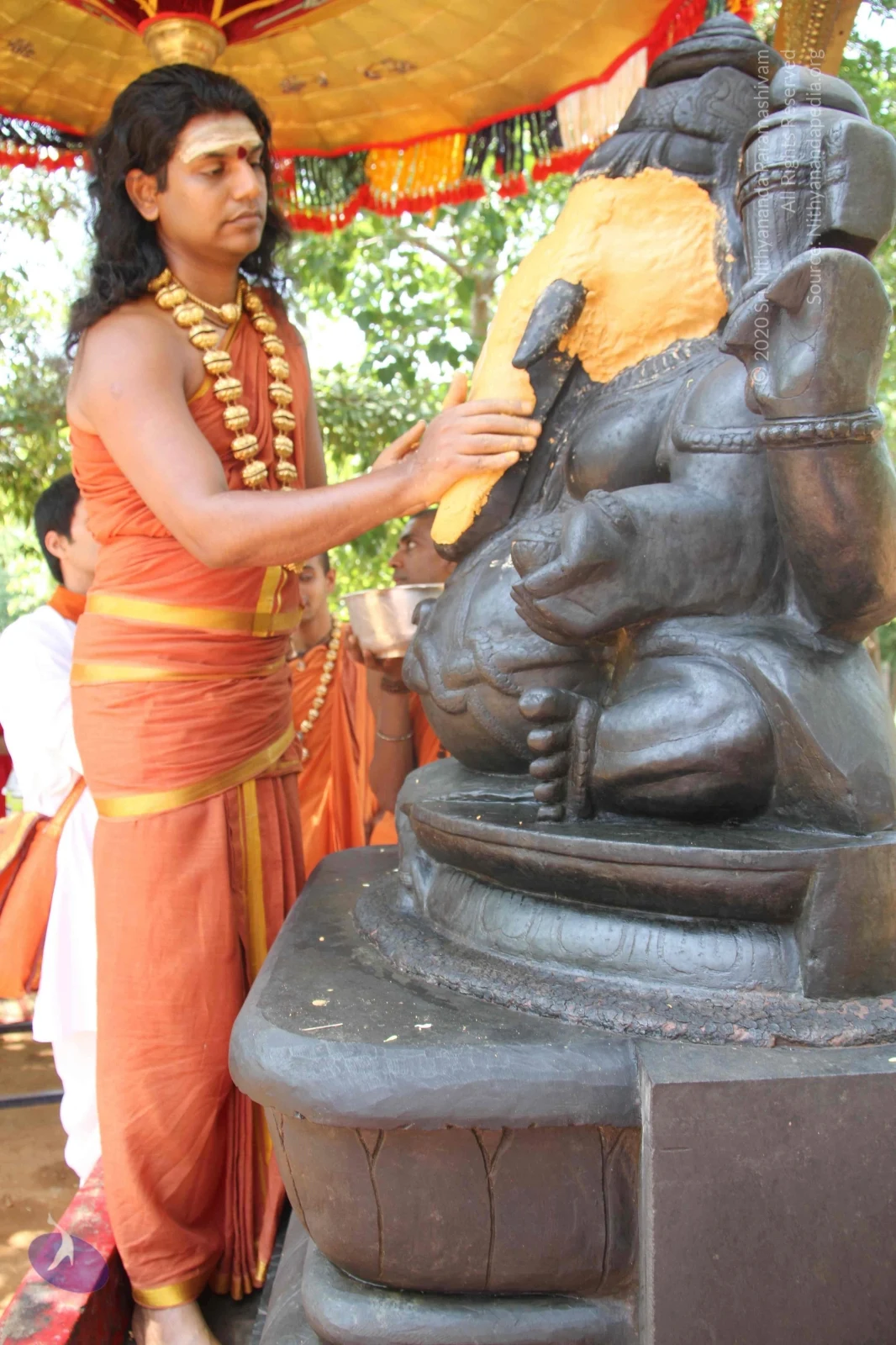
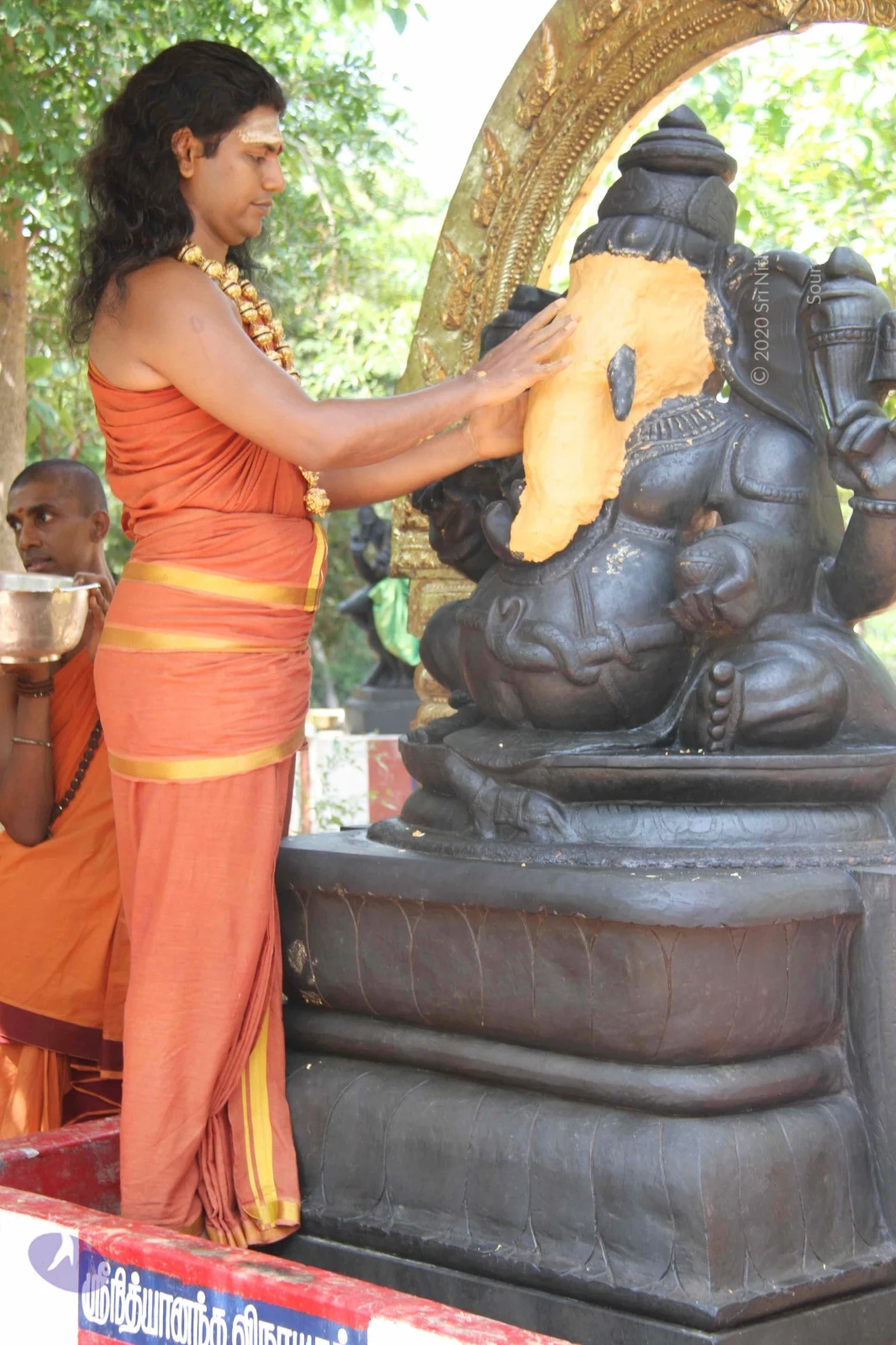
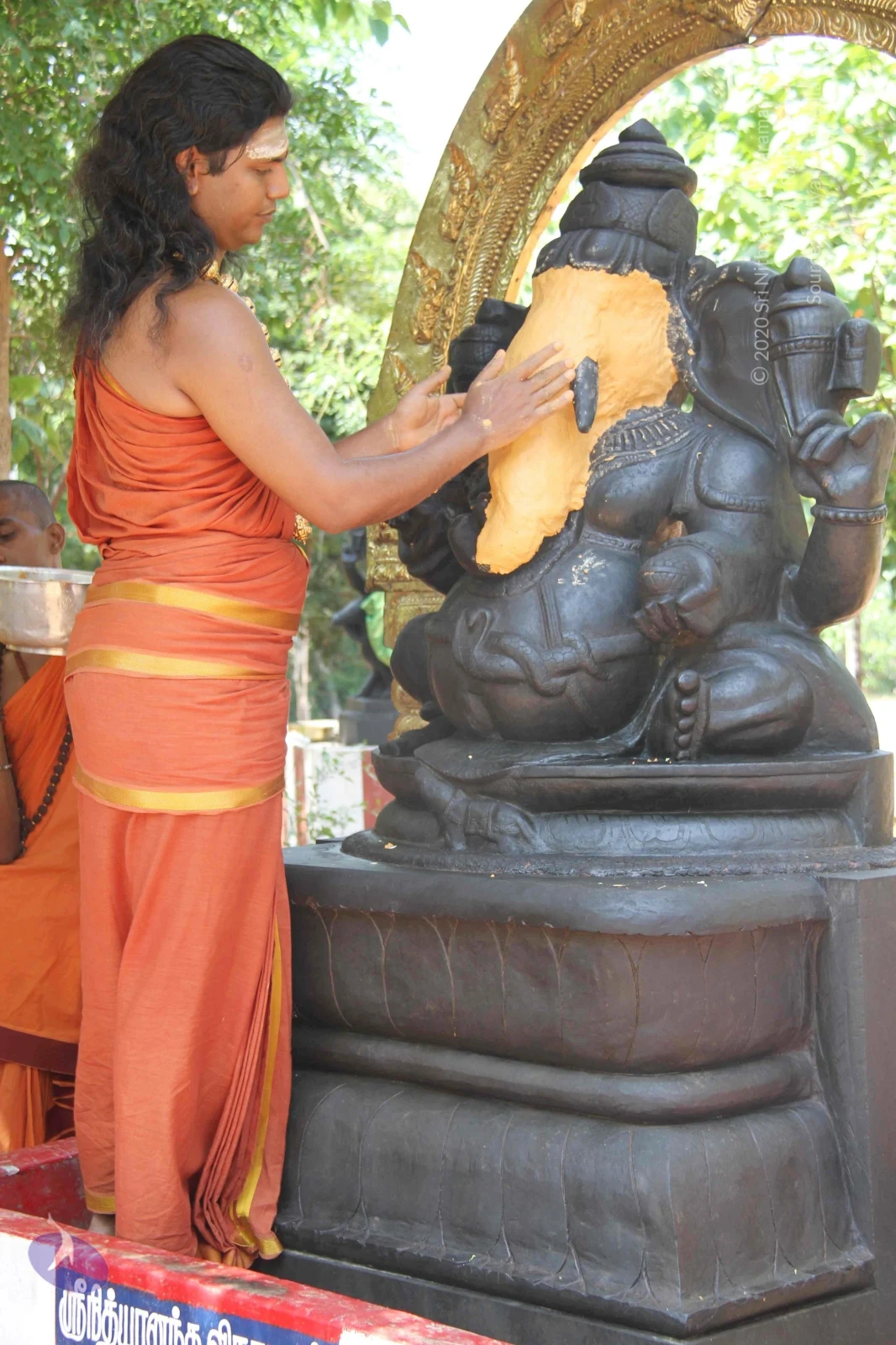
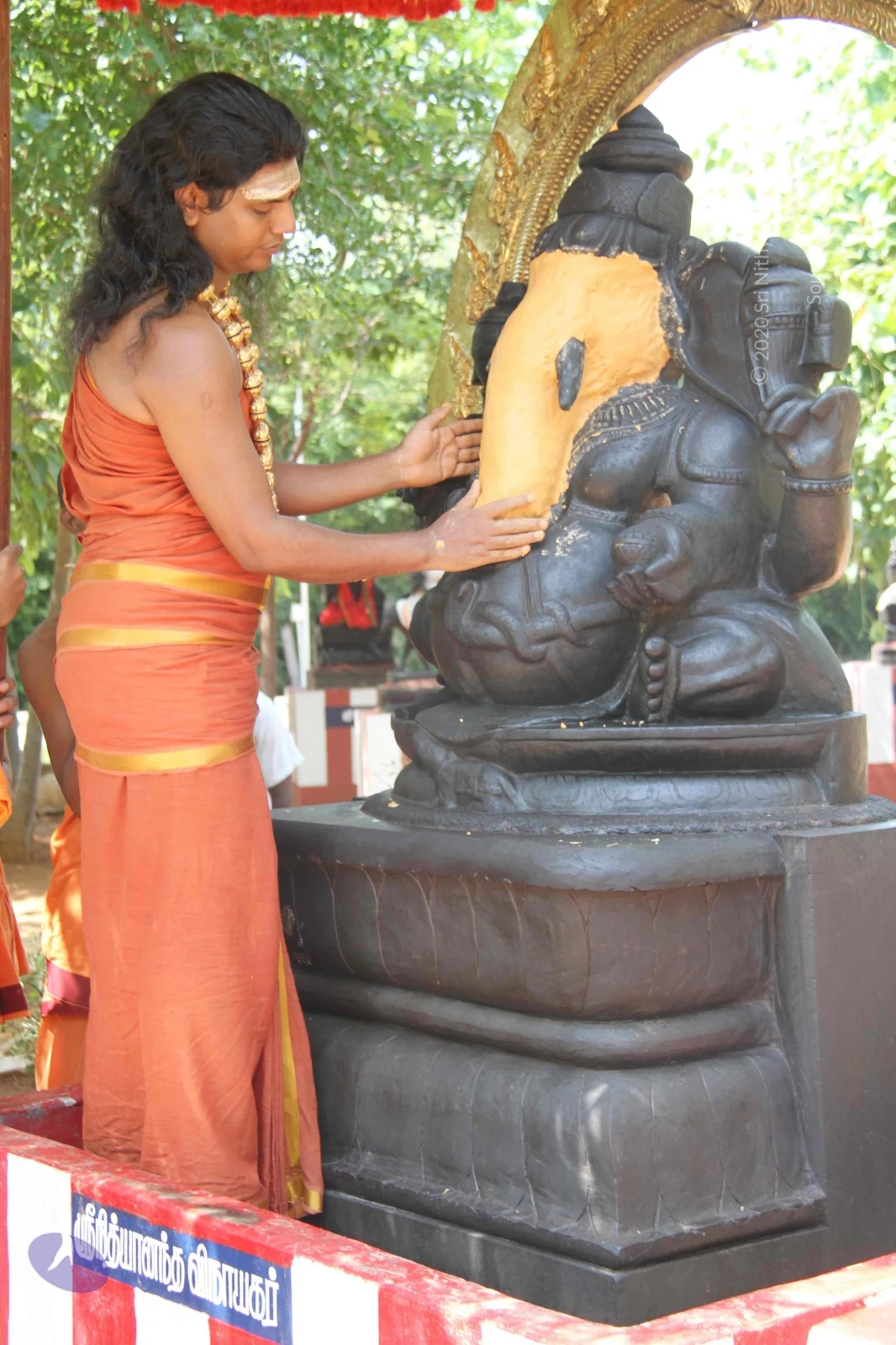
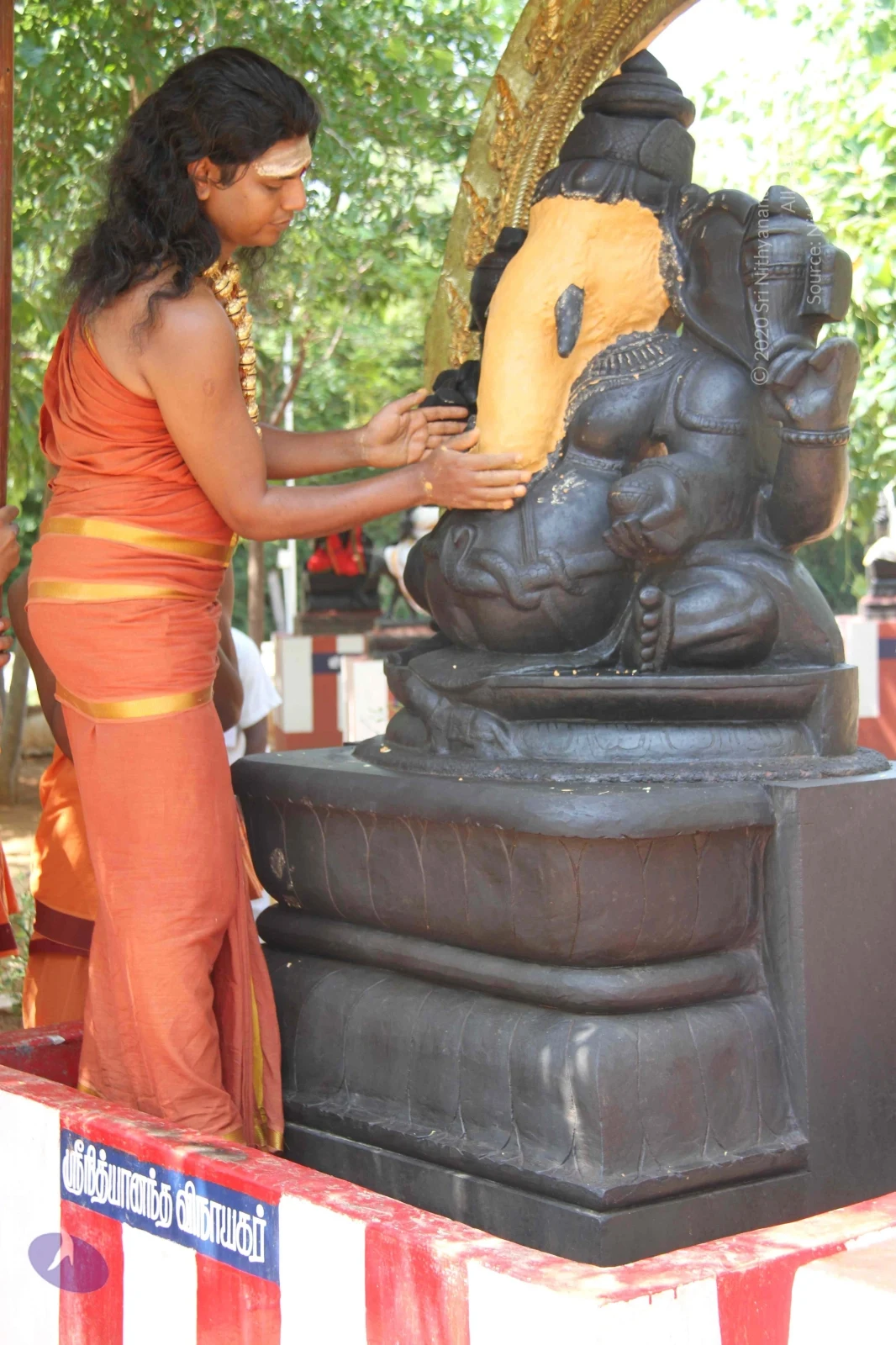
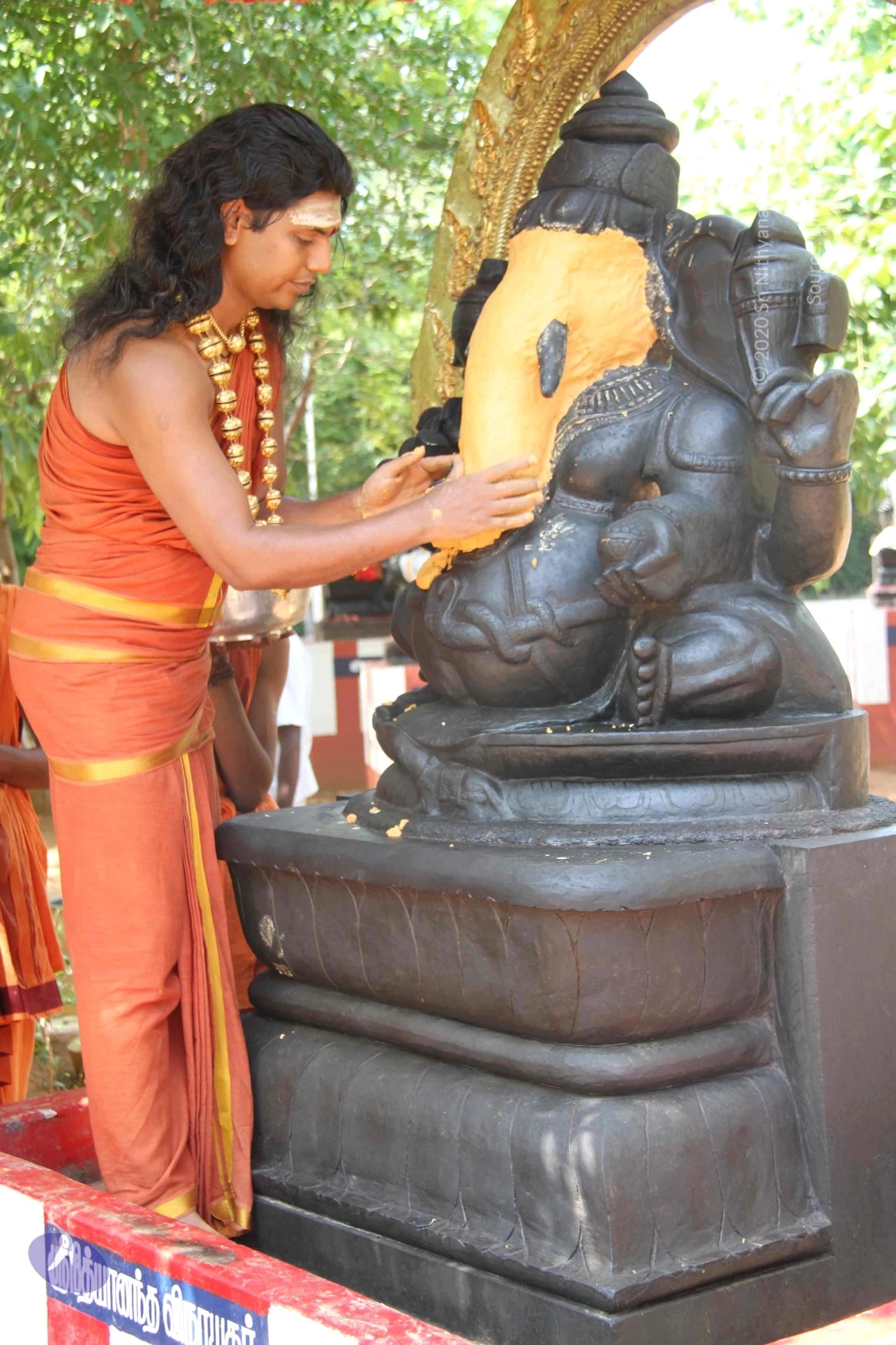
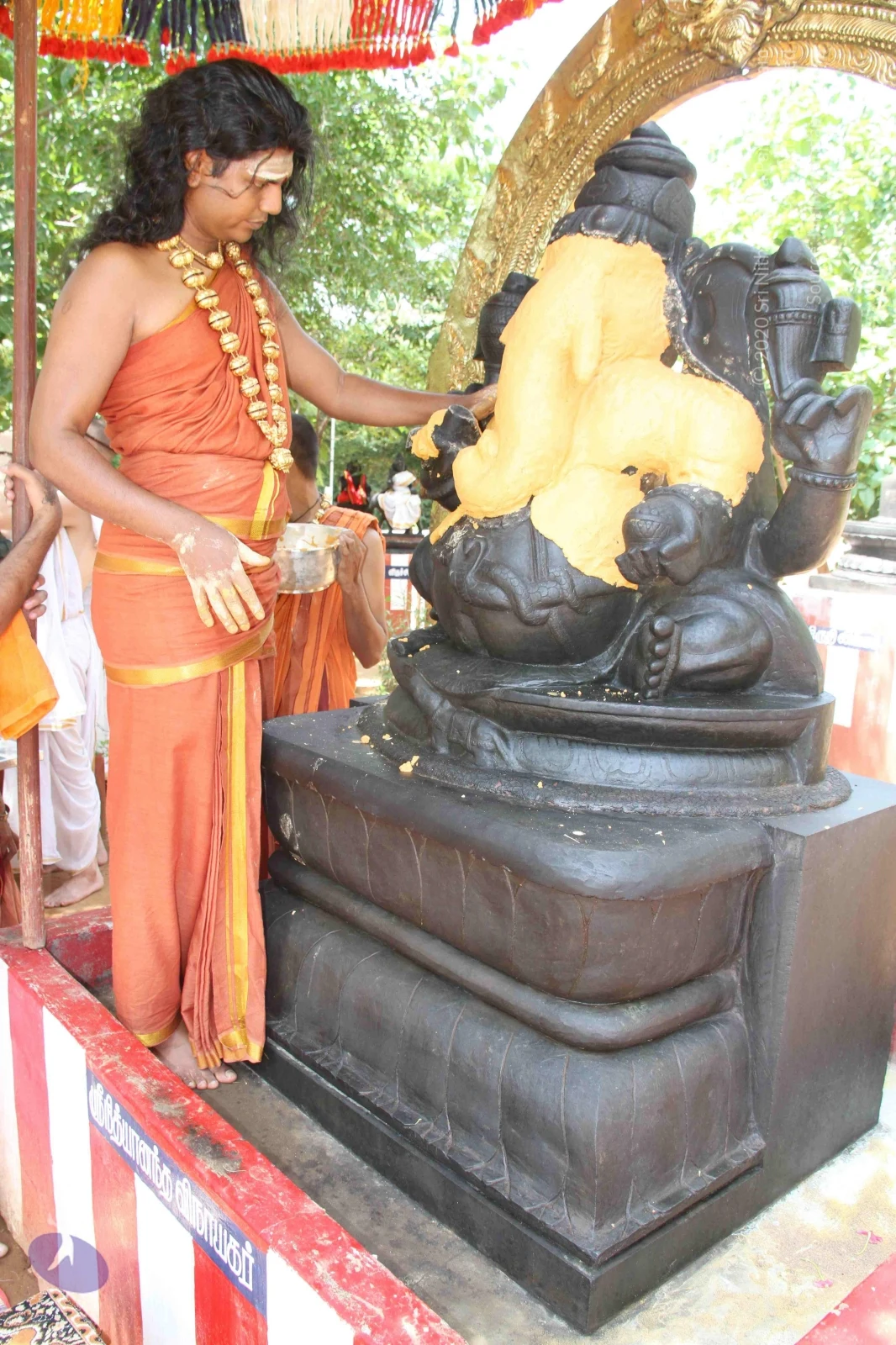
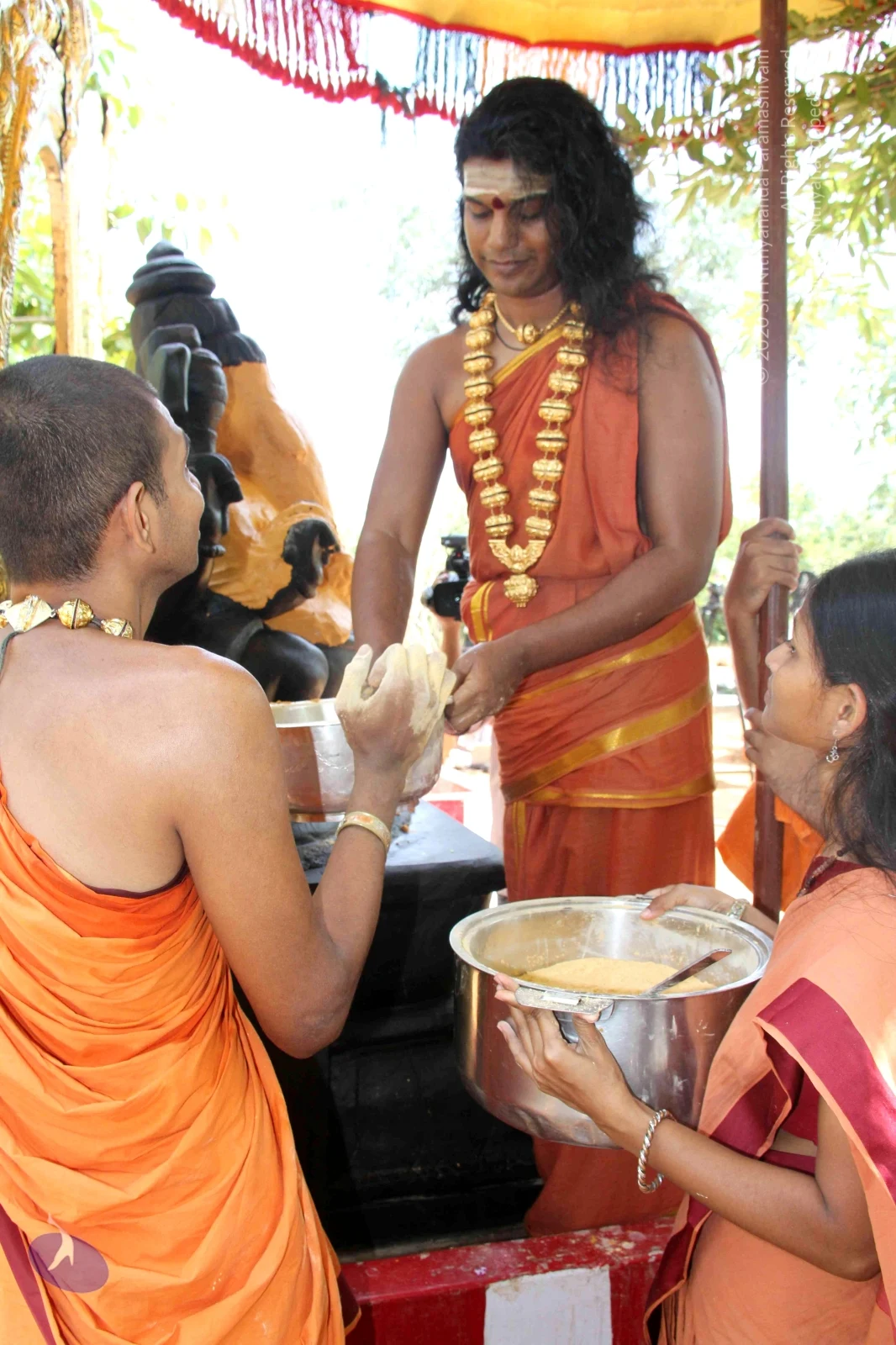
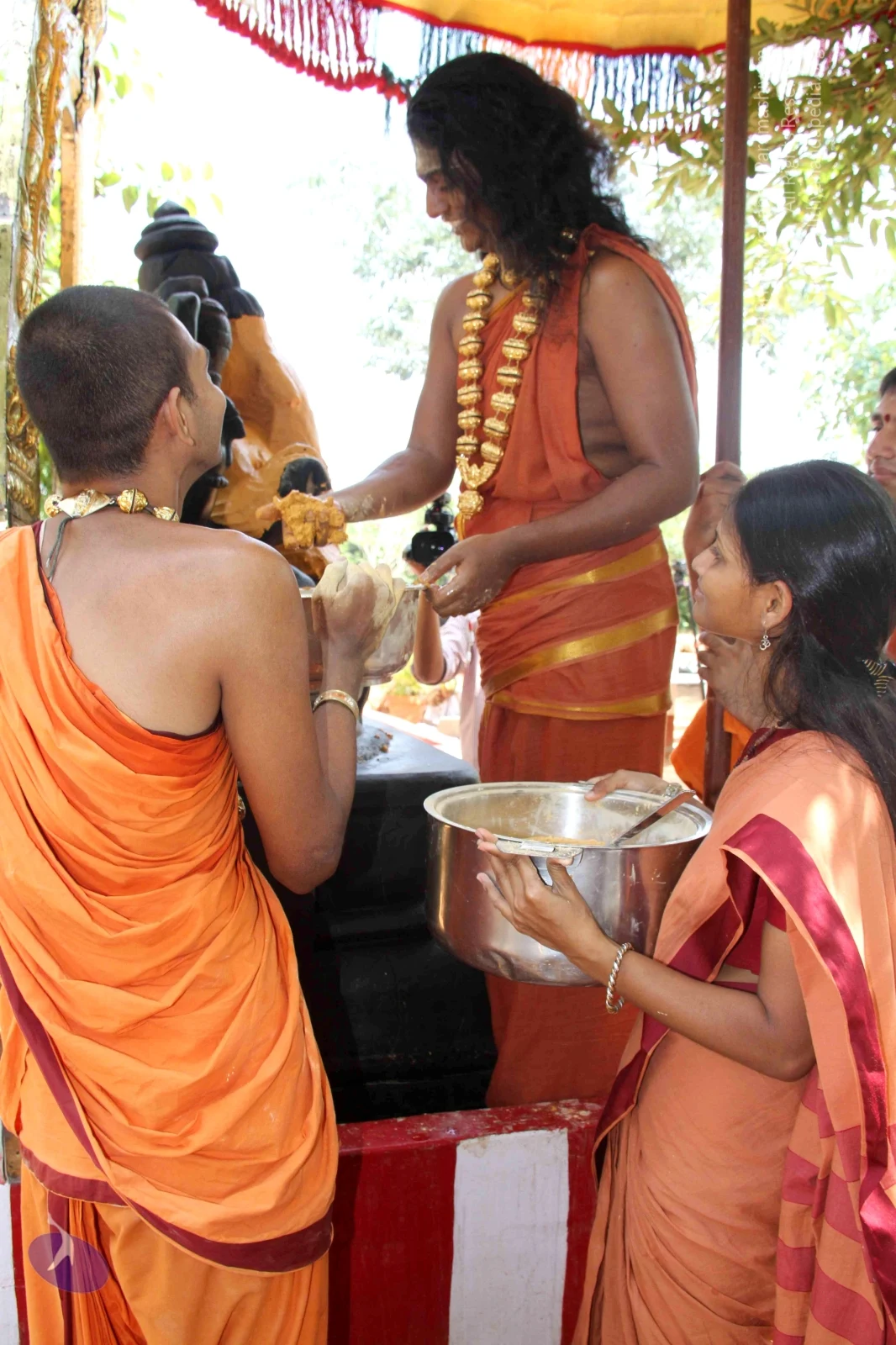
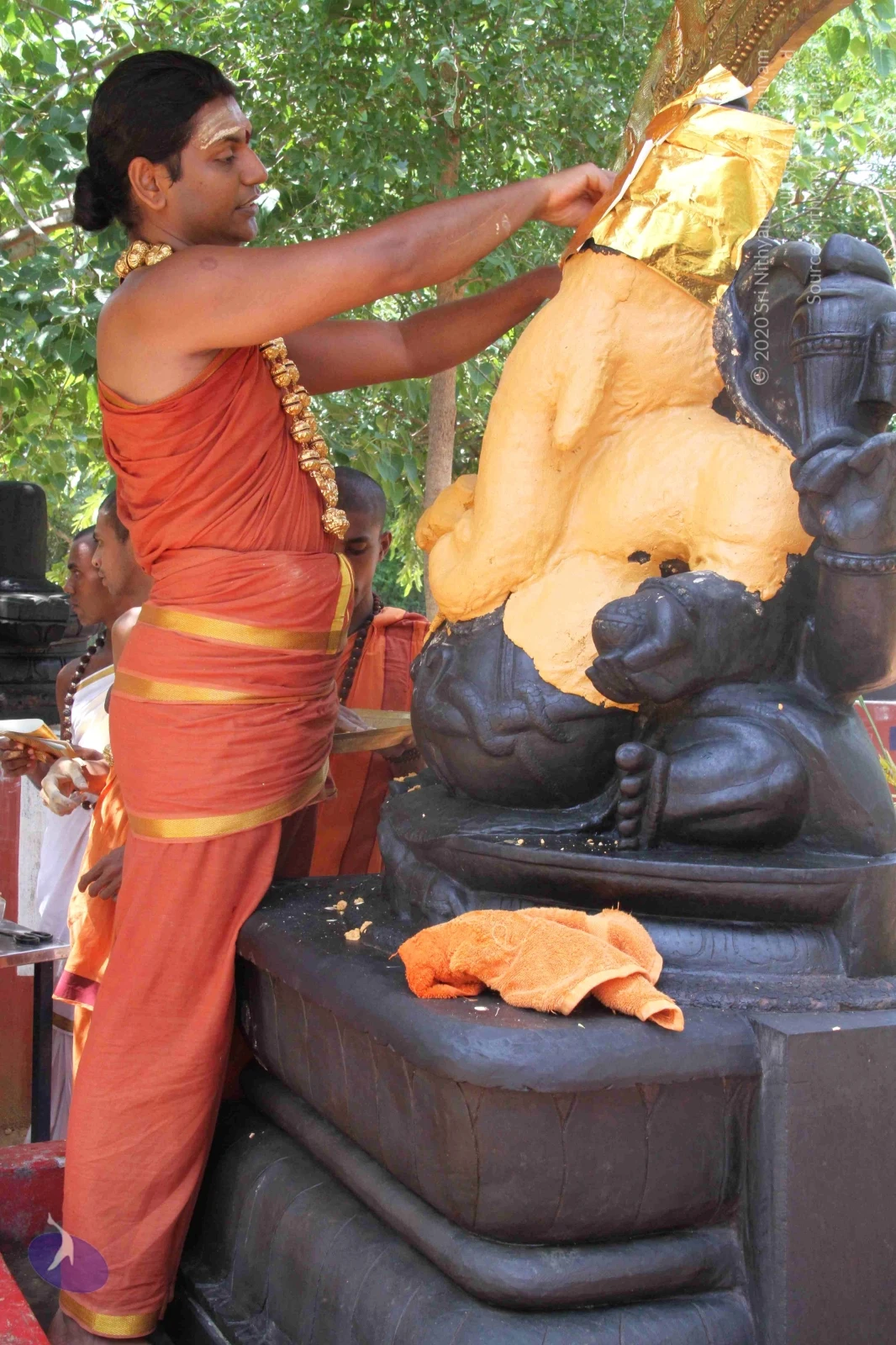
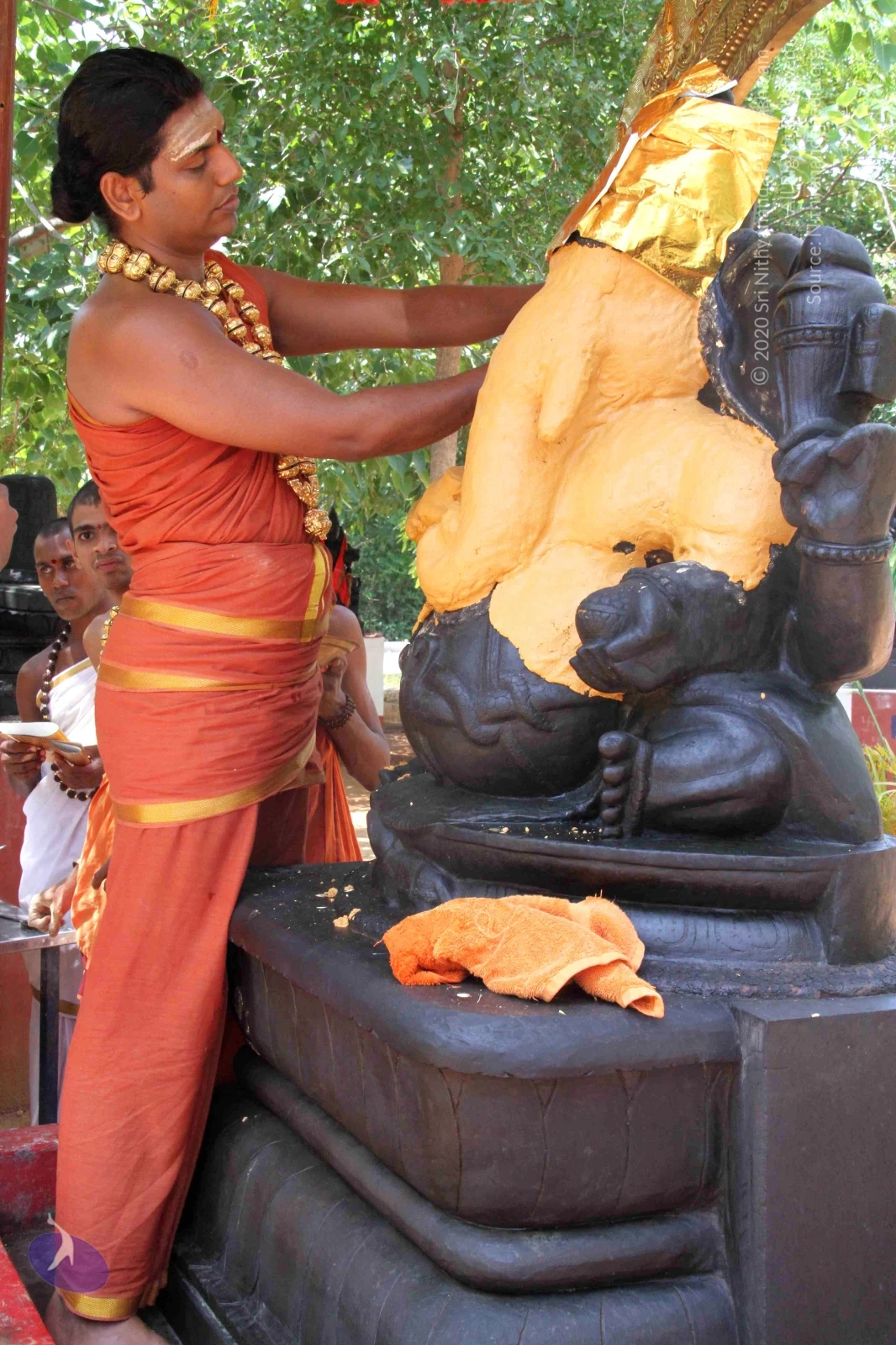
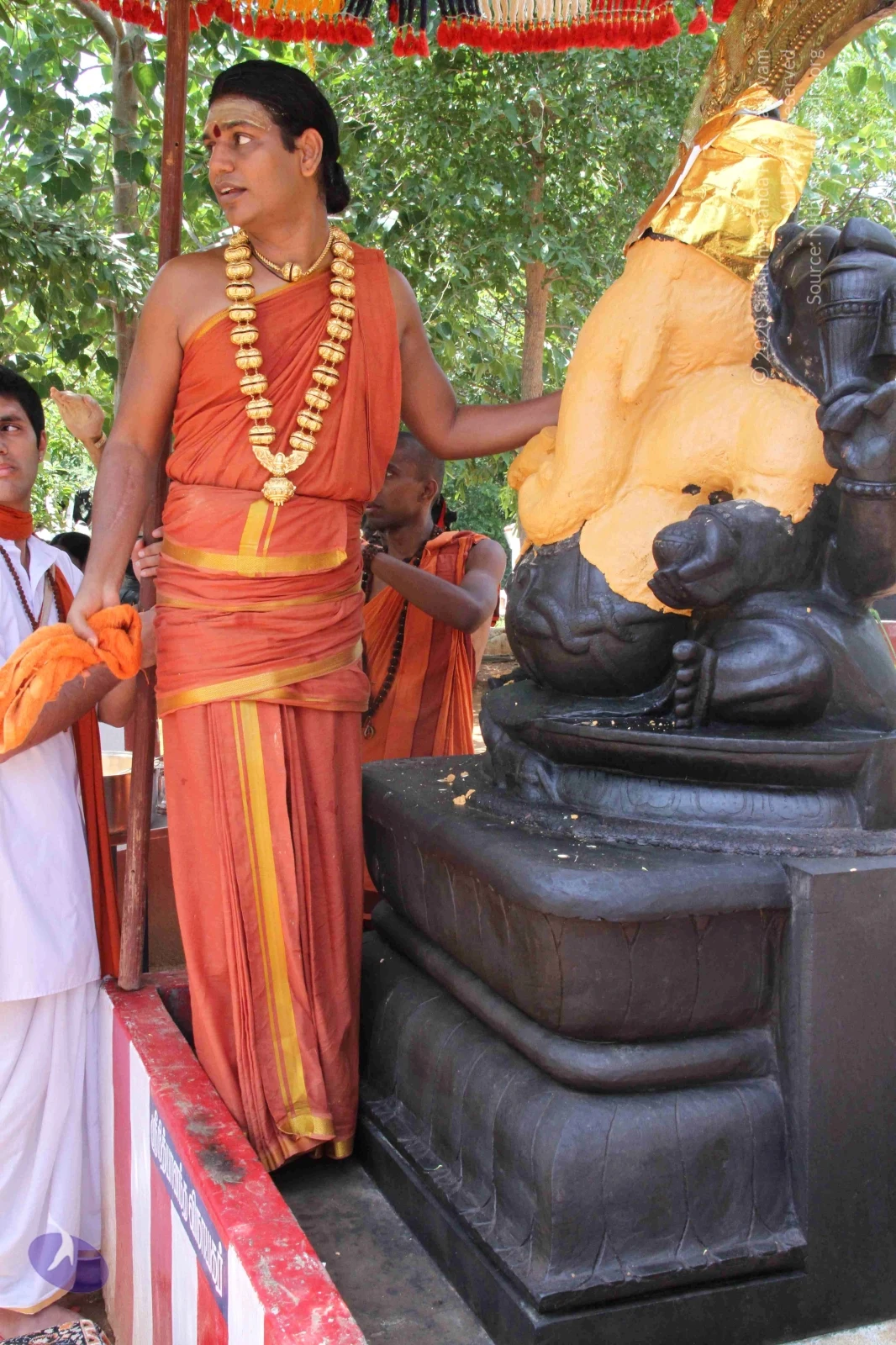
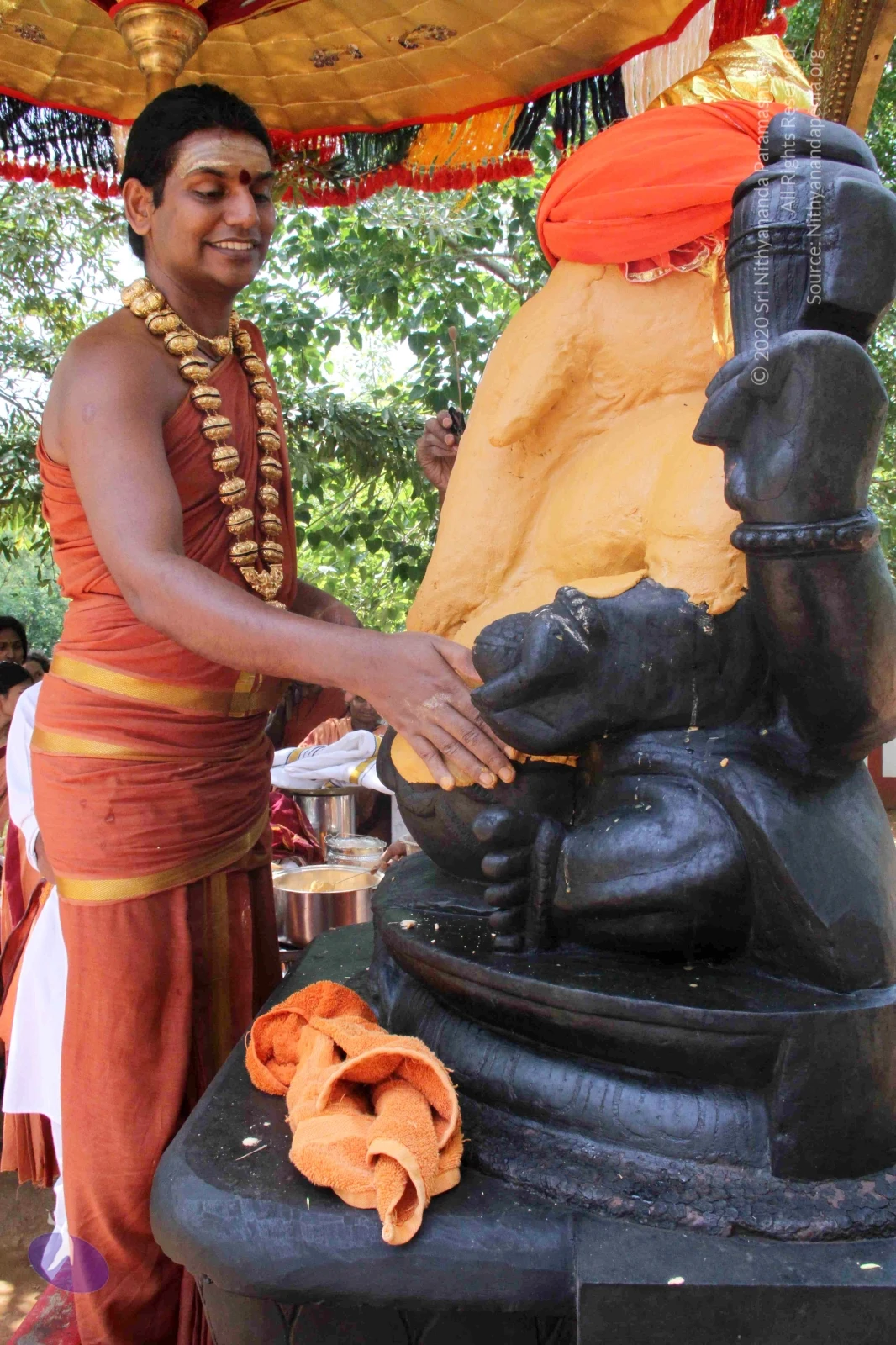
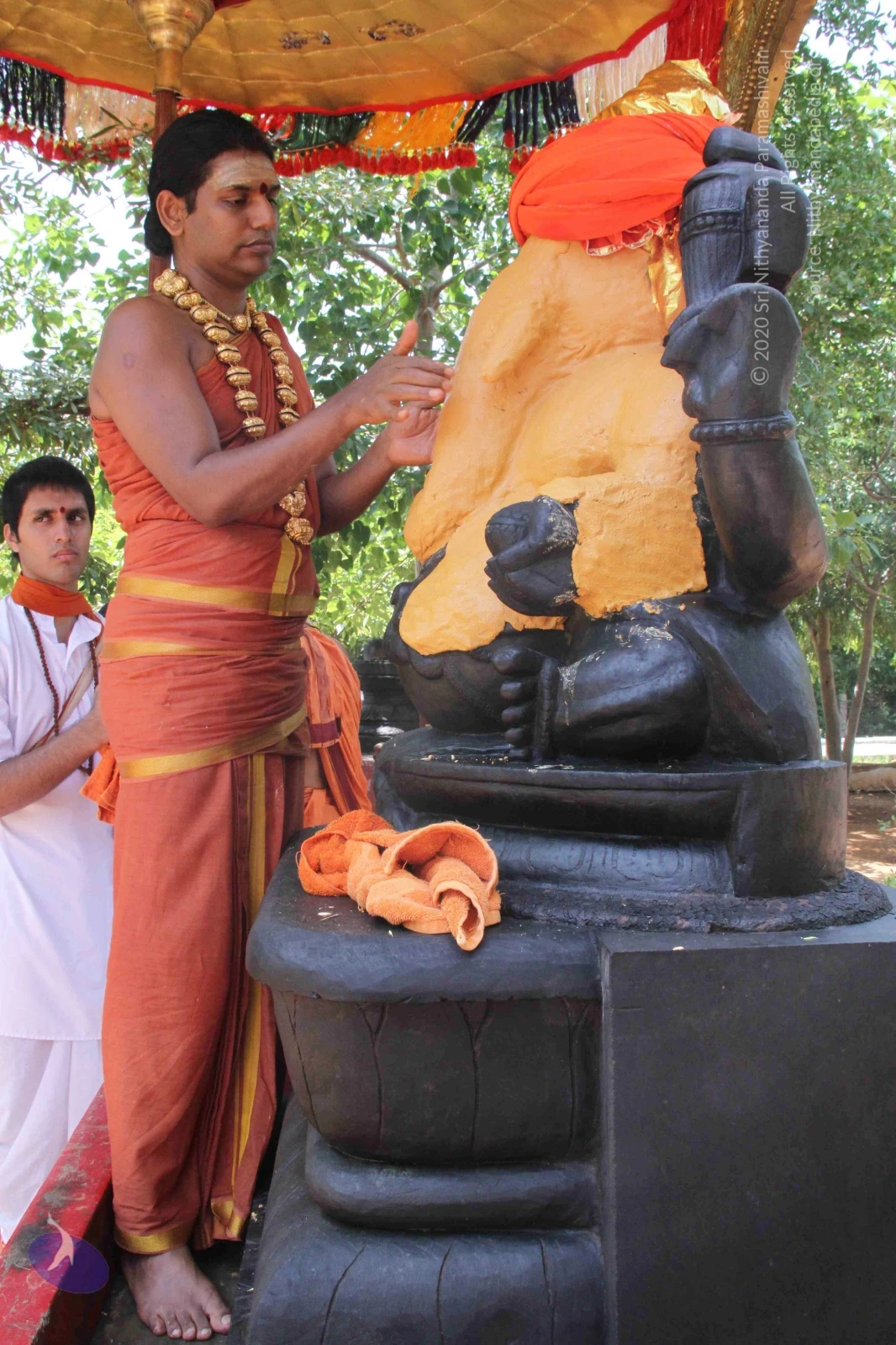
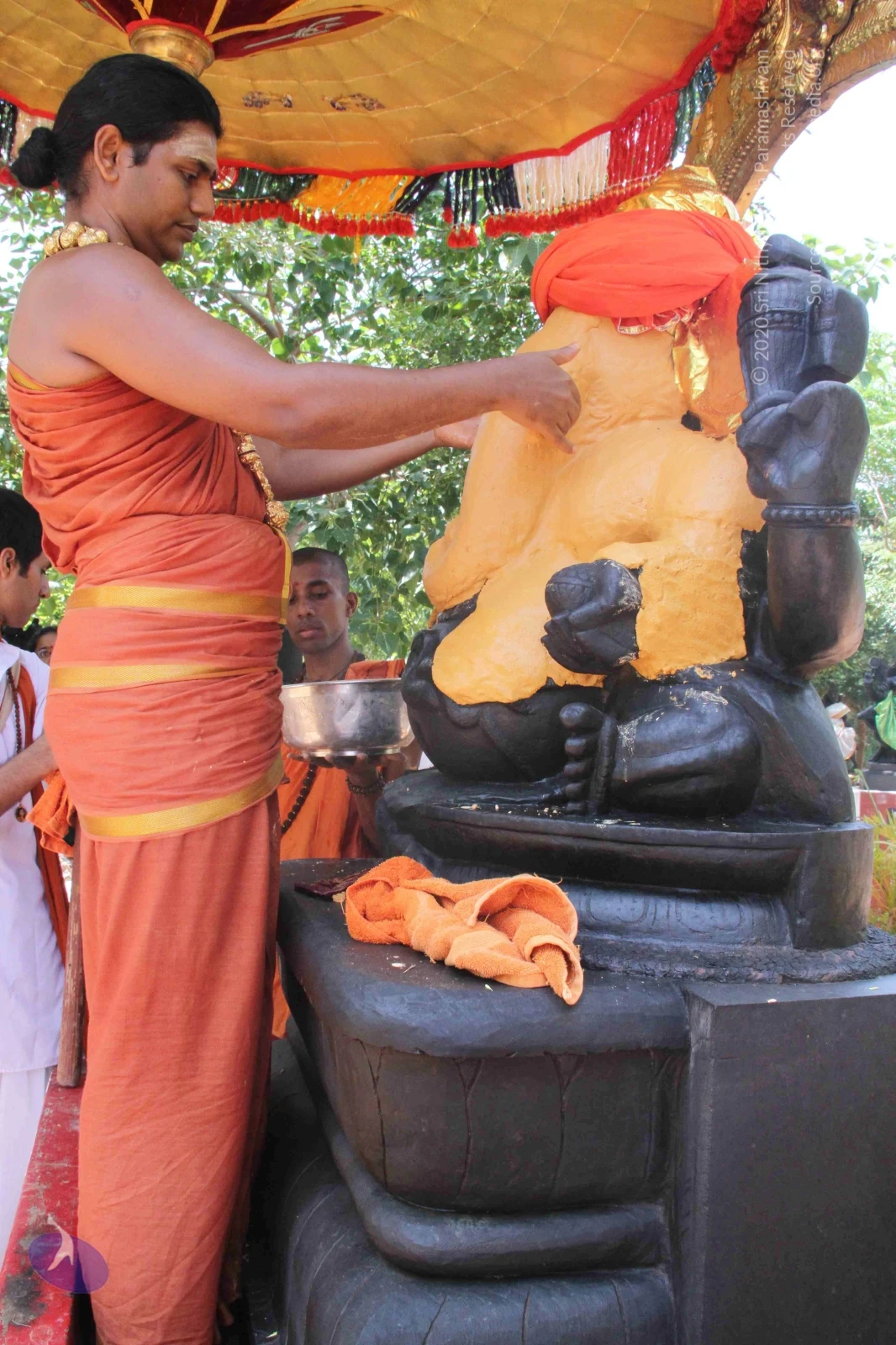
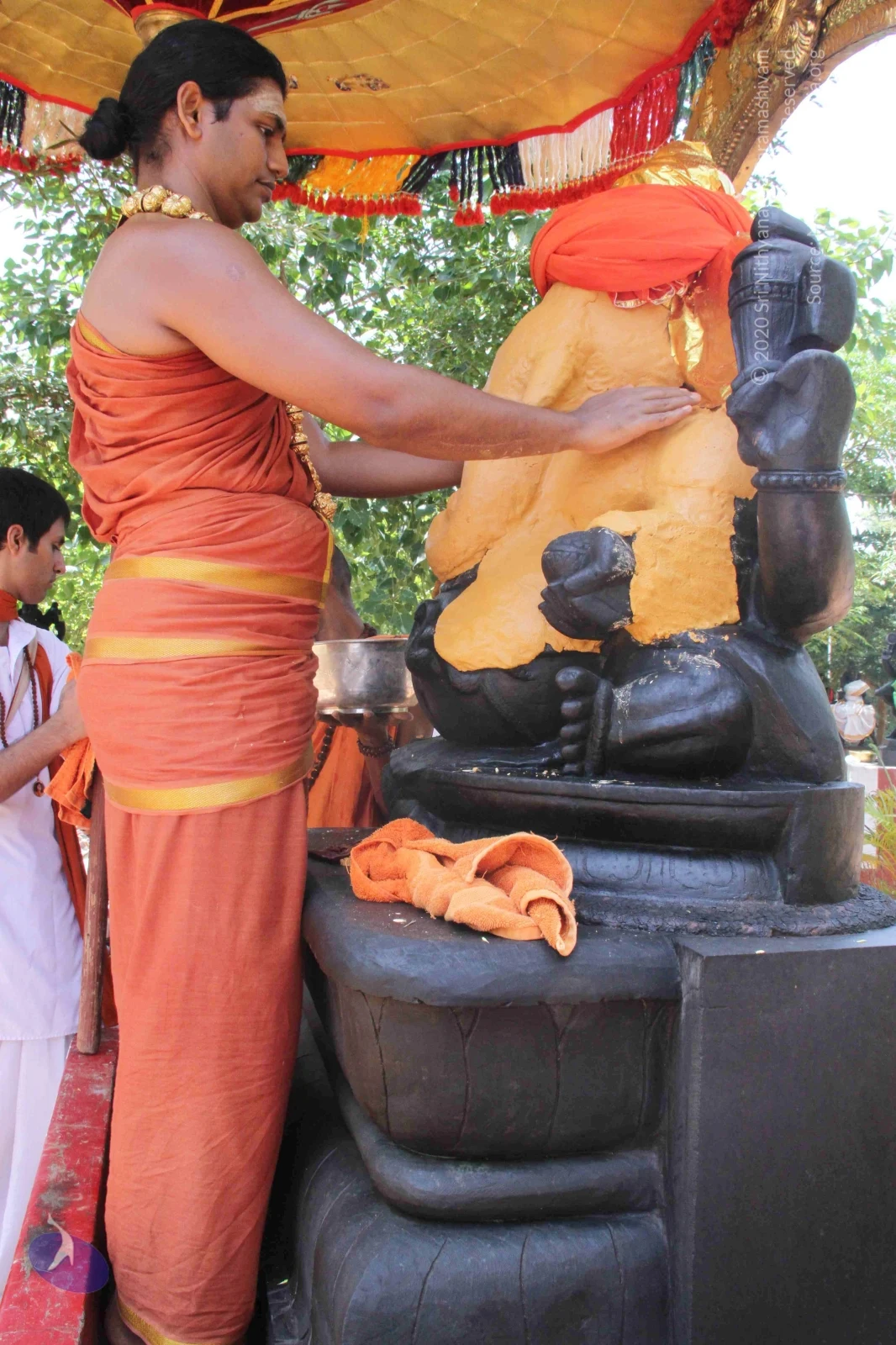
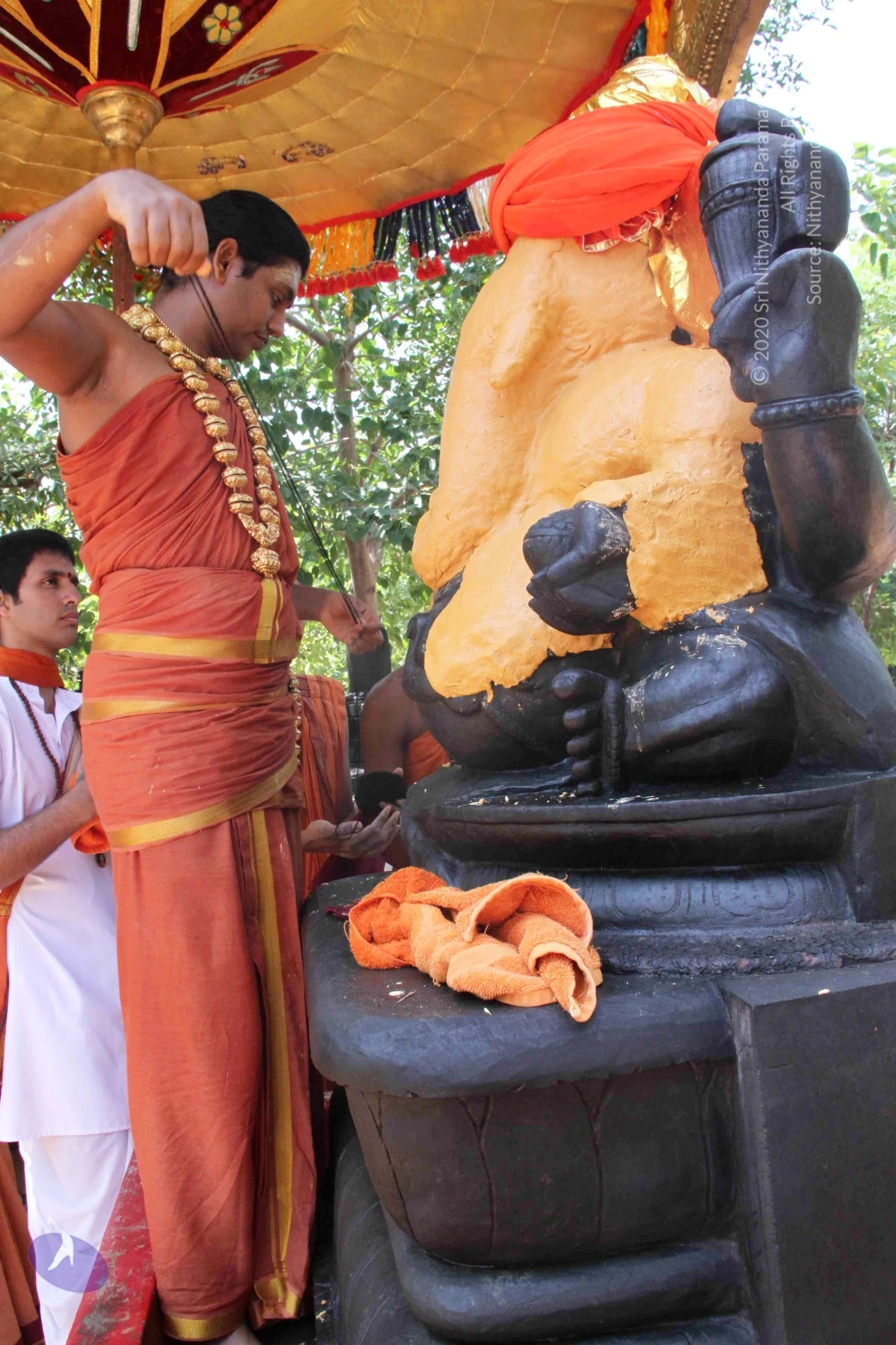
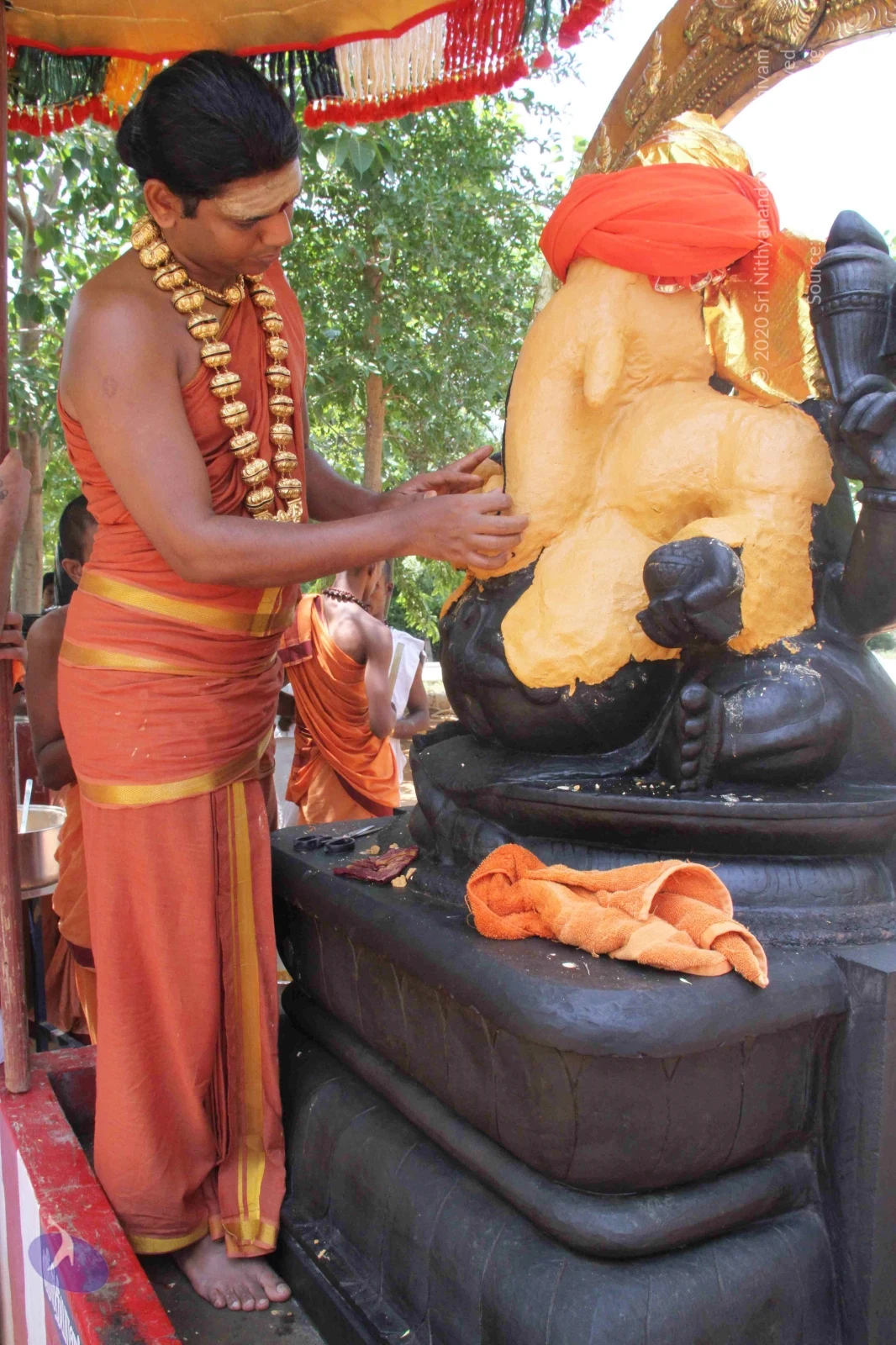
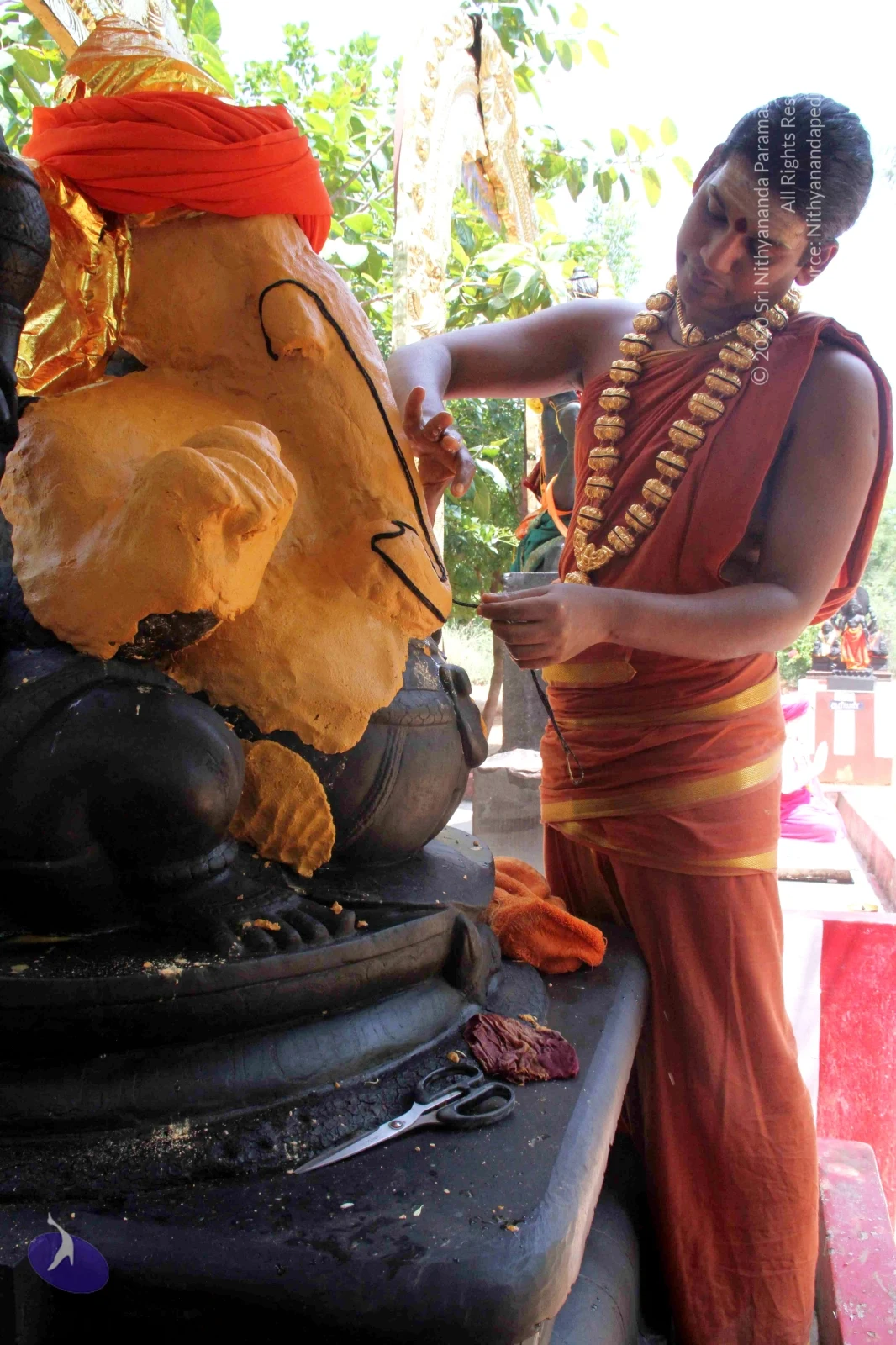
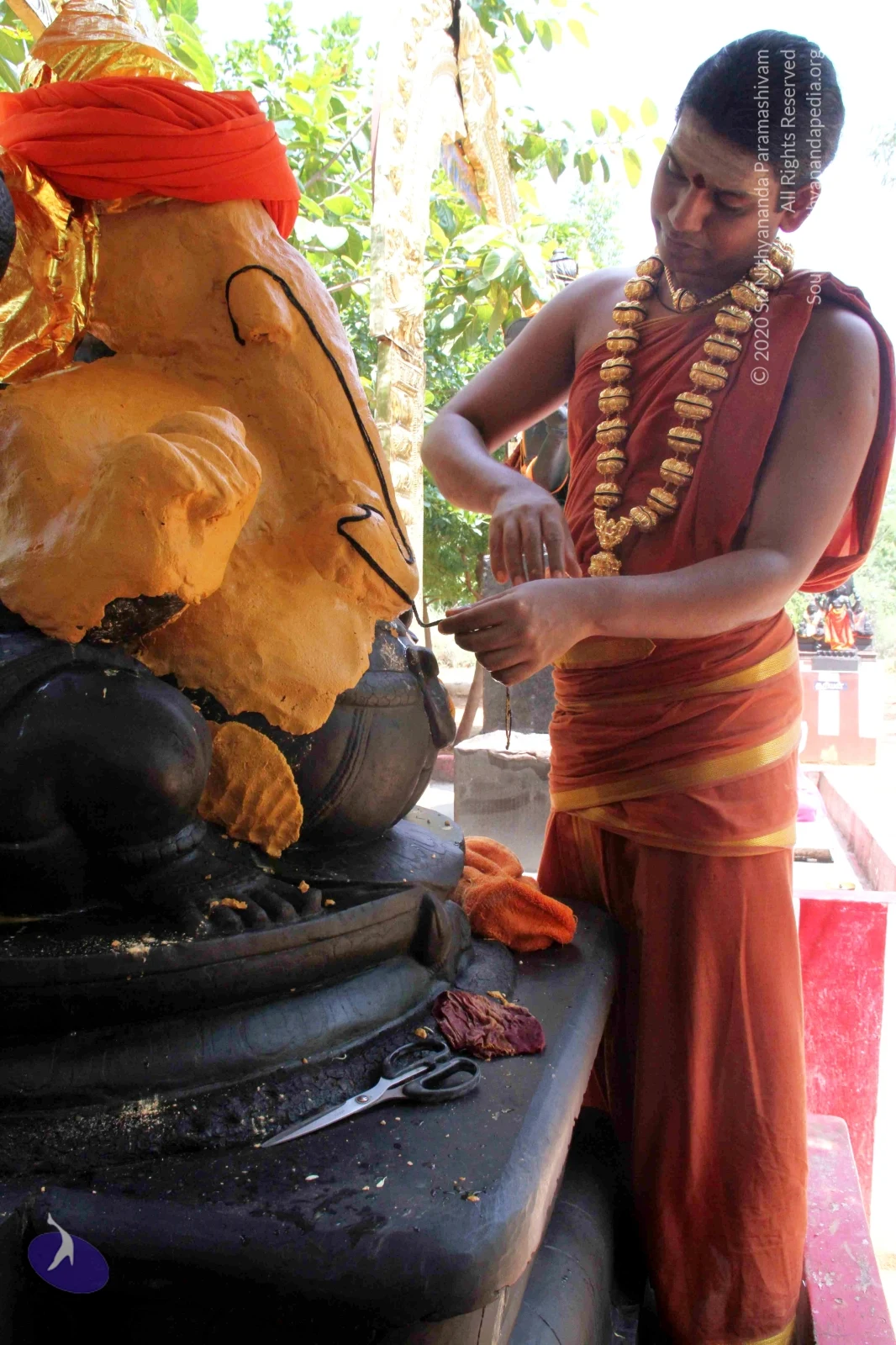
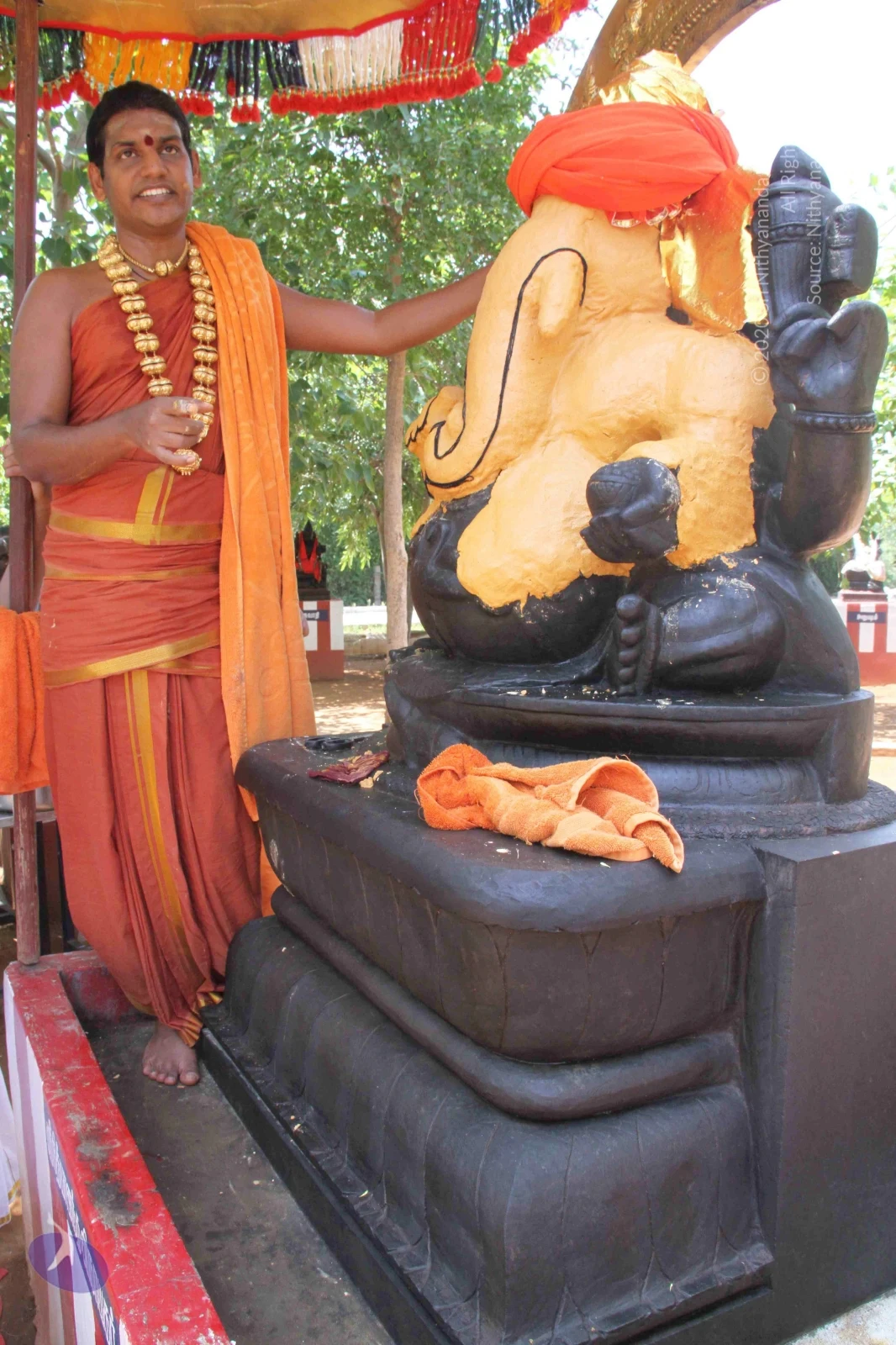
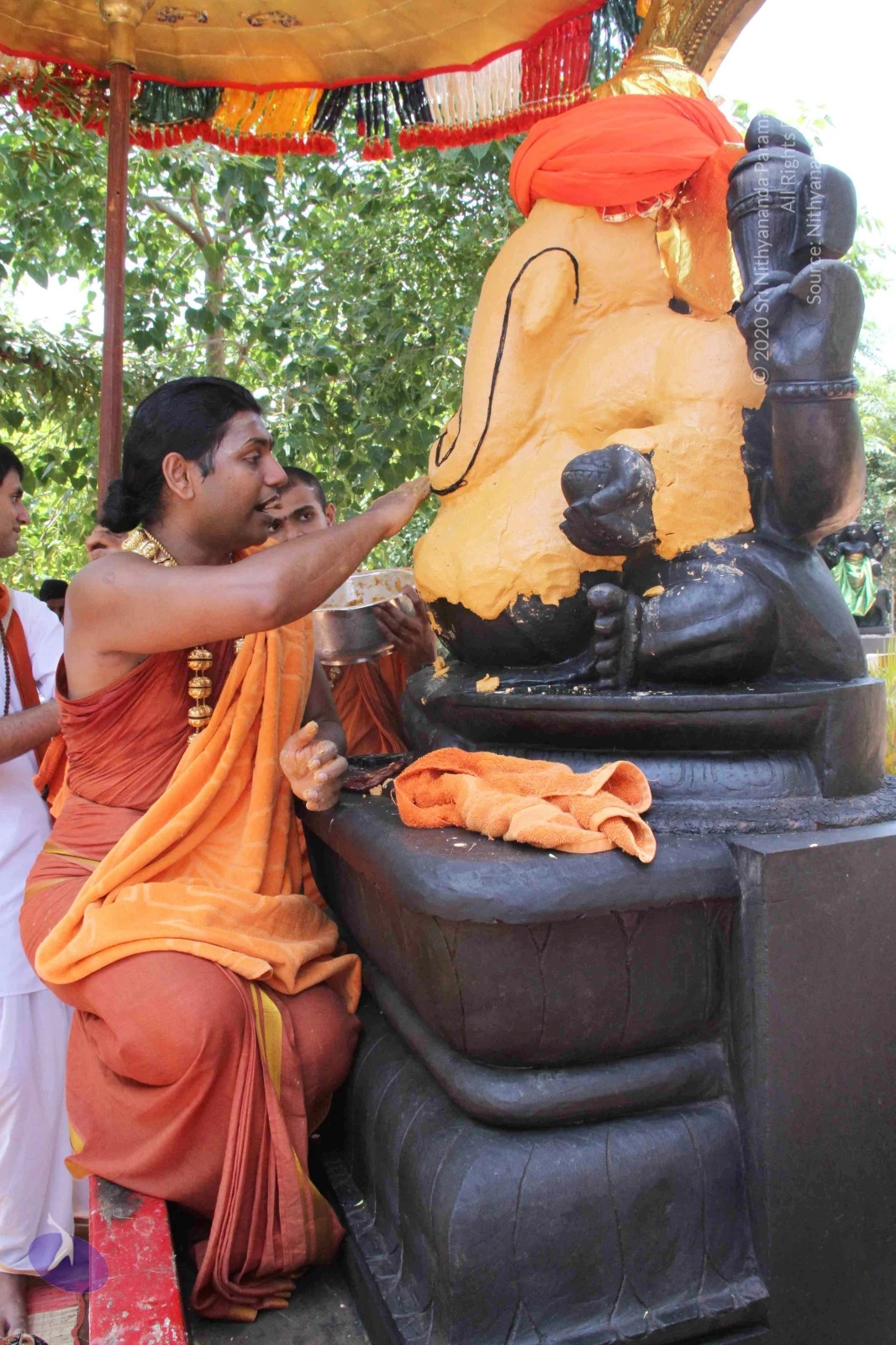
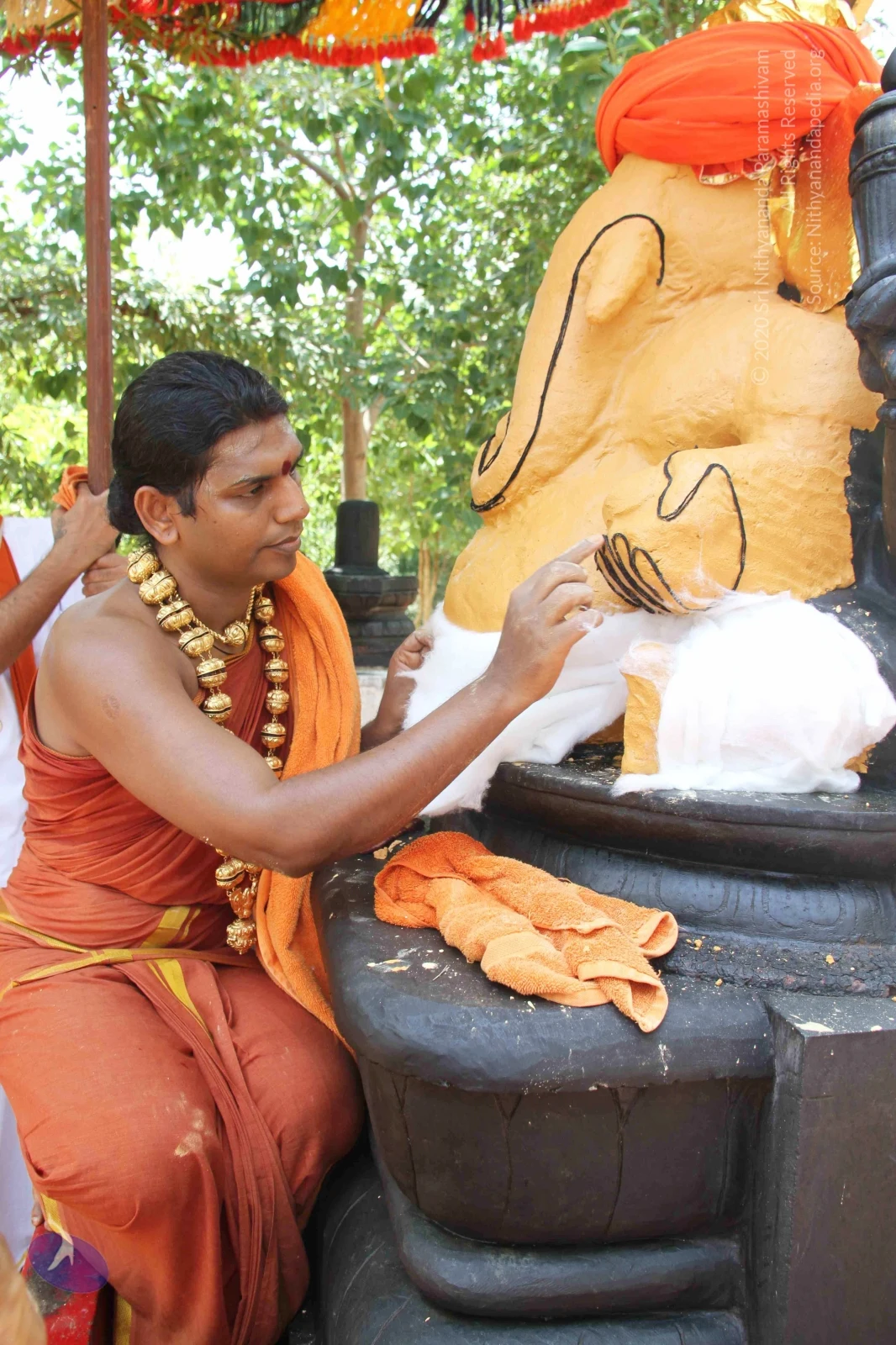
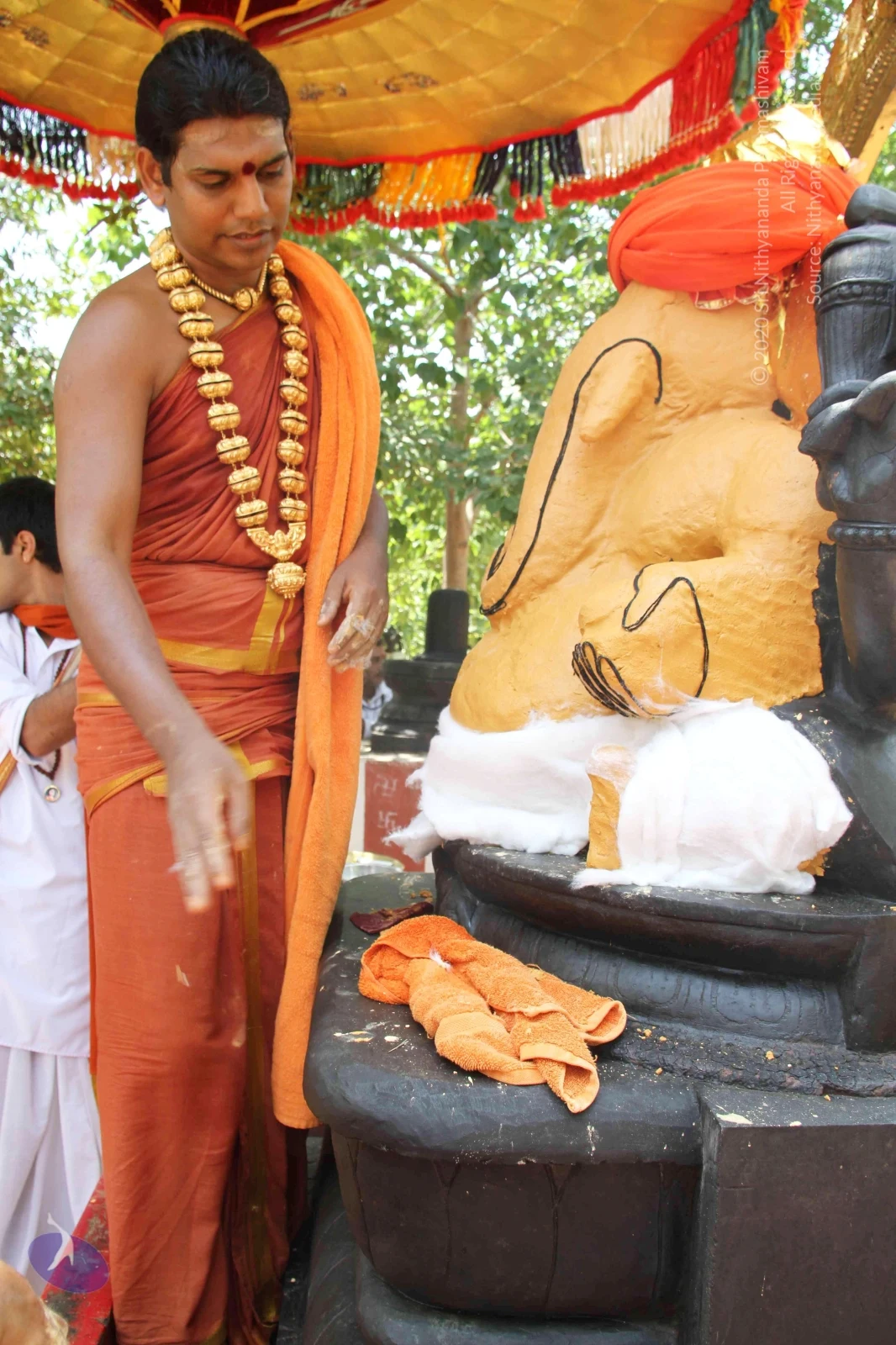
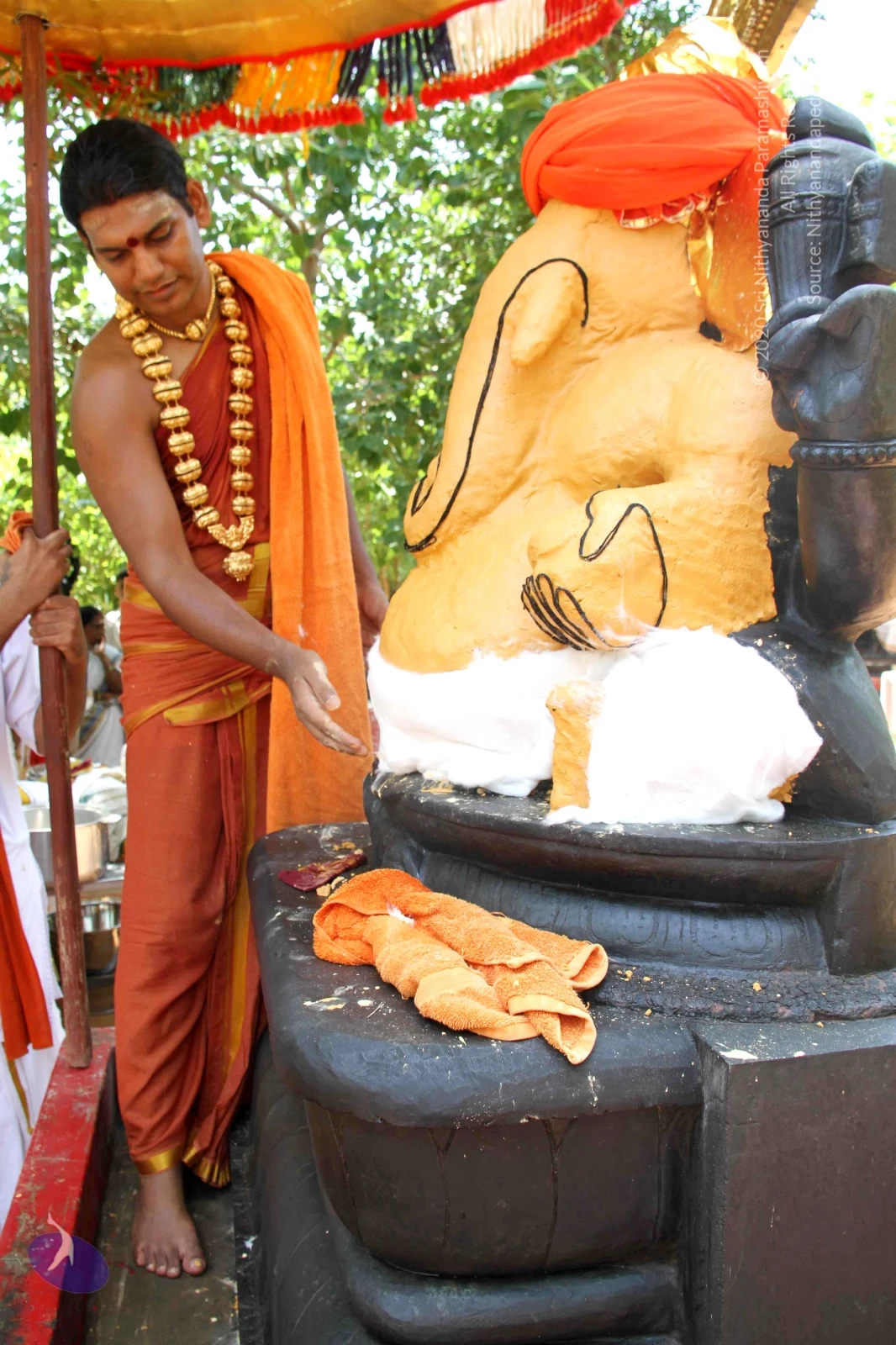
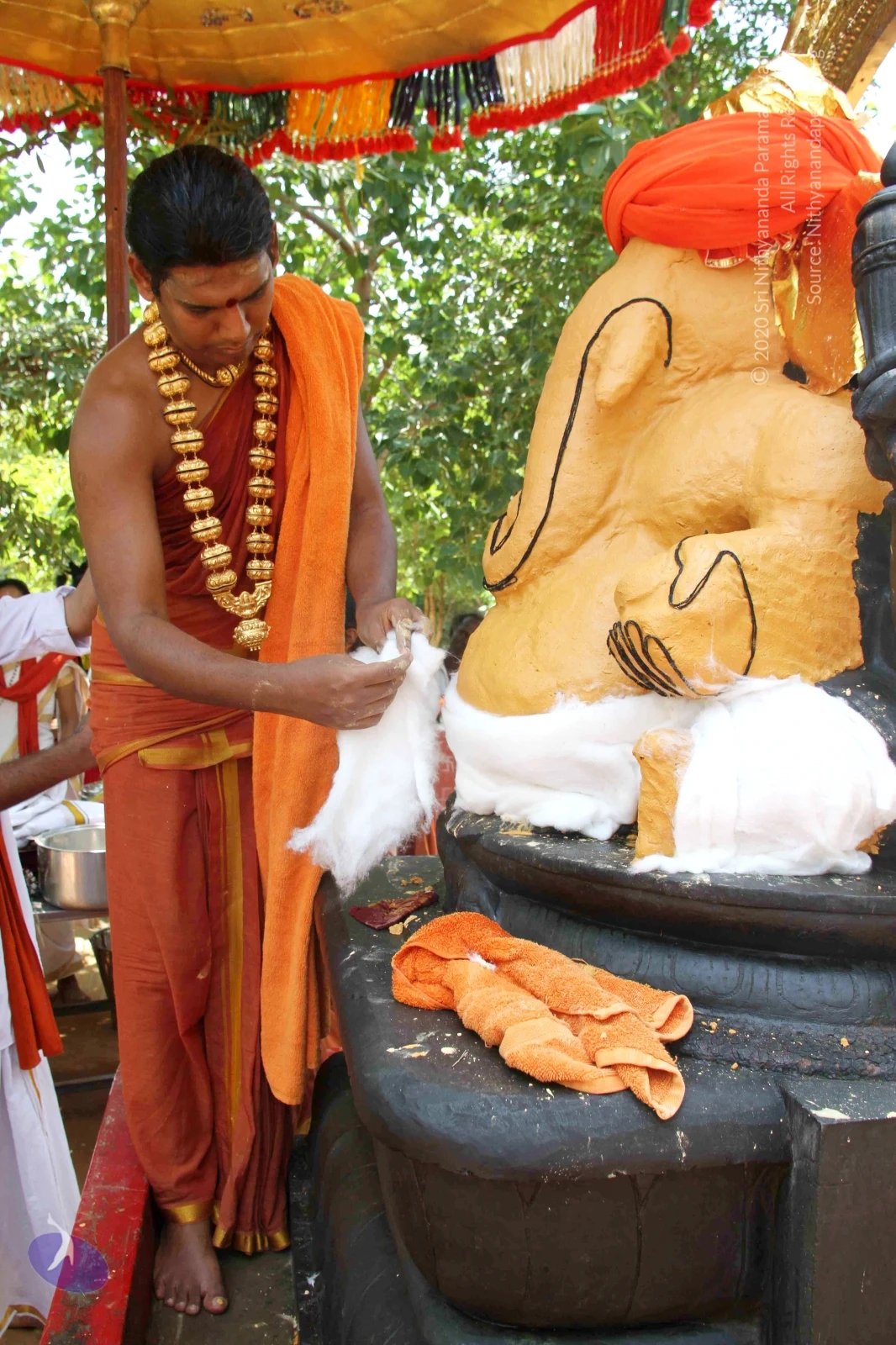
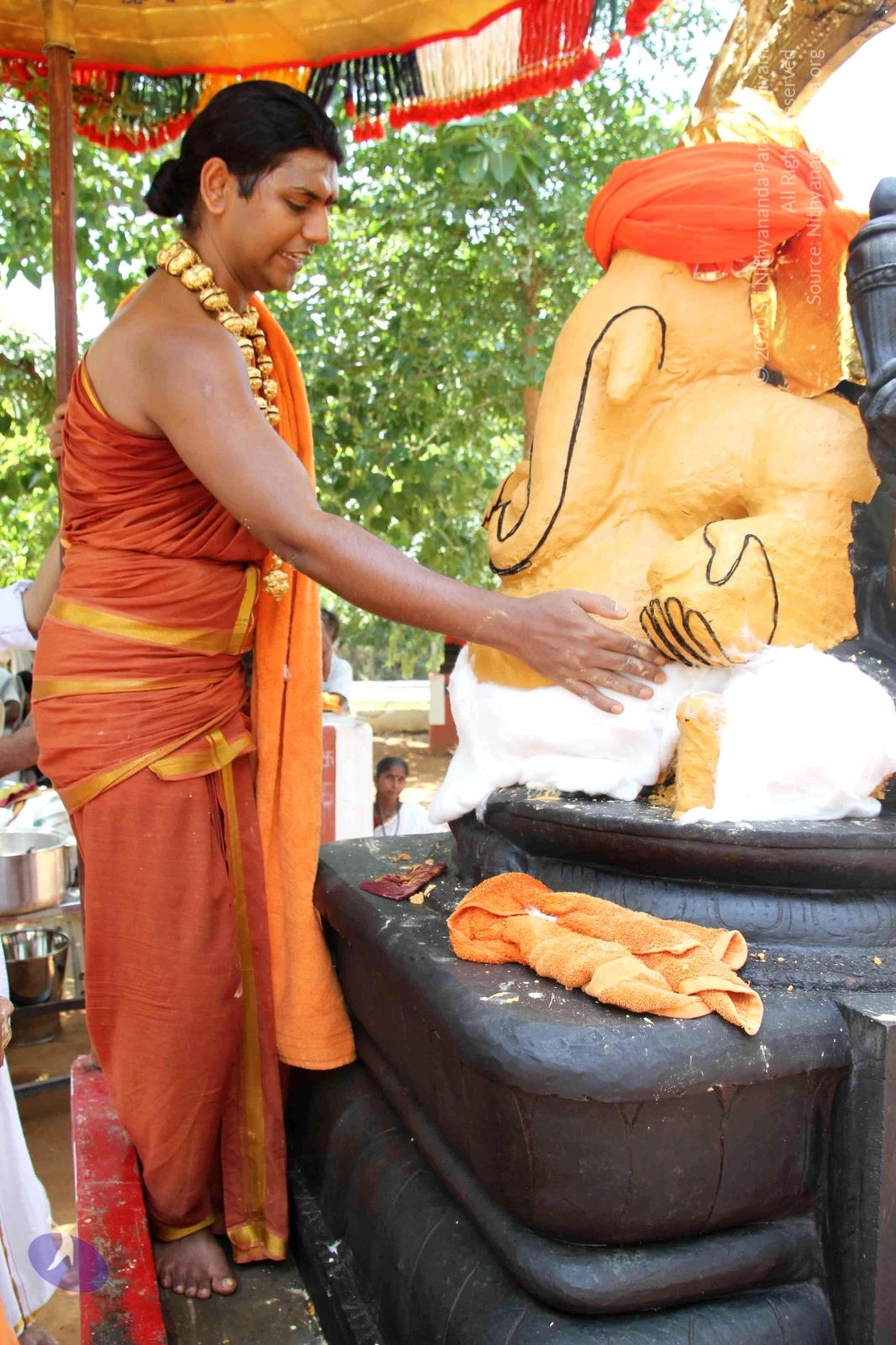
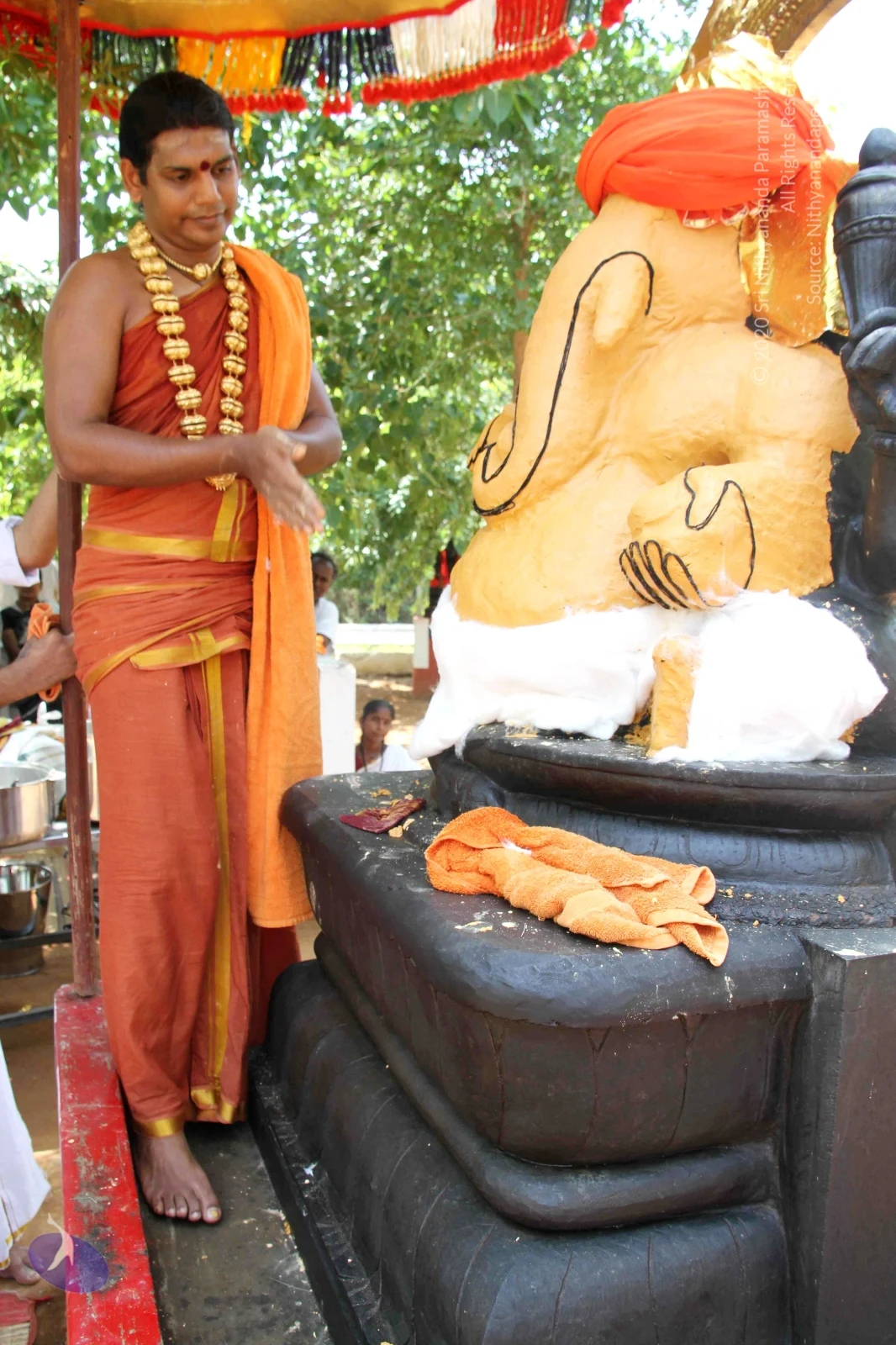
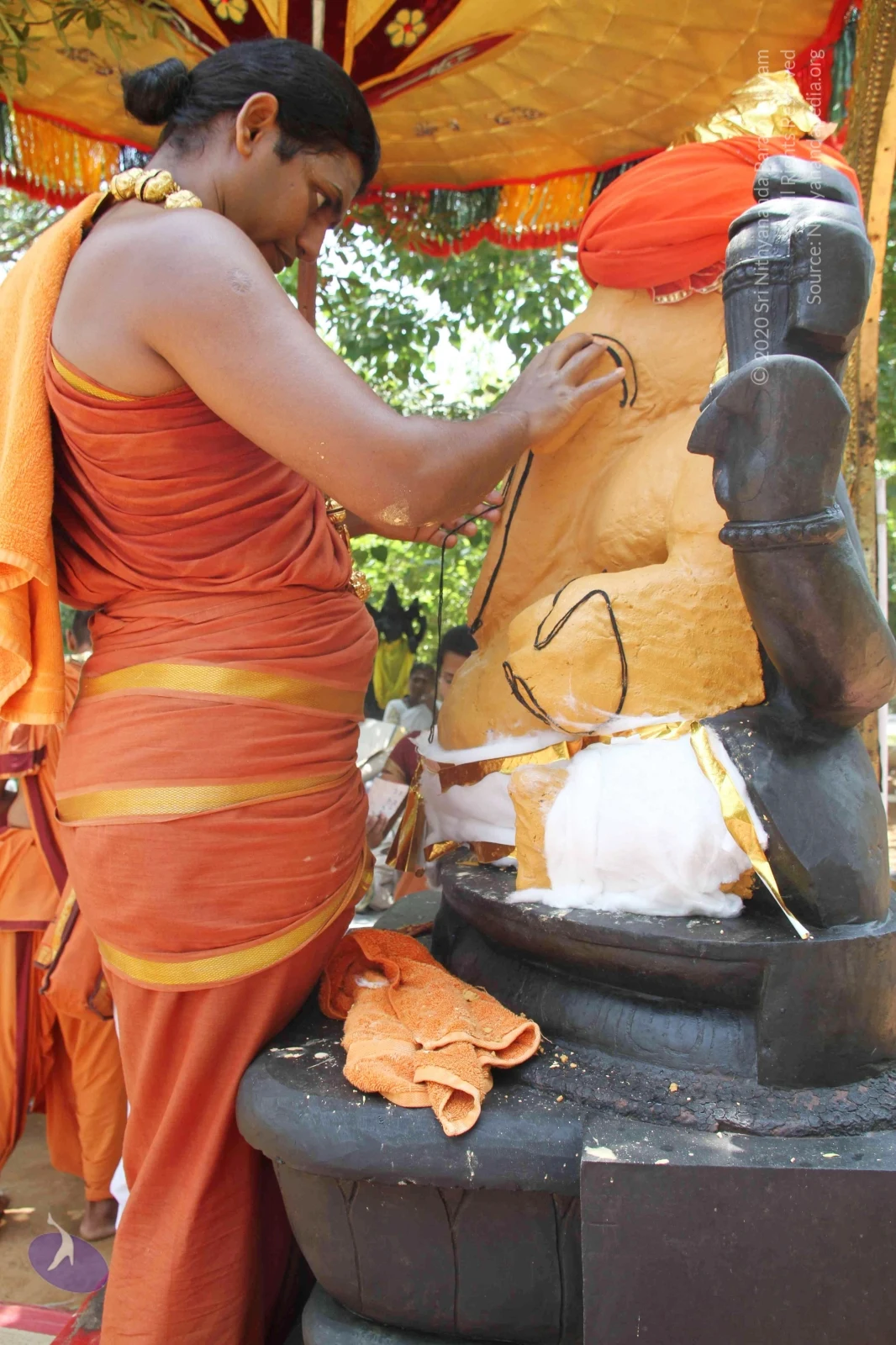
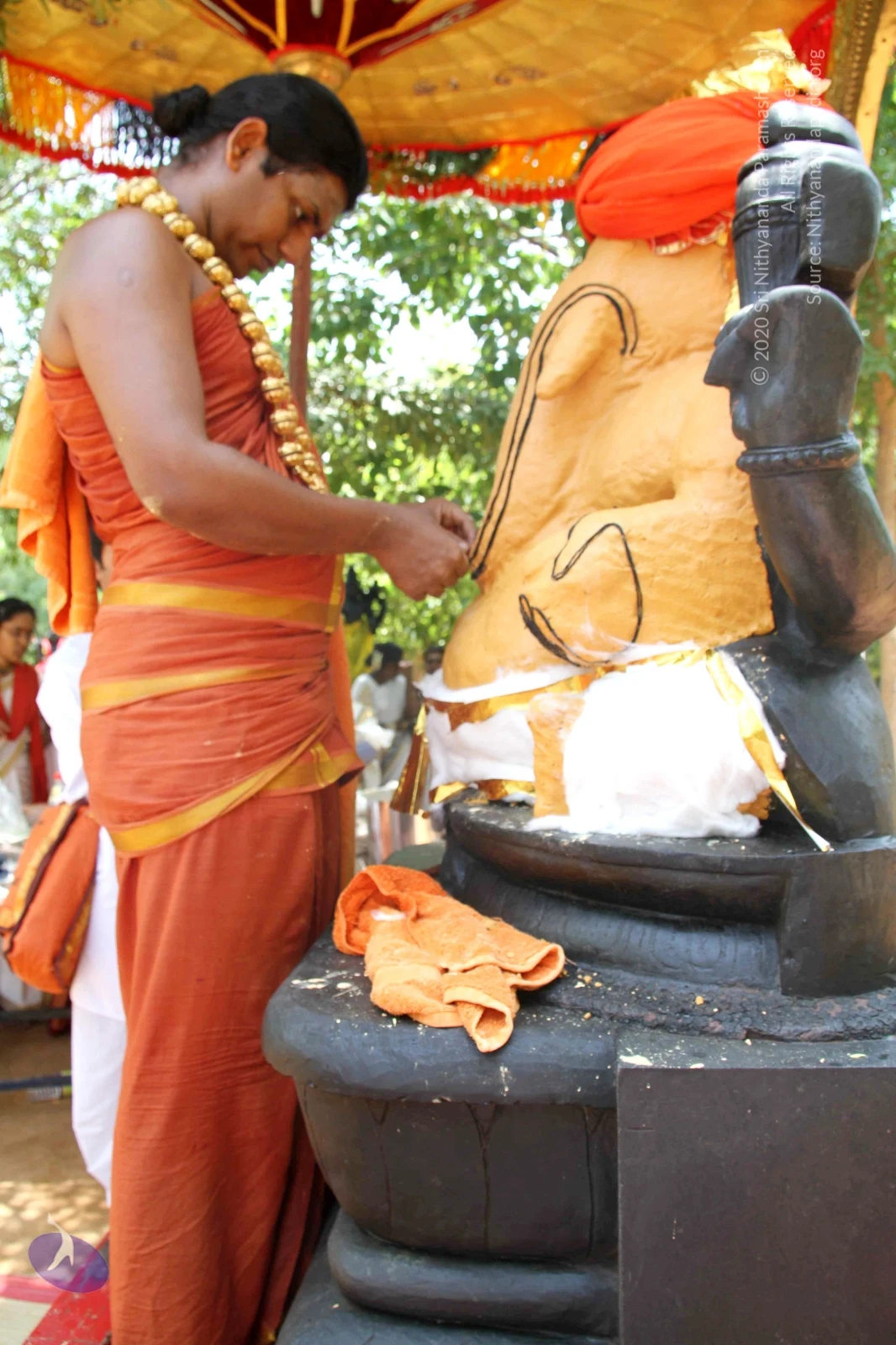
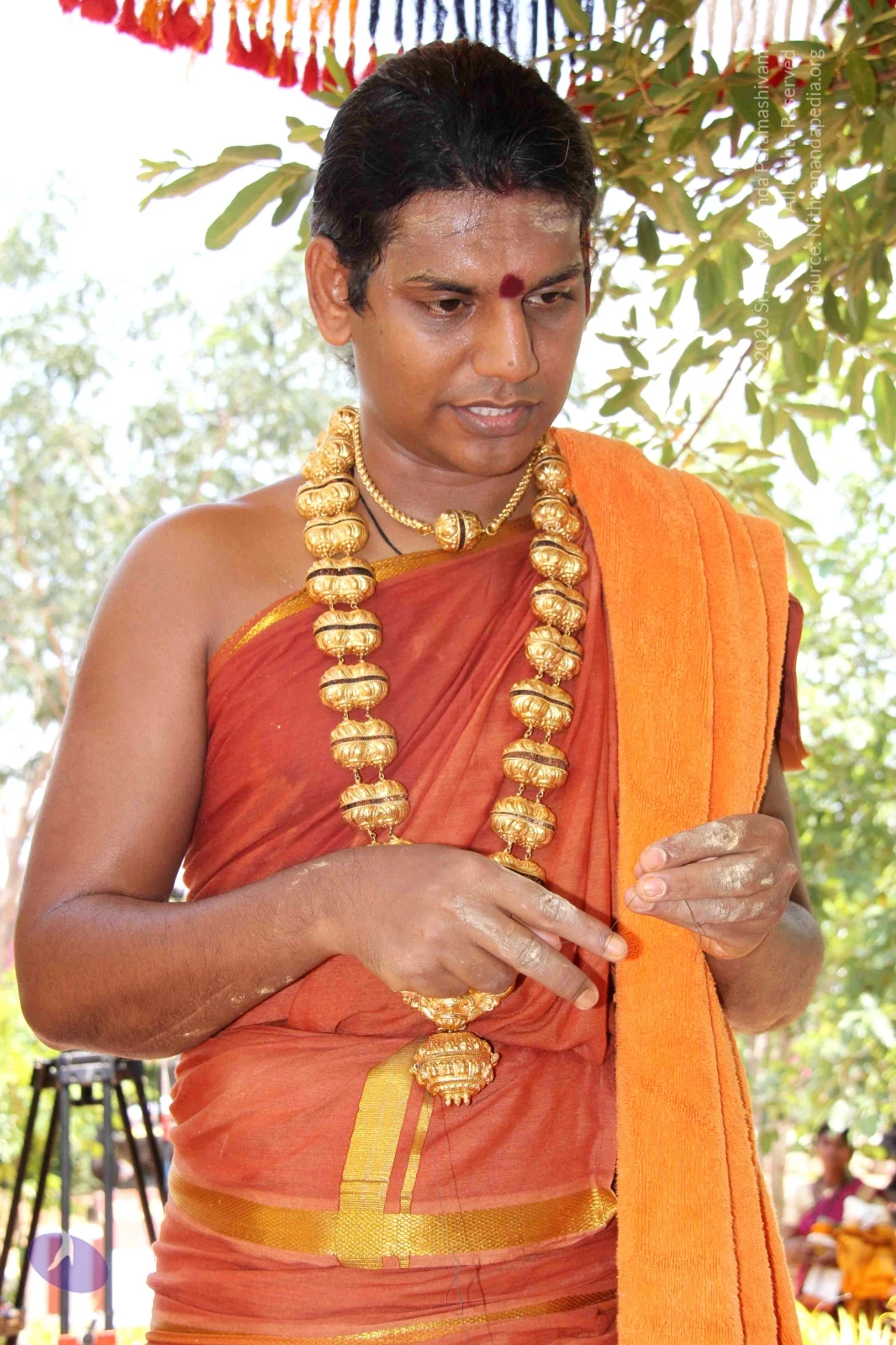
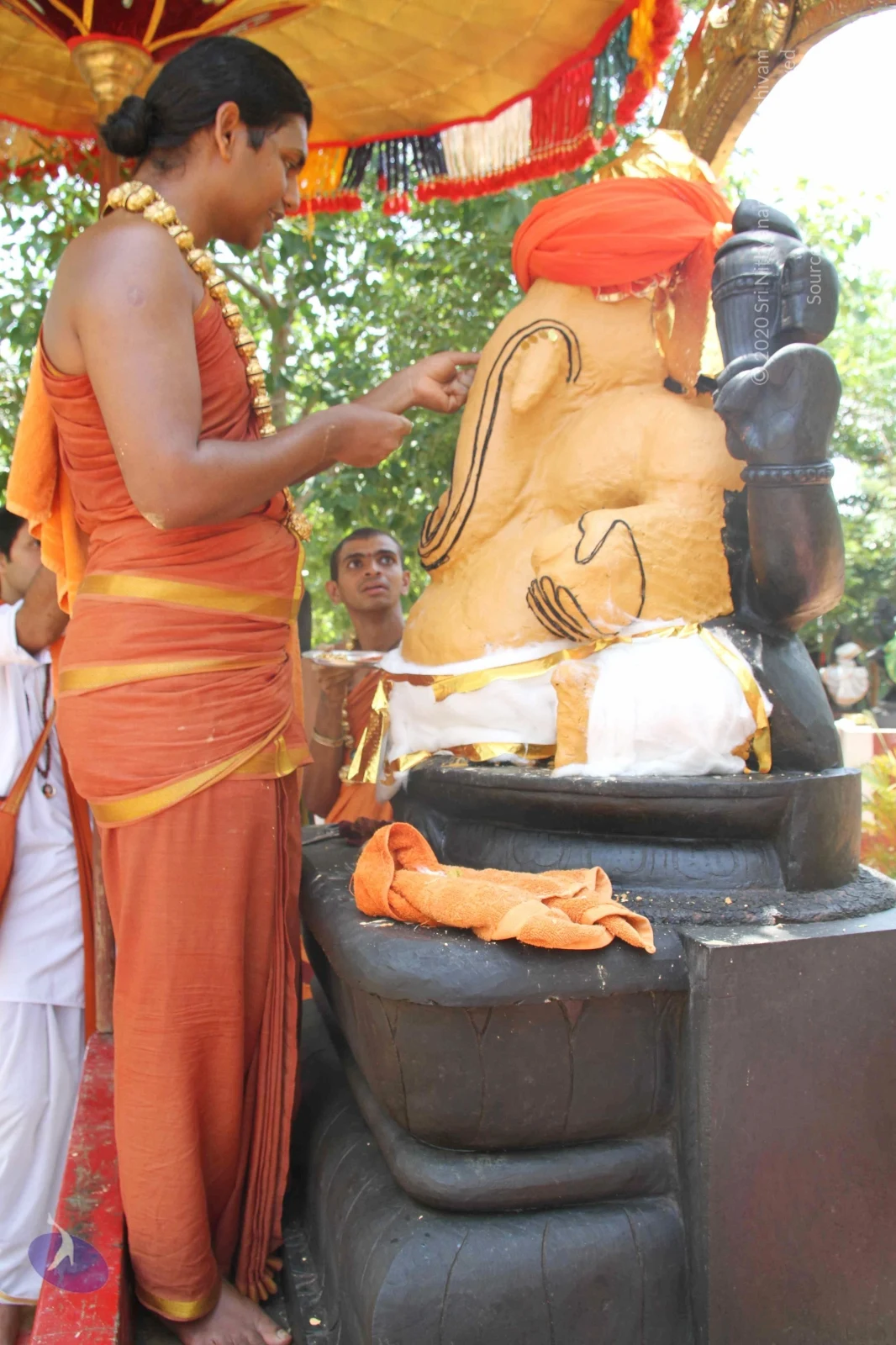
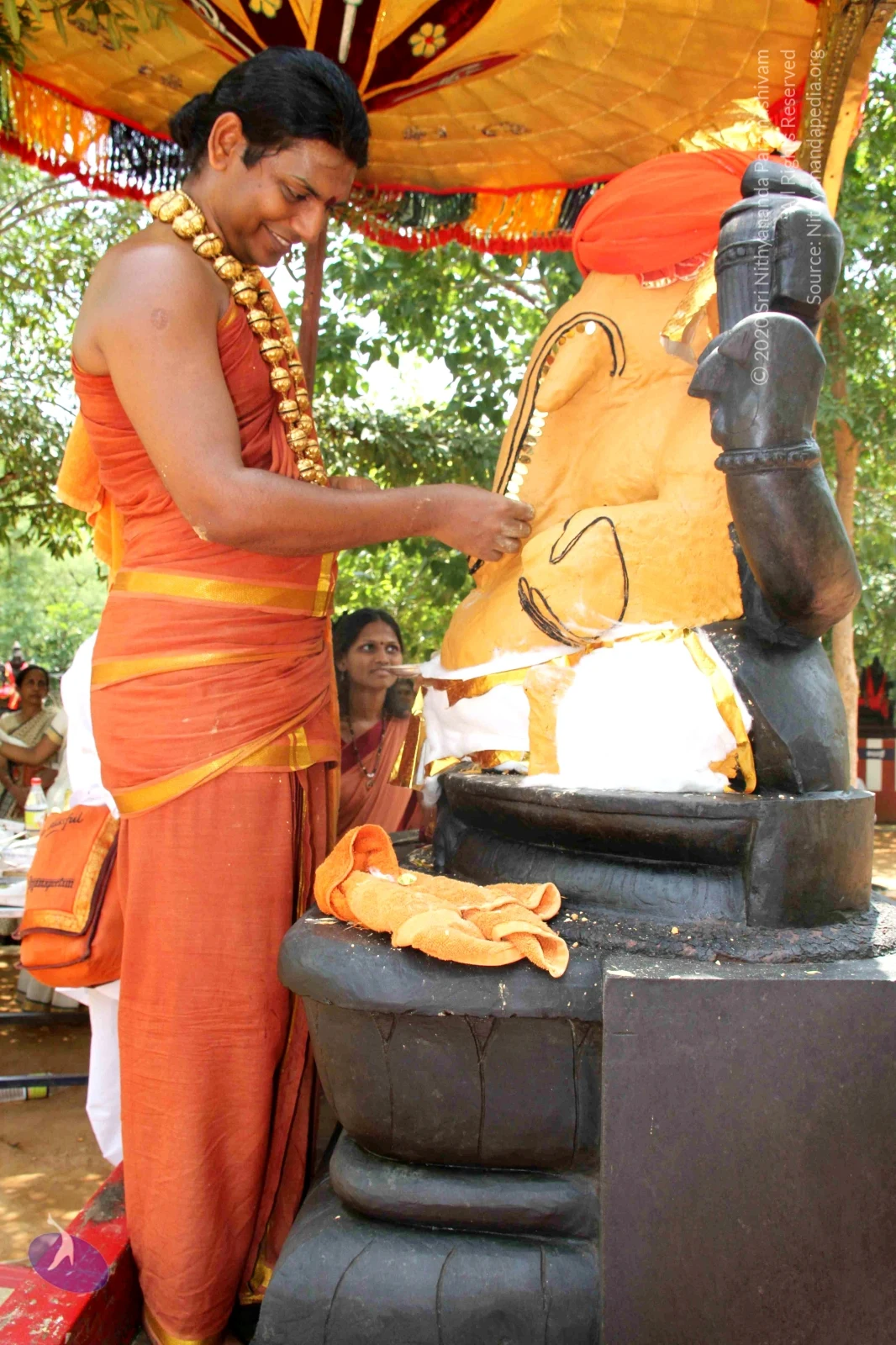
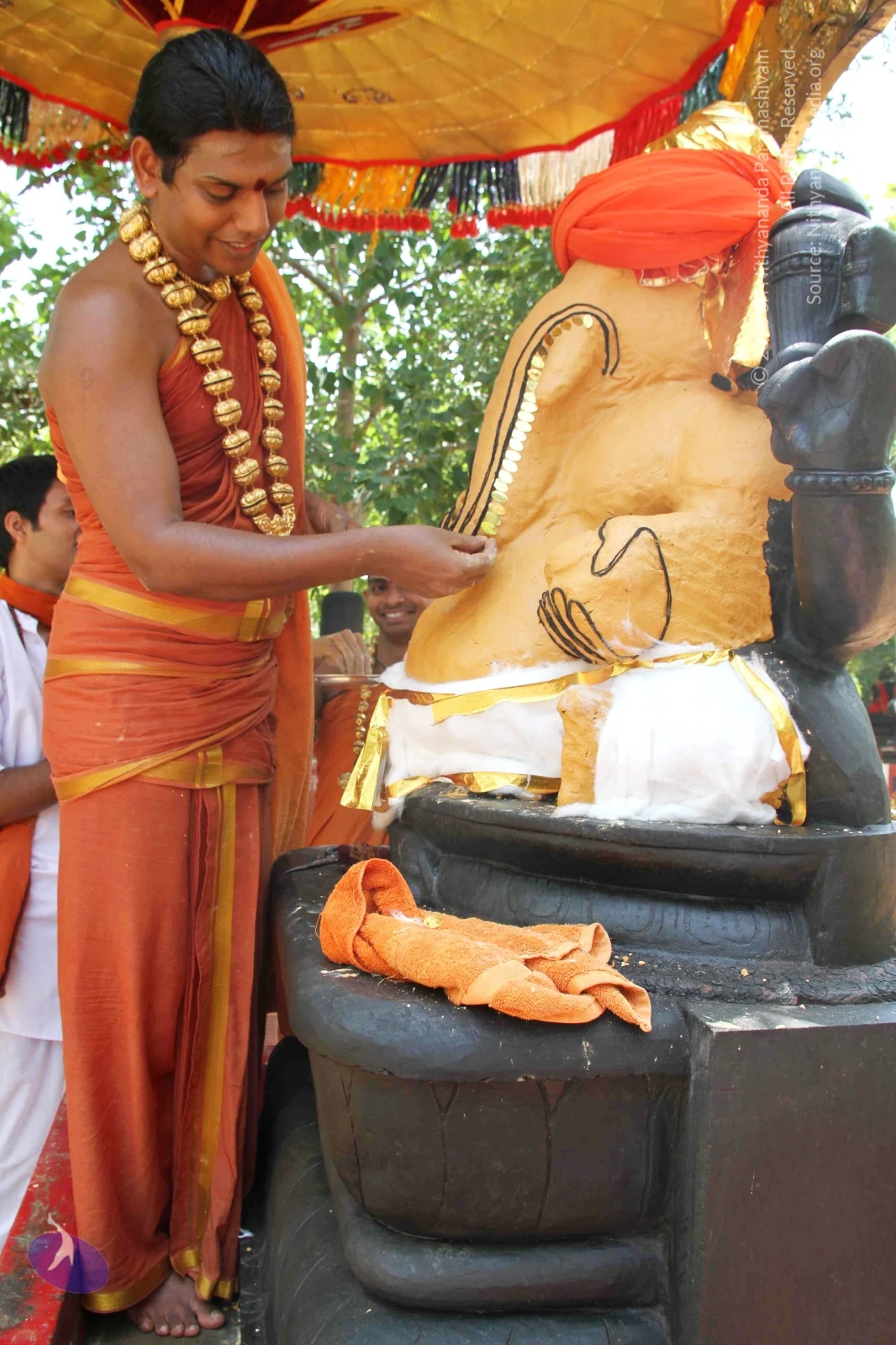
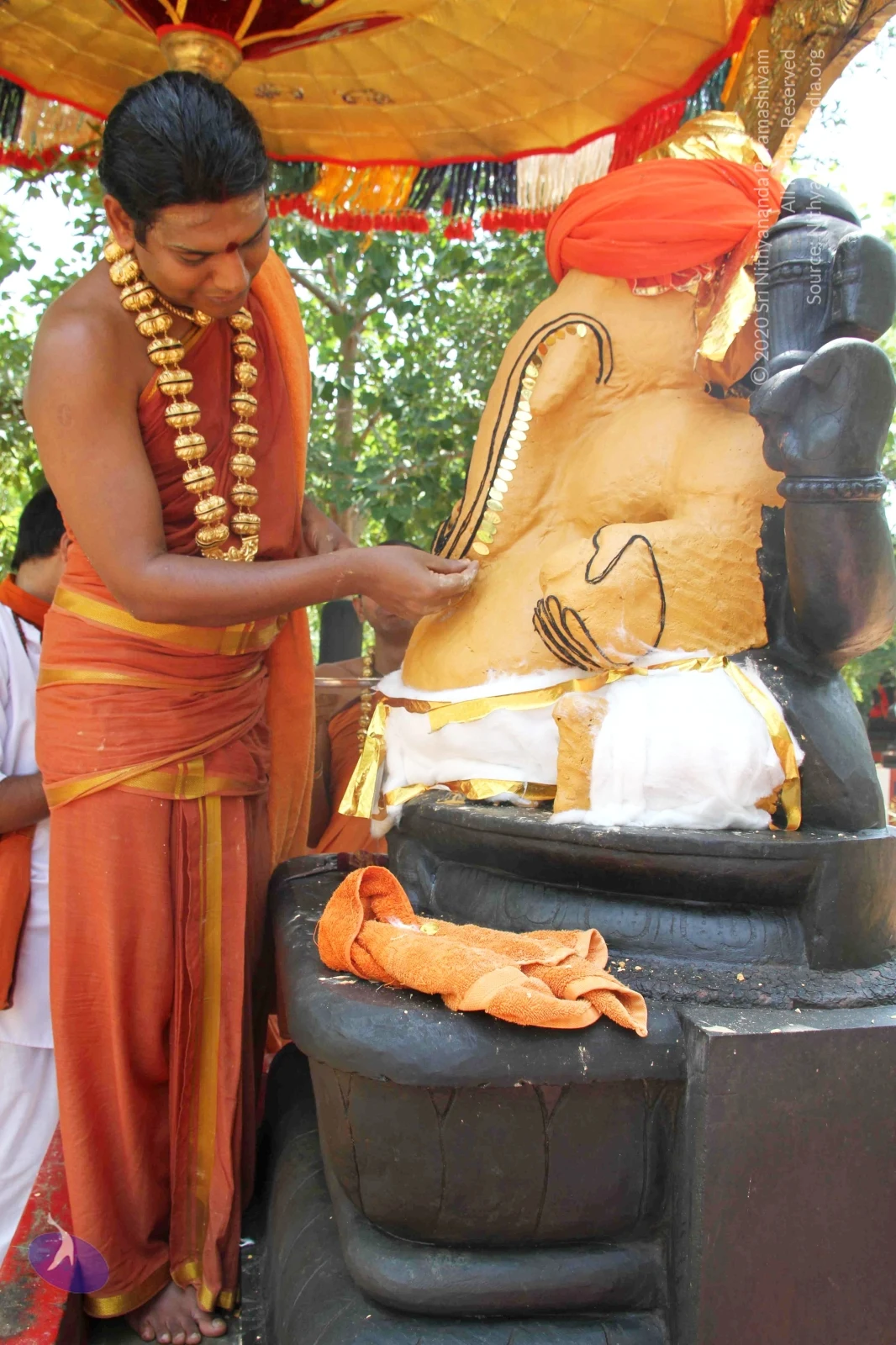
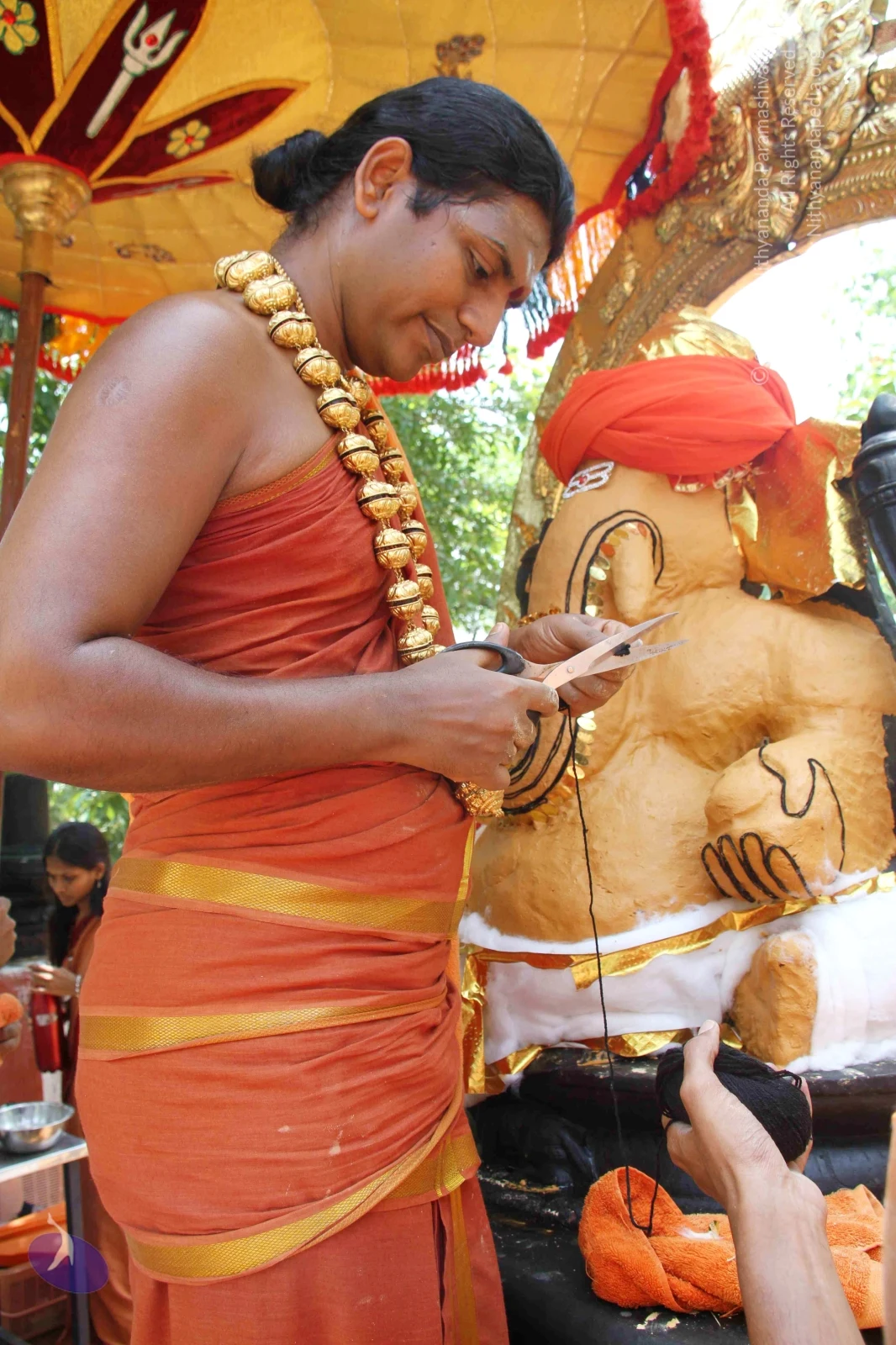
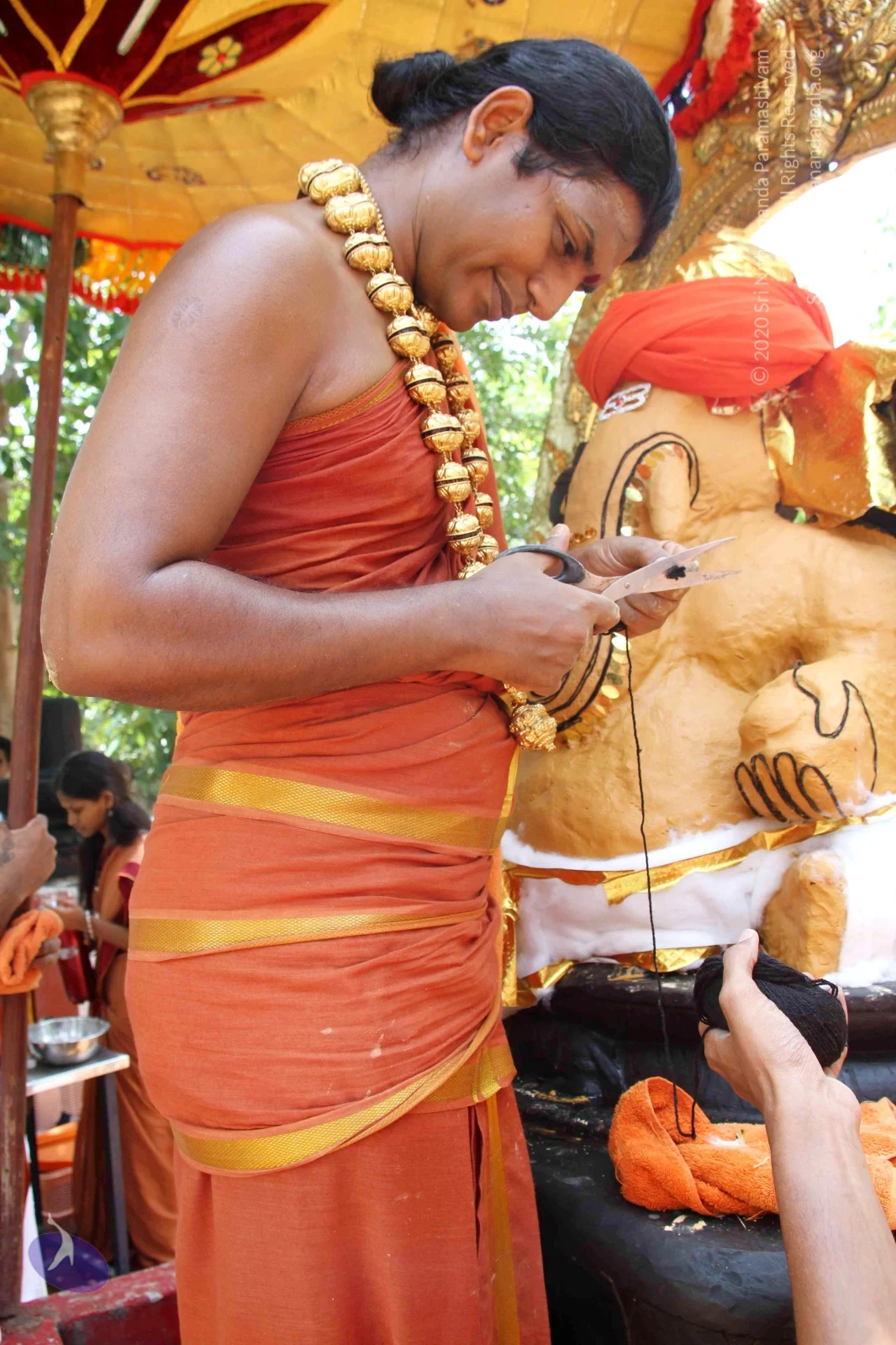
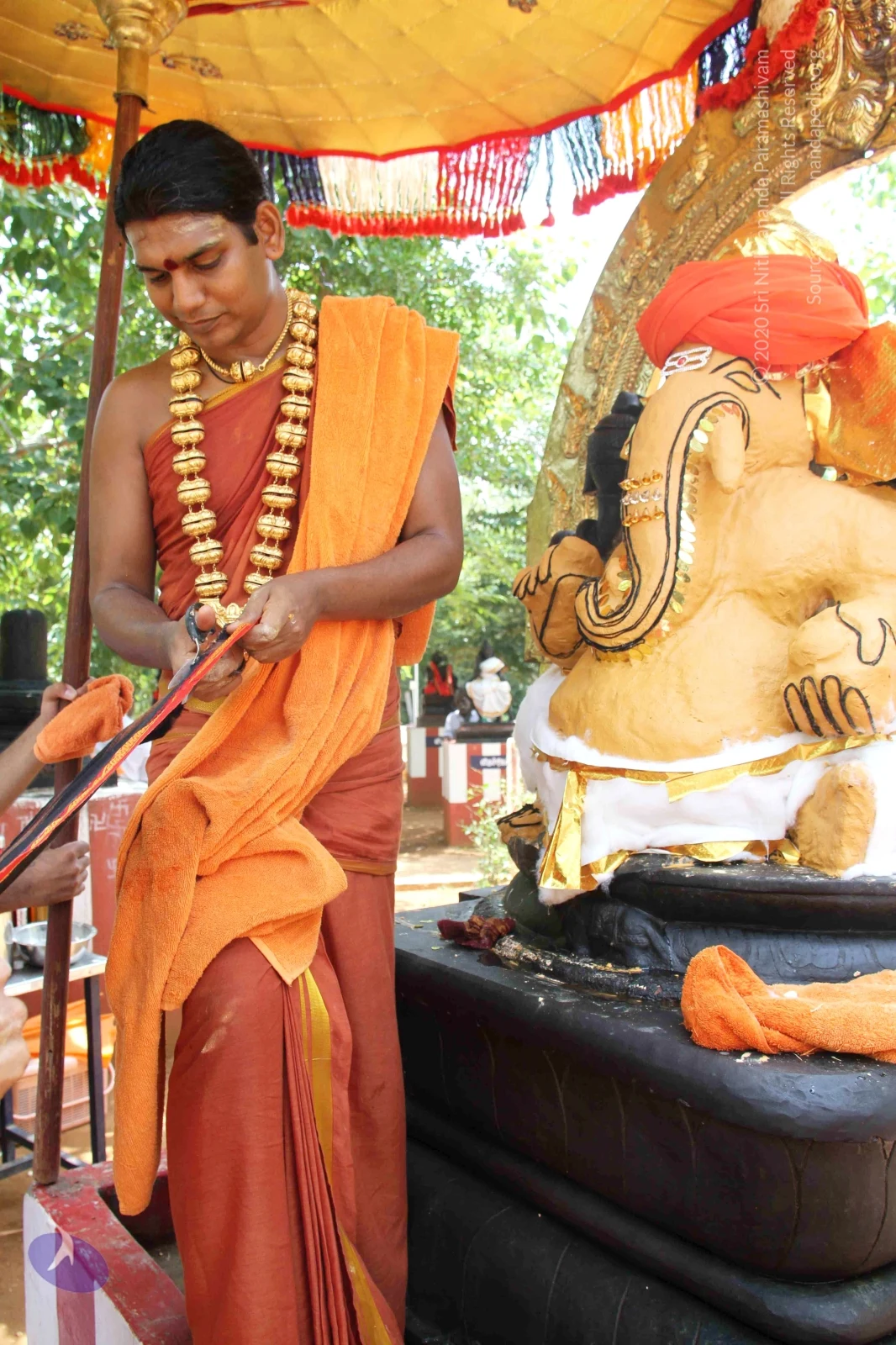
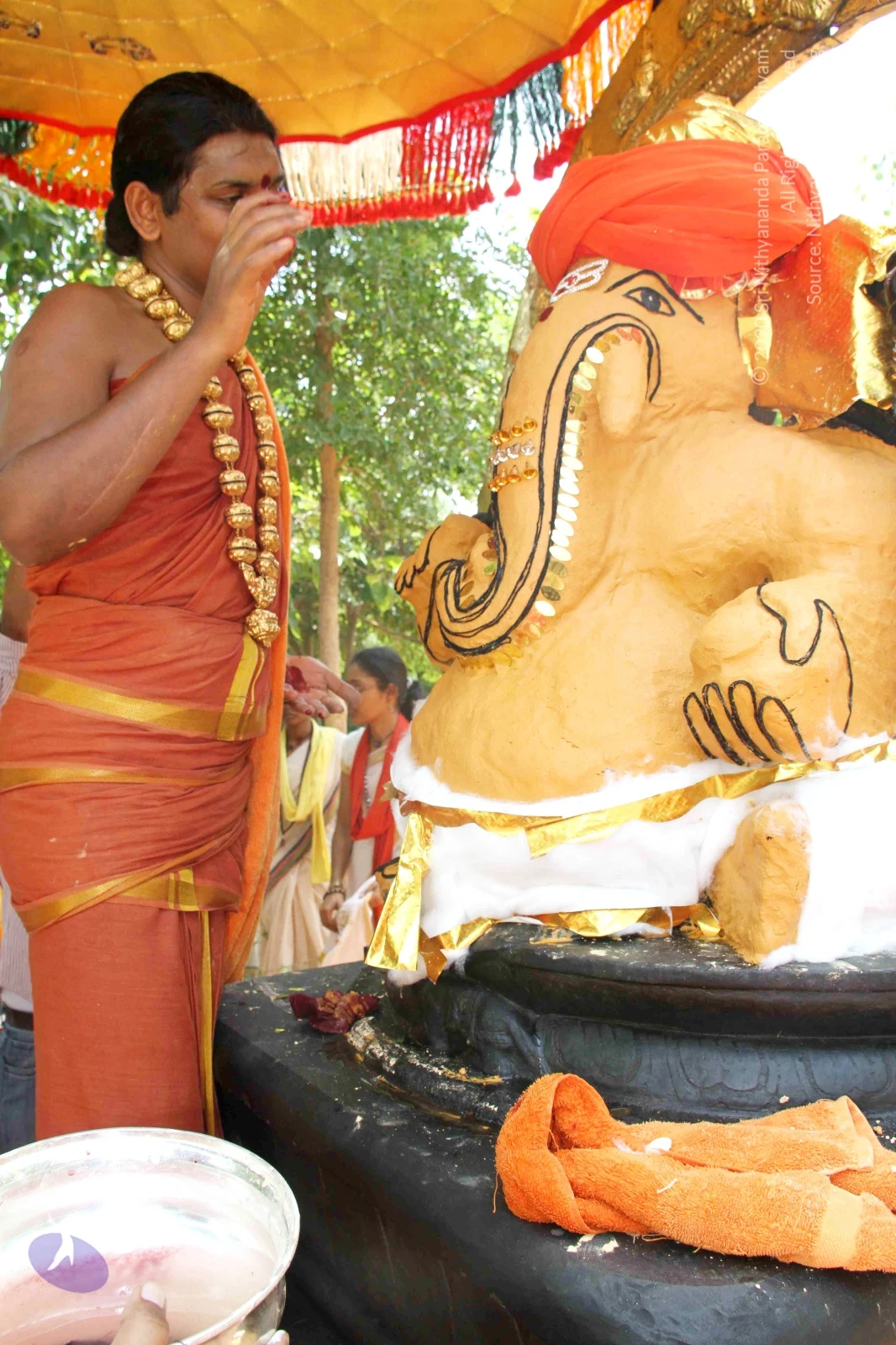
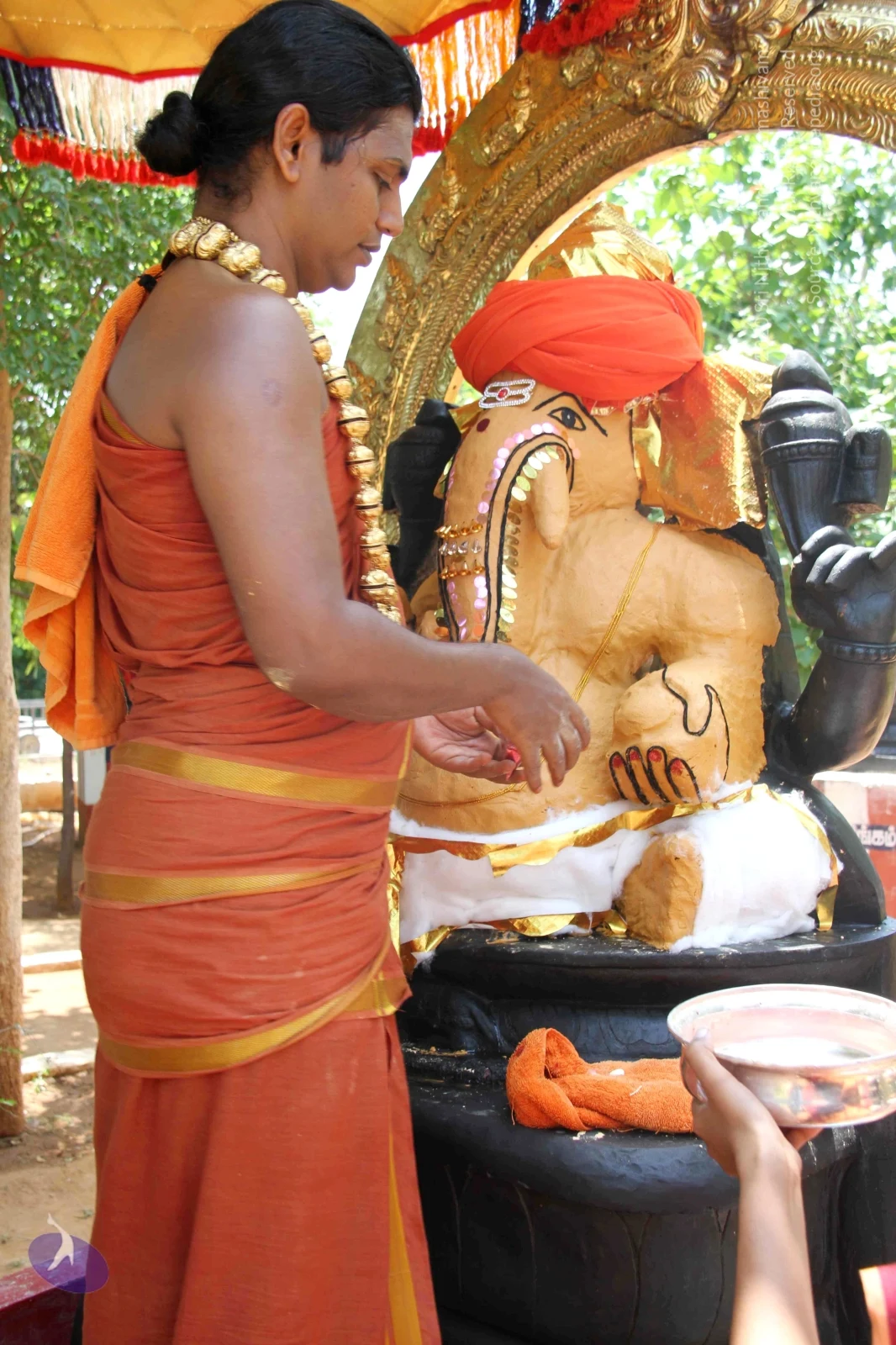
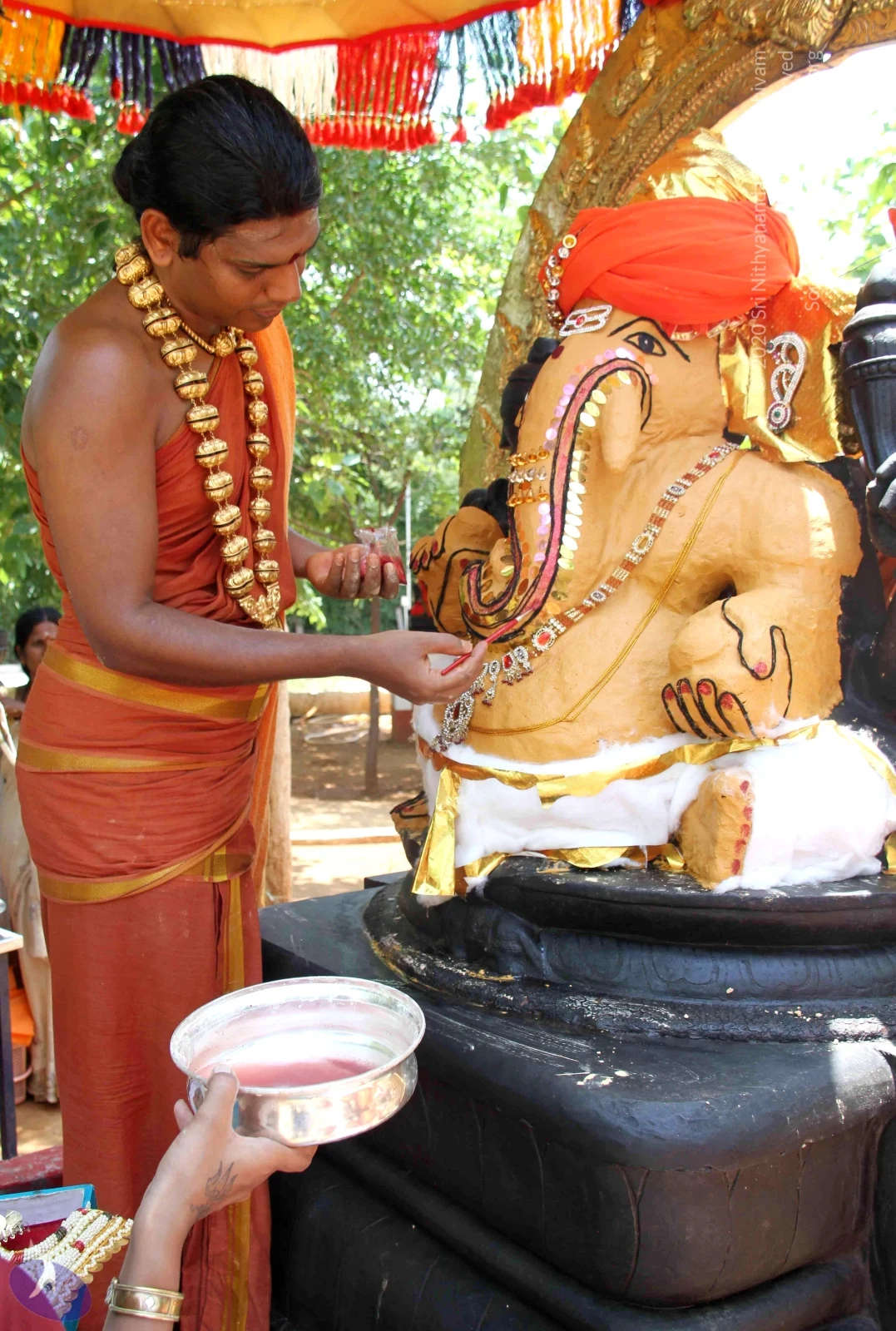
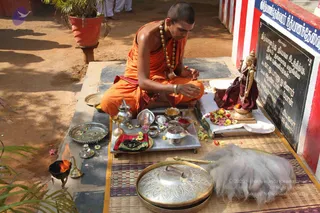
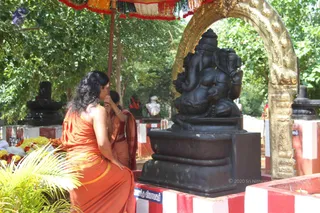
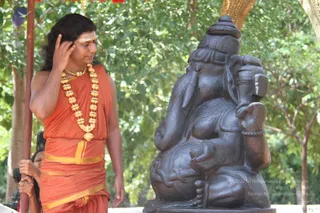
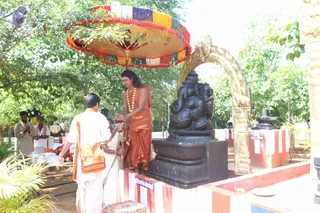
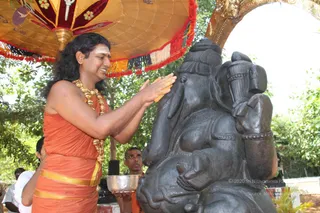
A photograph of an outdoor puja on a stone platform. A shaved-headed man in saffron-orange robes and a beaded necklace sits cross-legged, performing ritual offerings over a silver tray with brass vessels, flowers and a red cloth. Beside him stands a small deity murti dressed in a maroon cloth with garlands. A black board with white Tamil lettering is mounted on a red-and-white wall behind. An oil lamp with a visible flame sits at left, and a metal pot with a patterned lid rests on a woven mat at lower right.Outdoor photo at a shaded shrine with a large black stone Ganesha murti seated under a gilded arch, its trunk turned to one side and a bowl or modak in hand. A woman in an orange sari with long dark wavy hair sits on the left, her hand raised near her face in devotion, while a second woman in orange and maroon stands beside her, holding a tall orange-and-red umbrella overhead. Marigold garlands and yellow flowers lie on the red-and-white painted base, with black Shivalingas and smaller murtis behind. Green trees frame the scene.A man in saffron-orange robes with a gold necklace of large beads stands beside a dark stone Ganesha statue under green trees. He holds a tall wooden pole in one hand and touches his temple with the other, looking toward the seated elephant-headed deity with a raised tusk, trunk and modak-bearing hand. A vertical tilak mark is on his forehead and long dark hair falls to his shoulders. Another person's arm and hair are partly visible at the left edge.A photograph of an outdoor temple-grounds scene under greenery. A man in orange-saffron dhoti and shawl stands to the left, holding a tall wooden staff with a red-and-orange tasselled canopy above. He wears a thick gold bead necklace, a gold chain, and a white vibhuti/tilak mark on his forehead, and his long dark hair is swept back. He gazes toward a large dark stone murti of Ganesha seated with a trunk curled toward the left, one hand raised in blessing and a bowl or modak in another. A golden arch frames the murti.Outdoor photograph at a temple shrine under trees. A large black stone Ganesha murti sits on a pedestal beside a golden arched frame. A man in an orange dhoti and orange shawl with a beaded necklace stands beneath a yellow and red fringed parasol held by an assistant, facing the Ganesha image. A man in white dhoti and orange shawl stands in front with his back to the camera, and a woman in white sari stands nearby. Another man in cream clothing with hands folded and a woman in white stand in the background among offerings and cloth. a person cues: the standing figure has long dark swept hair, an orange garment and a beaded necklace, and the page indicates his presence.A man in saffron-orange robes with a gold-toned ceremonial necklace and a white tilak on his forehead stands beside a large dark stone Ganesha murti, pressing his palms together in reverence. Above him a gold and red ceremonial umbrella with tassels shelters the scene. Behind him a young attendant in orange holds a silver bowl, and a white-clad man stands at the left edge. Green trees surround the outdoor setting.

Homa

27 photosSource gallery
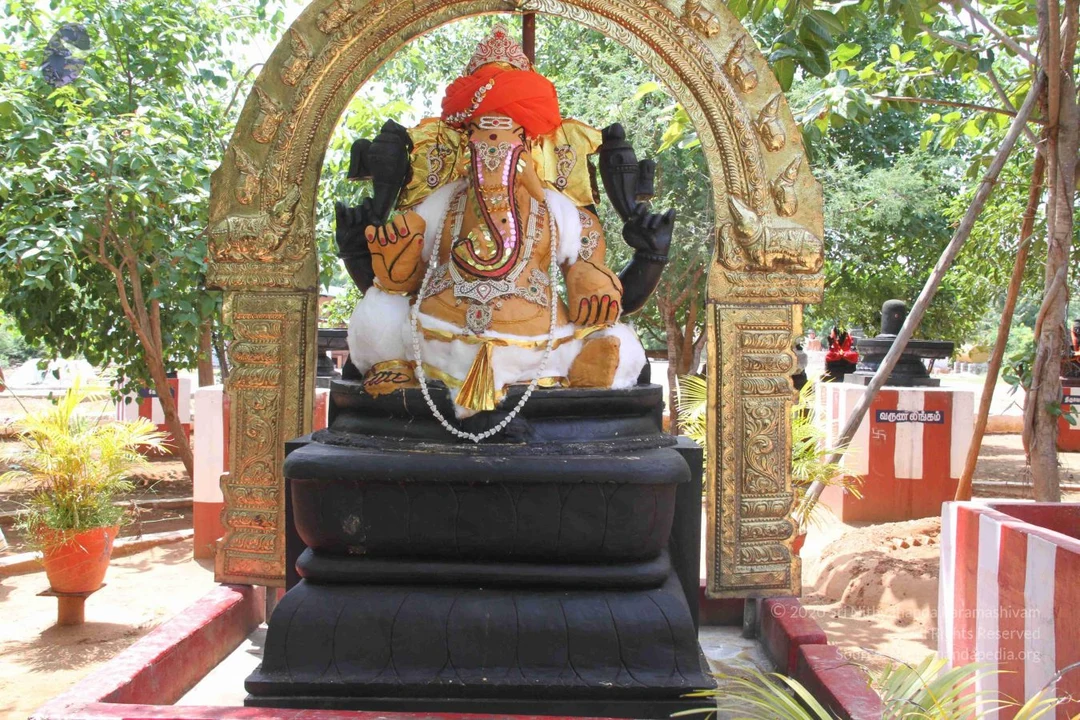
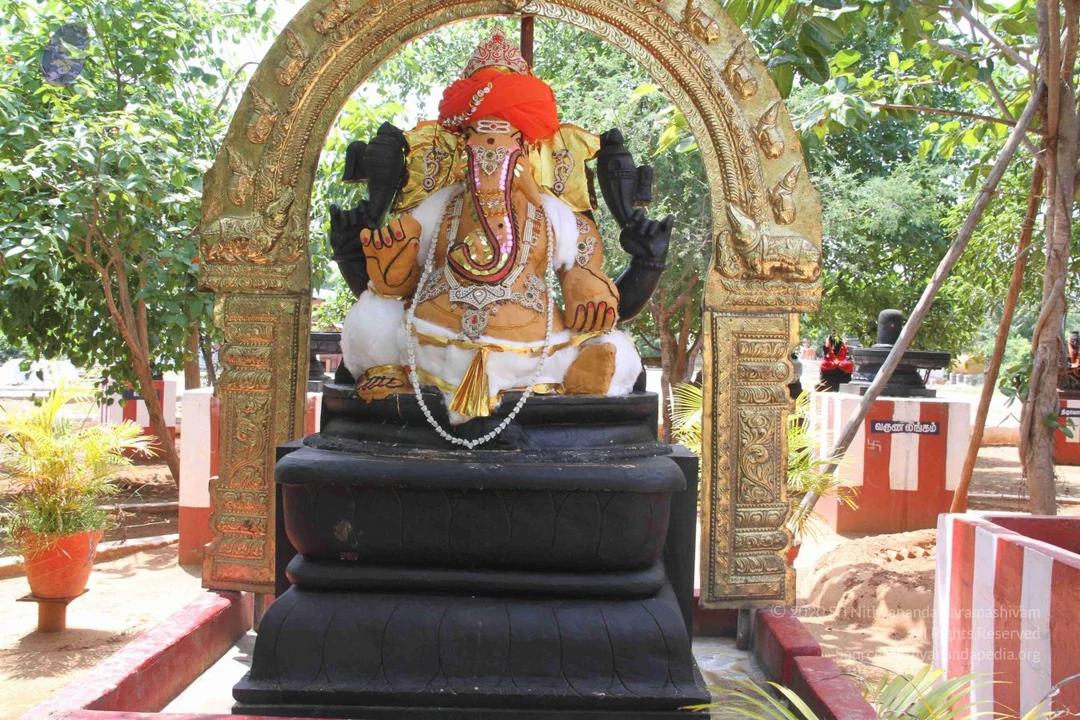
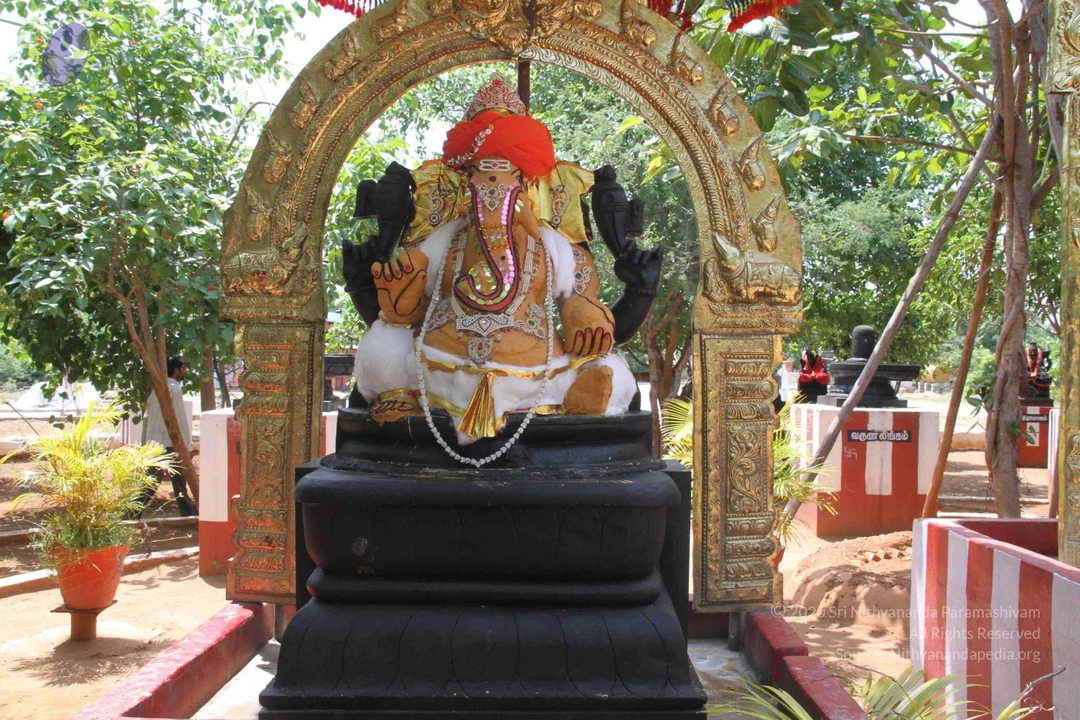
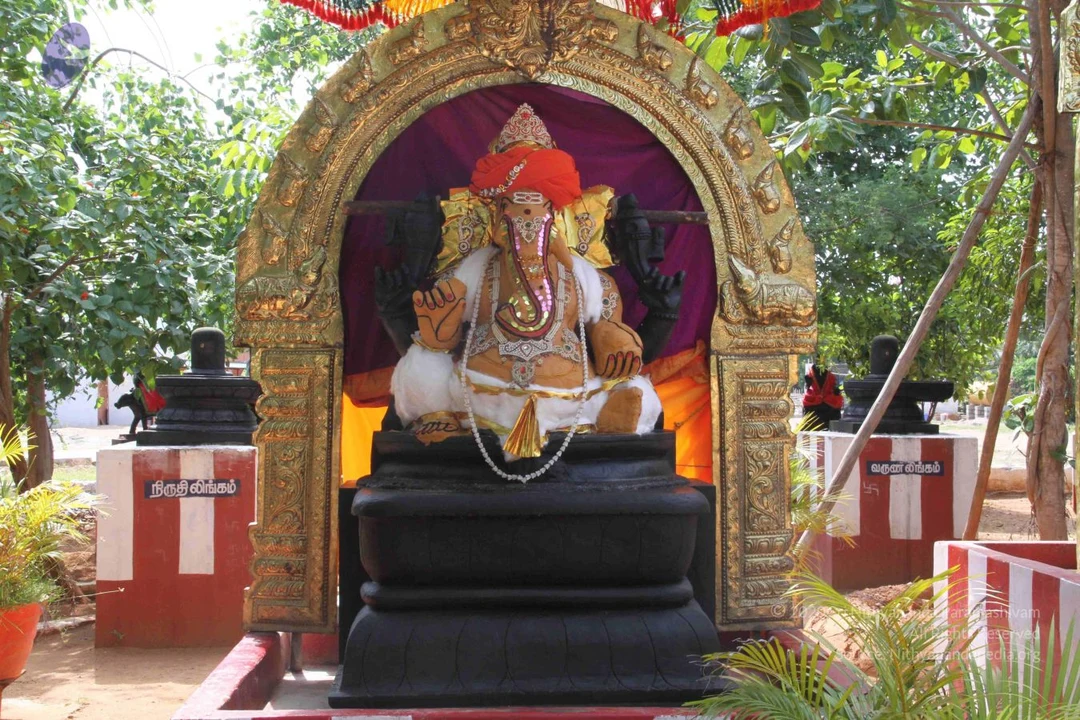
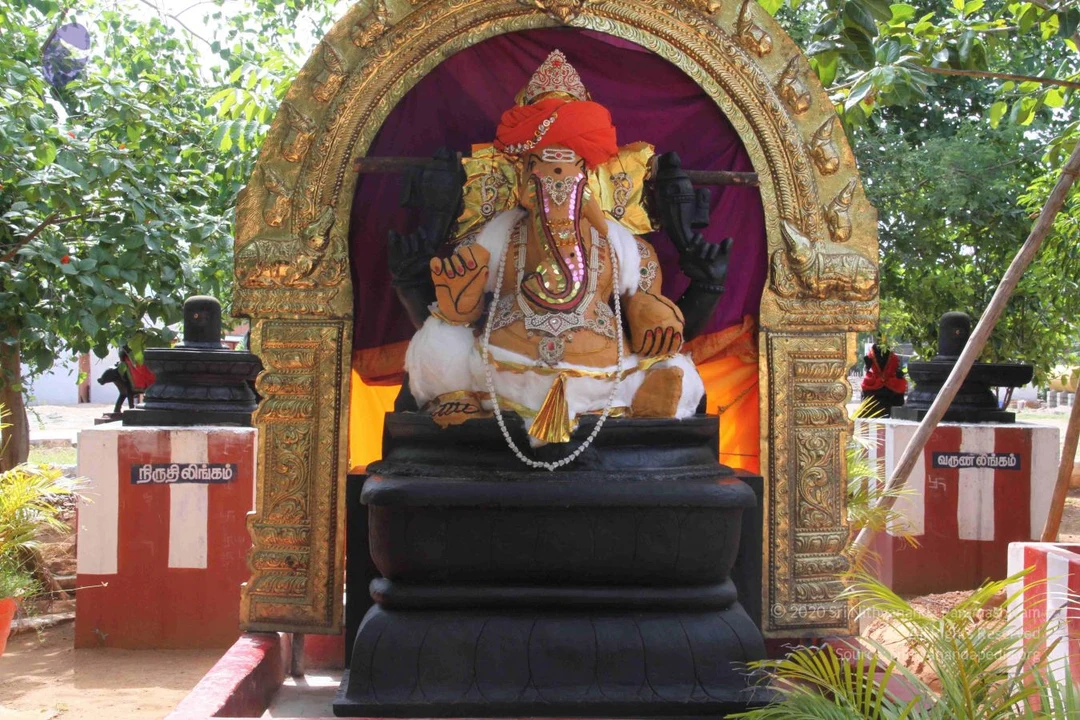
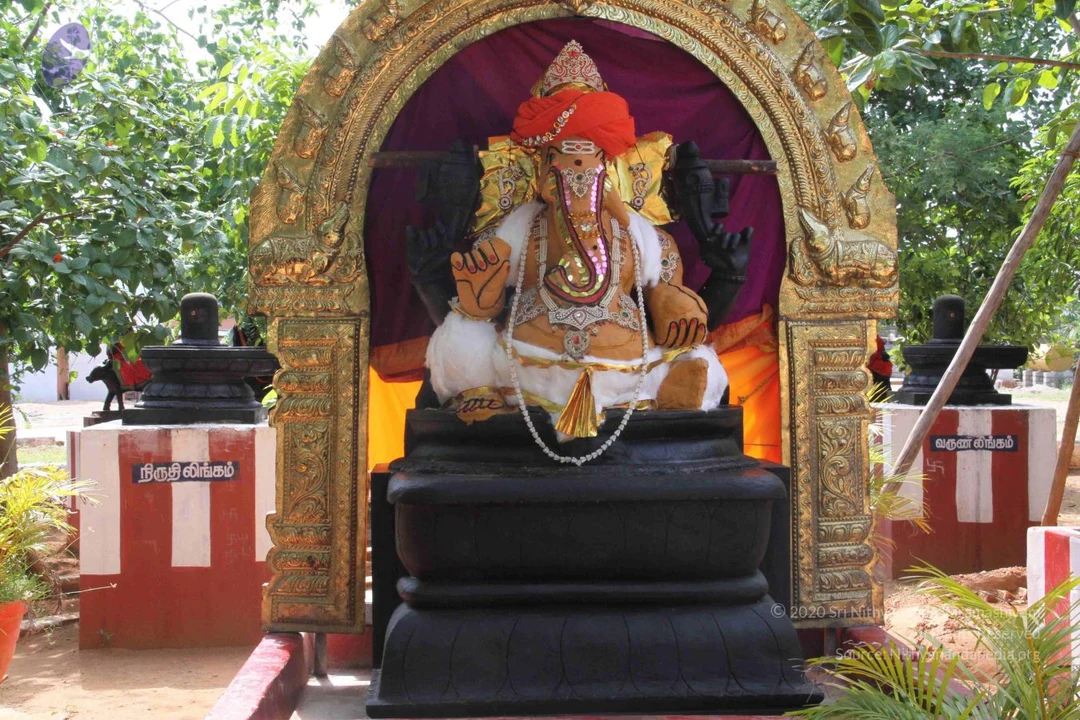
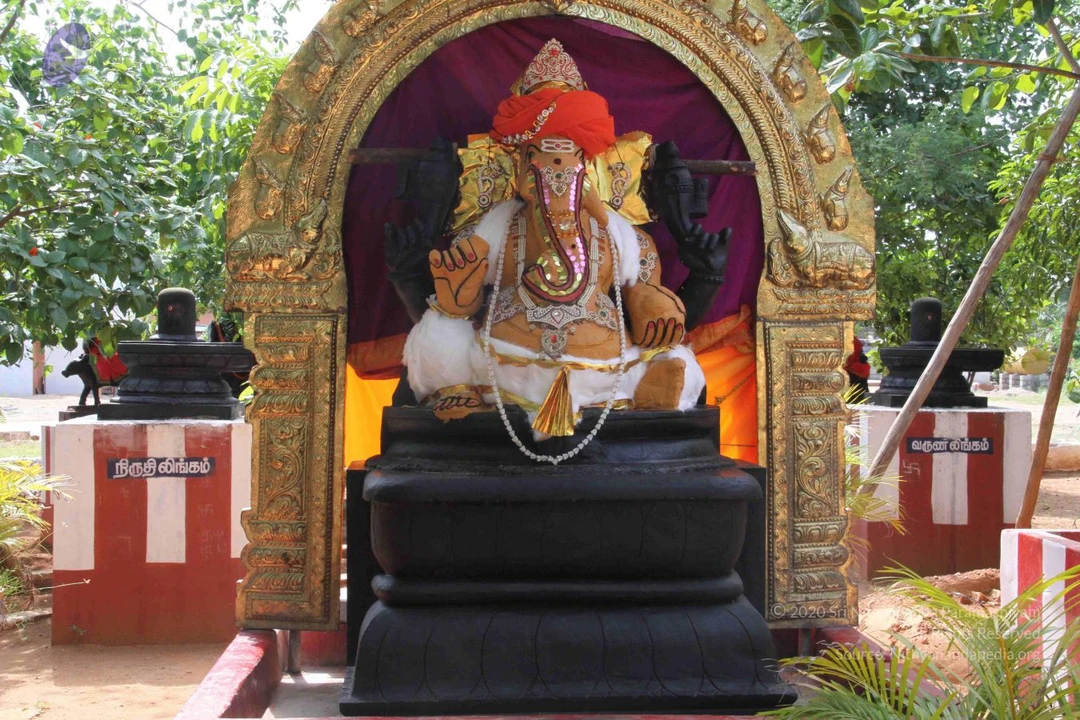
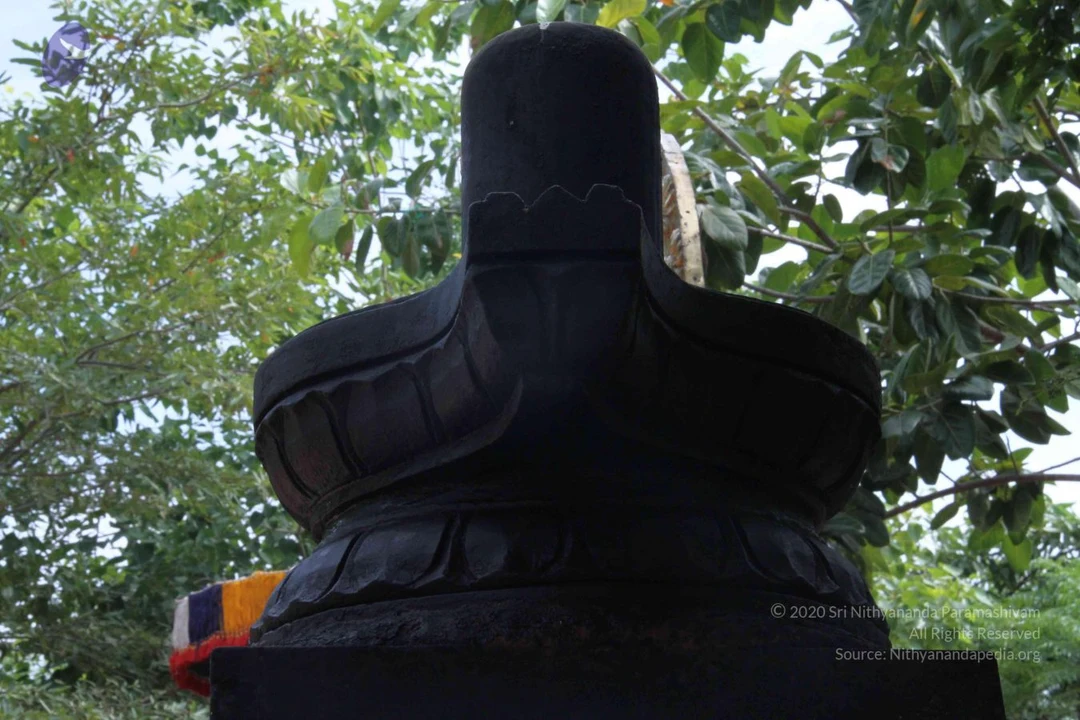
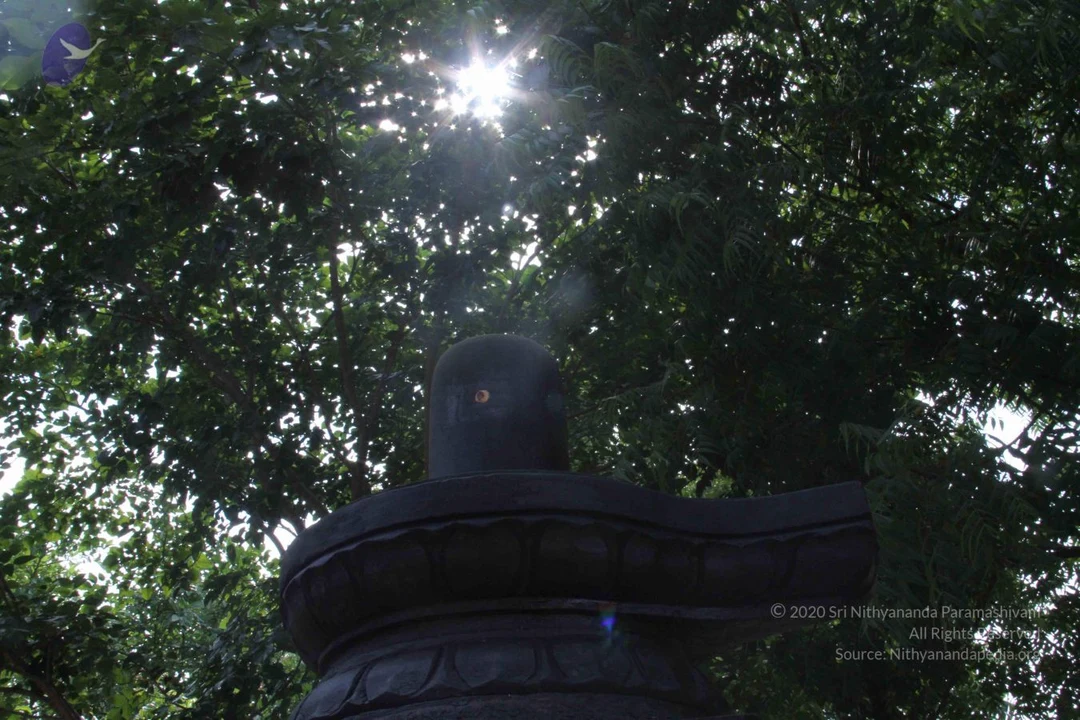
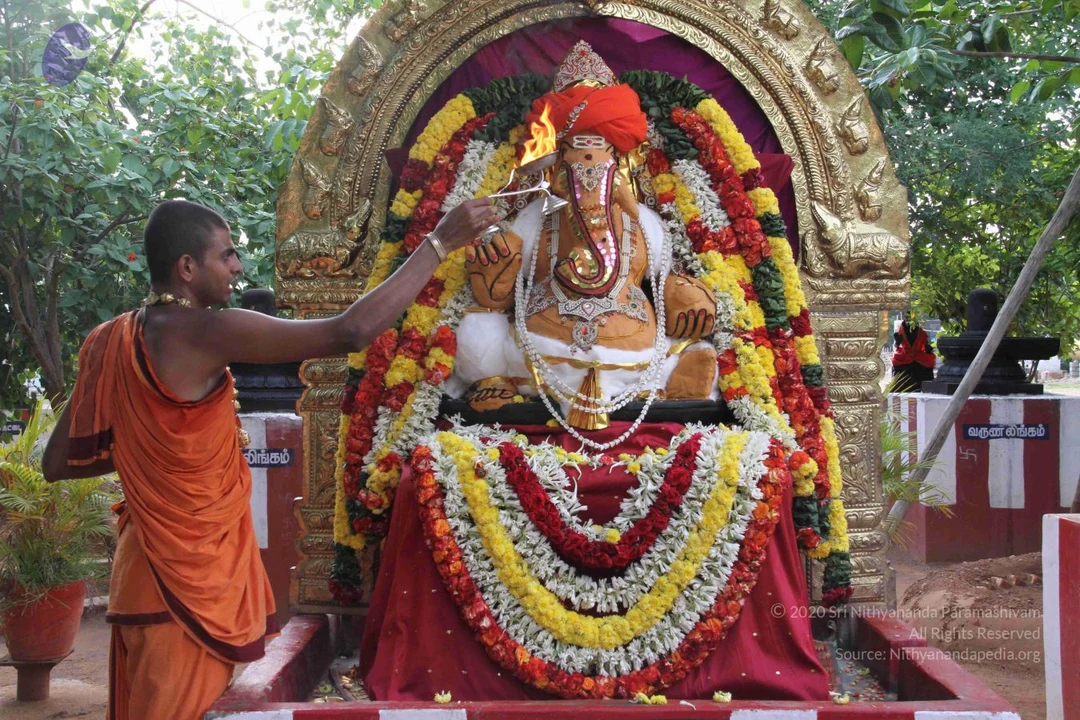
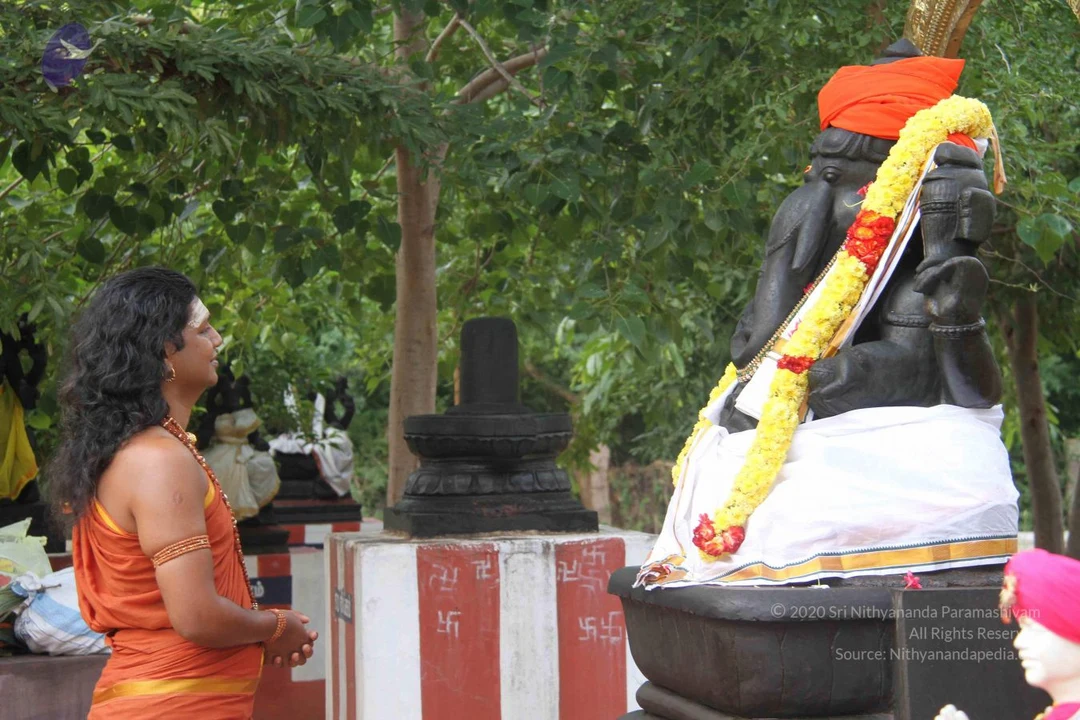
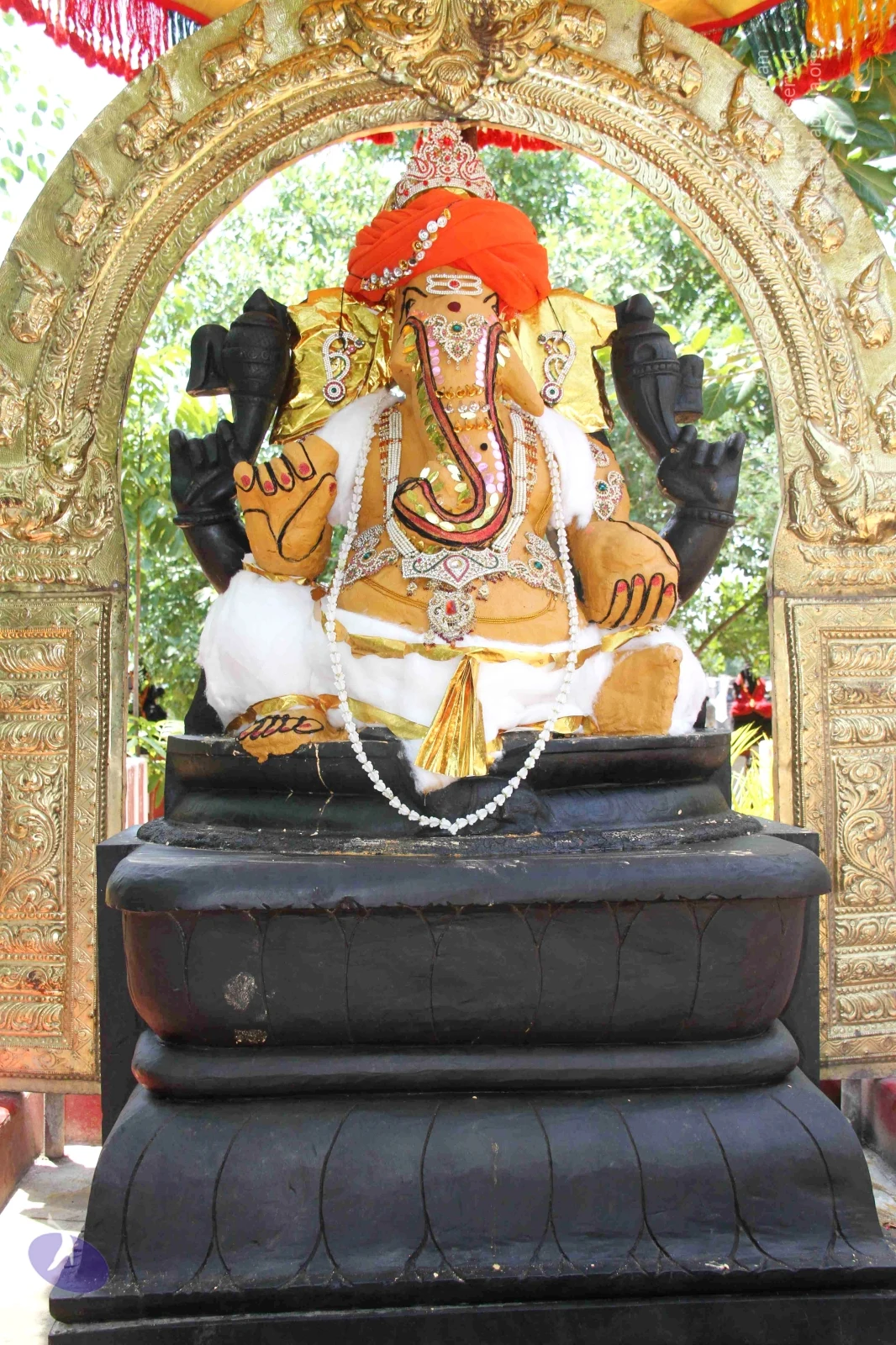
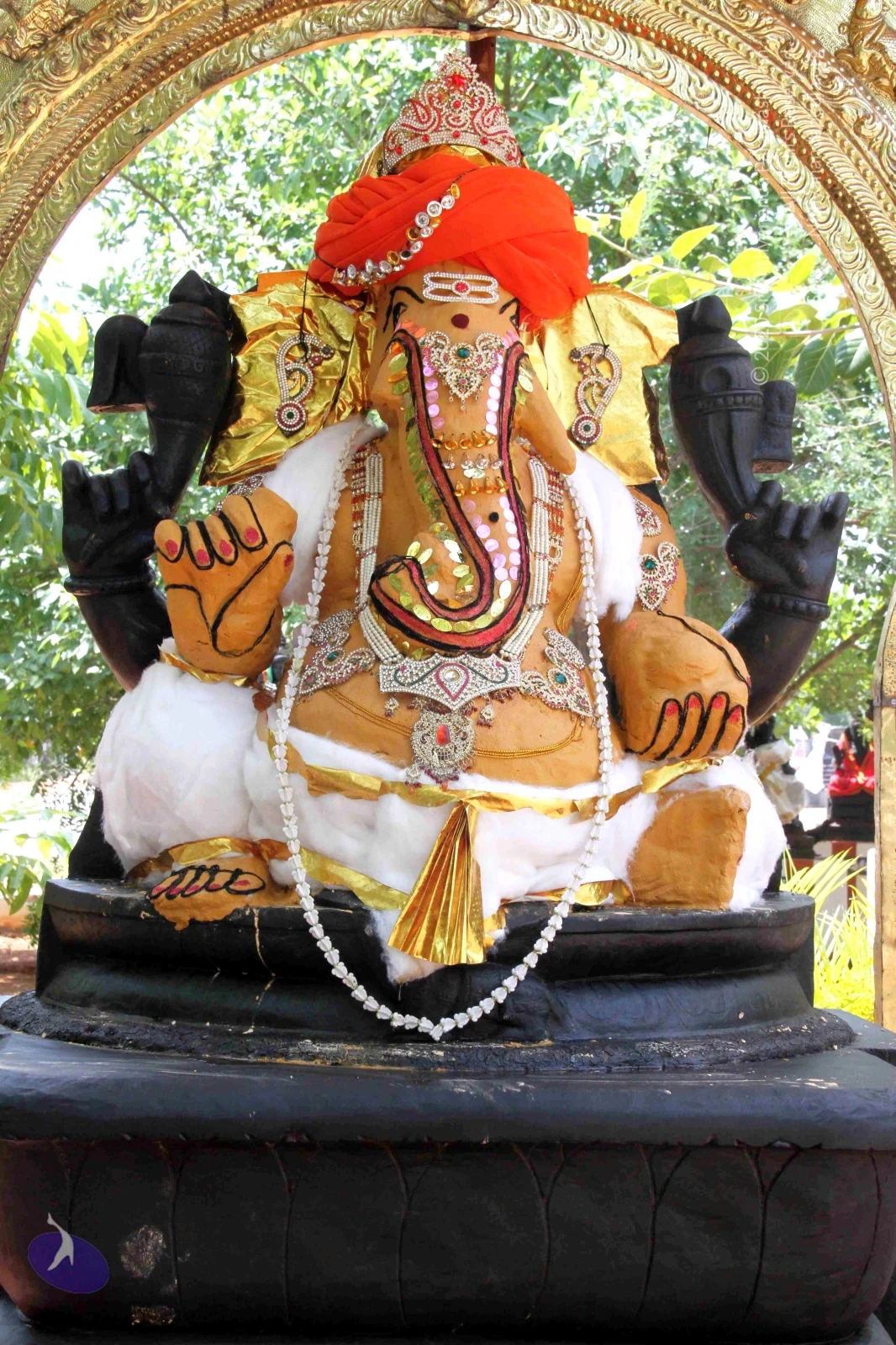
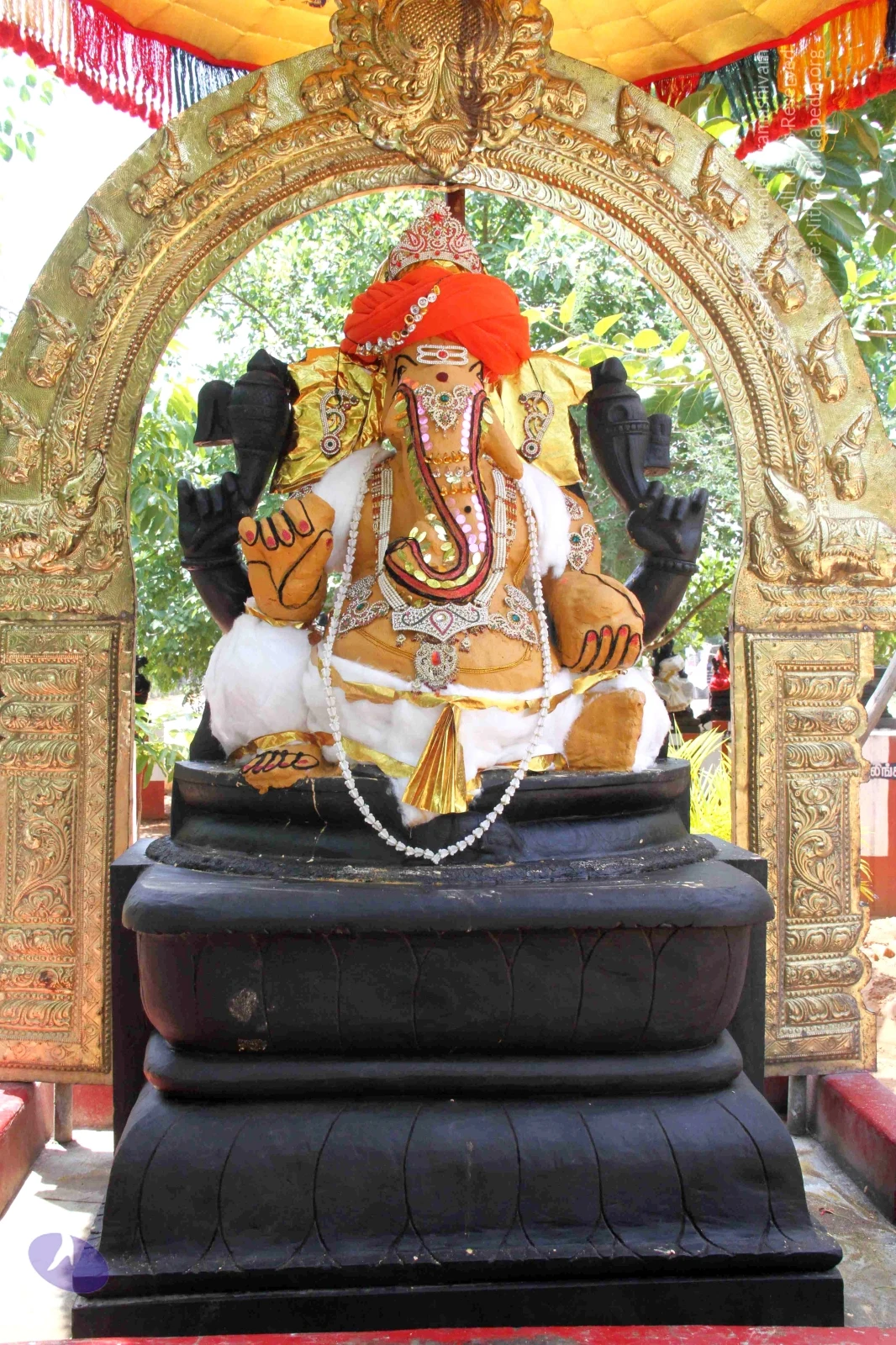
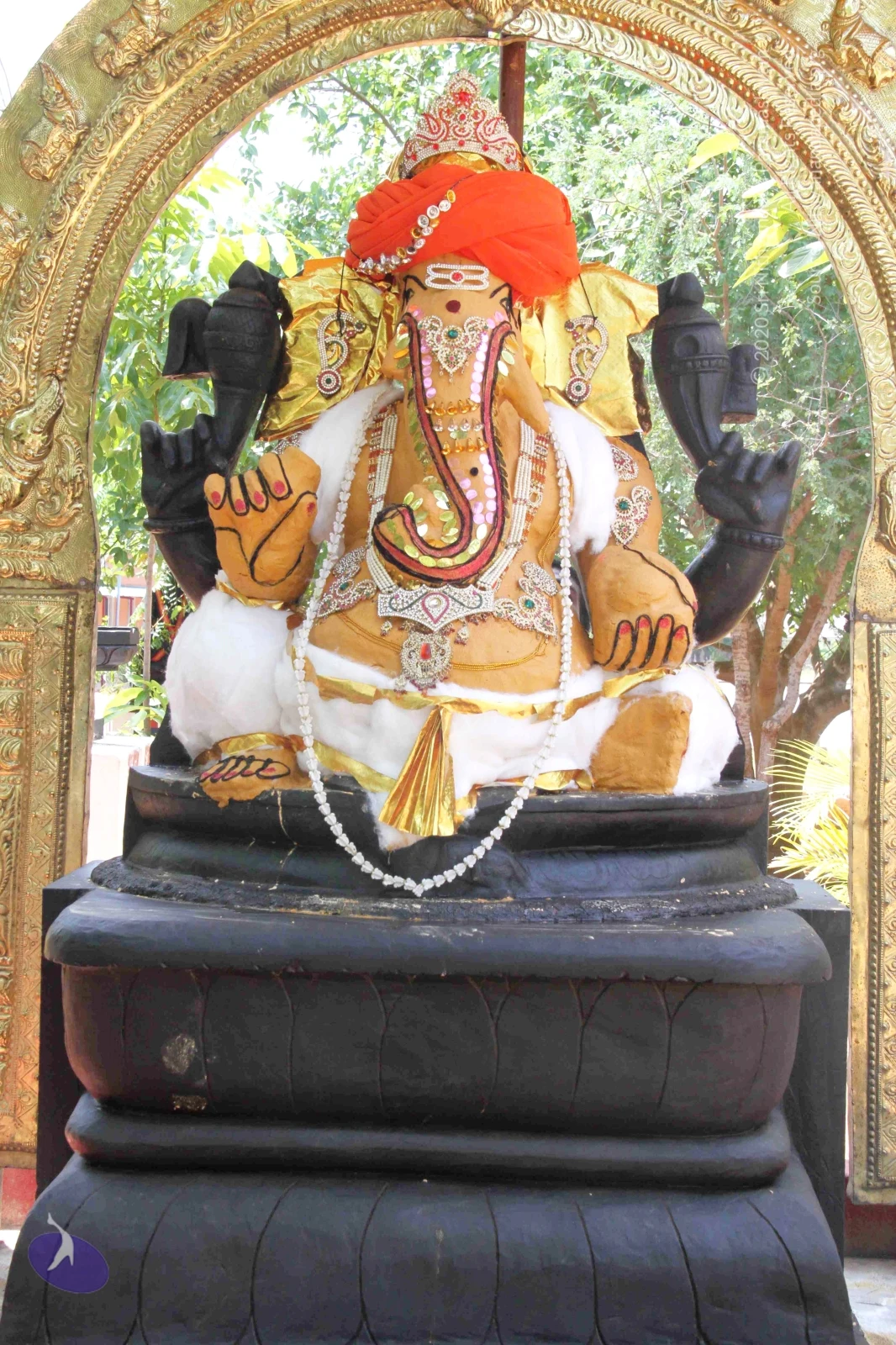
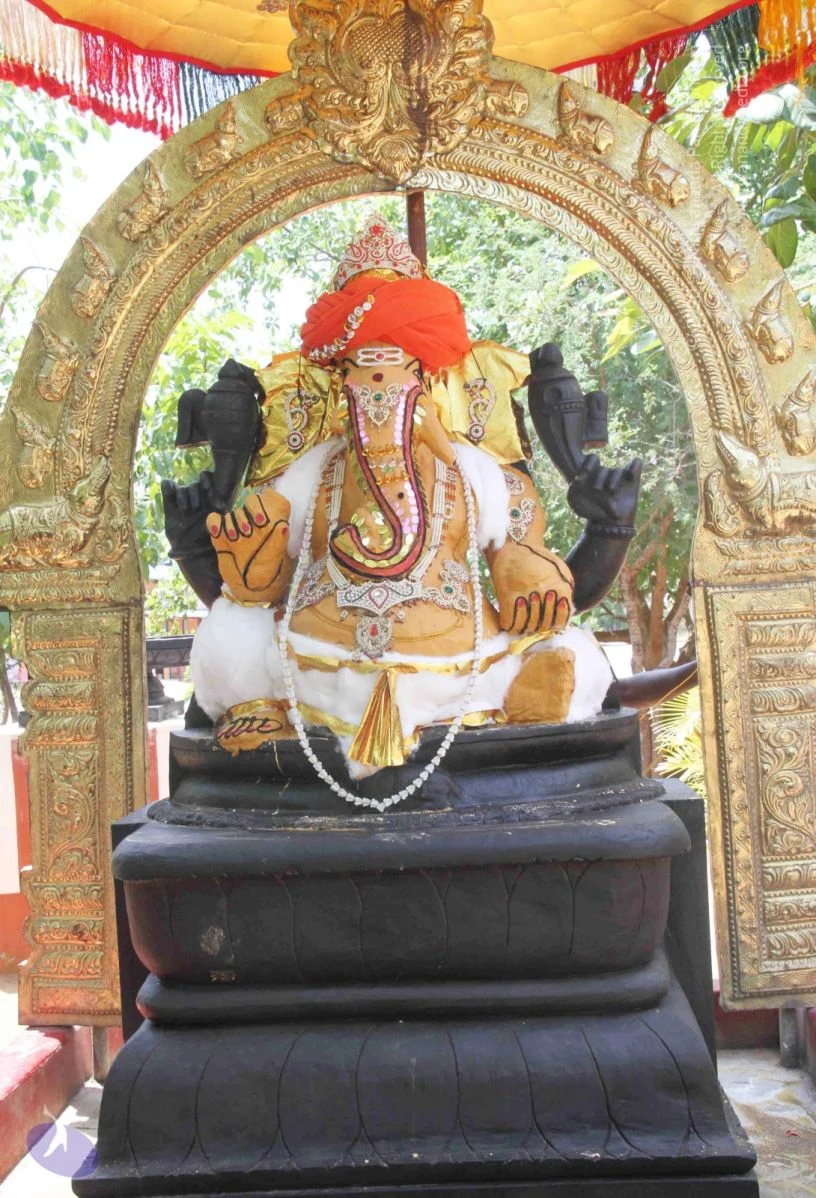
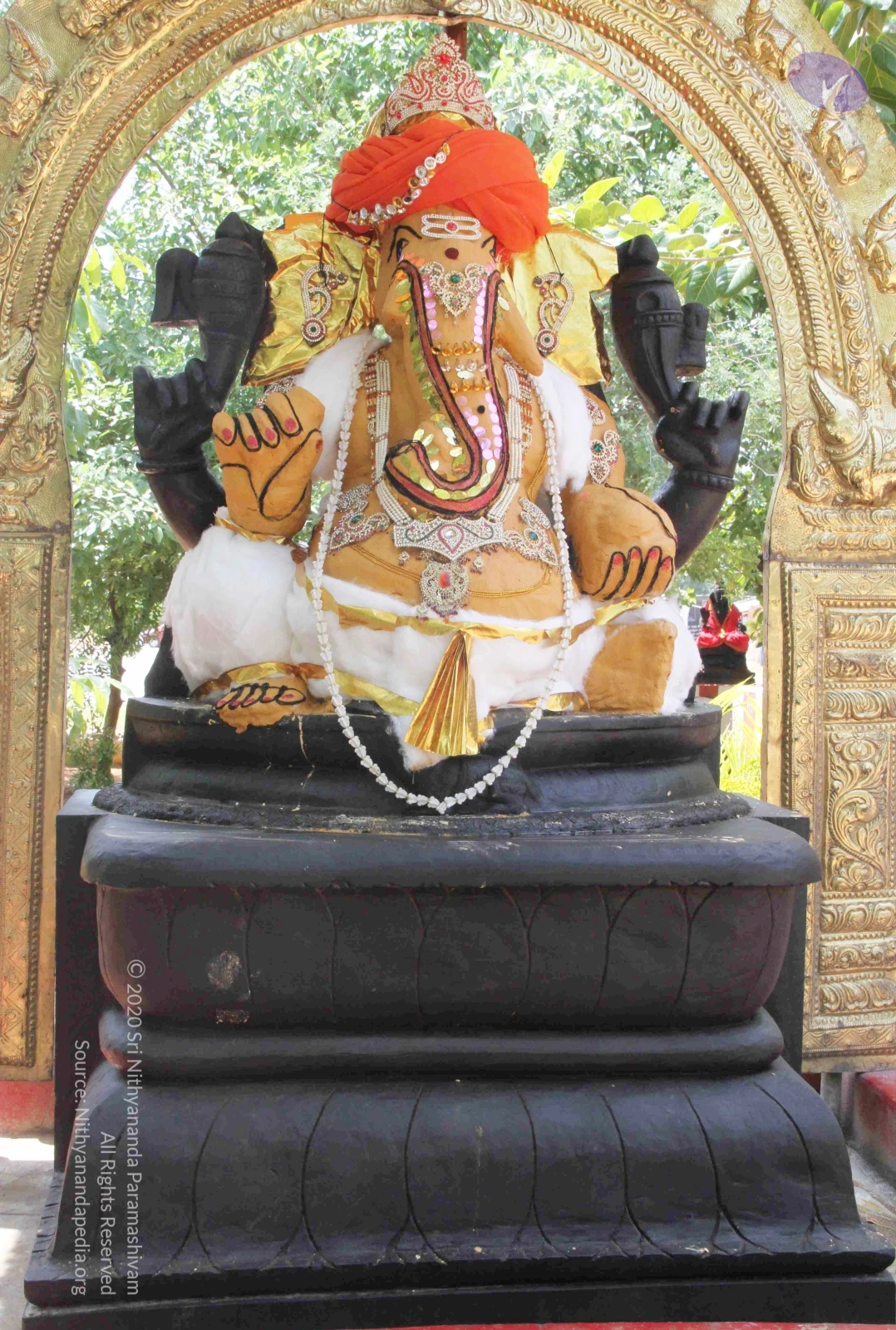
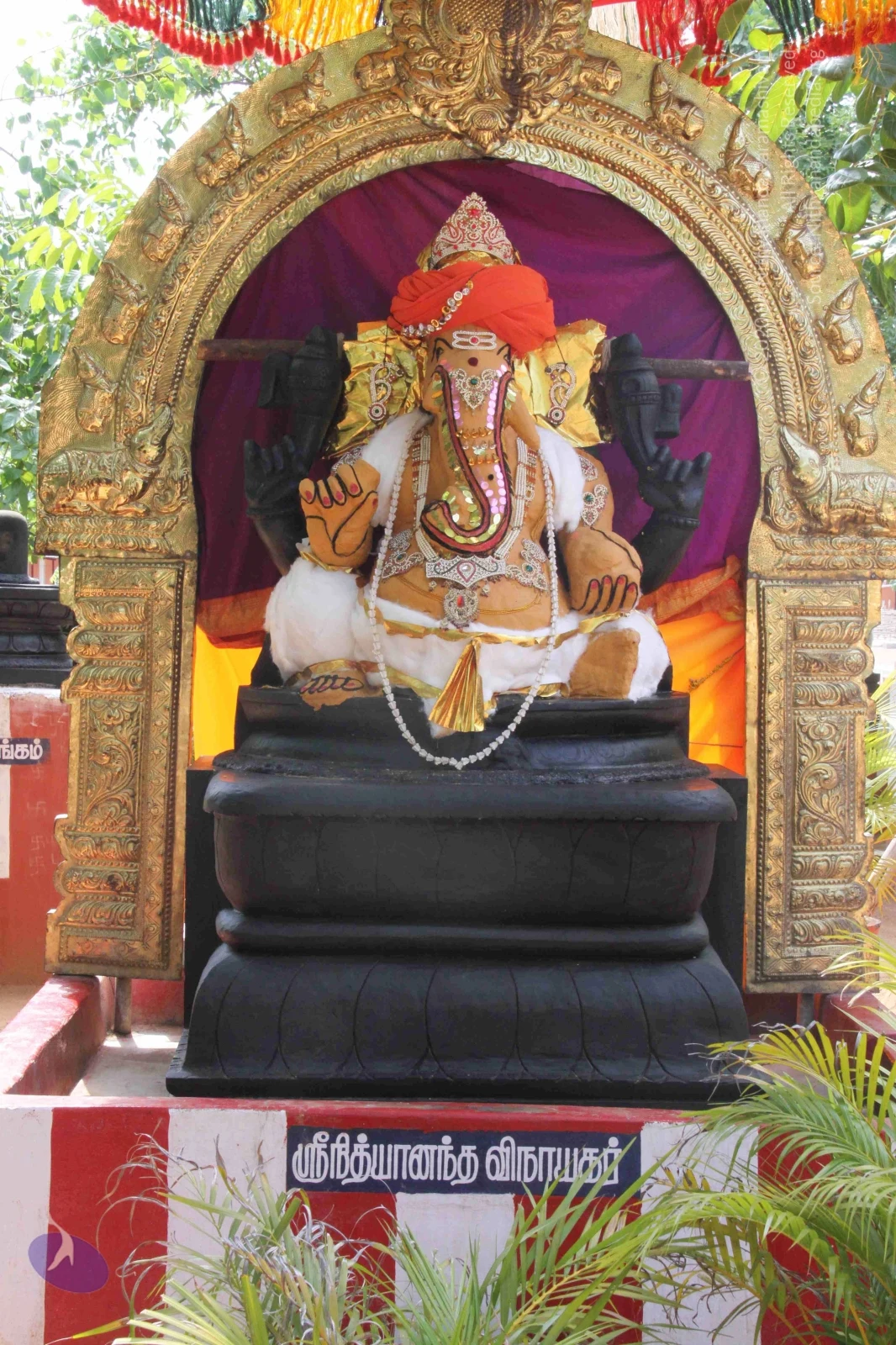
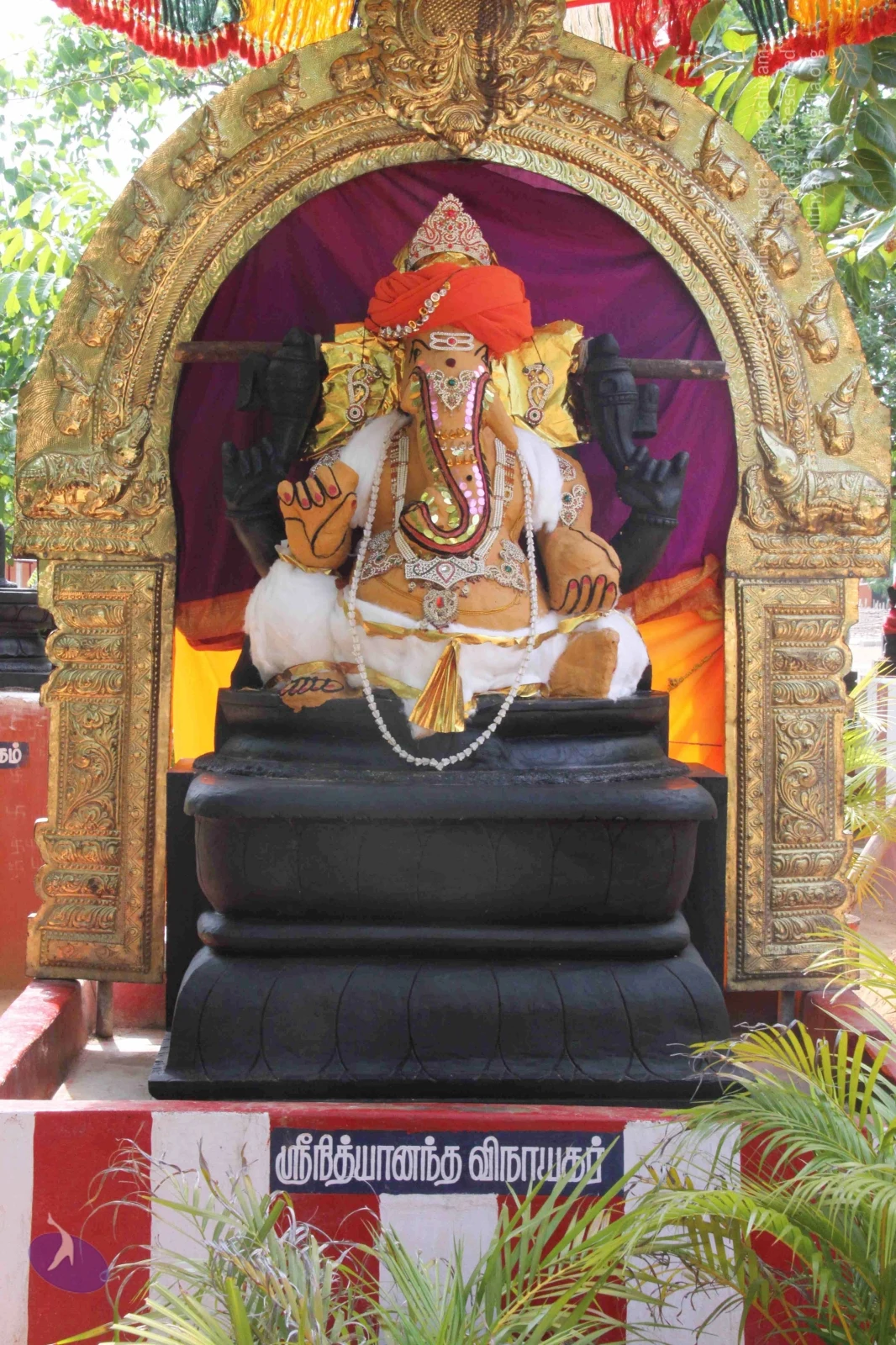
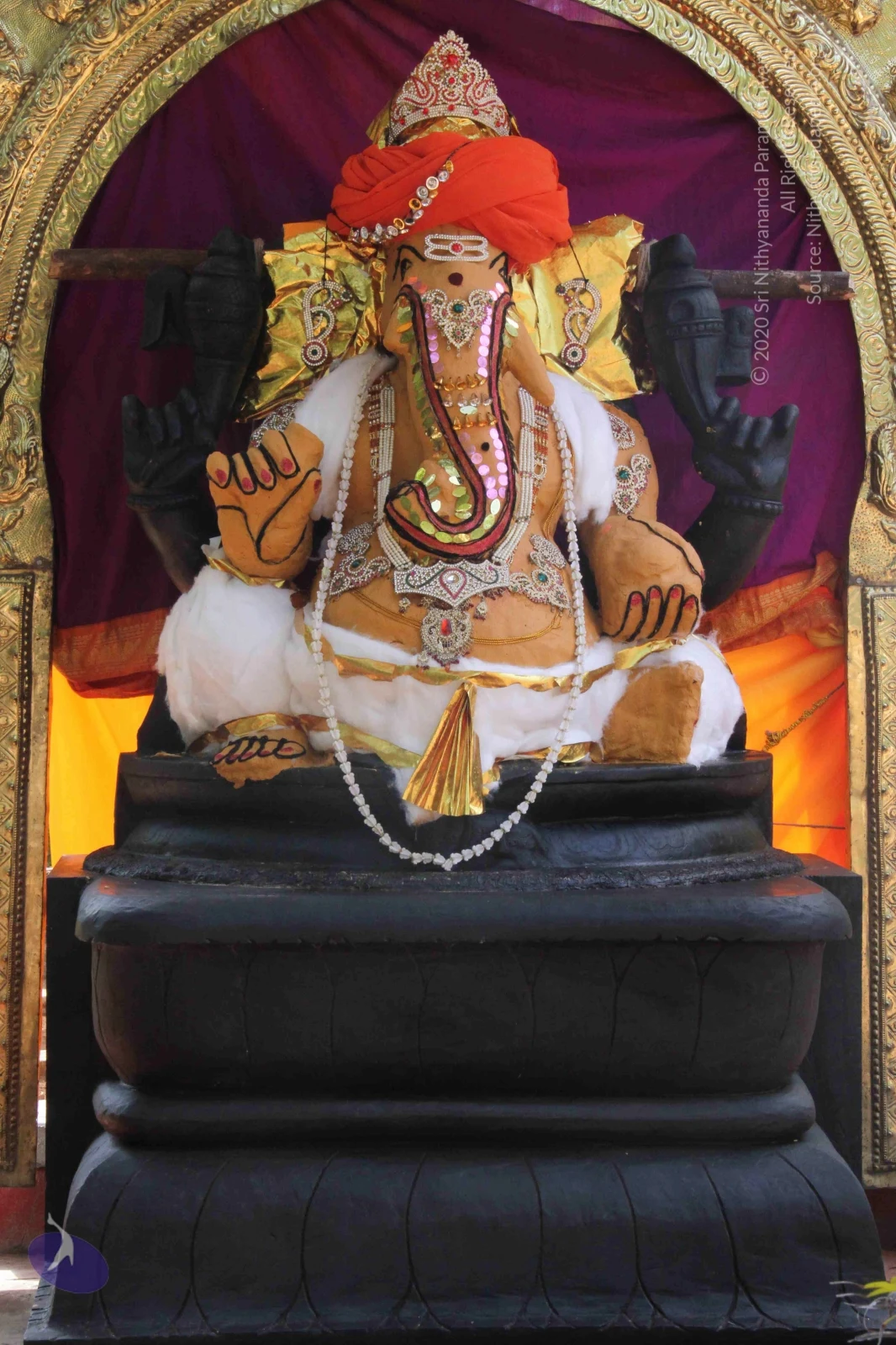
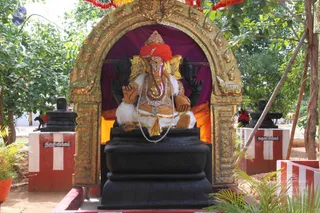
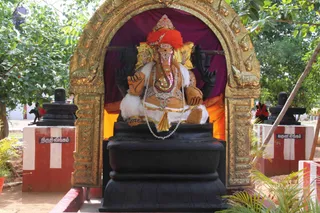
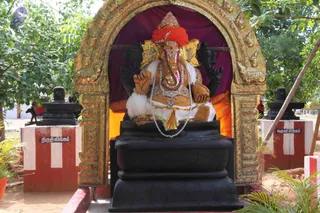
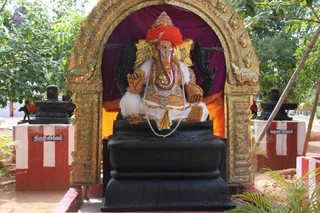
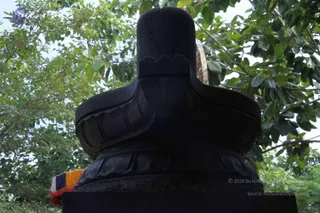
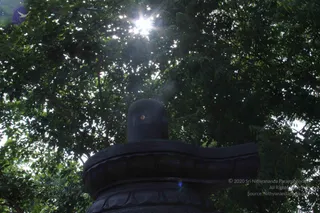
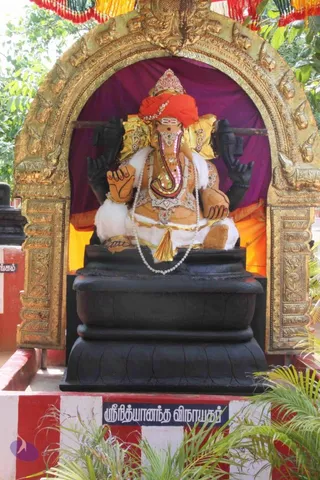
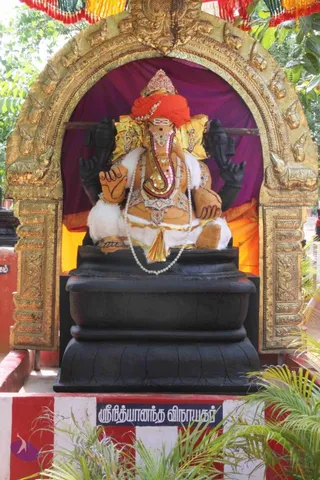
A seated Ganesha deity murti in an outdoor shrine framed by an ornate golden arch. The elephant-headed figure wears an orange turban with a crown, a white dhoti, a rudraksha-style white bead mala and jewelled ornaments, and sits on a black pedestal. A purple cloth backs the niche and garlands of red and orange fabric hang above. Small black lingams on red-and-white bases stand on either side, one labelled in Tamil as Nirrithi Lingam and the other as Varuna Lingam. Green trees and plants surround the shrine.An outdoor shrine photograph showing a Ganesha deity murti seated on a black stone pedestal within a golden arched frame carved with floral and animal motifs. The elephant-headed figure wears an orange-red turban, a white dhoti, a white-and-gold ornamented chest piece and a white bead mala. Behind it hangs a deep purple cloth with saffron drapery. Flanking the shrine are two black lingams set on red-and-white painted bases, with green foliage and palms around. No people are visible.A photograph of a Ganesha murti seated on a black stepped pedestal inside a gilded arched niche with a purple backdrop, outdoors among green trees. The murti wears a red and gold turban-like crown, a white cloth draped over its lap, a pearl mala and gold ornaments. Two black lingams stand on red and white painted bases on either side, one labelled in Tamil. No physical people are visible.A ganesha murti sits on a black pedestal within a golden arched shrine niche with a purple backdrop. The elephant-headed deity wears an orange turban, white dhoti, pearl and beaded necklaces, gold ornaments and a sacred thread, with four arms, one hand raised in blessing. Two black shivalingam stand on red-and-white painted bases flanking the shrine, surrounded by green trees and palms in an outdoor temple compound. No people are visible.Close-up photograph of a dark black stone Shiva lingam with a lotus-petal patterned base and a carved top, shot from below against green leafy trees and sky. A small striped cloth with orange, yellow and purple bands is visible at the lower left. No people are visible in the scene.A dark stone Shiva lingam with a rounded top and a lotus-petal carved base rises from the lower frame, set against dense green tree foliage with sunlight flaring through the leaves above. A small reddish mark sits on the lingam's upper surface. No people are visible in the scene, which is an outdoor photograph of a sacred stone form under trees.

Volunteers-Meeting

18 photosSource gallery
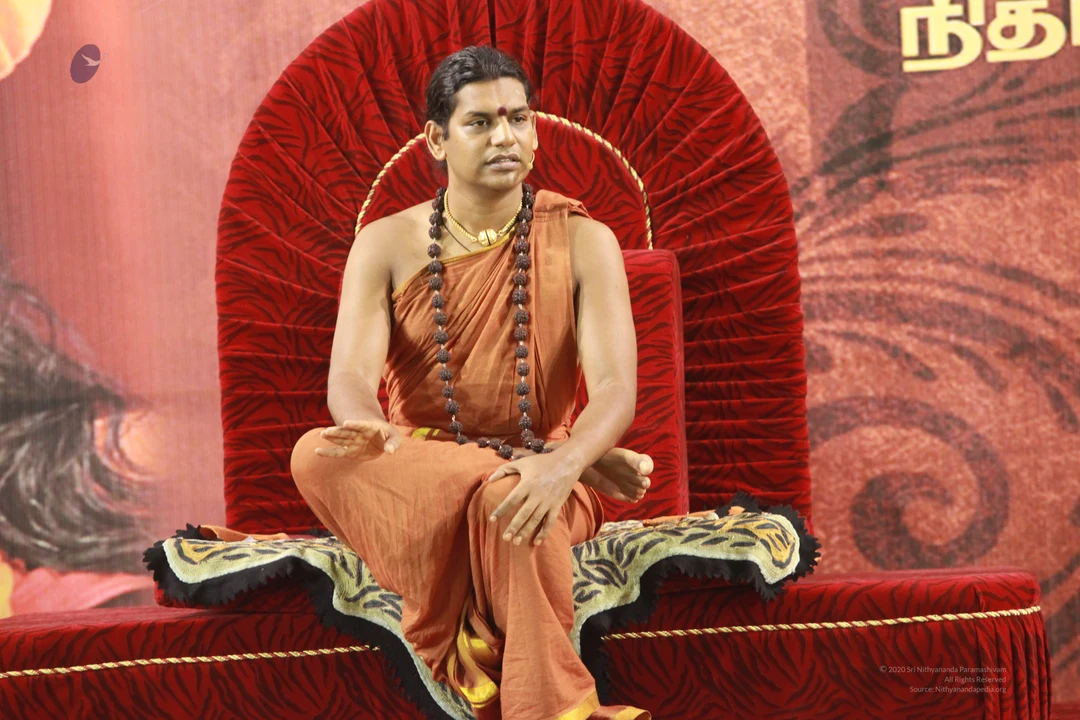
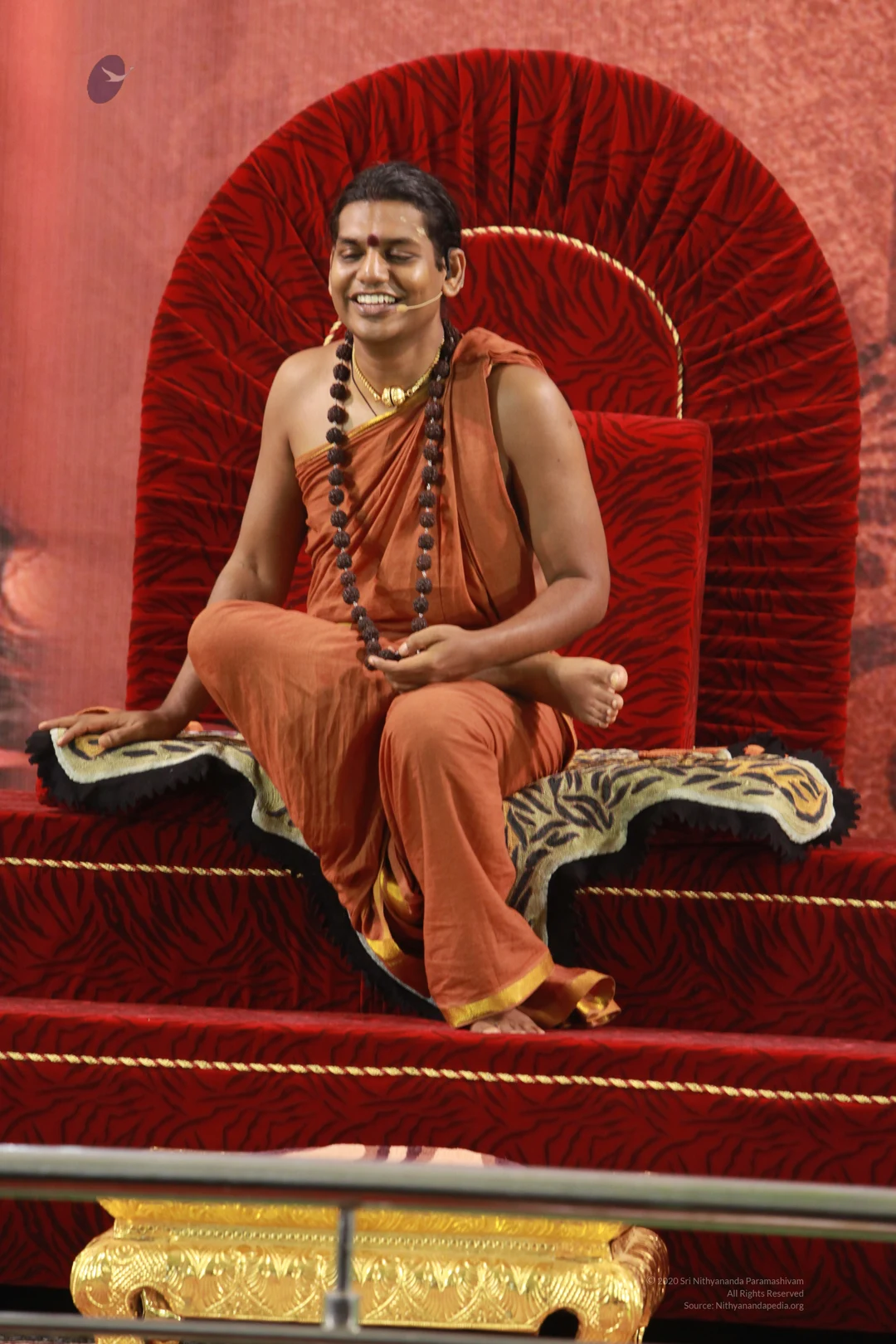
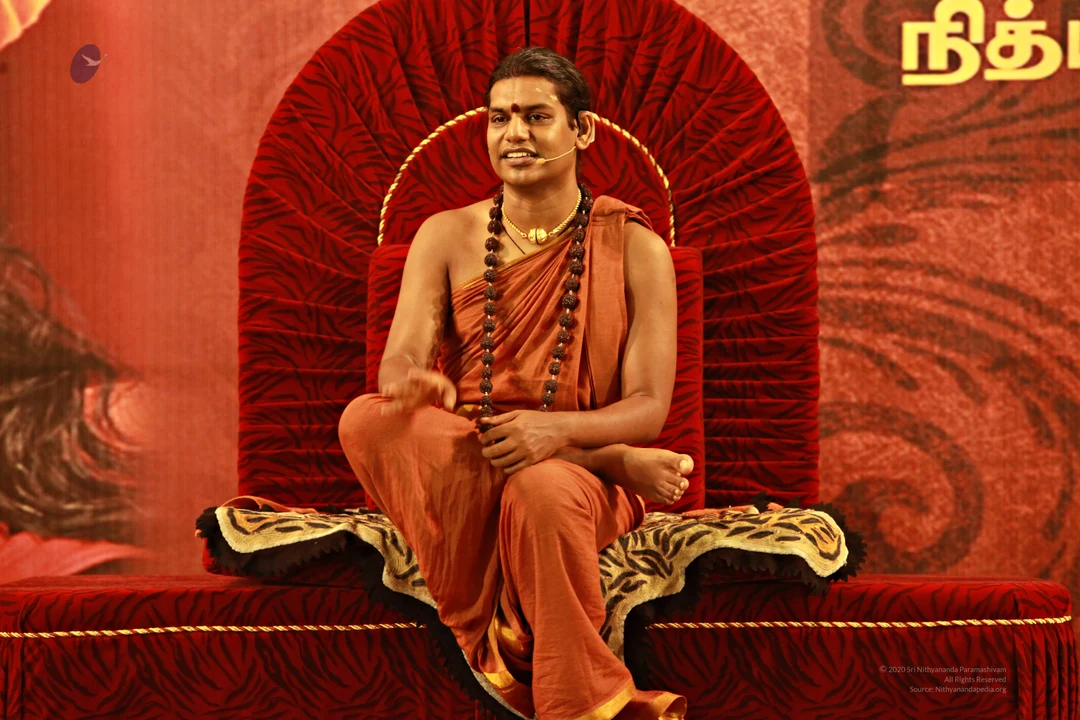
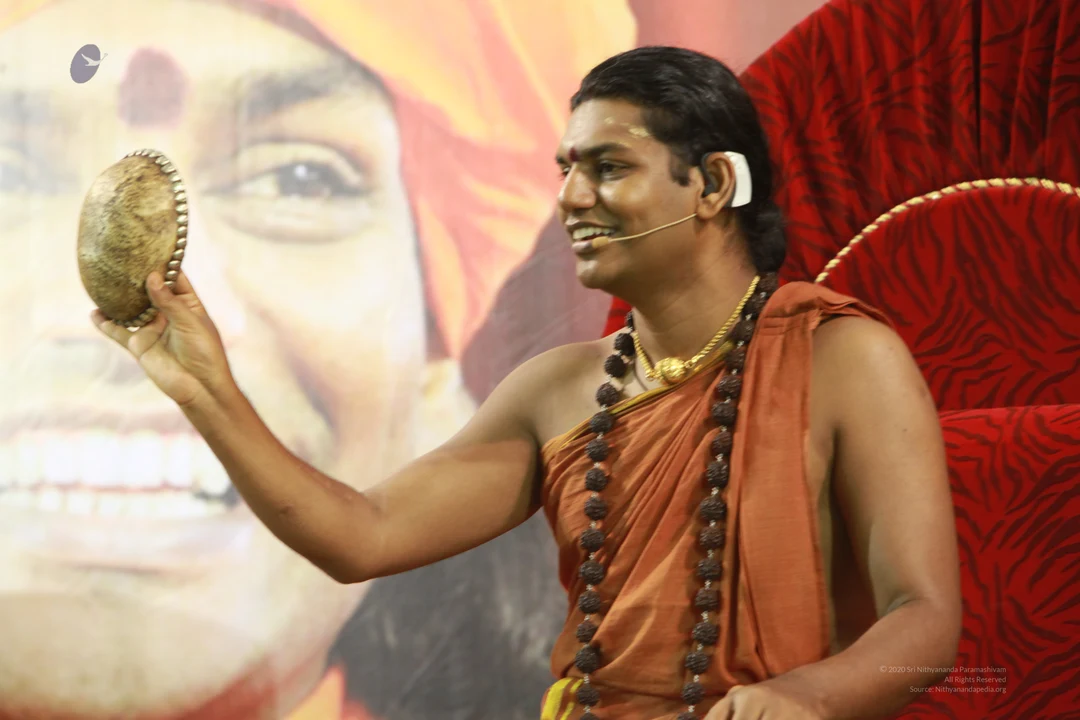
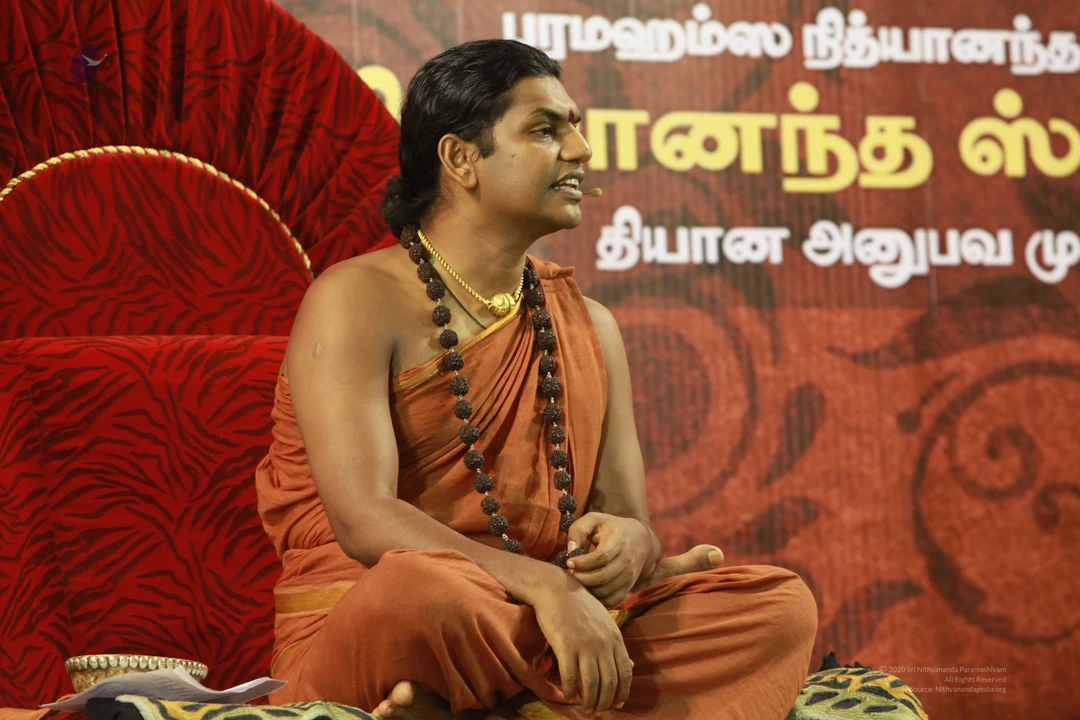
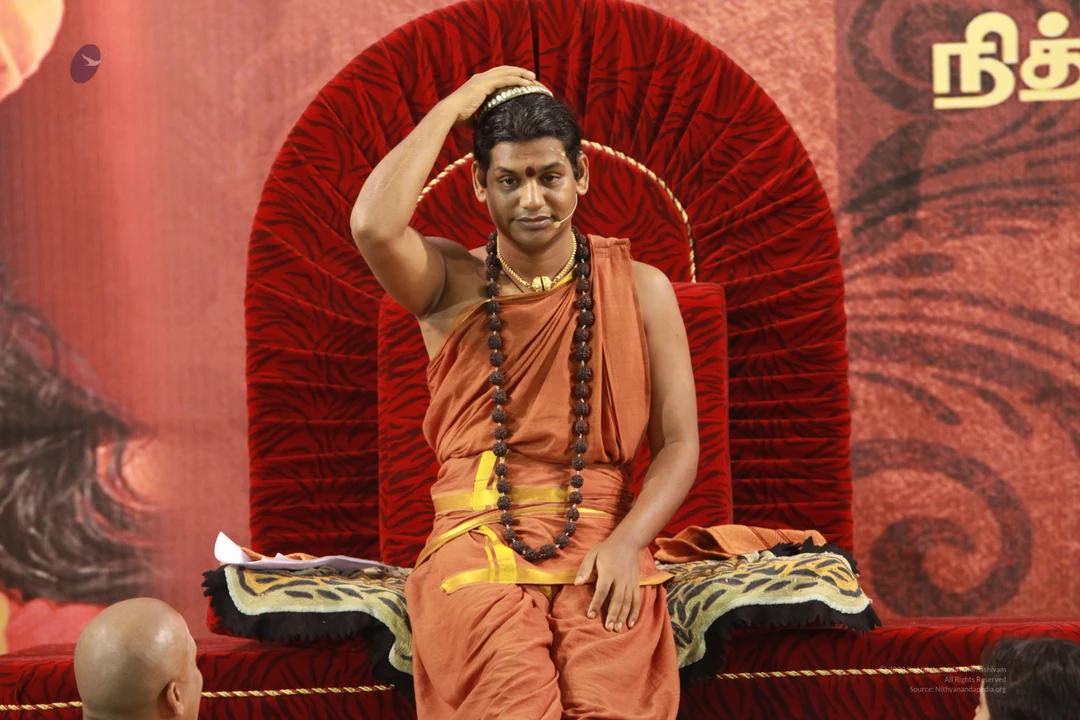
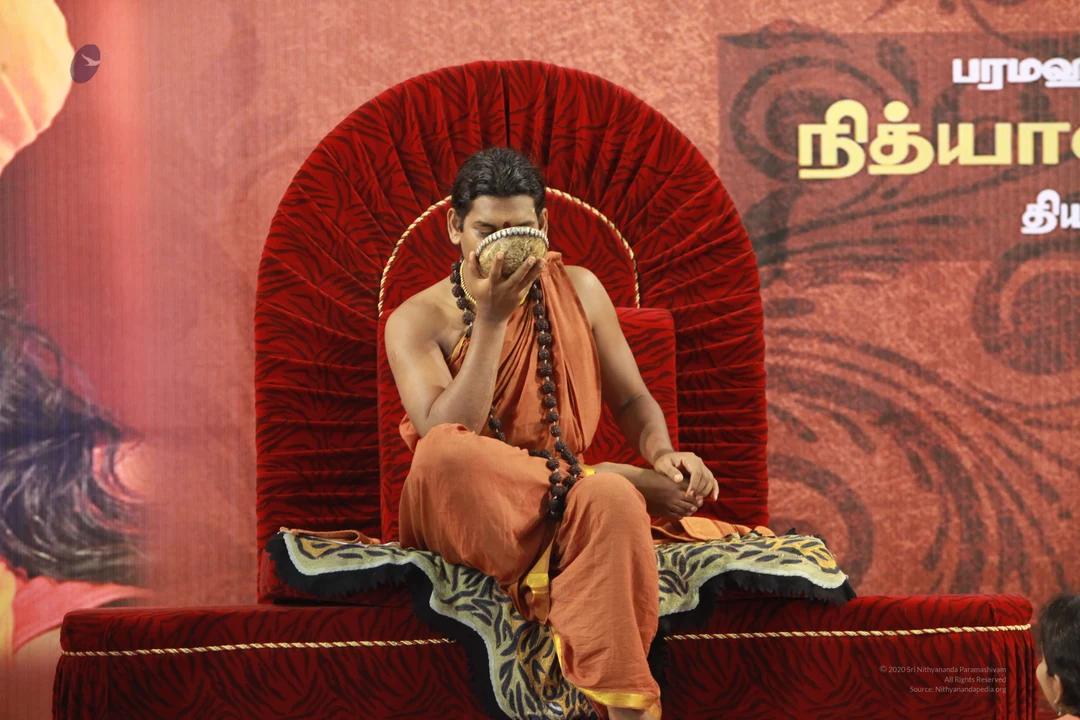
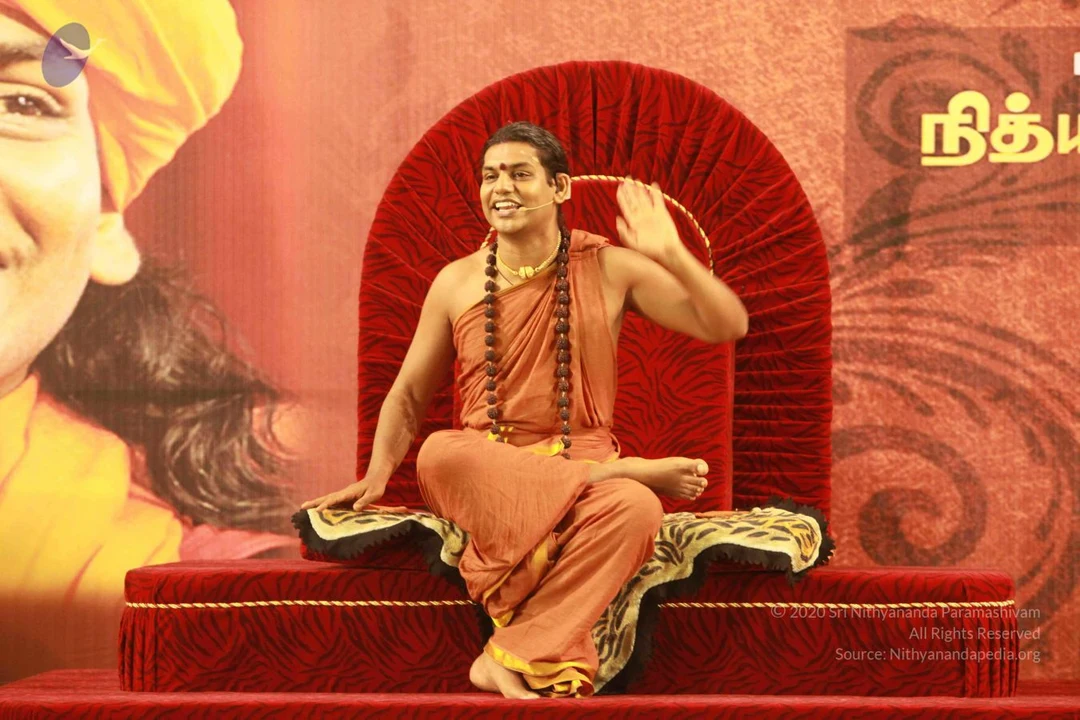
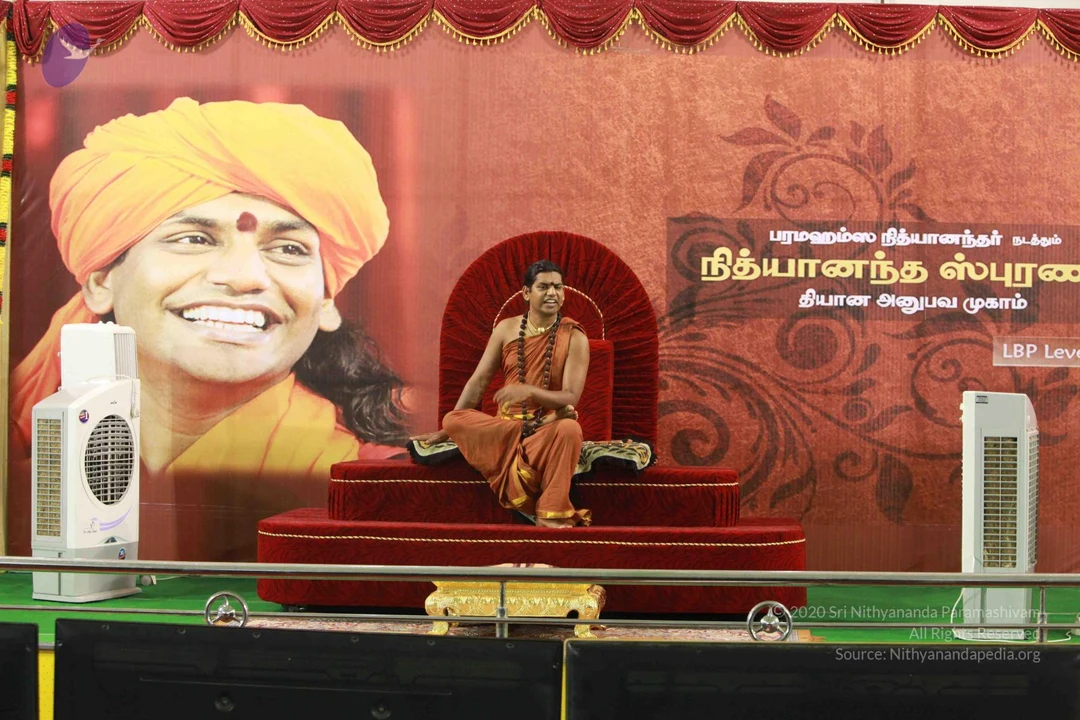
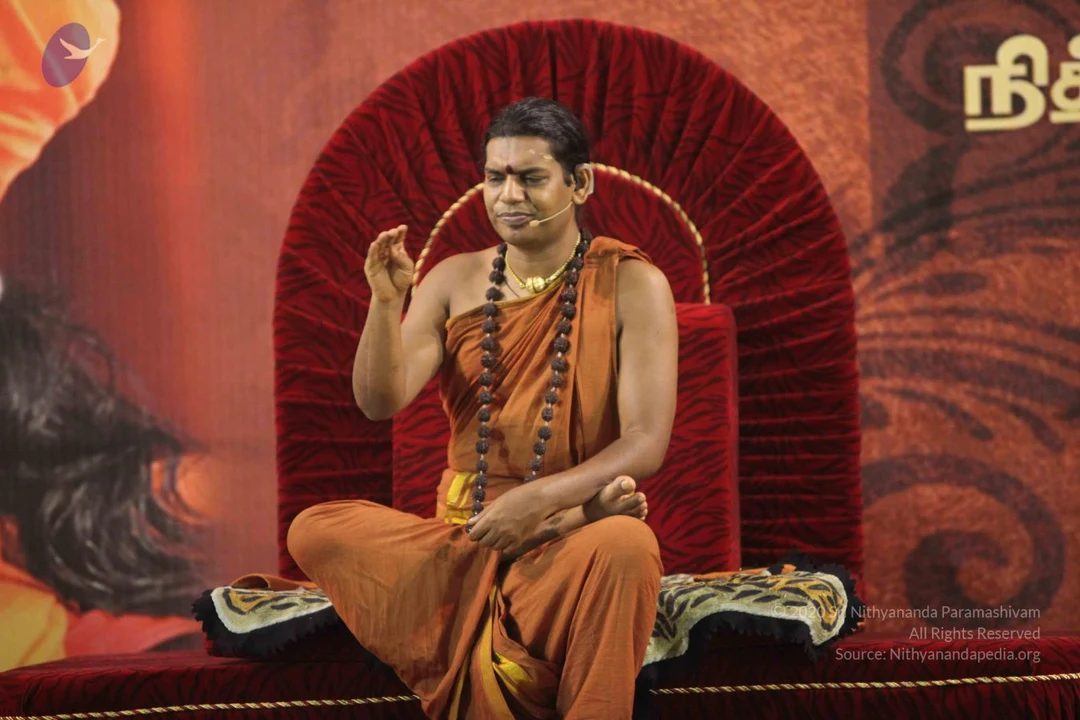
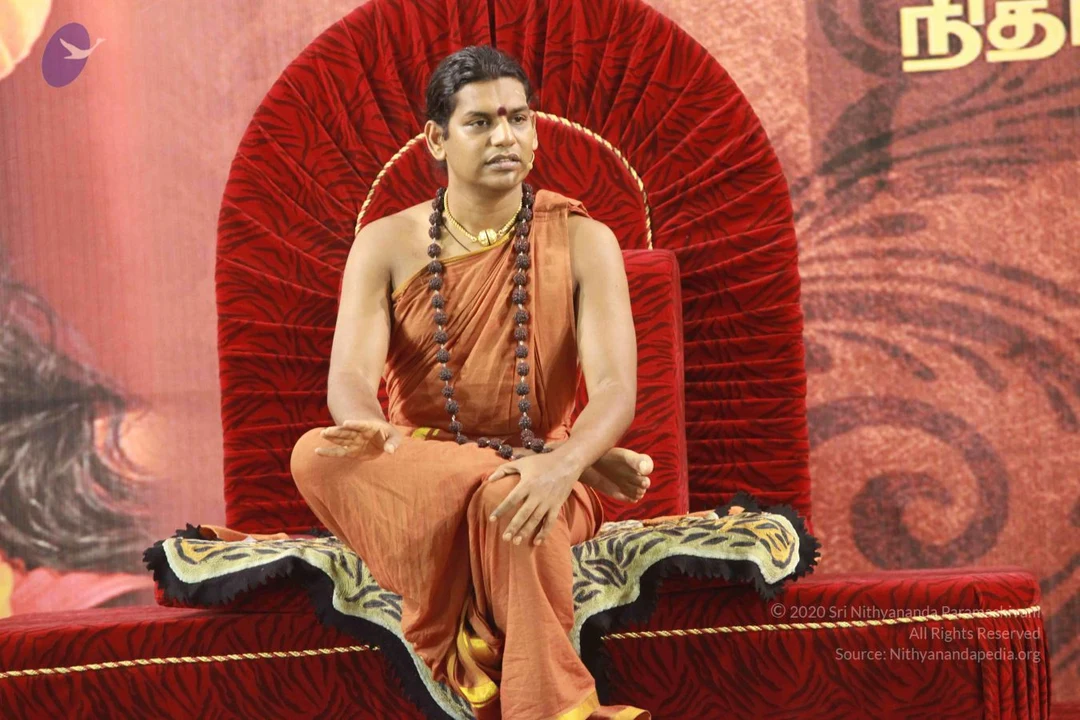
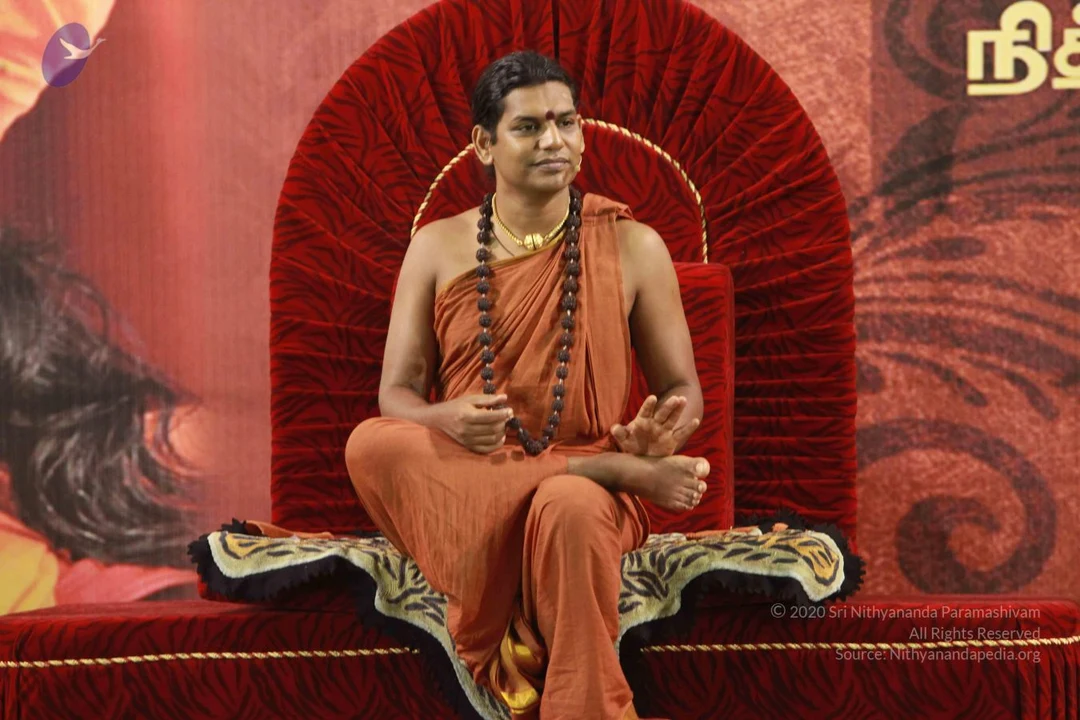
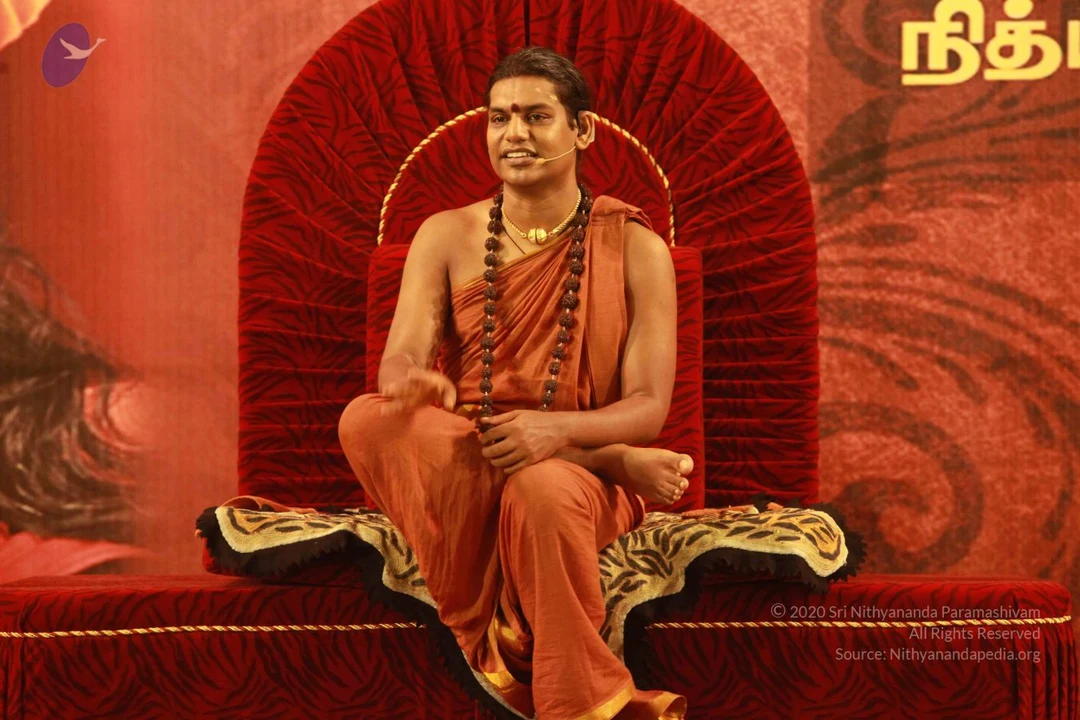
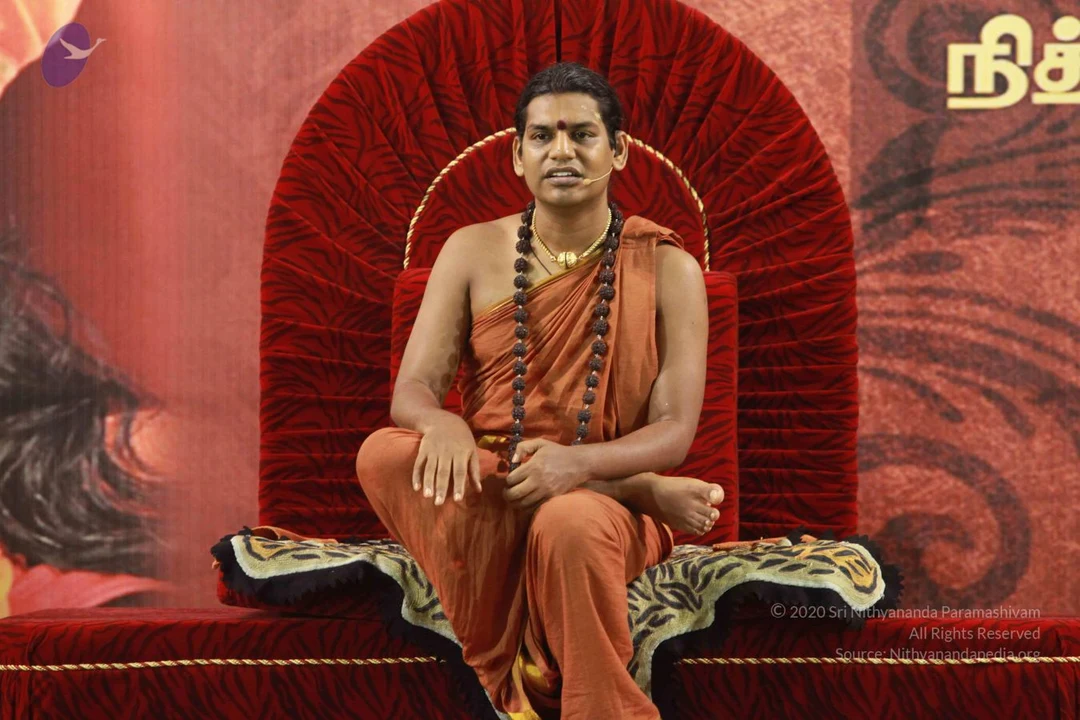
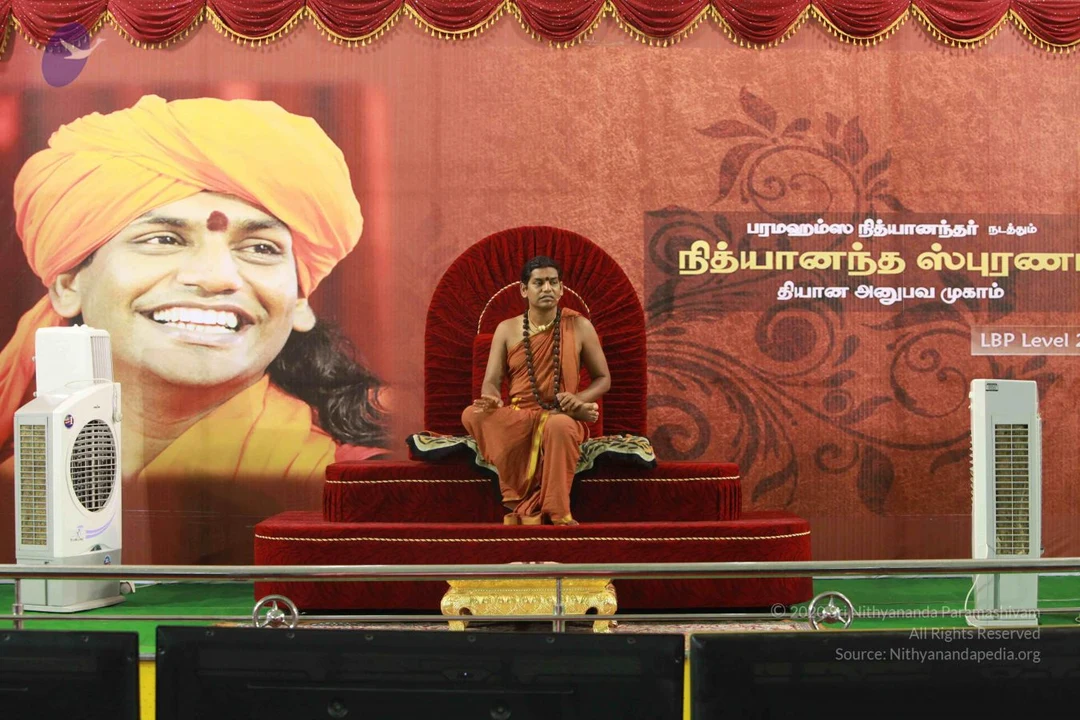
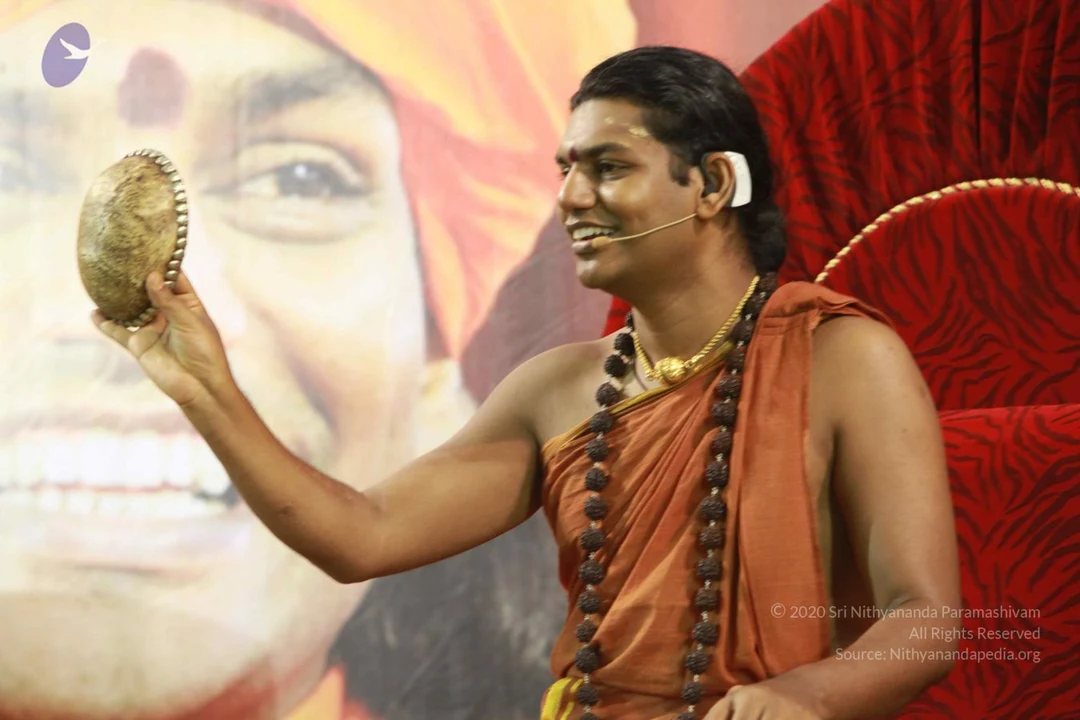
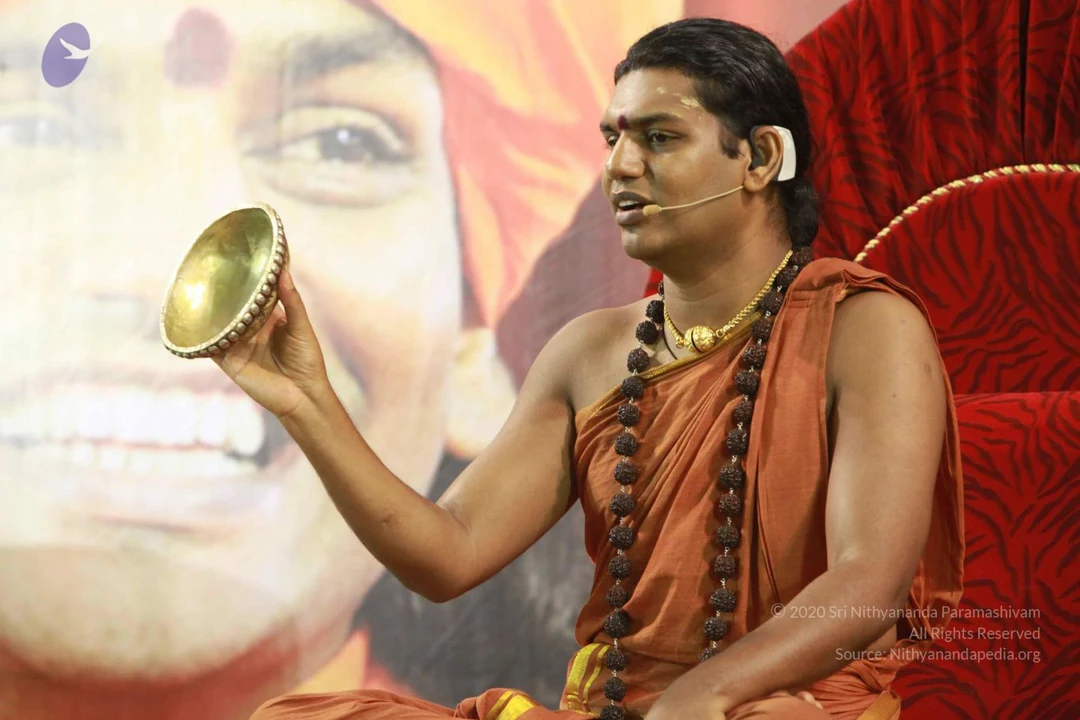
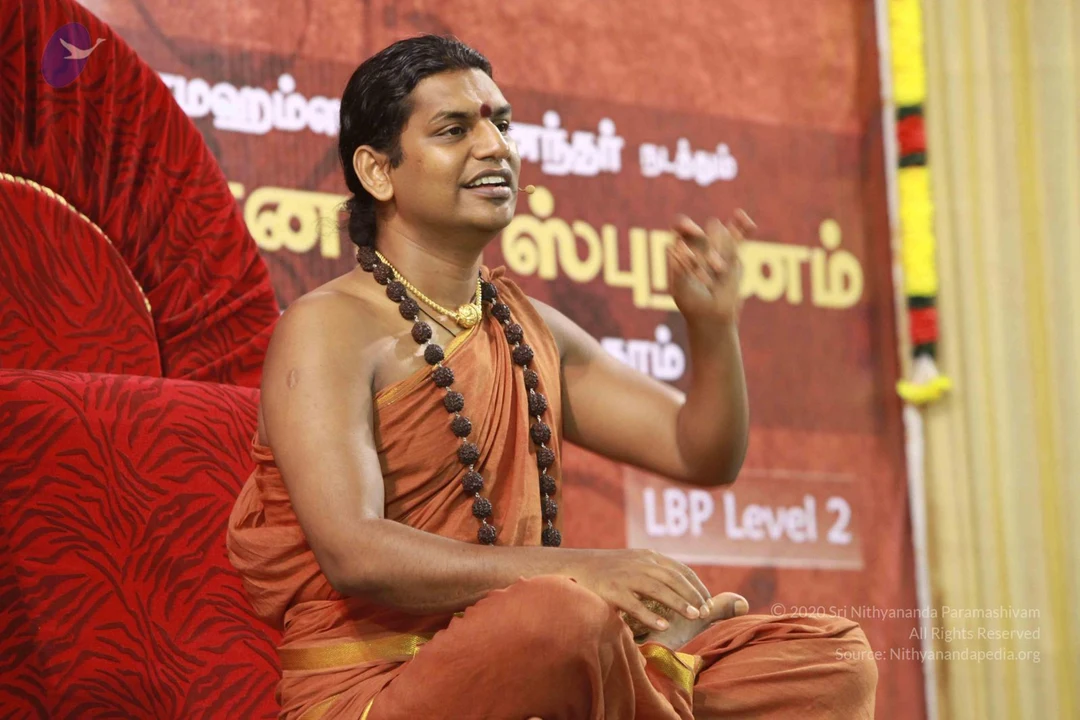
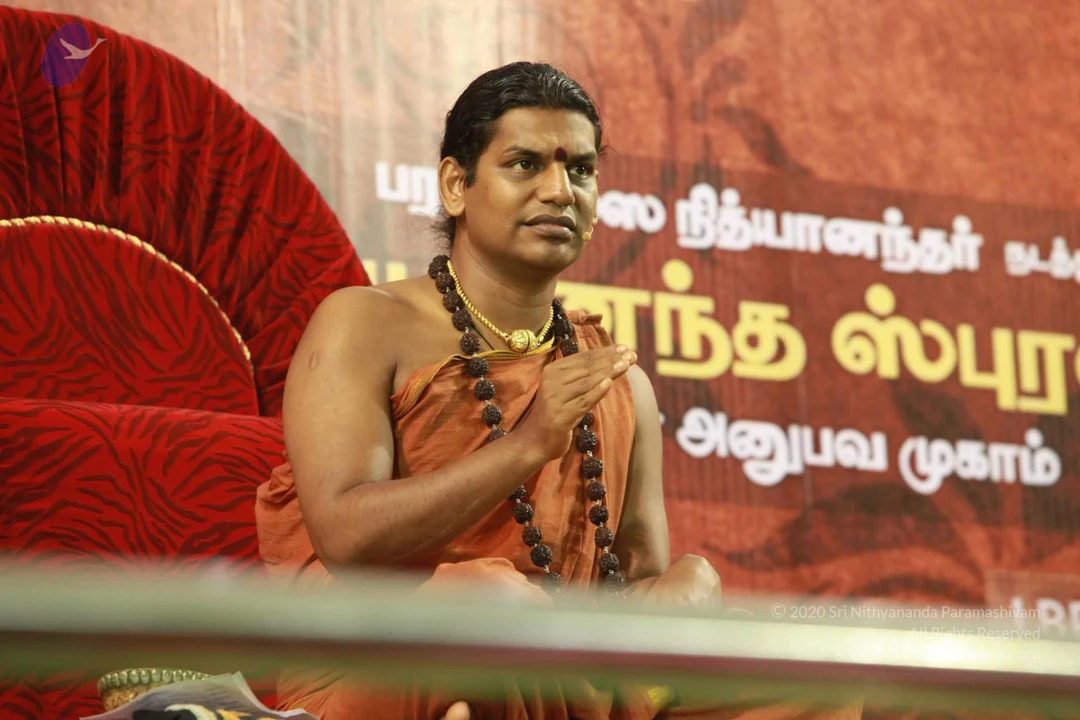
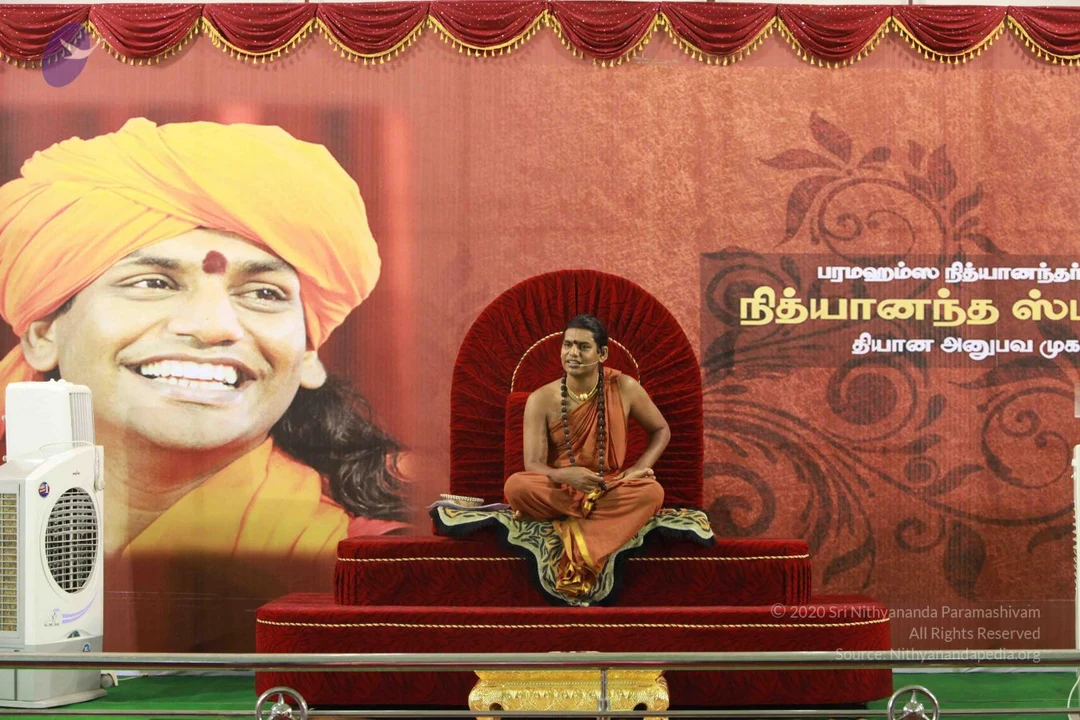
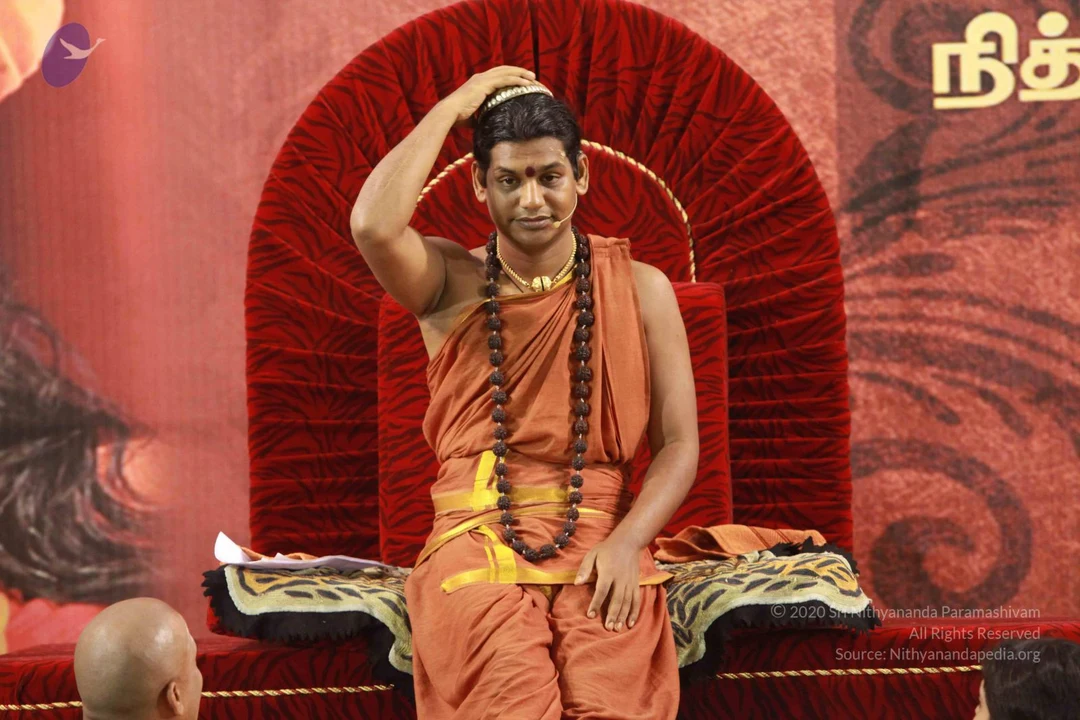
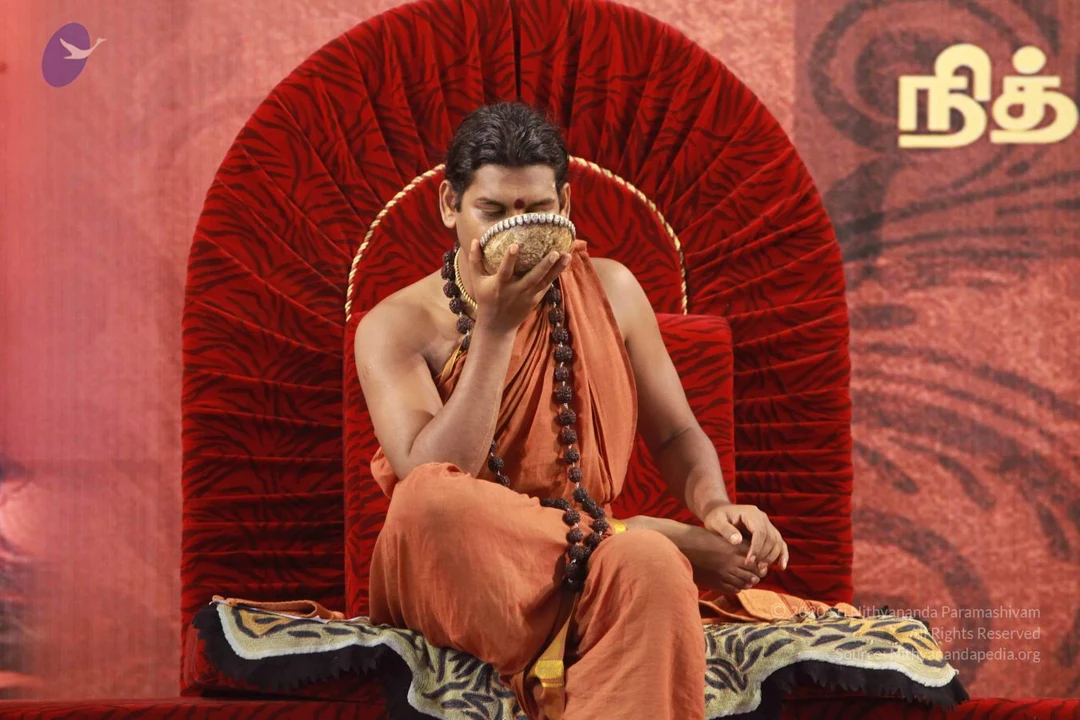
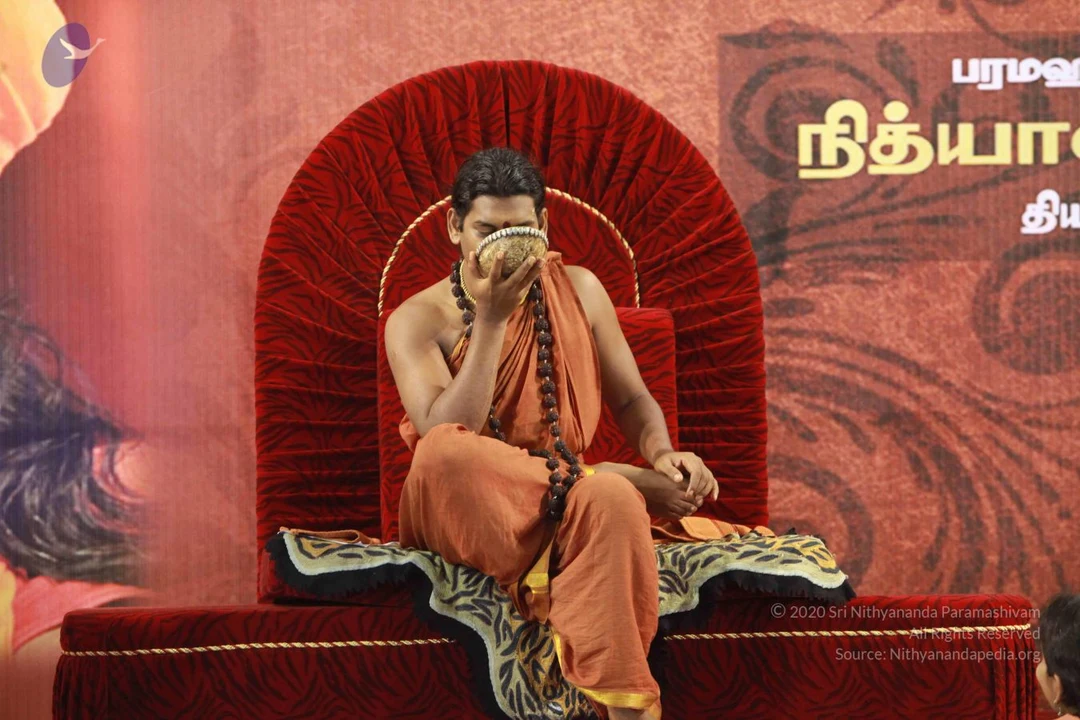
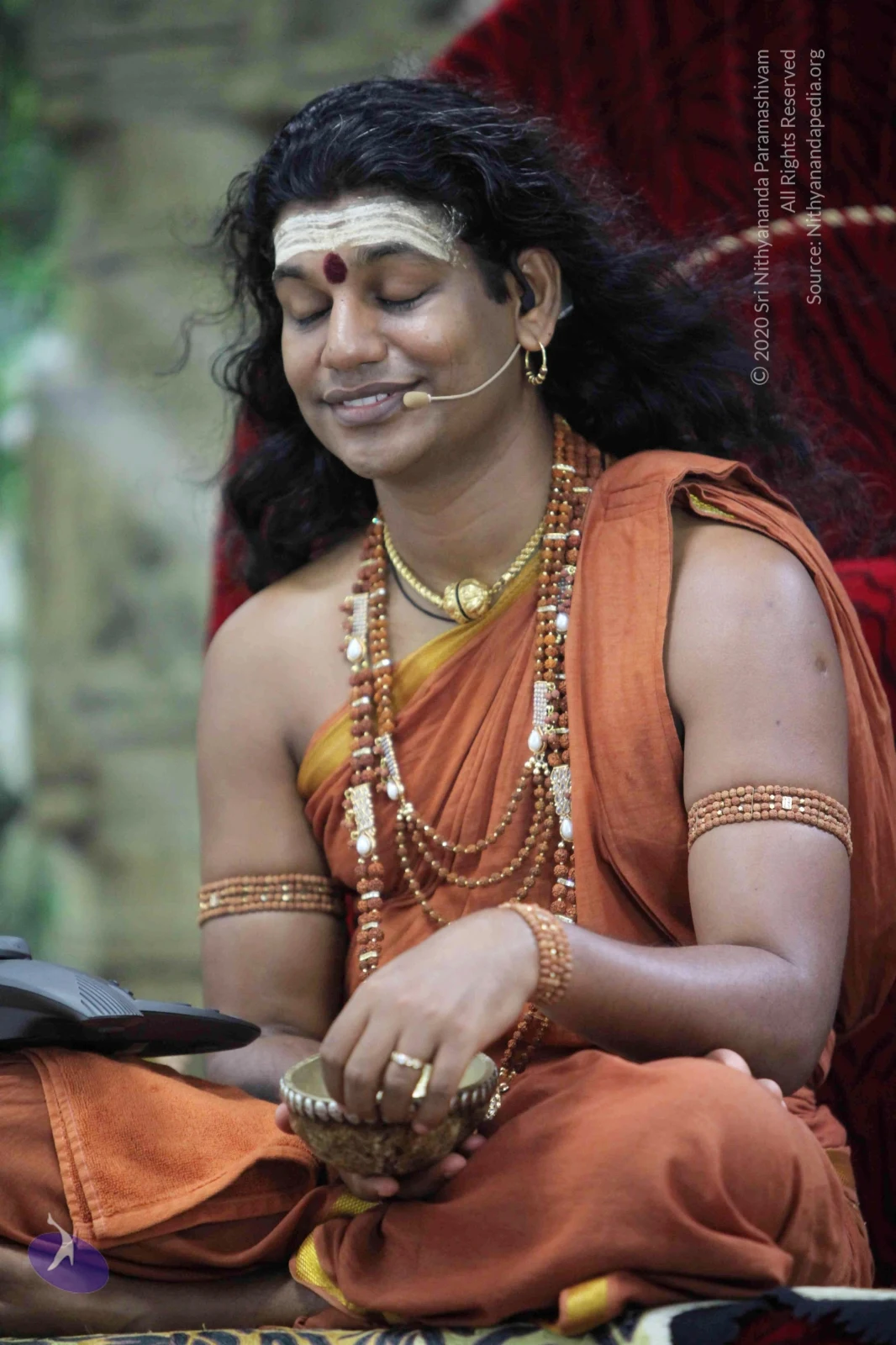
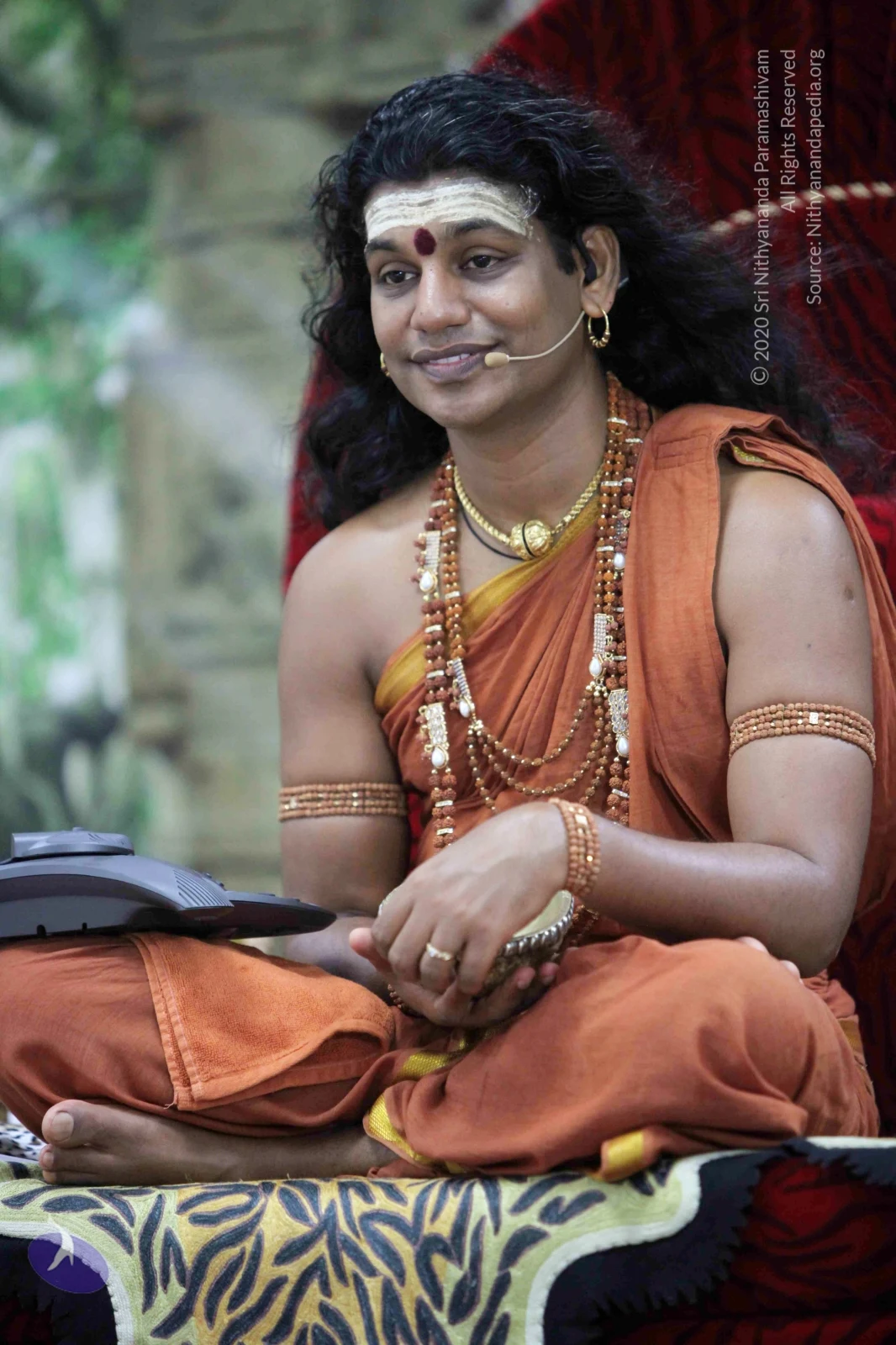
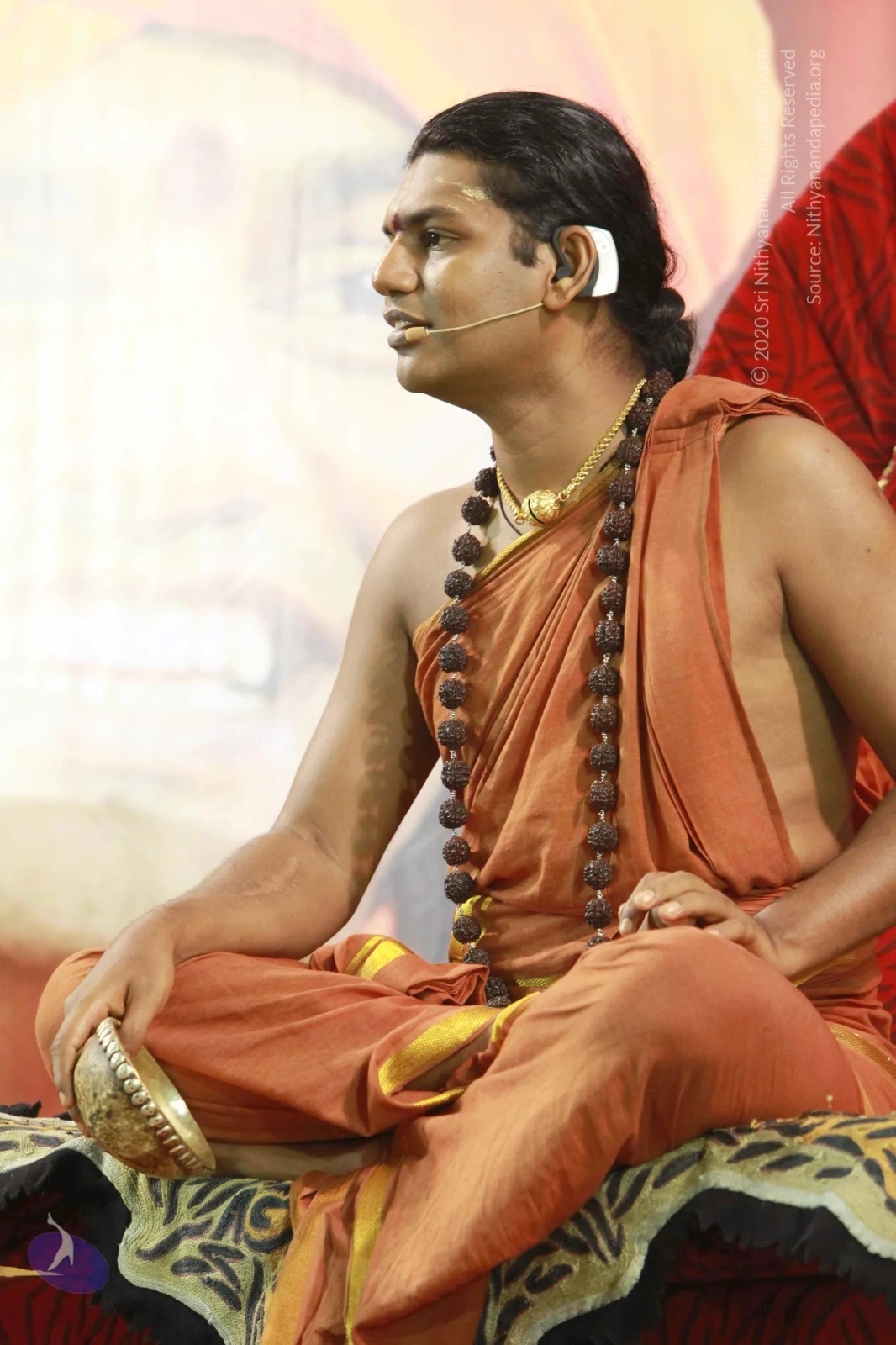
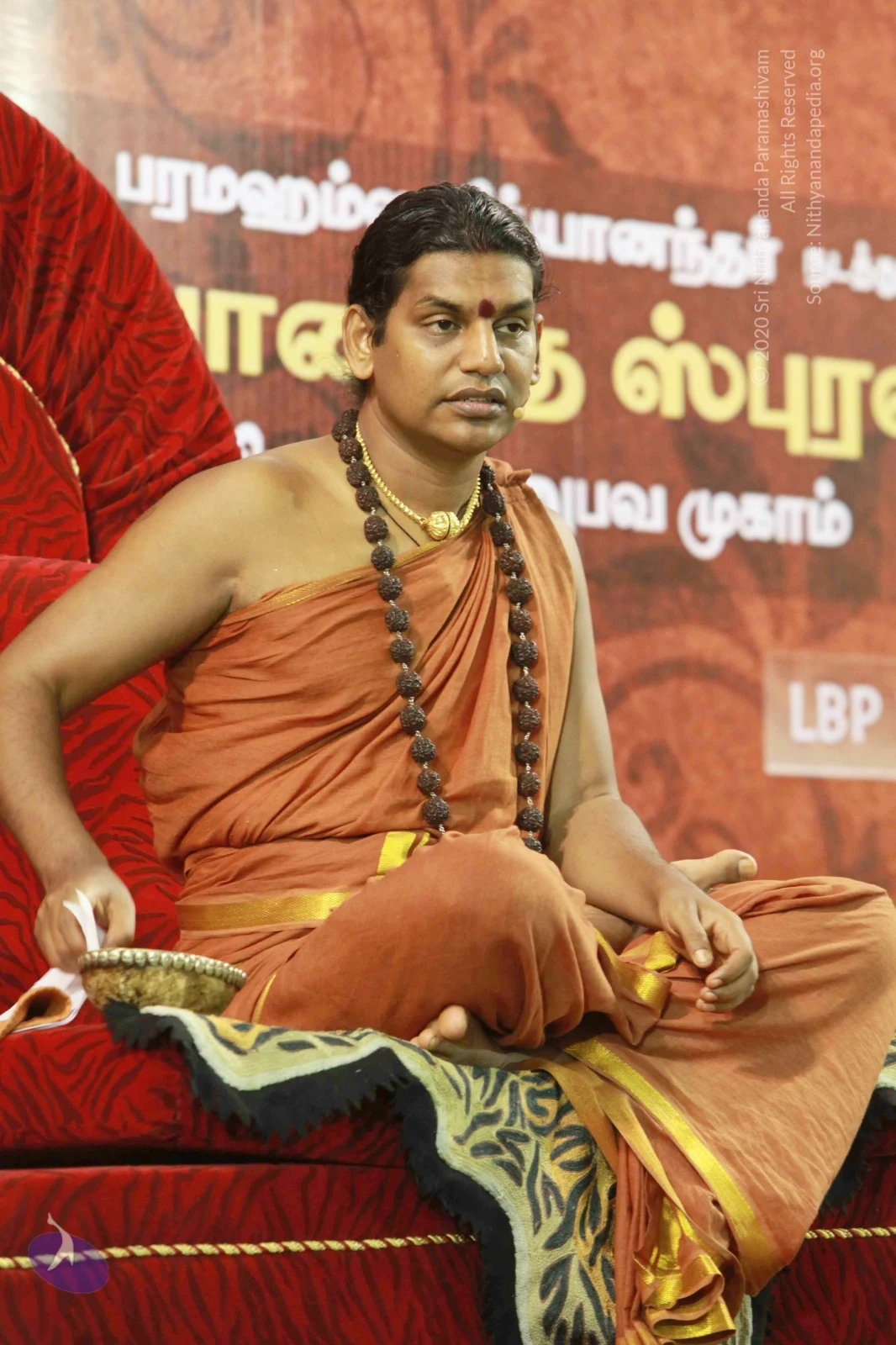
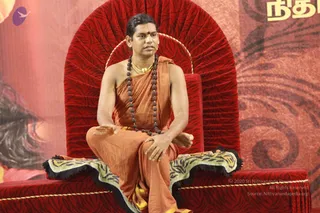
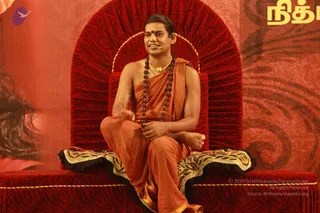
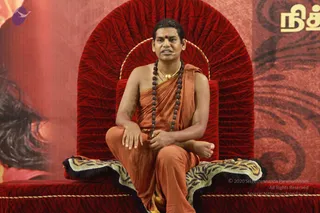
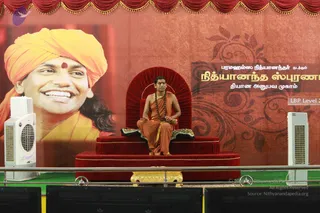
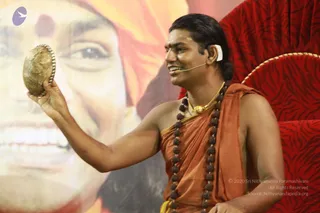
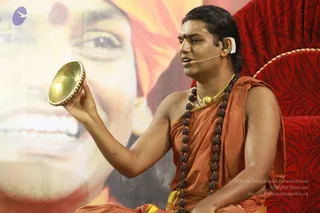
A man seated cross-legged on a tall red velvet throne with a zebra-striped pattern, gesturing with his right hand while speaking. He wears a saffron-orange cloth draped over his left shoulder and bare upper body, a long rudraksha mala of dark beads, a gold necklace, and a red bindi on his forehead. The throne sits on a tiger-striped cushion trimmed with black fringe against a red stage backdrop with decorative swirl patterns and Tamil lettering. Appearance-based label: a person, given his ornate saffron clothing, rudraksha mala, gold necklace and throne.A man seated cross-legged on a tall red velvet throne with a rounded back, draped in a tiger-striped cloth, speaks during a talk on a stage. He wears an orange-saffron cloth over one shoulder and a long dark rudraksha mala with a gold necklace, and has a small red forehead mark and a headset microphone. His hands rest near his knee in a gesture of explanation. Behind him are red patterned backdrops with a Tamil word in yellow lettering. a person is the speaker, seated in the ashram talk setting.A man sits cross-legged on a large red velvet throne with a tiger-striped cushion, speaking into a headset microphone at a satsang. He wears an orange-saffron cloth draped over his bare chest and shoulders, a rudraksha mala of dark beads, a gold necklace, and a red tilak on his forehead. Behind him, a red and orange backdrop shows a stylised graphic and Tamil lettering. The scene resembles a discourse hall. Swamiji (probable): long swept-back hair, saffron clothing, rudraksha mala and gold necklace are consistent with the page's reference to Paramahamsa Nithyananda speaking at a Ganesh Chaturthi satsang.A seated man in orange-saffron robes and a rudraksha mala sits cross-legged on a red velvet throne-style seat on a raised stage. Behind him a large backdrop shows a smiling man in an orange turban and saffron clothing, with a red bindi, beside a red floral-patterned panel. Two white tower fans stand at either side of the stage. The scene matches a satsang or discourse setting; one person is visible.A man in an orange-saffron dhoti-style garment draped over his bare shoulders sits on a red throne-like chair with gold trim, holding up a rounded, textured object in his right hand, possibly a coconut shell, and looking toward the left. He wears a long rudraksha mala with a gold ceremonial necklace, a red tilak on his forehead, and a small headset microphone. Behind him a large backdrop shows a smiling face in a red-and-yellow headwrap. Appearance-based label: a person, seated as a speaker during a talk.A man seated on a red throne-style chair with red tiger-stripe upholstery, speaking into a head-mounted microphone. He wears an orange-saffron dhoti-style wrap and a long shawl draped over the shoulder, a multi-strand rudraksha mala down his chest, and a gold necklace. He has a red bindi and a yellow tilak on his forehead, and holds up a small brass bowl with his raised hand. Behind him is a large backdrop portrait of a smiling man in a red and orange turban.

Arunachala

20 photosSource gallery
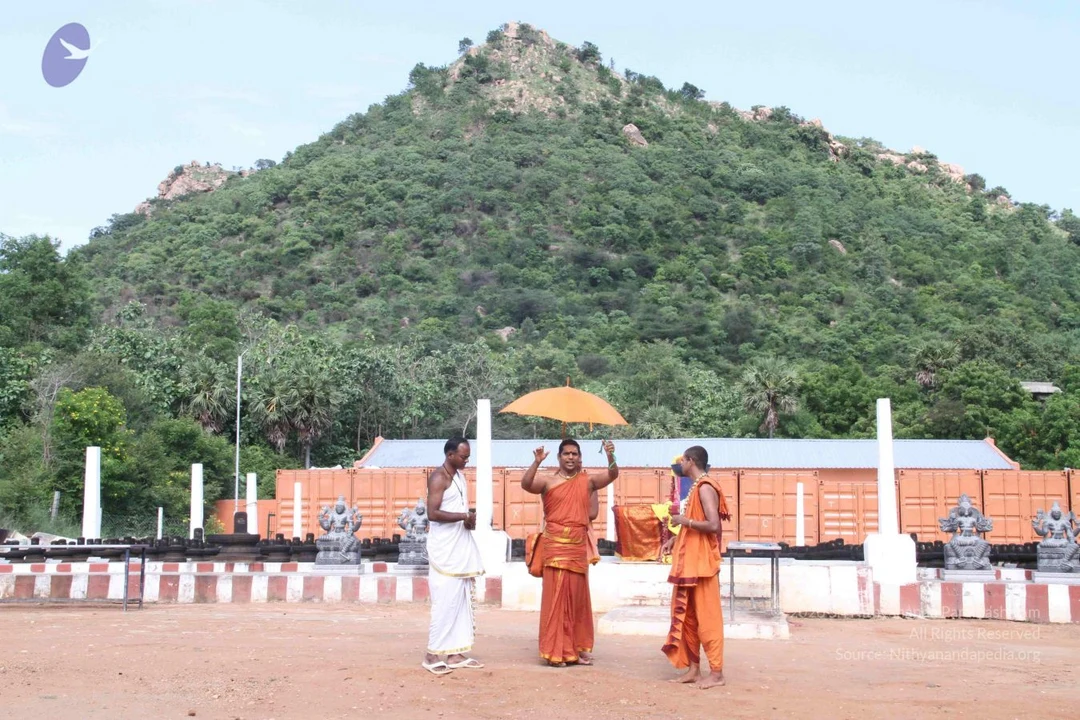
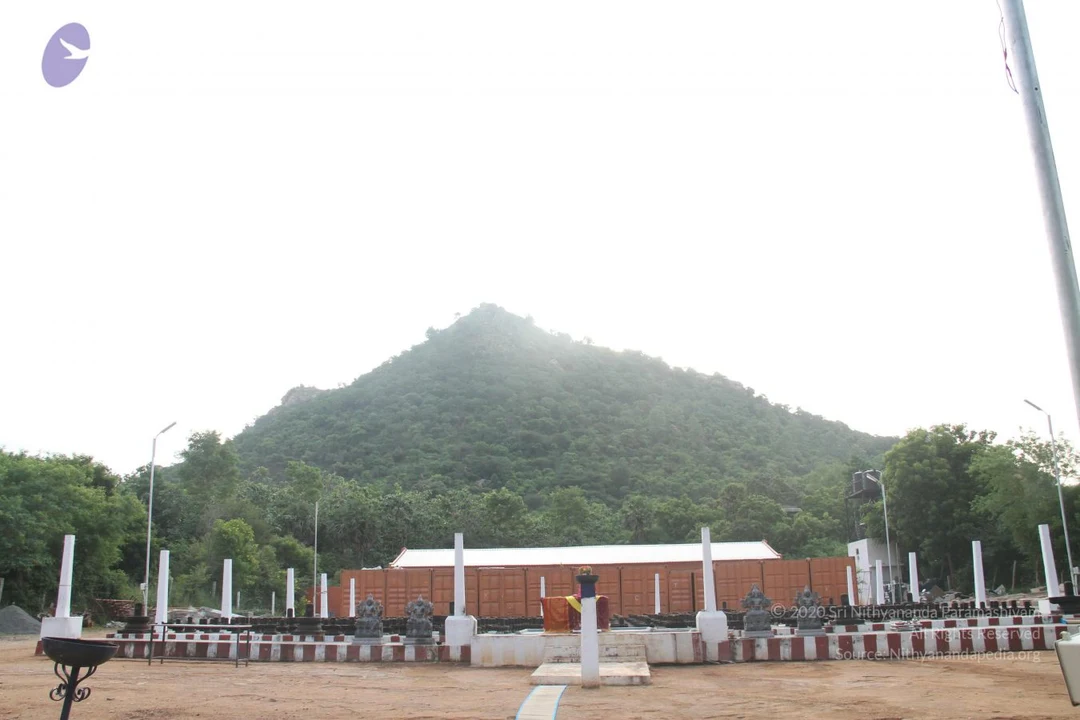
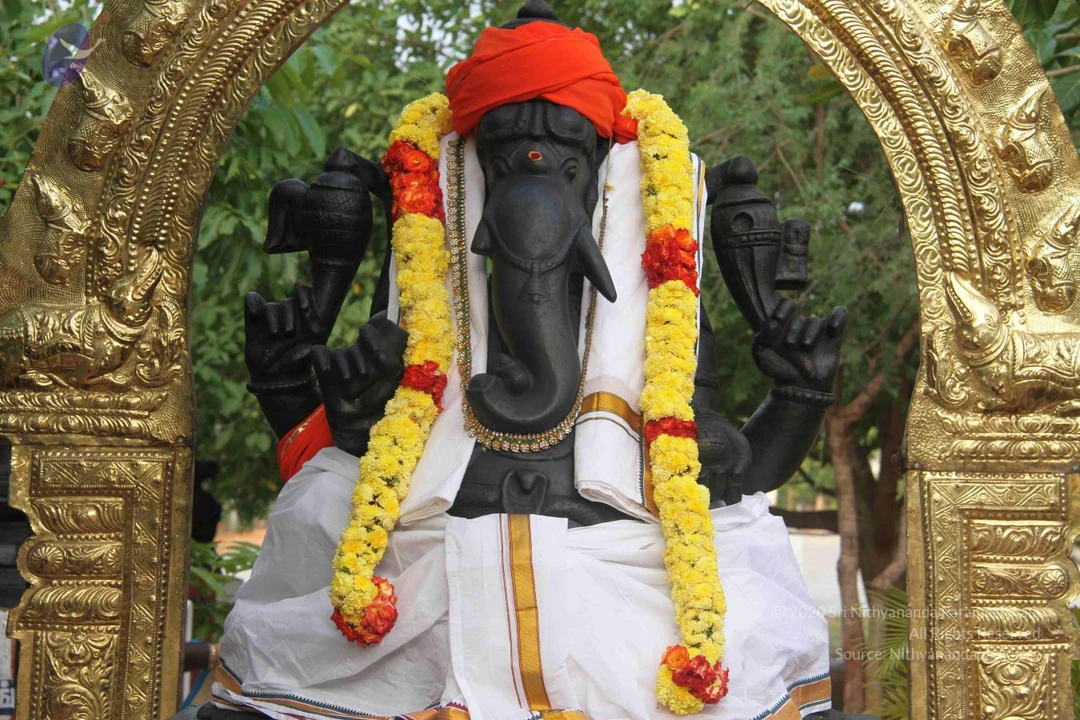
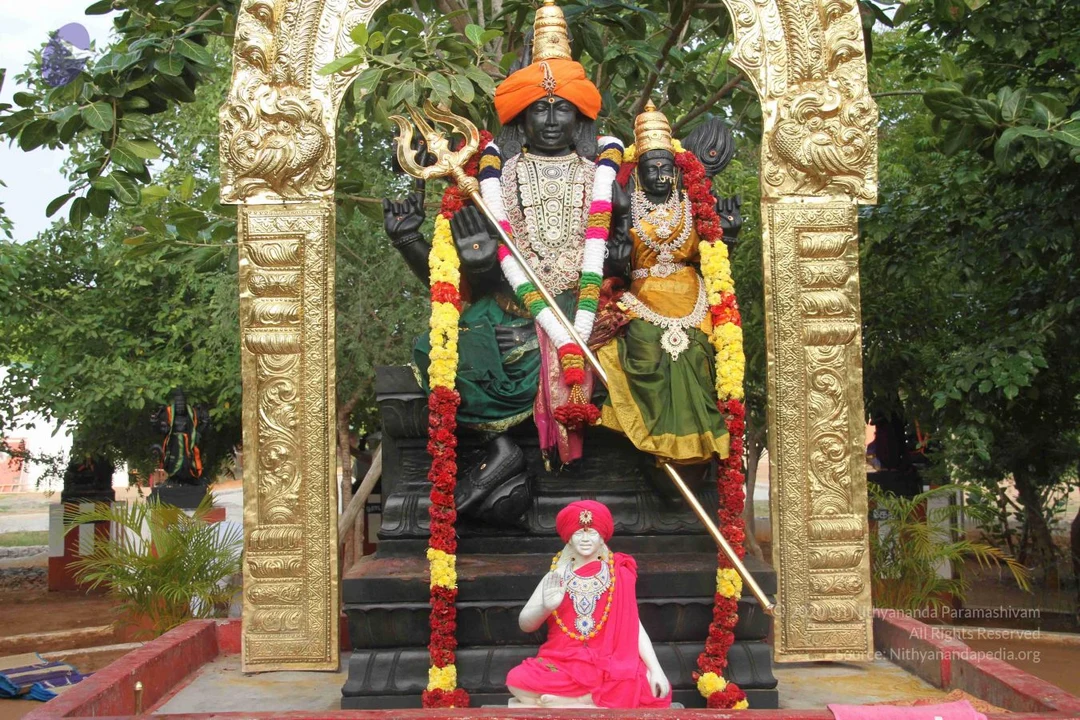
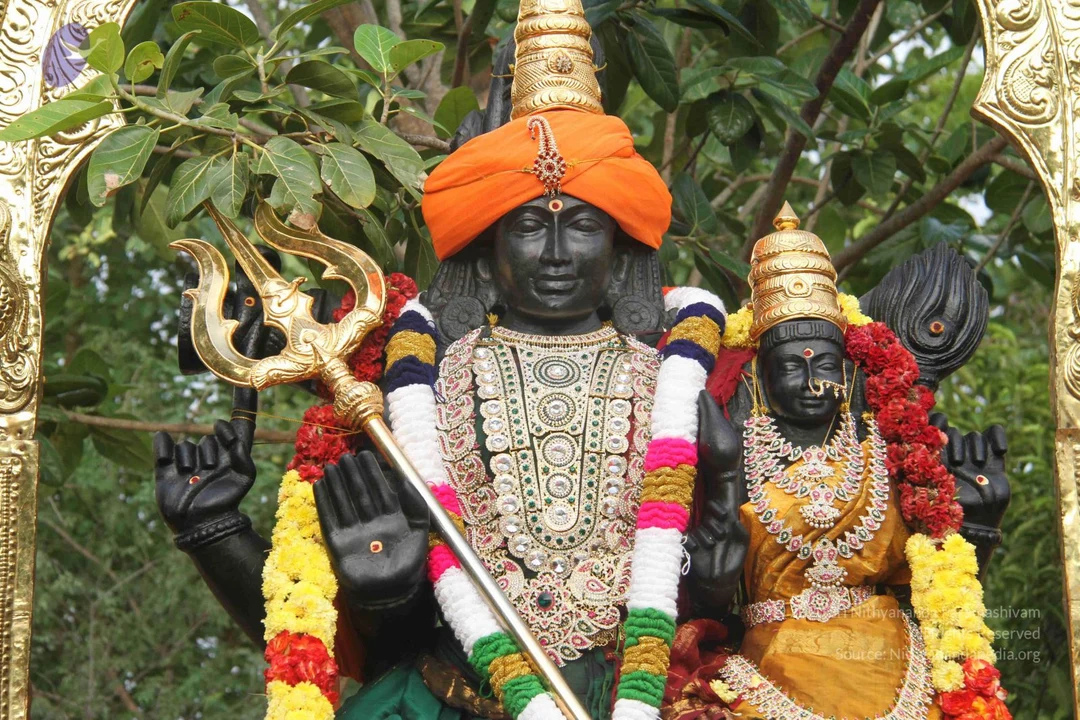
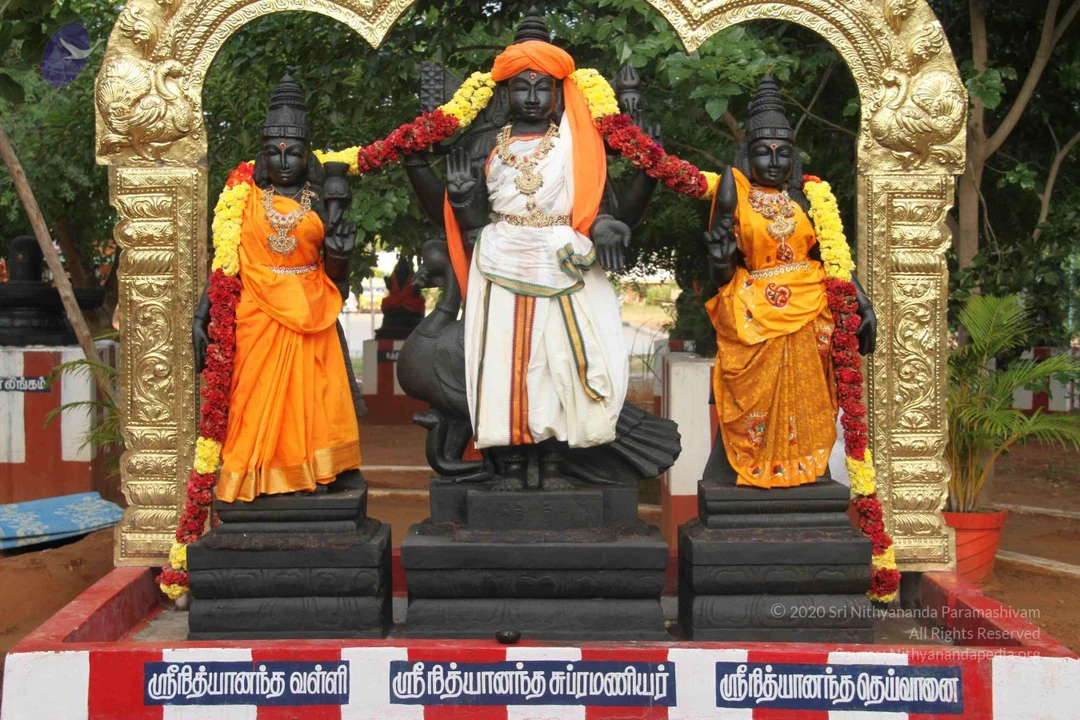
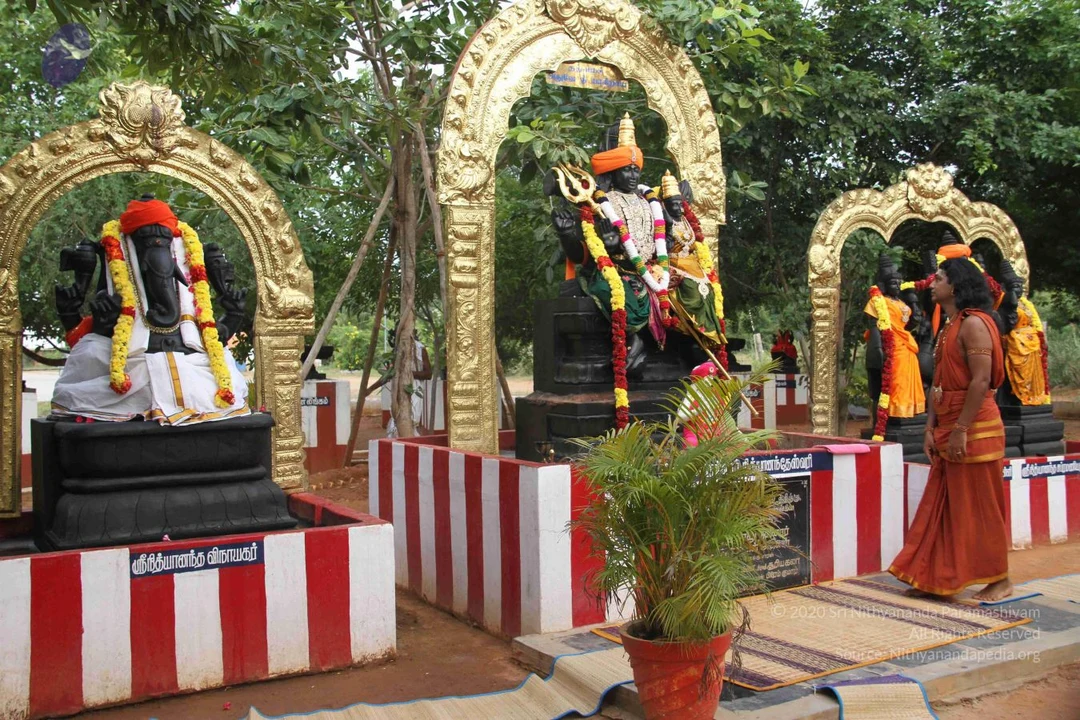
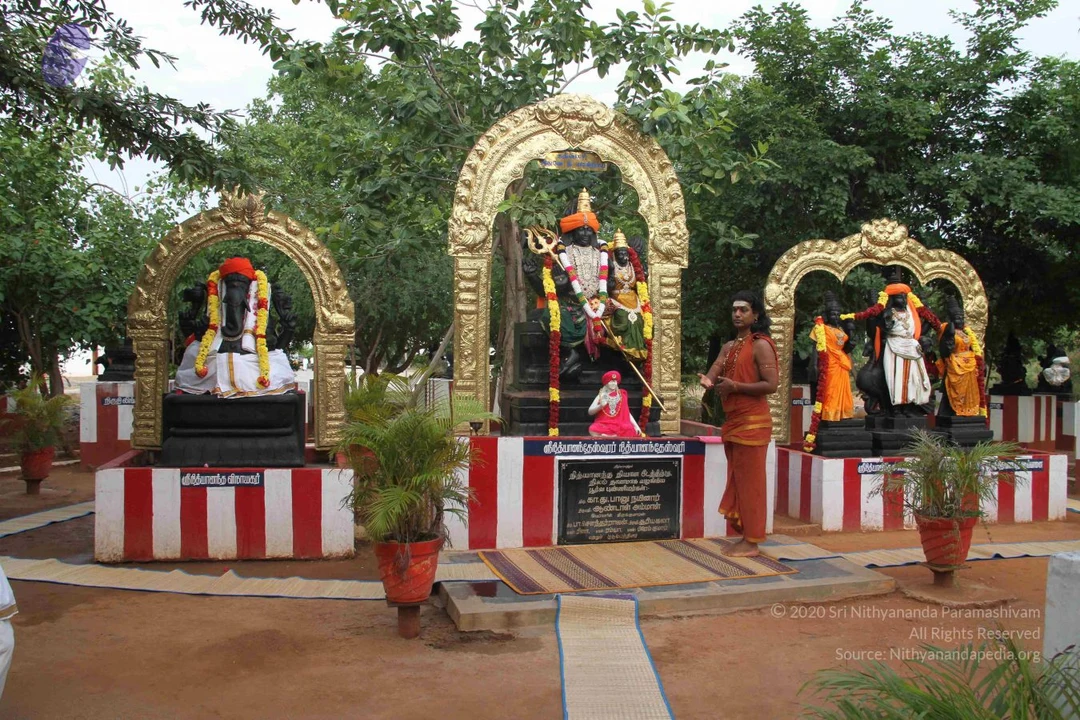
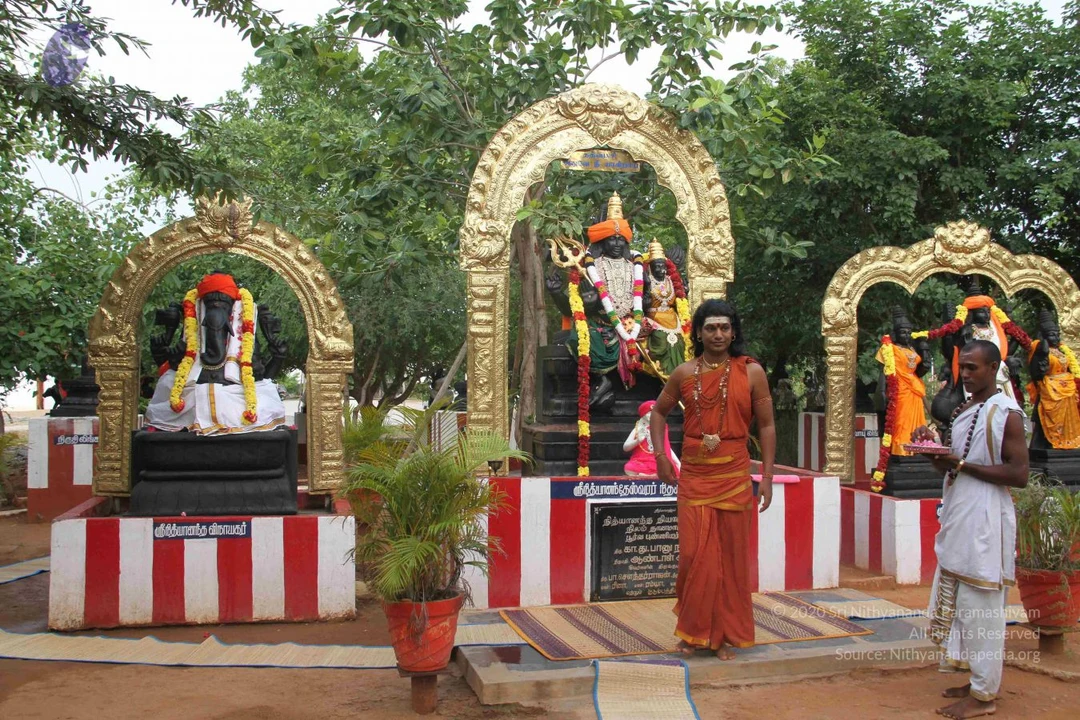
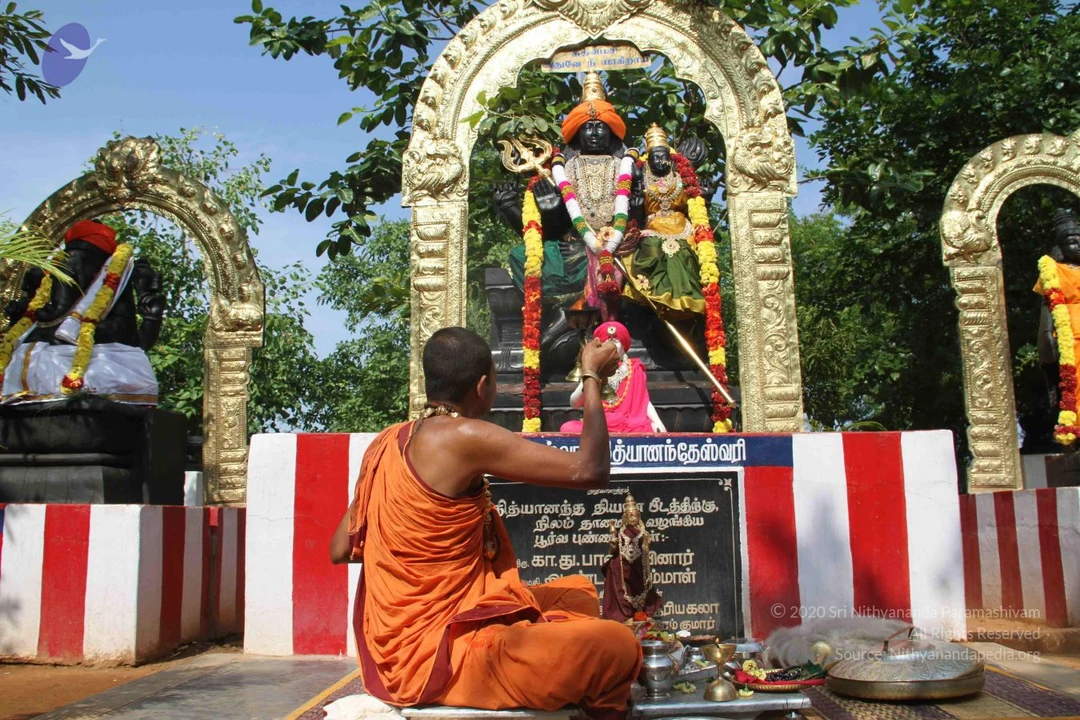
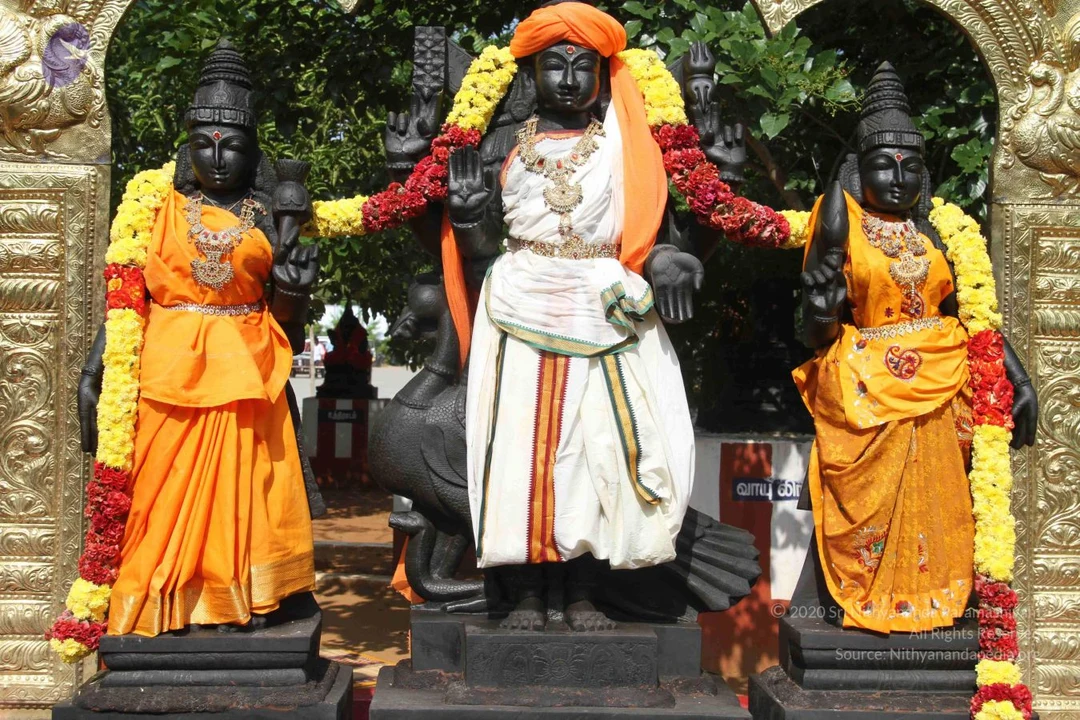
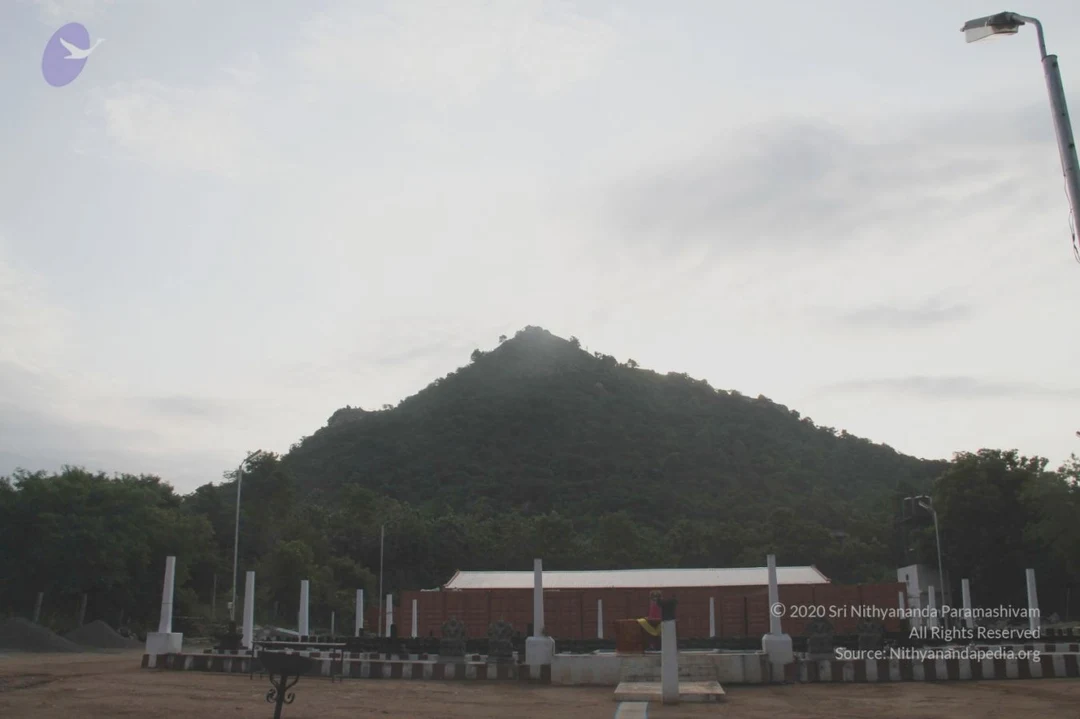
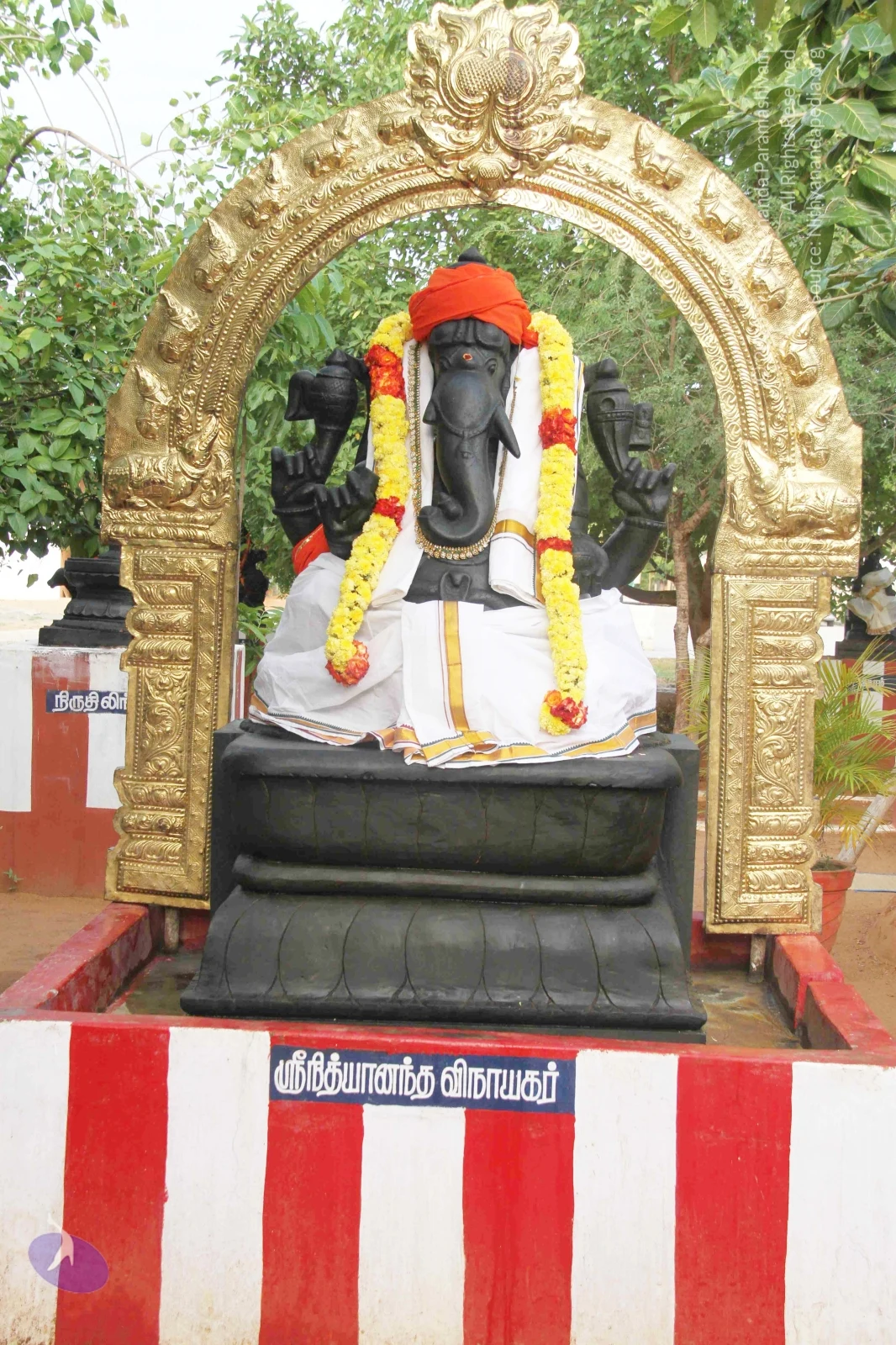
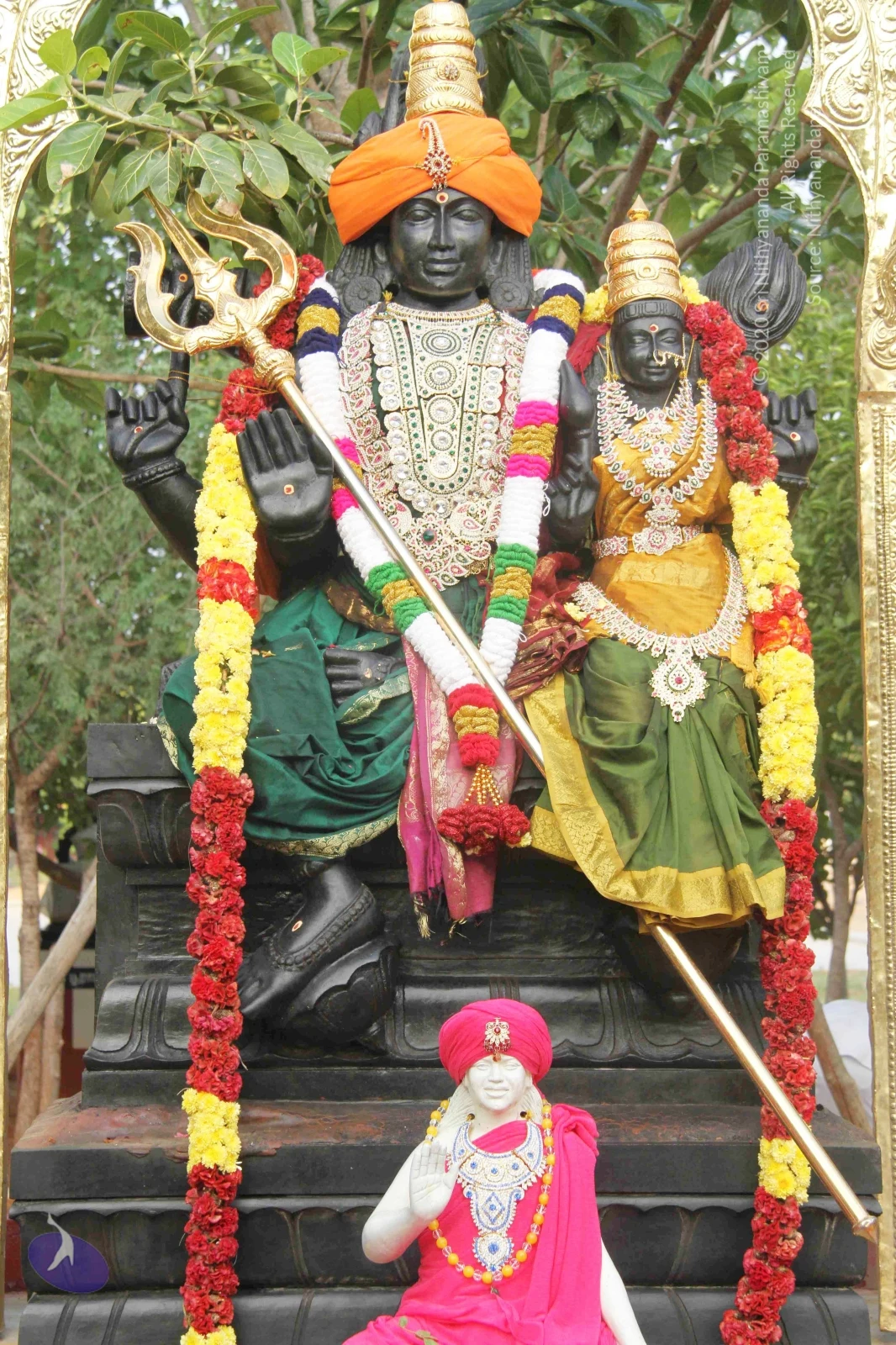
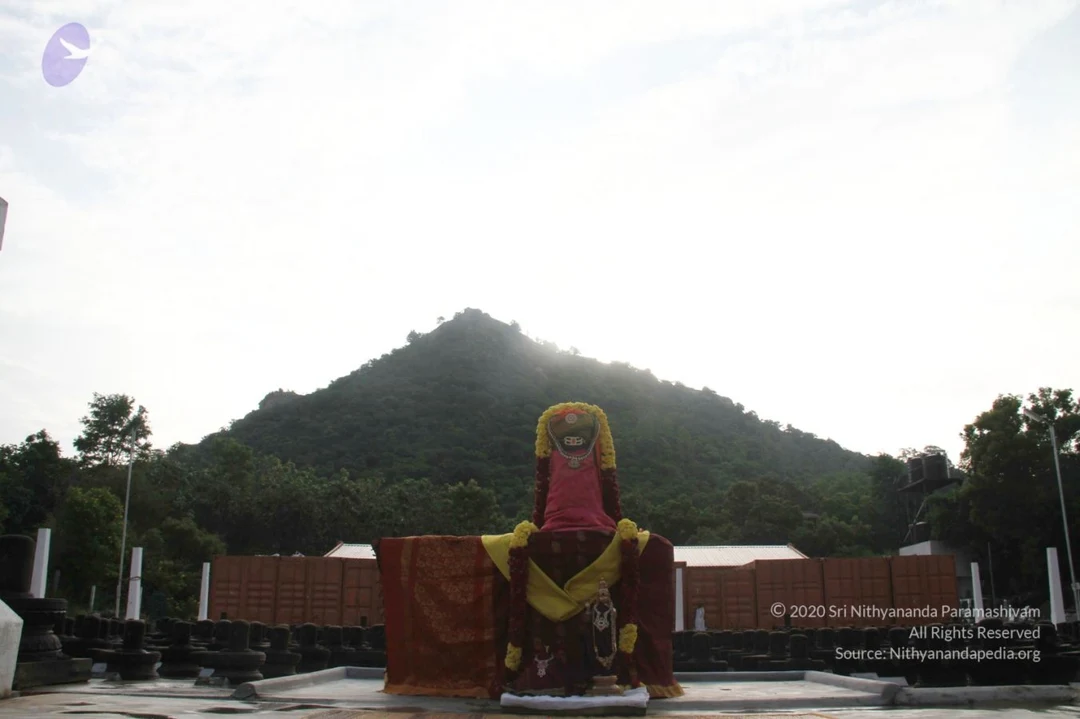
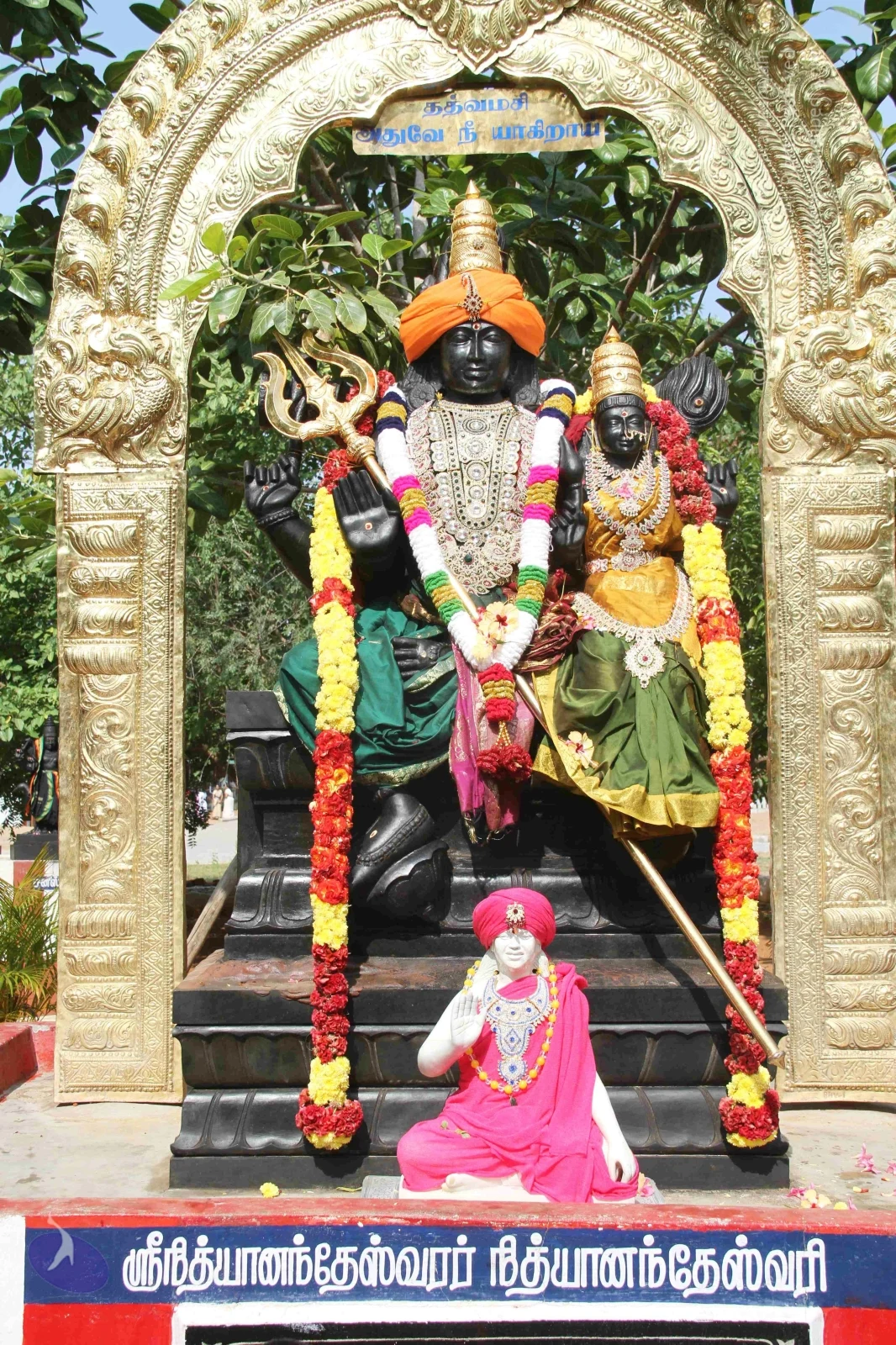
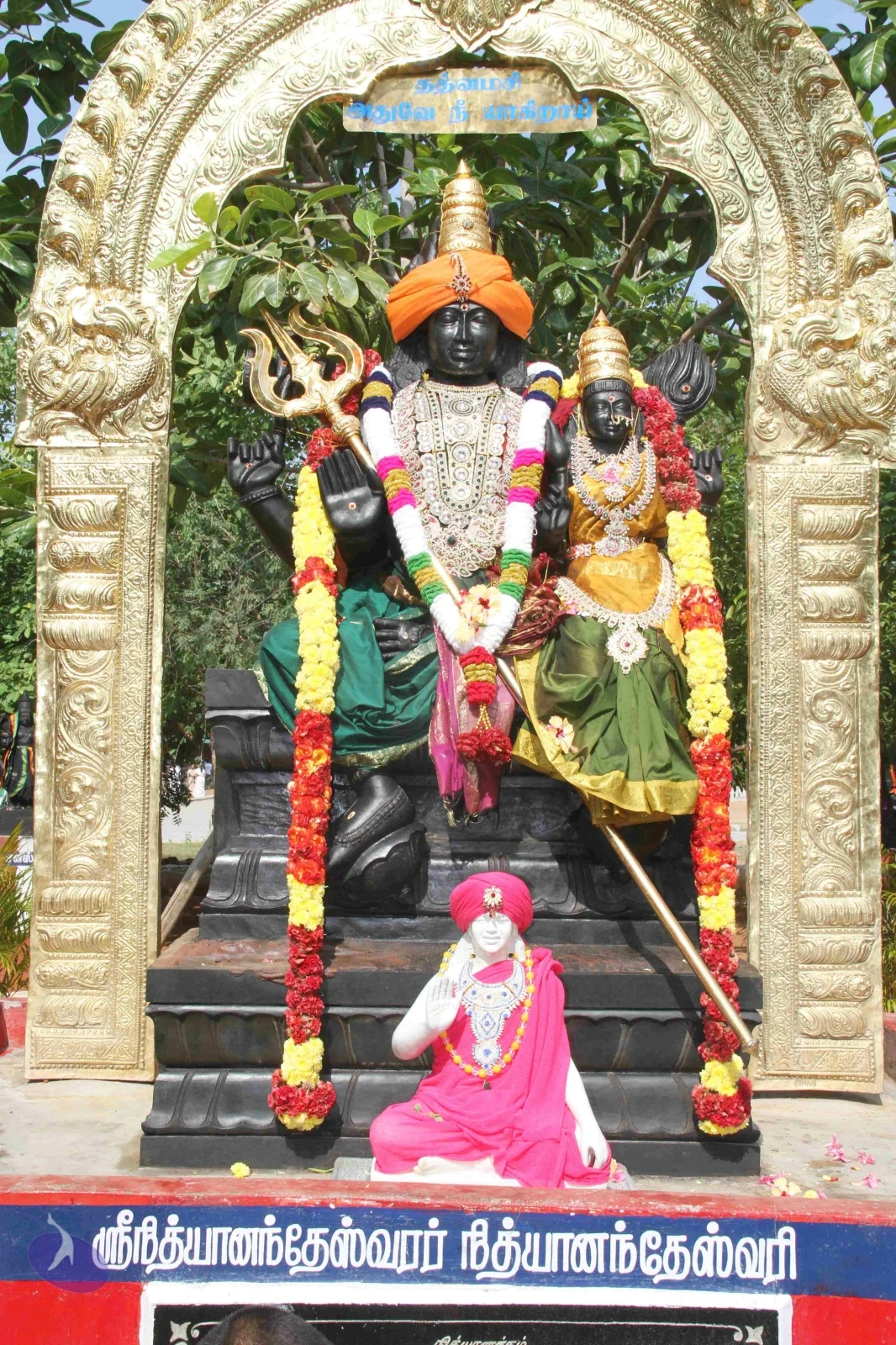
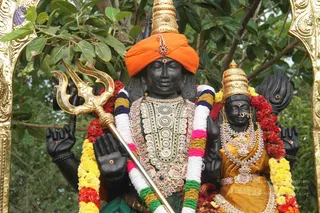
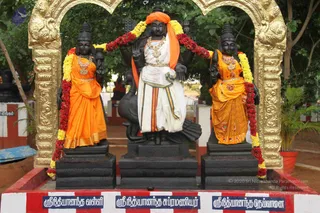
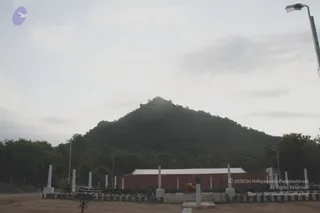
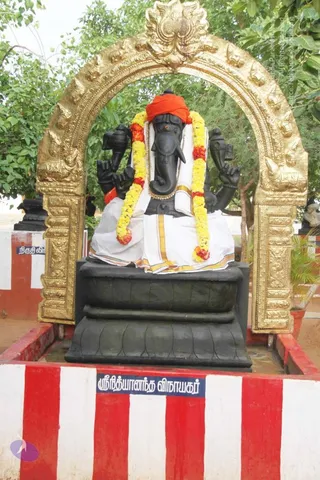
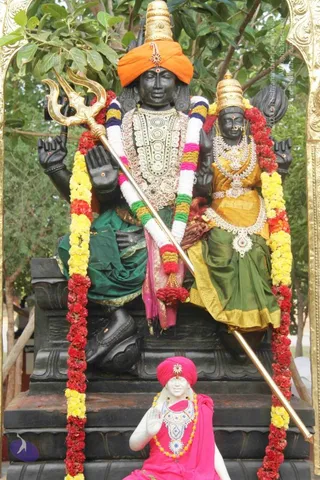
Outdoor photograph of a hillside temple compound beneath a hazy white sky. A forested hill rises behind a long orange-brown corrugated structure with a white roof. In the foreground, a raised square platform with red-and-white striped borders holds several grey stone deity murti figures and a white pillar at each corner, with a saffron cloth draped over a central seat and a small stone step leading up to it. A wrought-iron fire bowl stands at the left edge and a tall white pole with a lamp at the right. Dirt ground and scattered construction materials surround the platform. No people are visible.A black stone murti of Lord Ganesha seated outdoors between ornate golden arch frames, with green foliage behind. The deity wears an orange turban, a white dhoti with gold border, a gold necklace and two garlands of yellow marigolds with red flowers. Its four arms hold a small ornament and other objects, and a red tilak marks its forehead. No physical people are visible.A black stone murti of Ganesha seated in front of a gilded arch, adorned with yellow and orange marigold garlands, a red-orange head cloth, a gold chain, and a white dhoti with gold border. The deity has an elephant head with a red tilak and holds ritual objects in multiple hands. Green trees and a small plant appear behind the shrine.A photograph of an outdoor shrine with a black stone murti of Shiva and Parvati seated side by side on a black pedestal, flanked by a golden arch carved with floral and leaf motifs. The seated figure on the left wears an orange turban and a jewelled necklace, and holds a trident; the figure on the right wears a green and gold sari with ornate jewellery. Both are draped with garlands of yellow and red flowers and white-and-red strings. In front, a white marble statue of a seated sage in a pink-red robe, red turban and layered beaded necklaces rests a hand on the pedestal. Green trees and palms surround the shrine. No living people are visible.A photograph of black stone murti statues of a deity pair under a tree, decorated with multicolored garlands of marigold, red flowers and rainbow-striped strands. The taller figure wears an orange turban with a gold ornament, an ornate jewelled gold necklace and bejewelled chest piece, and holds a golden trident. The companion figure, shown in a gold sari with a gold crown and nose ring, wears layered gold necklaces and bangles. Gilded arch frames the scene with green leaves behind. The statues are deity murti, not living people, so no physical people are present.A photograph of three black stone murti statues under a gilded arch, dressed in orange and white garments with gold jewellery and garlands of red and yellow flowers draped across them. The central figure, a male deity murti with multiple arms, wears a white dhoti and an orange head cloth; flanked by two female murtis in orange saris. The statues stand on red and white painted bases with trees and a potted plant behind. Three printed Tamil-labelled plaques appear at the base. No physical people are visible.

Darshan

19 photosSource gallery
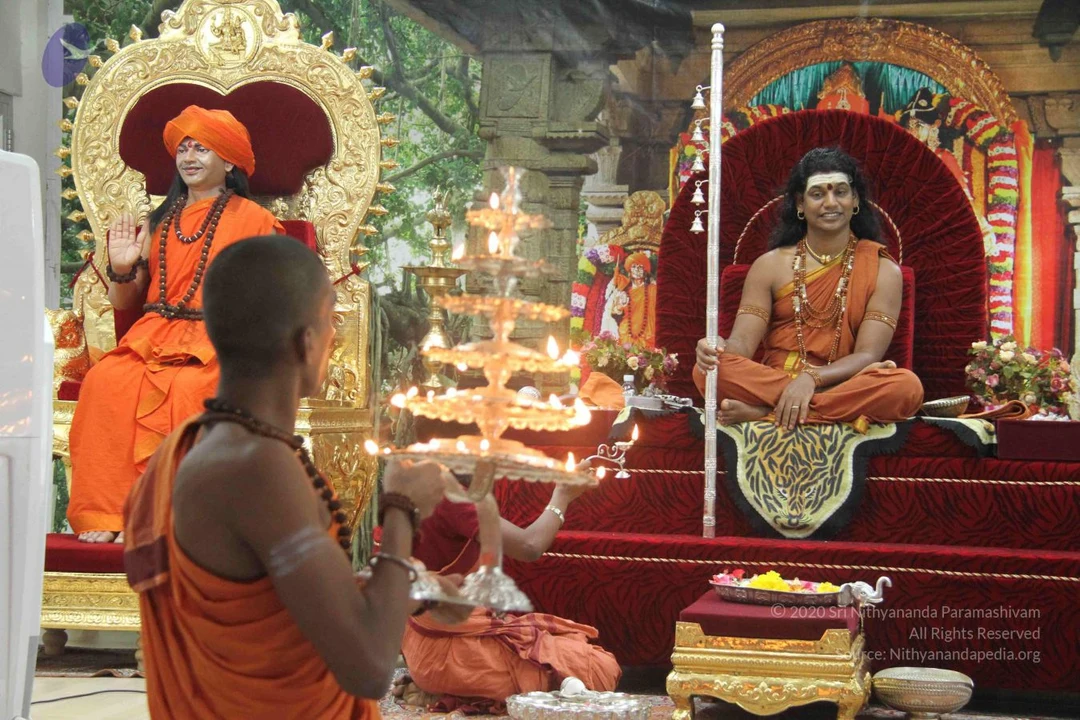
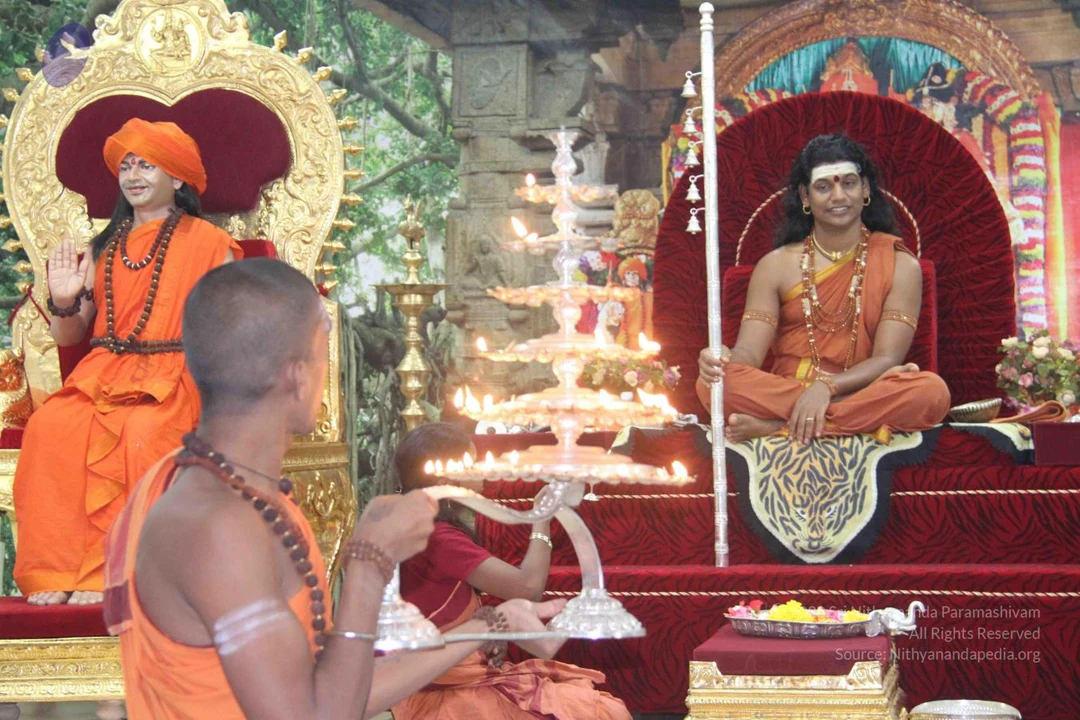
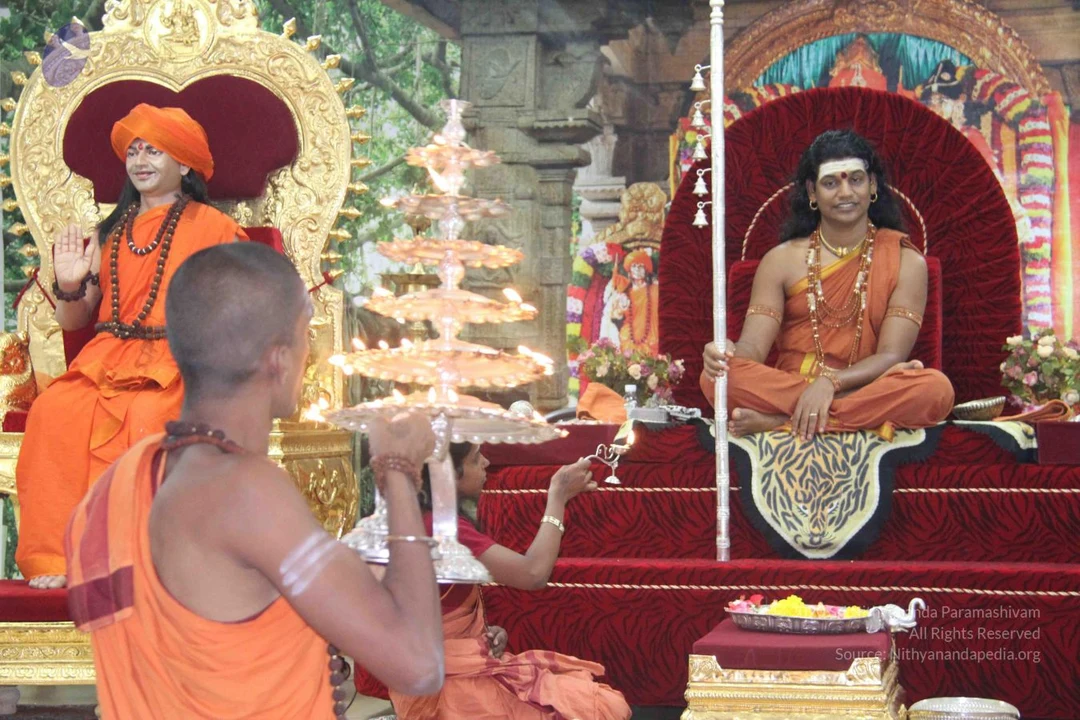
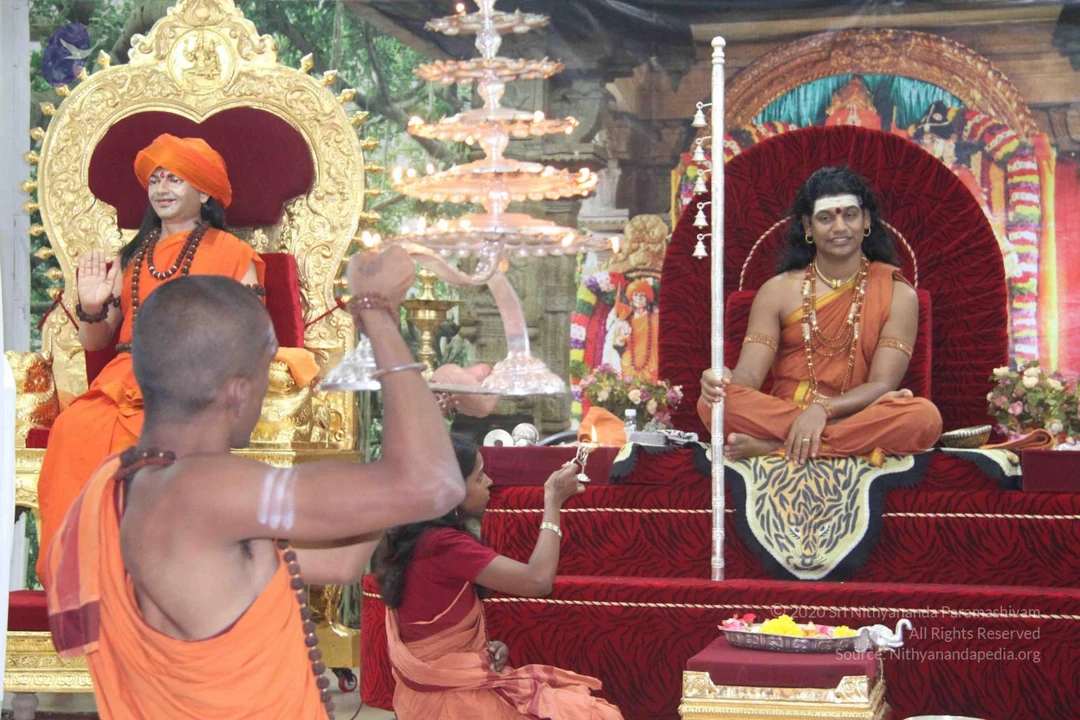
A seated man on a red velvet throne with a red-and-gold tiger-stripe cushion holds a tall silver staff upright in his right hand. He wears saffron-orange robes with a gold border, a rudraksha mala and a ceremonial gold necklace, bangles, and a white forehead band with a red mark. Behind him is a painted backdrop of a stone temple gateway, with a painted deity panel, garlands of marigolds and roses, and gilded lamp stands on either side. A silver tray of flowers rests on the stage. a person is seated in the centre, as the satsang speaker, with the dress and staff cues described.A photograph of a seated man on a raised platform before a red velvet arched backdrop decorated with floral garlands and a painted temple gopuram. He wears an orange saffron dhoti and shawl, a rudraksha mala and a gold necklace, with a white vibhuti band and red tilak on his forehead, and gold bangles on his arms. He holds a silver staff upright in one hand and smiles. Flower arrangements, brass lamps and a small offering sit at the lower sides of the platform. The scene suggests a satsang setting.A photograph of a seated man on a red velvet throne-like seat with a tiger-striped cushion, set before a backdrop of floral garlands and ornate temple-style decoration. He wears an orange saffron robe and orange wrap, a red-and-white vertical tilak on his forehead with a red dot, multiple beaded rudraksha-style malas and a gold ceremonial necklace, gold bangles and earrings. He holds a tall silver staff upright with his left hand and smiles while seated in a cross-legged position. Pink and white flower arrangements sit beside him, and a small statue of a deity in orange and red appears at left. a person appears to be this seated figure, based on his saffron robes, multiple malas and ceremonial gold necklace.A seated man in saffron-orange robes sits cross-legged on a red velvet throne backed by a striped tiger-skin cushion, smiling broadly and holding a tall silver staff topped with a finial. He wears a white forehead band with a red bindi, long dark hair, rudraksha malas with a gold ornament, gold bangles and hoop earrings. Flower arrangements in pink and white sit beside him, and behind is a large decorative backdrop with a deity-like figure in orange and a floral garland arch. Swamiji (probable): the seated man has long swept-back hair, saffron robes, rudraksha malas and ornate gold jewellery, so this photo shows a probable in-person presence.A seated man in saffron-orange robes sits cross-legged on a red velvet throne with a zebra-striped cushion during a satsang. He raises a white ceremonial staff topped with ornaments in his right hand, wears a long rudraksha-style mala and a gold pendant necklace, a red bindi and white tilak on his forehead, and bangles on his arms. Behind him are a red velvet backdrop, colourful flower garlands, a carved stone arch and a painted deity image. Pink and white flower arrangements sit on either side, and a woman with dark hair is partially visible at the lower left edge.A photograph of a ritual scene before a red-draped altar with gold-painted panels and a temple-style backdrop. On the right, a long-haired man in saffron robes with a sandalwood forehead mark, rudraksha mala and gold necklace sits cross-legged on a red throne over a striped tiger-skin mat, holding a tall silver staff. On the left, a second man in an orange turban and orange robes with rudraksha beads sits on an ornate gold-and-red throne, raising his hand in blessing. In the foreground, a shaven-headed priest in saffron cloth and rudraksha beads holds a silver plate, while a child in red and orange kneels beside him. A tall multi-tiered silver aarti lamp with many lit oil lamps stands center, with a plate of flowers and petals at lower right.

Morning-Satsang
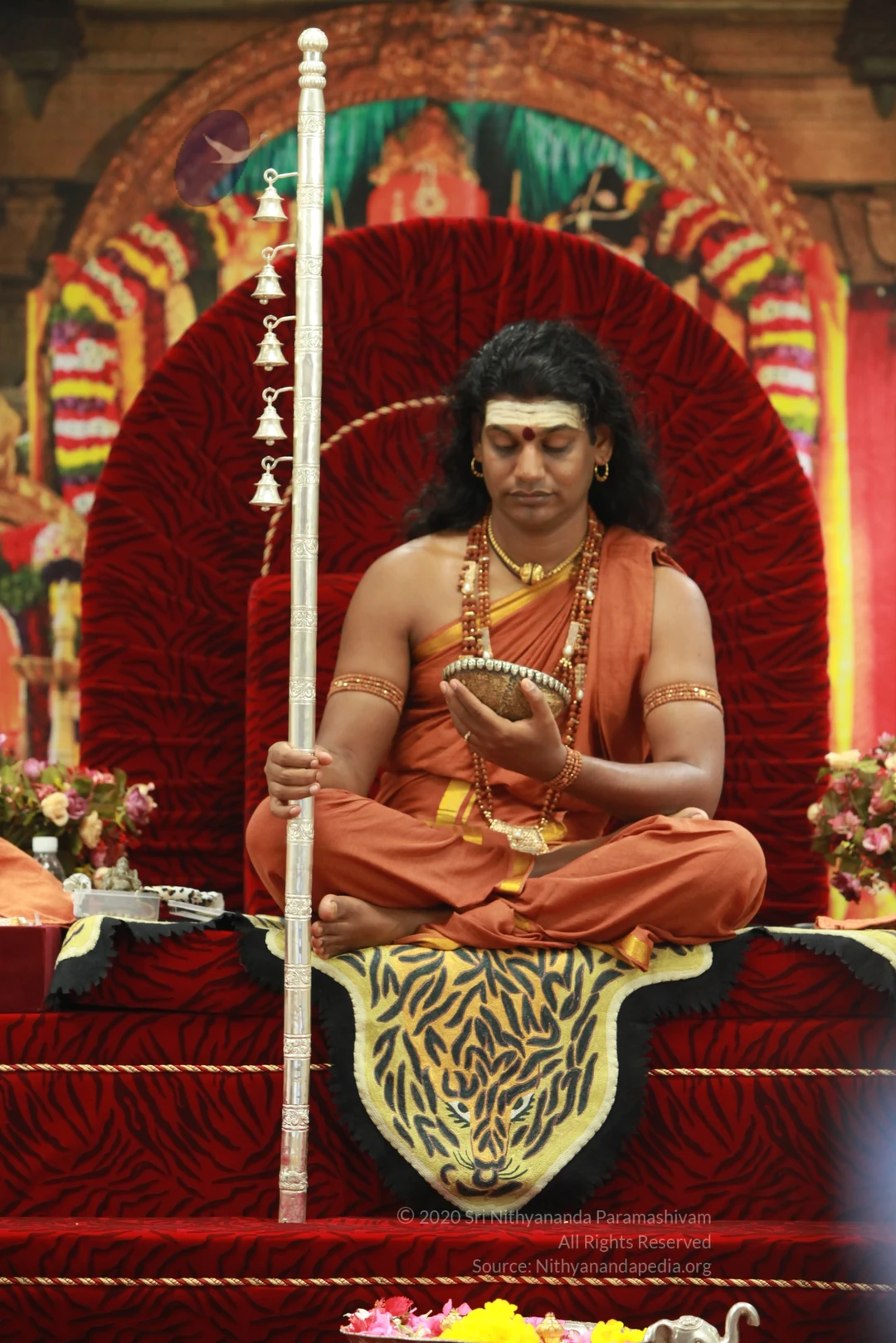
49 photosSource gallery
A seated man in orange-saffron robes sits cross-legged on a red tiger-striped velvet throne with a rounded back. He wears a white sandalwood tilak with a red bindi, gold hoop earrings, layered rudraksha malas and a gold ceremonial necklace, and beaded armbands. He holds a tall silver staff topped with a finial and hanging bells. Pink and white flowers sit beside the throne, and a floral backdrop with a gilded temple arch appears behind him.A seated man in saffron-orange robes and a draped orange shawl sits on an ornate red velvet throne with a gold-trimmed back. He wears a rudraksha mala, multiple beaded necklaces, a gold pendant, gold bangles and armlets, and a white-and-red forehead mark. He holds a long silver staff with bells at the top, with a bouquet of pink and white flowers and a golden lamp stand beside him. A silver tray of yellow flowers and petals sits on a red cushion at the front. The backdrop shows a painted temple arch, carved stone pillars and a green tree. Swamiji (probable) seated on throne with ritual objects, candidate appearance cues include long swept-back hair, saffron clothing, rudraksha mala and gold necklaces.A man seated on an ornate red velvet throne with zebra-stripe upholstery, wearing an orange saffron cloth draped over one shoulder with gold border, multiple rudraksha malas, a gold pendant necklace, gold armbands, and a white tilak with red bindu on his forehead. He holds a tall silver staff with bells. Behind him is a painted temple backdrop with a golden arch, garlands of red and white flowers, and a lit brass lamp stands to the right. A silver tray of yellow flowers sits in front of the throne. The appearance is consistent with a person, seated in a satsang setting with a throne, saffron robes, and rudraksha malas. This is a photograph with one visible person.A seated man on a red tiger-striped throne in front of a painted temple backdrop with floral garlands and a decorated arch. He wears an orange saffron dhoti and shawl with gold borders, a rudraksha mala and ceremonial gold necklace, gold armlets and bangles, and a white vibhuti line with a red kumkum dot on his forehead. His long hair is swept back. He holds a tall silver staff with hanging bells in his right hand. Red flowers and a red box sit beside the throne. a person seated in a satsang setting, with distinctive saffron clothing, rudraksha mala and gold necklace.A man with long, swept-back dark hair sits cross-legged on a red zebra-striped upholstered seat, smiling, in front of a stone-carved backdrop. He wears an orange-saffron cloth with gold borders draped over his shoulders and body, multiple strands of rudraksha beads, gold ornamental pendants with white stones, a gold choker, an earring, and rudraksha armlets. A white horizontal tilak with a red dot marks his forehead. A bouquet of pink and white flowers rests at the lower right. a person appears in person, seated as a speaker.
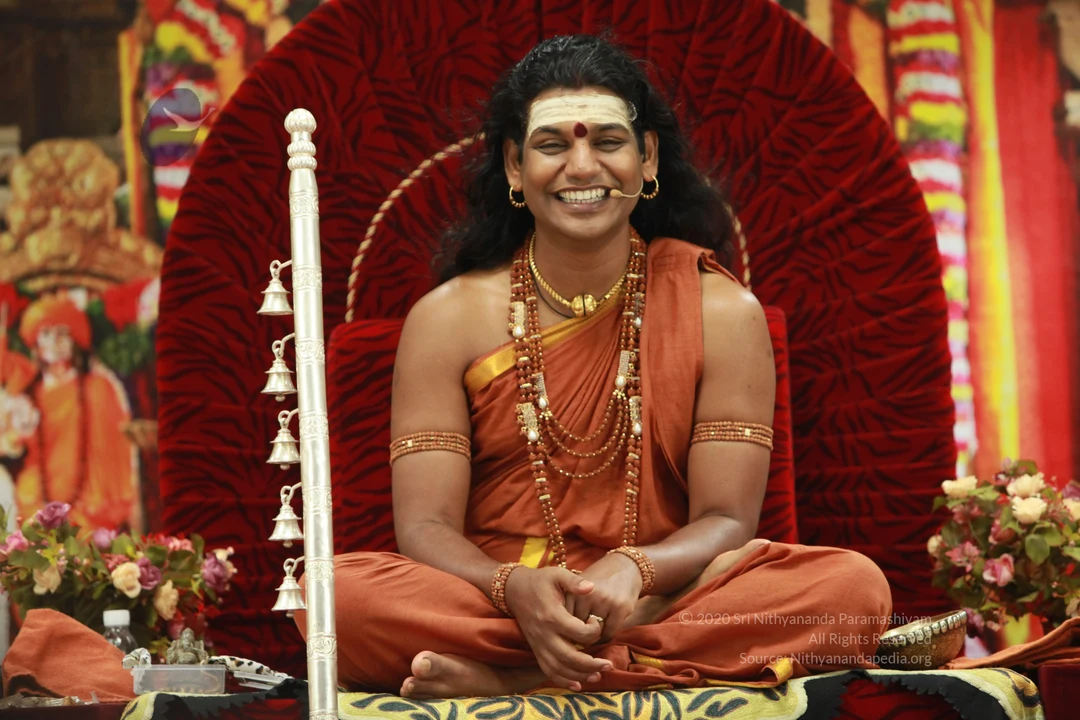
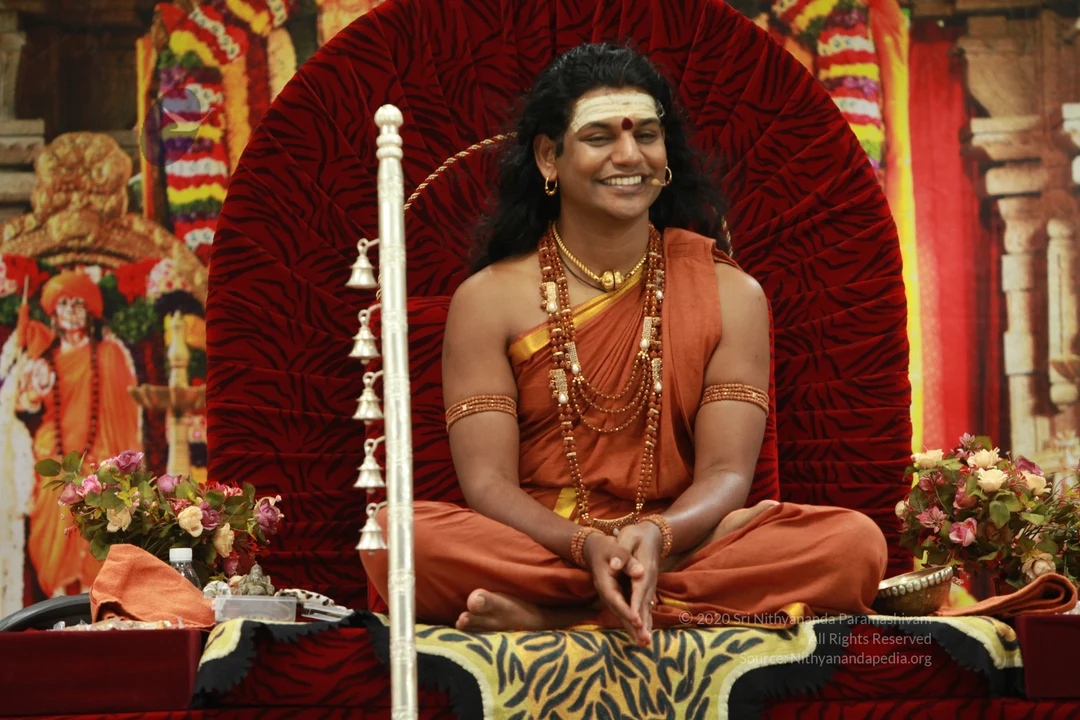
HDH-Ganesha-Alankaram

86 photosSource gallery
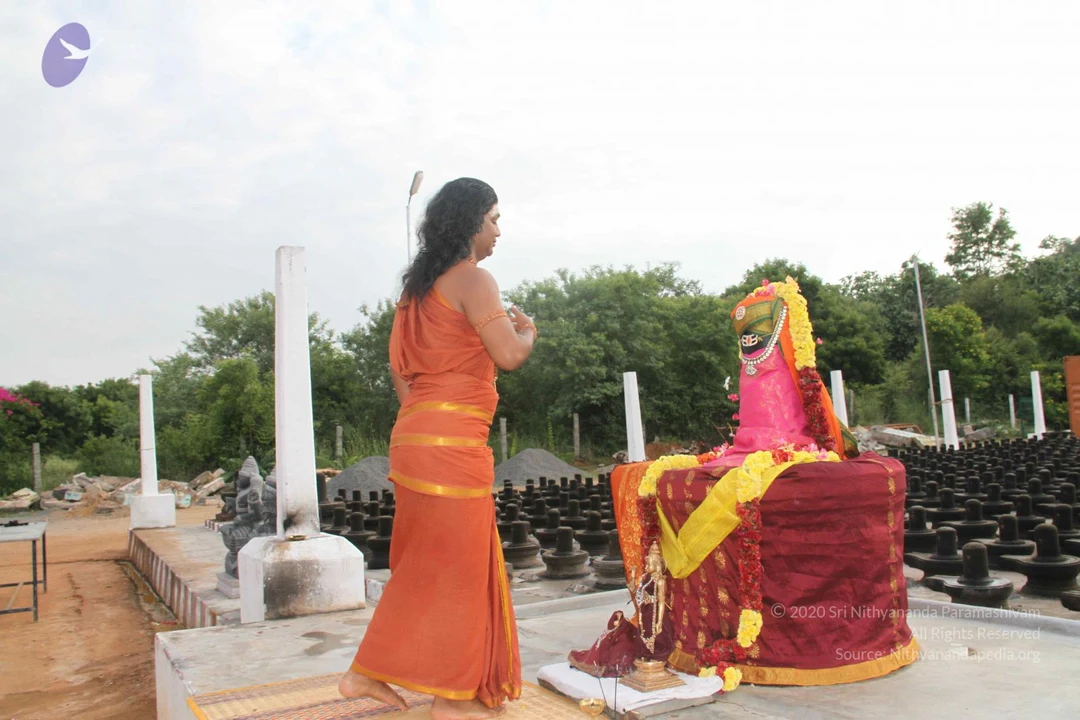
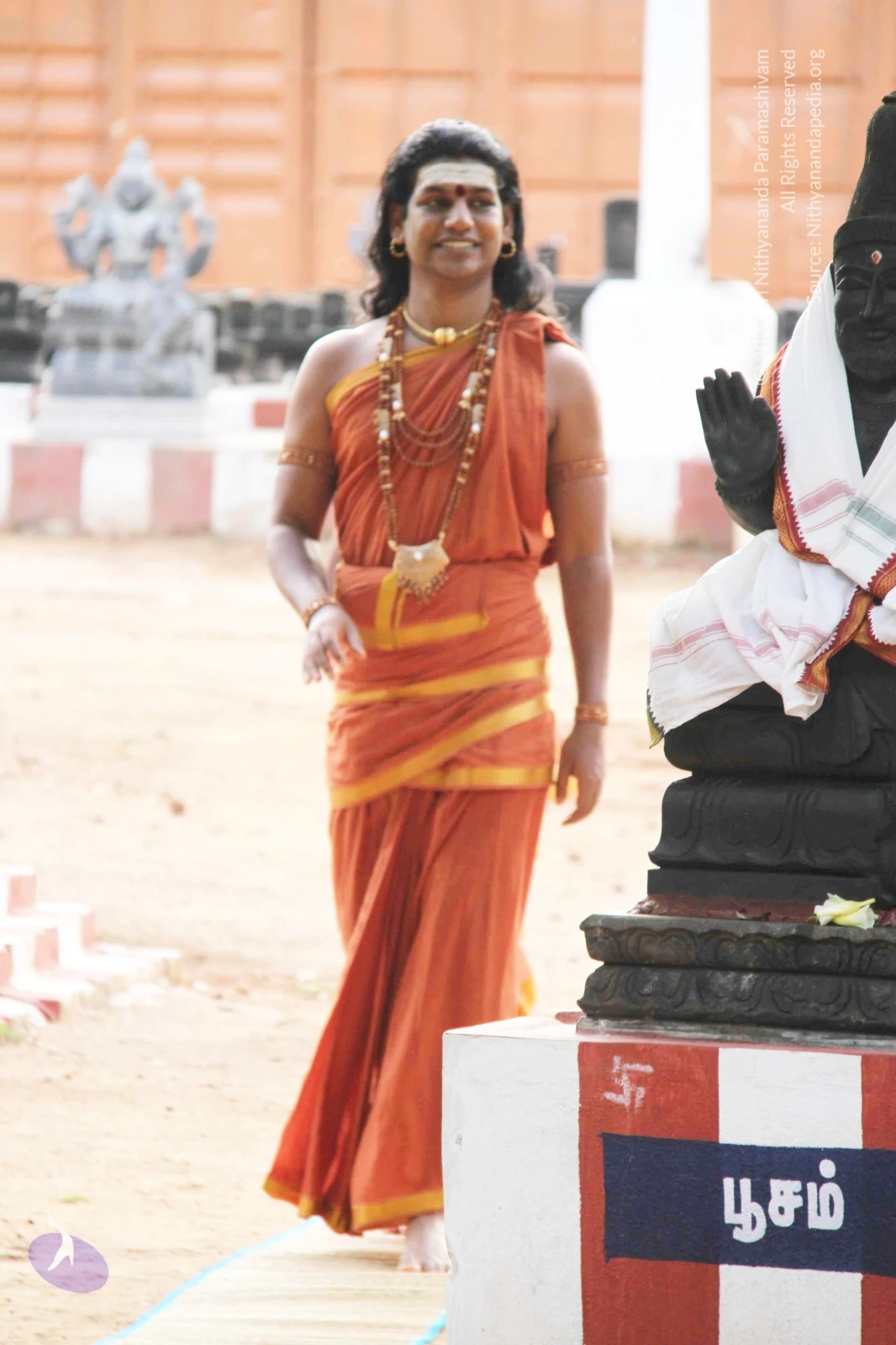
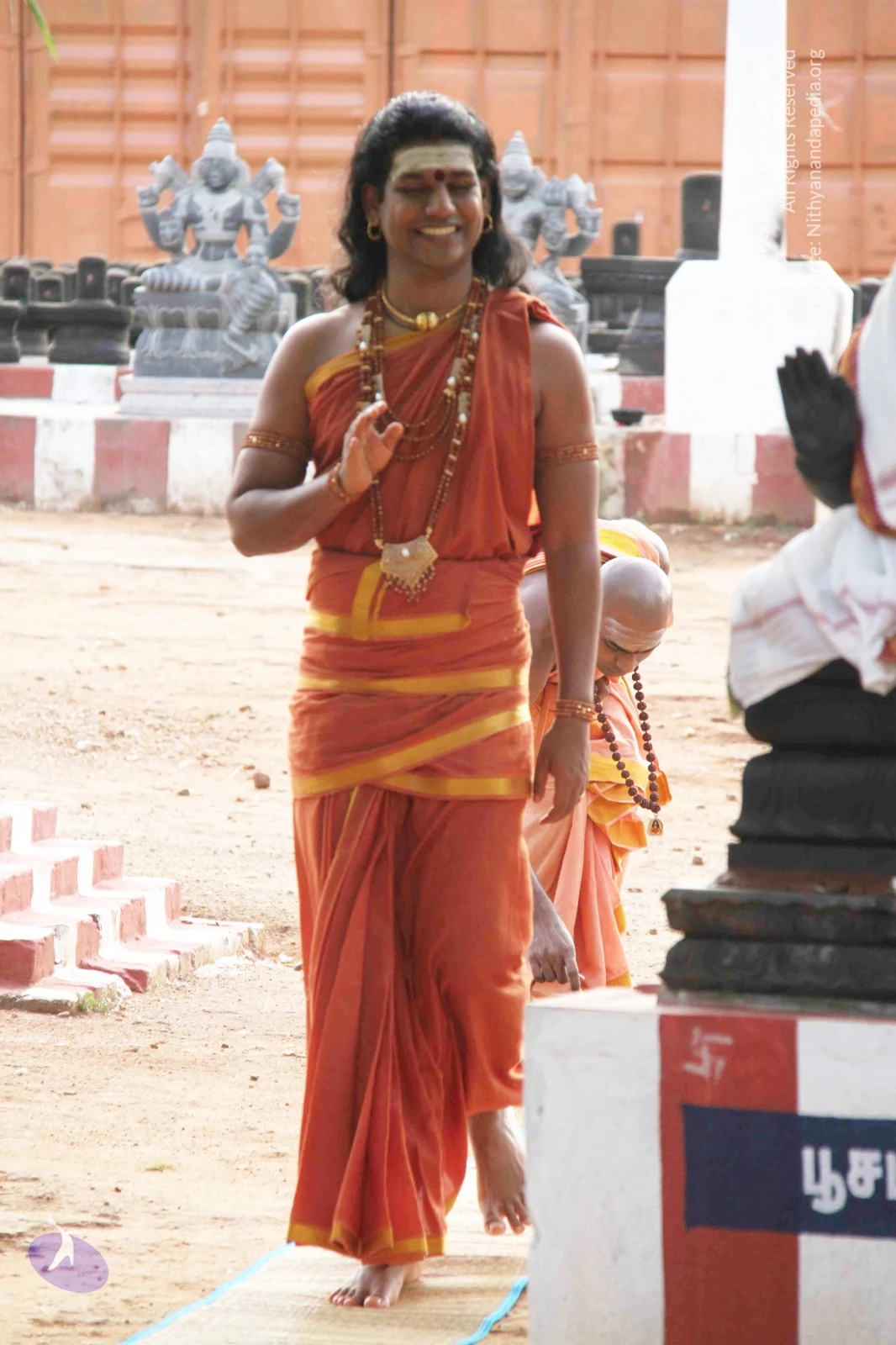
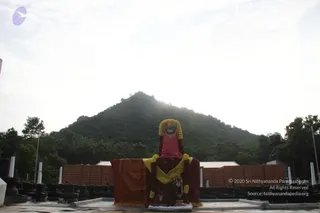
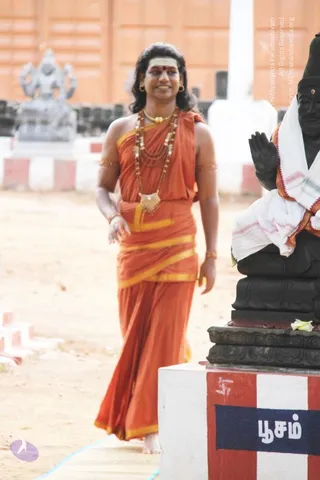
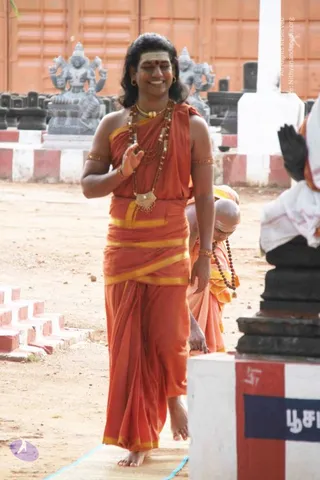
Wide outdoor photo of a hillside ashram ground under an overcast sky. A forested hill rises behind a long red-brown building with a white roof. In the foreground, white pillars stand around a raised white platform, with a small figure in red near a wooden lectern at the centre, apparently addressing an open ground. A street lamp stands at the right edge, and a small wrought-iron stand sits in the lower left. A faint purple bird logo appears at the top left. The figure is very distant and small, so no features or clothing details are clear.A black stone Ganesha murti sits on a dark pedestal inside a gilded arch, adorned with yellow and orange marigold garlands, a red turban, a white dhoti with gold border and a white shawl. Trees and a potted plant surround the shrine. The red and white striped base bears a Tamil-script sign reading Sri Nithyananda Vinayagar, and another sign on the left reads Nirudhi Linga. No people are visible.A photograph of a dark stone murti of Shiva and Parvati seated side by side on a black pedestal, outdoors among leafy trees. Shiva wears an orange turban with a gold crown, holds a gold trident, and is adorned with a jewelled necklace and garlands of marigolds and multicolour flowers. Parvati wears a gold-bordered green and yellow sari, a gold crown and layered silver-toned jewellery. In front of the pedestal sits a white marble figure in a pink sari and pink turban, with a beaded necklace, one hand raised. Gilded arch frames the scene. No physical people are present.Outdoor photograph of a large seated deity murti. The murti wears a pink and gold garment, a yellow sash, a garland of yellow and orange marigolds, and a silver necklace with a pendant. Rows of dark stone pillars, possibly shivalingas or pitha-like bases, line the foreground, with white posts and a low wall behind. No physical people are visible.A man in saffron-orange draped robes with yellow borders walks barefoot across sandy ground beside a black stone statue of a seated sage with raised hand. He wears a white forehead mark with red centre, long swept-back hair, rudraksha and bead malas, a gold pendant necklace, gold armlets and bangles. Behind him are a grey stone deity statue and an orange wall. A red-and-white painted pedestal bears the Tamil word for Pooram and a white flower sits on the statue base. The man has long swept-back hair, rudraksha and bead malas, and a gold pendant necklace, with an orange robe; these cues support Swamiji (probable) as a sannyasi walking past the statue.Outdoor photo at an ashram courtyard of a smiling man walking barefoot in an orange-saffron dhoti and shawl with yellow borders, wearing multiple rudraksha and bead malas, a gold pendant necklace, gold armbands and bangles, and a white tilak with red bindi, one hand raised in a blessing gesture. Behind him a shaved-headed monk in saffron bends forward, and a white-clad devotee with palms joined stands at right beside a dark stone statue. Grey stone deity murtis with multiple arms stand near a black stone pedestal and a red-and-white painted border, with an orange wall behind.

Homa

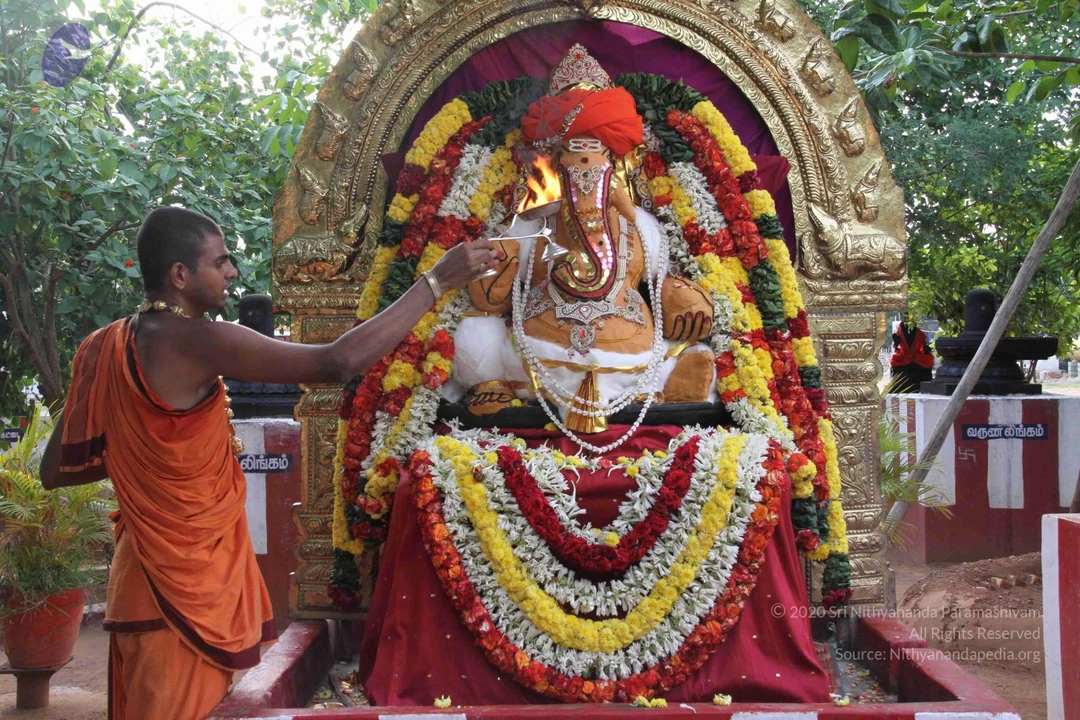
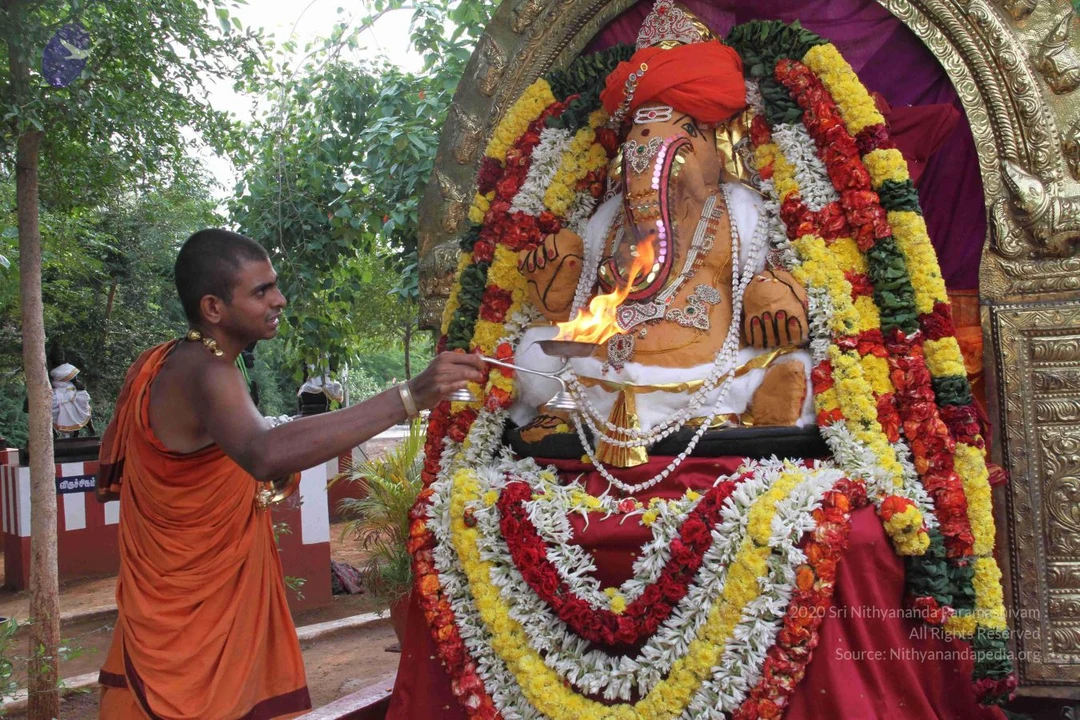
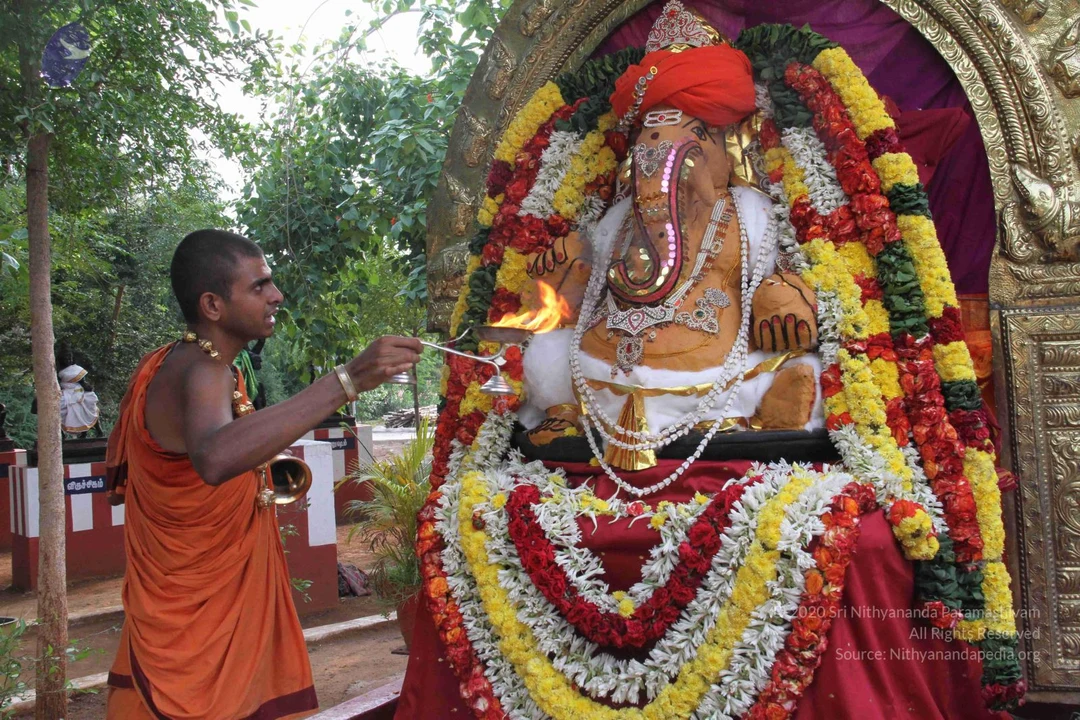
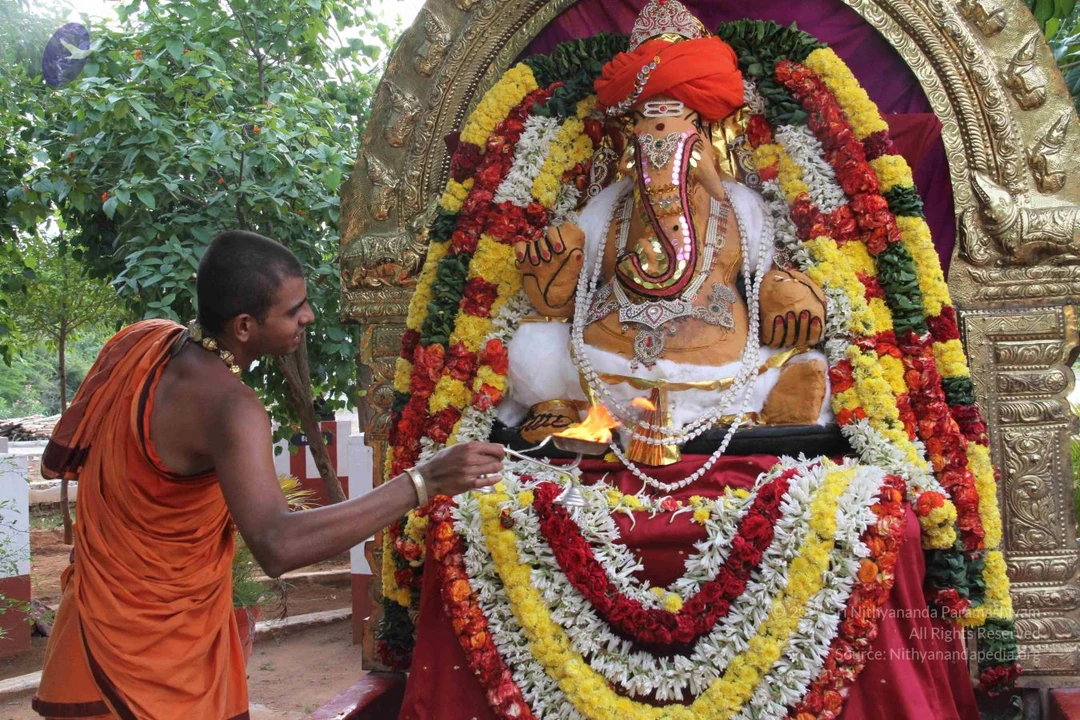
16 photosSource gallery
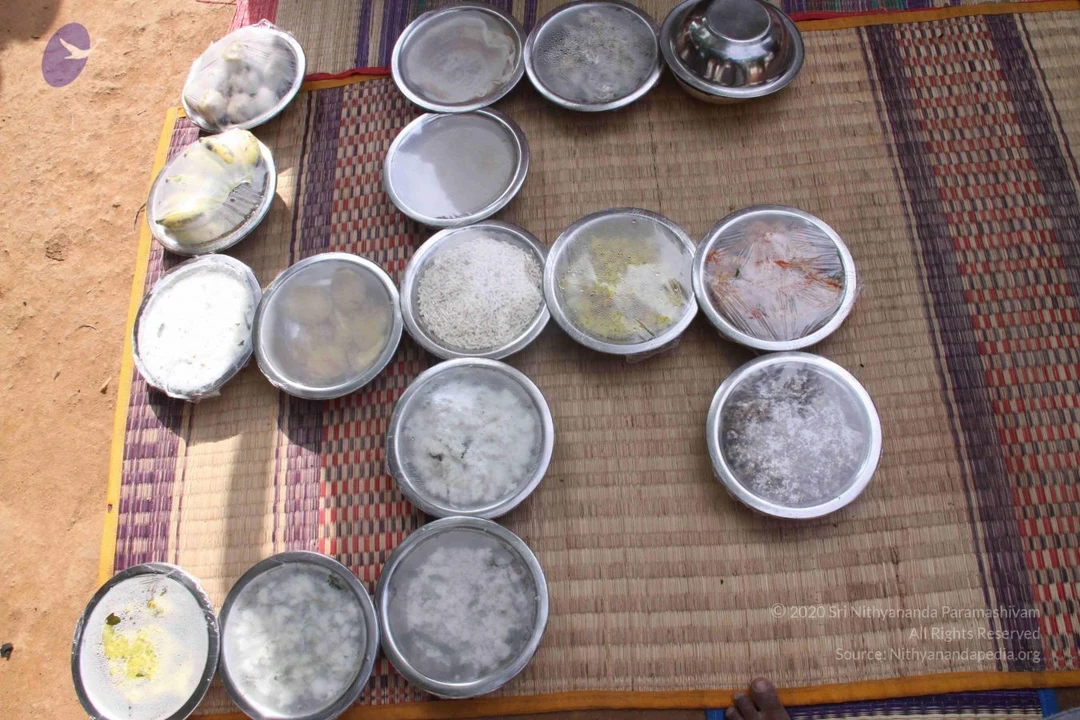
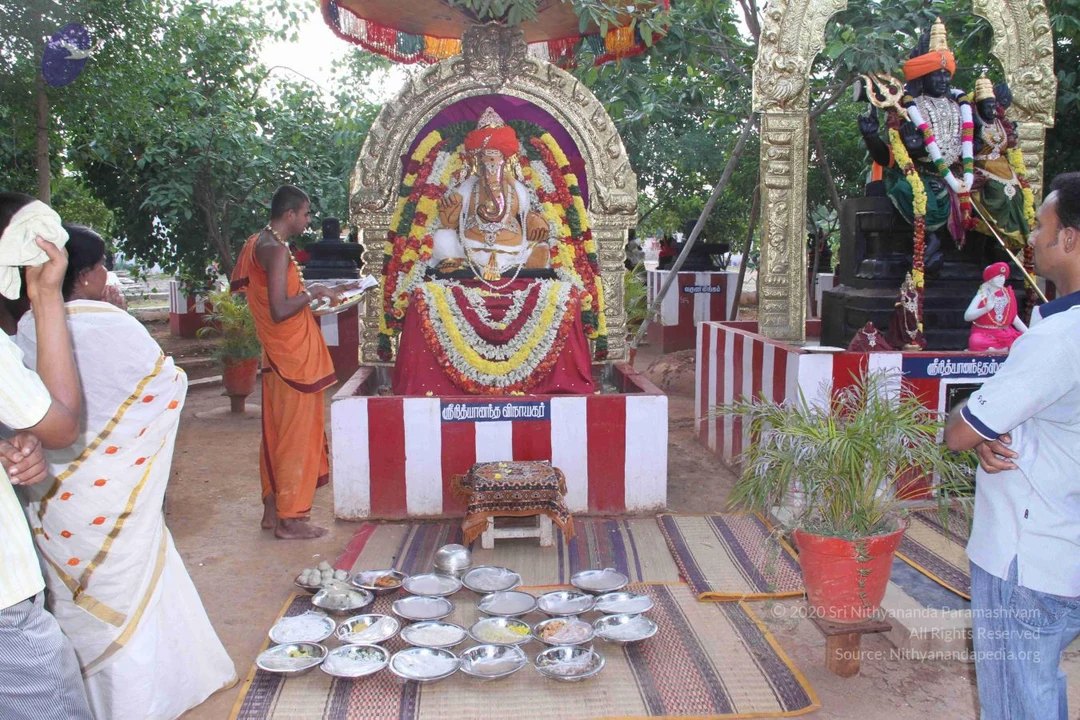
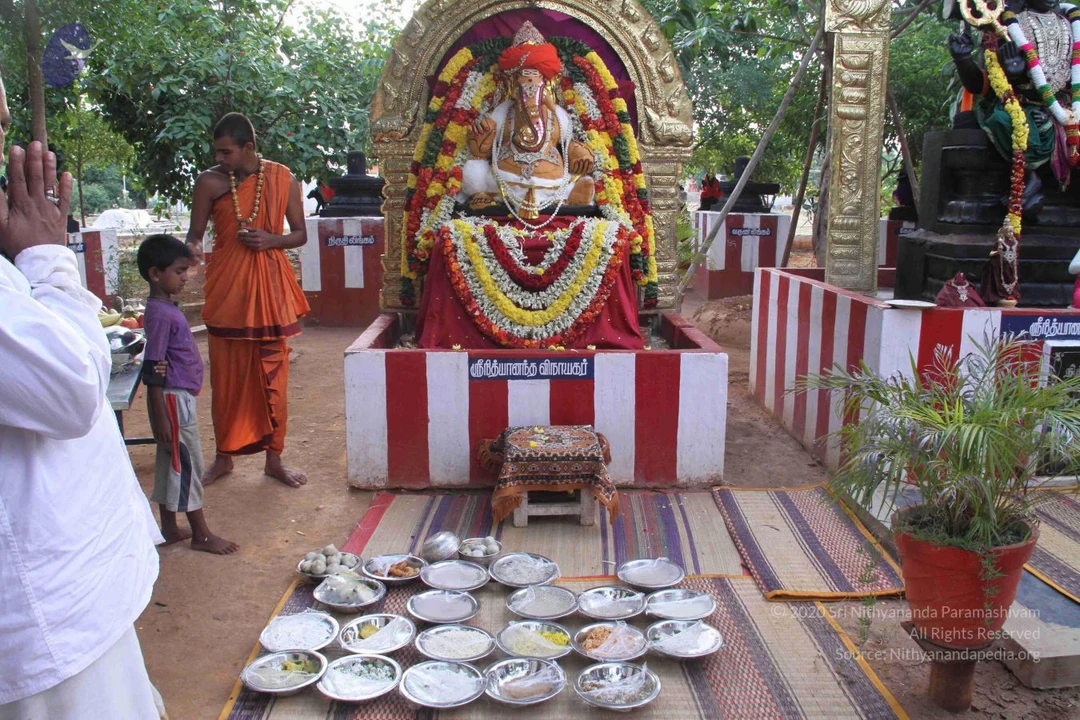
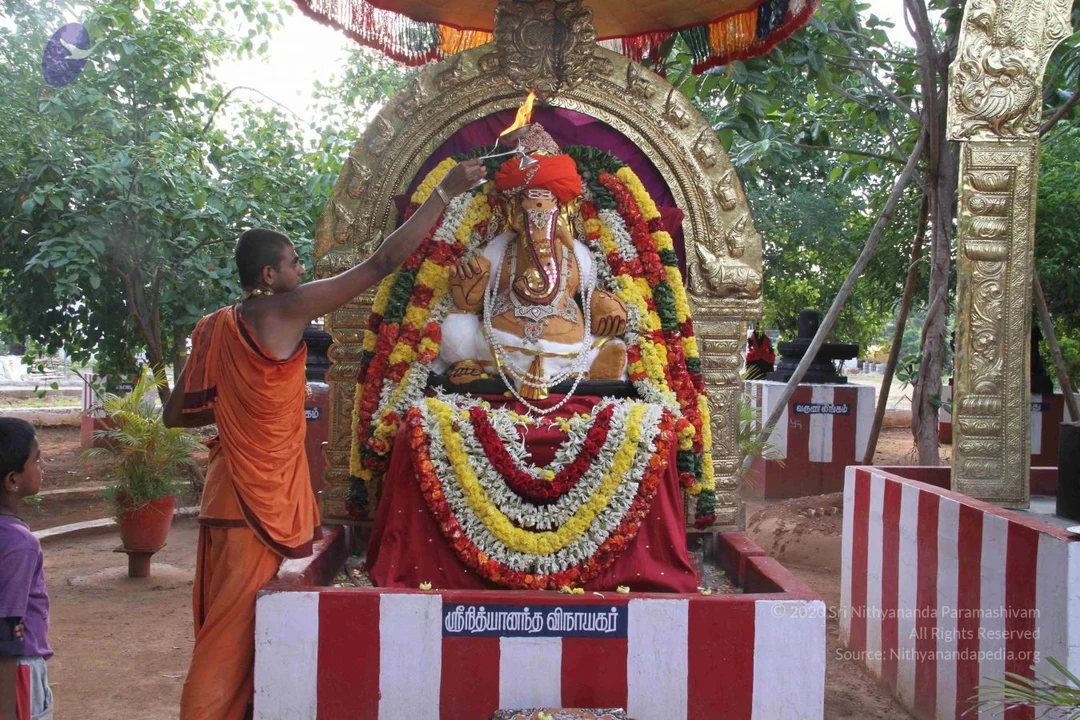
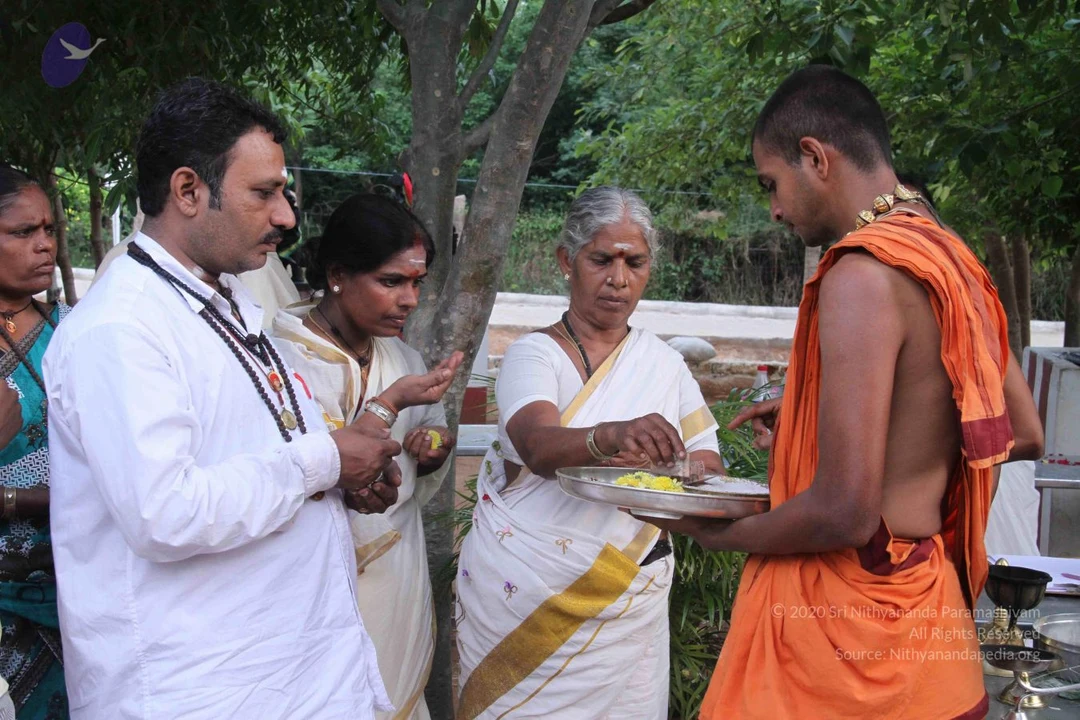
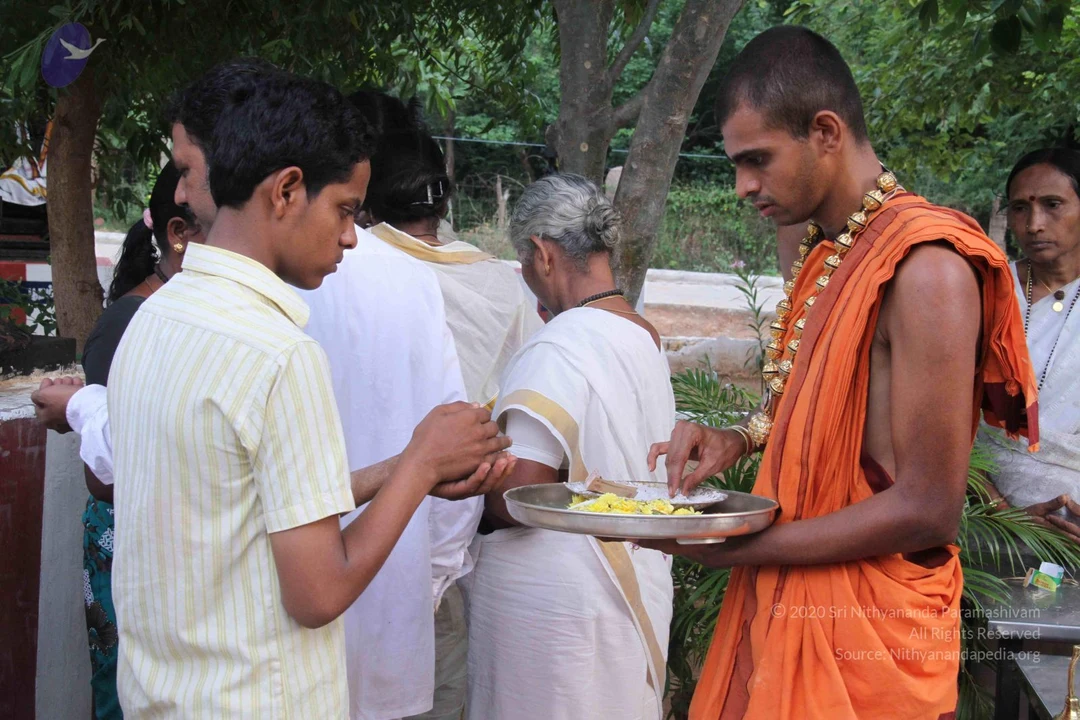
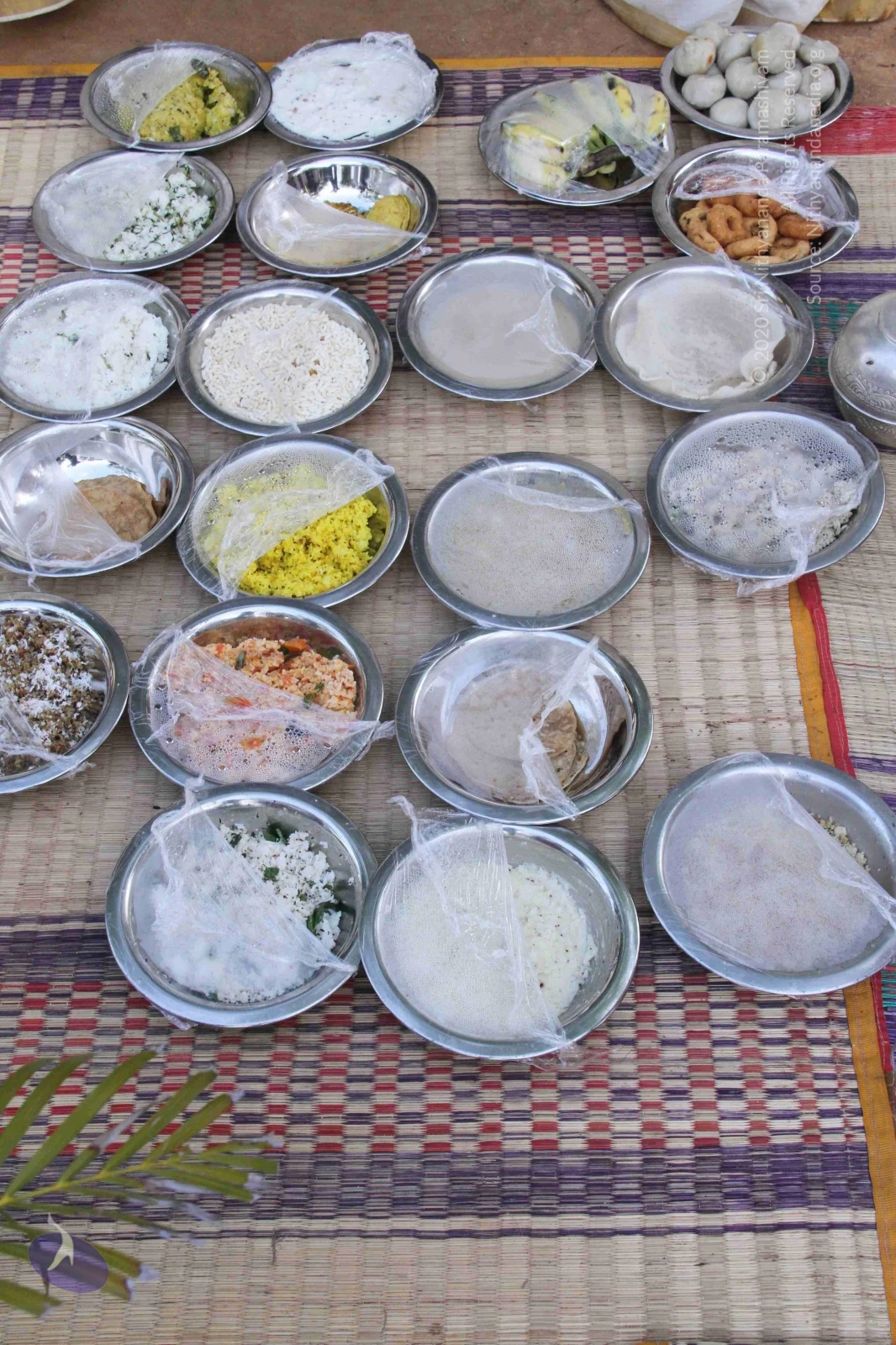
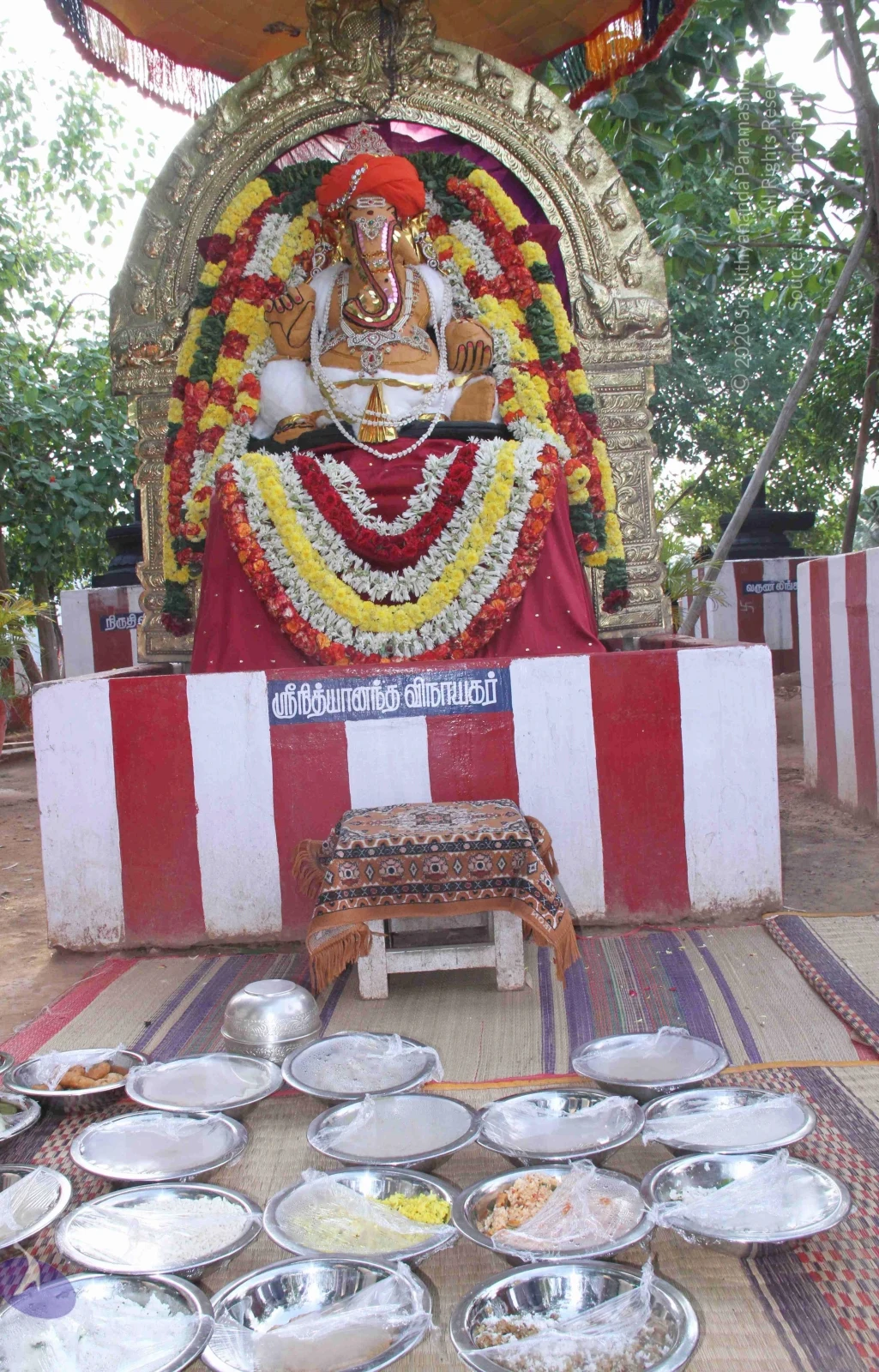
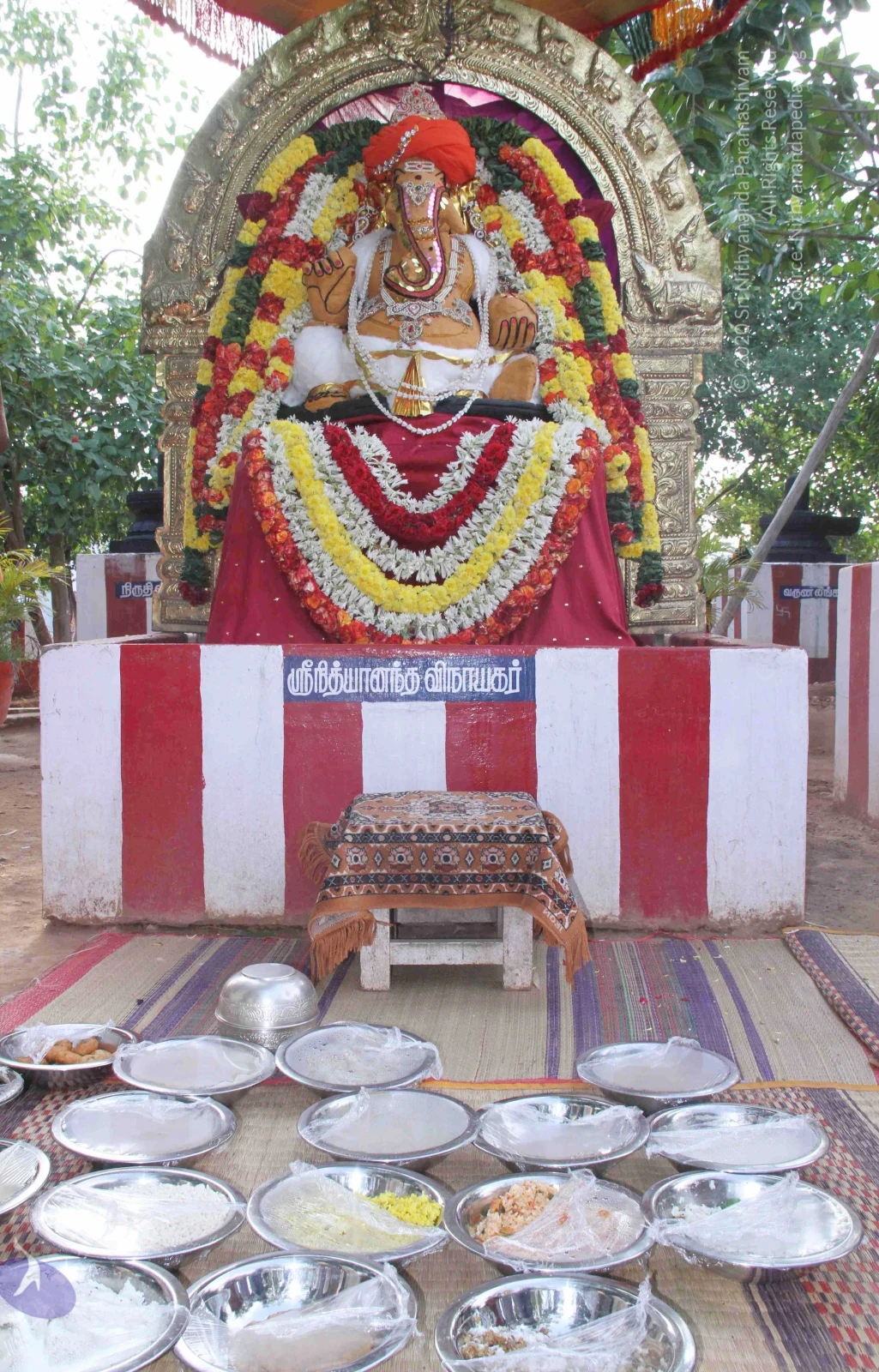
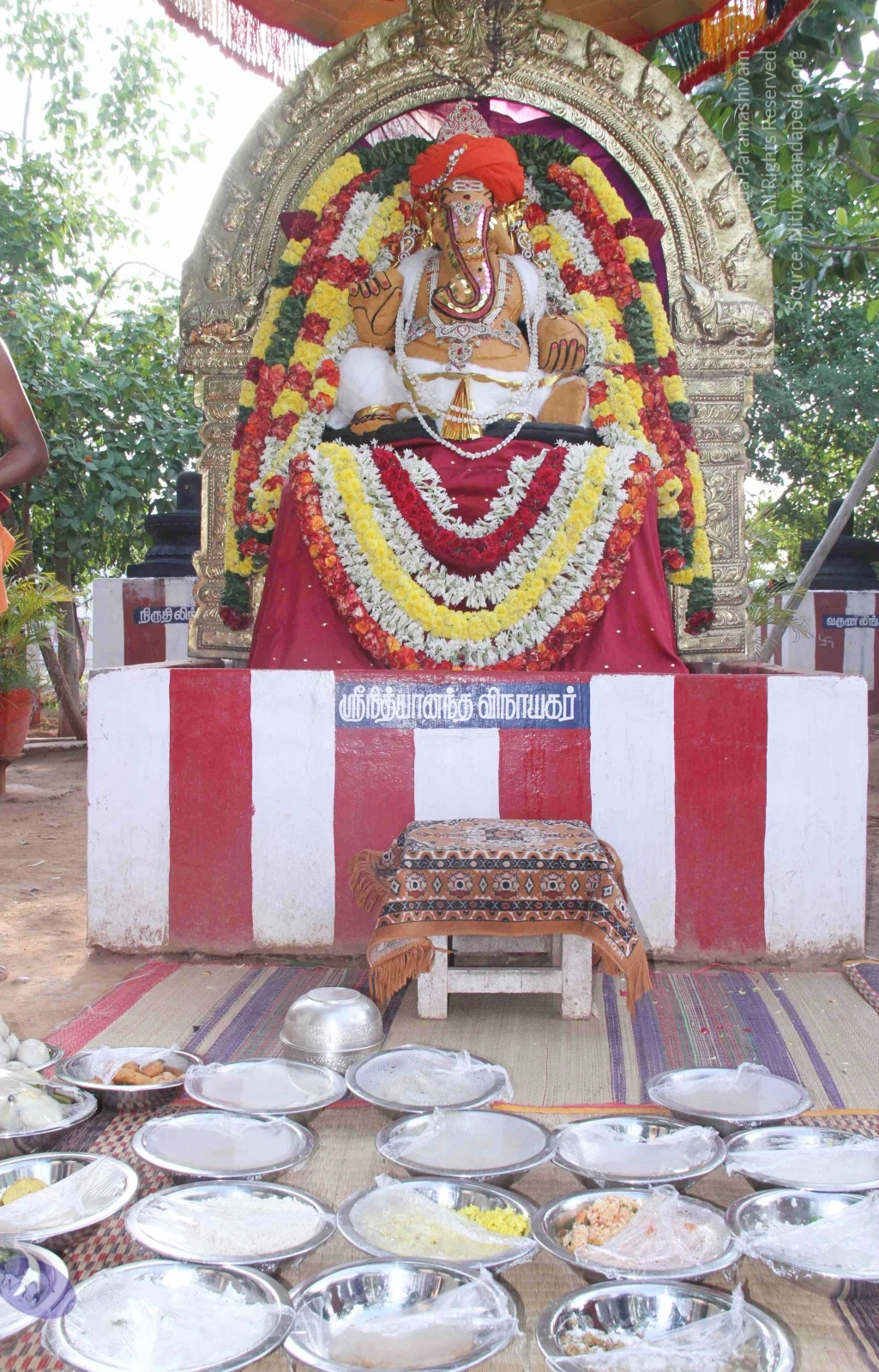
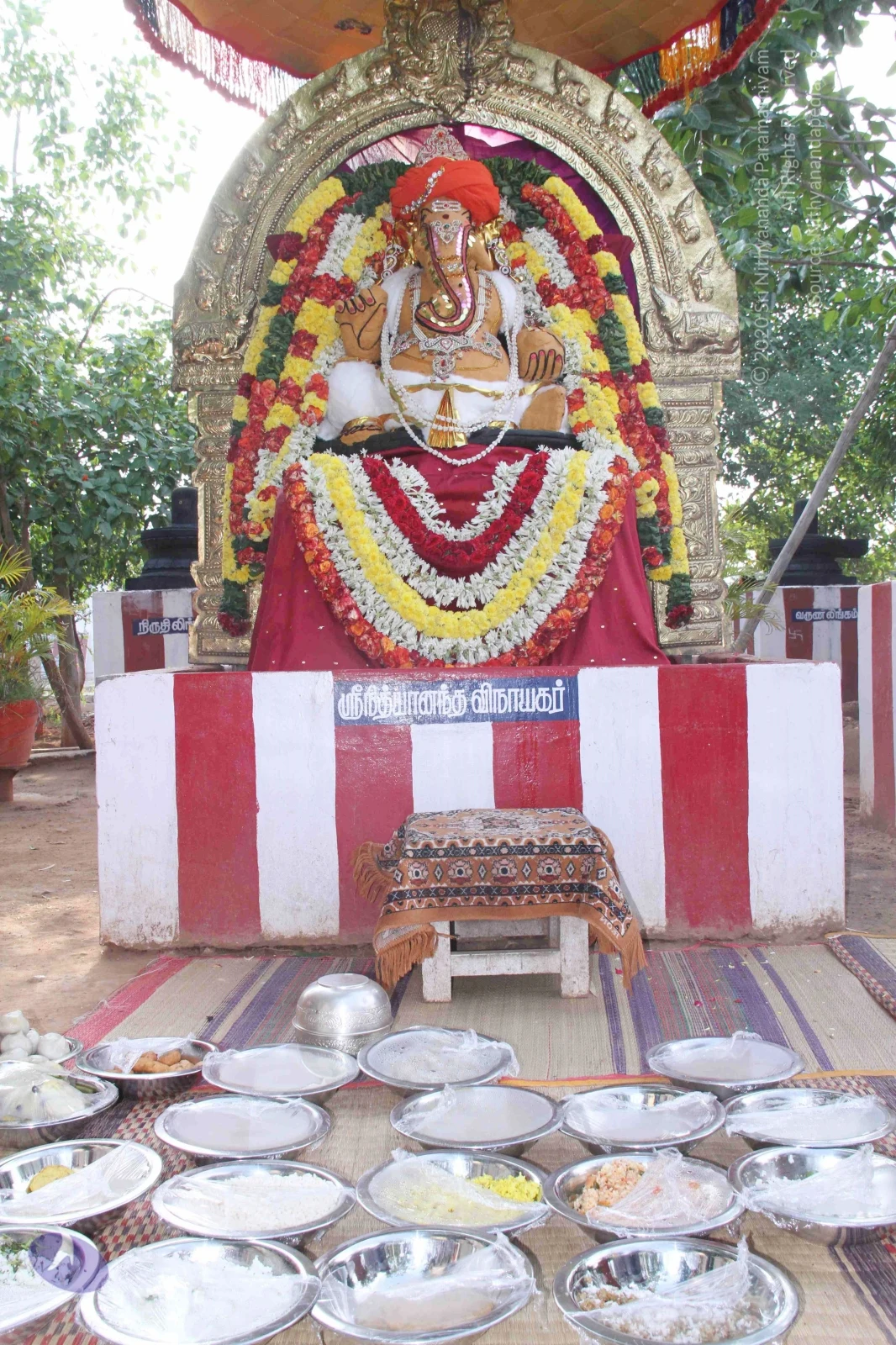
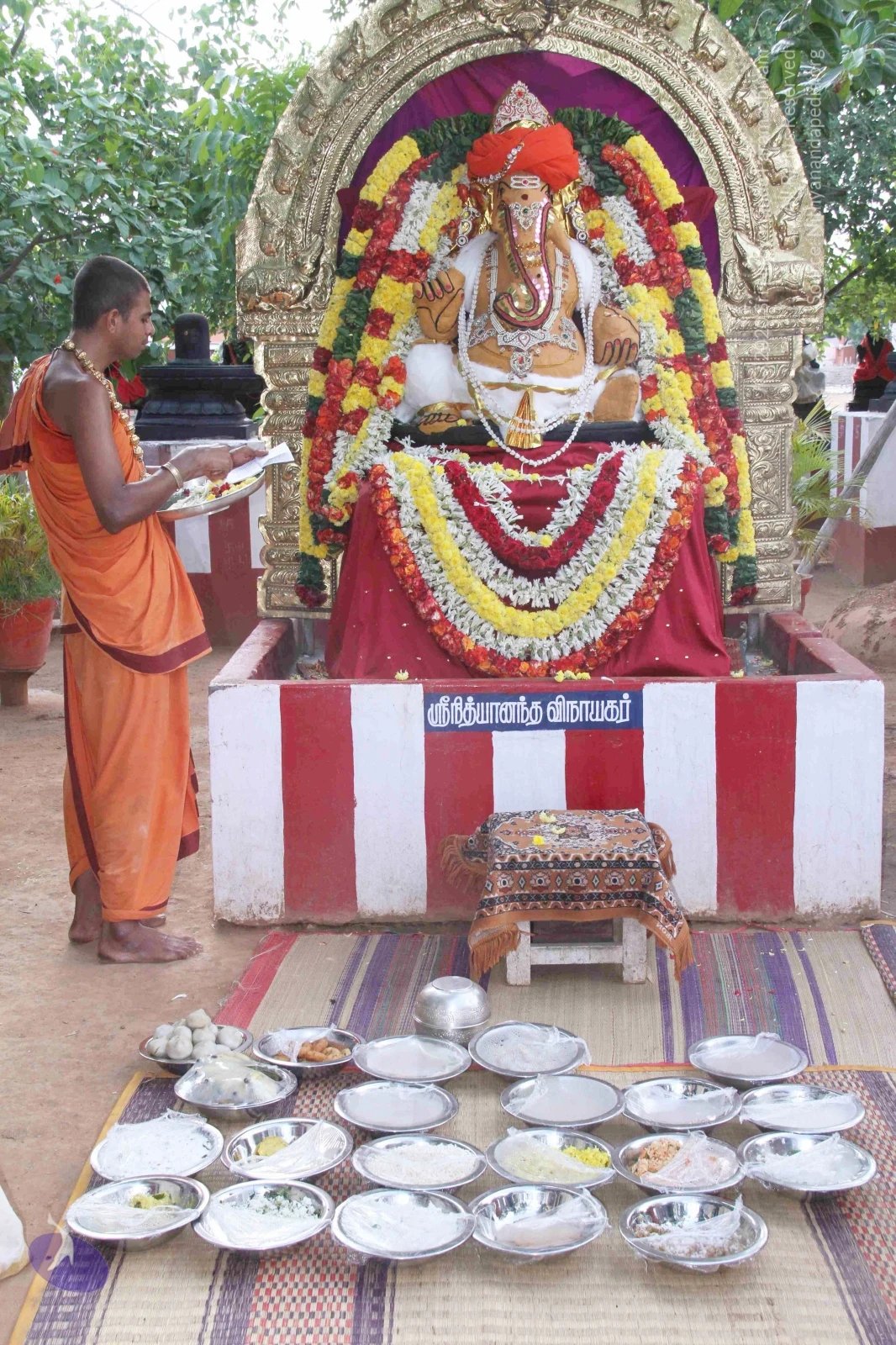
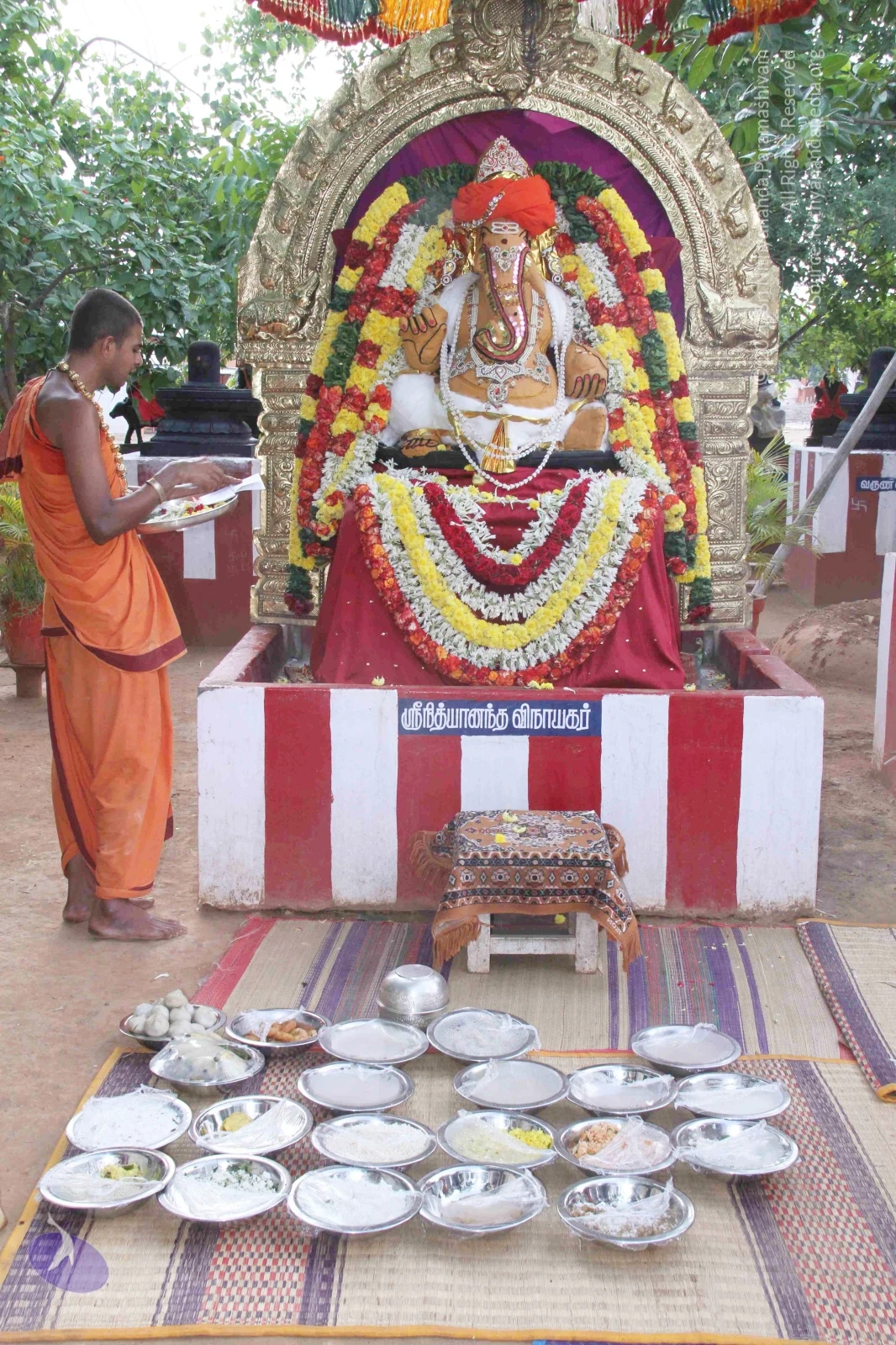
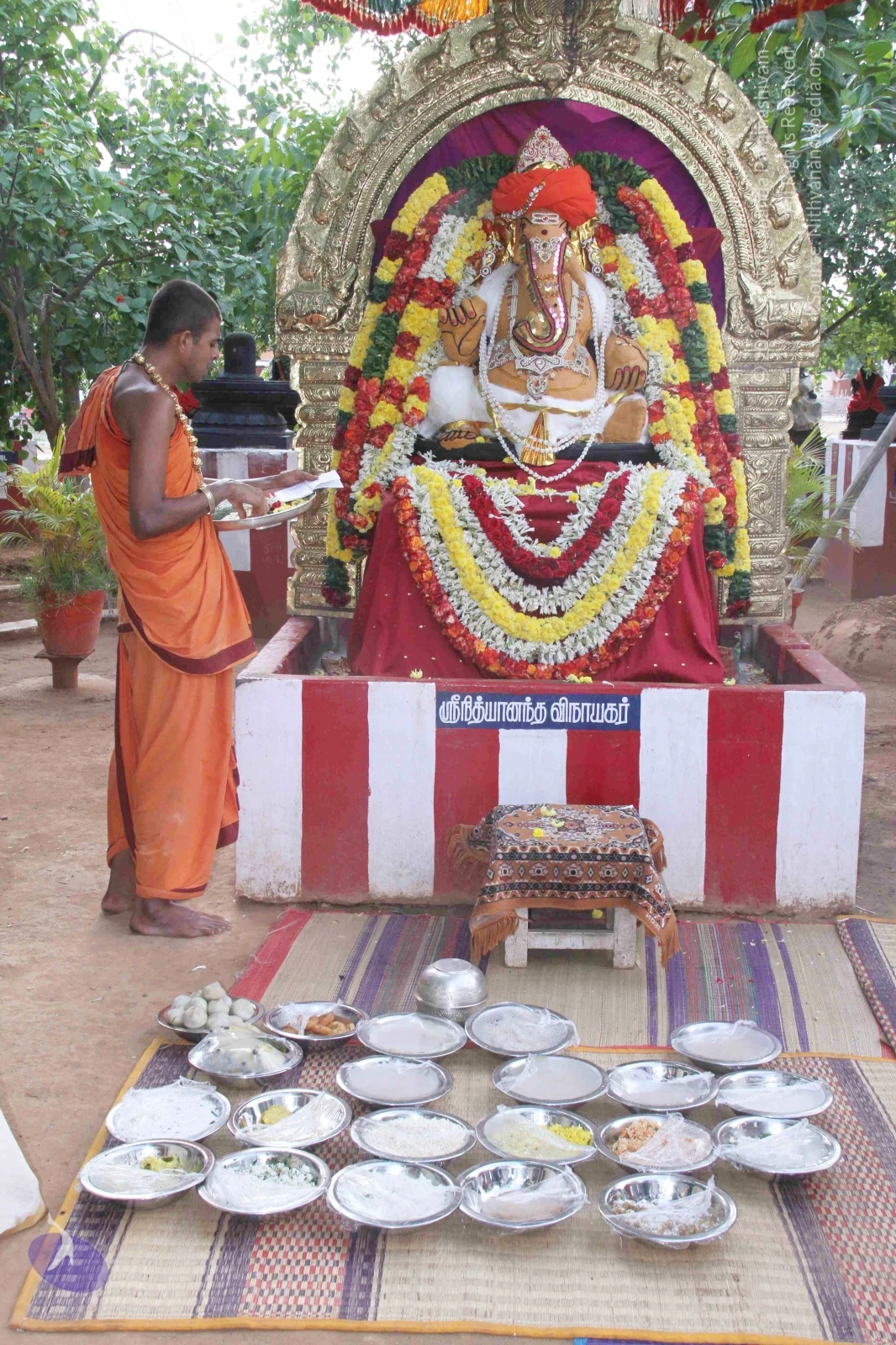
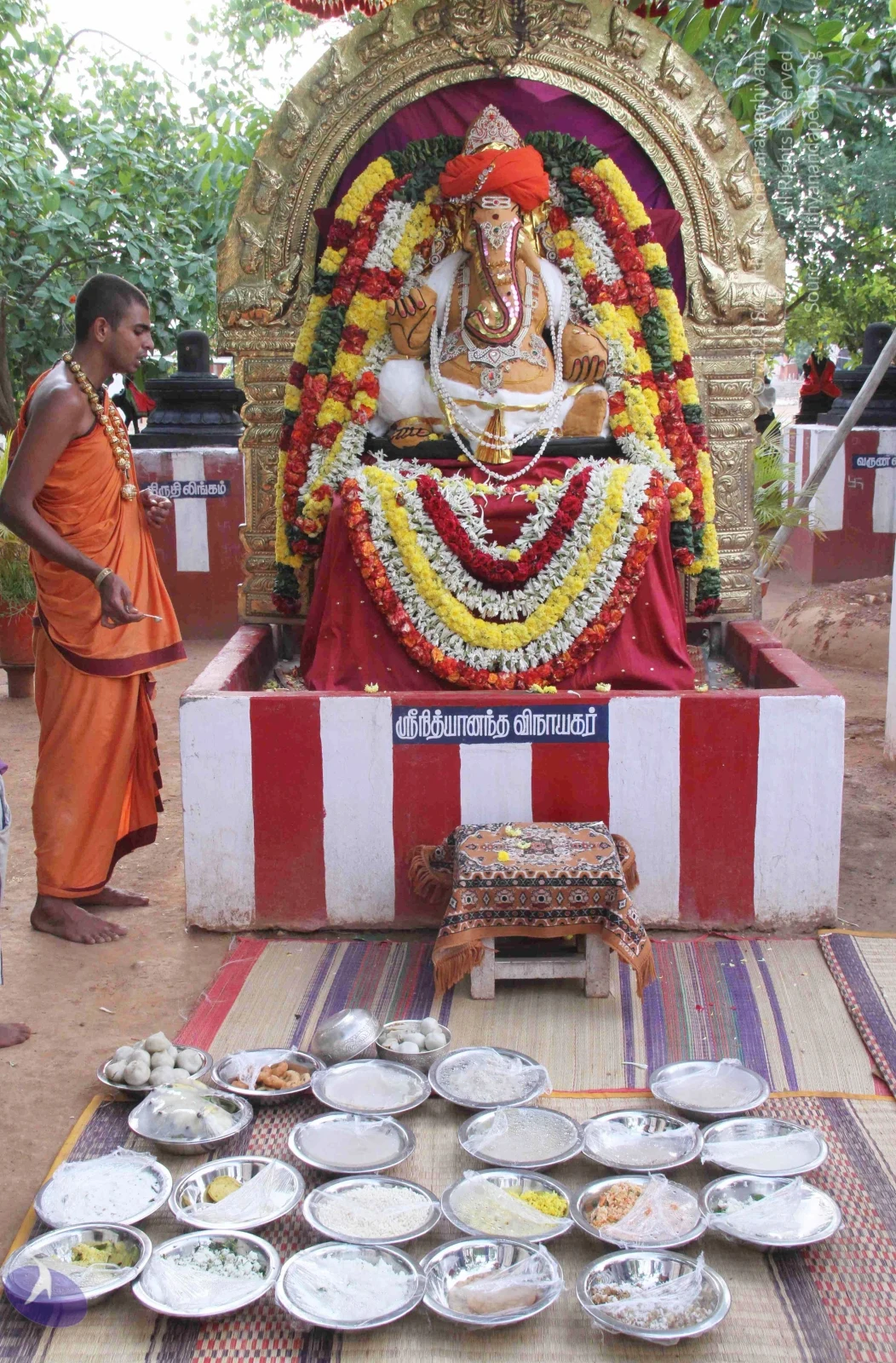
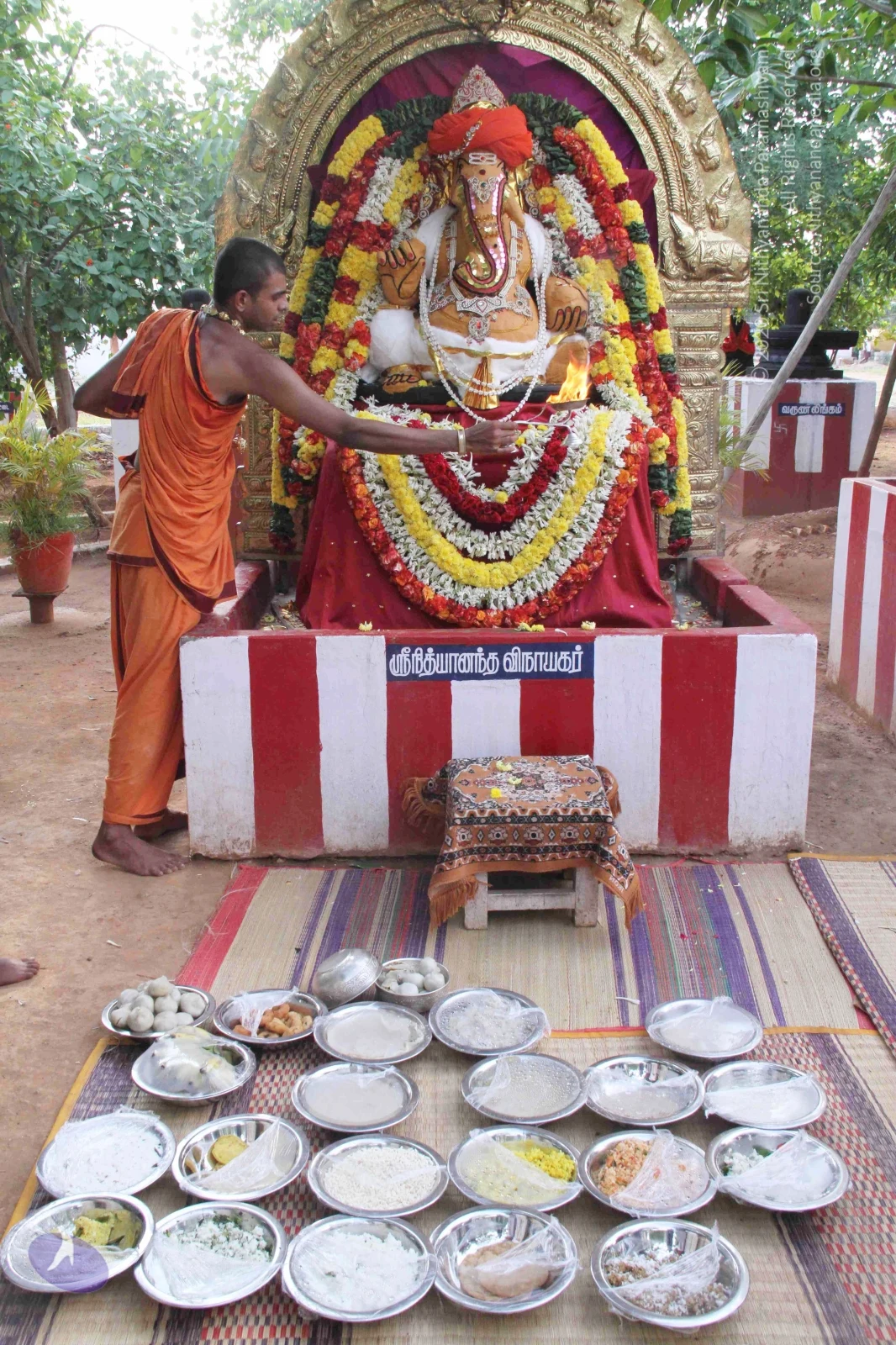
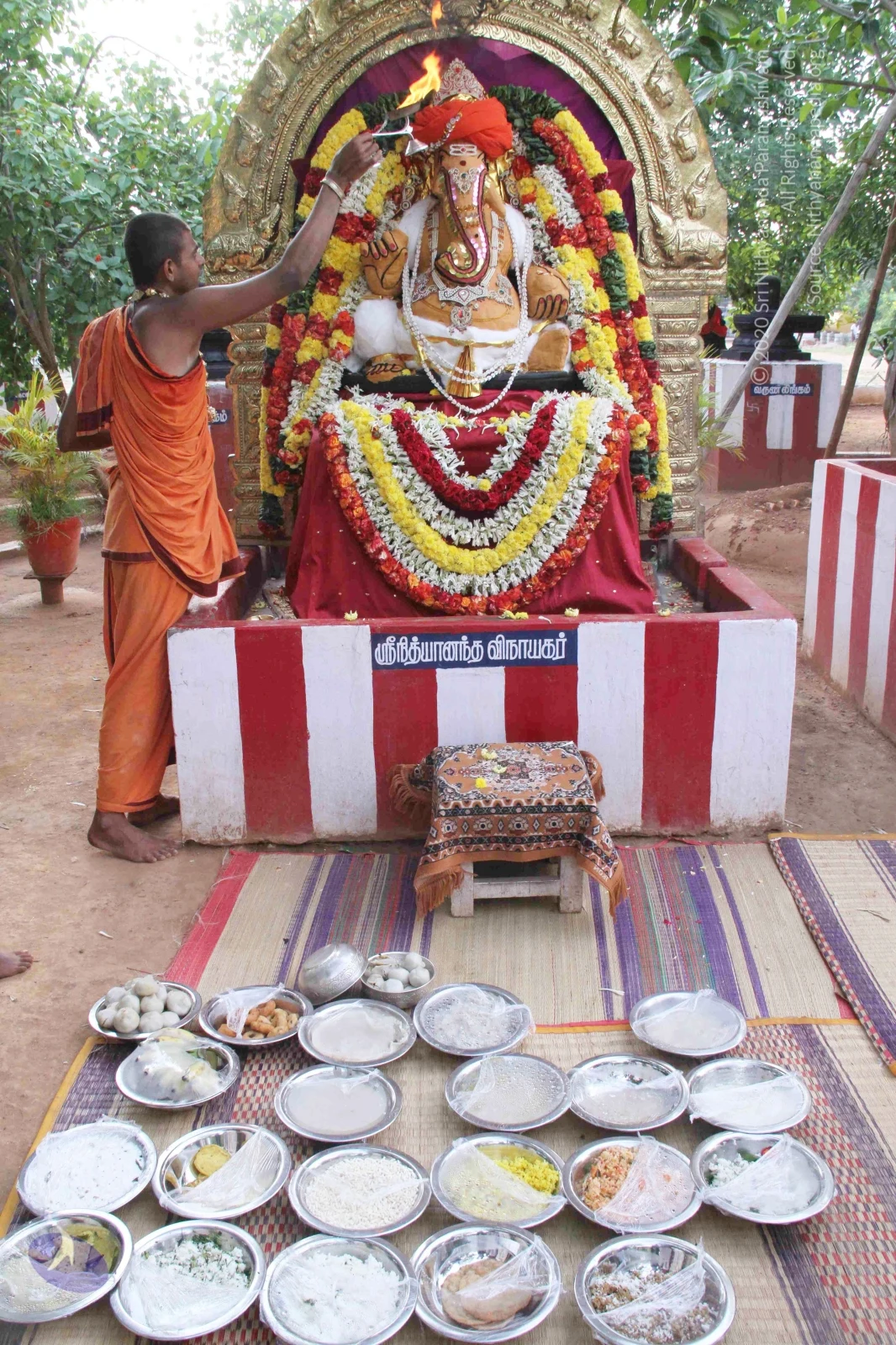
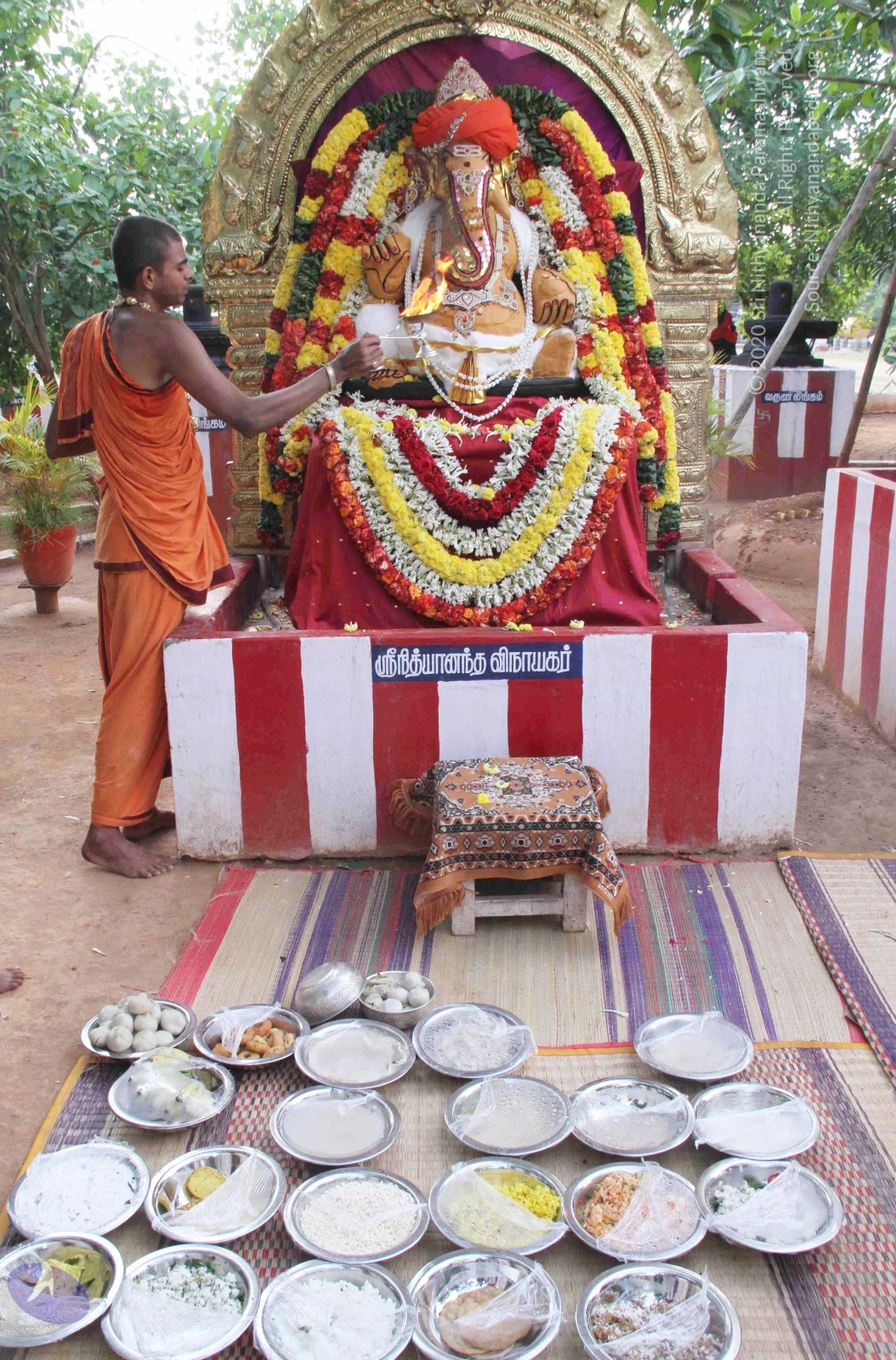
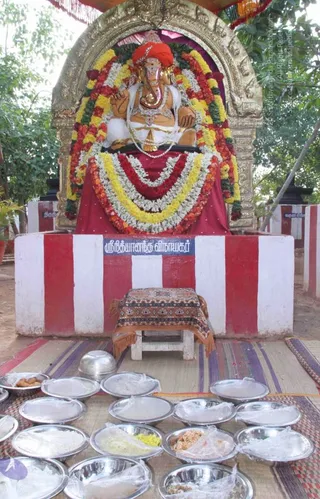
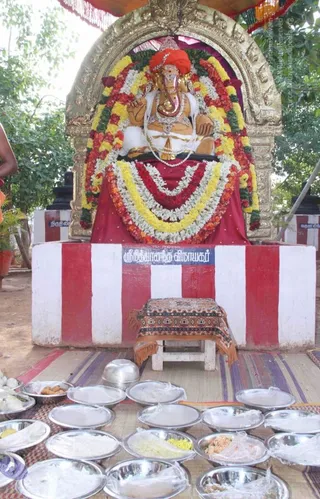
A large seated Ganesha murti stands in a gilded arched shrine niche against a purple and gold backdrop, with red and orange tassels hanging above. The elephant-headed deity wears an orange turban and a jewelled crown, a red tilak, and a pearl garland over ornate gold and white adornments. Four black arms hold ritual objects, and the figure sits on a black stepped pedestal. Red and white painted steps, green palms and leaves surround the shrine, a temple setting for Ganesha worship.A decorated outdoor shrine holds a seated Ganesha murti dressed in an orange turban with a jeweled crown, white cloth and a pearl necklace with gold ornaments, four arms and an elephant trunk. He sits on a black pedestal framed by an ornate gold arch with carved elephant motifs, a purple backdrop, and hanging red and yellow decorations overhead. Green palm plants and foliage surround the shrine, and a red-and-white painted base carries a Tamil inscription. No people are visible.Outdoor shrine photograph of a seated Ganesha murti with an orange turban and red-orange trunk, draped in layered garlands of marigolds, roses and white flowers. The image is set against a gilded arched frame with trees behind. Below the murti is a red and white painted pedestal bearing Tamil script, with a small white stool draped in patterned cloth. On a striped mat in front, many steel plates hold white and yellow offerings. No people are visible.A photograph of a Ganesha deity murti seated on a red cushioned throne-like platform before a gilded arched backdrop, with an orange turban-style crown and white dhoti-like cloth, adorned with layered garlands of red, yellow and white flowers and a pearl necklace. The murti sits on a striped red and white pedestal bearing a printed Tamil sign reading the Sri Nithyananda Vinayagar name. In front, a small cloth-covered wooden stool and rows of stainless steel plates holding food offerings, covered with plastic, are arranged on a woven mat. Trees and a red-and-white painted wall frame the scene. No people are visible.Outdoor Ganesha puja at a shrine. A shaved-headed priest in orange dhoti and shawl, with a gold-beaded necklace, stands at left holding a steel plate of offerings and reading from a paper. Behind him a seated Ganesha murti, painted orange-skin with white dhoti, orange turban, pearl and gold ornaments, is garlanded with yellow, red, orange and white flower strands inside a gilded arched frame. Red-and-white striped platform in front. On the mat below, many steel plates hold sweets, rice and other food offerings, and a small patterned-cloth stool stands between them. Trees surround the shrine. Printed Tamil text on the platform reads Sri Nithyananda Vinayagar, a Ganesha shrine name.A young priest in an orange dhoti and orange shawl with a beaded necklace stands at left, holding a steel plate of food offerings toward a Ganesha murti. The Ganesha murti sits under a gilded arch draped with garlands of yellow, red and white flowers, wearing an orange turban and ornaments. In front, a red-and-white painted platform bears the sign for the murti, and rows of steel plates of food offerings lie on woven mats on the ground. This appears to be a puja or naivedya offering to Ganesha outdoors. a person's presence is not visible in the image.

Volunteers-Meeting

5 photosSource gallery
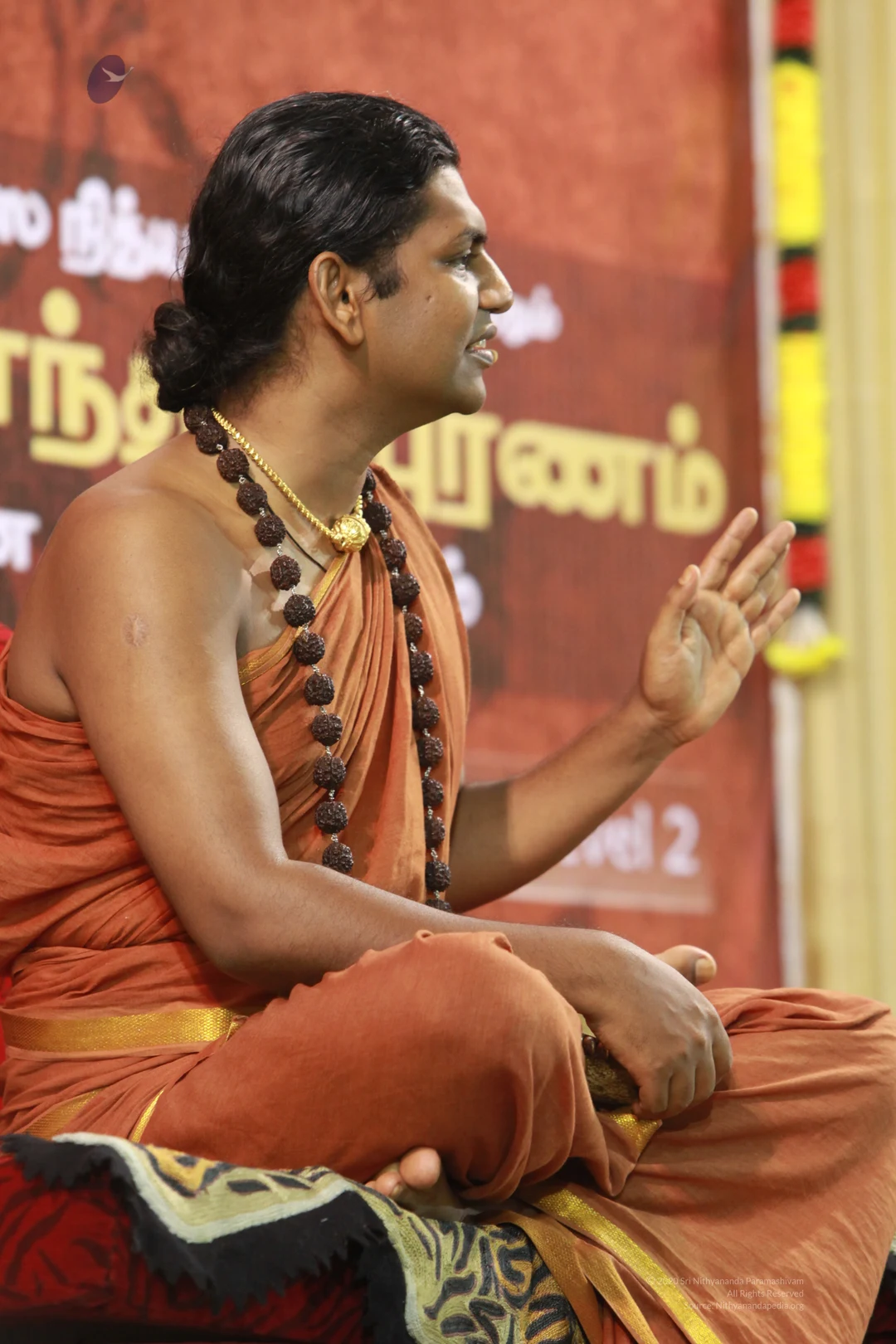
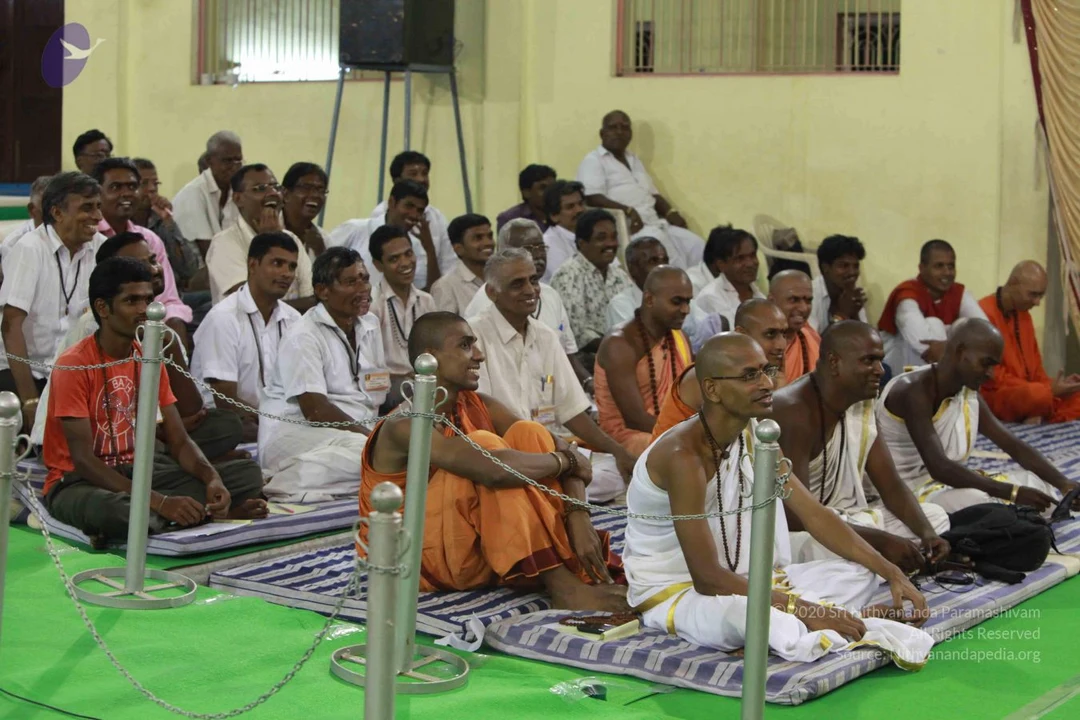
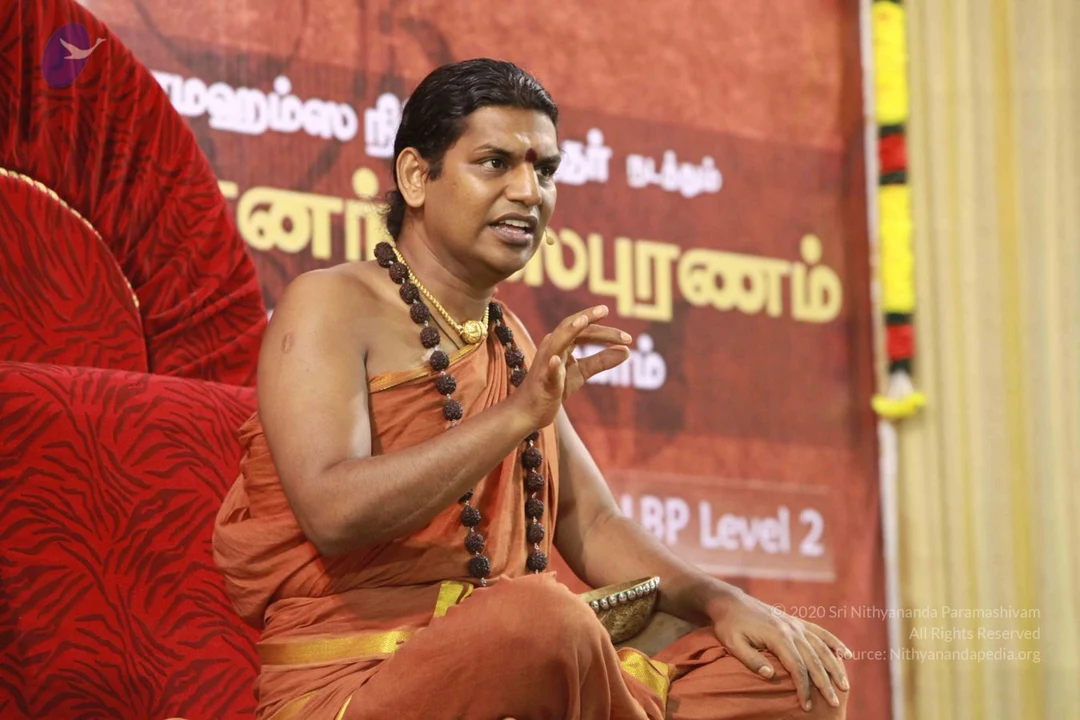
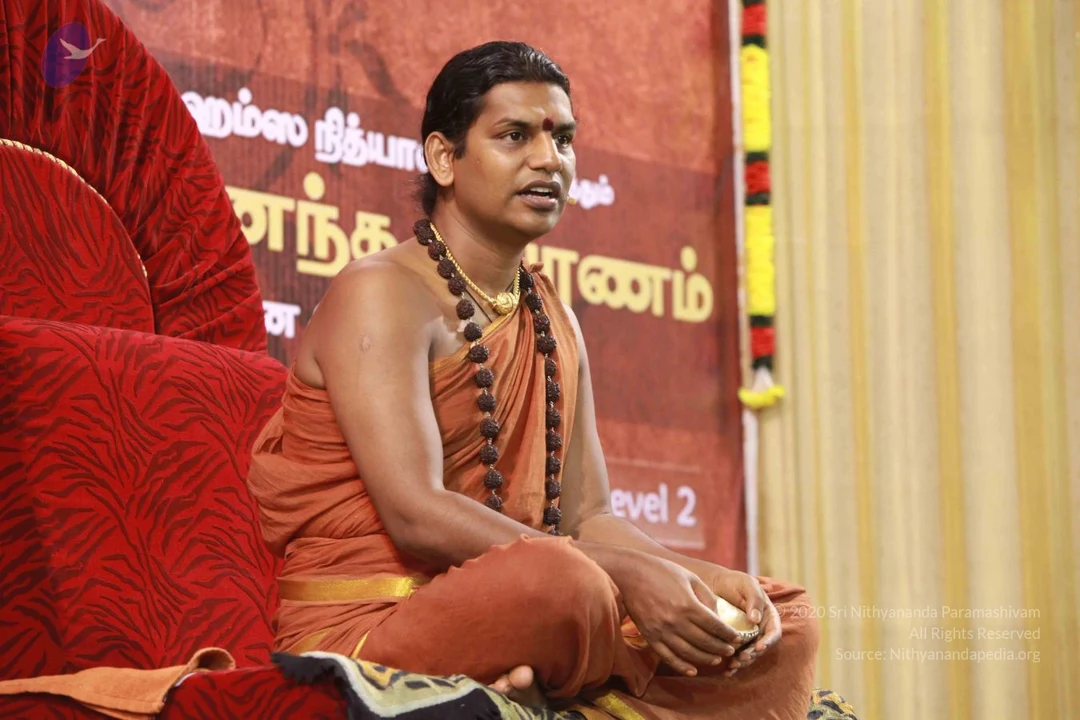
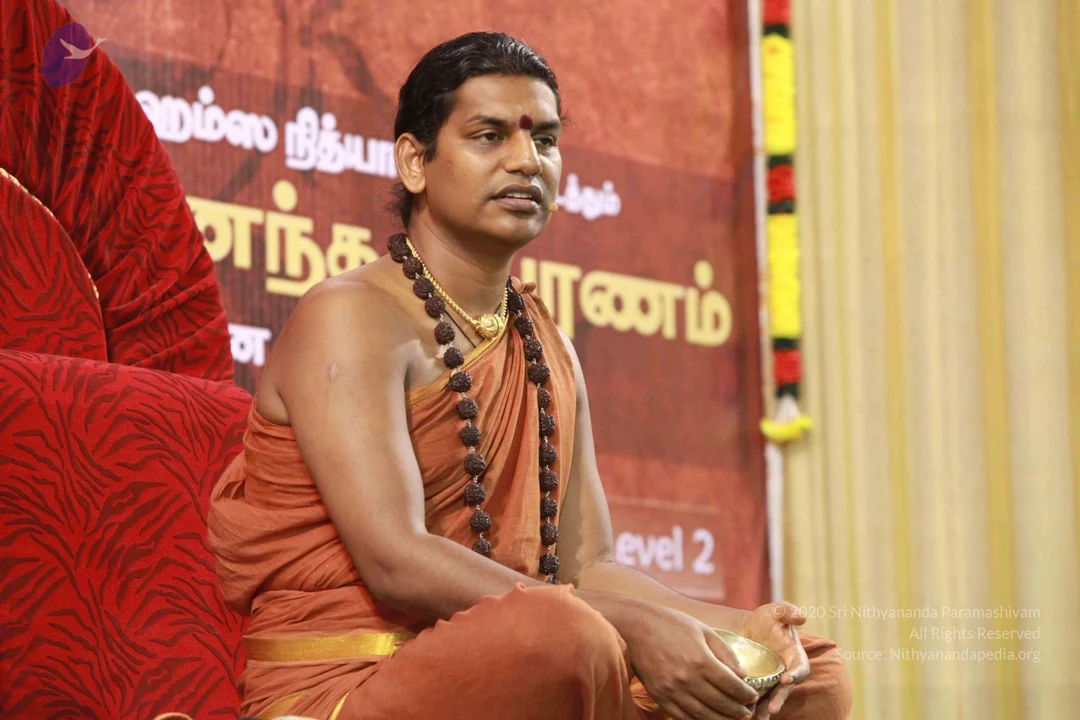
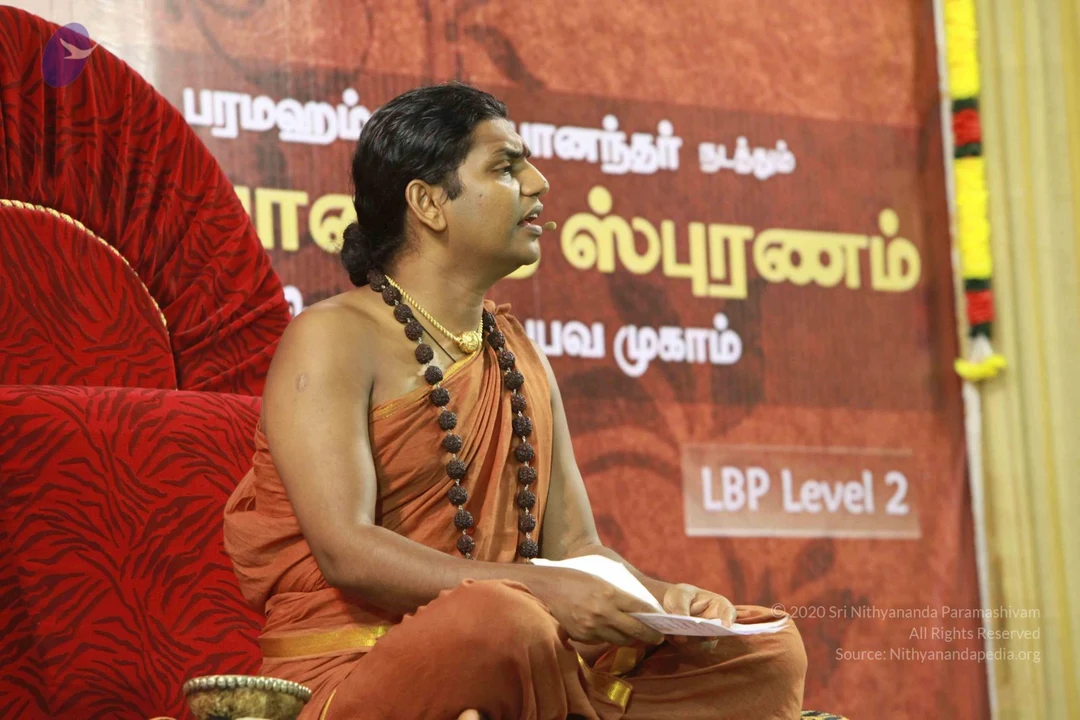
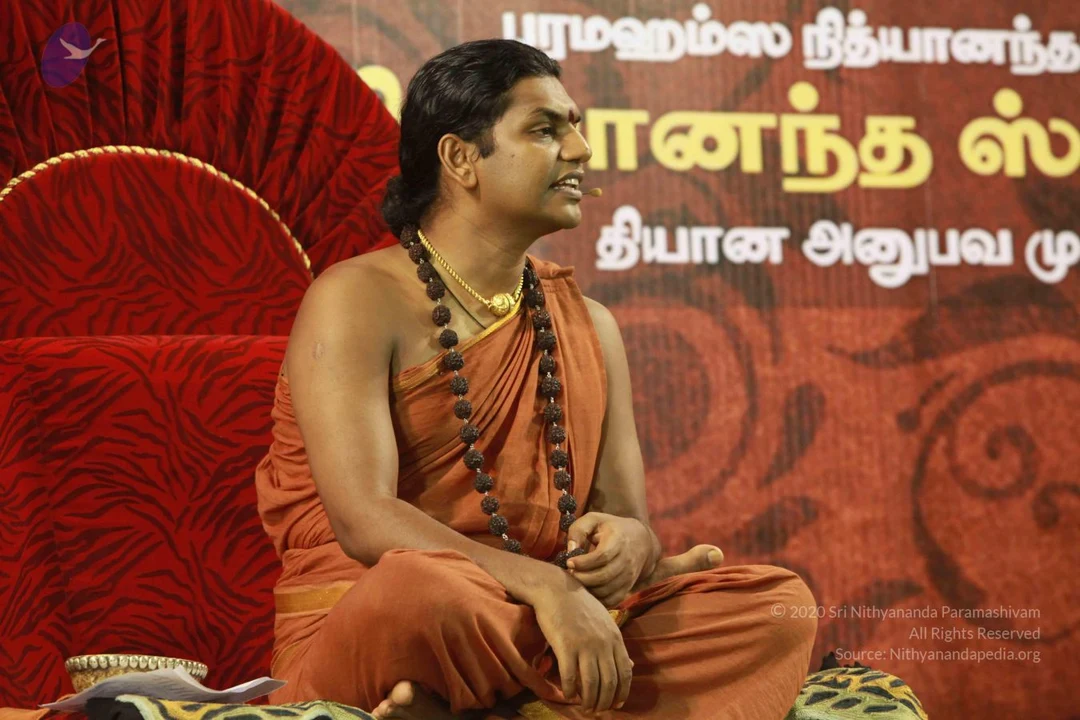
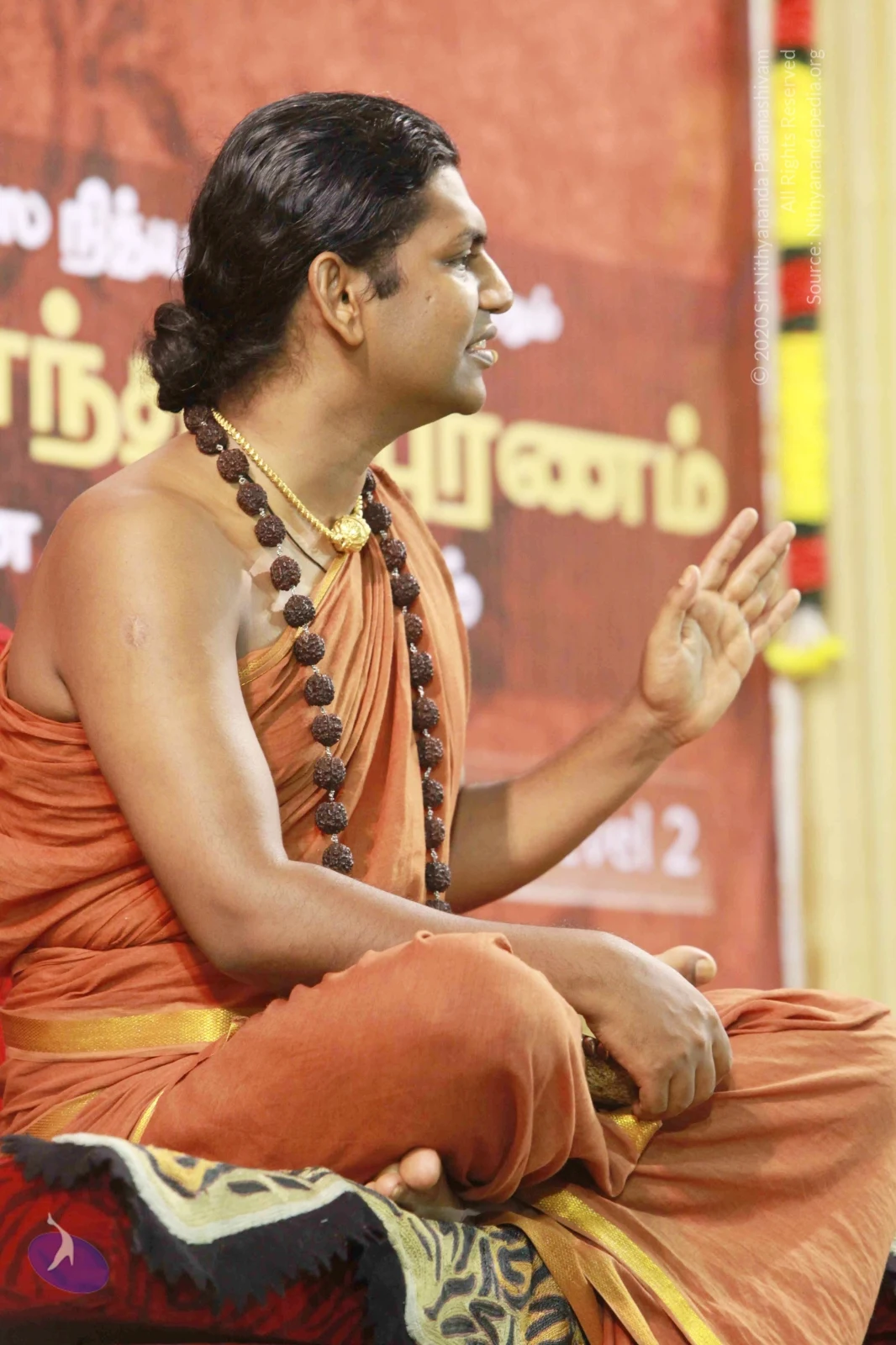
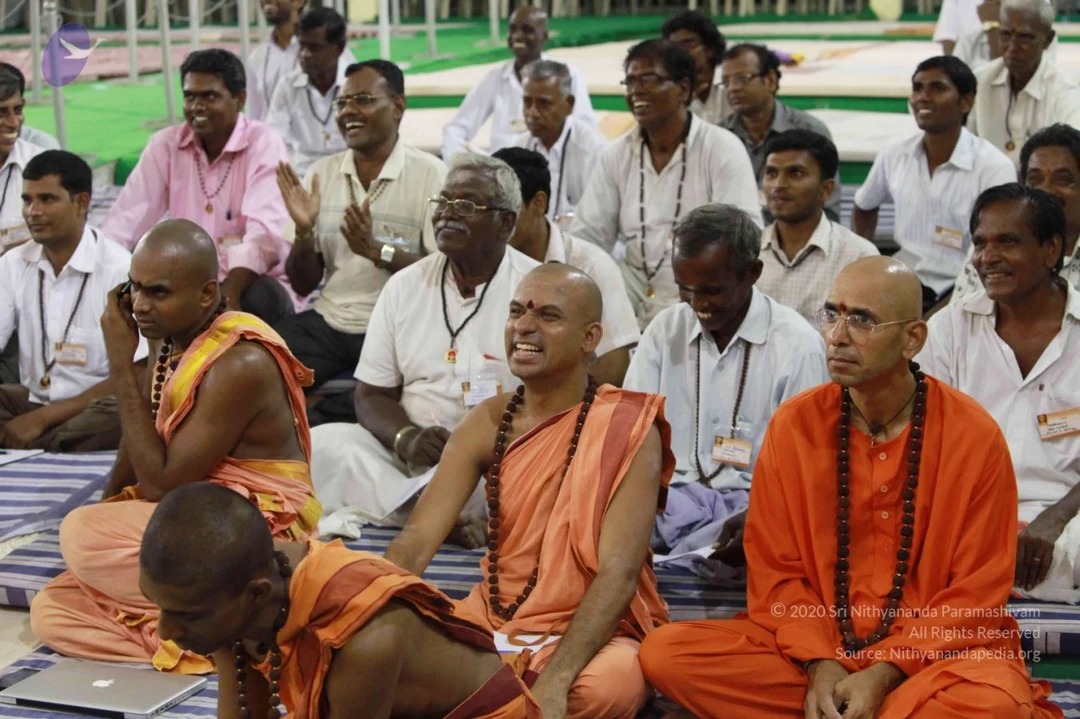
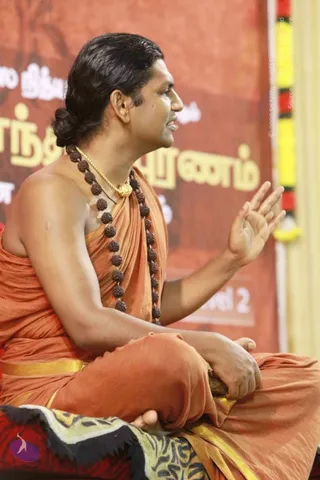
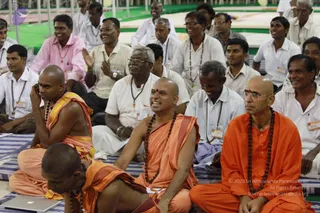
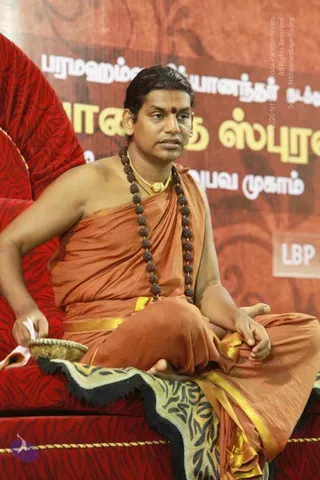
A seated man in saffron-orange draped robes speaks during a satsang talk, wearing a head-mounted microphone and a dark rudraksha mala with a gold chain and pendant. He sits cross-legged on a patterned cushion, holding a brass bowl in one hand, while red and cream drapery forms the background. Swamiji (probable): long dark hair swept back, saffron robes, rudraksha mala and gold necklace identify a presenter in ceremonial dress.A seated man in profile speaks while gesturing with his right hand, wearing an orange-saffron dhoti and shawl with gold borders. He has long dark hair tied back and wears a long rudraksha mala with a gold chain and pendant. Behind him is a red-orange banner with large yellow Tamil lettering and a yellow-and-red garland on the right edge. He is sitting cross-legged on a patterned cloth. Appearance-based label: a person, giving a talk as a seated speaker with saffron clothing, rudraksha mala and gold ornaments.A seated group of smiling men at an ashram satsang on a green-and-white floor covered with blue-striped mats. In the foreground, a bald monk in orange robes and rudraksha malas sits with a laptop at his knee, while a bald monk in orange with a red tilak on his forehead laughs broadly. To the right, a bald monk in orange robes and wire-rimmed glasses sits beside a row of men in white shirts and white dhotis wearing rudraksha malas and name badges. A monk in orange cloth holds a phone to his ear at left. The audience behind wears white and pastel shirts, several with lanyards and badges, all visibly amused.A seated man in saffron-orange robes sits cross-legged on a red zebra-patterned throne-style seat with a gold-bordered green and black cloth draped over its edge. He wears a long rudraksha mala with a gold pendant necklace, a red bindi on his forehead, and holds a small brass bowl in his lap area. Behind him a red backdrop shows Tamil text and a yellow caption band, with a microphone clipped near his face as he speaks at a satsang discourse.