Skip to content
Tuesday

4 September 2012

Master Heat And Cold

Dated photos
683
Source pages
1
Media
3
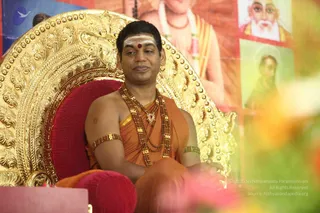
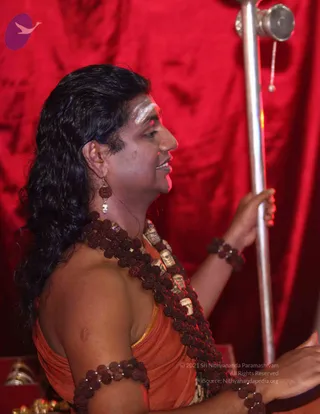
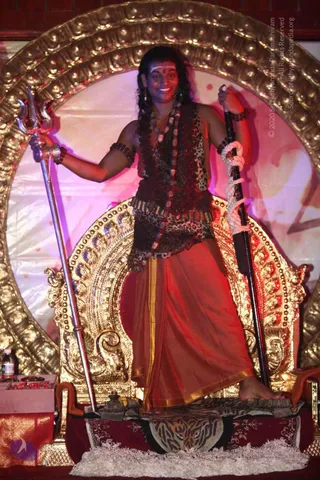
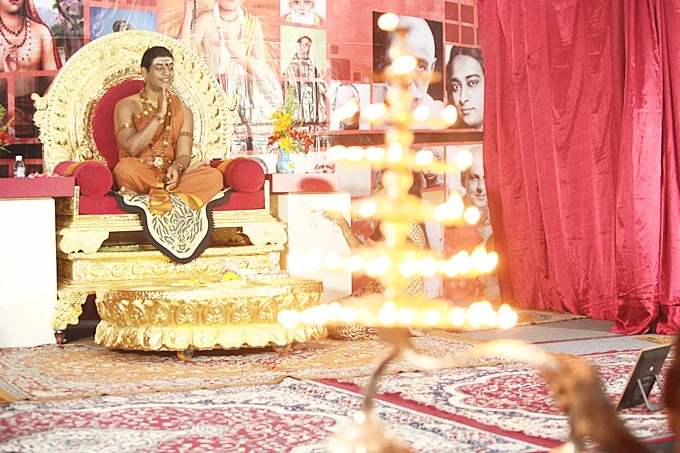
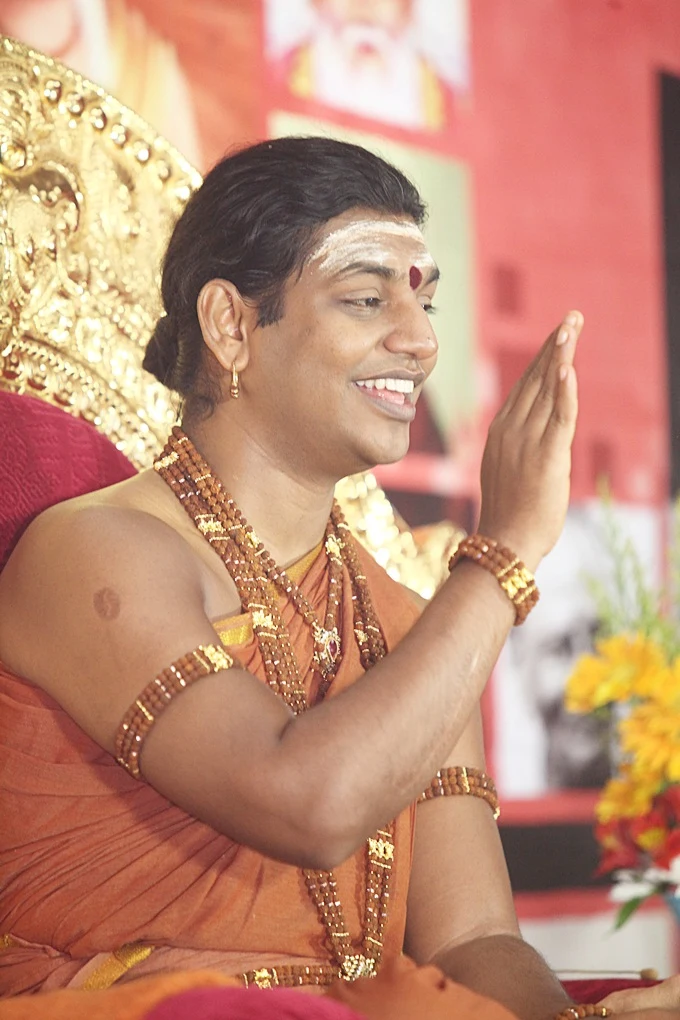
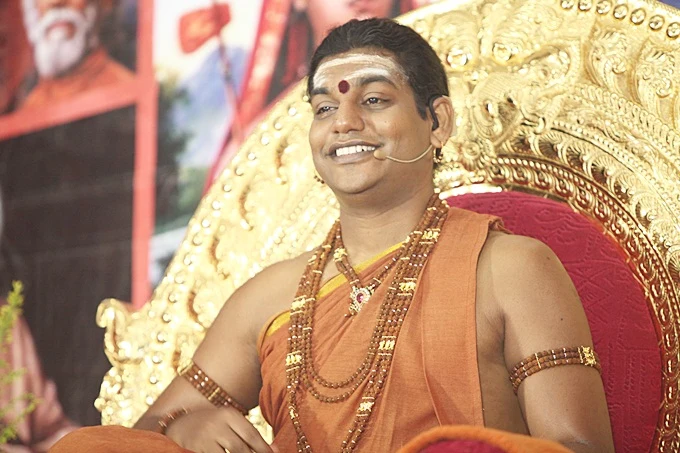
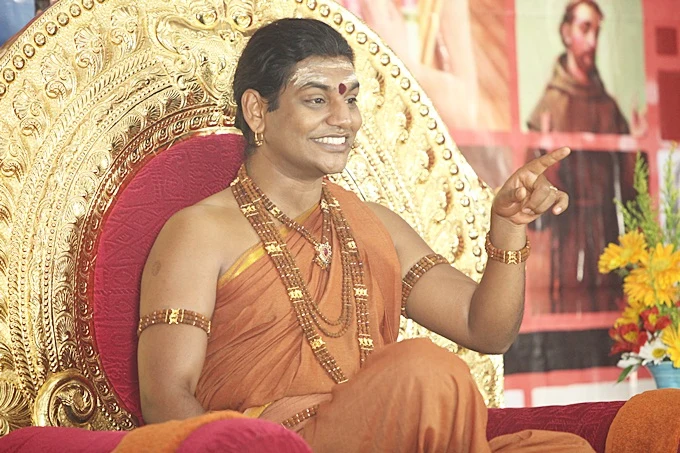
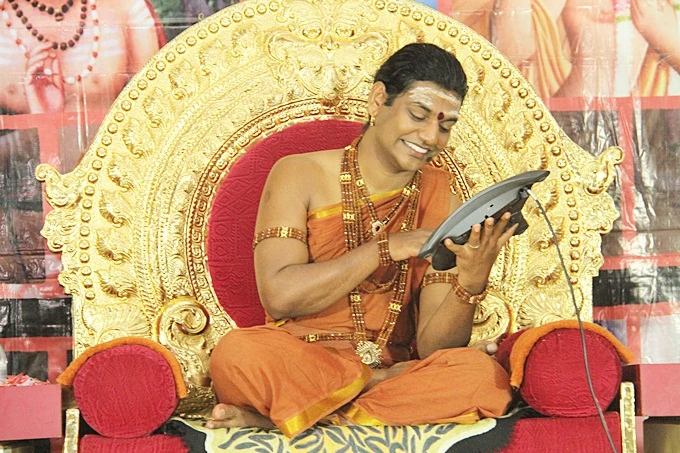
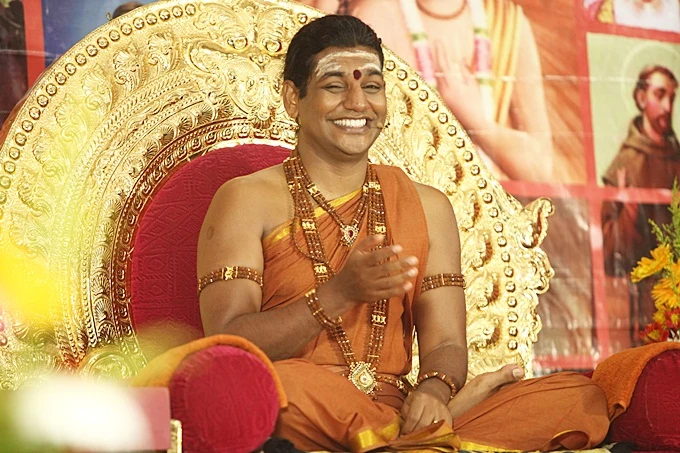
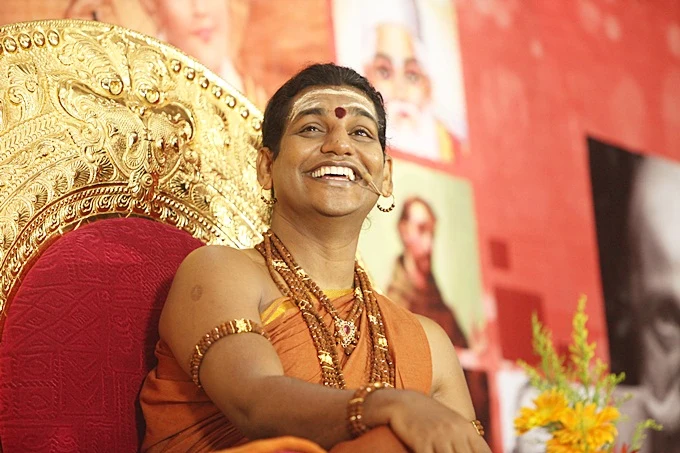
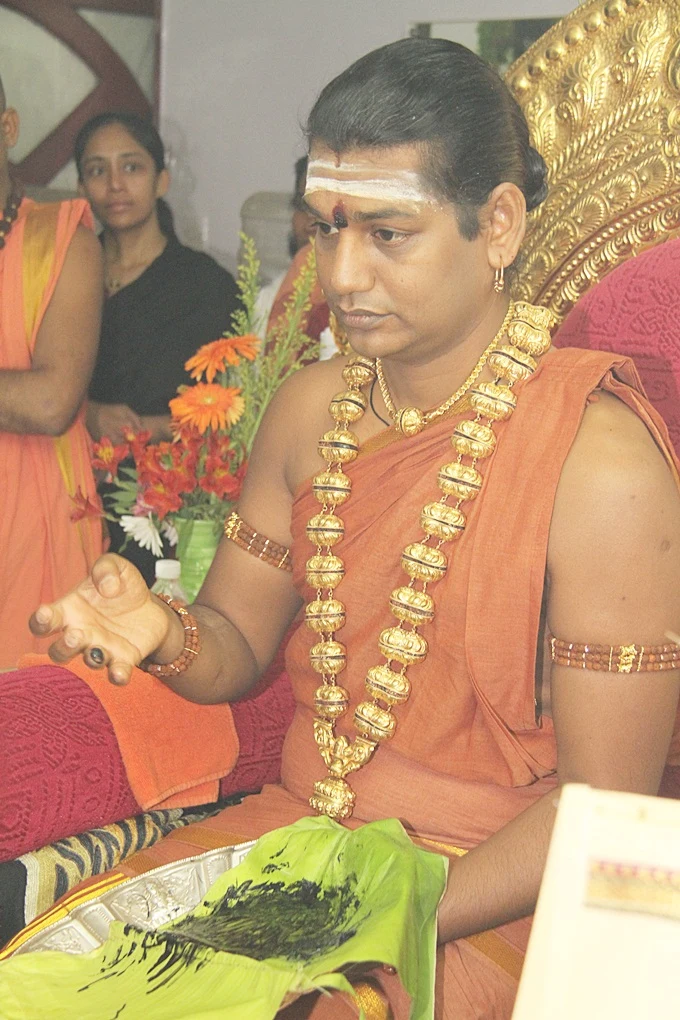
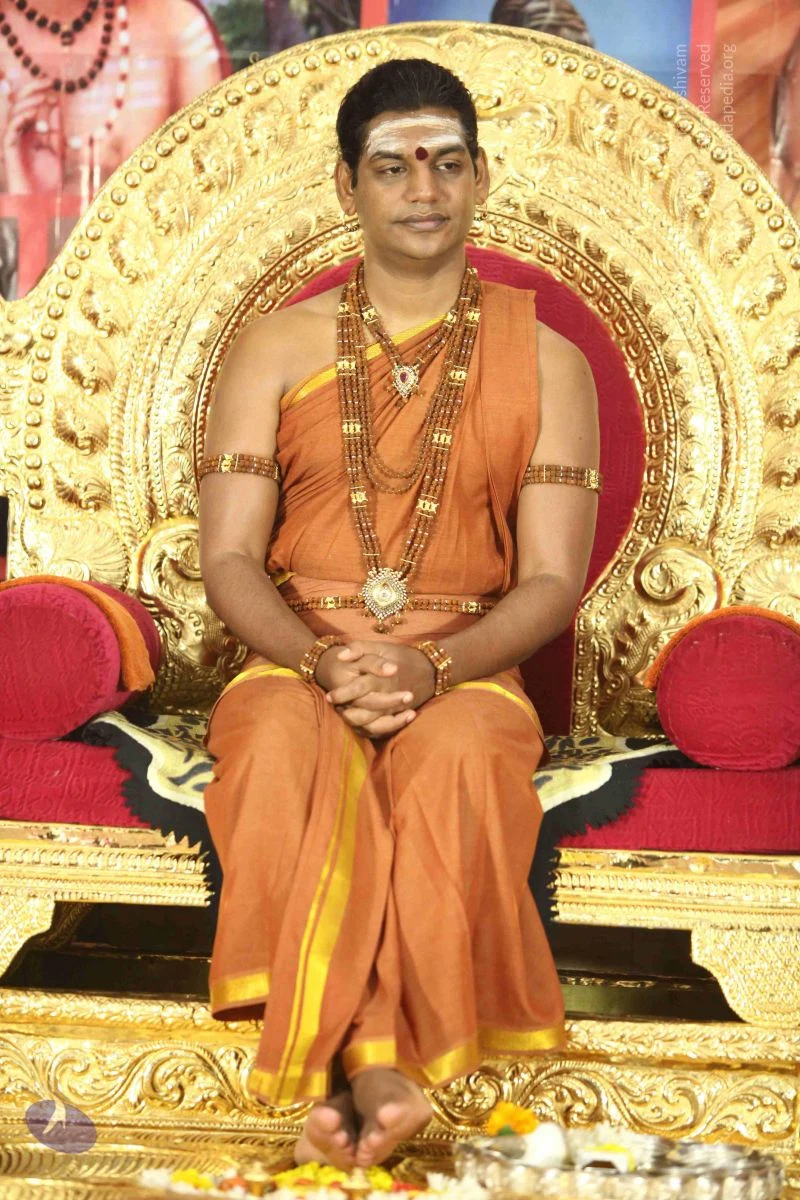
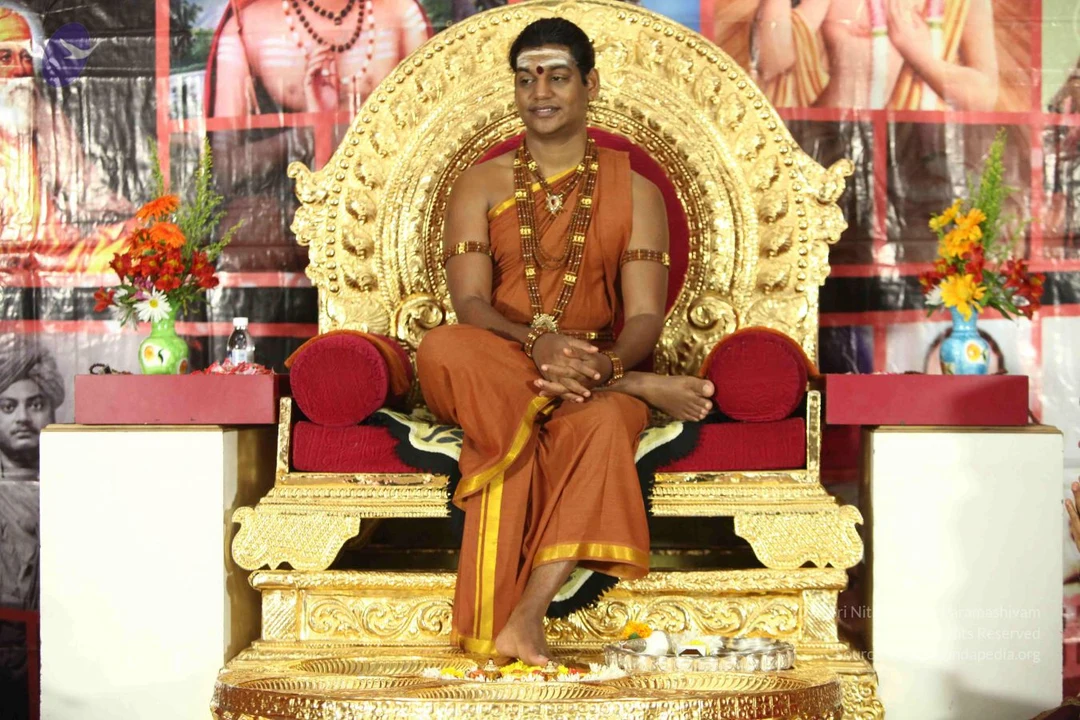
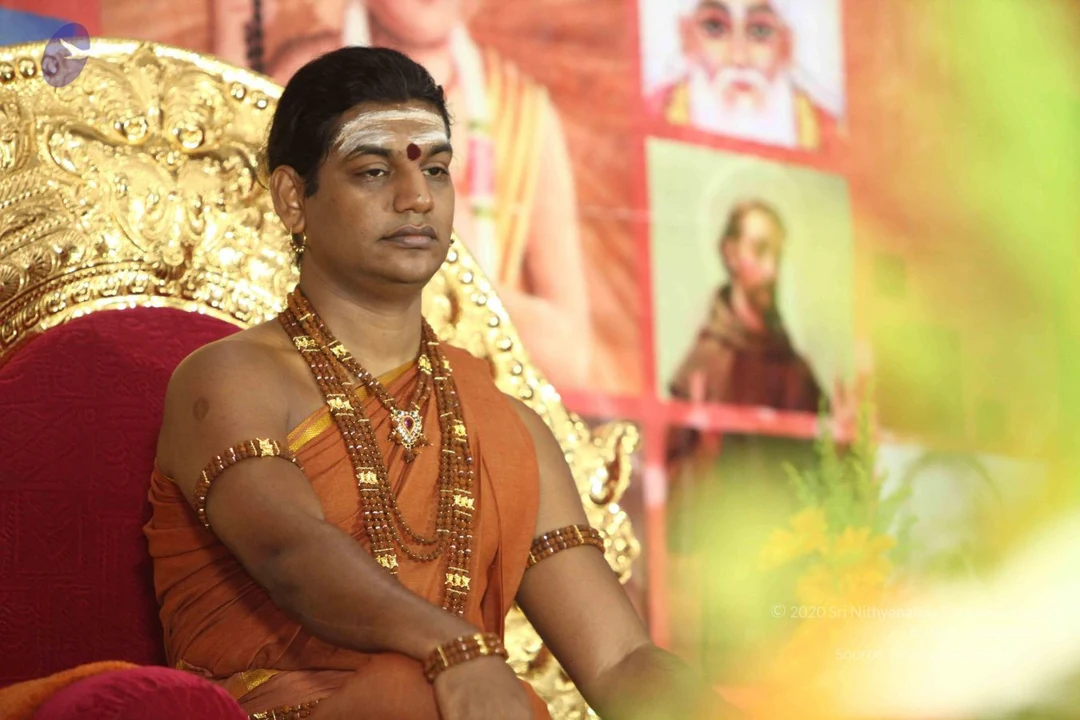
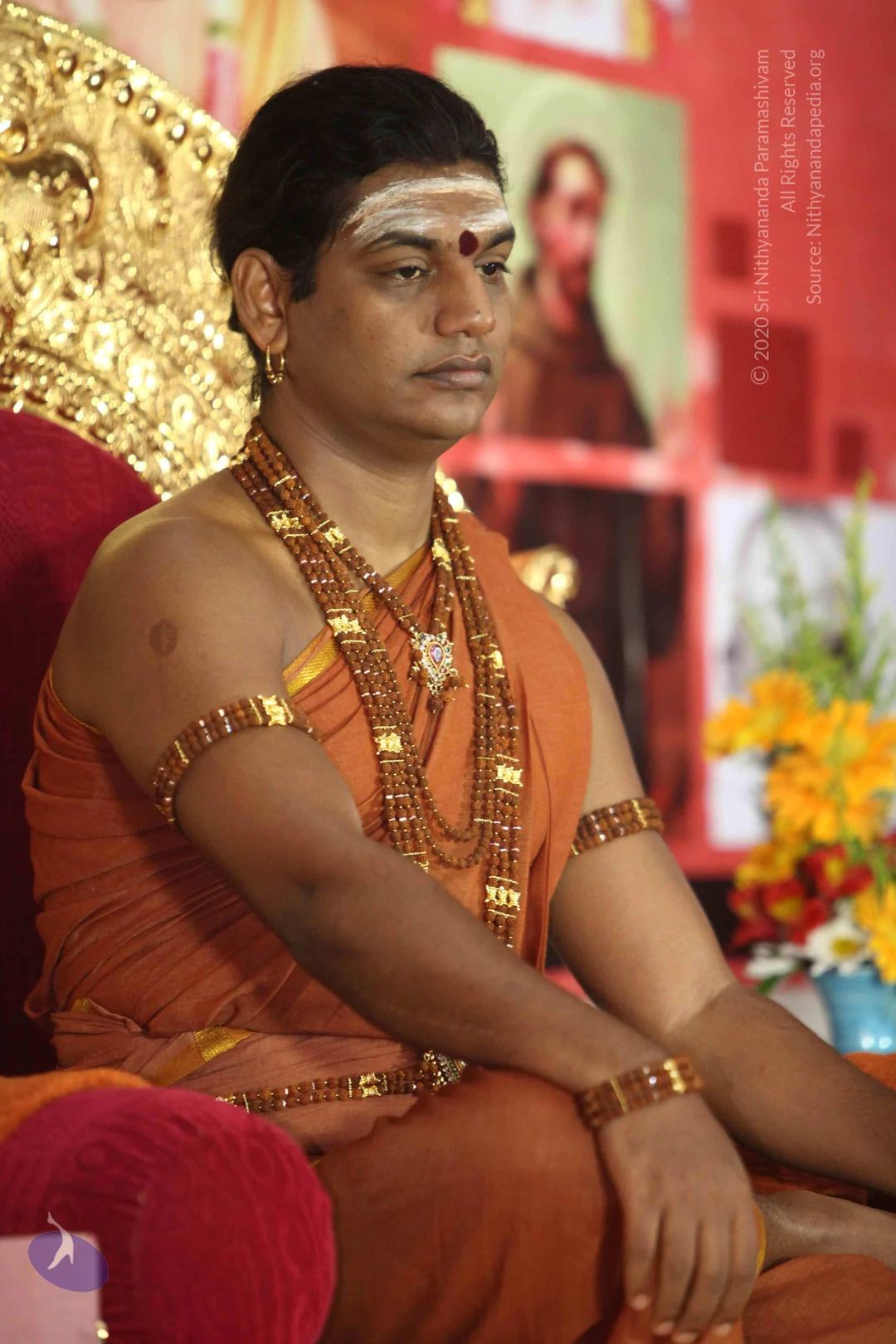
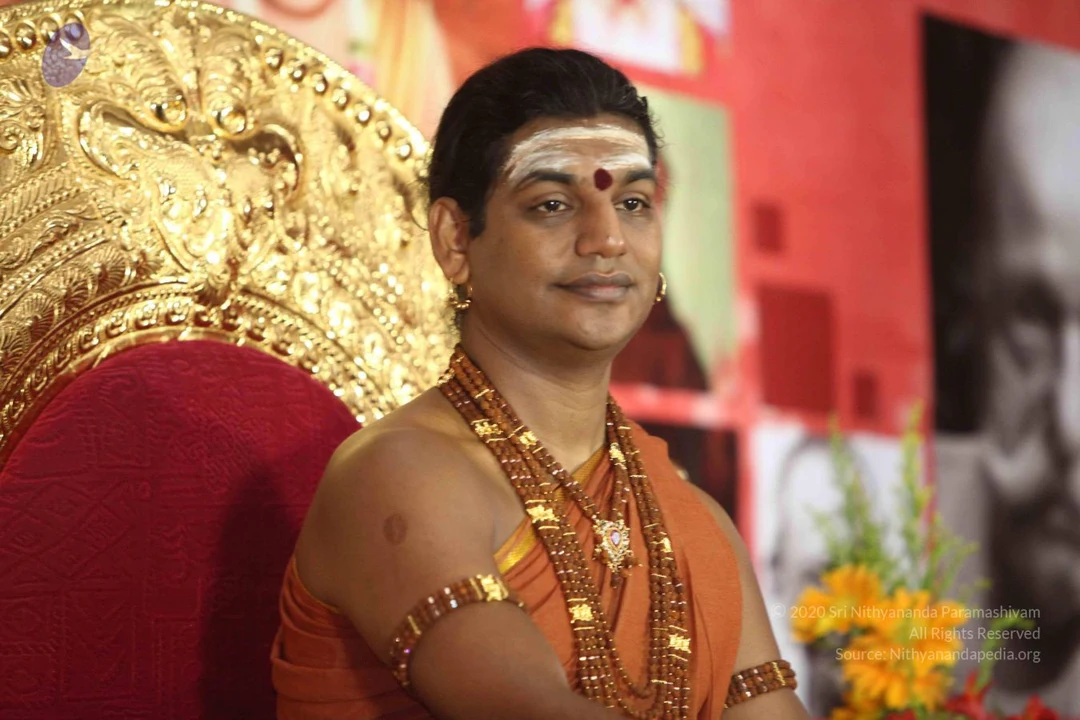
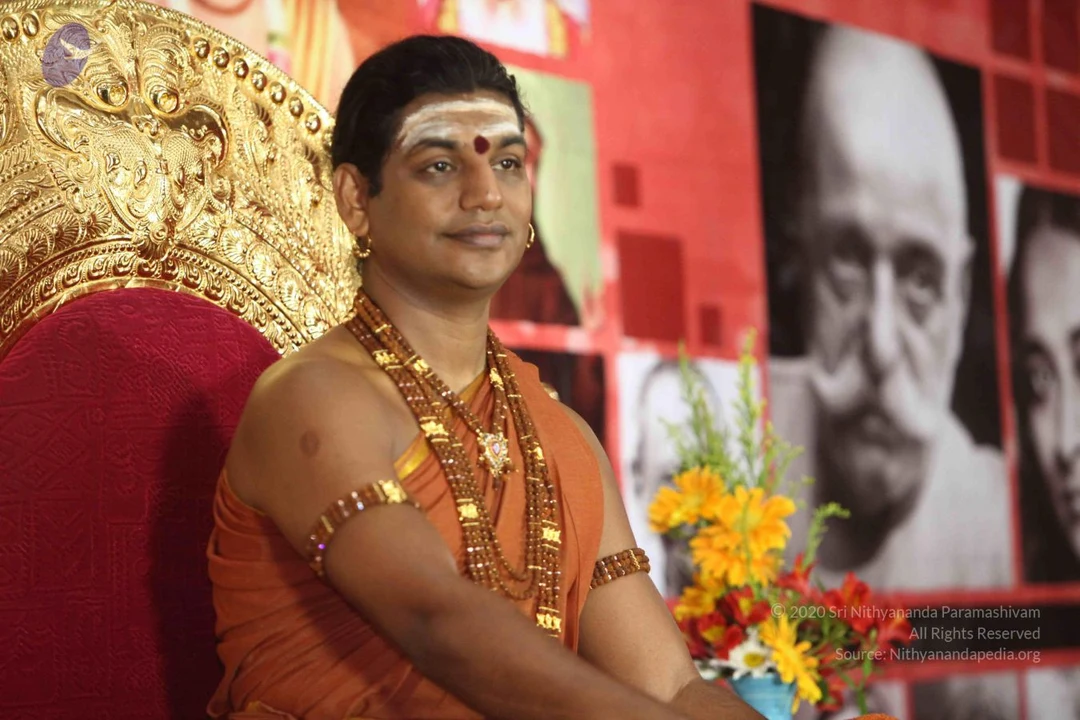
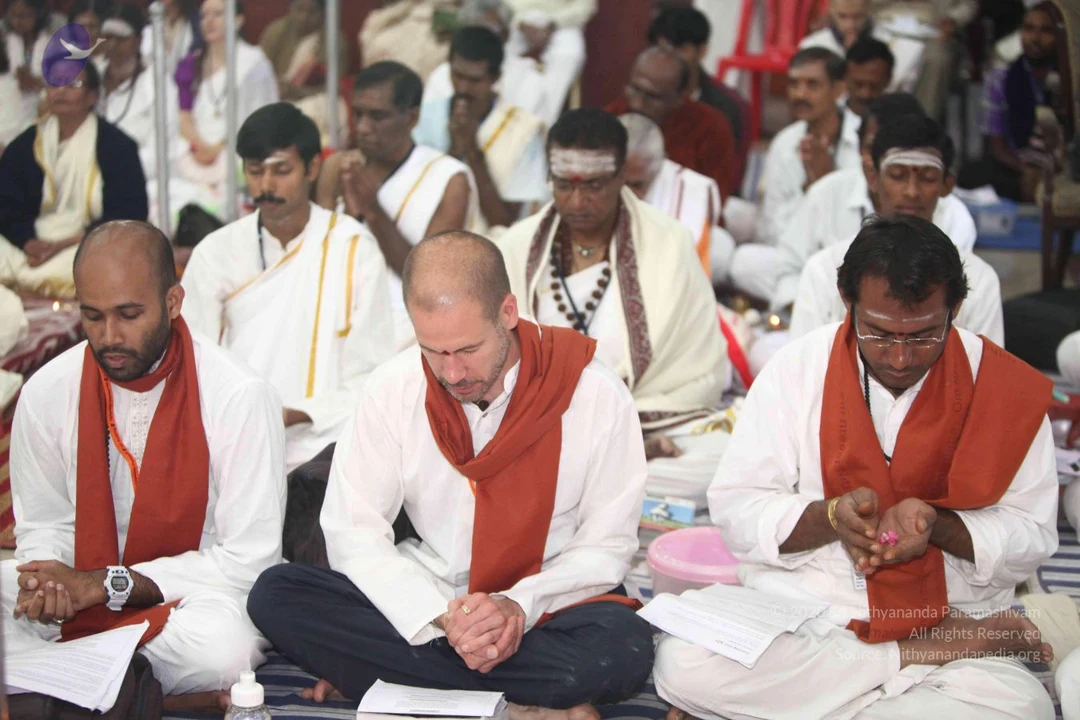
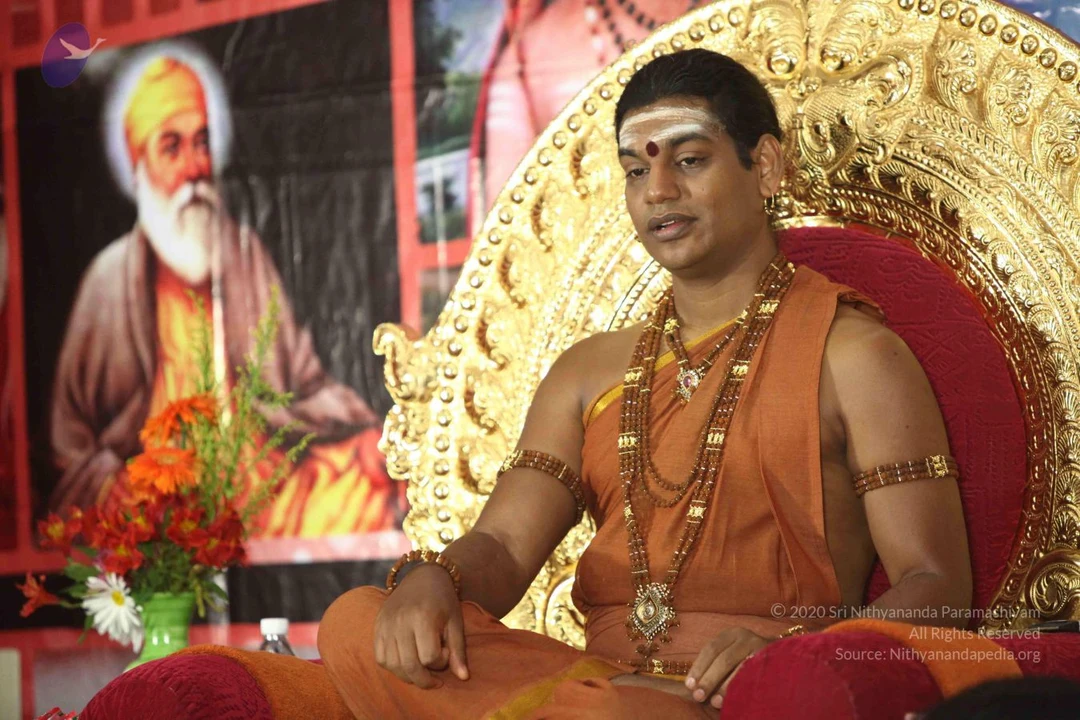
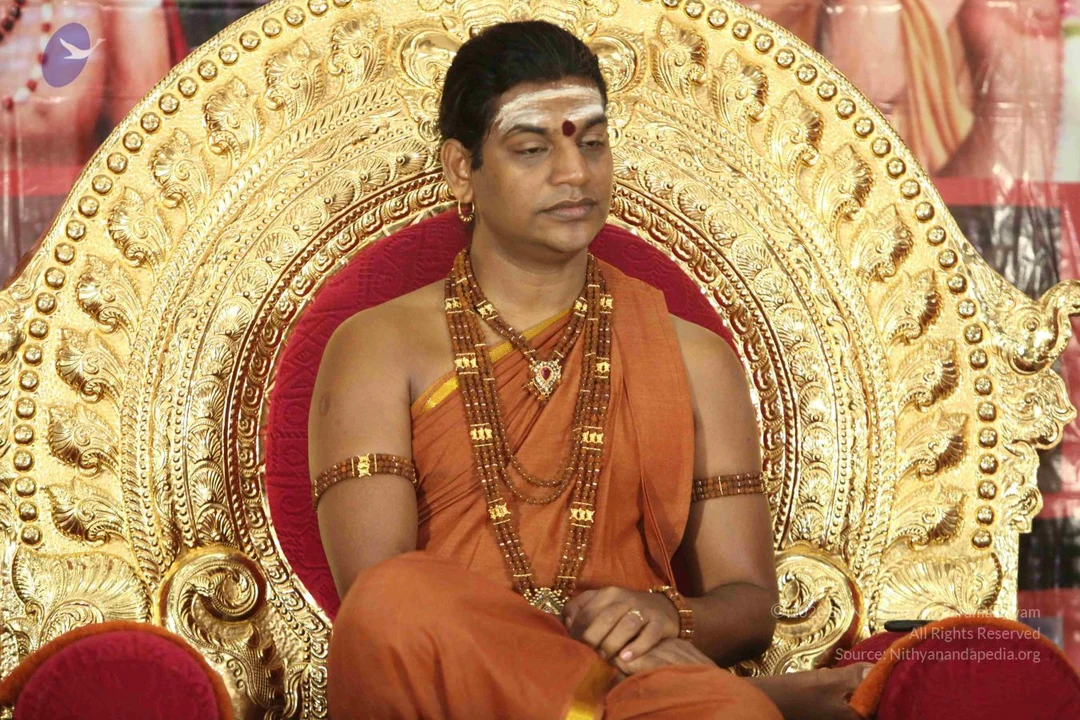
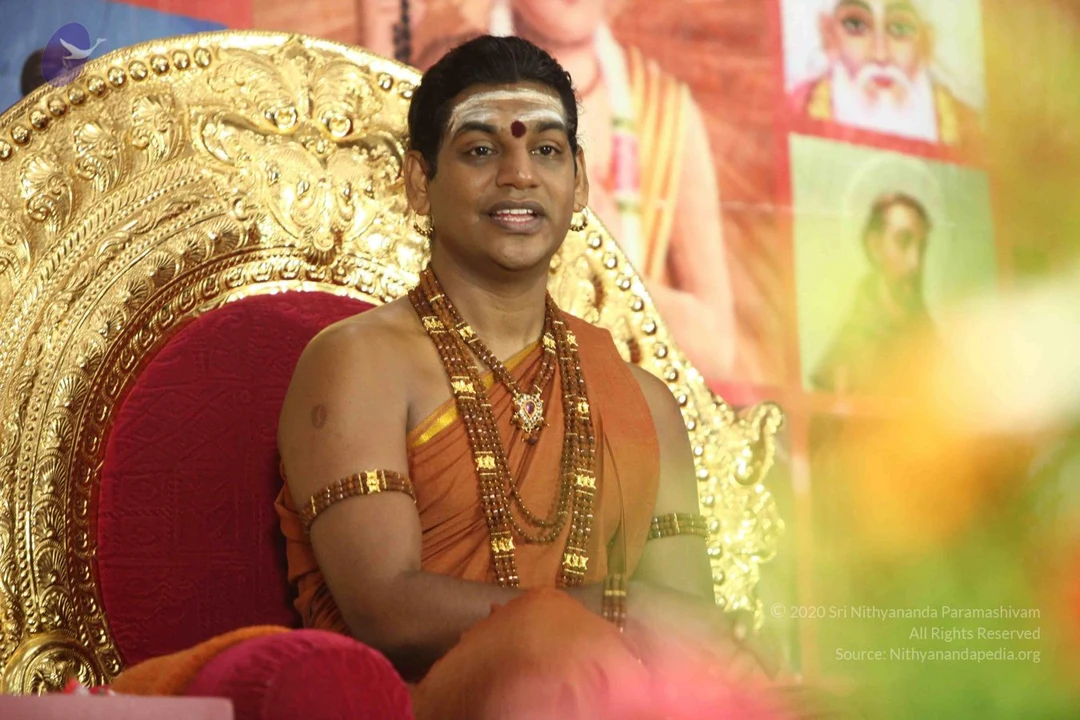
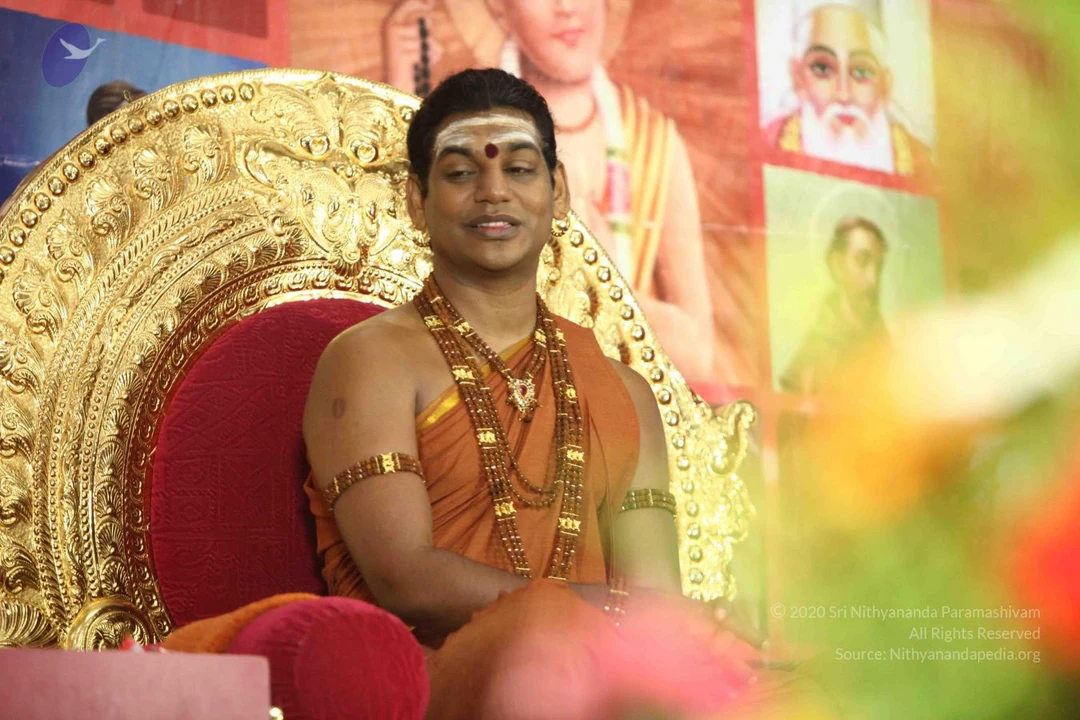
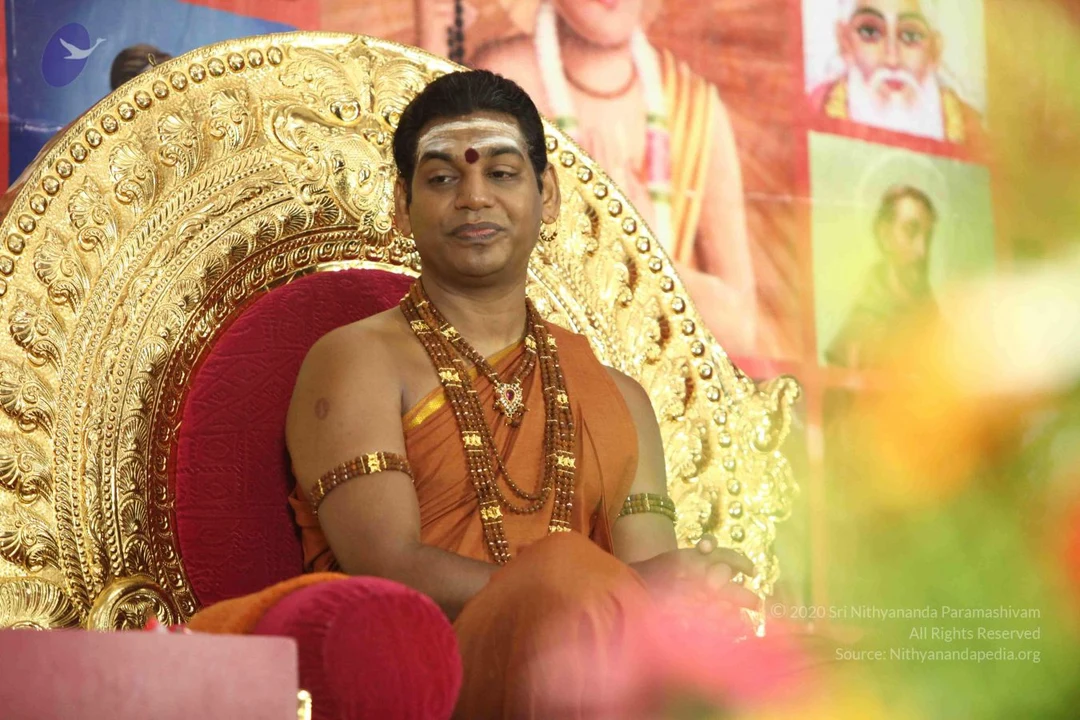
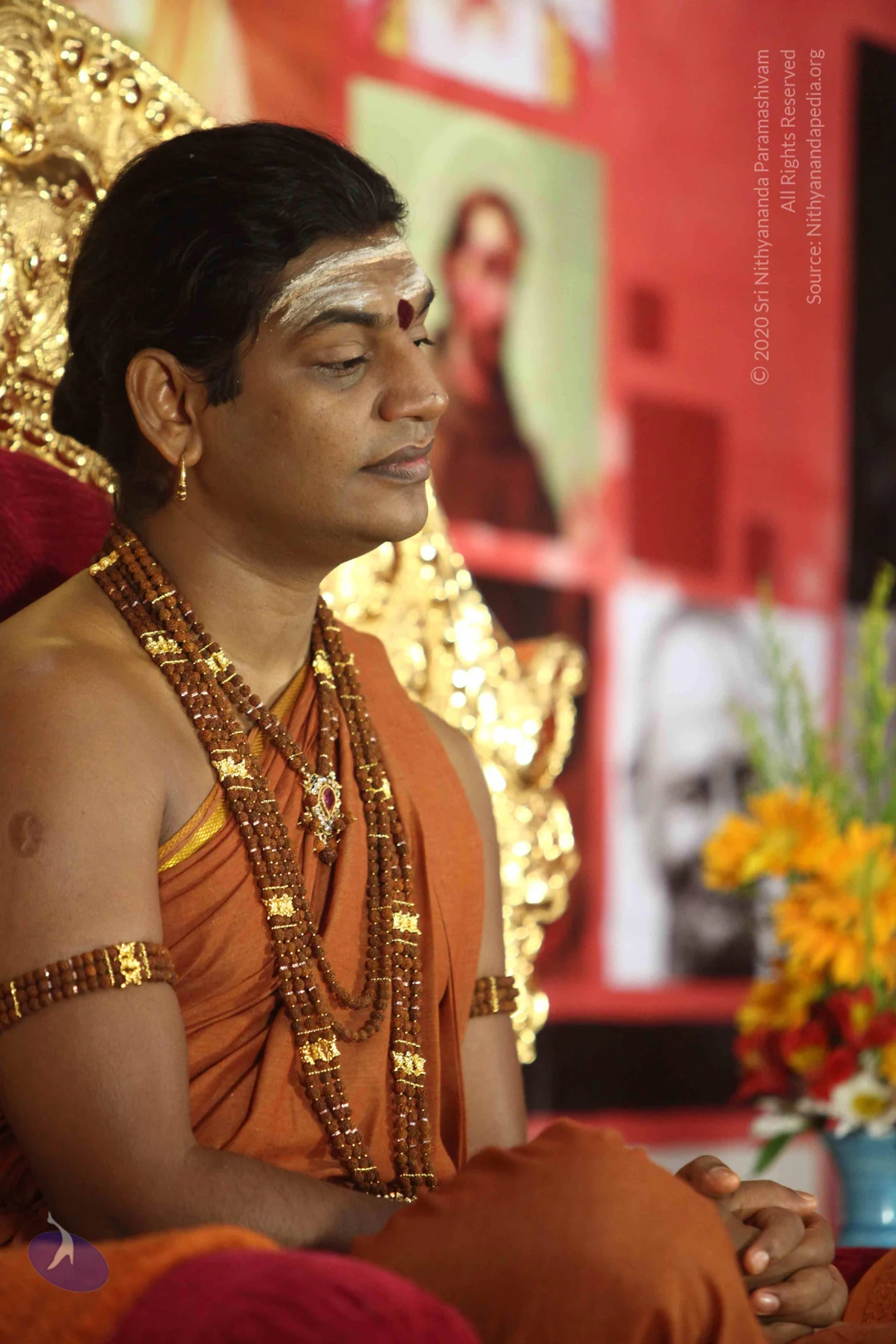
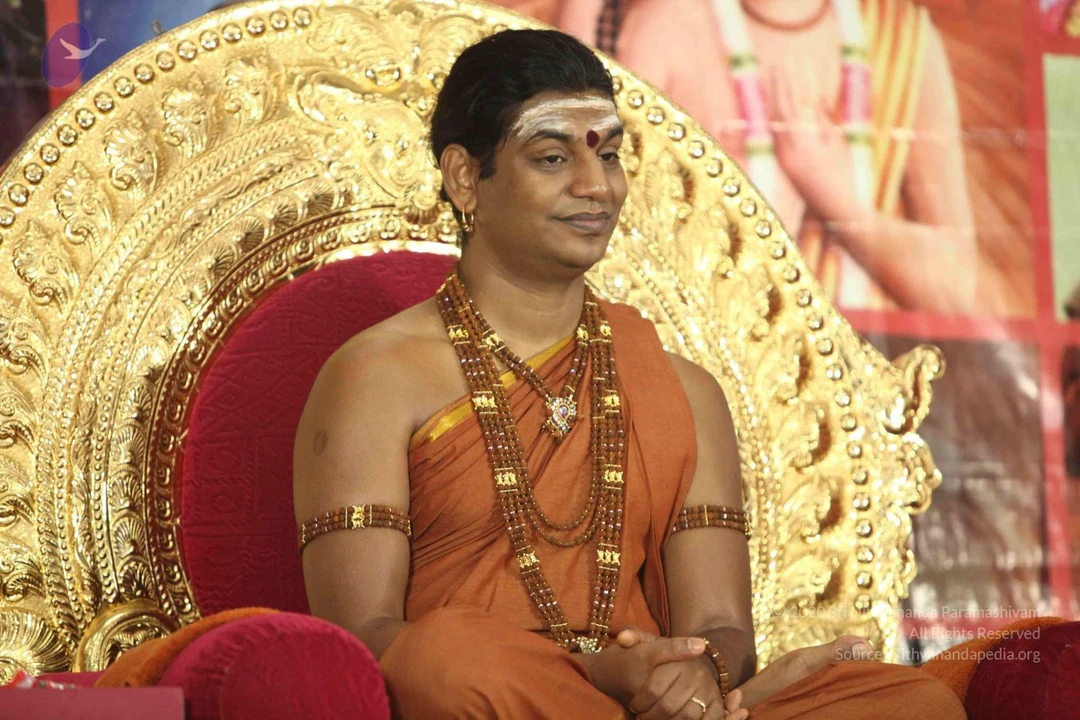
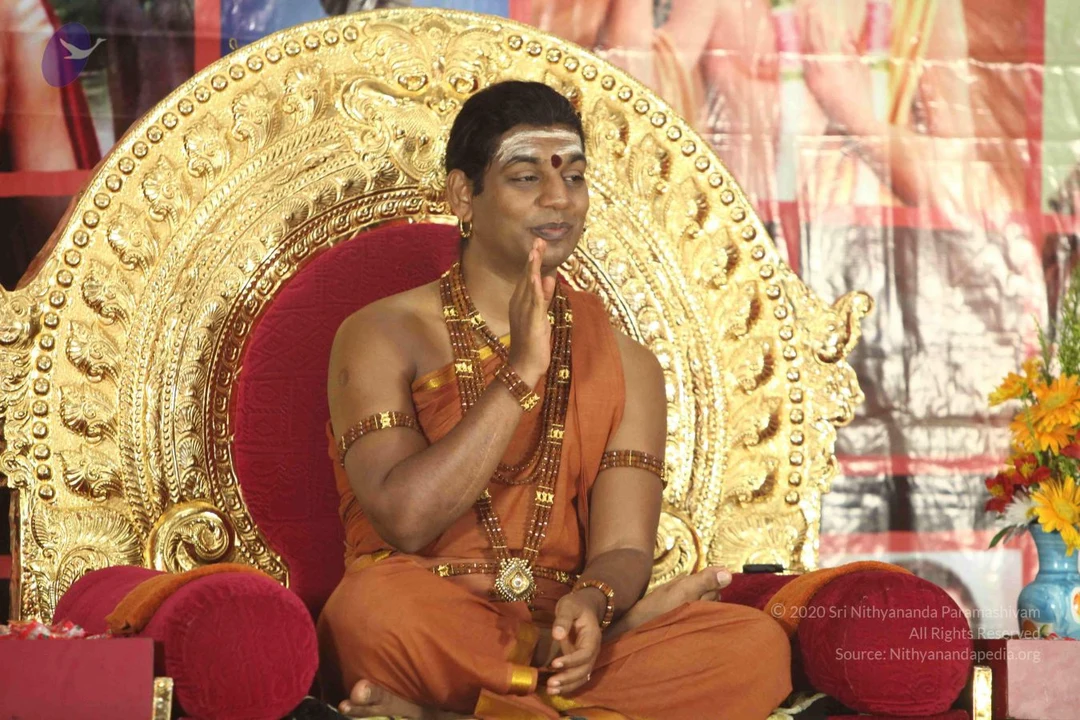
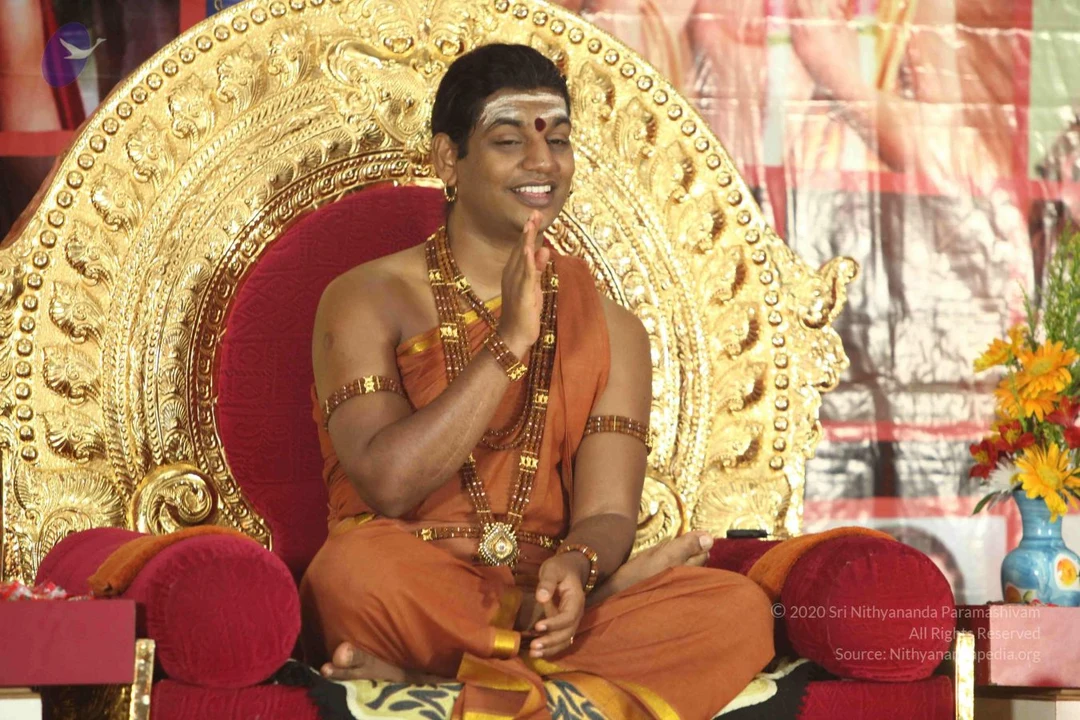
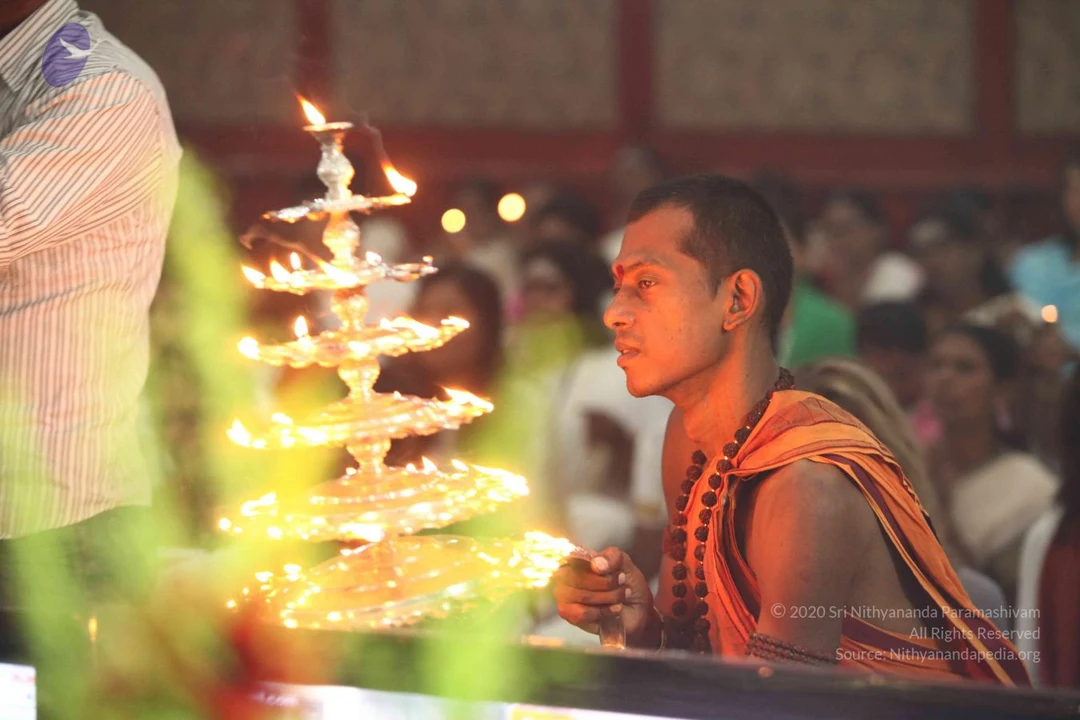
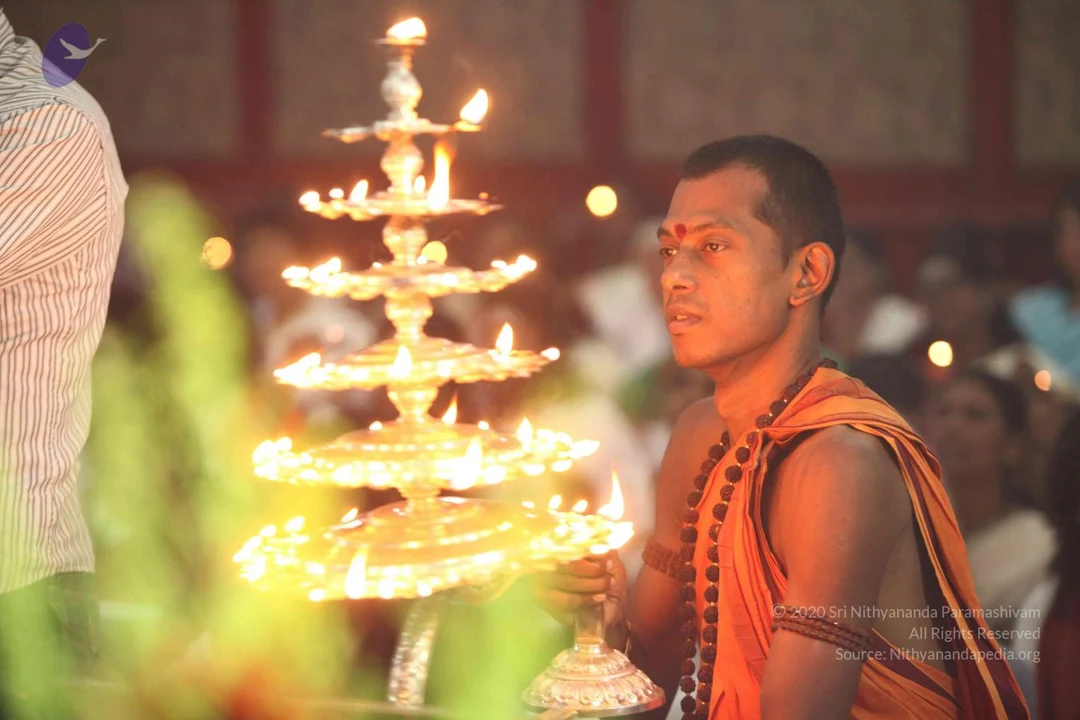
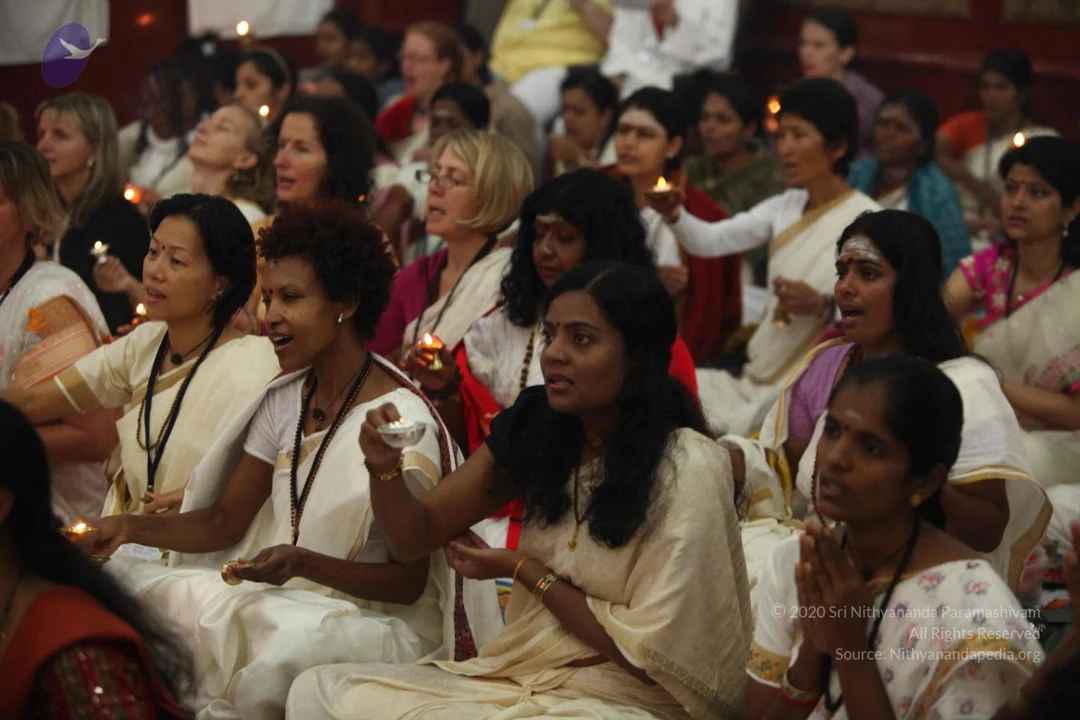
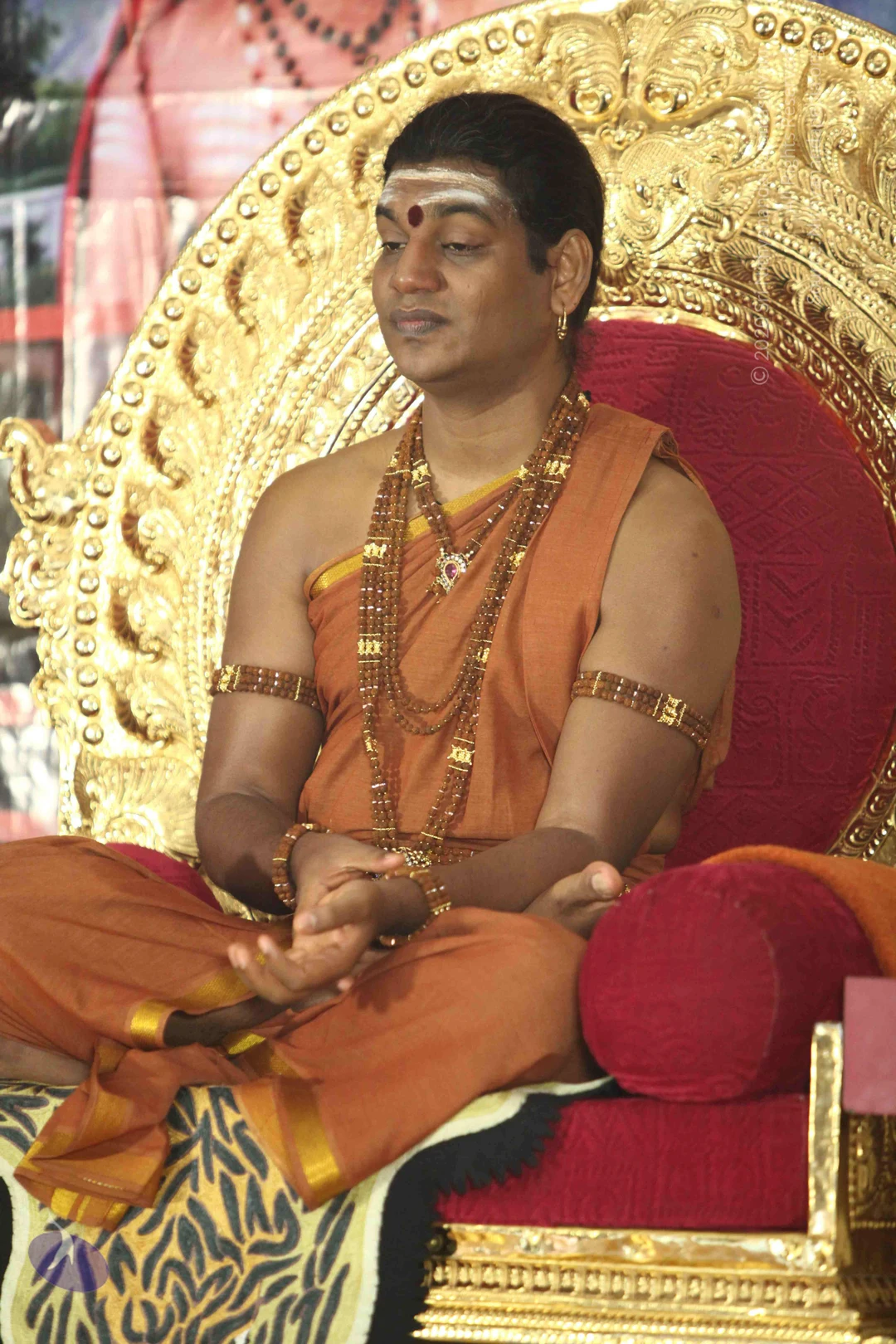
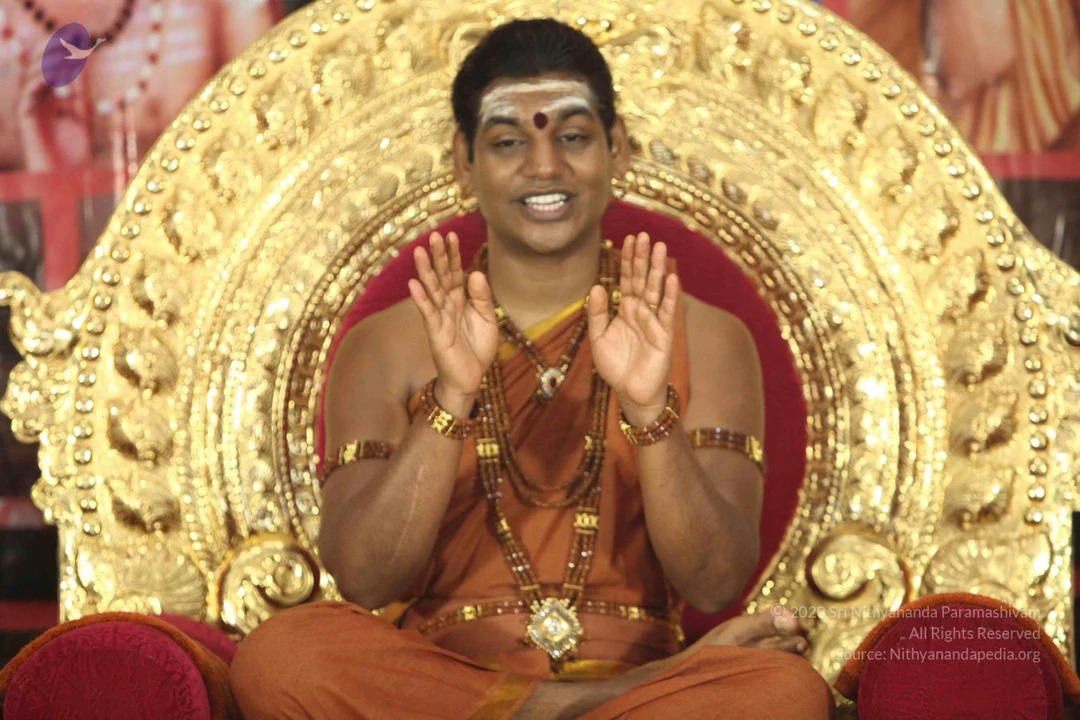
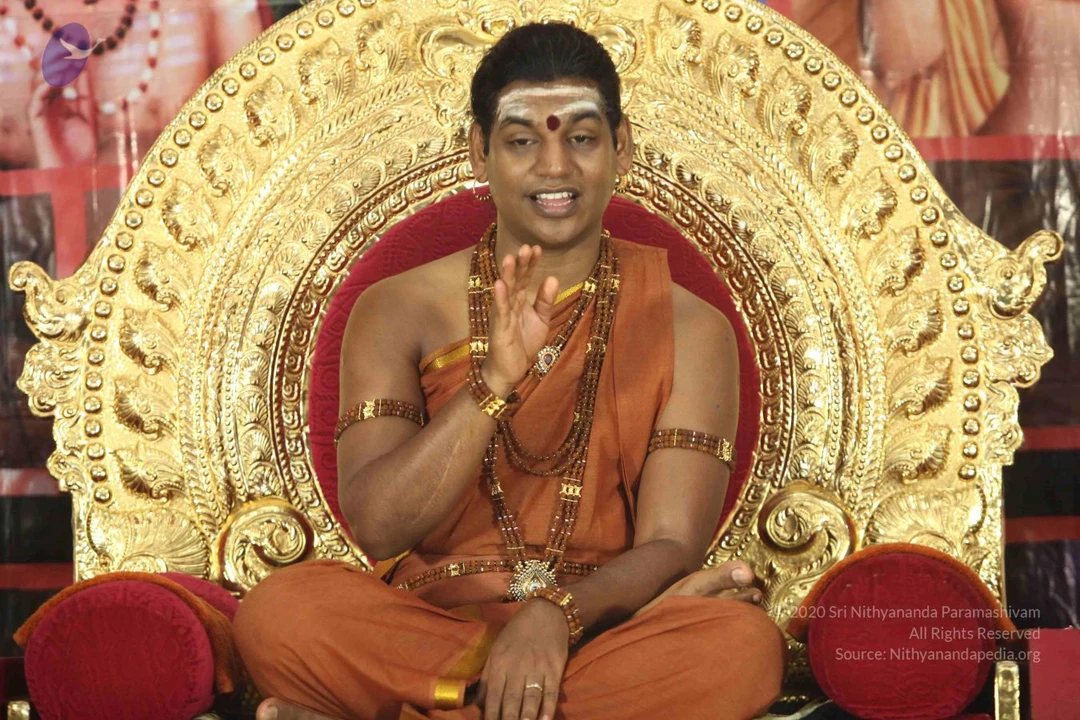
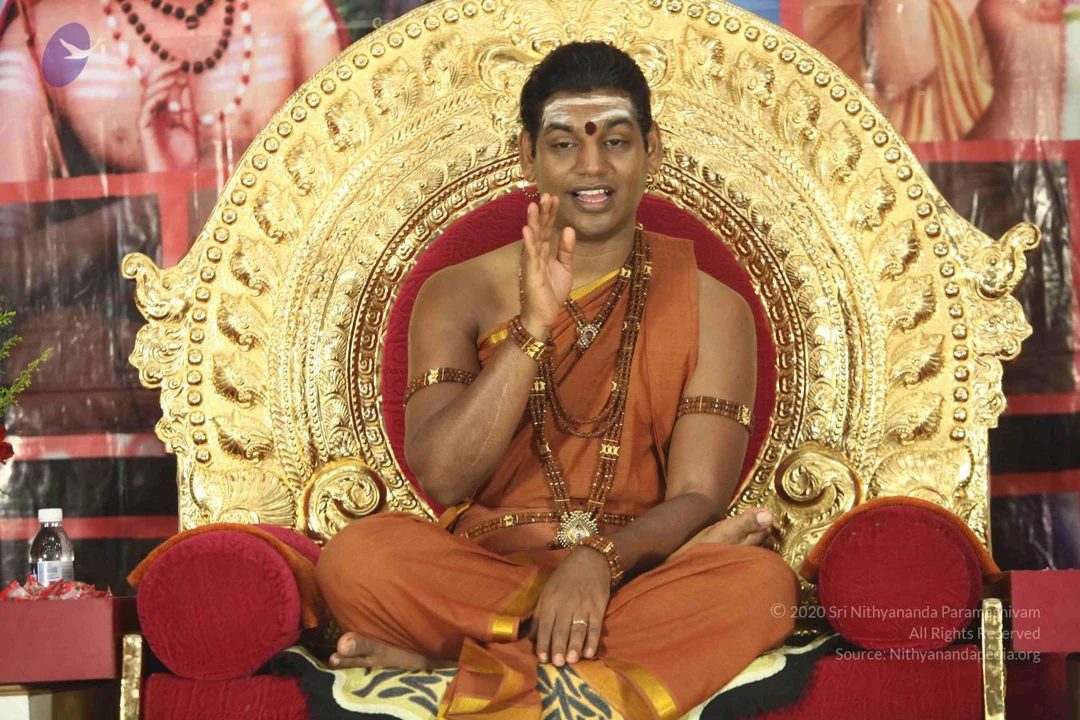
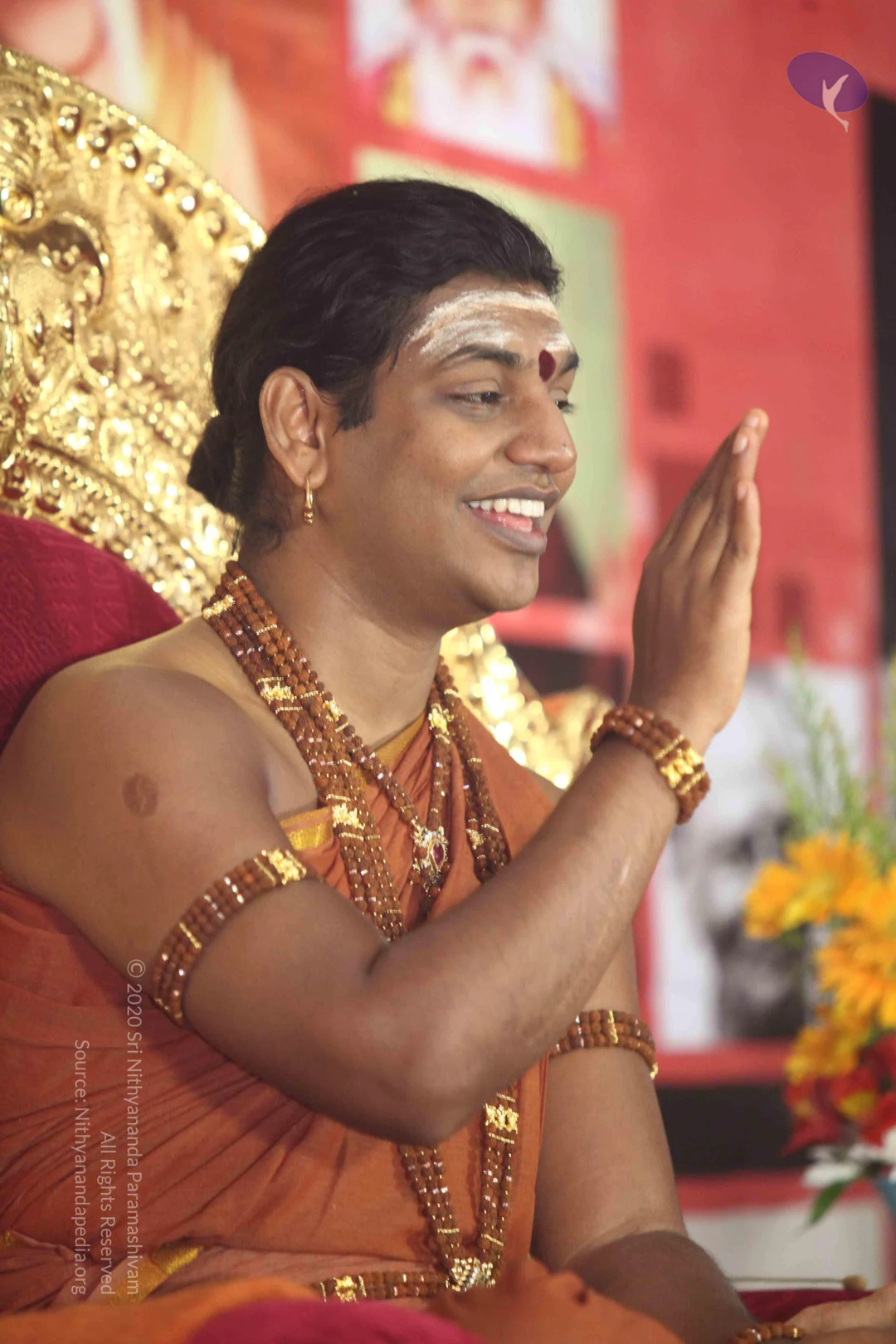
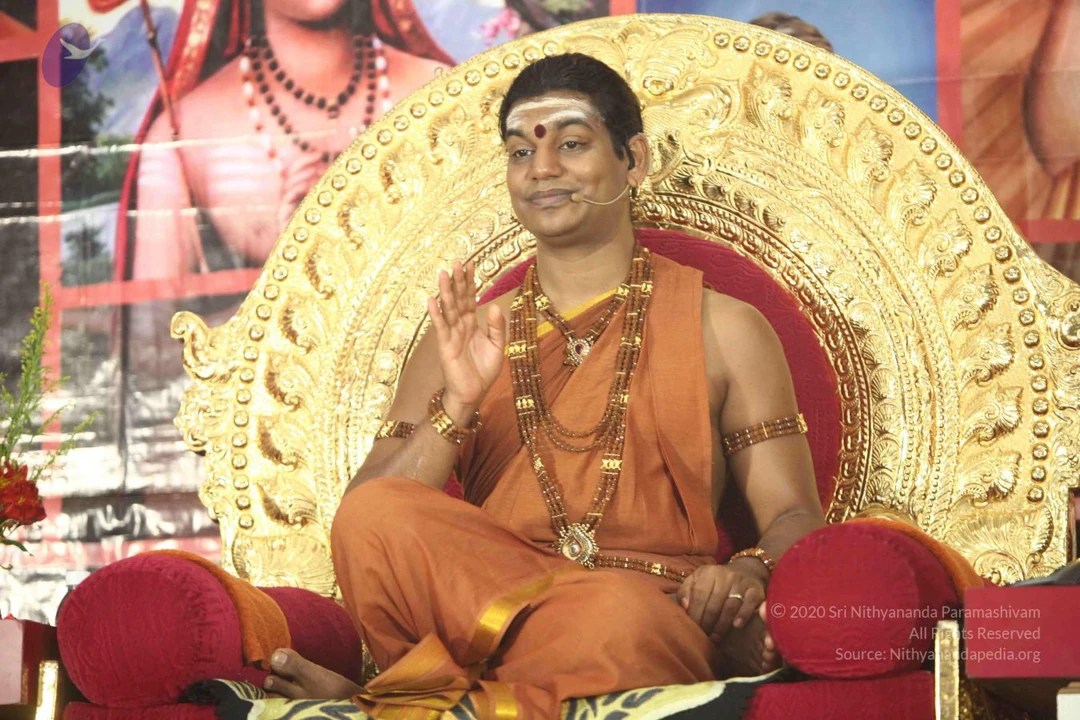
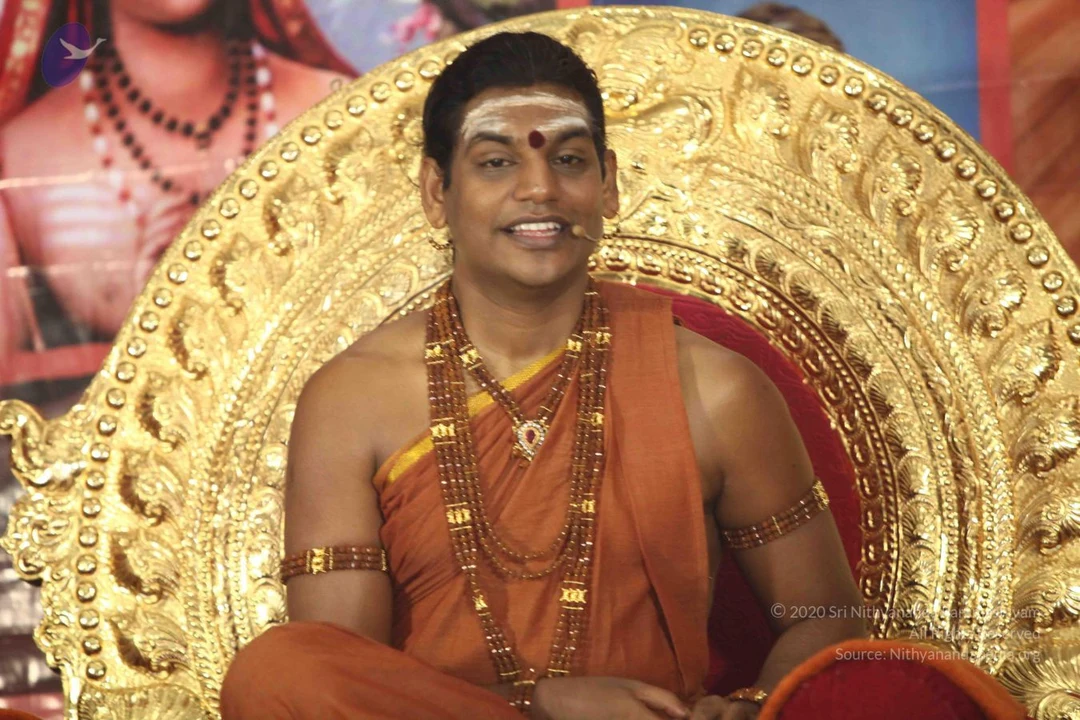
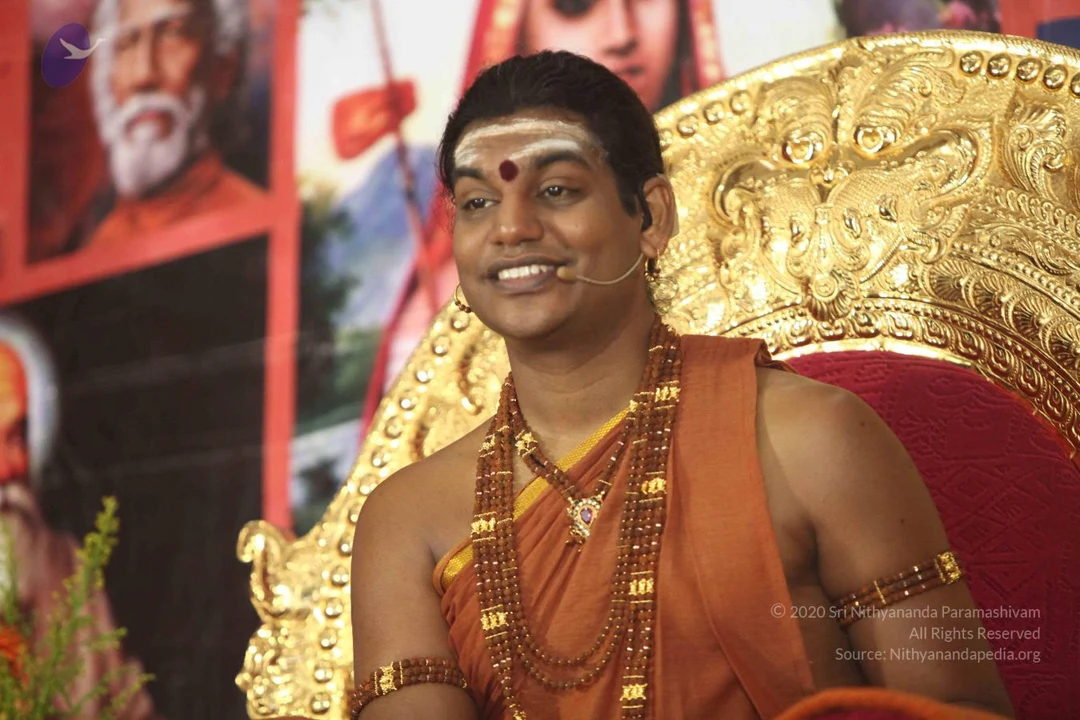
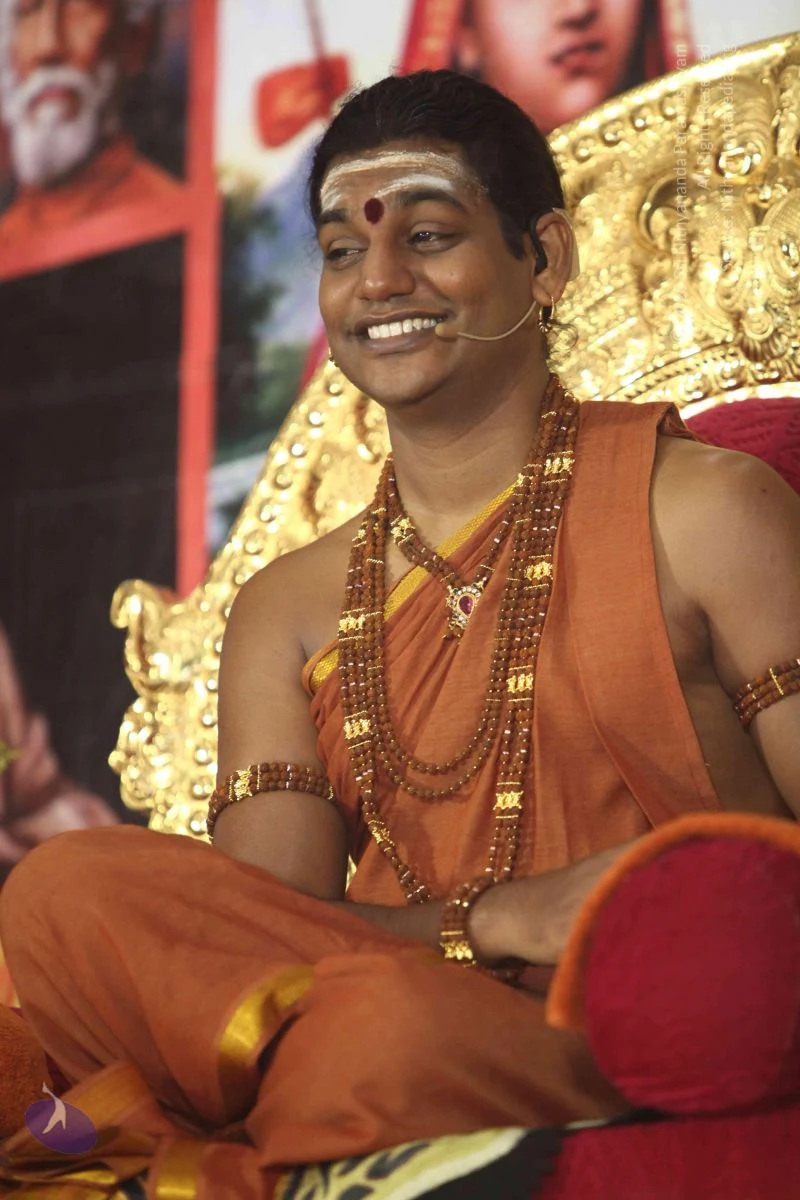
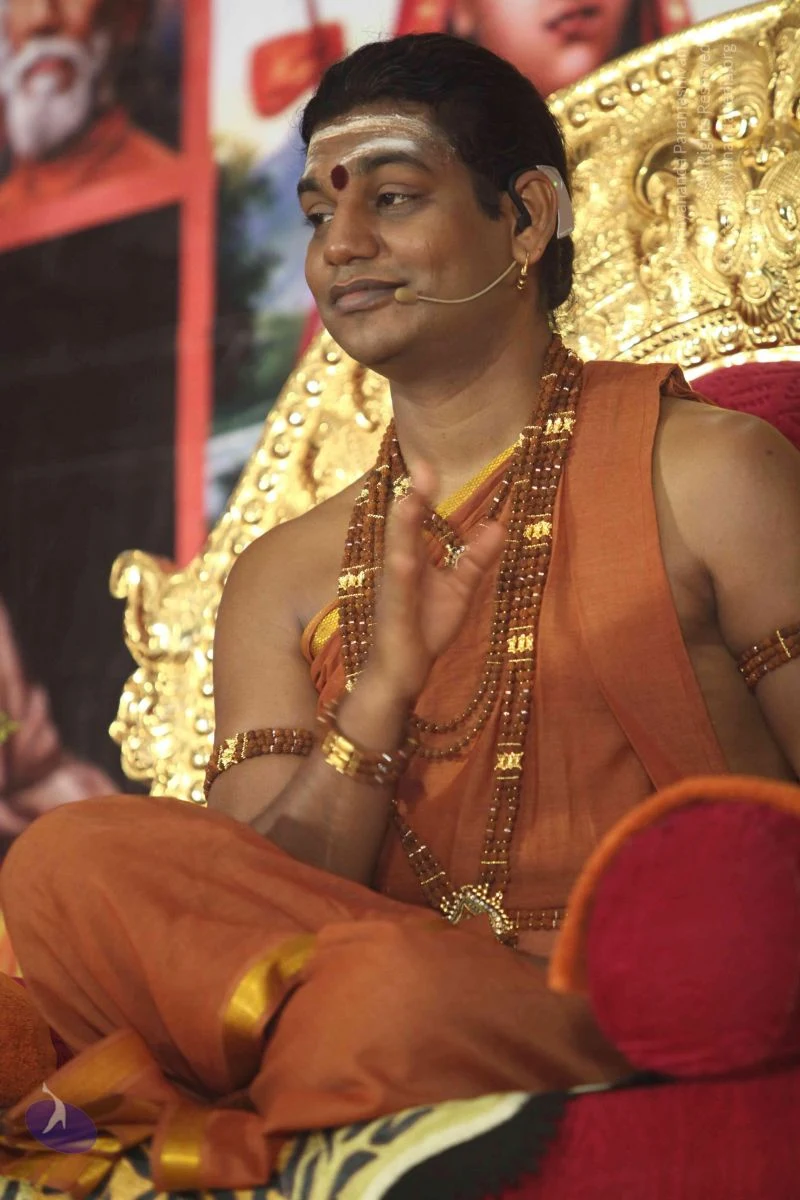
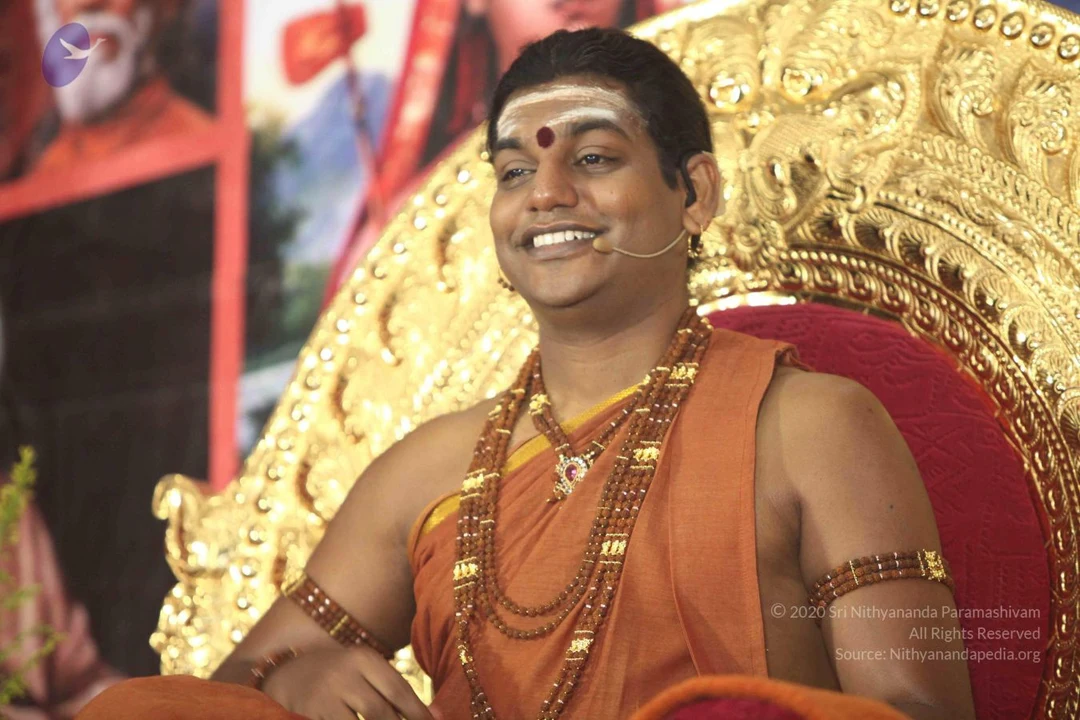
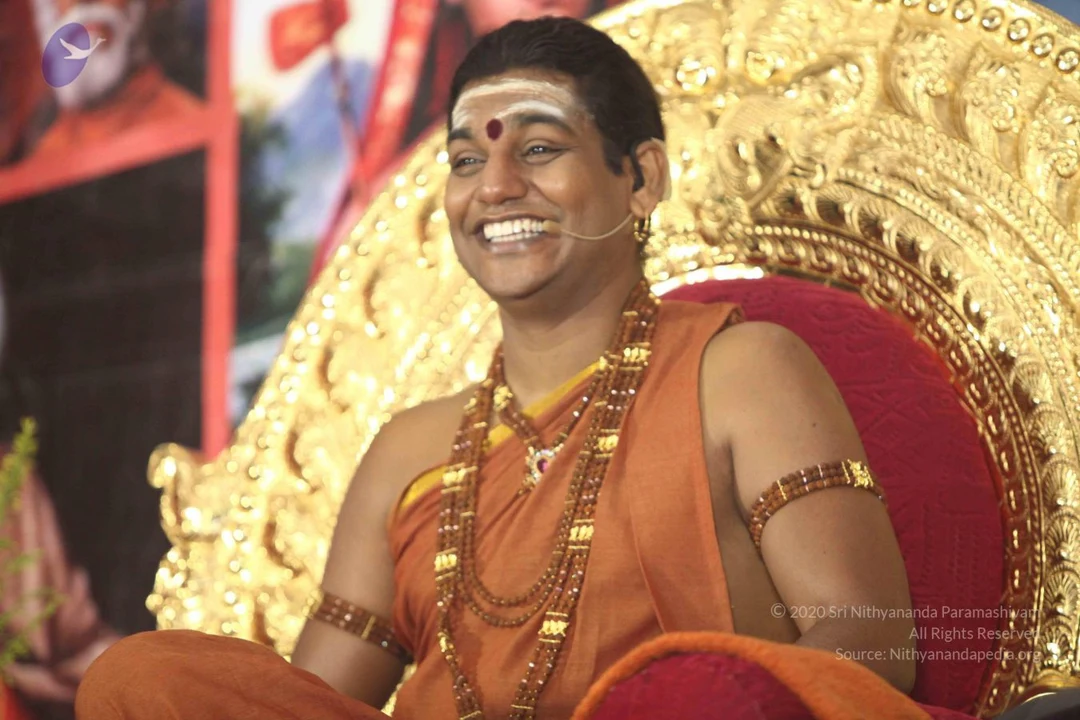
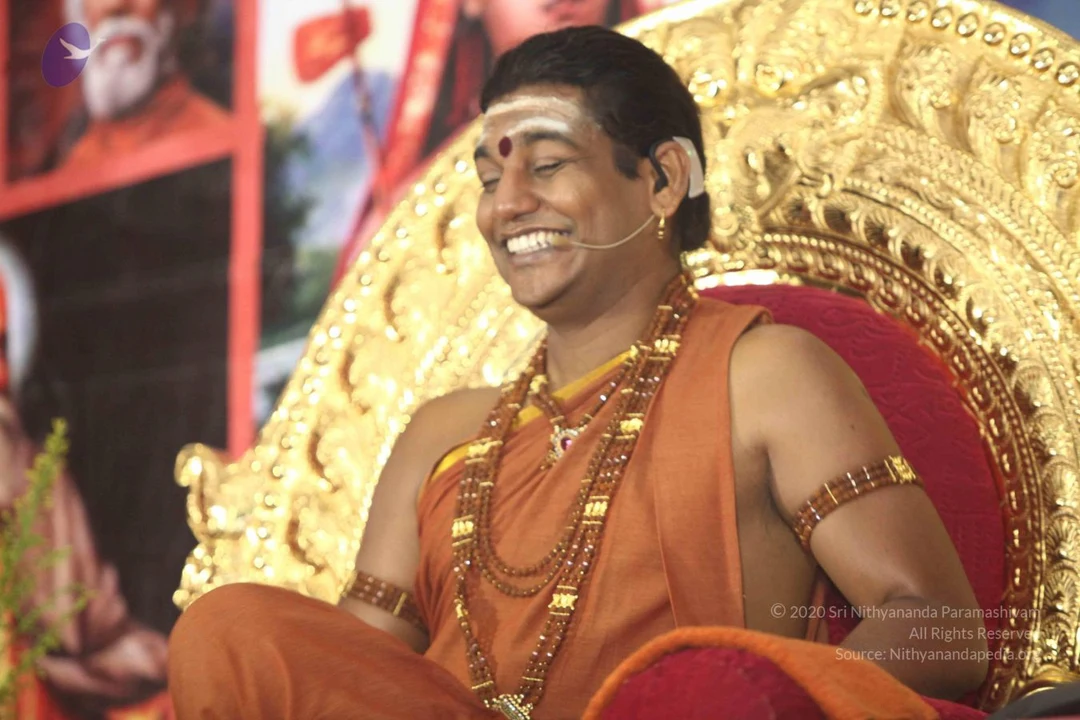
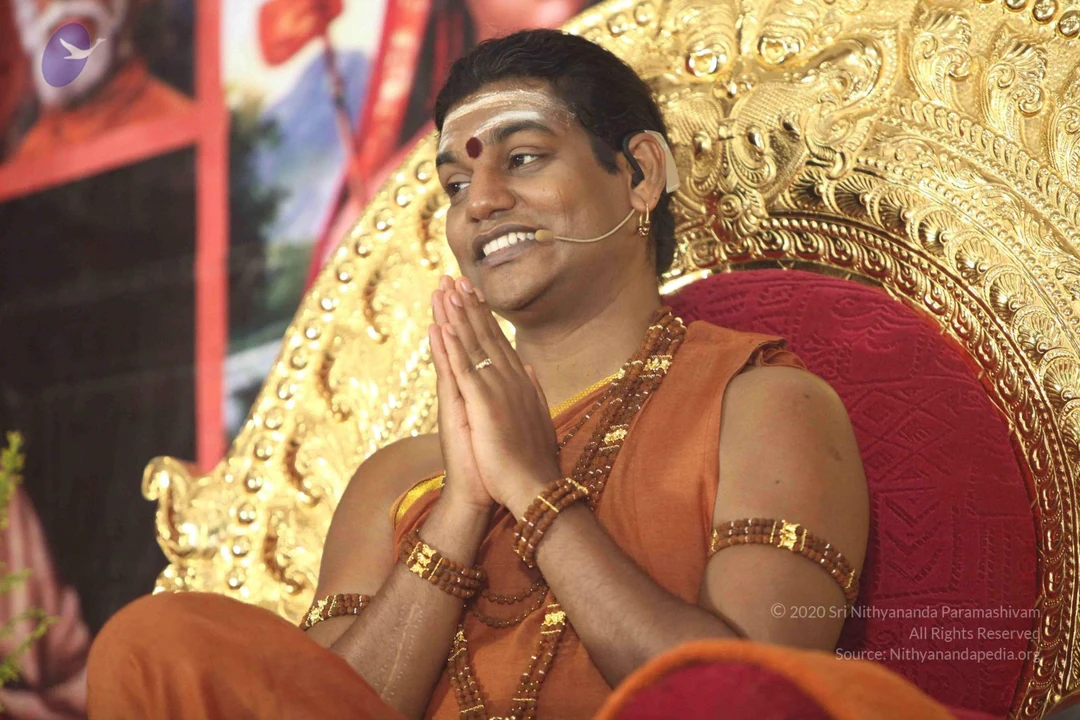
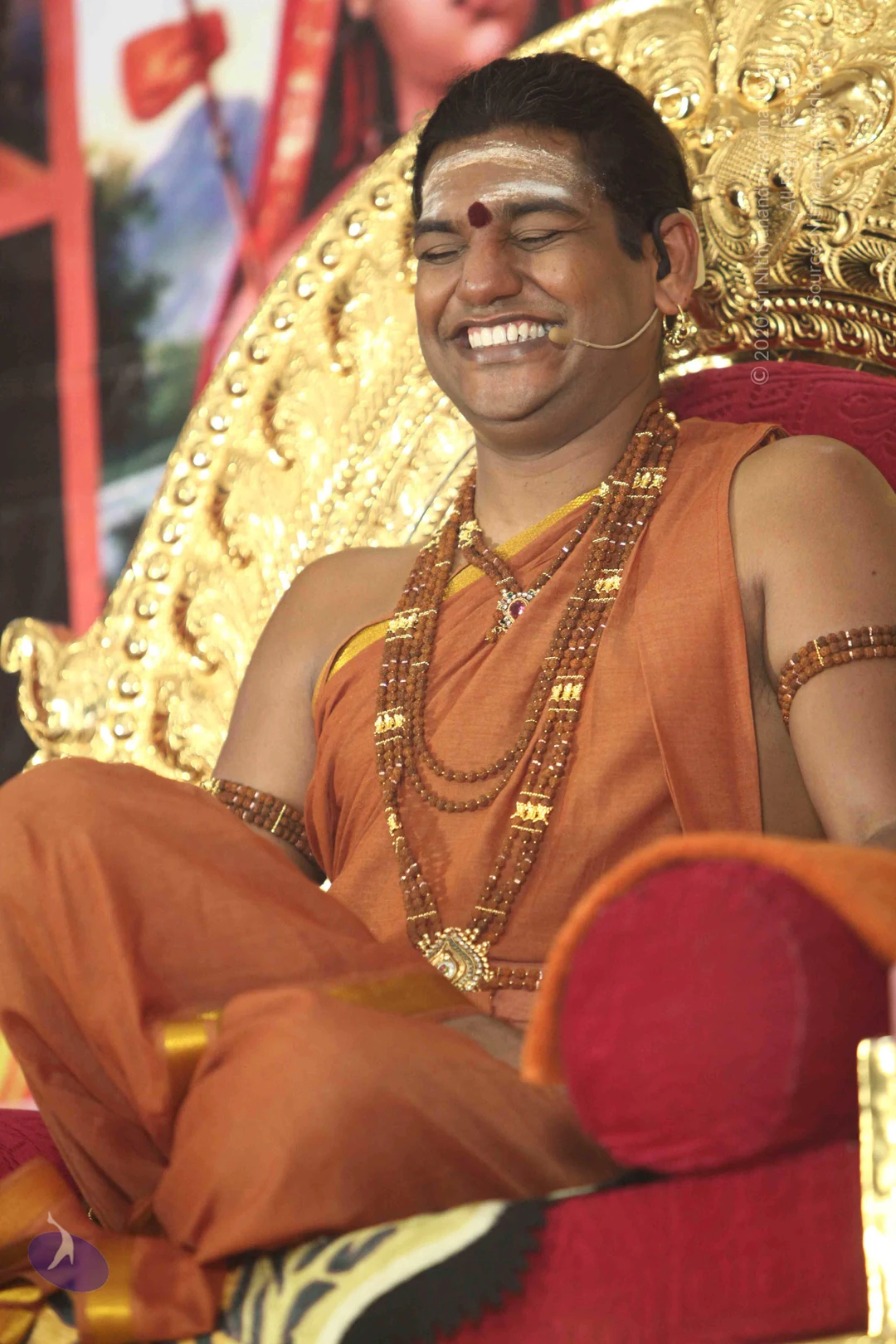
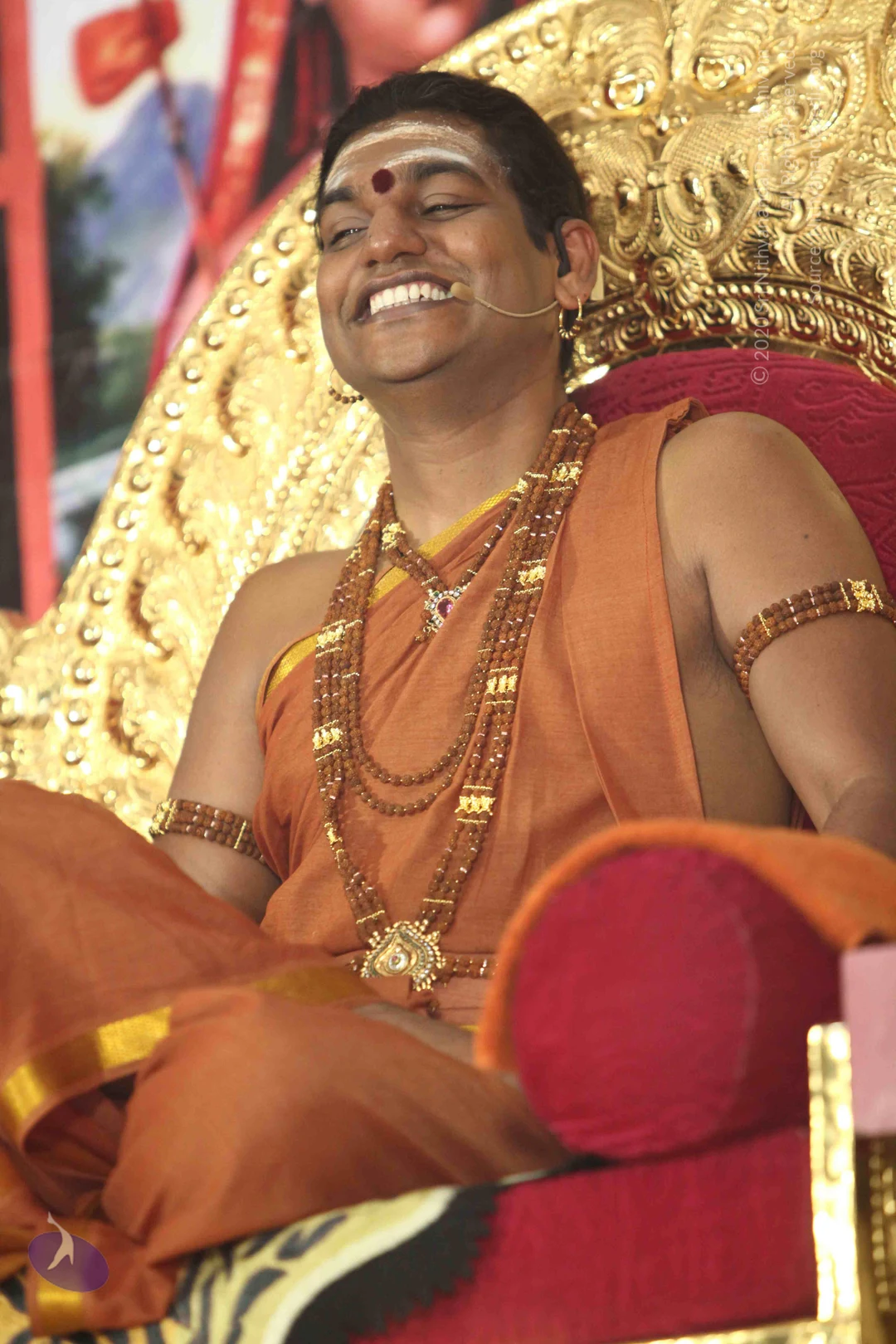
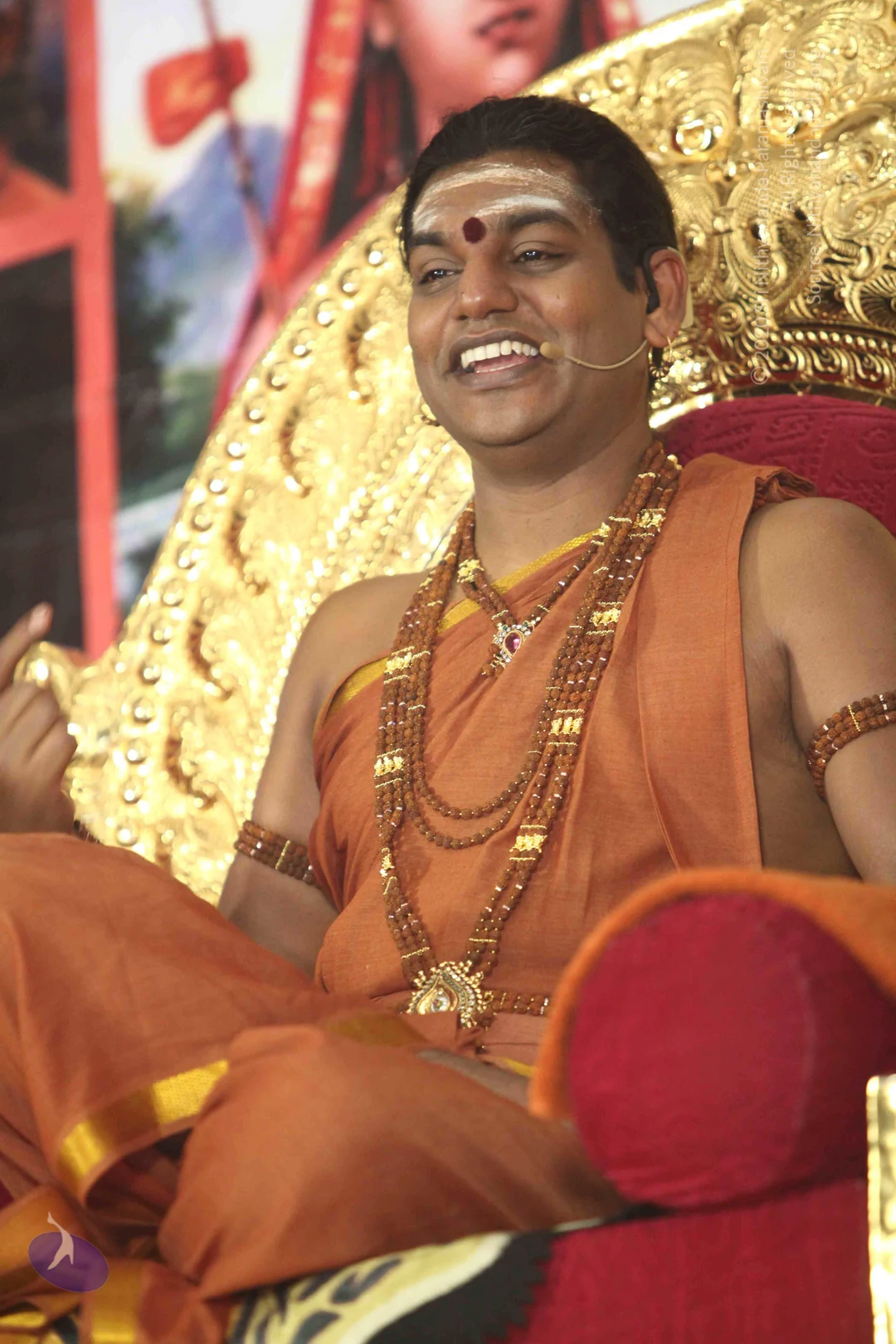
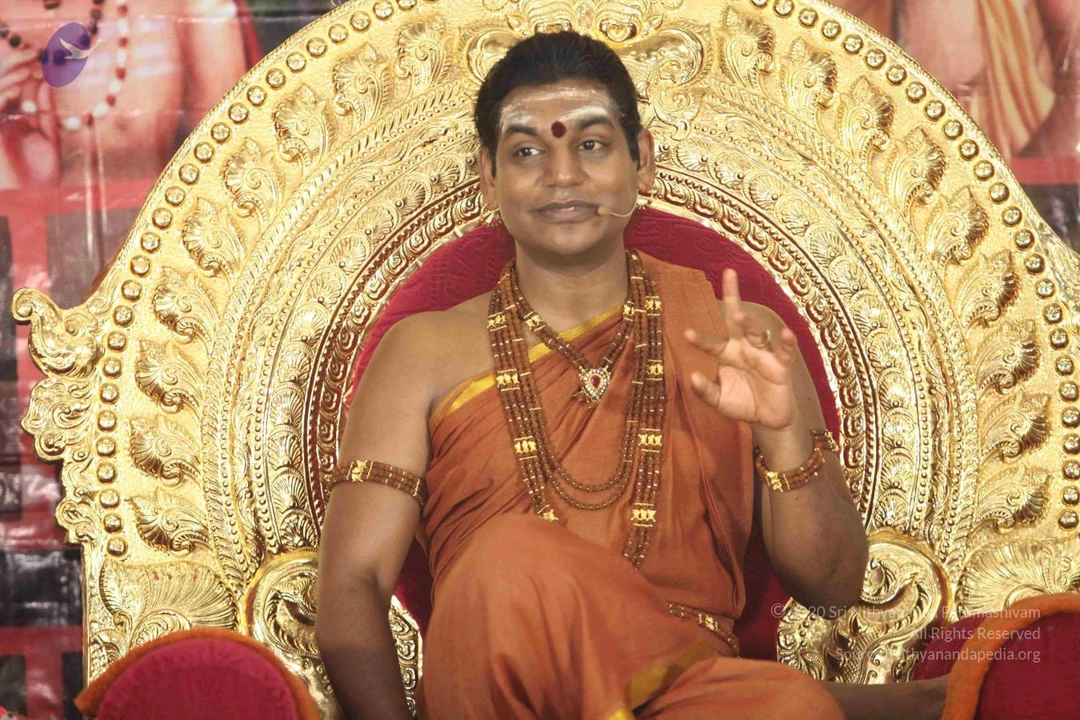
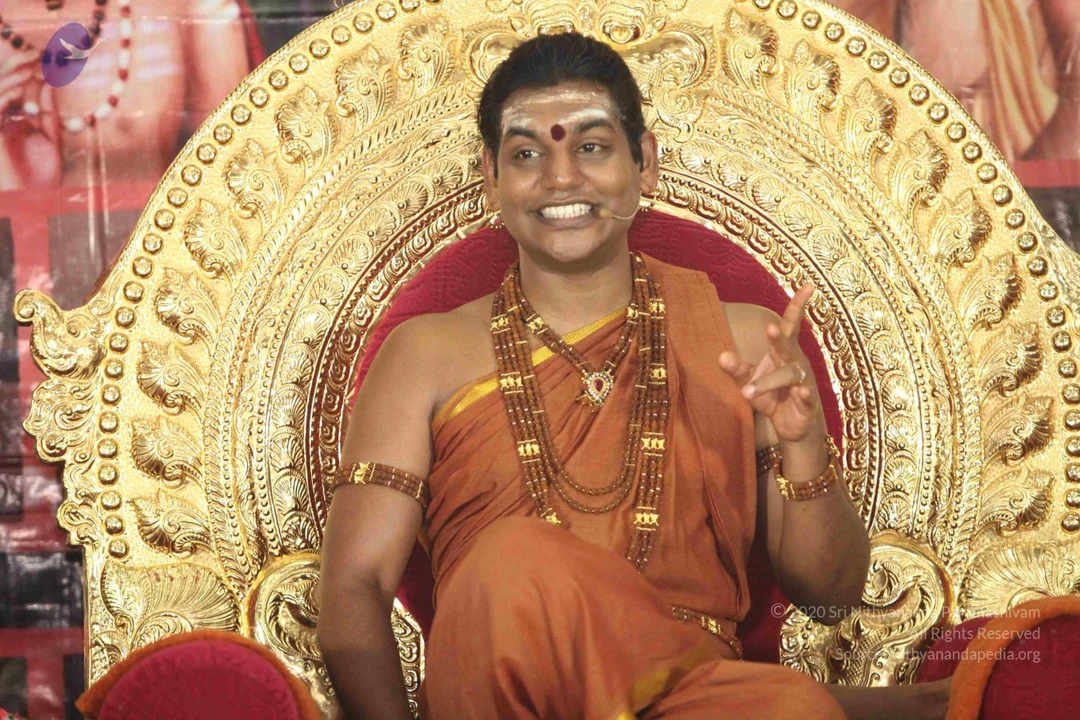
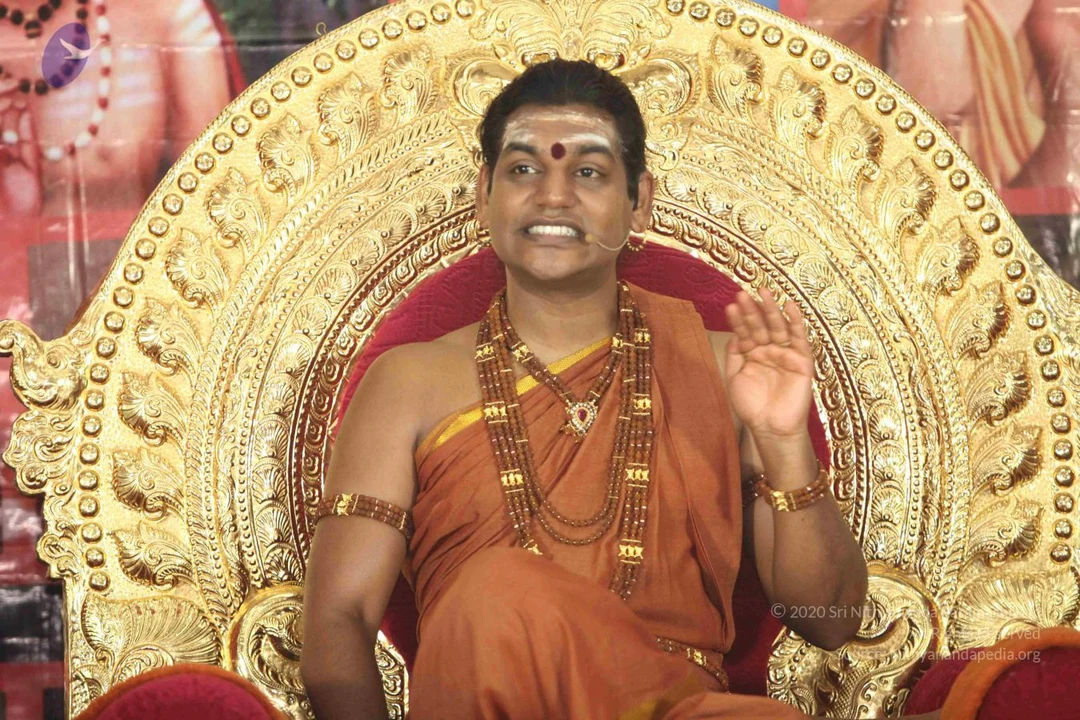
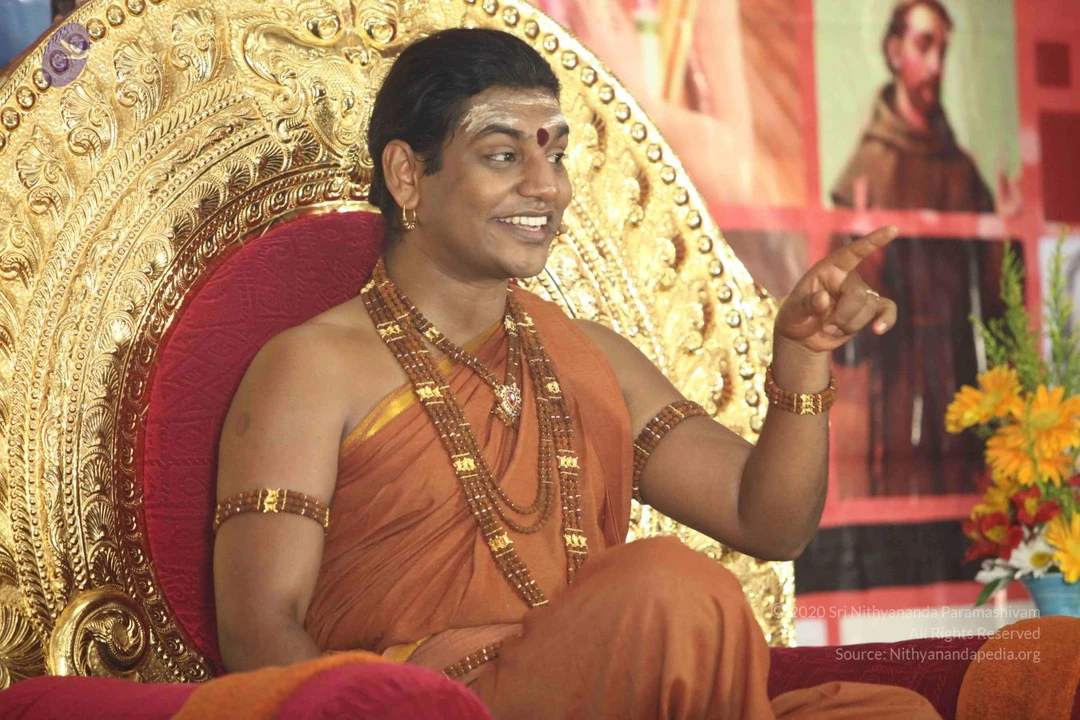
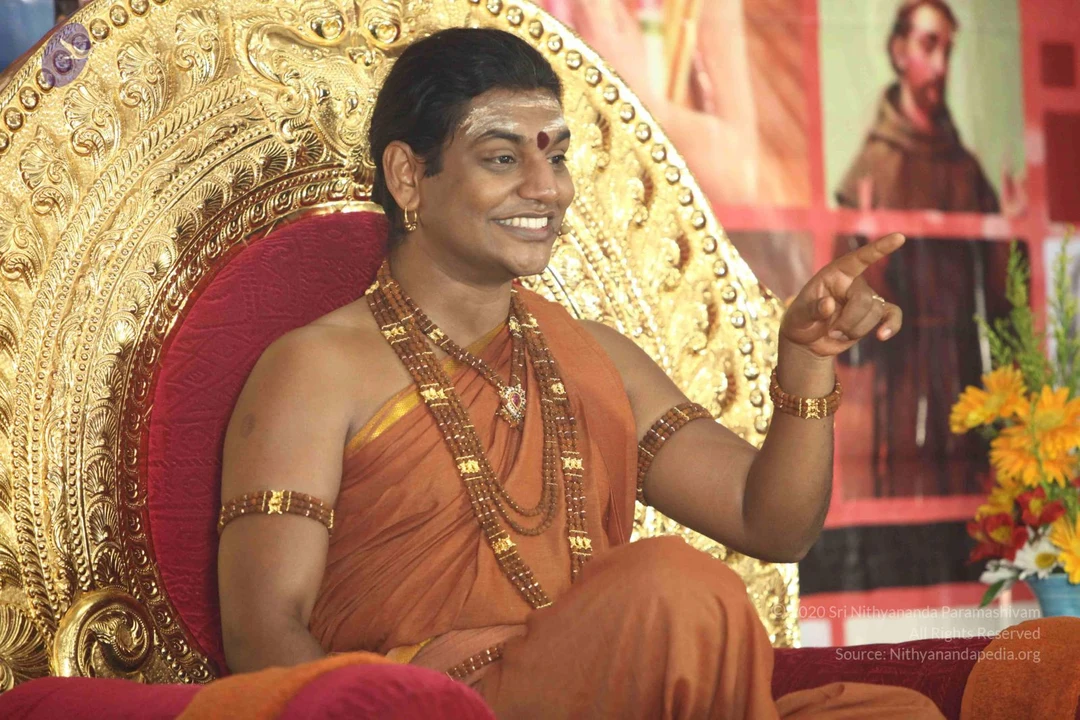
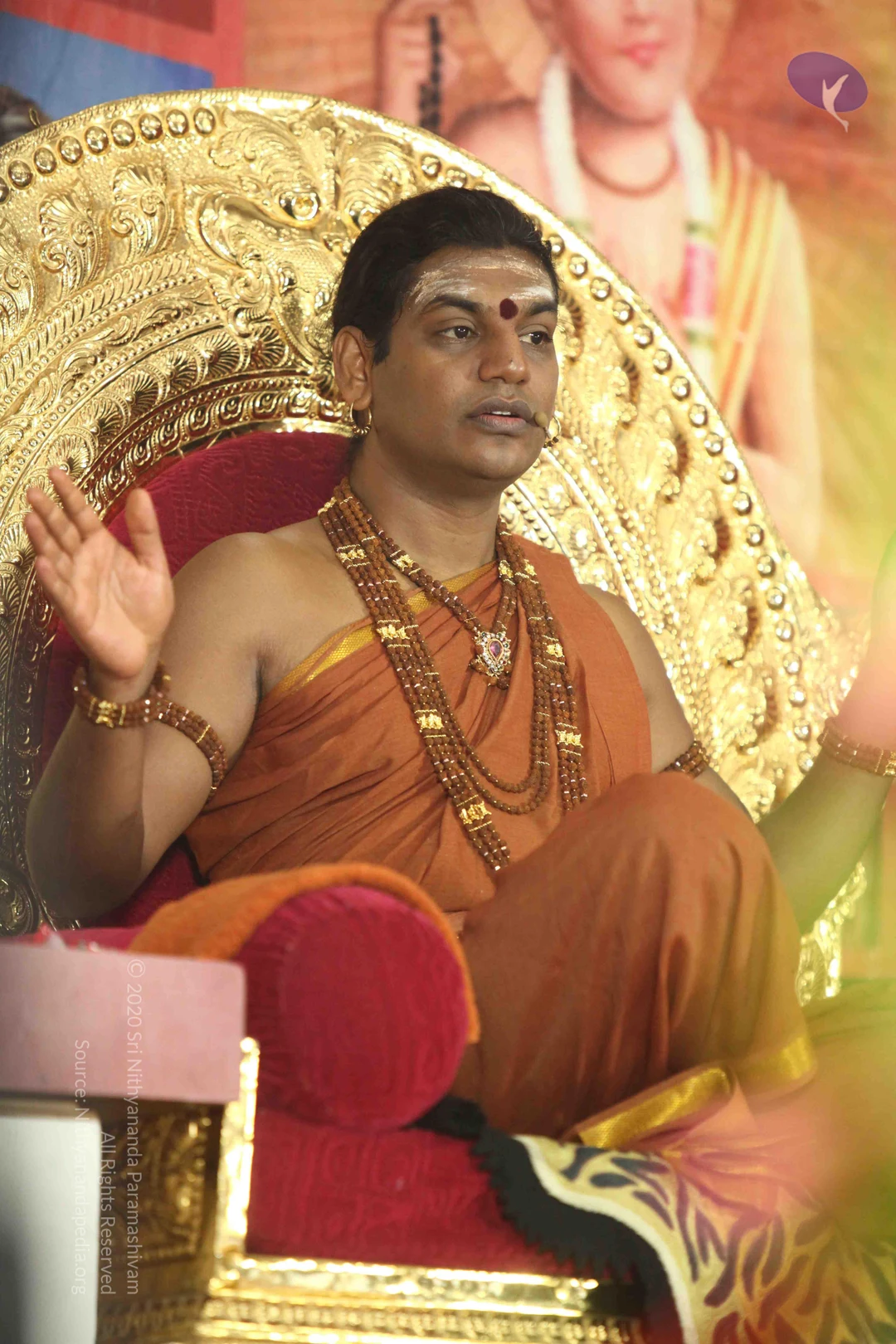
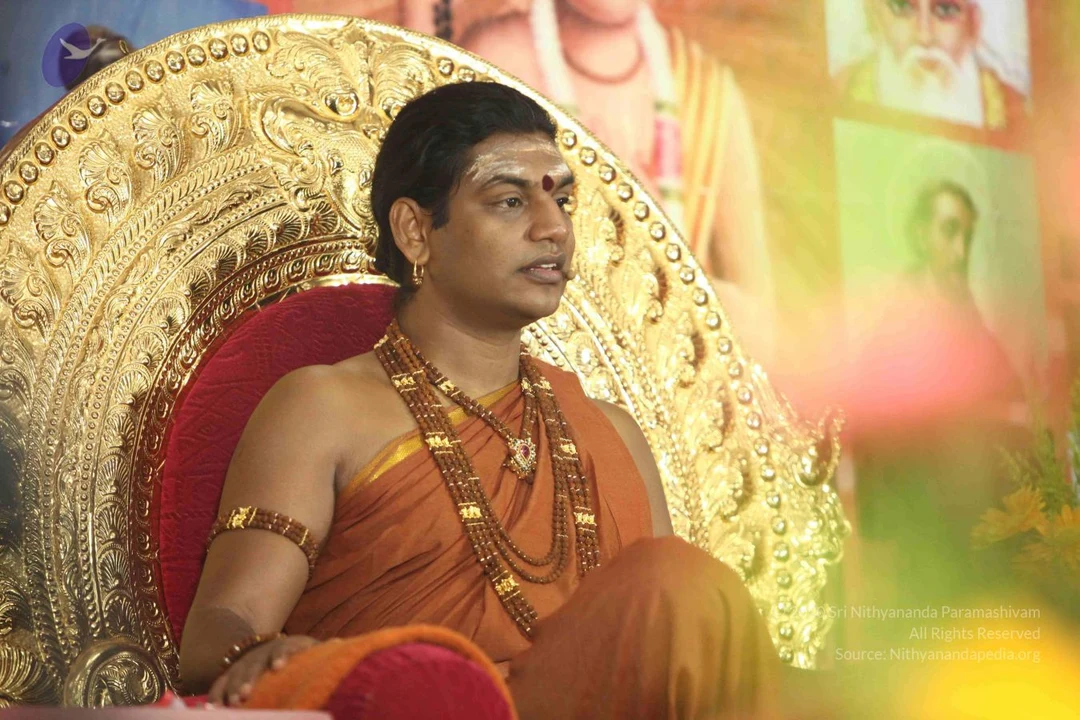
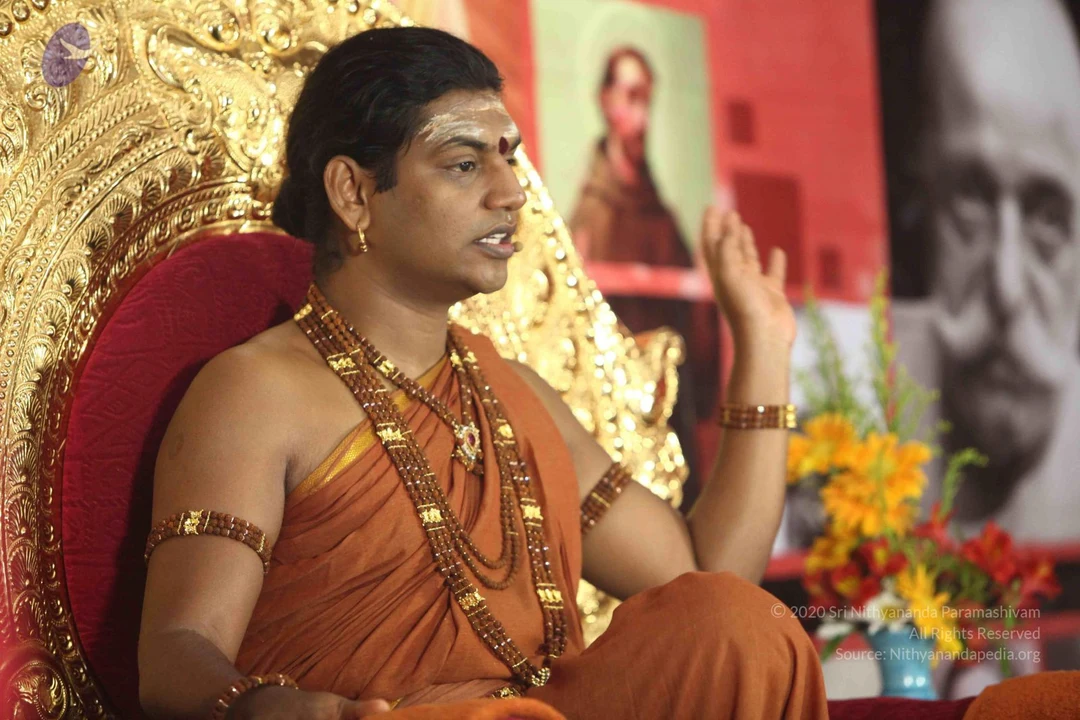
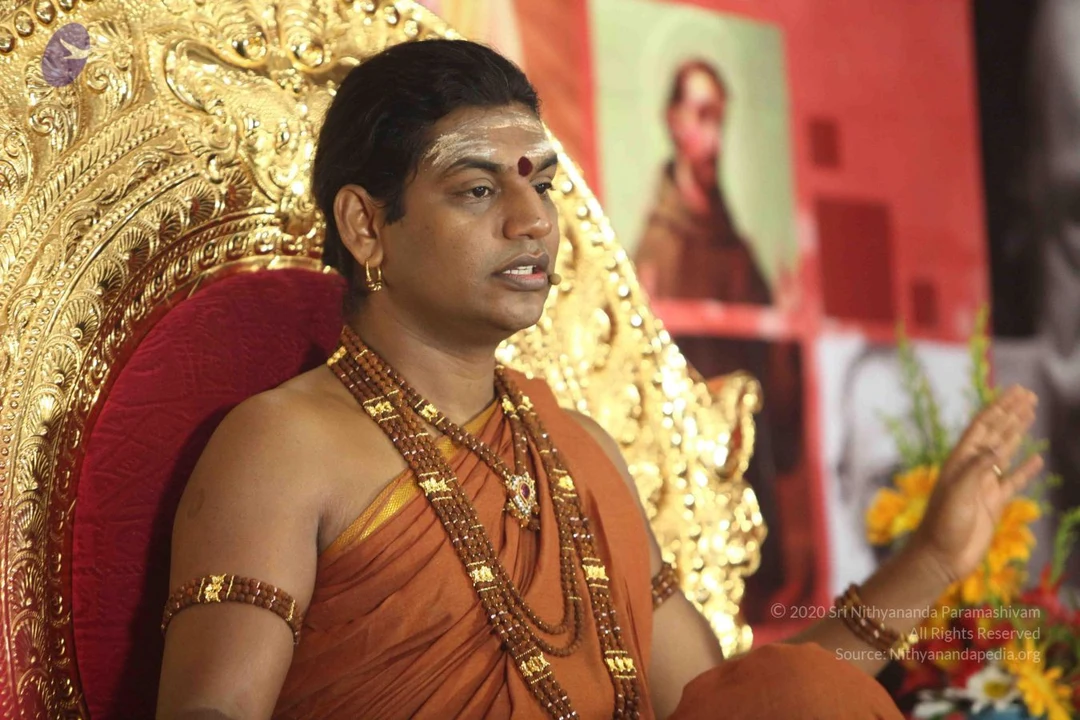
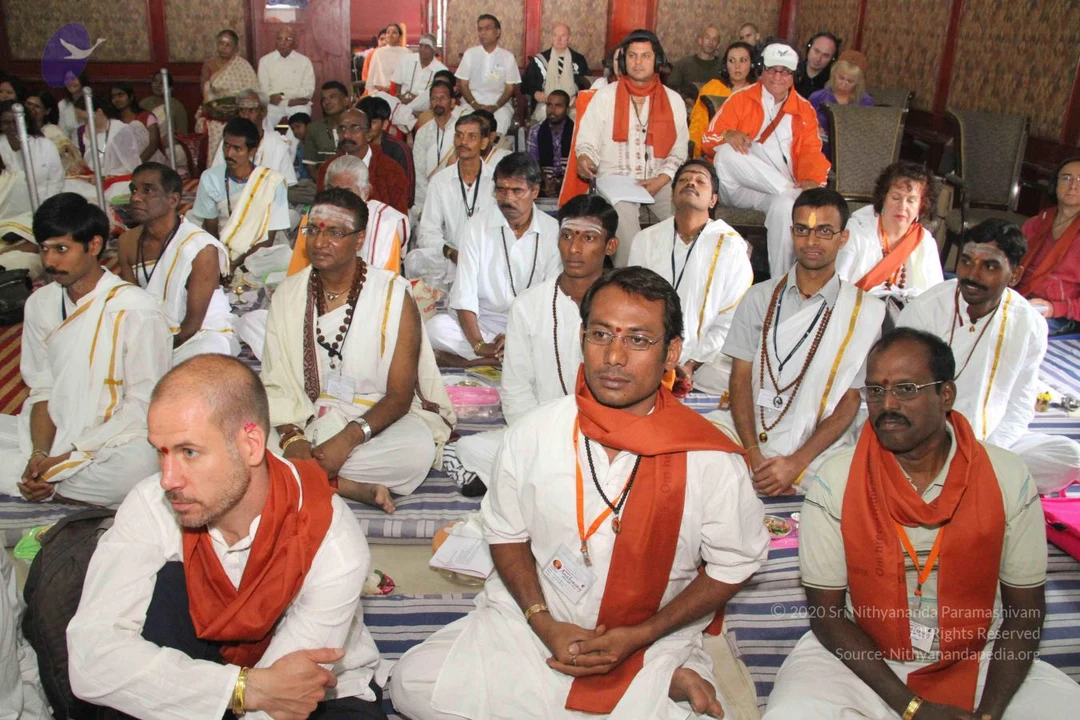
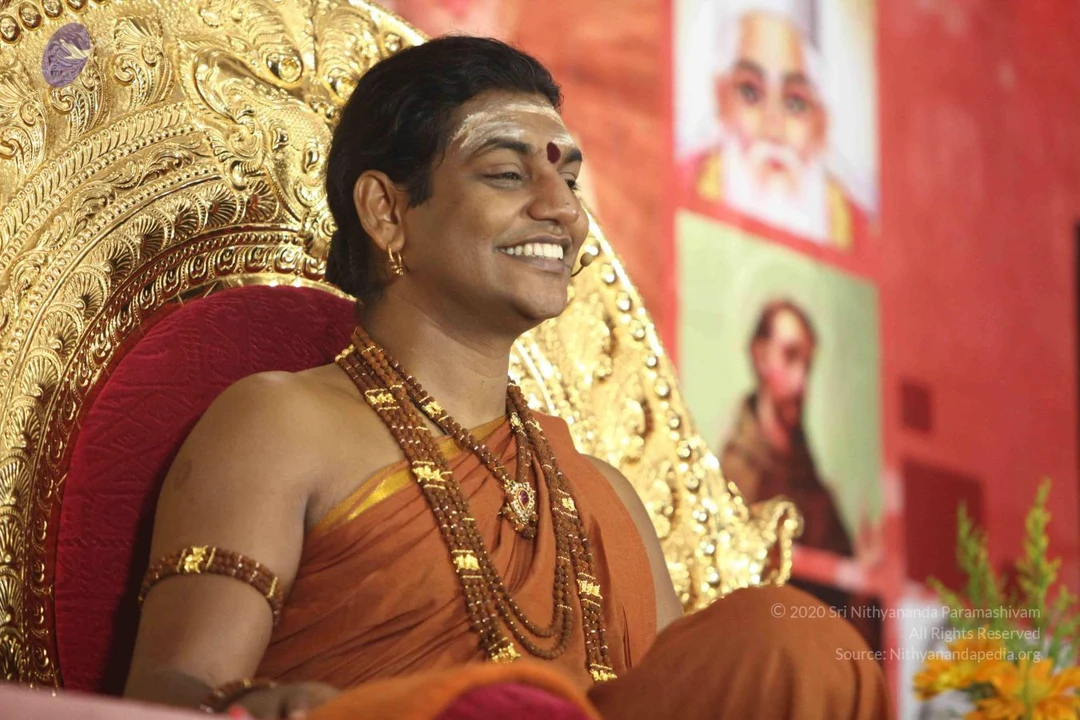
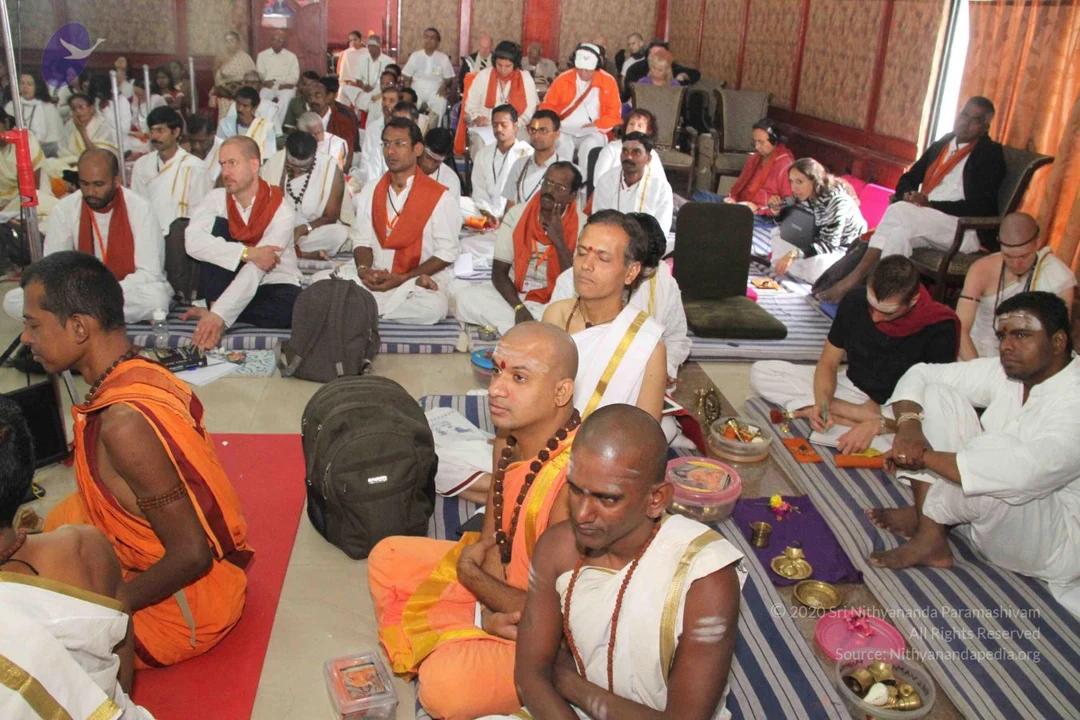
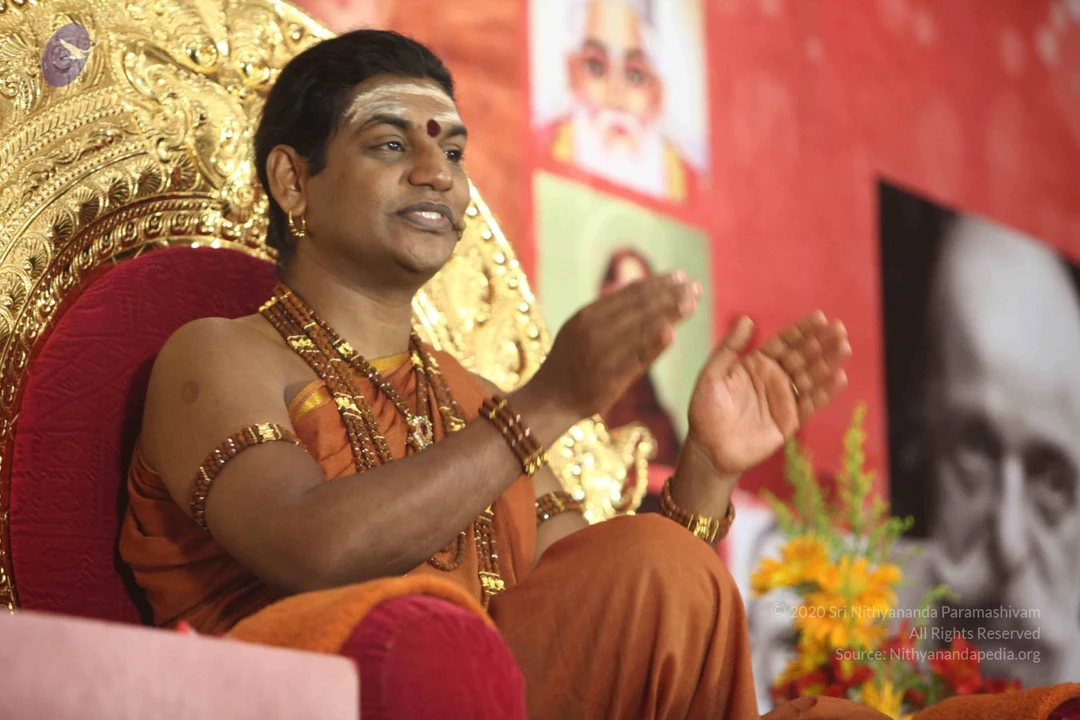
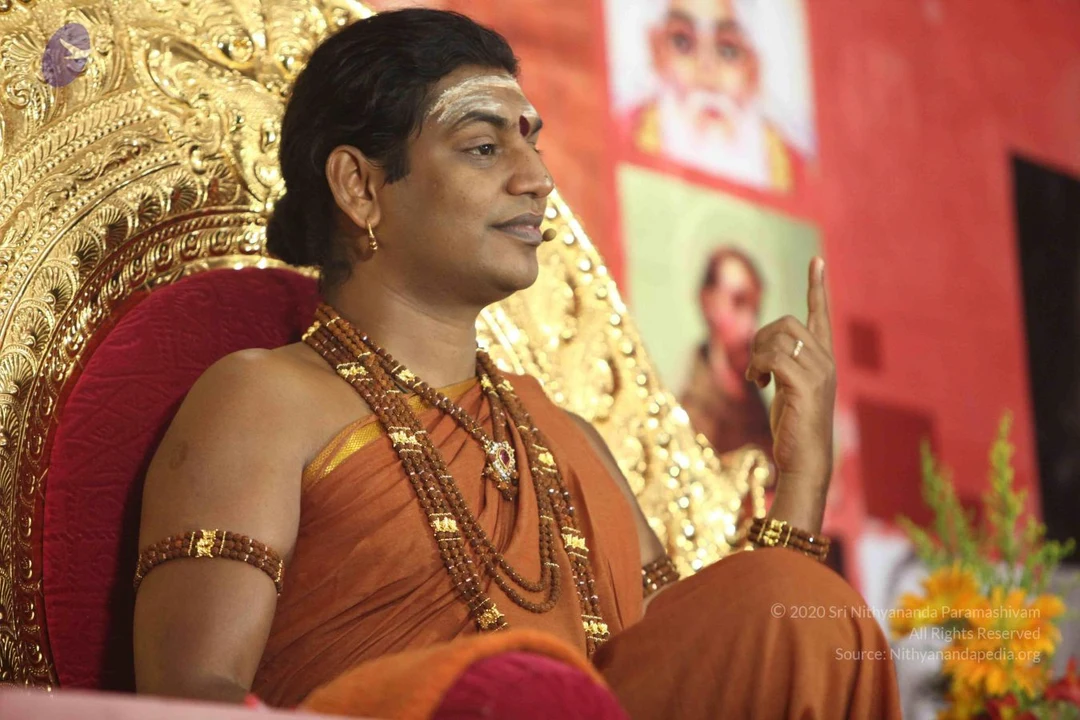
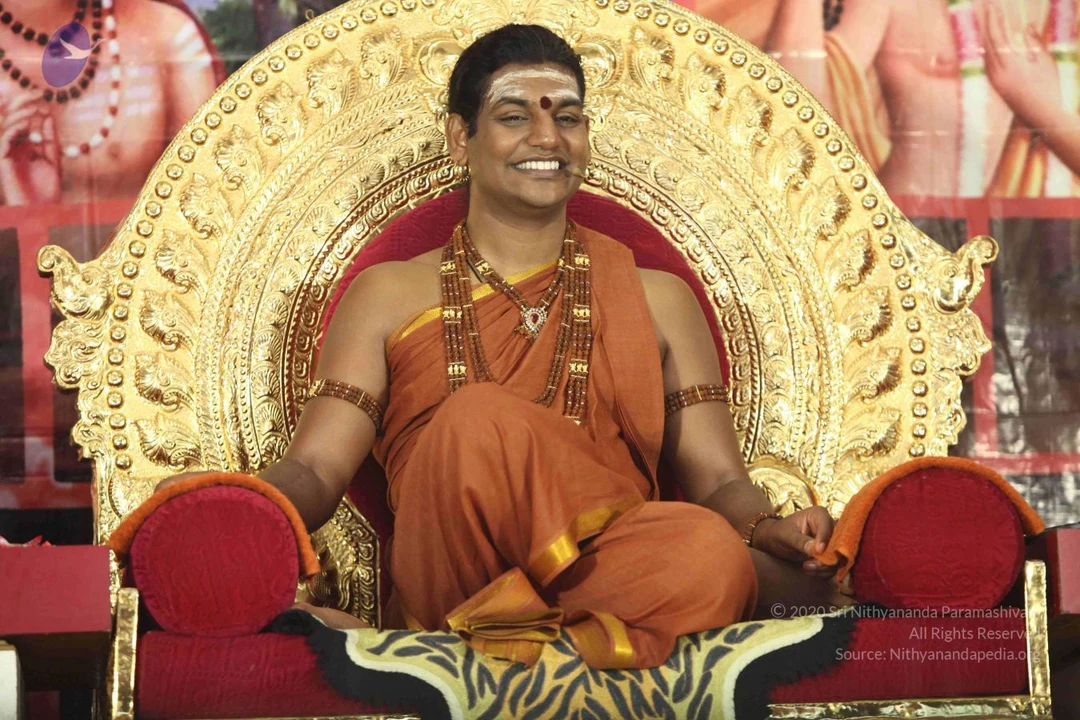
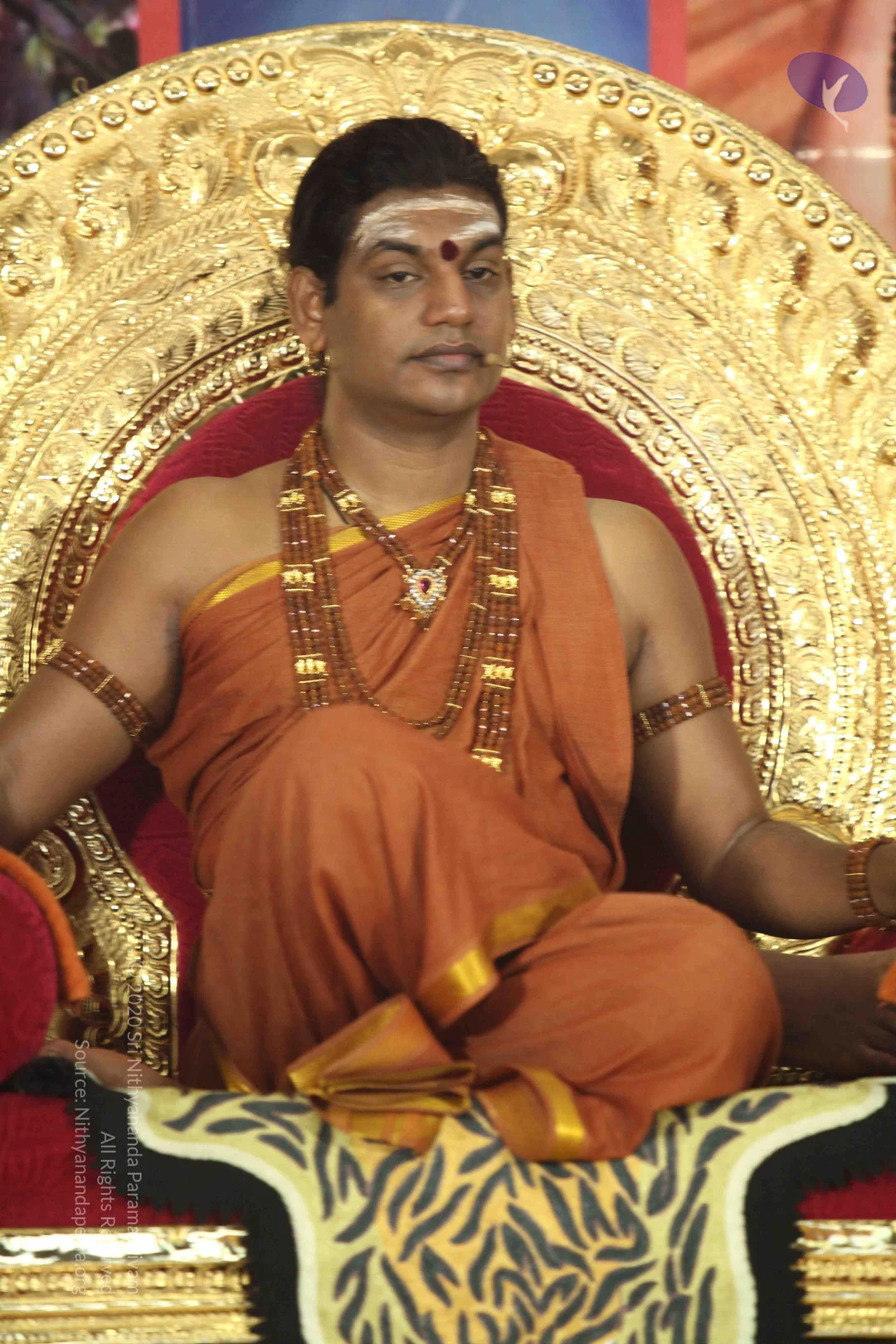
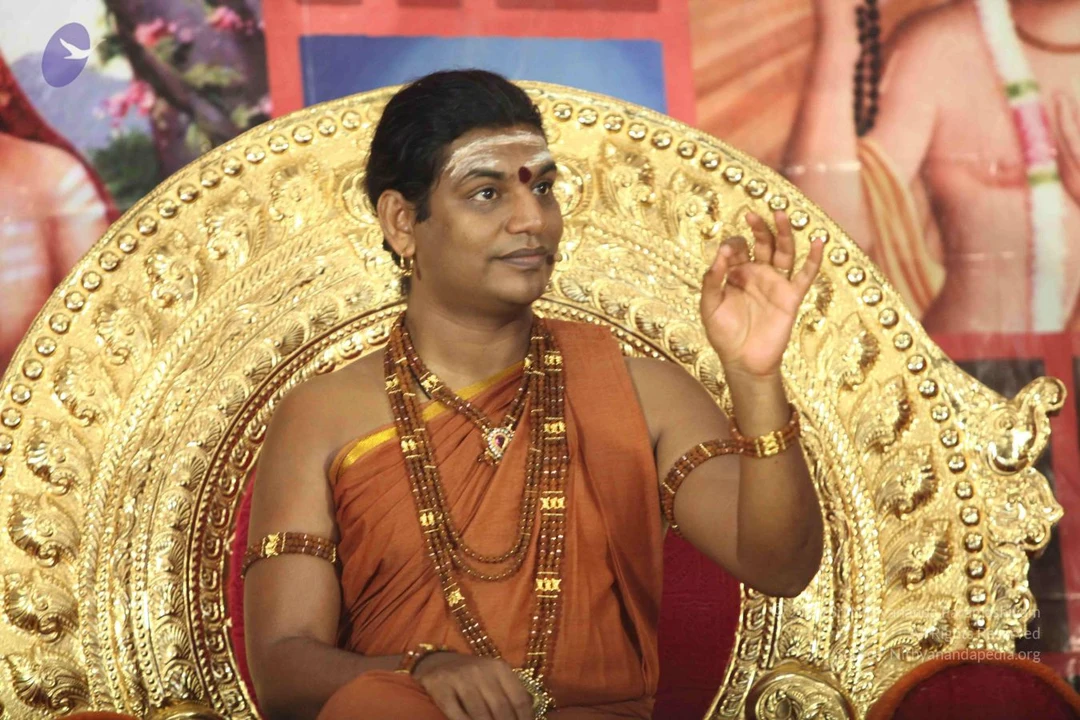
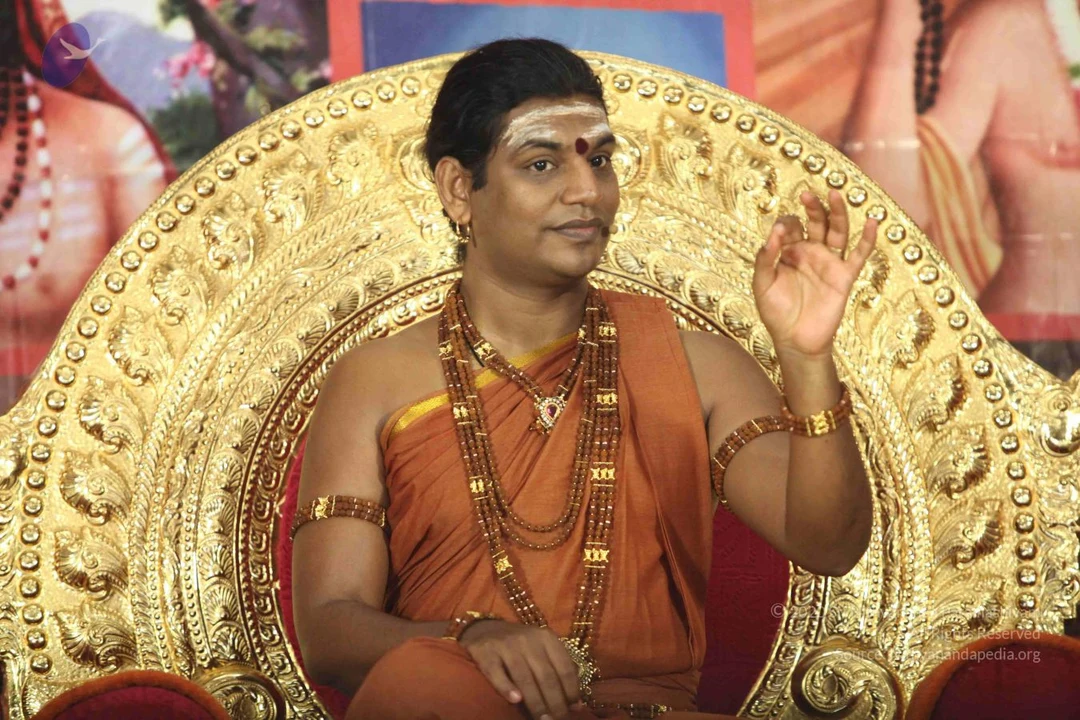
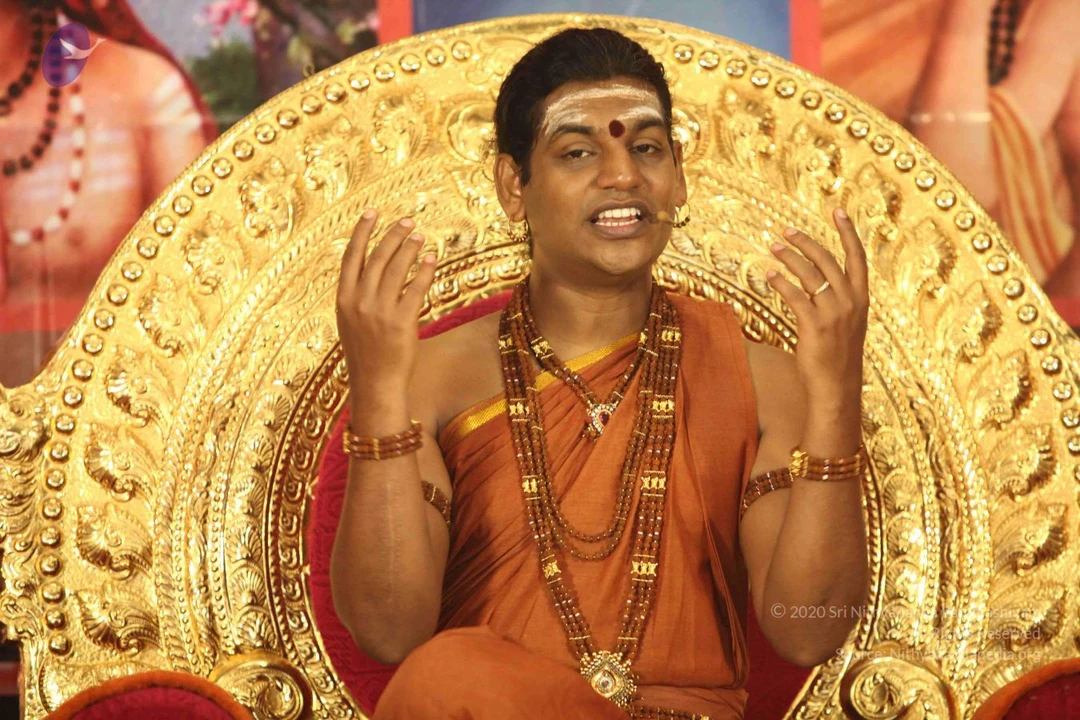
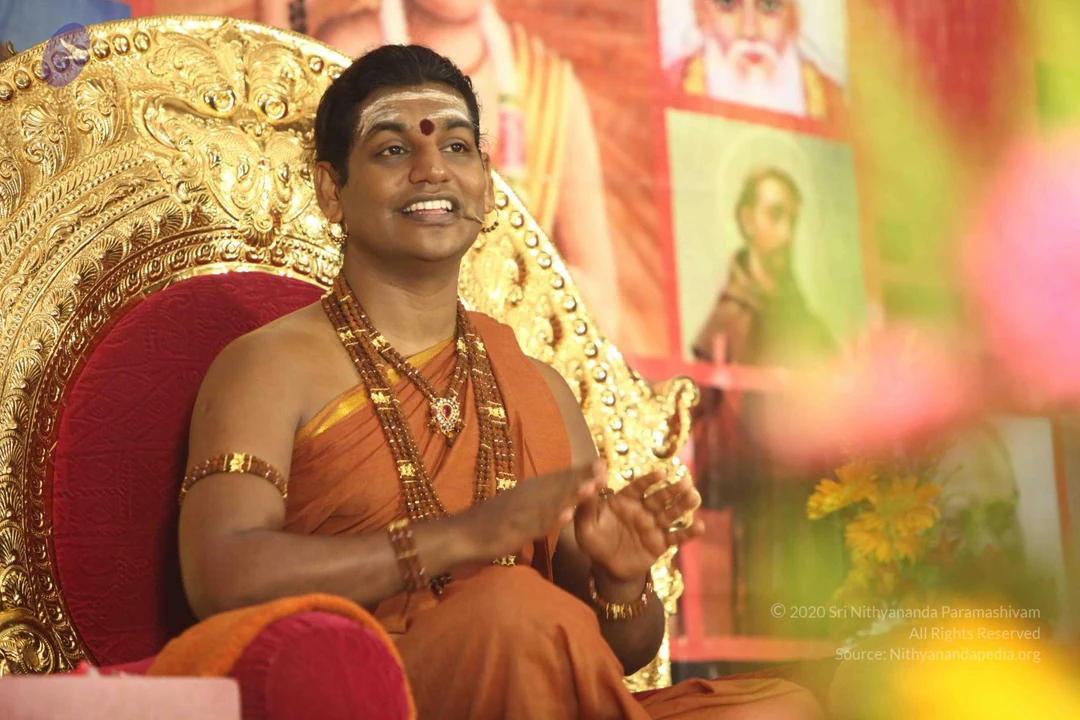
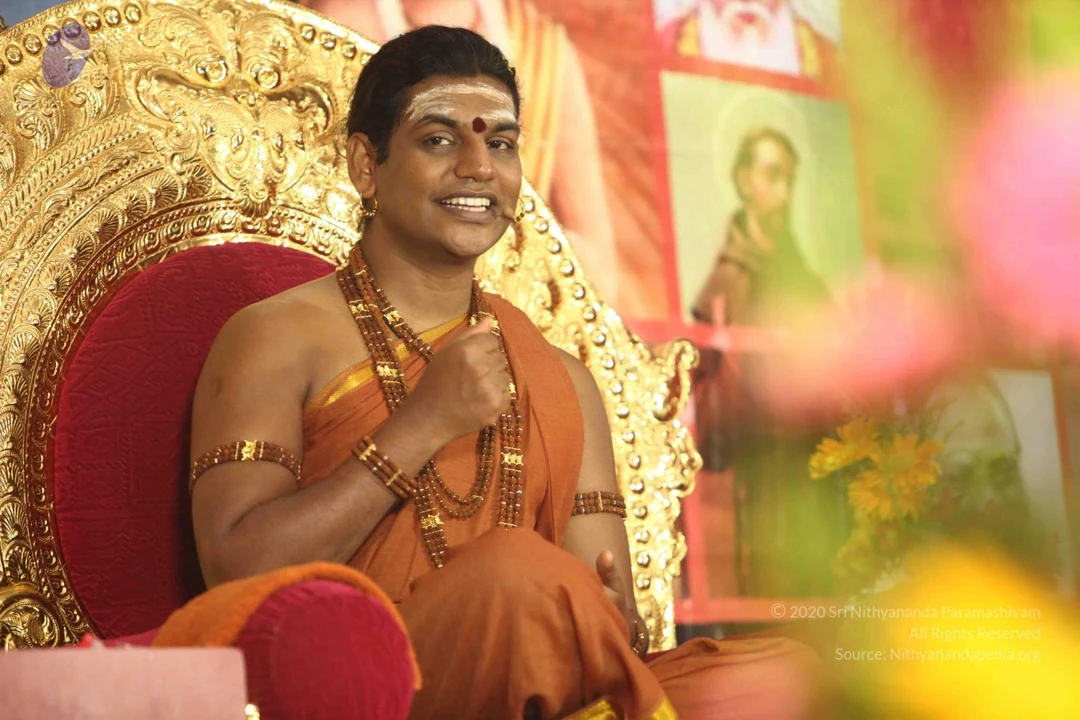
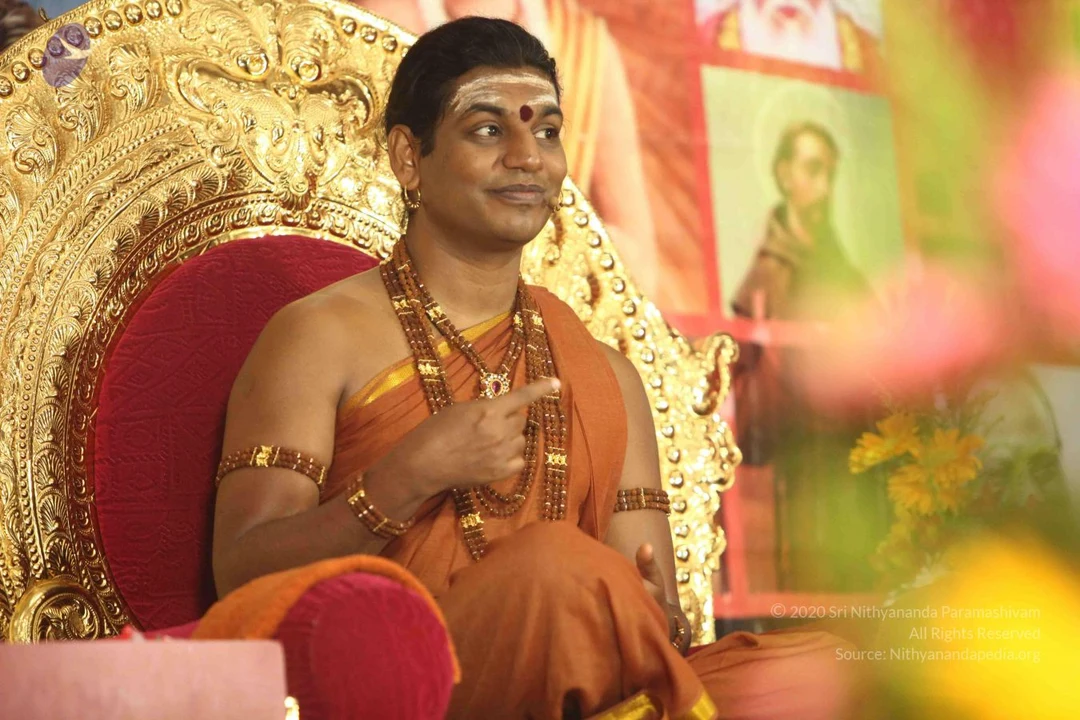
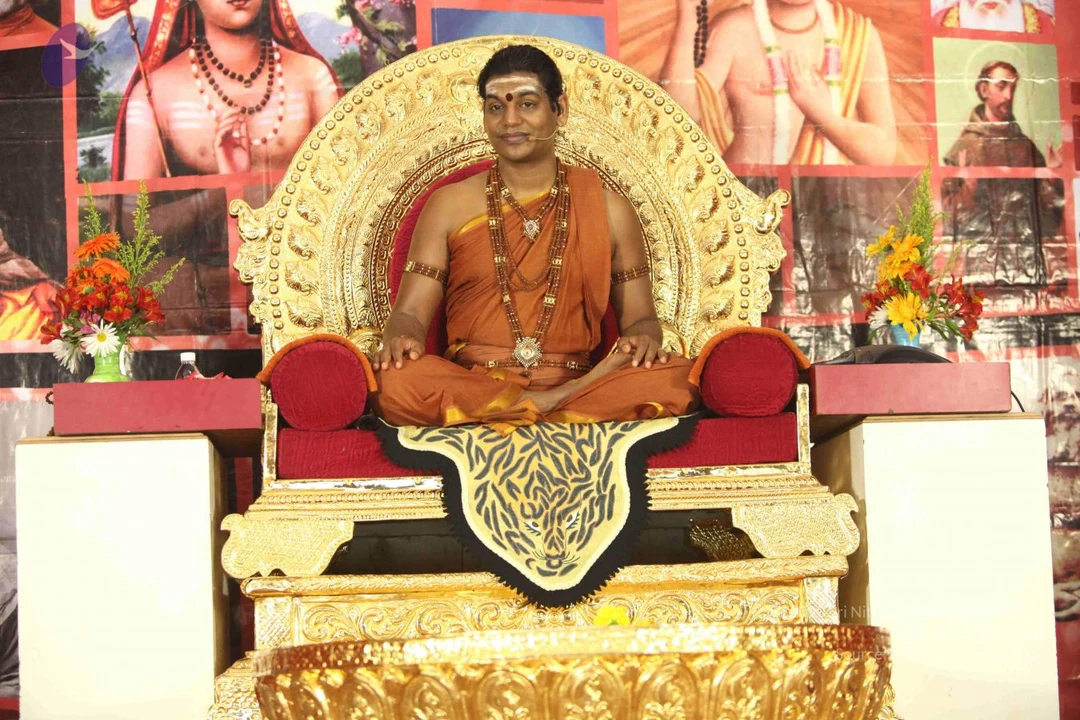
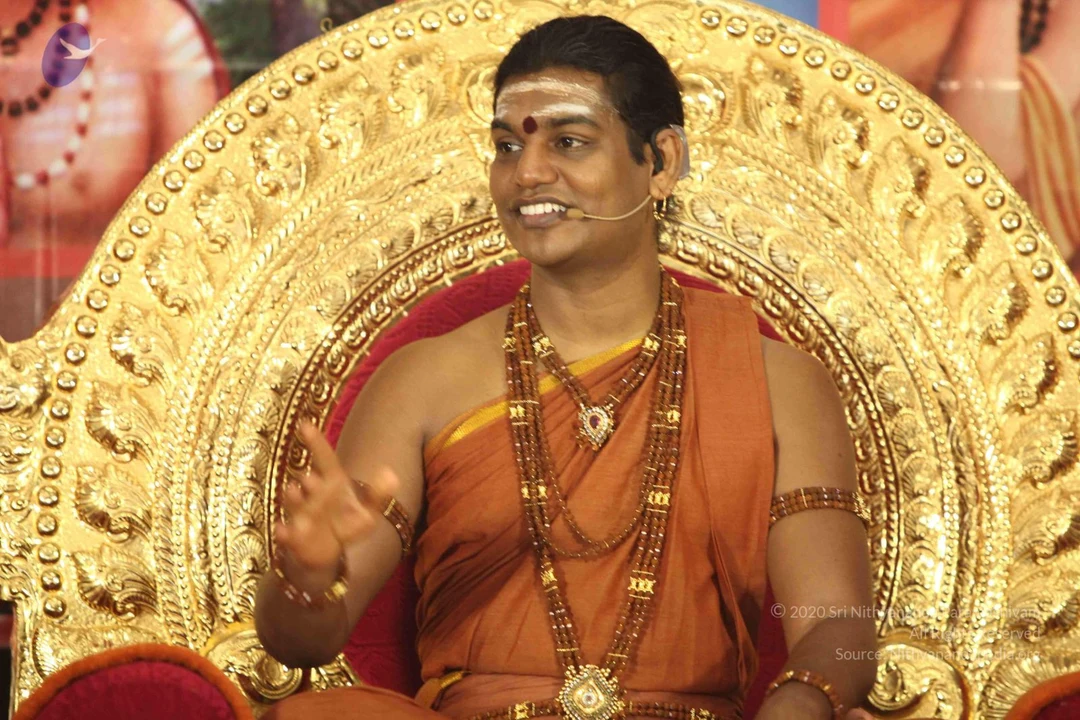
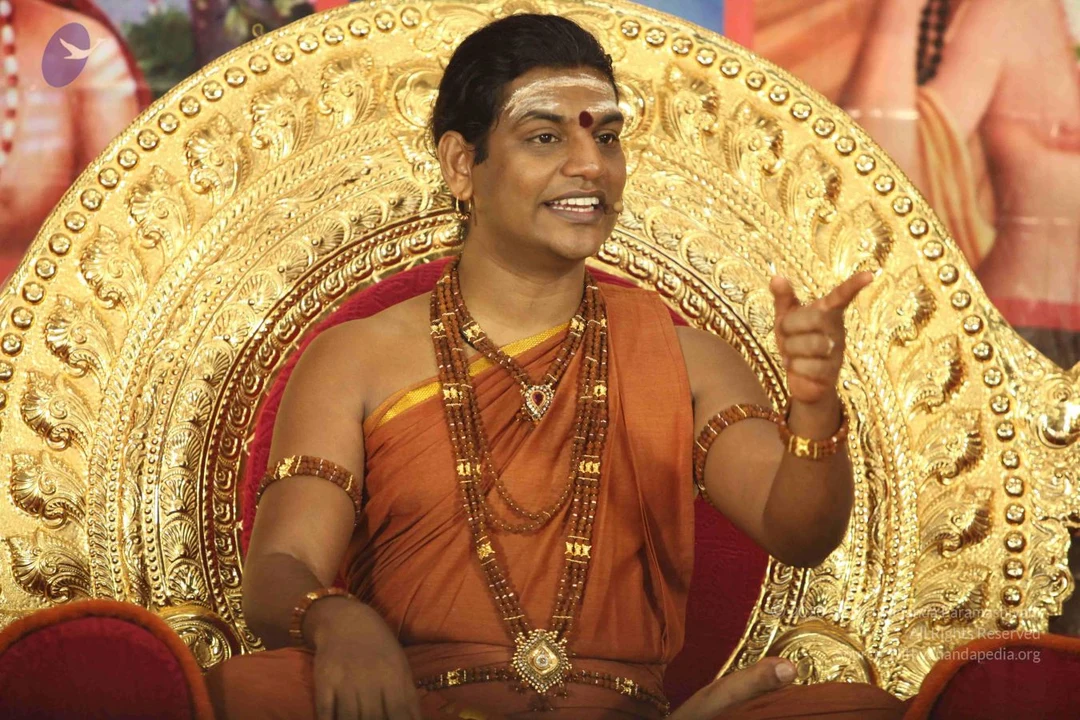
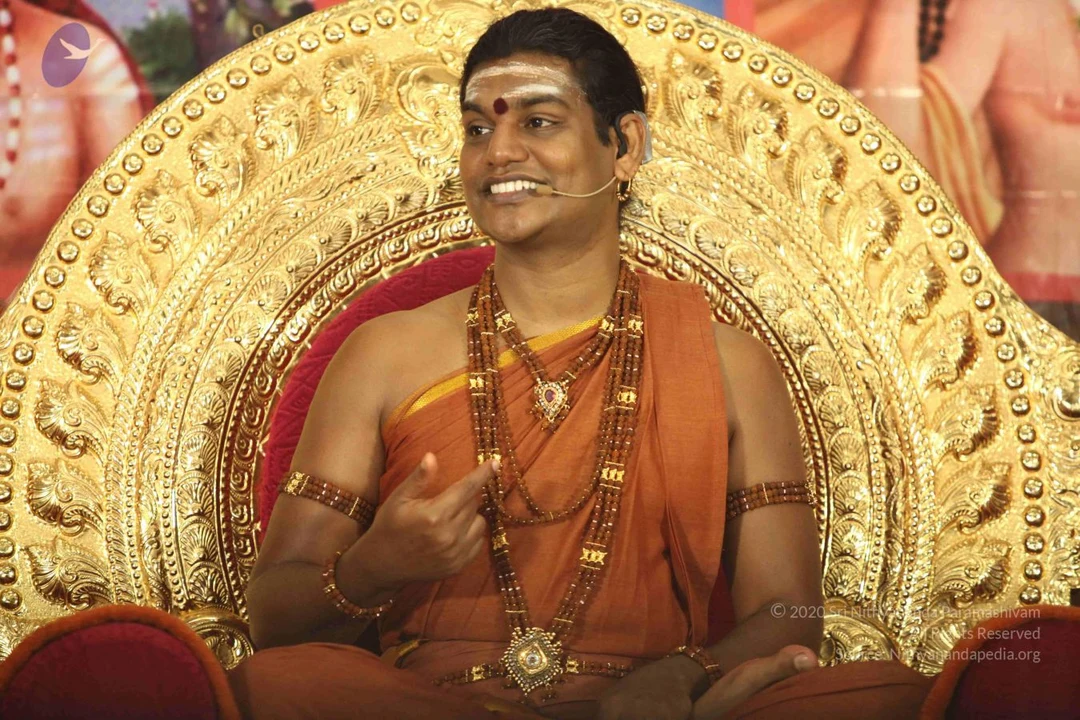
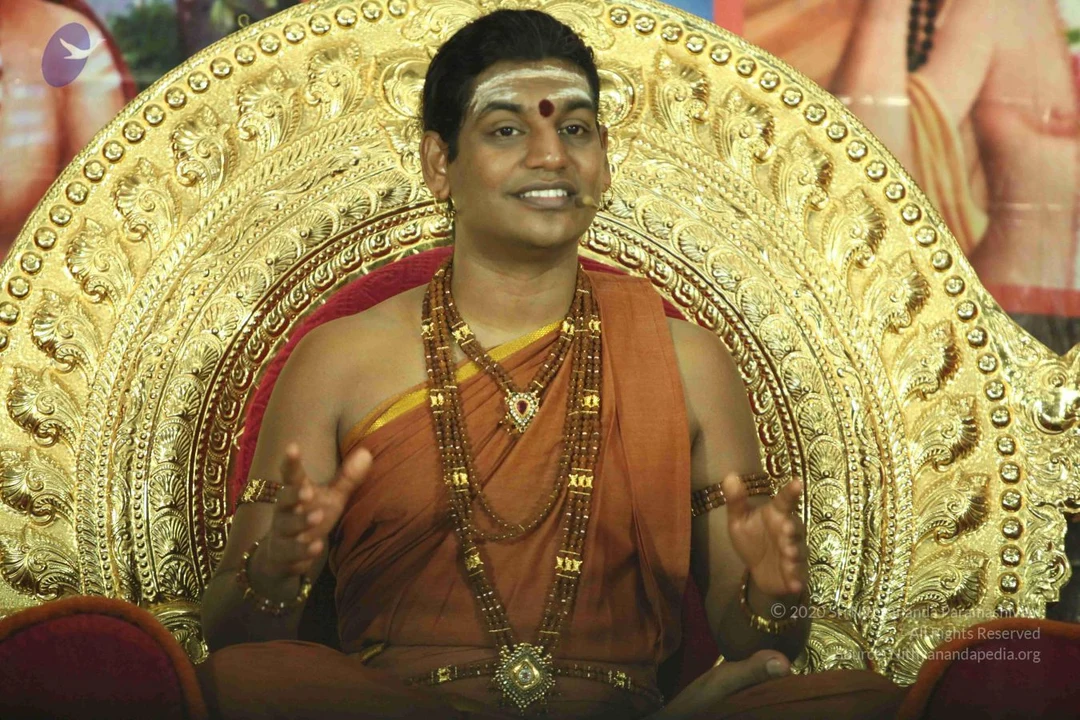
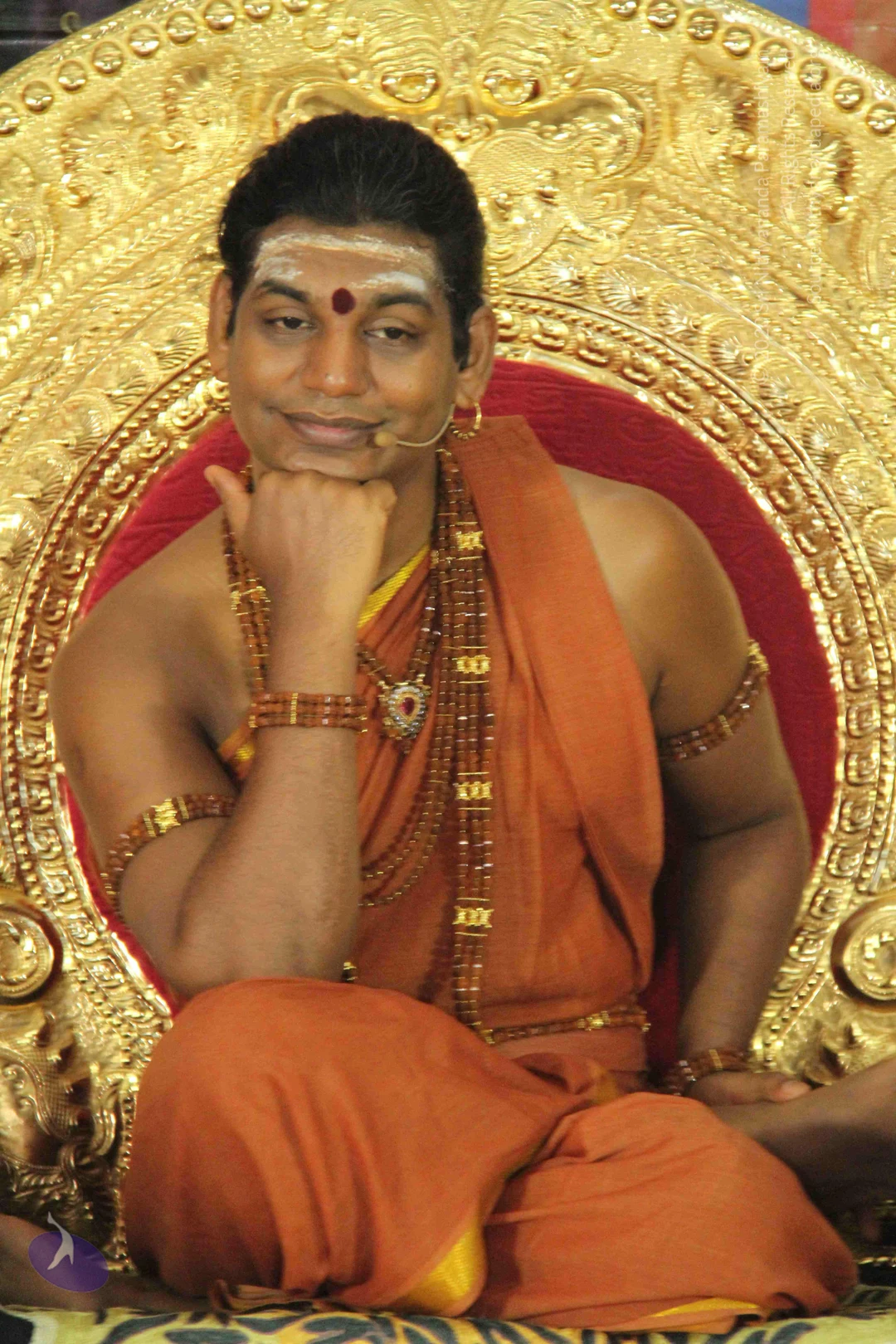
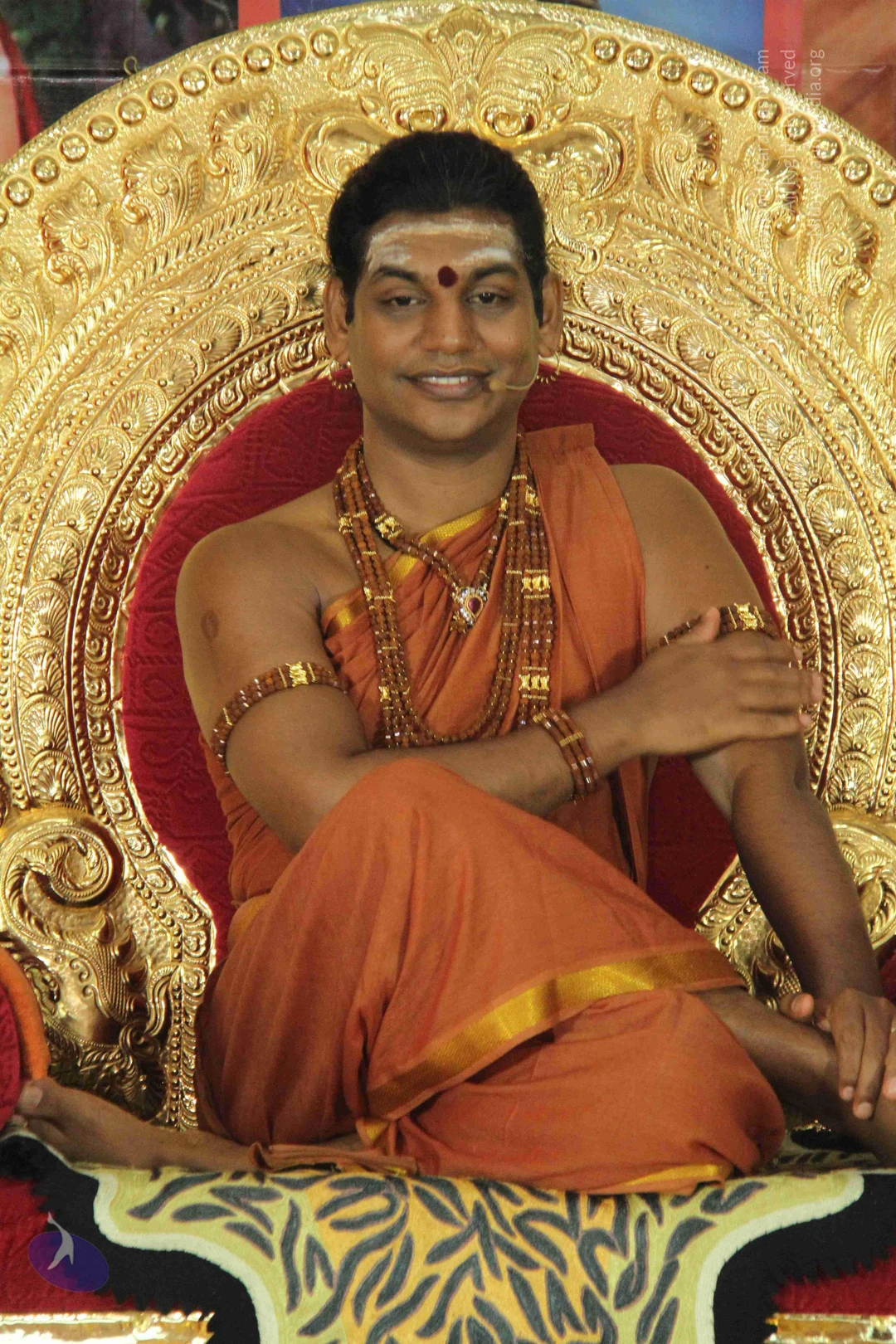
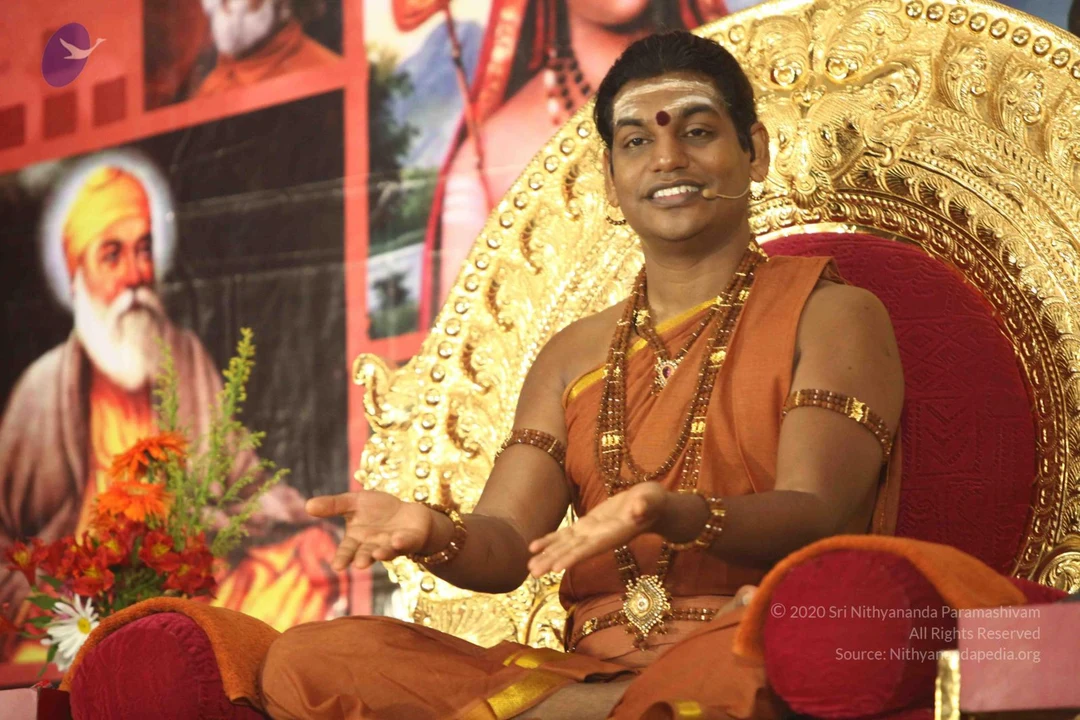
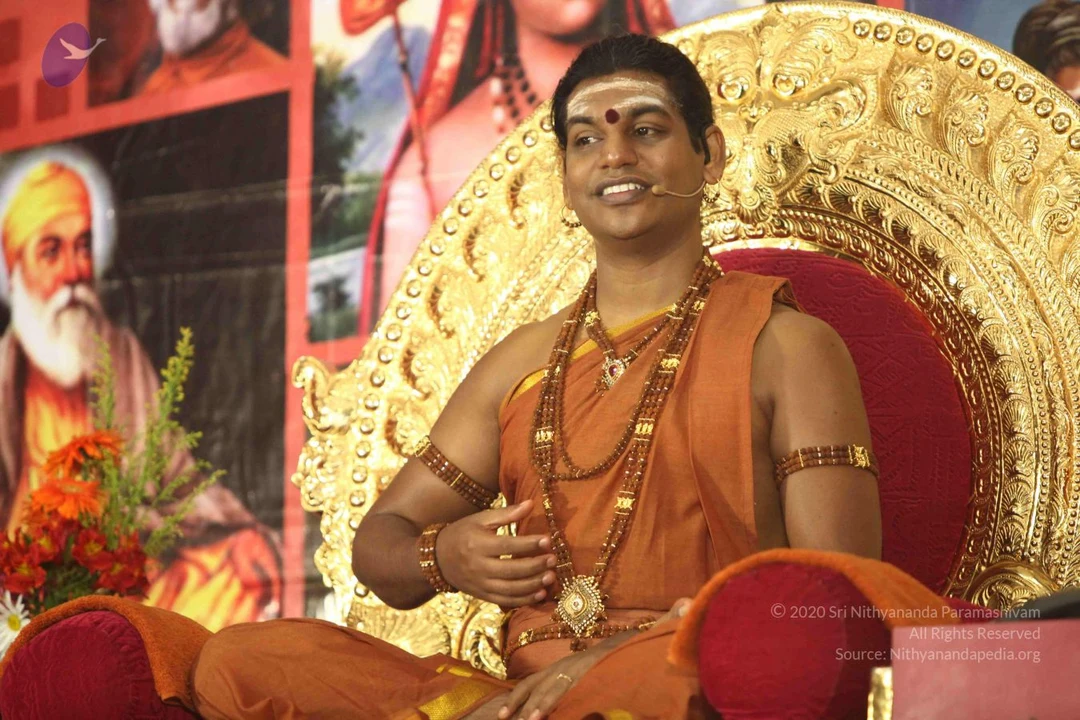
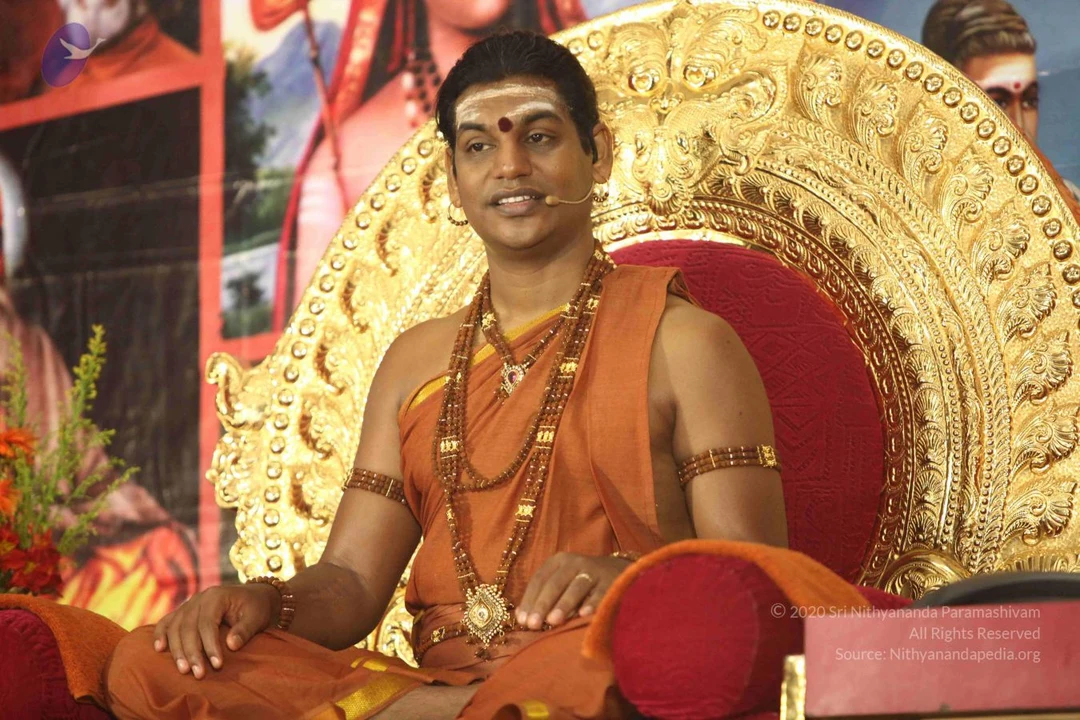
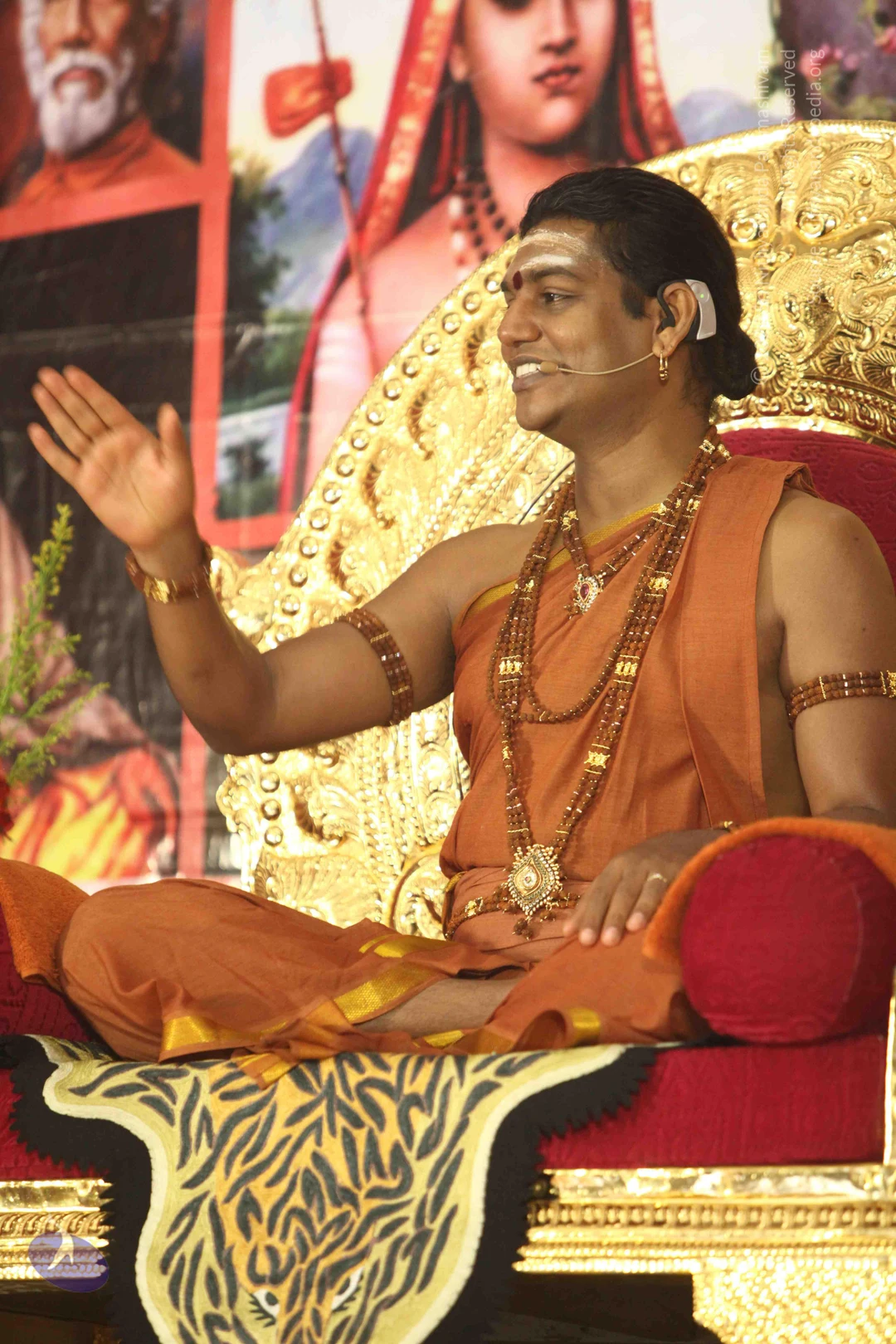
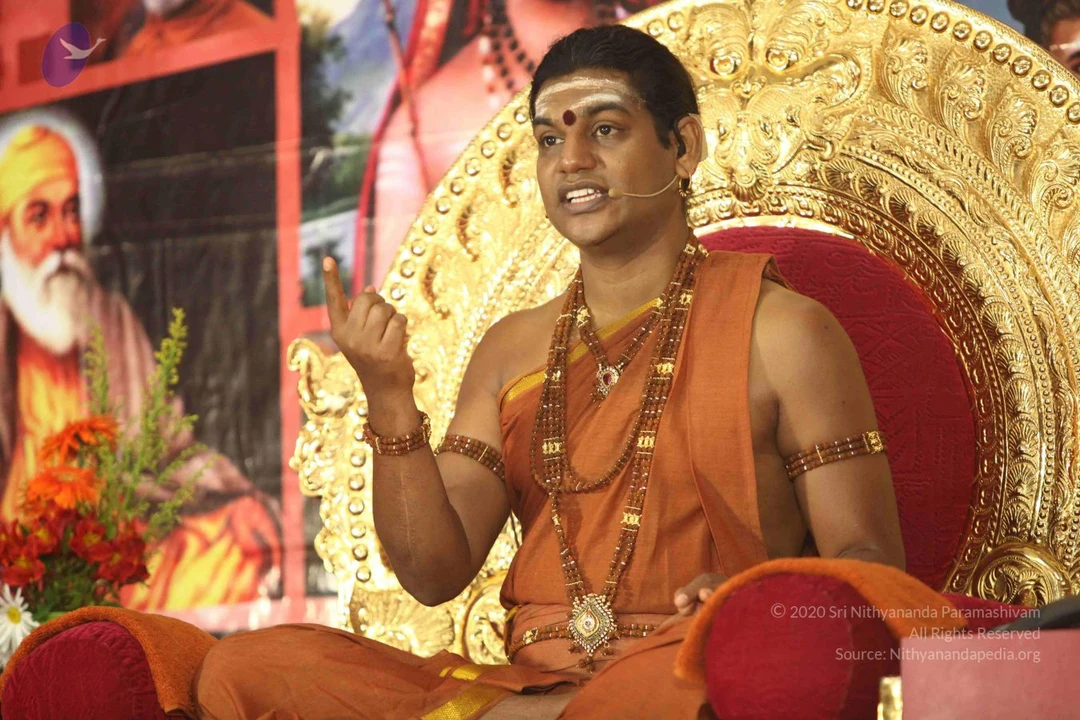
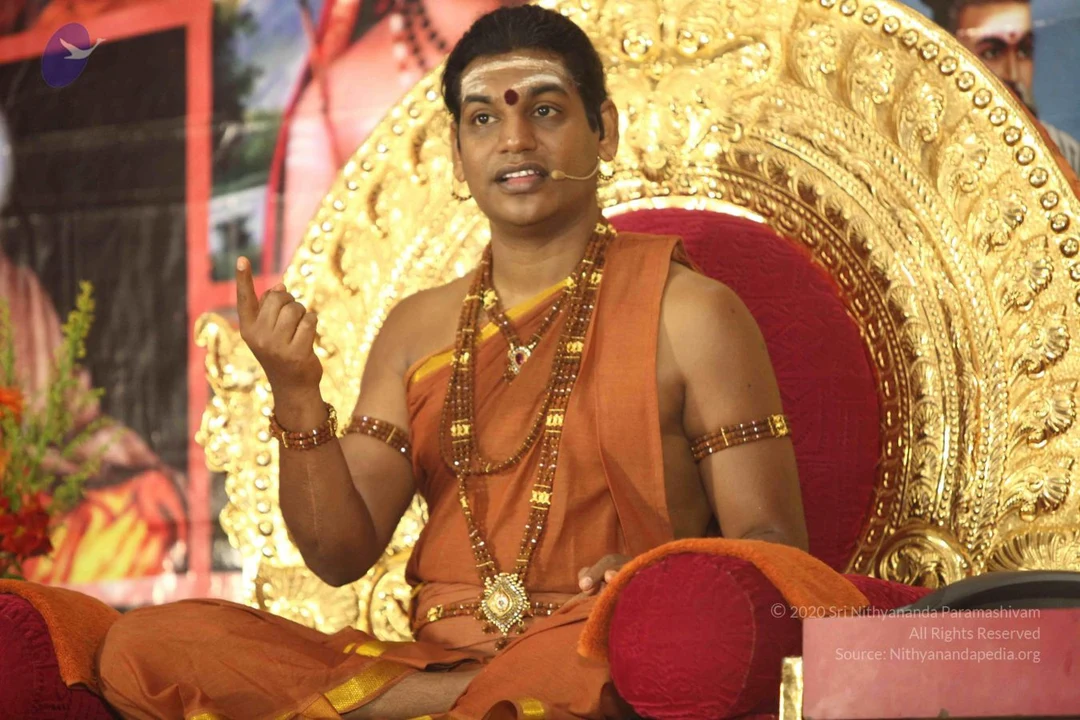
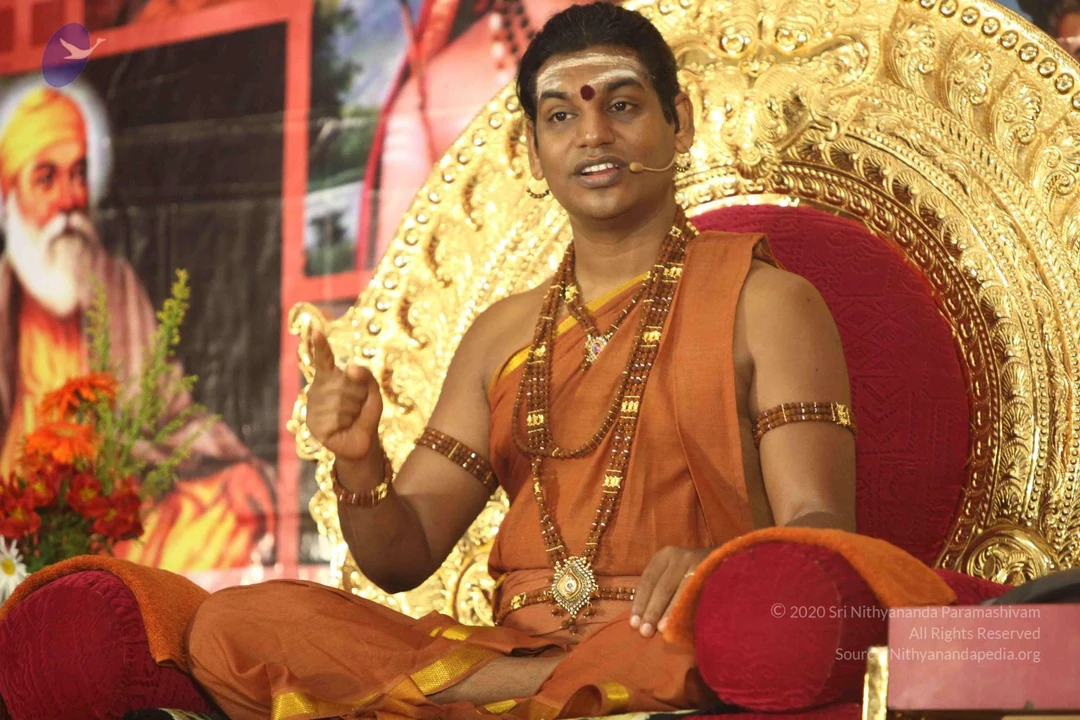
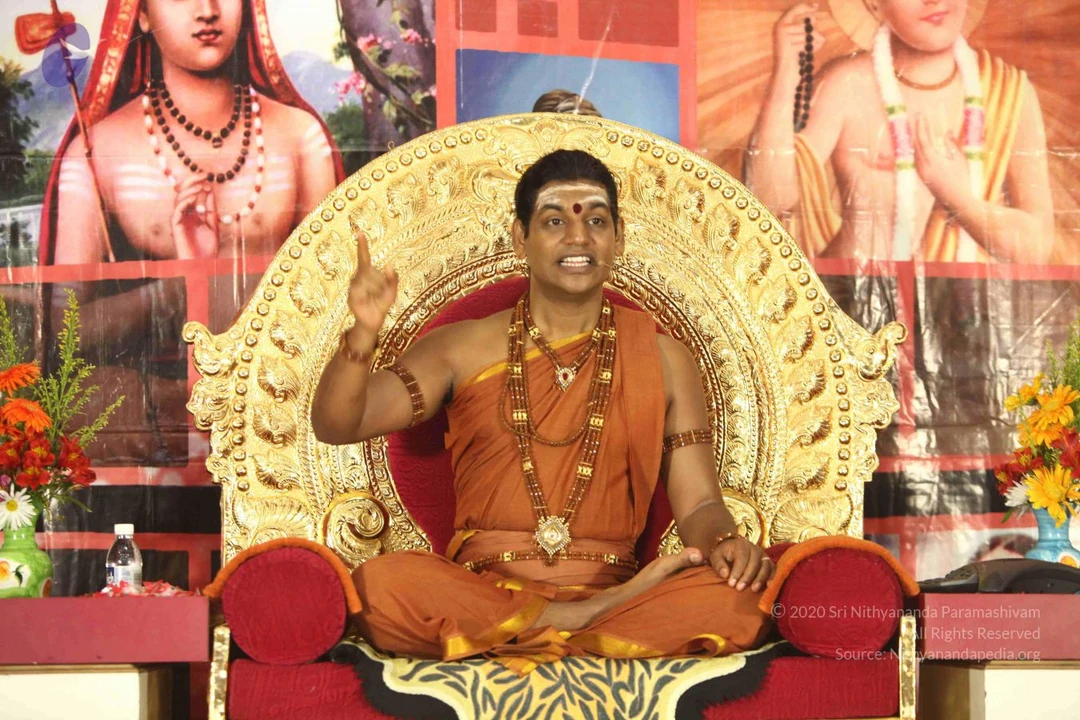
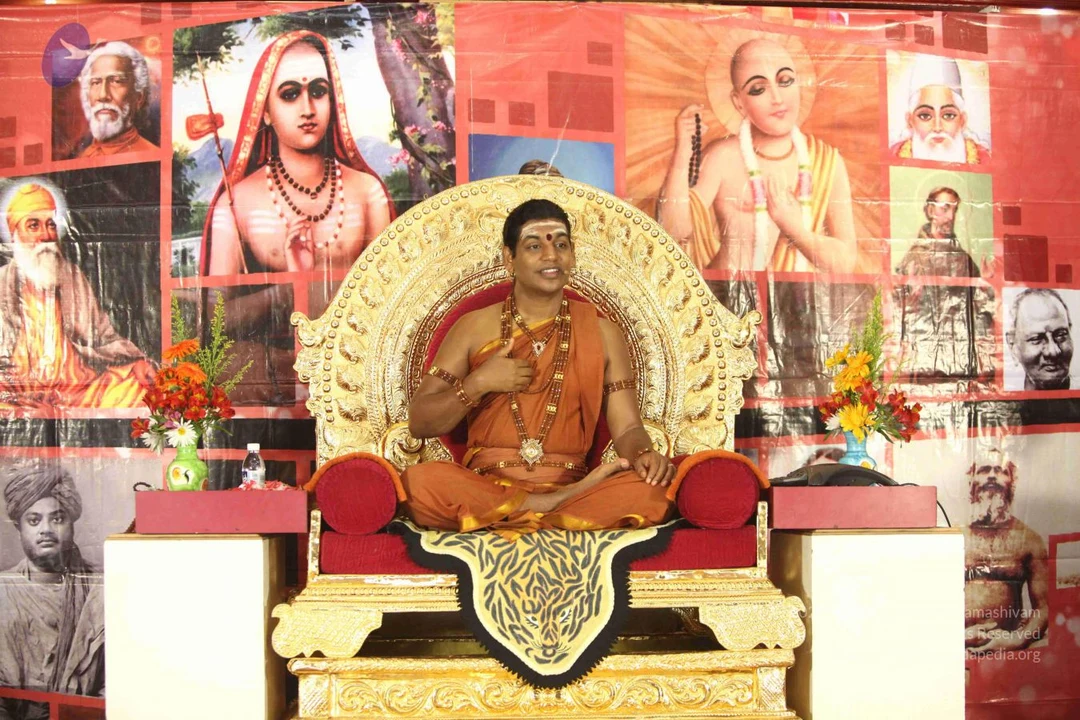
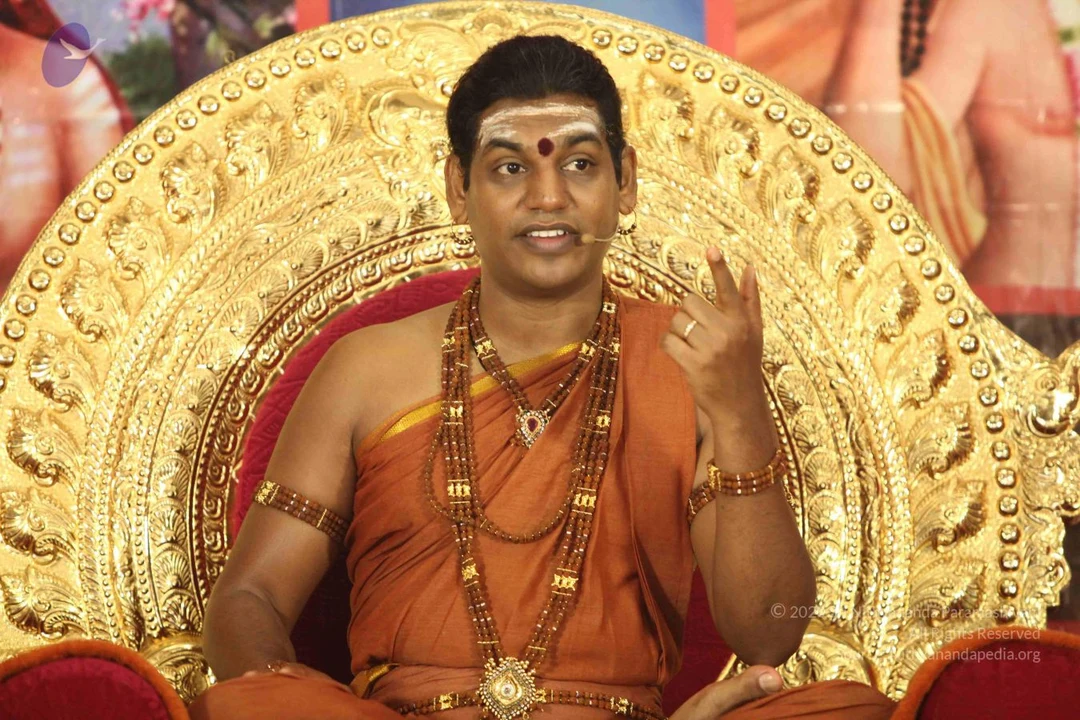
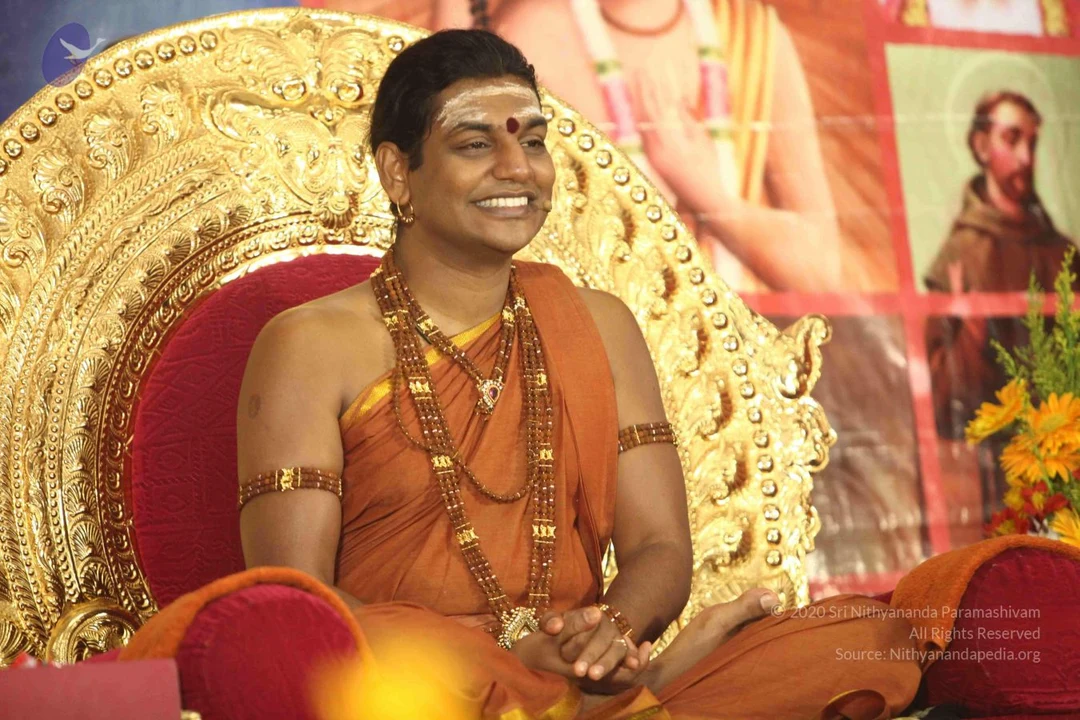
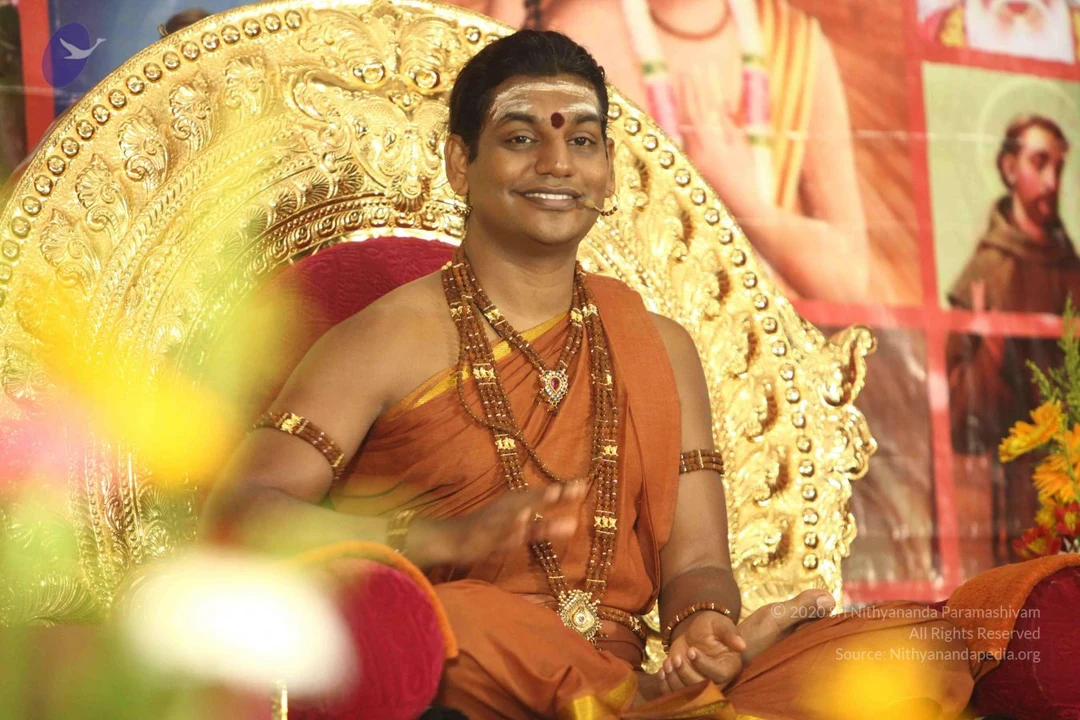
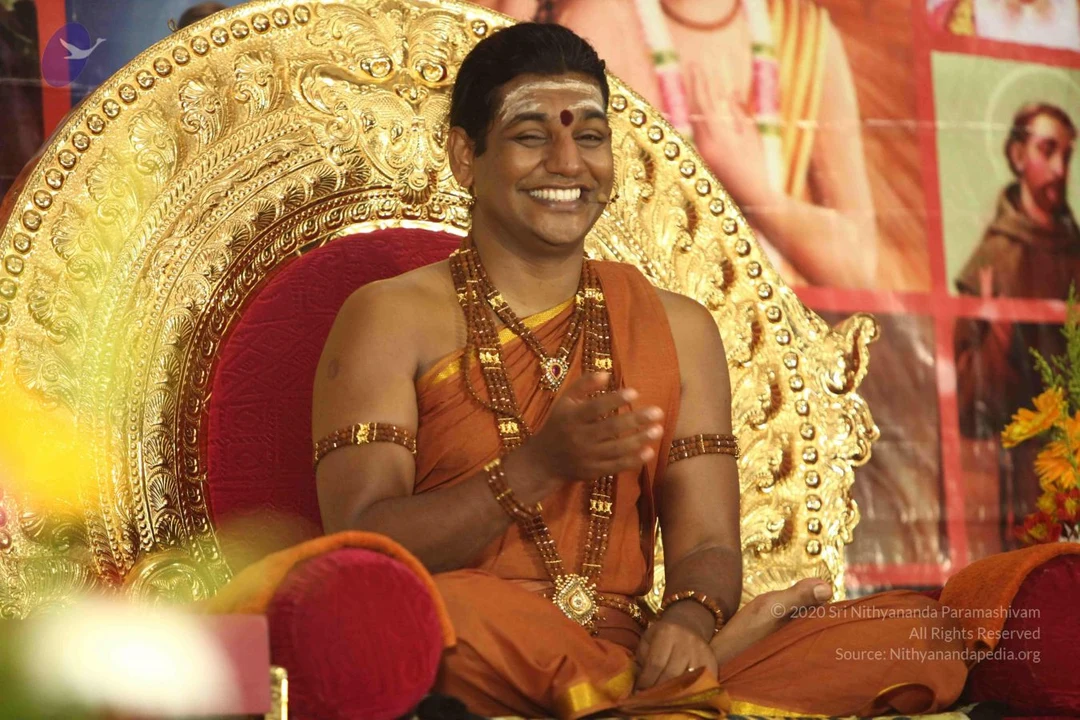
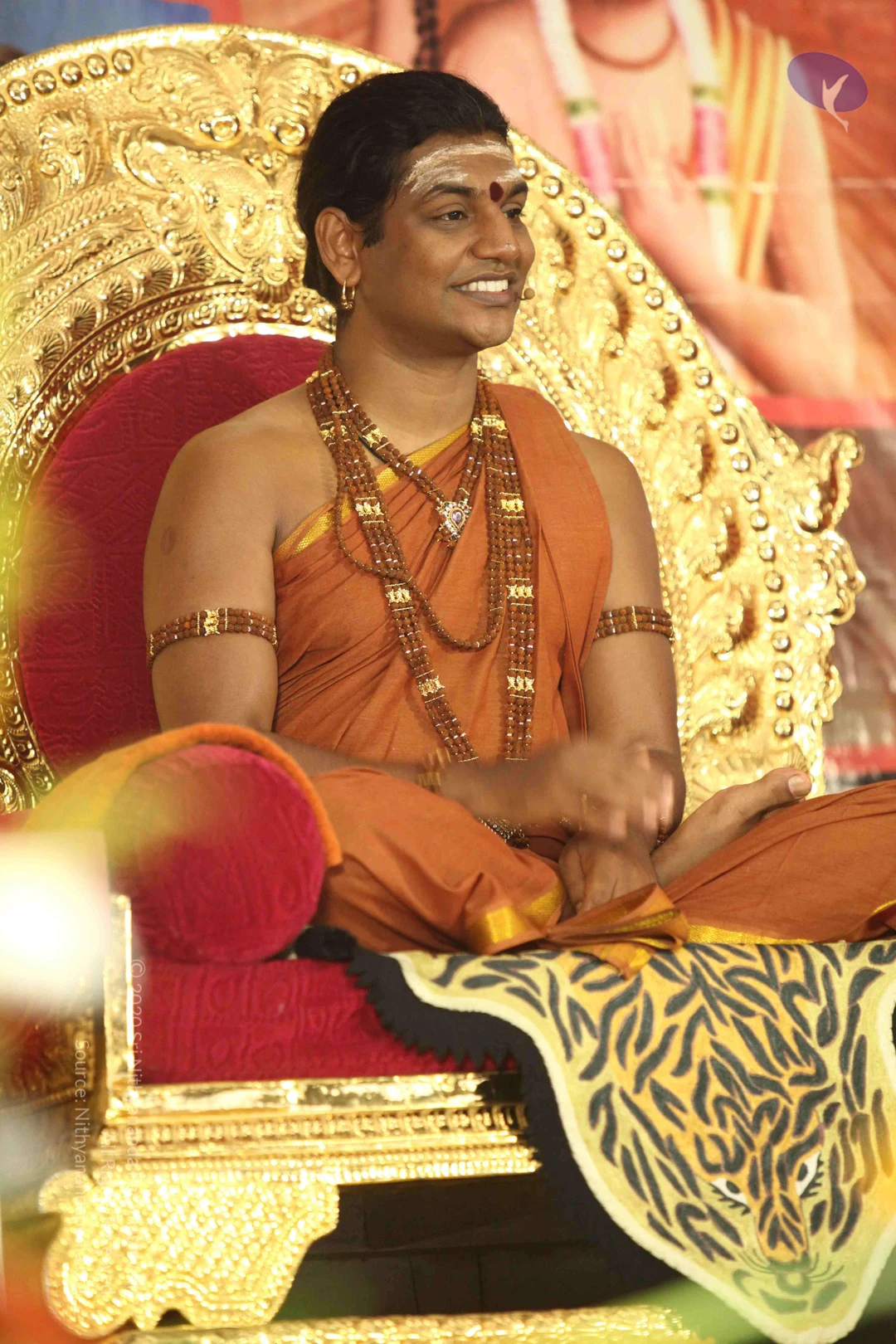
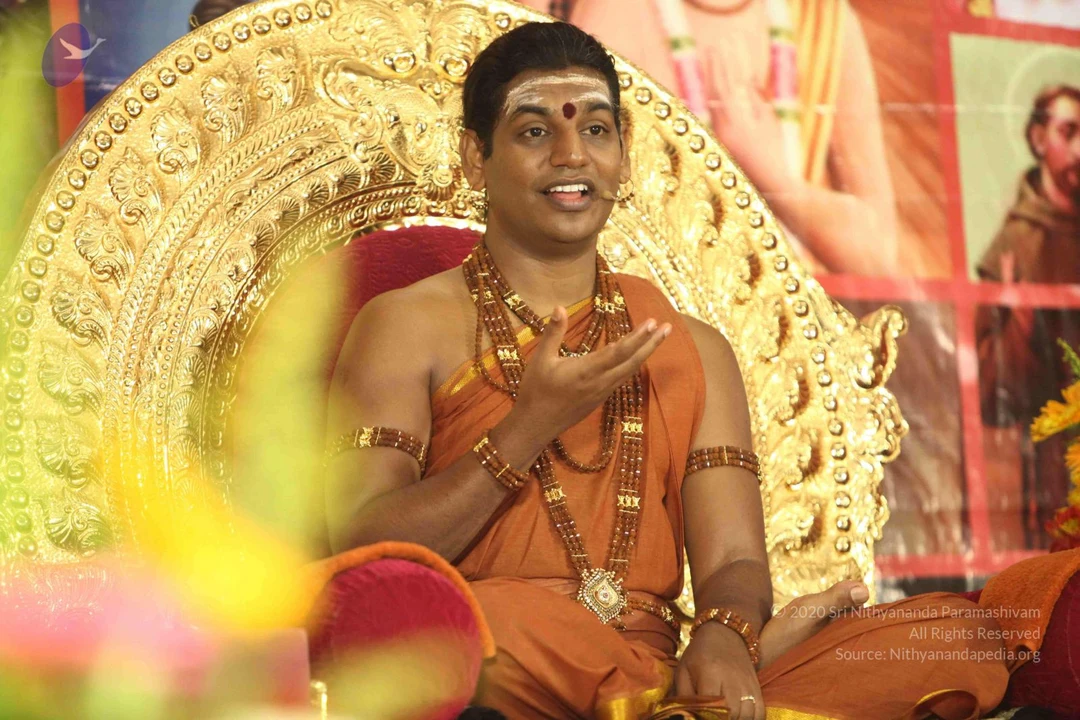
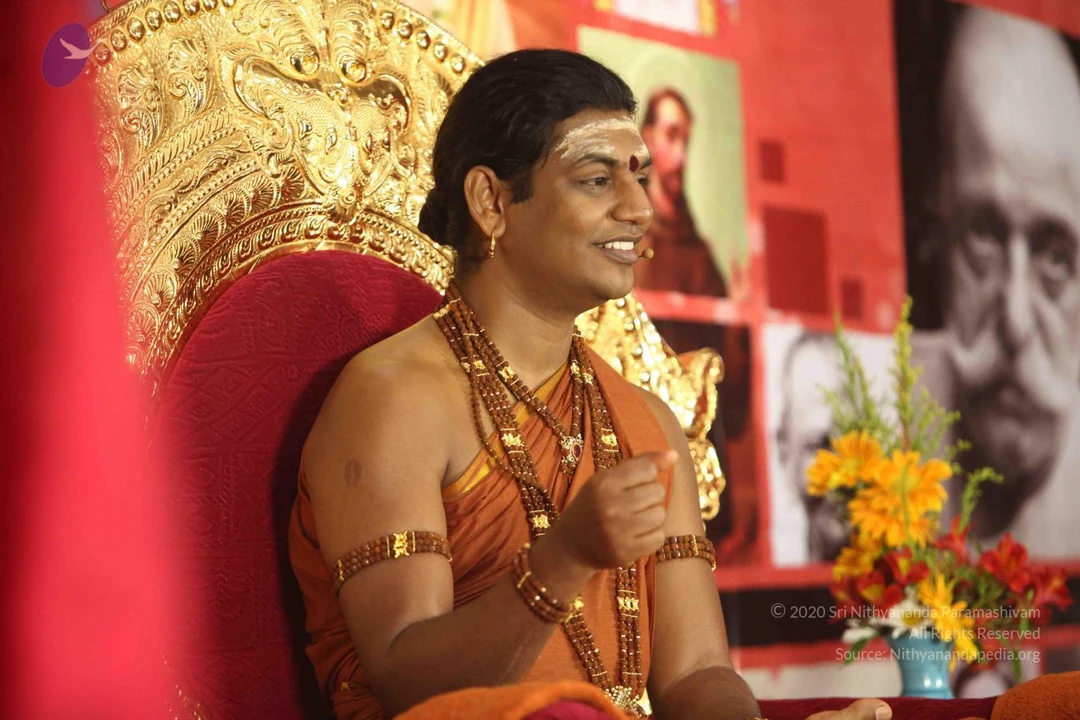
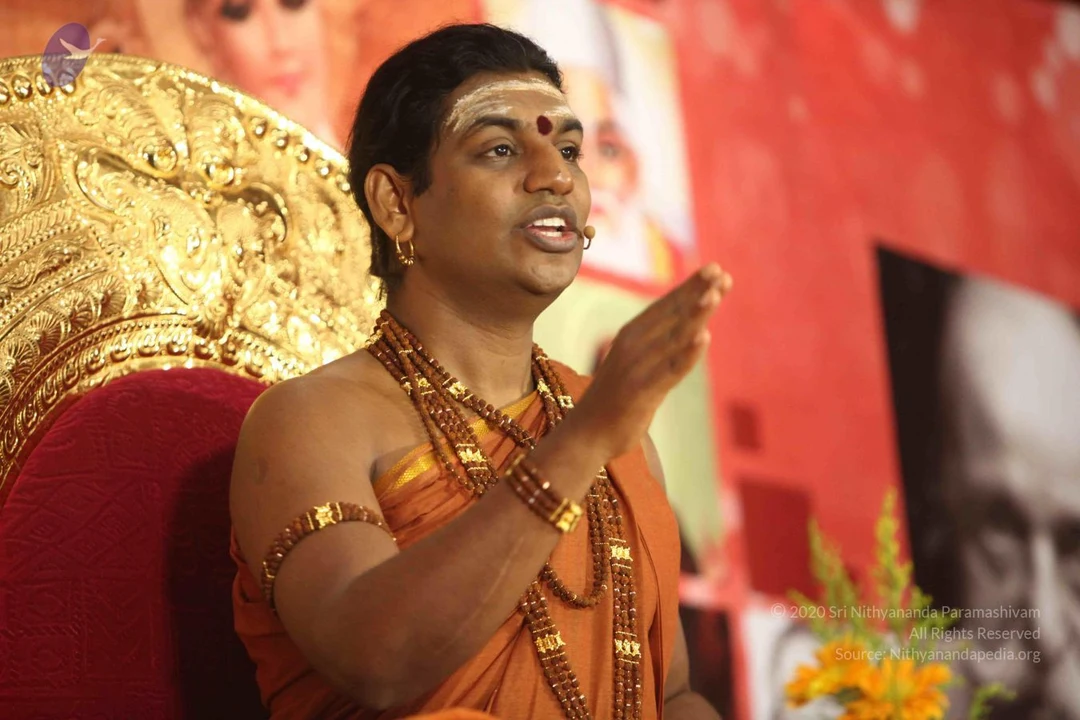
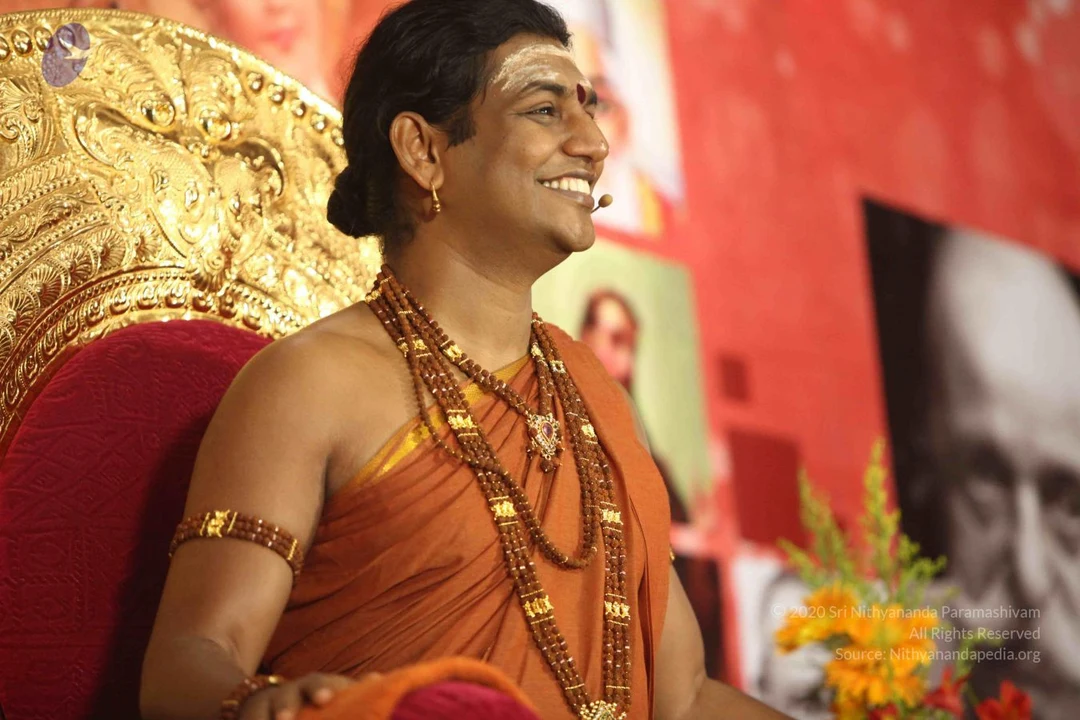
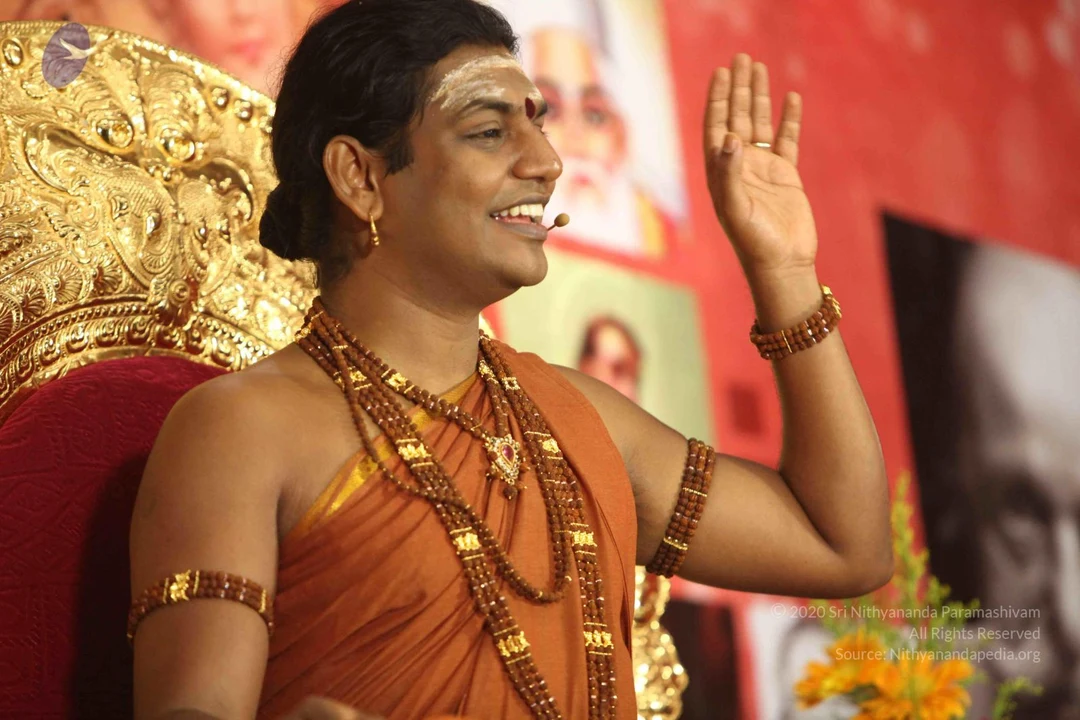
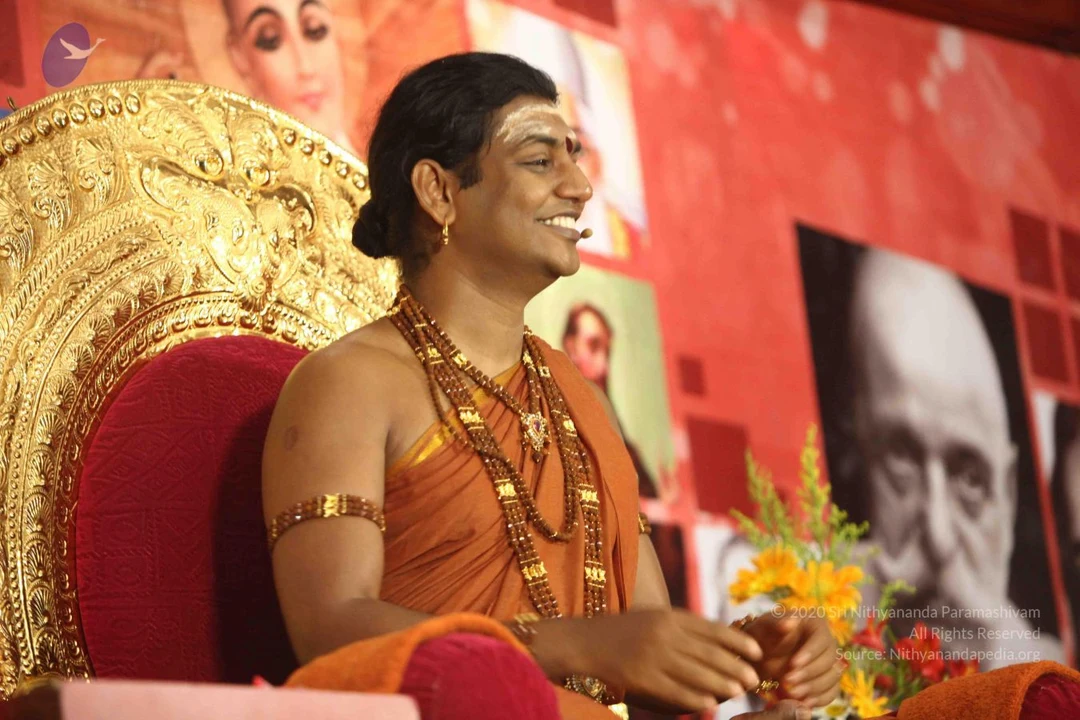
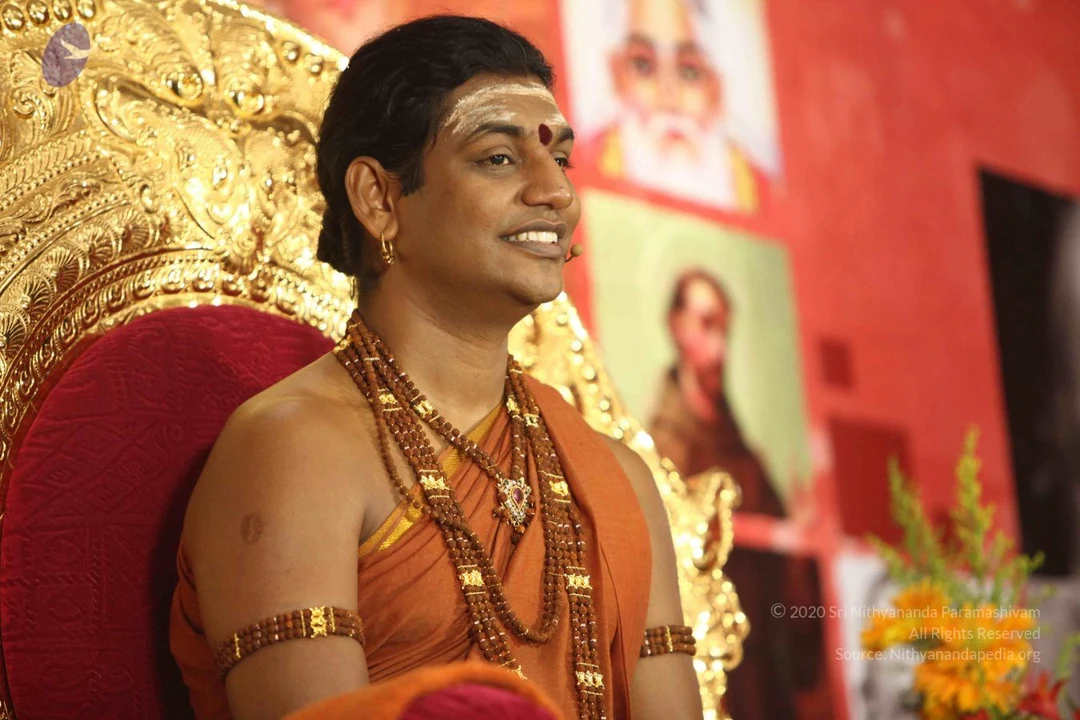
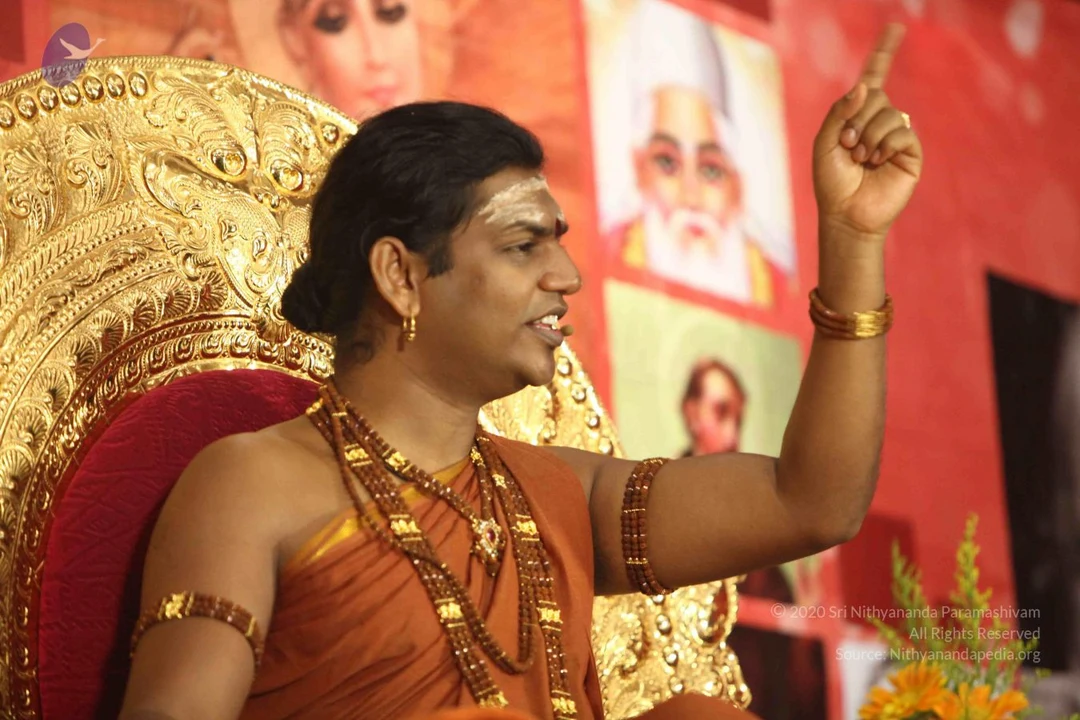
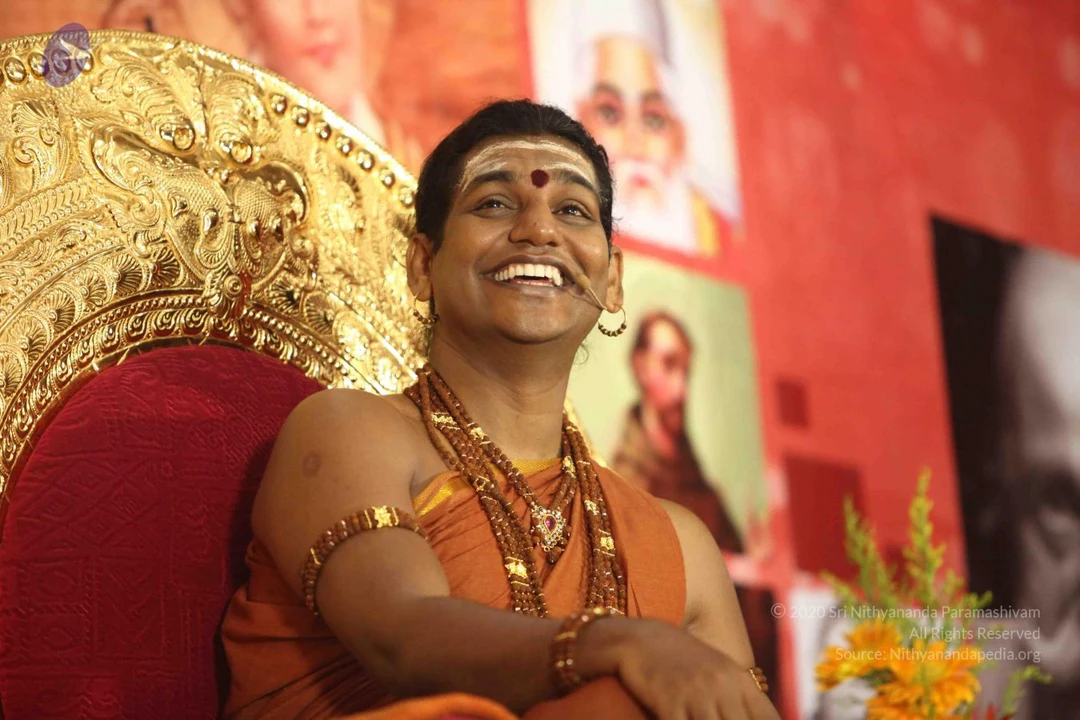
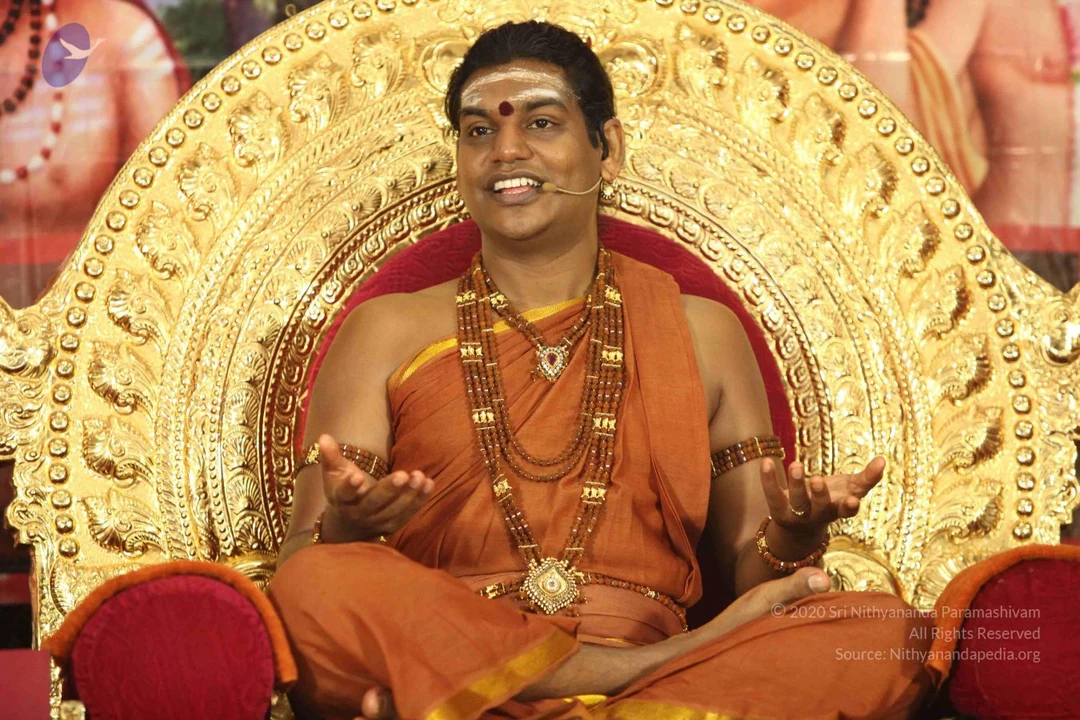
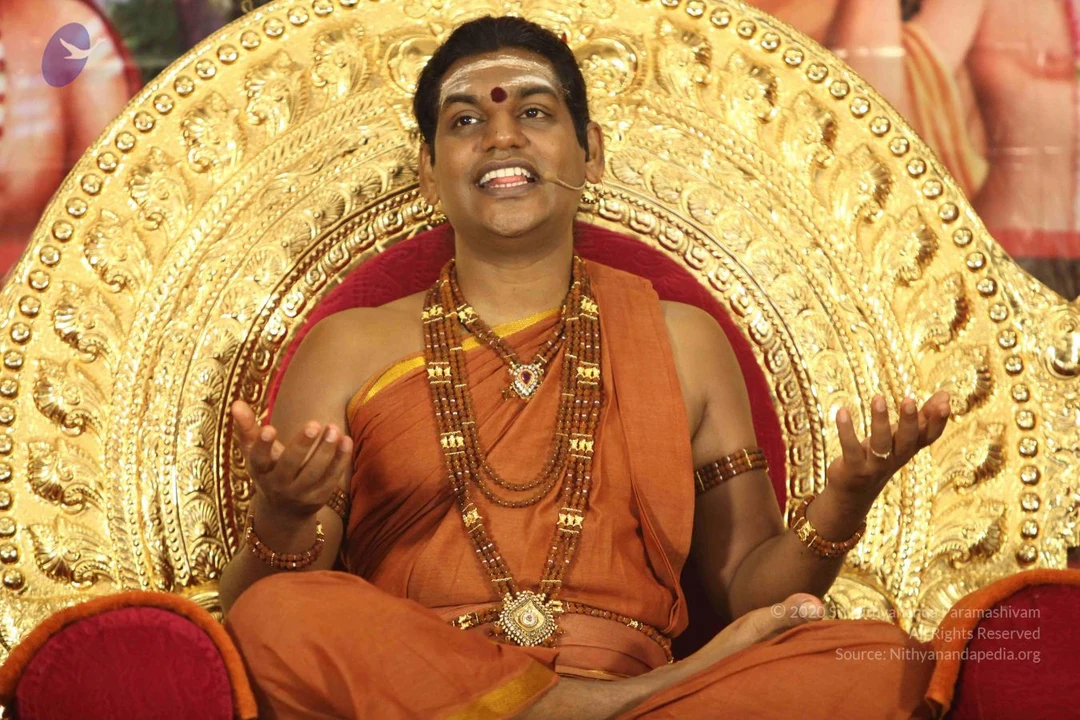
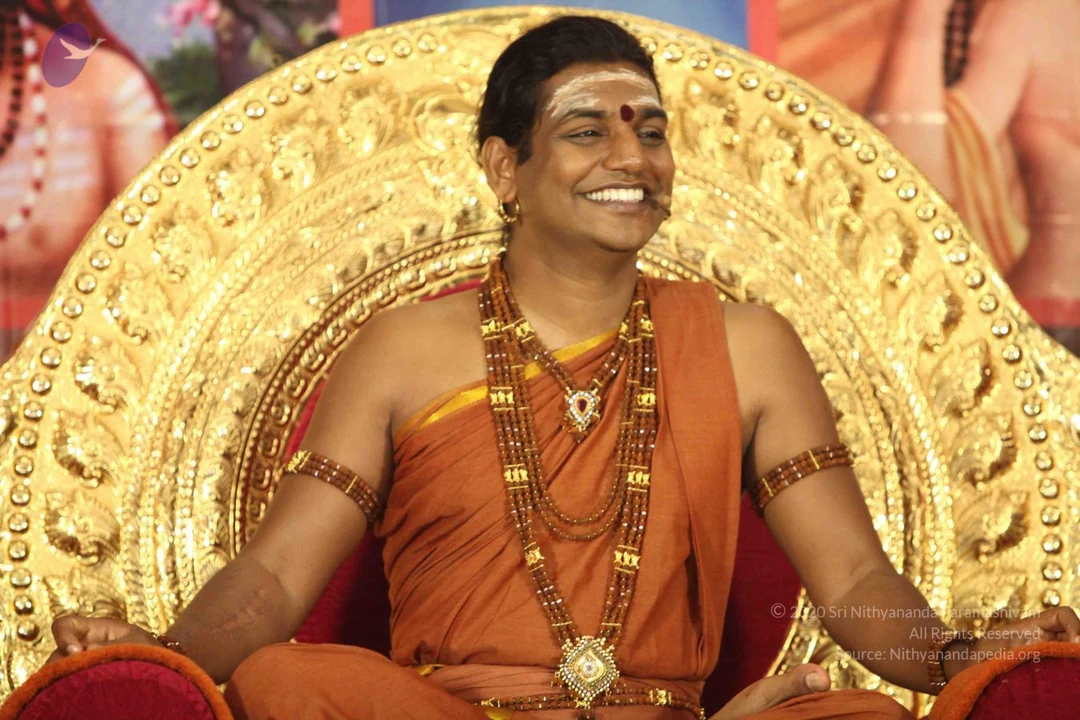
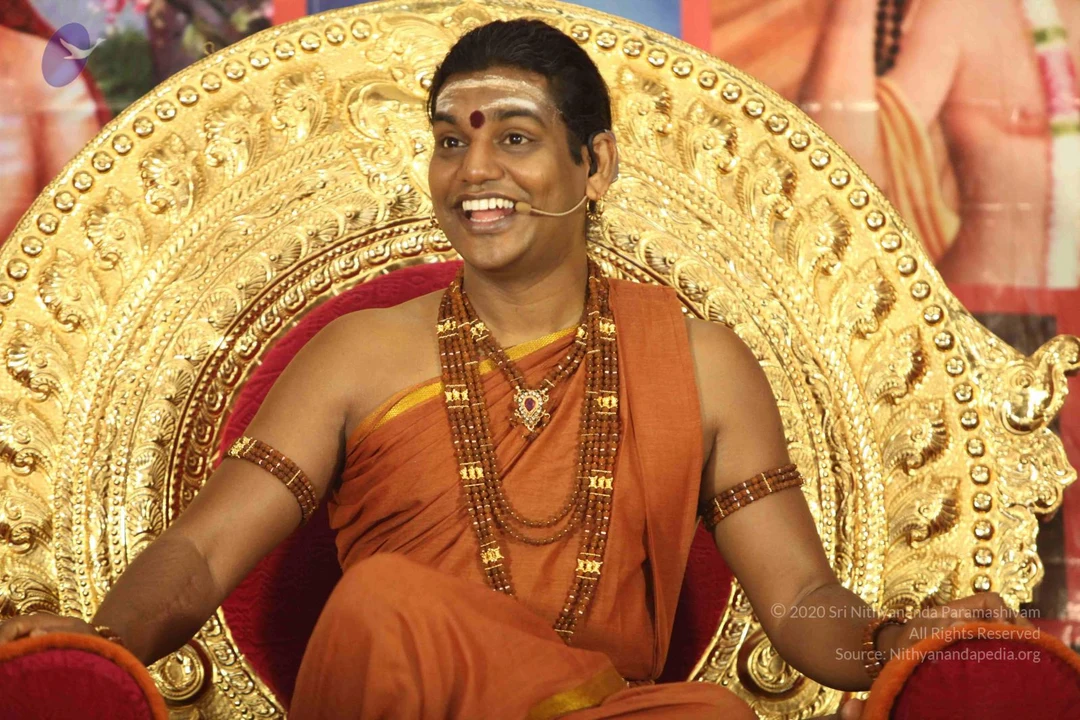
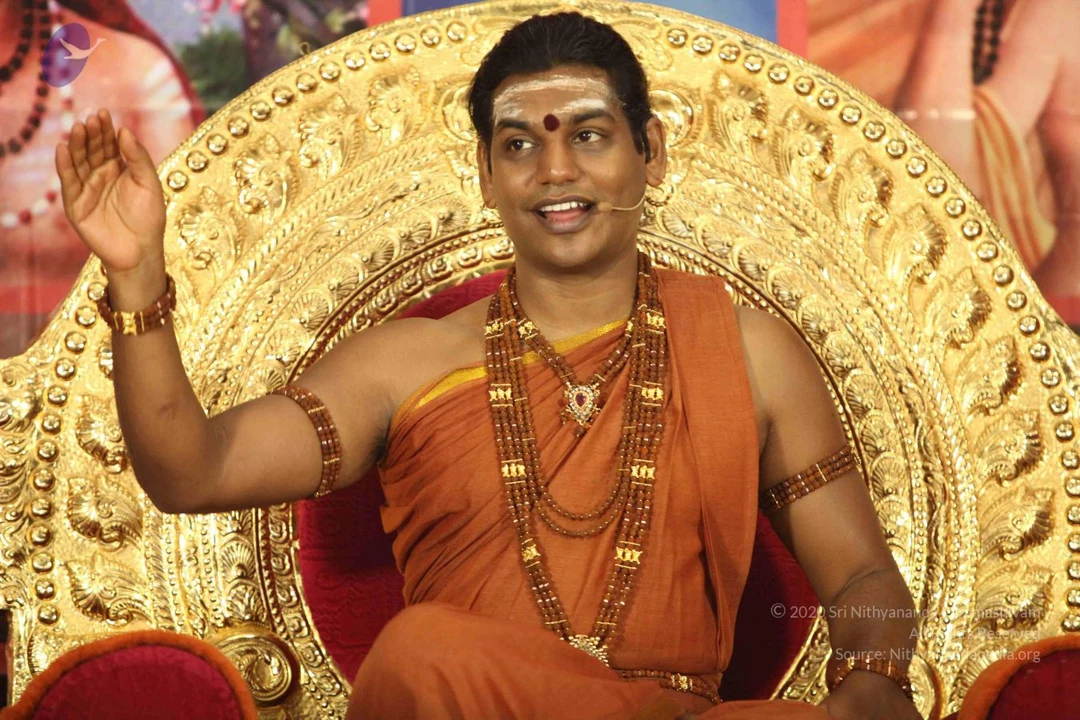
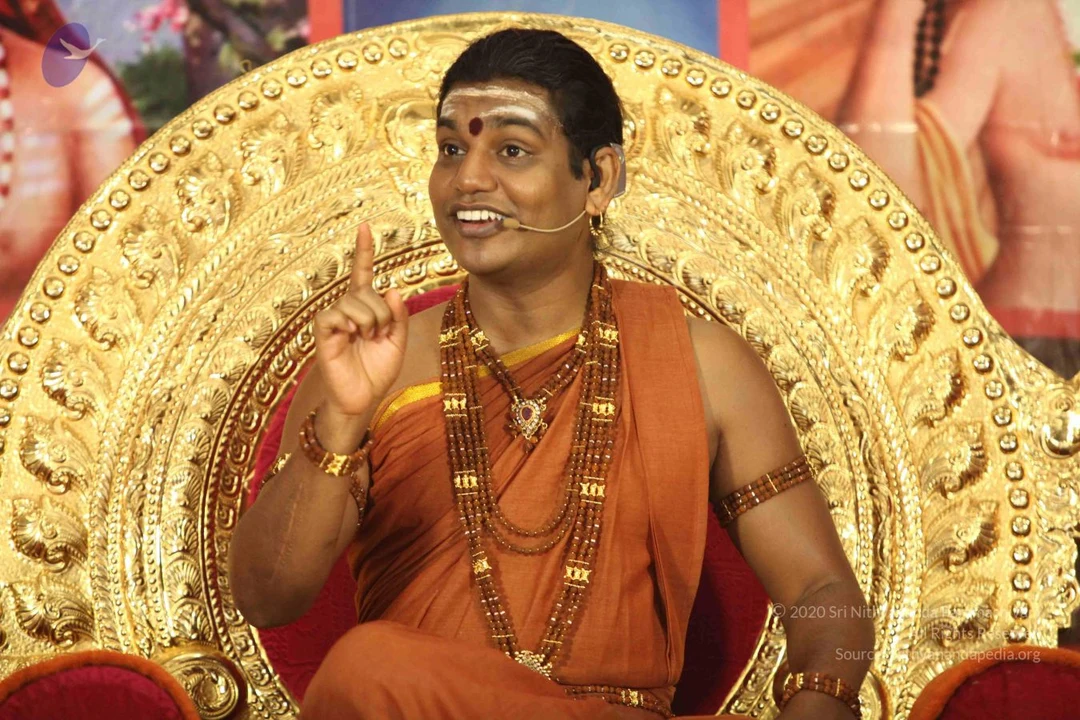
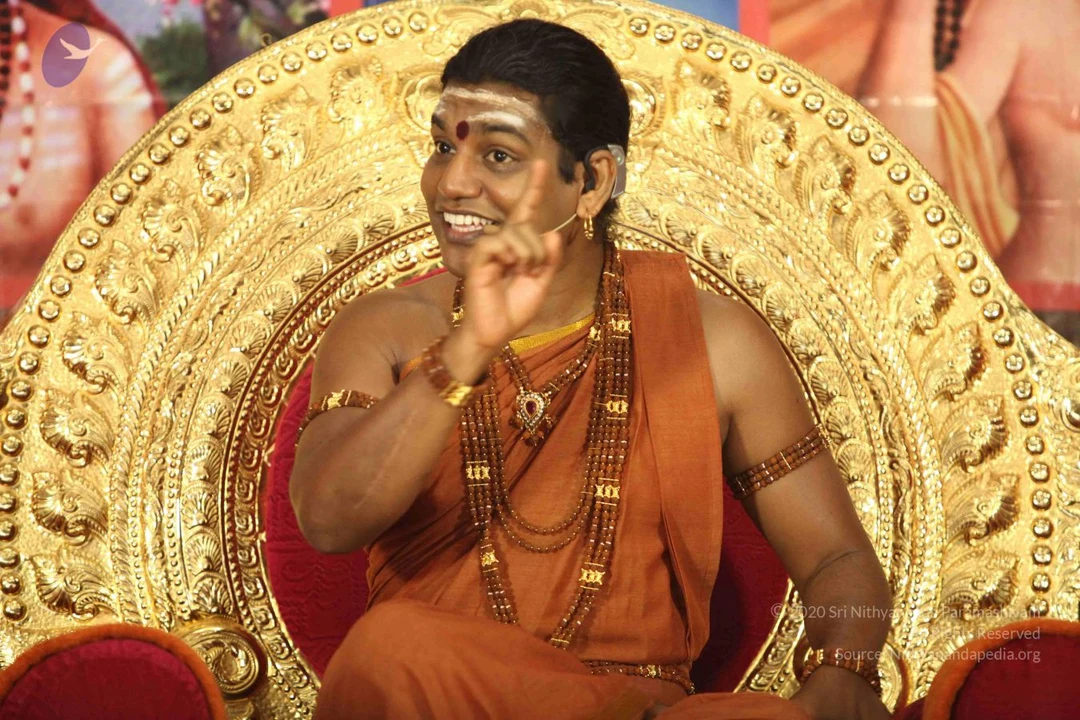
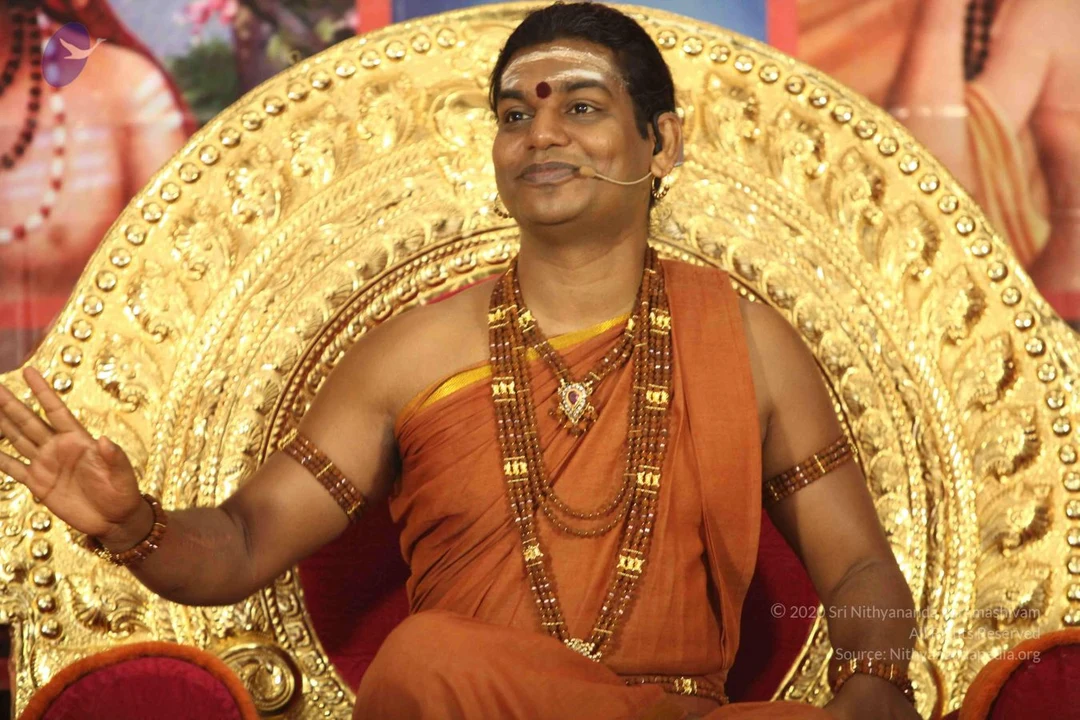
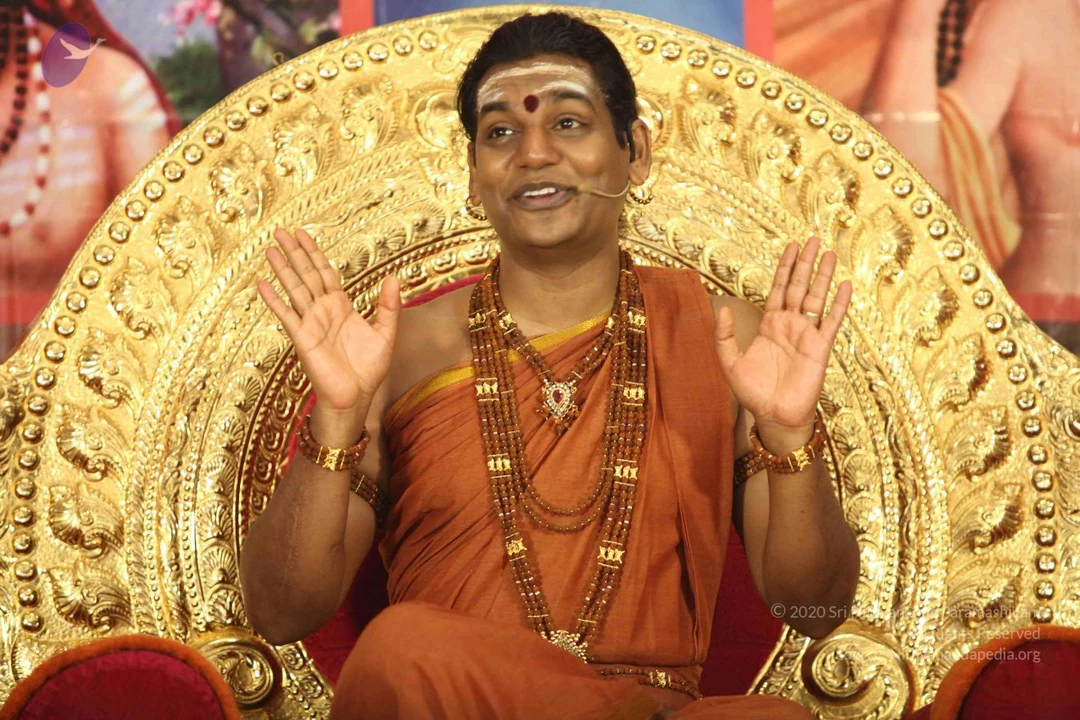
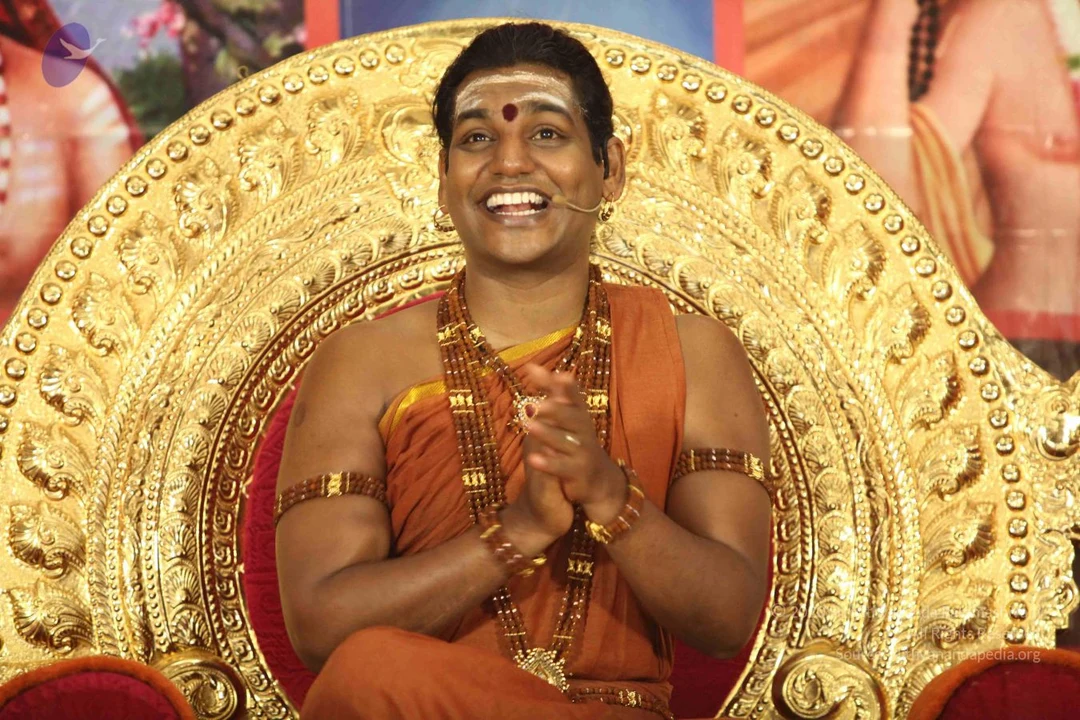
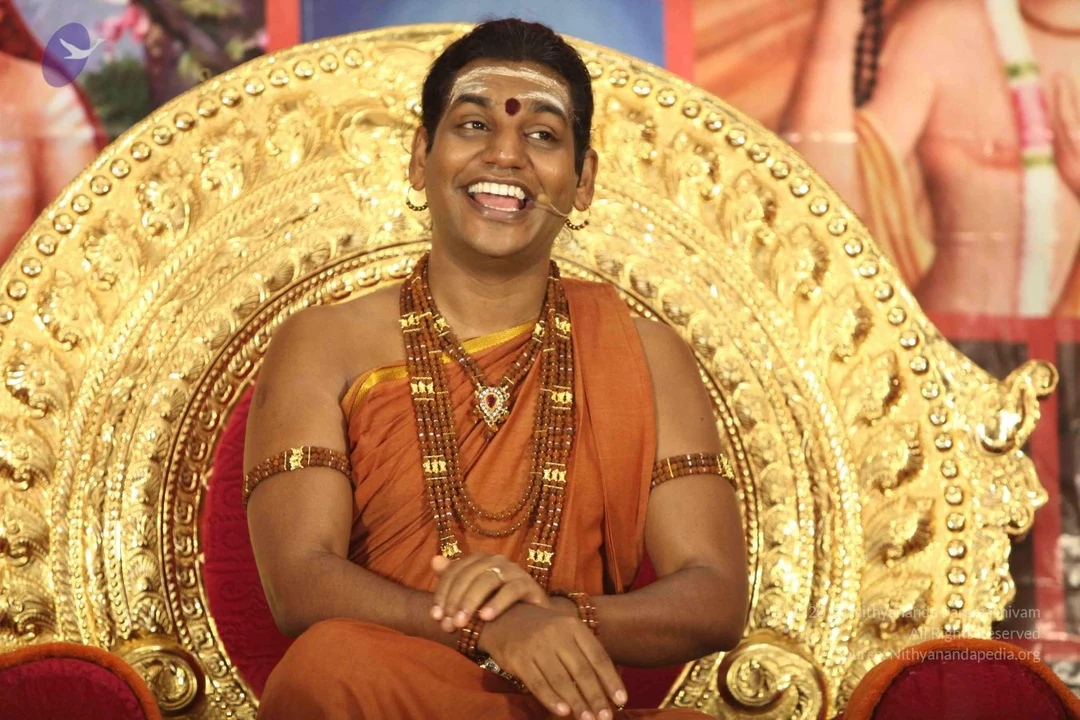
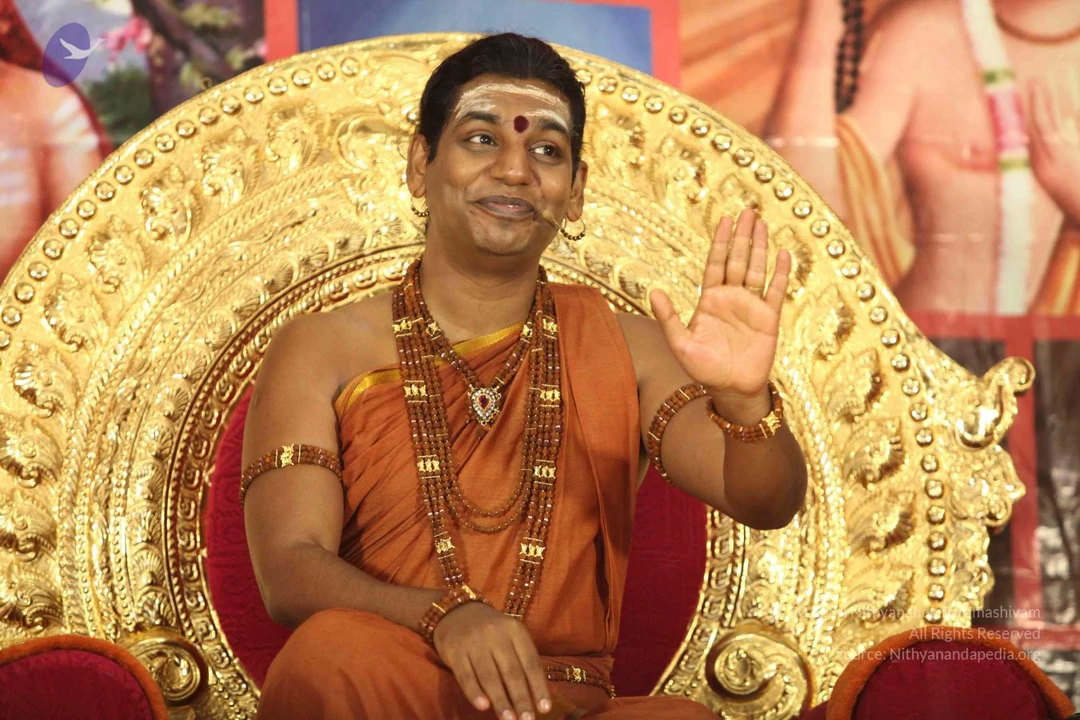
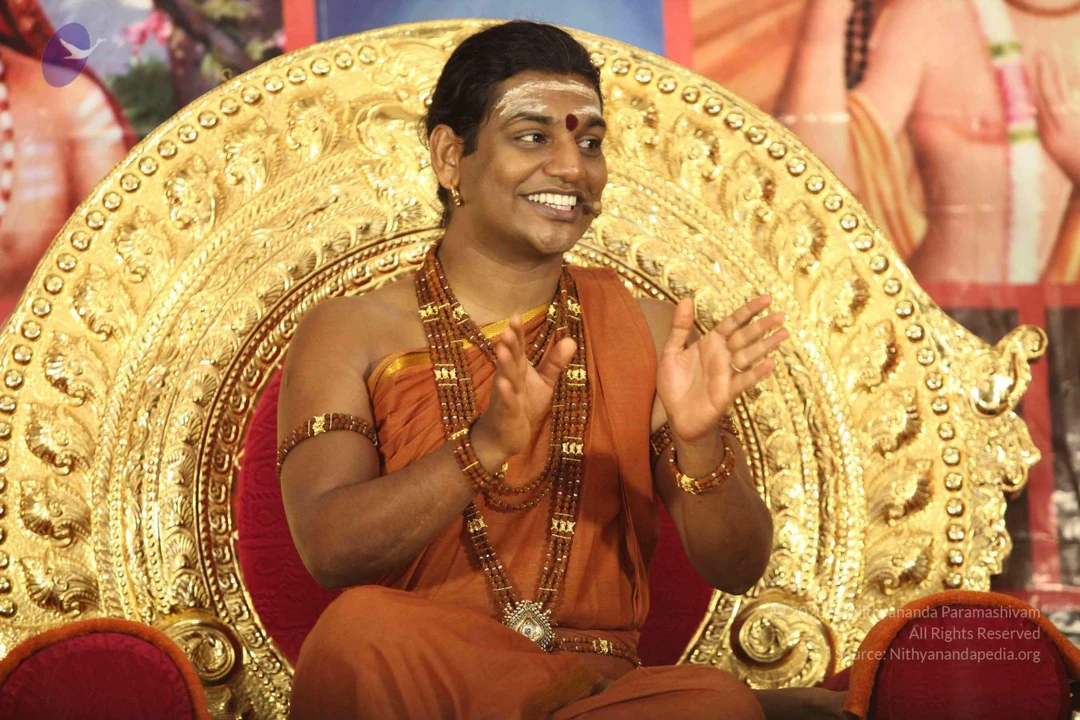
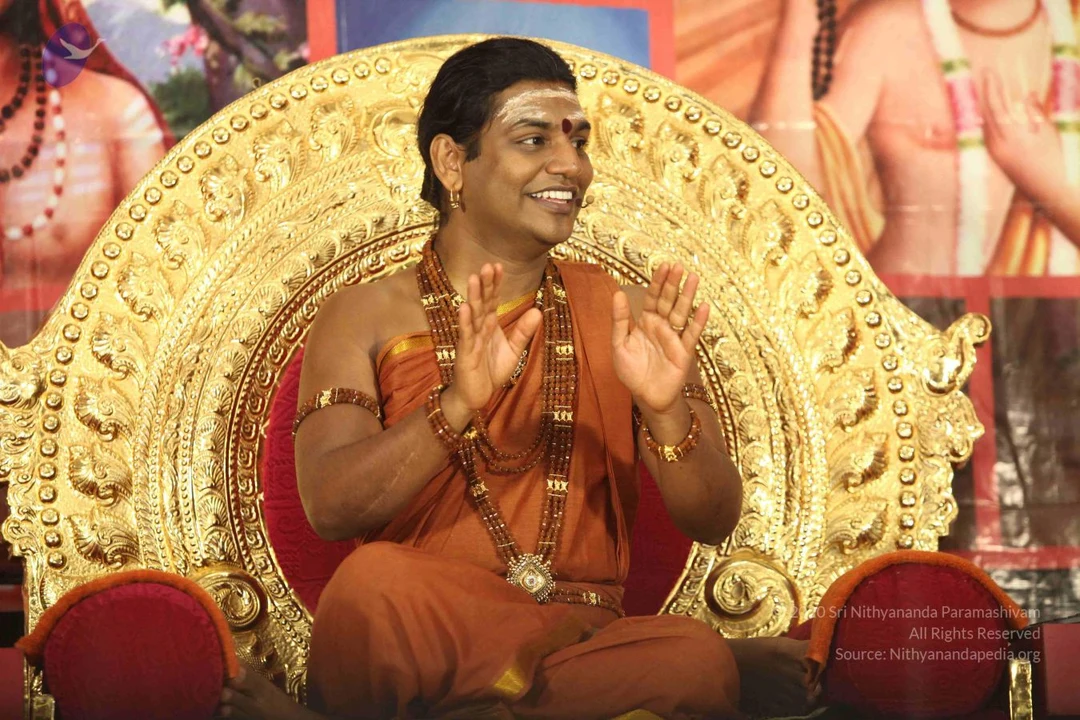
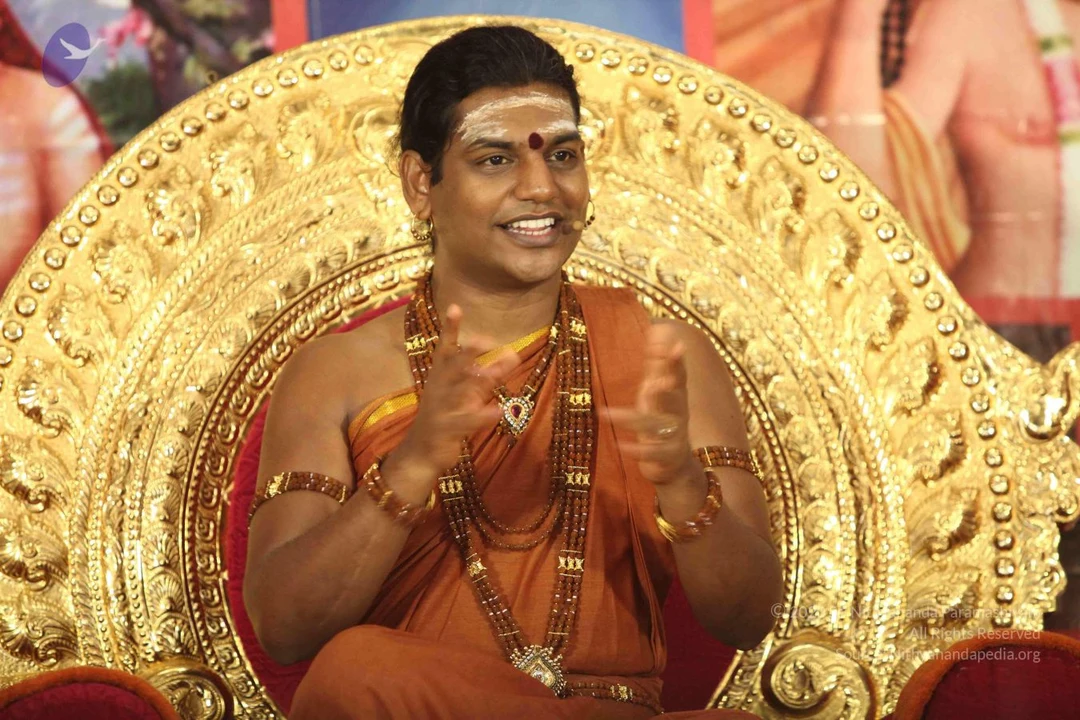
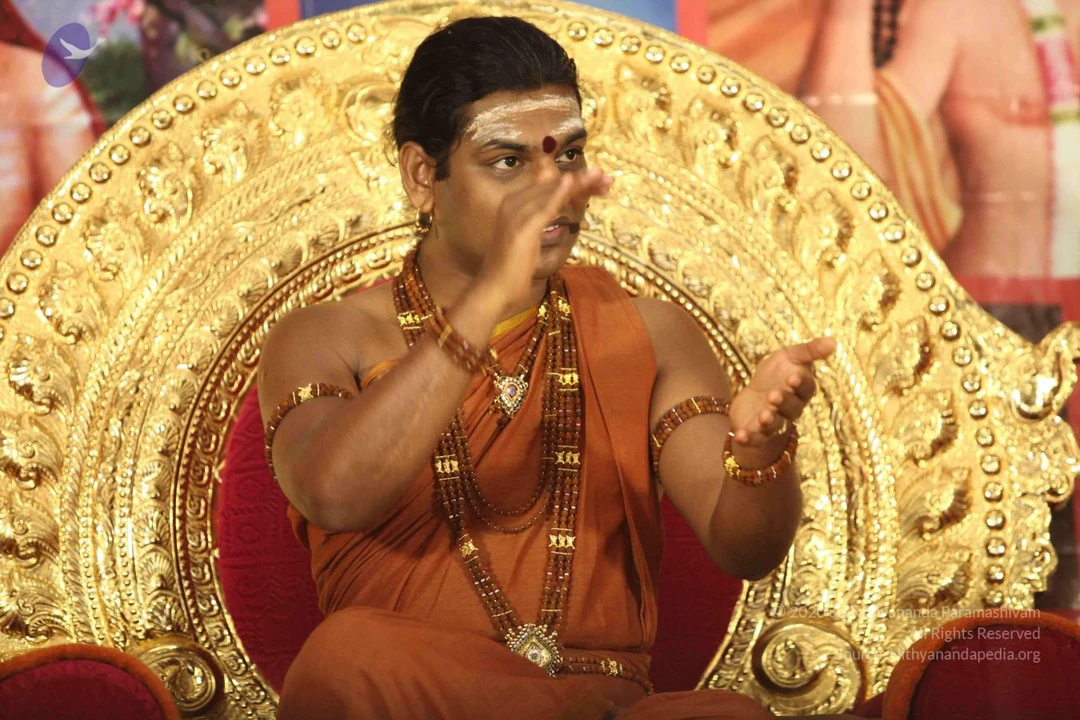
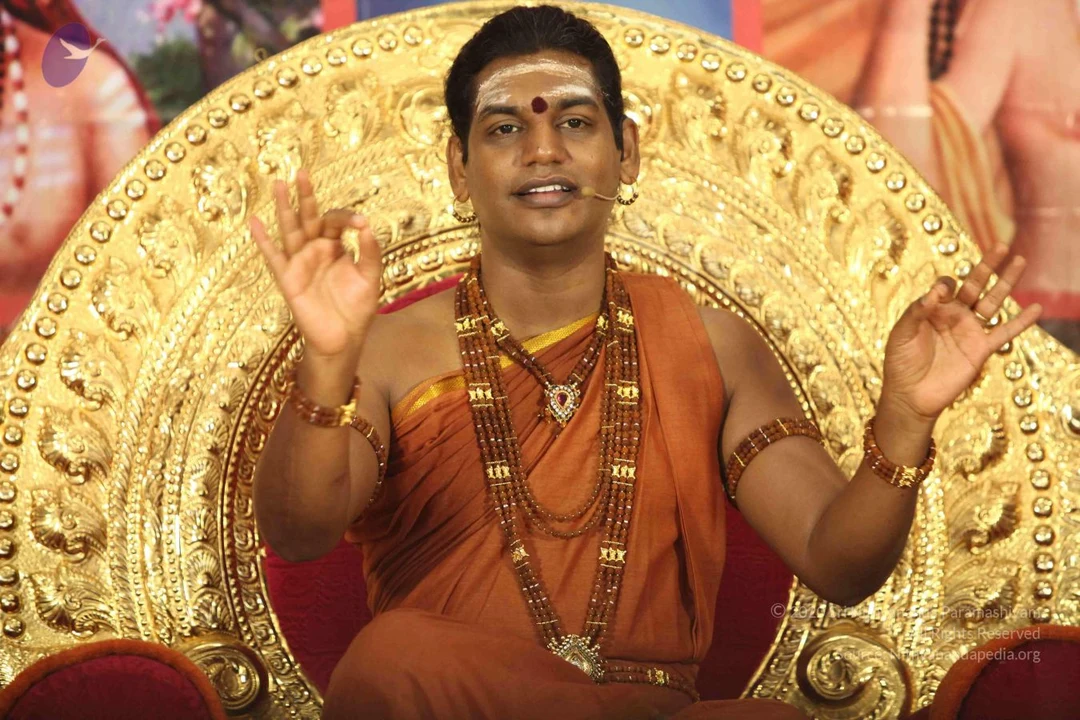
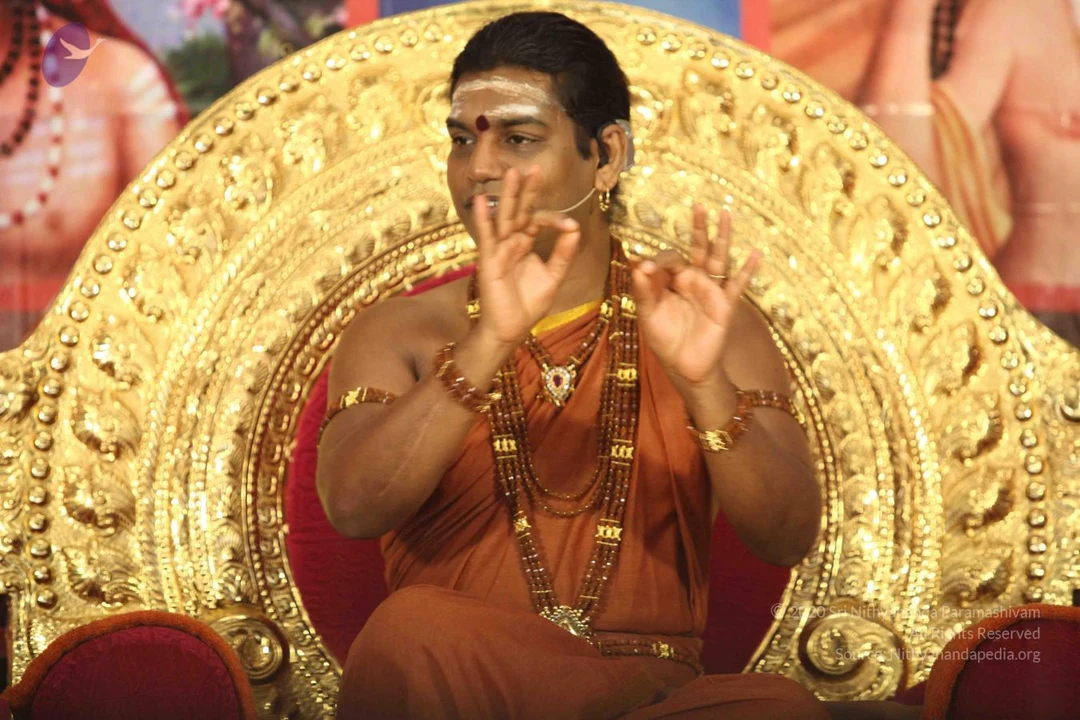
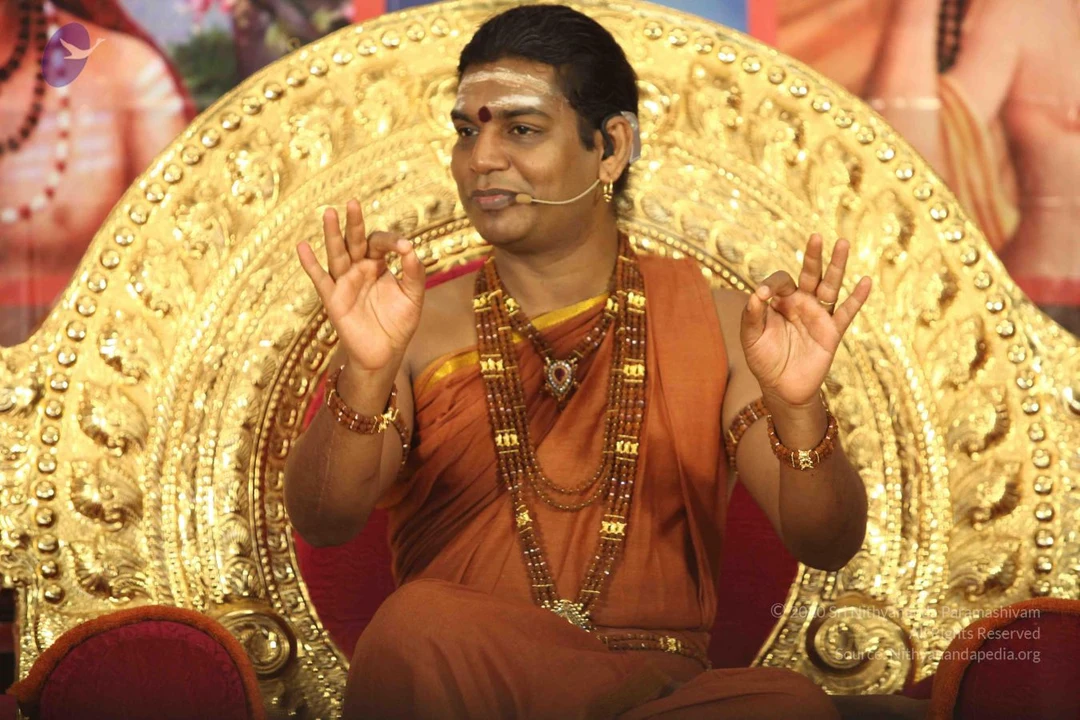
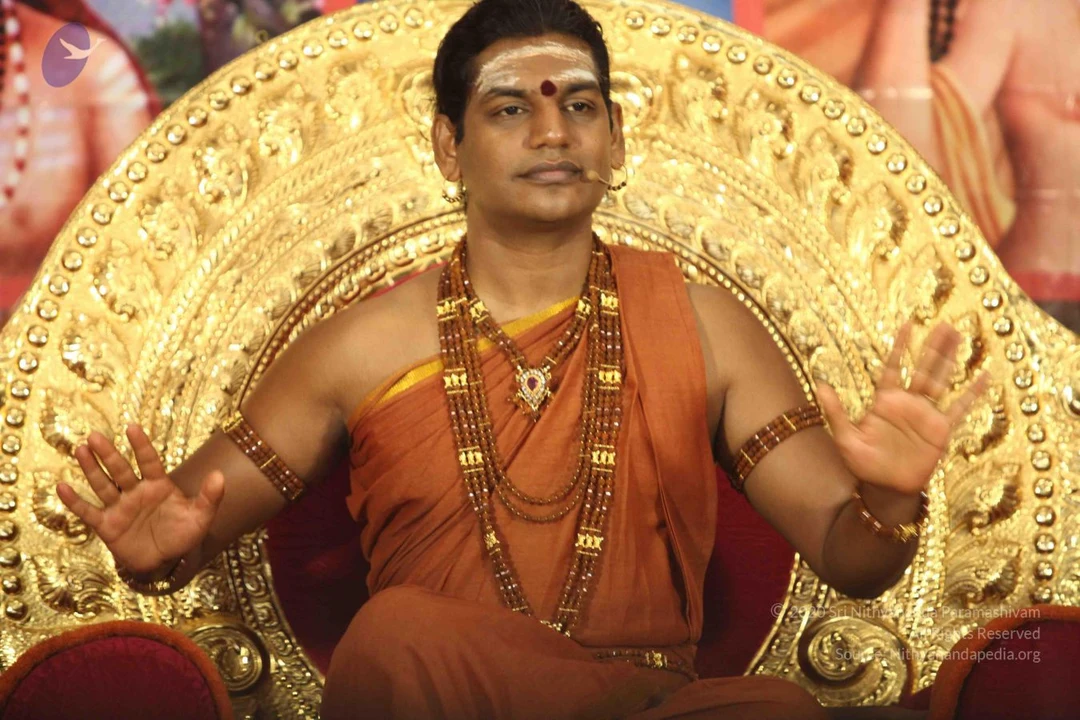
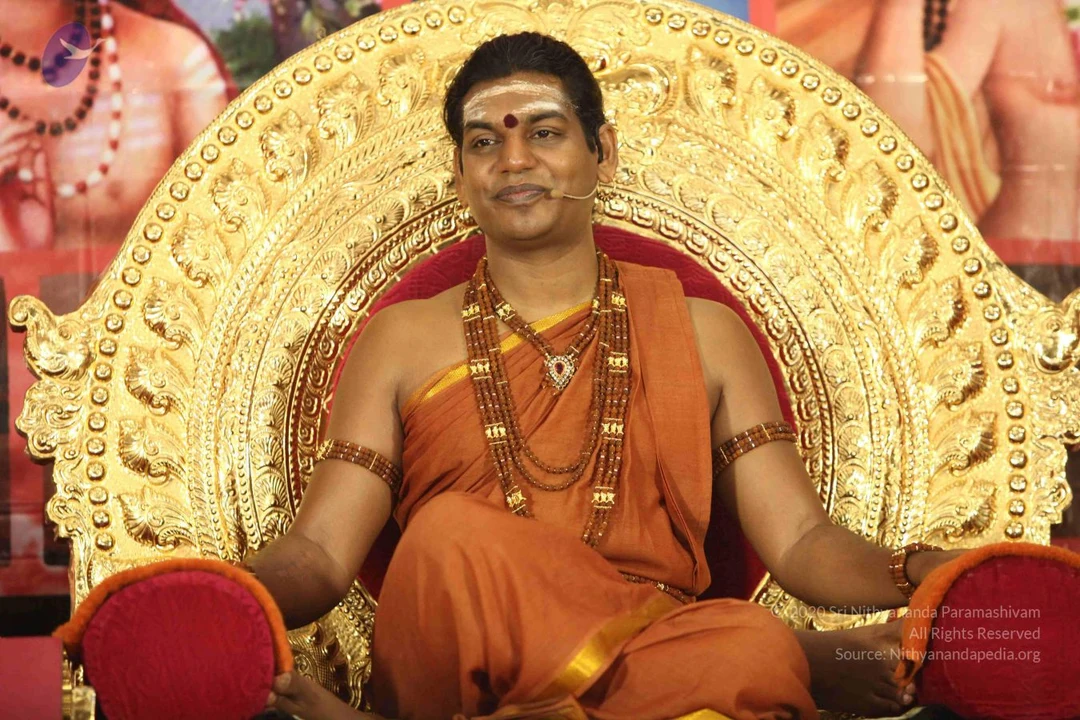
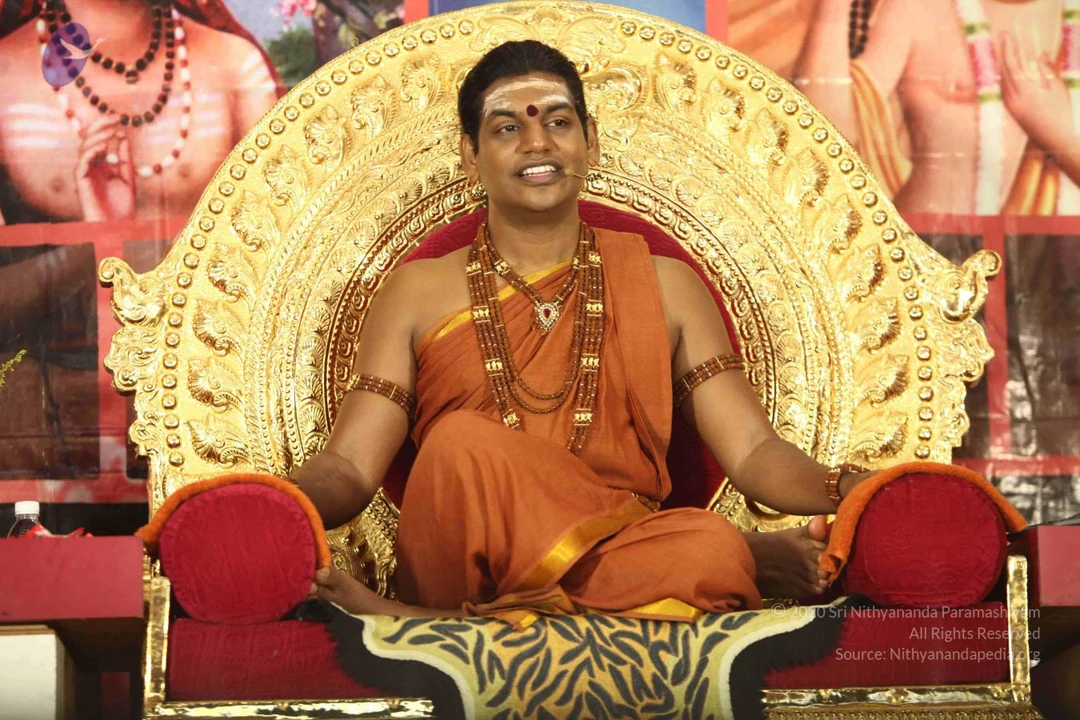
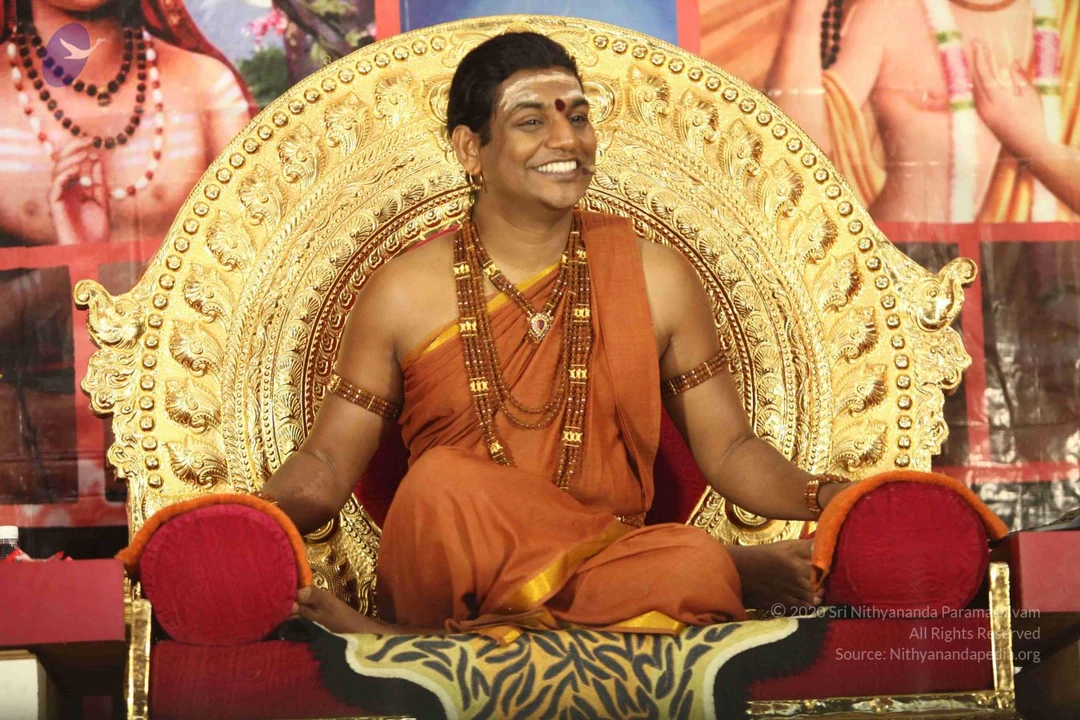
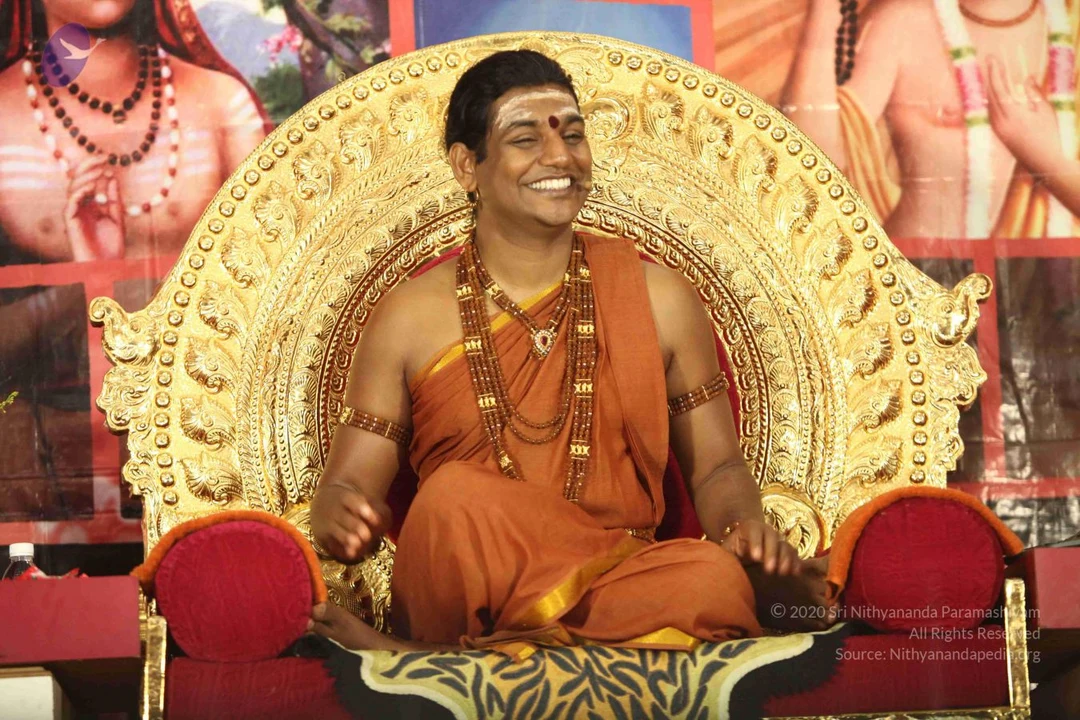
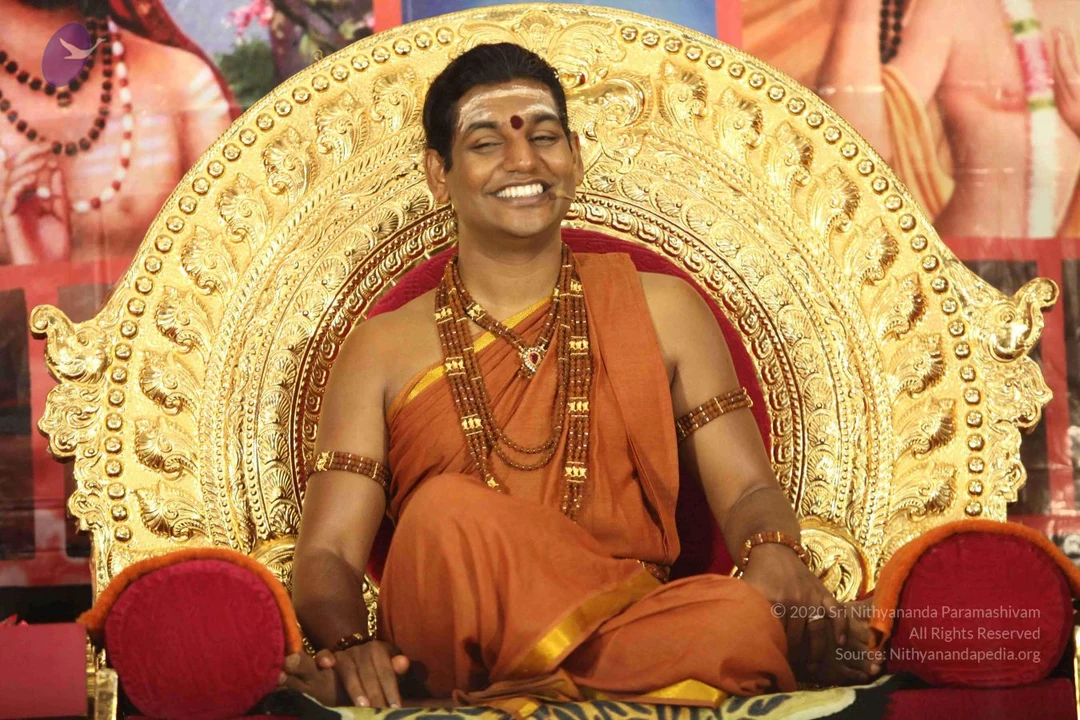
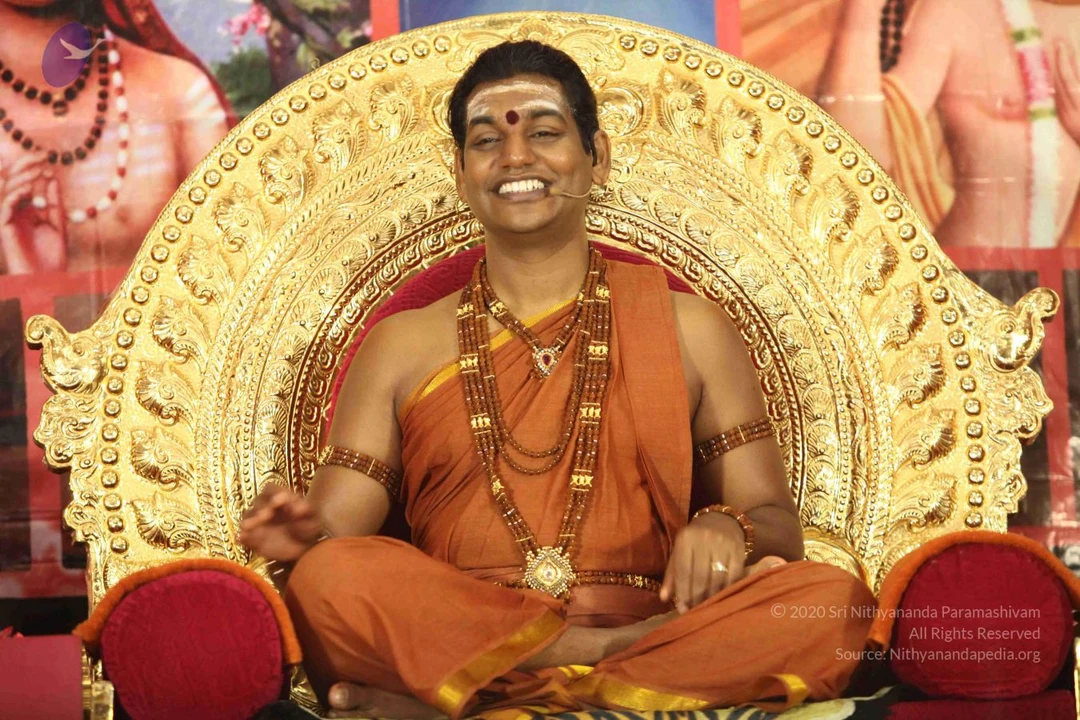
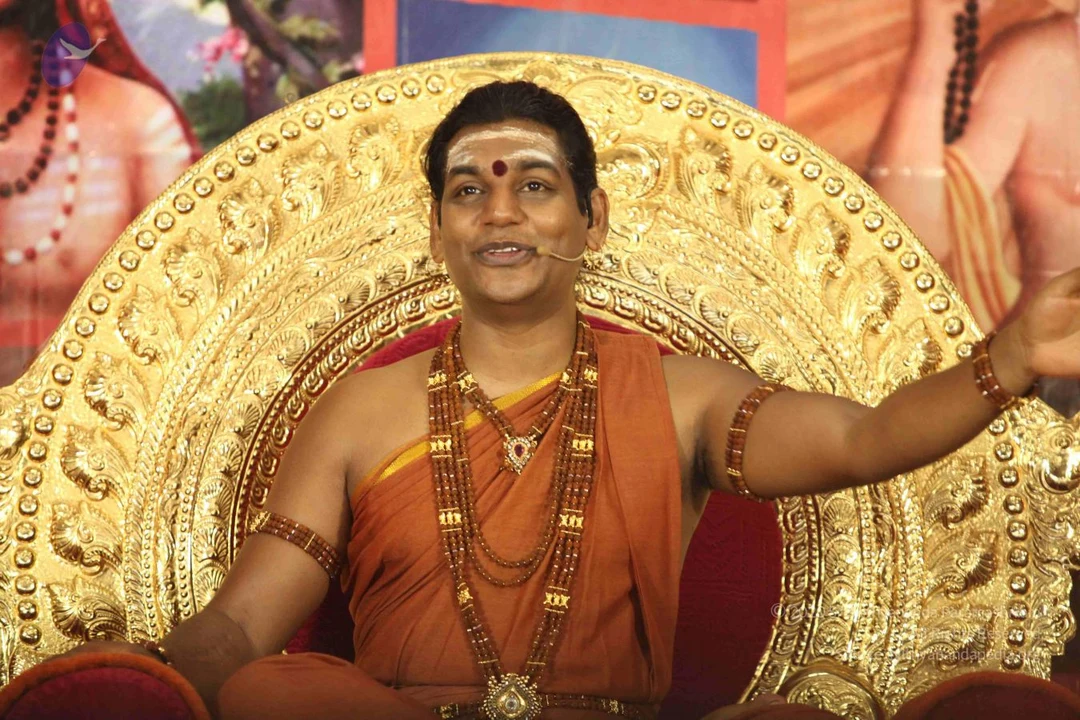
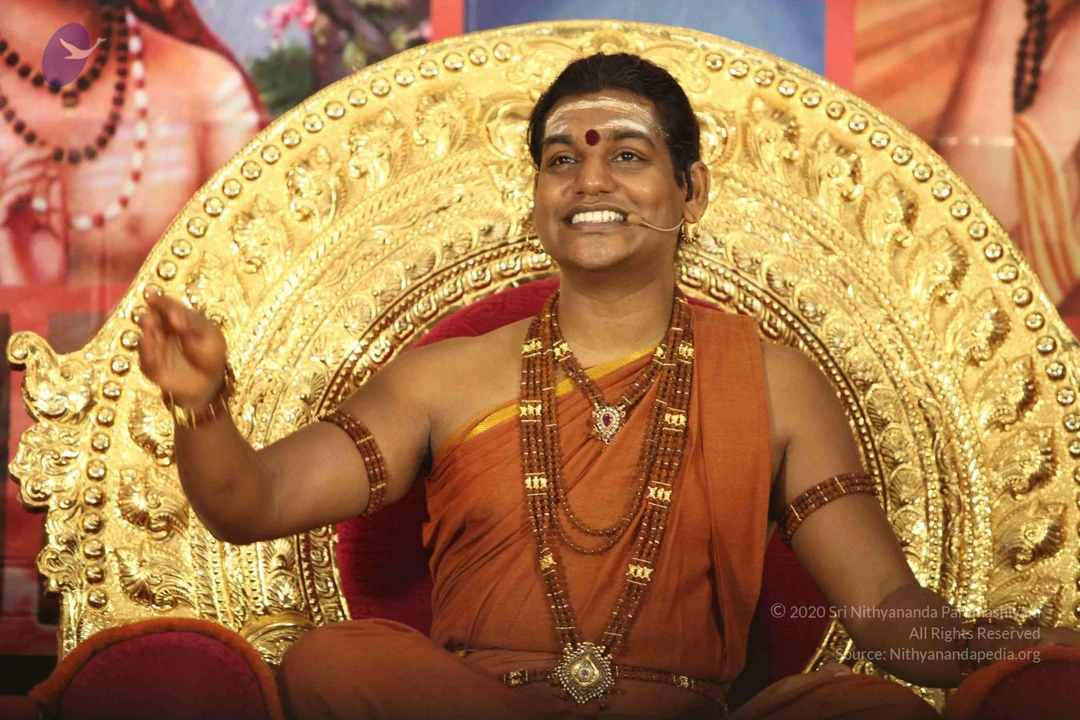
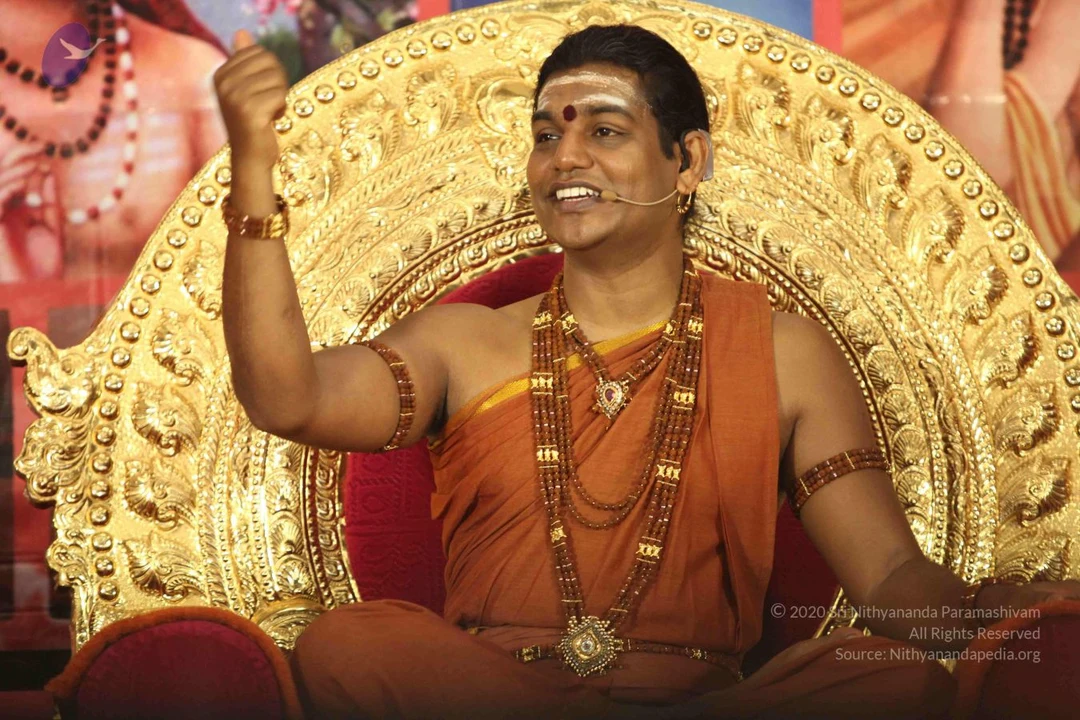
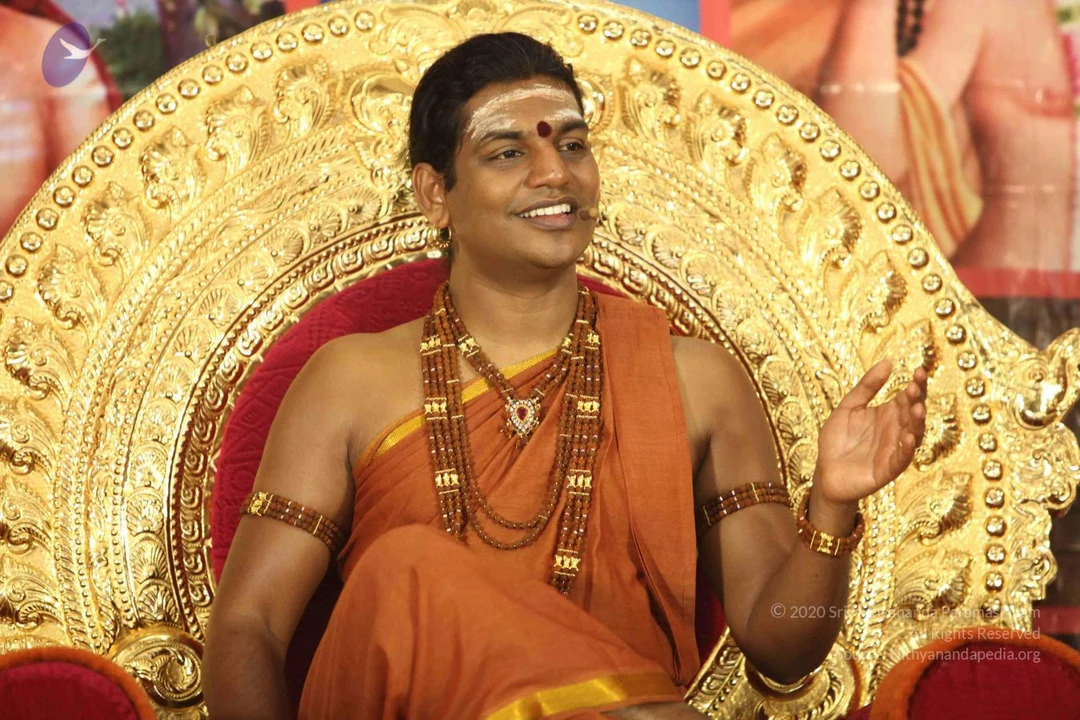
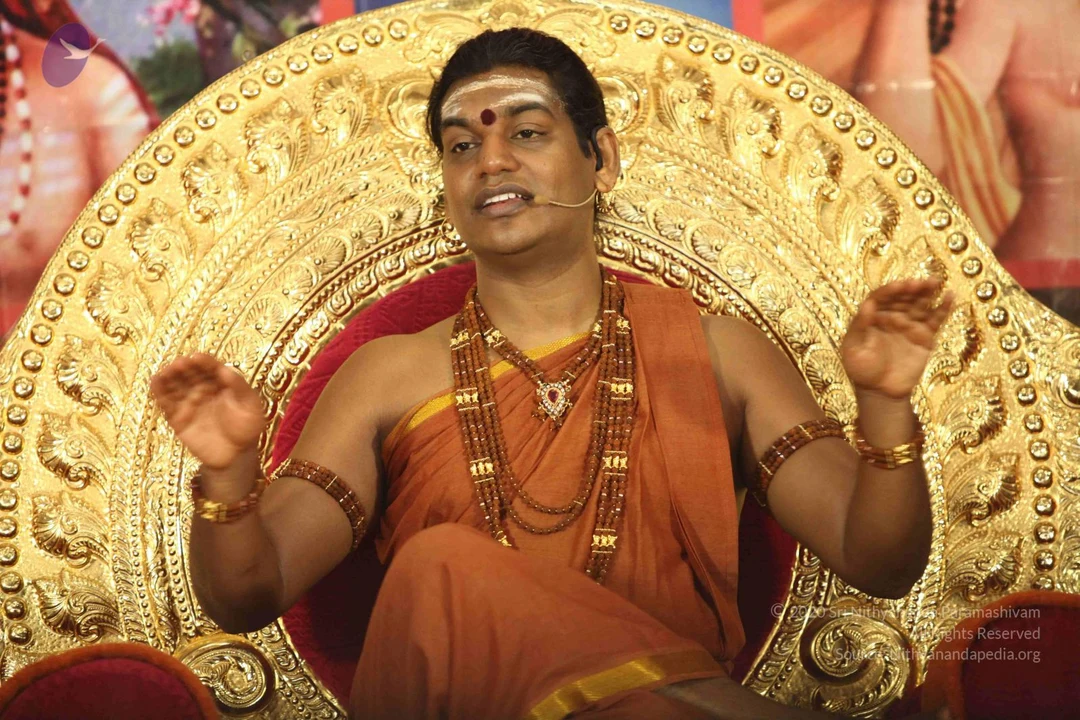
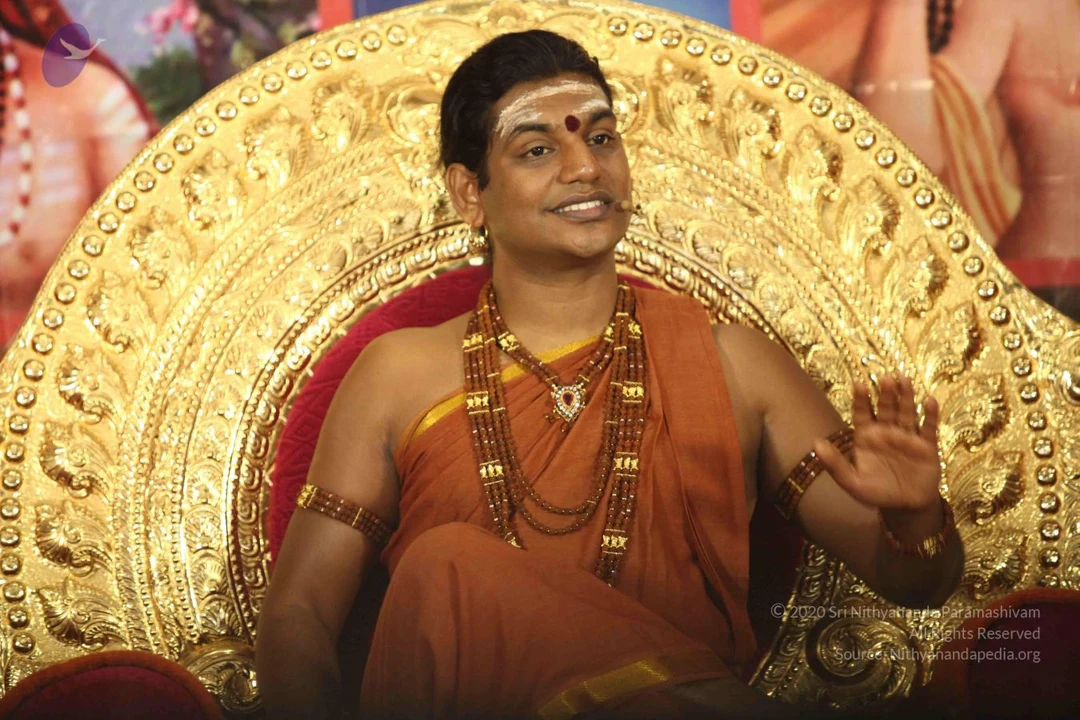
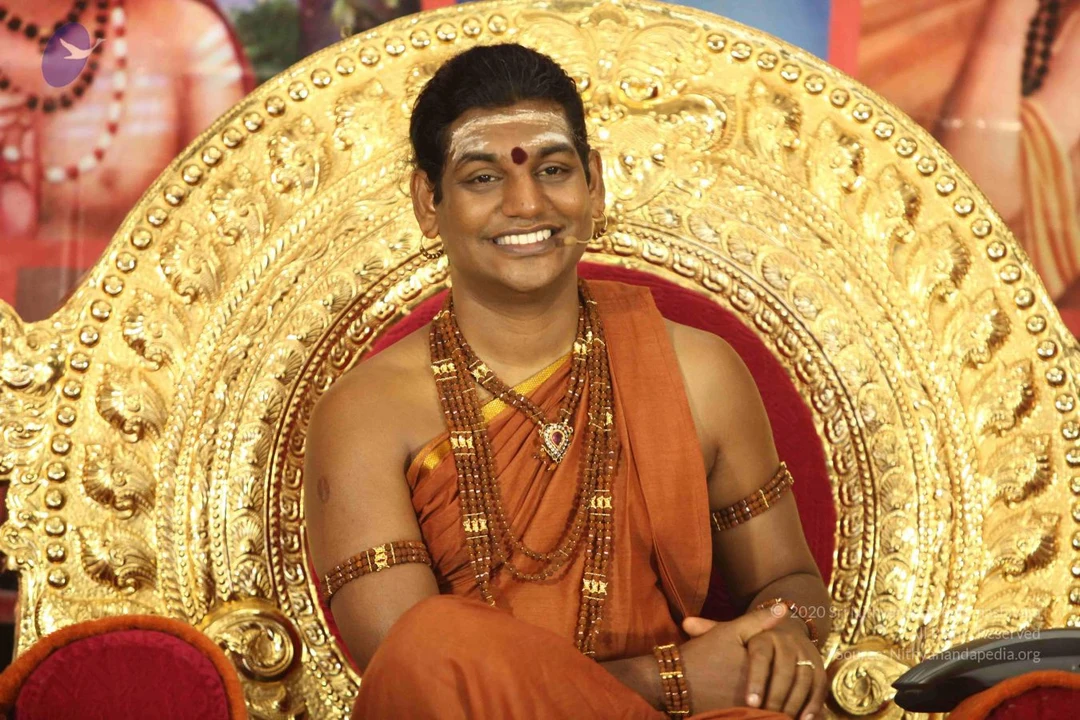
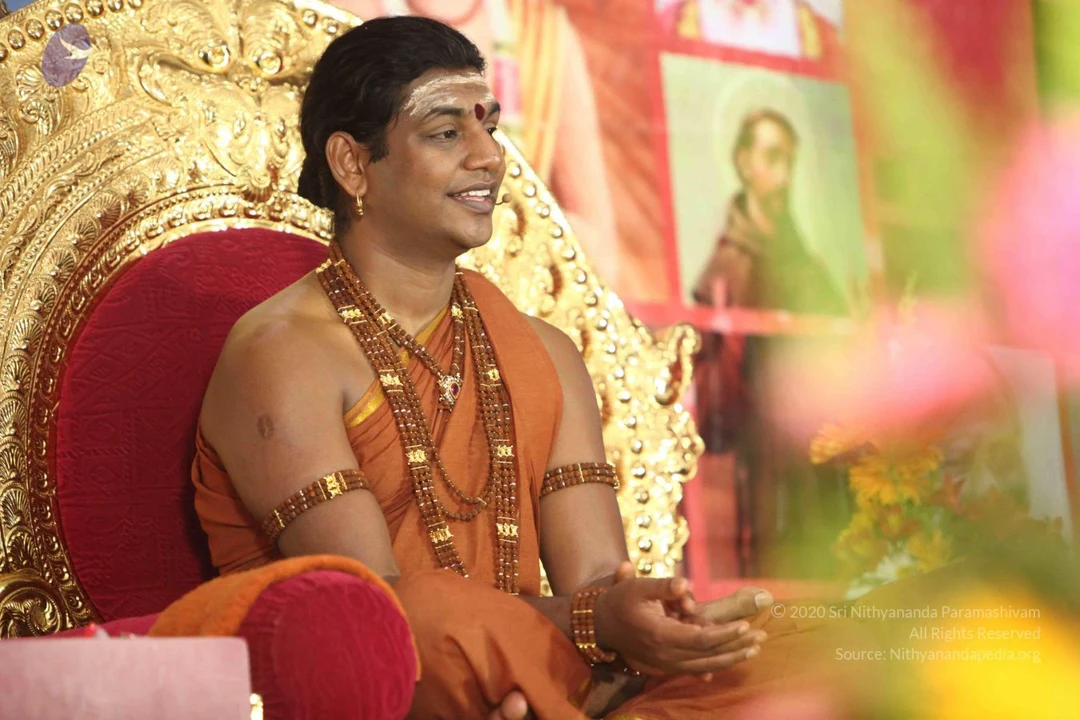
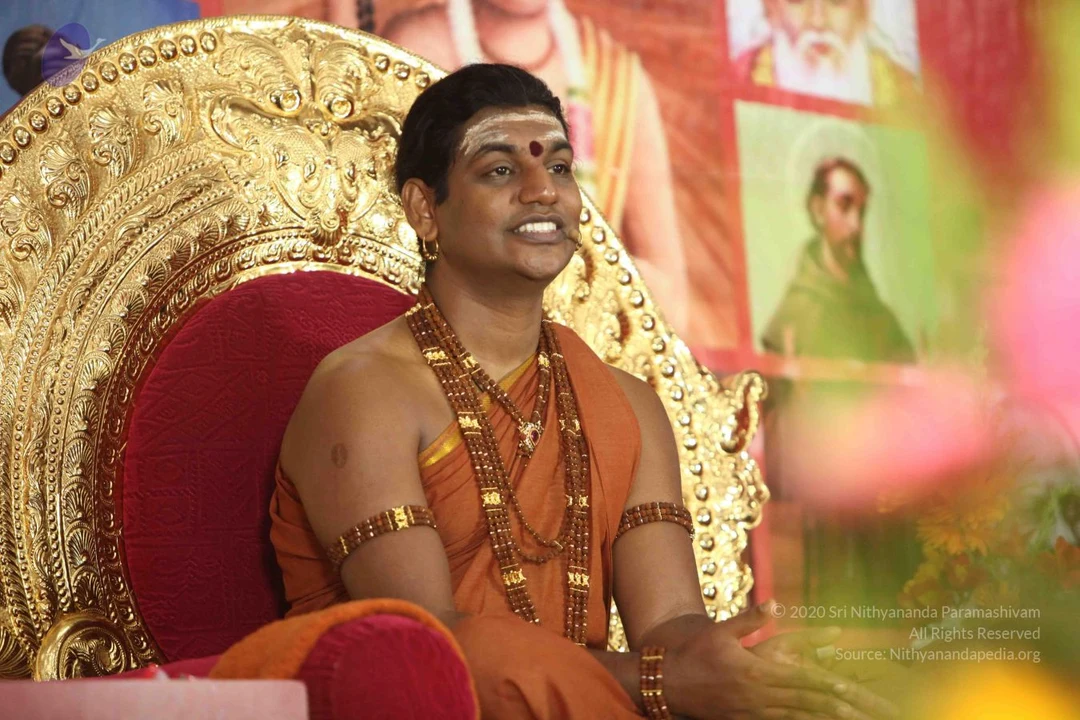
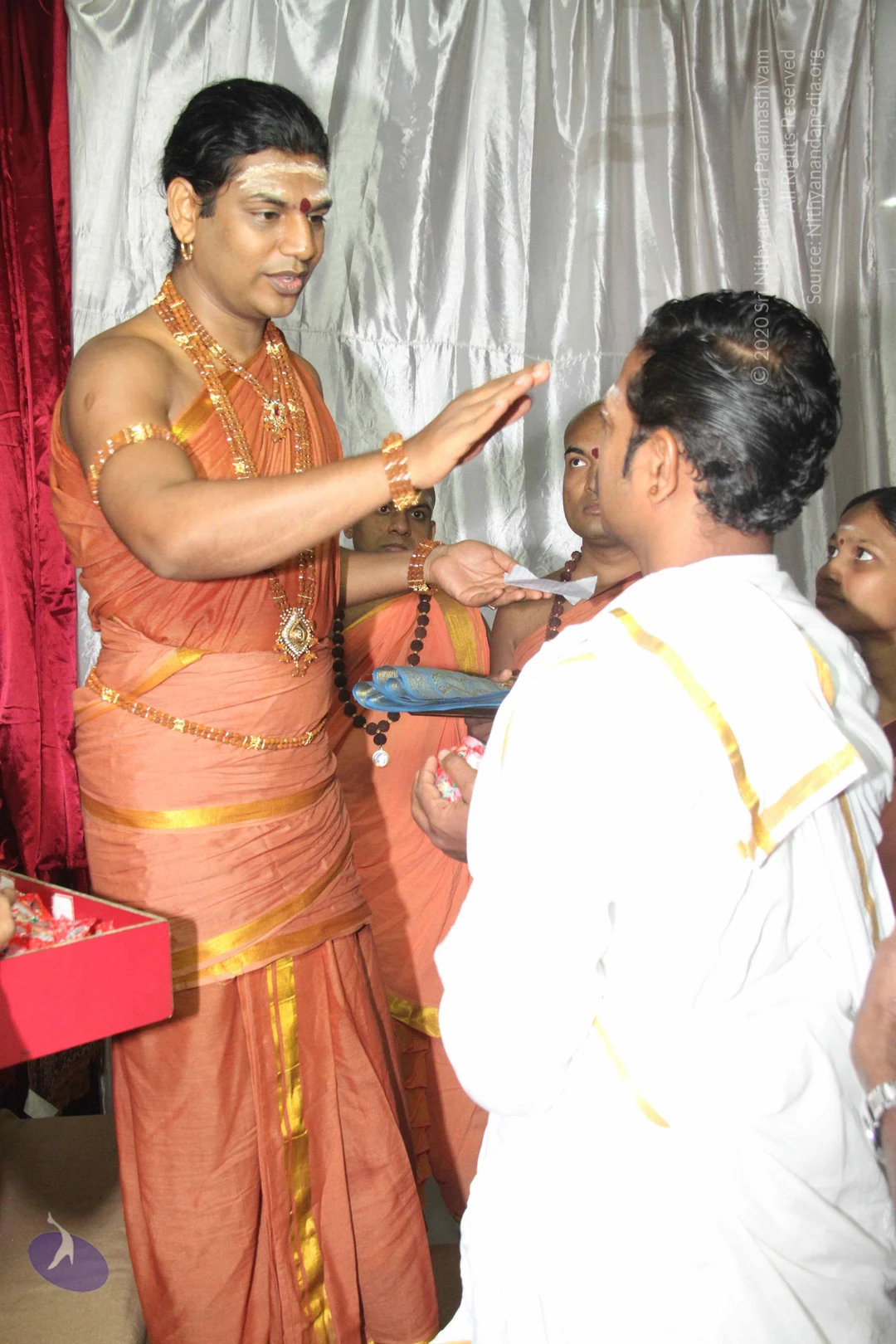
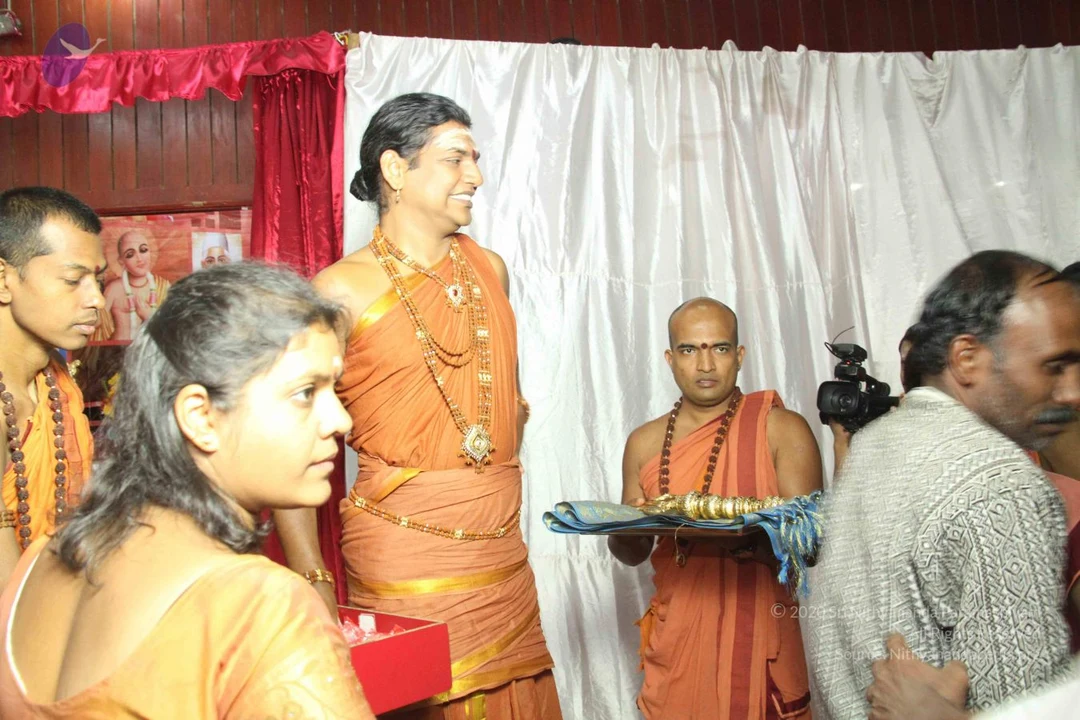
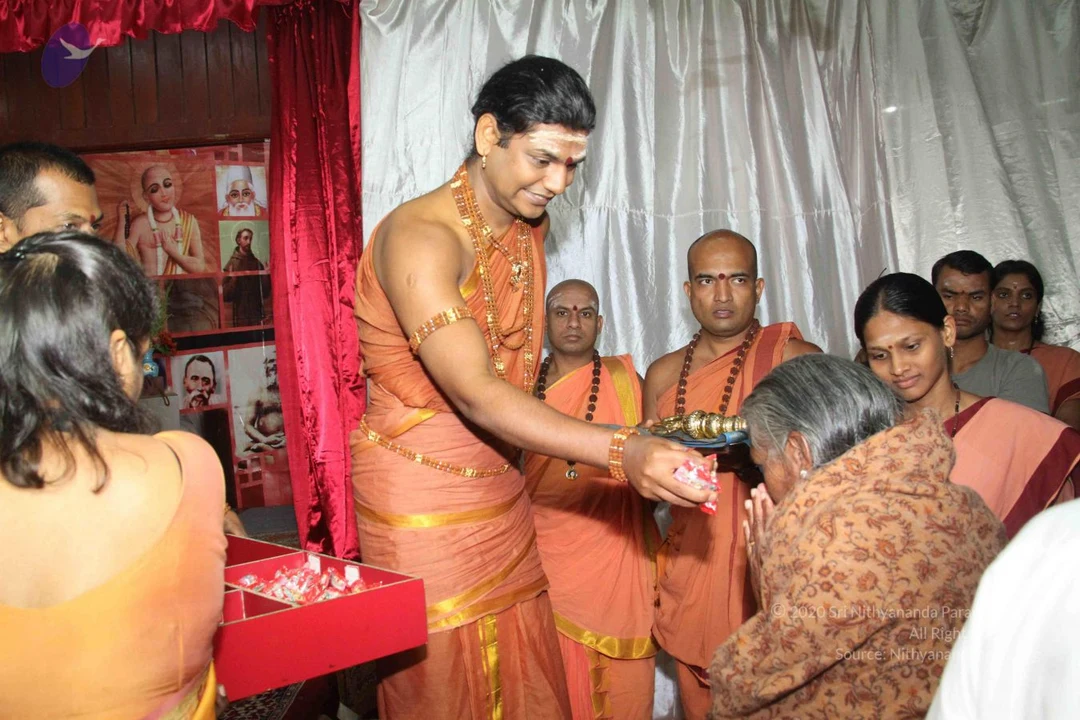
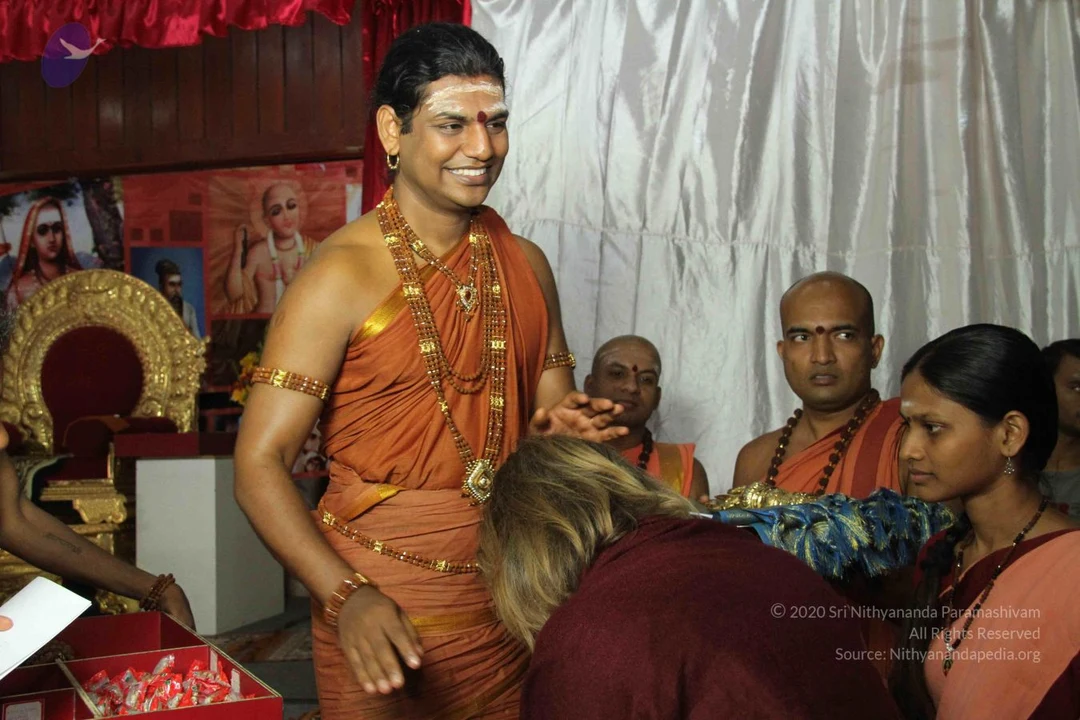
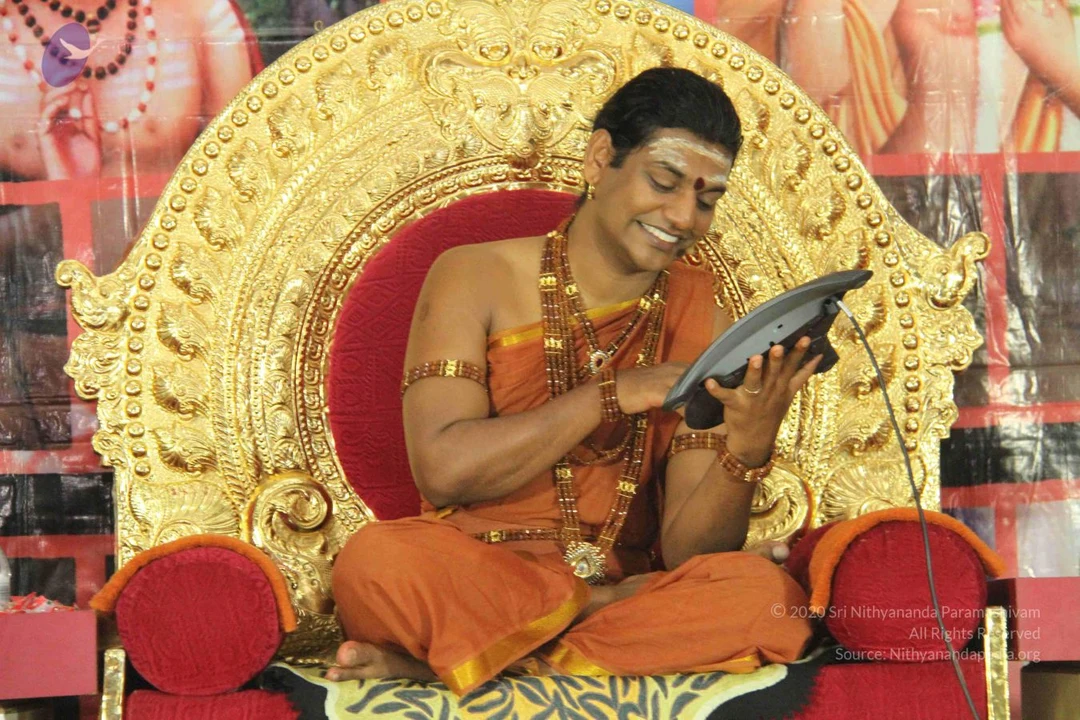
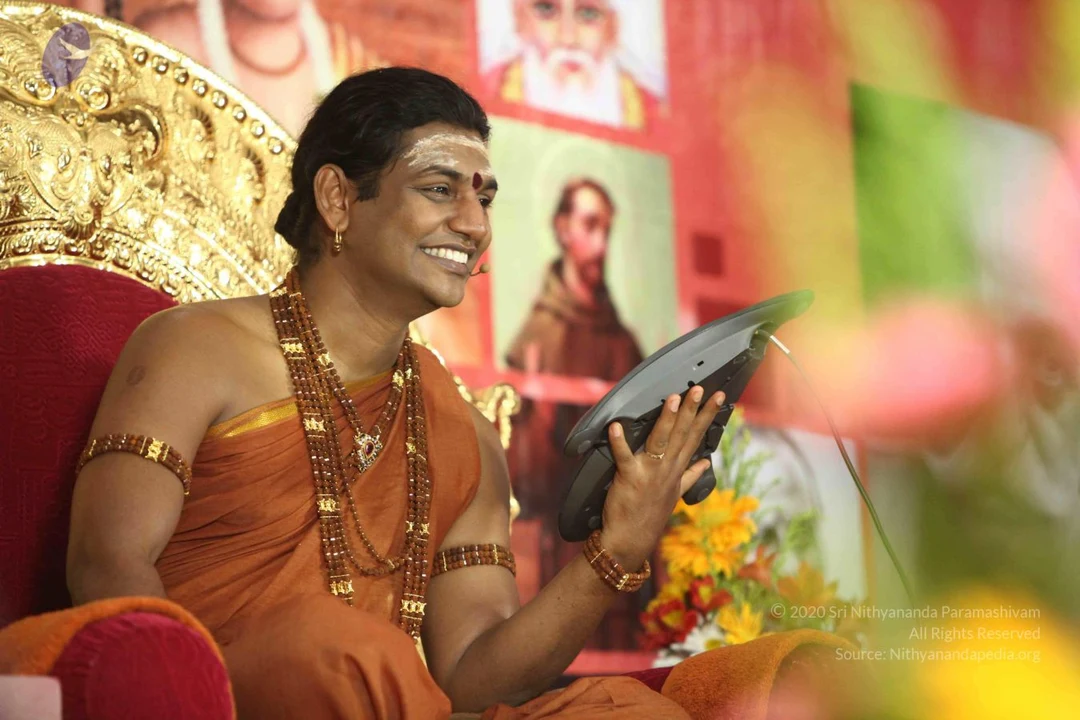
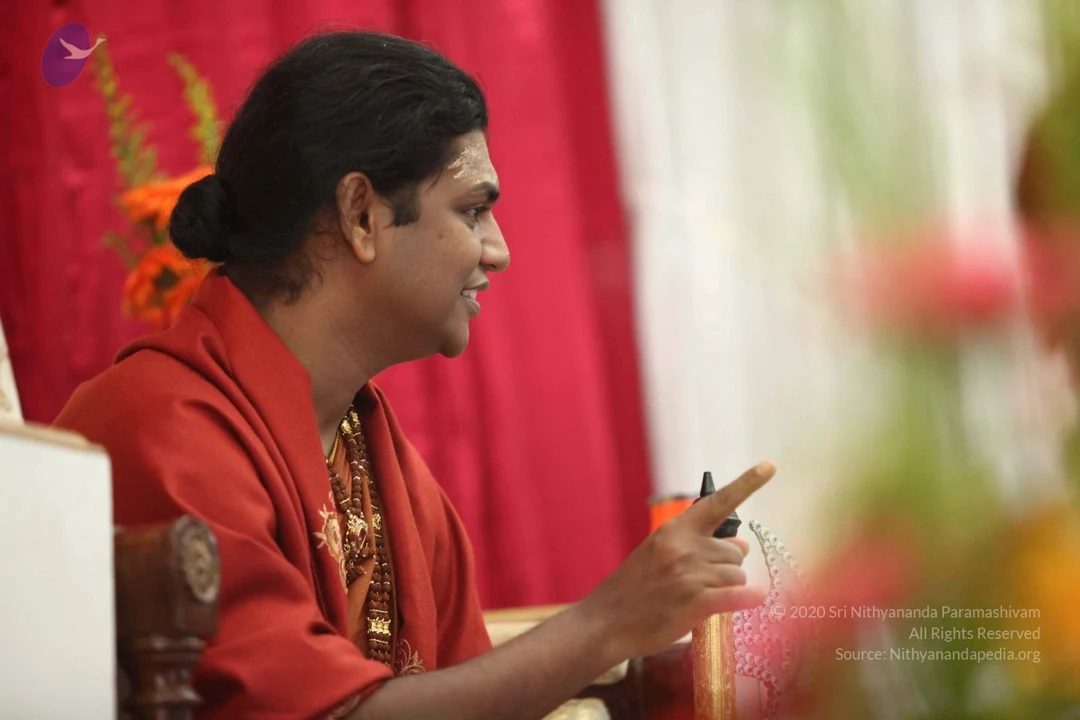
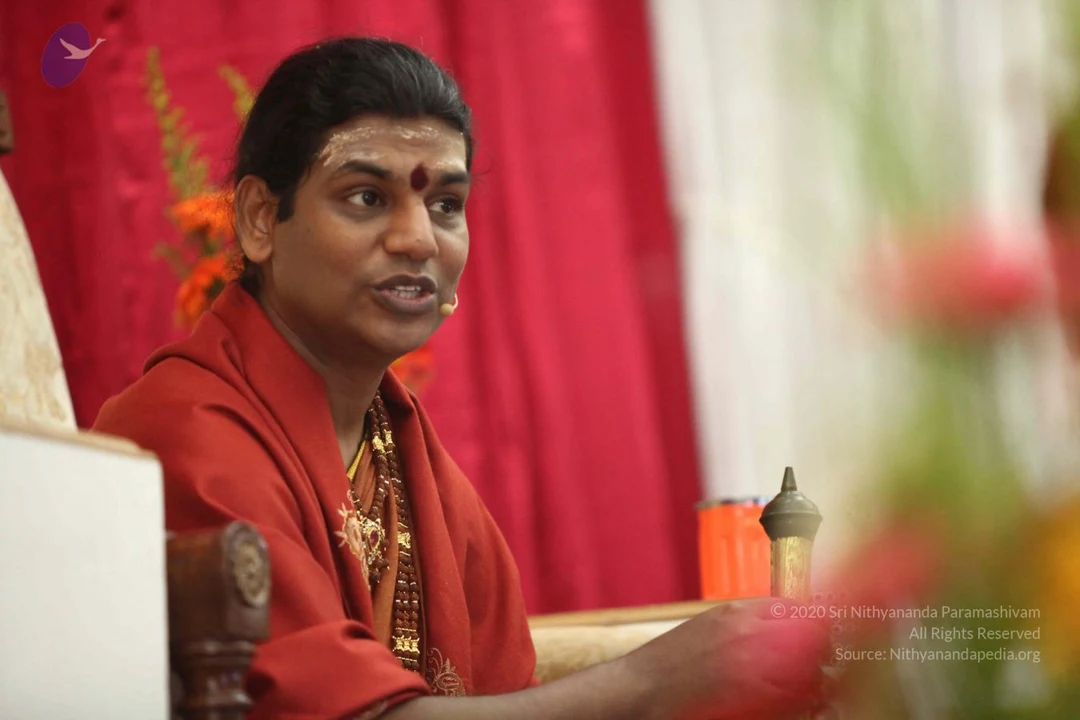
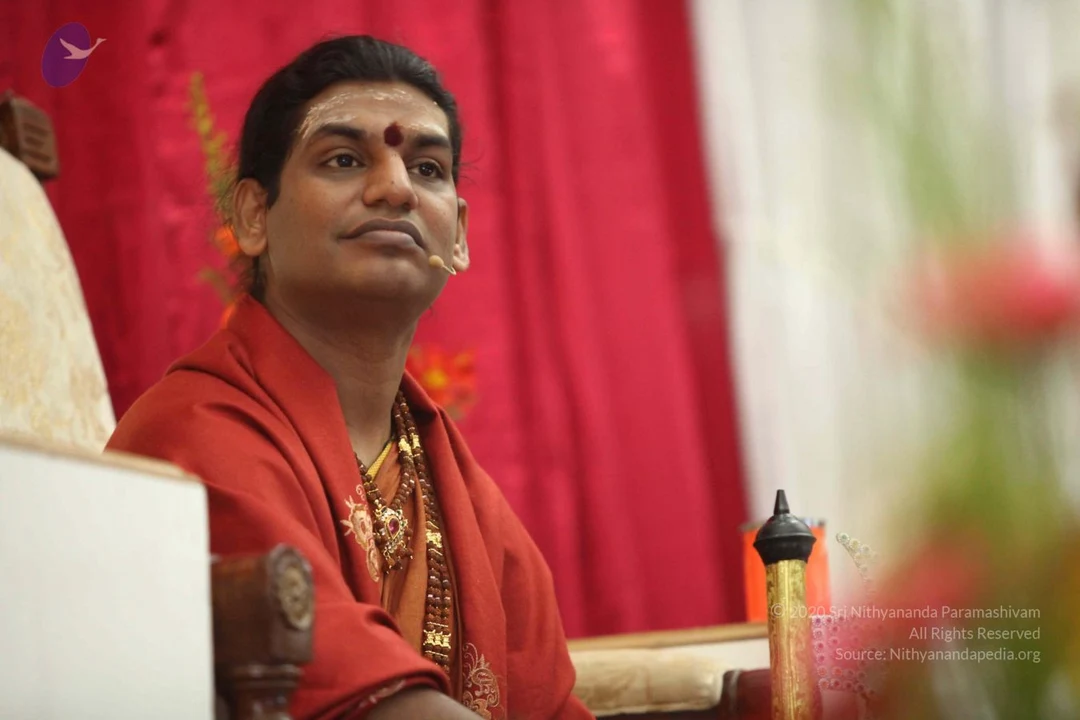
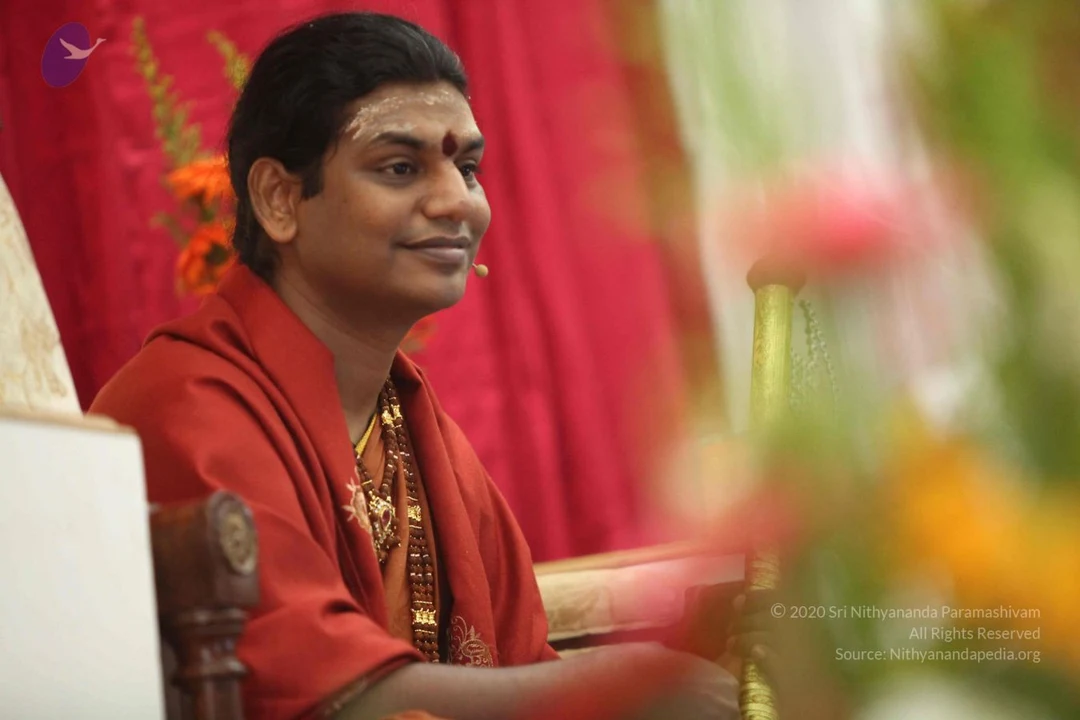
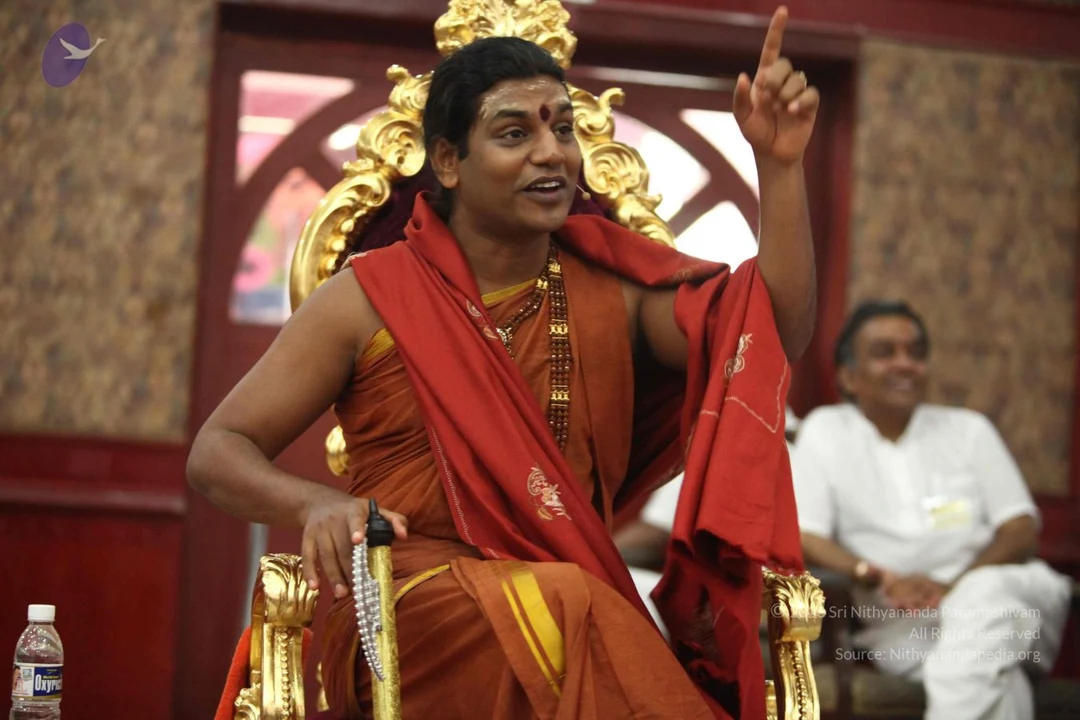
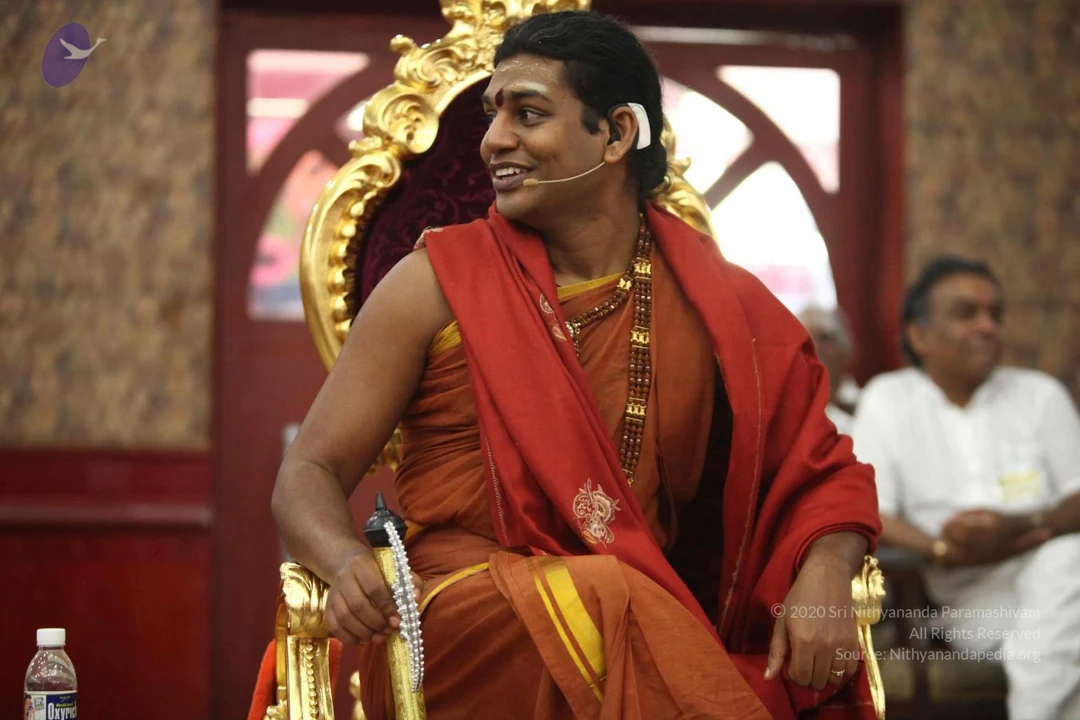
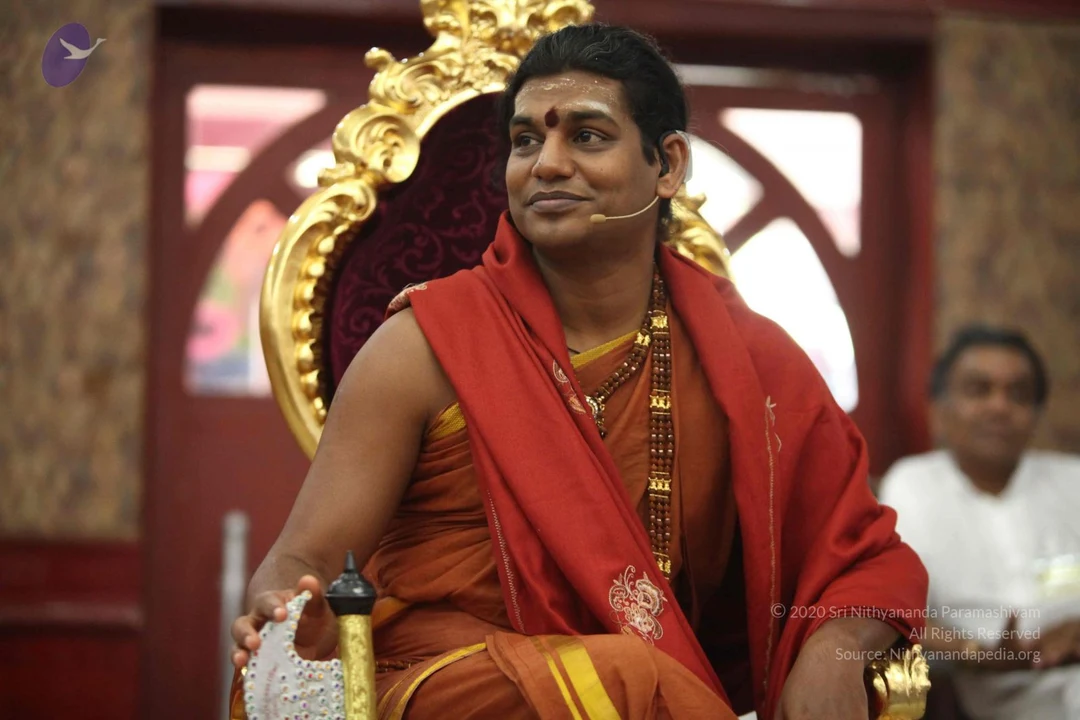
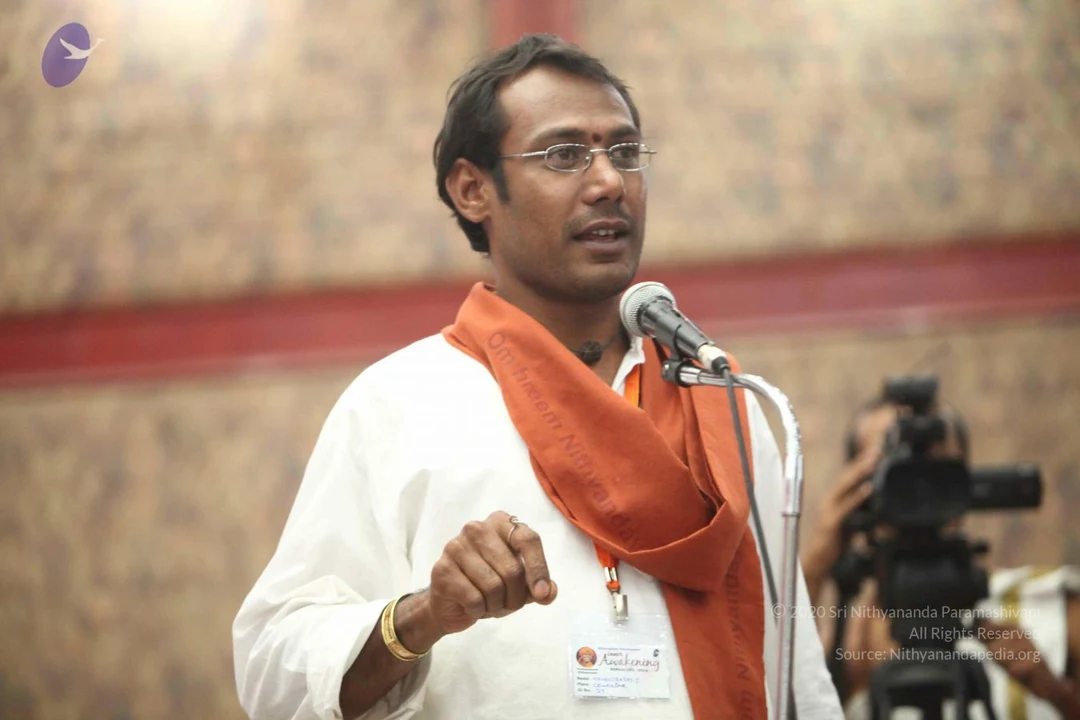
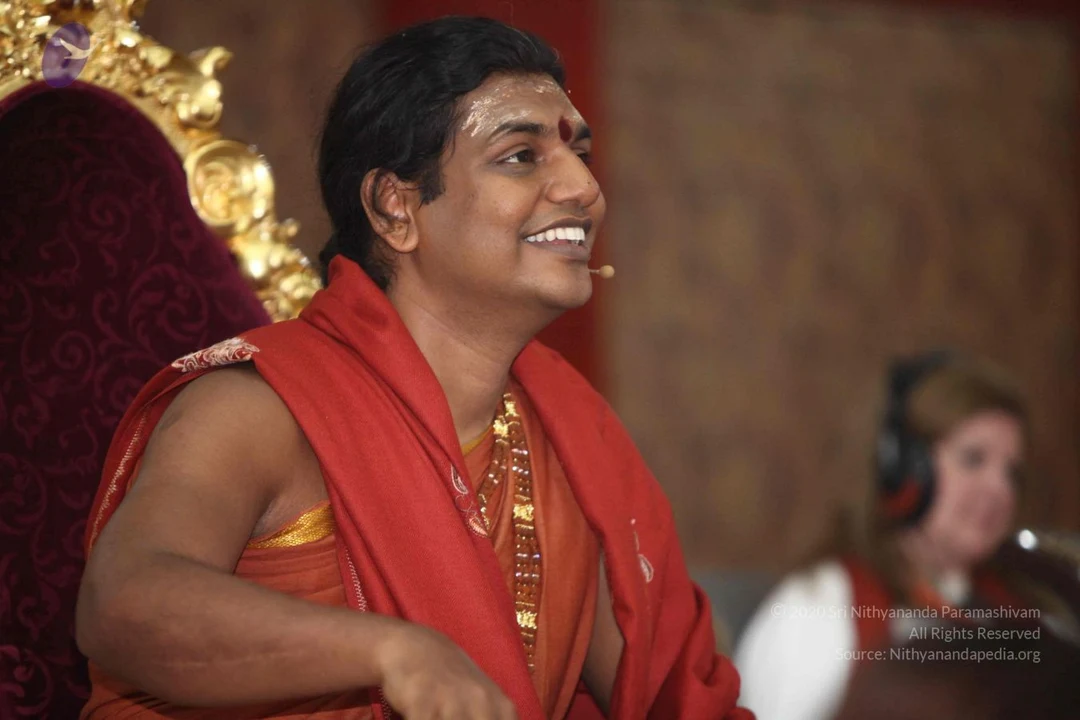
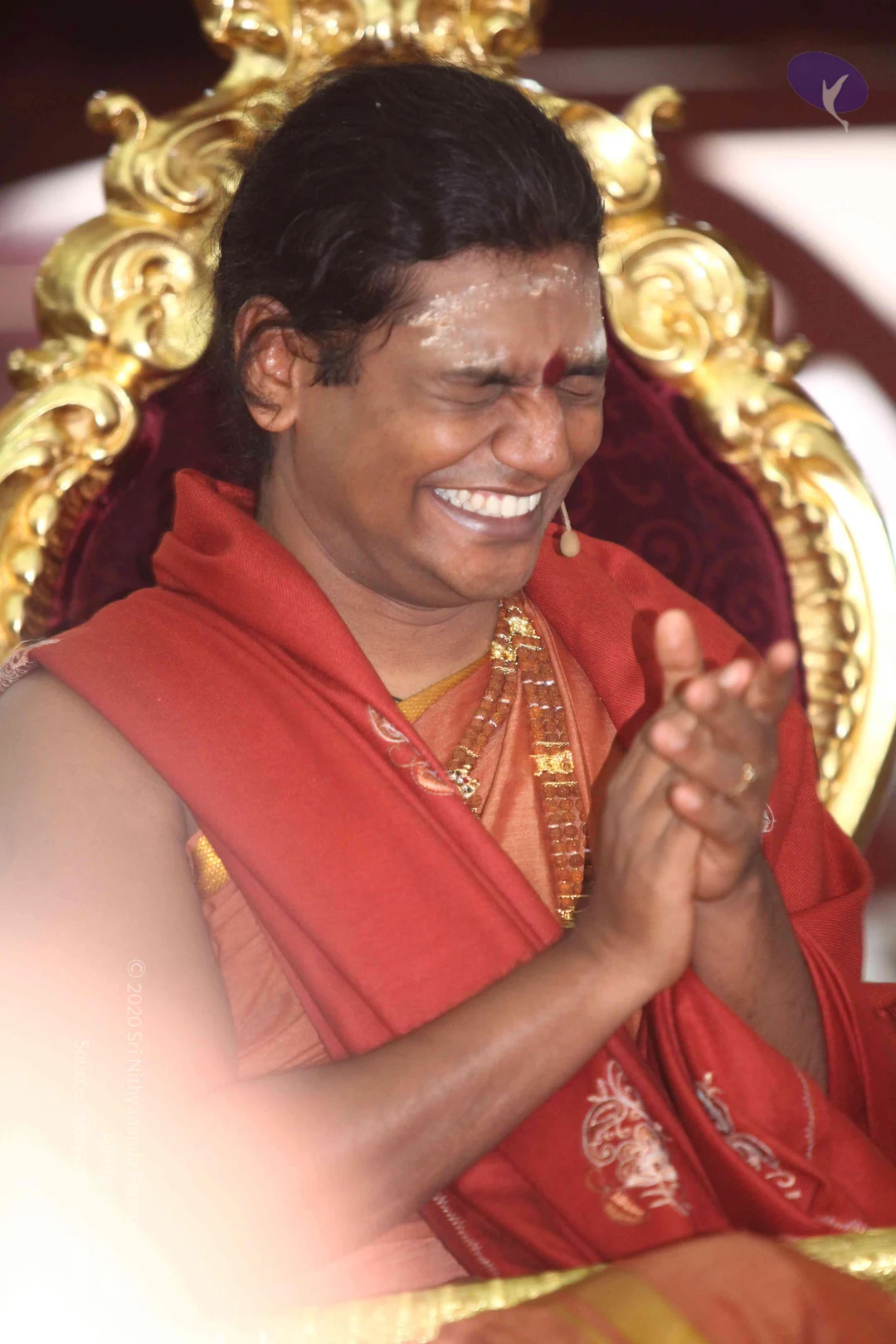
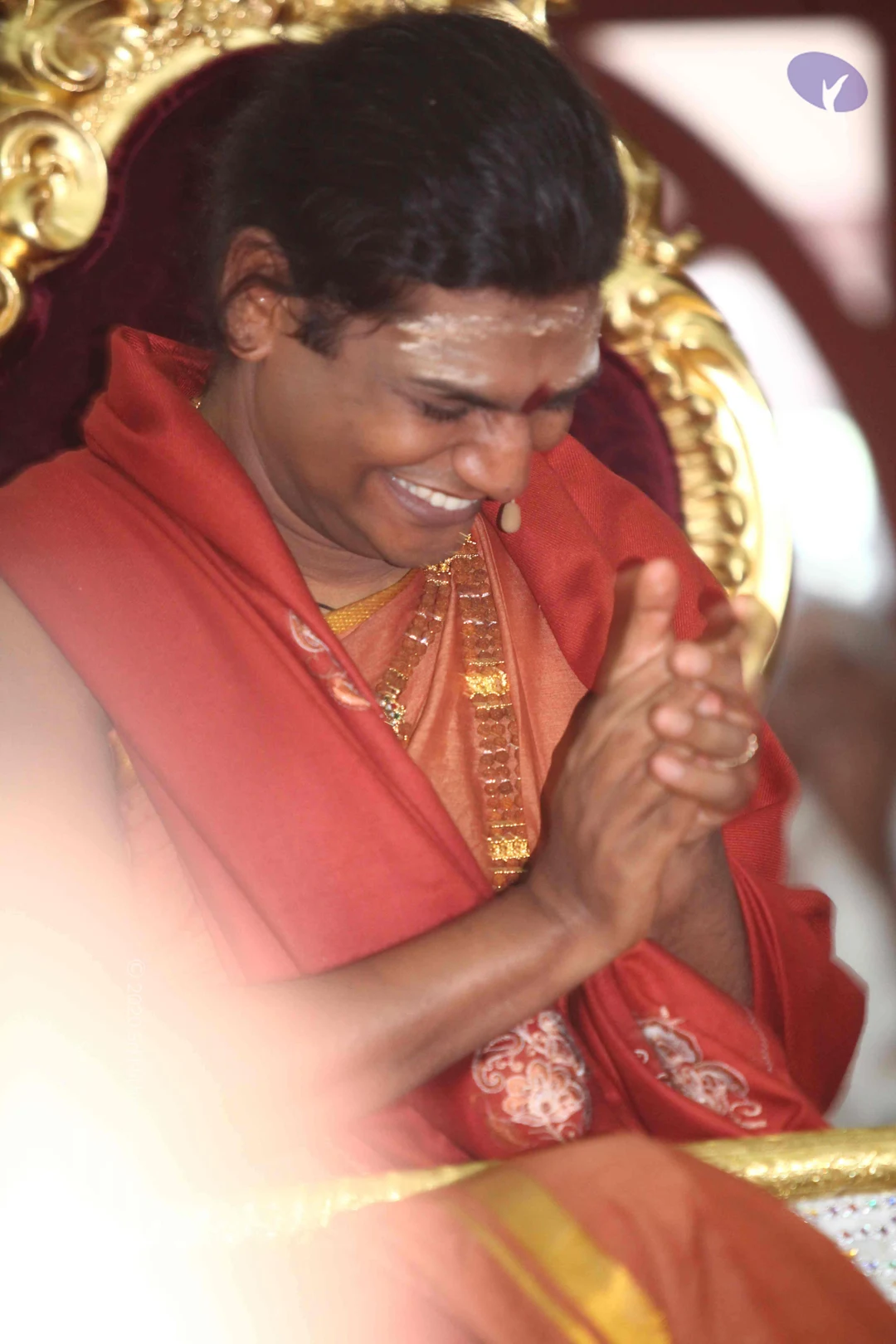
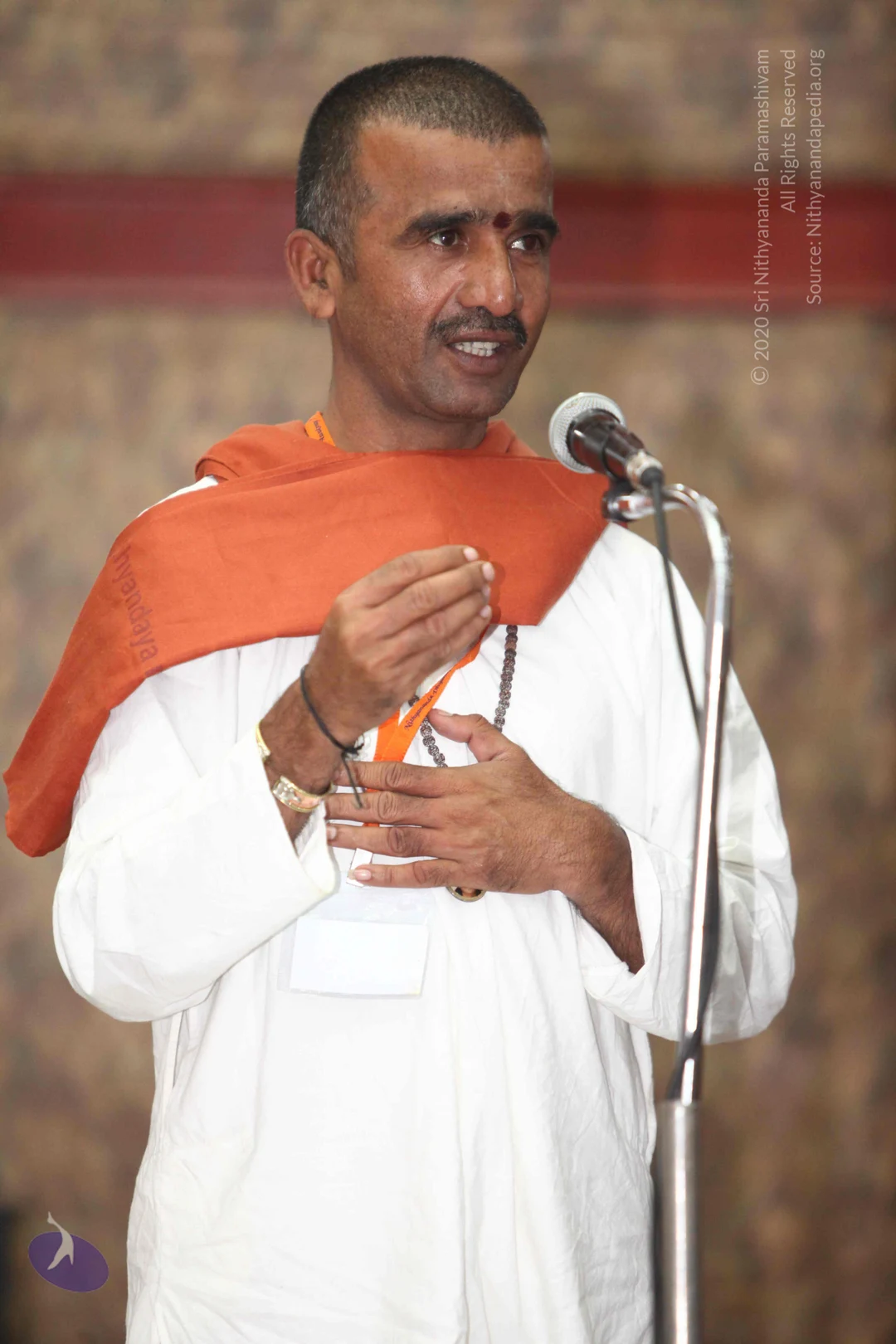
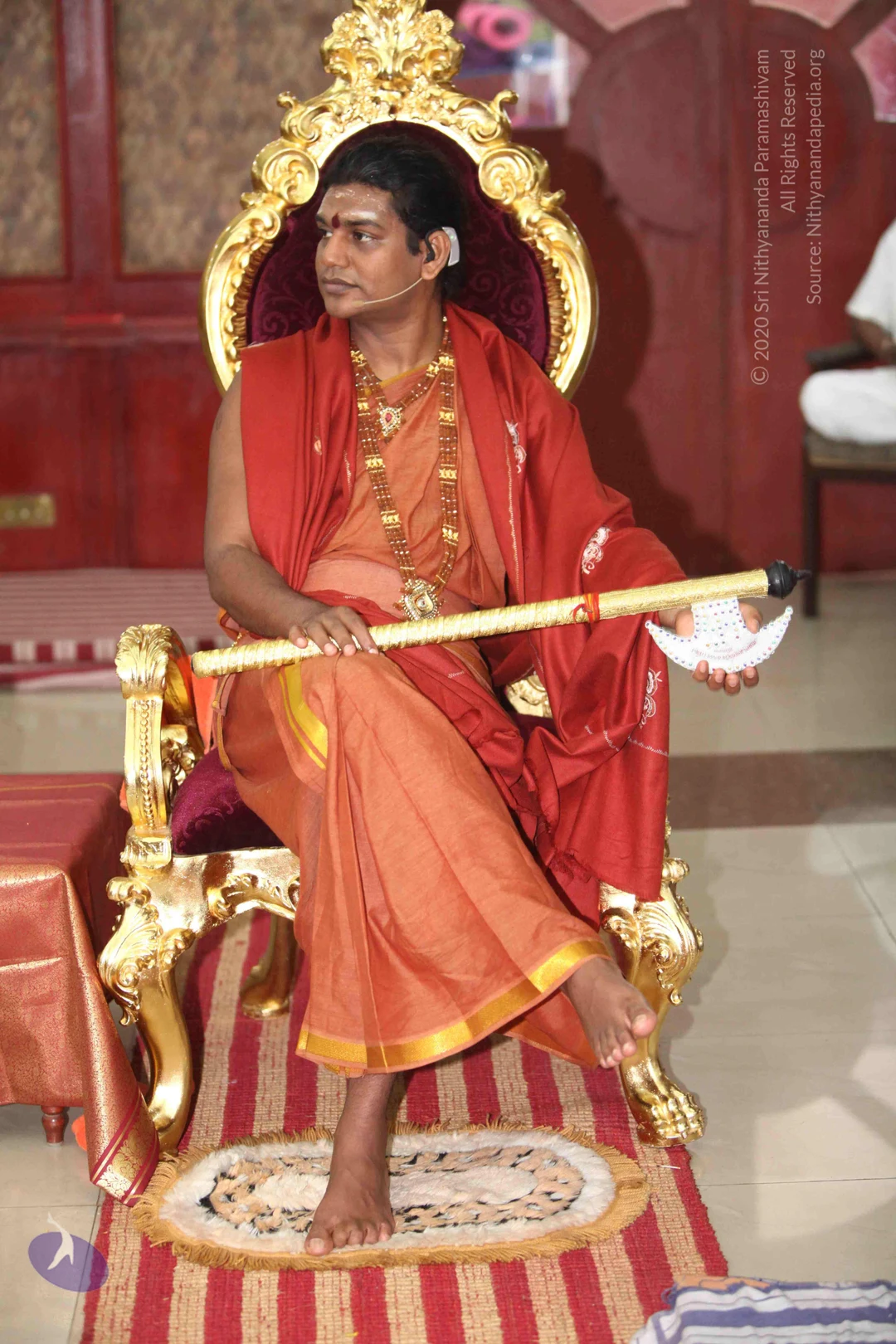
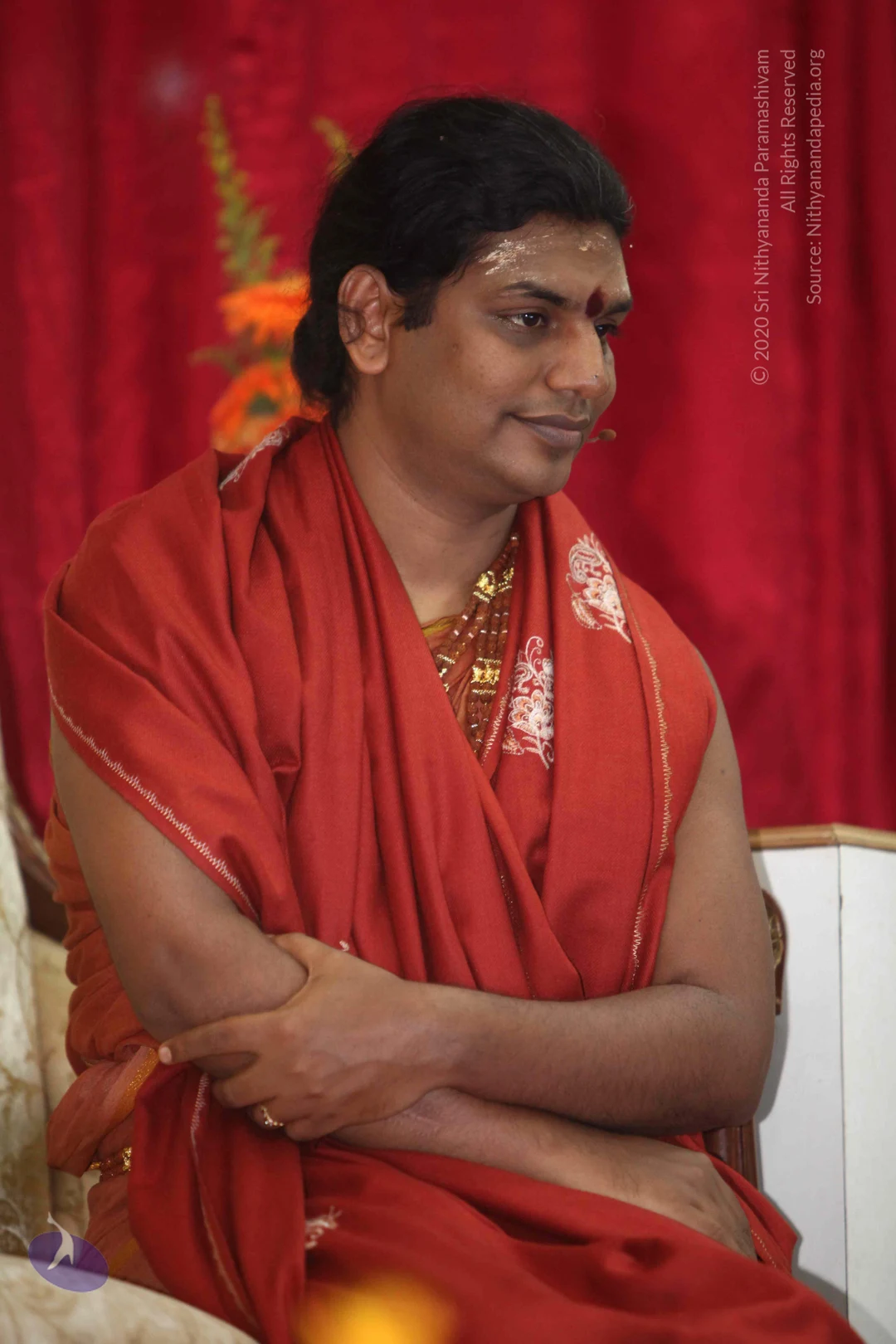
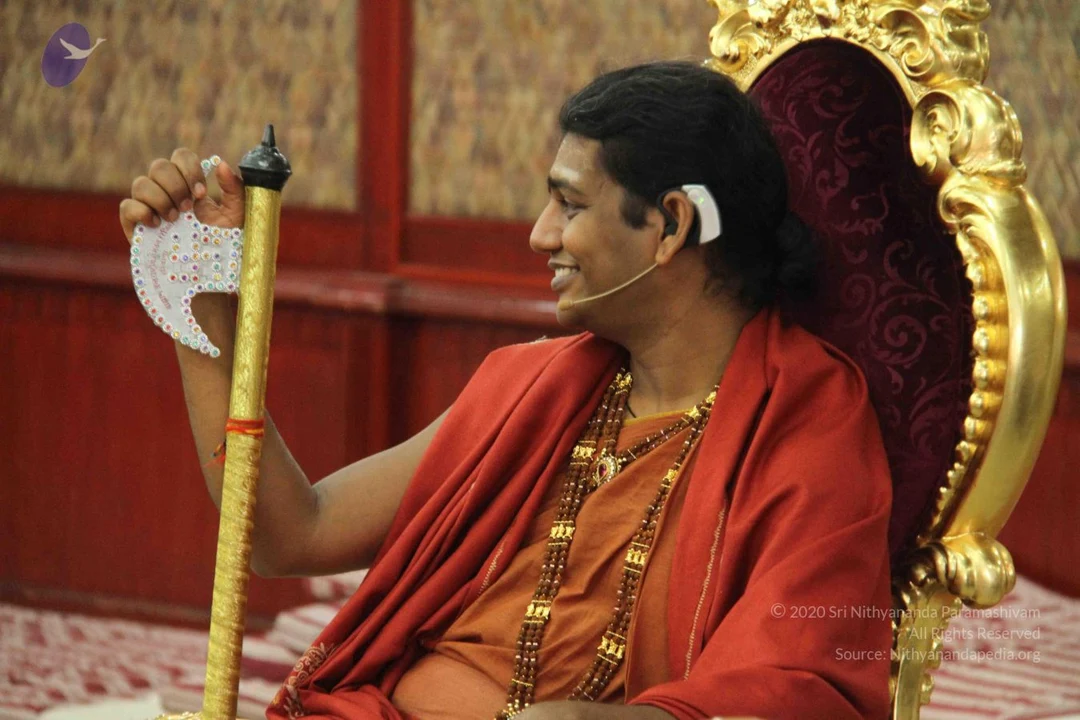
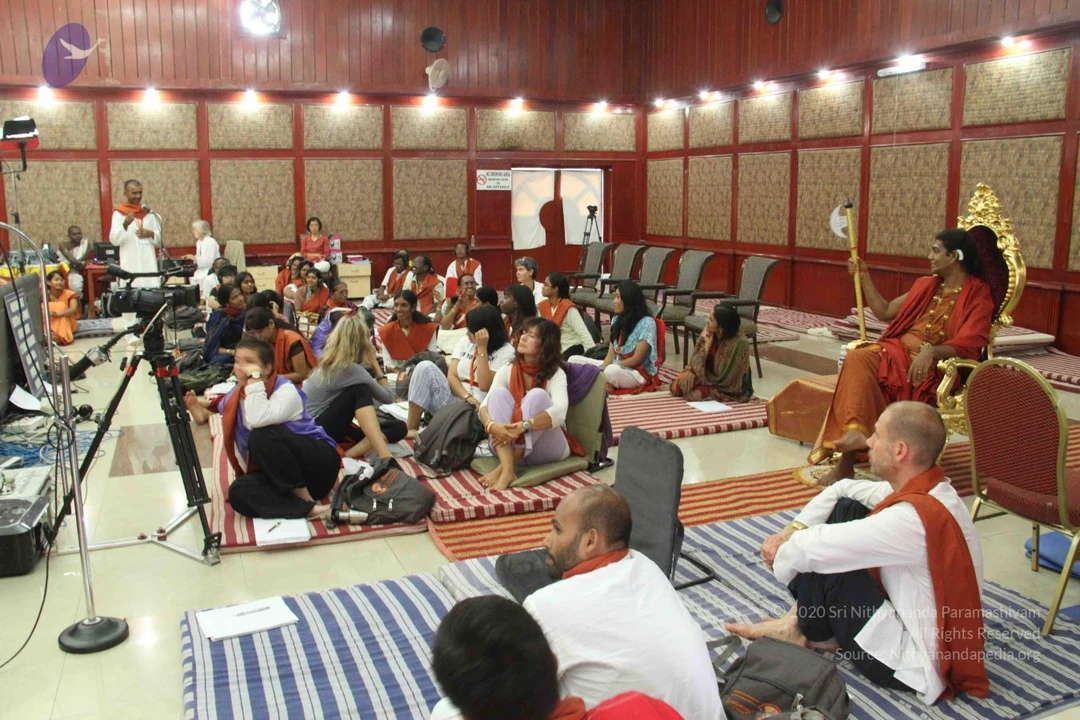
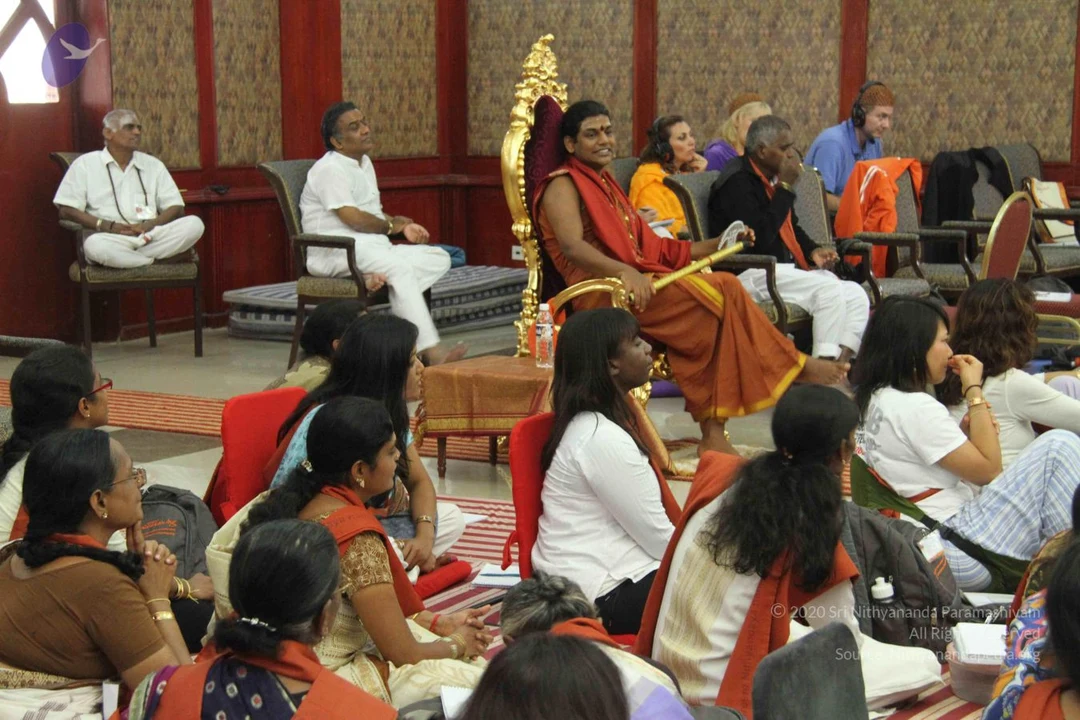
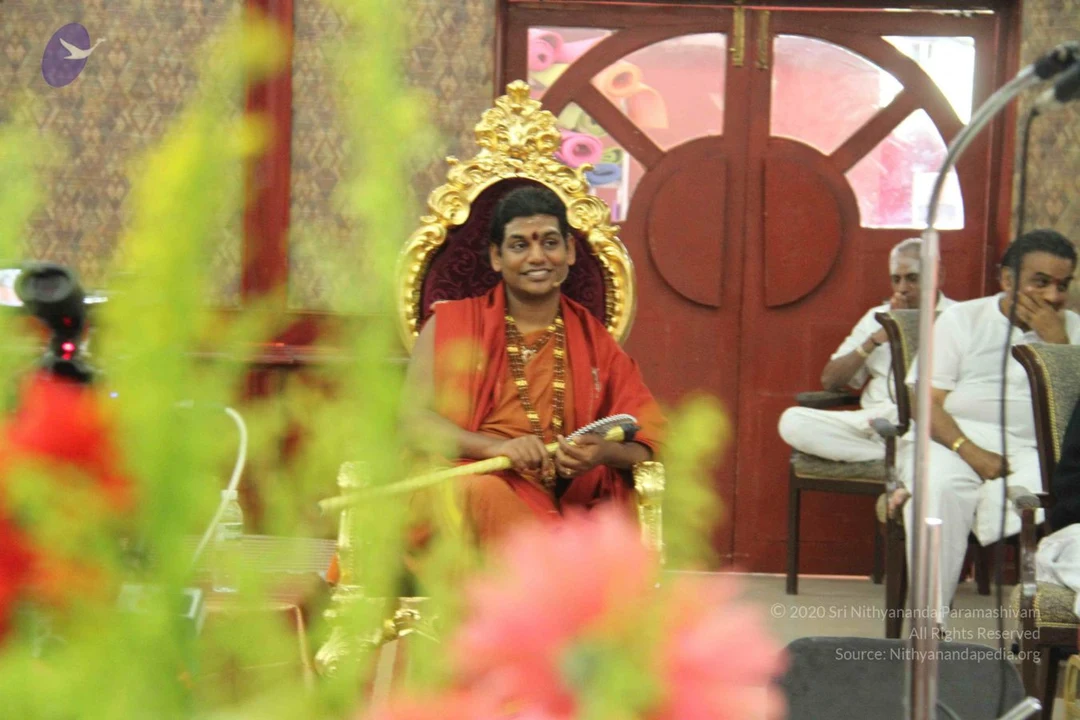
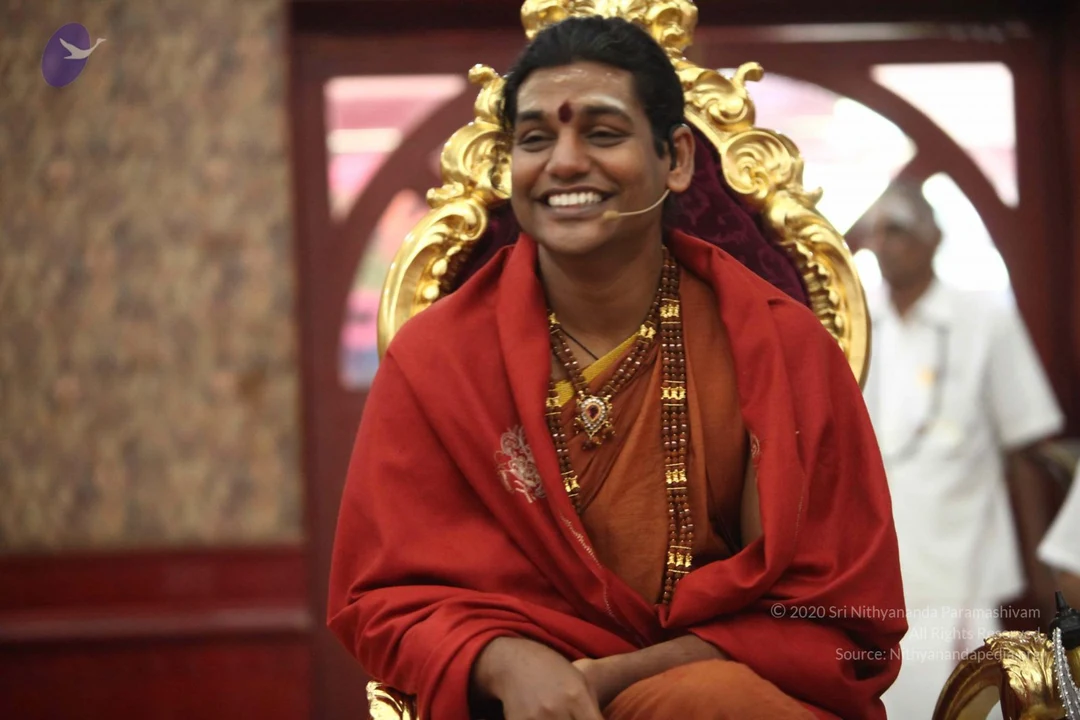
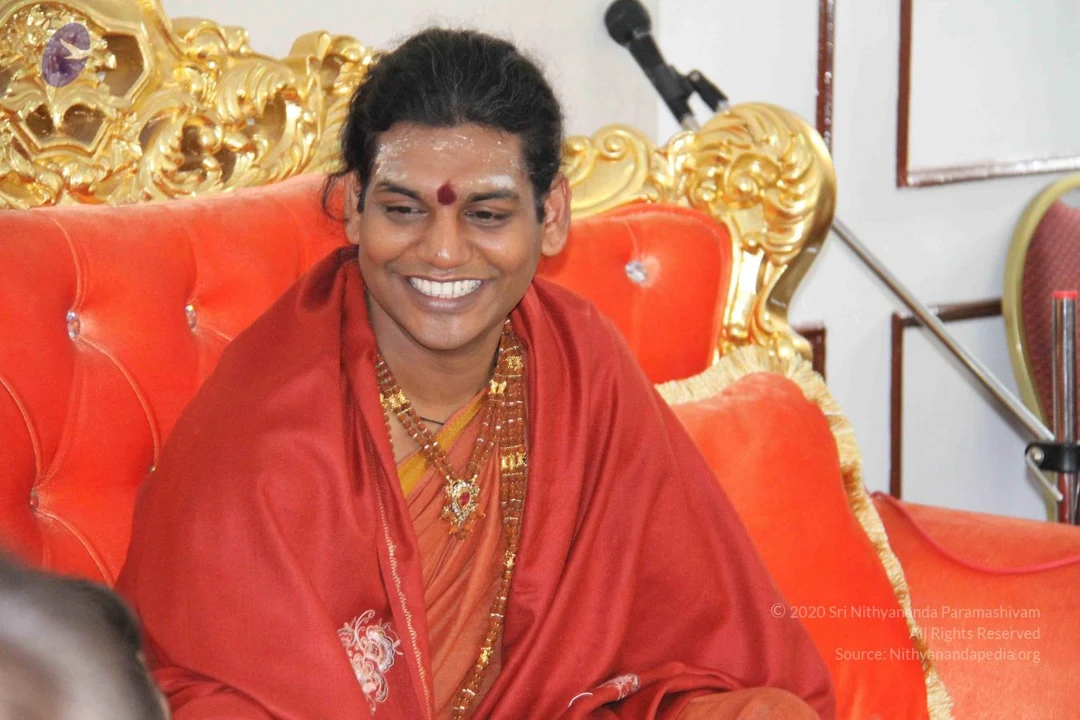
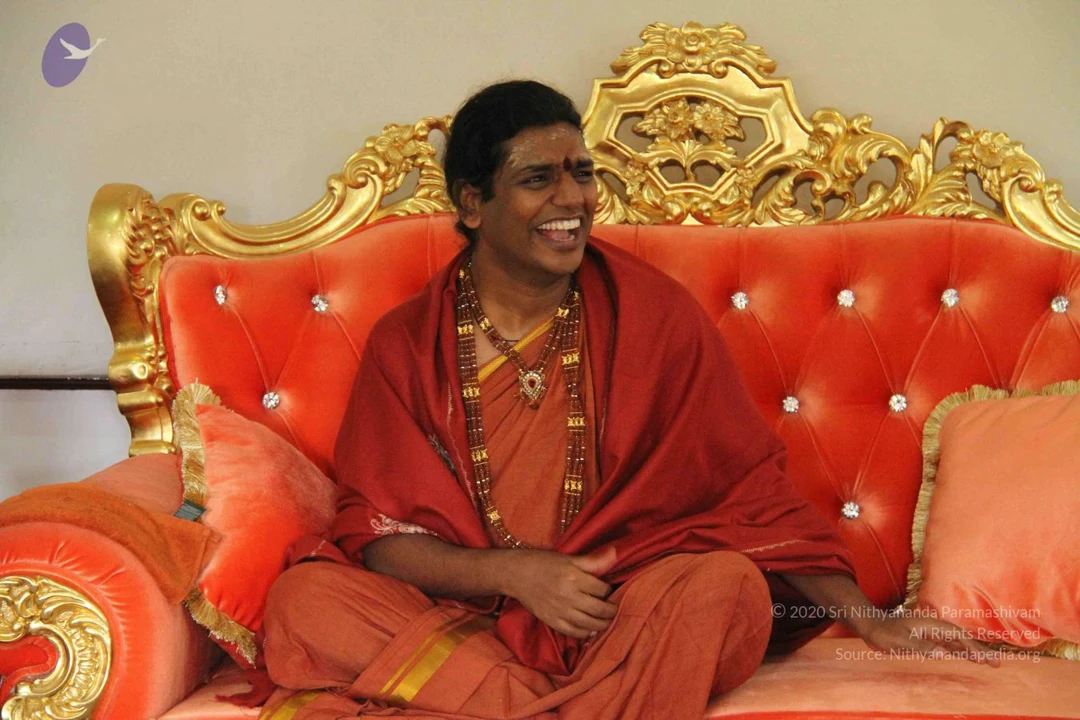
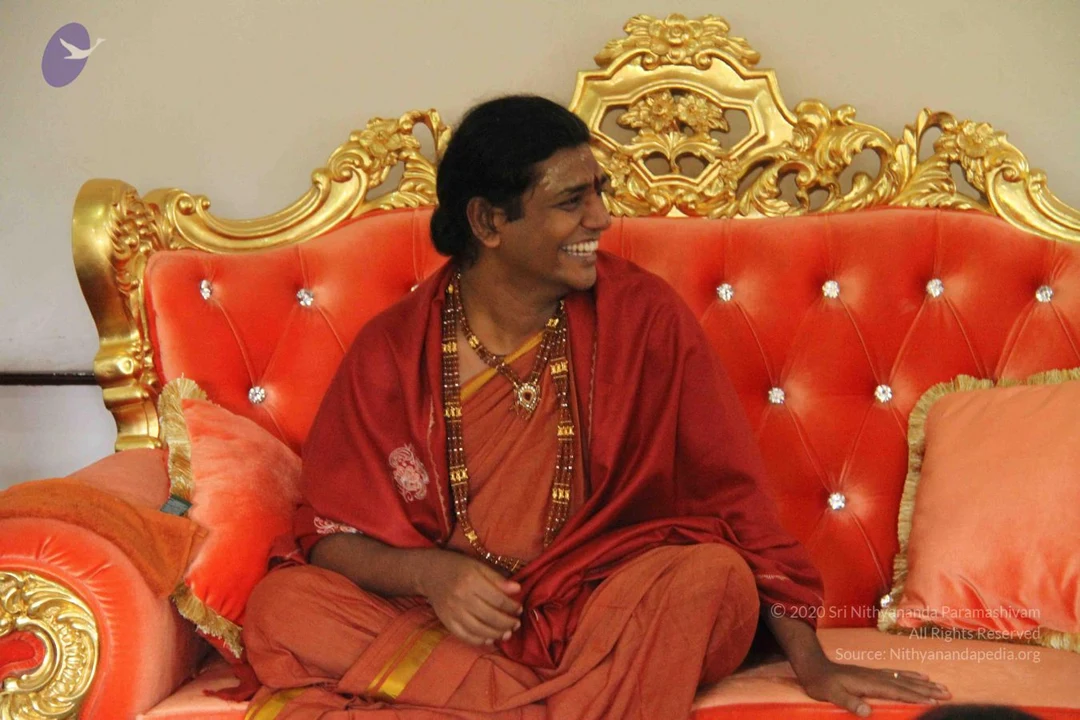
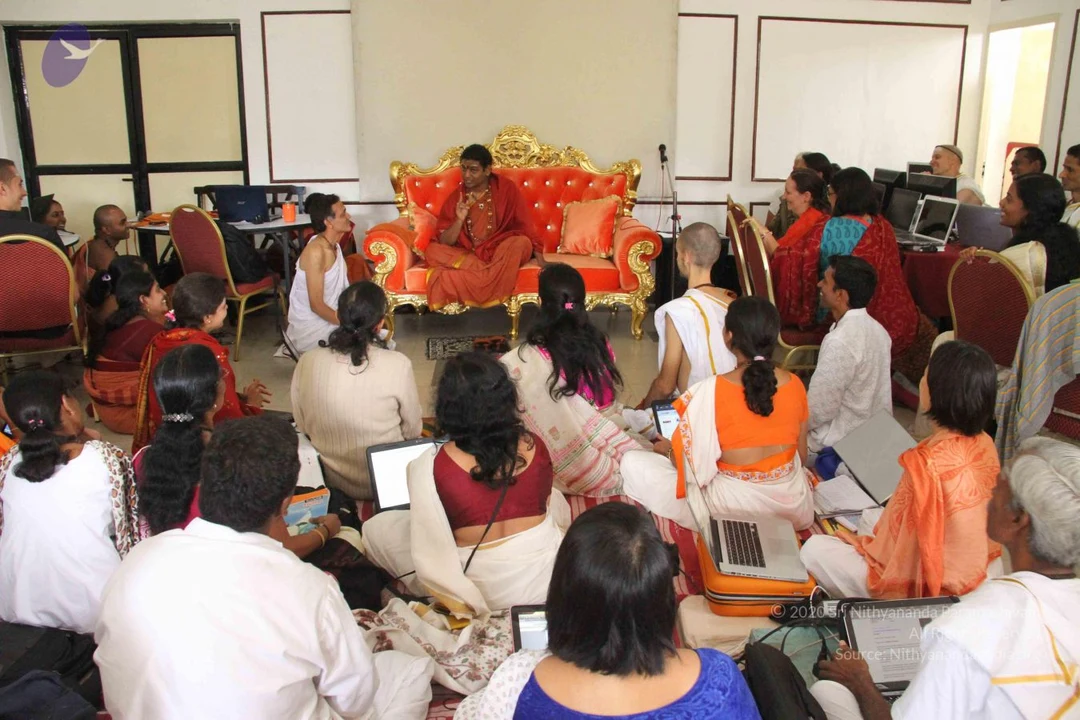
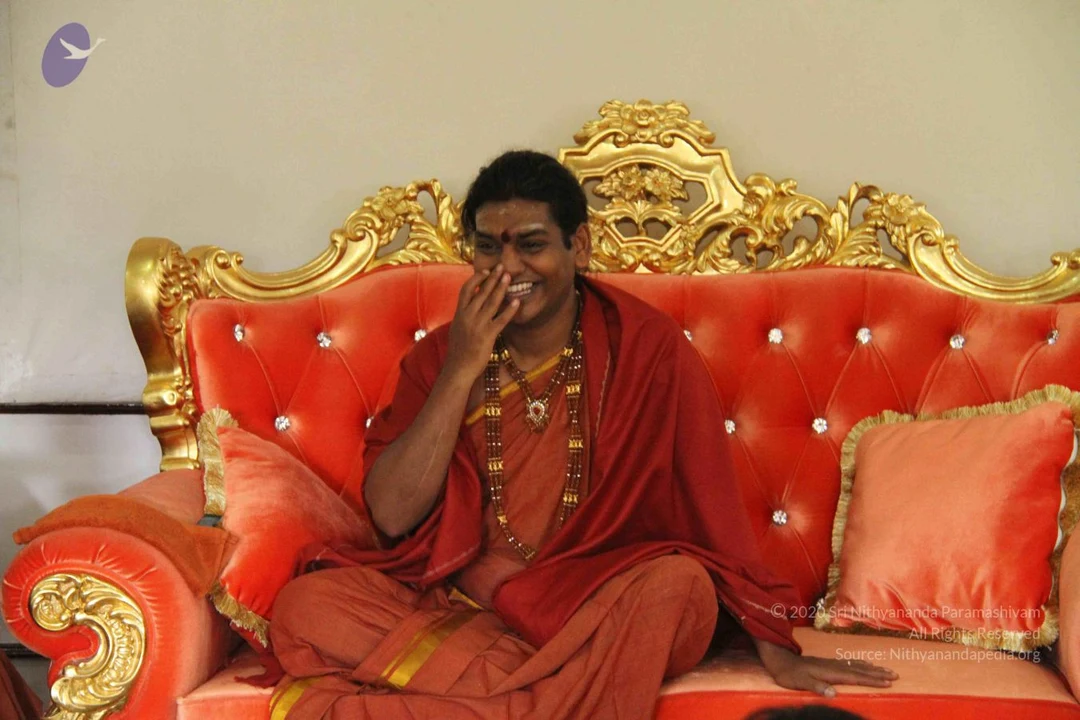
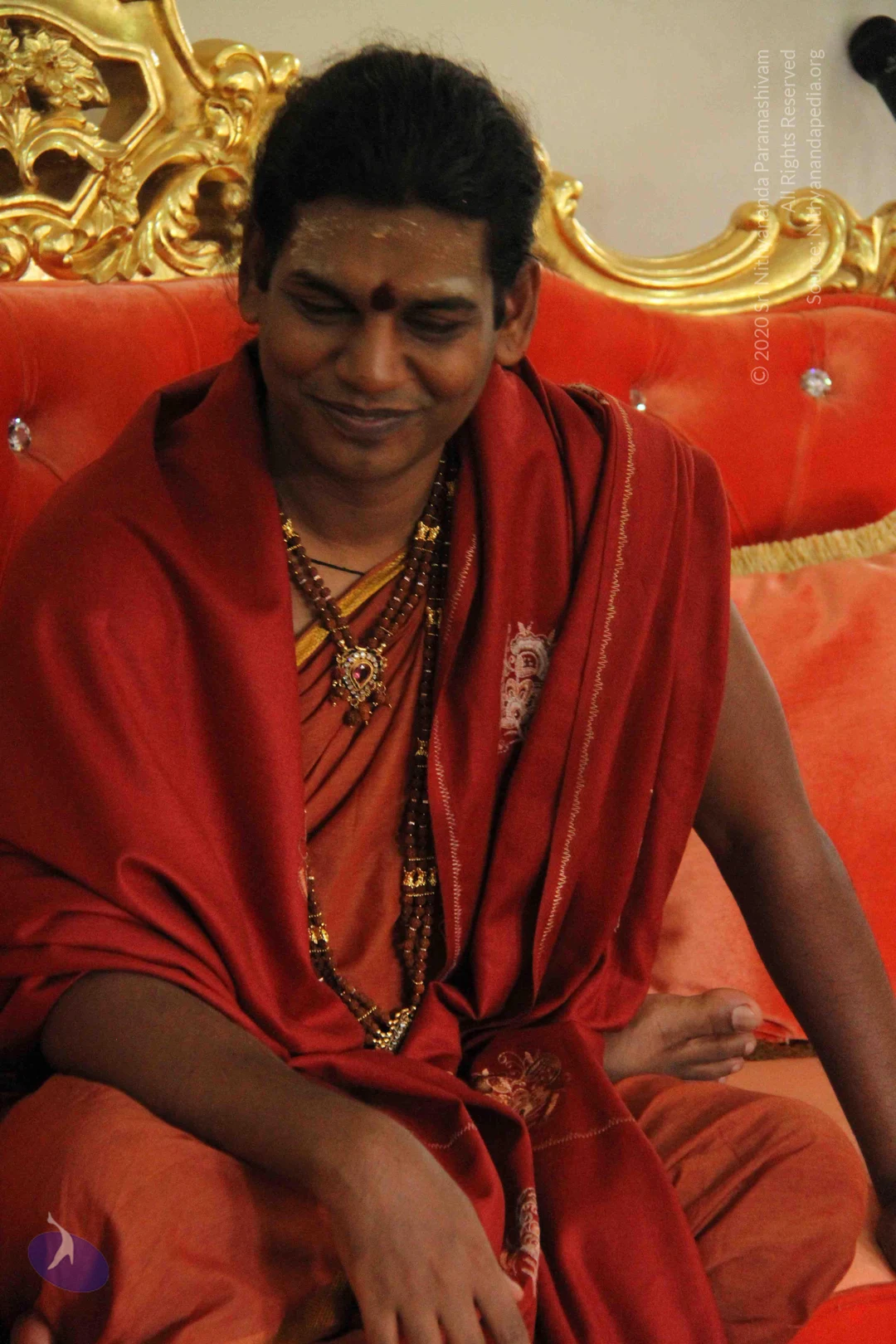
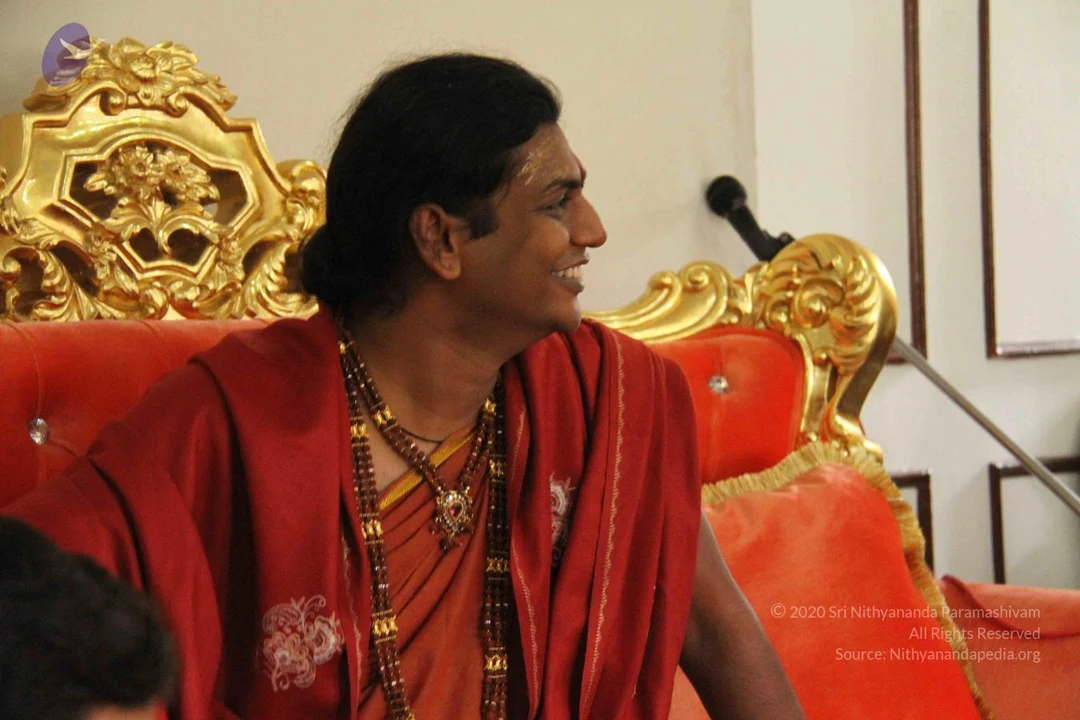
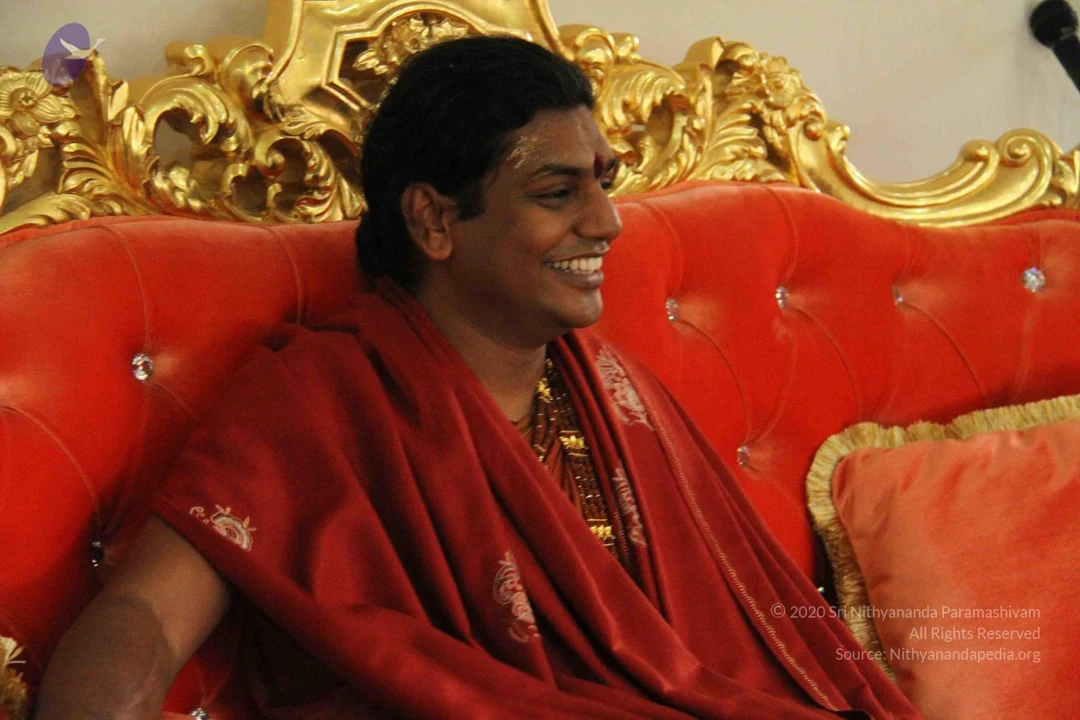
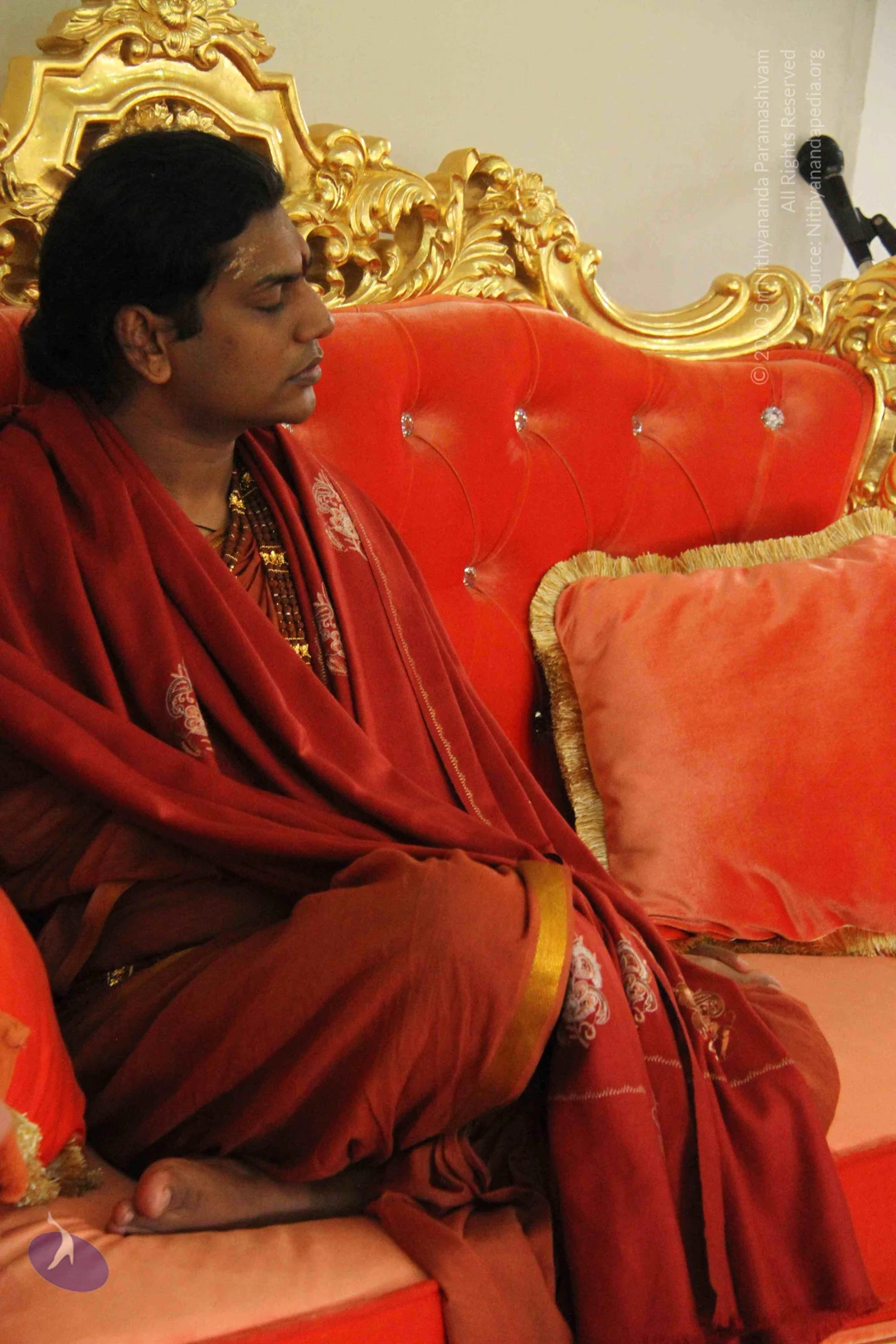
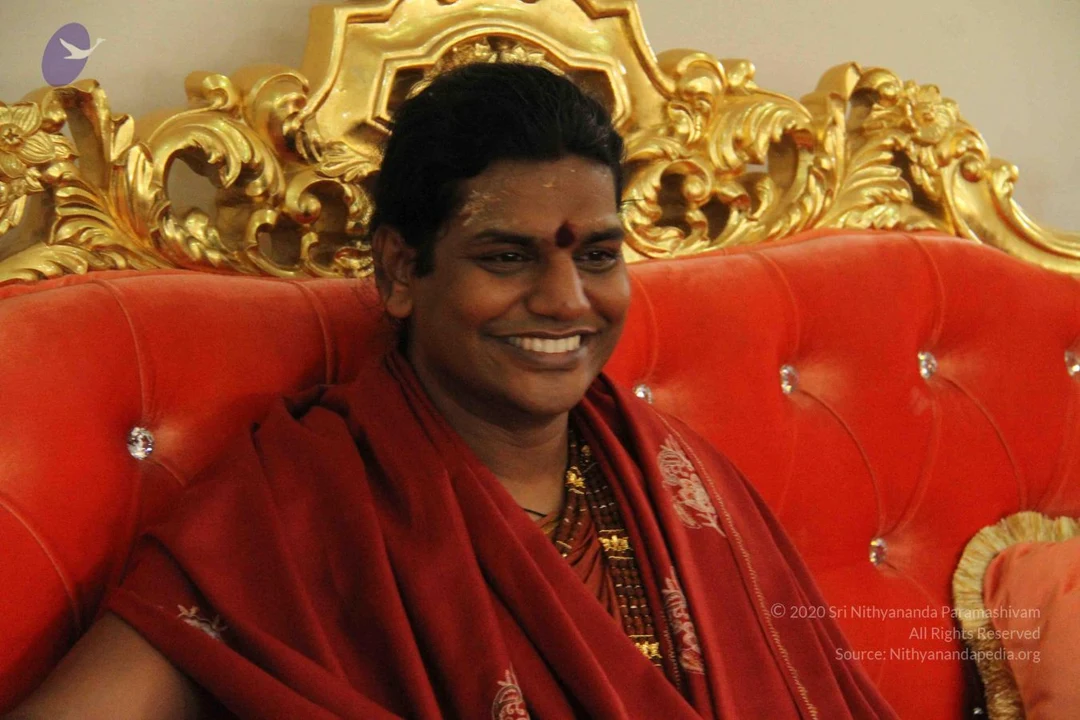
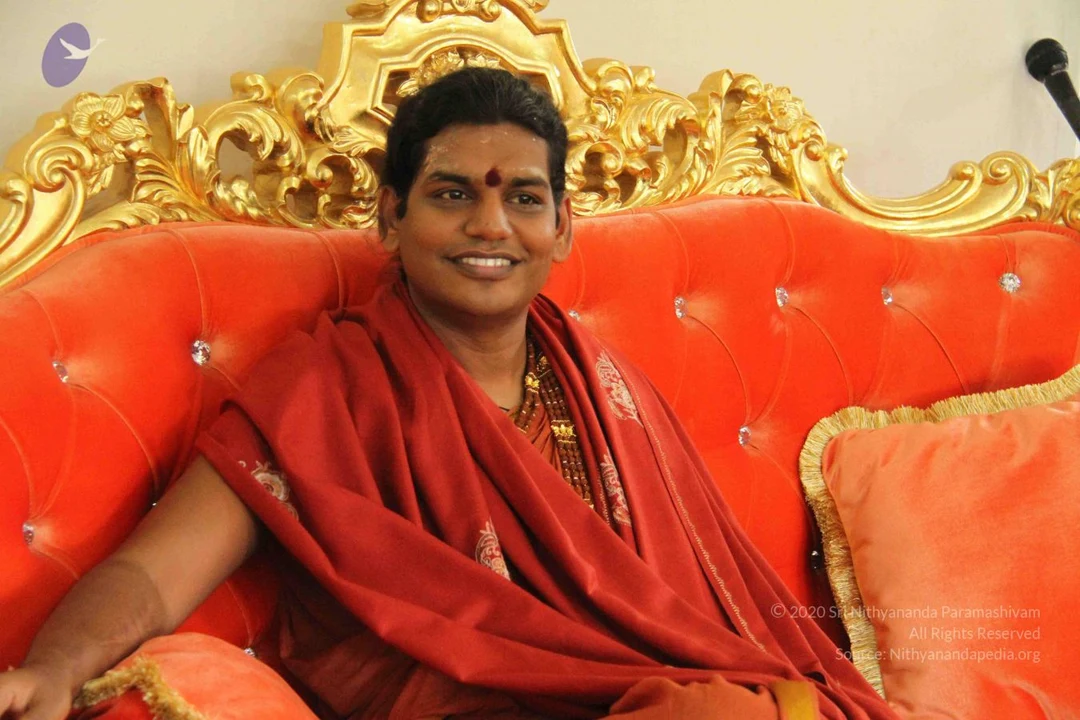
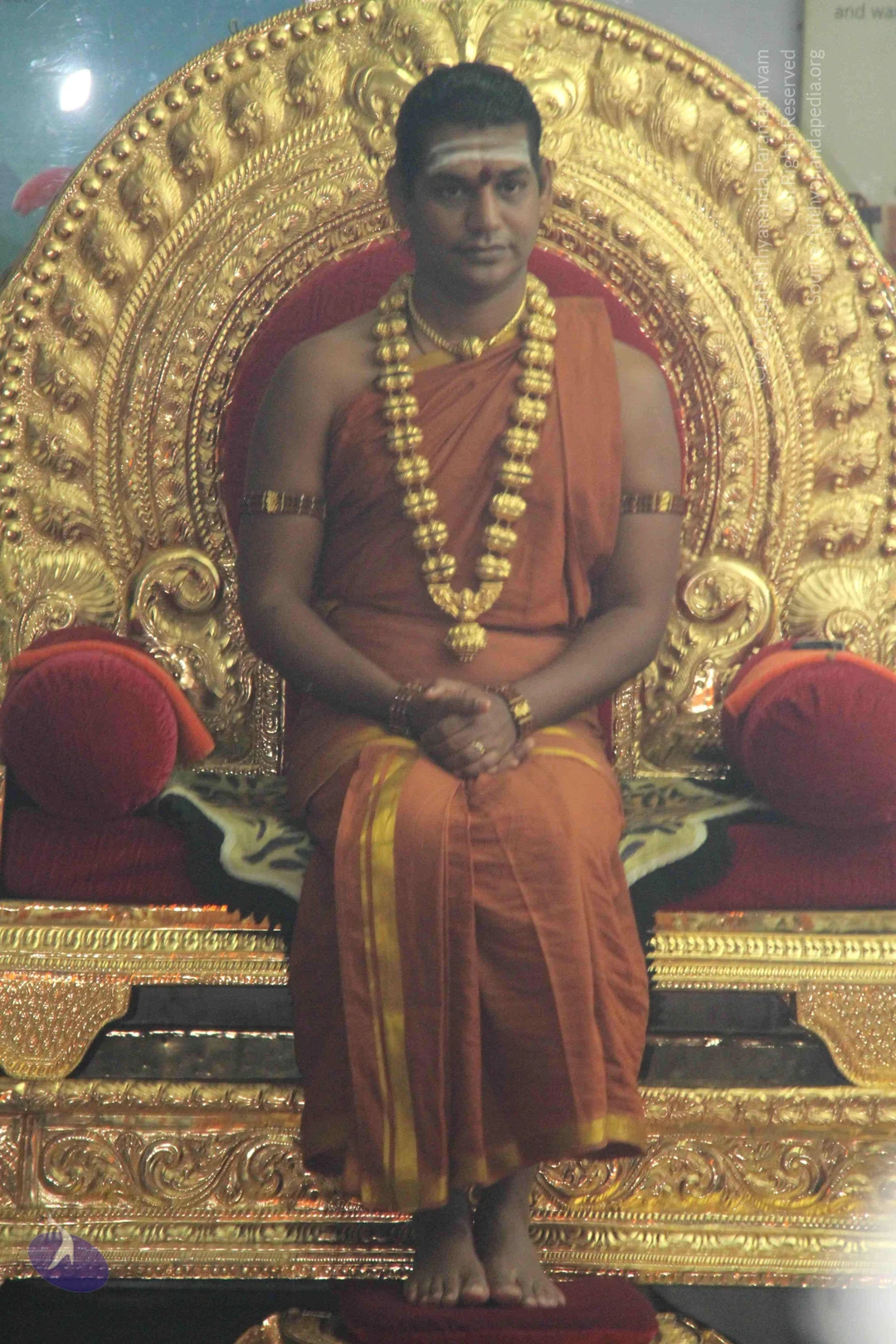
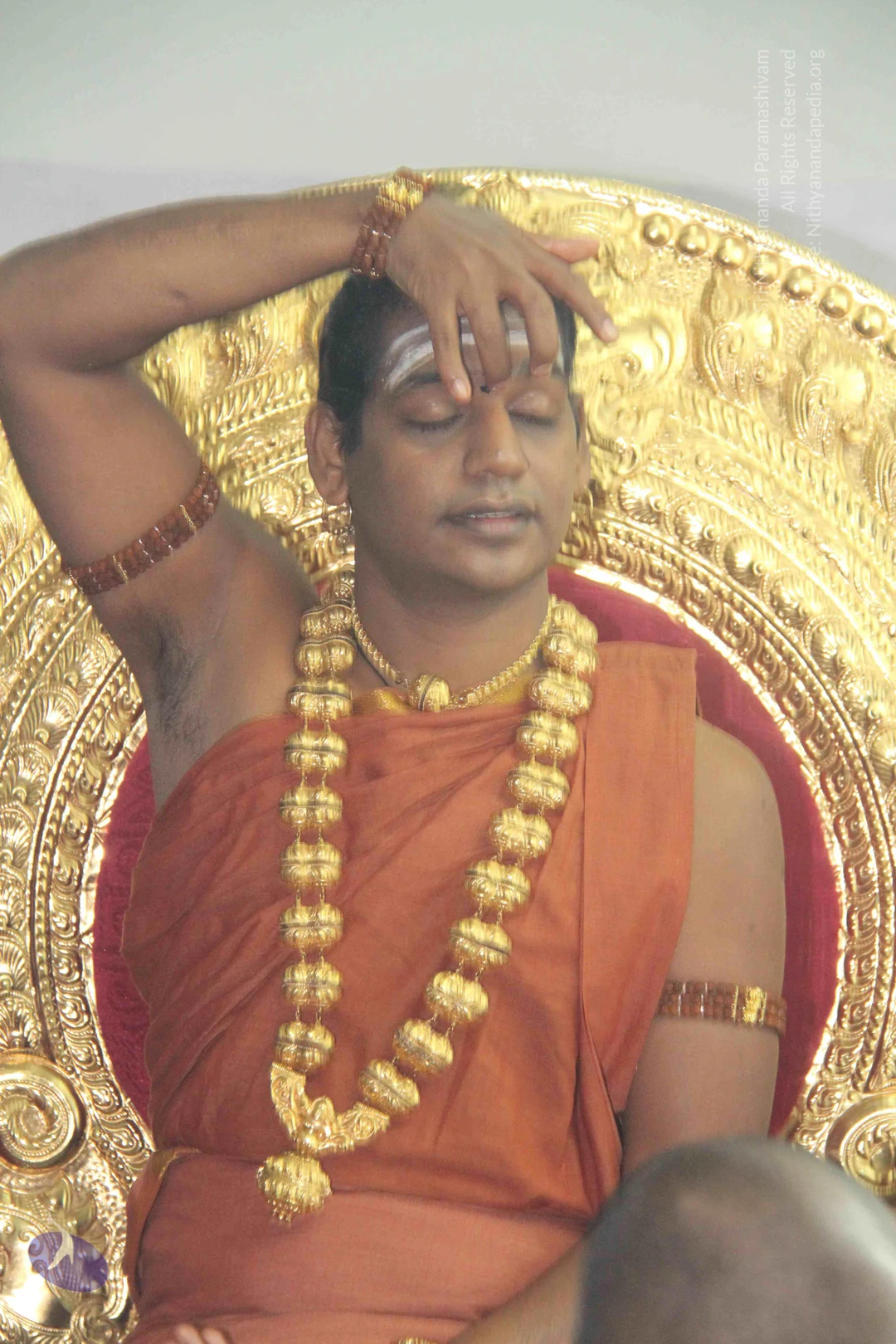
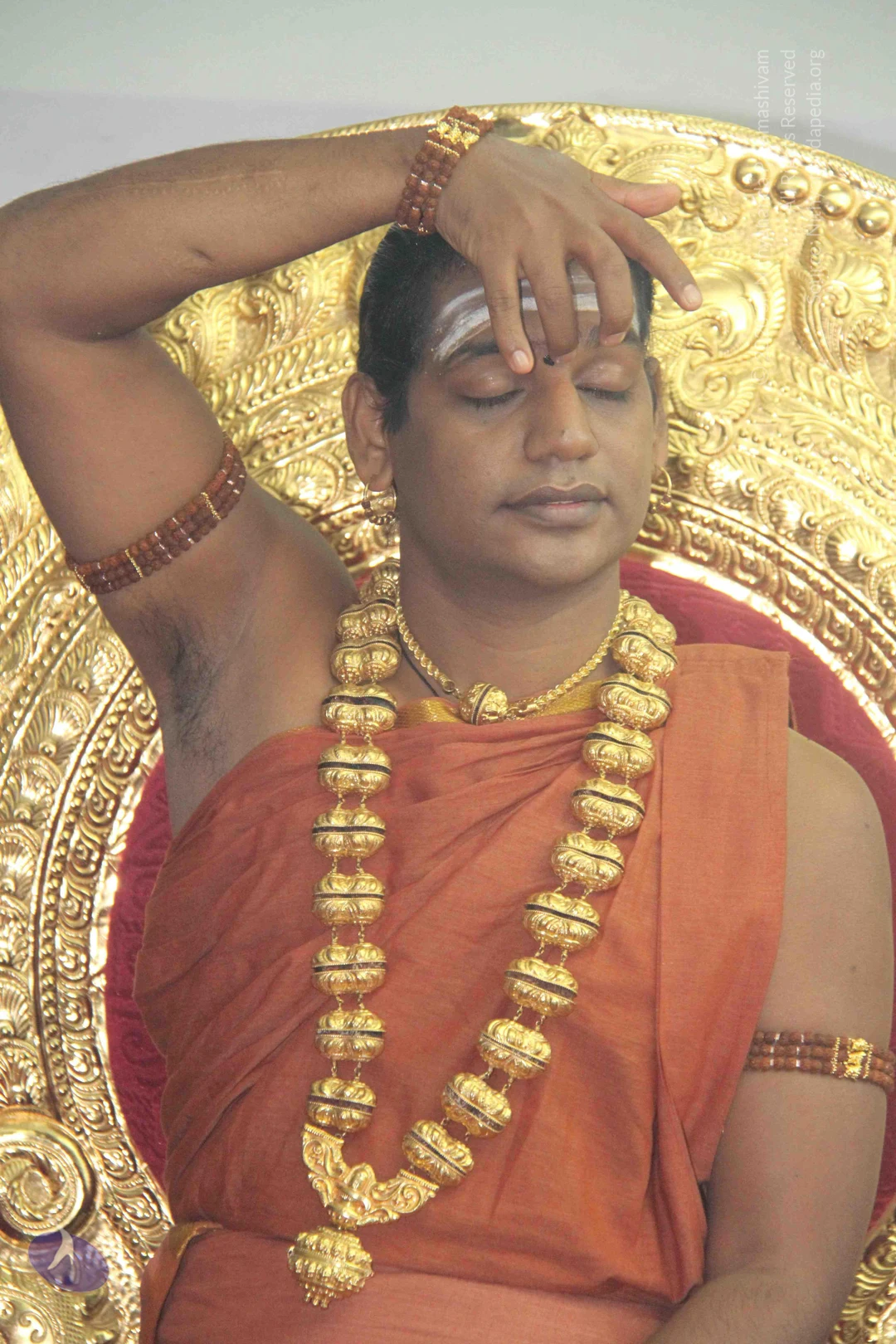
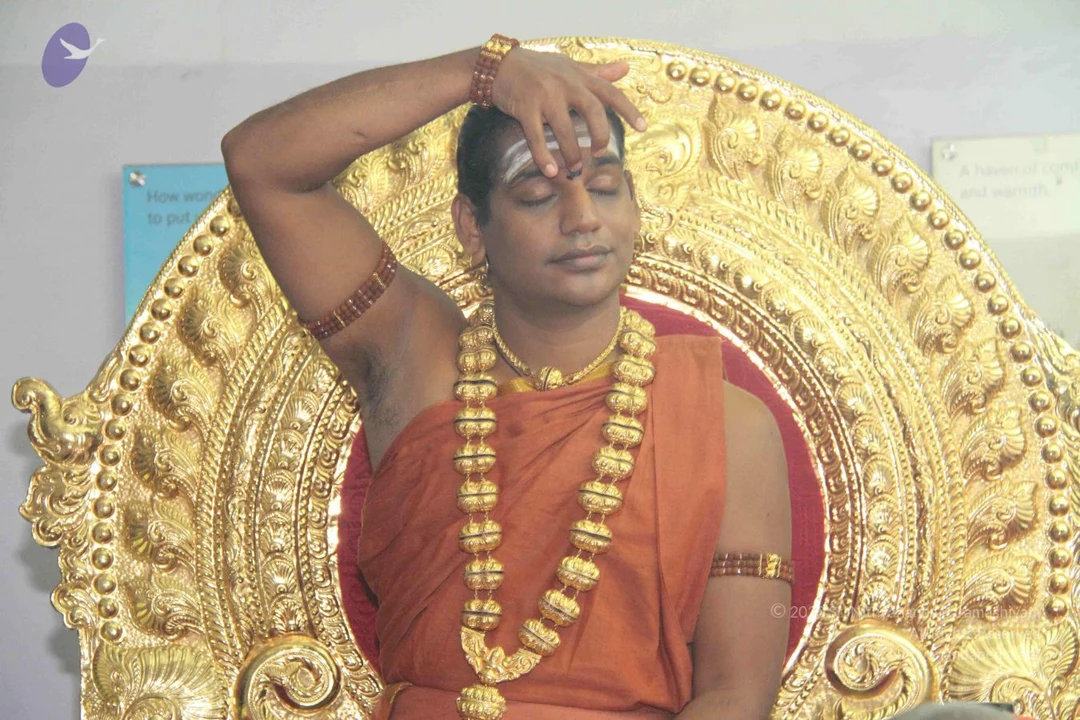
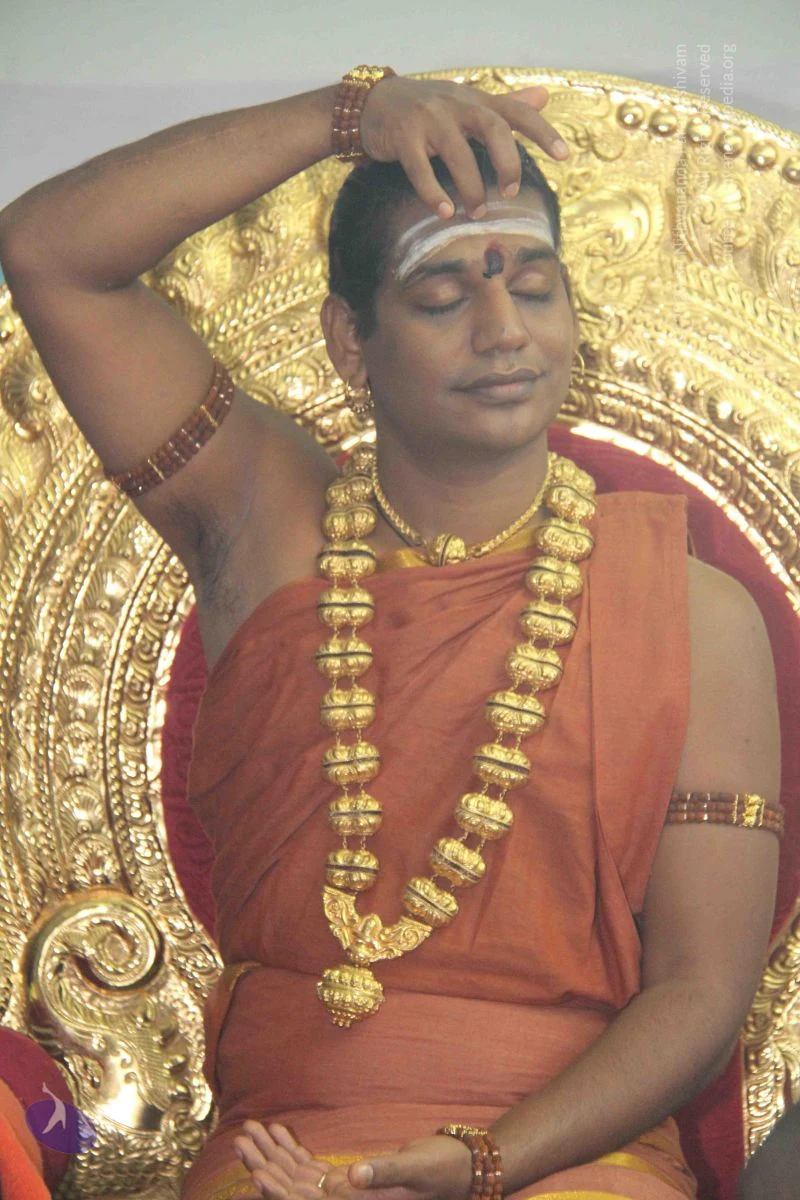
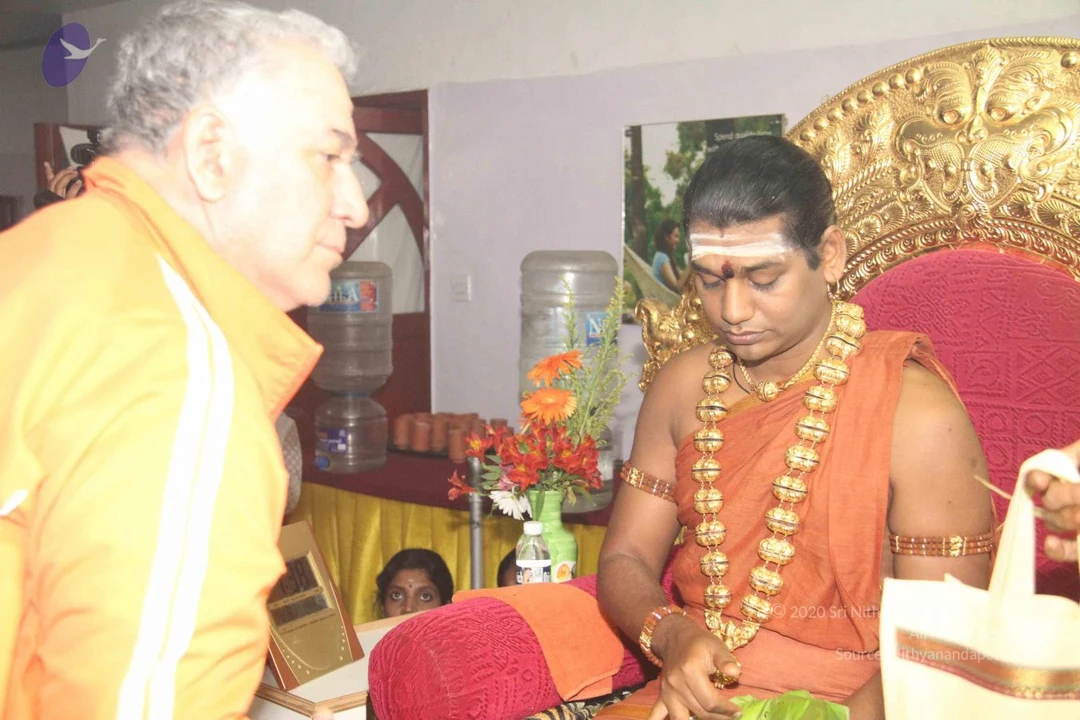
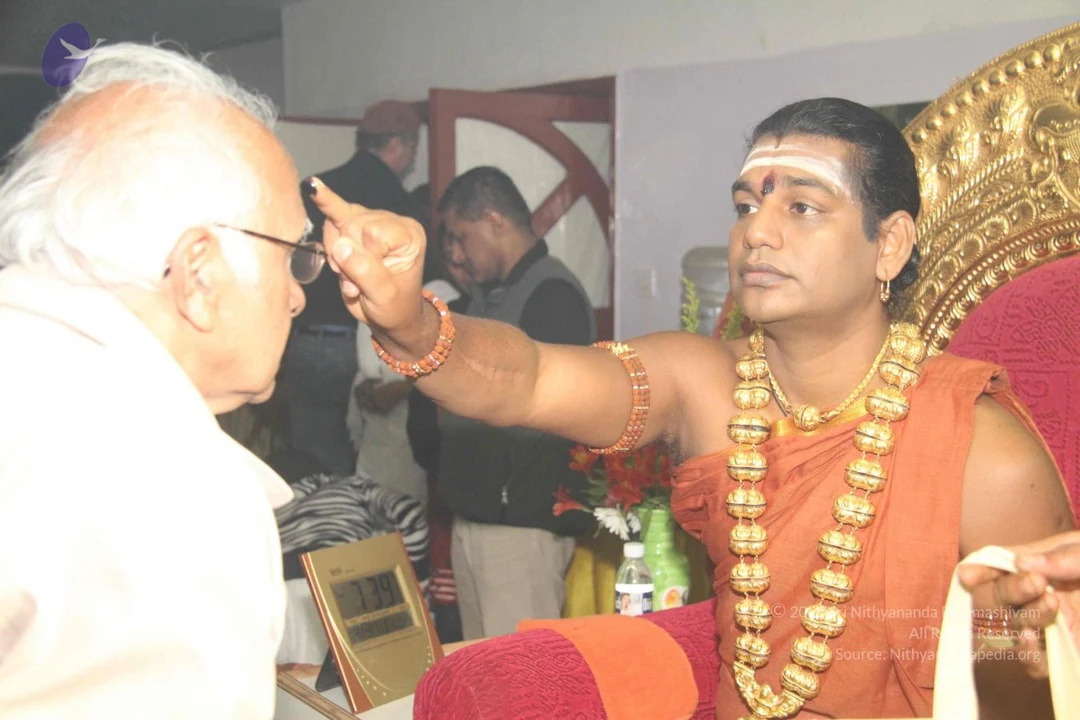
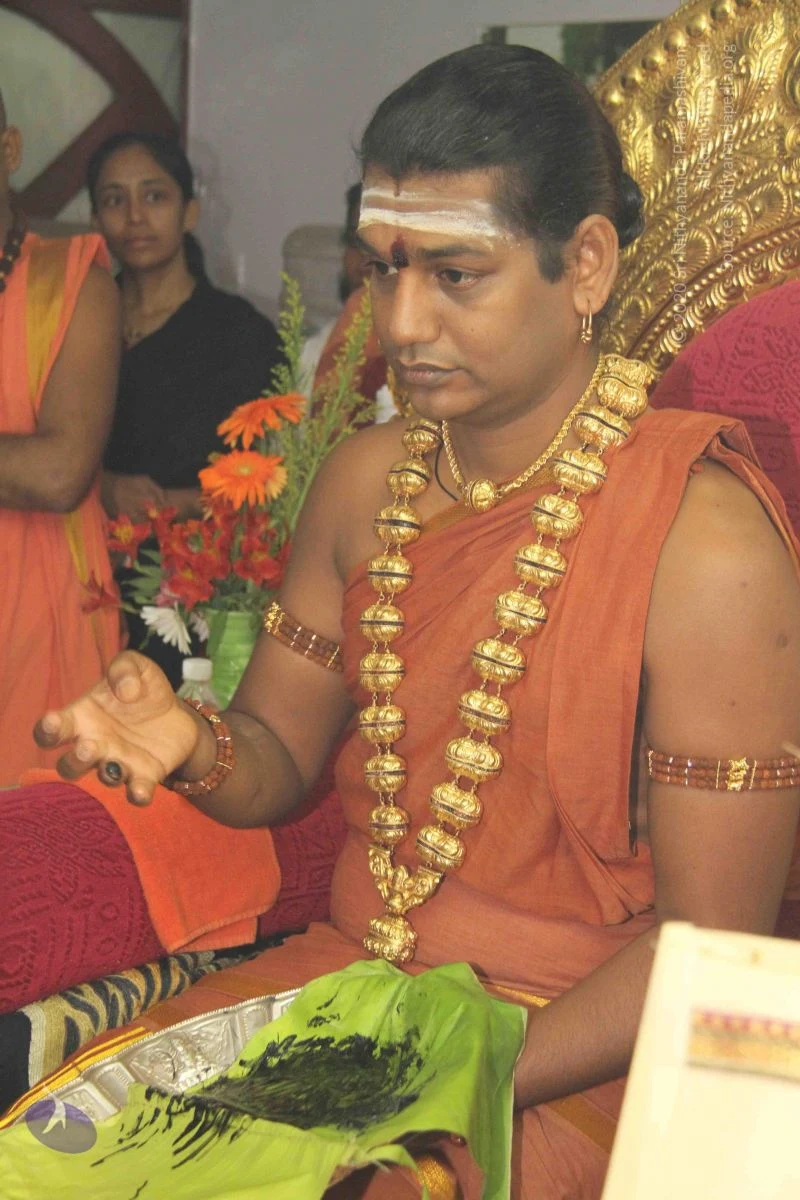
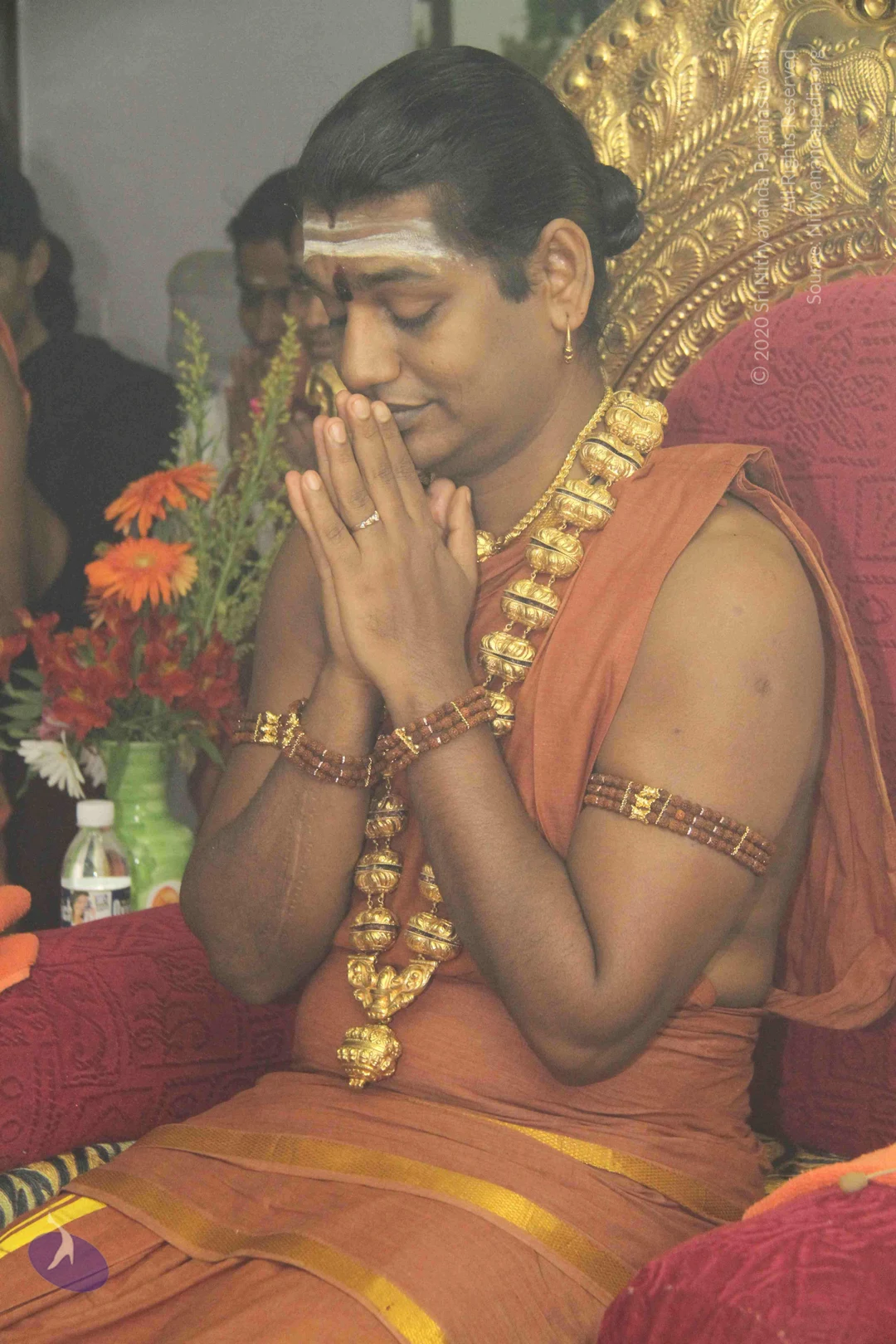
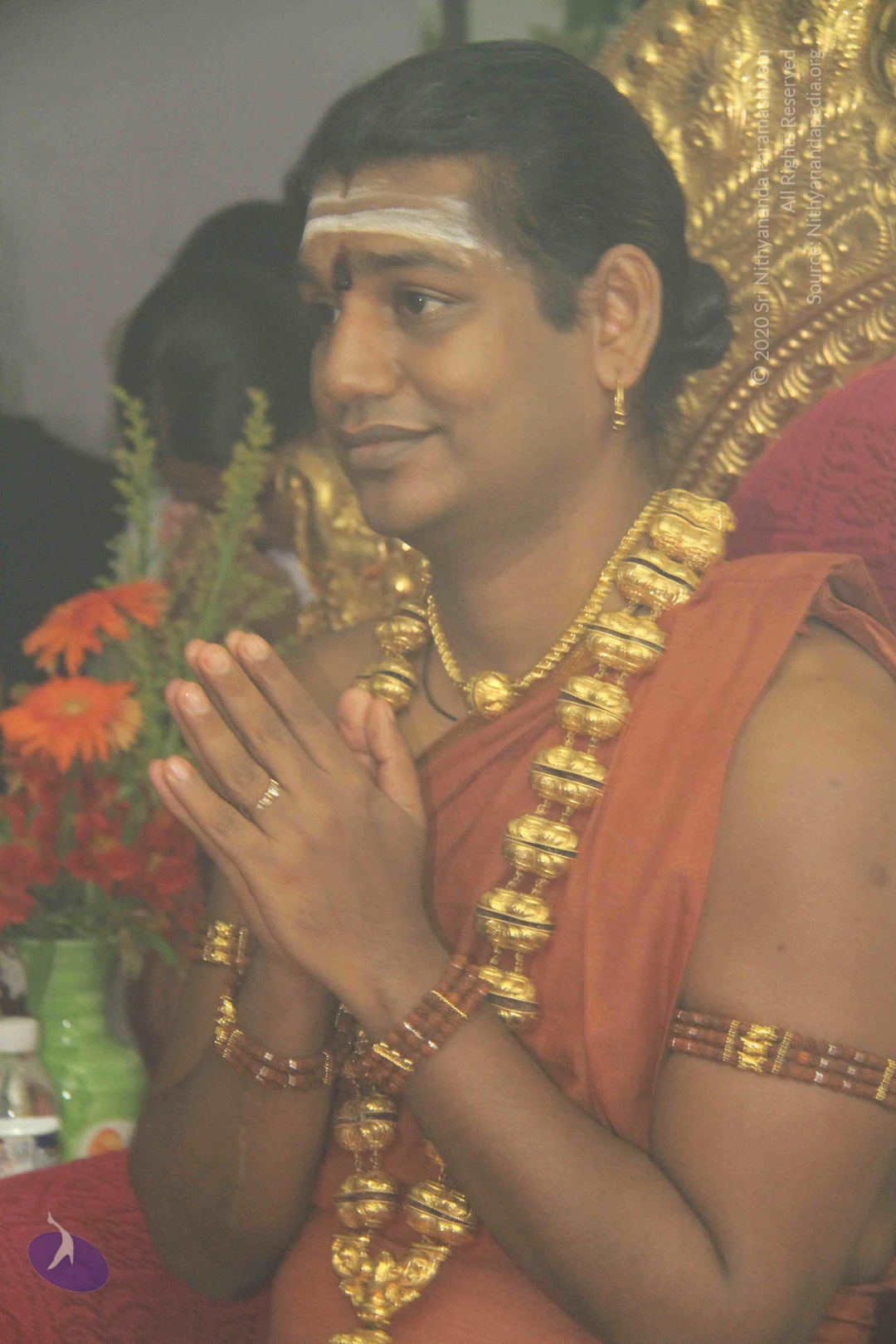
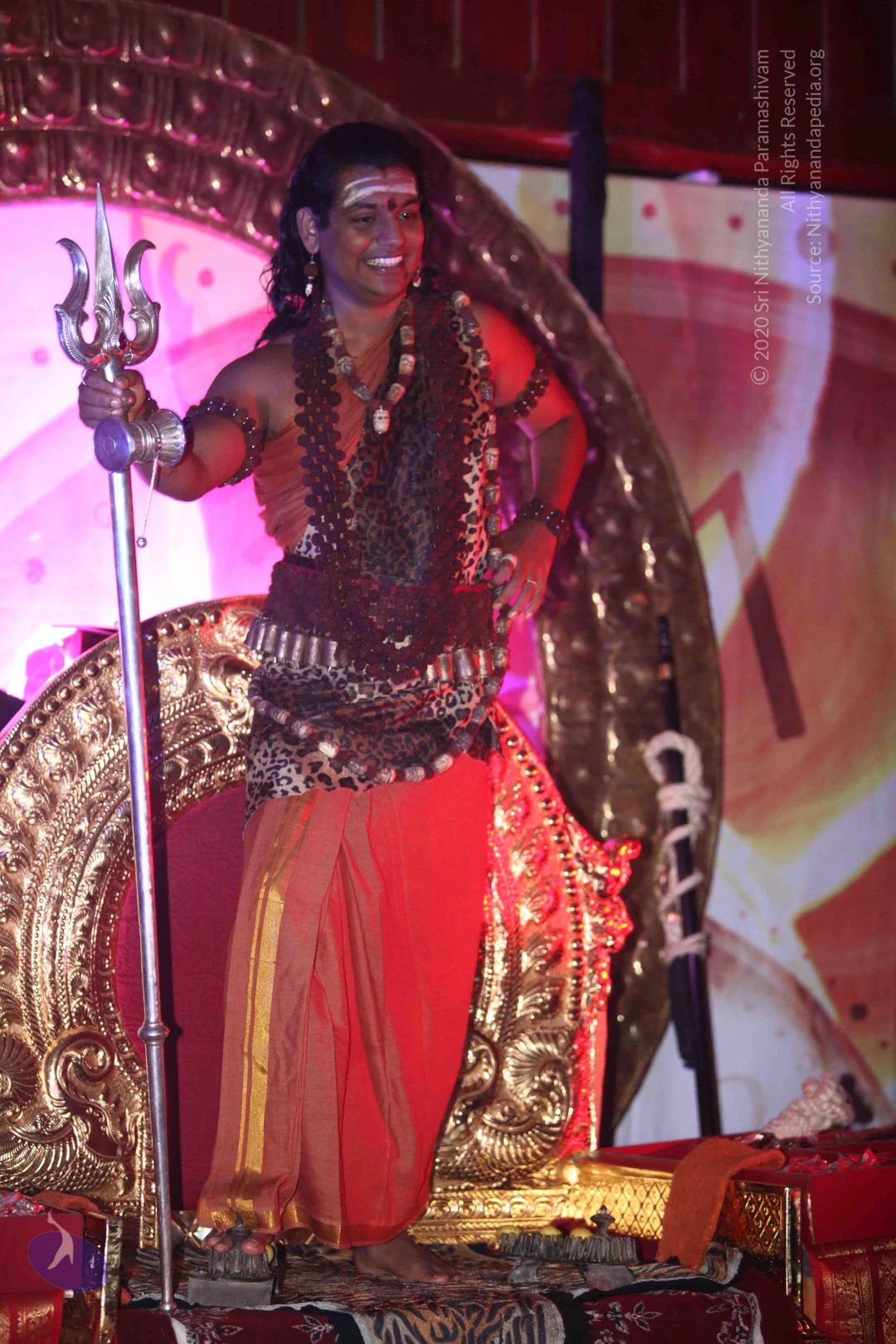
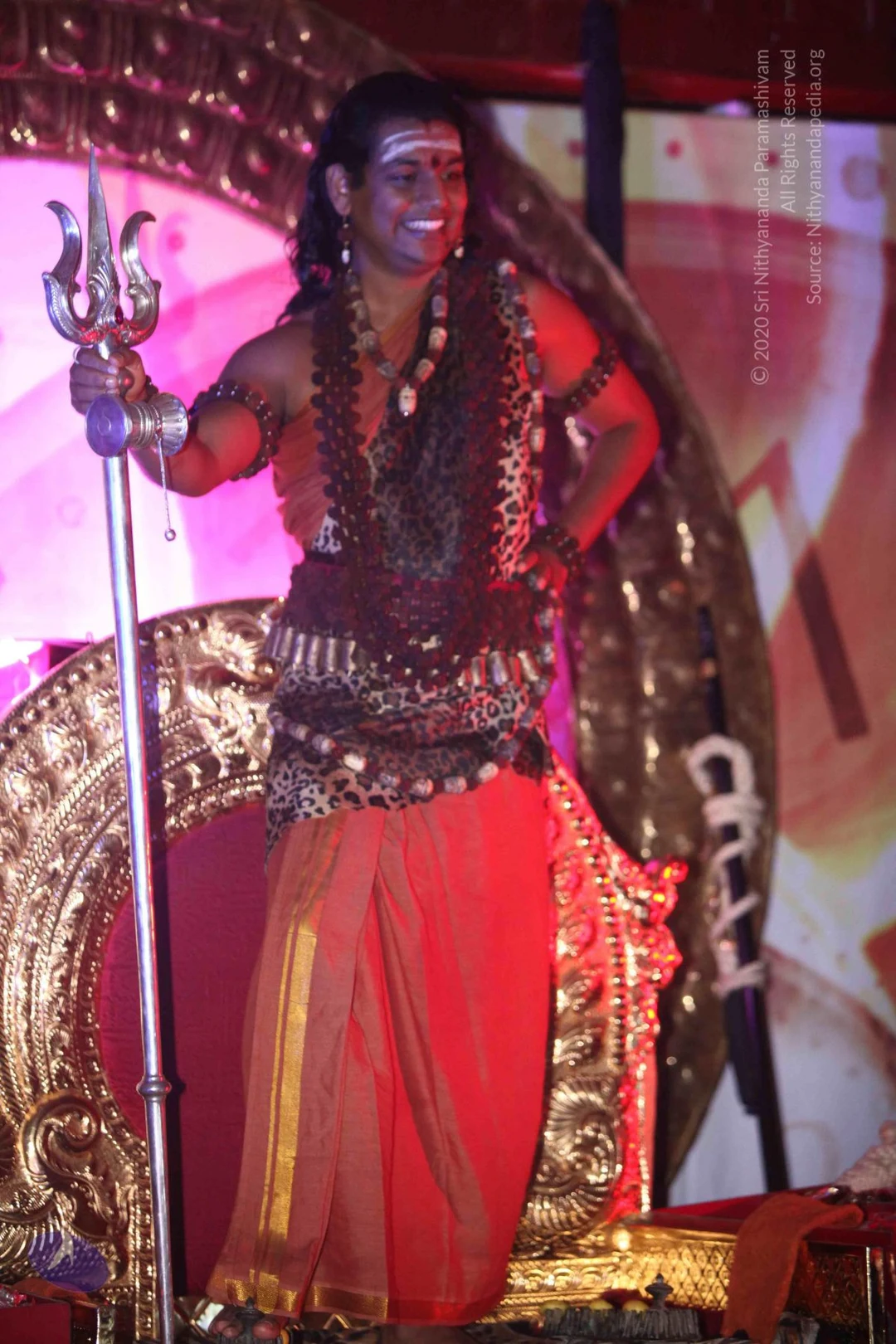
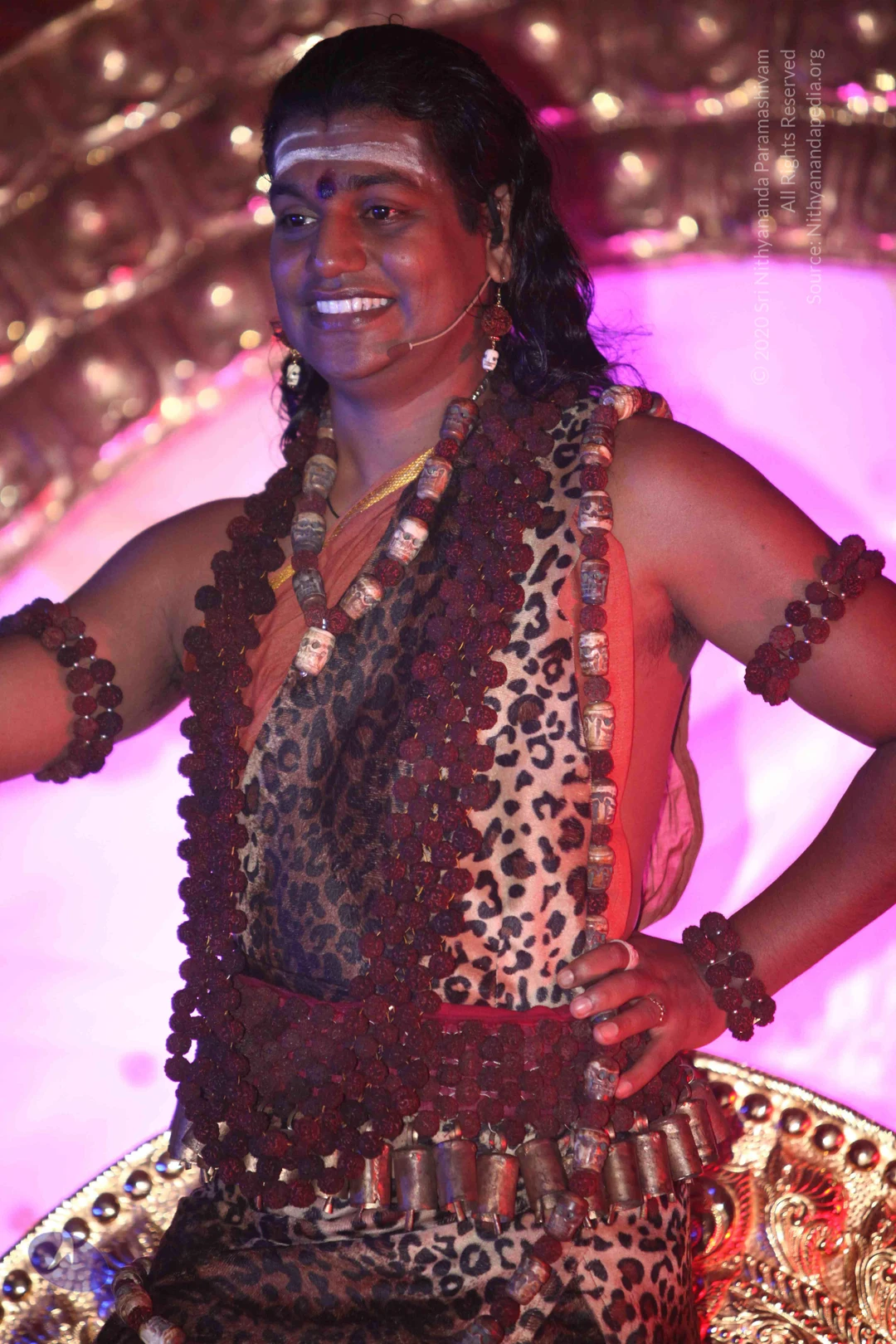
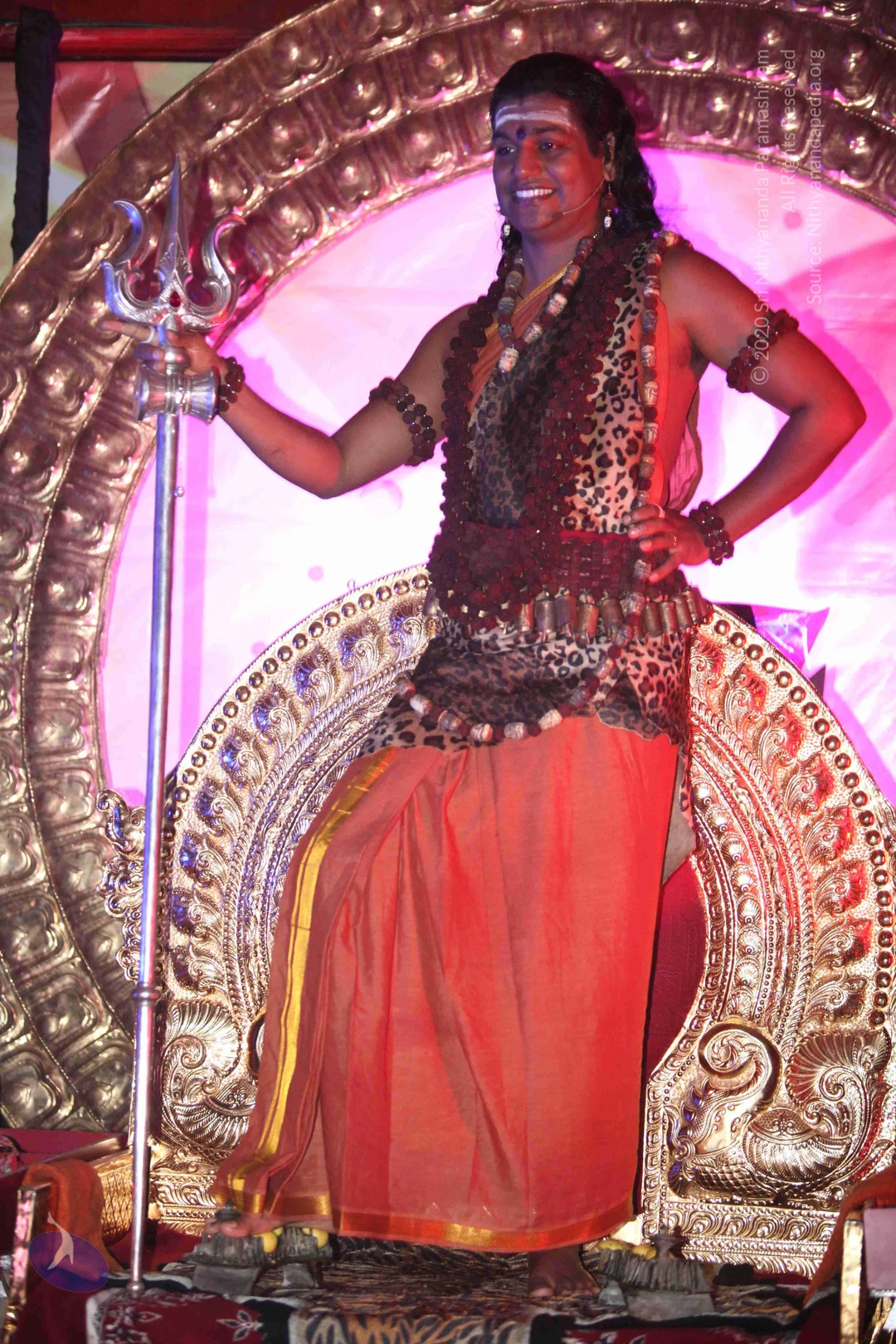
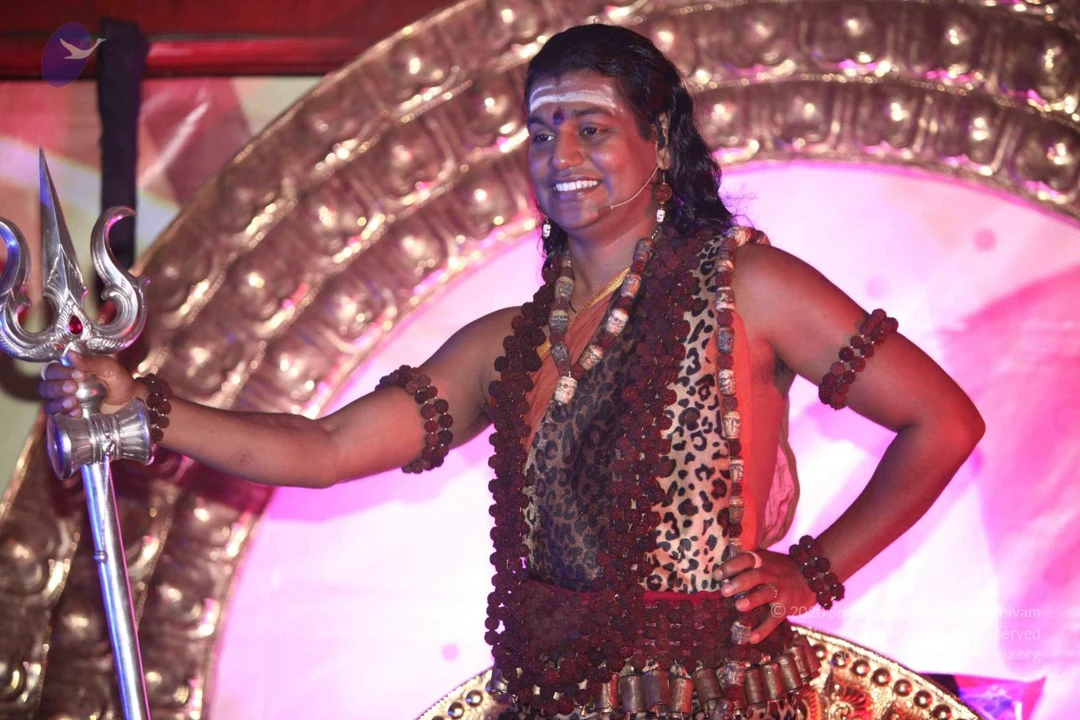
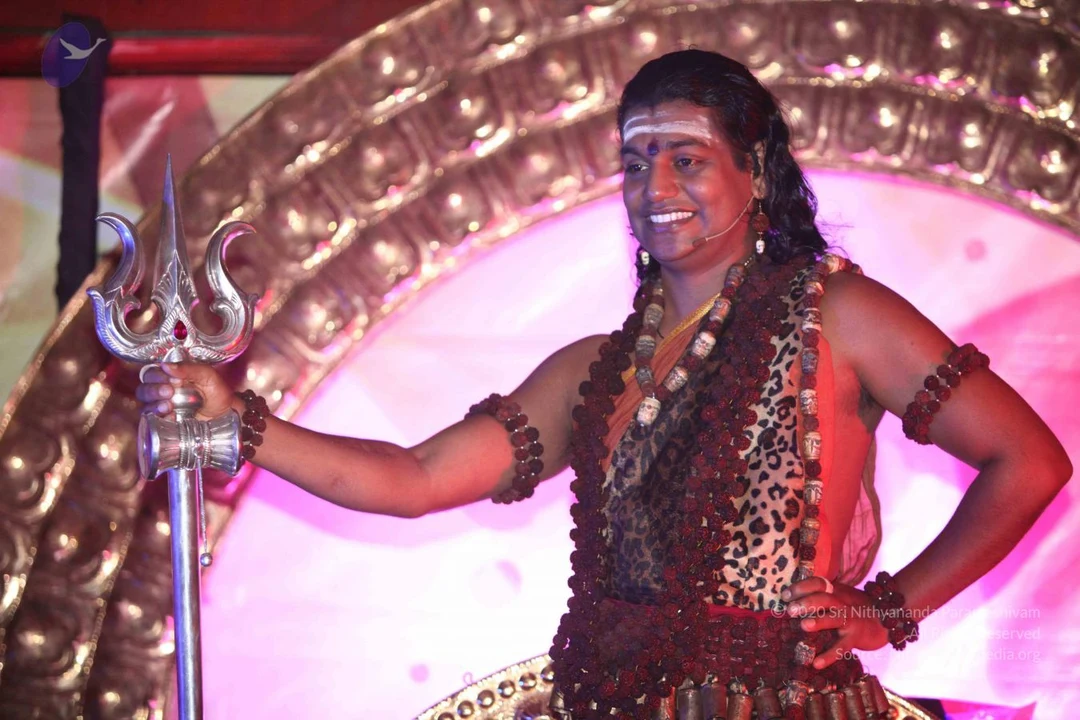
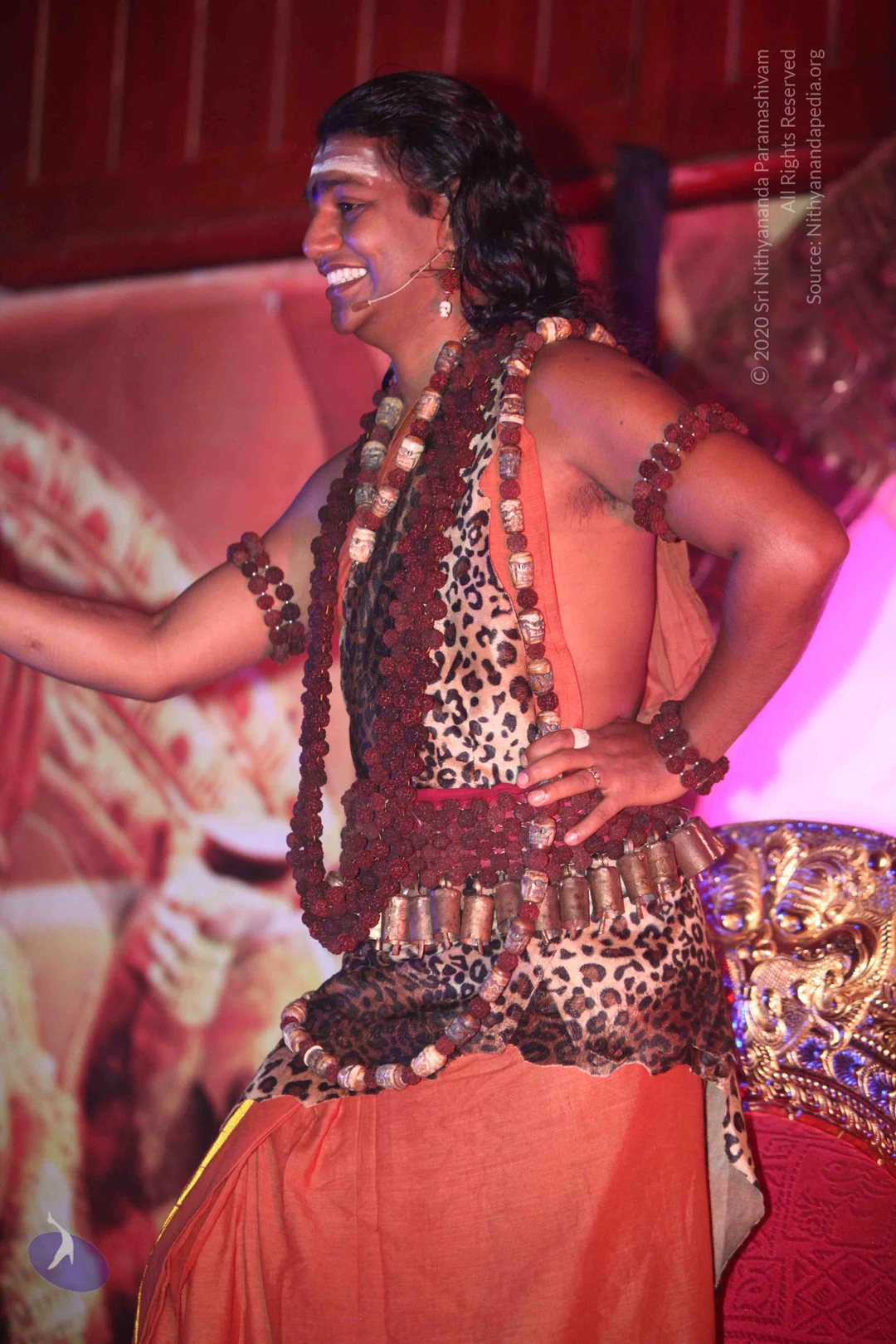
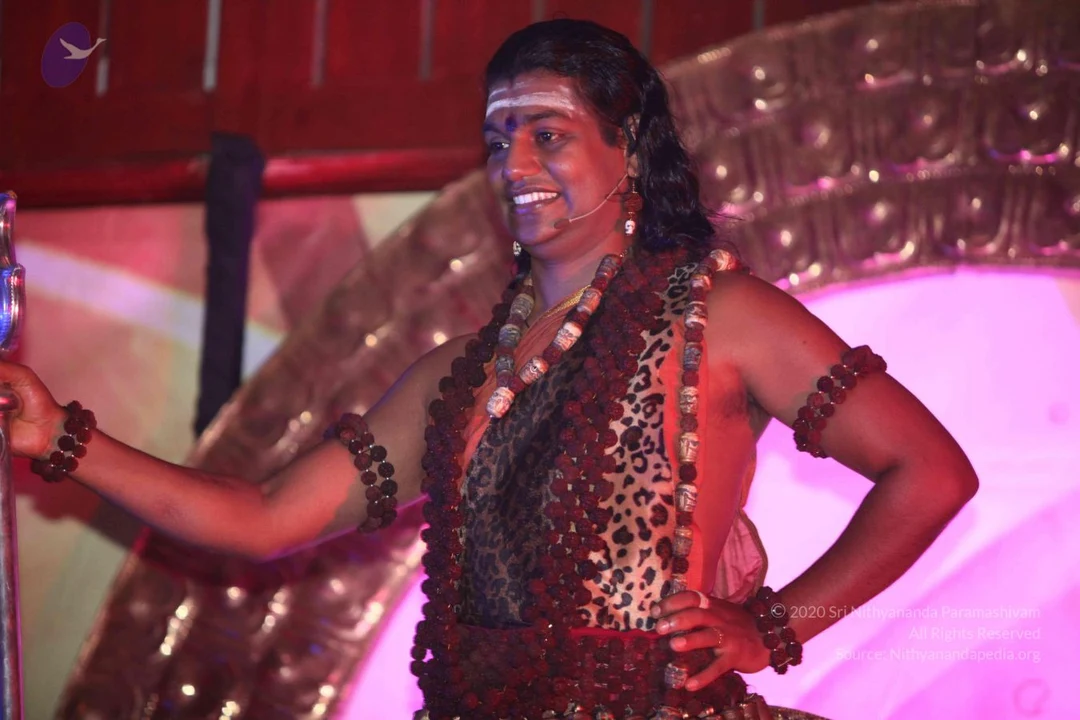
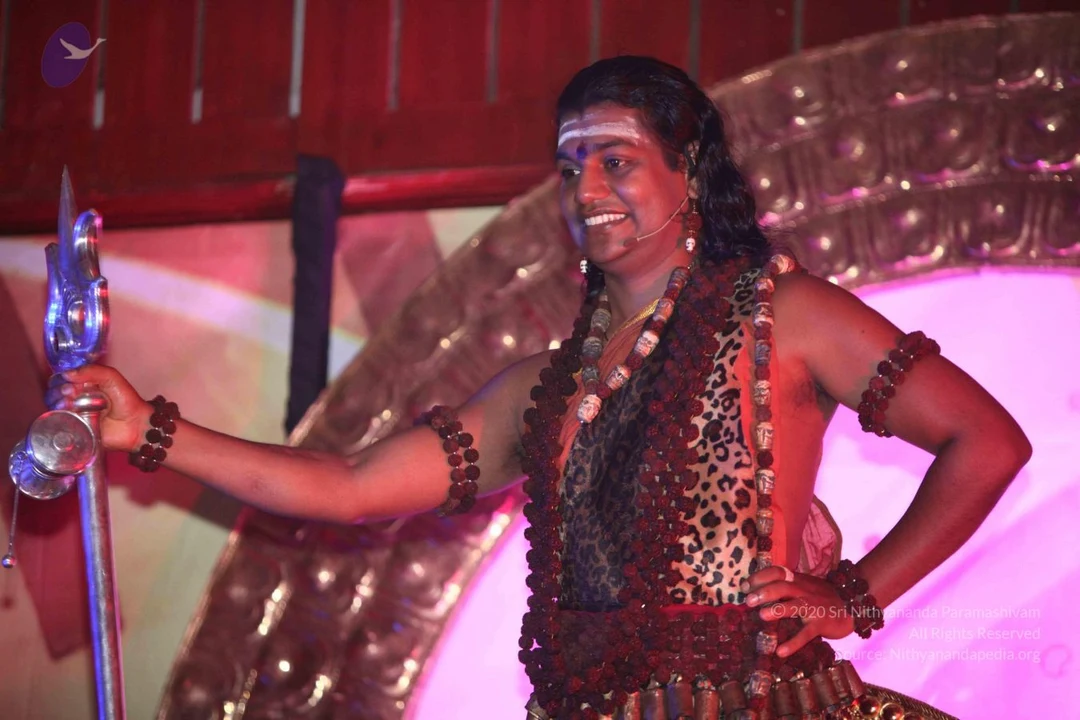
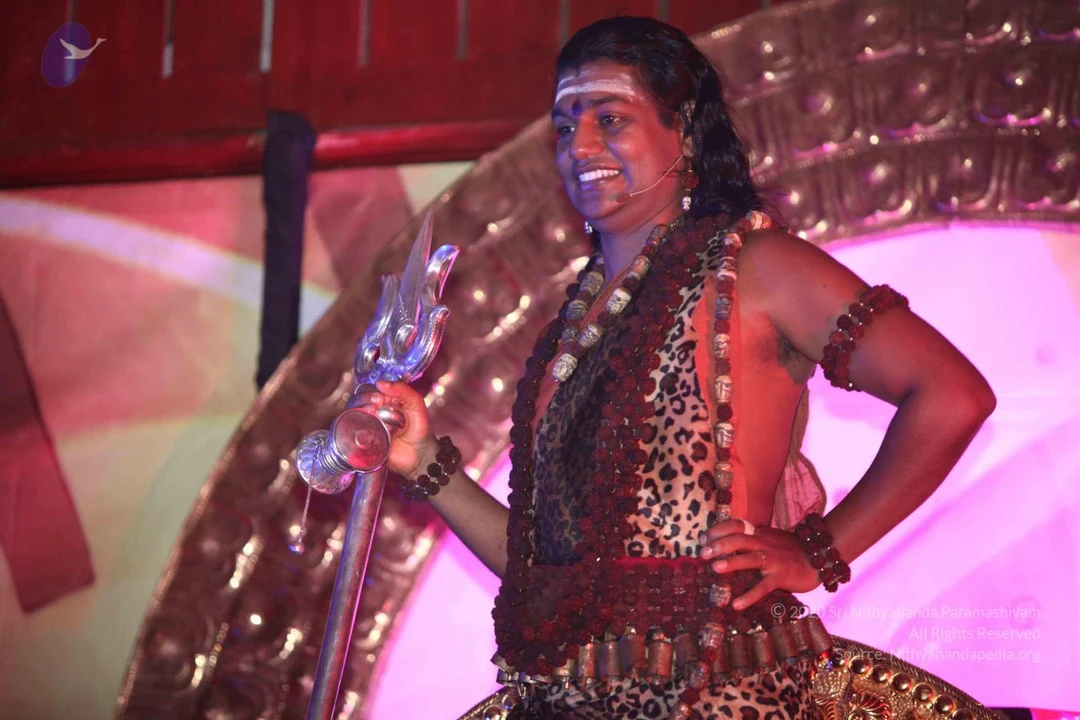
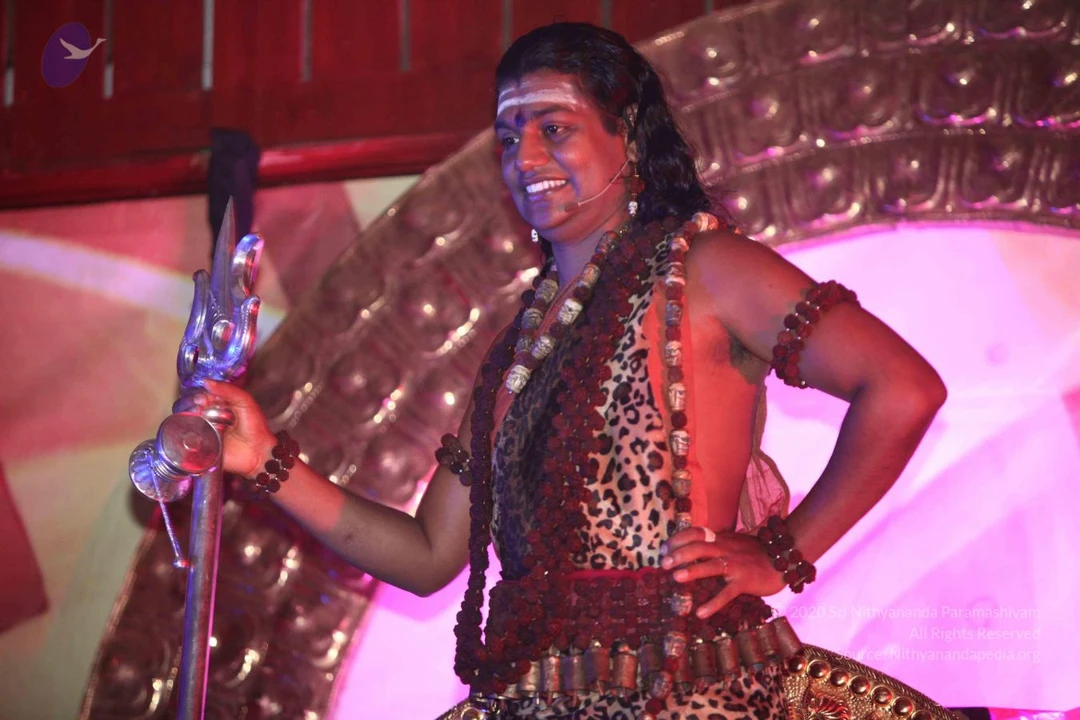
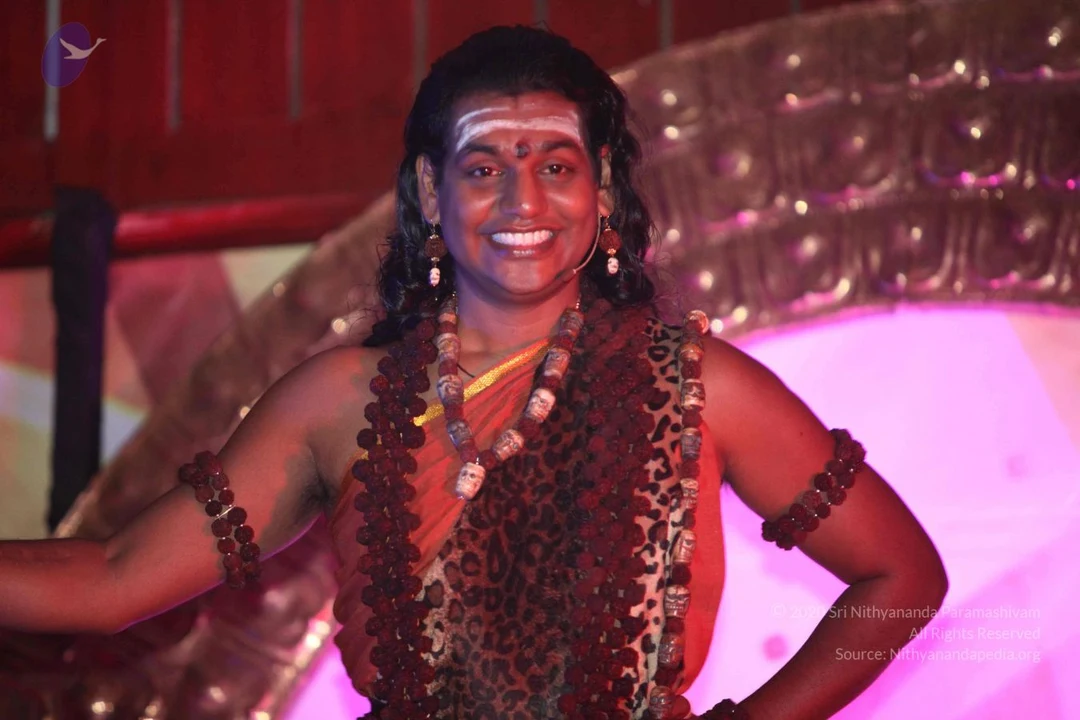
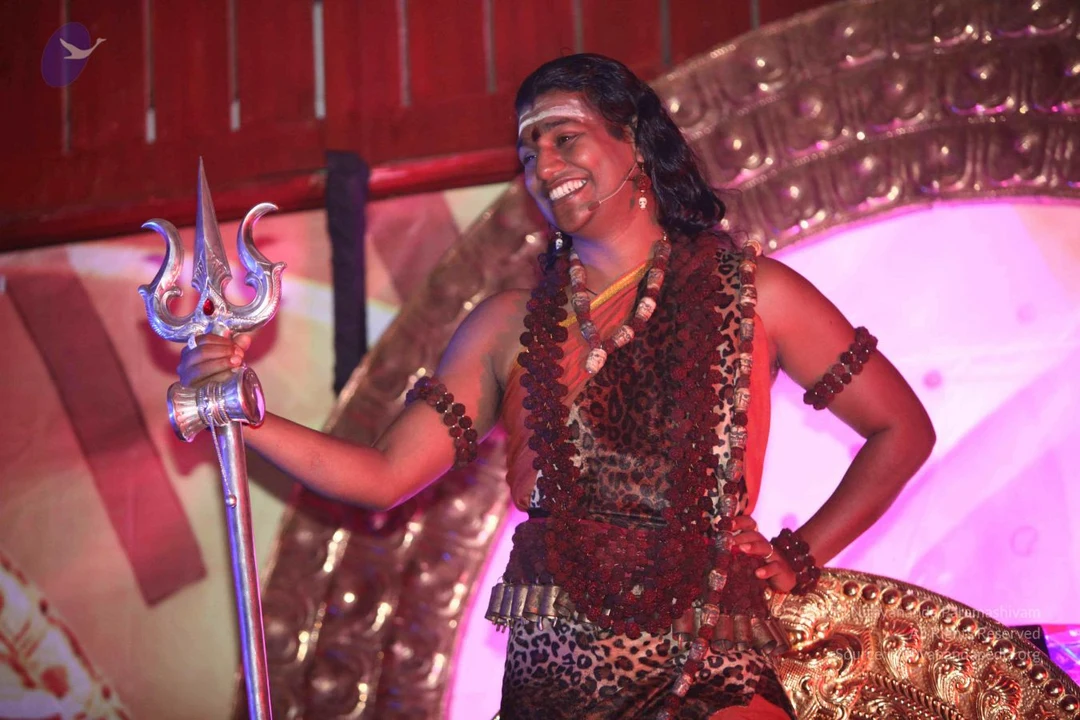
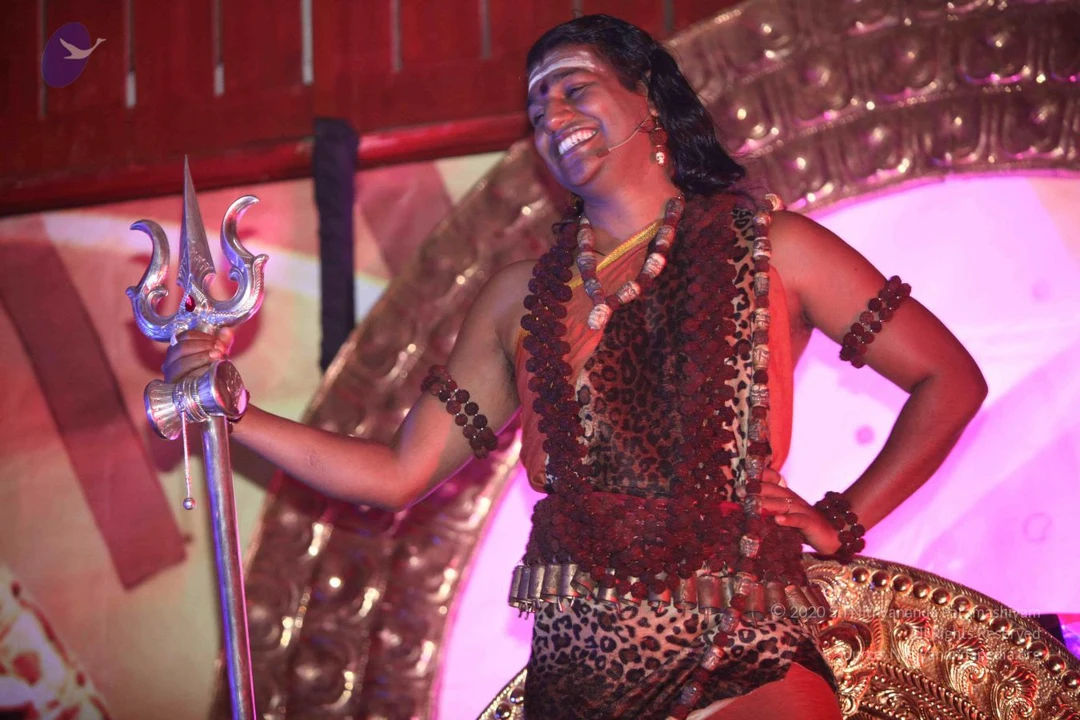
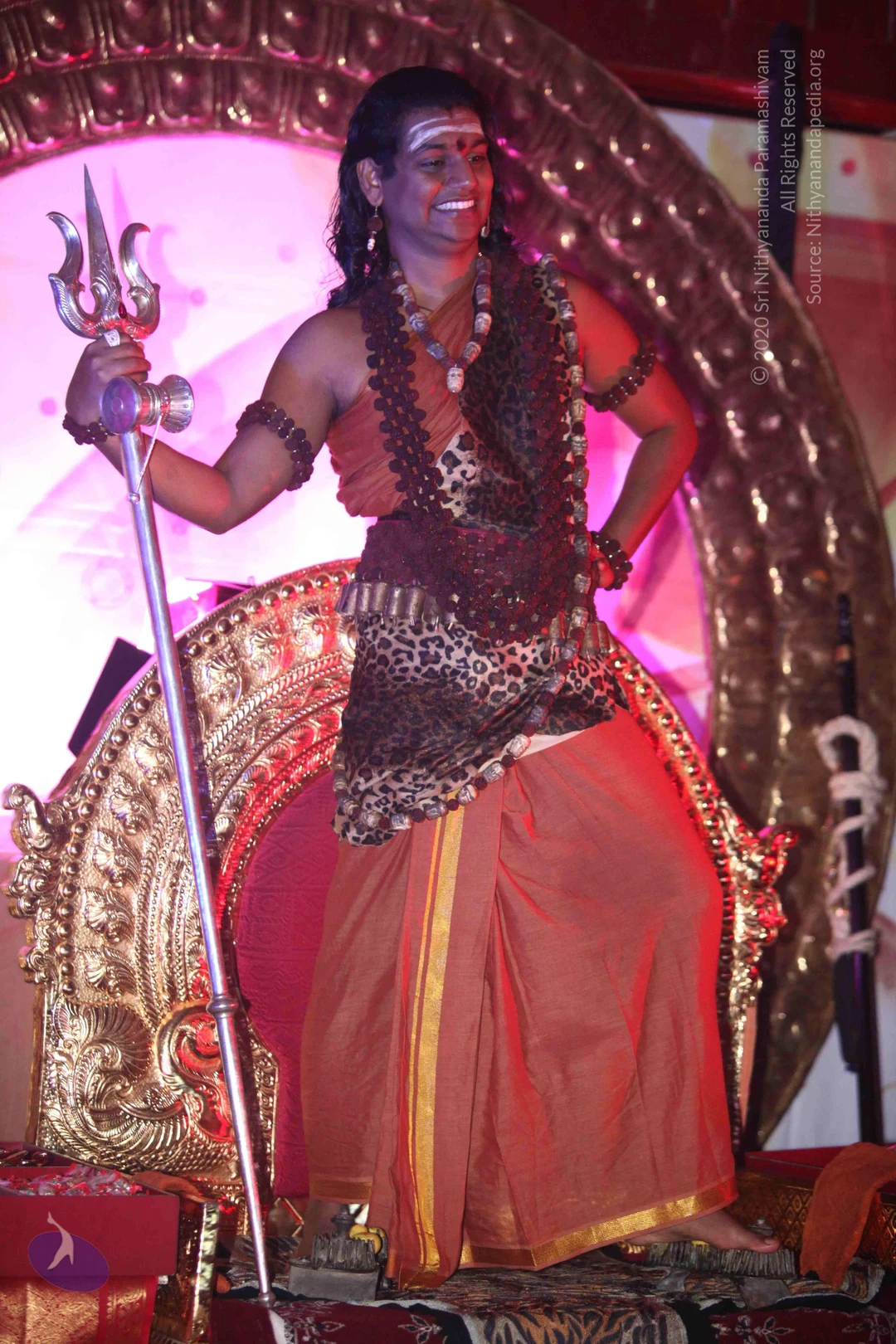
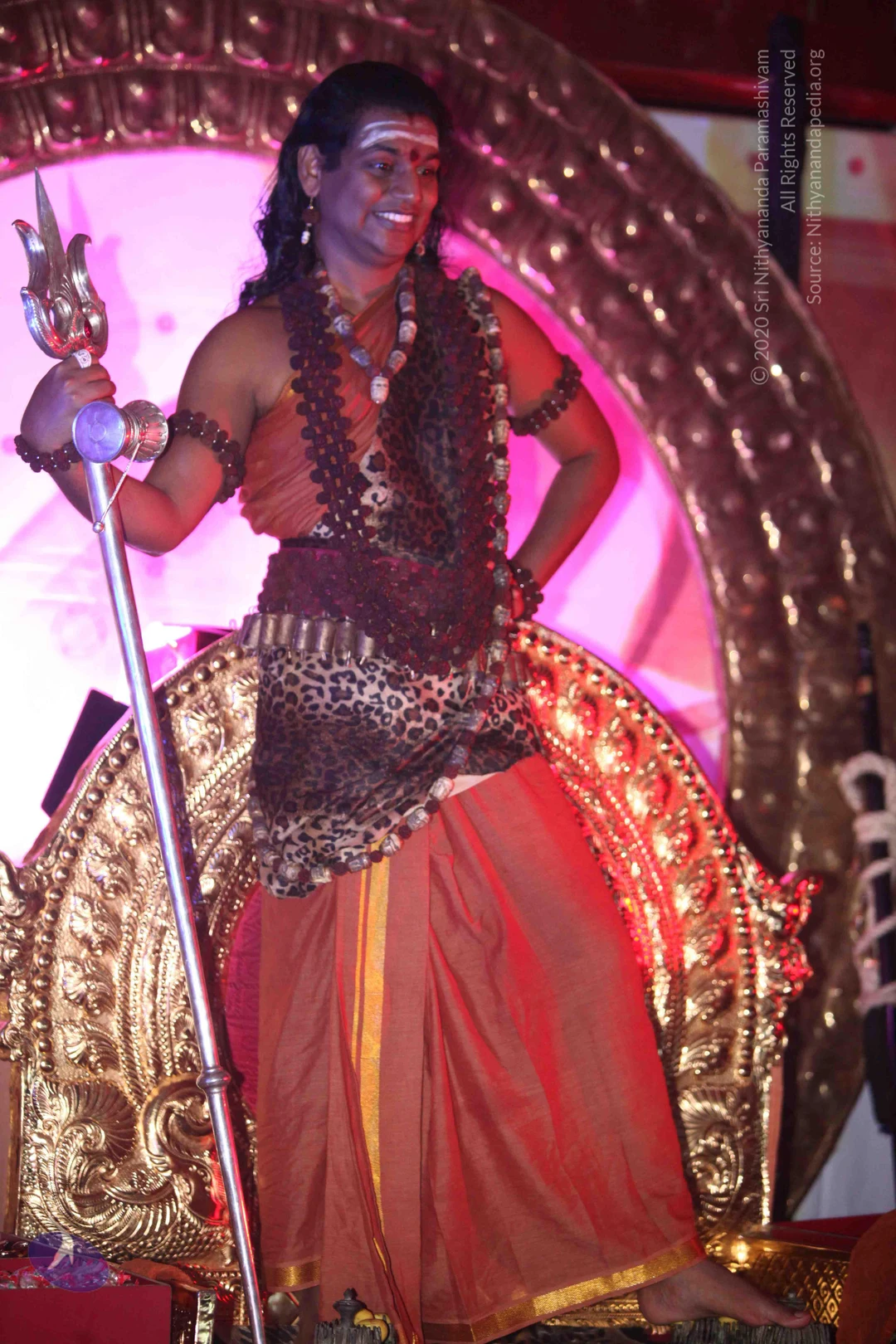
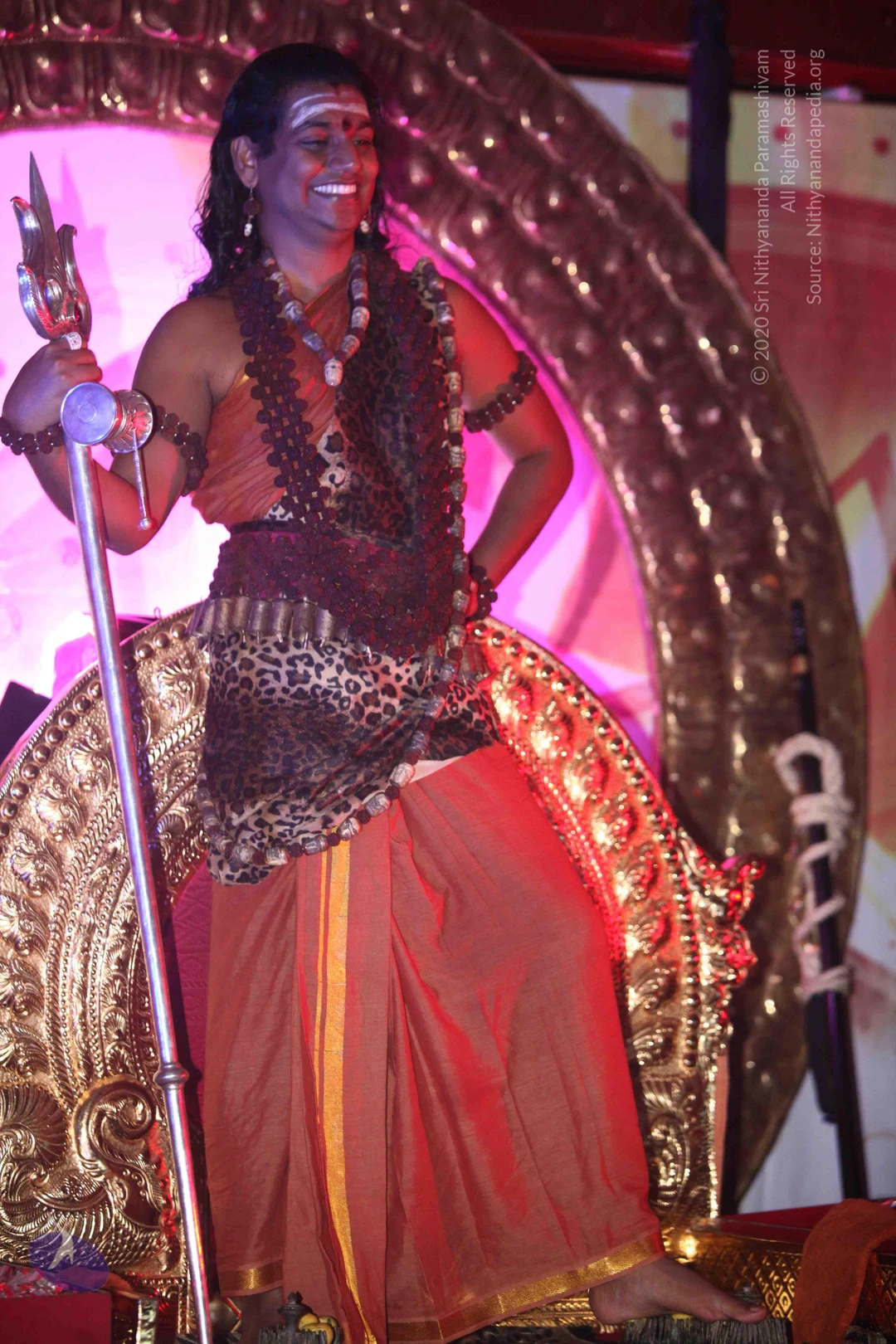
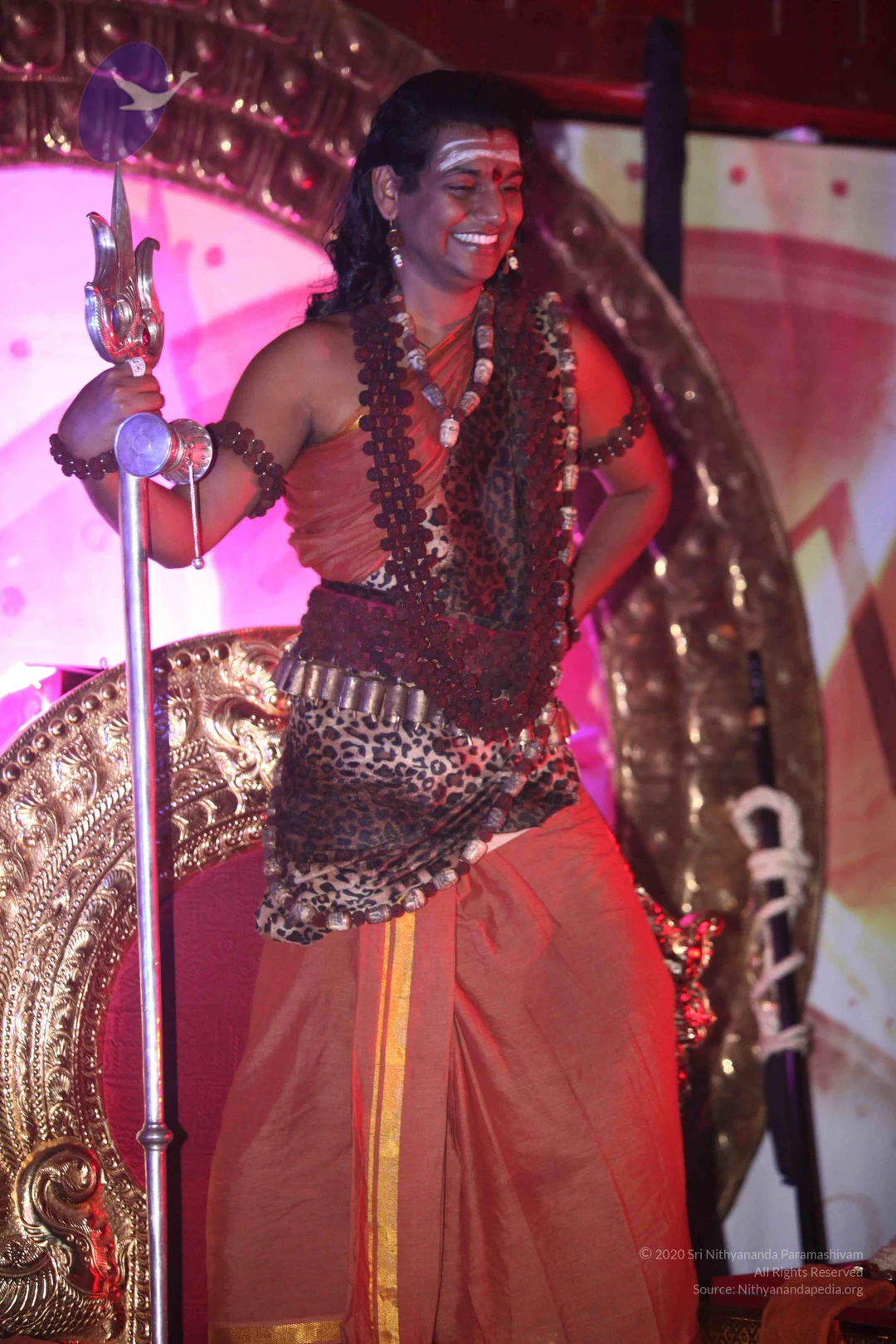
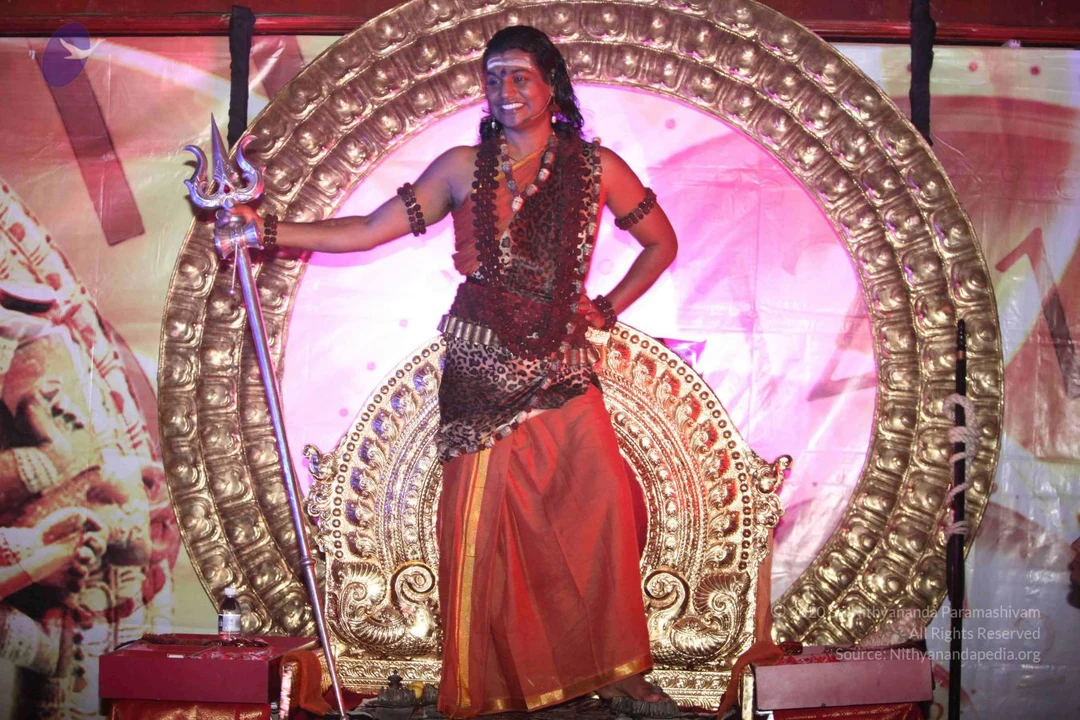
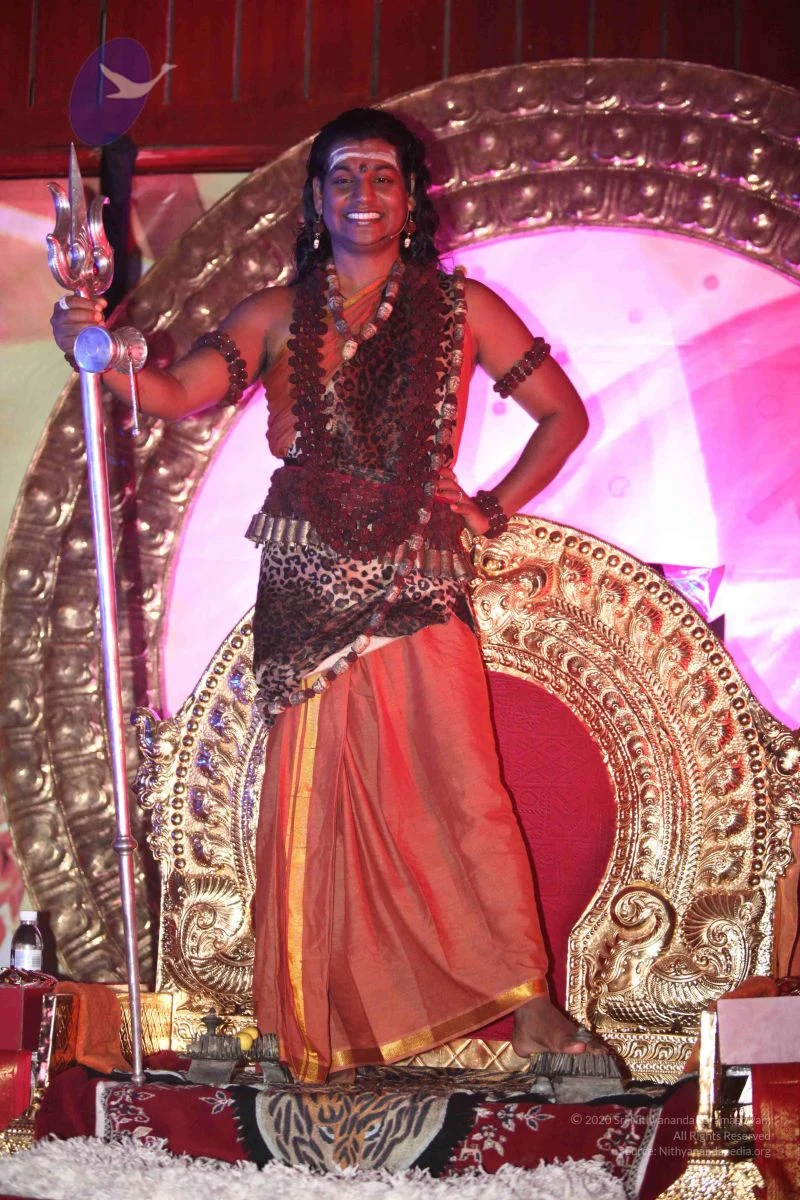
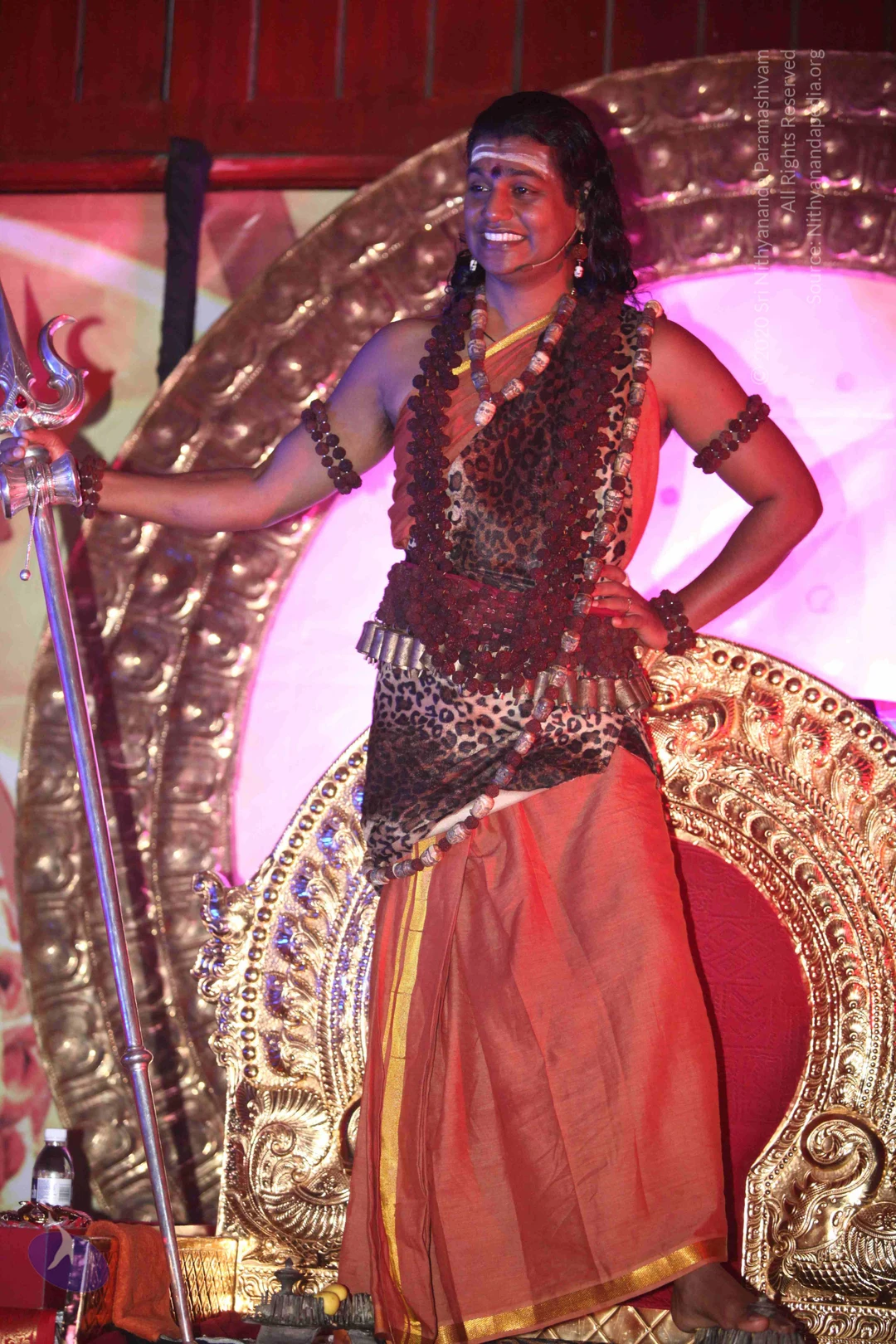
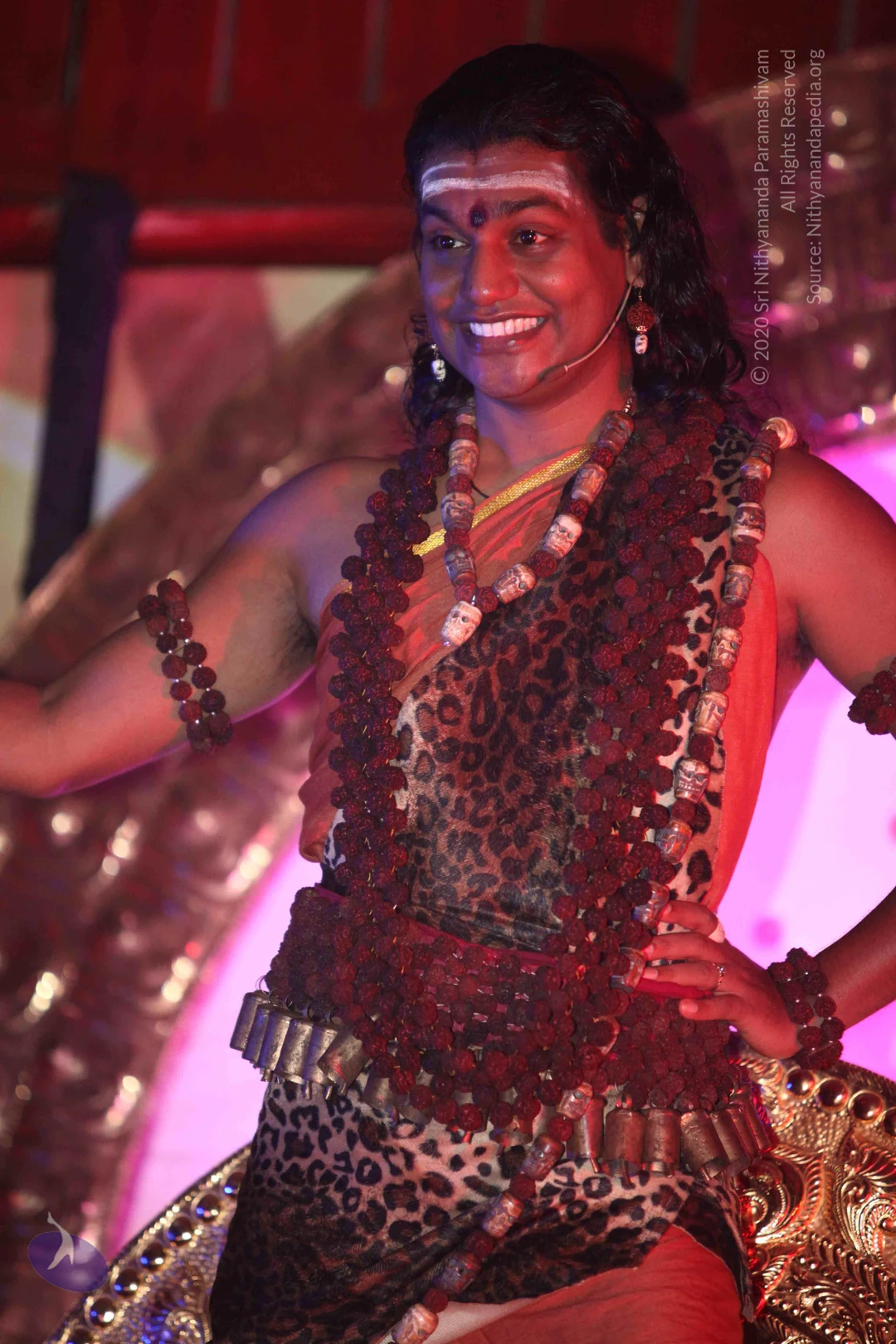
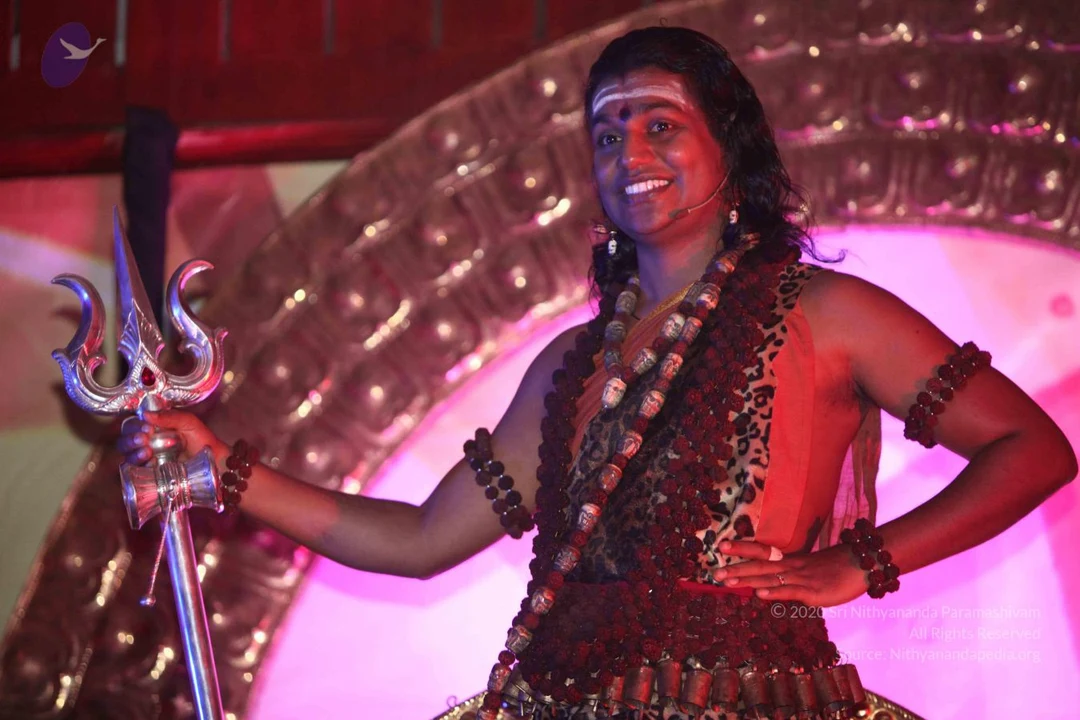
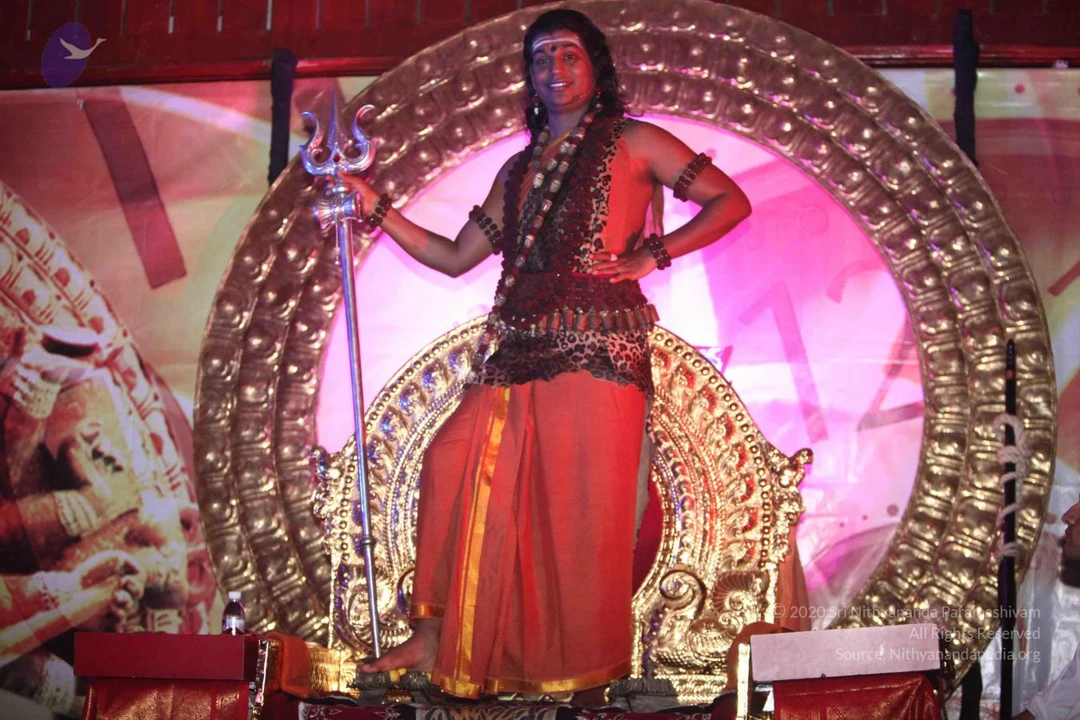
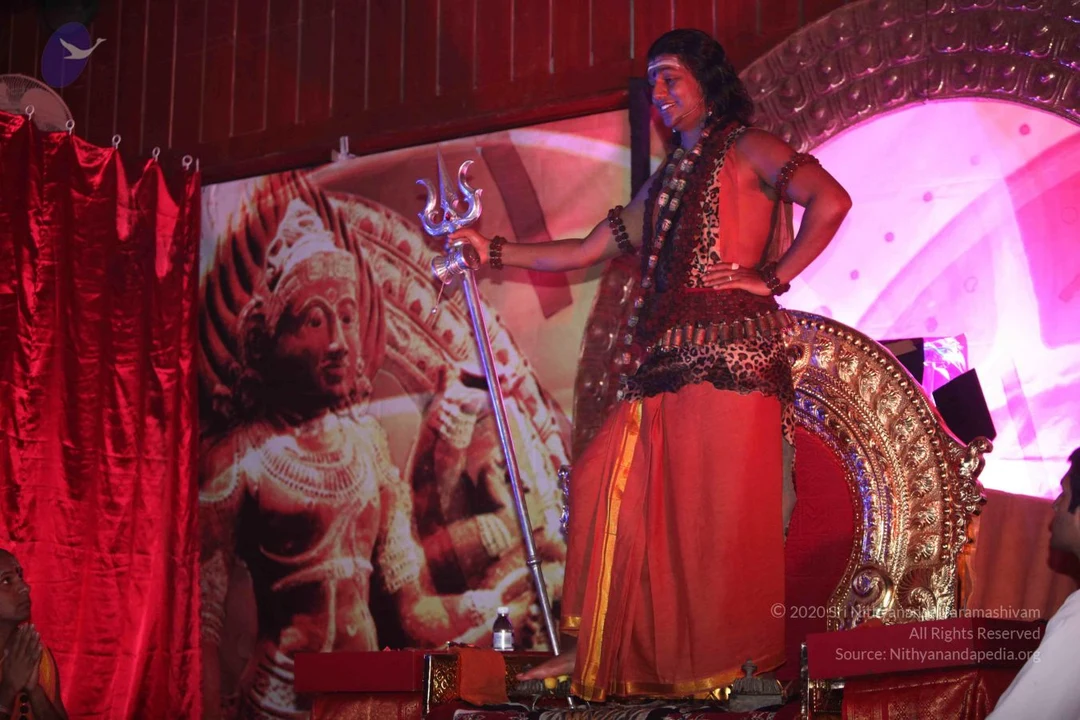
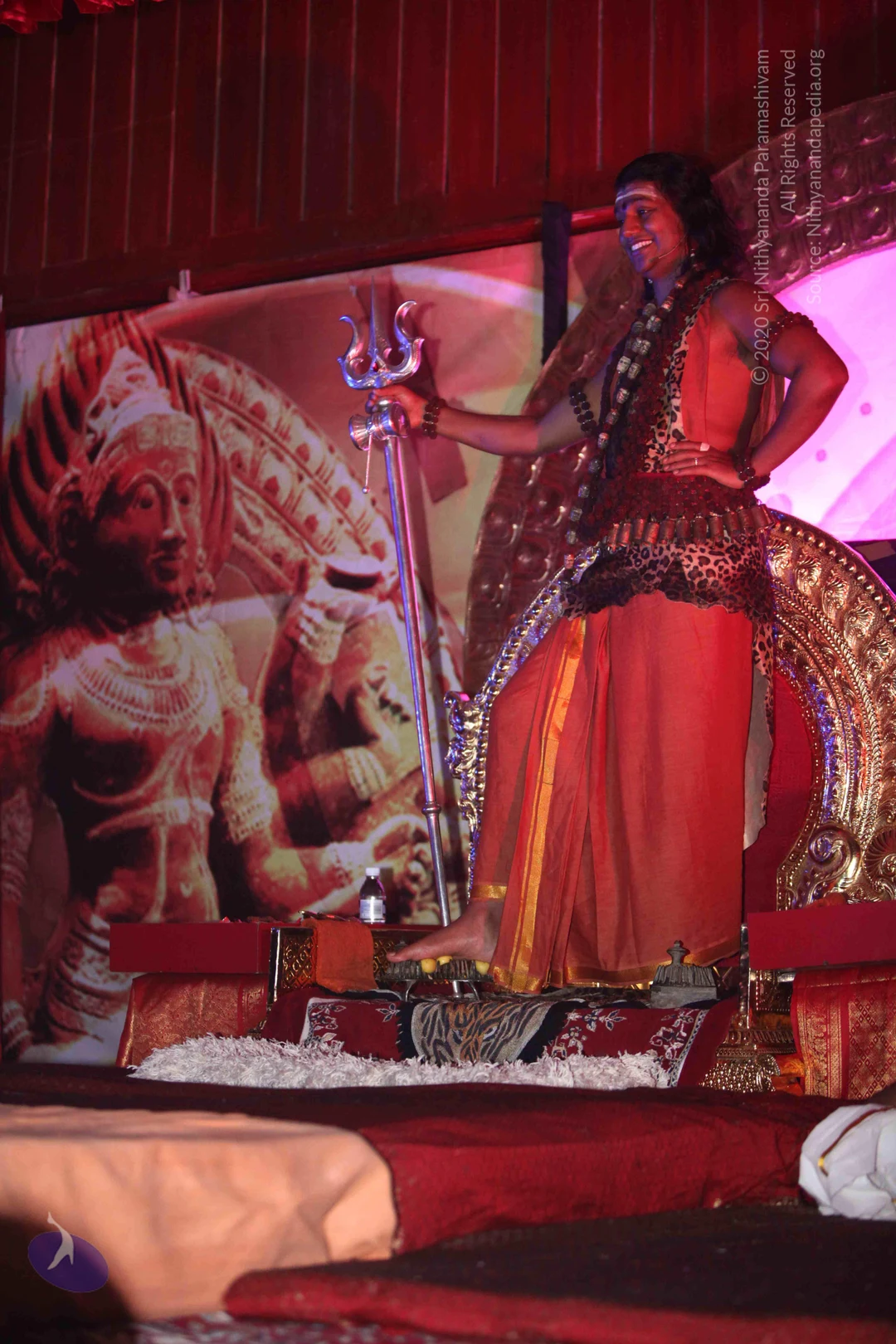
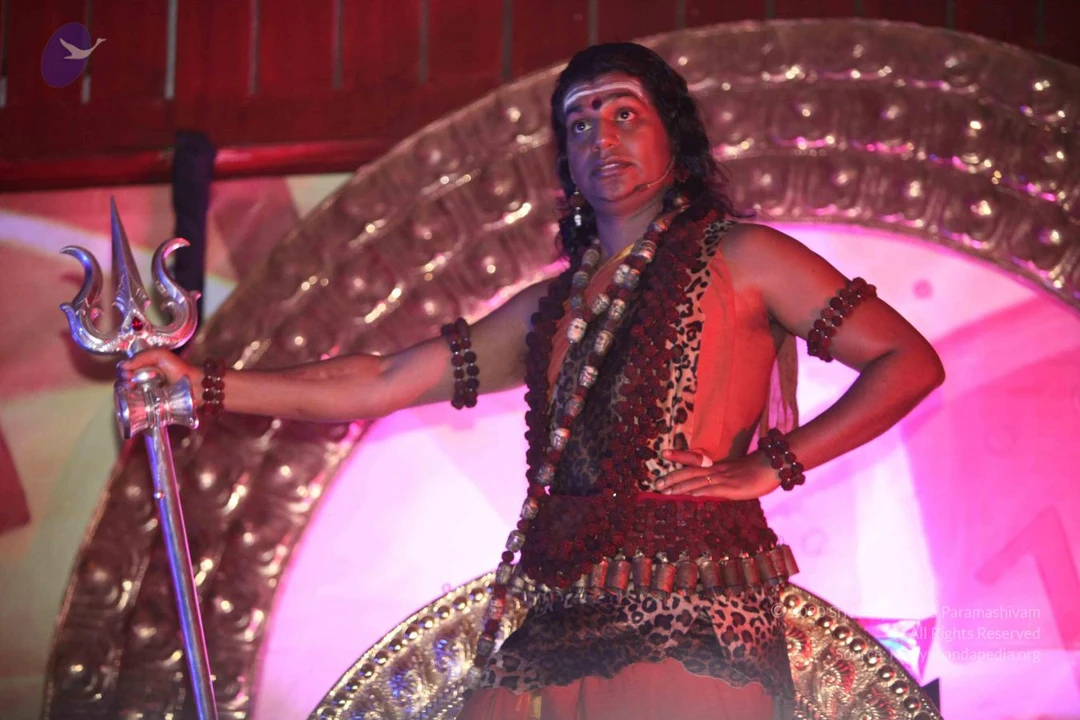
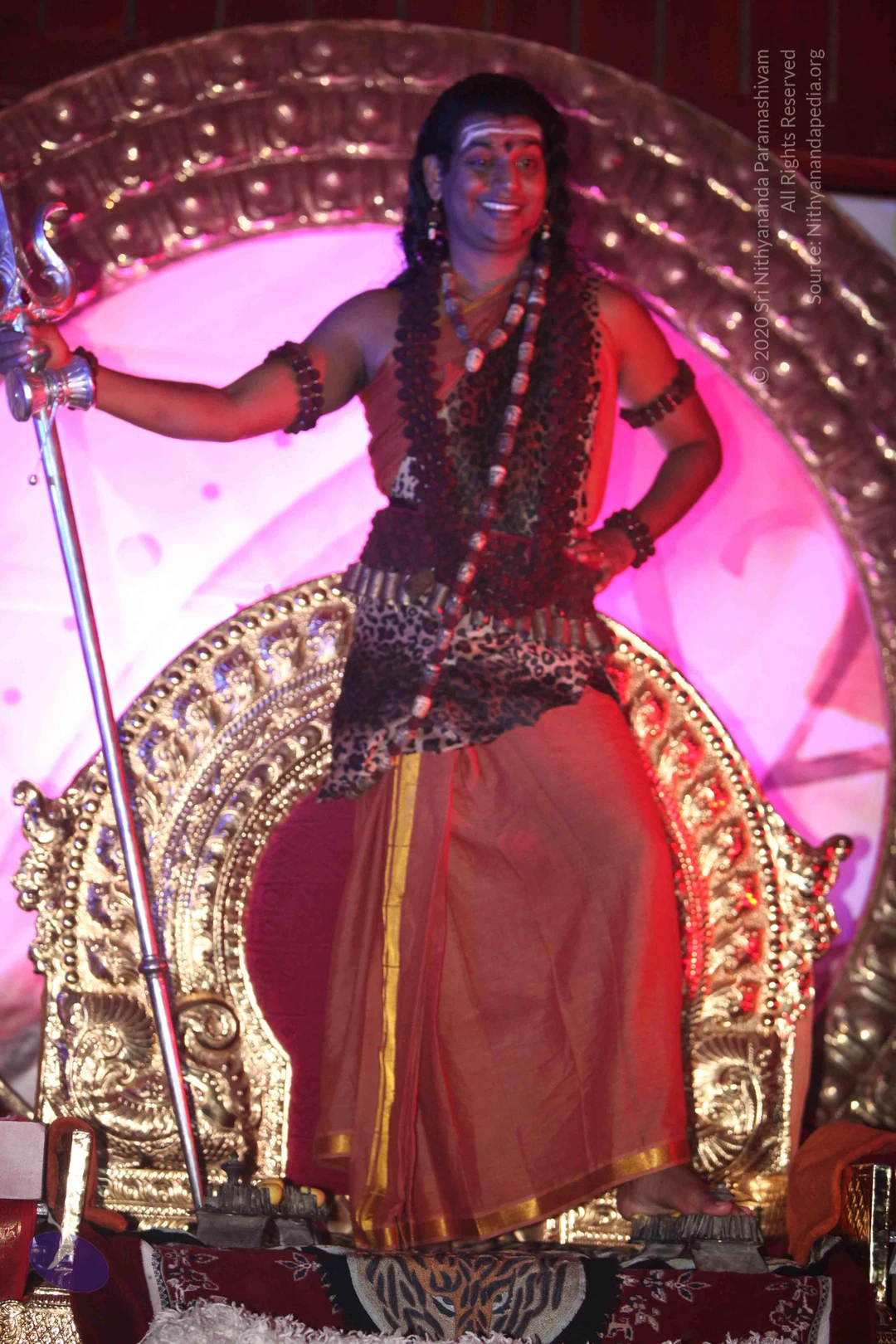
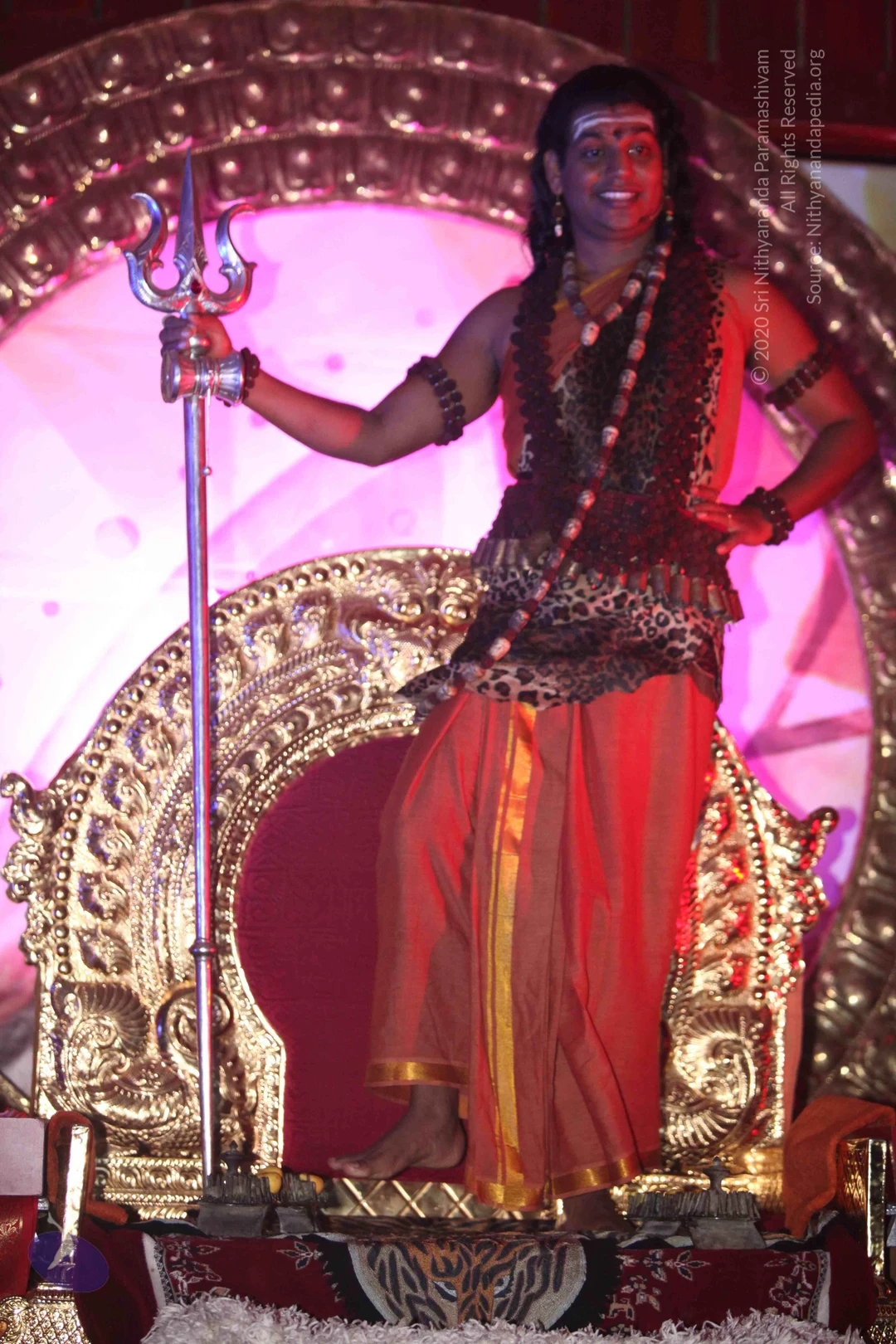
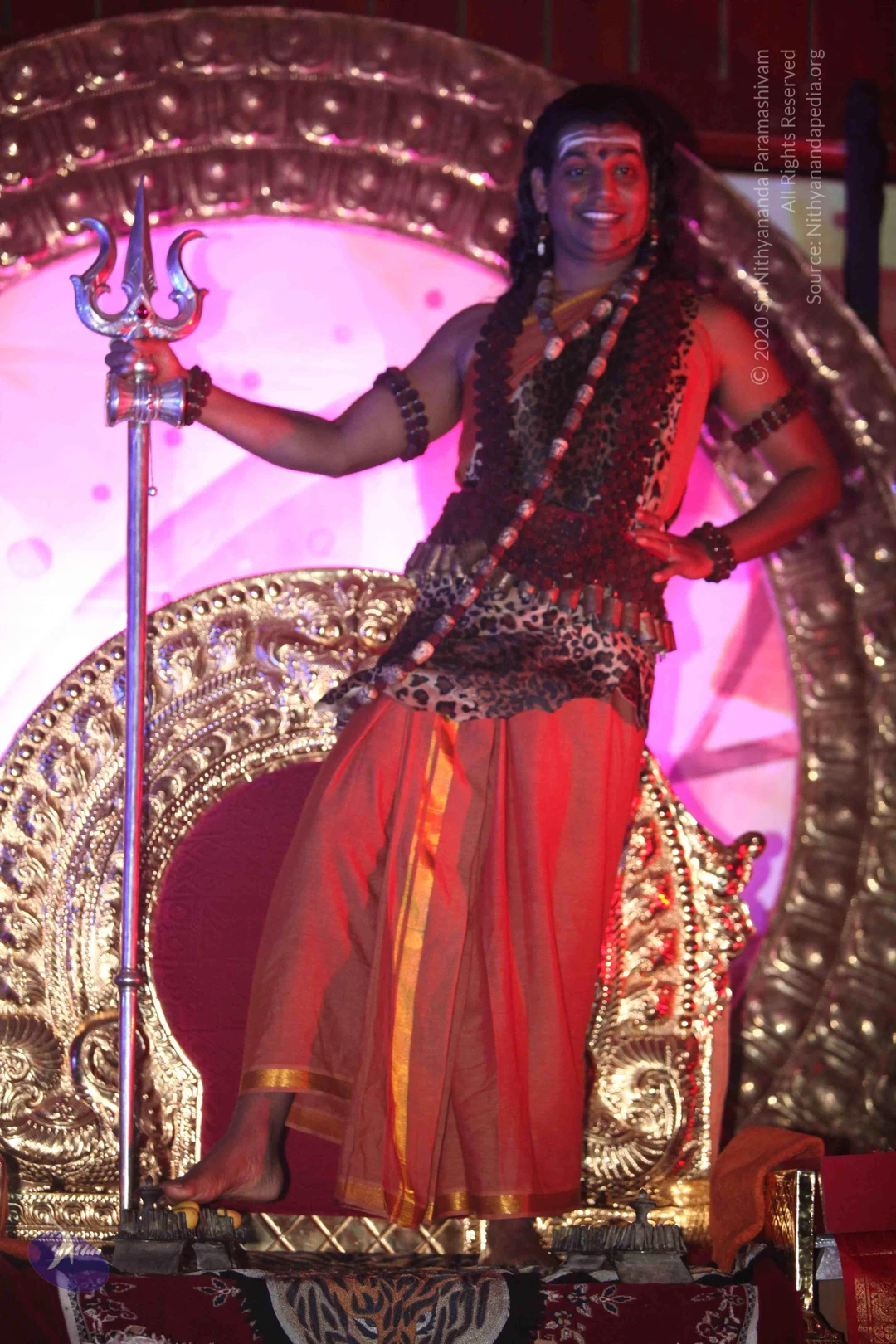
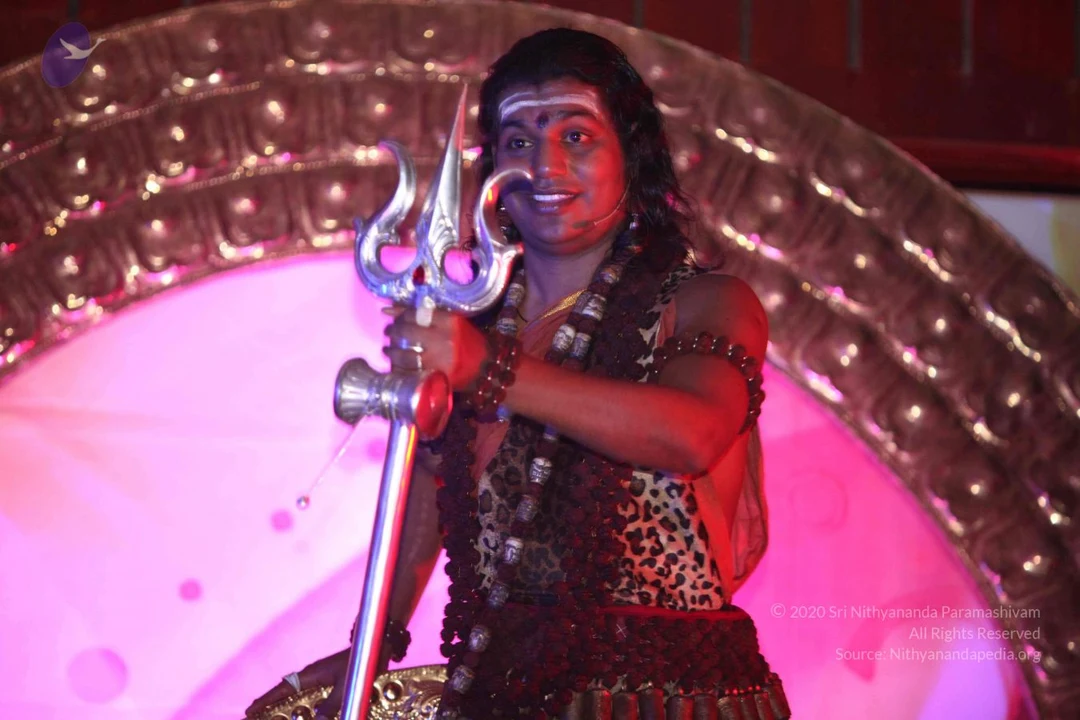
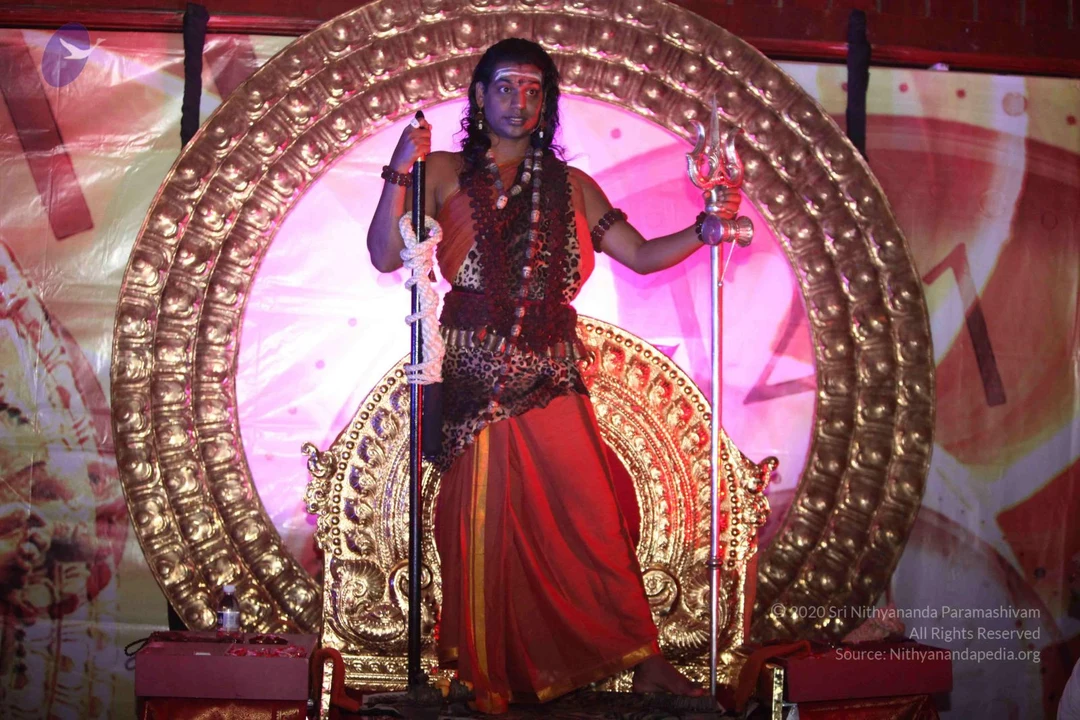
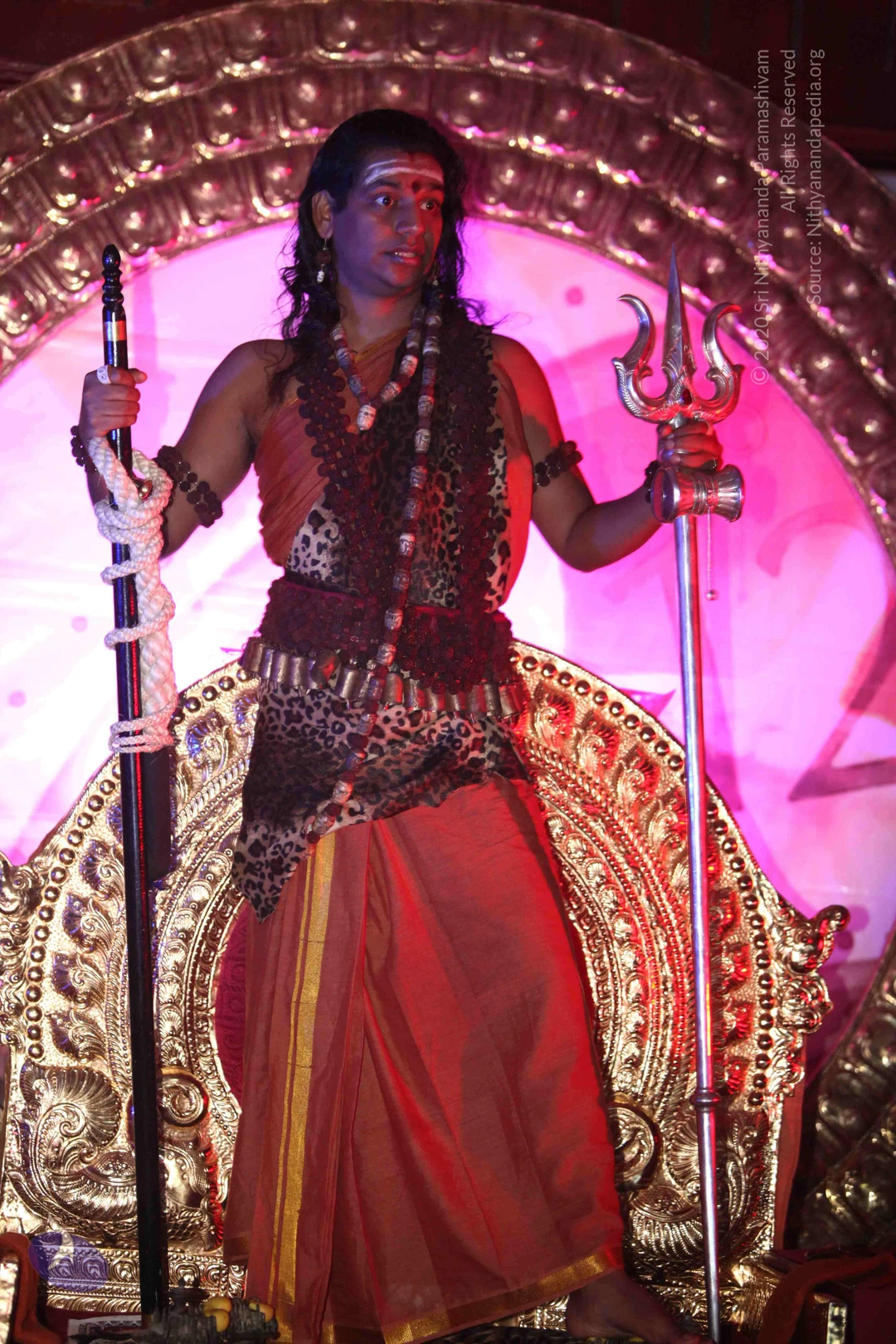
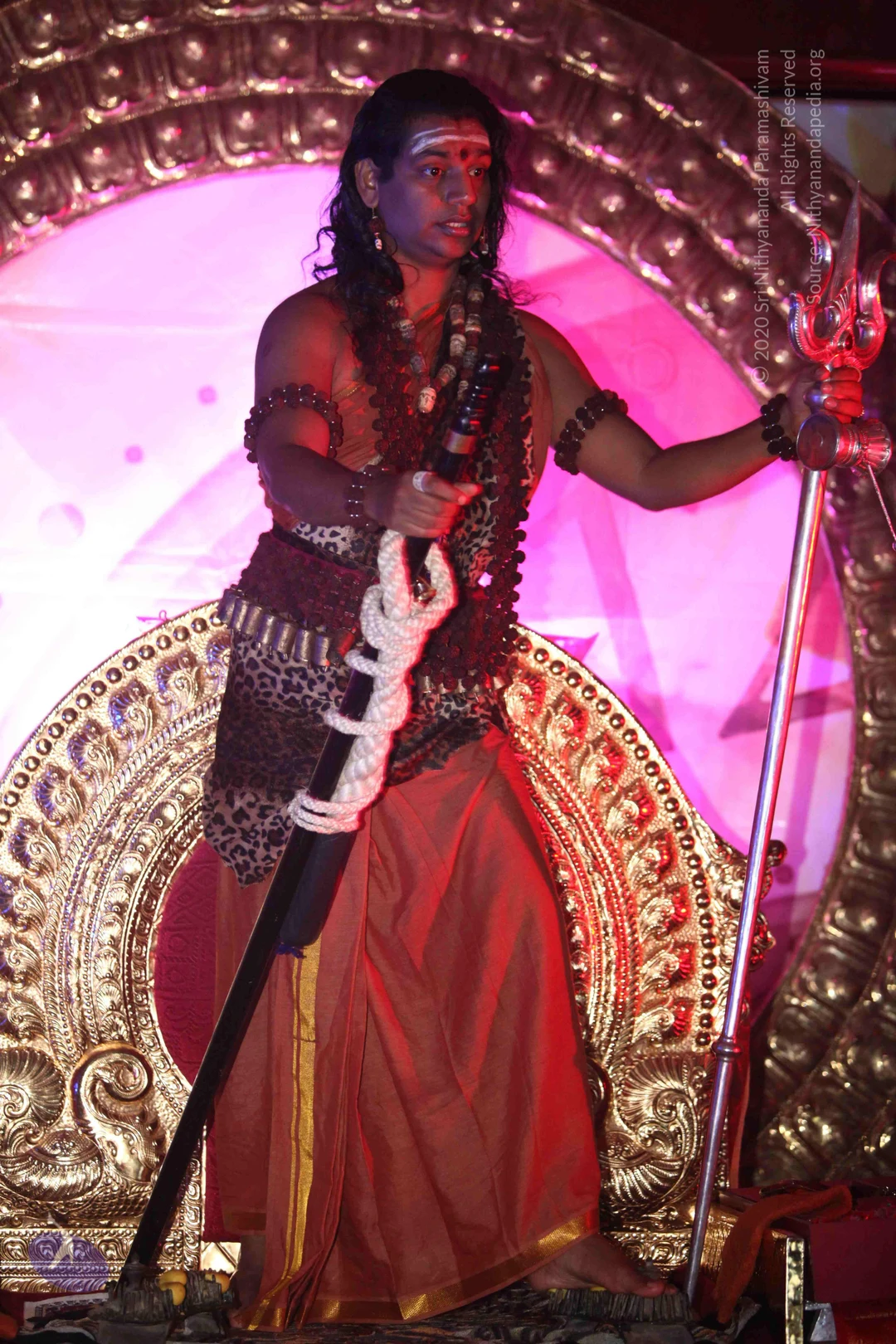
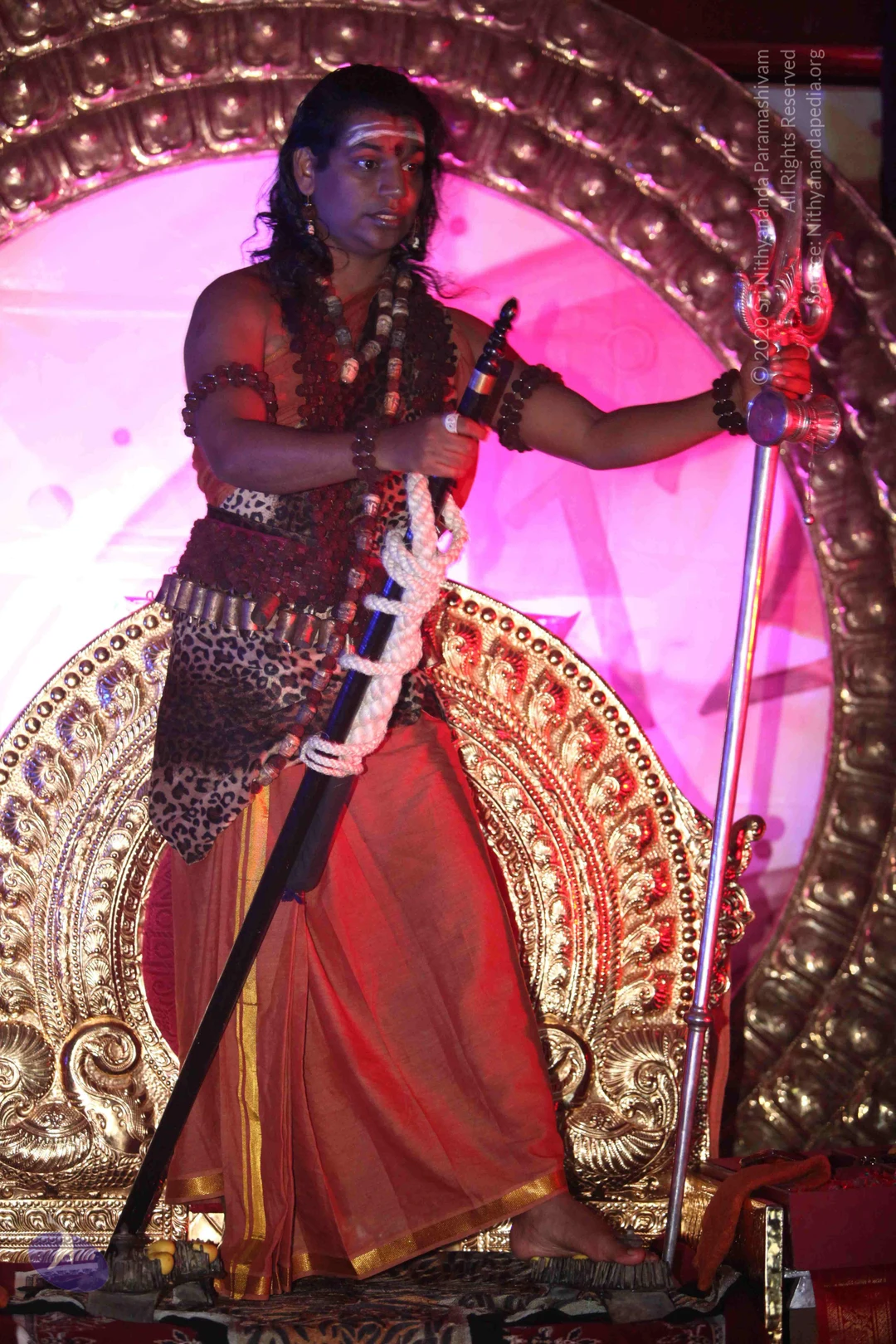
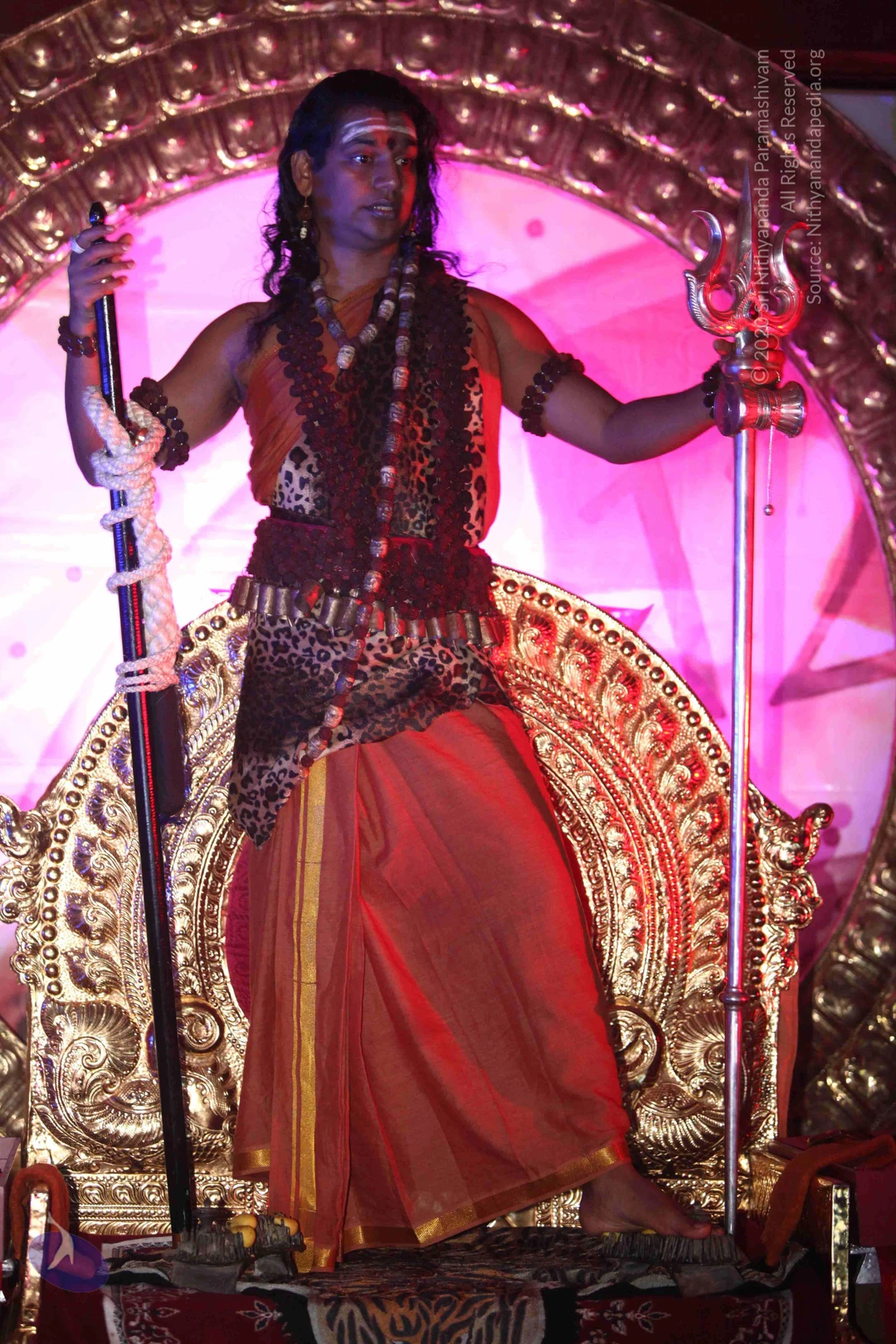
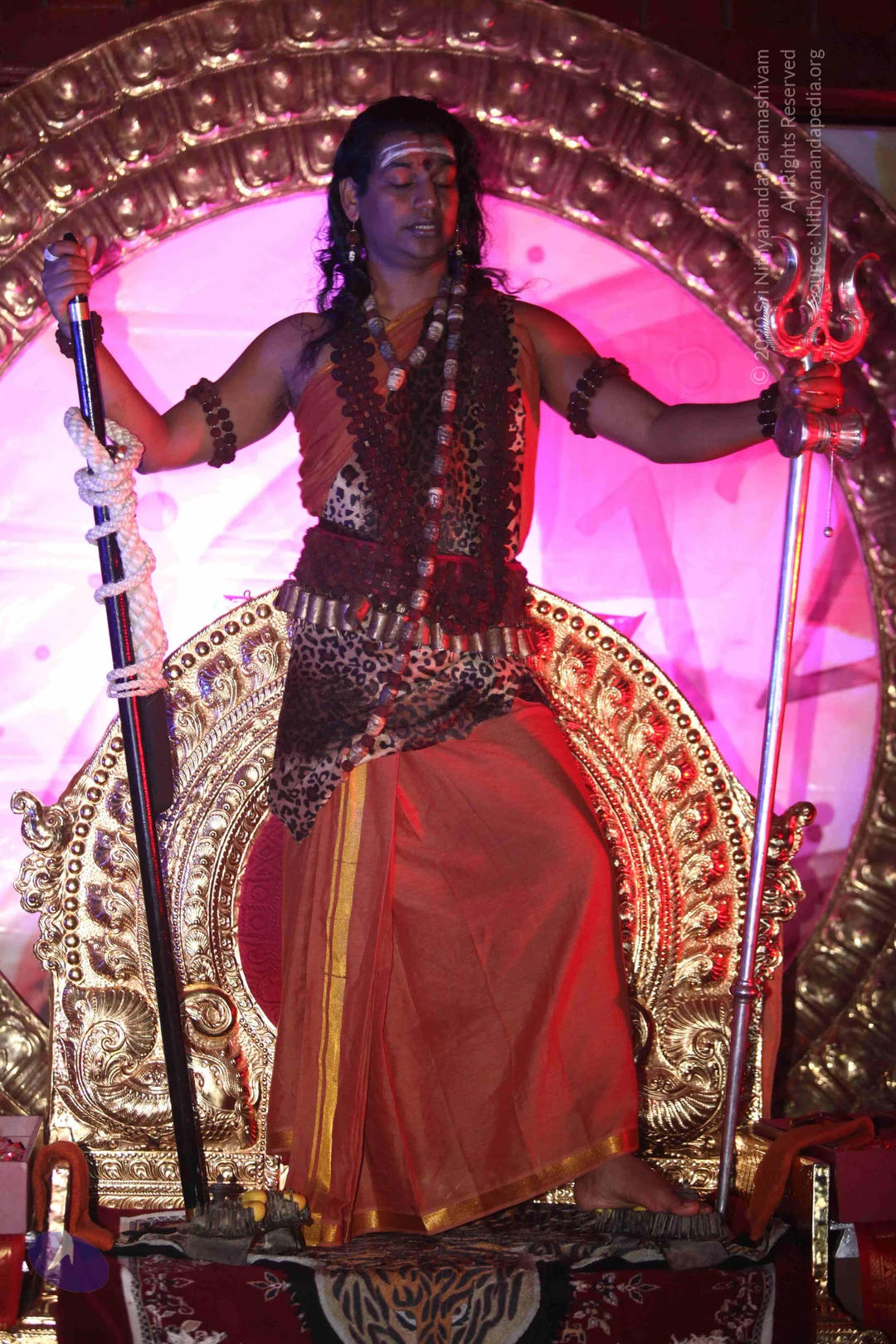
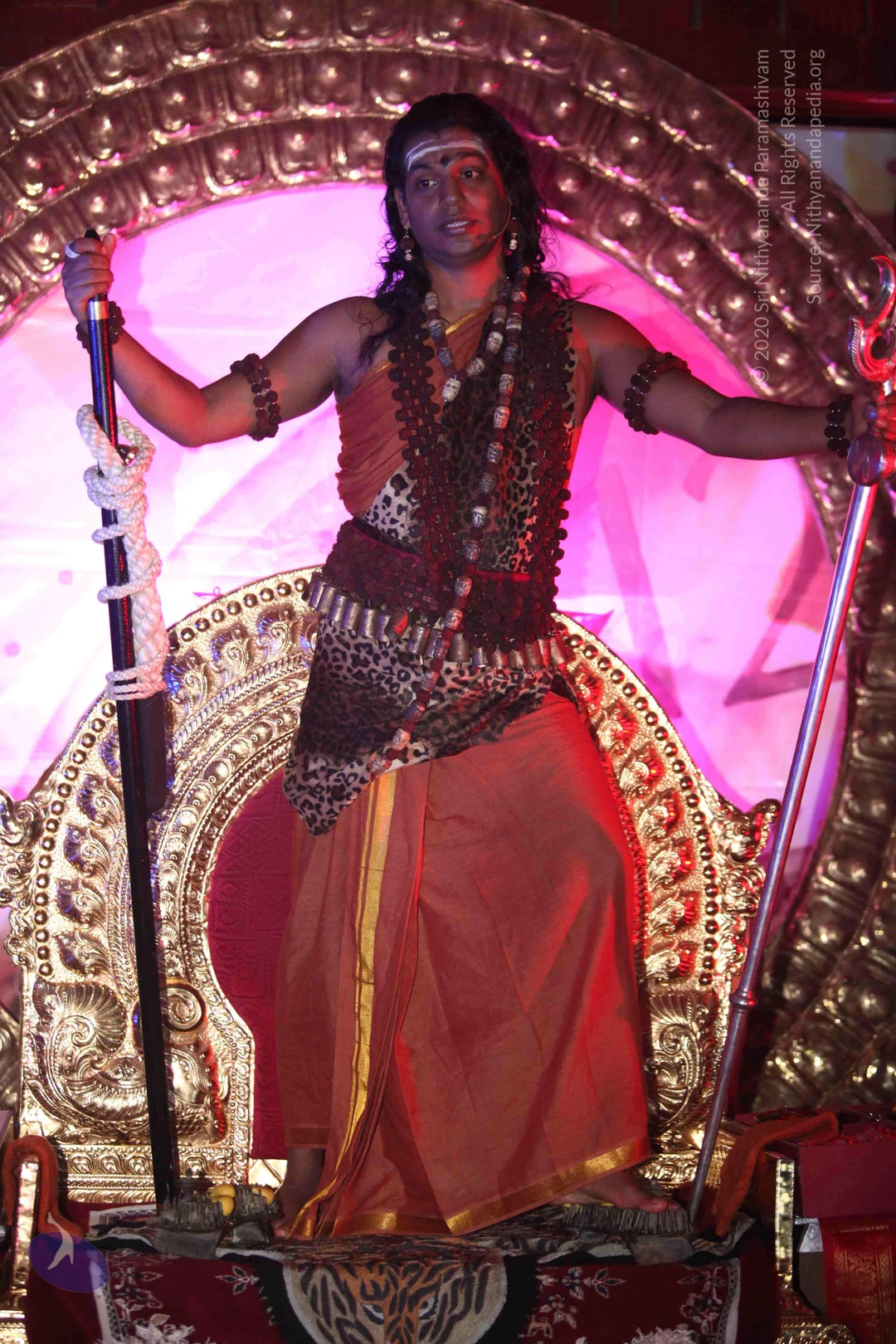
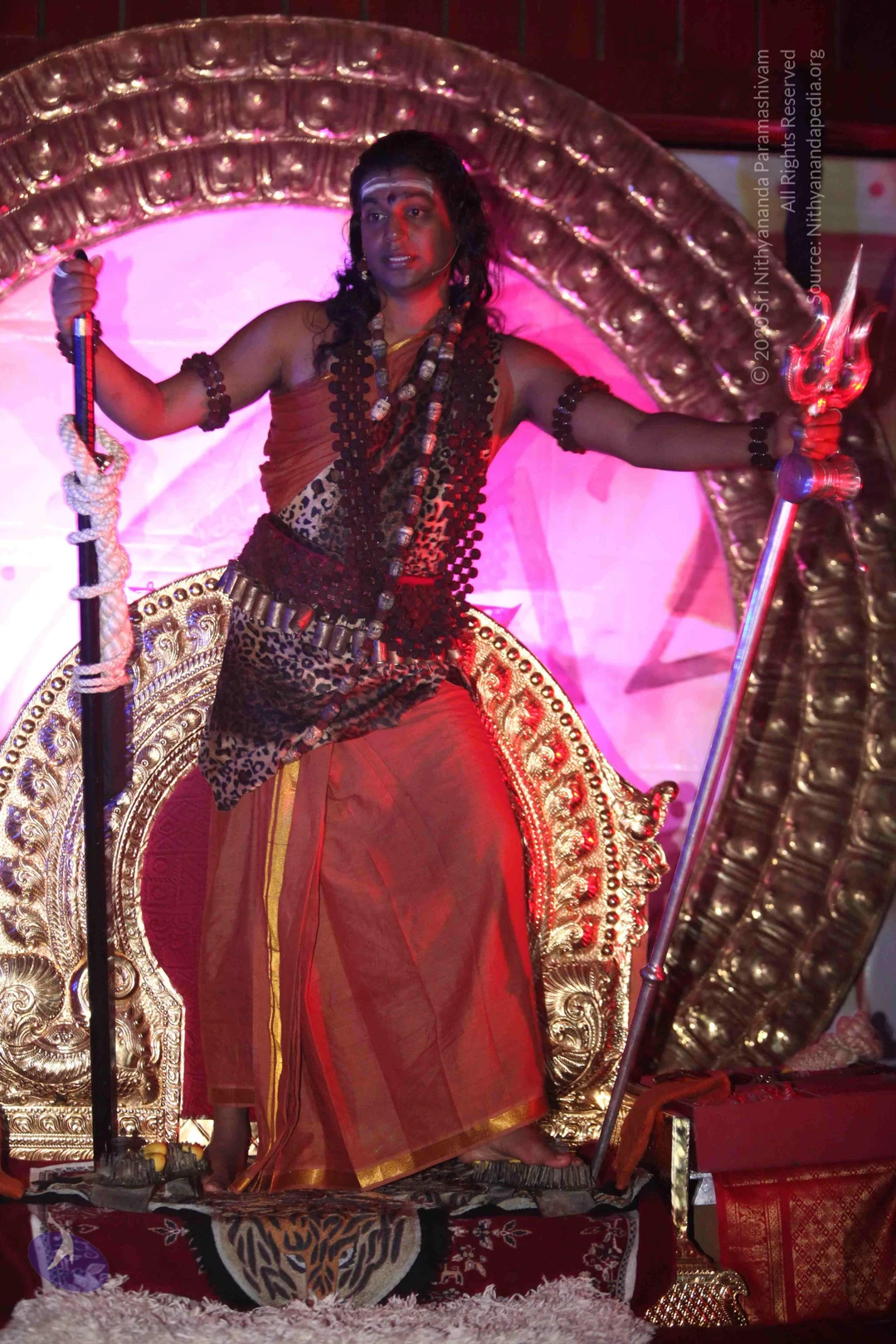
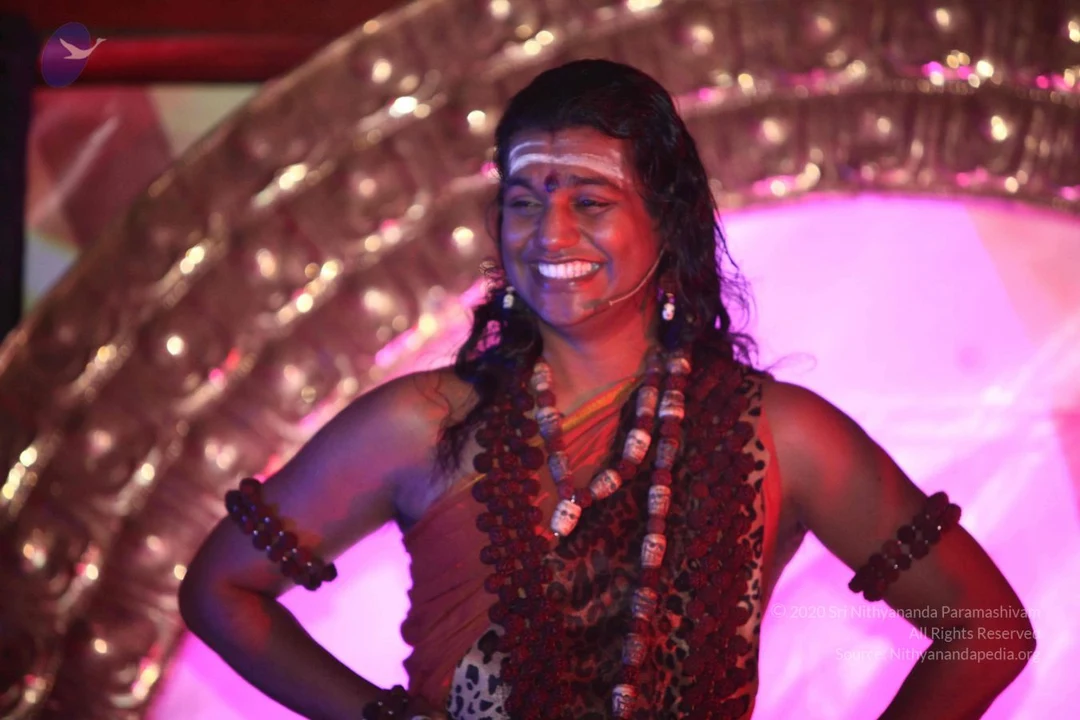
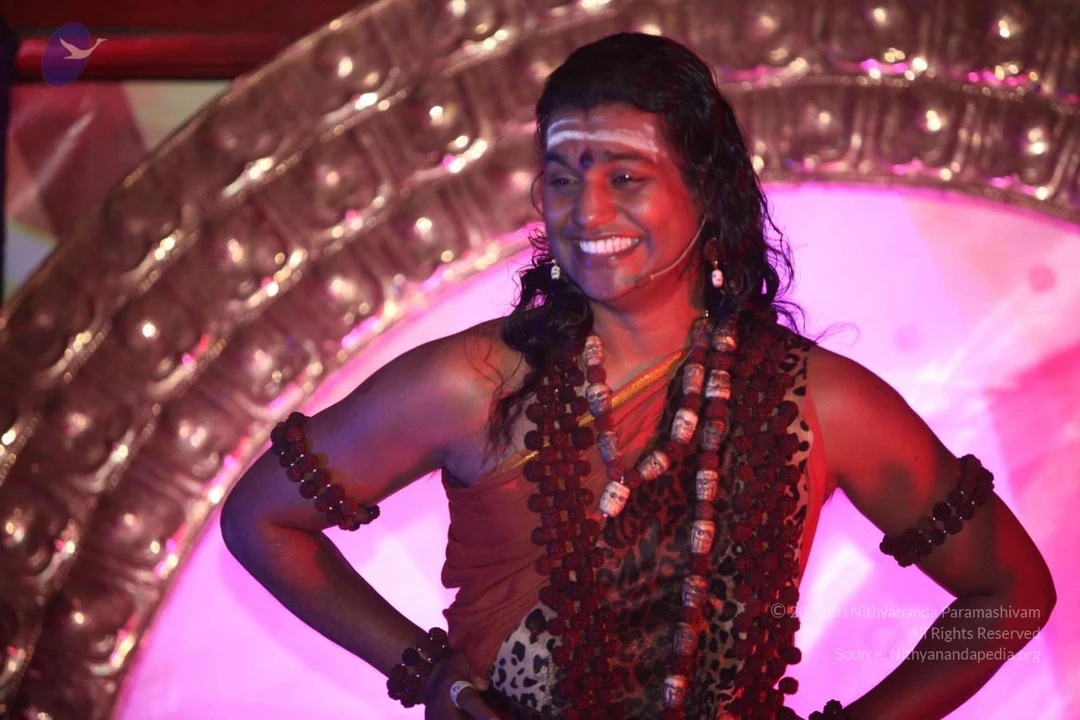
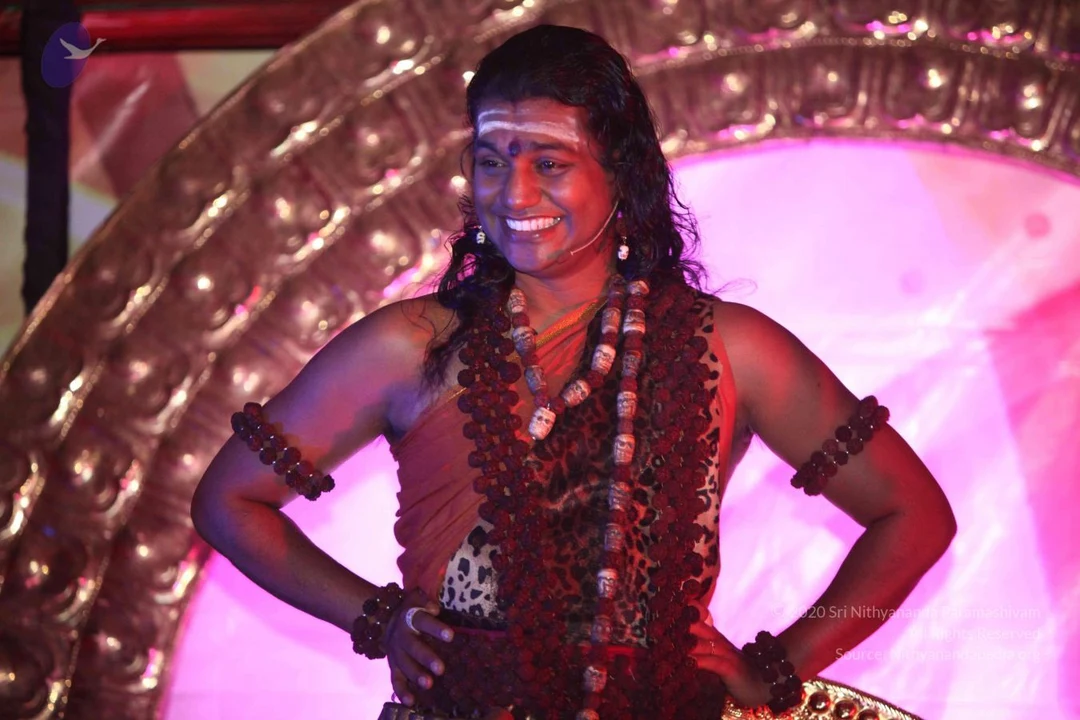
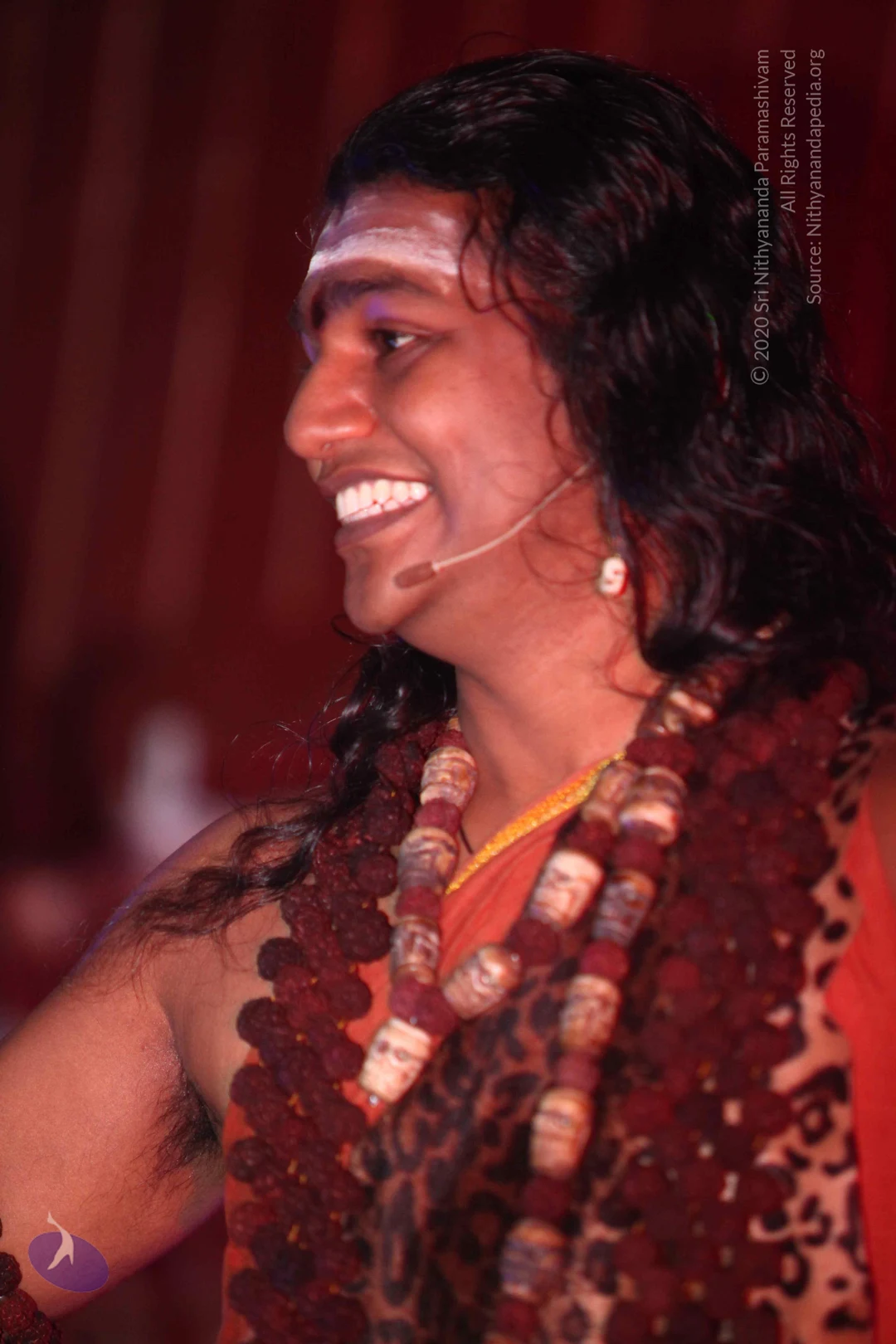
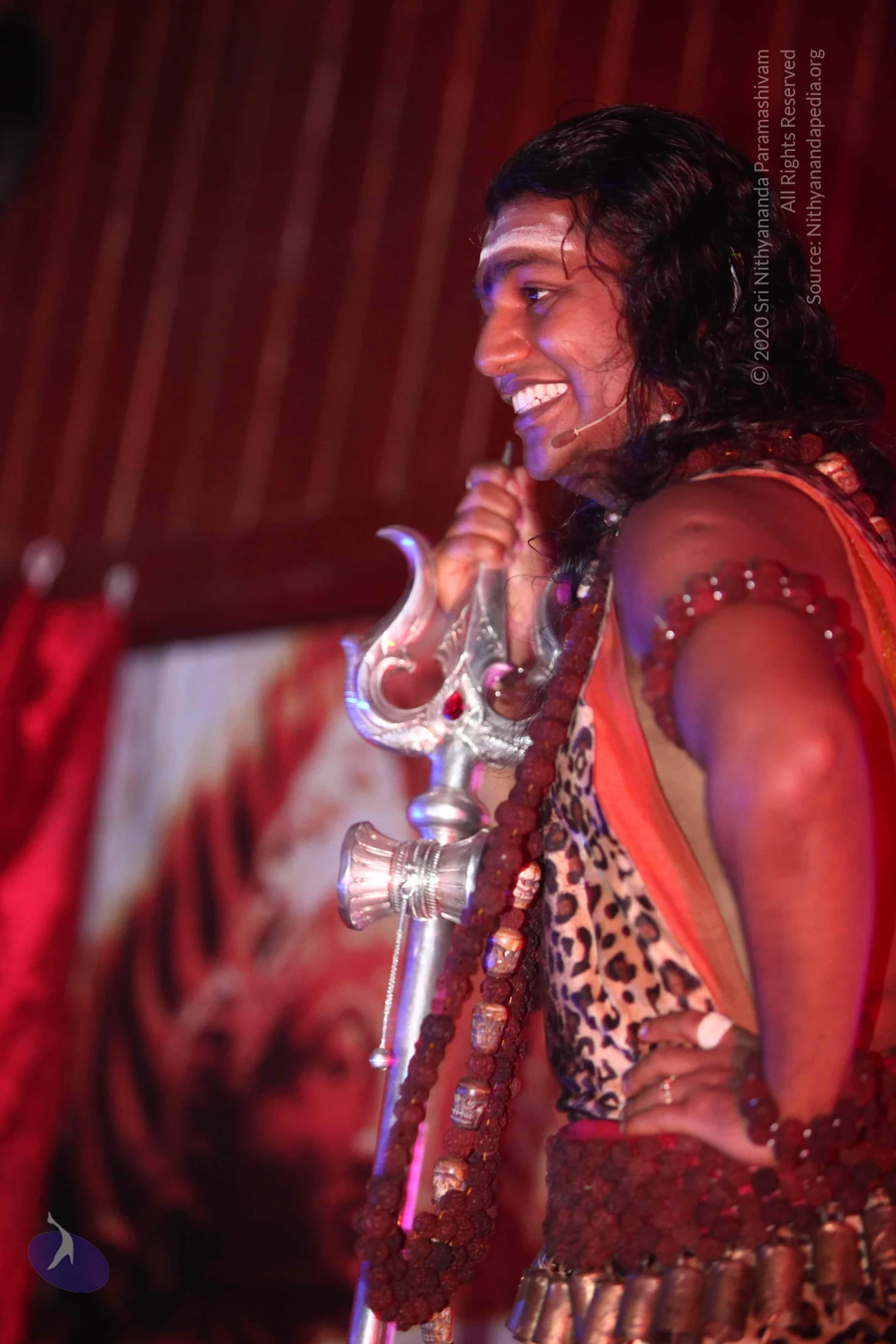
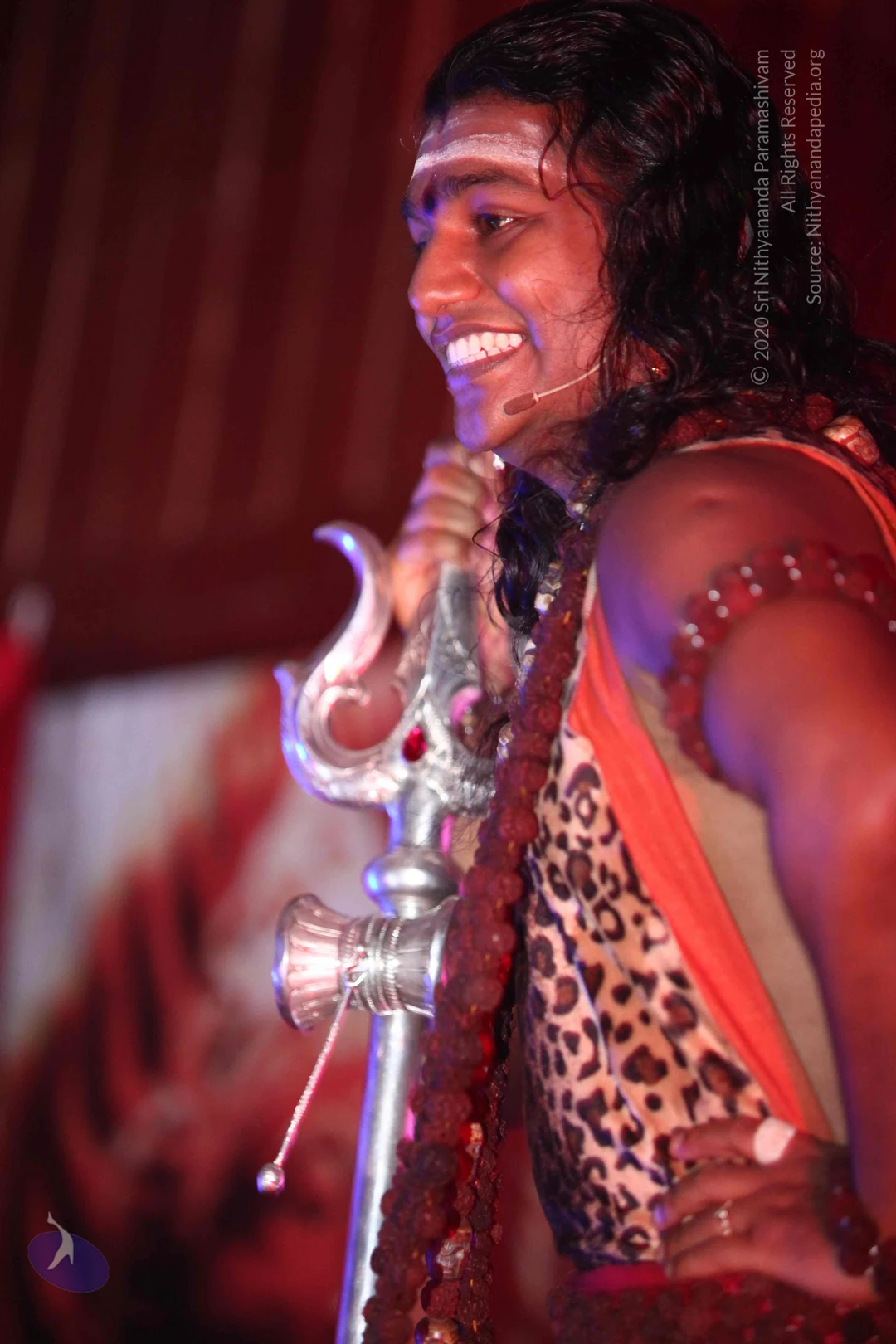
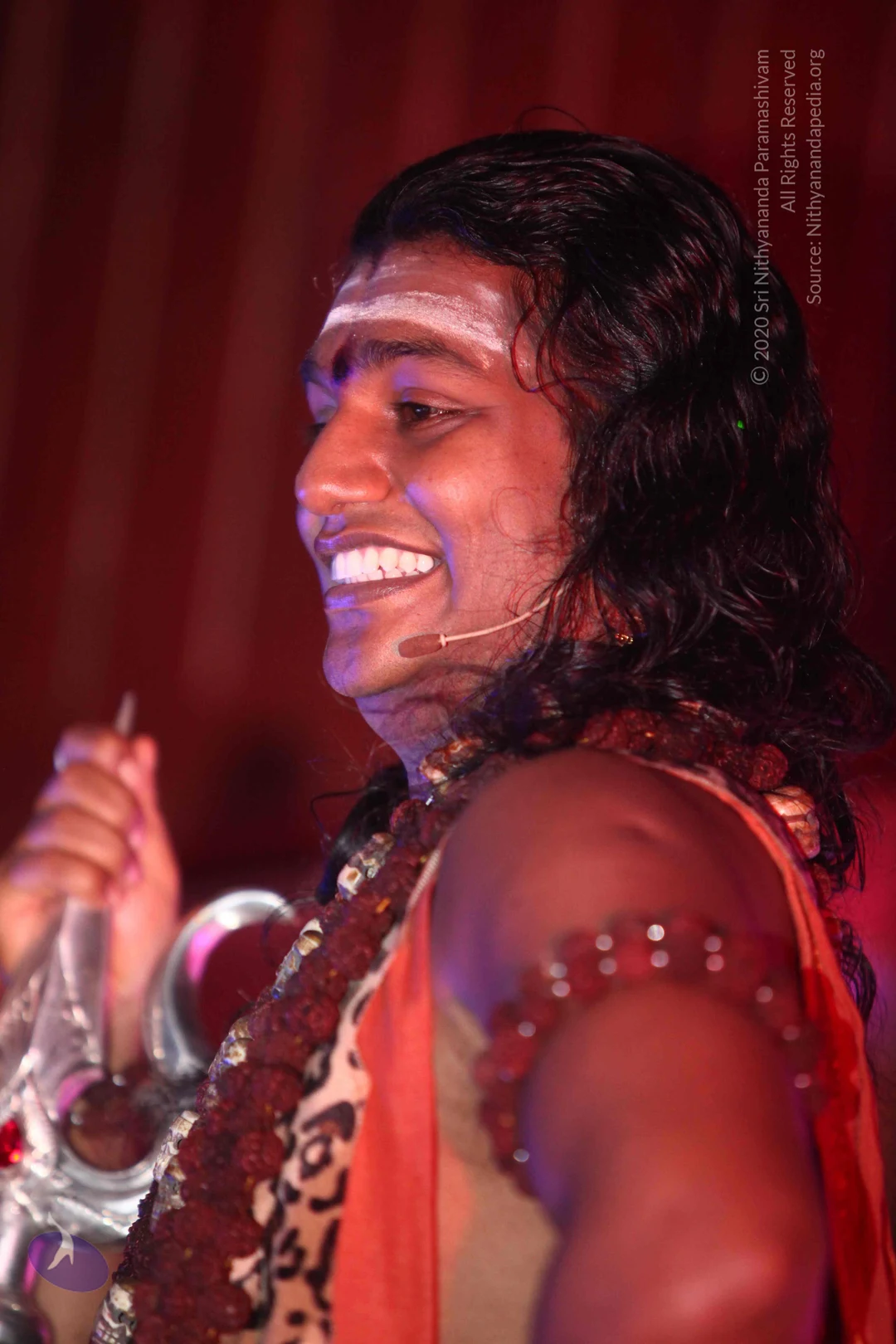
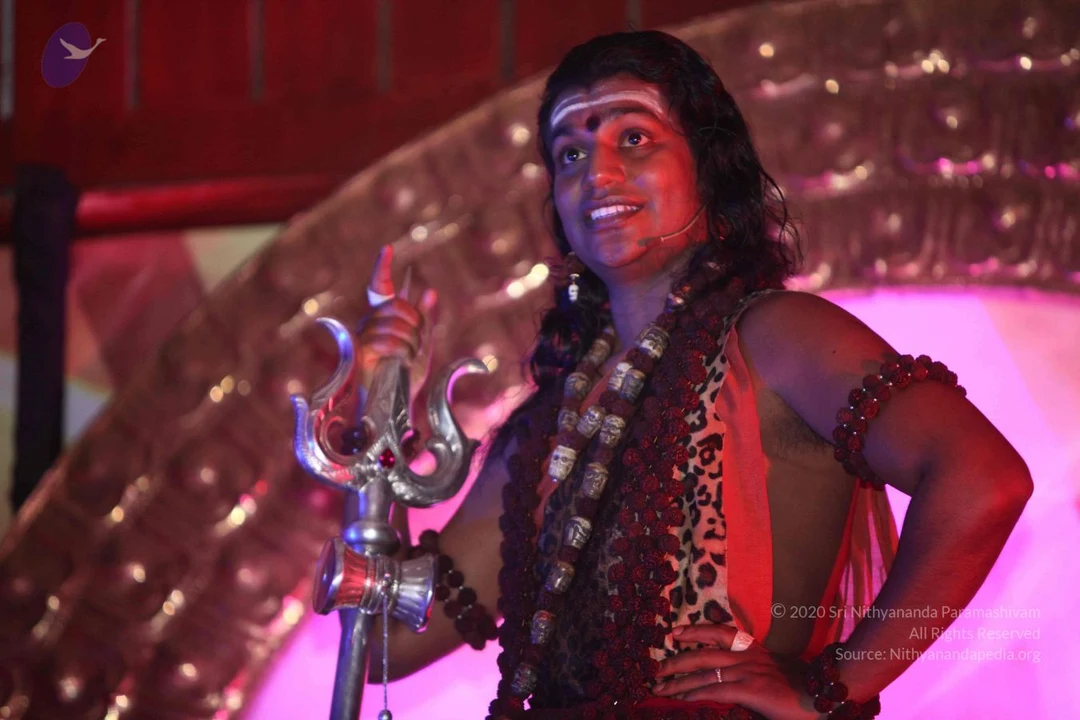
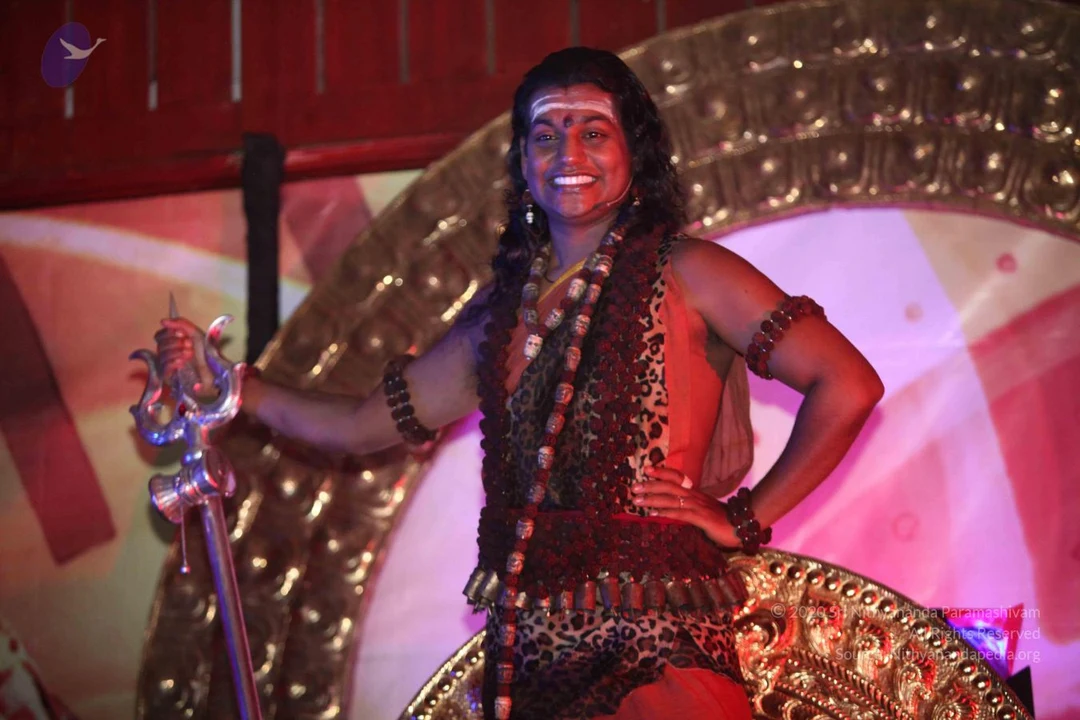
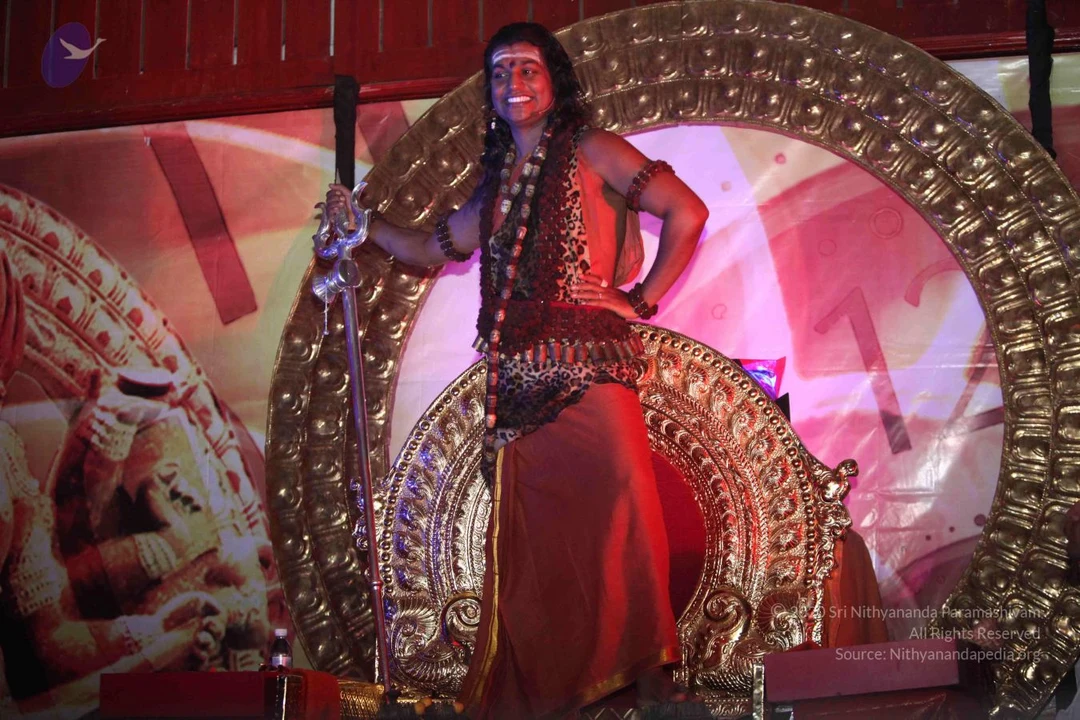
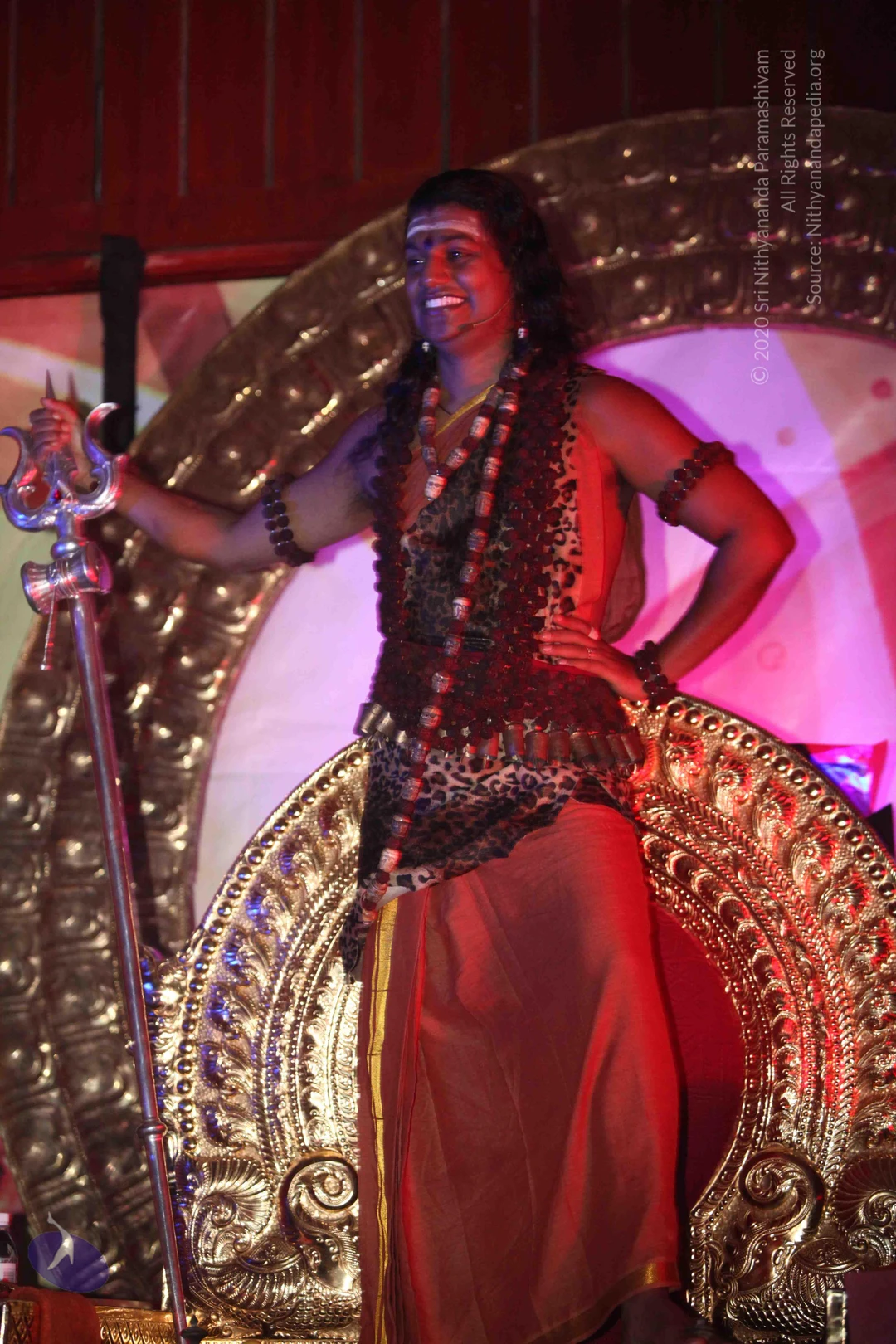
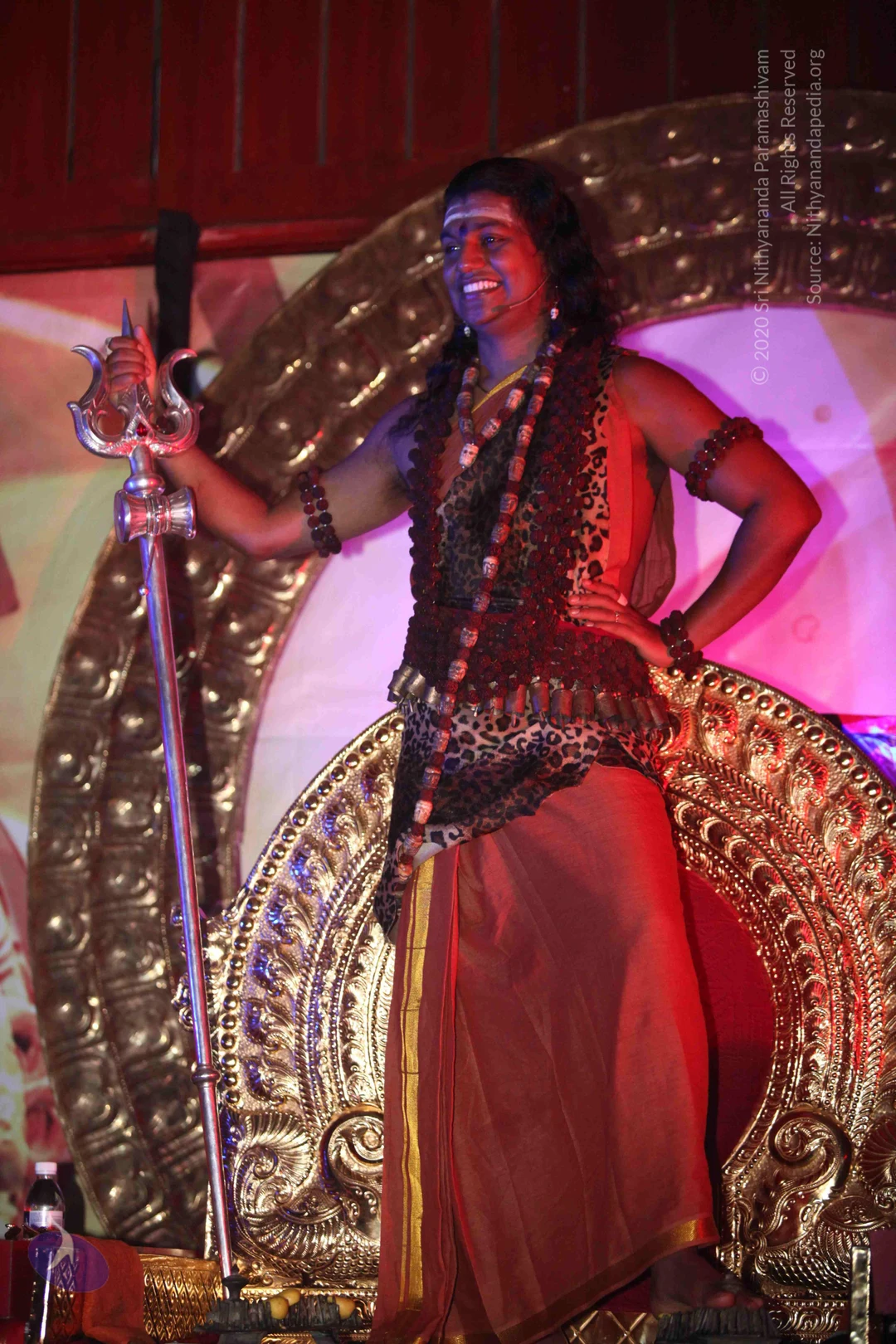
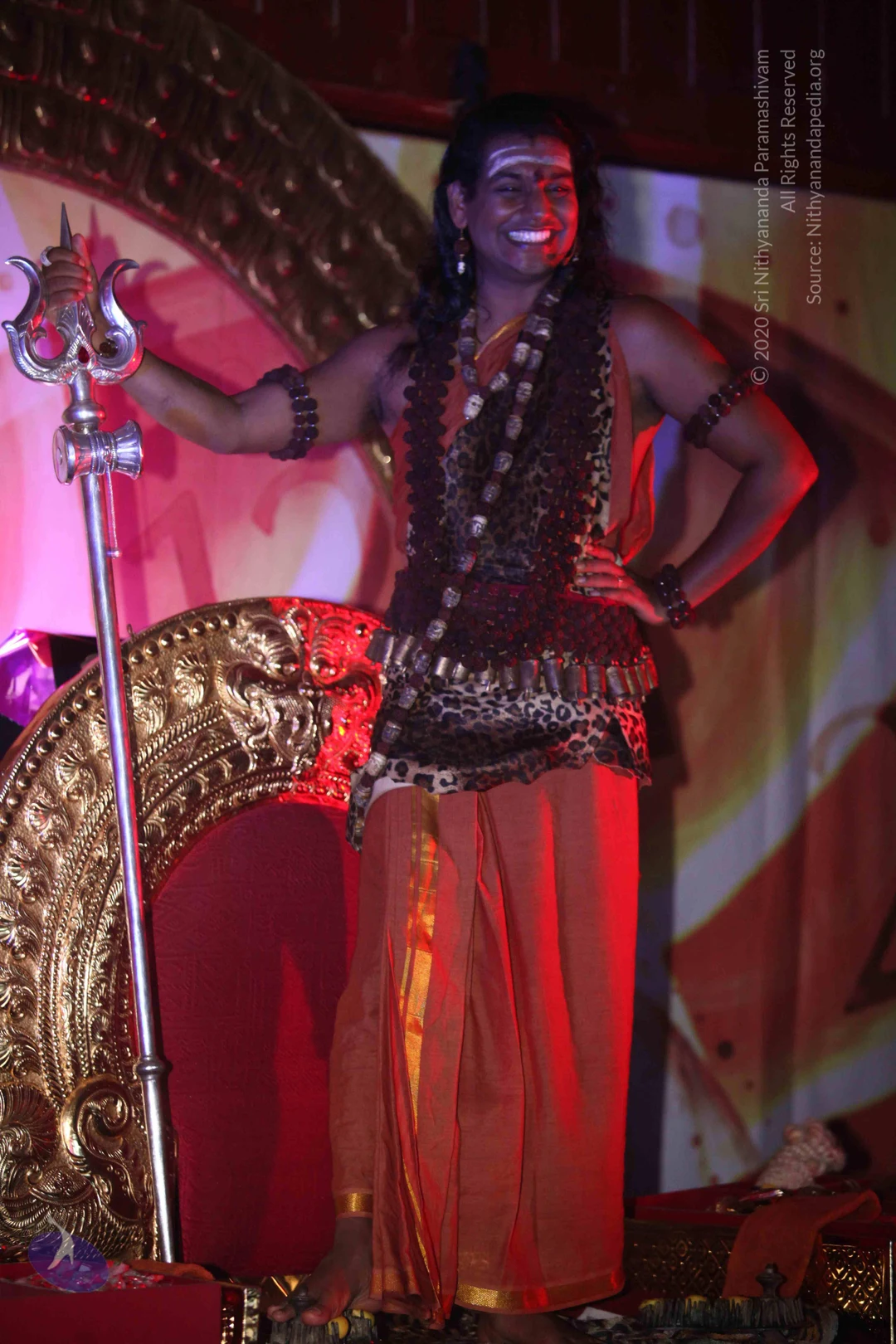
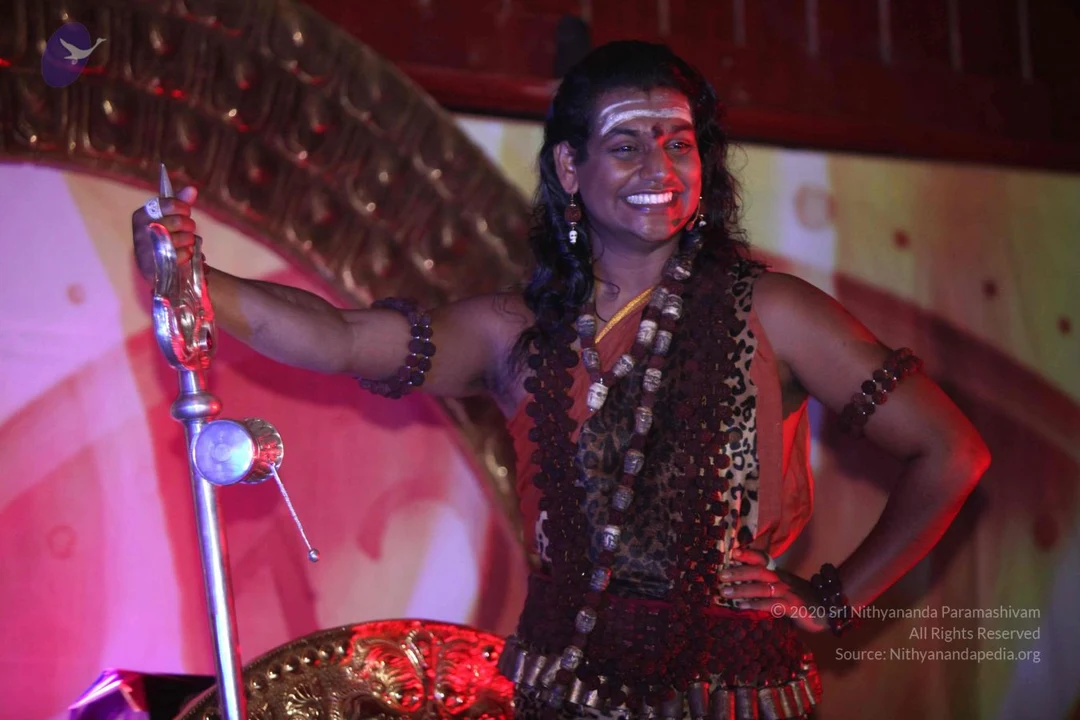
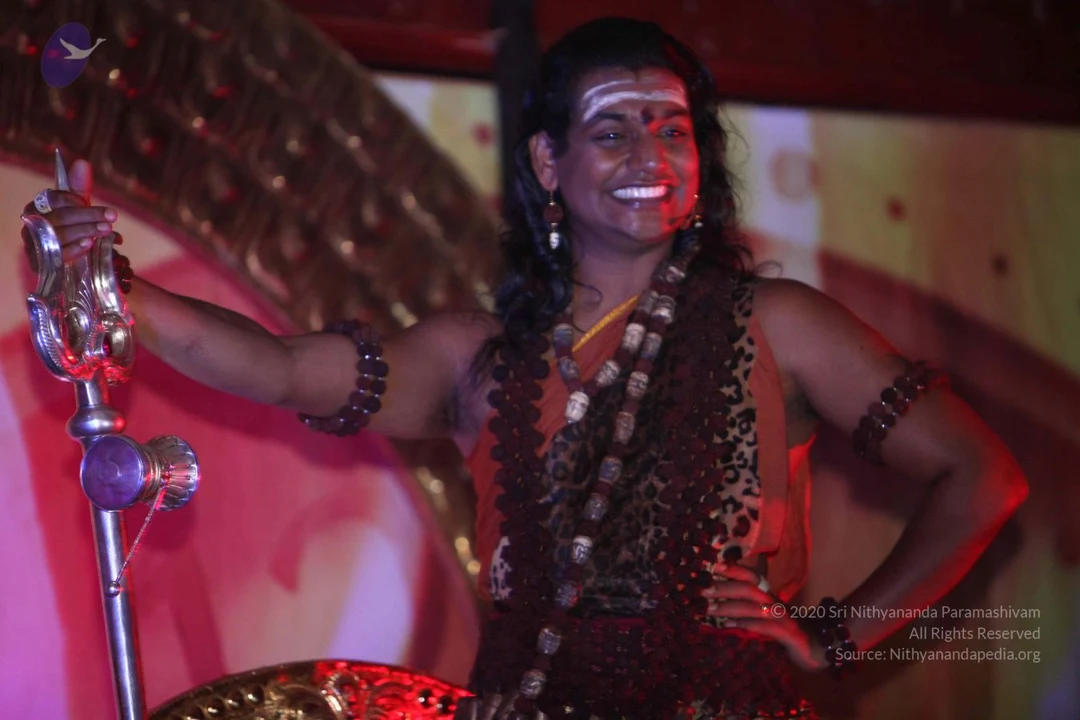
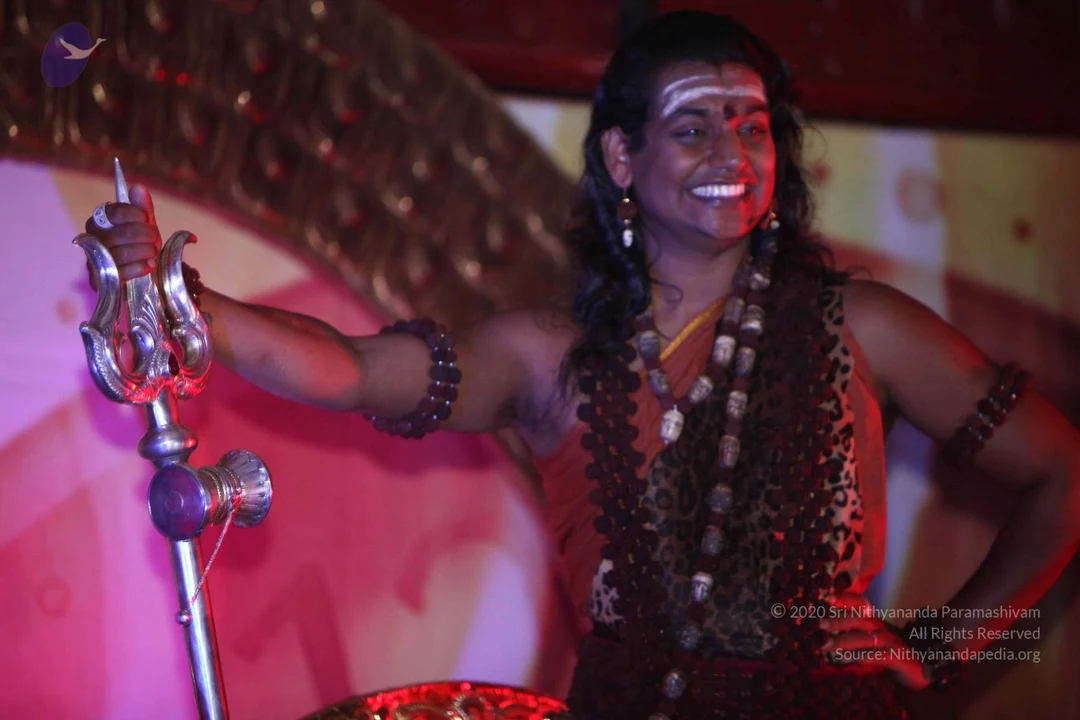
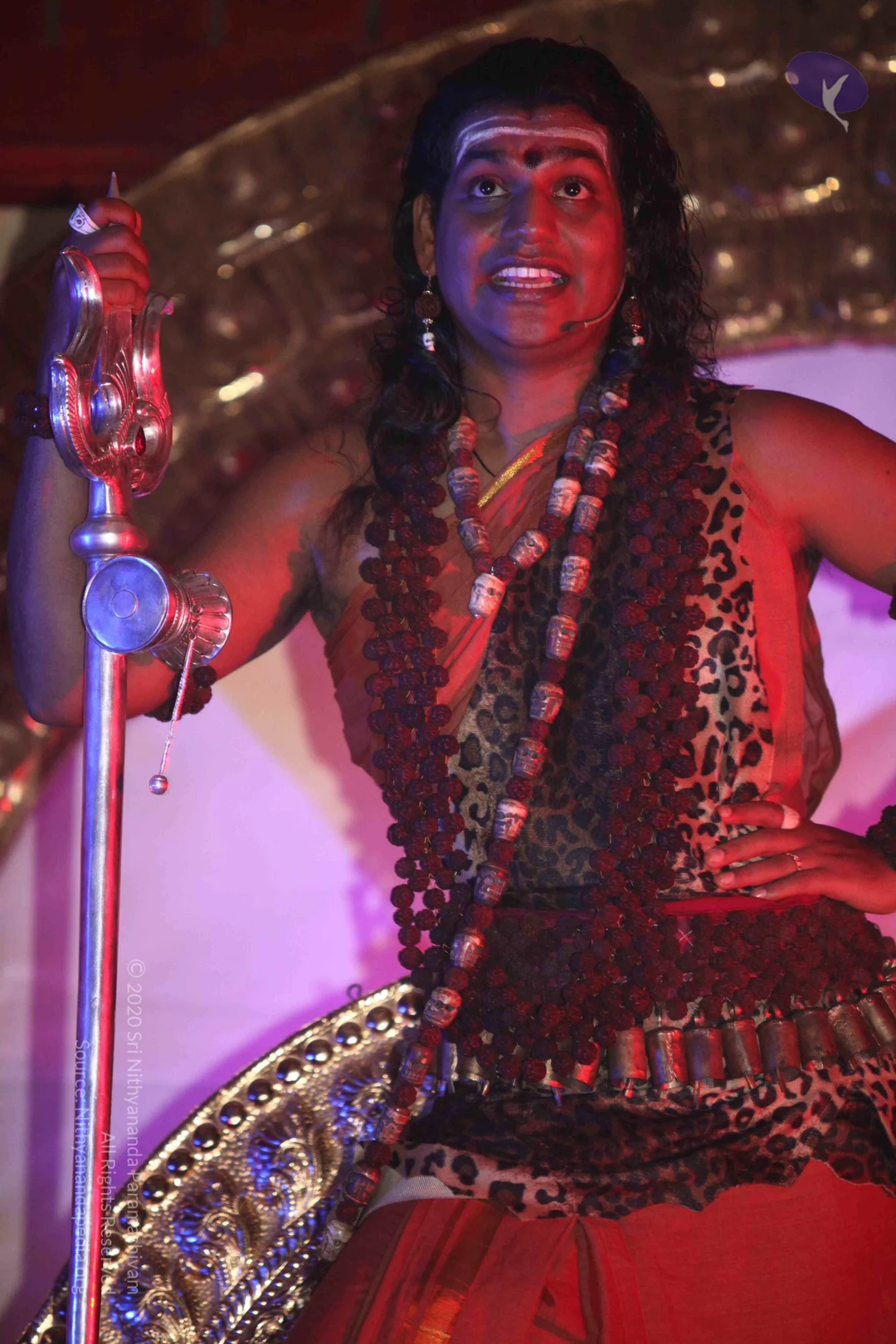
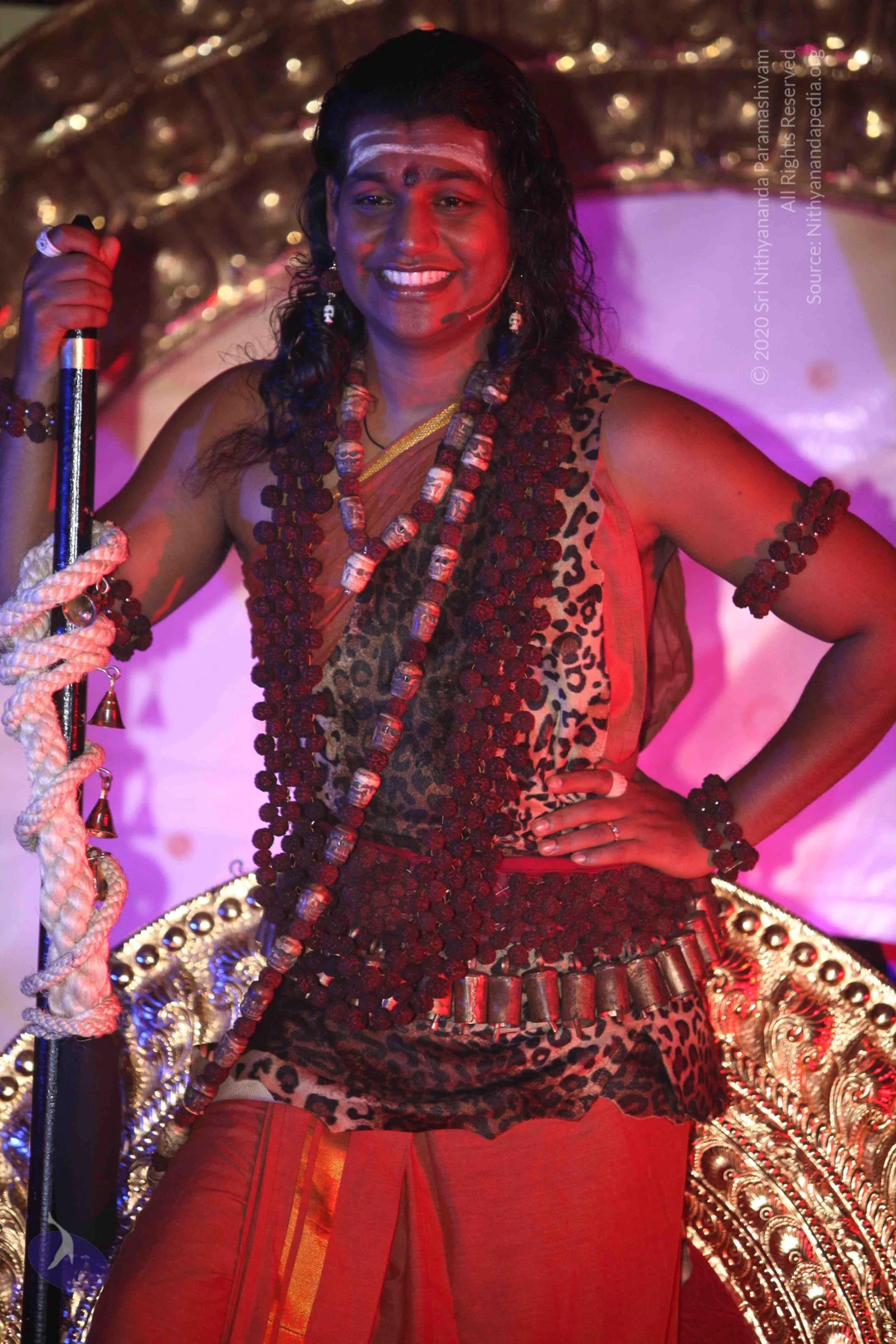
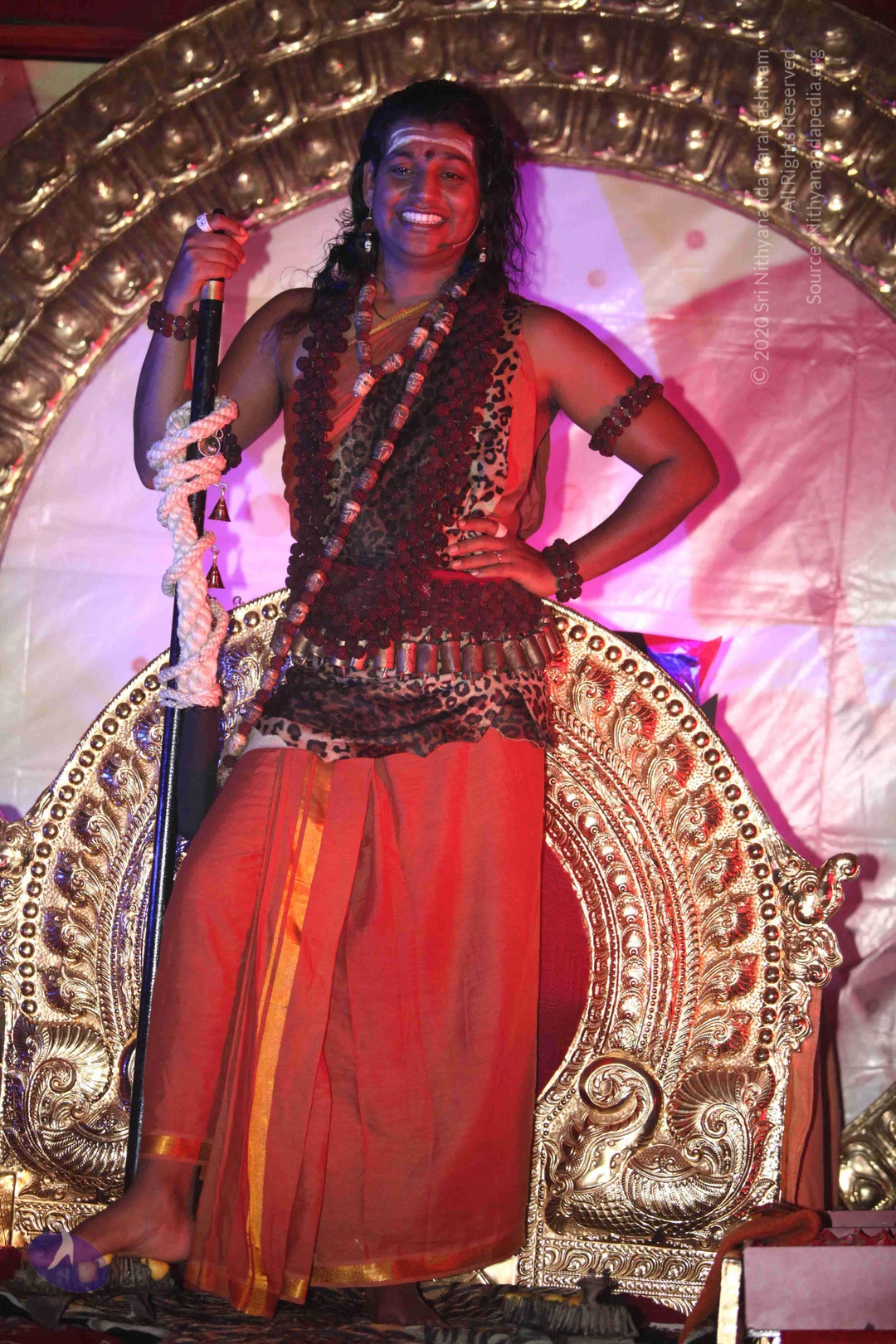
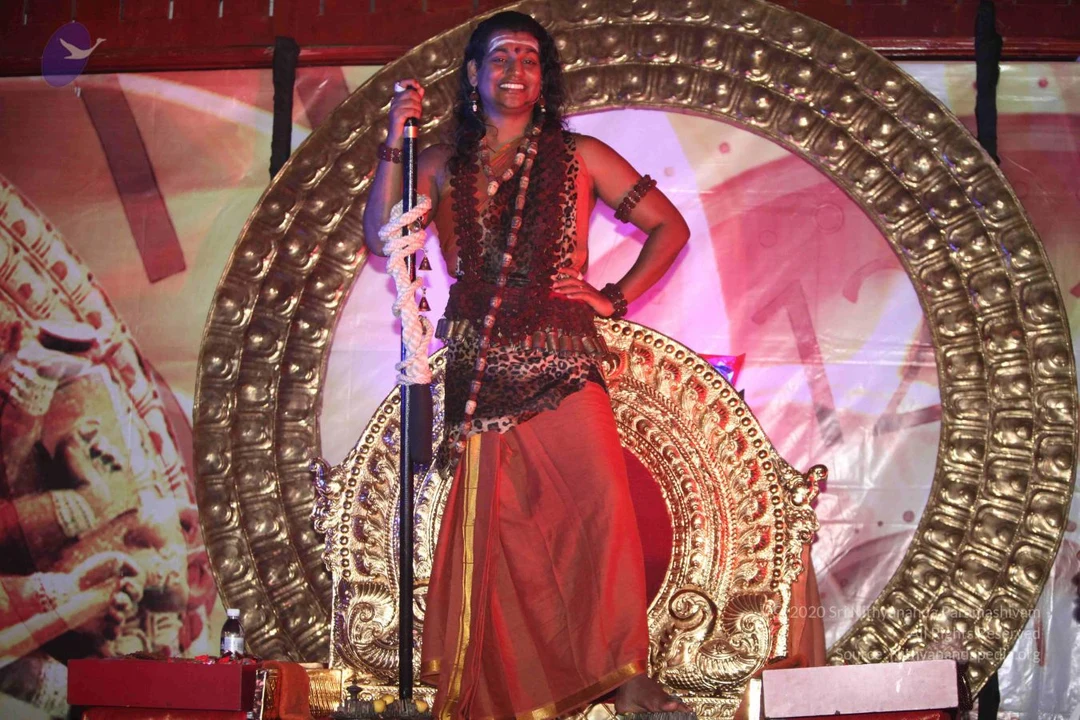
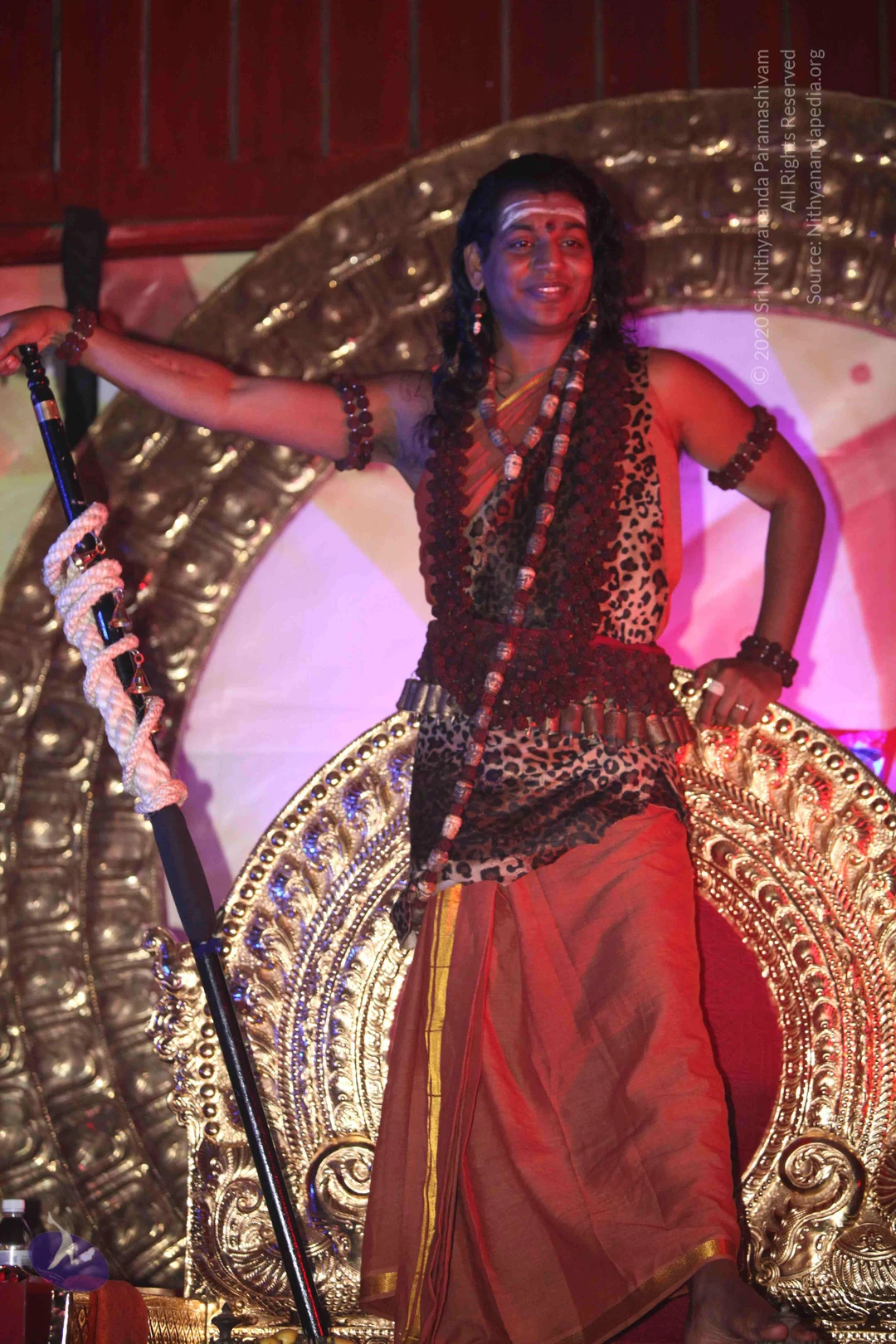
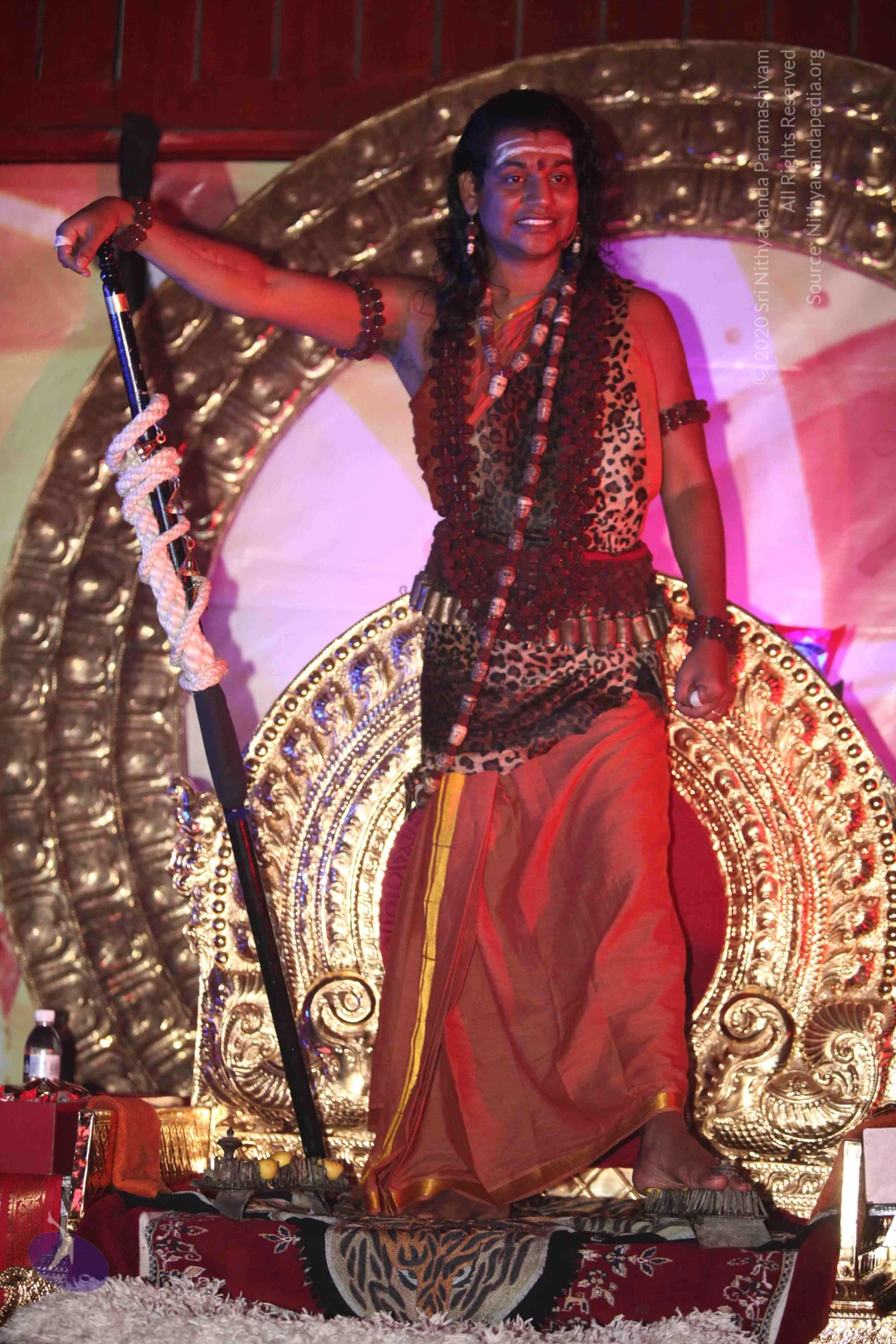
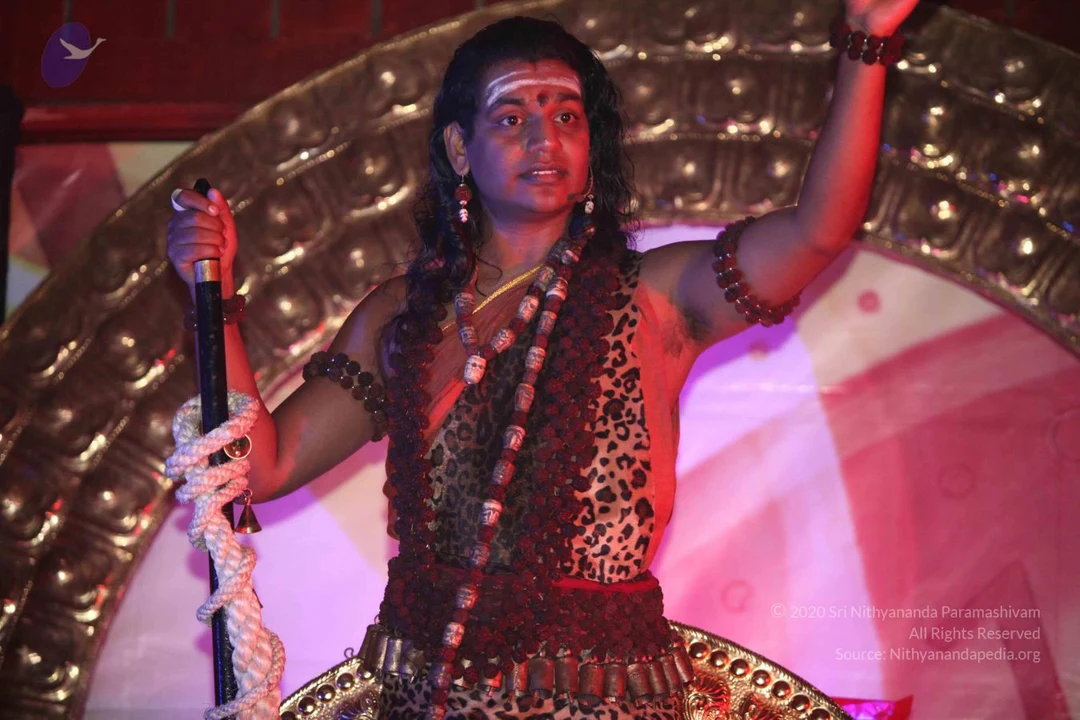
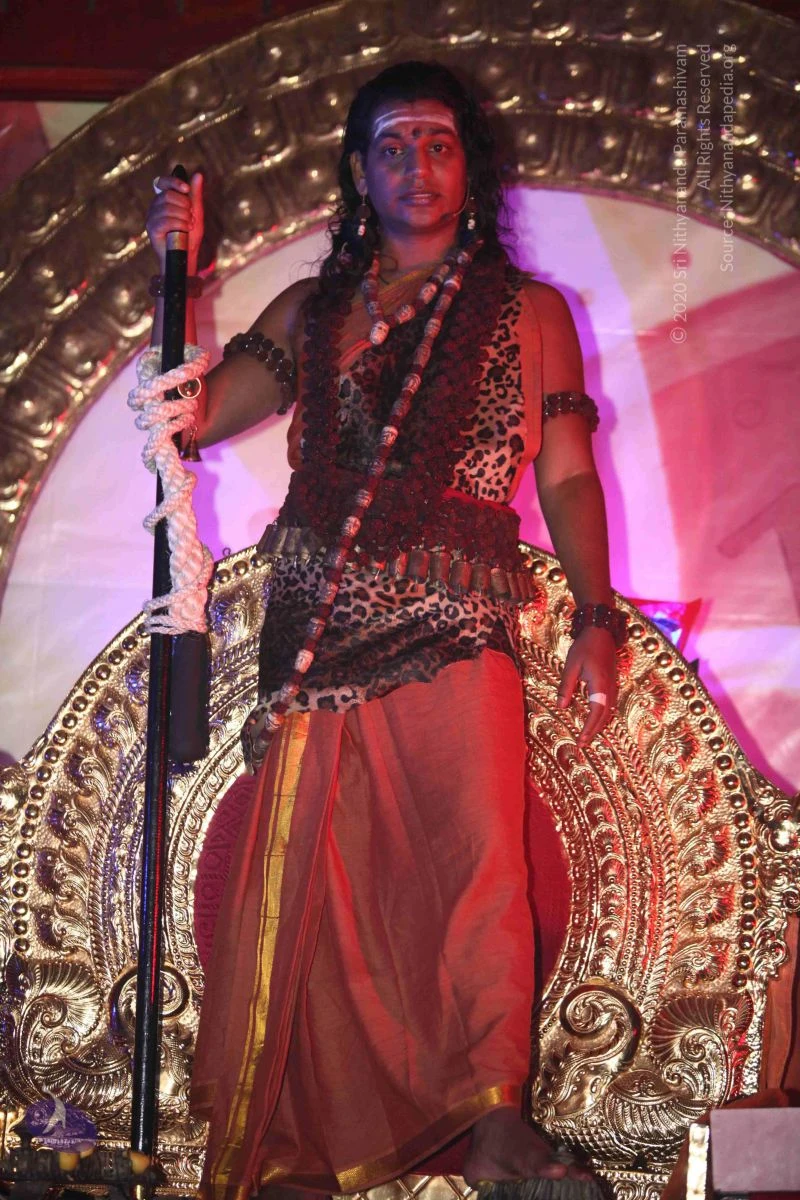
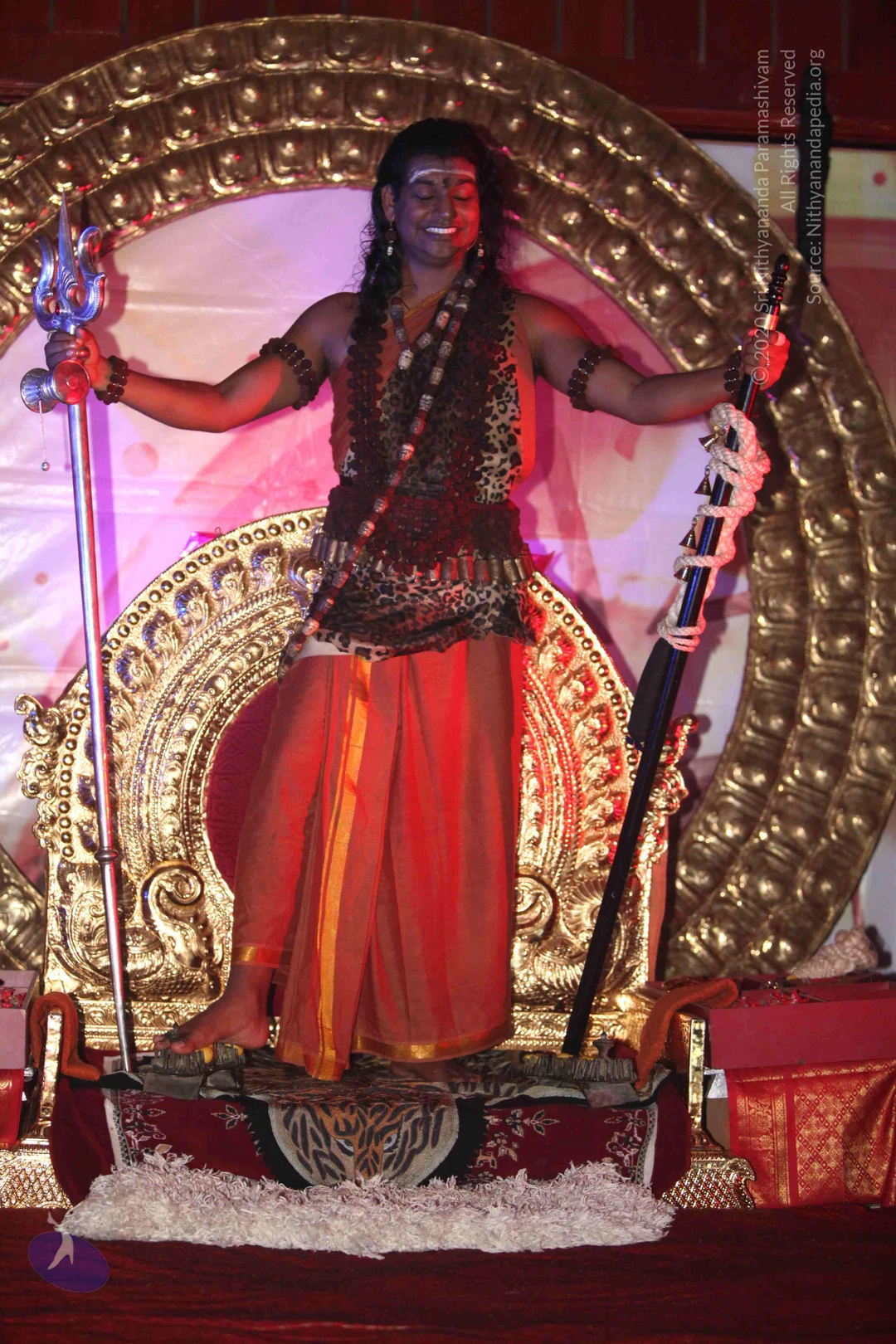
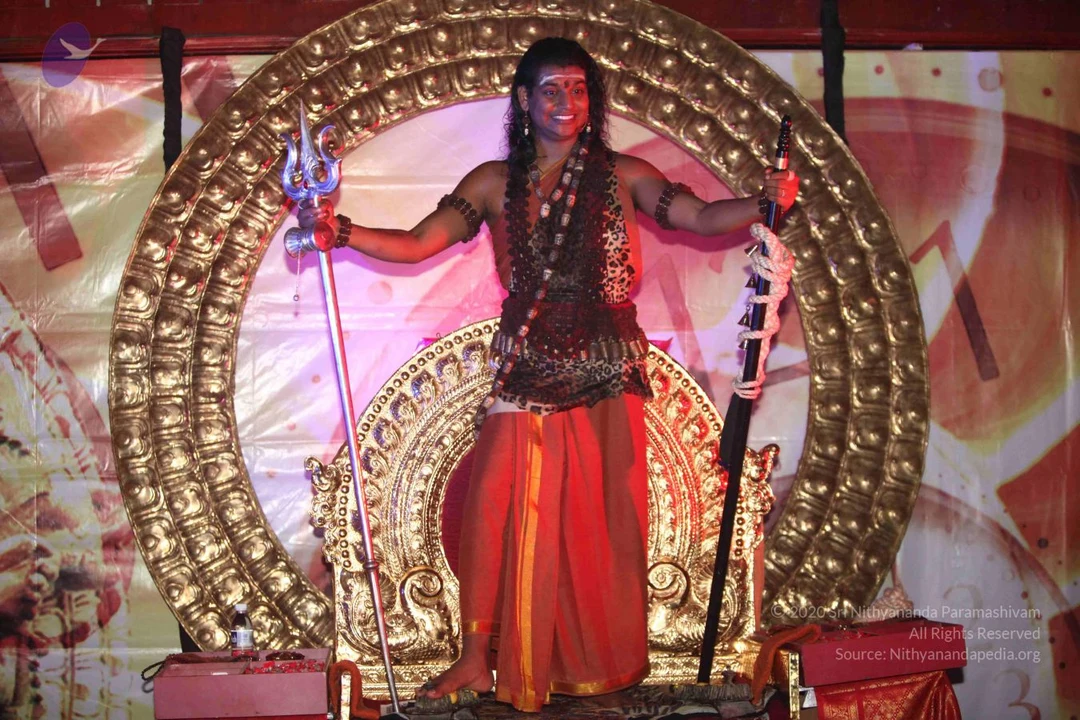
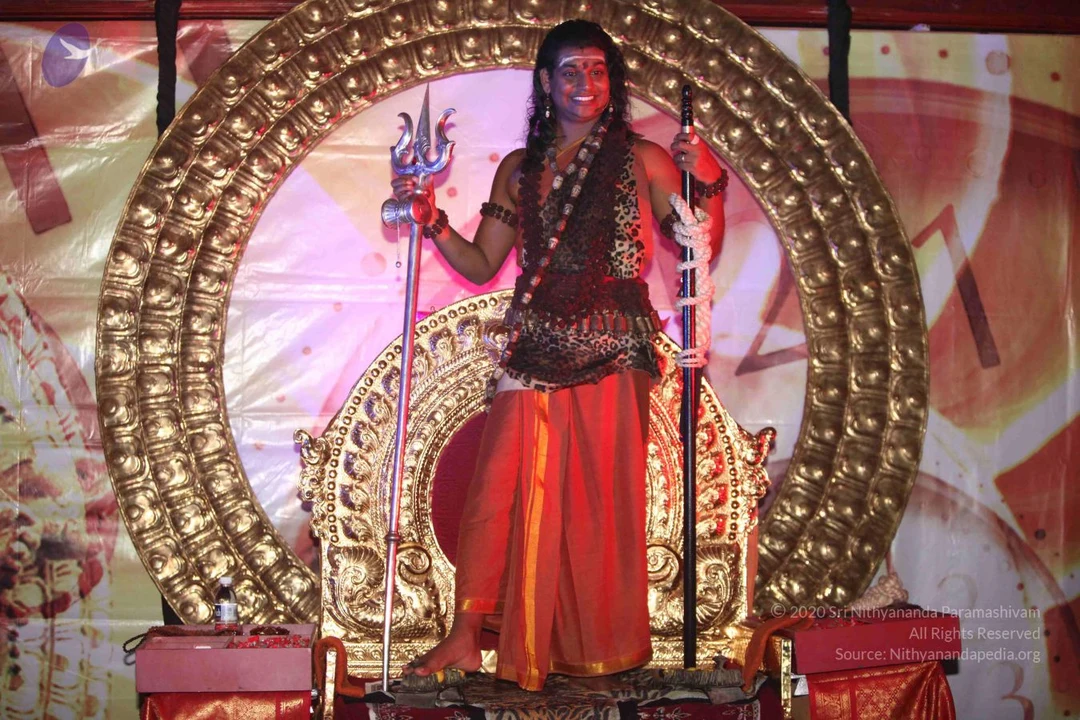
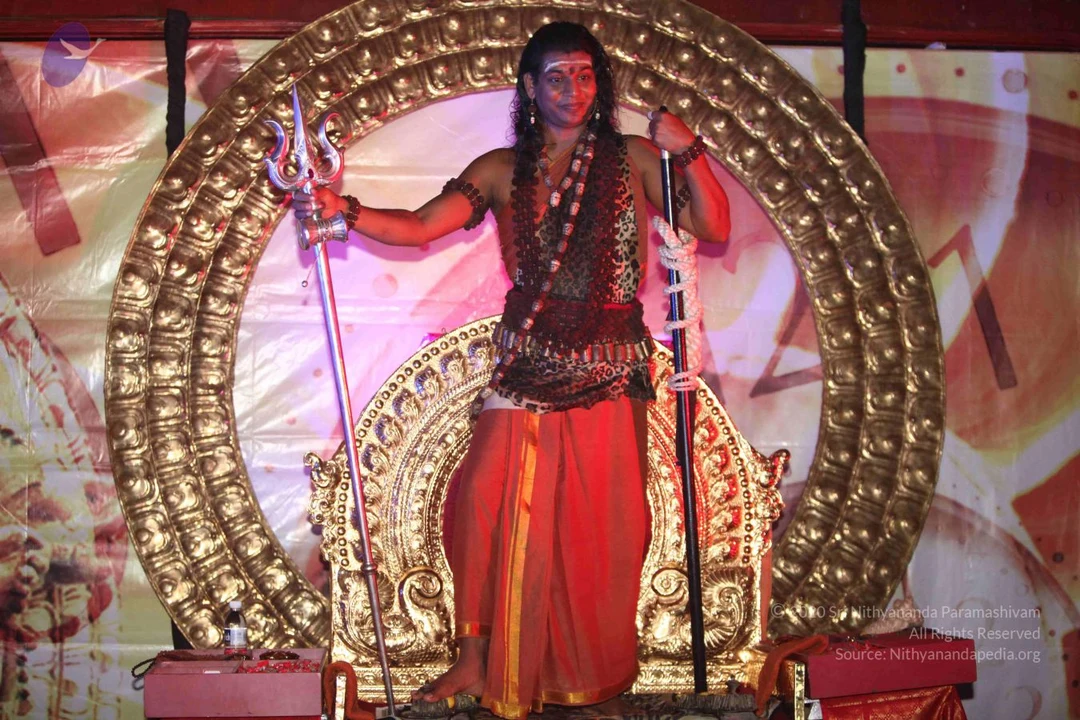
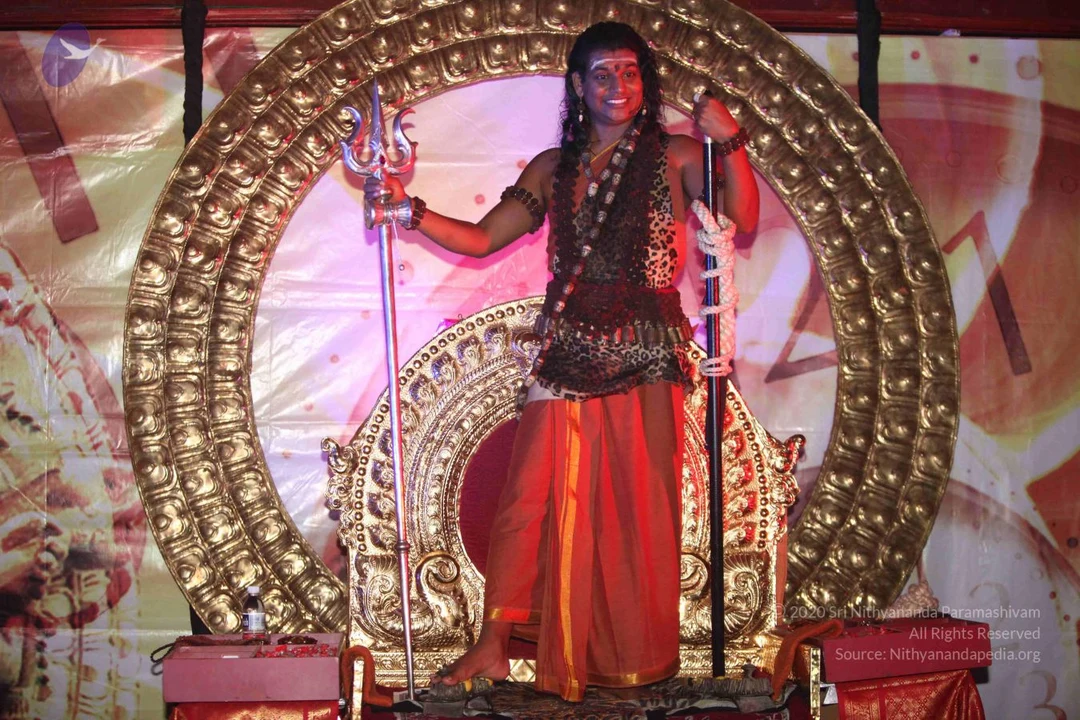
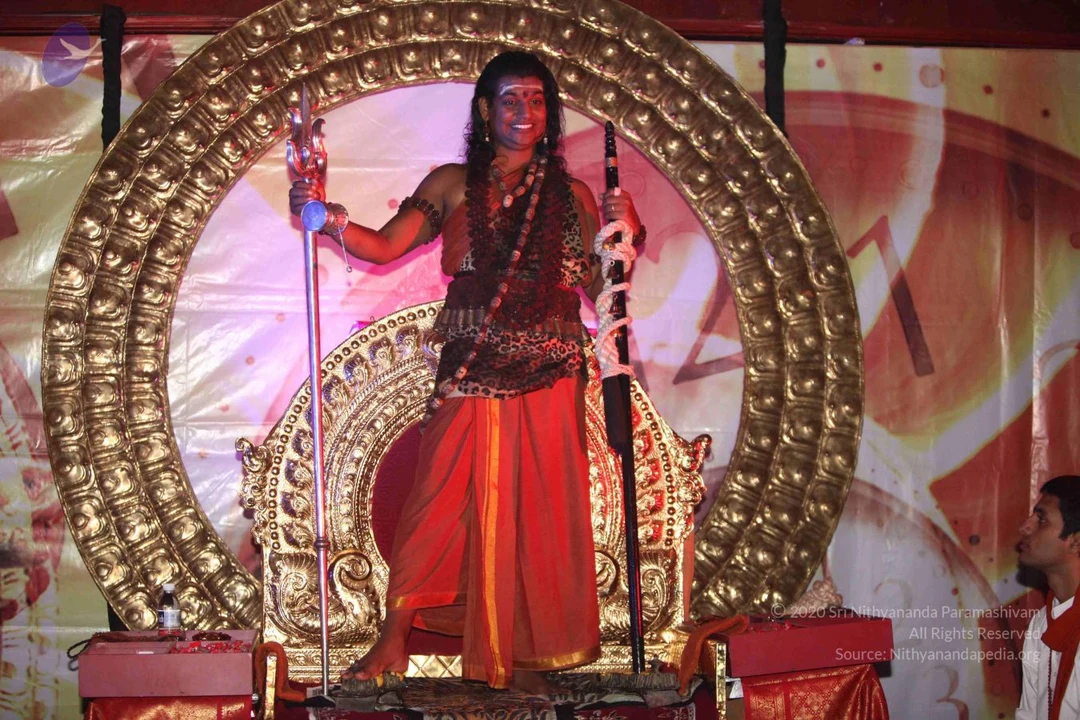
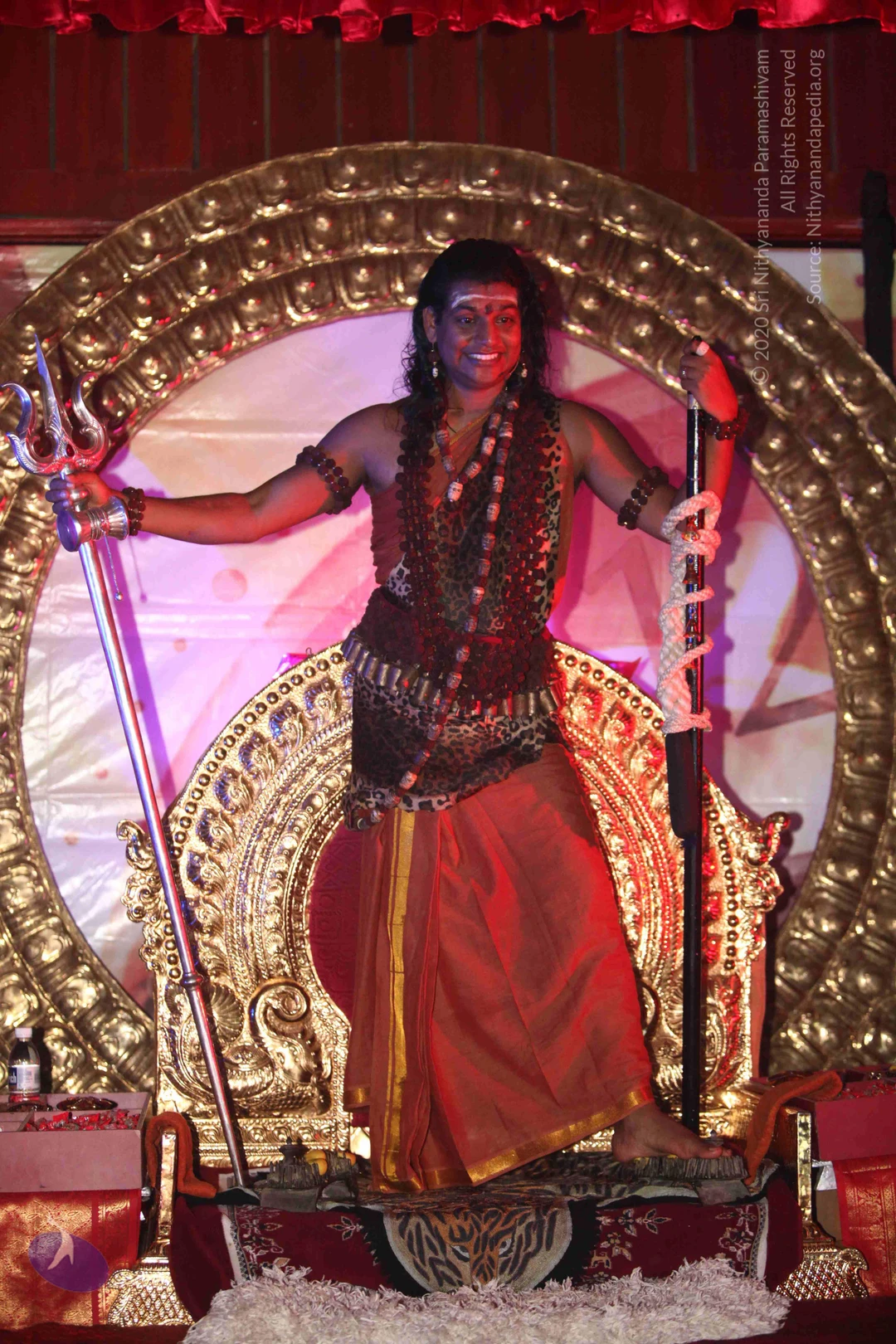
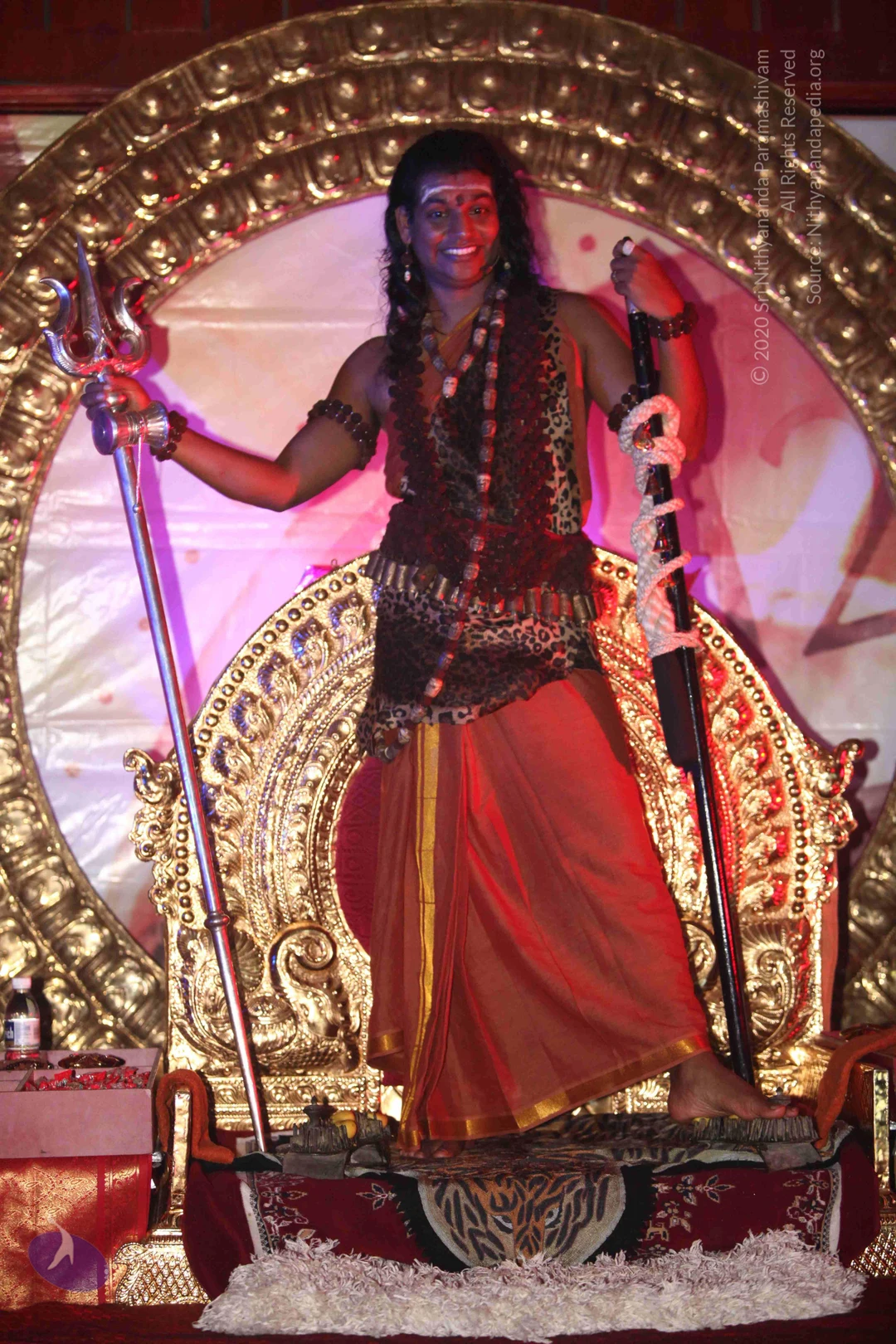
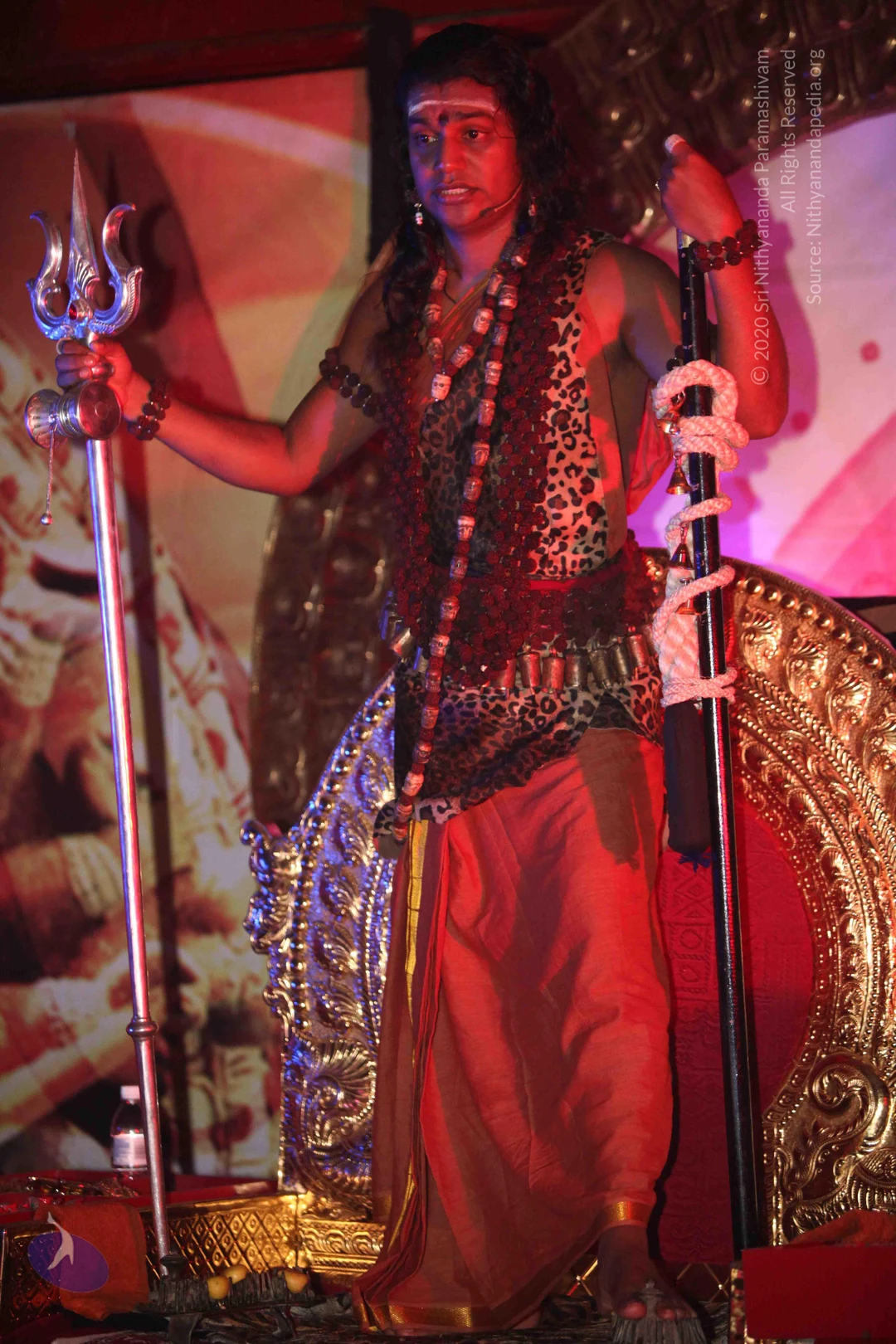
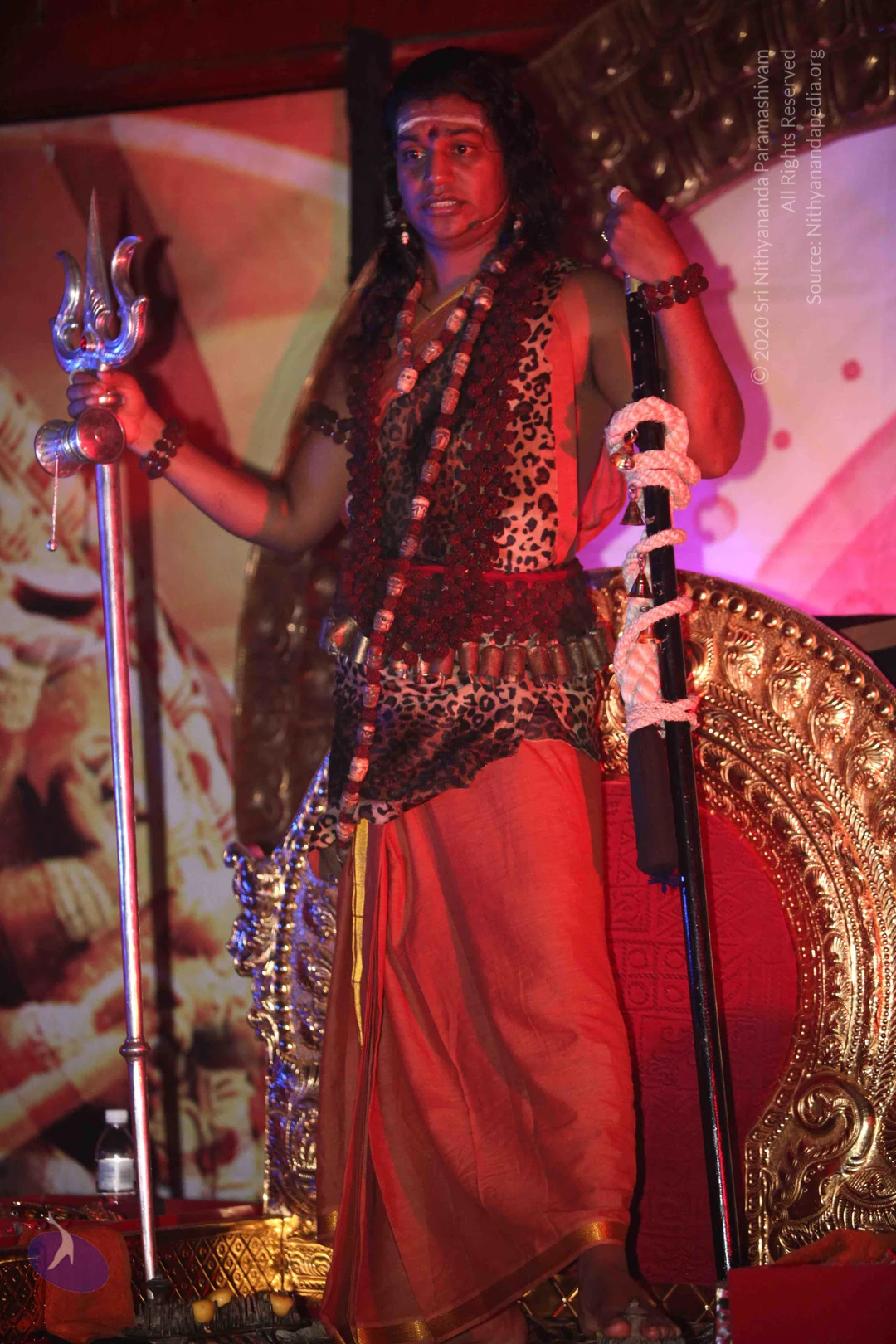
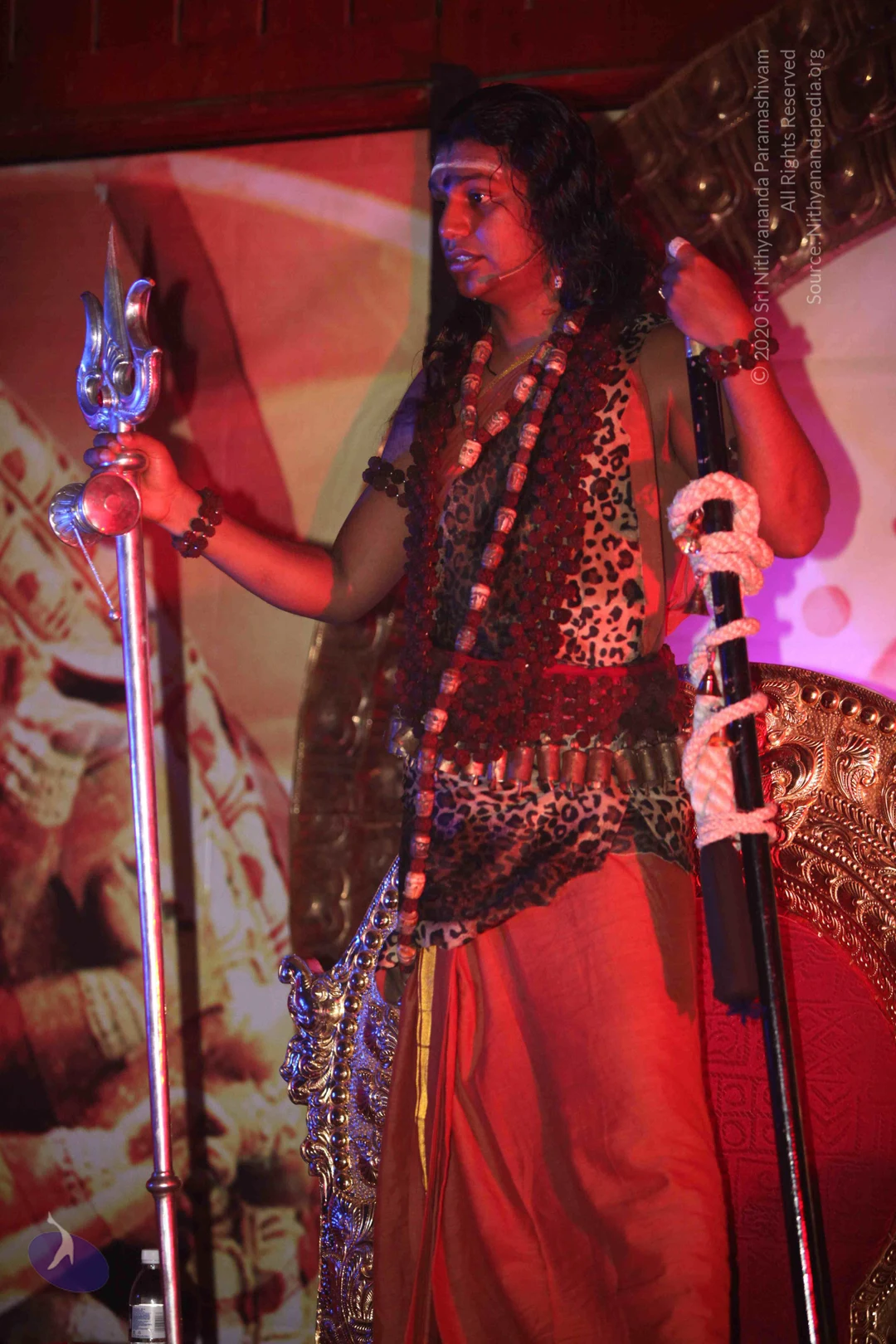
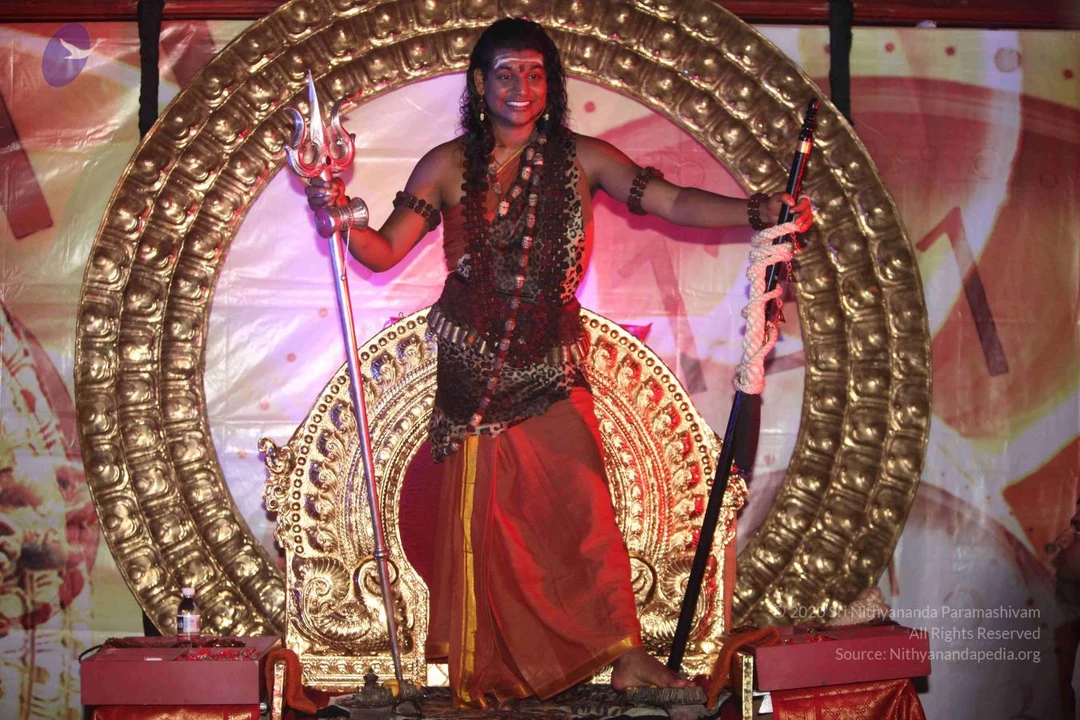
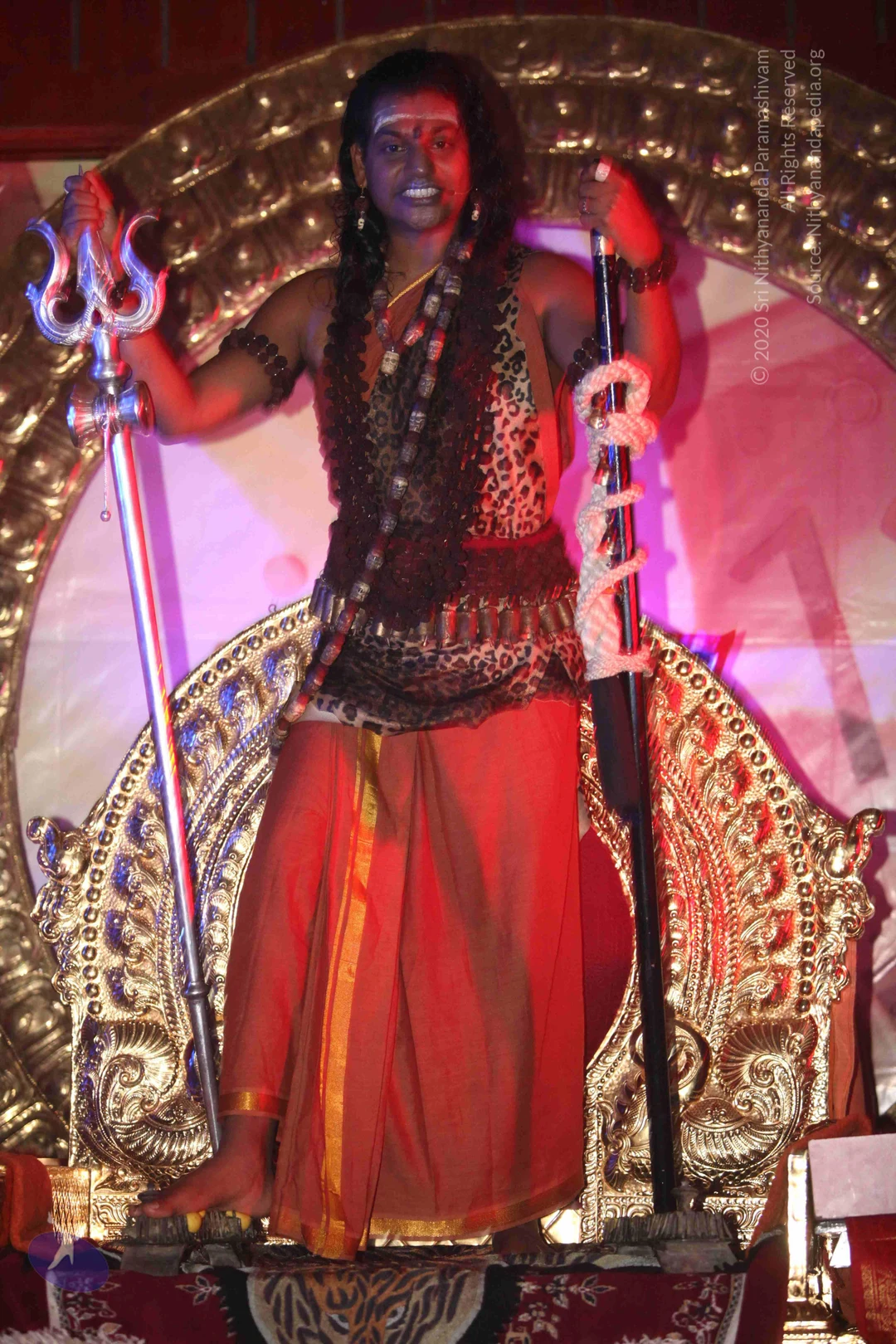
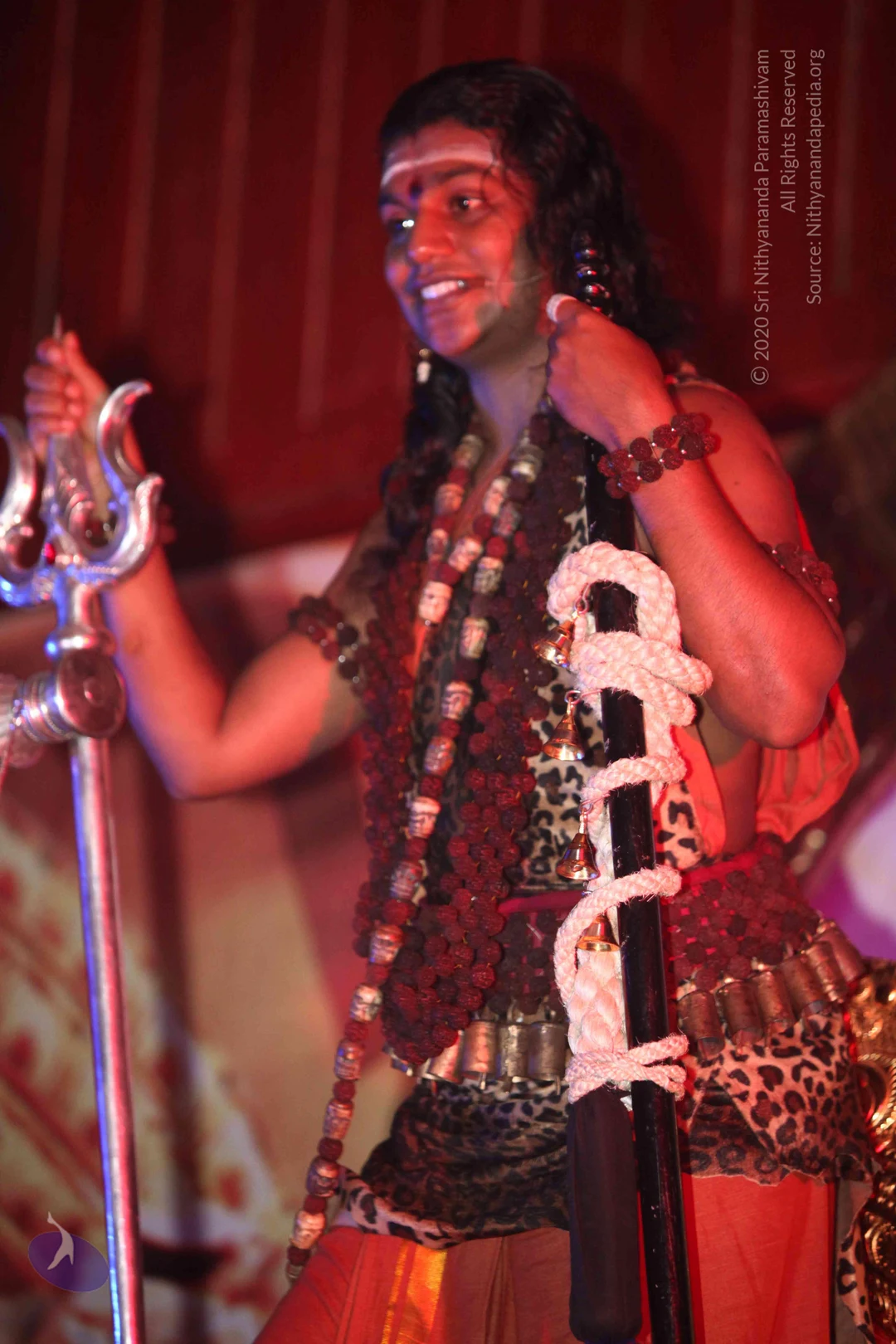
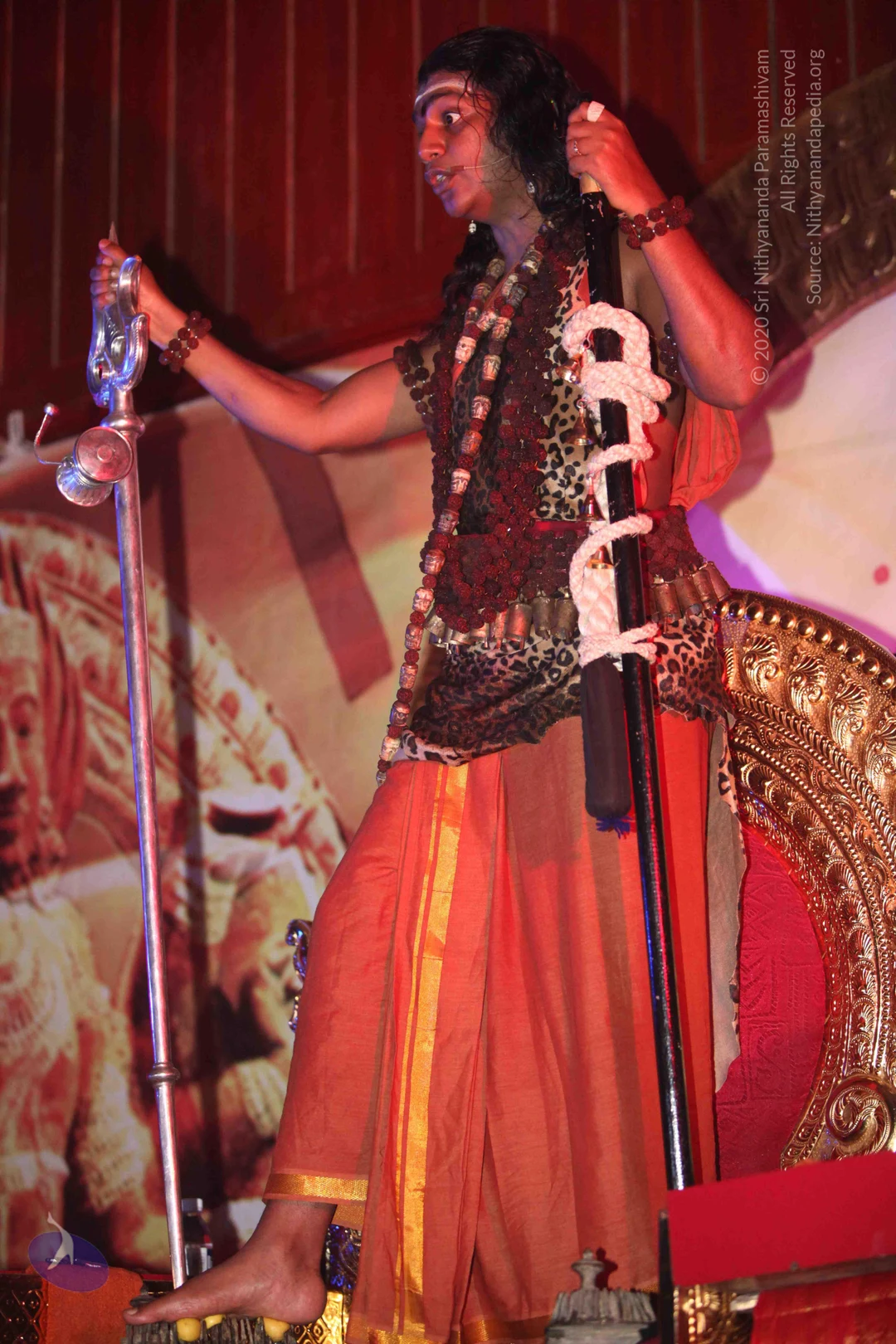
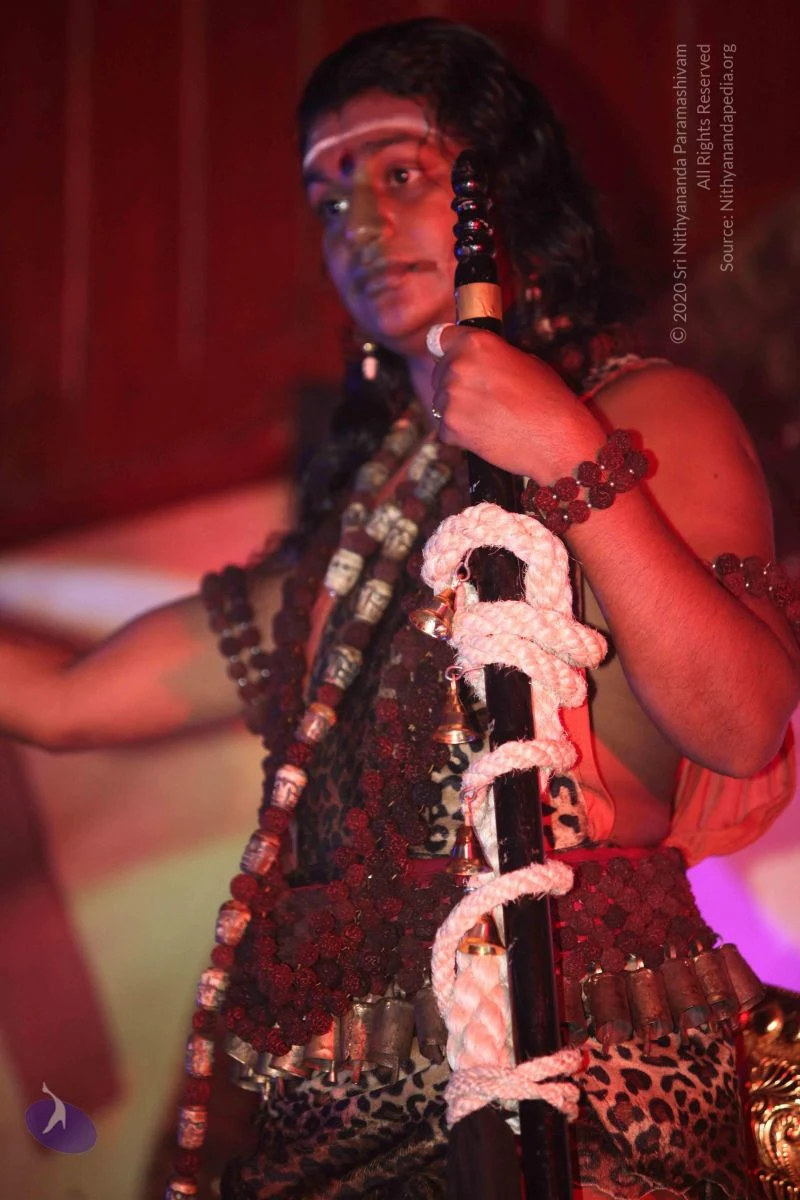
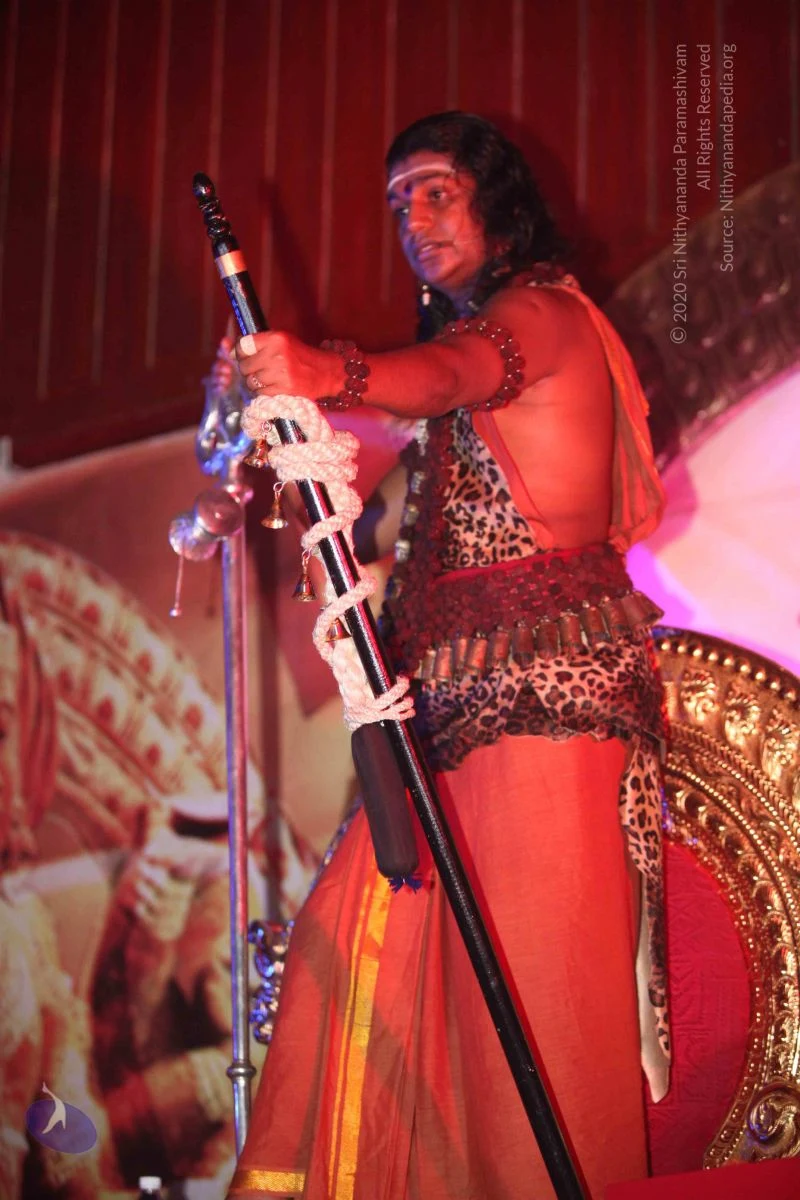
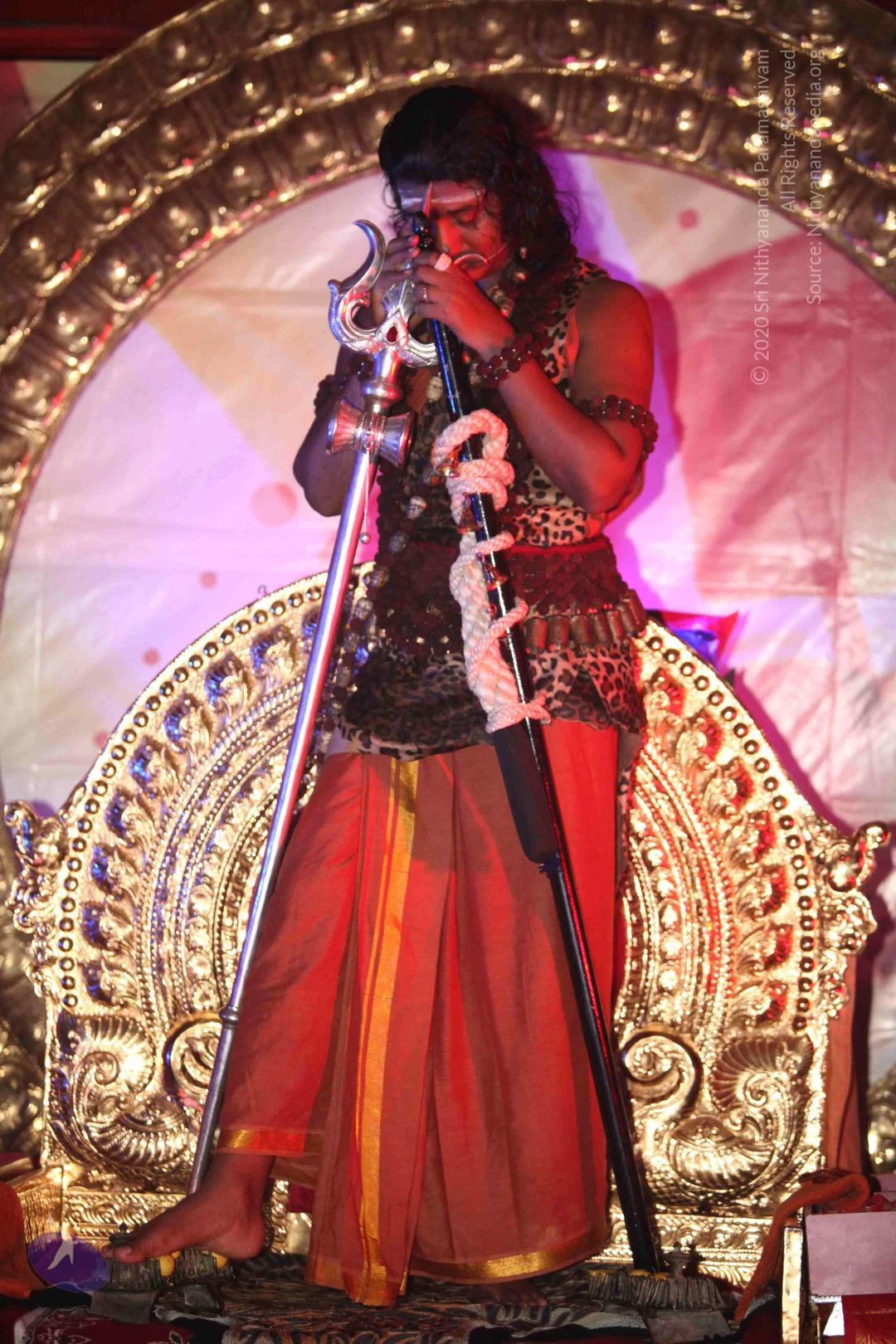
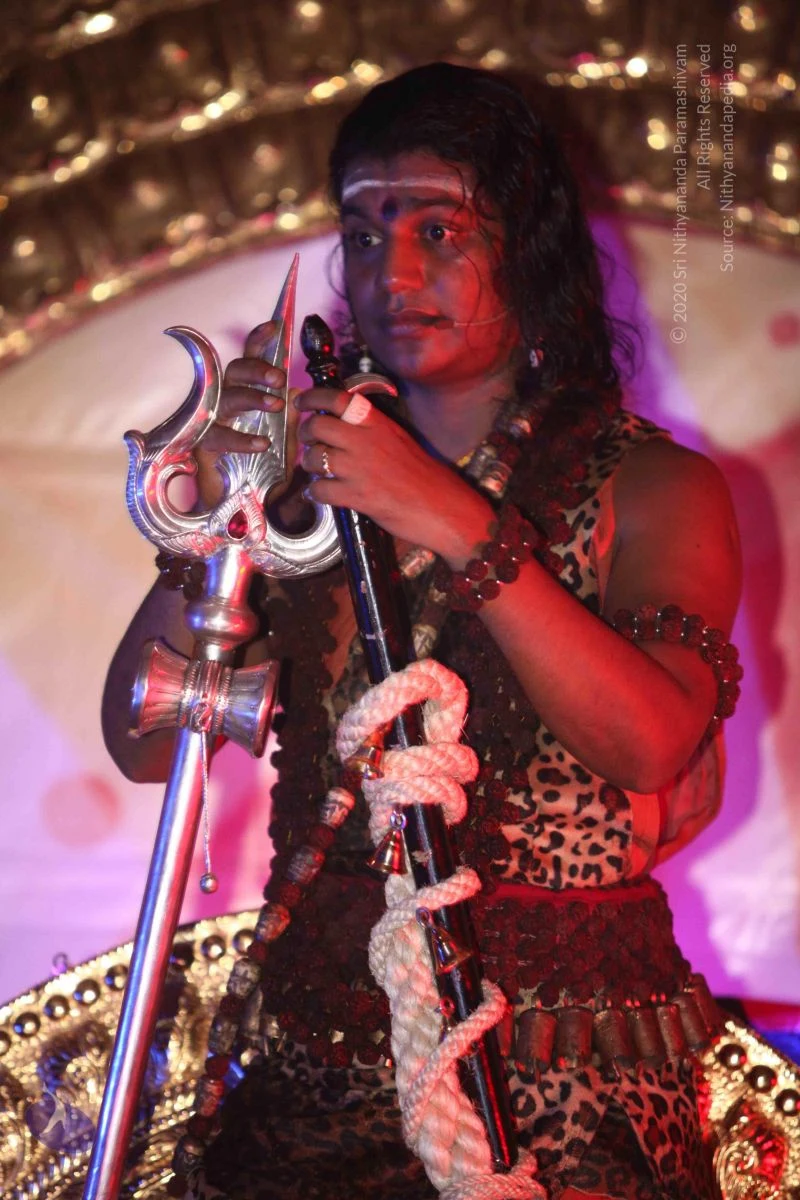
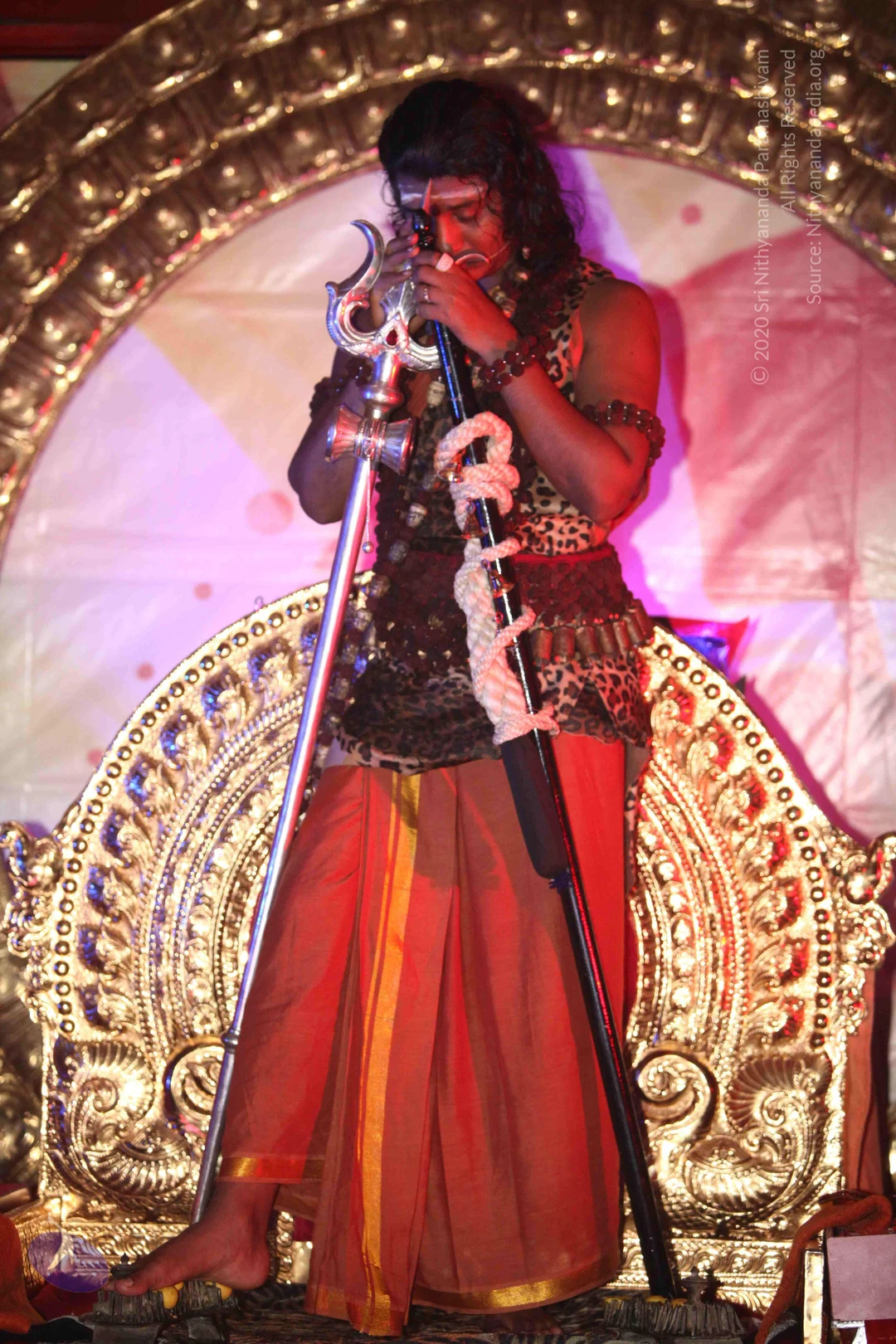
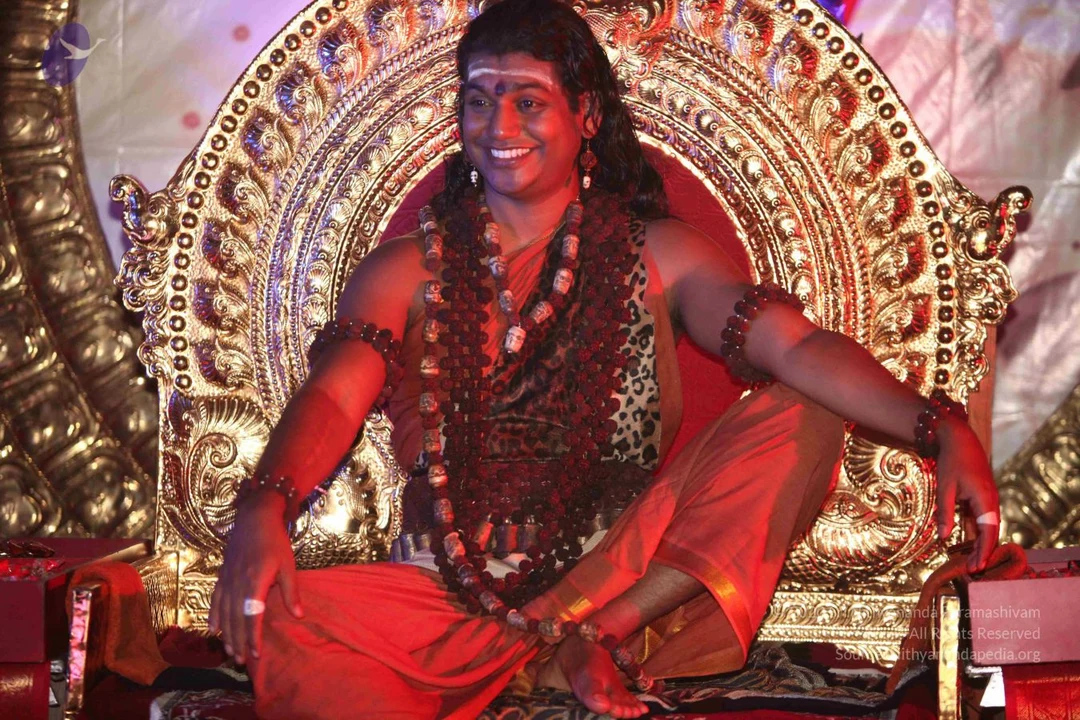
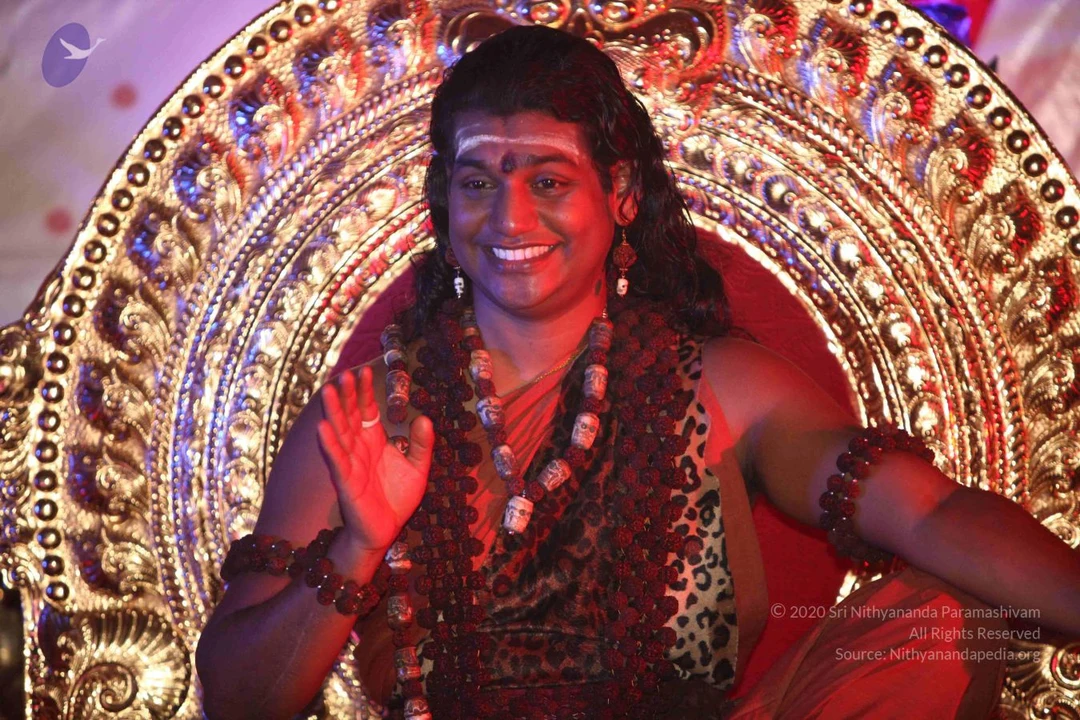
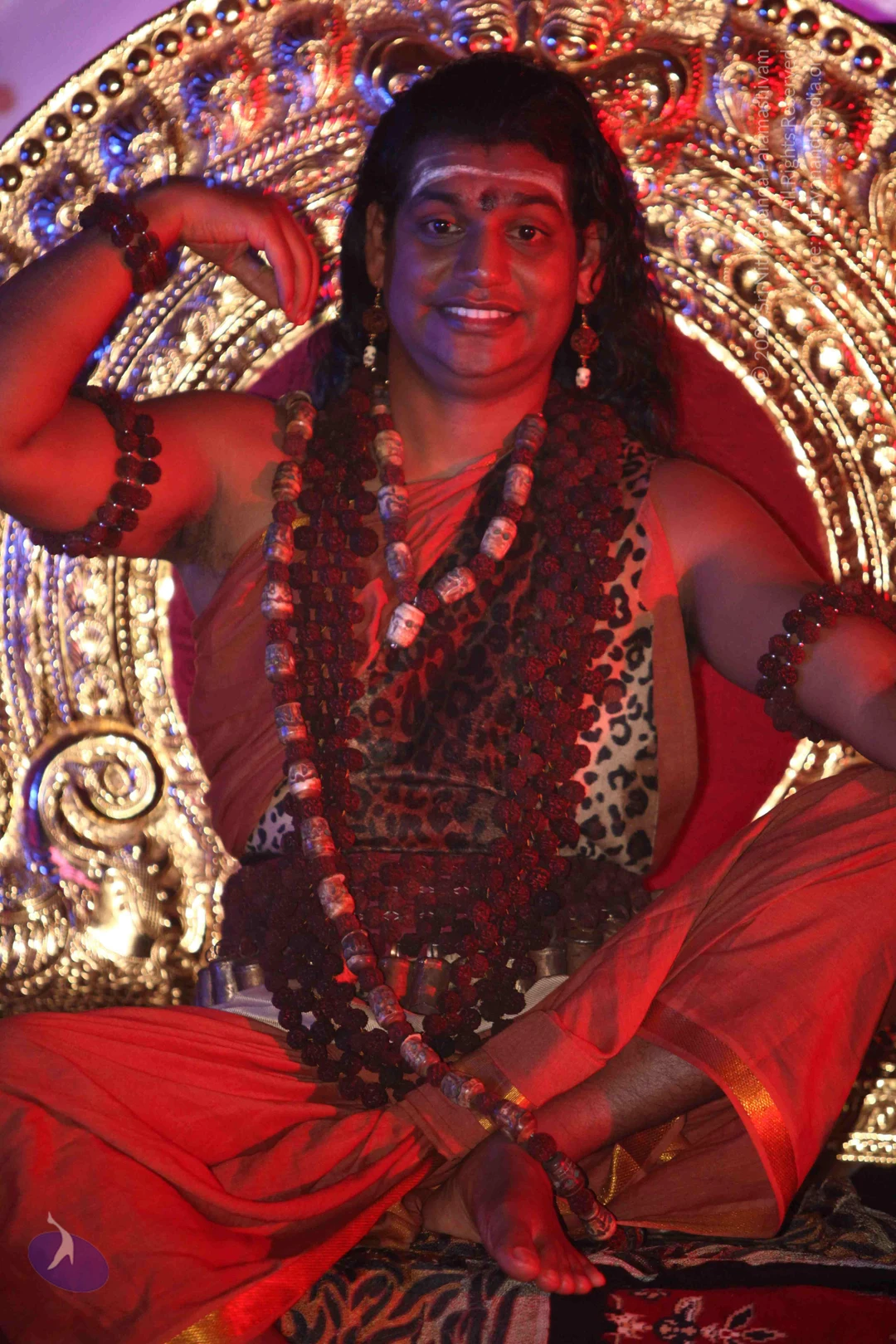
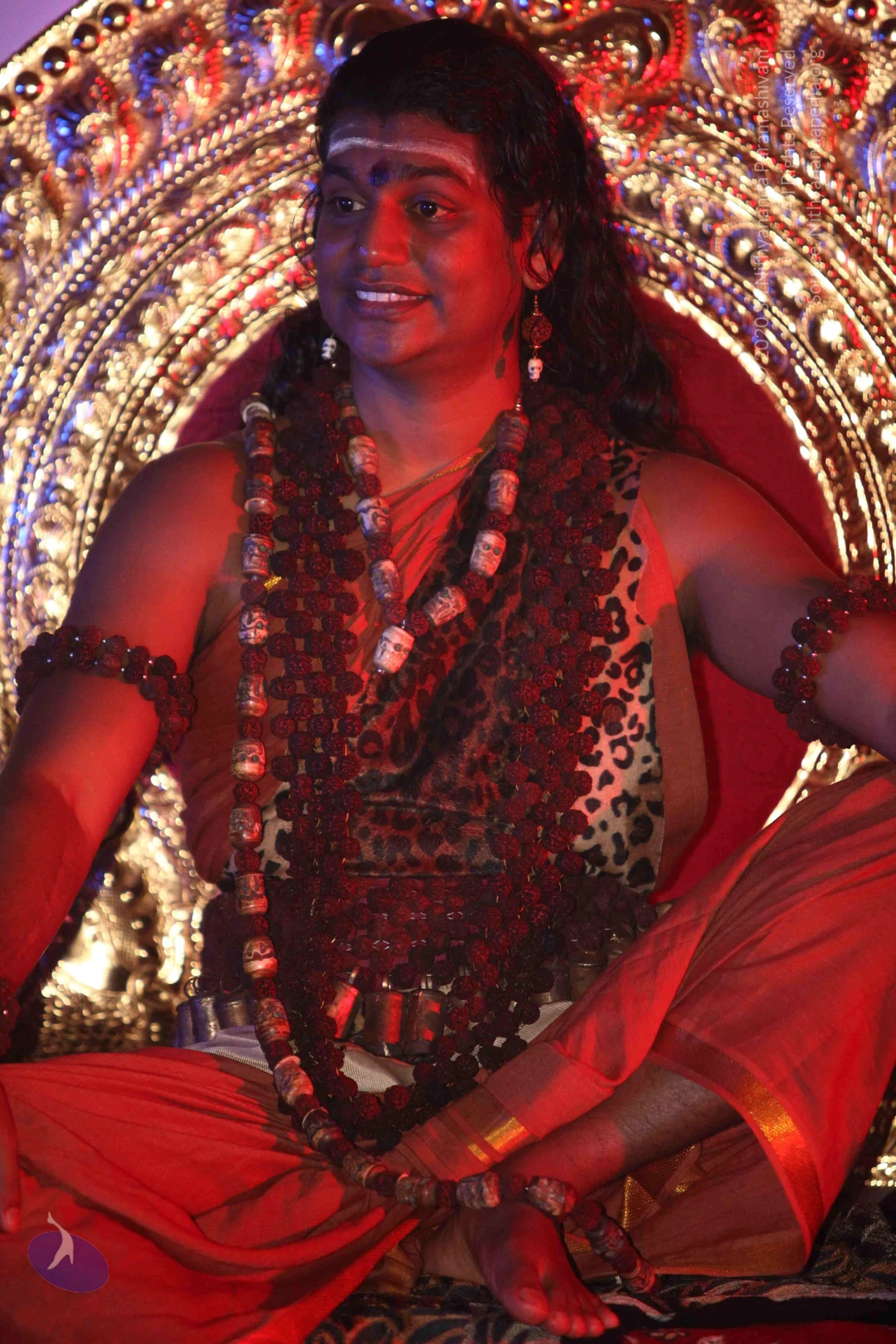
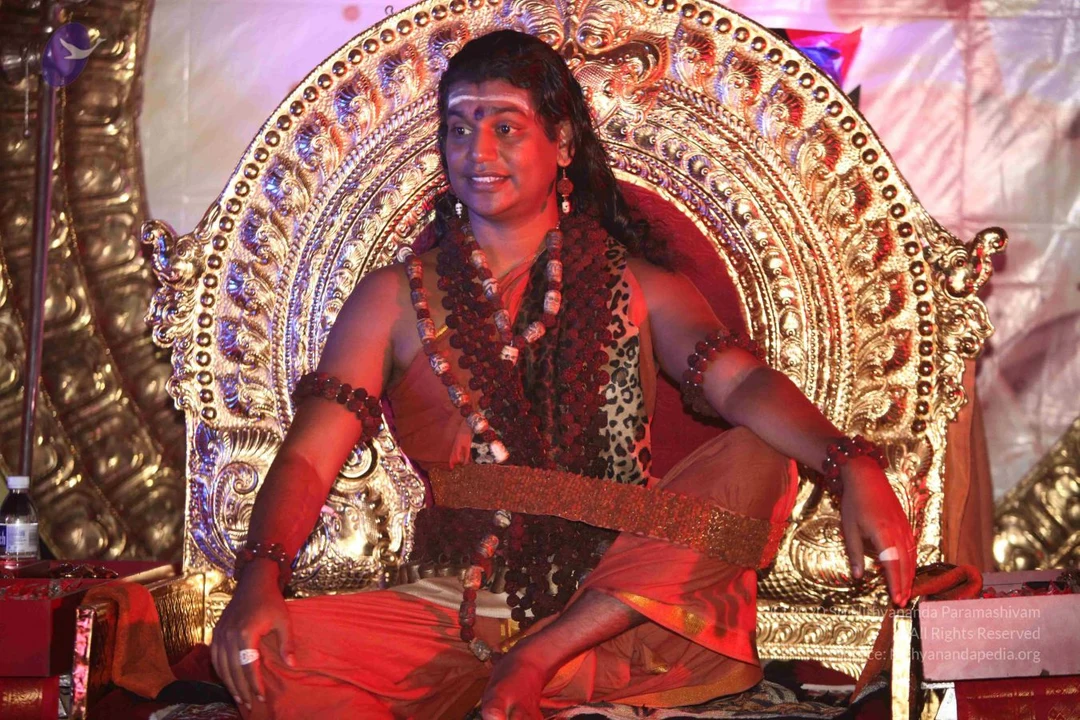
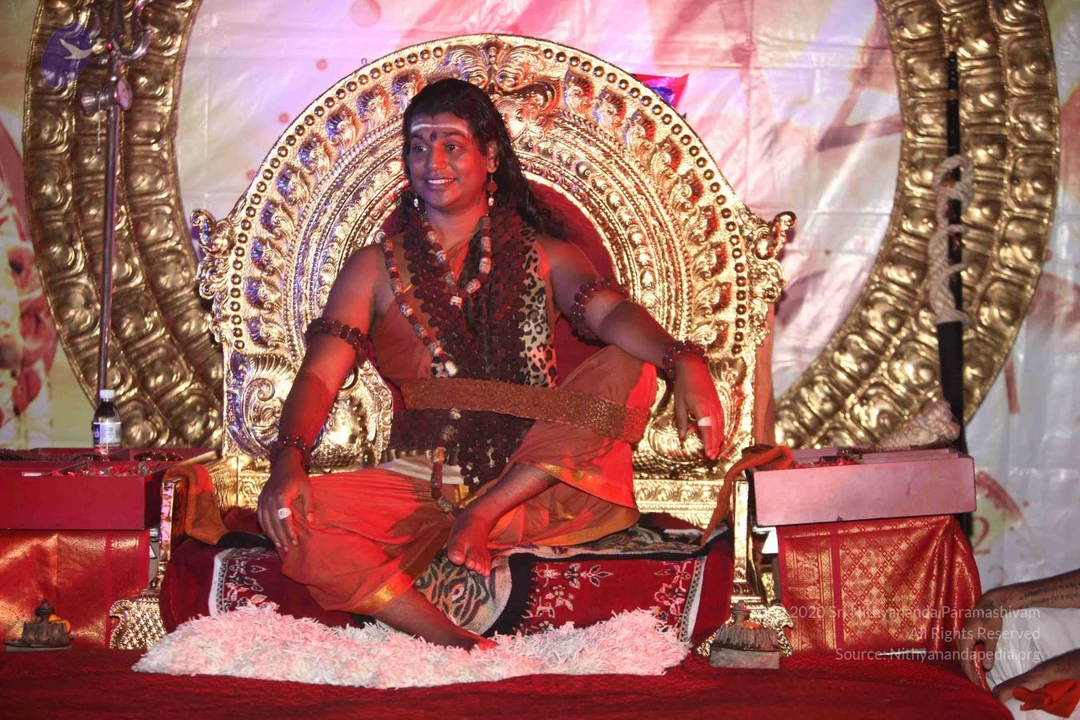
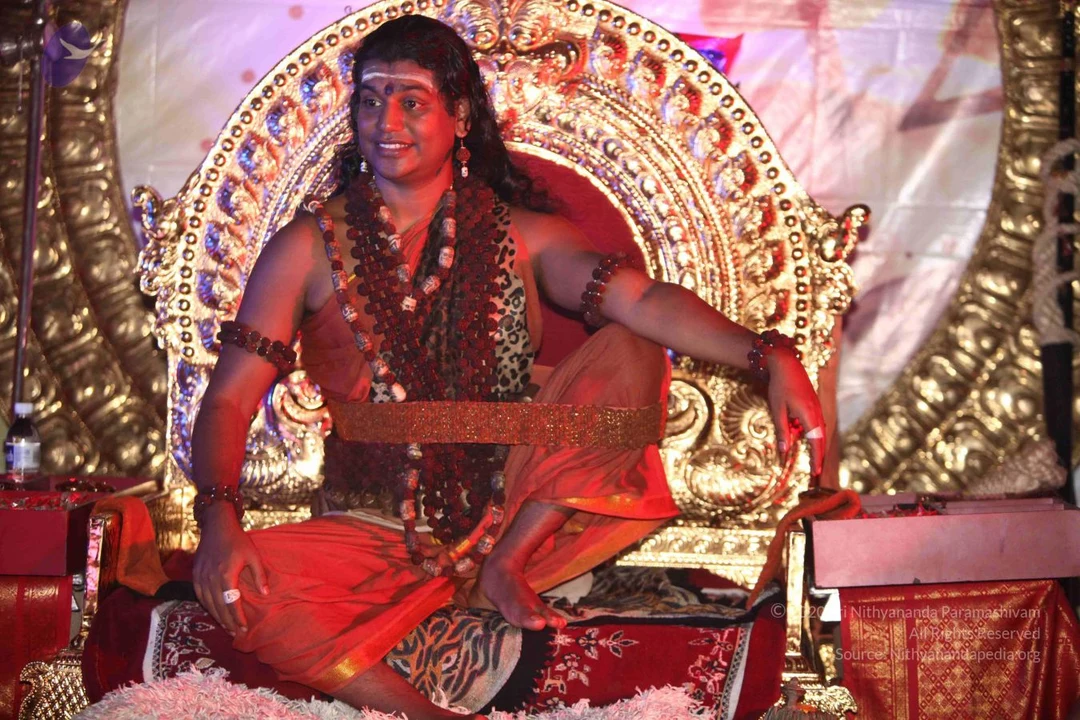
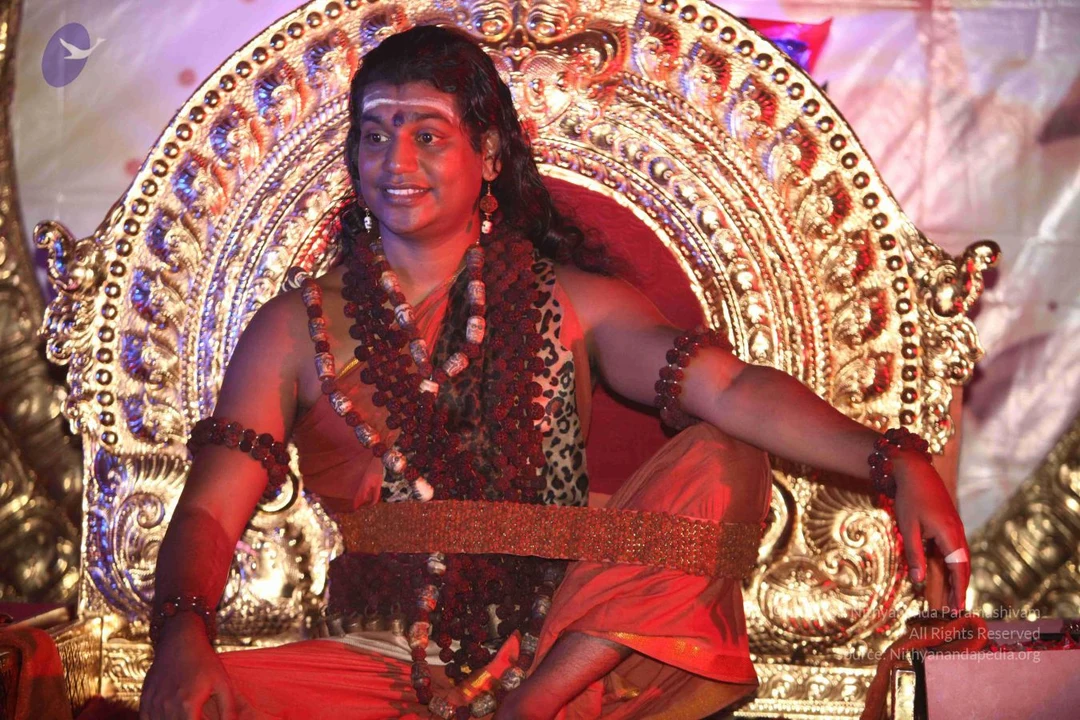
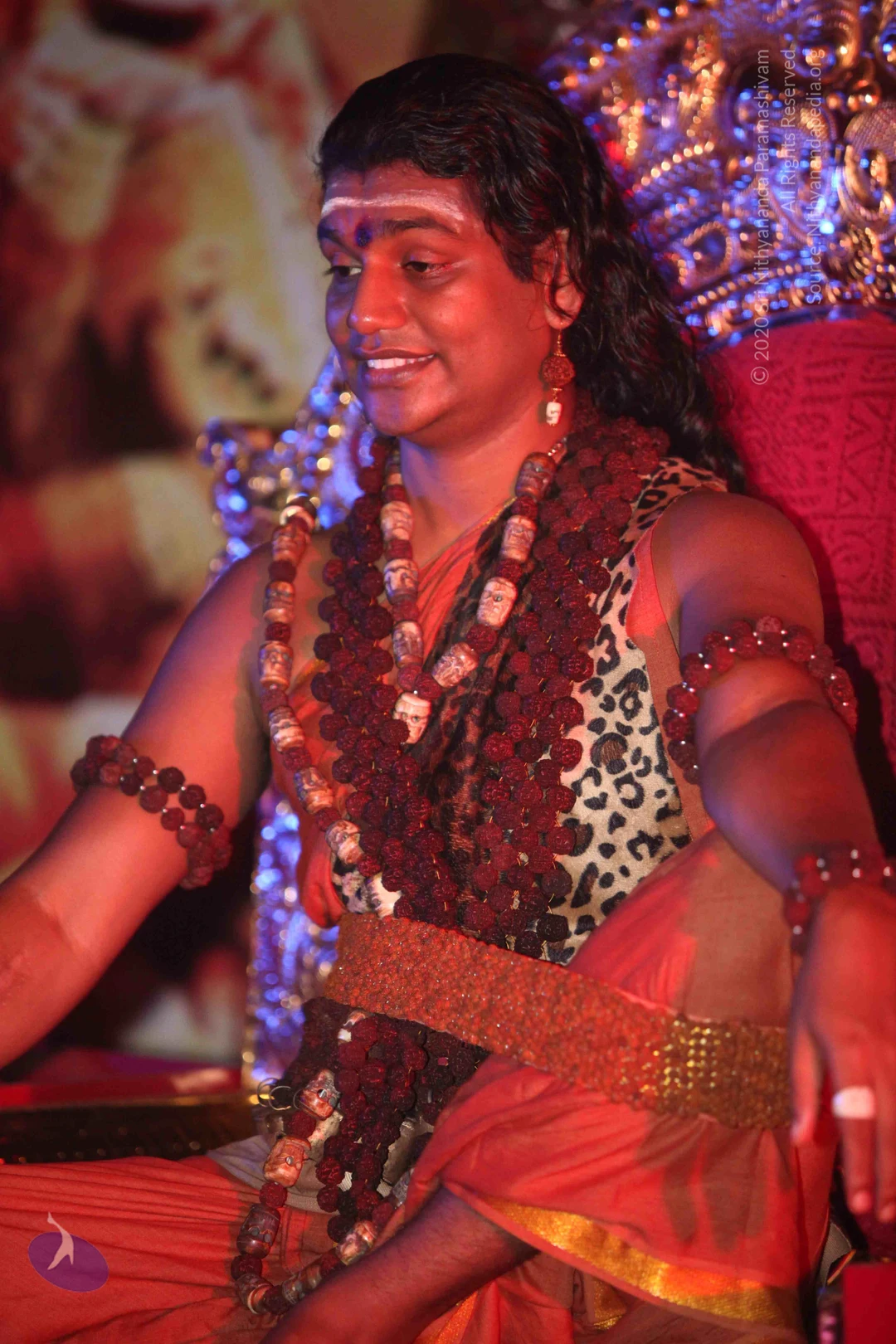
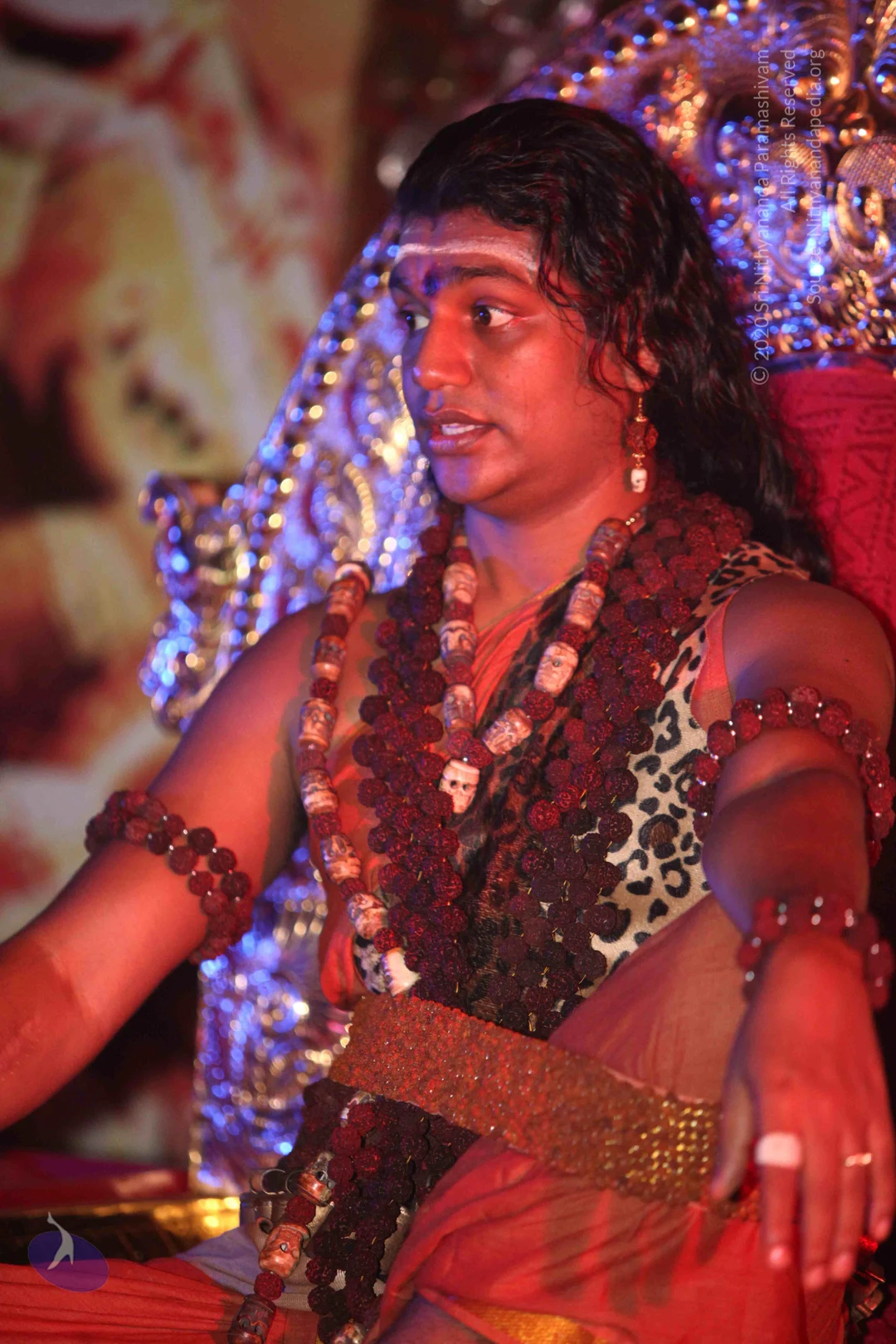
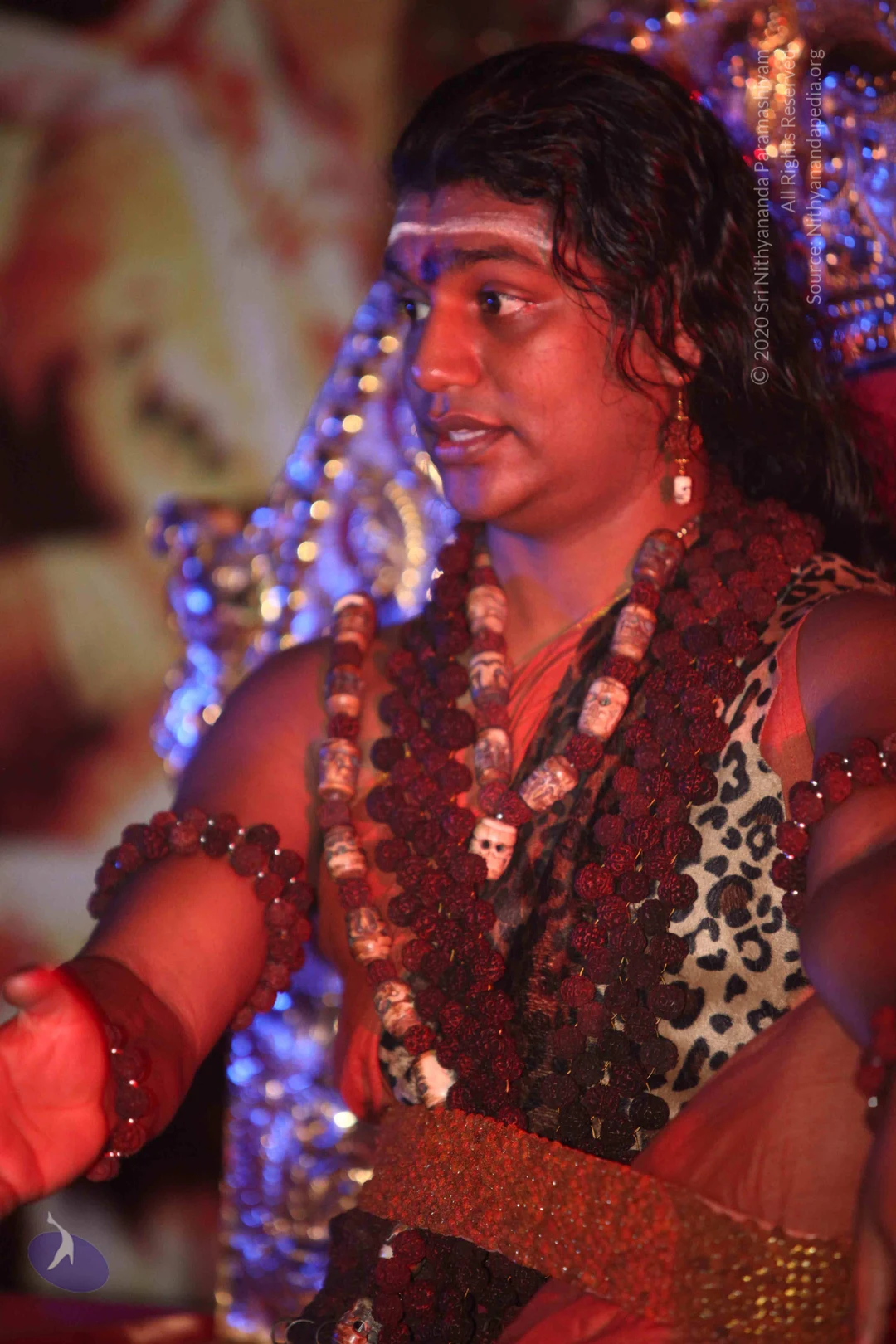
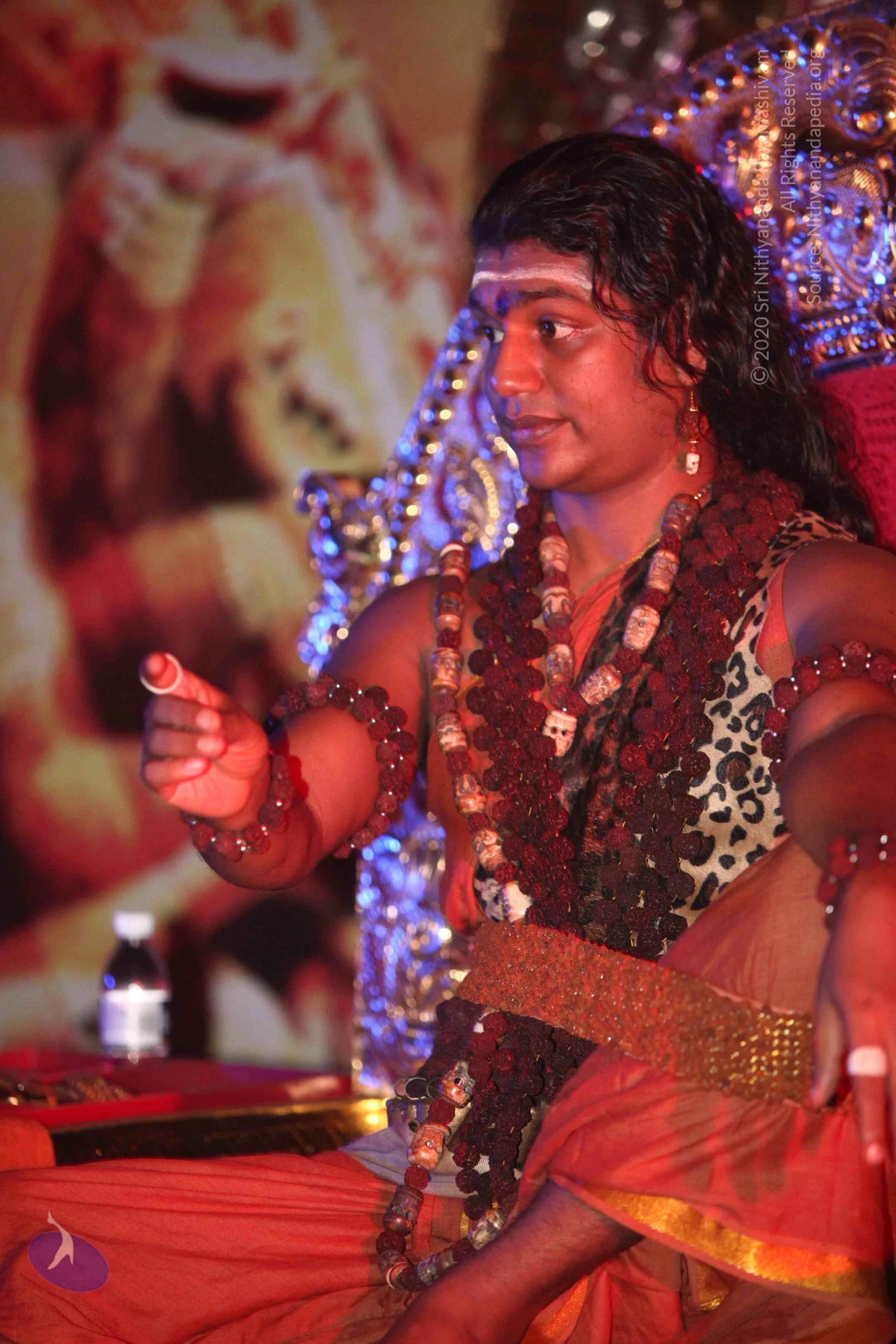
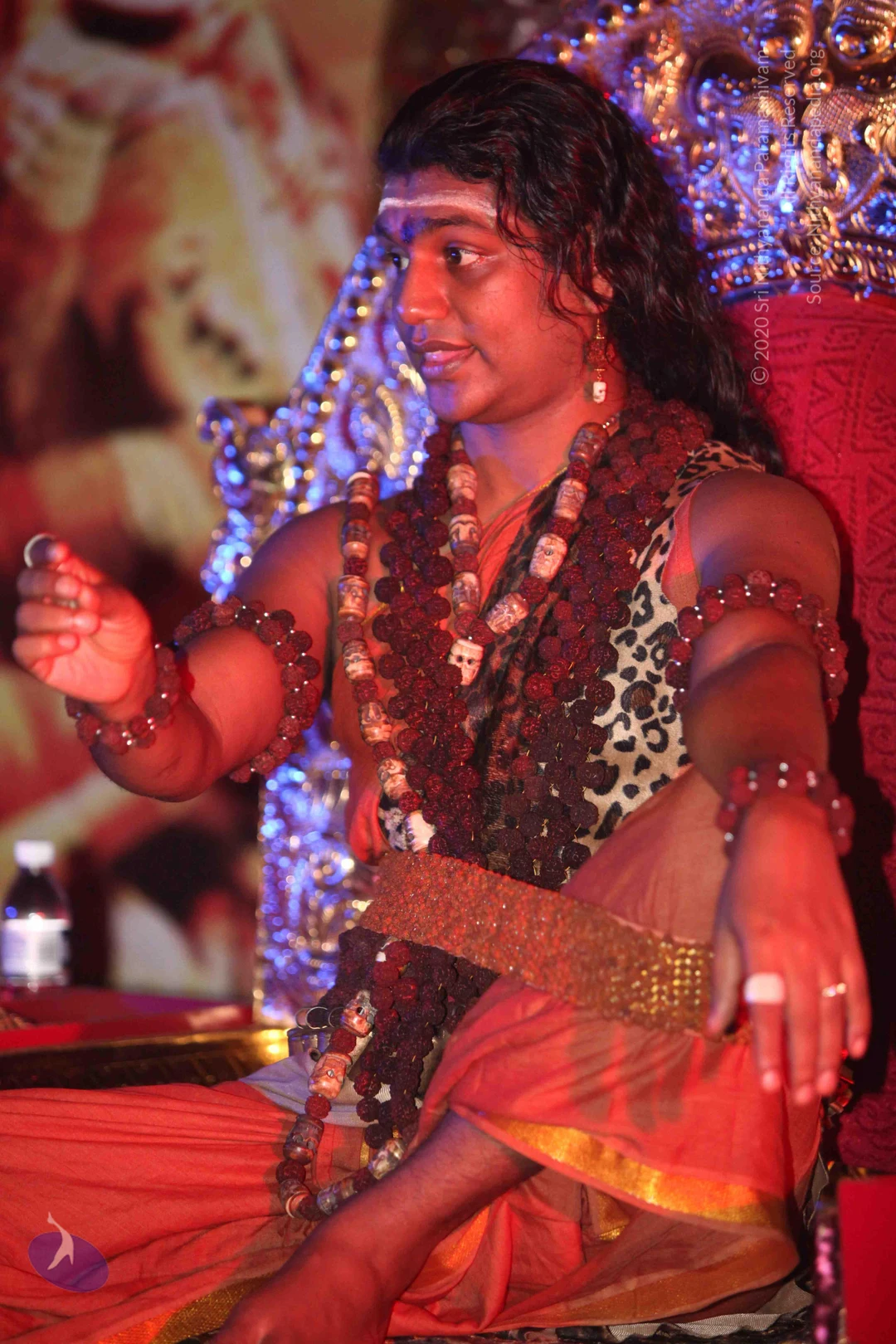
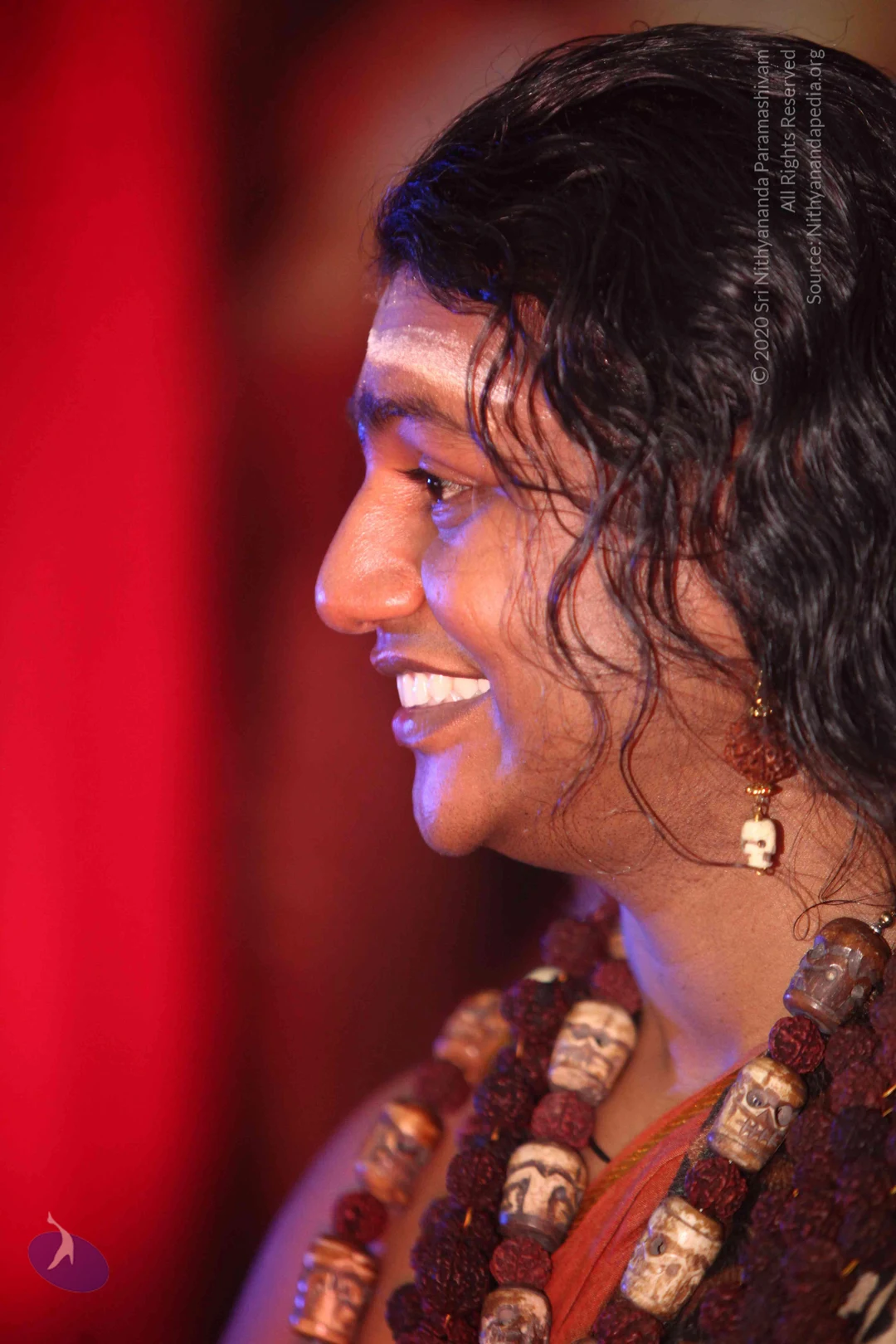
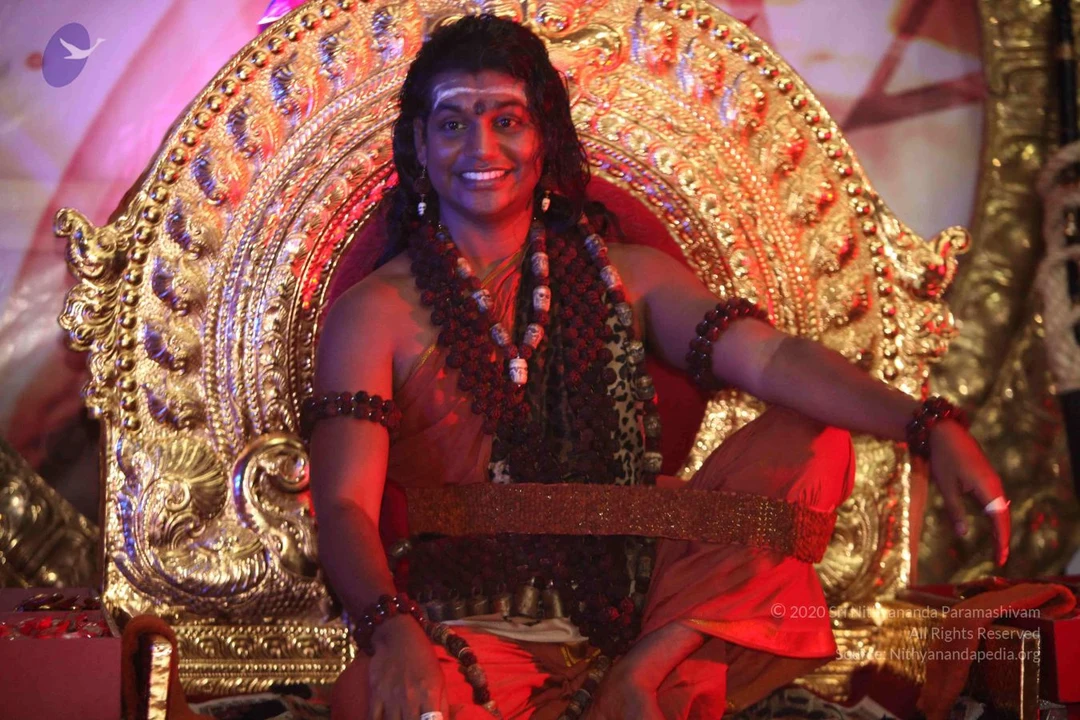
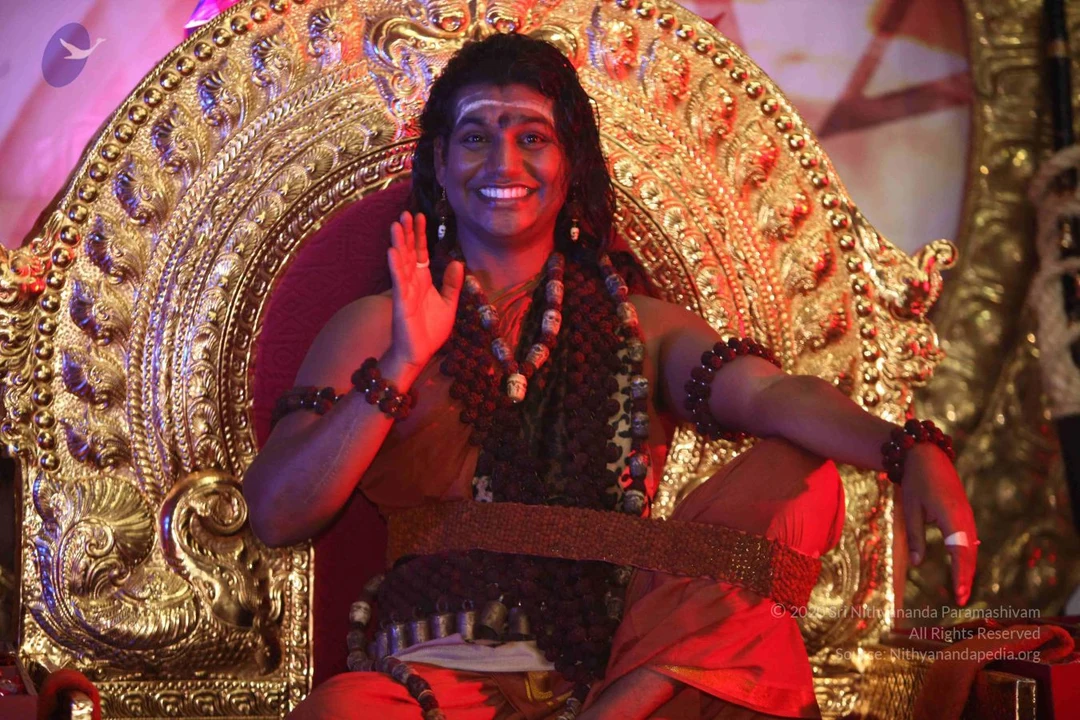
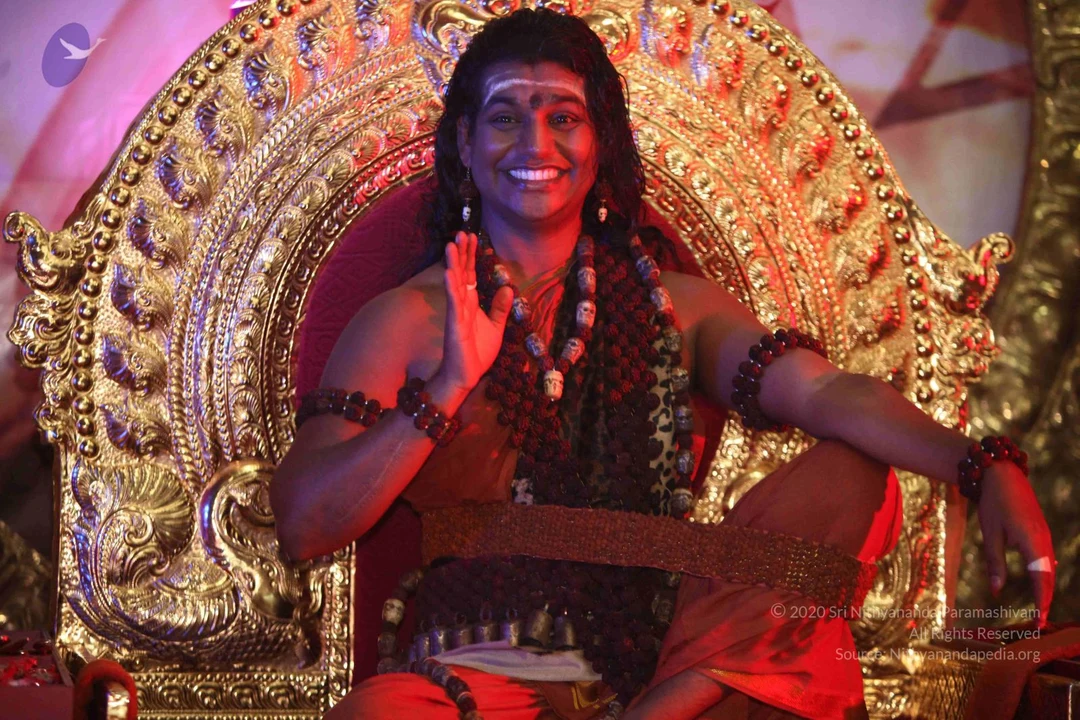
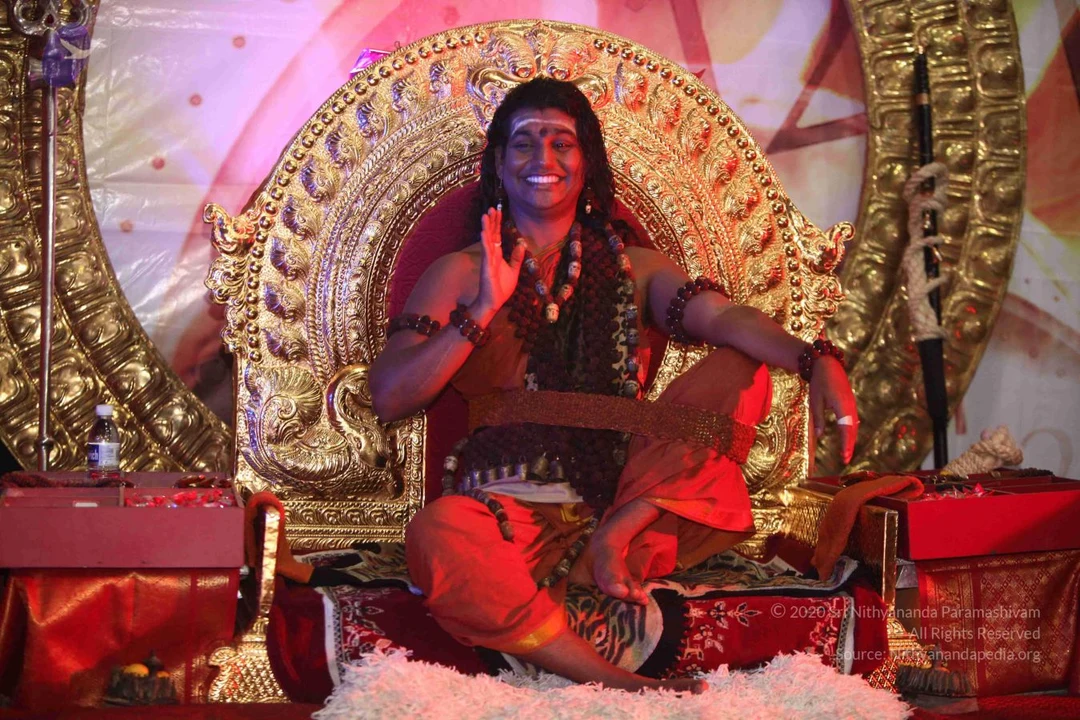
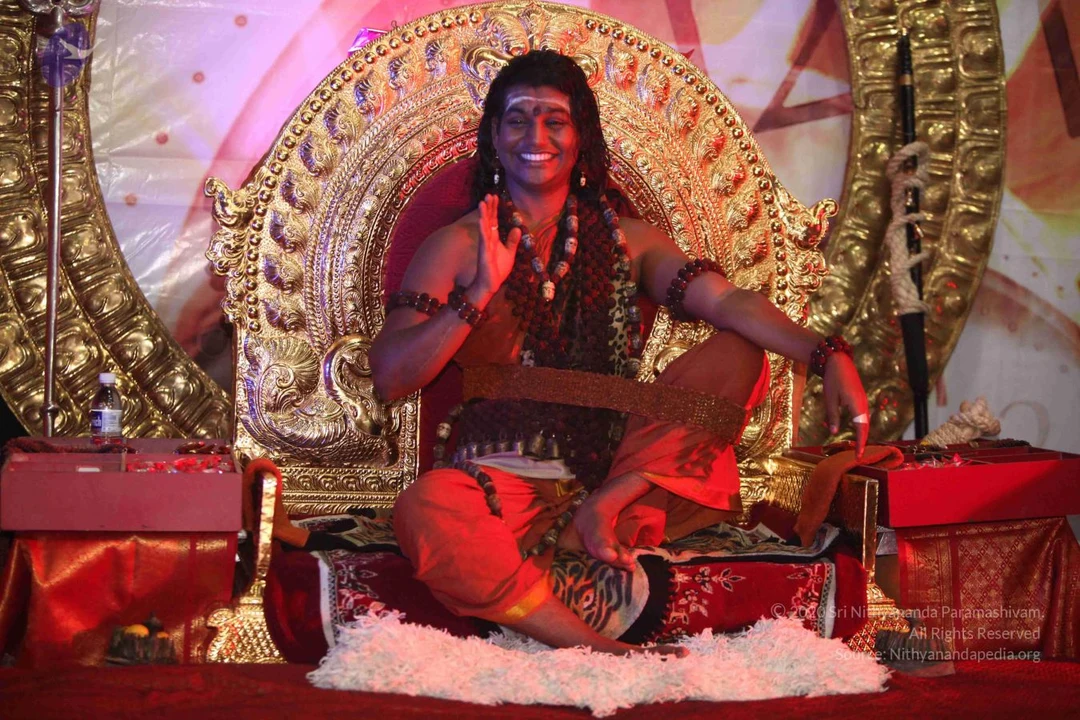
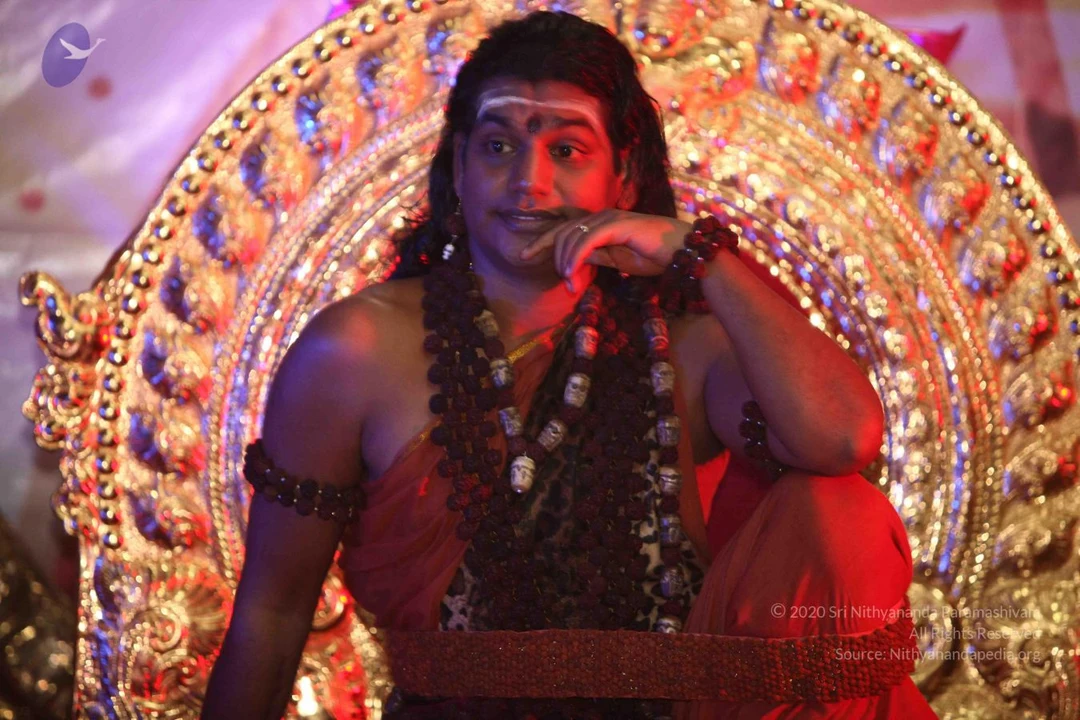
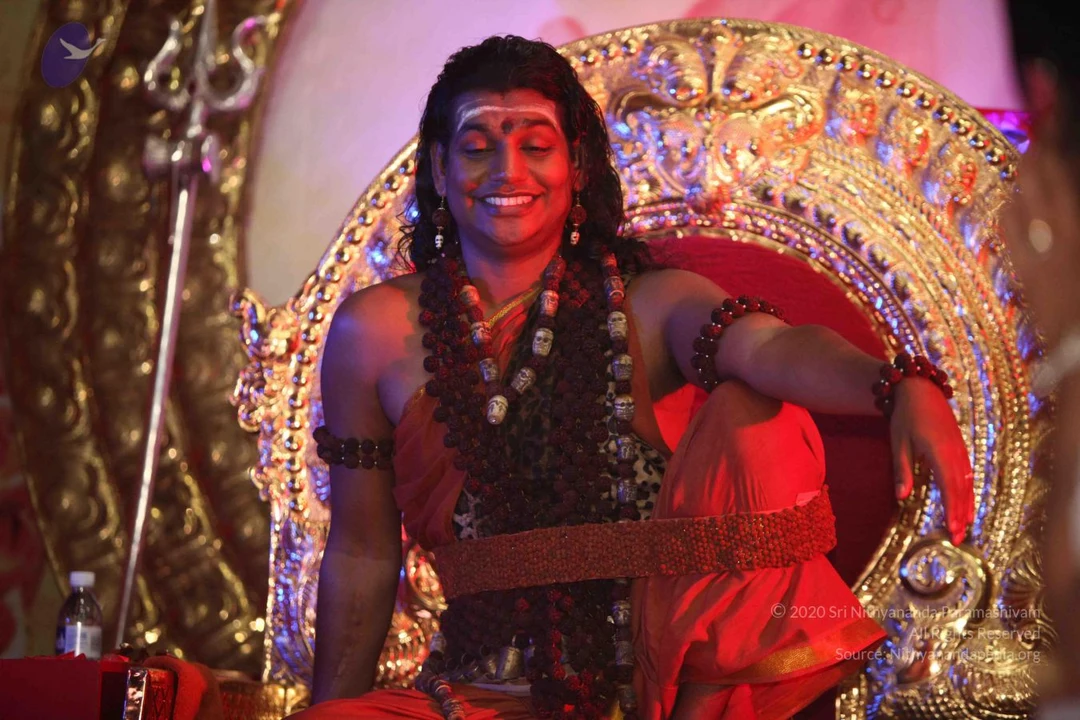
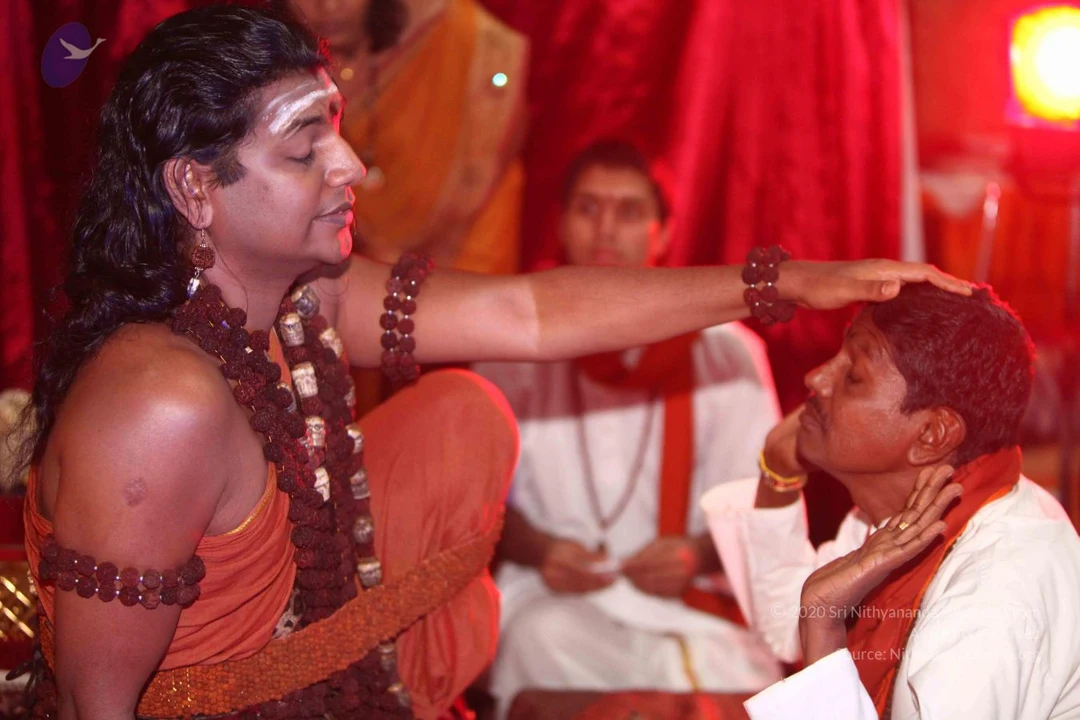
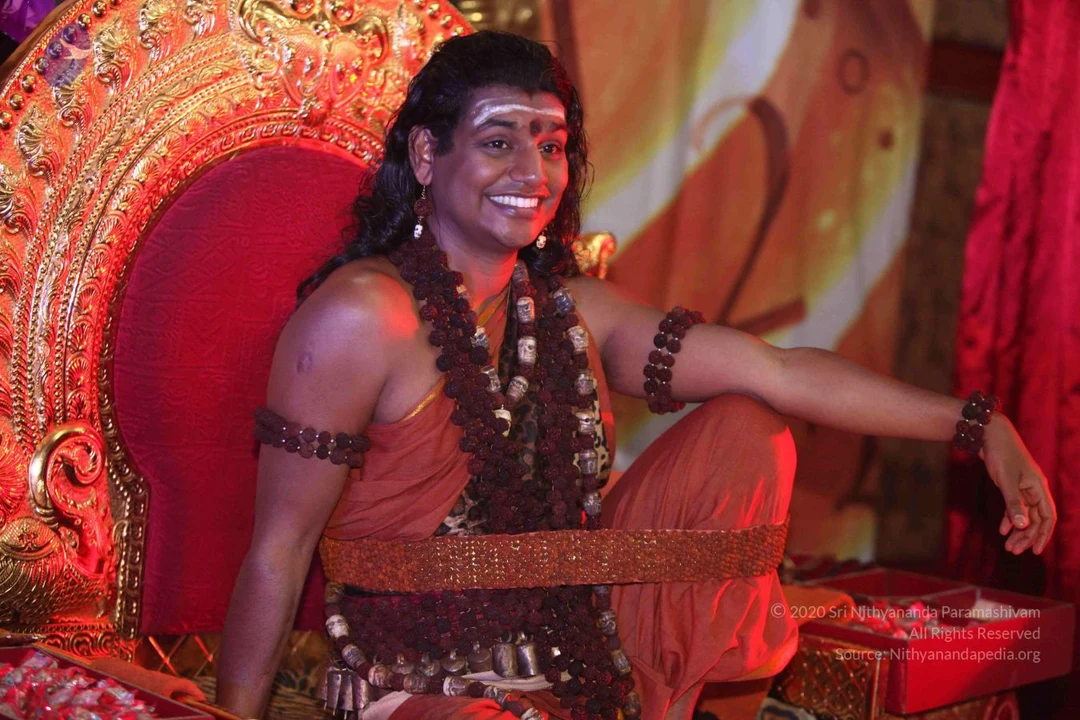
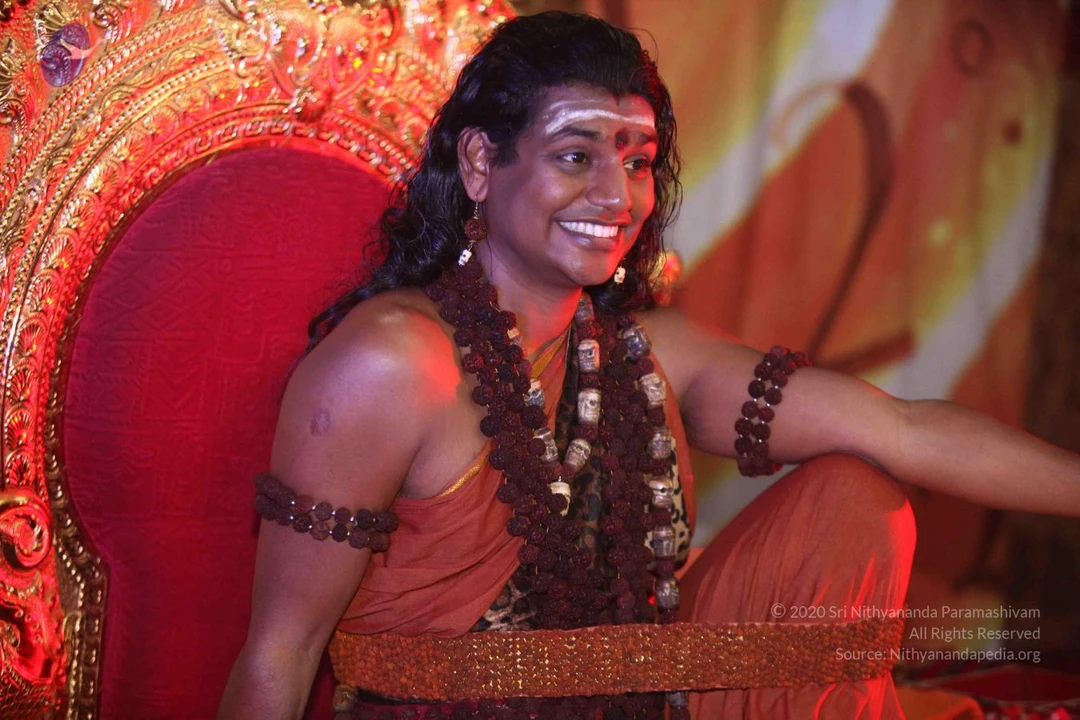
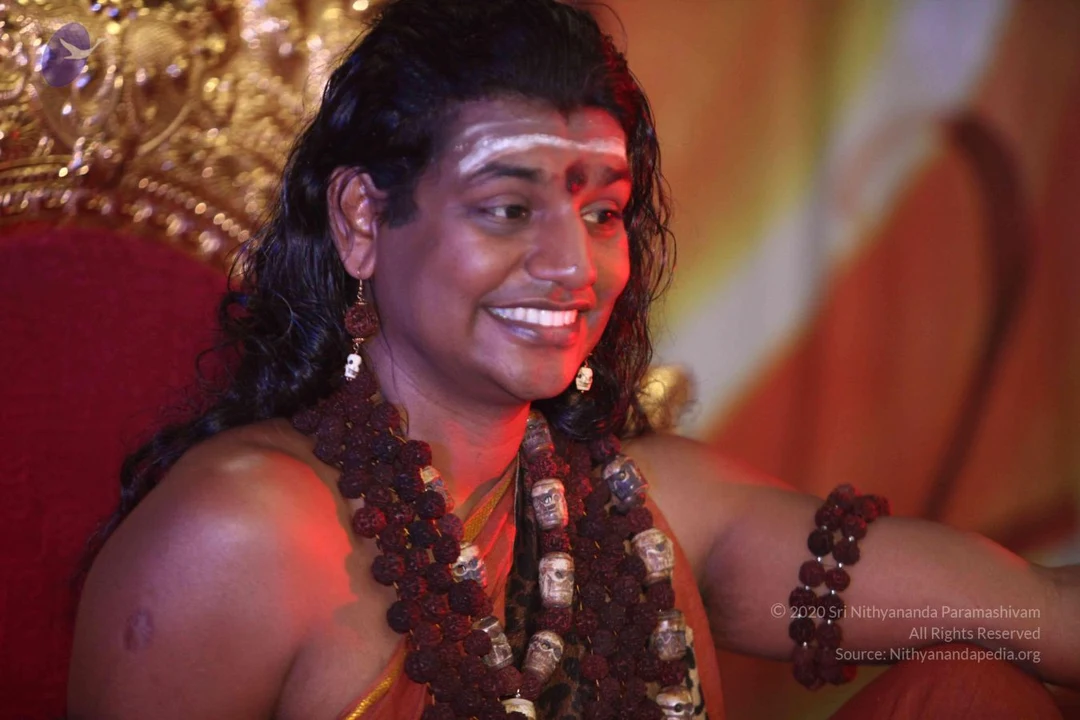
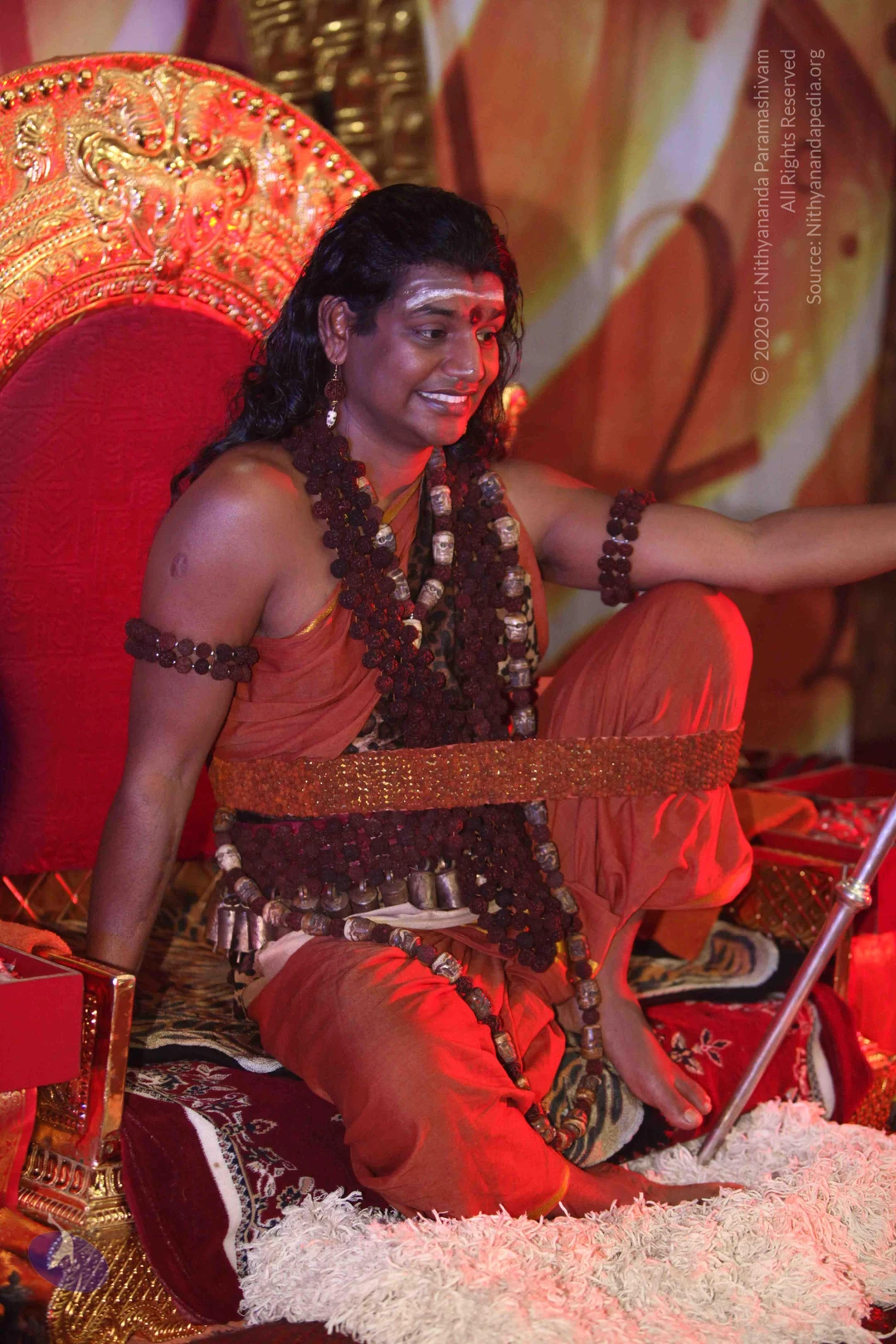
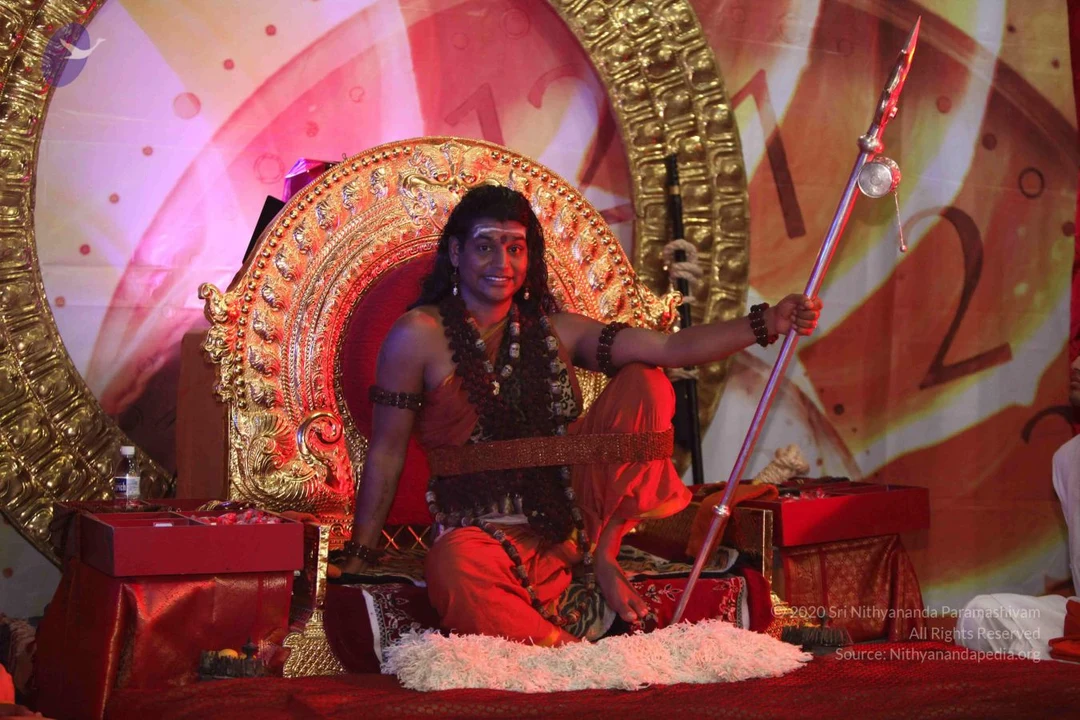
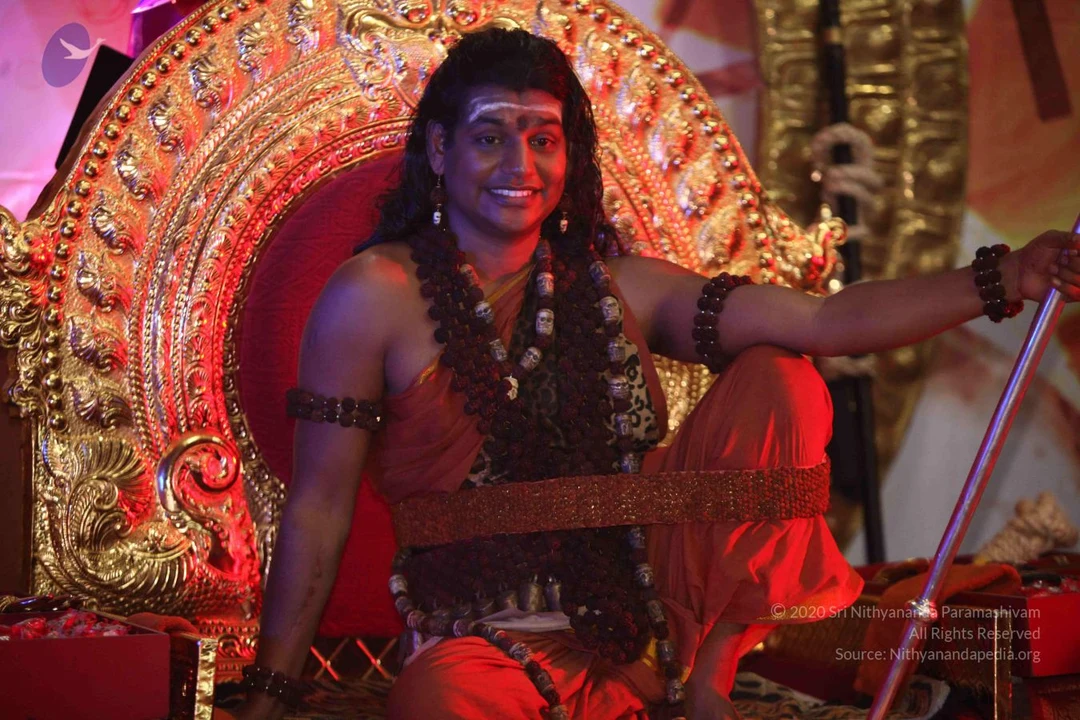
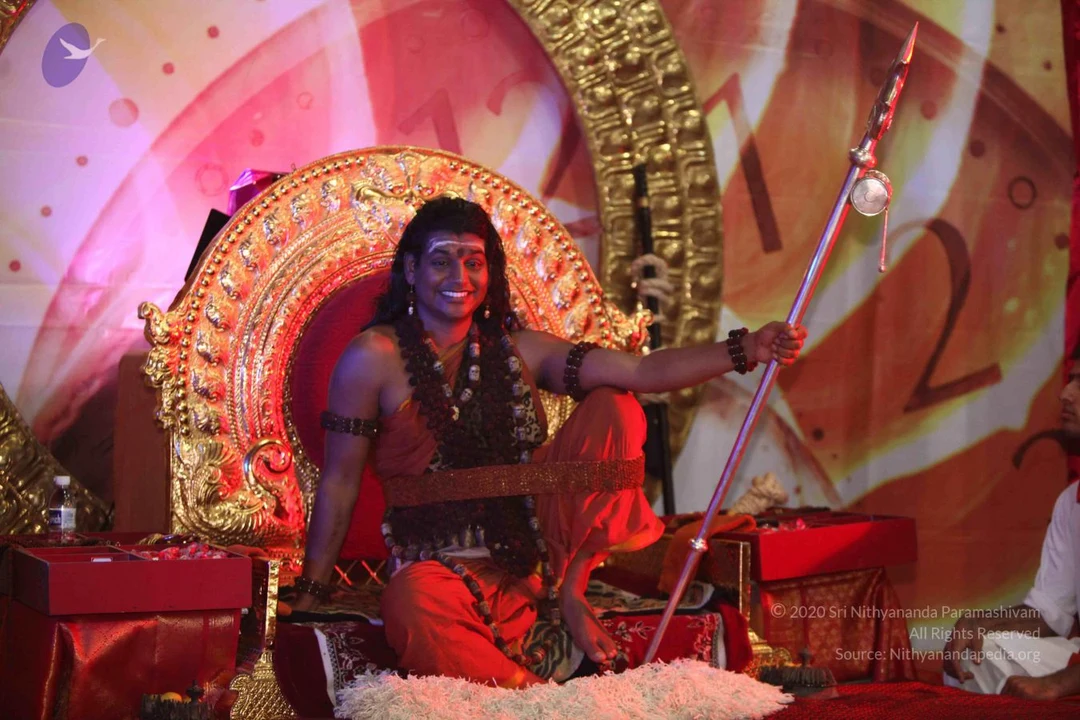
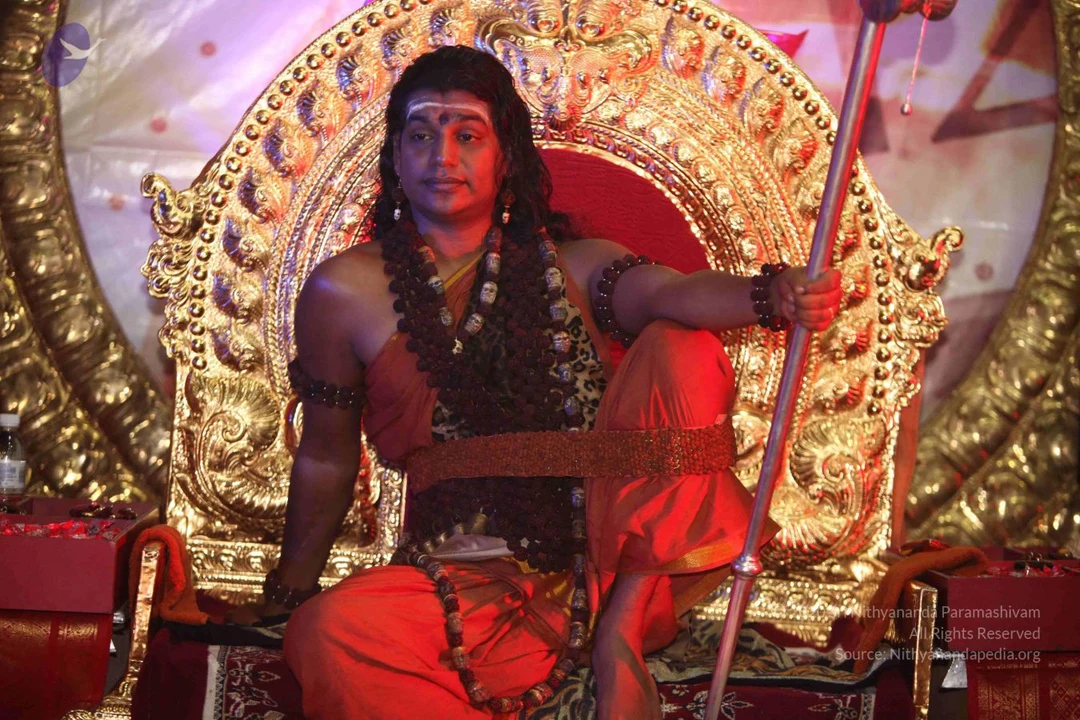
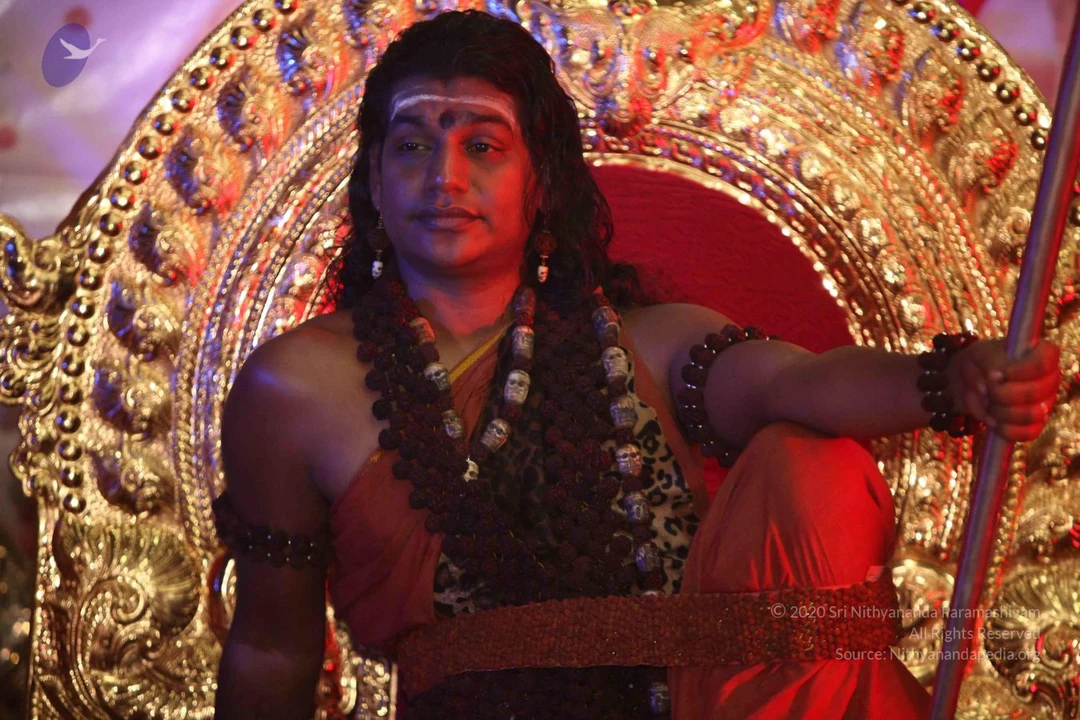
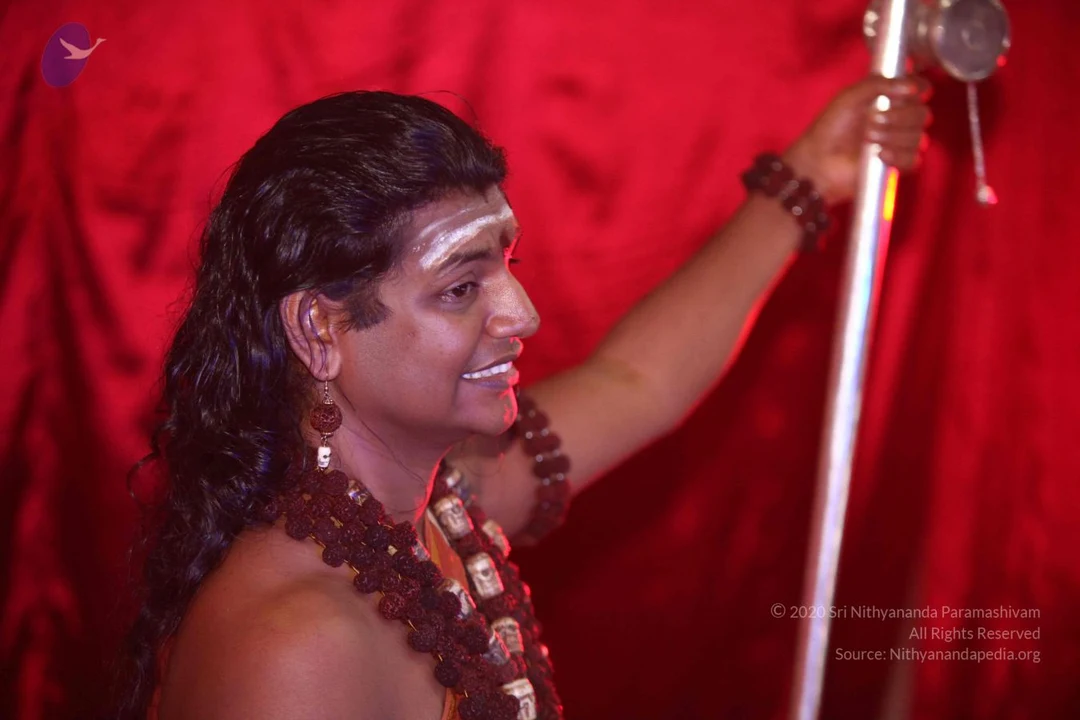
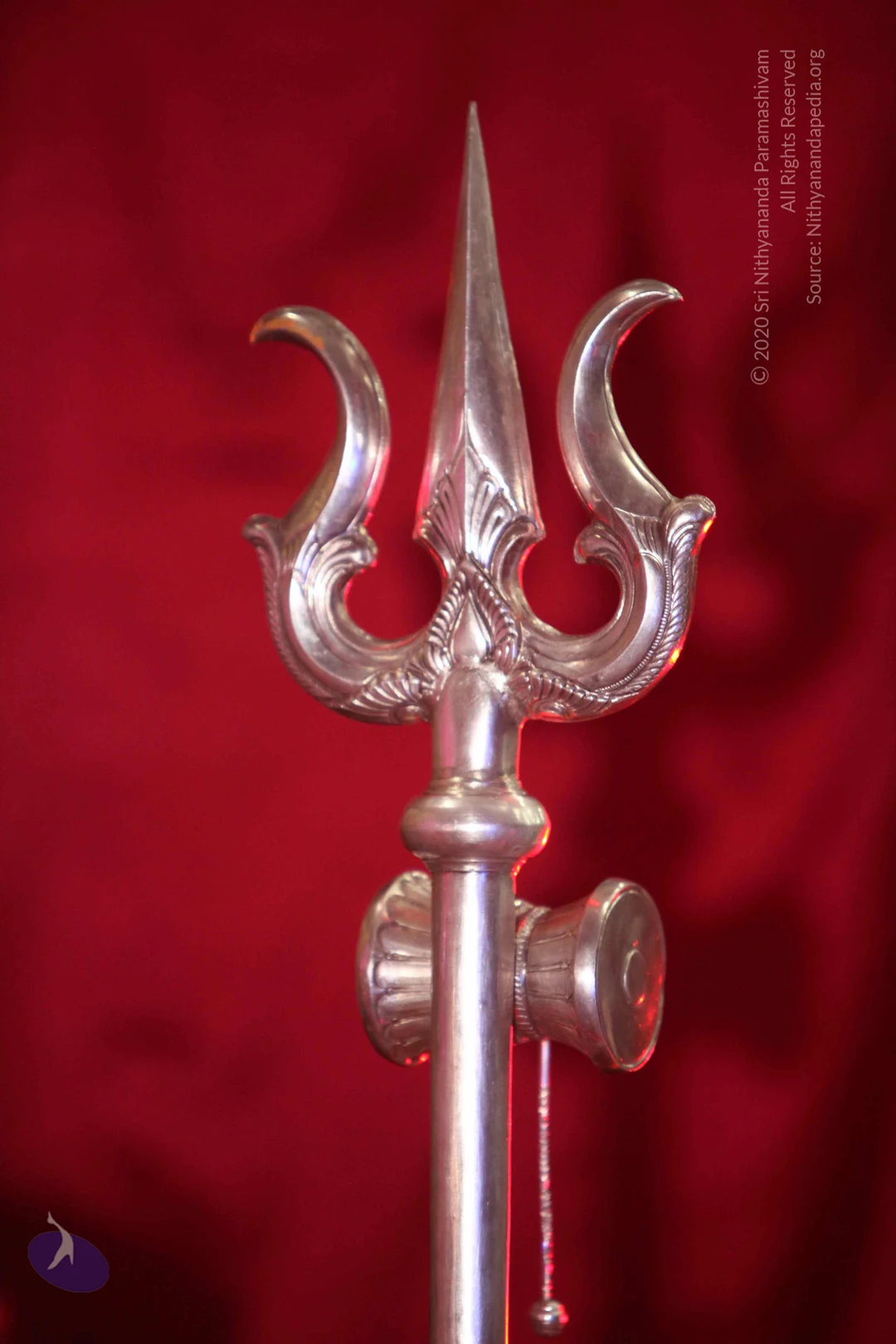
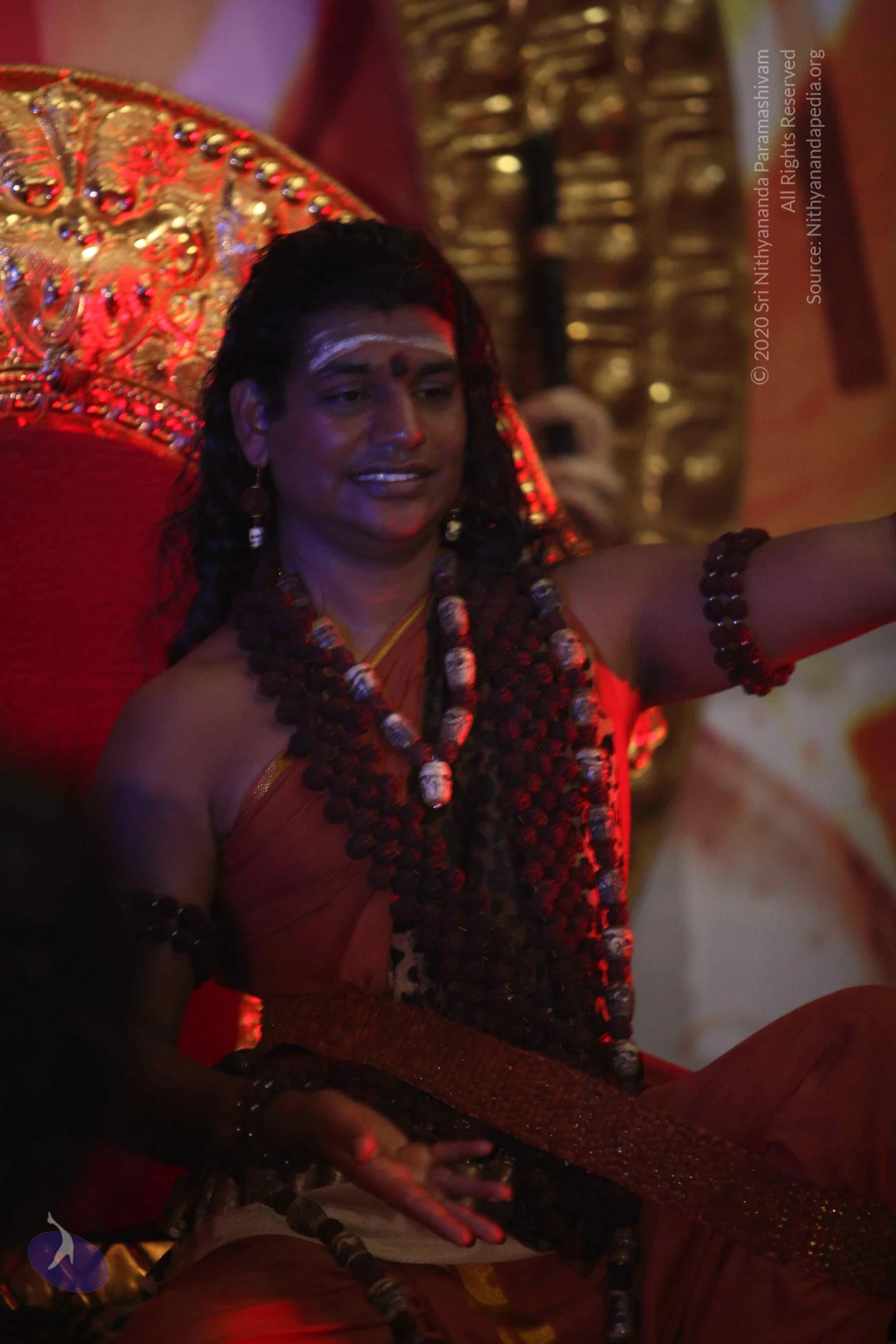
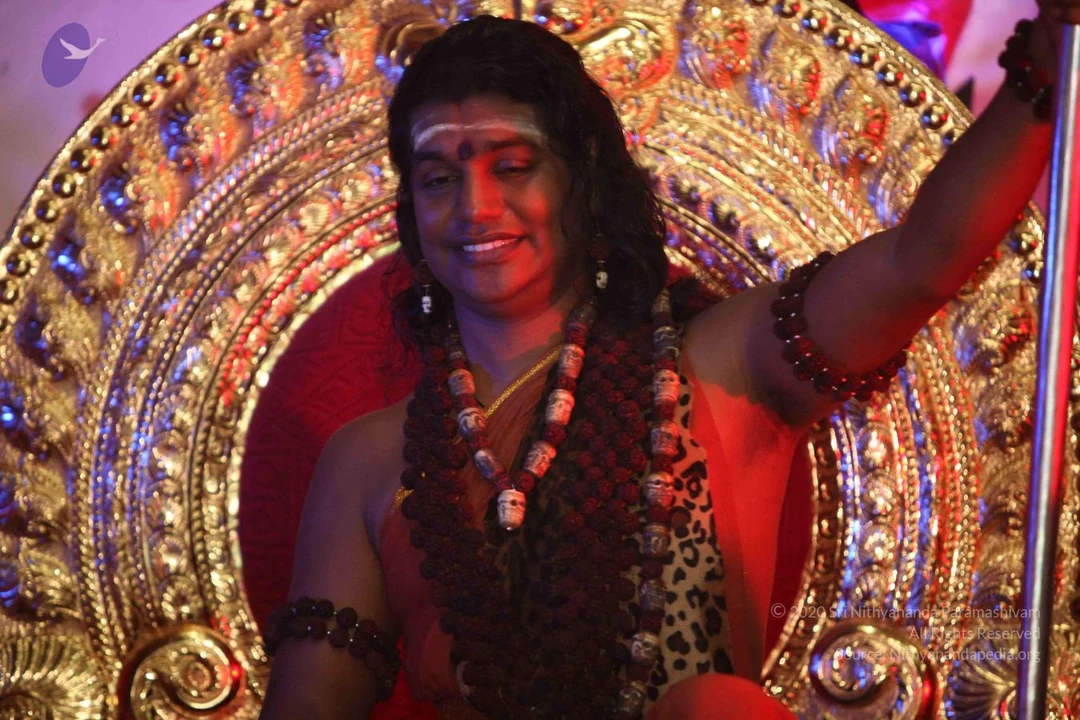
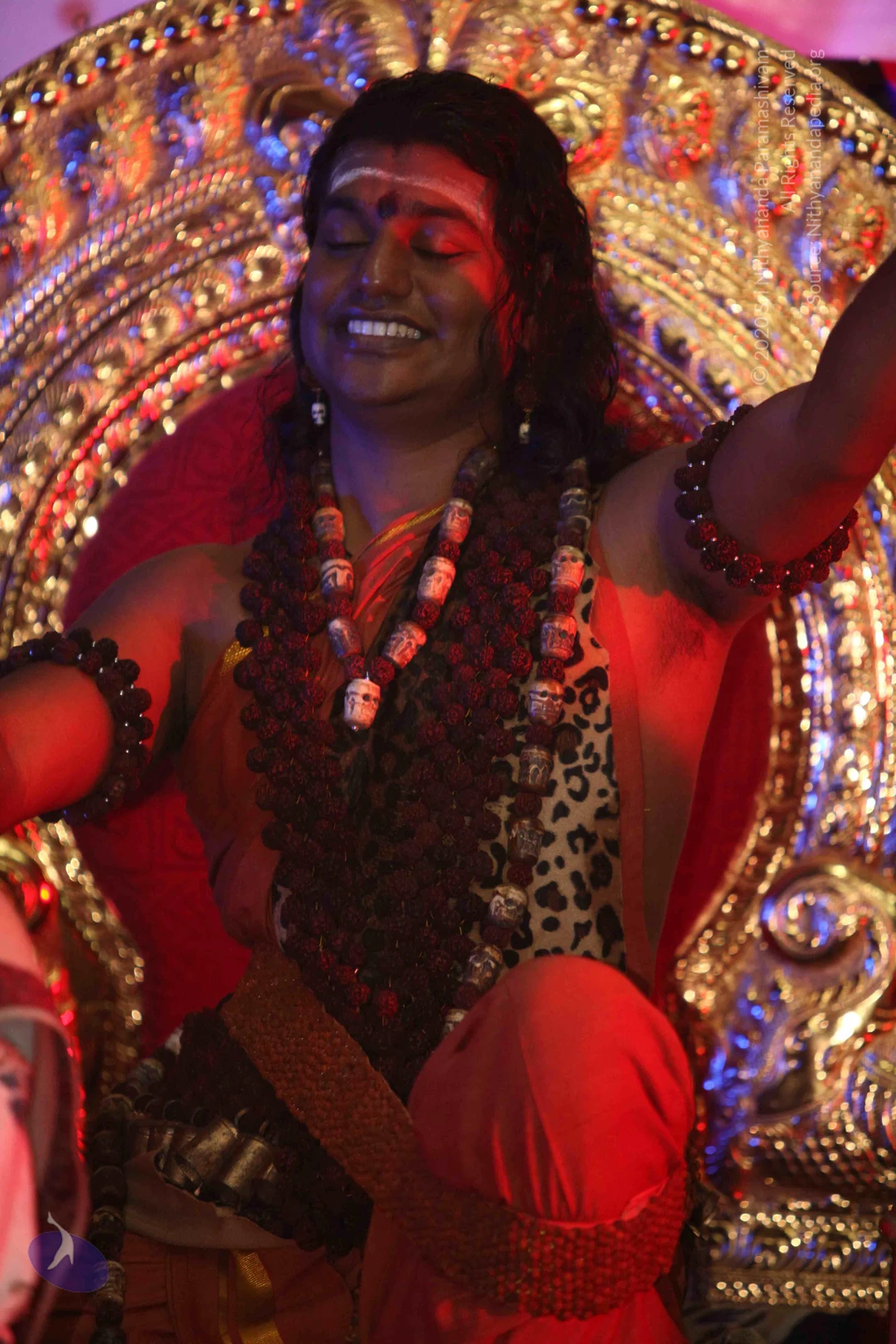
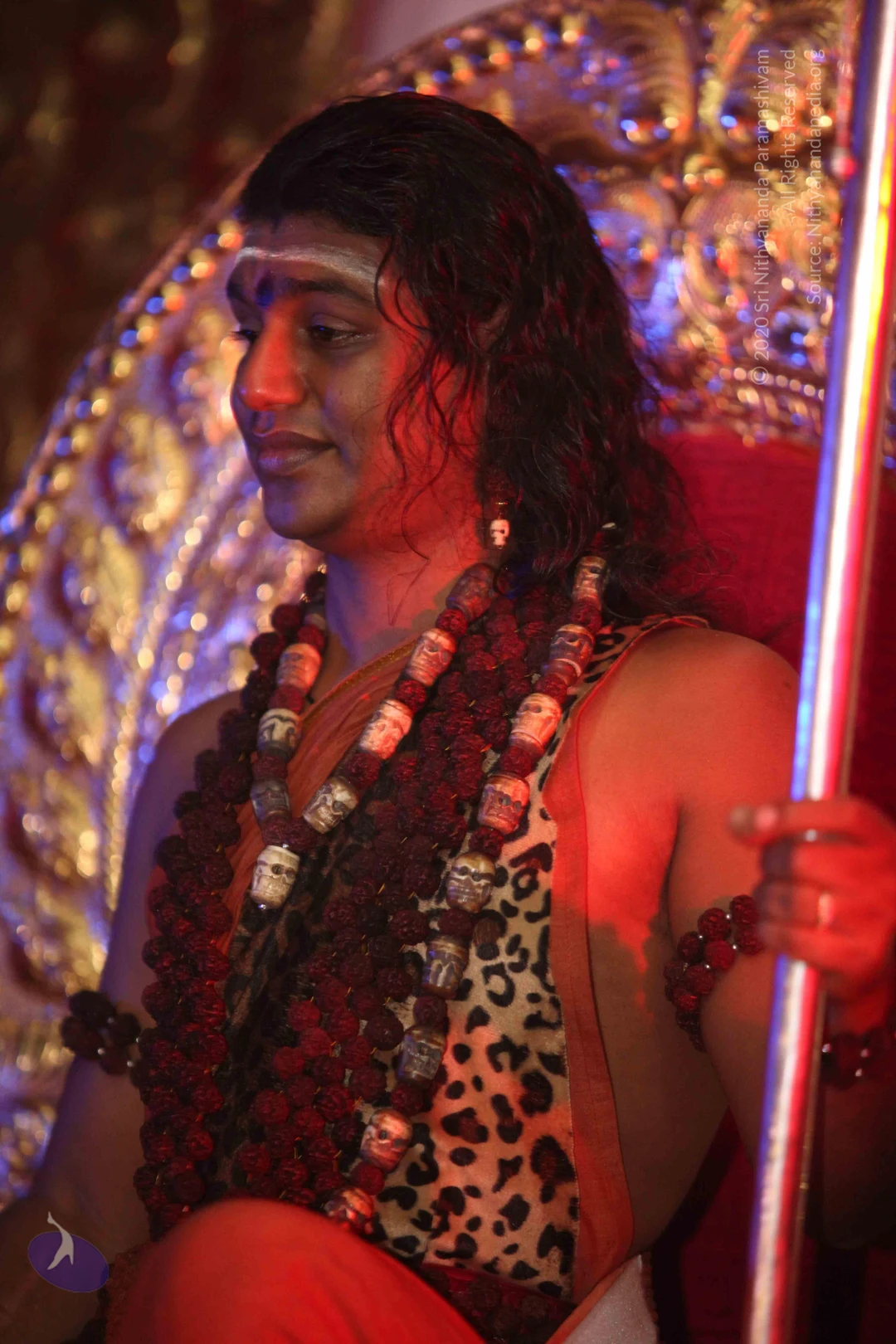
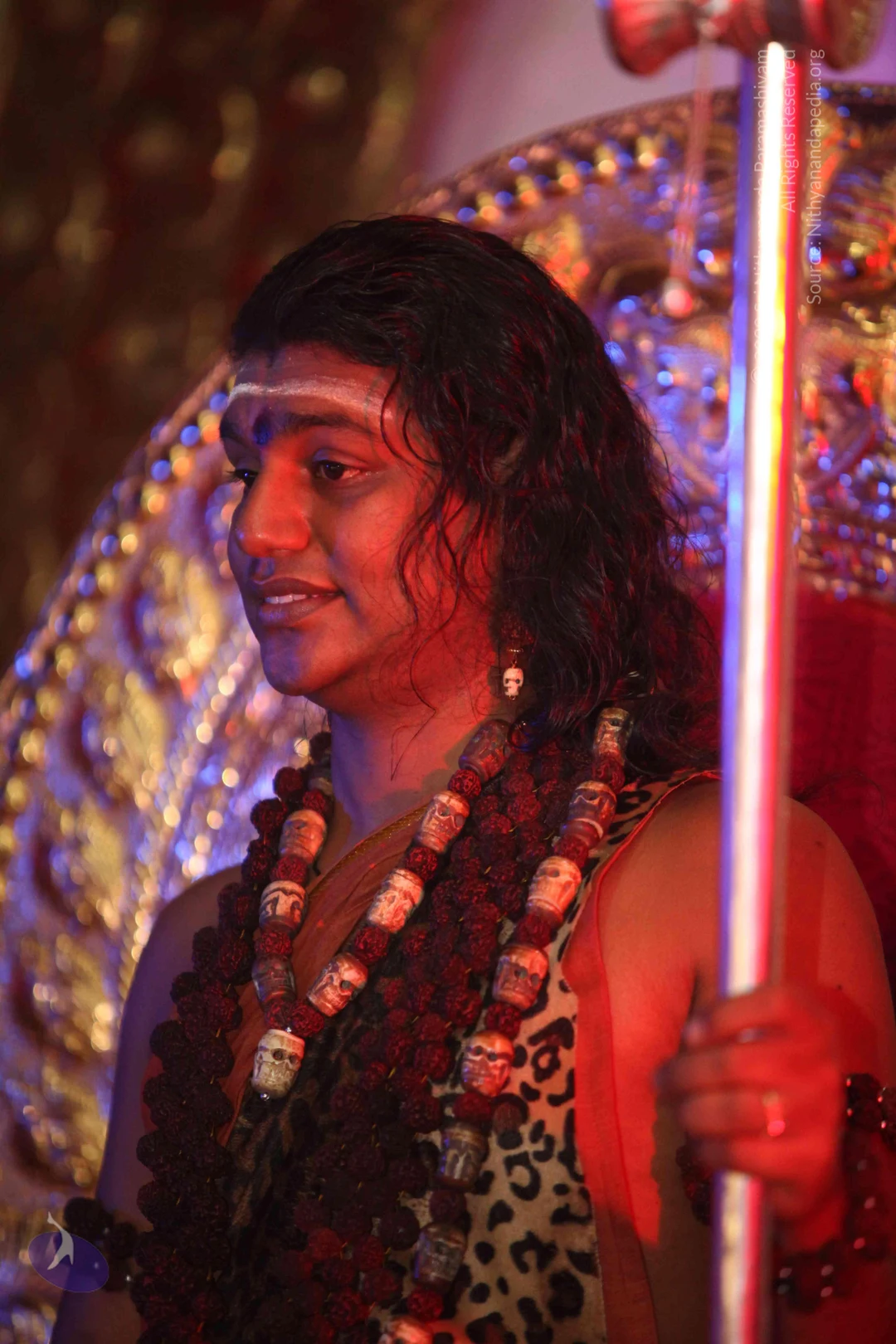
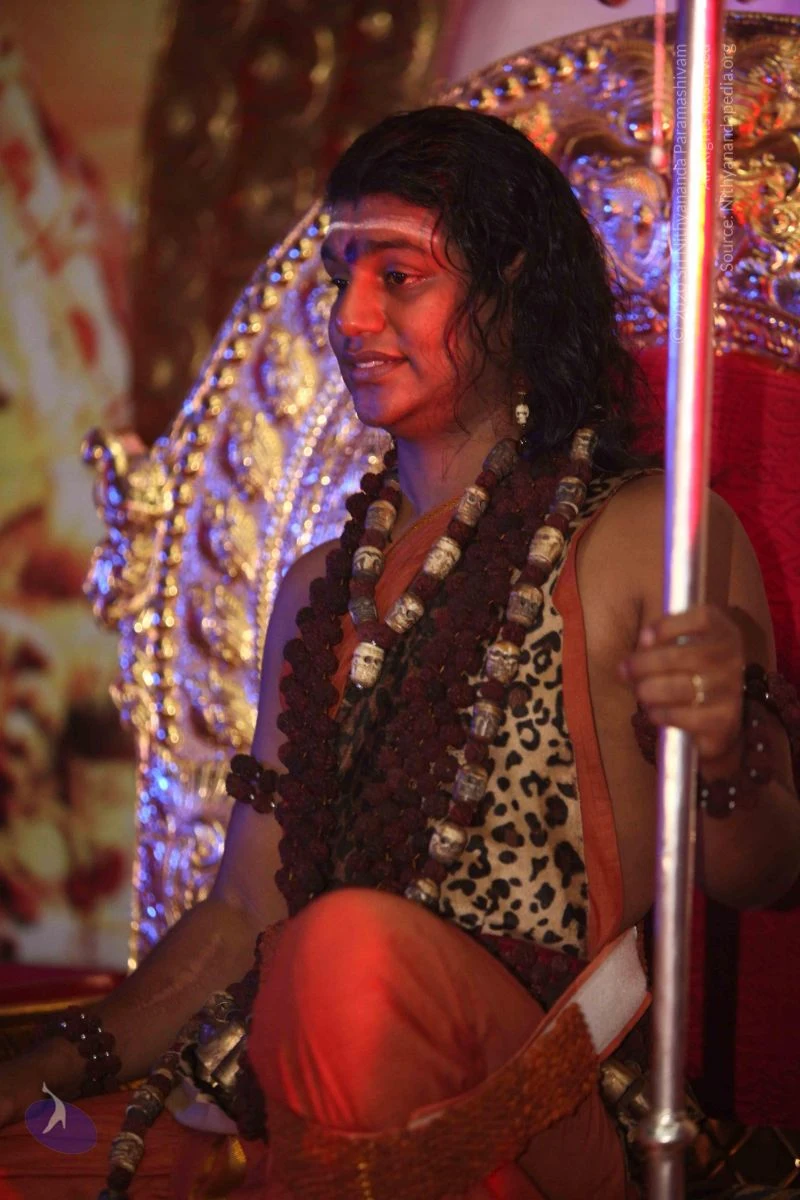
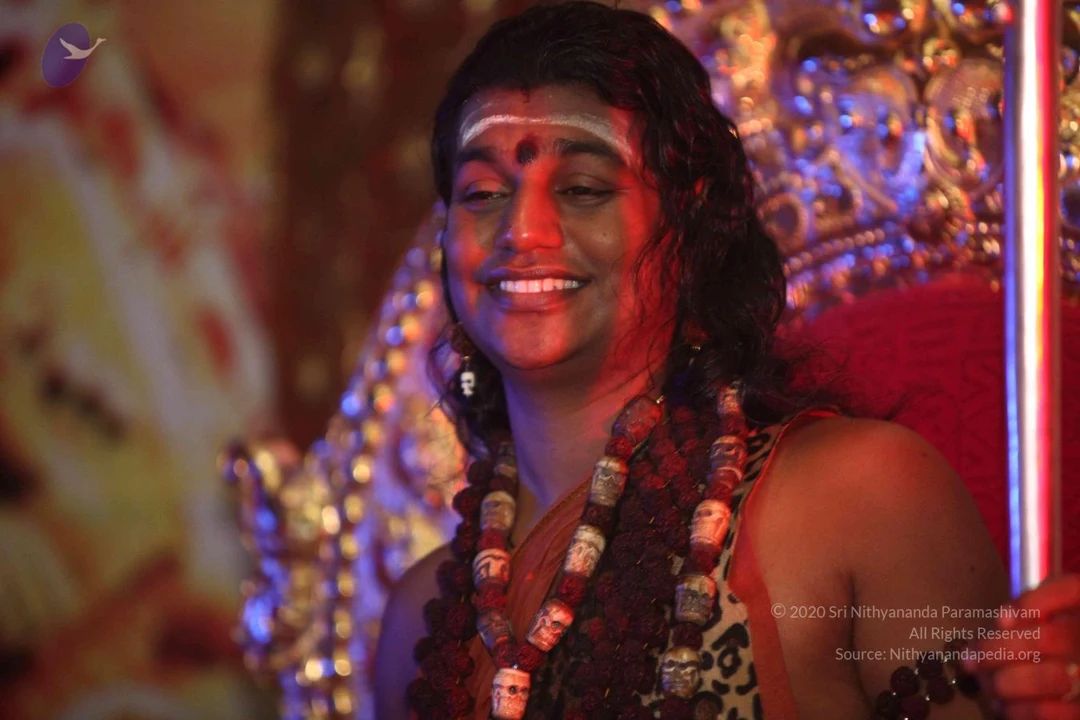
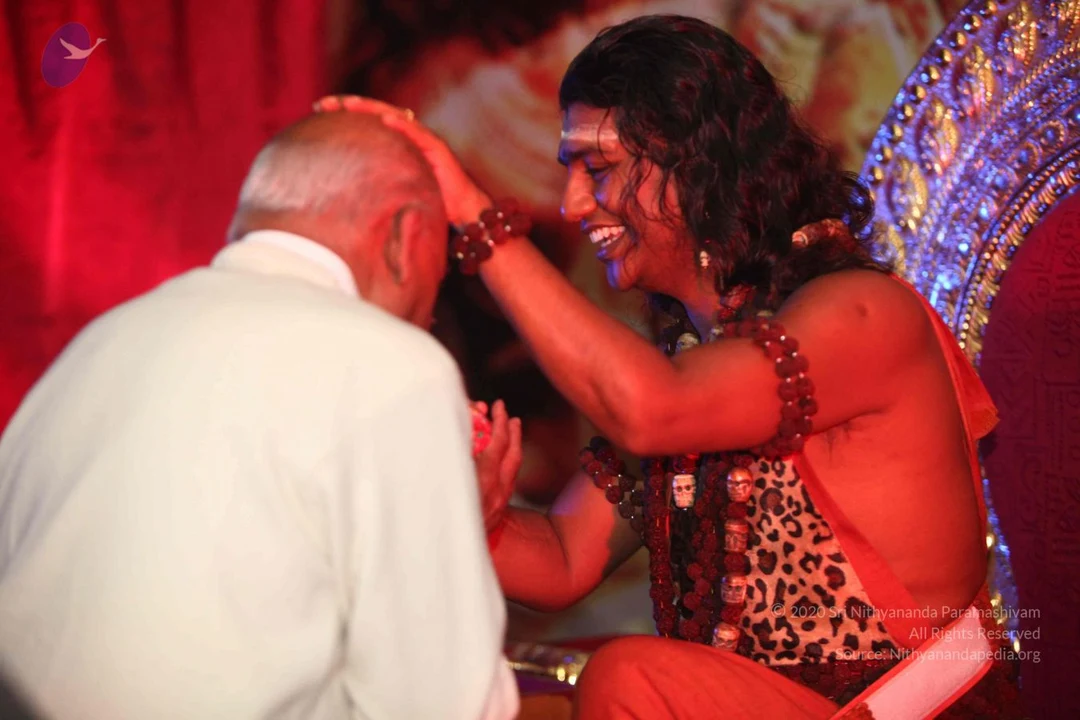
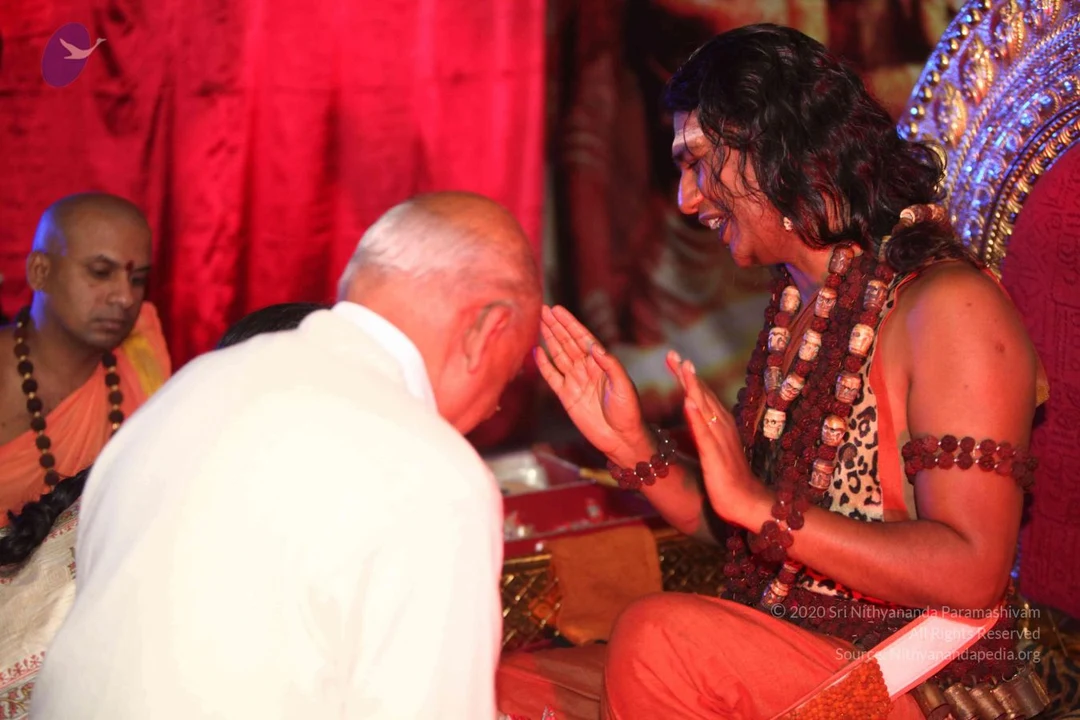
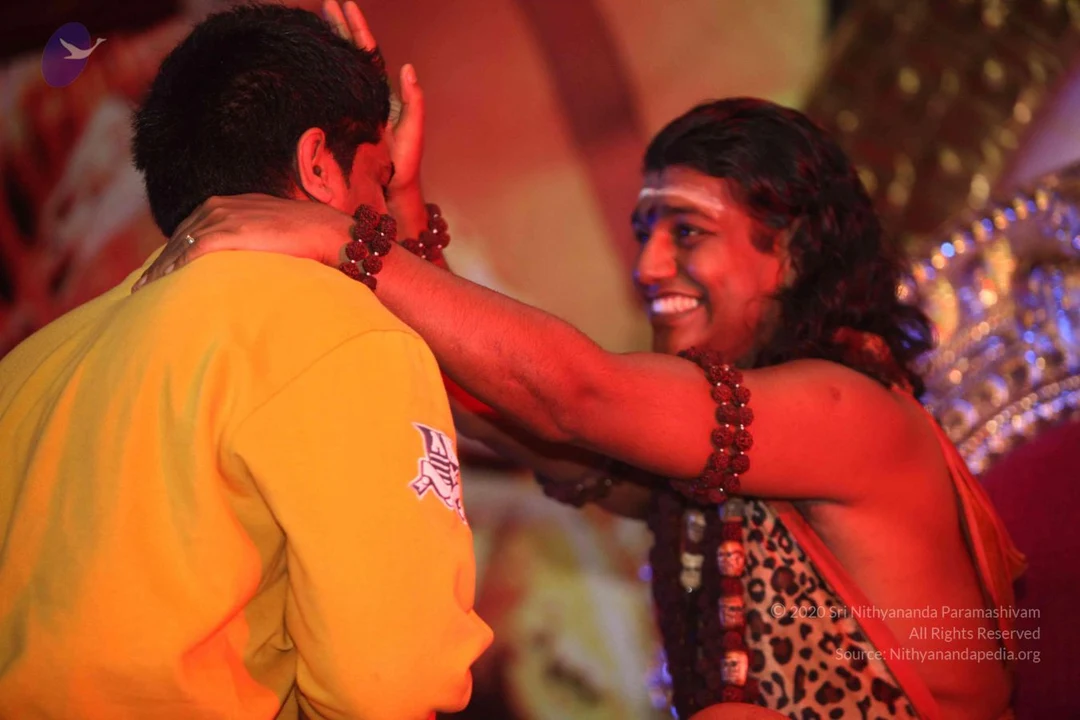
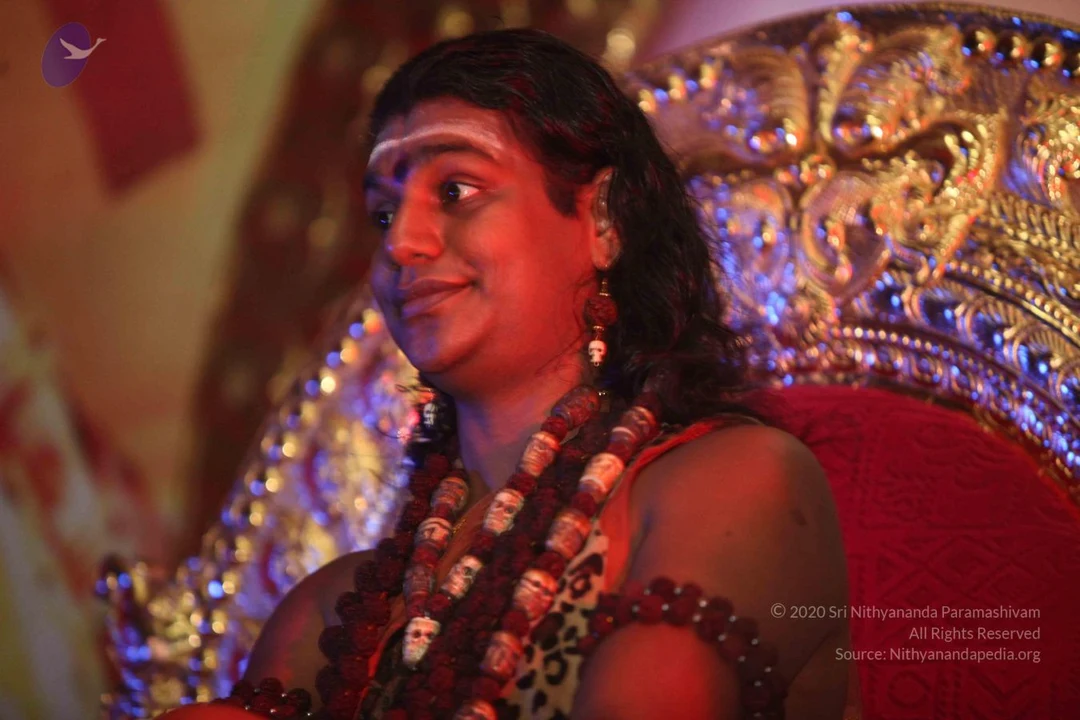
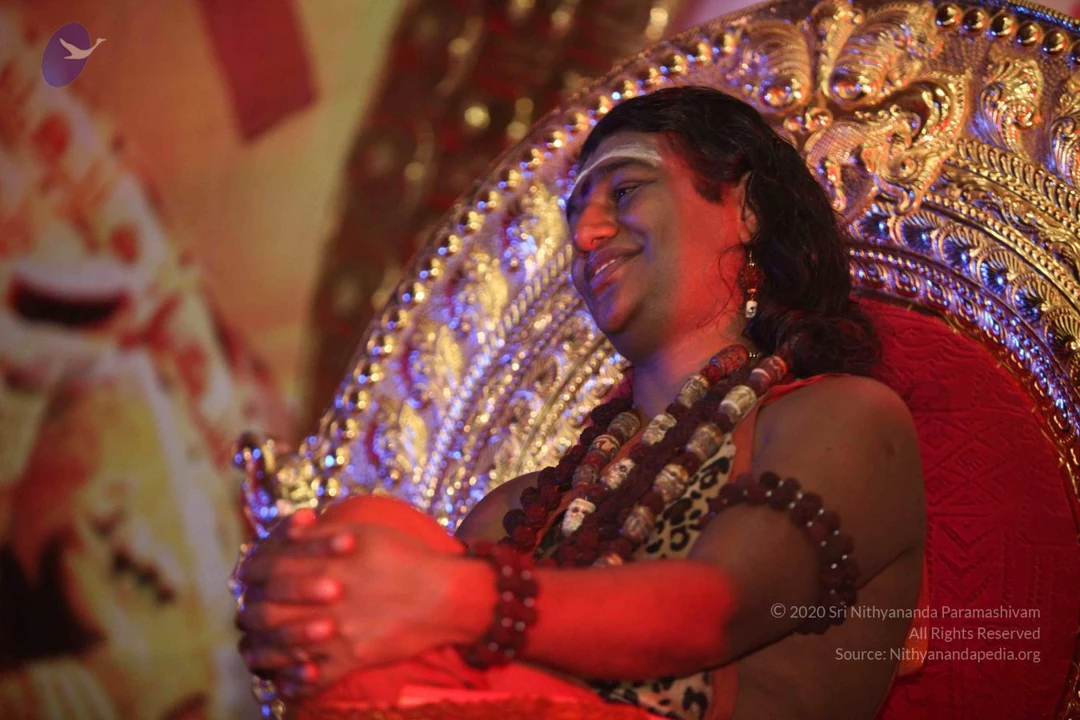
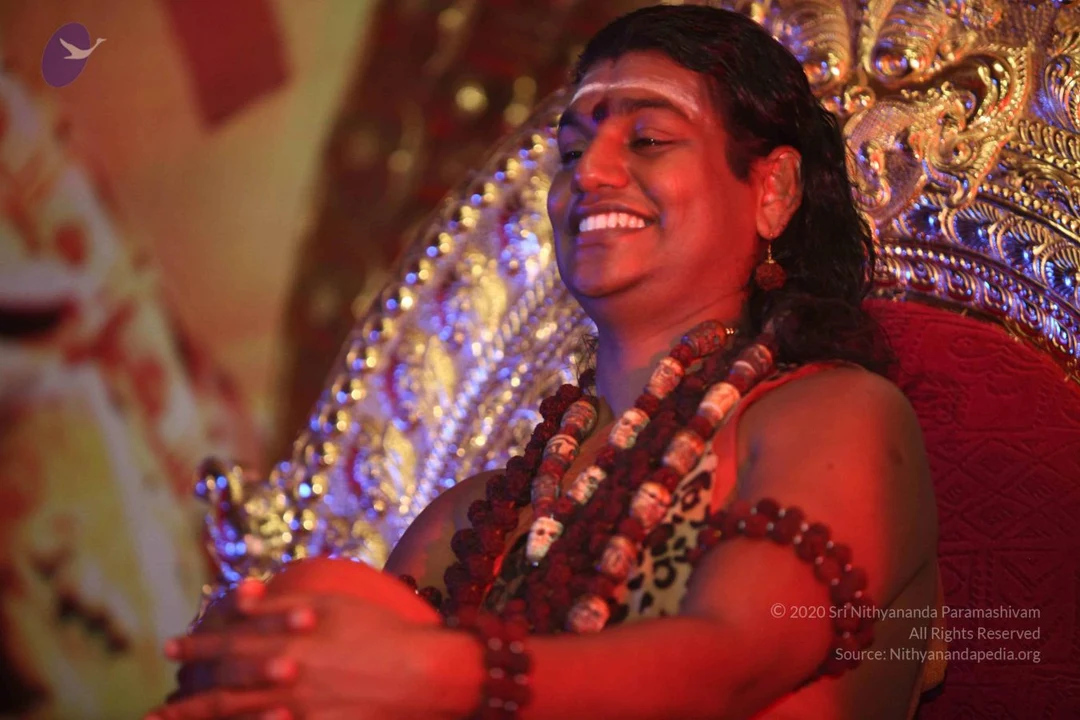
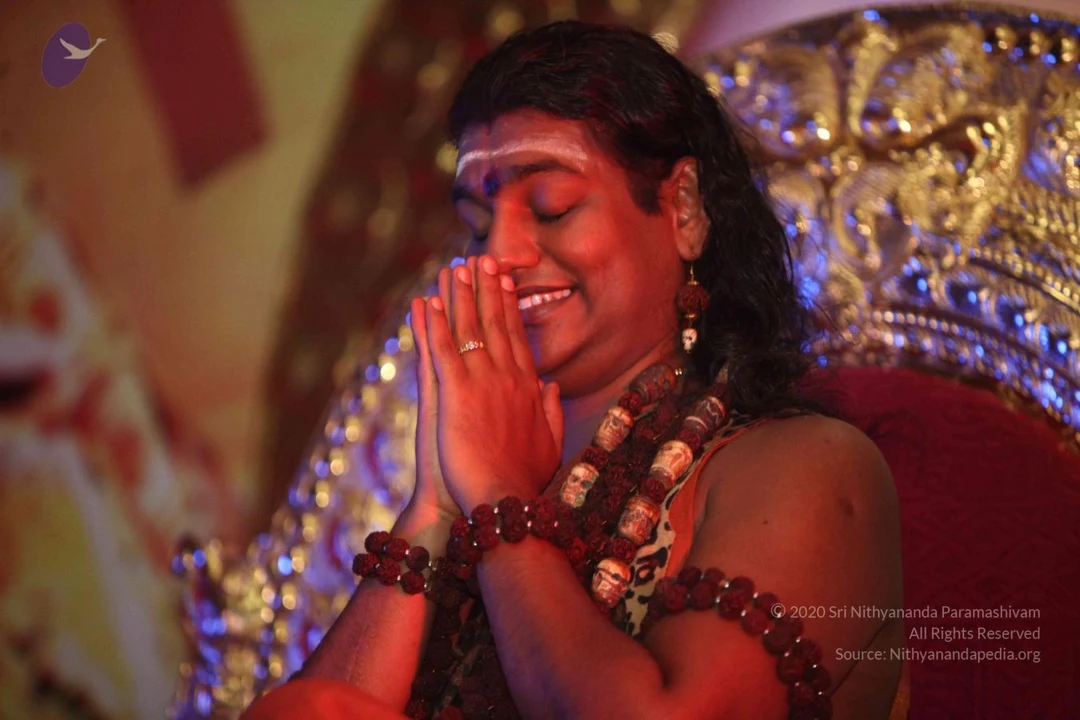
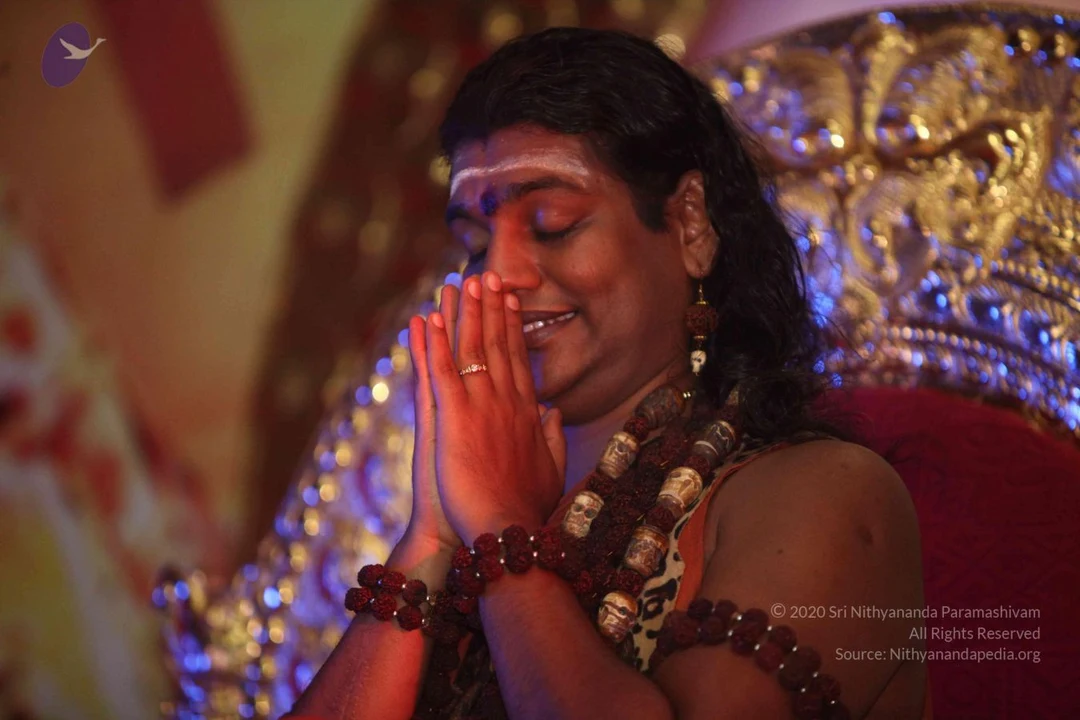
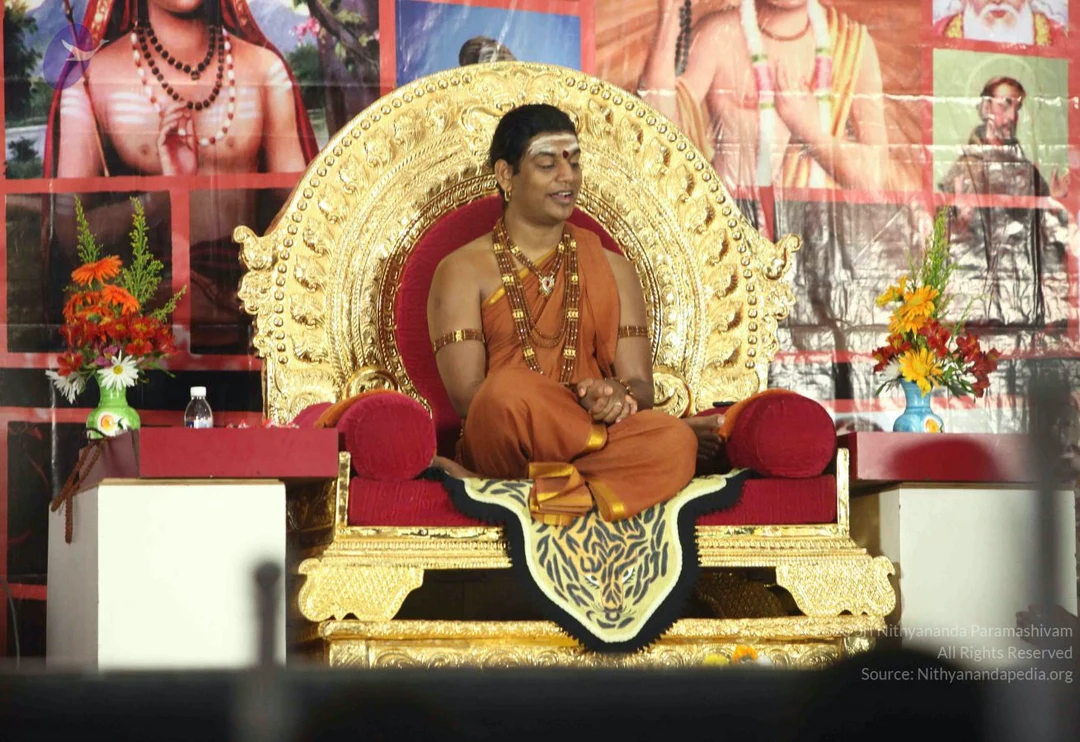
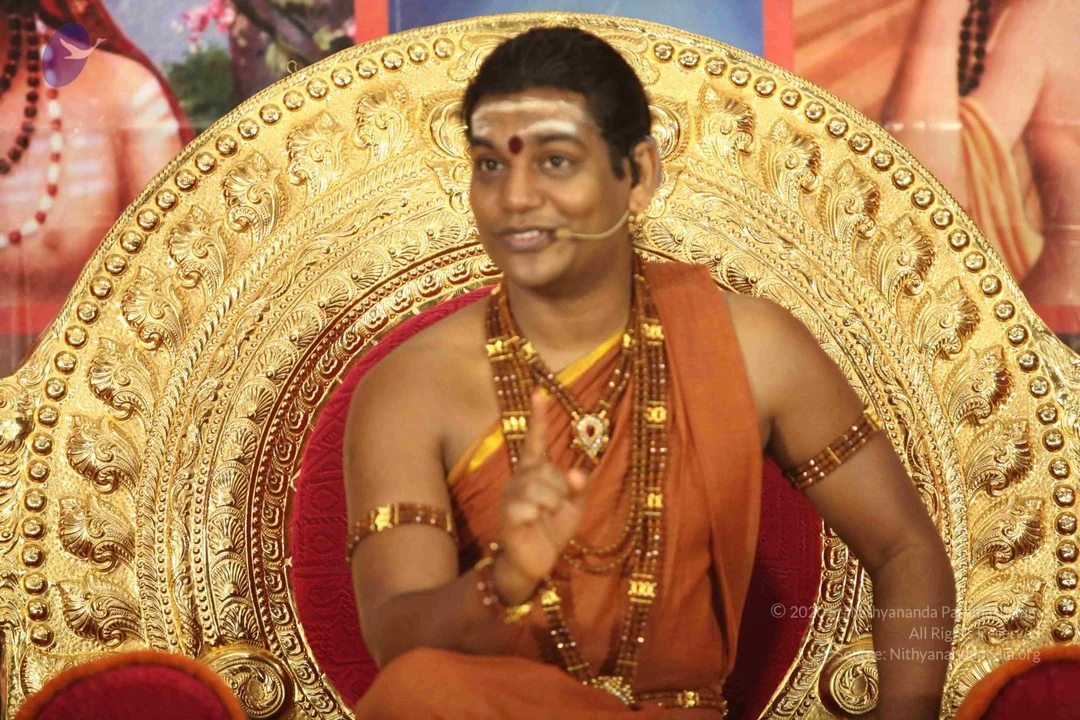
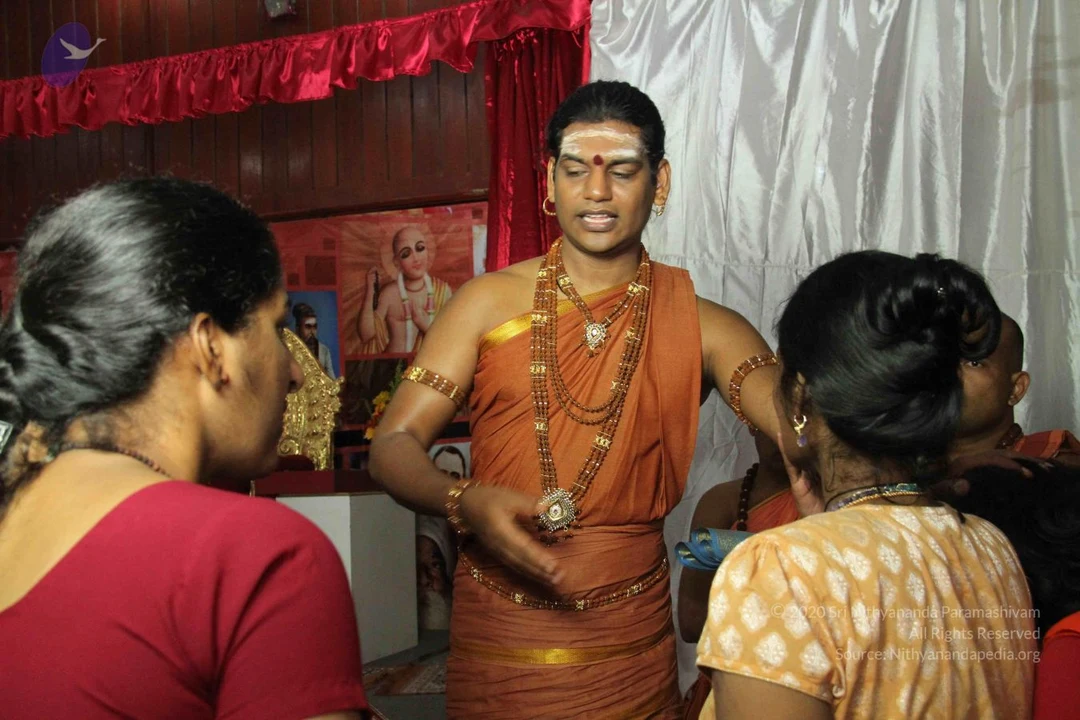
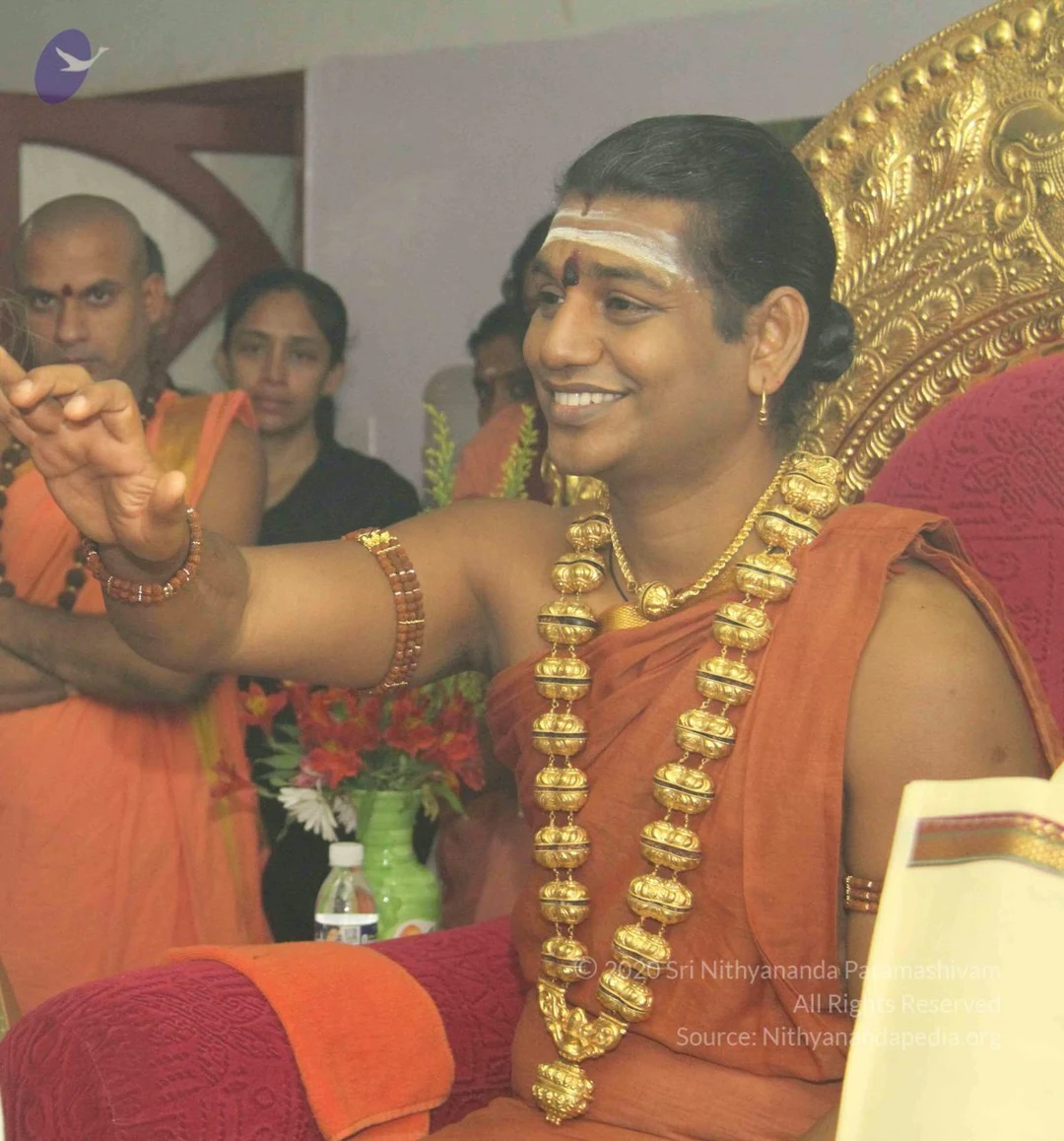
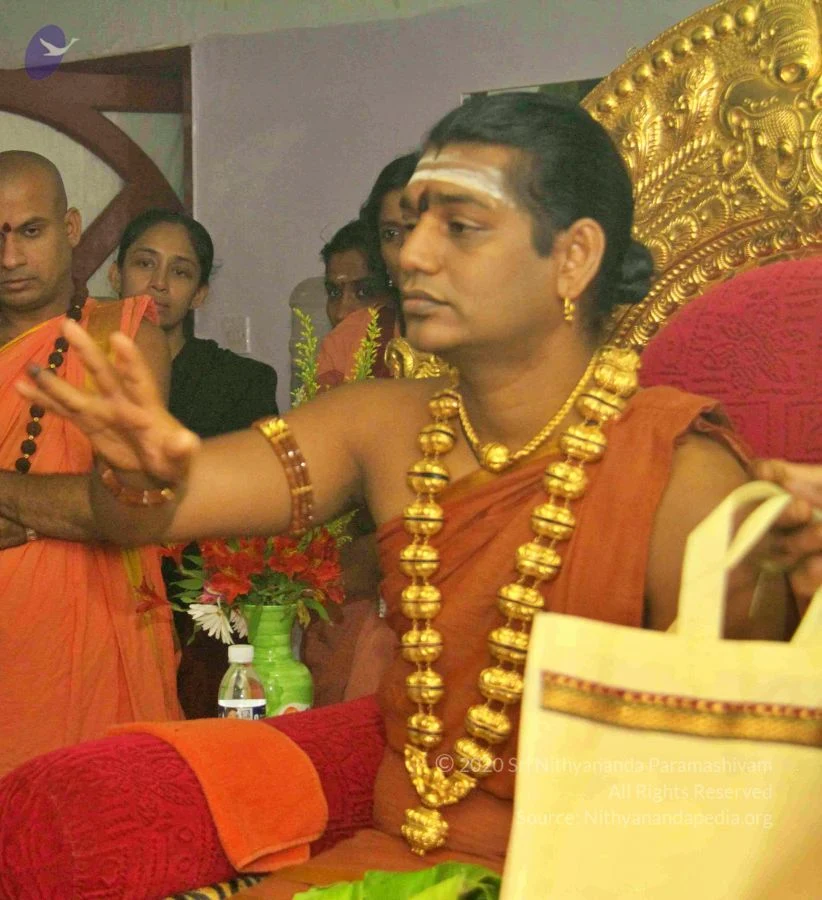
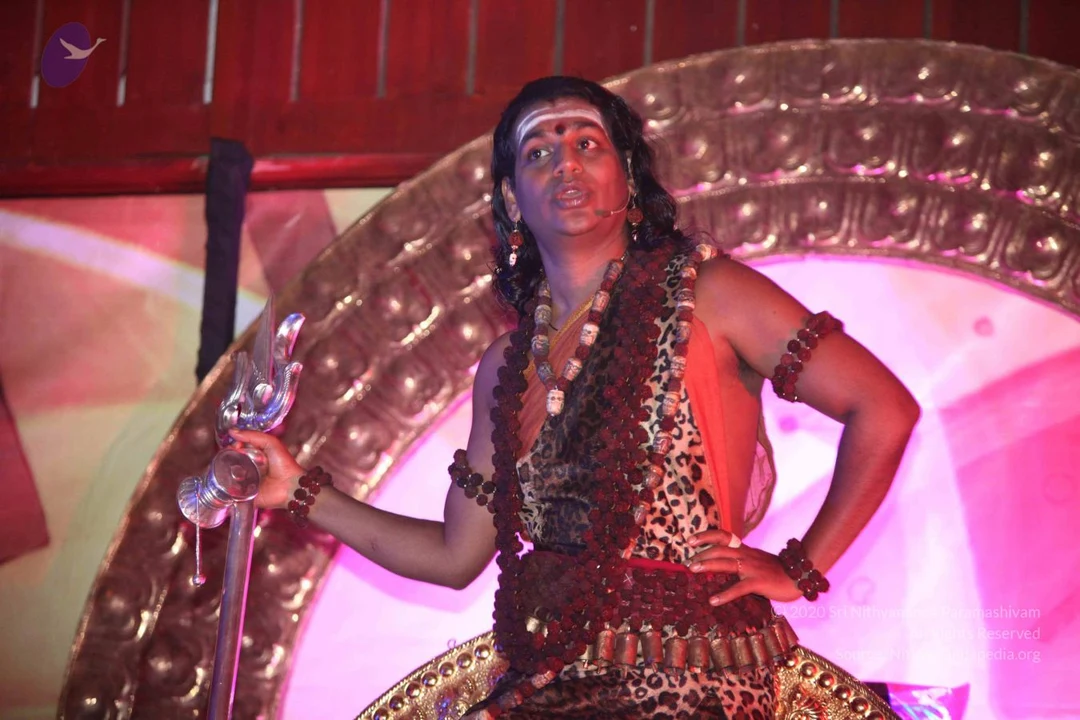
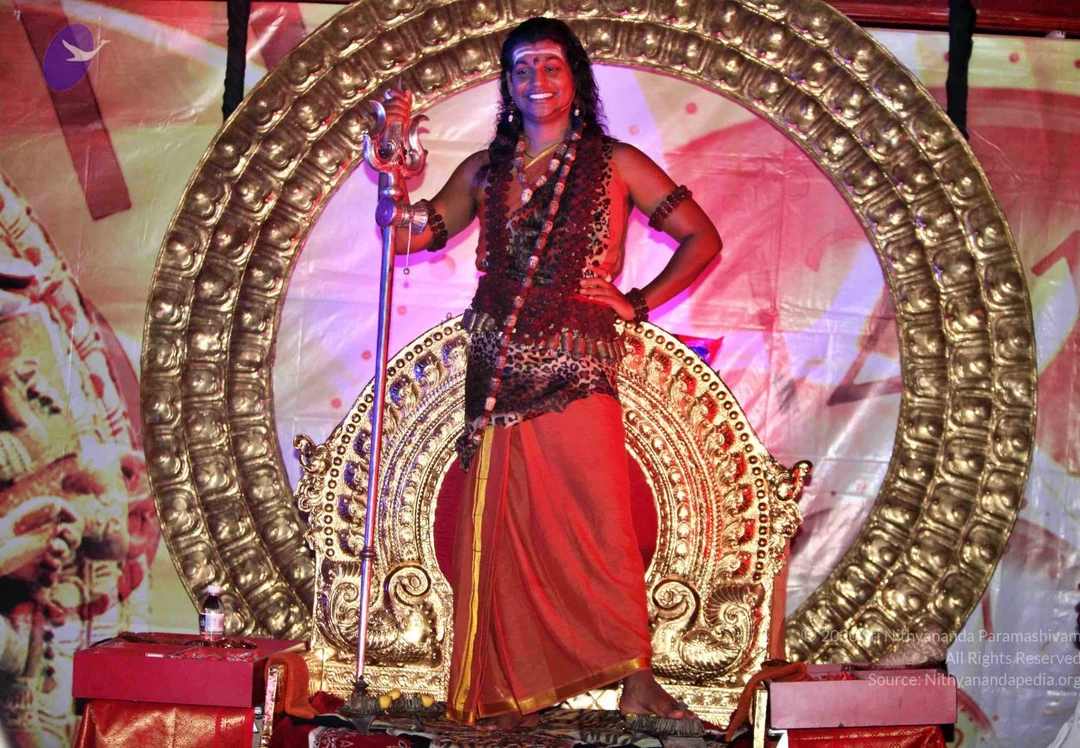
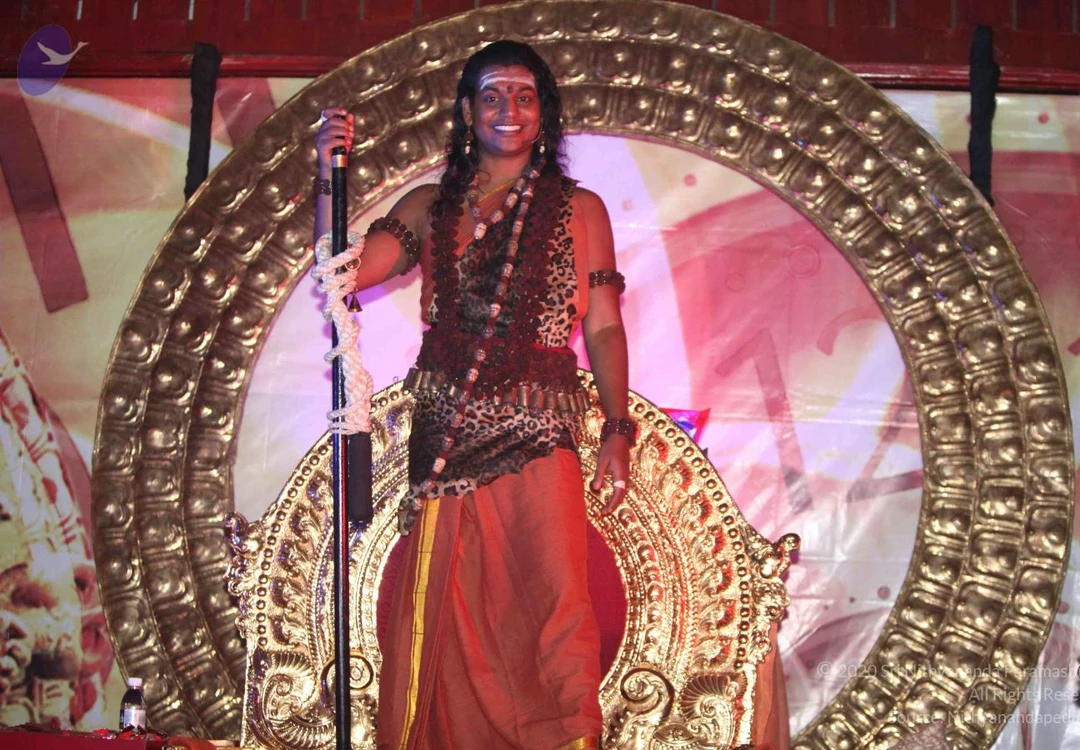
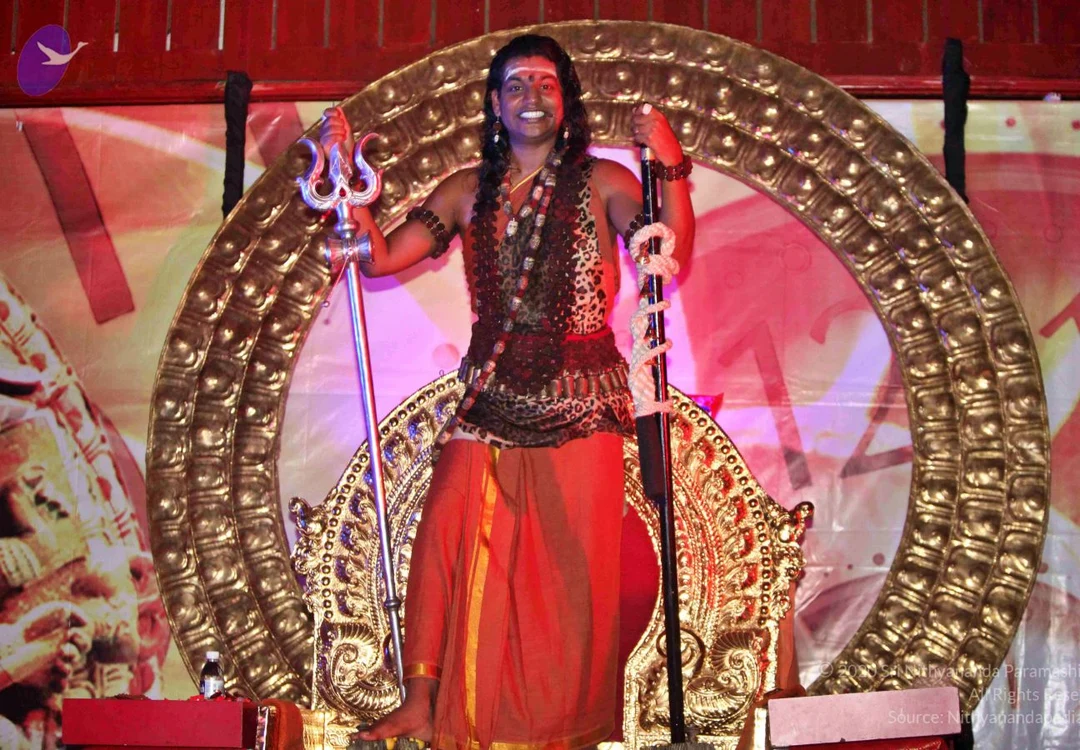
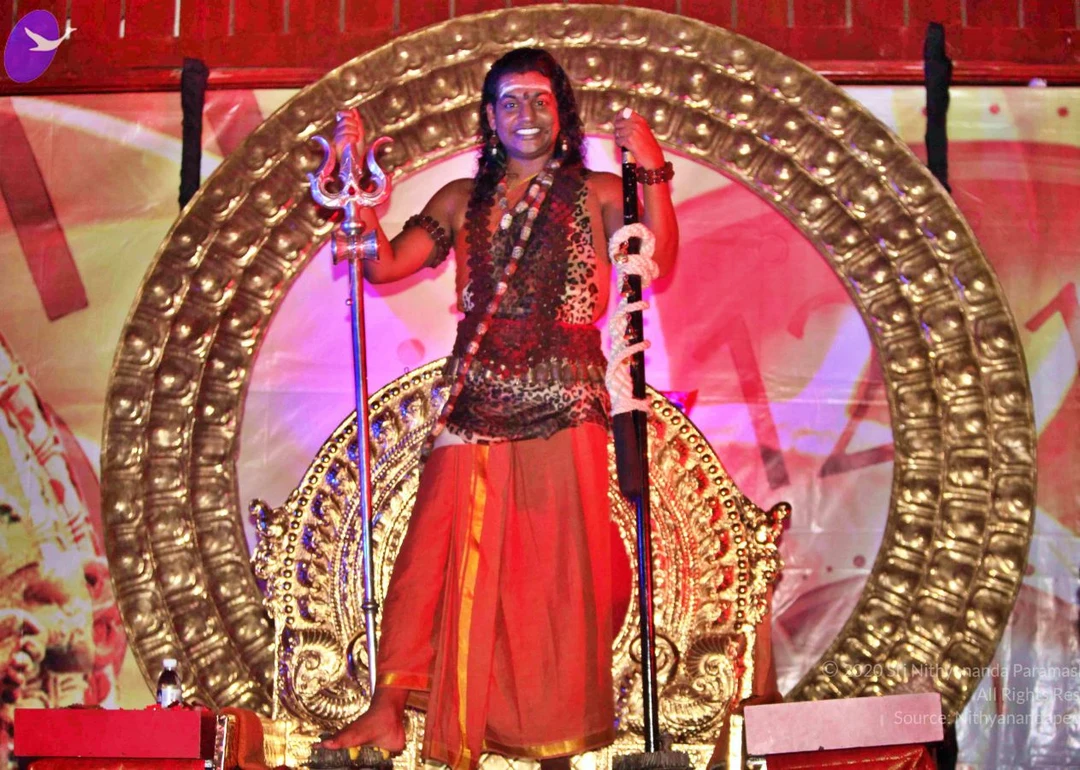
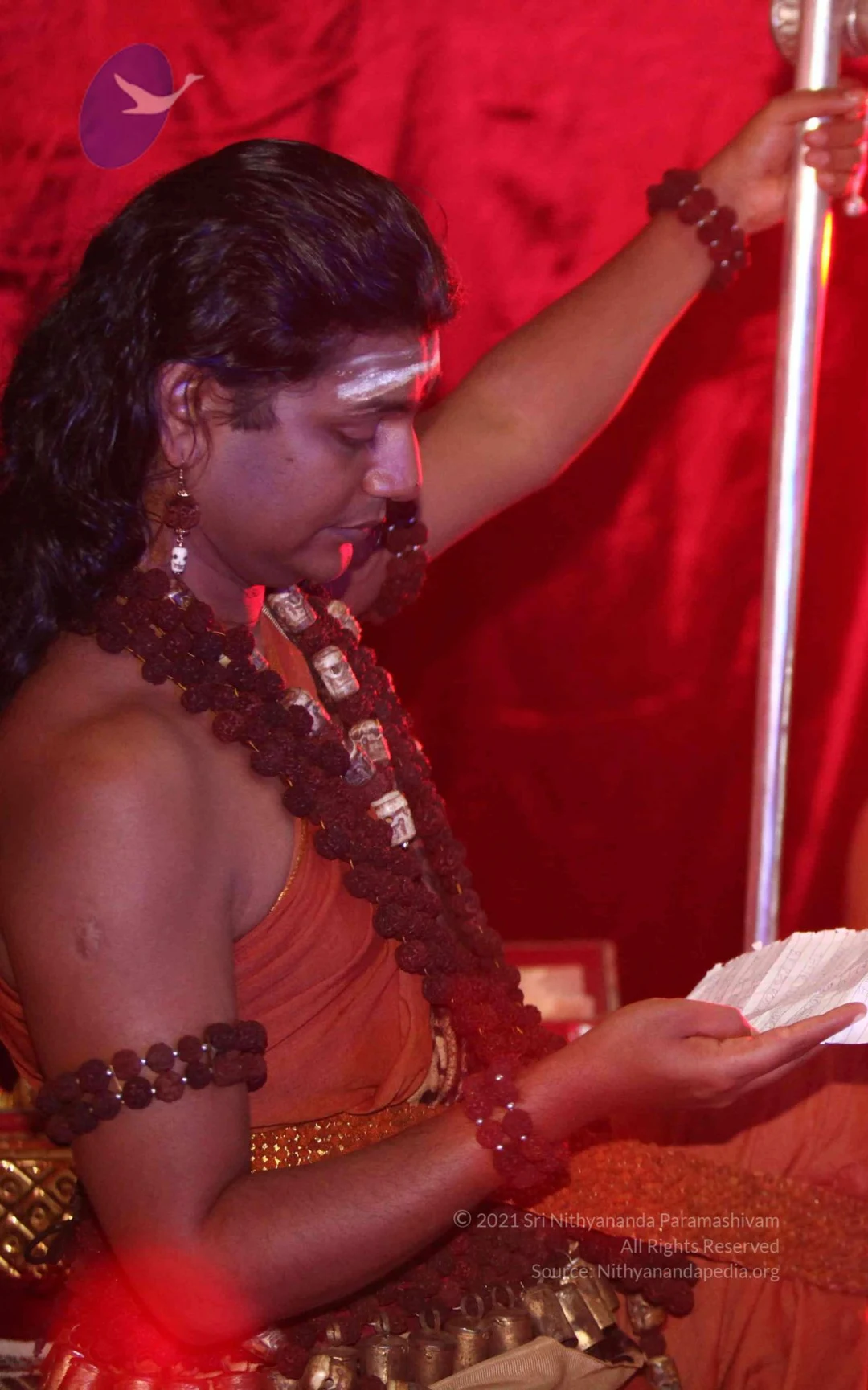
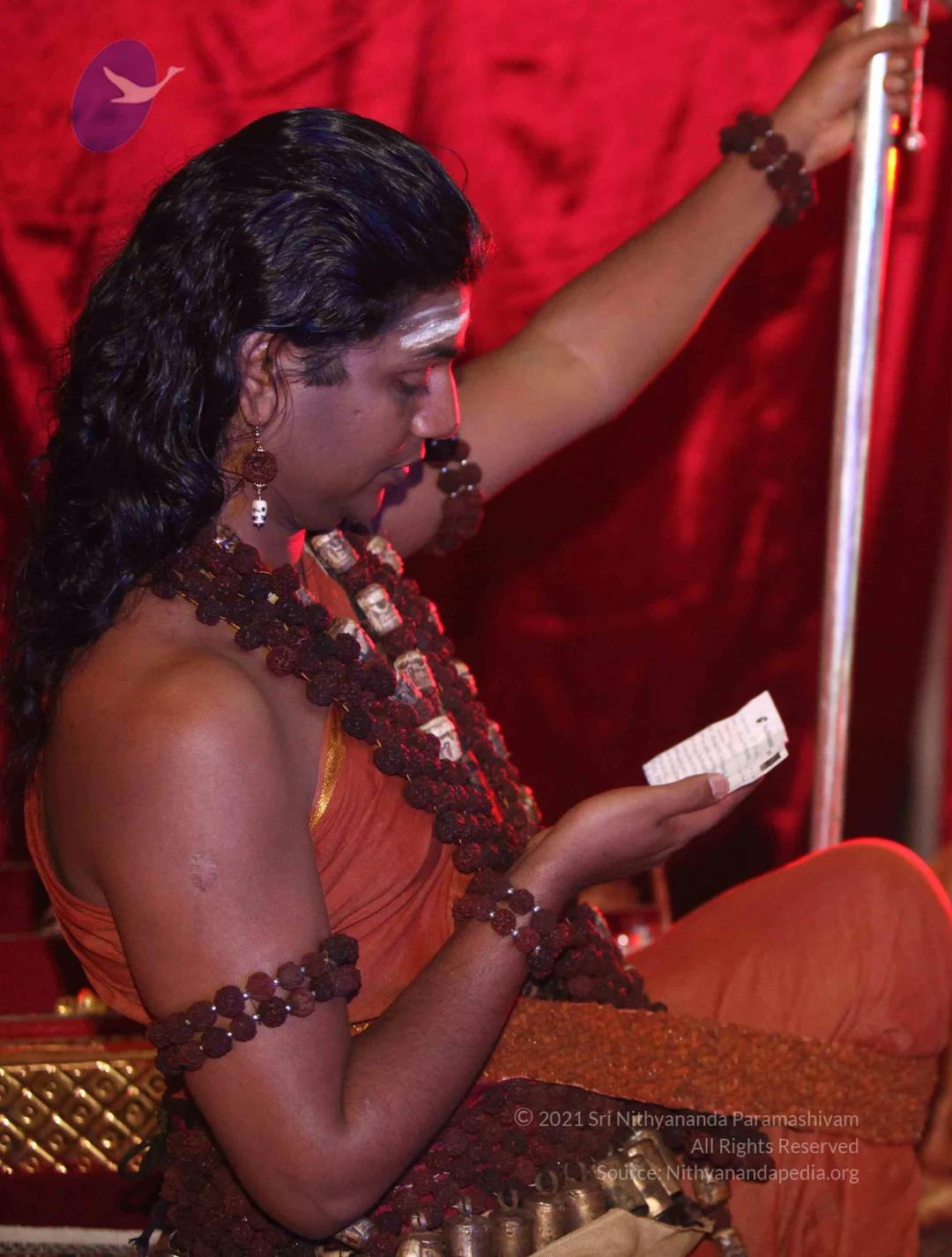
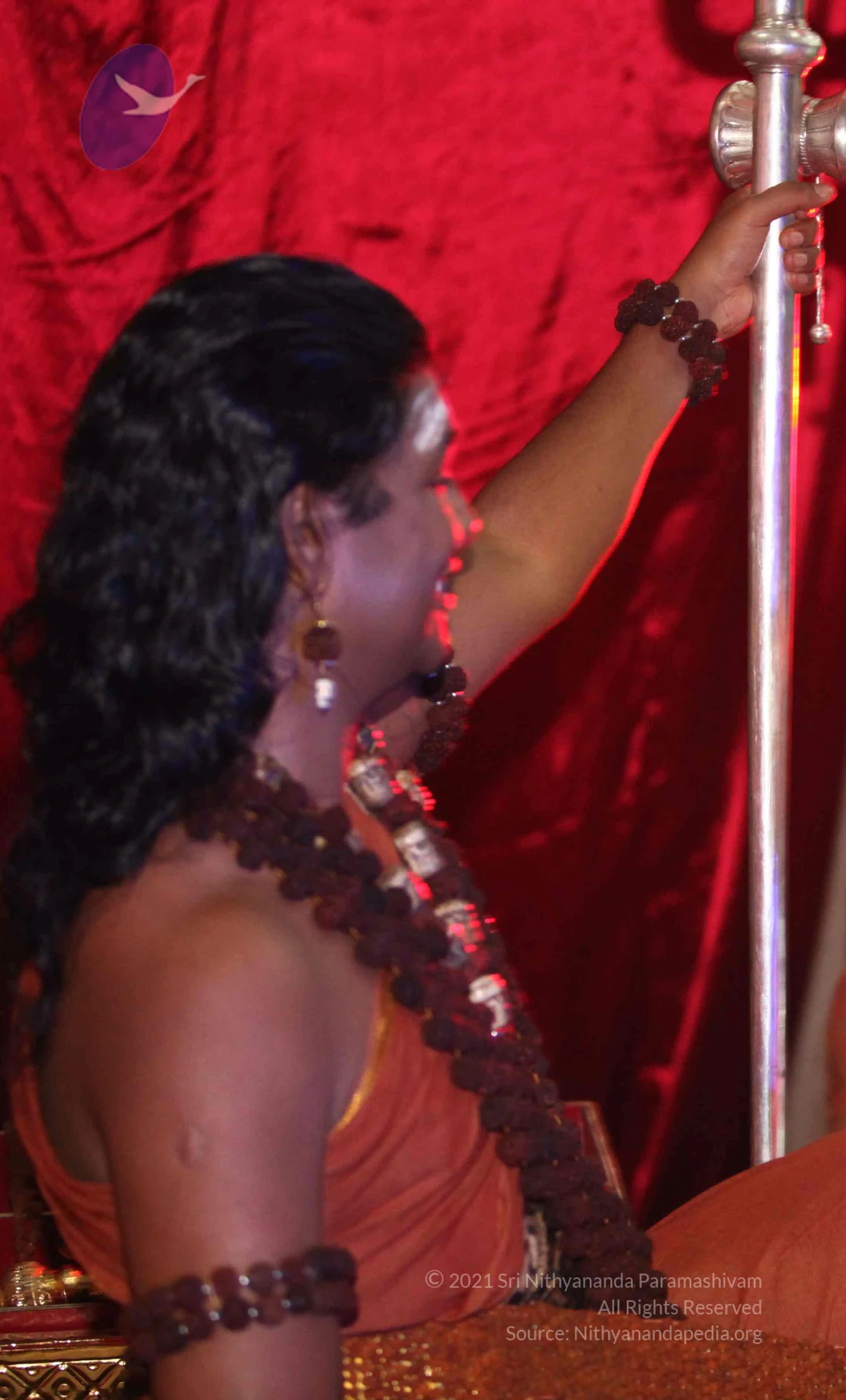
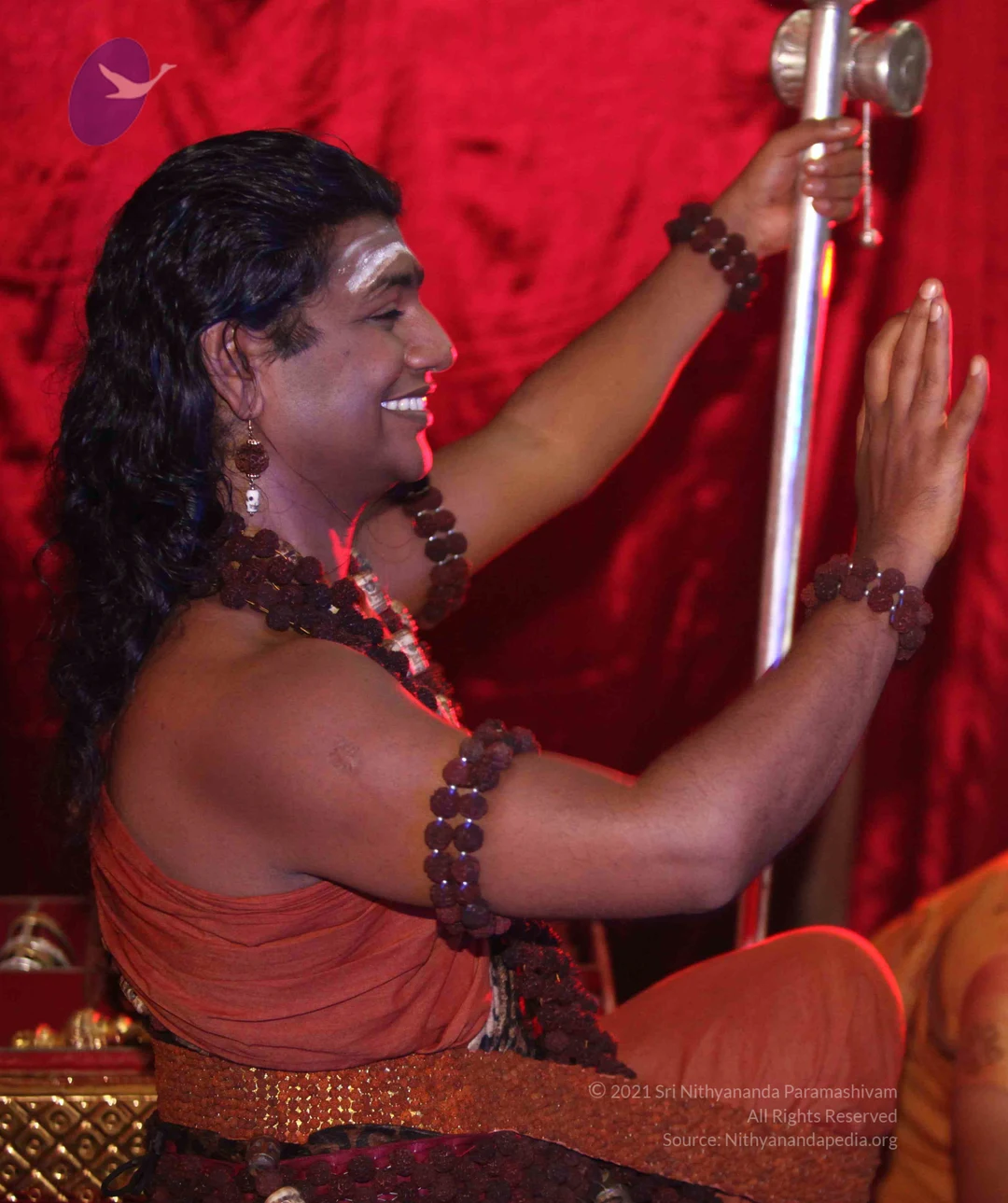
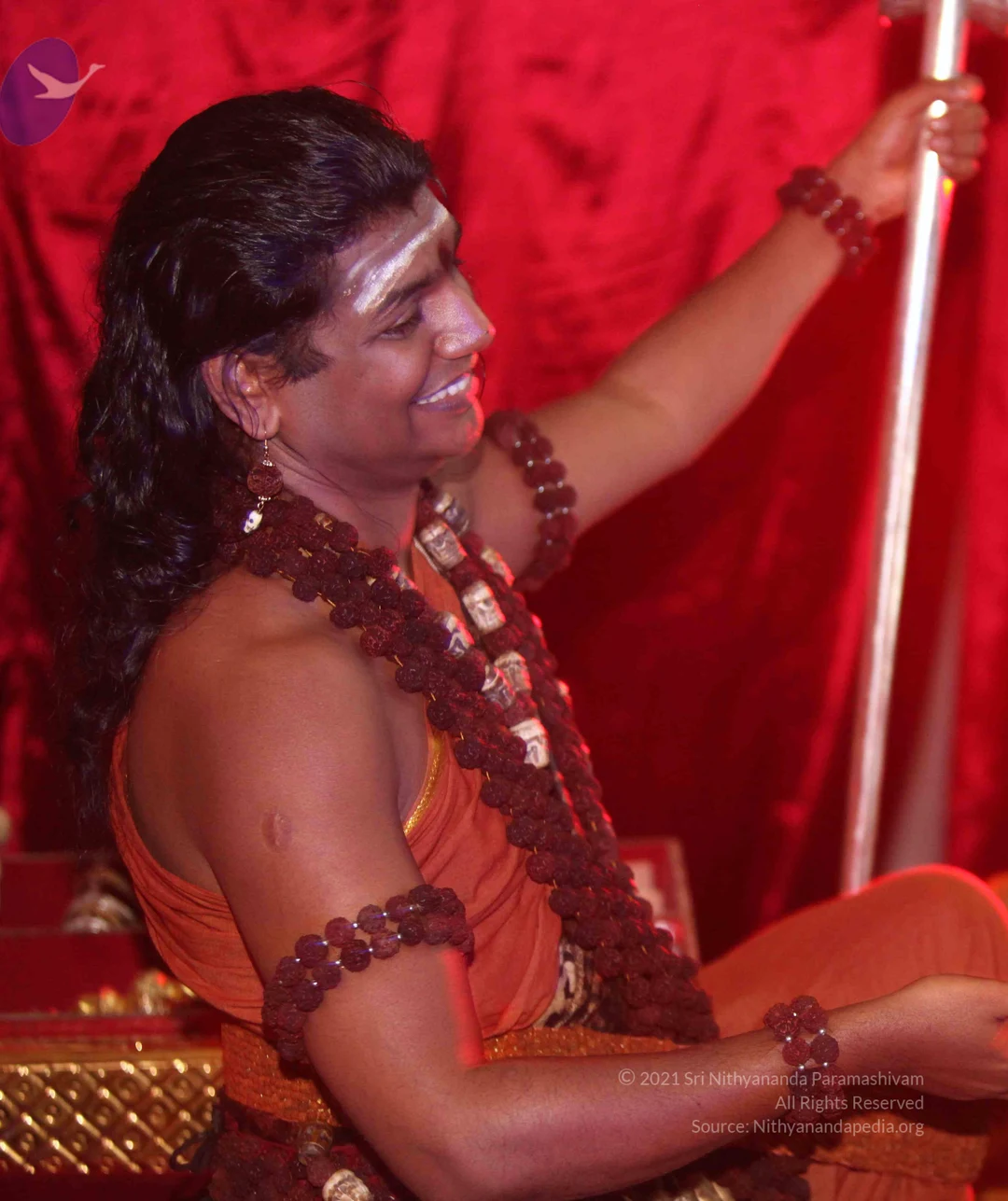
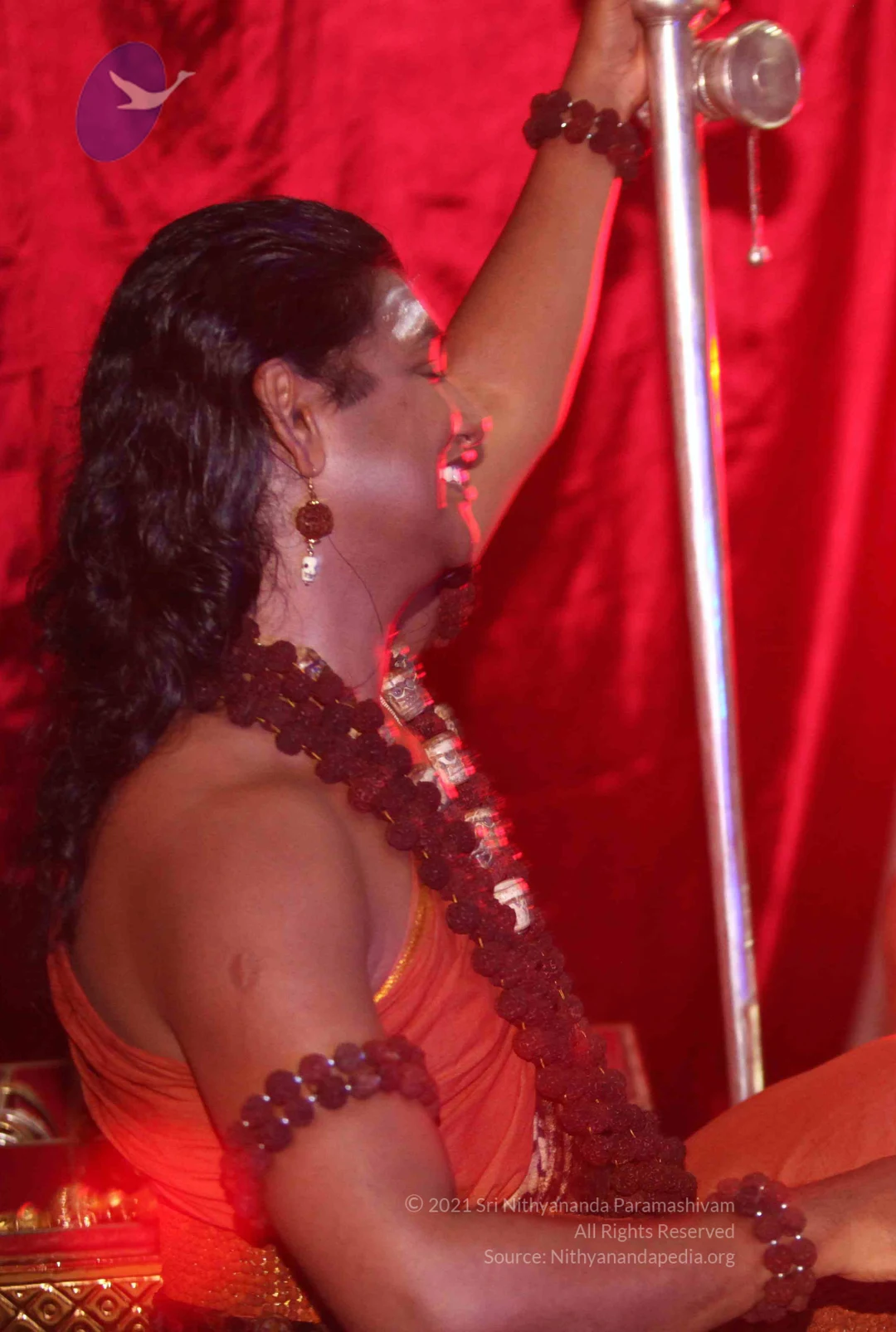
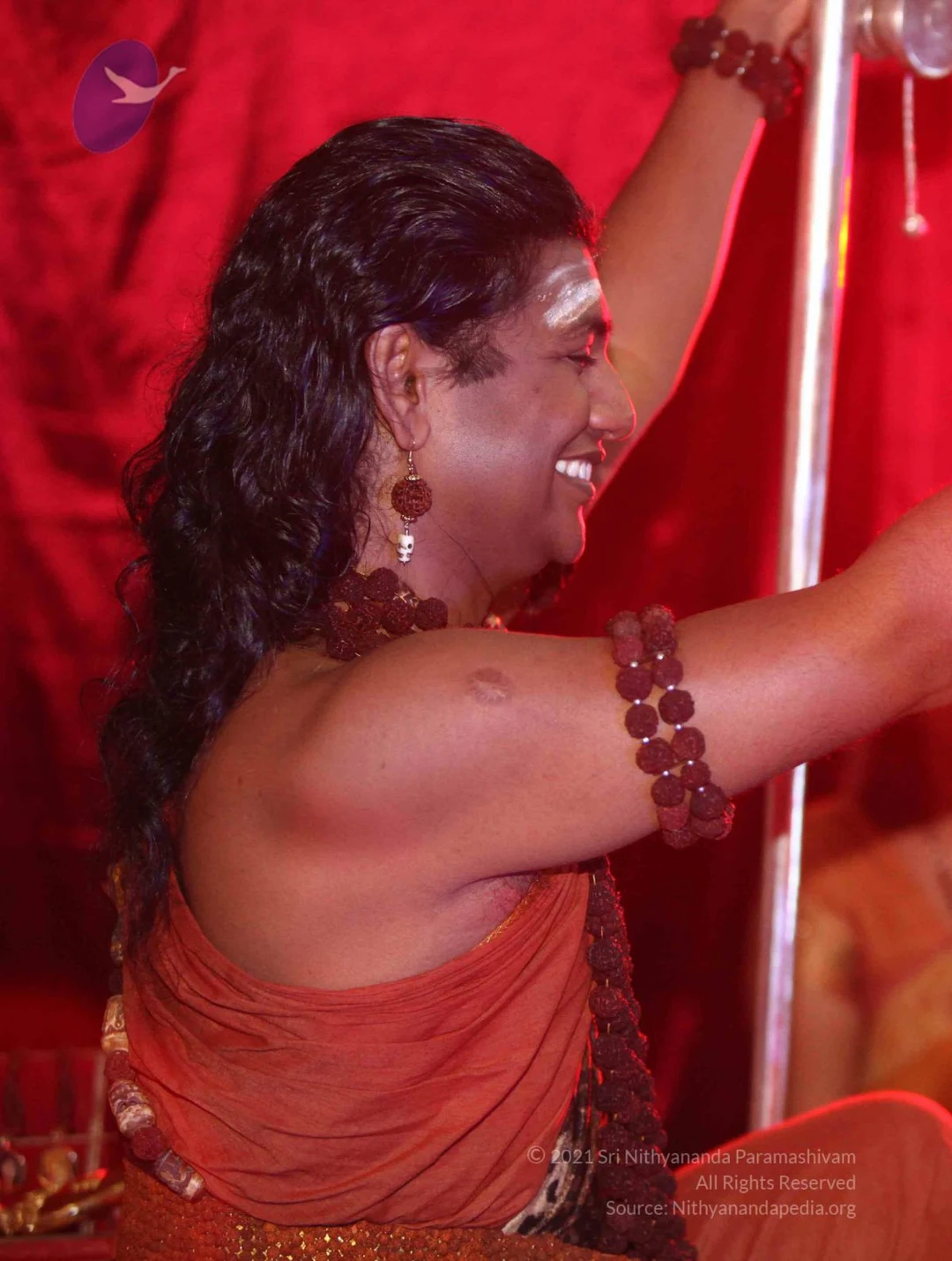
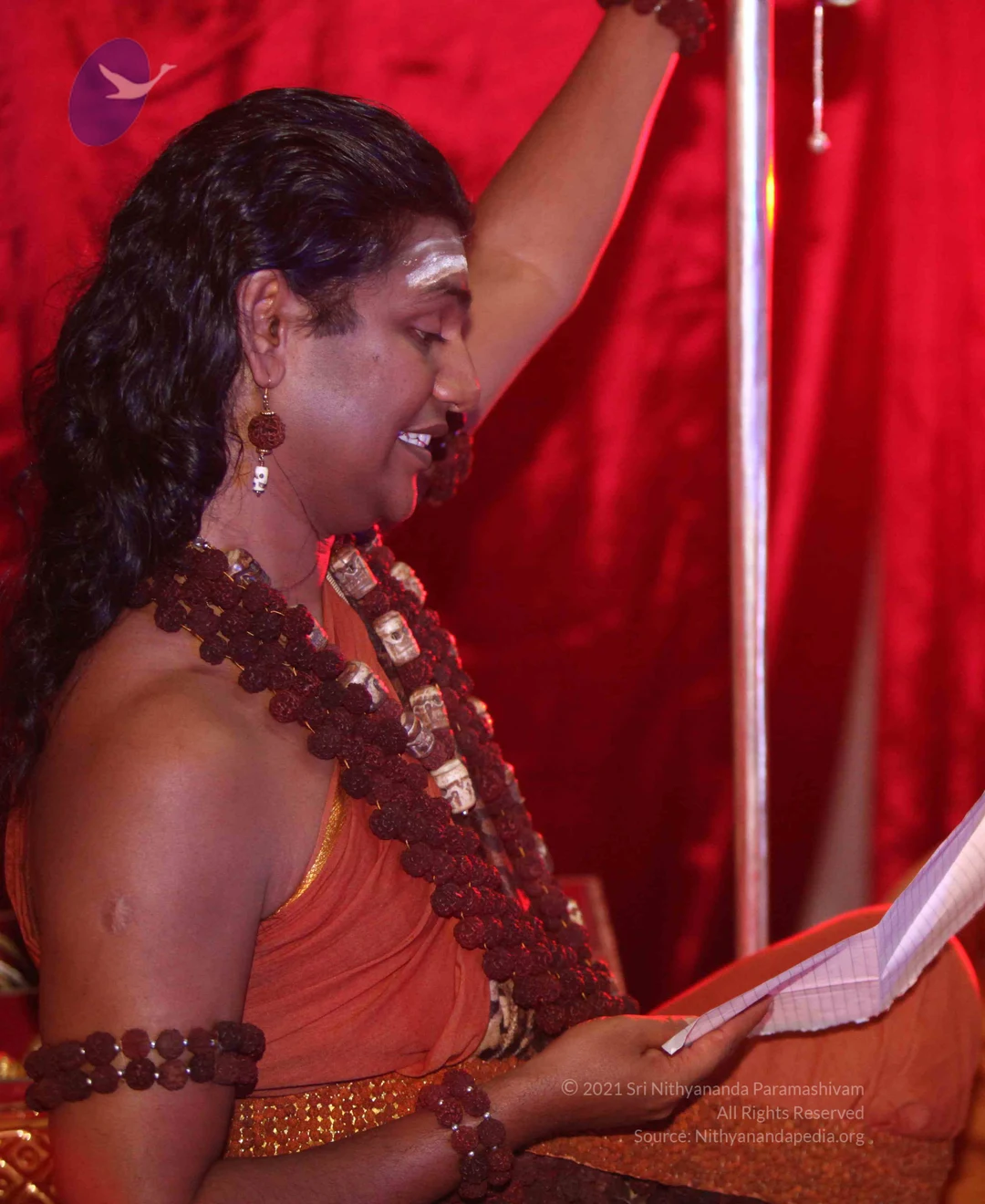
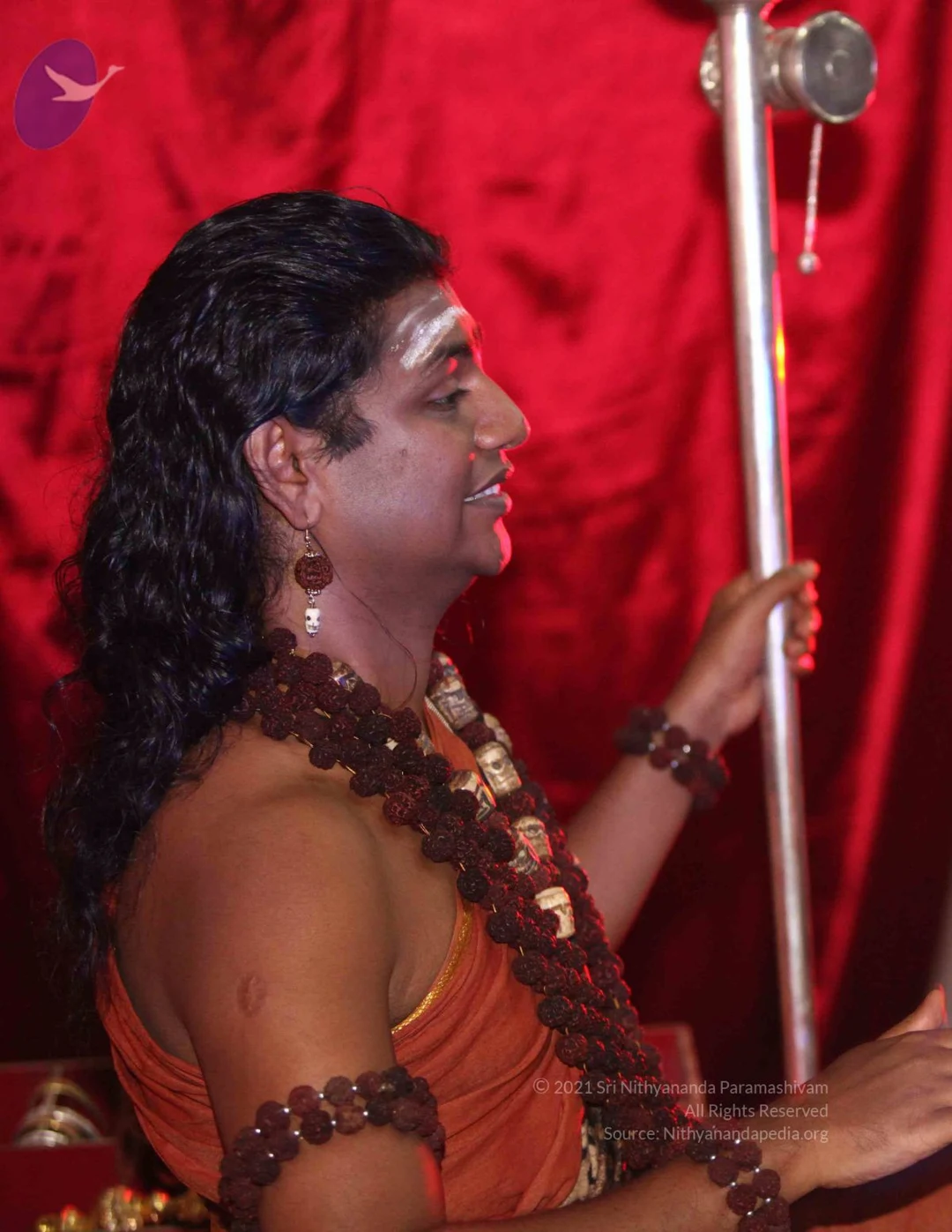
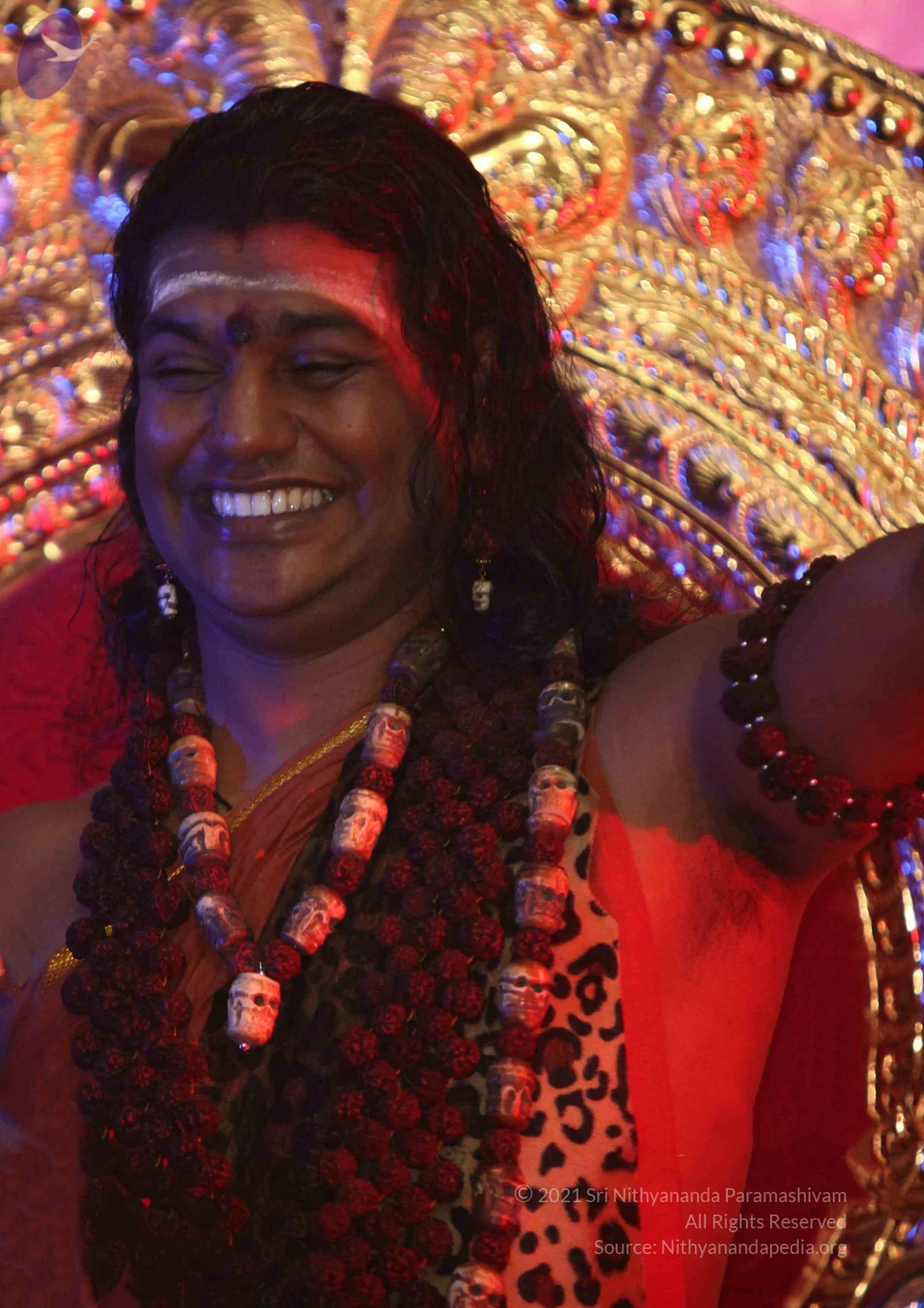
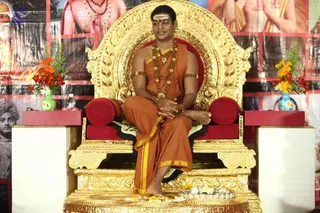
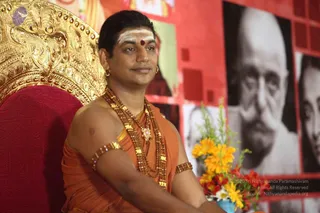
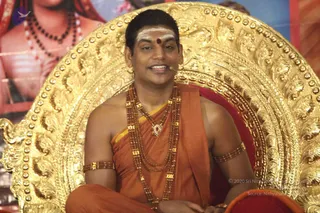
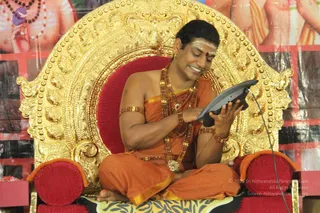
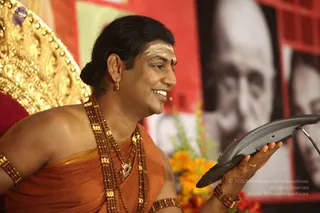
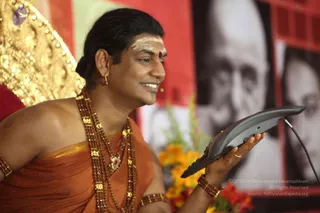
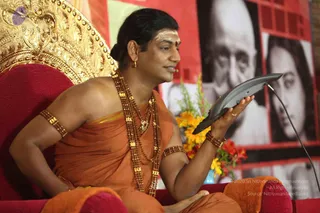
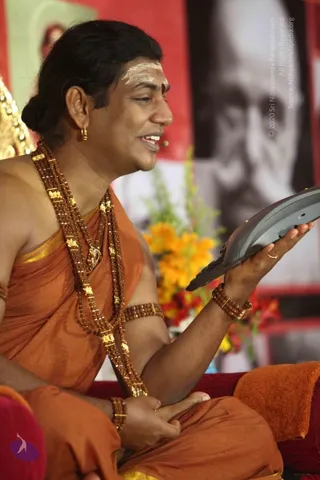
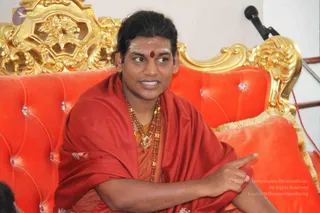
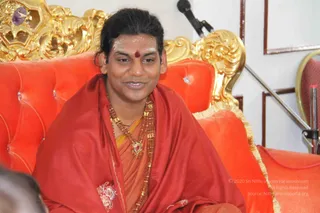
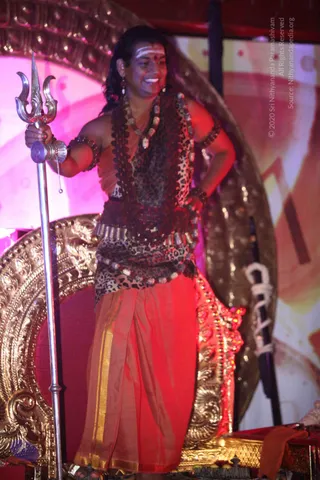
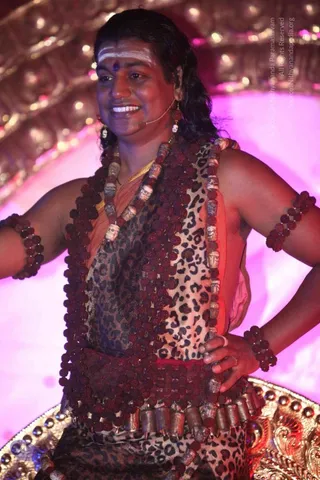
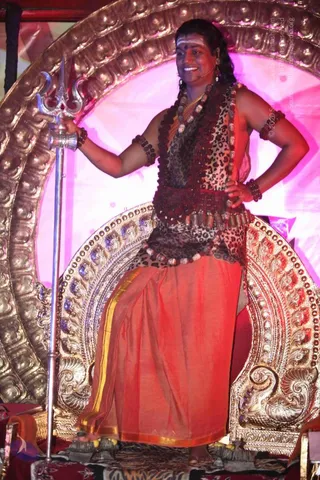
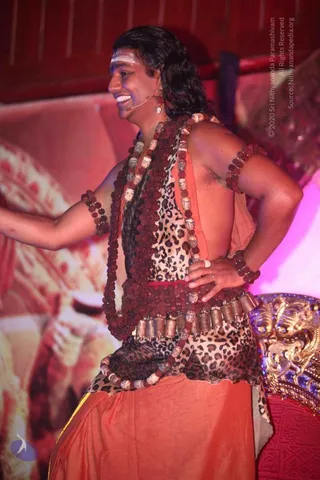
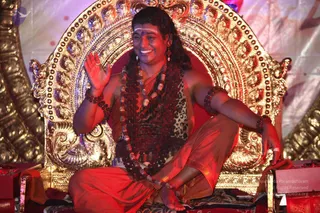
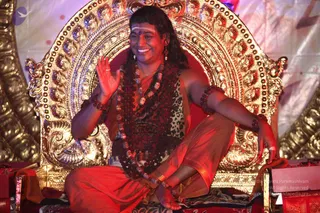
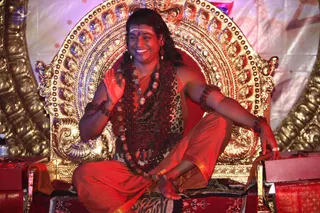
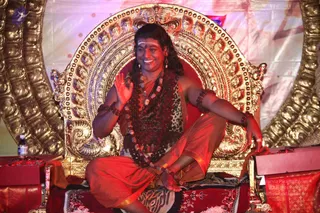
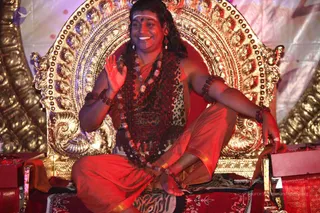
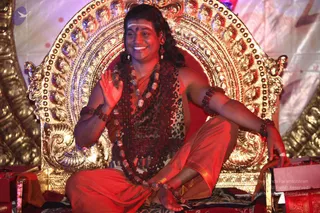
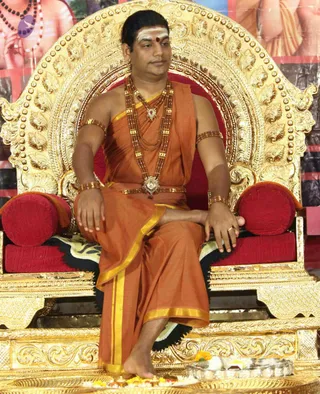
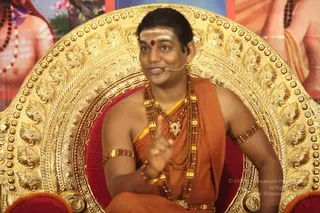
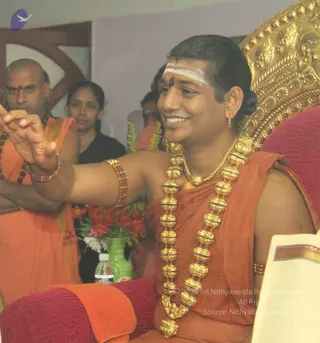
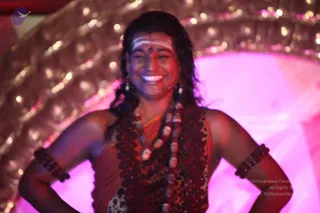
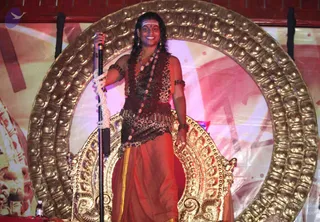
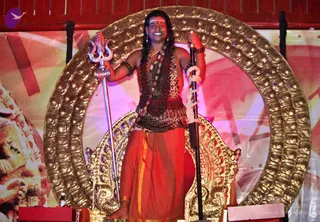
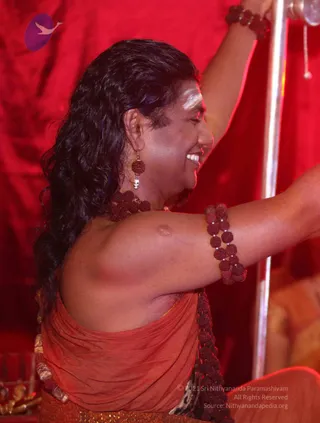
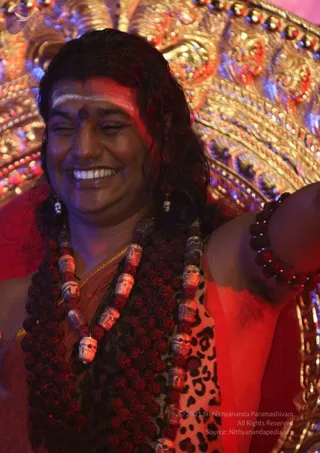
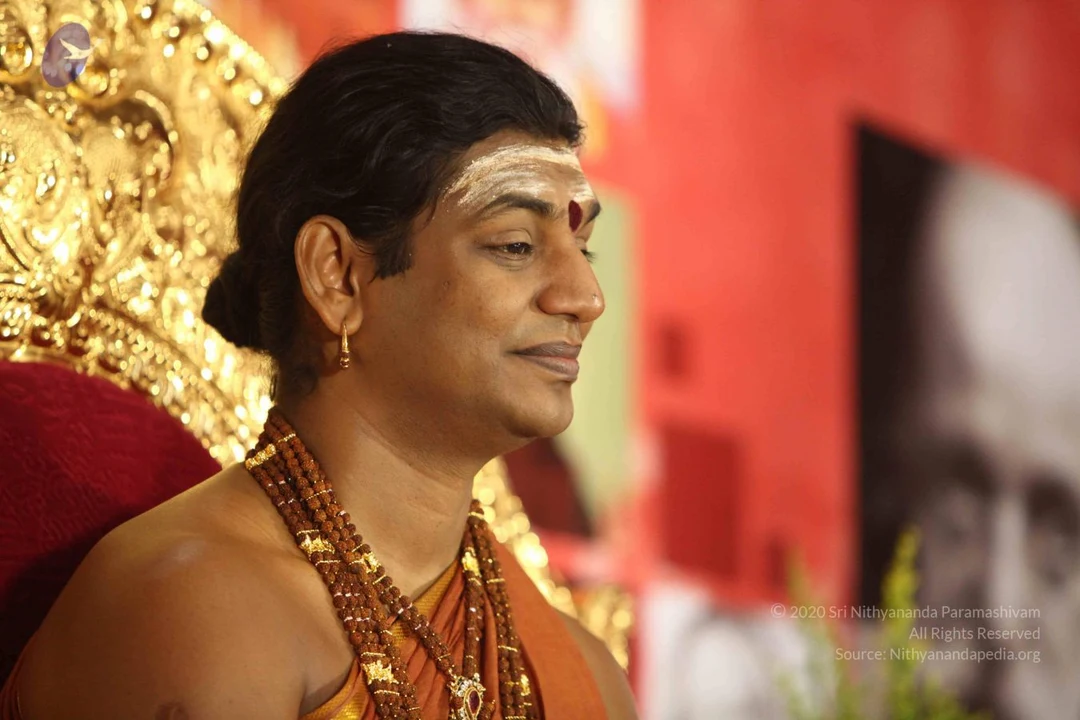
A photograph of a man seated on an ornate gilded throne with a red cushioned seat and carved golden backrest. He wears an orange saffron robe draped over his shoulders, multiple rudraksha and beaded necklaces, a ceremonial gold pendant, gold armlets, and gold earrings. A white sacred ash line and red bindi mark his forehead. Behind him hang a large painted backdrop and framed portraits of bearded saints. Blurred orange and green flowers fill the foreground. a person is the seated figure, based on the orange robes, beaded malas and ceremonial ornaments, with the page noting his presence at the event.A photograph in profile of a person with long, swept-back dark hair, white vertical tilak on the forehead, and a rudraksha mala with carved bead accents draped over an orange-saffron garment. A red earring and a rudraksha bracelet are visible. The person holds a tall silver staff or stand with a small hook, set against a red velvet backdrop.A photograph of a man standing on a tiger-skin-draped platform in front of an ornate gold arched throne-backdrop with red-pink lighting. He wears an orange-red dhoti with gold border, a leopard-print sleeveless top, a dark red beaded shawl, long rudraksha-style bead necklaces and wrist malas, and holds a silver trident in his right hand and a black staff wrapped with white rope in his left. He has long swept-back hair and a tilak on his forehead. A small table with offering trays and a bottle sits at the left edge. a person, matching the page's identification, though appearance cues are used here only as a description.

September 04 2012

Original wiki page
Contents

Title:

Master Heat And Cold

Description:

TALKS FROM MORNING SATSANG ON SEPTEMBER 4 2012 IN KODAIKANAL, INDIA Bhagavad Gita (Song of God) is a timeless treatise on the essence of living enlightenment. The Gita was imparted by the enlightened Hindu incarnation Sri Krishna to the warrior-prince Arjuna over 5000 years ago. Amazingly, the spiritual wisdom and life solutions offered in the Gita are so universal and current that even today it is used as a personal transformation guide. In today’s talk on Bhagavad Gita, chapter 6, verse 7, Paramahamsa Nithyananda (Swamiji) gives us a deep technique for establishing our supremacy of self. Whether we are disturbed by external situations or internal emotions, they can only distract us if we agree to be distracted. When we sit in meditation with awareness and examine the source of the disturbance: how it feels, how it affects us, what is actually happening in our attention, we separate our spiritual consciousness from the experience and it no longer influences us.

Link to Video:

VideoAudio

Transcript:

Master Heat and Cold

Discourse by Paramahamsa Nithyananda

Bhagavad Gita, 6thChapter-Dhyana Yoga, 7thVerse

I welcome you all with my love and blessings. Today, Nirahar Samyama third level is starting. First day! I am also going to do Nirahar Samyama with you guys. I am continuing all my activities and routine. So this batch of Nirahar Samyama, 3rd level, next 11 days I will also be part of you guys. So ‘The Samyama’, 15th day successfully!

In Bhagavad Gita, 6th chapter - Dhyana Yoga, 7th verse:

Jitatmana prashantasya, paramatma samahitaha l

Sheetoshna sukh dukheshu, tatha mana apamanayoho ll

Translation:

The one who has conquered the self, who has attained tranquility, the supreme is already reached, such a person remains in this state in happiness or distress, heat or cold, honor or dishonor.

I will give you the new translation also:

The one who has subdued his self, self made of patterns and is firmly established in the supreme state, remains centered whether in cold or warm atmosphere, whether he is pleasant or unpleasant situation whether he receives respect or is dishonored.

Understand Bhagavan is giving powerful technique. He is using beautiful word, sheetoshna samdukheshu, sheeta, ushna -warm or cold, attacks you from outside skin. Sukha, dukkha atttacks you from inside the skin.

Understand when you are feeling warm or cold, just sit and see what is happening outside your skin all over the body. Without branding, just see what is going on, how I feel. Don’t name it as a cold or warm; pain or suffering. Just look. Something is going on; let me see what happens; how that feeling touches my skin ; after that how the skin is processing that information; and how I am getting agitated or irritated for no reason; how I am responding to it; why should I get agitated or irritated? Let’s see how that nature responds to it. Sit with deep patience. All you guys are now in Kodaikanal. You don’t need to go in search of a place. Sit today in the cold and see what happens in your skin. In one day, you will master cold. Cold will not affect you anymore.

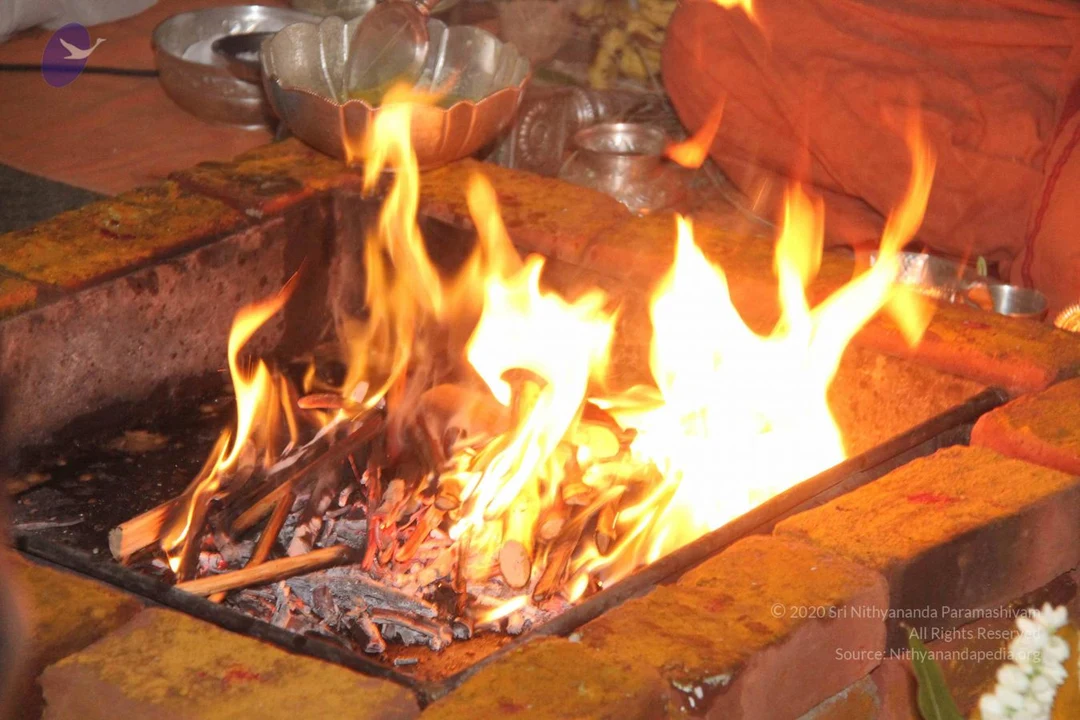
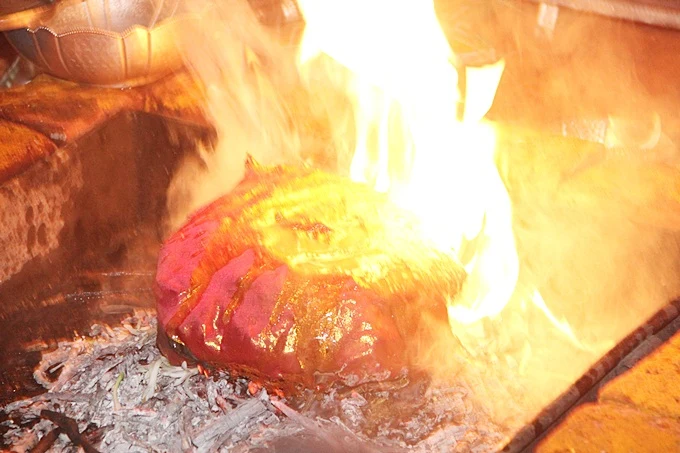
Same way heat, do Pancha Tapas, make a fire circle. It is very easy. Your height should be the diameter of the circle. That is the law. Make the fire circle. You will slowly start feeling the heat and it will increase within half an hour. Then just see what is going on in your skin. In two days you will master. Wow, both will not be painful.

Then come to the next level of experiment. When you are feeling unpleasant just see. Unpleasantness is nothing but cold or warm which is working from inside the skin. If you look near the chest area it starts from inside the skin, the skin is being attacked. Warm and cold, heat and cold attacks you from outside the skin, unpleasantness and pleasantness attacks you from inside the skin. Sit with that. You don’t need to find the situation. Already you have enough unpleasantness! Just sit with that unpleasantness. How it is attacking you from inside skin? What exactly you are feeling without looking, just see. In two days you will realize there is no such thing as unpleasantness other than your own decision to be in unpleasantness. Same way pleasantness, when you are in joy, happy, just sit and watch, what is this, what is this pleasantness, why it feels so expanded inside? Feel from your skin, inside the skin. You will master that state also.

So pleasant or unpleasant attacks you from inside the skin; heat or cold attacks you from outside skin. But both heat or cold; pleasantness or unpleasantness; all 4 has no life independently from your will. Understanding this is being centered on the Supreme state. Please understand, your will gets contaminated when it connects itself with these 4. Fortunately these 4 have no independent existence if your will does not support it. Man who has realized it by experimenting with it is established in Supreme state. He is called Paramatma Samahita - equivalent to the Supreme consciousness.

Such a simple, straightforward thing, I tell you! Just try today. Once you realize; even the first thing, see, today you try with cold, the moment you realize the cold is not giving you any more suffering, you will have confidence to work with heat. Then work with heat, Do Pancha Tapas, may be 1 hour. One hour is more than enough, 2 days! If it is not happening in two session, just do two to three days, that’s all! You will have confidence now. Wow! We won the second game. Then go for the third. Sit with the unpleasantness. Don’t change the sequence. Cold is too gross, easy. Once you win there you will have confidence to do next, little subtle, the heat! Then you will have confidence next with the unpleasantness, then you will have confidence to do with the pleasantness. Once you master that, all these 4 have no independent life over you other than your will’s support.

See, when you sit and start analyzing, you will understand it suddenly disappears. Because the moment you analyze, your will stops supporting this aspect of life. You support the cold and cold related diseases in confusion. You support heat and heat related diseases in confusion. You support unplesantness and unplesantness related diseases in confusion. You support pleasantness and pleasantness related activities in confusion. So when you sit and see what is really happening with passiveness and patience, suddenly you realize without your will, all 4 do not have independent life!

Shadow does not have independent life without the existence of light and object. It is the mixture of light and object that creates shadow. The sufferings of cold, heat; sufferings of pleasantness, unpleasantness; everything happens by the mixture of your will and confusion. If the light is switched off no shadow! If the object is removed no shadow! If the confusion is removed or the will is removed there is no agitation or disturbance by cold, warm, pleasant, unpleasantness.

I tell you, man is a fool, asking for cold when it is hot, asking for hot when it is cold. Always asking what is not! Try these 4 processes. Such a simple way you can be centered on what Bhagavan calls paramatma samahita, centered on pure unclutching!

See this is what is the purpose of mystery school. Mystery school is the place where all these mystery dimensions are revealed. I tell you guys, I tell all our devotees, all our disciples especially who feel part of the sangha. You see, 10 years before we were not responsible because we did not have wealth. In past 10 years devotees have poured so much of money on us, now we have wealth, we have infrastructure, now we are responsible for making all these Samyamas, Spiritual Truths available to the world. If you are wearing mala and bracelet, you are responsible for making all this knowledge available to the world. We are responsible for making Krishna alive, we are responsible for making Gyana Sambandhar alive, we are responsible for making Shankara alive, because we have properties given to us by devotees all over the world.

The head of the each center, ashram should study today my discourse thoroughly. You yourself should practice. You see it is not a big thing! To practice on the cold, have air cooler on high speed or sit near AC. Try. And same way on the heat, next day try sitting with the heater. And the third day, try on the unpleasantness. Fourth day try on the pleasantness. You will find how powerfully it works! Once you master all these four, the confidence you feel, the courage you feel and the centeredness you feel – the paramatma samahita-you feel and the joy with courage you have to face the life!

You should get it first on you, then start sharing with people, whoever comes. Make every week some program, this kind of programs. See, all programs do not need to be continuously designed by me. I am giving you these truths. Each one of you can pick up. If you become charismatic and you have some experience, you do this for 4 days, then you will have strength. You will say yes! Whatever Swamiji said - shastra pramana is now my atma pramana. See when Krishna tells this Truth, this is shastra pramana. When I am repeating it from my own experience, it is apta pramana. When you experiment and see, it becomes atma pramana.

When you have the atma pramana, naturally you can talk to people, you can tell, hey, I found a method where I am not affected by pleasantness and unpleasantness in my life; cold or heat in my life. I can teach you that. Come on, 4 days only, two hours a day, come in the evening, learn this and go. And there is no risk in this. If you sit with the heater or AC, even the risk of Pancha Tapas is not there. I told Pancha Tapas because that’s the way I was brought up. You guys don’t even need to bother about the Pancha Tapas, fire! Even in fire you may say no, there is a risk! What risk is there? Anyhow, these fellows, everything is a risk!

If your time is not right, even by drinking milk you will die; if your time is right even with poison you will live, if you drink, you will vomit it; even your attempt to commit suicide, you will not be successful.

Anyhow, with the heater or AC, you can control heat or cold. What’s the risk? And pleasantness and unpleasantness, try! I tell you this can get people out of all mental disorders and psychological disorders. I have done this. That is why I am telling you. I have done this during my Tapas time, my Tapas period.

I will go and sit on the hill during the day time in the sun just with one towel on the hip, work on the heat, how the heat does not touch me! Then in the night I will sit on the hill itself. It will be very cold, and see how the cold does not work on the system.

Then I will fight with Raghupati Yogi. That will be the only thing which will be unpleasant for me. See my whole life only relationships I know is with Raghupati Yogi and Kuppamal, few saints and sadhus. Never, never even once I felt psychologically connected to the blood family. So if I have to have some unpleasant moments, I will go fight with him, some ideological fight! Raghupati Yogi is Yogi, Kuppamal is Vedantee! Between these two there will be a huge fight, ideological fight! Here body first, here mind first! And if I wanted to create fight with Raghupati Yogi, I will take up all the arguments of Kuppamal; if I wanted to fight with Kuppamal, I will take all arguments of Raghupati Yogi. But I tell you guys these two have made me so rich in the spiritual knowledge, God! The wealth they added to me!

And same way when I want to experience pleasantness I will take Sri Ramakrishna’s photo and keep it in front of me and fan him and there is beautiful, very sweet story of Ramakrishna sung by one devotee. It’s called “Sri Sri Ramakrishna punkti. And in English it is called, the book has been translated “The portrait of Sri Ramakrishna”. That’s very beautiful book. It is not factual. See the Ramakrishna’s biography, he wrote it more poetically. He does not bother much about facts. He has not changed the facts. He is not telling lies; but he is singing in a very beautiful sweet way that “Oh, who came as Rama and Krishna, you came as Ramakrishna, but this time you did not steel and do all these naughty things of Krishna; but you are not so polite like Rama also!” So from the beginning with that feeling that Ramakrishna is an incarnation, the devotee has sang about Sri Ramakrishna. It’s a very beautiful book! Still I can repeat it, it is I think 1000 page book in Bengali, Bengali verse form. I can repeat the whole thing by heart. ”Jai Jai Ramakrishna vanje Kalpataru, Jai Jai Bhagavan Jagater Guru, Jai Jai Ramakrishna Ishta goshti Fa, Jai Jai” it goes ( ?) I just have the book, I can repeat the whole 1000 page, it can even continue now, it goes on and on and on. It’s a very beautiful very juicy, sweet, loving way of Sri Ramakrishna’s biography described.

That’s one of the best things with which I experienced highest pleasantness. I will have a small Simhasana and Ramakrishna’s photo and a small fan; fanning him I will sit and sing this whole verses; and I will have this book in the hand; whole day I will be sitting; there is a tune to chant that; I will sit and chant. One great elderly sadhu in Ramakrishna mission, his name is Gandhanandaji. I have seen him sitting and singing these verses with tears in joy! I picked up this habit from him only. I will sit every day with him. He suffered with a little deafness. So I served him, taking him to the doctor, taking care of him when he was old. He was sadhu from Andhra, very sweet sadhu. So he used to sit and chant this. I picked up this habit from him. I will listen to him very attentively and actually I learned Bengali reading. So if I chant that book one day, it will take full day to chant thousand page, at least for next 2 months I will feel I am in heaven, whole body will be sweet and pleasant and the whole throat will be filled with sweetness because his whole biography is created, is chanted, sung with so much of love, without being much bothered about the facts. It’s a purana of Sri Ramakrishna.

So this sadhu Gandhananda Swami, he was about to die. That’s a tradition when you are about to die you have to give whole, whatever you have to the person who has served you. It’s a tradition. So this sadhu suddenly said, “I am going to die tomorrow, Guru Maharaj has appeared, what will I give you?” I said “You don’t need to give me anything, you are a sadhu, that’s enough!” He blessed me. Then he said “I accumulated one thing in my life, the biggest wealth I accumulated is whenever I read this Sri Sri Ramakrishna punkti. I go into samadhi and ecstacy. I will give you this Bhava Samadhi as my gift”. He gave me. And I tell you, after that whenever I read that book, God! And the sweetness, it’s as if his 60-70 years of Tapas has entered into me. If you read some book 60-70 years and be in the ecstacy, that whole Bhava, that depth of the Bhava, that whole depth of emotion has entered into my system. I could feel that same emotion just by his Blessing! He said “I give you this gift of Bhava Samadhi. You take it because now it won’t be any more useful for me”. See once you leave the body, even your Bhava Samadhi won’t stay with you, only the Nirvikalpa Samadhi will stay with you. Less than Nirvikalpa Samadhi, anything you accumulated is not useful anymore for you. The English spelling is ‘Punkti’. In English the book is translated as “A Portrait of Sri Ramakrishna”. May be one day I will sit and chant for you guys. It’s my personal spiritual practice which I did for quite a long time.

Some of my personal spiritual practices I never shared with you guys. This Ramakrishna Punkti, the same way Chandi, Chandi is the Devi Mahatmyam! I am a great Shakta. So I will sit and chant Chandi, Devi Mahatmyam is 700 shlokas and Lalitasahasranama and Trisari, there are some 6-7 books related to Chandi; Devi Upanishad, and all that put together. That will take one day, full one day if you chant, that I will chant with this bell, same book in Bengali. This all used to be my entertainment!

Anyhow whether it is heat or cold; pleasantness or unpleasantness, work with it. I tell you even this pleasantness is not ultimate, understand that. What I received from that Swami Gandhanandaji is not ultimate. He himself can’t take it when he is dying! That is why he gave it to me. Only Unclutching, Nirvikalpa Samadhi will come with you eternally. But unfortunately when you are training yourself, when you are practicing, you can’t be all that time in the Nirvikalpa samadhi, Unclutching. So all this Bhava Samadhi helps you to raise to that level. Be in Nirvikalpa Samadhi or be in Bhava Samadhi with the person who is in Nirvikalpa Samadhi, that’s all! Be unclutched or be clutched to a person who is in unclutching state, that’s all! Being Unclutched is Nirvikalpa Samadhi; if you are clutched to a person, being, who is Unclutched, is Bhava Samadhi. In the beginning Bhava Samadhi helps.

Now I can remember all the verses. It is coming up! Yes same book ‘Sri Sri Ramakrishna Punkti’. You guys can see this is exact book. Just see if it is in Bengali download, I will read. If you have interest and intensity, you will find time for everything. I have all these four.

First I want all our center heads, you guys try. Of course I am not telling devotees to try, all of you try. Mainly the center heads, when you try, you will have confidence and make a beautiful program and start teaching. Everyone can start doing this. For these things you don’t need very organized setup. Start reaching out even in these small, small ways, helping people. I really wanted - this kind of hundreds of Samyamas should be developed and made available from our campus. It should be a pilgrimage center for the people who want to study Mysticism.

You don’t know, just these 4 days, trying this 4 steps, working with cold, working with heat, working with unpleasantness, working with pleasantness, you will suddenly find a powerful key, tool to live your life, crossing thousands of disturbances! Human beings can live a rich life if this kind of tools are accumulated. Just this one tool I tell you, how rich it can make you! Richness is always depending on the zeros, it is not always based on the zeros. It is based on your ability to face life! Richness cannot be always measured based on comforts of life. It is measured based on the ability to confront the life. It is not just comfort, it is ability to confront also. These all the tools with which you will be able to confront the life. I know many guys sitting on millions of Dollars. Even a small, very small, they are shaken completely! Ability to confront life, live the life!

I tell you guys, all our devotees should have mastered at least like this 5-6 Samyamas, different, different, different 5-6 Samyamas! That makes you man! That makes you ‘Being’! Mastering at least few Samyamas gives you the courage to live, confidence to live, courage which comes by inner richness is confidence; courage which you get from outer richness is egoistic pride. Which comes from outer richness can be taken away from you any moment! Which comes from inner richness, nobody can touch it!

I tell you really wanted this Ananda Yogam, my purpose of creating this Ananda yogam or this, even Bidadi Adheenam is to create a place where thousands gather and experiment this kind of Samyamas and courage to live and go back! I really wanted, this my vision, why I wanted all these, so many Temples and Adheenams all around the world, all you guys should pick up all these Samyamas,, you practice and make a clear instruction, make it available, people come there and practice, go with tremendous confidence to live.

I tell you, I have mastered this Samyama. That is why neither the disrespect nor the dishonor ever touched me! Otherwise I tell you, really, anybody else who has been abused so much, they would have become mad; they would have become mad! They would not feel like showing their face outside; shame and guilt, with that they would have died; they would have started believing that what others are saying may be true. I tell you, when so many millions tell, when so many people abuse you, you yourself slowly start getting believed. What about others, even you start believing. If you are established in a state of Leader, even if somebody tries to remove the status, even that effort makes you really as a greater Leader. It only adds more and more glory to you. I tell you, one of the main reasons for my success standing throughout this scandals and rumors, is this Samyama, this Samyama which I did from the young age working with the heat and cold ; and unpleasantness and pleasantness.

I tell you, heat and cold hits you from outside the skin and pleasantness, unpleasantness hits you from inside the skin. But all 4 of them do not have life without your will supporting them.

This is the essence:

The one who has subdued his self, self, made of patterns and is firmly established in the supreme state, remains composed whether in a cold or warm atmosphere, whether he is with pain, pleasant or unpleasant situation whether he receives respect or dishonor, tatha mana apamanayoho. See when you master the sheeta,ushna; sukha, dukkha, the mana apamana does not touch you. You master it!

I tell you, not for pride, I am the living example that mana apamana did not touch! Otherwise one side millions put flower garlands and worshipped; the other side rowdies put chappal garlands and burned effigies. With both the inner space is not even disturbed one inch. When somebody puts a flower garland and worships, that part blesses him “whatever you want, let it be fulfilled, blessings!” The other fellows when they try to put chappal garlands and burn effigy, they think of me as a Demon, so, ”Let the effects of whatever Demon does to you guys, let it happen!” That’s all! When you see as God, whatever God does to you, let it happen to you! When you see as Demon, whatever Demon does to you, let it happen to you! My inner space is untouched!

Mahabharata Shanti Parva gives a beautiful shloka. I wanted to give this as a reference:

atma kshetragnyiti , muktaha samyuktaha, prakritair gunaihi l

The Supreme Self is not different than the self in the body. When the self is bound by the modes of Prakriti or Nature it is called kshetragnya; when it is free from them the same self is called Supreme self. If you have not worked with heat, cold; and pleasantness, unpleasantness, you are ordinary Human self. If you work with heat, cold; pleasantness and unpleasantness and liberate yourself, you are called Paramatma. That’s all!

I really wanted each Head of our centers, each one of you guys or each devotee, each disciple, work on one line; pick up some one subject. I am like a Ocean. Collect all the pearls I have on that subject.

For example one can decide to work on Death. Collect all the pearls I uttered related to Death and master the concept of Death. Just go on conducting the classes only on Death. Learn to die when time comes. Learn to leave the body when time comes. Make courses, programs, classes by collecting all the things I have spoken about Death. Now after all it is easy for you because already the 2012 Team has collected all the pearls from my different discourses on subject and placed it.

Someone can decide to work only on this Heat, Cold and Pleasantness, unpleasantness. Make this as a program, start teaching.

One can work only on Ajapa Japa. I tell you if you master Ajapa Japa, the moment you sit, your body will just vibrate and if you keep any musical instrument near your body, automatically the musical instrument will play the note of your Mantra. It will clearly play the note: Aum Namaha Shivaya! If you become master of Ajapa Japa, if you are doing Ajapa Japa, anybody comes around you, their Kundalini will be awakened! That’s what is happening. See the Mantra which I did as Ajapa Japa at young age, Namaha Shivaya! I am not doing any magic! Aum Namaha Shivaya! Aum Namaha Shivaya! Actually whole day we don’t need any Meditation, Satsang, nothing! I can go on be chanting Namaha Shivaya! And you can go on be sitting next to me completely entertained and engaged. Neither I need any other entertainment nor do you need any other entertainment. Means that Mantra has become Ajapa Japa! So pick up some one Mantra. Work only on Ajapa Japa, extreme! And anybody comes to you for healing or any counseling, just sit next to them and do Ajapa Japa, you will see that their Kundalini has awakened!

Master some one subject. I wanted all our disciples to be master some one thing! So whoever comes to you, give them that gift. Each one of you become the Masters! If you feel I am an Incarnation, if you want to tell that to the world, just singing “Oh, he is an Incarnation, he is an Incarnation” is not going to work! That’s like “Baa Baa black sheep” No! It’s not going to work. You become a master. Then if you tell I am an Incarnation, it is right! If you become a Healer and you say my Swamiji is a enlightened being, that’s okay. Only when you become a master and tell my Swami is an Incarnation, it’s right! Otherwise having a small thatched hut and calling it as a Taj , Hilton(?), hotel Le Meridian? No! I am an Incarnation only if I create thousands of masters!

Each one of these great Truths, create! I wanted each one of your hearts to become a Mystery school; your houses to become my extended campuses. Anybody who has at least mastered these 3-4 Samyamas and able to teach this to people, you naturally become a Master! And the place you are living, just adopt 2-3 things, like whoever comes, share food. Then your kitchen becomes extension of my kitchen. Have the ambience where people can come and practice these Meditations and go, at least one room. Then that becomes extension of my Ananda Sabha. Then naturally your house becomes the extension of my campus, extended campus! This is what I really wanted –Nithyananda Dhyanapeetam extended campus.

I tell you, if you mastered Ajapa Japa, you don’t even have to tell that person to meditate in front of you. Just do Ajapa Japa, you will see that fellow is jumping, his Kundalini is awakened. “Oh God, he is doing something!” Because the power of Ajapa Japa makes your whole breathing space vibrate. The space where you are sitting, the whole place will be vibrating! And anybody comes into your space, vibrates with that Mantra.

And I want all you guys to become Yogis. I tell you, if you want to spread Vedic Tradition, Vedic culture, make your heart as a Temple, make the place you are living as a Mystery school, let your kitchen be our Anna Mandir, let your living room be the extension of our Ananda Sabha, Let you be the extension of me! There are so many people who have all these facilities, all our Temples, Adheenams, you guys have all these facilities. When you have a clear idea and definite instruction, if you have little confusion how to give instructions and all, you can send an email and we can clarify those doubts. Start doing it and sharing it with the world, that’s all!

Jitatmana prashantasya, paramatma samahitaha l

Shitoshna sukh dukheshu, tatha mana apamanayoho ll

I will continue on this verse tomorrow.

Photos From The Day:
Sakshi Pramana:

Sharing from Nirahara Samyama

Tags:

Bhagavad Gita, living enlightenment, Hindu, Krishna, spiritual wisdom, life solutions, universal, personal transformation, Paramahamsa Nithyananda, technique, supremacy, disturb, emotion, distract, meditation, awareness, feel, attention, spiritual consciousness, experience, influence.

Photos Of The Day:
Pada-Puja

Morning-Satsang

Dial-the-Avatar

Breakfast

2012-World-Tour-Meeting

Leadership-Consiousness-Session

The-Samyama-Session

The-Samyama-Group

Lunch

Yoga

eN-Genius

Navagraha-Homa

Akashic-Reading

Darshan

Power-Manifestation

Photos Of The Day:
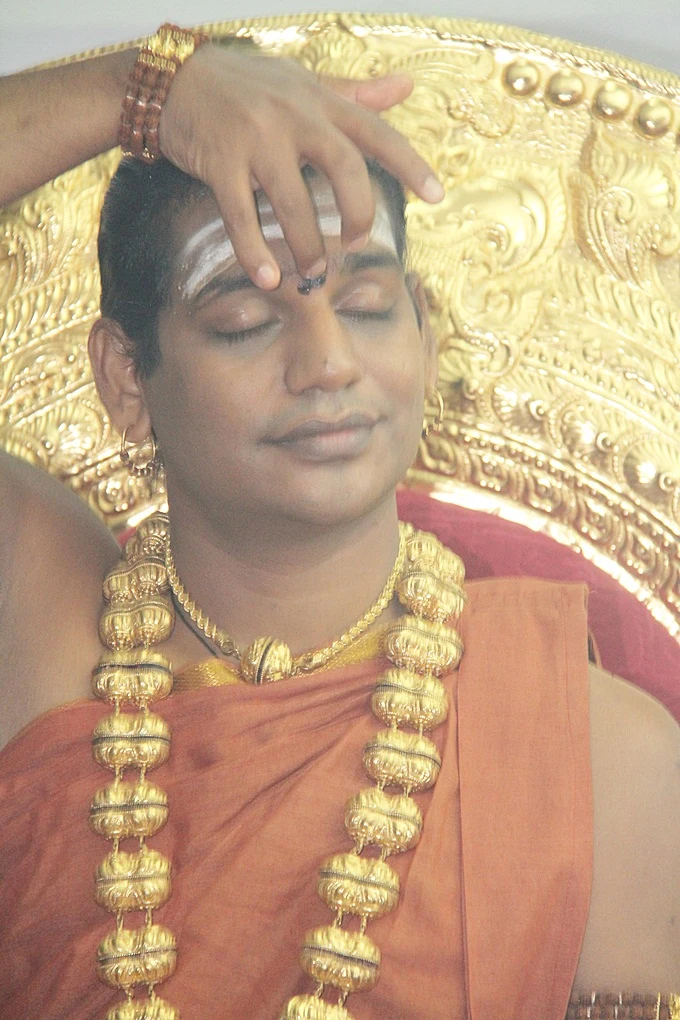
Pada-Puja
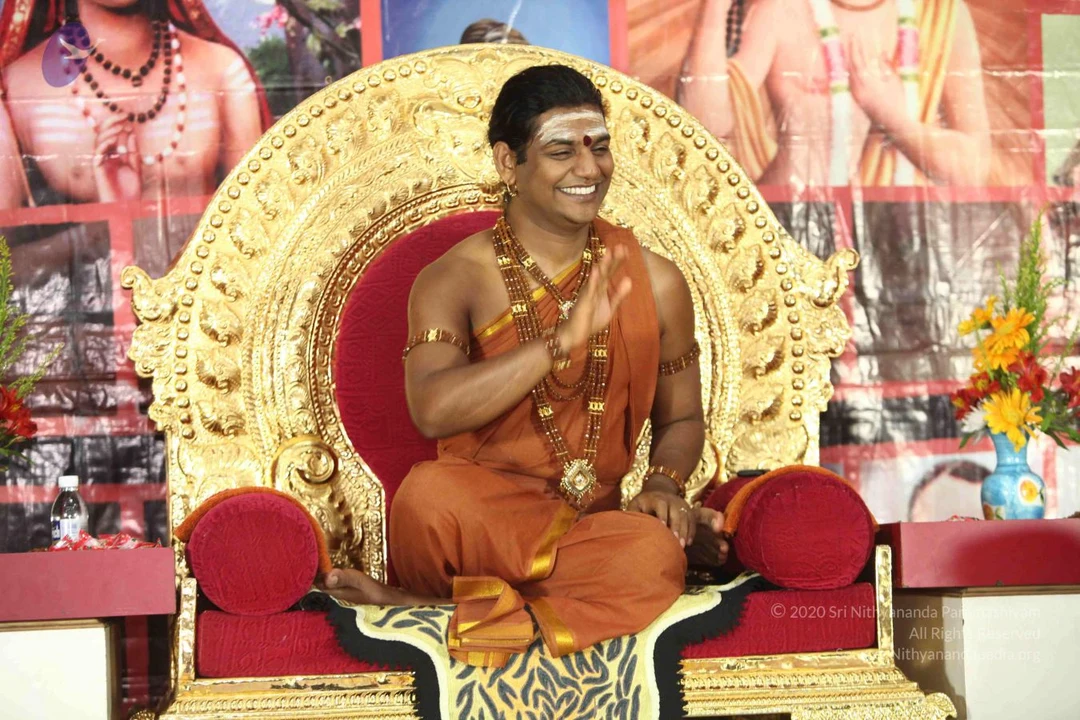
Morning-Satsang

Akashic-Reading

Darshan

Photos from this day

View all 683 photos

Pada-Puja
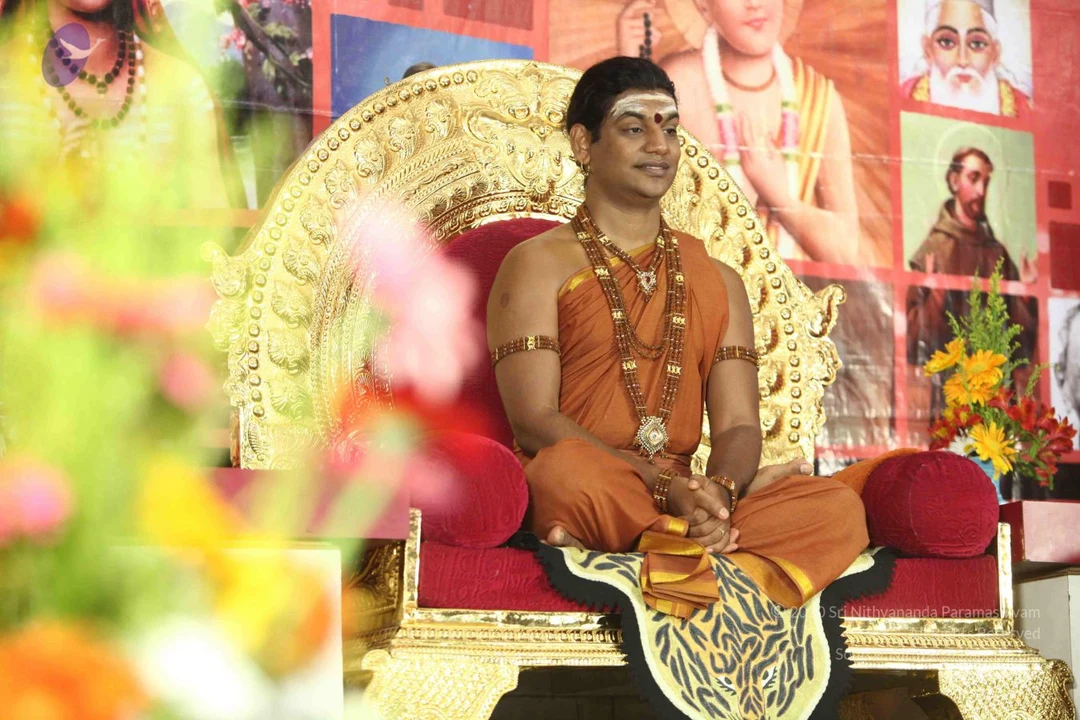
38 photosSource gallery
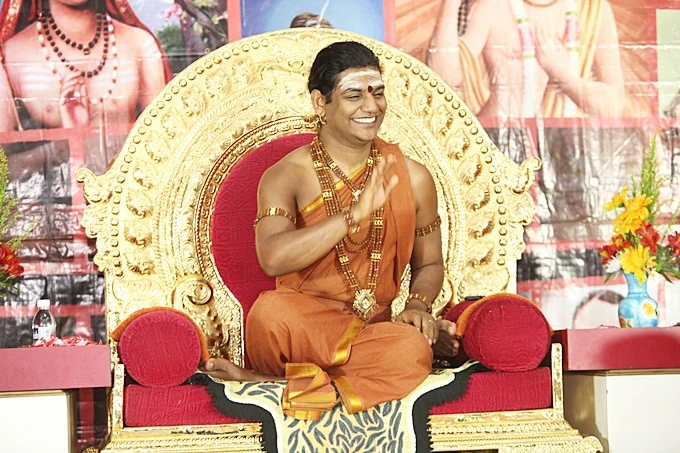
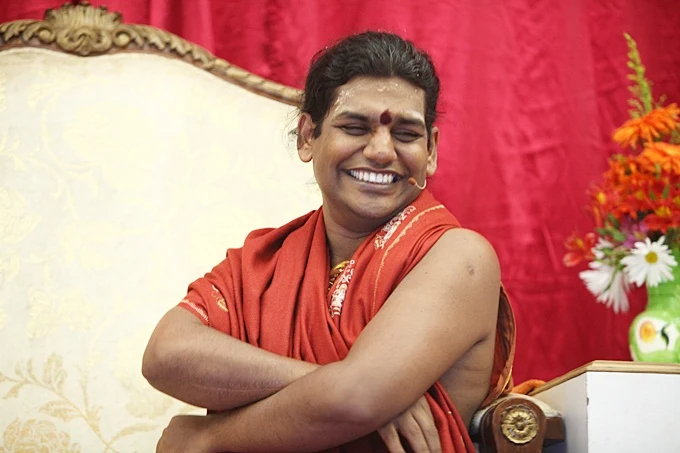
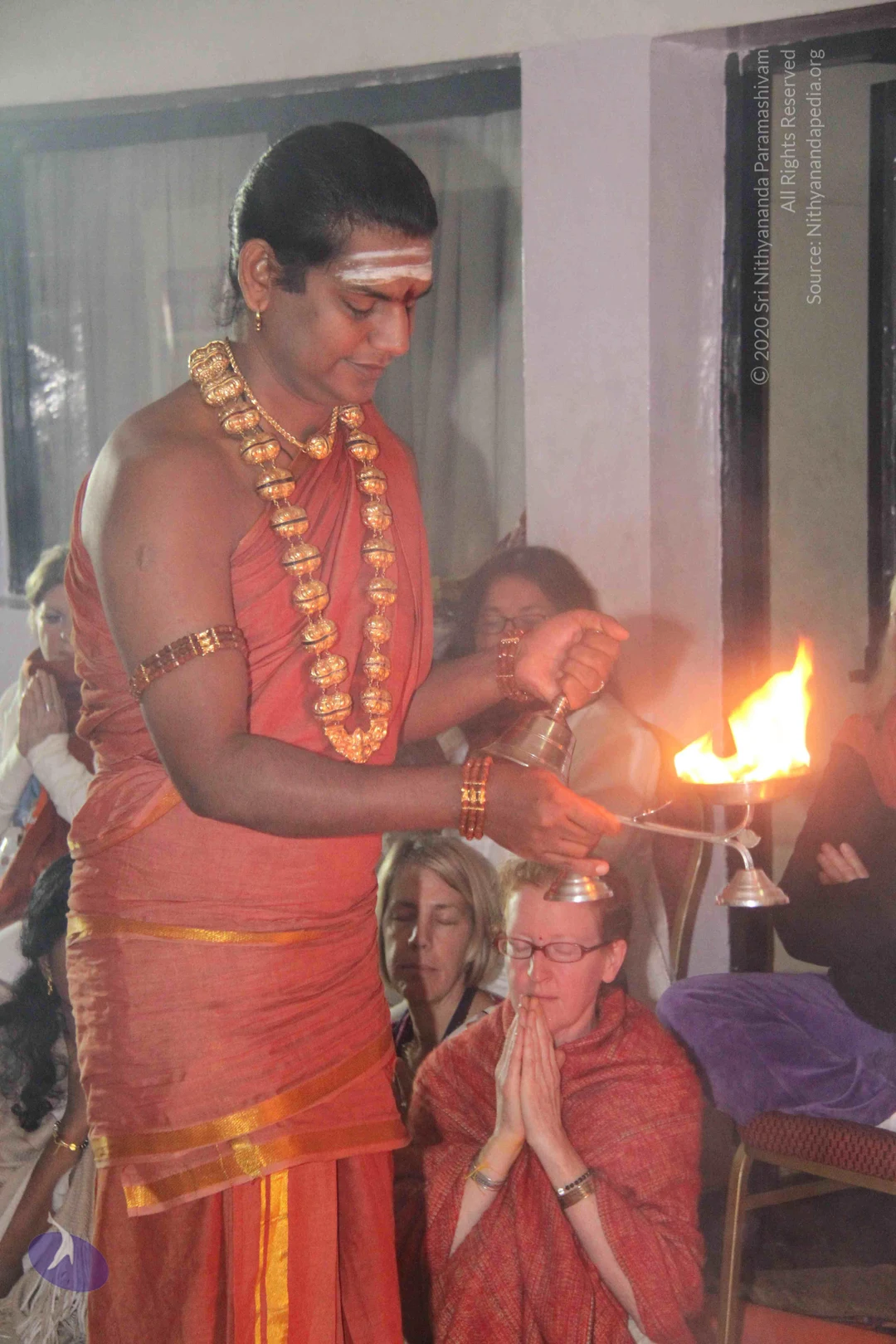
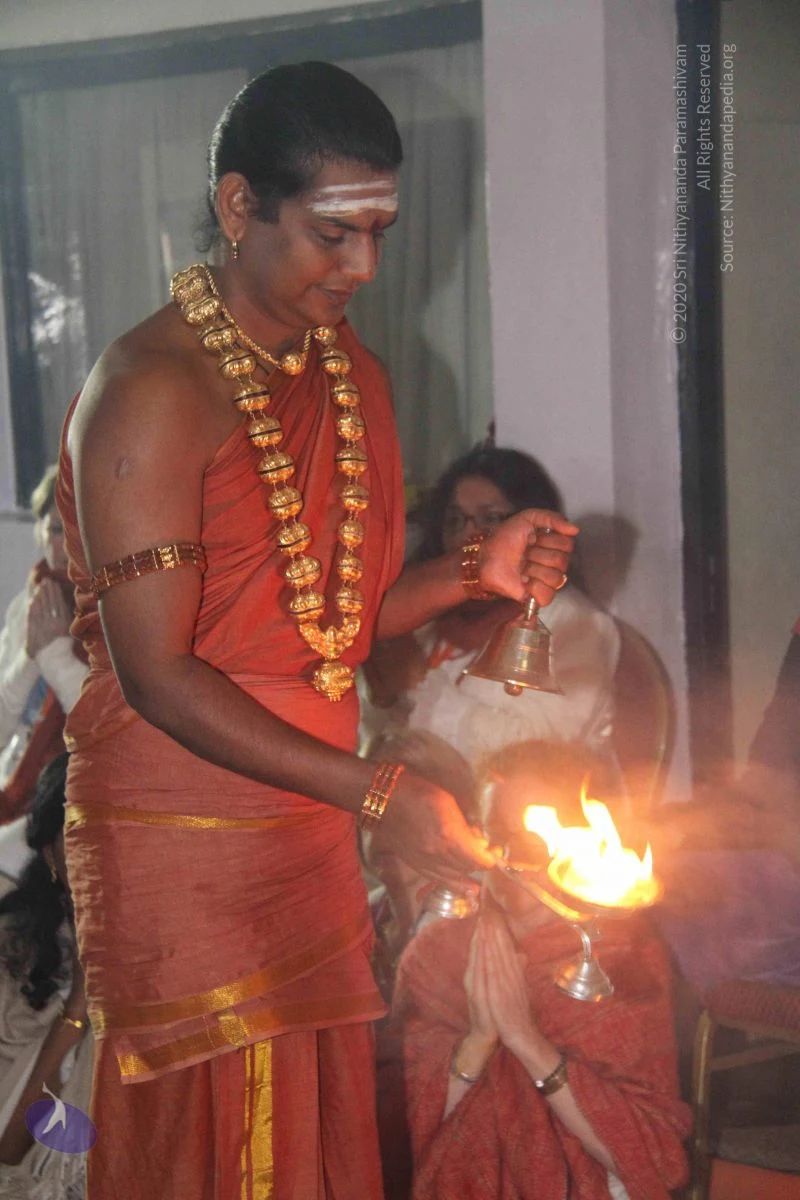
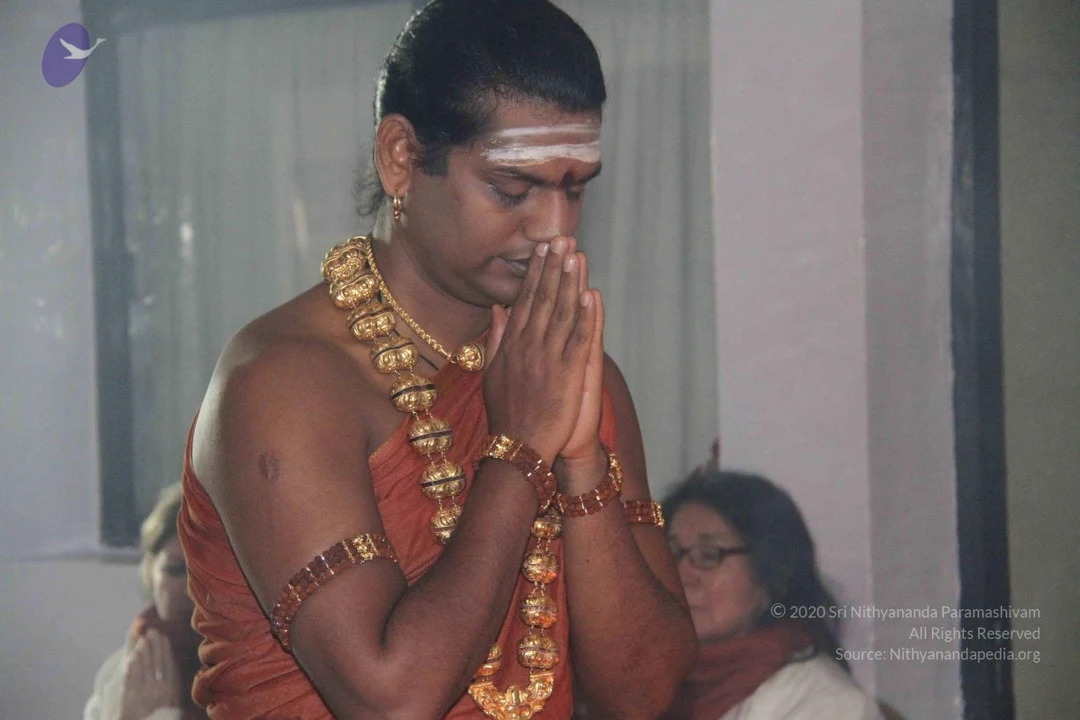
A man in an orange-saffron dhoti and shawl with yellow borders sits cross-legged on an ornate gilded throne with red cushions, bare feet resting on a gold platform. He wears a rudraksha mala with gold beads, layered gold necklaces, gold armlets and bangles, and a white-and-red tilak on his forehead. Flower arrangements in green vases with orange and yellow blooms flank the throne, and a small offering tray with marigold petals sits at the base. Behind him, a backdrop of framed photographs of saints and sages in red and yellow tones is visible.A man sits on an ornate gold-and-red throne in front of a red backdrop with framed devotional portraits. He wears an orange-saffron dhoti-style garment with a matching shawl draped over his shoulder, multiple wooden rudraksha malas with gold bead spacers, a gold pendant, orange-beaded armlets and bangles. He has white tripundra marks and a red bindi on his forehead and is looking off to the side with a calm expression. Blurred green and yellow foliage fills the right foreground. a person seated on a throne in saffron robes and rudraksha malas during a satsang setting; a portrait labelled Paramahamsa Nithyananda is not visible, but the throne and framed portraits suggest a teaching setting.A photograph of a man seated on an ornate gold throne with a red cushion, wearing an orange saffron robe draped over one shoulder and layered rudraksha malas with gold beads and a pendant, plus matching rudraksha armbands. He has a white tilak with a red dot on his forehead and a gold earring, and his hands rest on his lap. Behind him is a red backdrop with a framed portrait of a saffron-robed figure and a vase of yellow and red flowers.A man seated on an ornate red and gold throne with a gilded carved backrest sits in front of a red wall decorated with framed photographs and yellow flowers. He wears an orange-saffron shawl over his shoulder and bare arm, multiple strands of rudraksha-style beaded malas with gold ornaments, a gold pendant, gold bangles and earrings. He has a white horizontal tilak with a red dot on the forehead. Appearance-based a person seated in ceremonial dress on the throne, with his arms crossed. Light gilded frame edges and a flower arrangement occupy the foreground.A man seated on an ornate gold-and-red throne with carved gilded backrest, wearing an orange-saffron dhoti-style garment draped over one shoulder, multiple rudraksha malas and a gold chain with pendant, gold armlets, and gold earrings. He has white vertical tilak and a red bindi on his forehead and sits with arms folded. Behind him is a red wall covered with framed black-and-white portrait photographs of older men, and a vase of orange and yellow flowers stands beside him. The man appears to match the a person cues of saffron clothing, rudraksha malas and ceremonial gold ornaments, seated in the role of a discourse speaker.Close-up of a single yellow gerbera daisy viewed from the back, showing its green central disc and layered yellow petals on a long green stem. The flower stands against a saturated red background on the left and a pale grey background on the right. No people, deities or ritual objects are visible.

Morning-Satsang

76 photosSource gallery
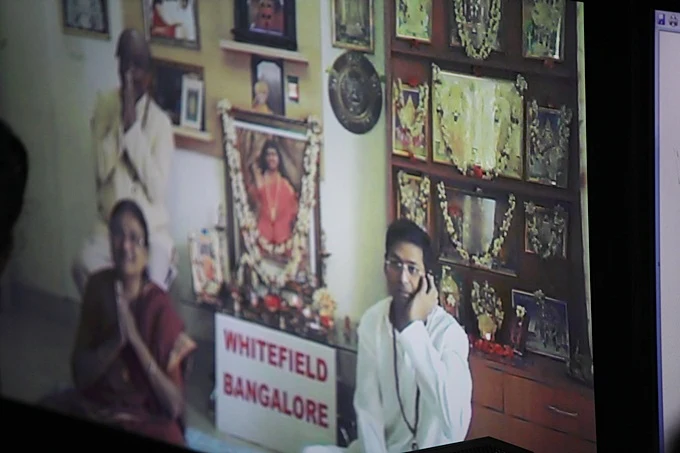
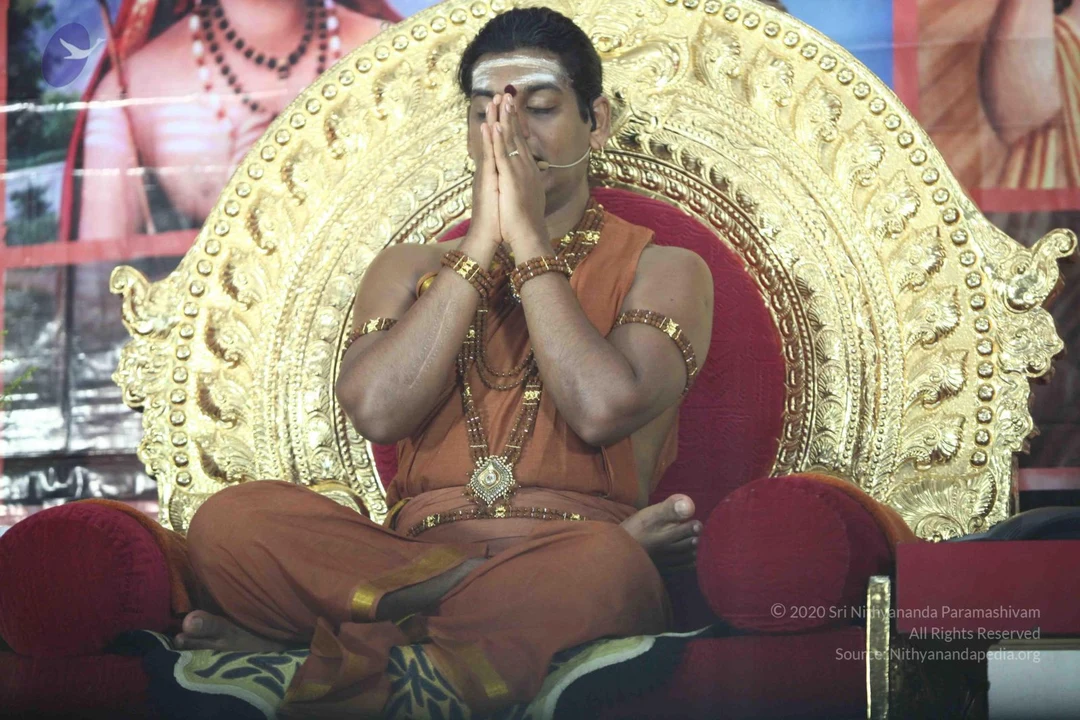
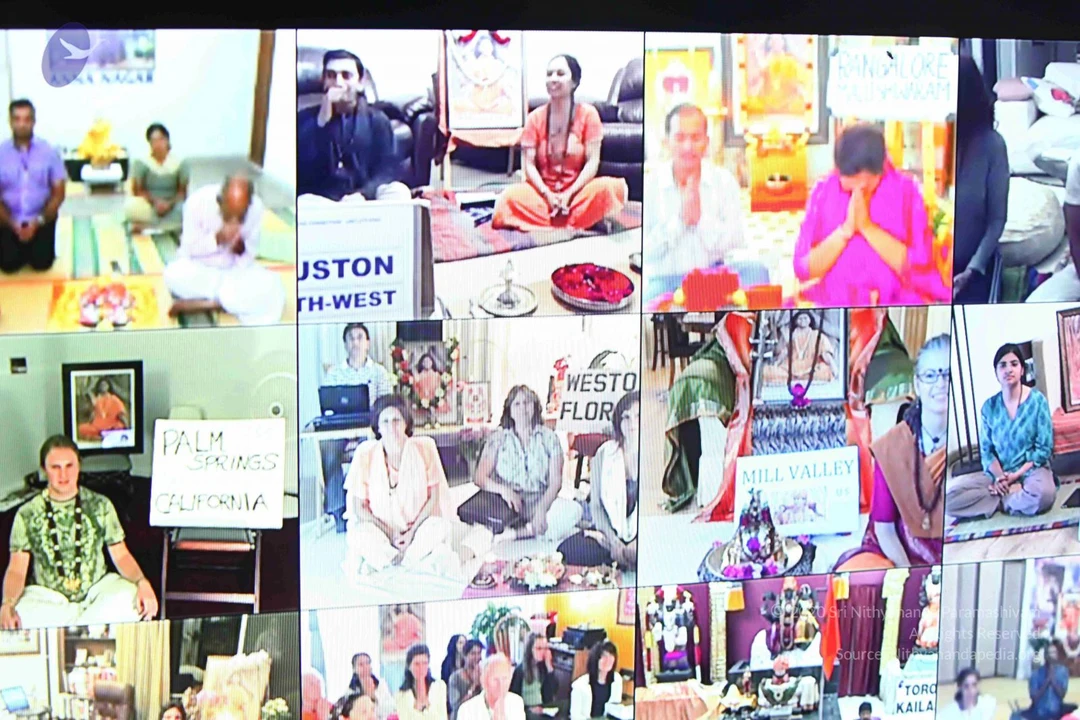
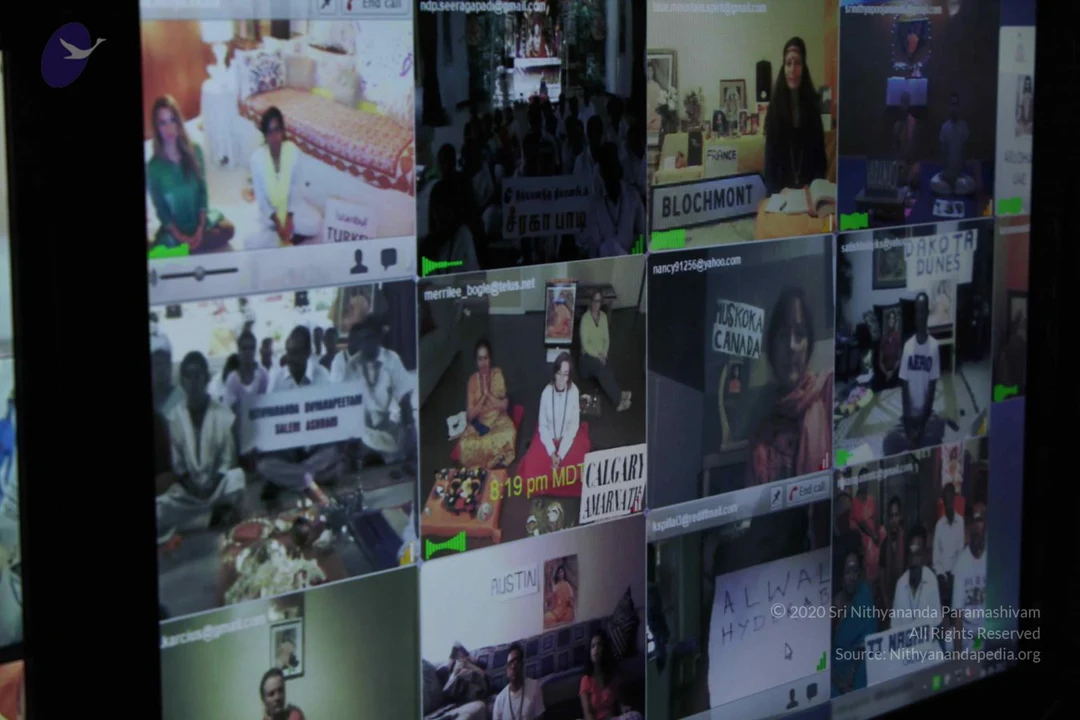
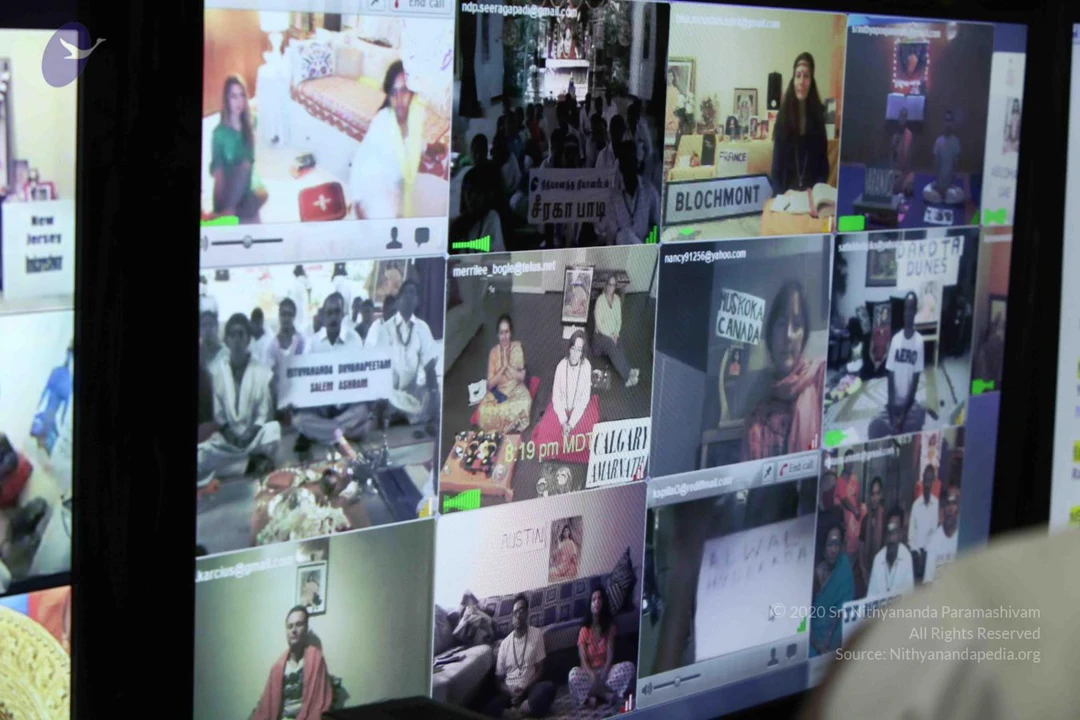
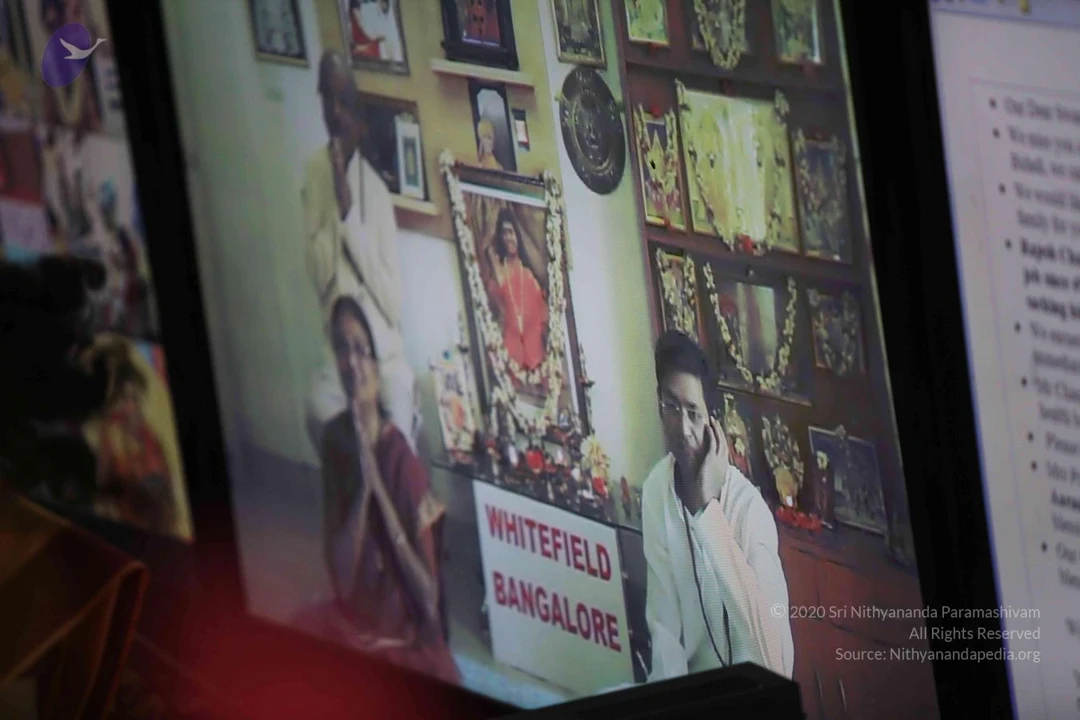
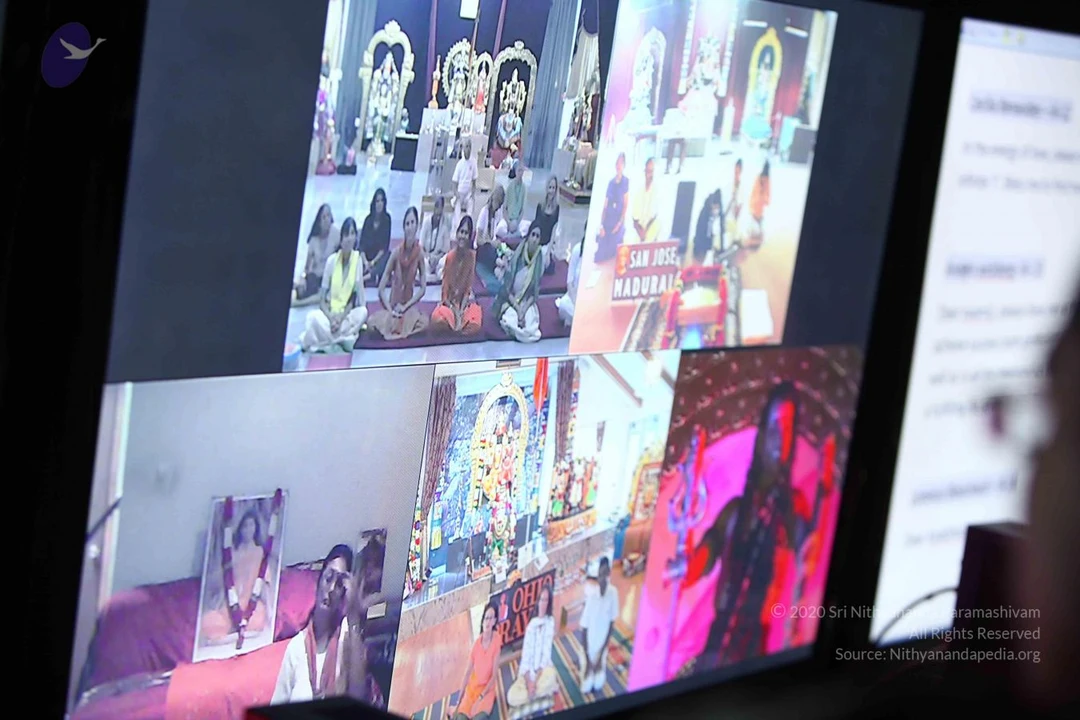
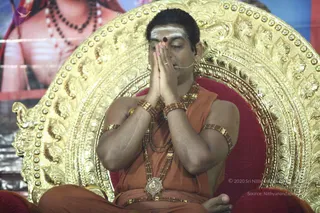
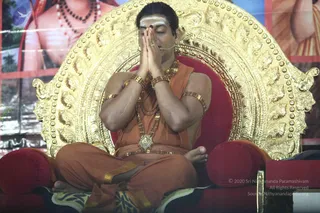
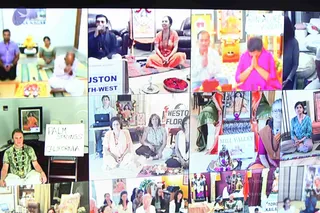
A man seated cross-legged on an ornate gold-and-red throne with eyes closed, palms pressed together in namaste at his face. He wears an orange-saffron robe, layered rudraksha and beaded malas, a heavy ceremonial gold necklace with a pendant, gold armlets and bangles, and a clip-on lapel microphone. He has white vertical tilak marks on the forehead with a red bindi. Behind him is a large backdrop showing a figure draped in red with multiple bead necklaces. Appearance cues match the a person (a person) in a seated satsang setting; the throne and his bearing support a discourse or meditation moment.A seated man in saffron-orange robes sits cross-legged on a gold-and-red throne with a golden arched back and red cushions. He holds his palms pressed together in namaste at his chest with eyes closed, wearing a white tilak on his forehead, a red bindi, rudraksha and beaded necklaces, a large ornate pendant, and bangles on his wrists and upper arms. A small microphone is clipped near his face. Behind him are large printed banners showing a bare-chested figure with rudraksha malas. The setting appears to be a satsang discourse stage.A photograph of a man seated on an ornate gold throne with a carved, scalloped backrest and a red cushion, speaking into a head microphone. He wears an orange saffron robe with a gold-trimmed shawl draped over one shoulder, multiple strands of rudraksha beads and a ceremonial gold pendant necklace, and gold armlets on both upper arms. He has a white tilak on his forehead with a red dot at the centre. Behind him is a large painted backdrop showing a figure draped in red with a bead necklace. a person appears on the throne, with the appearance cues of saffron clothing, rudraksha malas, gold necklace and armlets, seated as the speaker of a satsang discourse.A photograph of a large video-conference screen showing a grid of satsang participants in separate home settings. A man in a purple shirt sits with hands pressed together beside a woman in green, near an orange-and-gold deity image. A woman in an orange sari and rudraksha mala sits cross-legged on a sofa beside a red-and-white tray. A man in a white shirt and a woman in a bright pink top sit with palms joined before a shrine. A man in a green embroidered shirt with a flower garland sits by a sign reading "PALM SPRINGS CALIFORNIA". Other tiles show a sign reading "HOUSTON NORTH-WEST", a sign reading "WESTON FLORIDA", and a sign reading "MILL VALLEY" beside a small shrine with flowers. A woman in a blue top sits in meditation in the lower right. Several bottom tiles show a shrine with brass deity murtis and a sign reading "TORONTO KAILASA". Some participants are not fully visible.A photograph of a large video-conference wall display showing a grid of many simultaneous live feeds of participants gathered for a satsang. Participants sit on floors, sofas and beds in homes and ashram halls, some holding handmade signs such as Calgary Amaravathi, Blochmont, Salem Ashram, Nyskoka Canada, Dakota Dunes, Austin and Alwal Hyderabad. One tile shows a woman in an orange and yellow sari seated beside a red-cushioned seat. Another tile shows a ashram hall with many people in white clothes seated before a shrine. A few tiles show a man in a white shirt with a blue shirt reading AERO. The display itself is the main subject, with the people on screen presented as remote participants rather than physical people in this room.A photograph of a large monitor displaying a grid of video-call windows from a multi-location satsang. Tiles show participants seated in homes and centres: a row of people in white sitting on a floor behind a sign reading Nithyananda Dhyanapeetam Salem Ashram; a woman in red and gold saree seated before a small altar beside a sign reading Calgary Amaravathi; a woman in dark clothing before a sign reading Blochmont; a woman in a purple top beside a sign reading Kaskoka Canada; a man in a white AERO t-shirt; and a group of men in white seated before a sign in Tamil script. Many participants are in white ritual clothing. A small wall-mounted photo and a sign reading New Jersey Ashram appear at left. Partially visible in the lower right corner, an arm in beige clothing is seen.

Dial-the-Avatar

13 photosSource gallery
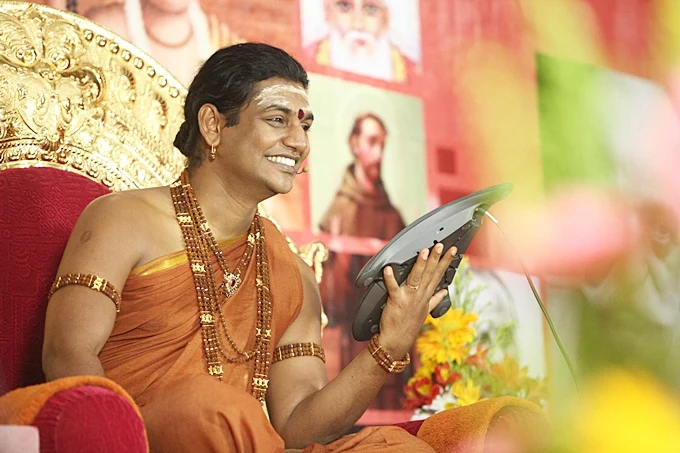
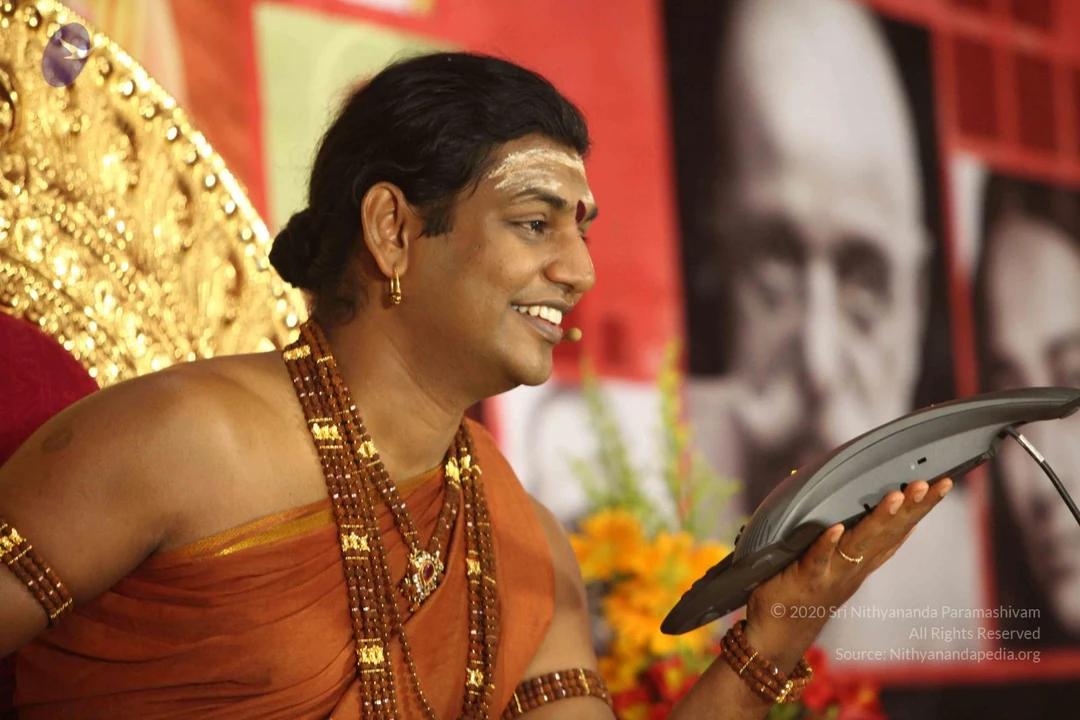
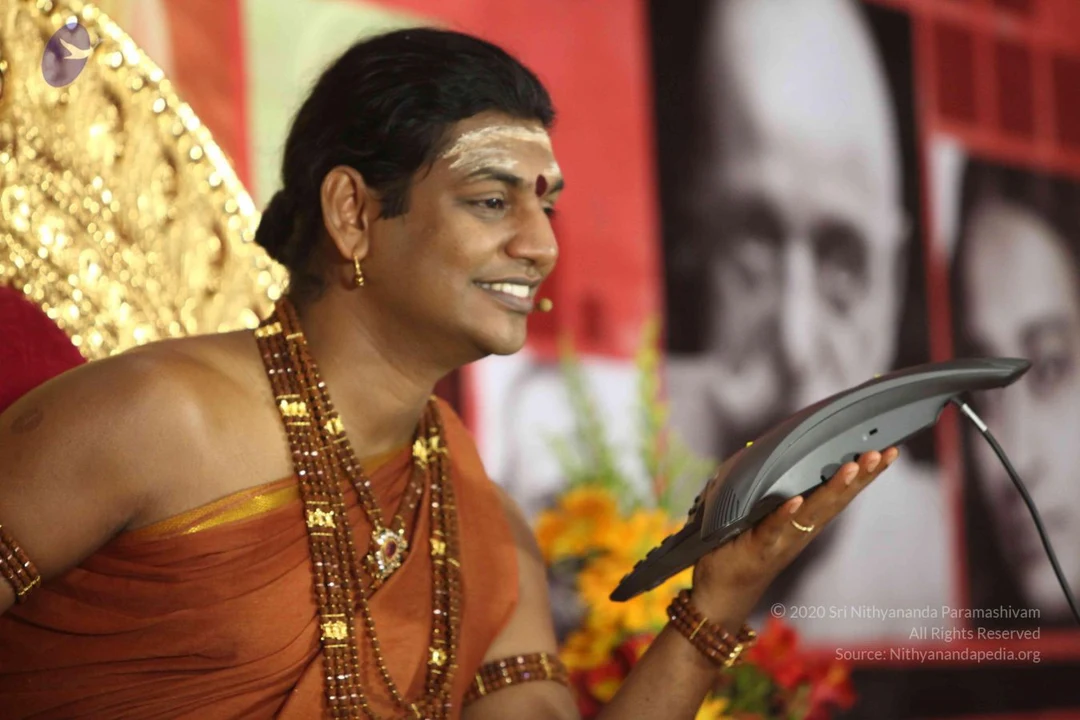
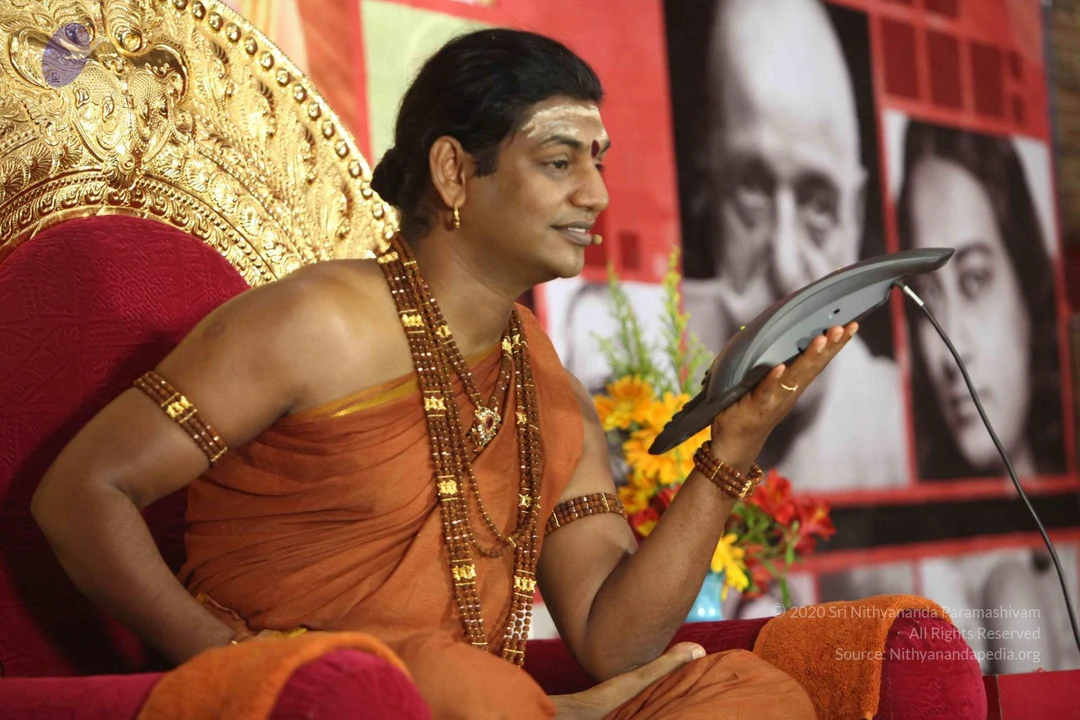
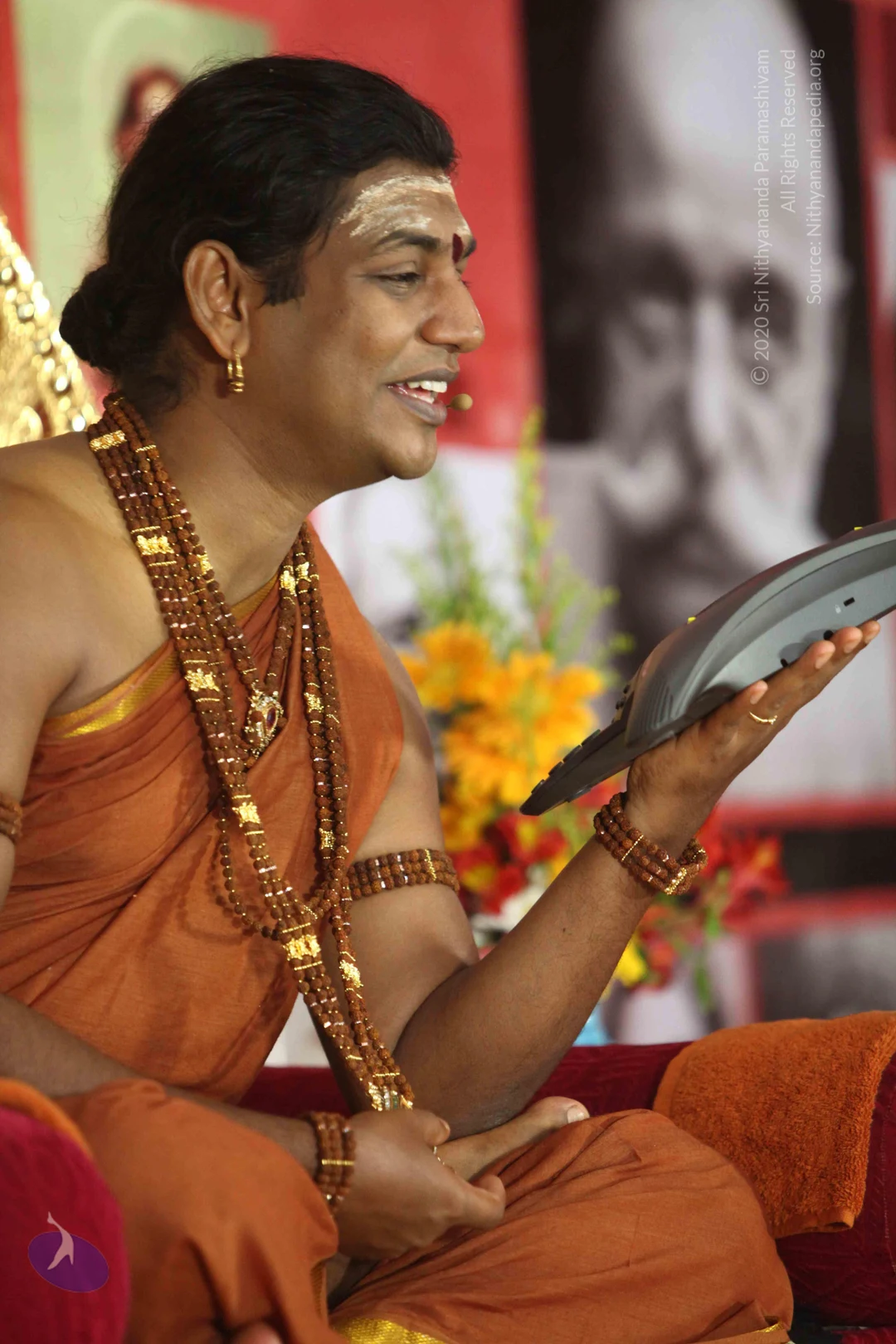
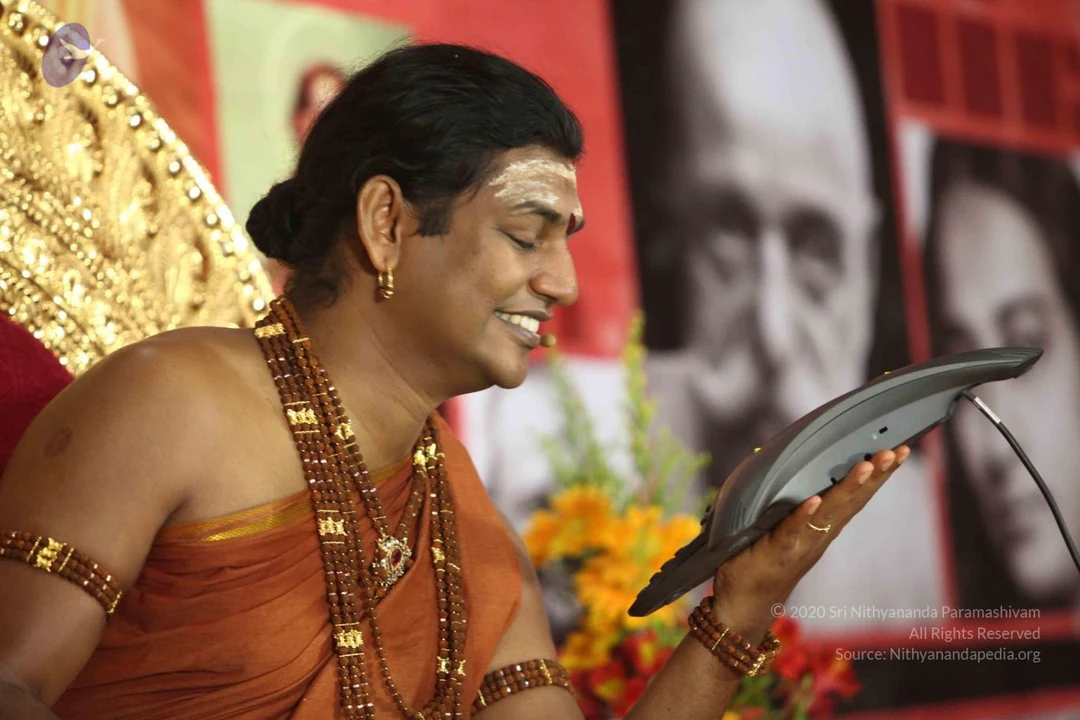
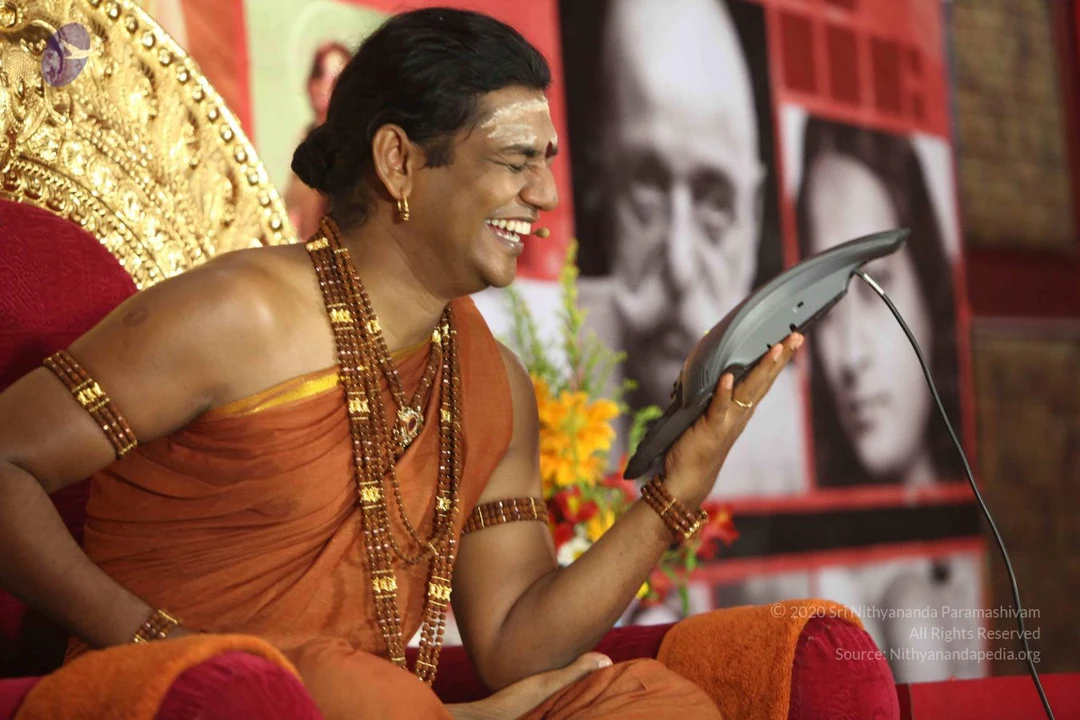
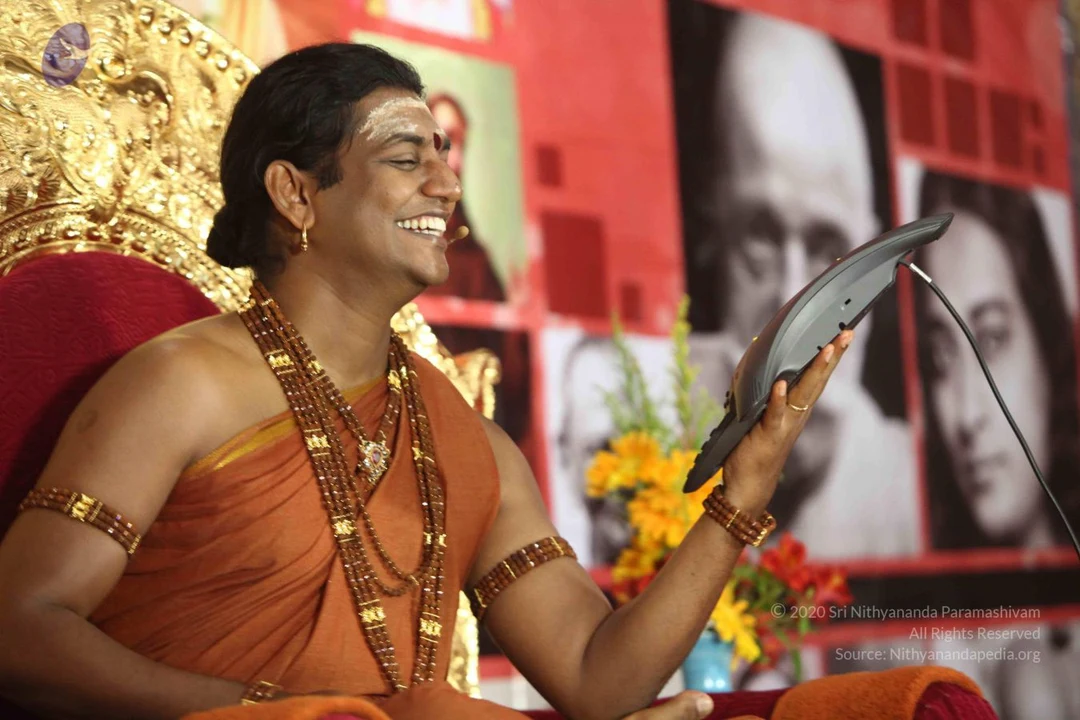
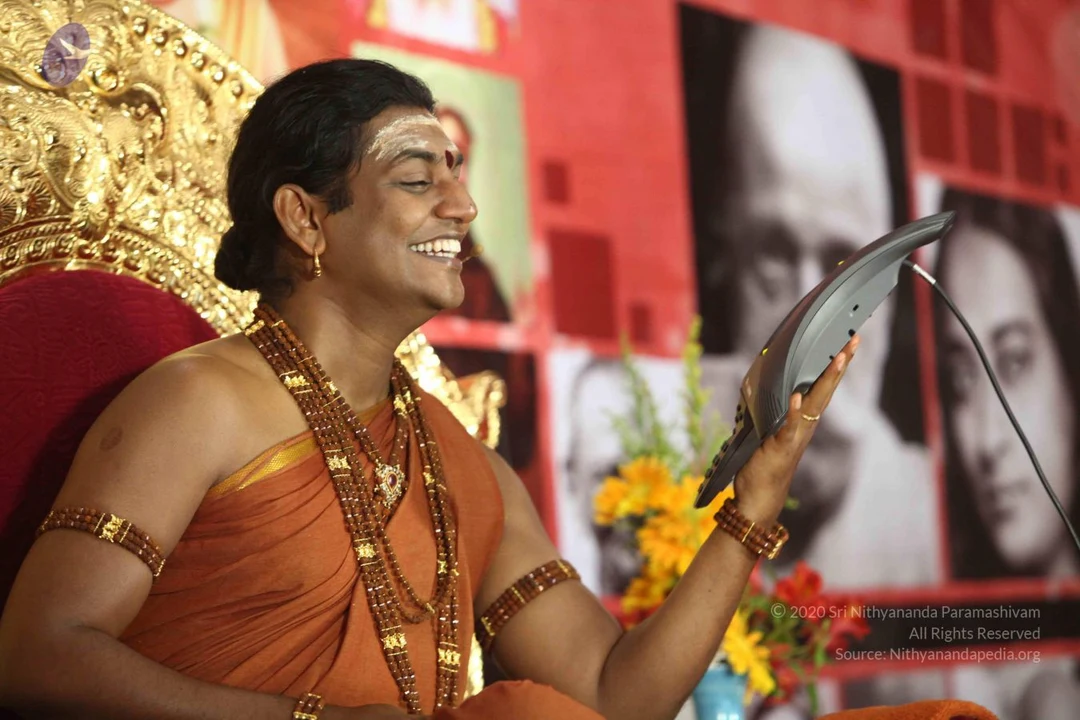
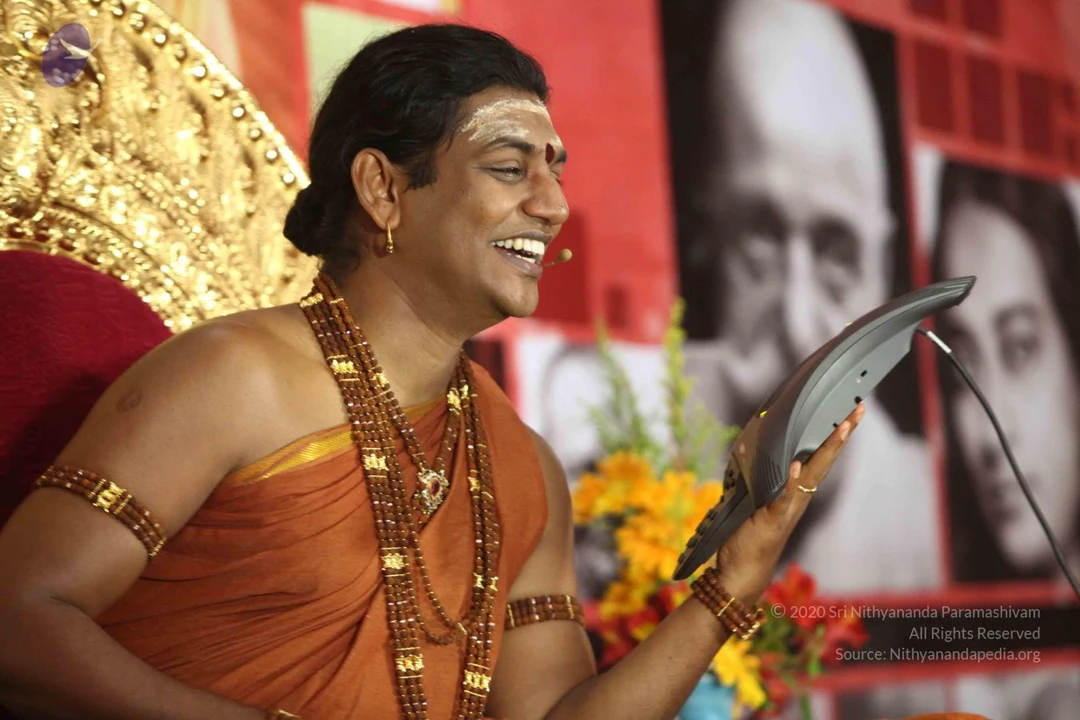
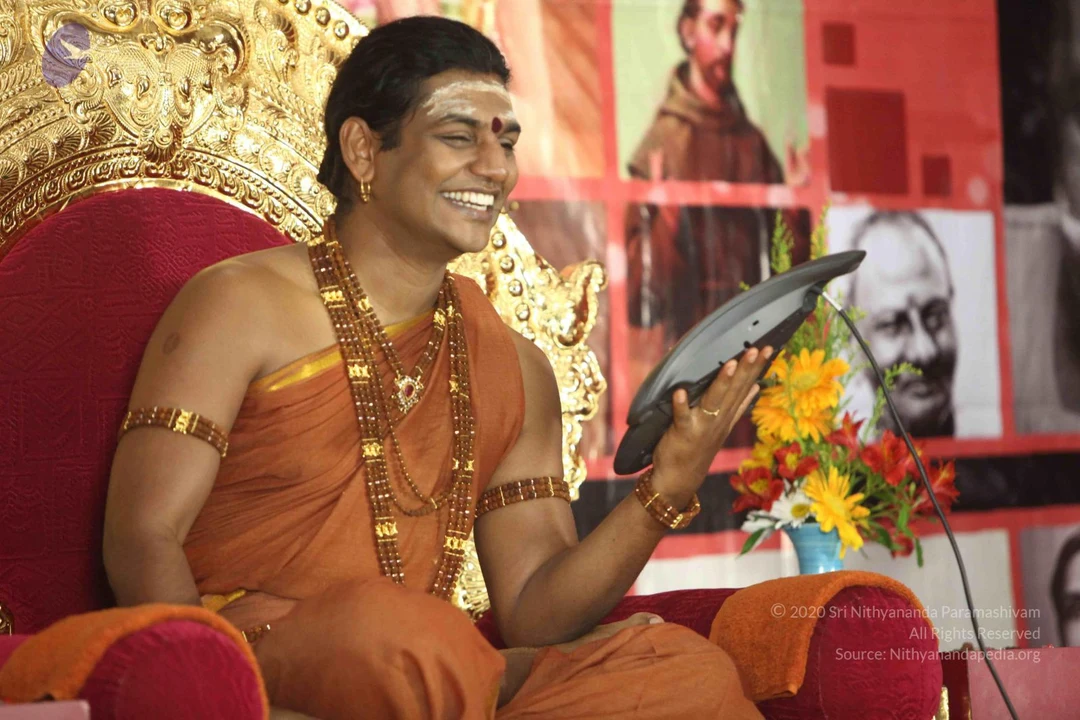
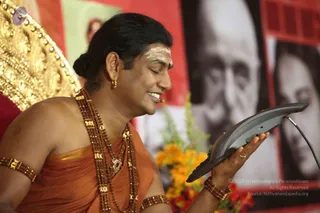
A man seated cross-legged on an ornate gold throne with a red cushioned seat, wearing saffron-orange clothing with a gold-bordered dhoti and a gold-edged shawl draped over one shoulder. He wears multiple strands of brown rudraksha beads, a large ceremonial gold pendant necklace, gold armlets and bangles, and white sacred ash (vibhuti) markings on his forehead with a red kumkum dot. He smiles while looking down at a dark tablet device he holds in both hands. Behind him a red and pink backdrop with draped fabric is visible. a person seated on a peetha throne, with saffron clothing, rudraksha malas and ceremonial gold ornaments as qualifying cues.A man in orange-saffron robes smiles while holding a small grey handheld device or microphone-like remote near his face. He wears a thick rudraksha-style mala necklace, multiple beaded bracelets, a gold-tone armband and a small earring, with white vertical tilak marks and a red bindi on his forehead. Behind him a gold ornate chair or throne back is visible, along with a red backdrop, black-and-white portrait photographs and a vase of orange and yellow flowers. The scene suggests a satsang discourse setting. a person: the seated speaker, identified by saffron robes, rudraksha malas, gold adornments and the throne setting.A man seated on a gold-ornamented throne speaks into a handheld microphone, smiling. He wears a saffron-orange shawl over the shoulder, multiple strands of wooden rudraksha-style beads and gold ornaments around the neck, beaded bracelets on the wrist, a gold earring, white sacred ash on the forehead with a red dot, and his hair tied back. Behind him, black-and-white portrait photographs and yellow-orange flowers hang against a red and white backdrop. a person appears to be the speaker, based on the distinctive saffron clothing, rudraksha malas and ceremonial adornments, shown during a satsang discourse.A man seated on a red velvet throne with an ornate gold backrest, wearing an orange saffron wrap, multiple rudraksha malas and gold bangles, with a white tripundra and red bindi on his forehead. He holds a grey handheld device toward a microphone while speaking. Behind him is a red panel with black-and-white portrait photographs of two older figures and vivid orange and yellow flowers. a person is the speaker, giving a discourse. One person is visible.A man seated cross-legged on a red cushioned dais speaks into a headset microphone while holding a grey handheld device in his right hand. He wears an orange-saffron unstitched robe with gold trim, layered rudraksha mala necklaces with gold beads, rudraksha armbands and bracelets, and a gold earring. He has a white vertical tilak and a red bindi on his forehead and his hair is tied up. Behind him stands a black-and-white portrait of an elderly man with a white beard, beside yellow and red flower arrangements against a red wall. The man in orange is a person candidate based on the rudraksha malas, saffron robe and ornate gold adornments, and the page associates him with a person talk.A photograph of a man in saffron-orange robes seated on a golden throne at a discourse. He wears layered rudraksha malas with gold accents, gold bangles and an ornamental pendant, and has a white vibhuti marking and red bindi on his forehead. He holds a grey microphone in one hand and smiles toward it. Behind him are large black-and-white portraits of older figures framed in red and orange flowers. a person is seated with a discourse setting, appearance cues including rudraksha malas, saffron clothing and gold ornamentation.

Breakfast

7 photosSource gallery
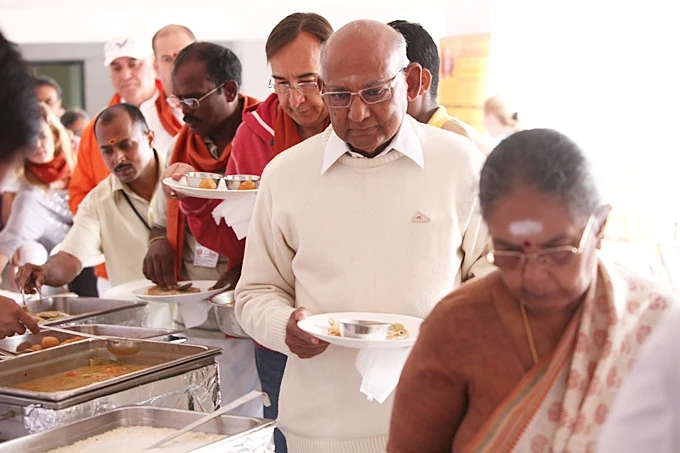
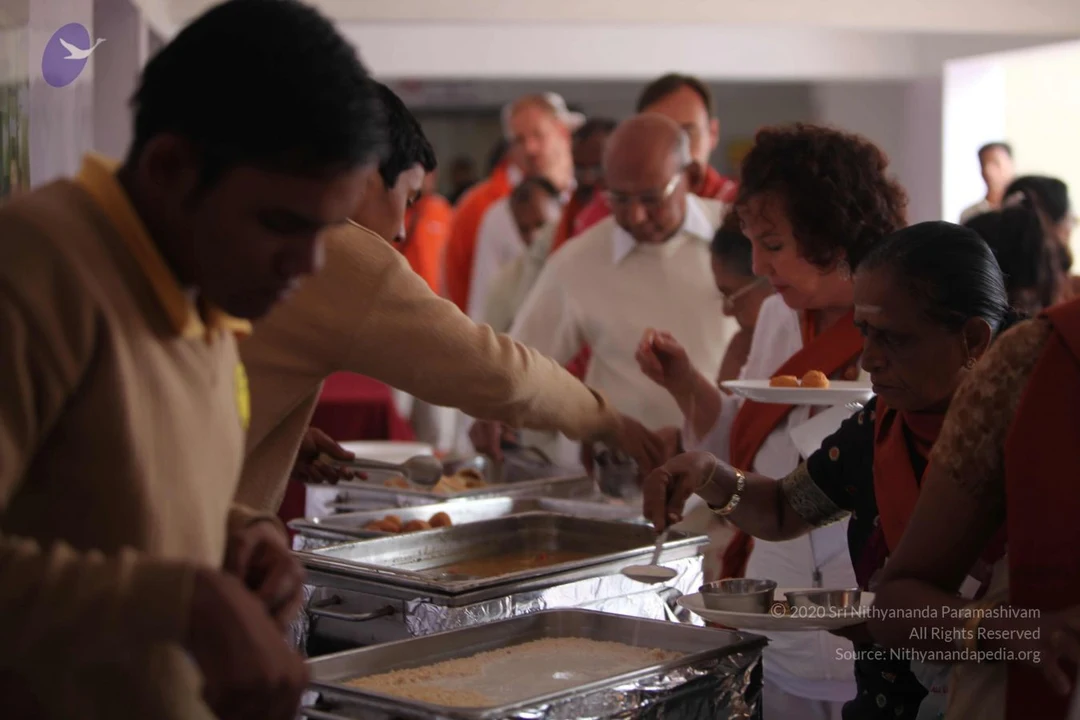
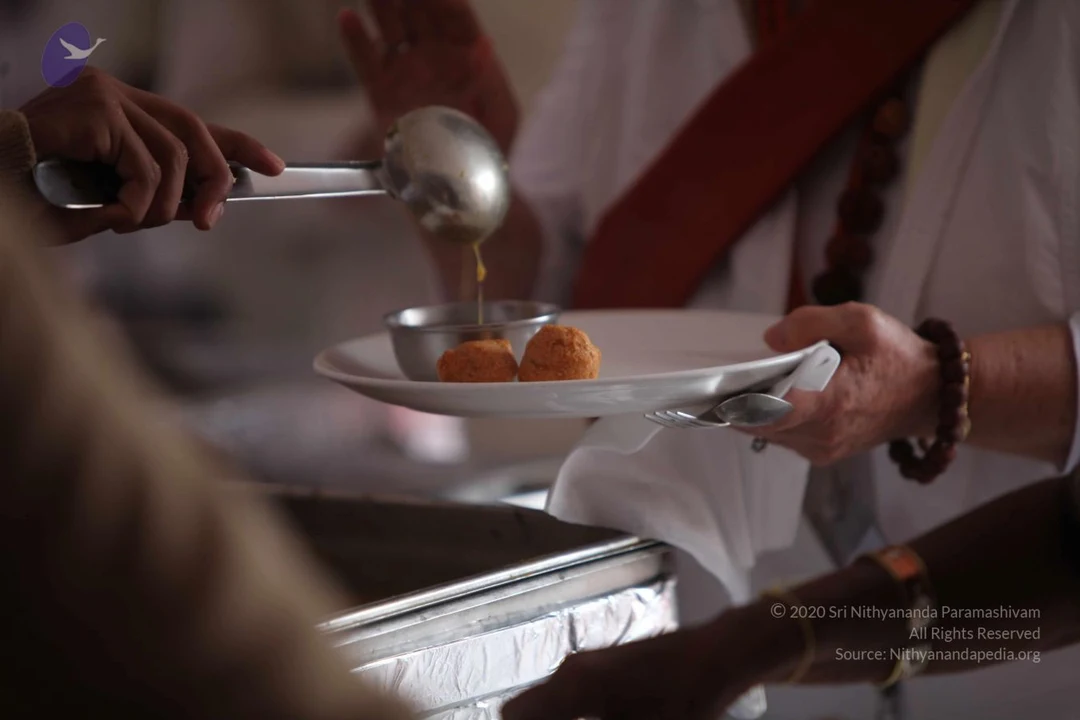
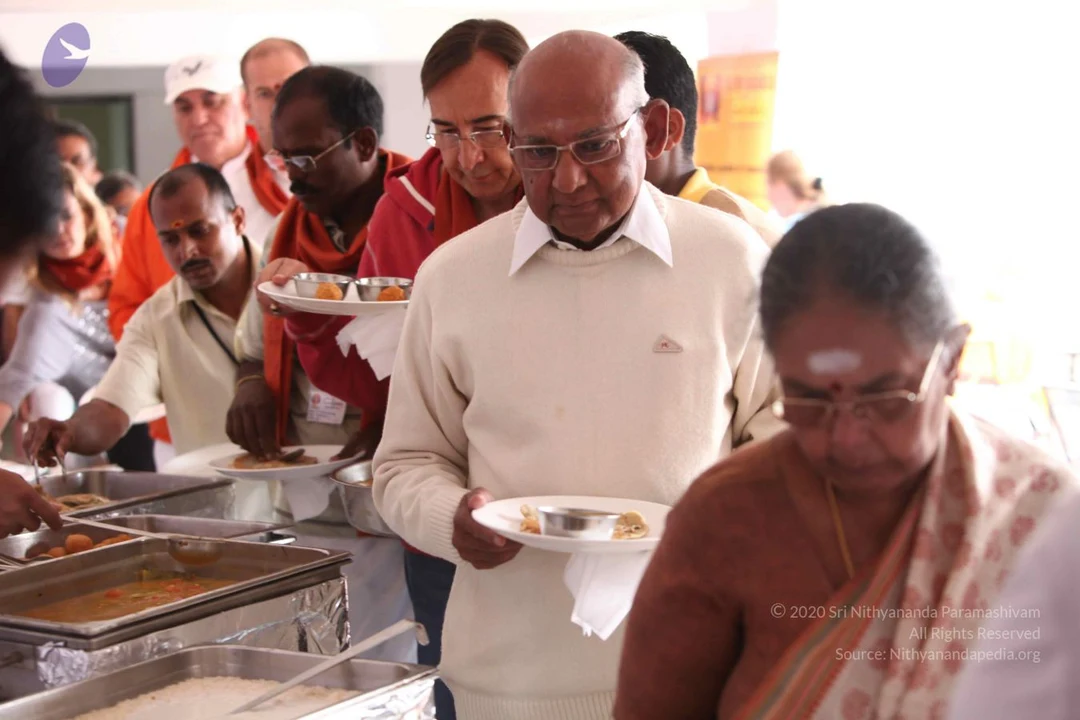
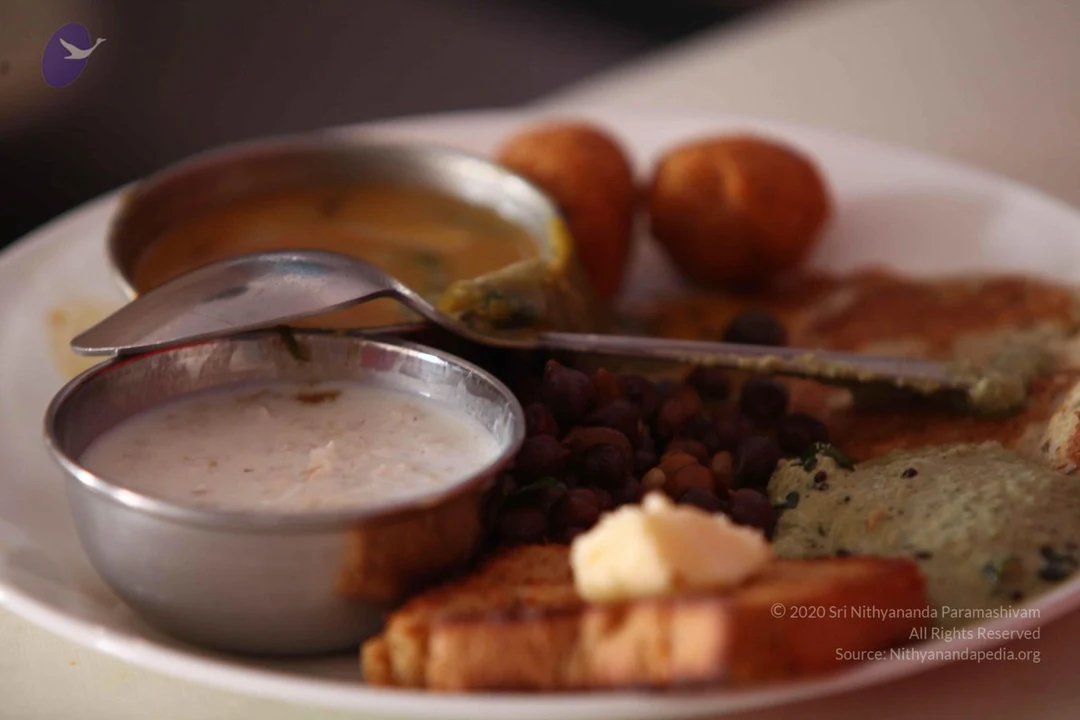
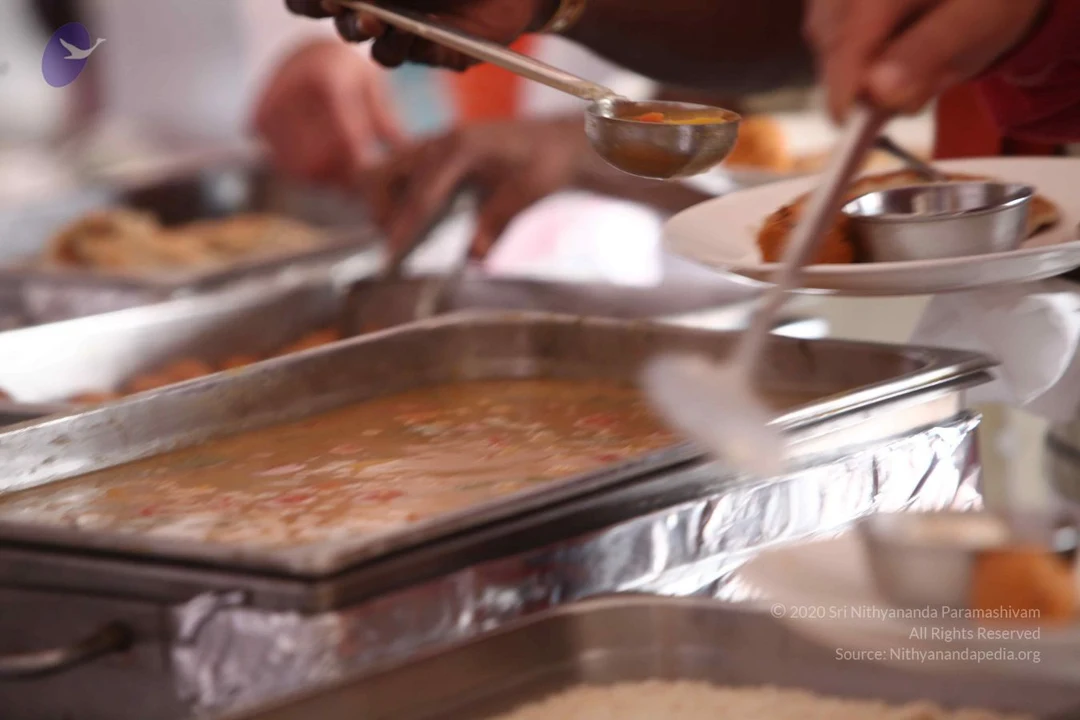
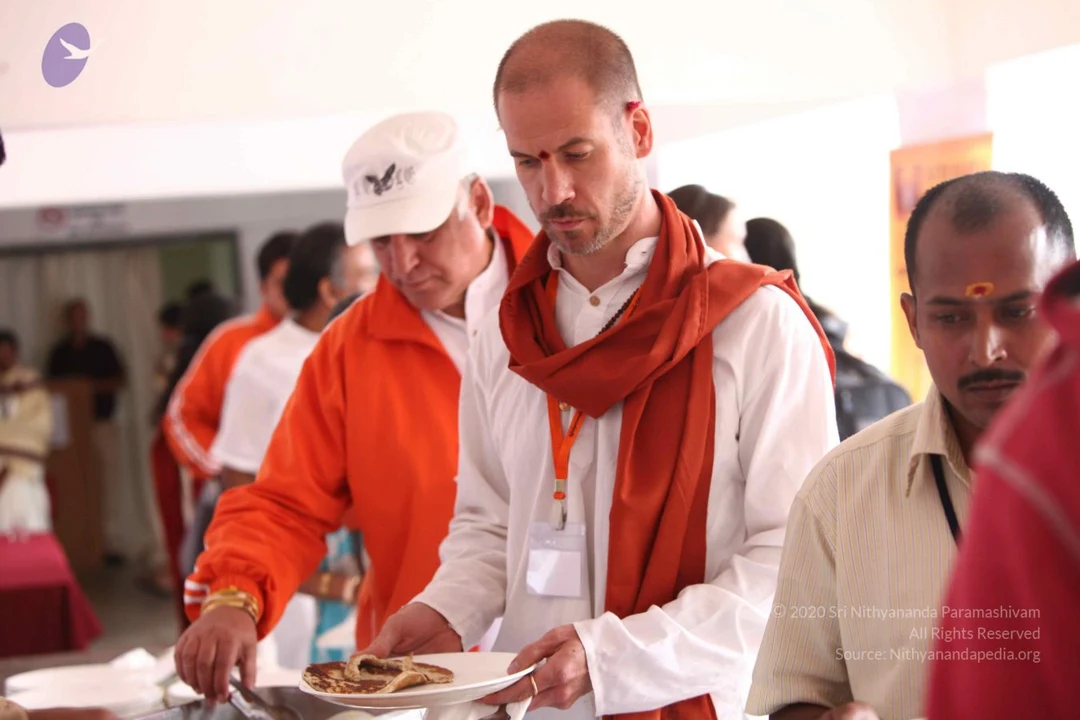
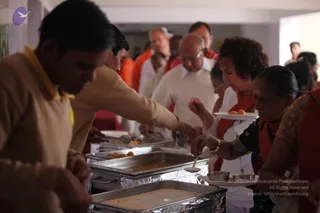
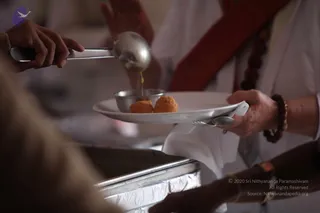
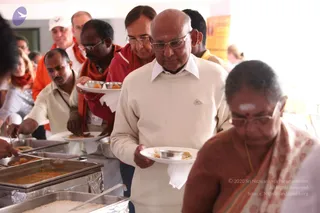
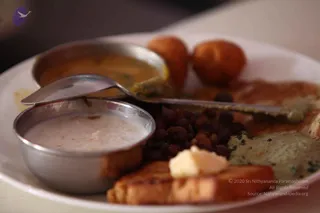
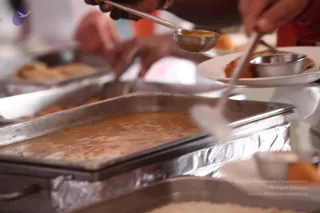
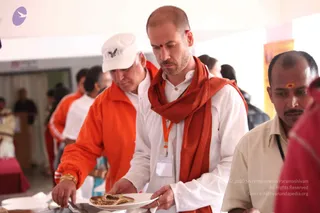
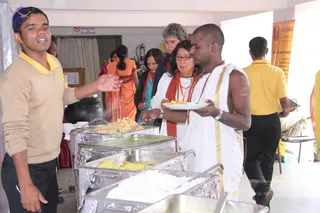
A photograph of a communal meal line at an ashram-style hall. Two young men in beige and tan clothing, one with a yellow collar, serve food from steel chafing trays using ladles. Behind them, a man in white with glasses and a bald head stands in a white kurta, and a woman with curly reddish-brown hair wears a white top with an orange-red shawl while holding a white plate with sweets. An older woman in a dark blue-black blouse with a red shawl and bangles holds a steel bowl and ladle. Figures in orange and saffron clothing stand in the background. Steel trays hold lentil or curry dishes and fried sweets. A purple dove logo appears in the upper left corner.Close photo of food service at a serving counter. A hand holds a stainless steel ladle pouring a thin golden liquid into a small steel bowl beside two fried golden fritters on a white plate. A second person in white clothing and a rudraksha mala on the wrist holds the plate and a spoon, with a red-orange sash visible over the shoulder. The foreground is blurred, with a steel tray beneath. Only hands and partial bodies are visible, and no face or a person appearance is clearly shown.A buffet serving line of devotees collecting food onto white plates at a steel chafing-dish counter. In the foreground, an older man with glasses wears a cream knit sweater over a white collared shirt and holds a plate with a small steel bowl and a flatbread. Behind him, a woman in a red fleece top with an orange scarf and a man in an orange shawl wait in line, and a server in a light shirt stands at the food trays serving curry and rice. On the right, a woman in an orange-brown sari with a vermilion forehead mark holds a plate. Steel trays hold yellow curry, rice and fried sweets, and bright orange shawls are visible among the devotees.Close-up photograph of a South Indian breakfast served on a white plate. Two round golden fried puris or vadas sit at the top, a steel bowl holds a thin yellow dal or sambar with a spoon resting in it, a steel cup holds white coconut chutney, and a pale green chutney spreads across the right side. Dark black chickpeas or kala chana are heaped in the centre, with a pat of butter melting on toasted bread at the bottom. No people are visible.Close photo of a buffet serving line with steel chafing trays of a thick orange-brown curry and a rice dish under foil edges. A hand in a dark sleeve holds a steel ladle lifting curry, and another hand holds a serving spoon over the tray. A white plate holds fried food and a small steel bowl sits beside it. The background is blurred with other trays and a person in red clothing.A photograph of a serving line where a bald man with a red tilak on his forehead wears a white kurta, an orange-red shawl, and an orange lanyard with a white badge, holding a white plate with a flatbread or pancake. Beside him an older man in a white cap and orange jacket with gold bangles reaches toward the food. On the right a man in a striped shirt with an orange tilak watches the line. Other people stand in the background near tables and a wall banner.

2012-World-Tour-Meeting

16 photosSource gallery
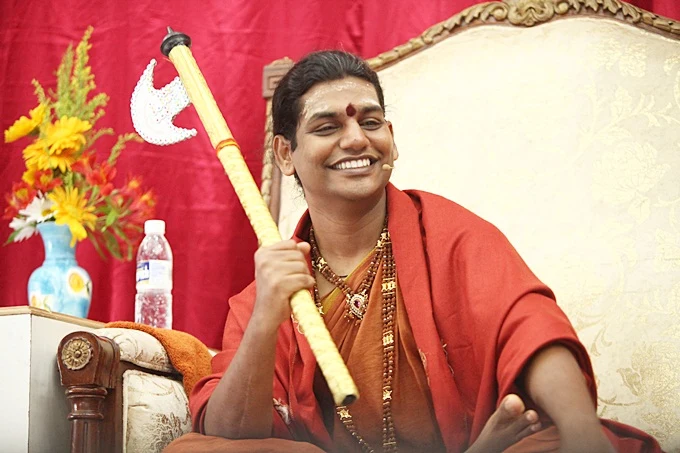
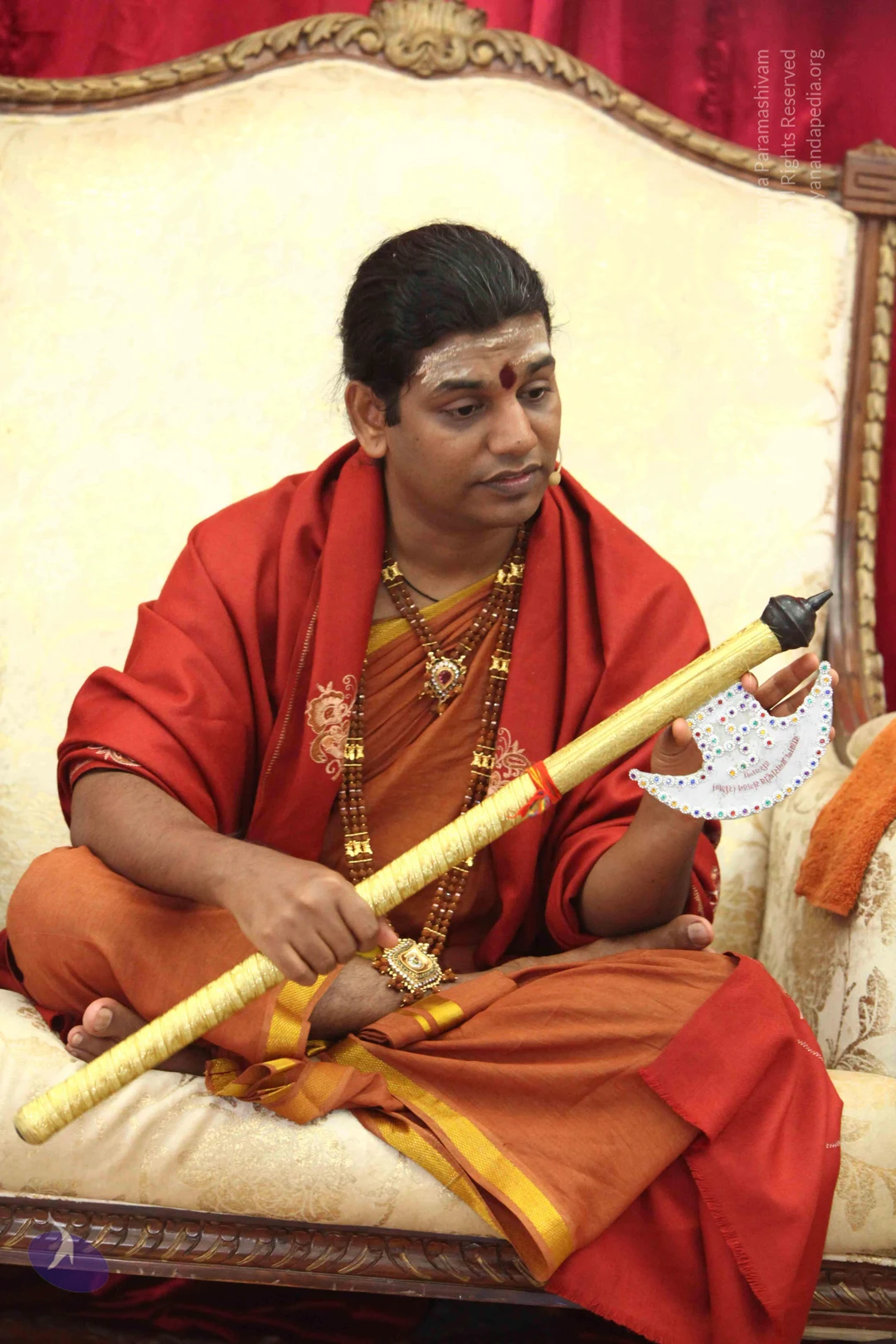
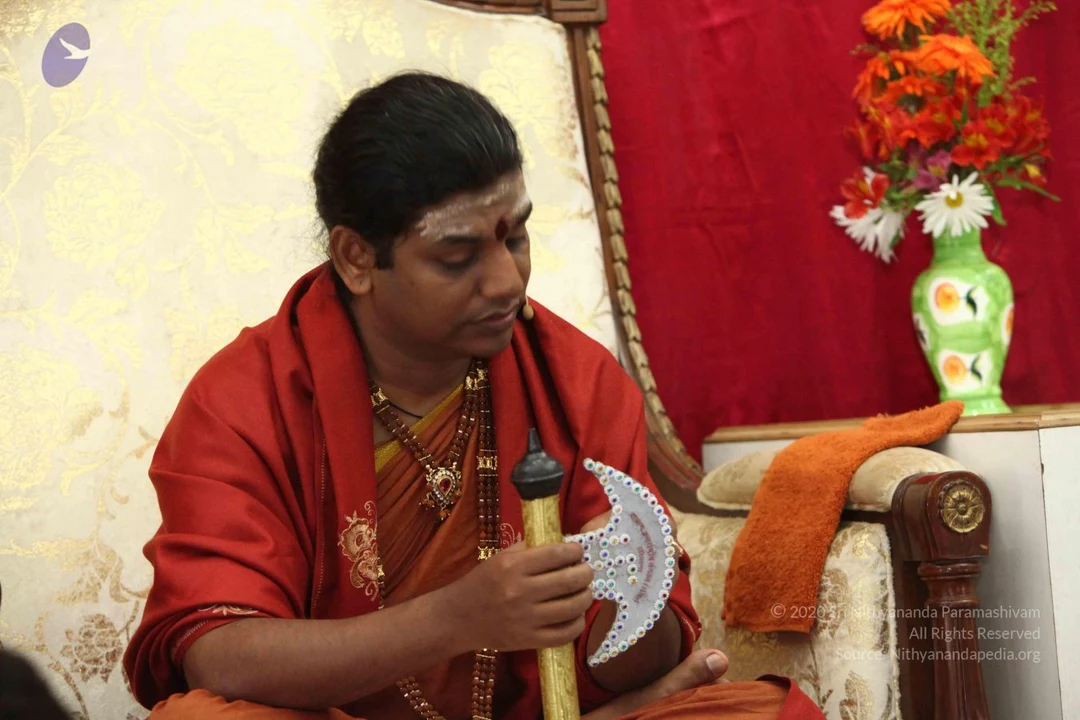
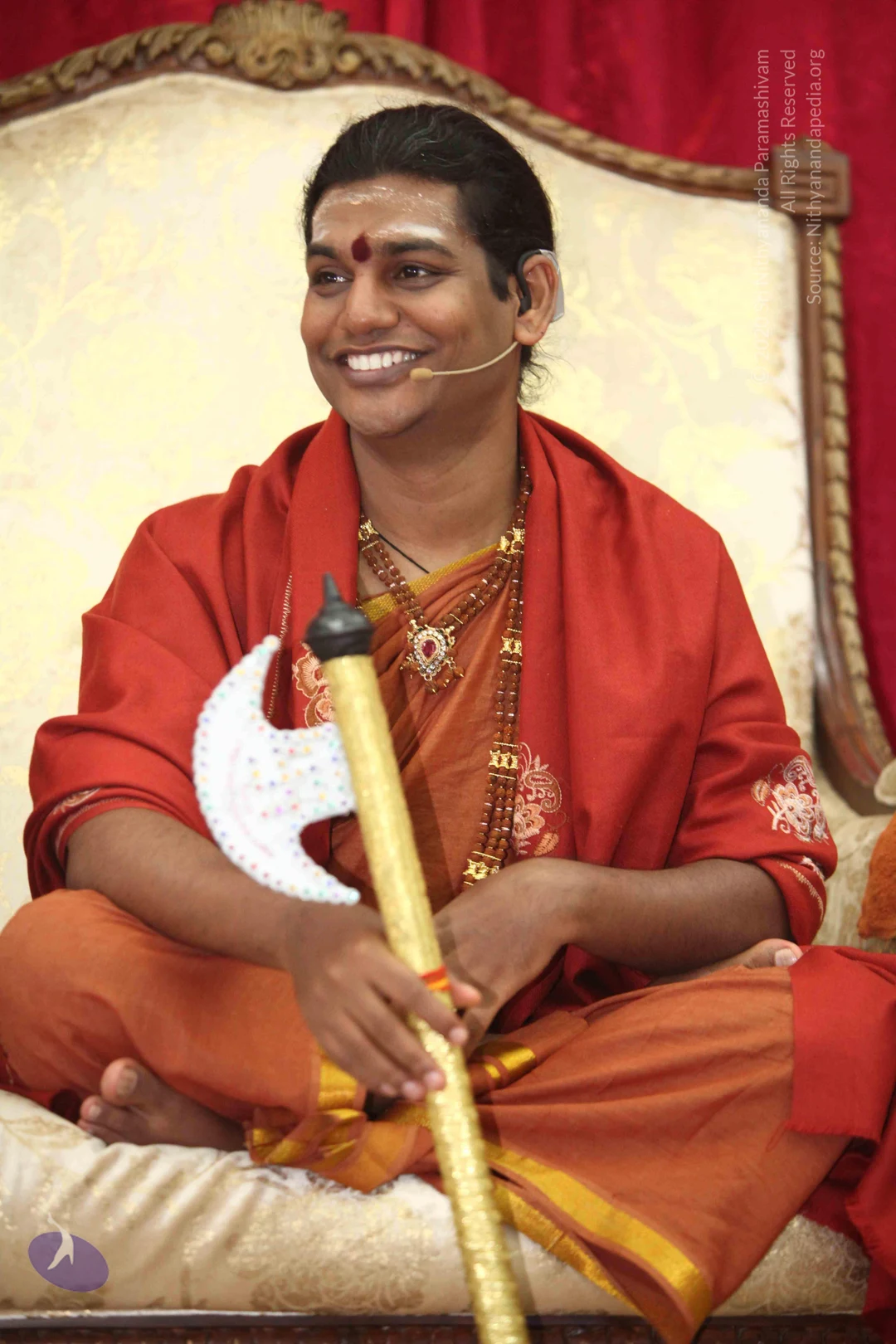
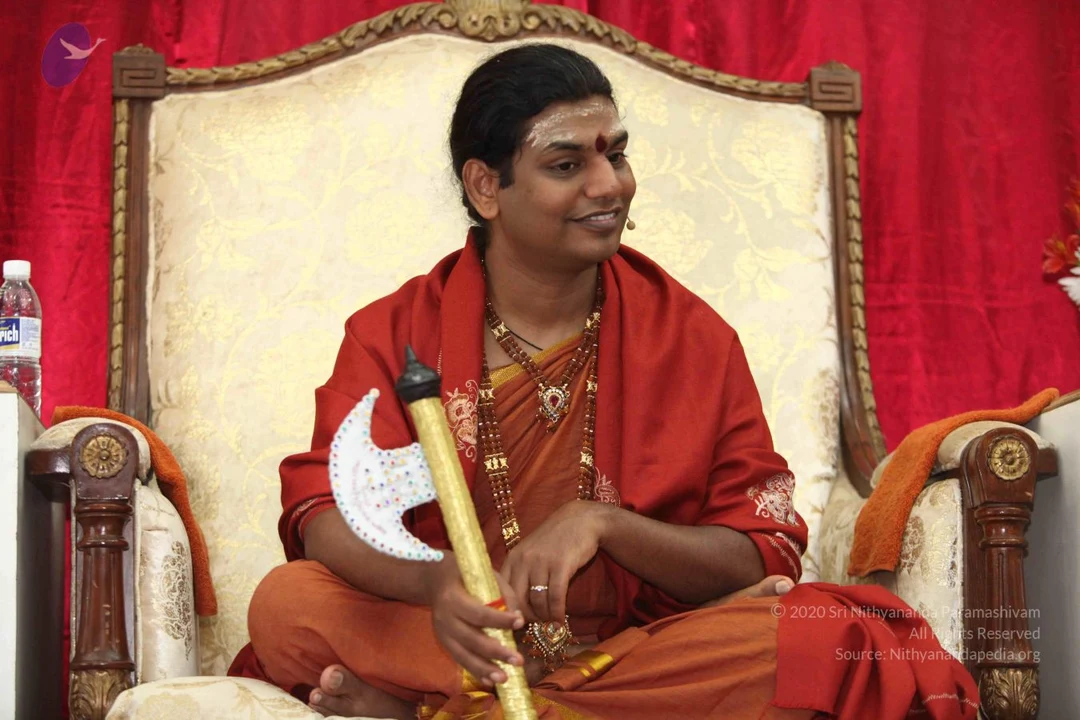
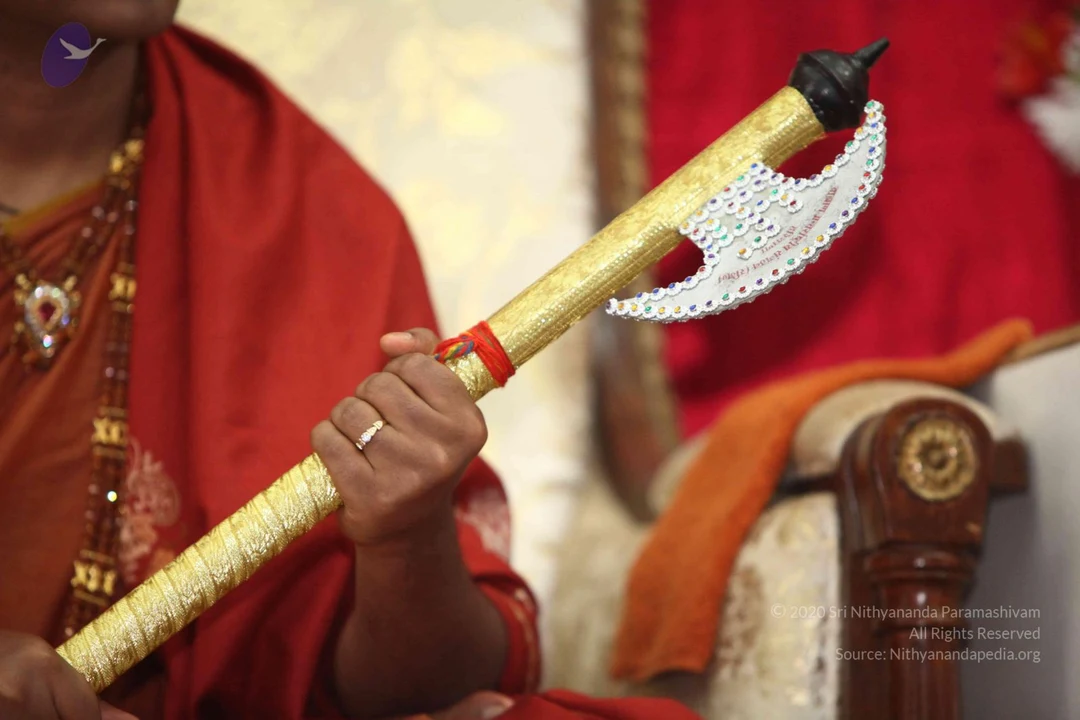
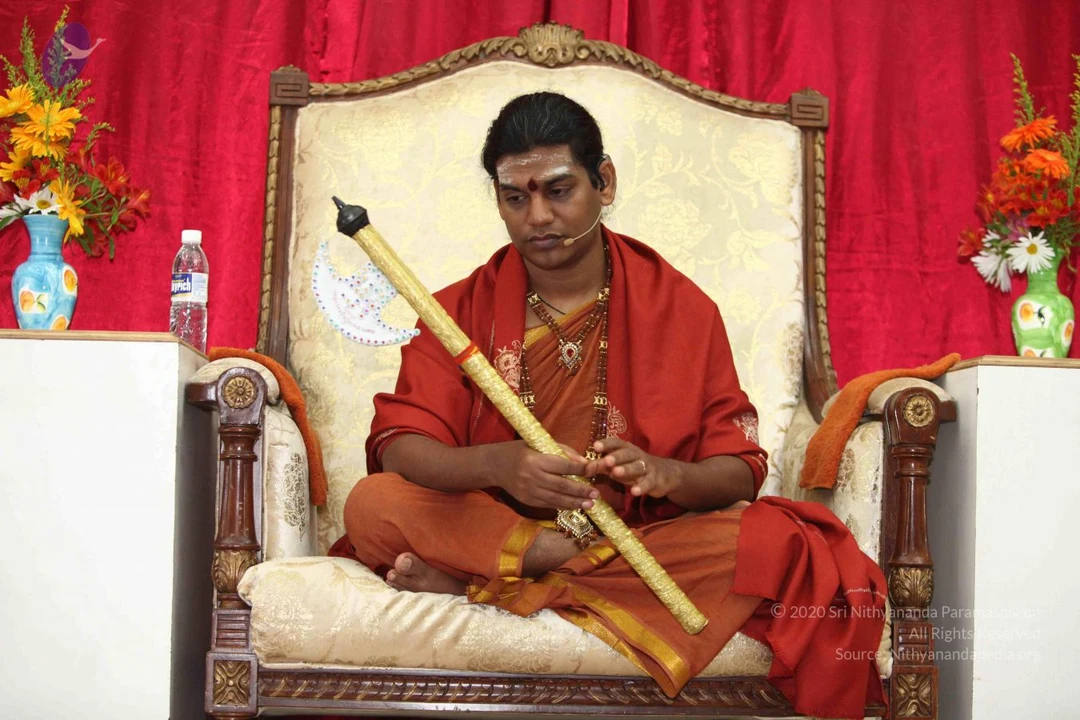
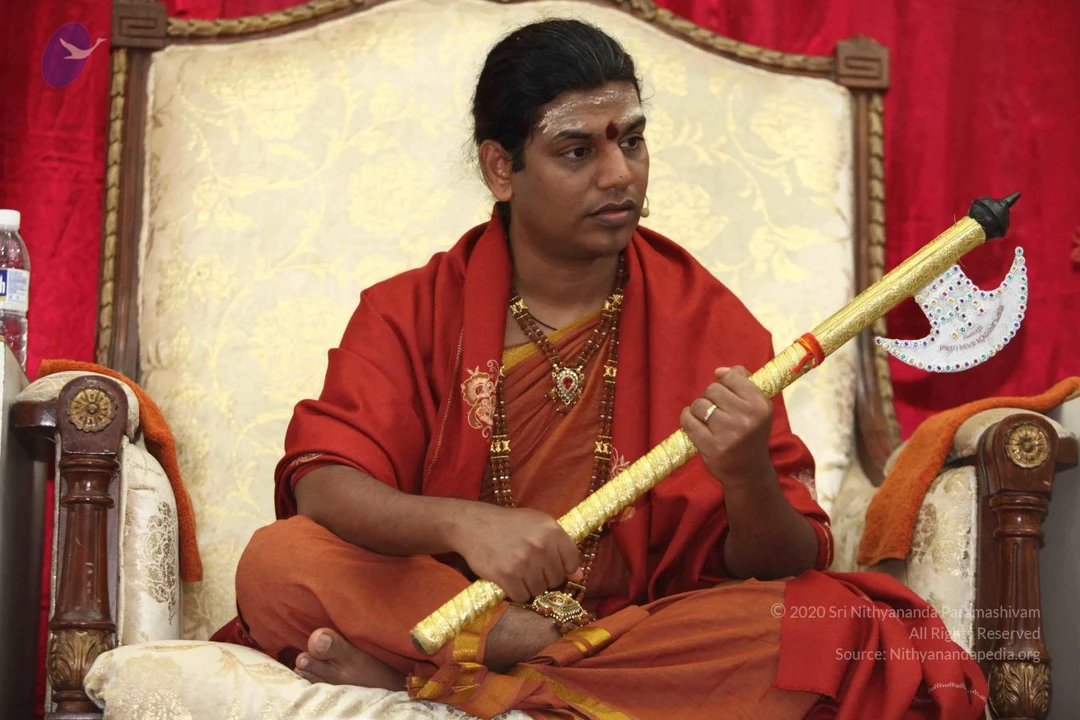
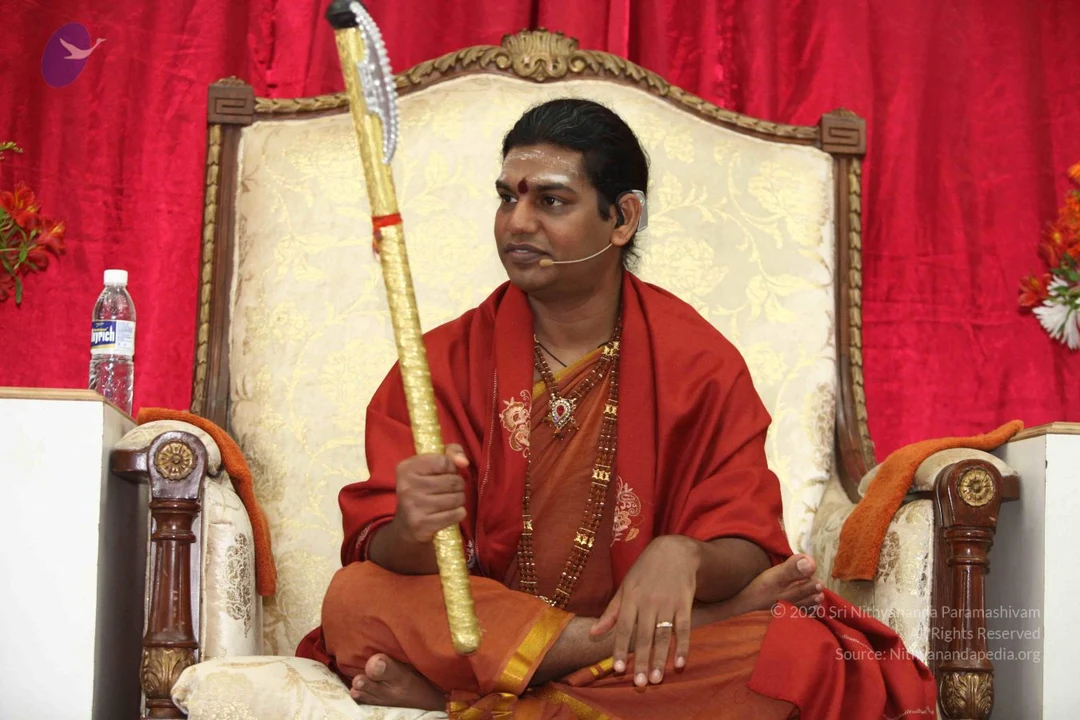
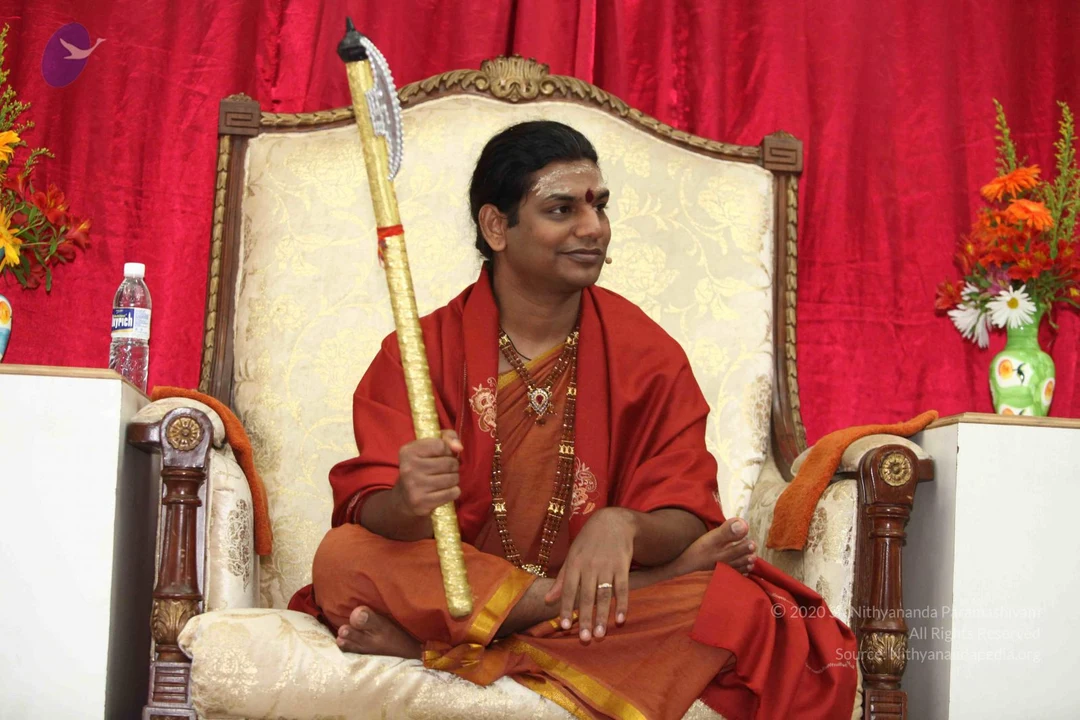
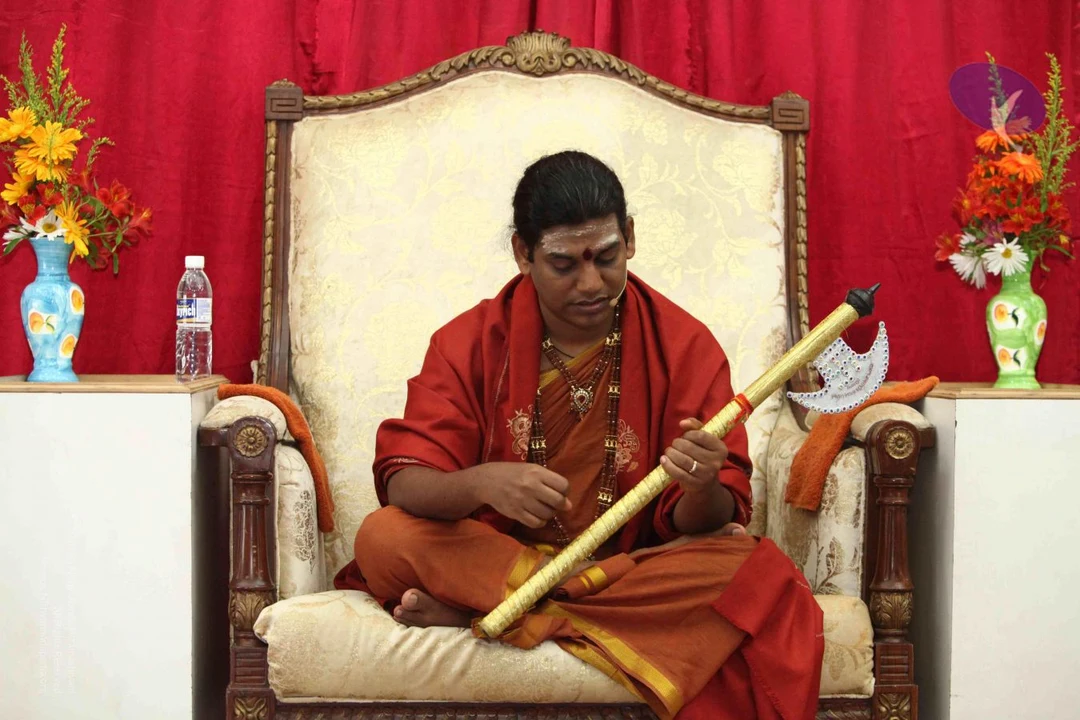
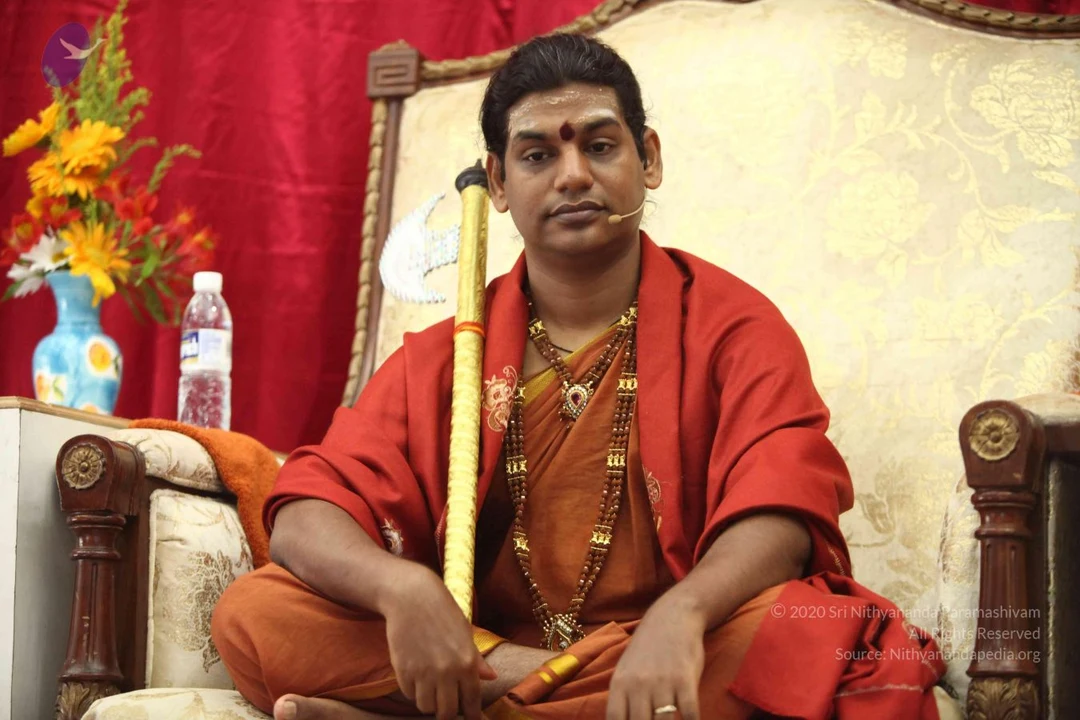
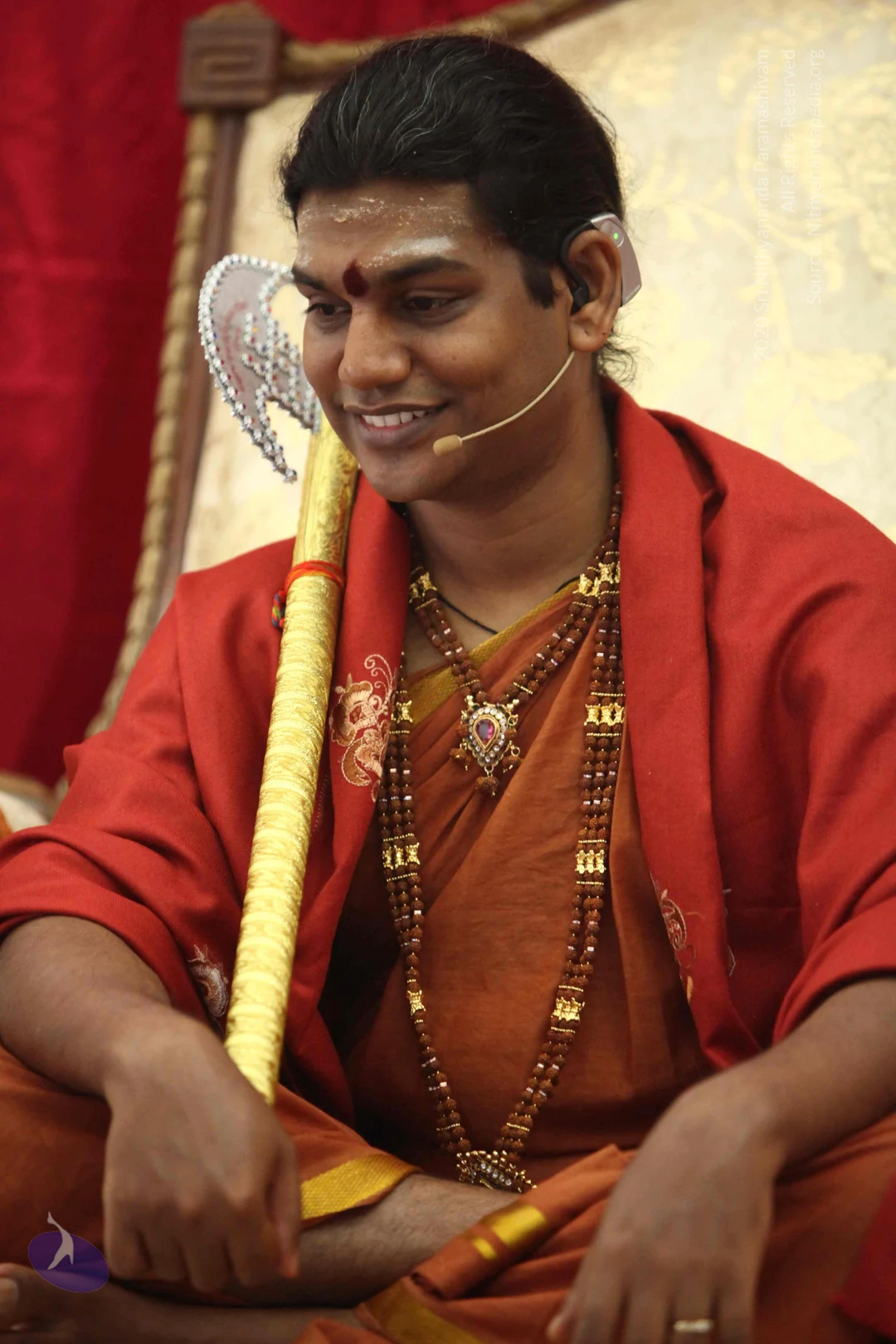
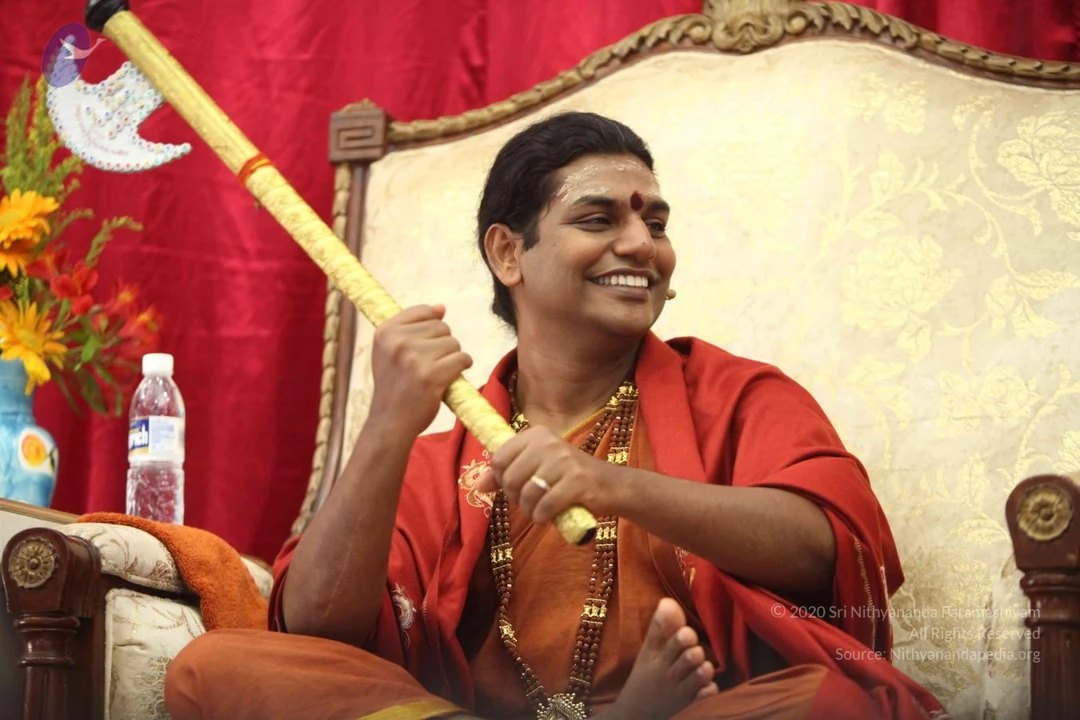
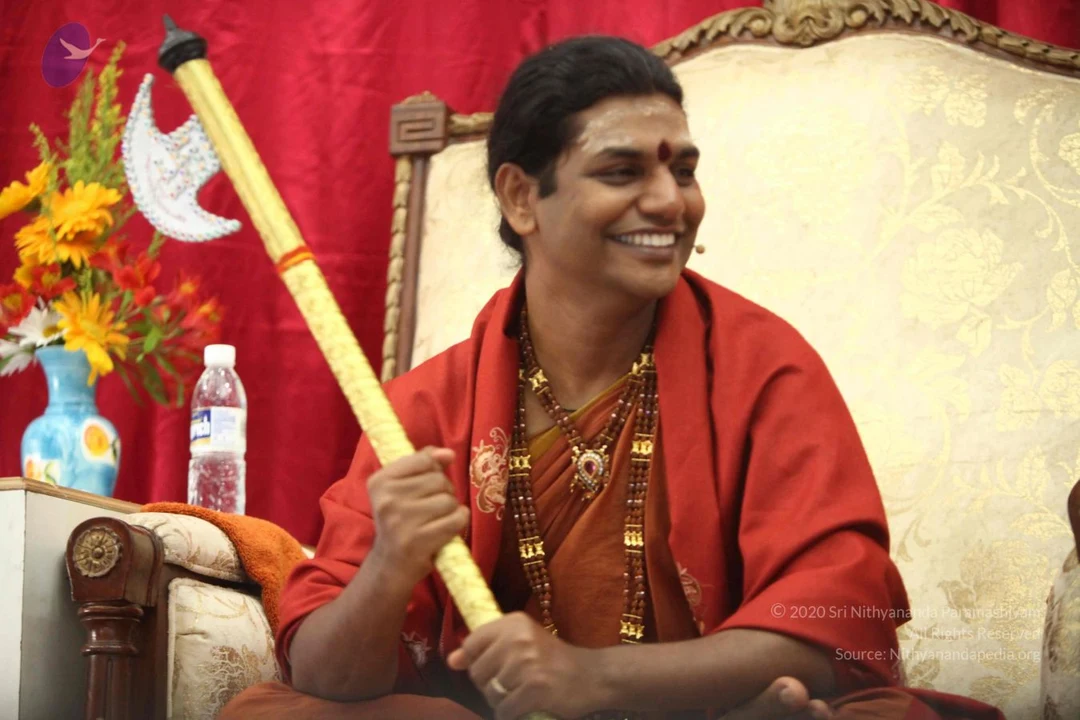
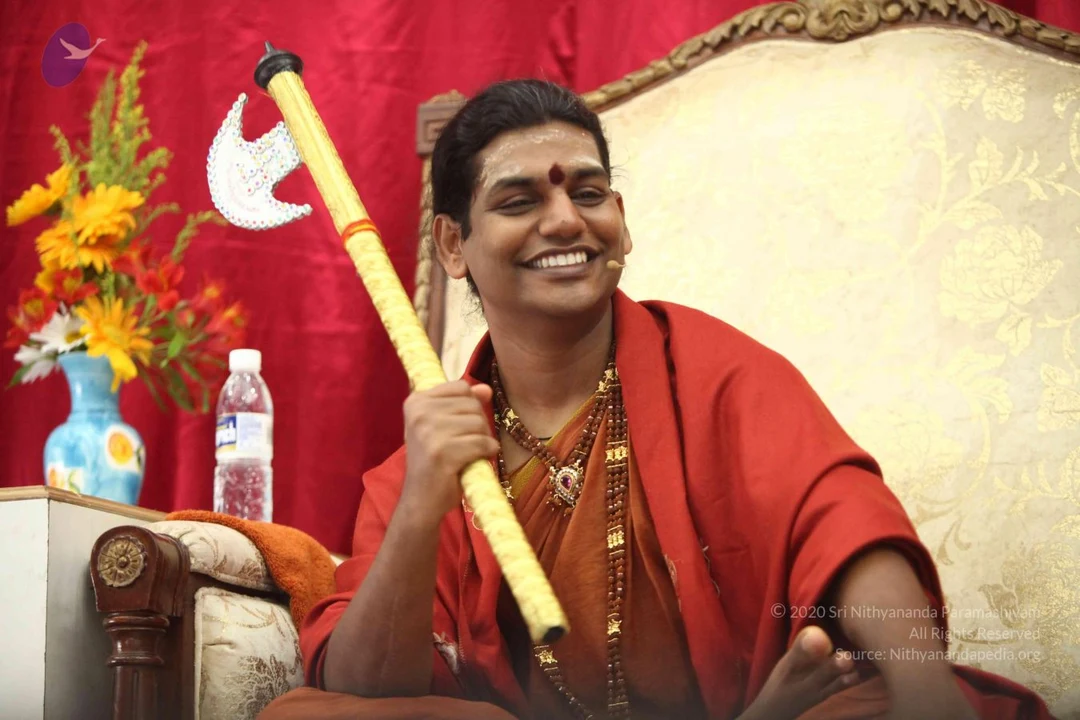
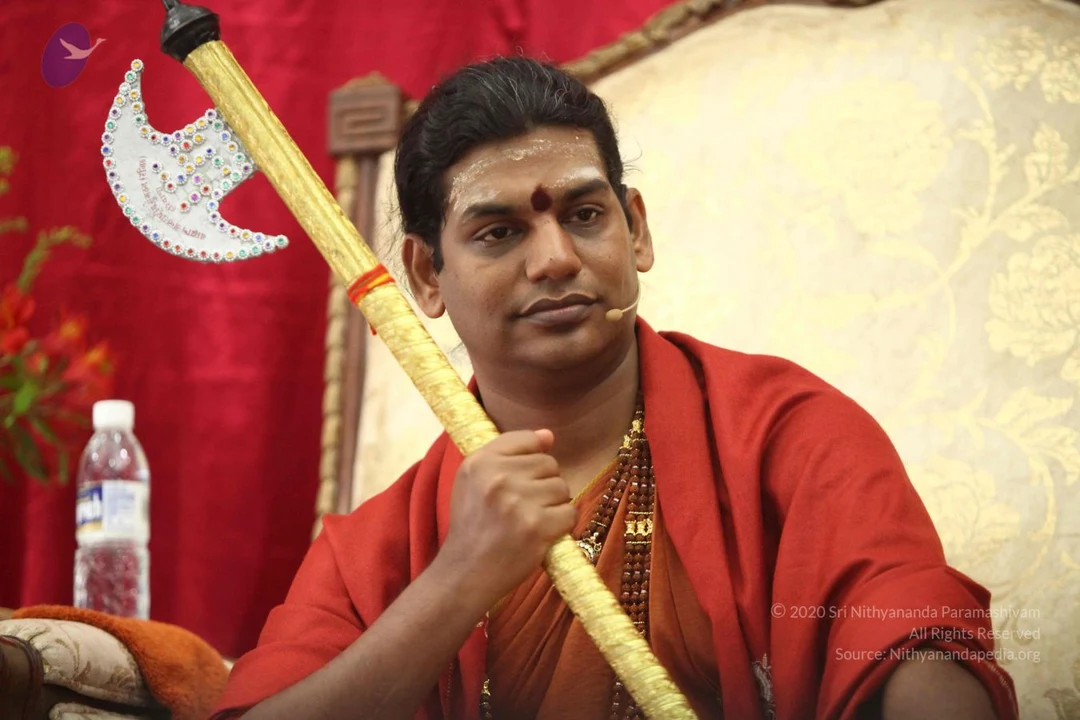
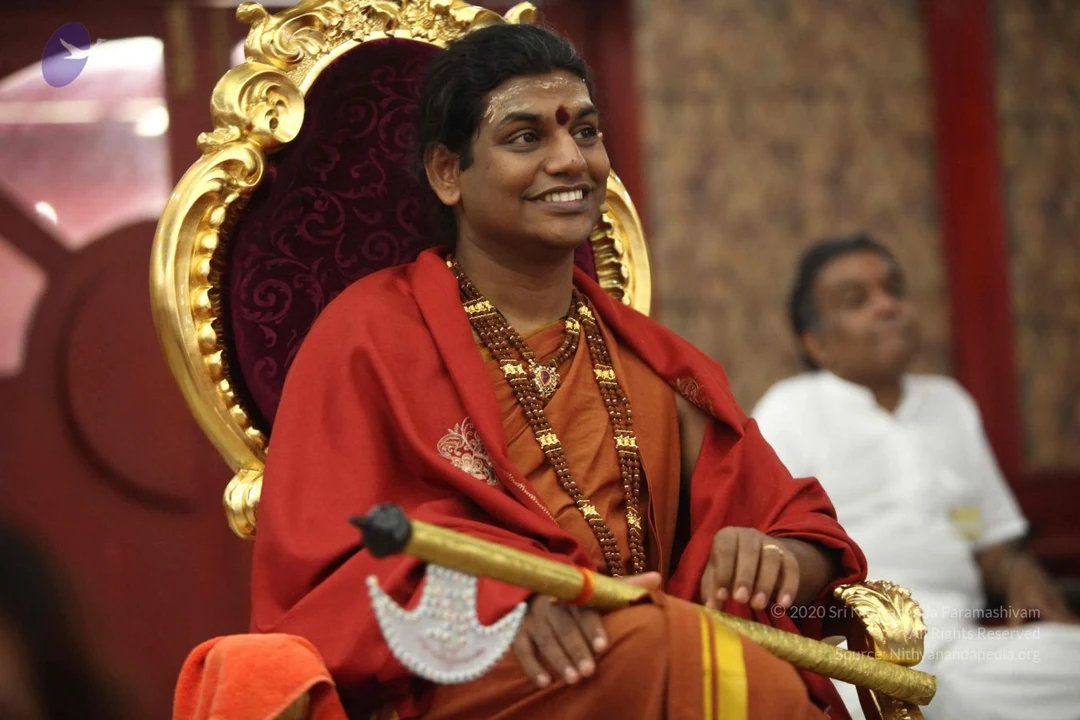
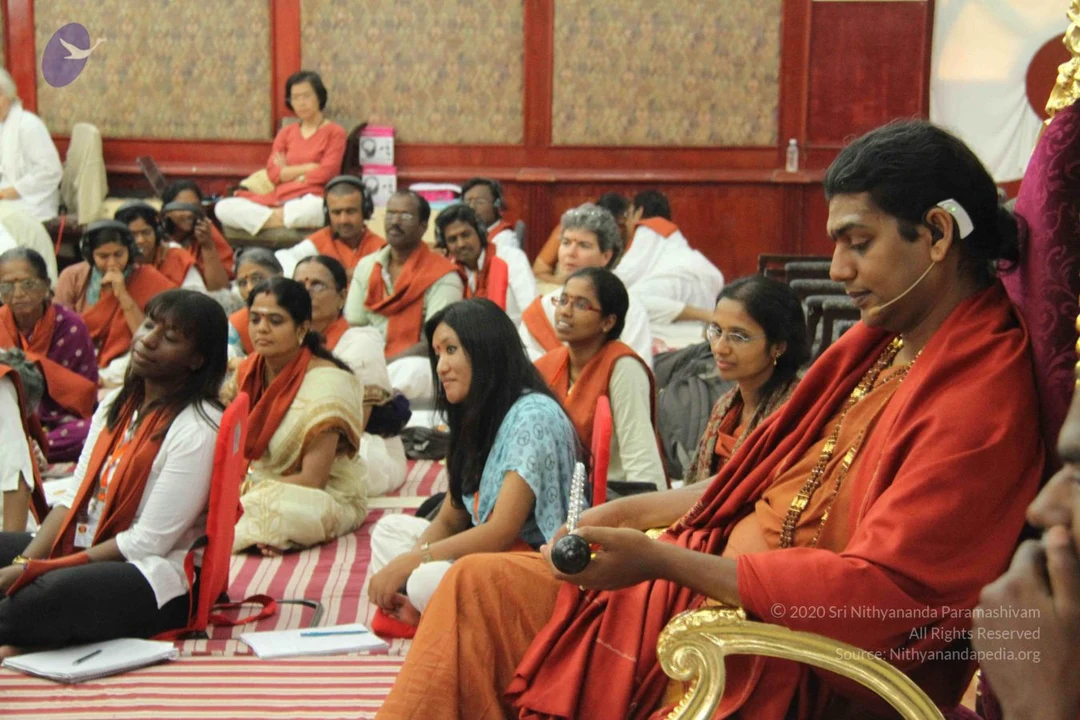
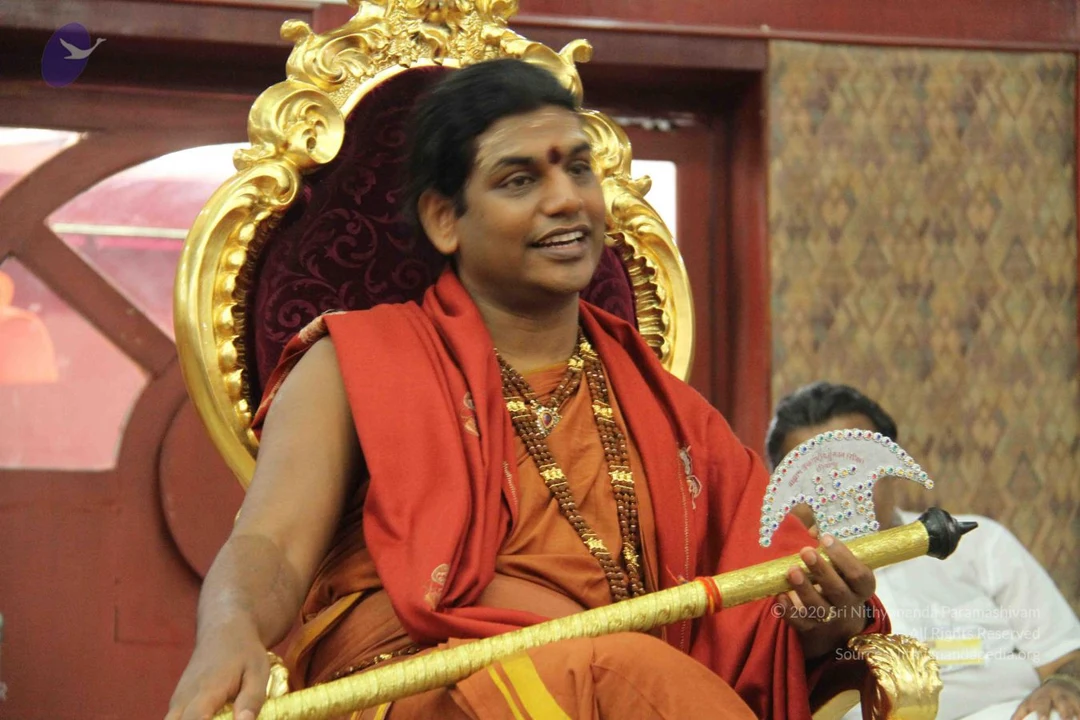
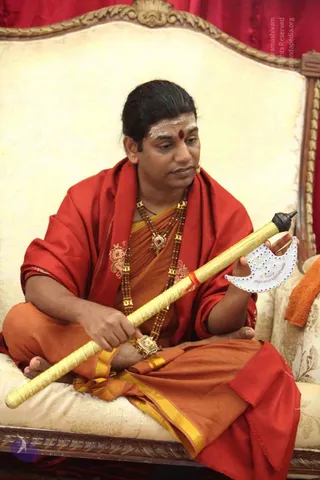
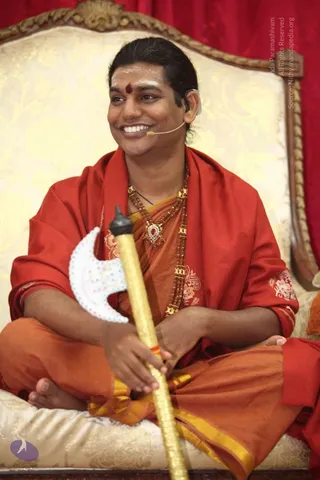
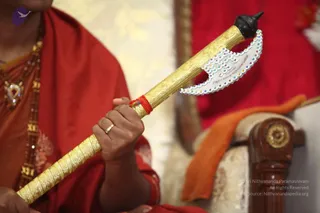
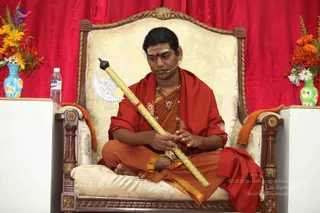
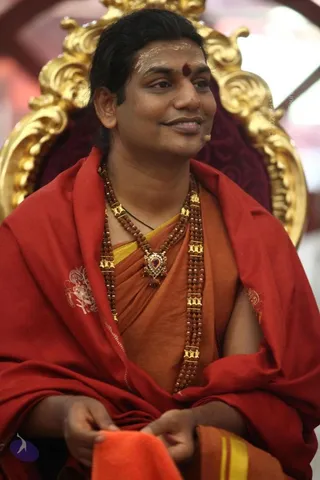
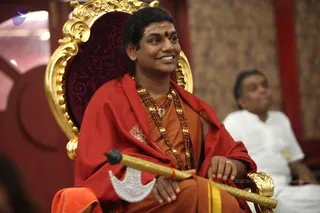
A man sits cross-legged on an ornate cream upholstered throne with carved gold-tone wooden frame, red drapes behind. He wears a red shawl over orange-saffron robes with gold borders, multiple rudraksha malas, a gold pendant necklace, and white sacred ash with a red kumkum dot on his forehead. He holds a long gold-wrapped ceremonial staff topped with a dark finial in one hand and a white crescent-shaped ornament studded with coloured stones in the other, looking down at it while speaking. An orange cloth lies on the armrest at right. a person: the appearance cues of distinctive ornate saffron attire, rudraksha malas and a gold pendant match the page's claim.A seated man in saffron-orange robes and a red shawl holds a long gold-and-black staff topped with a crescent-shaped white object studded with coloured stones, looking down at it. He wears a rudraksha mala and a gold ceremonial pendant necklace, with white tilak and a red bindi on his forehead, and sits on a cream gold-patterned chair. Behind him a red drape and a green vase of orange and white flowers stand beside an orange towel on the armrest. a person: the seated man wears saffron and red clothing, a rudraksha mala and gold ceremonial necklace, consistent with the discourse setting described on the page.A smiling man sits cross-legged on an ornate cream upholstered throne with gold carved trim against a red velvet backdrop. He wears a red shawl with embroidered borders over an orange-saffron dhoti with gold zari edging, layered beaded rudraksha-style malas and a gold pendant with a red stone. He has a white vertical tilak and a red bindi, and a headset microphone is clipped near his face. He holds a gold staff topped with a white crescent-moon ornament studded with multicoloured dots. Probable Swamiji (long swept-back hair, saffron ornate clothing, rudraksha malas, gold necklace, and crescent staff) seated as the speaker at a satsang-style discourse.A seated man in an ornate cream and gold armchair with carved dark wooden arms and a red velvet backdrop. He wears a red-orange shawl over an orange dhoti-style garment, layered beaded necklaces, a gold pendant, and has a red bindi and white tilak on his forehead. He holds a gold-handled ceremonial staff topped with a white crescent-shaped ornament dotted with colourful beads, and smiles while seated cross-legged on the chair. A water bottle and orange hand towels rest on the armrests, and a small clip-on microphone is visible at his ear. The setting appears to be a satsang discourse.Close-up photo of a person in a red-orange robe holding a gold-wrapped ceremonial staff topped with a black finial and a white crescent-shaped blade decorated with multicoloured beads. A red and yellow thread is tied around the staff below the hand, which wears a silver ring. A gold and red-bead necklace with a red pendant is visible at the left. Behind is a red cloth and an ornate wooden chair with an orange cloth draped over its armrest.A seated man in saffron-orange and red ceremonial robes sits in an ornate cream and gold upholstered armchair with carved dark wooden arms against a red draped backdrop. He holds a long gold-wrapped staff across his lap with both hands, looking down at it. He wears a rudraksha mala with a gold pendant, a gold necklace, and a red bindi with white tilak on his forehead, and a small headset microphone. Blue and green vases of orange and white flowers flank him, a water bottle sits on a white side table, and a white crescent decoration hangs on the chair back. The overlay credits a person and shows .

Leadership-Consiousness-Session

34 photosSource gallery
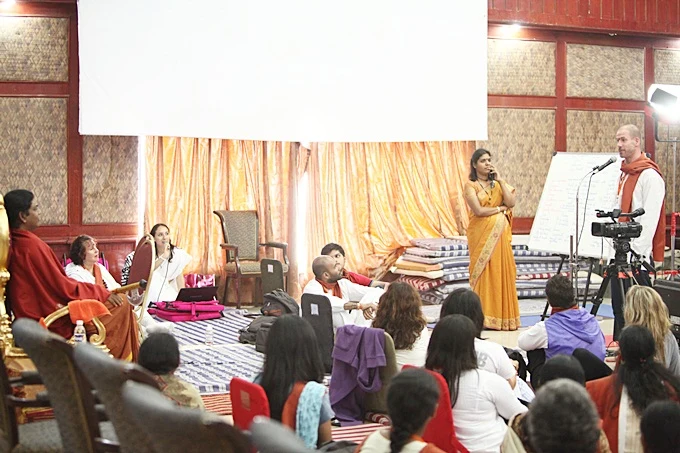
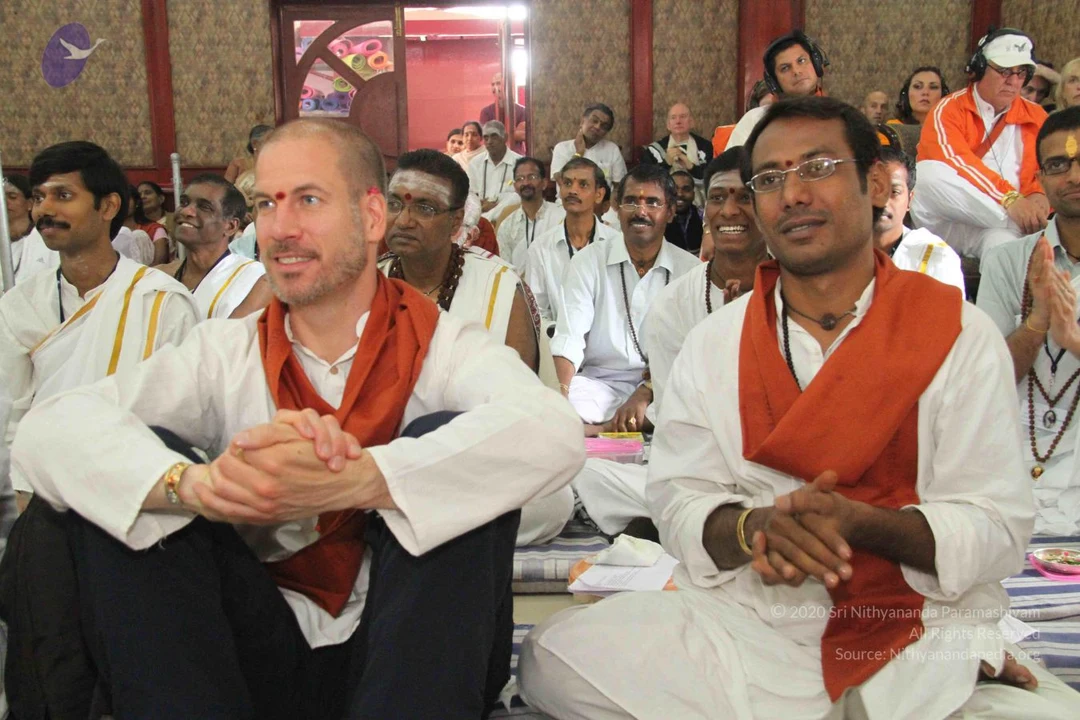
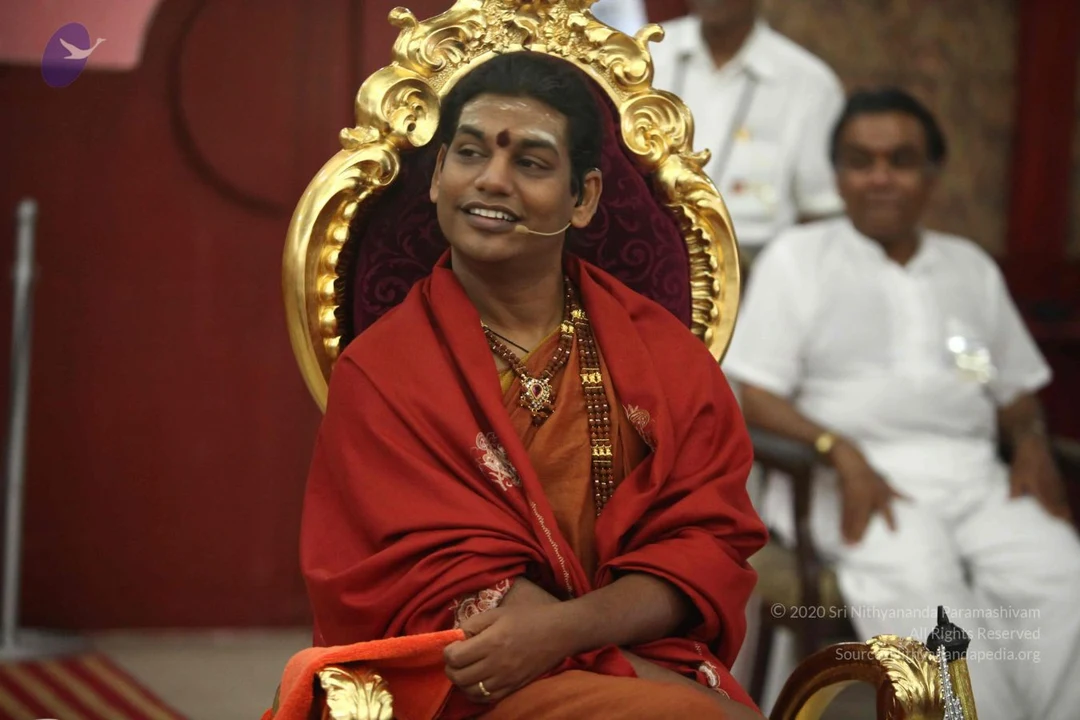
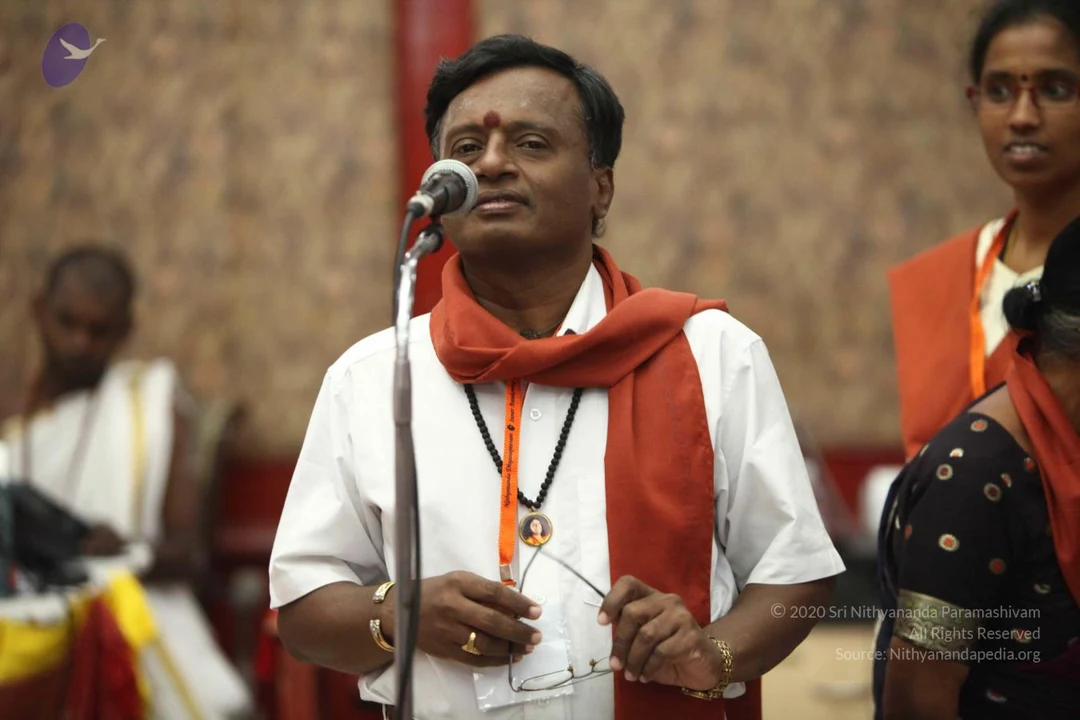
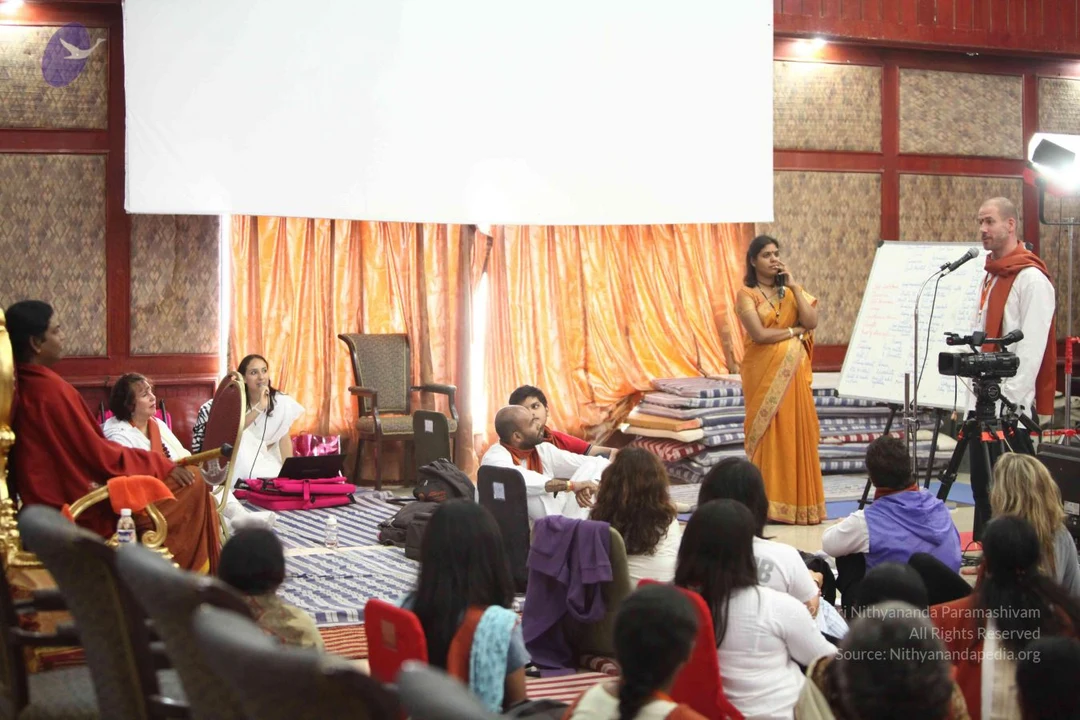
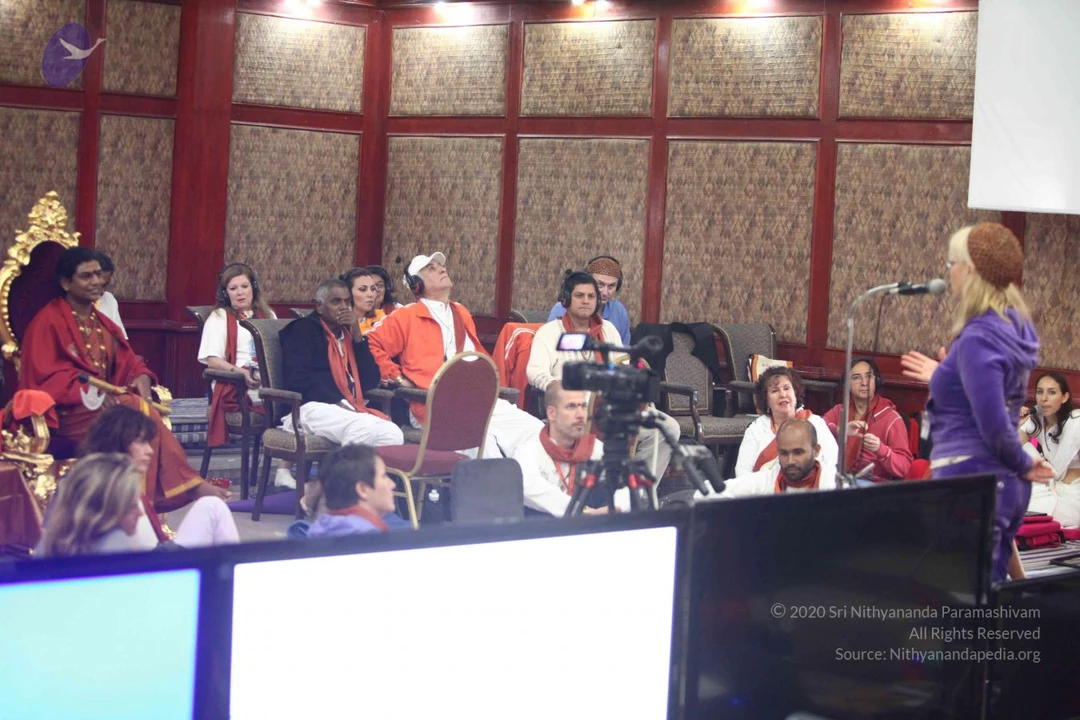
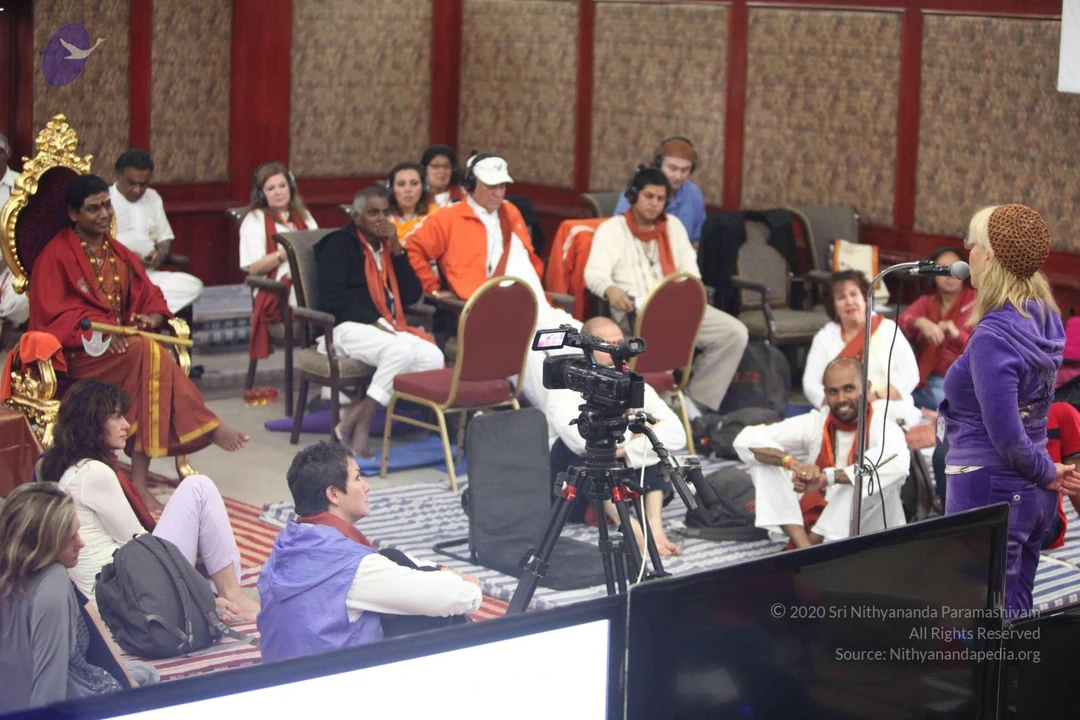
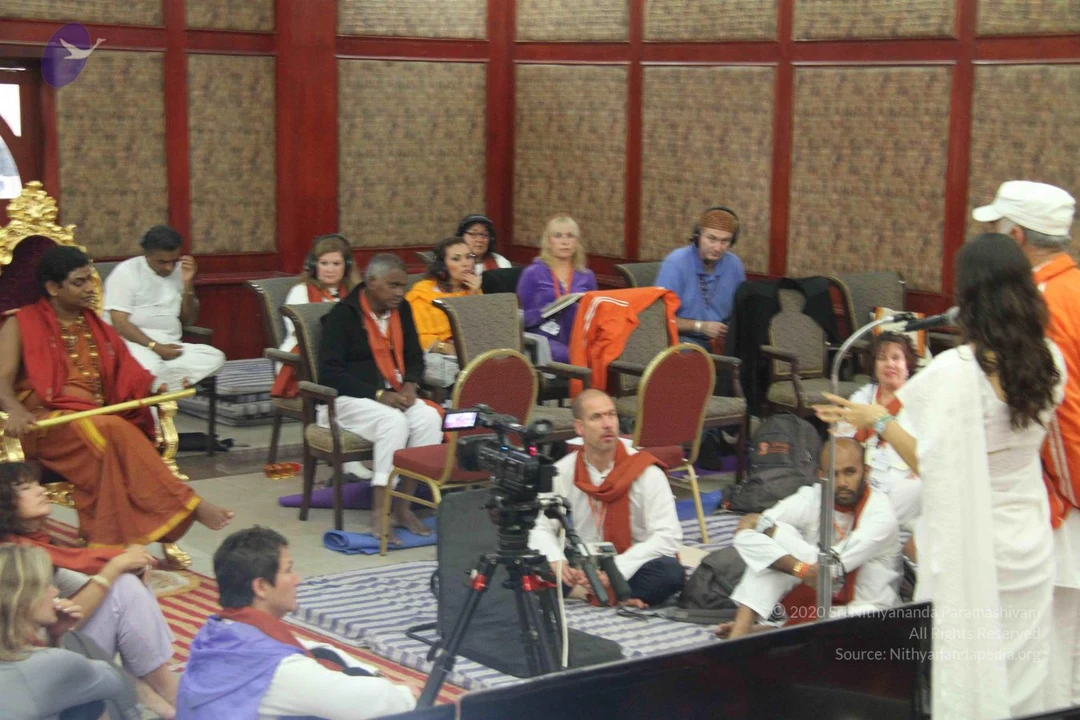
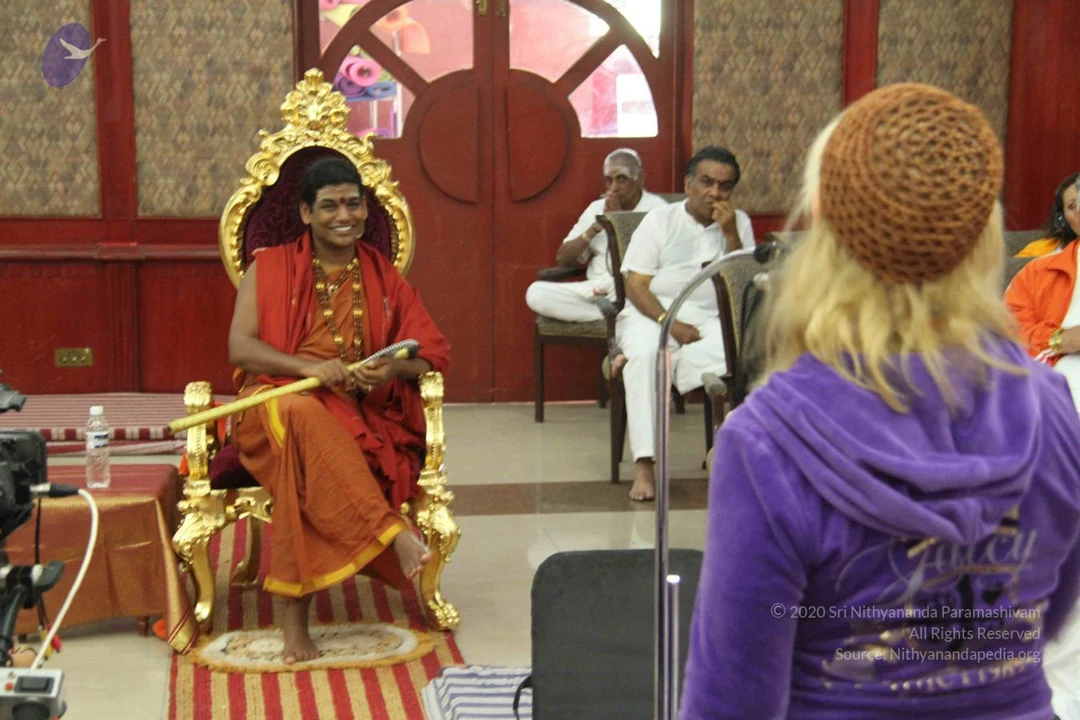
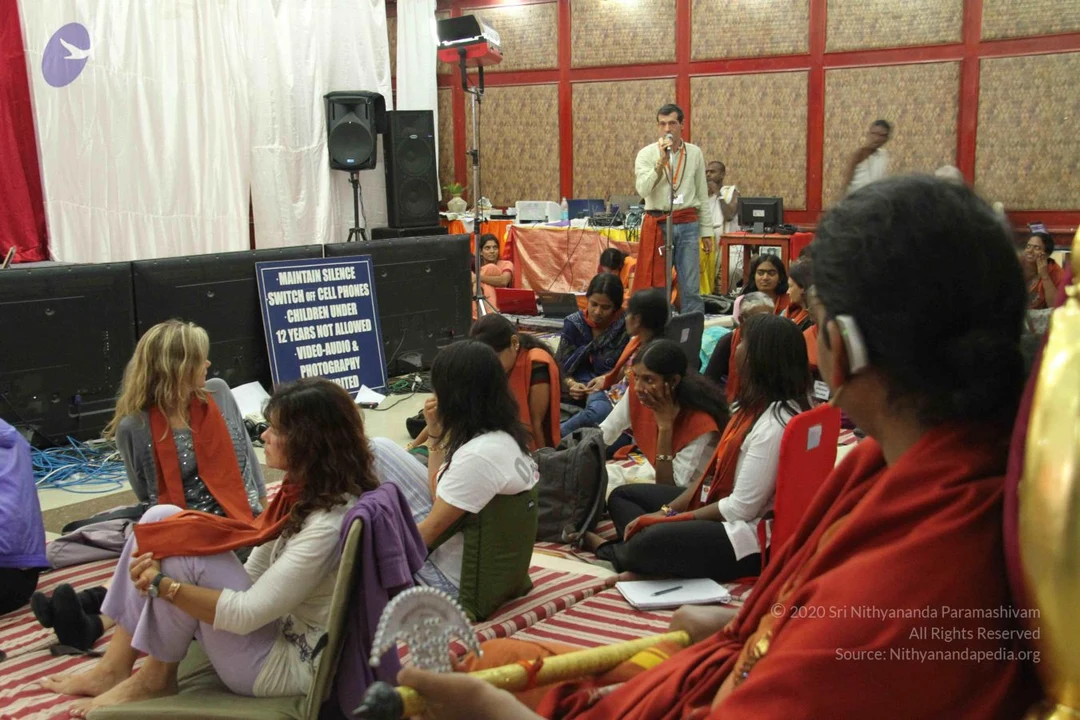
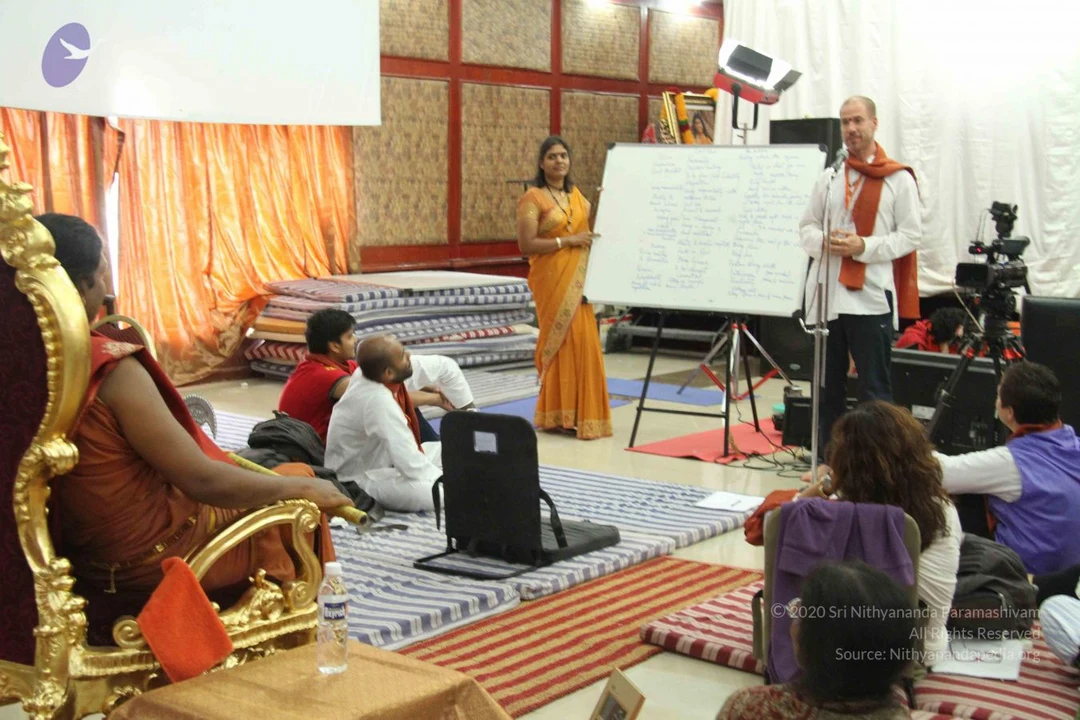
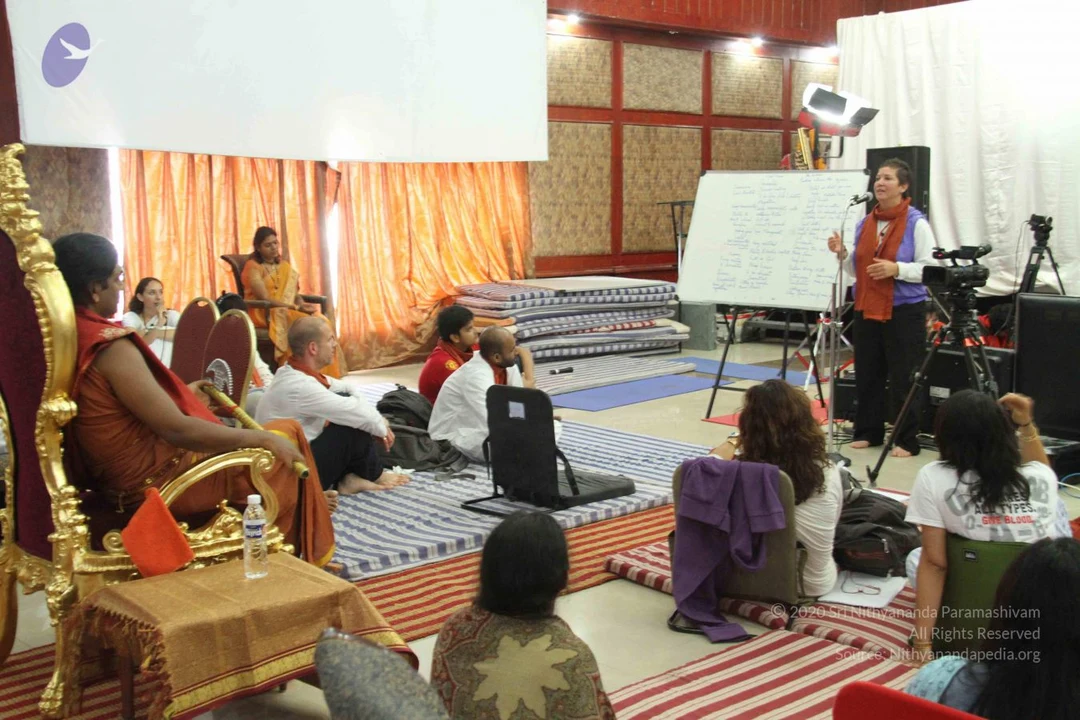
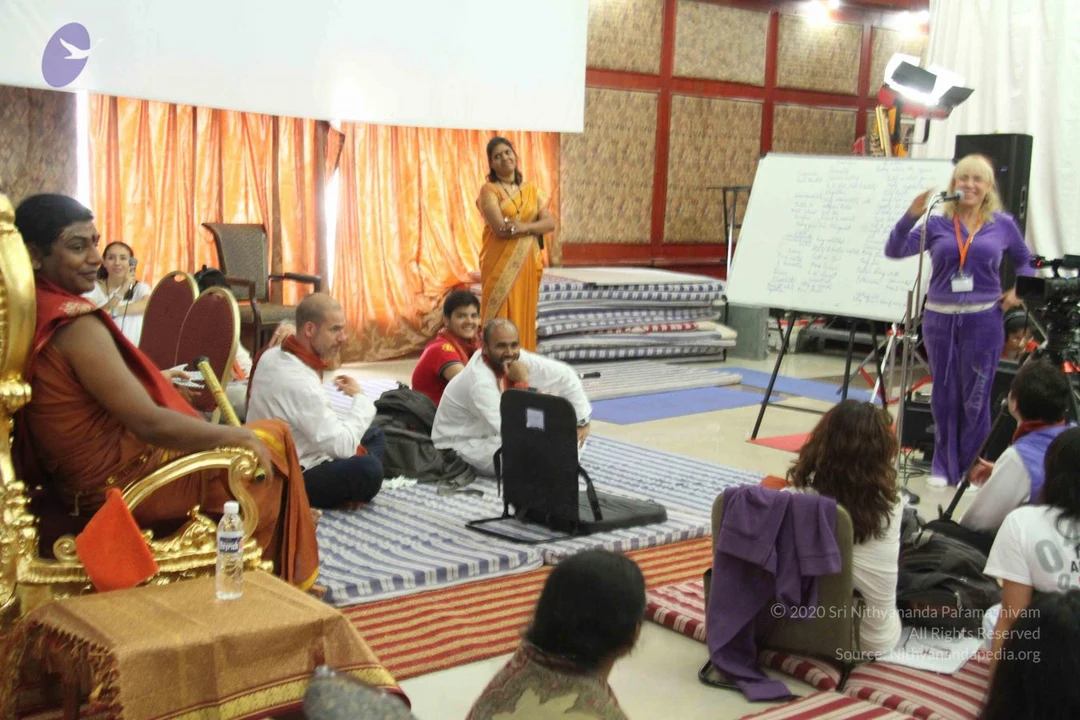
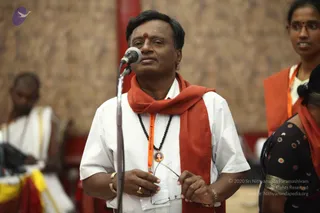
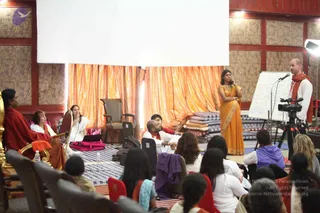
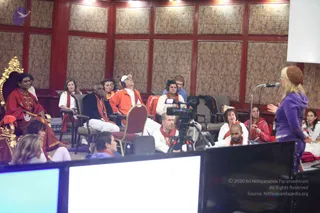
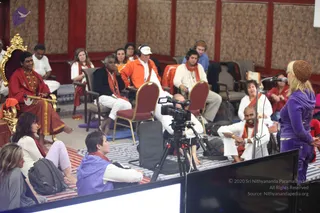
A smiling man sits on an ornate gold throne with a dark red cushioned back, wearing an orange saffron-coloured garment with a yellow border under a red shawl with embroidered motifs. He wears multiple strands of rudraksha beads with gold spacers and a central pendant set with a red stone, and has a red bindi and white tilak on his forehead with a small lapel microphone. His hands rest together holding an orange cloth. The setting appears to be a satsang or discourse hall. Appearance-based label: a person, seated in a discourse setting, based on the saffron and red clothing, rudraksha malas, gold pendant and a throne.A smiling man with long dark hair and a red bindi sits on an ornate gold throne with a deep red velvet cushion. He wears an orange-saffron garment under a red shawl, layered with multiple rudraksha malas and a gold ceremonial pendant necklace. He rests his hand on a gold-and-white ceremonial staff with a crescent-shaped silver finial. Behind him on the right, a man in white clothing sits and looks off to the side. The setting has red walls and a patterned wall panel.A man with a red bindi stands at a microphone on a stand, speaking at an indoor satsang gathering. He wears a white collared shirt, a red-orange shawl draped over his shoulders, a black rudraksha mala, and a lanyard with an orange strap and a small round pendant portrait. He holds a pair of eyeglasses and wears gold rings and a gold bracelet. Behind him, a woman in an orange shawl and white top stands, and at left a robed man in white and yellow cloth sits partly visible. The walls show a dark textured patterned backdrop with red panels.Indoor satsang hall with a blank projection screen above orange silk drapes and wooden wall panels. On the left, a man in a red shawl sits on an ornate golden throne-style chair beside a woman in white. In the centre, a woman in a mustard-yellow sari holds a microphone and stands near a stack of folded blue-and-white mats. On the right, a man in white with an orange shawl stands beside a whiteboard covered in writing, a microphone on a stand and a video camera on a tripod. Seated devotees in white, orange and purple clothing fill the foreground, with a bald man in white and orange near the middle. A corner logo appears at upper left.A photograph of a seated audience in a wood-panelled hall during a satsang session. At left, a figure in a red-orange robe with a rudraksha mala sits on an ornate gold throne-style chair; a person candidate with long hair and distinctive ceremonial adornments, seated in a role of honour. Around him, devotees in orange and red shawls and white clothes sit in rows, several wearing headphones. A man in an orange jacket and white cap looks upward. In the foreground, a woman in a purple hooded top with a brown knit hat stands at a microphone gesturing toward the audience, while a camera on a tripod and a monitor screen sit in front of the seats. About fourteen physical people are visible.A satsang hall with red-and-gold wooden panelling and patterned wall fabric. Seated devotees on the floor and in chairs wear orange, white and saffron shawls, some with headphones. A woman in a purple hooded top stands at a microphone on the right, facing the audience. A video camera on a tripod and a monitor sit in the foreground, and a man in white with a saffron shawl plays a small hand instrument on the floor.

The-Samyama-Session

26 photosSource gallery
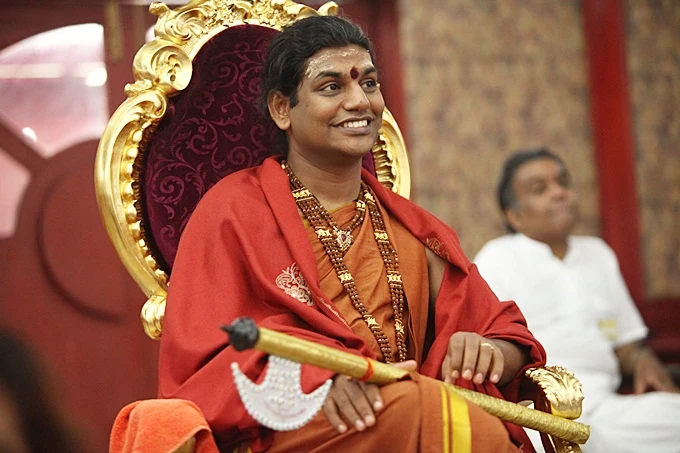
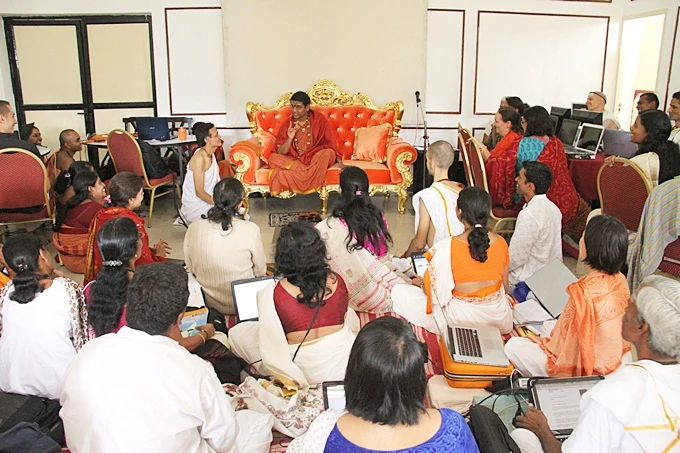
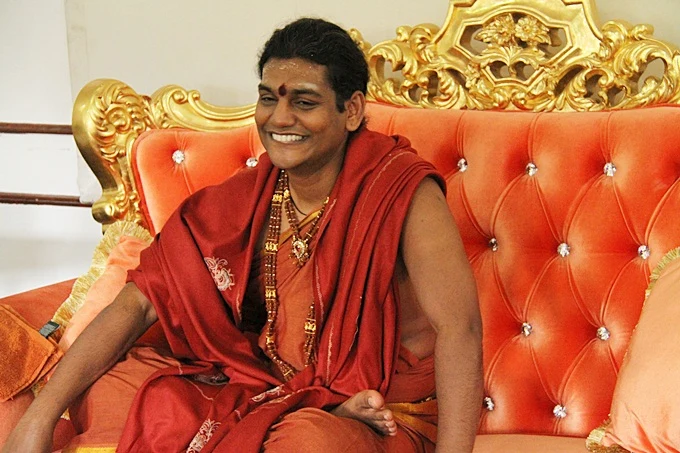
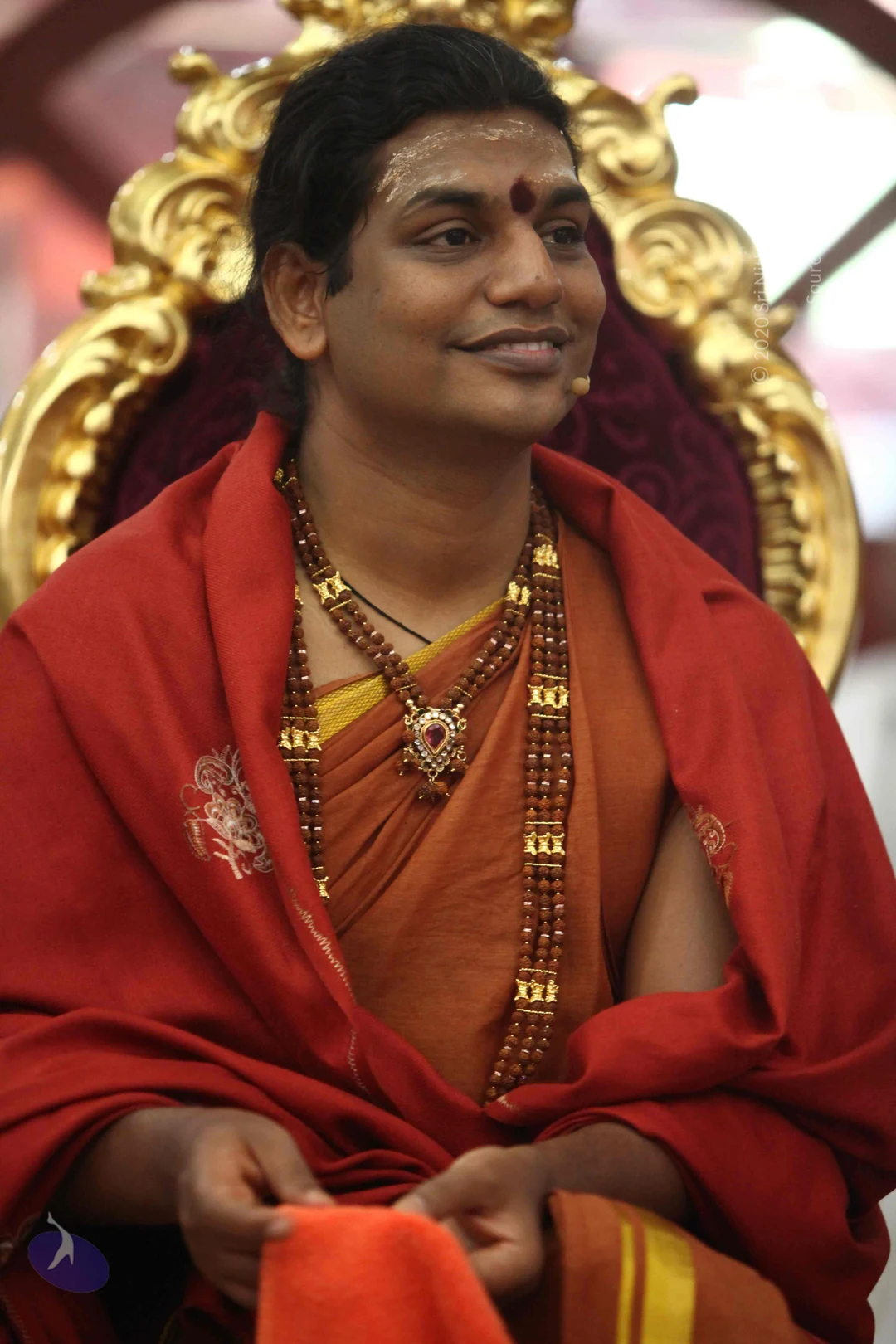
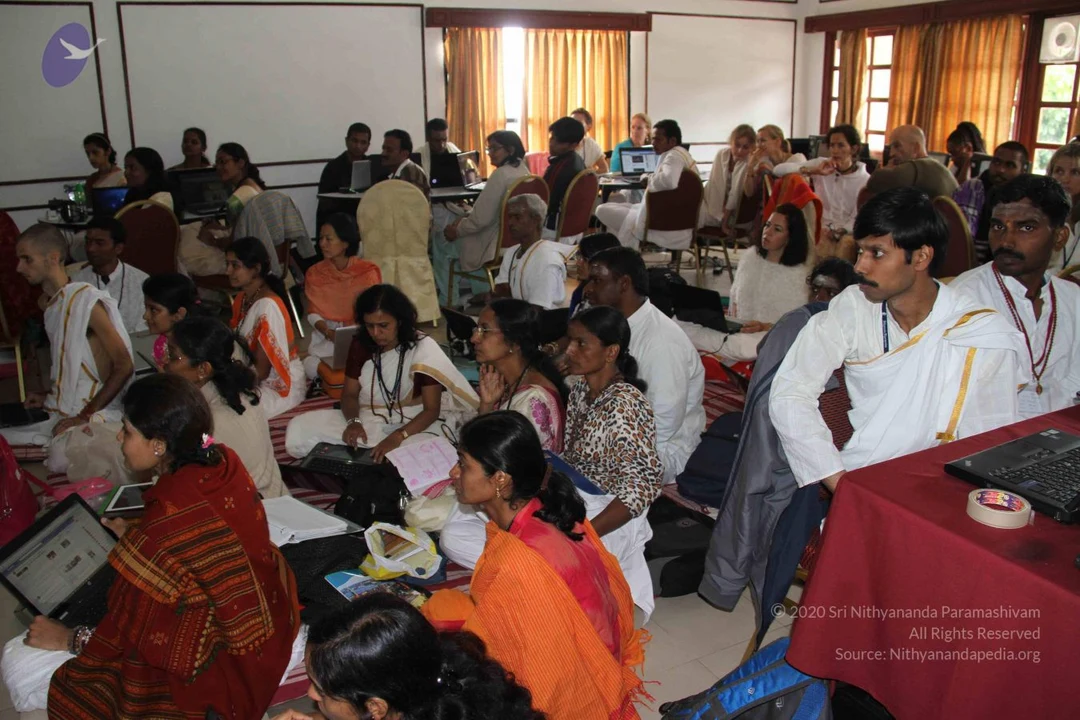
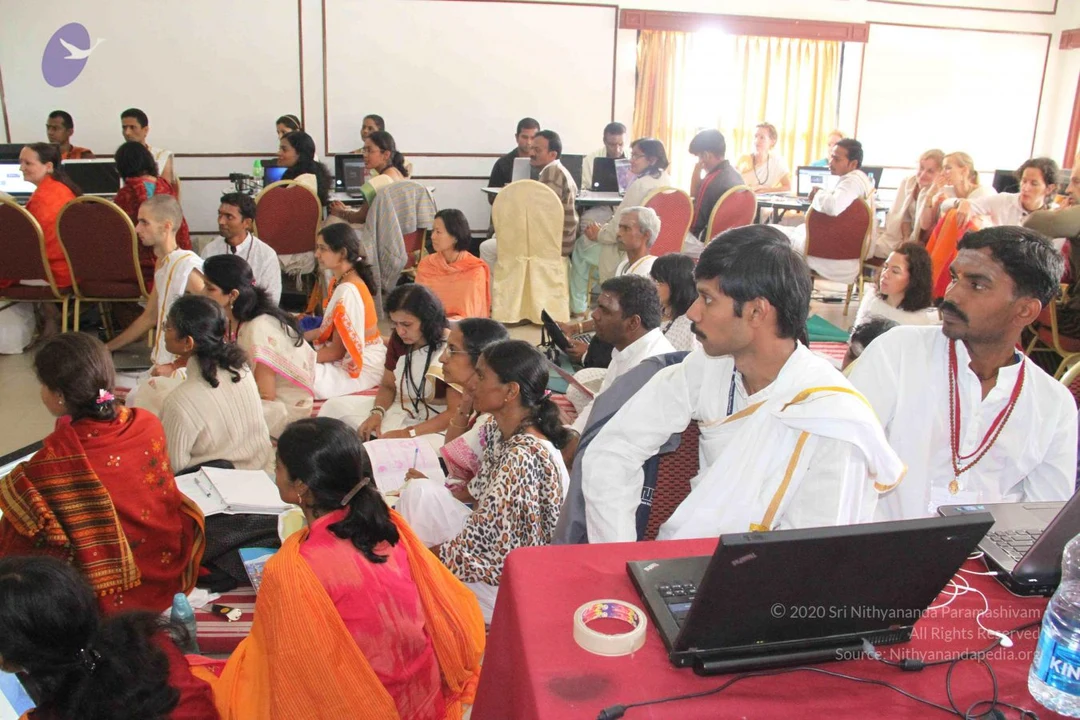
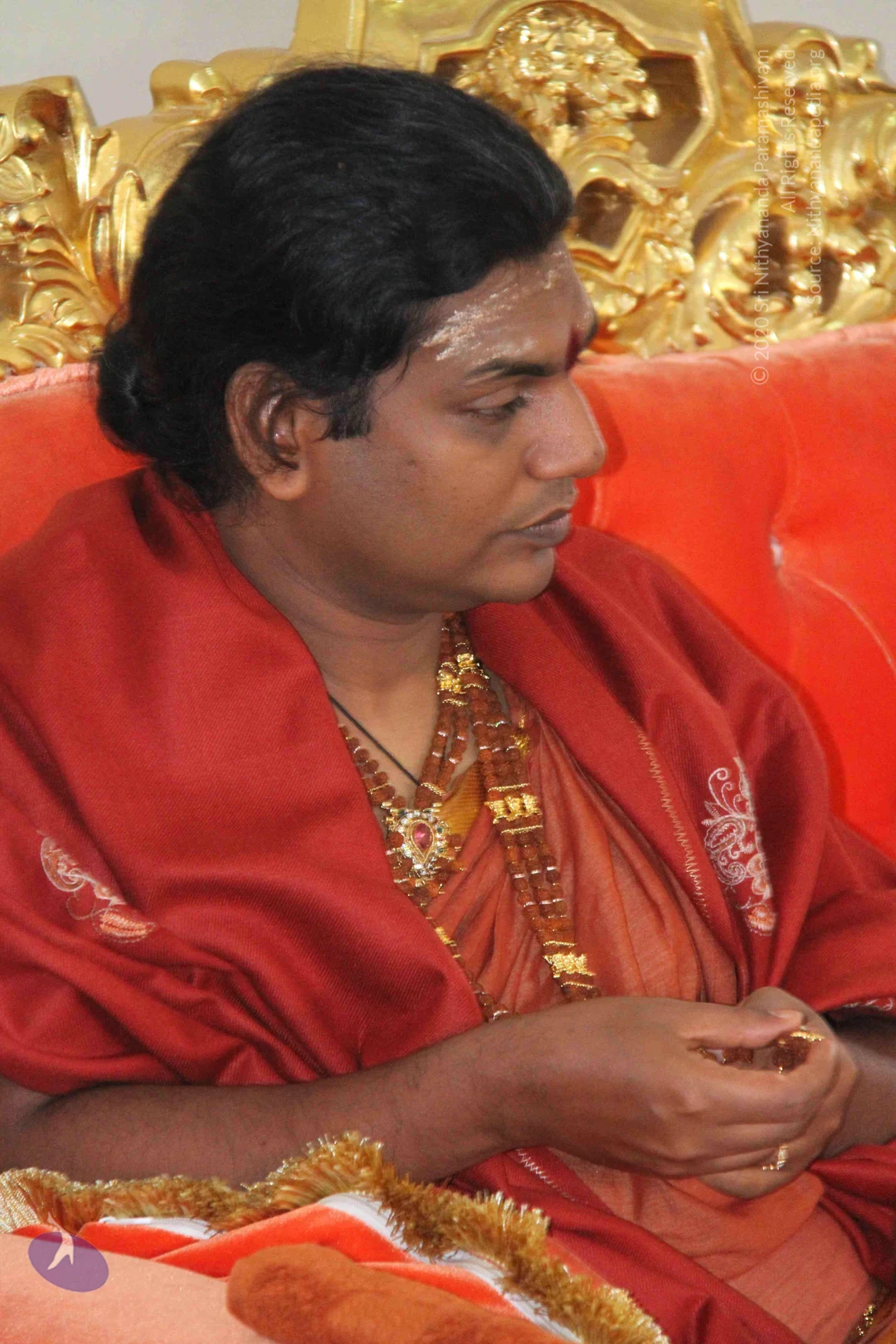
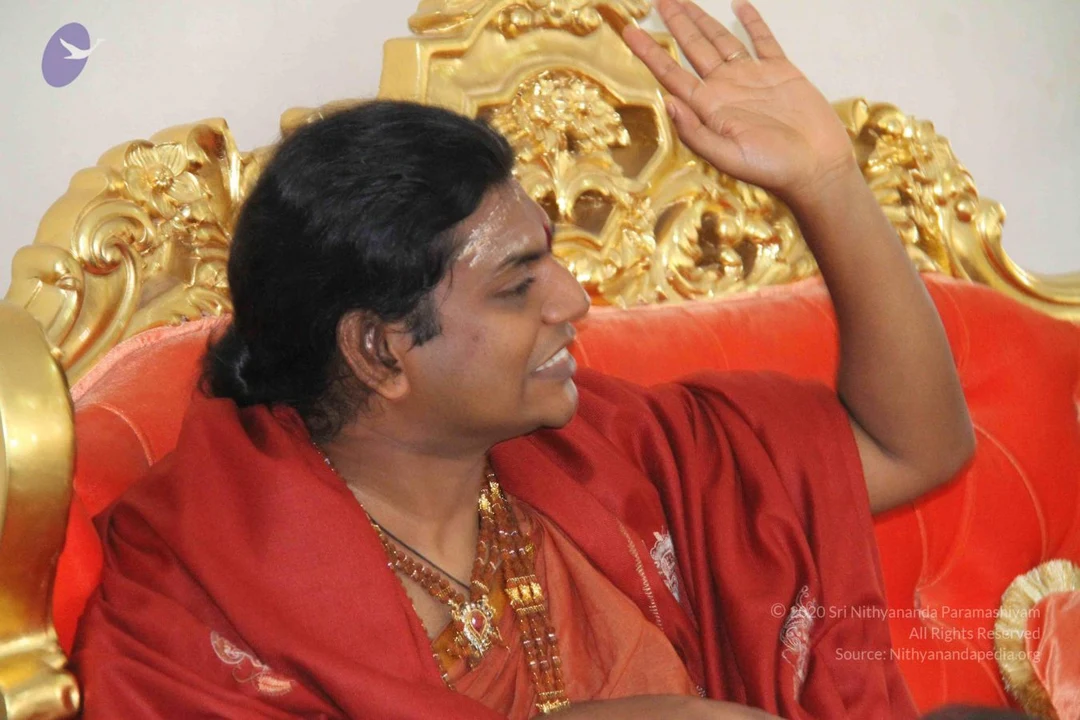
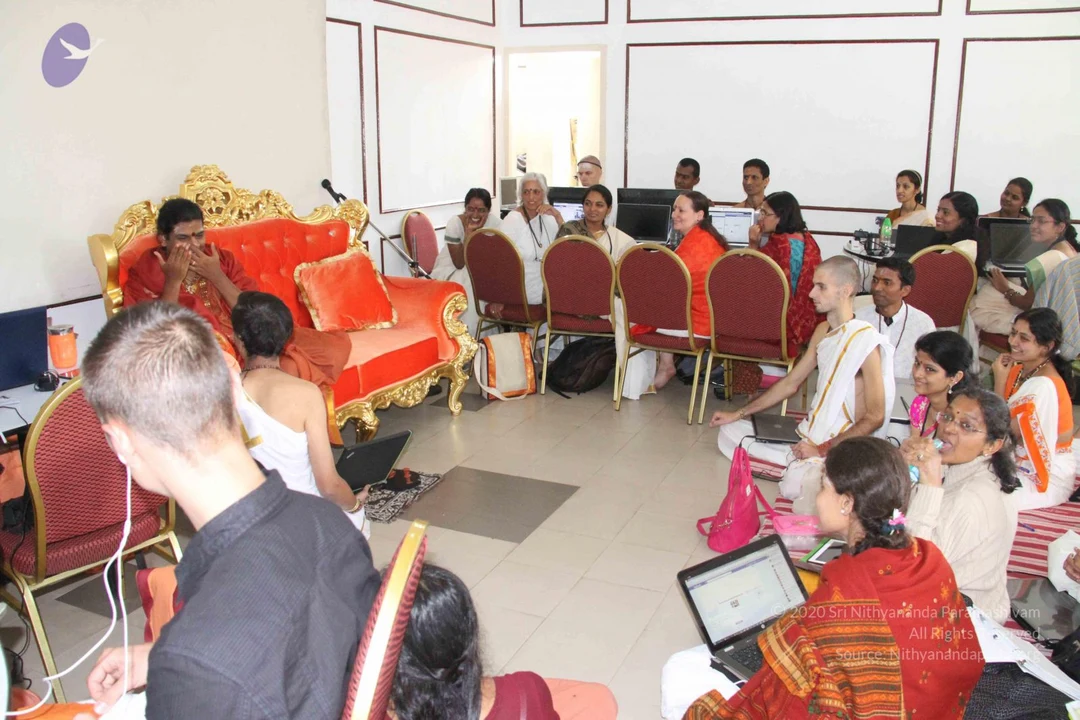
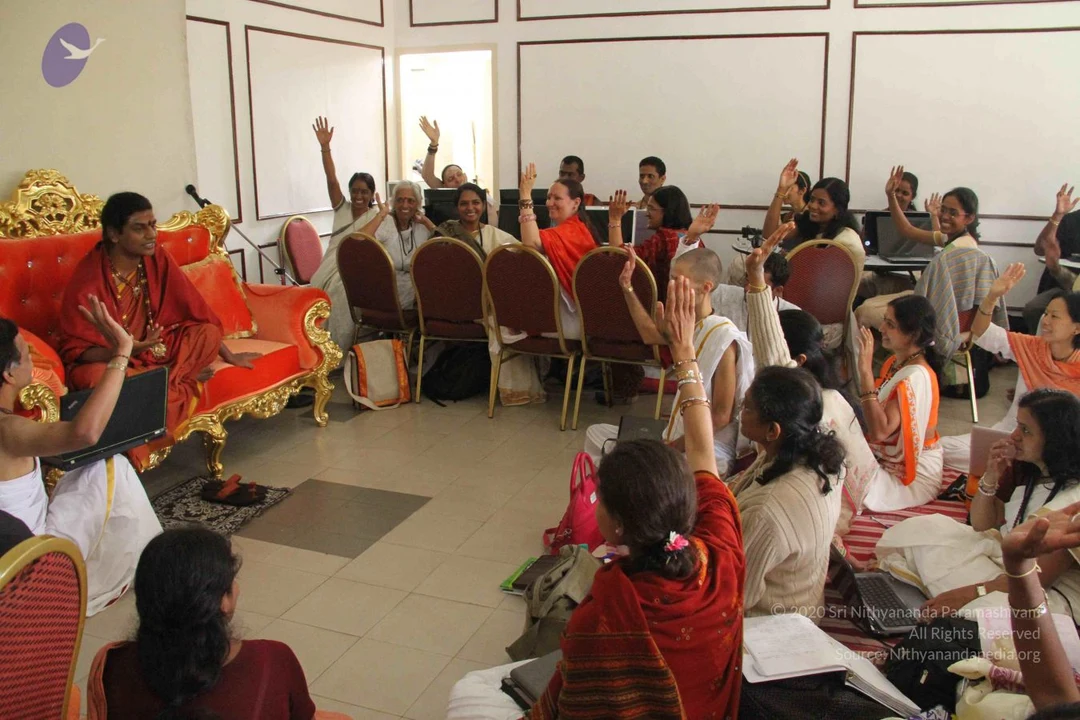
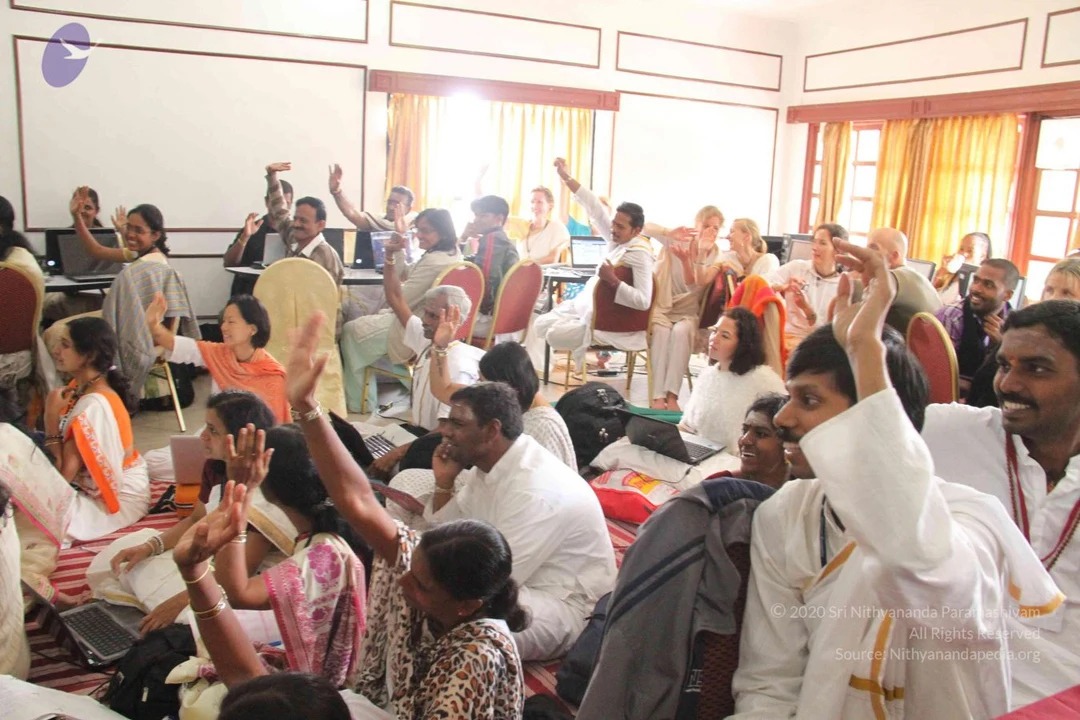
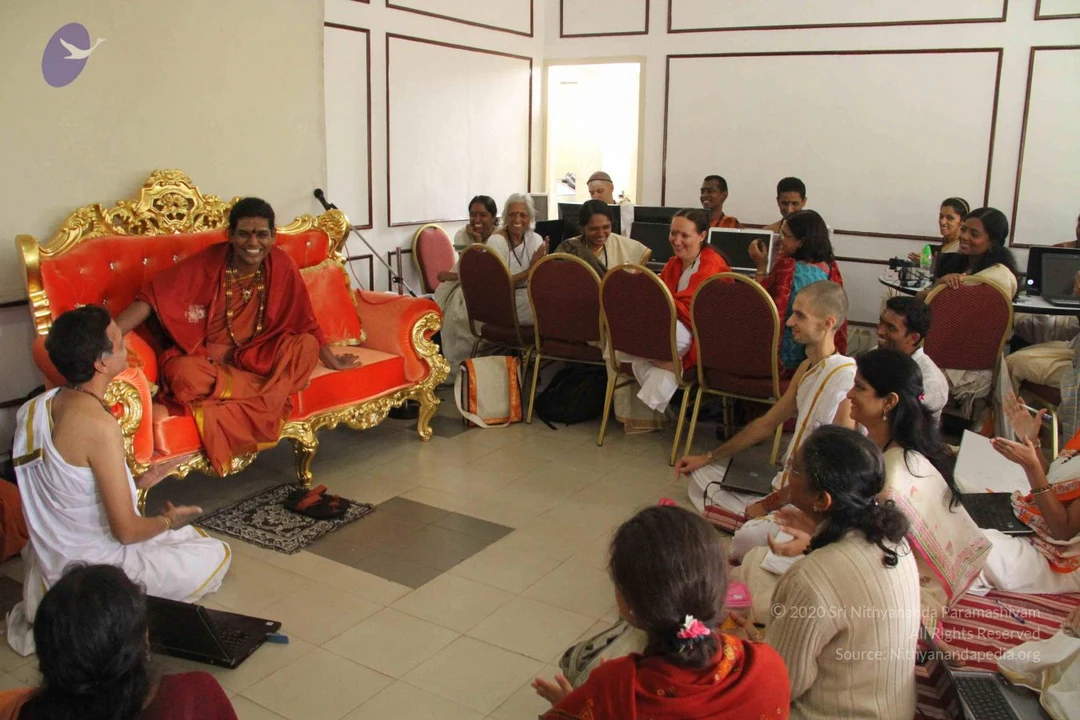
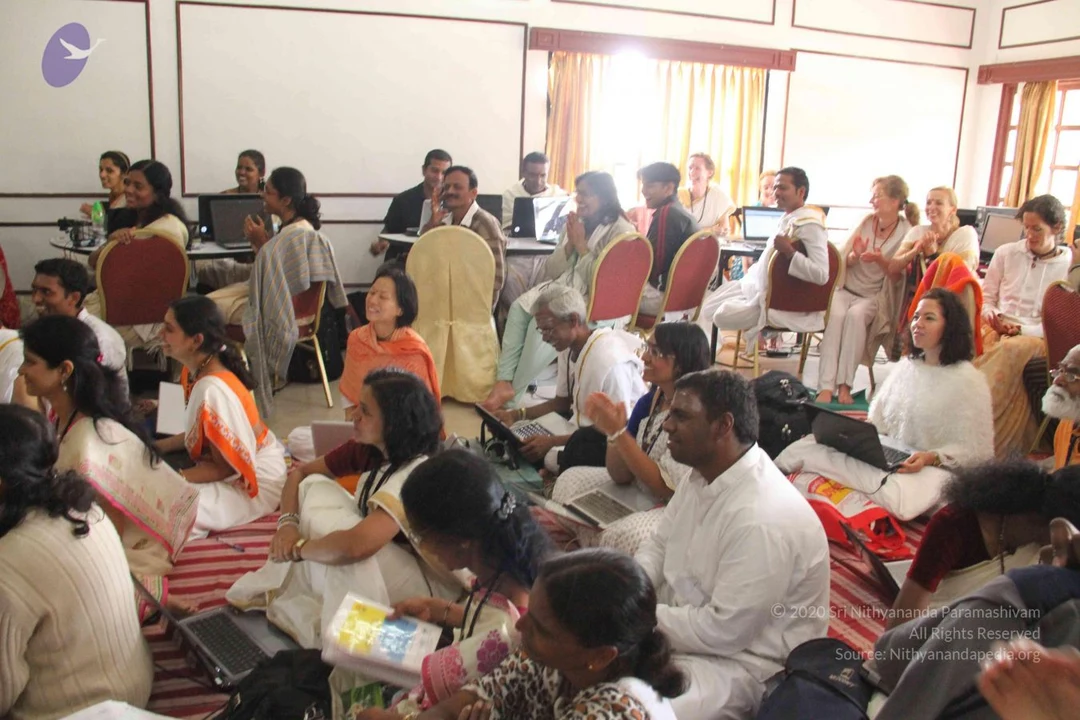
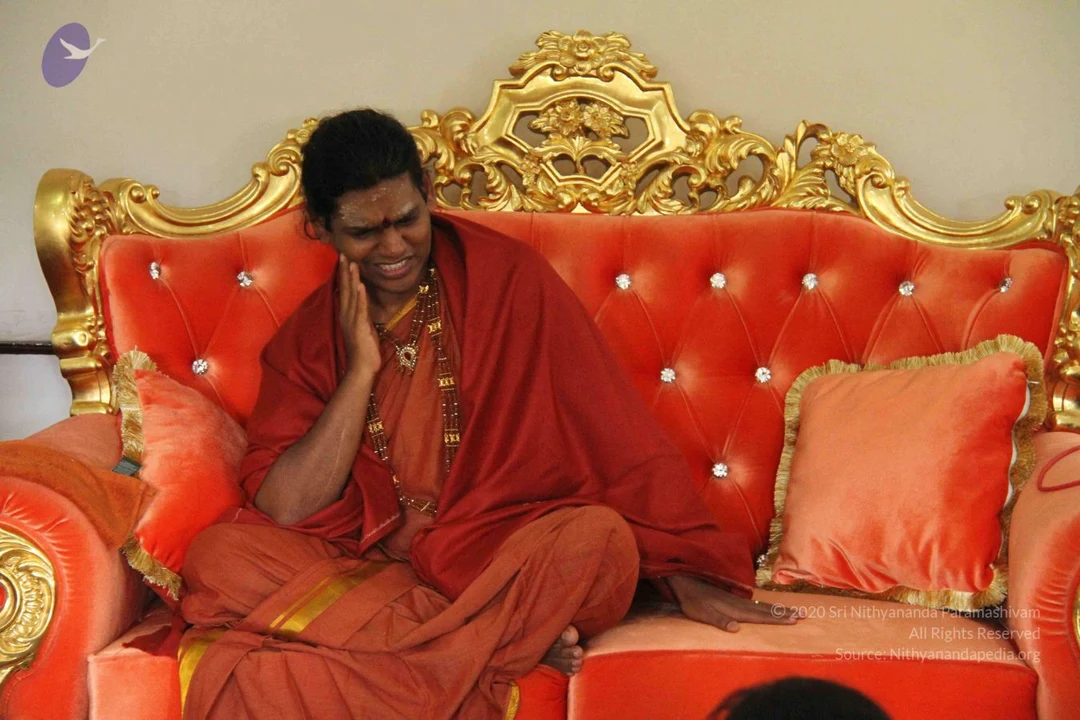
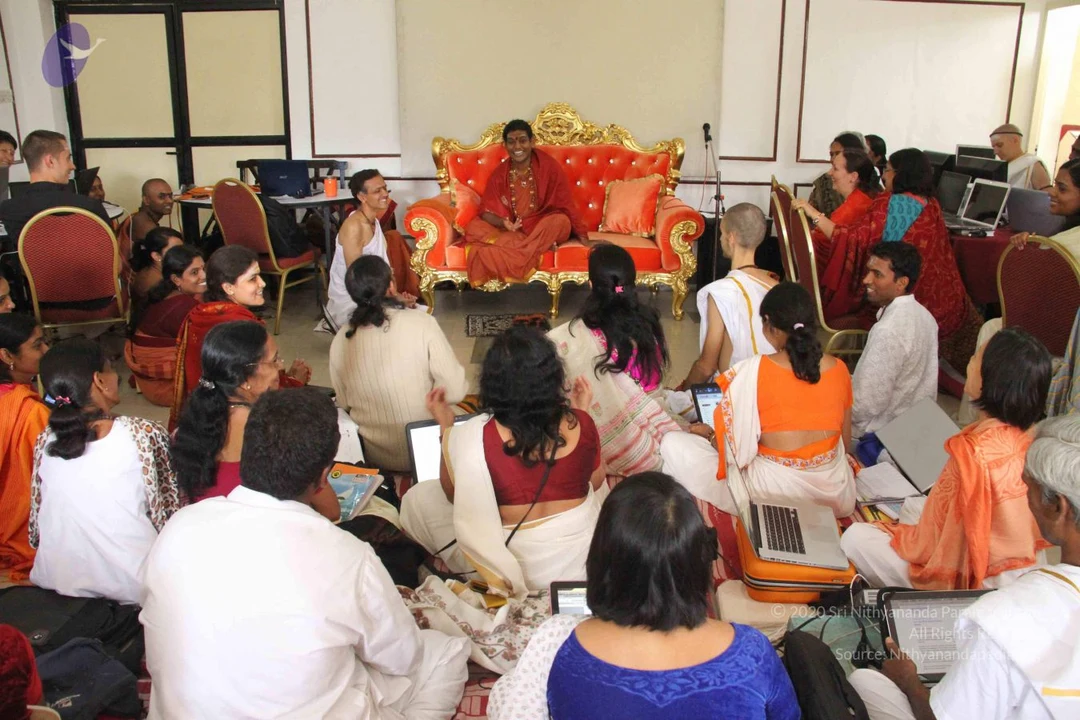
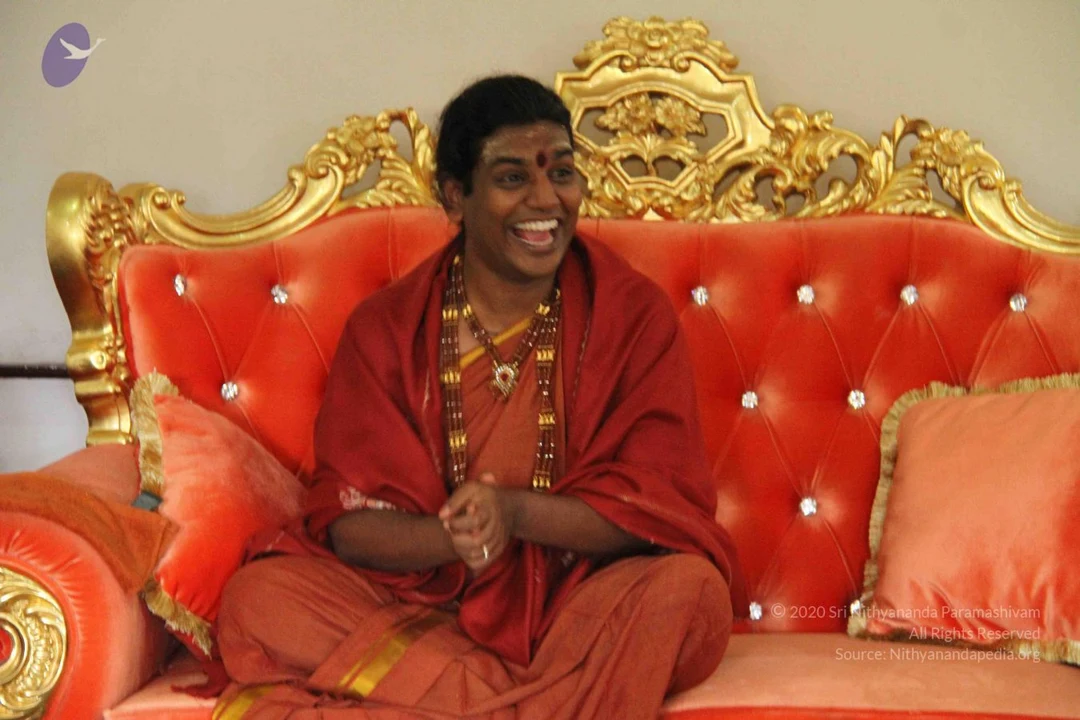
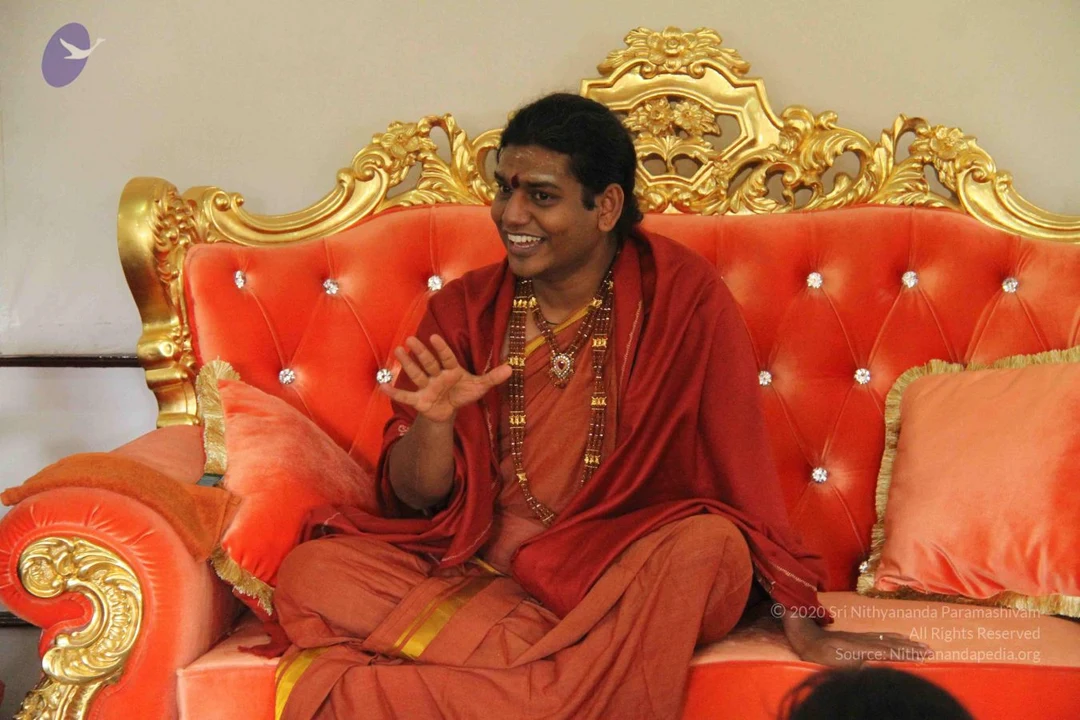
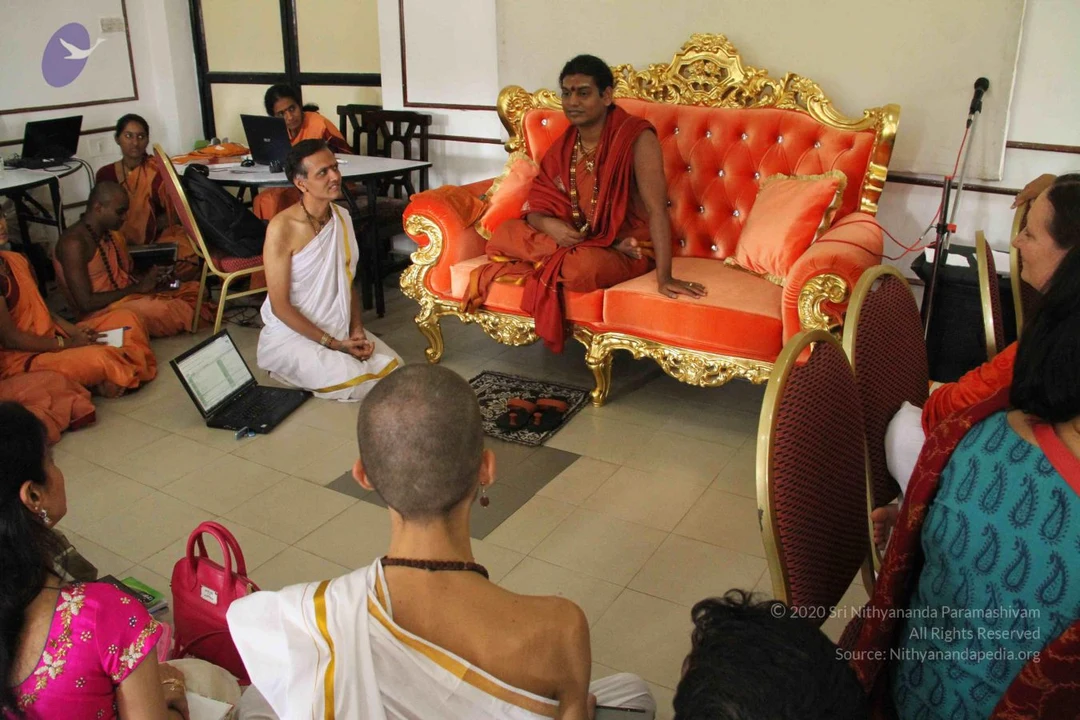
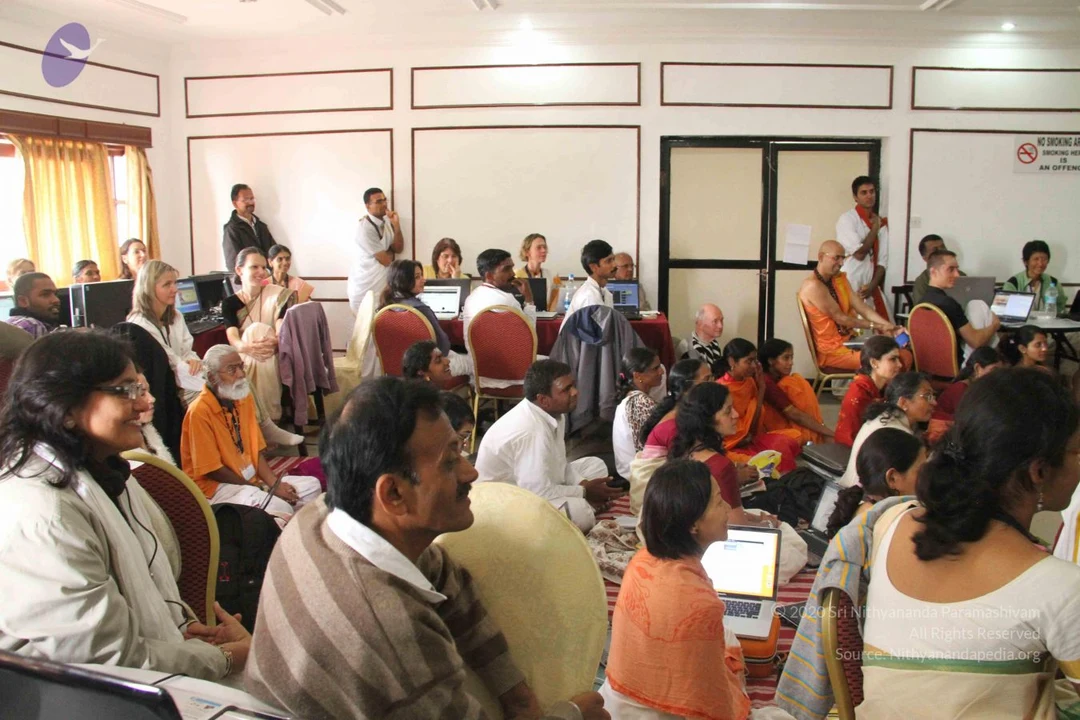
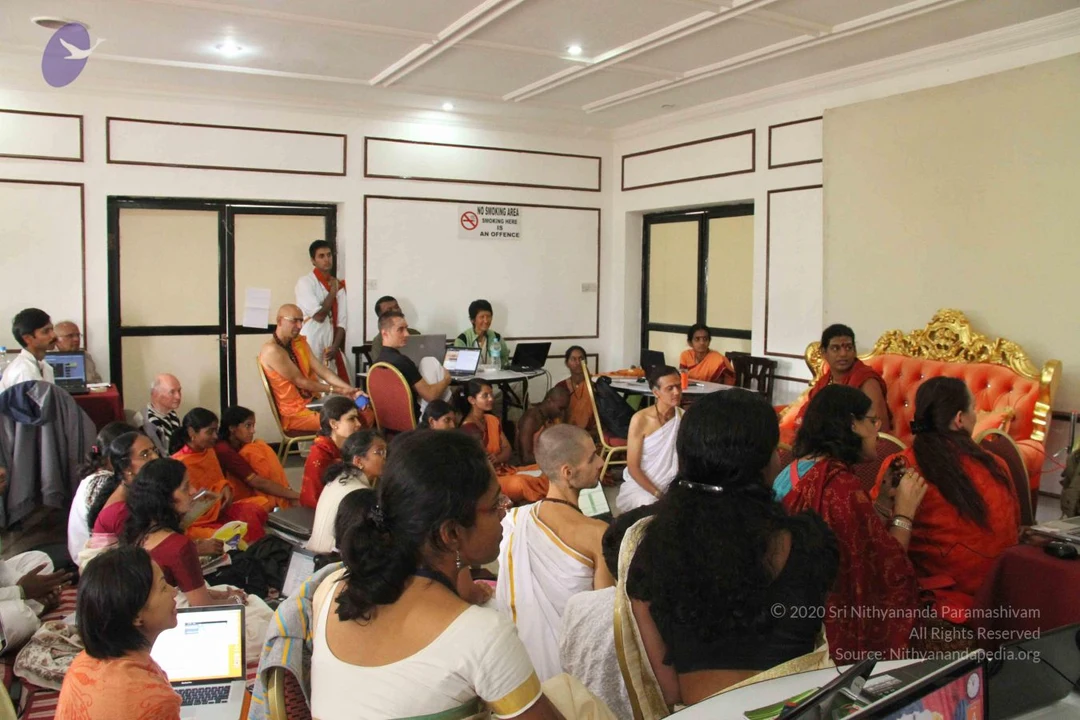
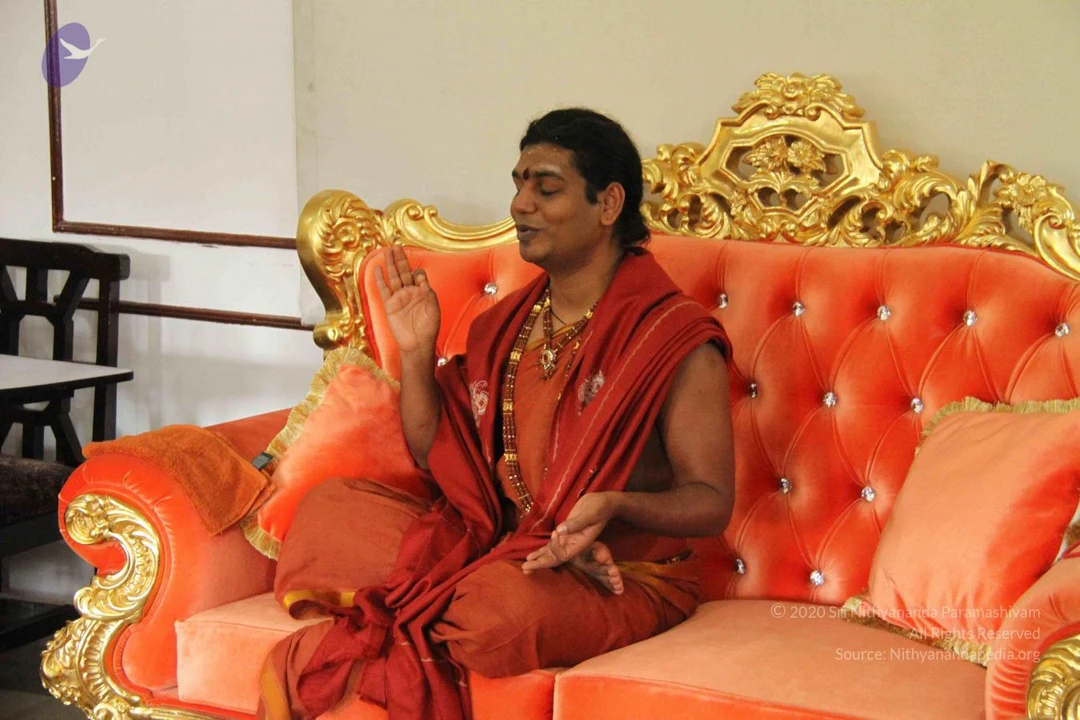
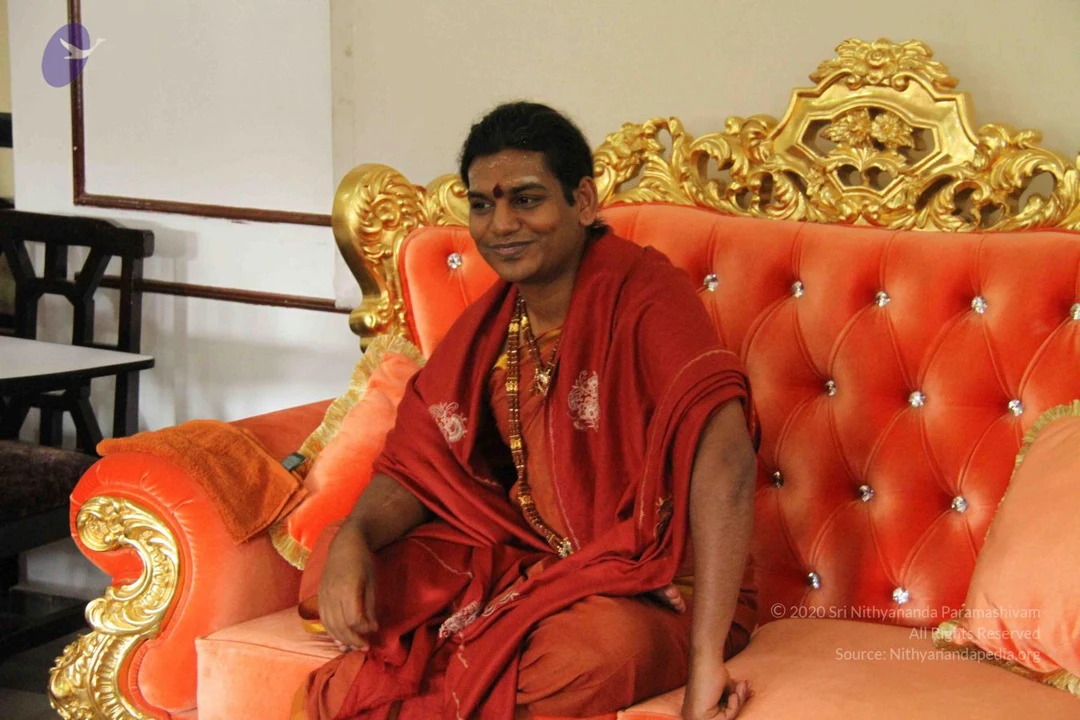
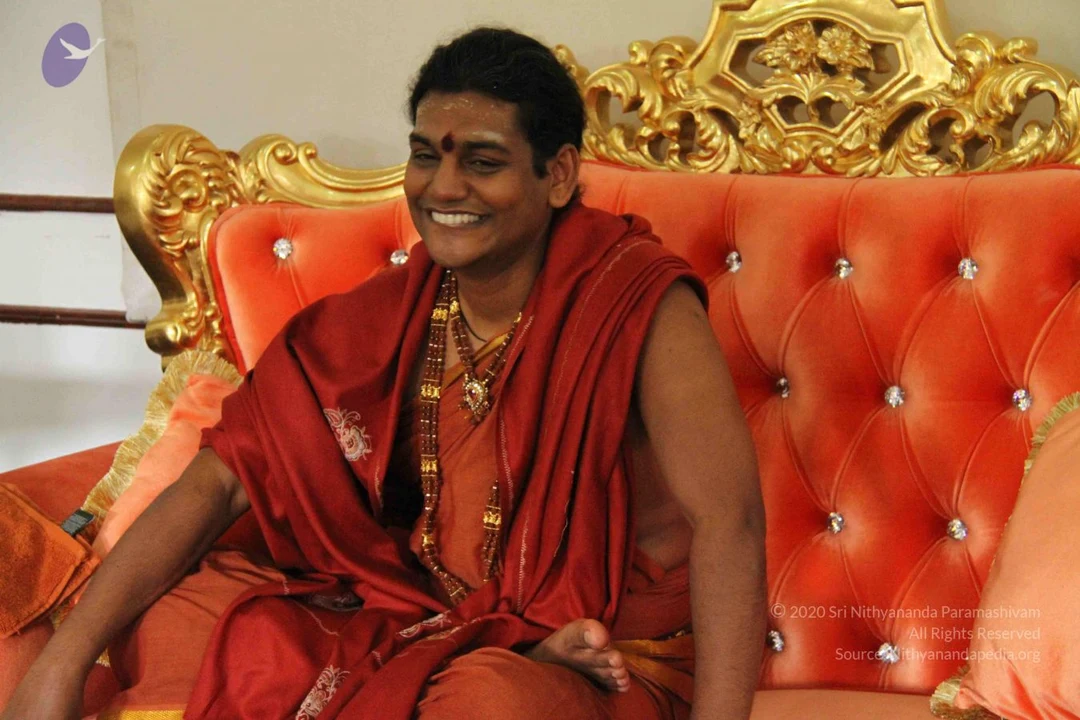
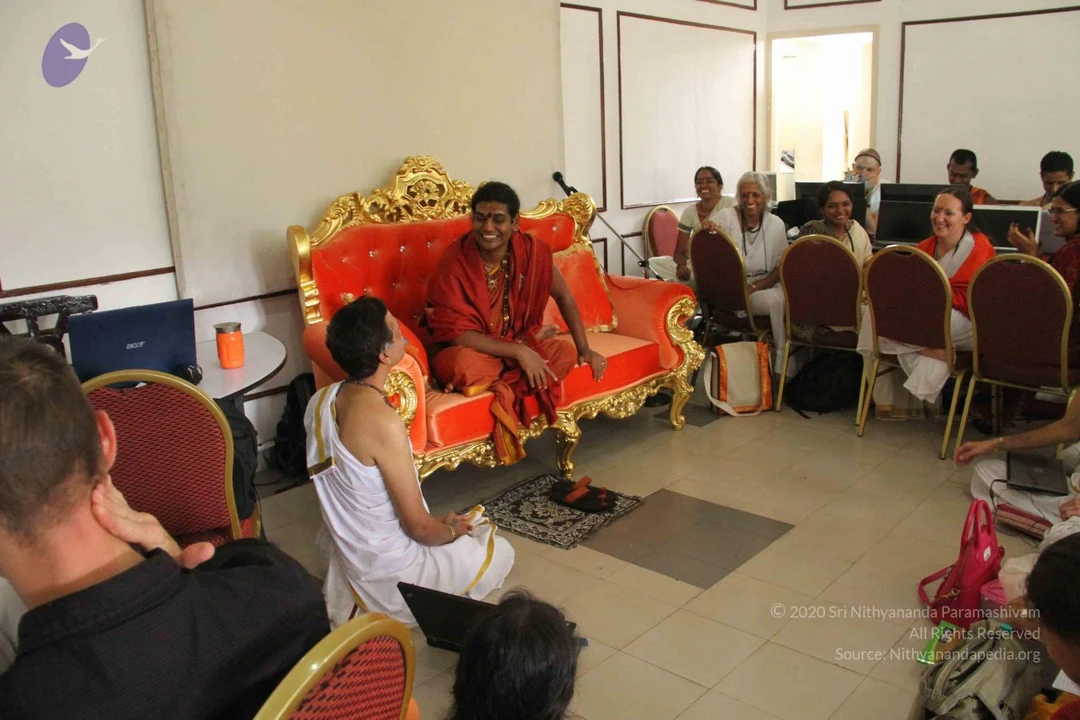
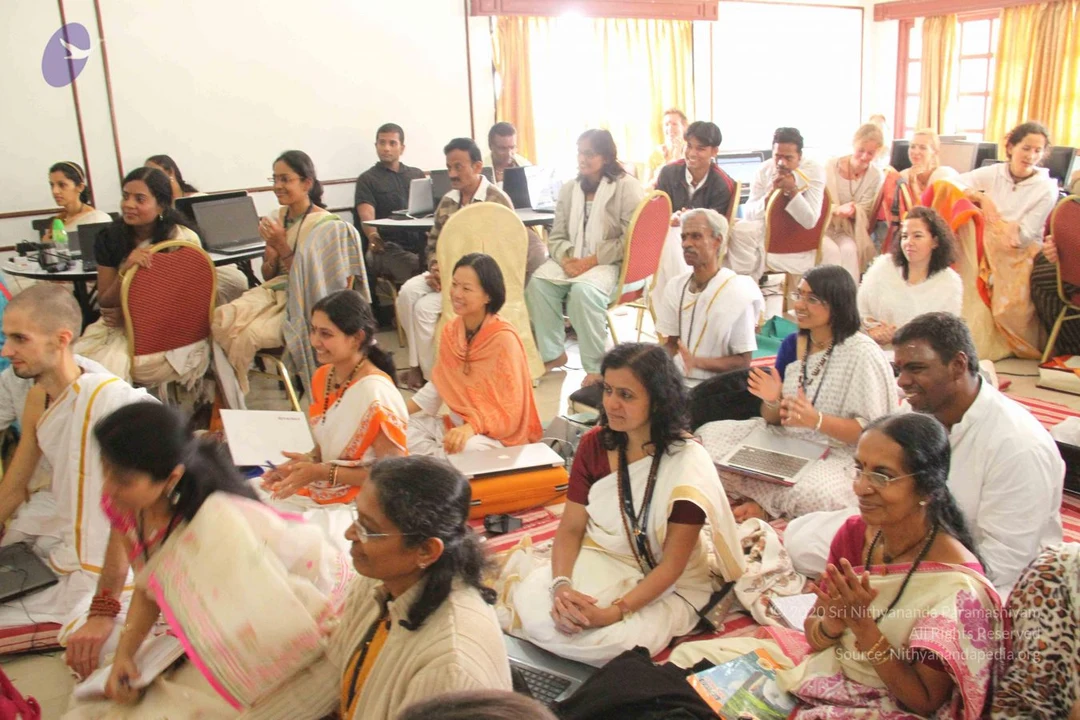
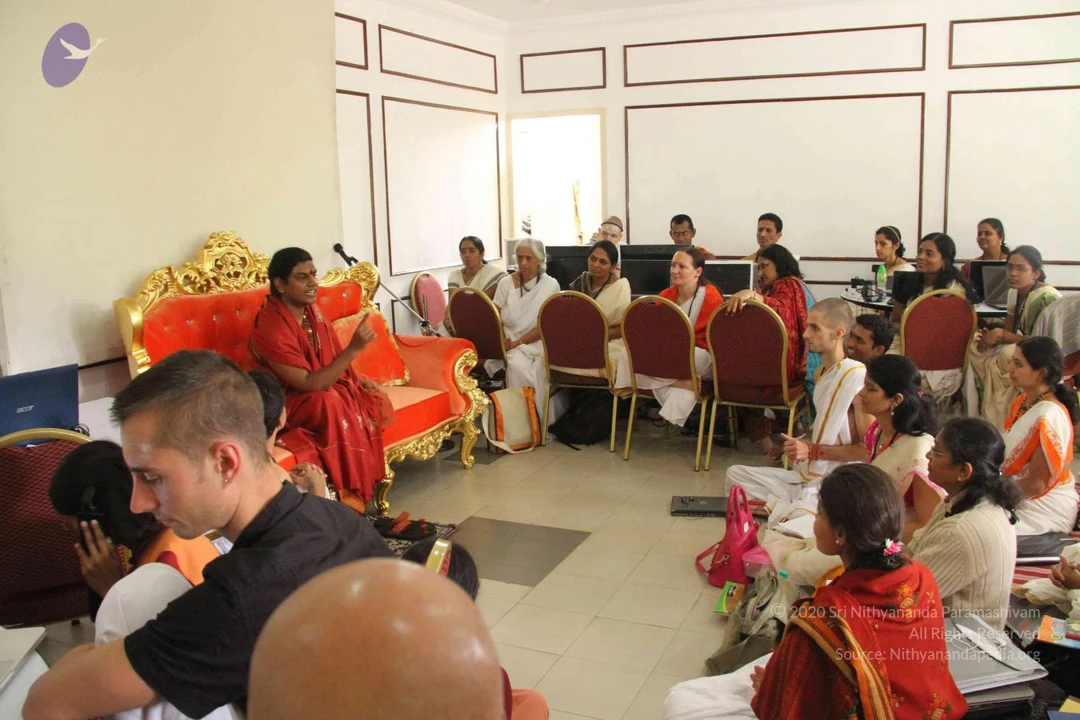
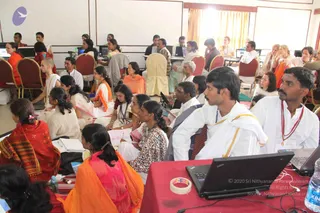
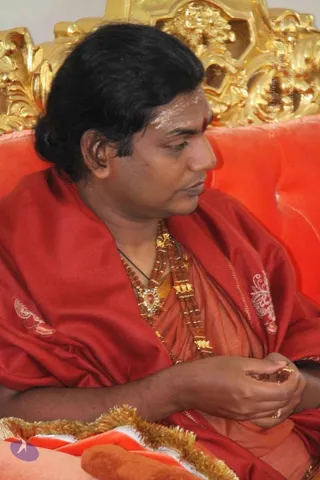
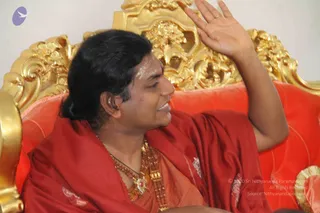
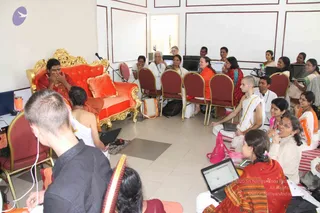
A photograph of a seated audience in a conference hall with white walls, maroon-backed chairs and a red-draped table in the foreground. Attendees wear white, cream, orange, red and pink saris, kurtas and shawls; a bald man in white robes sits to the left. Many people have laptops open on the tables, and a water bottle sits at the lower right. The room is filled with participants listening to a satsang discourse, and the scene shows roughly two dozen or more visible people.A photograph of a seated man in profile on an ornate gold-carved orange velvet throne. He has long dark hair swept back, white vertical tilak marks and a red bindi on his forehead, and wears an orange-red shawl with white embroidery over saffron-orange robes. He wears multiple strands of rudraksha-style beads with gold spacers and a pendant set with a red stone, and rests his clasped hands in his lap with a ring visible. A tasseled orange cushion sits at the bottom of the frame. a person (a person) based on the long swept hair, saffron-orange clothing, rudraksha malas and ceremonial gold necklace; the page references a Kodaikanal satsang.A photograph of a man seated on an ornate gold-carved throne with a bright red upholstered seat and back. He wears a deep red shawl over an orange-red garment, with layered beaded necklaces and a larger pendant. He has long swept-back dark hair and a sandalwood or vibhuti mark with a red bindi on his forehead. He raises his right hand in a gesture while turning his head to the side and smiling.A satsang discourse in a bright meeting room with white walls. A man in orange and red robes sits on an ornate gold-framed throne sofa upholstered in red velvet, gesturing with both hands while speaking into a microphone. Around him, rows of participants sit on red-cushioned gold chairs and on the floor; several use open laptops and one holds a notebook. A bald man in white dhoti and shawl sits cross-legged on the floor at right, and women in saffron, red and white saris and salwar attend. The photo is taken from the rear corner, with a person in dark shirt and earphones in the foreground. Roughly fifteen people are visible.A man with short dark hair, a red bindi and white sacred ash marks on his forehead sits on an ornate gold-framed throne upholstered in orange-red velvet with crystal buttons. He wears an orange-red shawl over a saffron garment and a layered gold chain with a red pendant and beaded malas. He gestures with his right hand, pointing, while speaking, and a microphone stand is visible at the upper right. Photo appears to be from a seated discourse setting. Swamiji (probable): the man has the swept-back hair, ornate saffron-red clothing, and gold necklaces associated with the page's identified teacher, seated on a throne while giving a talk.A man seated on an ornate gold-framed throne with bright orange tufted cushions, smiling and speaking. He wears a red-orange shawl draped over his shoulders and an orange saffron garment beneath, with multiple strands of rudraksha beads and a gold-toned pendant necklace. A red bindi and white markings adorn his forehead. A microphone stand stands at the right edge of the frame, with a golden-framed mirror and red upholstered chairs in the background.

The-Samyama-Group

1 photoSource gallery
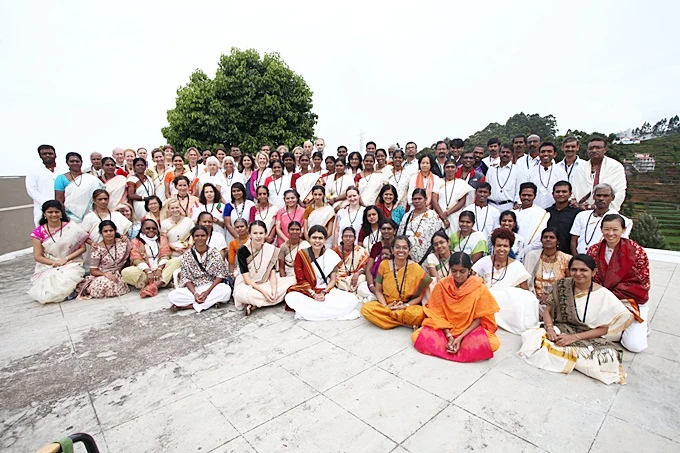
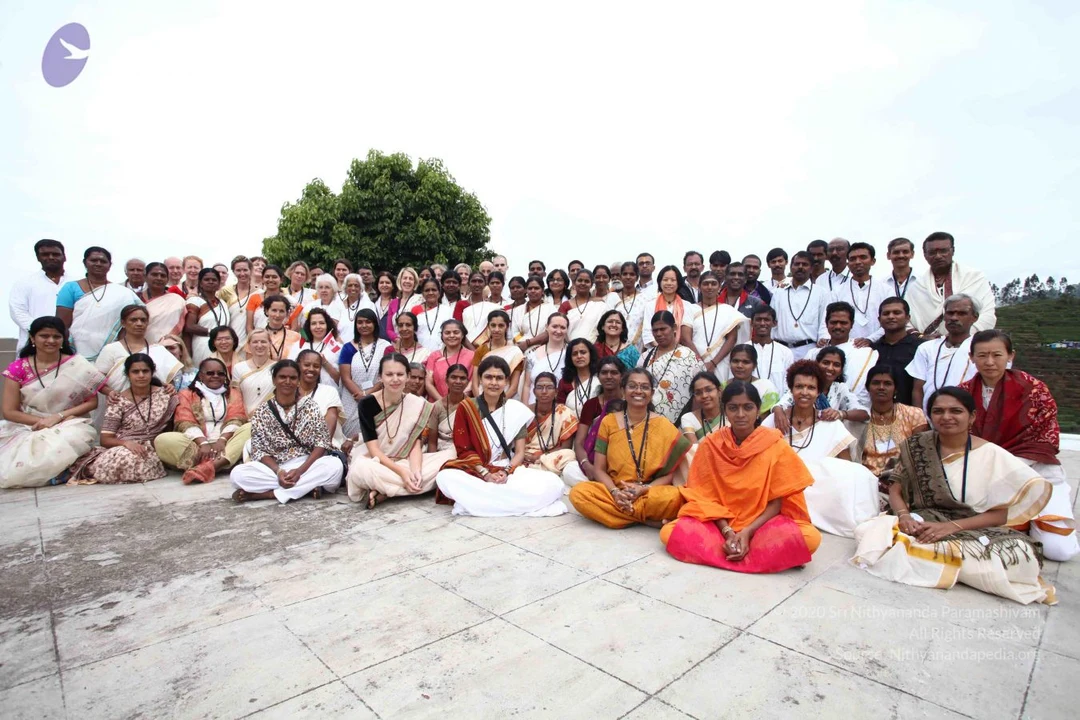
A large group photo of many people posed outdoors on a pale concrete terrace under an overcast sky, with a green tree and hills behind them. Most wear white or cream traditional clothes, many with rudraksha-style beaded necklaces. In the front row, a woman in a bright orange shawl and pink-red skirt sits cross-legged, and a woman in a pale saree with a gold-bordered sari sits at the right. Seated devotees in white and pastel saris and kurtas fill the foreground. No individual can be confidently identified as a person from appearance, so no candidate is named.

Lunch

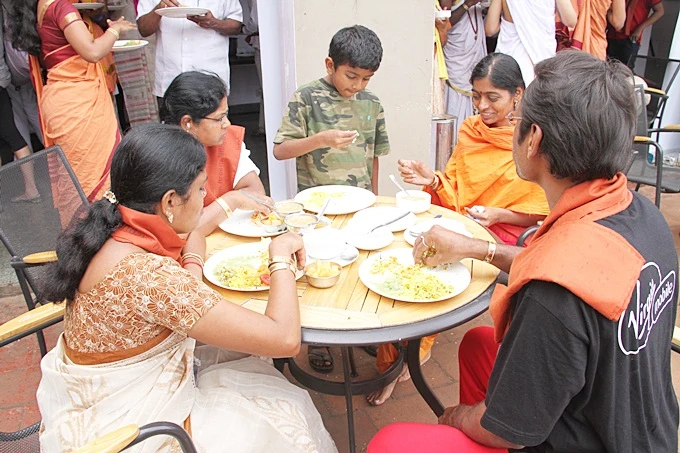
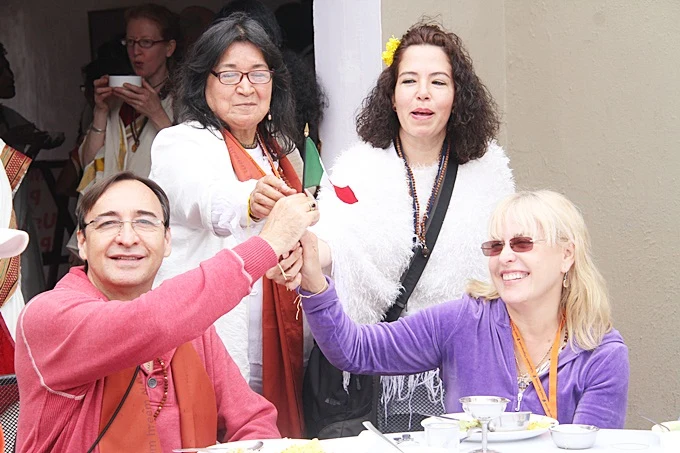
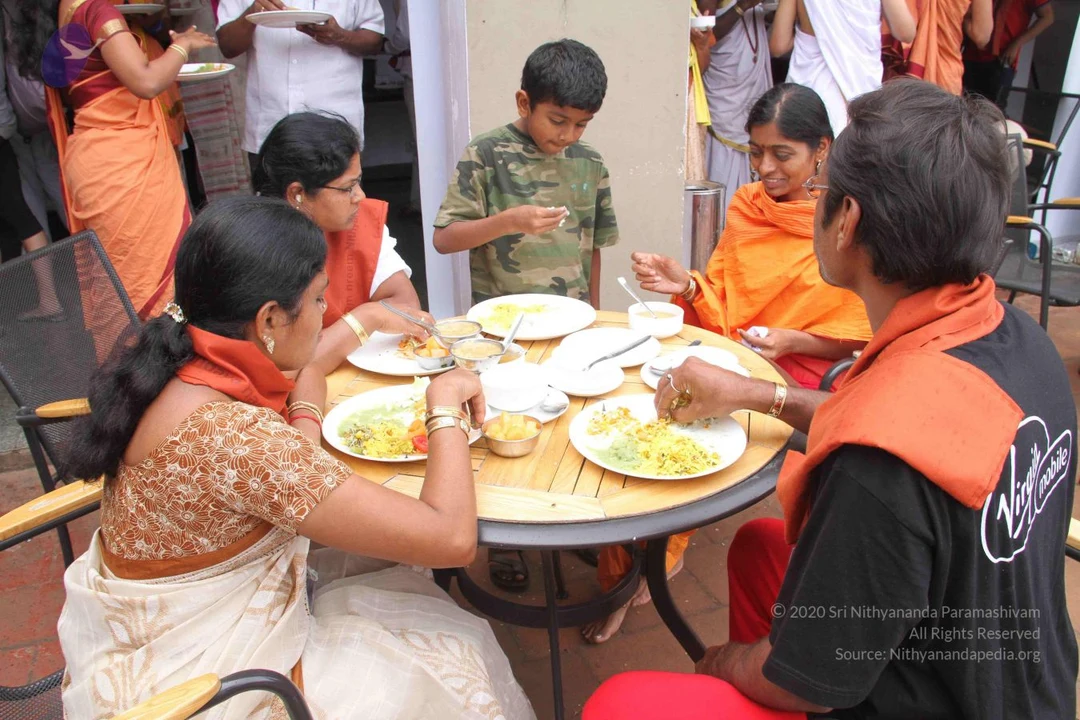
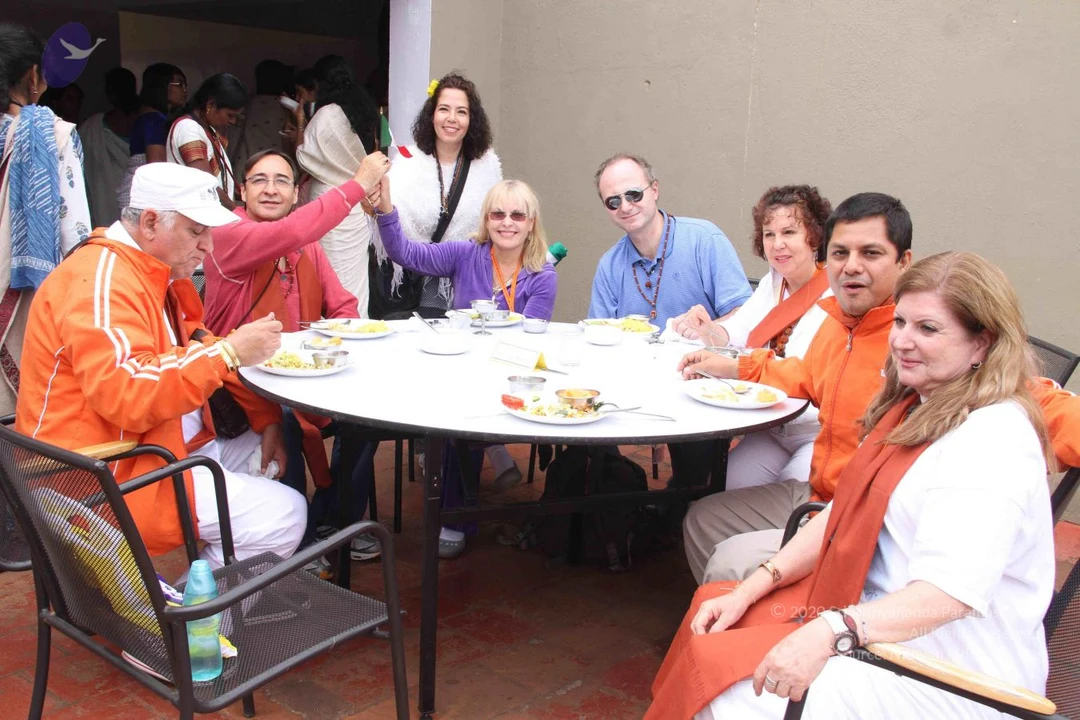
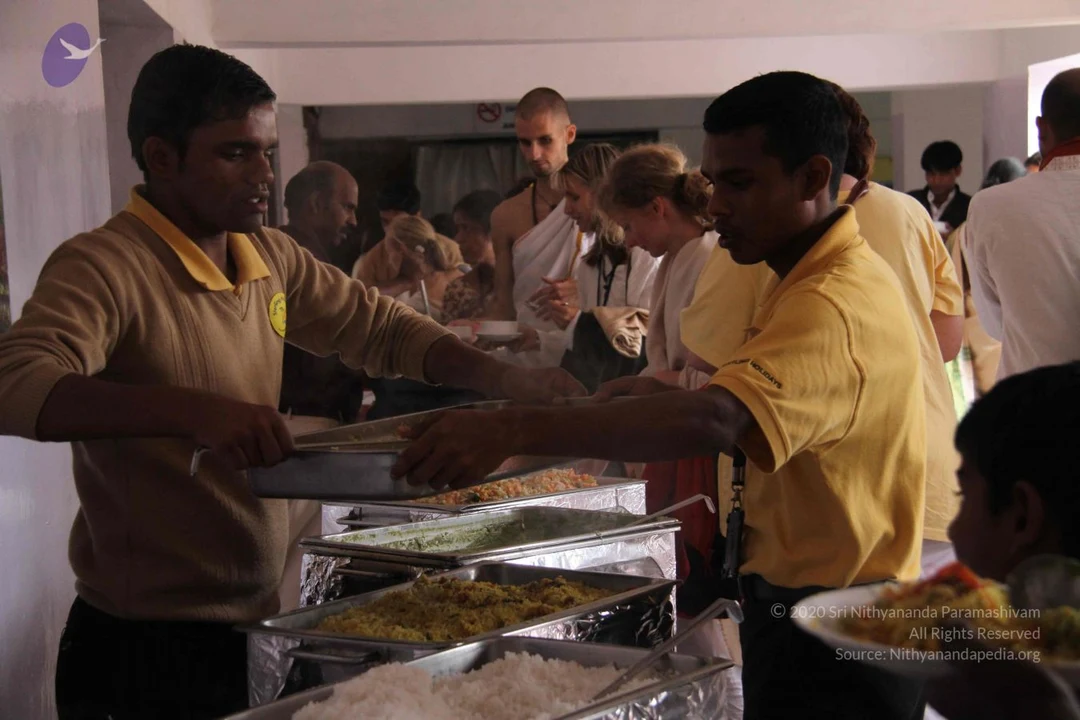
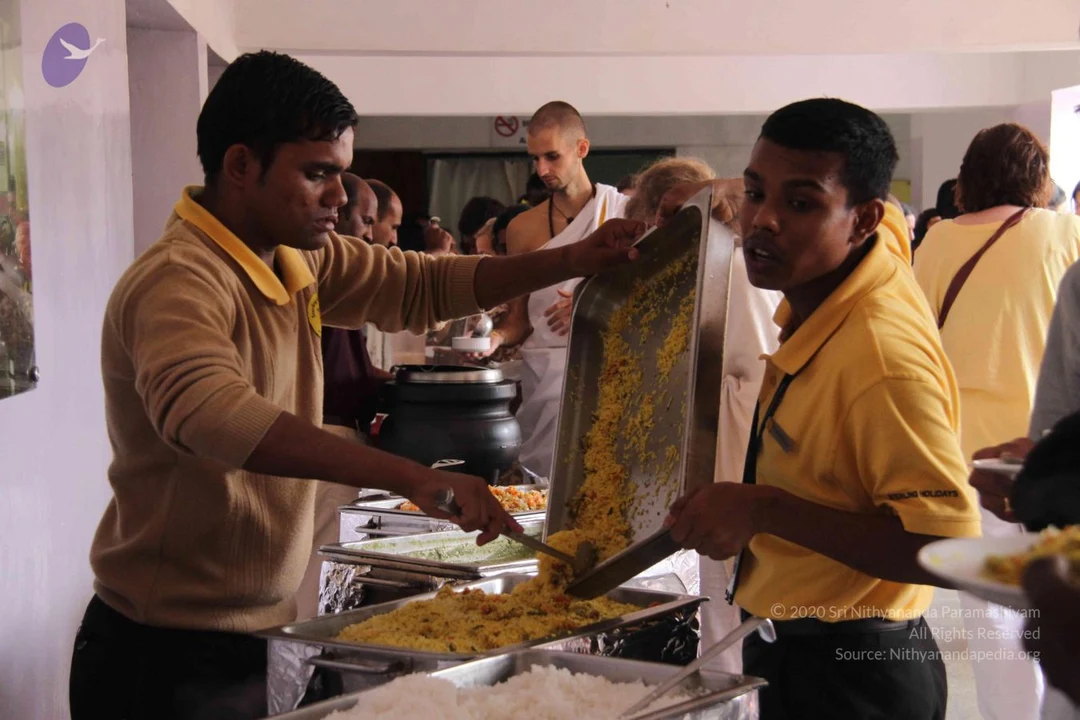
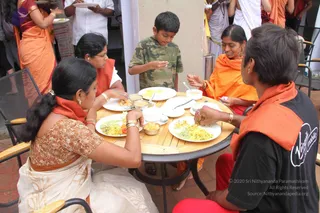
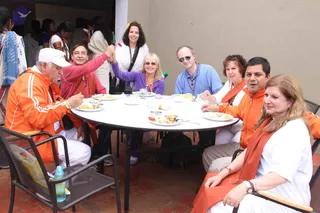
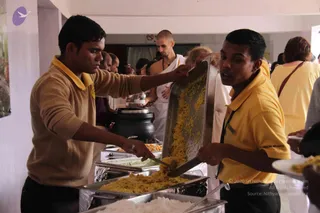
5 photosSource gallery
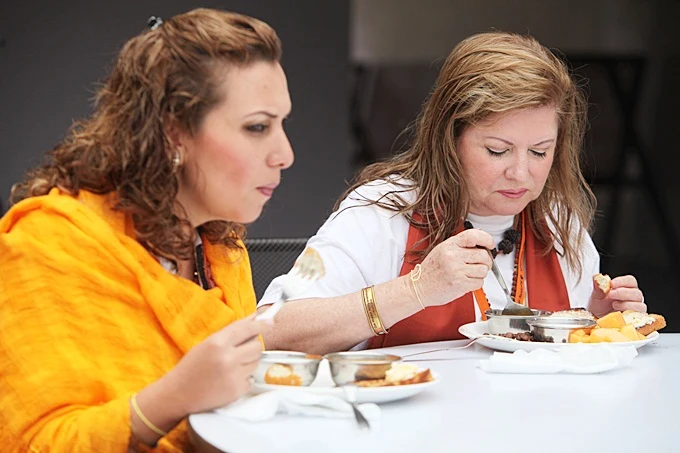
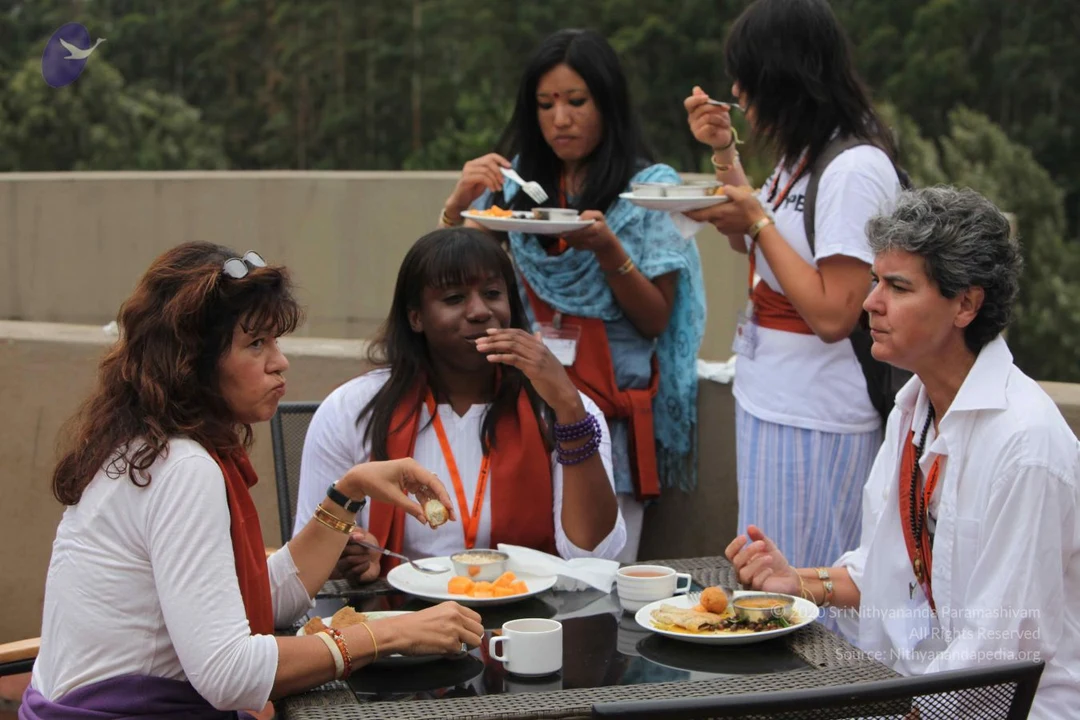
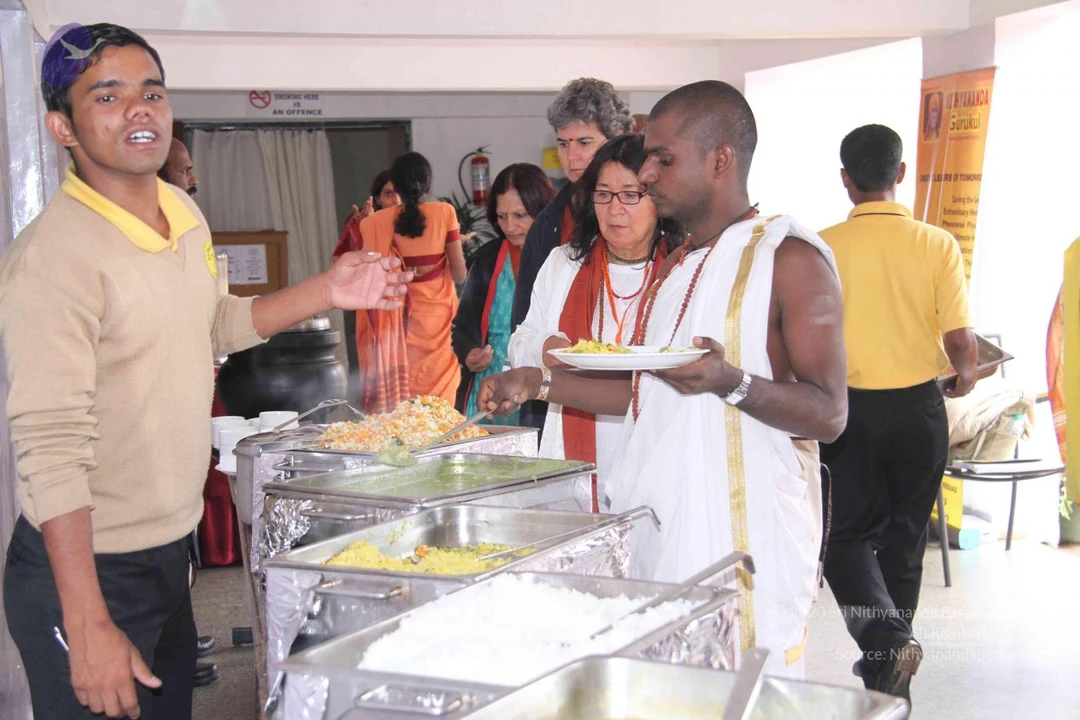
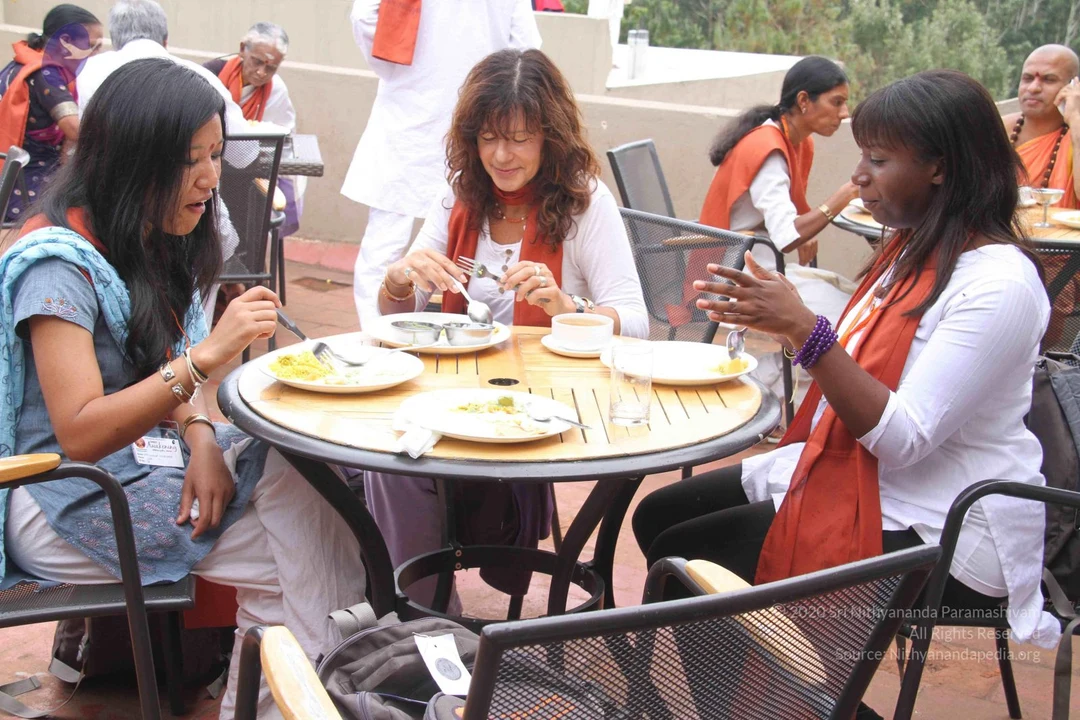
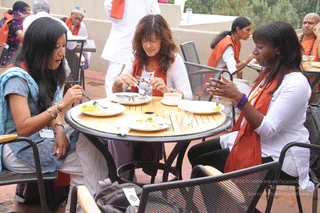
A buffet serving line inside an indoor hall. A young man in a beige sweater with a yellow collar stands at left gesturing toward steel chafing dishes of rice, yellow and orange pulao, and white steamed rice. A man in white ritual dress with a bare upper torso, a gold-bordered dhoti or shawl, and a rudraksha mala holds a white plate of food. Beside him a woman with grey-brown hair wears a white top with a red-orange shawl and orange beads. Behind them a woman in an orange sari and others in saris stand near a banner. A man in a yellow polo stands at right. The scene resembles an annadan meal service.A photograph of devotees eating a meal at round outdoor tables on a terrace. In the foreground, a woman in a light blue patterned top and white trousers, with a name badge, eats with a spoon. In the center, a woman with curly reddish-brown hair and an orange scarf eats with a fork and spoon from a plate of yellow rice. On the right, a woman in a white top, orange scarf and purple bangles gestures while seated at the table. Behind them, other people in orange scarves and white clothing sit at tables, and a bald man in an orange shawl with a rudraksha mala is visible at the upper right. Metal chairs and a stone wall surround the terrace.A photograph of devotees eating a meal at a round wooden table outdoors, with plates of yellow rice, a cup of sauce and a few side bowls. A woman in a cream and brown patterned sari sits in front left, and a woman in a white blouse with orange shawl sits beside her. Opposite, a man in a black t-shirt and orange shawl eats with his right hand, and a smiling woman in an orange sari and gold bangles sits behind him. A boy in a camouflage t-shirt stands at the table holding food. Others in orange shawls and white clothes stand in the background with plates. Plain metal chairs and a tiled floor surround the table.Outdoor lunch on a terrace at a round white table with black metal chairs. A man in an orange tracksuit and white cap at left reaches across the table, while a man in a pink shirt with an orange scarf raises his hand to clasp a woman's hand. A woman in a purple top and orange lanyard sits in the middle, a man in a blue polo with a rudraksha-style beaded necklace and sunglasses sits beside her, and a woman in white with an orange shawl sits at right. A woman in a white wrap stands behind with a red flower in her hair. Plates of rice and food, steel bowls and a water bottle sit on the table. Background figures in white and blue saris.A photograph of a buffet serving line where two young men in yellow polo shirts serve yellow rice from steel trays. The man on the left, in a tan sweater, uses a serving spoon to scoop rice, while the man on the right in a yellow polo with a lanyard holds a tray tilted to pour. Behind them a bald man in white ritual clothing and a rudraksha-style neck mala stands near steaming pots and bowls of rice. Other people in yellow and casual clothes stand in the background near a doorway. Plates of food and steel containers fill the foreground.

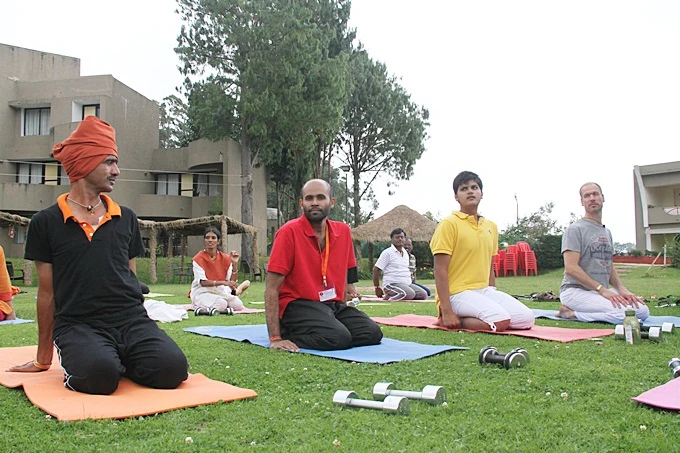
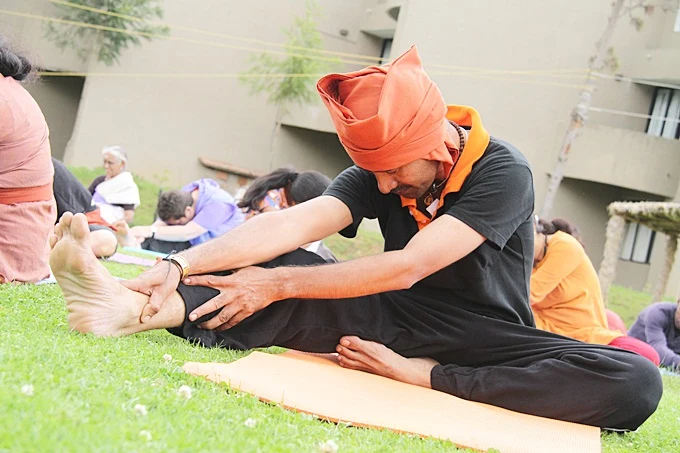
Yoga

6 photosSource gallery
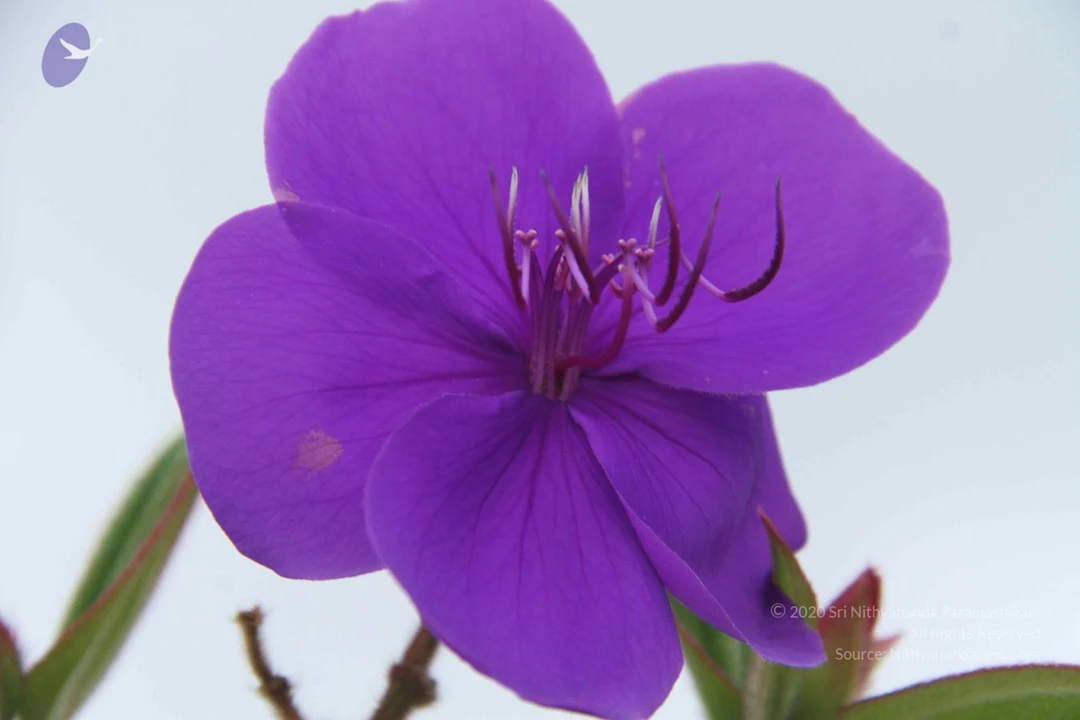
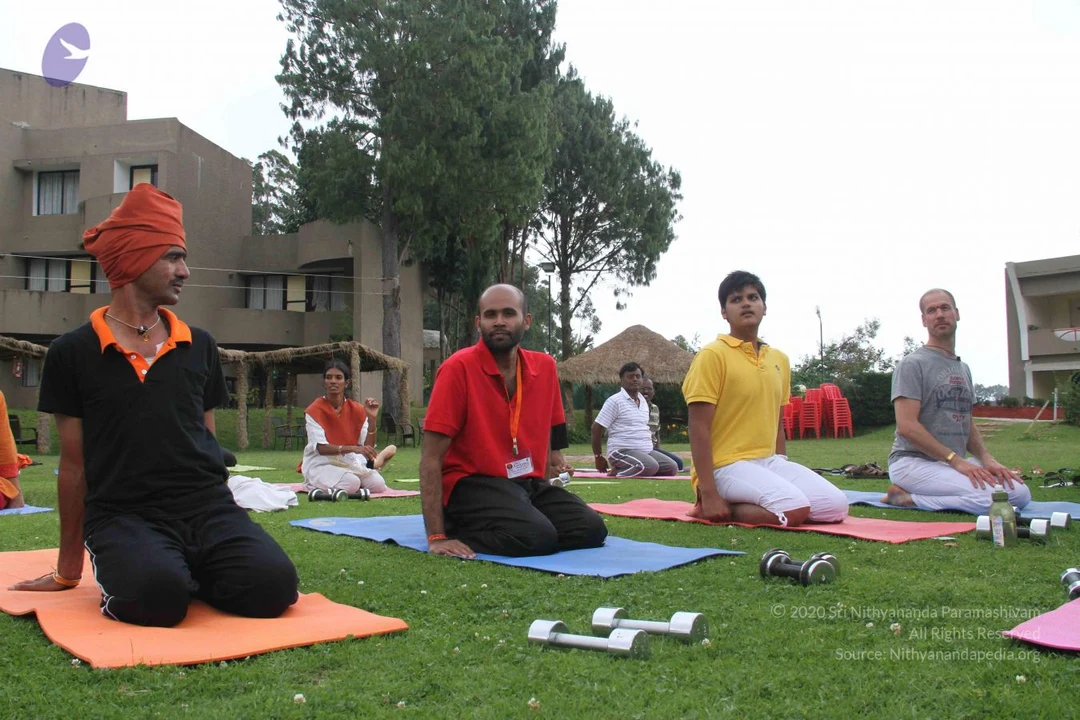
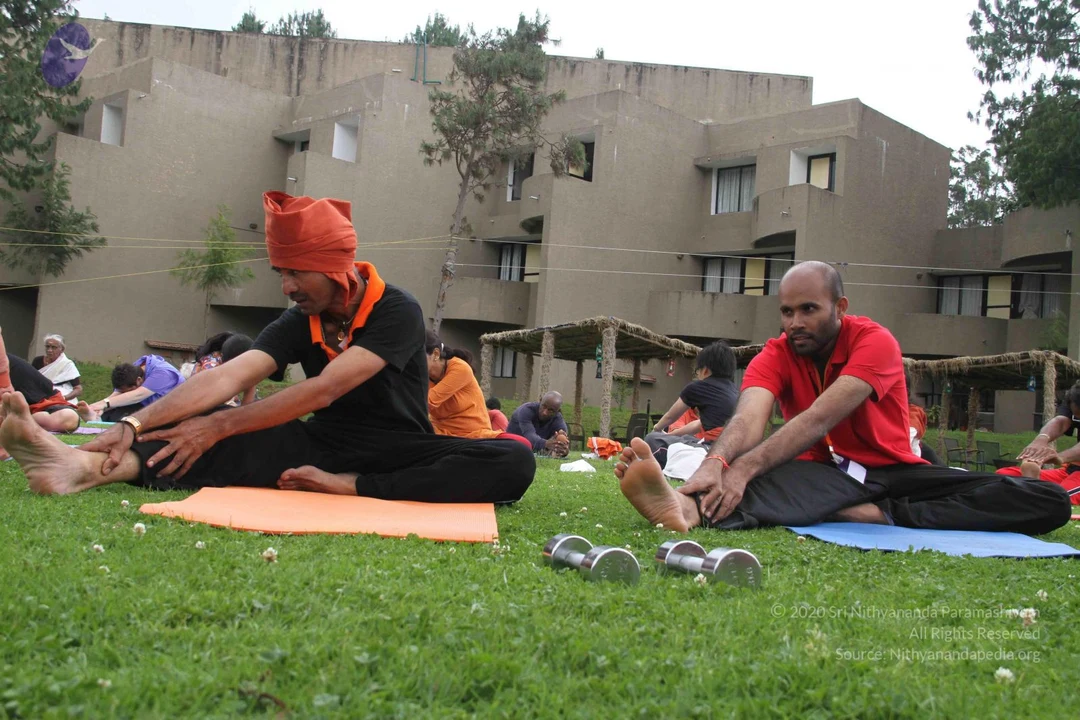
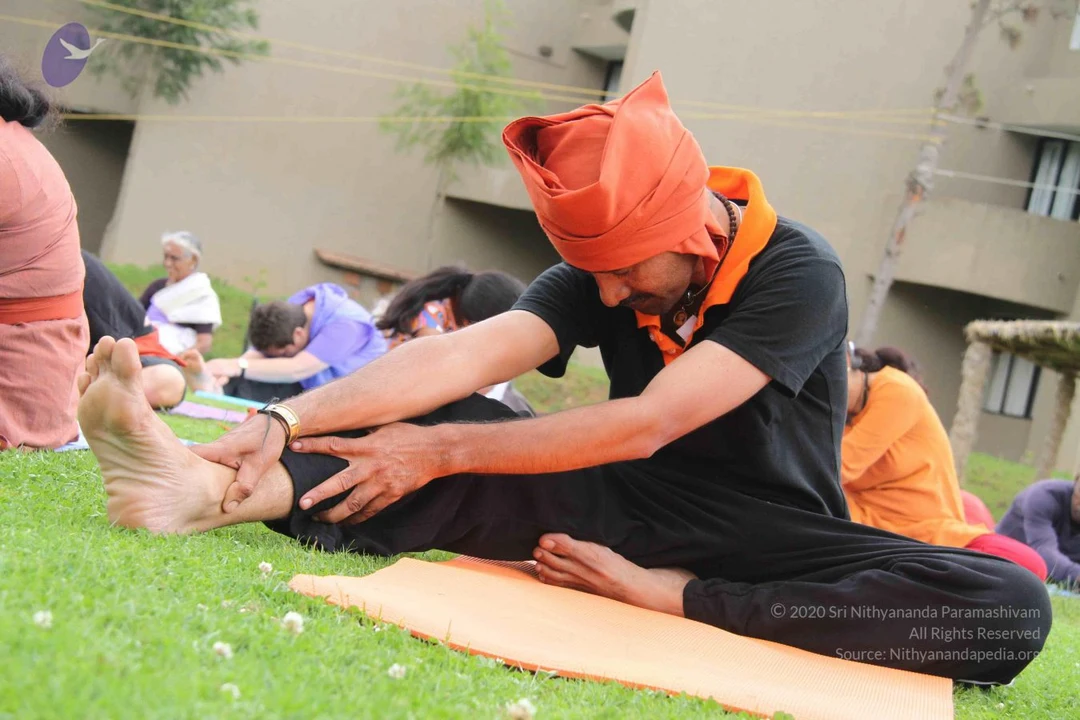
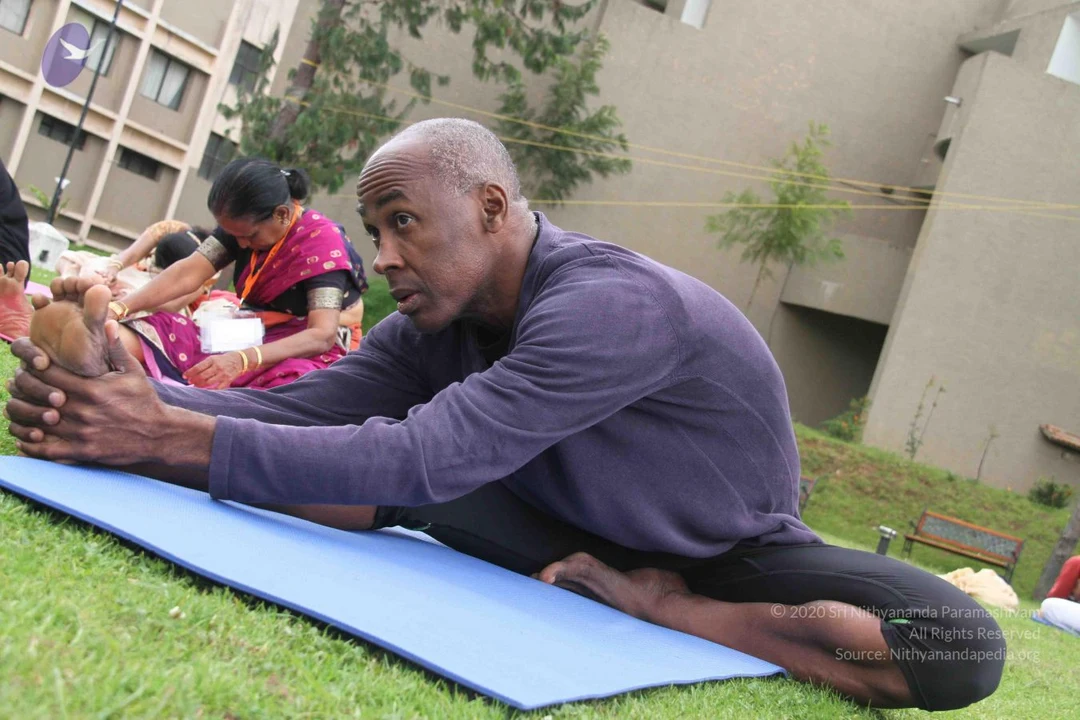
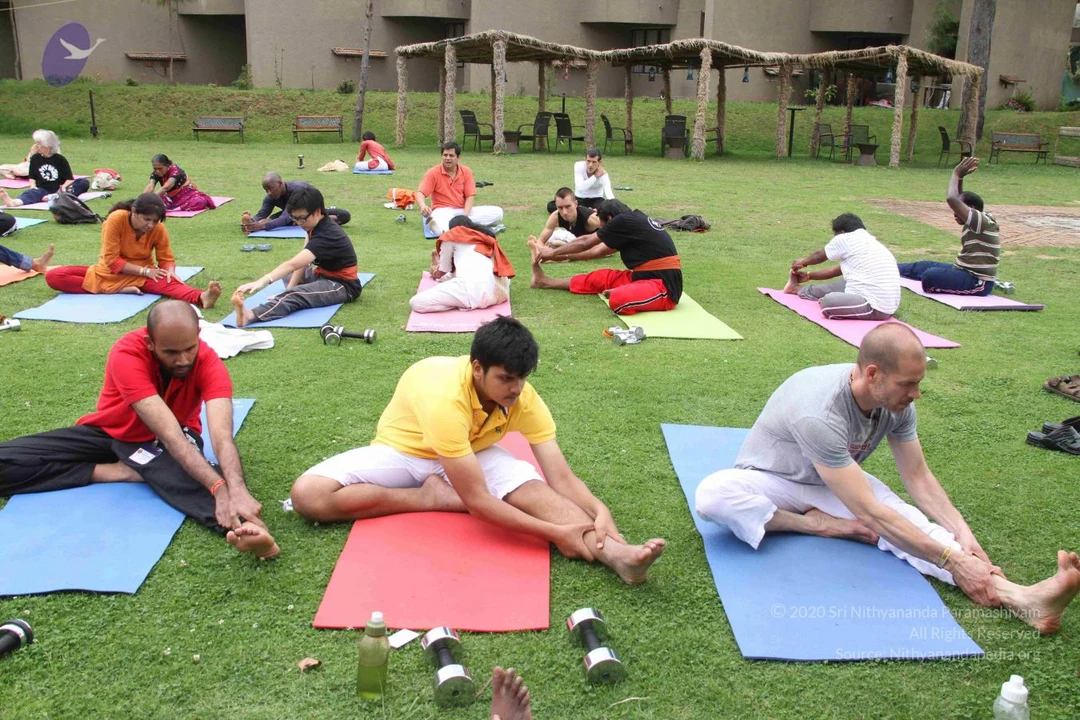
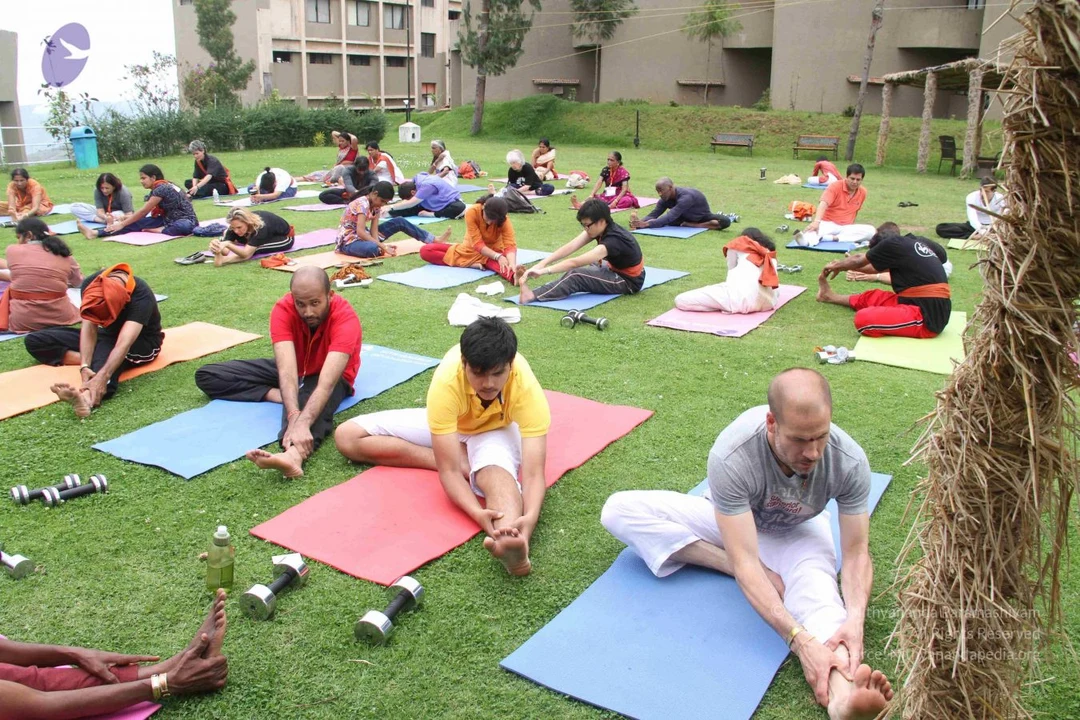
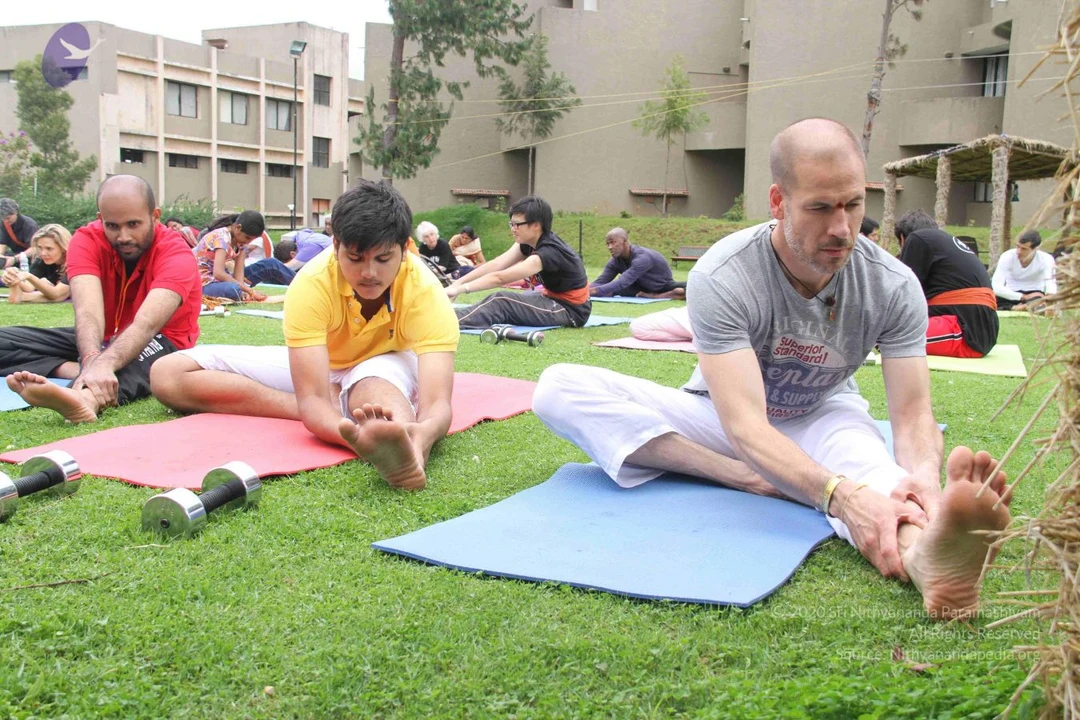
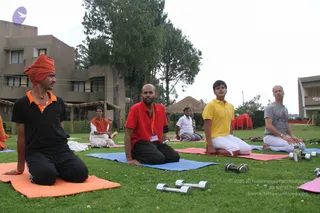
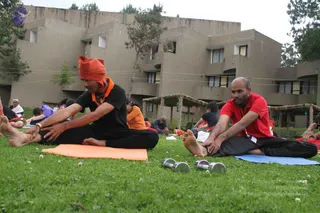
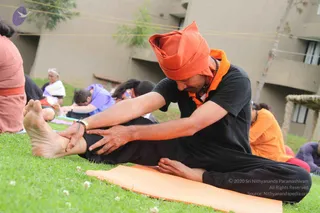
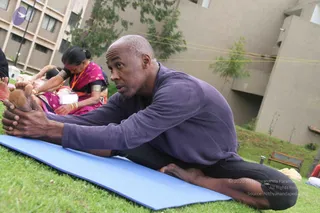
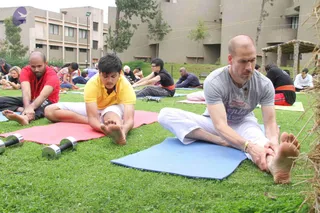
A close-up photograph of a single vivid purple flower with five broad petals and a cluster of purple stamens with pale tips at its centre. Green leaves and a thin brown stem appear at the edges against a plain pale grey background. No people or ritual setting is visible.Outdoor photo of a group seated in kneeling meditation on coloured yoga mats across a lawn, facing forward. In the foreground a man in an orange turban and orange-trimmed black shirt kneels on an orange mat, with a silver chain at his neck. Beside him a man in a red polo shirt with an orange lanyard and a woman in an orange top sit upright. On the right a woman in a yellow top and white trousers kneels on a red mat, and a man in a grey t-shirt sits on a blue mat. Metal dumbbells lie on the grass and a few people sit further back among plastic chairs and a thatched shelter near a multi-storey building. No identifiable a person appearance is visible, so this is a group of practitioners.Outdoor yoga session on a lawn in front of a beige multi-storey building with recessed balconies and thatched pergola shelters. In the foreground, a man in black clothes and an orange head wrap sits with legs extended, stretching forward on an orange mat, with an orange shawl over his shoulders. Beside him, a bald man in a red polo shirt and black trousers, barefoot, stretches on a blue mat. Two metal dumbbells lie on the grass between them. Several other people sit on mats in the background, and a purple emblem with a bird appears in the upper left corner.A photograph of a man in an orange turban and orange shawl over a black t-shirt and black trousers, seated on a peach-coloured yoga mat on grass, performing a forward-bend stretch with both hands gripping his extended leg. Behind him, several people sit or stretch on mats across the lawn, including a woman in an orange top and a person in a purple top. A beige apartment building and a thatched structure appear in the background. a person: the man wears a saffron turban and orange shawl, cues consistent with the page's claim, and is performing yoga outdoors.A man in a purple long-sleeved top and black athletic pants performs a seated forward-bend yoga stretch on a blue mat laid over green grass, gripping his feet with both hands. Behind him, a woman in a magenta sari with a gold-trimmed border and bangles sits on the grass, and other seated participants are partly visible.Outdoor yoga session on green lawn in front of beige multi-storey buildings. In the foreground a bald man in a grey t-shirt and white trousers sits on a blue mat in a forward-bend stretch, holding his foot. Beside him a younger man in a yellow polo and white trousers stretches on a red mat, and a bearded man in a red shirt sits to the left. Dumbbells lie on the grass. Behind them many other participants in dark athletic wear sit on mats in stretching postures under trees and a thatched shelter.

eN-Genius

4 photosSource gallery
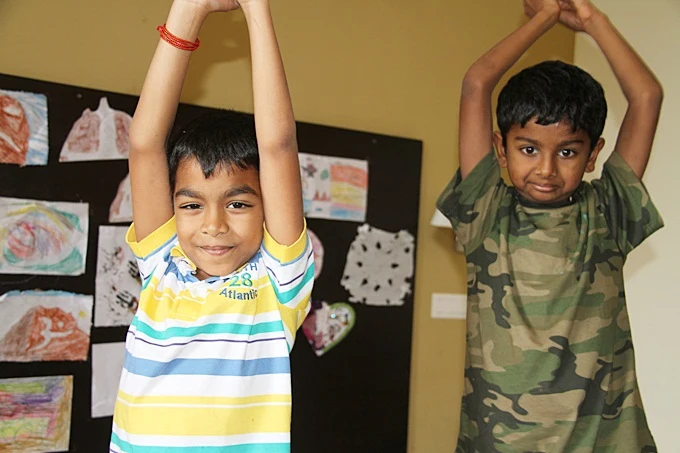
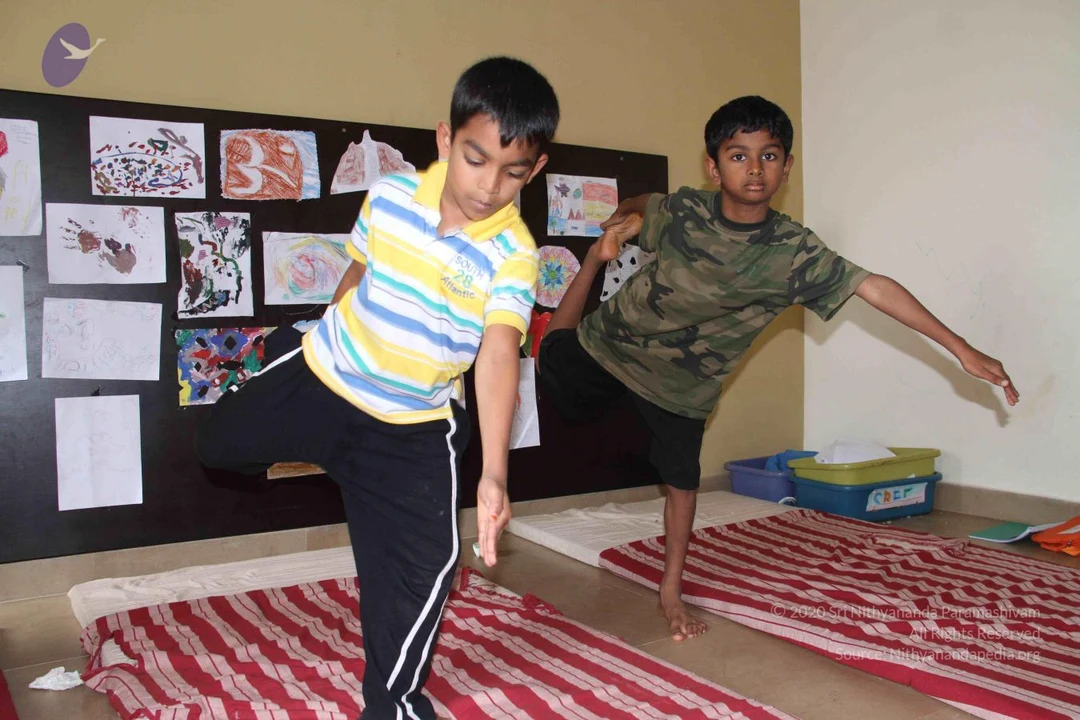
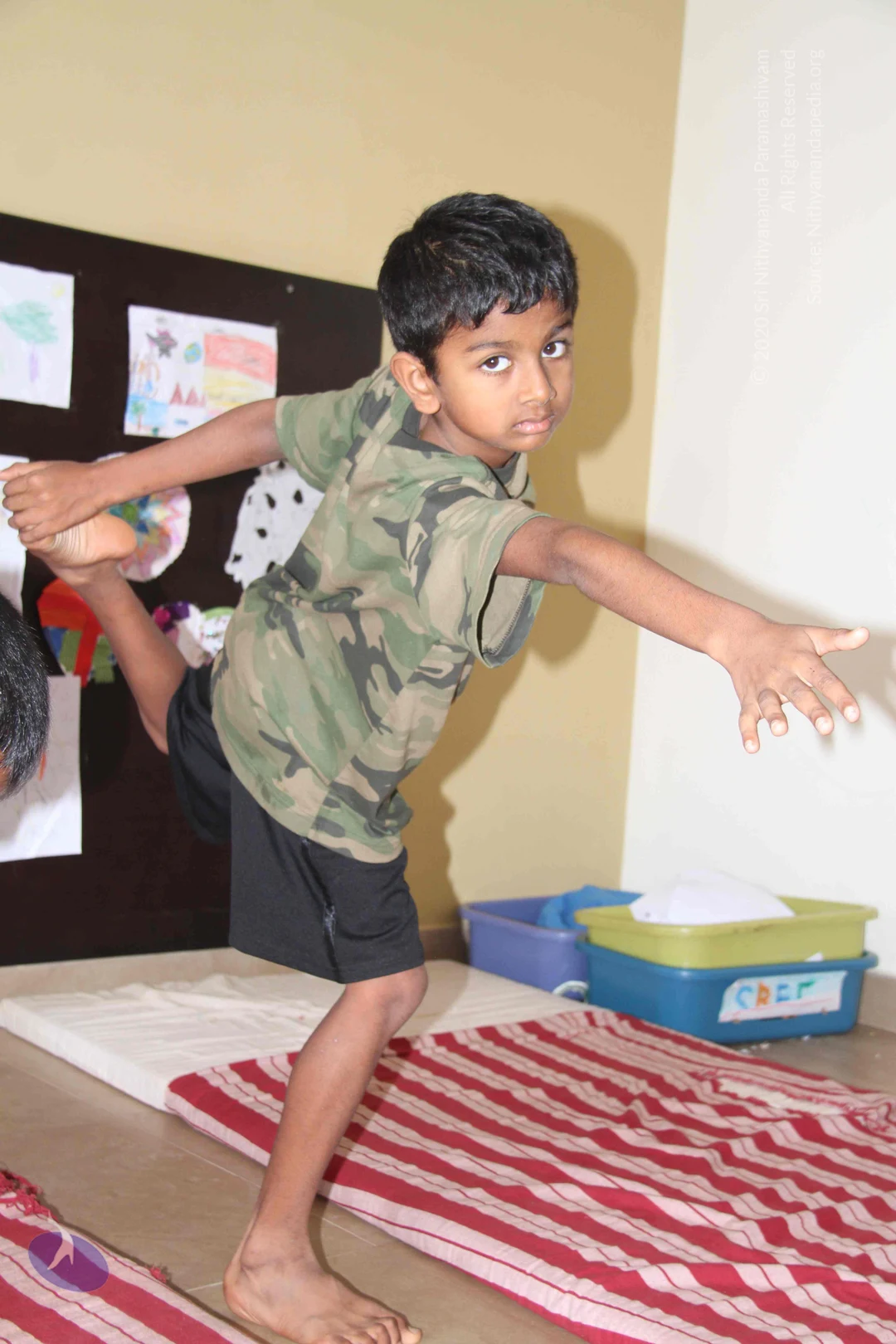
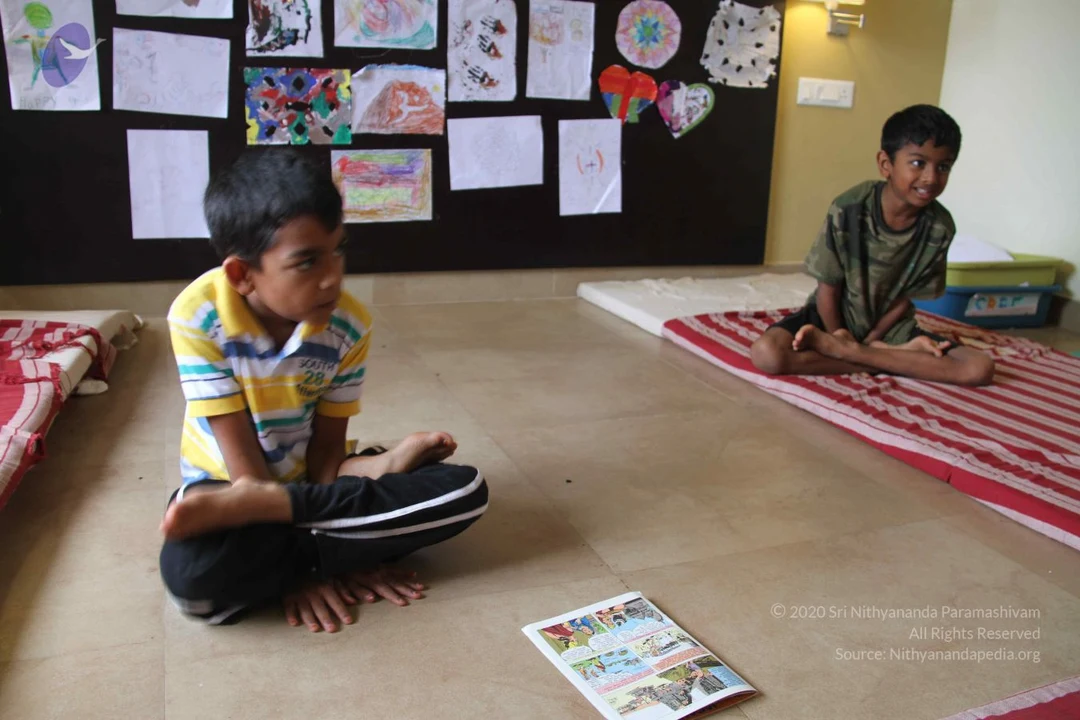
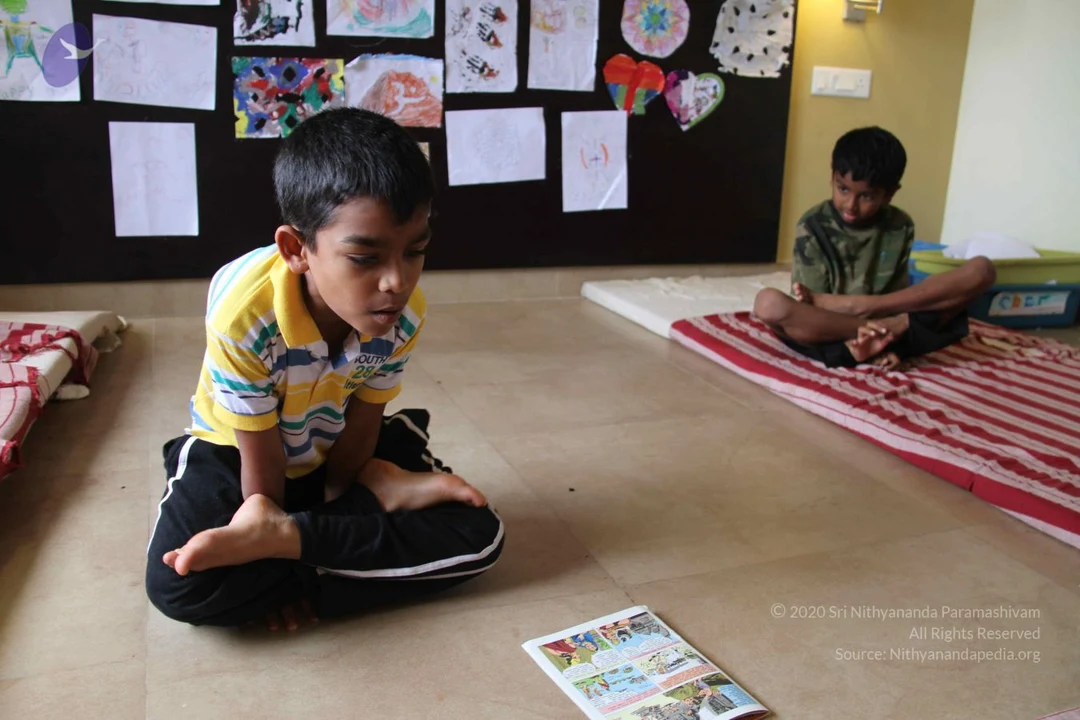
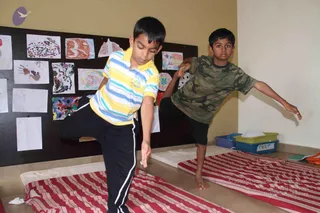
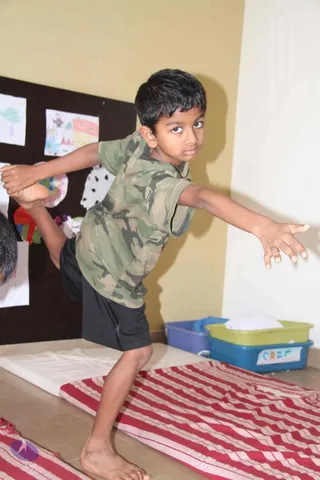
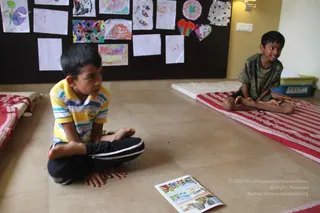
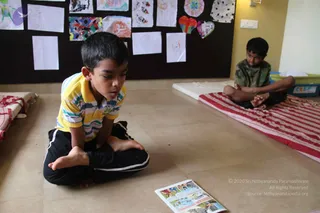
Two boys practice standing yoga balances on red-and-white striped mats on a tiled floor in a room with a dark bulletin board covered with children's paintings and drawings. The boy on the left wears a yellow, white and blue striped polo shirt with black track pants and stands on one leg with the other knee raised, arms relaxed at his sides. The boy on the right wears a green camouflage t-shirt and black shorts, barefoot, balancing on one leg with the other foot lifted and his arms stretched out sideways. Blue and green plastic storage bins sit against the wall at right.A young boy in a green camouflage t-shirt and black shorts balances barefoot on one leg in a standing stretch, holding his raised foot with one hand and extending the other arm outward. He is in a room with pale yellow walls, a dark board displaying children's drawings, a striped red and white mat, a white mat, and blue and green plastic storage bins. No a person candidate is visible.Two boys sit on a tiled floor in a bright room with a dark wall covered in children's paintings and drawings, including colourful heart shapes and abstract artwork. The boy on the left wears a yellow and white striped polo shirt and black trousers, sitting cross-legged and looking to the side. The boy on the right wears a green camouflage t-shirt and dark shorts, seated on a red-and-white striped mat with a folded white mat beside him and a green storage box. A small comic-style booklet lies open on the floor in front of the left boy.A photograph of two boys sitting on the floor of a bright room with a dark display board covered in children's drawings and paper artworks. In the foreground, a boy in a yellow and white striped polo shirt and black track pants with white stripes sits cross-legged, looking down at a small open comic booklet on the floor. Behind him, a second boy in an olive-green t-shirt and dark shorts sits with legs stretched out on a red-and-white striped mat. Plastic storage bins and a light wall fill the right side.

Navagraha-Homa

47 photosSource gallery
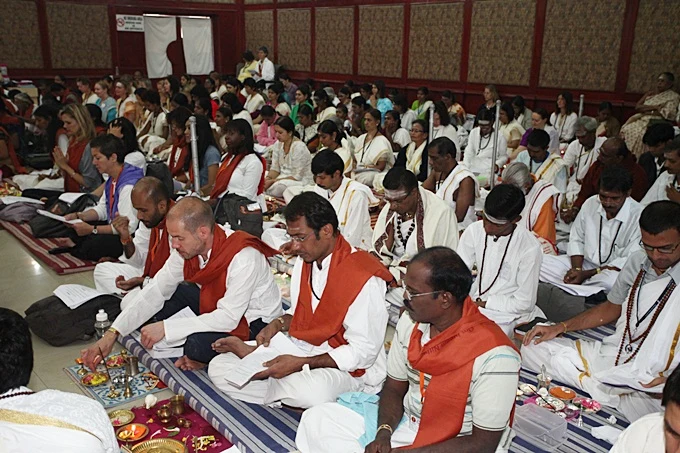
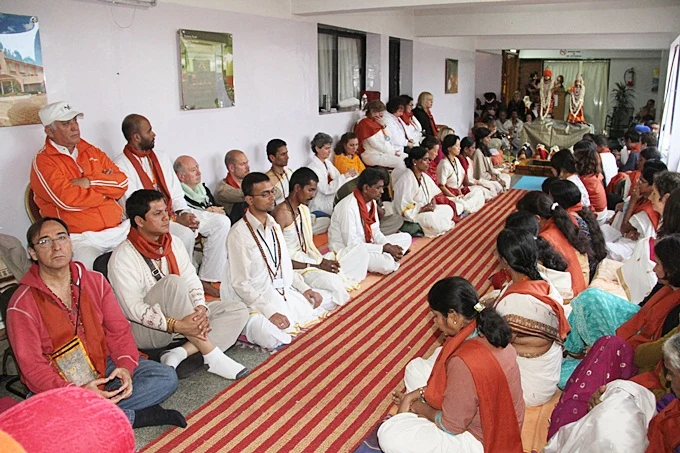
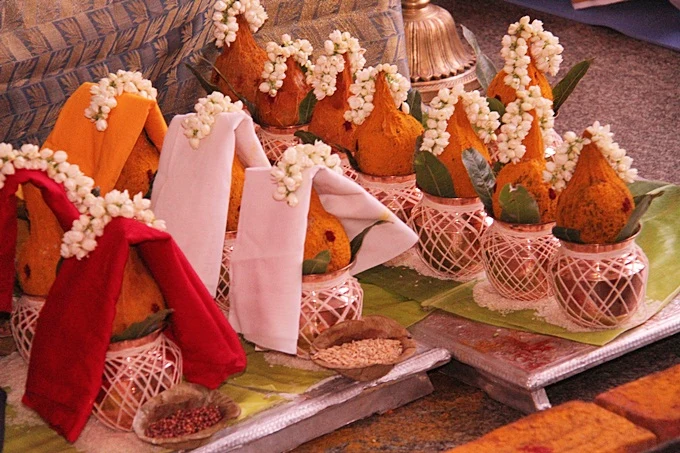
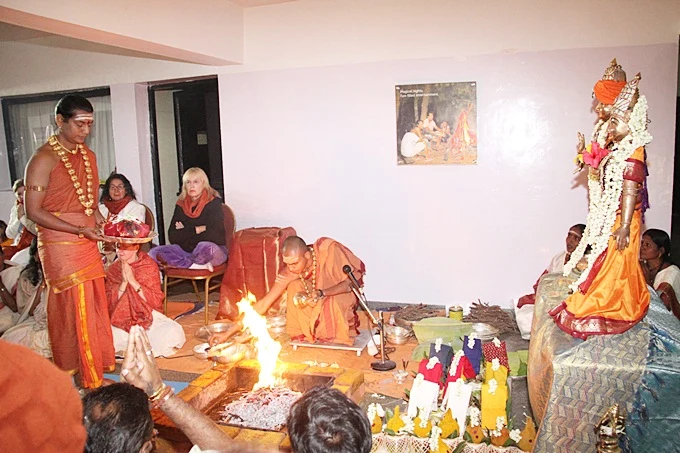
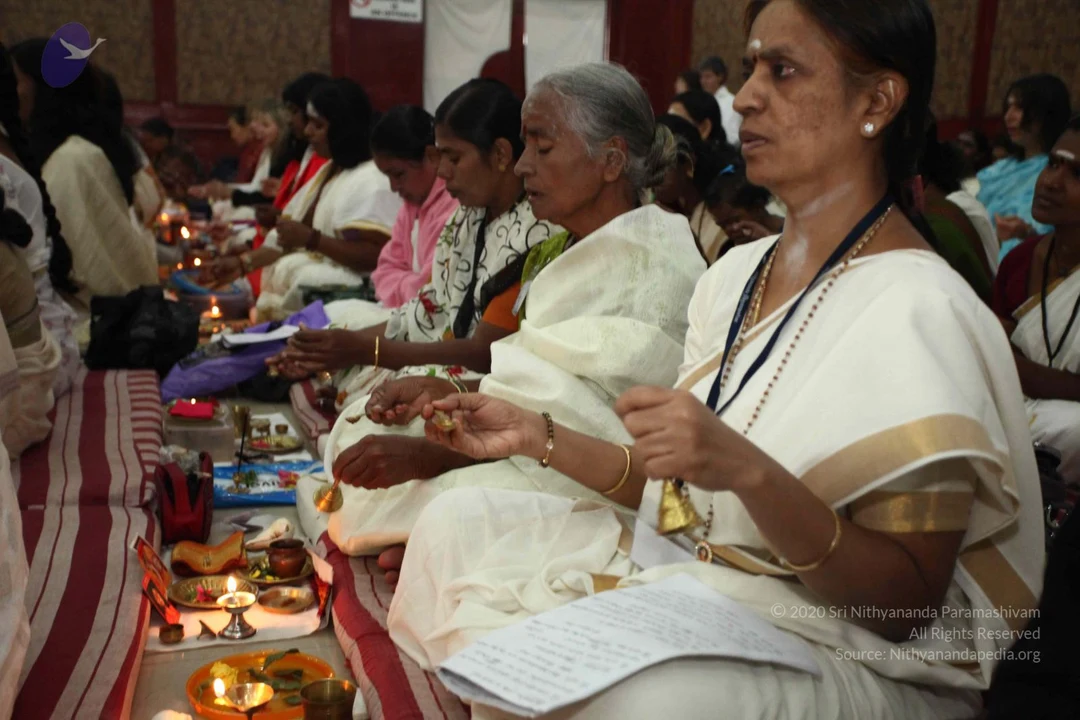
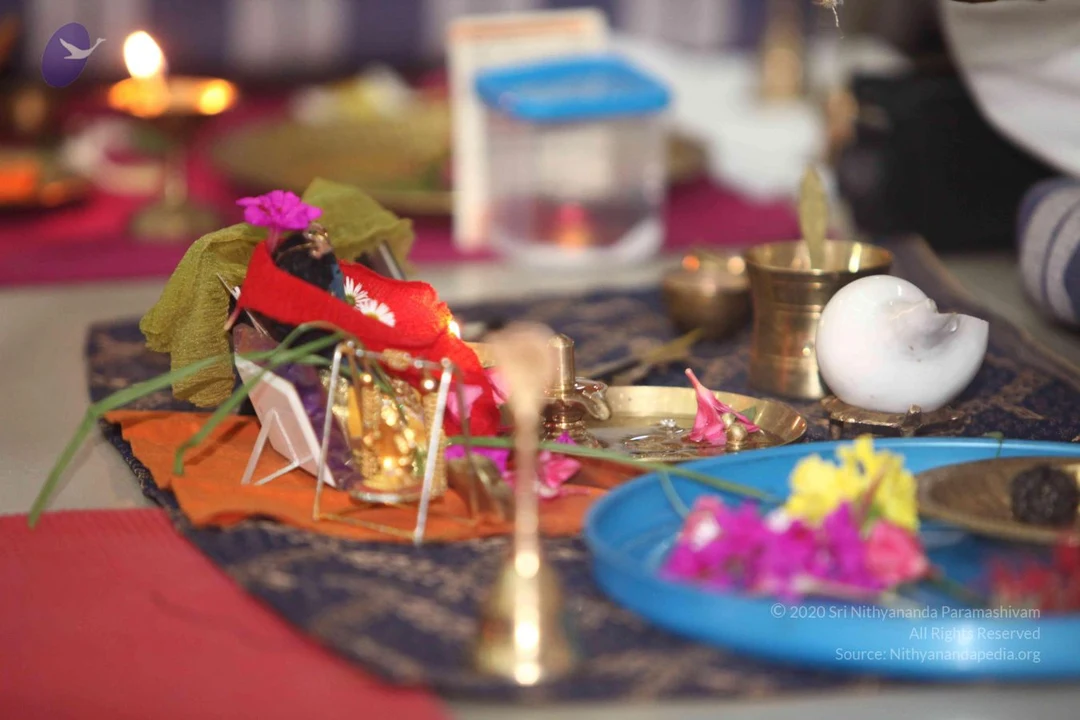
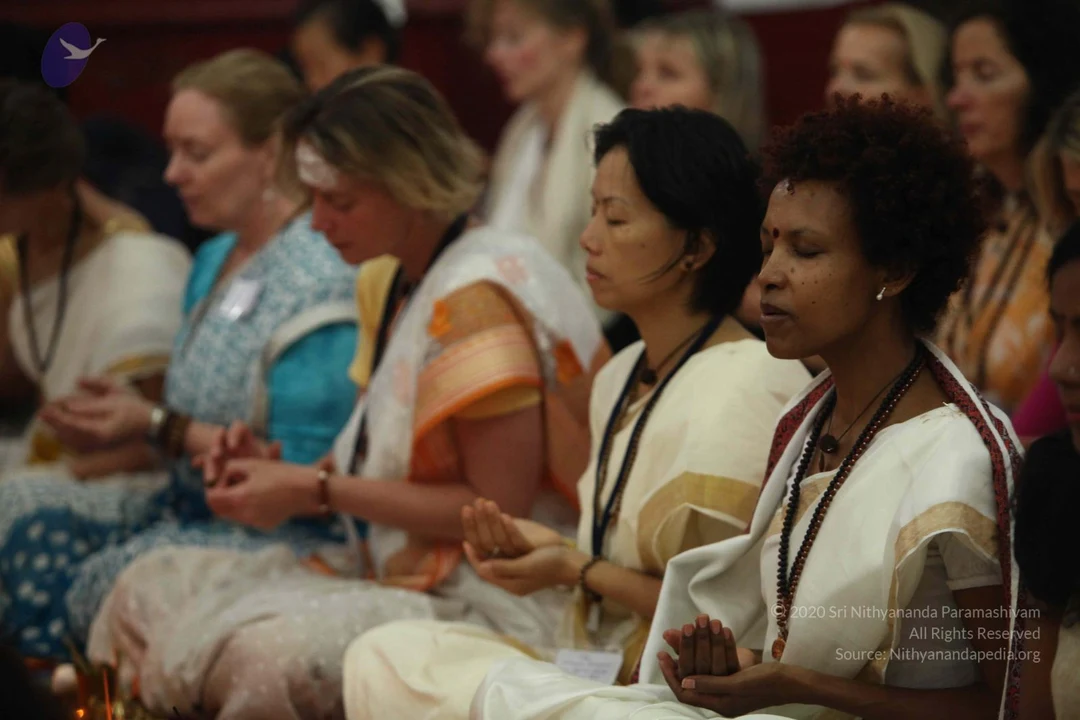
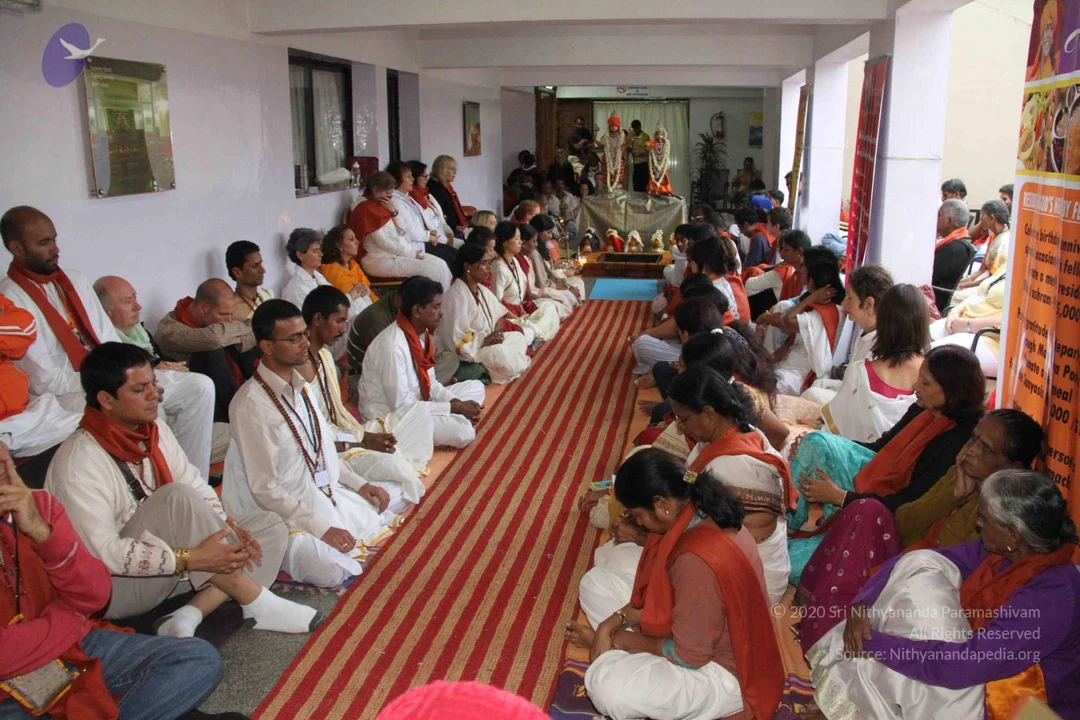
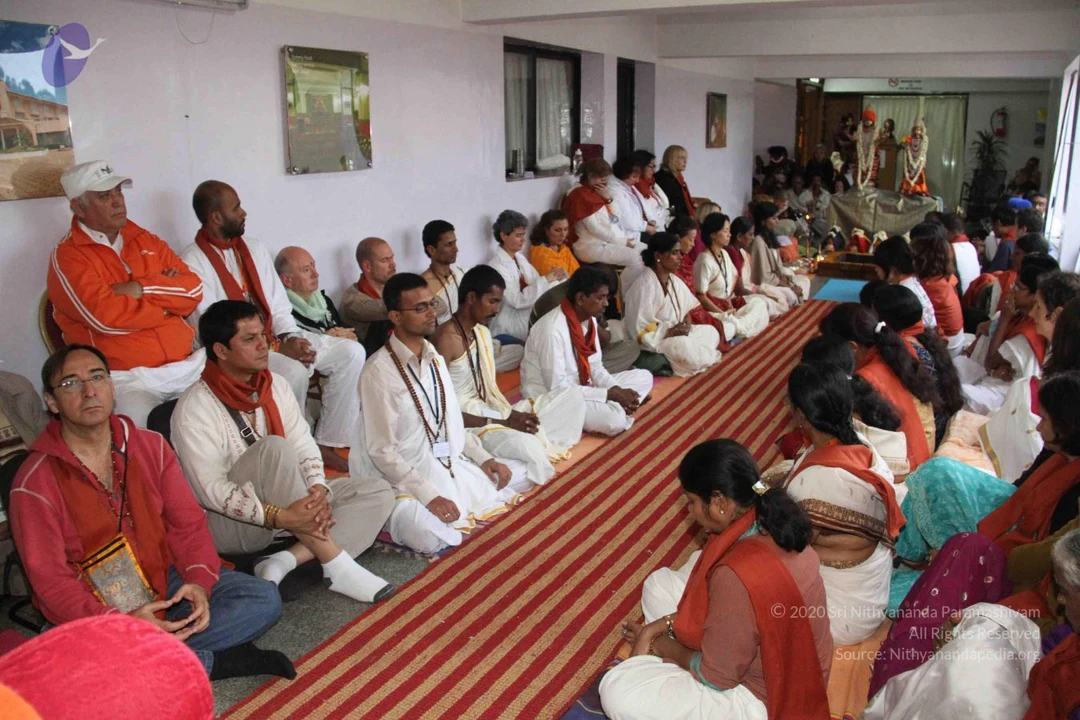
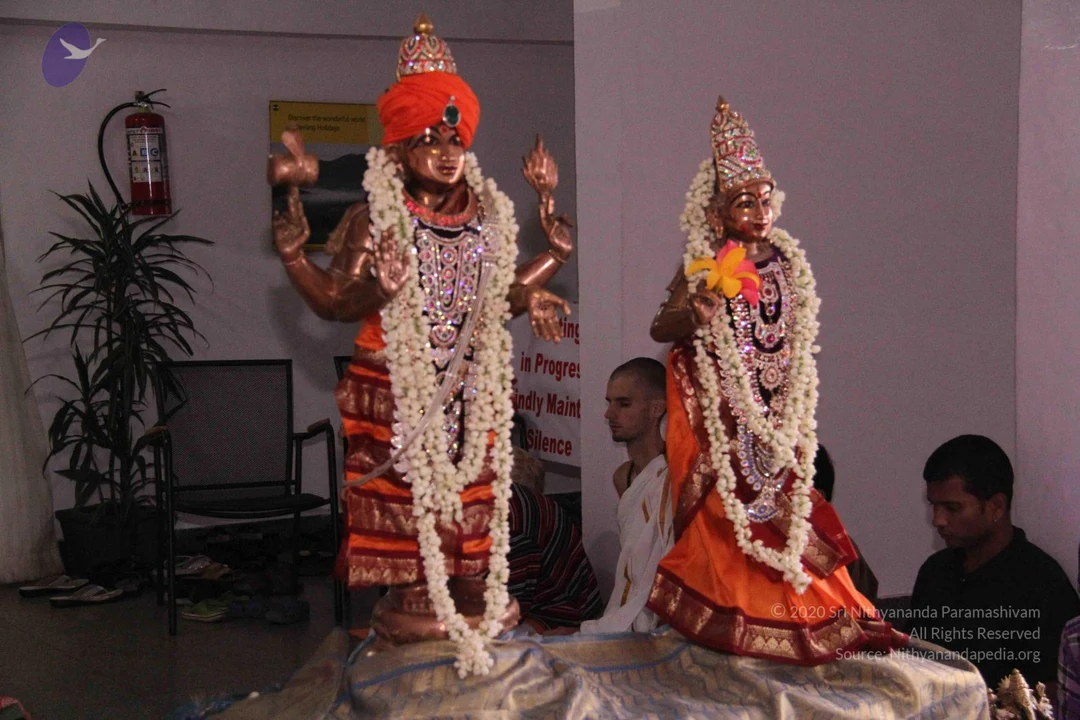
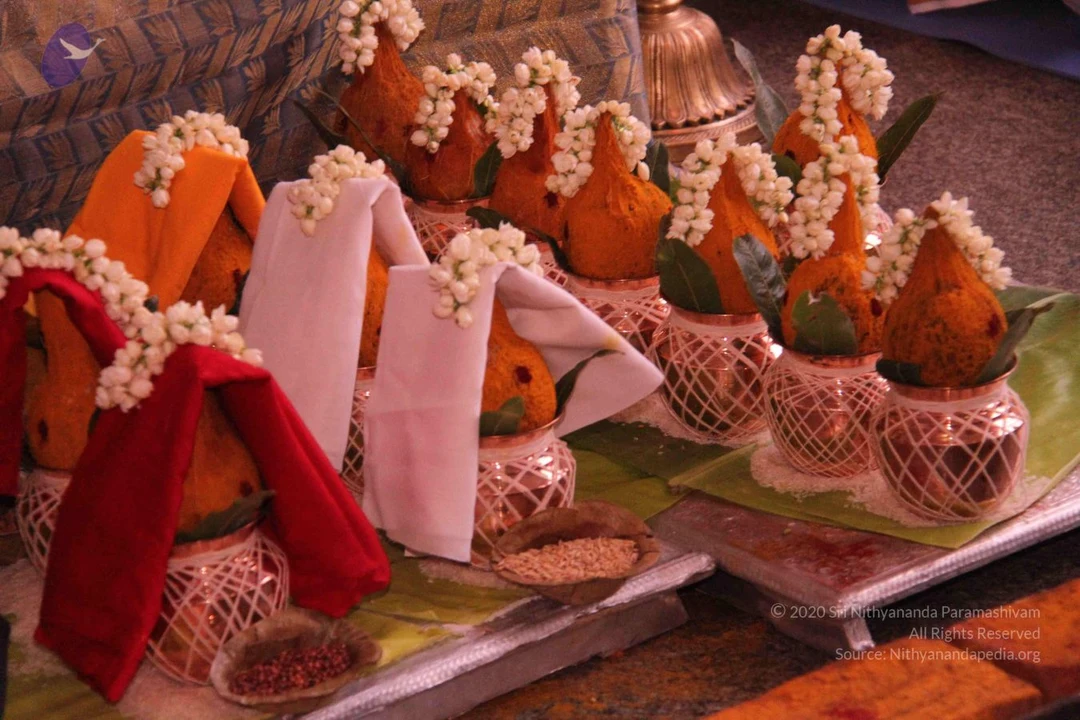
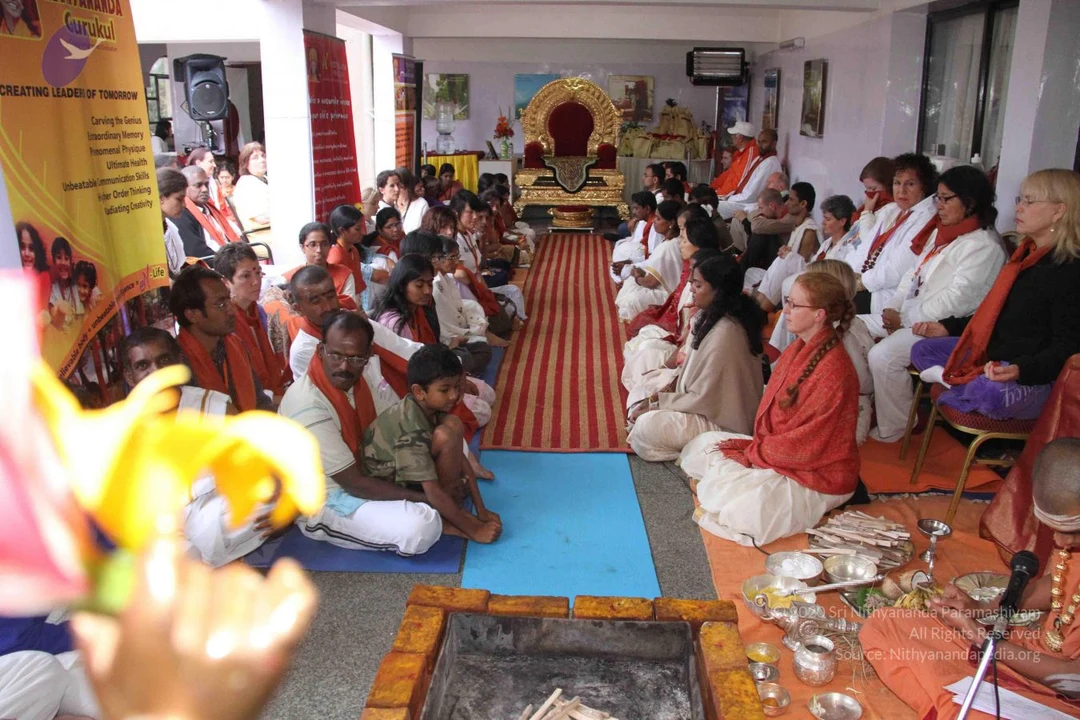
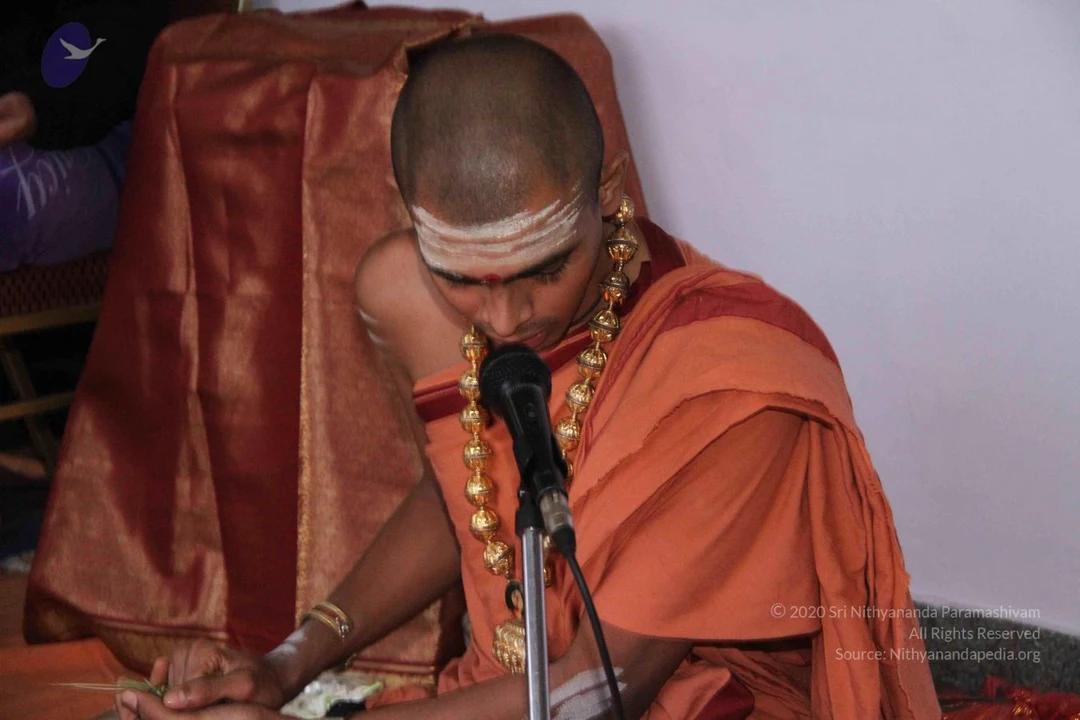
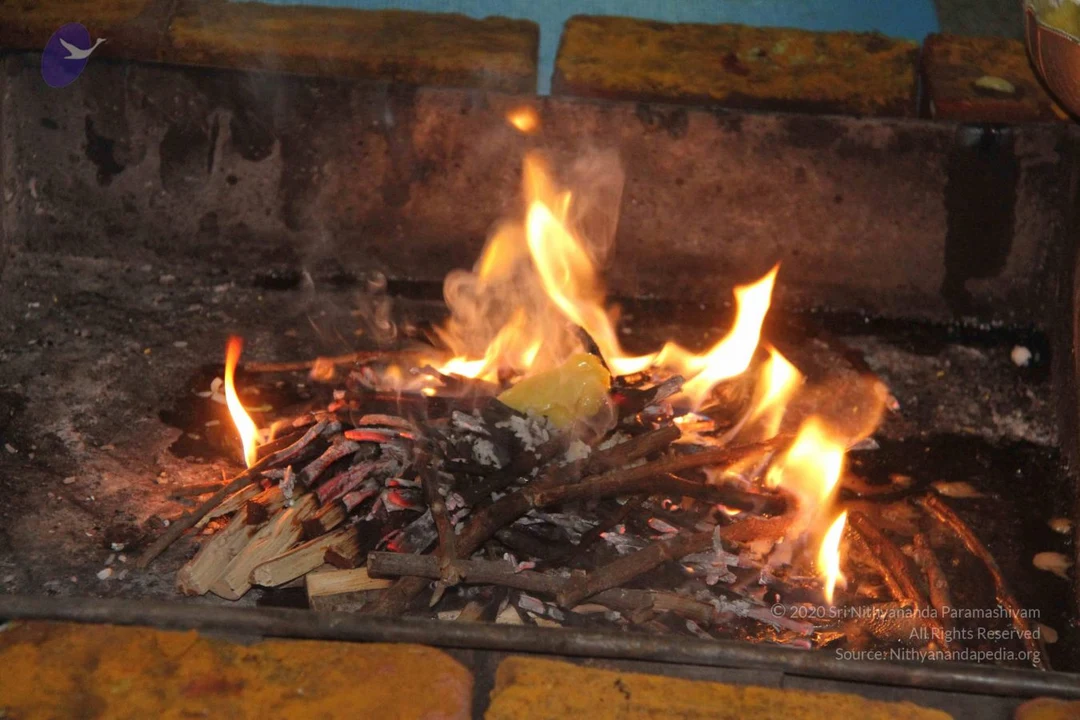
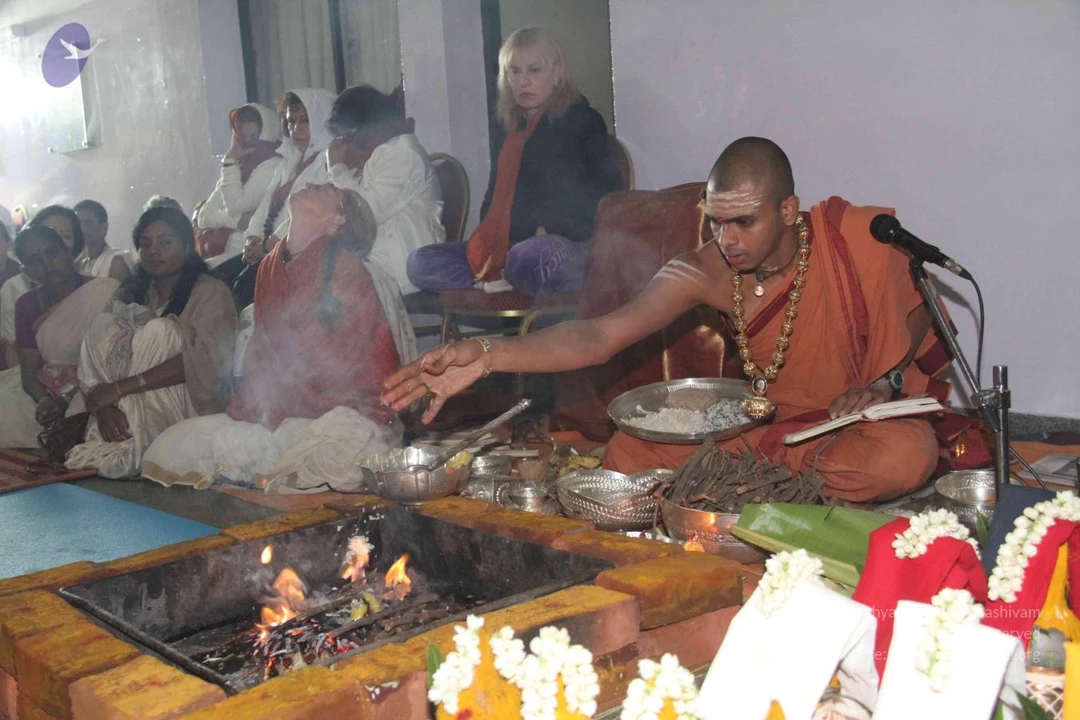
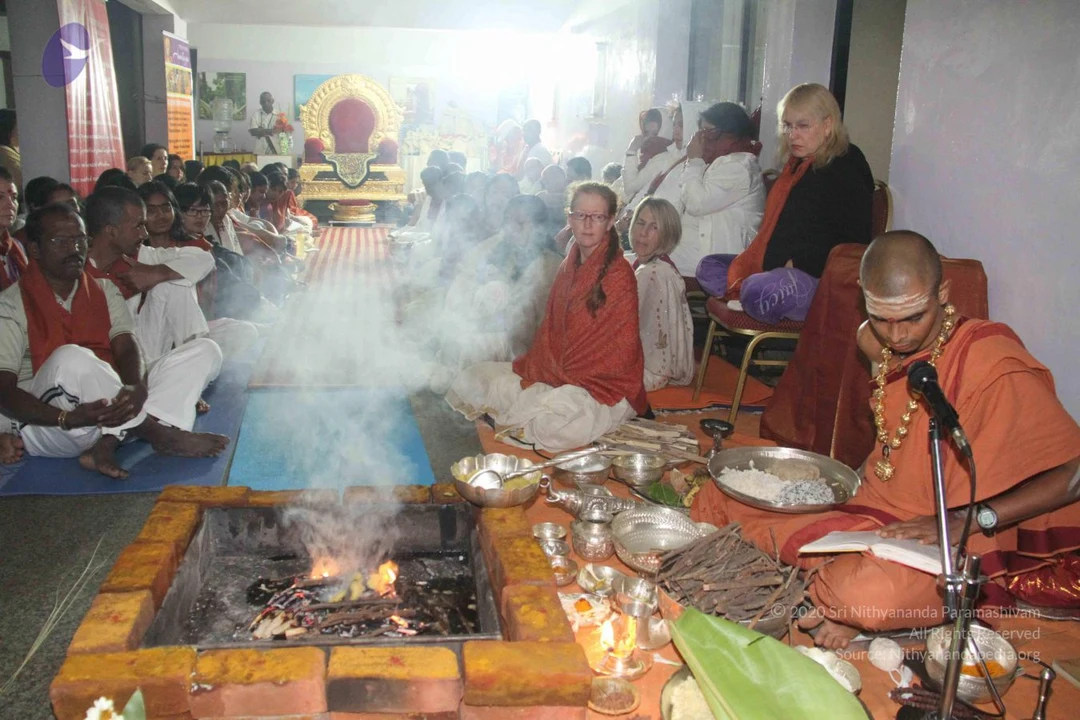
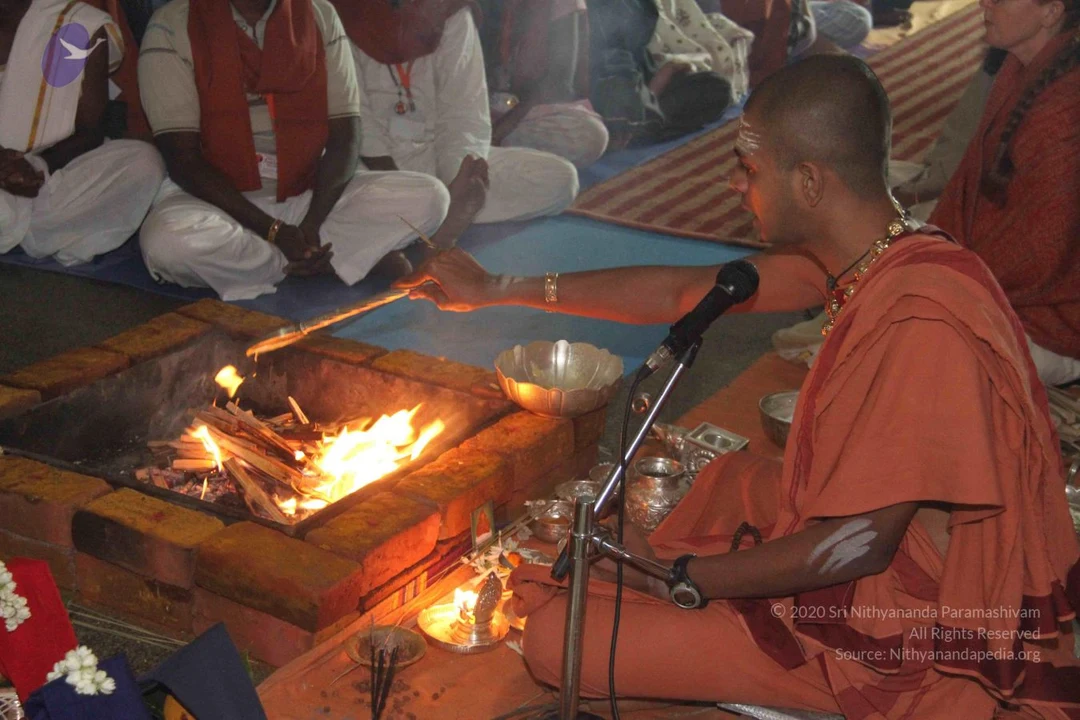
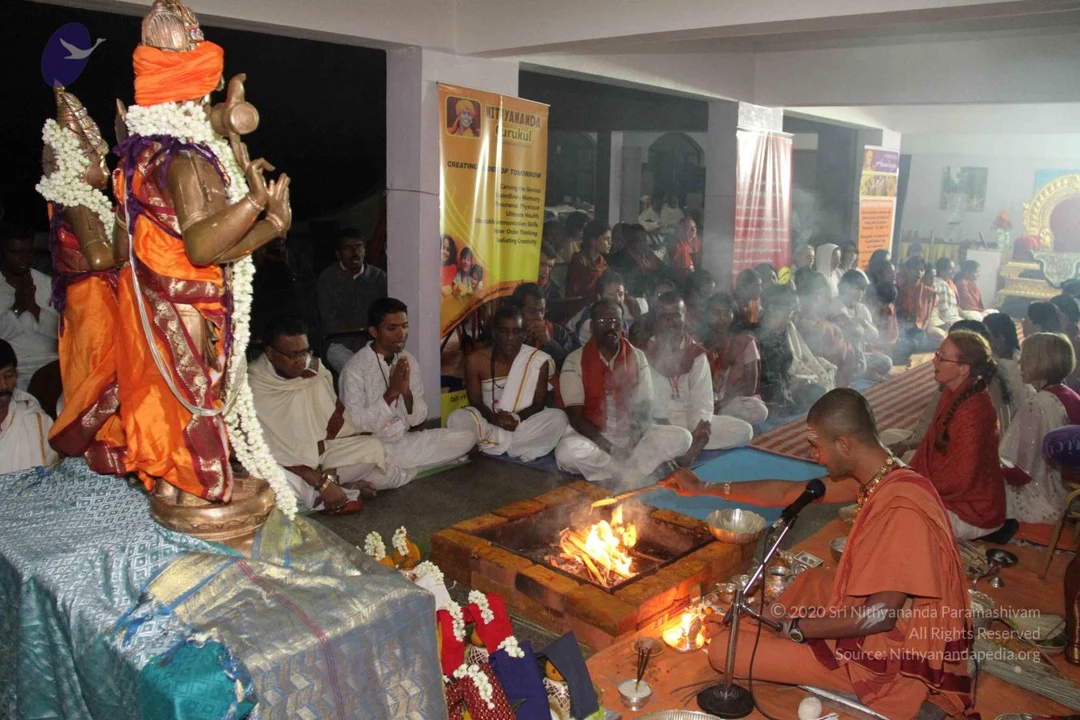
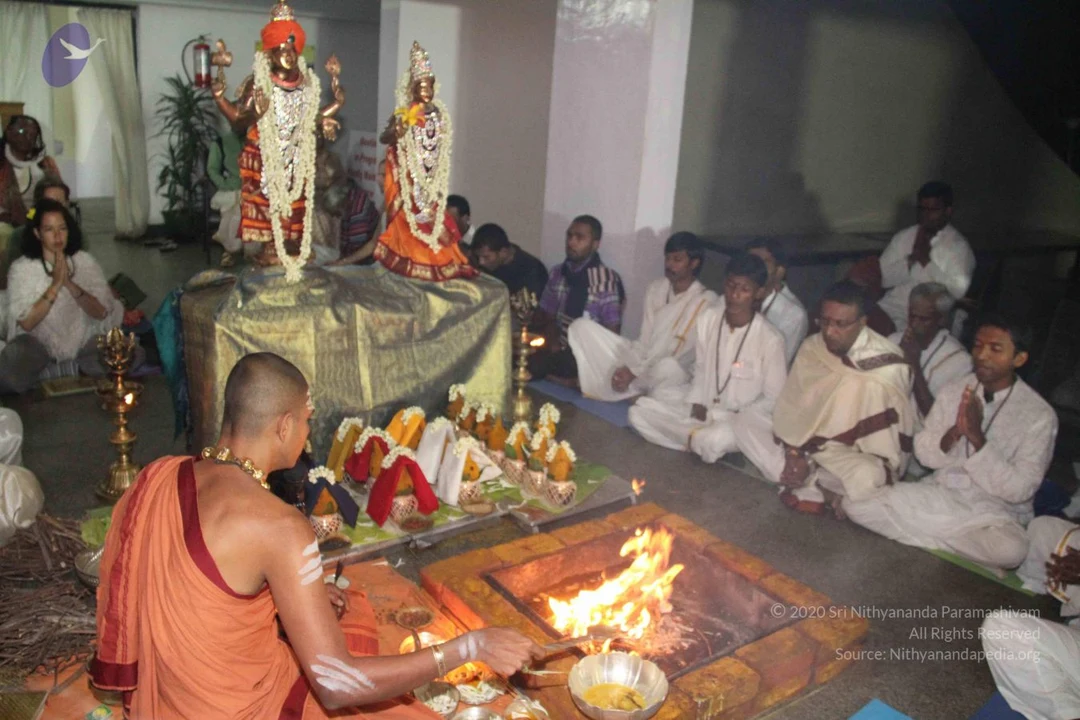
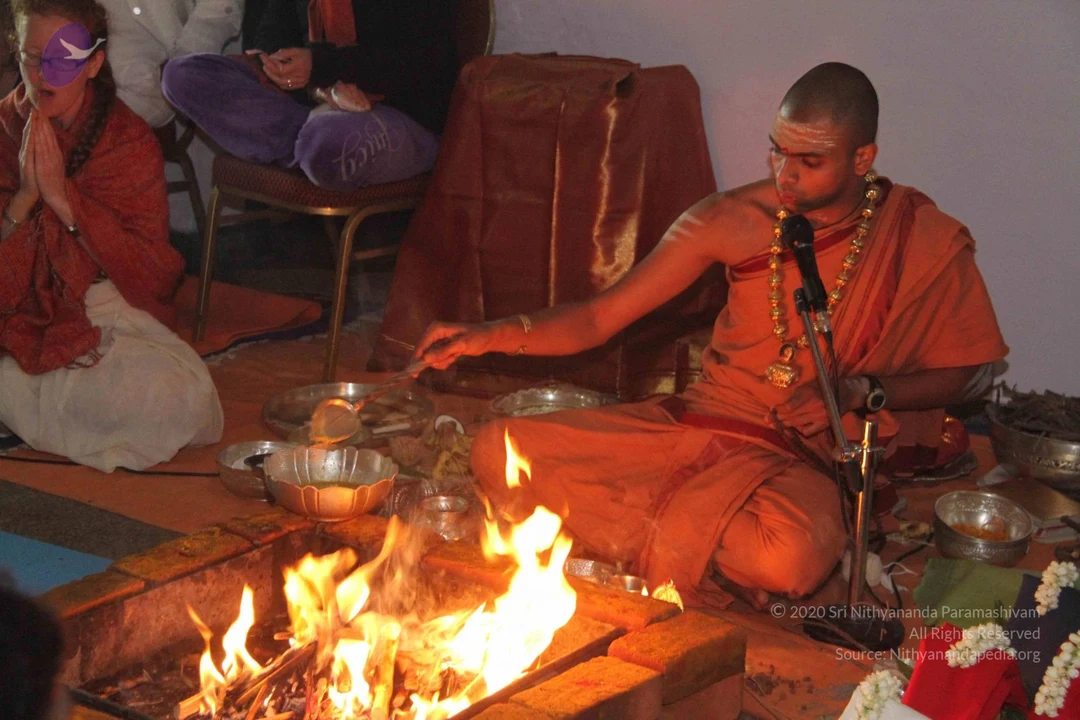
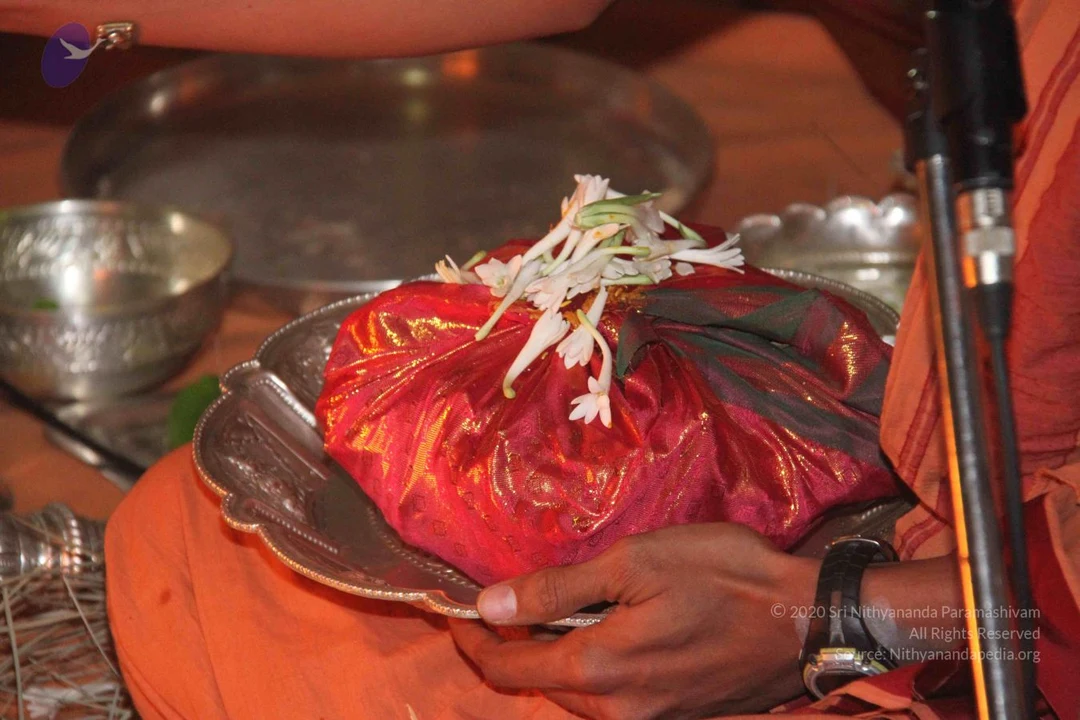
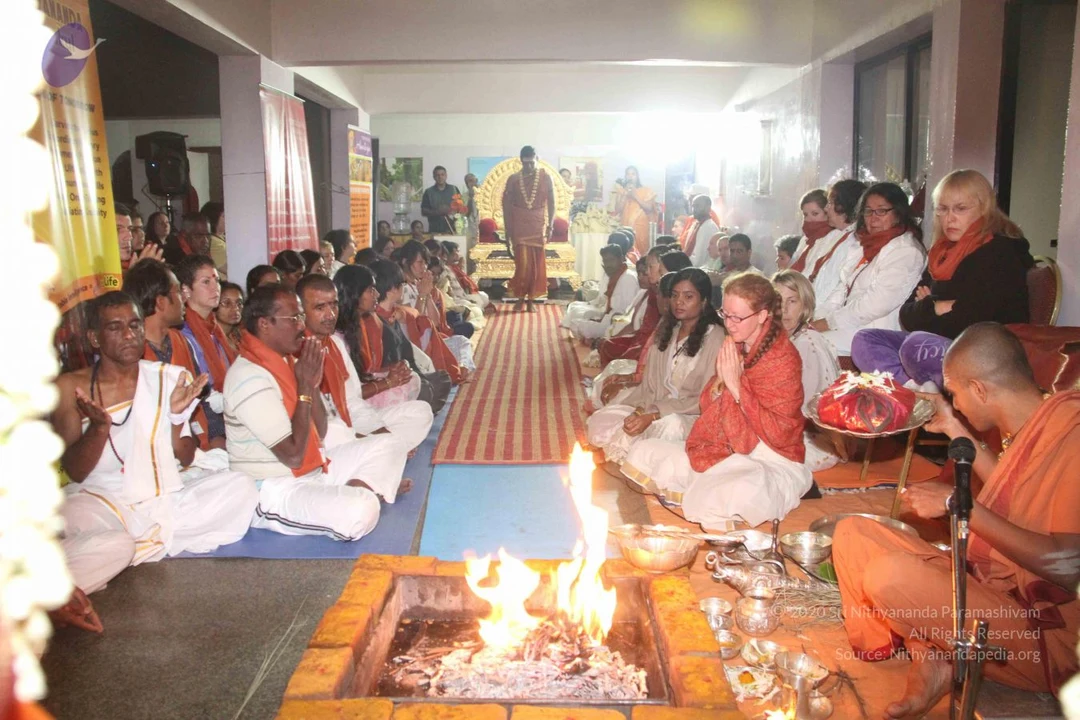
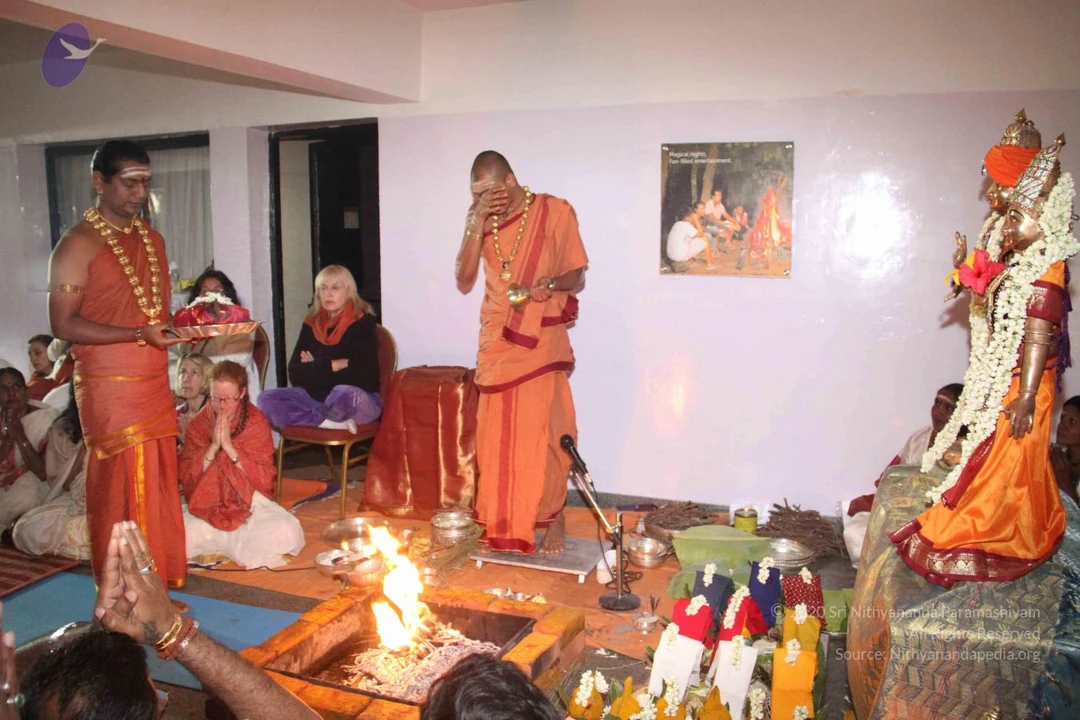
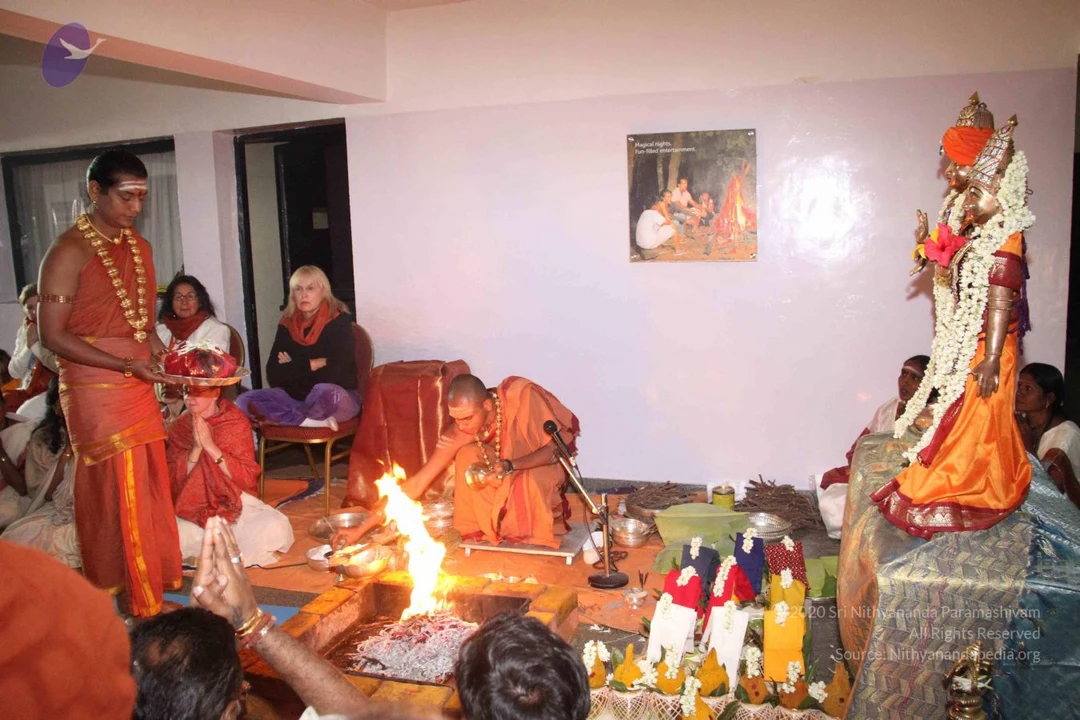
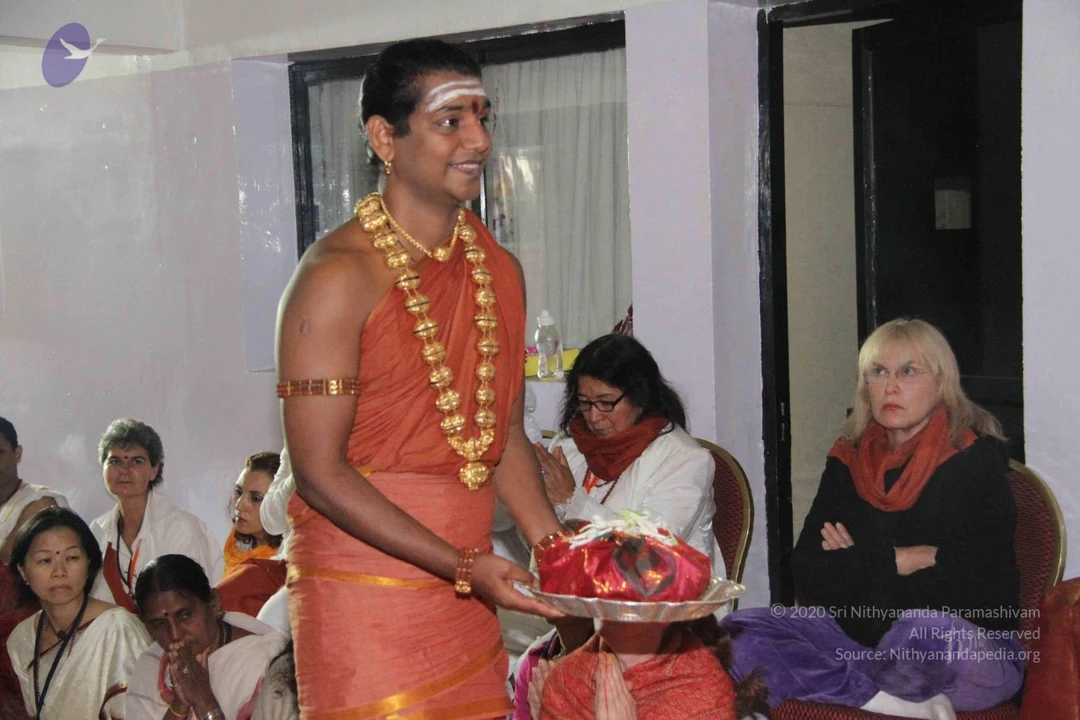
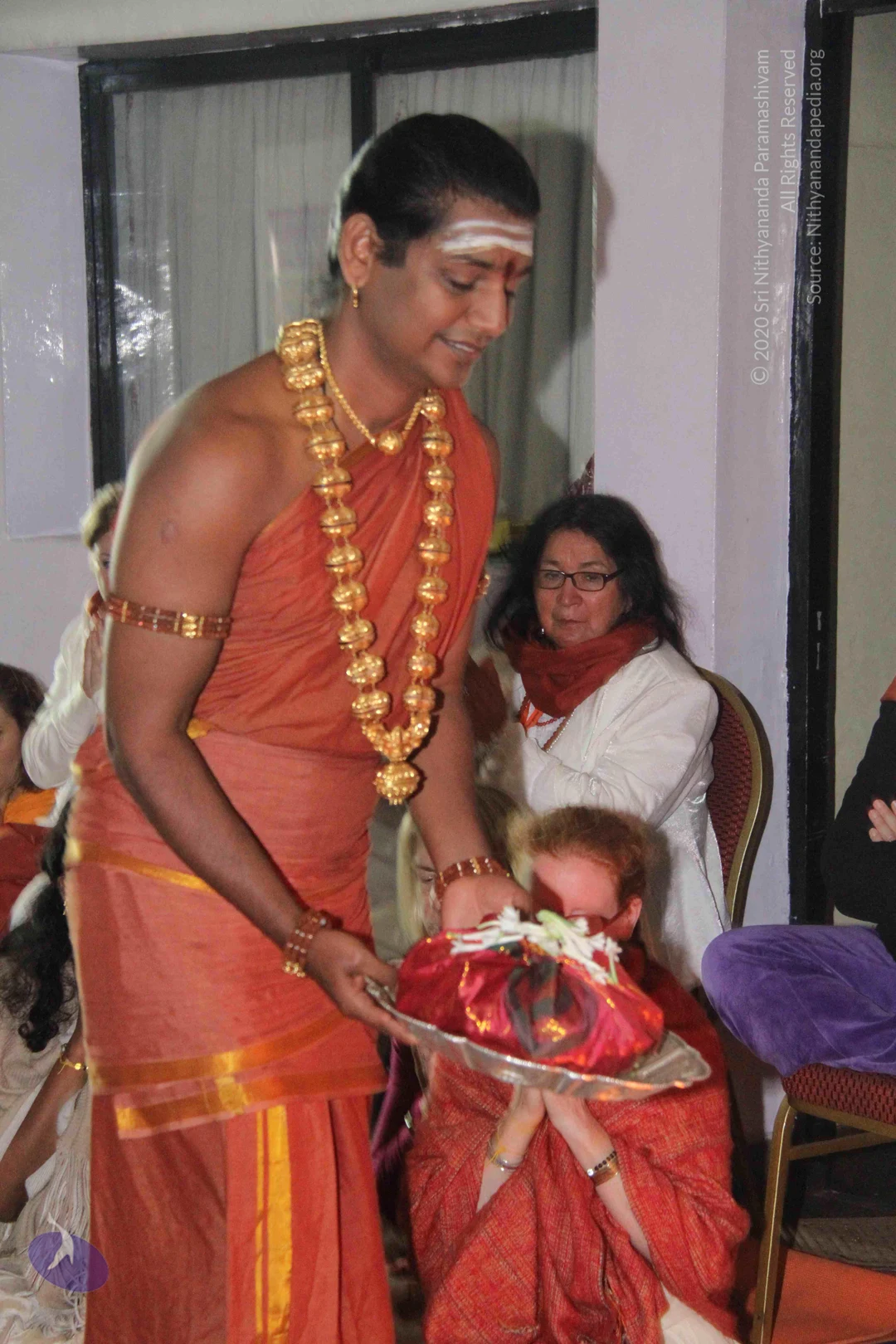
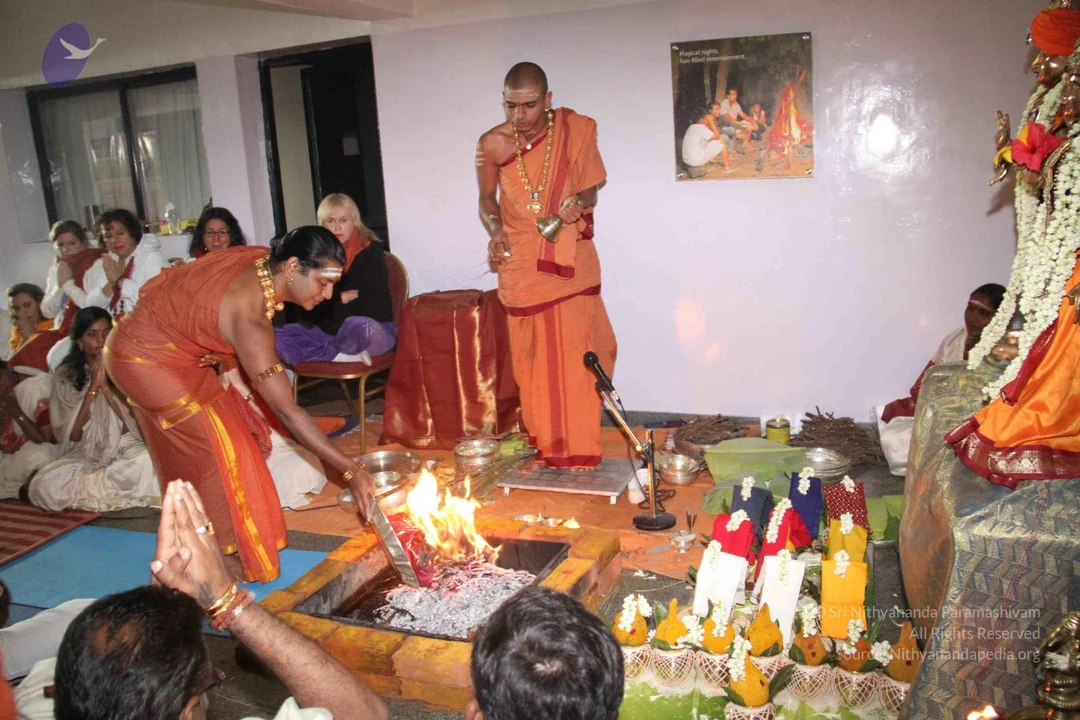
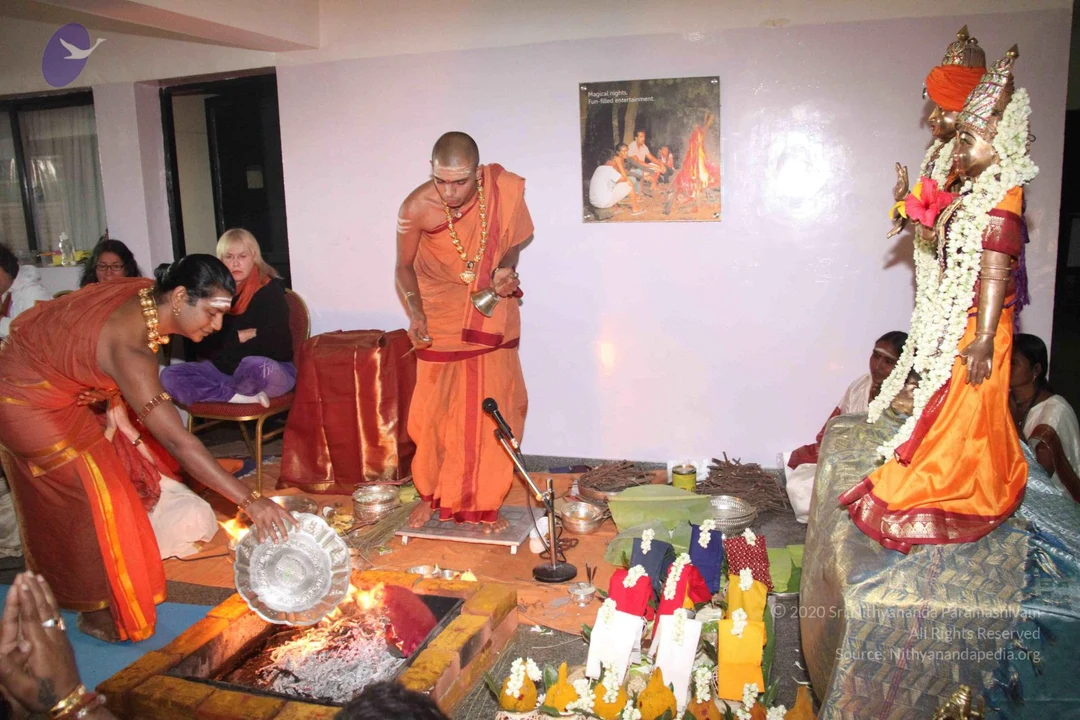
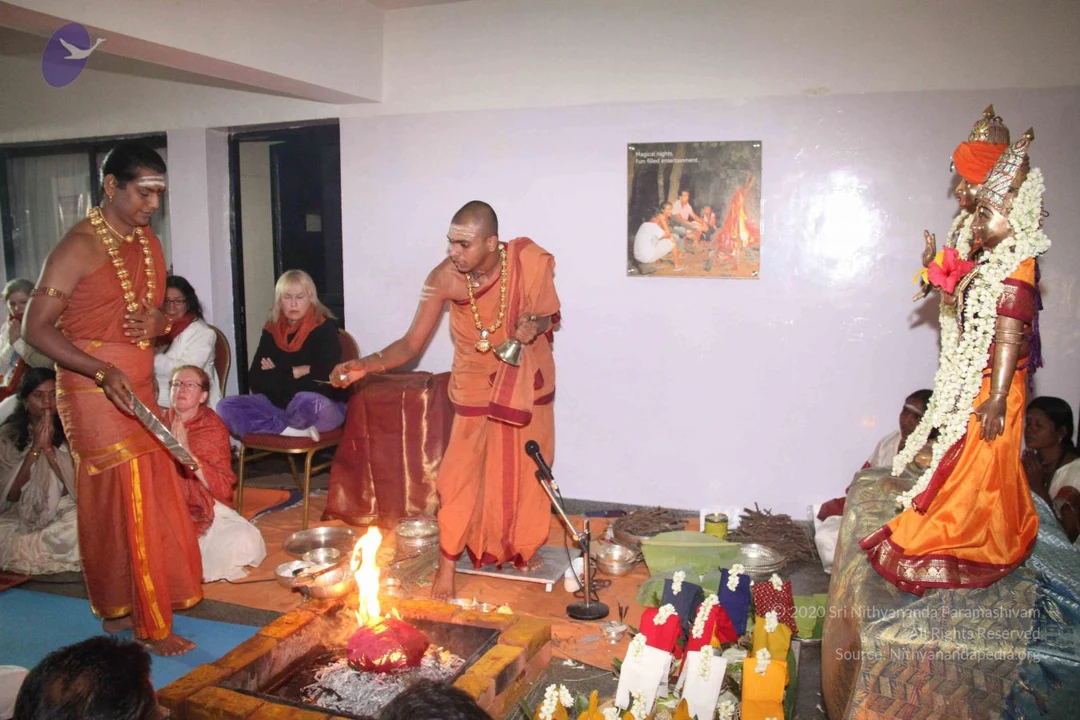
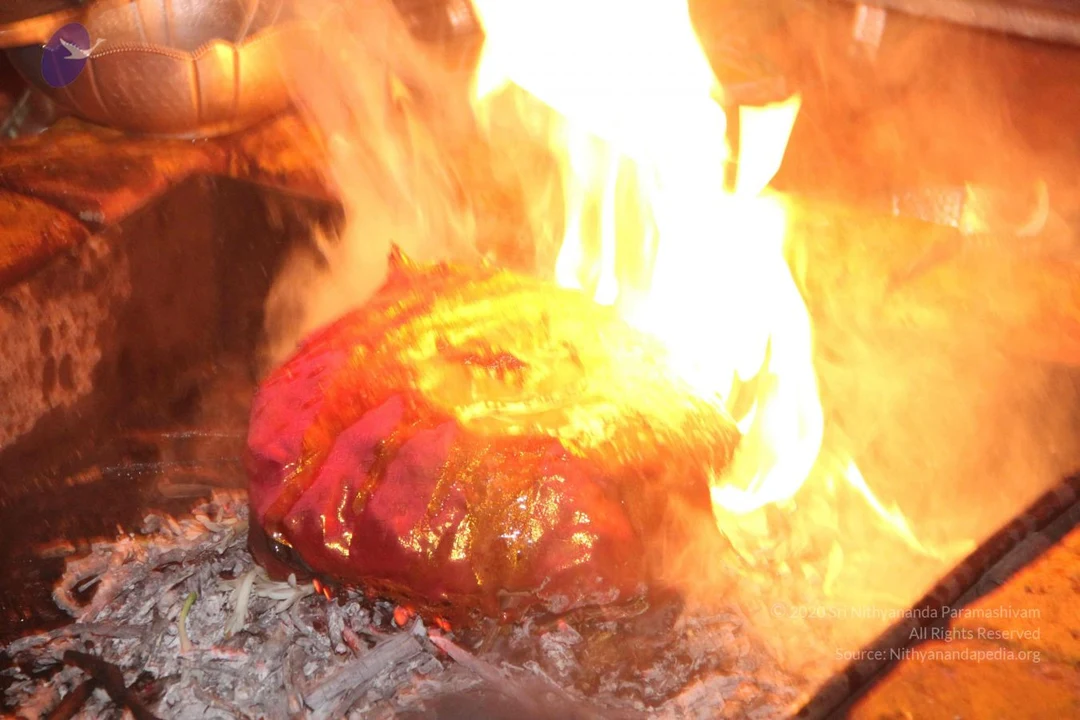
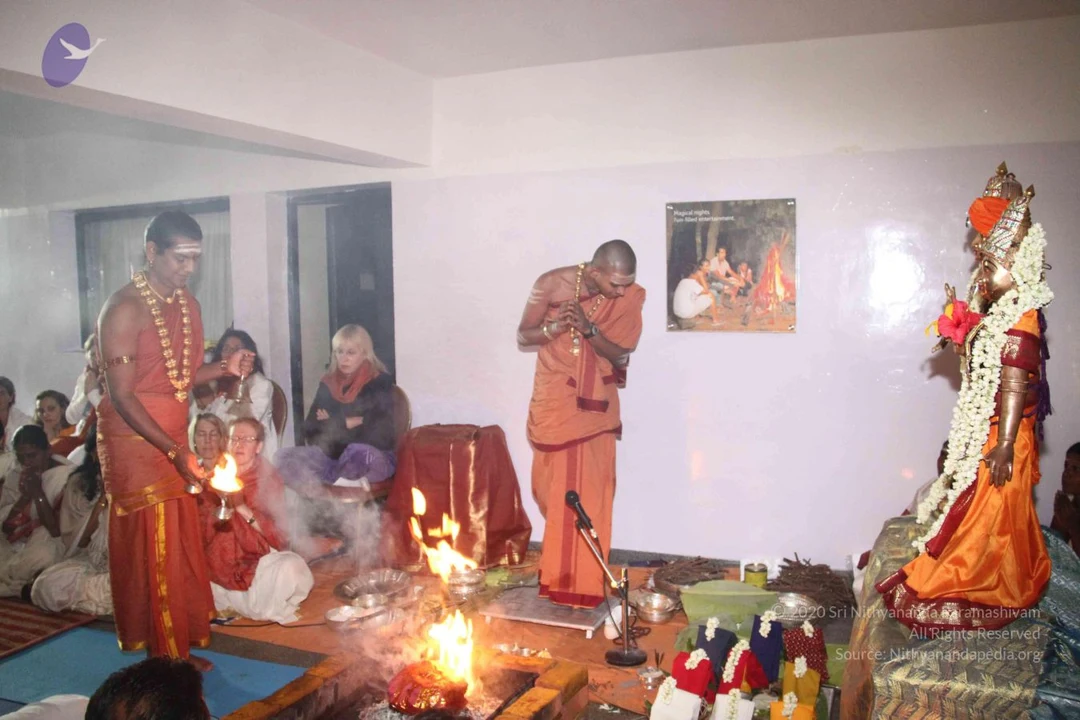
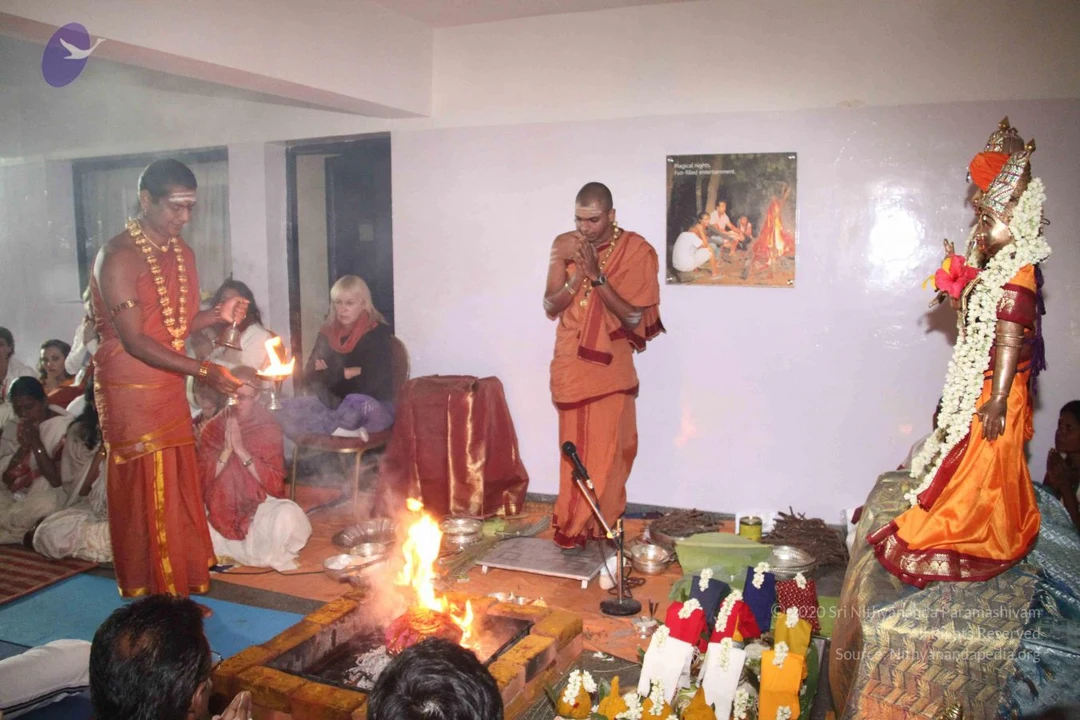
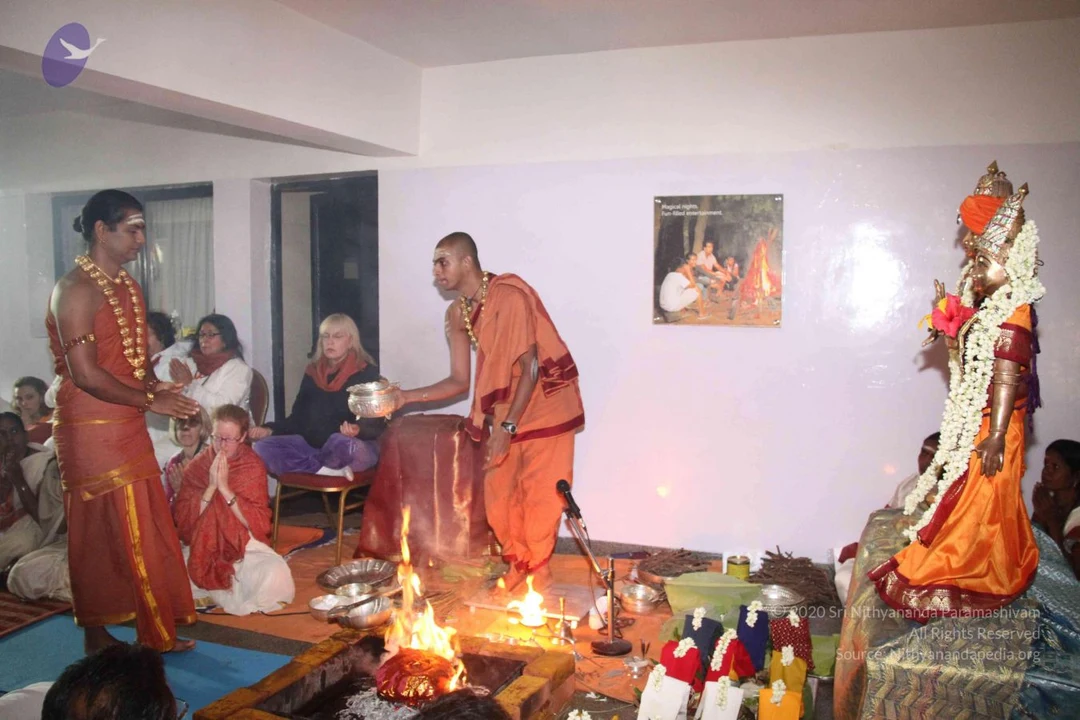
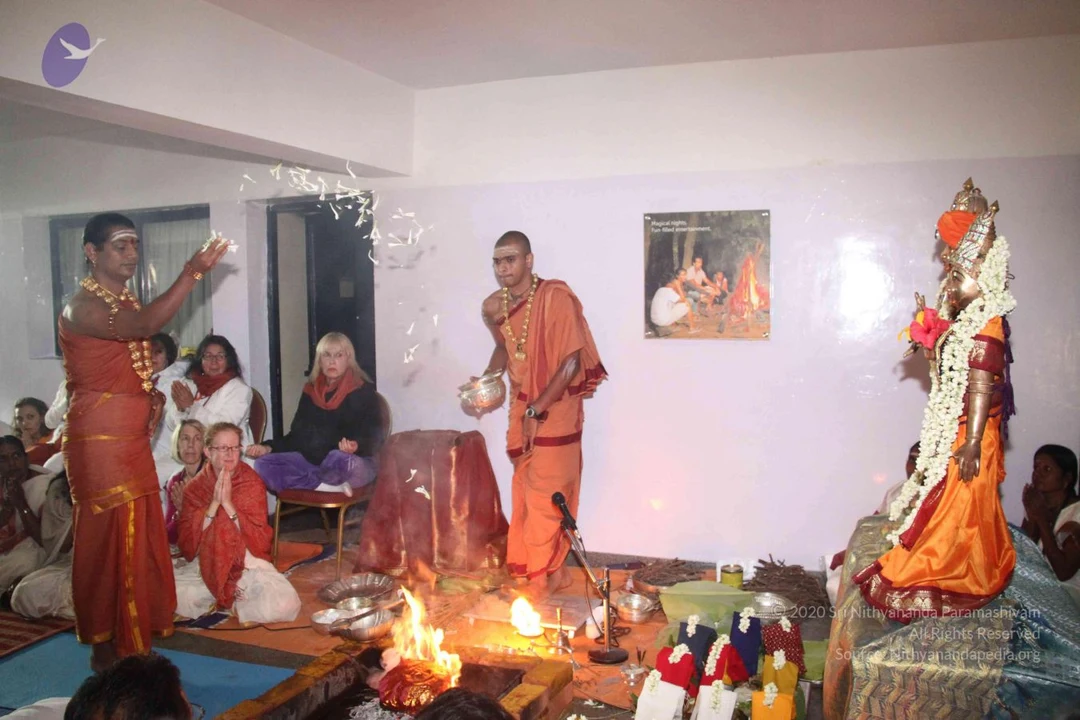
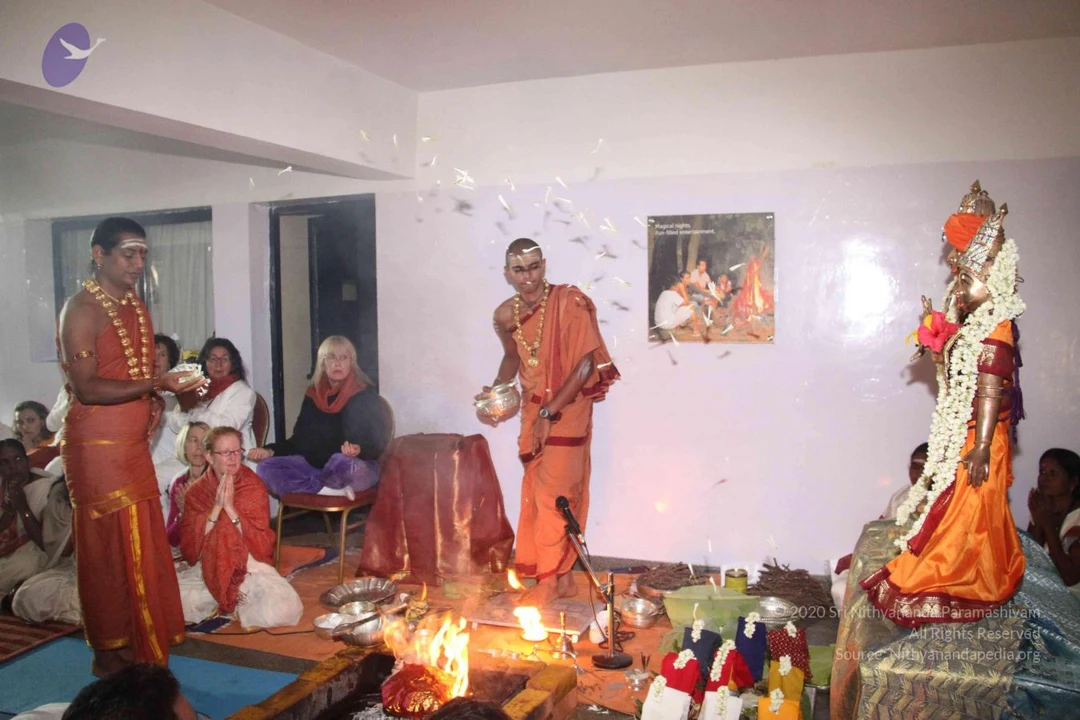
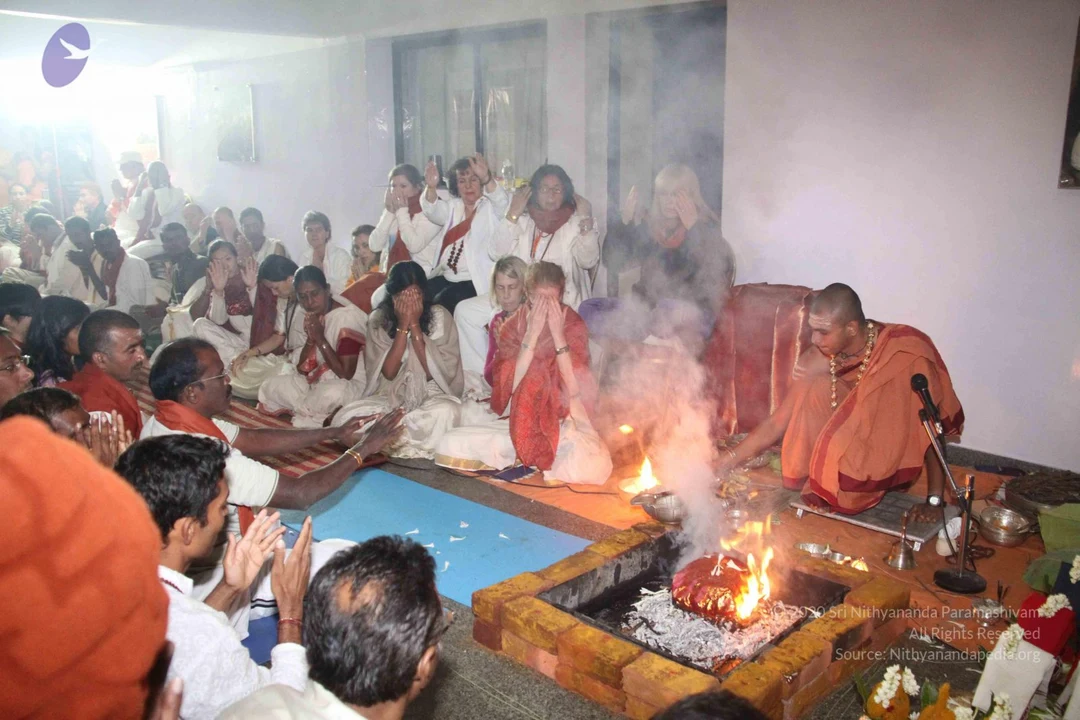
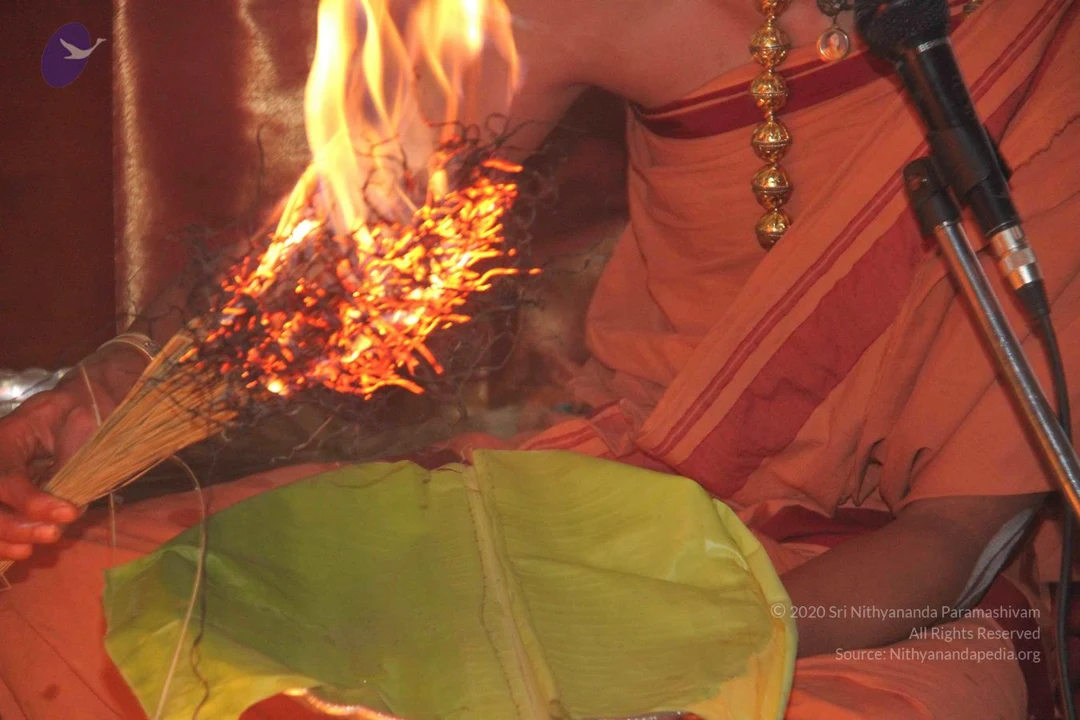
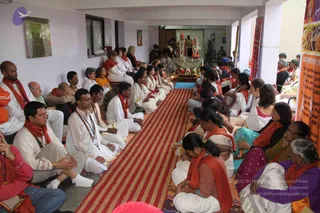
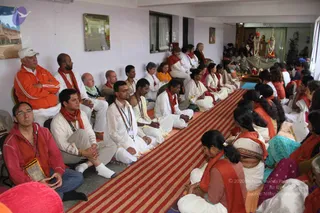
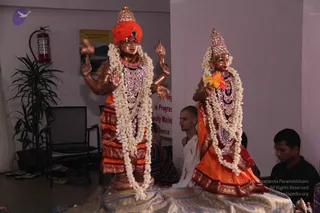
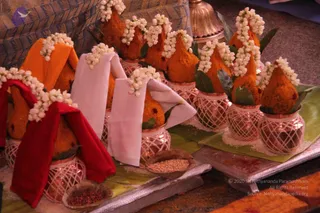
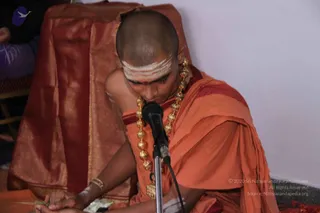
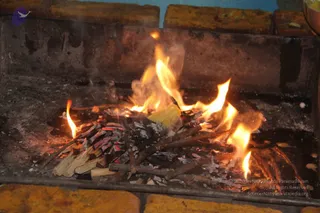
A photograph of a seated congregation in a covered hall with white walls and a long red-and-cream striped runner down the centre. Many devotees sit cross-legged in white kurtas and saffron-orange shawls, with women in white, orange and teal saris. In the foreground a man in a white kurta with rudraksha mala and a bearded man in grey trousers sit on the mat. At the far end, two garlanded figures stand on a raised platform before a draped backdrop, with brass lamps and offerings in front. A poster on the right reads in part Nithyananda Dhyanapeetam style event text. Many devotees are visible, roughly in the 21-100 range.A photograph of a seated satsang gathering in a plain white-walled hall with a striped red and cream mat running down the centre. Many devotees sit cross-legged on the floor in white kurtas and dhotis, saffron and orange shawls and scarves, and rudraksha malas. In the foreground a man in a red jacket with glasses sits with a book, and a man in a white cap and orange jacket stands at left. At the far end, garlanded deity murtis and a throne-like seat are visible, with a larger crowd of devotees beyond. No clearly identifiable figure of the speaker is distinguishable in this frame.Photo of two large standing statues of deities draped in white jasmine garlands, indoors in a plain room with lilac walls. The left statue is a multi-armed figure with a tall orange turban and jewelled red-and-gold collar; the right statue wears a tall jewelled crown, orange sari with gold border, and a yellow and pink flower at the shoulder. Seated before them on a blue-grey cloth is a shaved-headed man in white ritual clothing, and at right a seated man in a black shirt sits with hands together. Behind are chairs, a potted plant, a red fire extinguisher, and a yellow sign with partly visible text. The scene suggests a devotional worship setting.Close view of a row of ritual offerings on a silver tray lined with green banana leaves. Several tall conical mounds of orange-yellow powder. Each mound is crowned with strands of white jasmine garlands and green leaves. Some vessels are draped with orange, red and white cloths. Small bowls hold grains and spices at the front. No people are visible; a brass bell and draped fabric appear in the background.A shaved-headed man in an orange saffron robe sits cross-legged at a microphone on a stand, eyes lowered, holding a small leaf or stem in his hands over a white cloth. He wears a broad white vibhuti band with a red kumkum dot on the forehead and a long gold bead necklace, with gold bangles on his wrist. Behind him a folded deep red-and-gold brocade cushion or seat backs the scene against a plain white wall. The setting suggests a seated satsang or discourse. A photo credit overlay reads 'Sri Nithyananda Paramashivam' and ''. The man is a person by visible cues: saffron robe, long gold bead necklace, vibhuti and kumkum markingsA photograph of a small fire burning in a brick-lined fire pit. Sticks and wood pieces are stacked in the pit, with bright orange flames rising and smoke curling upward. A yellow item sits among the burning wood, and the pit's brick edges are visible at the top and bottom of the frame. No people are visible.

Akashic-Reading

157 photosSource gallery
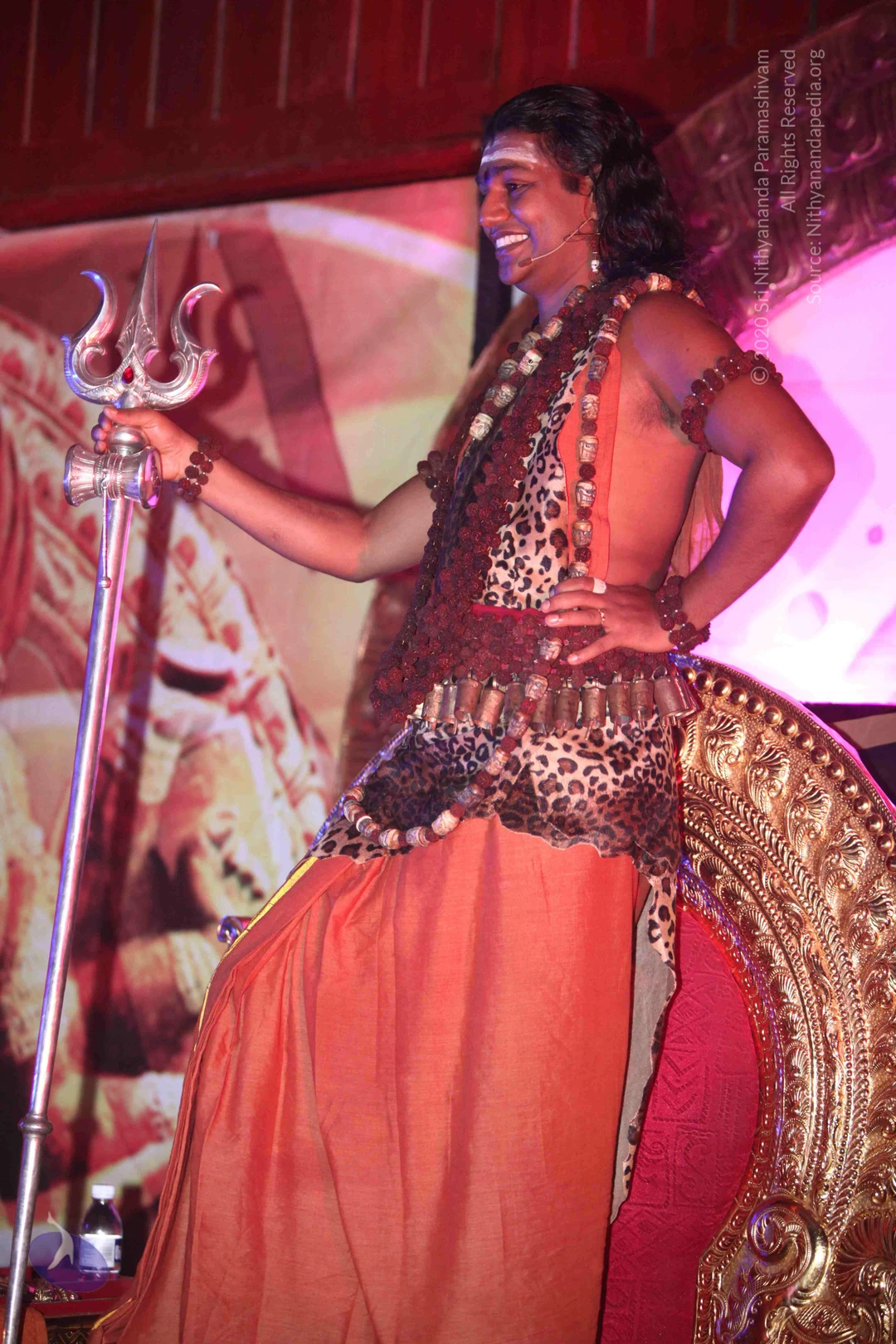
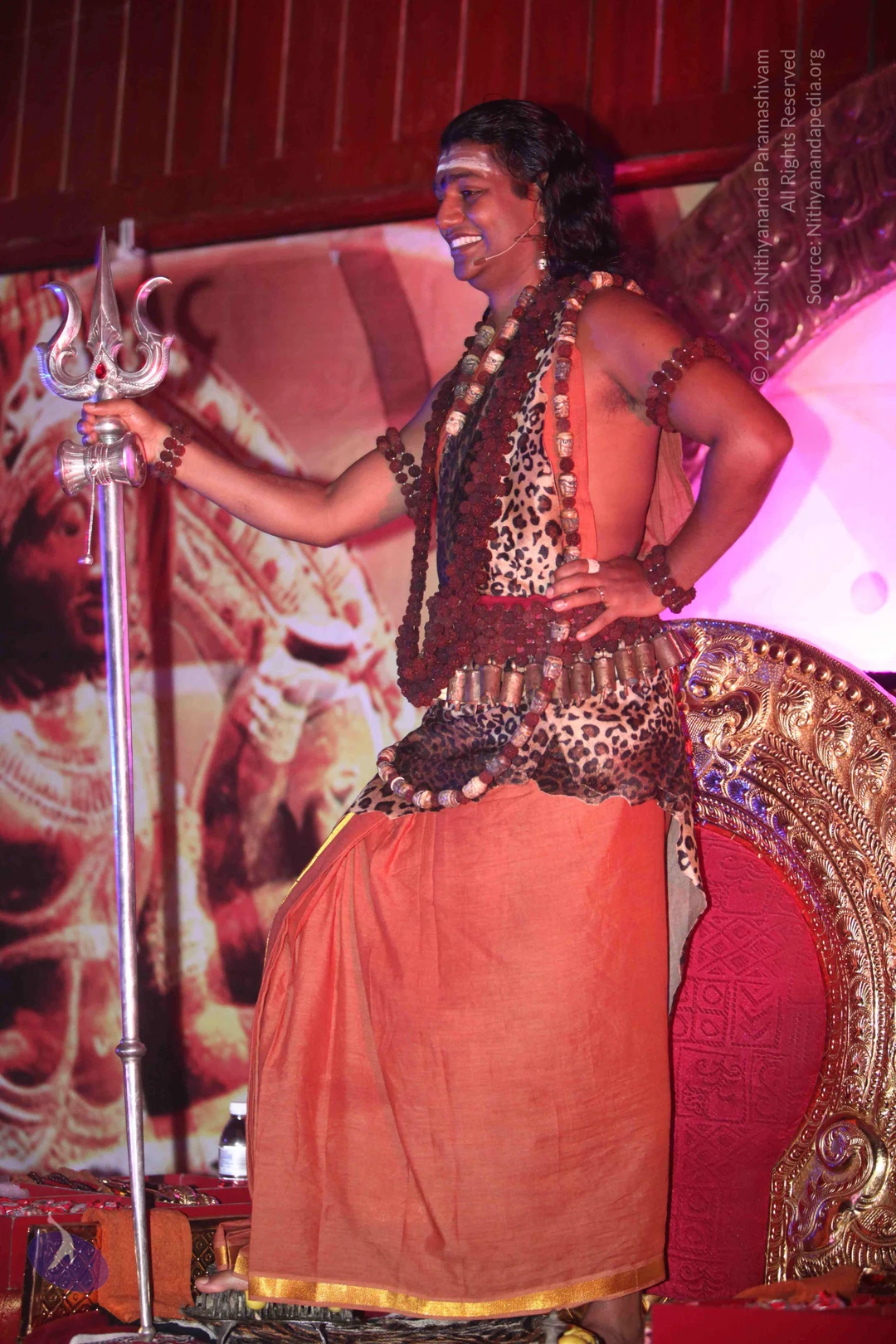
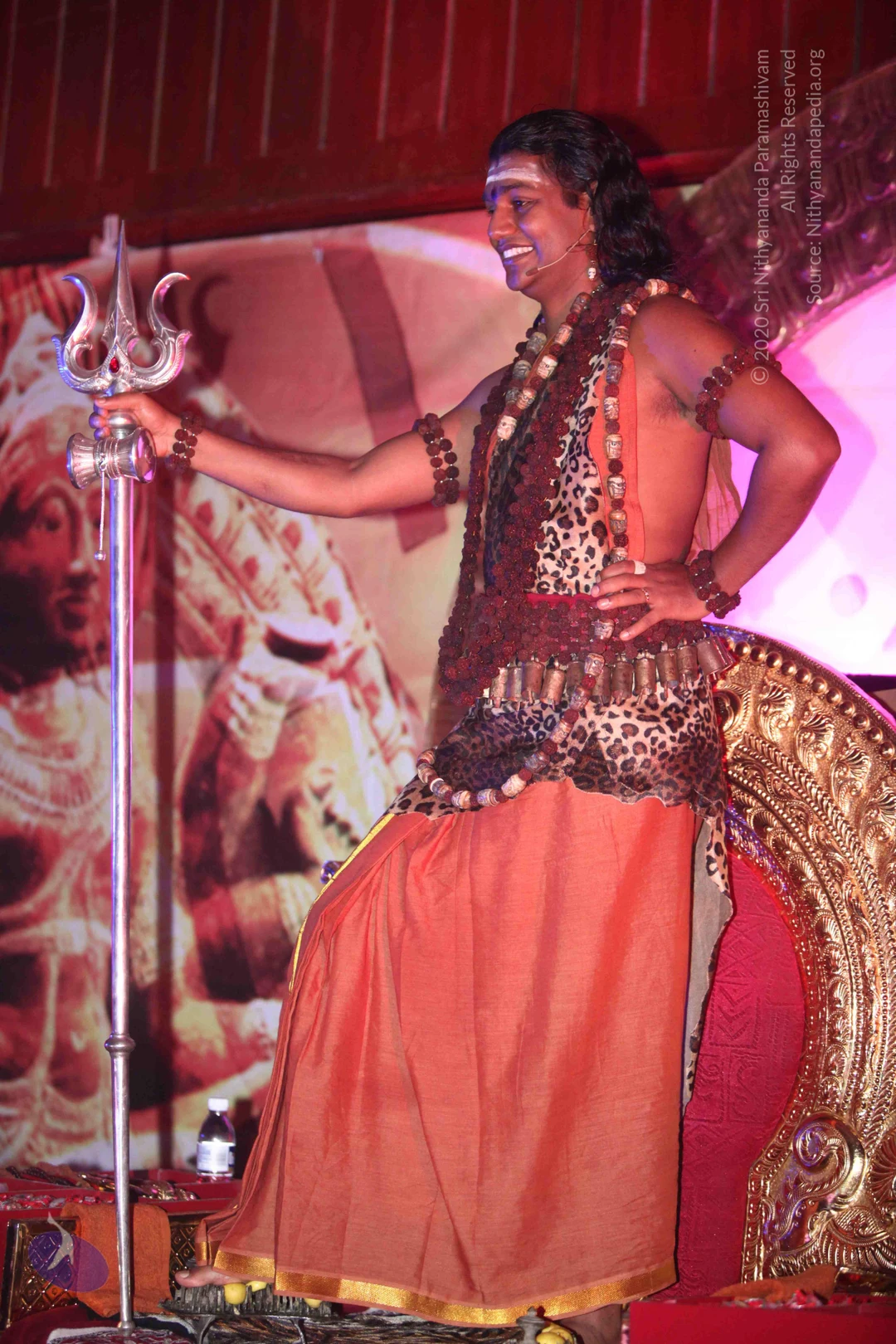
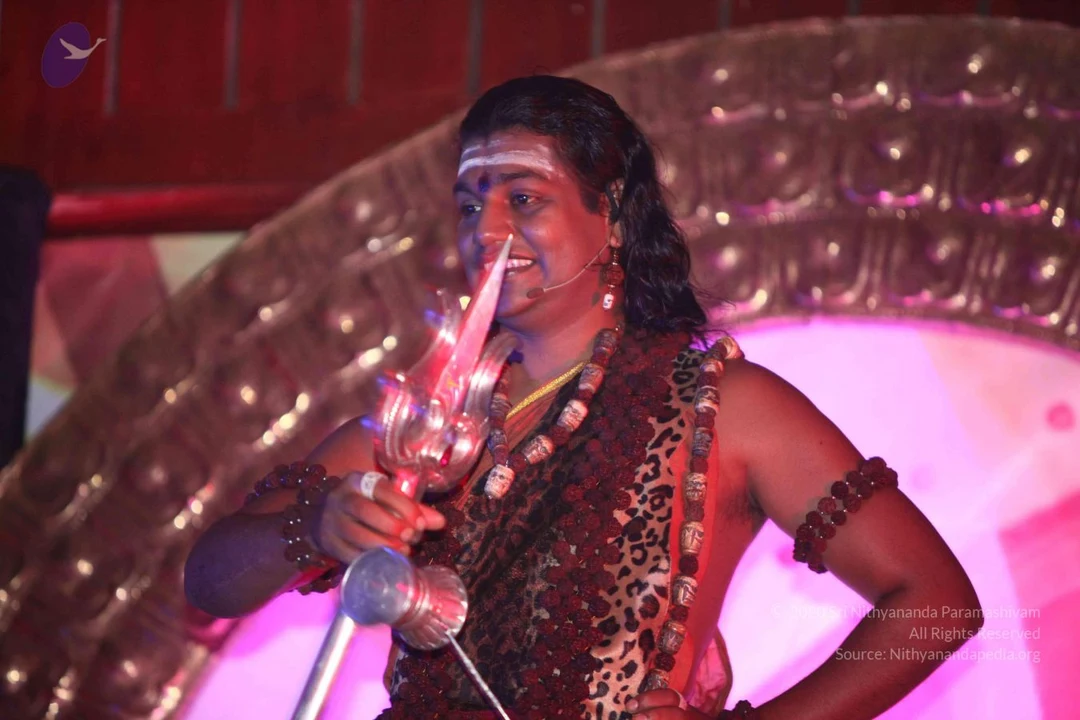
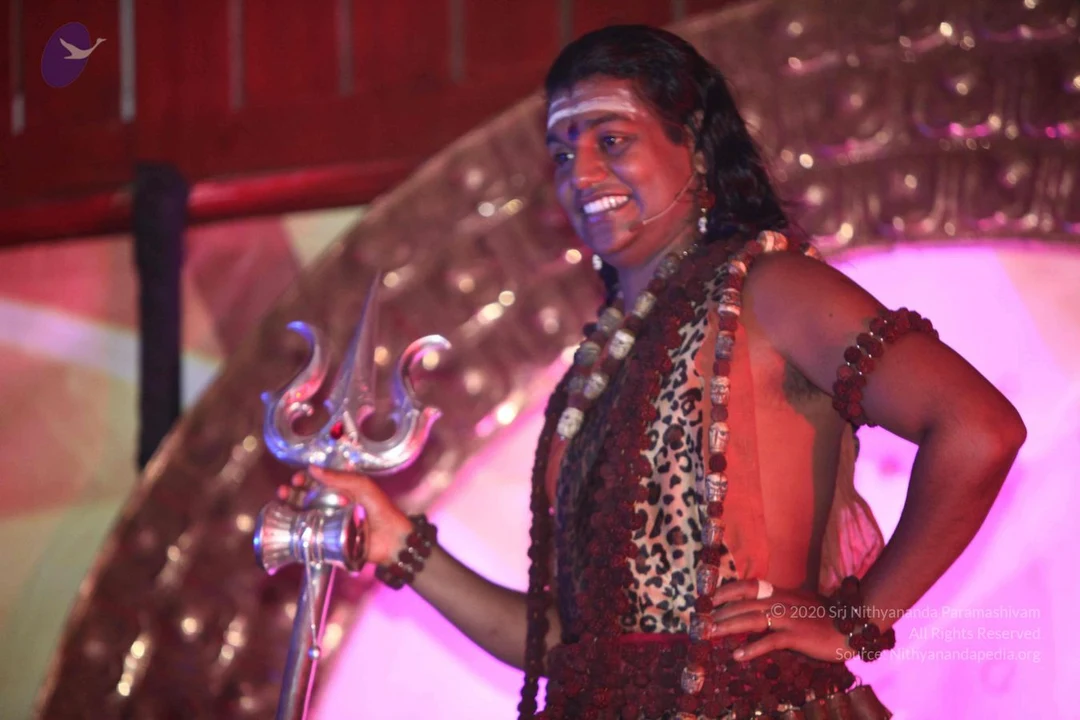
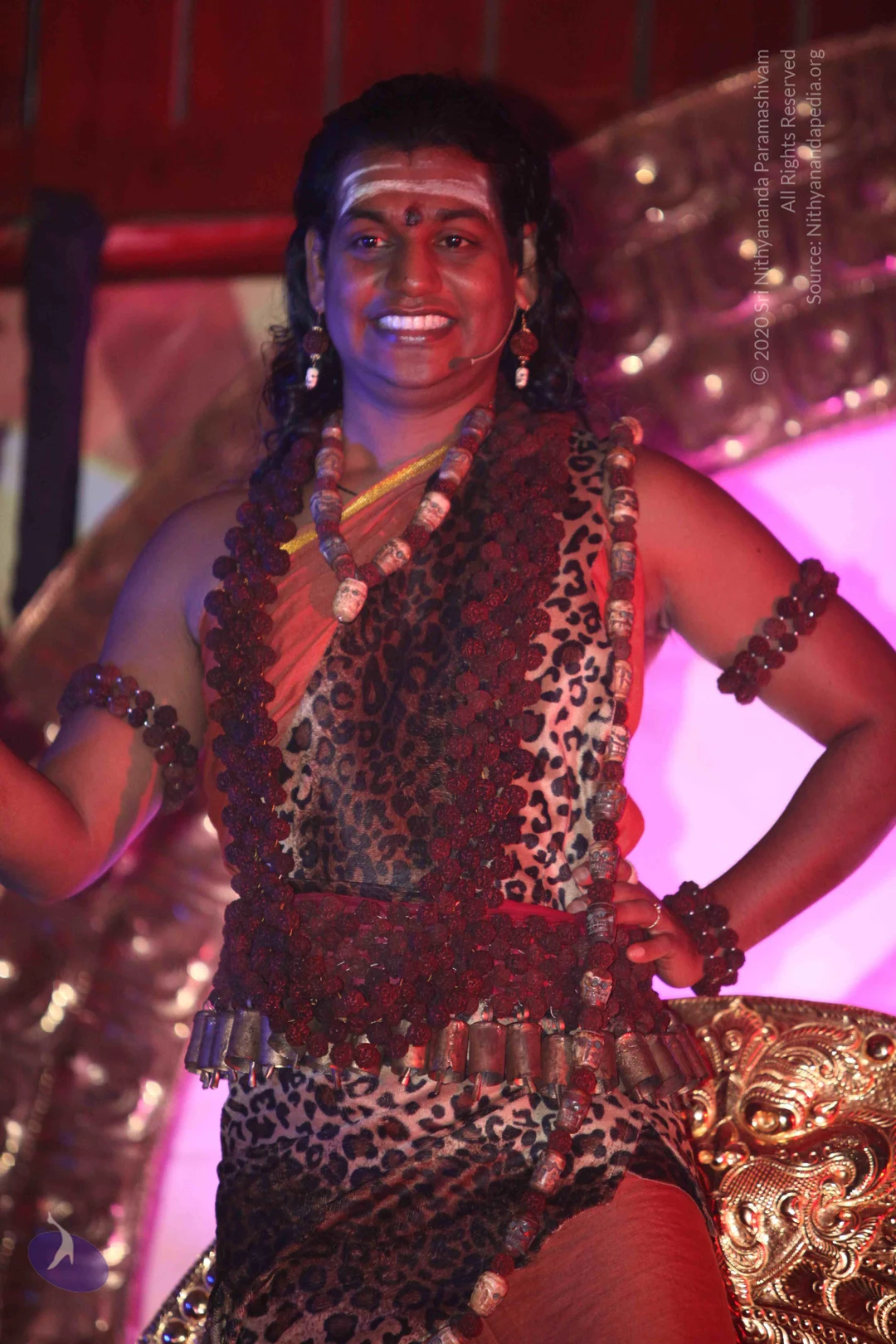
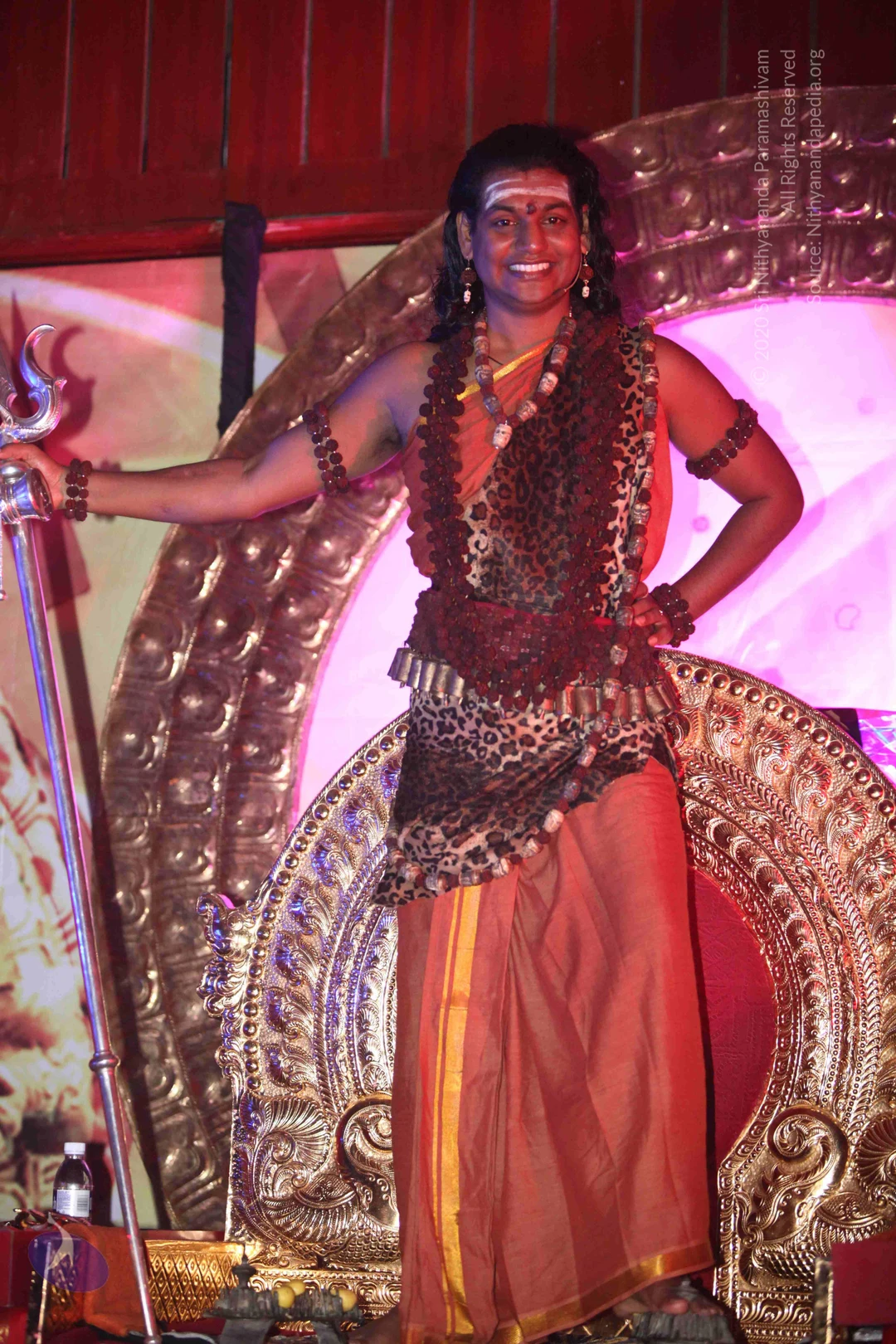
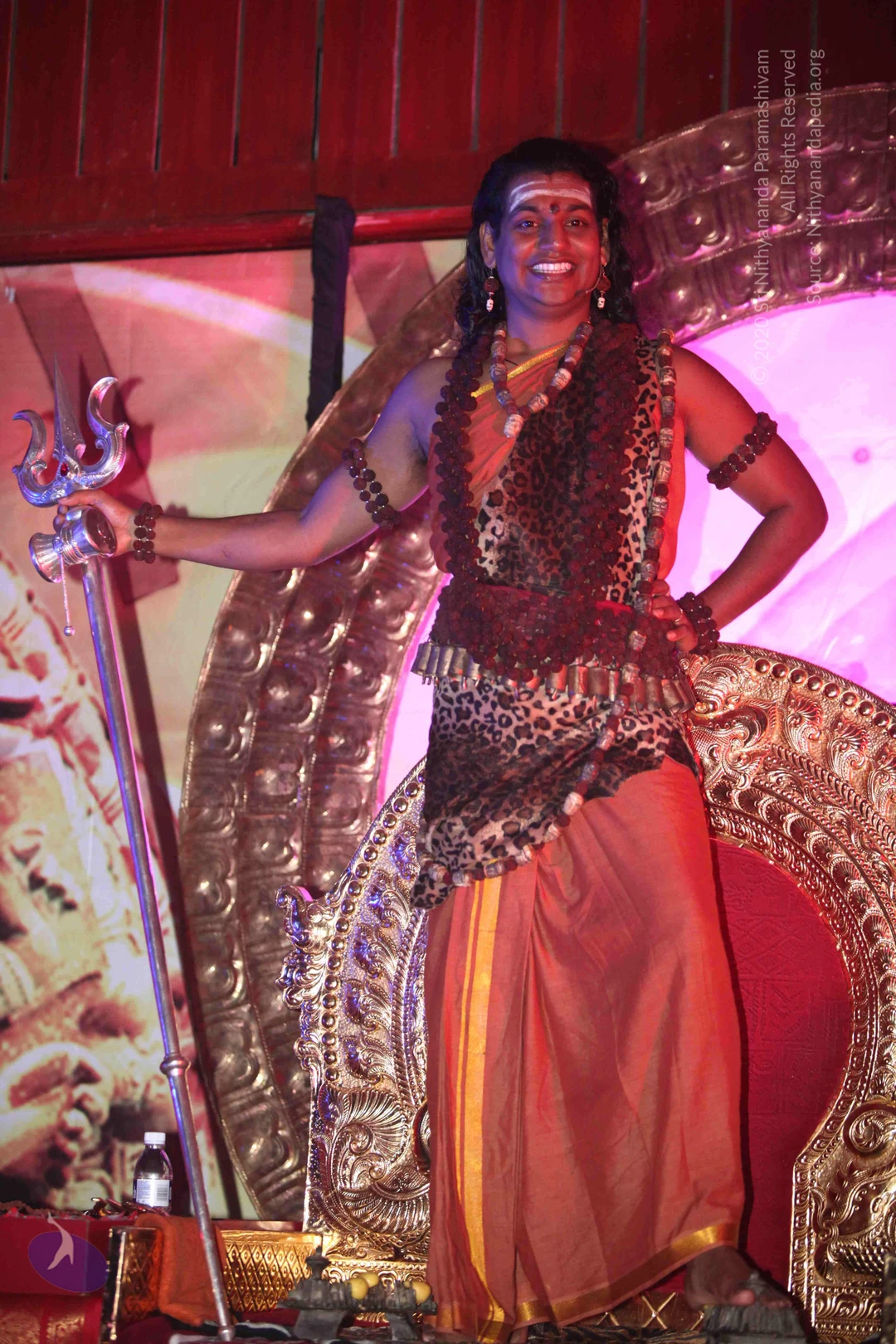
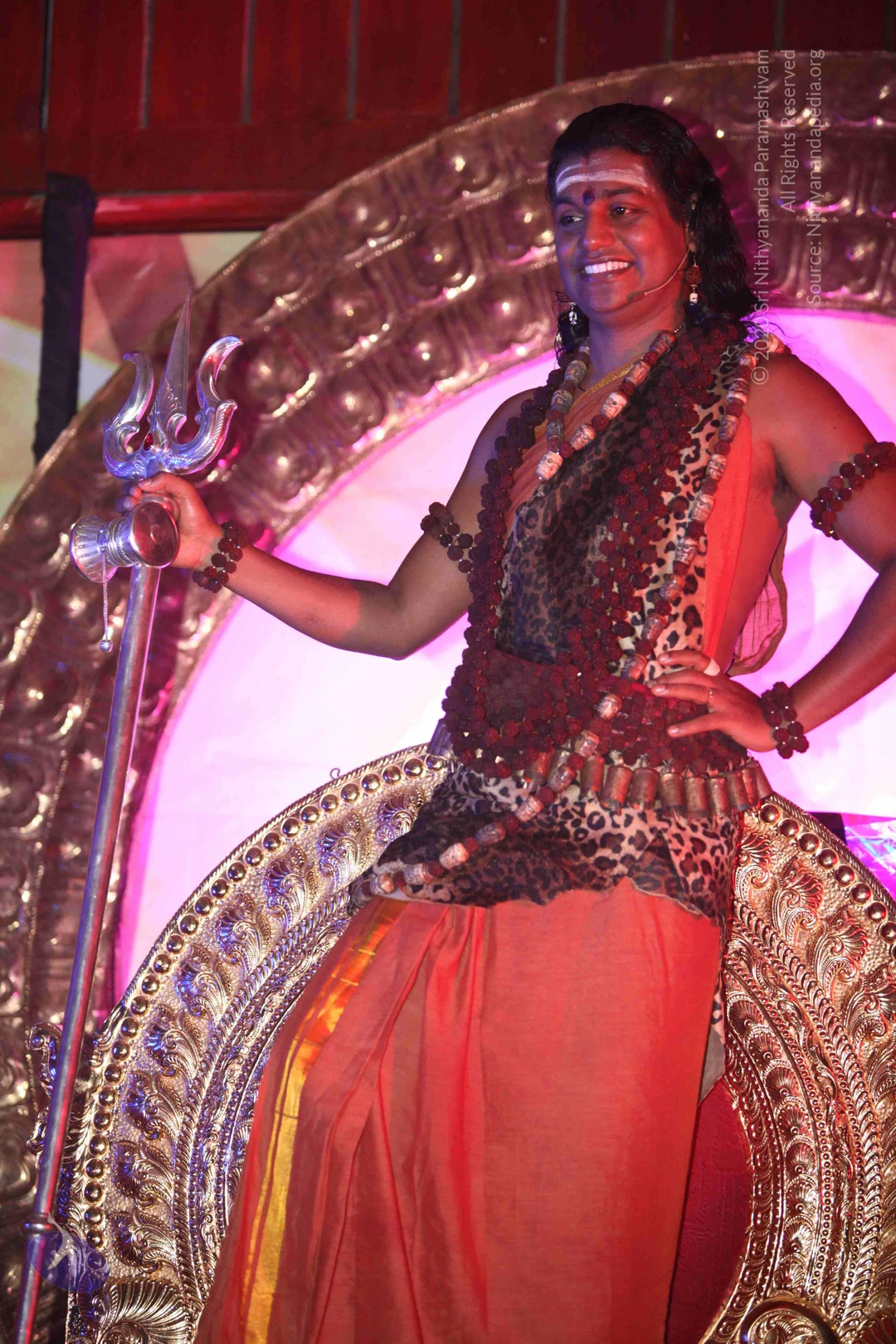
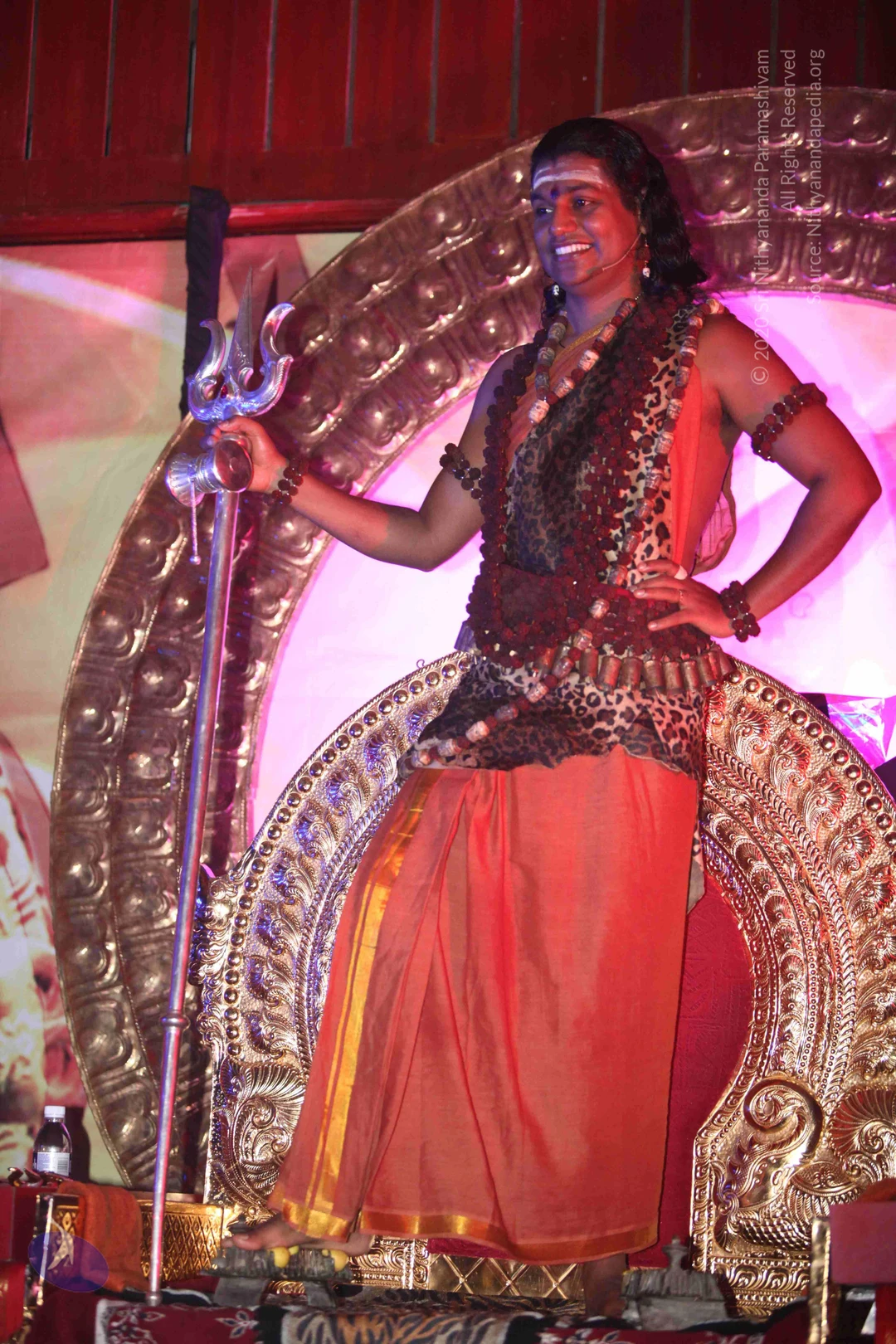
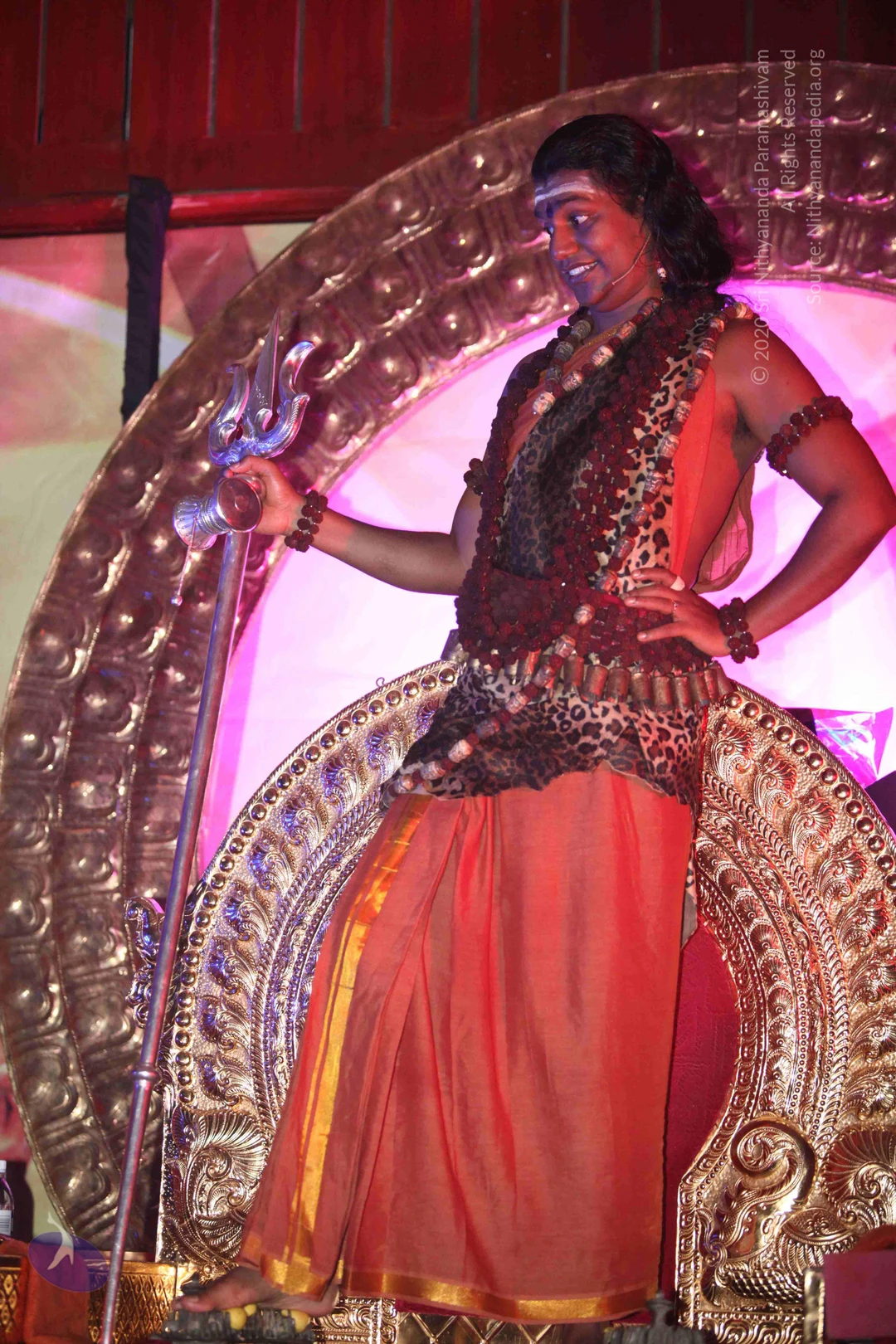
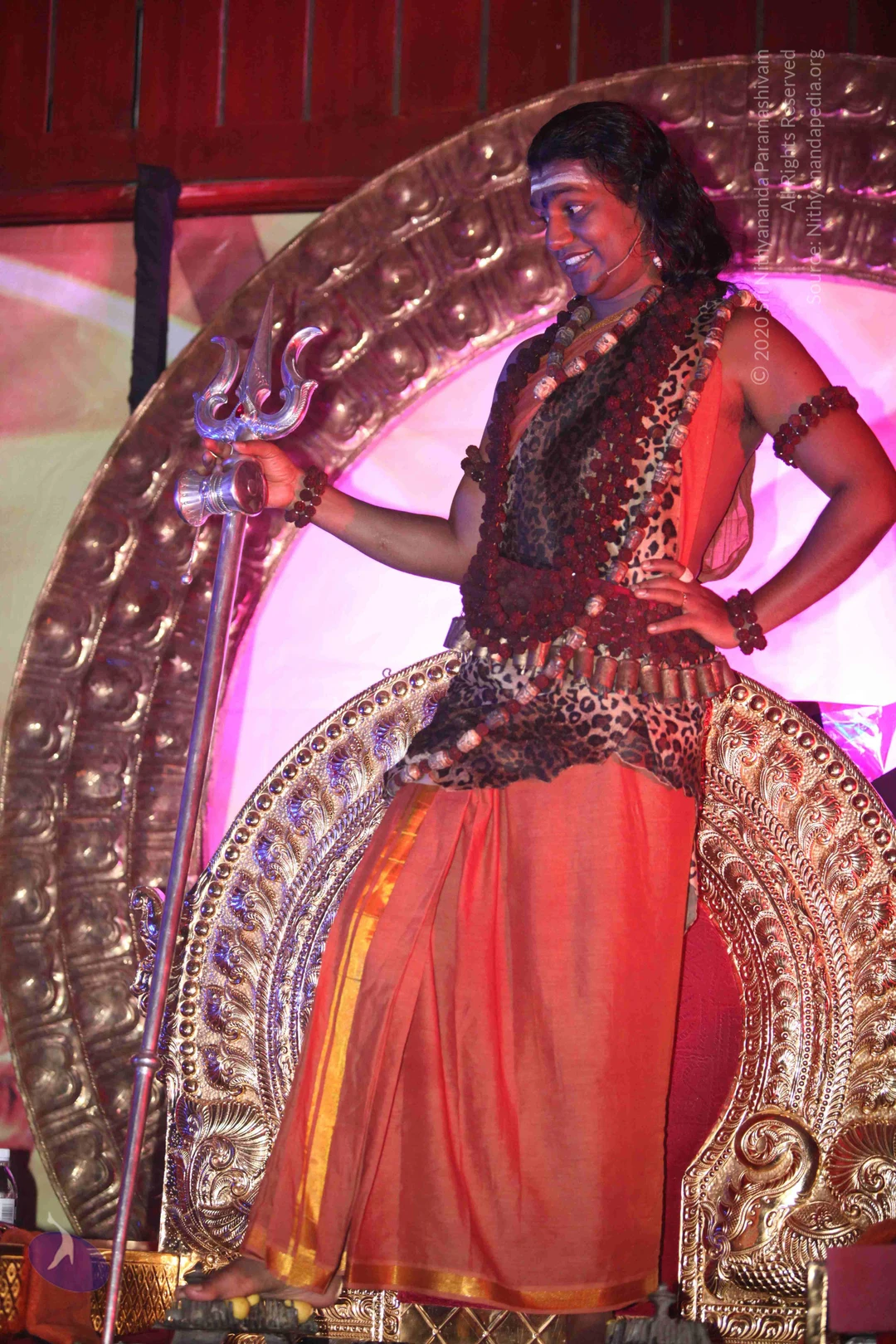
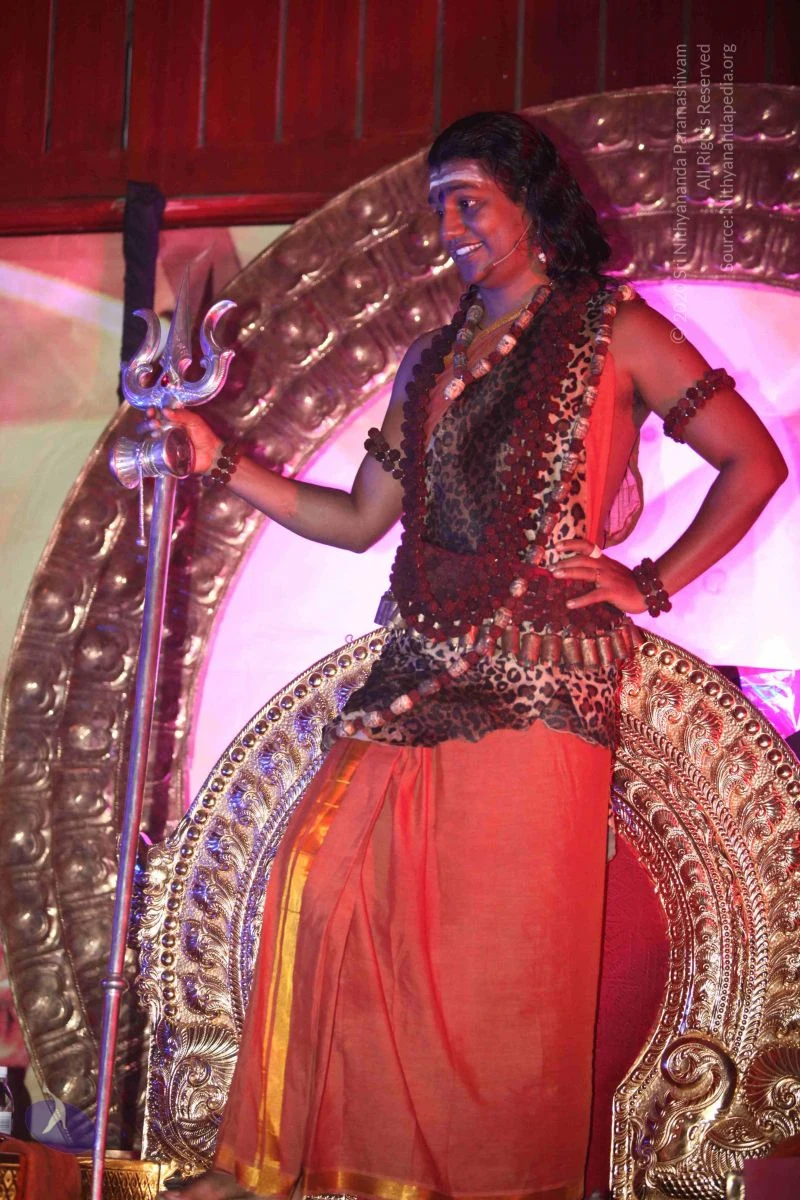
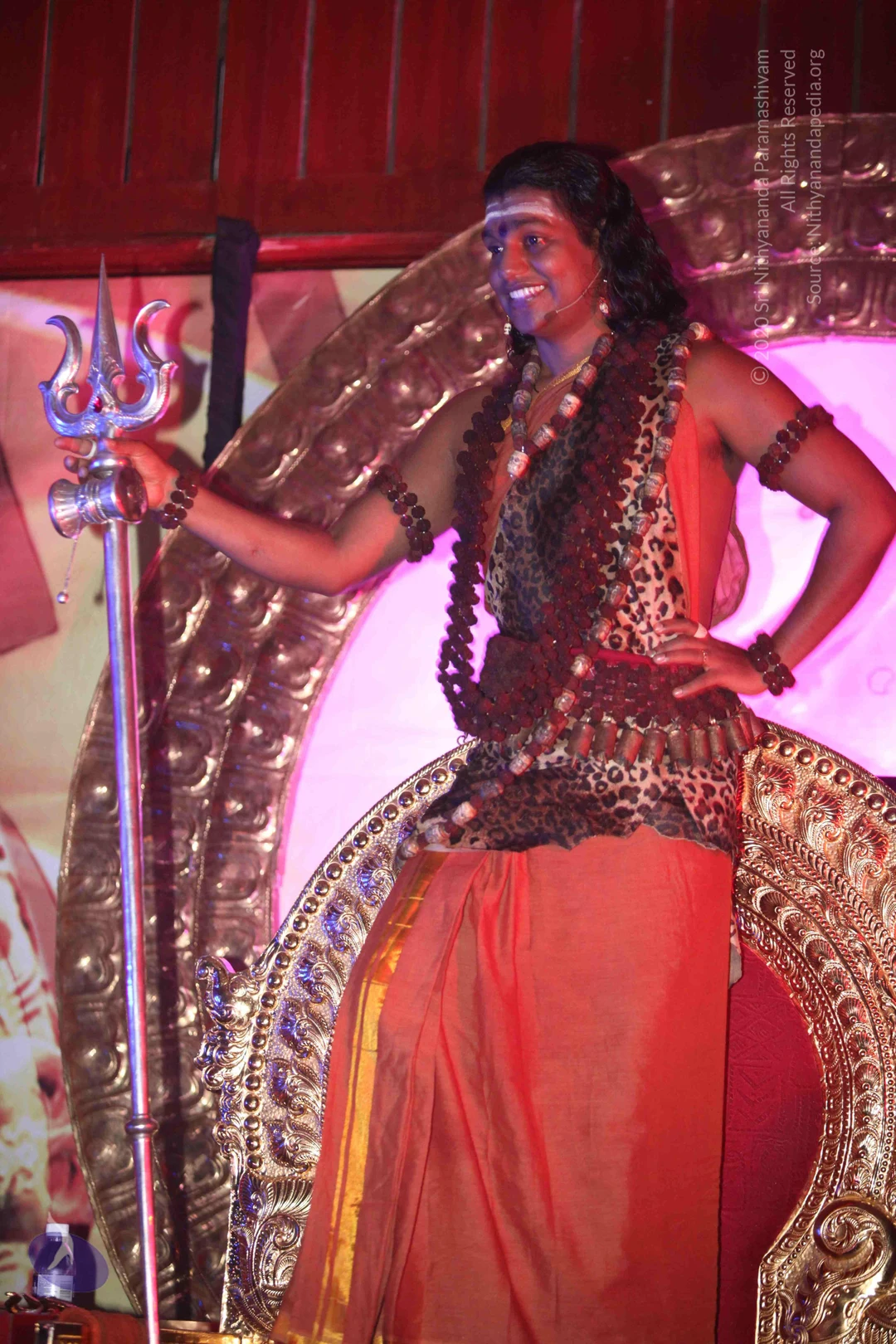
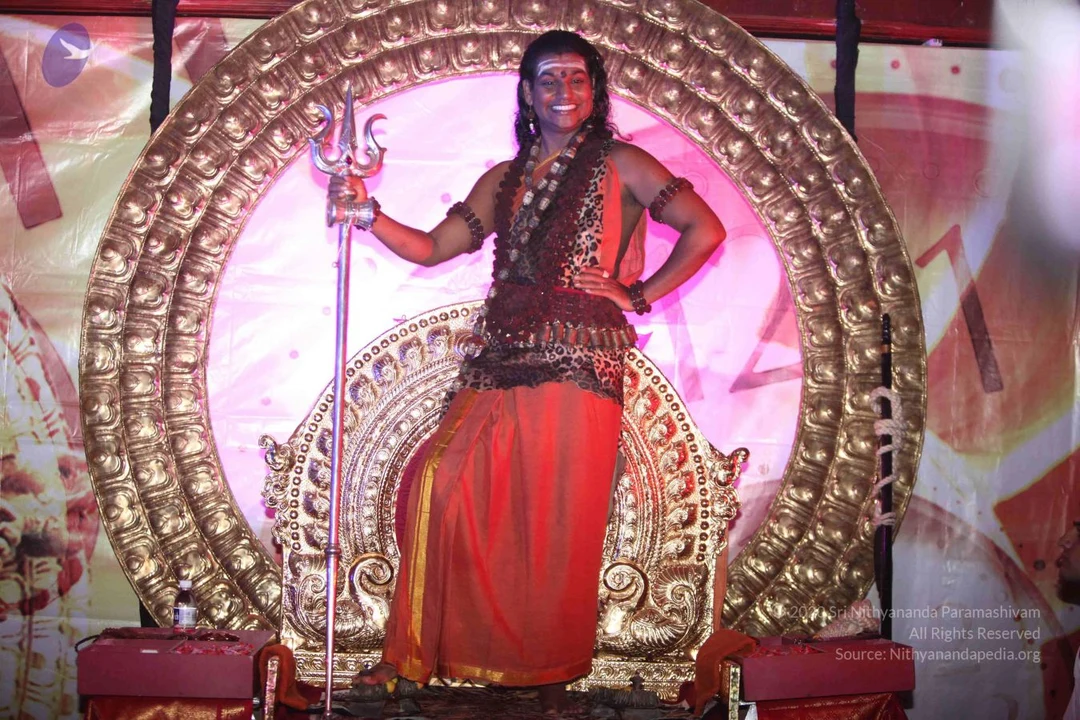
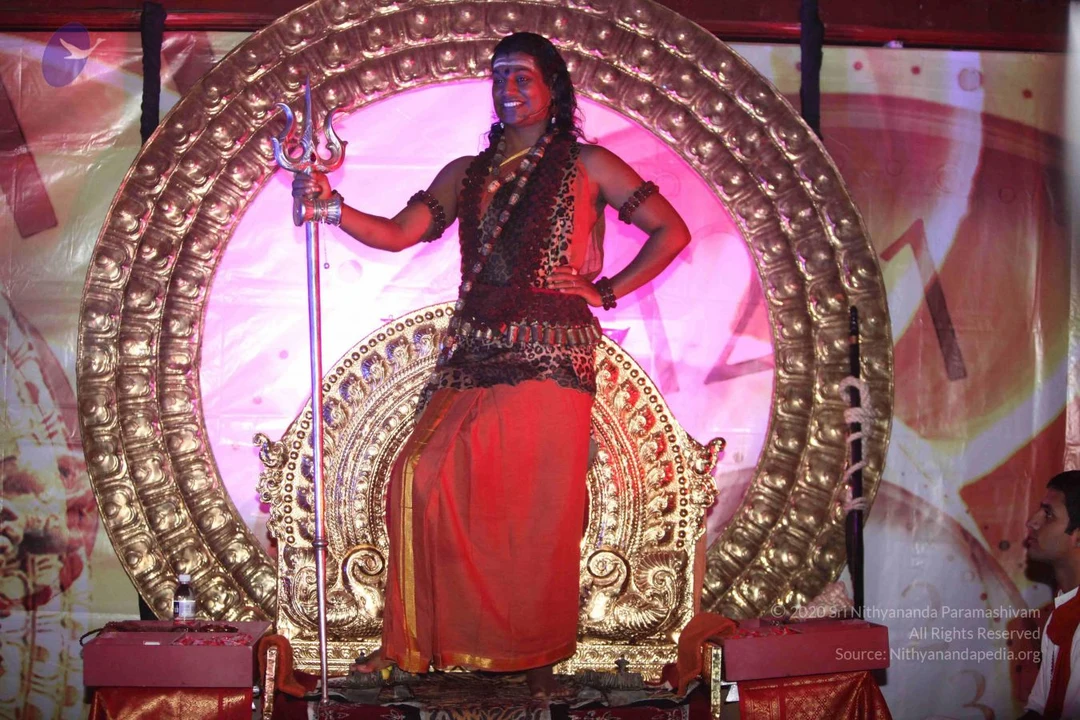
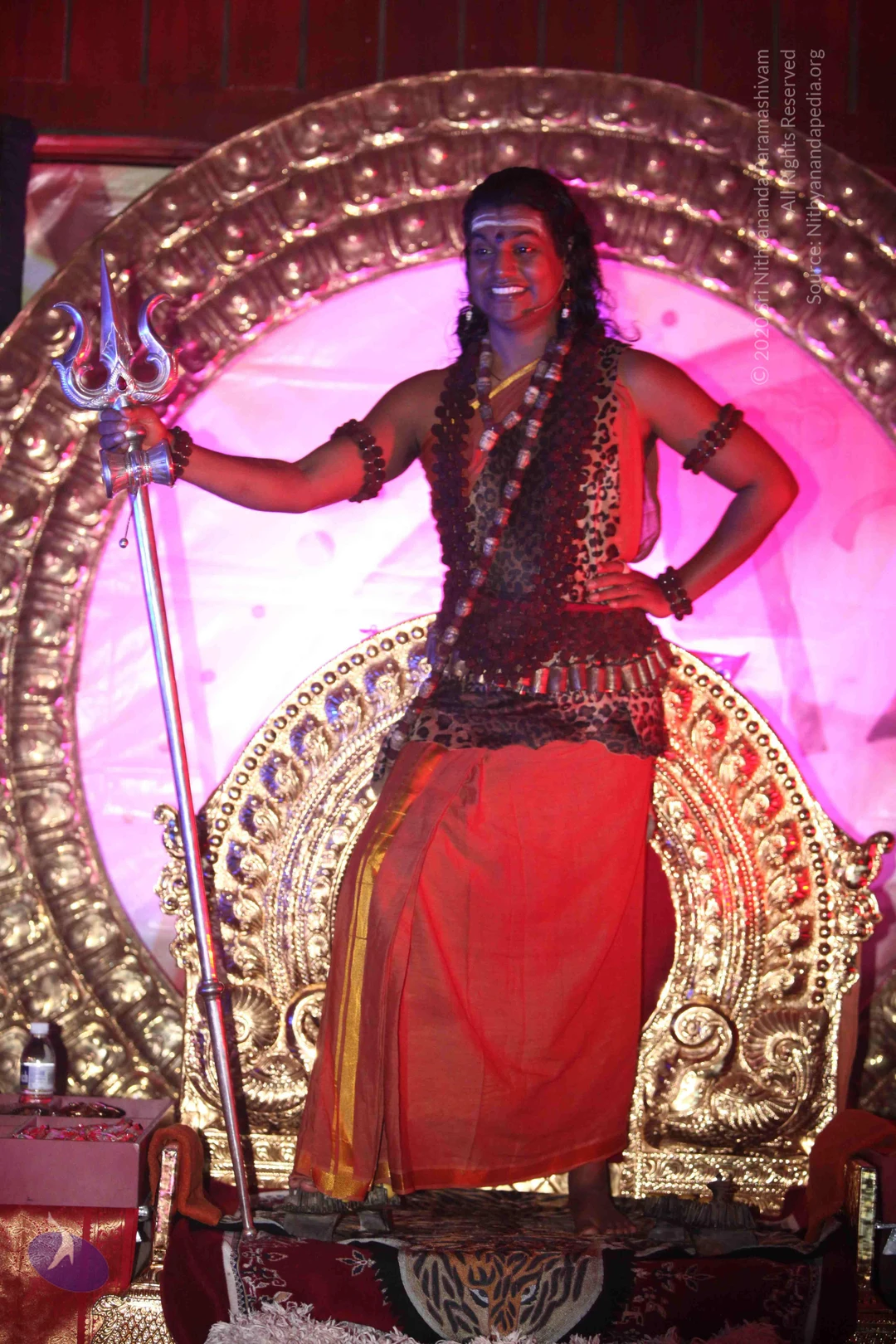
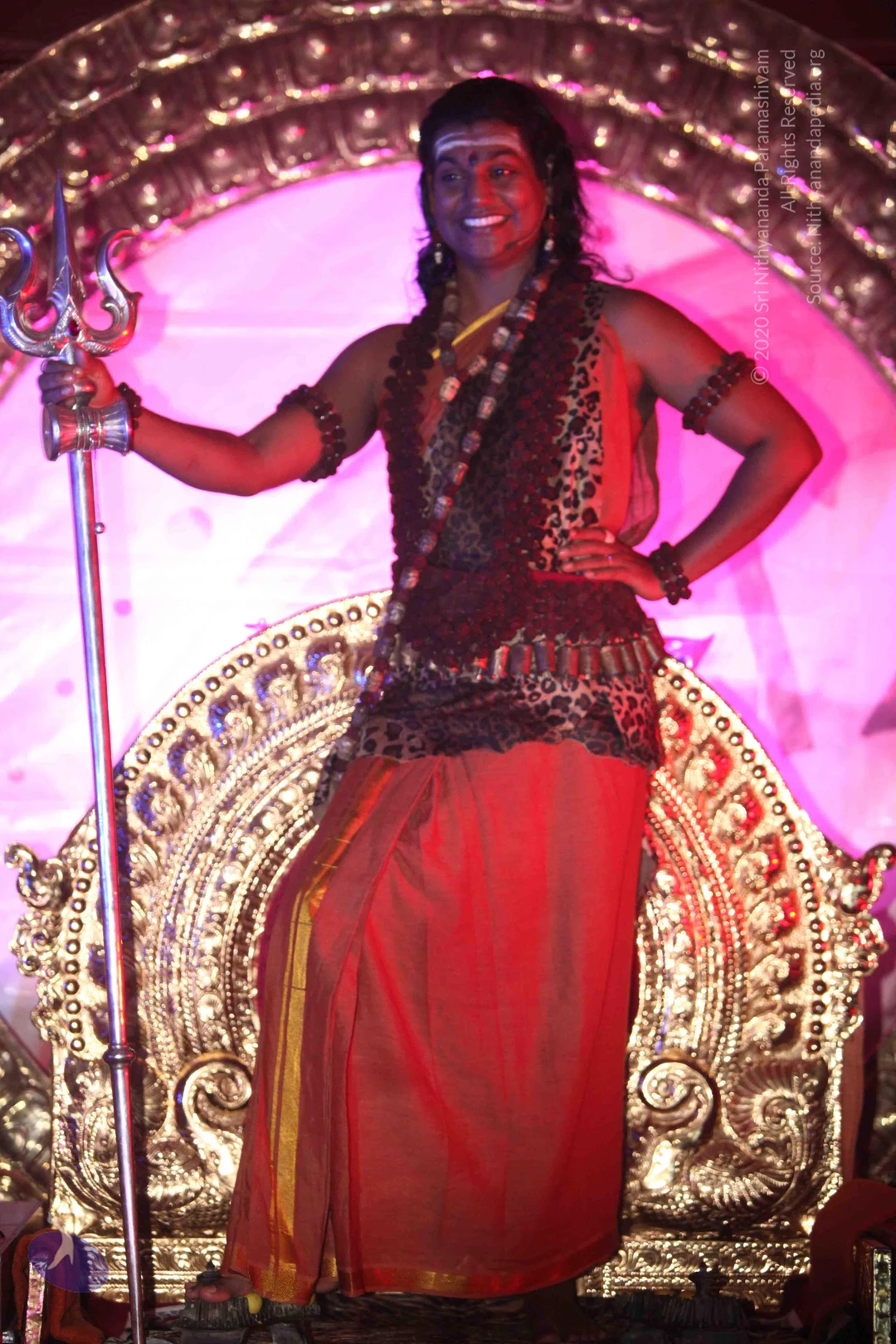
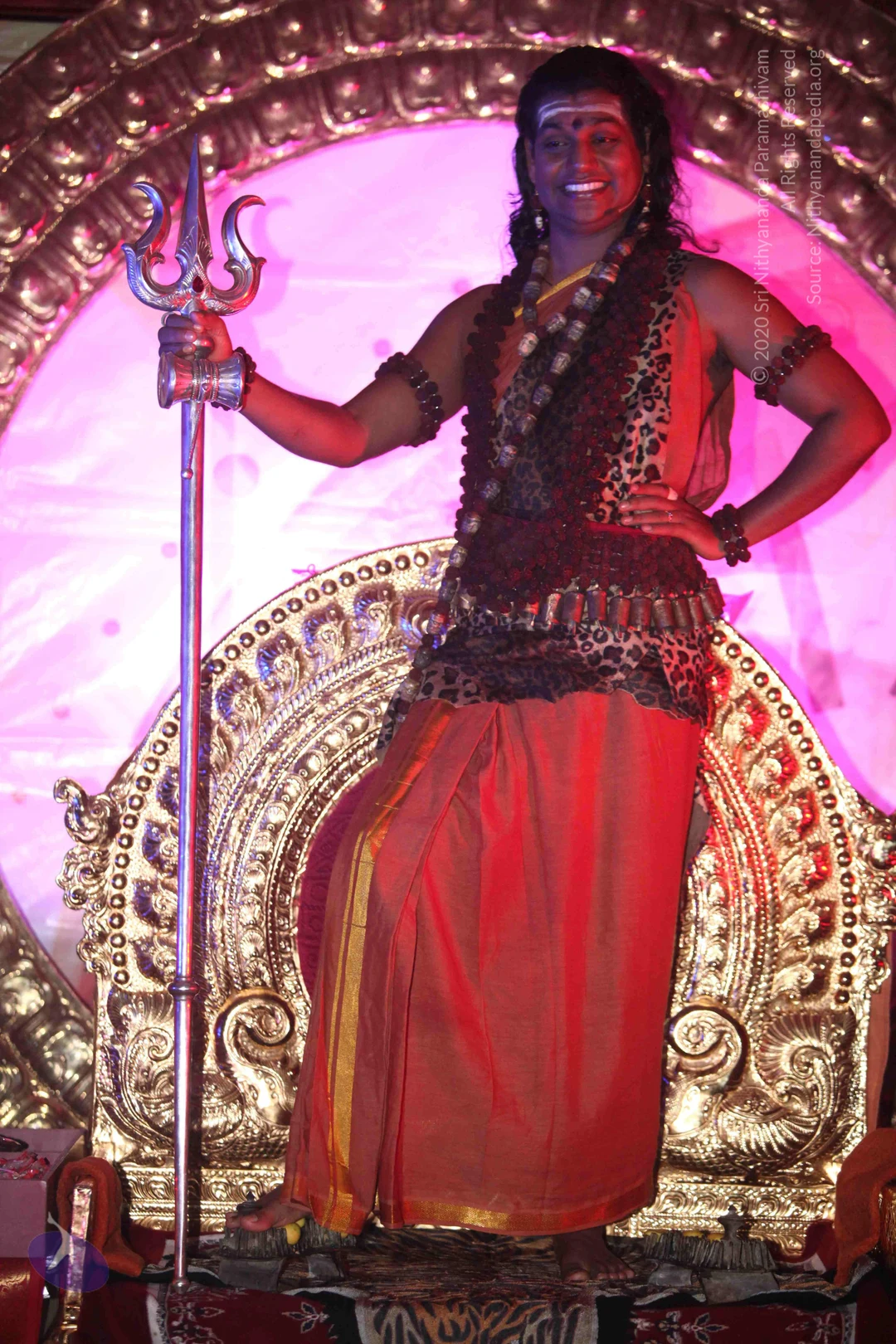
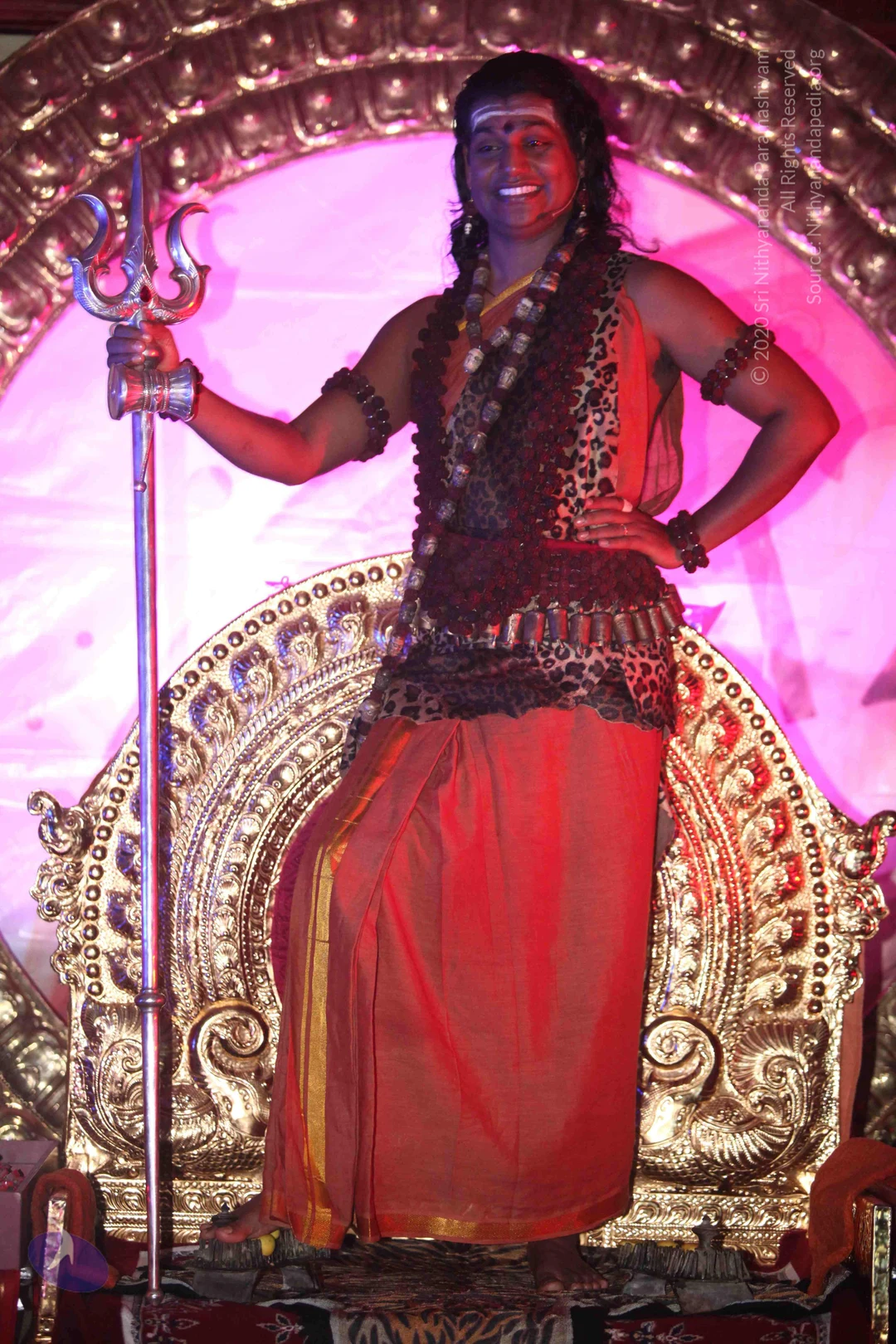
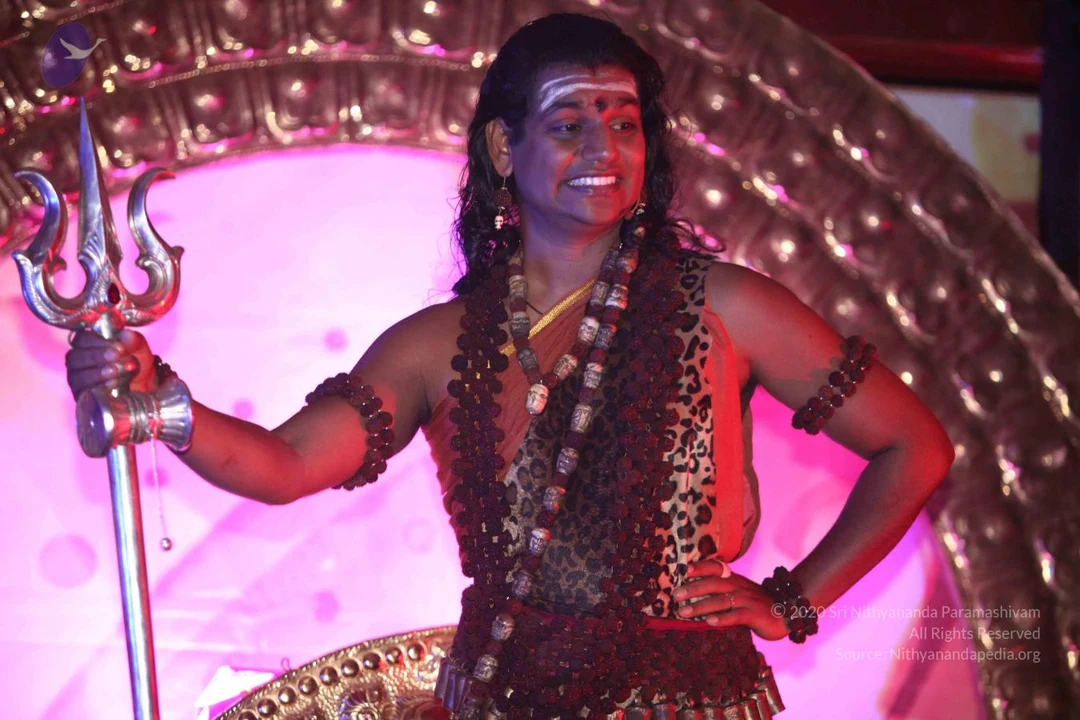
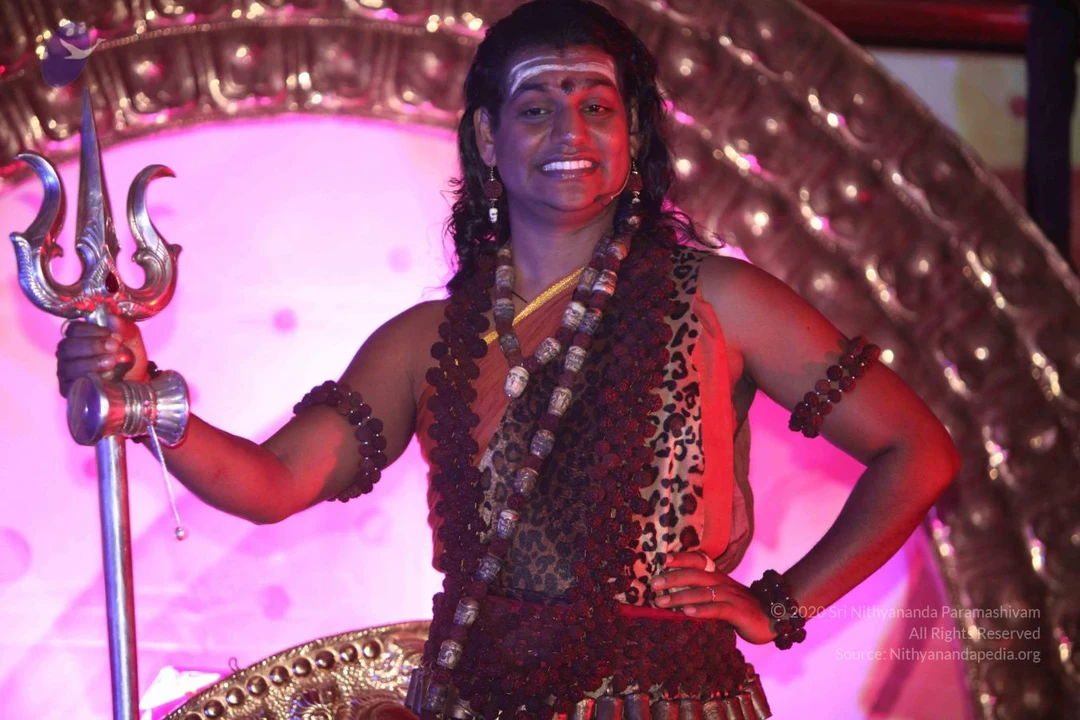
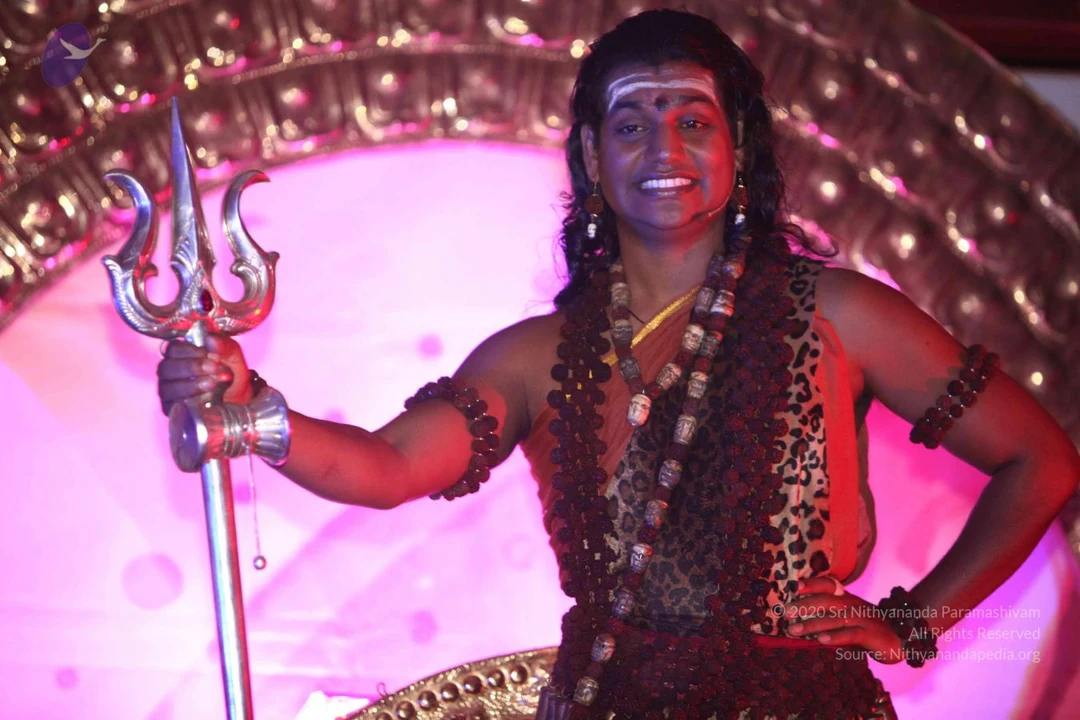
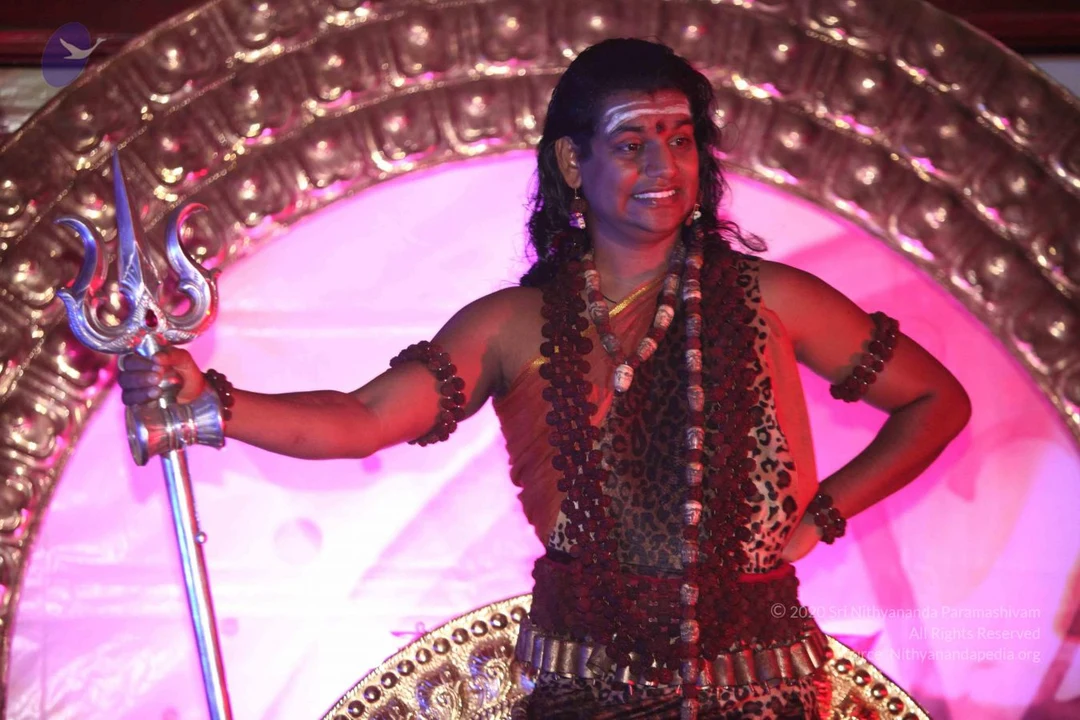
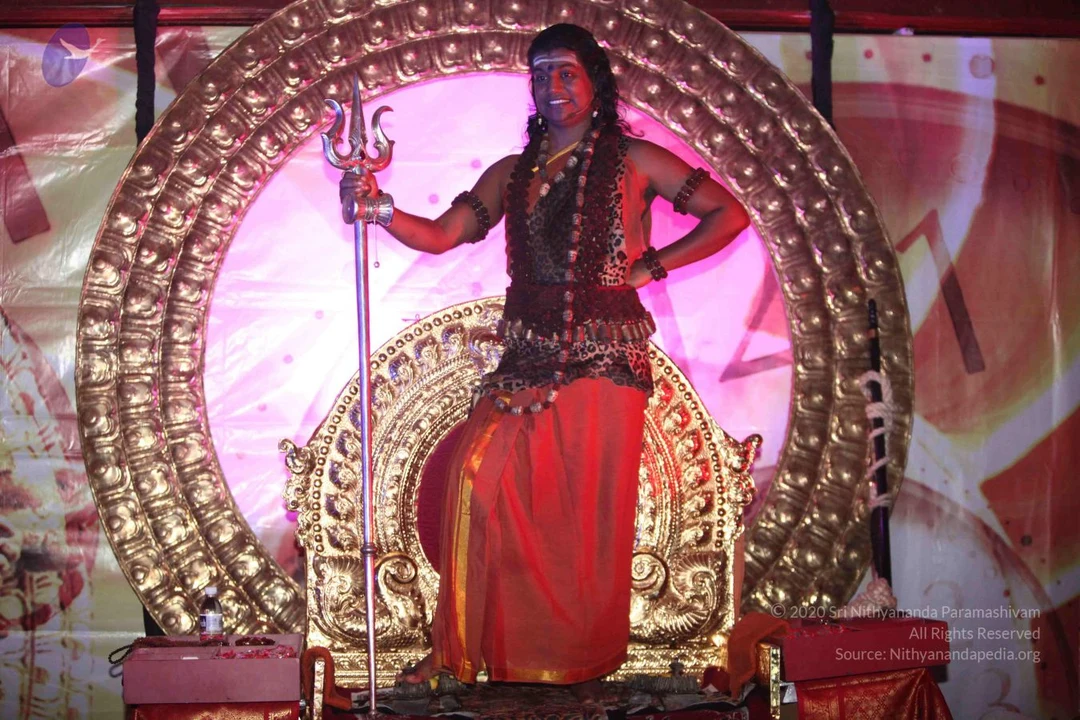
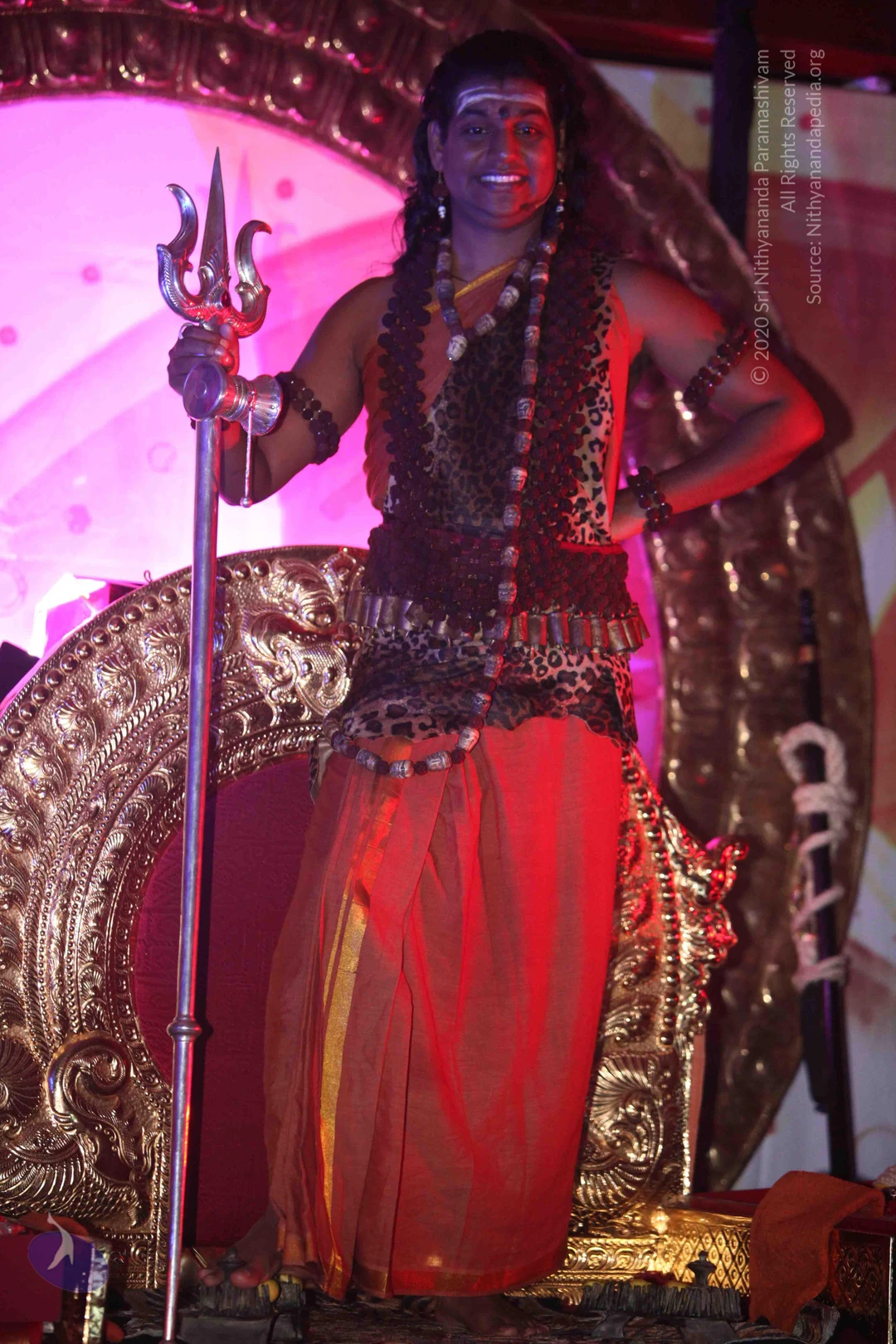
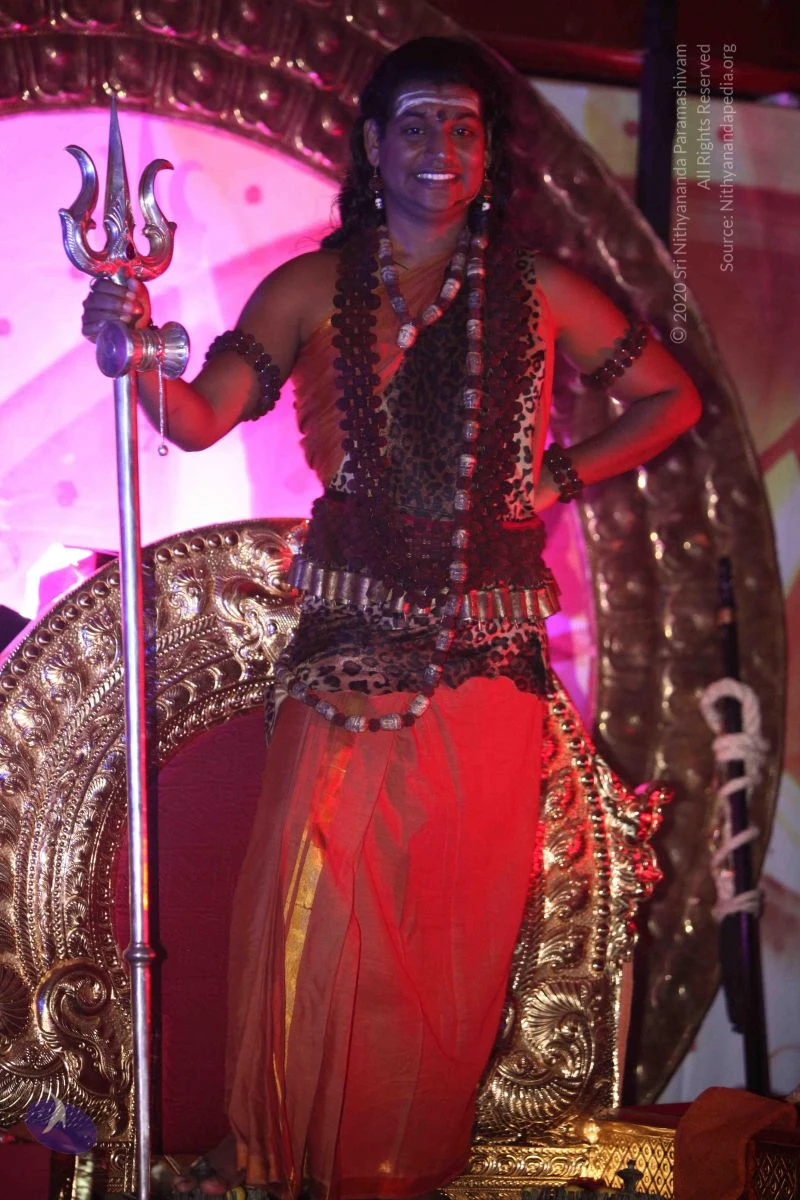
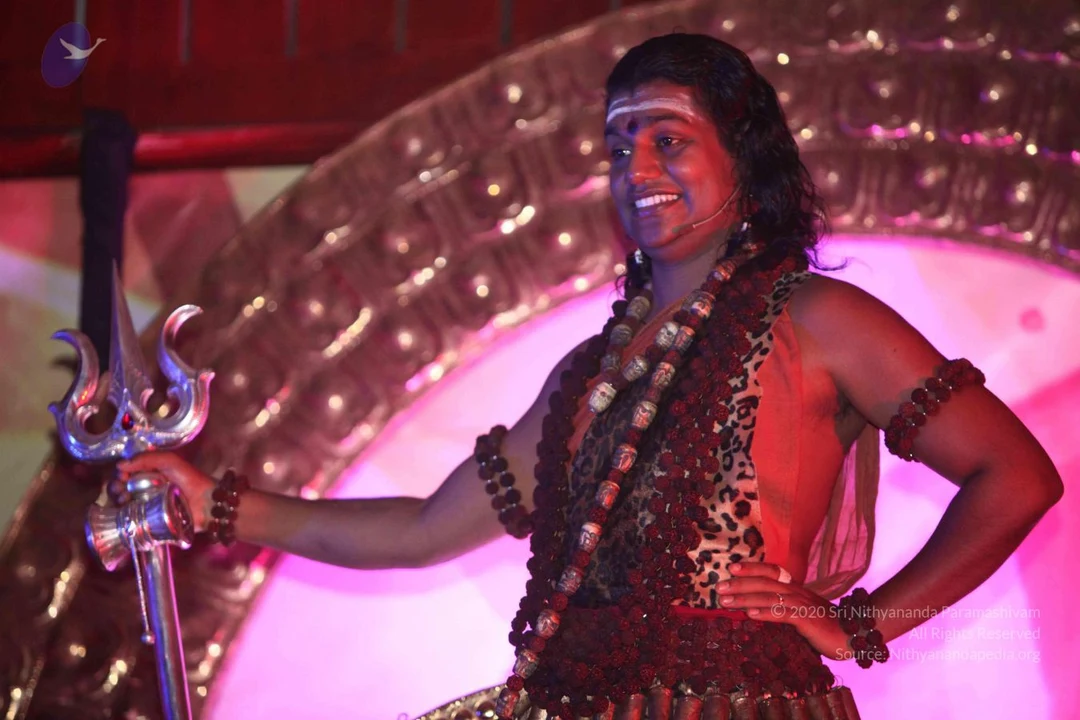
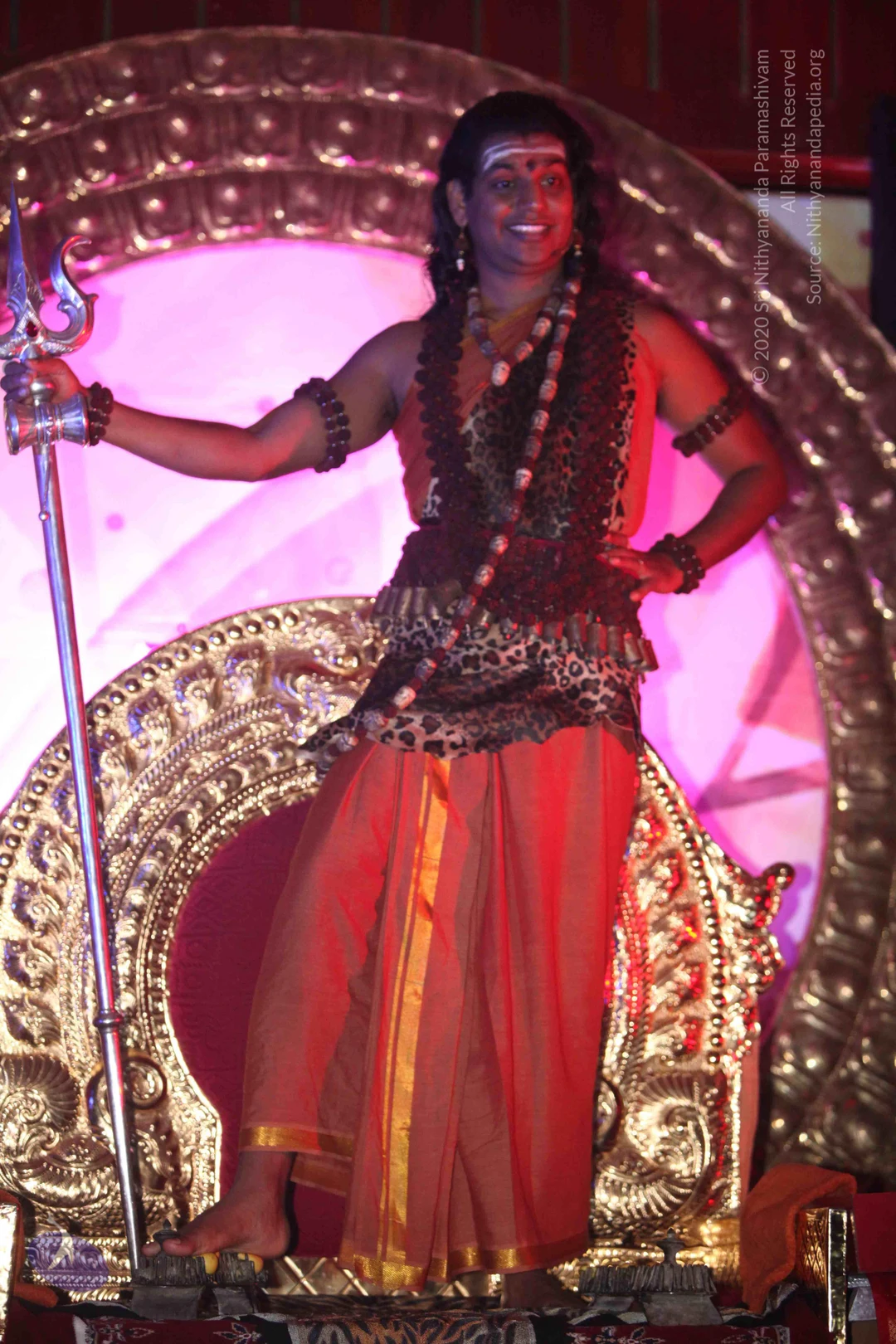
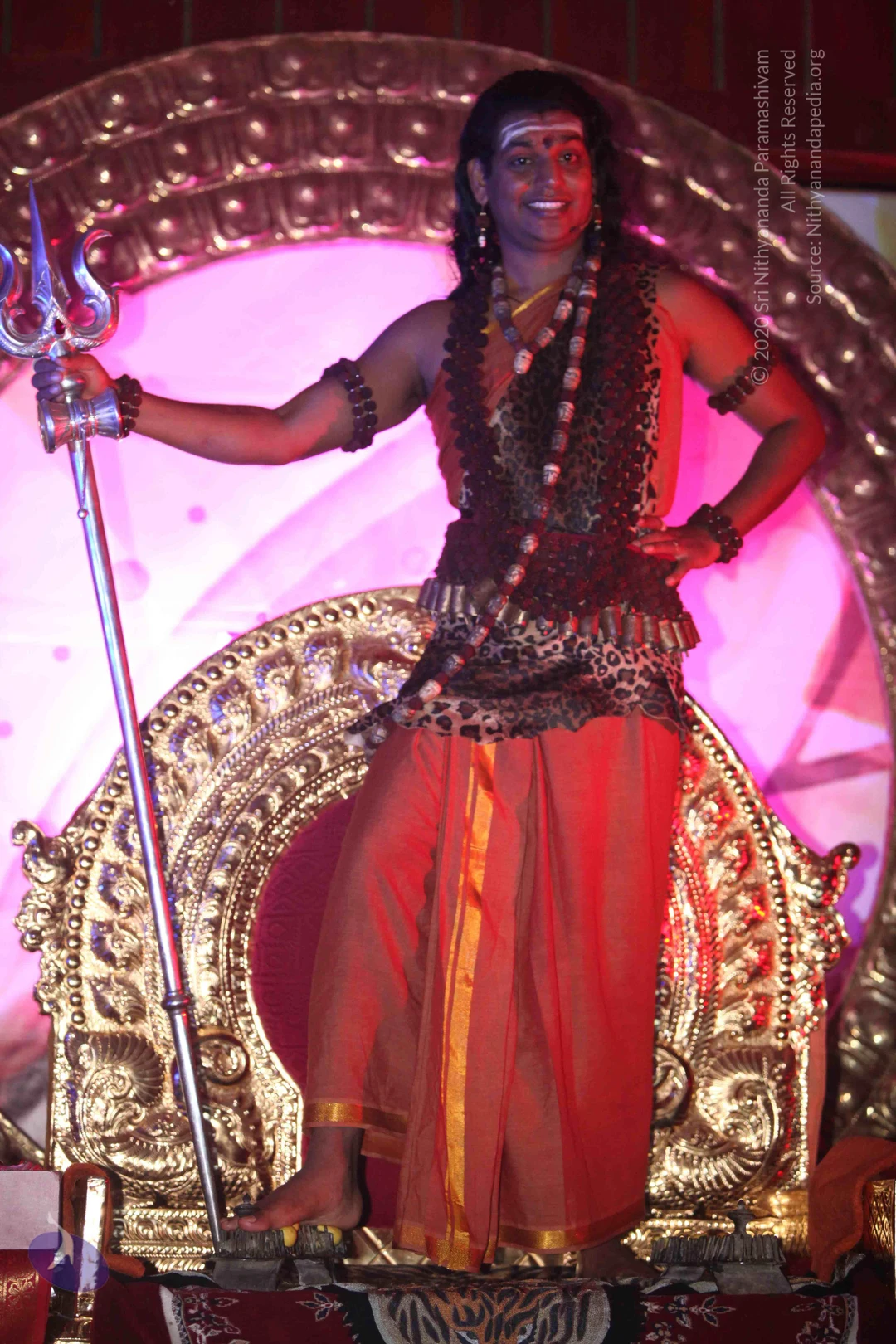
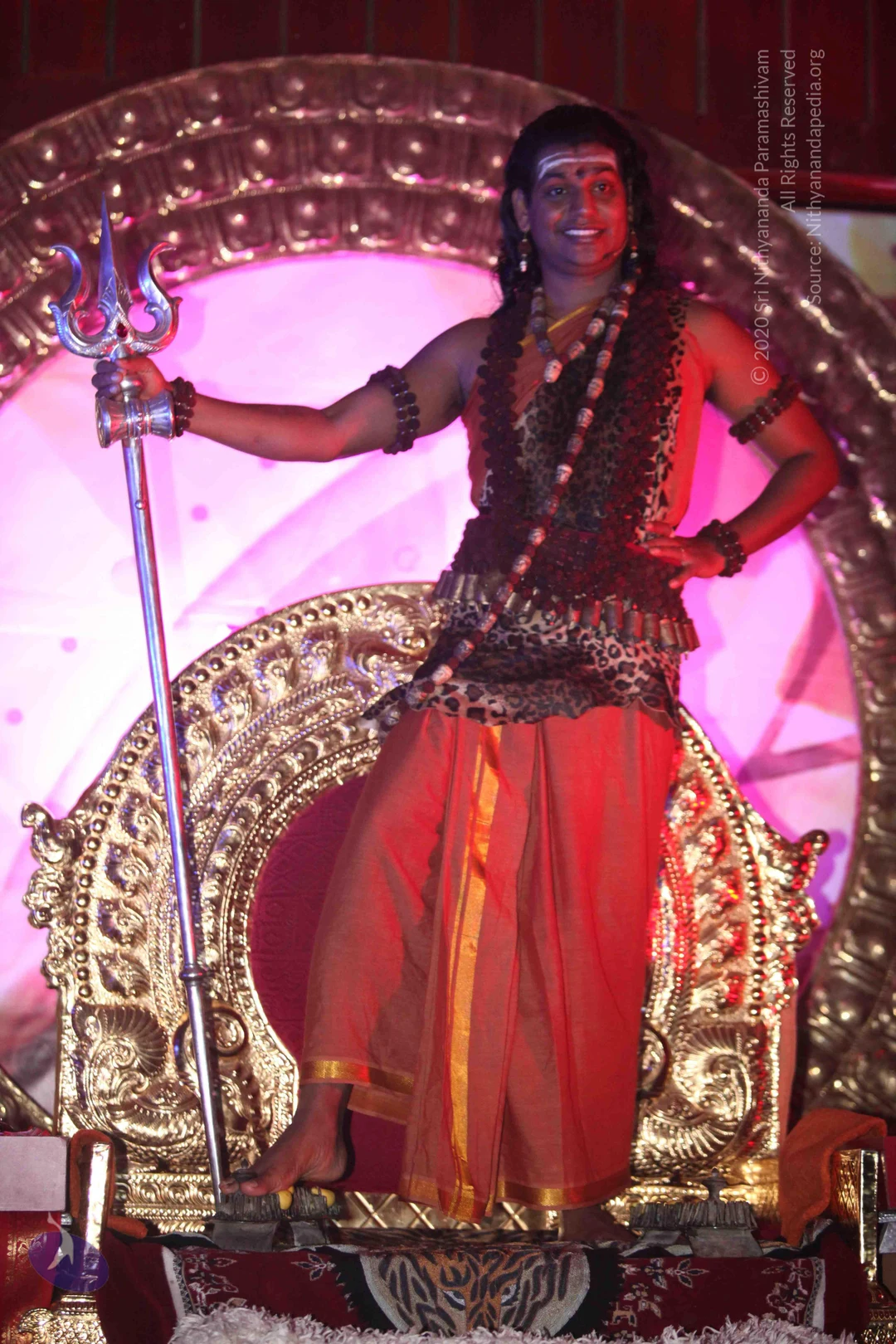
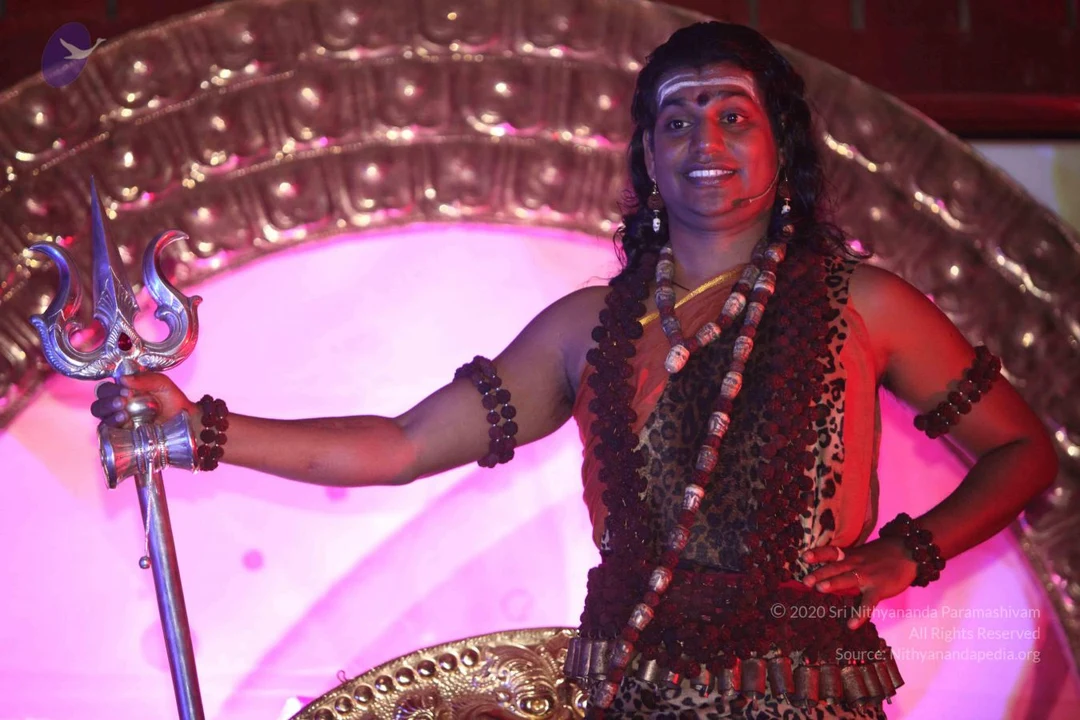
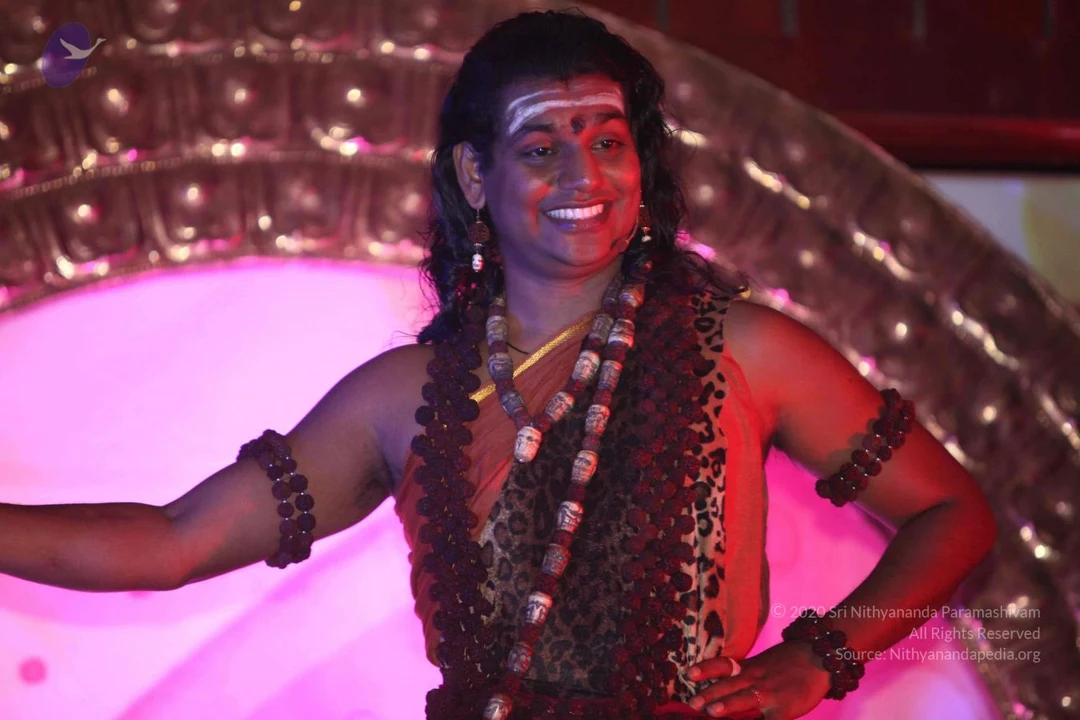
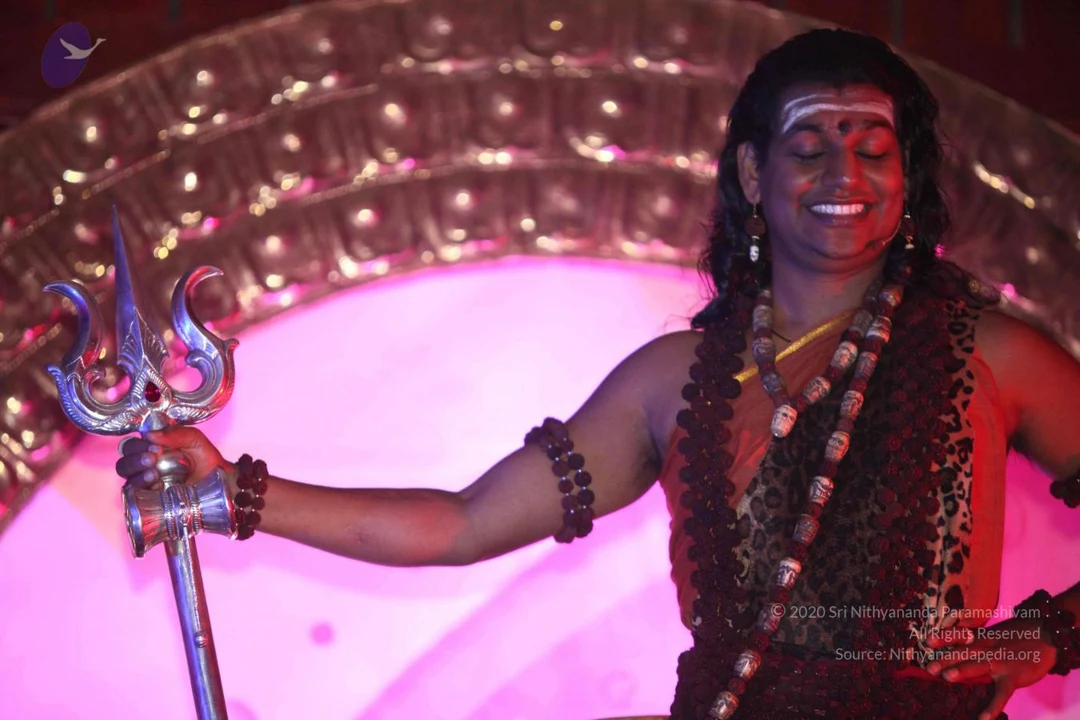
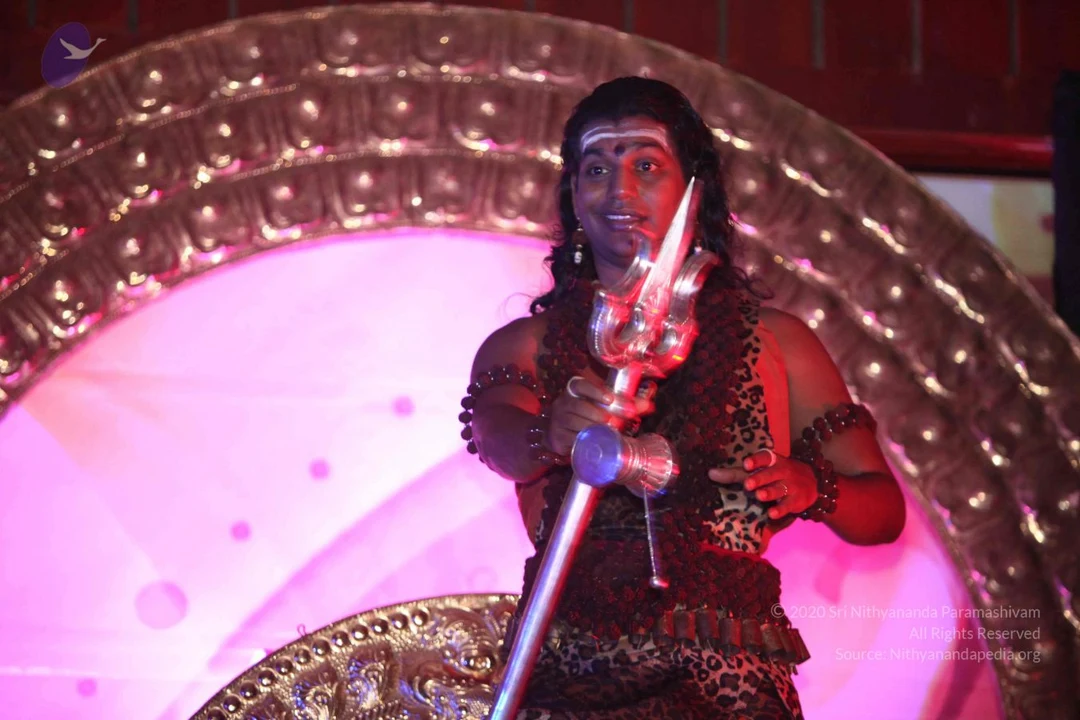
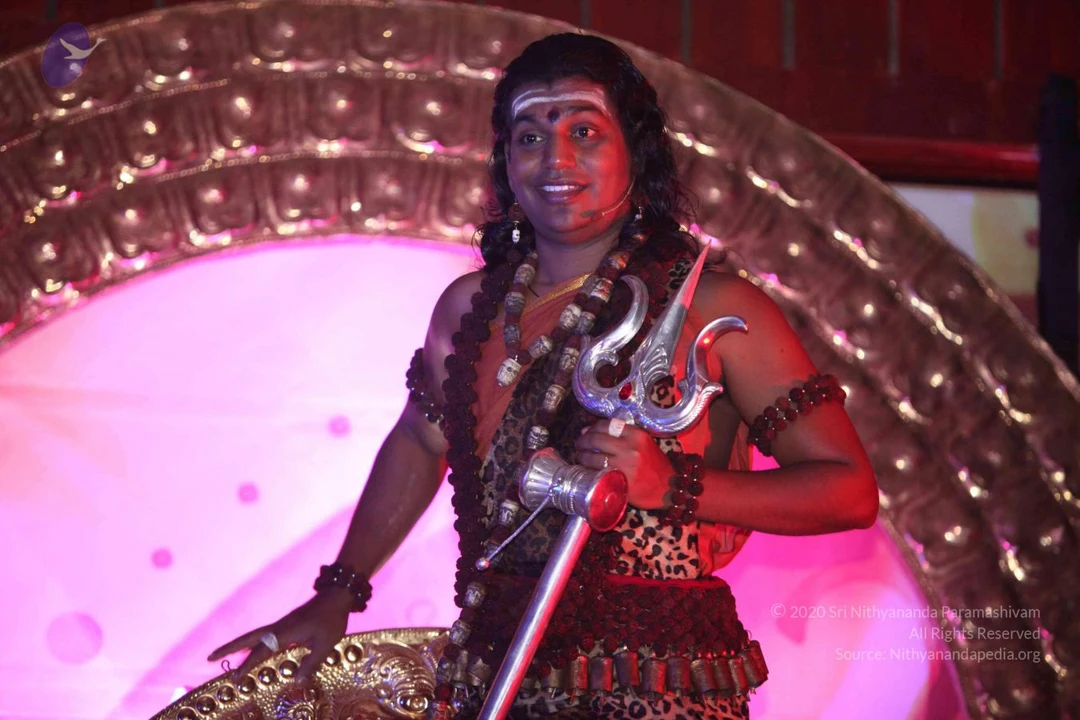
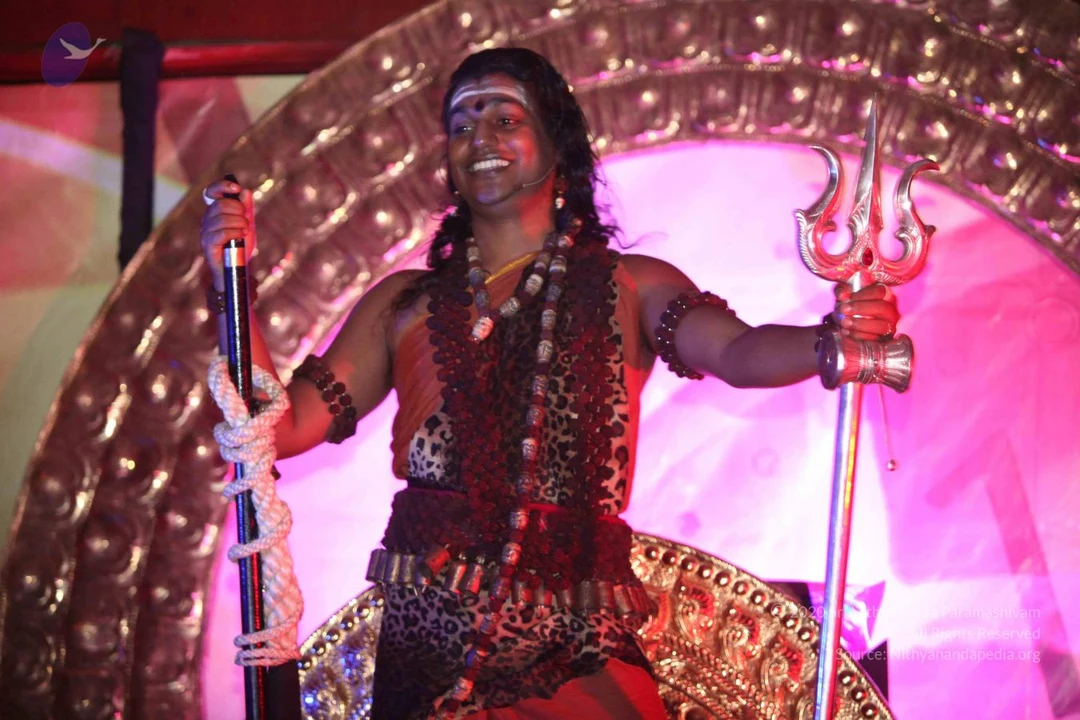
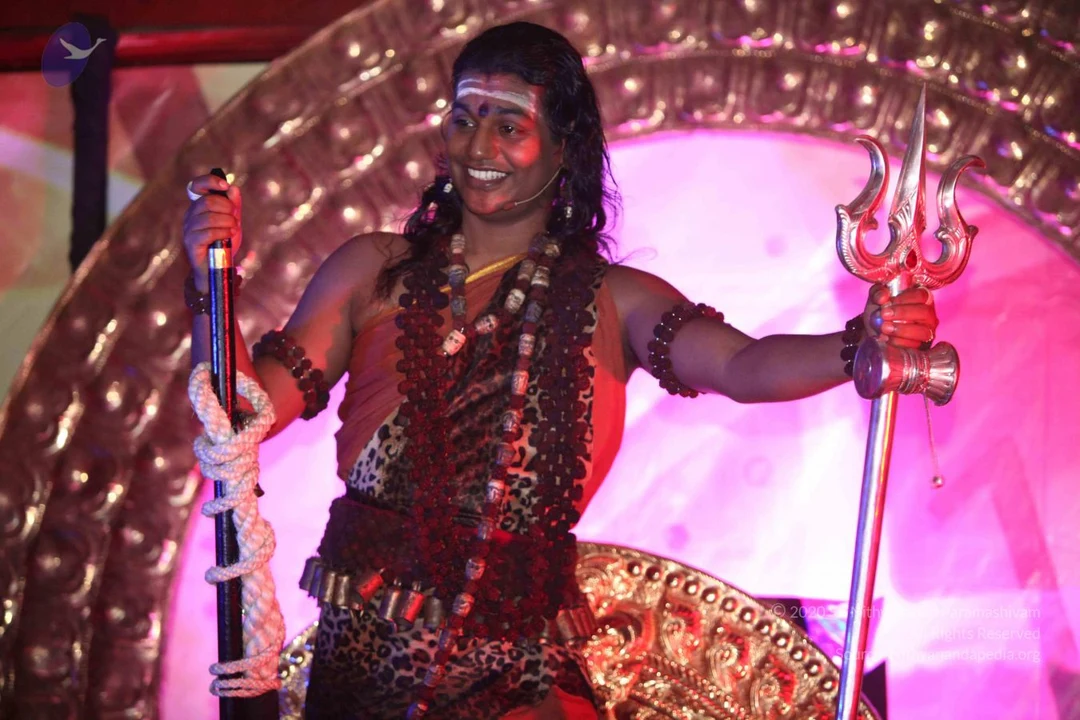
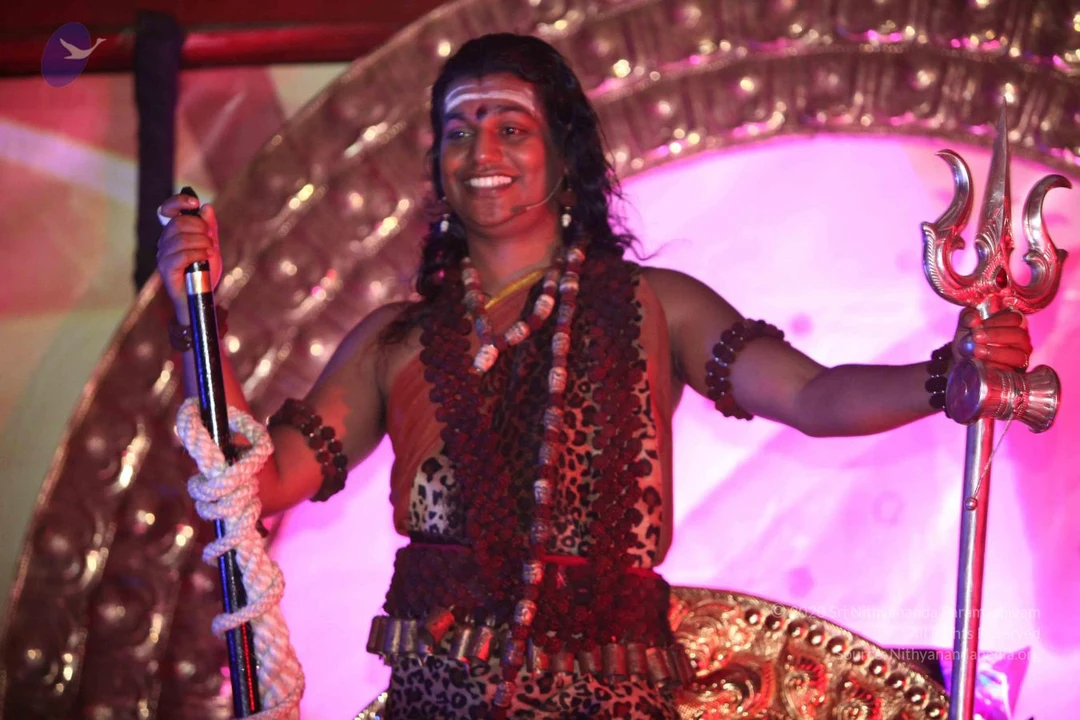
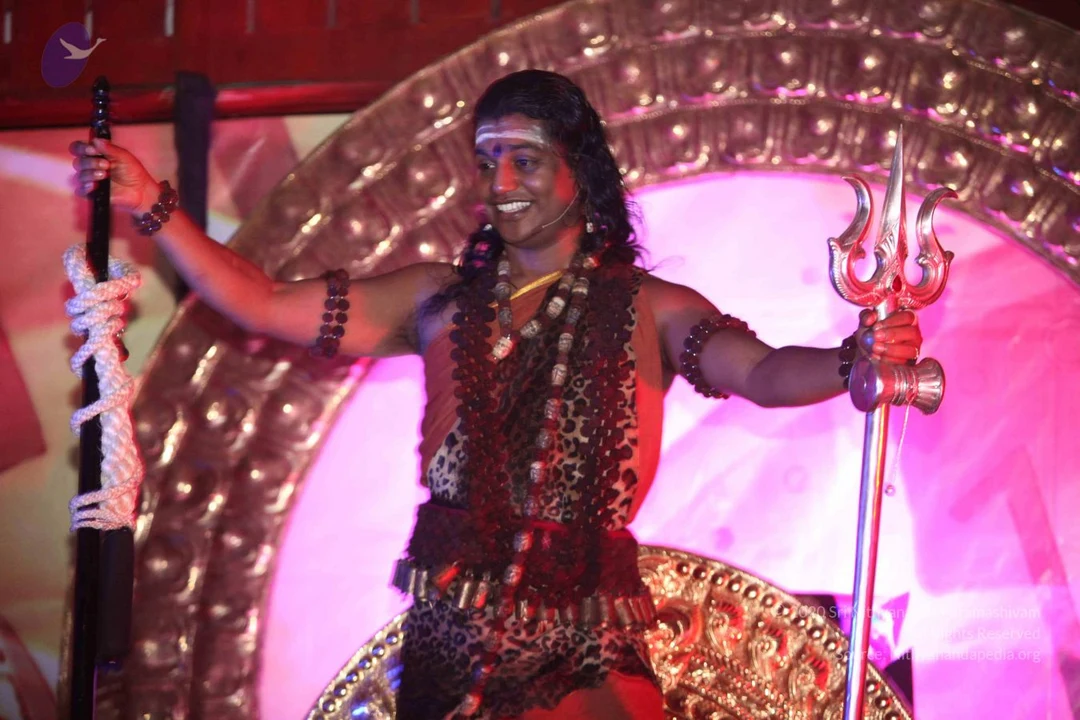
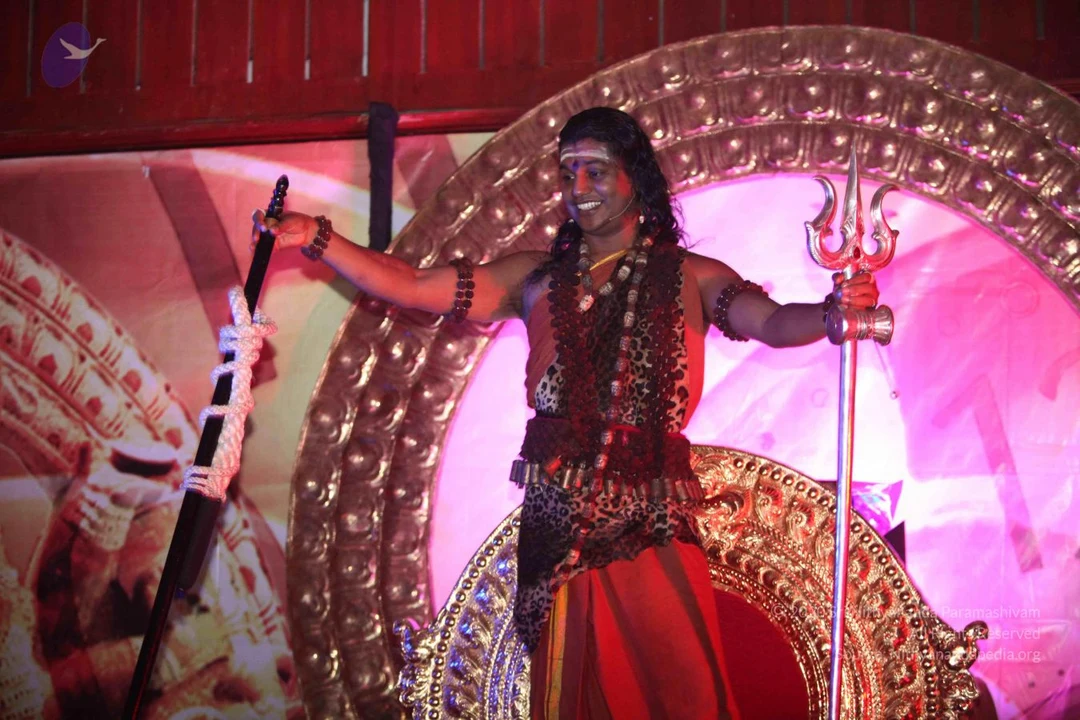
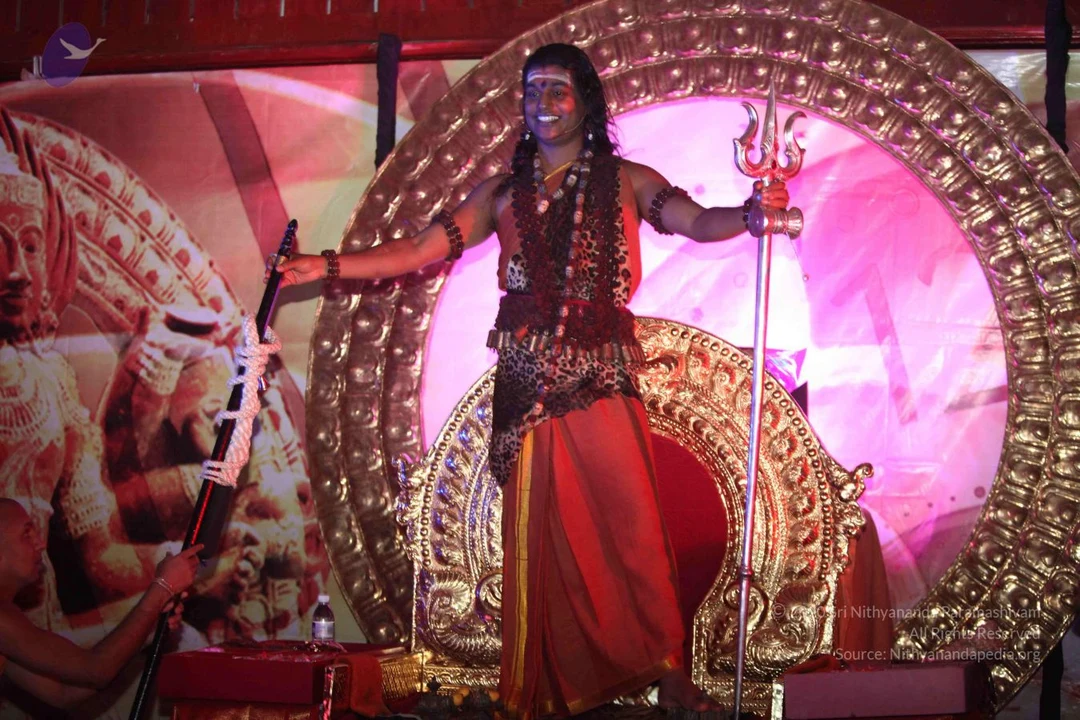
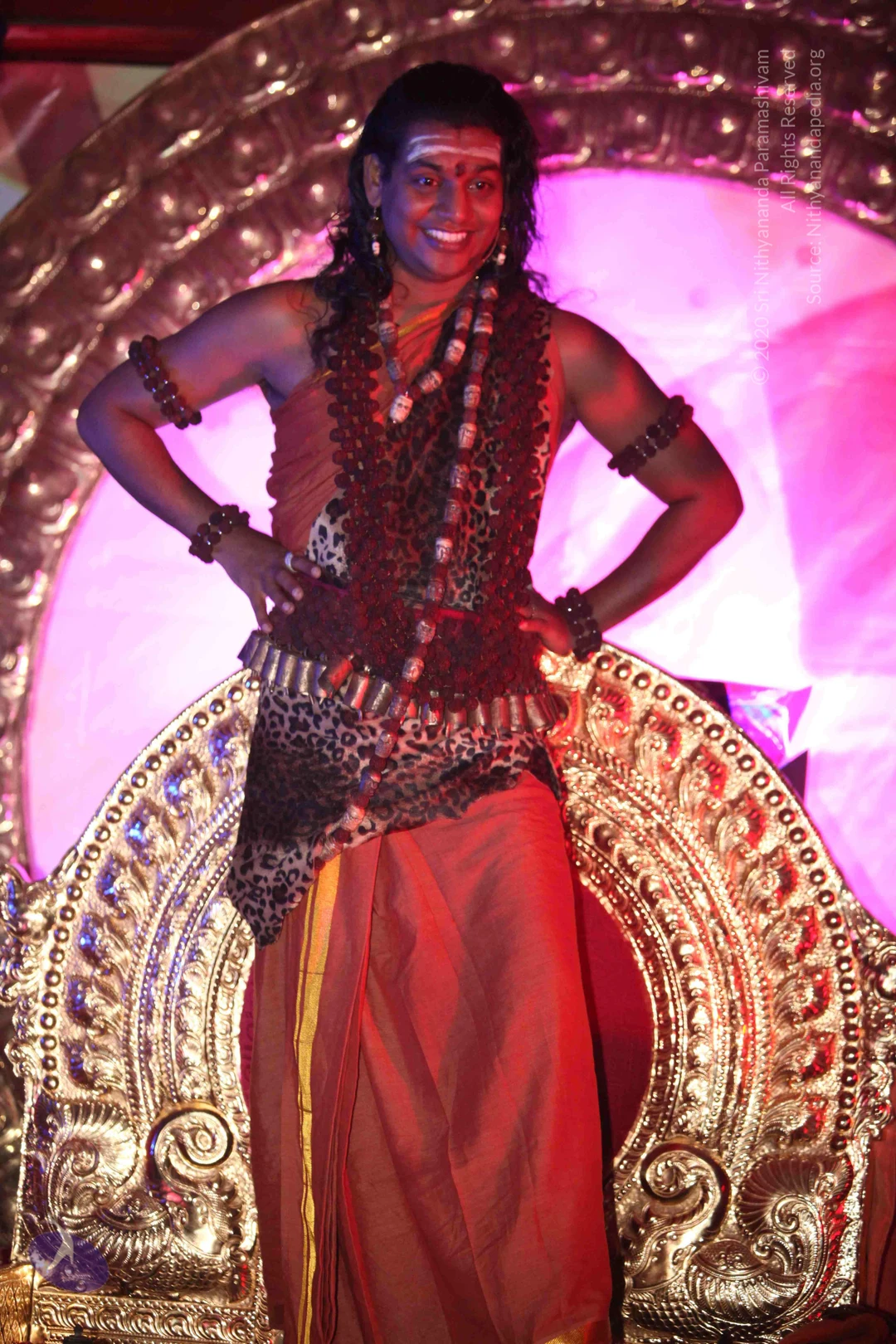
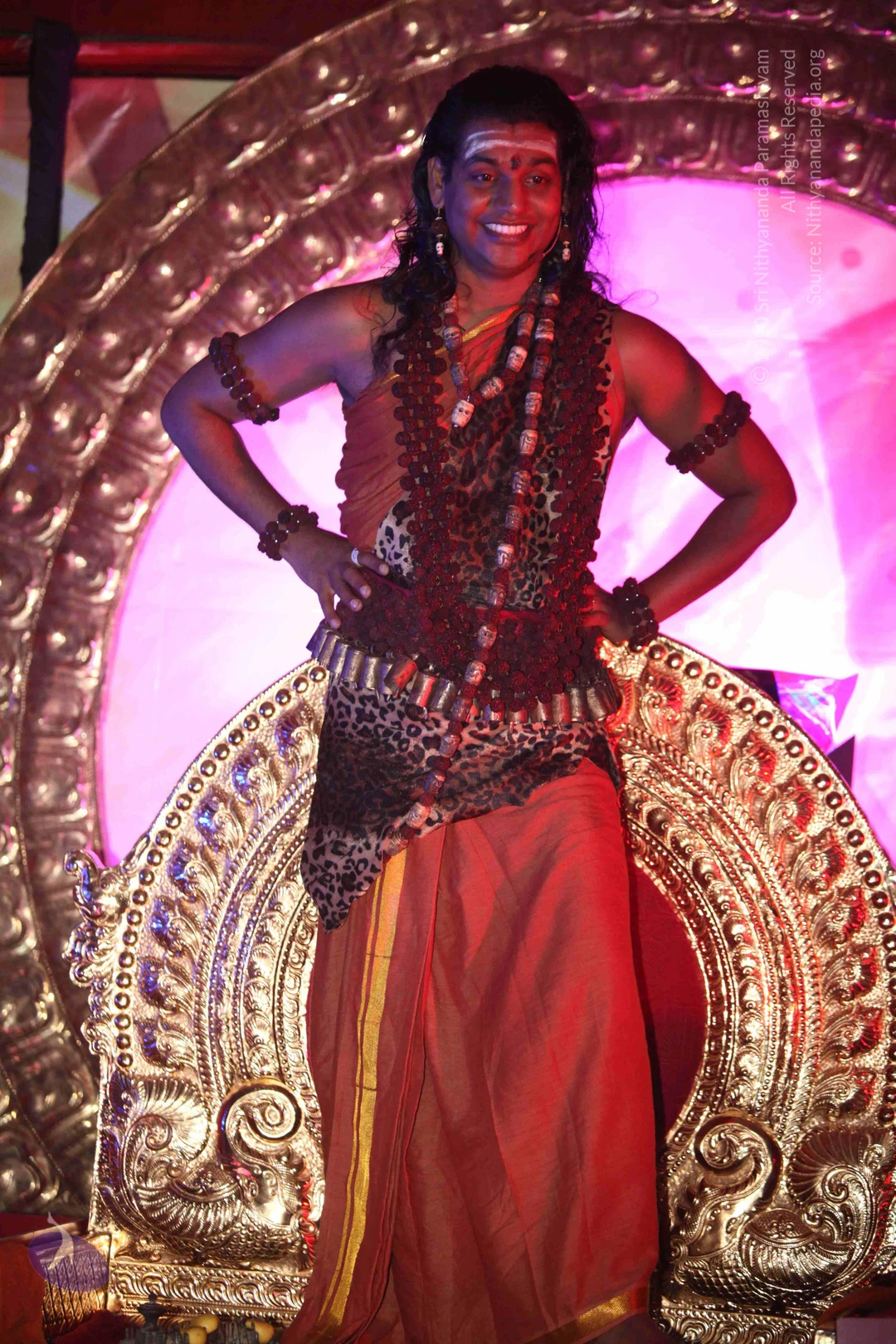
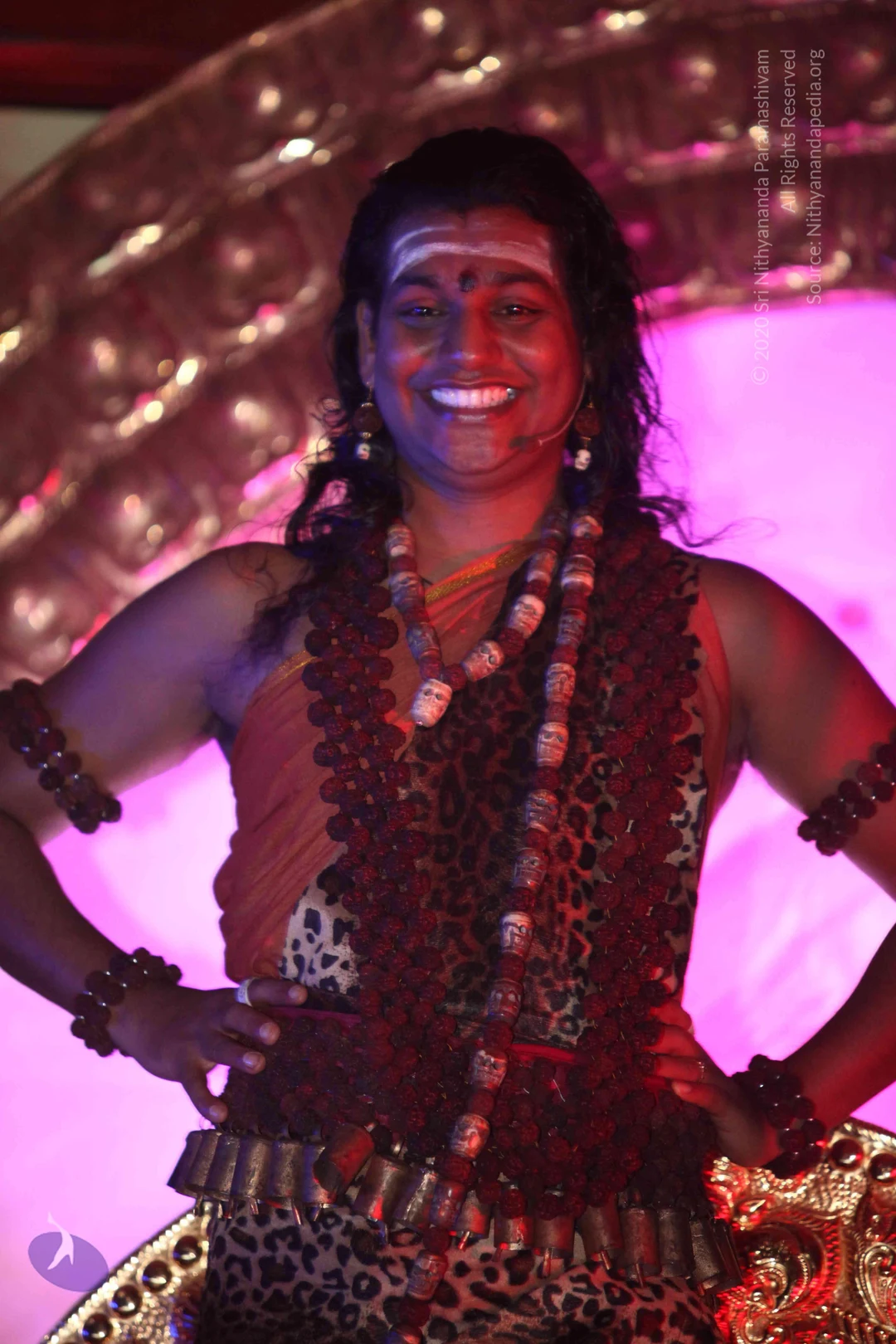
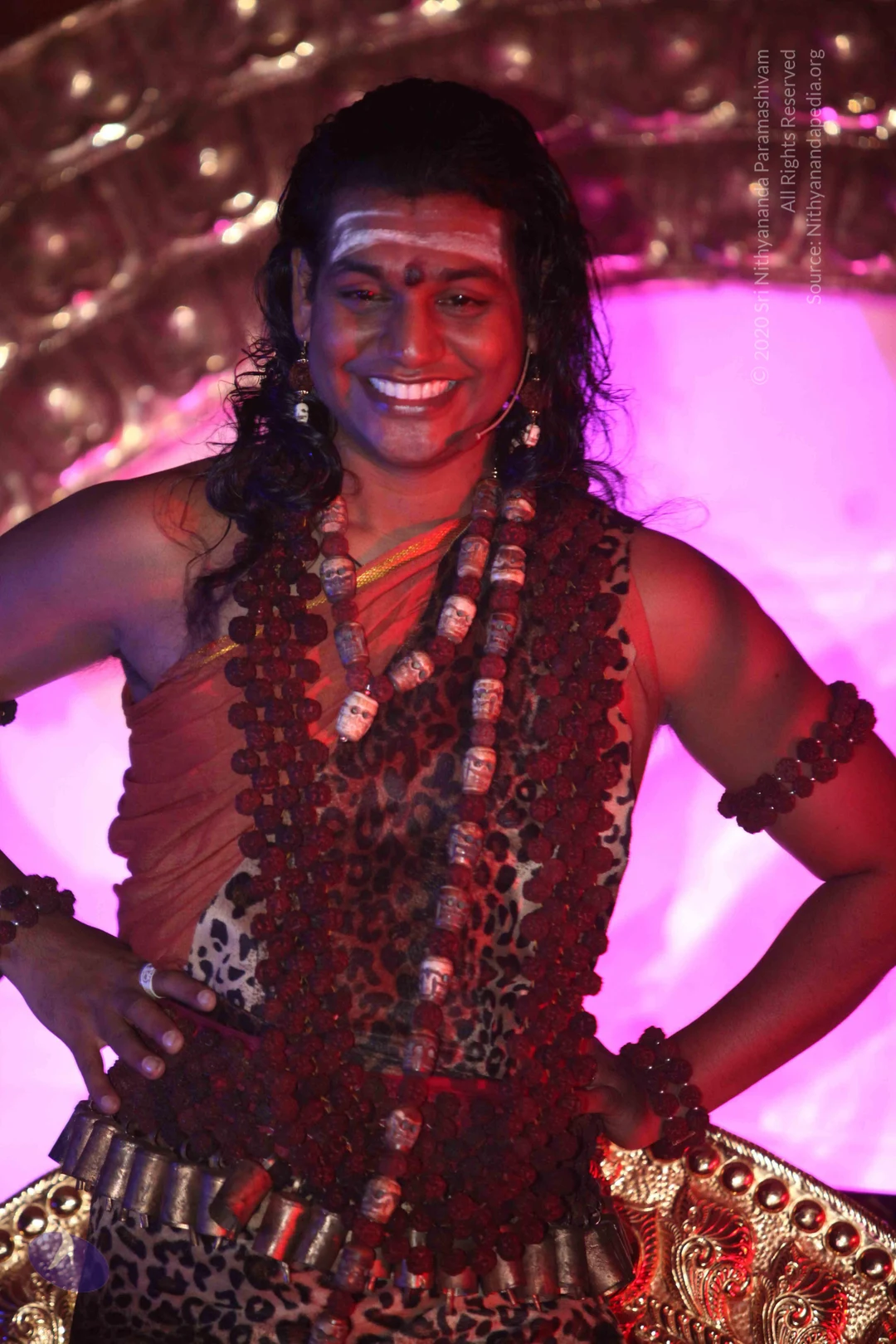
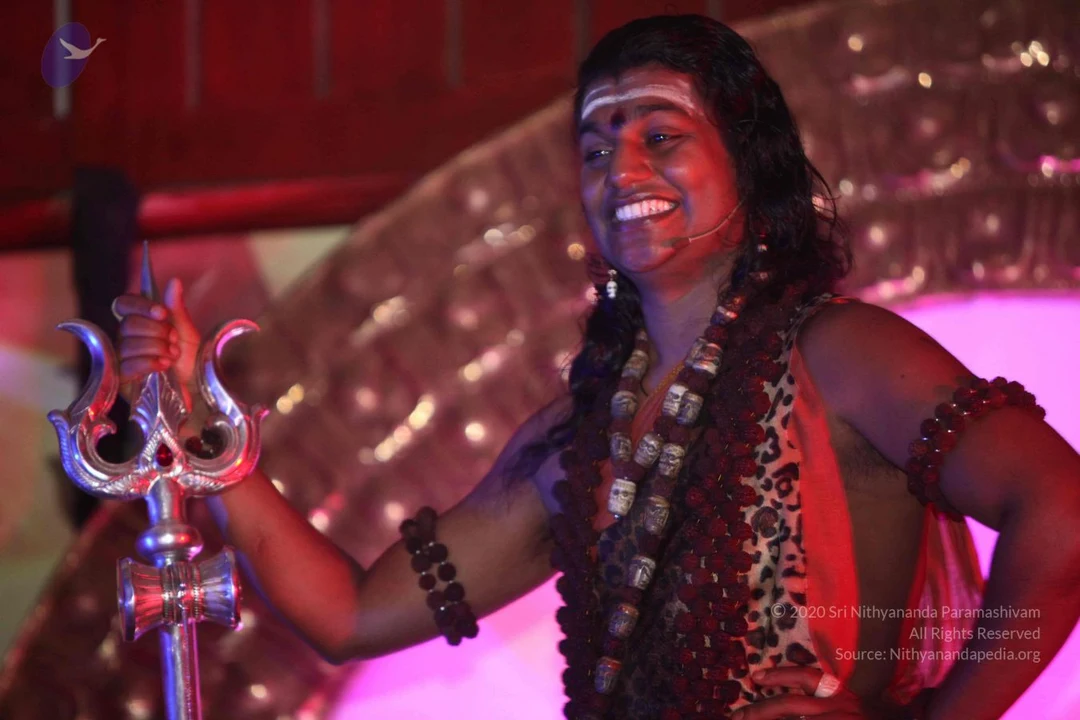
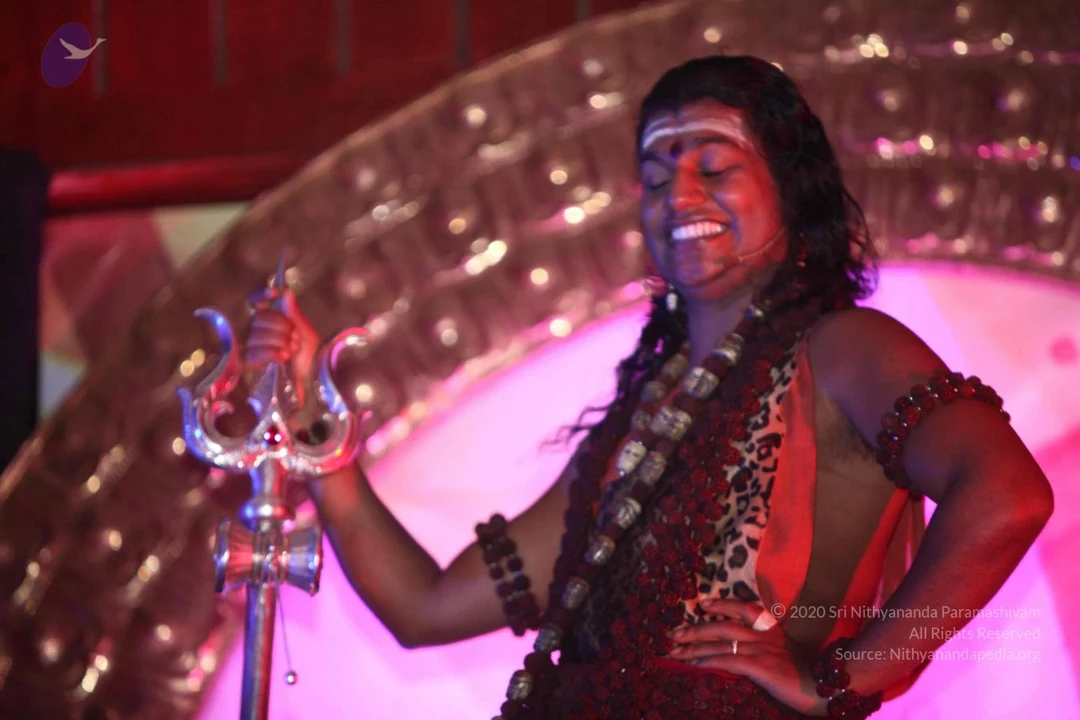
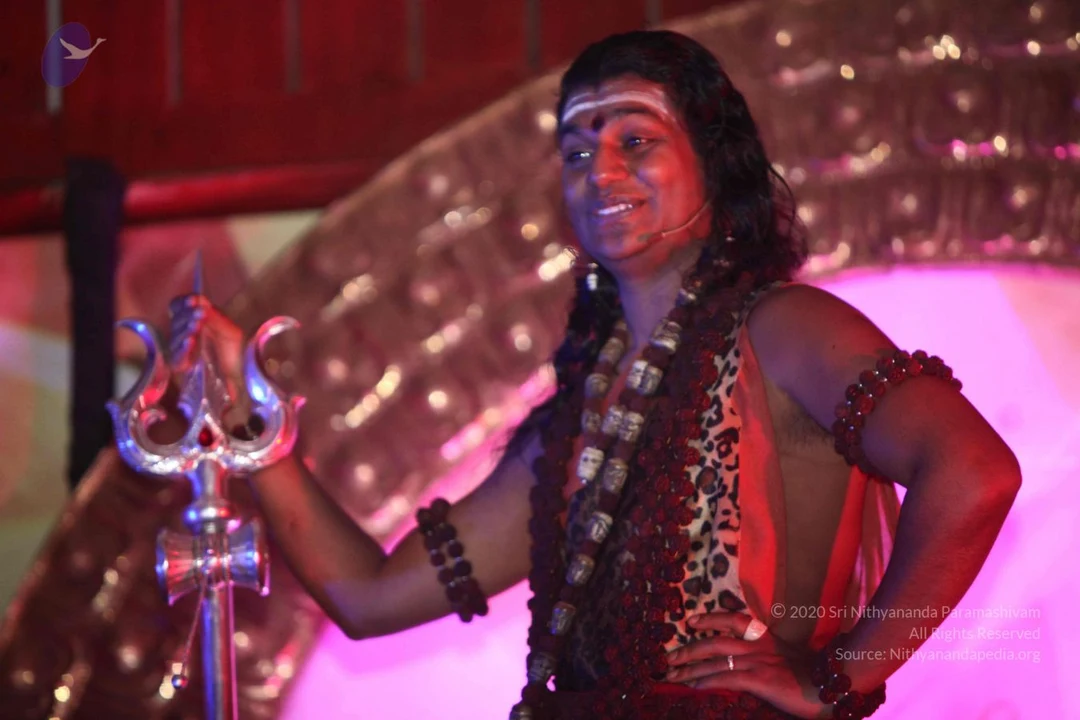
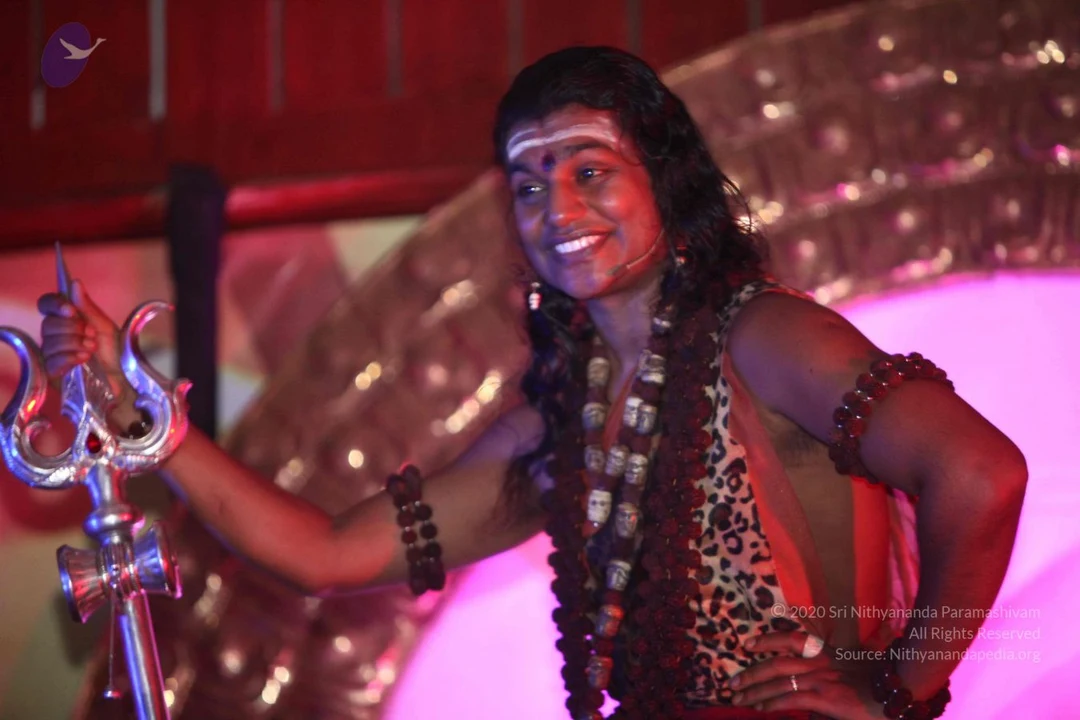
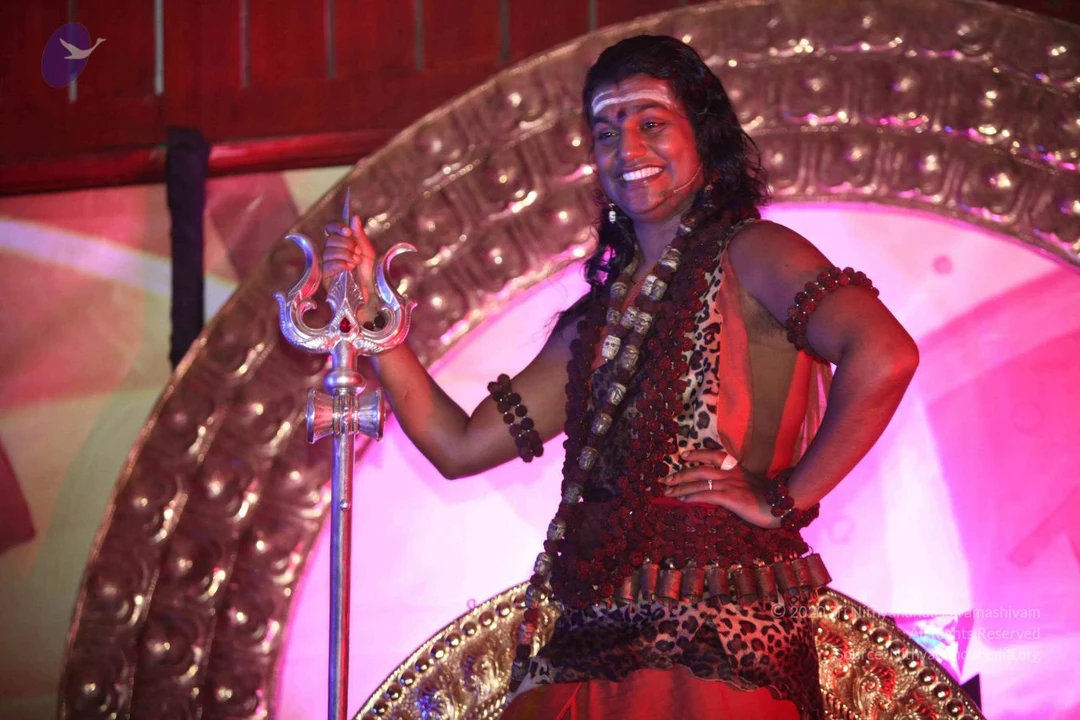
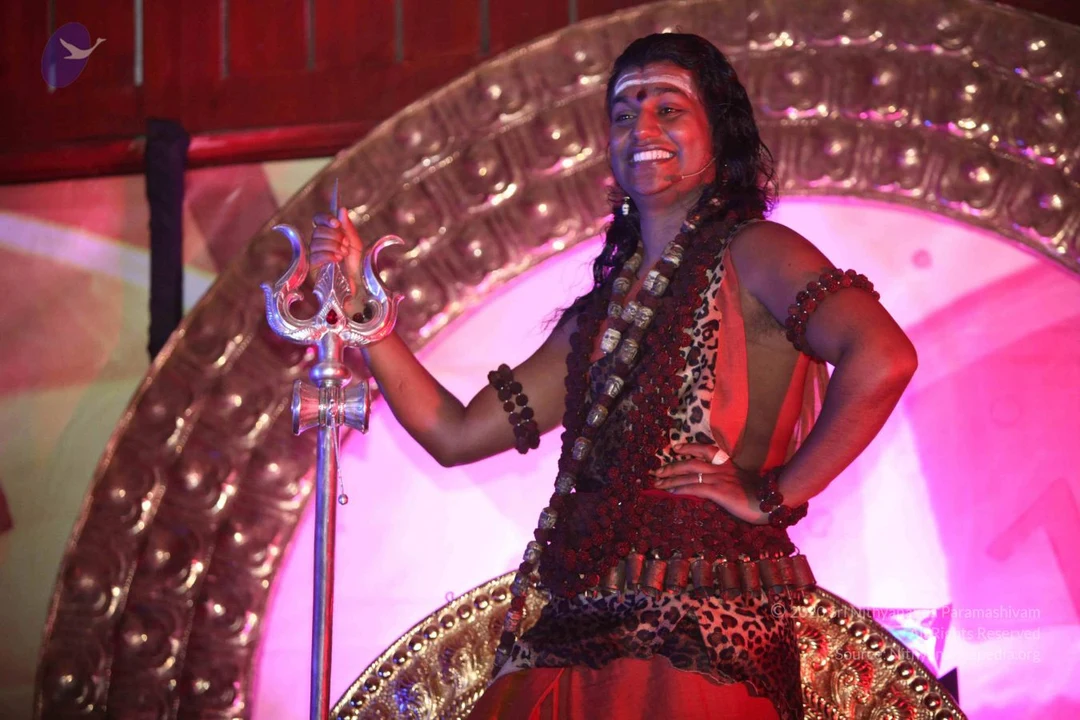
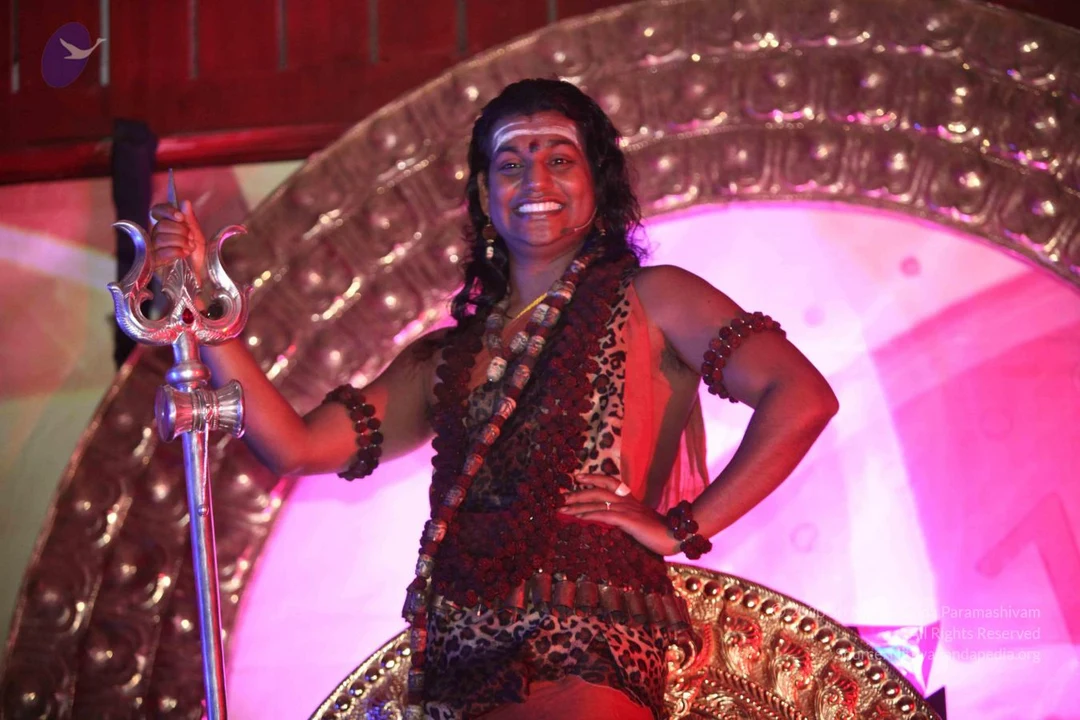
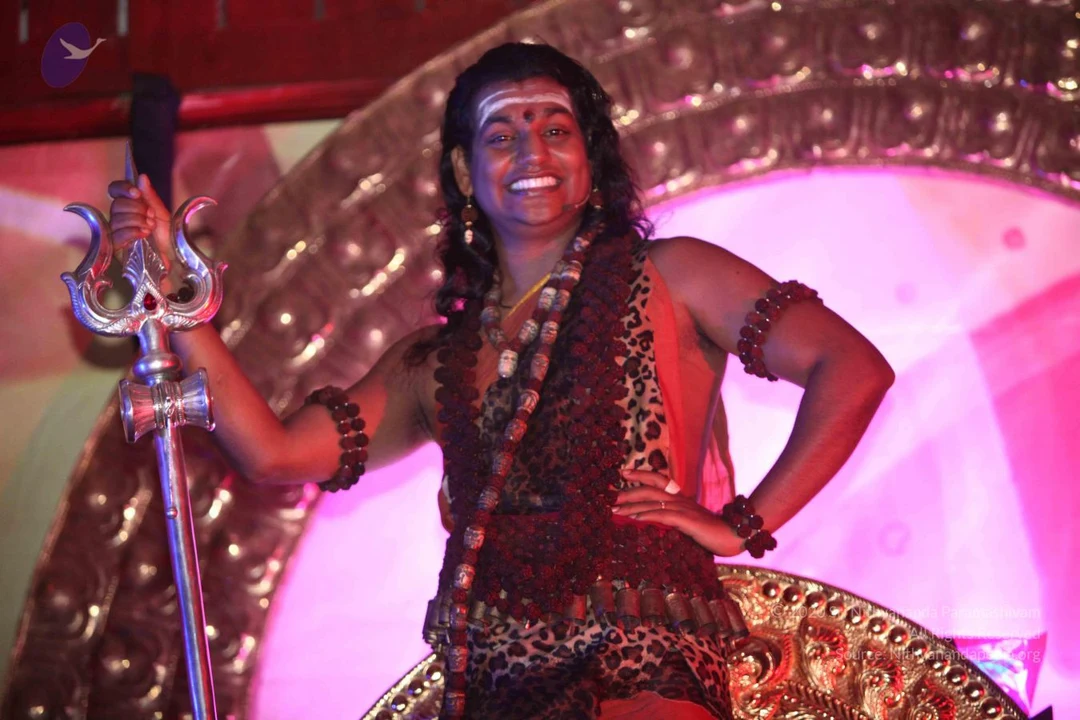
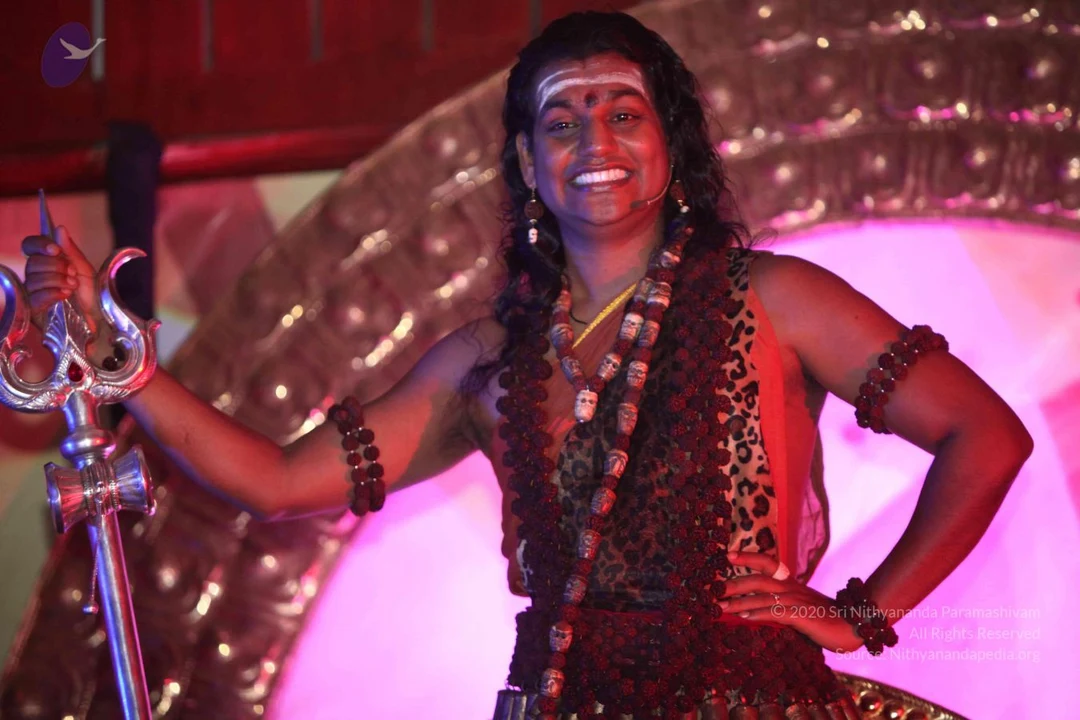
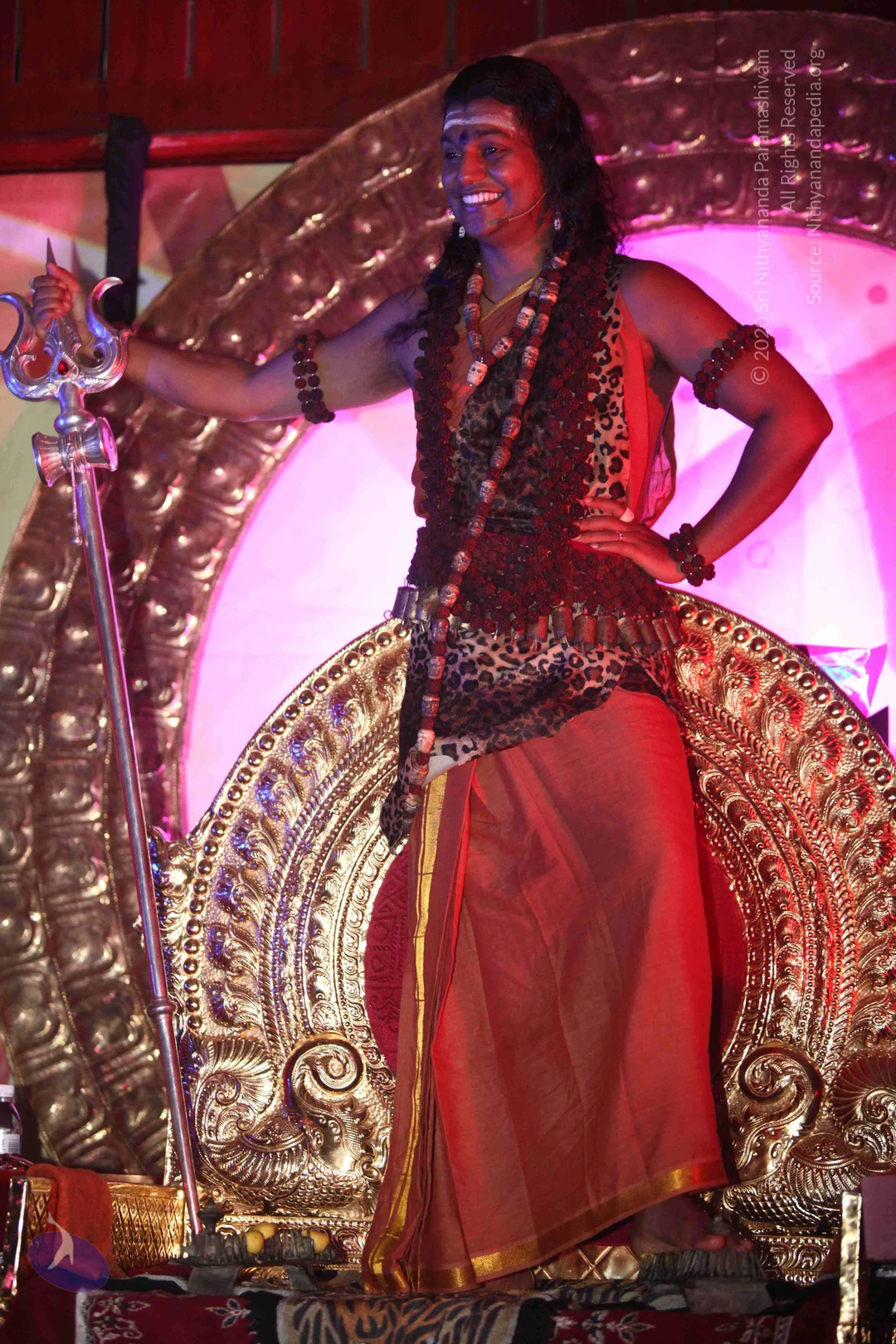
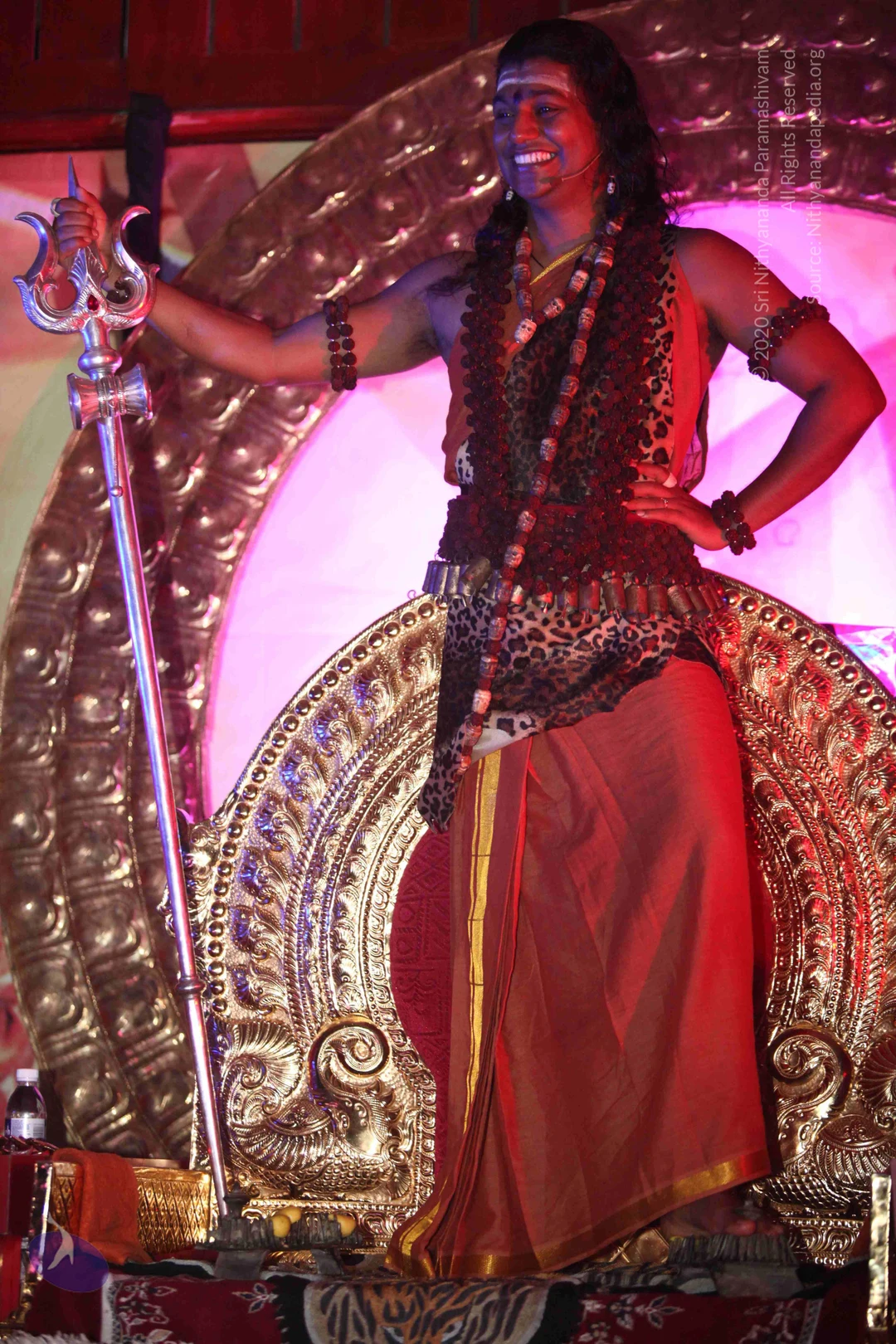
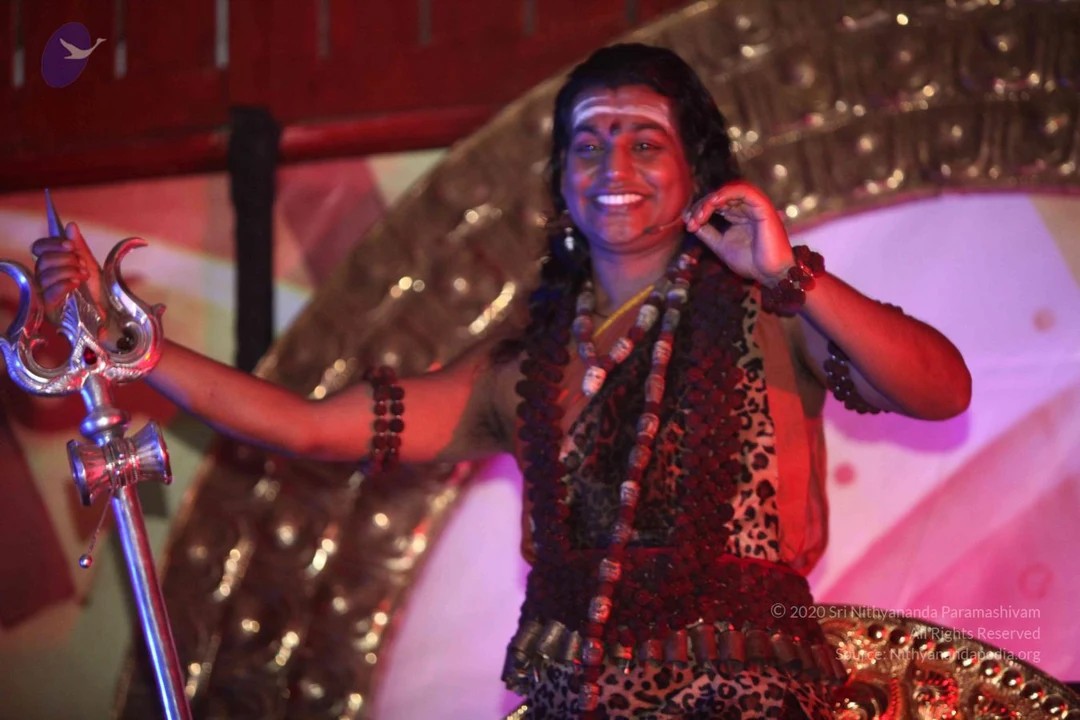
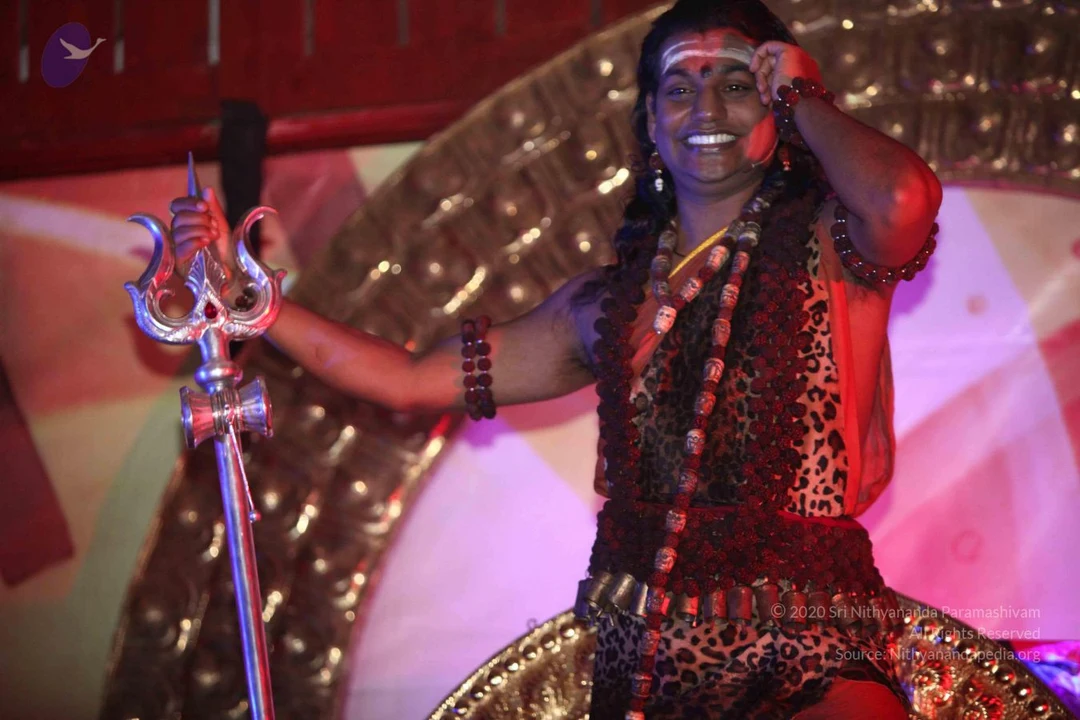
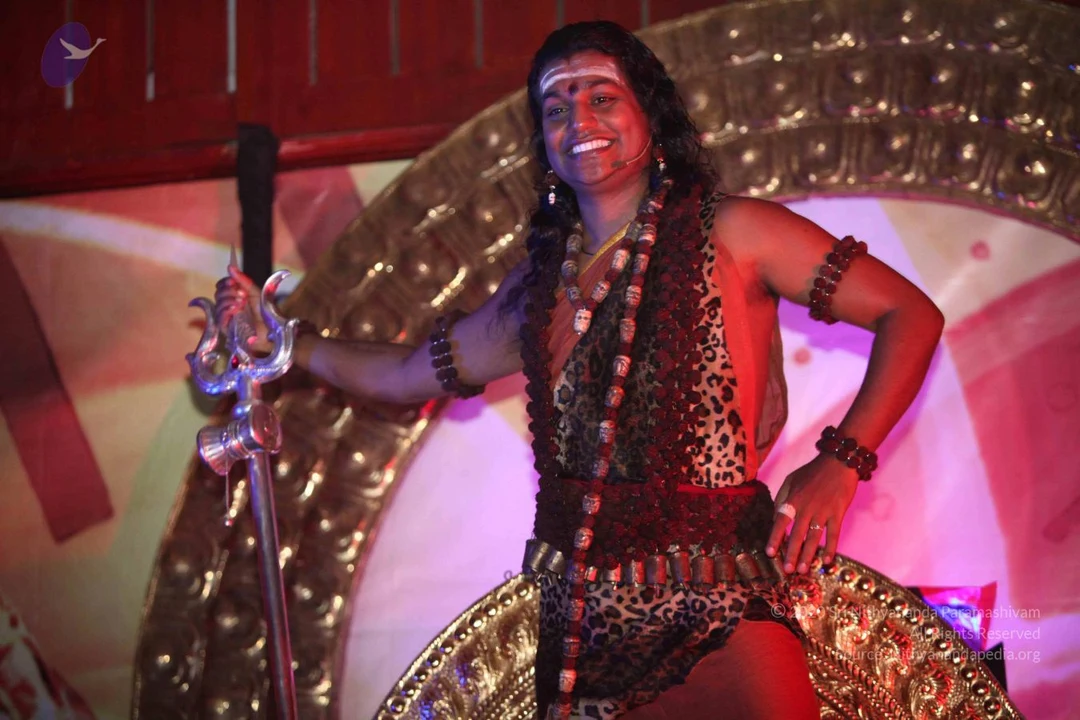
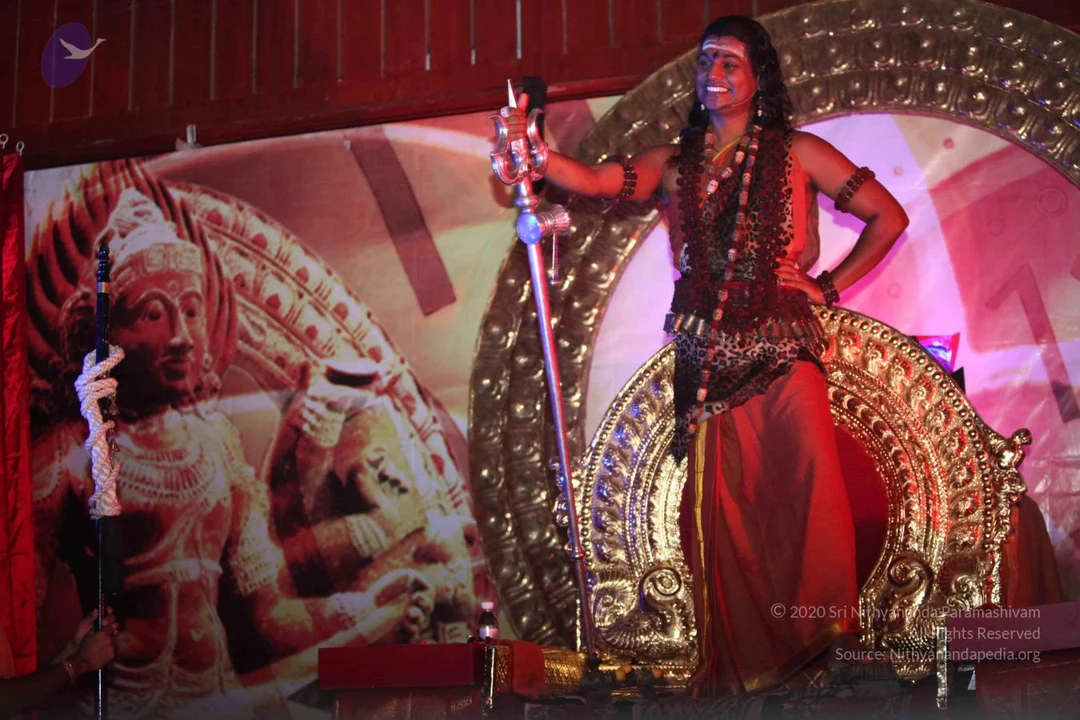
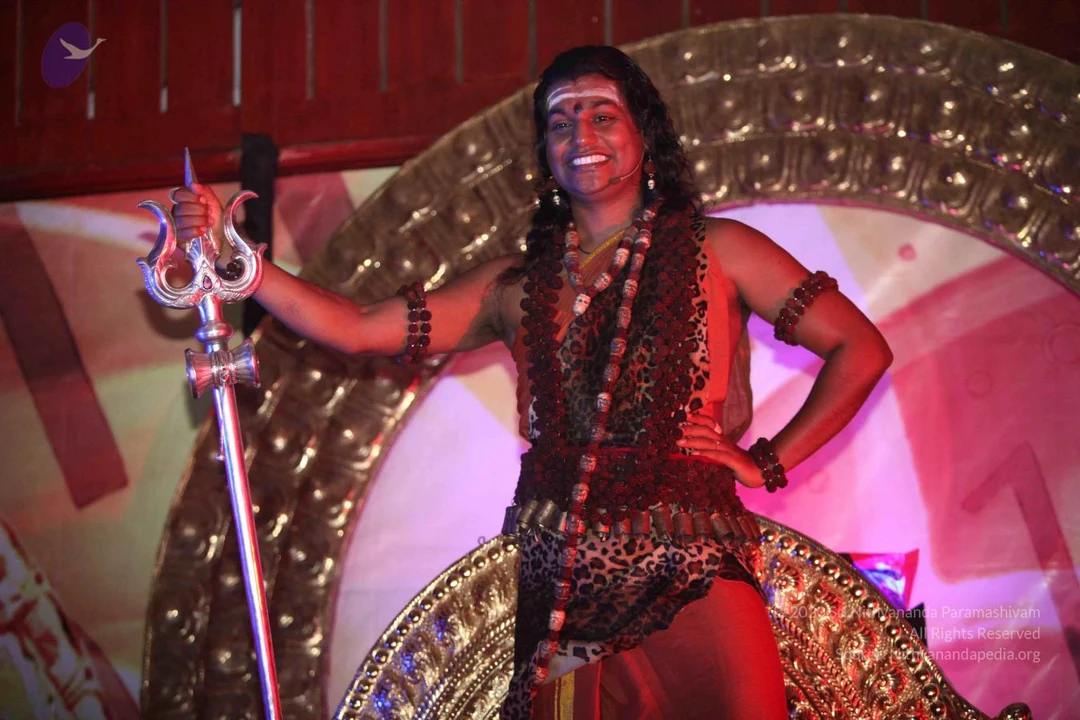
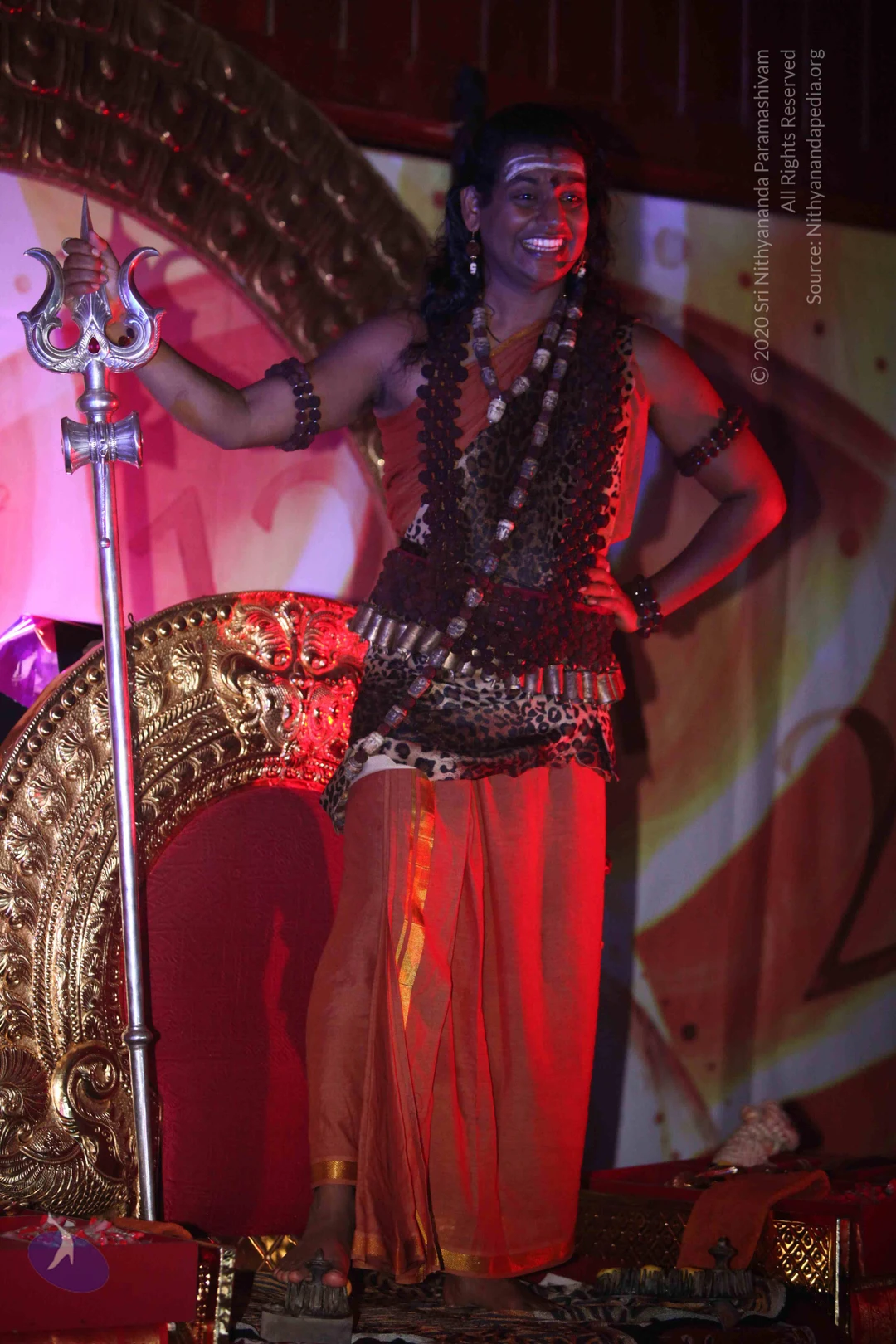
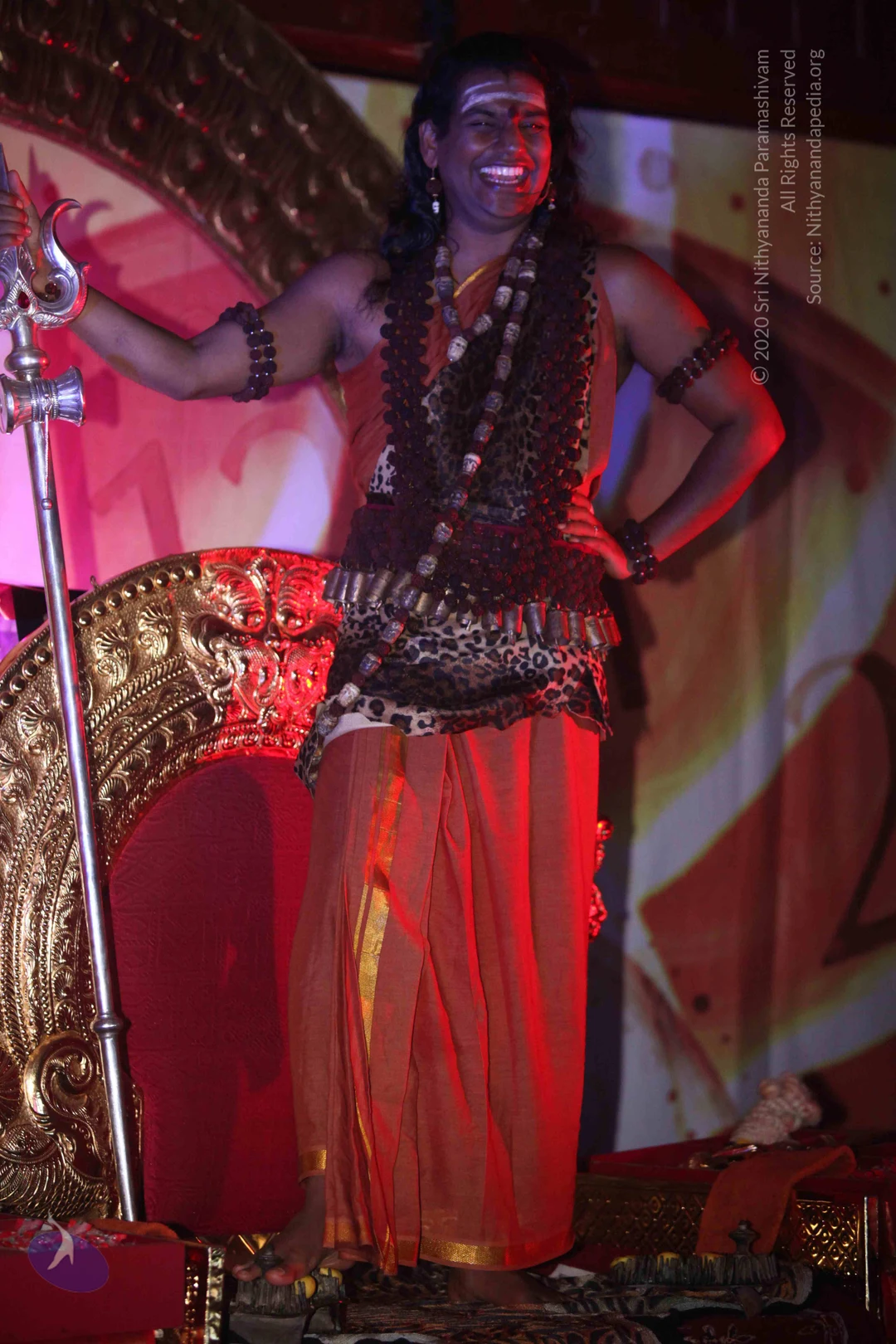
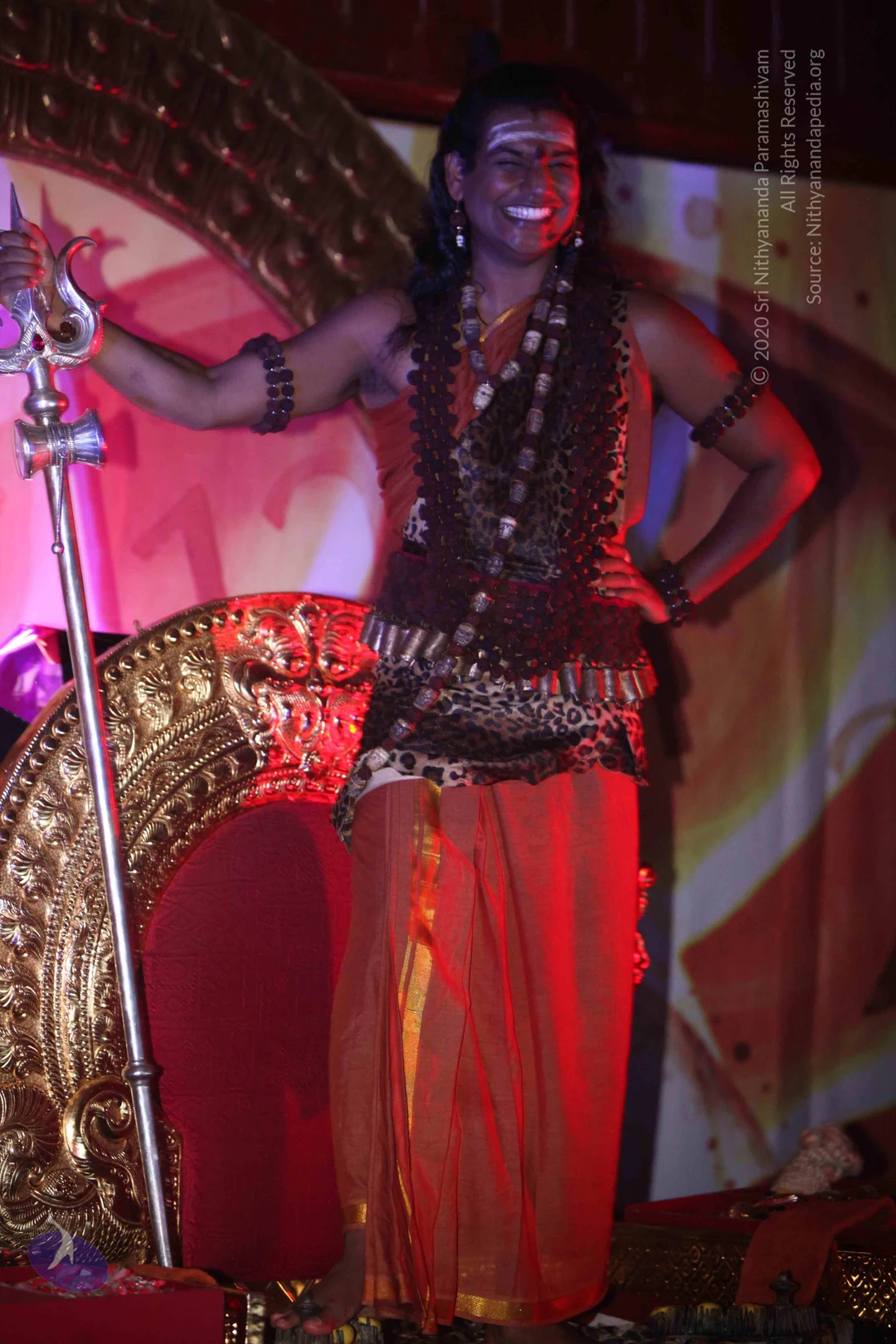
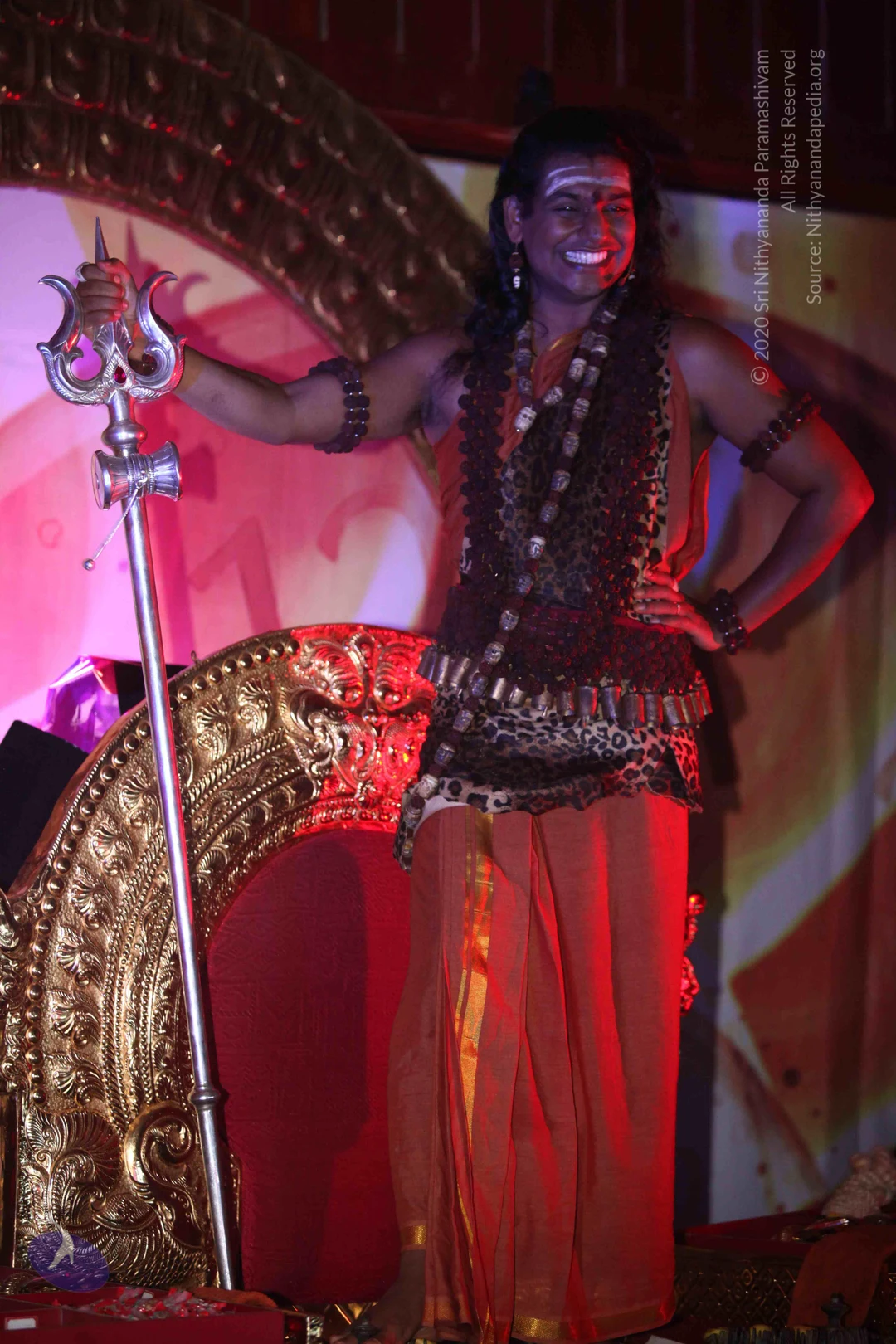
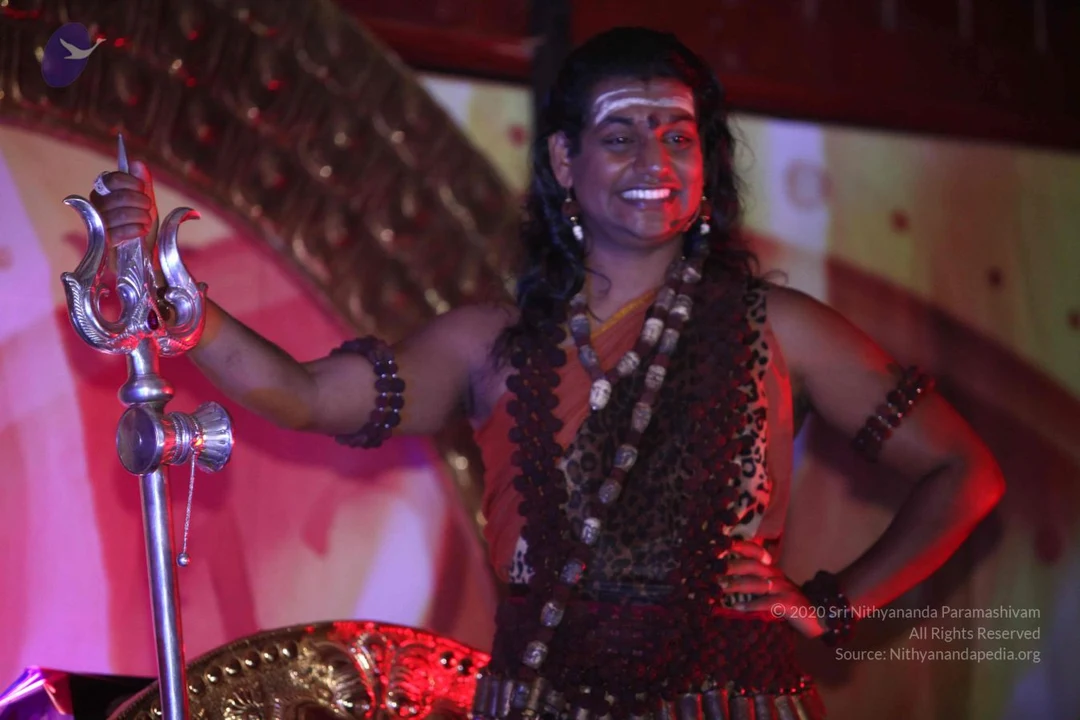
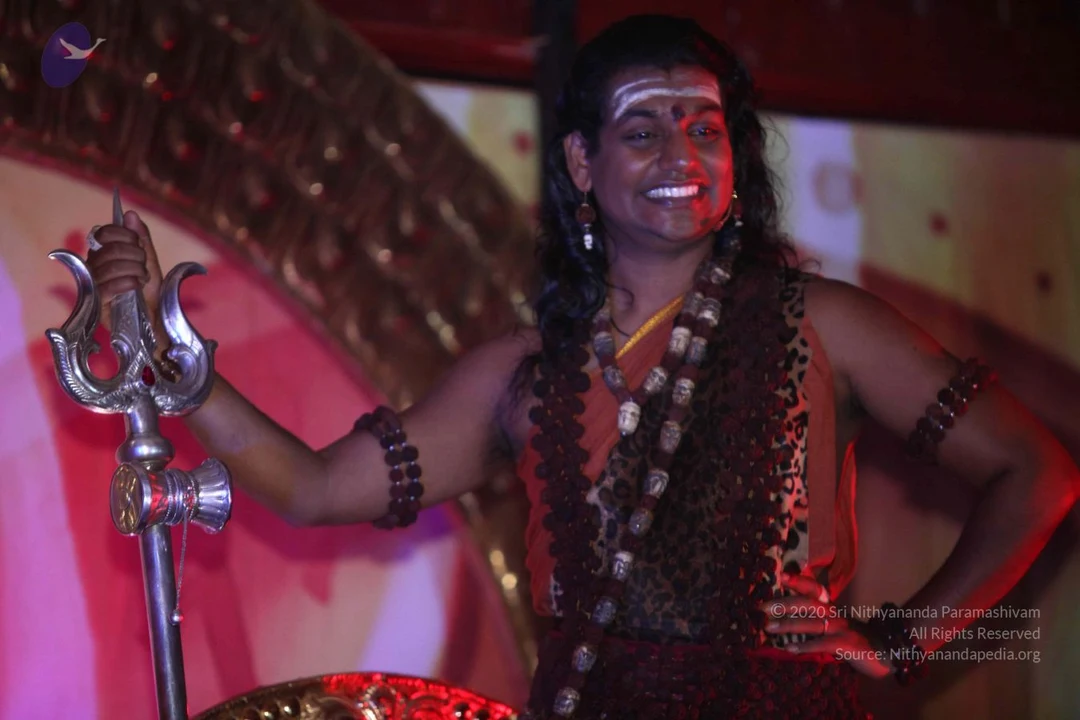
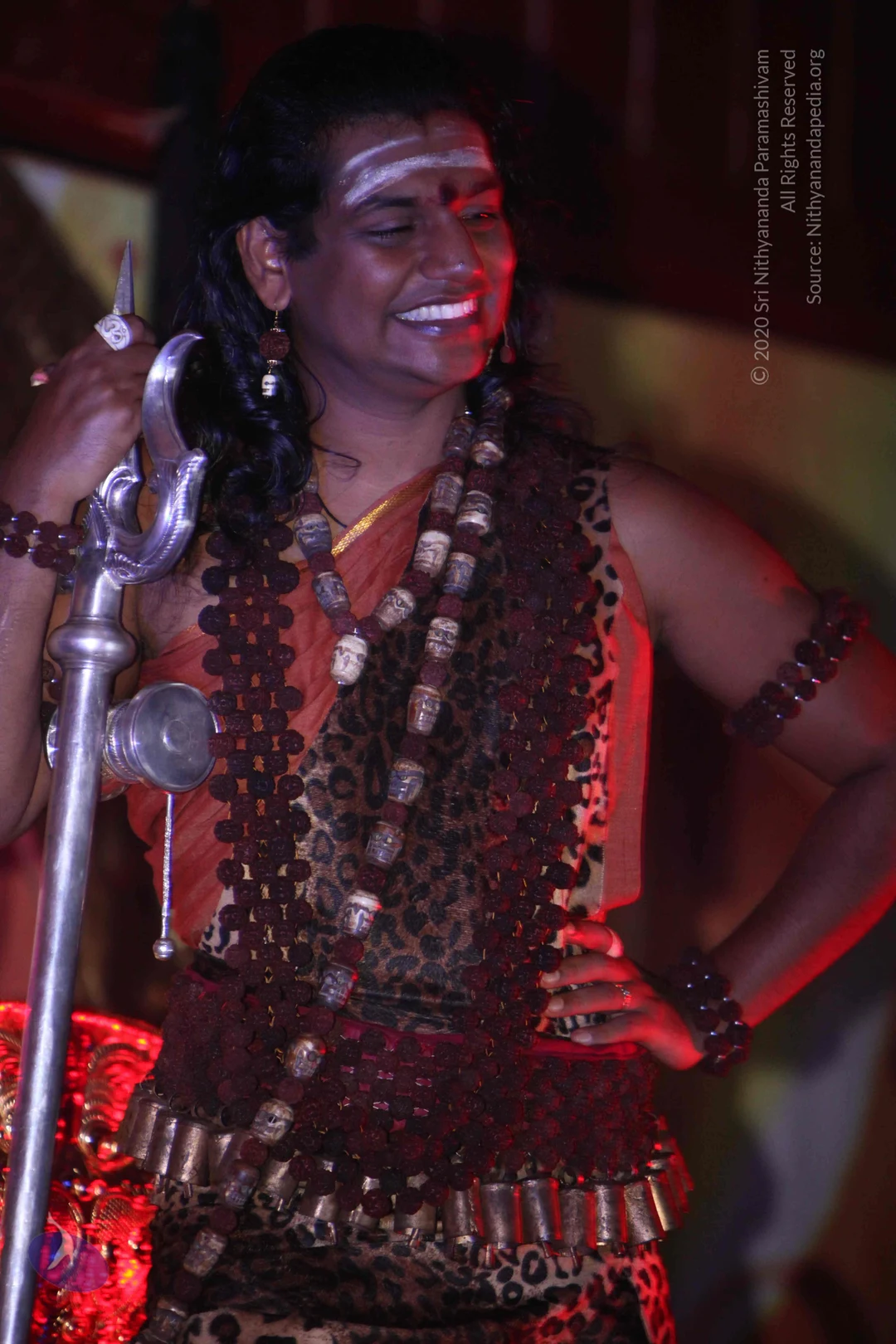
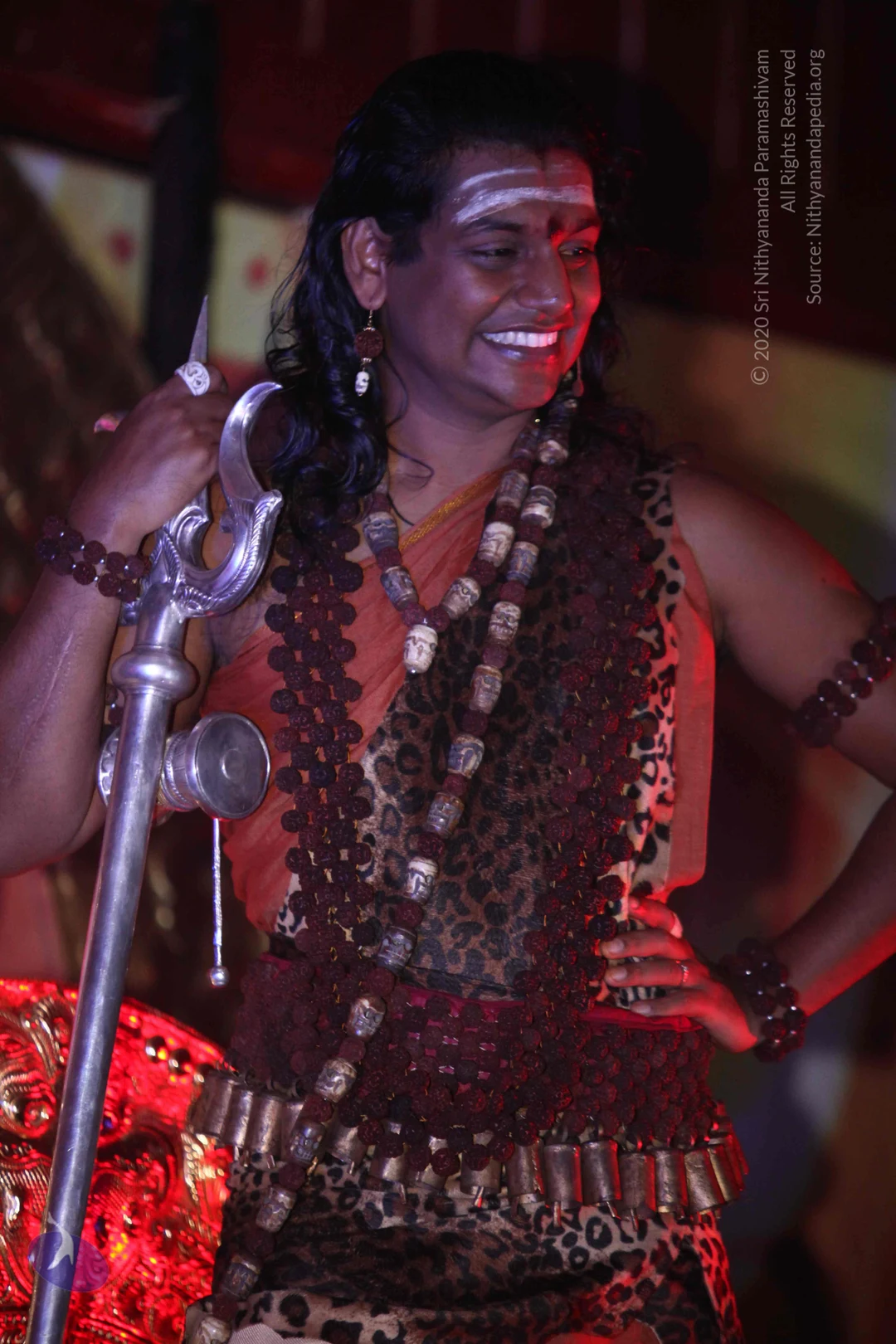
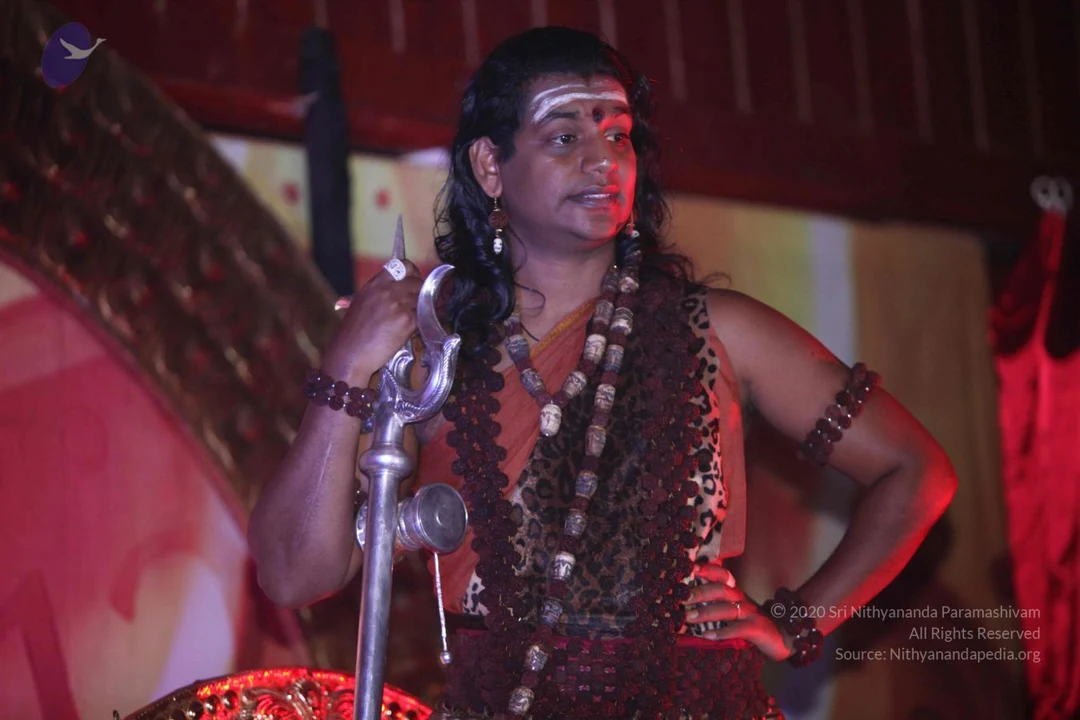
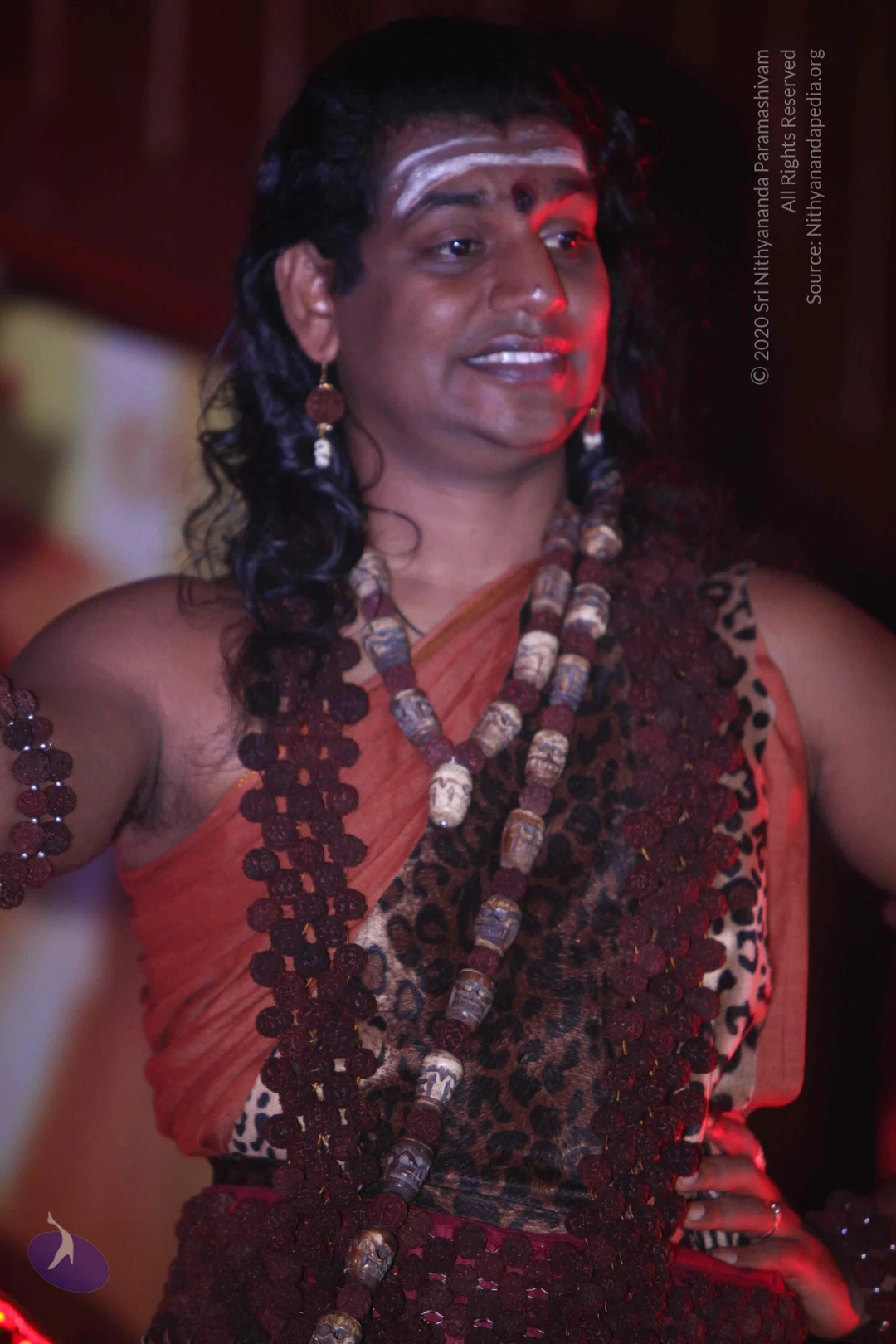
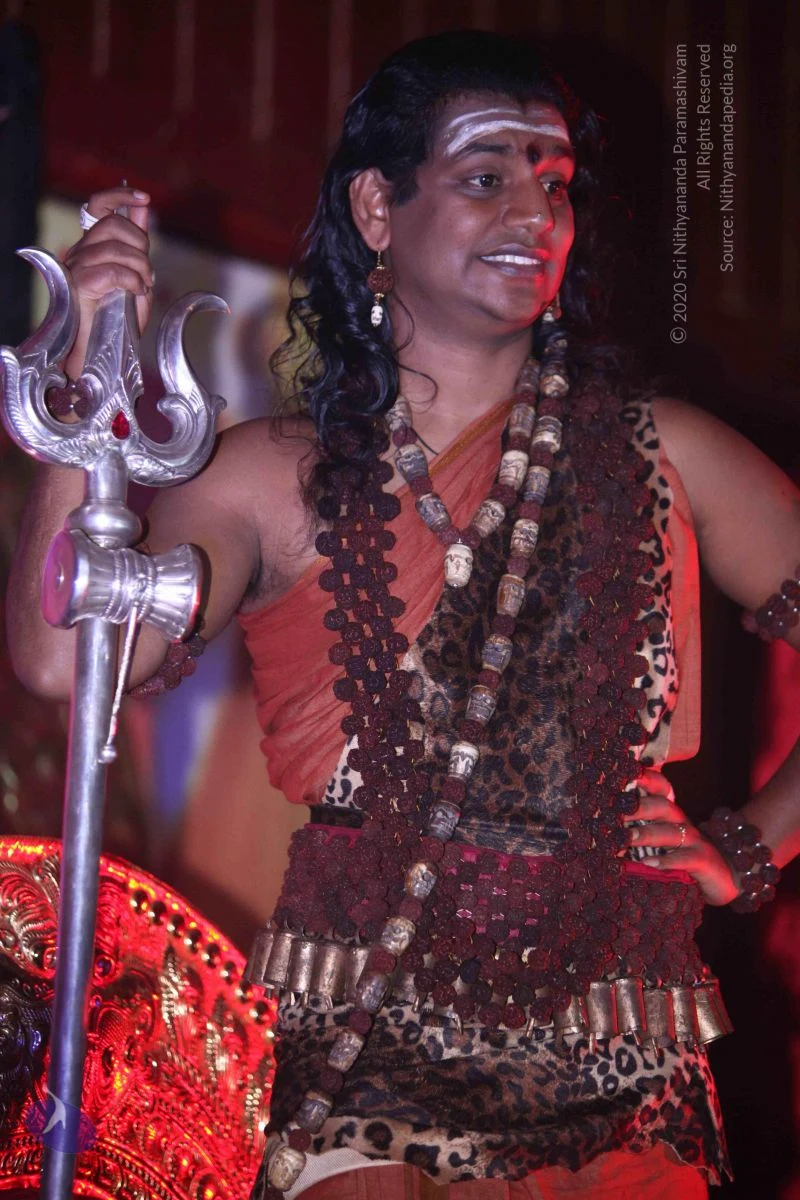
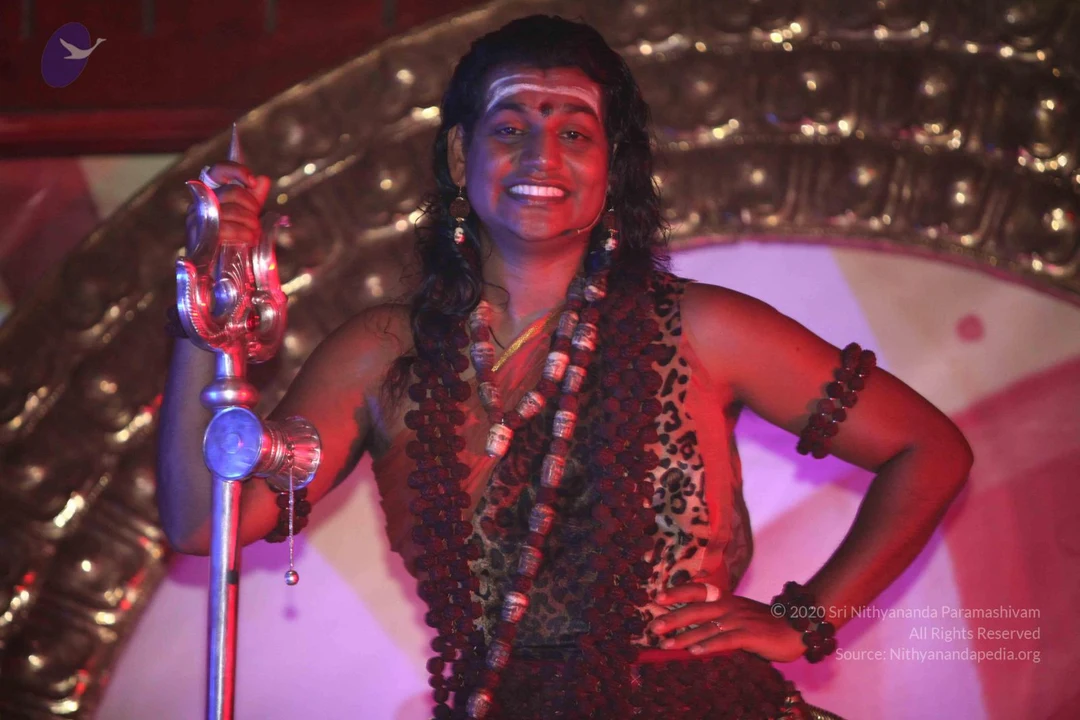
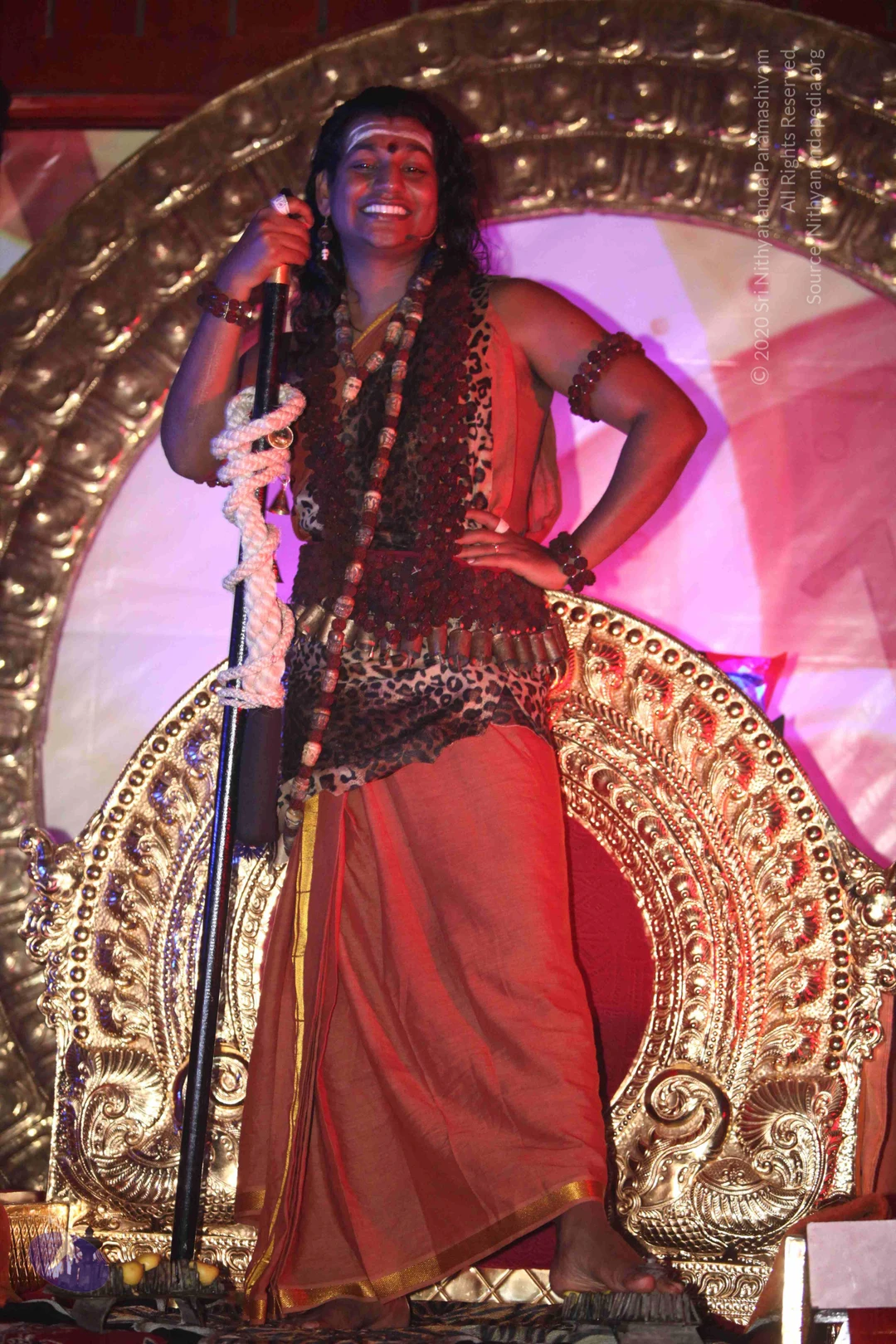
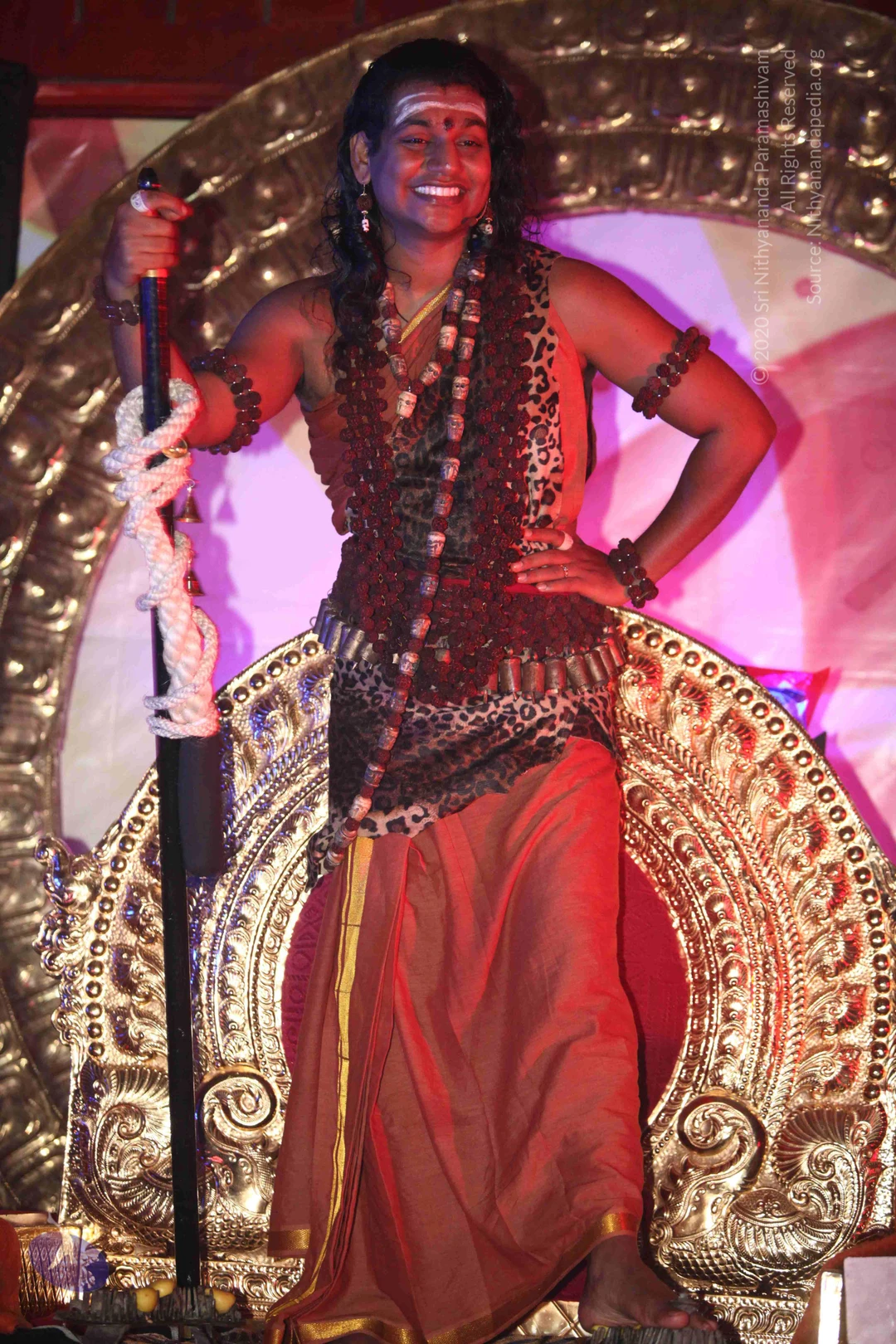
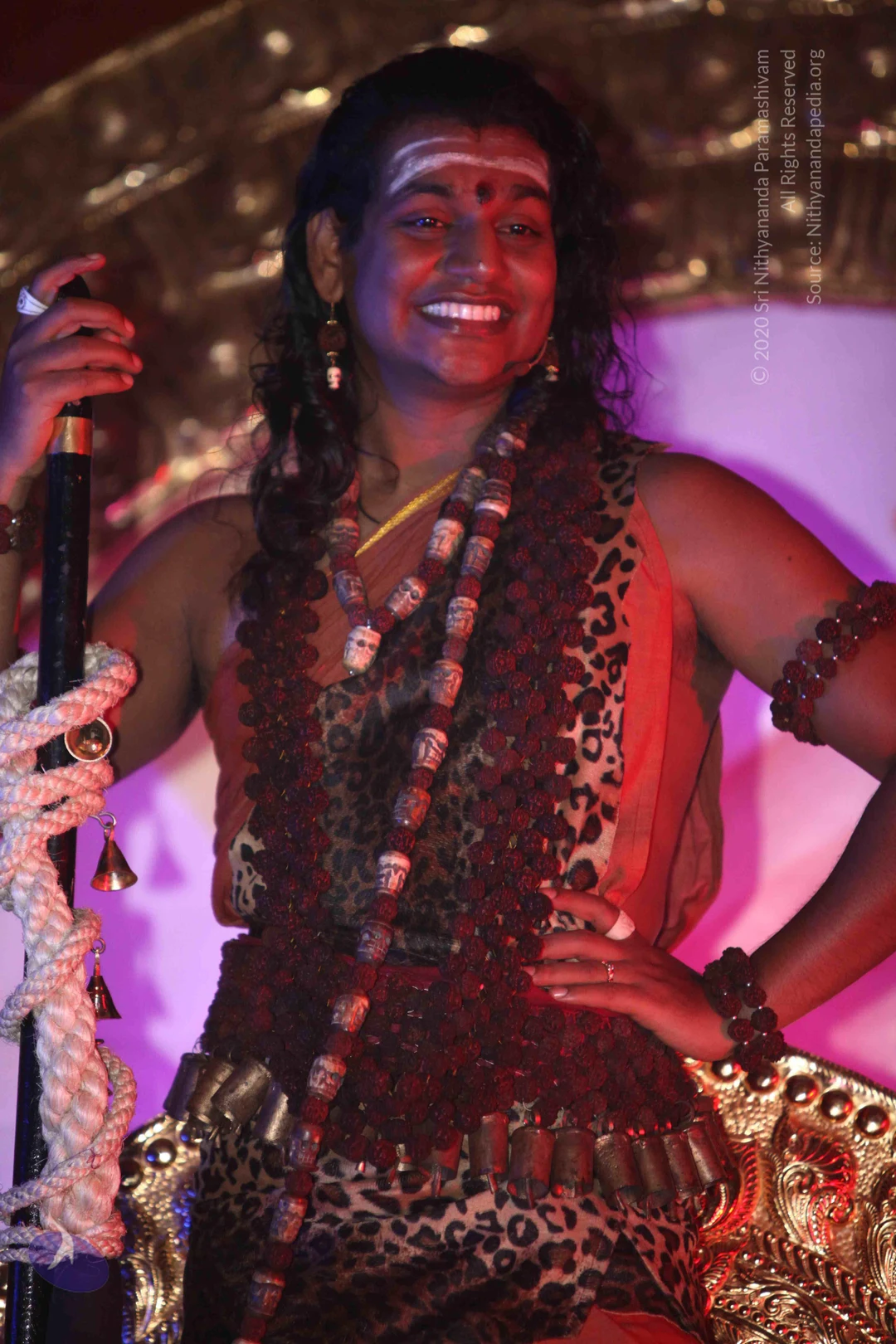
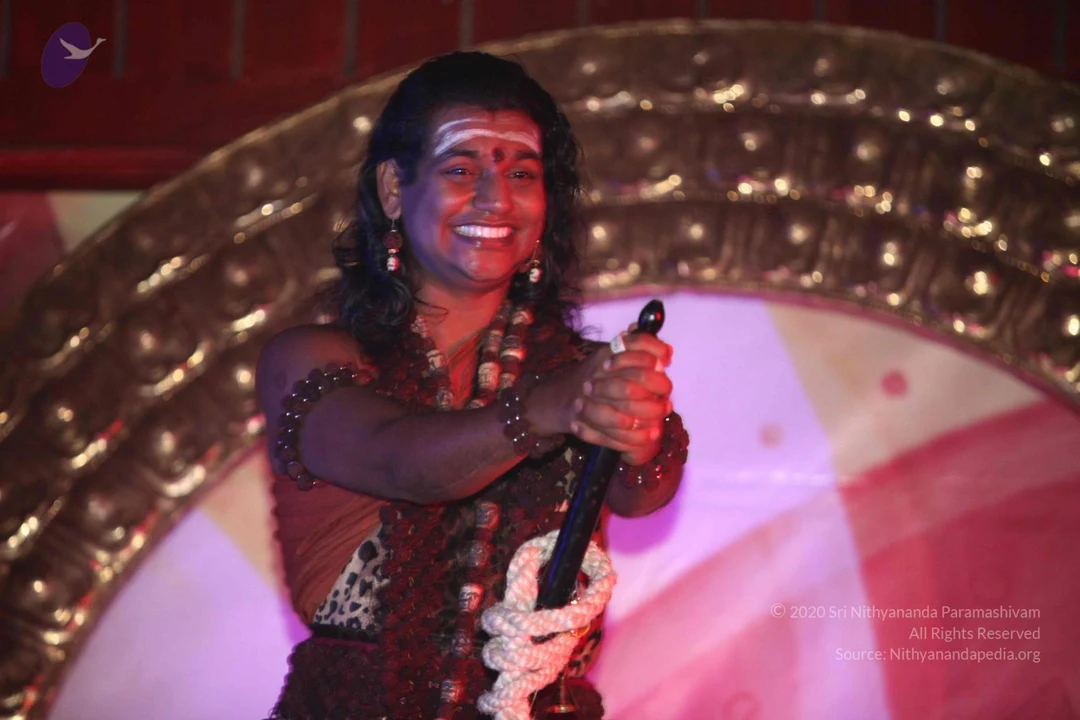
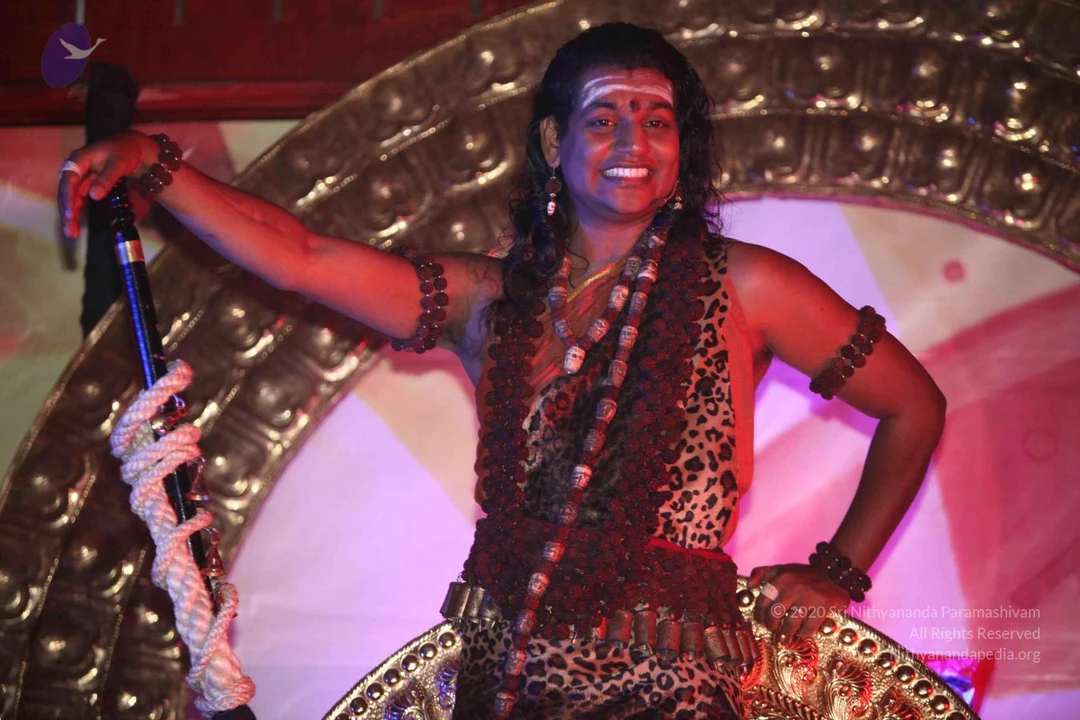
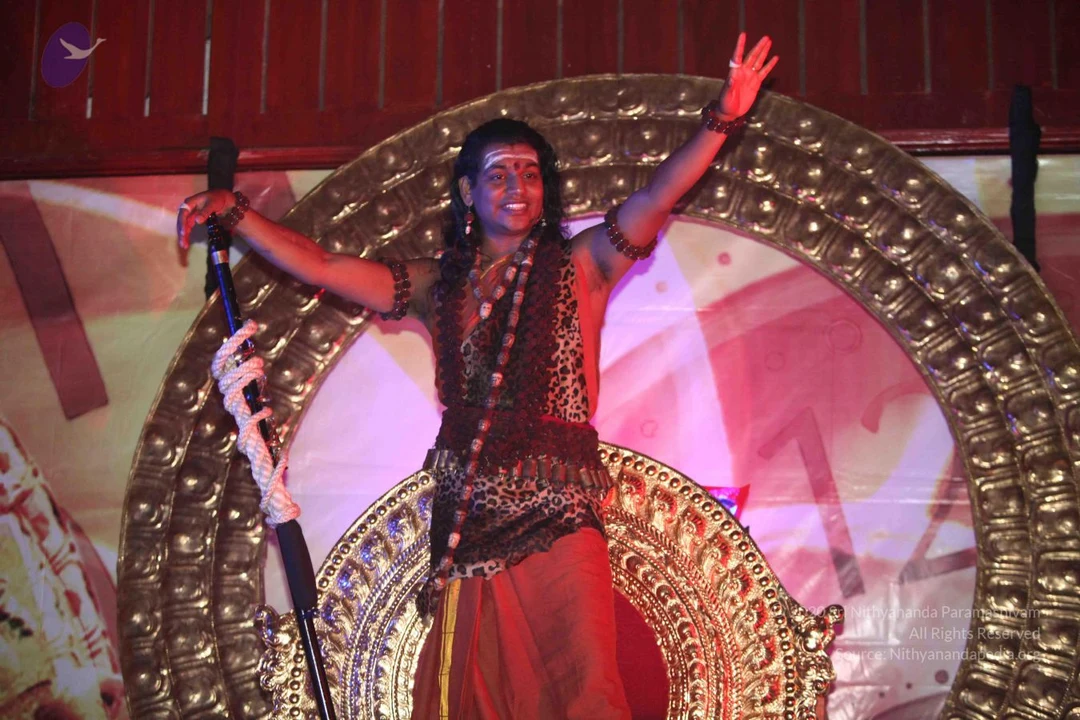
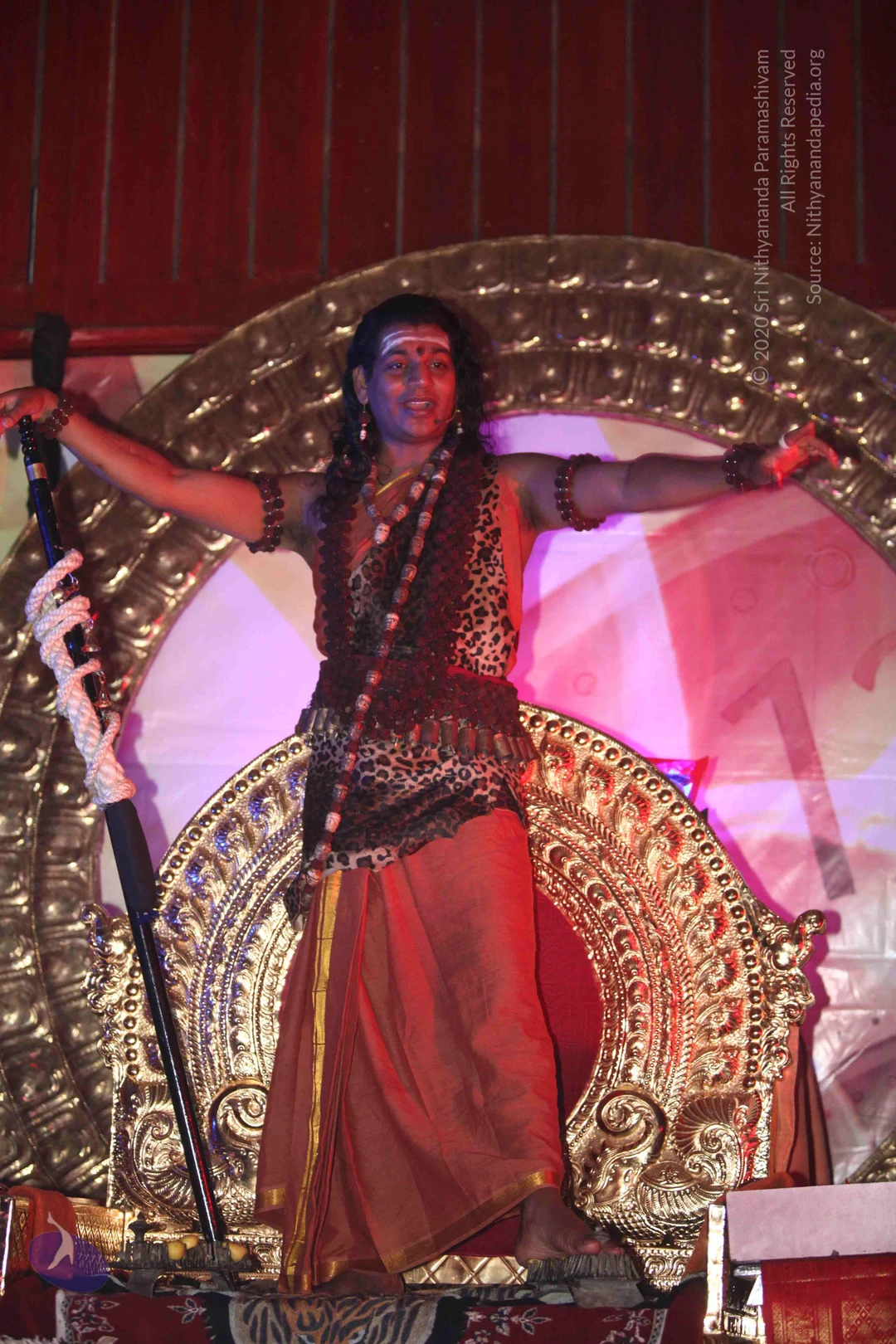
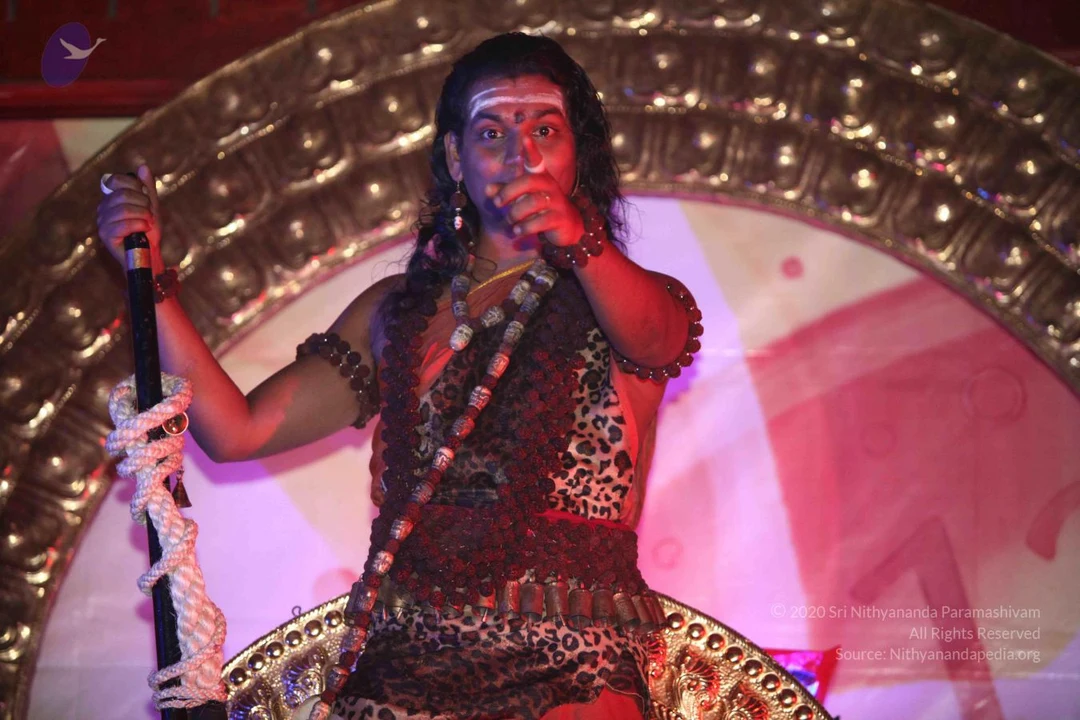
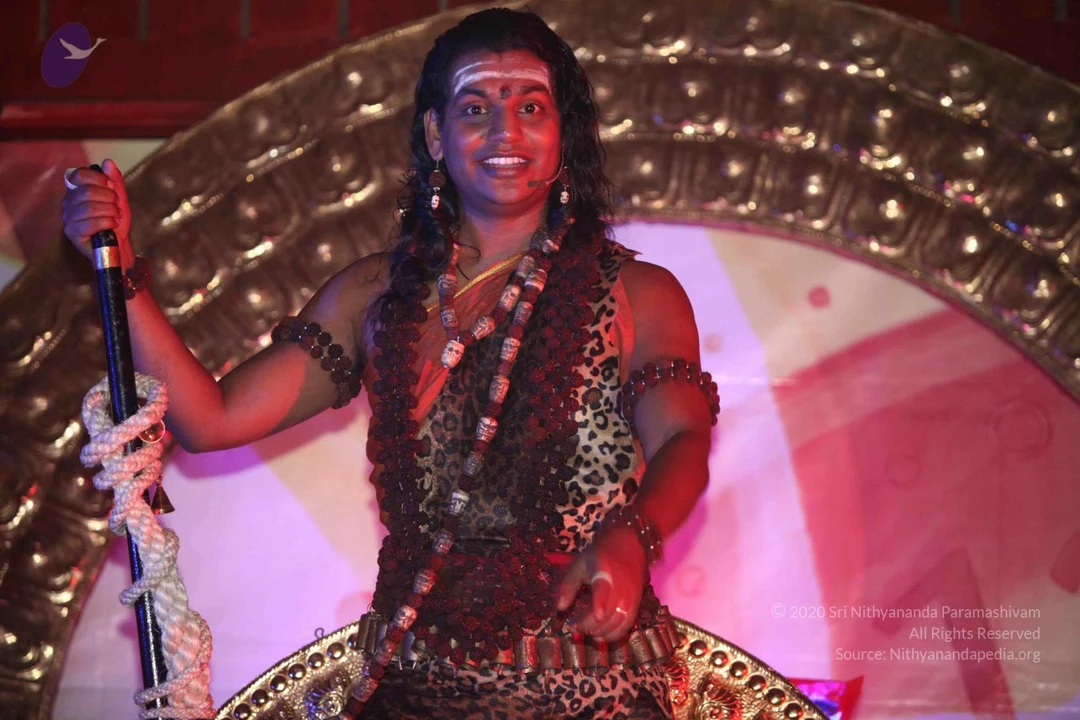
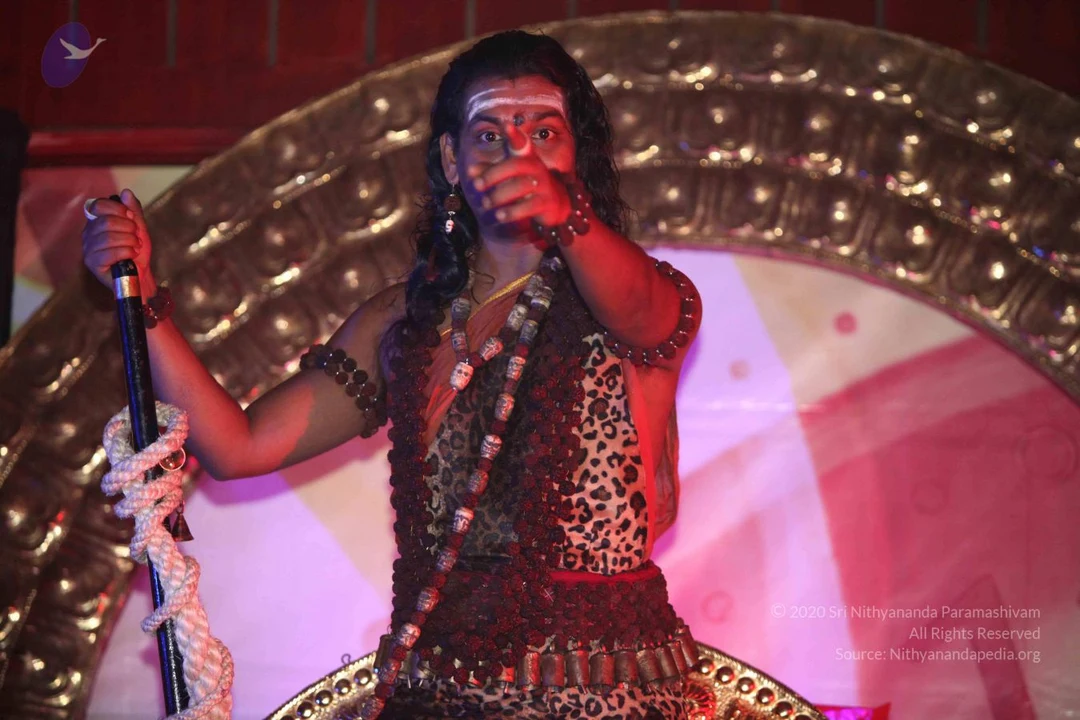
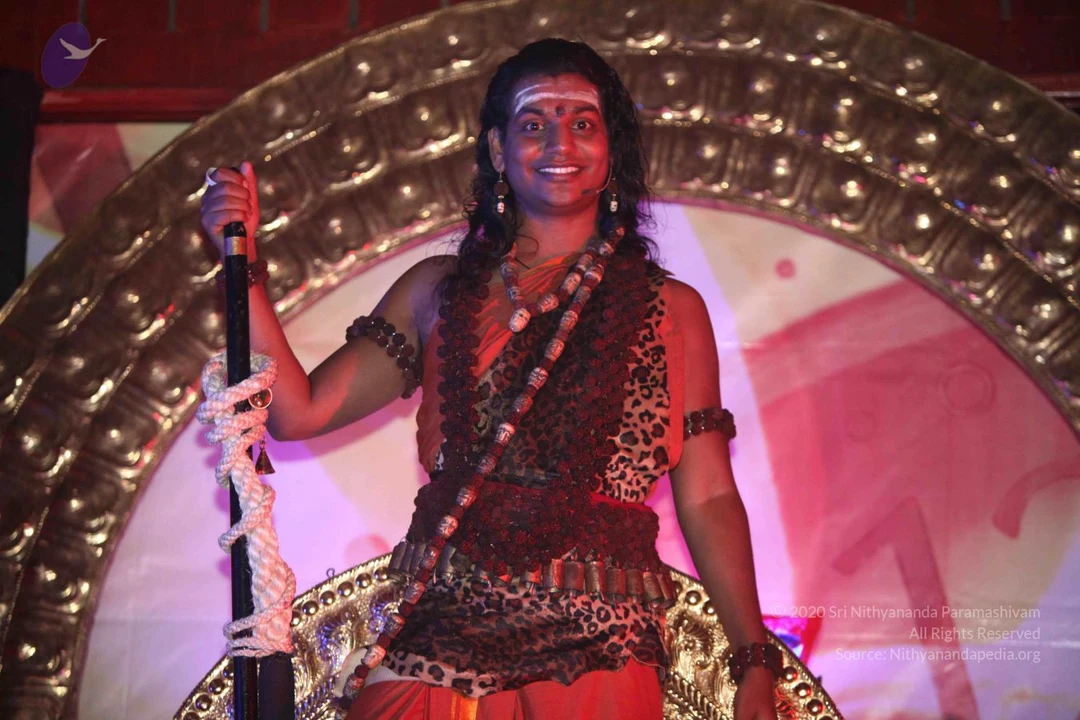
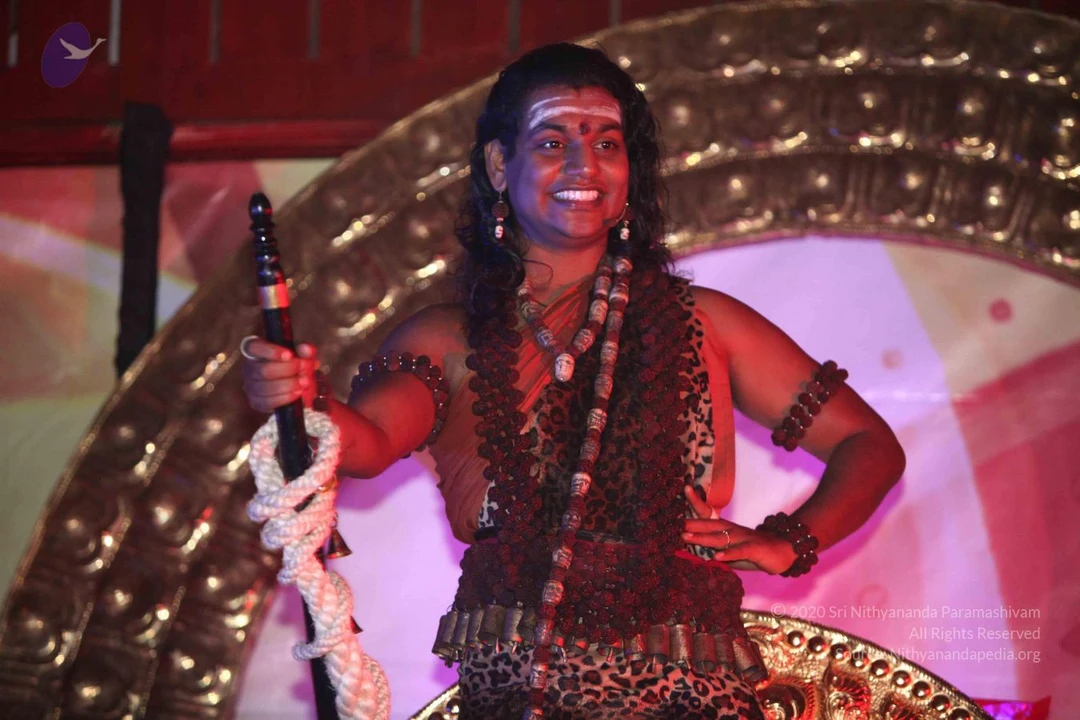
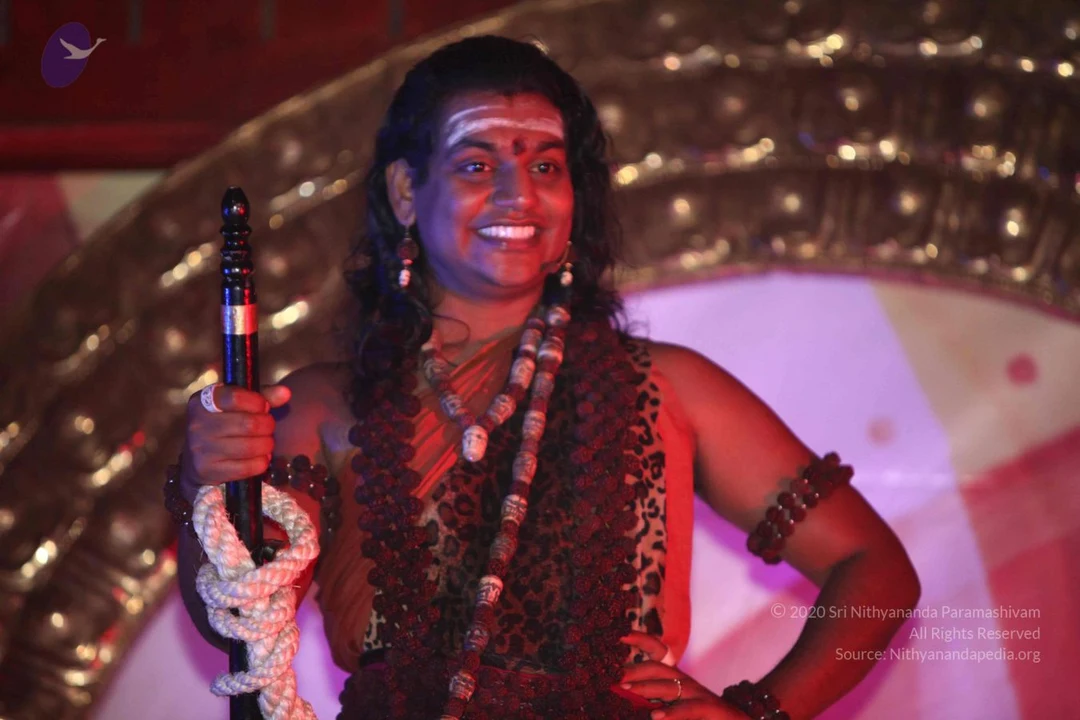
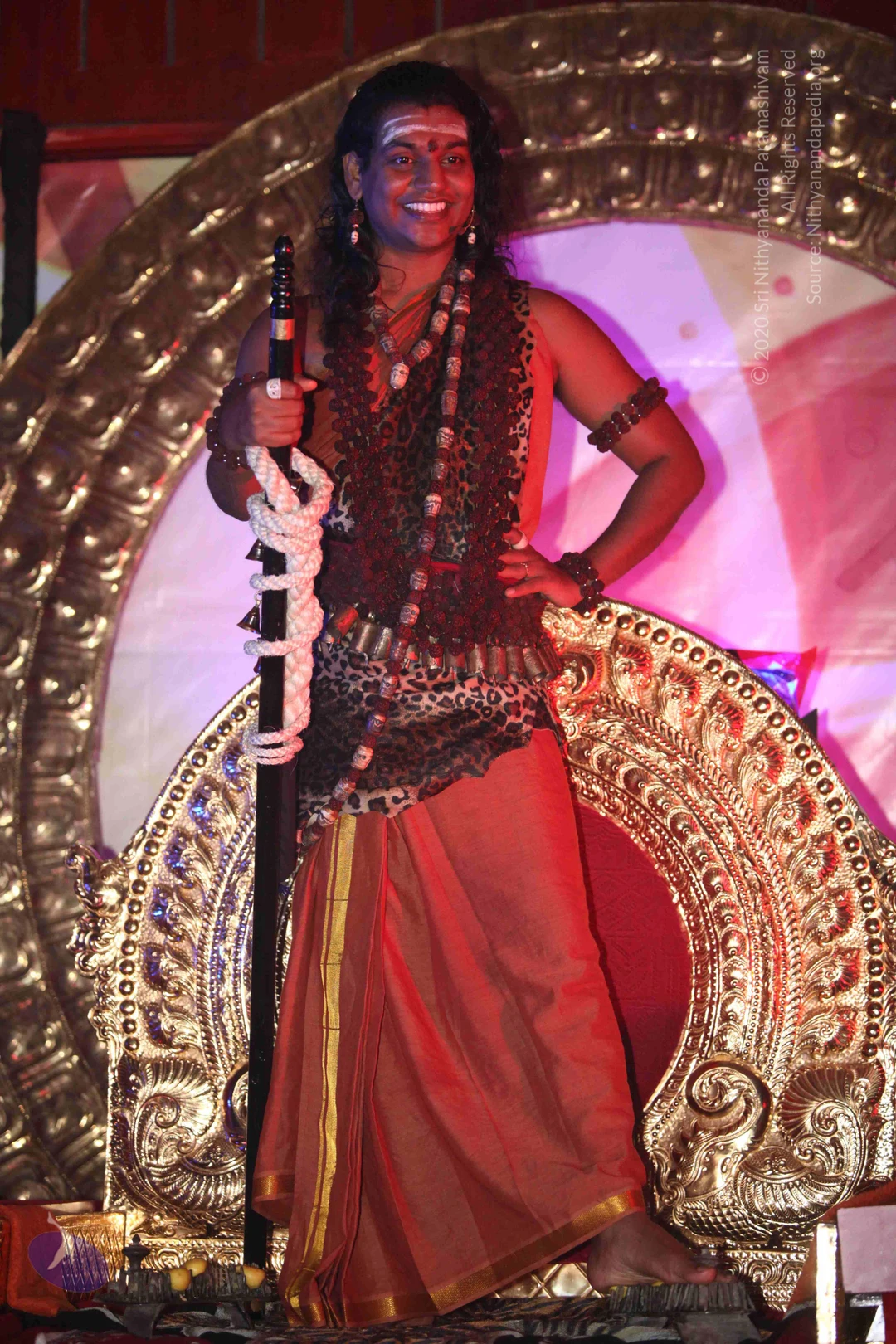
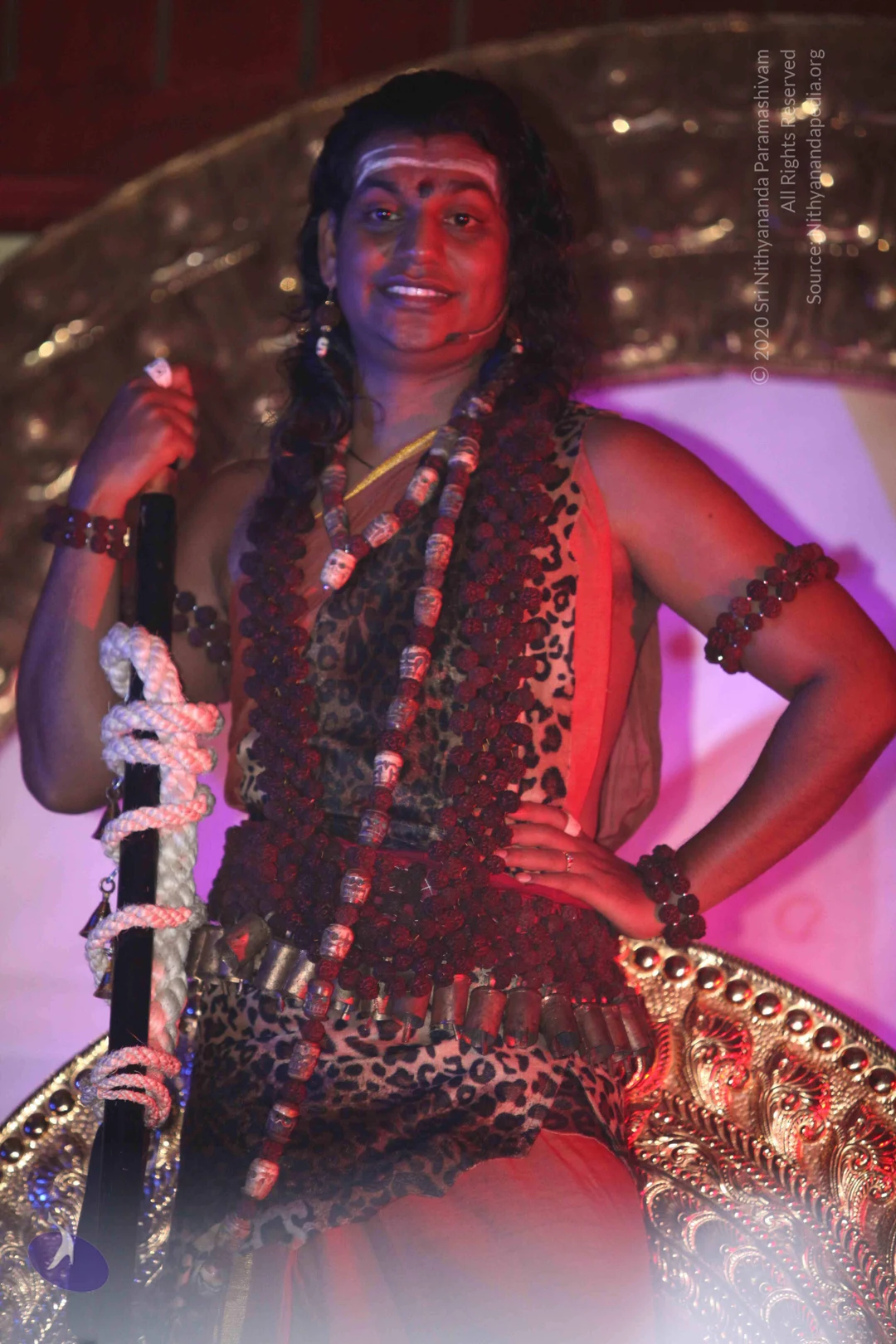
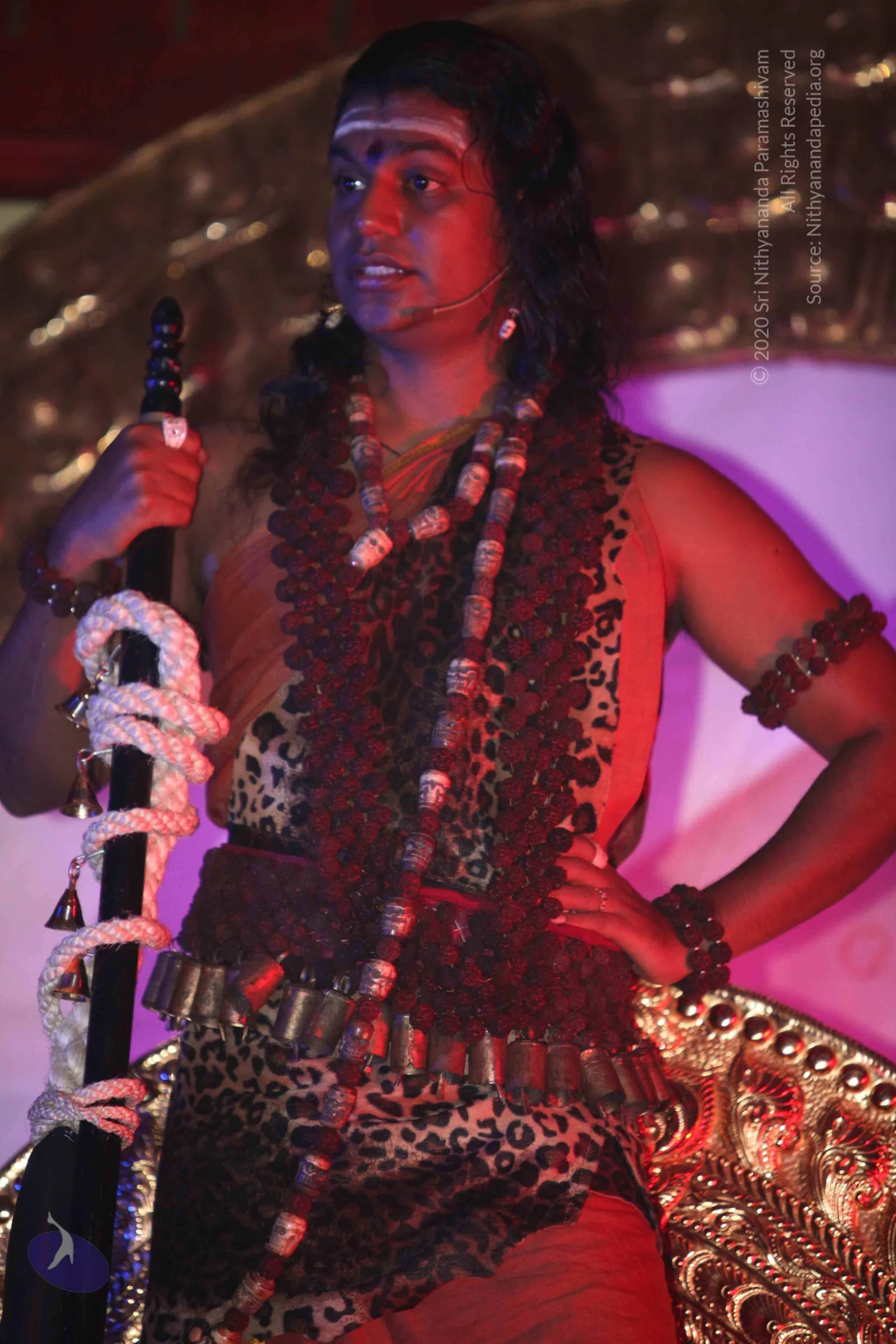
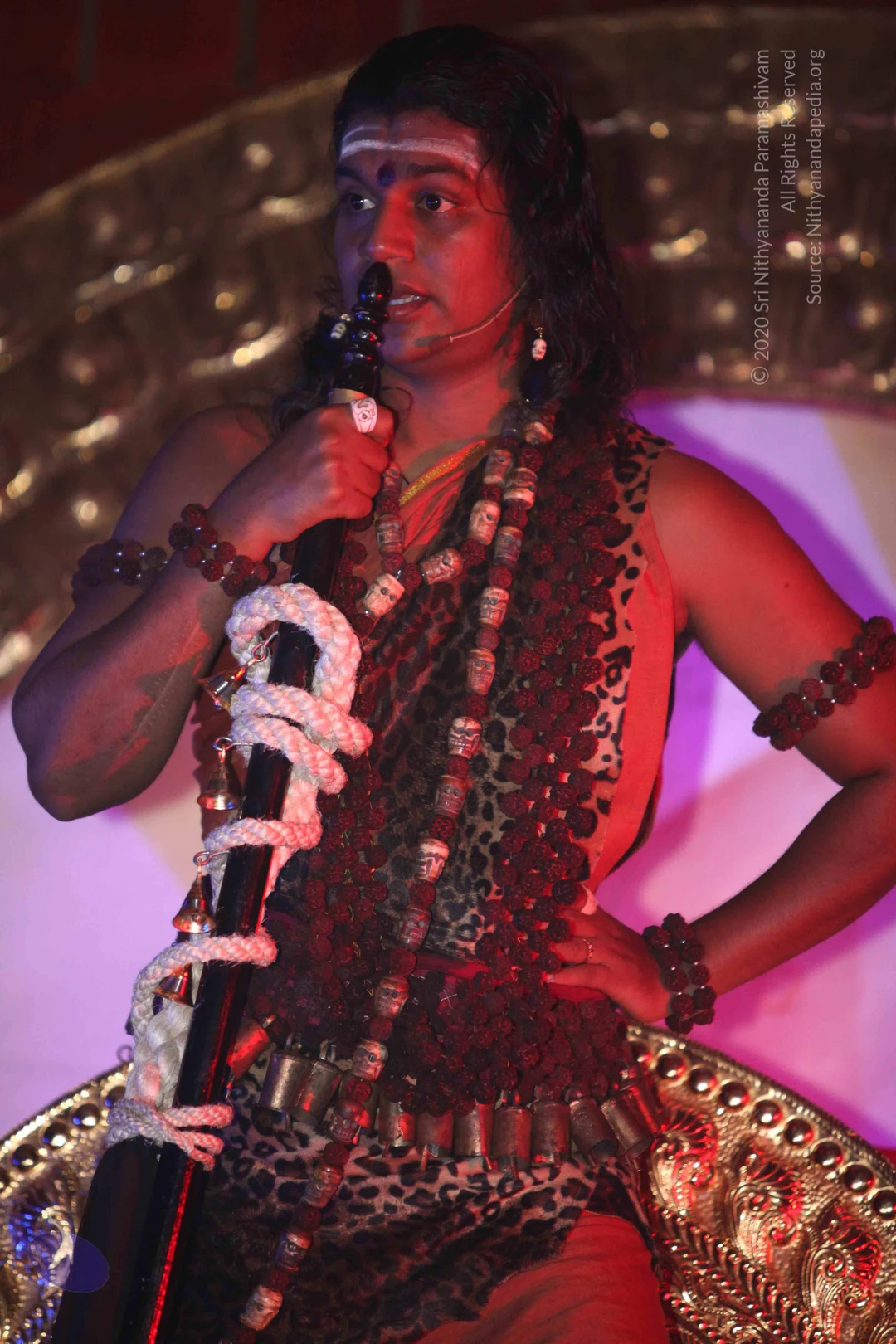
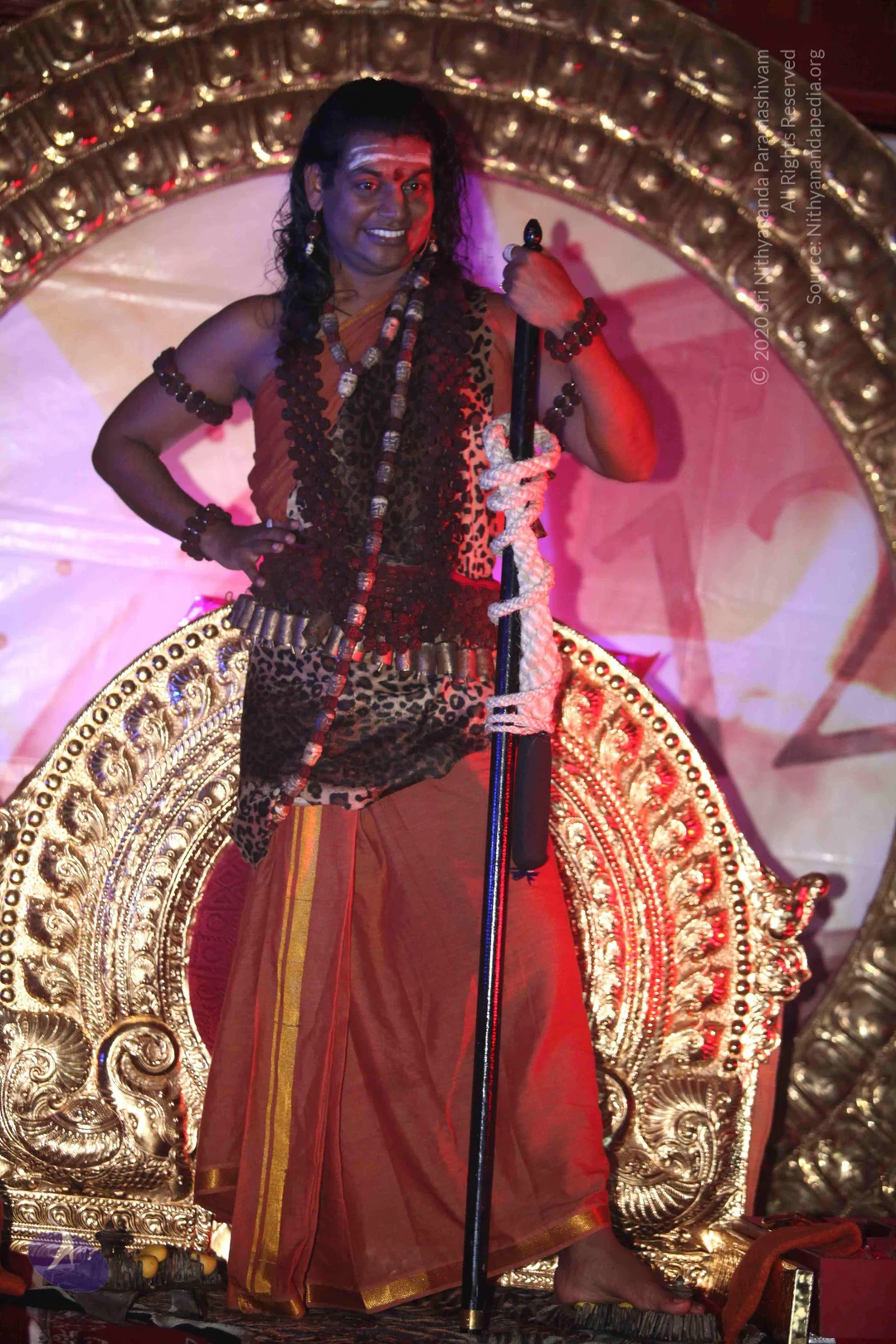
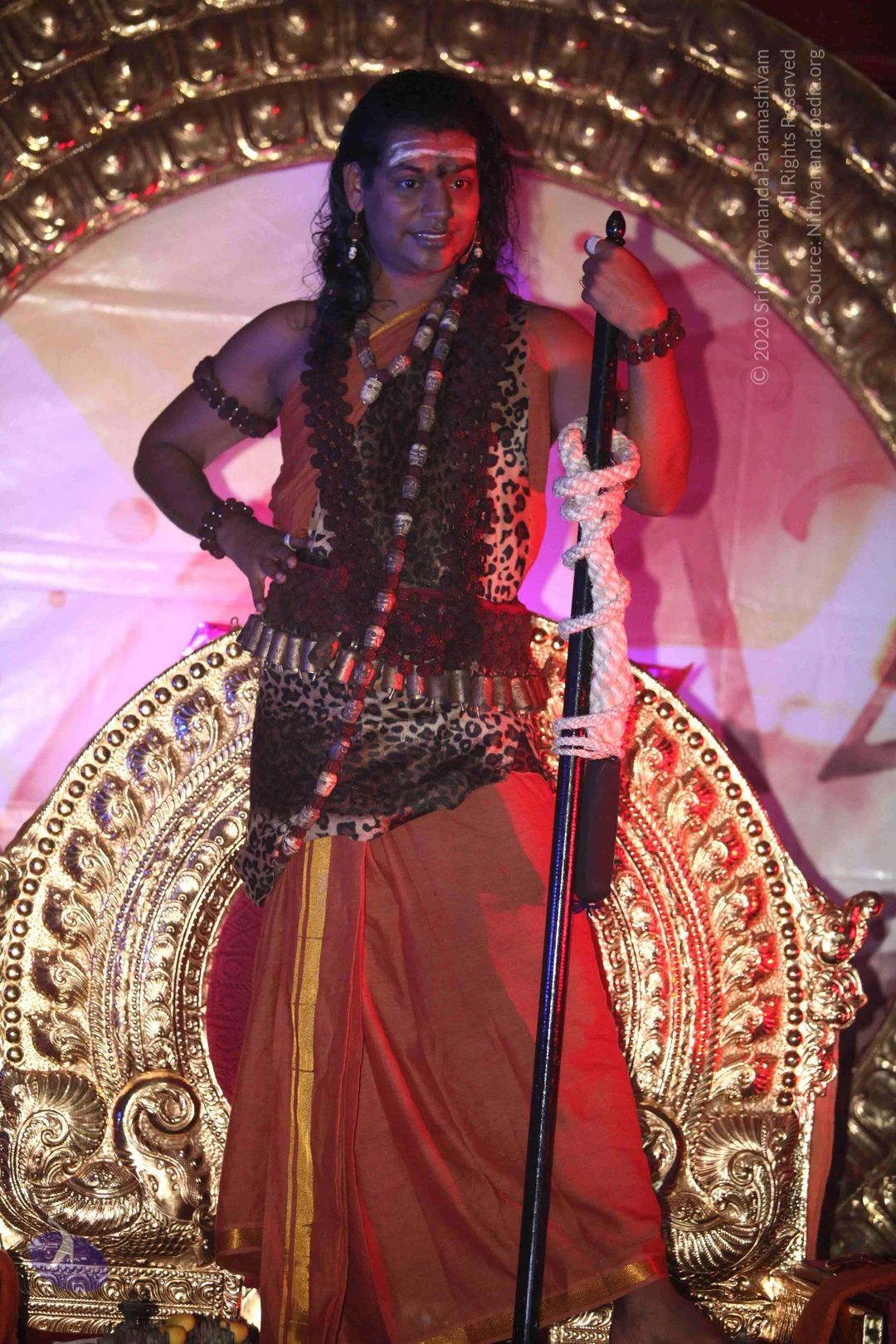
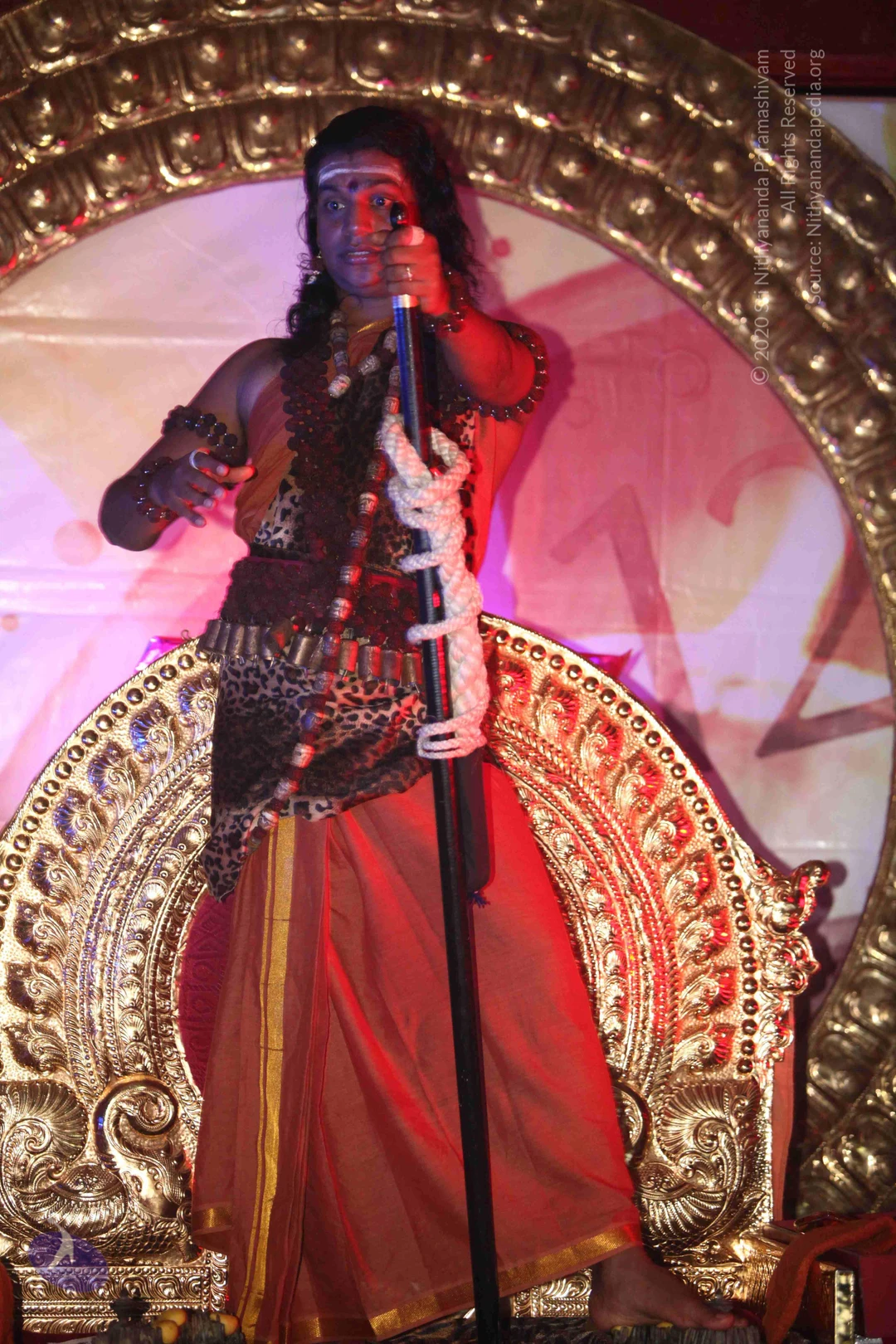
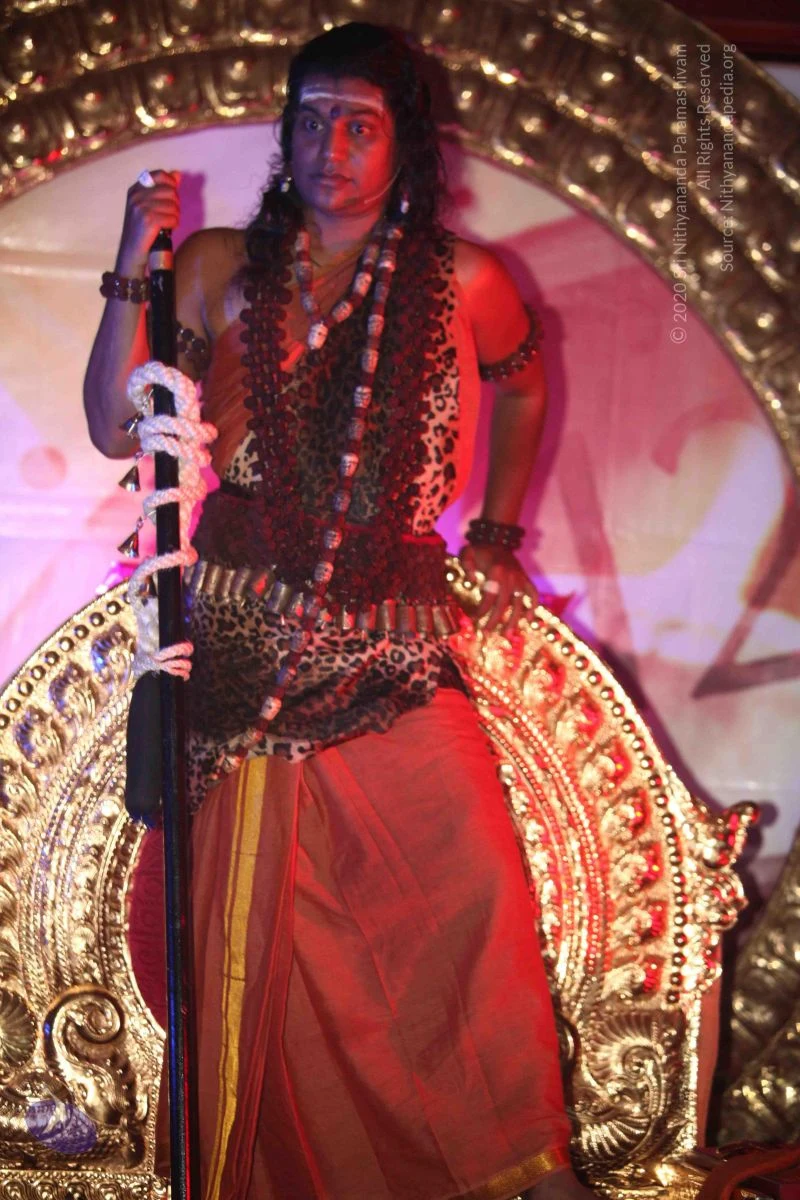
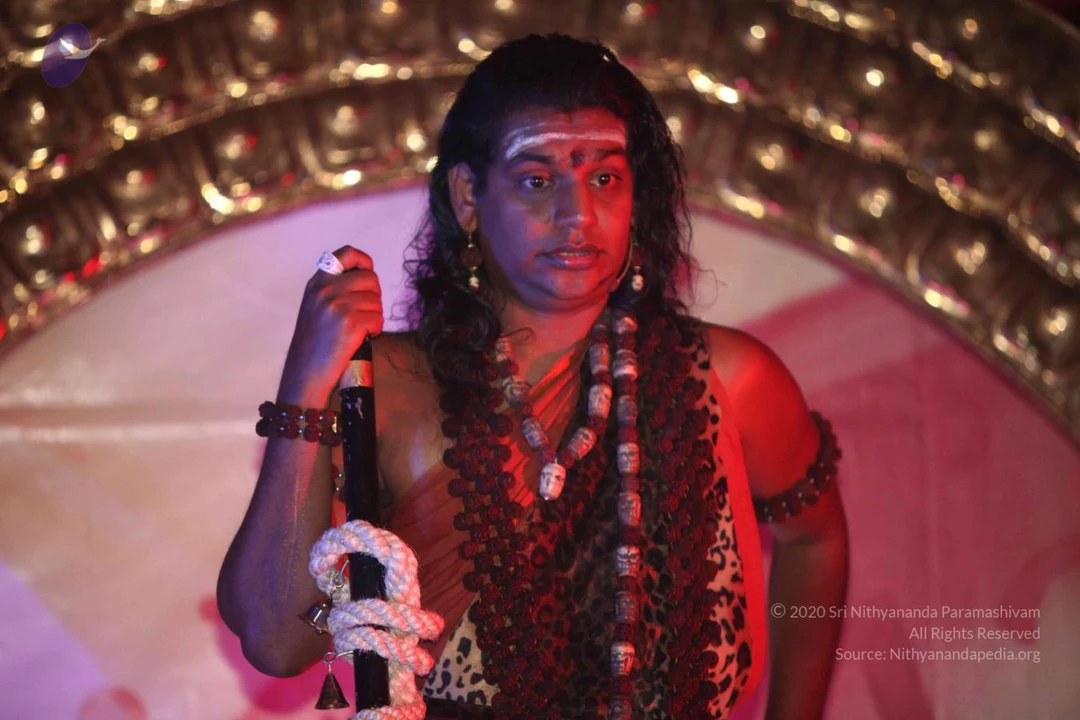
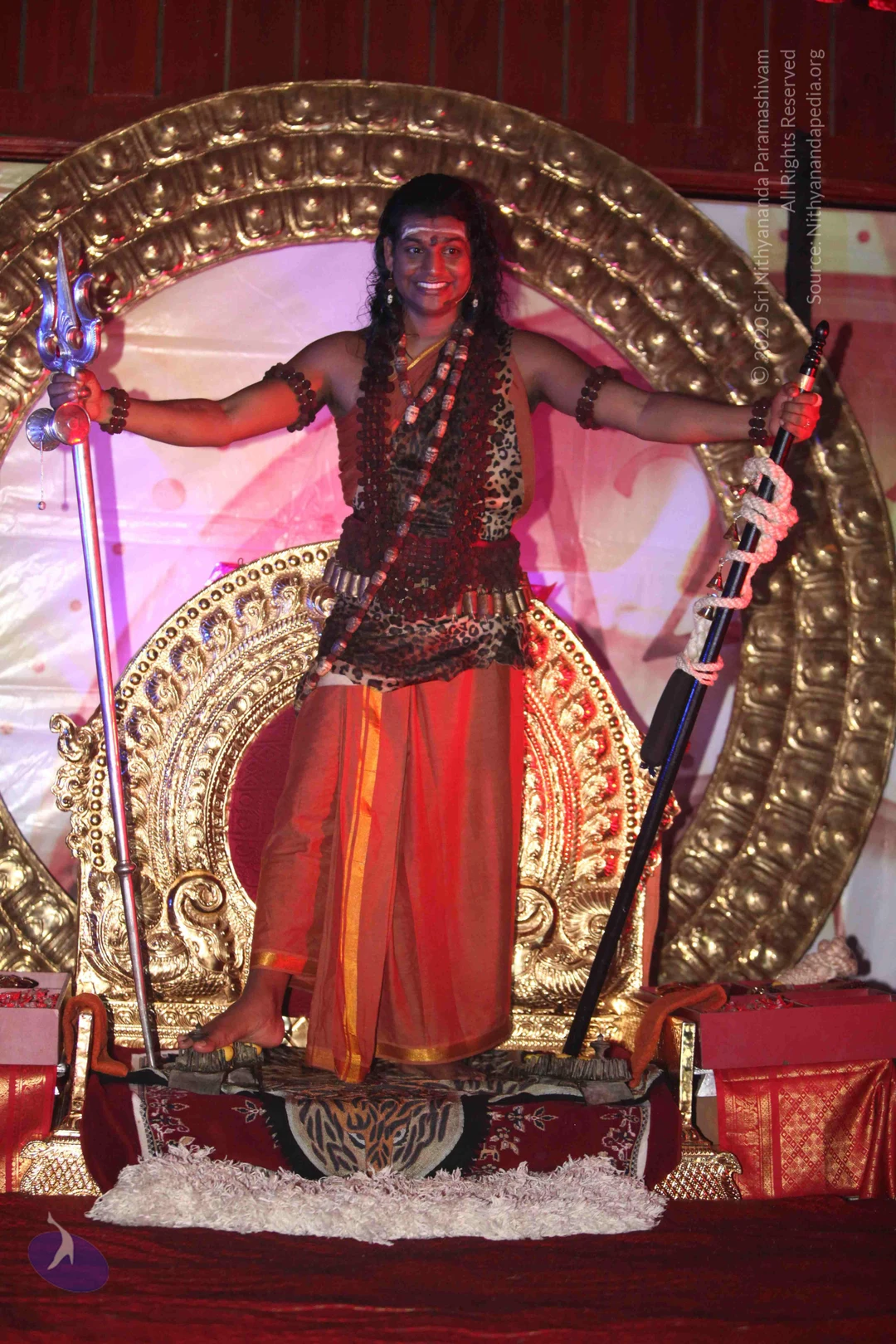
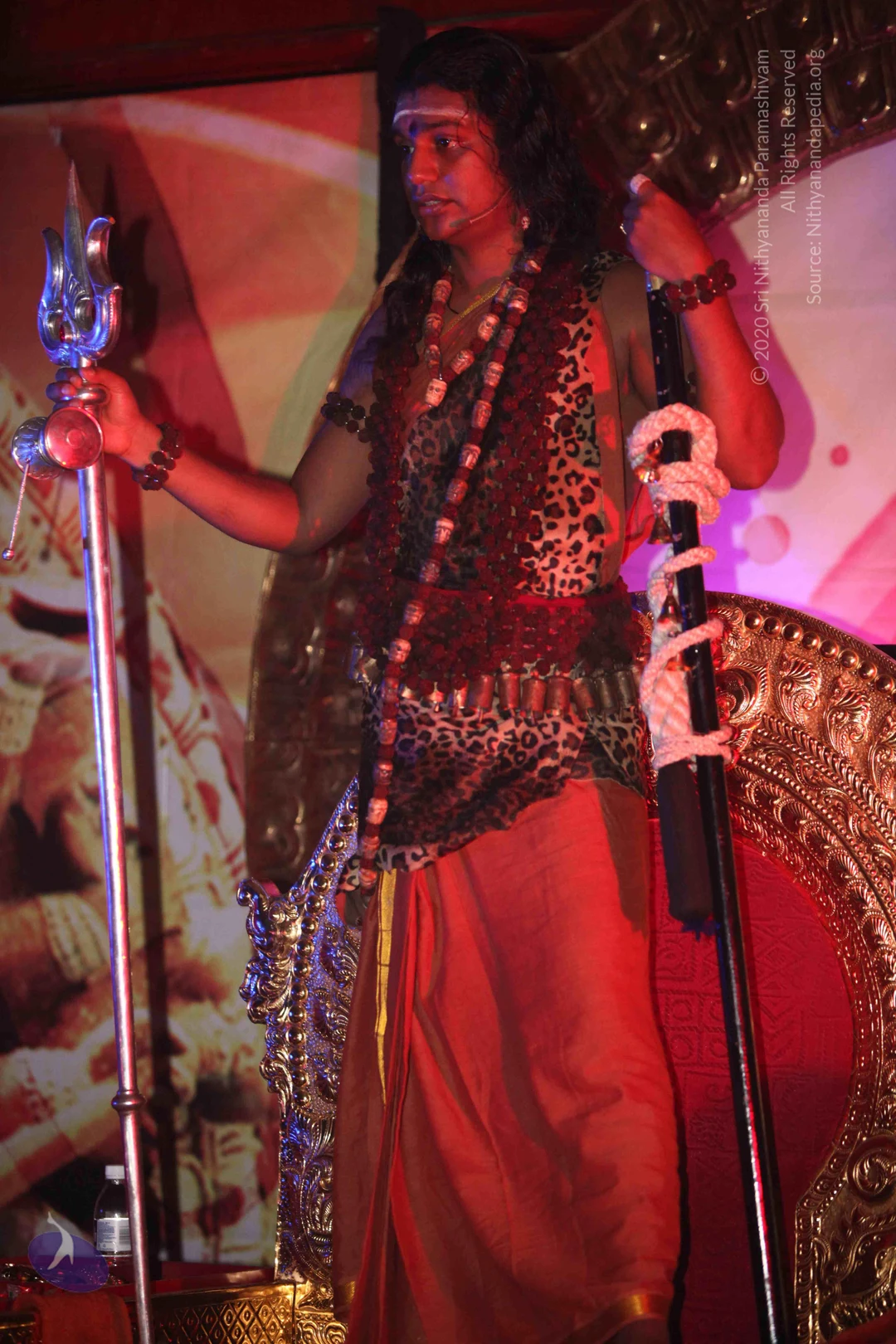
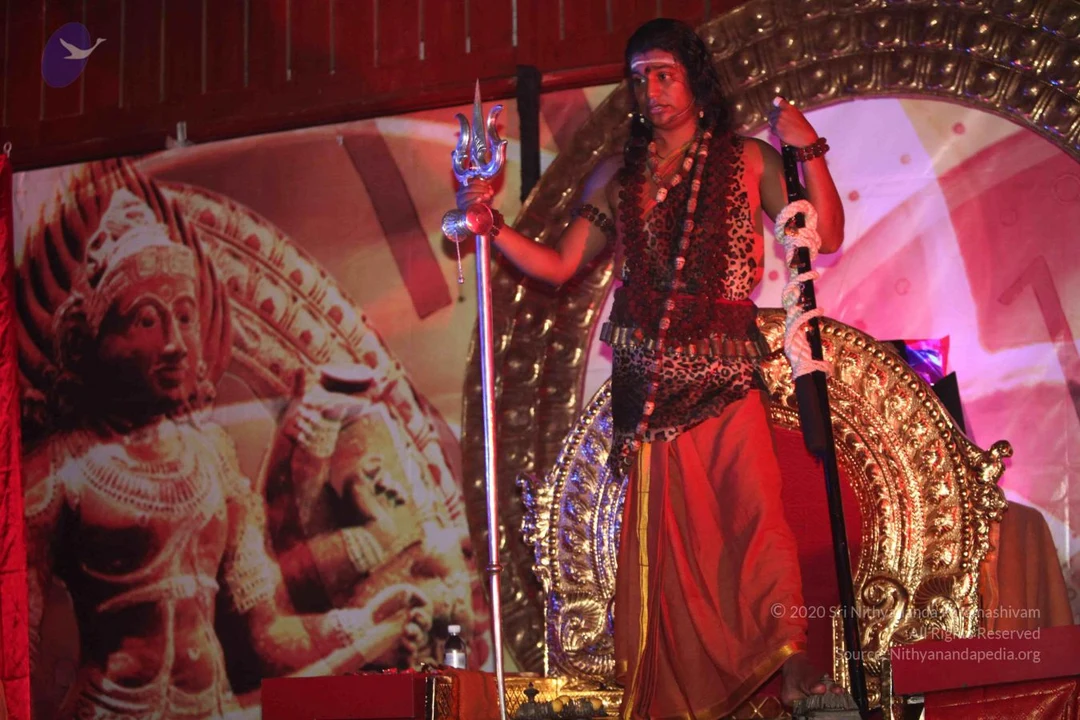
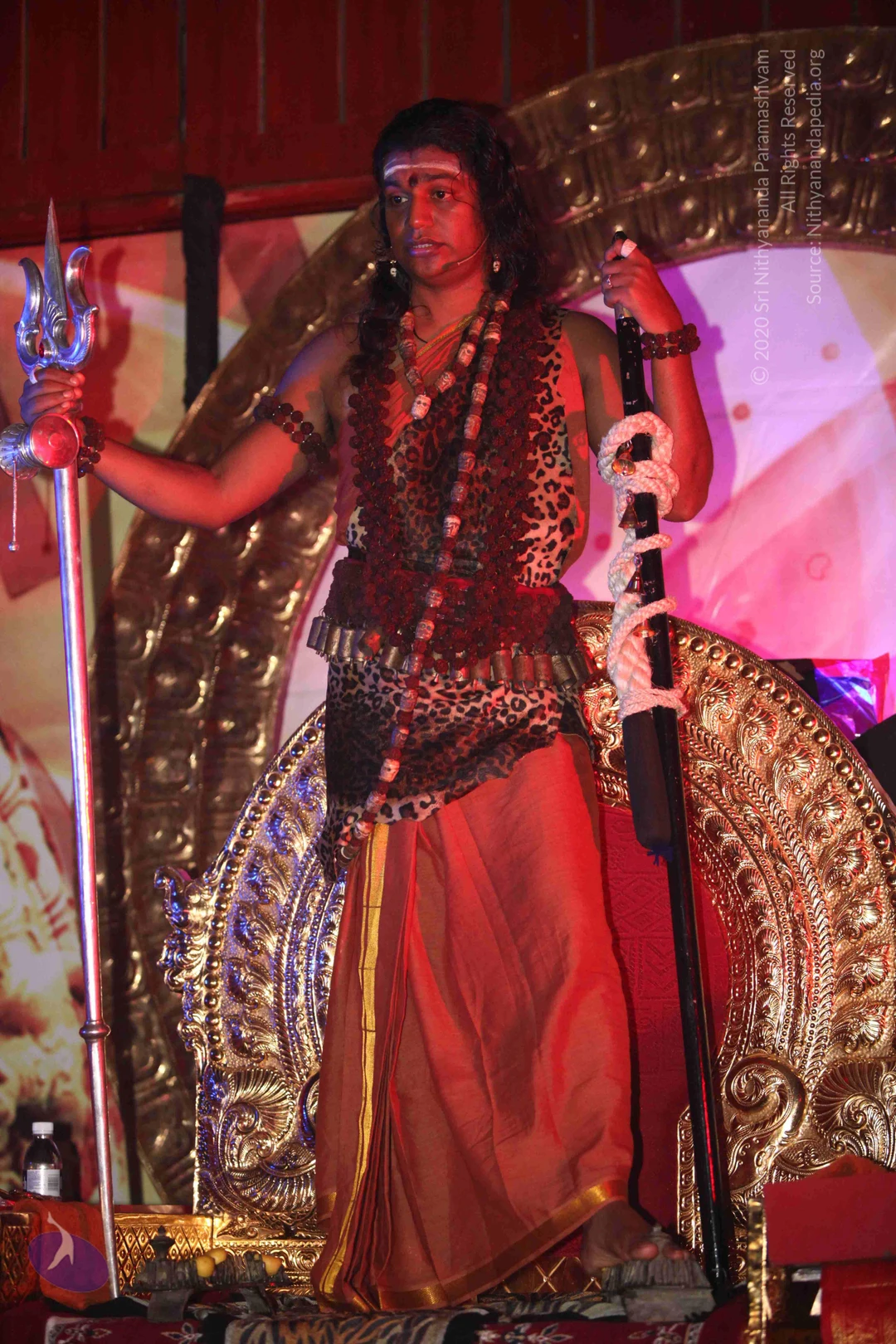
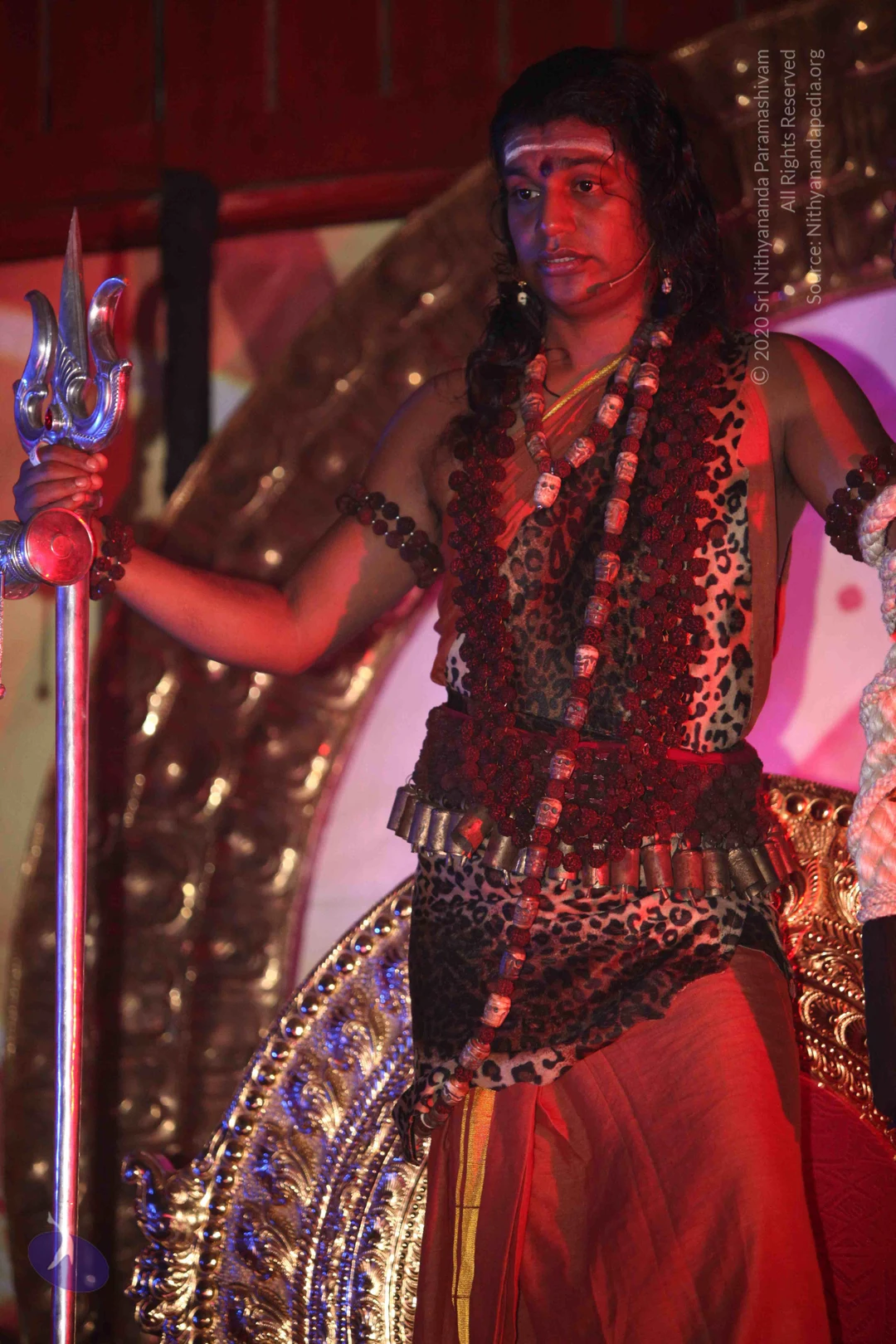
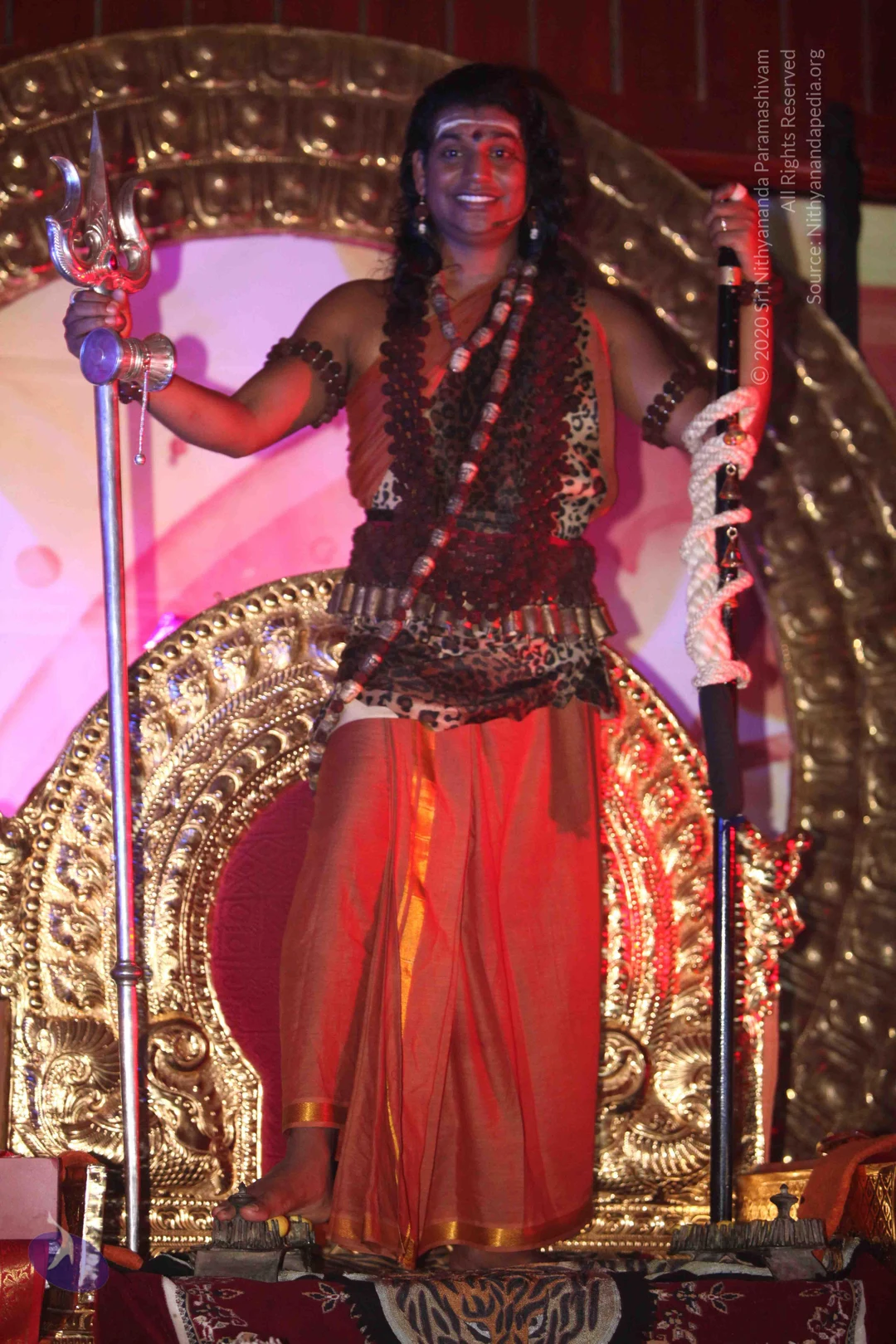
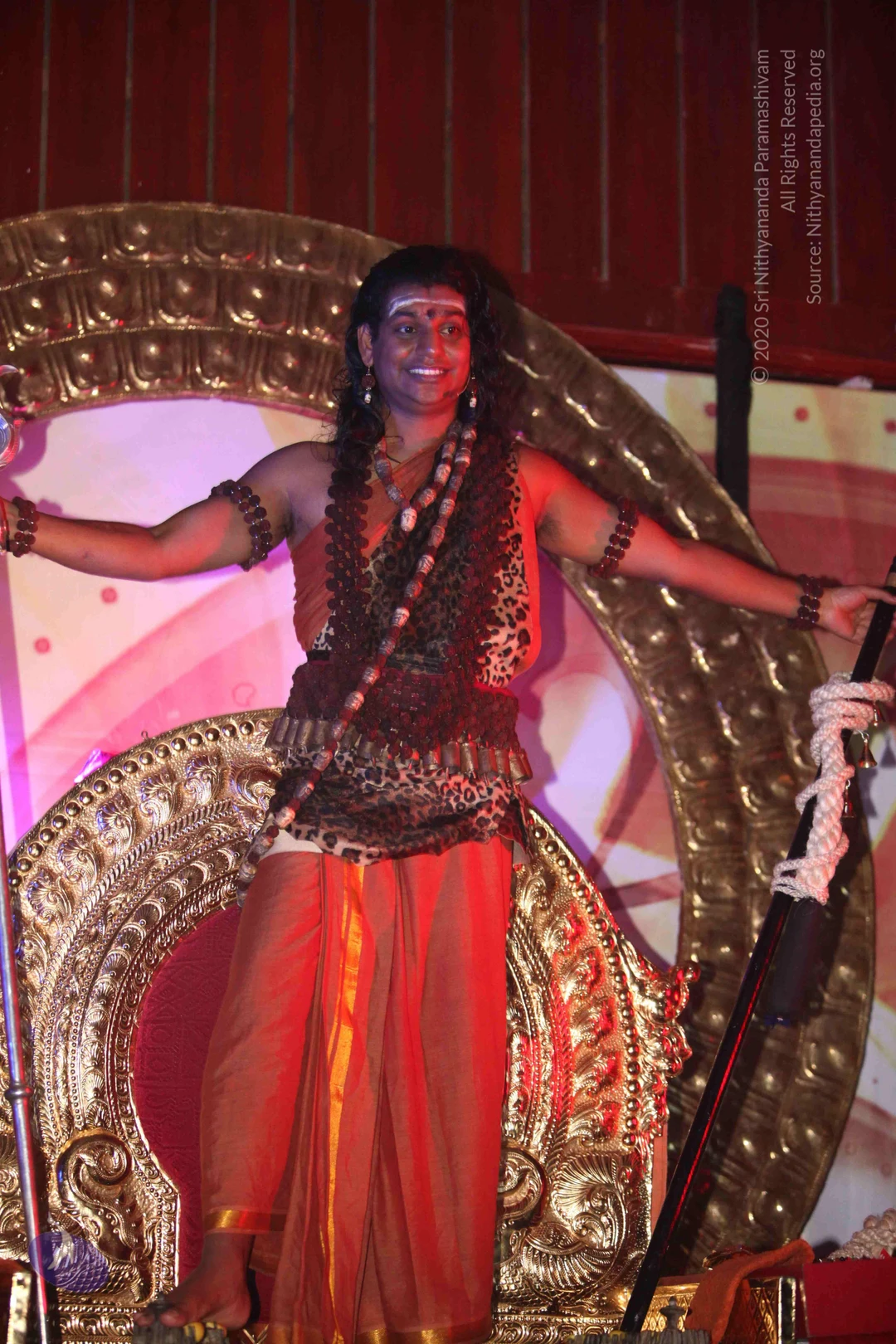
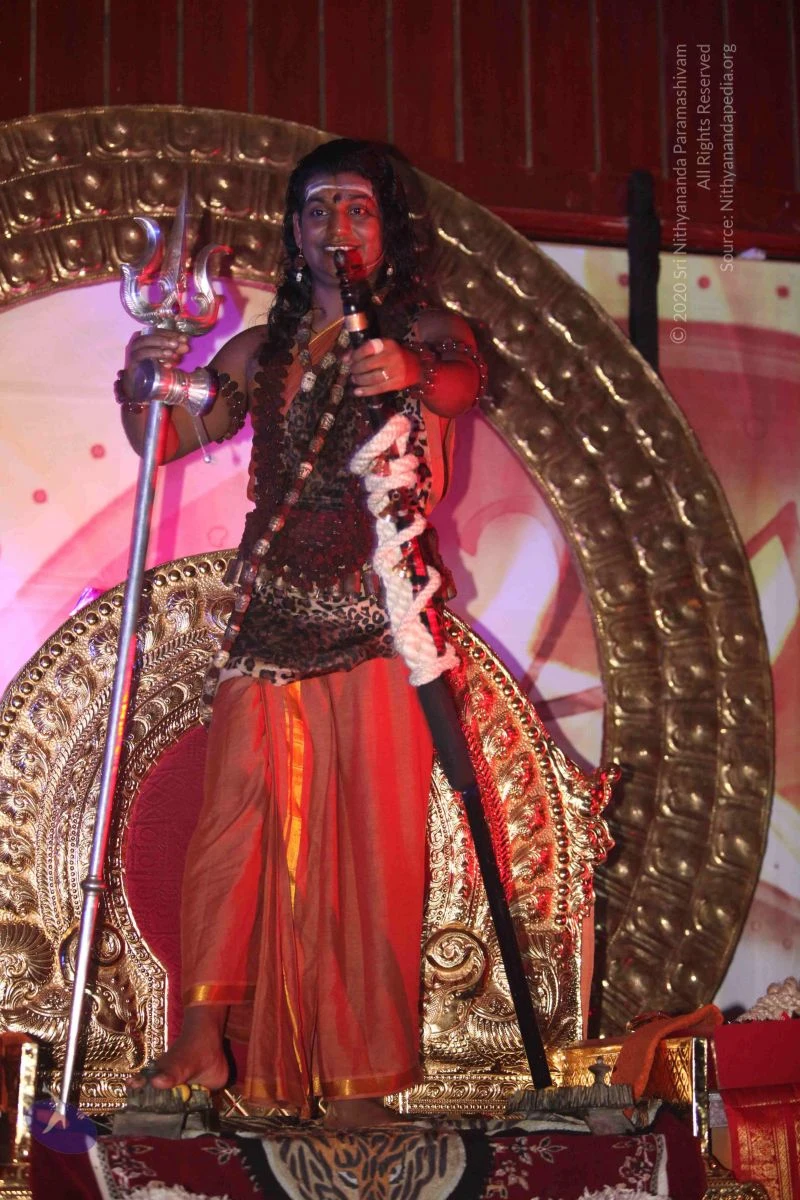
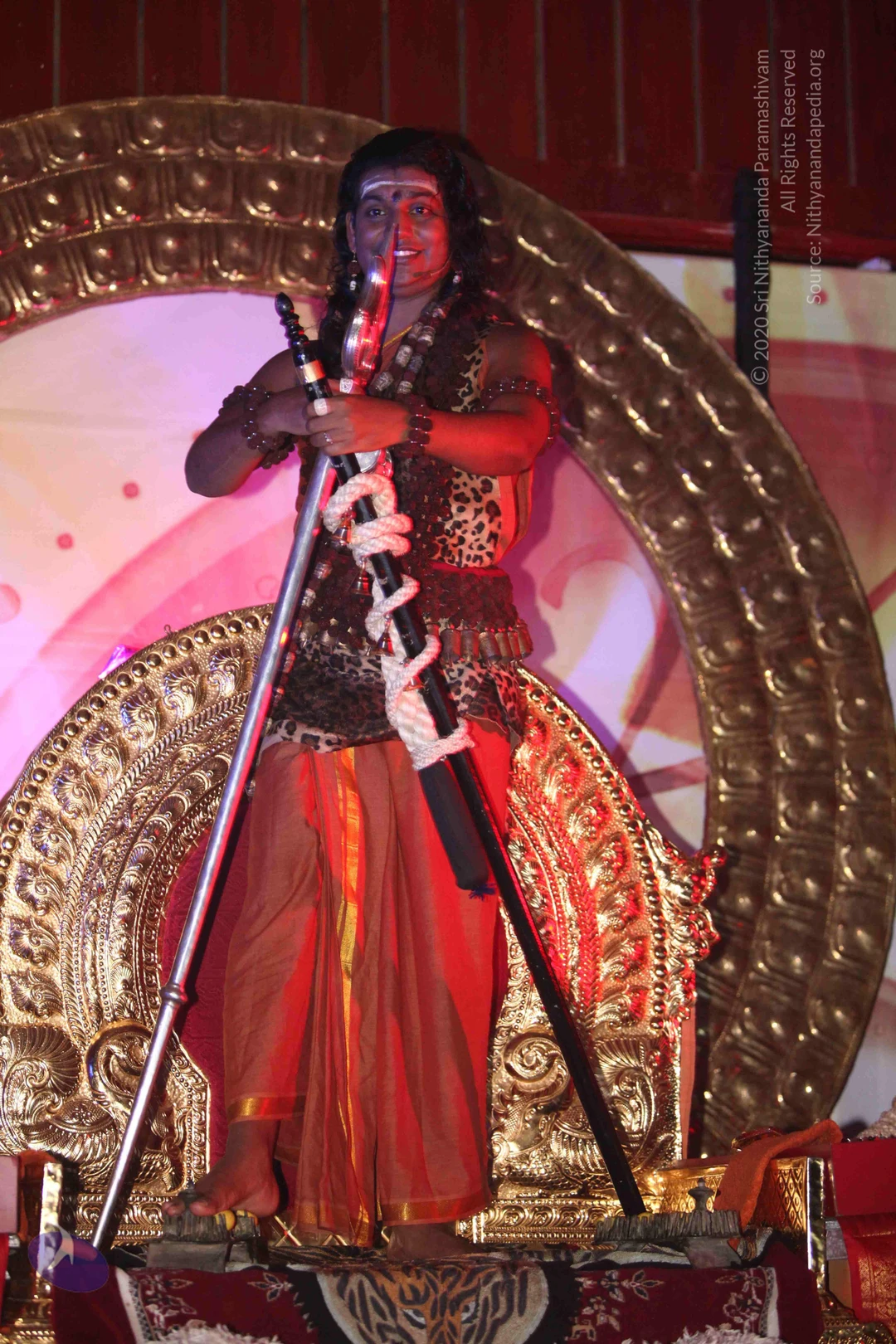
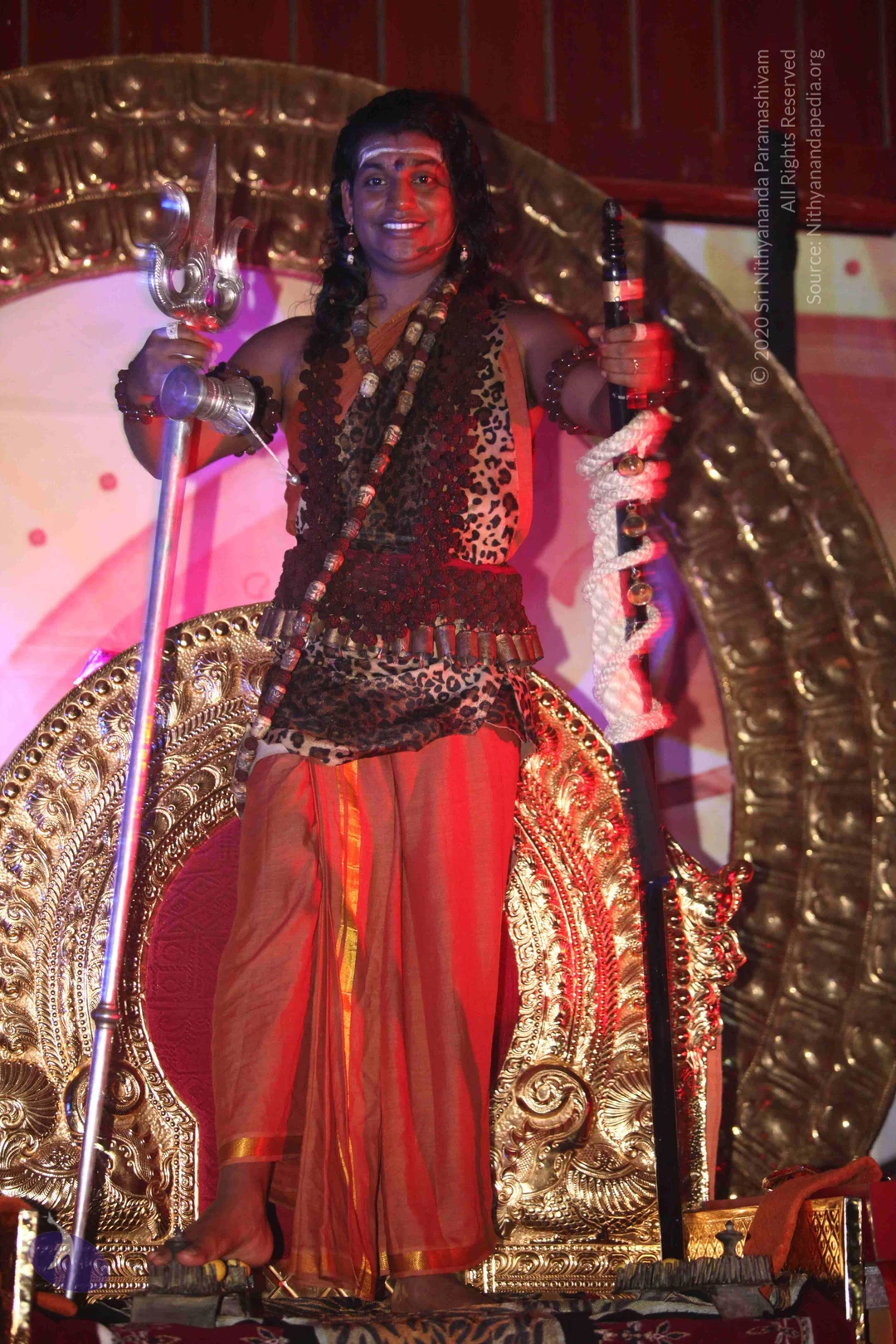
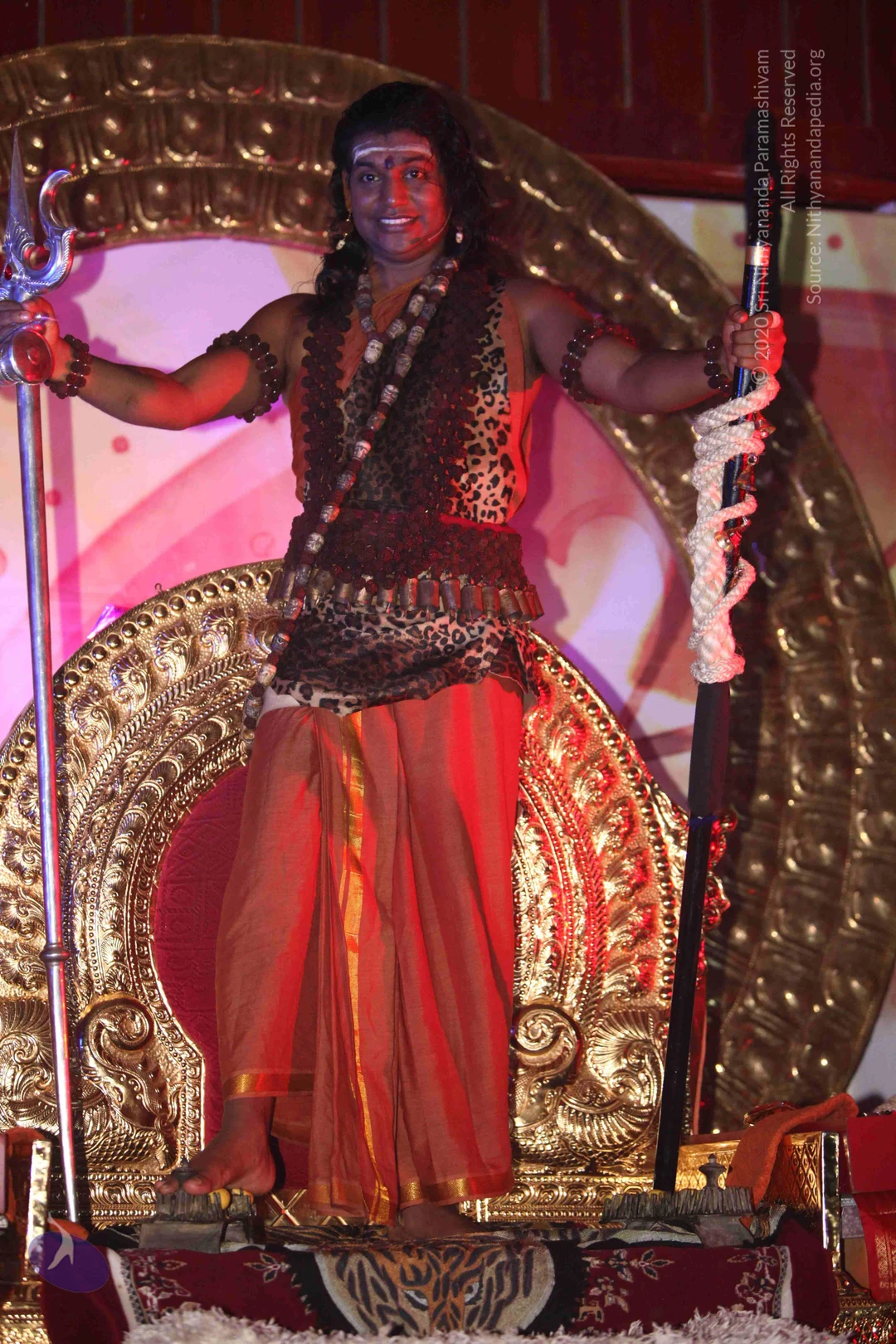
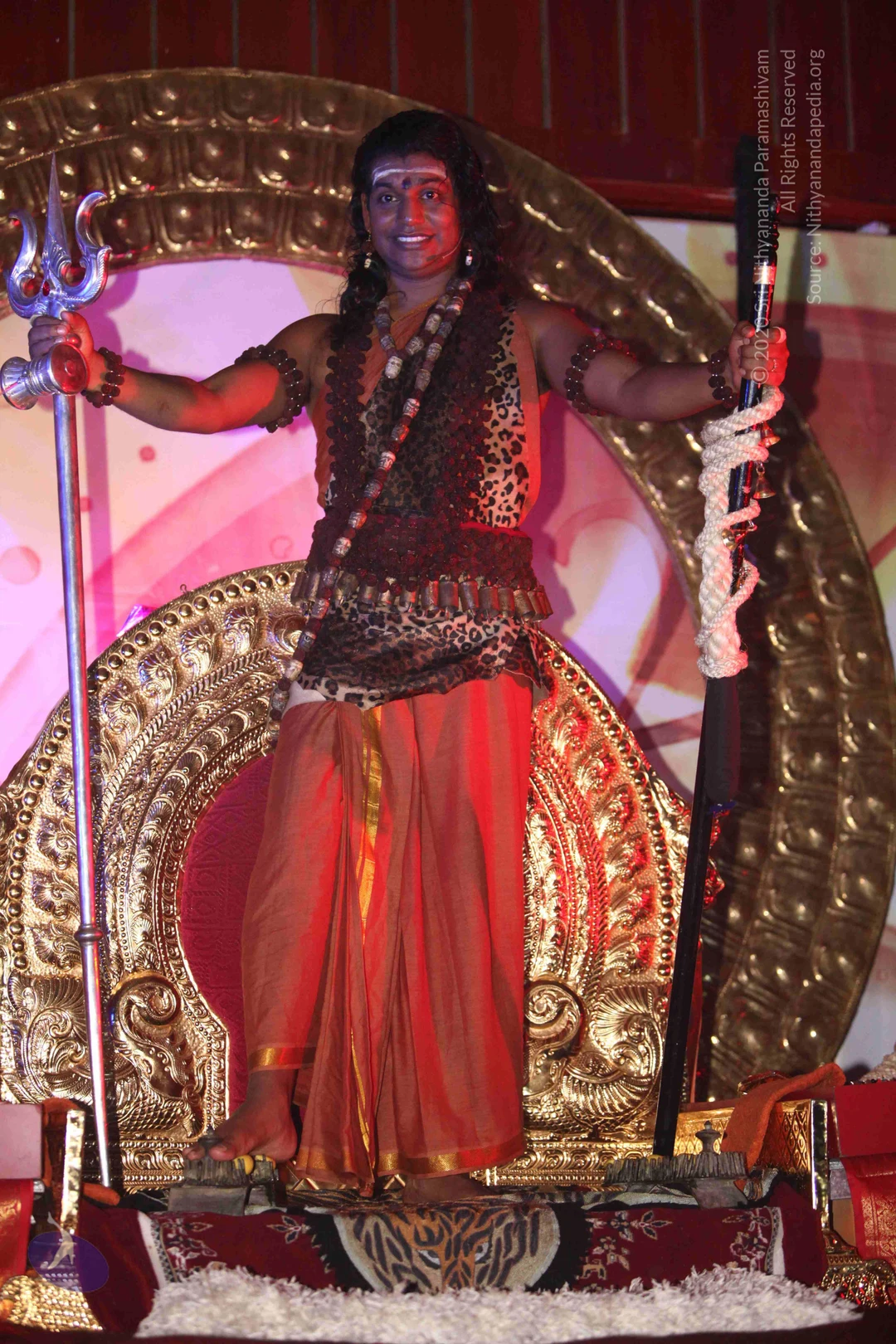
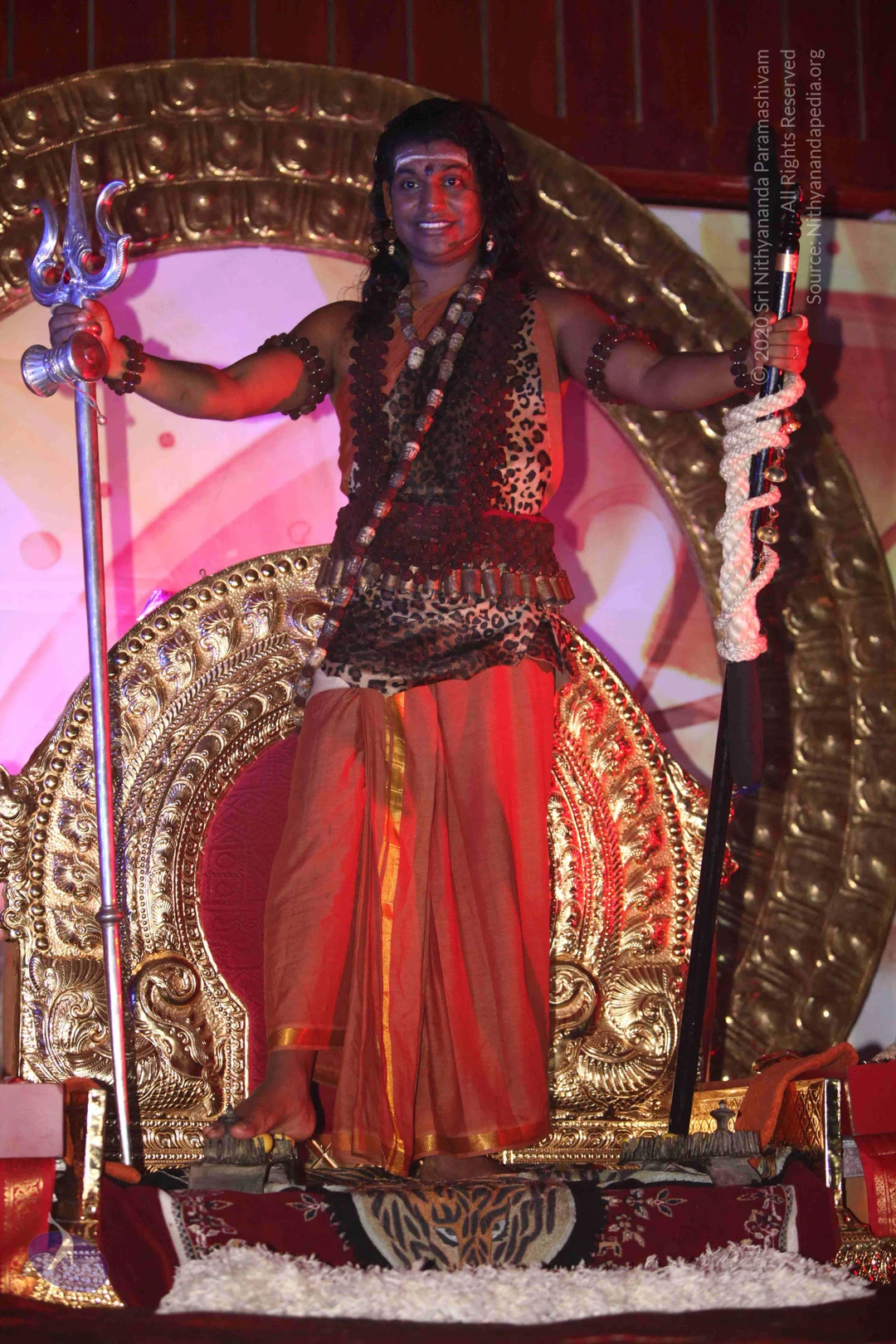
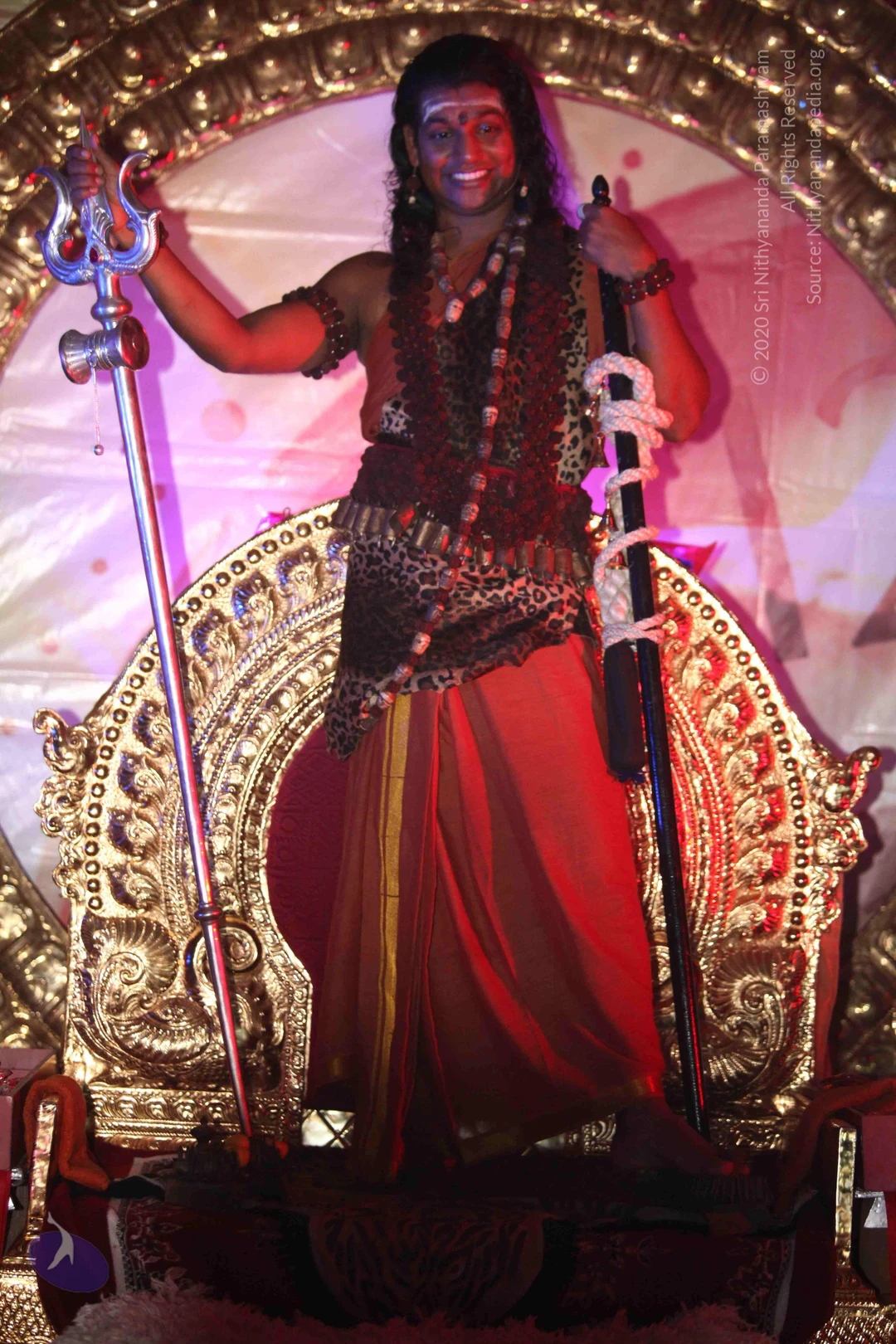
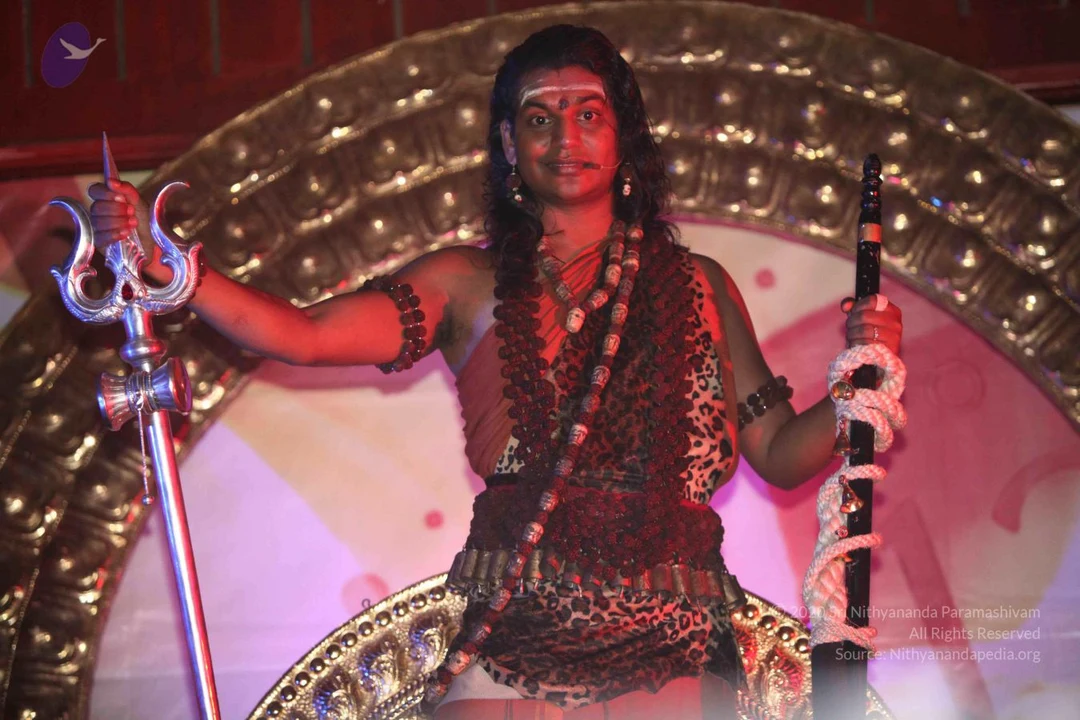
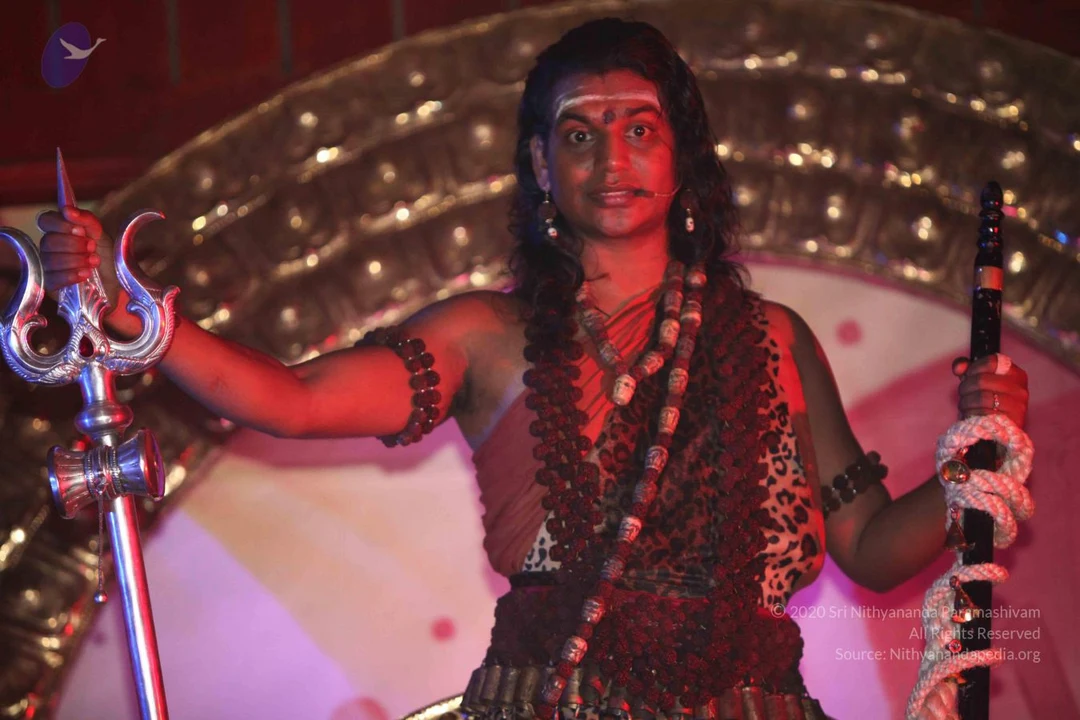
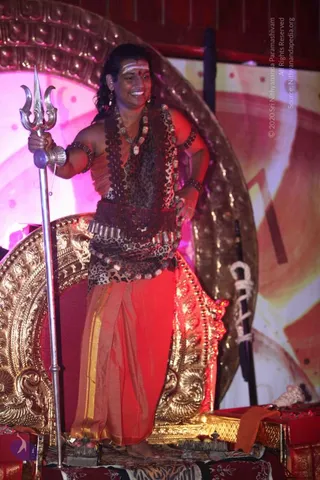
A smiling man stands barefoot on a raised platform in front of an ornate gilded throne-like backdrop lit in red and pink. He holds a tall silver trident in his right hand and rests his left hand on his hip. He wears a leopard-print garment, layered rudraksha mala necklaces and beaded bracelets, and a saffron-red dhoti with a gold border. A white vibhuti marking and red bindi adorn his forehead, and he wears a rudraksha mala as a belt. The setting suggests a stage presentation. a person is shown in person, standing on stage with trident and rudraksha malas.A smiling man stands on a stage holding a silver trident in his right hand, his left hand on his hip. He wears a red-orange dhoti with a gold border, a leopard-print sleeveless top, layered dark red rudraksha malas, bead bracelets on his arms, and a white tilak on his forehead. Behind him is an ornate gold-and-red throne with a rounded backrest and a bright pink-red stage backdrop. Vertical white text in the top-right corner reads a copyright and source credit line.A photograph of one person standing on a stage with a pink backdrop and gold sparkling decorative panels. The person has long dark hair, a white horizontal forehead marking with a red dot, and wears layered dark red rudraksha bead malas, bead necklaces with skull-like beads, matching rudraksha bracelets on both arms, and a leopard-print garment over an orange-red cloth. A gold bead chain shows at the neck and a small headset microphone is visible near the face. The person is smiling with a hand on the hip.A person stands on an ornate gilded golden throne with carved floral and scrollwork detailing, against a pink backdrop. The figure wears an orange-red dhoti with a gold border, a leopard-print upper garment, and layered red-brown rudraksha malas across the chest and waist, with matching rudraksha bracelets. The right hand holds a silver trident, and the left hand rests on the hip. A white tripundra with a red bindi marks the forehead, and a headset microphone is visible near the face. a person is shown with these cues: rudraksha malas, orange-saffron dress and a ceremonial trident, performing on stage in a theatrical pose.A man stands on a stage holding a silver trident in his left hand, his right hand on his hip, smiling. He has long dark hair, a white tilak on his forehead with a red bindi, and wears many dark rudraksha malas across his chest, arms and waist. His garment is a leopard-print wrap over orange cloth. A large golden ornamental disc and pink lighting form the backdrop. A microphone is attached near his face. One person is visible. a person: the rudraksha malas, long swept hair and trident fit the presentation, though appearance alone is not conclusive.A smiling man with long dark swept-back hair and a white vibhuti line on his forehead stands on a stage, one hand on his hip and the other arm extended, wearing a small headset microphone. He wears layers of dark red rudraksha malas, bead-and-metal ornaments on his arms and chest, a leopard-print sleeveless garment over an orange-saffron dhoti, and a belt of metal bells. Behind him is a red backdrop with a large painted image and an ornate gold chair edge at right. The presentation suggests Swamiji (probable), given the long hair, saffron clothing and multiple rudraksha malas, though the face is not used for identification. He is standing in person, speaking to an audience.

Darshan

54 photosSource gallery
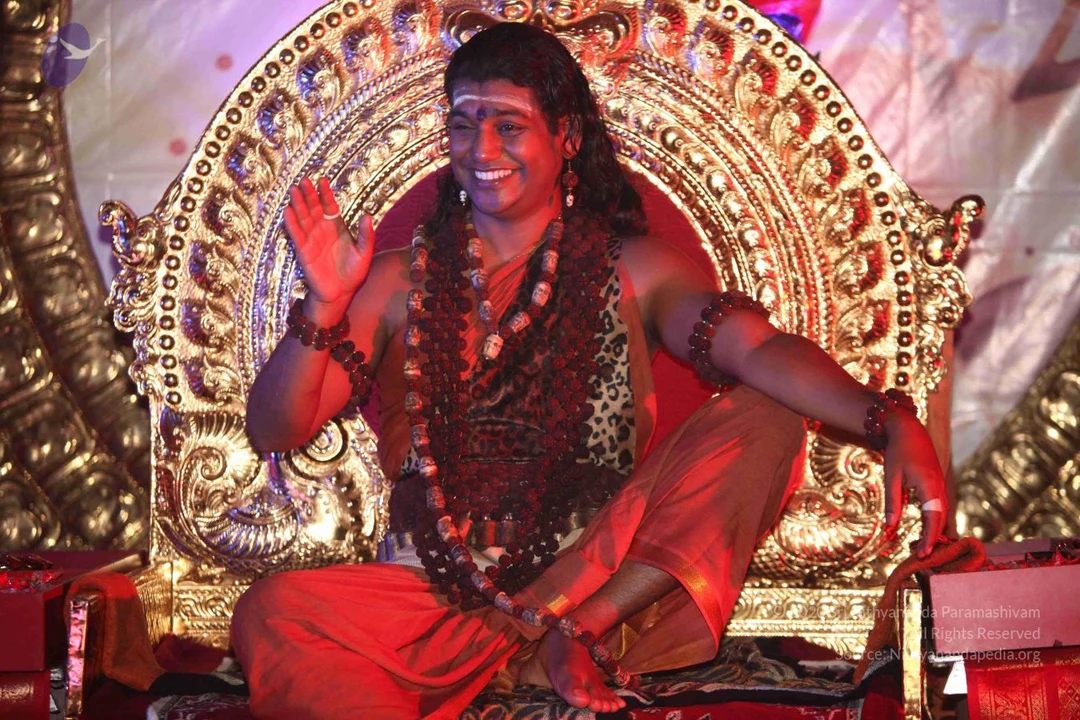
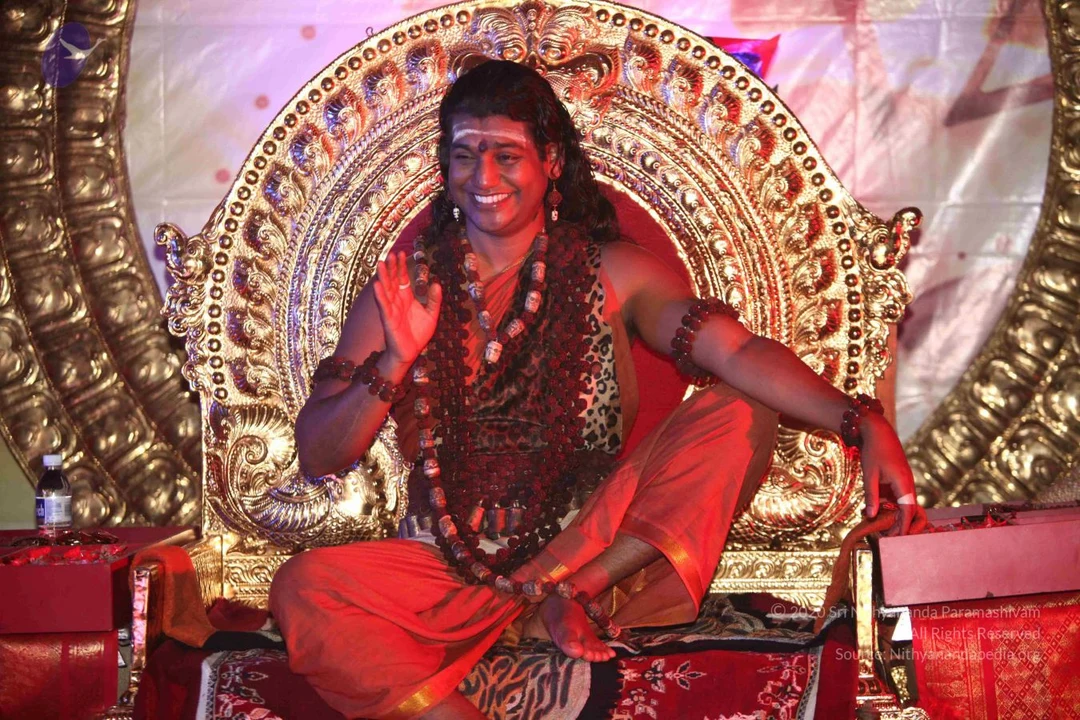
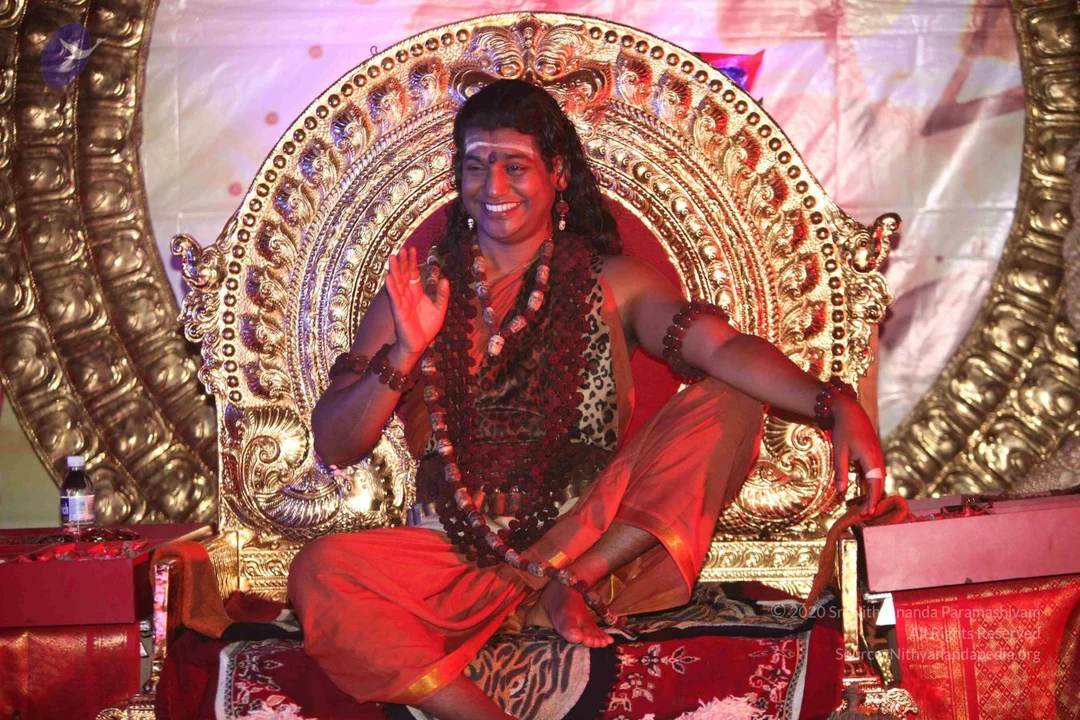
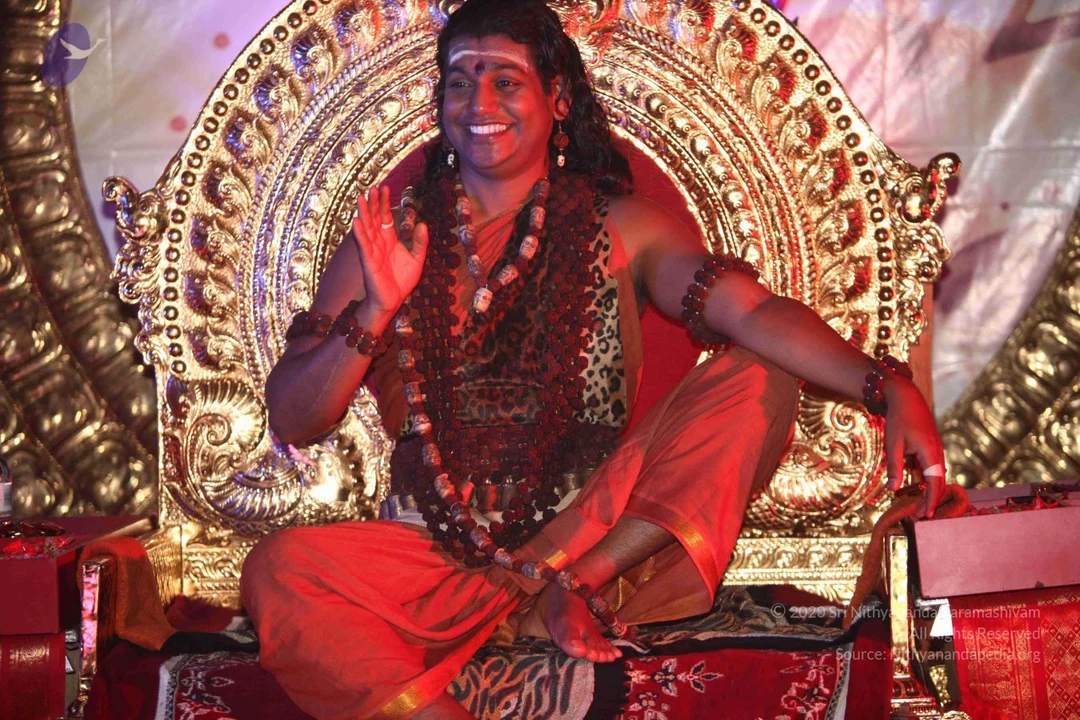
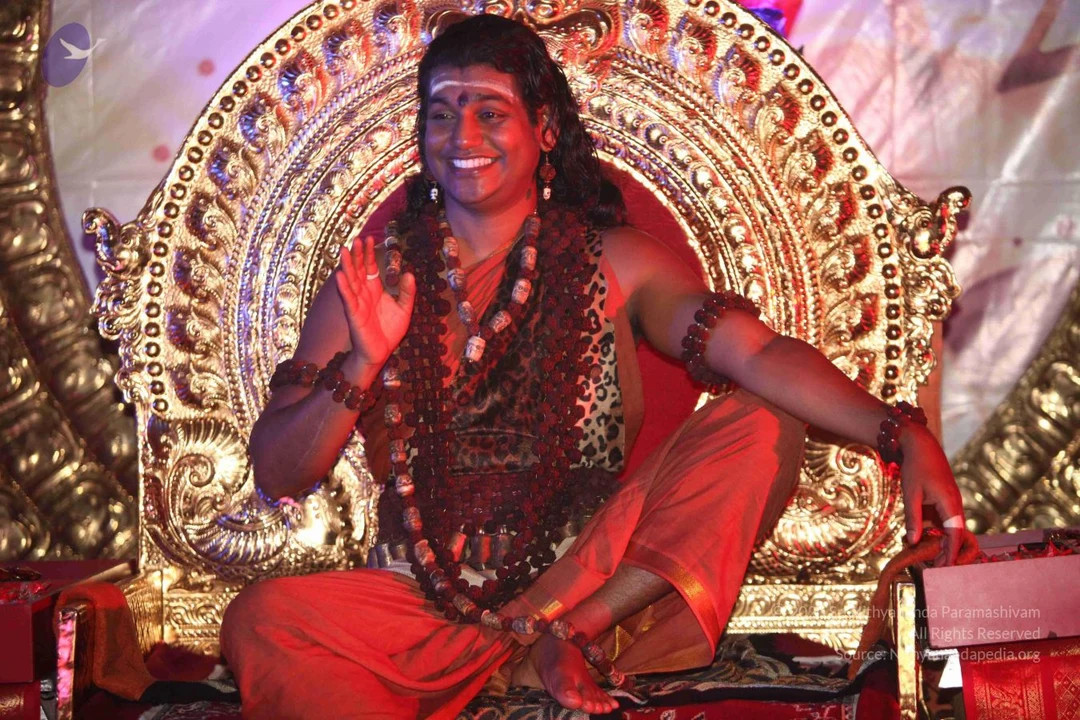
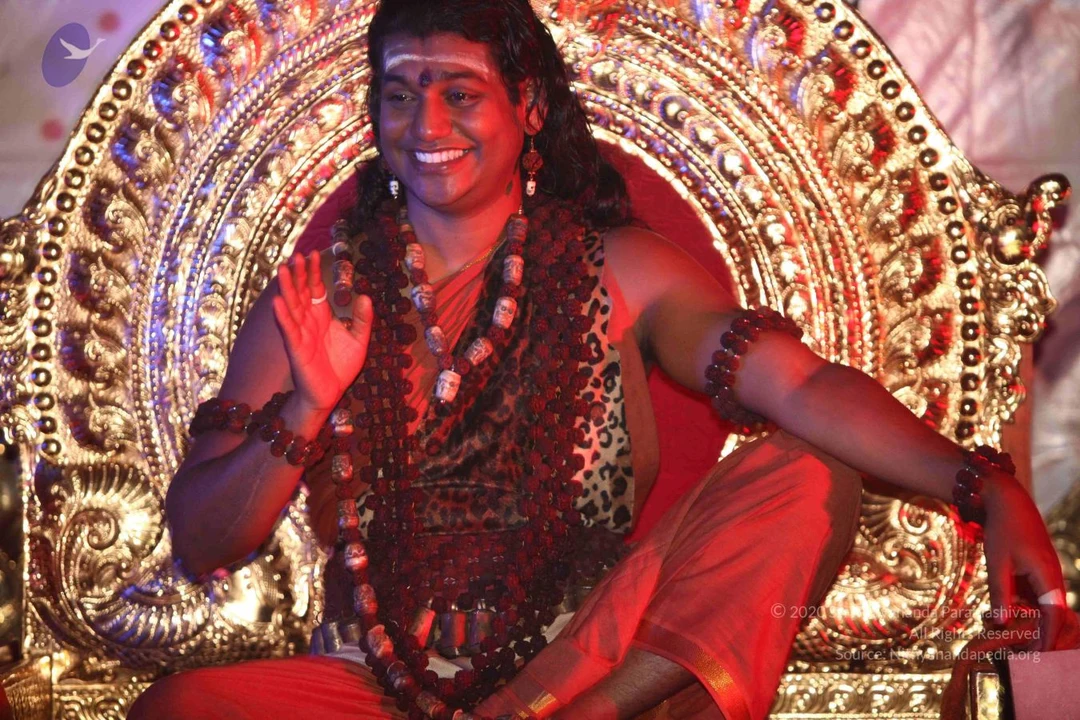
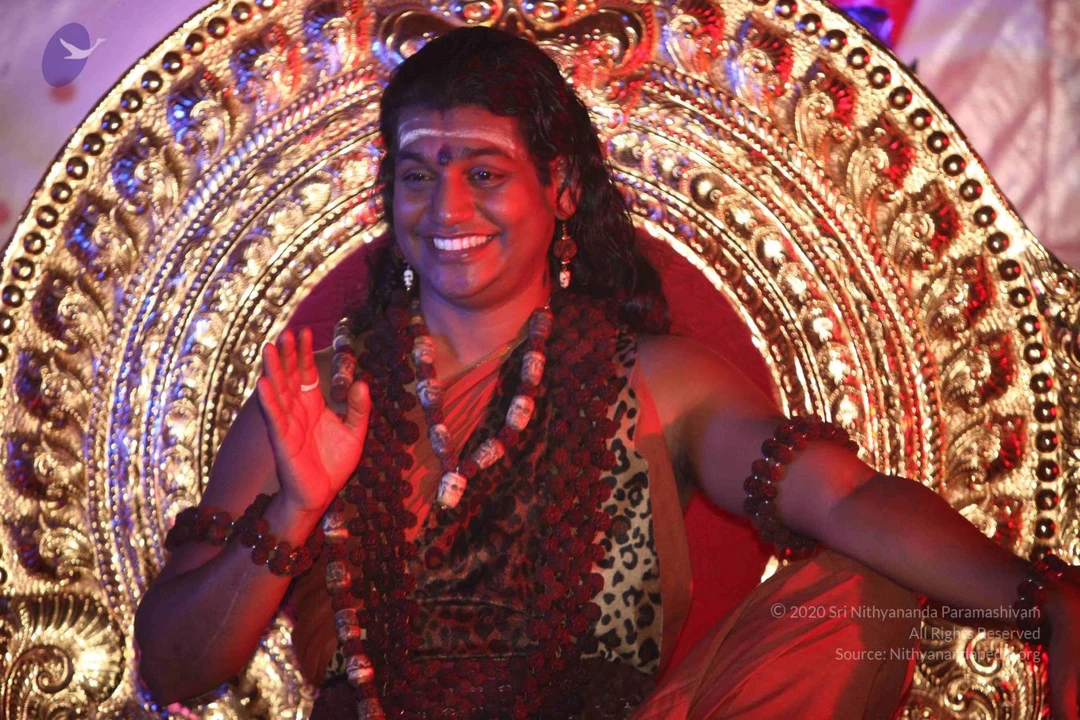
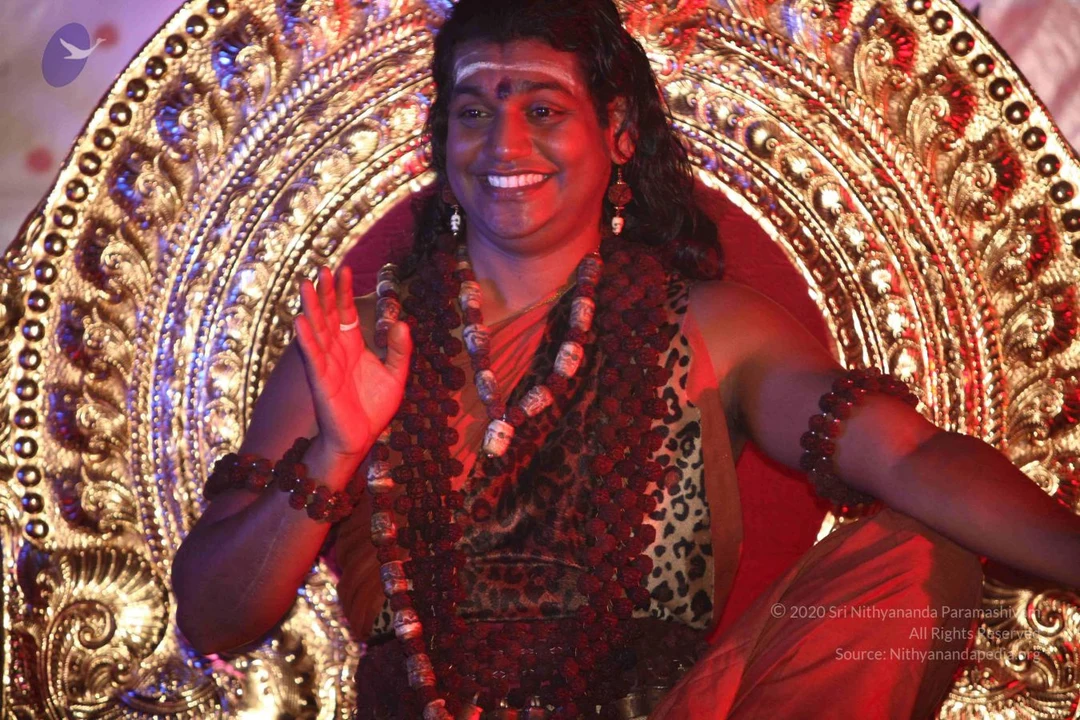
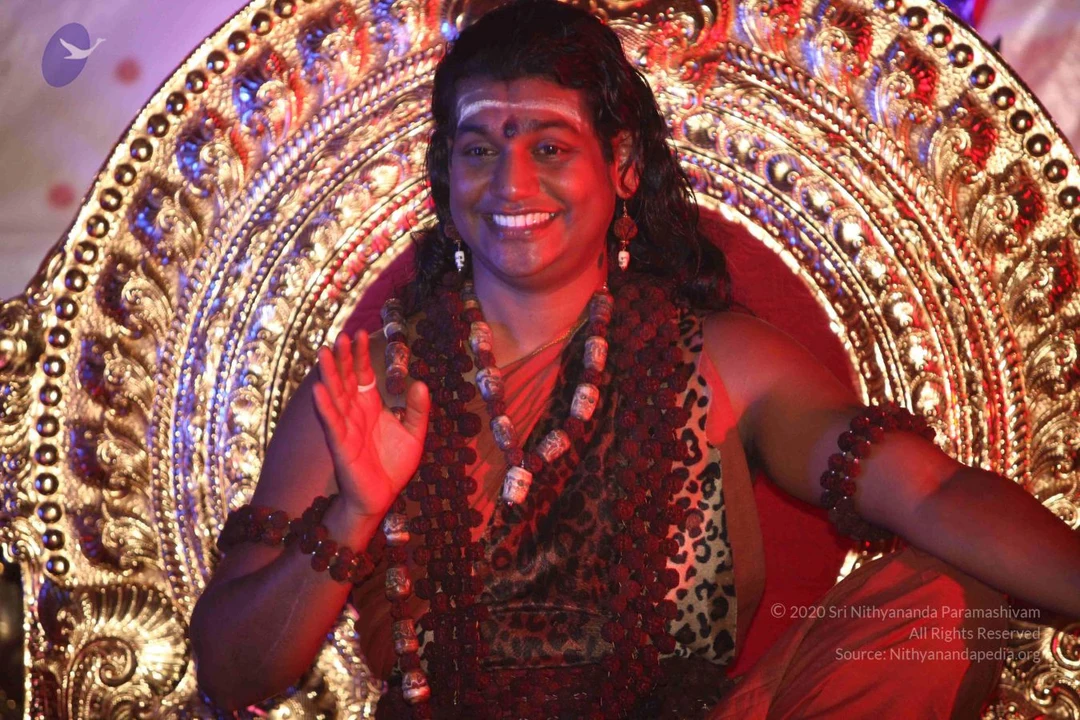
A smiling man with long dark hair sits on an ornate gold throne with carved scrollwork and a rounded arch. He wears a saffron-orange dhoti and a leopard-print shawl over his shoulders, with multiple strands of red and brown rudraksha malas around his neck and red beaded bracelets on his wrists. A vertical tilak mark is on his forehead. He raises his right hand in a wave while his left arm rests on the throne's armrest. Red stage lighting and a draped pink-white backdrop surround him, with red gift boxes at the lower right.A photograph of a smiling man seated cross-legged on an ornate gold throne with carved scrollwork, raising his right hand in a blessing wave. He wears a saffron-orange dhoti and a leopard-print wrap over the chest, with long dark hair, a red tilak on the forehead and multiple long red rudraksha malas around his neck and arms. Warm red stage lighting falls across him and a pale draped backdrop is behind the throne. A probable Swamiji is the seated figure, identified by the throne, rudraksha malas, saffron clothing and long swept-back hair, and the page indicates he attended this satsang. Only one physical person is visible, and red-and-gold ceremonial cushions and cloth sit in the foreground.A smiling man sits cross-legged on an ornate golden throne with a carved gilded back, raising one hand in a blessing gesture while resting the other on the armrest. He wears saffron-orange dress with a leopard-print shawl, a dark rudraksha mala draped across the chest, multiple beaded rudraksha bracelets, and a red-and-white tilak on his forehead; long dark hair falls past his shoulders. Red-lit stage backdrop with a pink and gold cloth behind him, red cushioned seat and a water bottle at the side. The Swamiji (probable) cues are the long swept-back hair, saffron clothing, rudraksha malas and ornate throne, shown in a satsang-style stage setting.A photograph of a smiling man seated cross-legged on an ornate gold throne with carved gilded scrollwork and a red cushioned seat. He wears saffron-orange dhoti and a leopard-print sleeveless garment, with long swept-back hair, a white vertical tilak on his forehead, layered rudraksha mala necklaces, red-beaded bracelets, and red earrings. His right hand is raised in a blessing gesture while his left rests on a red-and-gold cloth beside the throne. Small red boxes and a water bottle sit at the edges, with a pink and white draped backdrop behind. The appearance-based cues of long hair, saffron clothing and rudraksha malas make this a probable depiction of Swamiji seated in person.A smiling man with long dark hair sits on an ornate gold-carved throne with a red cushion, raising his right hand in a blessing gesture. He wears an orange-red dhoti and a leopard-print sleeveless garment, with dark rudraksha malas layered across his chest, rudraksha bracelets on his arms, and a white tilak on his forehead. A red-and-gold fabric backdrop and a red-draped table with small offerings surround him. Swamiji (probable): long swept-back hair, ornate gold throne, saffron-red sannyasi clothing and rudraksha malas identify the figure in the role of a seated teacher giving satsang. No other people are visible.A photograph of a smiling man seated on an ornate gold throne with carved scrollwork, against a pale background with pink and red lighting. He wears an orange-red dhoti, a patterned leopard-print shawl across his chest, long rudraksha mala necklaces, red rudraksha bracelets on both arms, and drop earrings. He has a vertical tilak on his forehead and long dark hair. His right hand is raised in a blessing gesture while his left hand rests on his knee.

Power-Manifestation

2 photosSource gallery
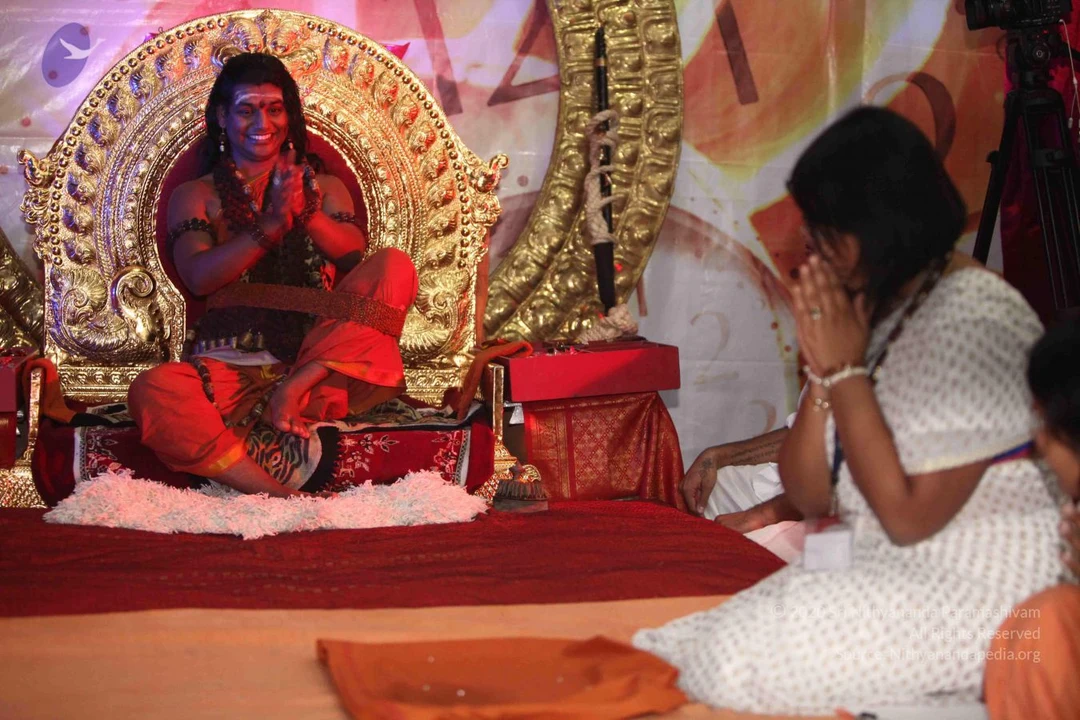
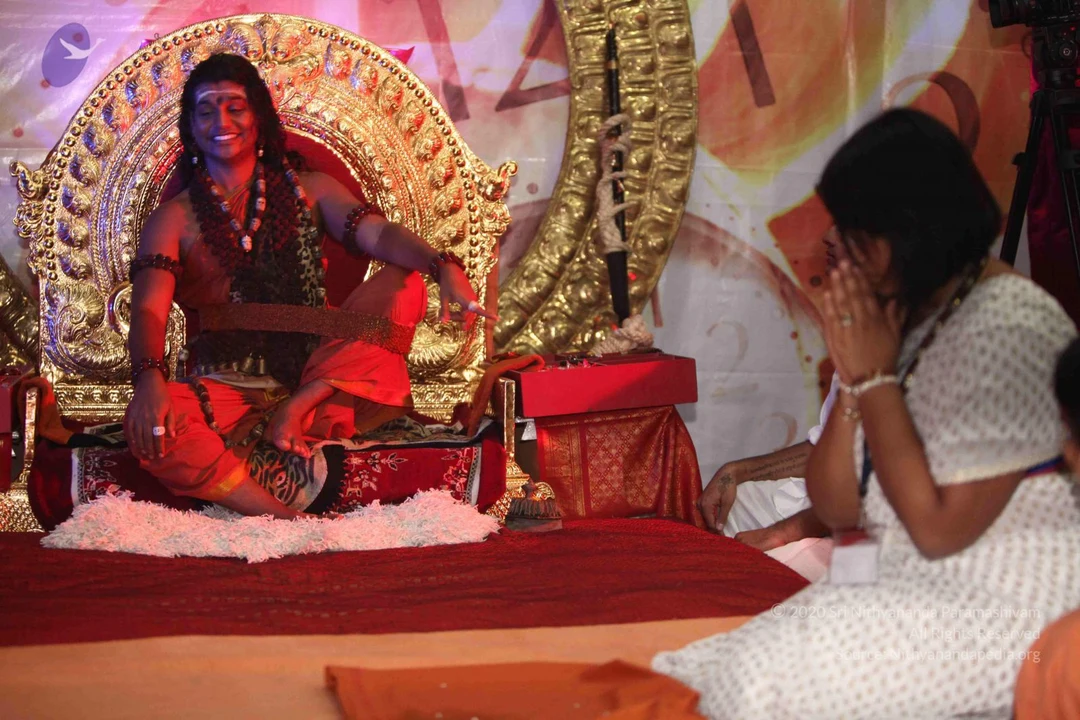
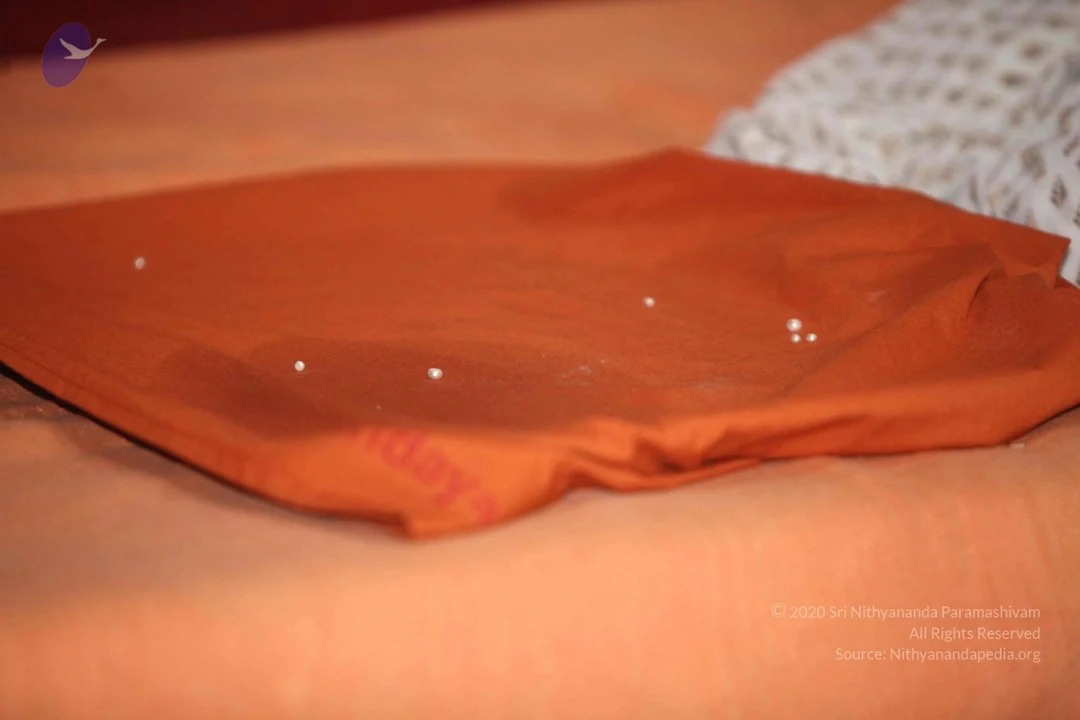
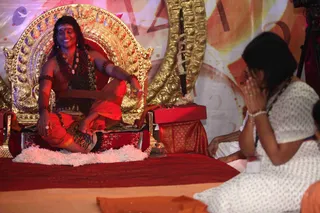
A photograph of a seated figure on an ornate gold-and-red throne, smiling, wearing an orange-saffron dhoti and a red-and-white shawl, with long dark hair, a tilak on the forehead, and multiple rudraksha and beaded malas around the neck and wrists. In the foreground, a woman in a white embroidered sari with a red-and-gold border sits with palms pressed together in namaste, her face lowered toward her hands. Behind the throne are a red table with a red cloth, a small ritual object, and a backdrop with gold and orange motifs. A camera on a tripod is visible at the upper right.A close-up photograph of a folded saffron-orange cloth lying on a pale peach surface. Small white beads or pearls are scattered across the fabric, and a corner of white patterned fabric is visible at the upper right. The cloth appears to be a folded orange garment or shawl with a faint red printed mark near its lower edge. No people are visible.

Pada-Puja
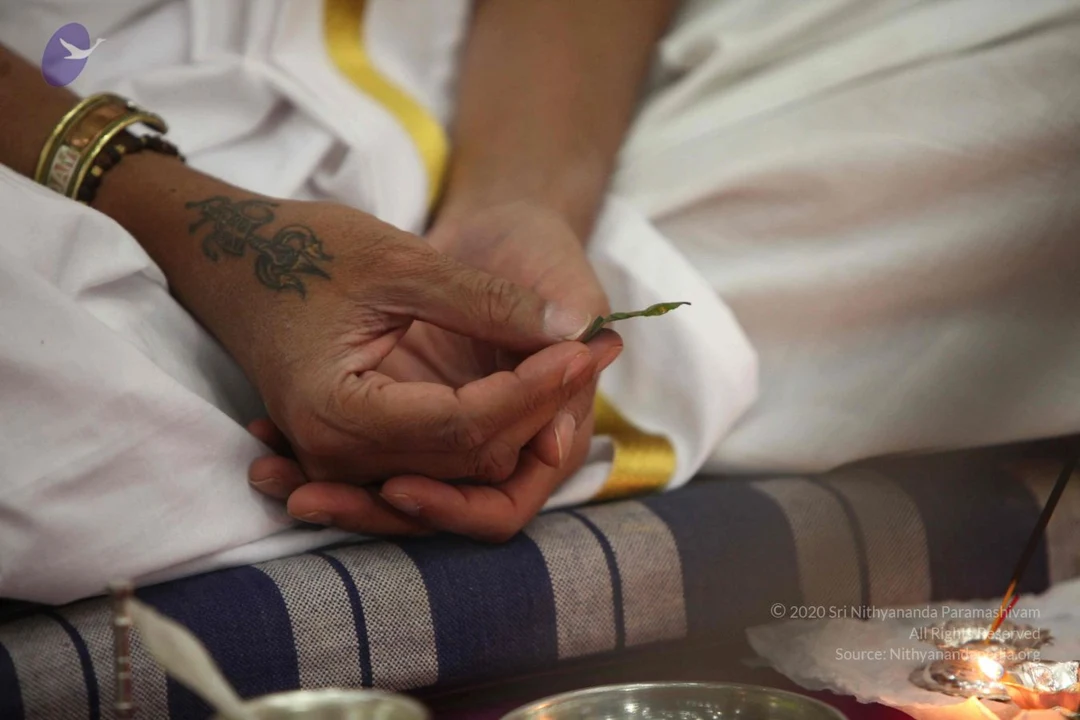
3 photosSource gallery
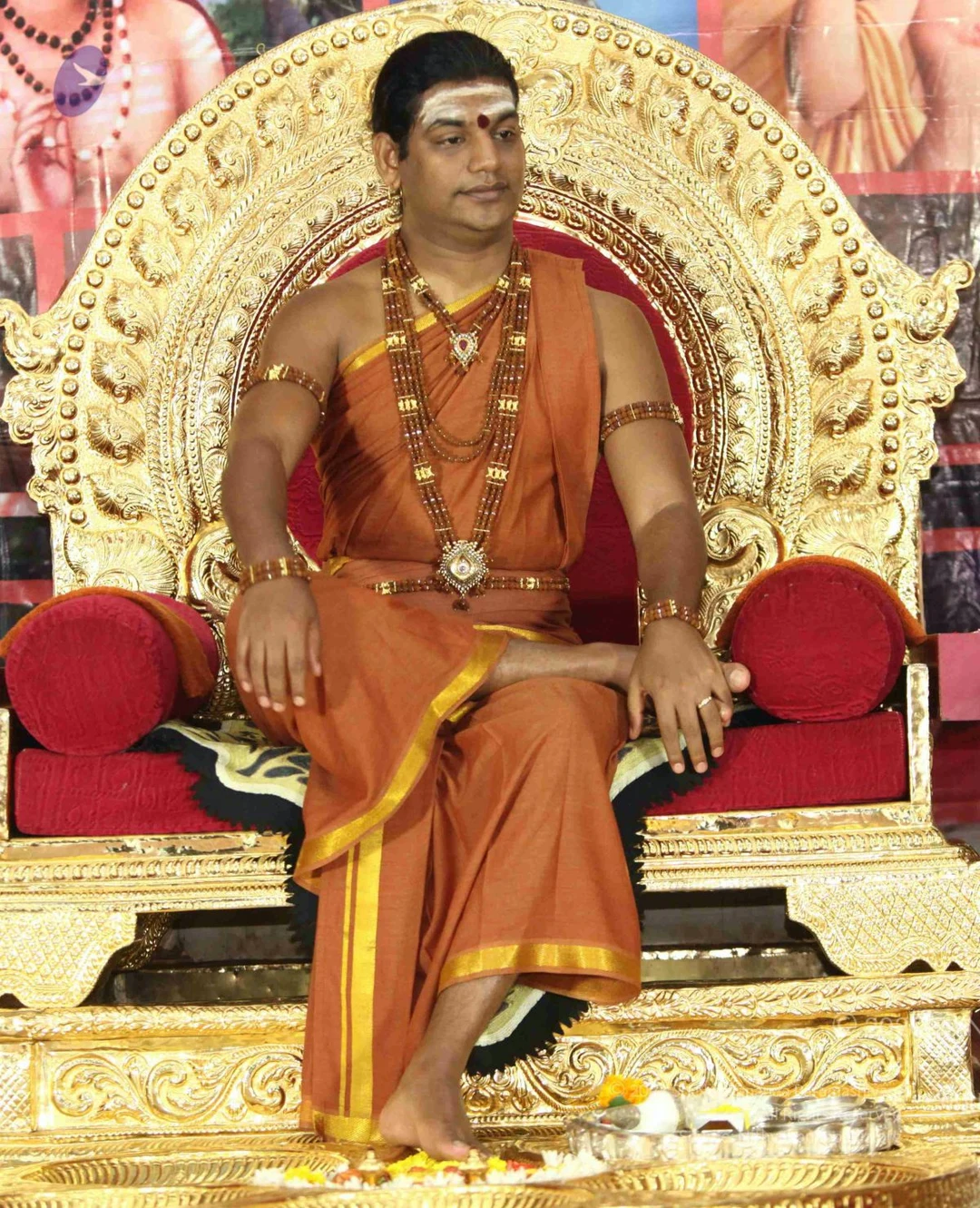
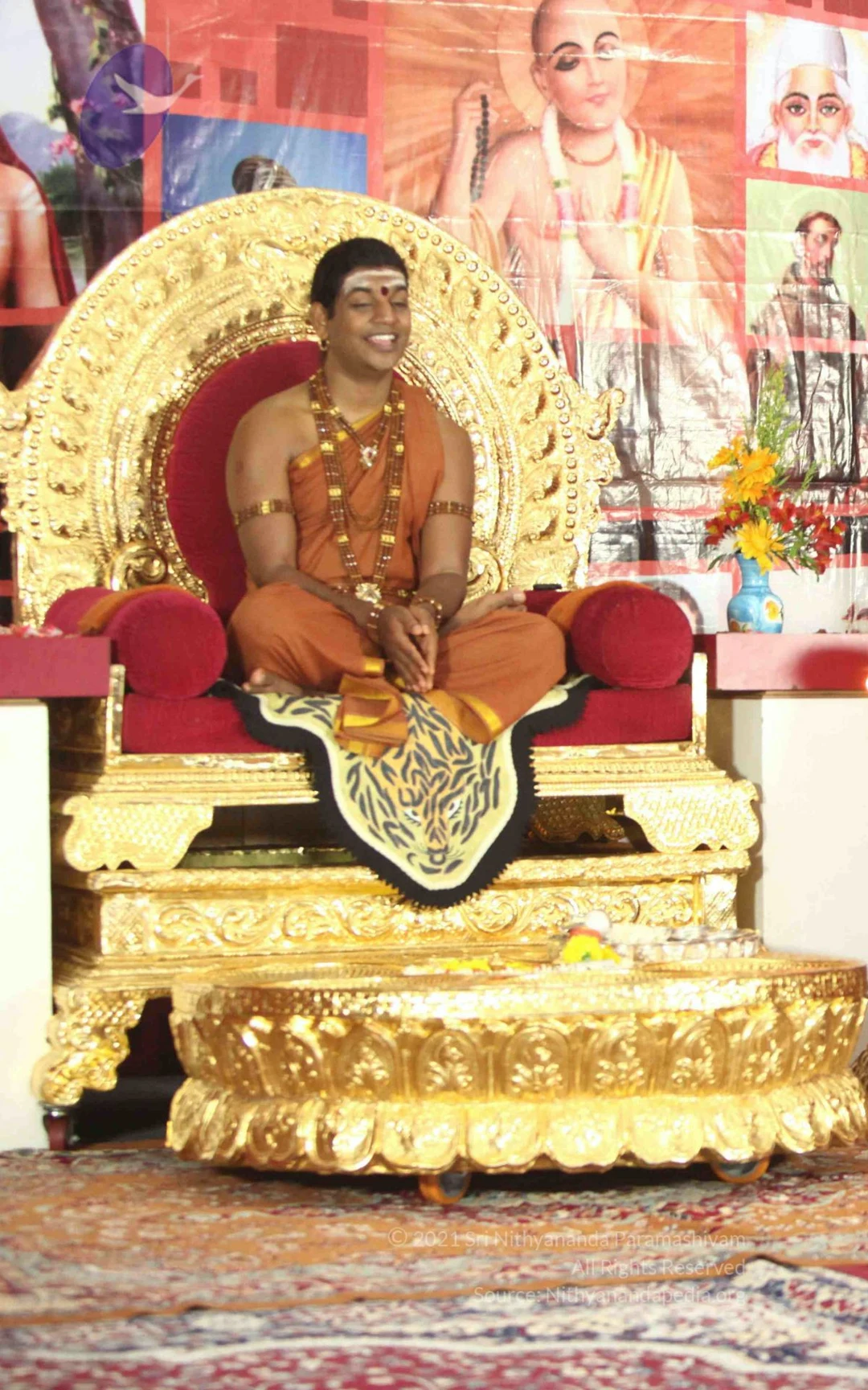
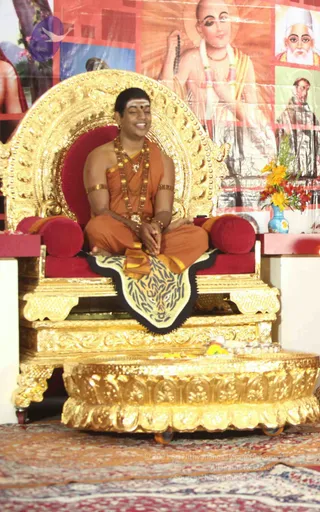
A seated man in orange-saffron dhoti and shawl with gold borders sits on an ornate gold throne with red cushions. He wears multiple strands of beaded rudraksha-style malas, a large ceremonial pendant, gold armlets and bangles, and has white and red tilak on his forehead. Flower petals and a brass offering plate sit at the base of the throne. Behind him, red-and-orange portrait backdrops show figures in saffron robes with beaded necklaces.A photograph of a seated man on an ornate gold throne with red cushions and a tiger-skin-patterned cloth draped over the seat, speaking to an unseen audience. He wears an orange-saffron dhoti and shawl, multiple rudraksha malas, a gold necklace and gold armlets, with a red-and-white tilak on his forehead. His hands are folded in his lap. Flower arrangements in blue and white vases with orange and yellow blooms flank the throne, and a water bottle sits on the left table. Behind him are large printed banners showing saffron-clad figures with rudraksha malas and garlands, plus a framed photograph of an older bearded man. The lower edge shows dark audience silhouettes. a person: the seated speaker's orange clothing, multiple rudraksha malas and ceremonial gold necklace match the event context of a satsang discourse, though the face is not used for identification.A man with short dark hair and a red tilak on his forehead sits cross-legged on an ornate gold throne with red cushions and a tiger-print mat, eyes closed and smiling, hands folded in his lap. He wears an orange saffron cloth draped over his shoulder and multiple beaded rudraksha-style necklaces with a gold pendant, plus gold armbands. Behind him a large red-and-white backdrop shows painted portraits of saints, and a vase of yellow and red flowers stands to the right. Gold-carved offerings sit on a gilded platform in front of the throne. a person is seated in ceremonial dress as the speaker at a satsang.
Morning-Satsang
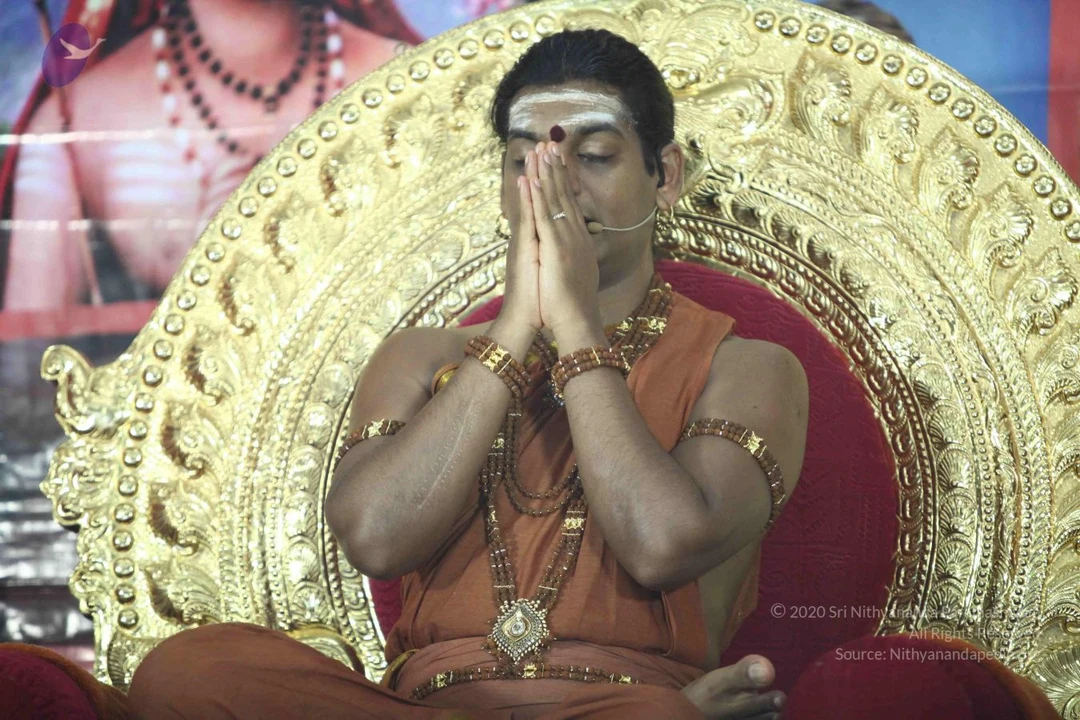
2 photosSource gallery
A man seated on an ornate gold-carved throne with a red cushion, speaking into a head microphone while raising one hand in a gesture. He wears an orange-saffron robe with a yellow edge over bare shoulders, multiple strands of rudraksha beads, gold ceremonial necklaces with a red pendant, and gold armlets. He has white vertical tilak marks and a red bindi on his forehead. Behind him are large painted backdrops showing figures wearing rudraksha malas. a person appearance cues include saffron ornate clothing, rudraksha malas and ceremonial gold necklaces, seated in a discourse setting.A smiling man seated on an ornate gold throne with a red cushion, wearing an orange saffron-coloured garment draped over his shoulders, a long heavy gold necklace of bead-like links, gold bangles and a bead bracelet, with white and red tilak marks on his forehead and his hair swept back. He extends his right hand toward the left in a gesture. Behind him, a man in orange robes with a red tilak and a woman in black stand, and a green vase of red and white flowers and a water bottle sit on a table. A photo caption in the corner reads copyright text. Probable Swamiji (probable) is seated on the throne, identified by the saffron clothing, gold necklace, swept-back hair and throne. Seated figure is the main subject with three additional people visible behind him.

Akashic-Reading

3 photosSource gallery
A smiling person stands with hands on hips in front of a shimmering gold-sequined backdrop lit with pink light. The person has long dark wavy hair, a white tripundra forehead mark with a red dot, dark rudraksha-style beaded malas across the chest and a long beaded necklace, dark wrist bands, and an orange-brown wrap over a patterned garment. Presentation is consistent with a person candidate, based on the long hair, saffron-toned wrap, and multiple rudraksha malas.A standing figure on a stage smiles while holding a tall black staff wrapped with white cord. He wears a leopard-print sleeveless top over a rust-orange dhoti with a yellow edge, layered rudraksha-style beaded necklaces, dark bangles and a wrist band, and a forehead marking. He stands before an ornate gold-toned throne with a large circular golden arch and a red-and-pink backdrop. A probable Swamiji is shown by long swept-back hair, rudraksha malas, and orange ornate clothing in this presentation context. A small bottle sits at the stage edge.A smiling man stands on an ornate gold throne in front of a large gold ring-shaped backdrop with a red and pink patterned banner behind him. He holds a silver trident in his right hand and a long black staff wrapped with white cord in his left. He wears a red-orange dhoti with a yellow border, a patterned animal-print sleeveless top, a rudraksha mala and beaded necklaces, and bangles on his wrists. A water bottle sits on a red table at lower left. Sitting on the throne, he is posed as a teacher during a stage event.

Darshan

6 photosSource gallery
A seated man in an orange dhoti-style garment and gold waist ornament reads from loose pages held in his open palm, against a bright red draped backdrop. He has long dark wavy hair, a white vertical tilak on his forehead, and wears dark rudraksha malas across his chest and arms, with a rudraksha bracelet on his wrist. He has a large rudraksha mala with white bead-like pendants draped over one shoulder, and drop earrings. His right arm is raised to hold a silver-coloured vertical pole at the edge of the frame. Some metal bells hang at his waist. A devotional or satsang setting is visible. Swamiji (probable): the long hair, orange clothing, multiple rudraksha malas and ornate gold waist ornament match the presentation associated with Paramahamsa Nithyananda, and the page identifies him as present.A photograph of a long-haired man in an orange-saffron cloth seated before a deep red velvet drape, smiling in profile. He wears multiple dark rudraksha mala necklaces, matching rudraksha bracelets and armbands, and drop earrings, with a pale vibhuti-style mark on his forehead. His raised right hand grips a tall silver rod, and a gold-patterned seat or cushion is visible at lower left.A photograph of one person seated in profile against a red velvet backdrop, raising one arm to hold a tall polished metal stand or pole with a bell-like fixture at its top. The person has long dark wavy hair, a light sandalwood or vibhuti mark on the forehead, and wears an orange sleeveless garment. Multiple rudraksha malas hang across the chest and wrists, with a rudraksha drop earring on one ear. A gold-toned decorated object sits at the lower left.A photograph of a person in profile against a red draped backdrop, smiling while raising one arm to grip a silver metal pole. The person has long, dark, wavy hair swept back, white ash markings on the forehead, and wears a rust-orange draped garment over the shoulder. Multiple rudraksha beads form a necklace, layered bracelets on the upper arm and wrist, and a rudraksha drop earring with a small white bead. A glimpse of a brass or gold object appears at the lower left. a person: the long swept hair, rudraksha malas and rust-orange draped clothing match the page's identification, though the appearance is only partly visible.A photograph in profile of a person with long, swept-back dark hair, white vertical tilak on the forehead, and a rudraksha mala with carved bead accents draped over an orange-saffron garment. A red earring and a rudraksha bracelet are visible. The person holds a tall silver staff or stand with a small hook, set against a red velvet backdrop.Photograph of a smiling man with long dark hair, eyes closed, wearing white and red forehead markings and a dark bindi. He wears multiple dark rudraksha mala necklaces with white carved skull beads, rudraksha bracelets on his raised arm, and a red and leopard-print garment. Behind him is an ornate gold and red decorative backdrop with bead and peacock-like patterns.