Skip to content
Sunday

4 September 2016

Manifest Ishvaratva - Responsibility for Your Life's Purpose

Dated photos
436
Source pages
1
Media
2
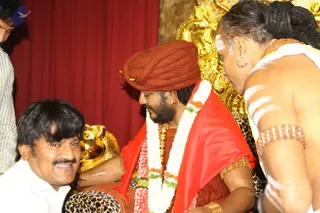
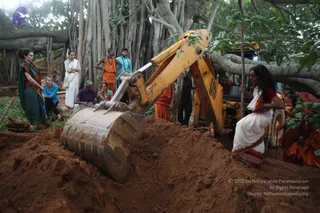
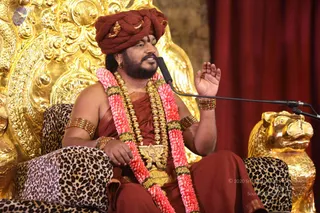
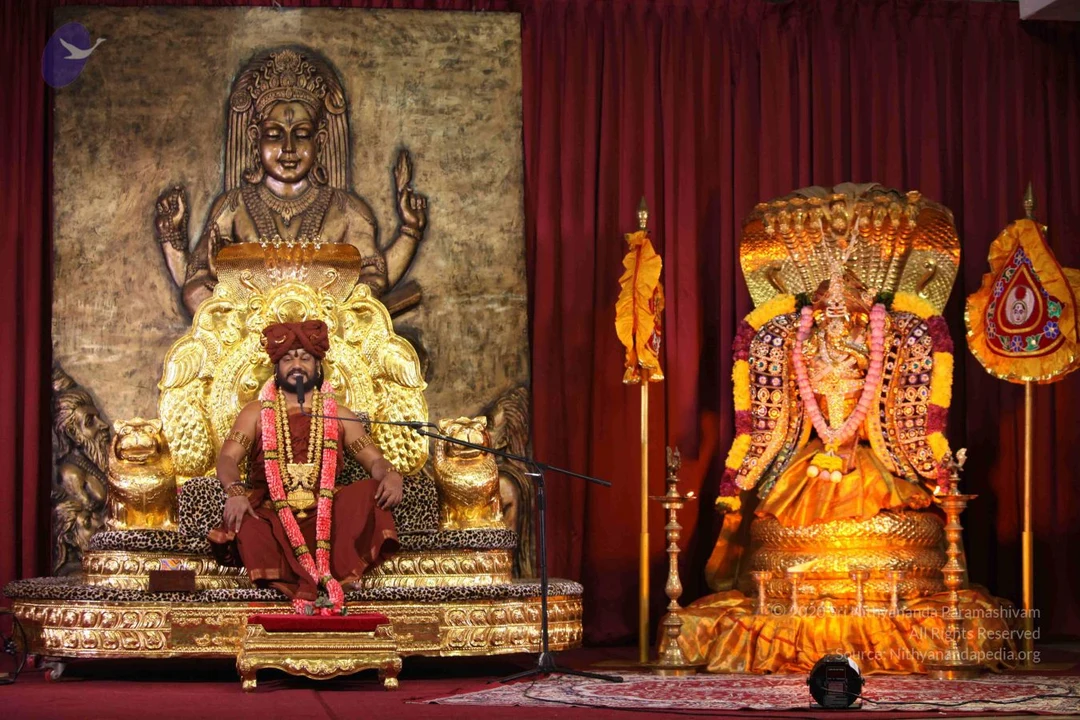
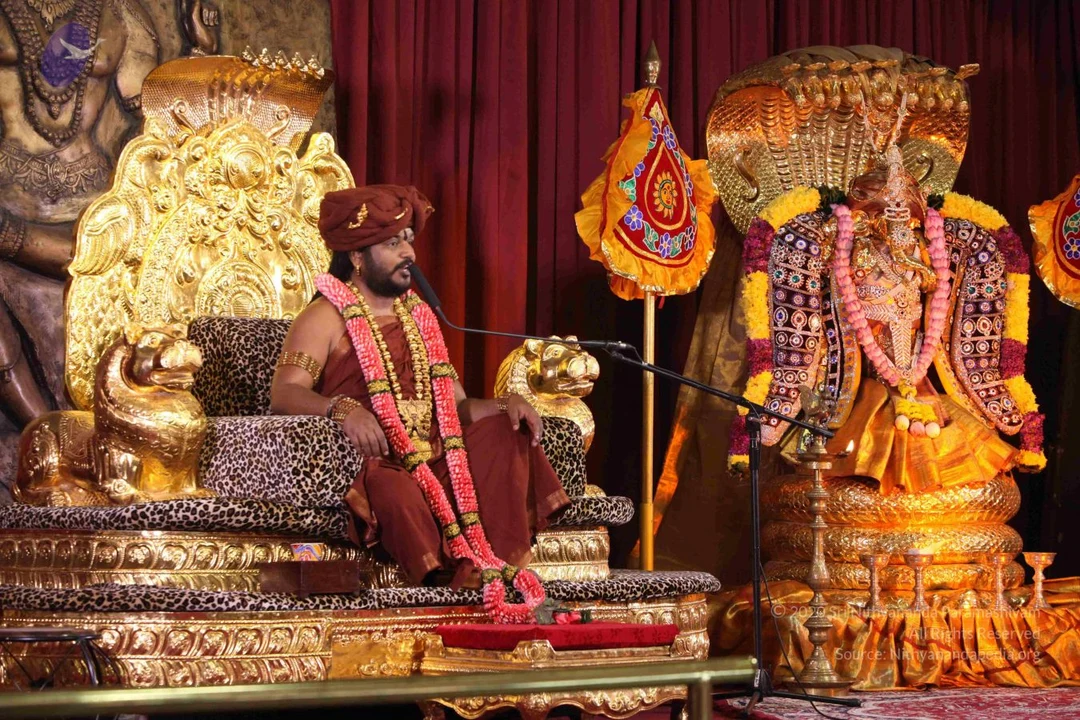
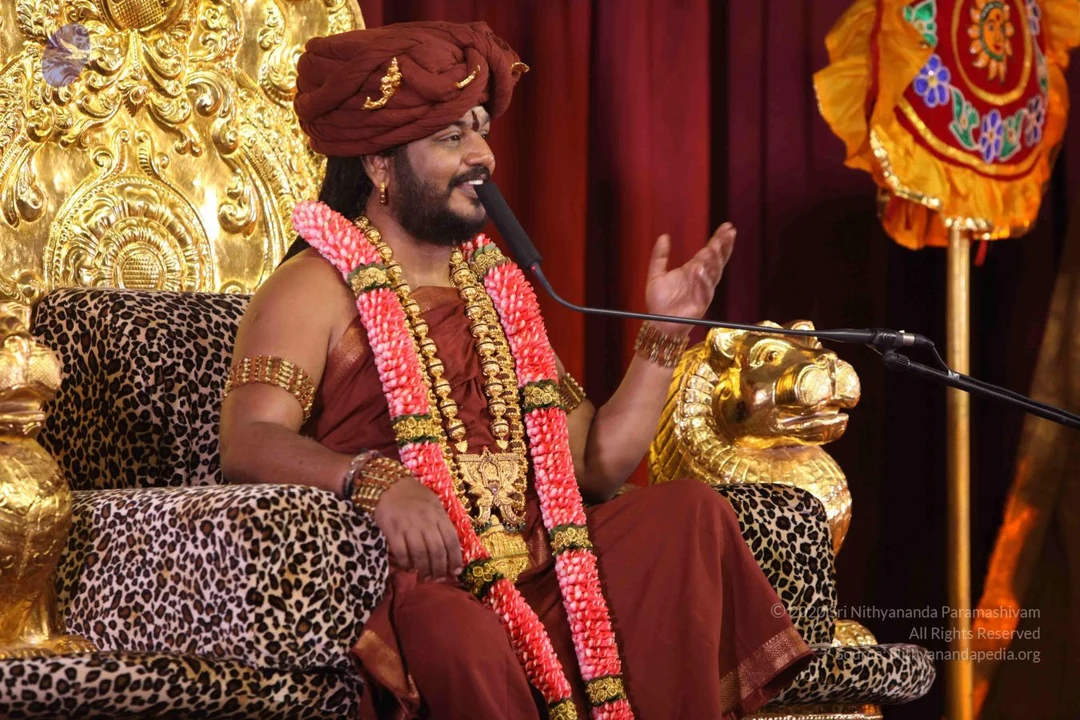
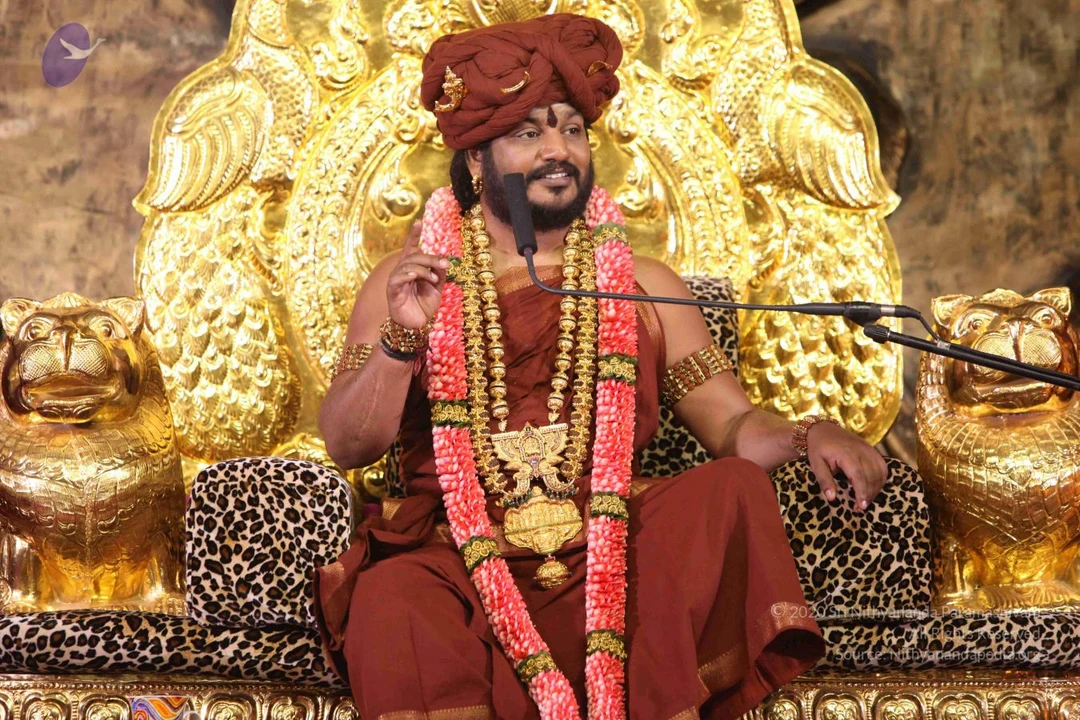
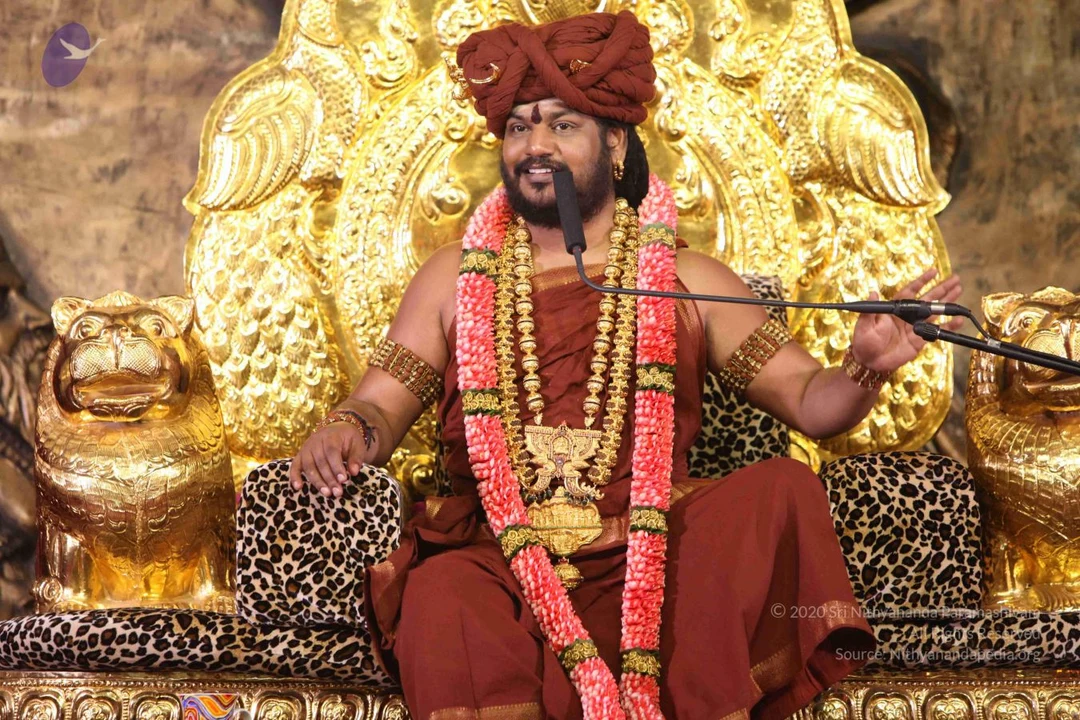
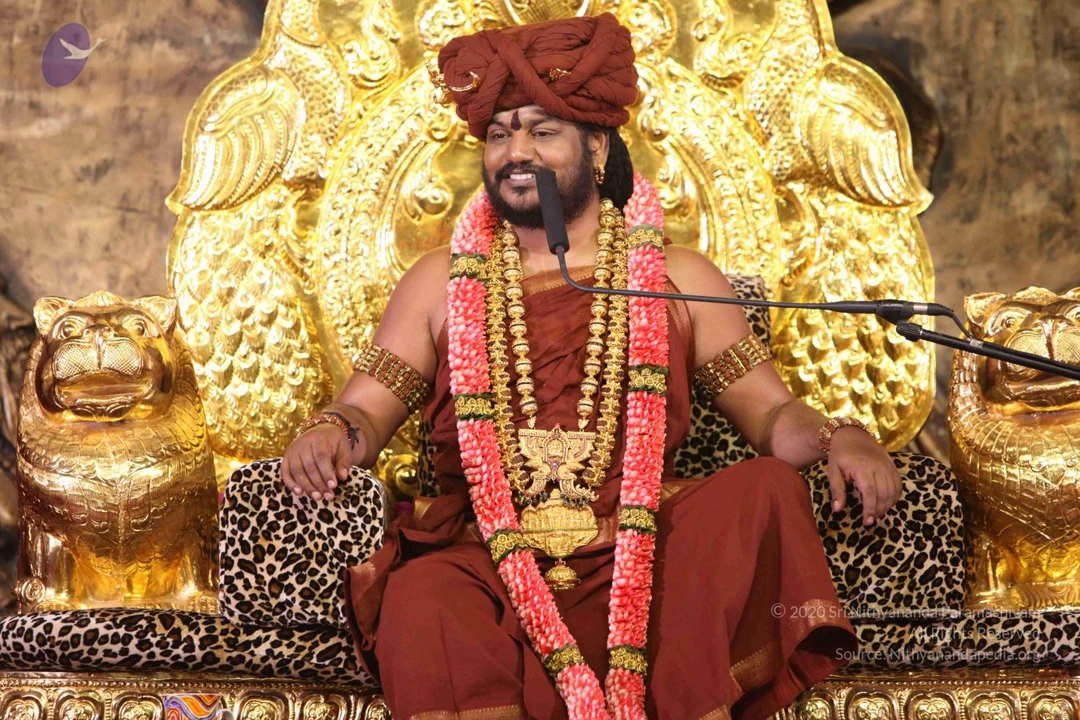
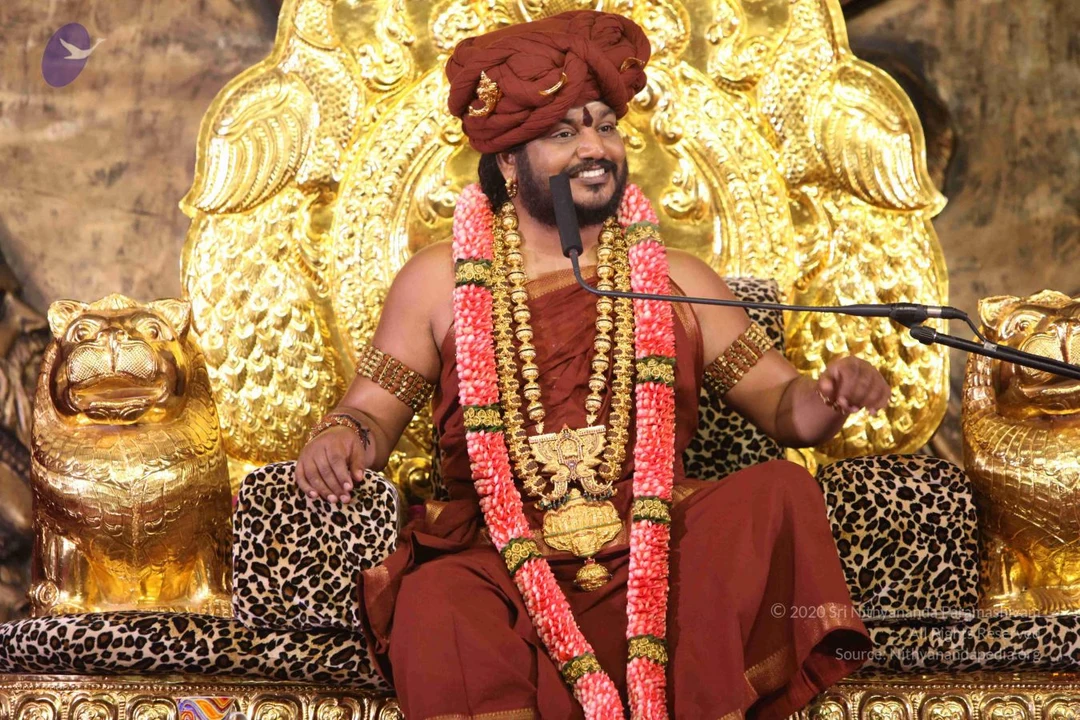
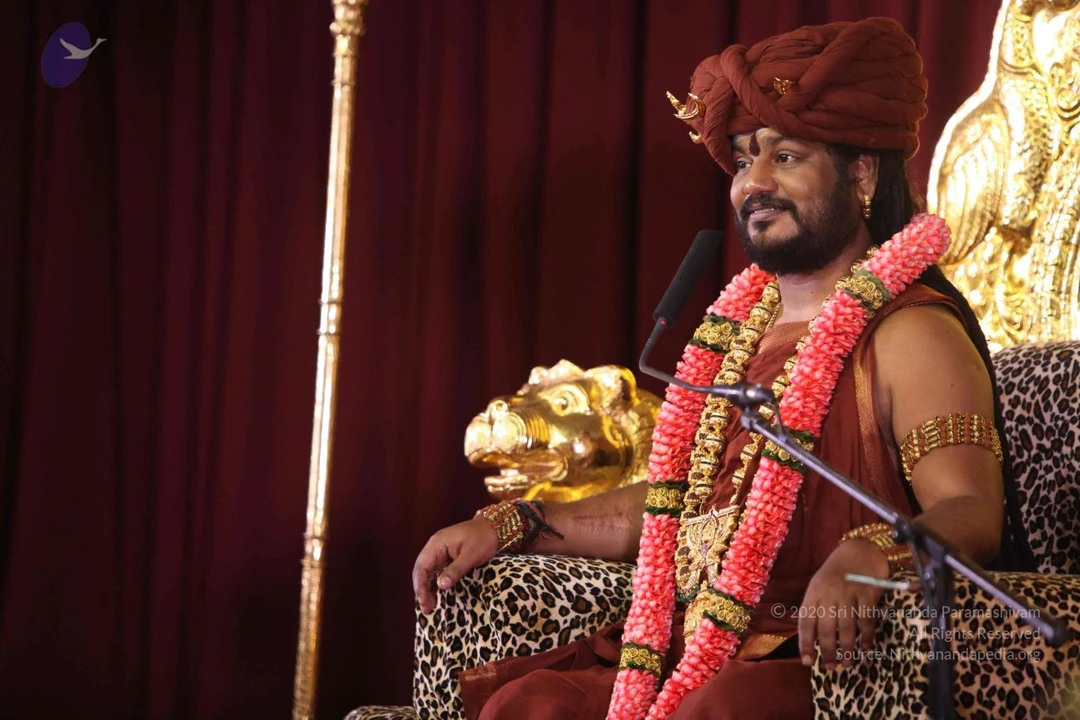
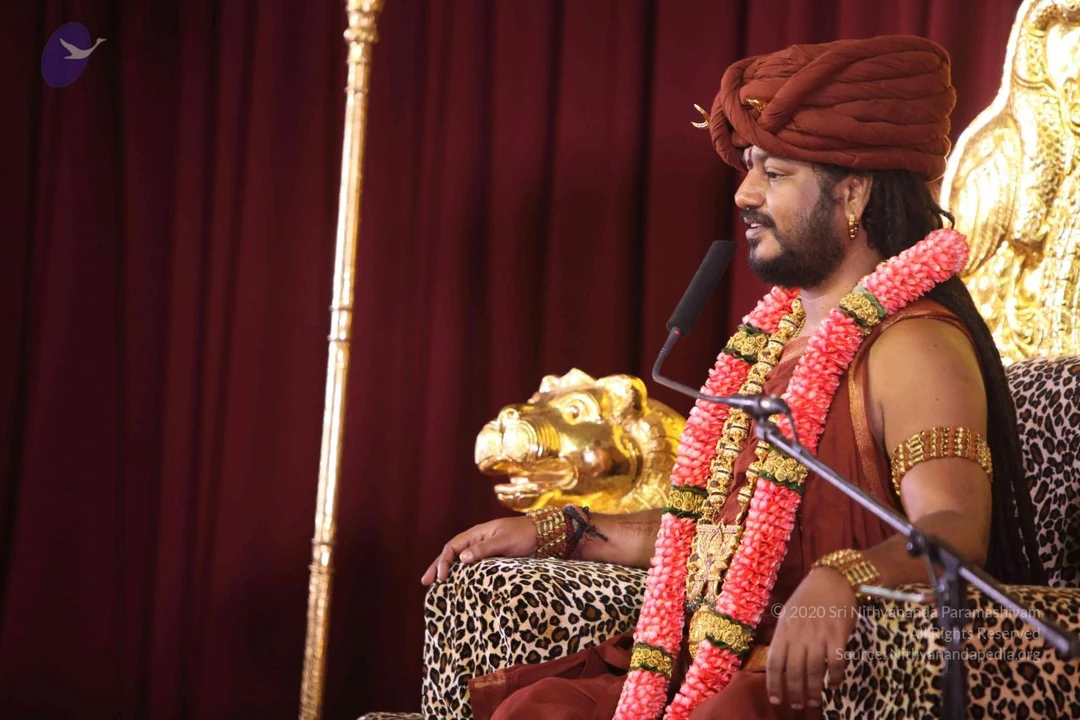
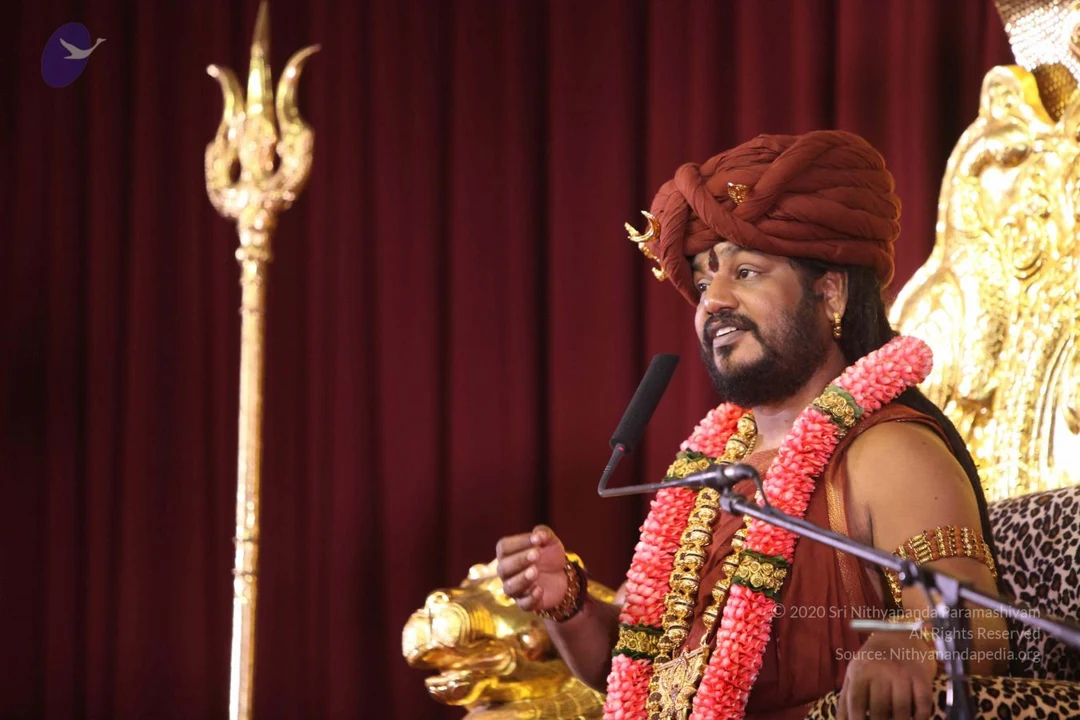
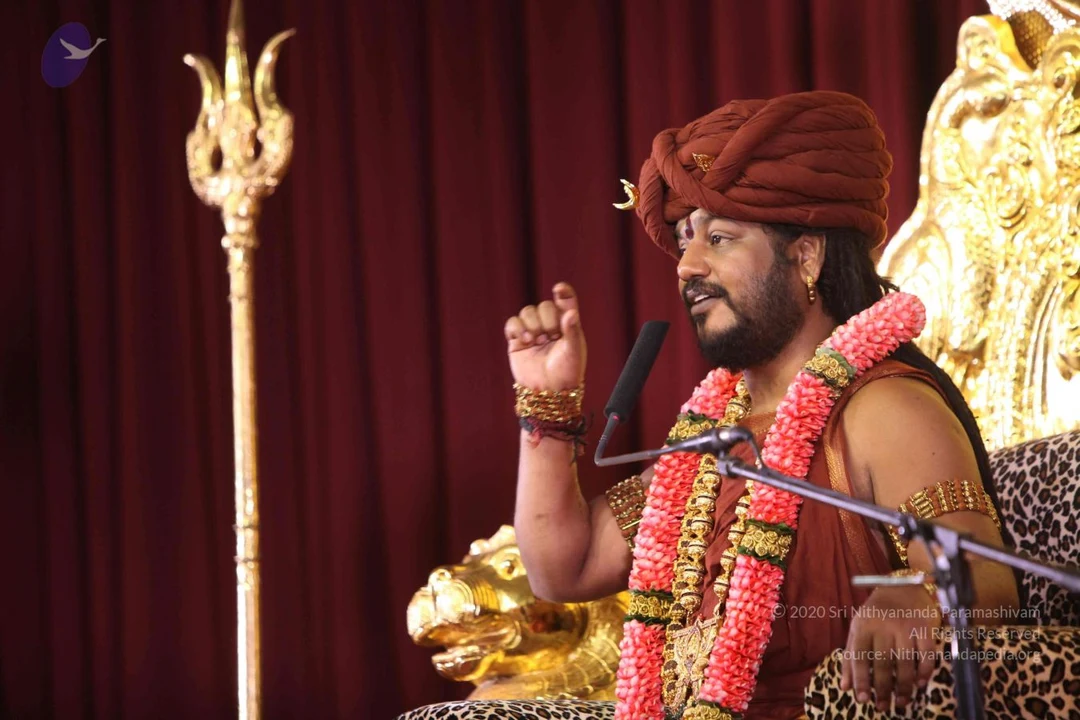
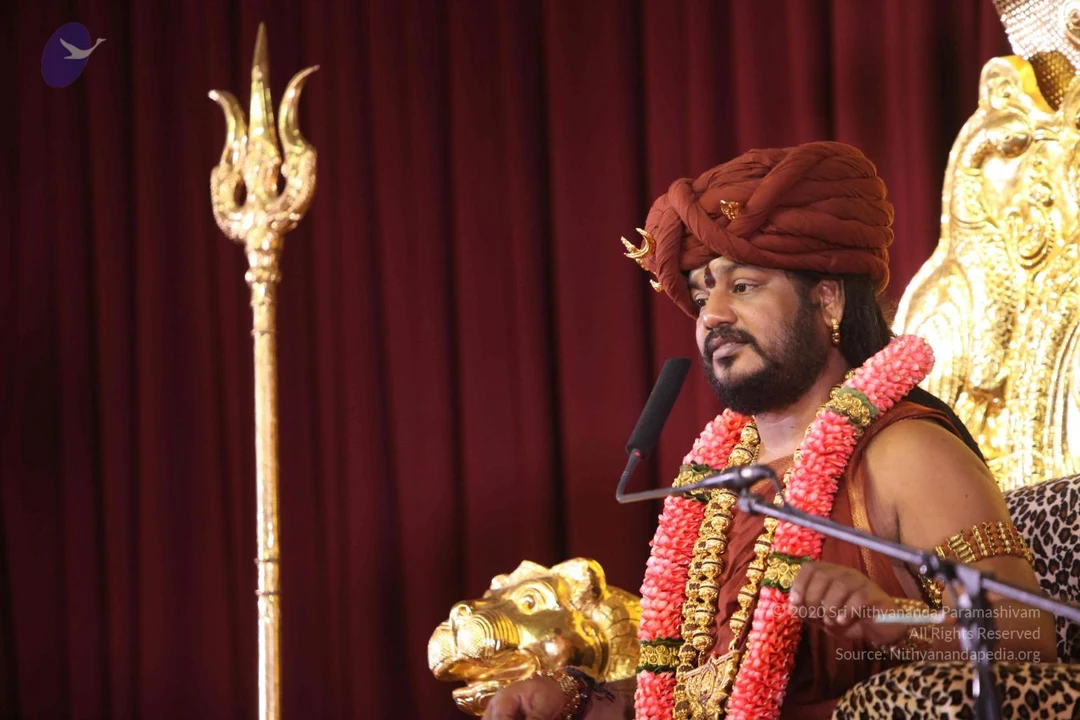
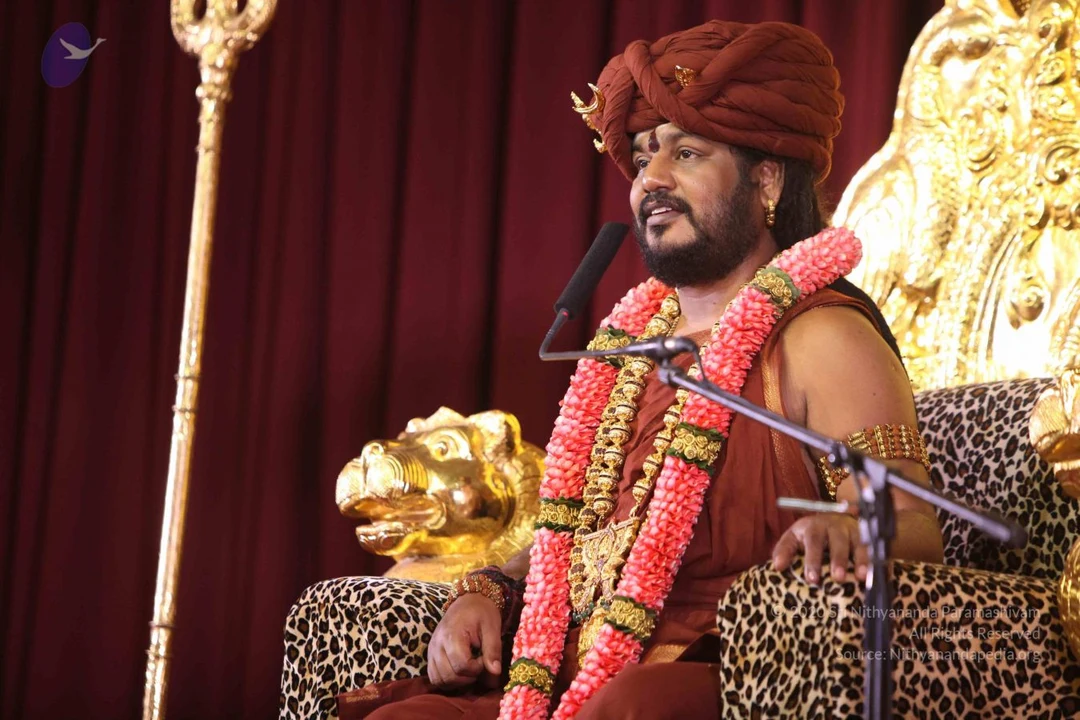
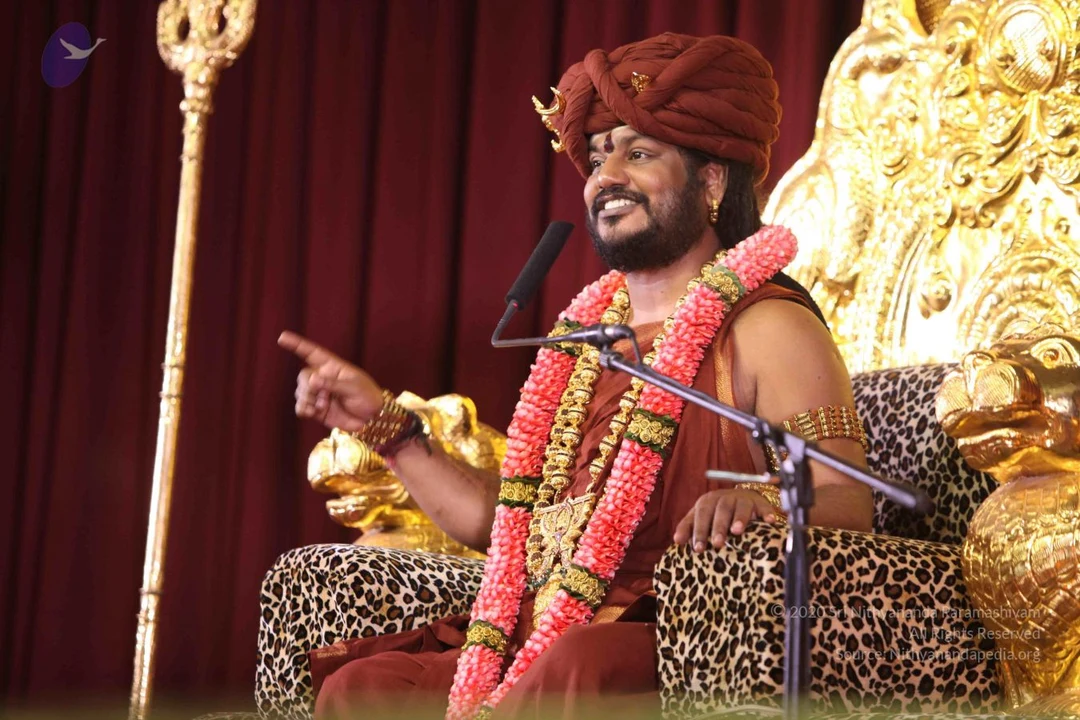
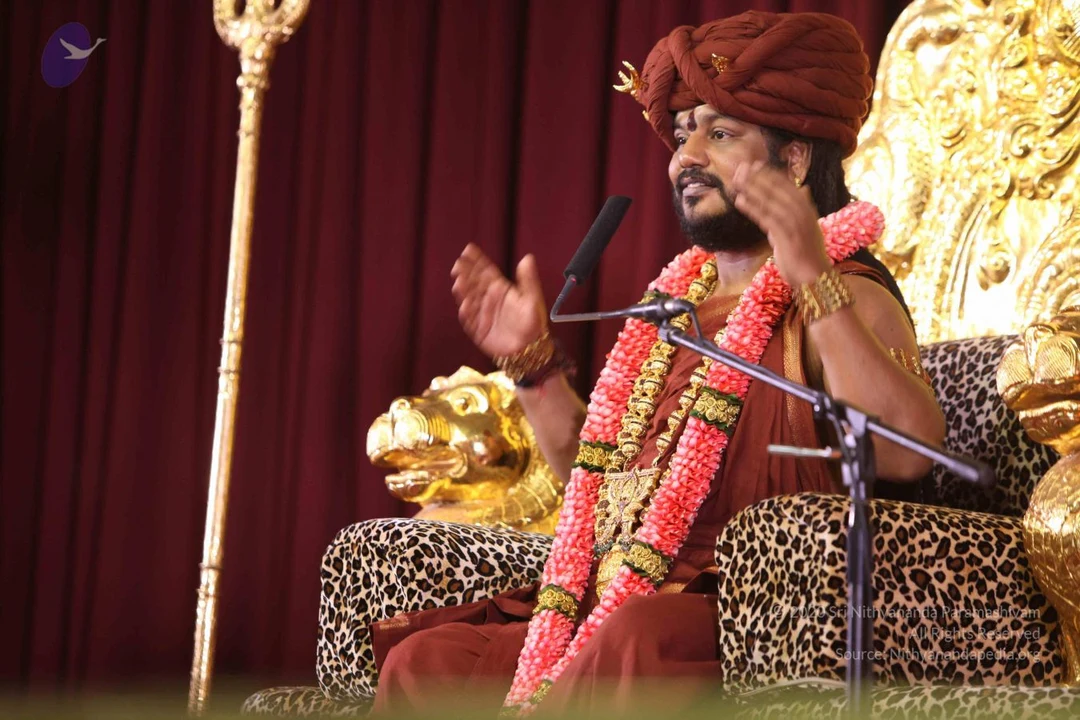
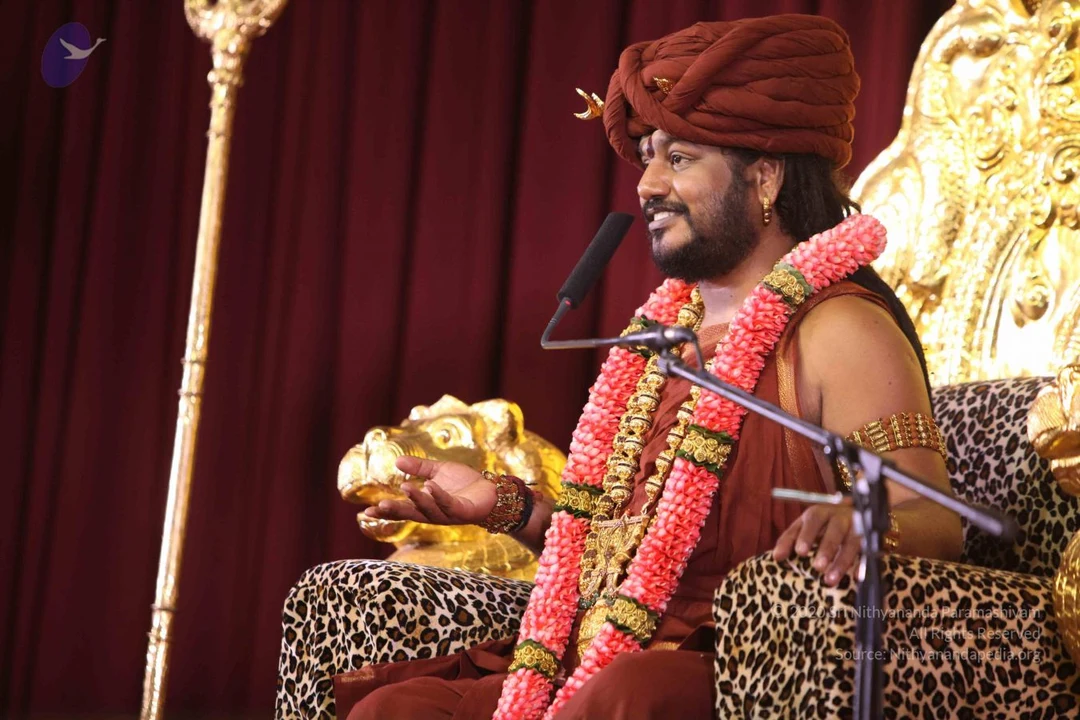
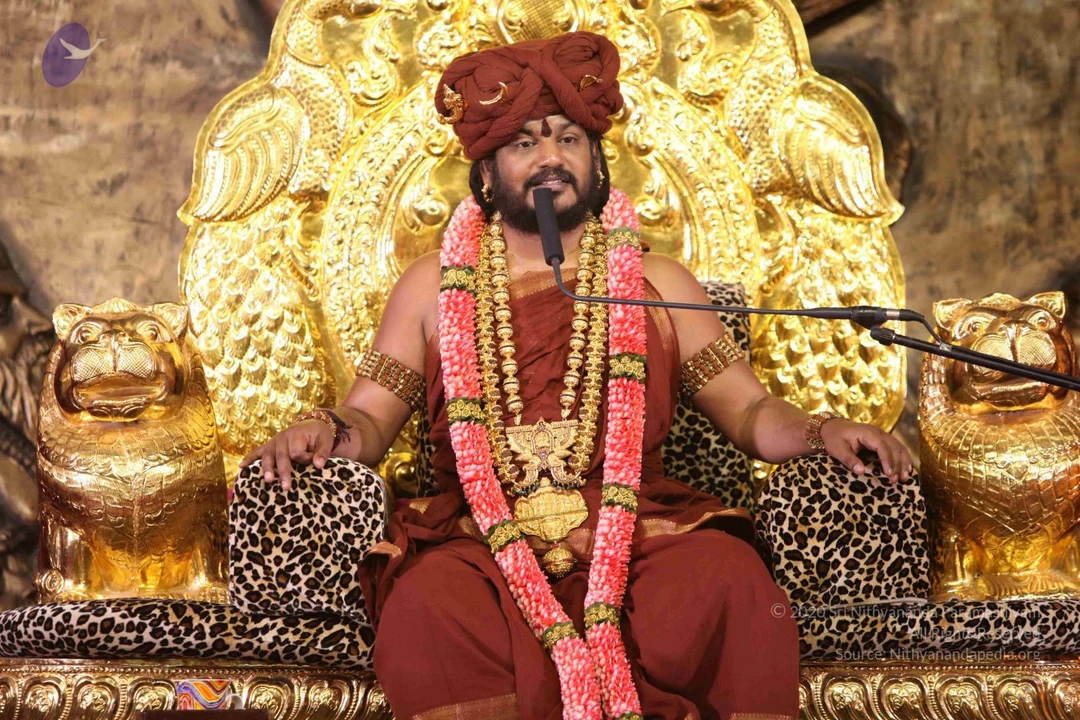
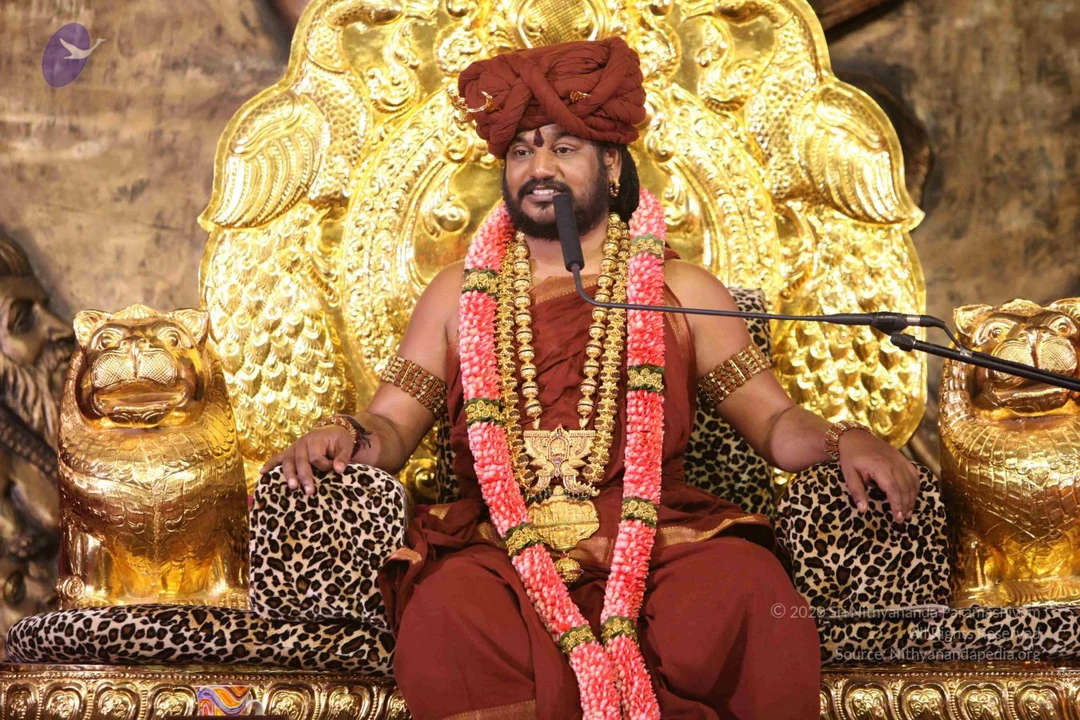
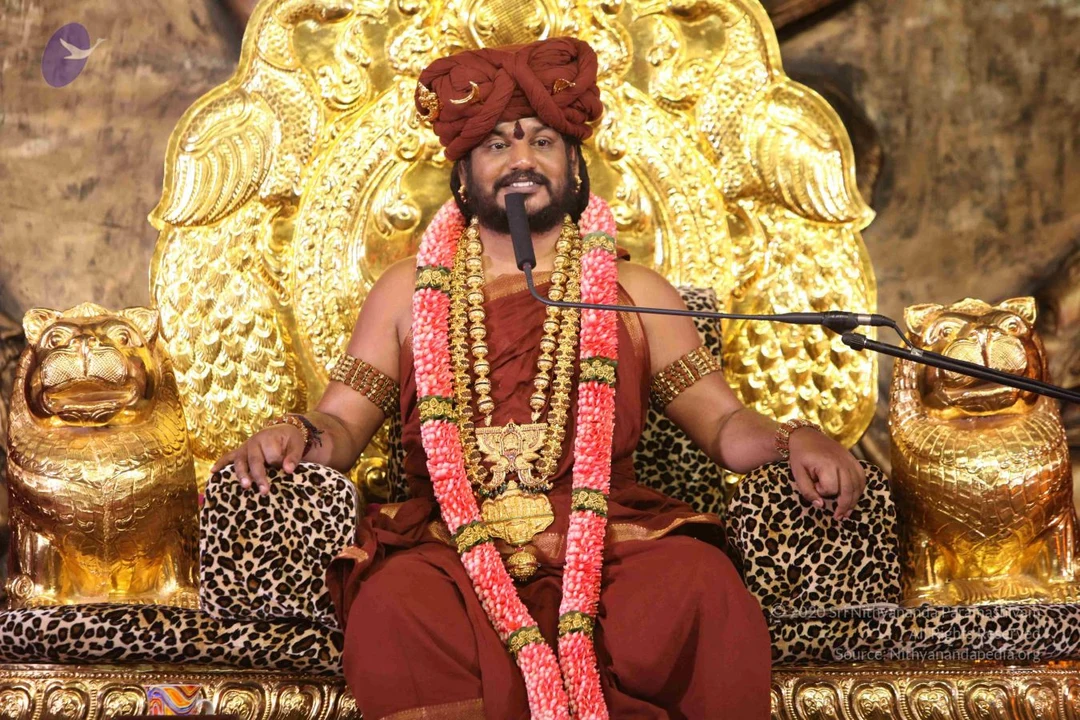
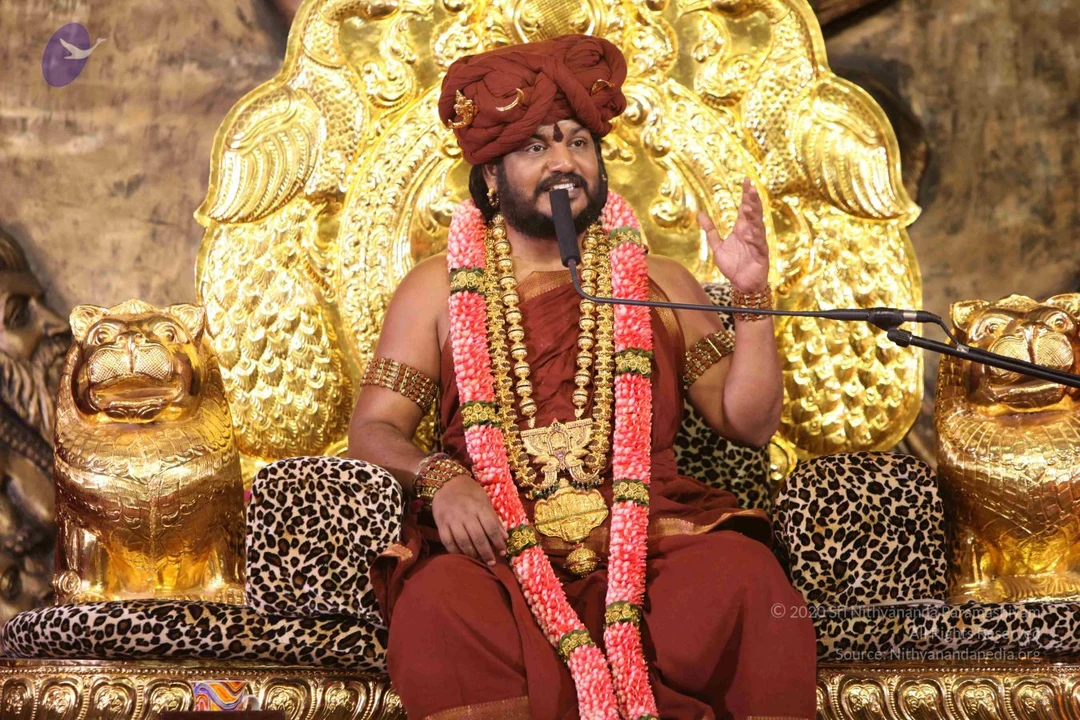
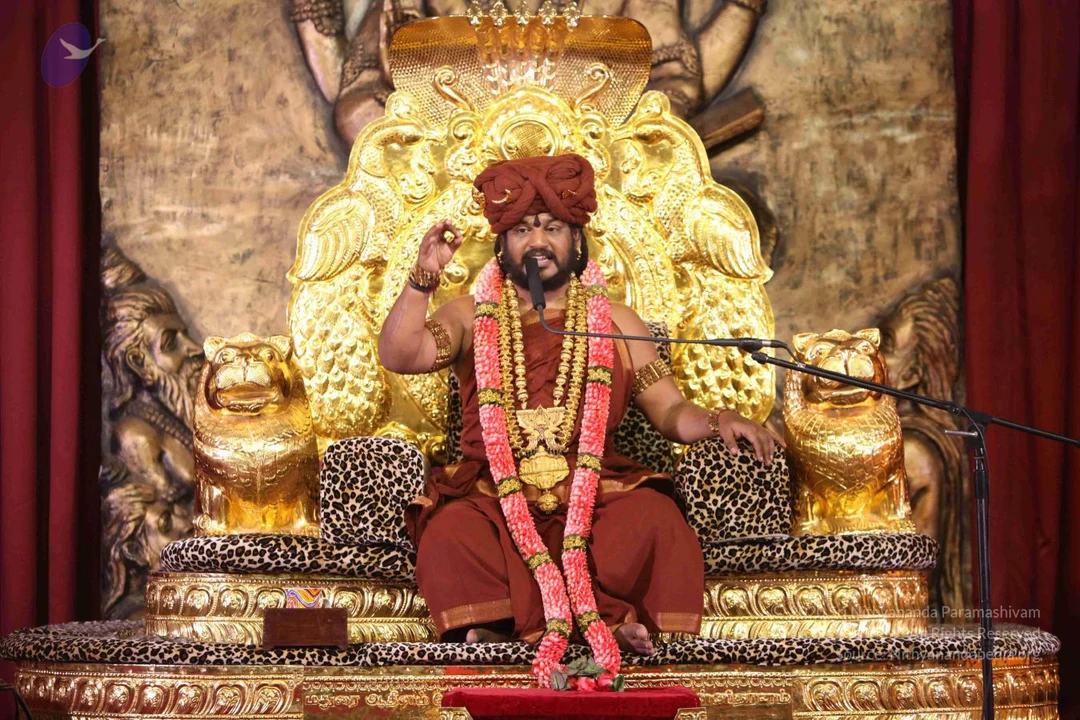
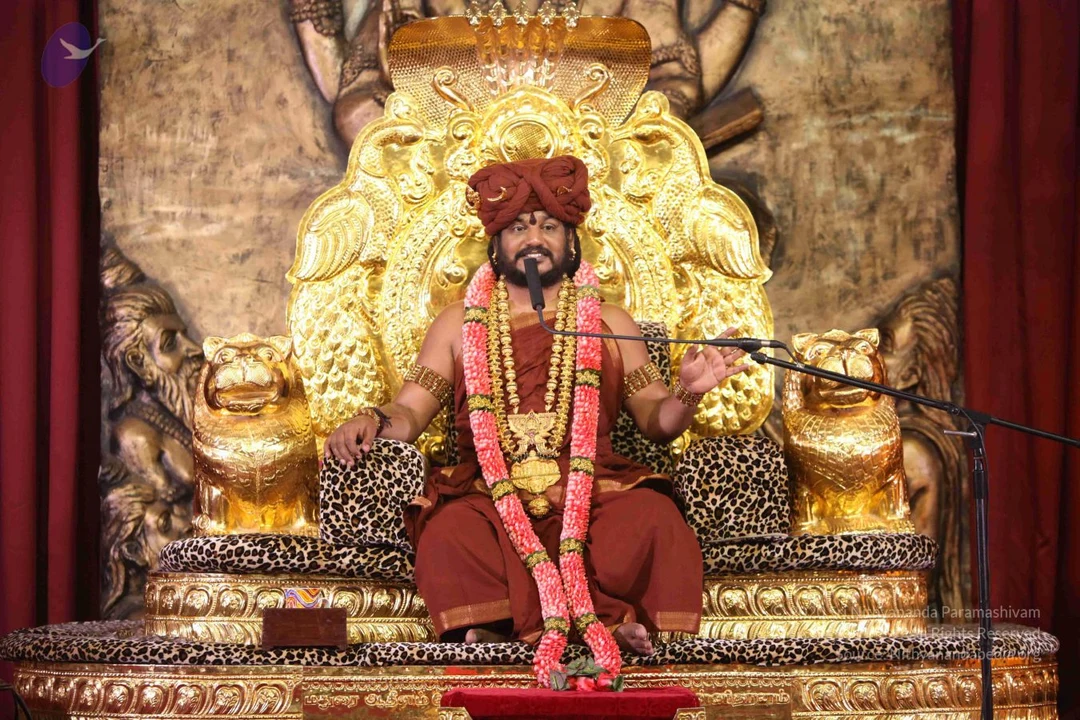
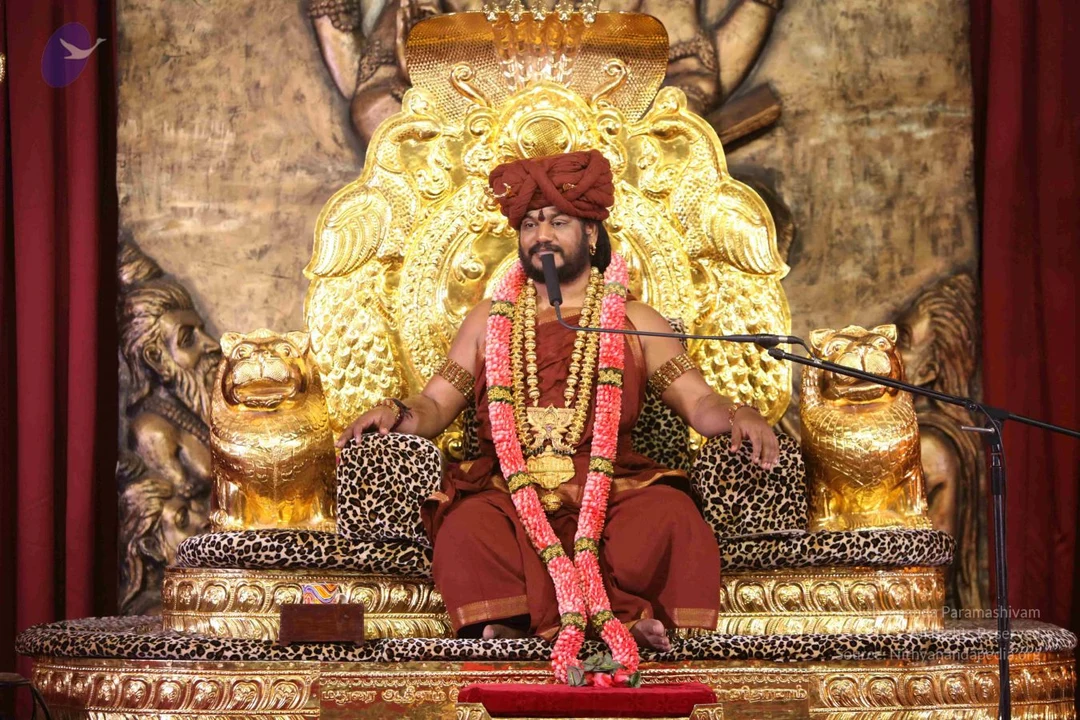
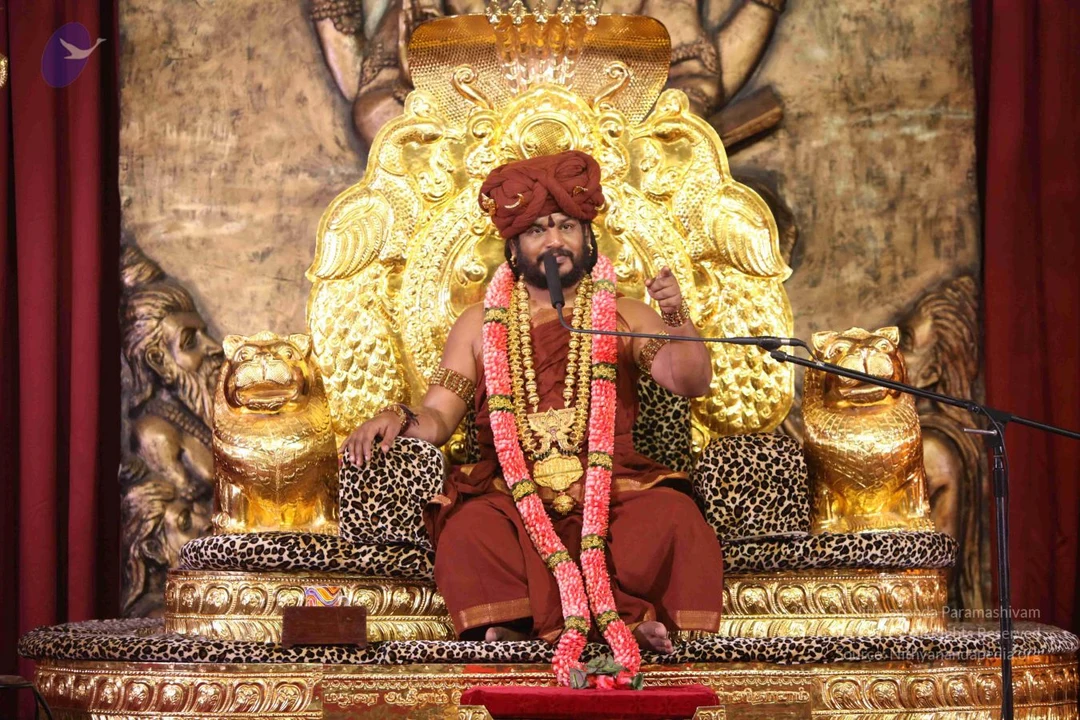
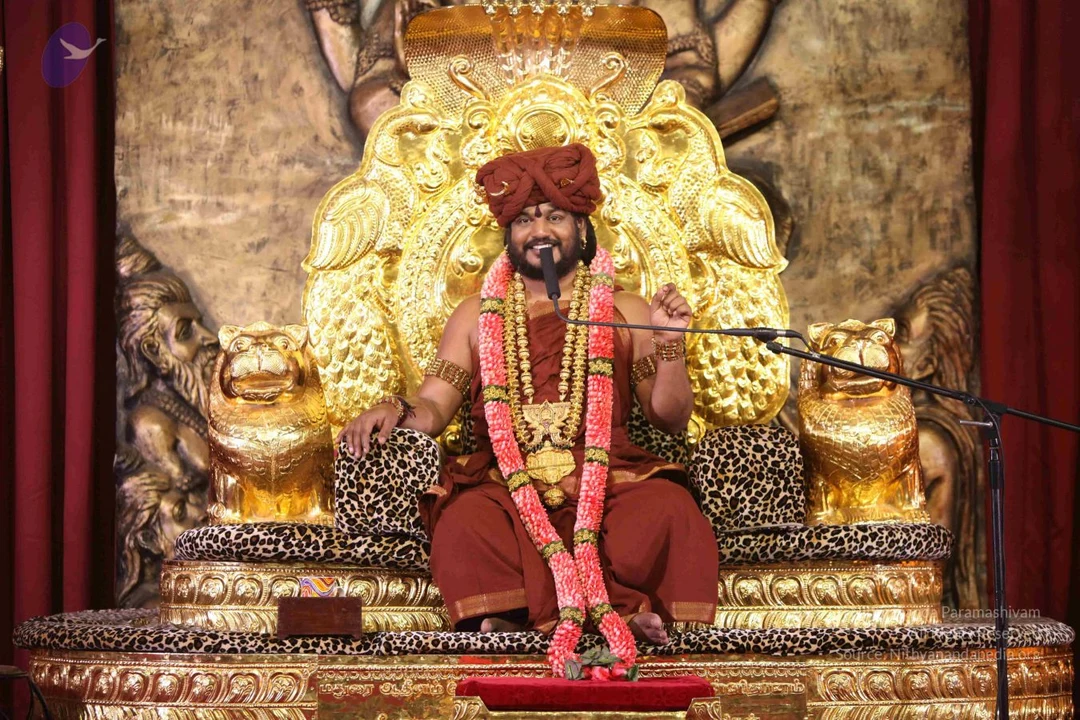
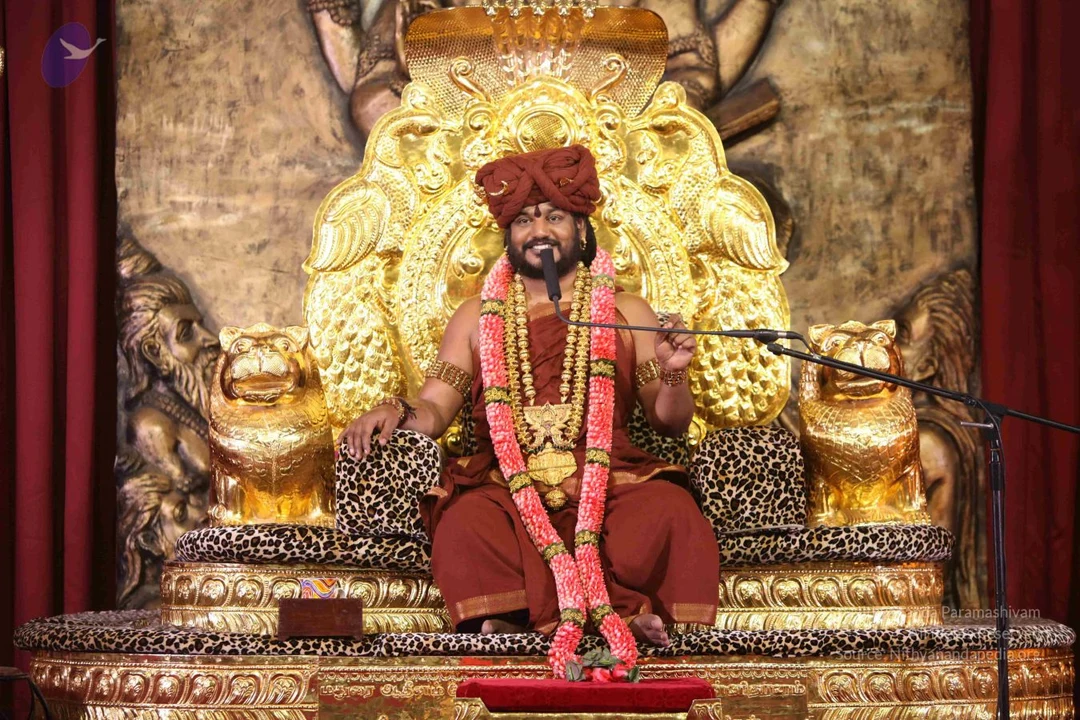
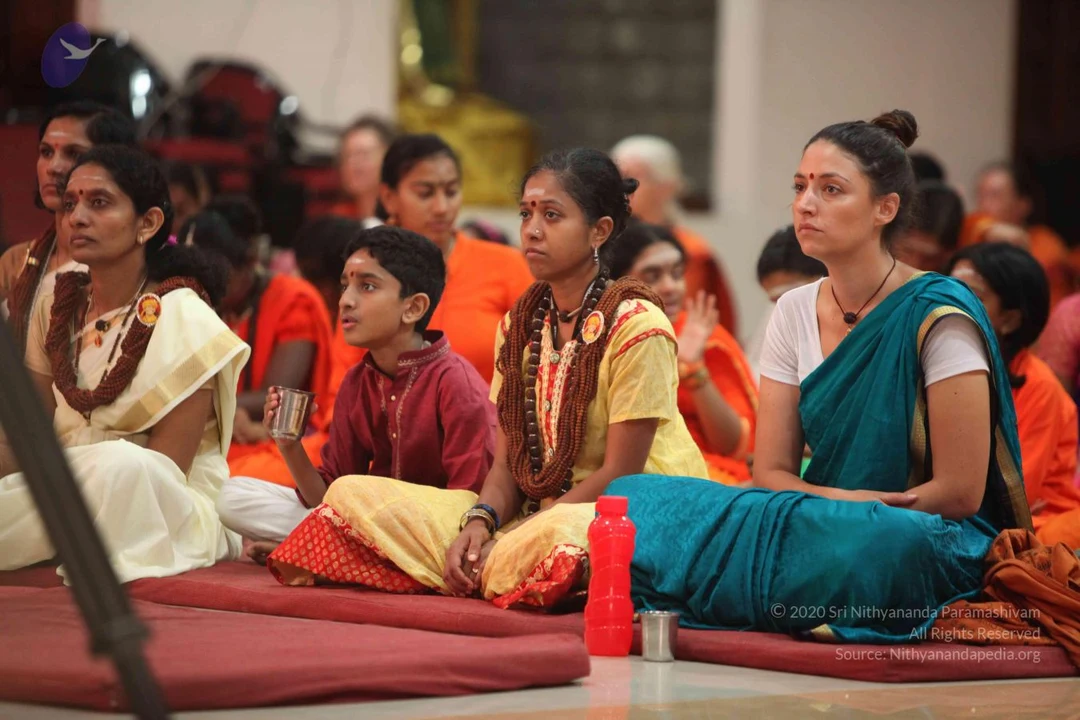
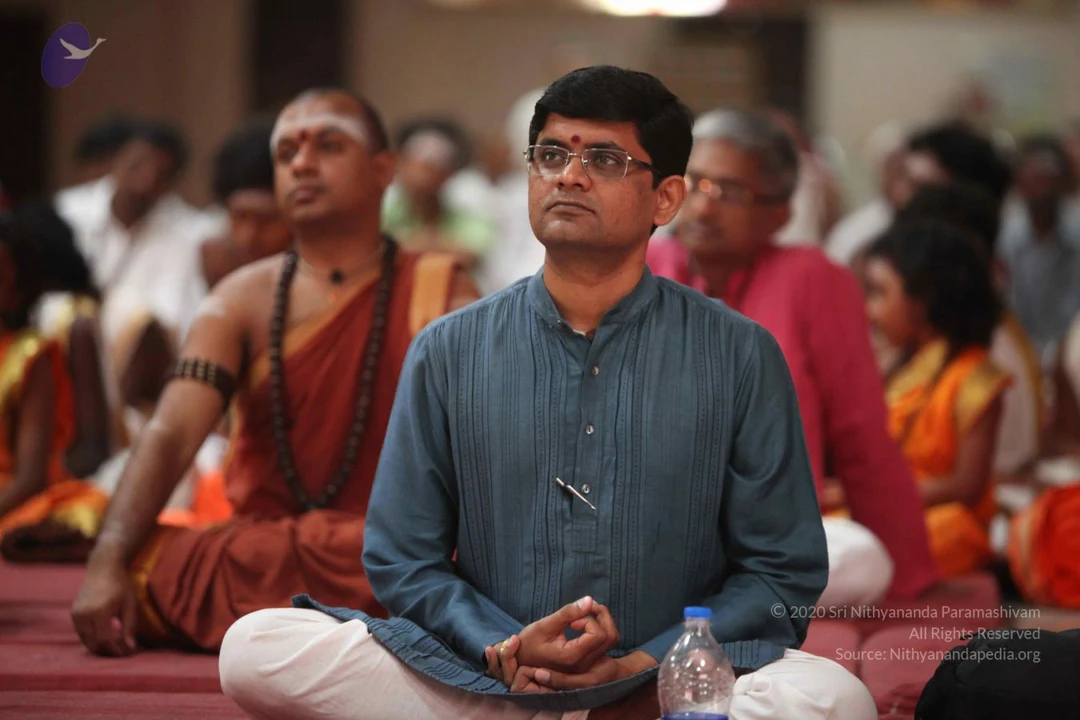
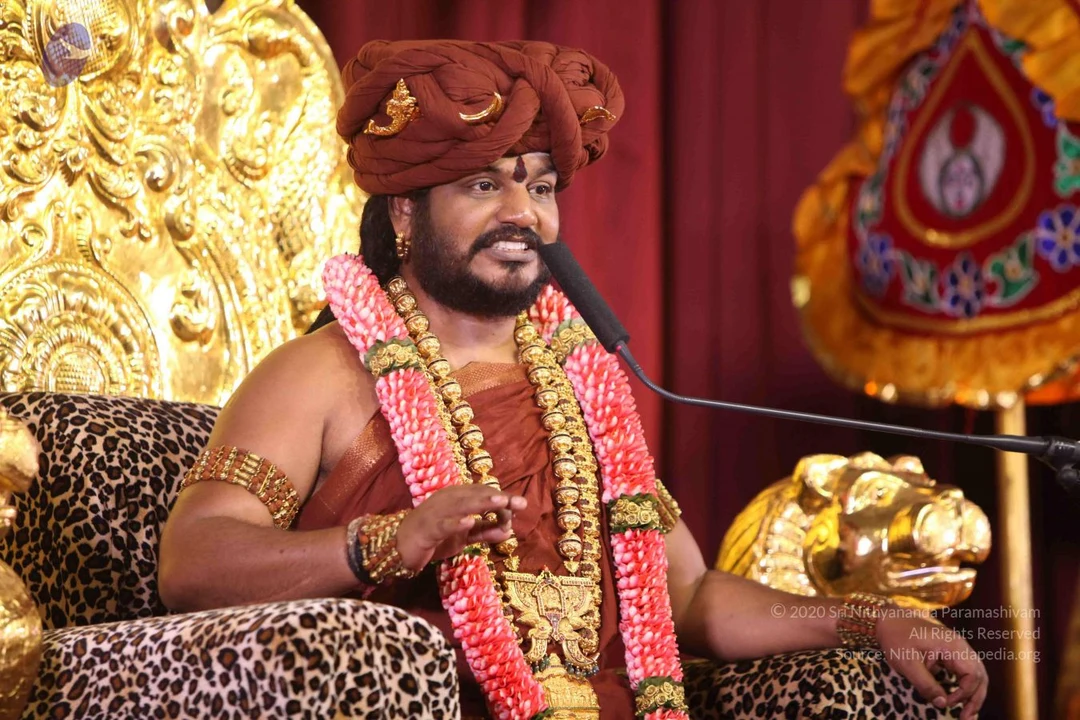
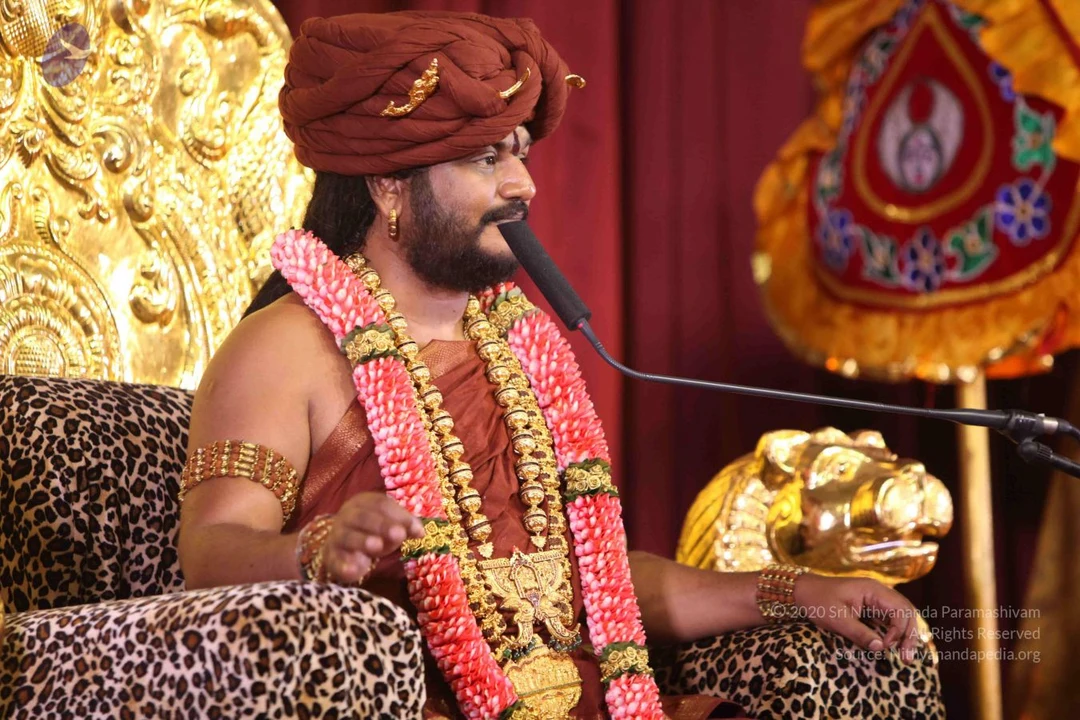
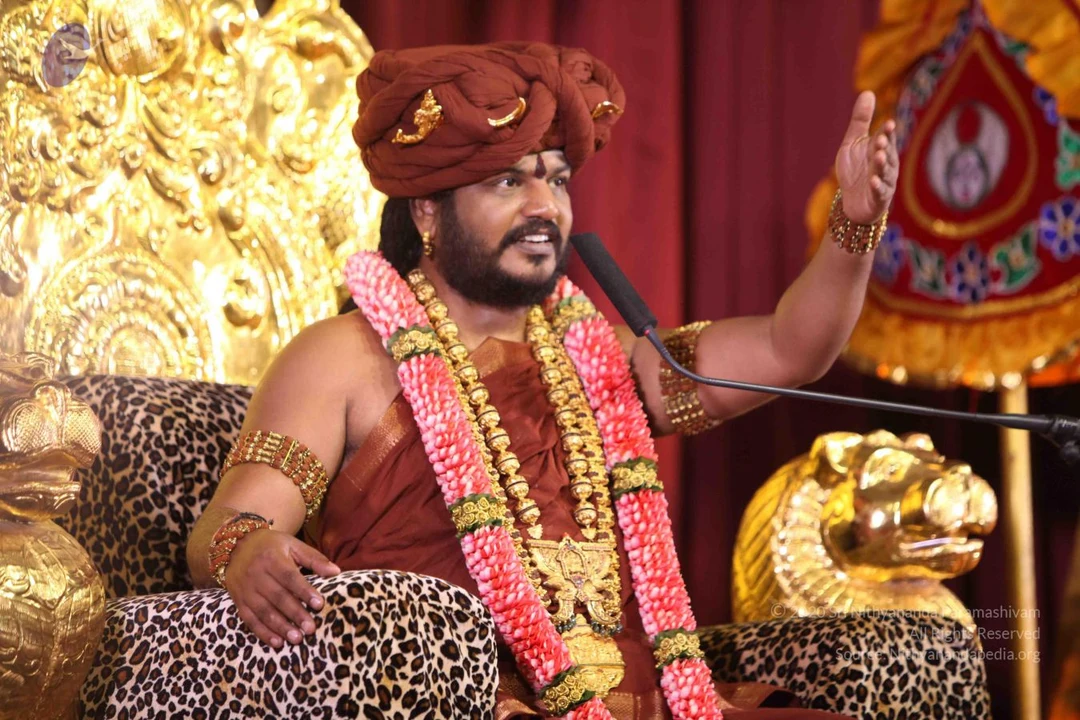
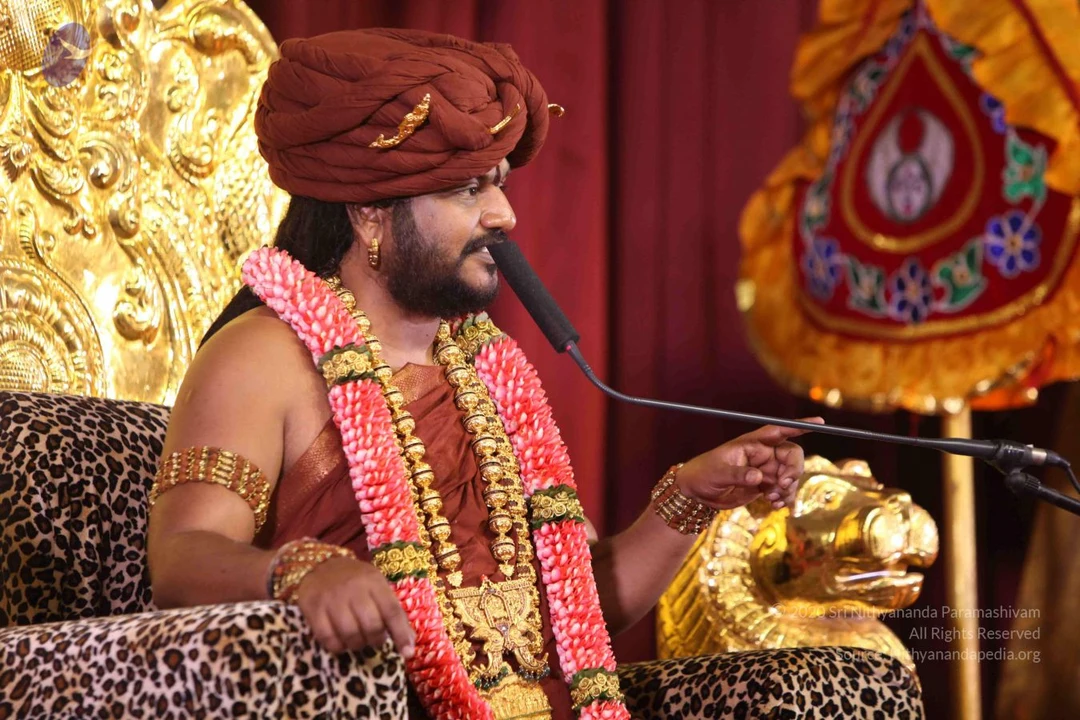
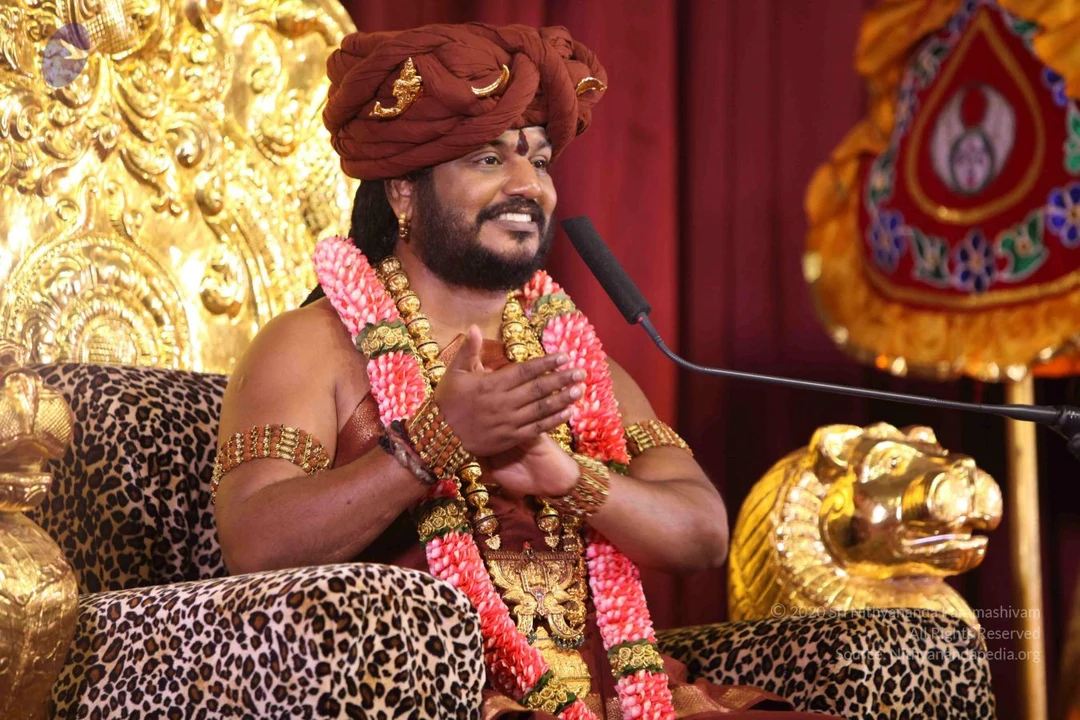
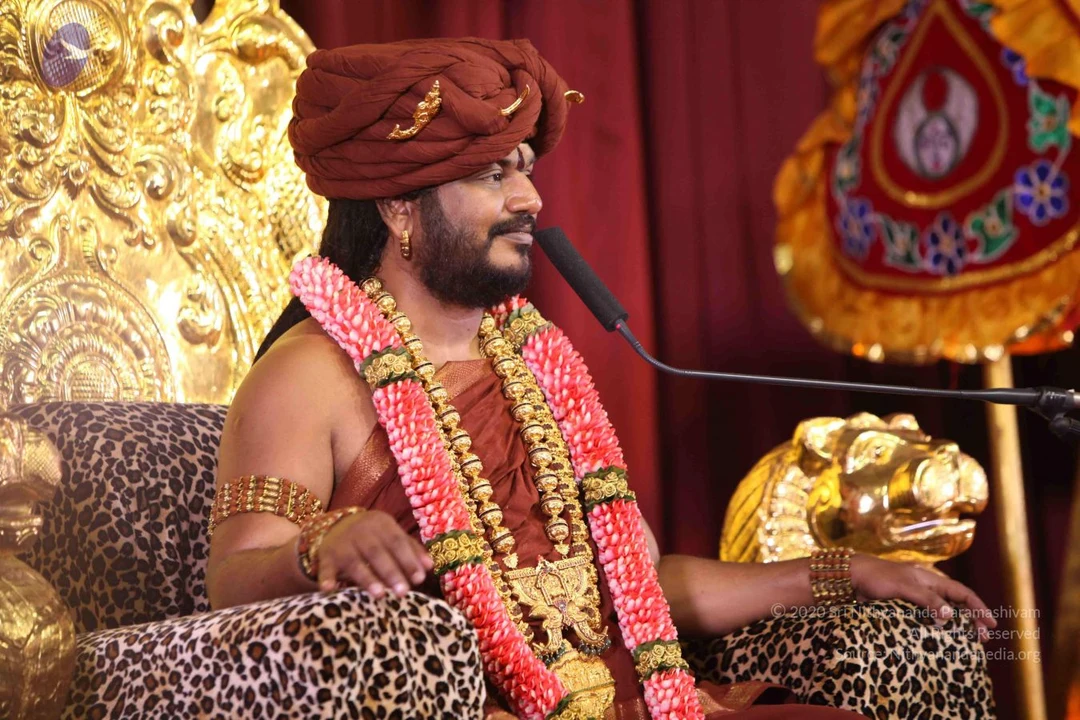
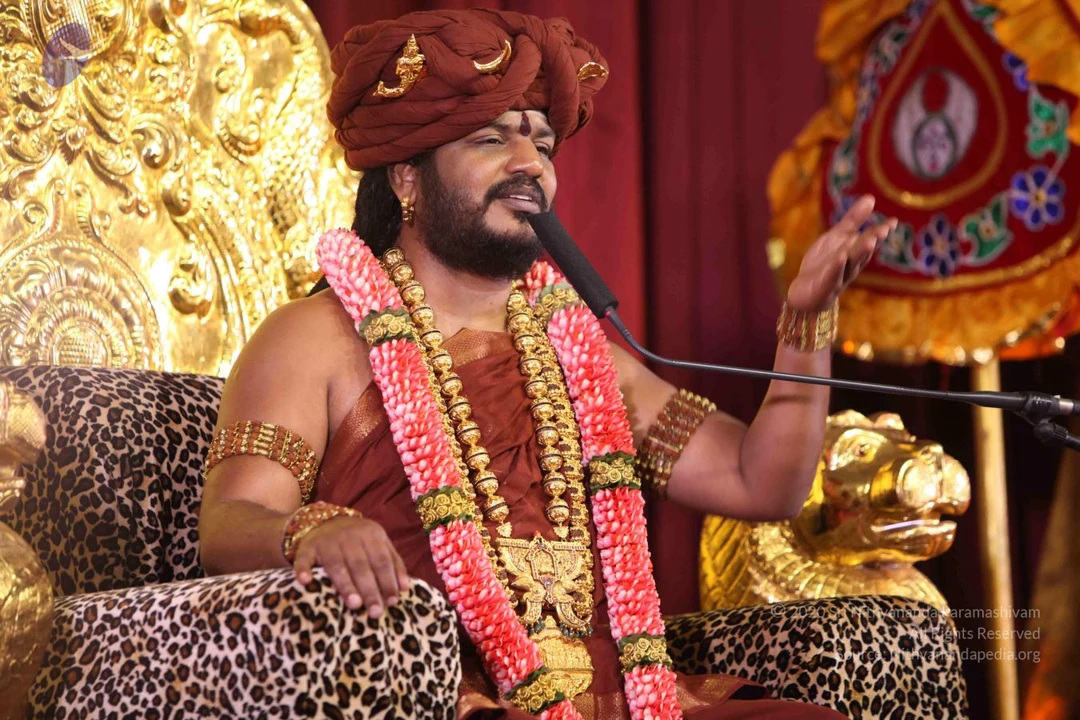
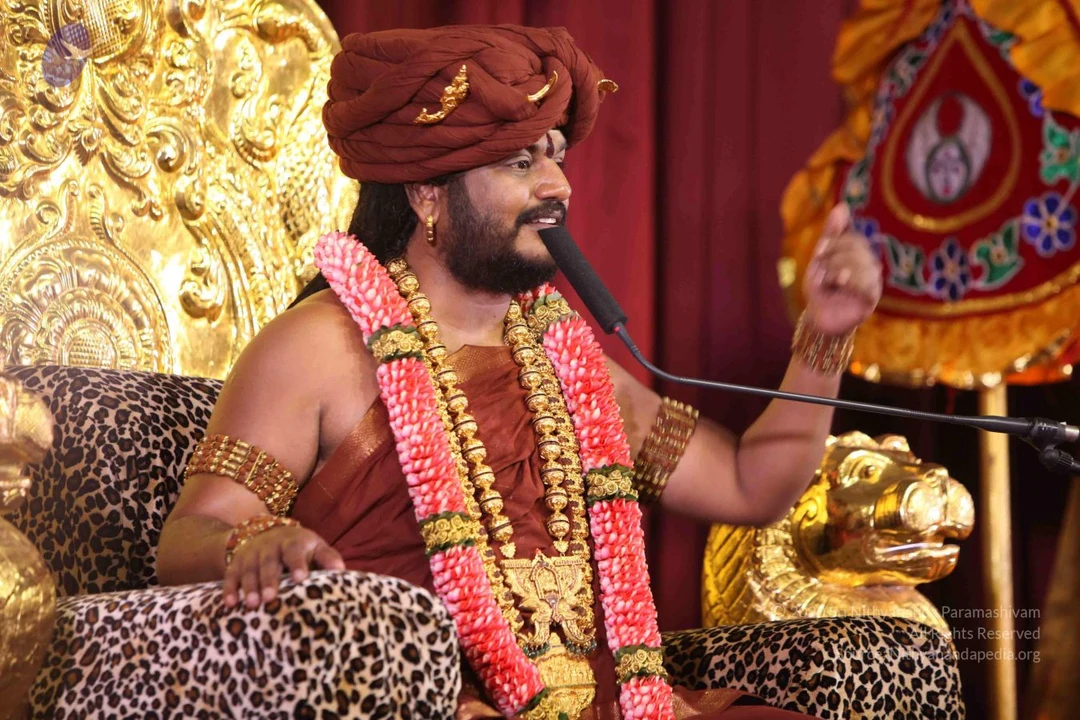
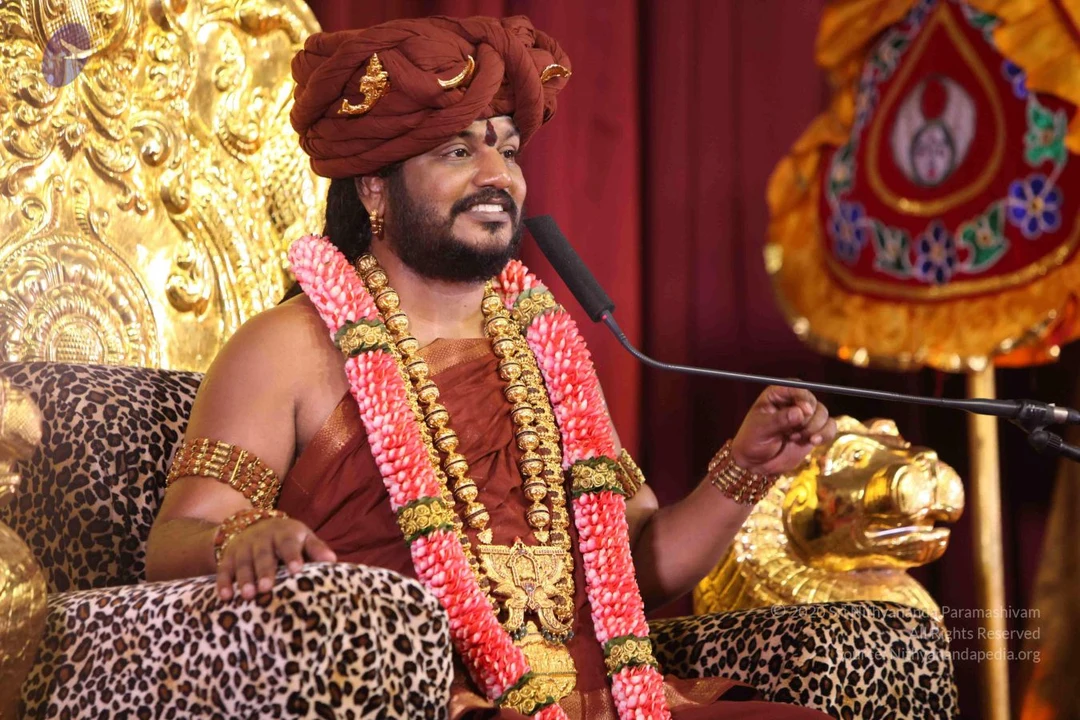
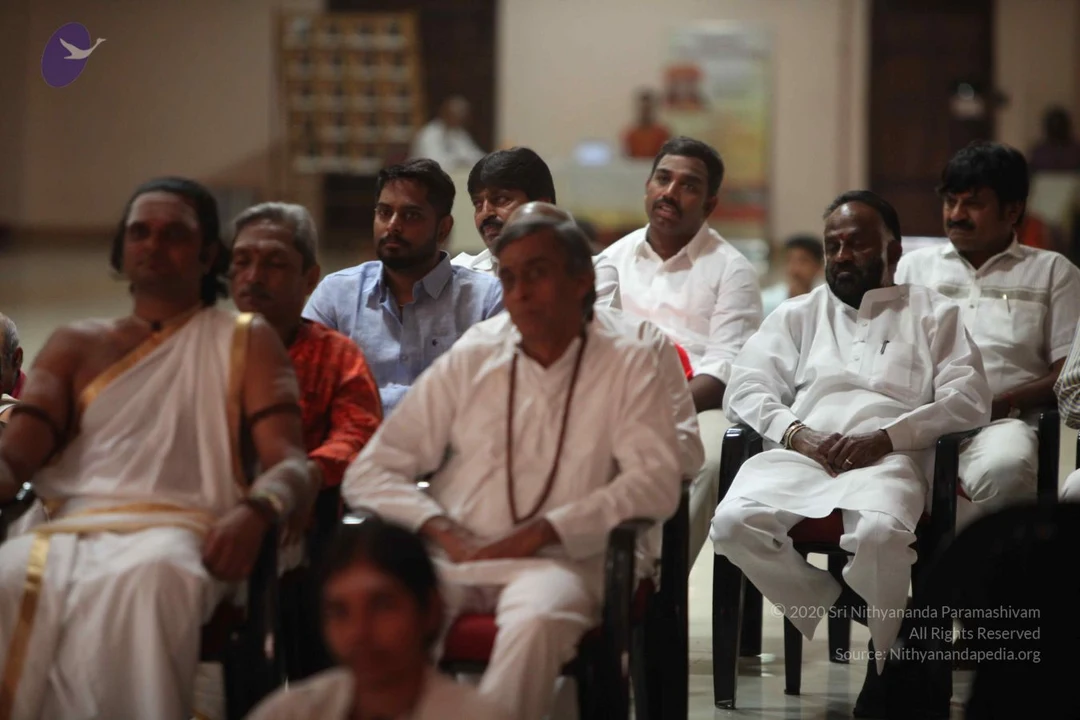
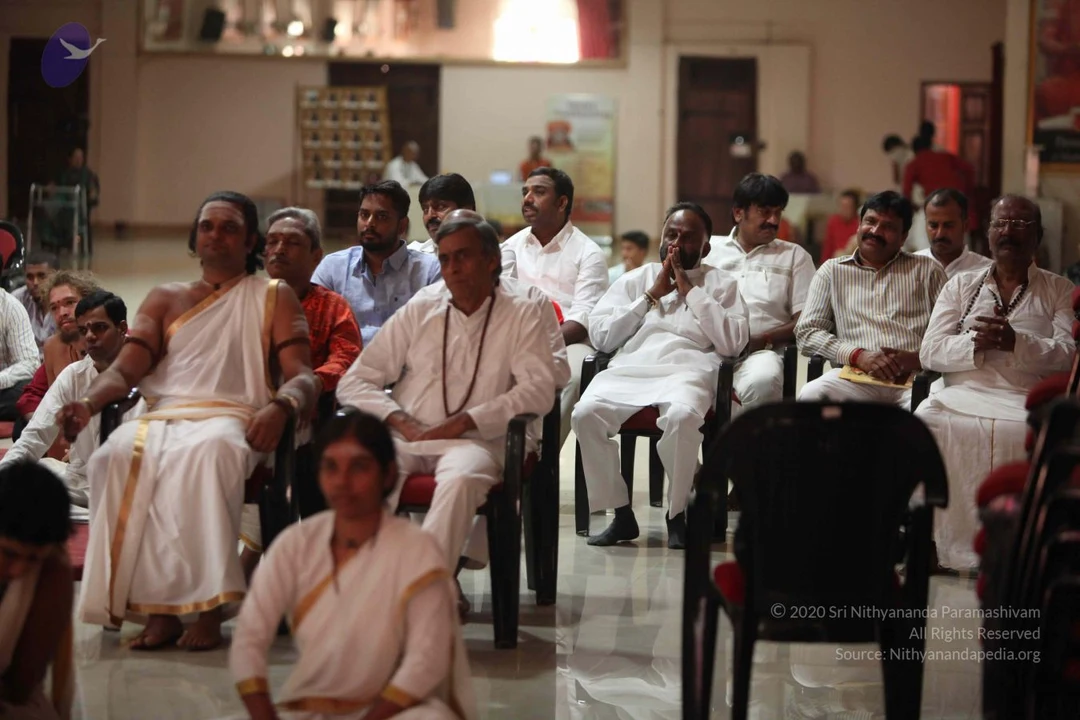
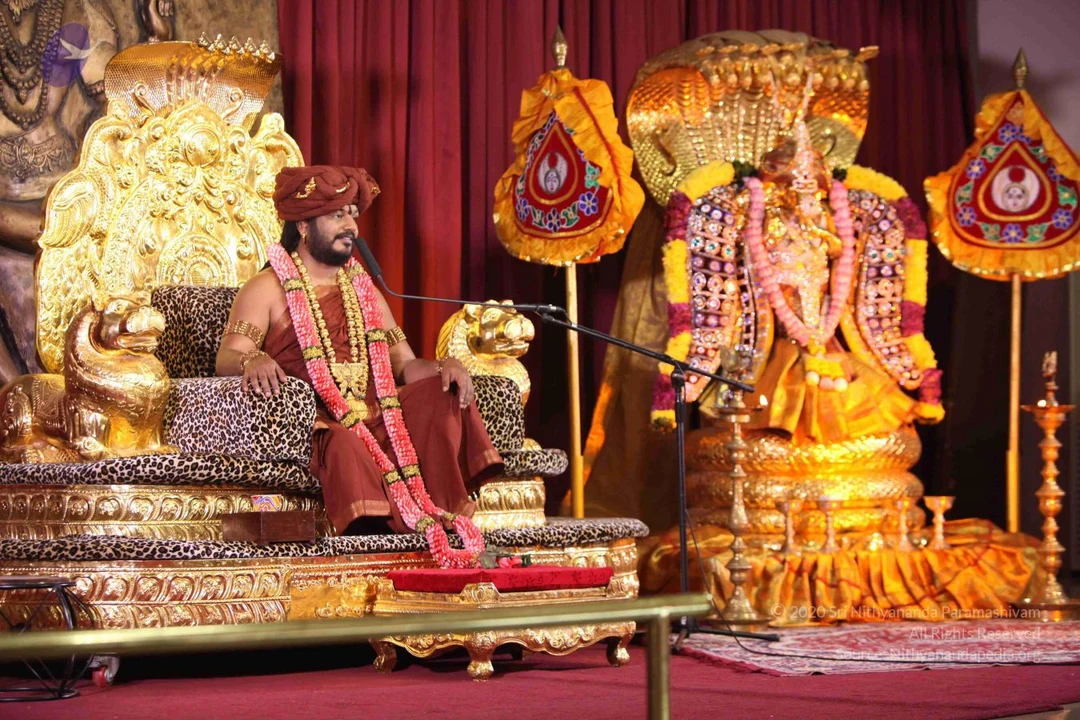
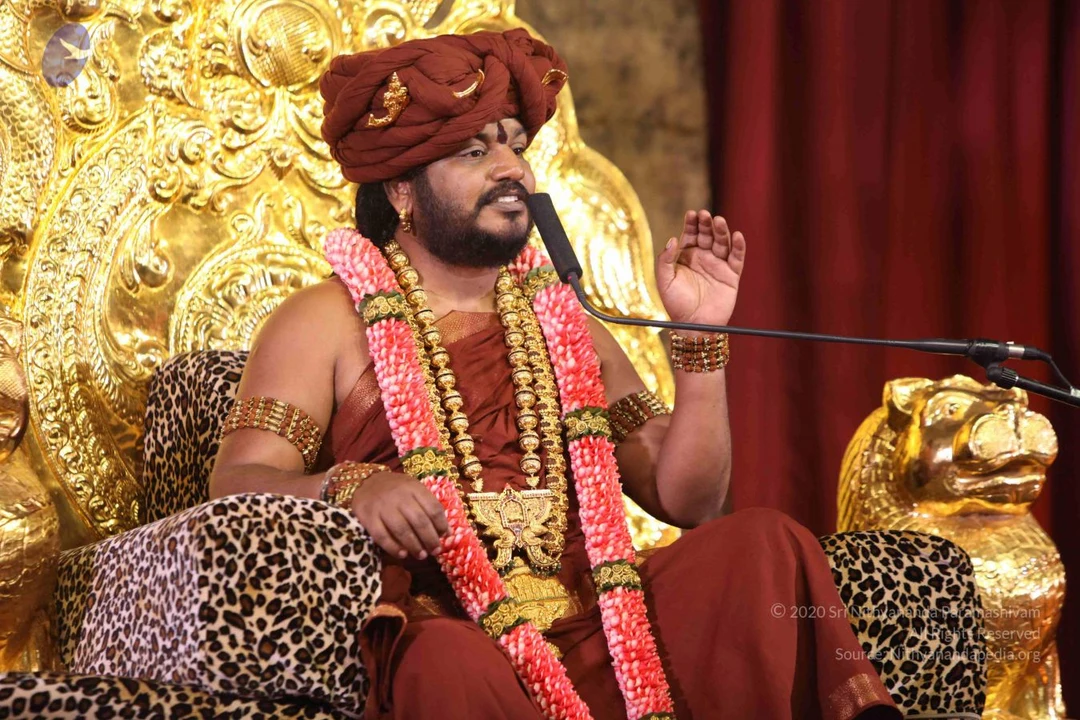
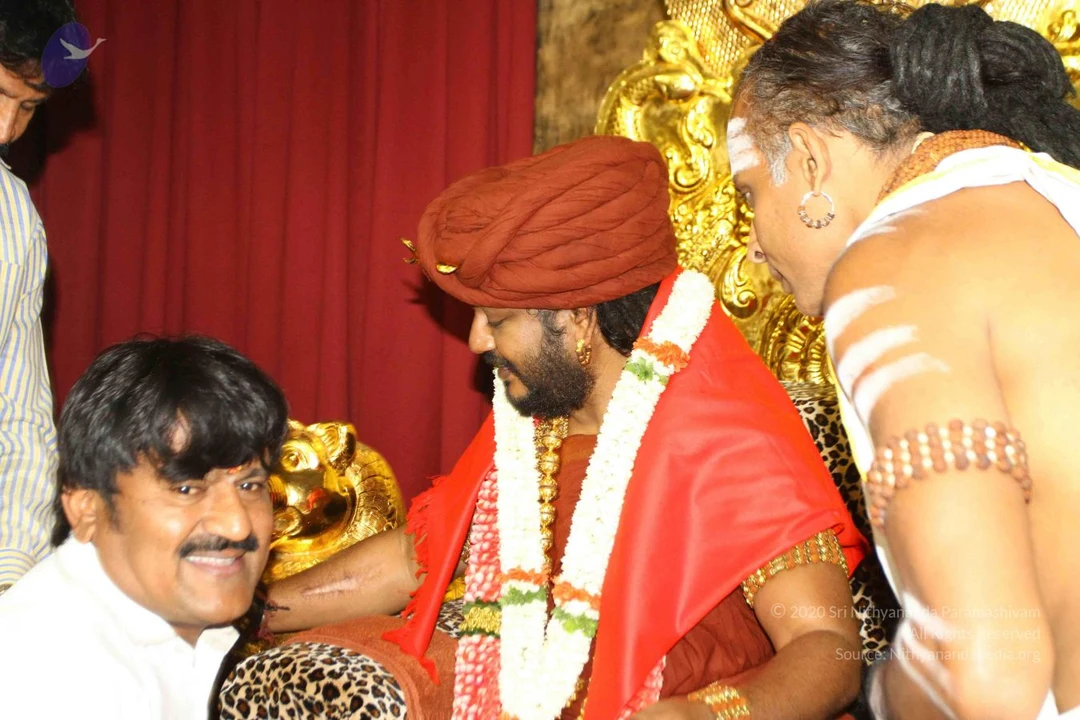
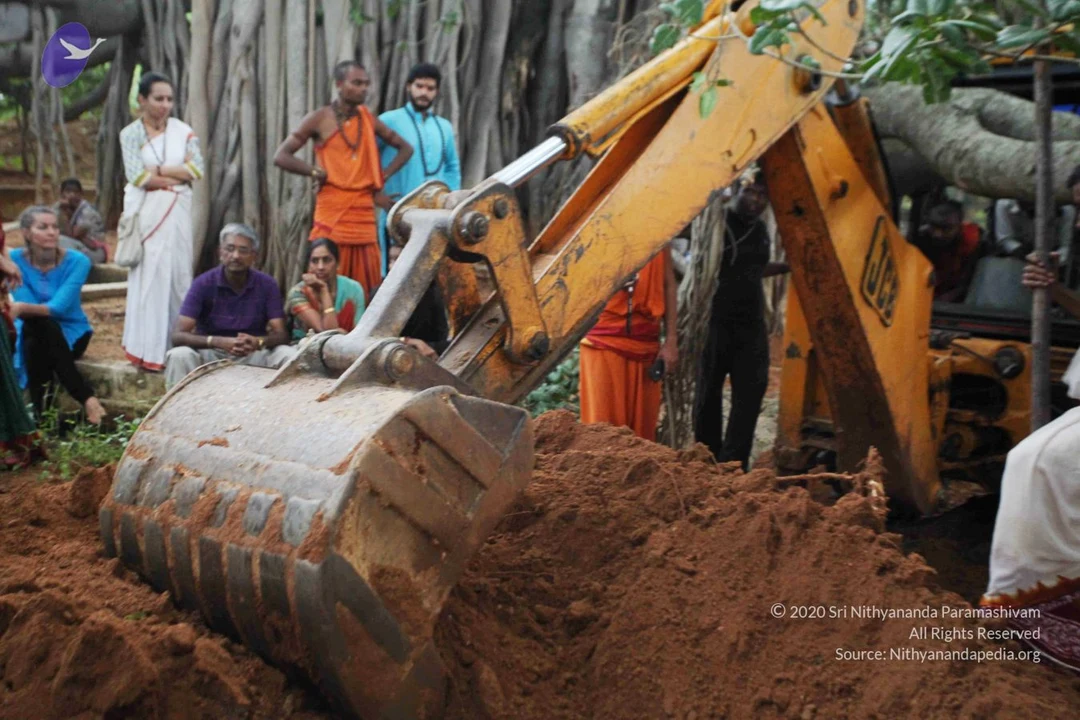
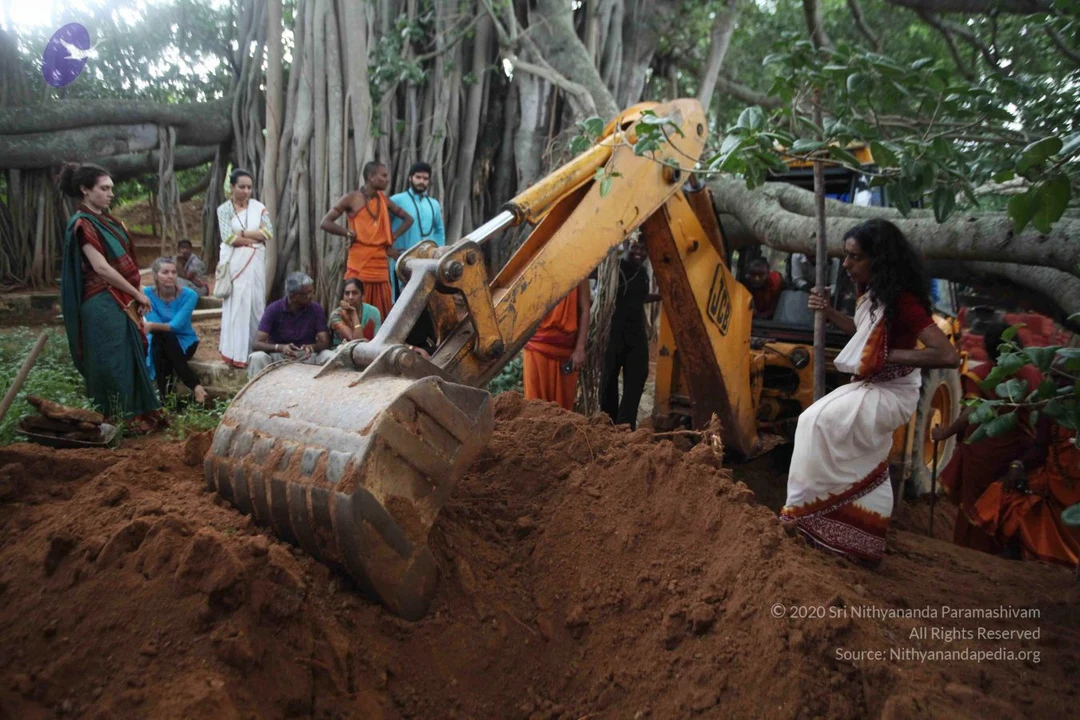
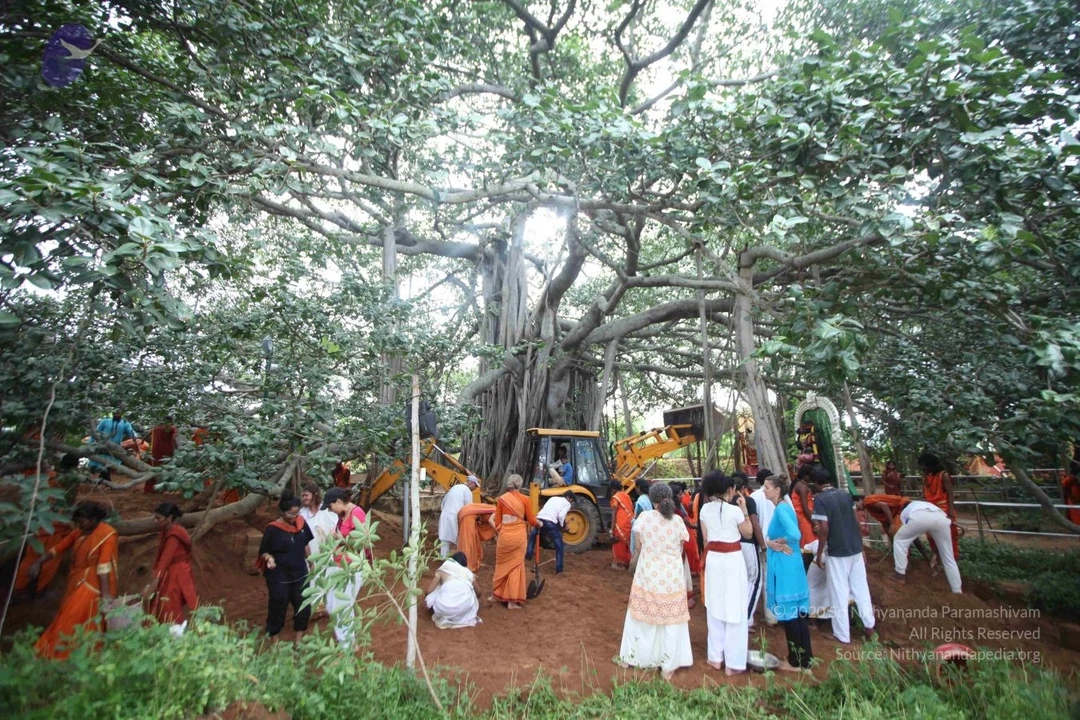
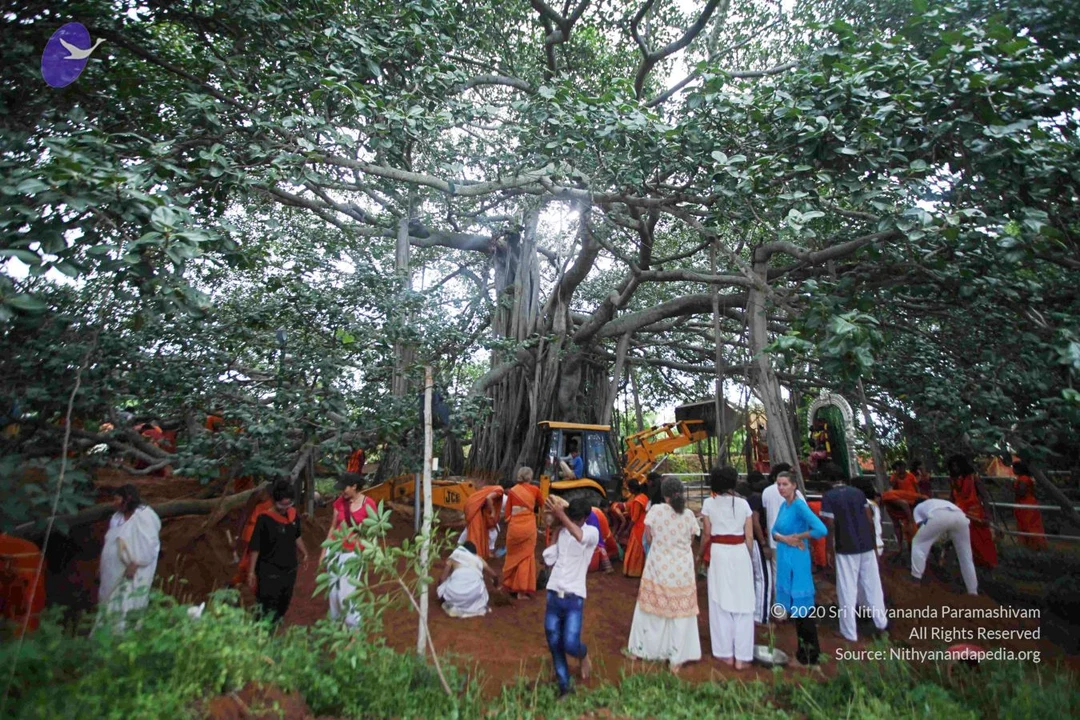
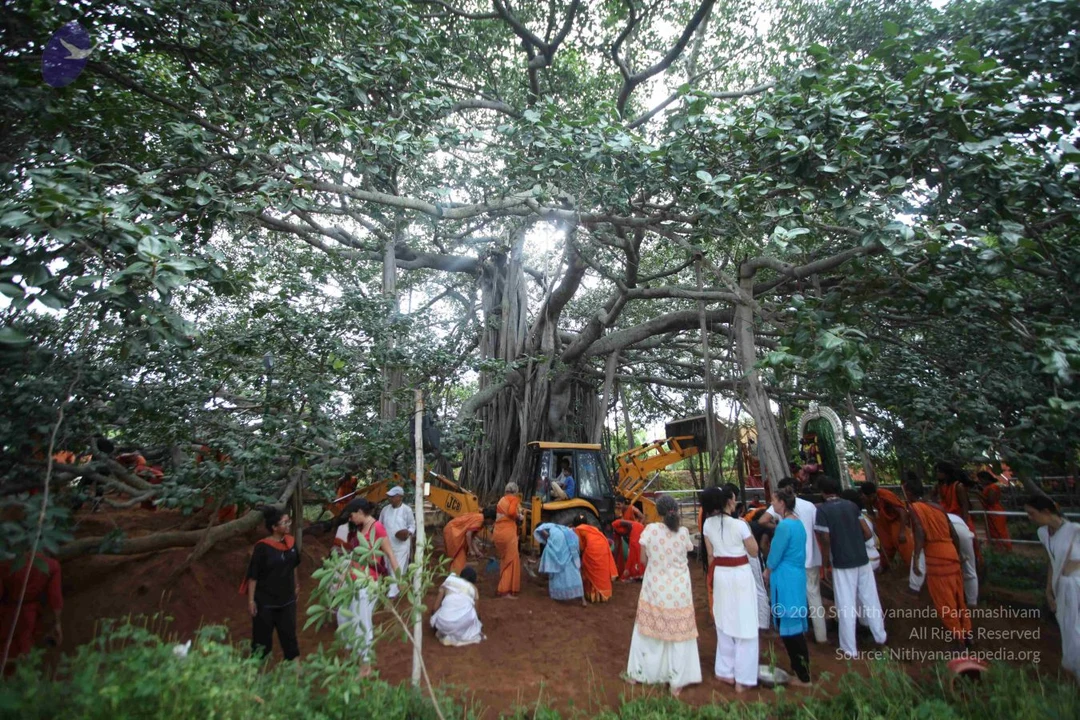
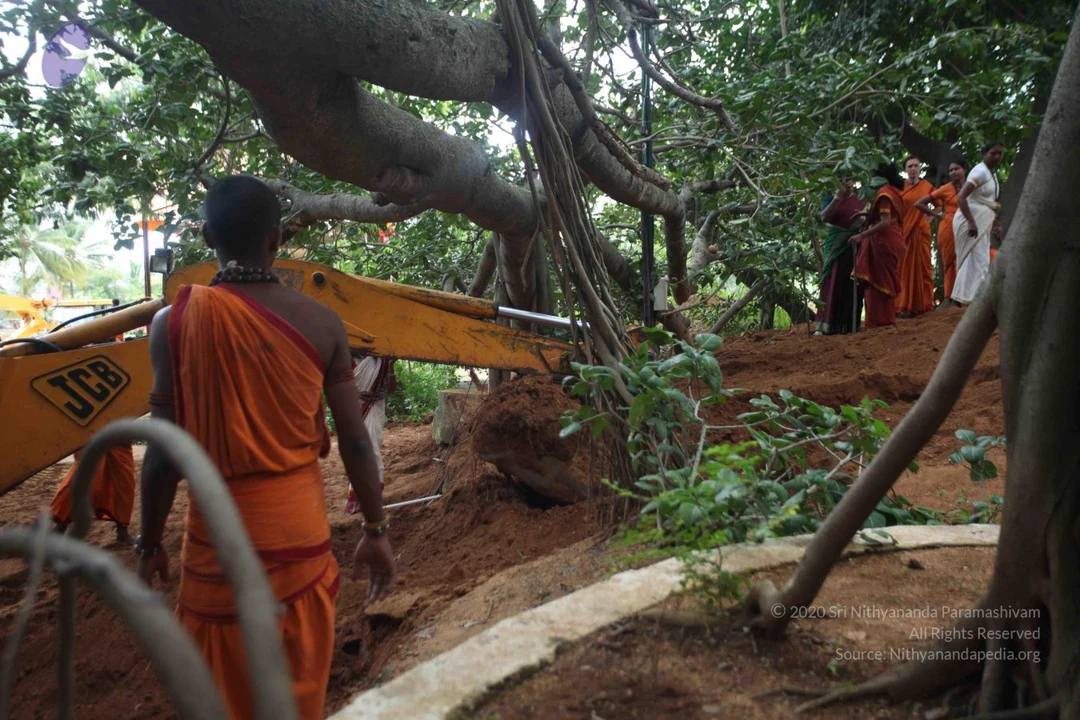
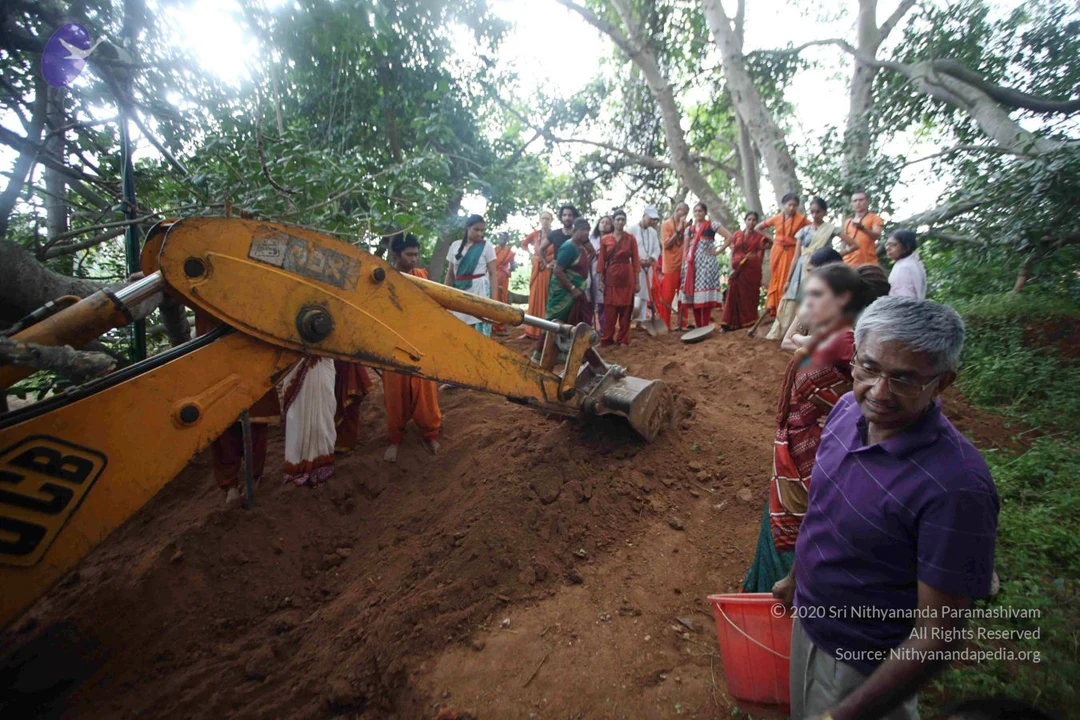
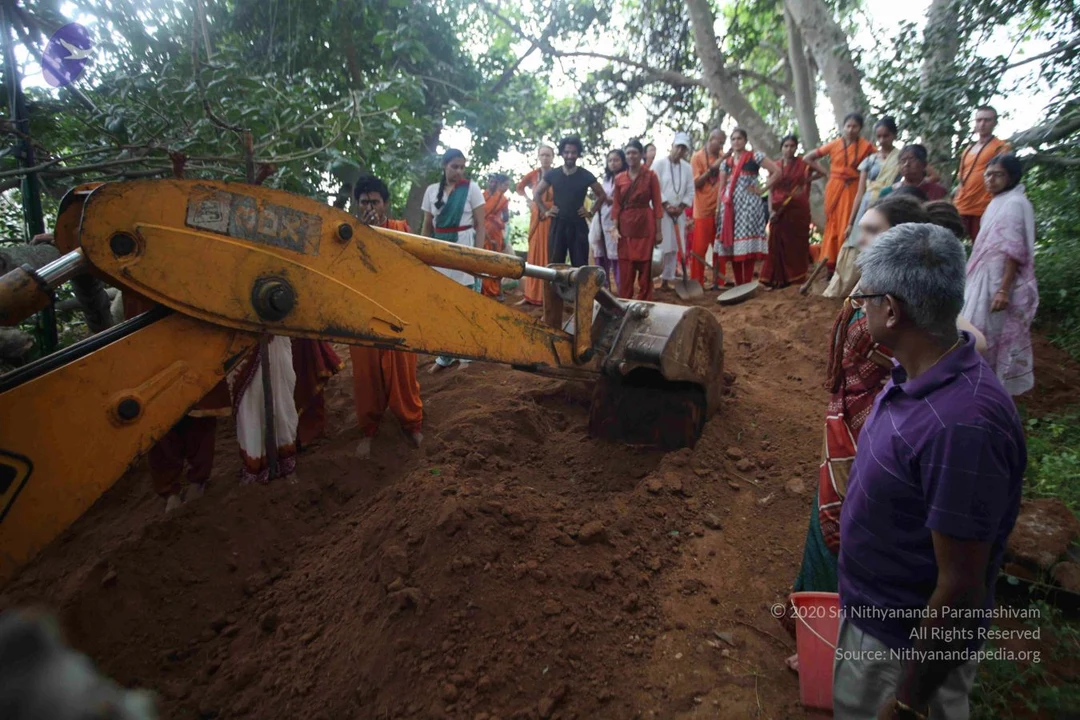
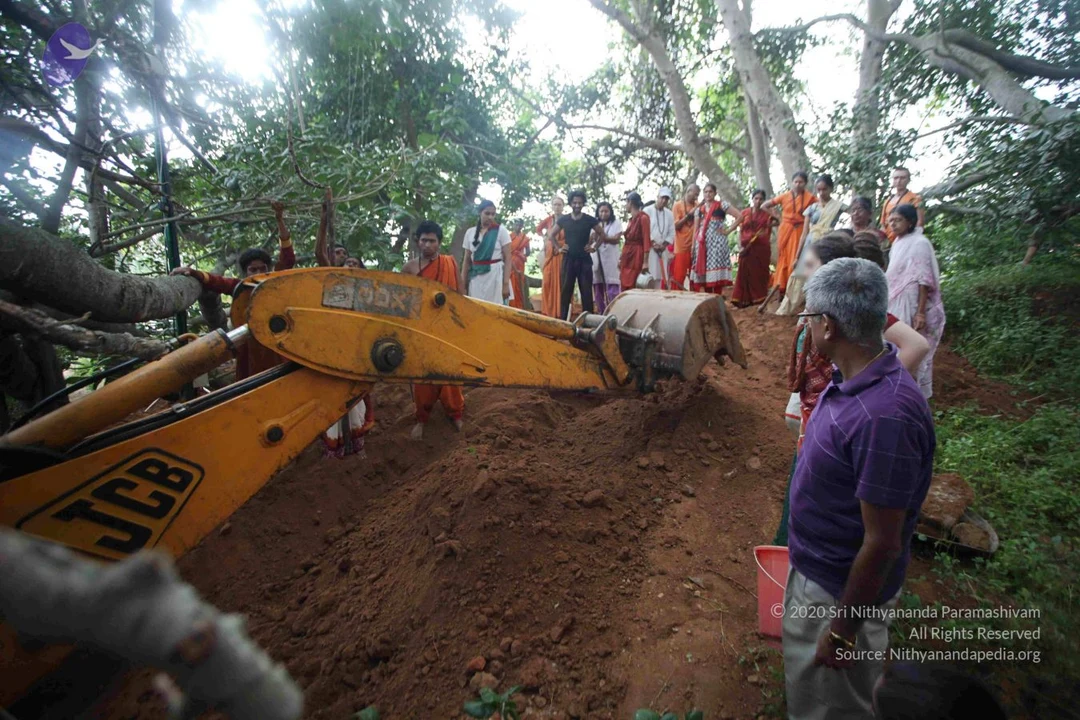
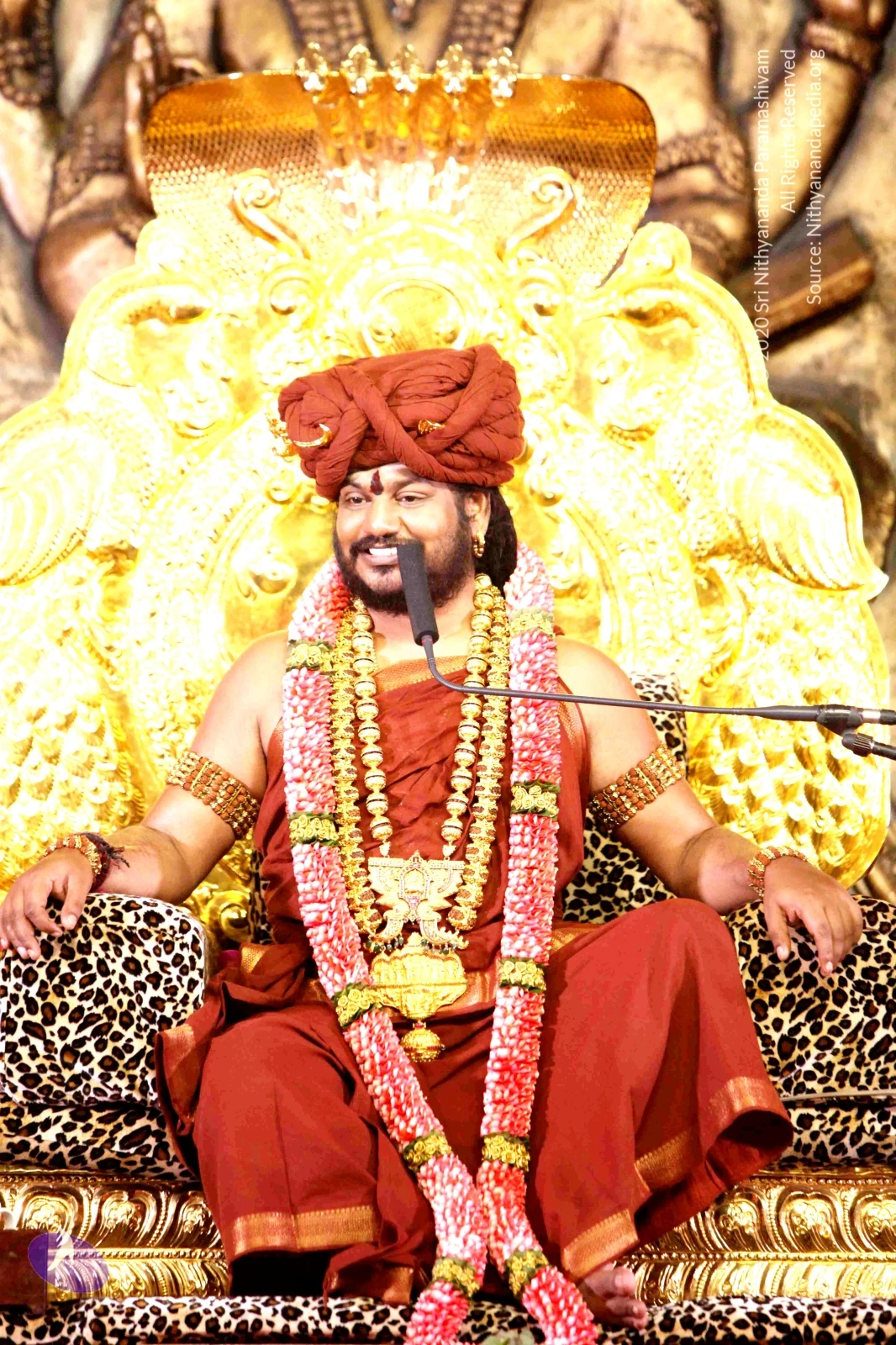
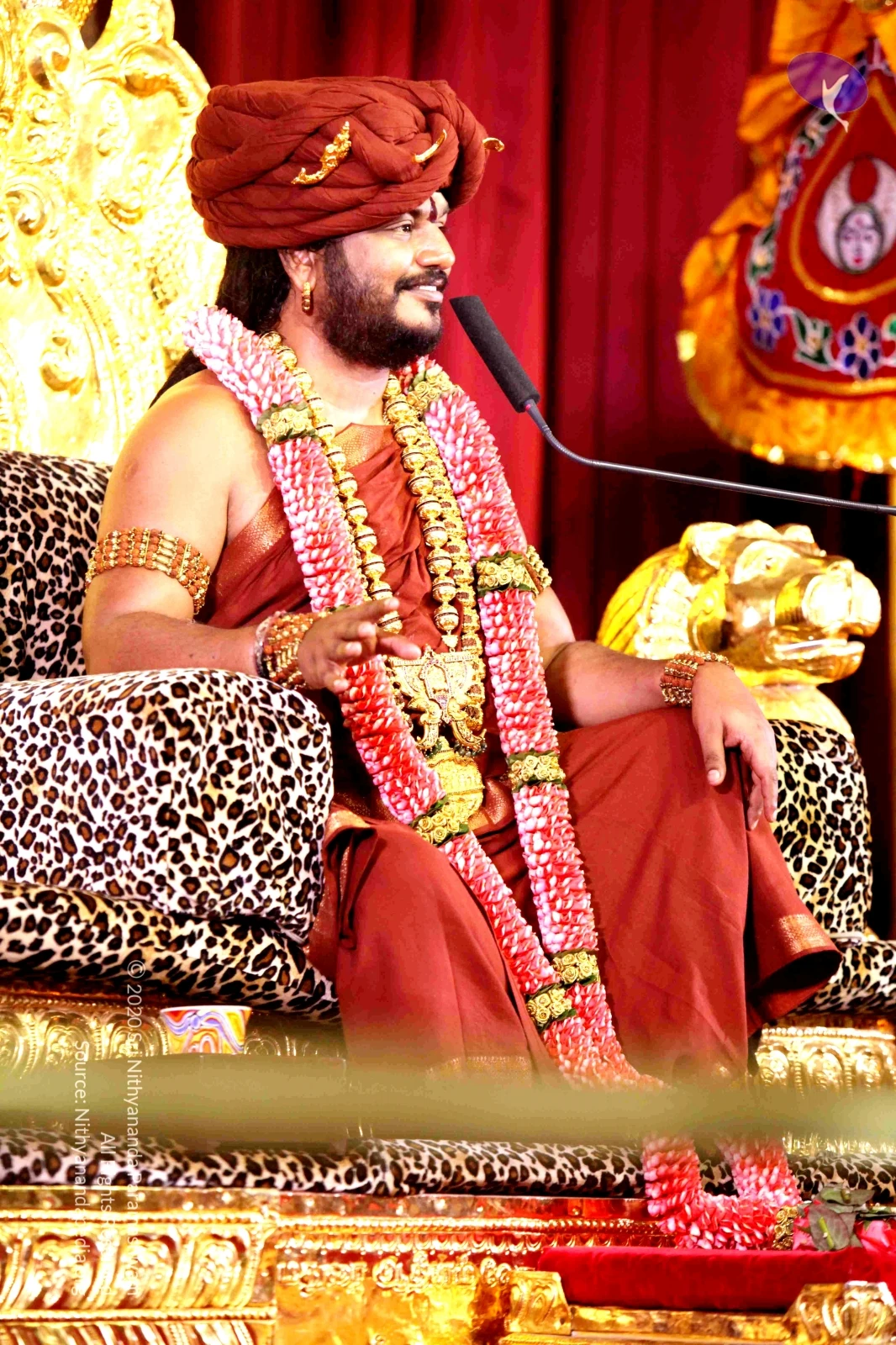
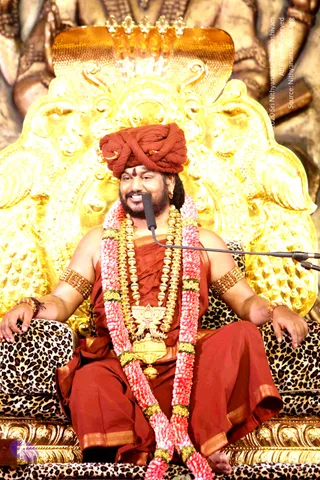
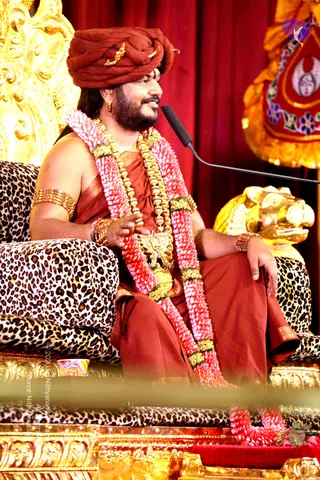
A photograph in an ornate hall with a gold-carved throne and red curtain behind. A bearded man in the centre wears a rust-red turban, a red and saffron shawl, a white and orange-green garland, and gold jewellery, seated on a leopard-print cushion. A probable Swamiji, given the distinctive turban, shawl and garland, and the page's claim of his presence. To the right, a priest with white sacred markings on his forehead and arms, a rudraksha bead bracelet and a large hoop earring leans toward him. At the lower left, a smiling man in white with dark hair and a moustache looks up. Another person stands partly visible at the far left in a striped shirt.A photograph of an outdoor excavation beneath a large banyan tree with many hanging aerial roots. A yellow JCB backhoe loader digs into reddish-brown earth, its bucket piling up soil in the foreground. A woman in a white sari with a red border stands at right beside the machine, holding a long wooden pole. Behind her, several people in orange and saffron robes and a man in a light blue shirt watch the work. On the left, a woman in a green sari with red trim, a woman in a blue top and a seated man in a purple shirt observe from the edge of the site. Another woman in a white sari stands near the centre-left. Dense greenery surrounds the scene.A seated man in a maroon-red turban with gold ornaments speaks into a microphone on a stand, one hand raised in gesture. He wears a red-brown robe, multiple gold bead necklaces, a pink and white flower garland, gold armbands and bangles. He sits on a large ornate gold throne with leopard-print cushions, flanked by a gold lion sculpture on the right, with a deep red curtain behind. Swamiji (probable): the turban, gold necklaces and ornate throne setting are the qualifying cues for a discourse by the teacher.

September 04 2016

Original wiki page
Contents

Title

Manifest Ishvaratva - Responsibility for Your Life's Purpose

Description:

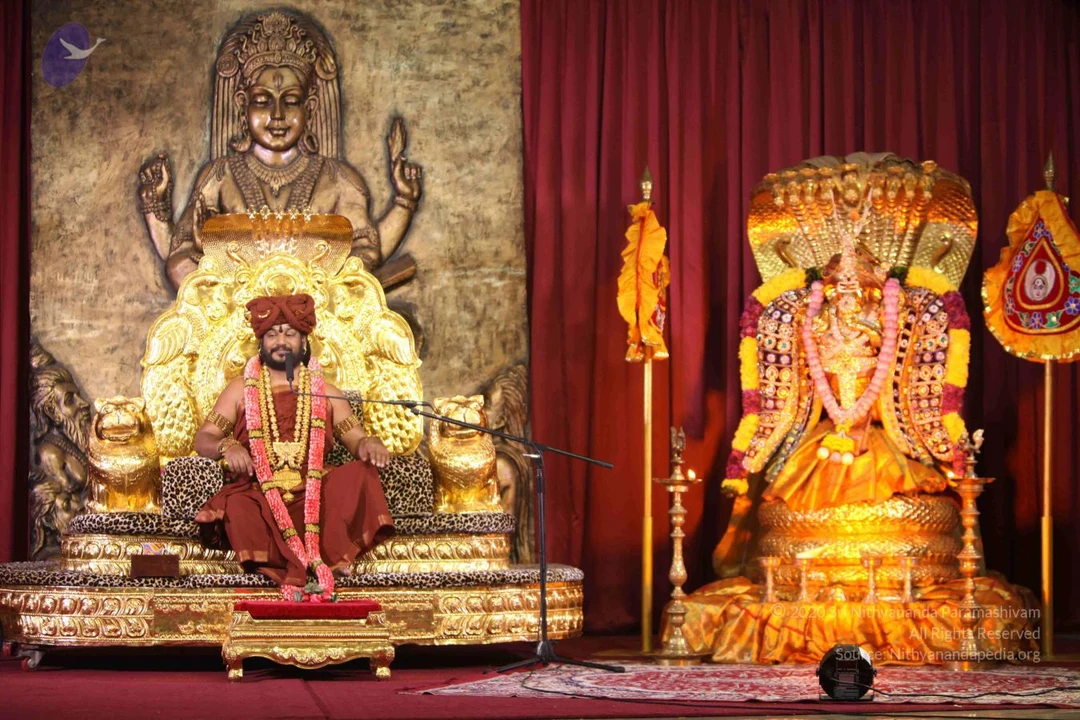
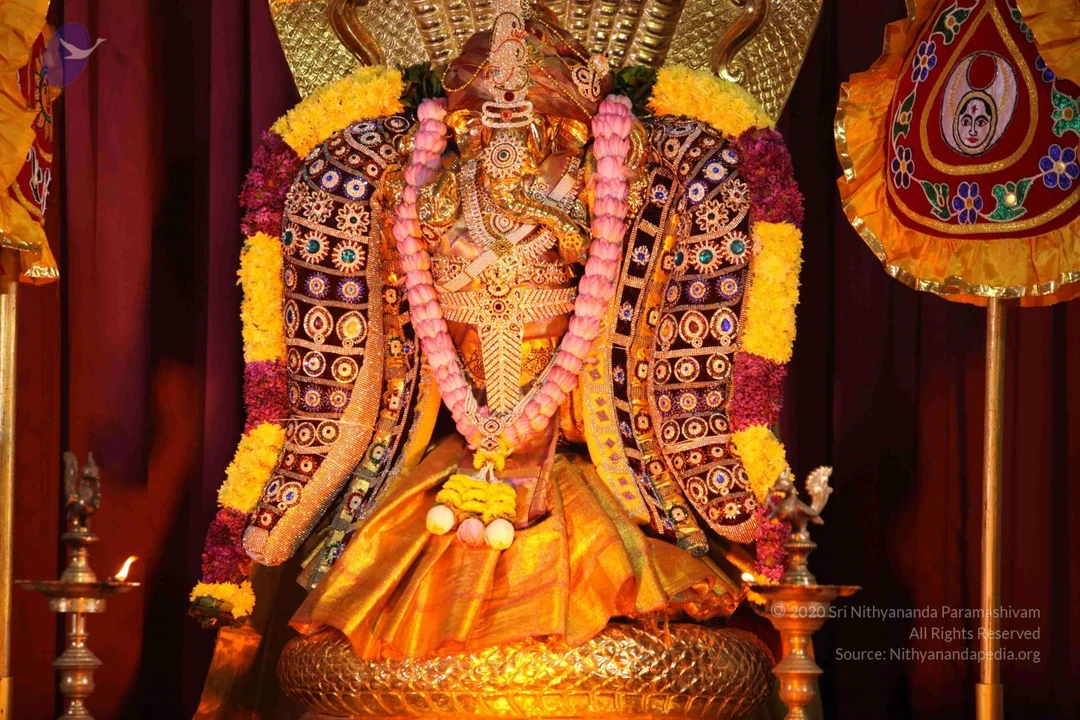
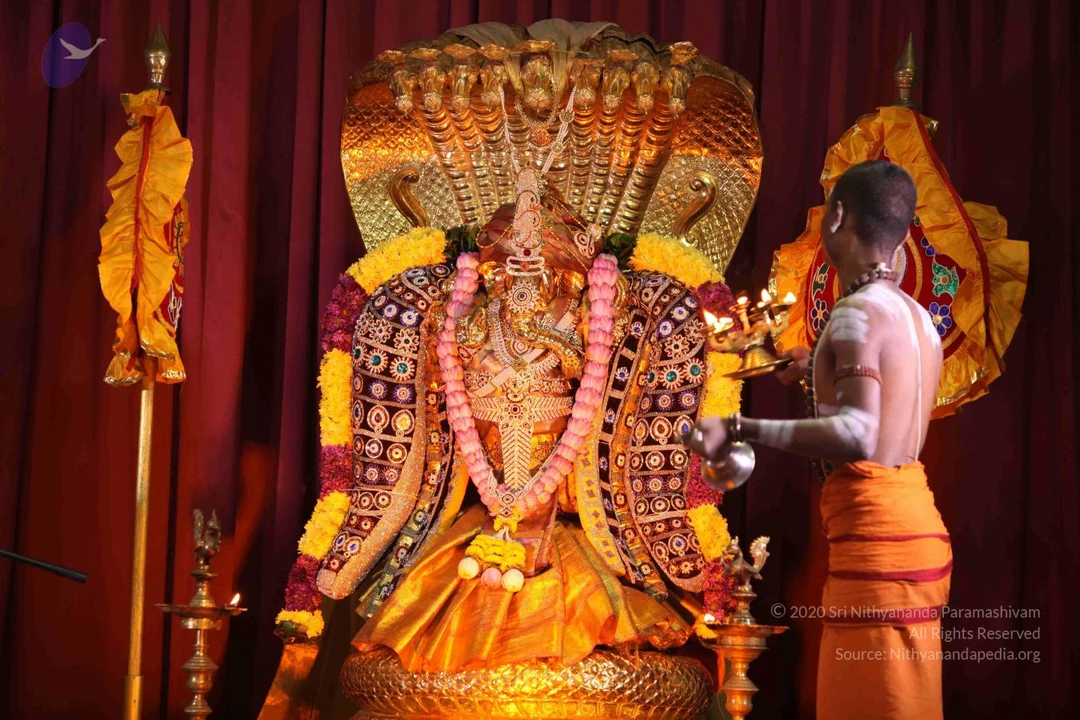
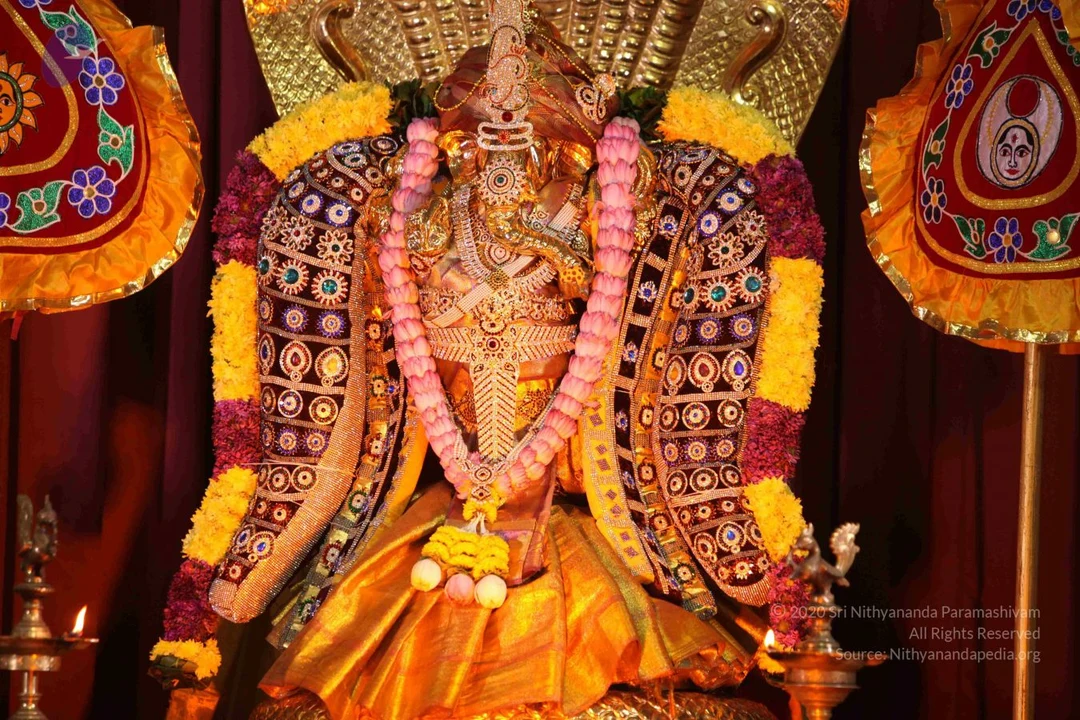
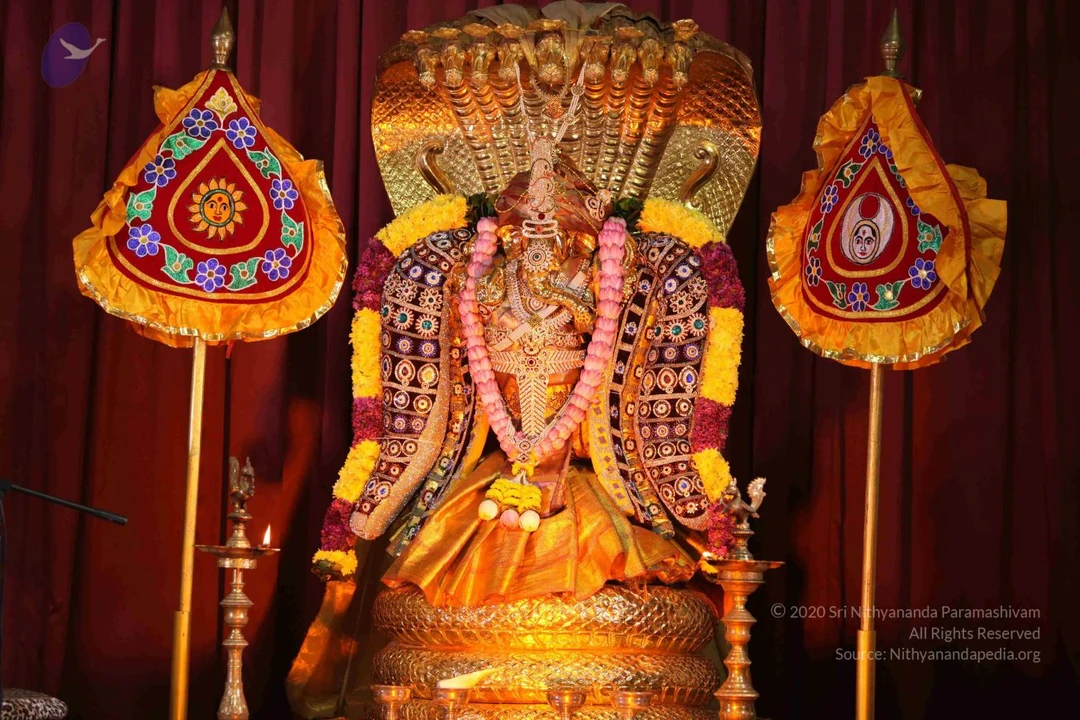
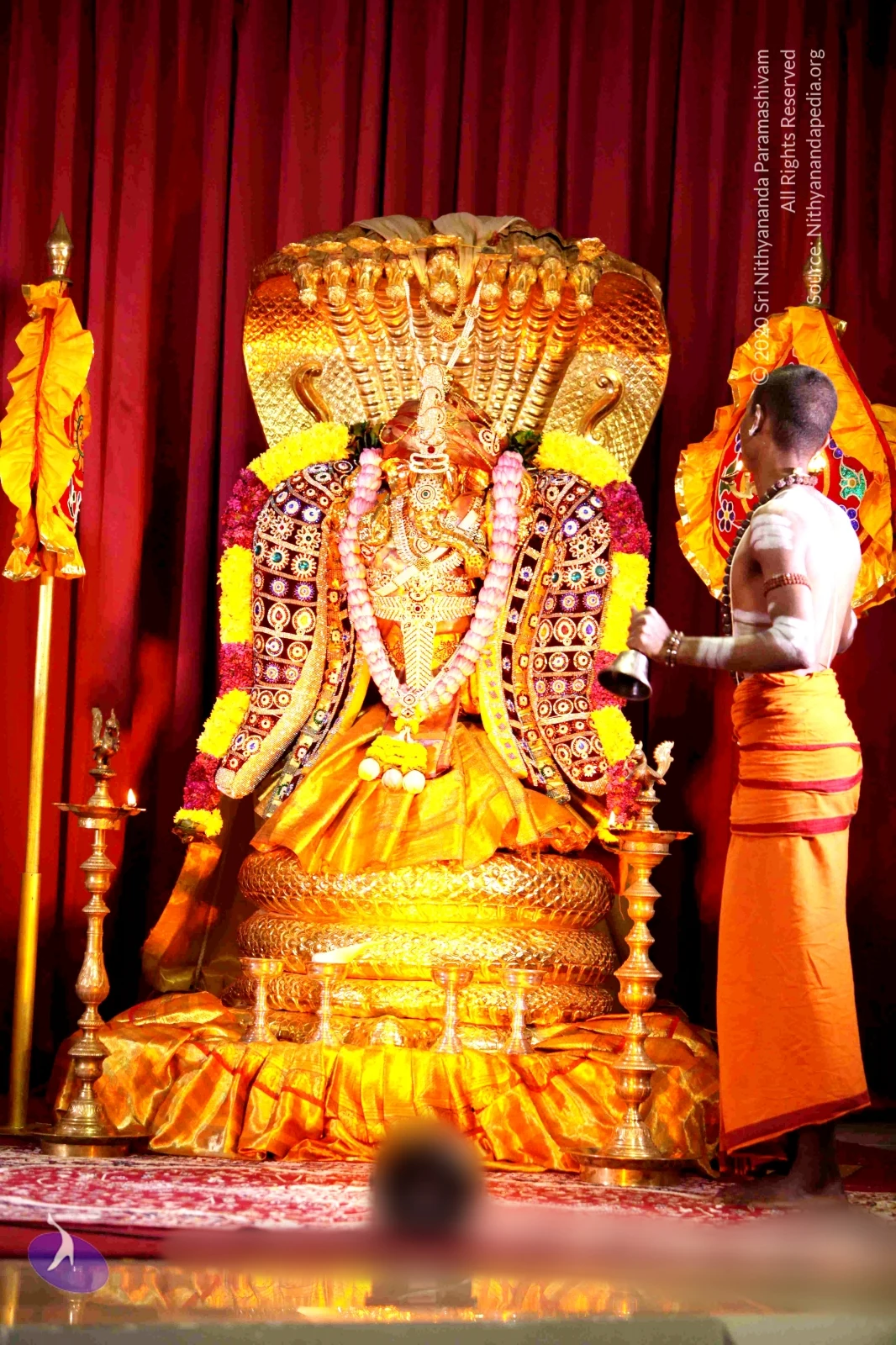
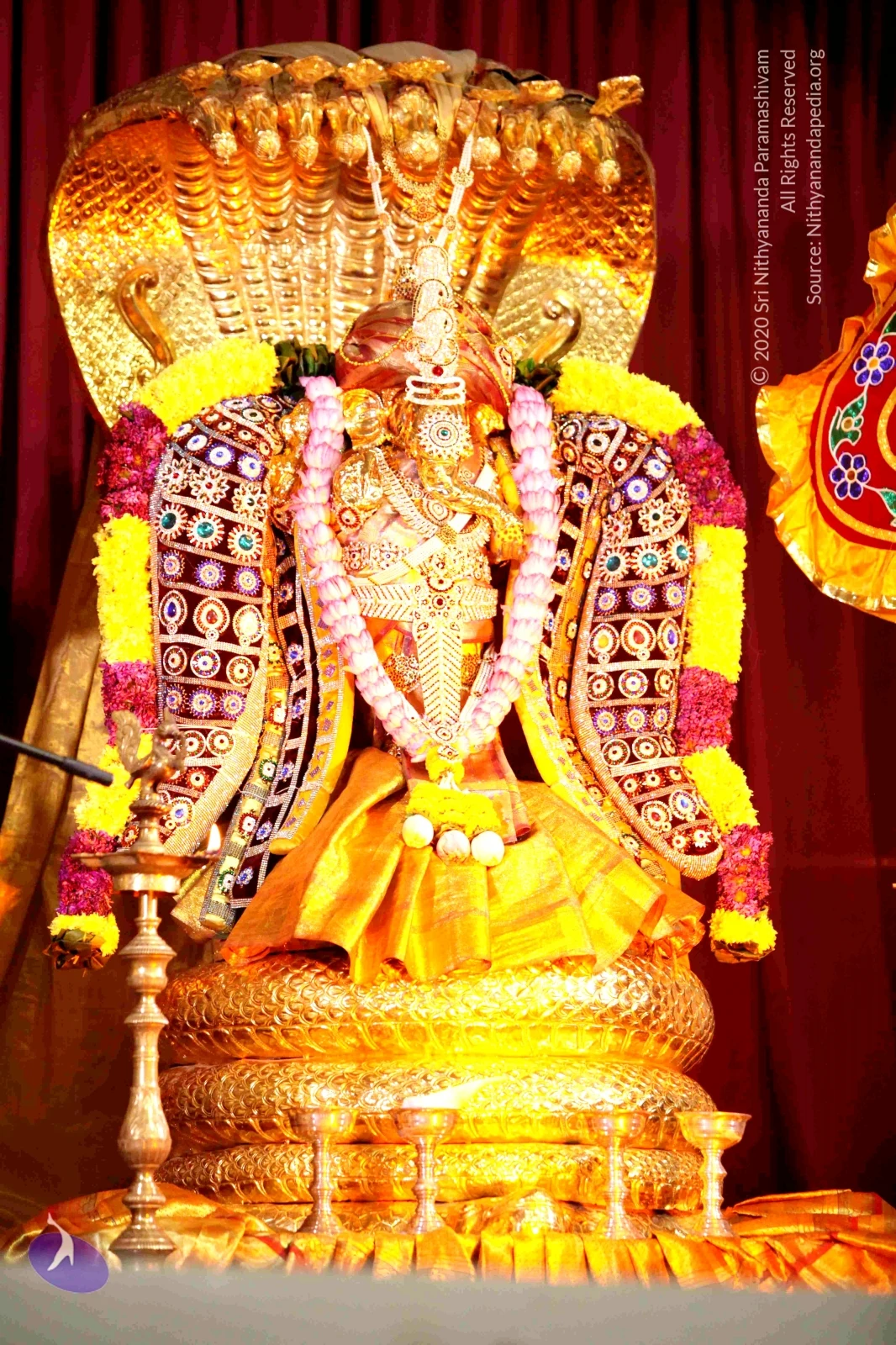
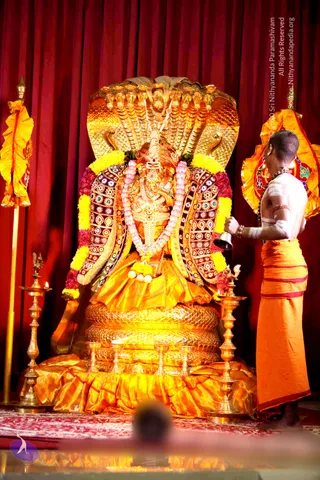
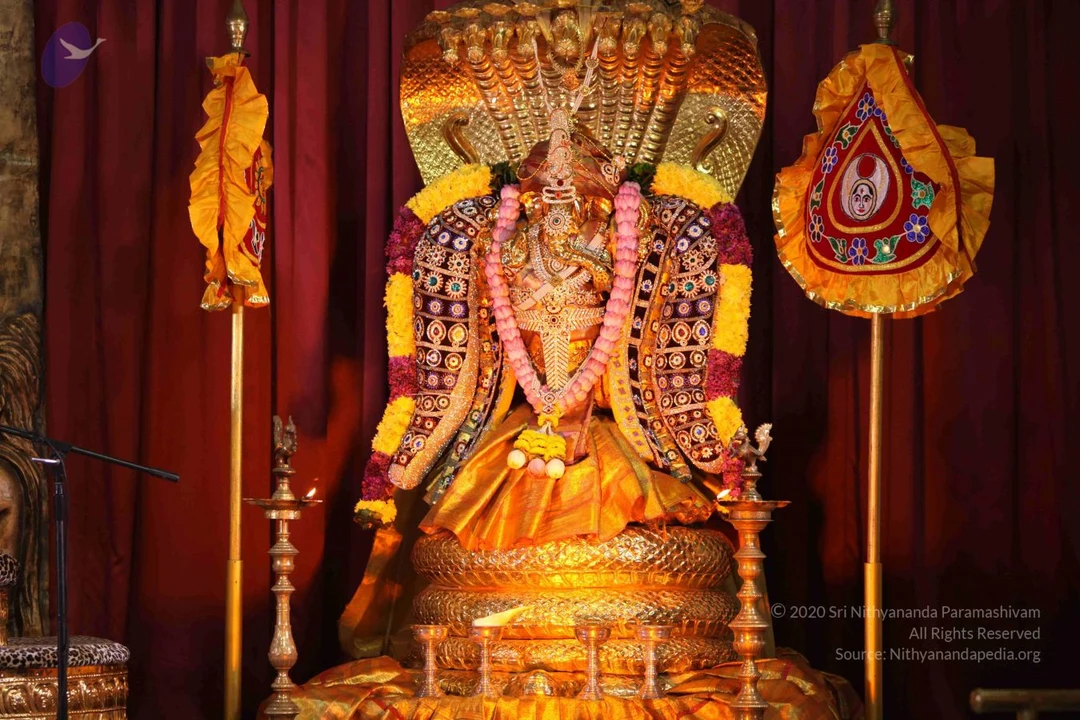
Today, the Ganesha Brahmotsavam, ninth day, Ganapati is gracing all of us on Svarna Nagavāhana, golden snake vehicle and Sarvālankara in Sarva Nagavāhana. Let’s receive His blessings

Listen, earlier I expanded, the Sacred Secrets about Vaak Shakti, then Mano Shakti. Now listen carefully. Ishvara Shakti, Ishvaratva. Please understand, one of the eight siddhis, Sadāshiva talks about in Upanishads and Agama, is Ishvaratva. Patanjali talks about it much later, originally Sadāshiva talks about it, in Agama. Ishvaratva means power of leading, power of ruling, power of being a head. Listen carefully. Ishvaratva is one of the eight important powers. I do wanted to describe little more detail, about Ishvaratva. Only when you become Ishvara of your life, you will have Completion. For example, any small thing can lead to incompletion, if you are not Ishvara of it.

Link to Video:

VideoAudio

Transcript

nithyānandeśvara samārambhām nithyānandeśvari madhyamām | asmat āchārya paryantām vande guru paramparām ||

I welcome all of you with my love and respects.

I welcome all the Devotees, Disciples, Shuddhadvaita participants, Inner Awakening Graduates, Sri Mahants, Mahants, Living Shuddhadvaita Process participants, Satsanghis, Kotharis, Thanedars, Everyone, sitting with us all over the World, through Nithyananda TV, Facebook Live, whatever medium.

I welcome all of you with My love and respects.

(1:46)

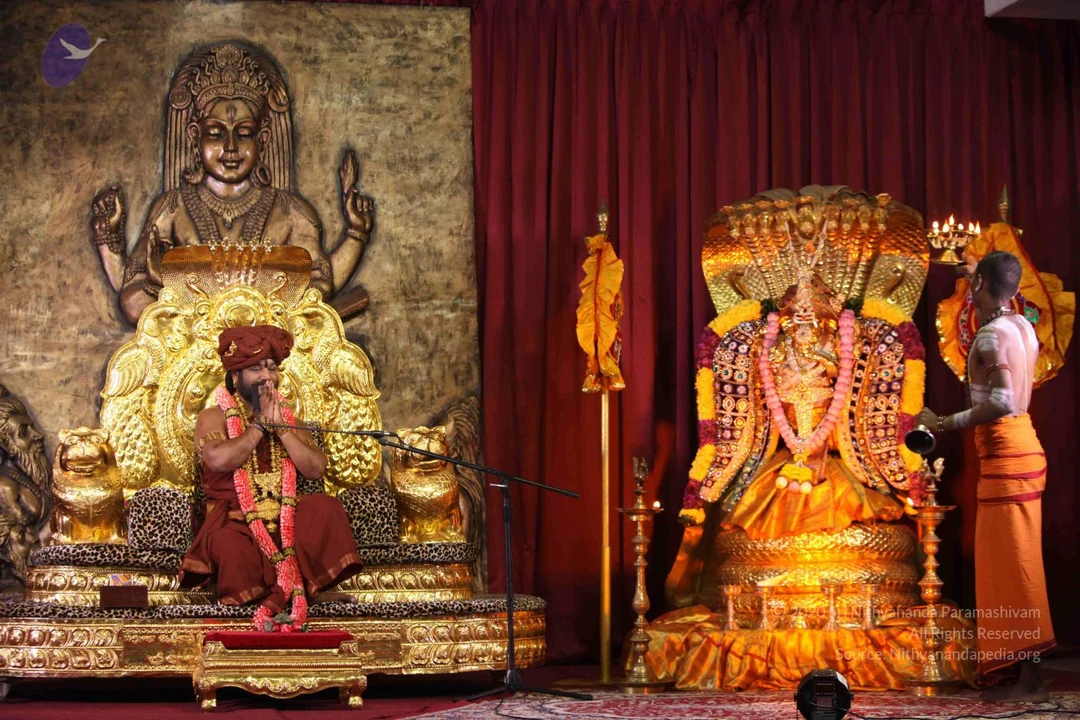
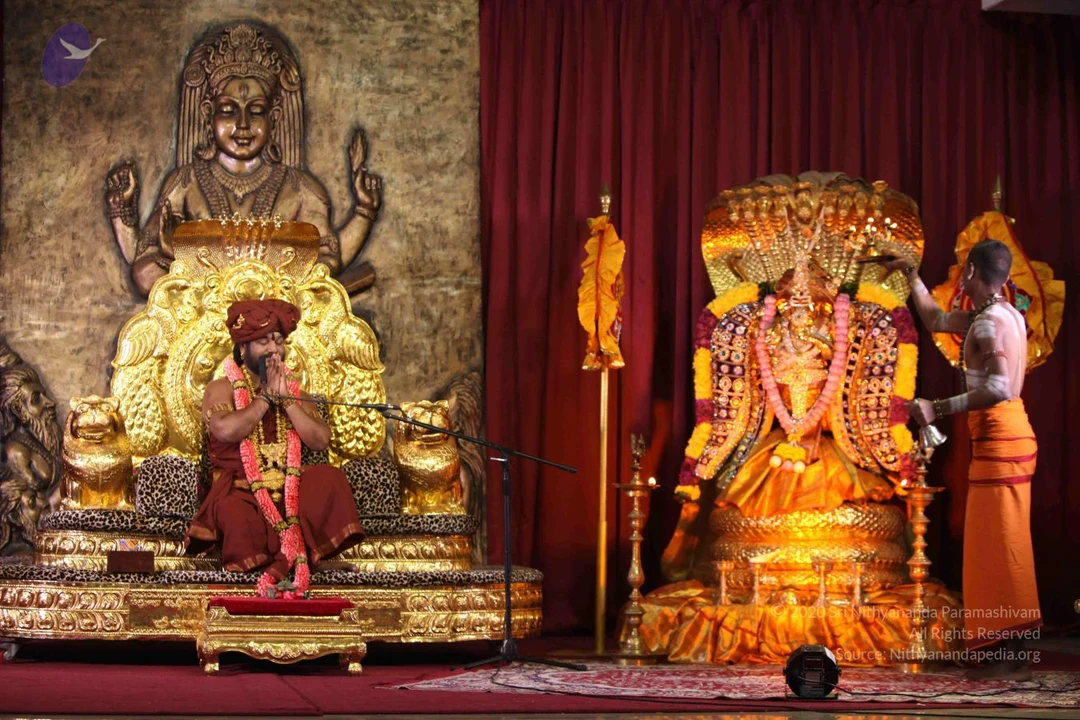
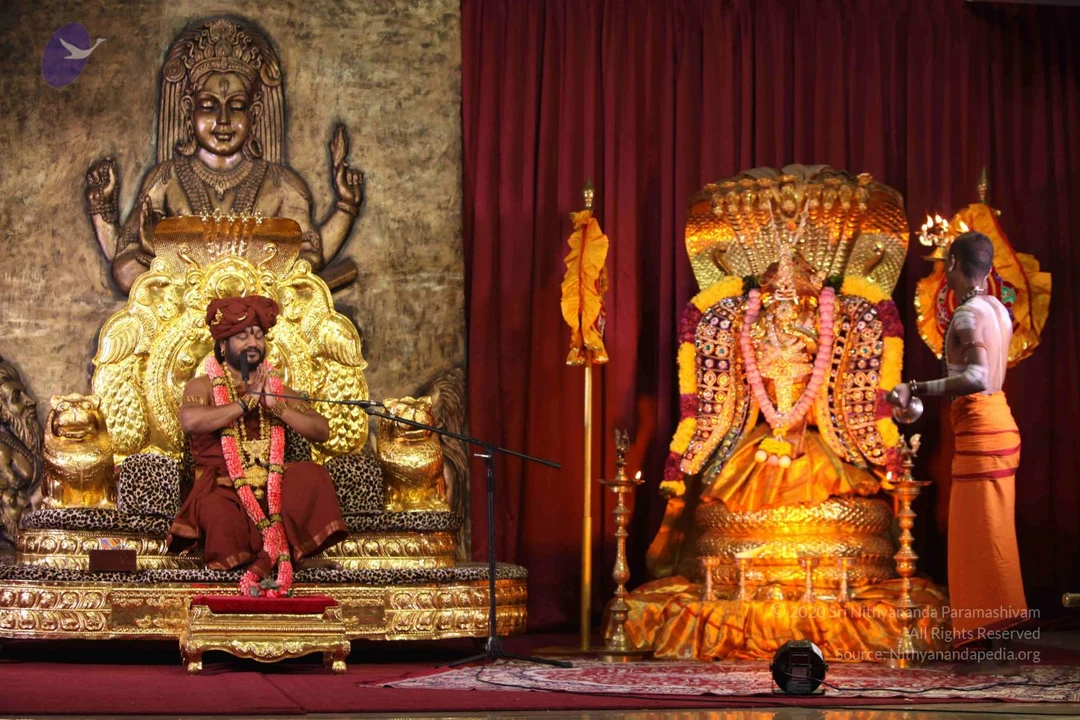
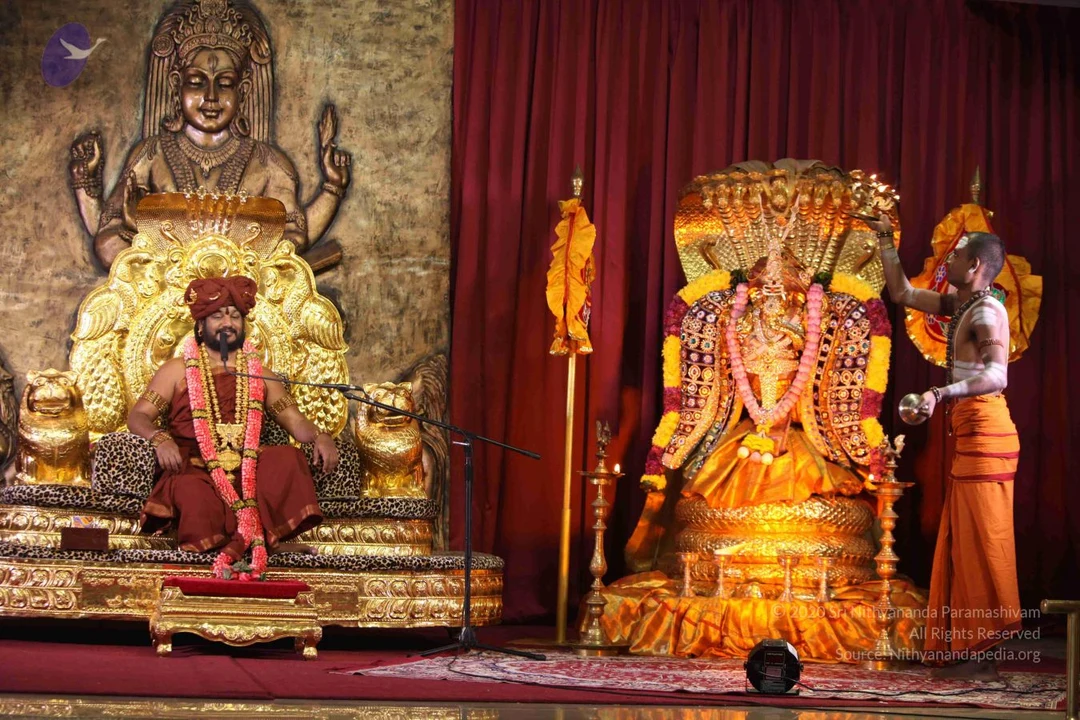
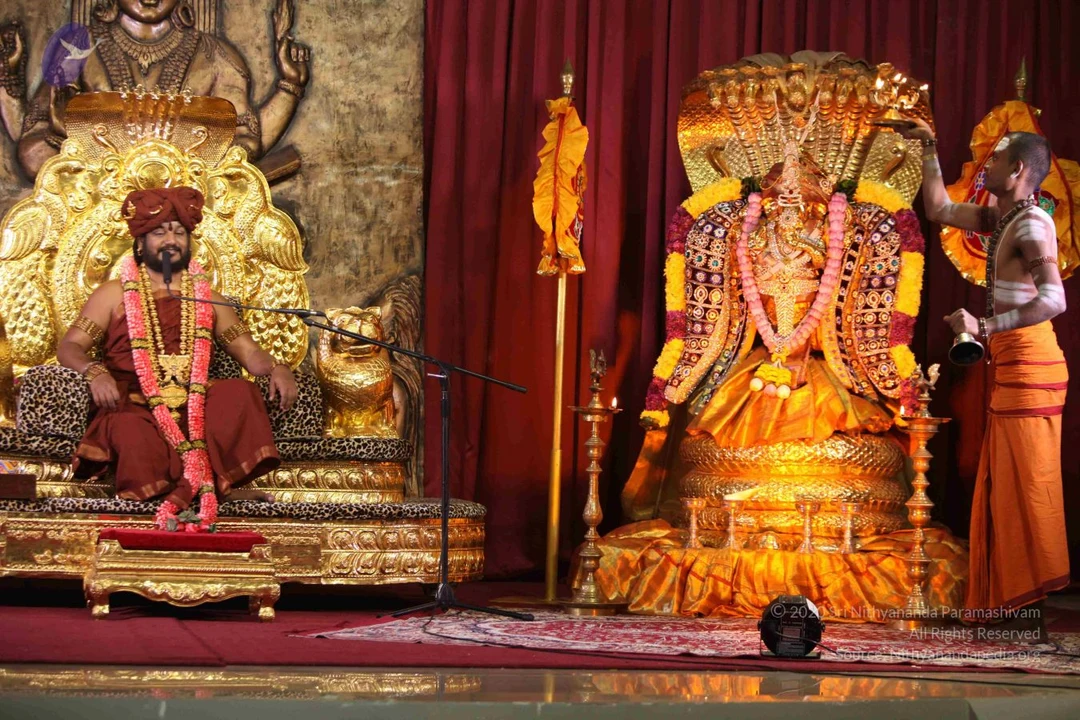
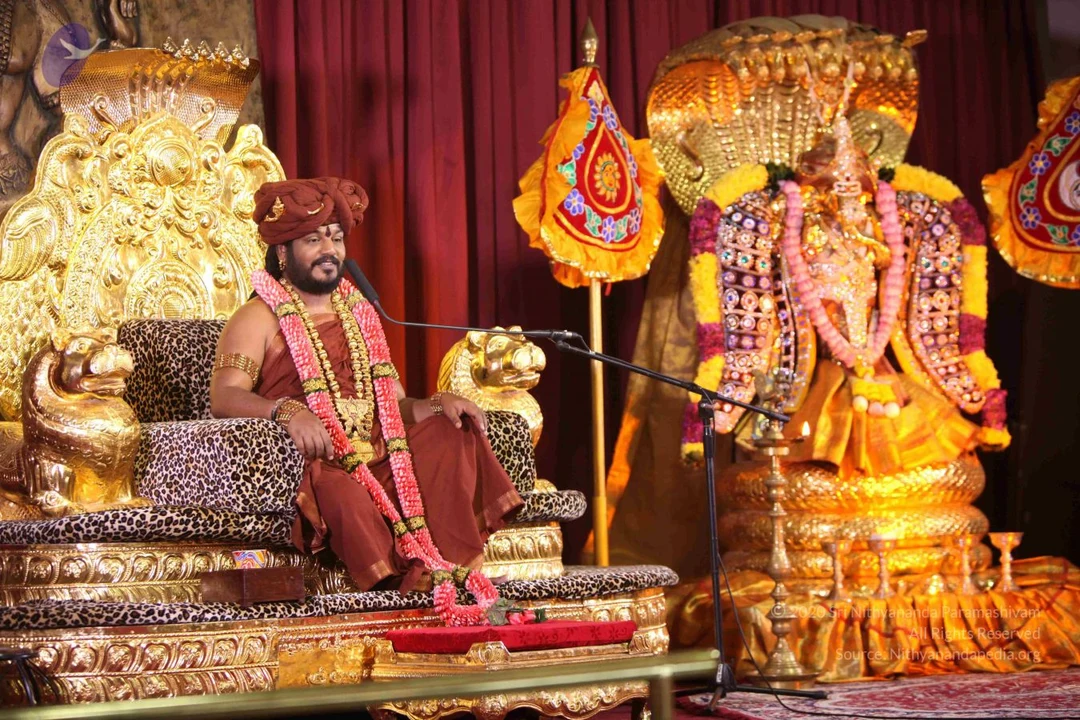
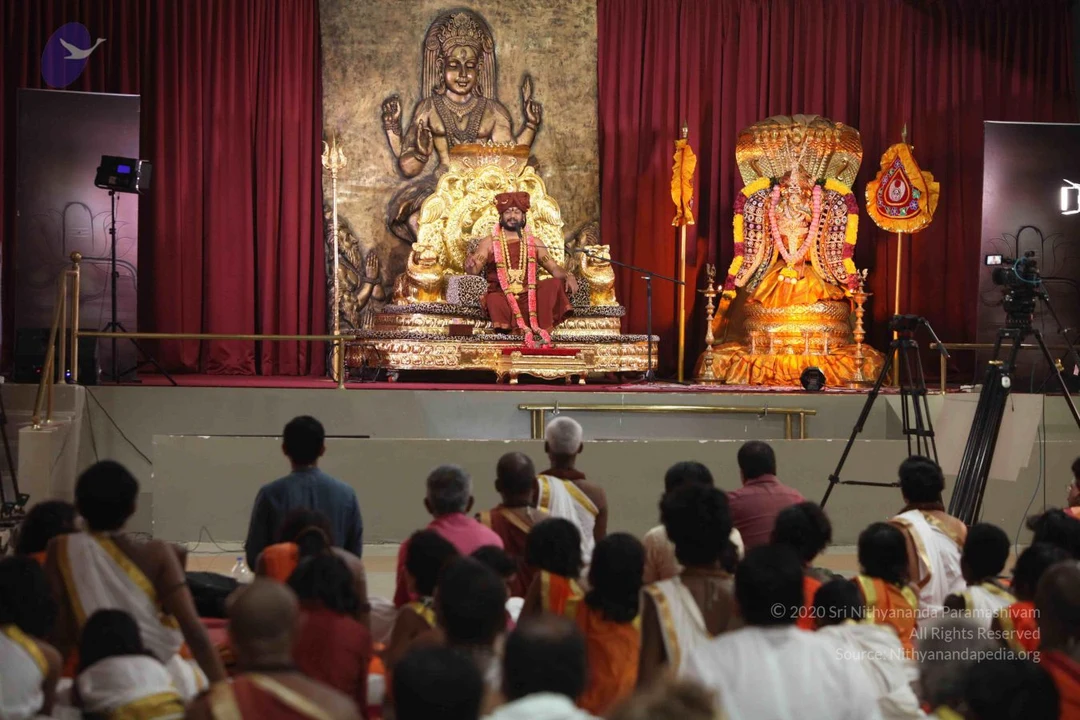
Today, the Ganesha Brahmotsavam, ninth day, Ganapati is gracing all of us on Svarna Nagavāhana, golden snake vehicle and Sarvālankara in Sarva Nagavāhana. Let’s receive His blessings, then we will enter into the LASP session.

(Arti performed to Ganesha)

Yes, let’s enter into today’s Living Shuddhadvaita process.

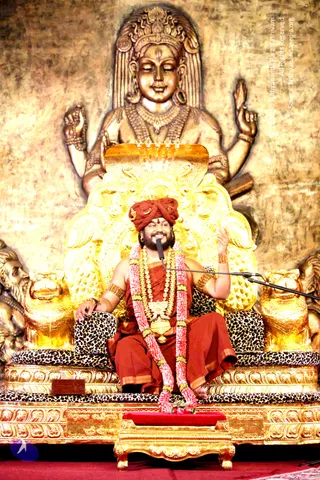
Listen, earlier I expanded, the Sacred Secrets about Vaak Shakti, then Mano Shakti. Now listen carefully. Ishvara Shakti, Ishvaratva. Please understand, one of the eight siddhis, Sadāshiva talks about in Upanishads and Agama, is Ishvaratva. Patanjali talks about it much later, originally Sadāshiva talks about it, in Agama. Ishvaratva means power of leading, power of ruling, power of being a head. Listen carefully. Ishvaratva is one of the eight important powers. I do wanted to describe little more detail, about Ishvaratva. Only when you become Ishvara of your life, you will have Completion. For example, any small thing can lead to incompletion, if you are not Ishvara of it. One of My disciple, was very reluctant to take Sannyas. I saw he has an amazing qualification. I was trying to find out, what is the reason, when he has all the qualification, he was little reluctant. Then, I found out, all his small, small cute desires, like walking in the street, having a cup of coffee, freedom to go, what he thinks as a…instead of the word ‘freedom’, I think… you should…. I should use the word, ’choice’, choice to go and lie down, in the beach, I was laughing, yes. Even this small, small decisions, if you are not Ishvara, it leads to incompletion.

(6:34)

Prime Minister, even if he wants, he will not be able to walk in the platform, be like ordinary person because security, lot of things involved, but being in the street and lying in the beach, and… just ordinary things alone, is the not the purpose of his life. I’ll give you one example. Even sometimes, I feel…. I used to feel, just lying alone with one small blanket in railway platforms, sleeping in the railway platforms in the night, happily. Morning, getting up and sitting, covering that blanket and two, three other Coolies and Porters, will come and light the fire, for the early morning cold, to manage the cold. Sitting with them and then chai will come; the Chai wala will come, bring the chai and having a chai. All this were great, sweet, beautiful moments of my life. I don’t miss them, because I decided to give up on…. give up that, for the responsibility I have taken, I’ll not be able to do that and one more thing, one day it is a cute thing, but that is not My life’s purpose. Second day, it will be boring. Understand, Choices, are something, which will bring boredom in few days. Freedom is something, which will keep you powerful forever. But, if you mix and mess, listen carefully, choices are brought to you, freedom - you bring it to you. There is a big difference. I gave up many of my choices, but I brought freedom to Myself. Freedom is realizing your life’s mission and living it. Realizing your life’s mission and living it. Choices are not freedom. Listen carefully to this story. You need to internalize this story. Tons of people miss even their purpose of life for small choices.

(9:42)

When I was about to leave the house, once for all, to do My Mission, My family sat around Me and said….first thing they said, “You will miss Arunachala, going around the hill.” It was a very valid reason, because I was just in love with Arunachala, and it was… it’s like a lifeline for Me. Whether something is happening in the temple or something is happening in the Arunachala, whole town, but I realized, that is not going to be purpose of My existence. Just sitting there is not going to be fulfilling My purpose, I need to create thousands of temples like that. I took My birth there to have training, not to stay there. I have to create thousands of temples, if I am sitting there, I will not be creating. Listen carefully, sometimes the juicy choices pose as if they are freedom but they are not. Freedom means every single decision is by YOU, Ishvaratva only that brings Completion. Listen carefully, many time, the choices which you think as freedom was inserted into you by the advertisements and promotions, or the other’s opinions, false views, wrong remembrance. Please understand, you always think your college hostel period was a golden period of your life, but actually when you were living there, you are so much all the time, afraid of the Warden and the whole life was hell. You just want to get out, and get the job as early as possible. This is what I call ‘wrong remembrance’, which was not joy; you remember it as joy, because you forgot how it was originally, when you lived. Always the wrong remembrance of the past makes you take wrong decisions about future. I have seen. I have seen. I’ll give the essence. Listen.

Choice is not freedom. Choice or freedom, everything has to be from your decision, only then you will be in the space of Completion. When you start making your decision about everything, what you give up, you will not feel missing that. I am not feeling, I am missing My morning chai and night sleeping alone, in railway platforms. That was a beautiful moment, no doubt, but that was not My purpose.

(13:41)

So, when I assumed the responsibility of the purpose, not missing the choices is Ishvaratva. Listen, listen. Assuming, fitting yourself into your own shoes, life’s purpose and because of that maturity, not missing the so-called choices, brings Ishvaratva to you. I have seen many people, useless, stupid, wrong remembrance reasoning choices. Listen, wrong remembrance reasoning. When you are in college, you think your school days were golden period. When you are in the job, you think your hostel days were golden. No! Wrong remembrance, when actually you were in the hostel, you had so much fear of Warden and what not. It was not golden, as you remember. Yes, you may be having some photographs of your tourism, tour and vacation with your friends, where you guys are smiling. Yes, photo shows all of you are smiling, only if you remember, look back, dig deep, you will understand, with how many of them, you had incompletions and fight and….you have to put up the smile. Photos are great, to tell your history to others, but if you yourself dig out, it may not be true. It may not be your real experience. So understand, many time, when choices, multiple choices, try to pose itself as your freedom, you need to understand multiple choices, is not the purpose of your life. Fitting into the shoes of the purpose of your life is freedom.

(16:47)

I think if you do an assignment on this, only then you’ll understand, how many times instead of fitting into the shoes of your life’s purpose, you decided to retain the multiple choices, as freedom, understand. The biggest delusion, with which humanity is suffering now is – multiple choices, are being believed as freedom. You think multiple choices are freedom in gadgets, multiple choice - in relationships, multiple choice - place to live, multiple choice - vehicle to drive, multiple choice - jewelry to wear, multiple choice - food to eat, multiple choice- clothes to wear, multiple choice, you call that as a freedom. No! No! Ability to stand up to your life’s purpose with Completion is freedom. Yes, sleeping in the platform, early morning sipping chai and having a fire, is great. There are tons of beggars, doing that everyday, am I born for that? Understand, fitting into your responsibility with Completion is Ishvaratva. That’s a method for Ishvaratva. Listen, Vaak siddhi, Vaak Shakti. Shakti is the right word. Vaak Shakti is a power. Integrity is the technique to manifest that power. Mano Shakti is the power. Authenticity is the methodology, technique to manifest that power. Ishvaratva is a power, Ishvaratva Shakti is a power, Responsibility with Completion is the technique for it. Every Jeeva, every Jeeva comes with the software of Ishvaratva. Understand, every Jeeva is programmed. He carries the seed of Ishvaratva in him. Every Jeeva, every soul, carries…... every Jeeva, every soul carries, the program of Ishvaratva.

(21:37)

First, decide to take responsibility for your life, fit into the shoes of your responsibility about life. Second, bring Completion about it. That is the major thing, bringing Completion about it. Please listen, anywhere you do not bring Completion for the responsibility you have taken, you may be dragging, never winning. If you see everywhere the victory, you are bringing Completion to what you took as responsibility. Responsibility, if it invokes incompletion in you, you will be worker forever, never the Ishvaratva manifests. Whether it is your public life, personal life, secret life, economic life, social life, spiritual life, every dimension and aspects of you, the Completion with which you assume your responsibility, brings victory, Ishvaratva. Listen, every time you taste victory, Ishvaratva blossoms in you, blooms in you.

(24:00)

If you remember the Lion and Cub story:

The lion is trying to push the meat, into the mouth of the cub, because if the cub tastes the blood and meat, his opinions about himself changes. When his opinions about himself changes, lion does not need to train the cub for hunting. The moment he tastes the meat, he knows now he has to hunt.

The moment you taste success you know, now you have to become leader. Understand, all do’s and don’t based training will never be successful, only if your Being shifts, if your cognitive shift happens, the training will be successful.

As long as the cub believes, he is a sheep, lion can go on be grooming the hair, teaching to roar, rrrrrr rrrrrr …. Asking the cub, “Aye, from here you have to jump, seven step, where the prey is there and you have to attack. Three inch, your teeth should go deep, into the neck of the prey. Five inch skin, you have to tear and first you have to remove the heart, so that the prey dies.” Science will not work. Understand, till the cognitive shift happens, no science can train you. The moment, lion makes the cub taste the blood and meat, now the cub knows - “Aye, I am lion. So, now my ambitions, the powers, I need to manifest, the body language I need to express, the way I need to carry myself, the responsibility I need to have, the way I need to hold myself, the way I need to project myself to others, the way I function, operate, the way I exist, whole thing has to be different. Whole thing has to be different. I can’t go on, as sheep.” Listen, yes, when the cub becomes a real lion, it misses, cozy protected ambience of the sheep and the sweet tasty grass in the early morning. Yes, the lion, the cub, may not have grass to eat, but it will never miss. If it is missing, still the trace of sheep is there in the cub. Look into your life, wherever you are missing because you took the responsibility of your purpose of existence, in all those places you have not taken responsibility, you have not brought Completion. Listen. If the cub realizes, its life is lion and it is Complete about not missing the grass, it will manifest the Ishvaratva, the power of being leader. I tell you, at least for your life be Ishvara, at least for yourself be Ishvara. You may not be Ishvara for the whole world, at least for yourself be Ishvara that only will bring Completion.

(28:51)

Whether it is small or big, only if you make decisions for yourself, you will be Complete and you making decision for yourself, should happen from the space of you fitting into the shoes of your responsibility. You deciding to become responsible about your existence. Understand, you deciding to become responsible about your existence, you deciding to be Complete about your responsibility, this two makes Ishvaratva happen in you. Understand, nothing, there is nothing to be achieved in the life – other than living Sadāshiva and making the world, live Sadāshivoham, everything else, everything else, is simple waste of life, waste of life. You are born, deluded into the concept of money and you run, run, run, run, run, run, run, run, suddenly collapse. Whether you are successful in saving or not…. unsuccessful in saving, whether you had it or did not have it, both doesn’t matter. You have not even done good to somebody. Delusion covered by delusion. Understand, money is great, if you use it to fulfill your purpose, if you generate it, to fulfill your purpose but without a purpose of life, money, relations, people, influence, everything is delusion. By its own existence, which does not bring power, is delusion. By its own existence, svayam prakasha, which brings power is Ishvaratva. Understand, this is the scale. Sit and do the postmortem of your life. Till the last moment, whatever has happened is past. Sit and try to do postmortem of your life – what is the component of me, which does not empower me by its very existence, what is the component of me, which empowers me, by it’s existence?

(32:25)

Purpose always empowers you by its very existence. Infrastructural support, never empowers you by its existence, it can empower you, only if it is added to the purpose. Purpose is the one, everything else is zeros. All zeros will have value, when the ‘purpose’, is added to it. Be responsible, for your purpose of existence. Understand, look brings beauty. Purpose brings personality. Look brings beauty. Purpose brings personality. Beauty can never be permanent component of your life. Personality can be the permanent component of your life. The relationships, which are built because of your personality, are the most stable, permanent, empowering relationships. The relationships, which are built because of your look, will collapse the moment the look changes. Look changes, every twenty-four hours. Forget about twenty-four hours, the distance changes look. From the distant looks ‘hmmmmm’….. Just the reduction in the distance, takes away the look. So, all look based relationships, look based decisions, will bring powerlessness and instability into your existence that is choice. Listen, all these words, understand, choices, multiple choices, look based decisions, instable relationships – all these words somehow it will be connected, infrastructure without purpose, influence without purpose, money without reason – all this can go on stealing your life, because it is delusion. It will show as if you have something, but you don’t have. You don’t have purpose, purpose, purpose. Responsibility for your purpose – that empowers you.

(36:05)

I tell you, next secret. All this delusion, the maya has no life. Purpose and responsibility for the purpose, has life. If the life starts happening, all this just follows you. If the life starts happening, all this just follows you, because matter has to follow life, its law of life. Matter has to follow life; it’s law of life. If you have found your purpose and you decide to take the responsibility for your purpose - matter, material has to follow you. It’s a law of life. Dhyanapeetam is not it’s money or infrastructure, it’s purpose. I have a purpose and I have a right to exist to fulfill my purpose. If this hall is there, I’ll be sitting in the throne and doing what I am doing. If it is not there, I will sit in the platform and continue to do what I am doing. I have a purpose and I am taking responsibility for it. How much we are relevant to our purpose and how much our purpose is relevant to the world makes somebody ‘leader’, not wealth and the influence or the infrastructure accumulated. How much we are relevant to our purpose and how much the purpose is relevant to the world, that makes somebody Leader. That makes you ‘Ishvara’. That makes you ‘Ishvaratva’ as your very bio-energy, your very bio-memory. Understand, neither multiple choices make freedom, nor your ‘look’, makes your personality or the infrastructure, does not make you a leader. Ishvaratva - you being the master of your life, happens only by the responsibility you assume for your purpose of existence and the Completion you carry, about your purpose of existence and the responsibility you assume. Listen, it is your responsibility, makes you a leader. It’s your responsibility, makes the power of Ishvaratva, manifest in you.

(39:44)

Neither the infrastructure nor the ‘look’, or the influence or the relationships or the multiple choices. No! They are all matter. Matter does not matter in real matter. Matter does not matter; it is the purpose of existence and your responsibility towards it. Your responsibility for it, that matters. Understand, when you feel responsible and you are Complete about your responsibility, the way you manifest powers, you yourself will feel like a... miracles are happening around you. Cub which taste the meat and decides that he is a lion, no more a sheep, when he looks back he feels, “Wow, two days before I was sheep, only last two days, I am lion, so much is manifesting through me. It must be a great miracle. I think my Guru lion must be God.” Yes, Guru lion is God. Understand, the biggest miracle He caused, is shift in the cognition, not the training. Shift in the cognition, is the biggest miracle. So, catch the shift in the cognition. Means, deciding to stand up for the purpose of your existence. Understand, for all the Jeevas, if you are in the human body, male, female, gay, lesbian, all the eleven gender, the purpose is only one - living Sadāshiva and making people live Sadāshiva. Living Sadāshiva and making people live Sadāshiva. Breathe Sadāshiva, make people breathe Sadāshiva. Manifest Sadāshiva, make others manifest Sadāshiva. The responsibility you take for purpose of your existence, makes you manifest Ishvaratva. That makes you manifest Ishvaratva.

(43:36)

Essence: let every part of you, your words, your thinking, your emotional currents, your cognition, your muscle-memory, your bio-memory, your….everything, everything…..your everything…...let it be aligned, let it breathe and live your purpose of existence, responsibly with Completion, manifesting Ishvaratva. This is the essence, most Sacred Secrets Science of Living Shuddhadvaita. The Sacred Secrets Science of Living Shuddhadvaita. Fortunately, it is sacred, unfortunately secret, in reality it is science. Fortunately, it is sacred, unfortunately secret, in reality it is a science. Live Shuddhadvaita. I wanted all Living Shuddhādvaita participants to do this assignment. What all the decision you made just to retain choices and foolishly you missed fitting yourself into the responsibility of your purpose. Many time, the small, small cute pleasures, small, small cute pleasures take away you fitting yourself into the responsibility and purpose of your life. How many times you missed it, look in, analyze, Complete. Decide to take the responsibility of your life’s purpose and live it, completely with Completion, you will manifest Ishvaratva, you will manifest Ishvaratva. It’s like one fellow came and told, “He really wants to take Sannyas and live this life of being a spiritual leader, but he can’t give up his jeans.” I said, “Okay, if that is your….jeans is a choice, if that is your life, that is your purpose, then rock like a jeans.” Or, if you are going to stand up for your purpose and be Complete about some choices, you may not need for your purpose, you will manifest Ishvaratva or go on holding to your gunny bag, colored gunny bag, that’s what I call it. You should not use, too decent words, colored gunny bag. Hold on to the colored gunny bag. In our, in My hometown, one siddha used to be there…one very famous Master, gunny bag Swami, they used to call, because he’ll wear all the time, the gunny bag. Now I am seeing thousands of gunny bag Swamis. Colored gunny bag. He used to be called as Saaku Swami because he’ll wear the gunny bag, all the time. So, now I am seeing lot of colored gunny bags.

(49:07)

You see, when you choose the purpose of your existence and responsibility, naturally some choices need to be redundant, irrelevant and being complete about it, being complete about your responsibility, manifests Ishvaratva. That is the methodology to manifest Ishvaratva. In any existence, in any existence, whether your existence of social life, social leader, political leader, spiritual leader, religious leader, or in your personal life as a father, mother, brother, sister, head of the family or in your secret life, your relationships, thought currents, joy, pain, right, wrong, good, bad, everywhere, fitting yourself into your responsibility with Completion, manifests the power of Ishvaratva, that, manifest the power of Ishvaratva. So, all the Shuddhadvaitam participants, who are sitting with us, all over the world – do your assignment. The assignment is projected now, in the screen - What all the decisions you made….project it. What all the decision you made, just to retain choices and foolishly missed, fitting yourself into the responsibility of your purpose. Many times the small, small cute pleasures, take away you fitting yourself into the responsibility and the purpose of your life. How many times you missed it, look in, analyze, Complete. Decide to take the responsibility of your life’s purpose and live it completely with Completion, you will manifest Ishvaratva. Please do this assignment.

(52:13)

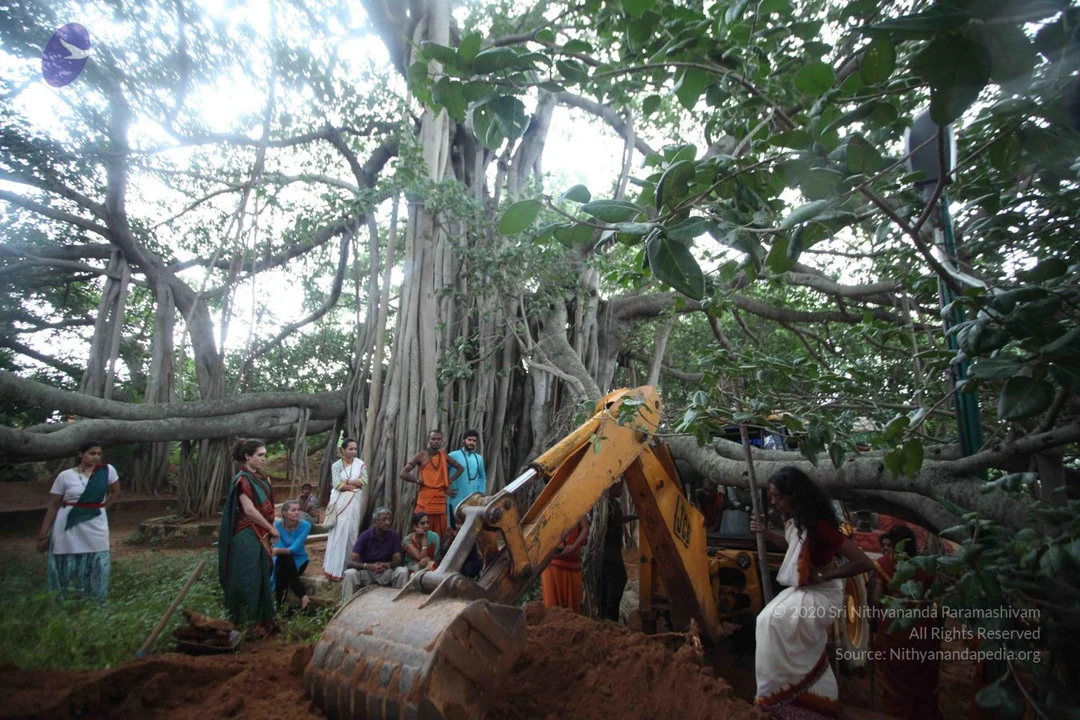
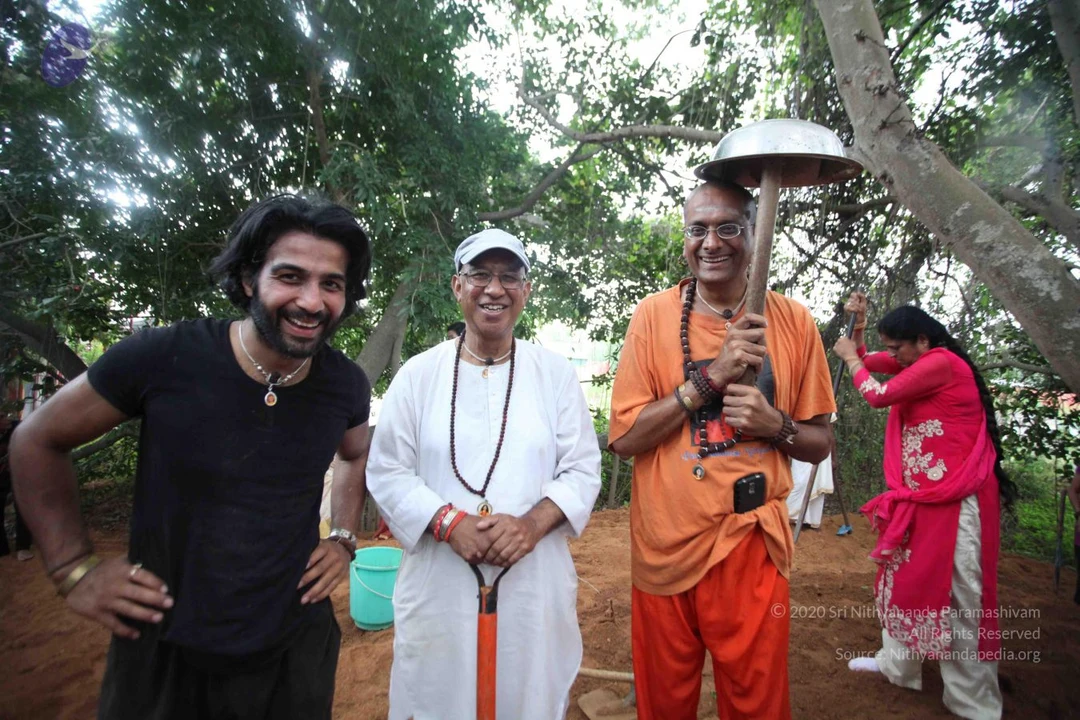
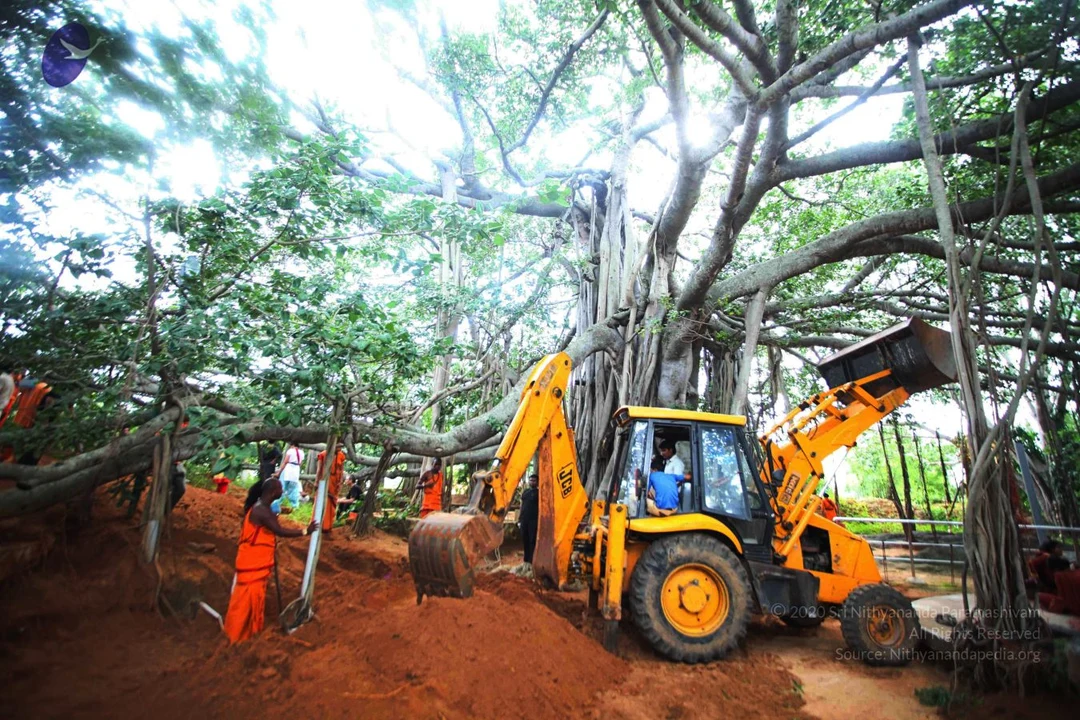
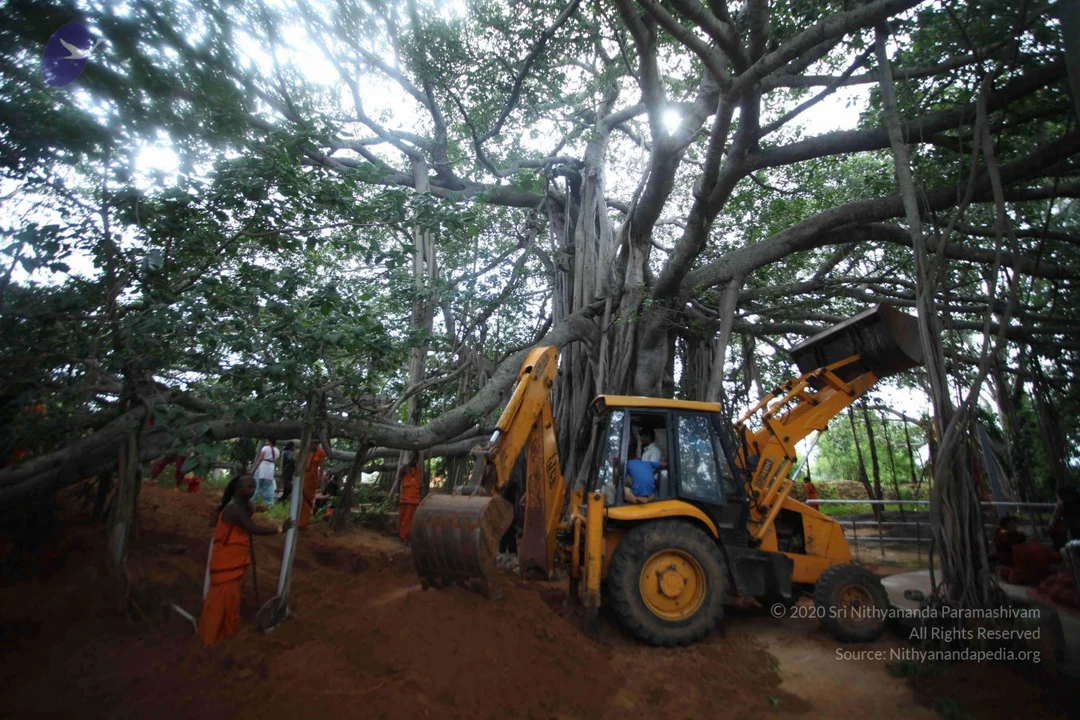
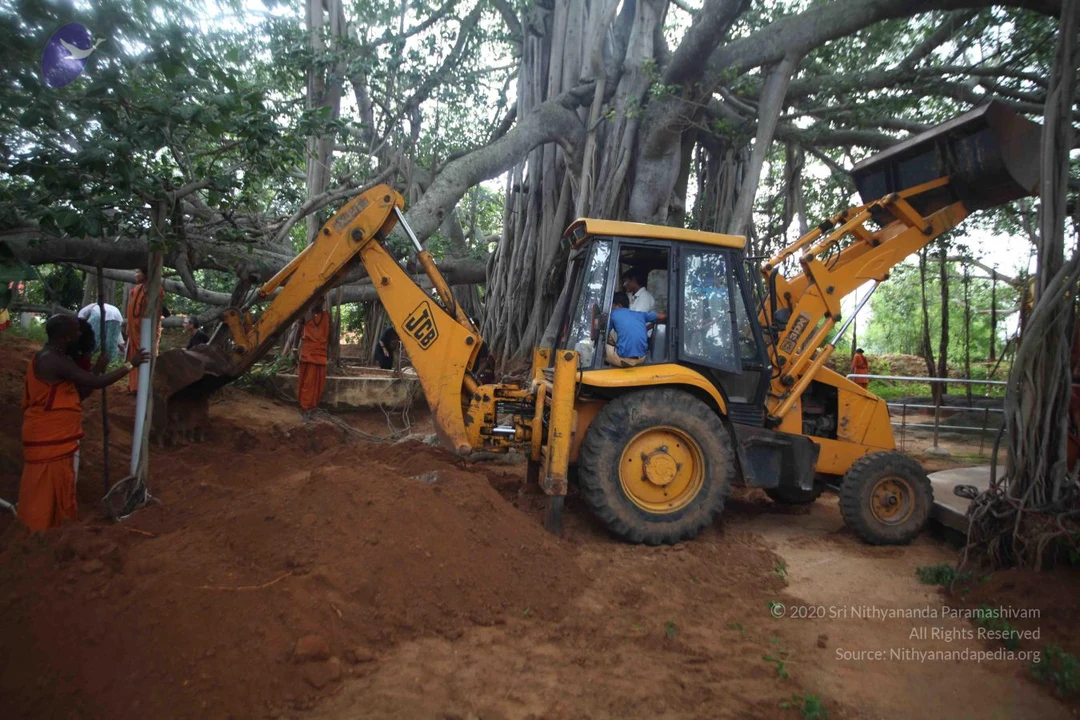
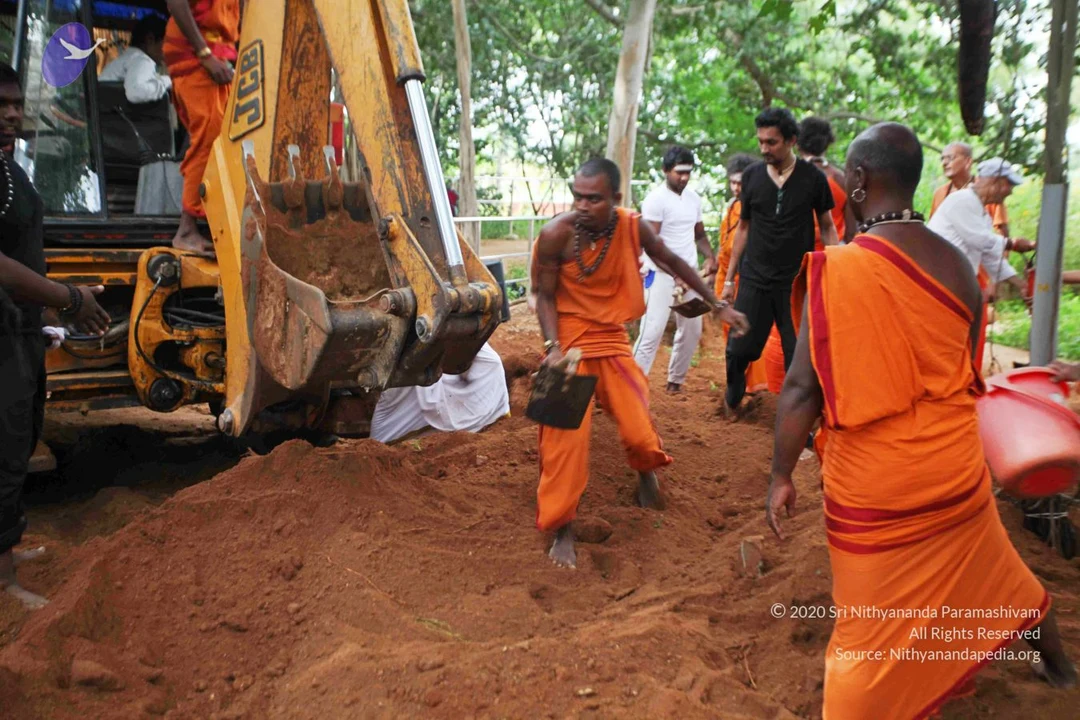
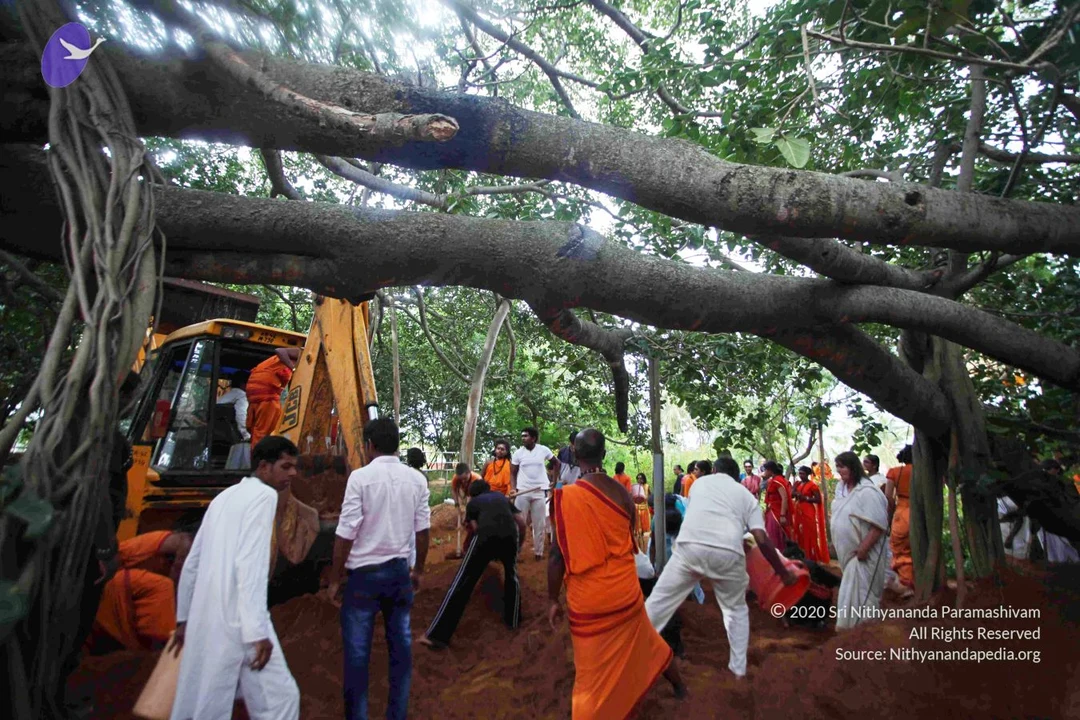
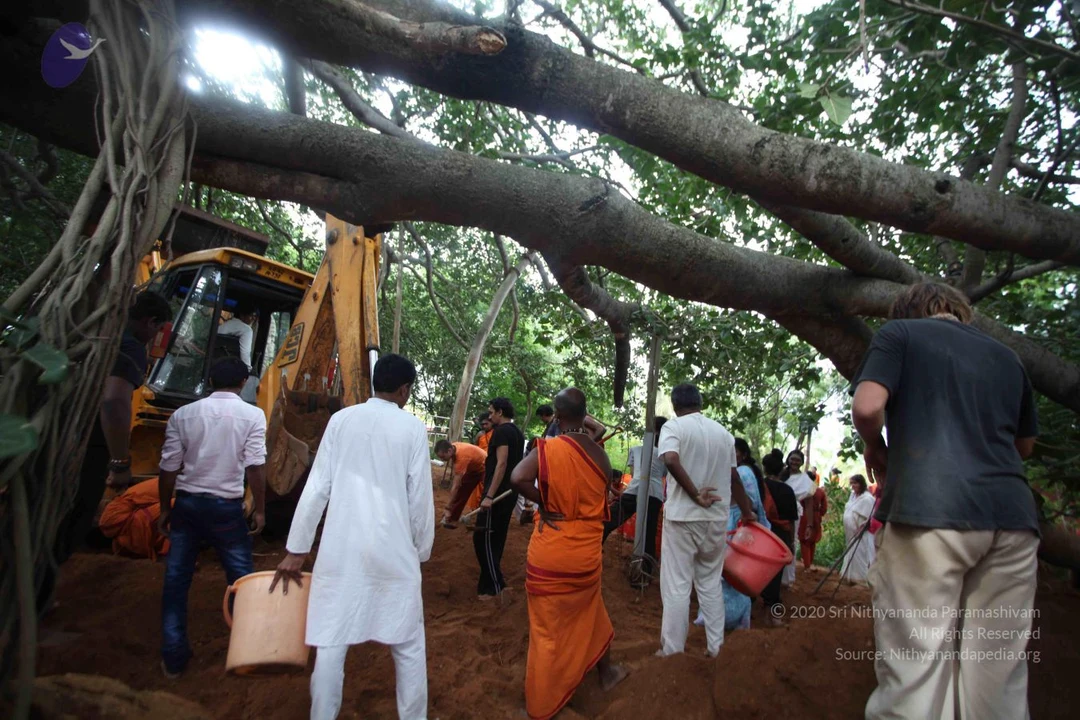
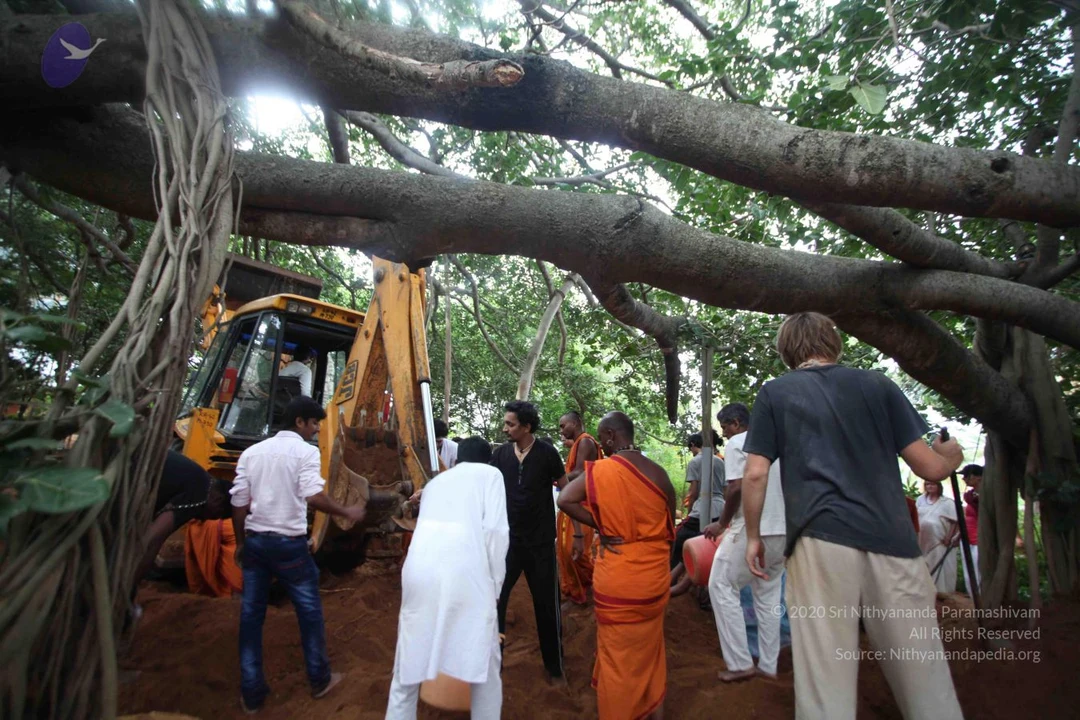
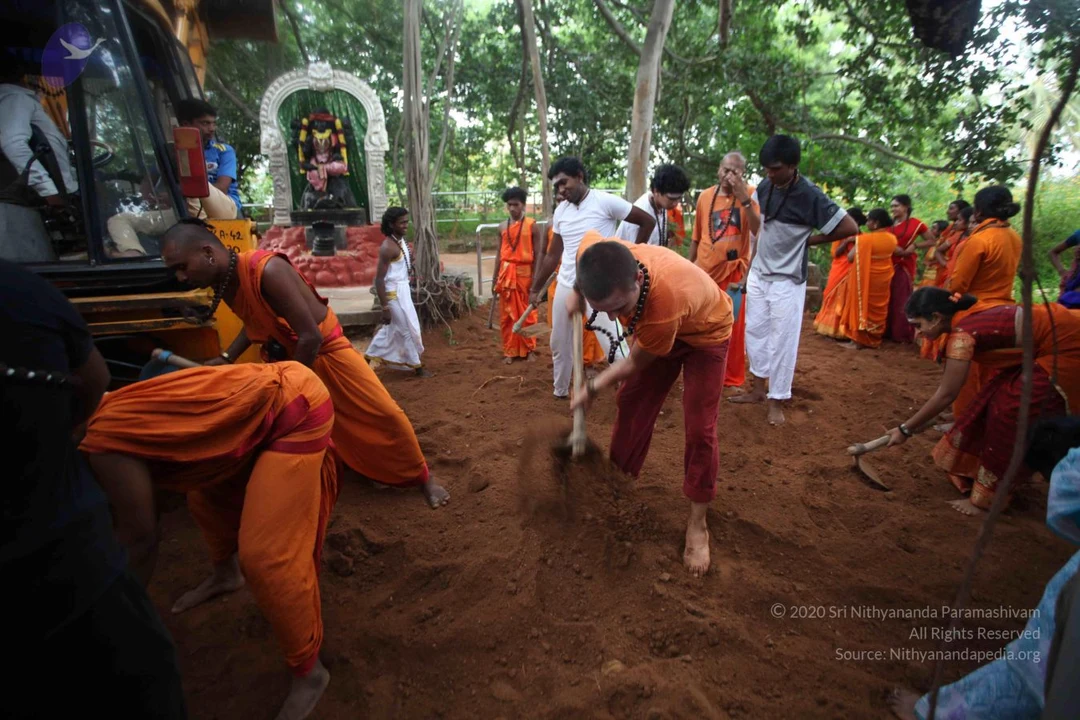
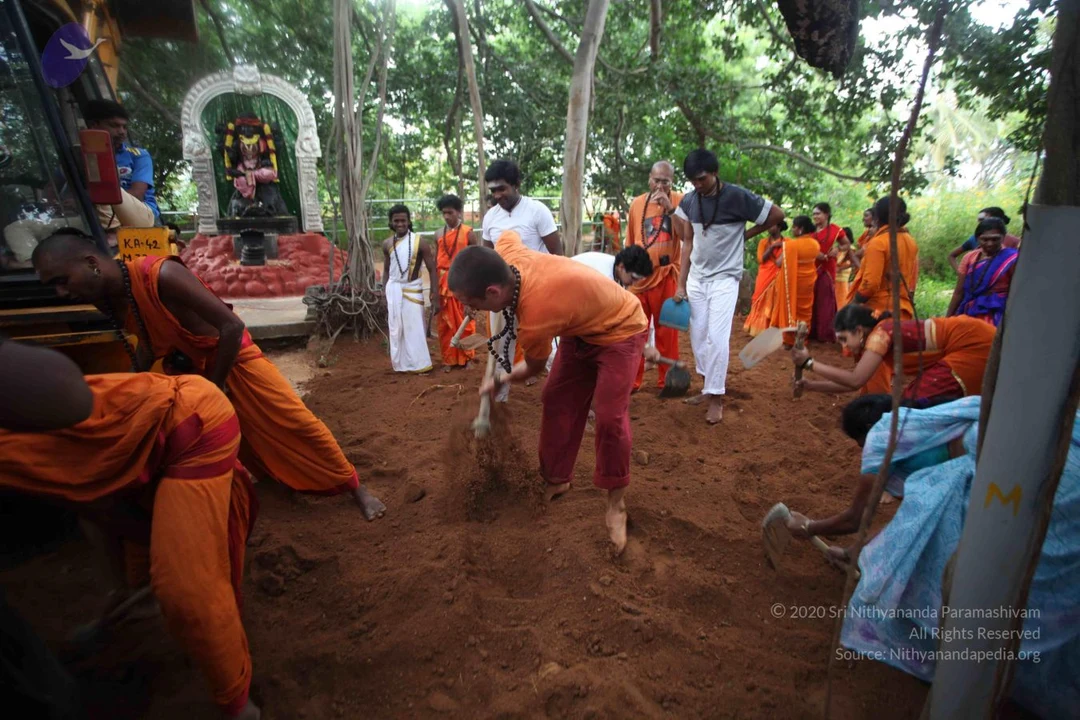
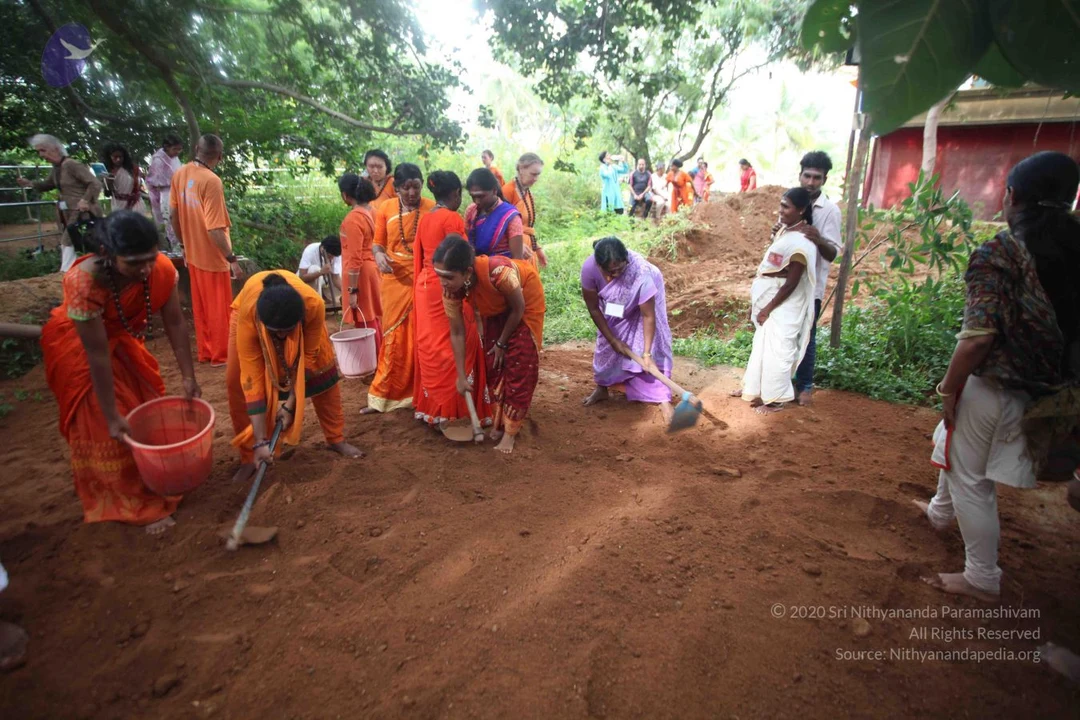
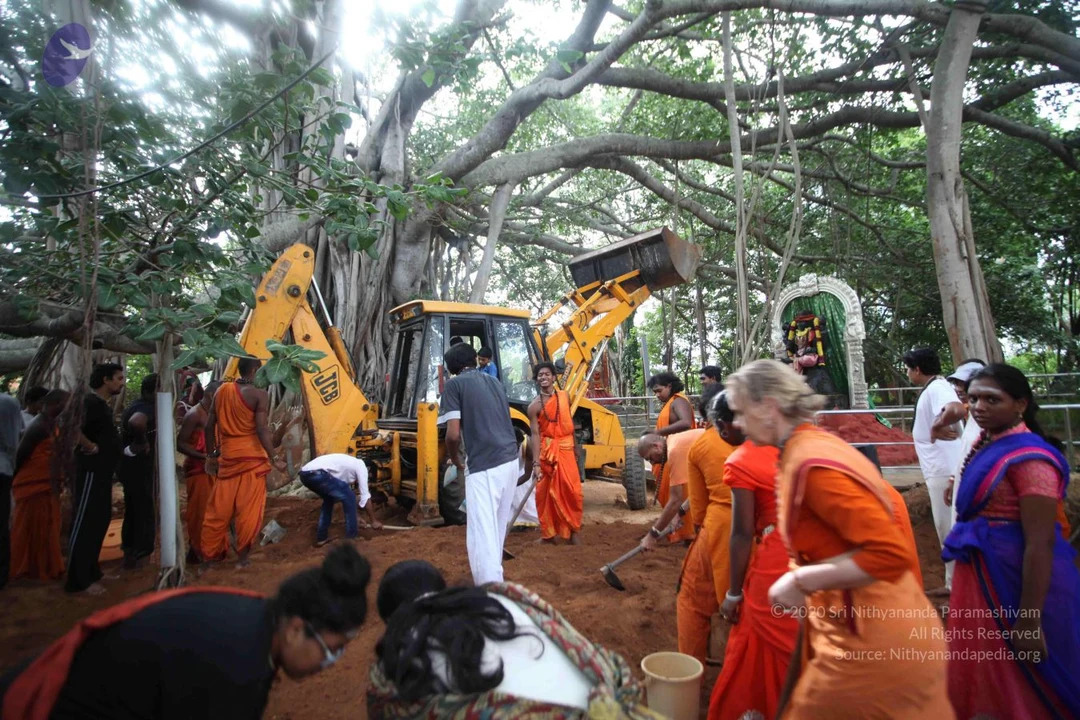
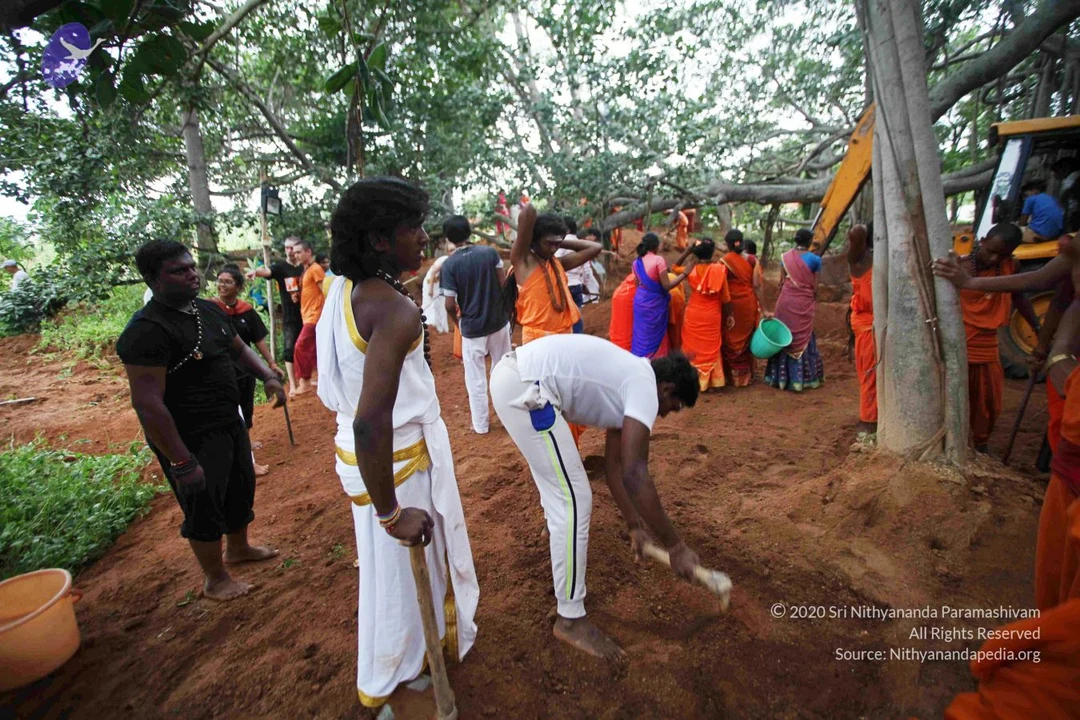
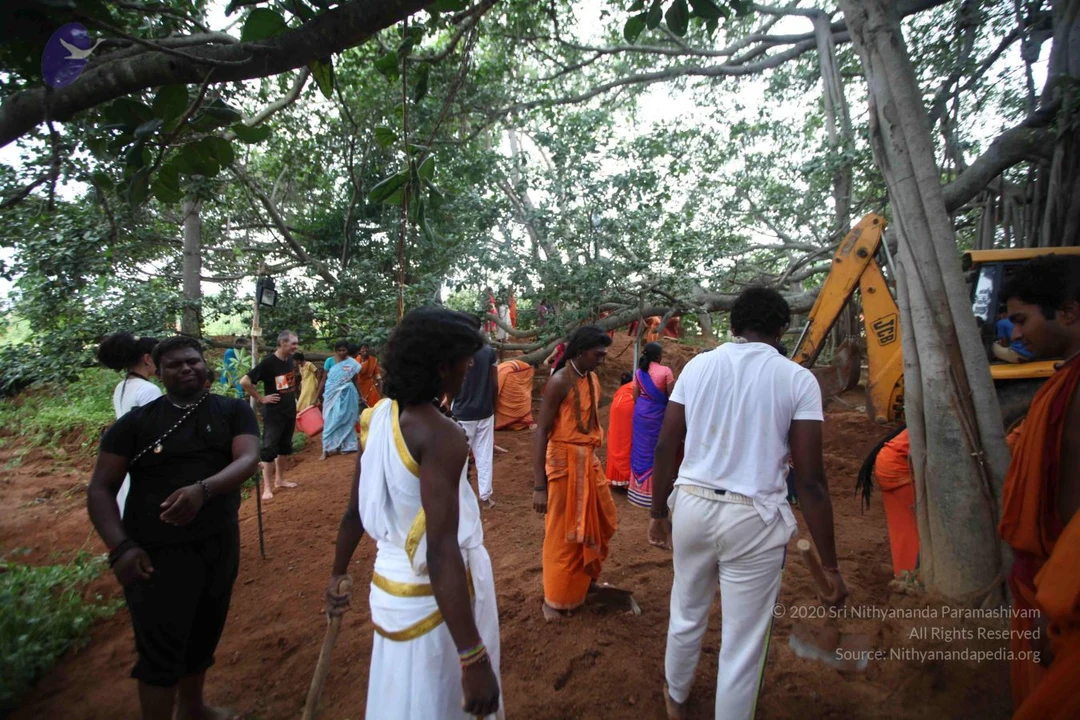
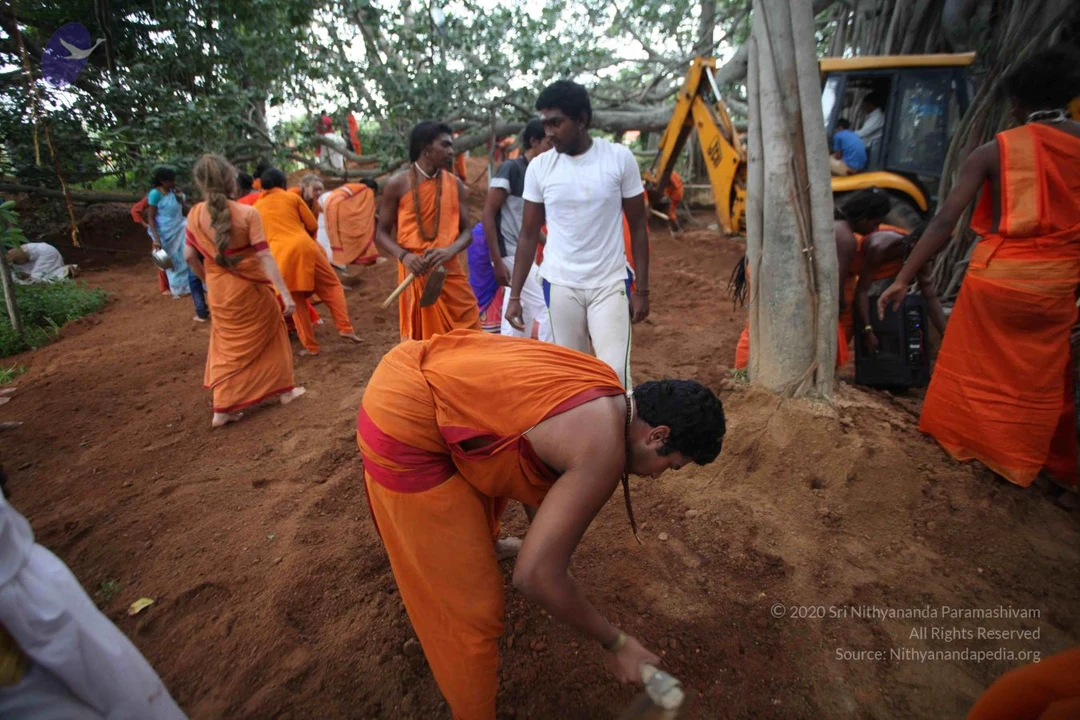
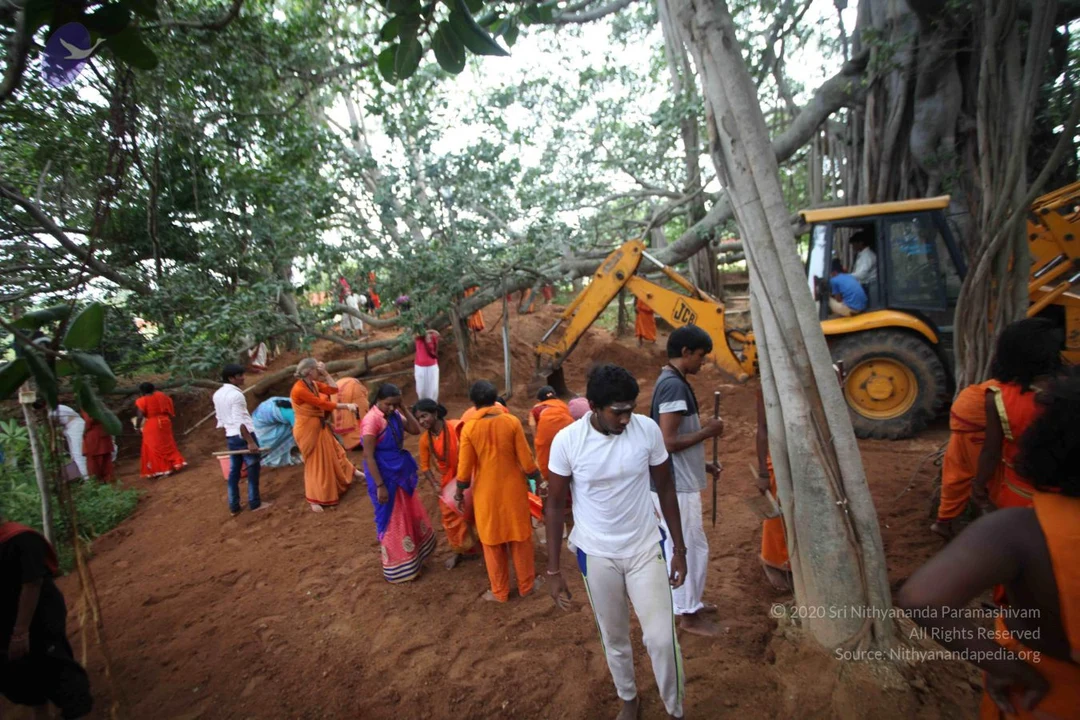
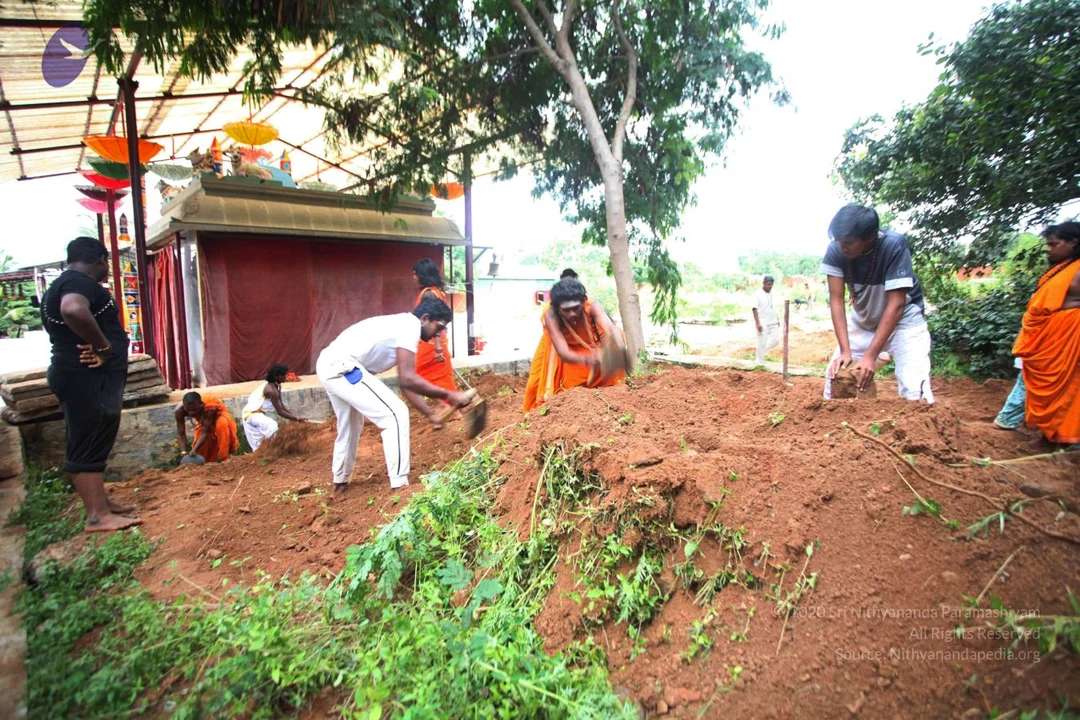
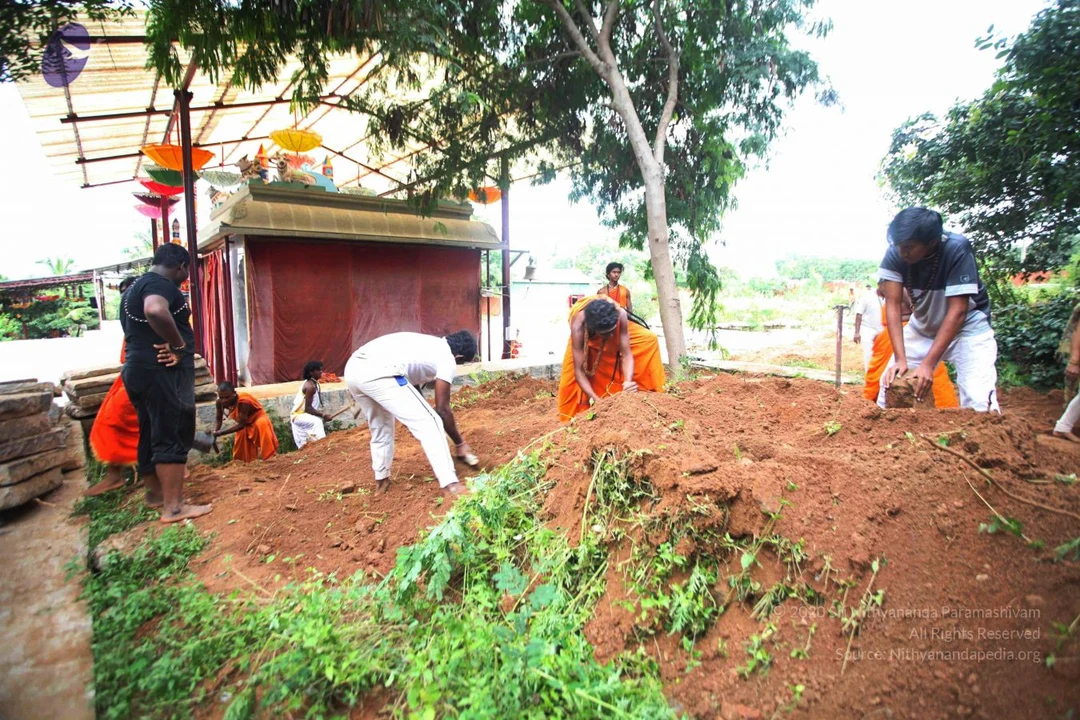
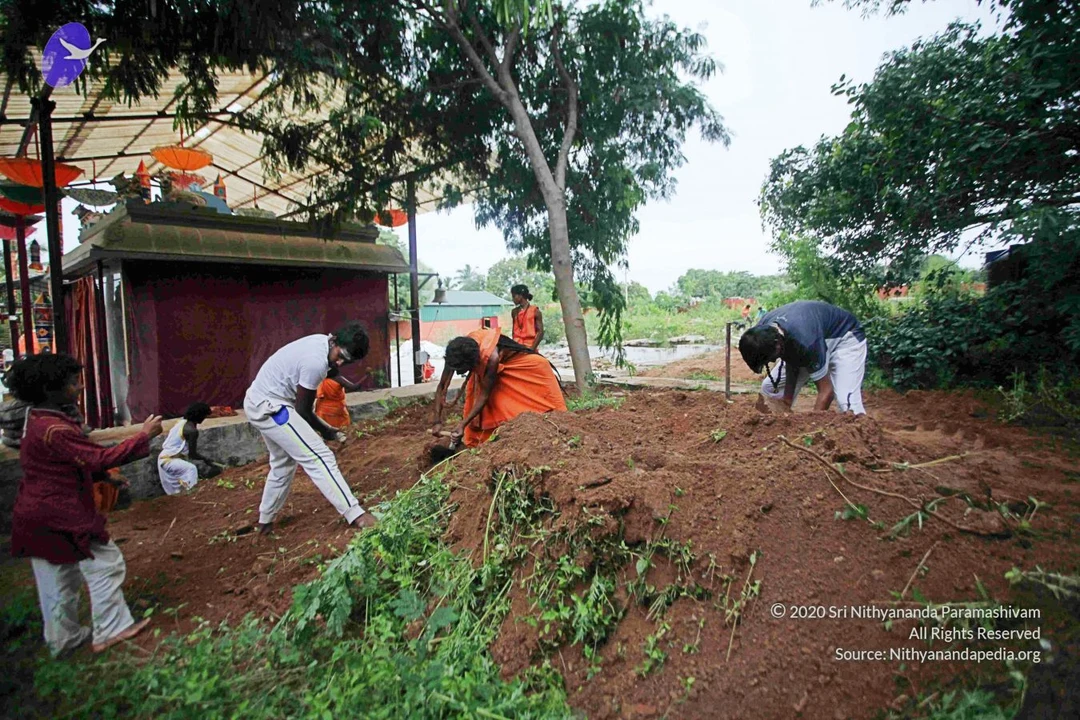
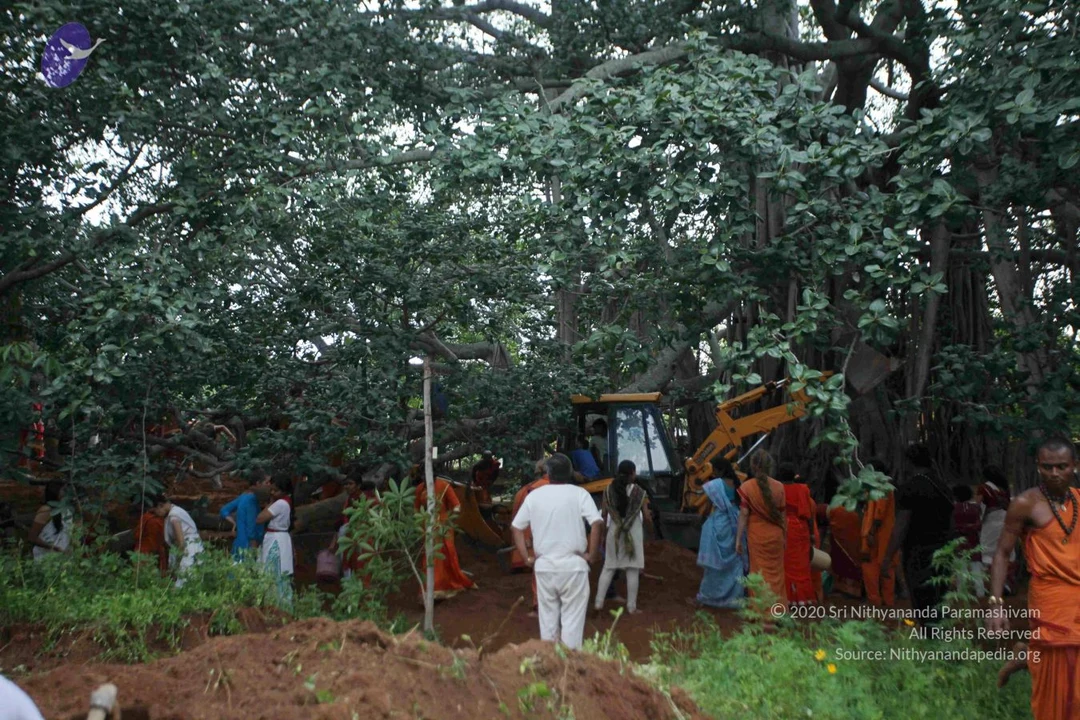
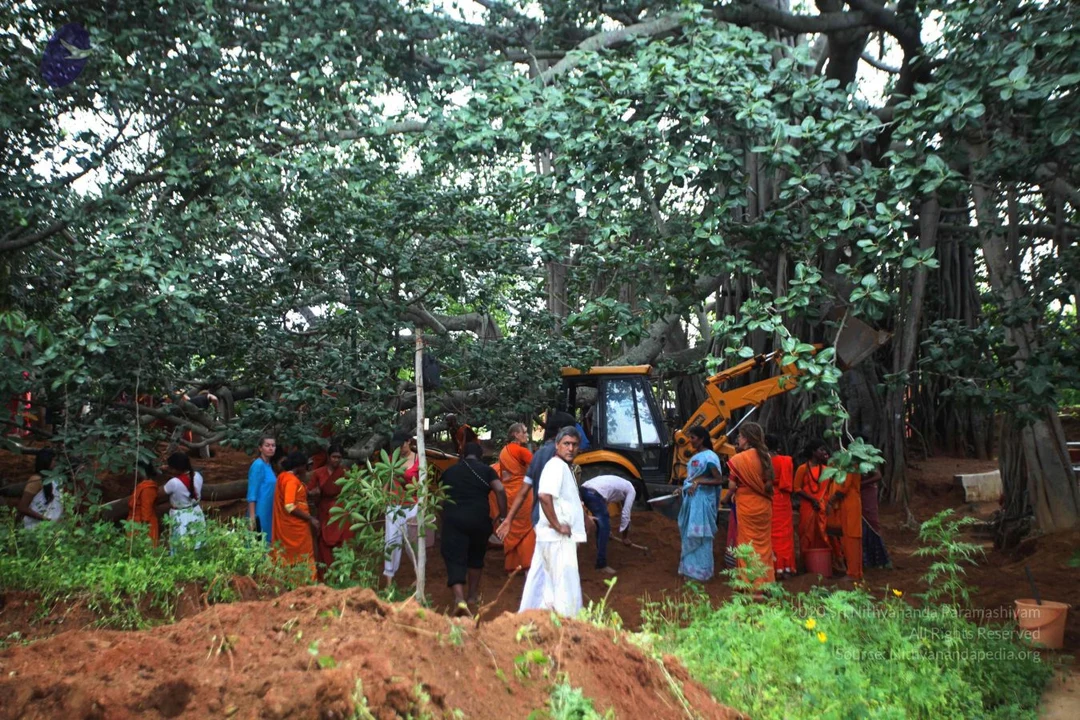
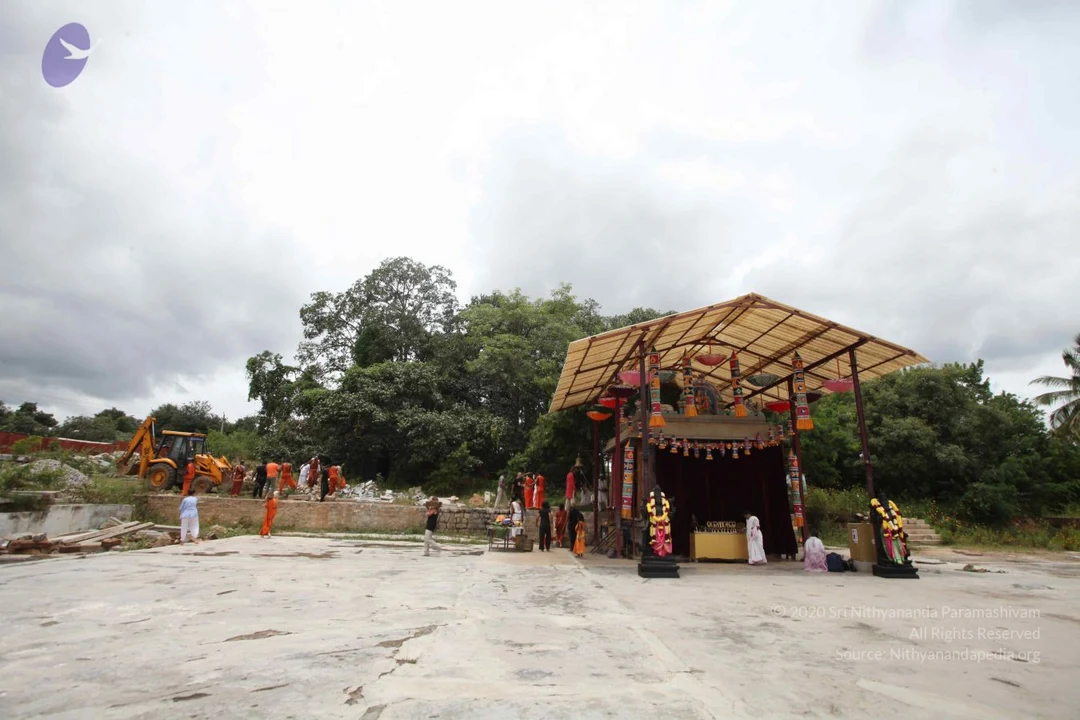
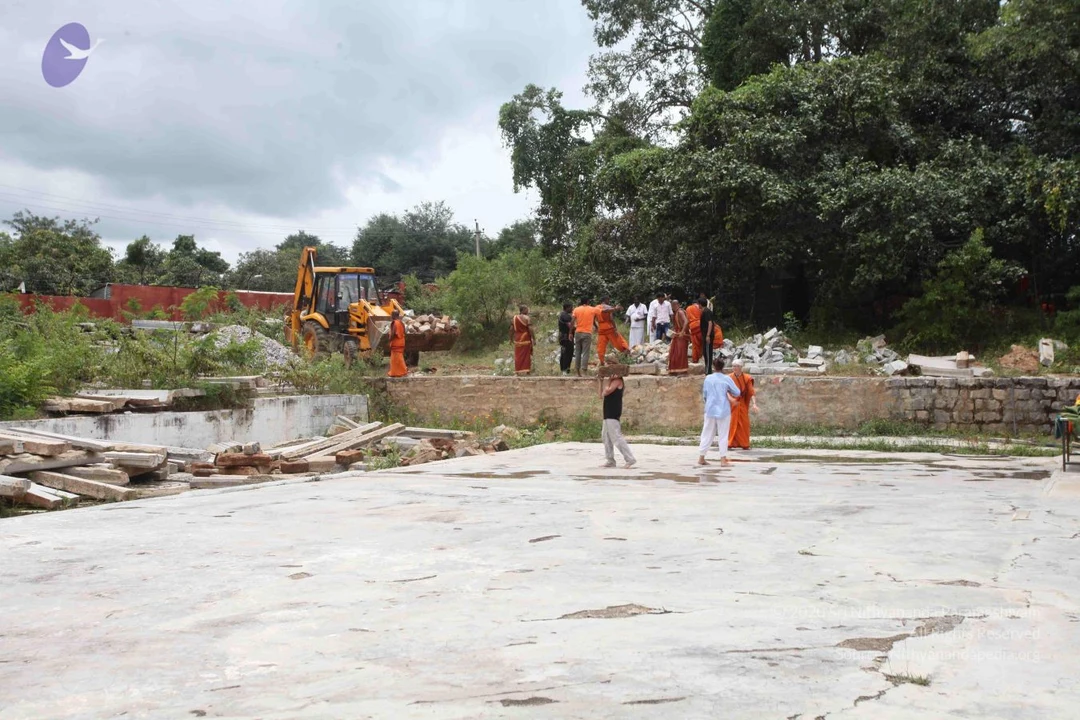
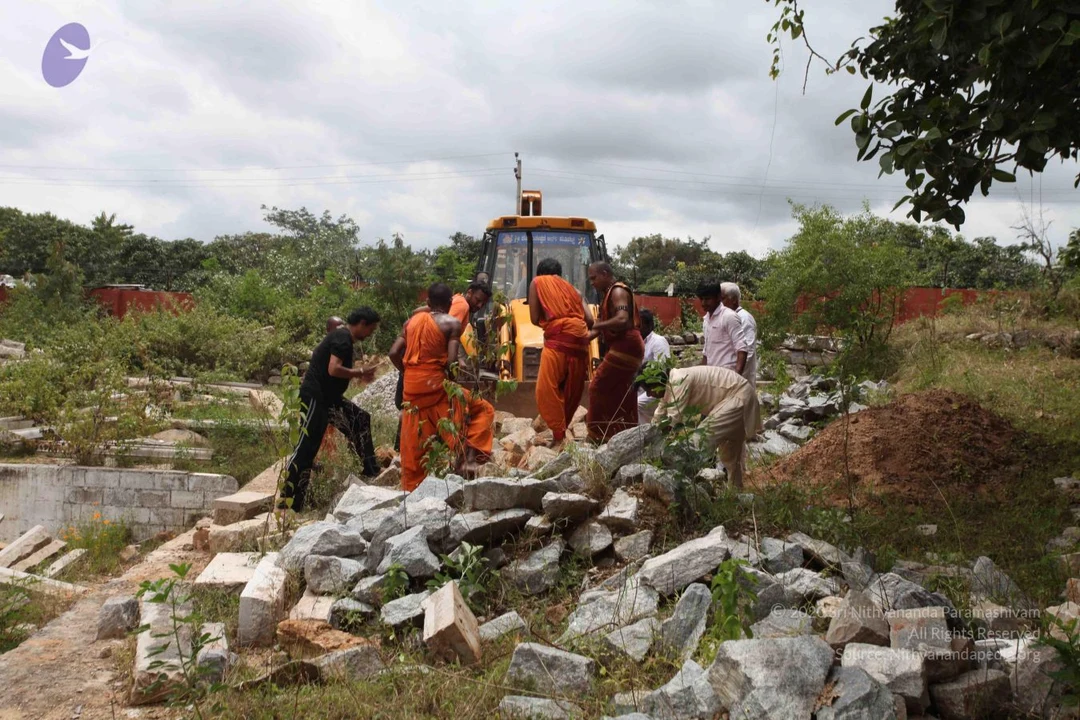
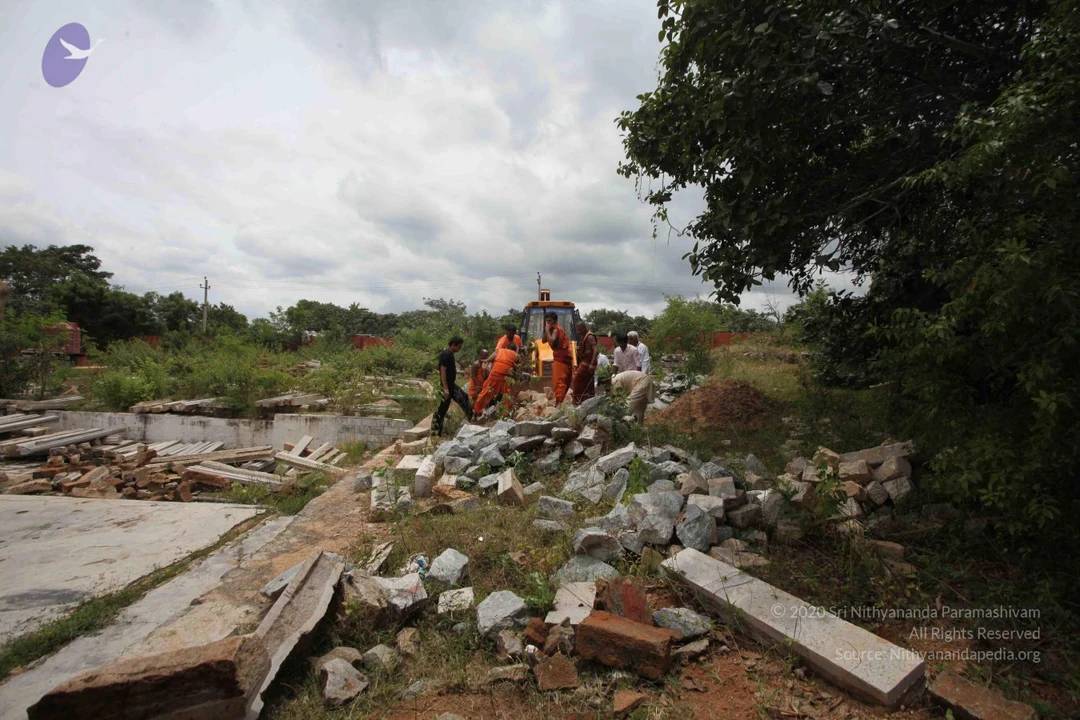
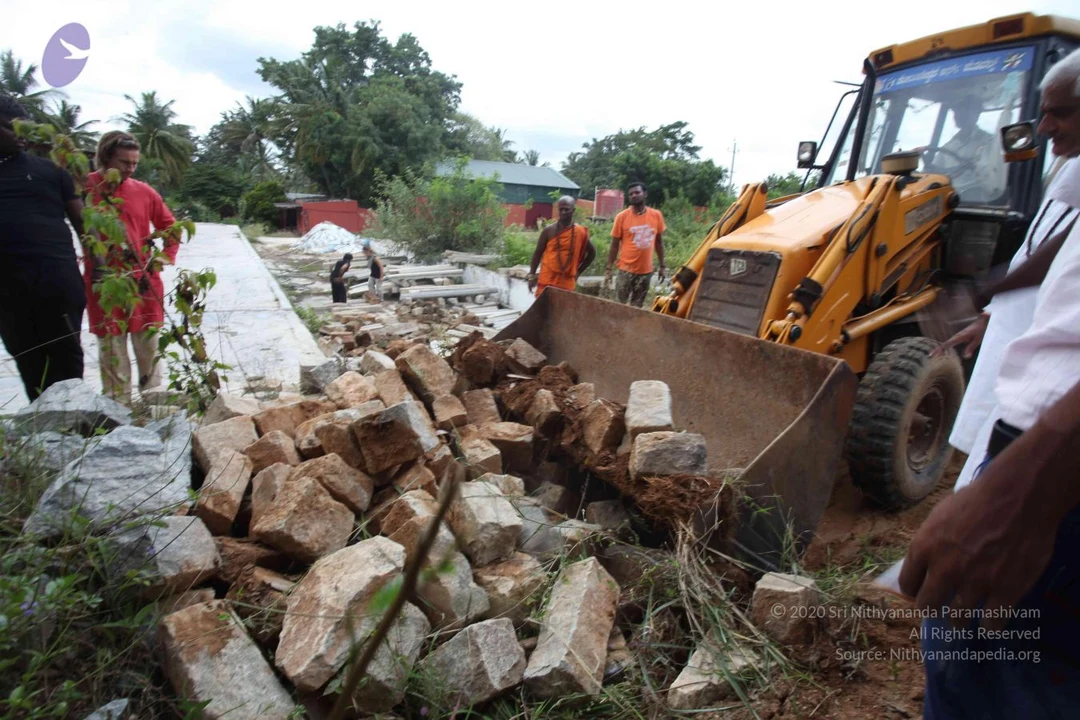
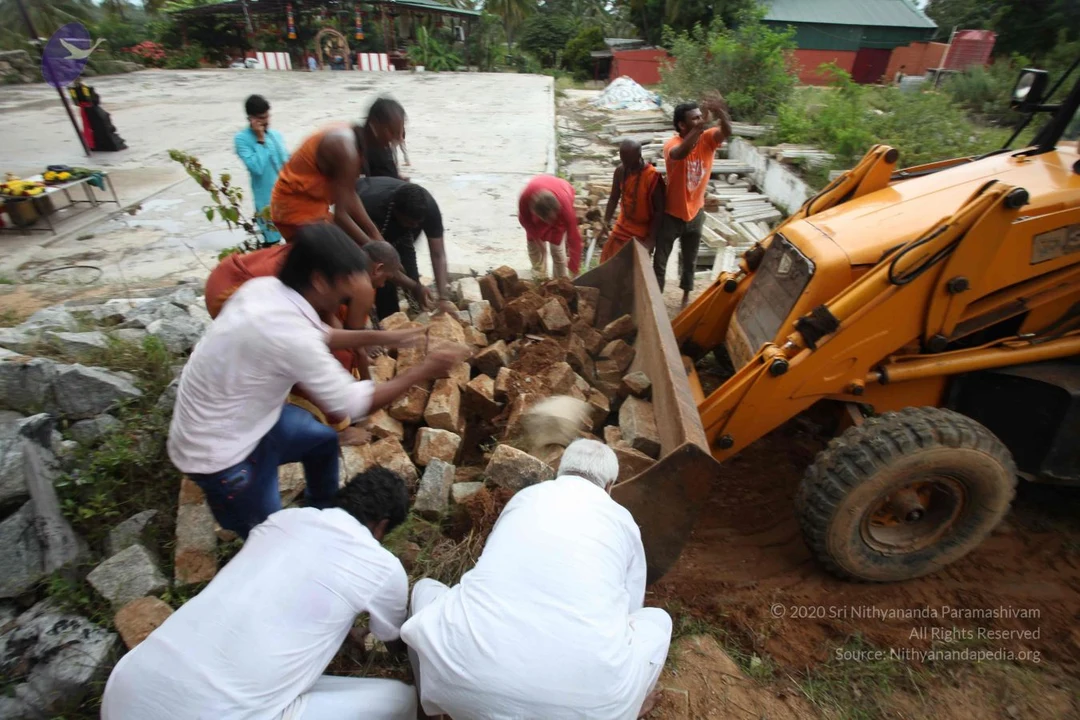
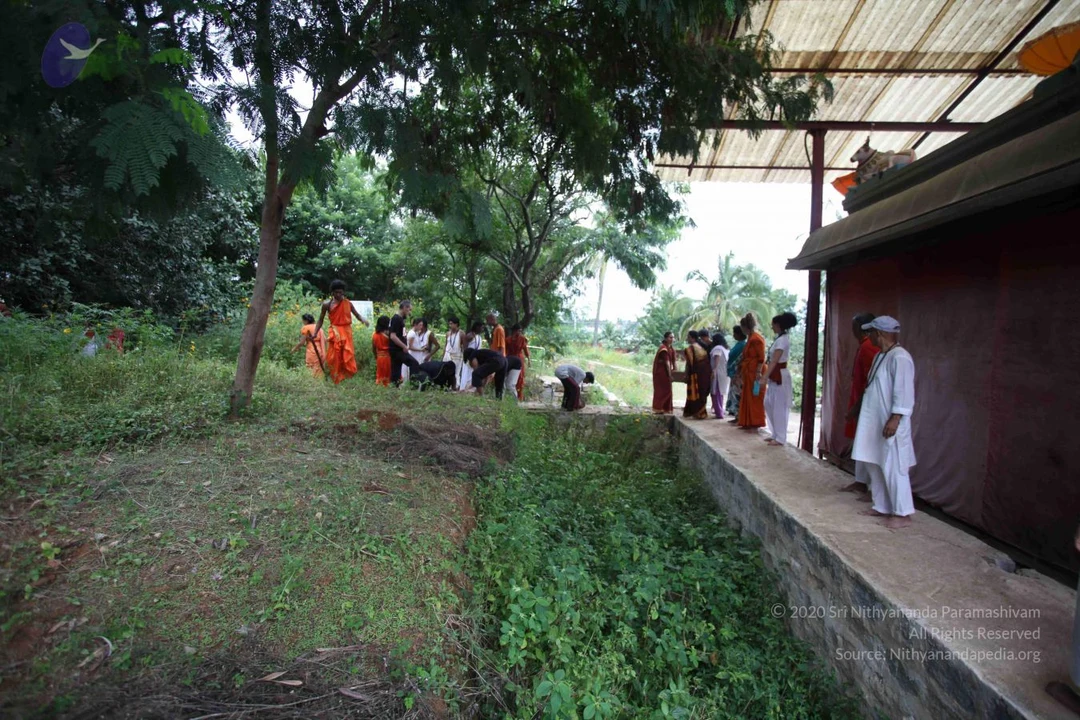
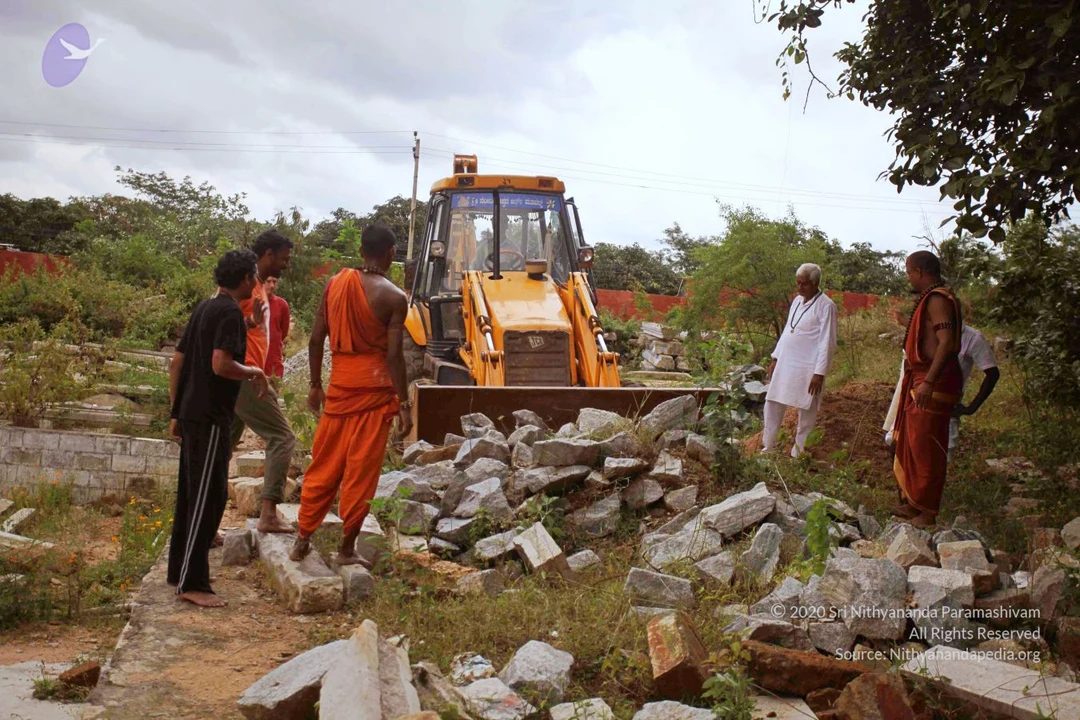
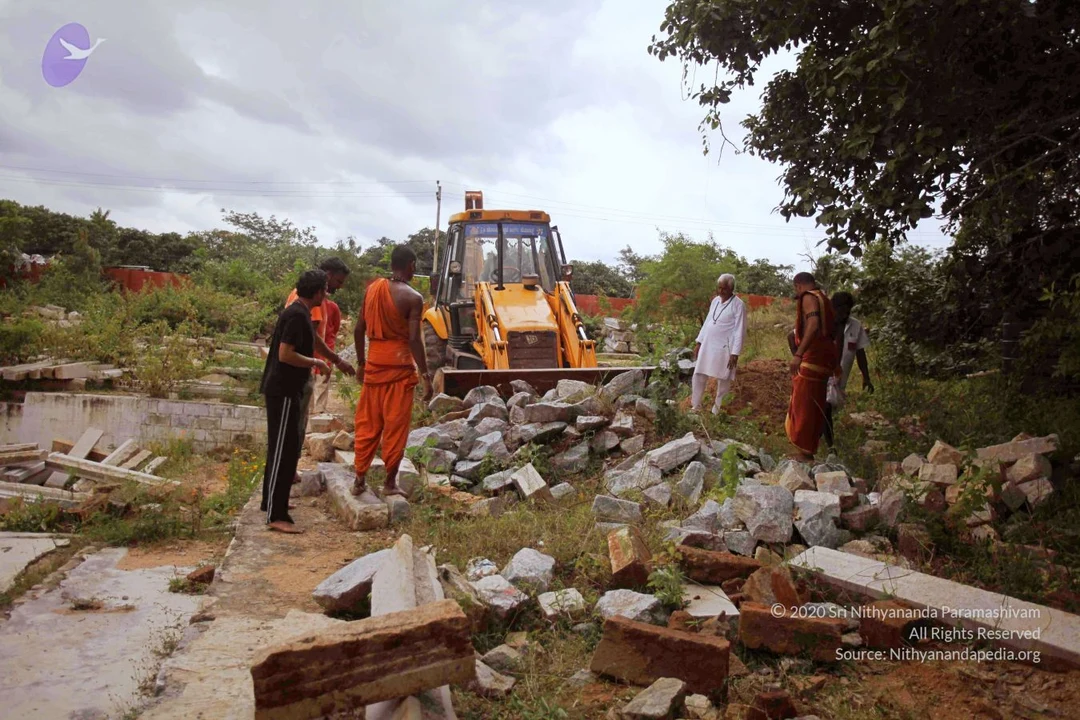
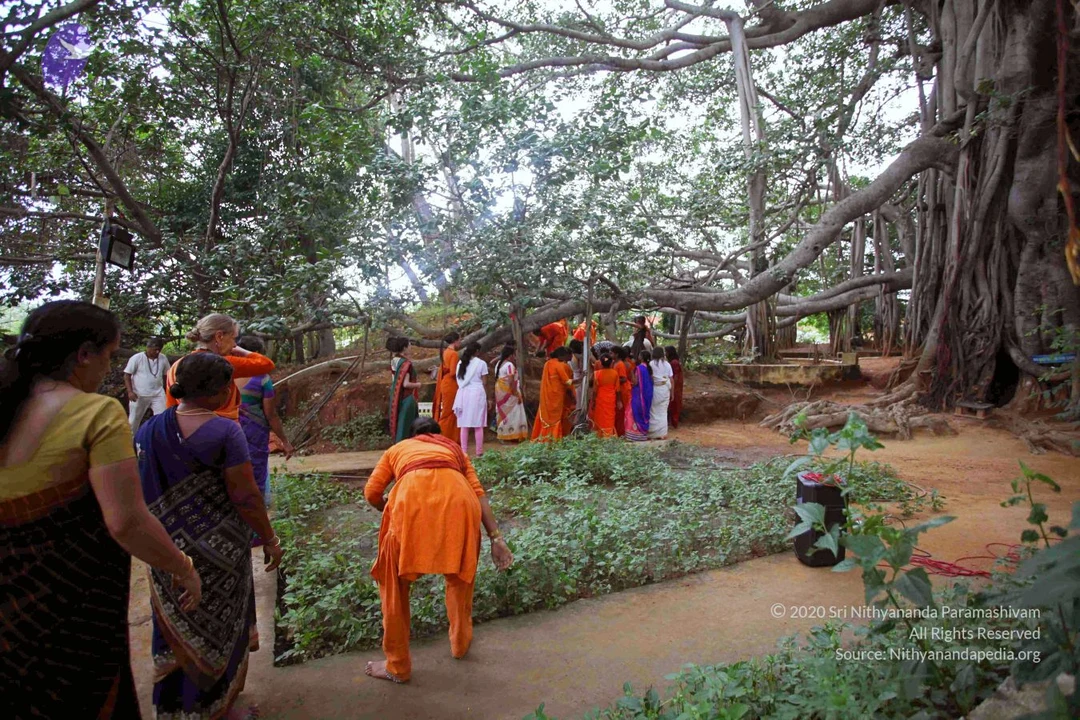
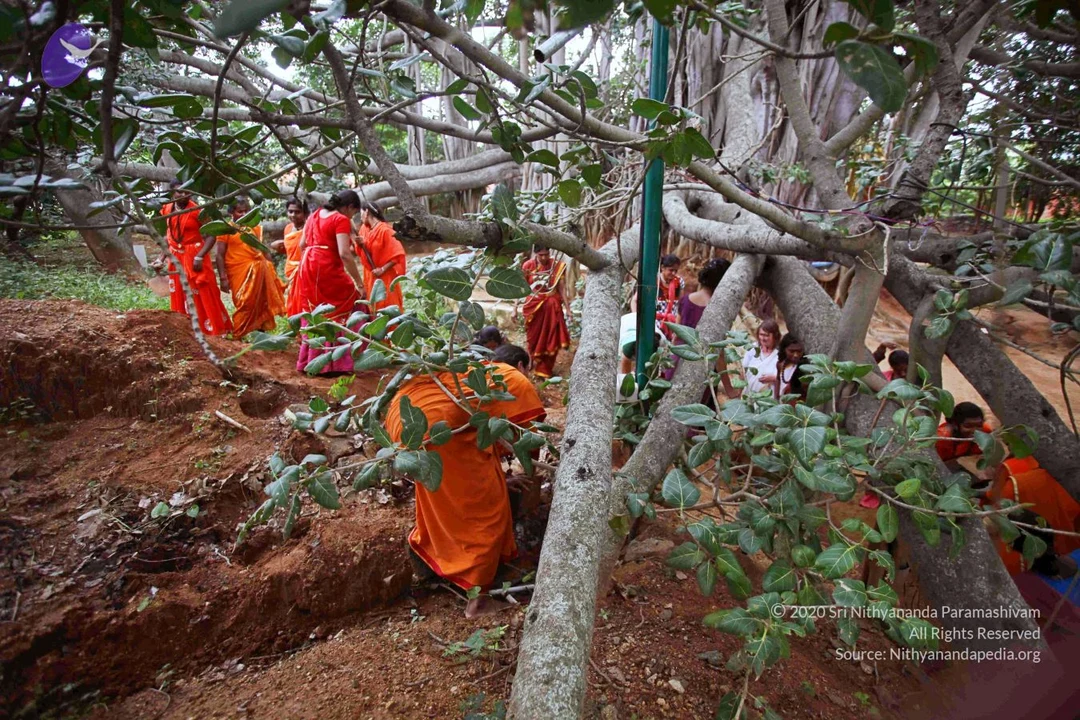
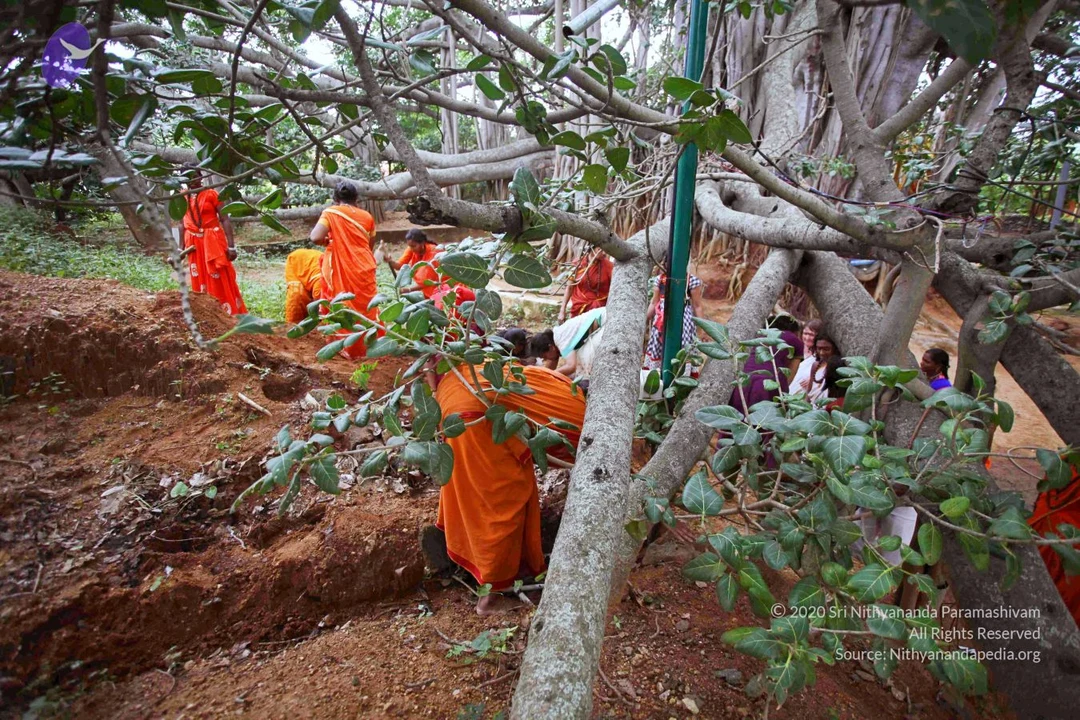
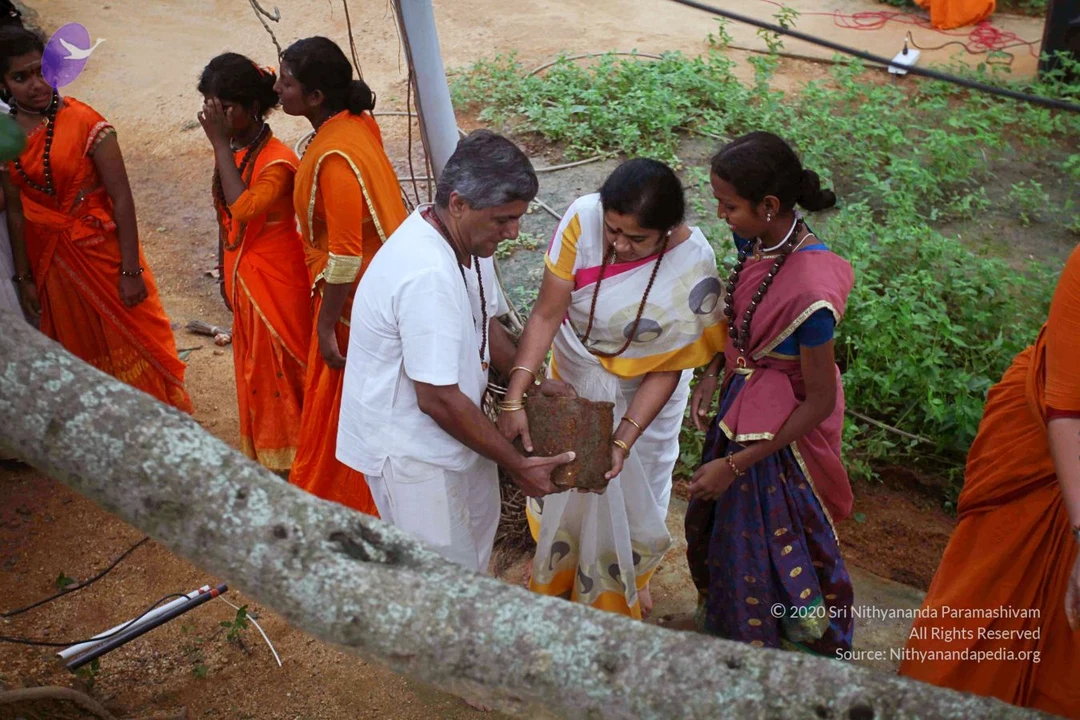
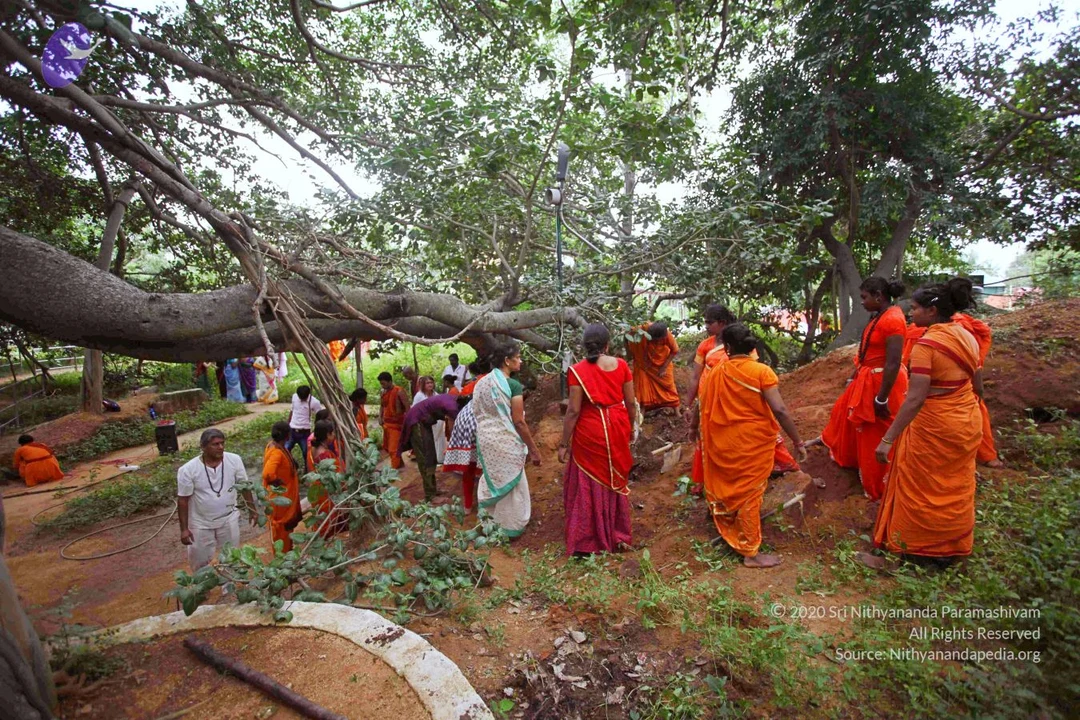
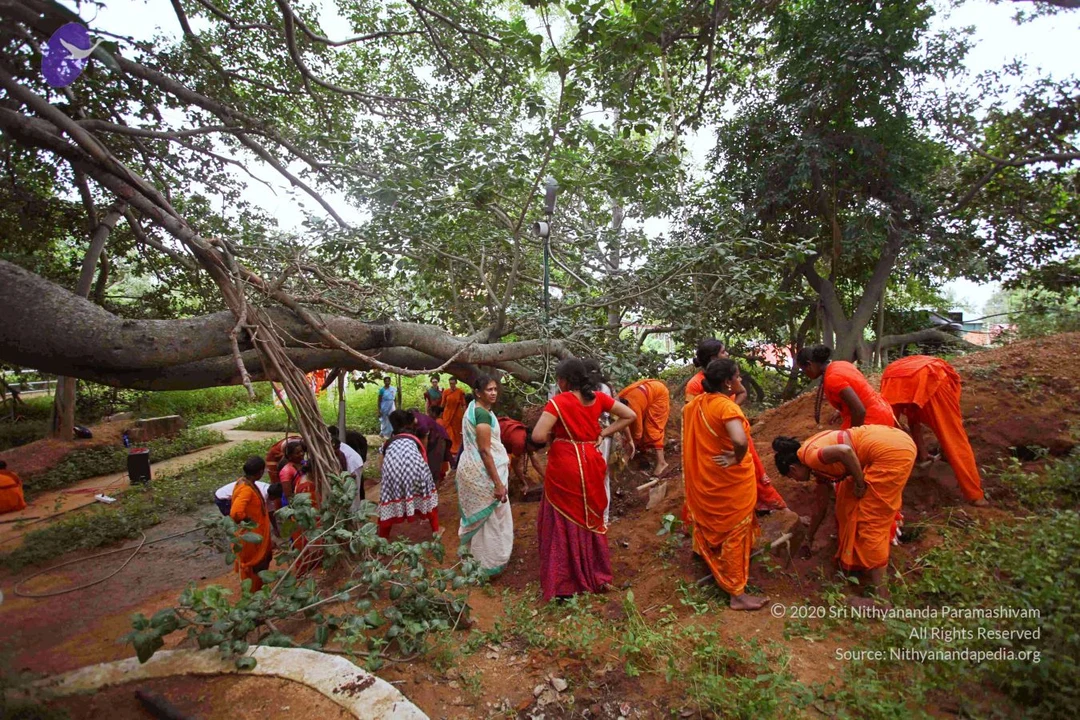
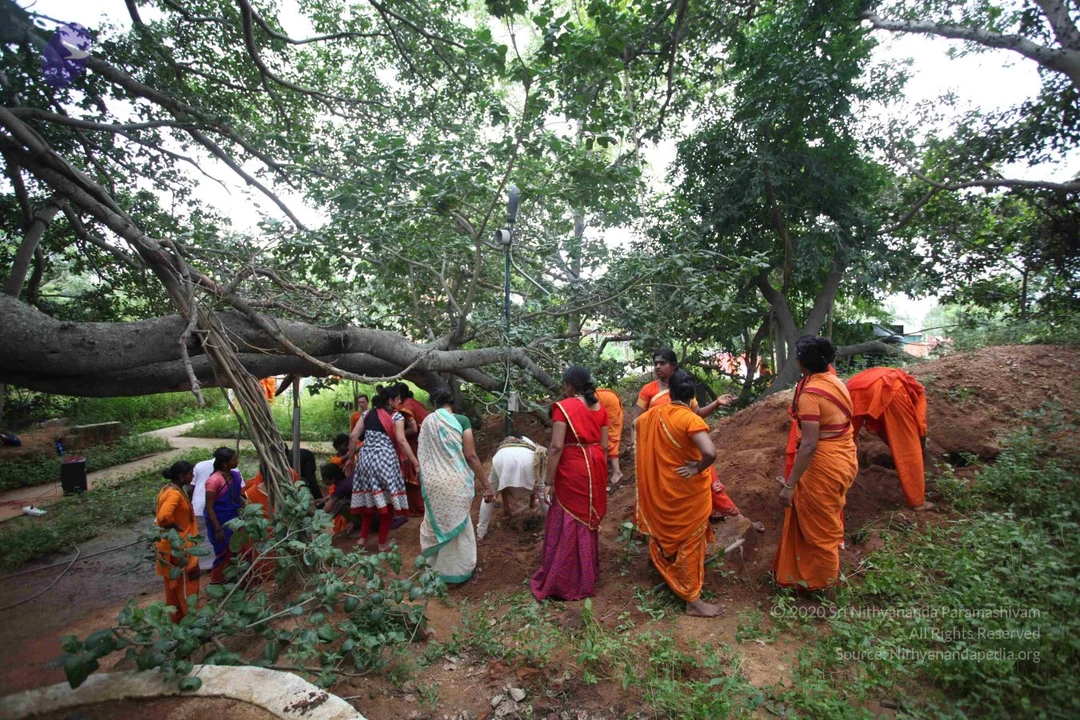
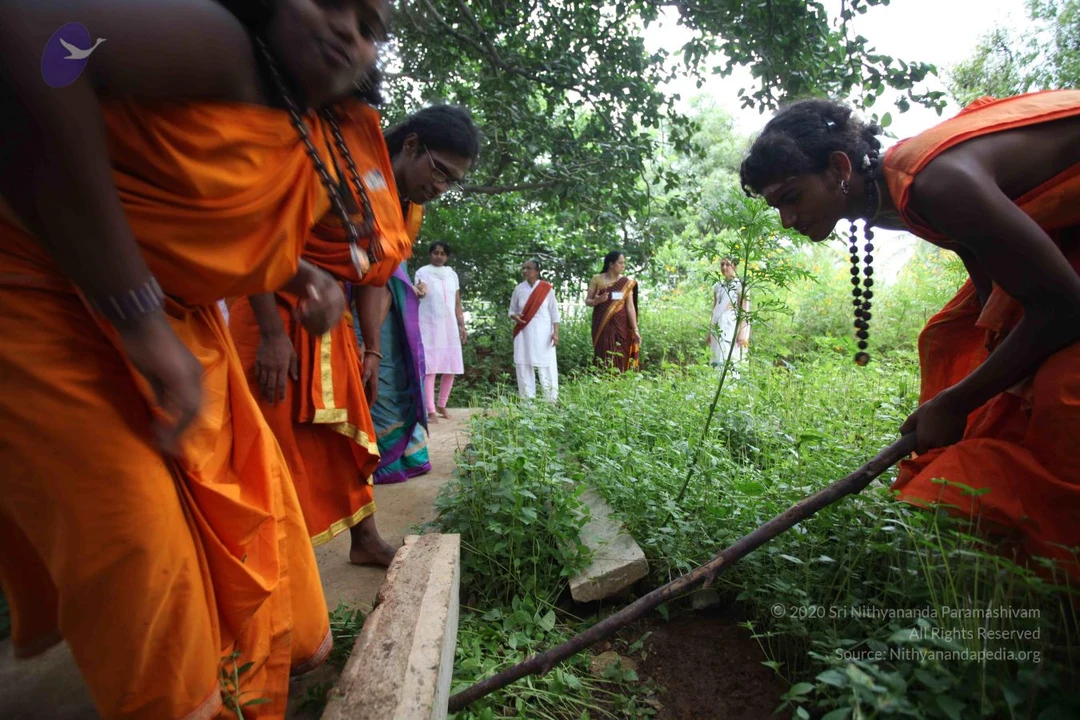
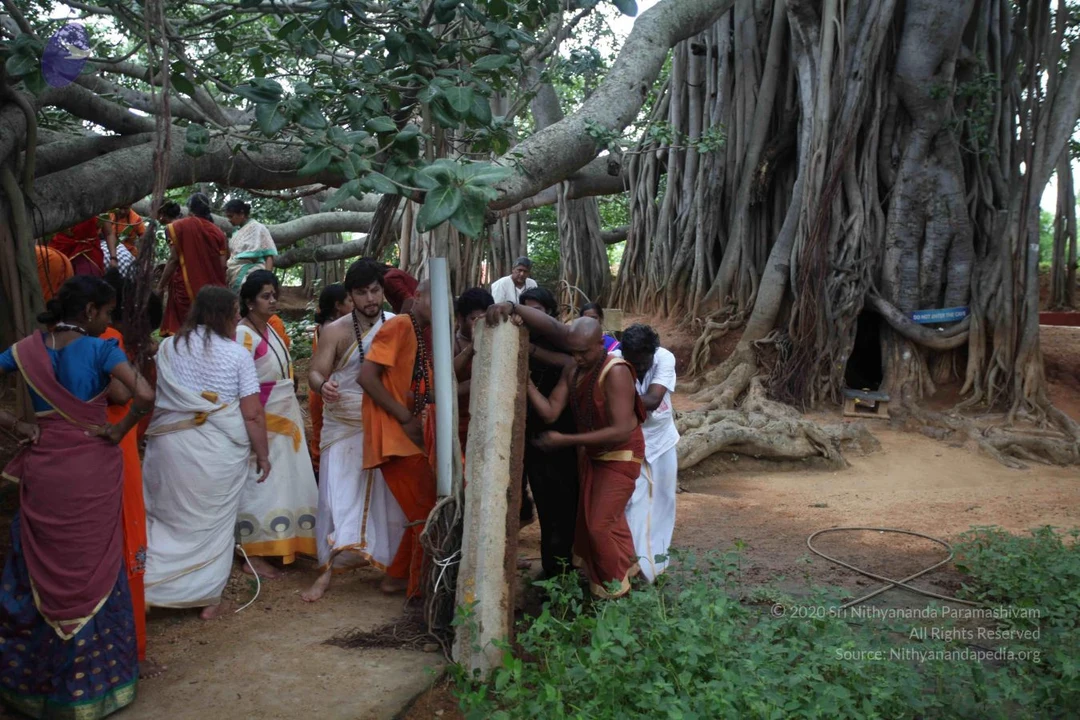
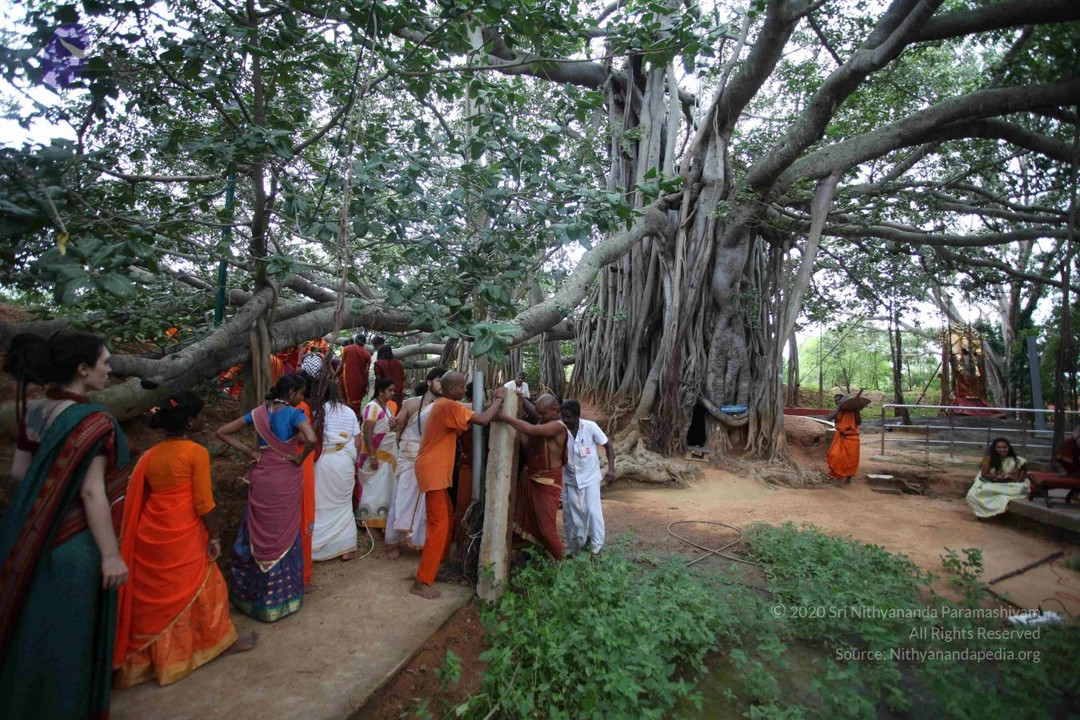
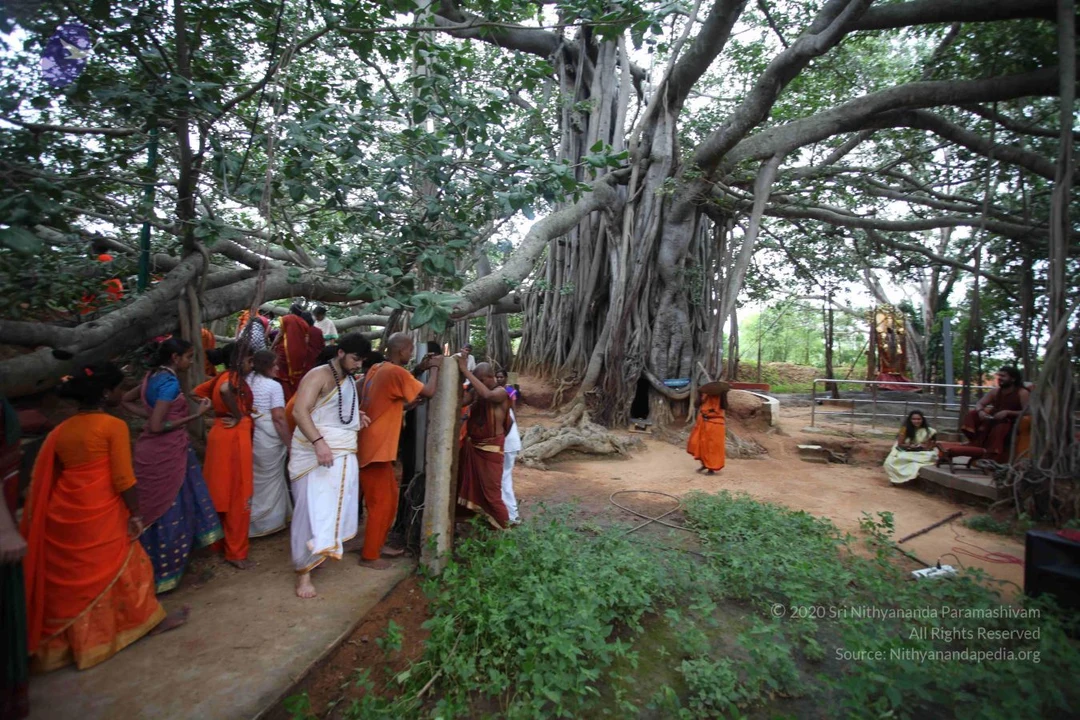
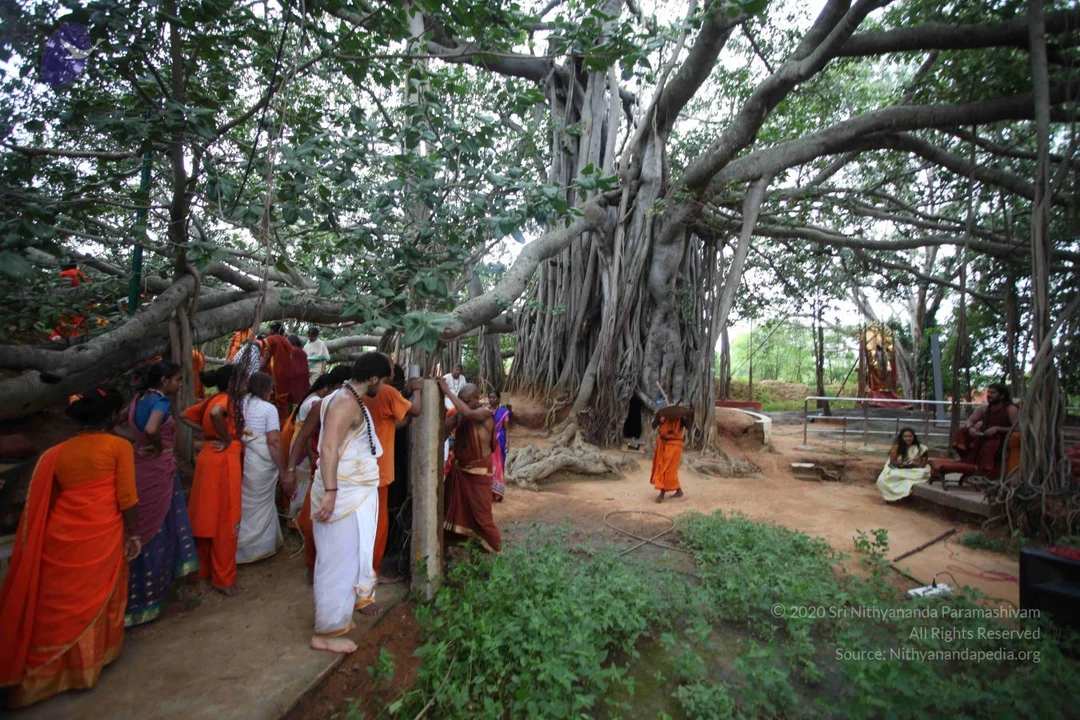
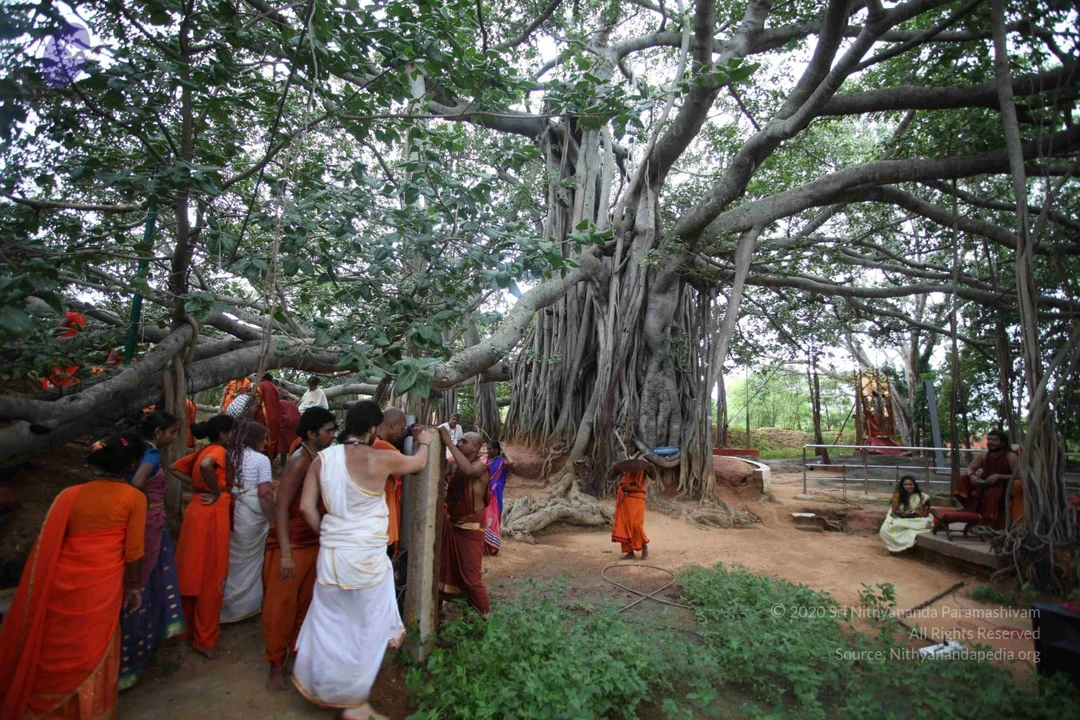
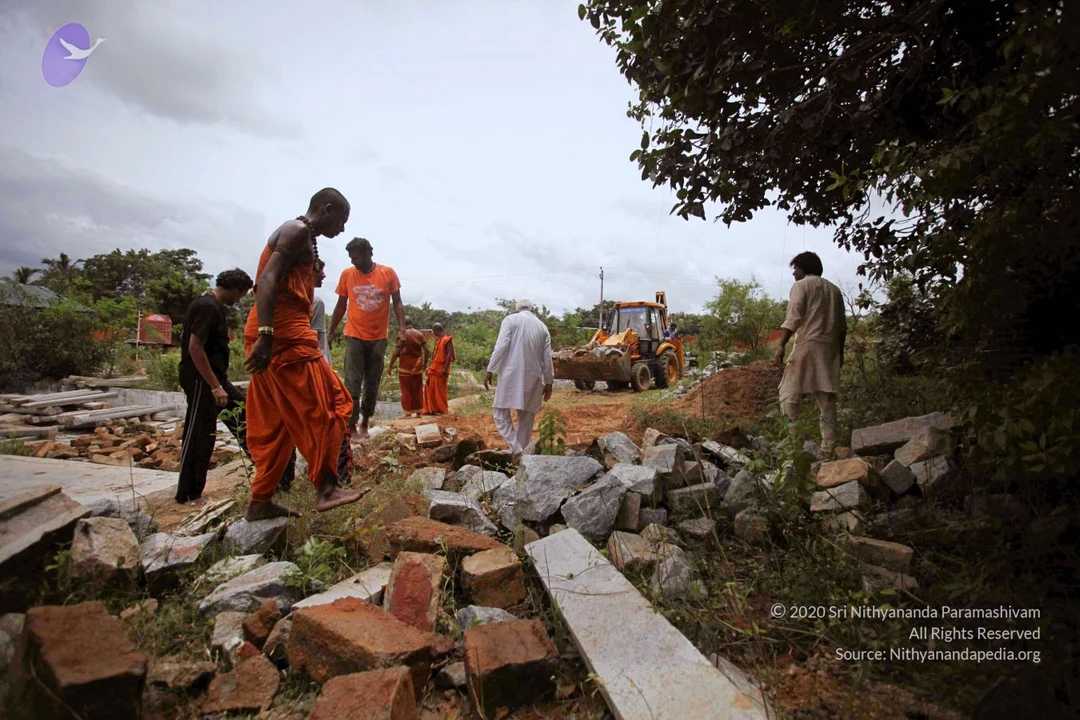
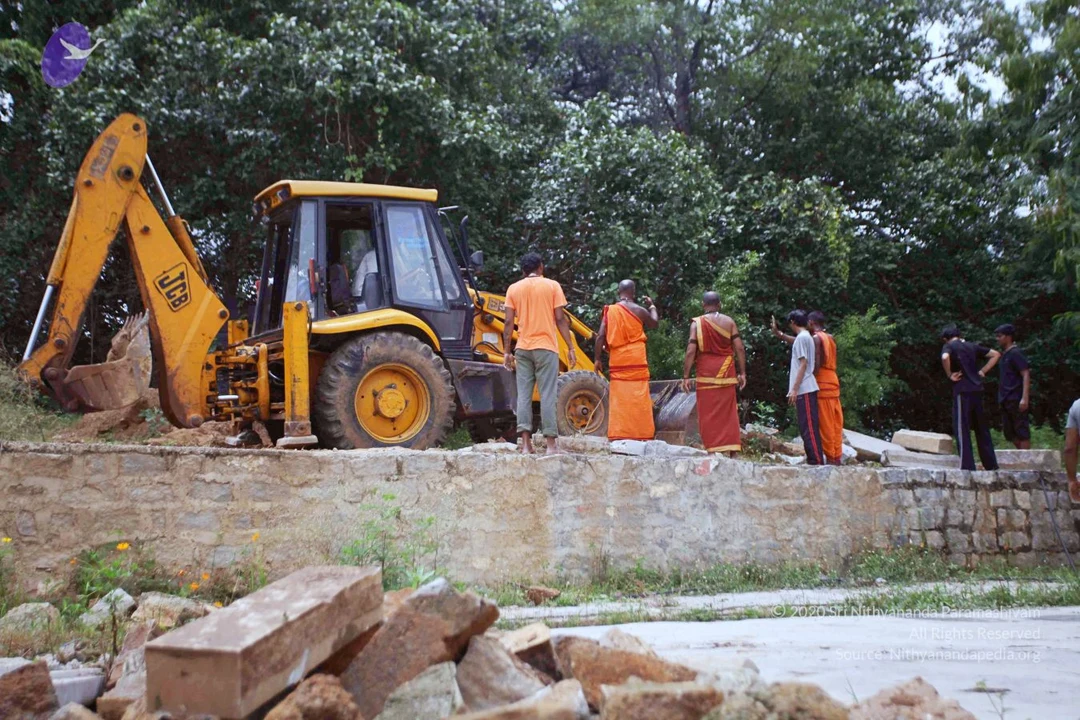
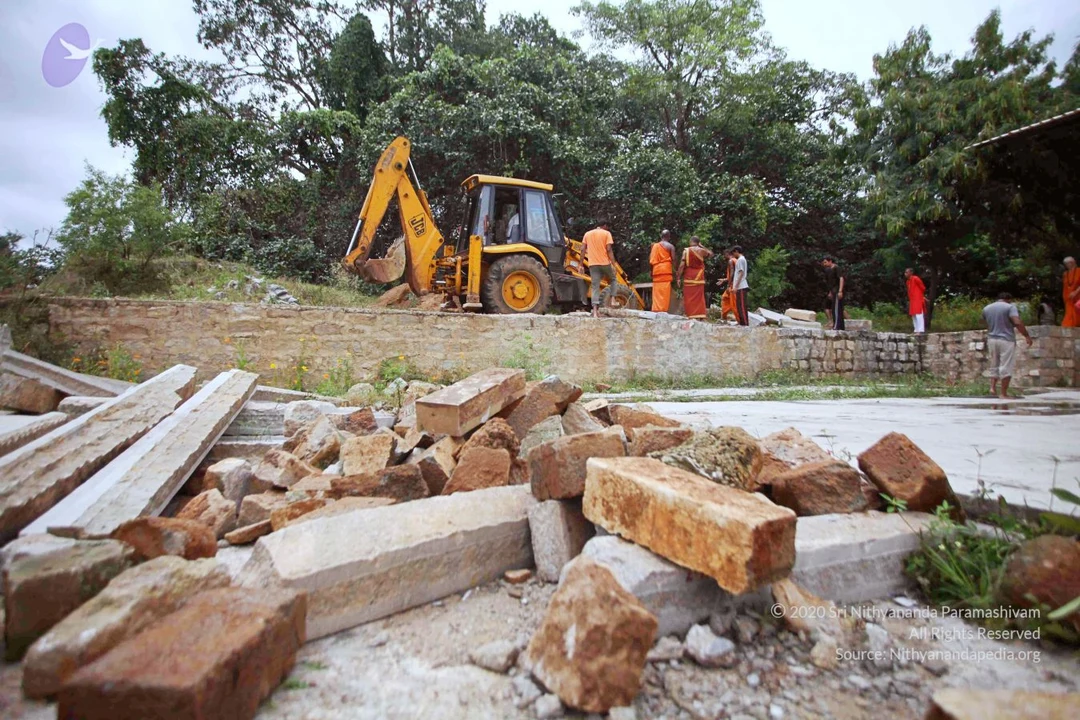
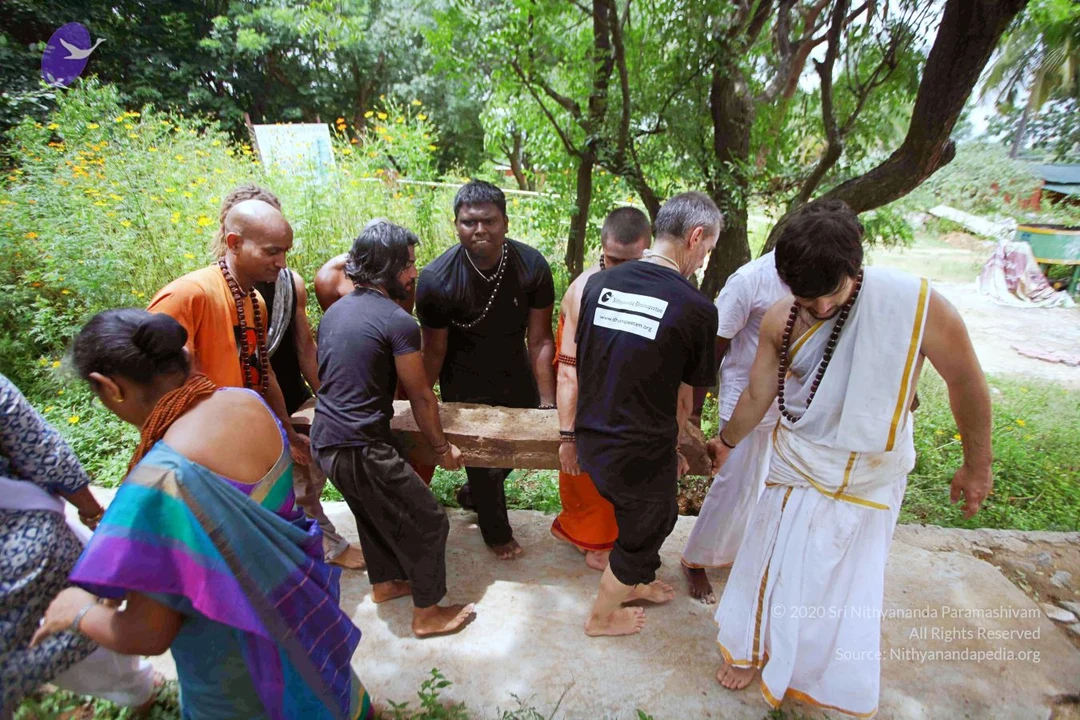
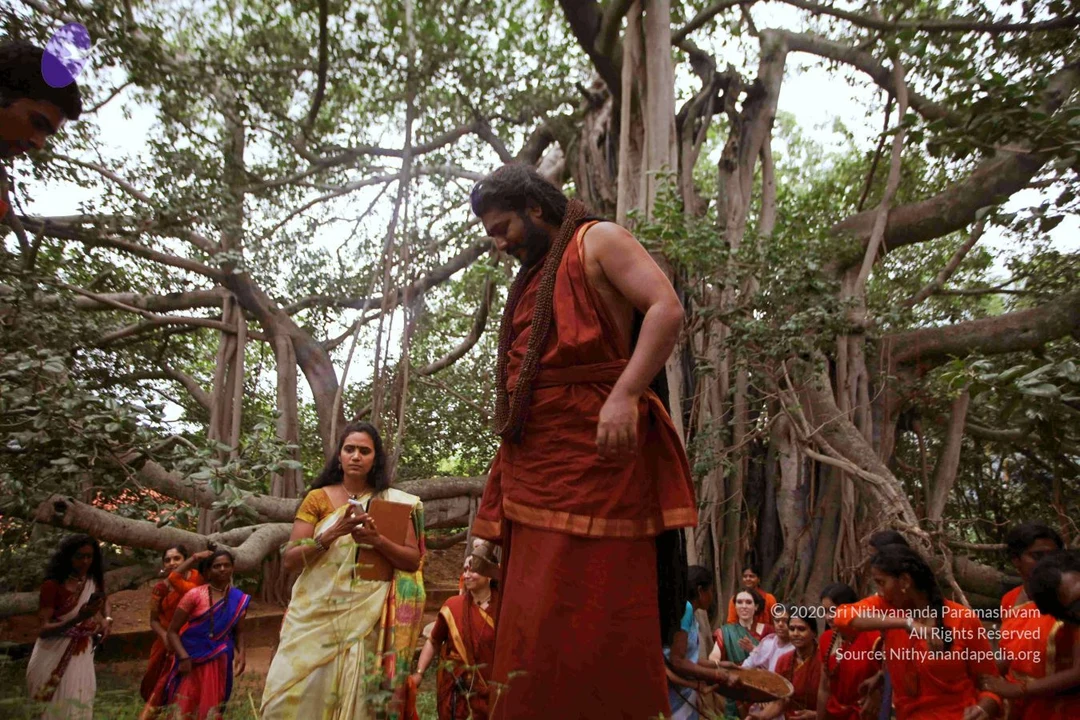
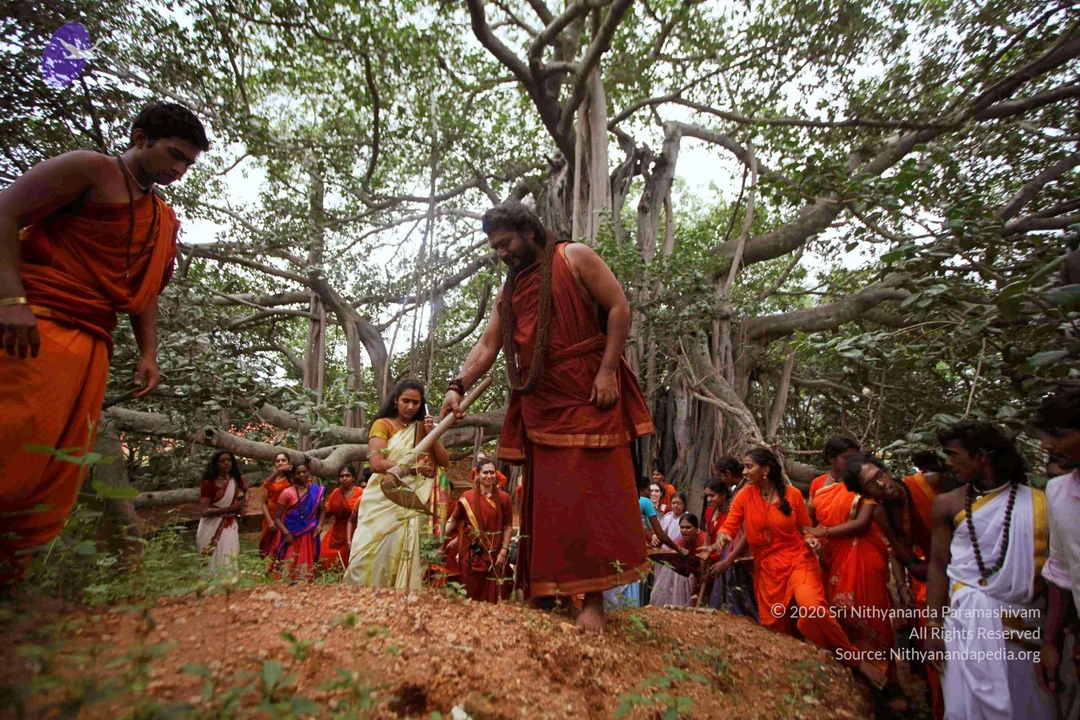
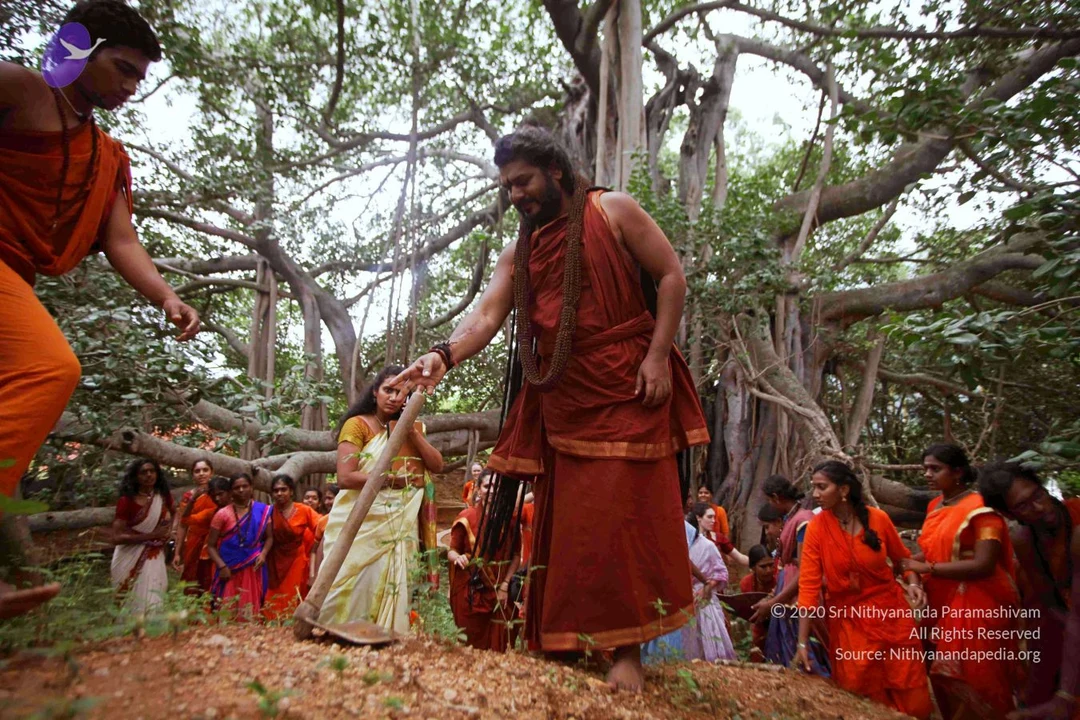
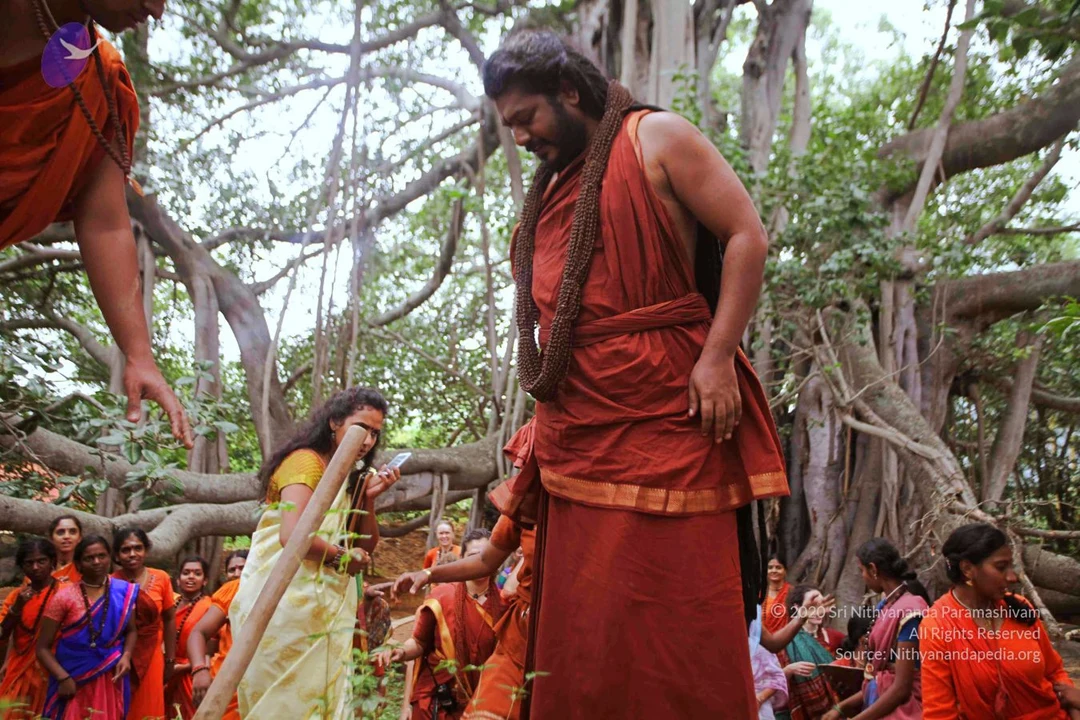
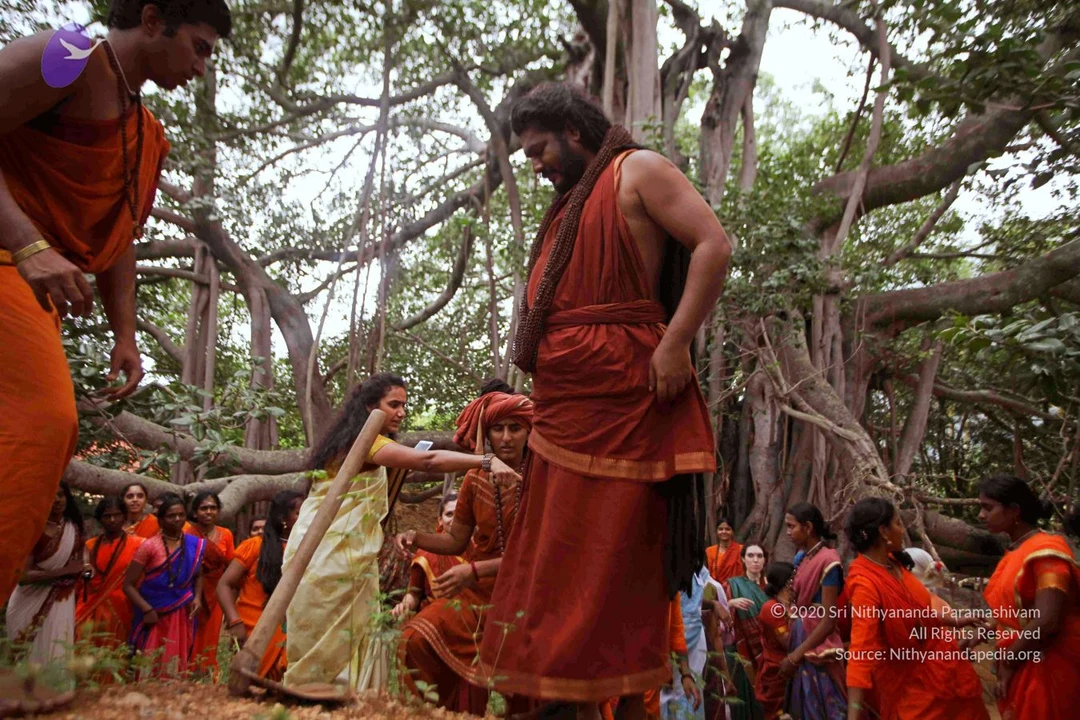
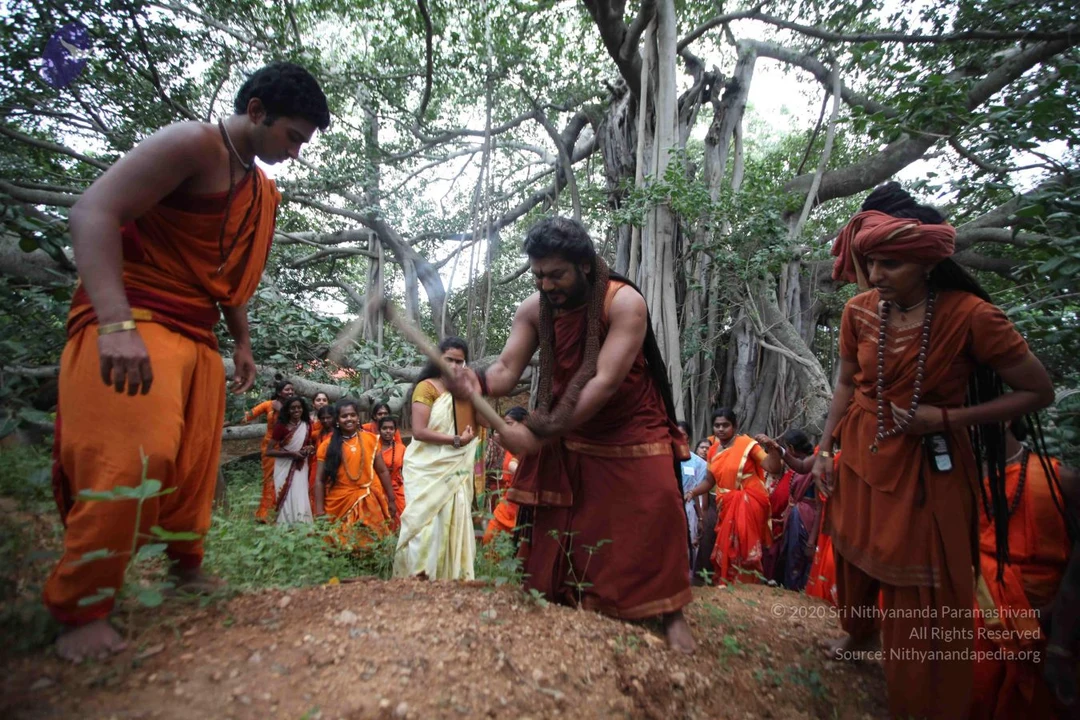
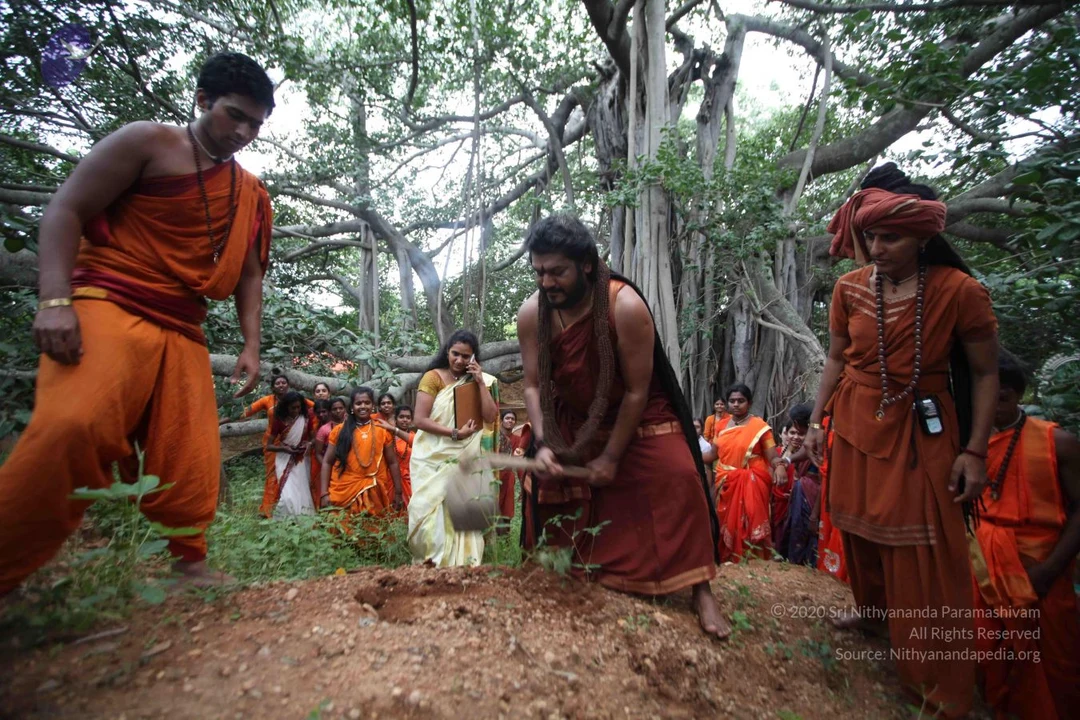
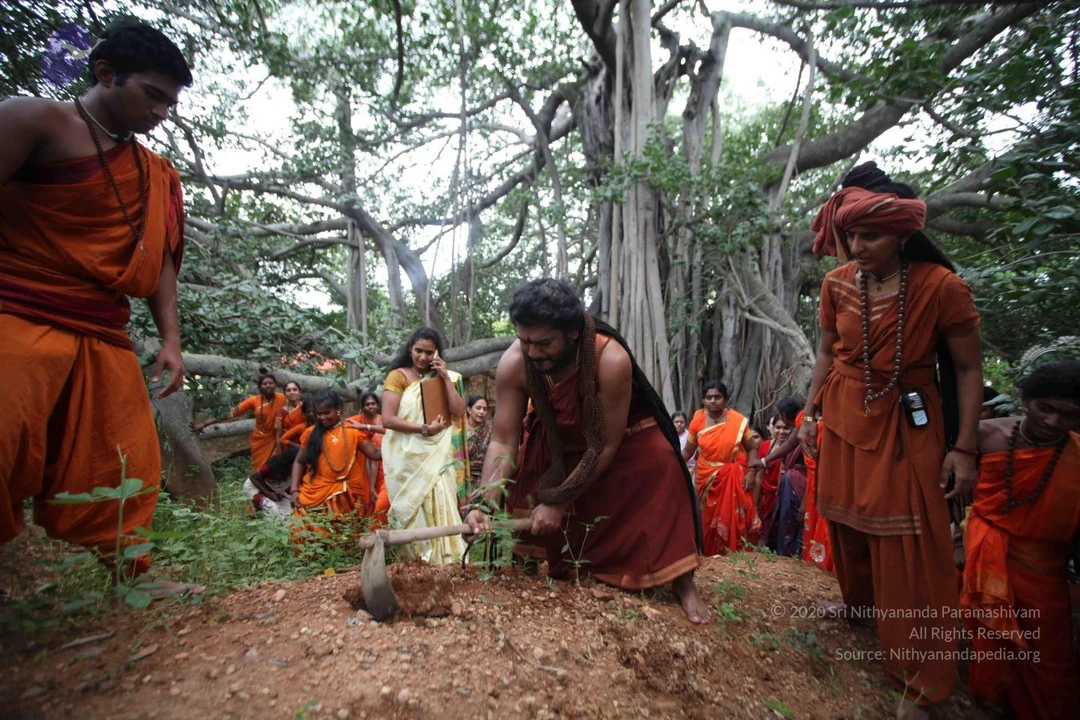
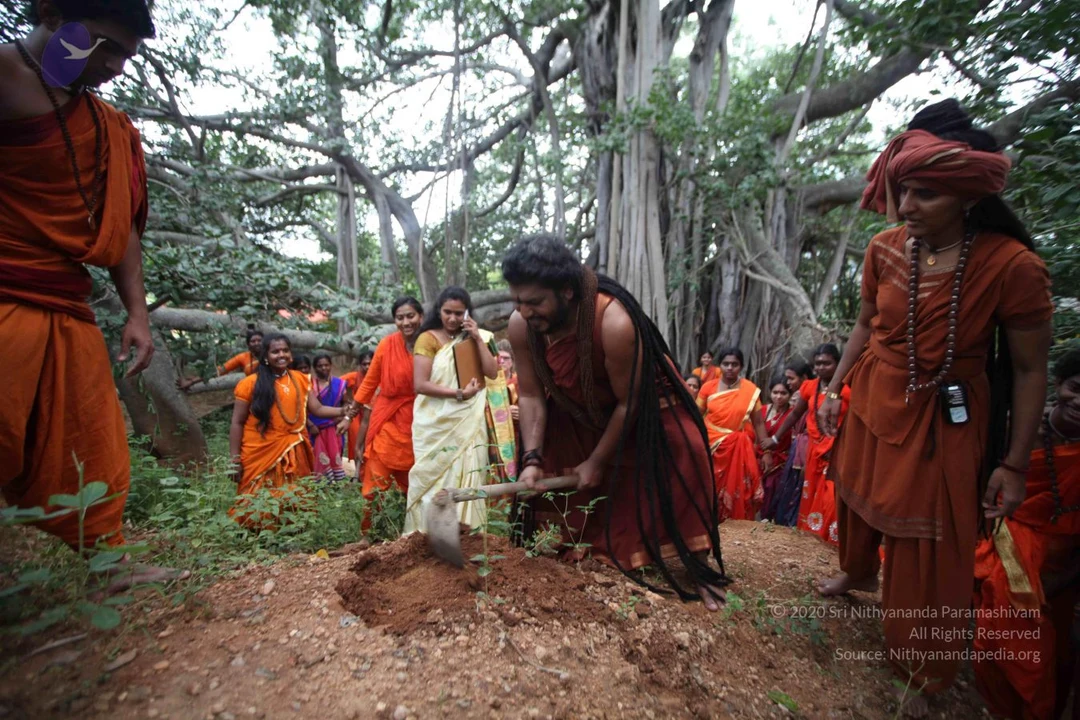
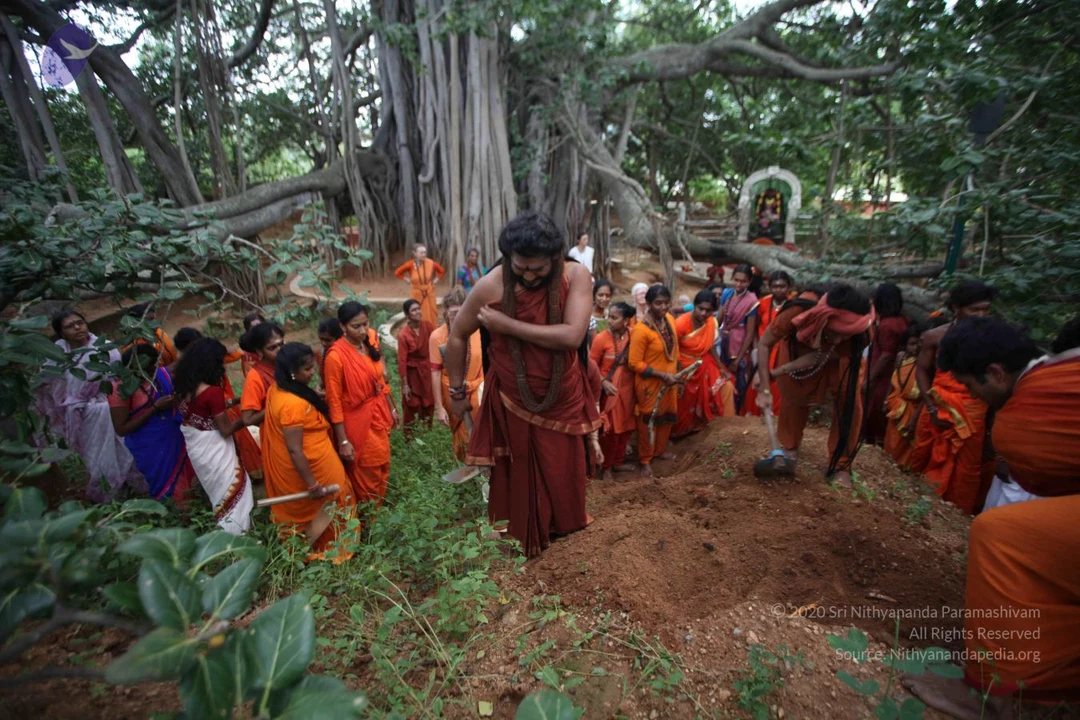
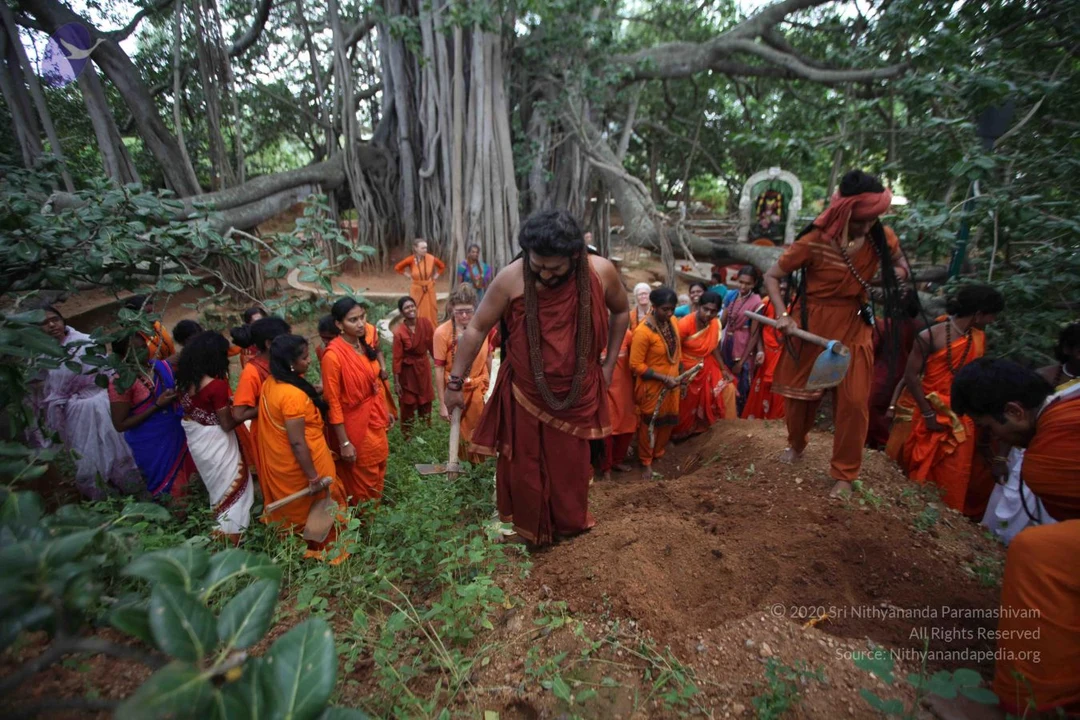
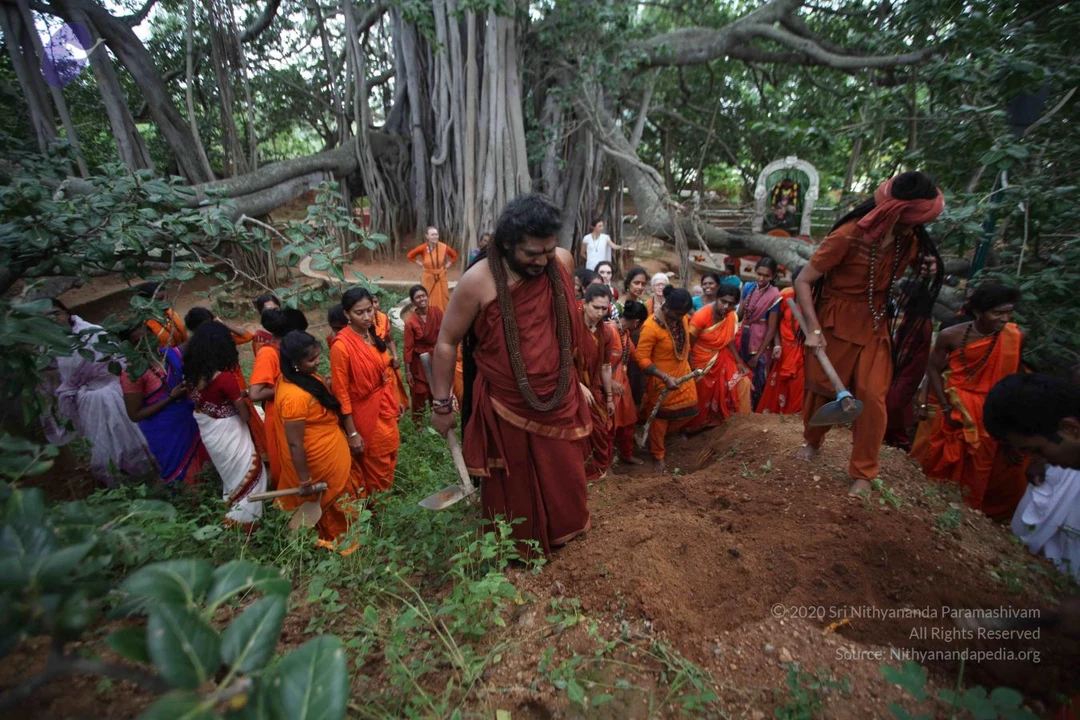
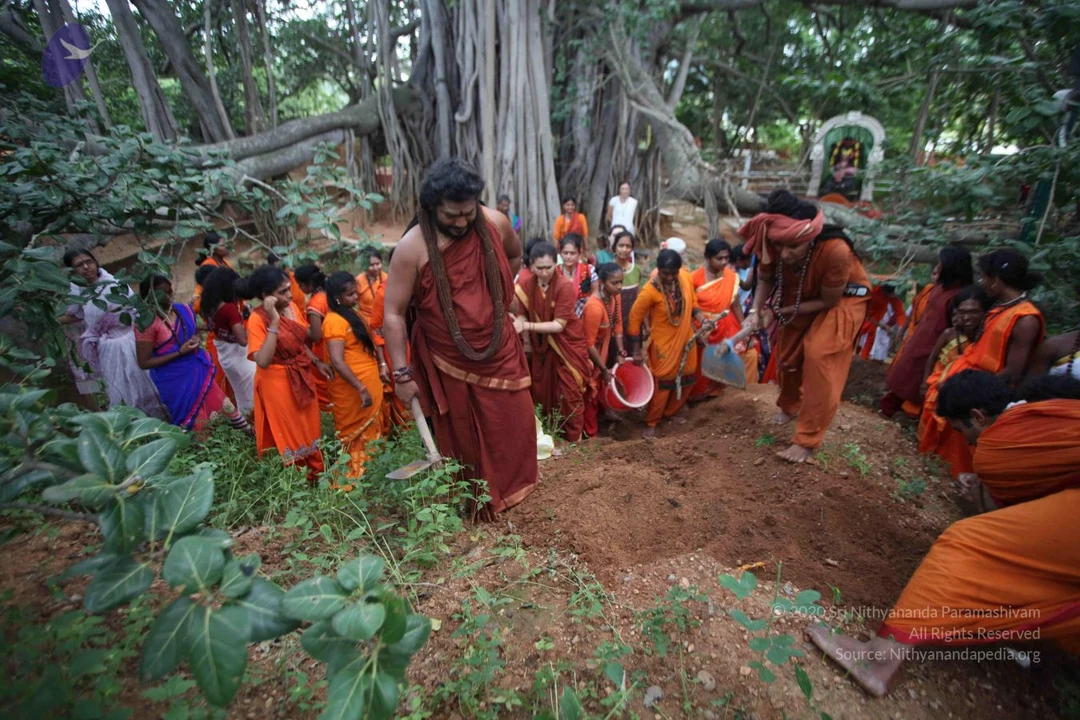
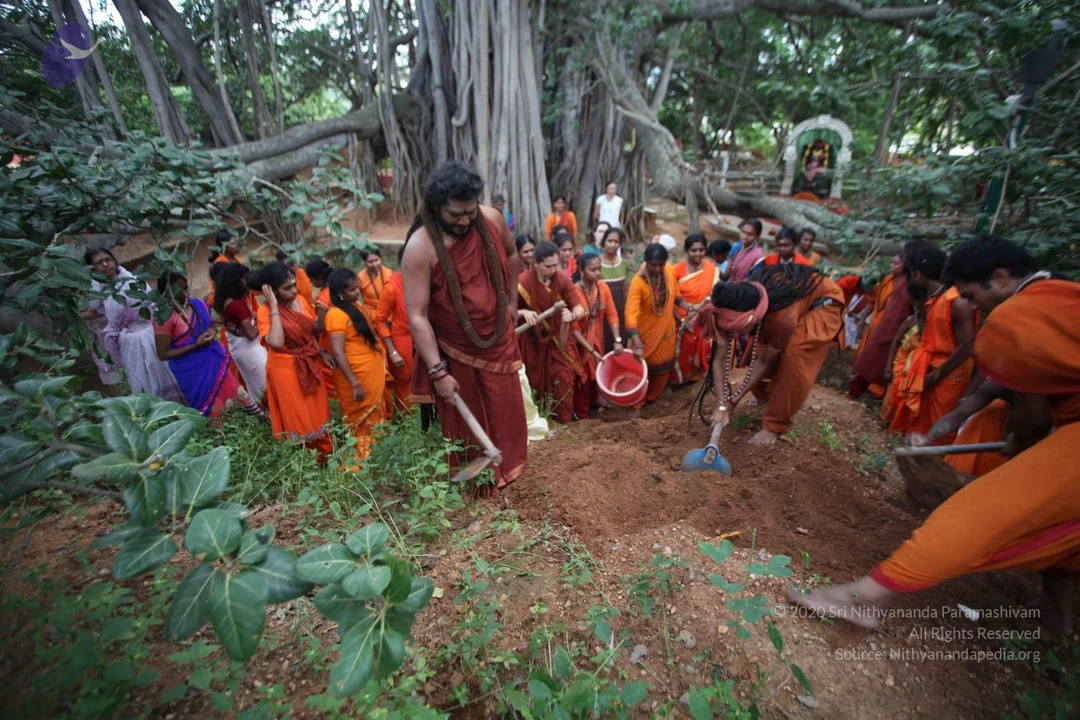
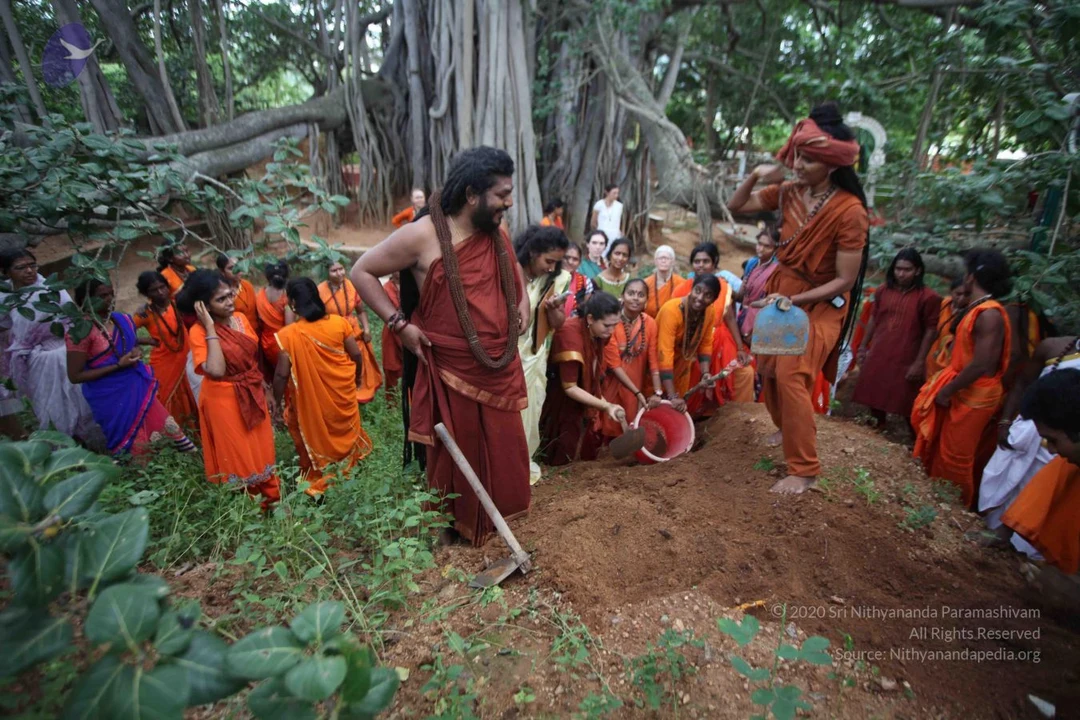
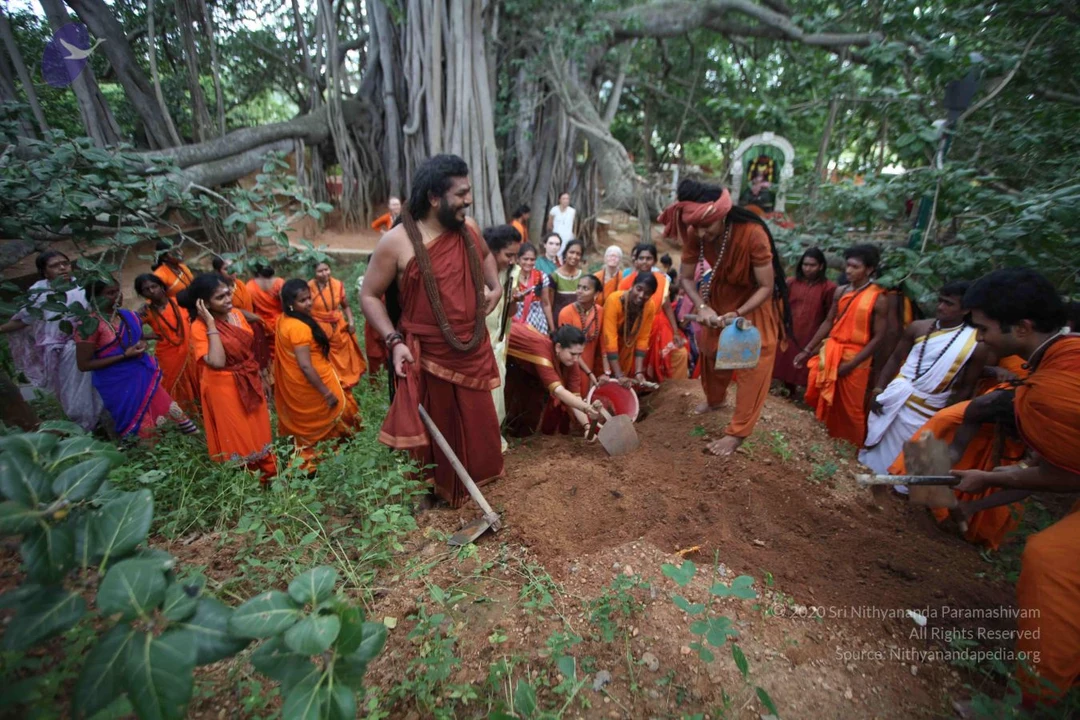
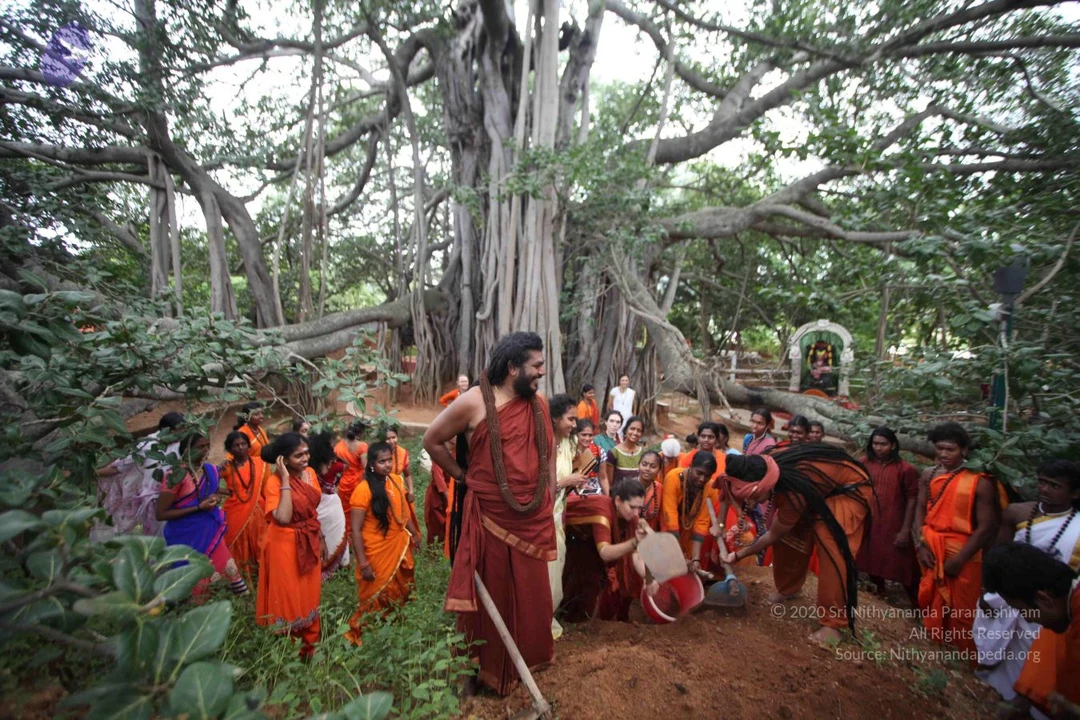
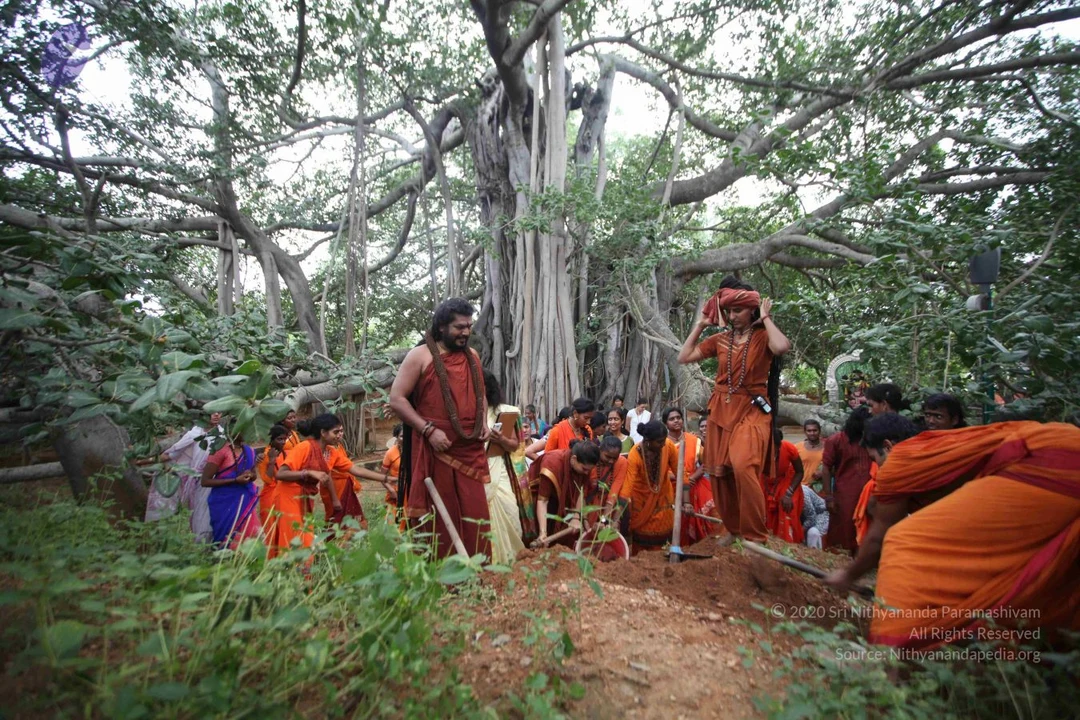
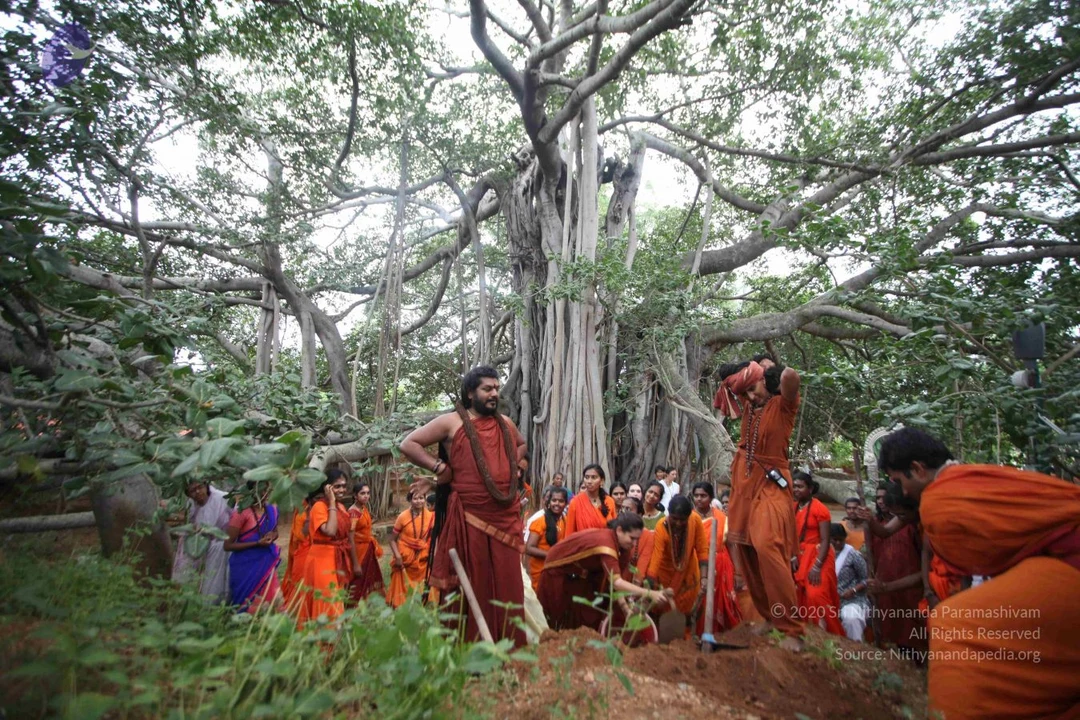
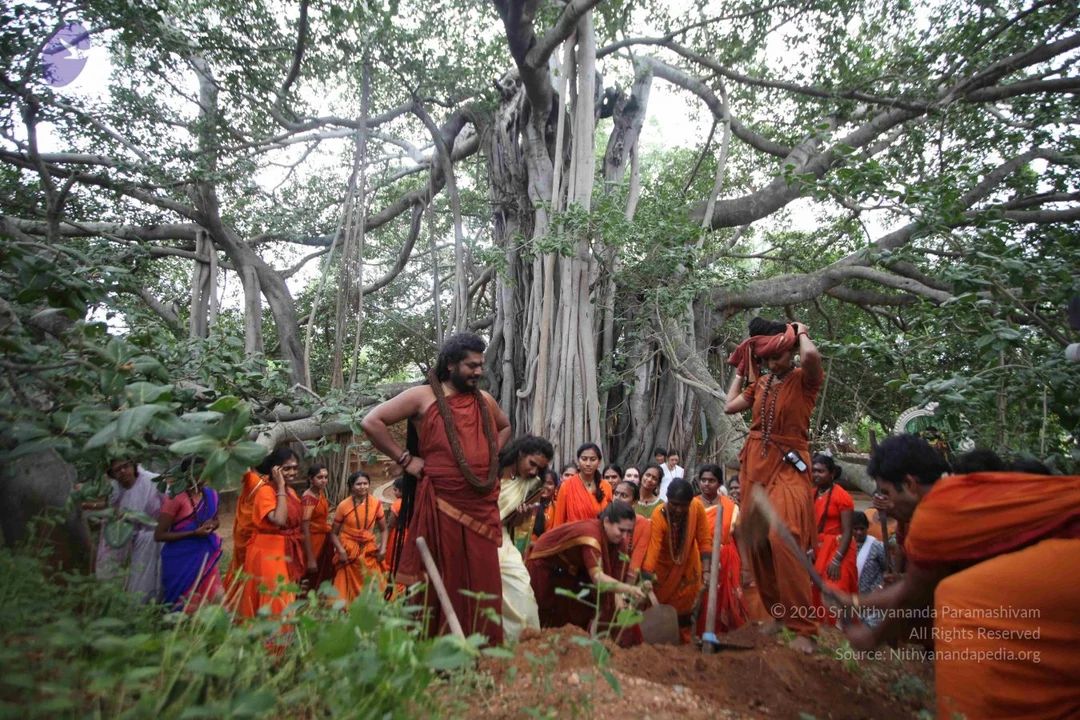
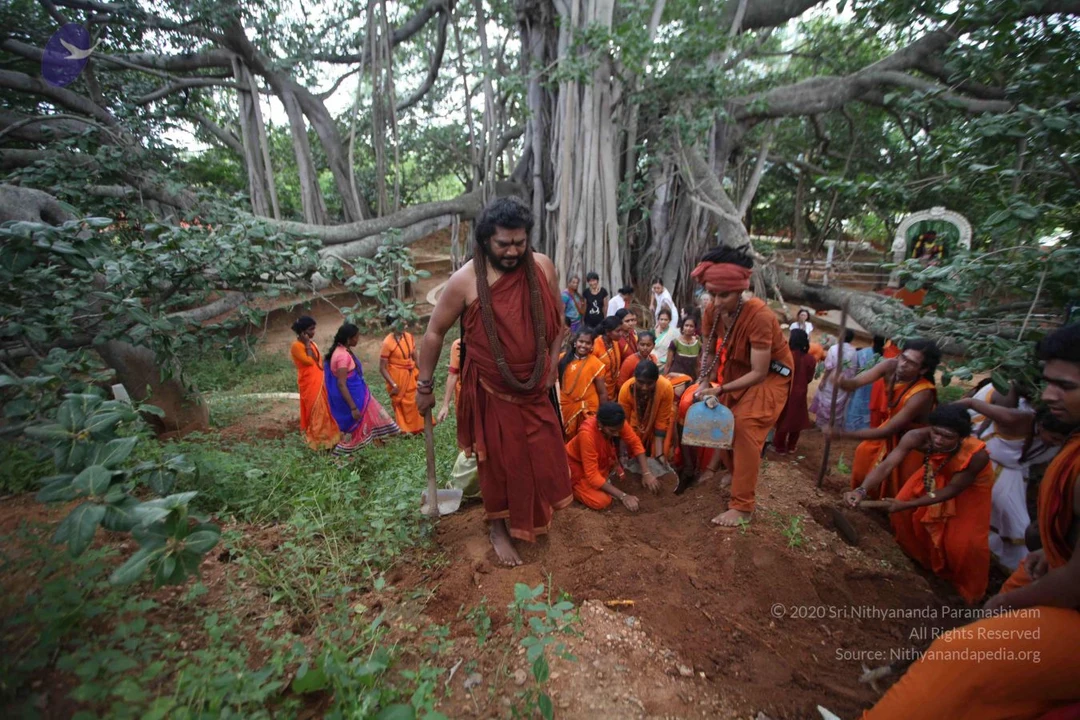
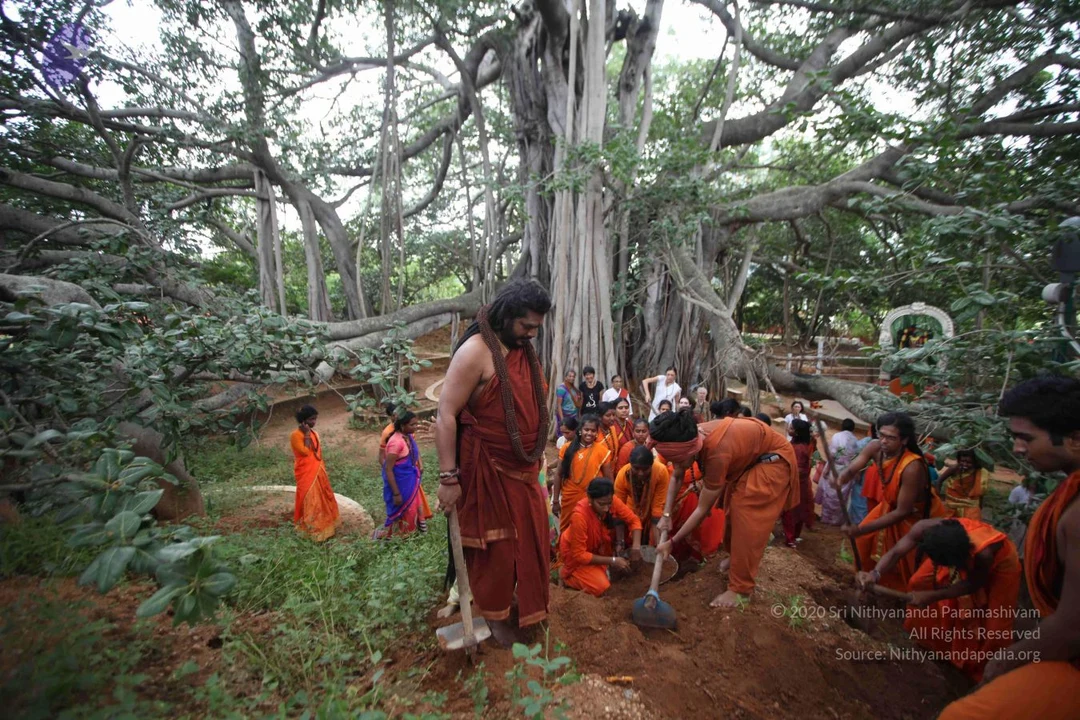
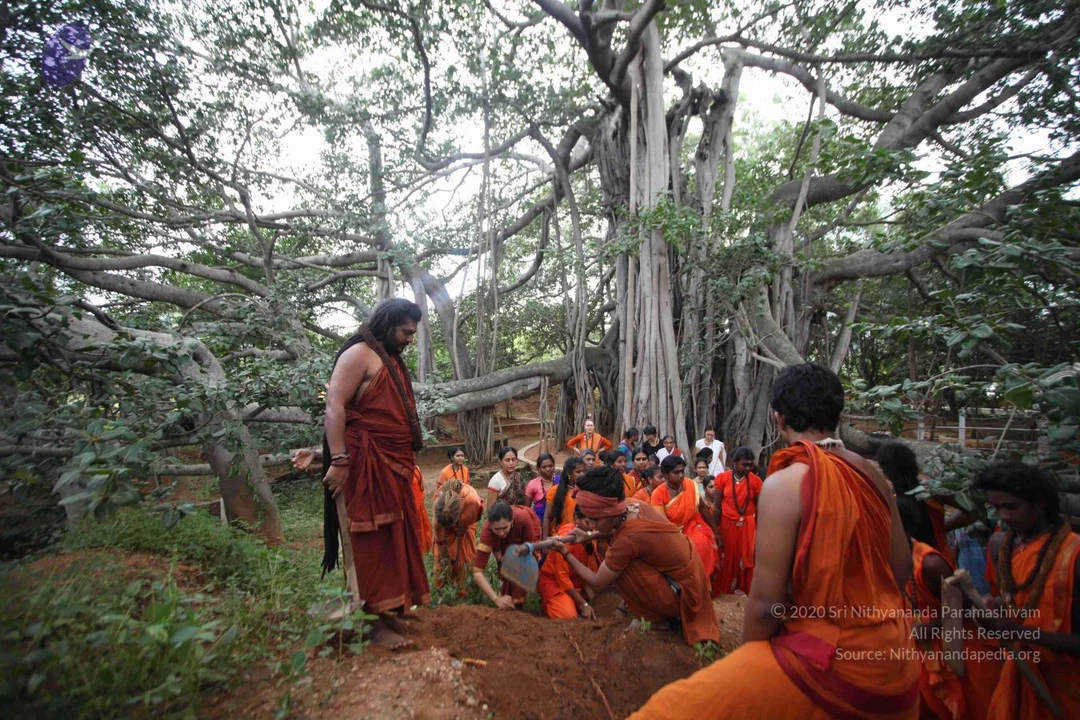
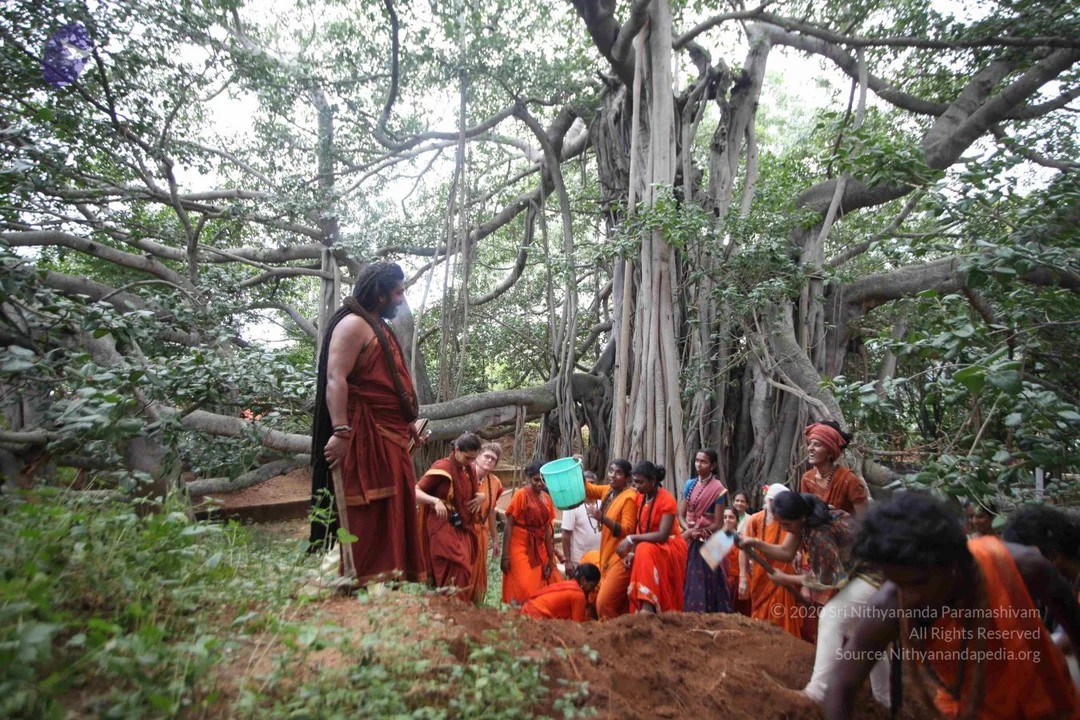
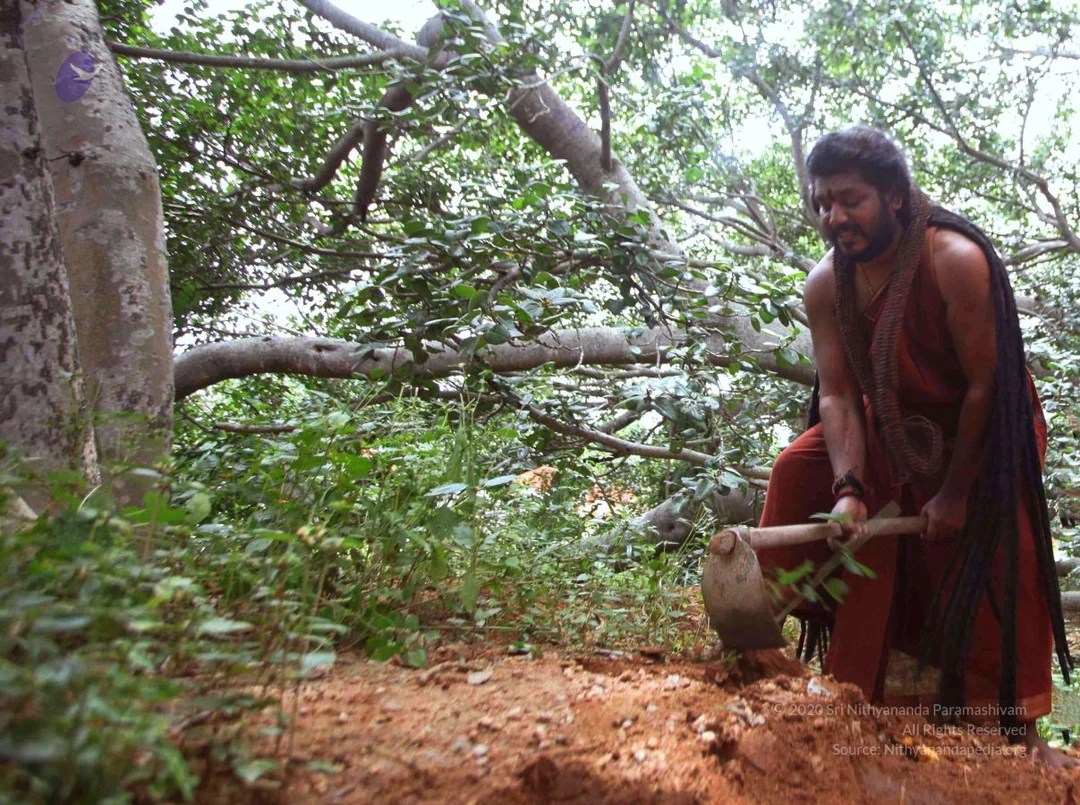
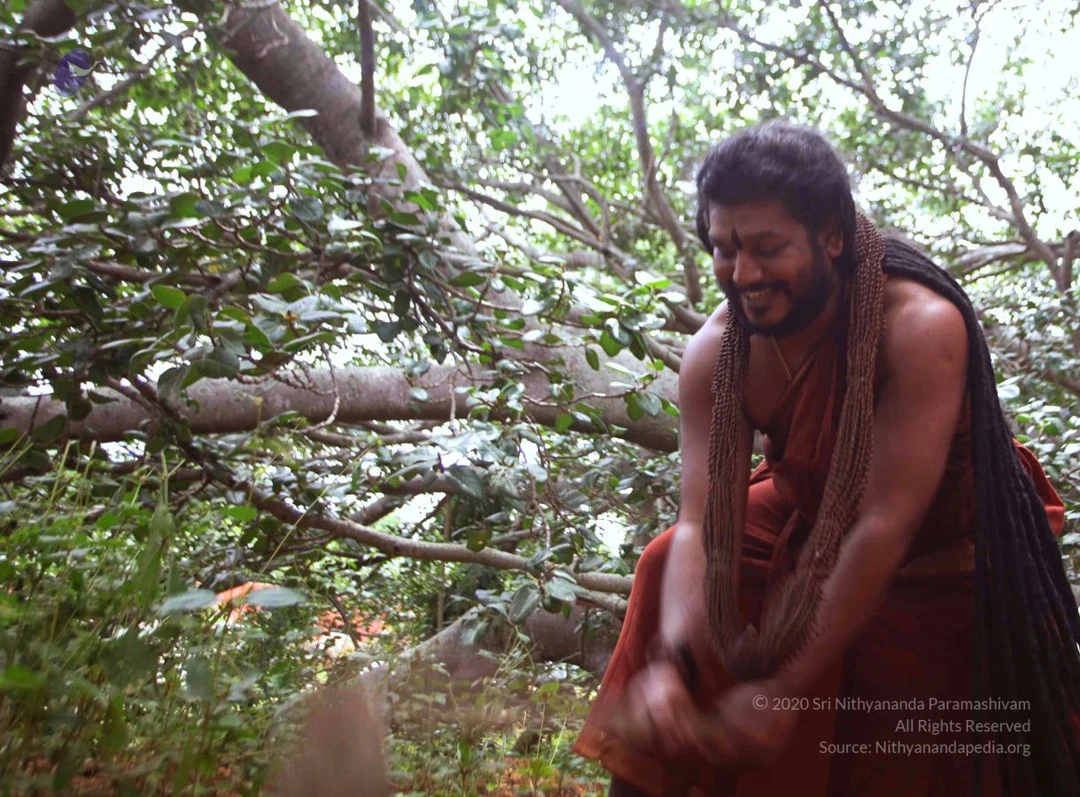
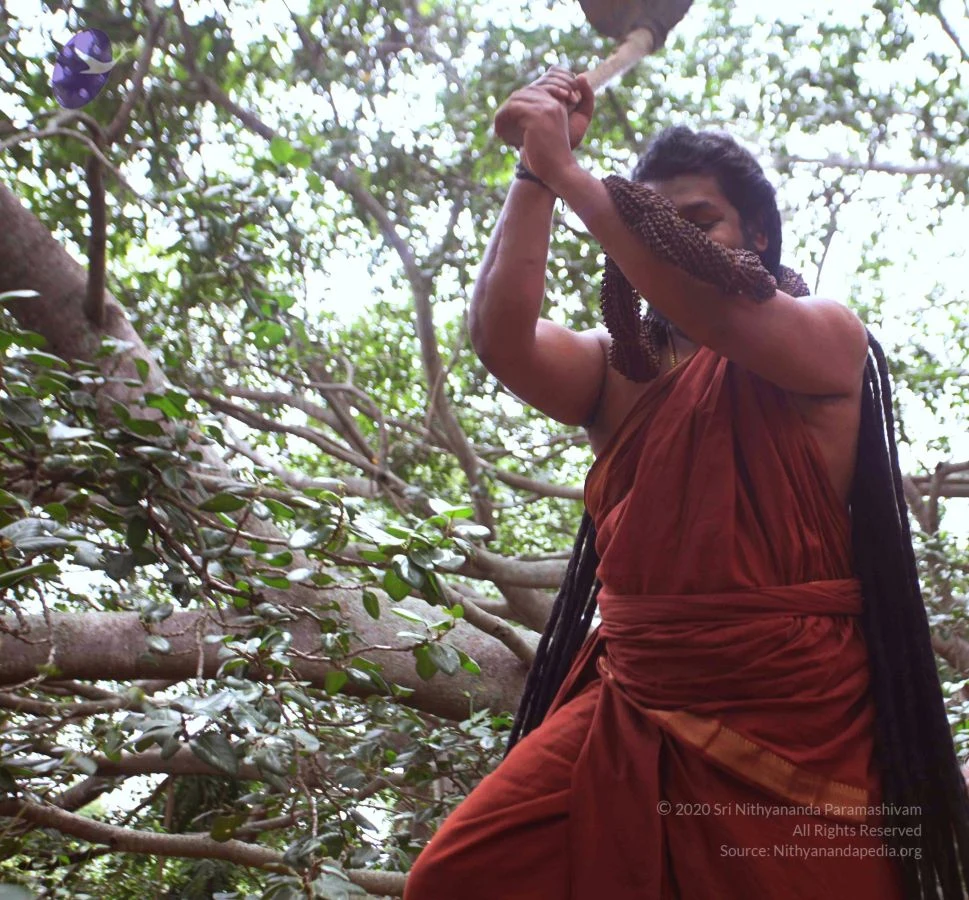
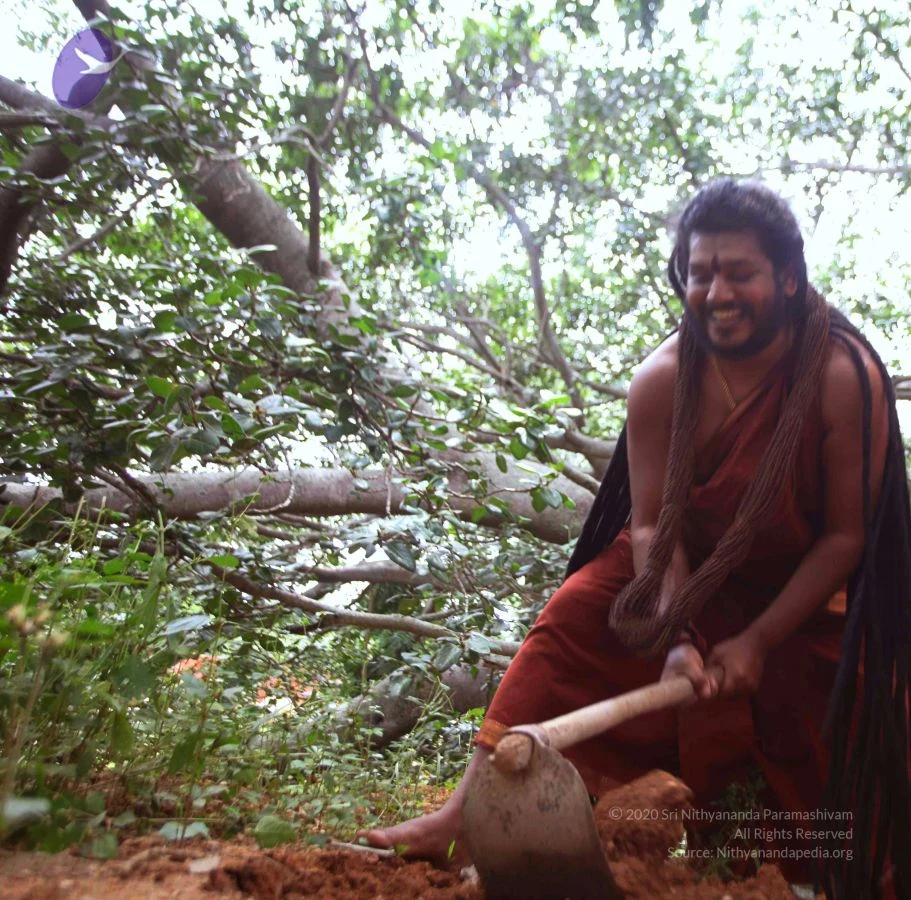
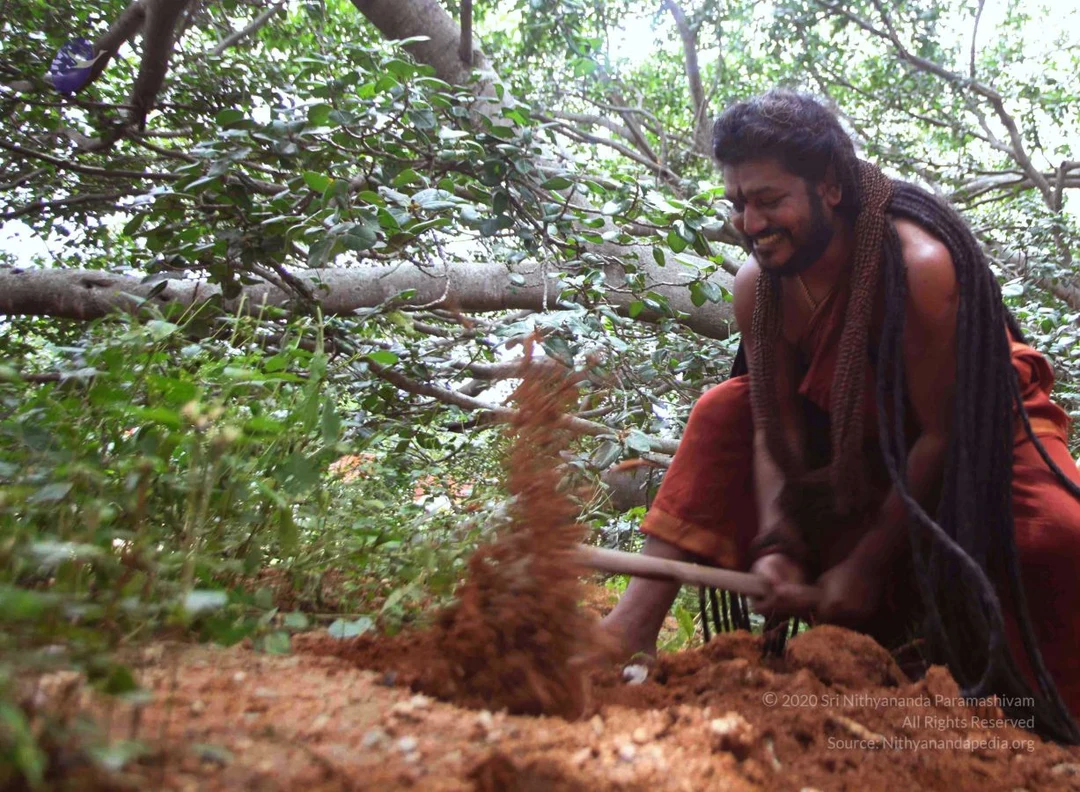
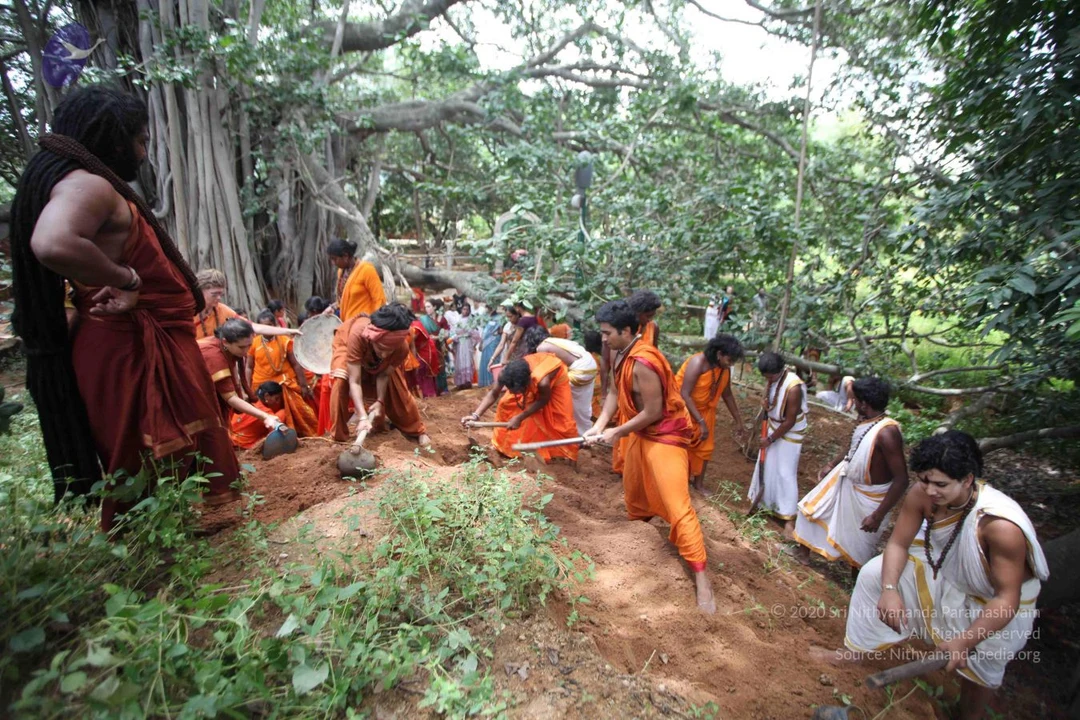
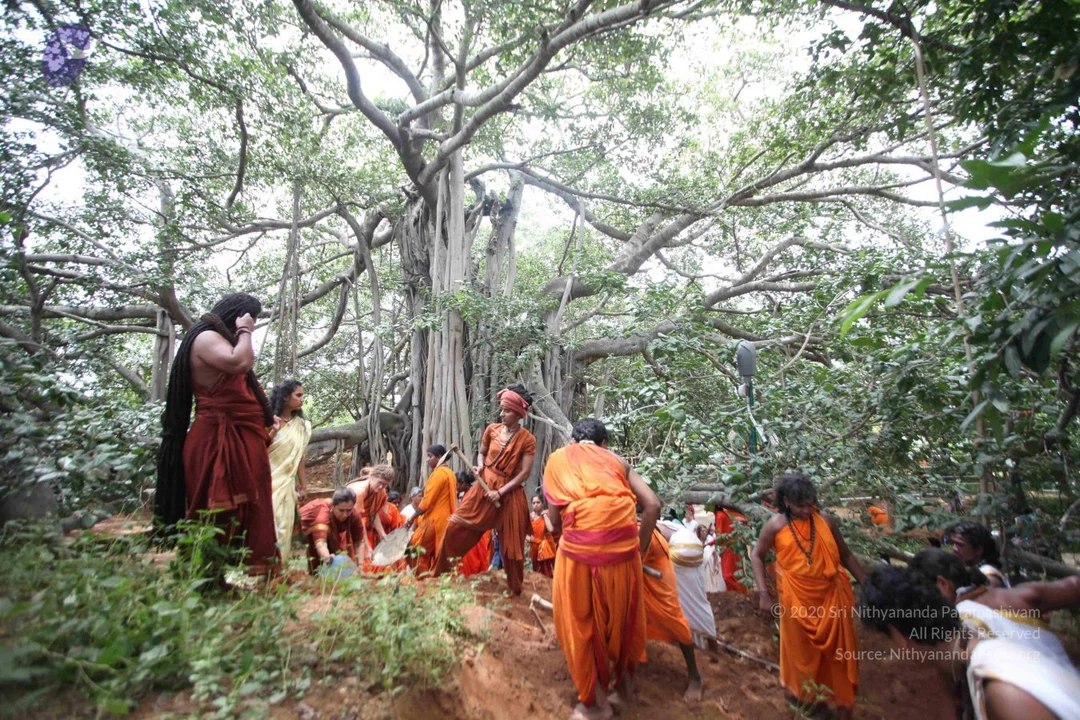
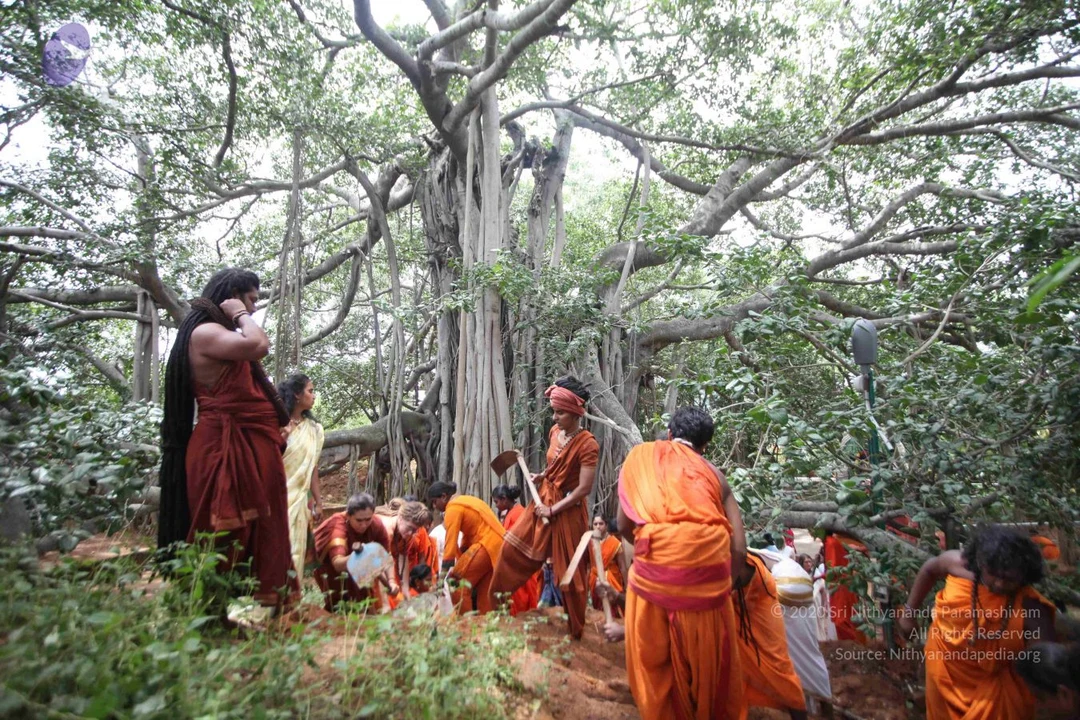
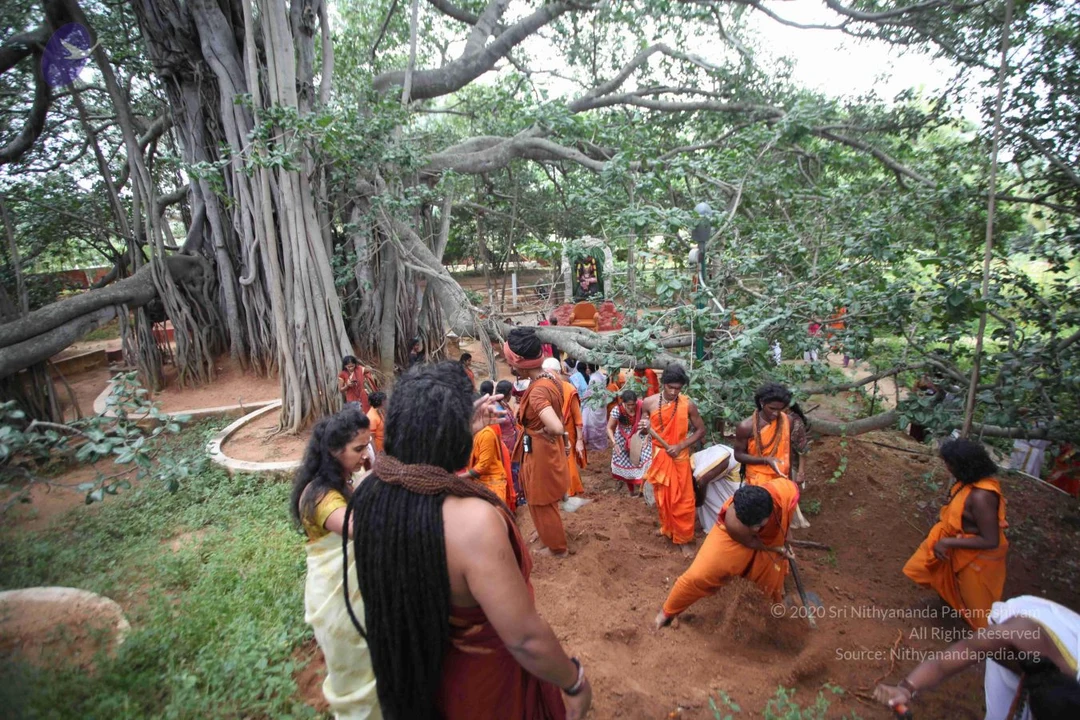
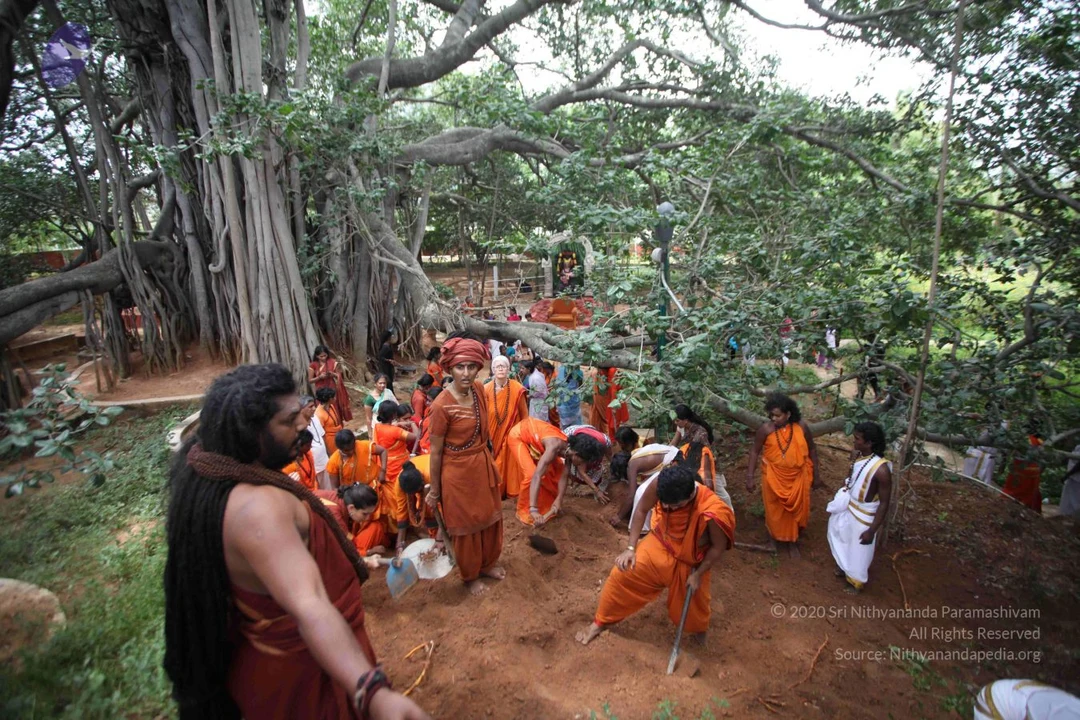
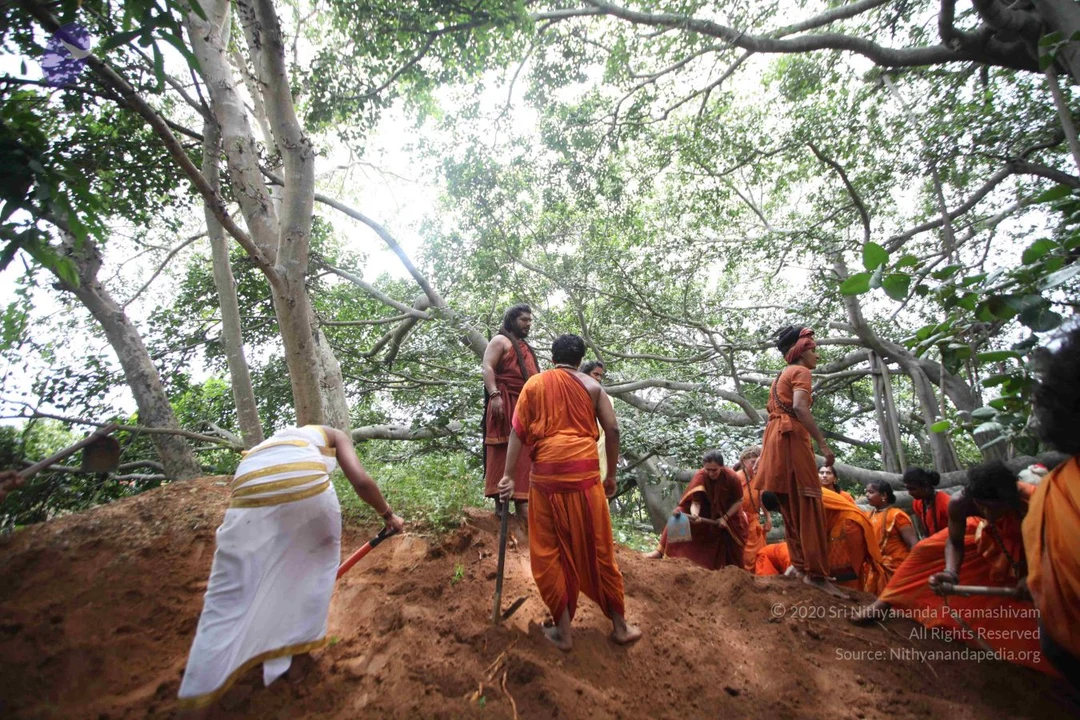
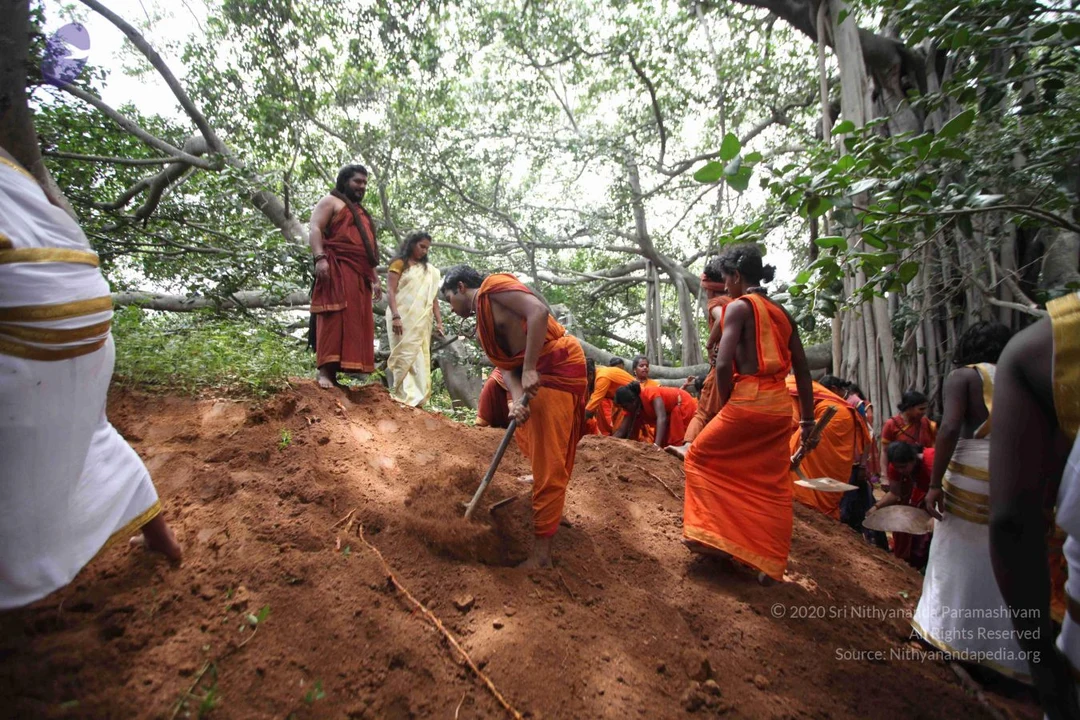
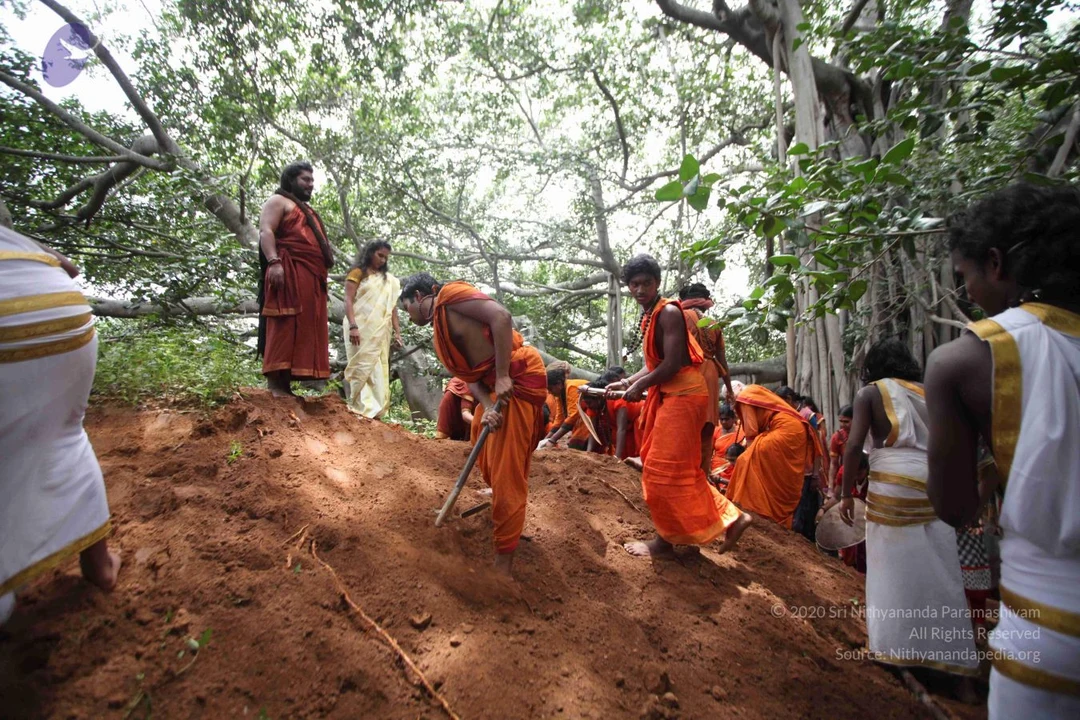
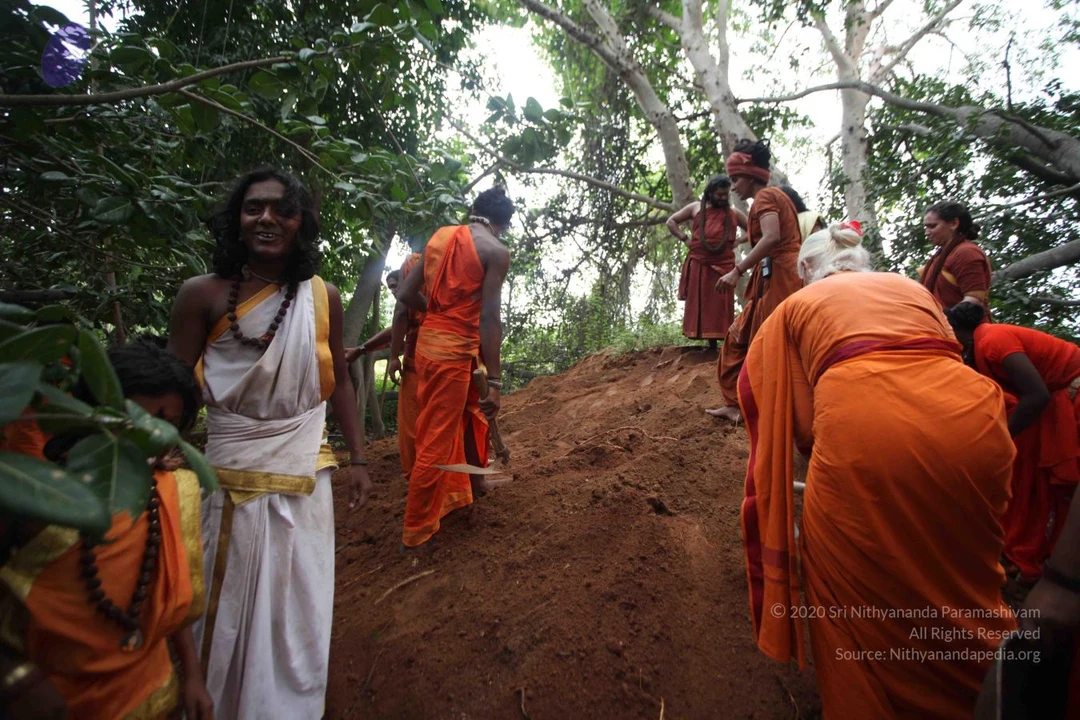
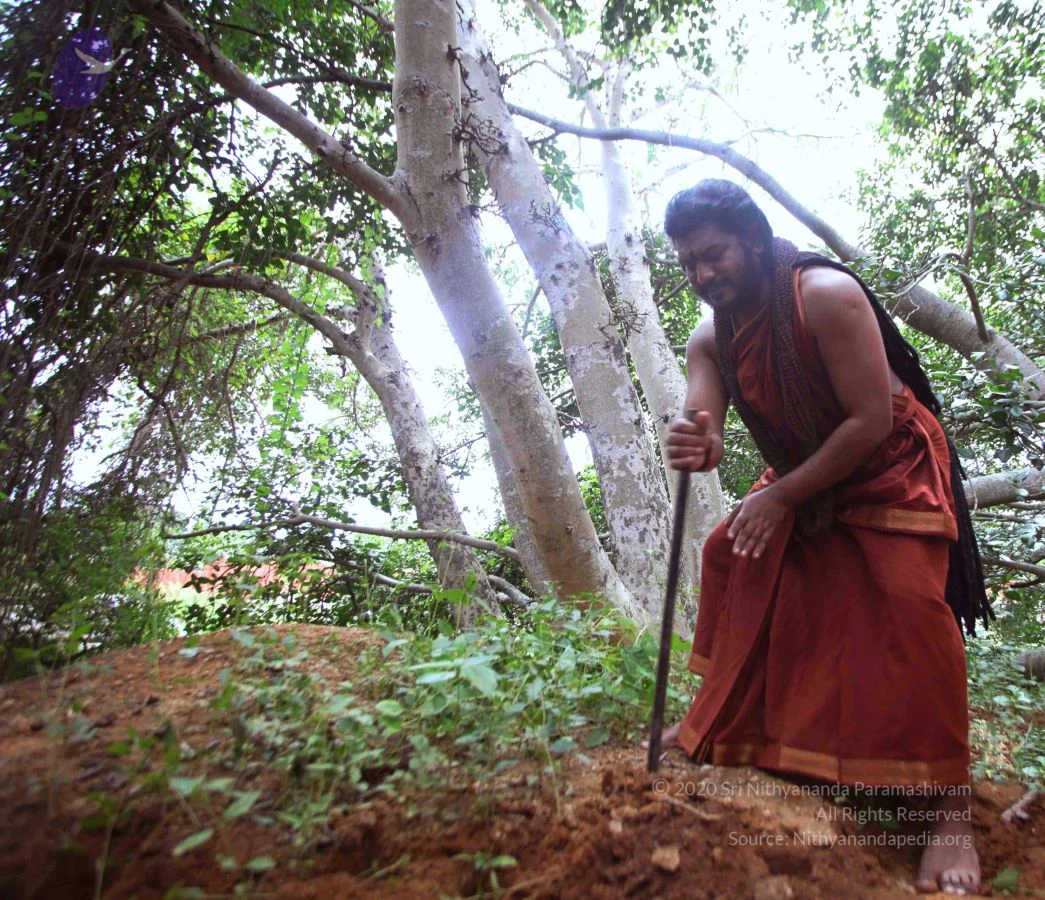
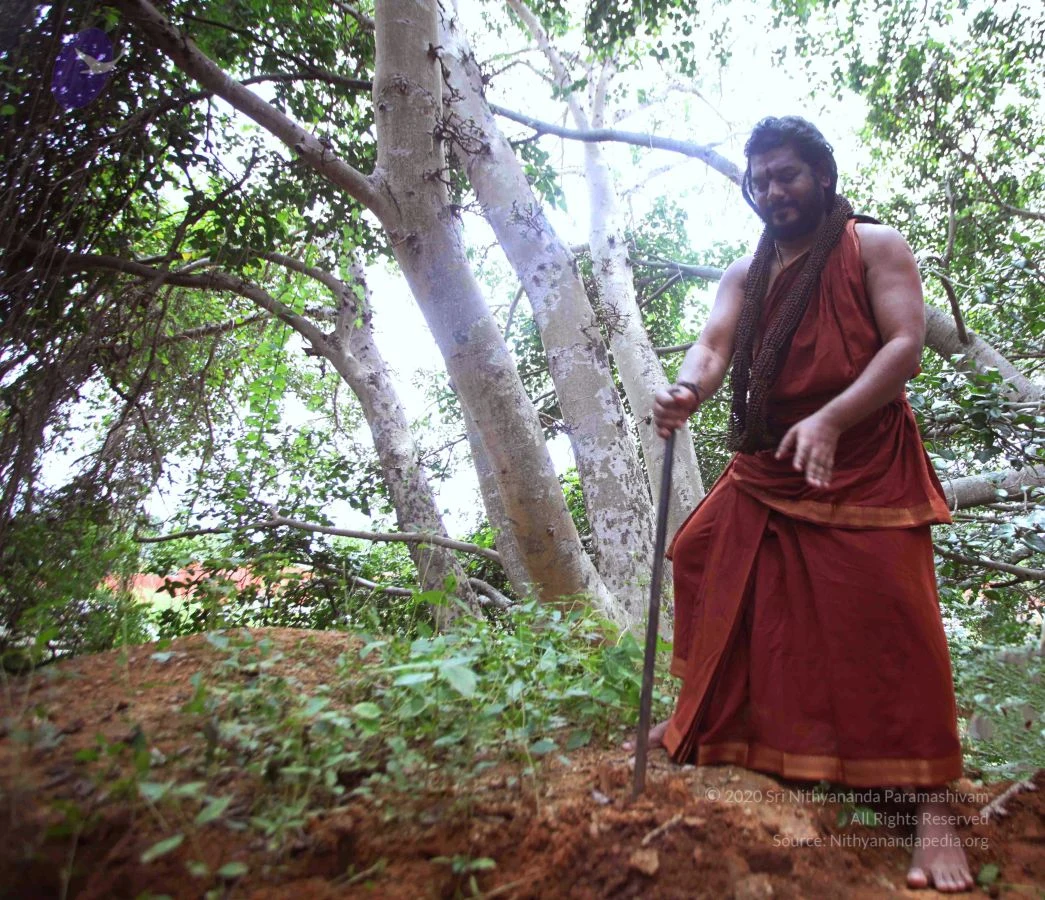
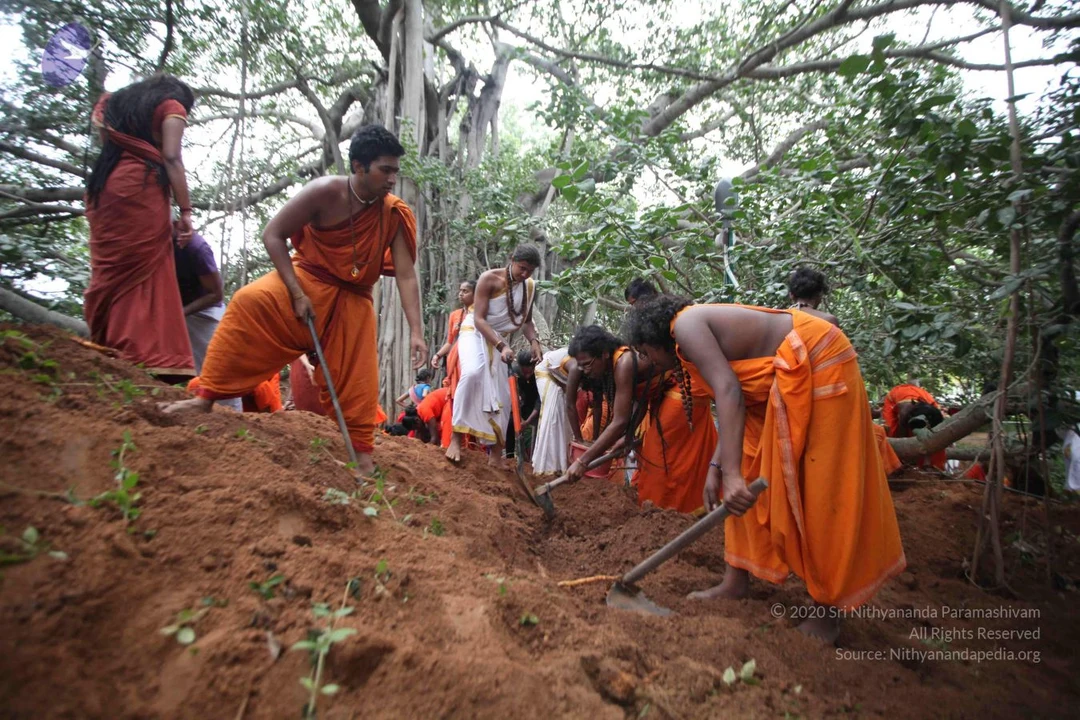
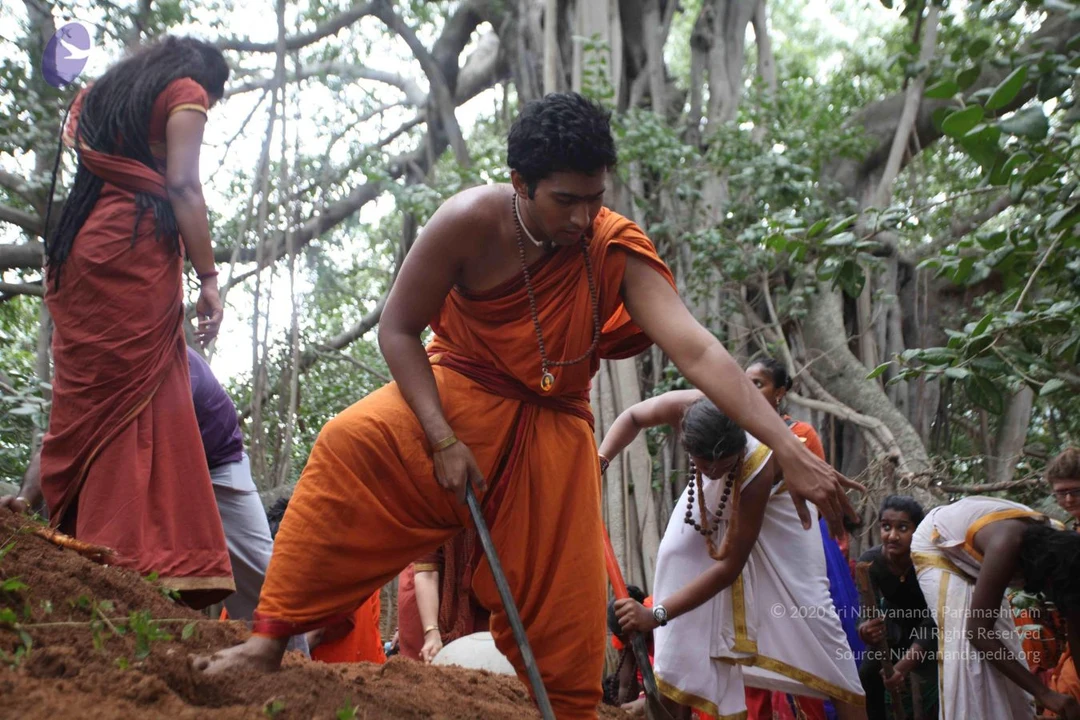
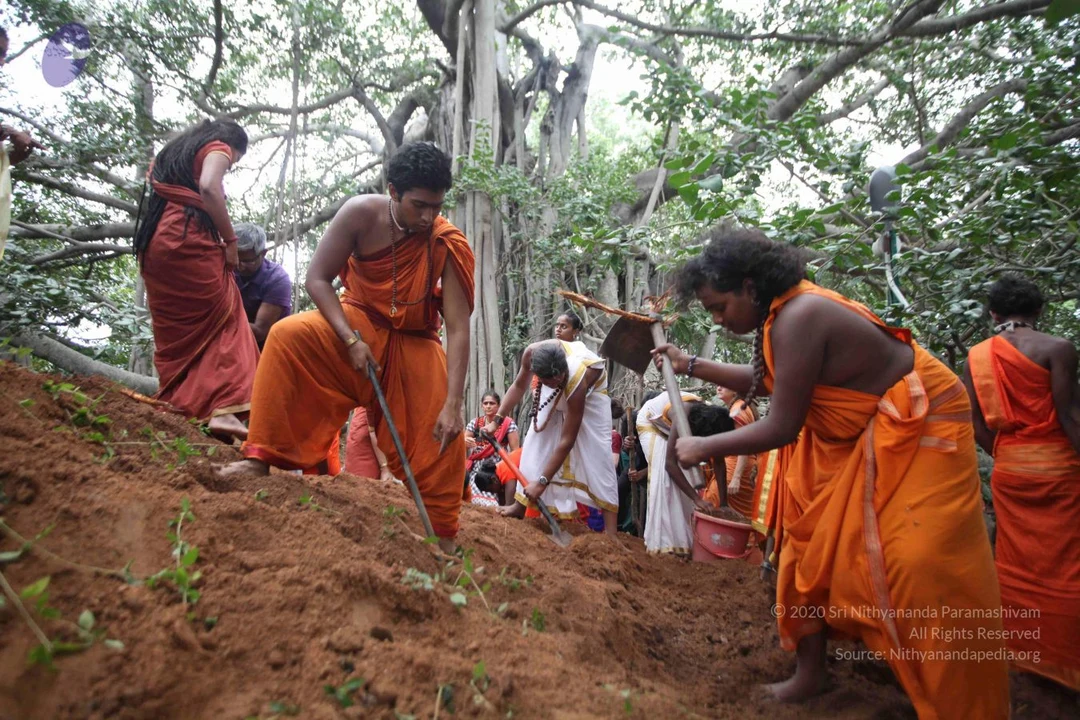
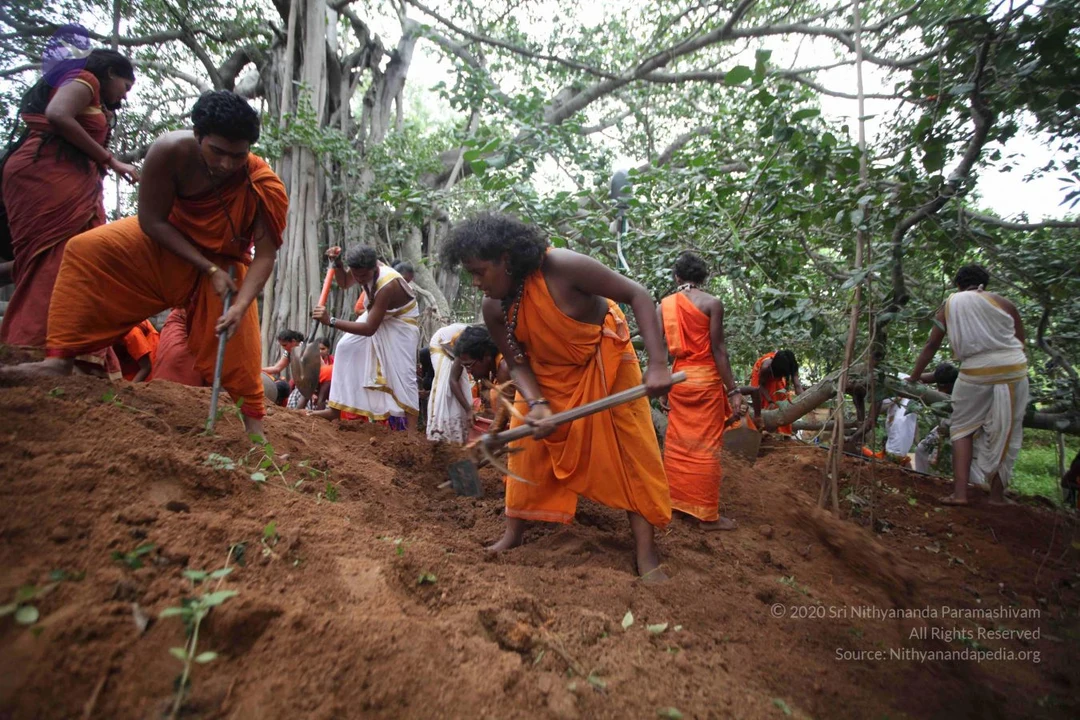
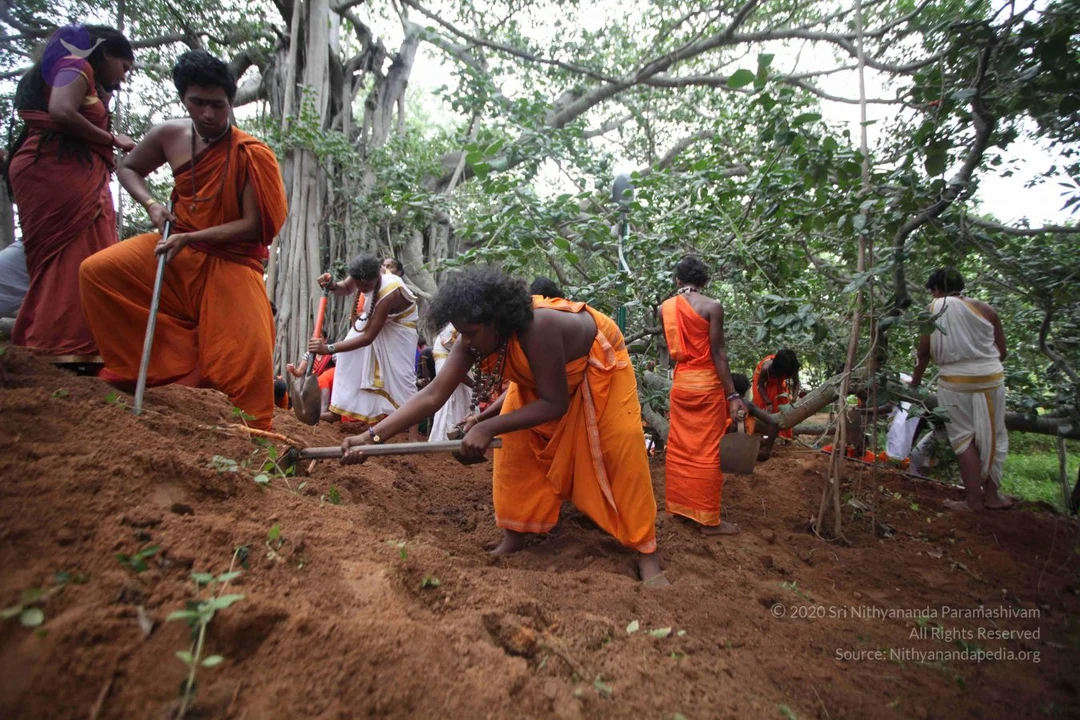
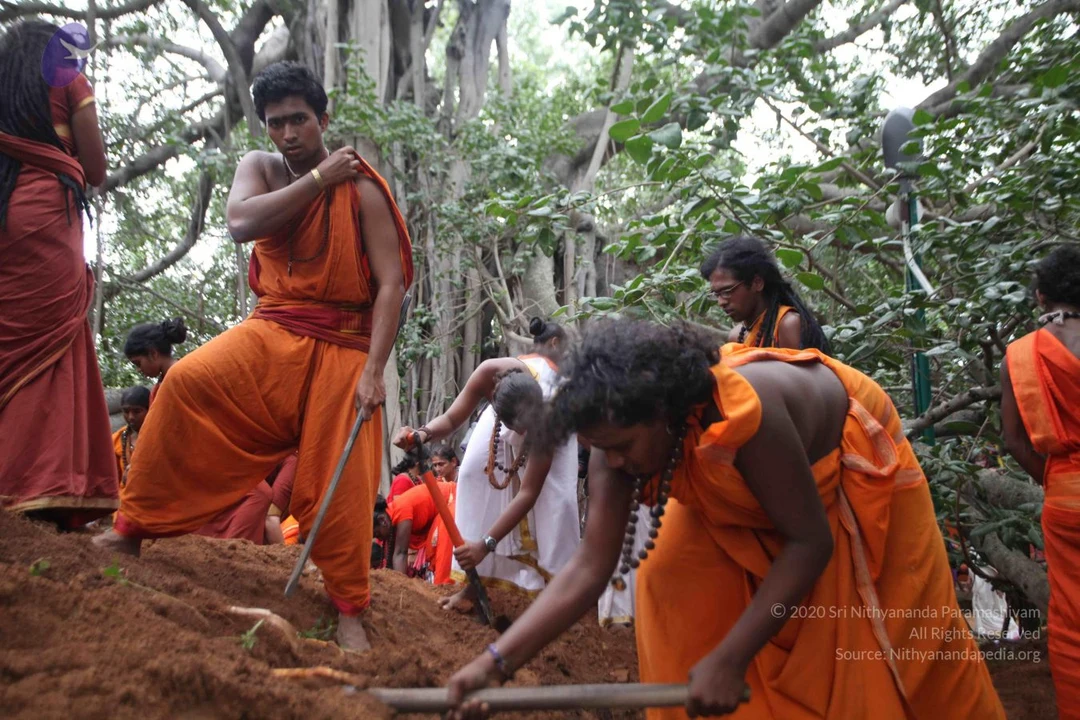
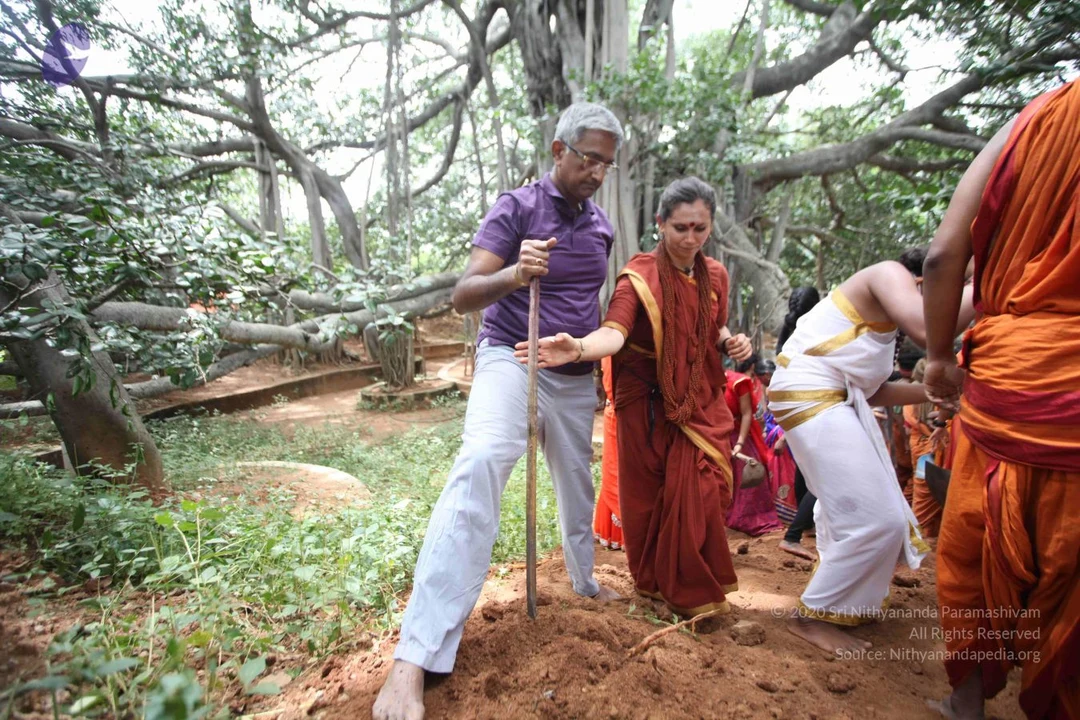
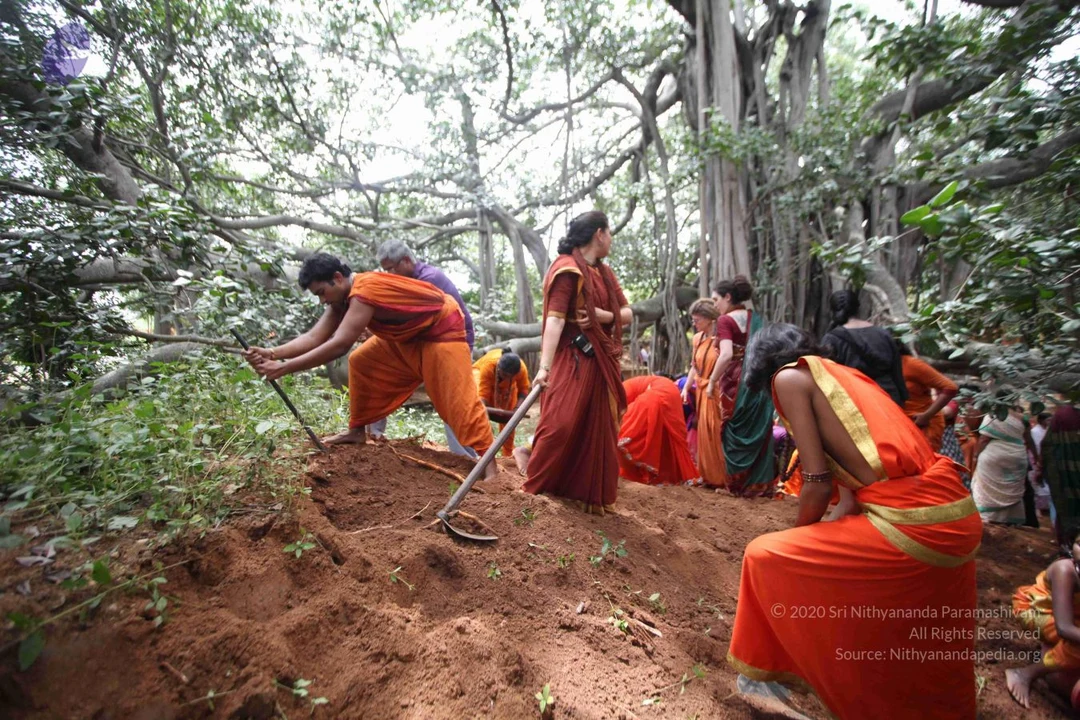
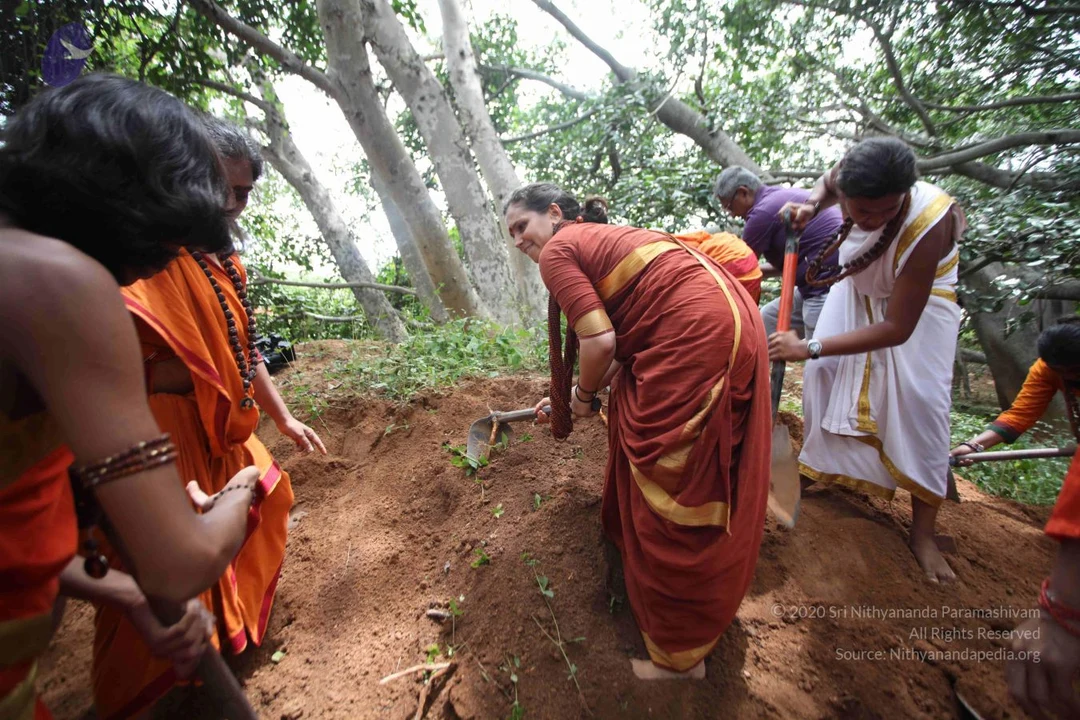
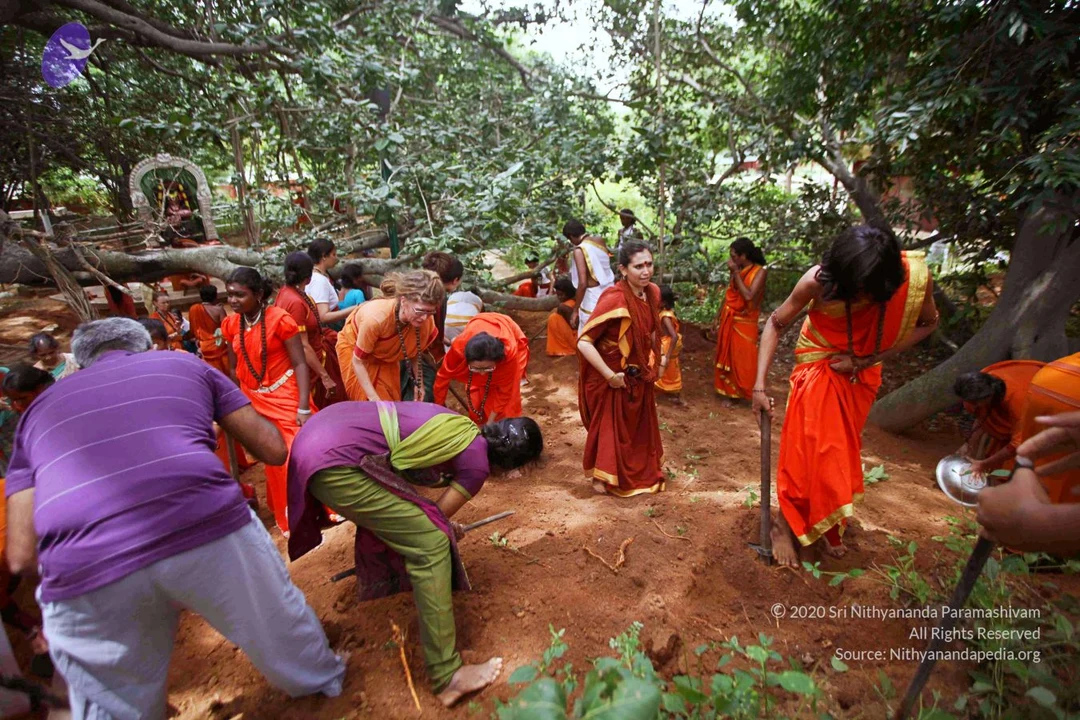
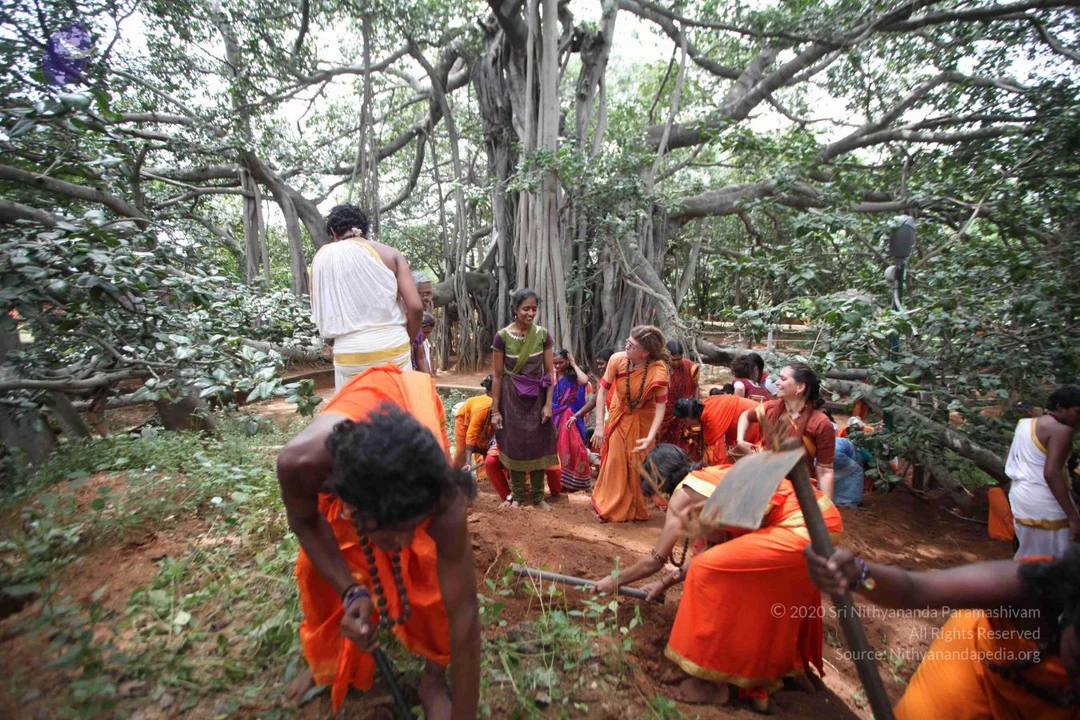
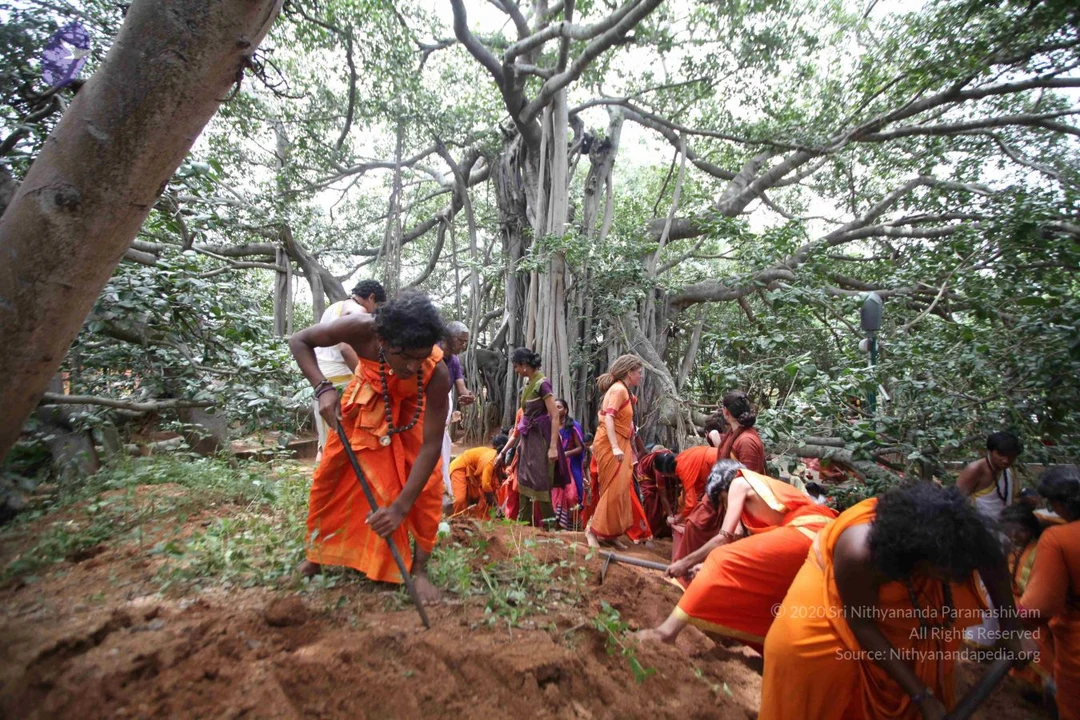
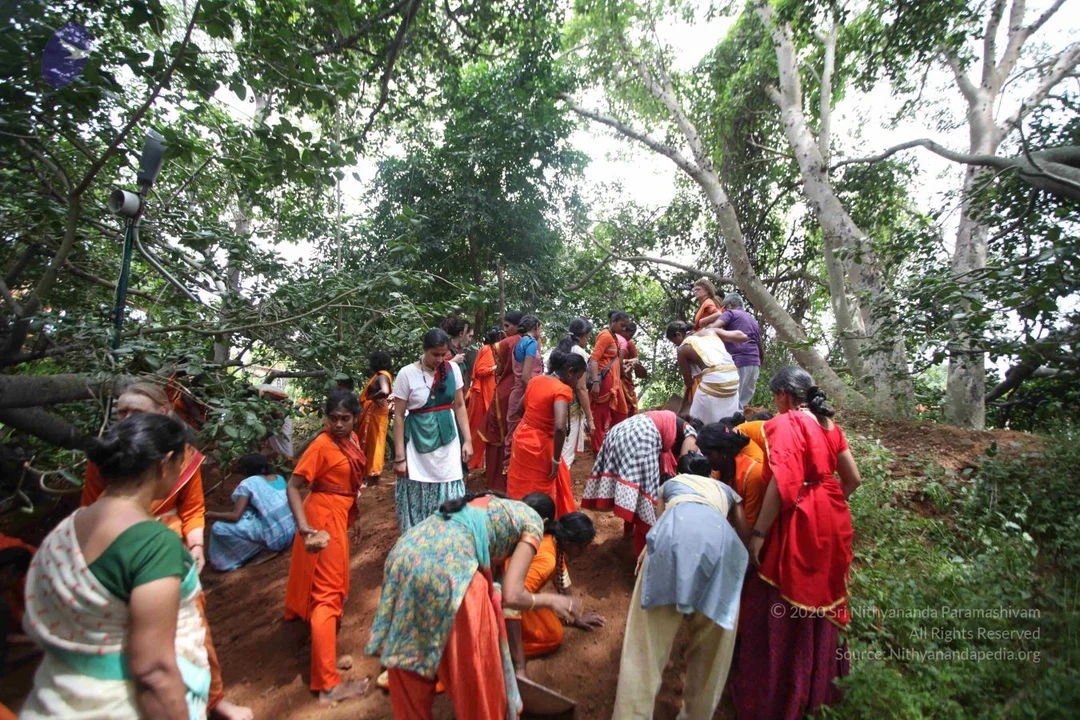
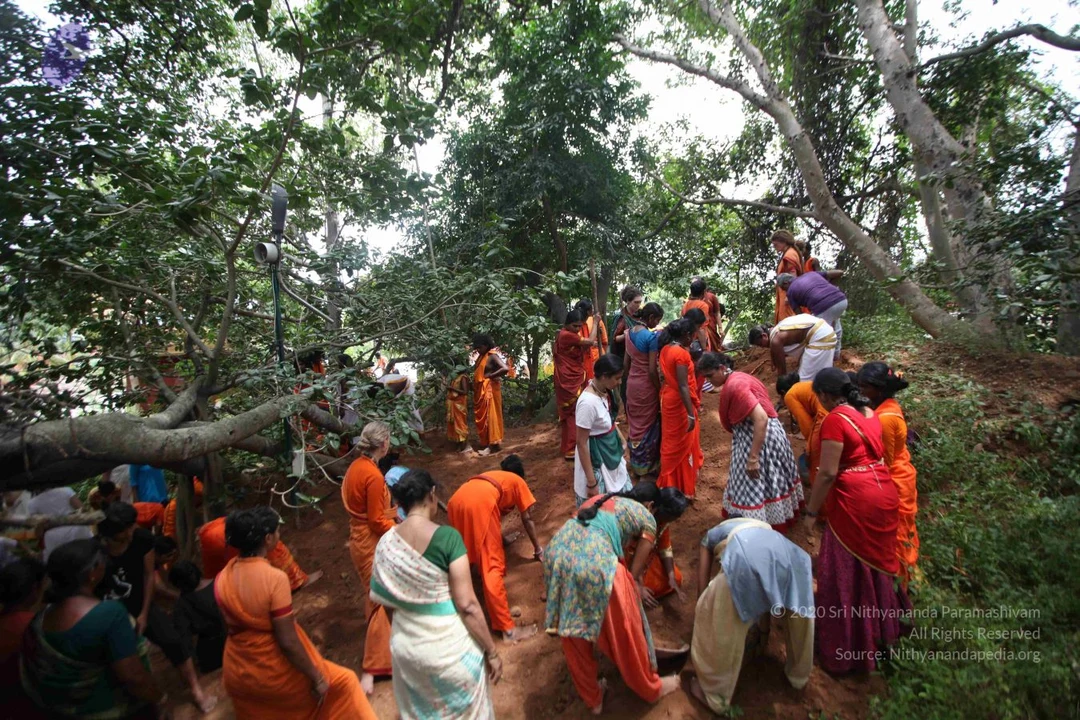
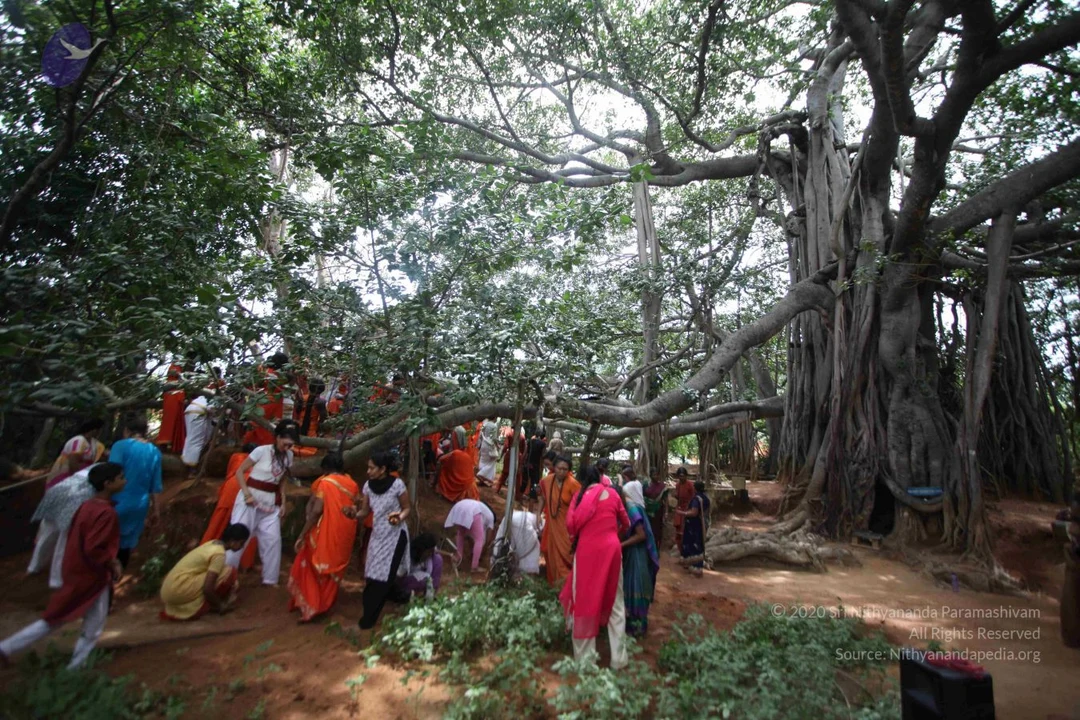
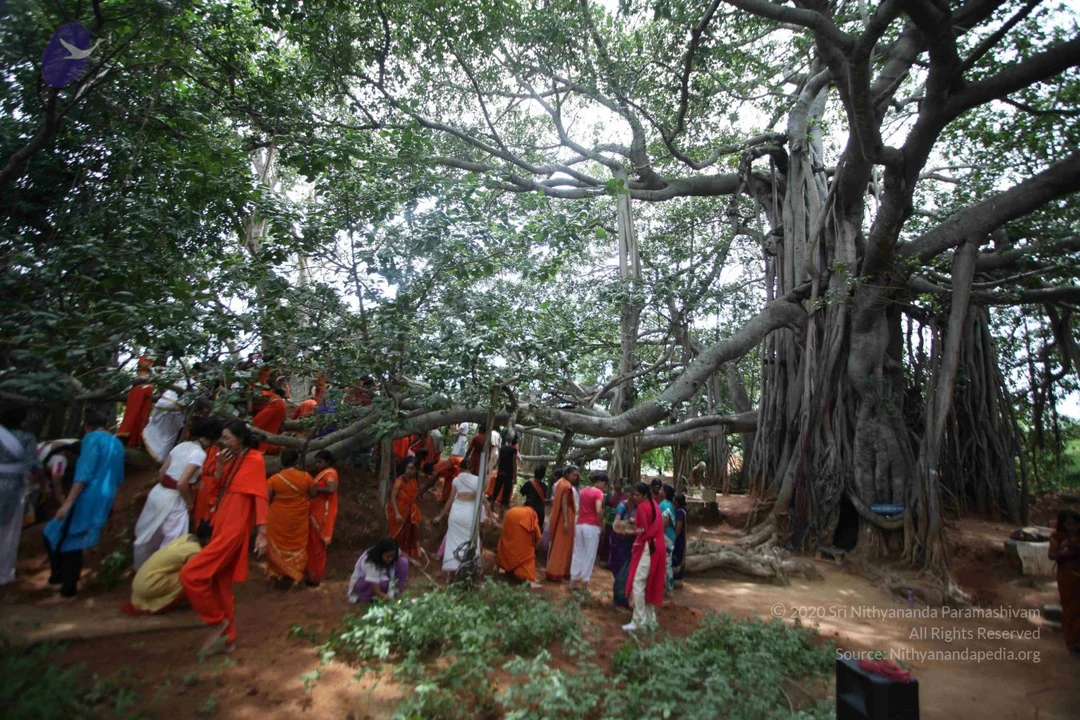
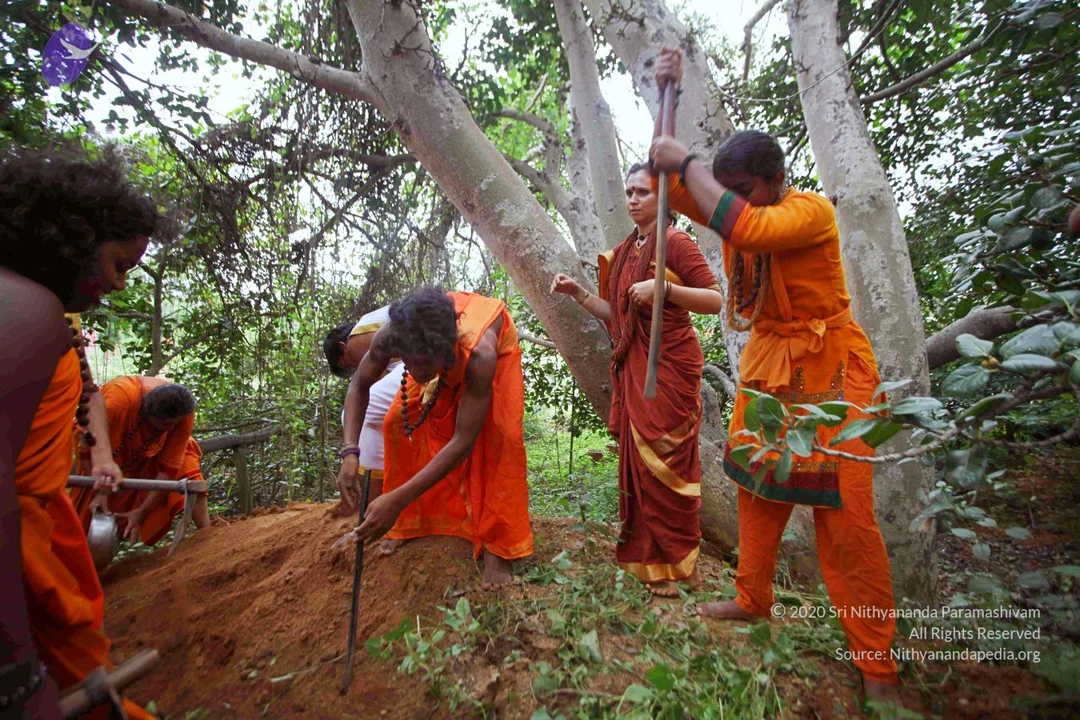
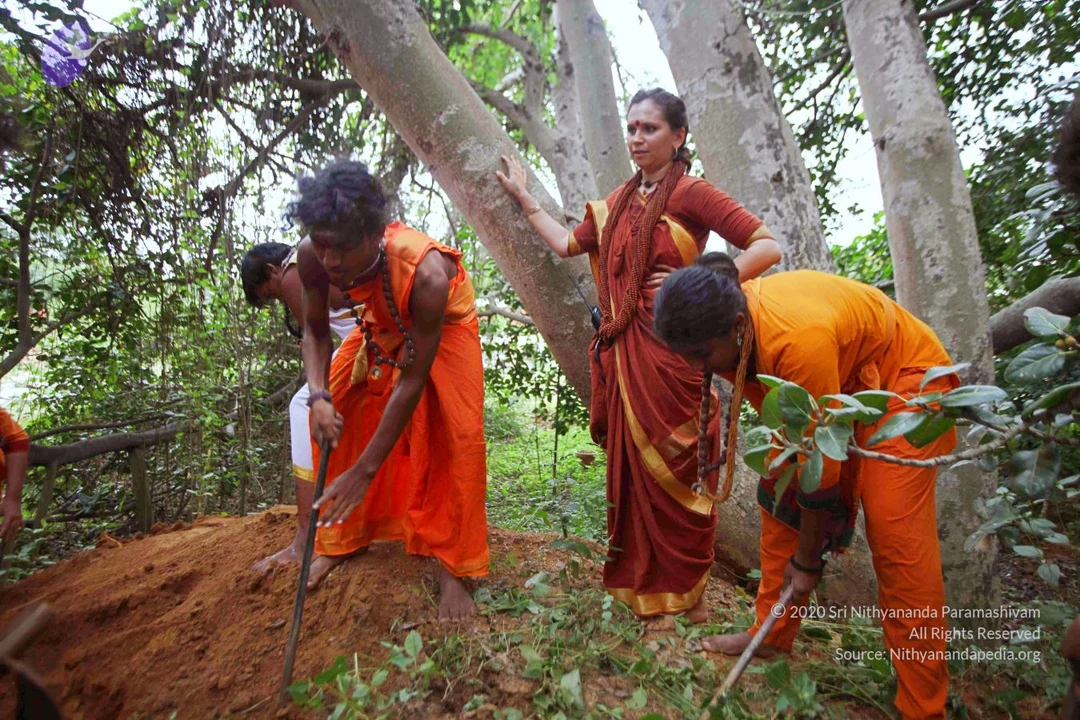
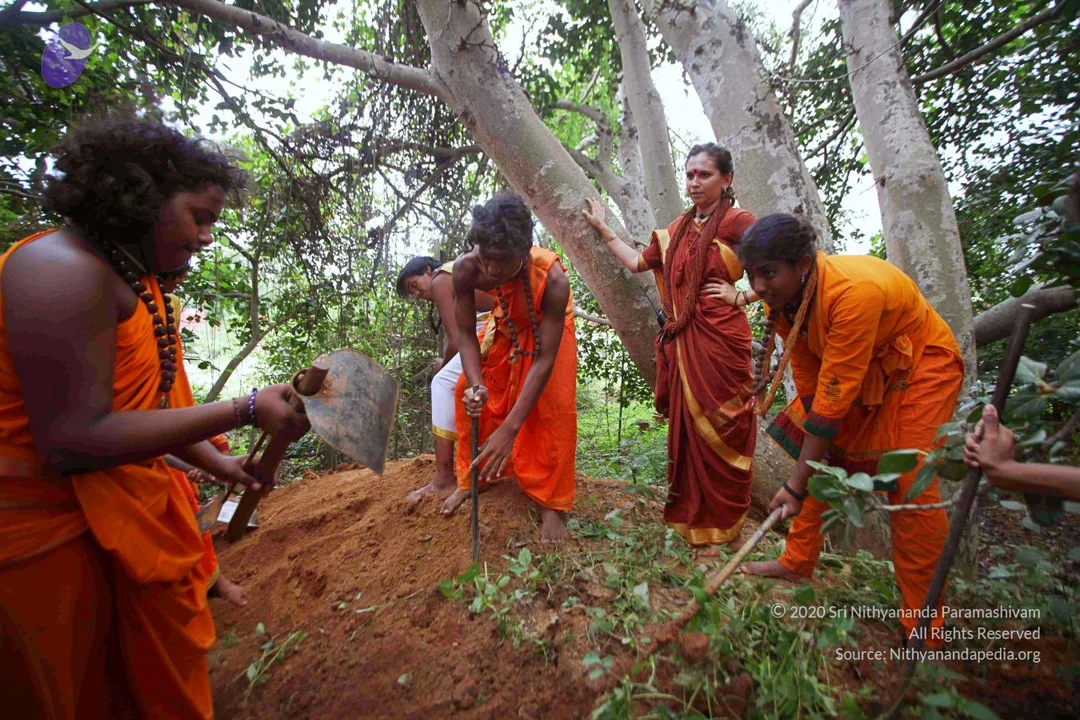
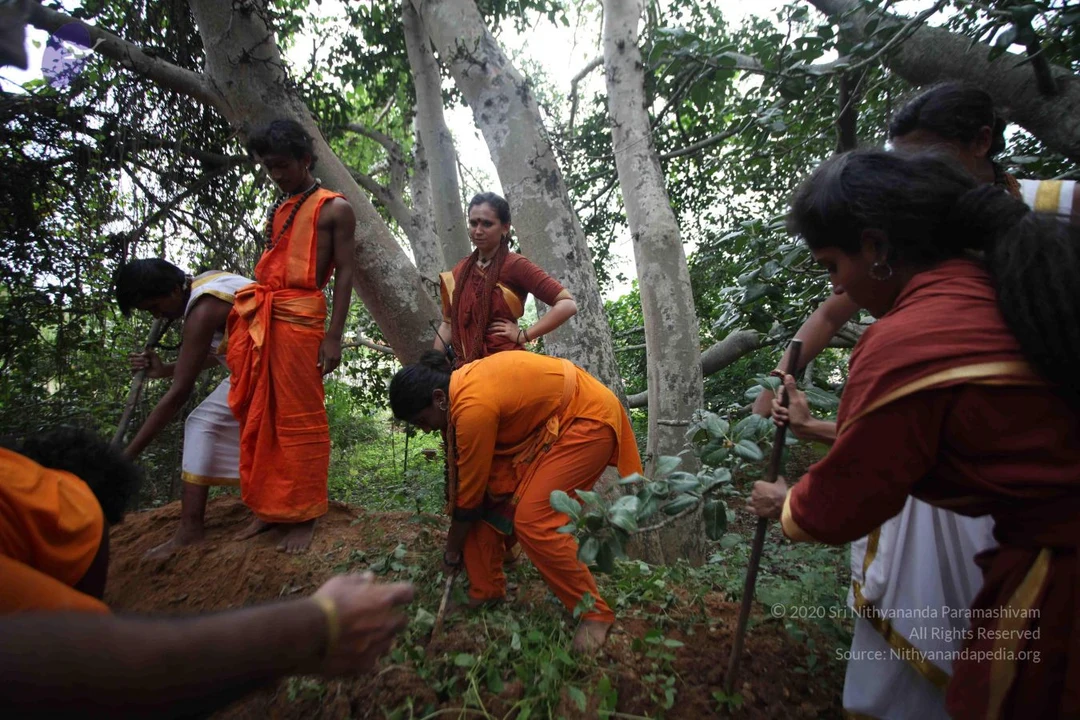
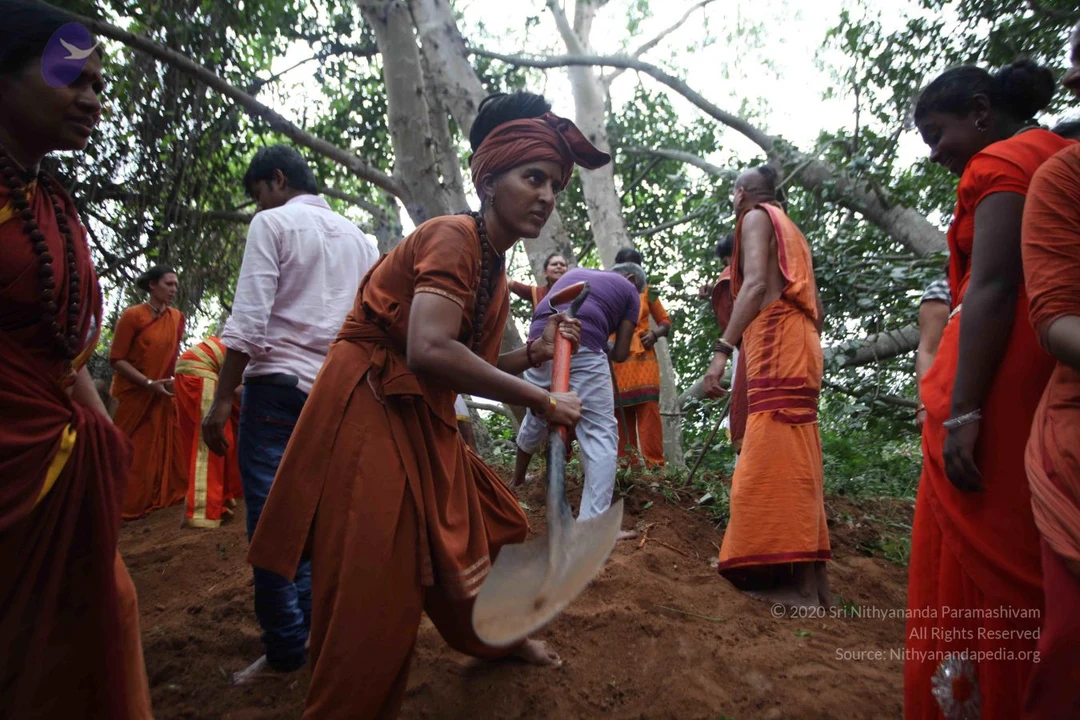
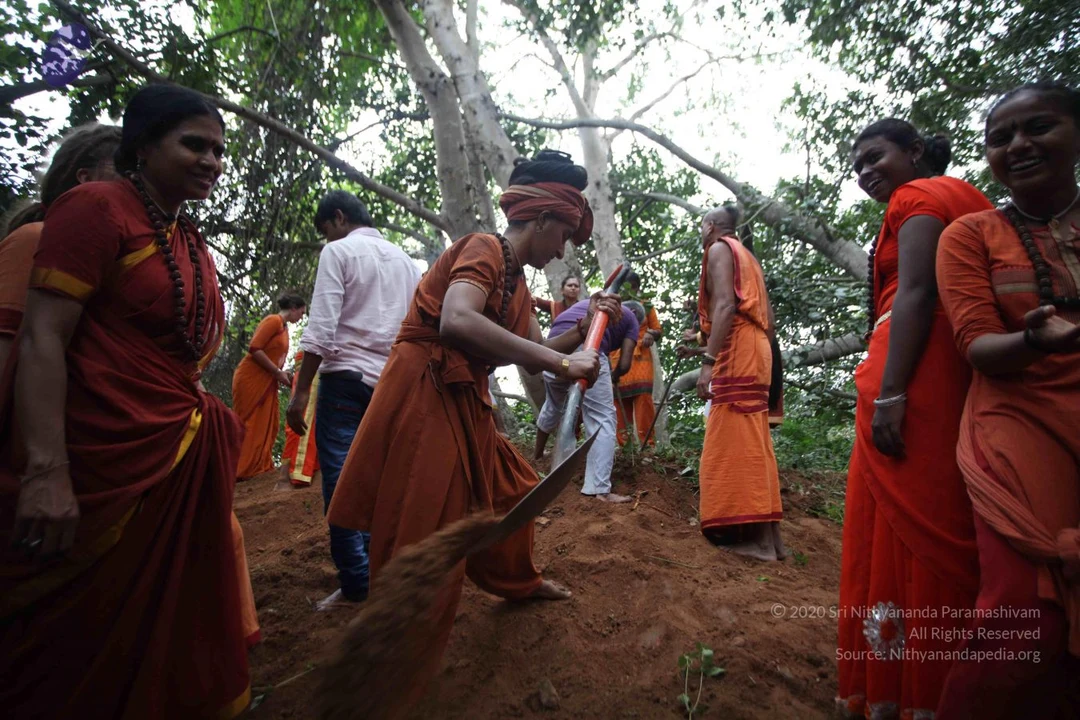
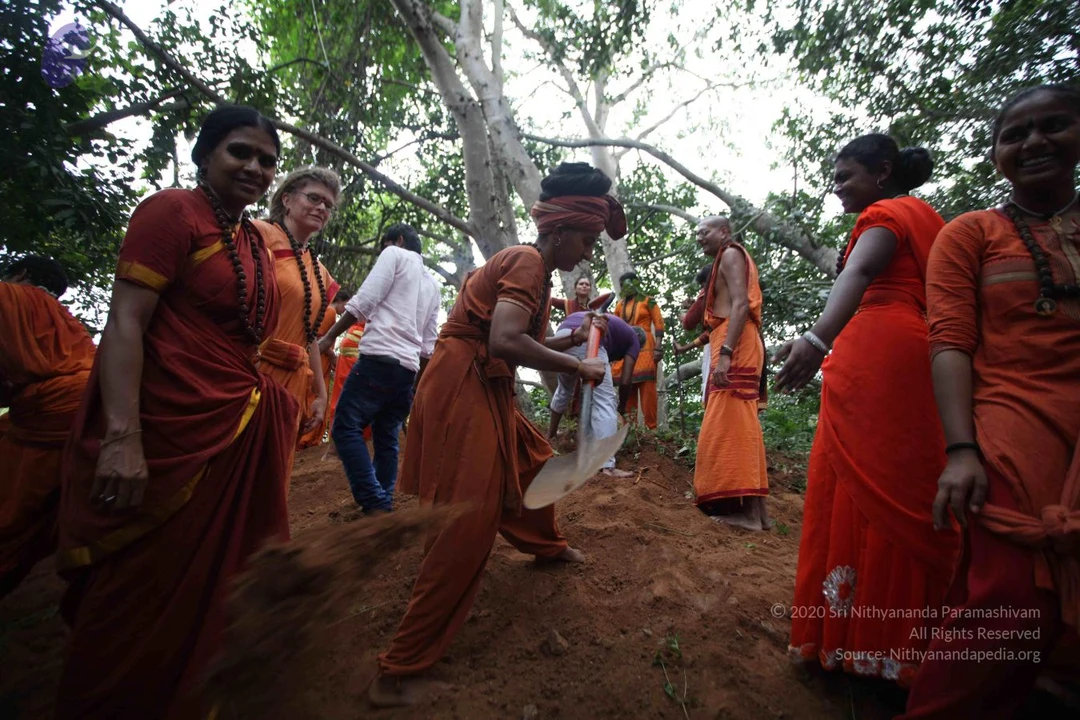
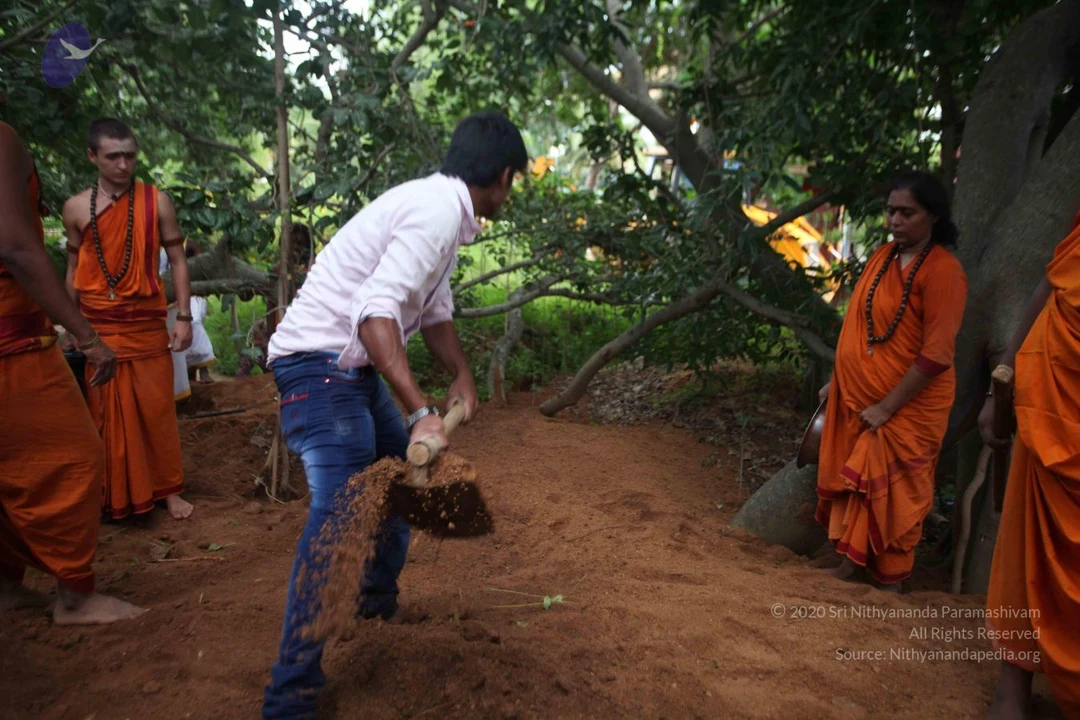
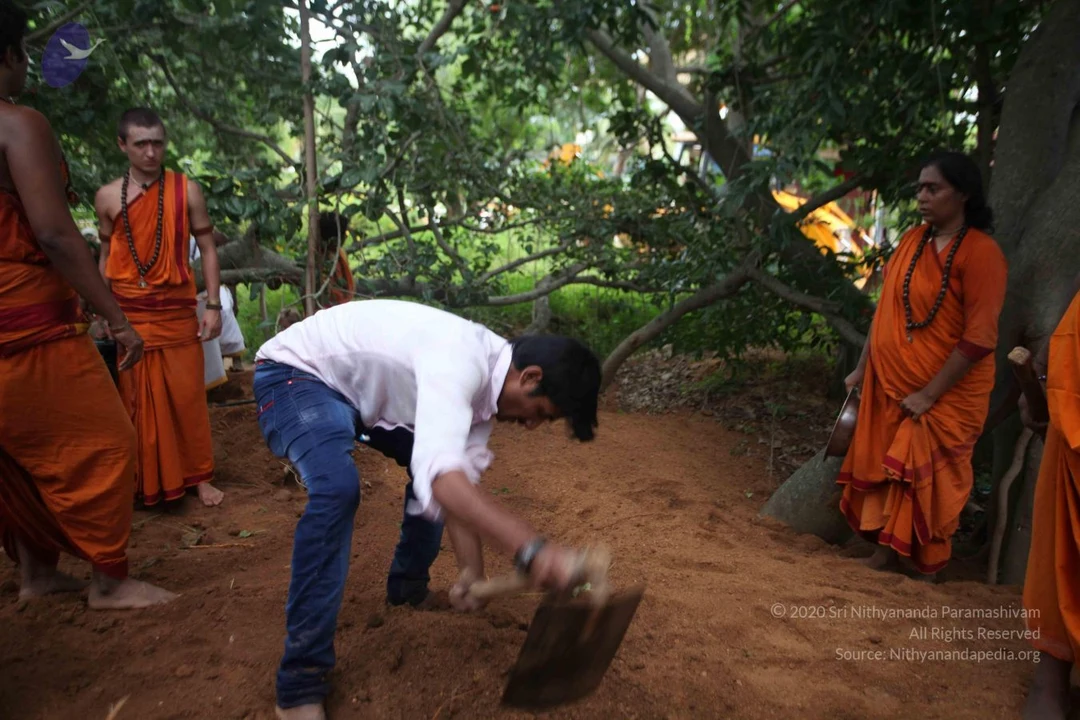
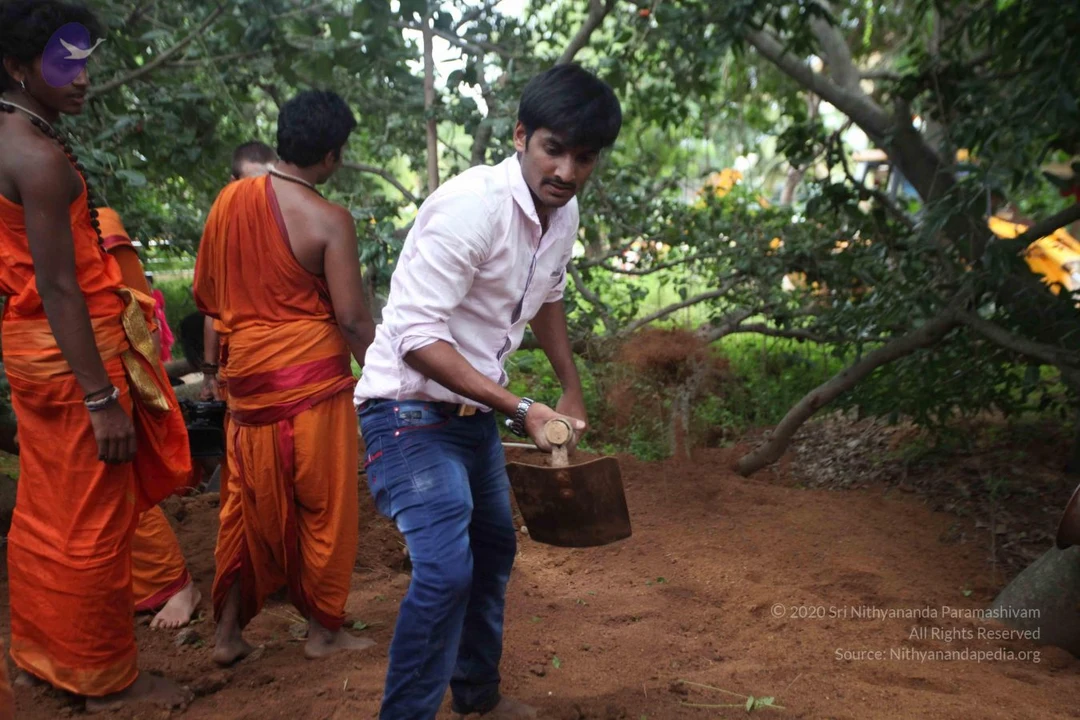
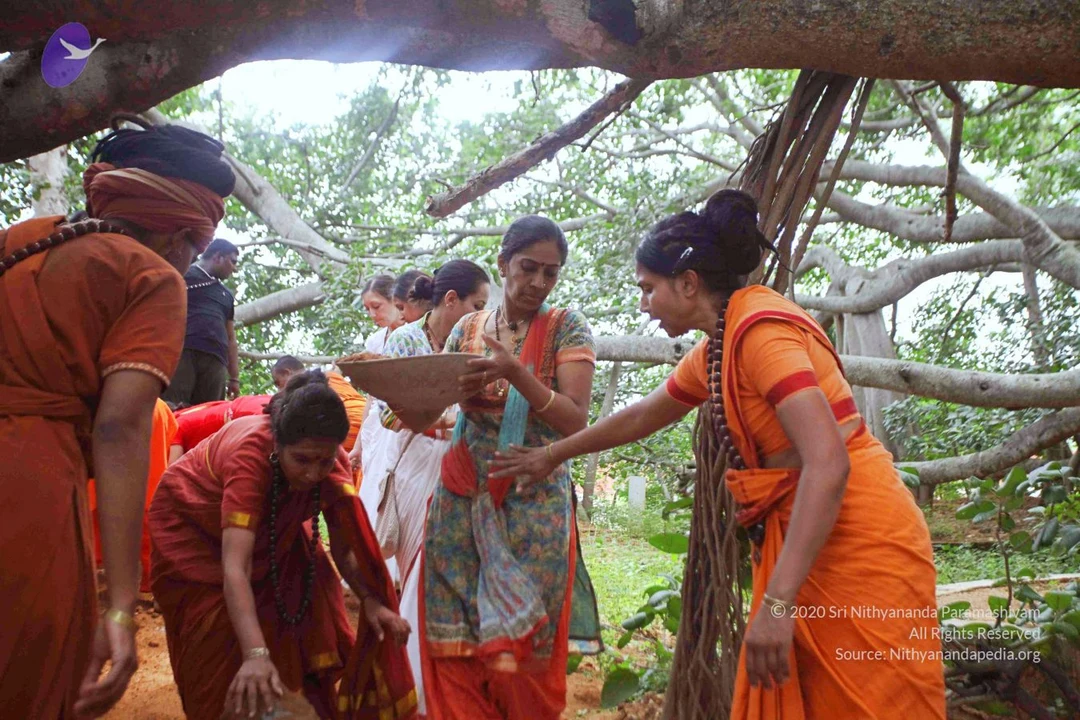
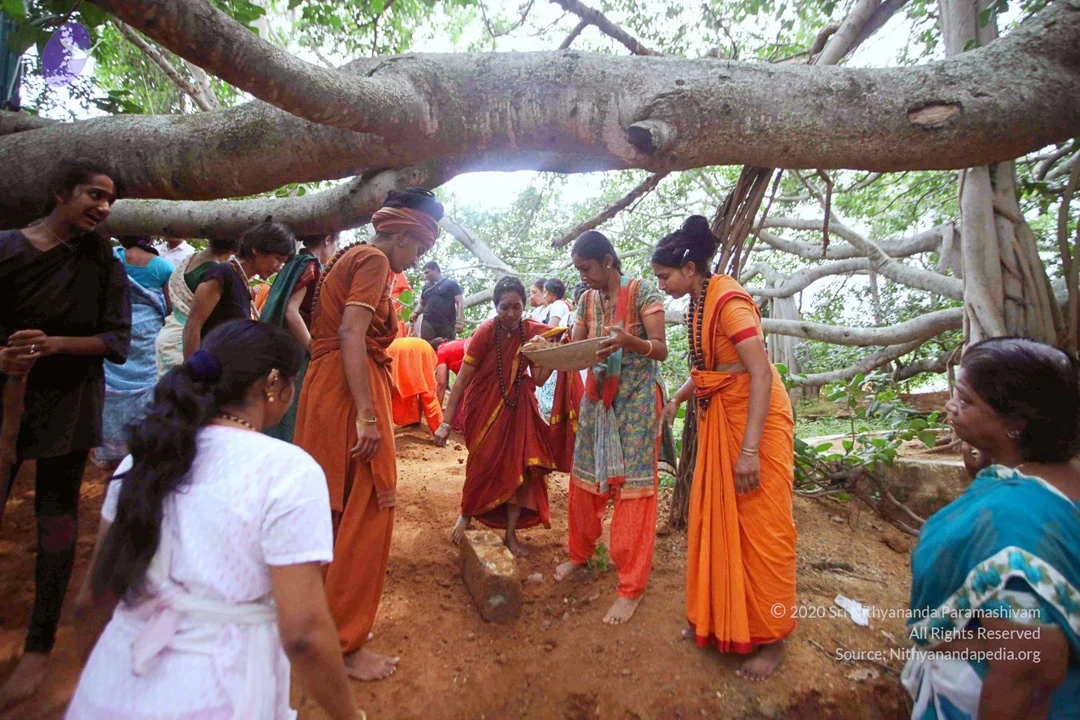
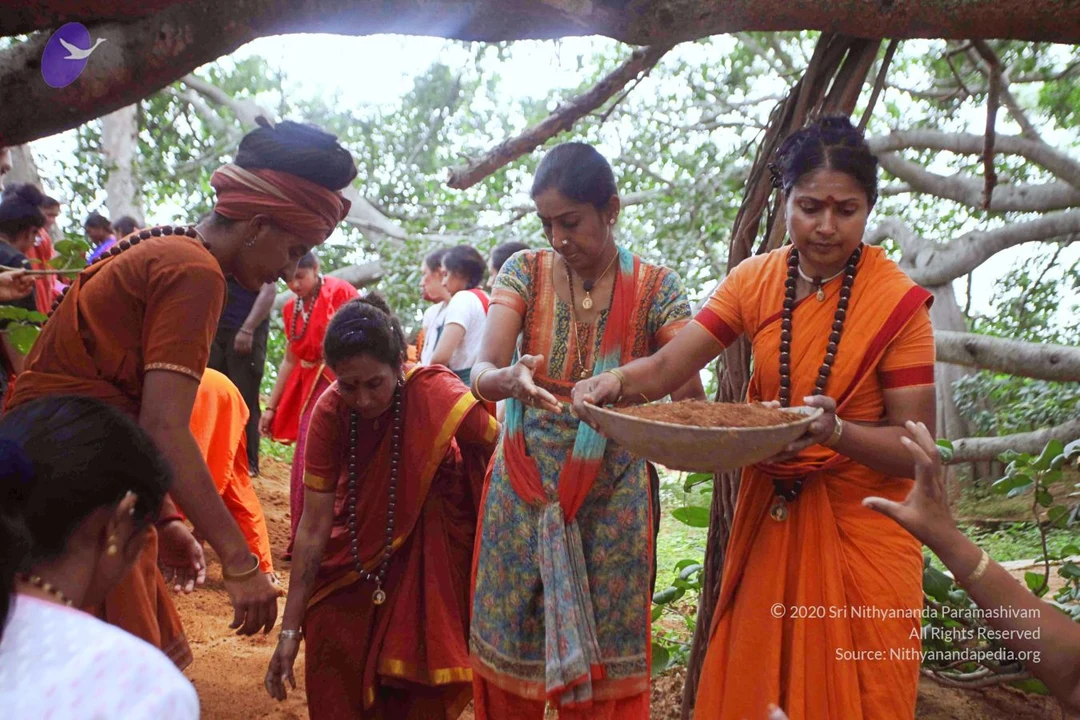
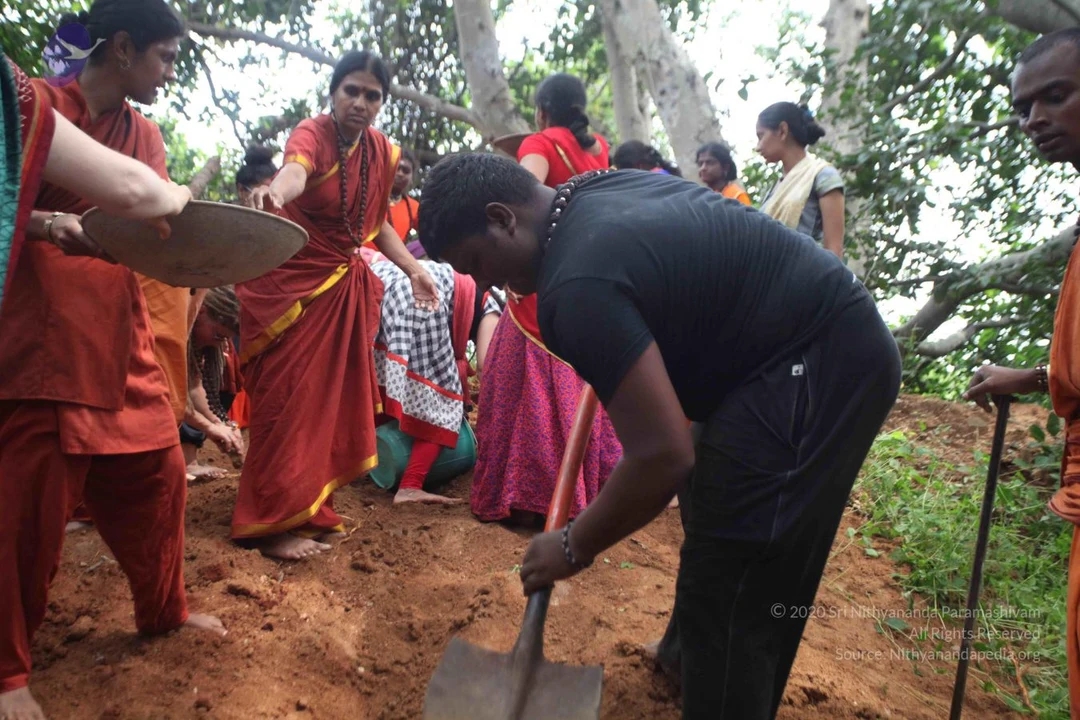
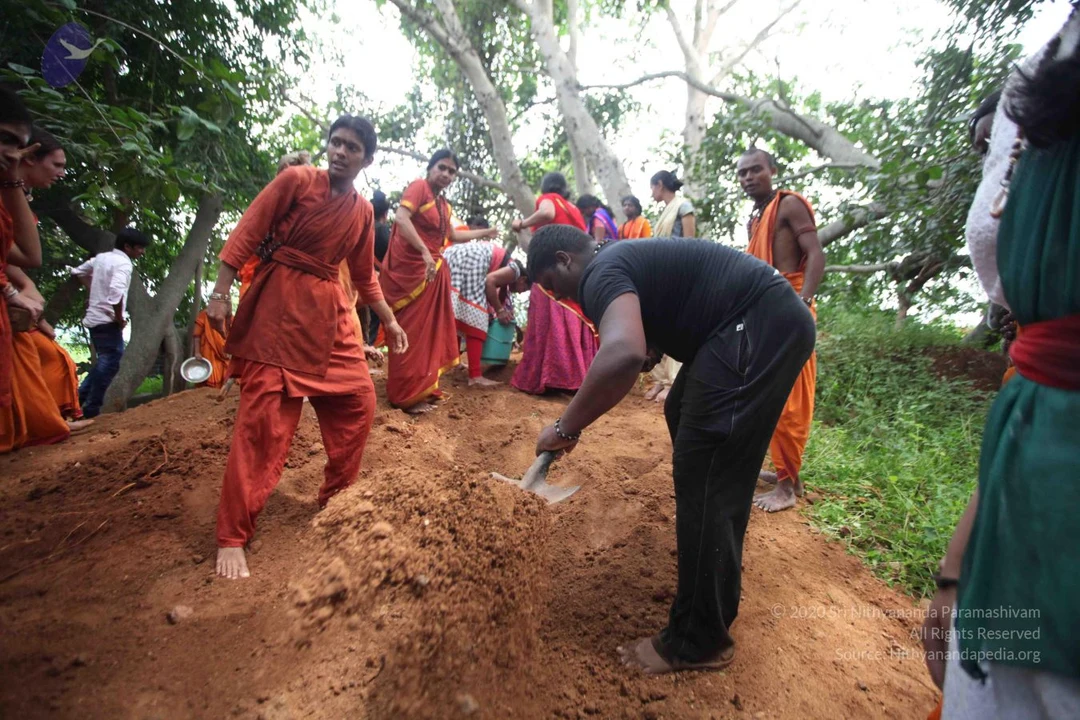
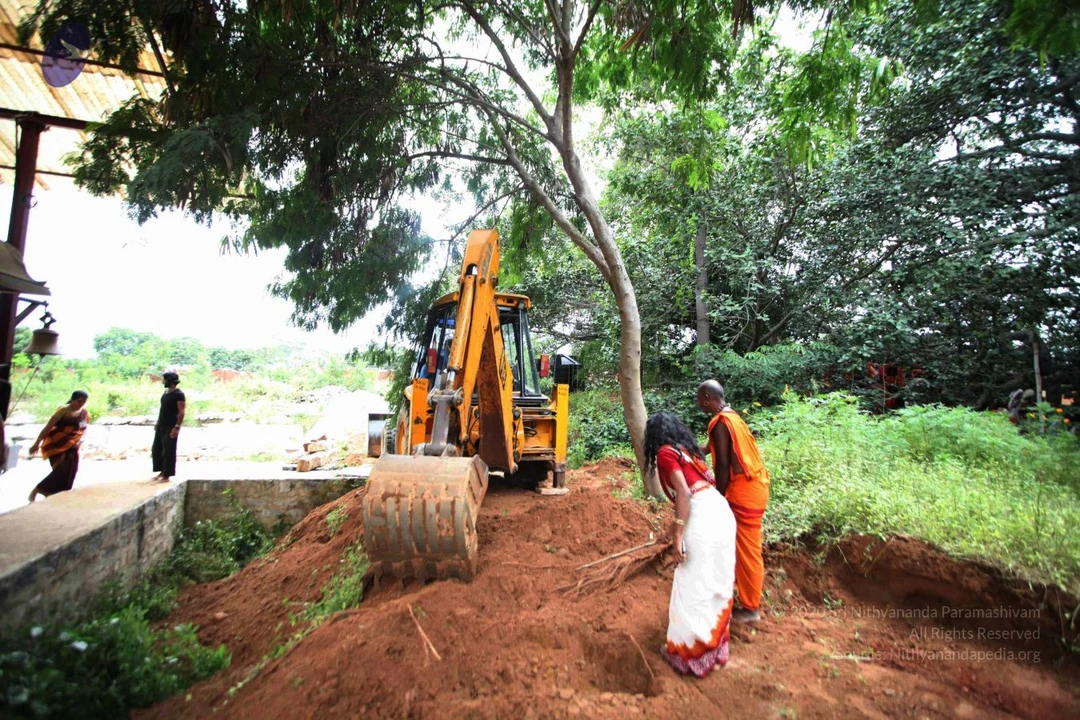
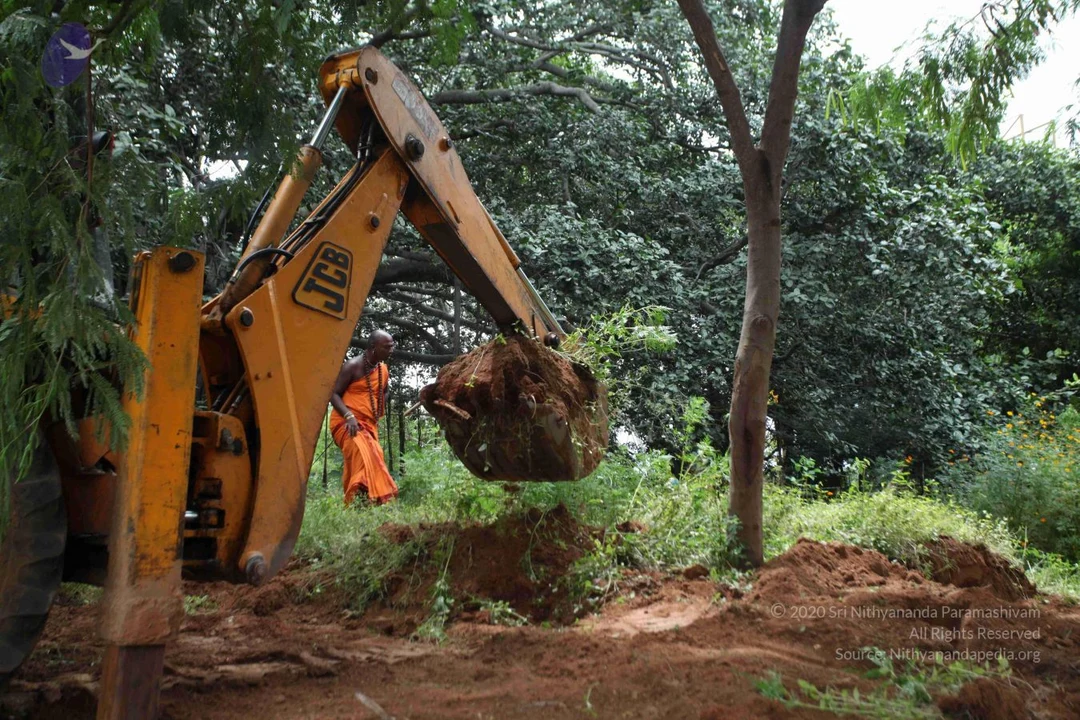
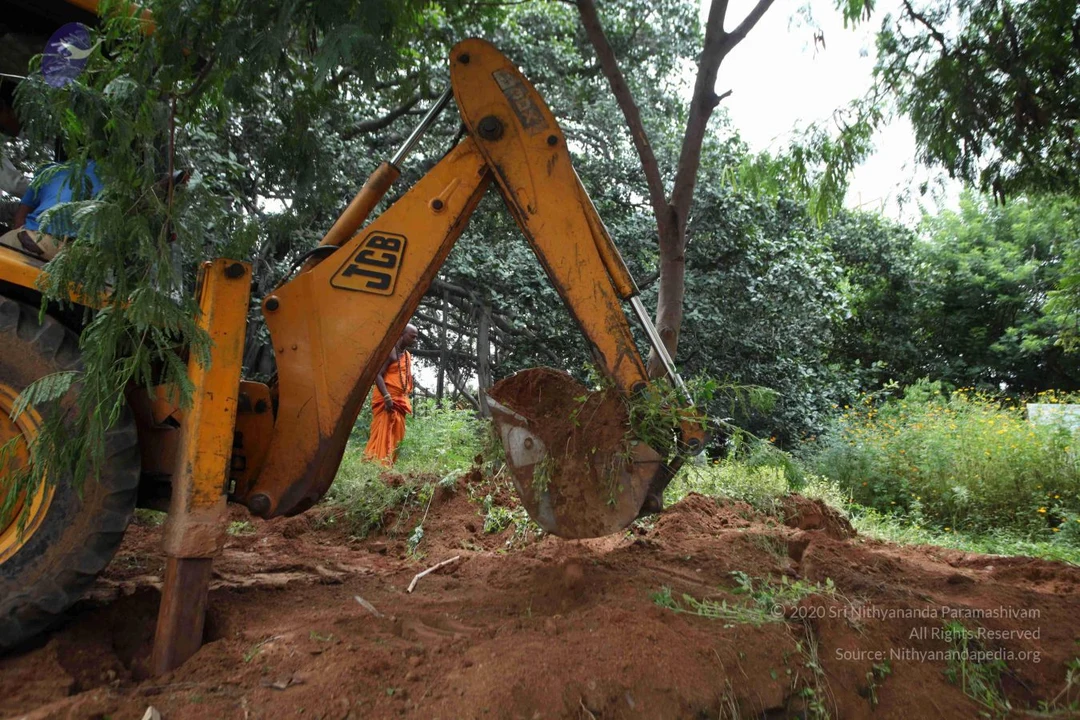
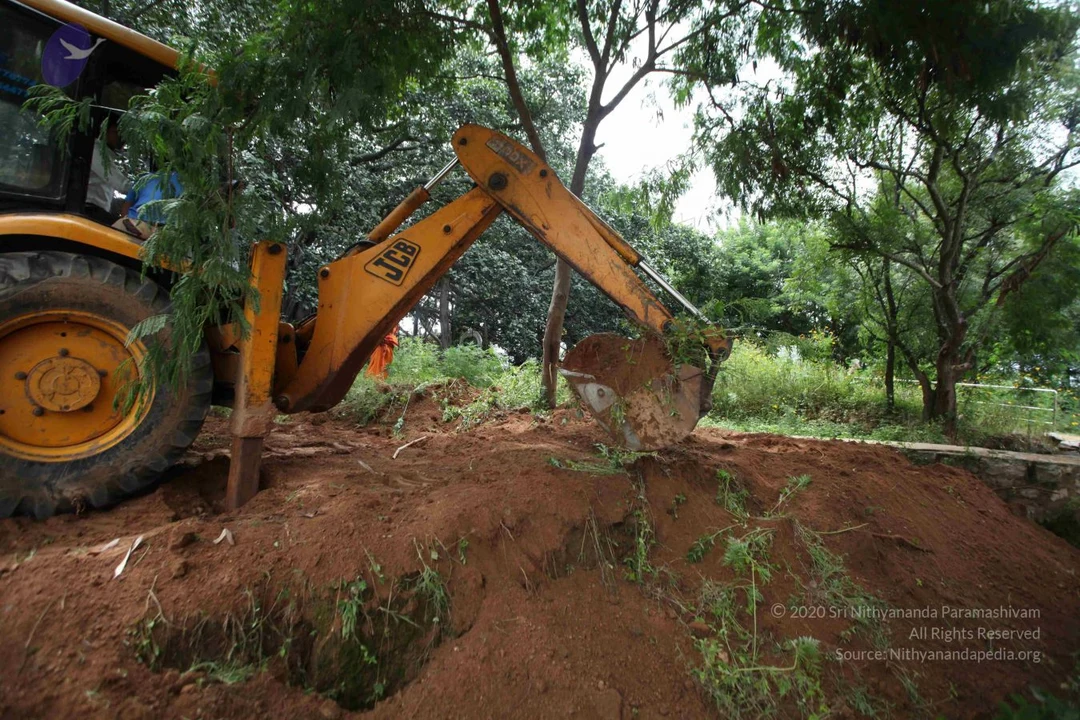
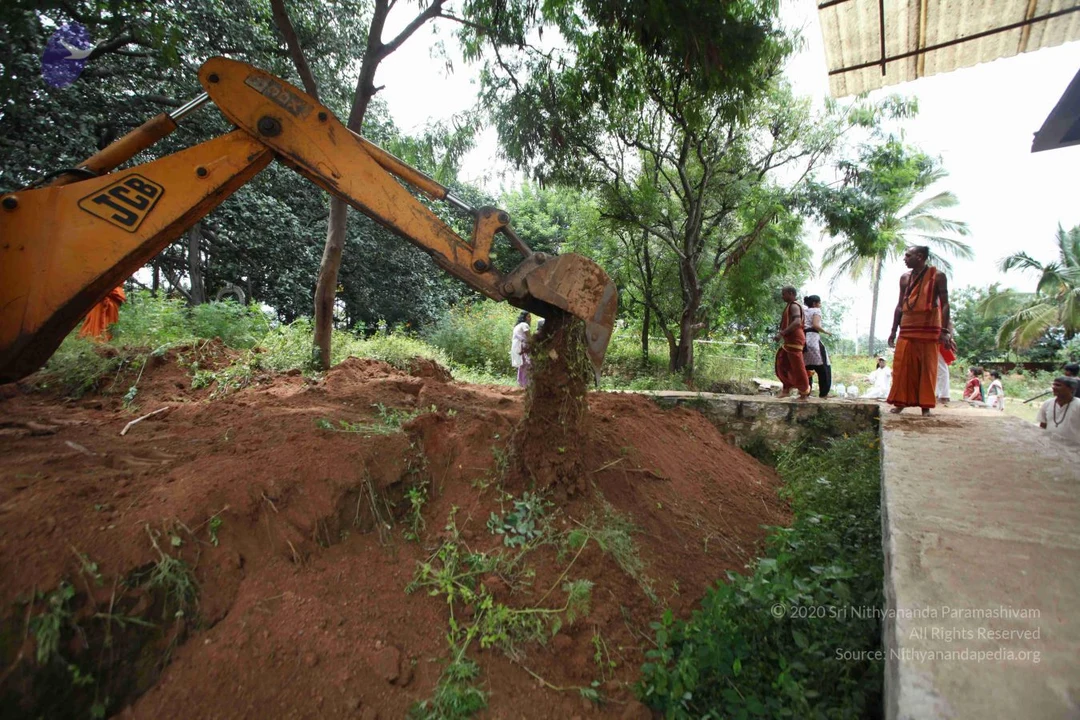
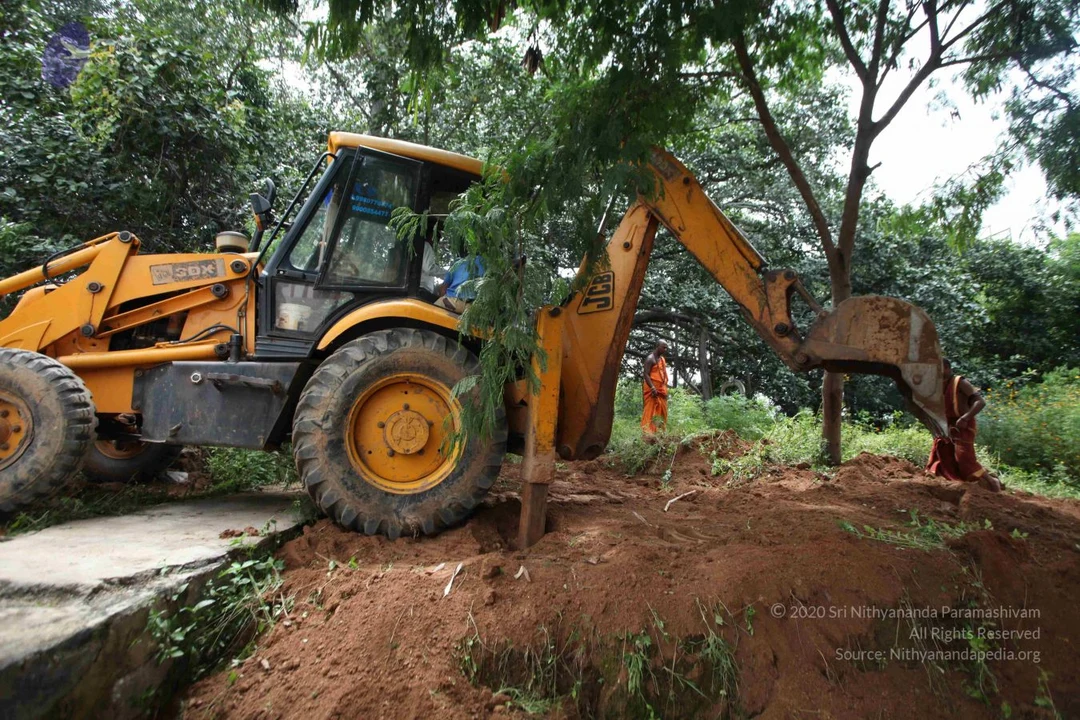
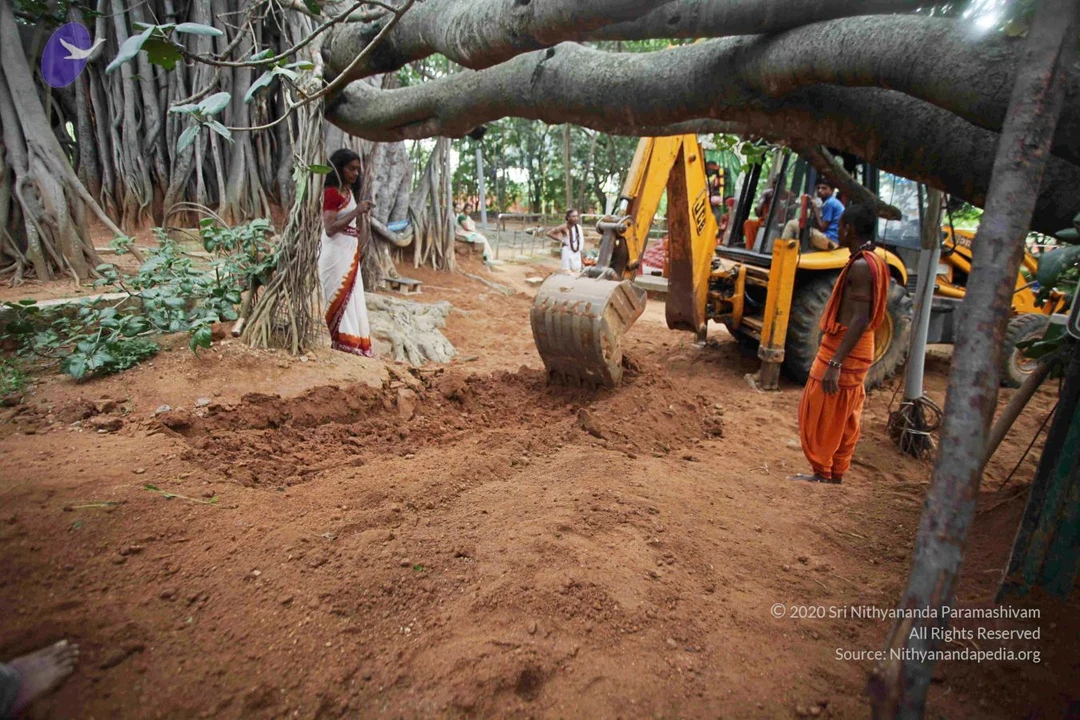
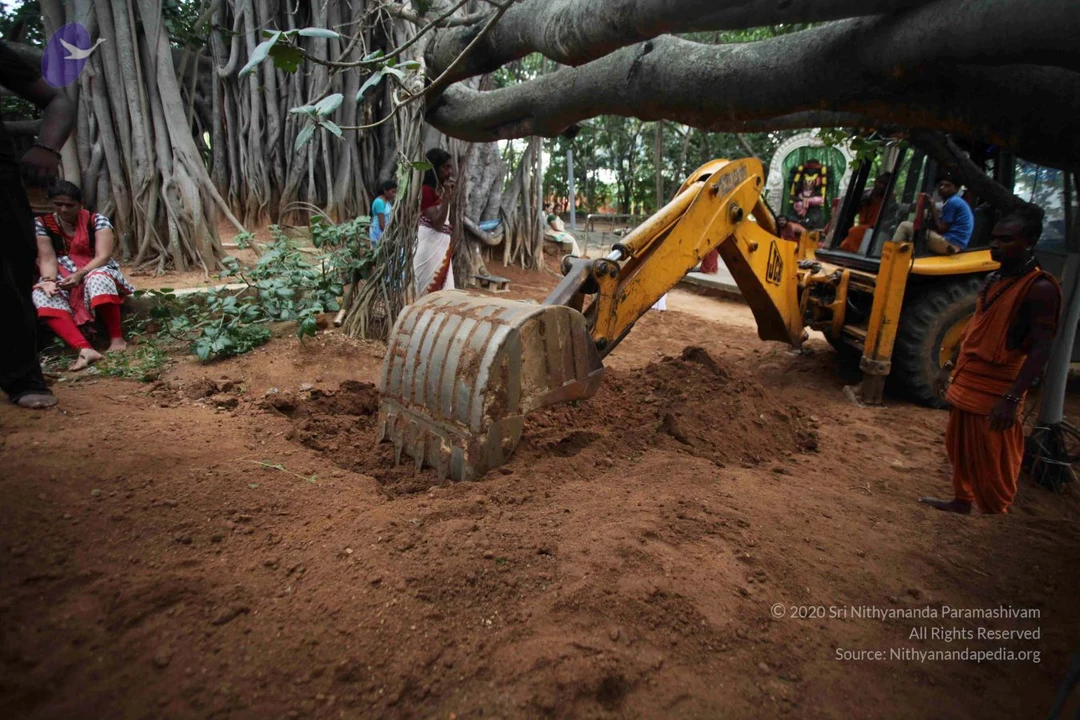
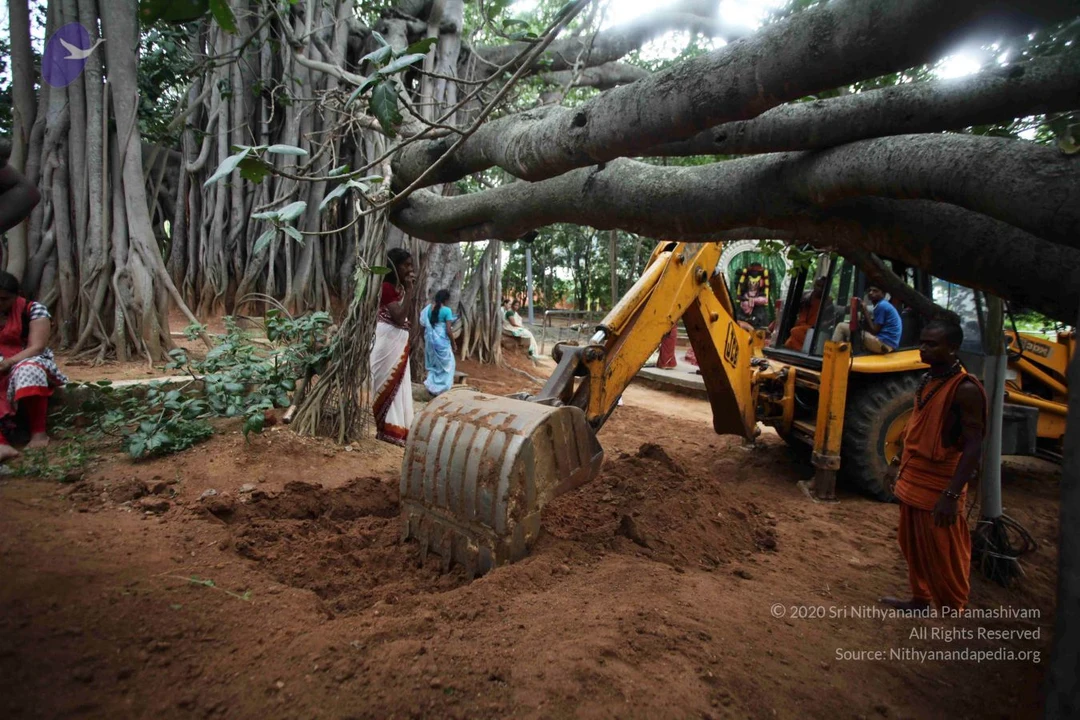
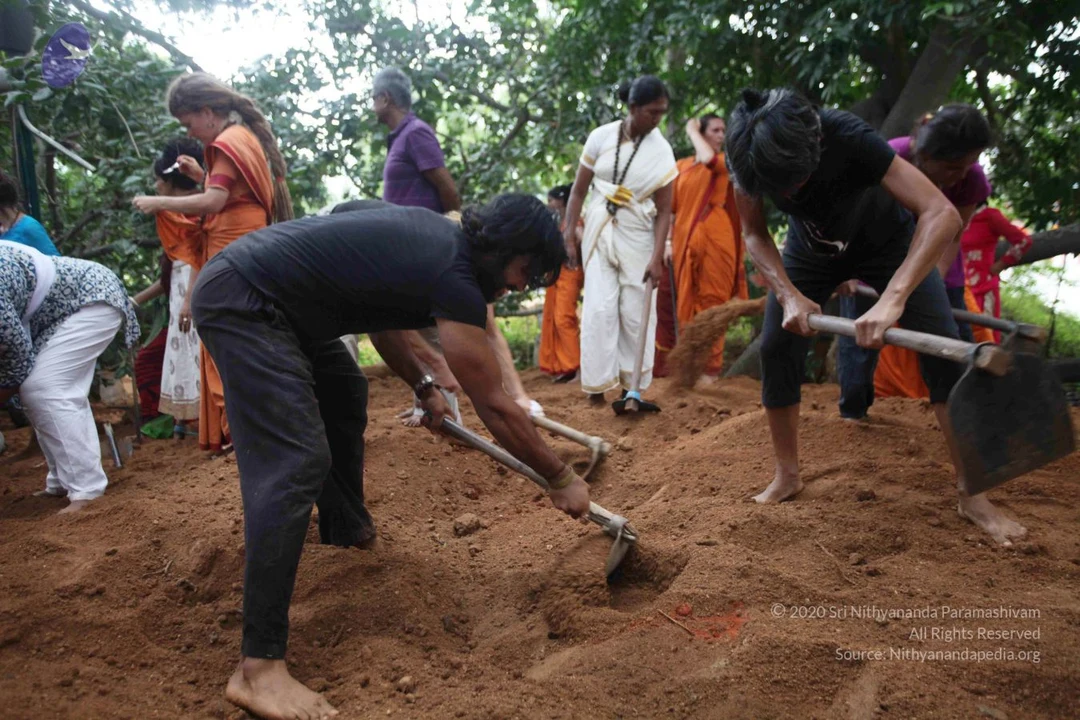
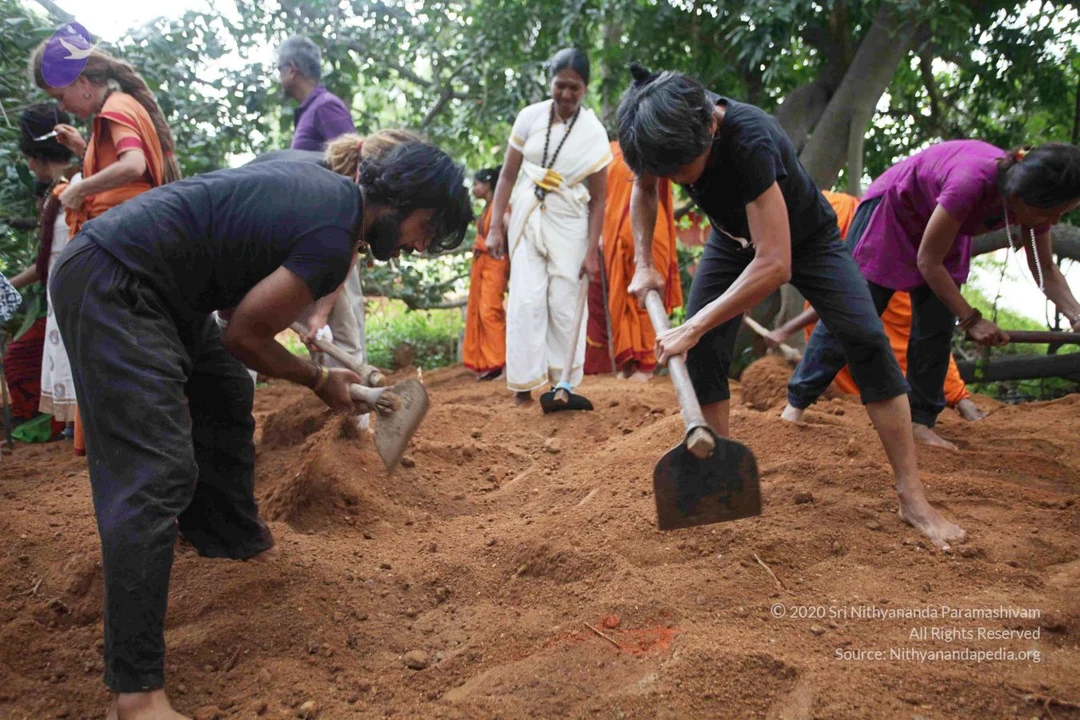
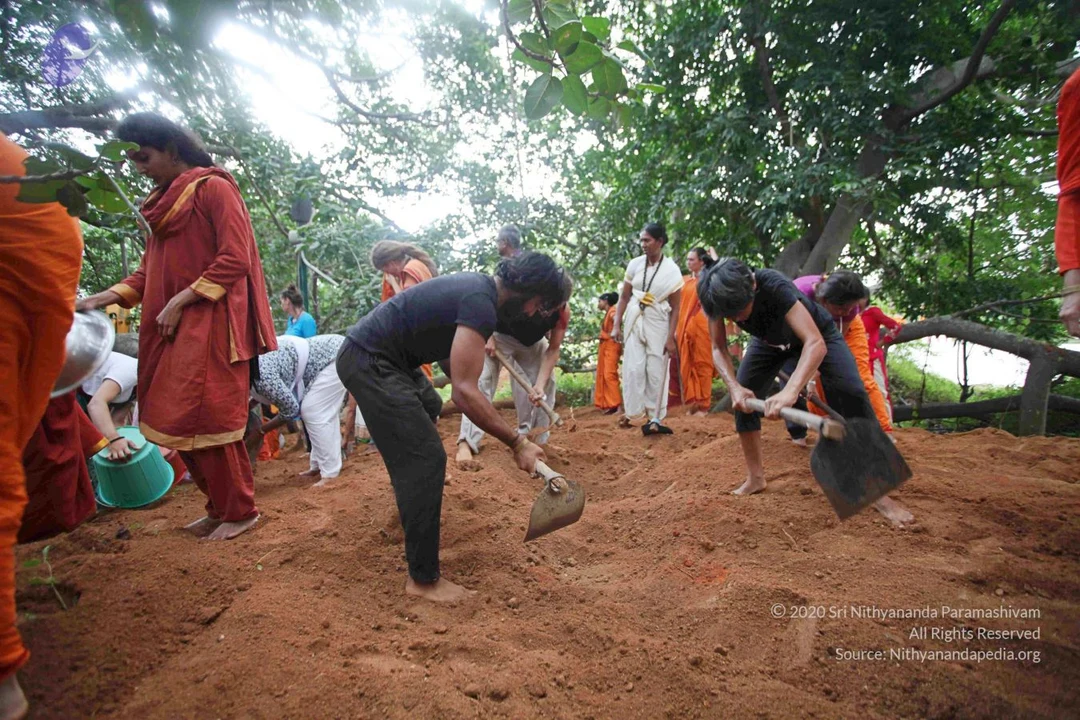
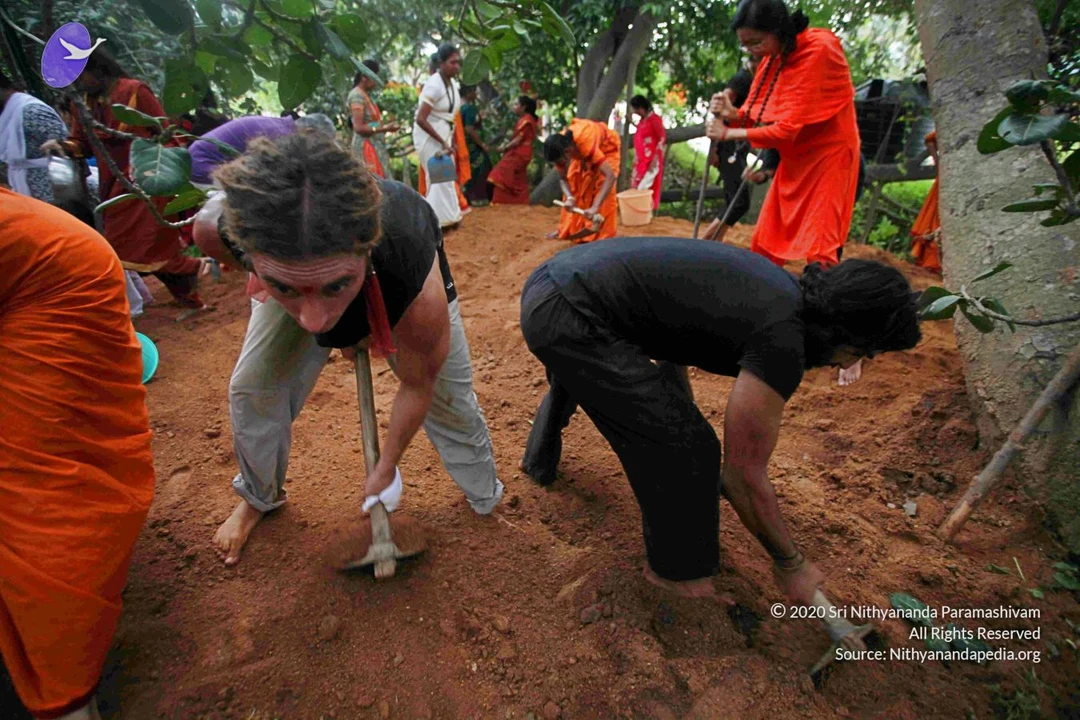
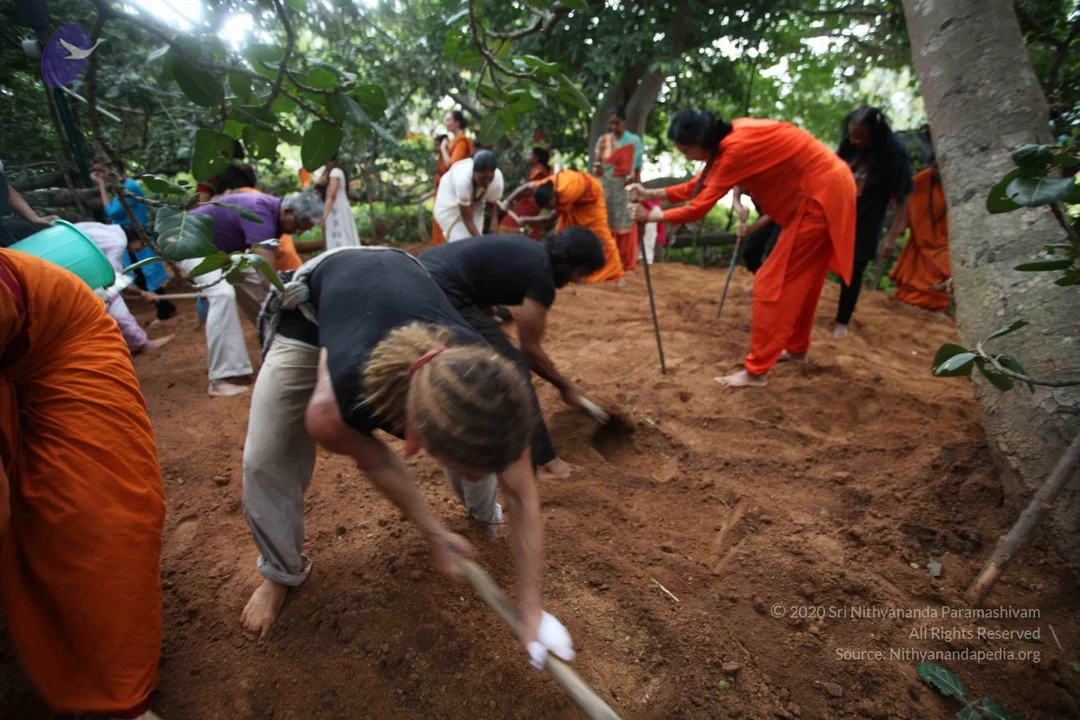
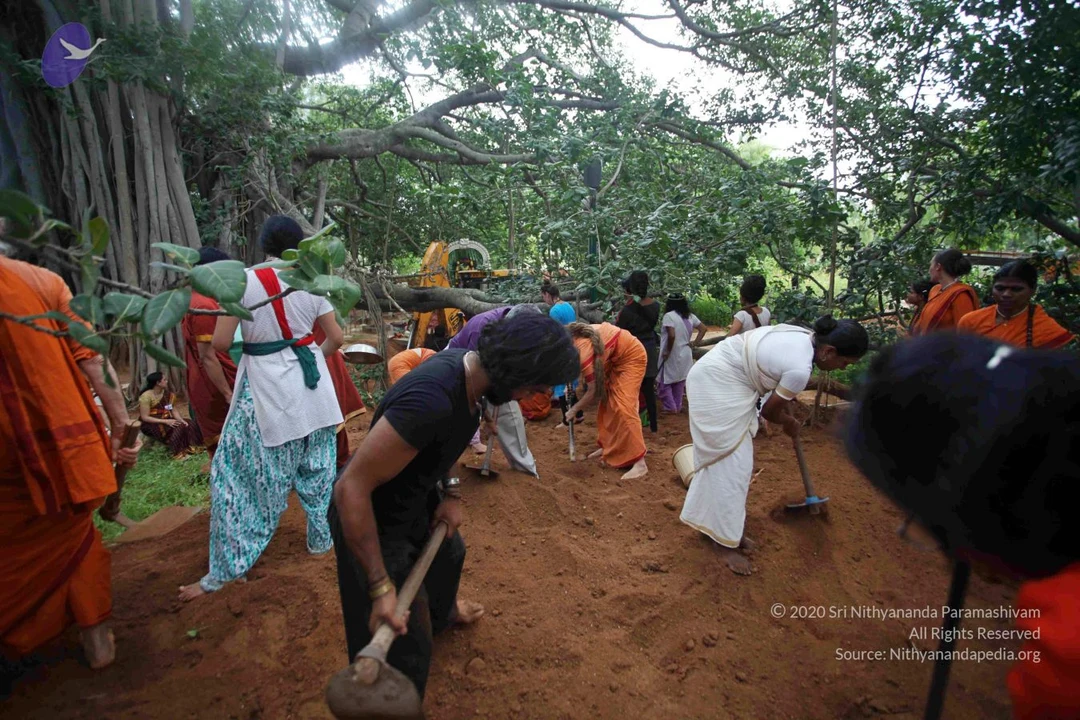
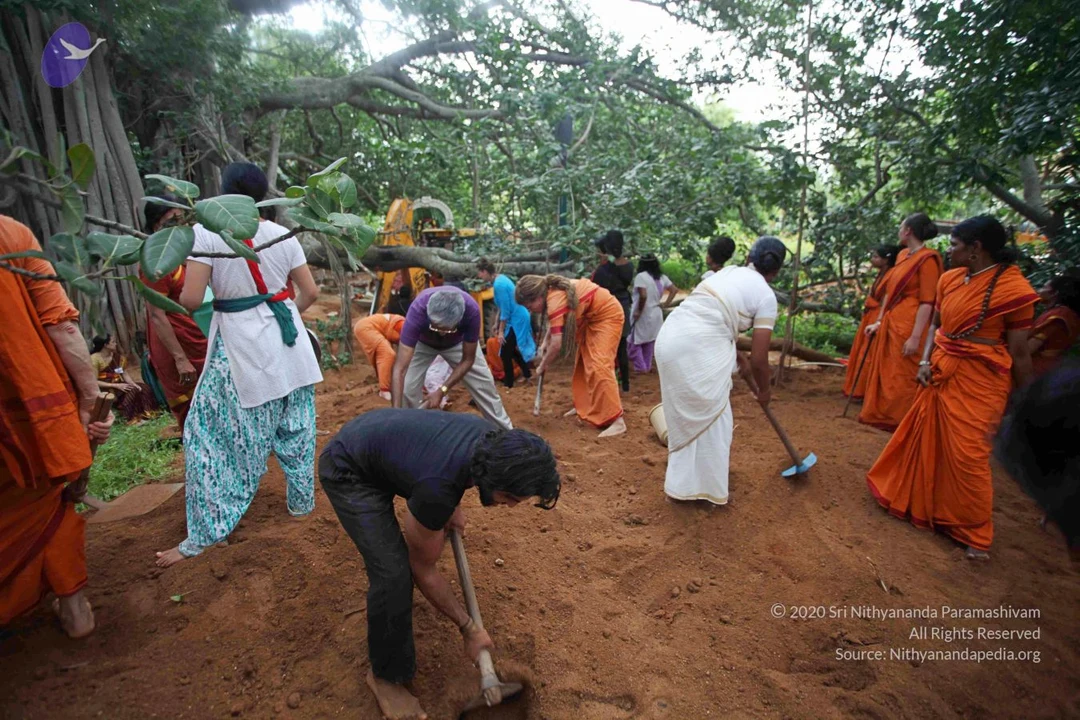
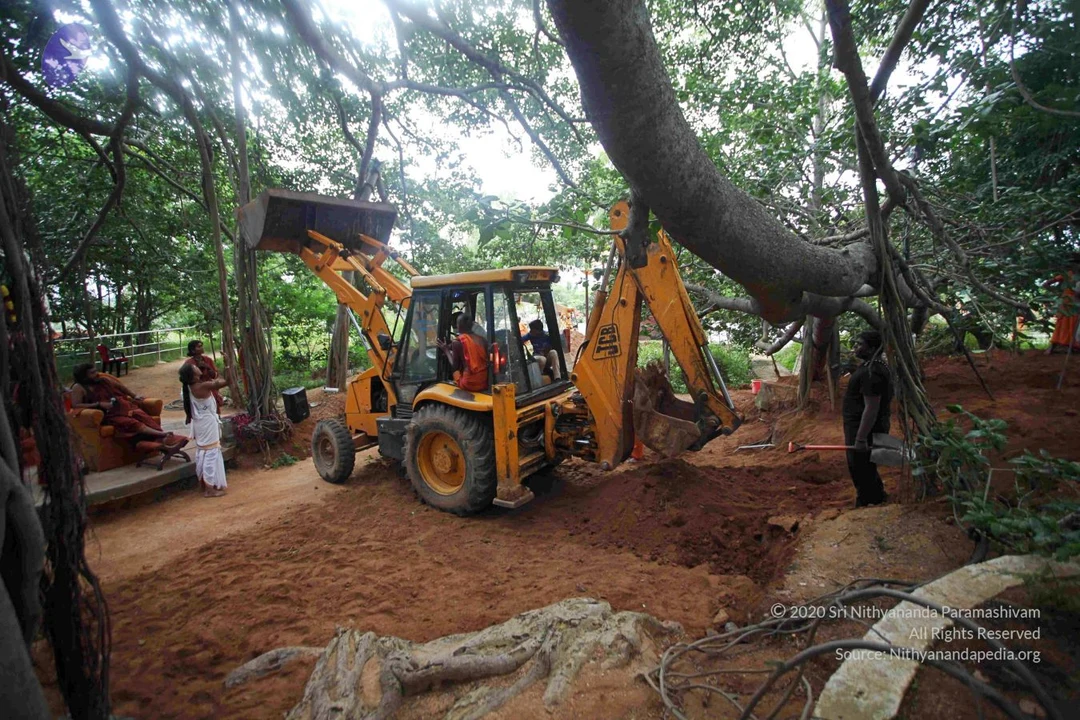
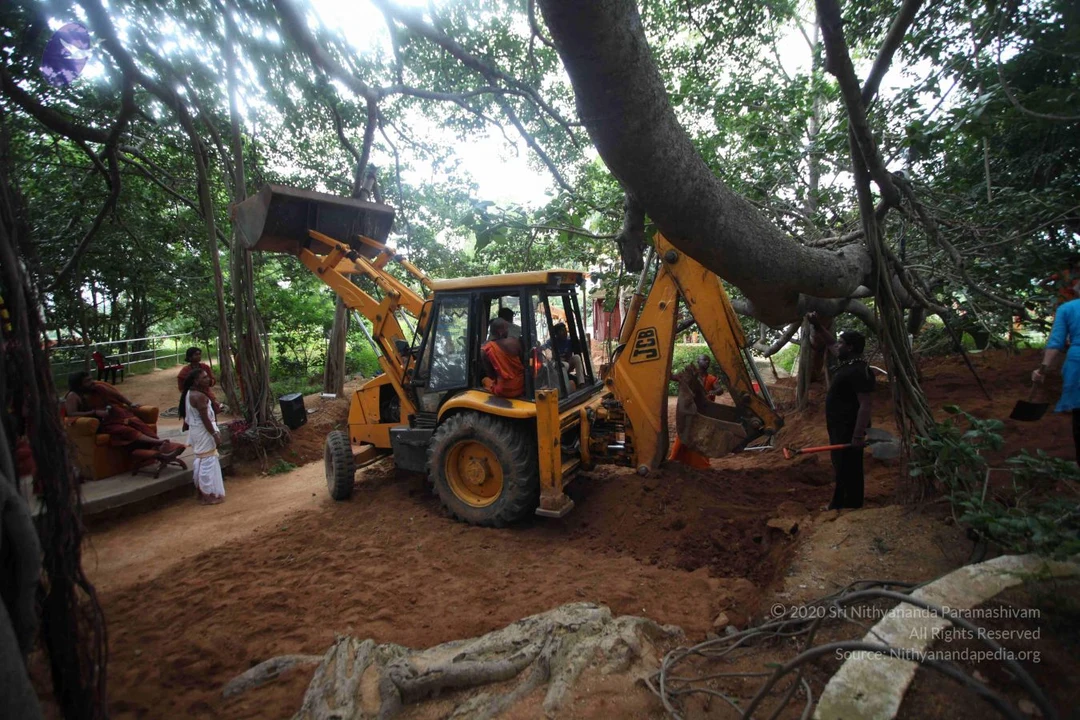
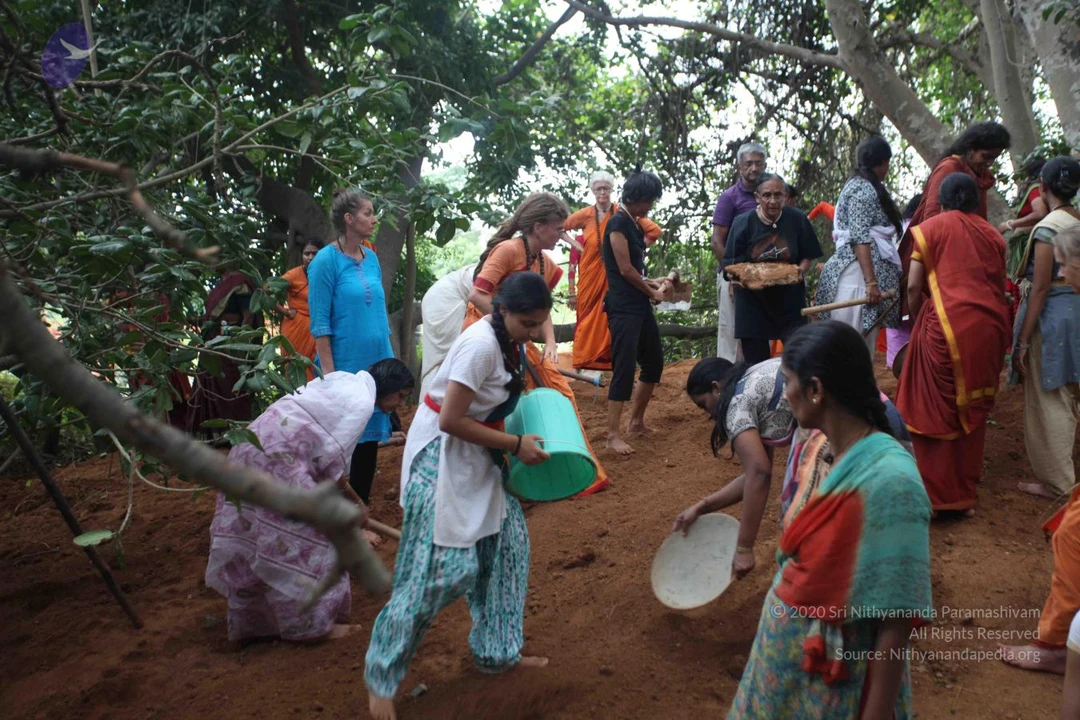
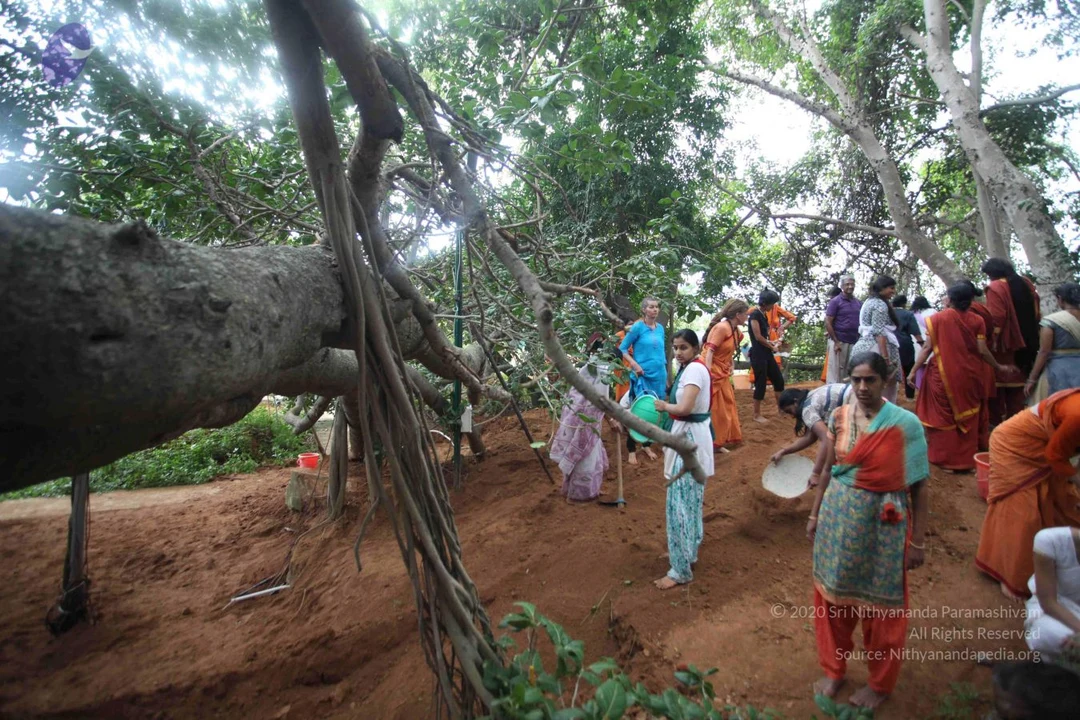
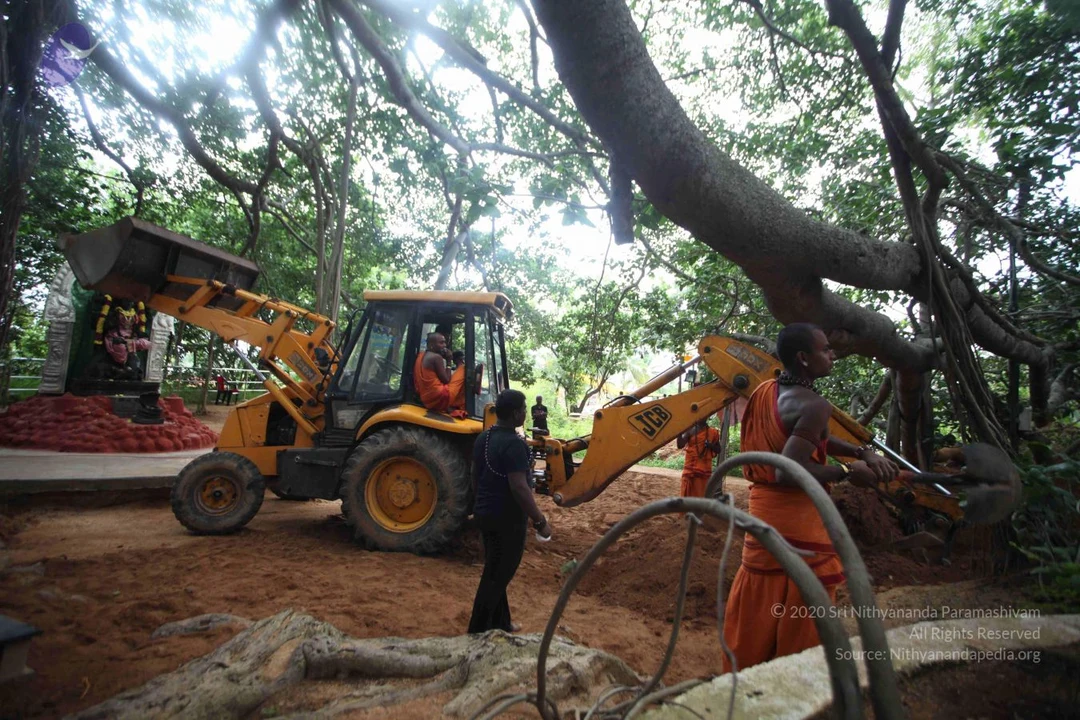
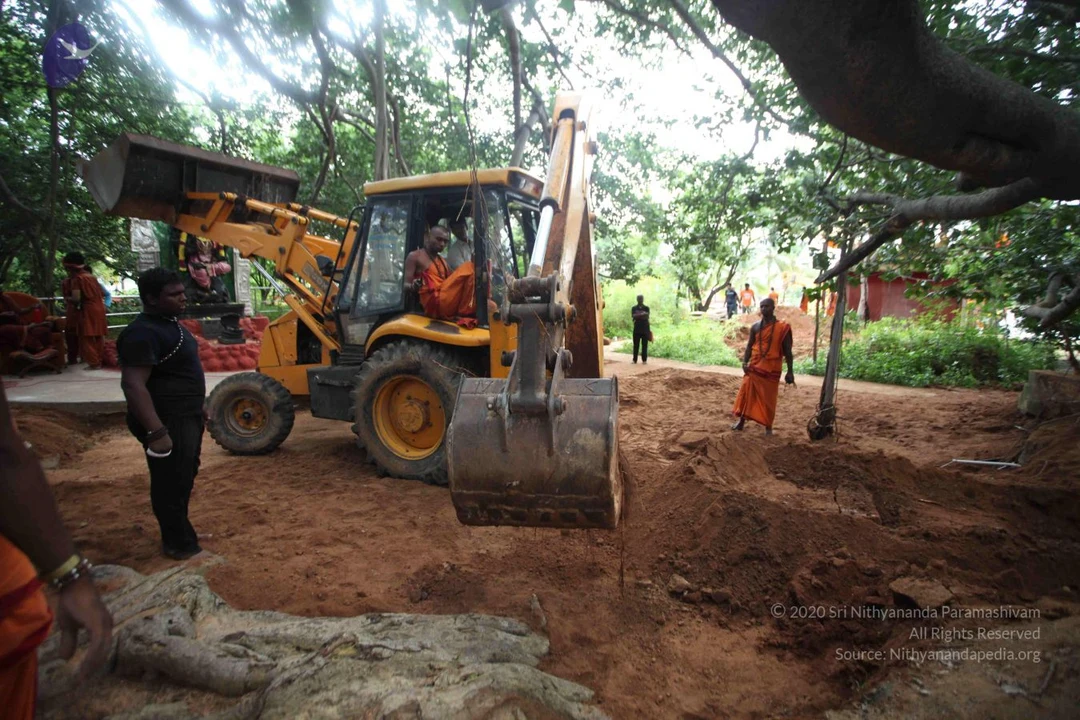
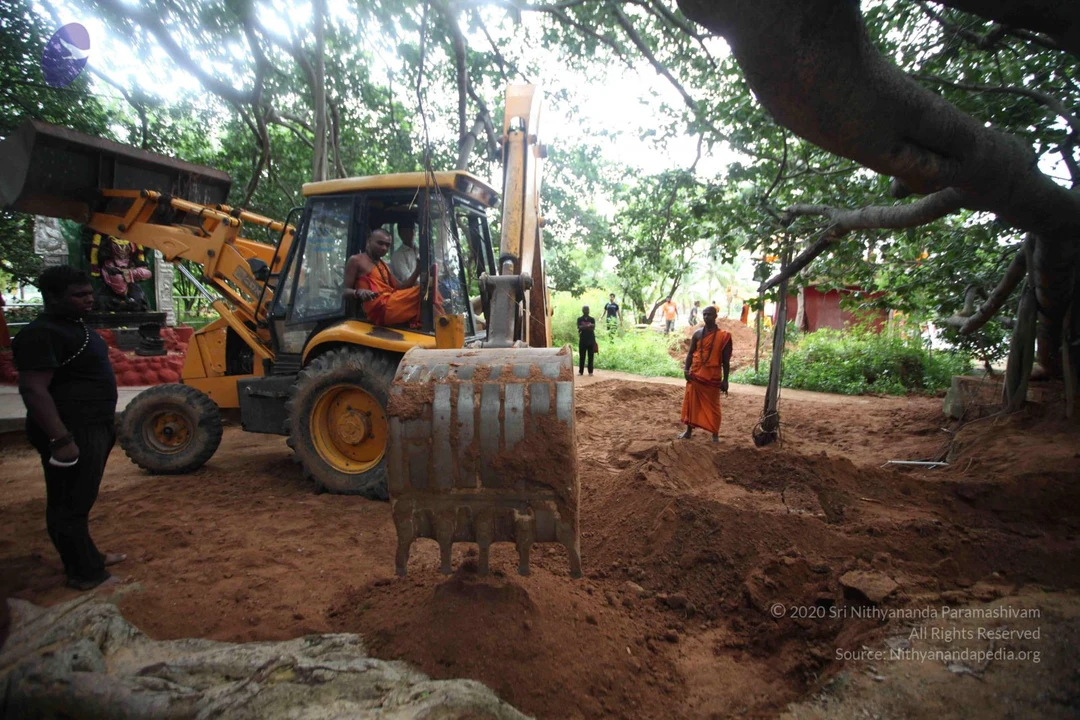
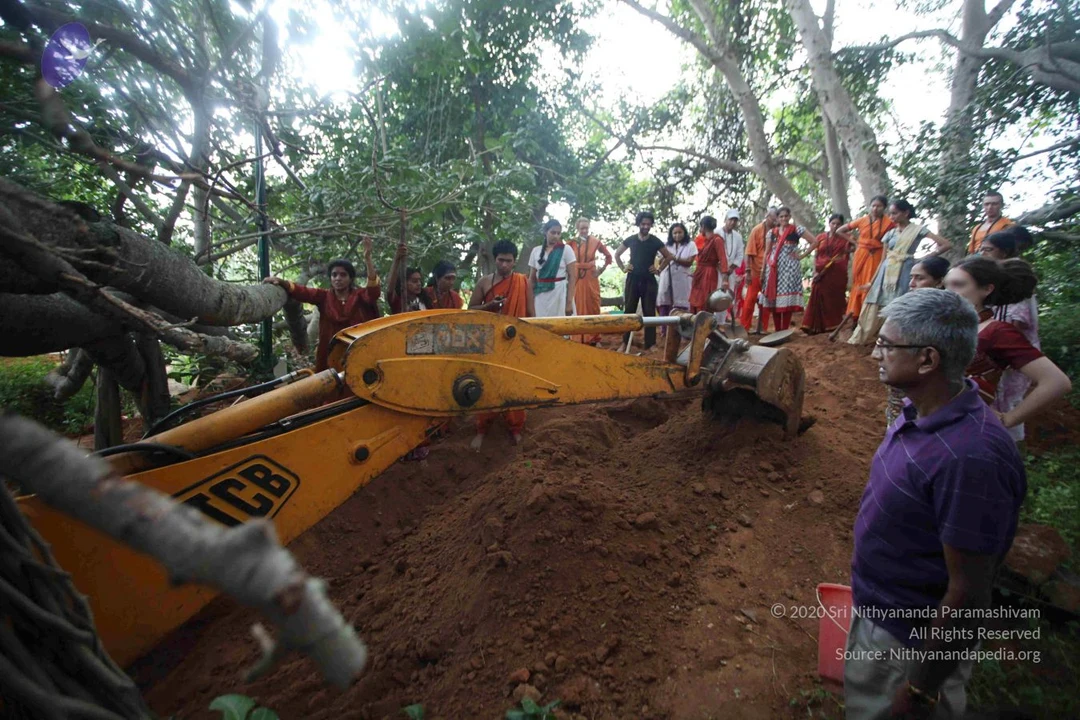
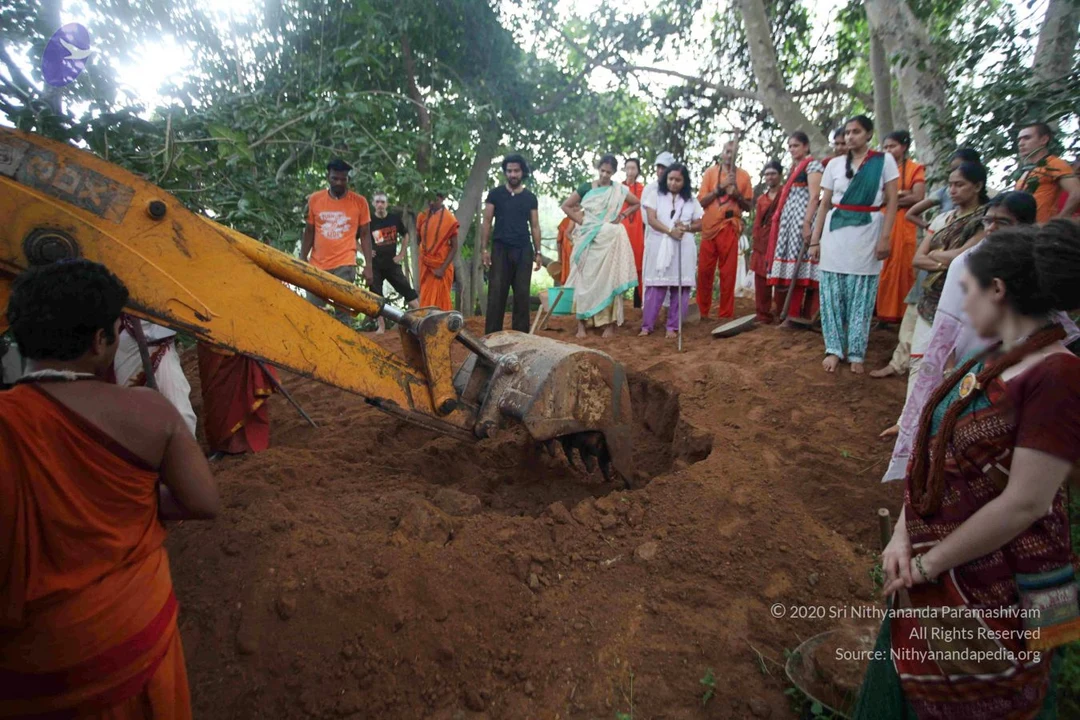
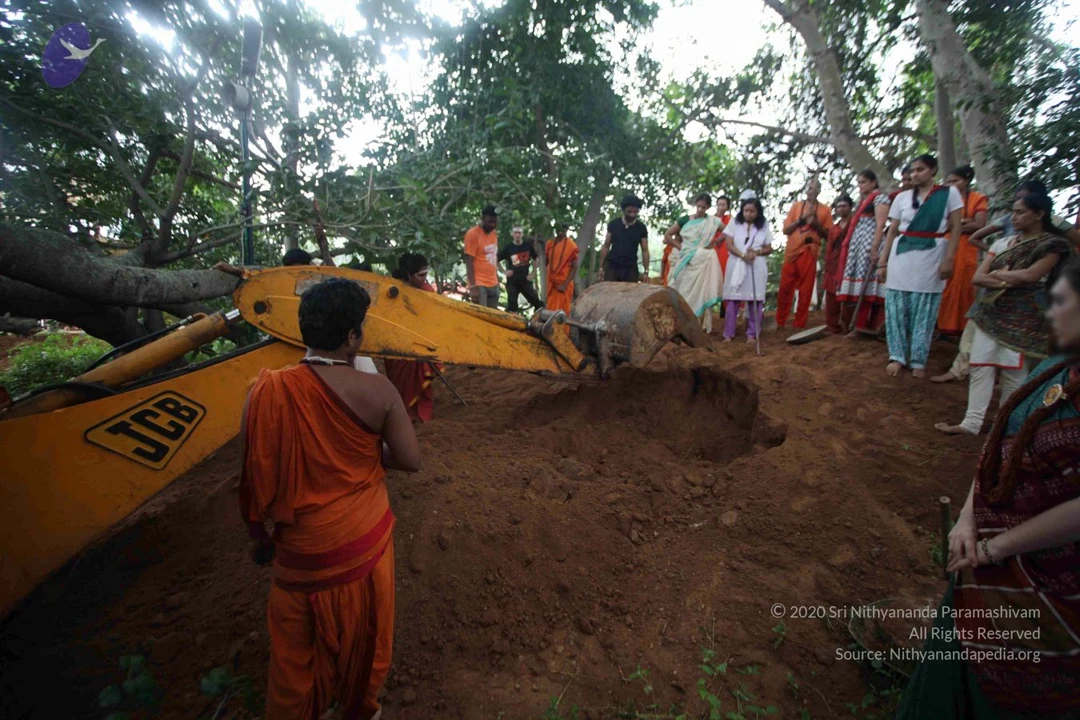
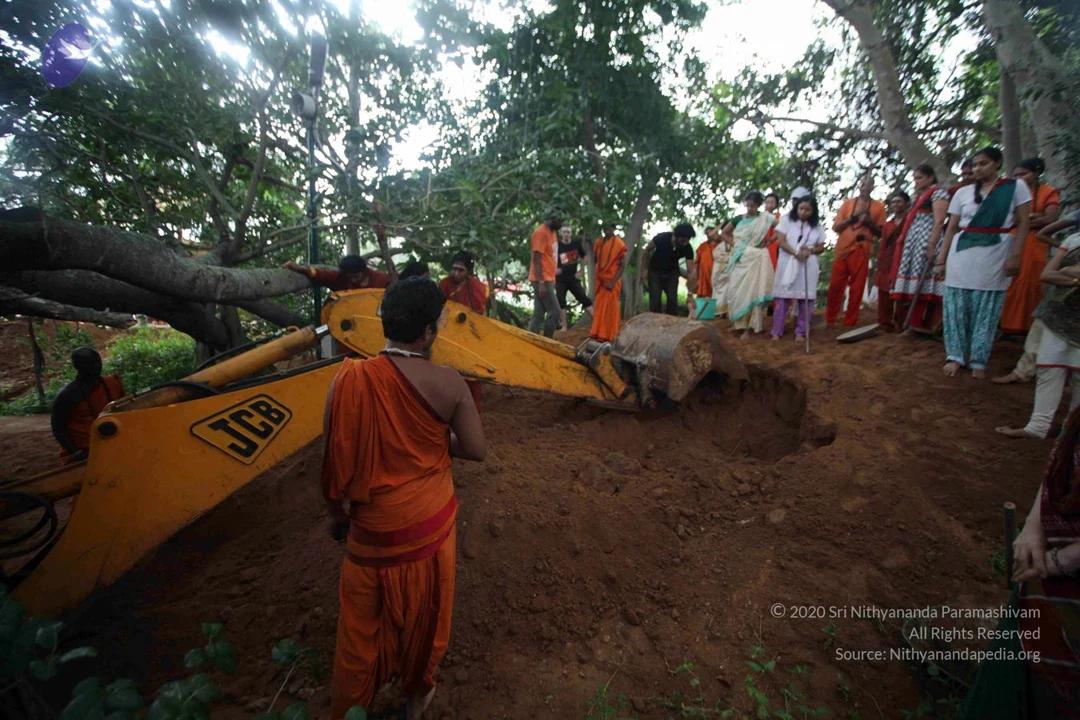
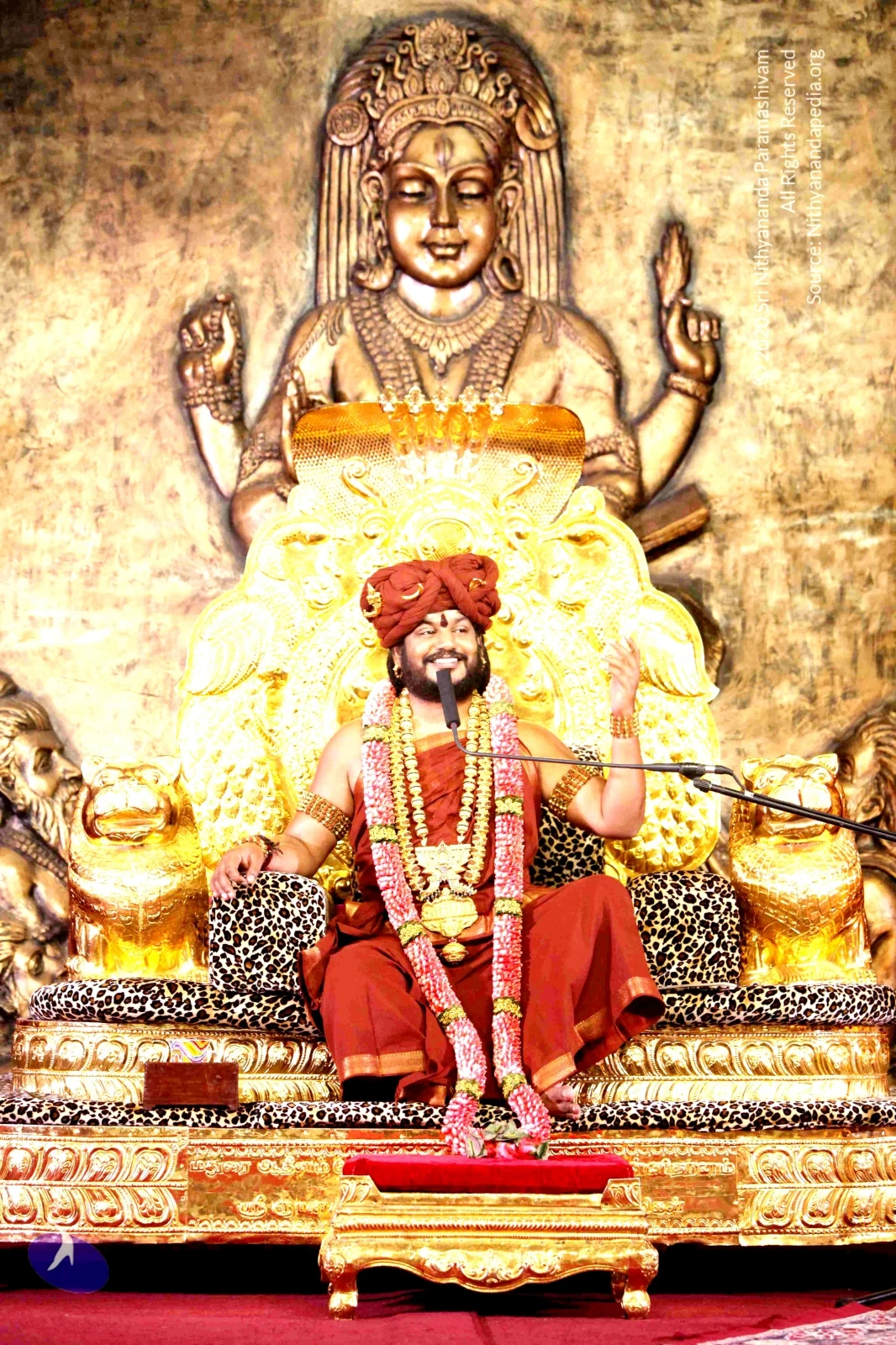
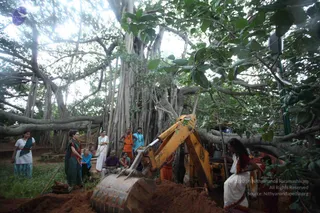
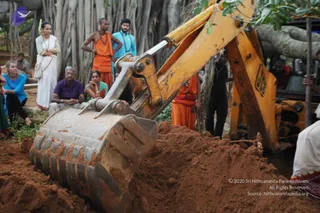
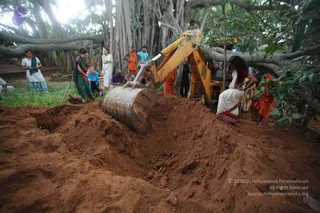
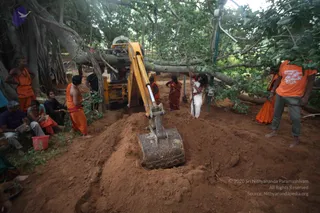
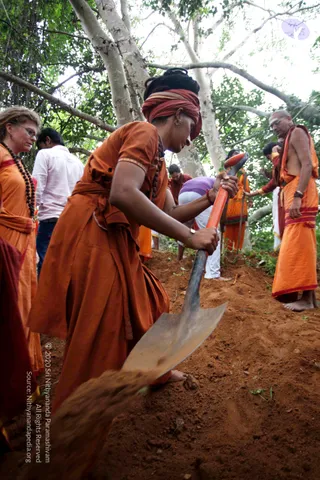
So, today’s Facebook status for all of you, the essence of Satsang is – freedom not choices, personality not the look, responsibility and not stupid, cute pleasures, right not the pleasant. So this is the Facebook status for all of you. Today we have a long day, tomorrow we have Ganesh Chathurti, the appearance Maha Ganapati. We will be celebrating. We have Rathotsava in Bangalore Aadheenam and today we have the kara seva, under the Banyan tree. Every week Sunday, all the Aadheenavasis, Balasants are going to spend whole day with Me. Every Sunday, I have decided I’ll make Myself available for all the Aadheenavasis. Today, holiday for all the departments and the Gurukul. All the Balasants and all the Aadheenavasis, we will be having Kara Seva under the Banyan tree, means we’ll clean up, the Banyan tree area, for all of us to sit and meditate. So, today whole day, all departments other than the survival departments like Welcome Center and Annalaya, all departments today holiday and all over the World, all the Ashrams, I wanted all of you, to start this tradition of Sunday Swachh Sangha, cleaning up. Sunday, means gather and clean up the campus. All over the world, all the branches, all the Aadhenams, all the temples, all the Gurukuls, all the Bala Vidyalayas, all of you, please gather on Sunday and clean up the campus. Make it livable. Make it livable, cleaning up and decorating it, is Sunday’s Kara Seva. So, today all the Aadheenavasis, Nithyanandoham participants, IA teamily, IA volunteers, Ananda Yogam, Aadheenavasis, Balasants, Sannyasis, Bramacharis, the whole team will join under the Banyan tree, after the morning Nithya Kirtan and Ganesha festival. Today is ninth day of the Brahmotsavam, tomorrow is tenth day, the appearance of Maha Ganapati. We will get ready. Jnanatma has few announcements. After the announcements, I’ll continue, I have few more things to share and then we have Kalpataru Darshan now. Jnanatma will announce the next program.

(announcements by Jnanatma)

(58:27)

Listen; yesterday when I was going through this whole structure to approve, I saw very clearly, even in Kailasha, this is practiced. Understand, even in the Kailasha, the practice of the organization structure is there. I got this structure directly from Kailasha. Maybe for…. some of the names, I am using it, for the human….for the planet Earth. Otherwise the structure is from Kailasha.

(announcements by Jnanatma)

(1:03:17)

And actually, this will help you to fit into your purpose of your existence and take responsibility for your purpose, which I was talking all along now. Whatever I have spoken is more like a Upanishad. These courses are like Agama. This is applied science. What I spoke is pure science, this is applied science.

(announcements by Jnanatma)

(1:04:09)

So, with this we will move to Kalpataru Darshan and Kirtan, the Ganesha Utsava Kirtan and today there will be Kirtan and tomorrow there will Rathotsava Ganesha will go around the Aadheenam in Ratha as Ganesh Chaturti, the appearance of Maha Ganapati. I request all the Aadhenams to participate through Nithyananda TV and this Aadheenam, Bangalore Aadheenam will physically participate and also all the temples all over the world, please conduct Ganesha Brahmotsava Puja, tomorrow for Maha Ganapati.

So with this, I bless you all, let you all radiate with Integrity, Authenticity, Responsibility, Enriching, Causing, Living Shuddhadvaitam Shaivam, the Eternal Bliss - Nithyananda. Thank you. Be Blissful.

Photos Of The Day:

Living Shuddhadvaita Process
kalpataru-darshan

nithya-kirtan

swach-nithyananda-sangha

ganapathy-homa

1-Living-Shuddhadvaita-Process

2-Kalpataru-Darshan

3-Nithya-Kirtan

4-Swach-Nithyananda-Sangha

4-Swach-Nithyananda-Sangha_Photo_1000_IMG_9941_CMP_WM

5-Ganapathy-Homa

Photos from this day

View all 436 photos

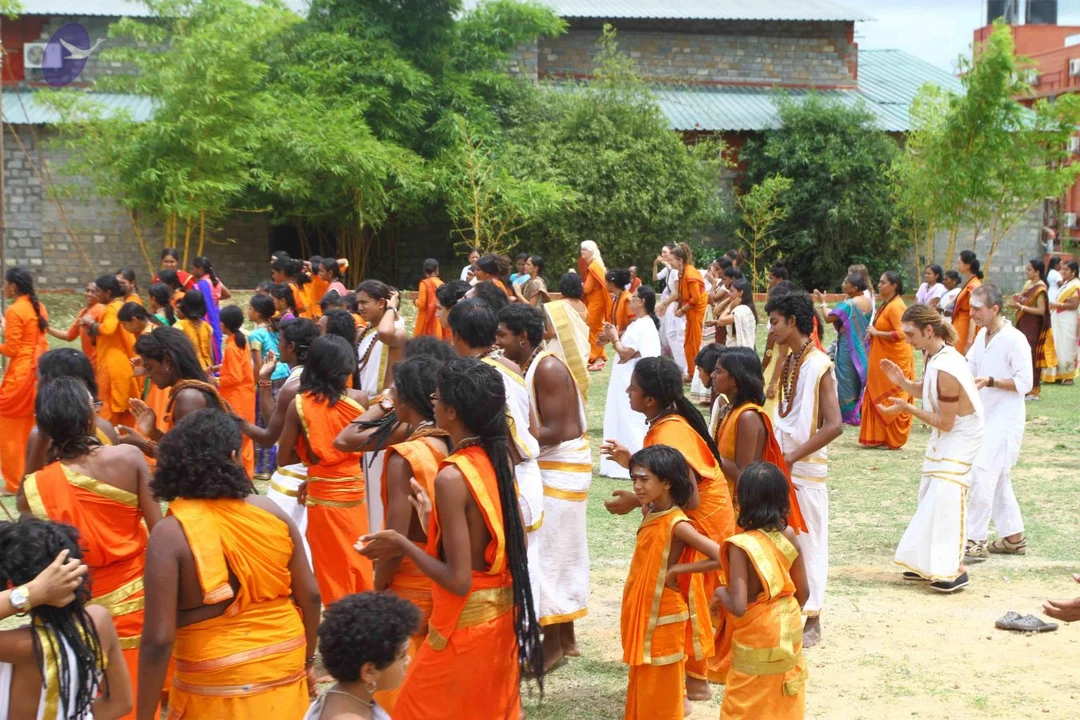
Living Shuddhadvaita Process
110 photosSource gallery
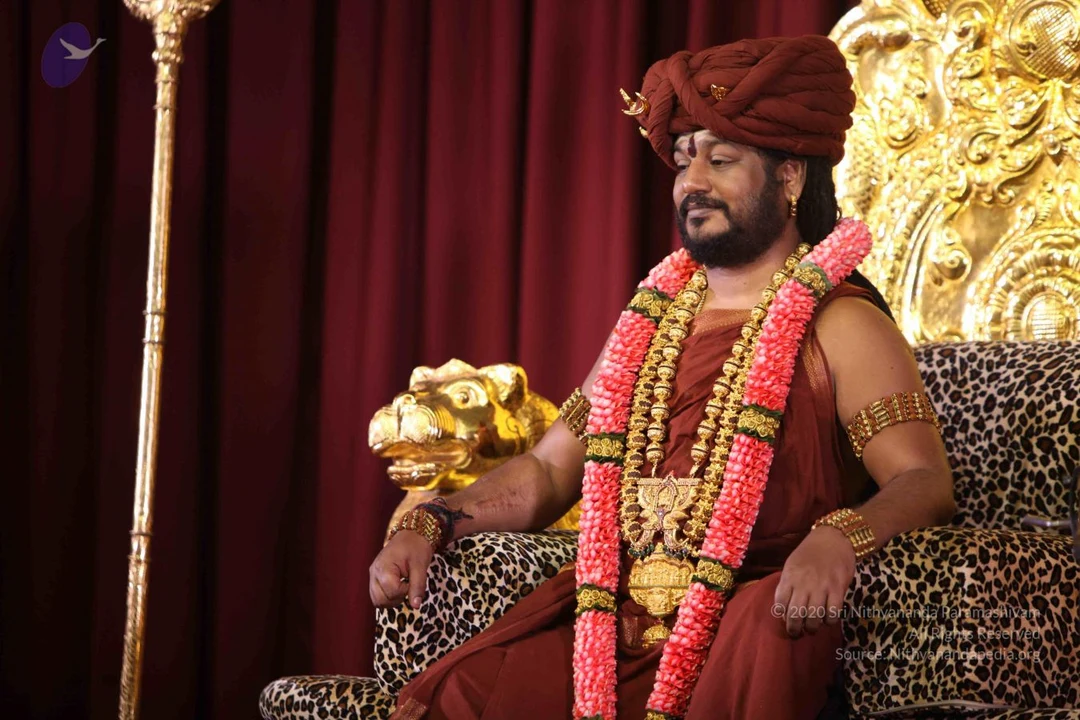
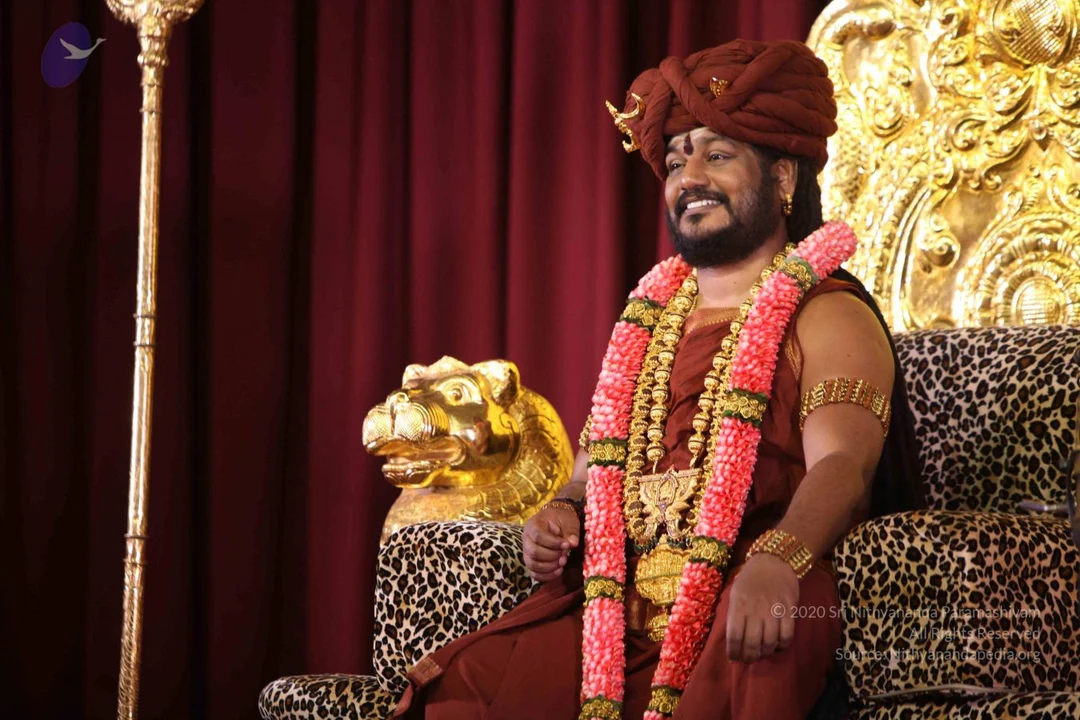
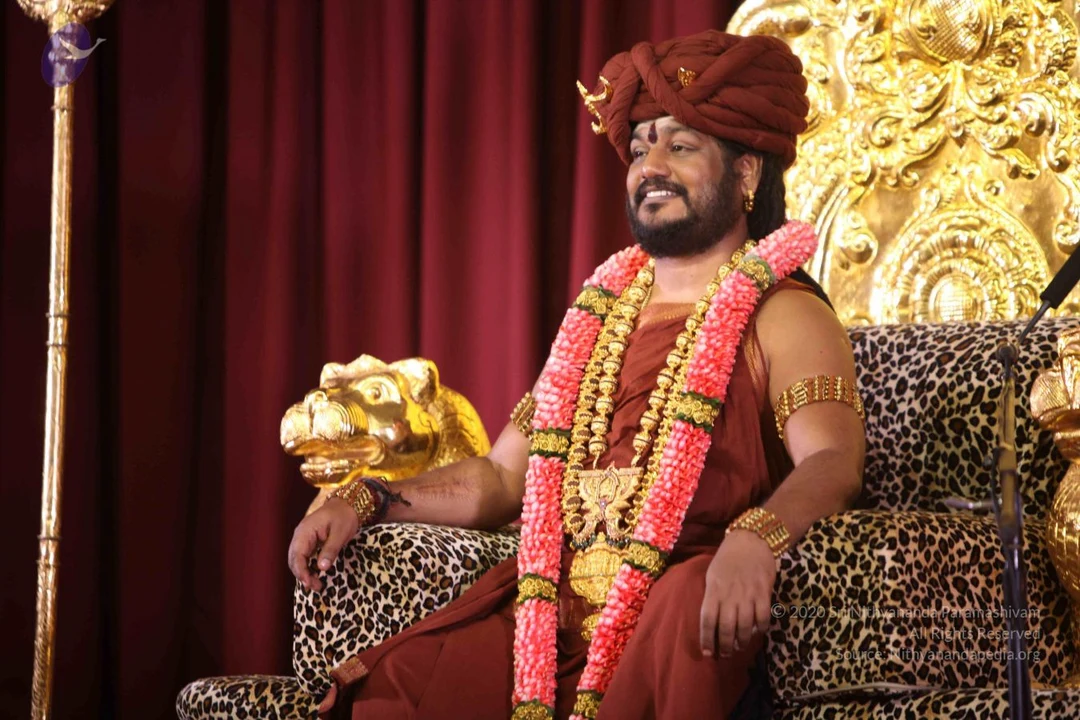
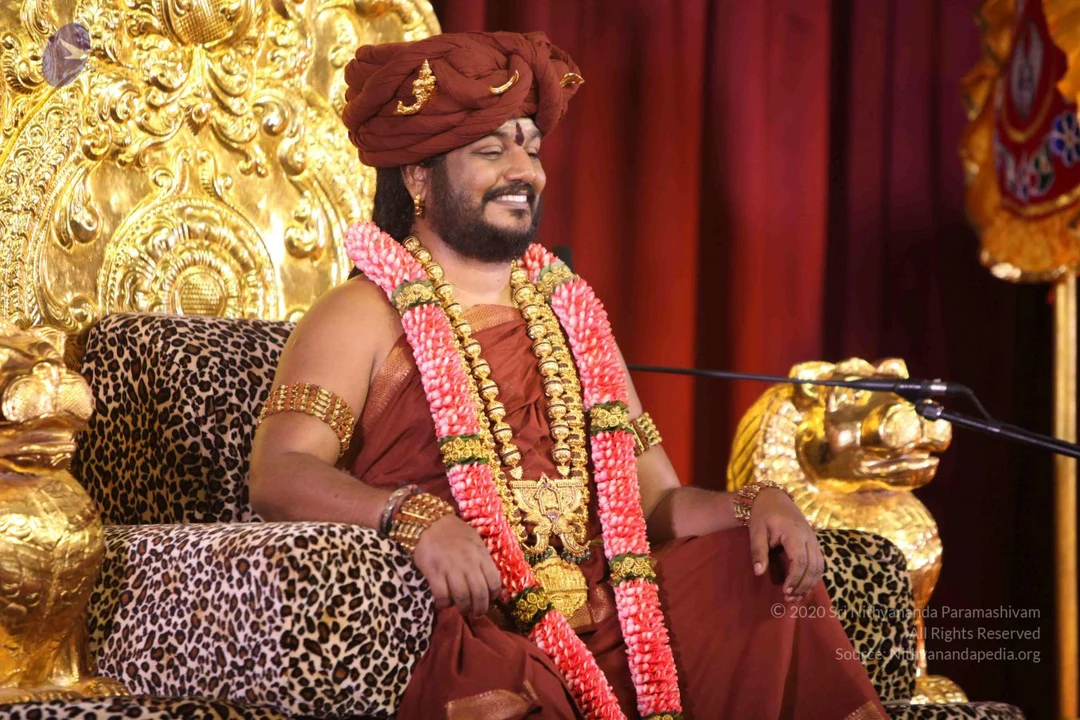
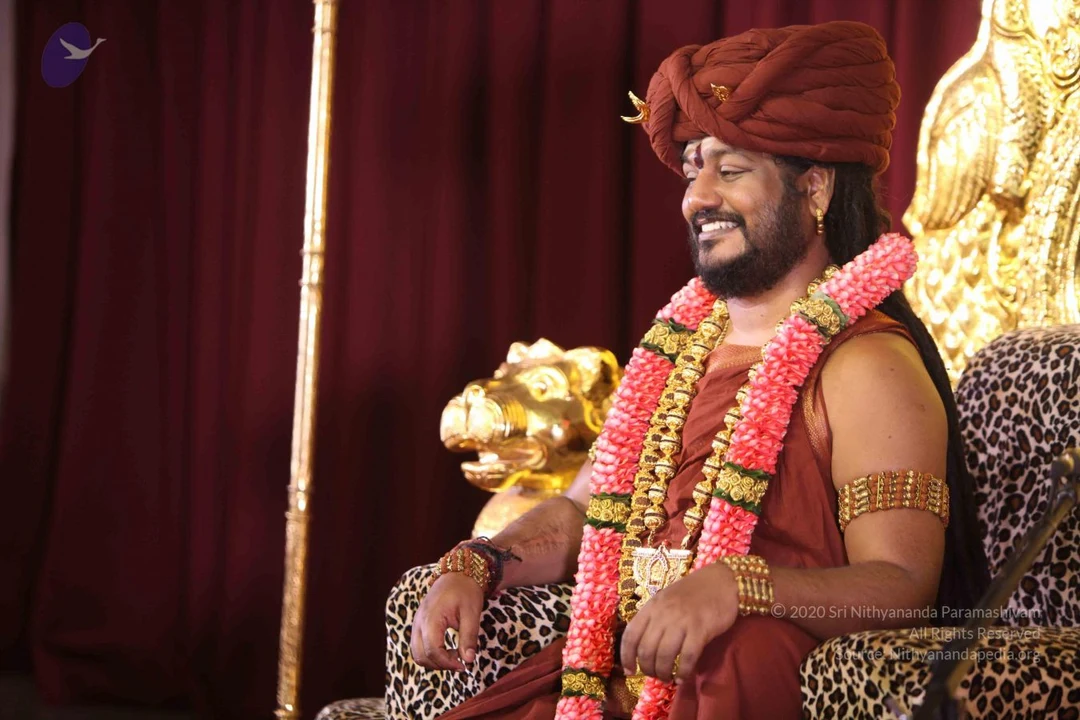
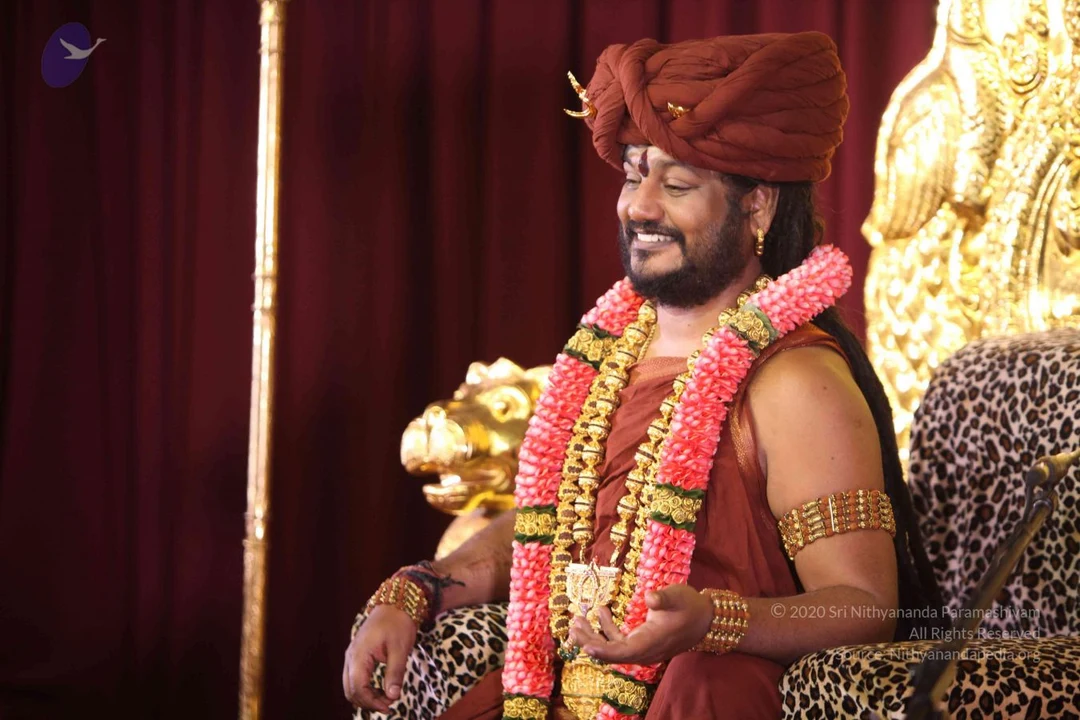
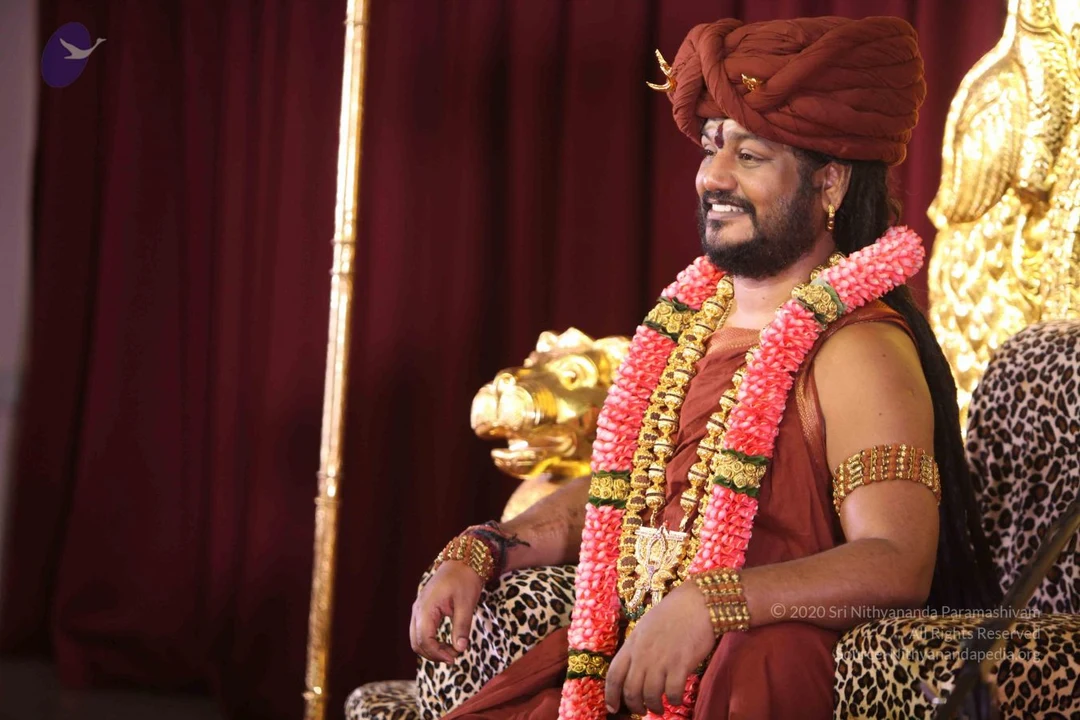
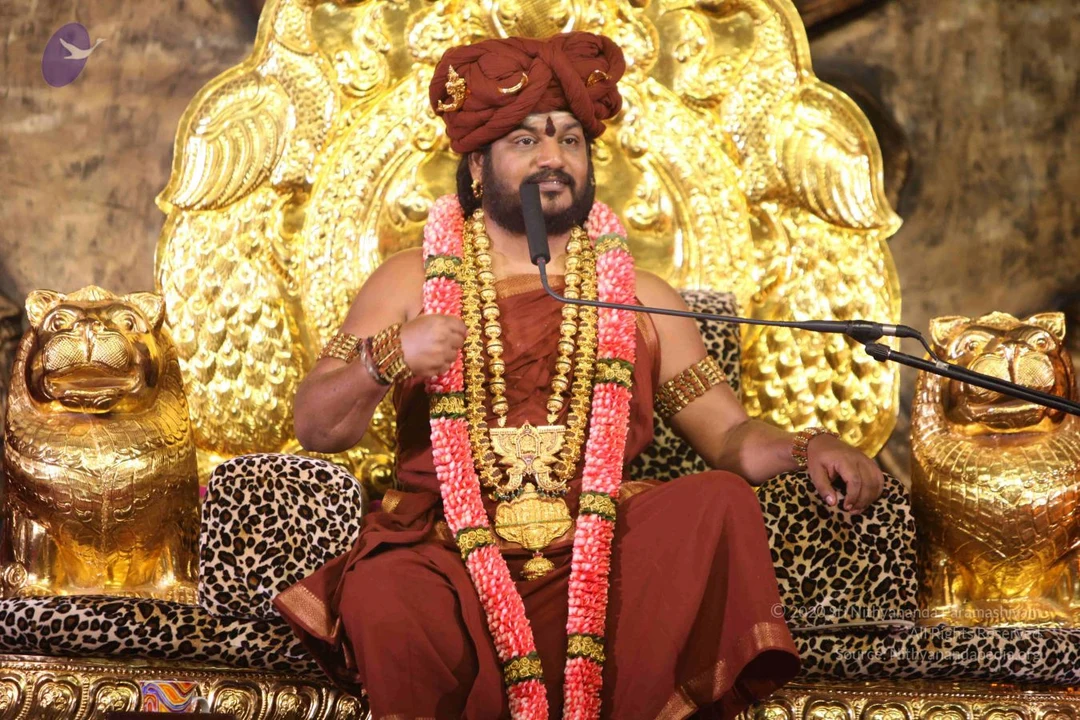
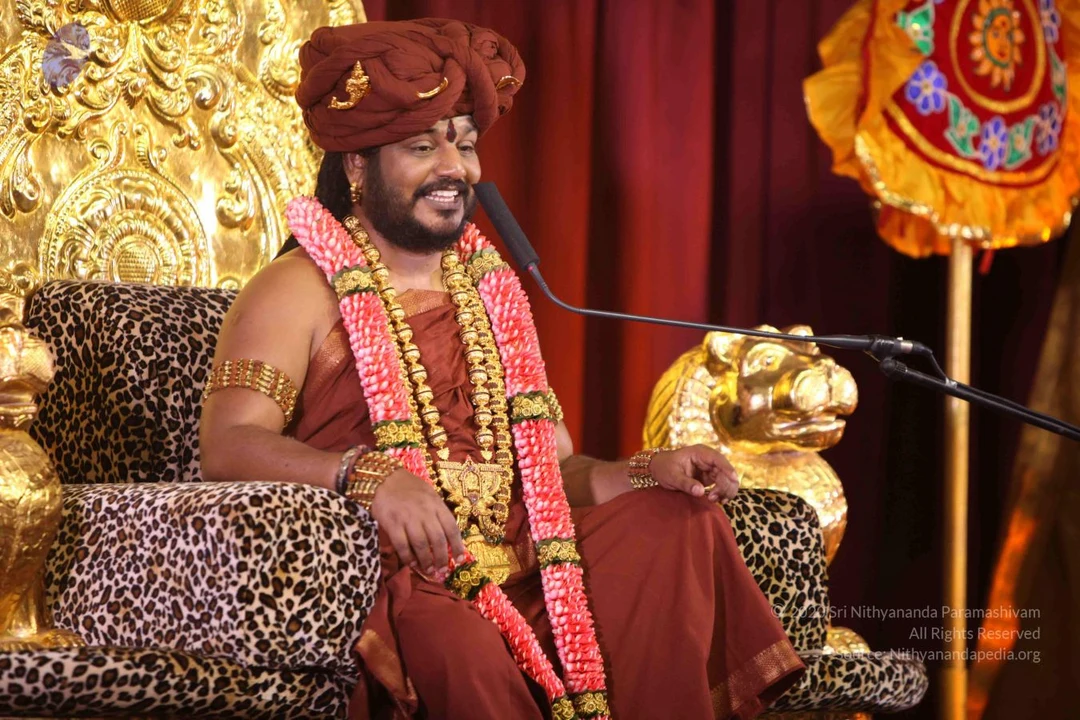
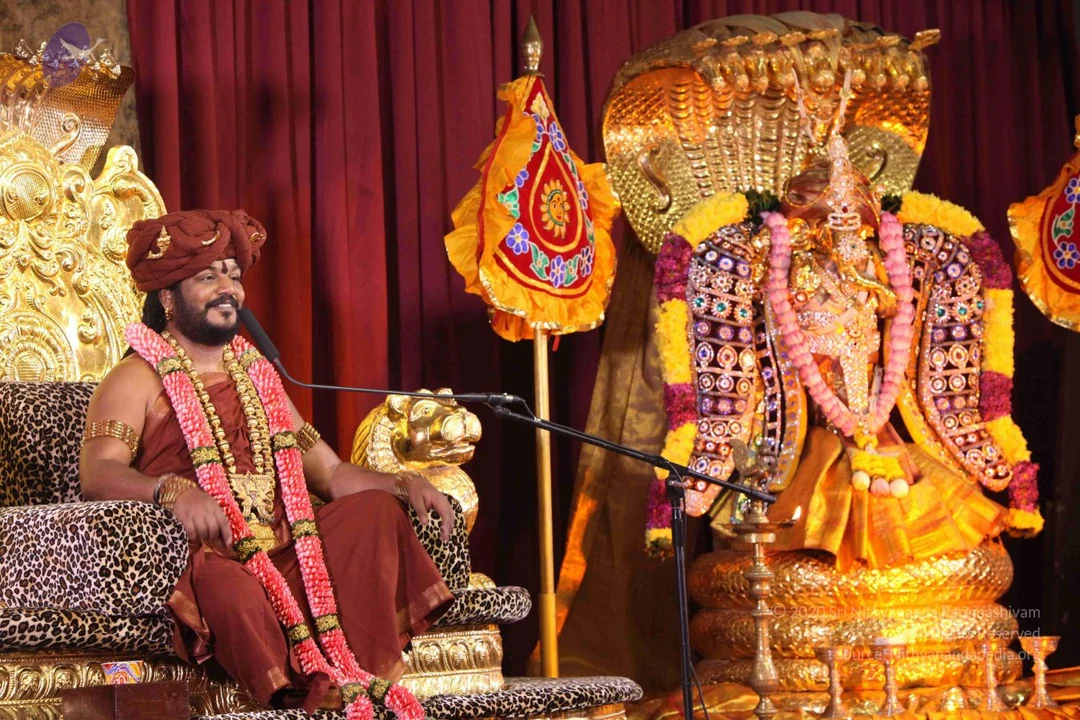
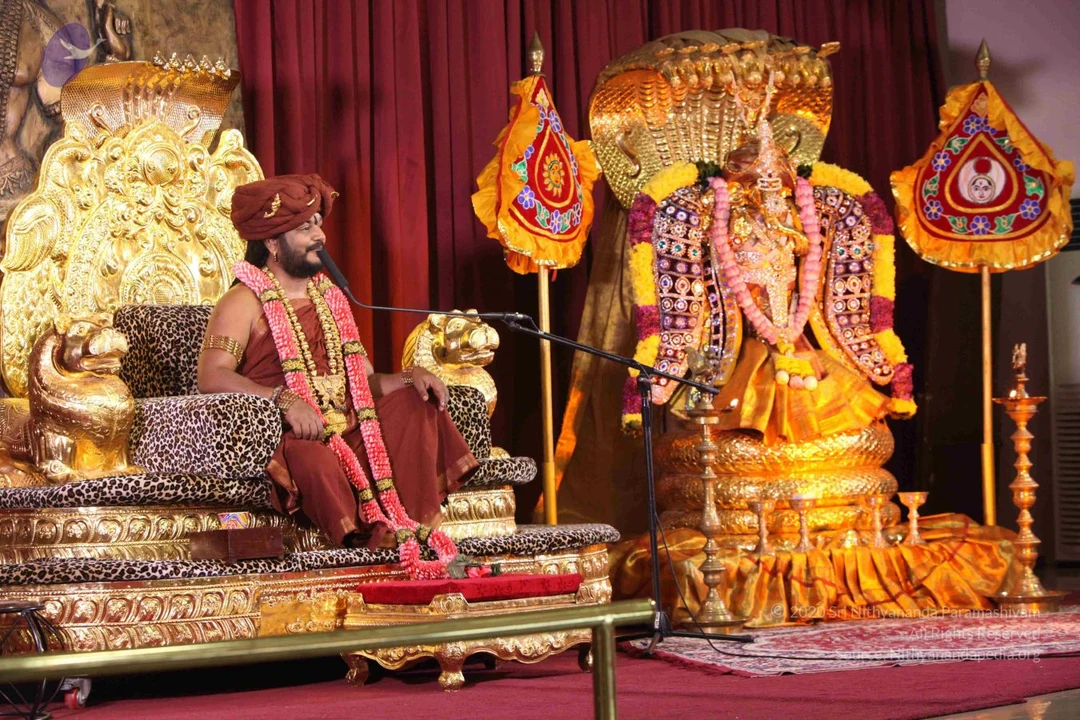
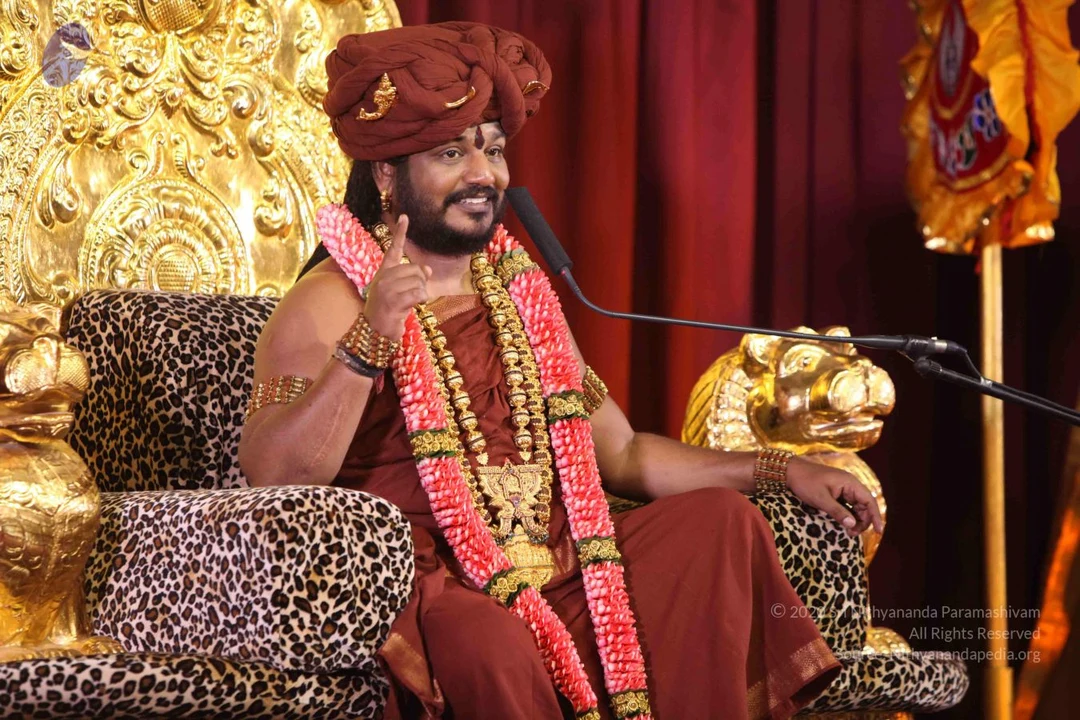
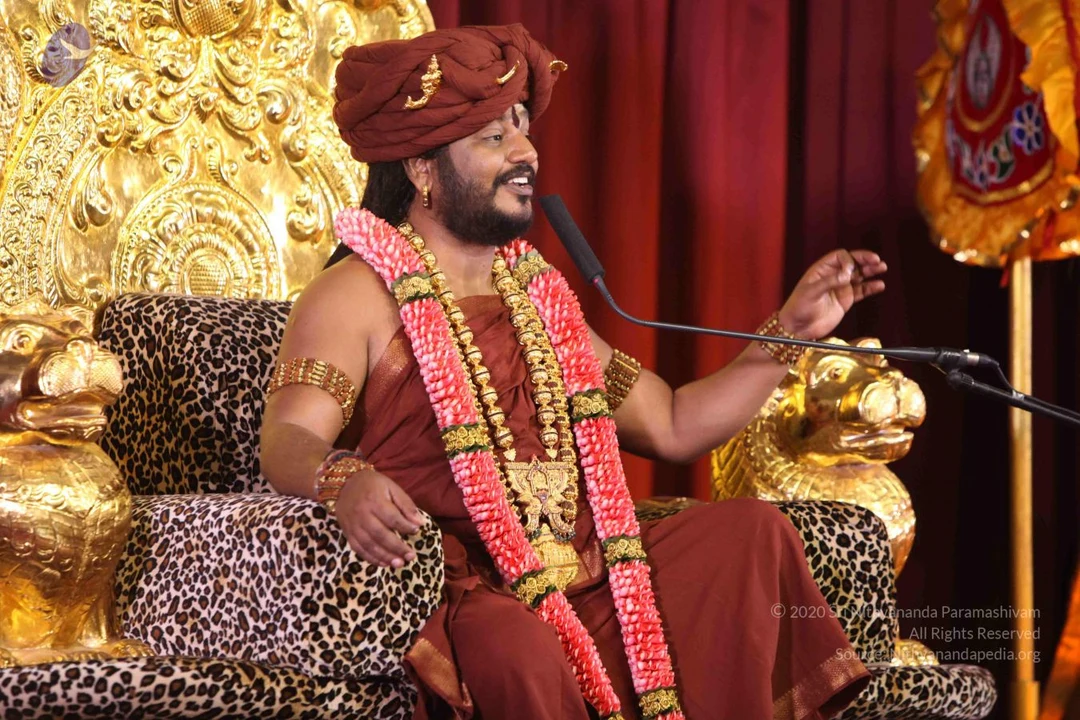
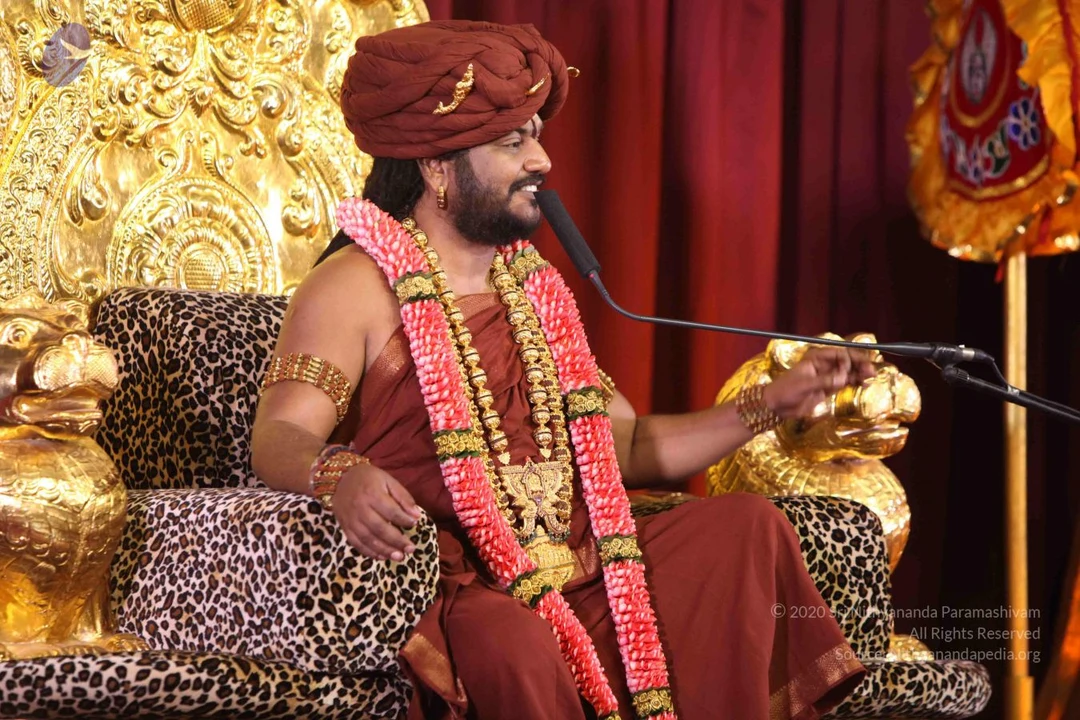
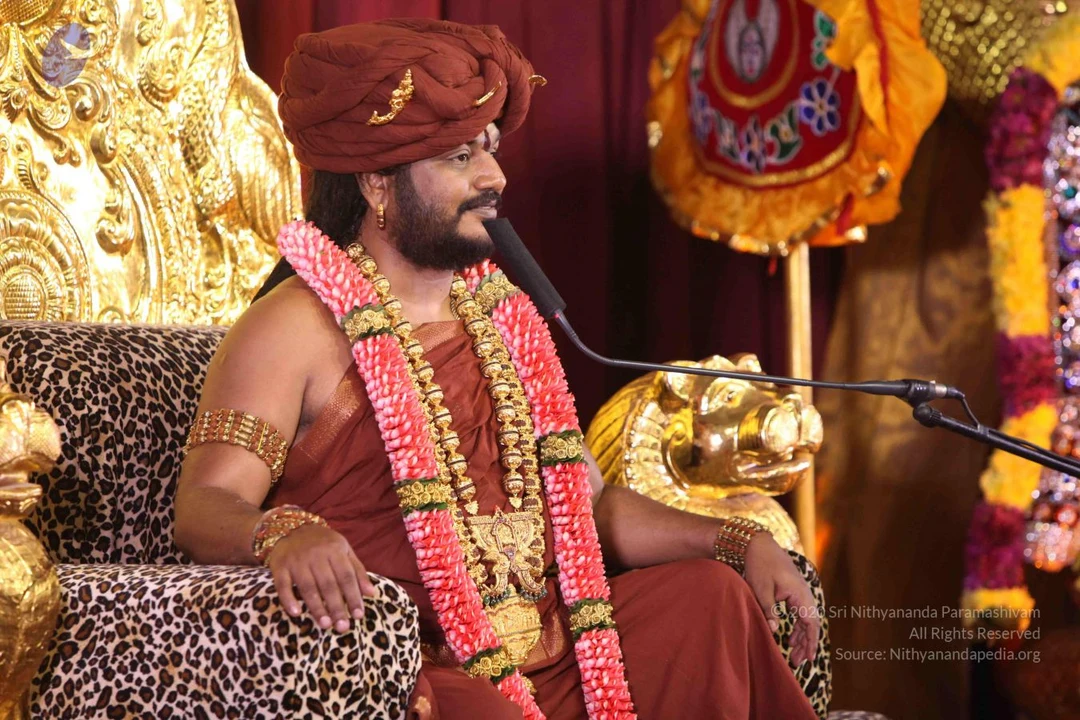
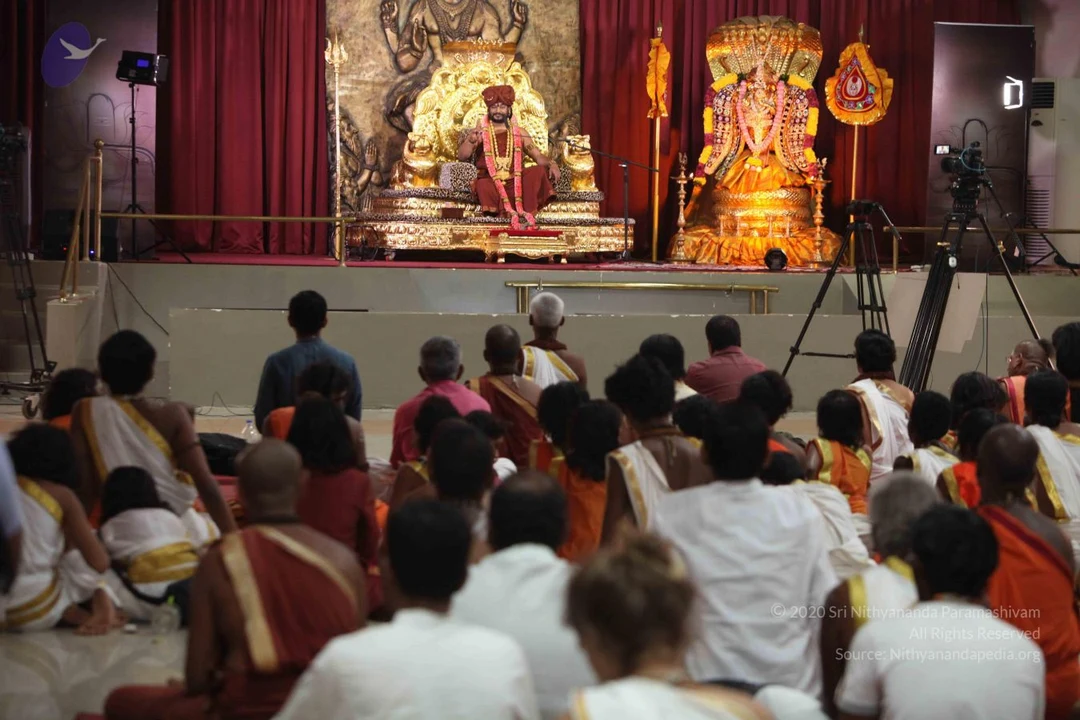
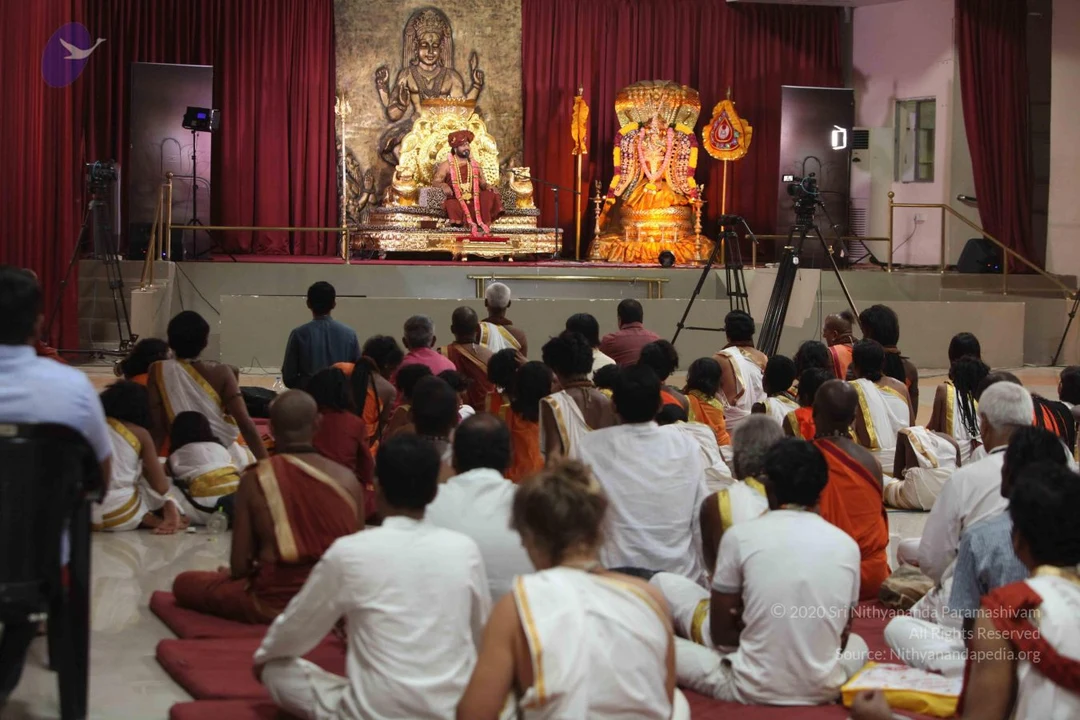
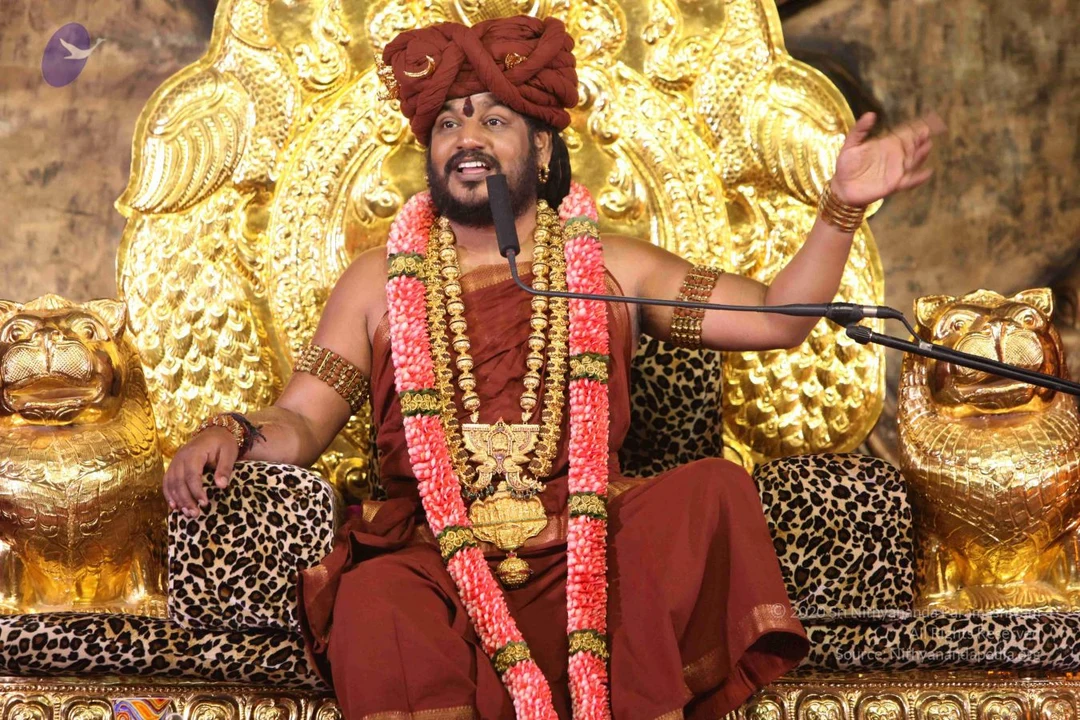
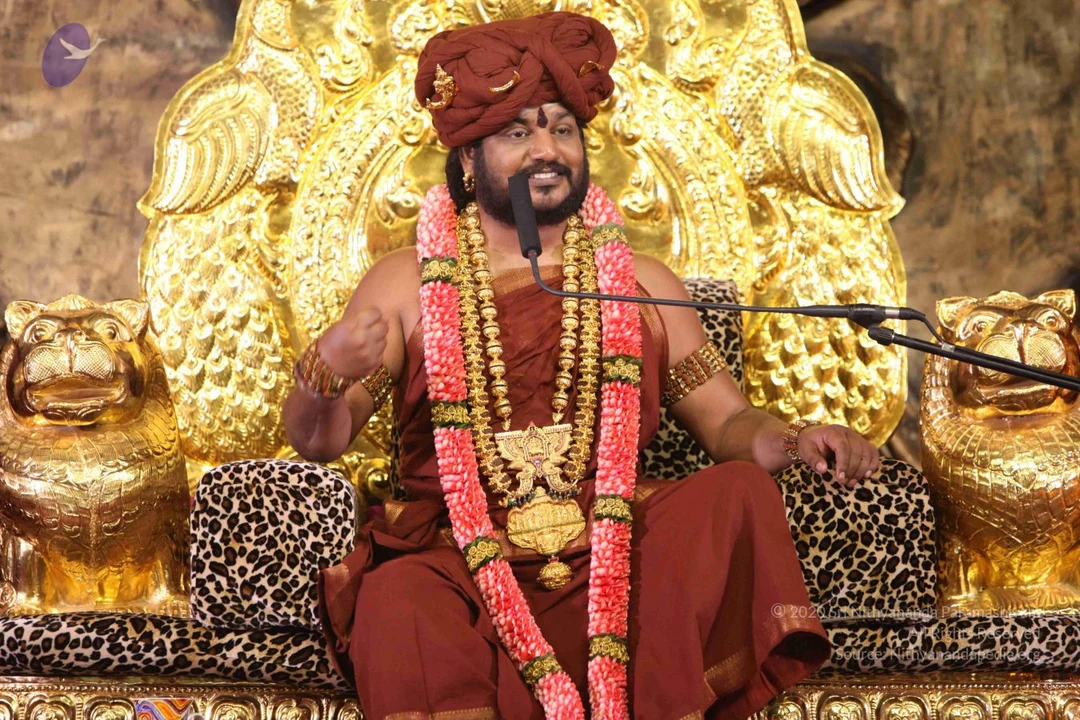
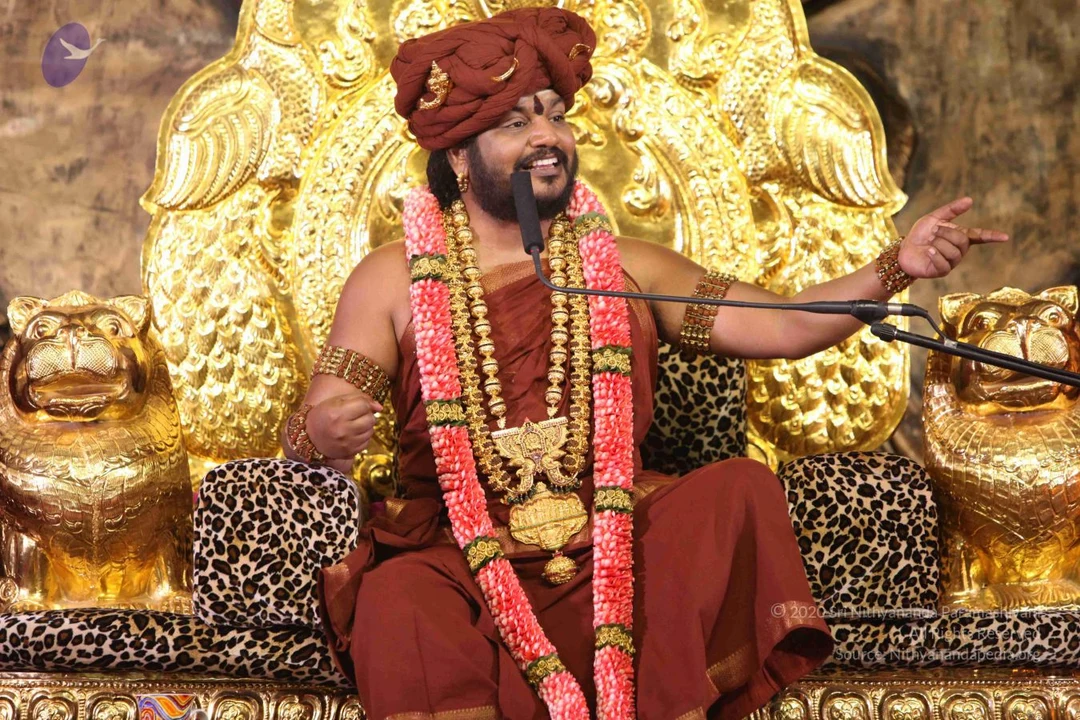
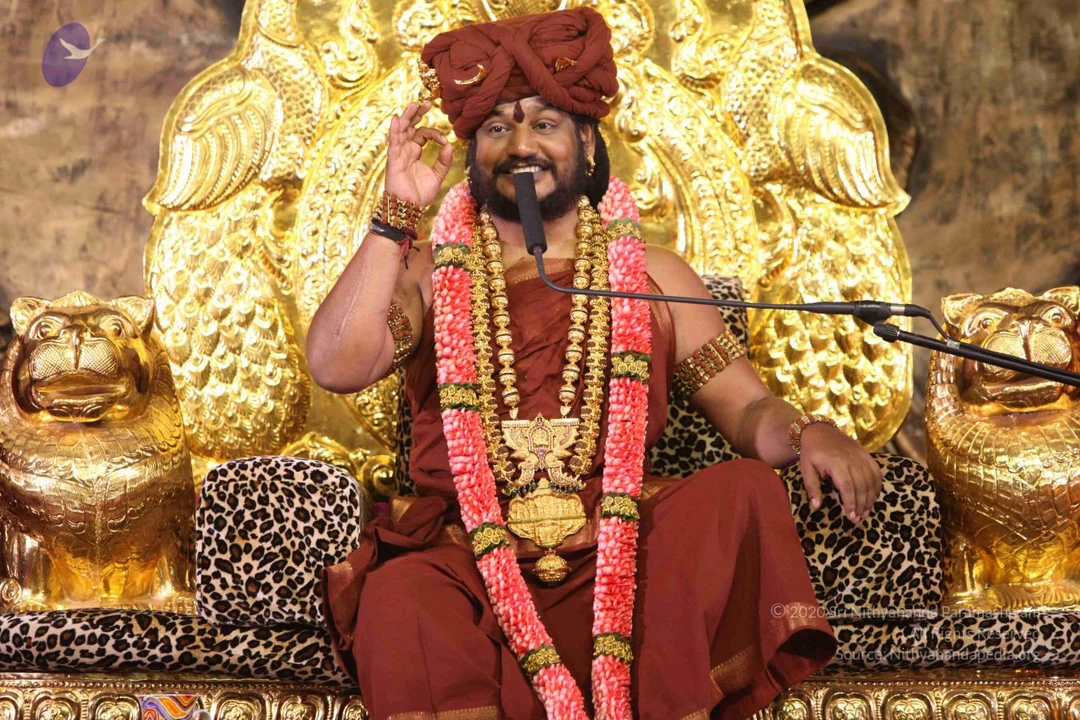
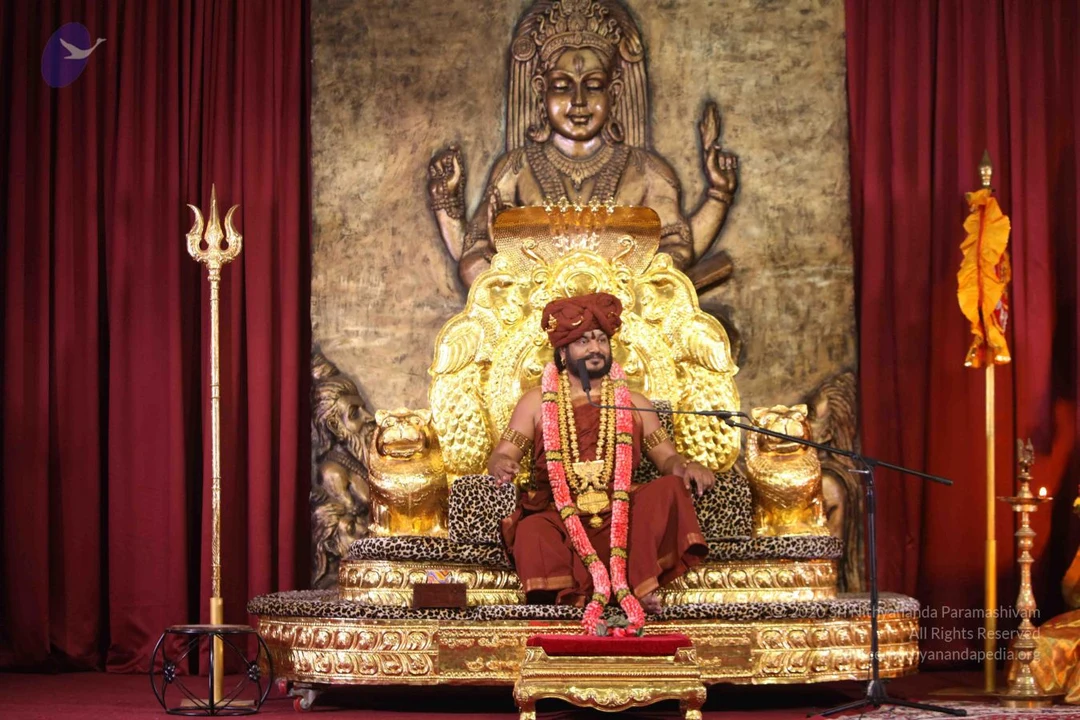
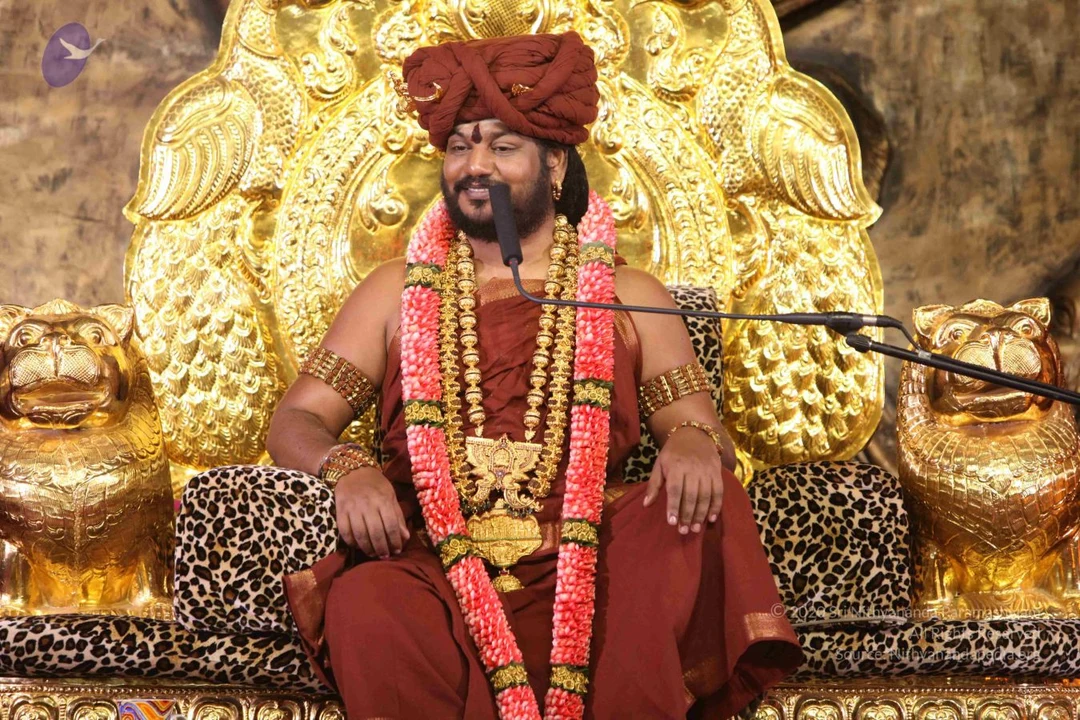
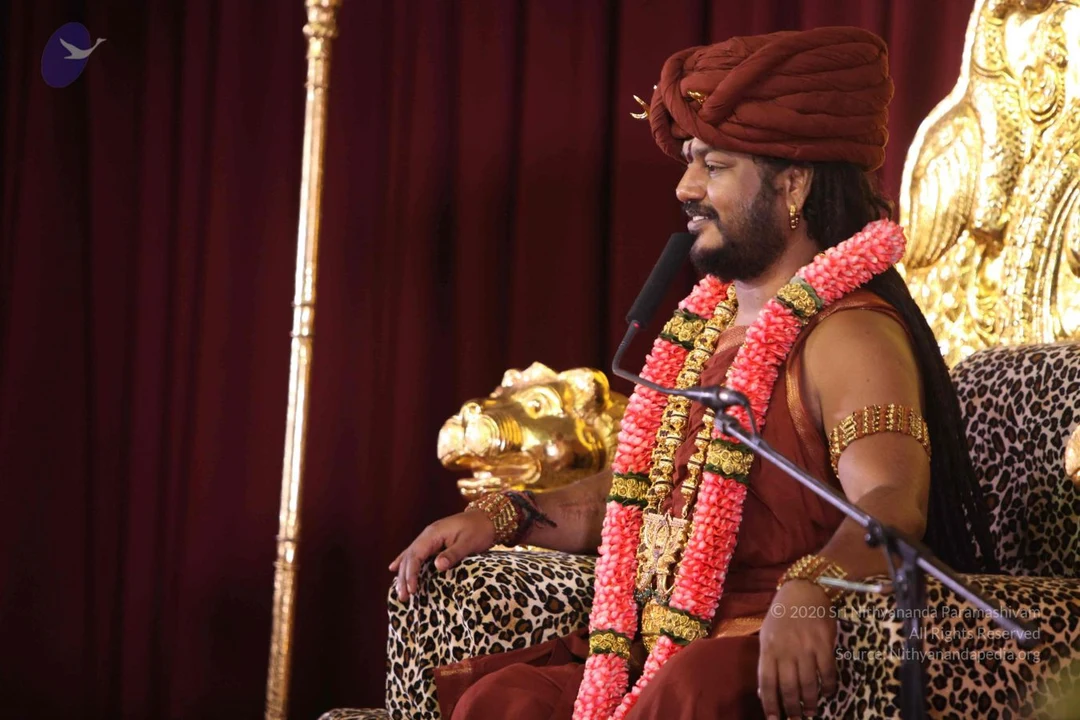
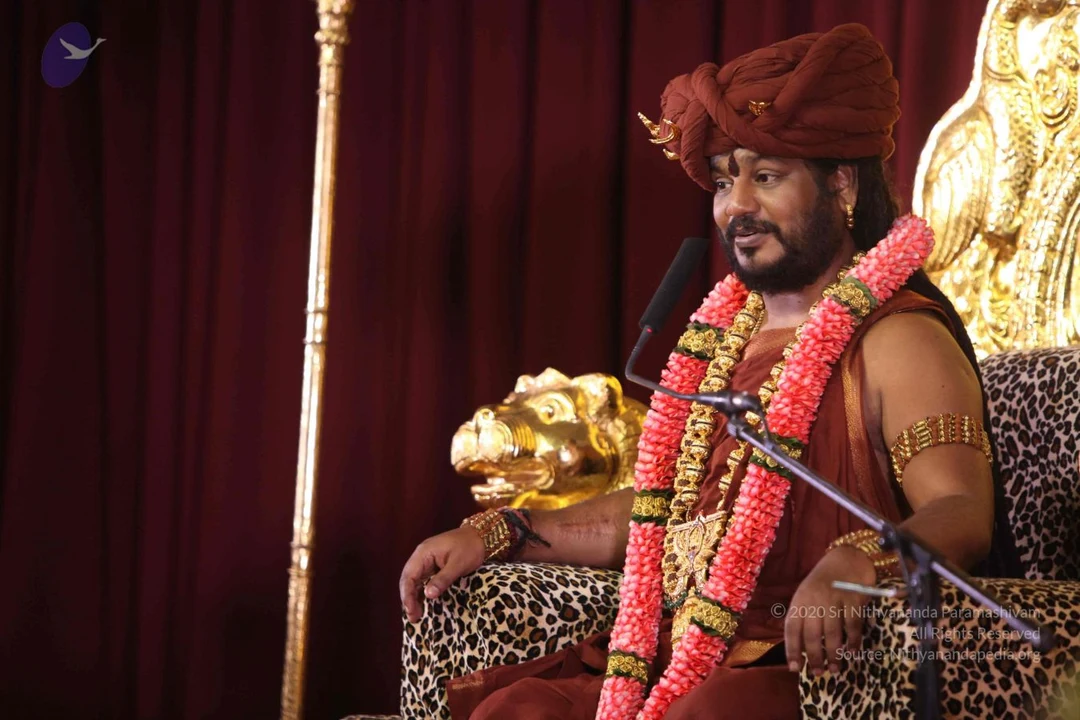
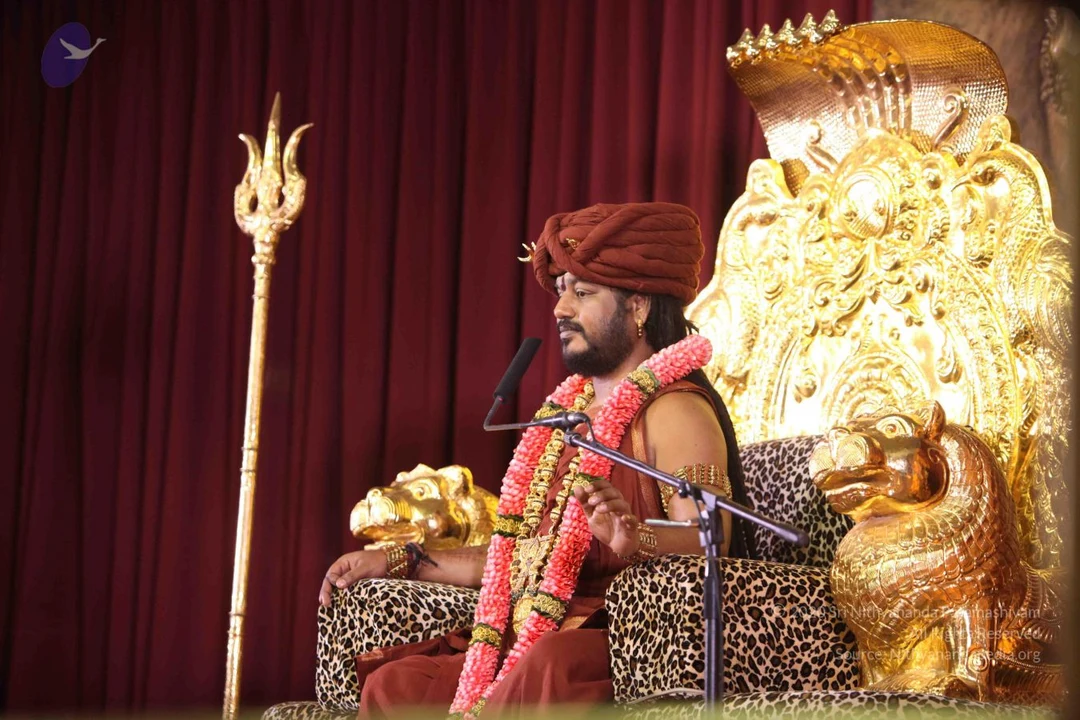
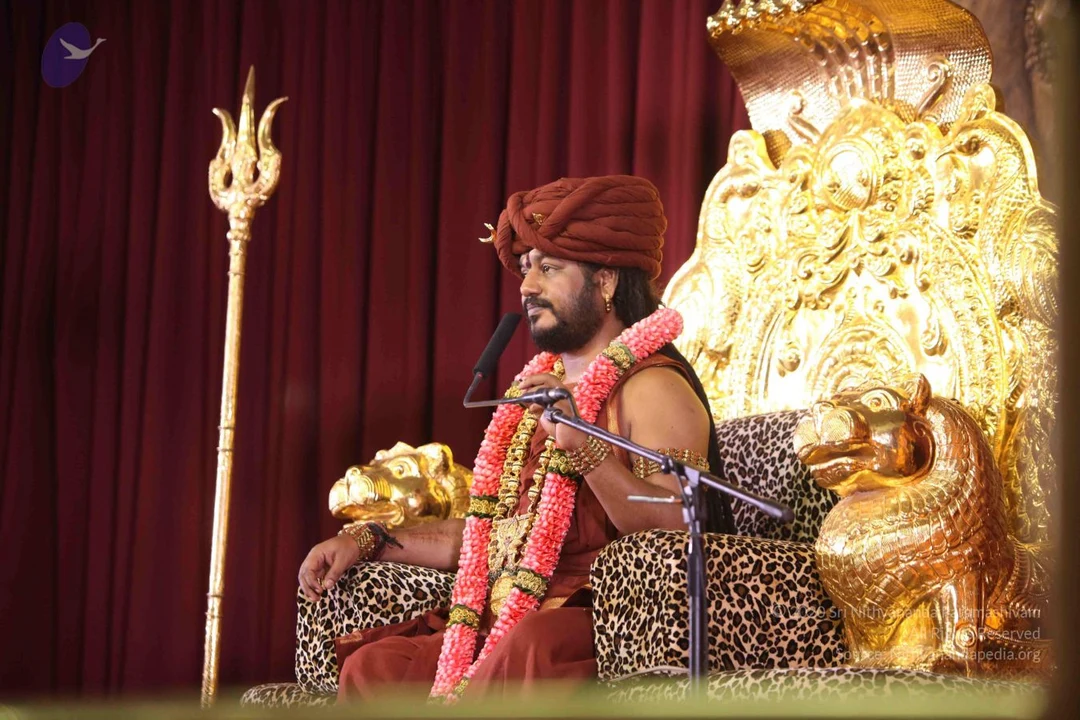
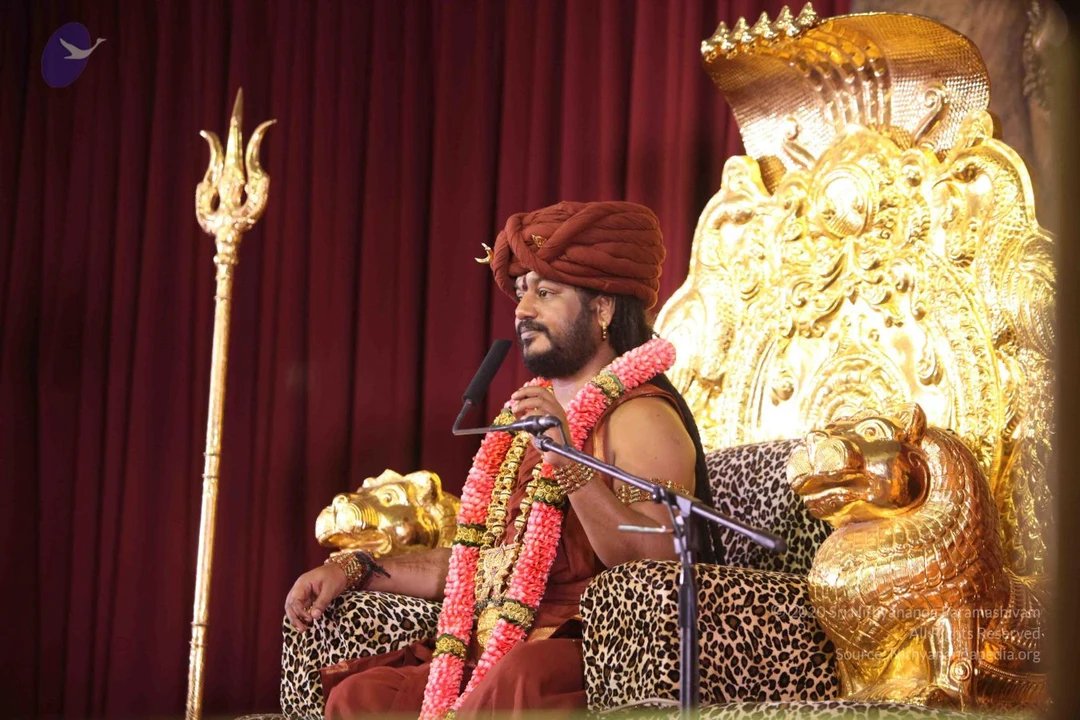
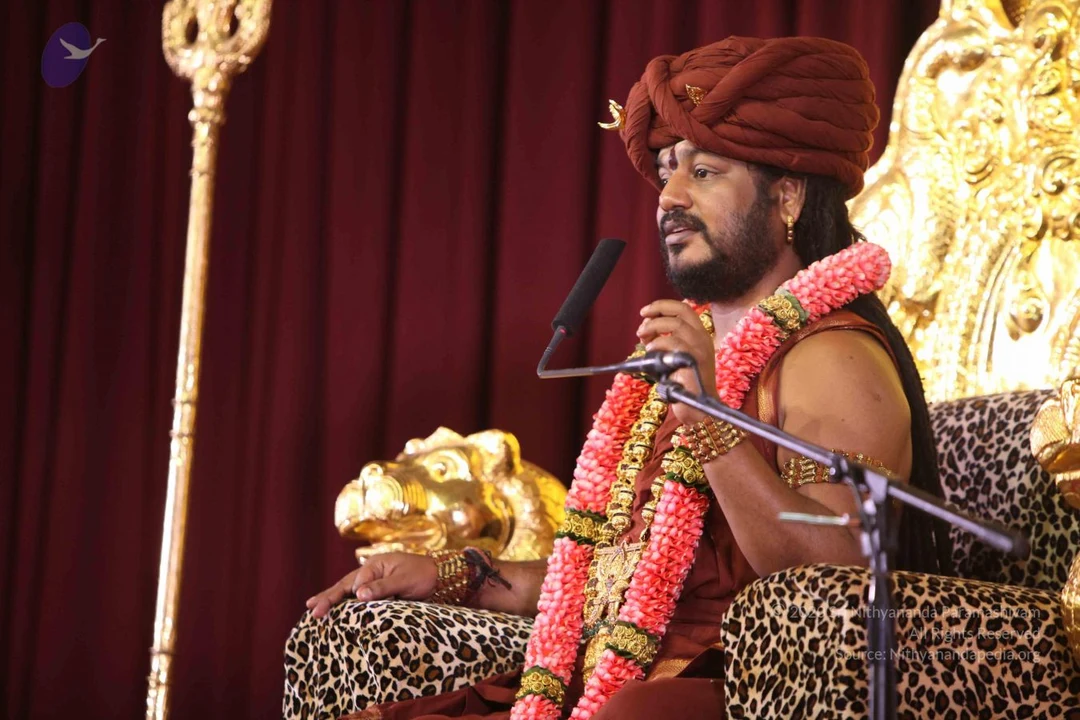
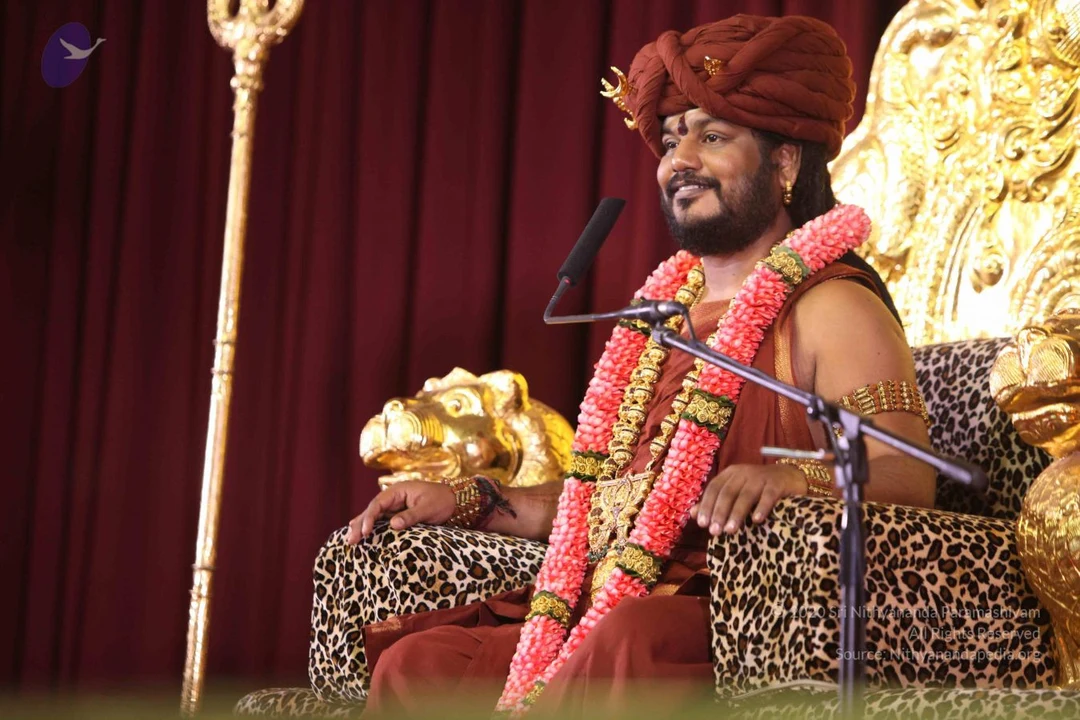
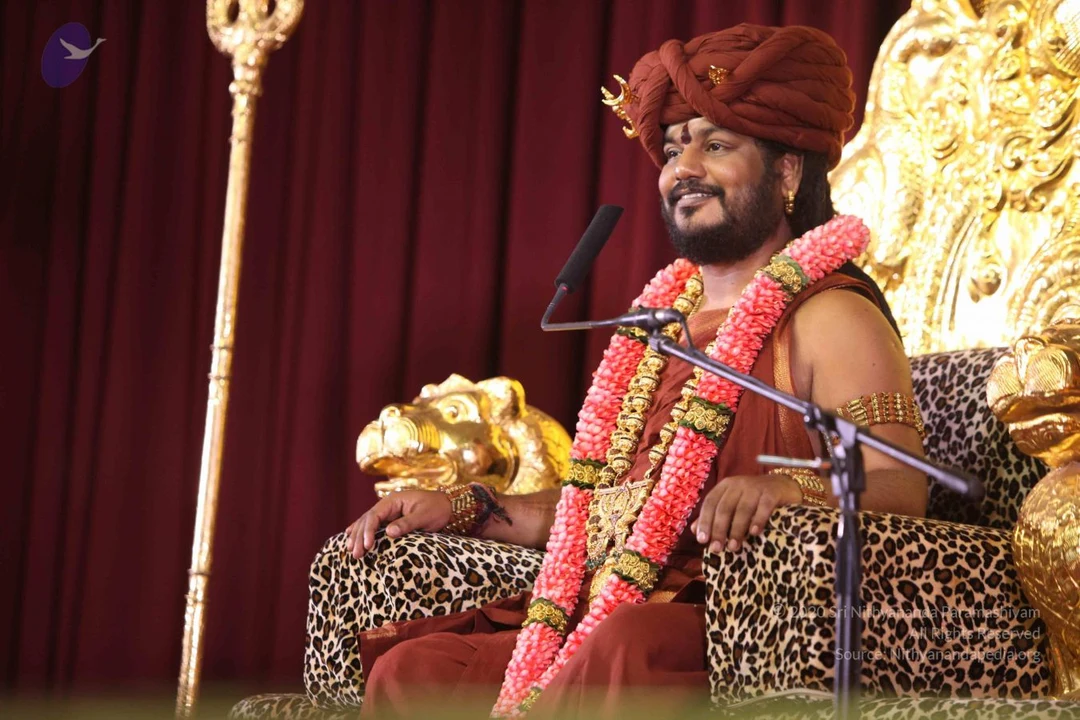
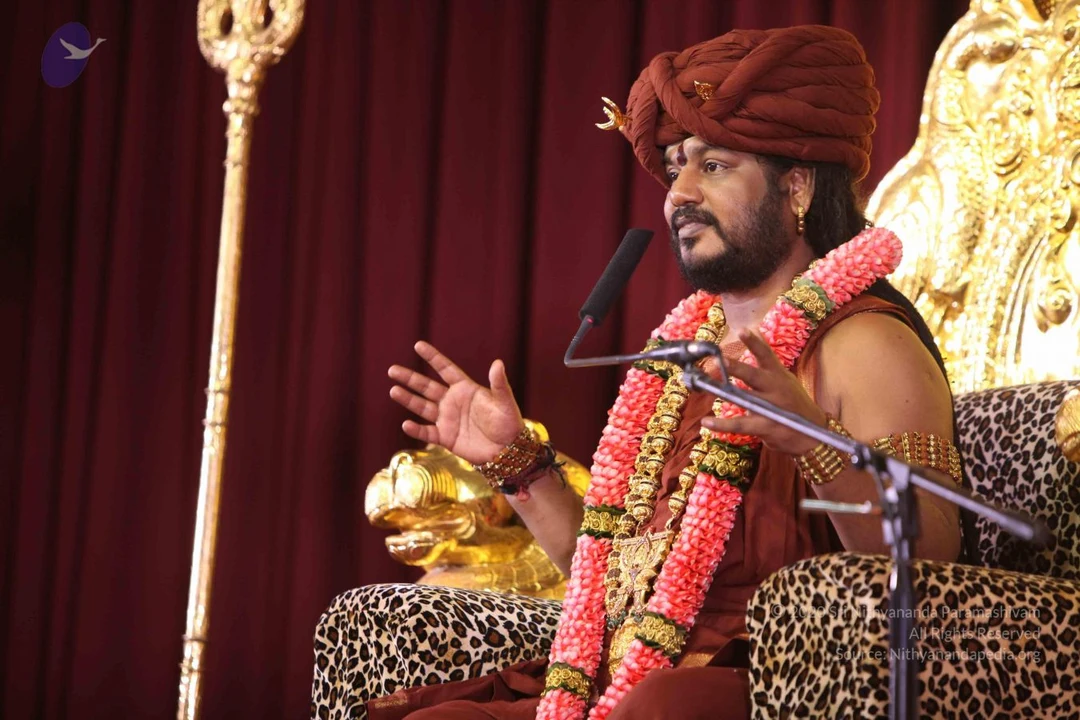
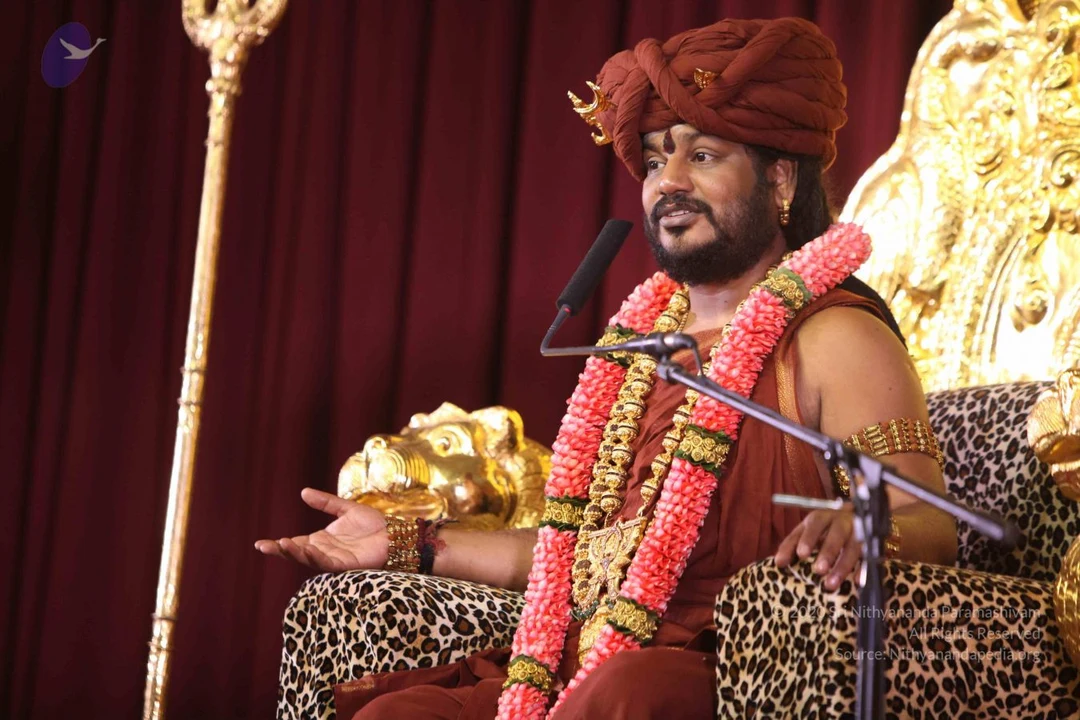
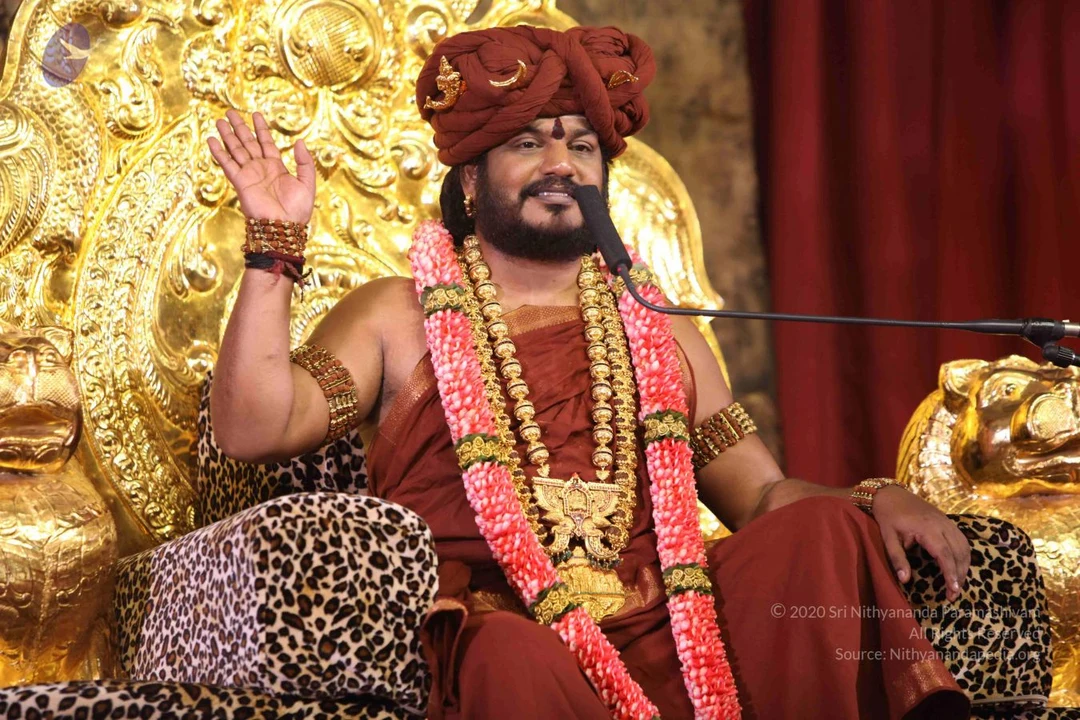
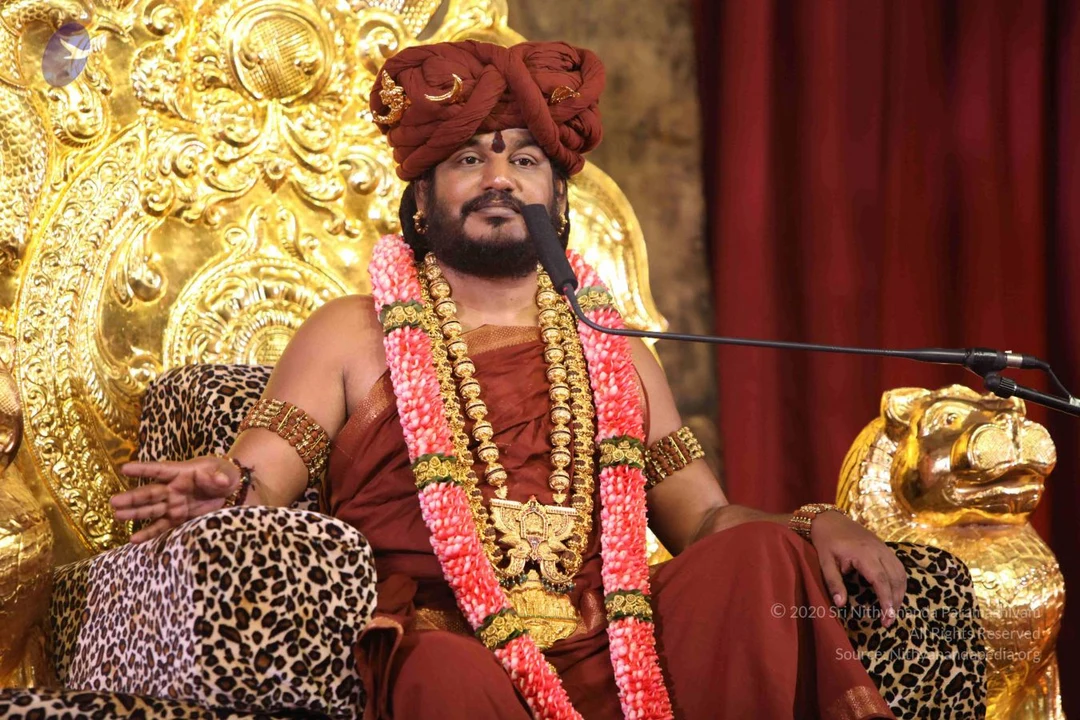
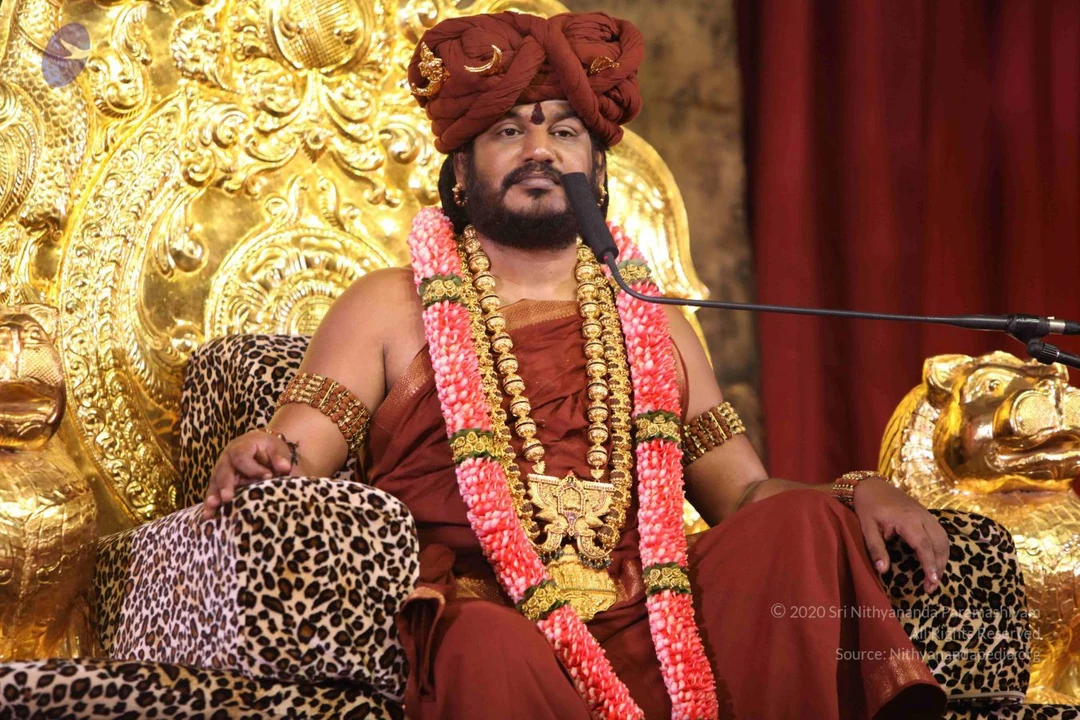
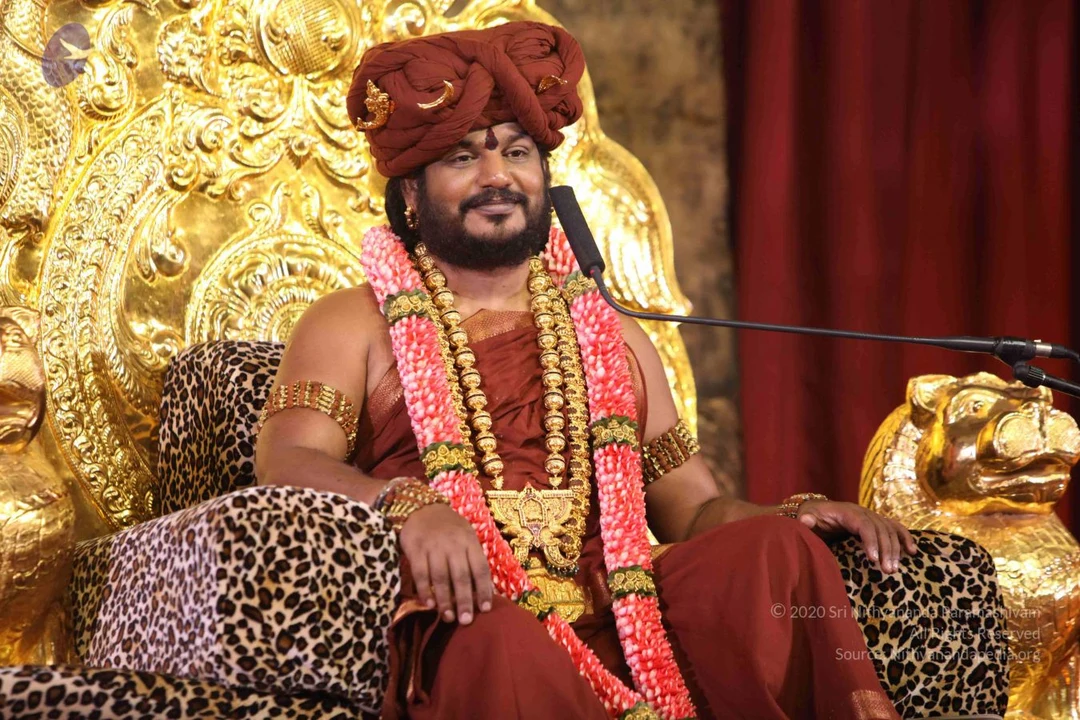
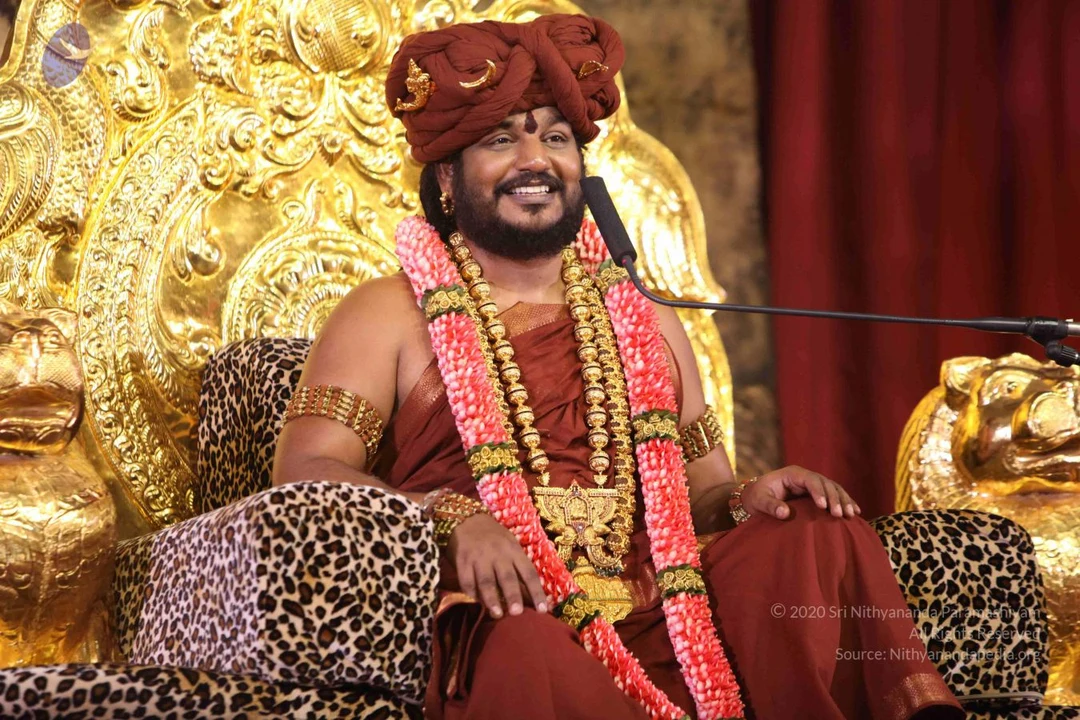
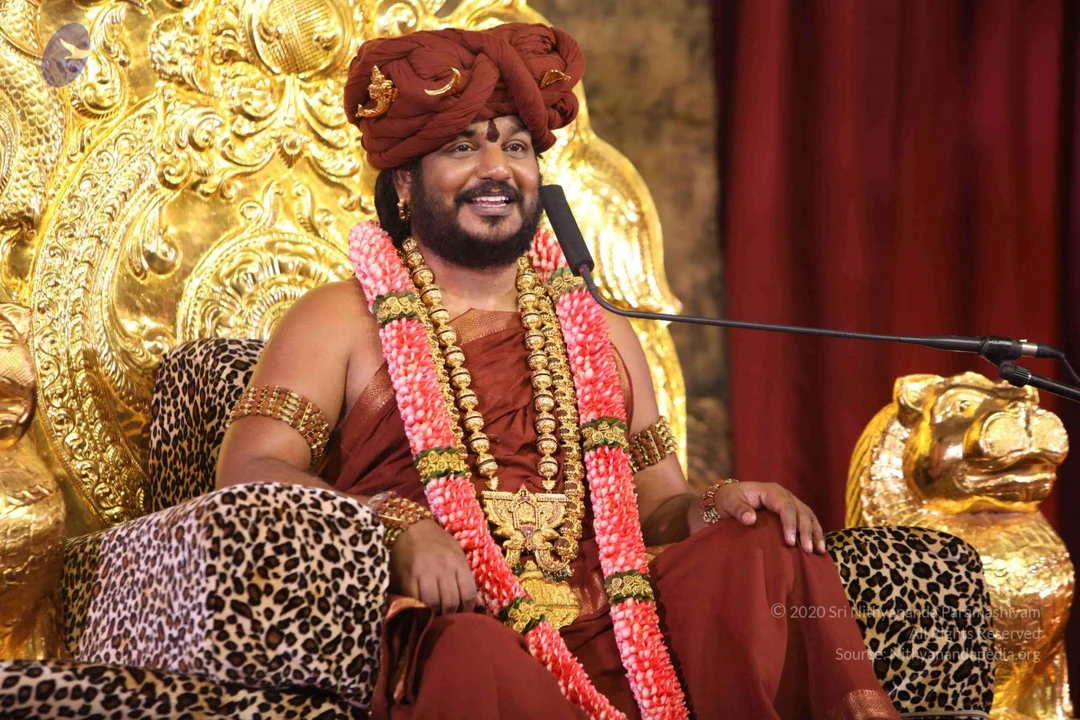
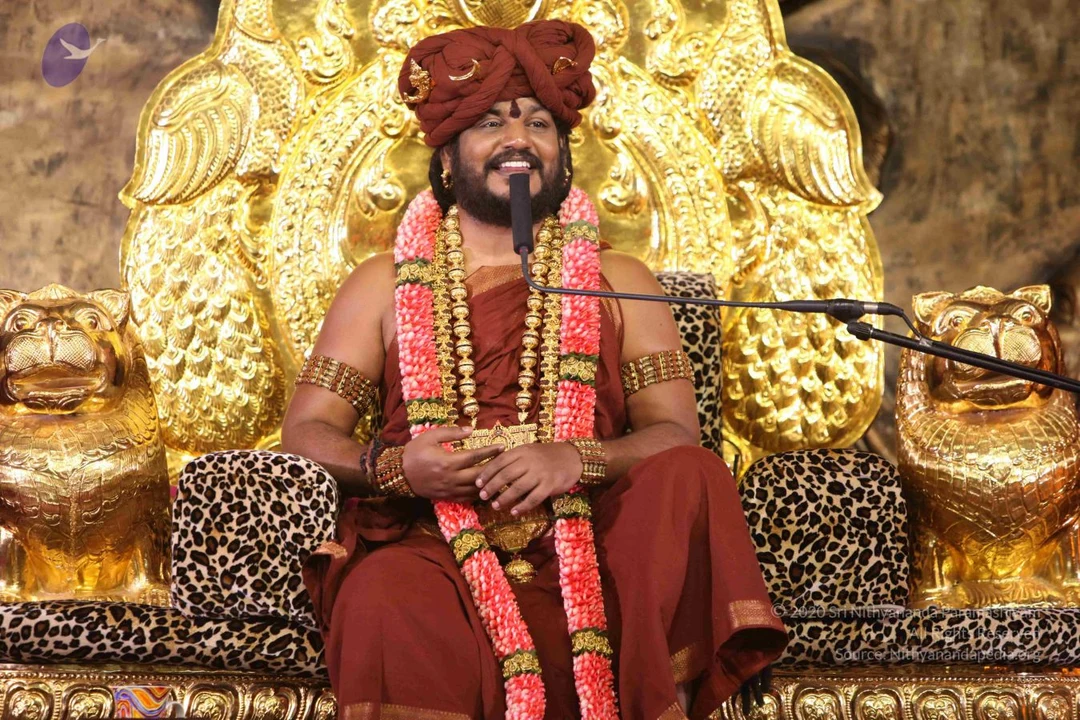
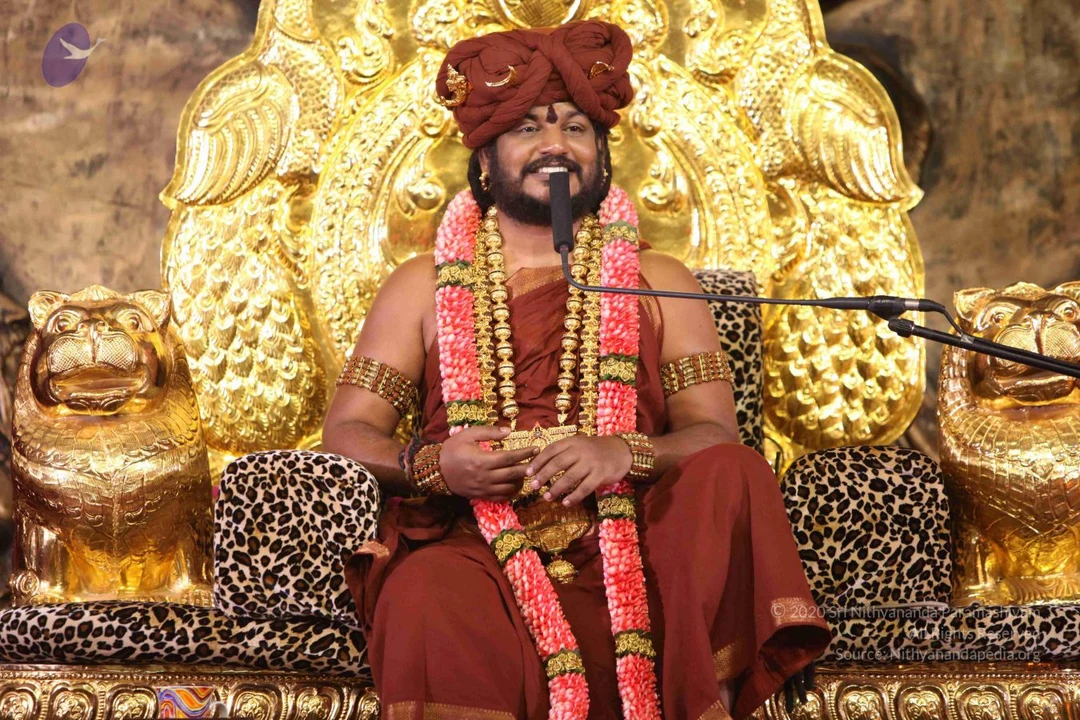
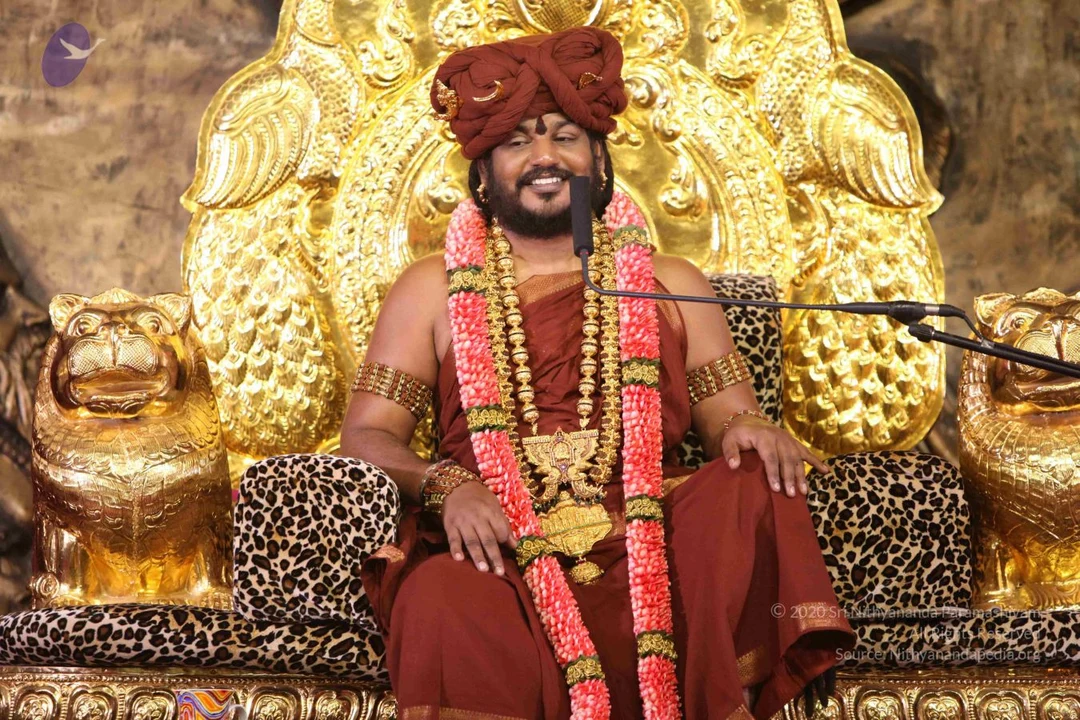
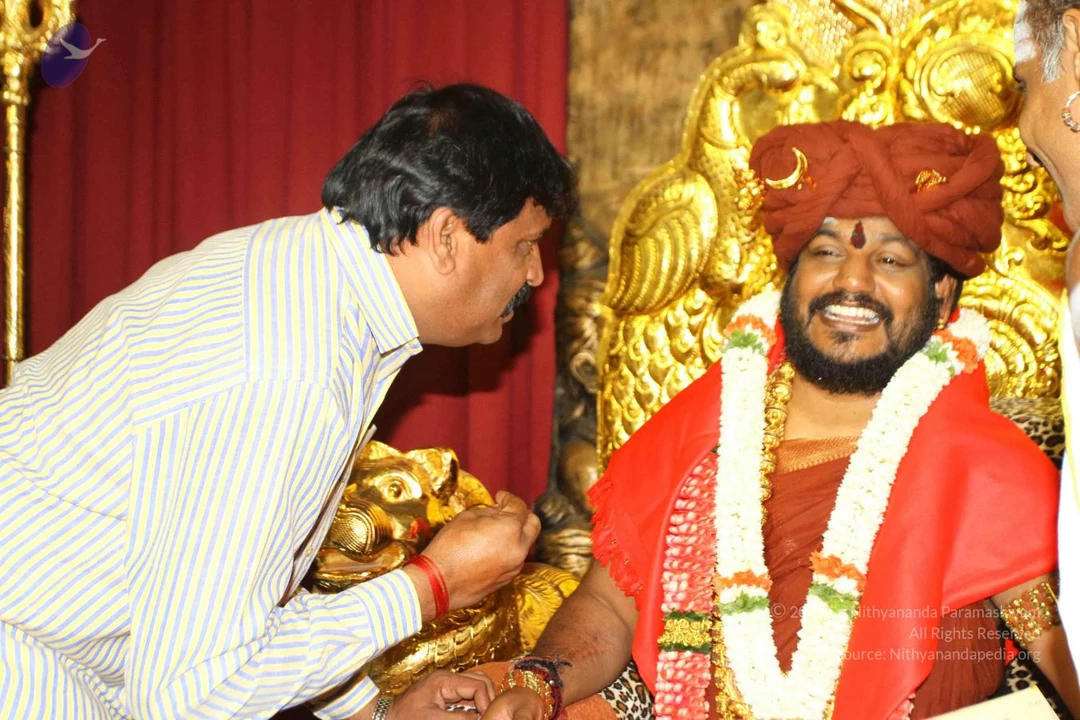
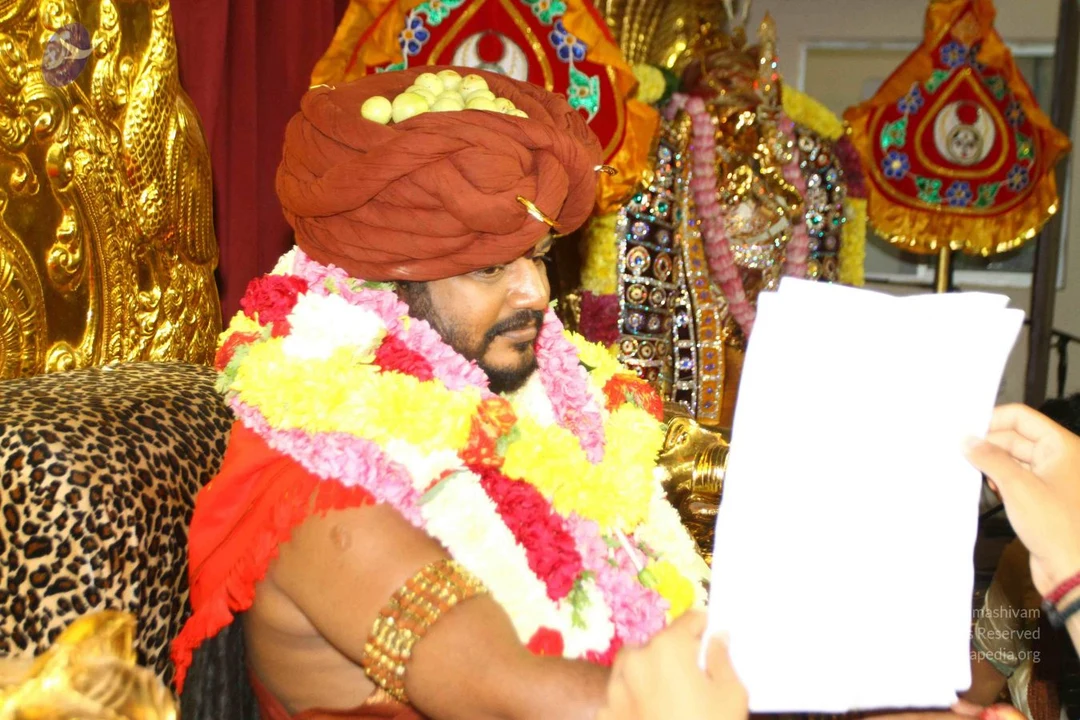
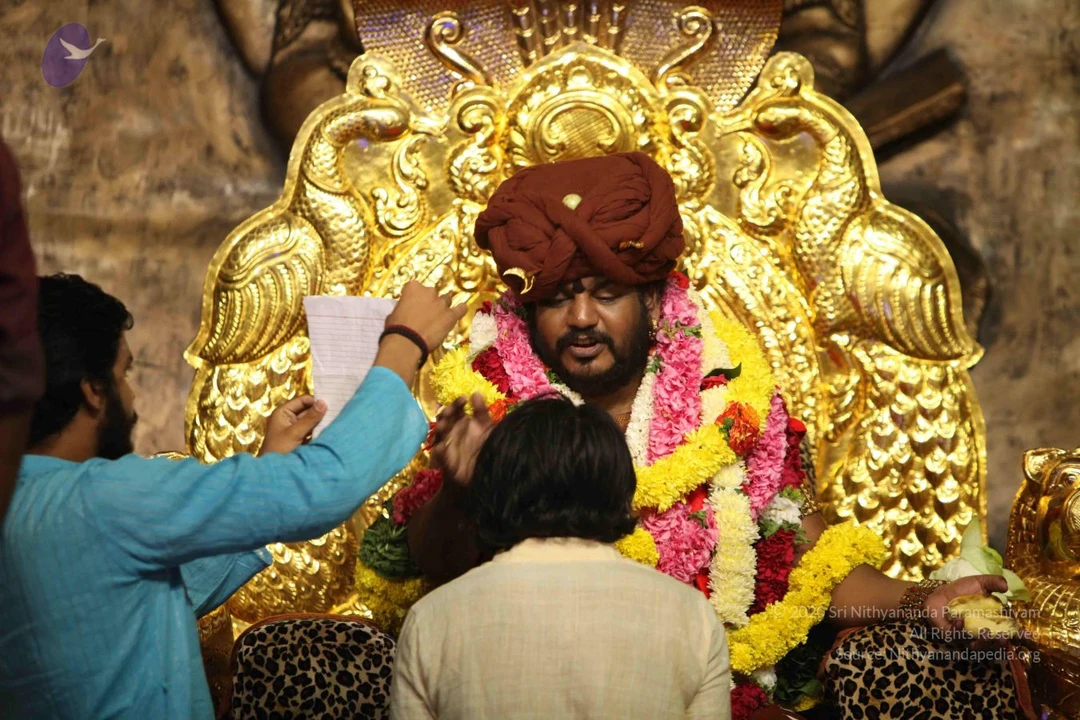
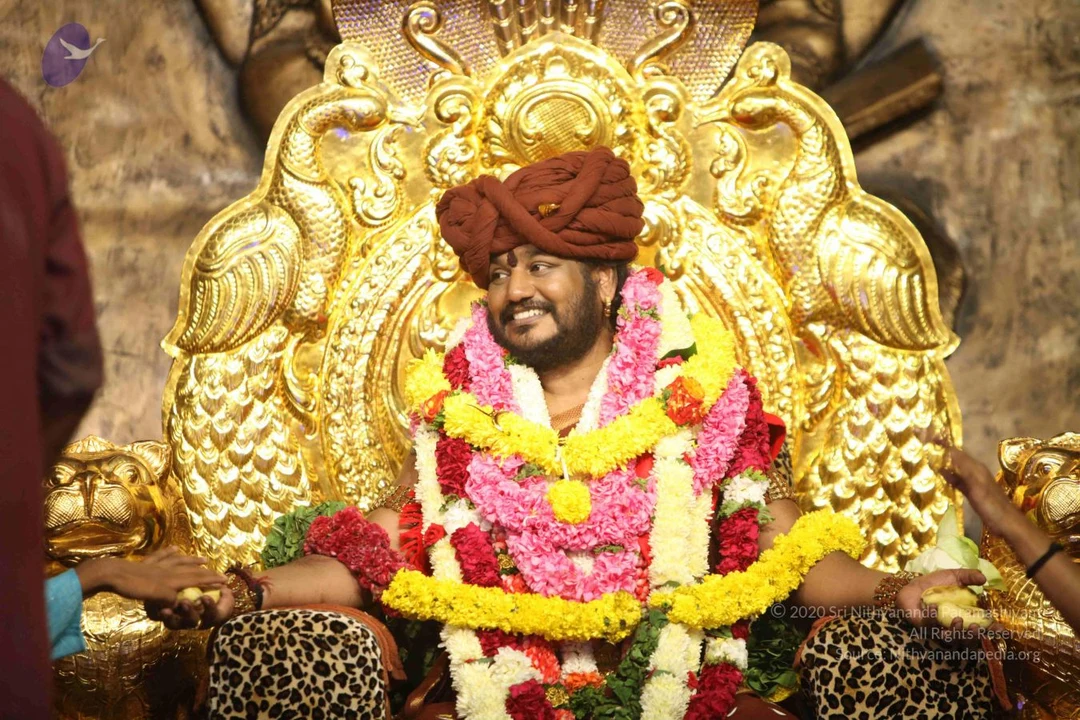
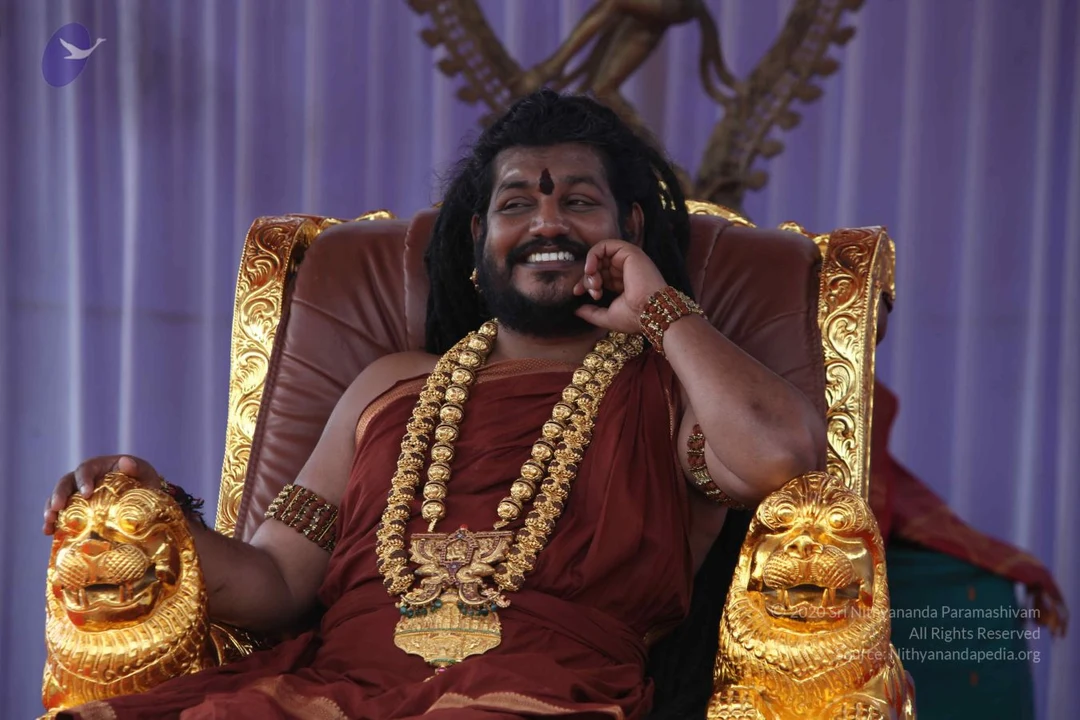
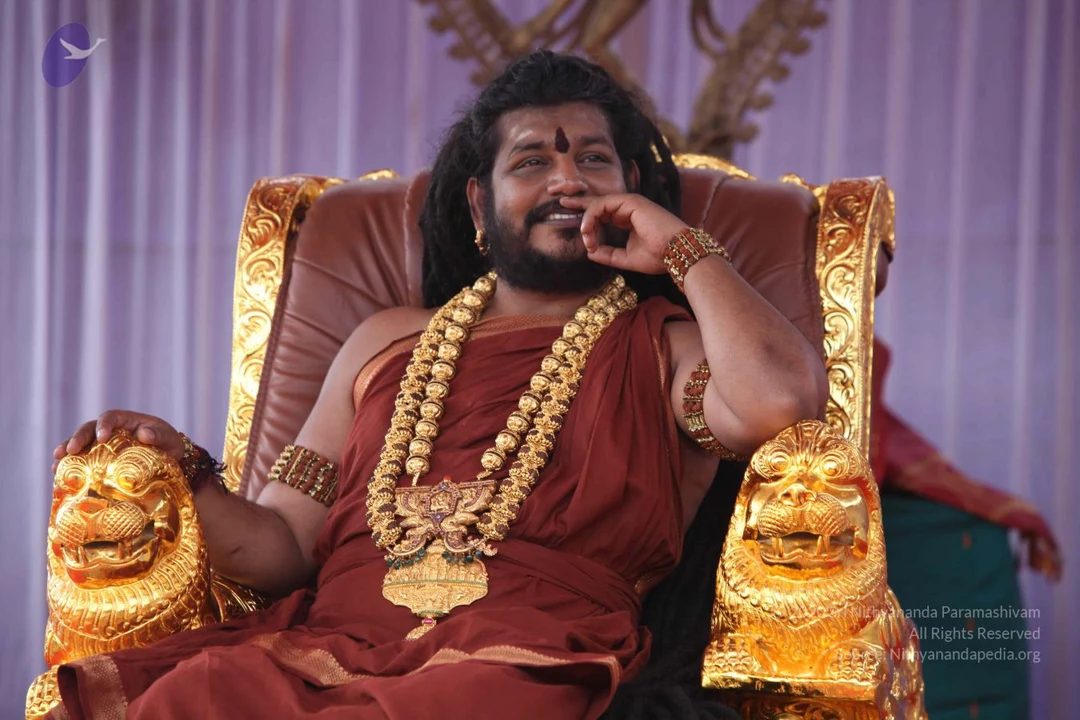
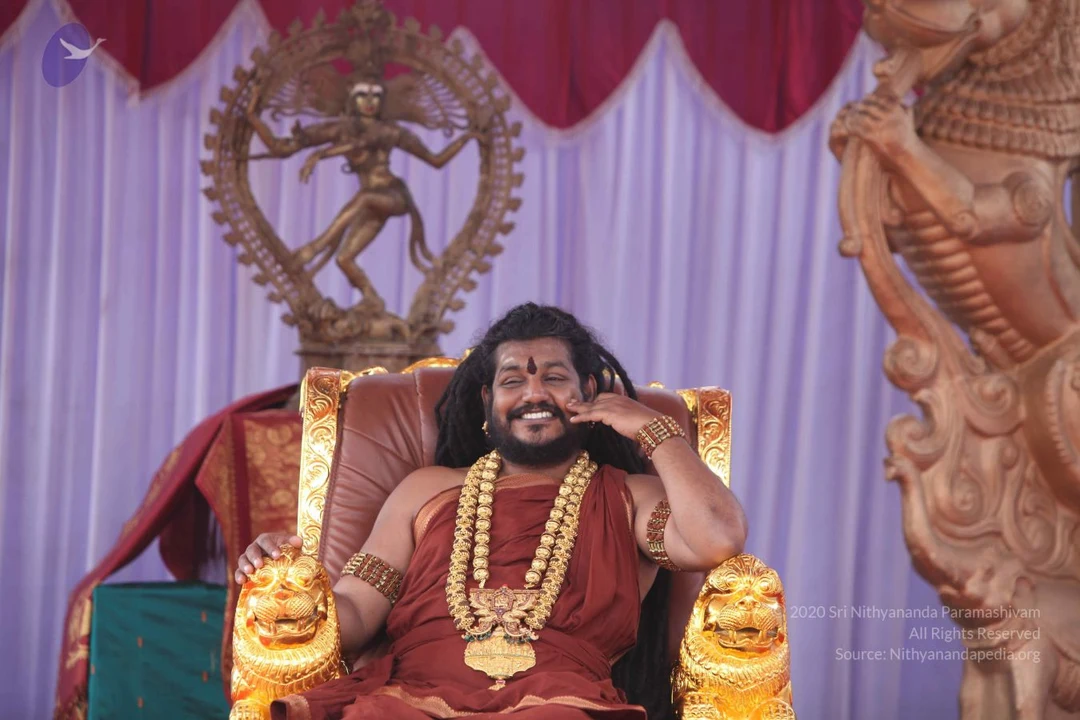
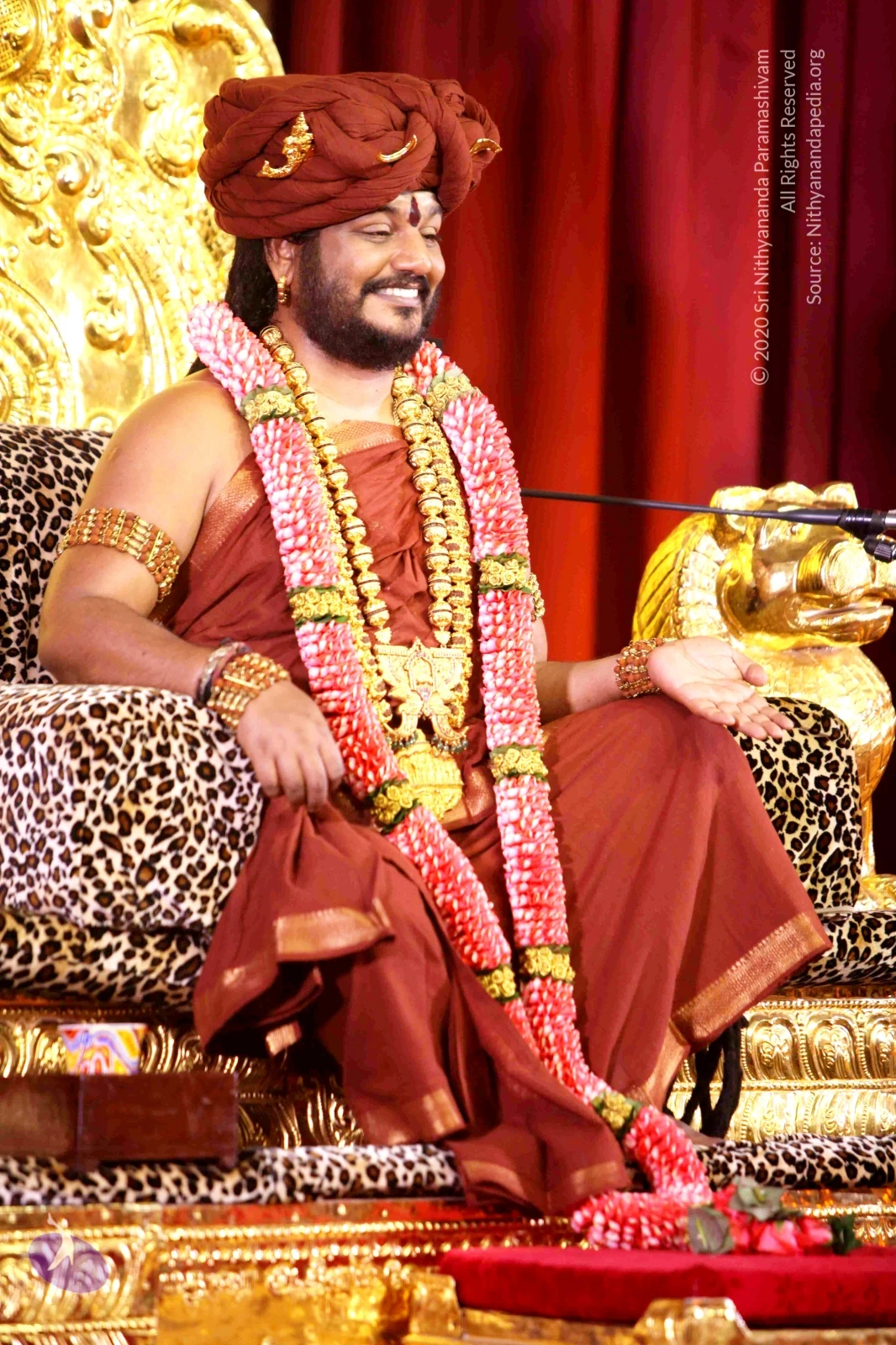
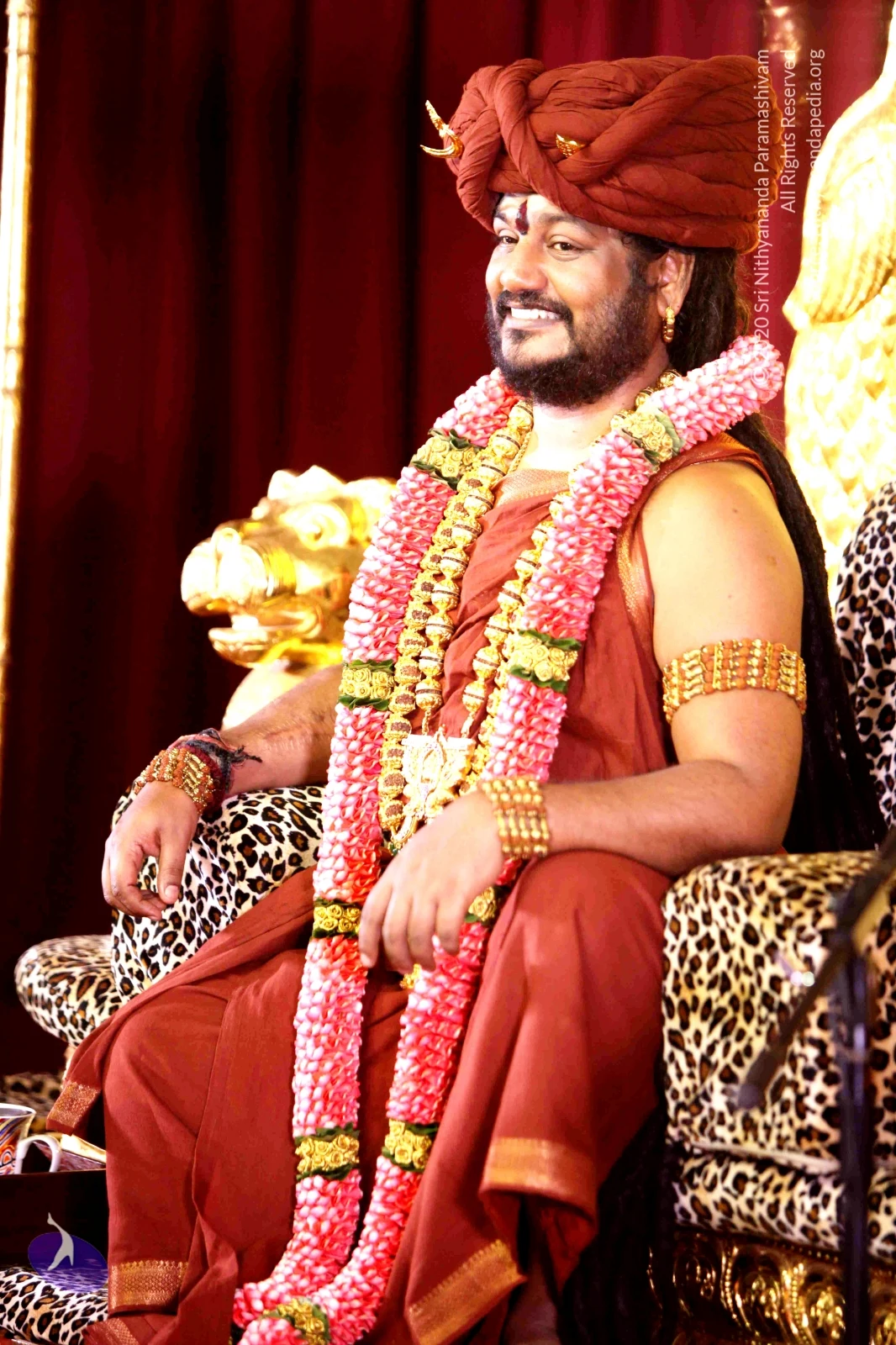
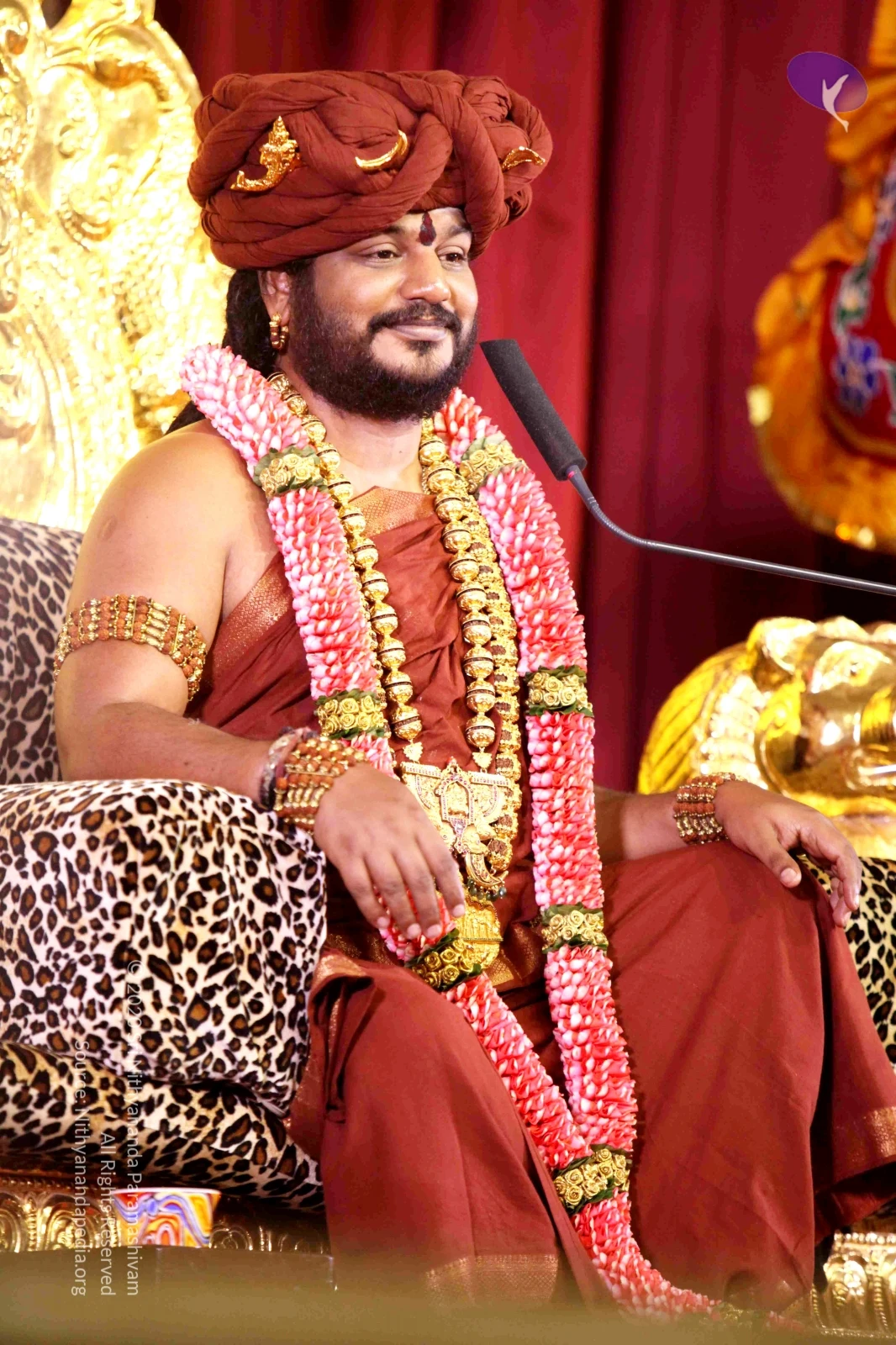
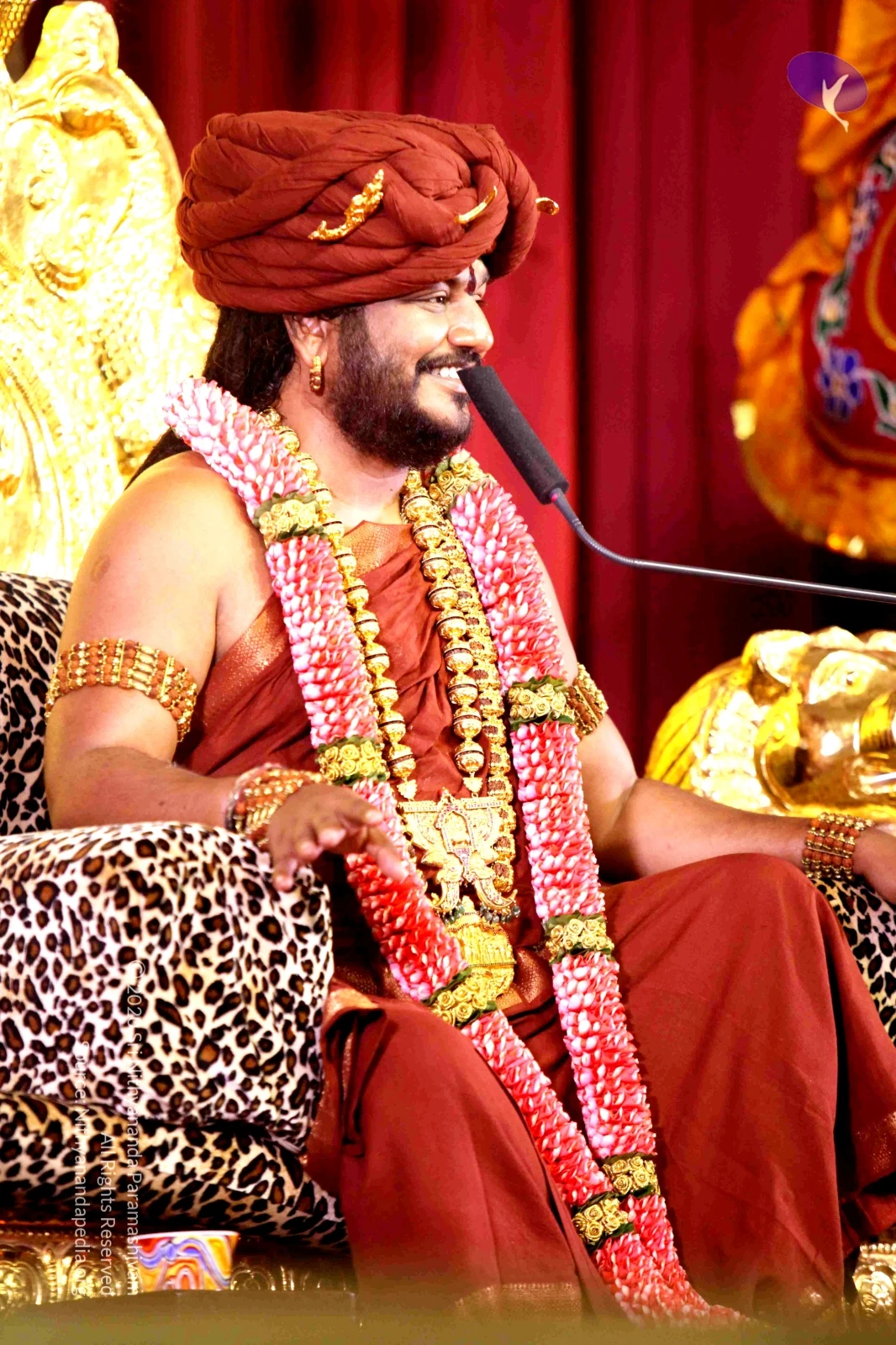
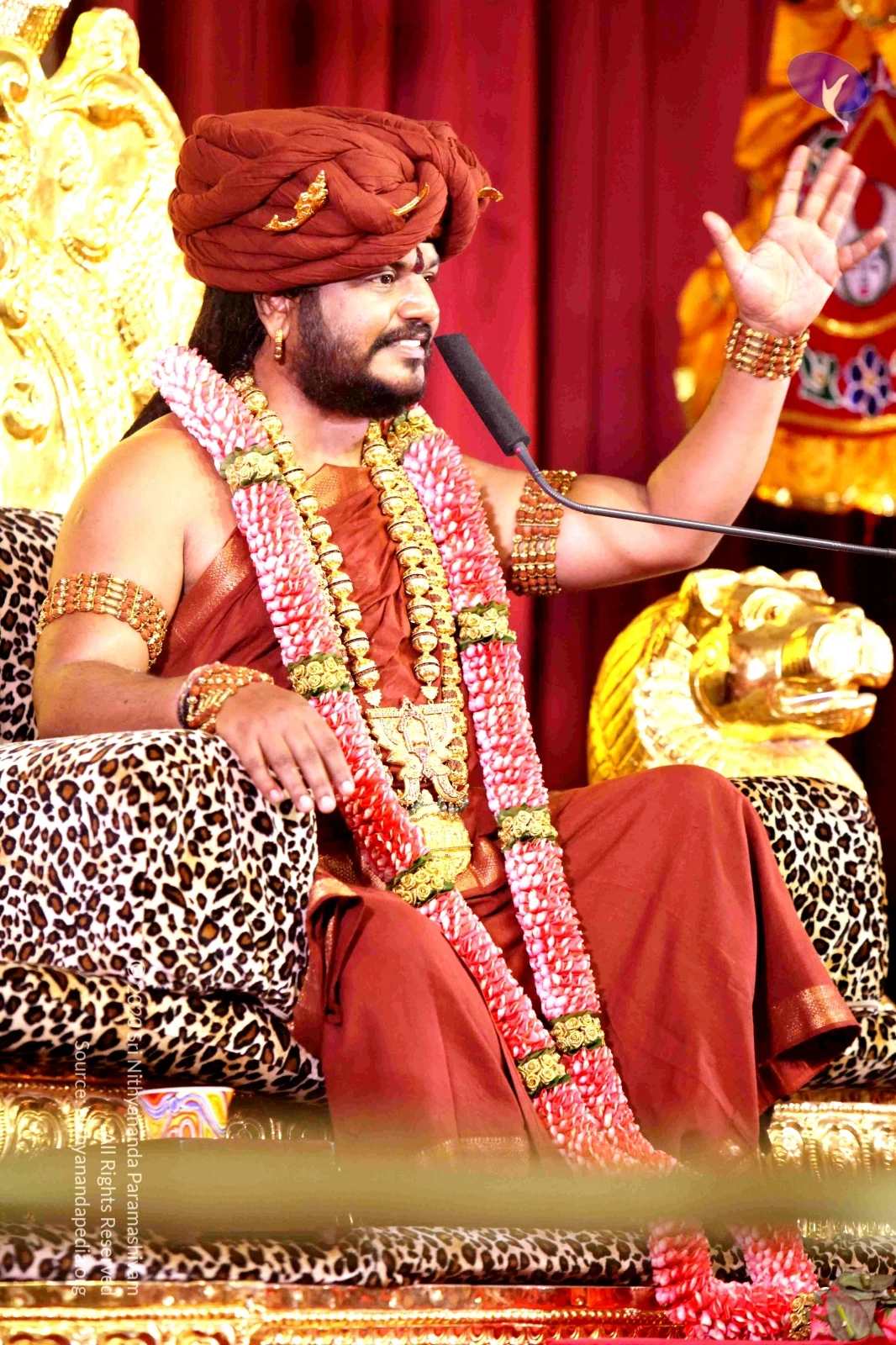
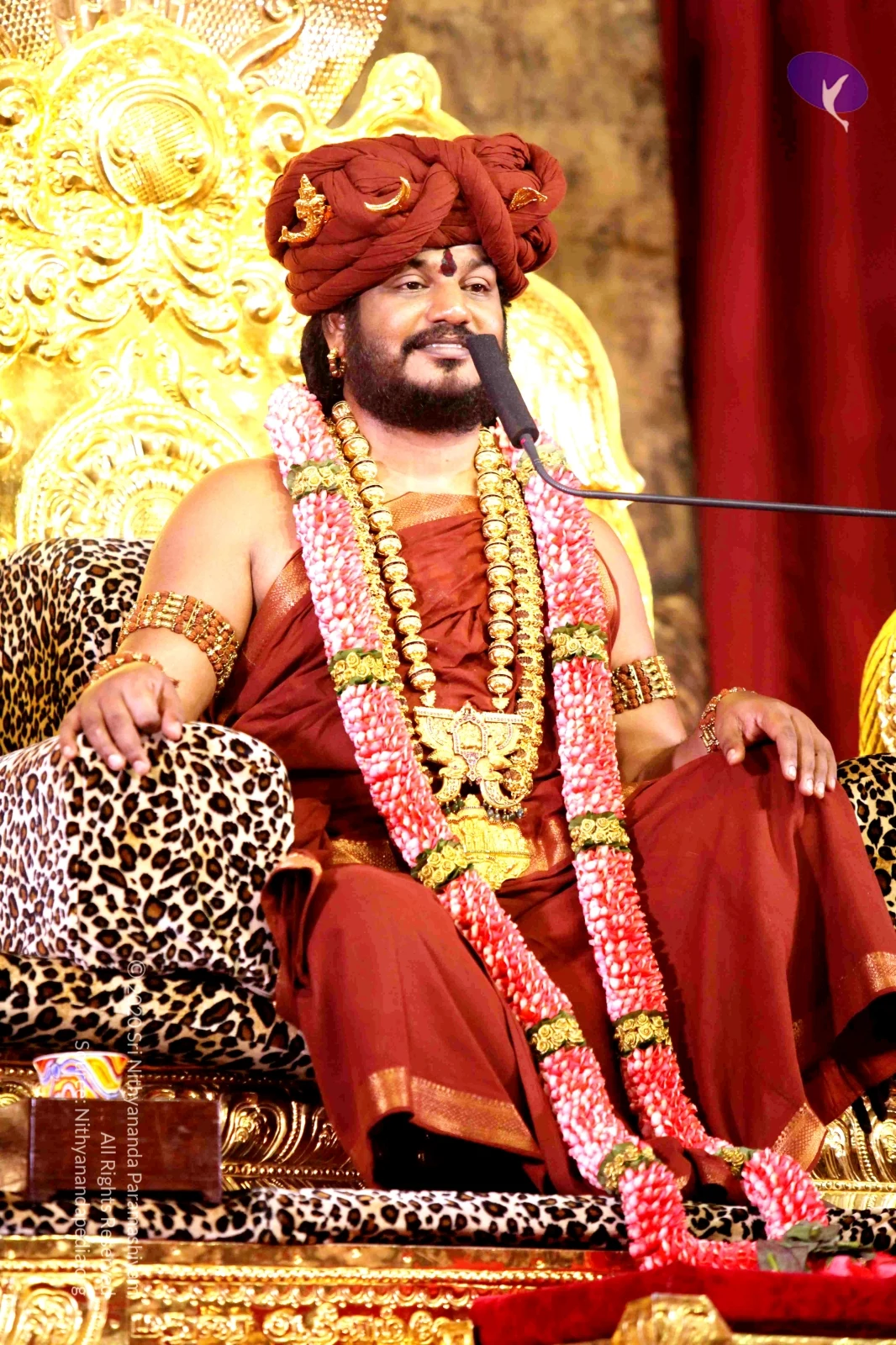
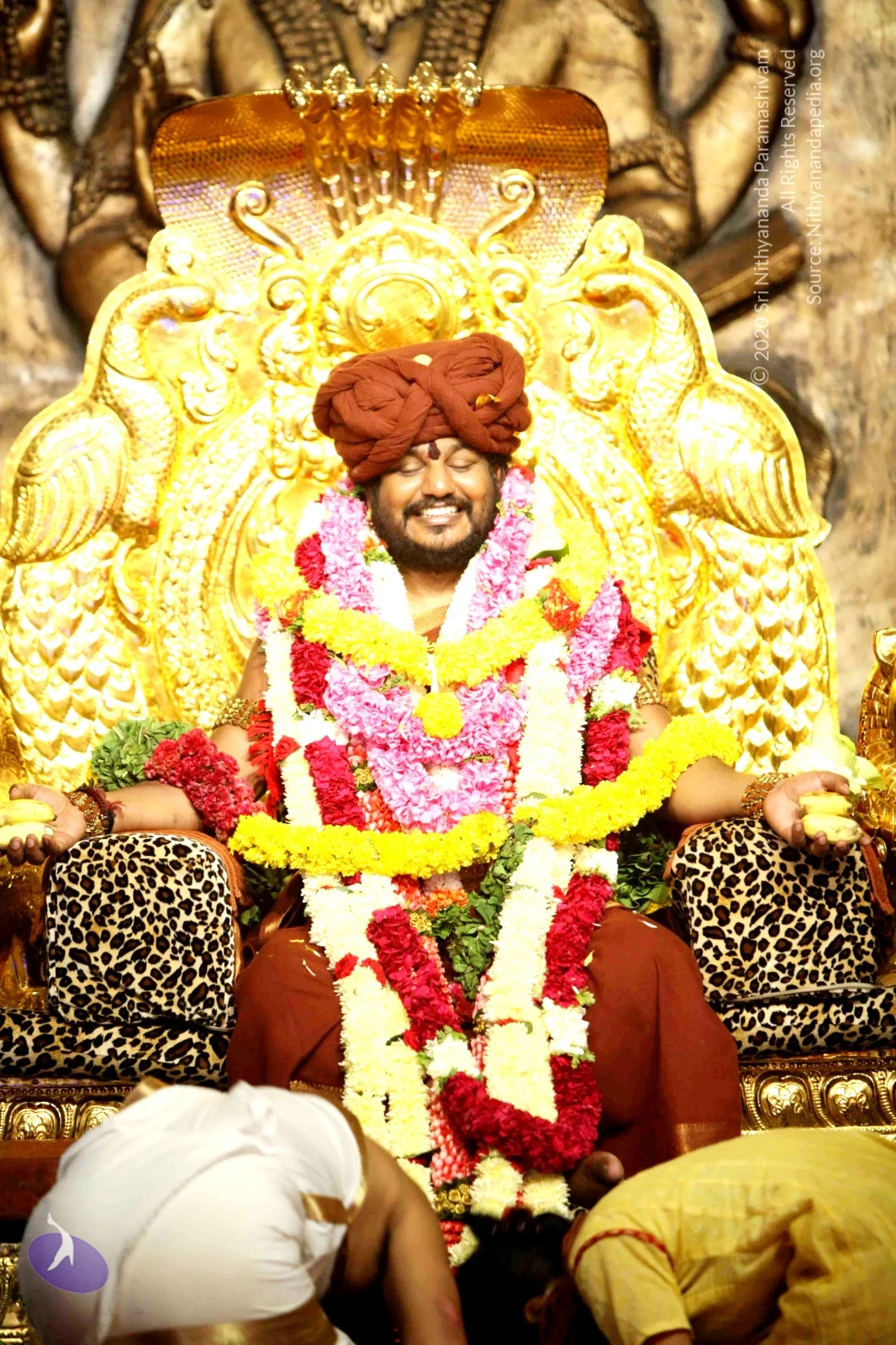
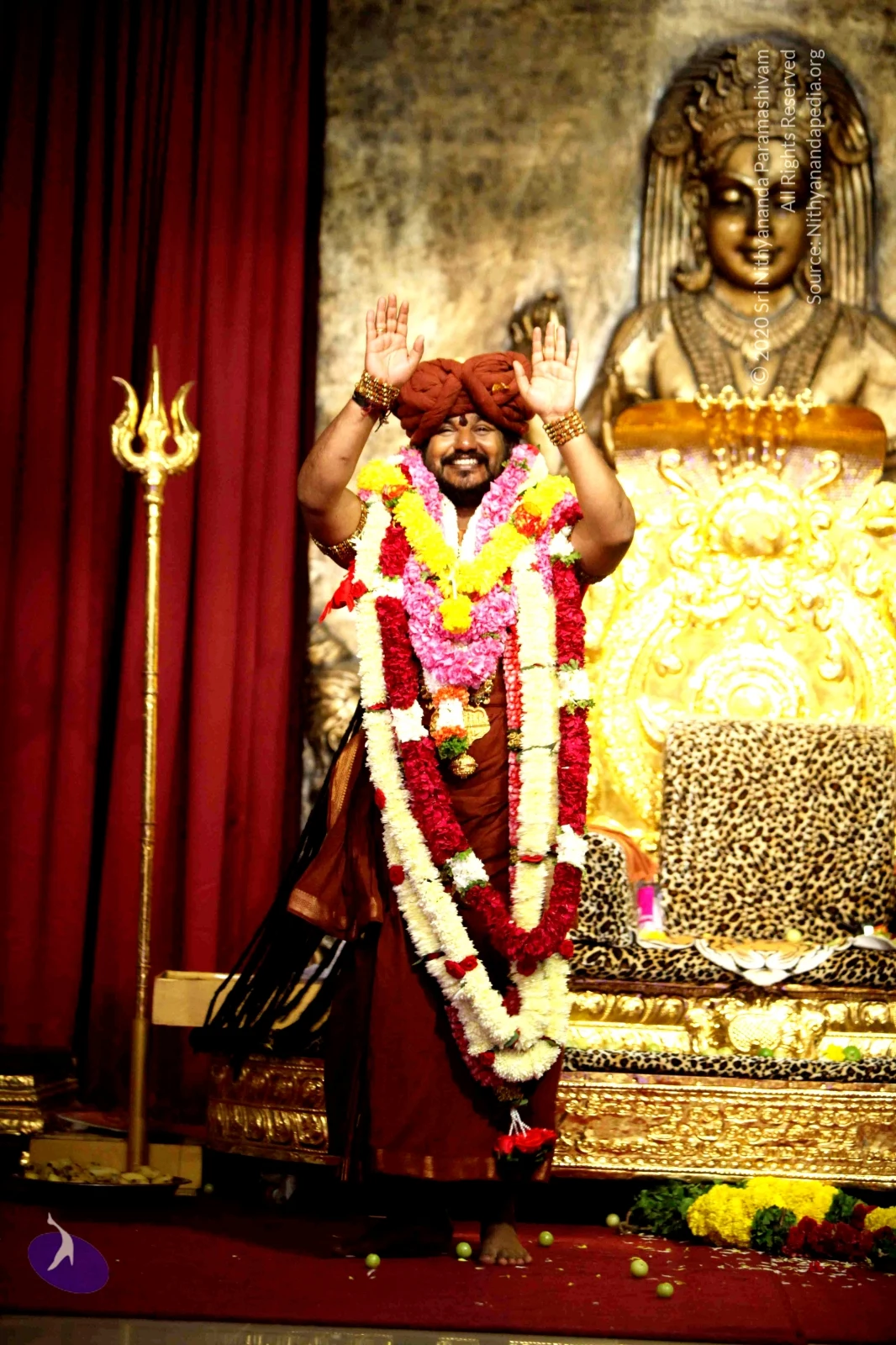
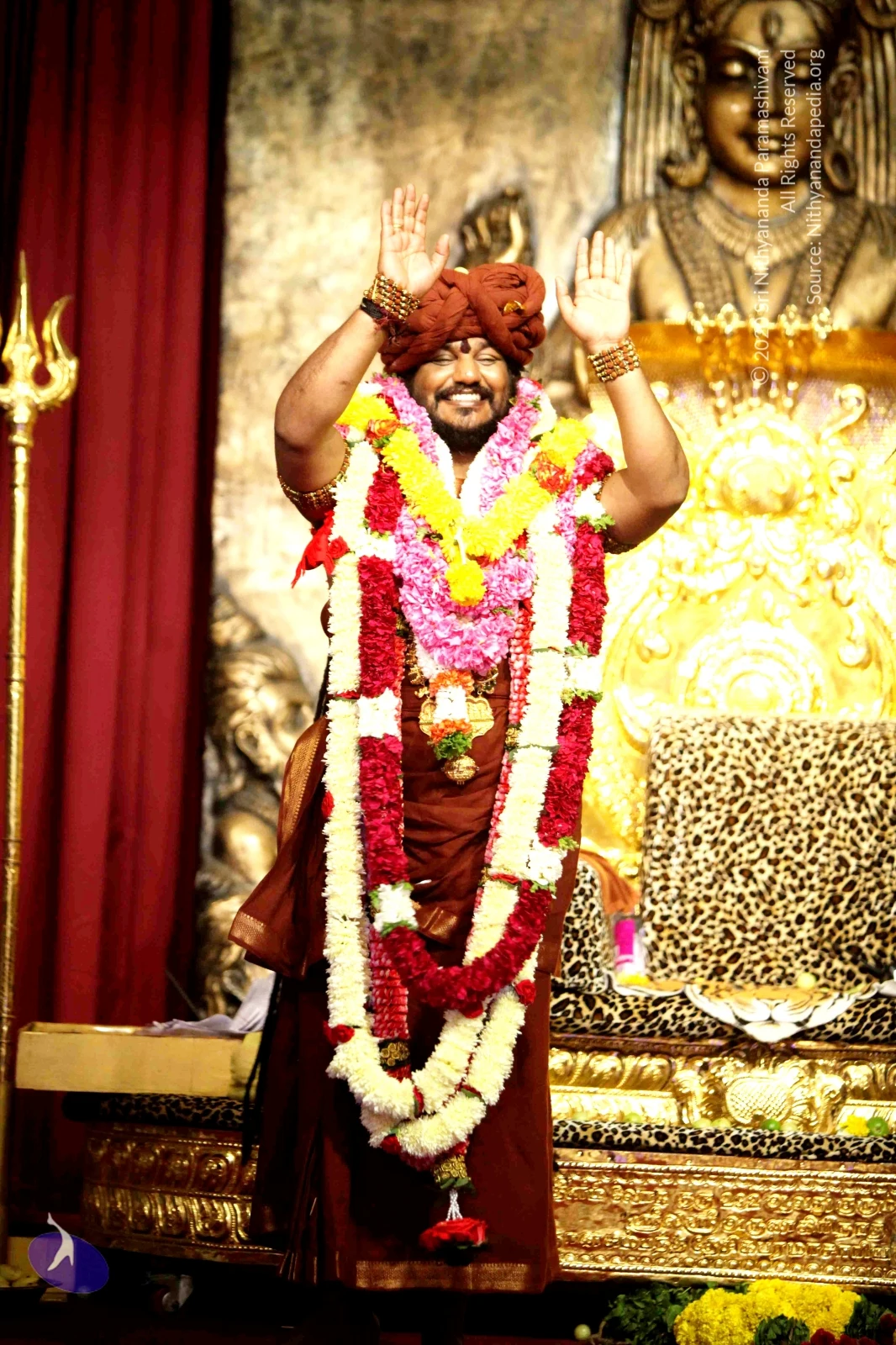
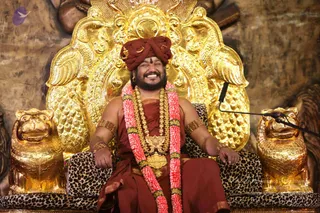
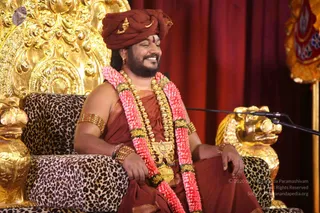
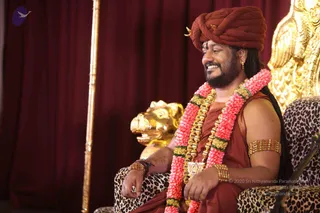
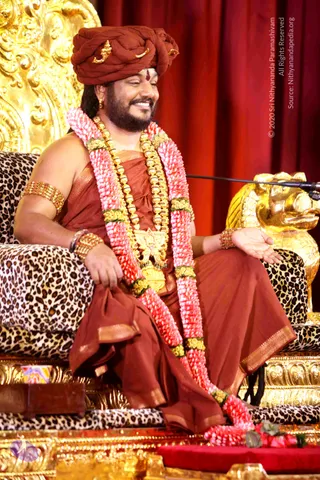
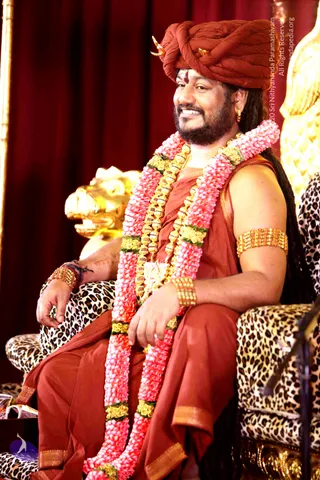
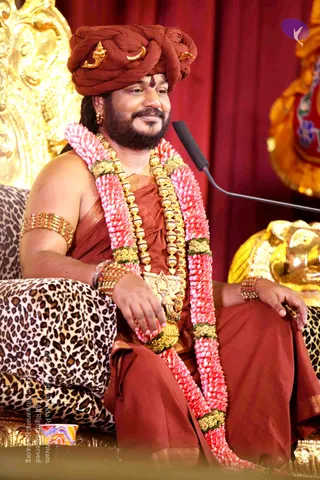
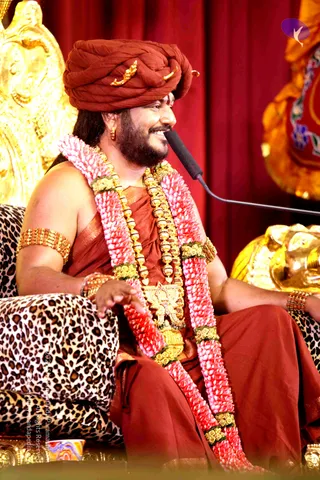
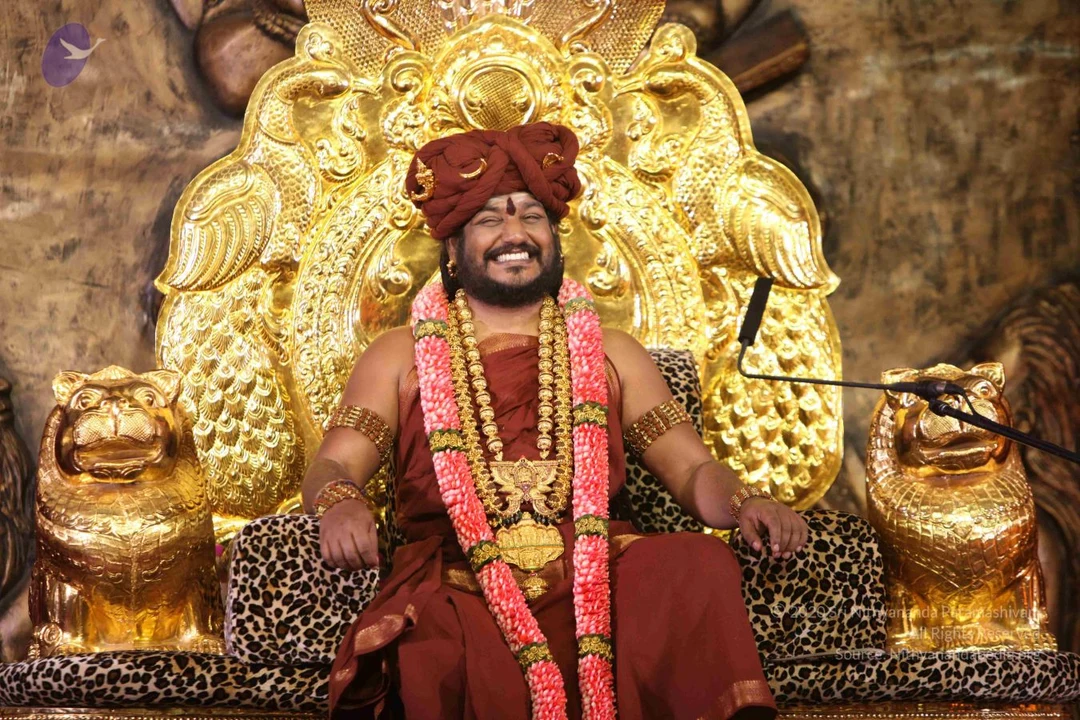
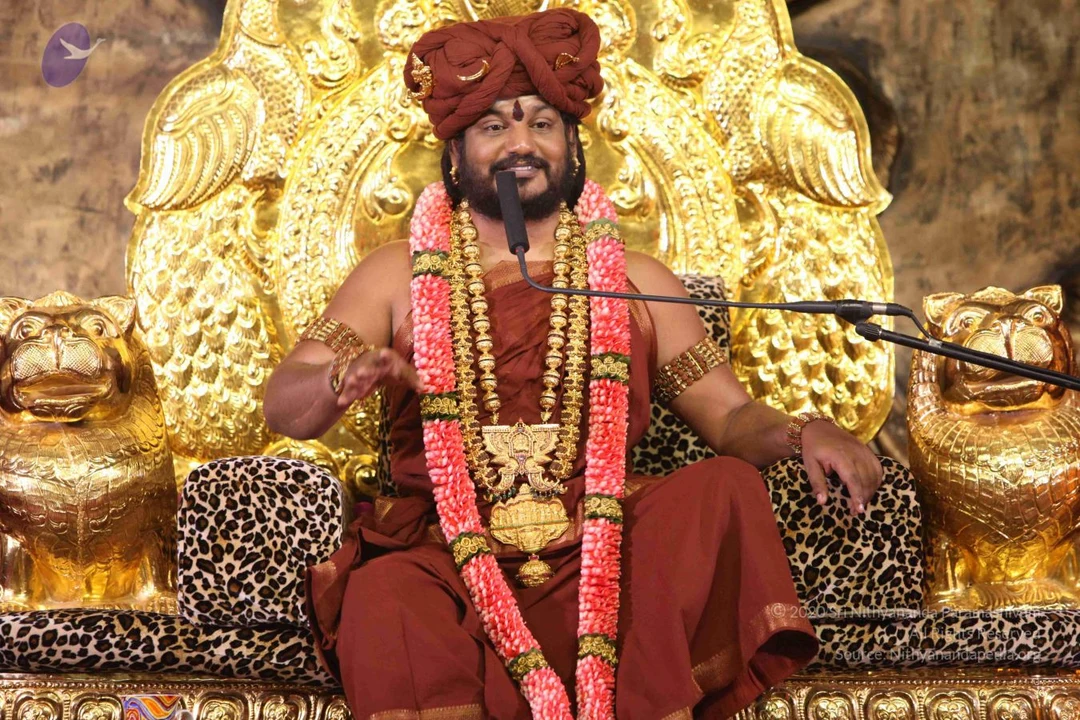
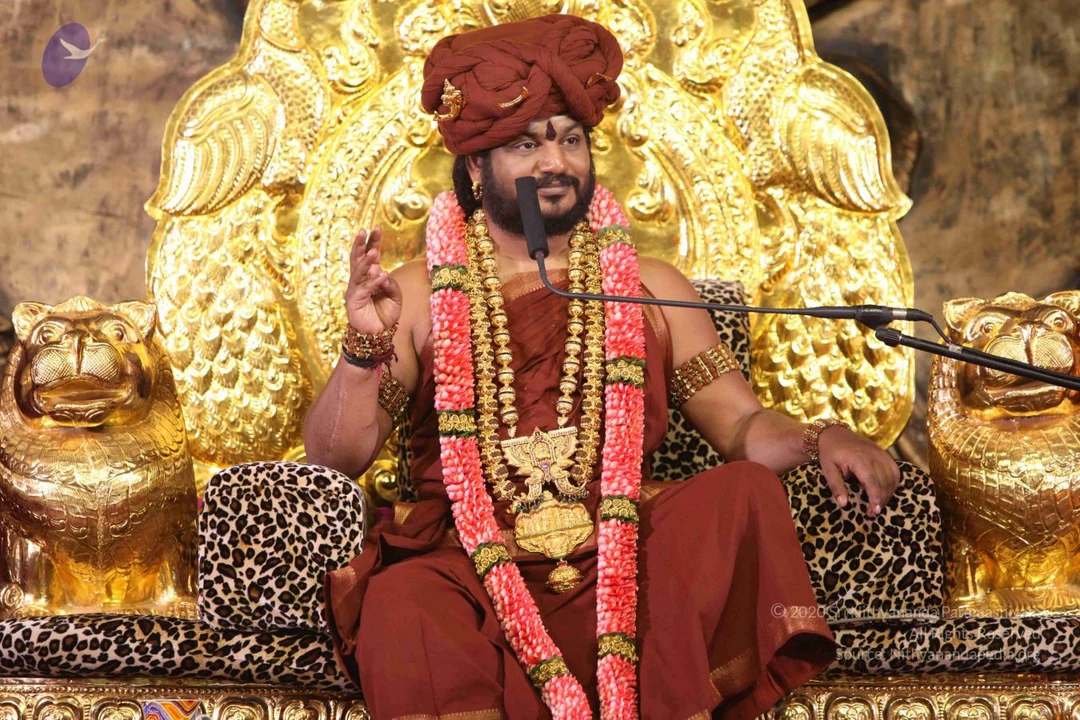
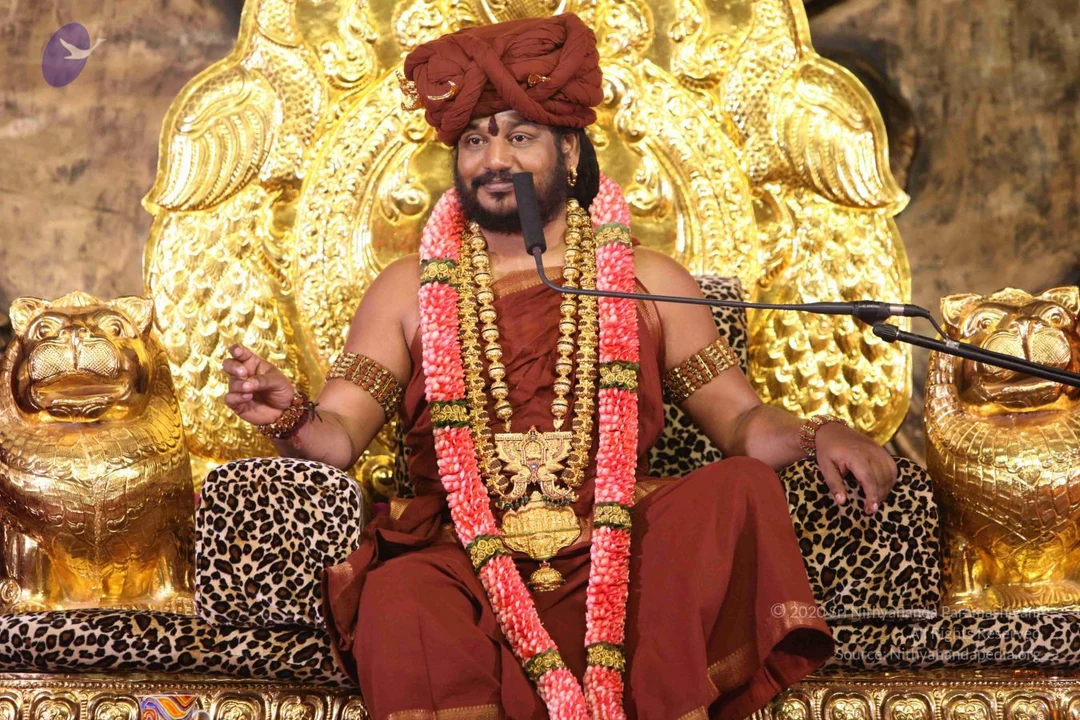
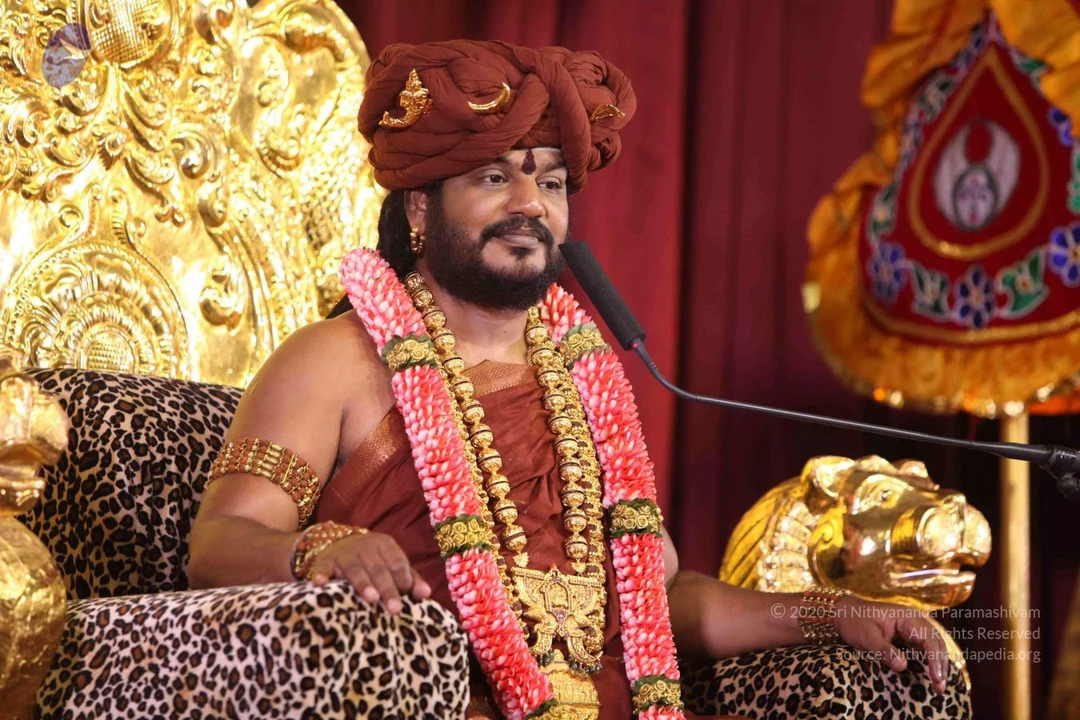
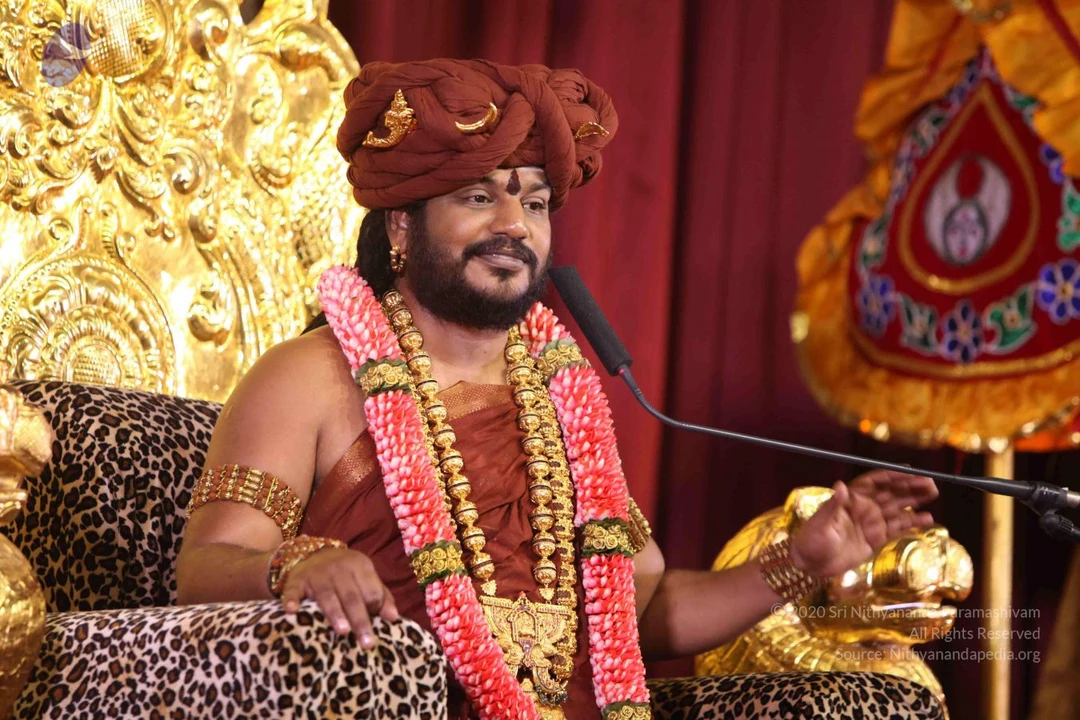
A smiling man in a maroon-red turban and maroon robes sits on an ornate golden throne carved with peacock-like scrolls, flanked by two golden lion figures. He wears a pink and white flower garland, a multi-strand gold necklace with a large gold pendant, and gold armlets. A microphone stand is at right, and a bindi marks his forehead. Behind him is a gilded and carved backdrop. Swamiji (probable): the man has long flowing hair under the turban, saffron-red ceremonial clothing and ornate gold necklaces, seated as a discourse speaker.A photograph of a bearded man seated on an ornate gold throne upholstered in leopard-print fabric, against deep red drapes. He wears a rust-red turban with a small gold ornament, a rust-red robe, a gold-and-bead necklace, a gold armband, and two long garlands of pink flowers. A gold lion-head armrest and a tall gold staff stand beside him. a person: long hair, a turban and ornate gold ornaments fit the appearance-based cues, and the page names him as present, so he is seated in person on the throne as the central figure. The page-flagged appearance is consistent with the throne setting, though the label is appearance-based.A photo of a seated man on a stage in front of deep red drapery and a large gilded throne backrest. He wears a rust-red turban with a gold crescent ornament, a red-brown robe, and a long garland of pink and white flowers over a gold-beaded necklace. He has a gold armlet and bangles, and sits on a leopard-print cushioned throne arm beside a gold lion-headed armrest and a tall gold staff. Swamiji (probable): the saffron-red turban, ornate gold adornments and rudraksha-style beaded necklace match the appearance cues, and the page reports his presence at this event. Smiling and looking off to the side.A man seated on a leopard-print cushioned throne with a golden lion-head armrest, smiling. He wears a maroon turban with a gold crescent ornament, a red bindi, a dark maroon robe, layered gold necklaces and a long pink-and-white flower garland, plus gold armbands. Behind him is an ornate gold throne back against red drapes, and a gold staff stands at left. Swamiji (probable): long hair and ornate gold adornments with a saffron-toned robe fit the appearance cues; the seated figure is the event's central presenter.A seated man in a rust-red turban and matching rust-red wrap sits on a leopard-print cushioned throne with ornate gold carved armrests shaped like lion heads. He wears layered garlands of pink and white flowers, gold beaded necklaces, a gold pendant, gold armbands and bangles, and a red tilak on his forehead. He smiles with eyes closed in front of a red draped backdrop and a microphone stand. Swamiji (probable): the seated figure has long hair under the turban, a rust-red wrap and ornate gold adornments, consistent with the page's reference to Swamiji at this discourse.A smiling man seated on a leopard-print cushioned chair in front of a deep red curtain and a gold carved lion-head armrest. He wears a rust-red turban with a gold crescent ornament, a rust-red robe, a long double-strand garland of pink and gold-bordered flowers, a gold ceremonial necklace with a pendant, and a wide gold armband and gold bangles. A tall gold rod stands at left and a gold-carved throne back at right. Appearance-based probable Swamiji cues: long swept-back hair, turban, ornate gold jewellery and saffron-red clothing, seated on a throne.

kalpataru-darshan

34 photosSource gallery
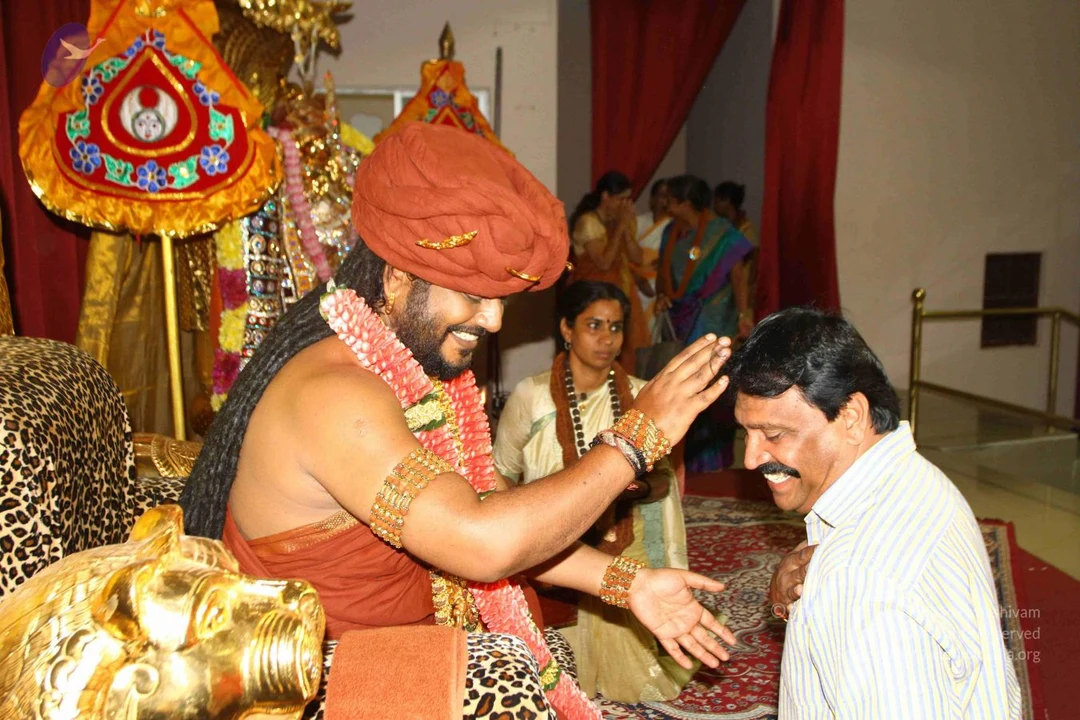
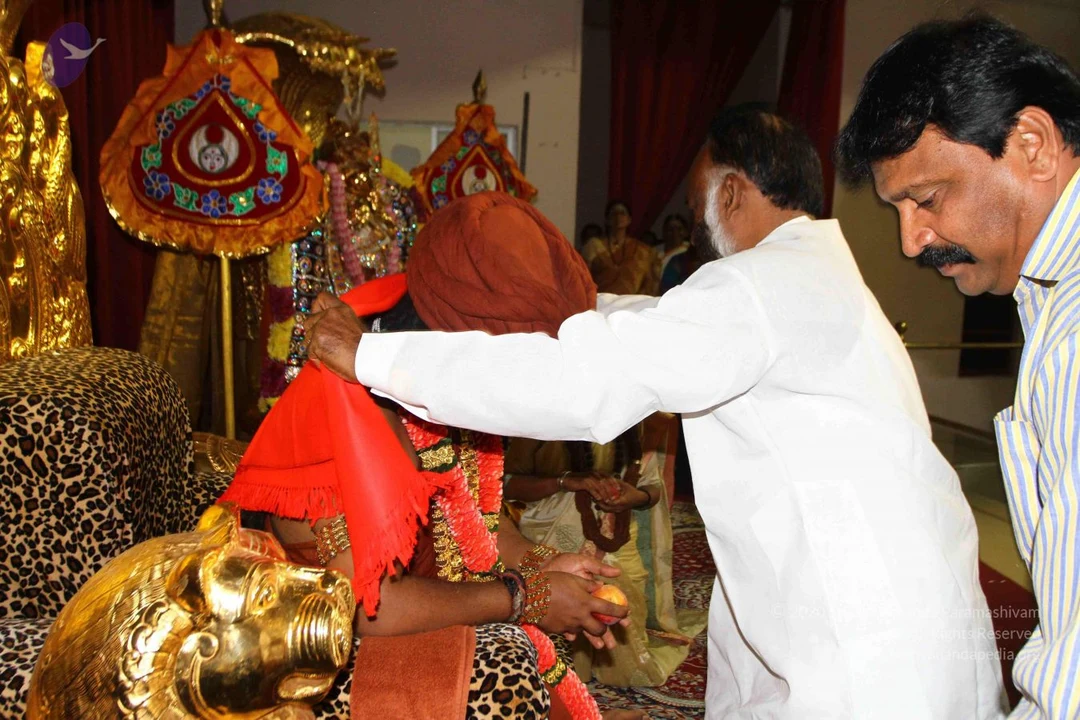
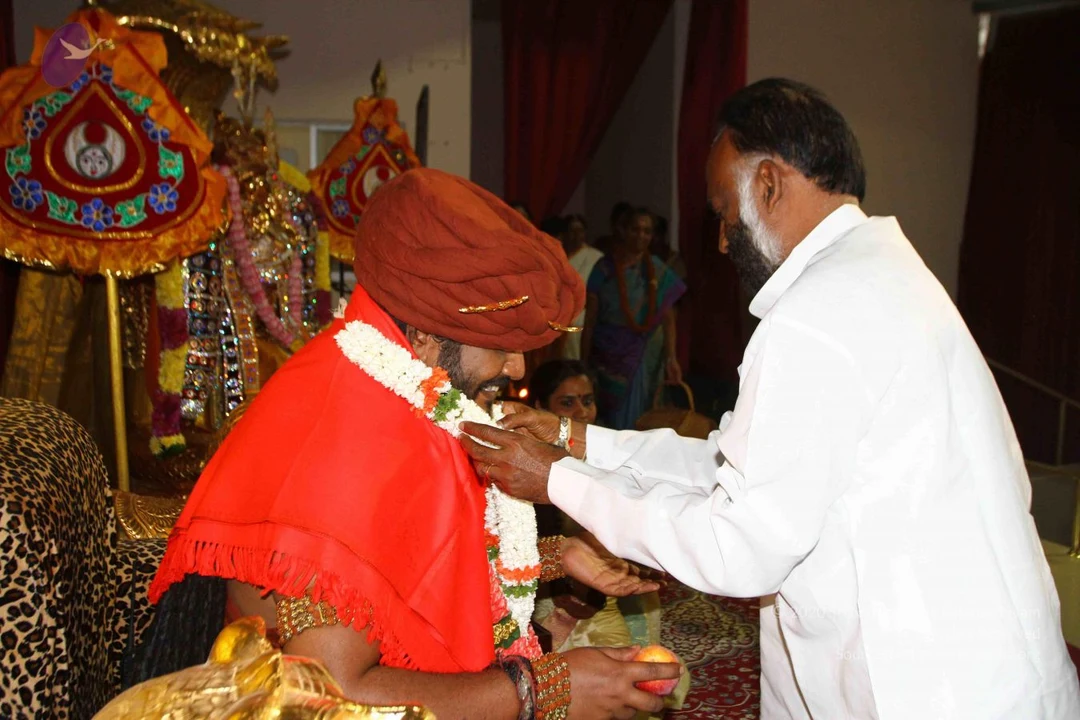
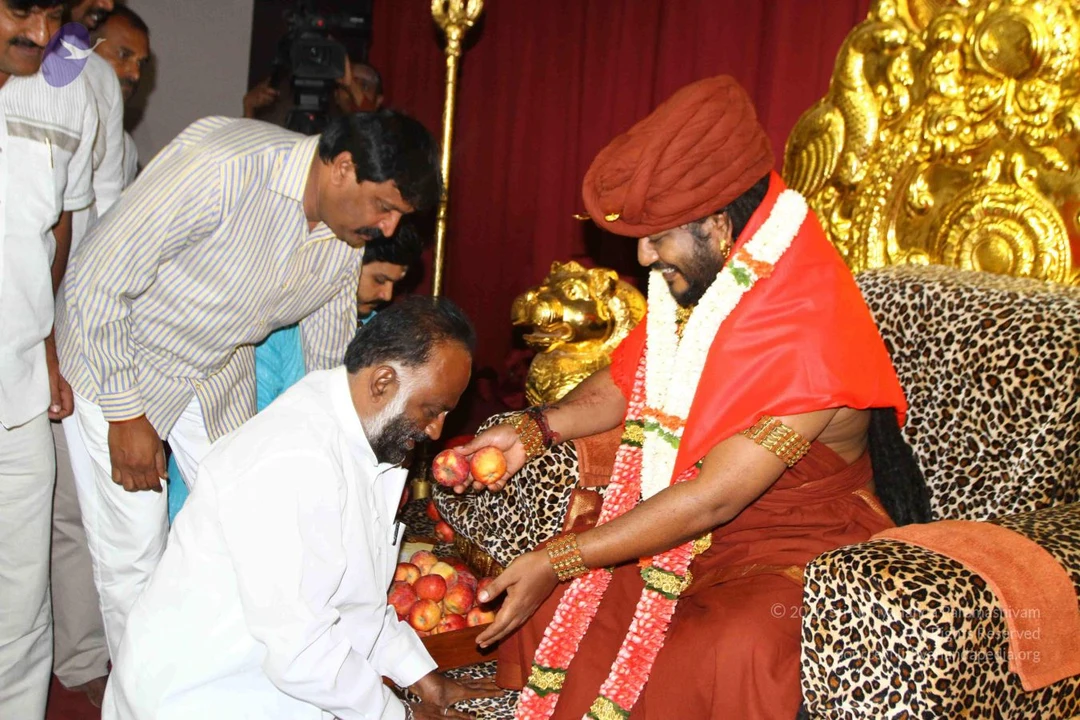
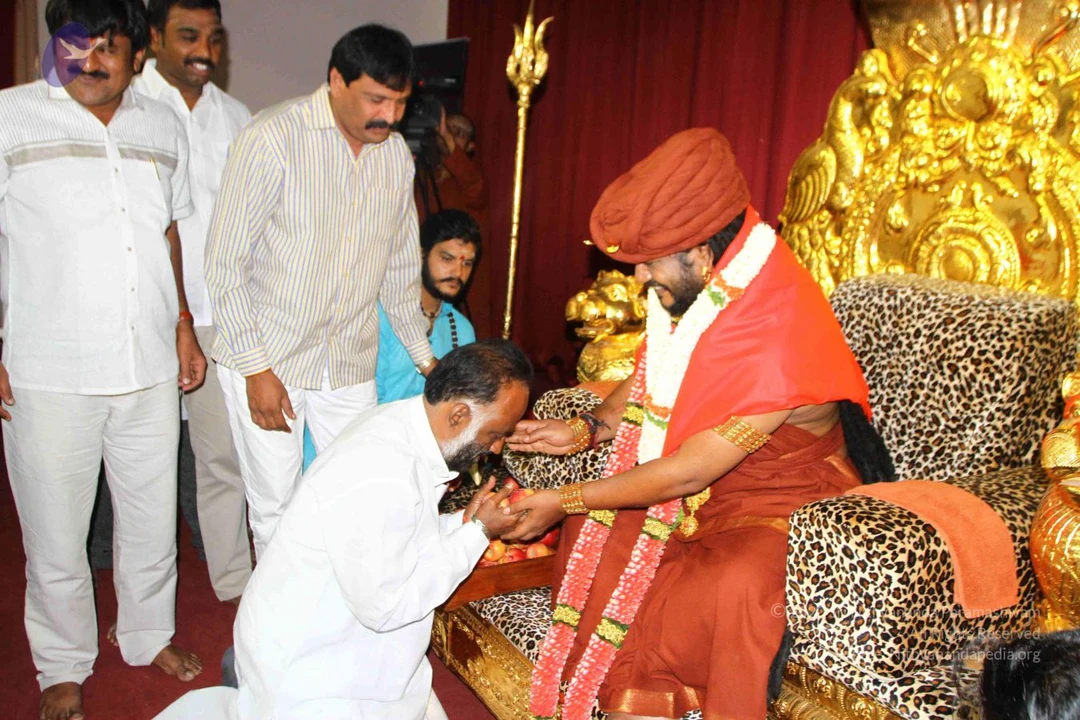
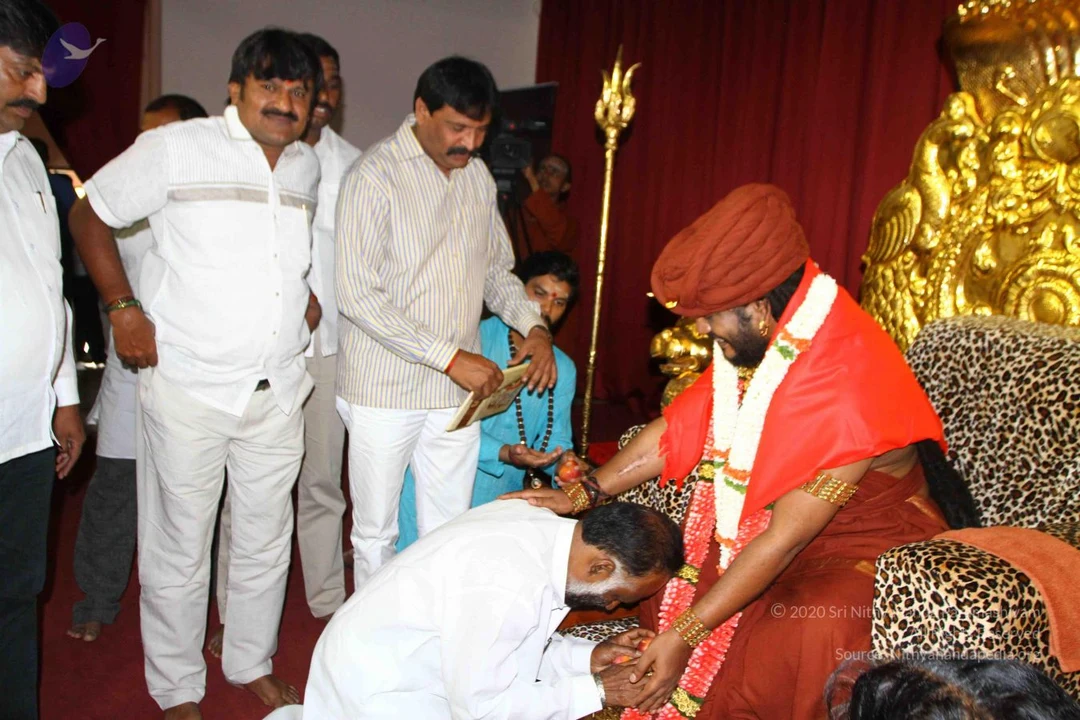
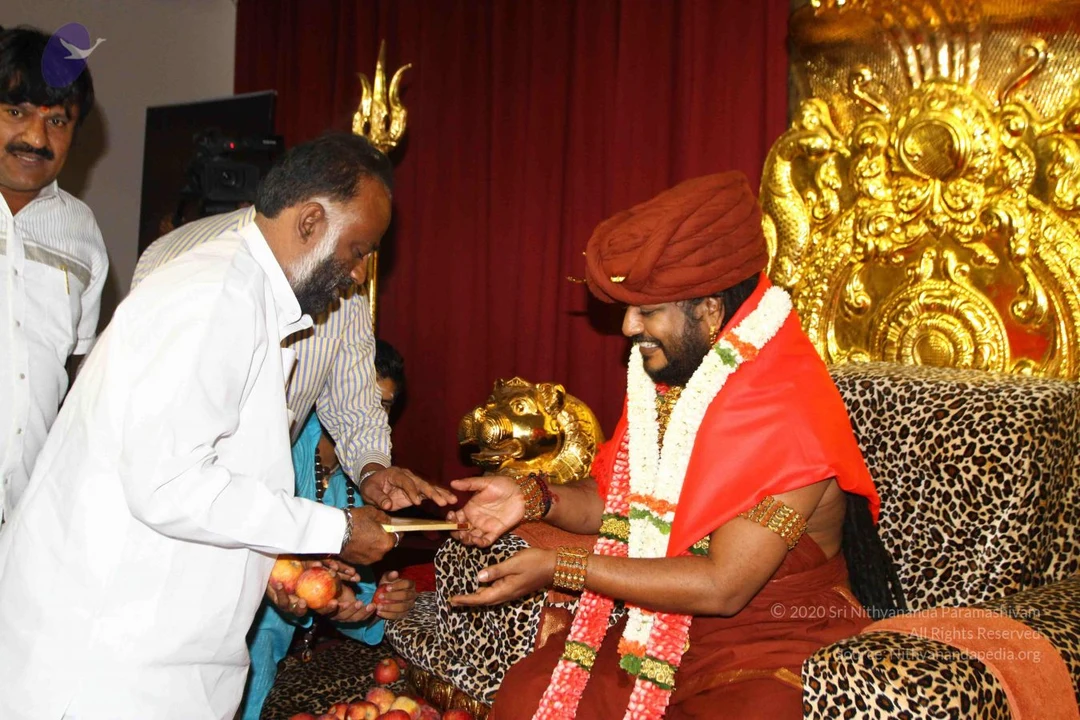
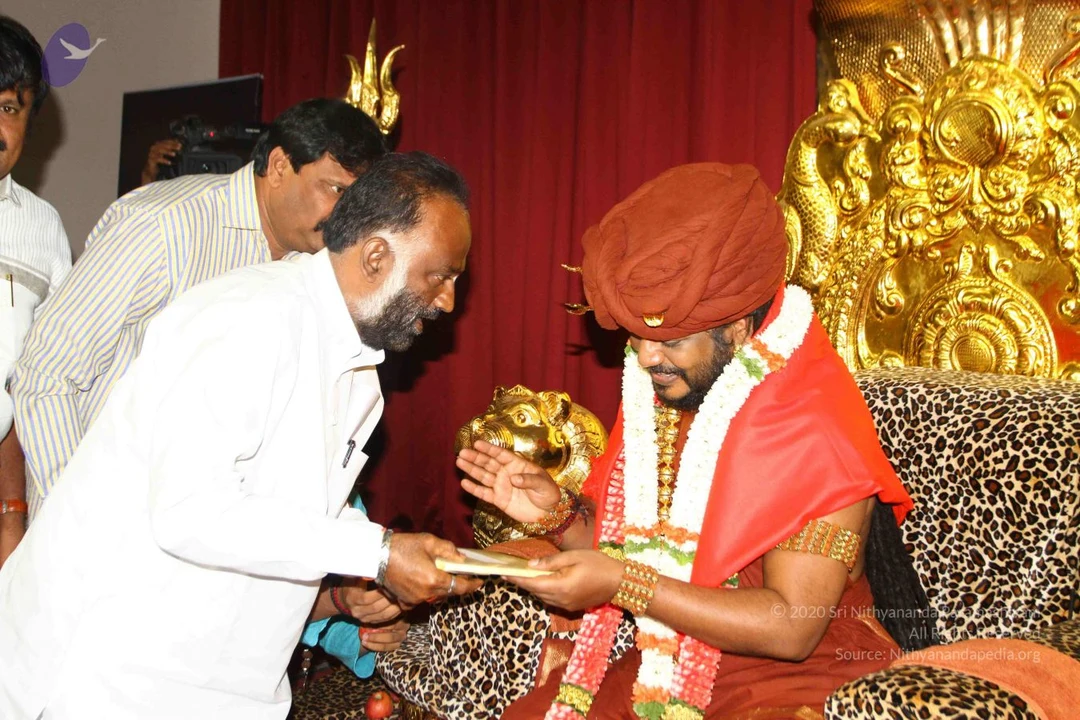
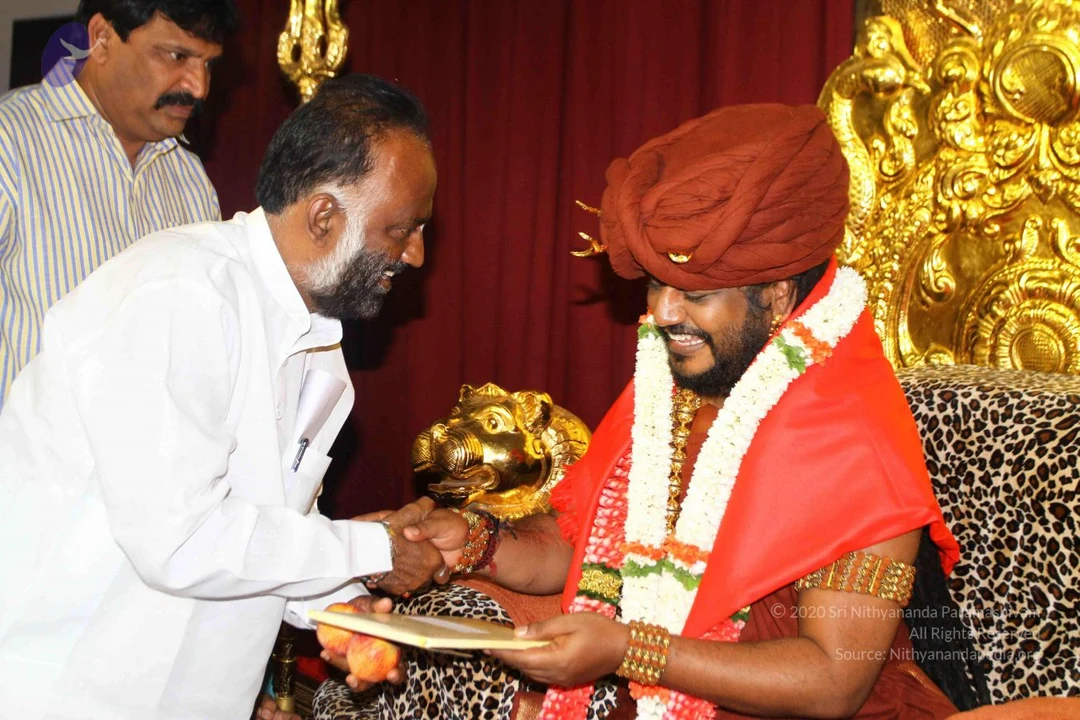
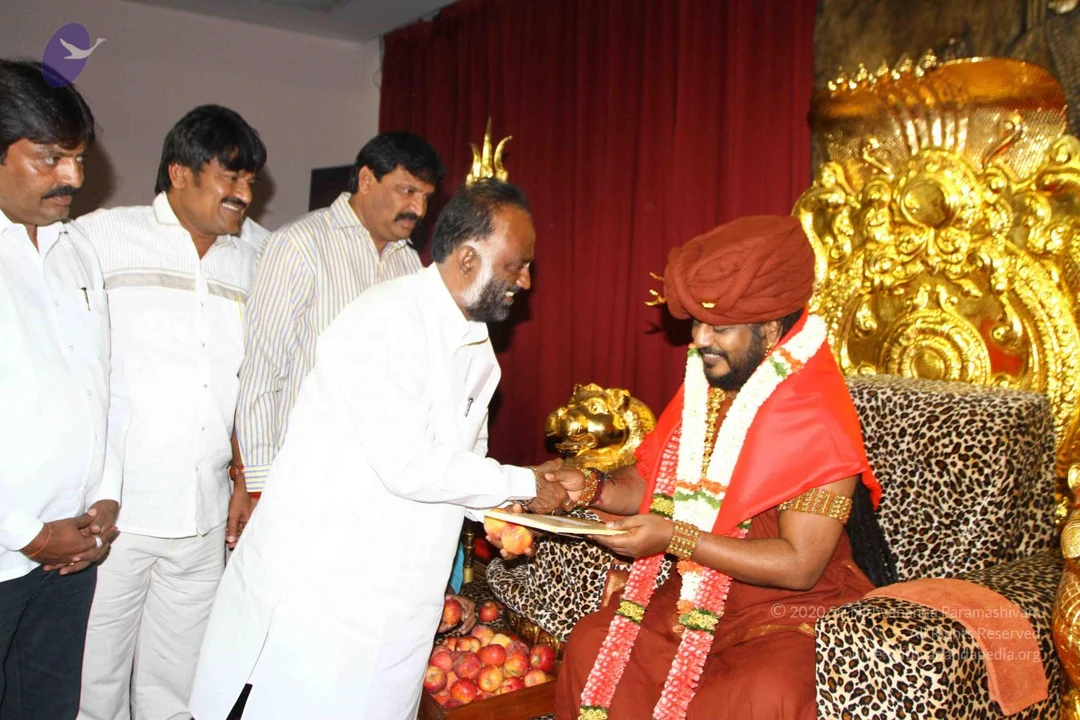
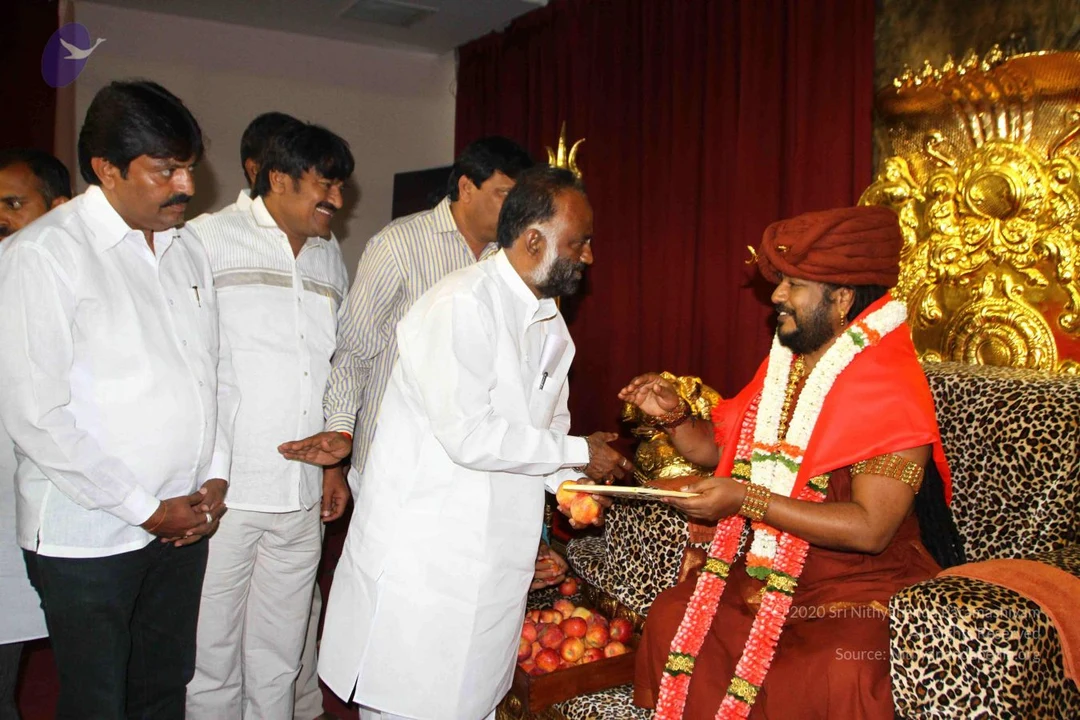
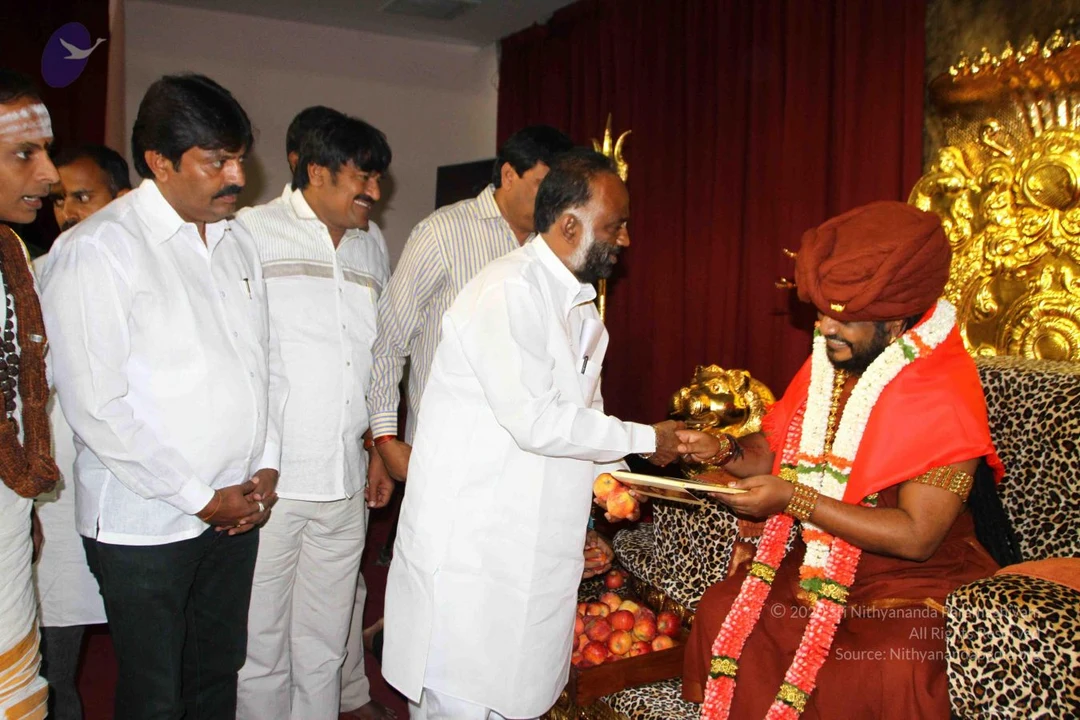
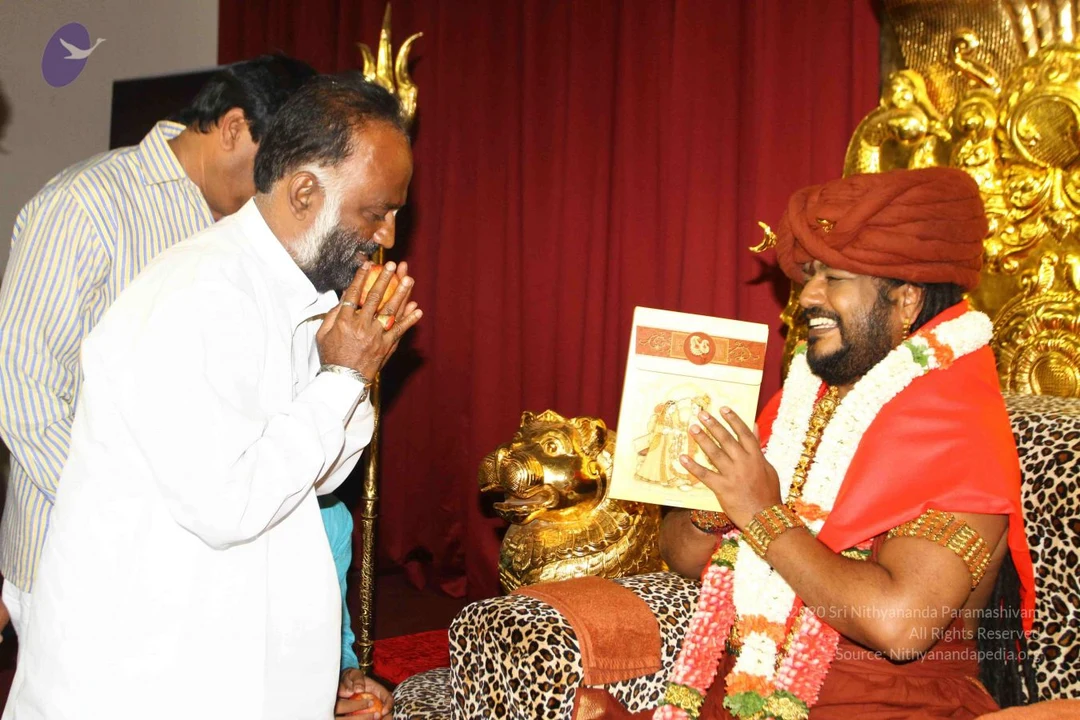
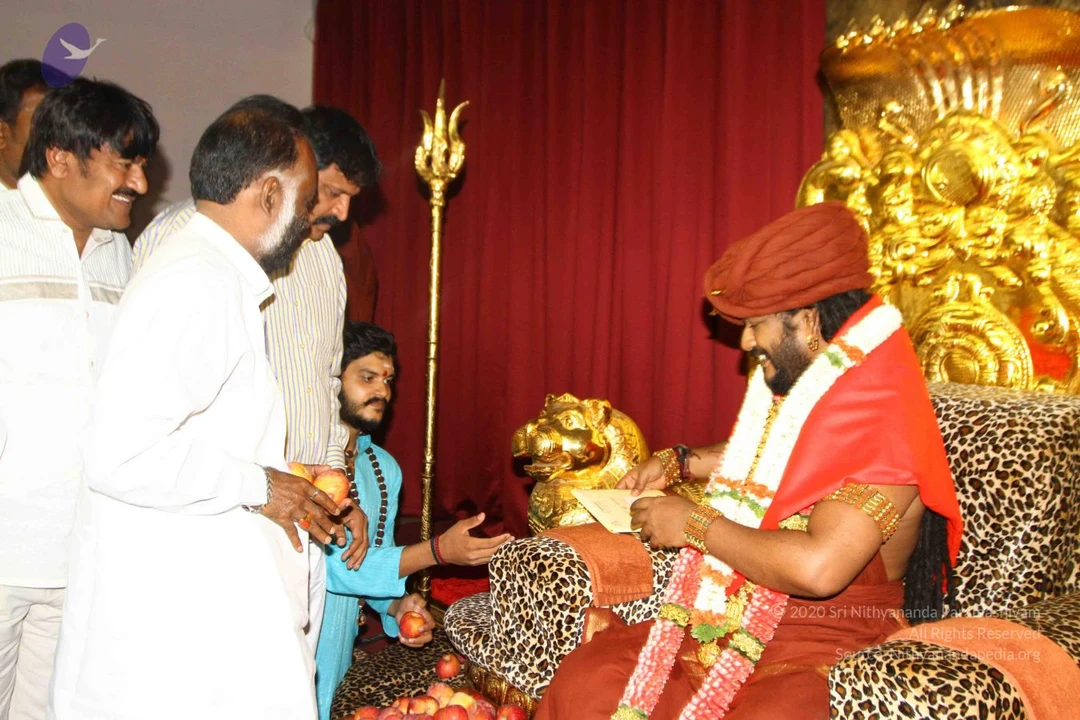
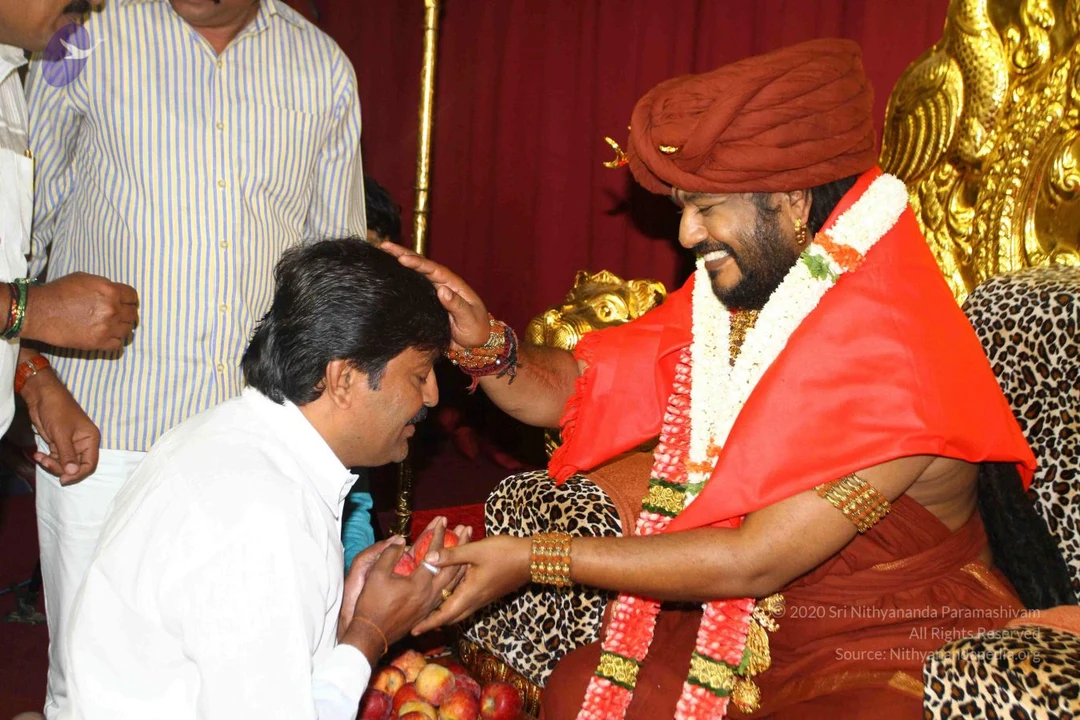
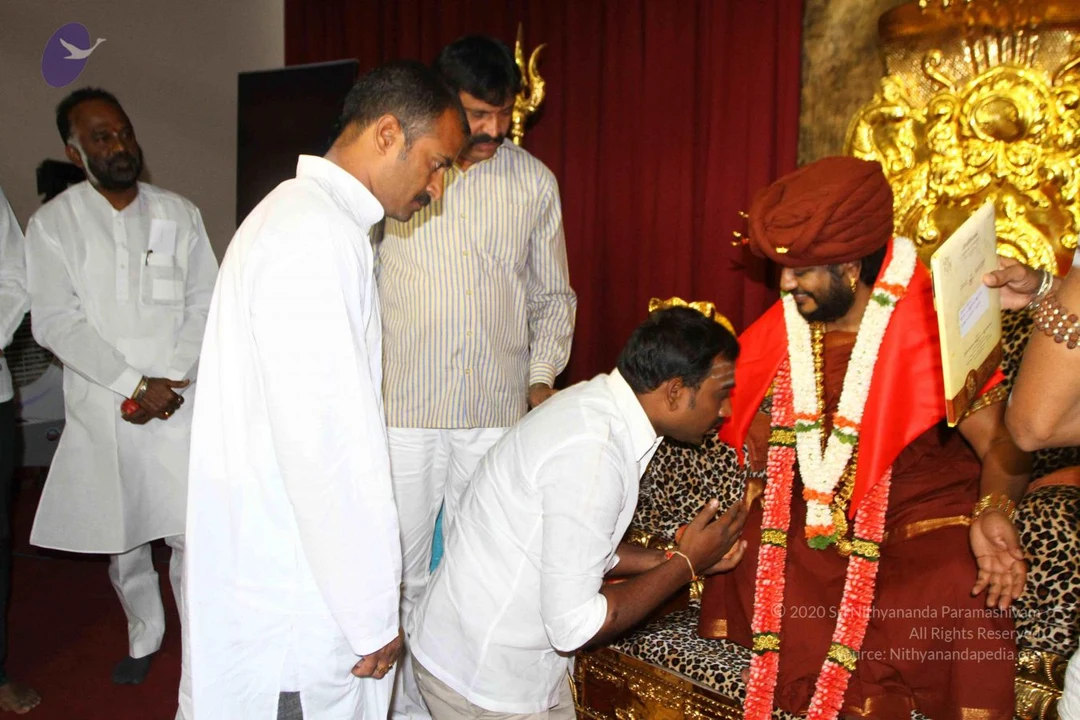
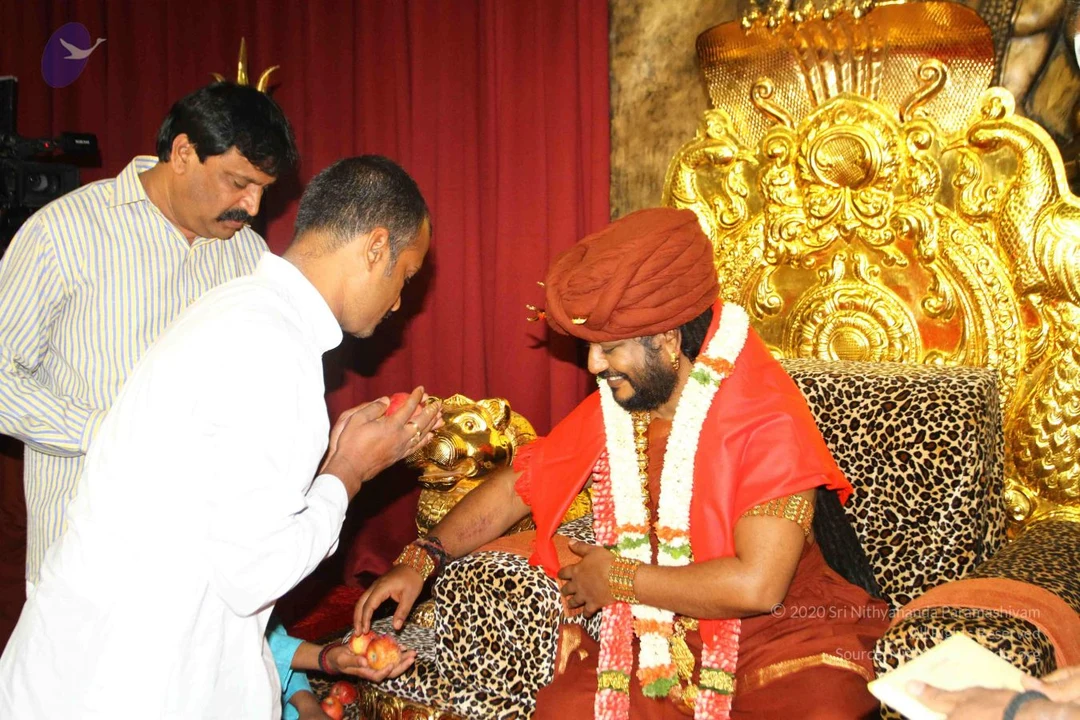
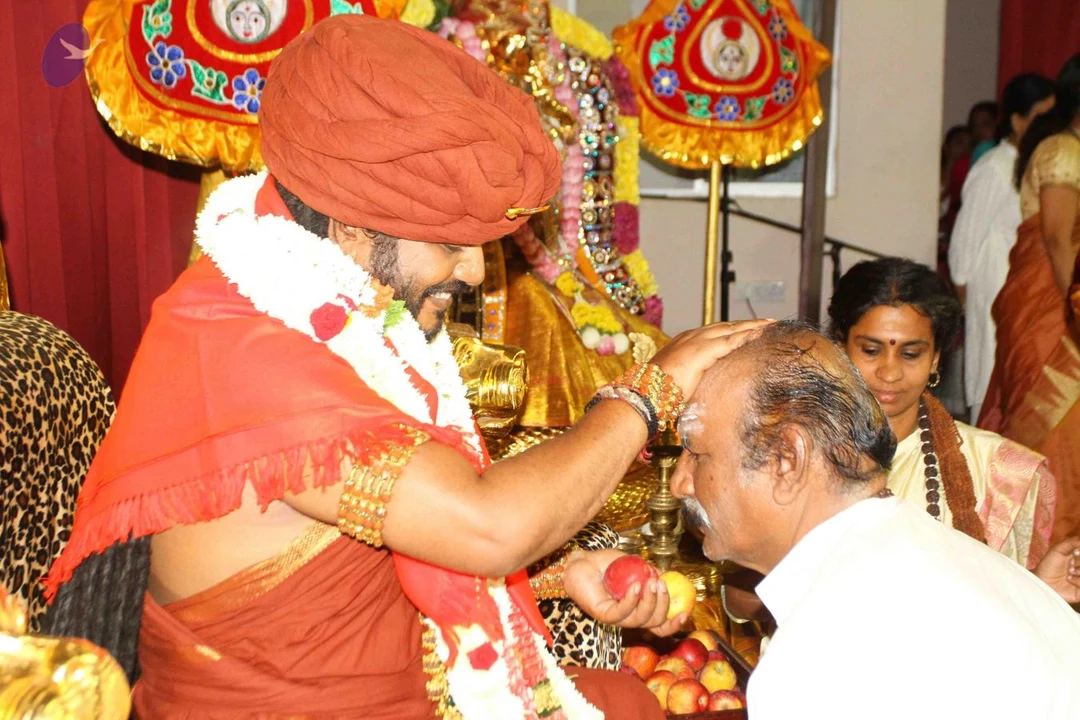
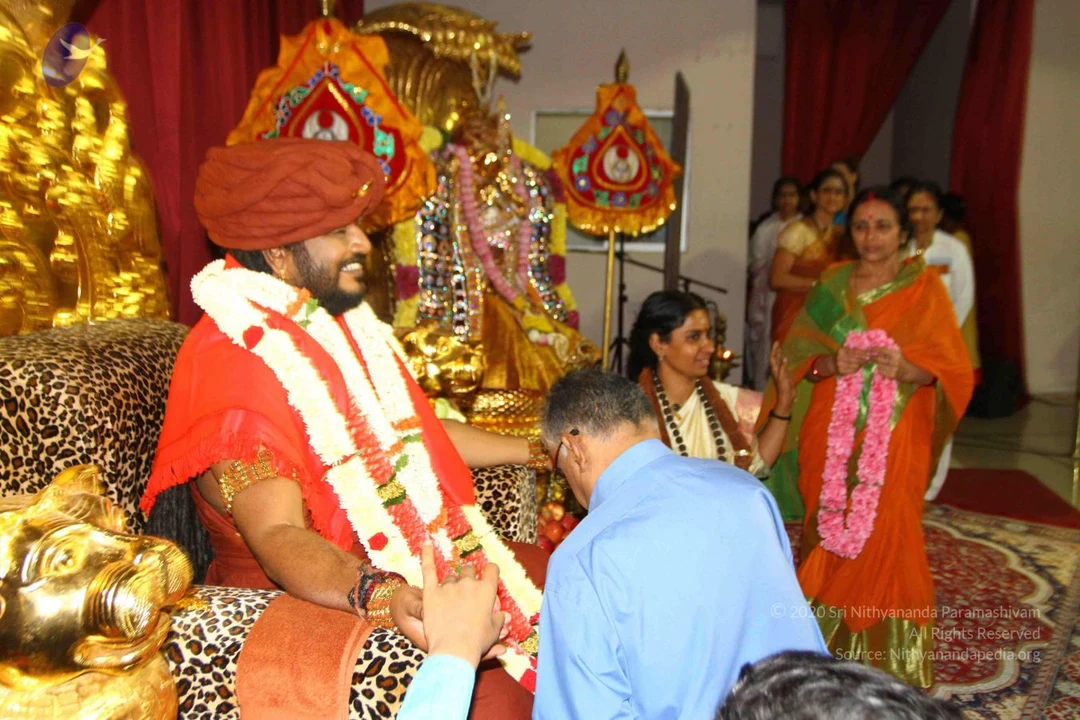
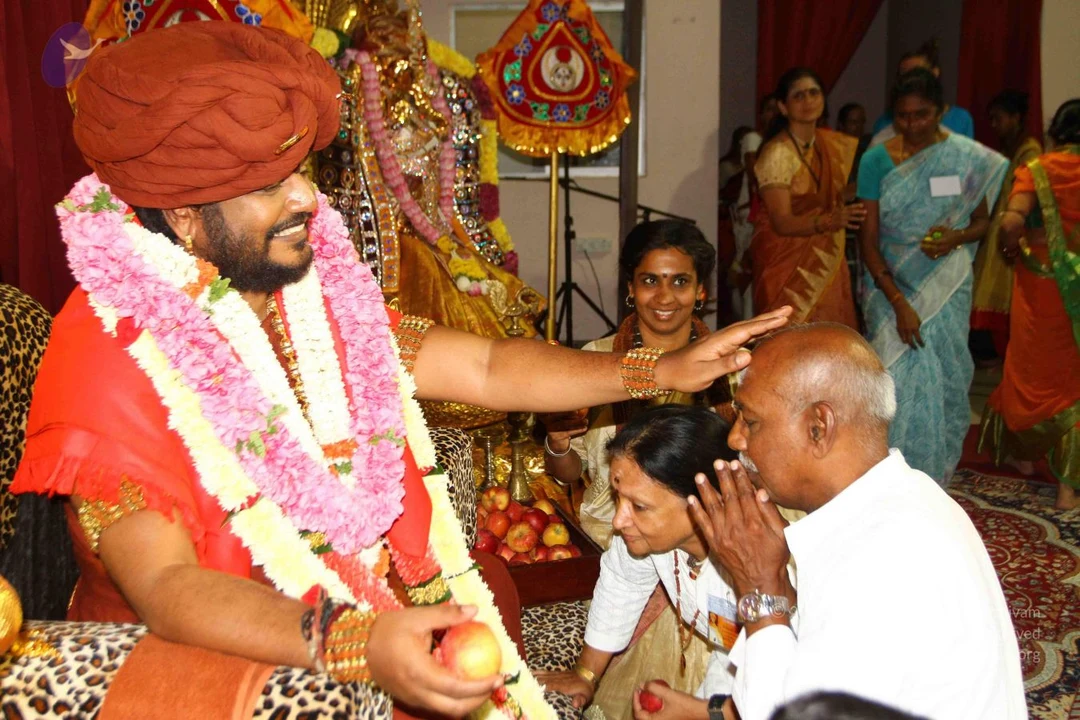
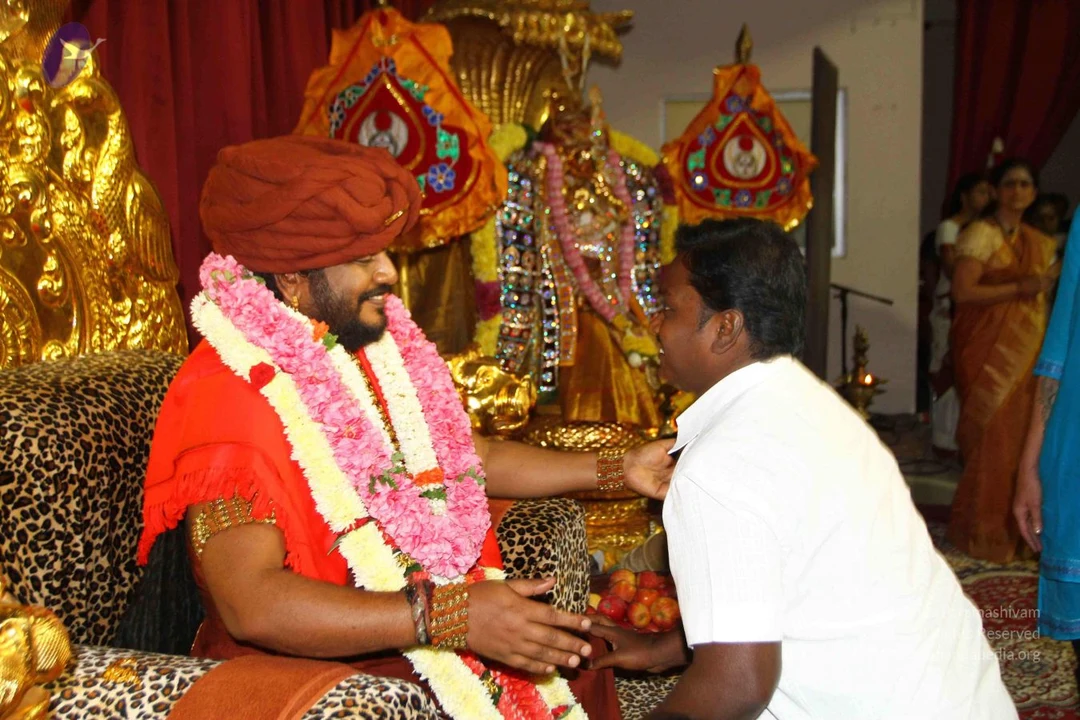
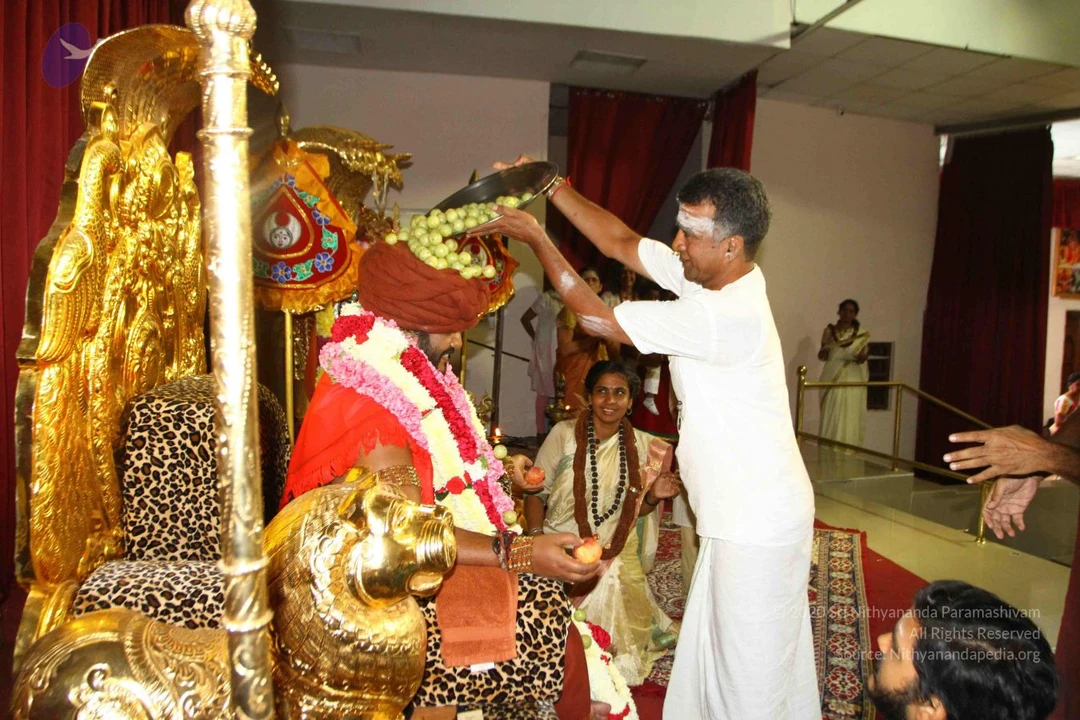
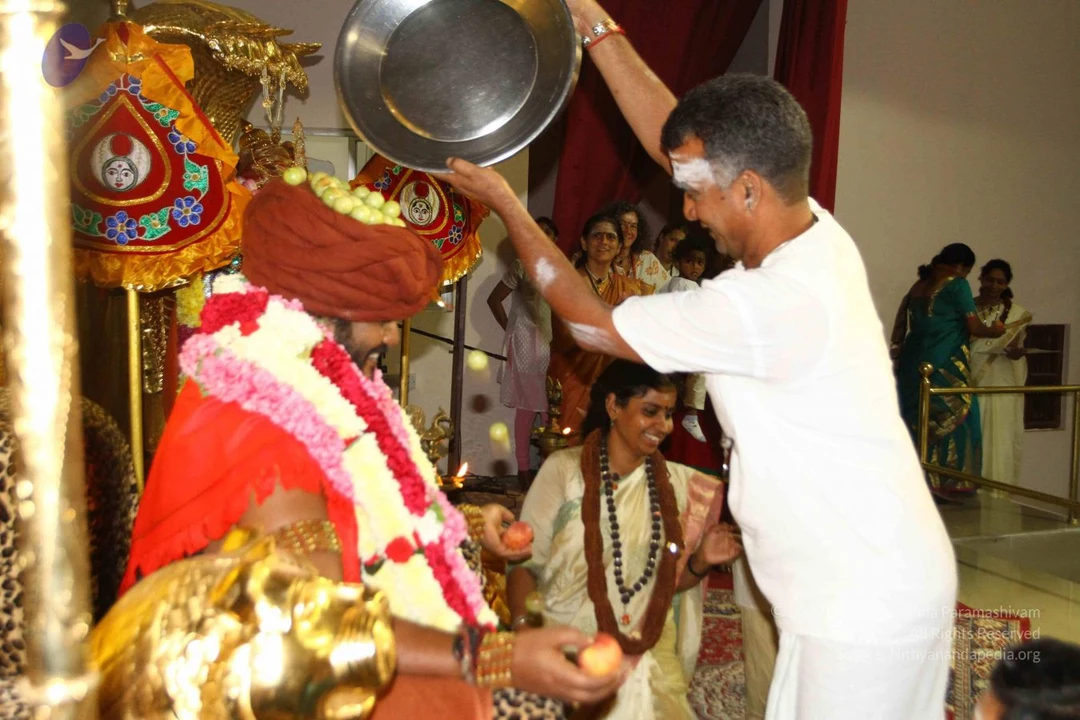
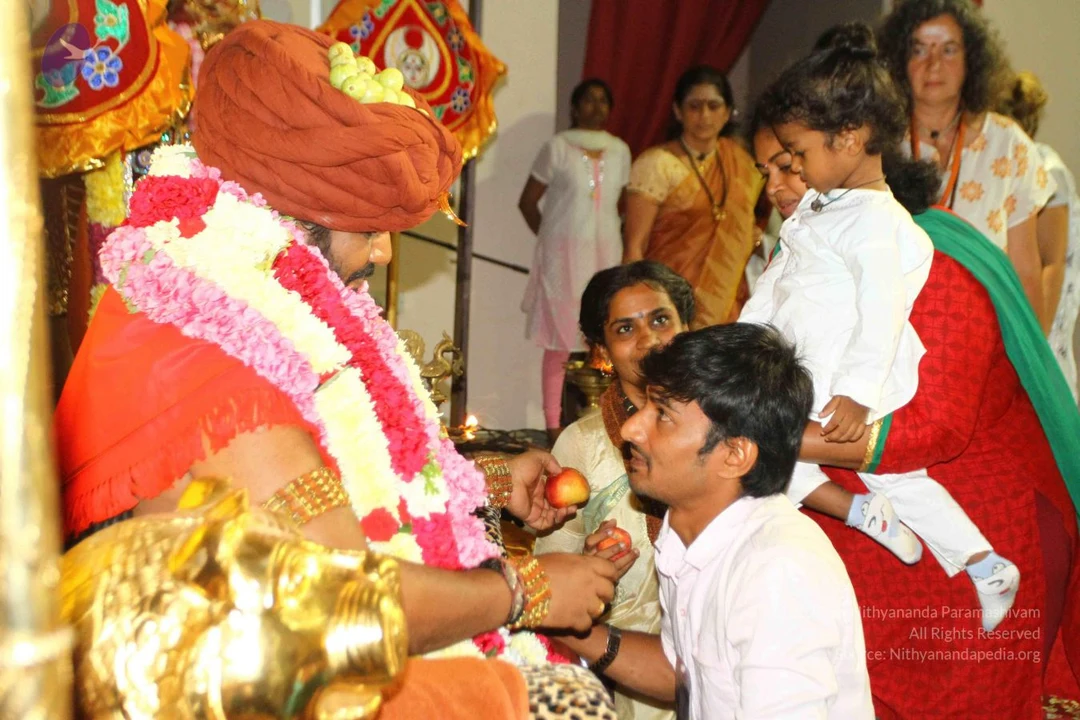
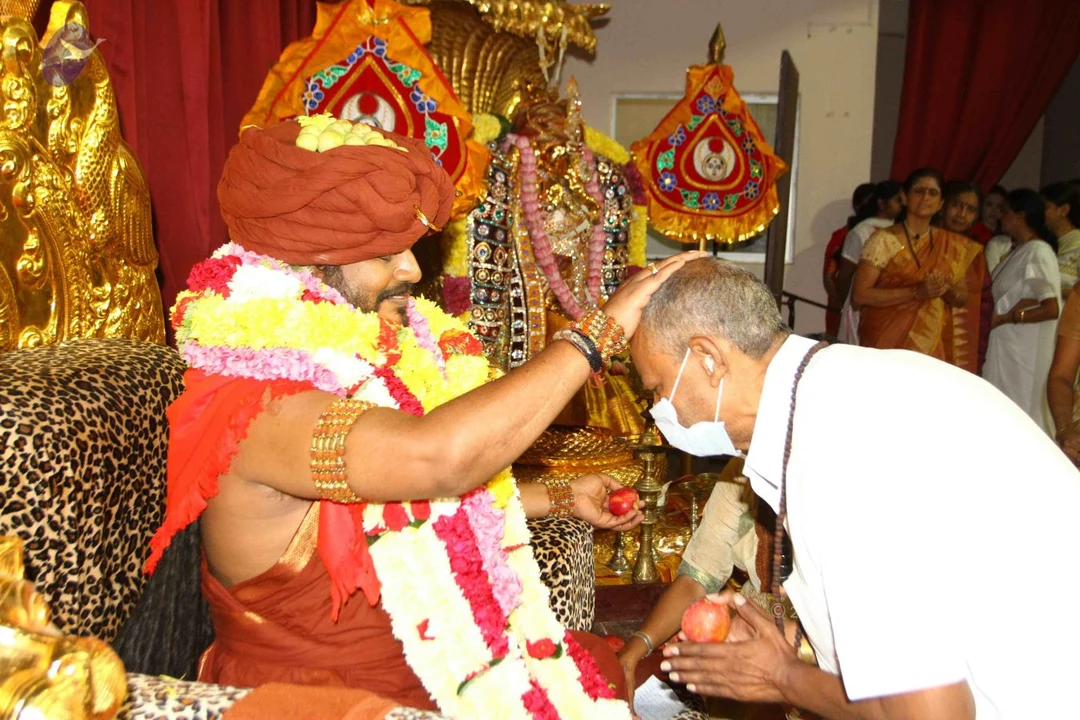
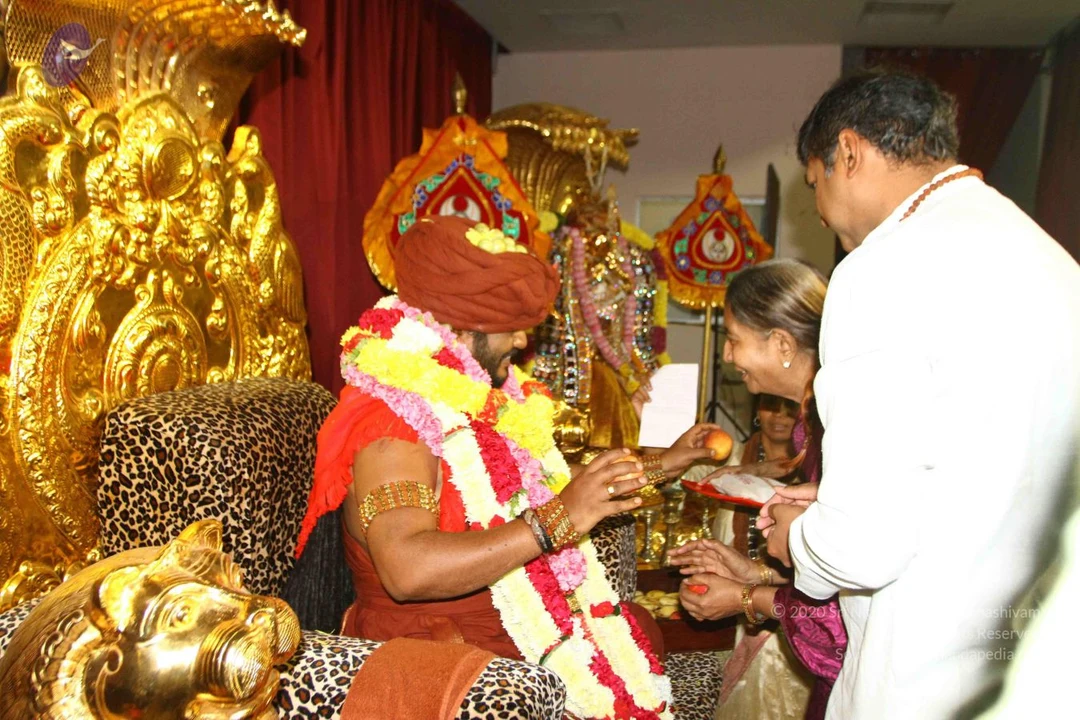
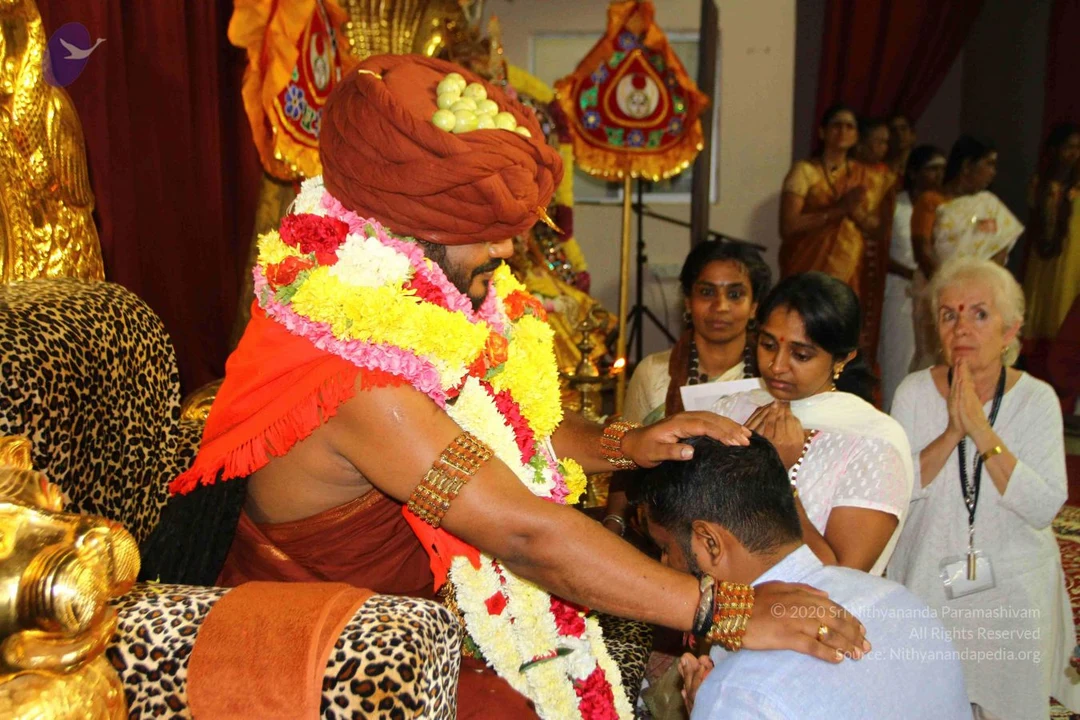
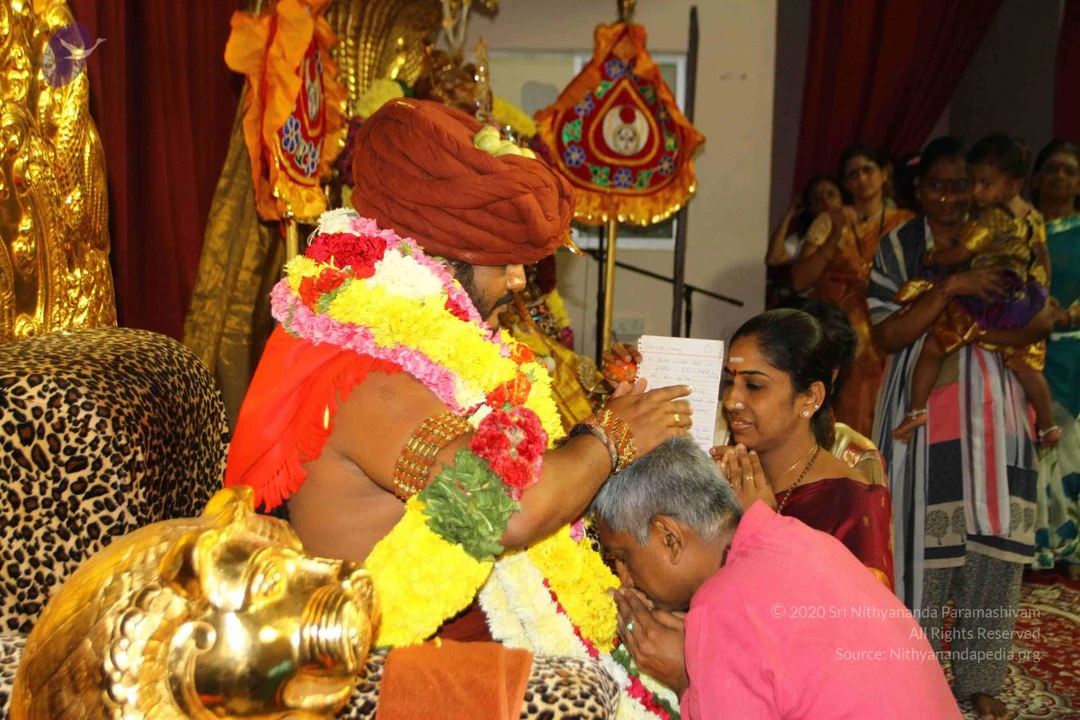
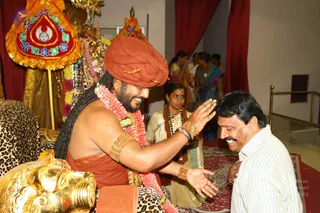
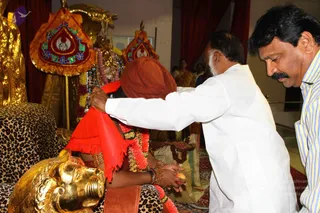
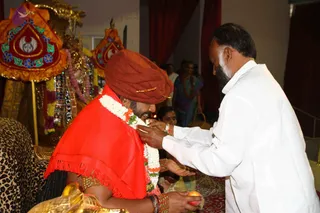
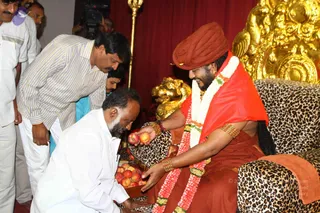
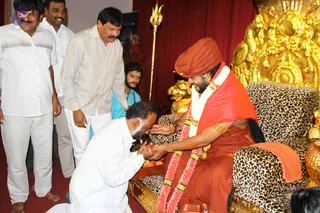
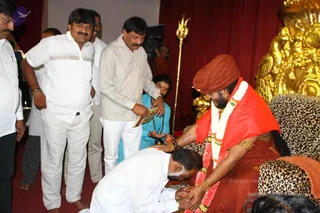
A photograph of an indoor ritual blessing. A bare-chested figure in an orange-red turban with gold ornaments and a long pink-and-white flower garland sits on a leopard-print seat, placing his right hand on the head of a smiling man in a white-and-blue striped shirt who bows before him. Behind them a golden ornate canopy with a red and blue embroidered panel, a golden lion-shaped base, and a woman in a cream sari with a rudraksha mala watch; other devotees in saffron and colourful saris stand near red curtains.A photograph of a ceremonial moment in a temple hall. In the foreground, a seated figure wearing a red-orange turban, a red shawl draped over the shoulders, and layered gold and red garlands is receiving an offering from a standing man in a white kurta and white dhoti, who leans forward to present something to the figure's hands. To the right, a man in a striped yellow and blue shirt watches closely. Behind them, a golden ornamented throne with a leopard-print cushion, a golden lion-faced armrest, and a gilded decorative canopy in red and gold with a blue and green floral border frame the scene. A woman in a cream sari sits in the background on a patterned carpet, and red curtains hang at the back of the hall.A photograph of a devotee in a white shirt and trousers placing a hand on the shoulder of a seated figure in a red turban and red shawl with fringed edges. The seated figure wears a white and orange flower garland, gold bangles and an ornate golden armlet, and holds a red-and-gold fruit. Behind them stands a decorated golden palanquin or vehicle with a red-and-gold canopy embroidered with blue flowers and a crescent-moon emblem, draped with pink and white flower garlands. Other people stand in the background in saris and white clothing. The setting is a hall with maroon curtains and a red patterned floor covering. The seated figure's appearance matches the page's a person claim only partially; the figure is shown receiving honour in a ceremonial setting.A photograph of a seated man in a rust-red turban, red-orange shawl over a dark red robe, wearing a white and red flower garland, gold armbands and bangles, receiving apples from a kneeling man in a white shirt and white dhoti with a white beard. The seated man sits on a leopard-print cushioned chair in front of an ornate gold throne and a red curtain. Another man in a striped shirt leans in behind, and standing men at left look on. Apples are piled in a shallow brass tray on the floor. a person in the seated role of receiving offerings, identifiable by the red turban, red shawl and floral garland.A photograph in a red-curtained hall shows a seated figure on a leopard-print cushioned throne with an ornate gold backrest. He wears an orange-red turban, an orange-red shawl over a red-orange robe, a long white and pink flower garland, gold armbands and gold bangles. Beside him stands a gold trident, and a gold lion sculpture rests near the throne. A man in a white shirt and white trousers kneels before him, bowing his head and clasping his hands, while other men in white and striped shirts stand behind and a man in a turquoise shirt watches. A plate of fruit sits at the seat's base.Photograph of a seated figure in an orange-red turban and orange-red shawl, wearing a white flower garland and gold bangles, receiving devotion from a man in white kneeling and bowing his head forward, with hands extended toward the seated figure's feet in a padapuja-style gesture. The seated figure rests on a leopard-print cushioned chair in front of a gold ornate throne and a golden trident on the left. Standing men in white and cream shirts watch nearby, one holding a small booklet, and a man in a turquoise shirt with a rudraksha mala stands behind. Red carpet and maroon curtain form the background. Swamiji (probable) seated figure, presented with cues including a red turban, ornate gold jewellery, a flower garland and a throne setting.

nithya-kirtan

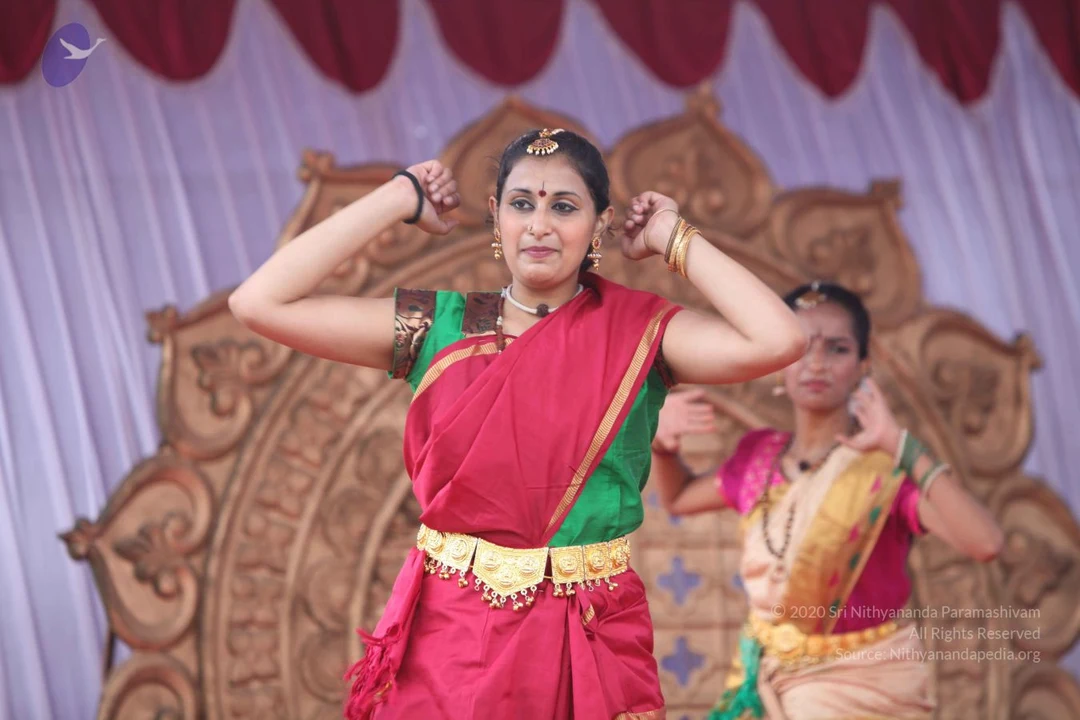
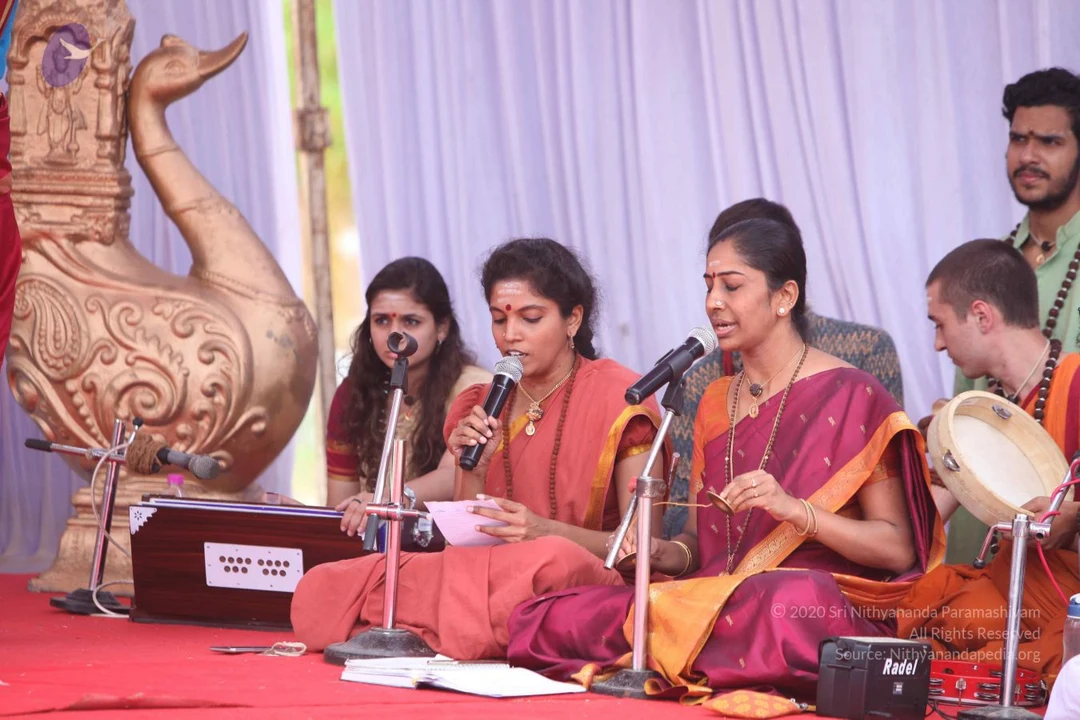
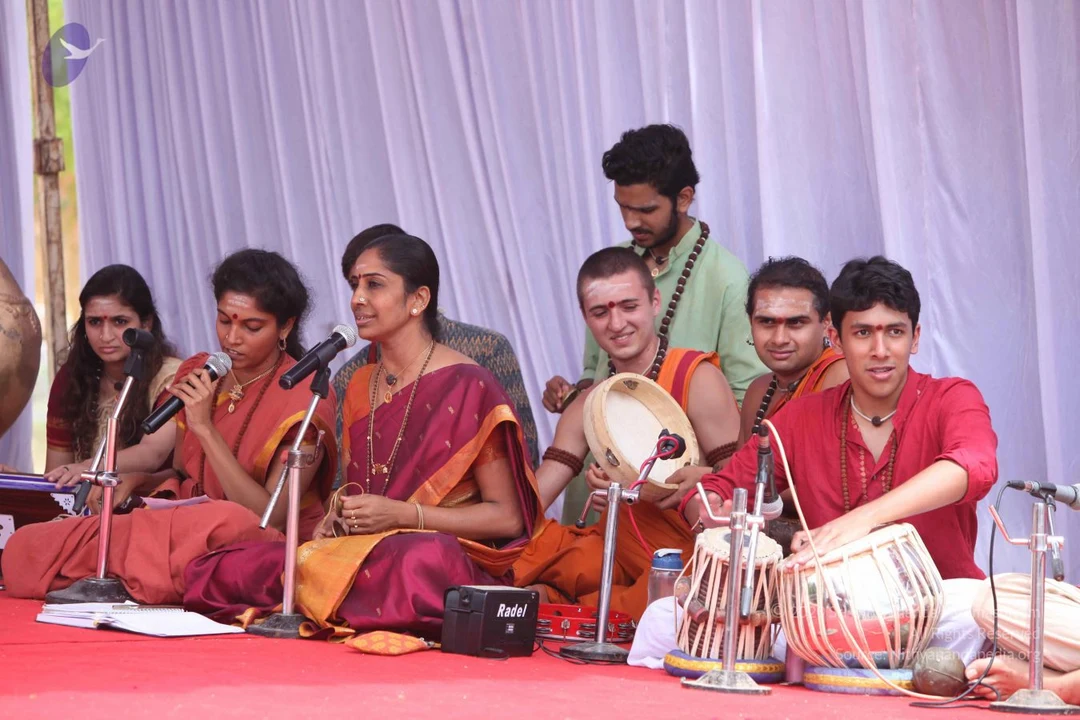
66 photosSource gallery
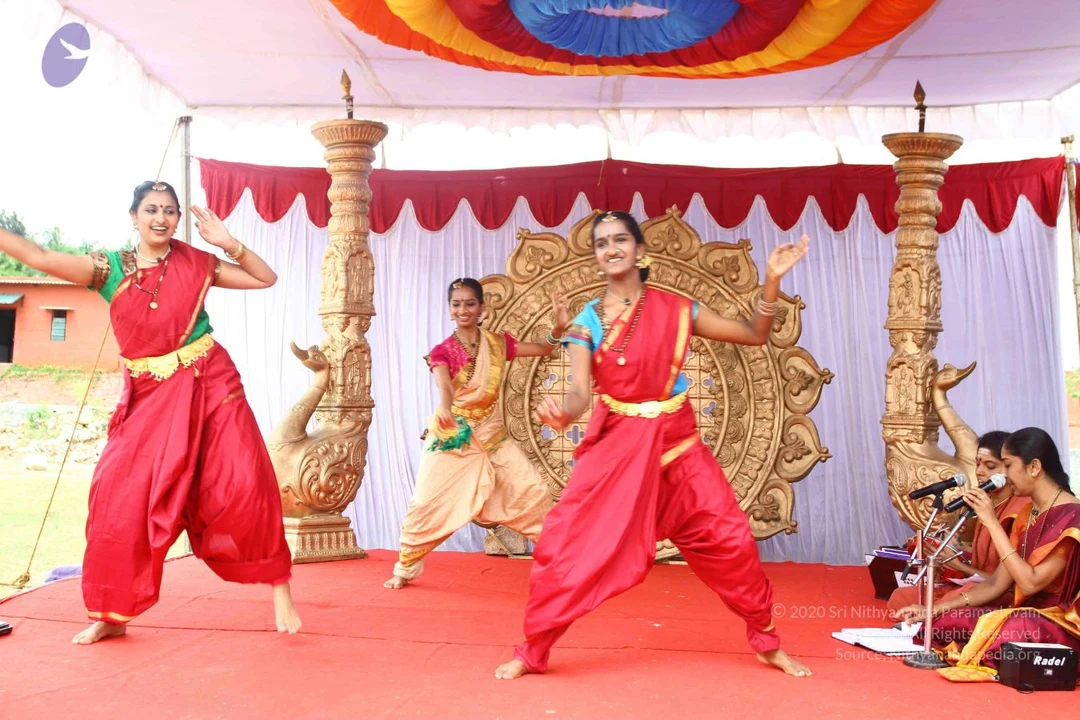
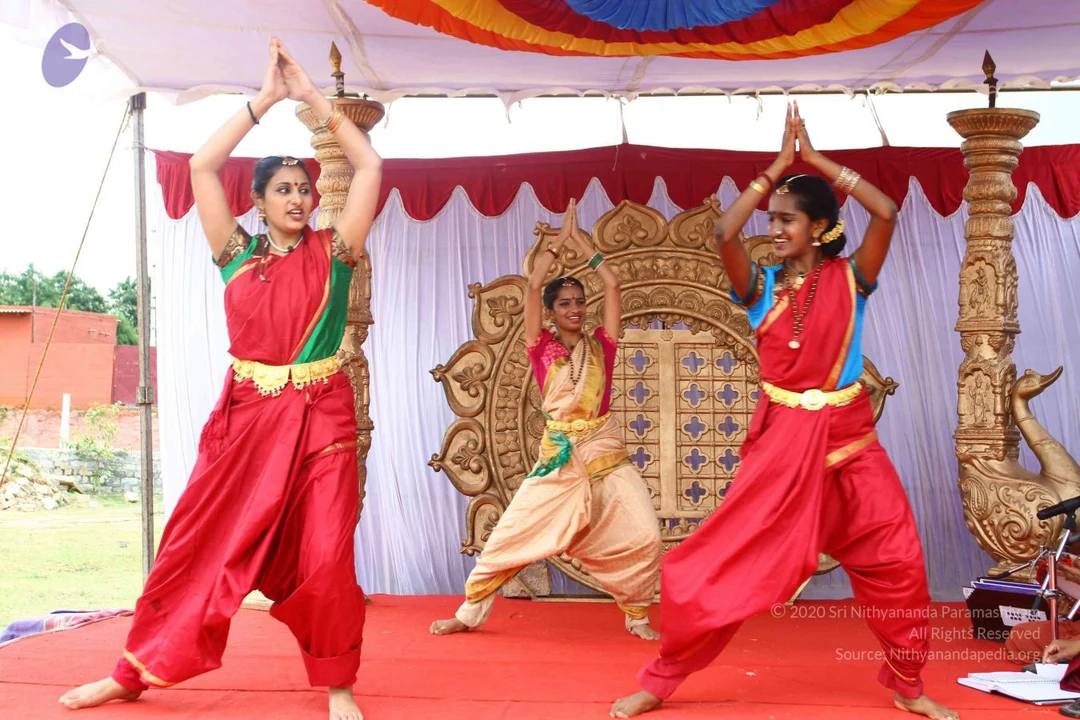
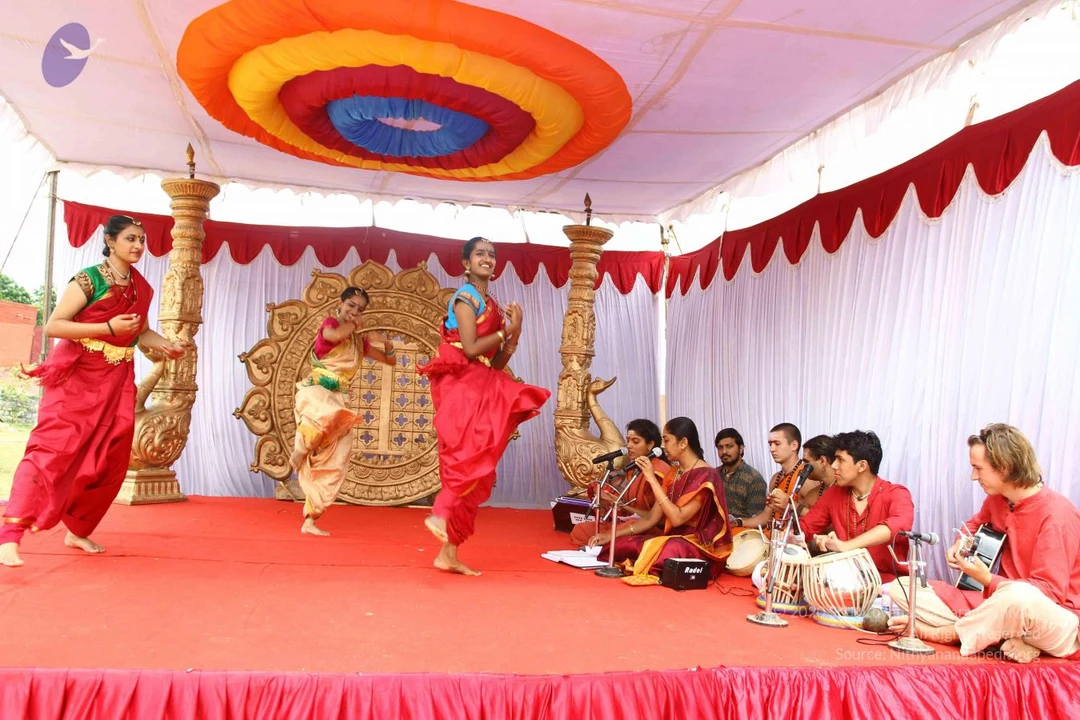
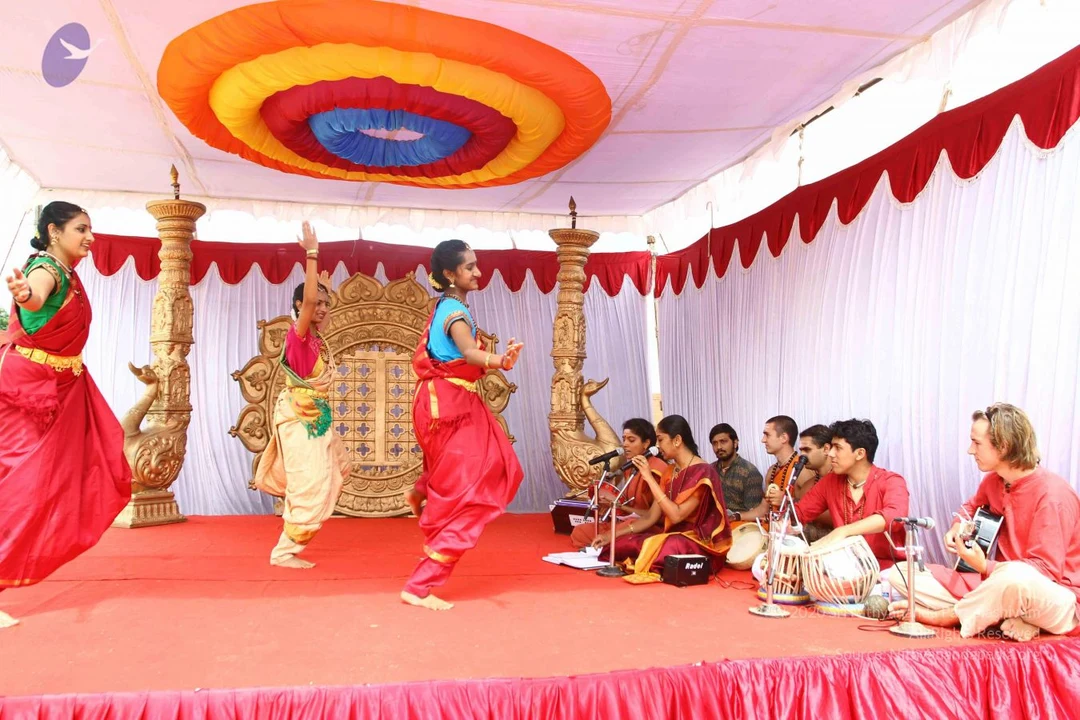
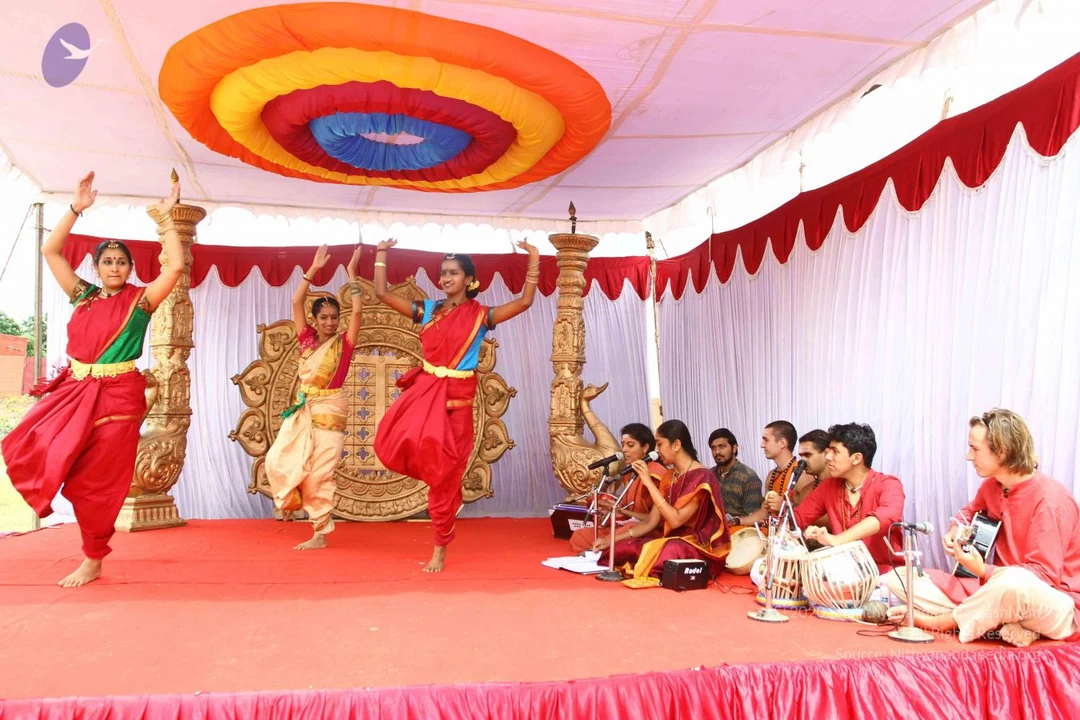
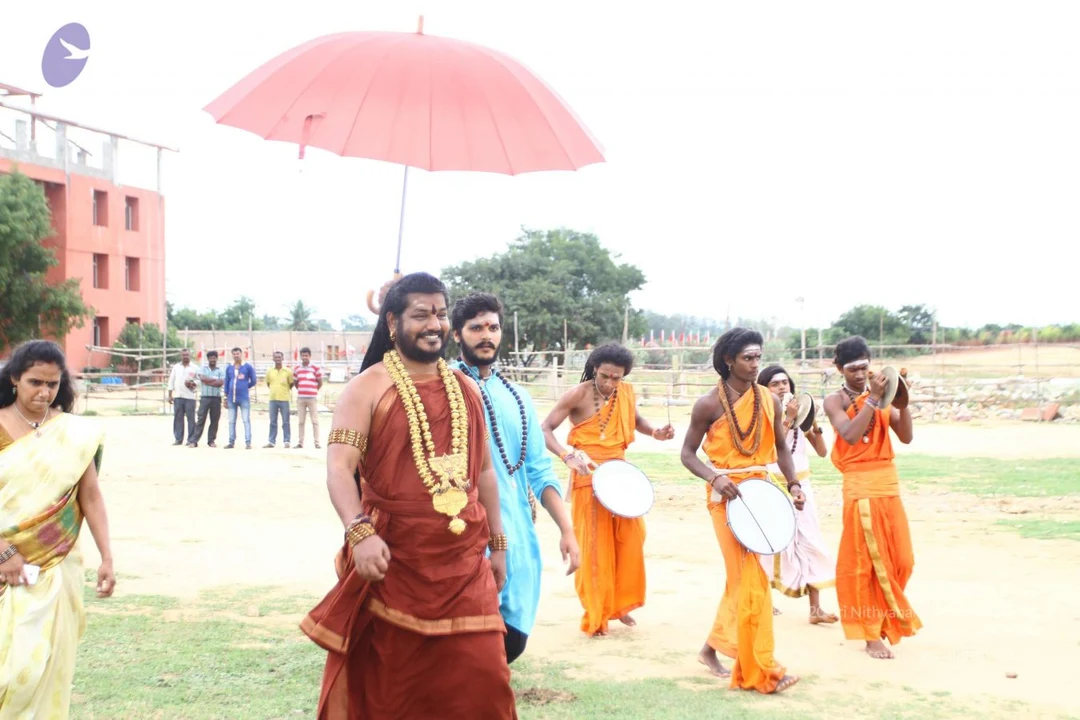
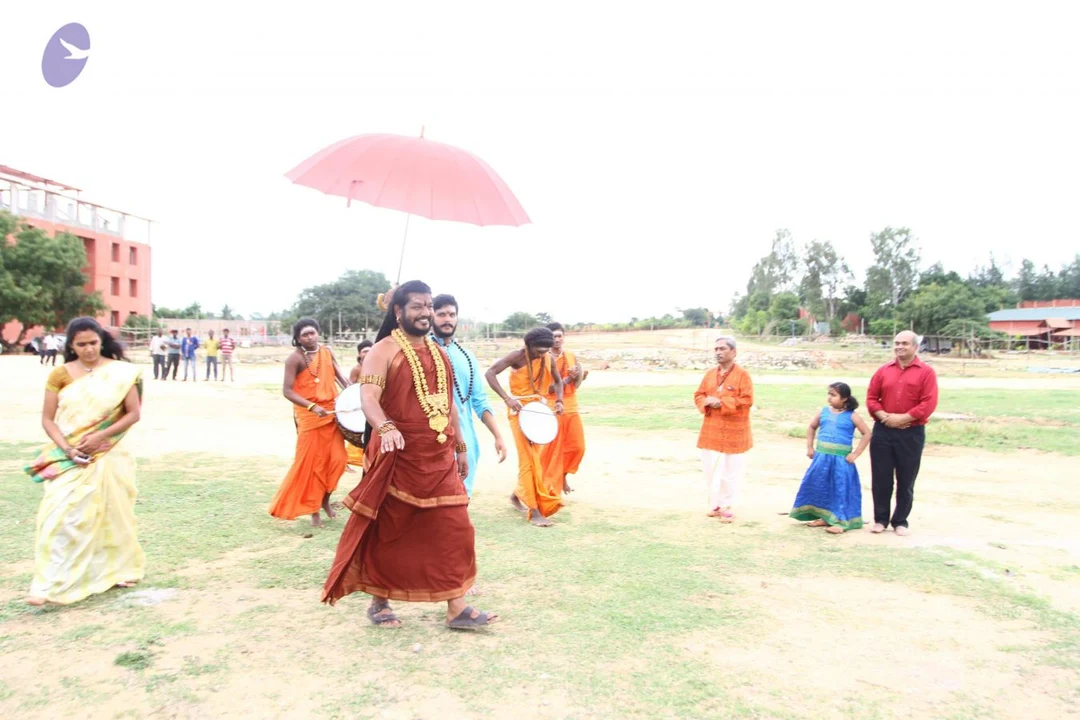
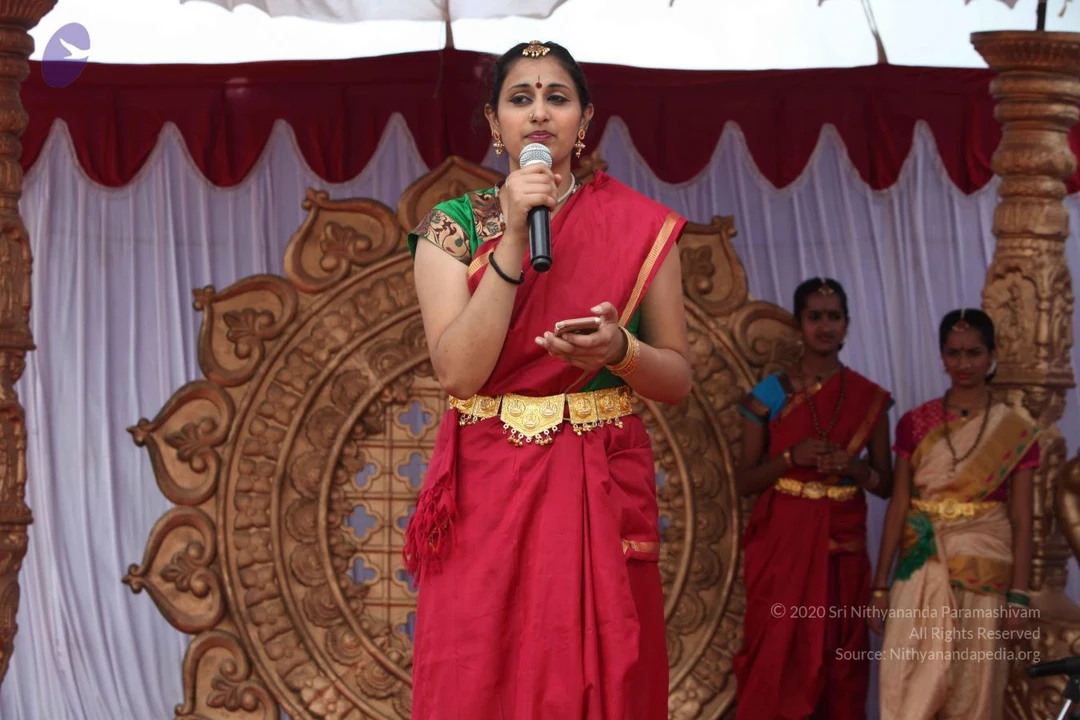
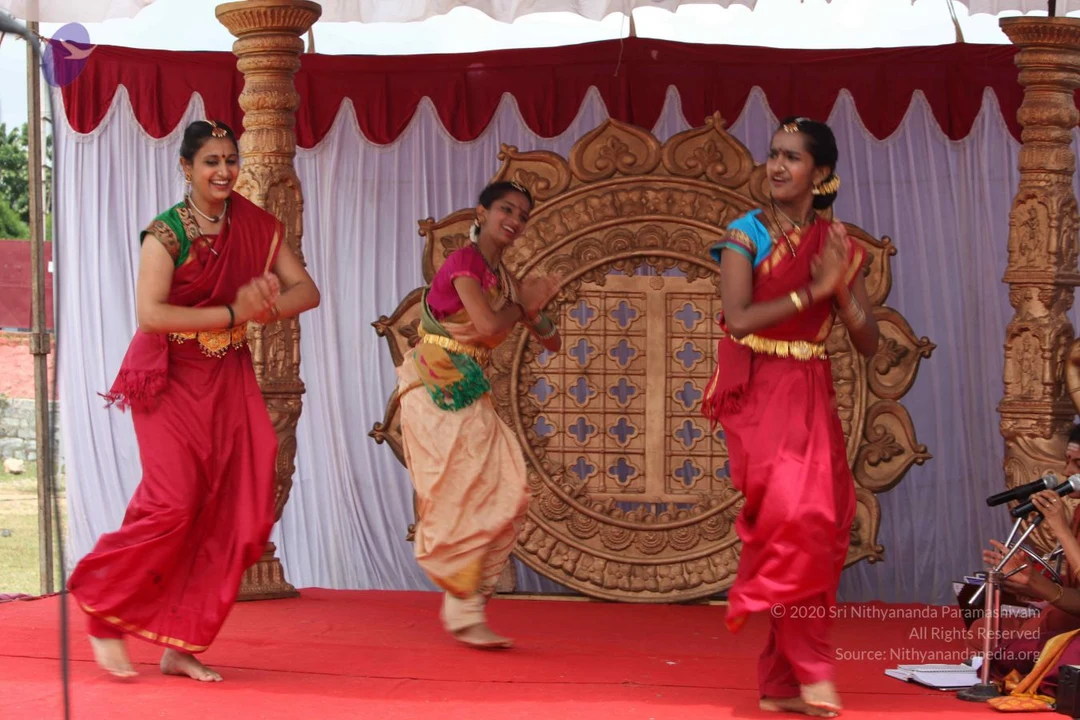
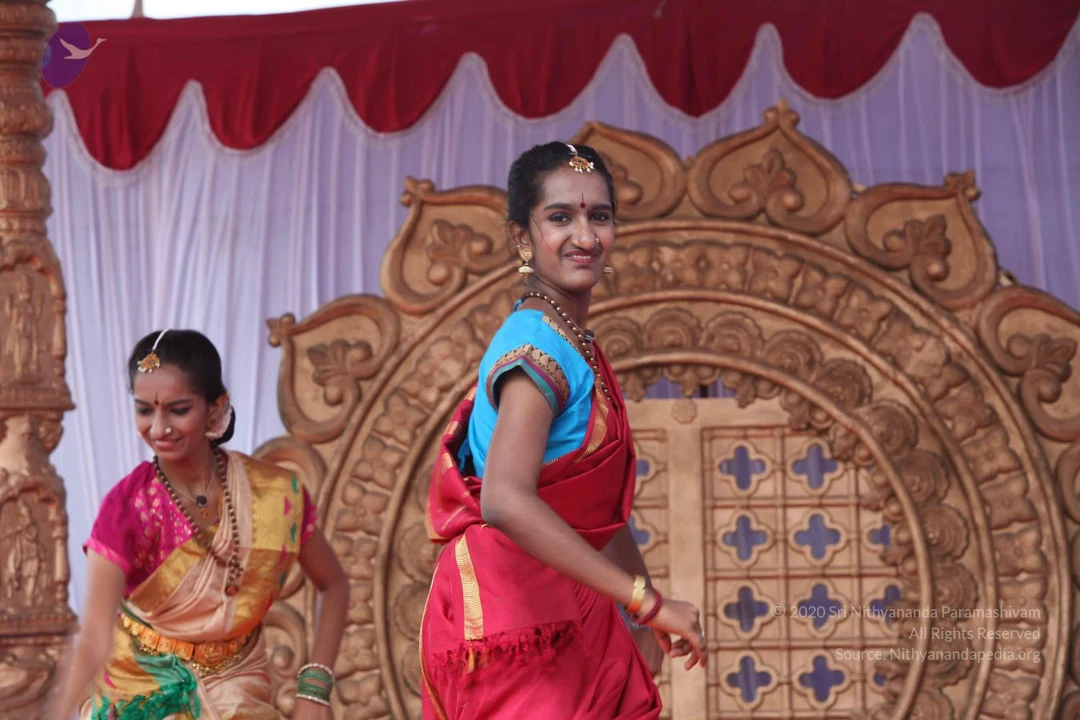
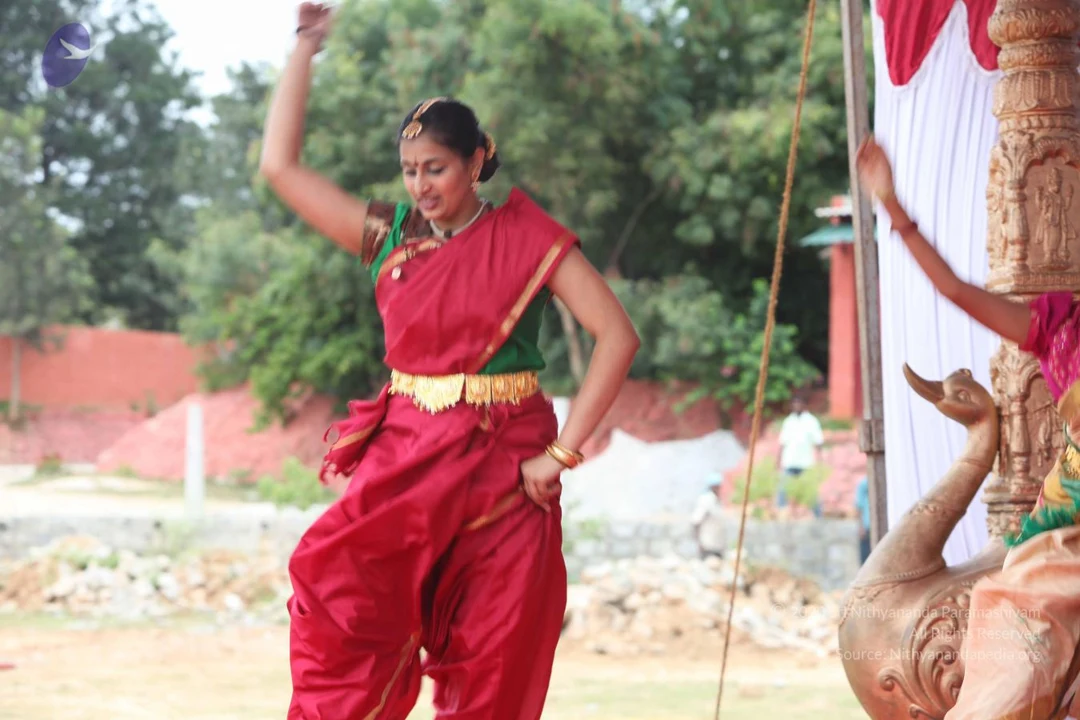
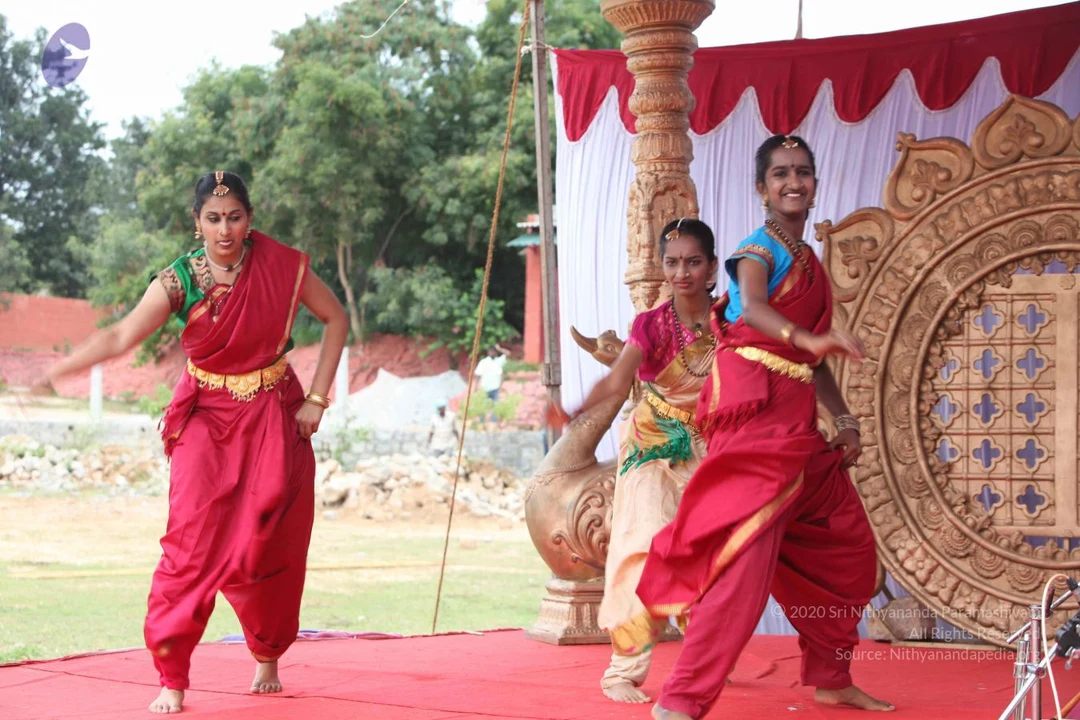
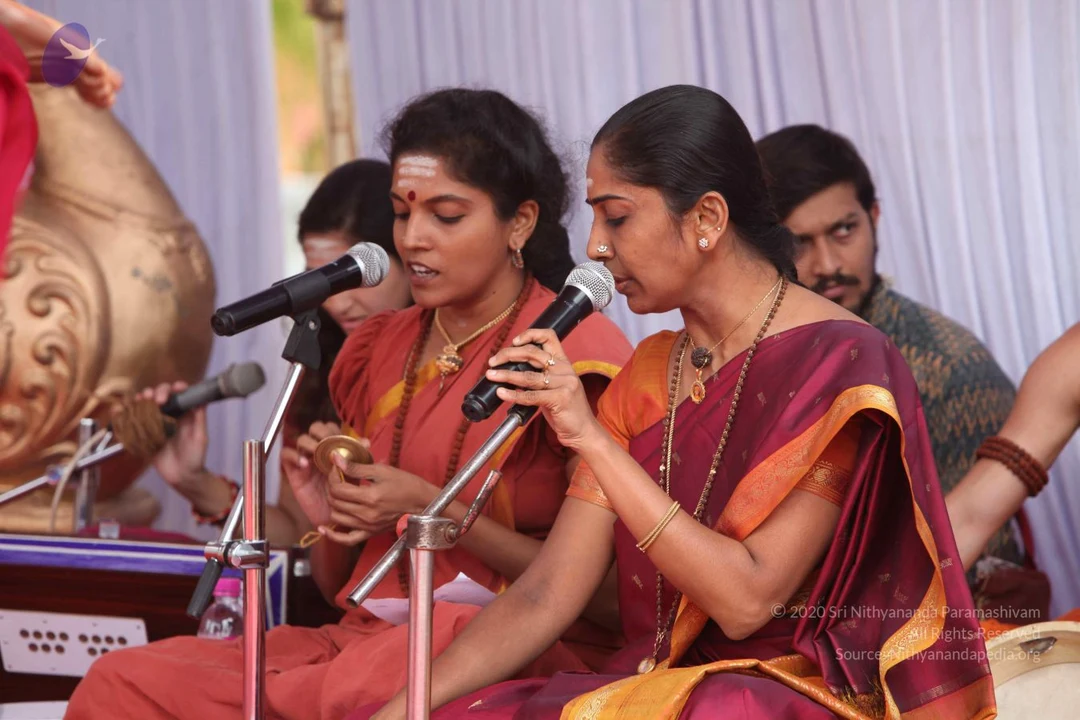
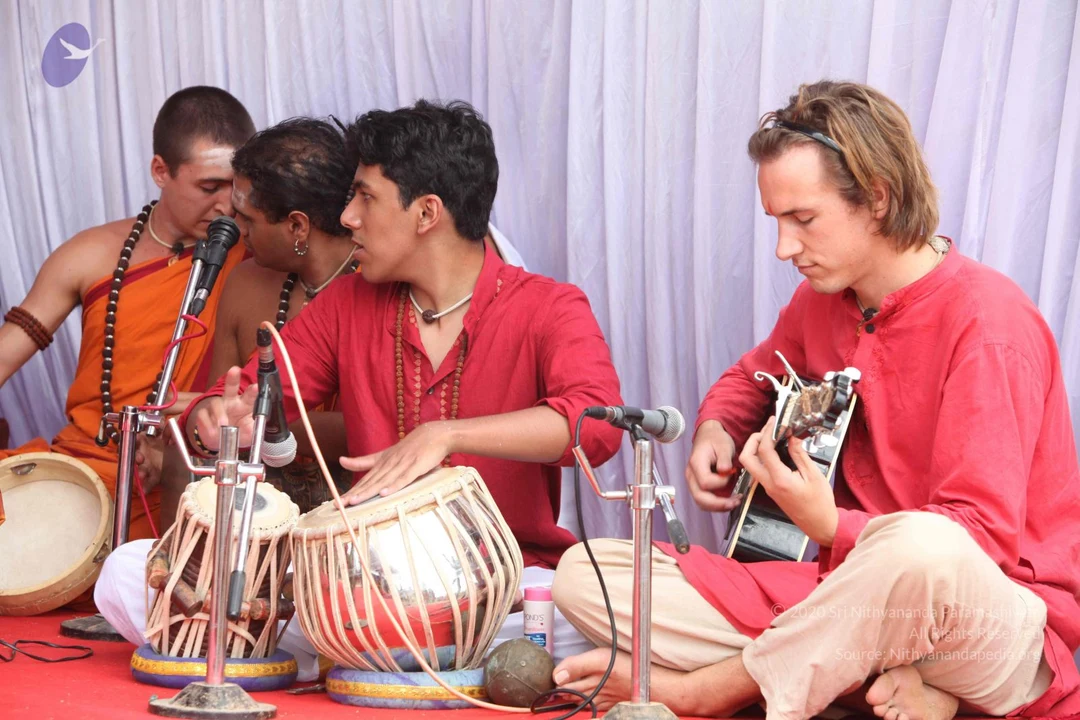
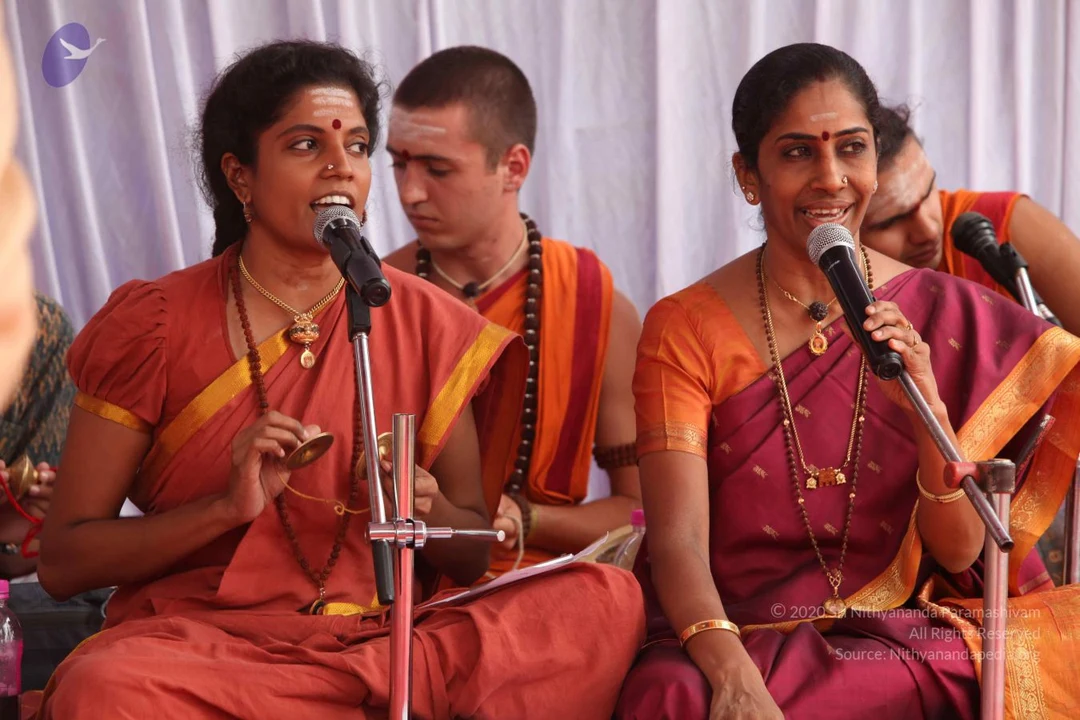
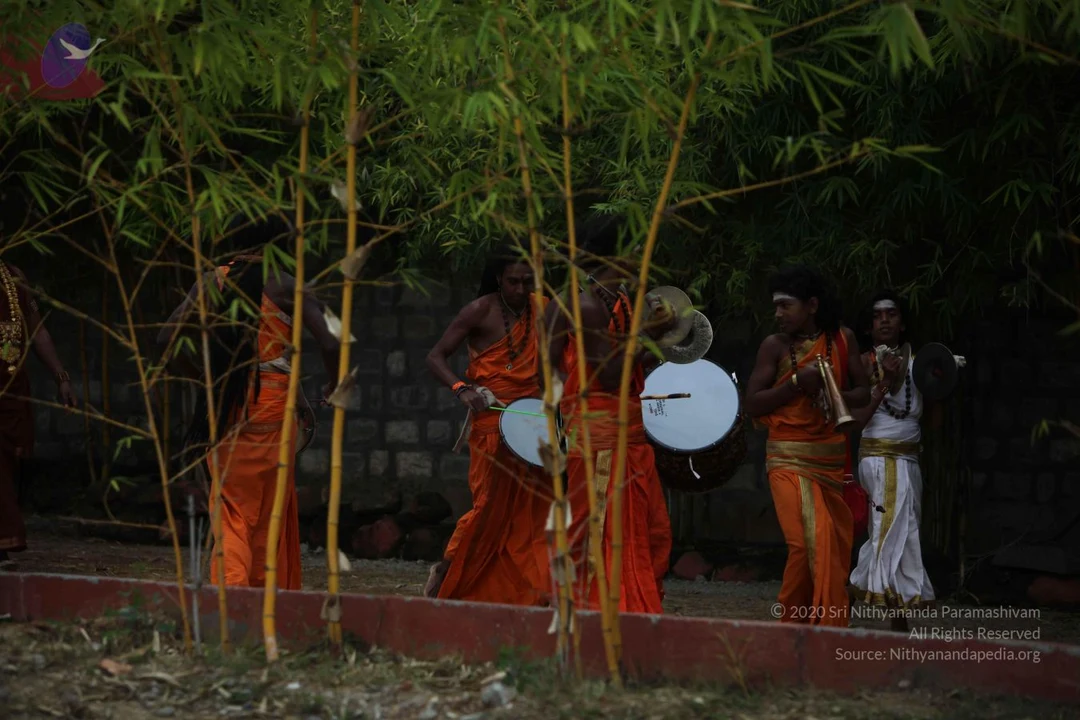
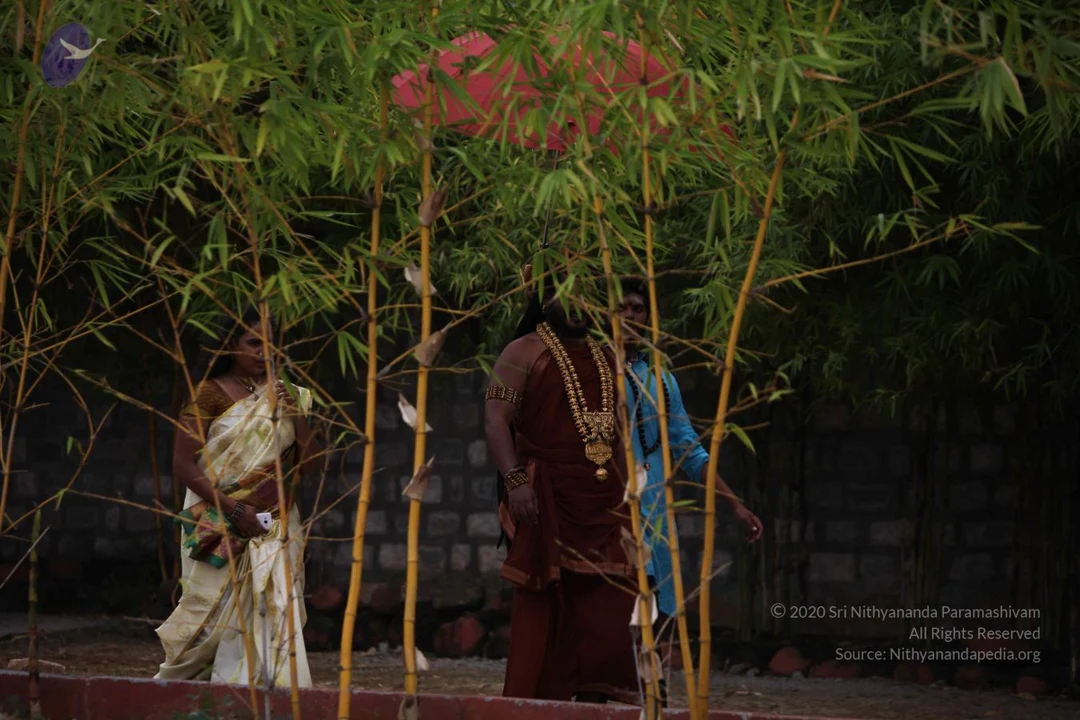
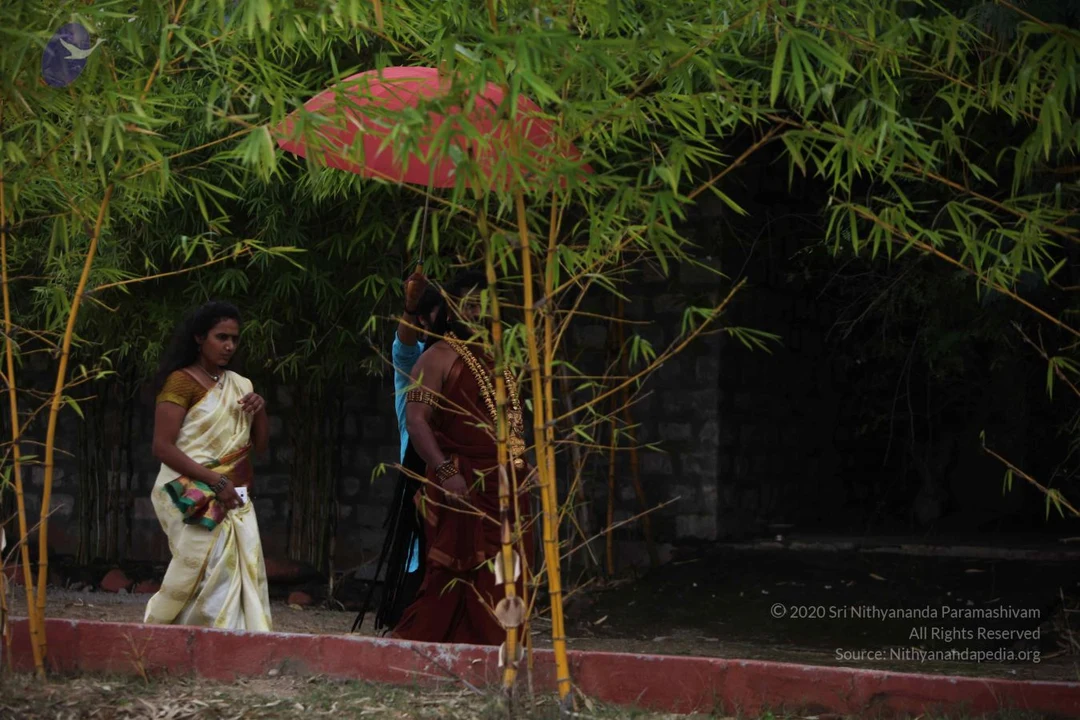
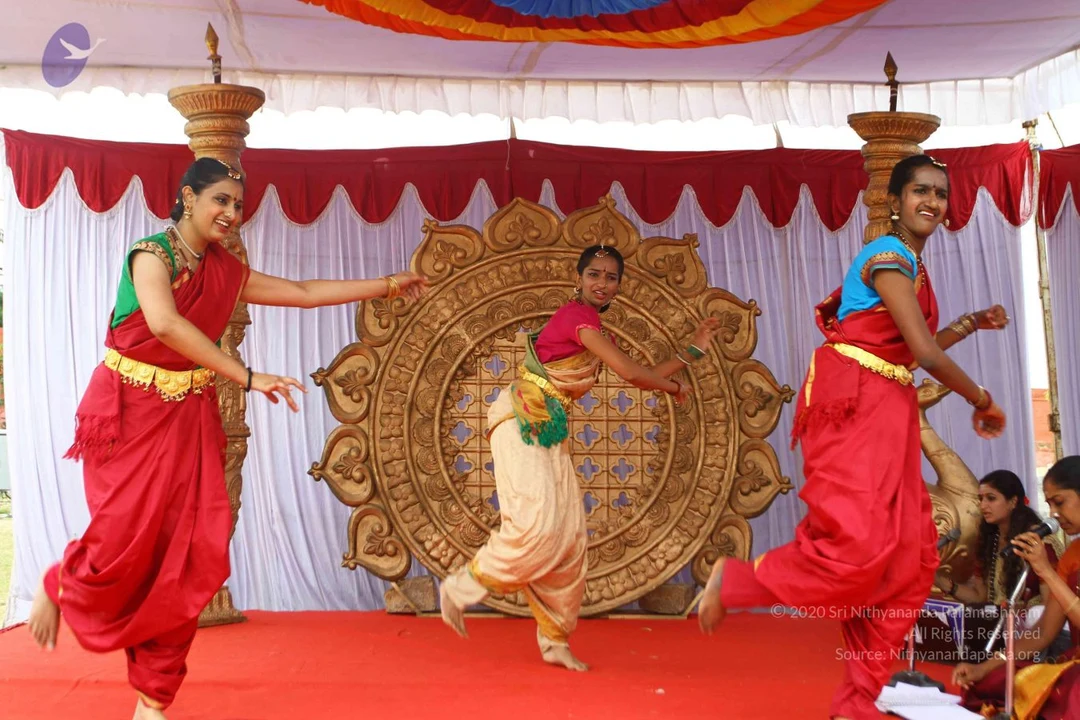
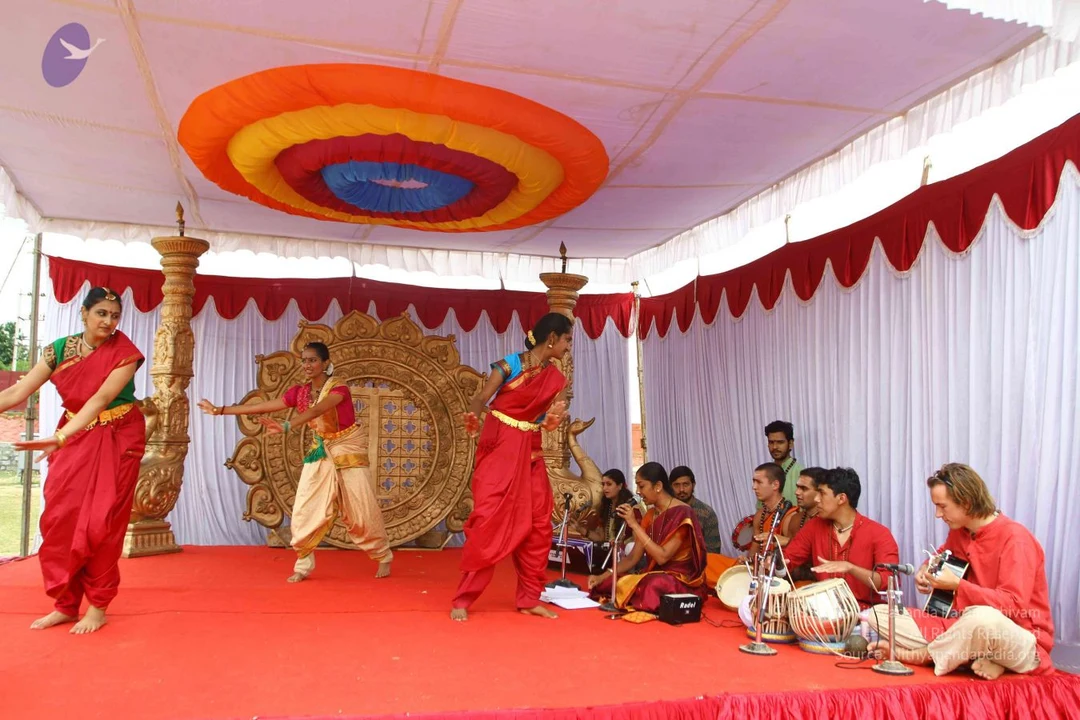
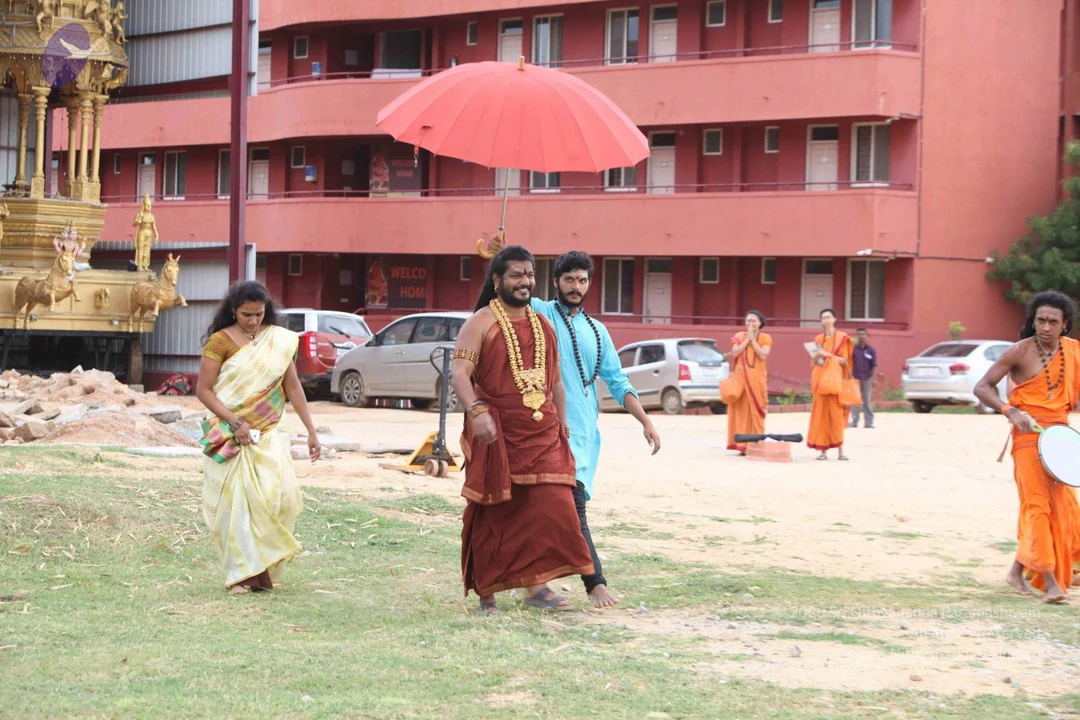
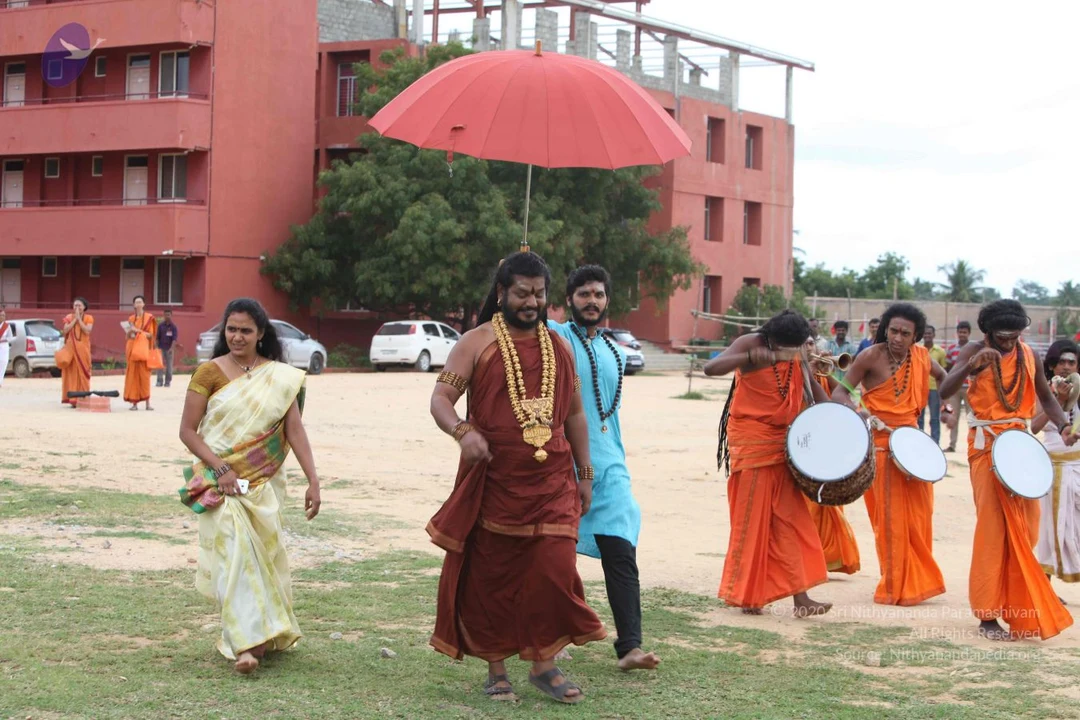
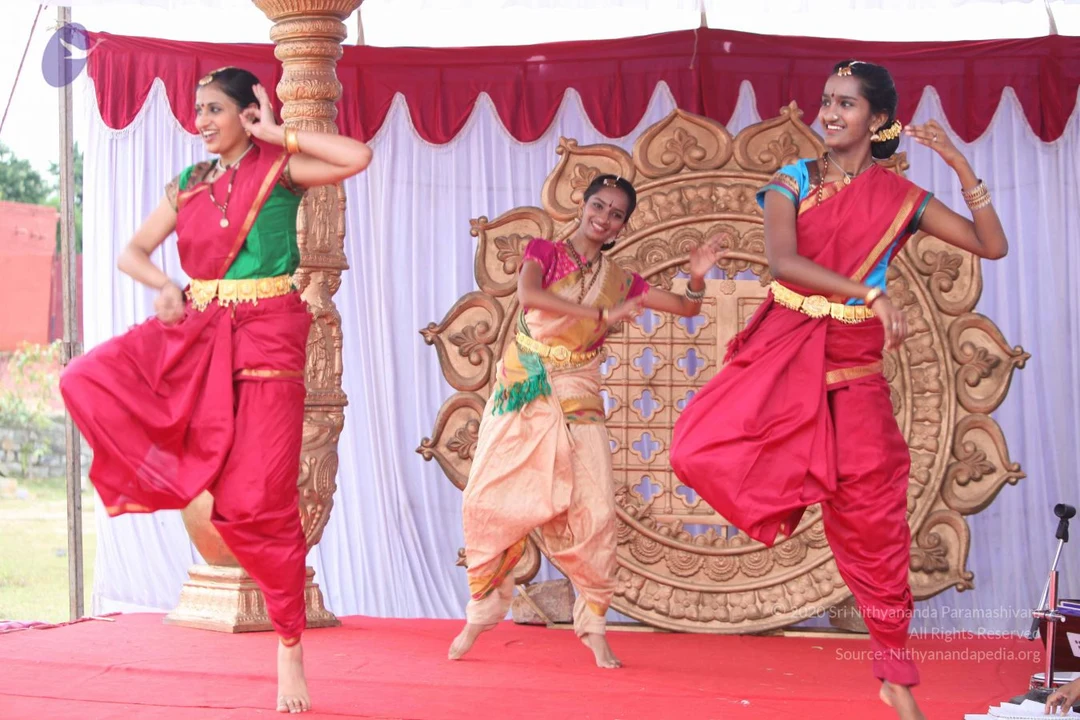
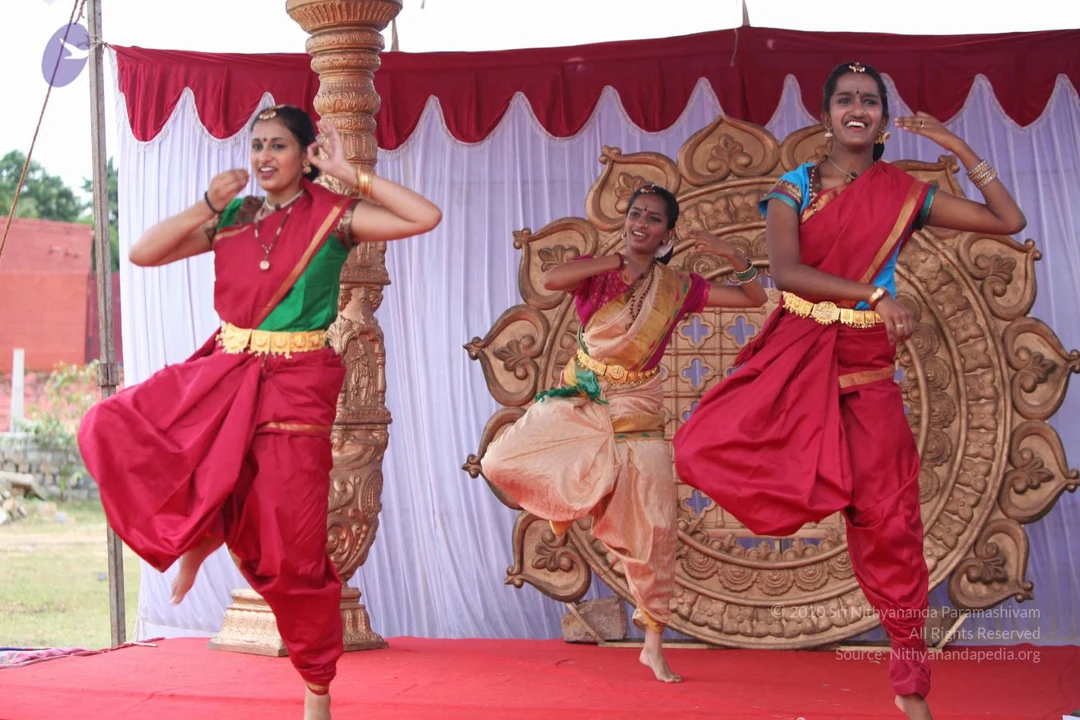
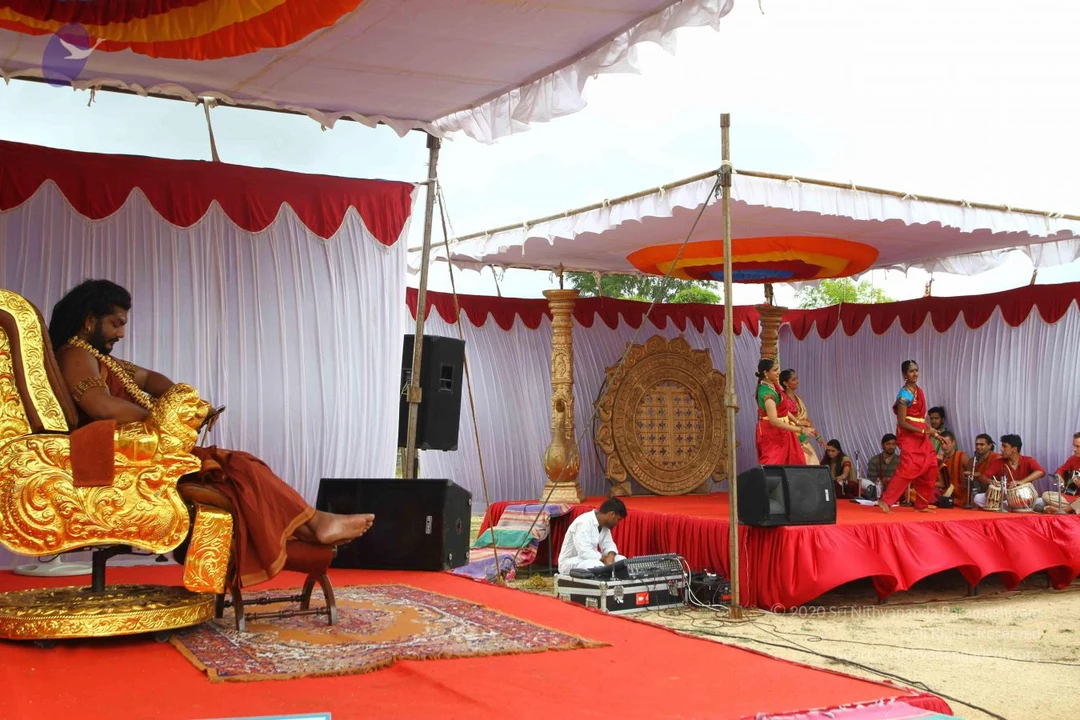
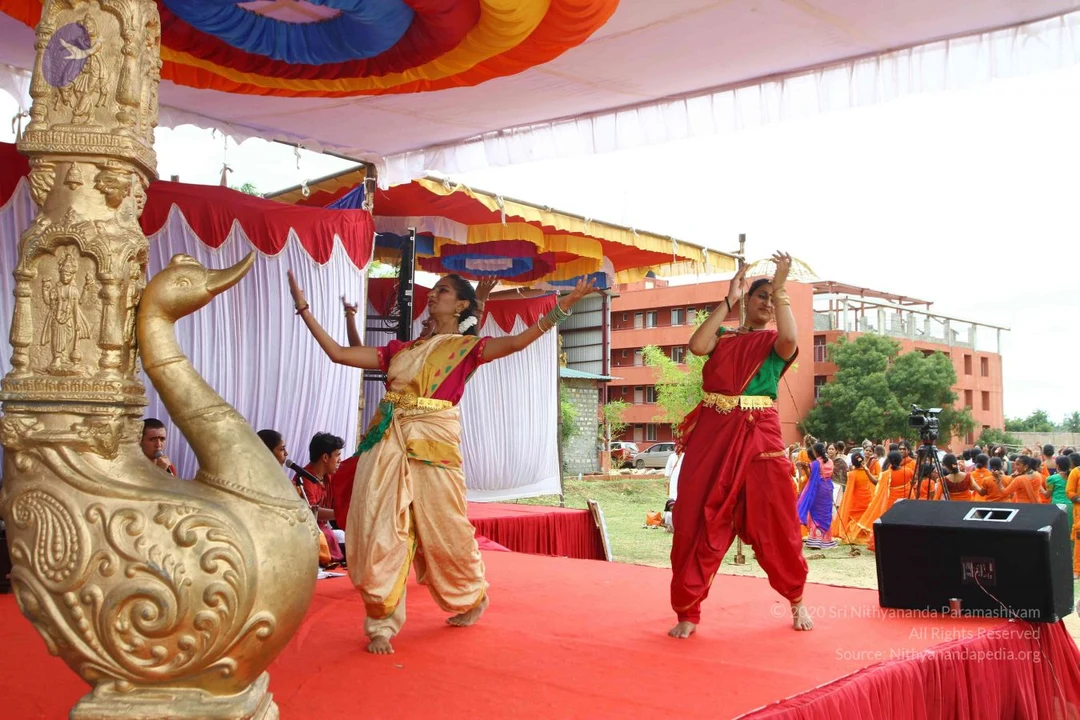
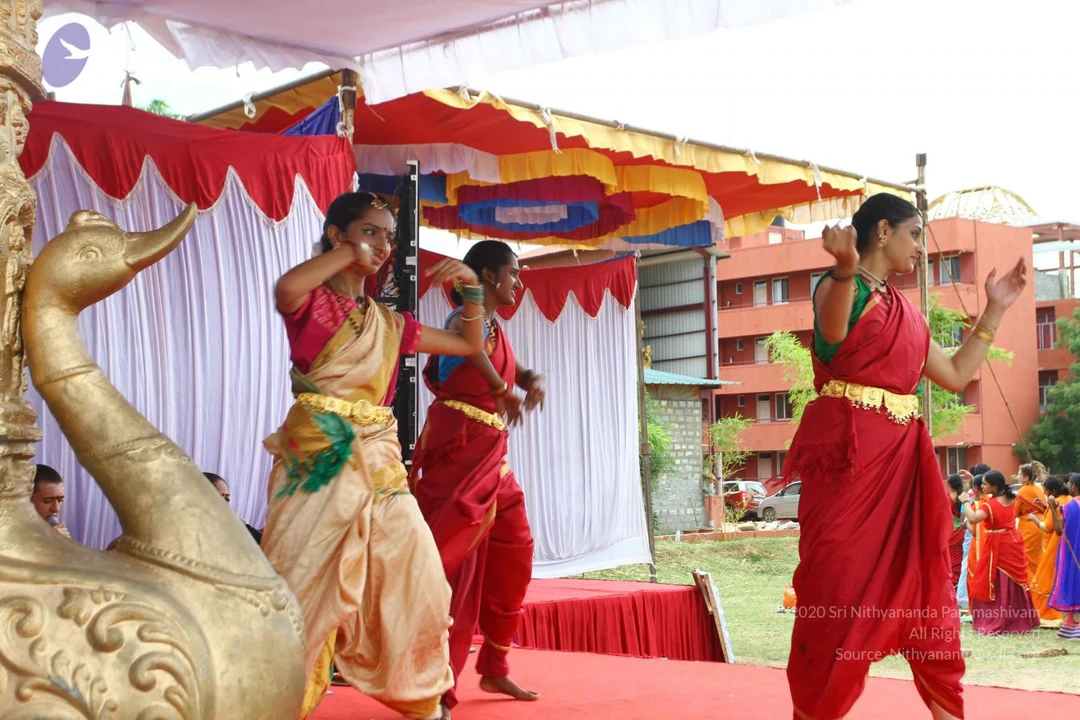
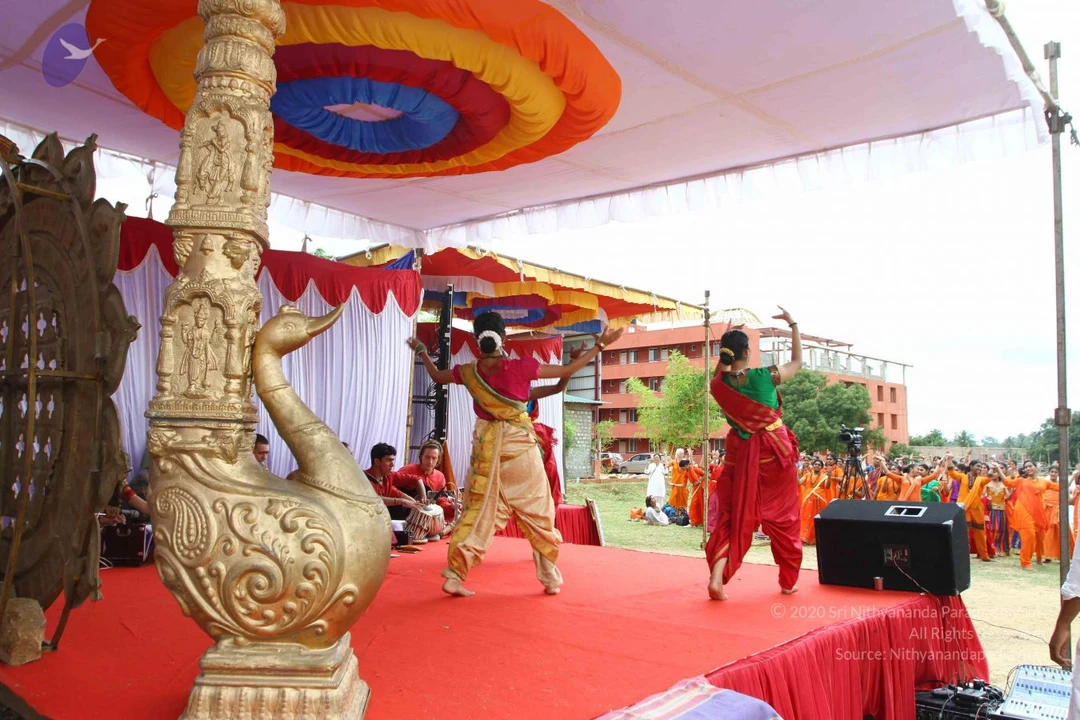
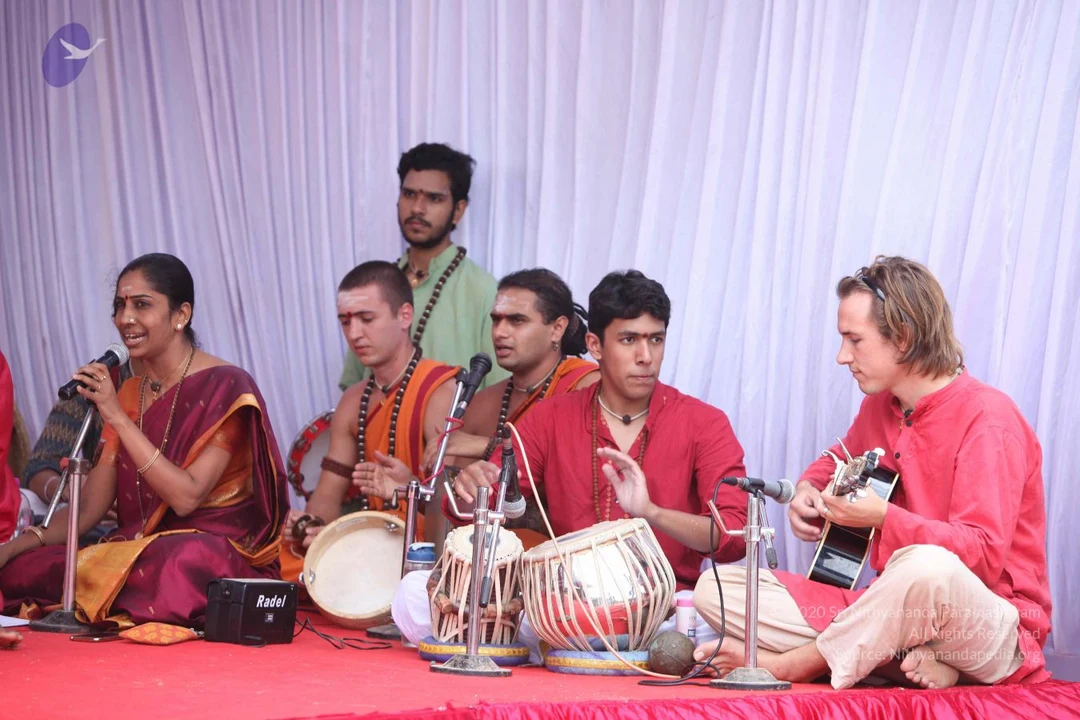
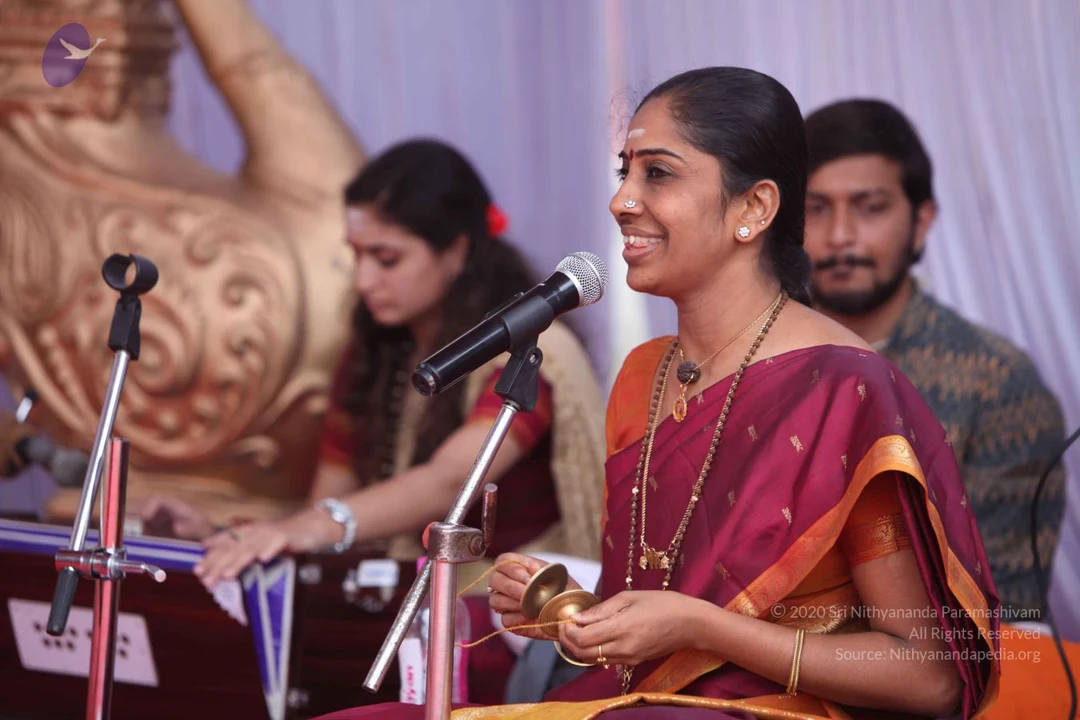
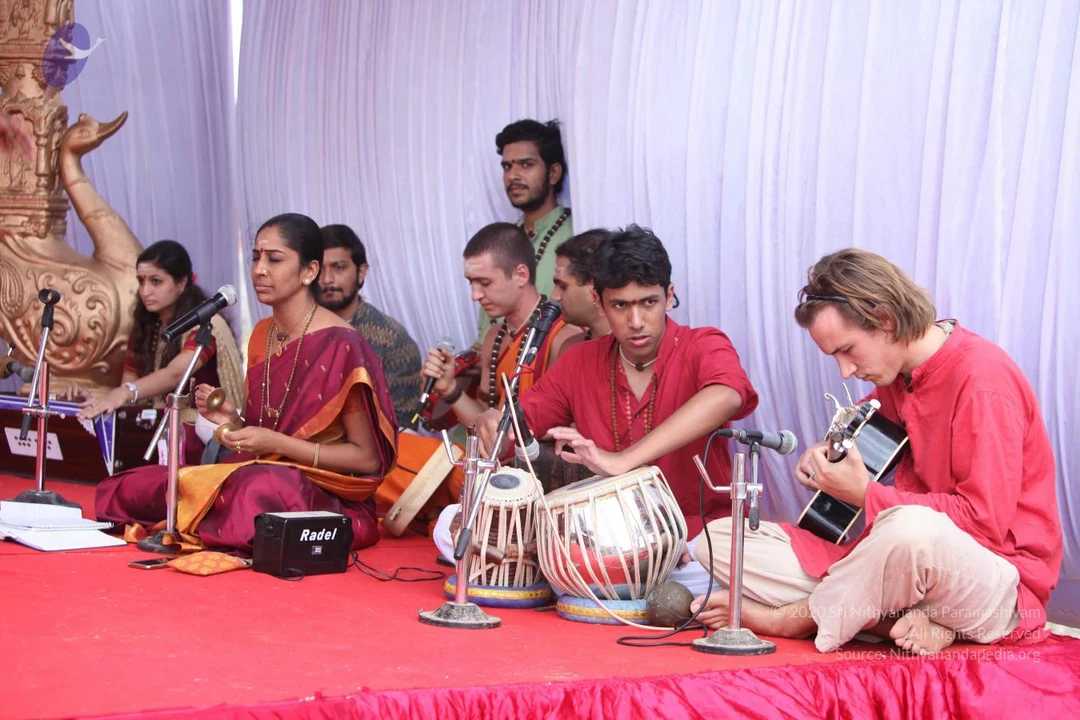
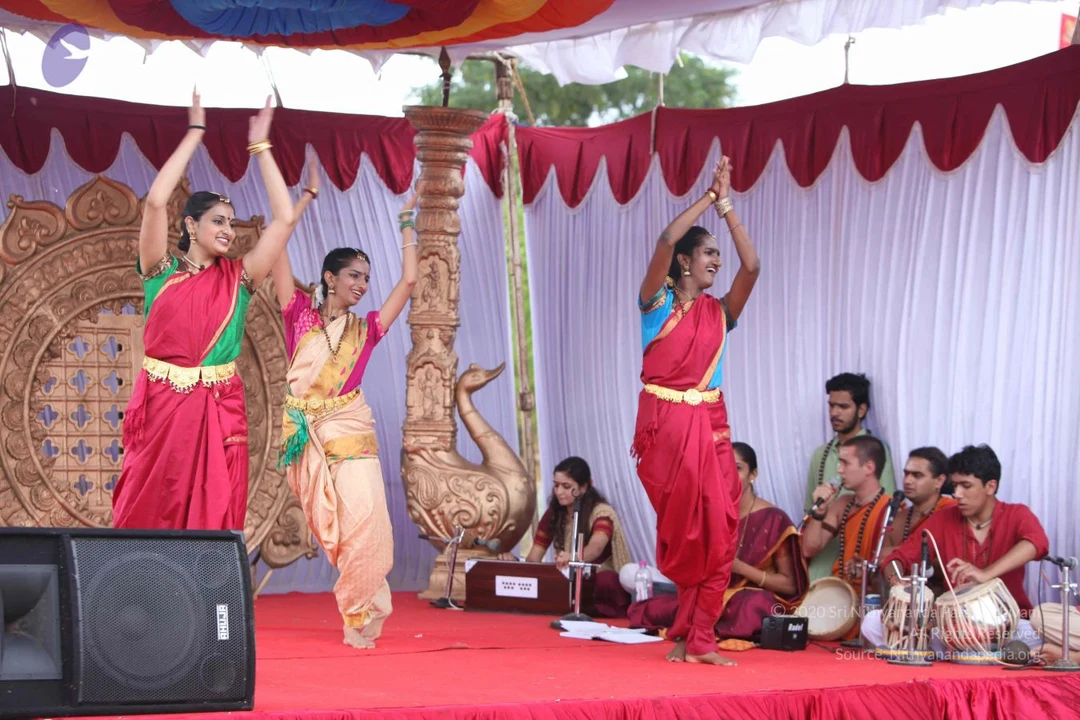
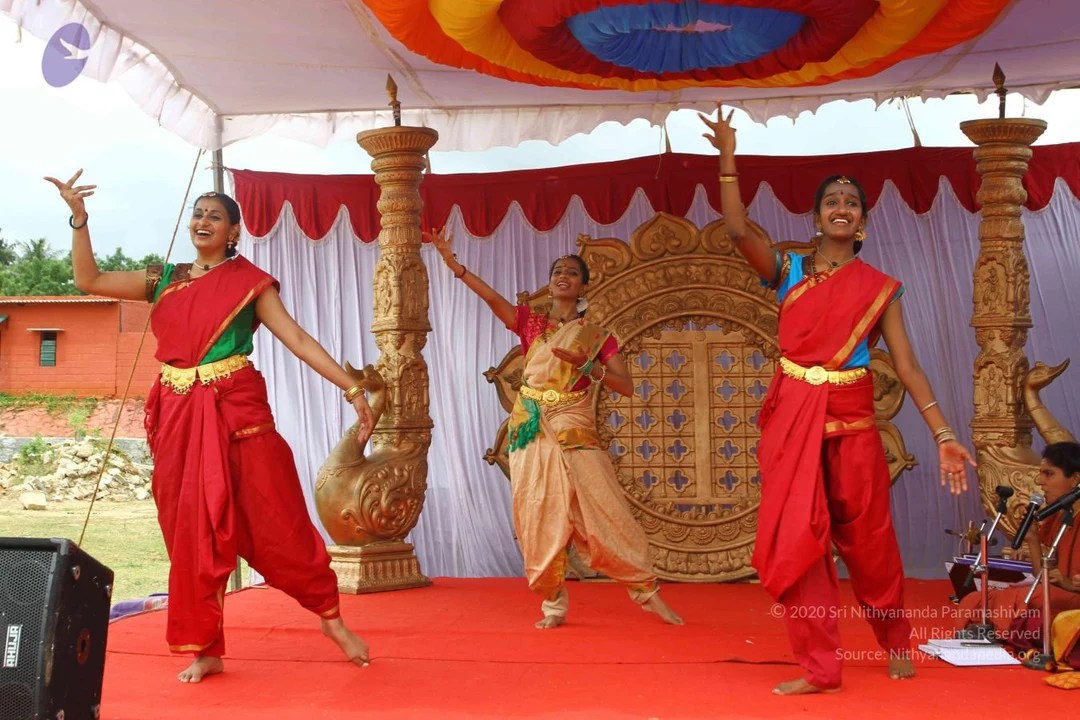
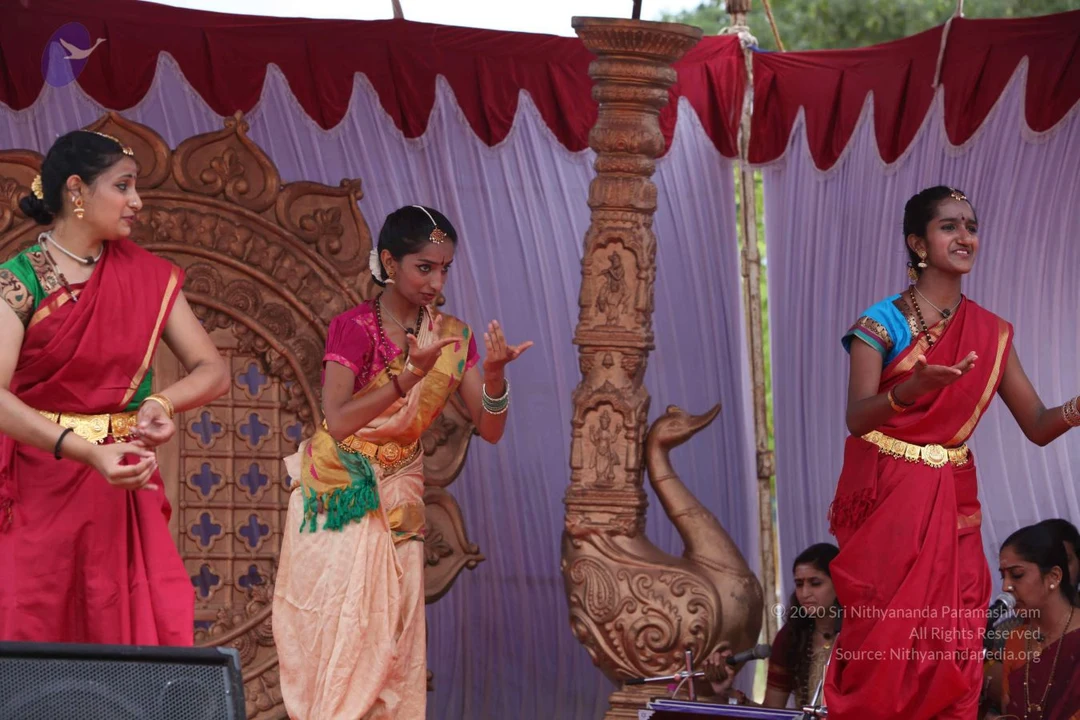
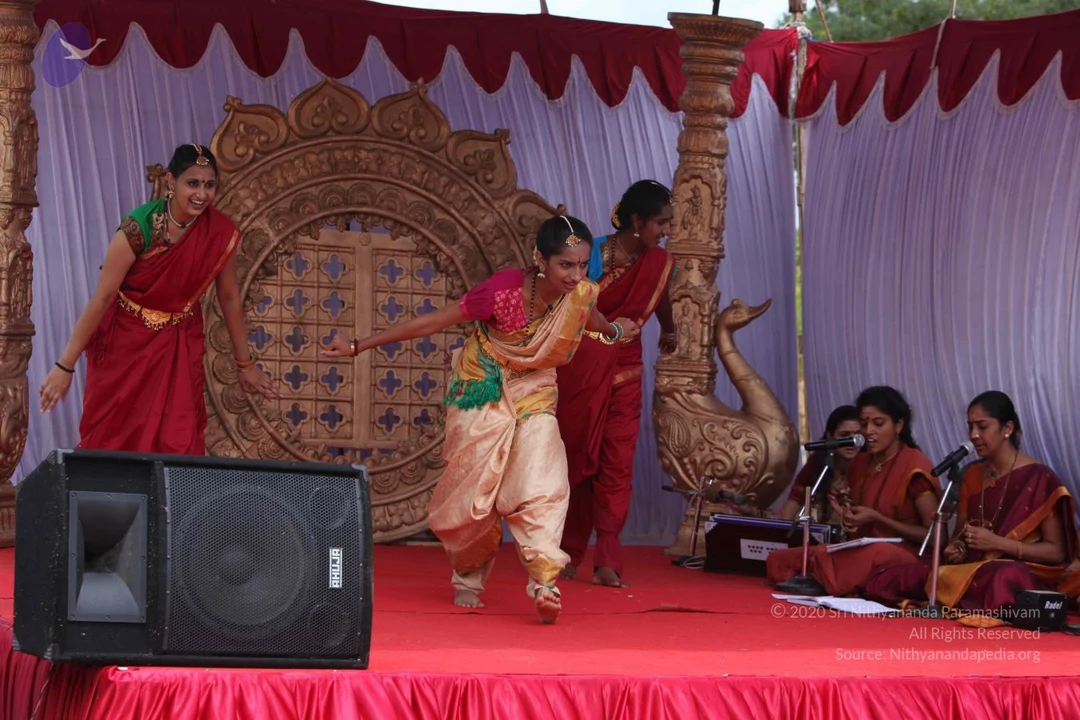
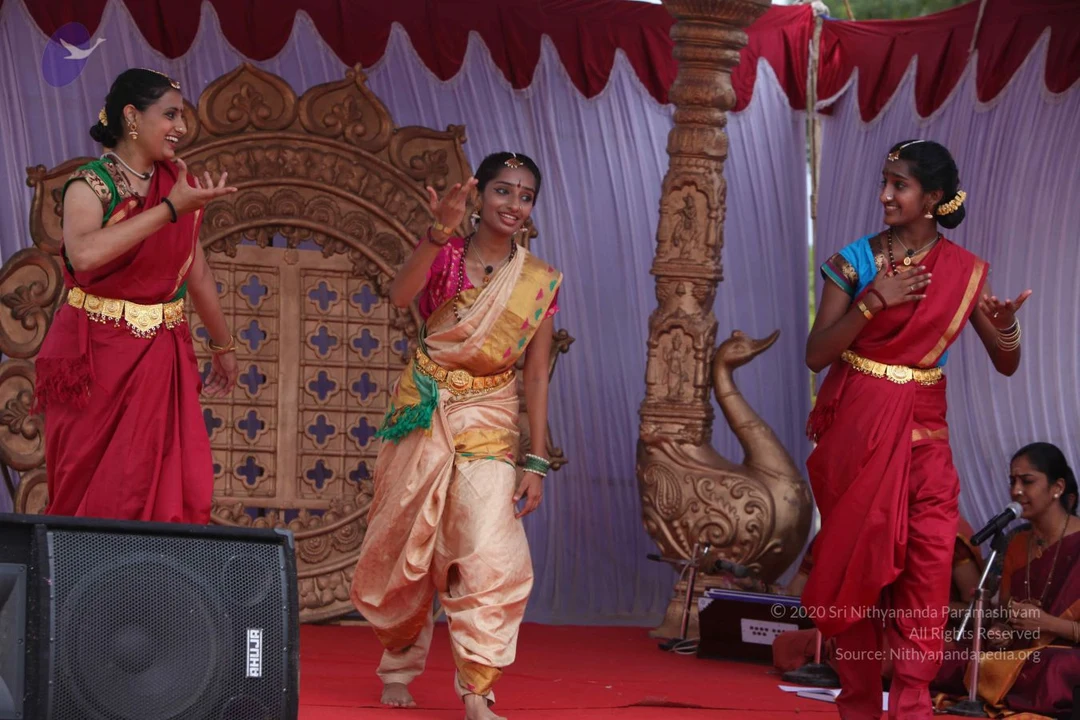
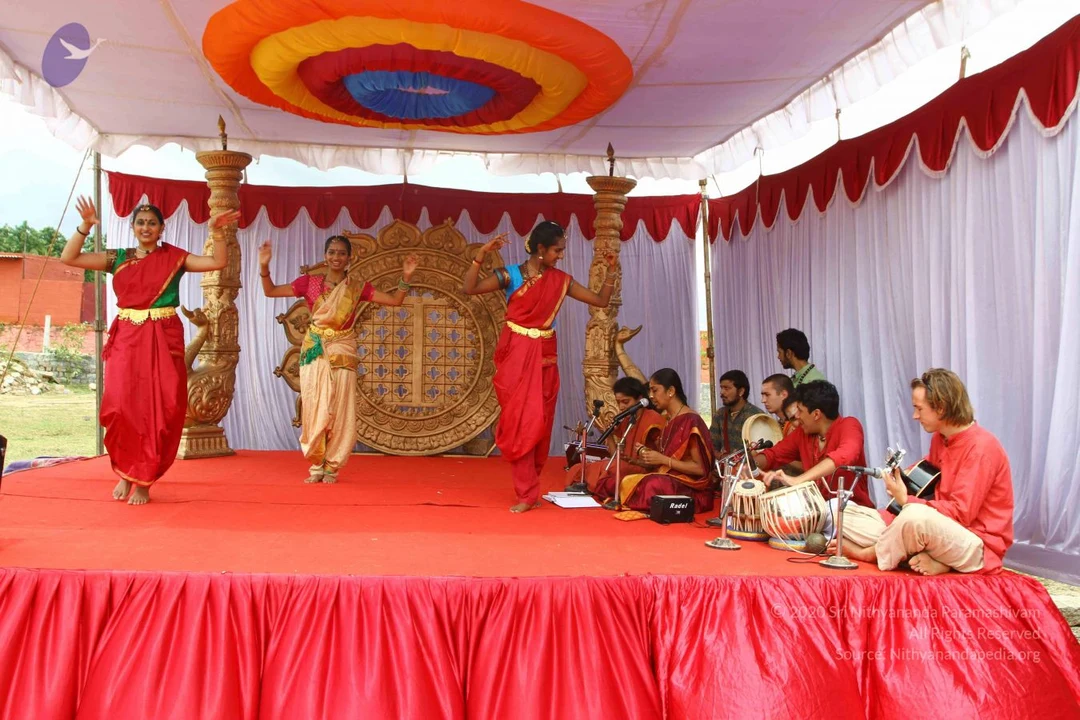
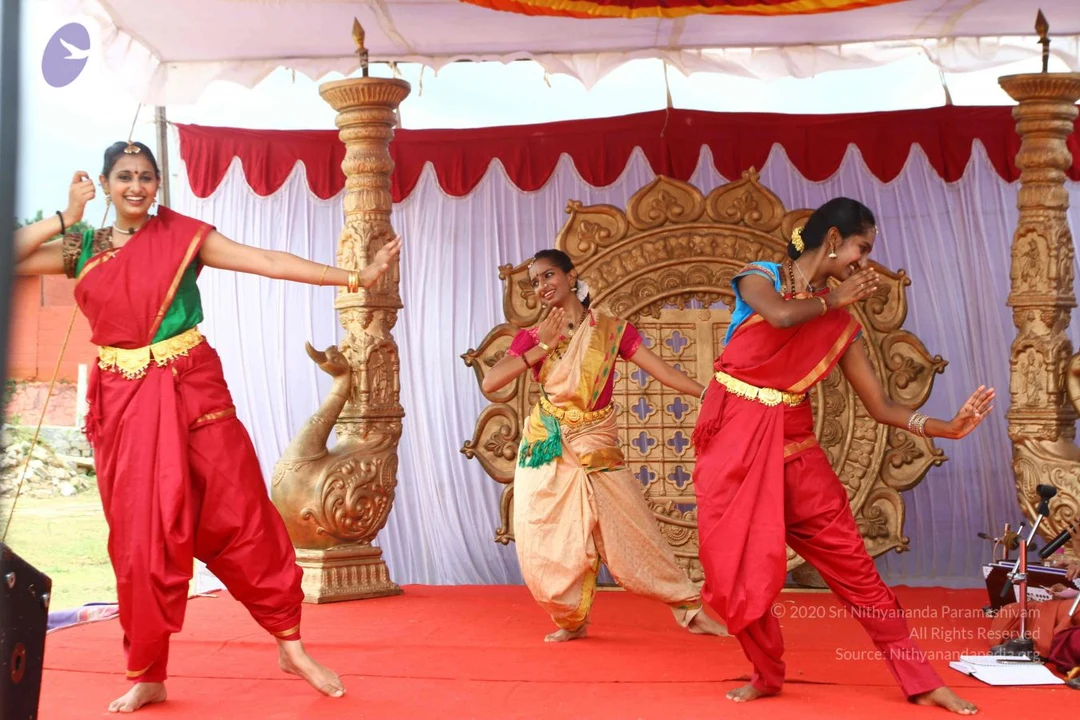
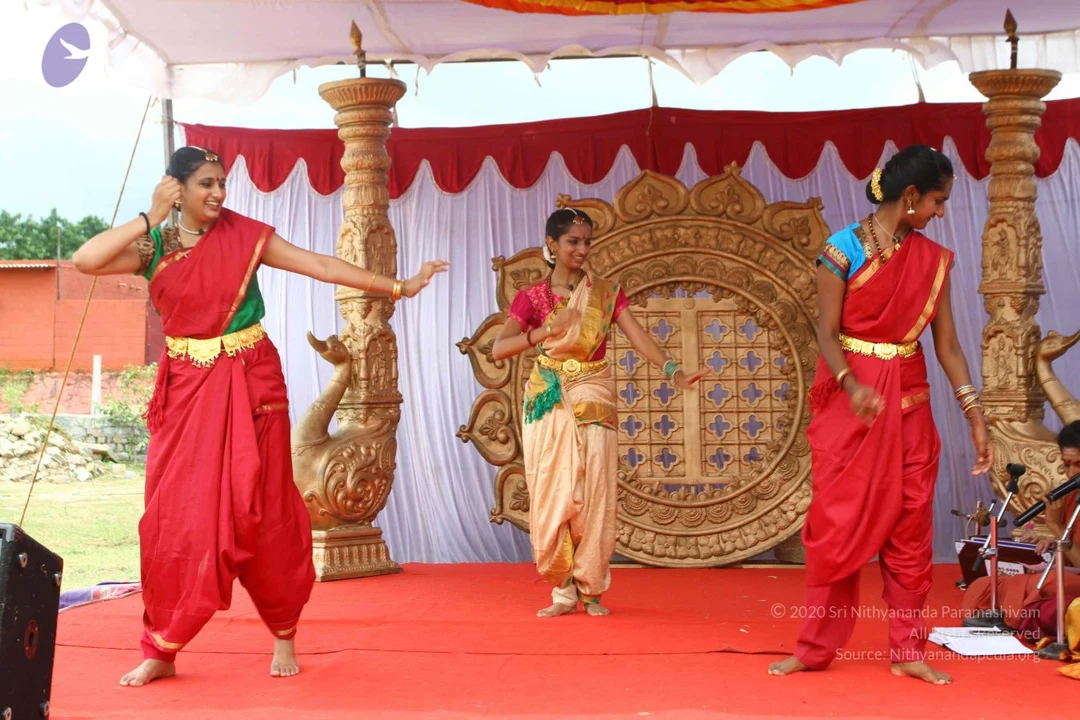
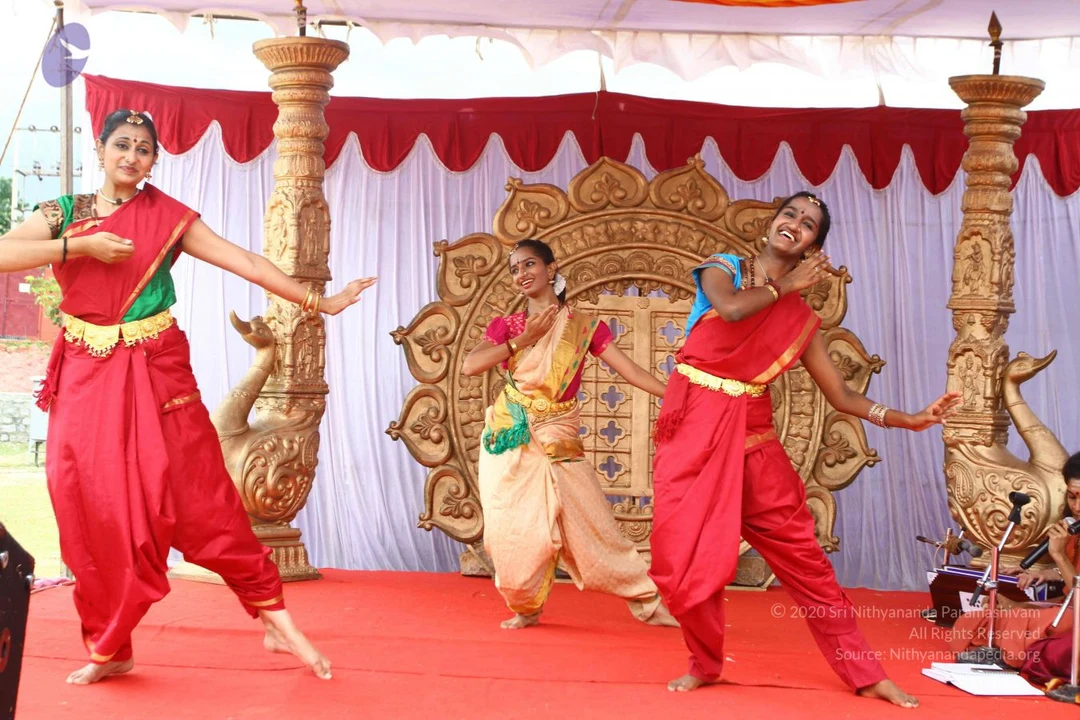
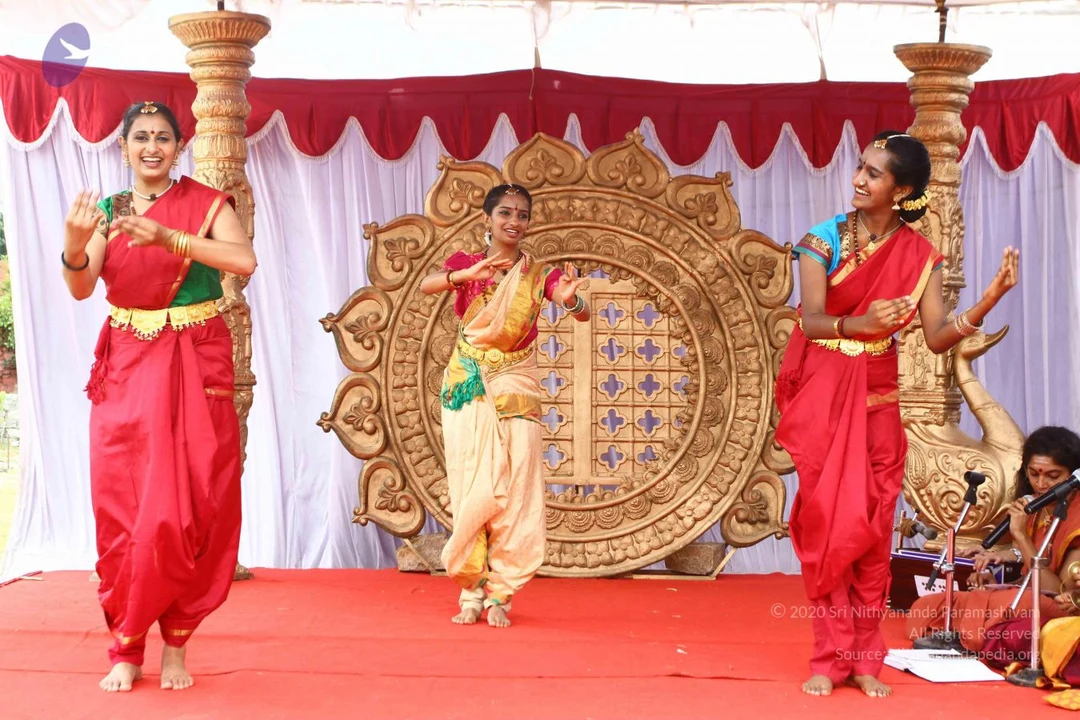
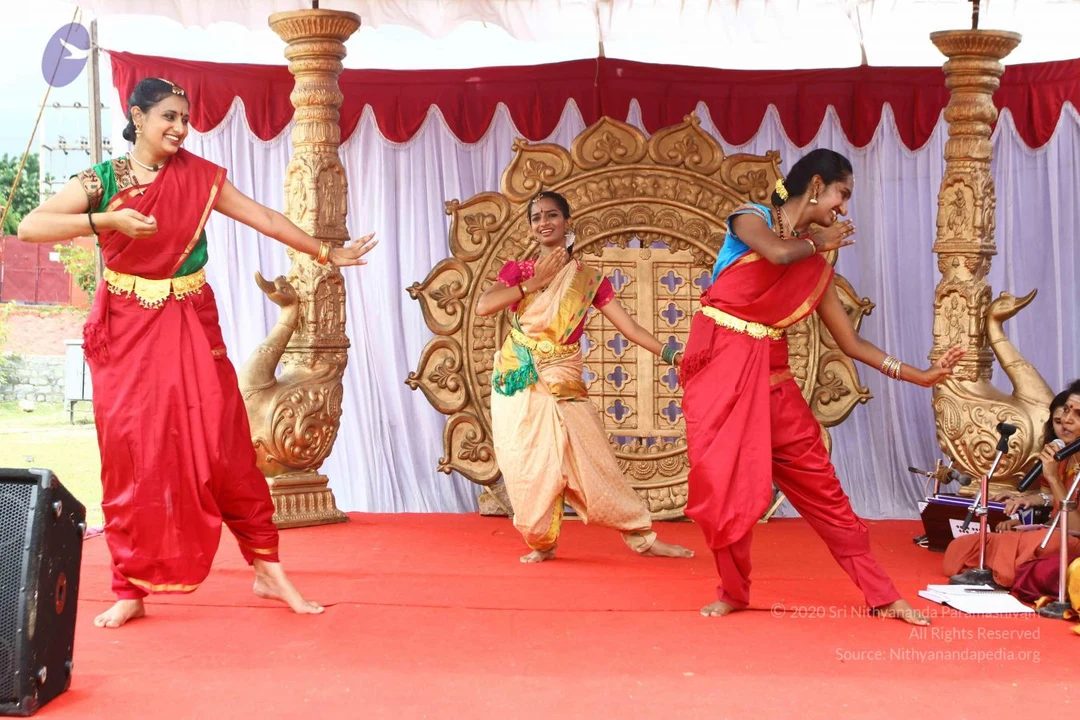
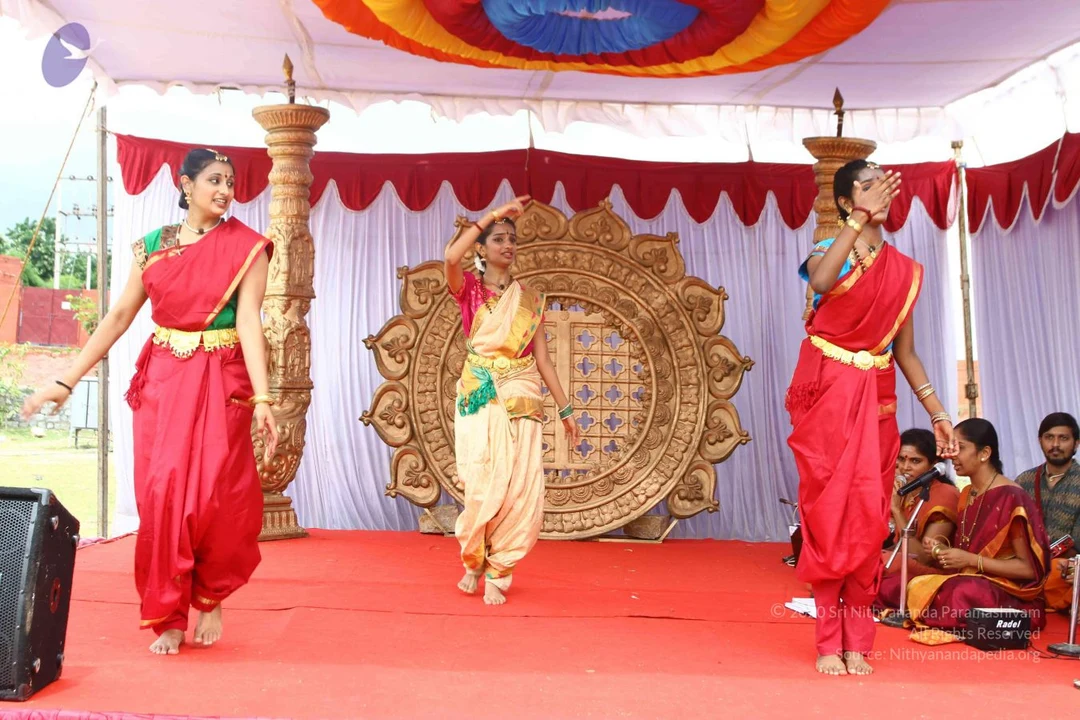
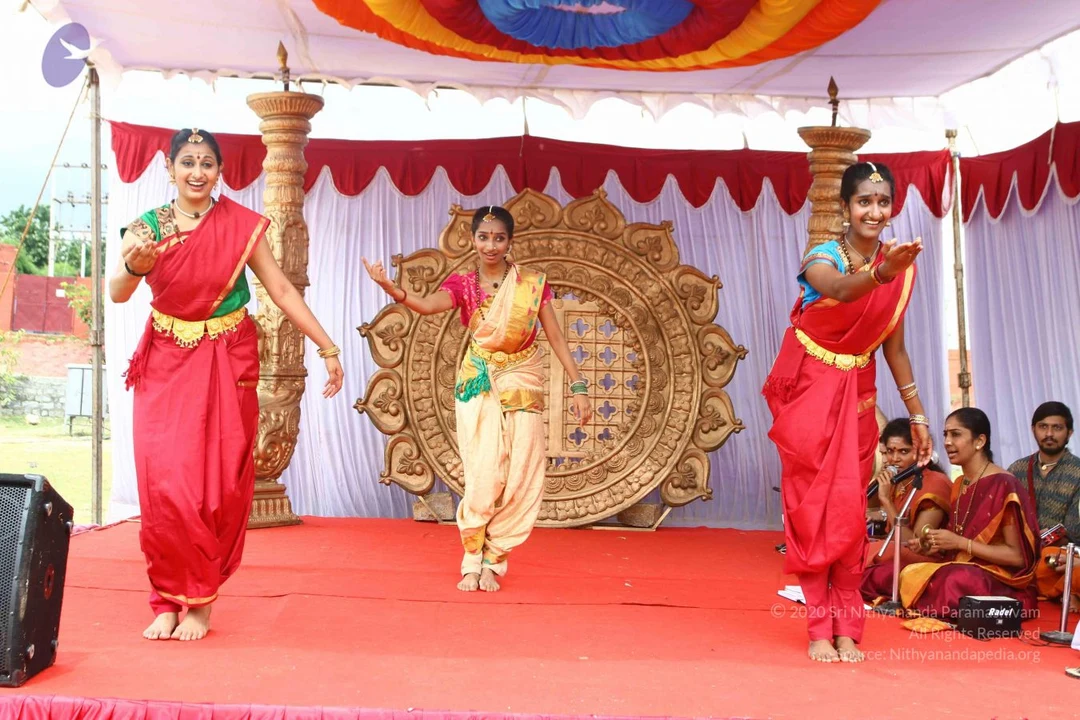
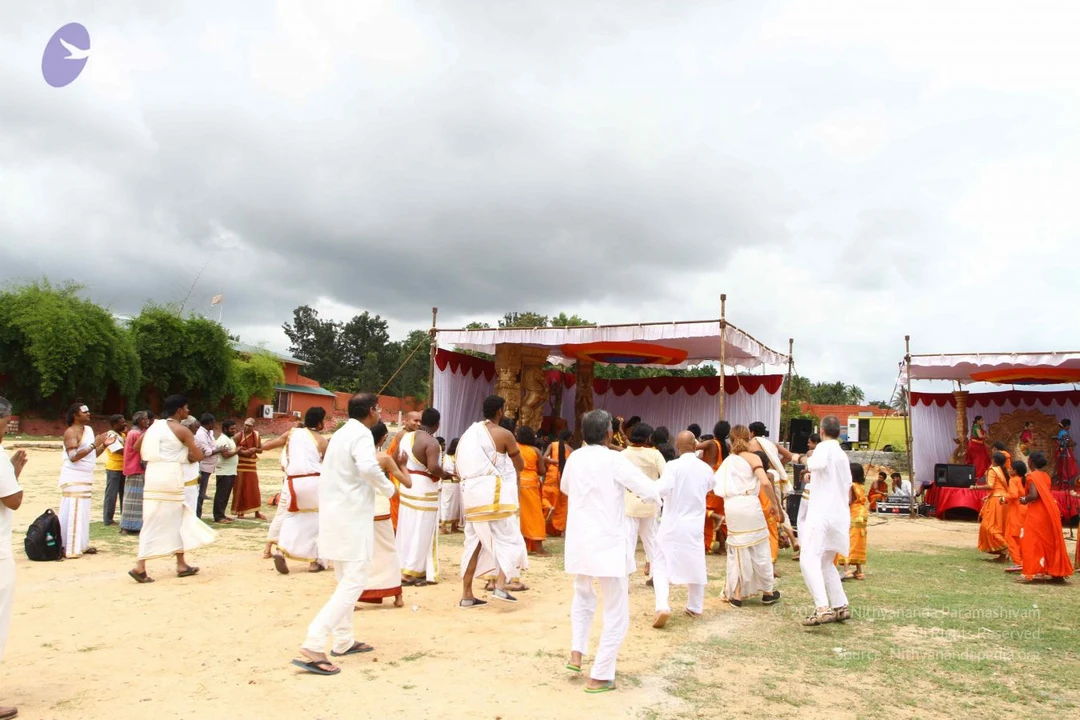
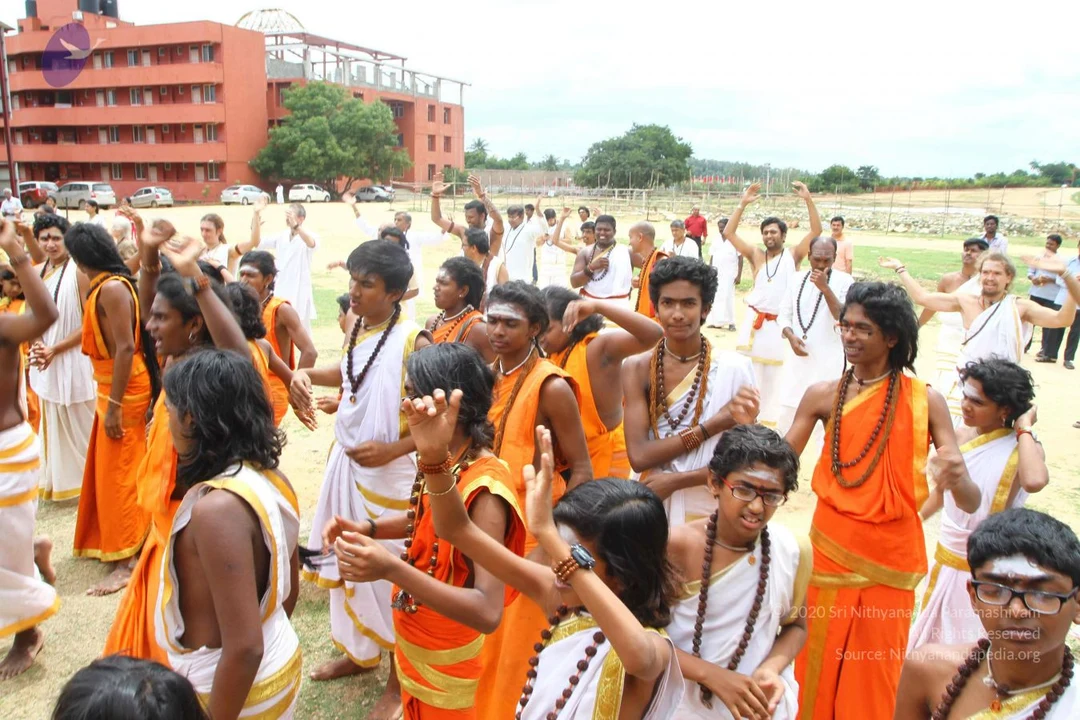
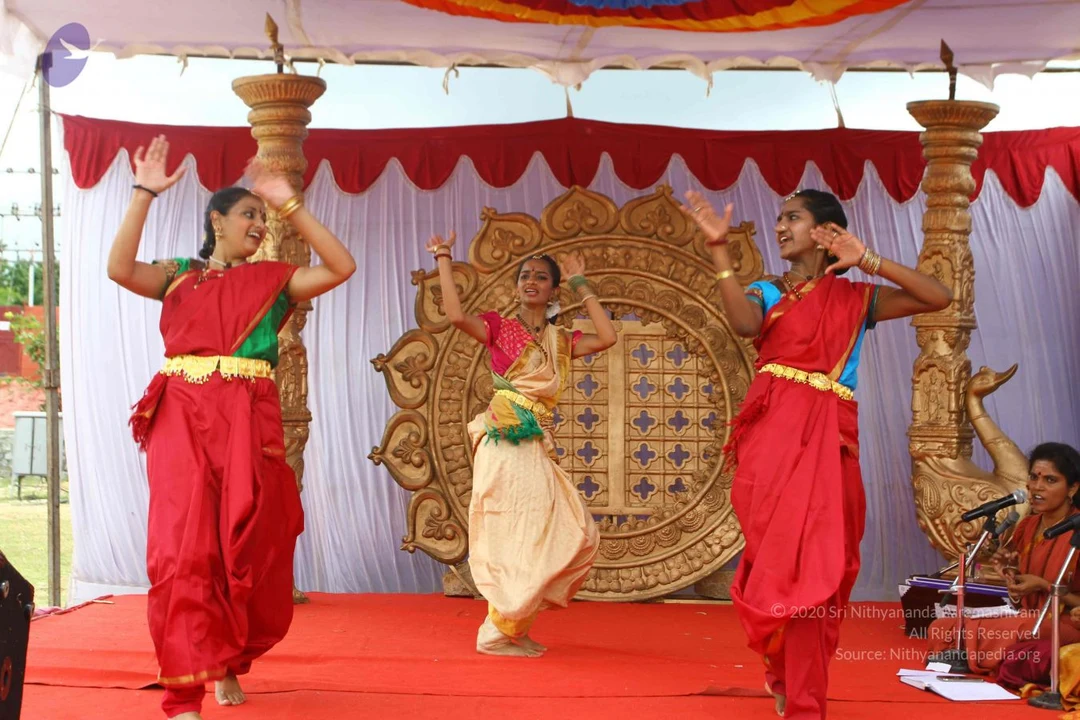
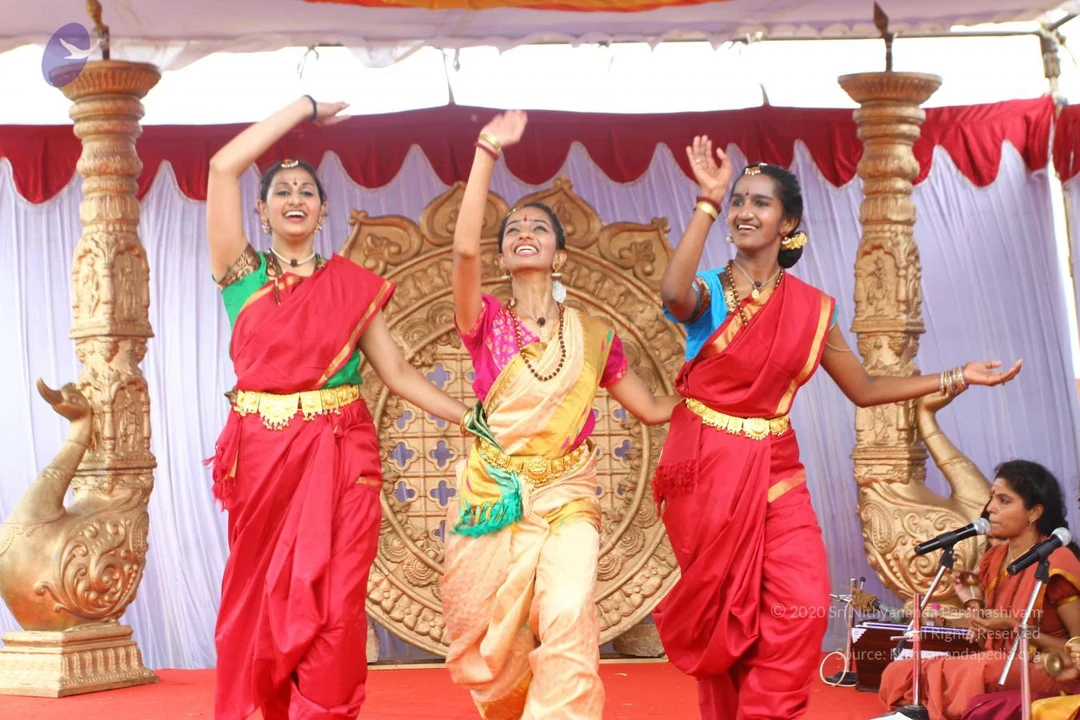
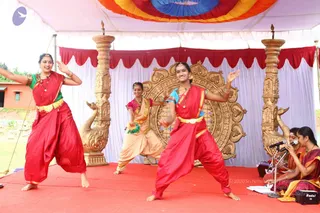
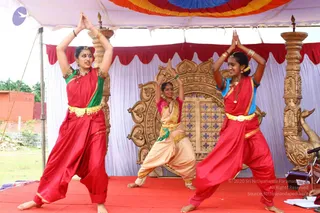
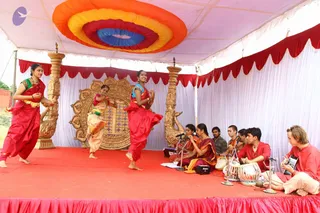
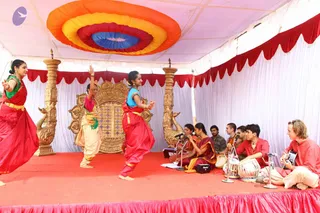
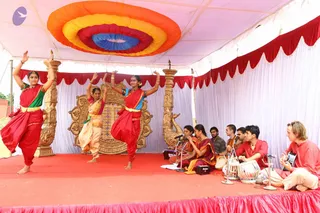
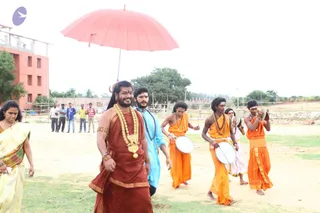
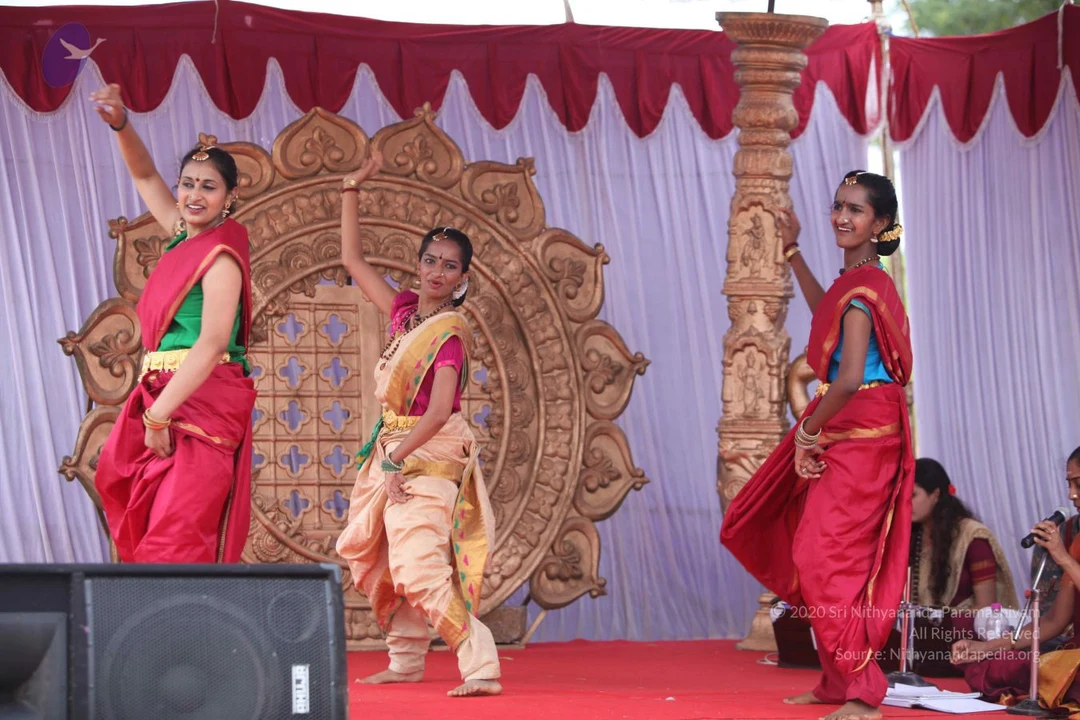
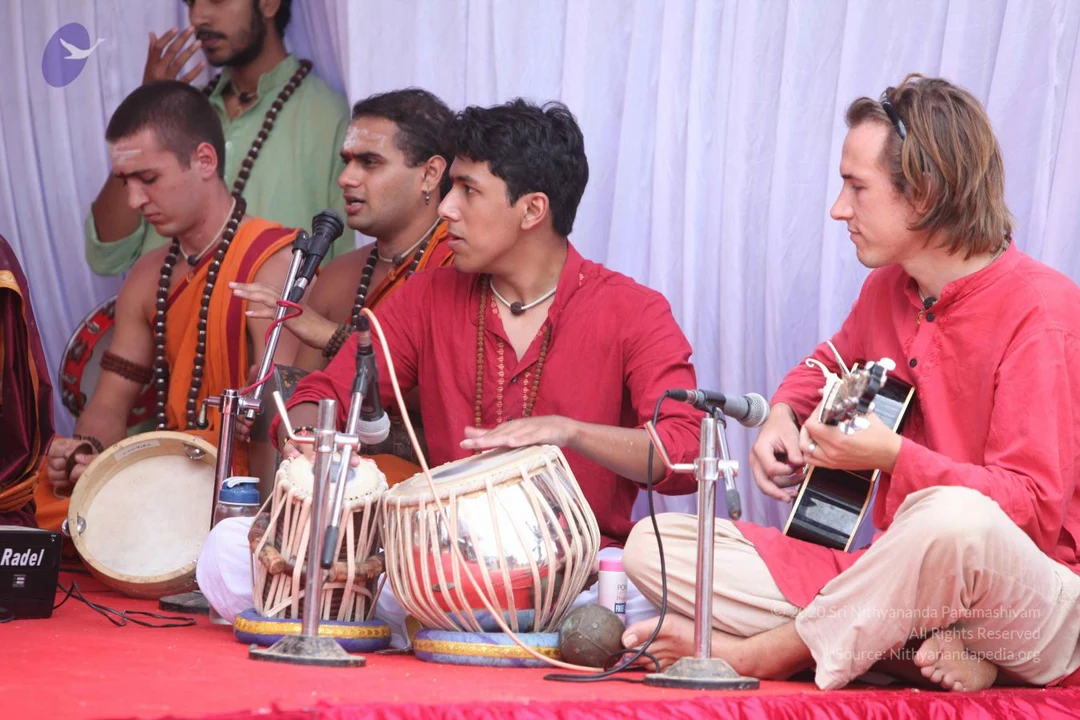
Three young women perform a classical dance on a red carpeted stage under a white tent with a red valance. Two dancers in the foreground wear red silk sarees with blue or green blouses, gold waist belts and gold jewellery, with arms extended and bare feet. A third dancer behind wears a beige and pink sari. Behind them a large gold ornate circular backdrop flanks two carved golden pillars topped with finials. Two women seated at right, one wearing an orange sari with a microphone stand, play accompaniment near a speaker. No a person candidate is visible.Three female dancers perform on a red stage carpet under a white and red tent with a rainbow-striped canopy. The two dancers on either side wear red dhoti-style trousers with red and green or blue and green blouses, gold waist belts, bangles and necklaces, with hands pressed in anjali mudra above their heads. The central dancer wears a cream and gold sari with a pink blouse and stands in a bent-knee pose with hands raised. Behind them is an ornate gold carved wooden throne-like backdrop with diamond motifs, flanked by carved gold pillars and a carved bird. A microphone stand and an open book sit at the lower right.A photograph of a cultural performance on a red-carpeted stage under a white tent with a multicoloured circular canopy. Three female dancers in red and cream costumes perform in the foreground, one in a red blouse and skirt at left, one in cream and yellow at centre, one in red and blue at right. Behind them a carved golden wooden panel and golden pillars frame the stage. Seated at right, a woman in a maroon sari sings into a microphone, while musicians in red kurtas play a tabla, a harmonium-style instrument, a guitar and other percussion. A decorative red valance hangs along the tent edge.A stage performance under a white tent with a colourful concentric ring canopy overhead and red valances. Three women dancers in red and green or red and blue traditional costumes perform in the centre, one in cream and green, with arms raised in classical poses. Behind them an ornate carved wooden throne-like backdrop flanks golden pillars topped with lion-shaped figures. At right, seated musicians in red and pink kurtas play a tabla, a harmonium, a sitar-like string instrument and an acoustic guitar, with microphones on stands. A seated woman in a maroon sari sings. The red stage floor and cloth-draped setting suggest a cultural programme.Three female dancers perform on a red-carpeted stage under a tented canopy with a large colourful circular ring overhead. The dancer on the left wears a red and green costume with a yellow waist sash and raises her arms; the centre dancer wears a cream and gold sari with a red-and-white blouse; the right dancer wears a red costume with a blue top and gold bangles. Behind them stand carved golden wooden panels and pillars. At the right, seated musicians play instruments: a woman in a magenta sari sings into a microphone, a man in red plays a tabla, and a long-haired man in red plays a guitar. A small black amplifier sits on stage.Outdoor procession on a dusty field beside a red-brick building and a tree line. A man with long dark hair and a beard, wearing a rust-brown dhoti-style garment, a heavy gold-coloured floral garland and a large gold pendant, walks smiling at the front, with an attendant holding a large pink umbrella over him. Behind him a man in a turquoise-blue kurta with a rudraksha mala walks alongside, followed by several drummers in saffron-orange garments with long necklaces, playing round hand drums. A woman in a pale yellow sari stands at the left edge. A row of onlookers in casual clothes watches from the background near a fence and construction materials.

swach-nithyananda-sangha

182 photosSource gallery
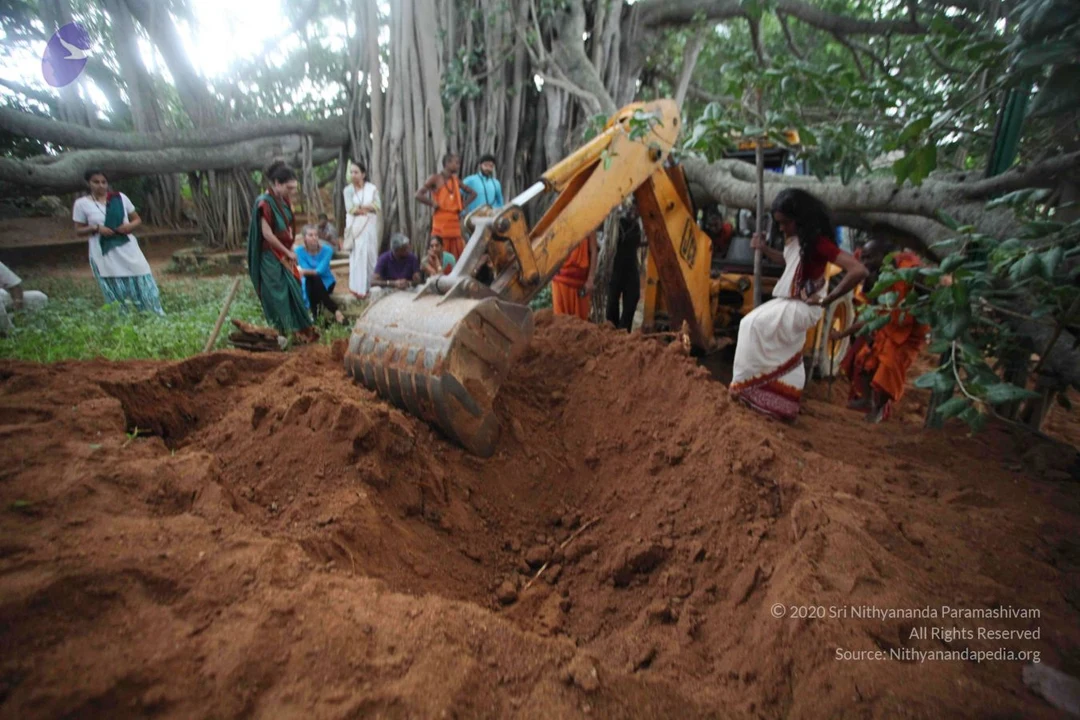
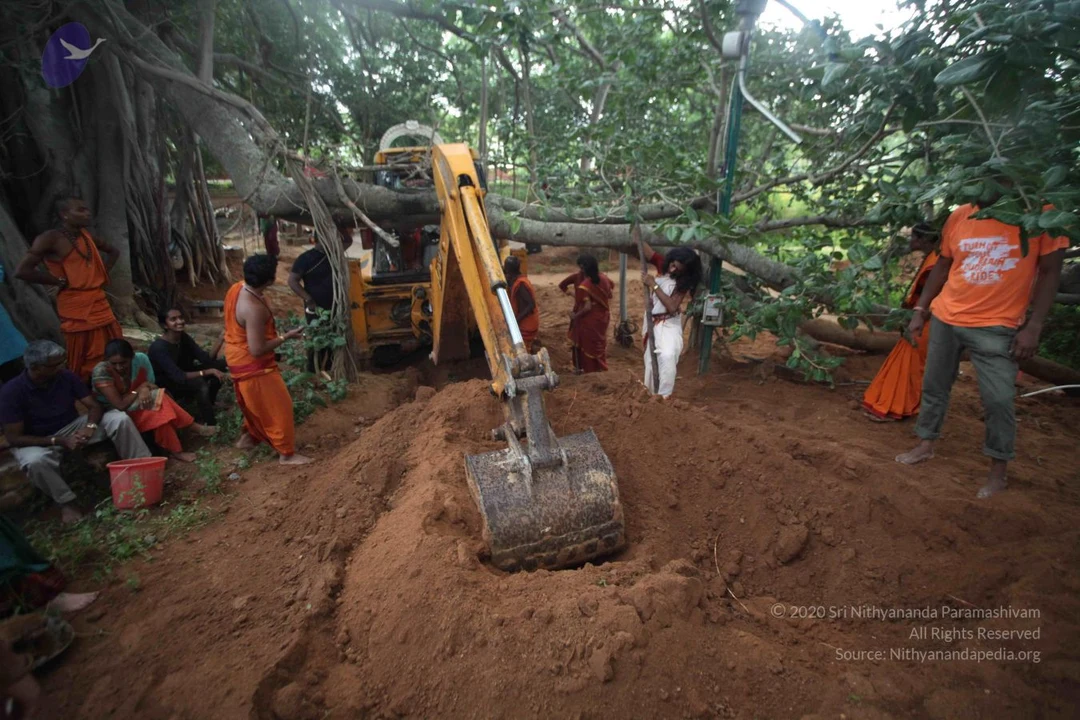
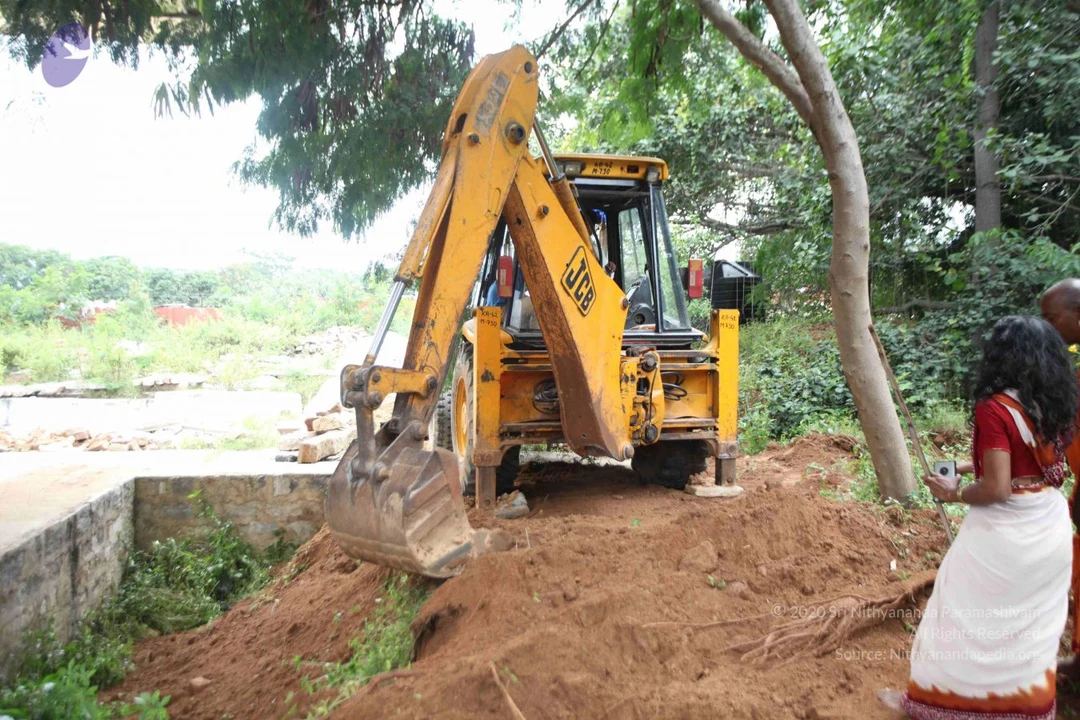
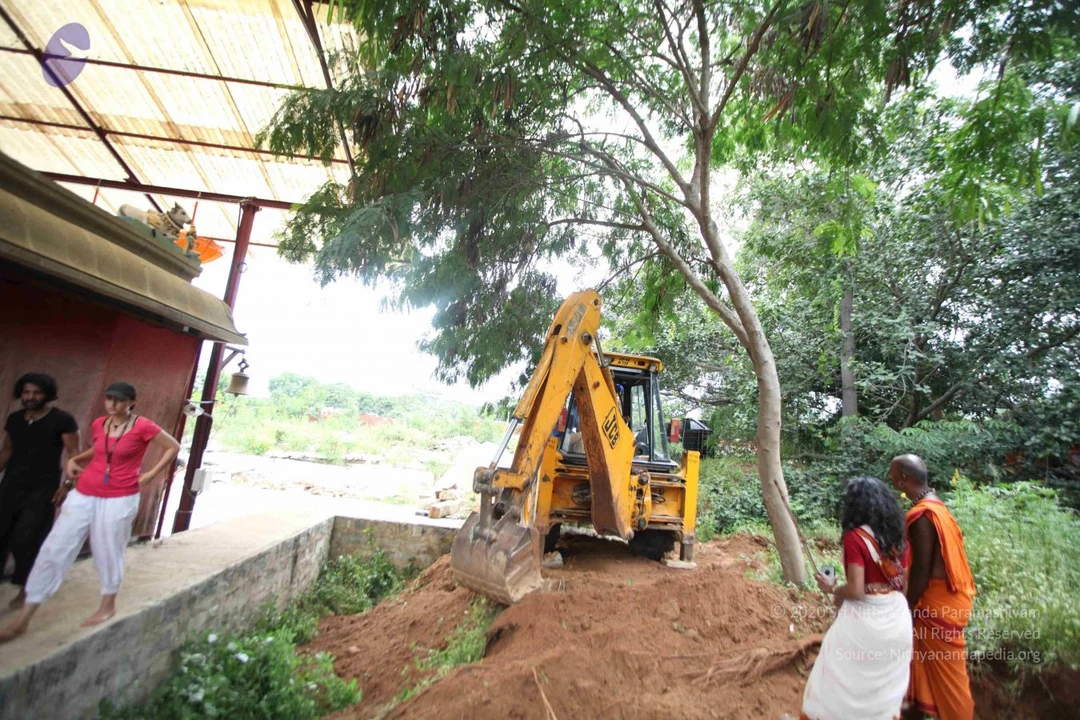
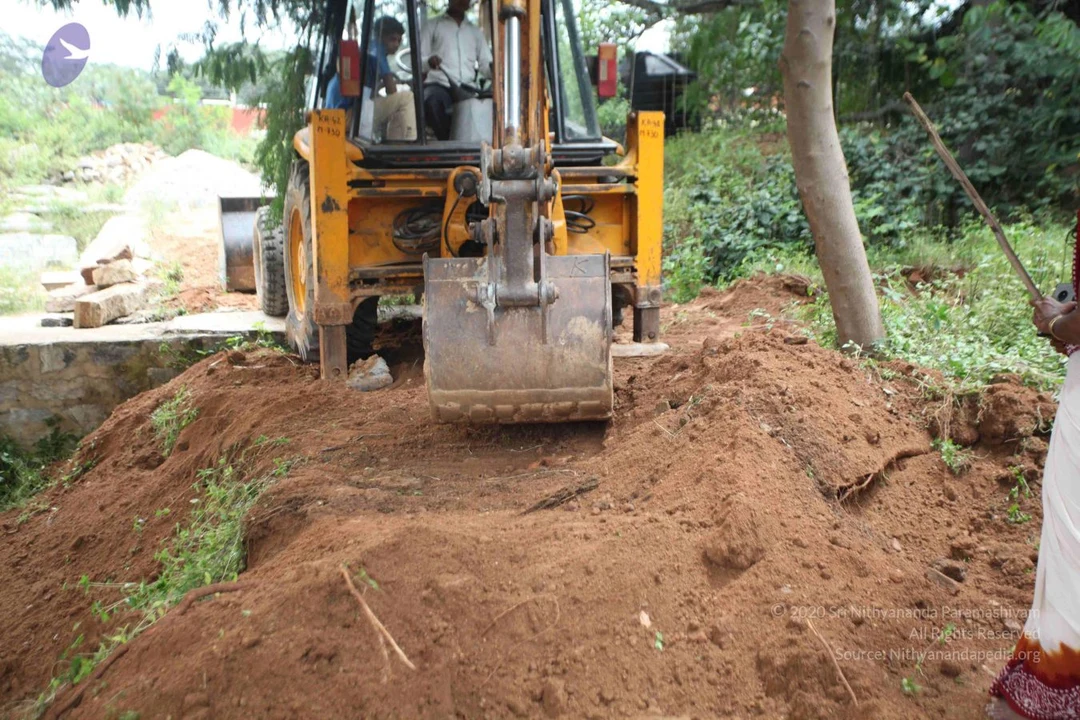
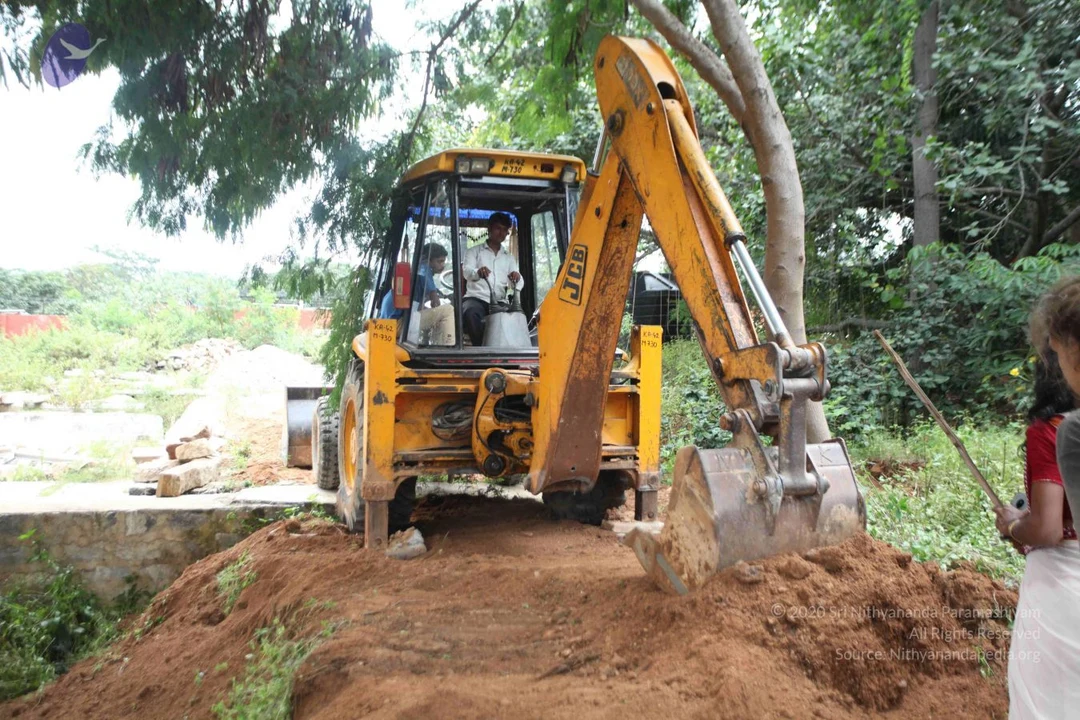
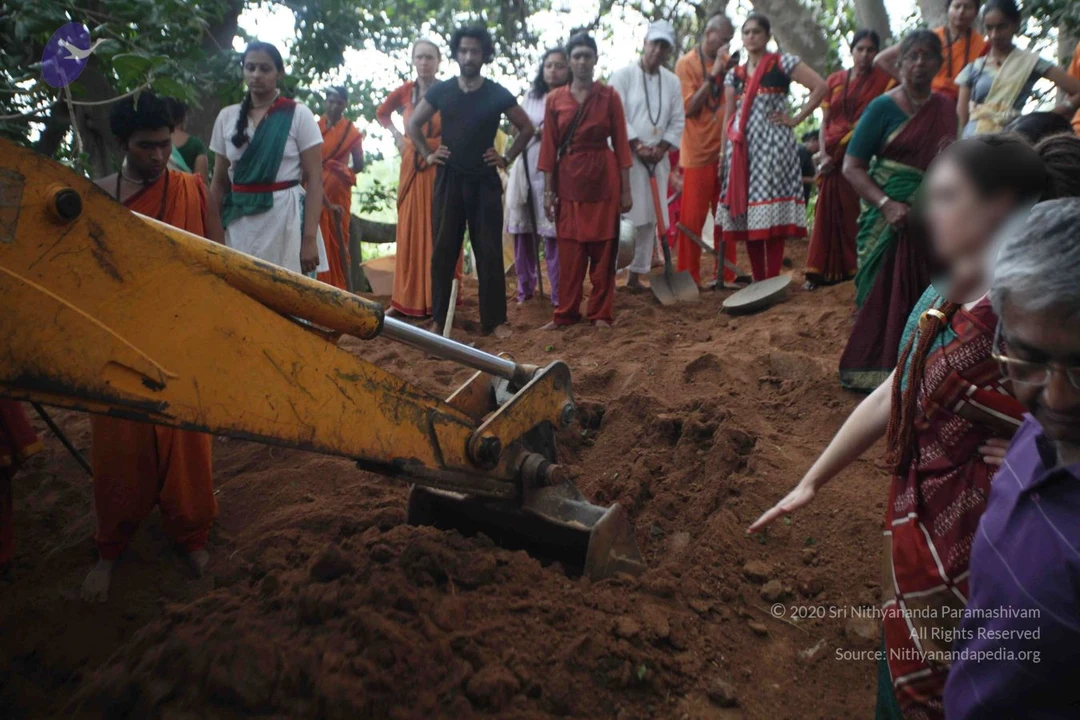
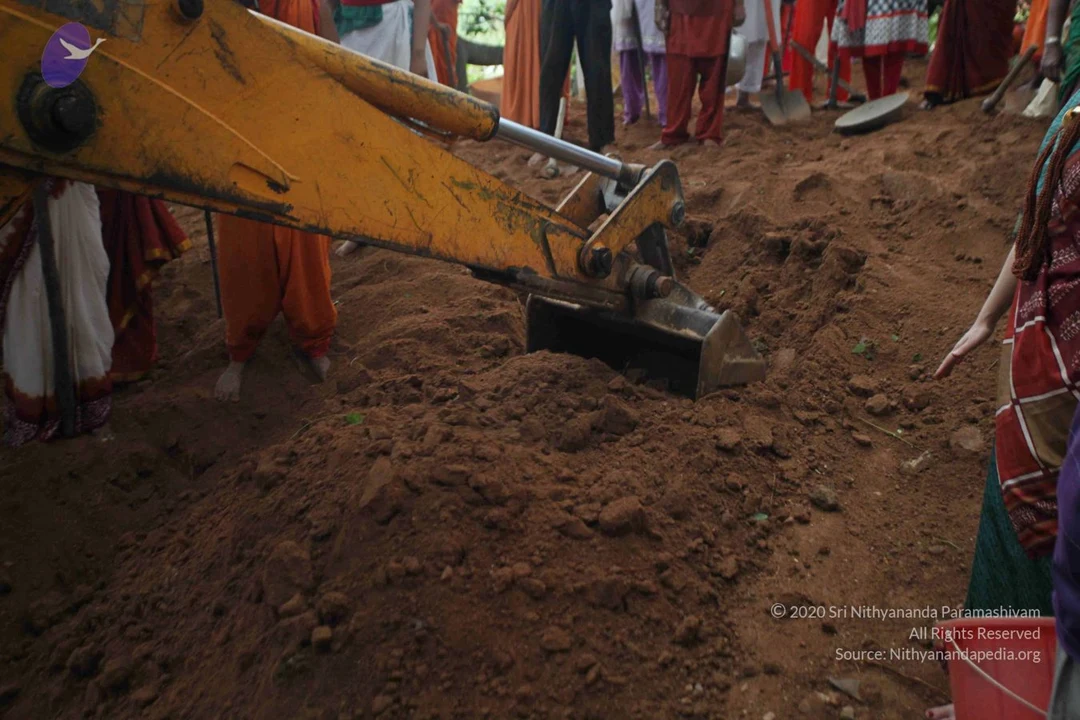
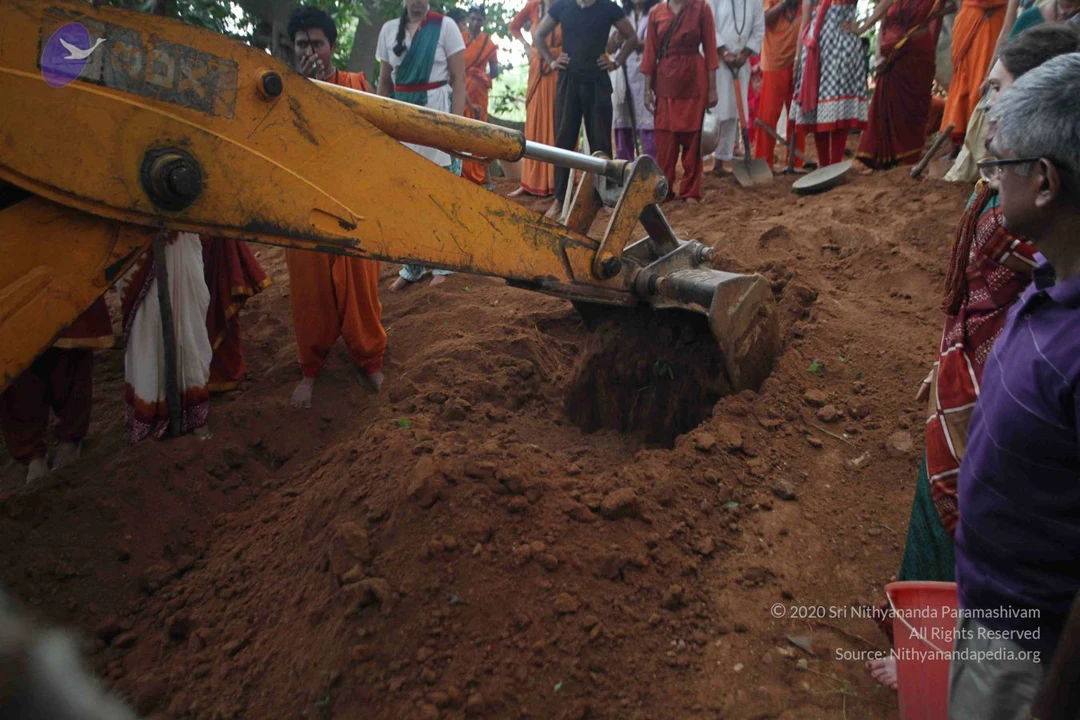
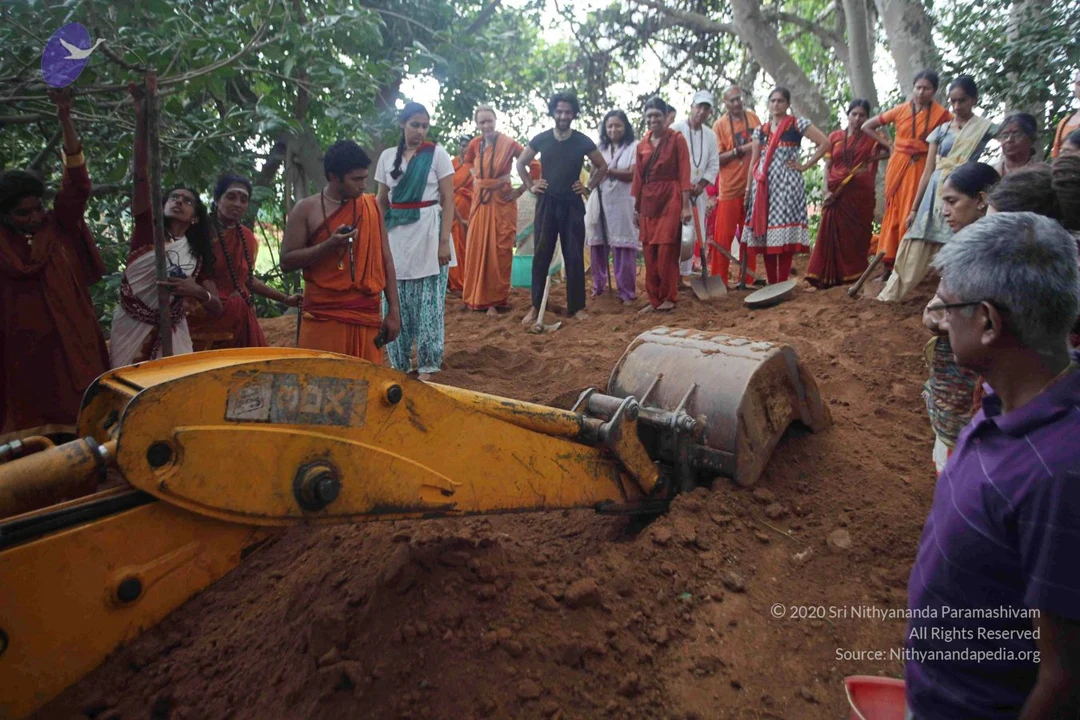
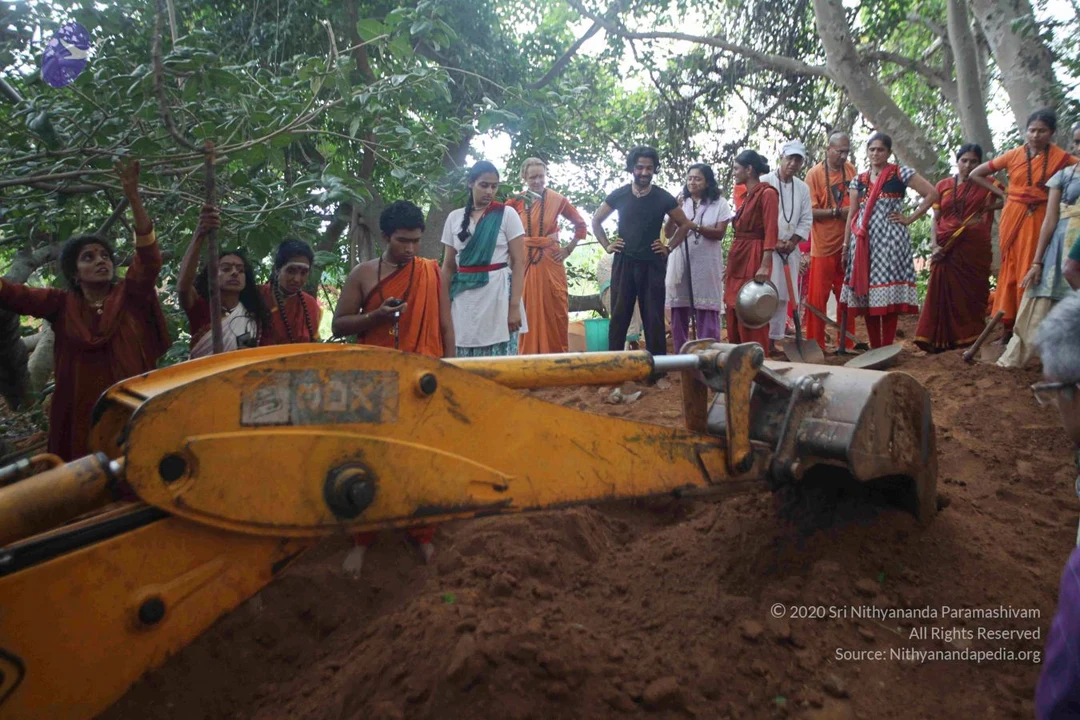
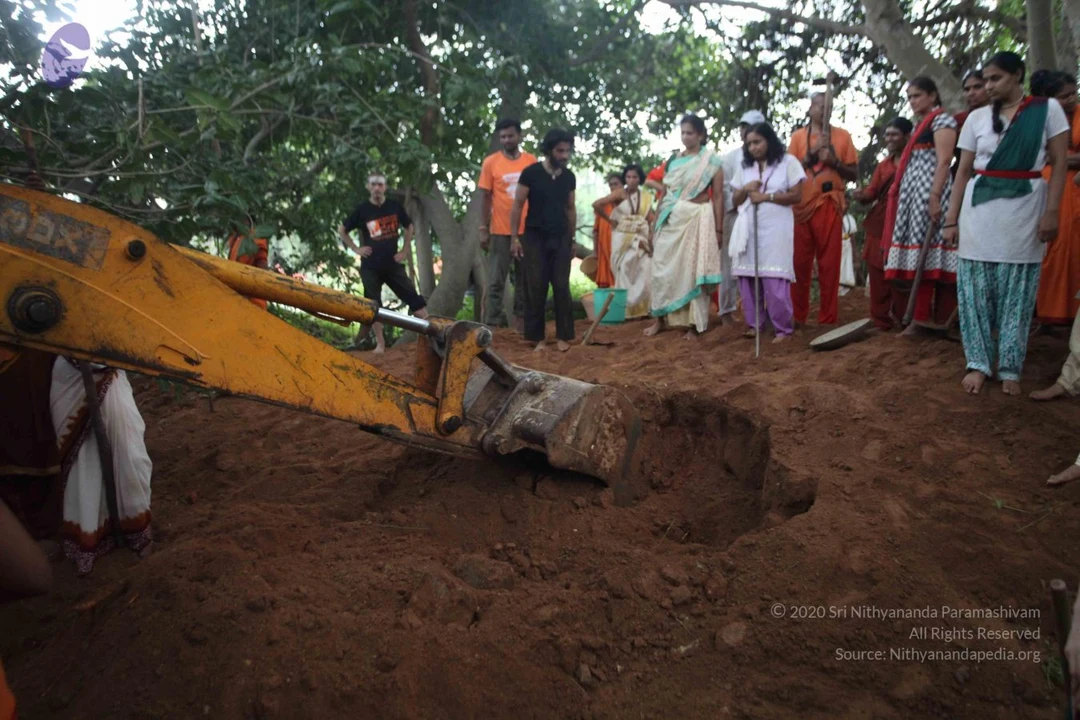
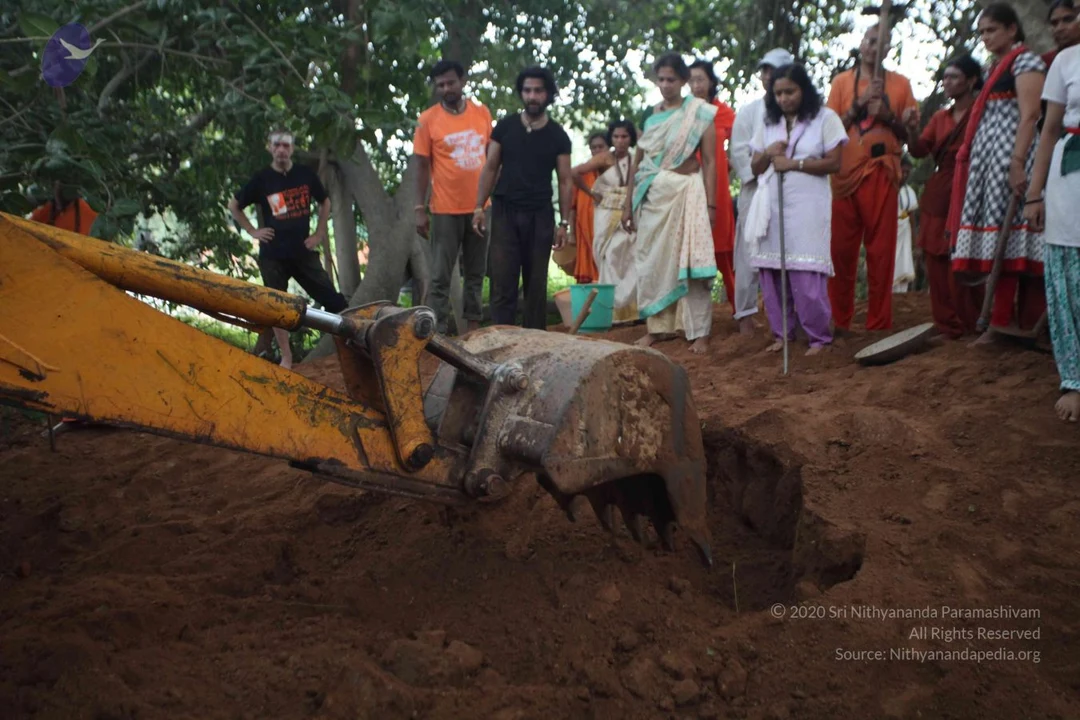
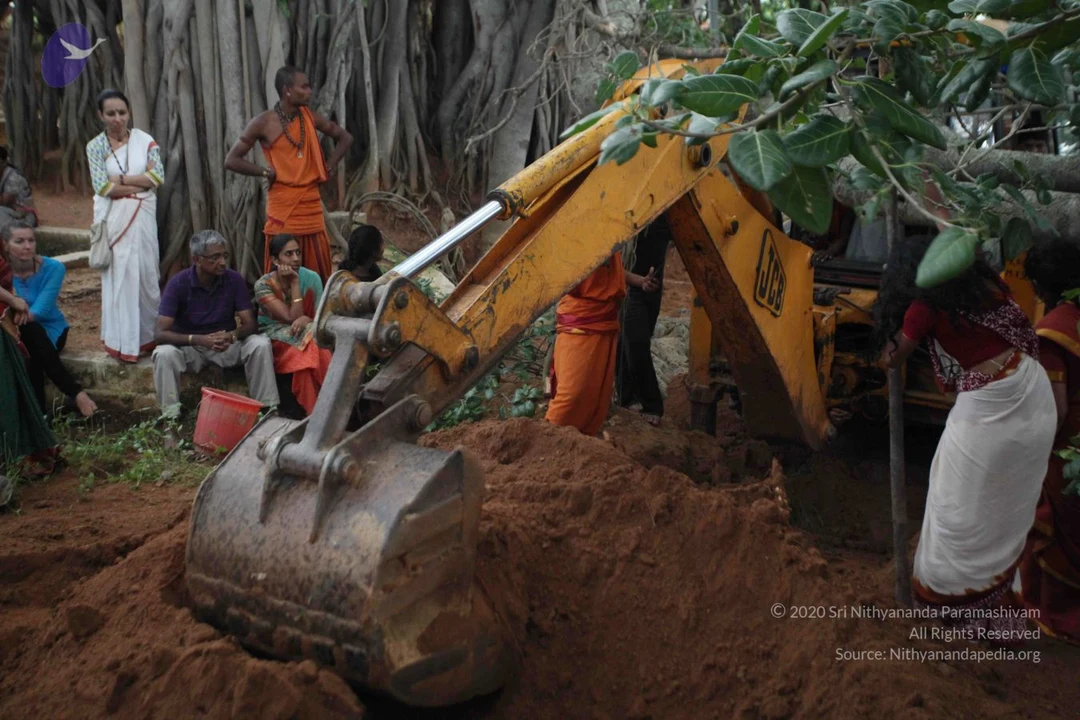
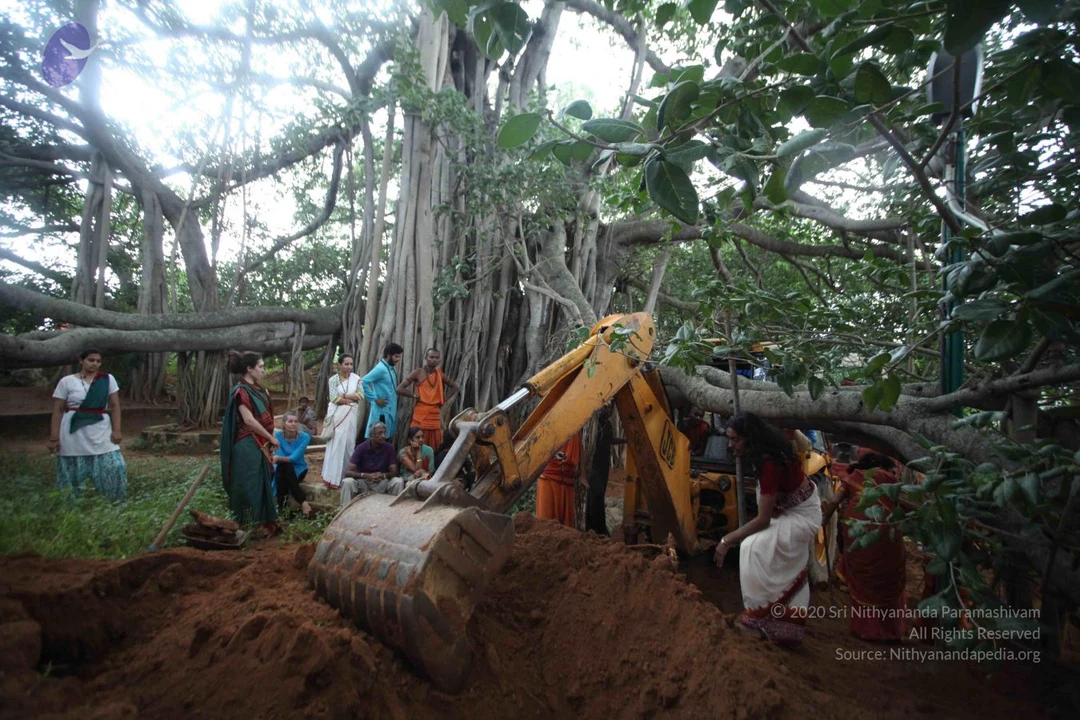
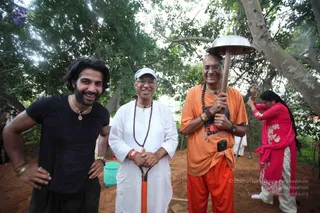
A photograph of a large banyan tree with many hanging aerial roots and wide spreading branches in an outdoor setting. In the foreground a yellow backhoe excavator digs into reddish-brown soil, with a mound of freshly dug earth in front. Around the machine stand several people: a woman in a white sari with a red border on the right works near the digger, a man in saffron-orange cloth and a man in a light blue shirt stand near the centre, and women in white and green saris stand at the left among the grass. Some have their hands folded, and others watch the digging. The tree and the excavation appear to be the focus of an organised ceremony or work.A yellow JCB backhoe loader digs red earth at the base of a large banyan tree with many hanging aerial roots. Its bucket is heaped with dark red soil. Behind it, a group of people stand and watch: a woman in a white sari with a red border and a white shoulder bag, a woman in a bright blue top, a man in a purple shirt seated on a step, a woman in a green sari, a man in a saffron-orange dhoti and shawl with rudraksha beads, and a man in a light blue kurta with a rudraksha mala. A person in orange robes stands near the machine, and another person in black works beside it. The scene is outdoors among leafy greenery.A photograph of an outdoor excavation beneath a large banyan tree with many hanging aerial roots. A yellow JCB backhoe loader digs into reddish-brown earth, its bucket piling up soil in the foreground. A woman in a white sari with a red border stands at right beside the machine, holding a long wooden pole. Behind her, several people in orange and saffron robes and a man in a light blue shirt watch the work. On the left, a woman in a green sari with red trim, a woman in a blue top and a seated man in a purple shirt observe from the edge of the site. Another woman in a white sari stands near the centre-left. Dense greenery surrounds the scene.A photograph of an excavation under a large banyan tree with sprawling aerial roots. A yellow backhoe loader digs into reddish-brown earth, leaving a mound of soil in the foreground. A woman in a white dhoti-style garment with a red border stands at the right, holding the machine's side. Several people in orange and white clothing and a woman in a green sari stand and sit at the left and centre, watching the work. Green grass and sunlight filter through the foliage.Outdoor photo beneath a large banyan tree with hanging aerial roots, where a yellow excavator with a bucket stands on churned red earth near a freshly dug pit. A bare-chested man in saffron-orange cloth on the left sits or stands among onlookers, and a woman in a red sari stands center. A woman in a white garment with long dark hair holds a long pole near the excavator. A man in an orange t-shirt with a dark lettered slogan stands at right, and a person in saffron cloth stands behind him. Green foliage and a green metal pole frame the scene. a person's presence is not visibly confirmed, so no appearance-based identification is made.Outdoor photo beneath leafy trees on bare reddish earth. A smiling man with long dark hair, a beard and a black t-shirt with a pendant necklace stands at left with his hand on his hip. Beside him, a man in a white kurta, white cap and rudraksha mala holds a long-handled tool. At right, a bald man in glasses wears a saffron-orange t-shirt and matching orange trousers, rudraksha malas and bracelets, and holds a long metal shovel-like implement with a round metal dish on top. Behind them, a woman in a pink salwar kameez works with a tool, and a teal bucket sits on the ground.

ganapathy-homa

17 photosSource gallery
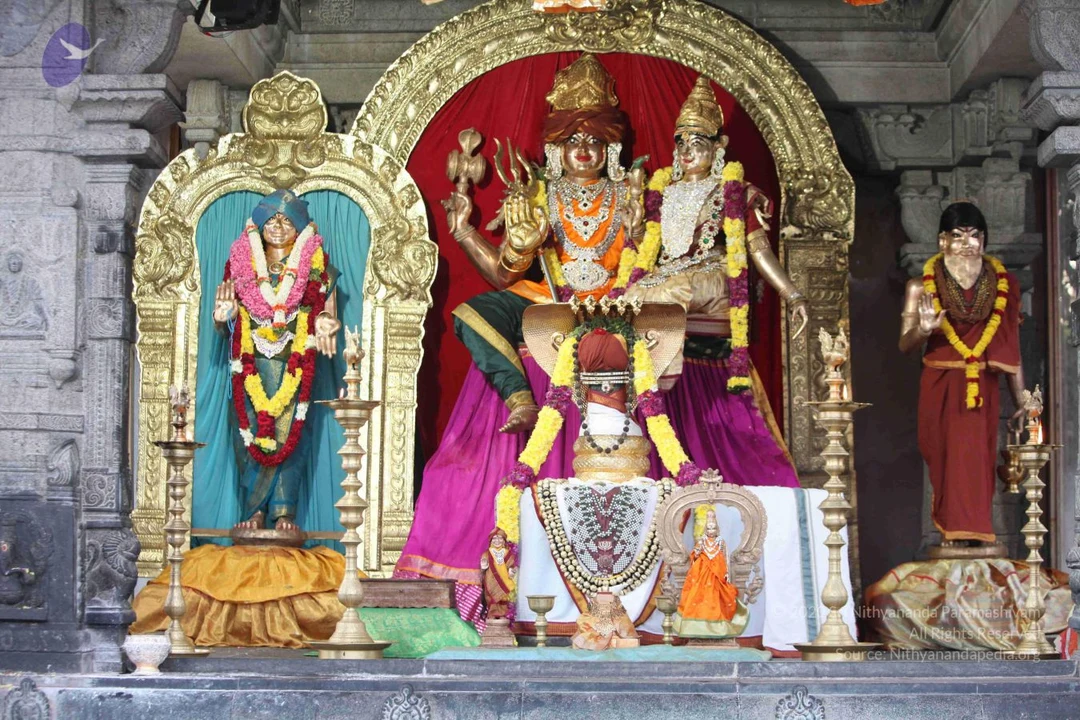
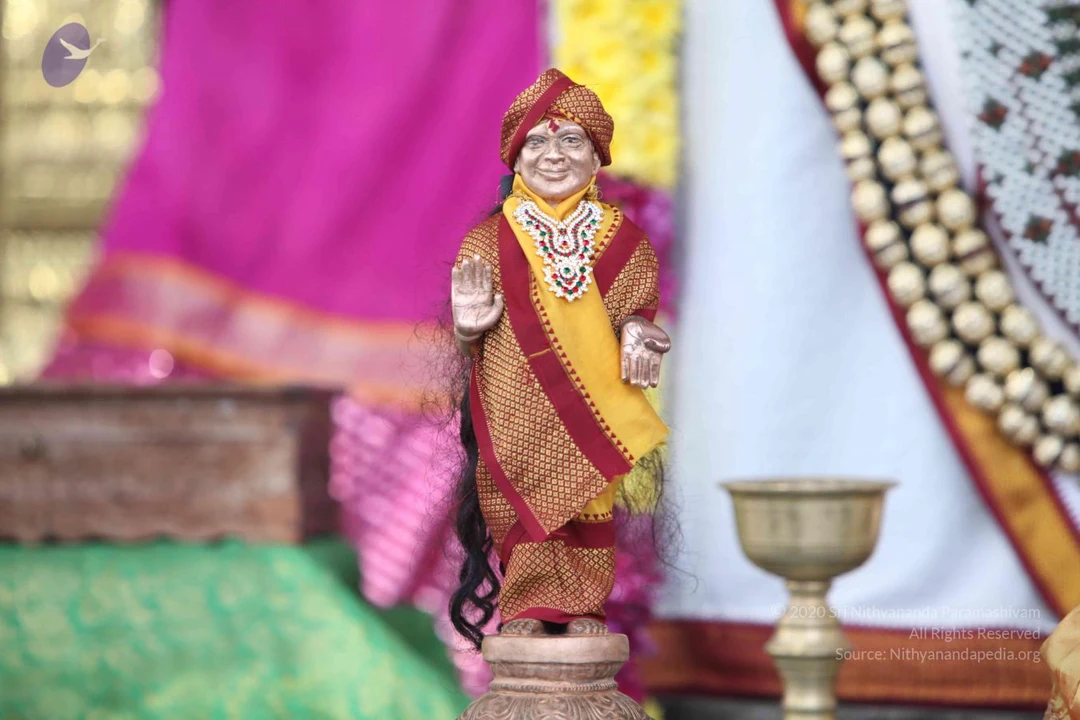
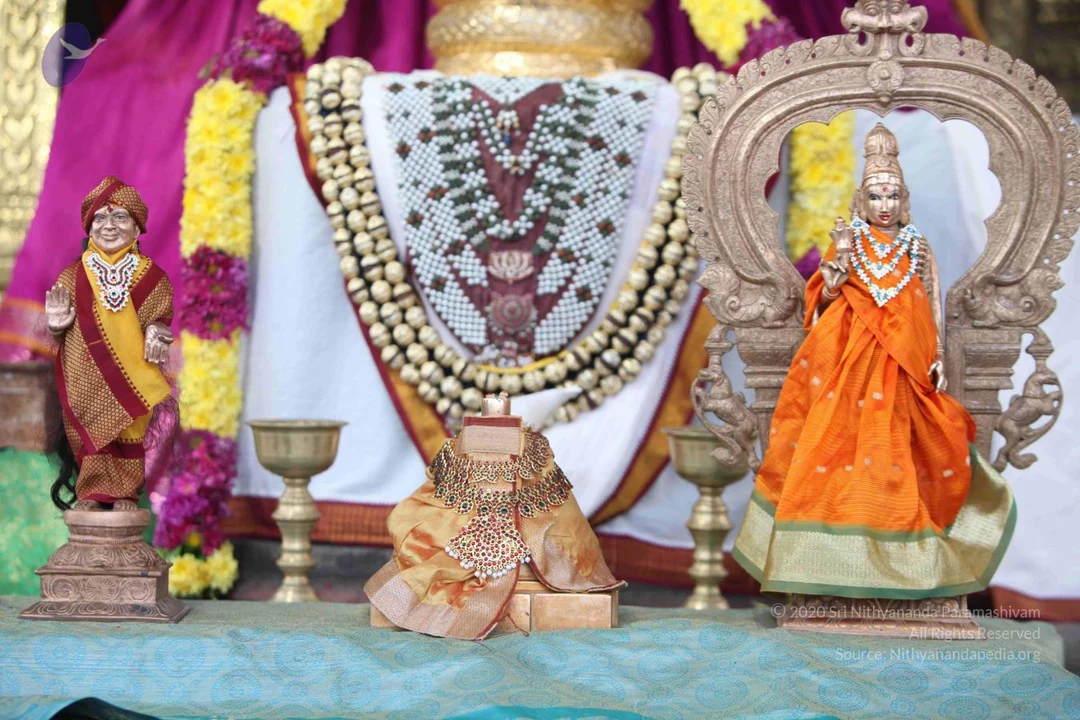
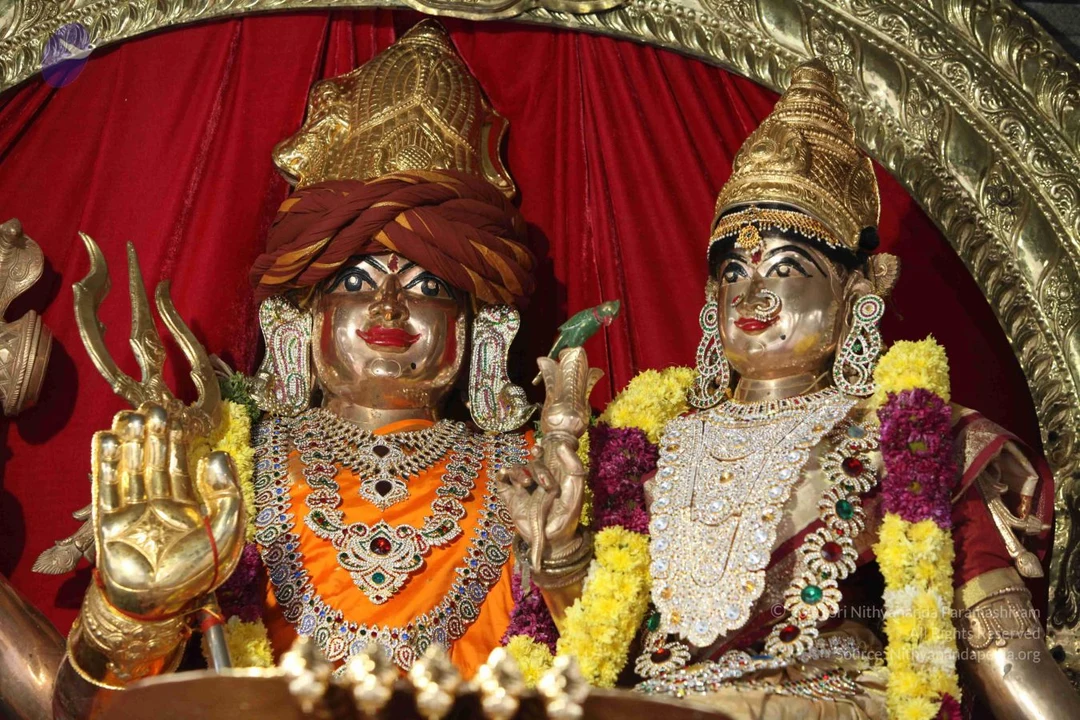
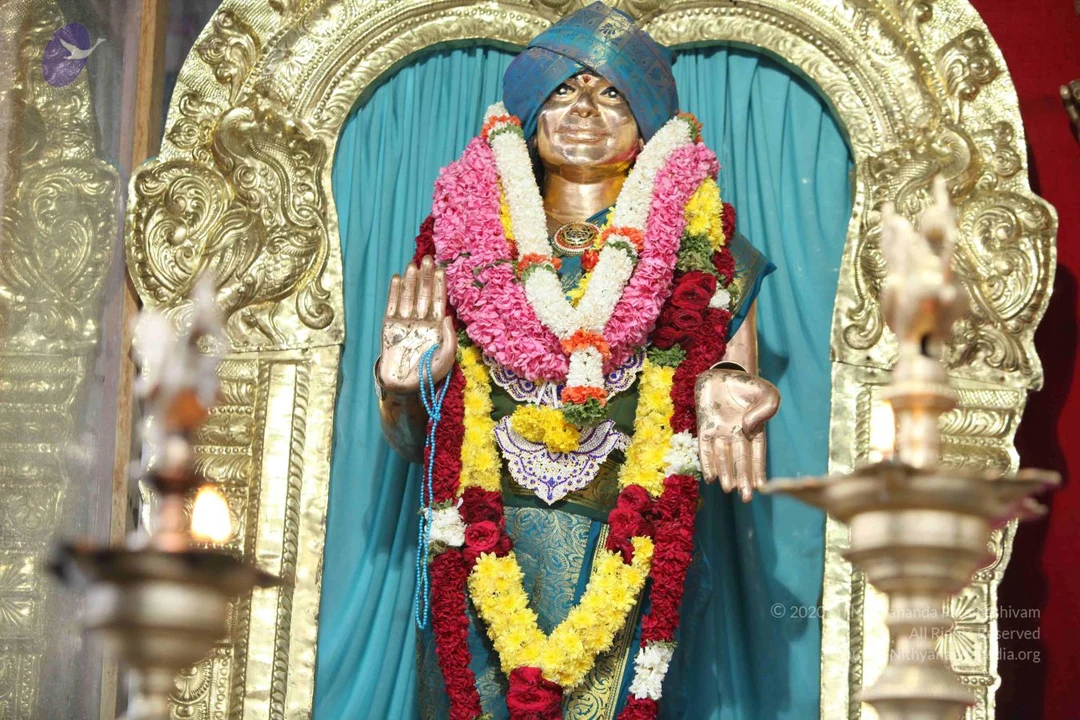
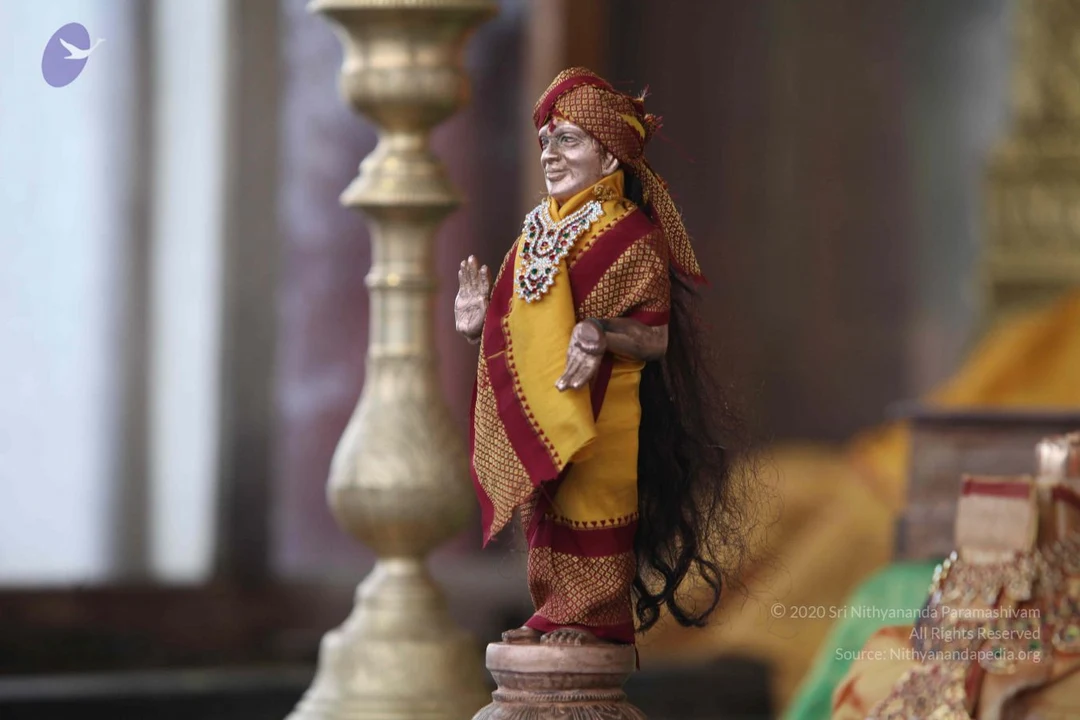
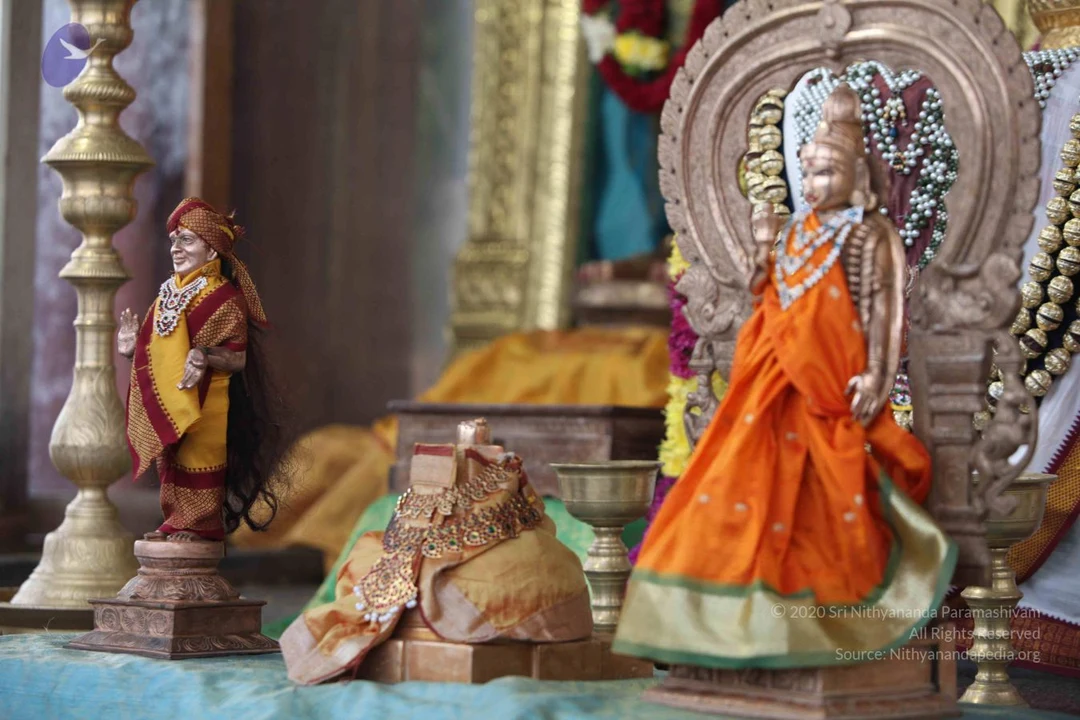
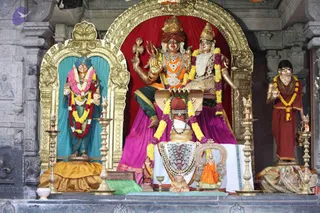
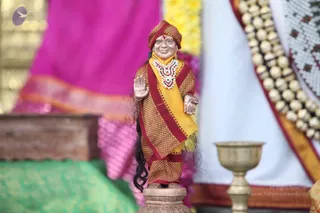
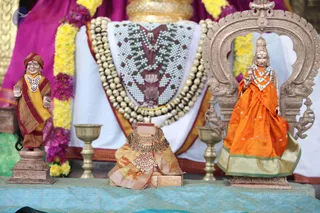
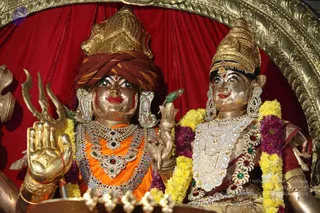
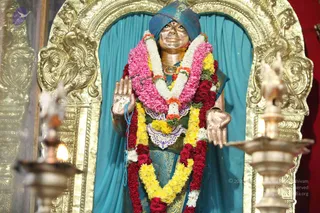
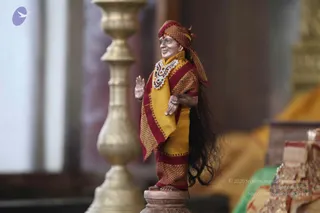
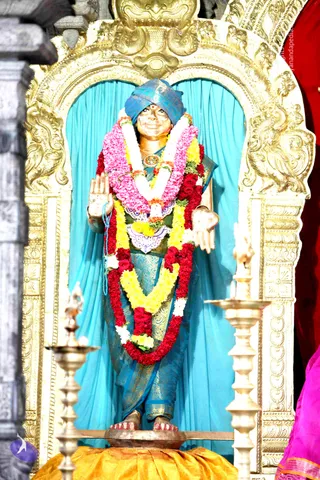
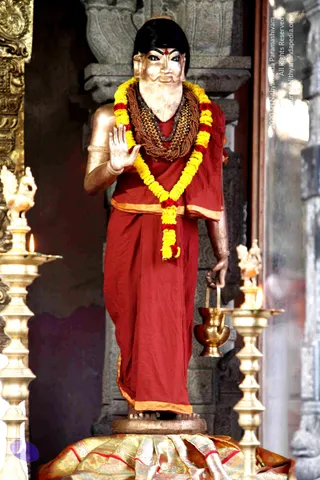
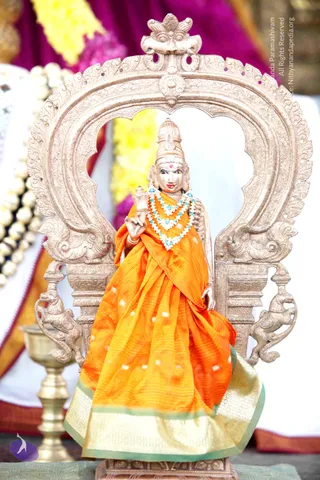
A shrine niche with gilded deity murti and statues garlanded with marigold and pink flower garlands. The central deity is a seated Shiva-like figure in a red-and-gold crown, holding a trident and a drum-like staff, with a consort seated at his side in magenta and silver jewelry. In front stands a small ceremonial pedestal with a decorated kalasha-like sacred object and a seated golden figure. Brass oil lamps flank the shrine, and a standing deity statue in teal and pink garlands is on the left, with another standing devotee-type statue in a red dhoti on the right.A small life-size figure of a smiling man stands on a carved stone pedestal, raising one hand in blessing. He wears a gold-and-maroon patterned turban with a red tilak, a yellow shawl draped over a gold-and-maroon patterned garment, and a multicoloured jewelled necklace. Long dark hair falls down his back. Behind him are pink and gold drapes, a white cloth with a red border, and a row of wooden beads. A brass oil lamp stands at right on a green cloth. The figure appears to be a statue or doll, not a living person.Photograph of a ceremonial altar display with three figures and offerings. On the left, a small figure in a yellow-and-gold shawl and a golden-brown patterned garment wears a rudraksha-style ceremonial necklace and a red-and-gold turban, hands raised in blessing; this is a statue, not a person. At centre, a golden-brown tiered pedestal bearing a gold and ruby necklace stands before brass lamps. On the right, a bronze-framed arch encloses a statue of a goddess in an orange sari with gold border, wearing layered pearl and bead necklaces and a crown. Behind them hangs a large white garland of beads with green and red accents, flanked by yellow and magenta flower garlands and a gold vessel. No living people are visible.Two golden deity murtis side by side against a red draped backdrop framed by an ornate gilded arch. The left figure wears a brown-red turban, an orange garment, a heavy jeweled necklace and a trident in one raised hand; the right figure wears a golden crown, a white and gold jeweled necklace, green and red earrings, and holds a green parrot. Both are decorated with yellow and purple flower garlands.A golden statue of a figure wearing a blue-green turban and a blue-green sari with gold-and-cream brocade edging stands in a gilded arched niche before a turquoise curtain. The statue is heavily garlanded with pink, white, yellow and red flower garlands, wears a gold pendant necklace, and holds its palms outward in a blessing gesture. Brass oil lamps with lit wicks flank the niche in the foreground. The statue is a deity murti or devotional statue, not a living person, so no physical people are present.A small figurine depicting a standing male figure with long dark hair, wearing a red and gold patterned turban, a yellow shawl draped over a red-and-gold patterned garment, and a beaded multicoloured necklace. The figure raises one hand in greeting. It stands on a round ornamental pedestal beside a tall brass candlestick, with a blurred ornate golden background and a partially visible decorated element at right.

1-Living-Shuddhadvaita-Process
9 photosSource gallery
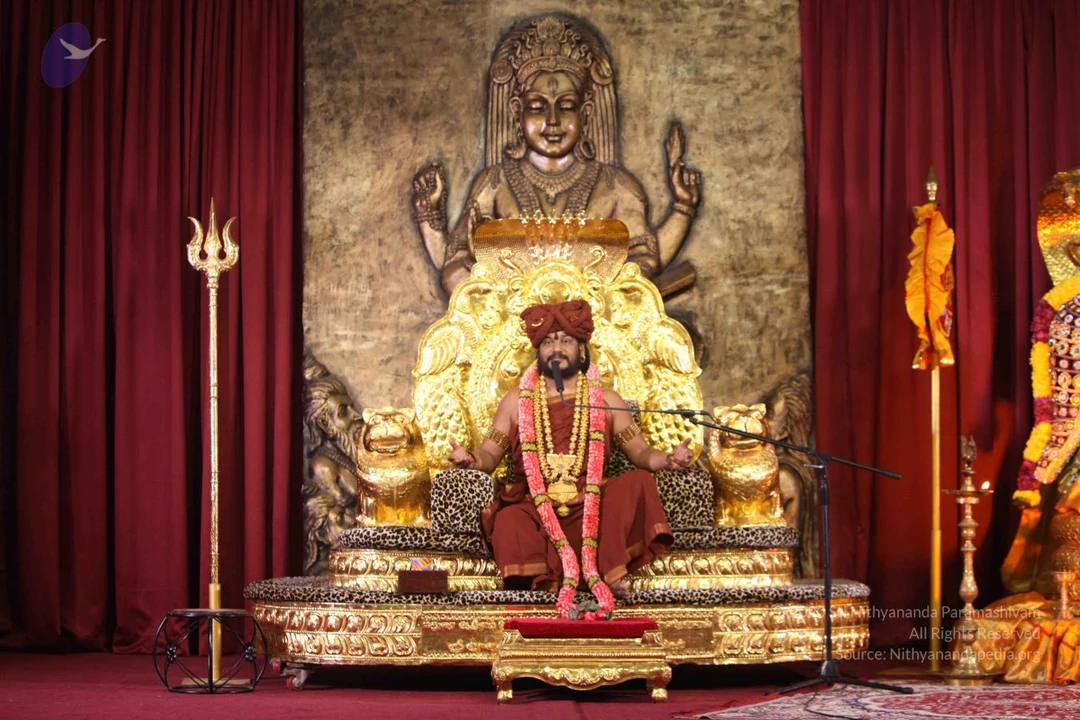
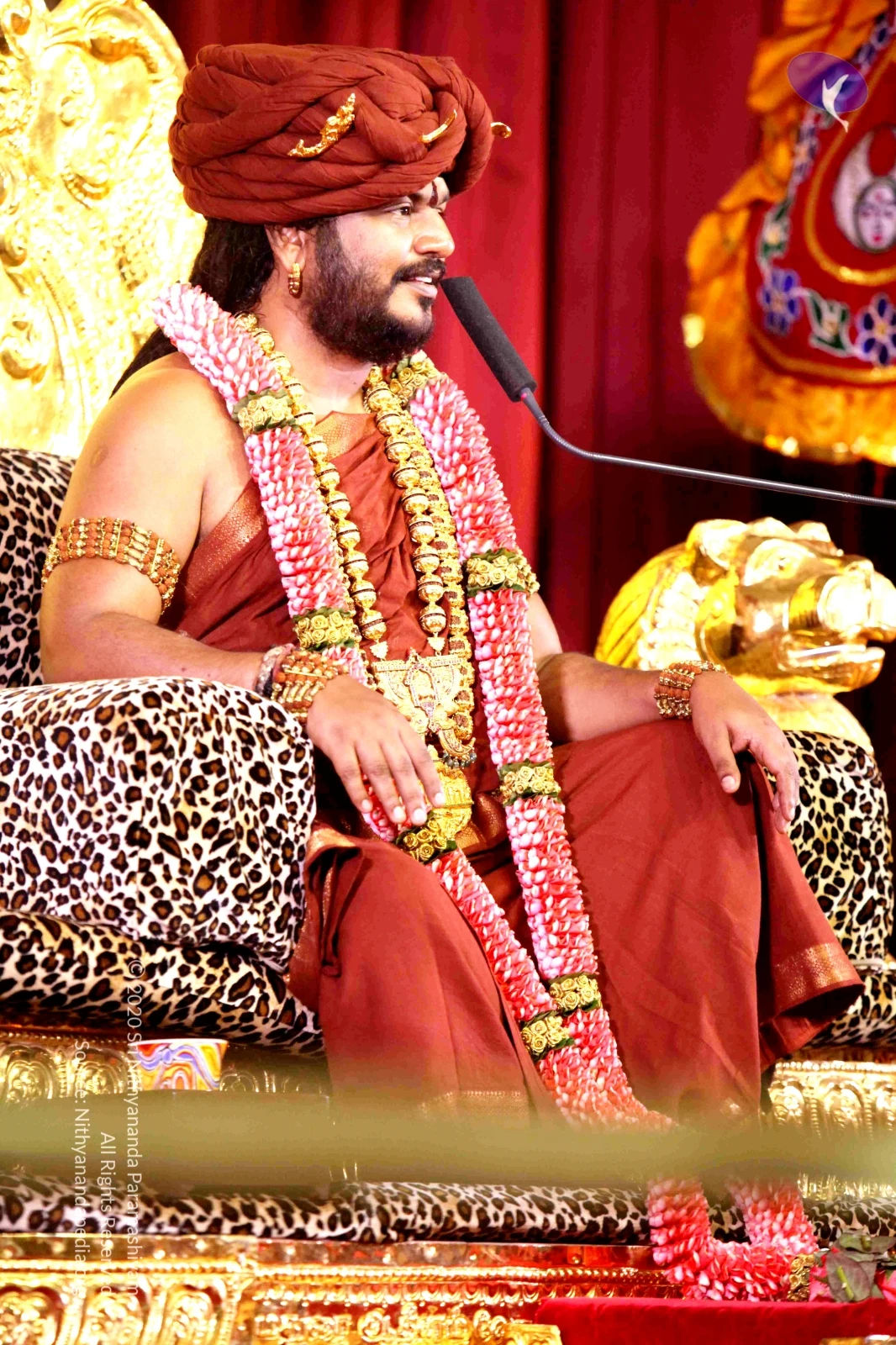
A smiling man seated on an ornate gold throne upholstered in leopard-print cushions, wearing a rust-red turban with a gold crest and crescent ornaments, a rust-red dhoti-style wrap with gold border, multiple strands of pink and white flower garlands, layered gold bead and pendant necklaces, a gold armlet and bangles, and a red tilak on his forehead. A microphone stand is at his right beside a gold lion-form armrest, and a red-draped table with flowers is in front. He is seated in the centre of the frame and no other physical people are visible. Swamiji (probable), seated on the throne, is identified by the claimed-in-page cues of a turban, ceremonial gold necklaces and flower garlands in a discourse setting.A smiling man seated on a leopard-print cushioned throne in front of a deep red curtain and a gilded lion-head armrest. He wears a rust-red turban with gold crescent and ornament, a rust-red sleeveless robe and matching cloth, and wears multiple layers of pink and white flower garlands with gold beads and rose-shaped gold motifs. He has gold armbands and bangles, a rudraksha-style mala, and a red tilak on his forehead. A candidate matching Swamiji by appearance is present: long swept-back hair, a crown-like turban, ornate saffron clothing and ceremonial gold necklaces (probable). He sits with hands resting on the armrest, one hand holding a small bead-like object.A seated man in a red-maroon turban and red-maroon robes speaks into a microphone on a leopard-print cushioned seat in front of an ornate gold throne carved with lion or makara motifs. He wears long layered gold bead necklaces, a large gold pendant, gold armbands and bangles, and a thick pink-and-white flower garland. A red tilak mark is on his forehead and he is smiling. Behind the throne are carved stone or painted deity figures with multiple arms. a person cues: red turban, saffron-red ornate clothing, gold necklaces and garland, seated on a throne during discourse.A bearded man seated on a leopard-print cushioned chair in front of a golden throne and deep red drapery, speaking into a boom microphone. He wears a rust-red turban decorated with gold ornaments and a crescent motif, a red tilak on his forehead, and a rust-red shawl over the body. He has layered gold bead necklaces, a large pink-and-white jasmine garland with gold rose accents, a gold armlet and gold bangles. His hands rest on his lap as he smiles. Only the one seated man is visible. Swamiji (probable): the seated man shows a turban, ornate gold jewellery and a garland, which are the qualifying cues for the page's Swamiji claim, though his appearance is not fully confirmed.Photo of a man seated on a leopard-print cushioned throne in front of a red curtain and gold ornamental carvings, speaking into a microphone. He wears a rust-red turban with gold ornaments, a rust-red robe with gold border, layered gold necklaces, a pendant, gold armbands and bangles, and a double garland of pink and white flowers with green rosettes. Swamiji (probable): long hair visible, ceremonial gold necklaces, ornate red clothing and a crown-like turban, seated as the discourse speaker. A gold figure is partly visible at the right edge, and a small colourful cup sits at lower left. Single person in the scene.A seated man in a maroon-red turban with gold ornaments and a red-brown dhoti-style garment speaks into a black microphone. He wears a long pink and white jasmine garland, a multi-strand gold bead necklace and a gold pendant, plus a gold armlet and bangles. He sits on a gilded throne with leopard-print cushions, and a gold lion-head armrest is at his right. Behind him hang red drapes and an embroidered red and gold banner.
2-Kalpataru-Darshan

2 photosSource gallery
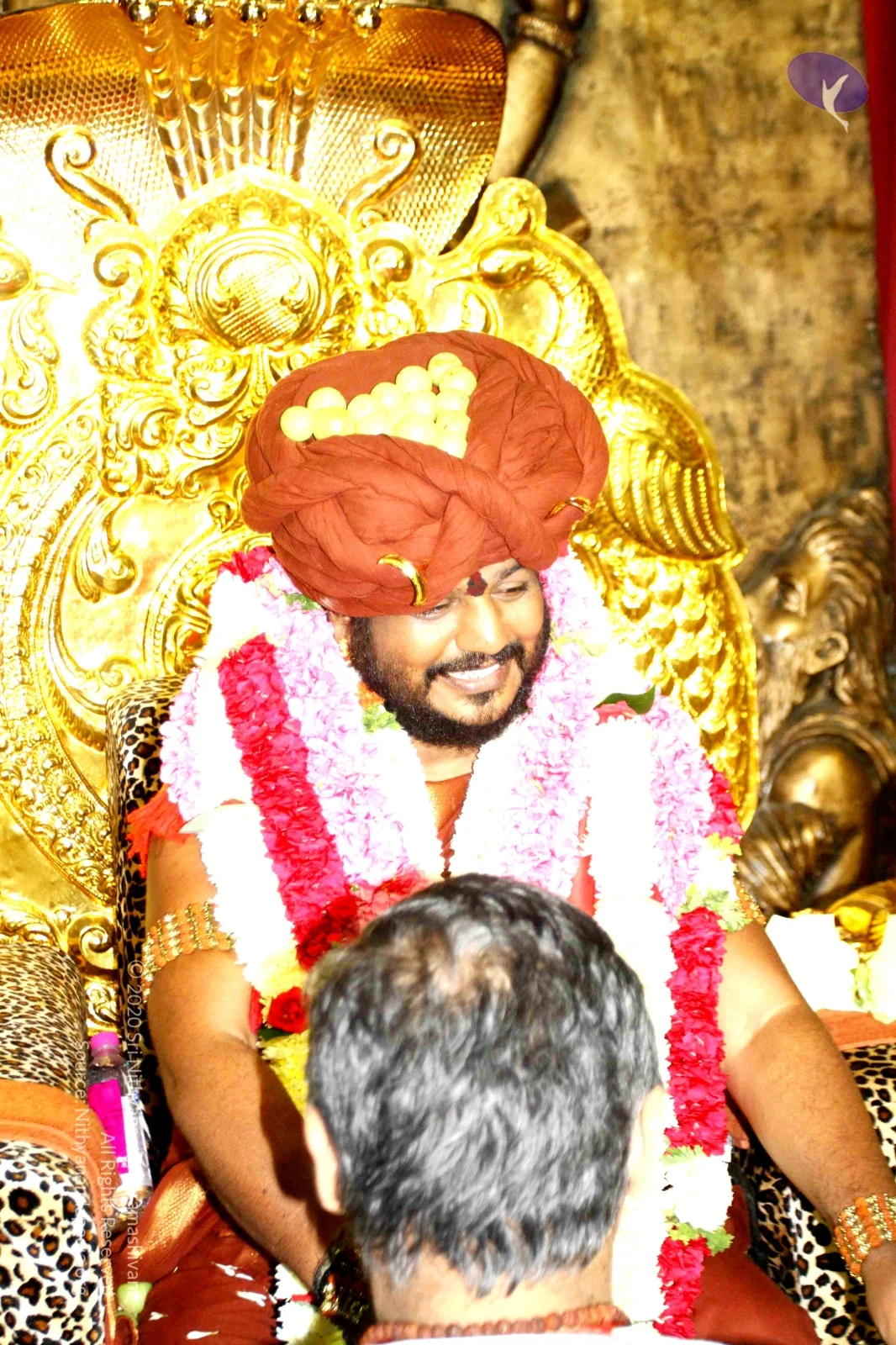
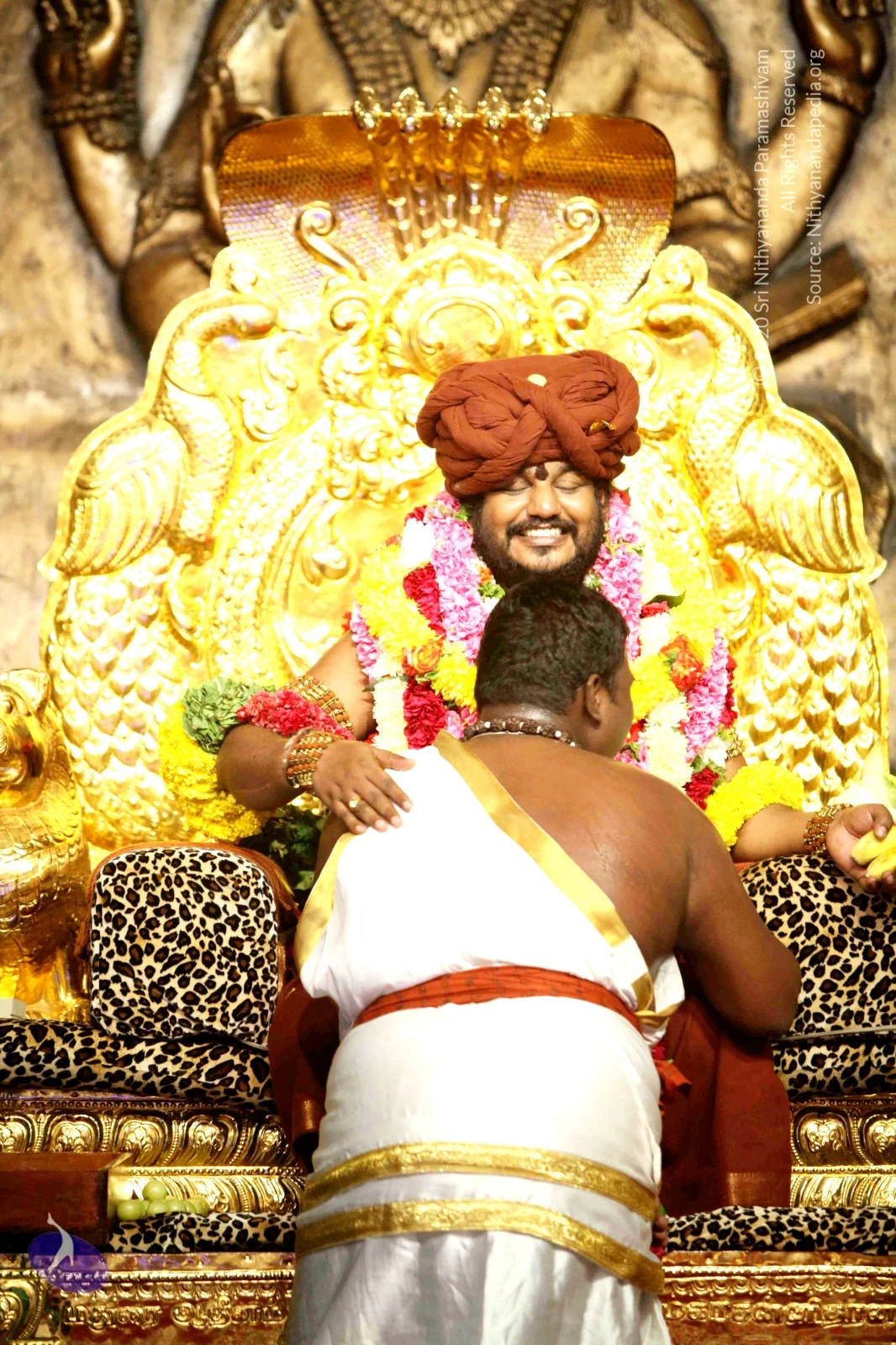
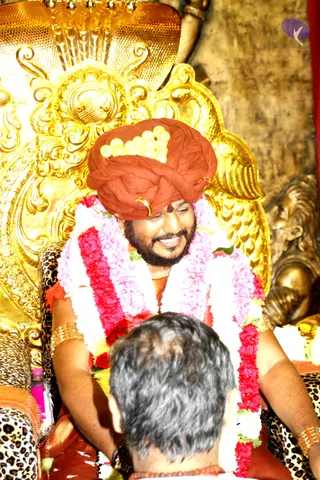
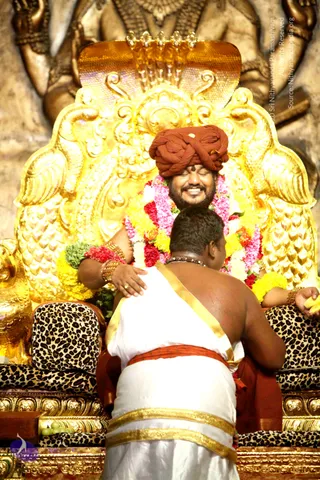
Photograph of a smiling bearded man seated on an ornate gold throne with a carved gold backrest and a leopard-print cushion. He wears a rust-orange turban decorated with pearls, a red tilak on his forehead, gold armlets and bangles, and a layered garland of white and pink flowers with red roses. In the foreground, the back of another person's dark-haired head is visible as they face him. A gilded figure stands at the right edge. The probable Swamiji cues are the ornate saffron turban, garlanded ceremonial dress and gold-throne setting, so he is described as a probable presence here, with his role as seated honoured guest receiving a devotee.A photograph of a seated figure on an ornate gold throne with carved serpent-like backrest, wearing a maroon turban and layered floral garlands in pink, red, yellow and white, eyes closed and smiling. A bare-chested devotee in white dhoti with gold border and gold shawl, kneeling in front of him, has his hand resting on the seated man's shoulder. The seated figure's arms are adorned with gold armlets and bangles. Behind the throne is a large golden carved deity relief with multiple arms. The throne has leopard-print cushions and gold-embellished armrests. a person appears as the seated figure based on the maroon turban, garlands and ornate throne cues; the devotee is a priest-type attendant in white.
3-Nithya-Kirtan

3 photosSource gallery
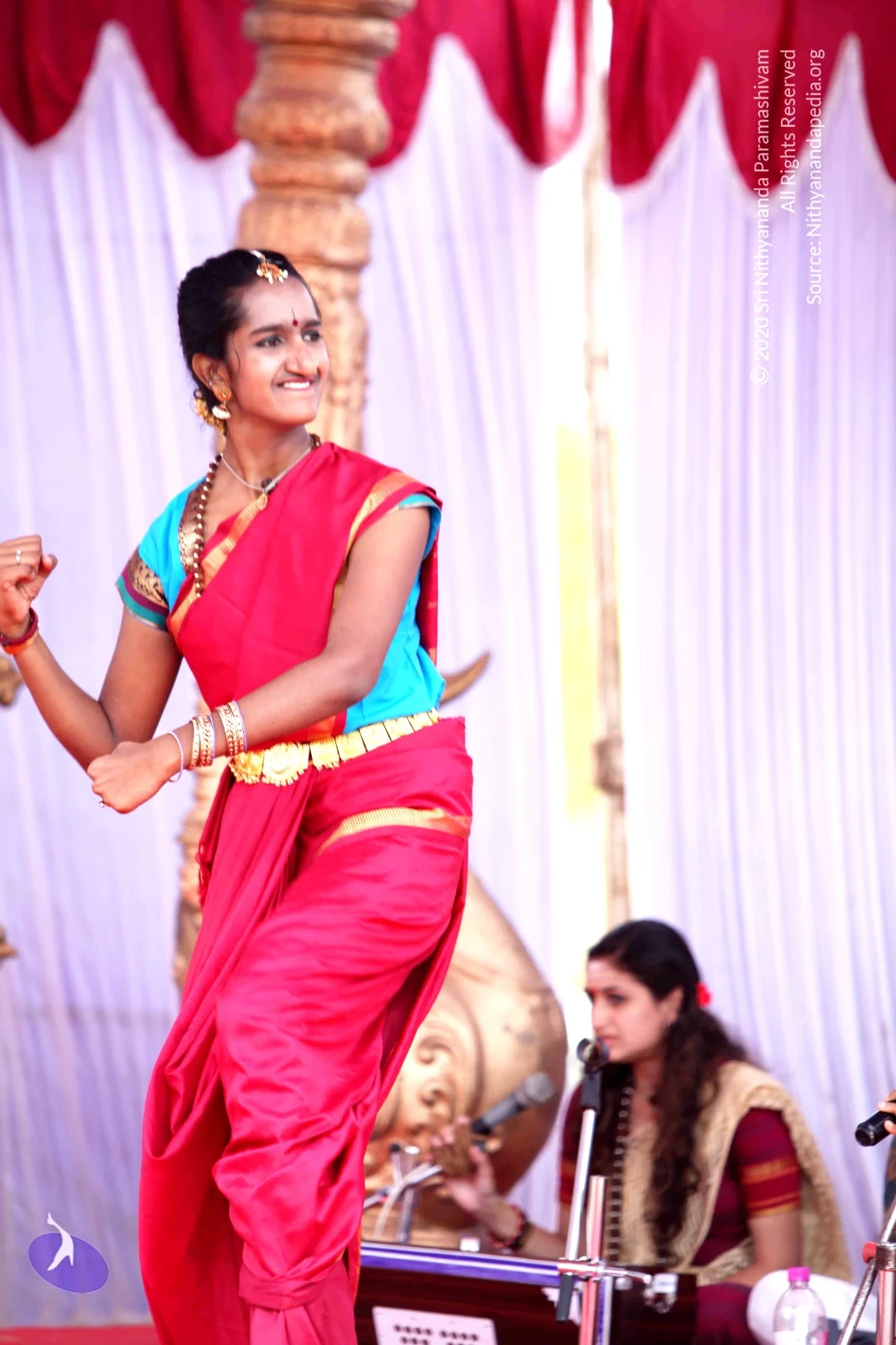
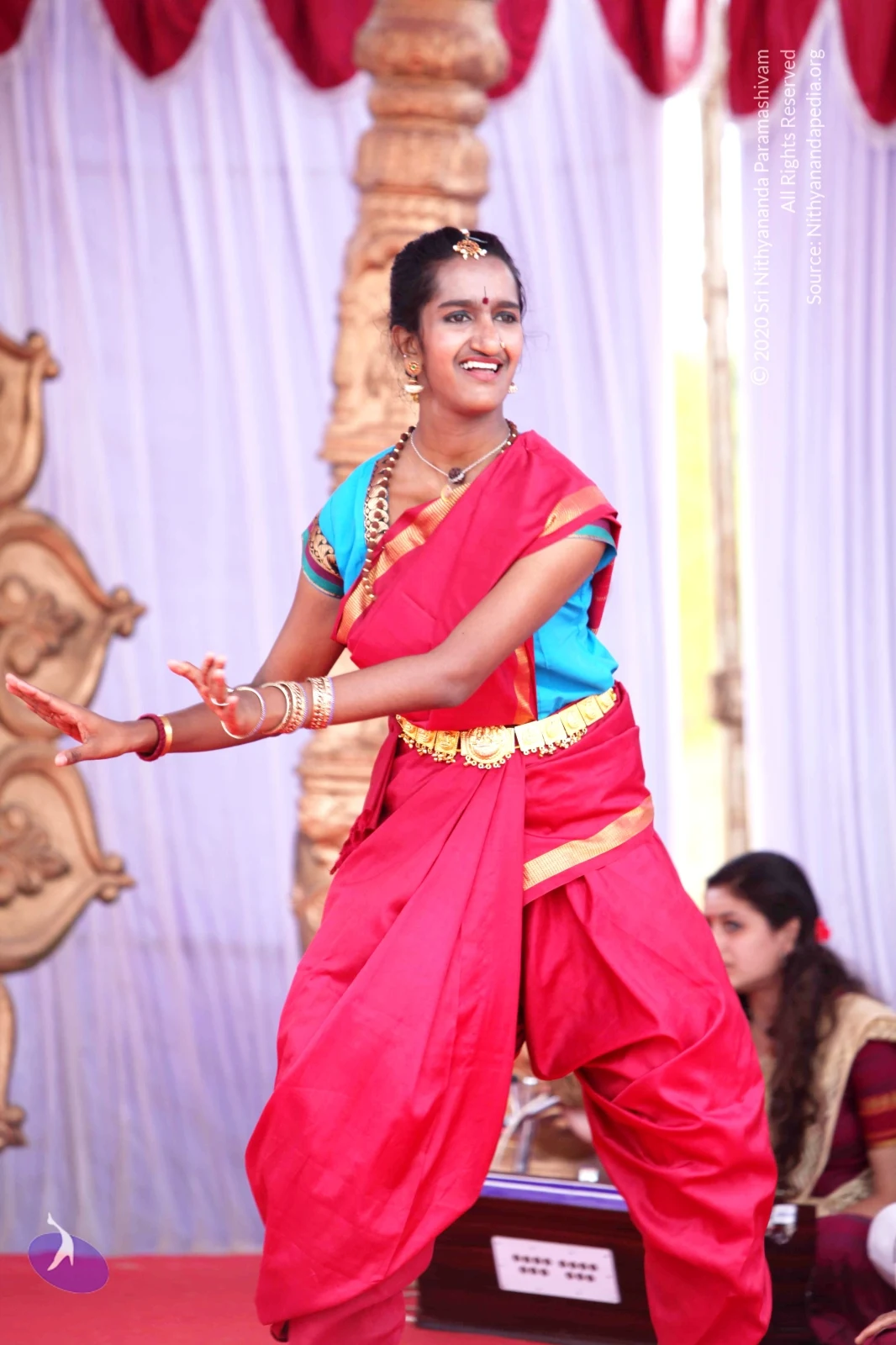
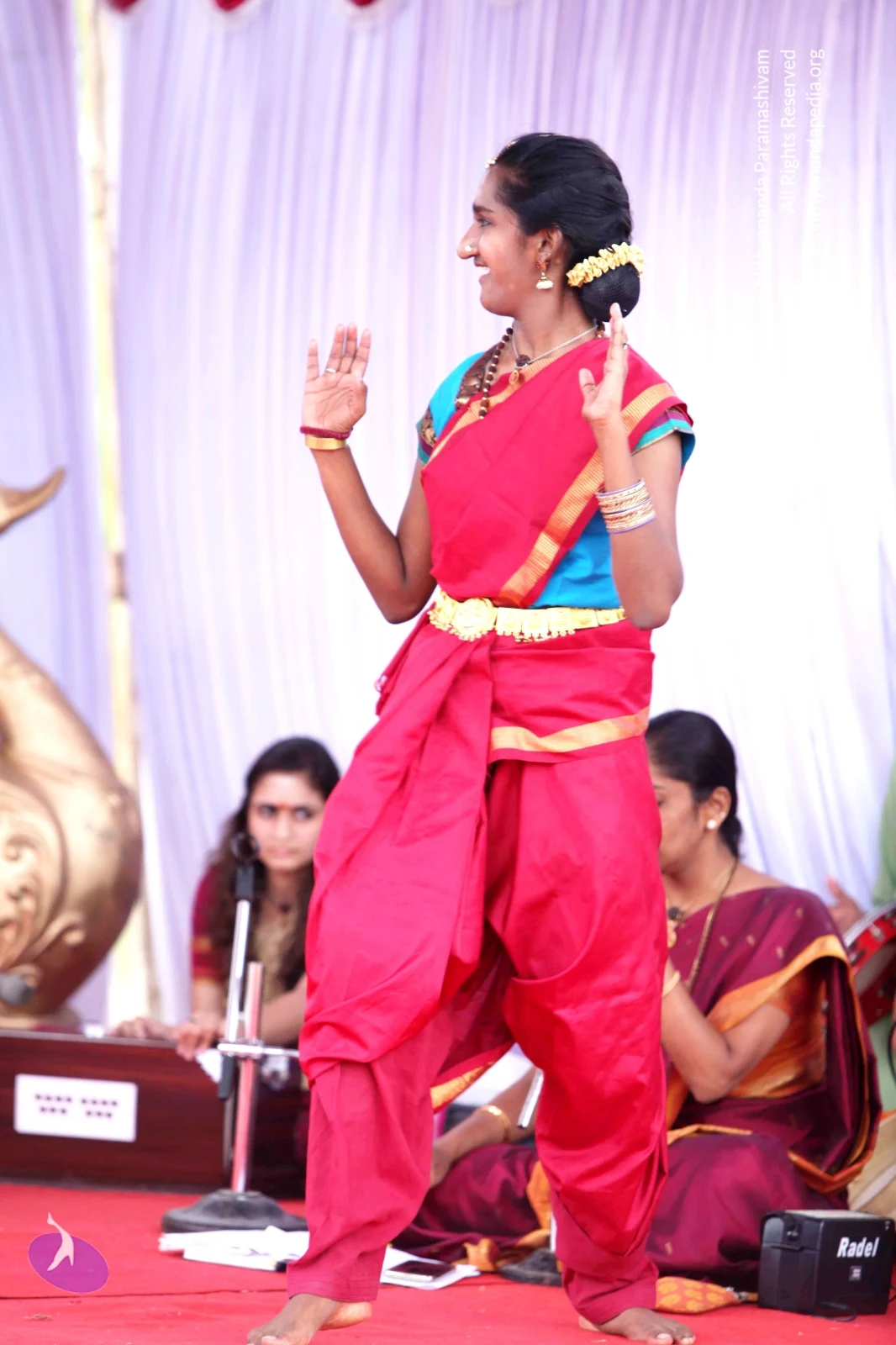
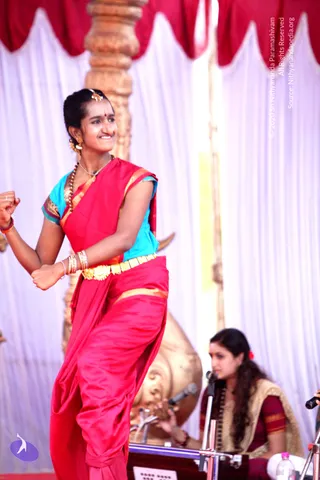
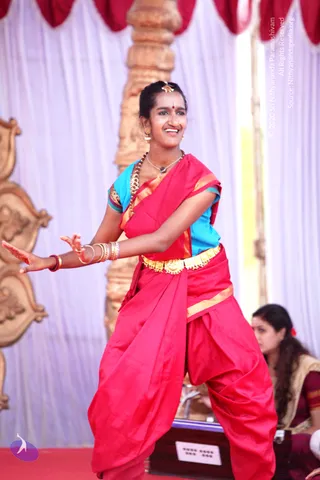
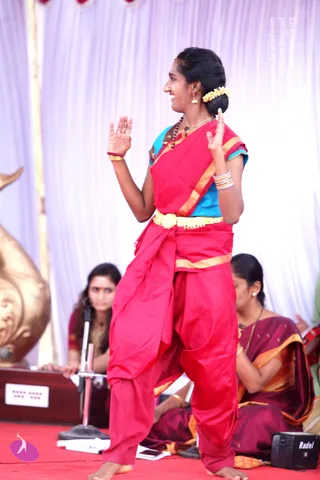
A young woman performs a classical dance on a stage, wearing a red silk saree with a gold-bordered pallu, a turquoise blouse, a gold waist belt, gold bangles and jhumka earrings, with her hair pinned up and a red bindi. She raises her fists in a dynamic pose. Behind her, a seated female musician in a beige shawl and maroon blouse plays a harmonium in front of a microphone. The backdrop features white draped cloth, red scalloped valances and a carved wooden pillar.A young woman performs a classical dance on a red-carpeted stage in front of white draped curtains with red valances and a carved wooden pillar. She wears a red silk saree with gold border, a turquoise blouse, a gold waist belt, gold bangles, a gold hair ornament and a necklace, and she has a red bindi and a smile while extending her arms outward. A seated musician in a maroon garment sits at right beside a harmonium. No a person candidate is visible.A young woman performs a classical dance on a red stage in front of a white draped backdrop, raising both hands with palms outward in a mudra-like gesture. She wears a red and gold saree-style costume with a gold waist belt, a turquoise blouse, gold bangles, a rudraksha-style mala, and her hair is pinned in a bun adorned with a gold ornament. Behind her, two women sit playing instruments, one in a maroon saree with gold border and another in red with a harmonium-like instrument nearby, and a large golden statue edge is visible at left. A small Radel speaker sits on the stage at right. No a person candidate is visible.

5-Ganapathy-Homa

12 photosSource gallery
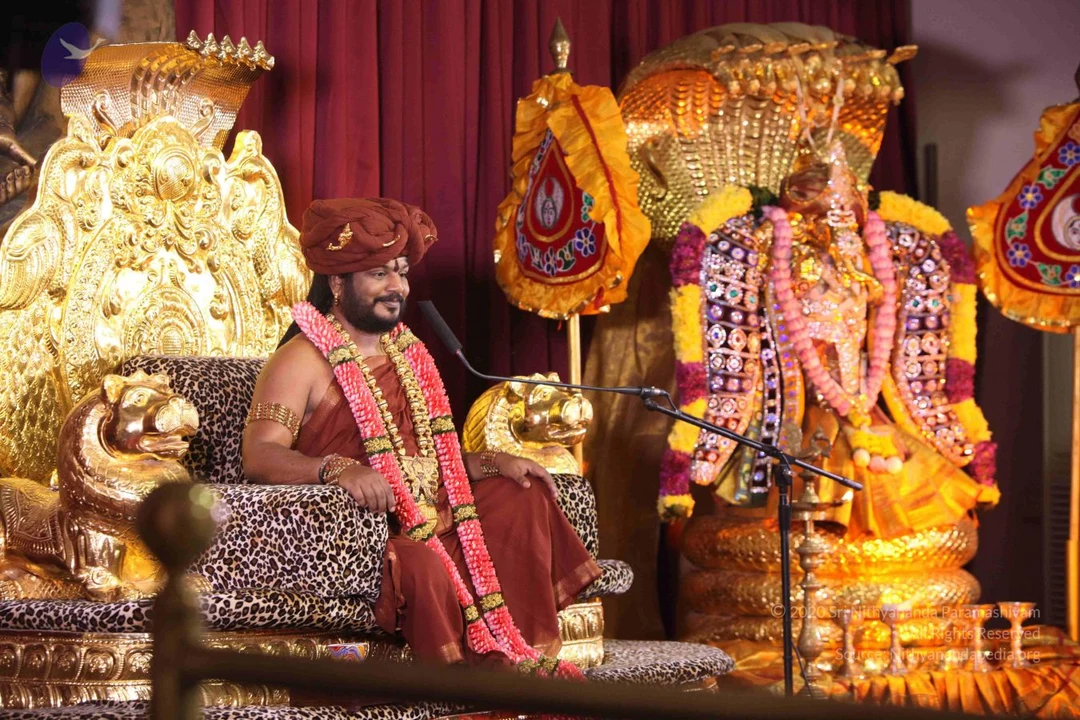
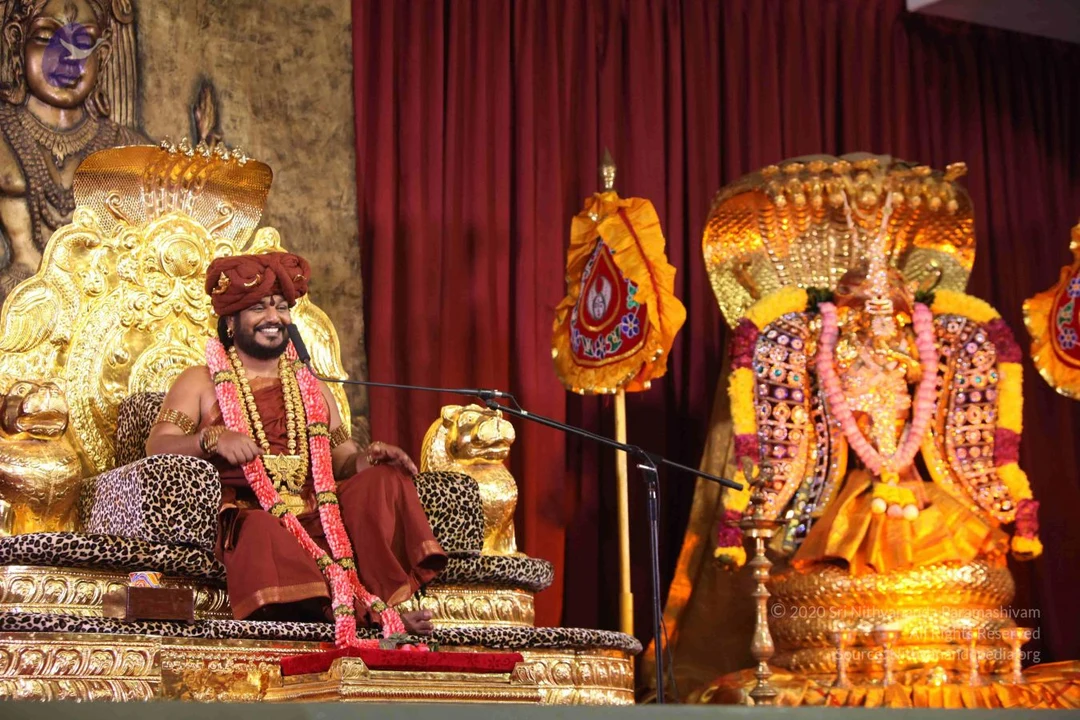
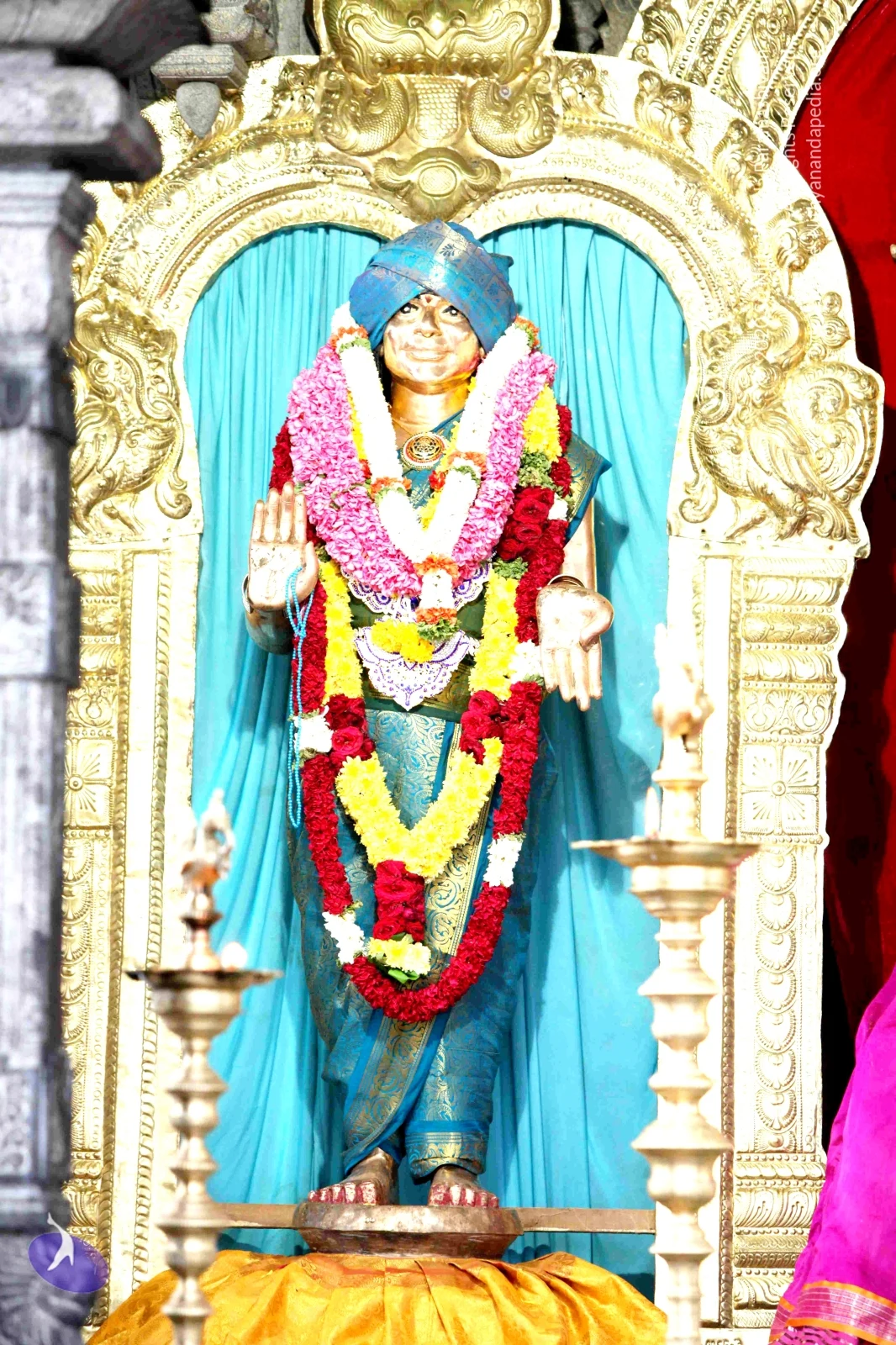
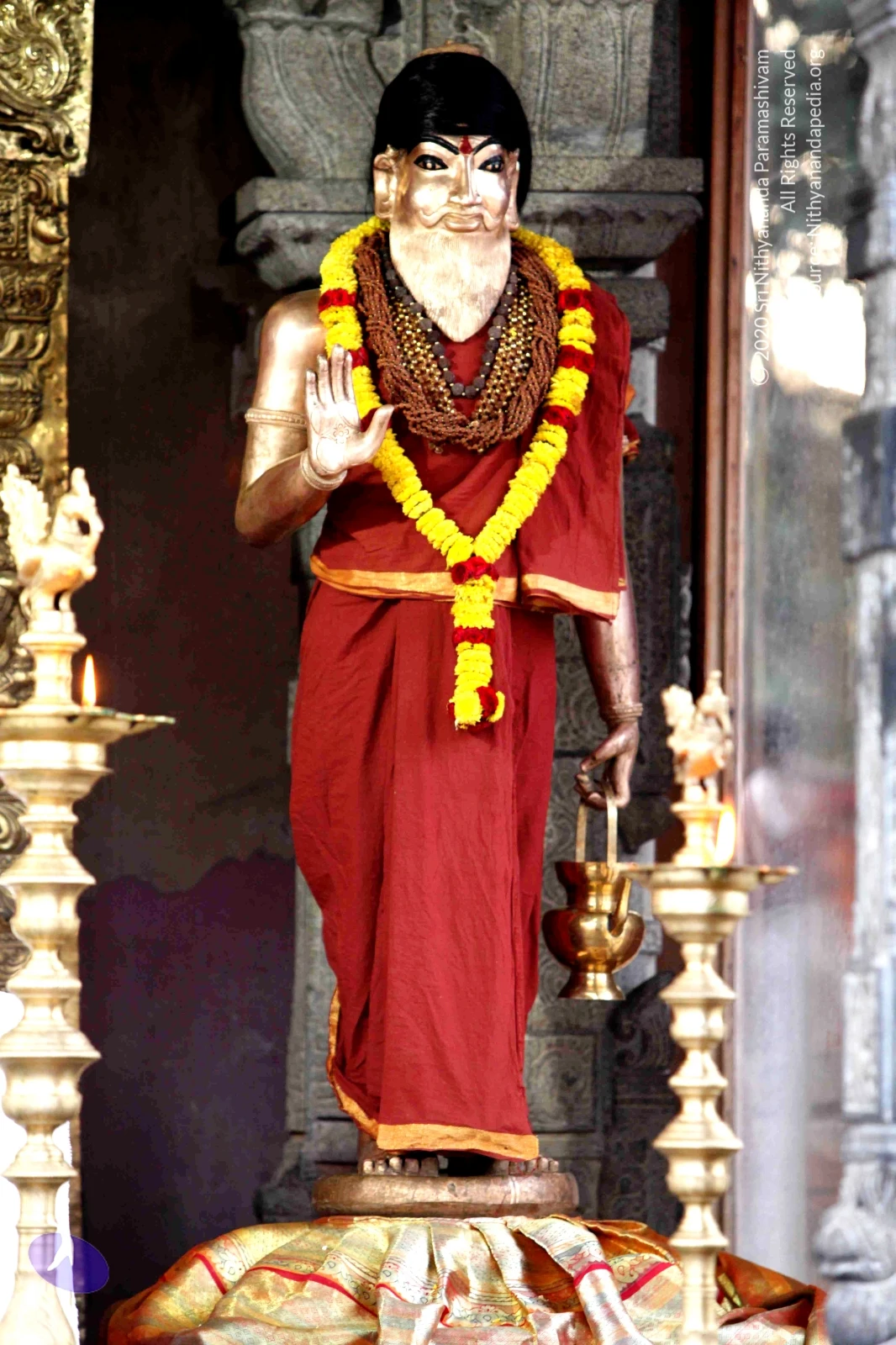
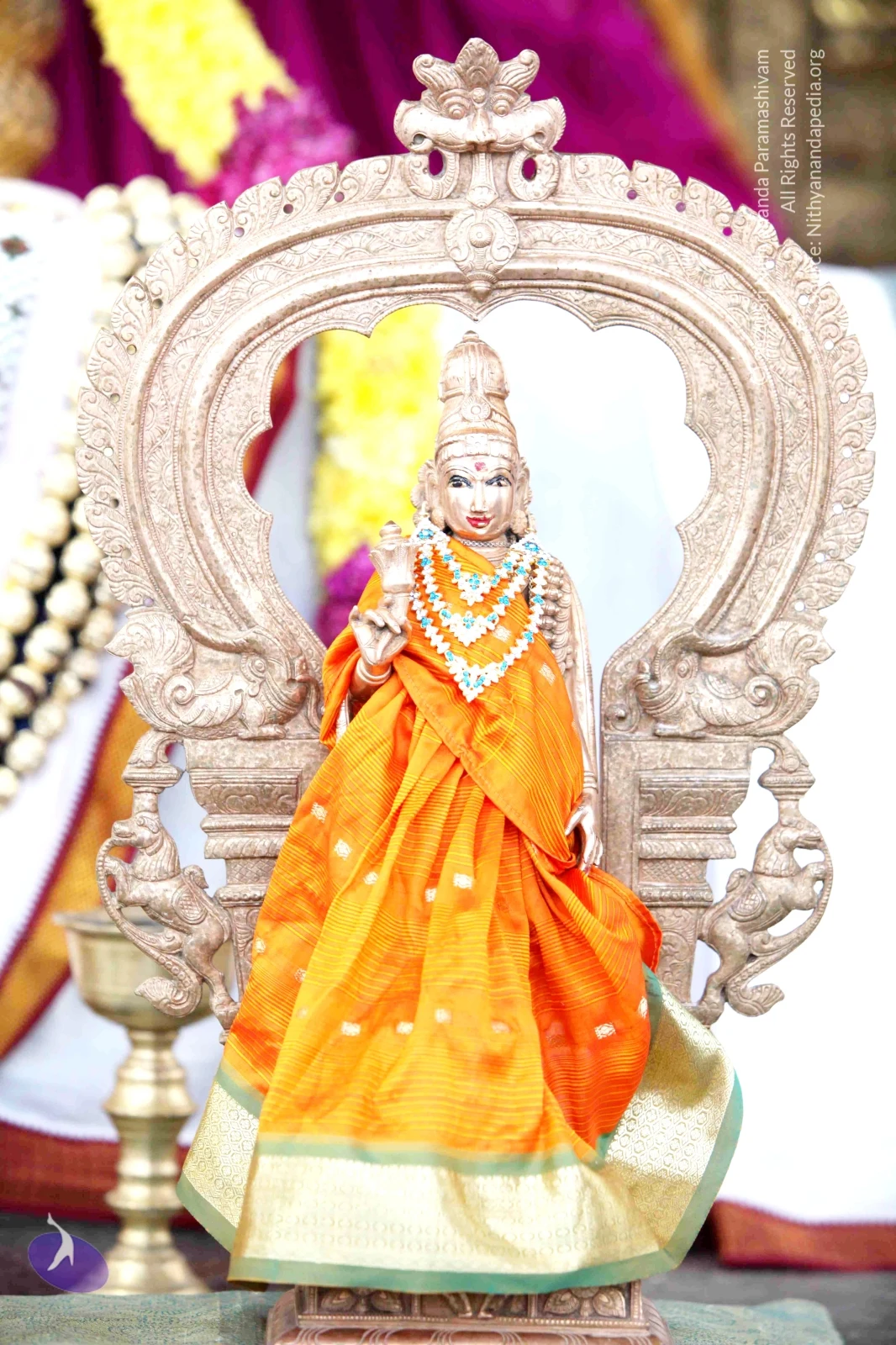
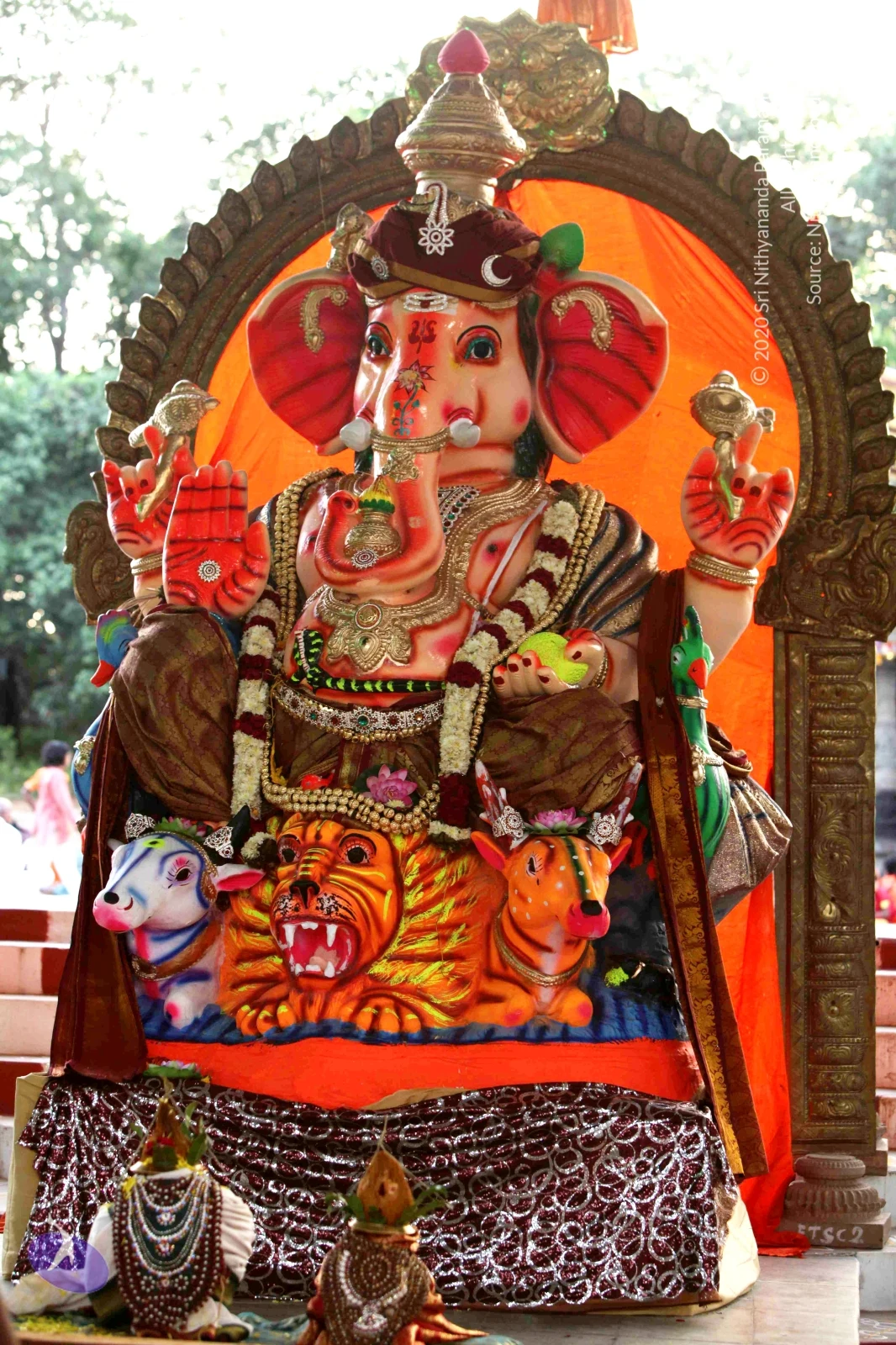
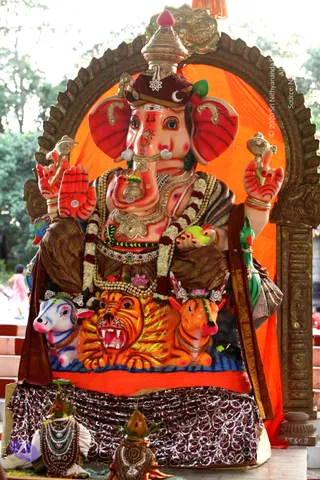
A standing statue in a gilded arched shrine, depicting a figure in a blue turban and teal-blue embroidered sari with gold-brocade border, draped with garlands of pink, white, yellow and red flowers. The statue's right hand is raised in abhaya mudra and the left hand hangs at the side, with a blue rudraksha-style mala and a round gold pendant at the chest. Brass oil lamps stand on either side and a golden drapery sits at the base. Behind the statue hangs a turquoise cloth, and a person in magenta clothing is partly visible at the right edge. The statue is a depiction, not a living person.A gilded statue of a standing sage in a rust-red dhoti and draped red shawl with an orange border stands before a temple wall. The figure wears a thick marigold and red-flower garland, multiple brown and gold rudraksha-style malas across the chest, and a red tilak on the forehead. Its right hand is raised in abhaya mudra while the left holds a brass kamandalu. Brass lamps with lit wicks flank the statue, and a gold-and-red brocade cloth covers its base. This is a statue, not a living person, and no identity is asserted from its face.A metal deity murti stands within an ornate silver-toned arched prabhavali frame carved with foliage and rearing lion figures. The figure wears a bright orange and gold-bordered draped sari with a teal edge, a white and turquoise flower garland, and a red tilak on the forehead, holding a small ritual object in one hand. A brass oil lamp stands at the left against a magenta and yellow floral backdrop, with a purple logo mark in the lower left corner.A large painted clay murti of Lord Ganesha seated on a throne-like dais before an orange backdrop and carved arched frame. The deity has a red trunk, red-and-gold crown topped with a finial, a maroon turban-style headdress with a moon motif, and ornate gold necklaces with a garland of white and red flowers. His four hands hold objects including a lamp-like item and a modaka. He is flanked by a lion-like mount in orange and gold and two small figures. Lotus flowers and a sequined brown cloth cover the base. Offerings sit in front, including a decorated pot. Two faint figures stand at the left edge of the frame; no one is prominently in the foreground.A richly decorated Ganesha murti sits enthroned beneath a hooded golden naga canopy, adorned with a jewelled golden armour-like vest, pink and yellow flower garlands and gold ornaments, set before a deep red curtain. A priest in an orange dhoti and bare upper body, with white markings on his arms and chest and a rudraksha mala, stands at right ringing a handbell toward the murti. Brass oil lamps with lit flames flank the golden base, and a row of small brass cups sits in front. A blurred, out-of-focus head and shoulders appear at the bottom edge in the foreground. Orange-and-gold ceremonial banners stand at both sides of the stage.A seated man in a red-maroon turban and matching maroon-red robes sits on an ornate gold throne upheld by lion-head arms, with a leopard-print cushion behind him. He wears layered gold necklaces, a pink-and-white flower garland, gold armbands and bracelets, and holds a raised hand mid-discourse before a microphone on a stand. Behind the throne a large gold relief of a multi-armed deity murti with a crown rises against a textured gold wall. A red cushioned footstool with a flower offering sits in front. Swamiji (probable): the seated man has a turban, ornate gold jewellery and a saffron-red robe, consistent with the page's reference to Swamiji speaking at the event. The photo shows a discourse in progress.
September 04 2016

1 photoView all
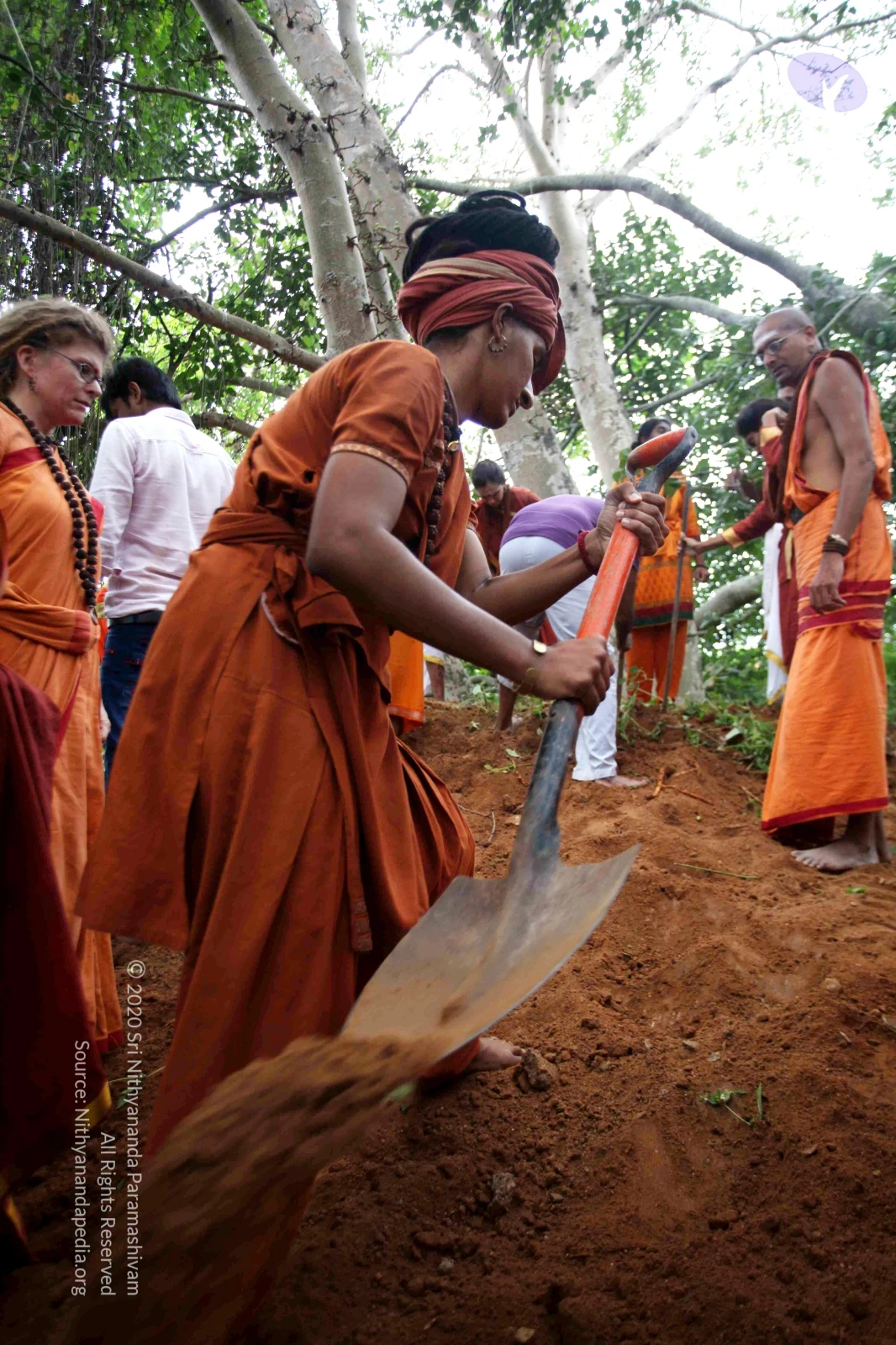
A photograph of ashram members digging red earth beneath tall pale trees. In the foreground a woman in an orange robe with a red turban and rudraksha mala drives a long-handled shovel into the soil, sending dirt flying. Behind her a woman with glasses in an orange robe watches, and a bald man in orange wrap with a red-bordered cloth stands barefoot at right. Other people in white and orange clothing work or stand in the background among roots and undergrowth.