Skip to content
Monday

7 May 2012

Madurai Adheenam: Philosophy & History of Madurai Adheenam

Dated photos
620
Source pages
1
Media
3
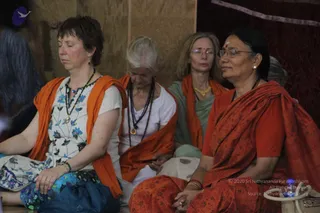
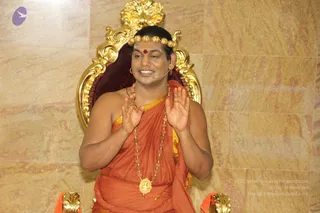
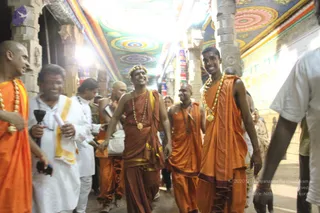
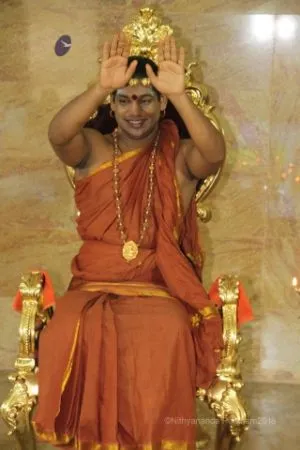
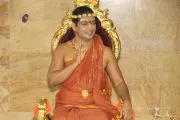
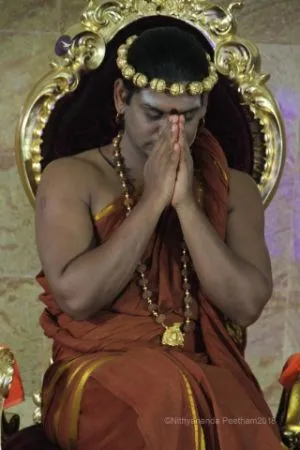
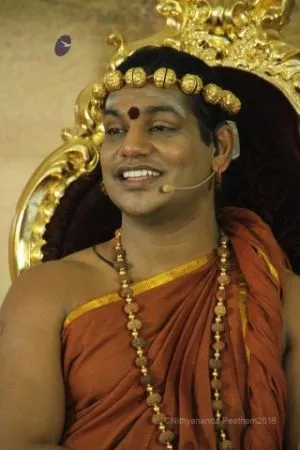
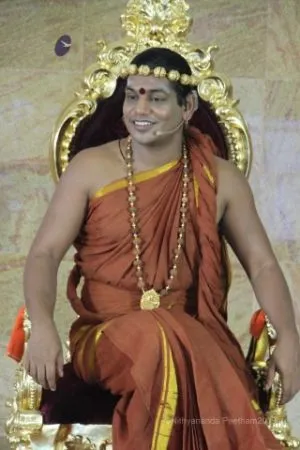
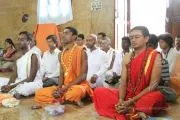
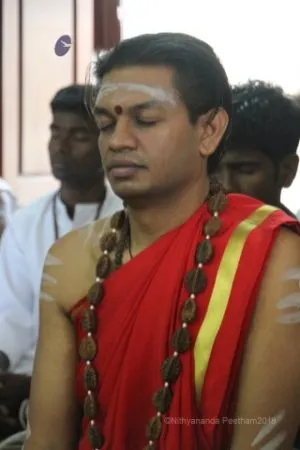
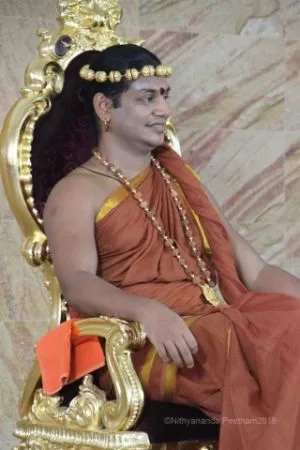
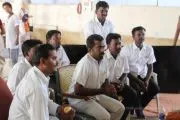
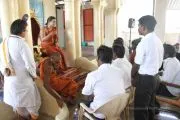
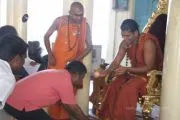
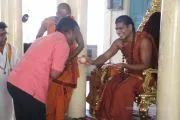
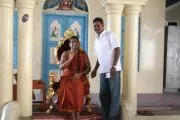
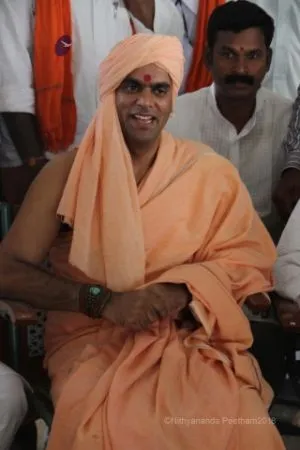
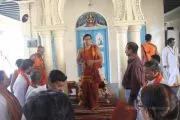
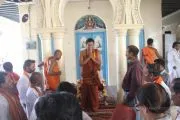
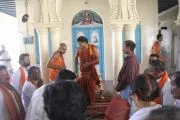
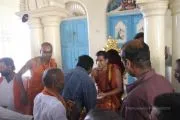
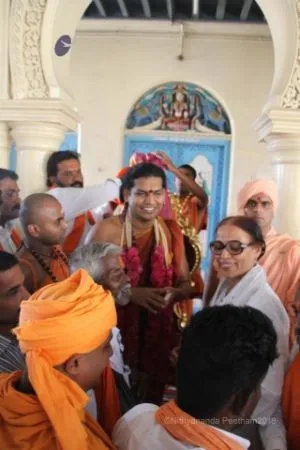
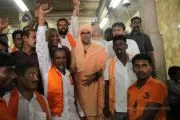
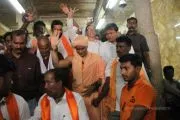
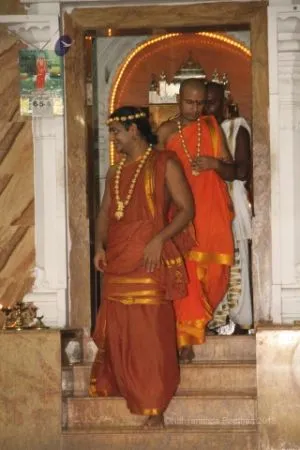
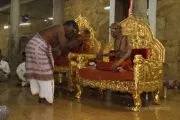
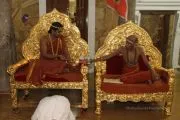
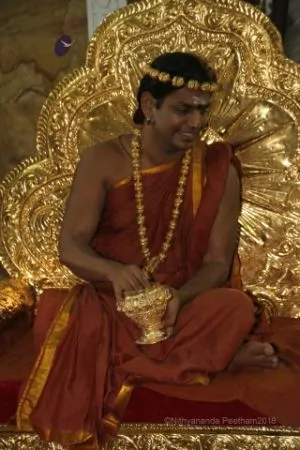
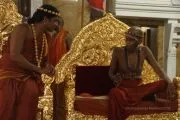
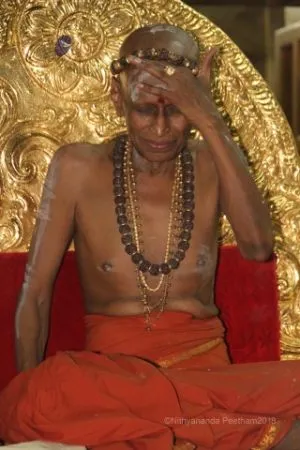
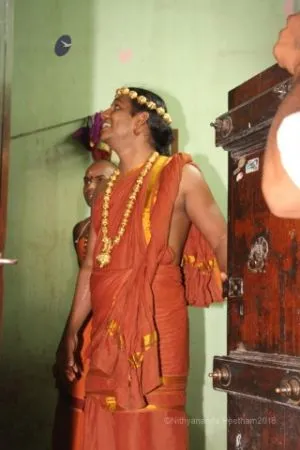
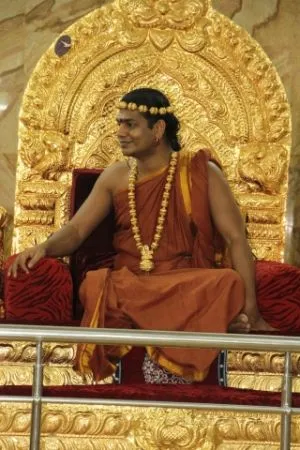
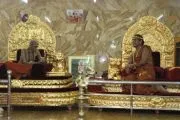
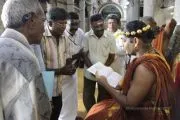
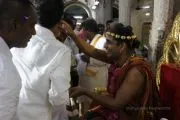
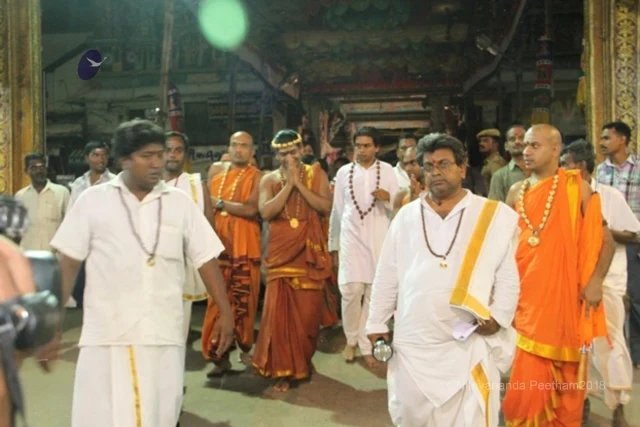
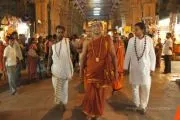
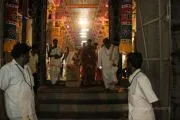
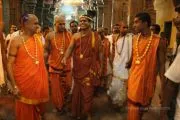
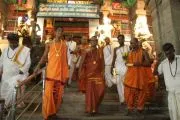
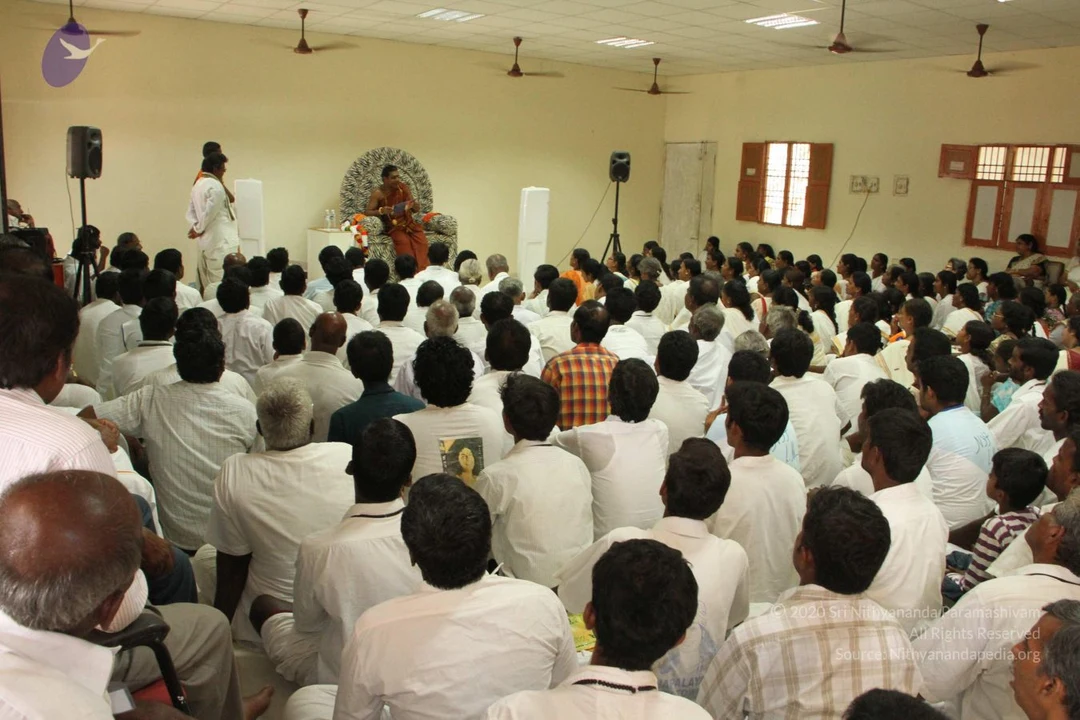
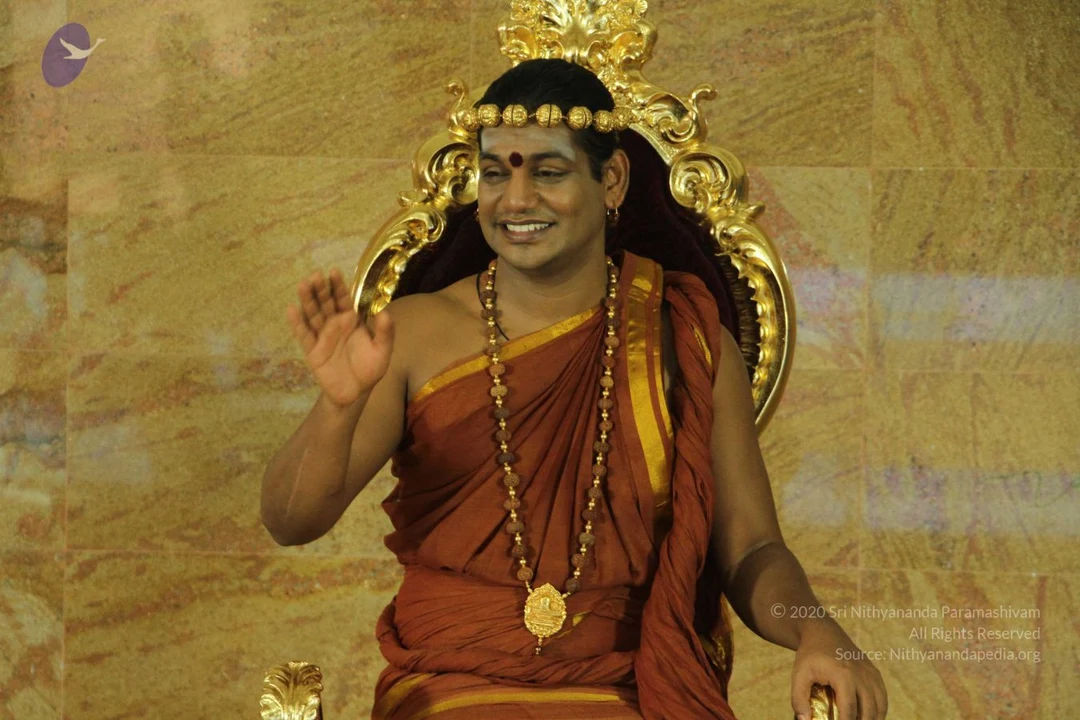
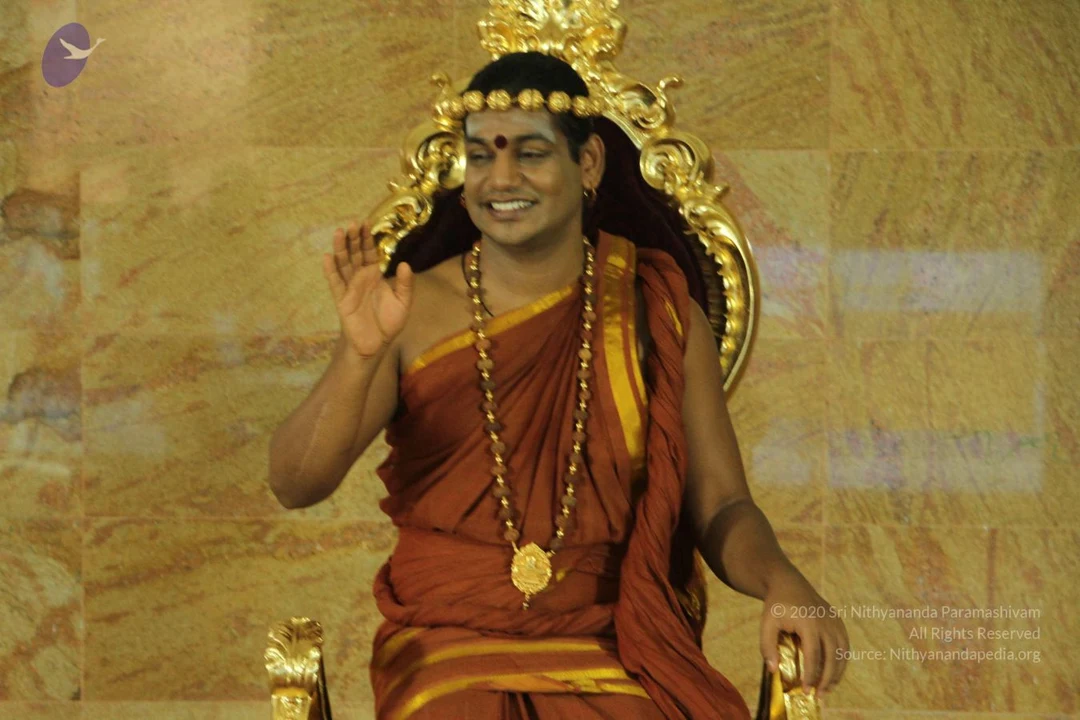
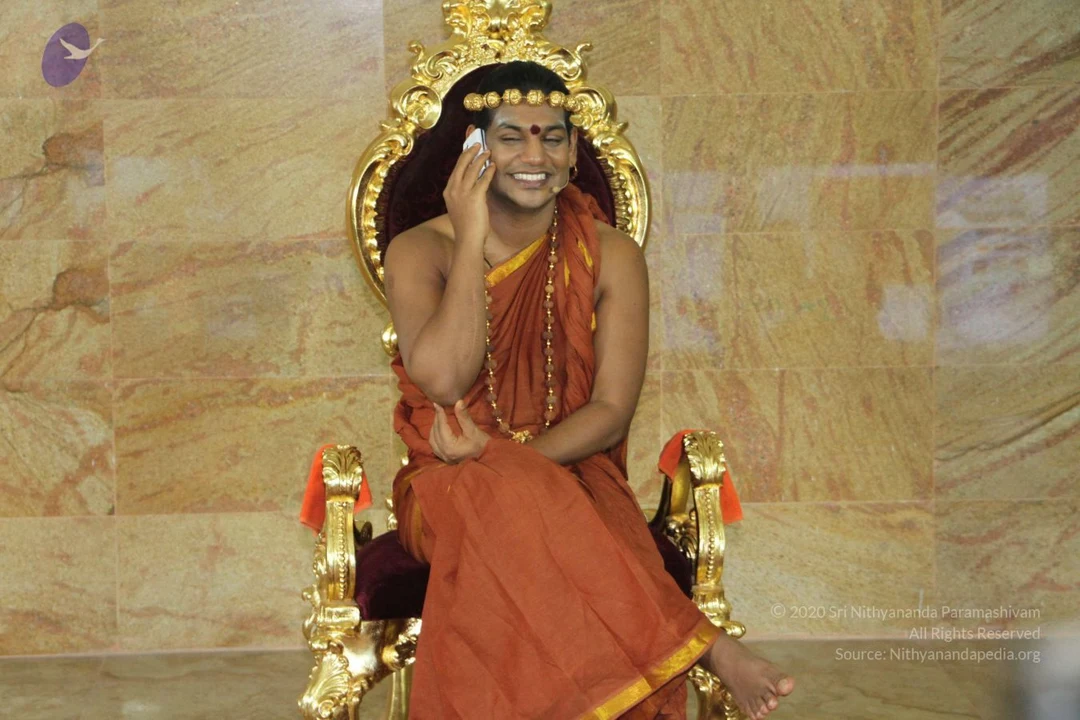
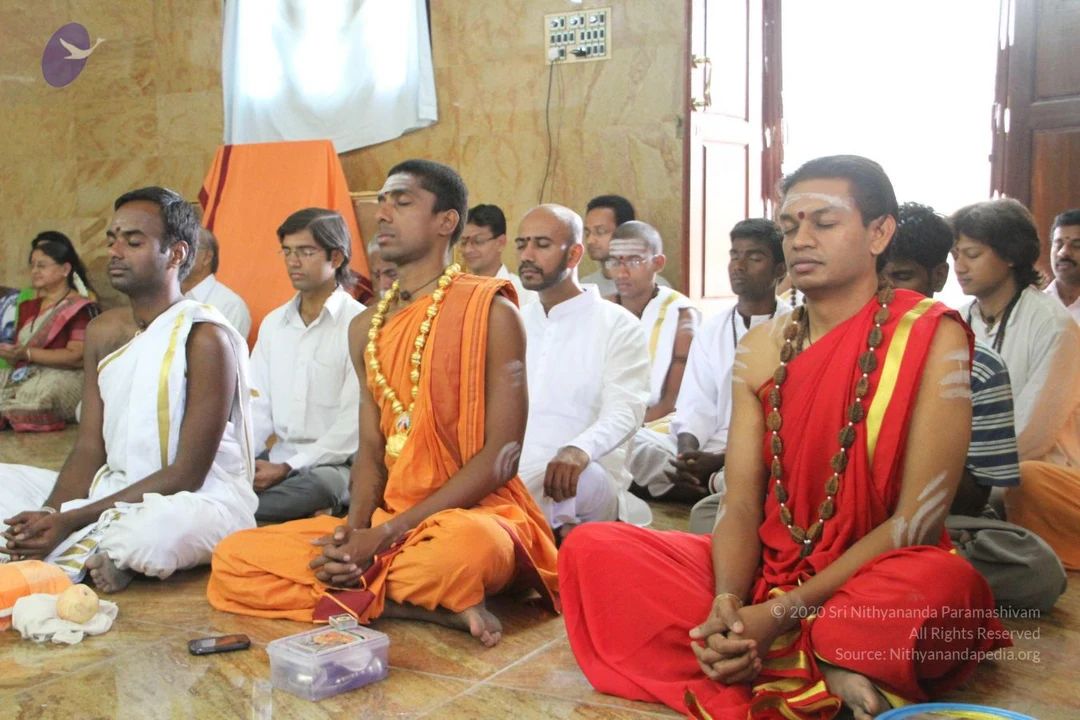
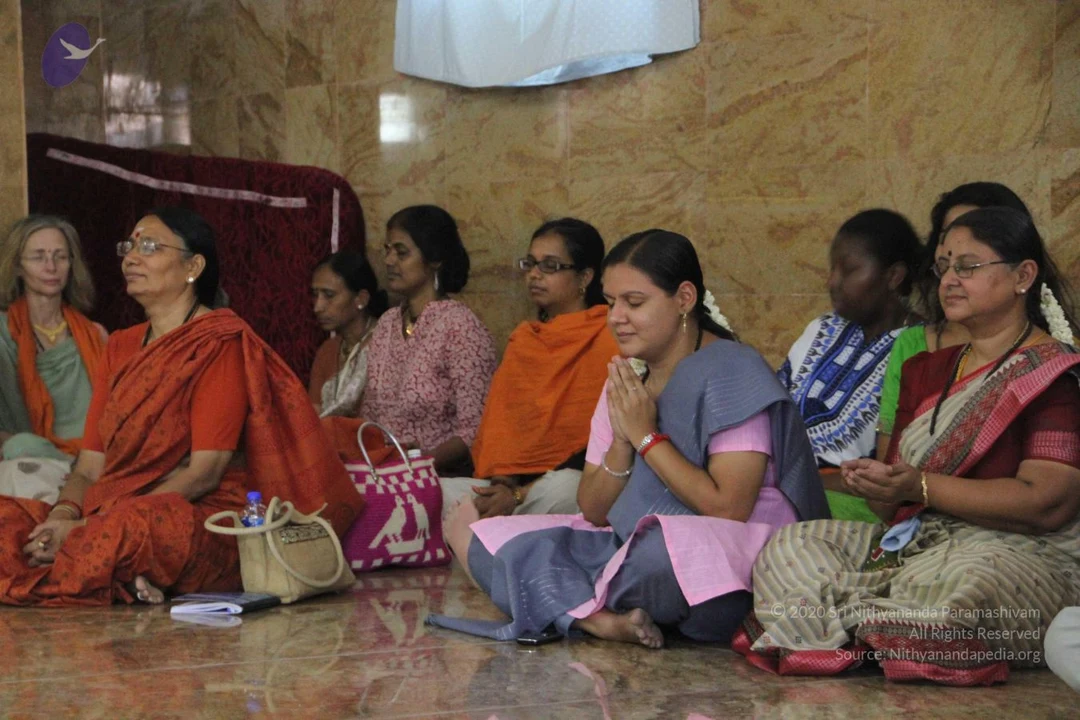
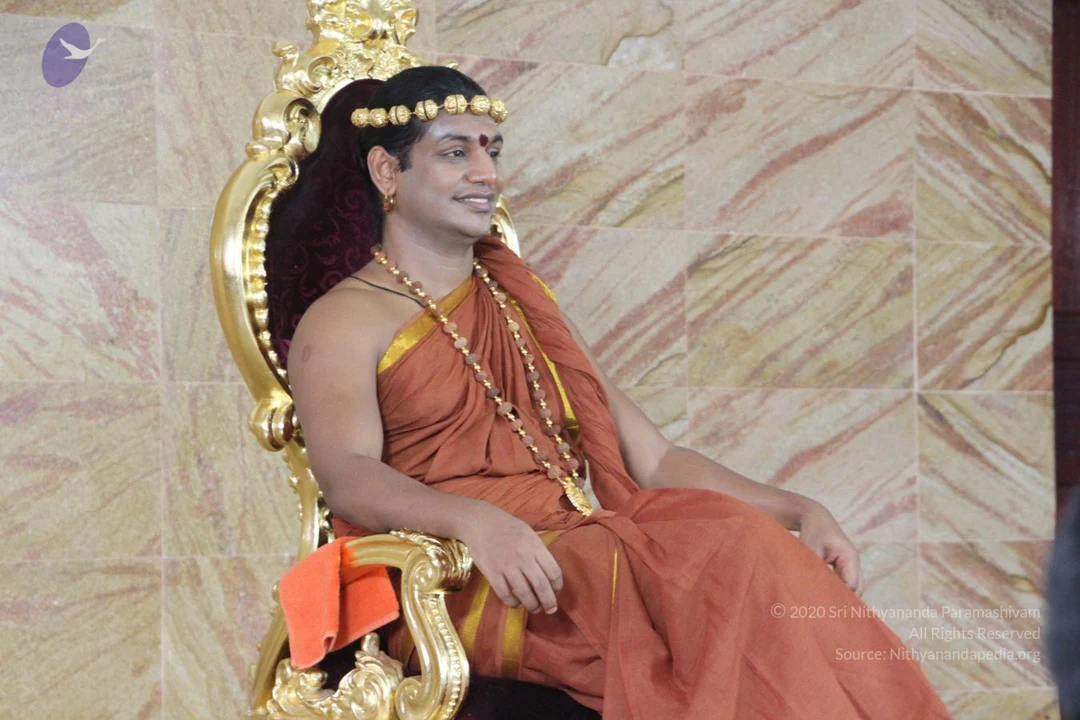
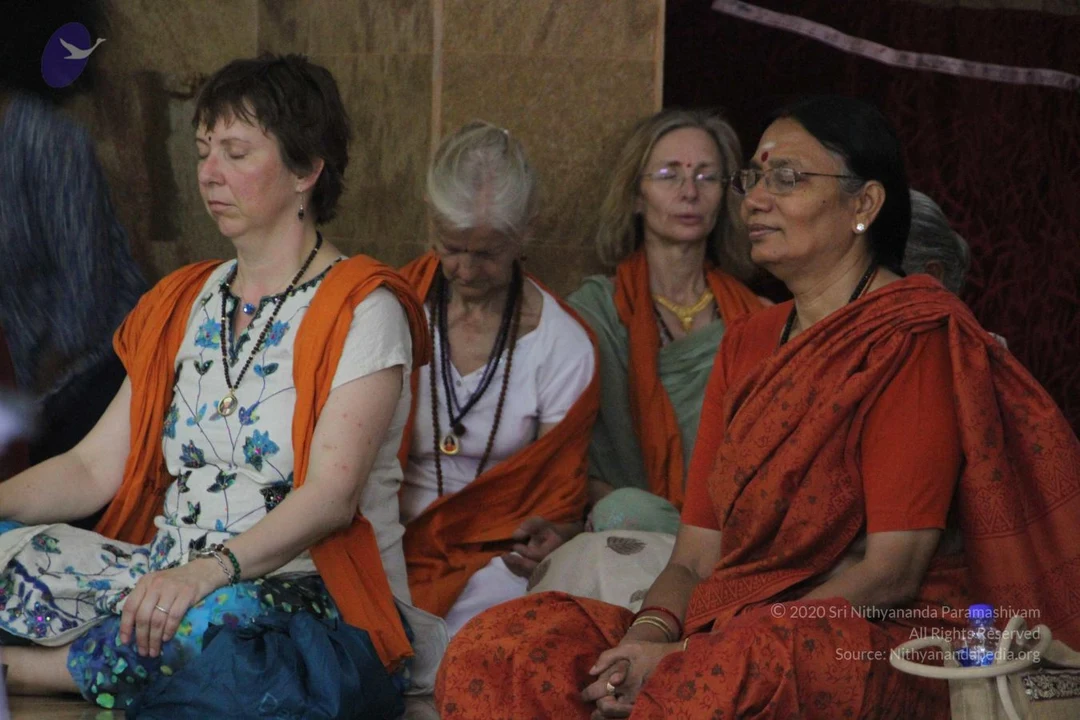
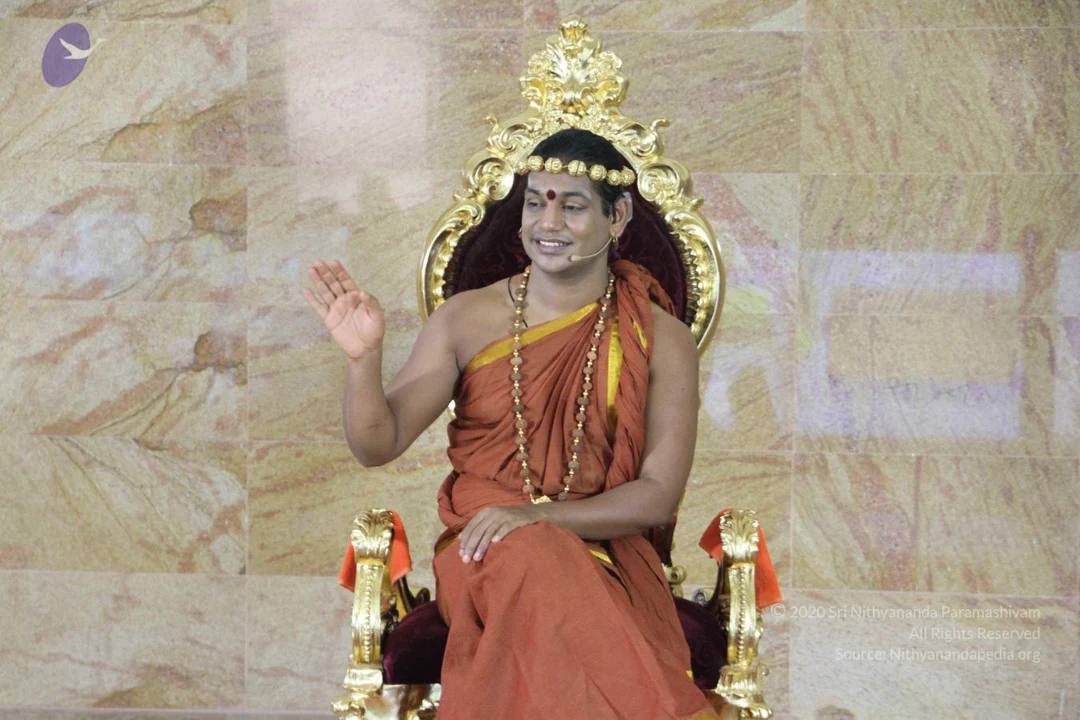
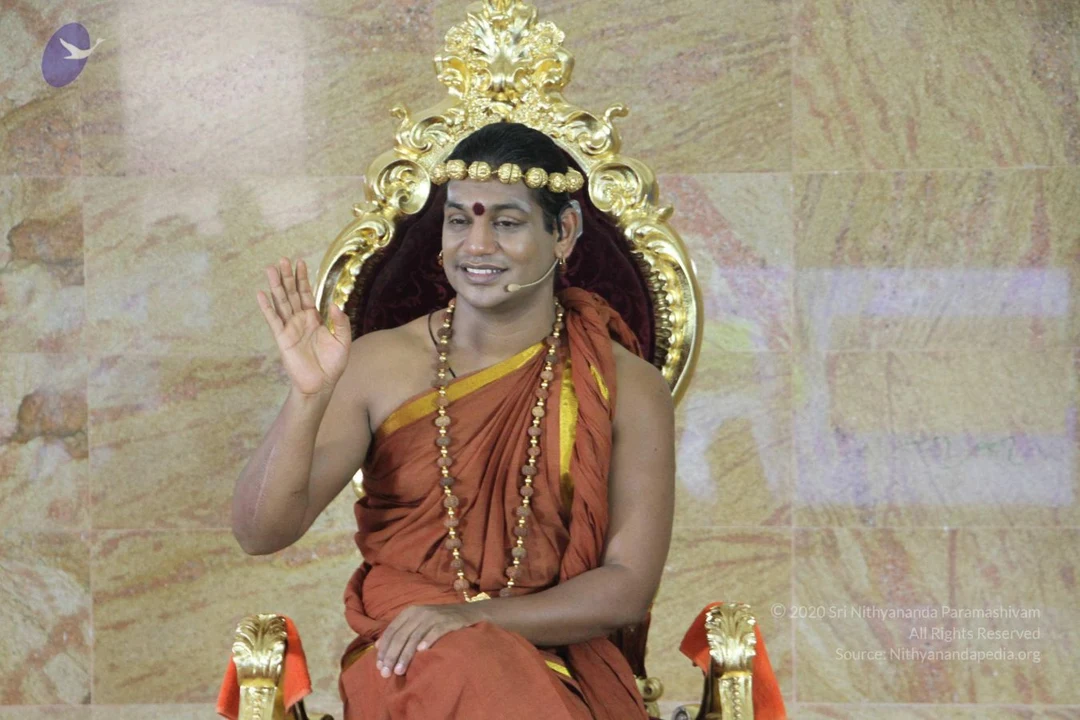
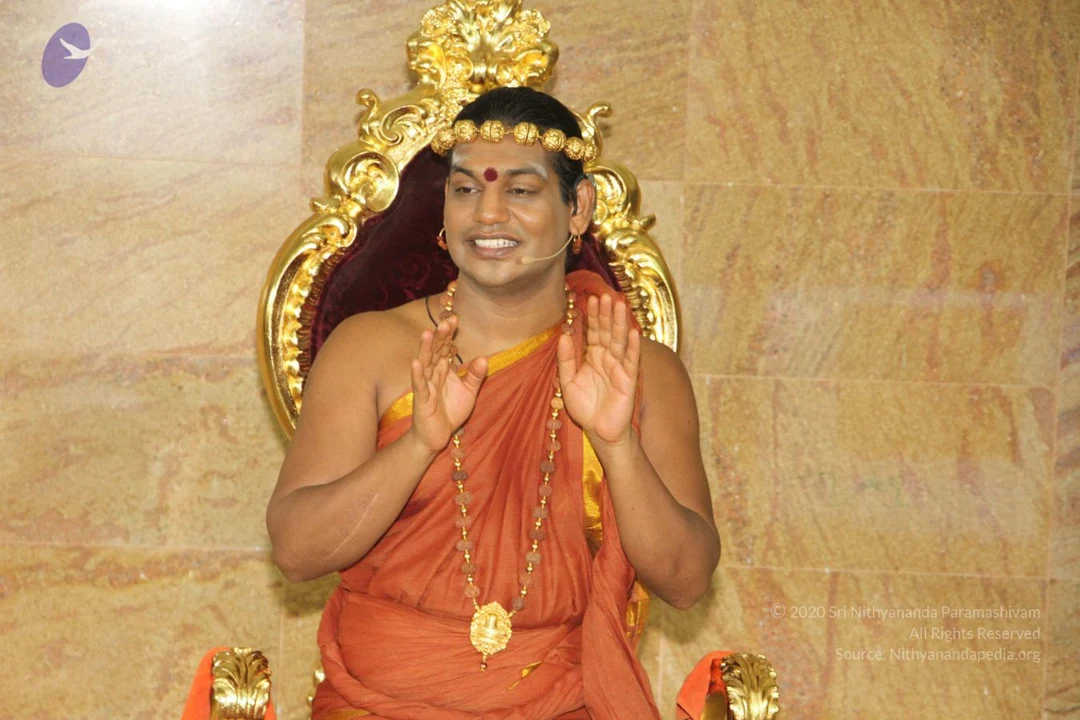
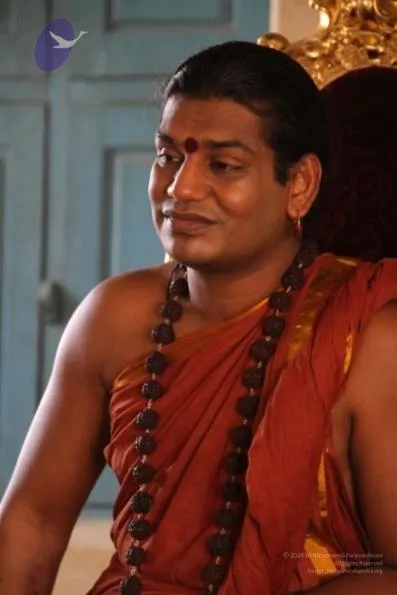
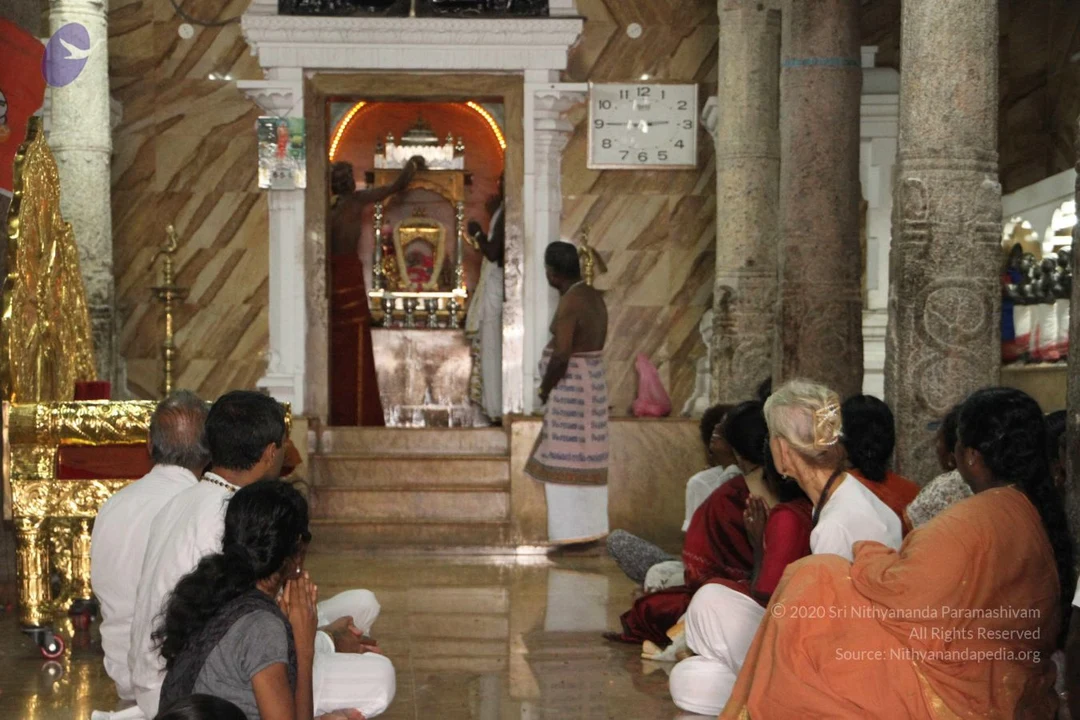
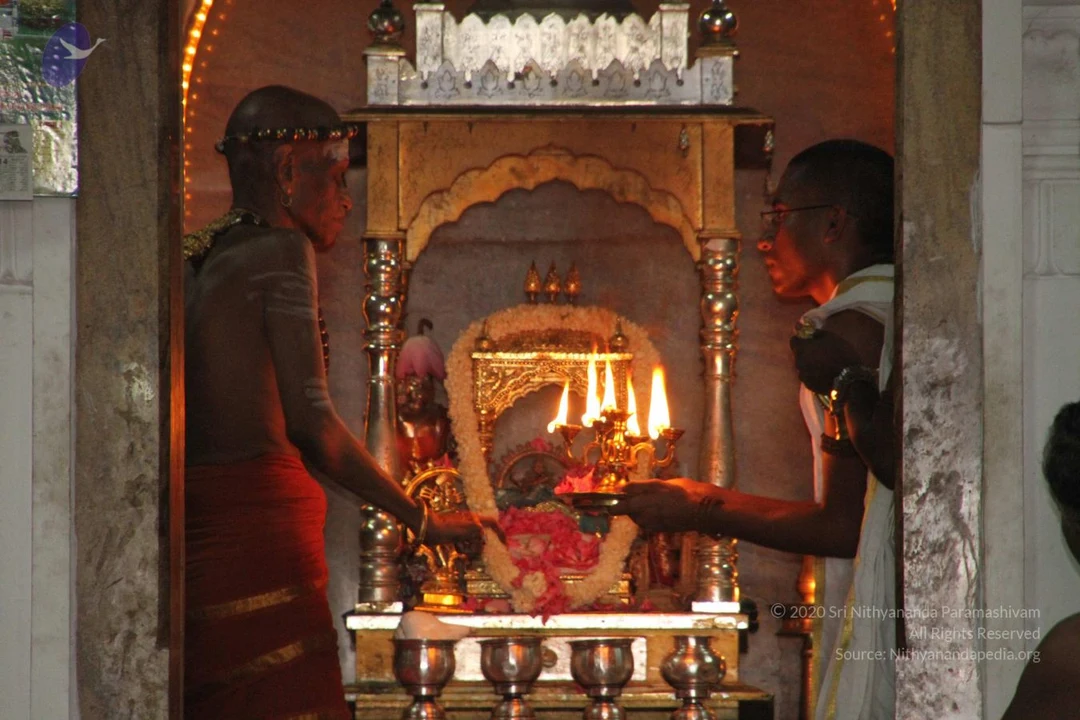
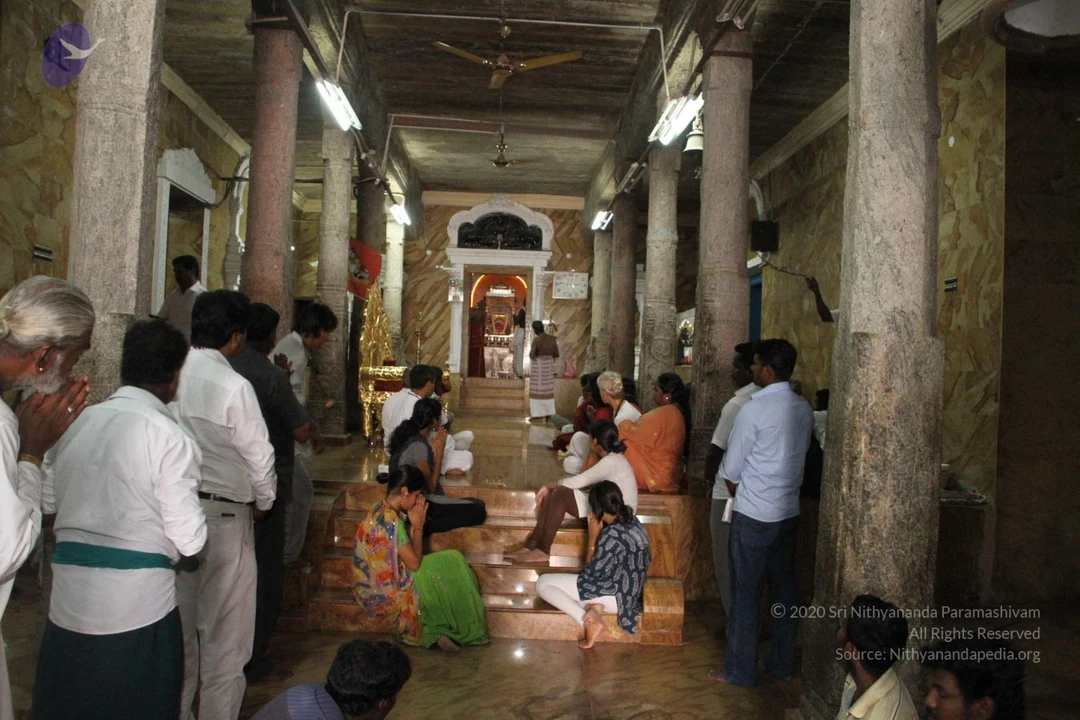
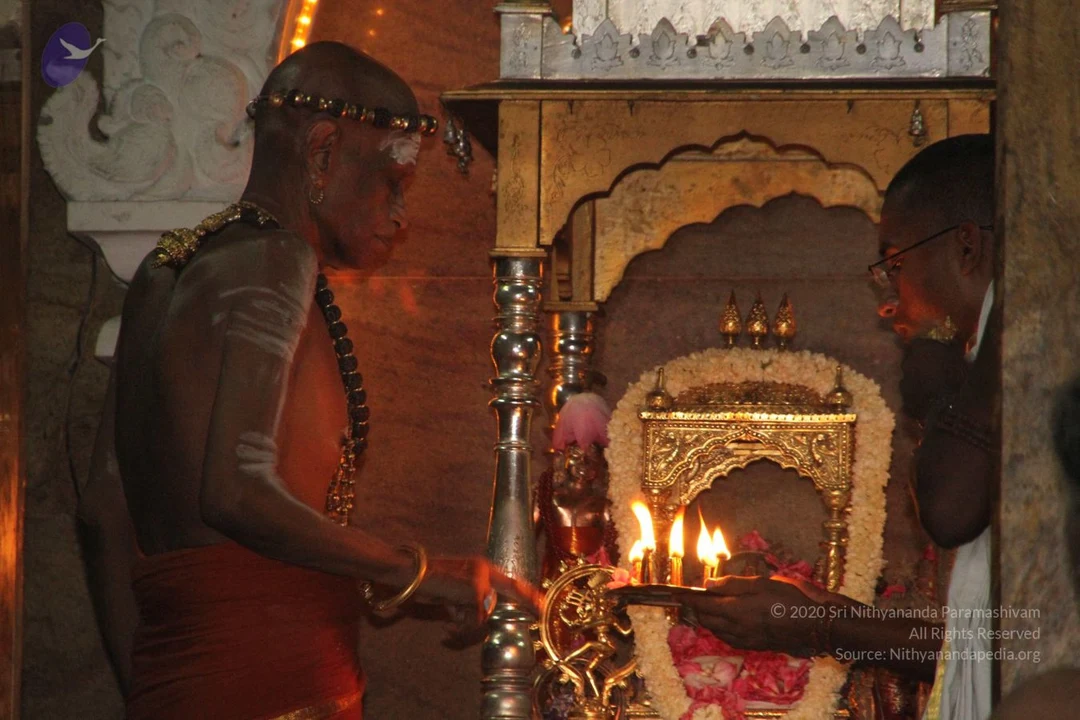
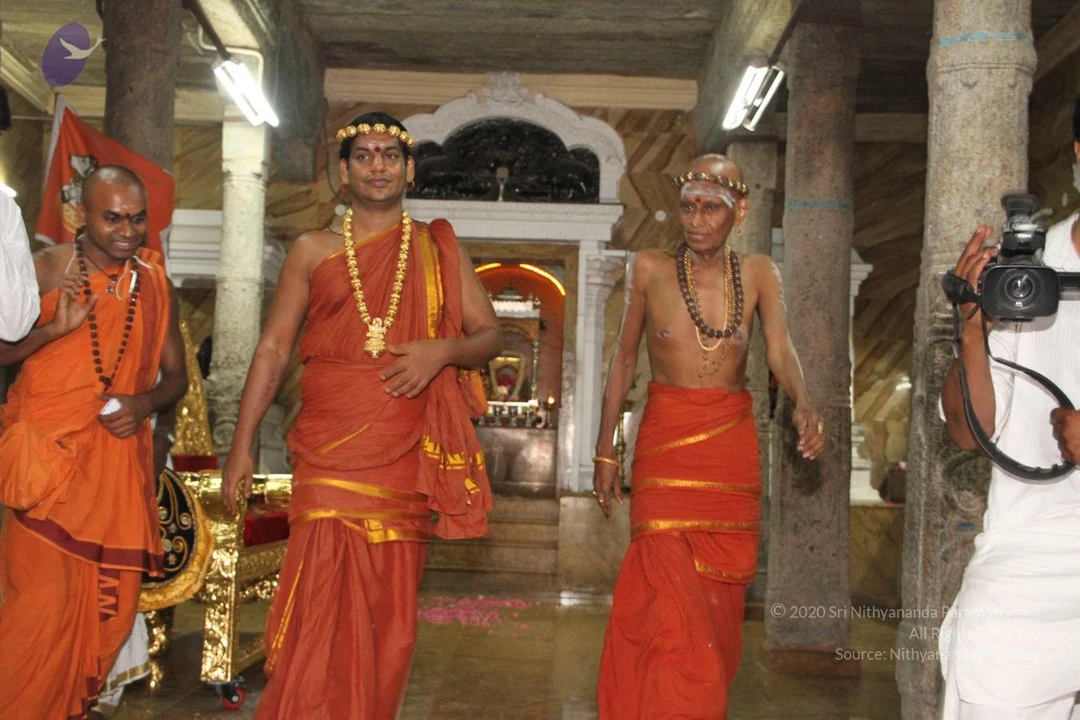
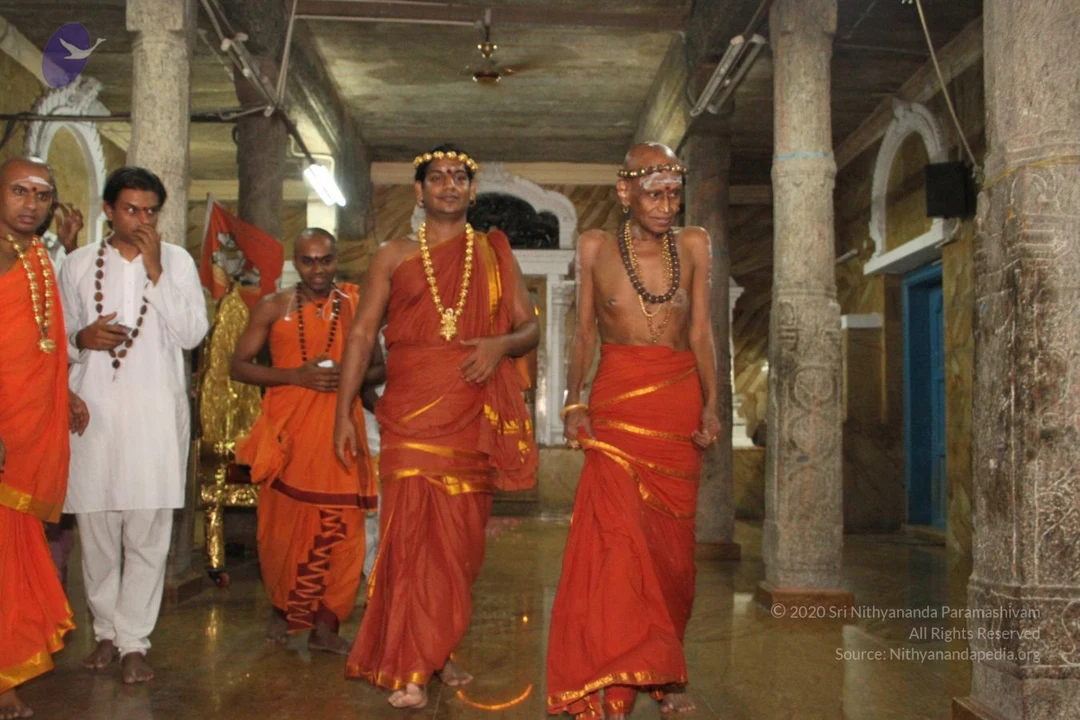
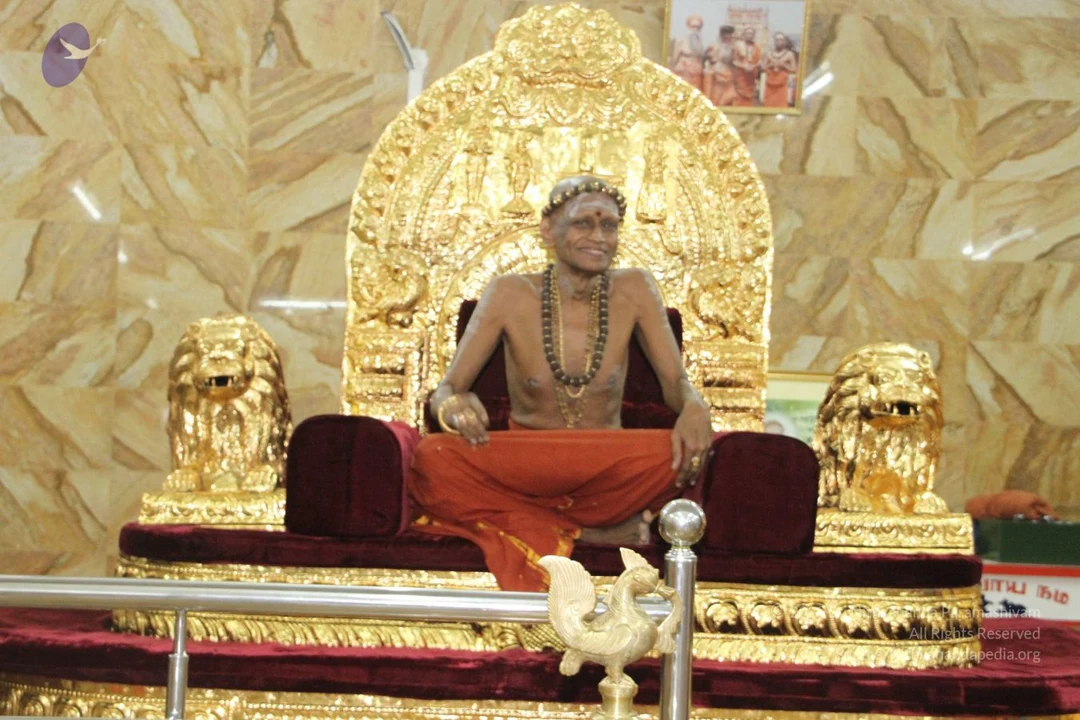
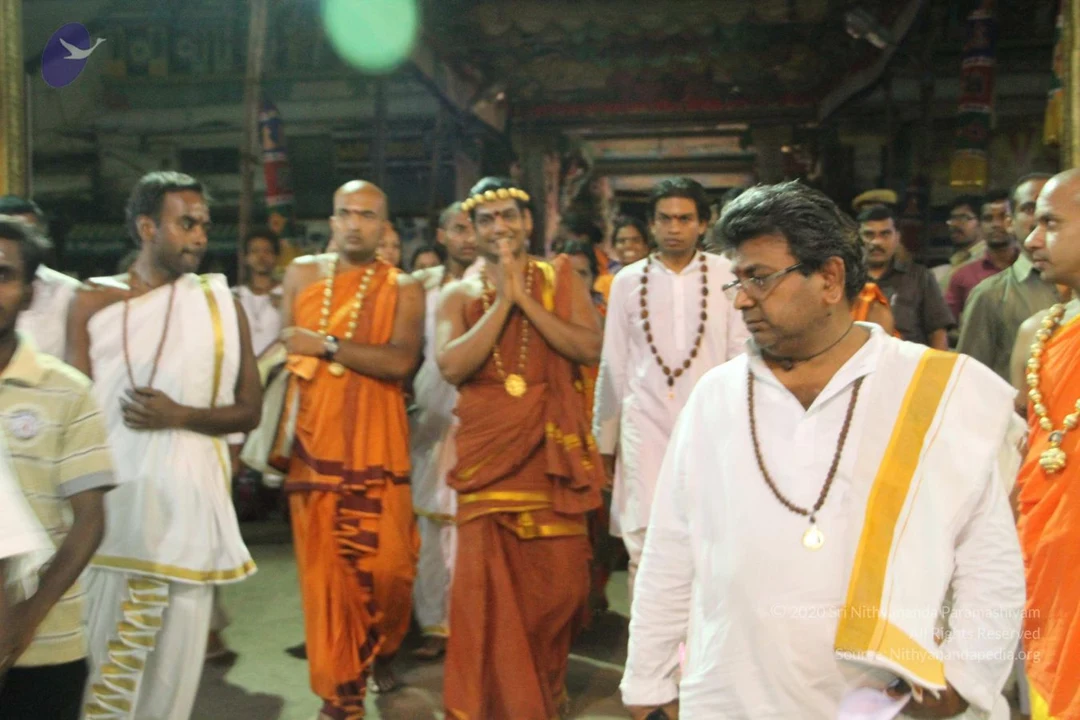
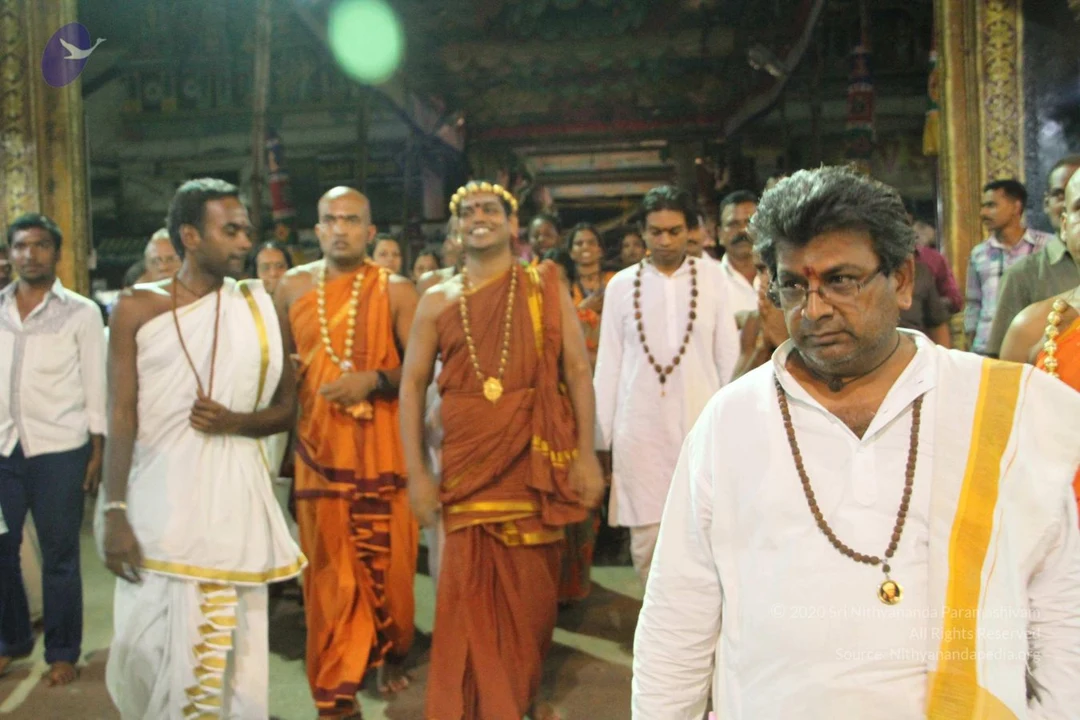
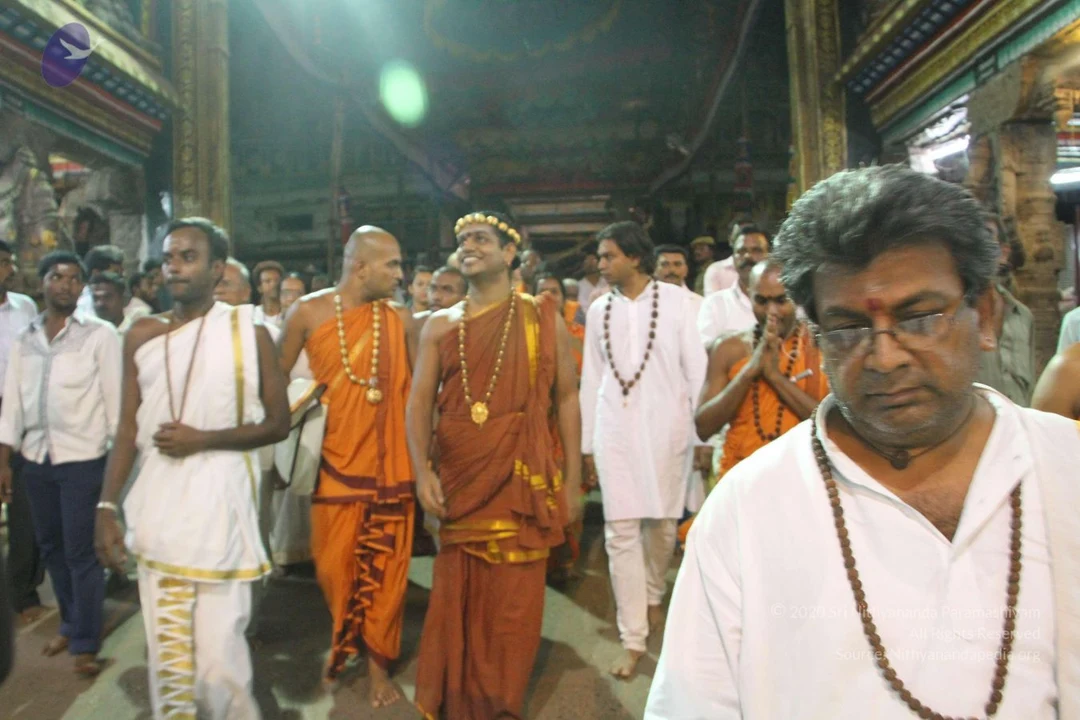
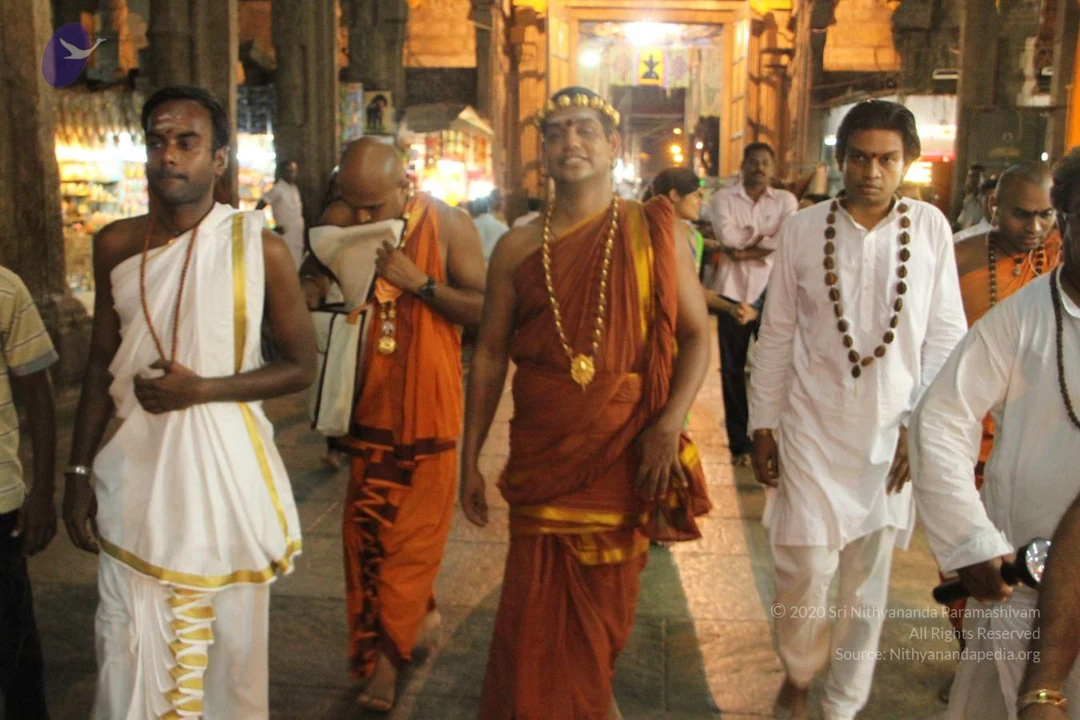
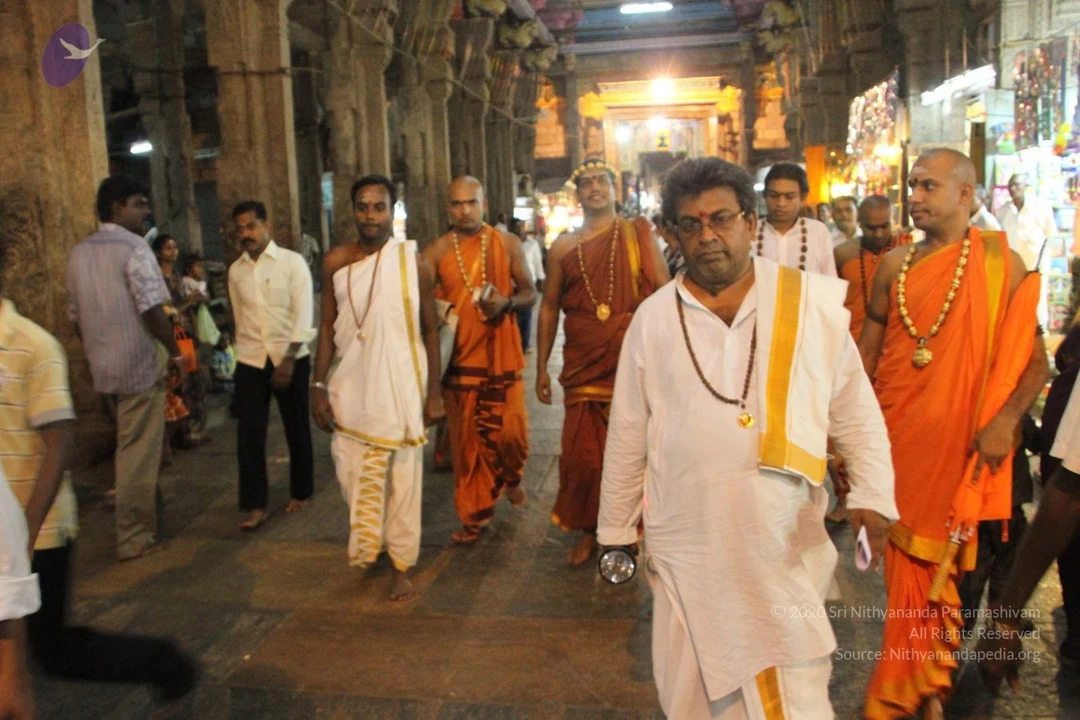
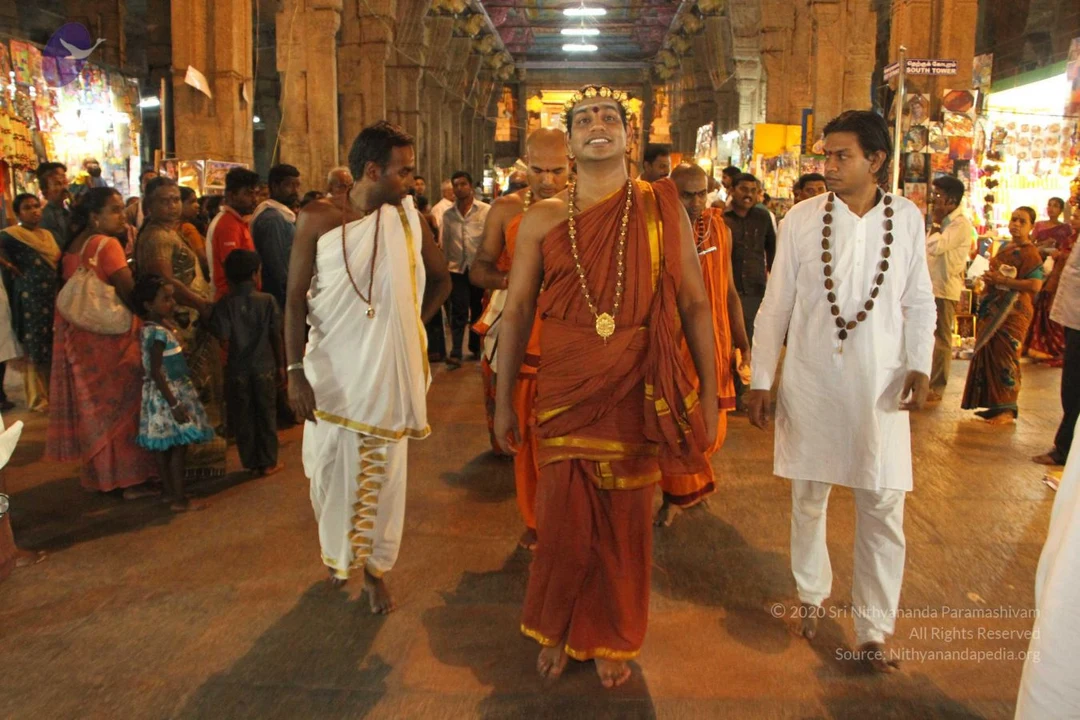
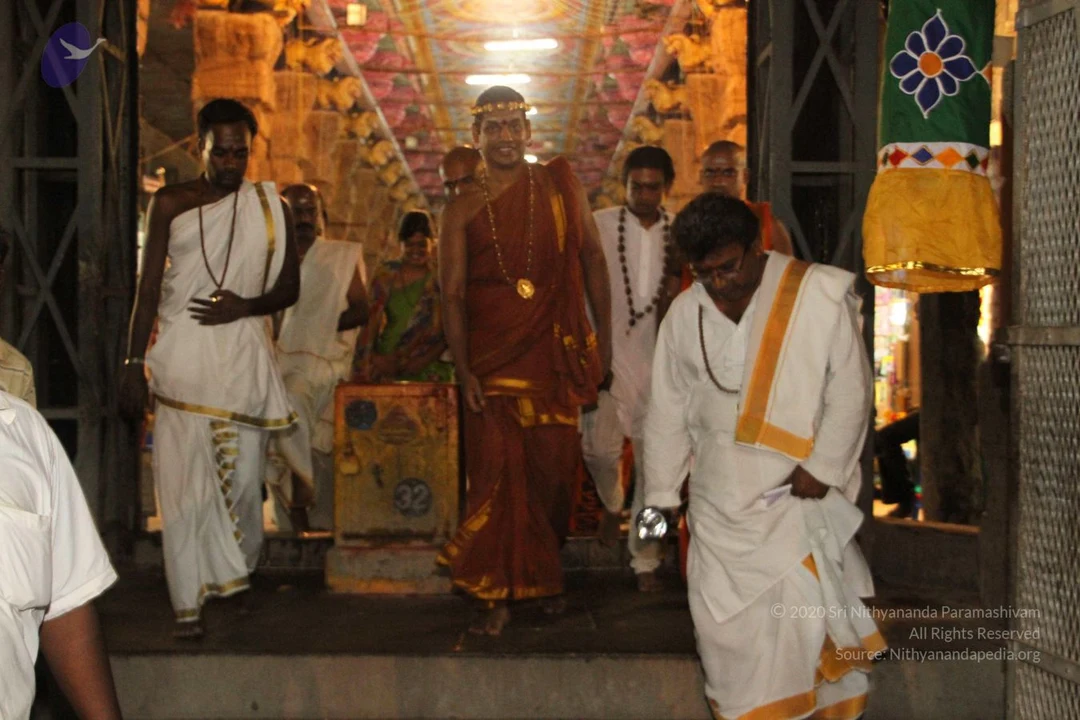
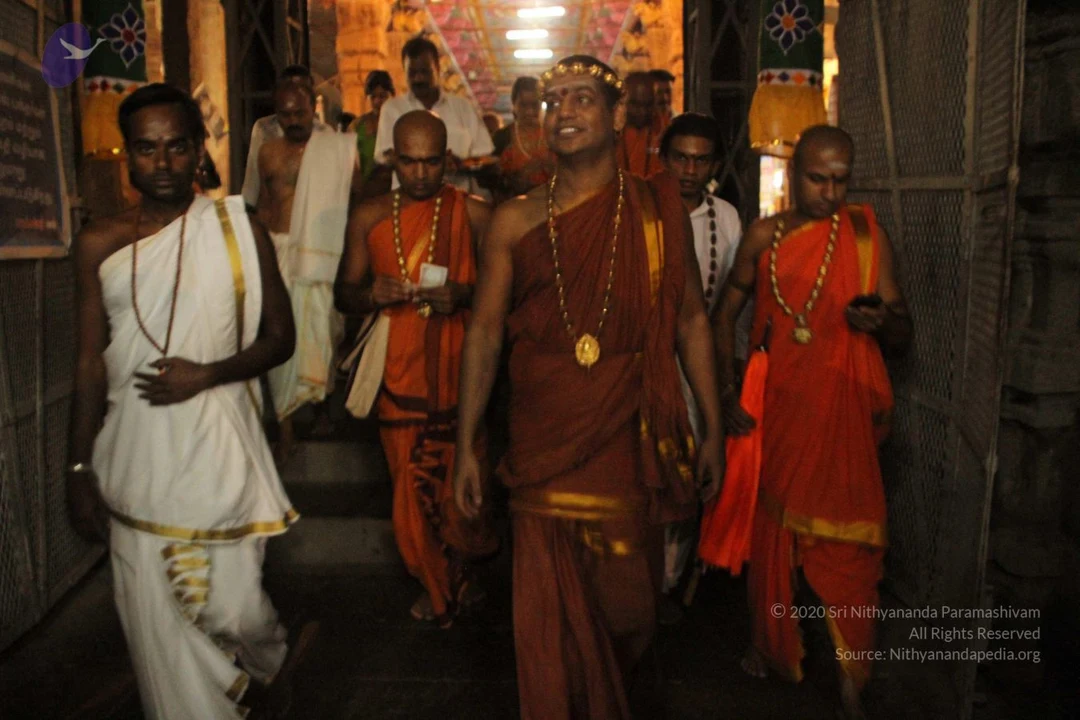
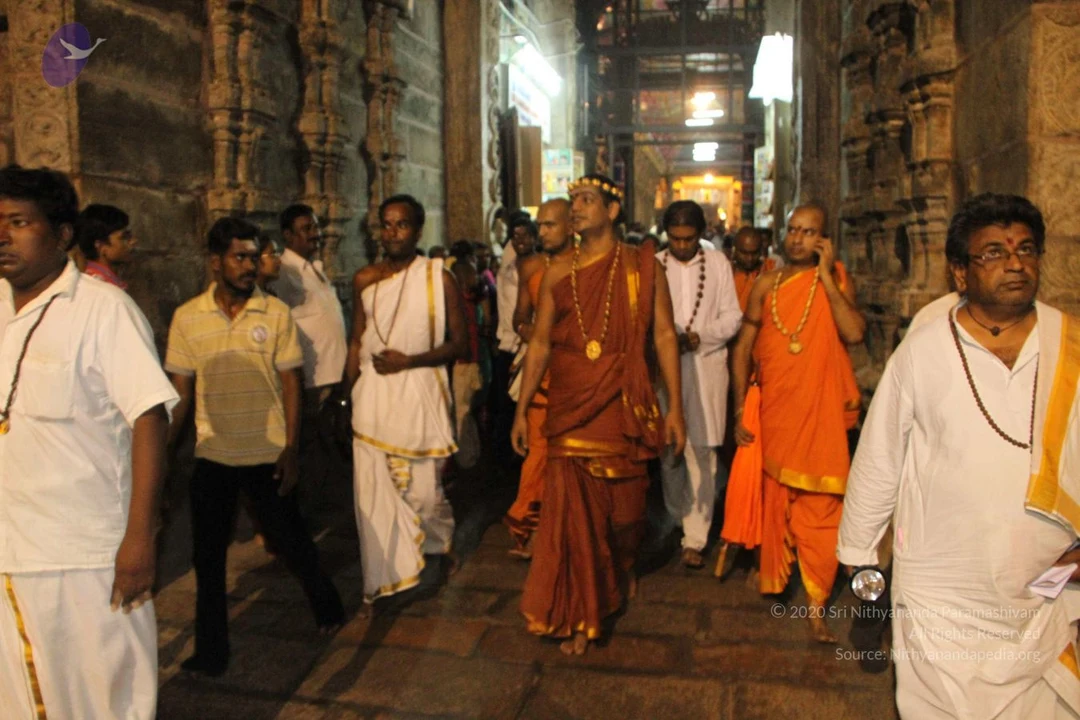
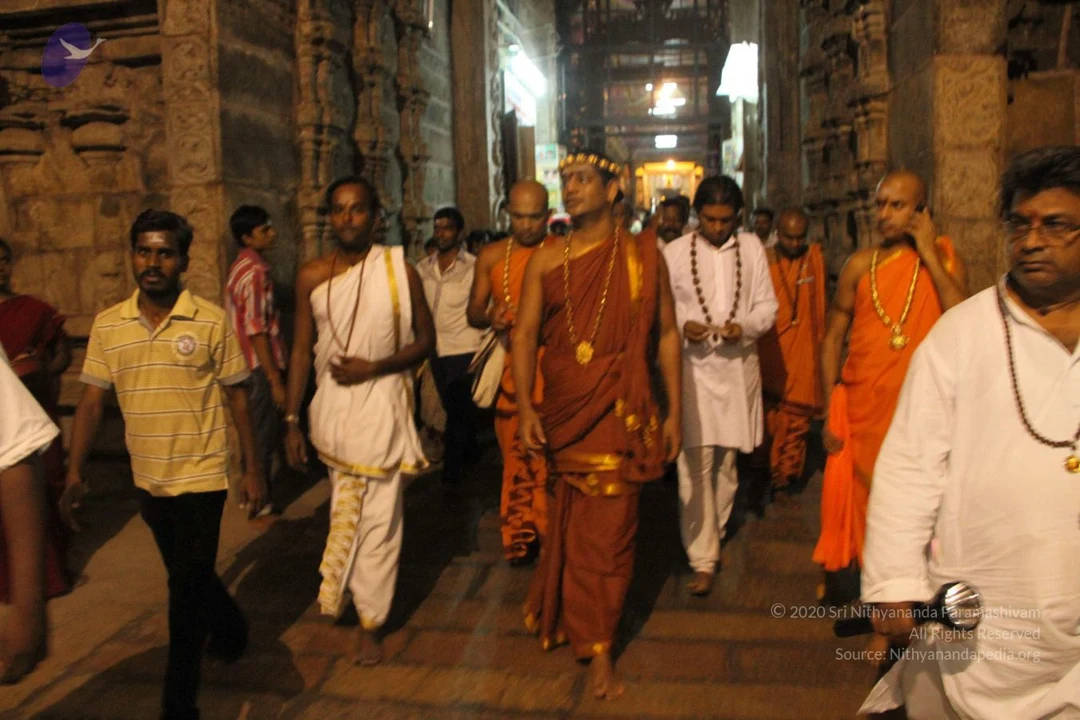
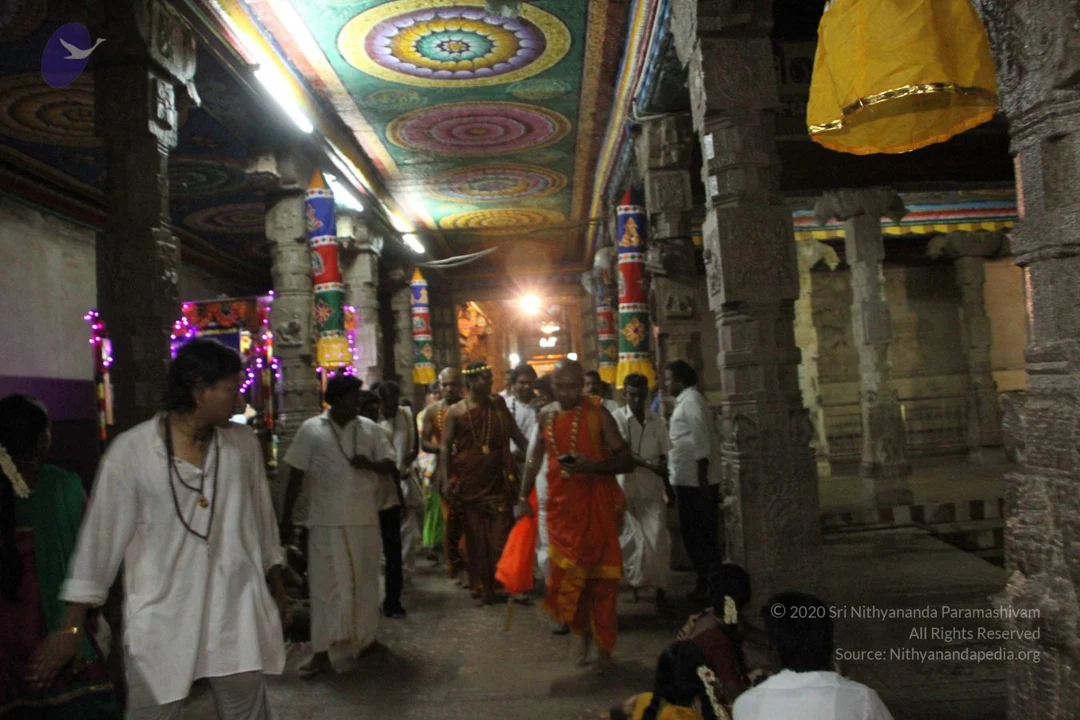
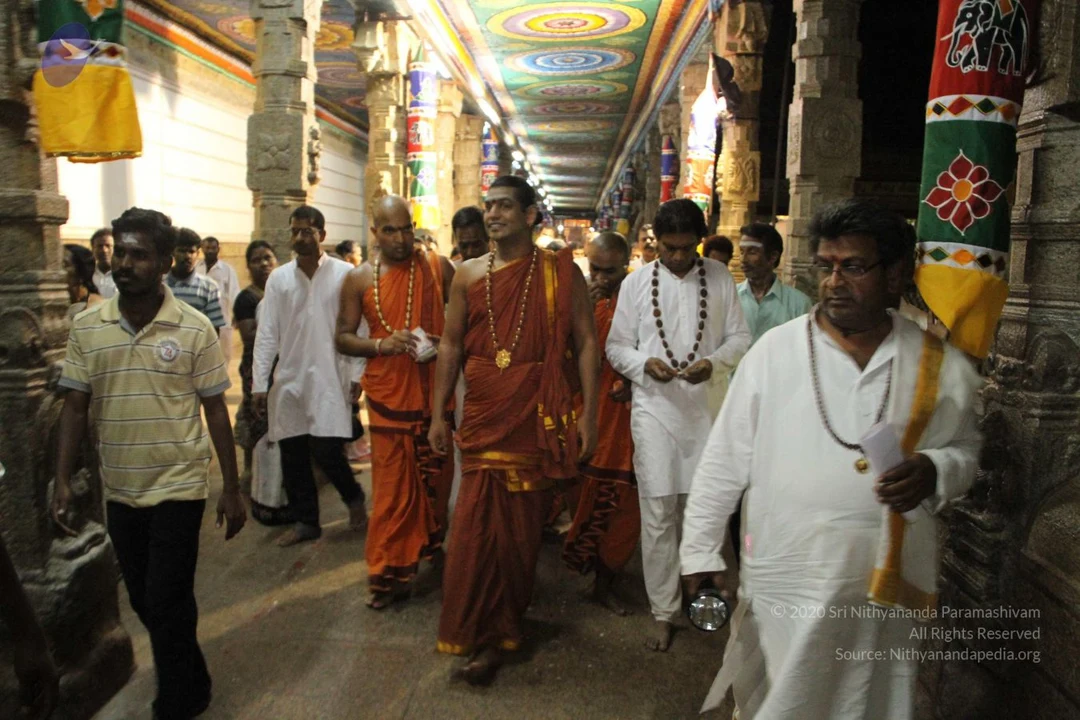
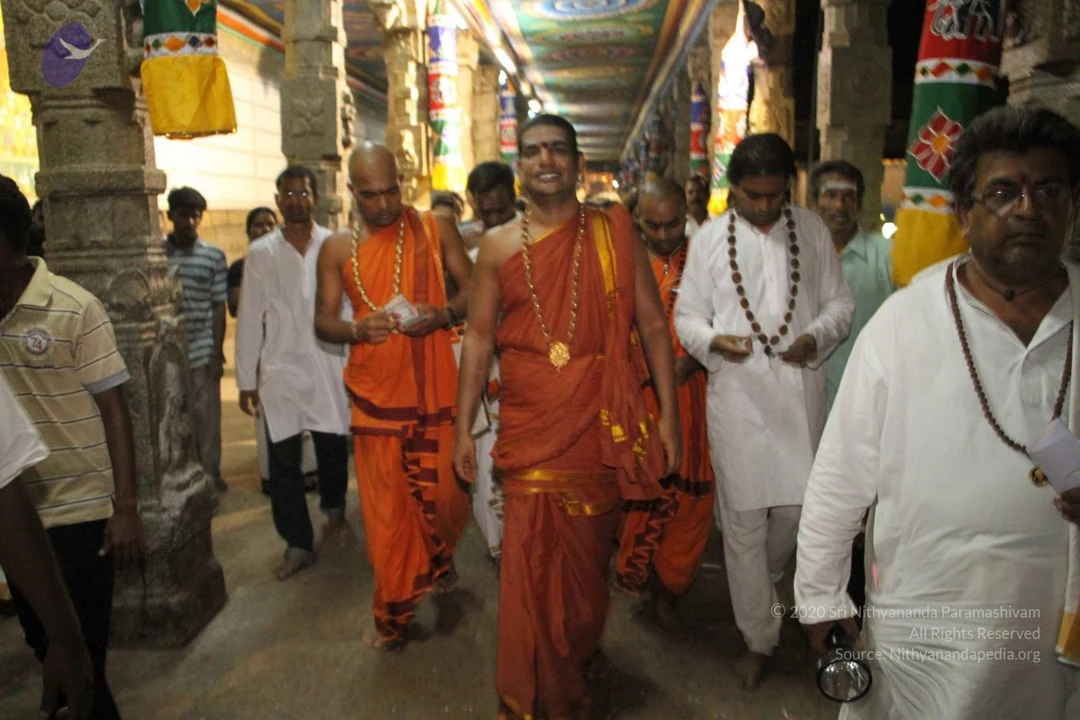
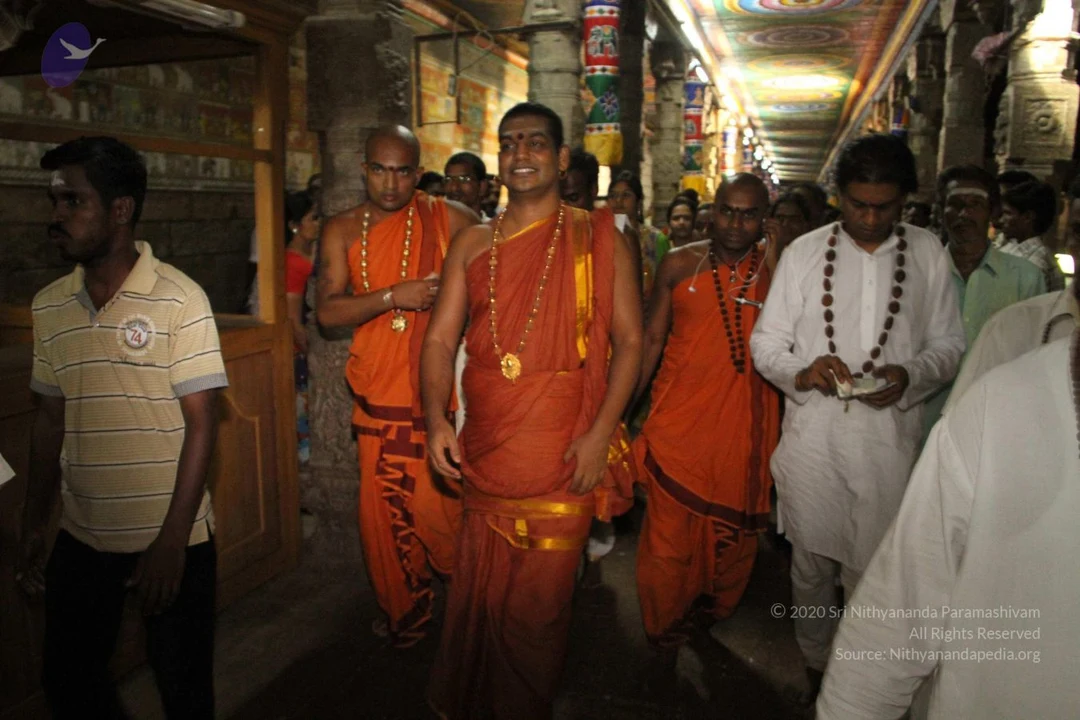
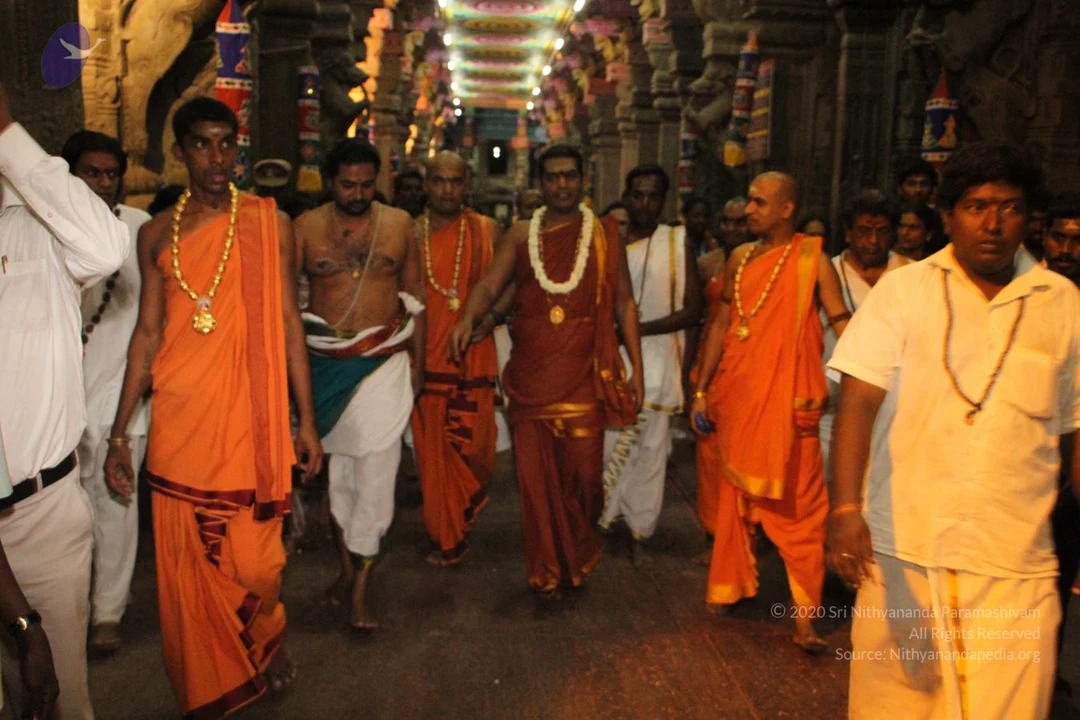
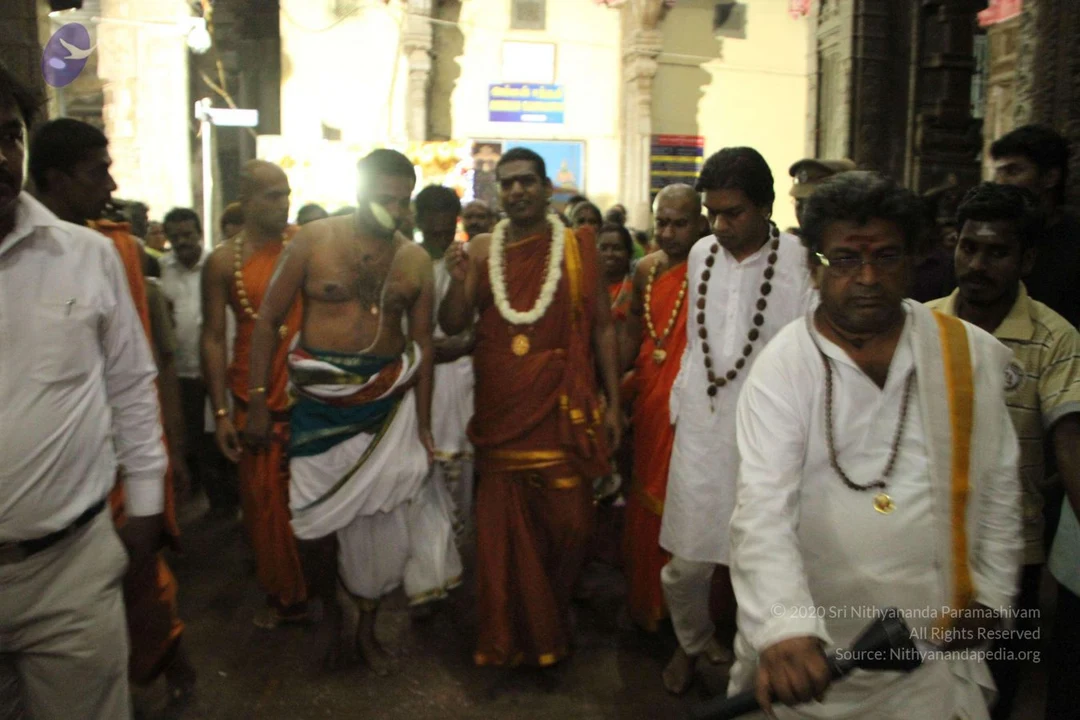
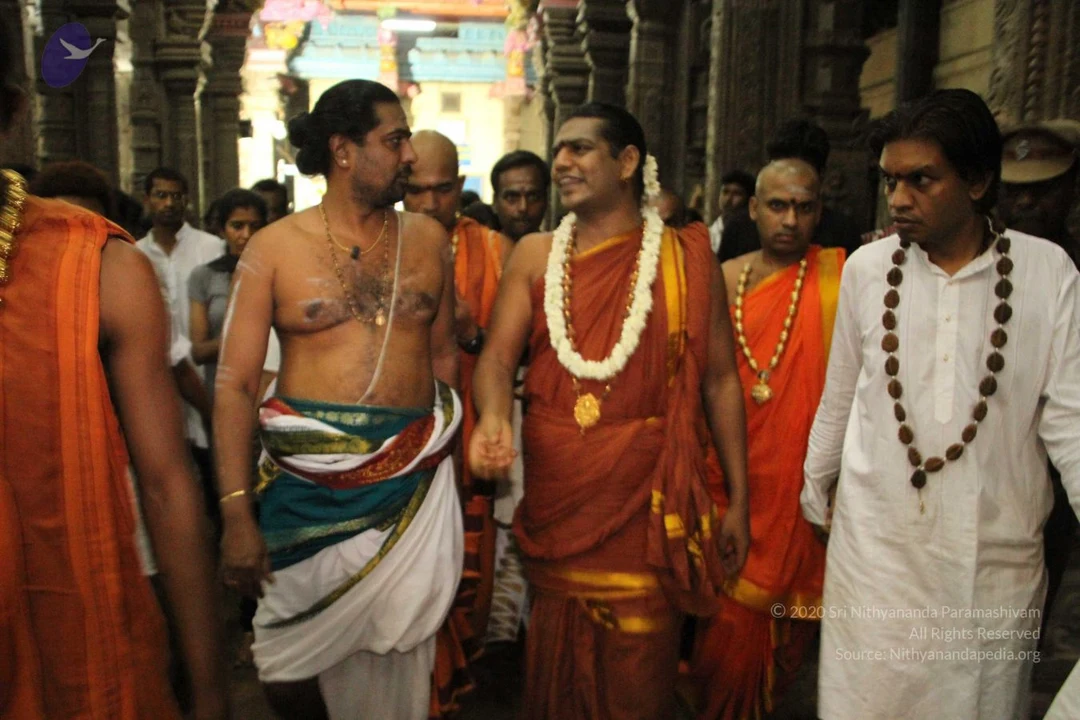
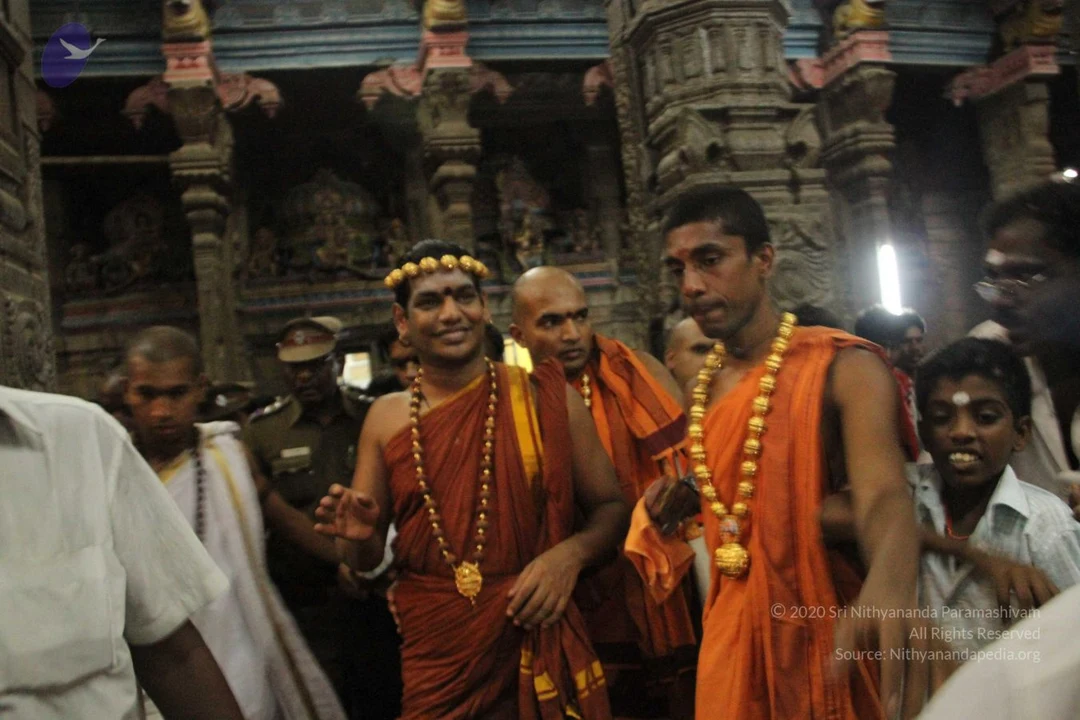
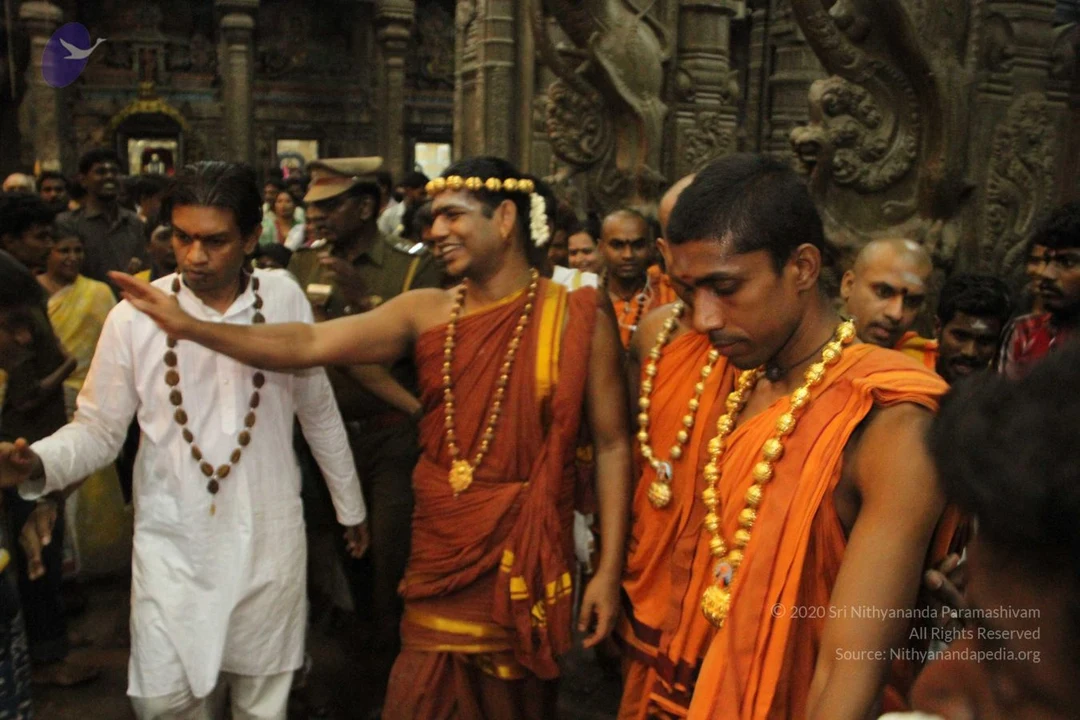
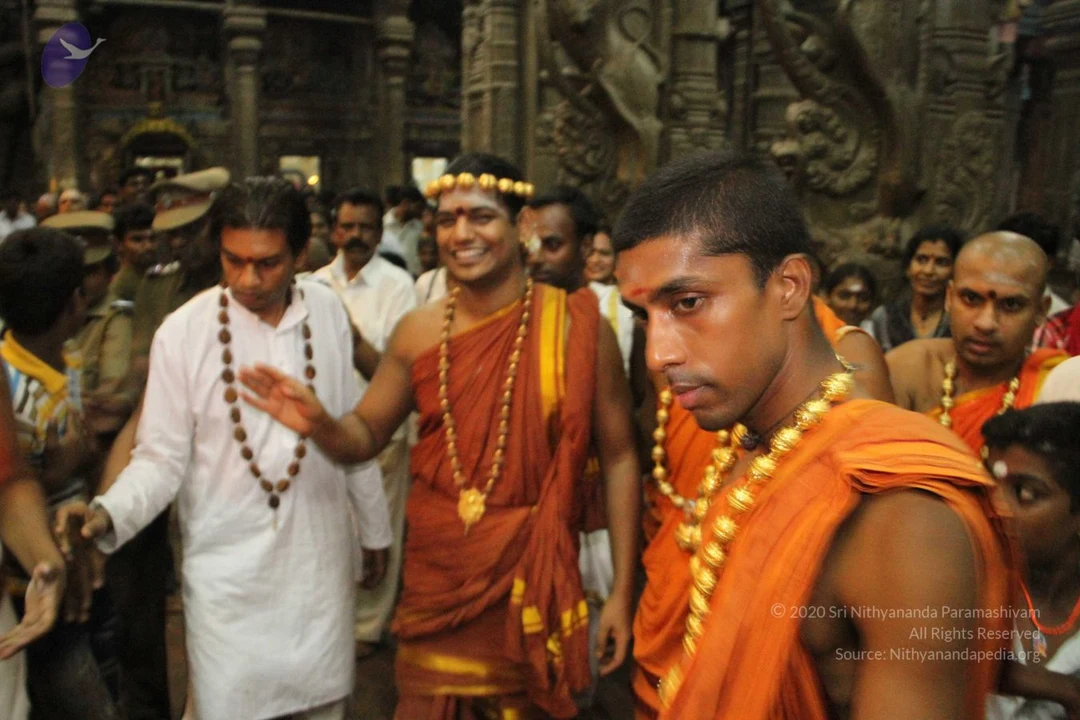
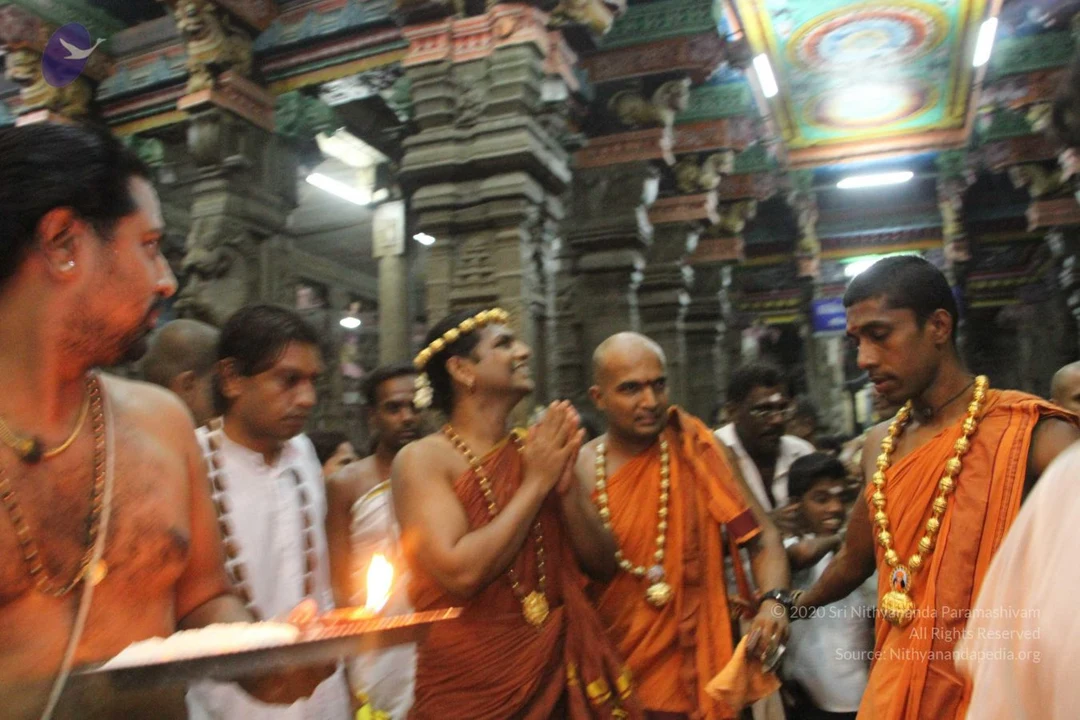
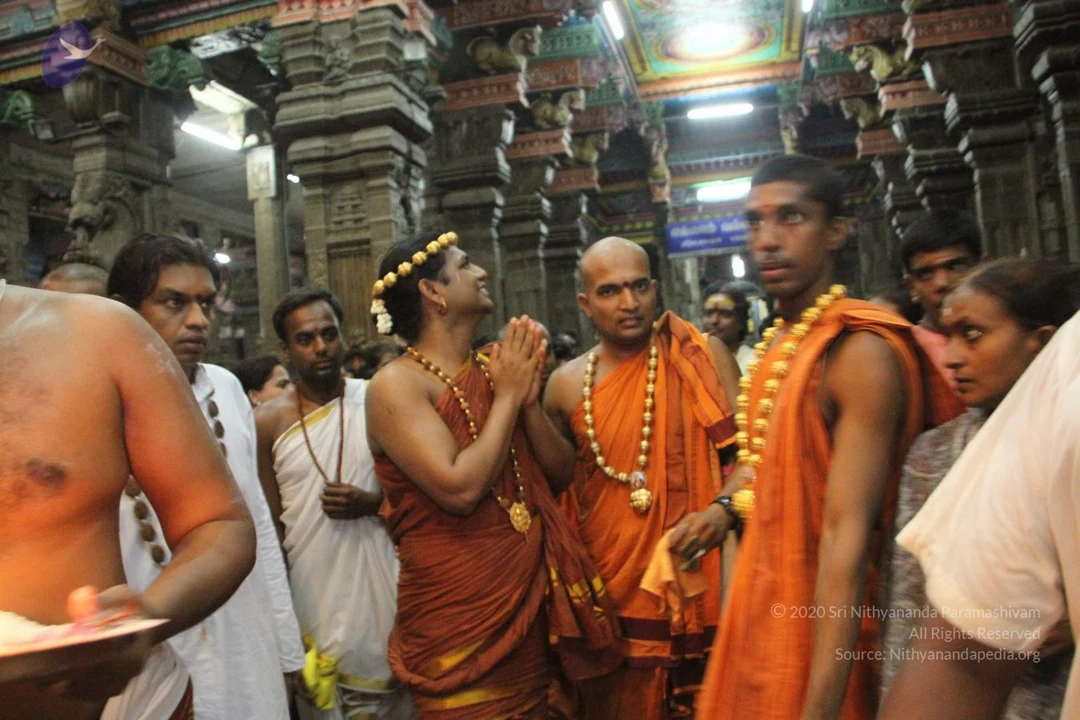
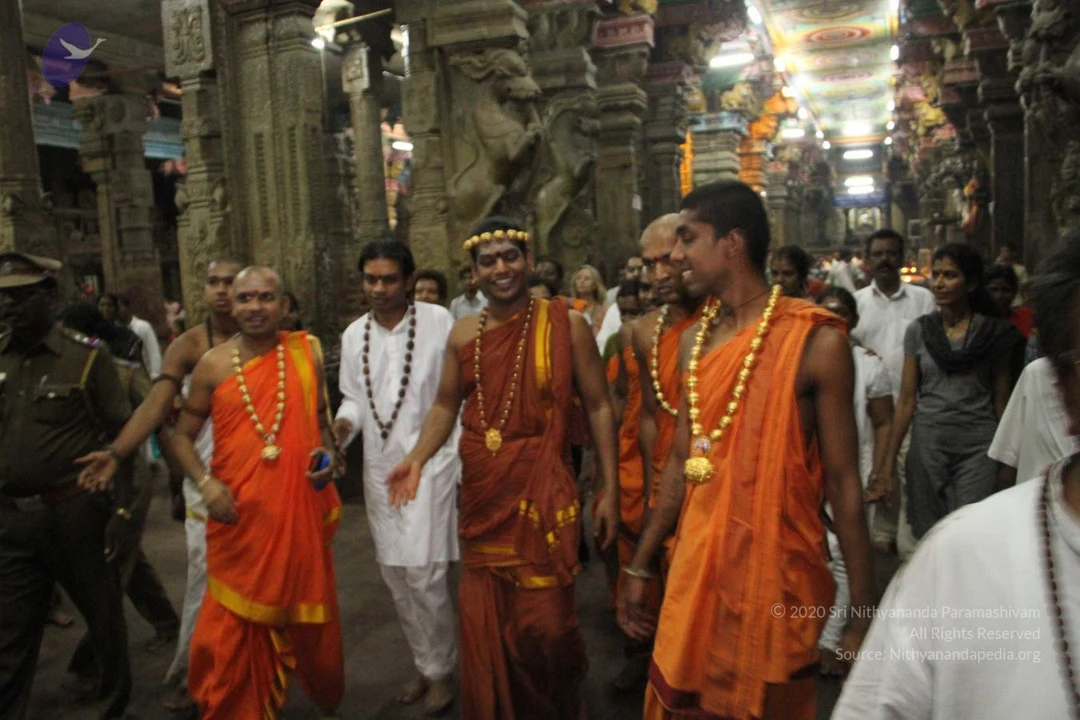
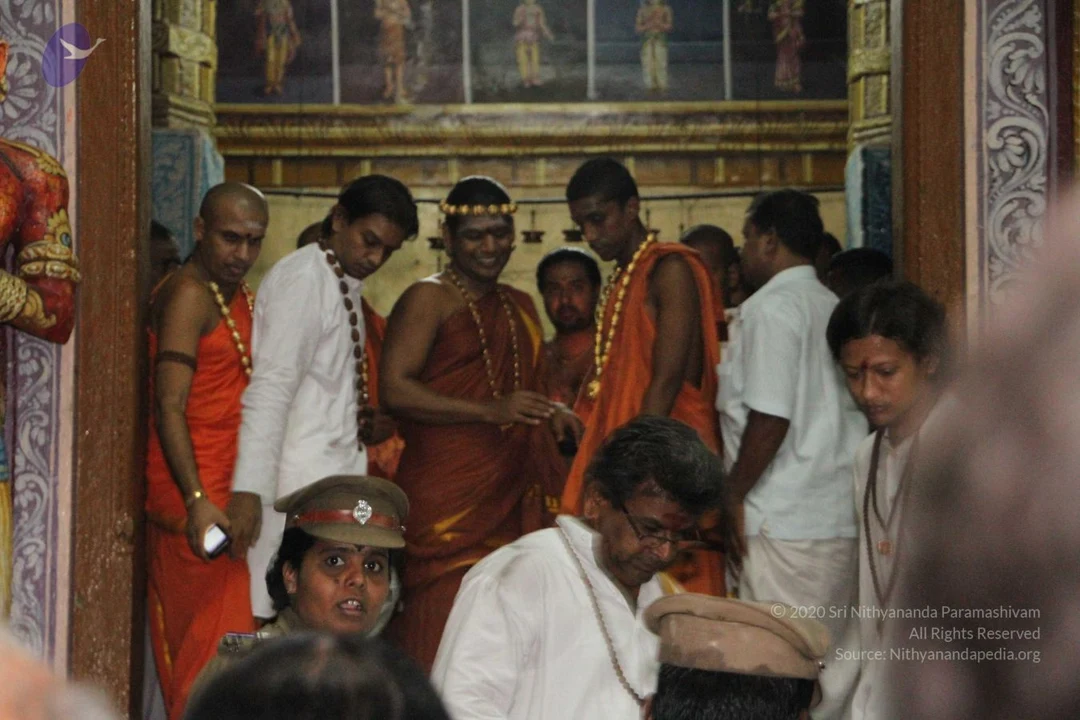
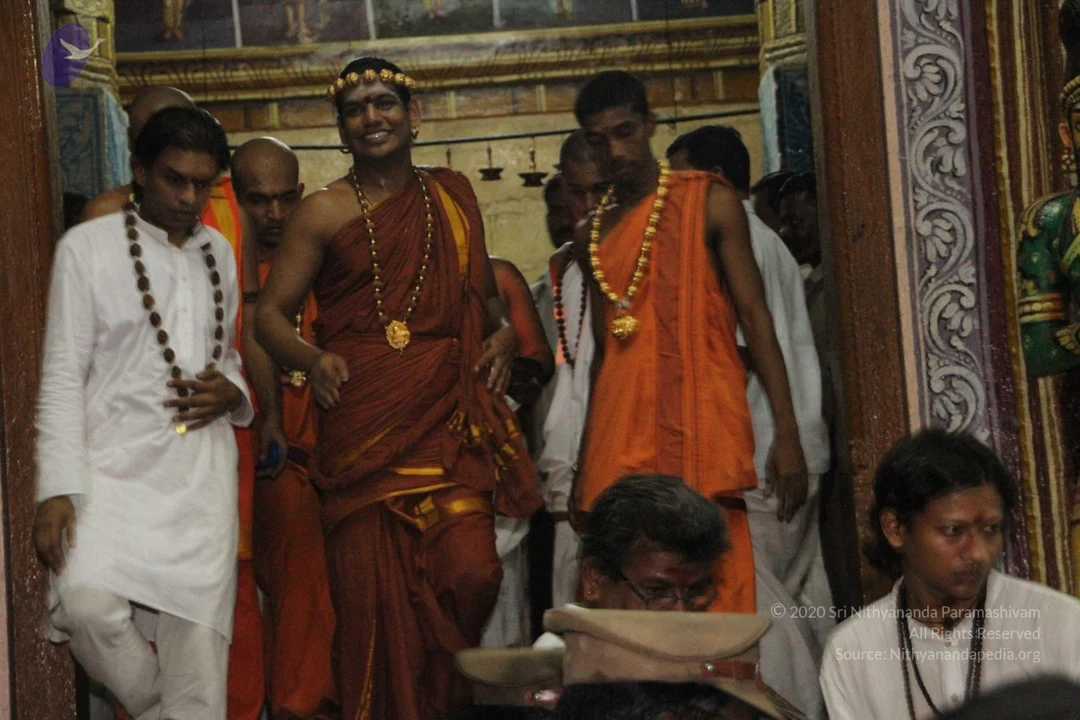
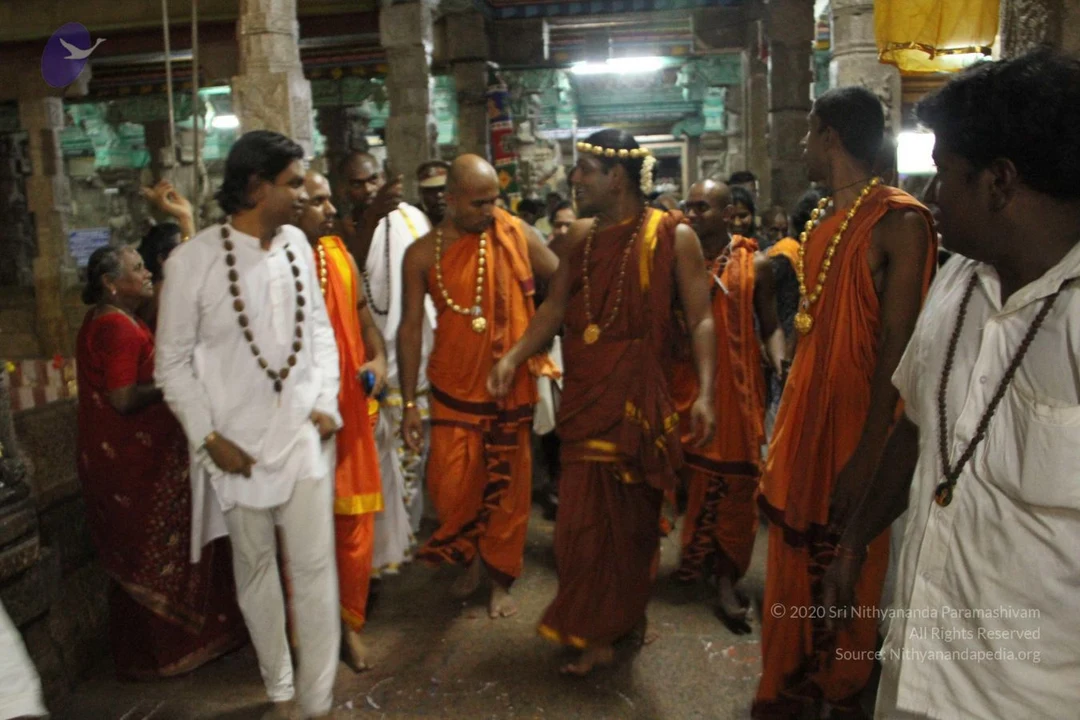
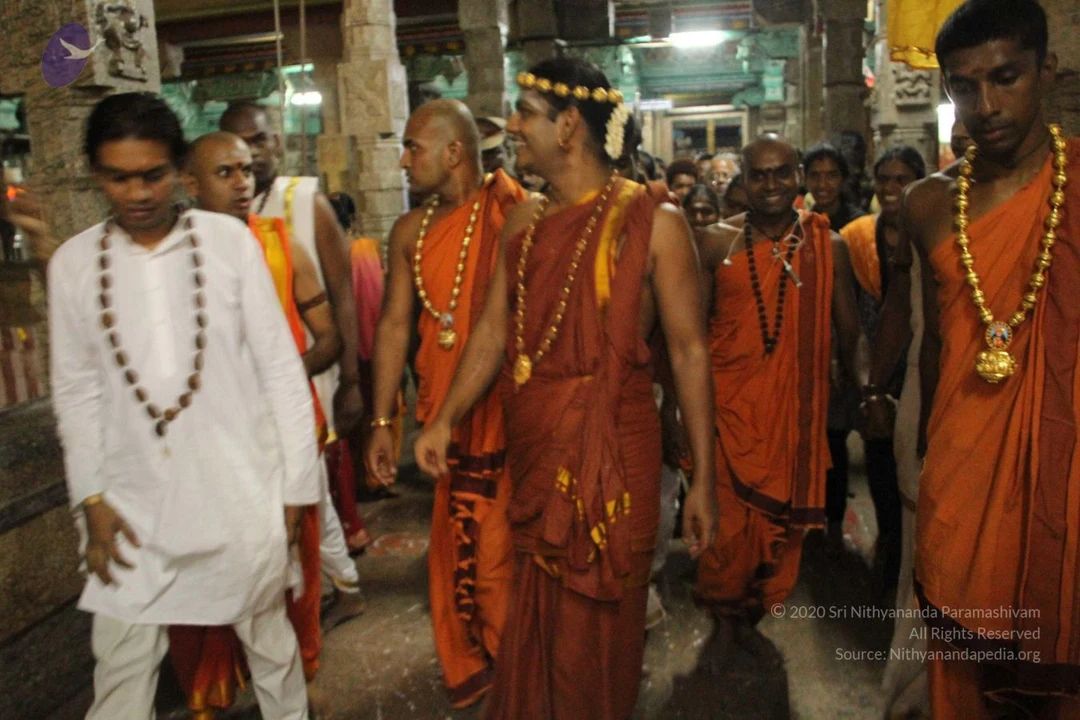
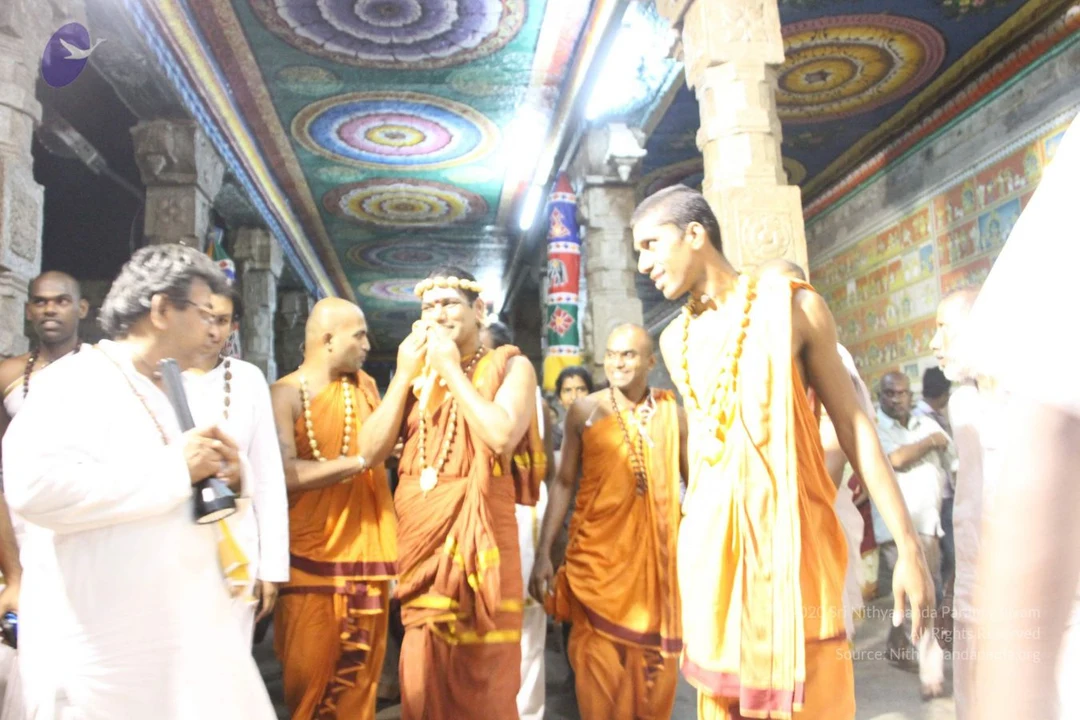
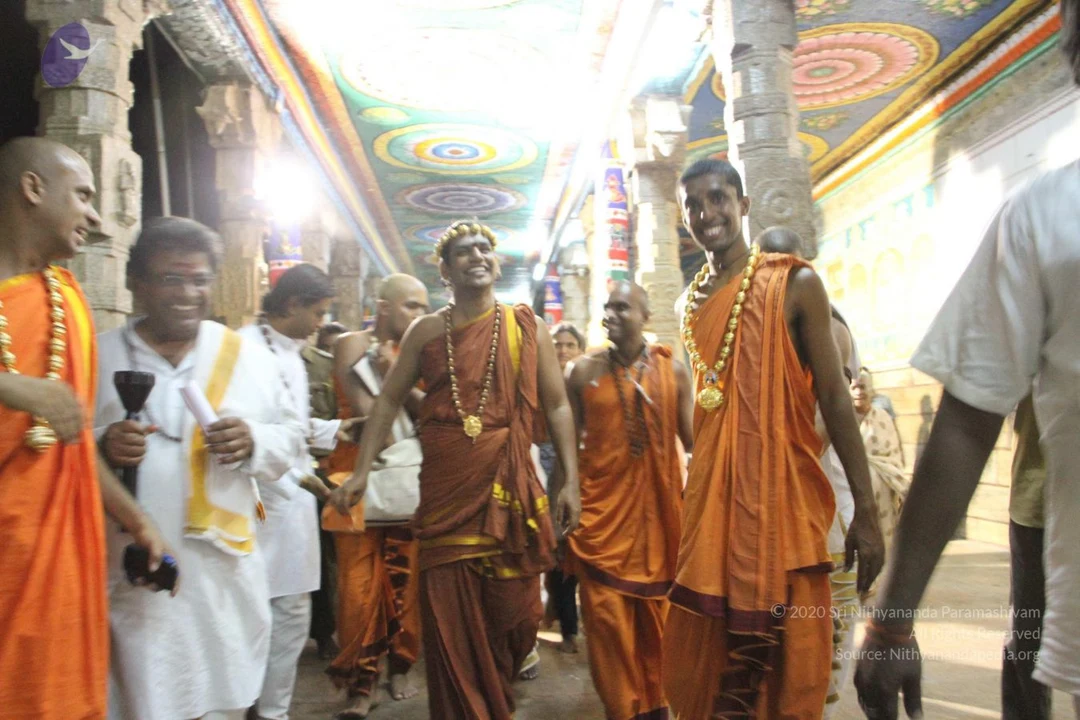
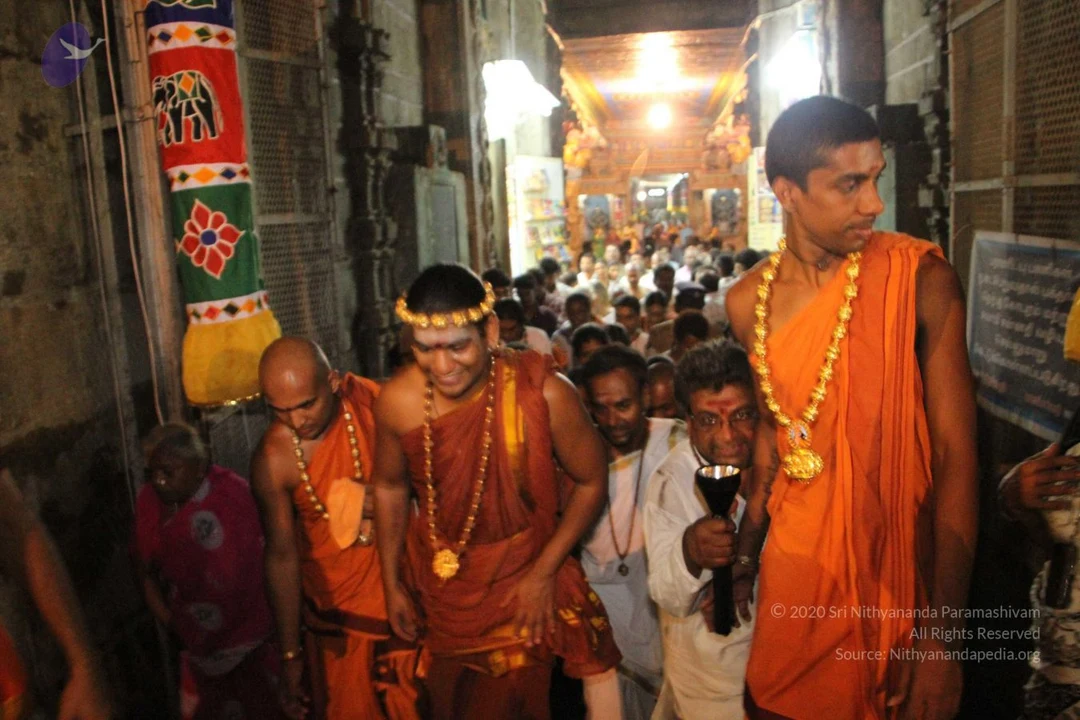
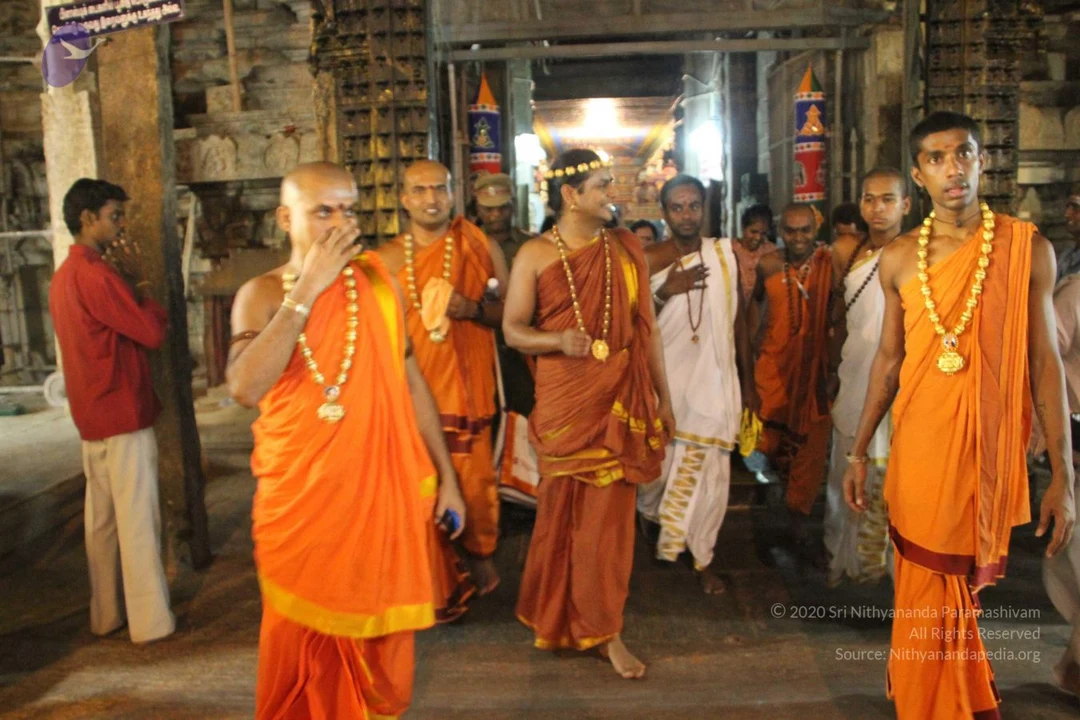
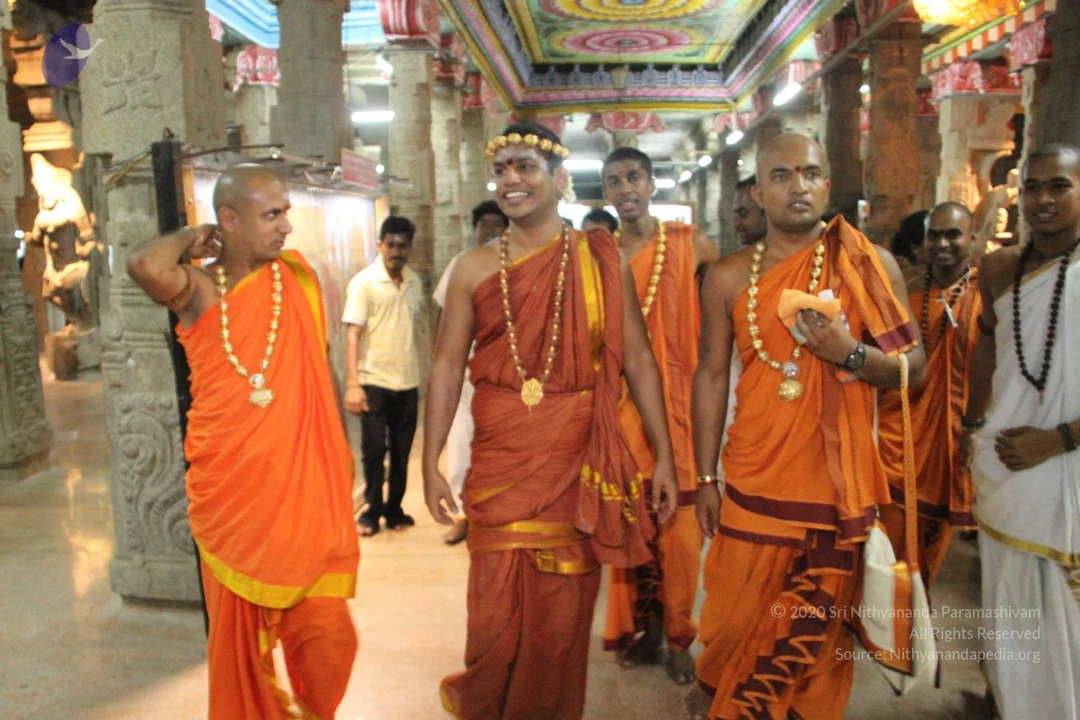
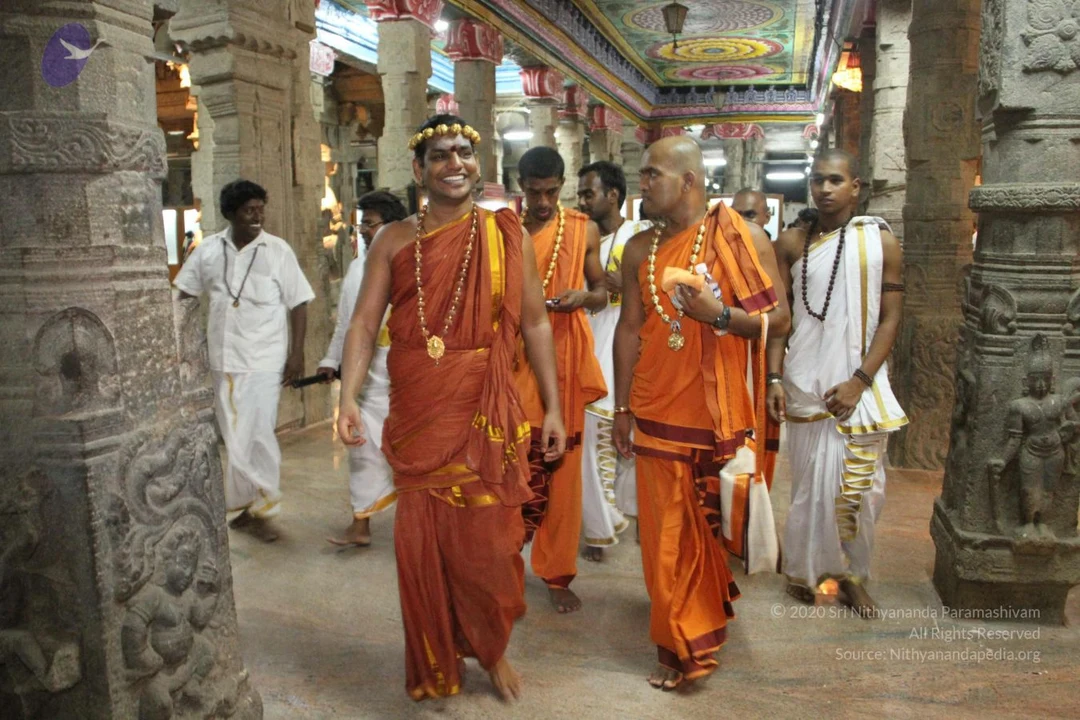
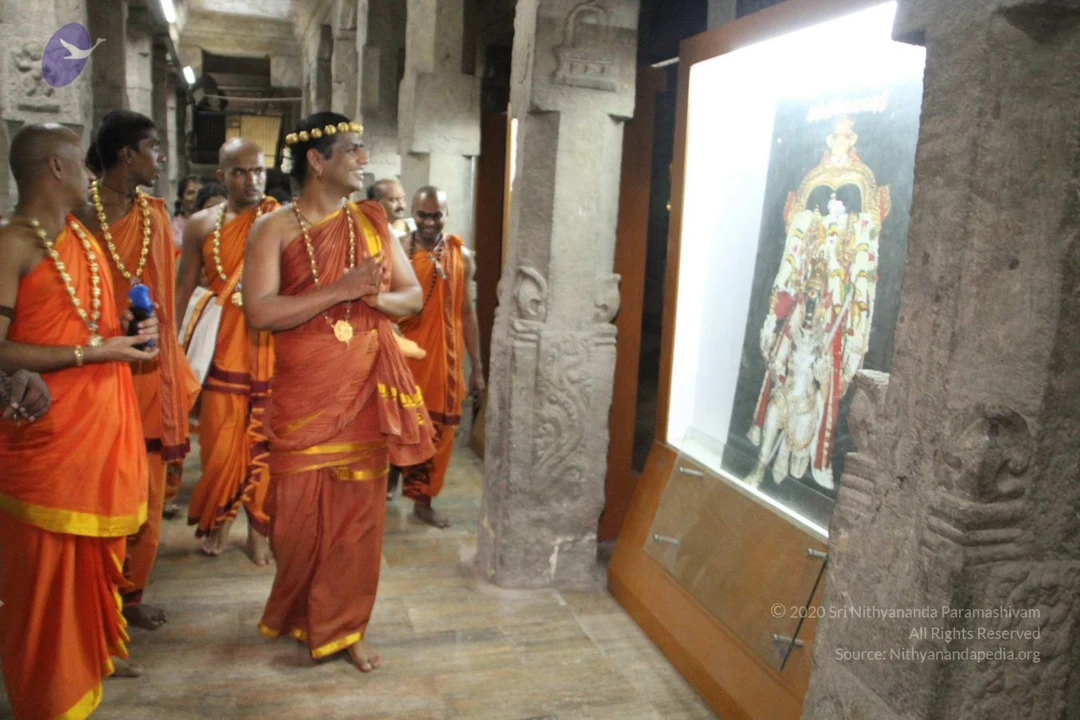
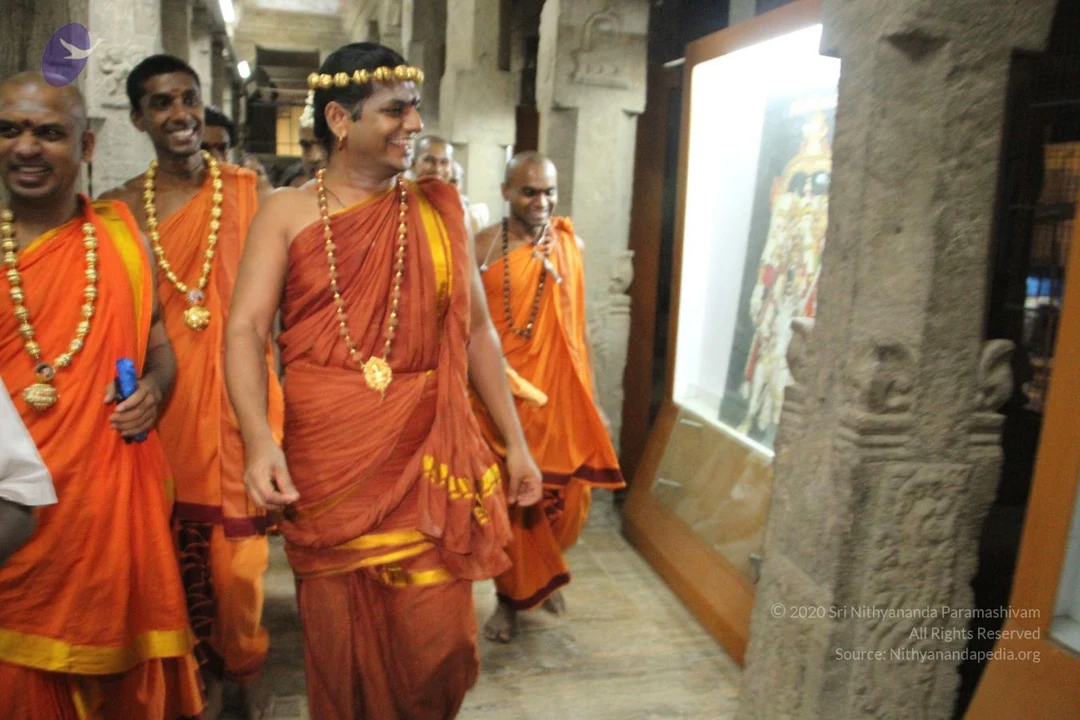
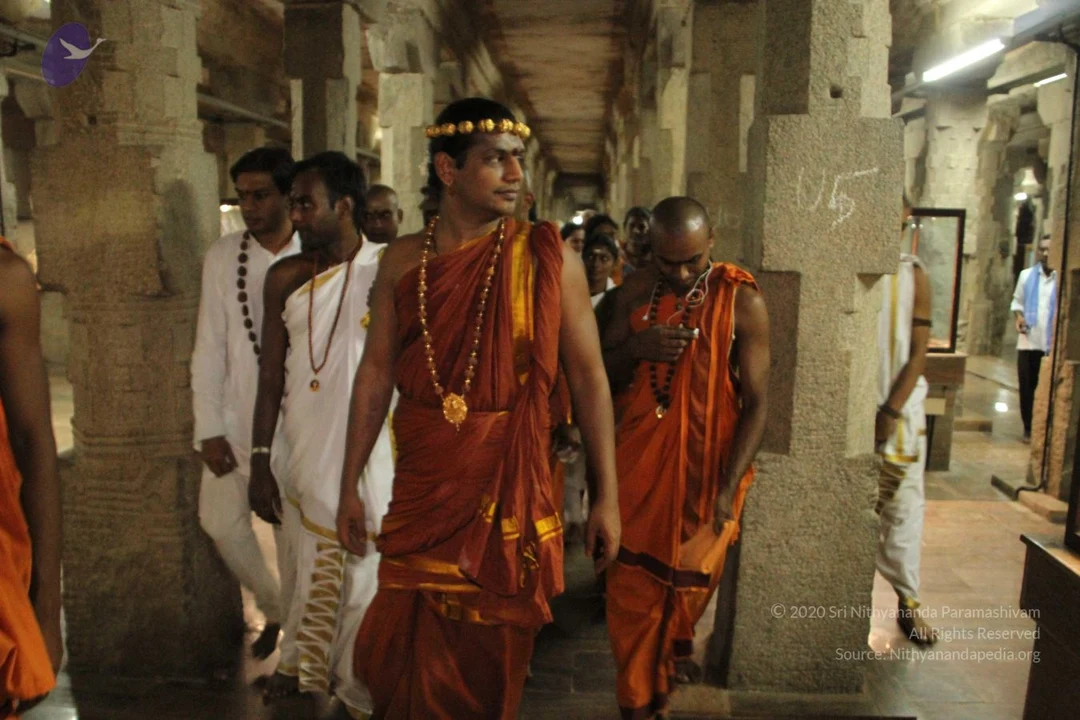
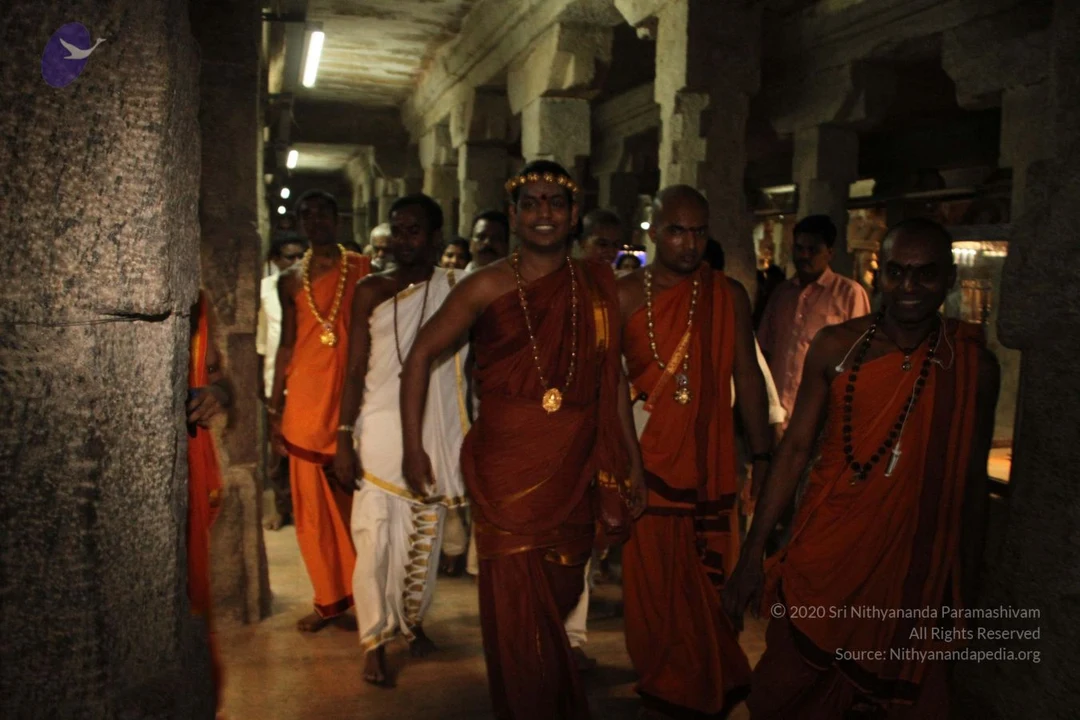
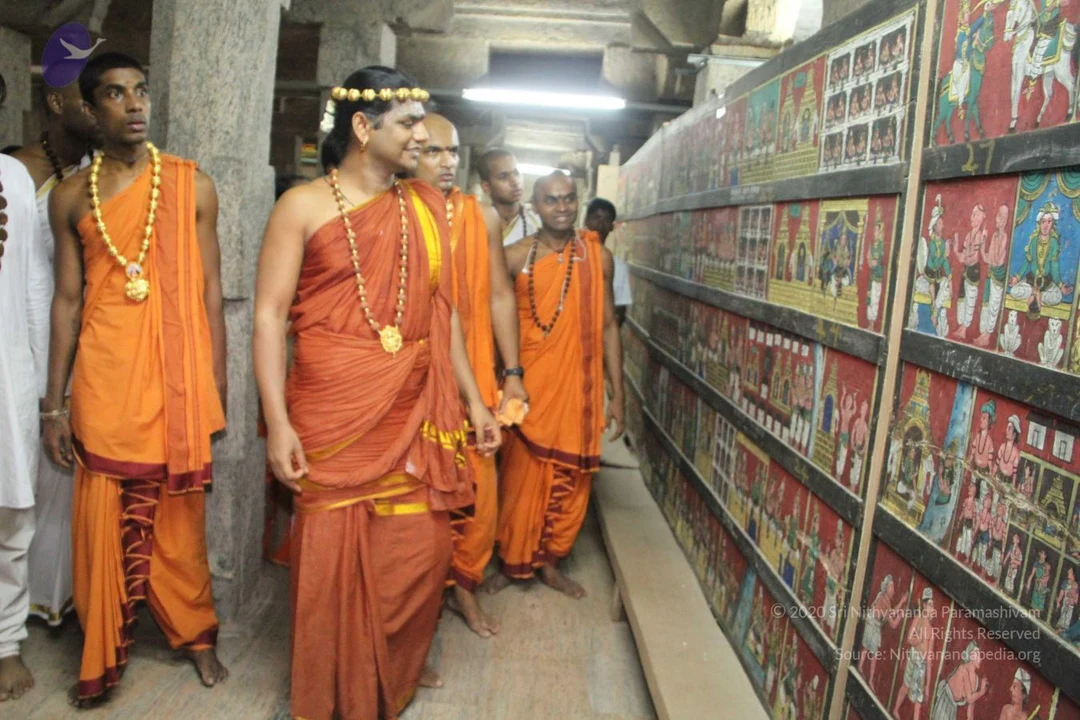
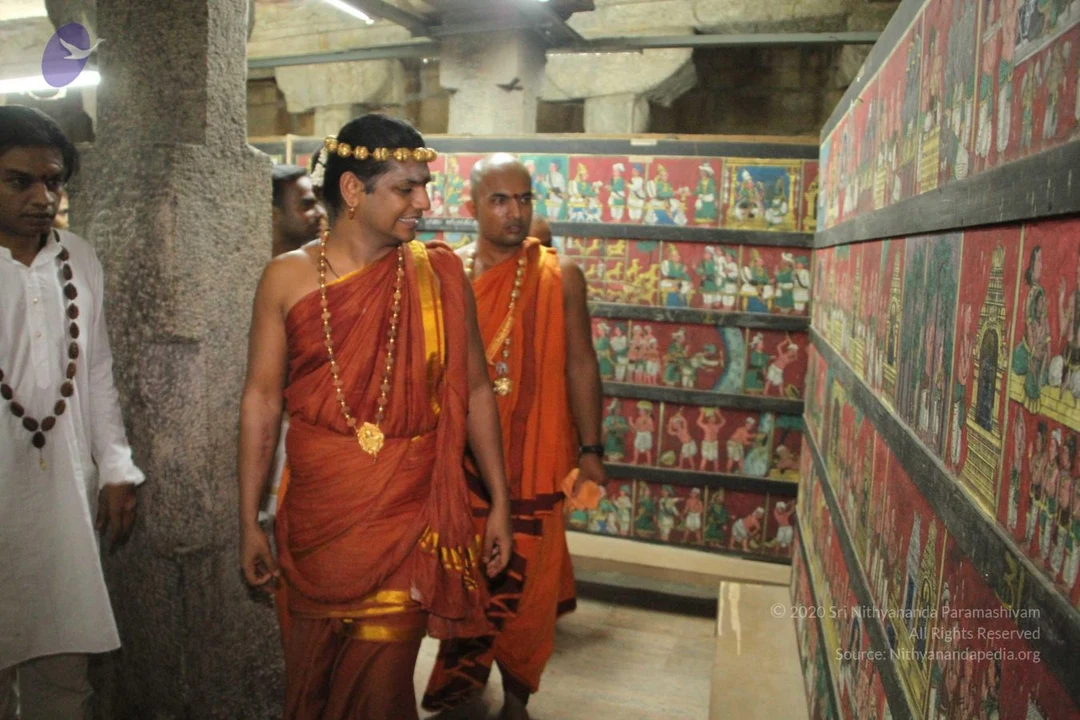
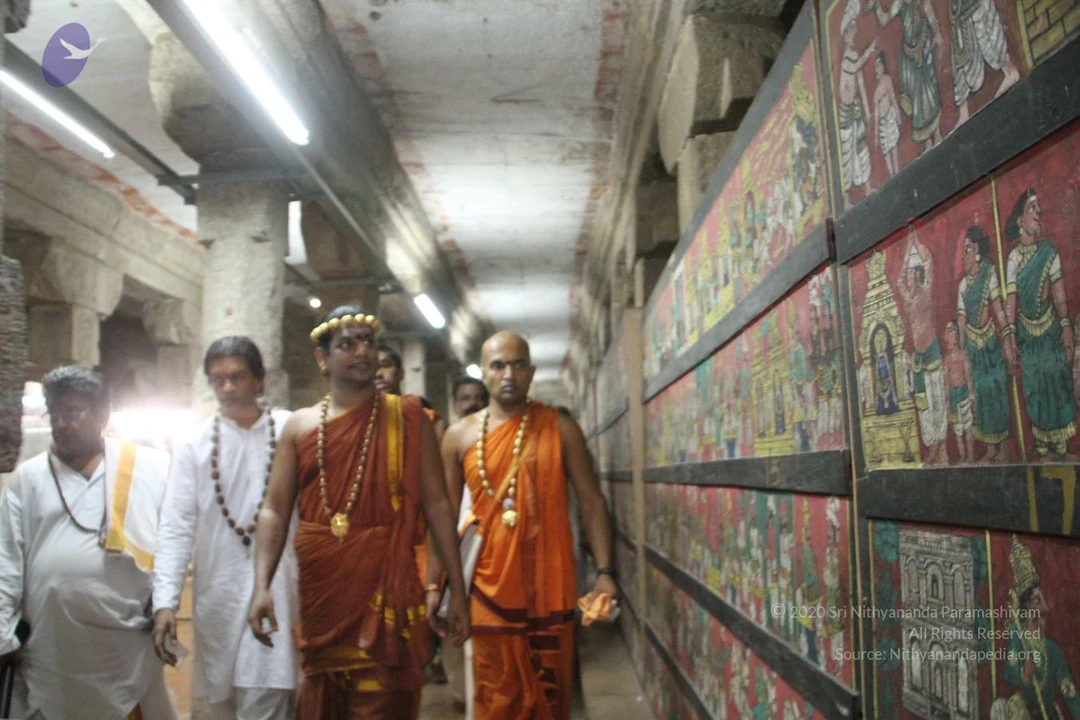
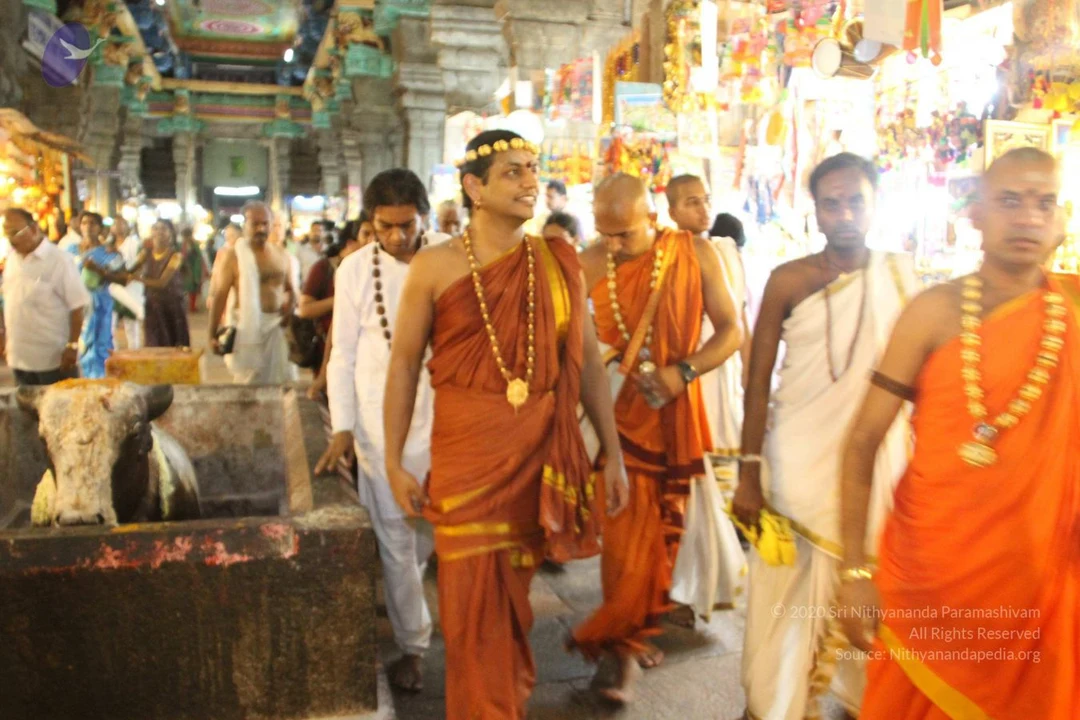
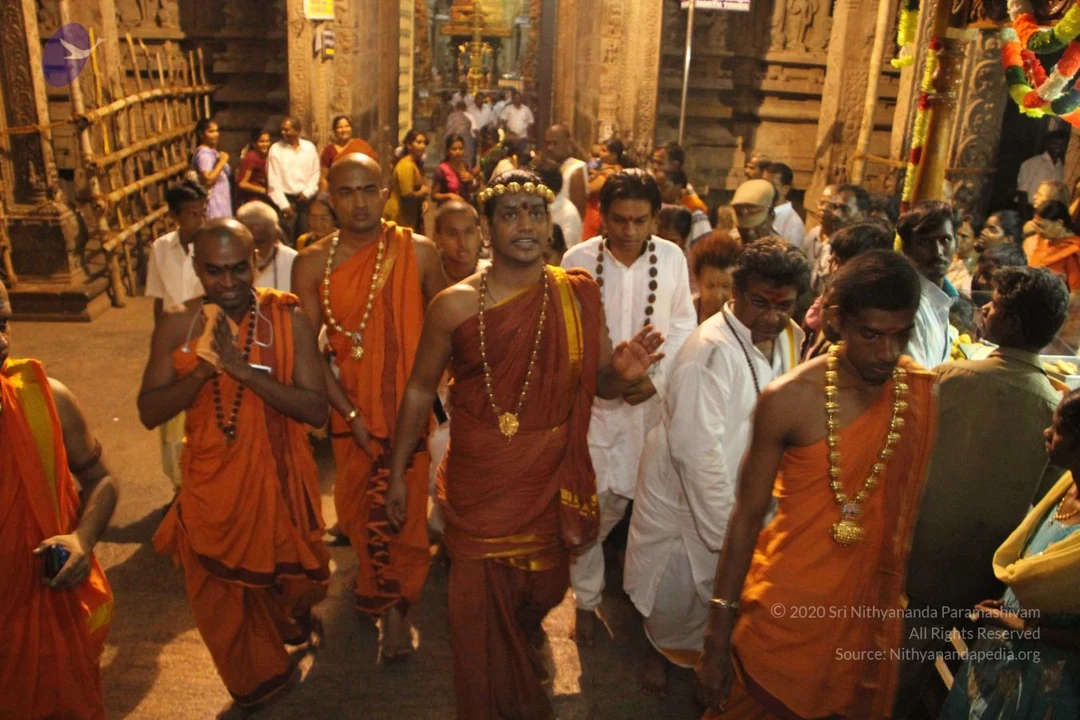
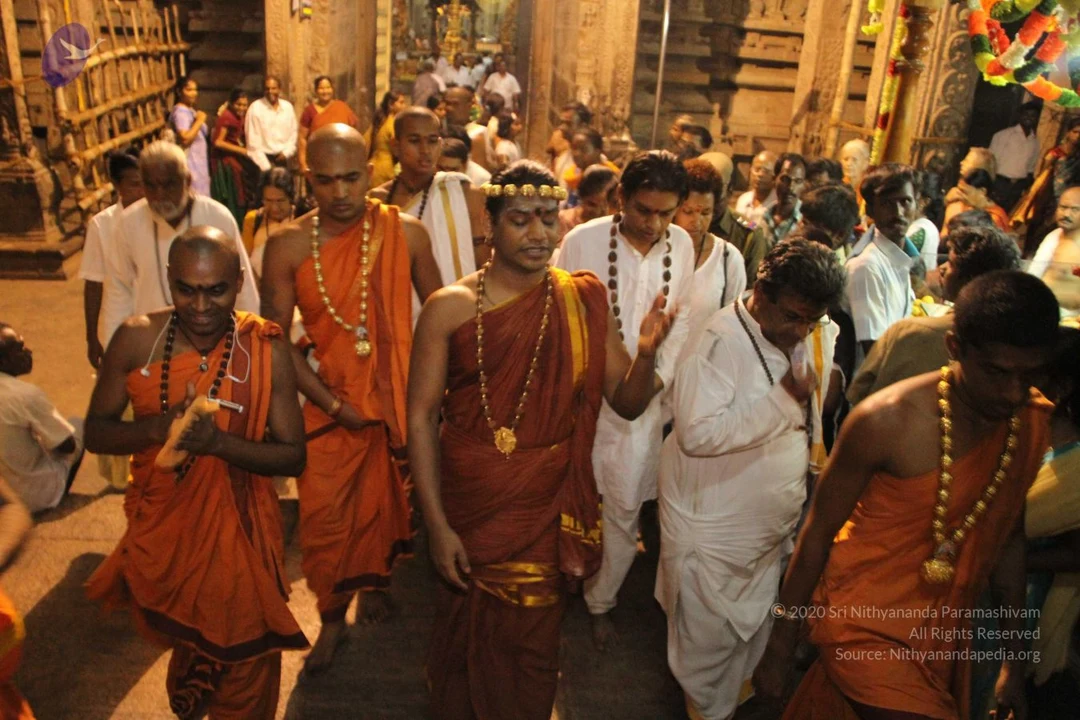
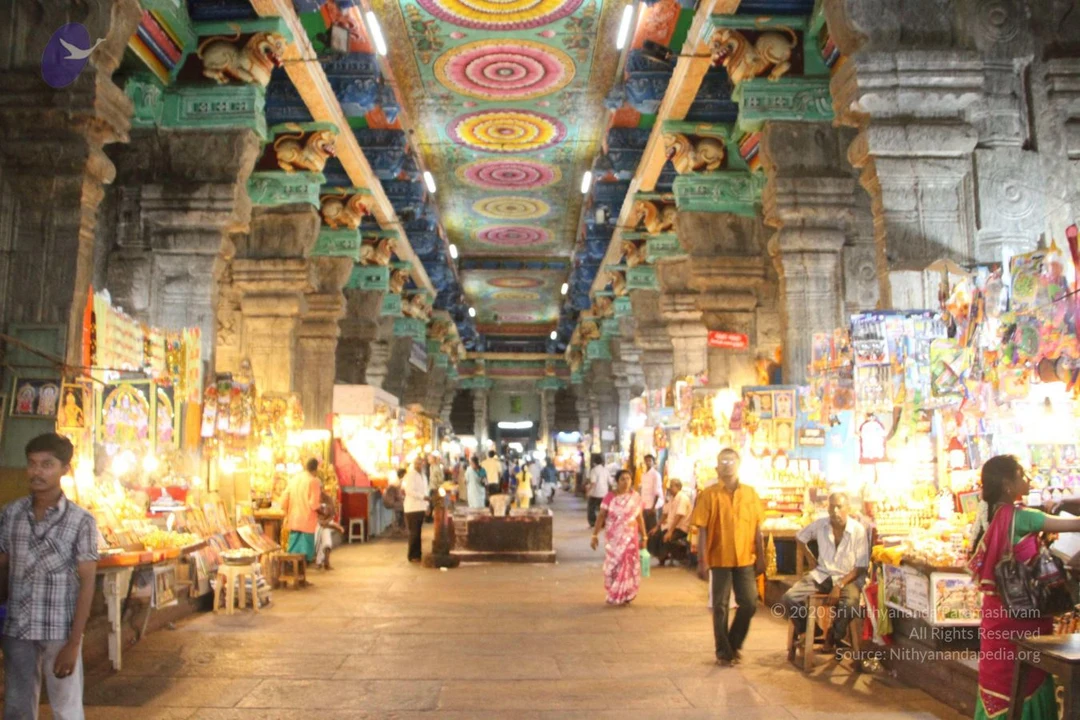
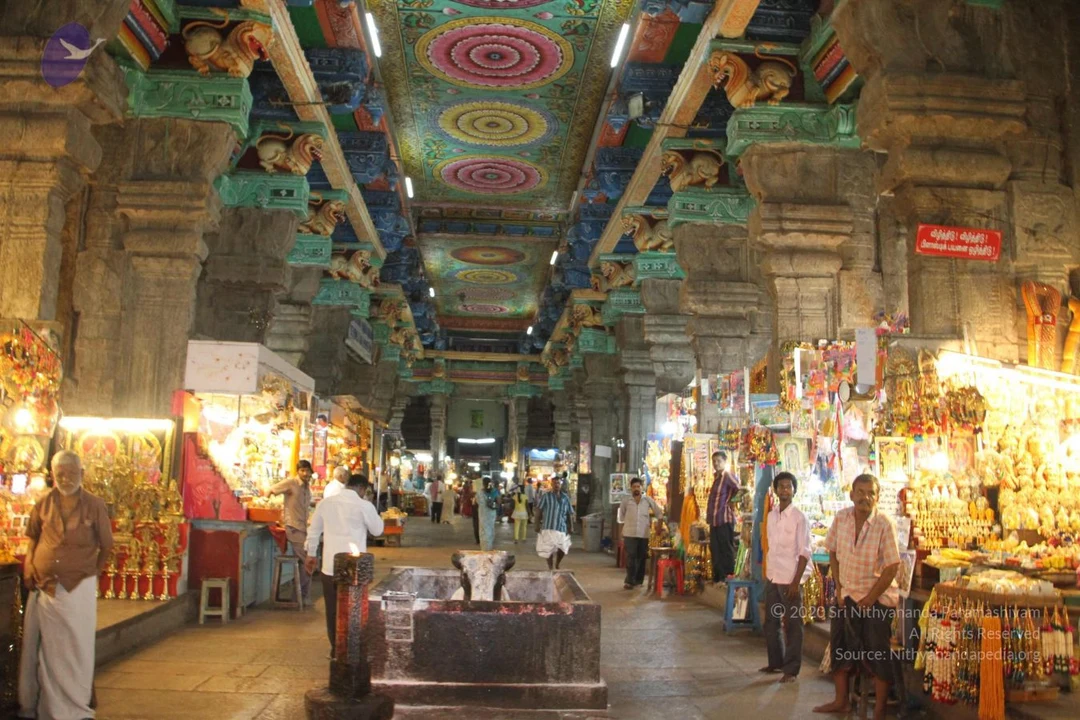
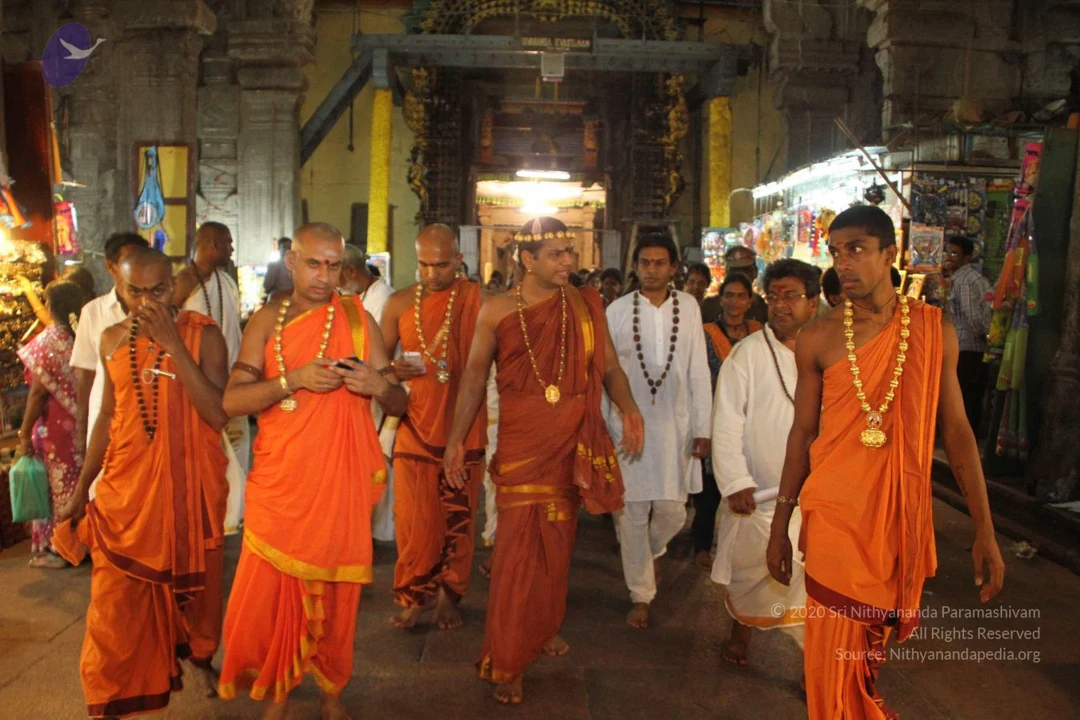
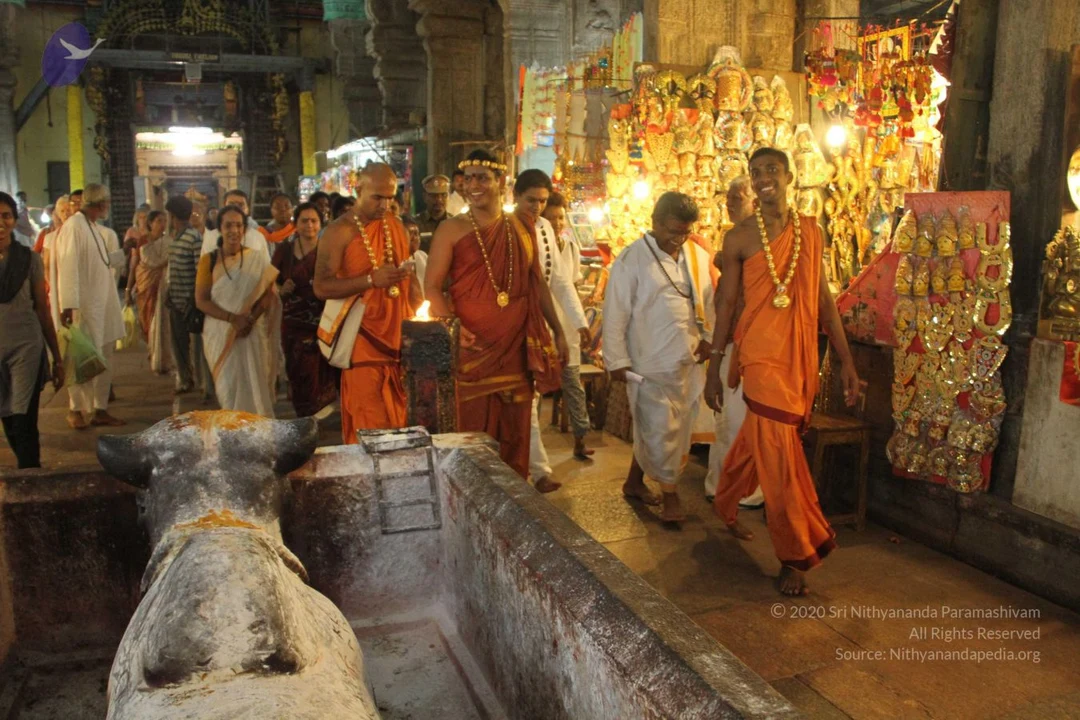
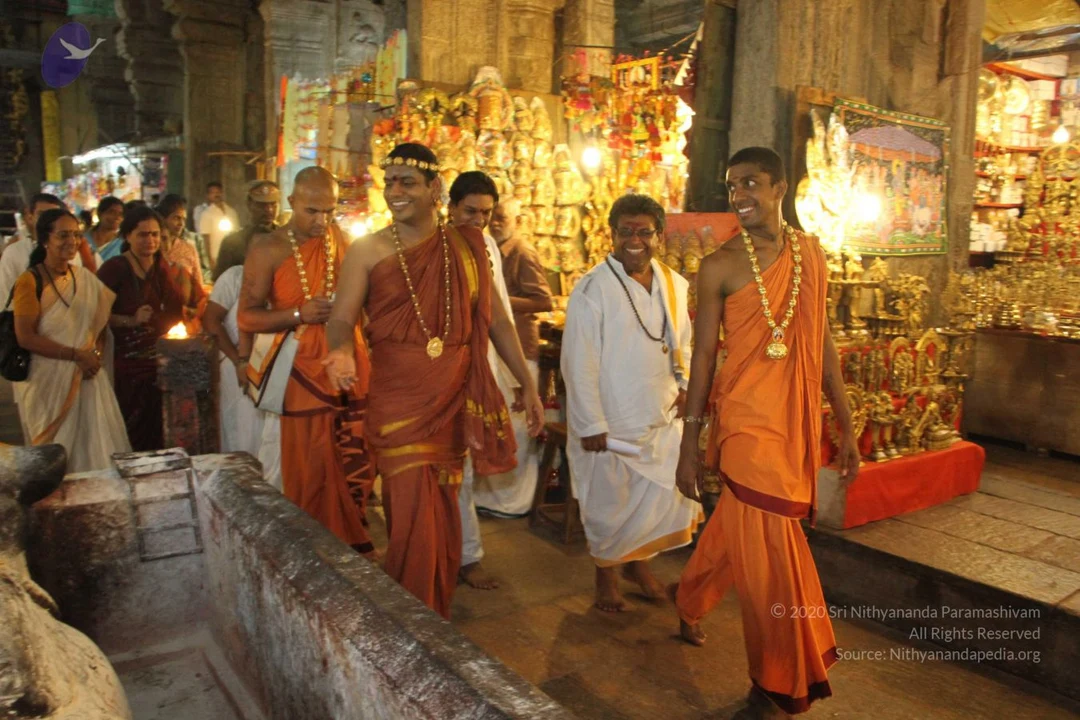
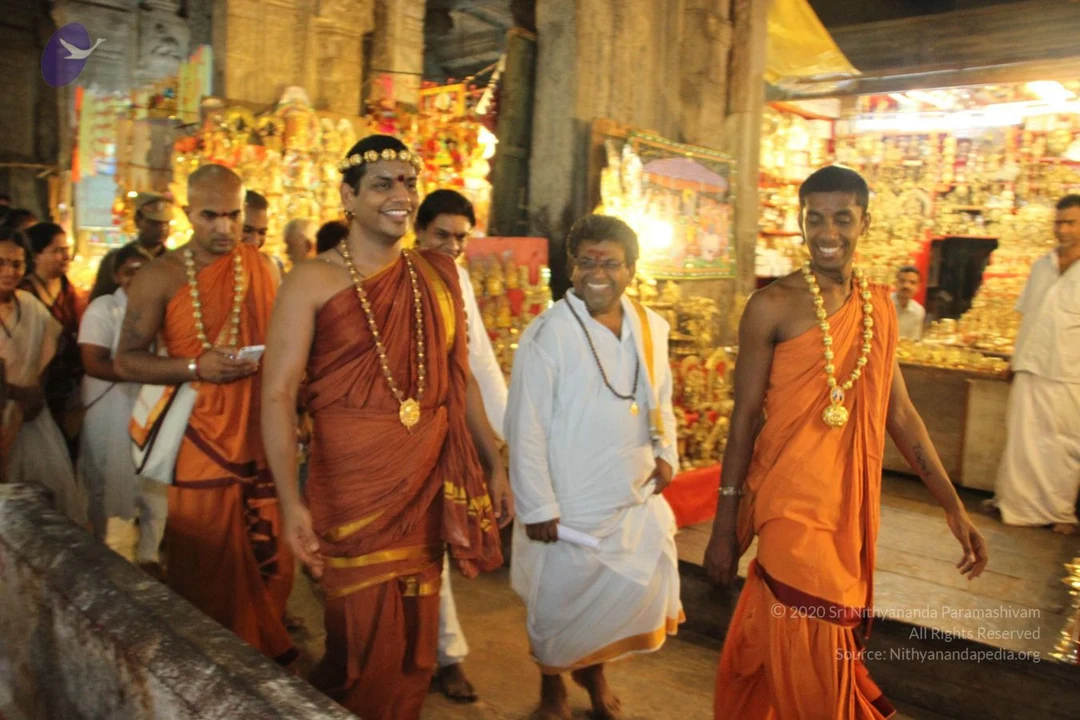
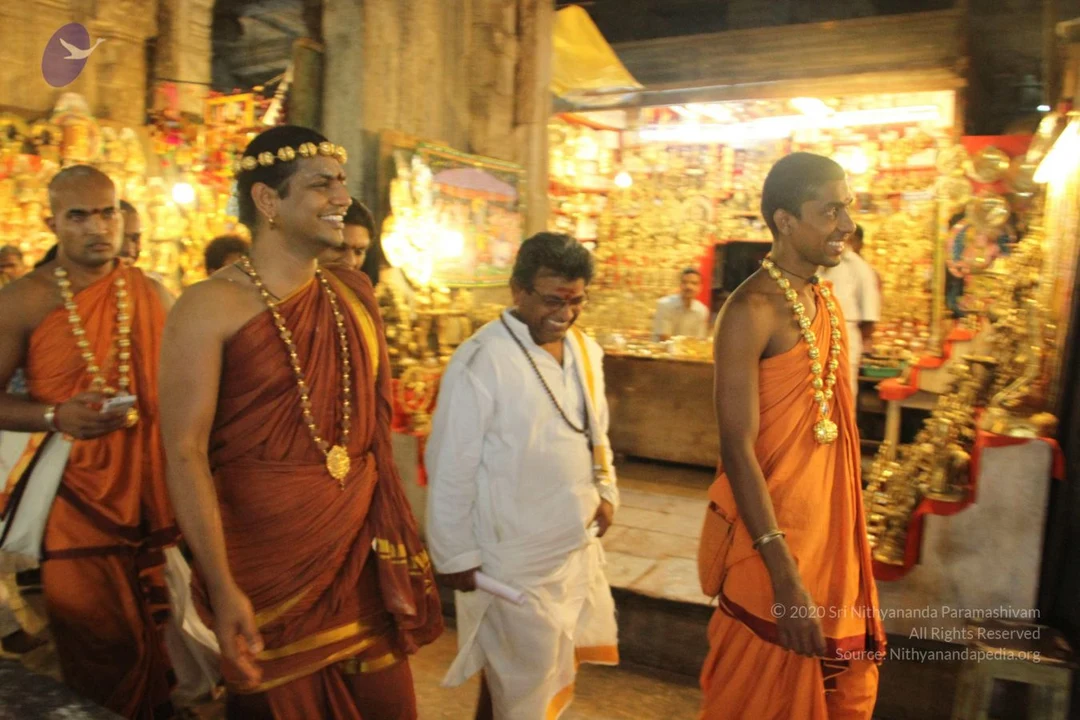
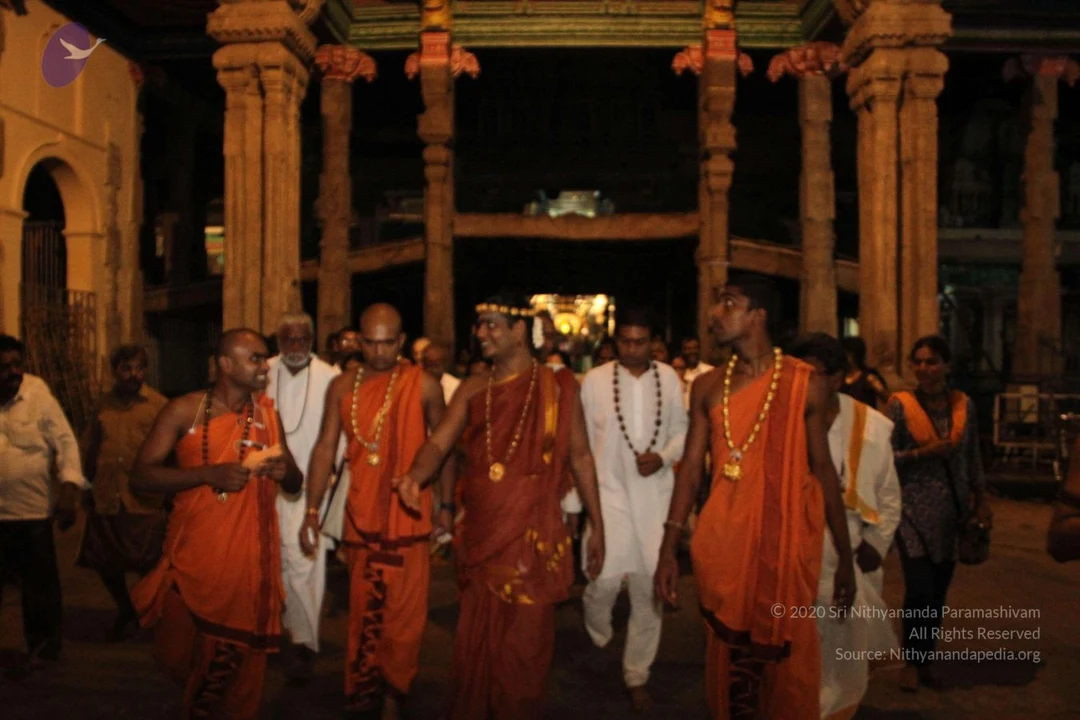
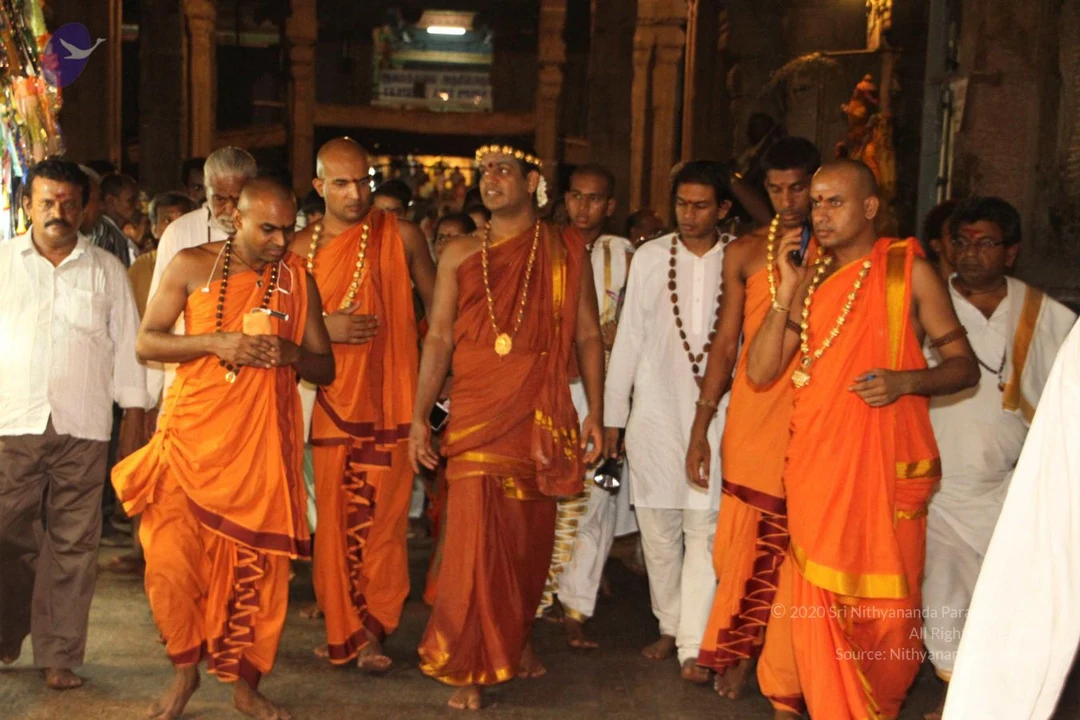
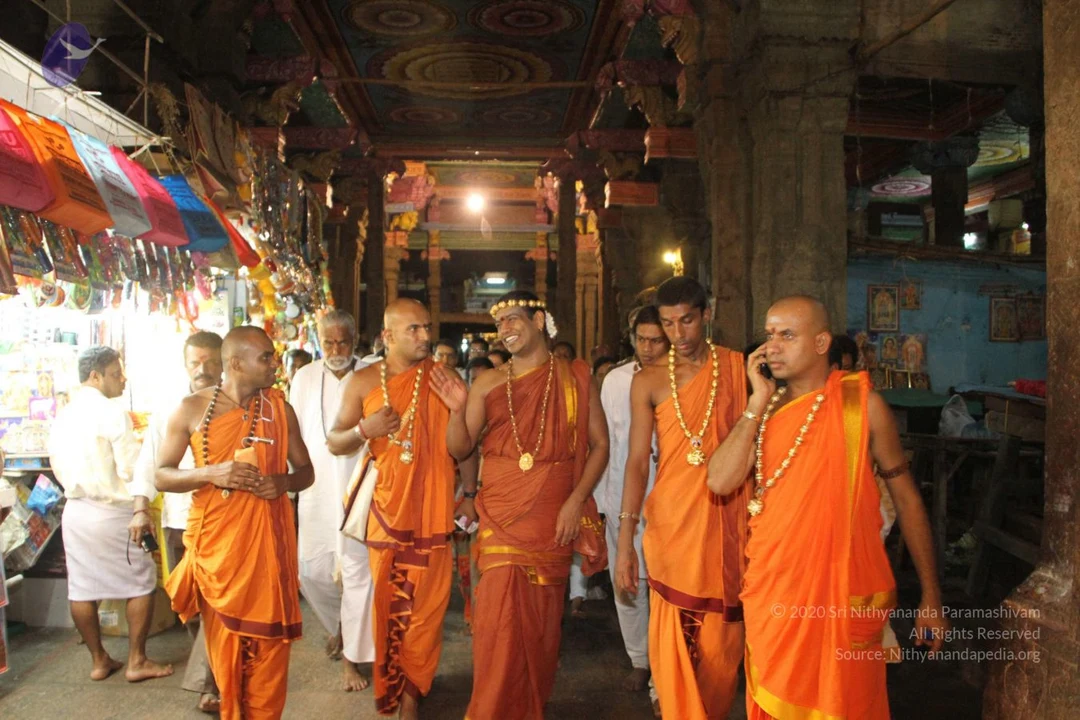
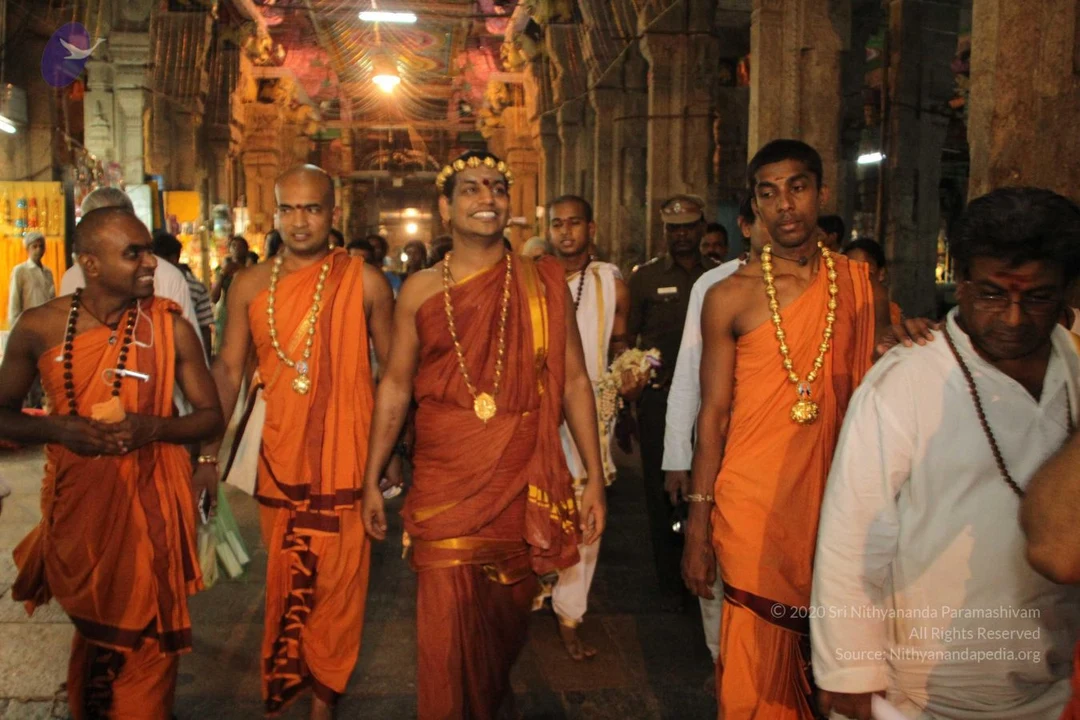
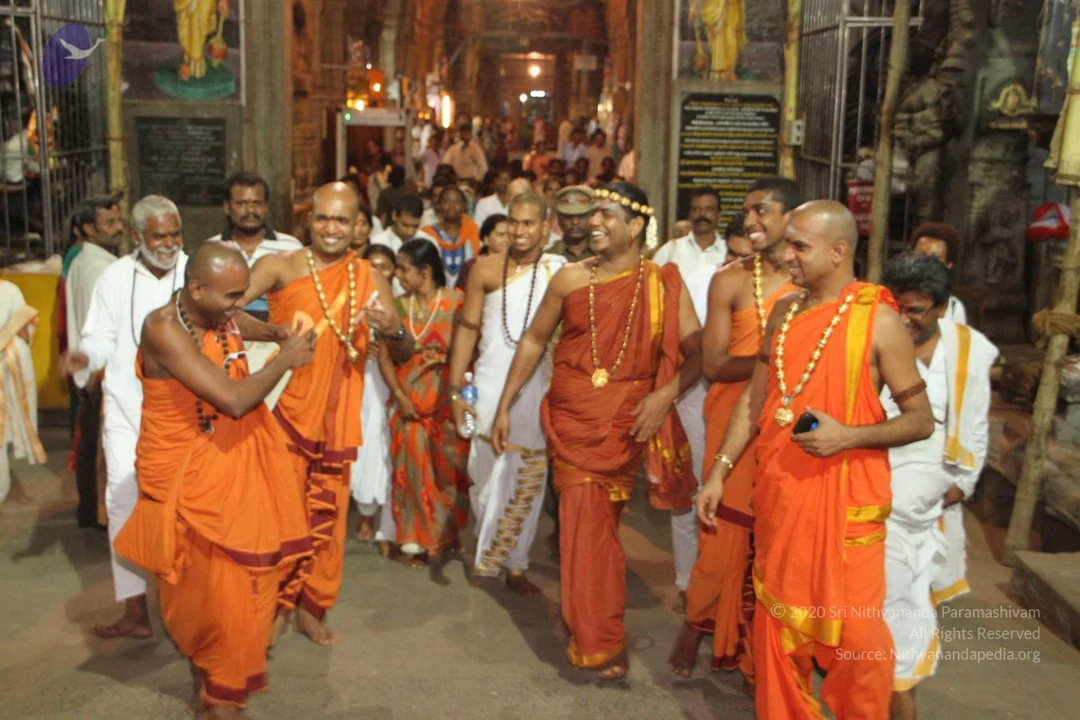
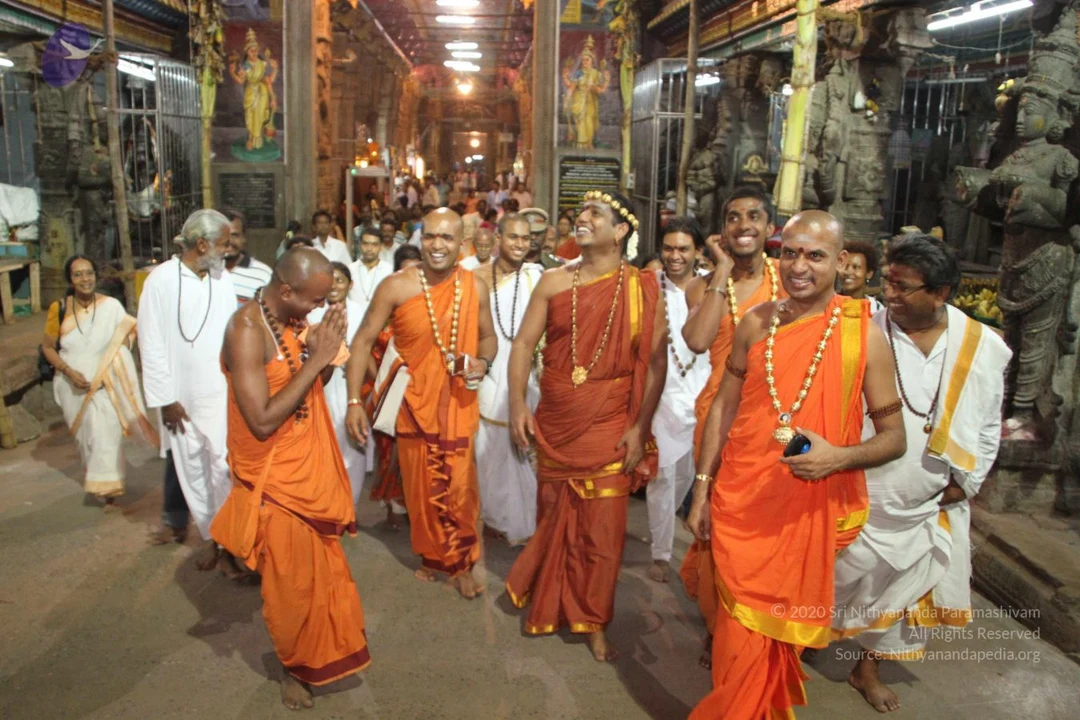
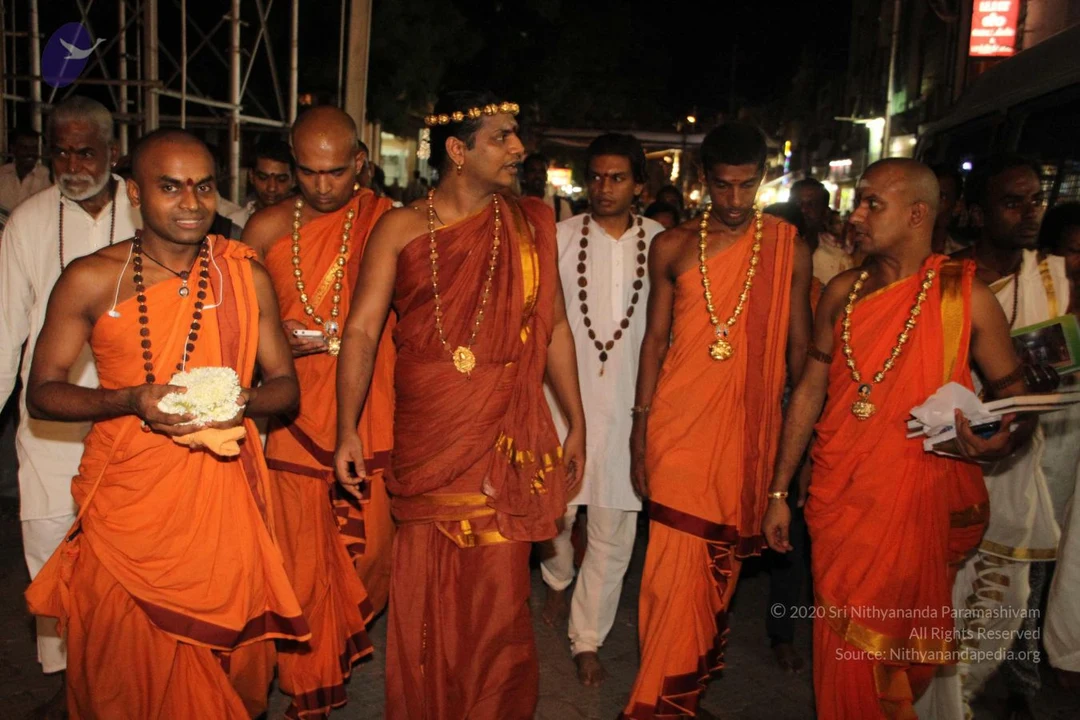
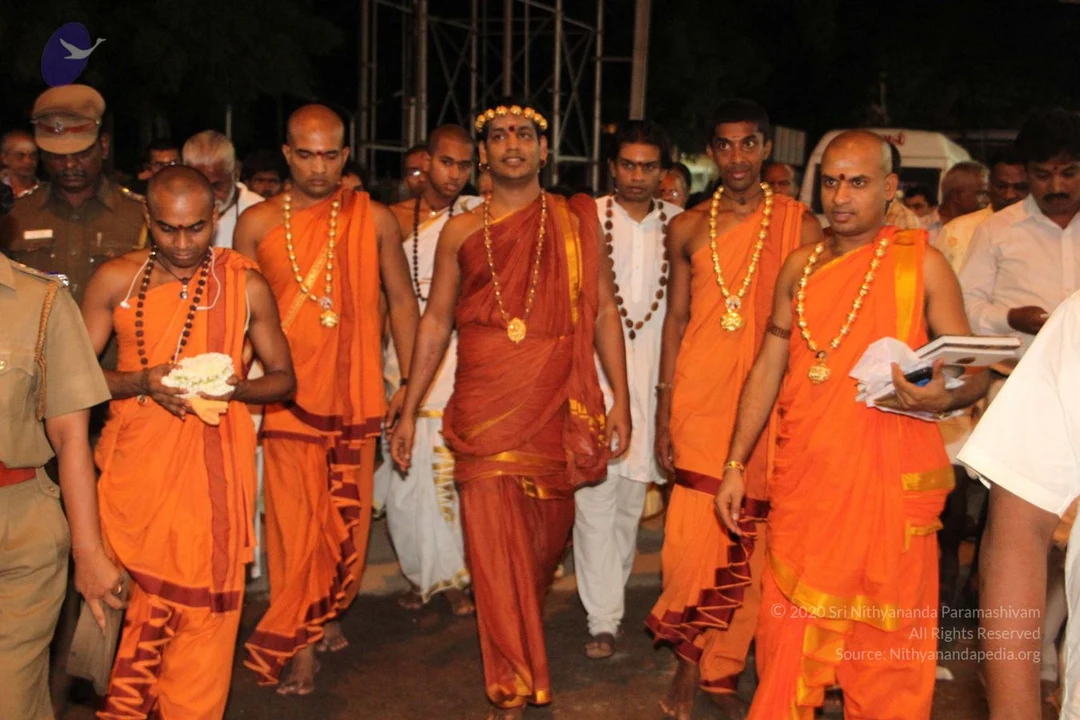
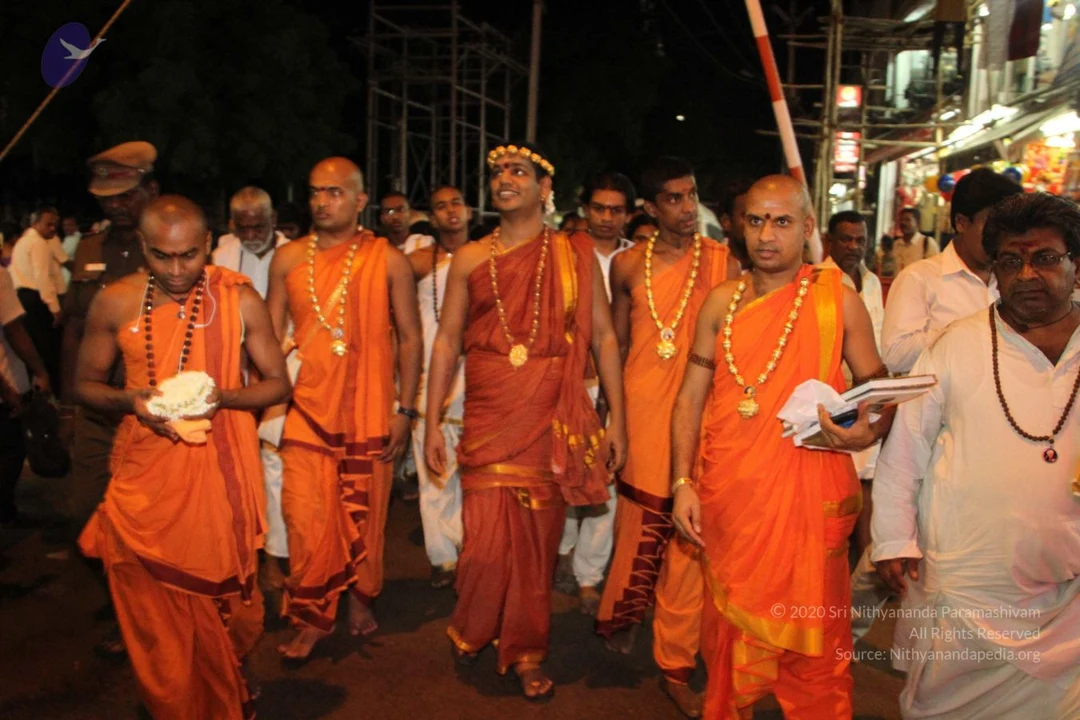
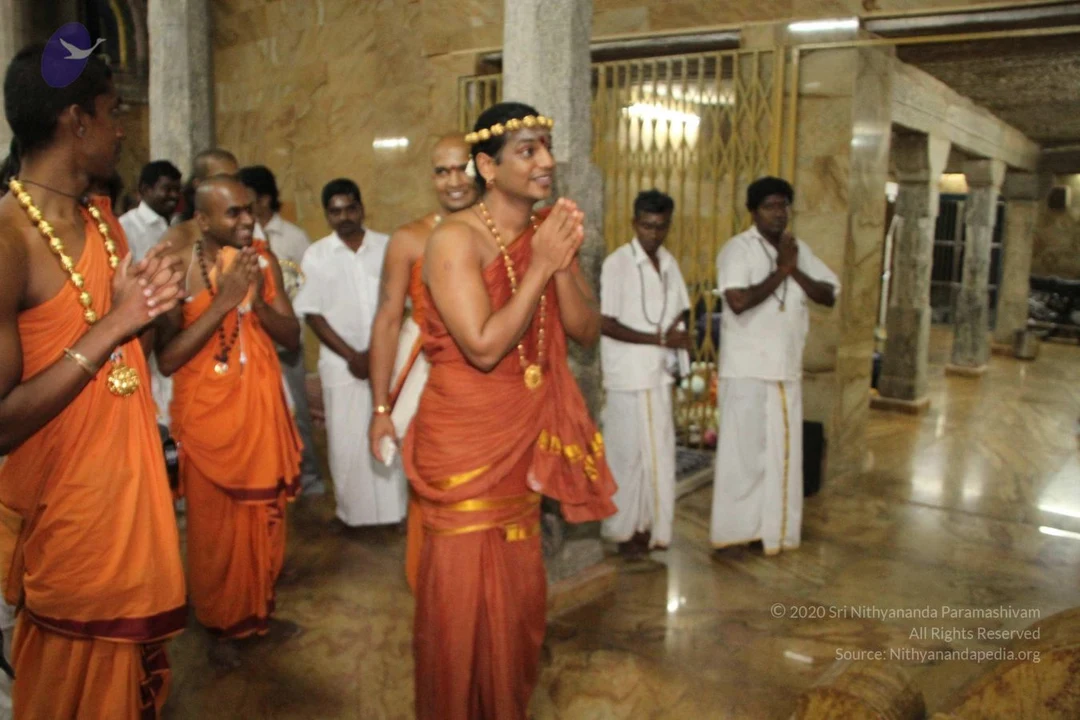
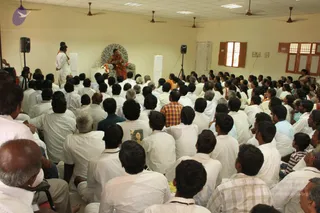
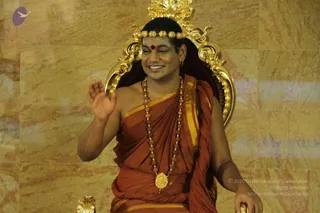
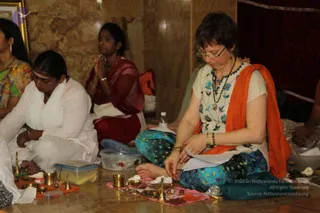
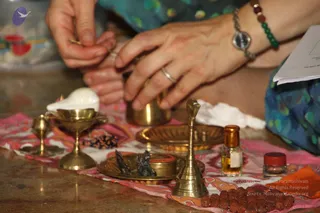
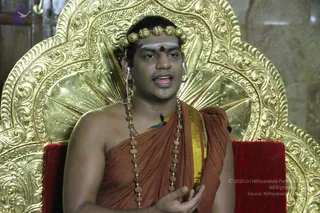
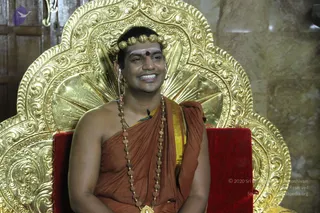
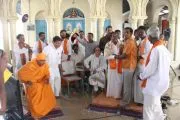
A photograph of four women seated closely together in a meditative posture with eyes closed, in a hall with a textured stone wall and a dark red drape behind them. The woman on the left wears a white floral top with an orange shawl, a rudraksha mala and a pendant, and rests her hands in her lap. The woman beside her, with white hair, wears a white top, an orange shawl and layered rudraksha malas. The third woman, with light hair and glasses, wears a grey-green outfit with an orange shawl and a gold necklace. The woman on the right, in a red-orange sari with a red bindi, wears a rudraksha mala and clasps her hands.A man sits on an ornate gold-carved throne with maroon upholstery against a beige stone-tiled wall, speaking with both palms raised and open at chest height. He wears a saffron-orange shawl over the shoulder and bare chest, a gold-toned ceremonial pendant on a rudraksha-style bead mala, a gold beaded crown-band on his head, a red bindi, and a small clip-on microphone near his face. His expression is smiling as he addresses the audience. Probable Swamiji (saffron shawl, gold crown band, bead mala, gold pendant on a throne), seated and giving a satsang discourse.A photograph of a procession walking down a temple corridor with a painted, multicoloured ceiling of concentric circles and rounded stone pillars. In the centre, a smiling man in a rust-orange dhoti and shawl wears a gold floral crown and a long rudraksha mala with a gold pendant. Around him, several men in saffron-orange robes wear gold and beaded necklaces, and one man in white with a yellow-bordered cloth holds a bell-shaped handheld object and a rolled paper. Devotees in white stand nearby. a person candidate: the central figure wears a crown and distinctive mala and gold pendant, but his appearance is not clearly distinctive enough to confirm, so this is a possible identification only.

May 07 2012

Original wiki page
Contents

Title

Madurai Adheenam: Philosophy & History of Madurai Adheenam

Description:

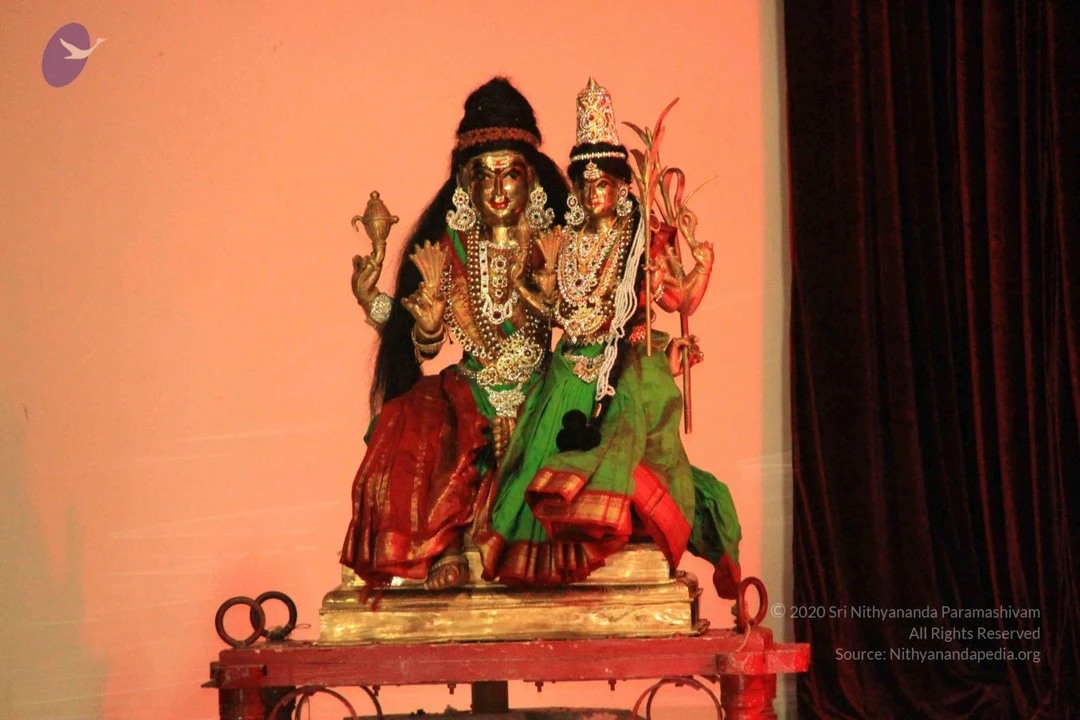
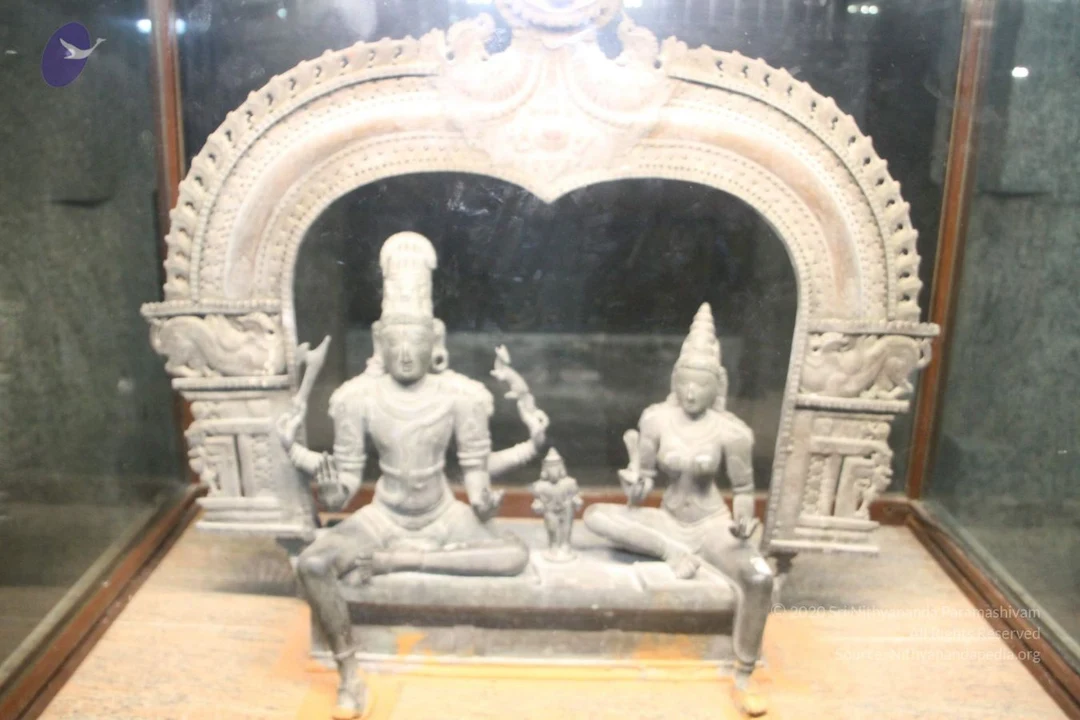
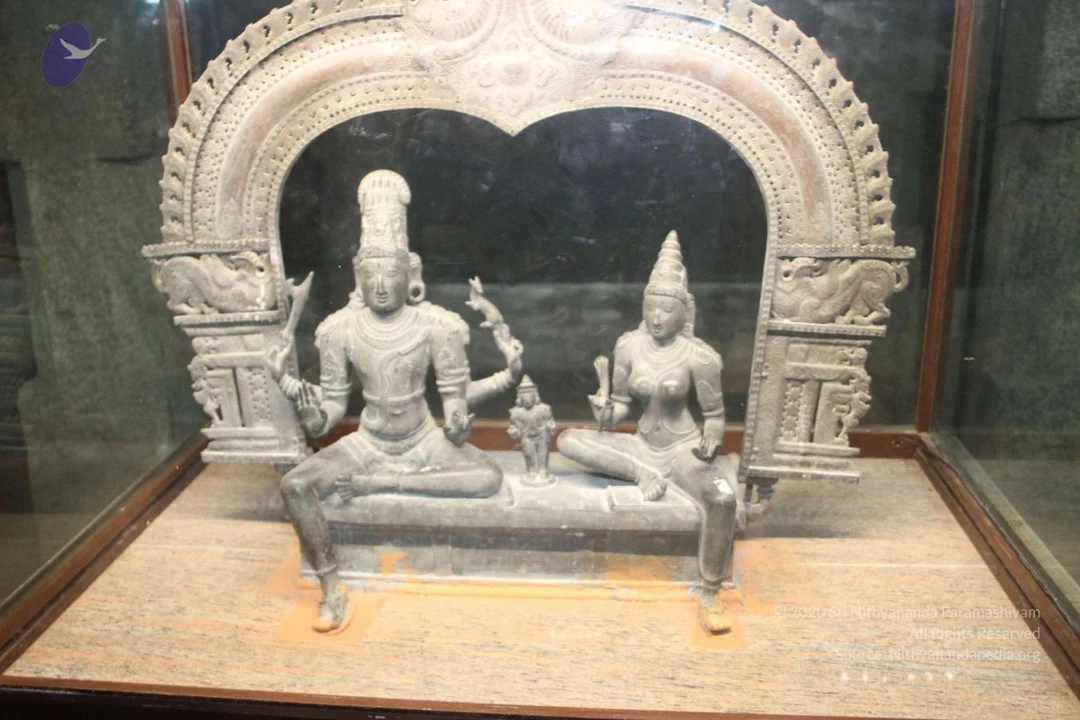
Today’s morning satsang with Paramahamsa Nithyananda is his first presentation from Madurai Adheenam, where he assumes his ecclesiastical seat as 293rd pontiff. Paramahamsa explains to us that Madurai Adheenam is the most ancient organization on Planet Earth, dating far back before recorded history. He will retrieve that unwritten history through his Akashic Readings, during which he downloads the cosmic truth of world events. Today he relates how the founders of the Adheenam (religious community) were Shiva and Devi Themselves in their first appearance in human form. Devi appeared as Meenakshi, who became the queen of Madurai, and Shiva took form as her husband Soma Sundareshwara. Paramahamsa clarifies that they were not incarnations, in which the human body inhabited by God is carried in an earthly womb. Rather they transformed themselves from higher formless realms into the semblance of human shape, by passing through fire which transforms all things. The spirit of Meenakshi descended from her divine space through the fire into what appeared to be a human child of three years. She did not assume human physiology, but maintained a human appearance throughout her life on Earth.

Link to Video:

VideoAudio

Transcript:

Madurai Aadhenam: Philosophy and history of Madurai Aadhenam

So, from today I will start the philosophy and history of Madurai Aadhenam. Please understand, this is world’s most ancient Hindu organization; I can say religious organization, forget about Hindu organization: religious organization; I can say organization! See, organization started from religion, the idea of organization is originated from religion, the idea of religion is originated from Hinduism. So, if this is the world’s most ancient Hindu organization, I can say this is the first organization on the planet earth. Please understand, this is world’s oldest organization.

This organization has two history: One, prehistoric period, another one, recorded history. Recorded history, no doubts, no problem, the facts are there, I will present it as it is. I will read from the akashic records and give you all pre-historic informations also. I will give you all the pre-historic informations about the whole aadhenam and the whole tradition. I can say this will be the comprehensive history of Hindu religion; comprehensive history and philosophy of Hindu religion.

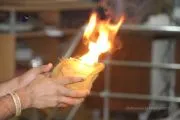
This organization is created directly by the first incarnation of Shiva, Sundareshwara and incarnation of Devi, Meenakshi. Please understand, even the word incarnation is not exactly right, because incarnation means you assume, super-consciousness assumes human body and comes out; but Sundareshwara and Meenakshi, did not live in any mother’s womb, did not assume human body in a usual way, how we all have assumed human body. Meenakshi straight walked out of the Homagni, sacred fire as a three year old child, she did not stay in mother’s womb and come out in a usual way; she just reduced her frequency from the akashic layer, the sky, the space, straight to the physical level. She used fire as a medium.

Please understand, there are five elements: earth, water, fire, air and space. The beings who are living in the ‘space’ are enlightened beings, jeevan muktas, the Divine beings. Beings who are living in this body: physical; ‘earth’ are human beings. Meenakshi did not assume the human body in a normal way, she used fire as a medium. Please understand, fire is a medium, if you put these two elements, the earth and water into fire, it will convert them into air and space; it’s a medium, center. You can go from ‘formless’ to ‘form’ or ‘form’ to ‘formless’. From form to formless you can move through fire. Anything with form, offered into fire will be made into formless. Same way, anything formless to assume form has to enter through the fire. That is why I have to use Arunachala: the fire. Fire is a prerequisite for formless to assume the form, for the formless to enter the form. Meenakshi, did the same thing, there was a huge sacred fire ceremony, Homa ceremony, which Meenakshi has used. She used that frequency and just entered from formless to form, assumed the human body of three year old child. Please understand, it’s a very significant information: only at the age of three the ‘Pratyaghatma chaitanya jagruta’ is possible, your biomemory and brain is matured to feel the individual existence of consciousness, even in my case, when I assumed the body, means when I took birth, the body was matured equivalent to 3 year old child. My mother used to say, I was 10pound weight! Indian village kids; Indian village mothers can never imagine delivering 10 pound child, because usually Indian village mothers are malnourished, undernourished and I am not born in a rich family. I am born in a very middle class family and there was no special pregnancy care given to mother, nothing. The moment I was born, my mother my said, I was so huge, she felt as if I was inside for five years, because only in three years, third year, the body becomes mature, biomemory becomes mature to feel the individual awakening of consciousness.

So, Meenakshi straight walked out of the fire as a three year old child assuming the ‘form’. I don’t even want to use the word human body, because her human physiology was never a normal physiology; it was never a normal physiology. Of course, there is no question of psychology, but even her physiology was never normal physiology. She just assumed a ‘form’ not human body. The first and foremost form of the Supreme Mother, Divine mother: Meenakshi.

See, till her appearance in human plane, there was no monastery or religion, tradition evolved. You may ask, then how did they do the sacrifice, the Homa? It was done by the Divine Rishis. Human beings were not introduced to the religion, spiritual concepts and truths. It was only for the special Divine beings who assumed from formless to form, come down, perform these sacred acts, elevate human beings, help human beings temporarily and go back. There was no organized system for human beings to evolve and elevate themself to the higher level. Meenakshi and Sundareshwara, Shiva and Devi felt the need for a independent system to evolve human beings to the highest possibility, to the highest form of existence, or formless existence. So Meenakshi, Sundareshwara assumed the form to elevate human beings to the highest form, human beings to the highest existence.

Spot Notes: Monday, May 7th 2012

Madhurai

“Sadashiva samarambam, Jnana Sambandhaacharya madhyamam asmadacharya paryantam vande Guru paramparam!”

I welcome you all with my love and respects! I welcome all the devotees, disciples, Samajis, Satsangis sitting with around the world at this moment in 1074 places through Nithyananda TV, 24 places 2 in 2 way Video conferencing having Nayana Deeksha, in 256 cities, in 27 countries!

Cities sitting with us in 2 way video conferencing having Nayana Deeksha are – Ohio Centre, Ohio Prayag, San Jose Madhurai, Singapore Singapuram, Charlotte Srisailam, Vancouver Puri, Oklahoma Somanatham, Mill Valey, St. Petersburg Florida, Yoga Den California, Scottsdale Arizona, Atlanta Ujjayini, Houston Kalahasthi, Tiruvannamalai Arunachalam, Los Angeles Arunachalam, Malyasia Palani, Seattle Chidambaram, Toronto Kailasam, Nithyananda Nagara Bidadi & Oman Siva Gangai. I welcome all of you with my love and blessings!

All of you may be aware – I am live & alive from Madhurai! J Meenakshi is in action. Meenakshi is in action. So from today I will continuously speak for next 20 days maybe for a month till June 5th the Jnana Sambandar’s Guru puja day, I will continuously speak on philosophy and history of Madhurai Aadeenam!

So Umesh Hari from Houston, Catherine from Virginia I accepted your pada pujas. I will talk to you during dial the Avatar. So from today I will talk the philosophy and history of Madhurai Aadeenam. Please understand this is the world’s most ancient Hindu organization. I can say religious organization, forget about Hindu organization, religious organization. I can say organization. See organization started from religion. The idea of organization is originated from religion. The idea of religion originated from Hinduism. So if this is the world’s most ancient Hindu organization, I can say this is the first organization on the planet earth.

Please understand, this is world’s oldest organization. This organization has two histories – one pre-historic period another one recorded history. Recorded history no doubt, no problem the facts are there. I will present it as it is. I will read from the Aakashic records and give you all the pre-historic informations also. I will give you all the pre-historic informations about the whole Adeenam and the whole tradition. I can say this will be the comprehensive history of Hindu religion – comprehensive history and philosophy of Hindu religion. This organization is created directly by the 1st incarnation of Shiva – Sundareshwara and incarnation of Devi - Meenakshi. Even the word incarnation is not right. Because incarnation means super consciousness assumes human body and comes out. But Sundareshwara and Meenakshi did not live in any mother’s womb. Did not assume any human body in a usual way how we all have assumed human body. Meenakshi straight walked out of homa agni - sacred fire as a 3 year old. She did not stay in mother’s womb and come out in a usual way. She just reduced her frequency from the Akashic layer, the sky, the space straight to the physical level. She used fire as the medium. Understand there are five elements – earth, water, fire, air and space. The beings who are living in space are enlightened beings – jeevan muktas - the divine beings. Beings who are living in this body physical earth are Human beings. Meenakshi did not assume the human body in a normal way. She used fire as a medium. Please understand fire is a medium. If you put these two elements – the earth and water into fire it will convert them into air and space. It is the medium – centre. You can go from formless to form or form to formless. From form to formless you can move through fire. Anything in form offered into fire will be made into formless. Same way, anything formless to assume form has to enter through the fire. That is why I have to use Arunachala - the fire. Fire is pre-requisite for the formless to assume the form, for the formless to enter the form. Meenakshi did the same thing. There was a huge sacred fire ceremony, homa ceremony which Meenakshi has used. She used that frequency and just entered from formless to form – assumed the human body of 3 year old child. Please understand, it is a very significant information. Only at age of 3 the pratyagaatma chaitanya jaagratha is possible. Your bio memory and brain is matured to feel the individual existence of consciousness. Even in my case when I assumed the body, means when I took birth the body was matured equivalent to 3 year old child. My mother used to say I was ten pound weight. Indian village mothers can never imagine delivering ten pound child because usually Indian village mothers are mal nourished, under nourished and I am not born in a rich family, I am born in a very middle class family. And there was no special pregnancy care given to my mother. Nothing. The moment I was born my mother said I was so huge. She felt as if I was inside for five years.

Because only in three years, 3rd year, the body becomes mature, the bio memory becomes mature to feel the individual awakening of consciousness. So Meenakshi straight walked out of the fire as a three year old child assuming the form. I don’t even want to use the word human body because her human physiology was never a normal physiology. It was never a normal physiology. Of course there is no question of psychology. But even her physiology was never a normal physiology. She just assumed a form, not human body. The first and foremost form of the supreme mother, divine mother Meenakshi. See till her appearance in human plane there was no monastery or religion or tradition evolved. You may ask then how did they do the sacrifice. The homa it was done by the divine rishis. Human beings were not introduced to the religion, spiritual concepts and truths. It was only for the special divine beings who assume from formless to form, come come down, perform these sacred acts elevate human beings, help human beings temporarily and go back. There was no organized system for human beings to evolve and elevate themselves to higher level. Meenakshi and Sundareshwara, Shiva and Devi felt the need for a independent system to evolve human beings to the highest possibility, to the highest form of existence or highest formless existence. Meenakshi Sundareshwara assumed the form to elevate human beings to the highest form. Human beings to the highest existence.

With this introduction, I will end the Satsang for now because just today we came, lot of things need to settle down here. I don’t want you guys to miss the Satsang. That is why I started. So from tomorrow I will speak at least 2, 3 hours because this is the subject of my passion and already Meenakshi has downloaded everything. She is going to express herself. She is going to be in action! So I will move to the next segment of the morning satsang Dial the avatar.

1) E—pada puja from Catherine

Today’s minutes for peace is 50 minutes. Please enter in minutes4peace website.

I bless you all! Let you all achieve, experience, live, express, radiate and share and explode the eternal bliss, Nithyananda. Thank you!

Full transcript Morning English Other Talks

Photos
Sakshi Pramana:

Sharing from Inner Awakening

Tags:

presentation, ancient, history, retrieve, unwritten, Akashic Readings, cosmic truth, world events, Shiva, Devi, appearance, human, queen, husband, body, inhabit, God, earth, womb, transform, shape, divine, spirit, child, physiology, life.

Photos Of The Day:

Temple

Paduka-Puja

Madurai-PadaPuja

Materialisation

VIP-Visit-from-Rajsena-group

Akila-Bharatha-Hindu-Maha-Sabha-ChakraPaani-and-Indira-Tiwani

Times-NowInterview

Public-darshan

Meenakshi-Amma-TempleVisit

Photos from this day

View all 620 photos

Photos
185 photosSource gallery
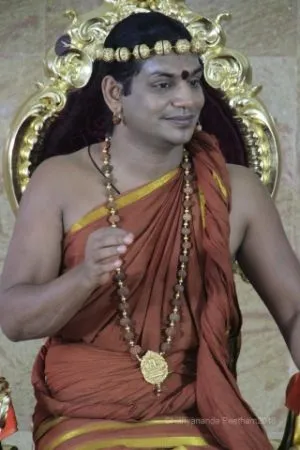
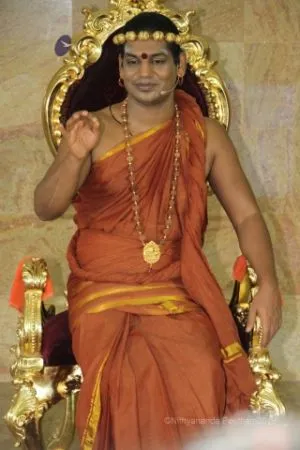
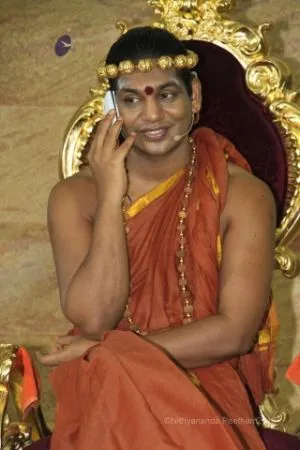
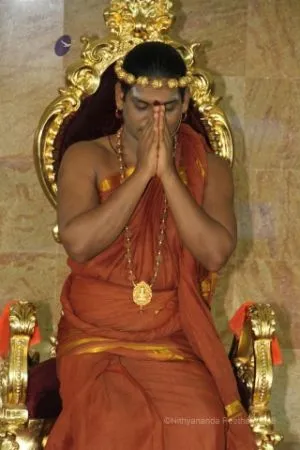
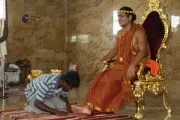
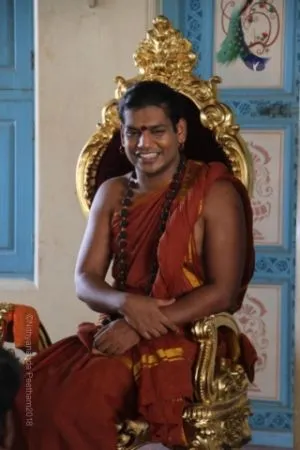
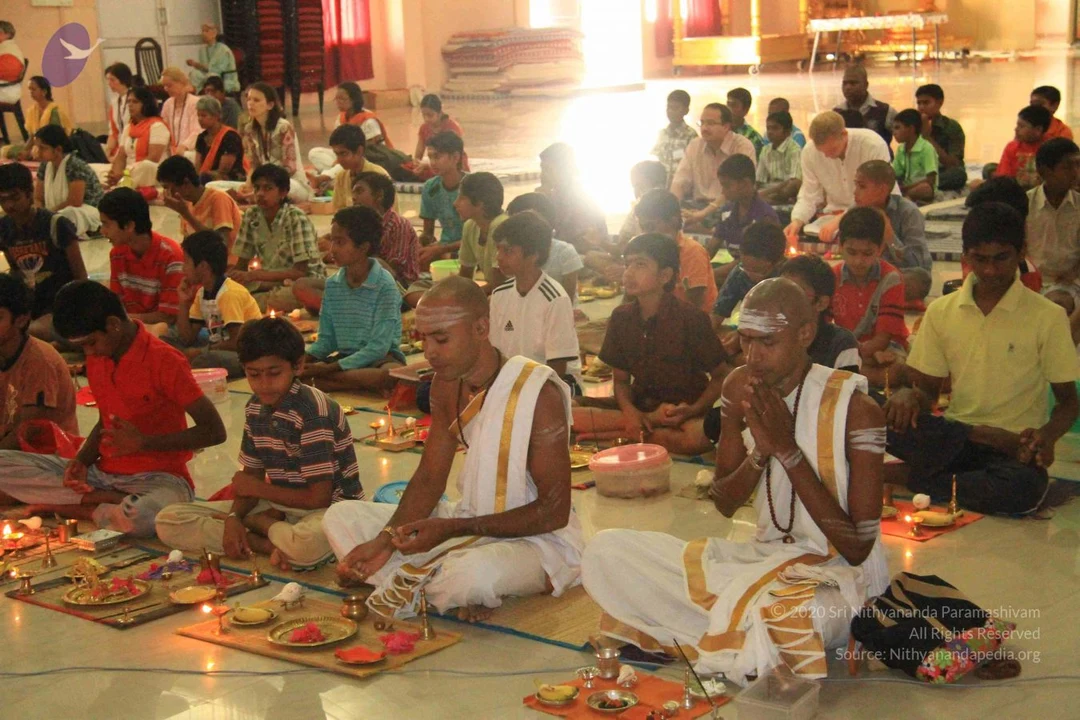
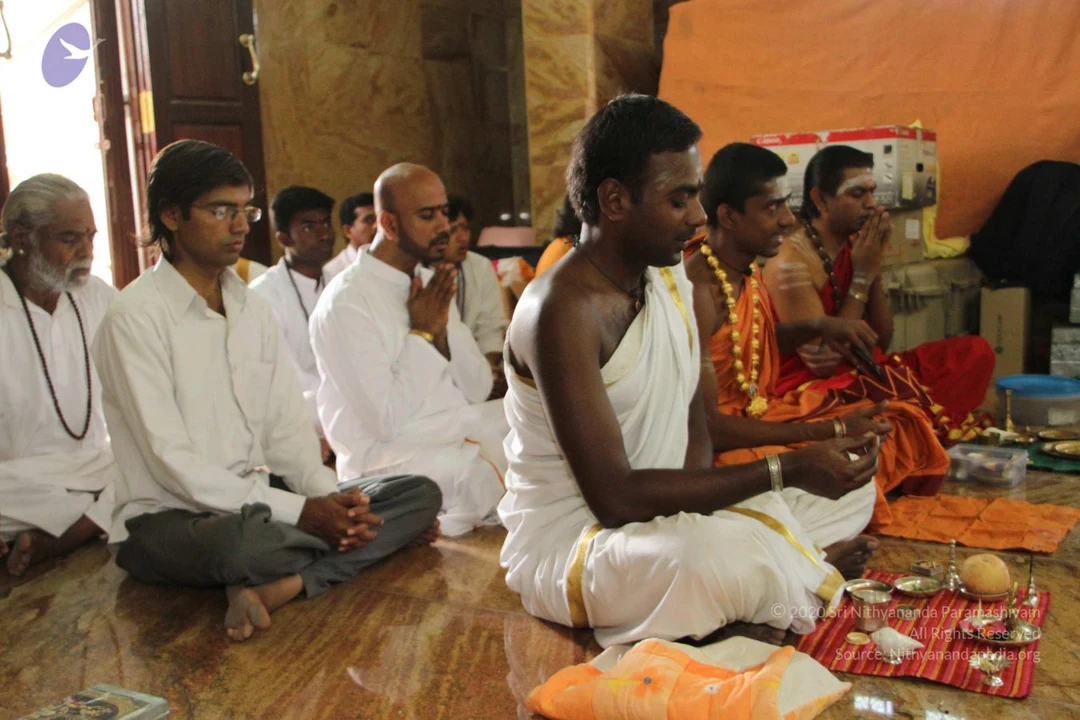
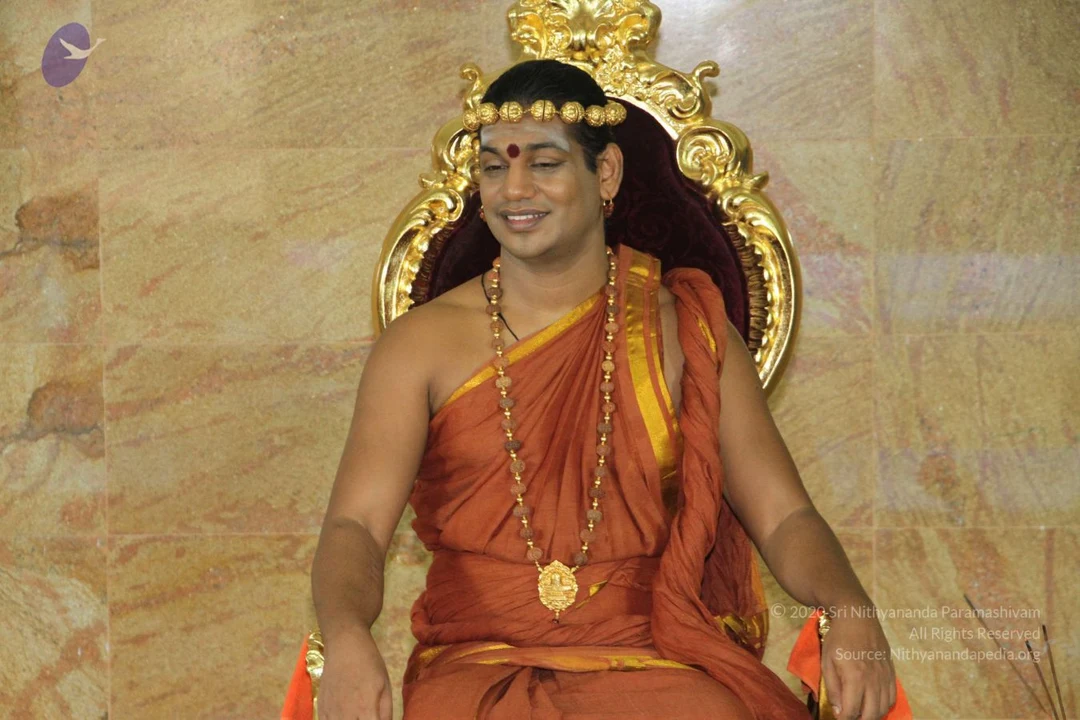
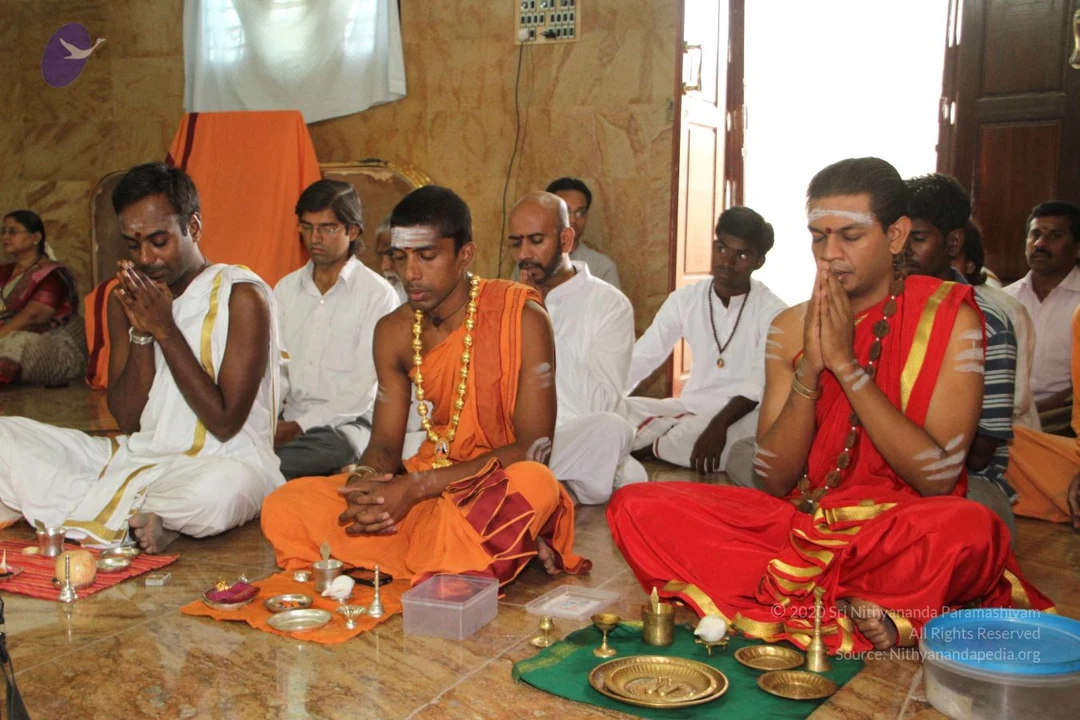
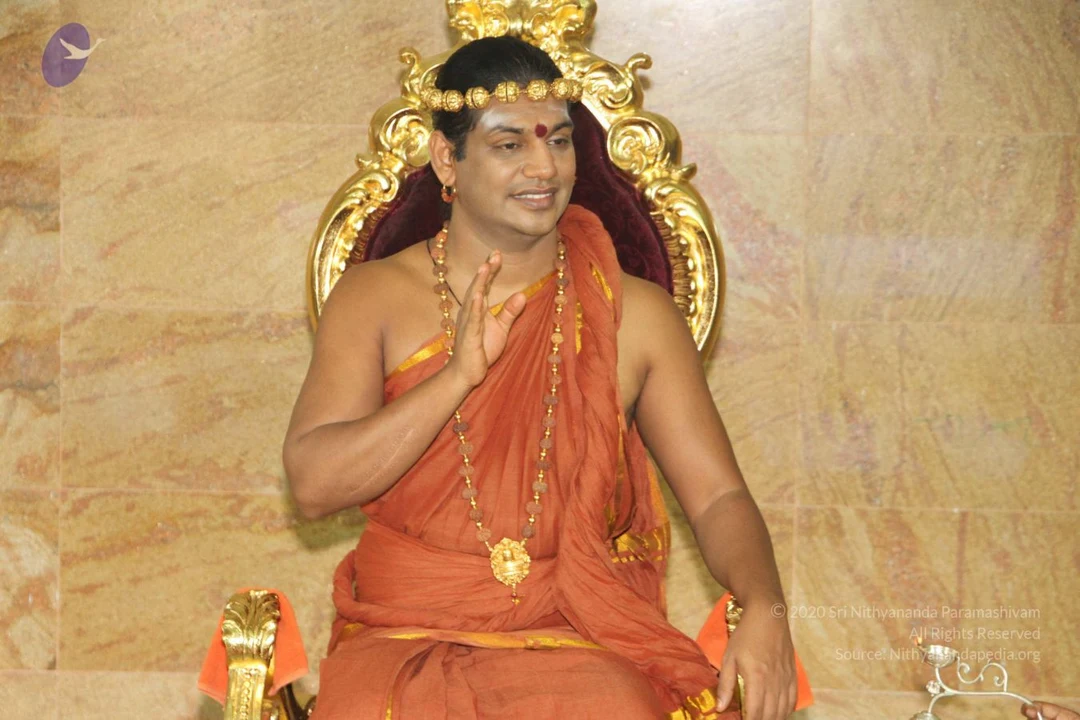
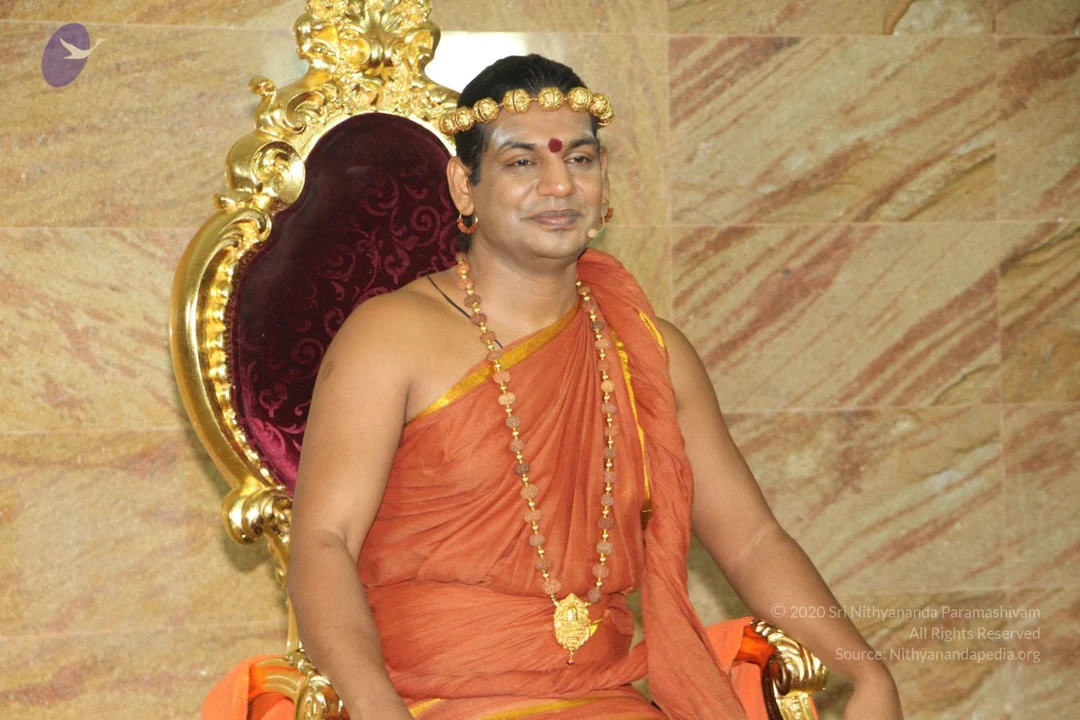
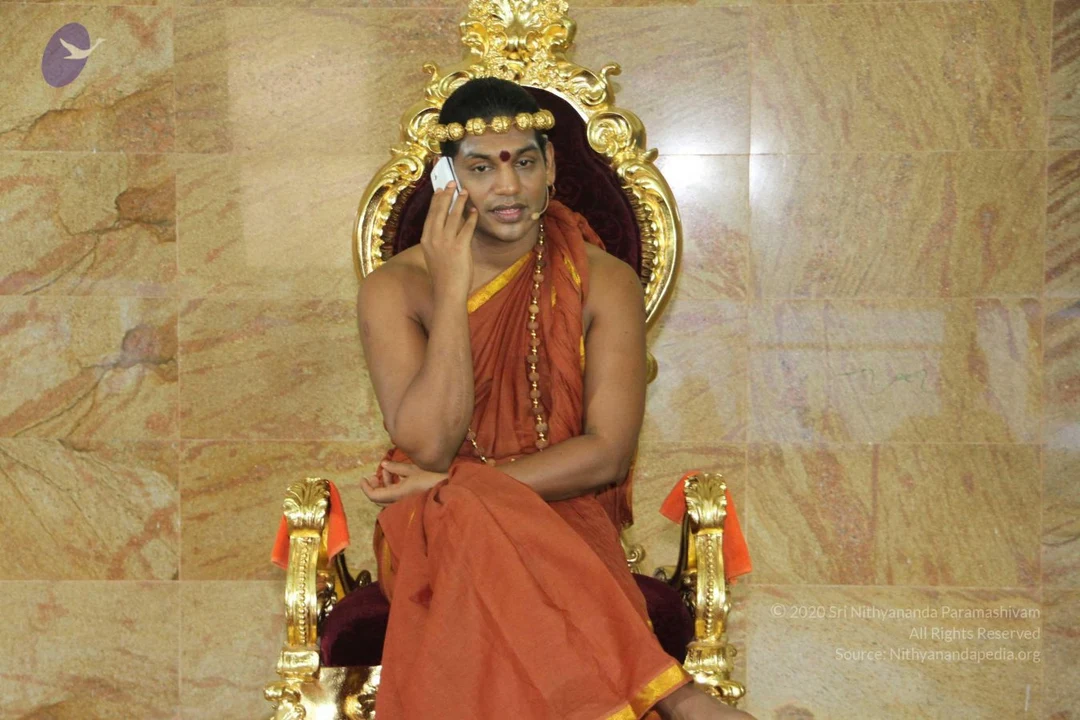
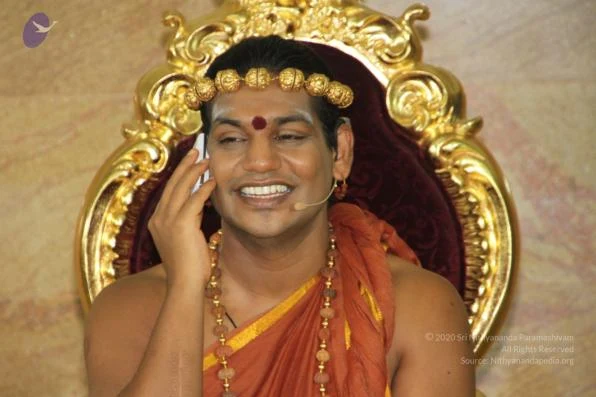
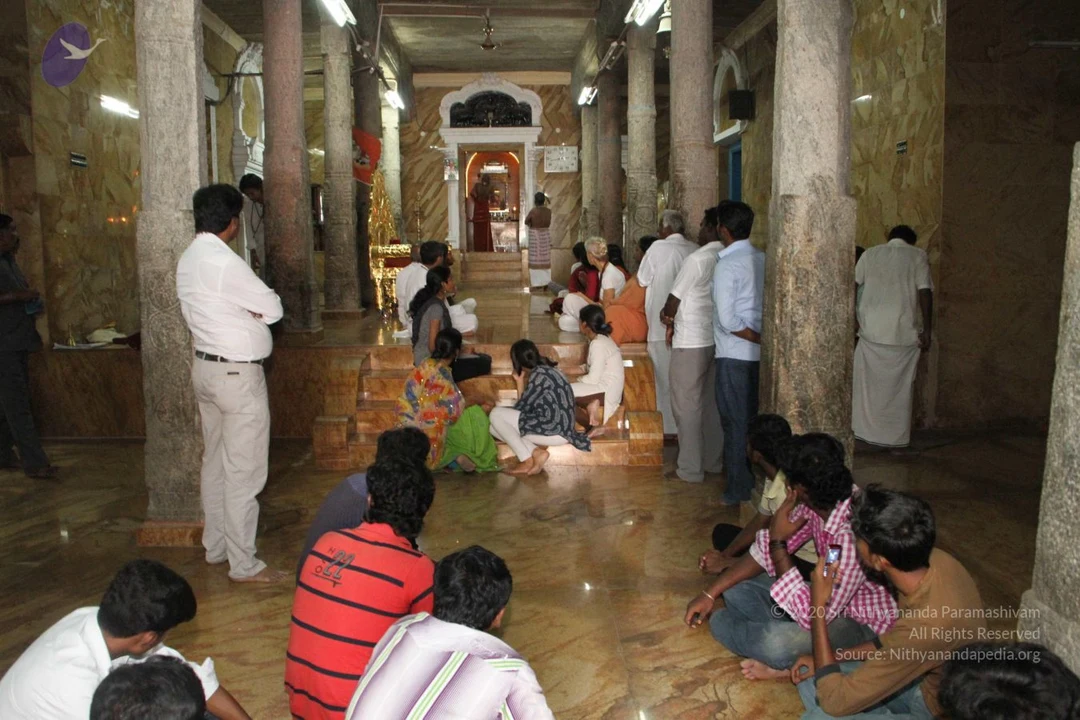
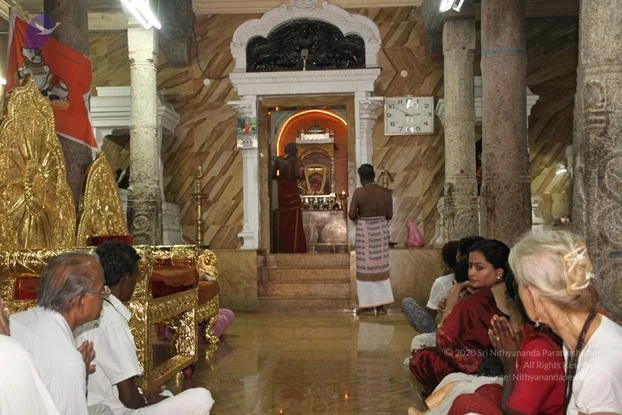
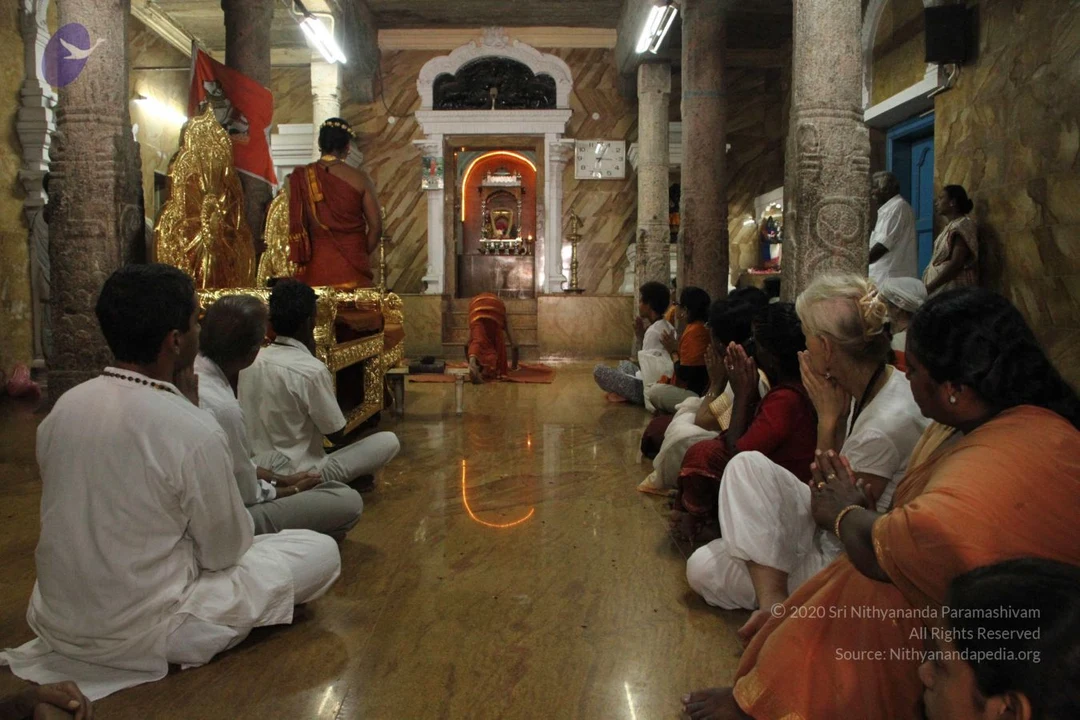
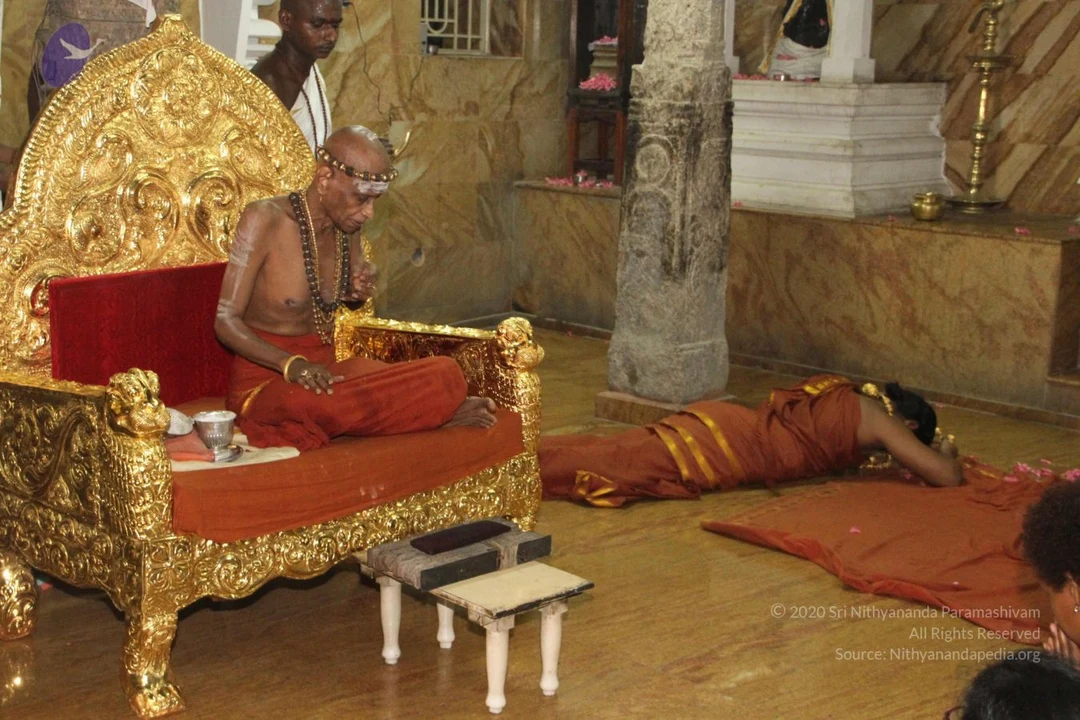
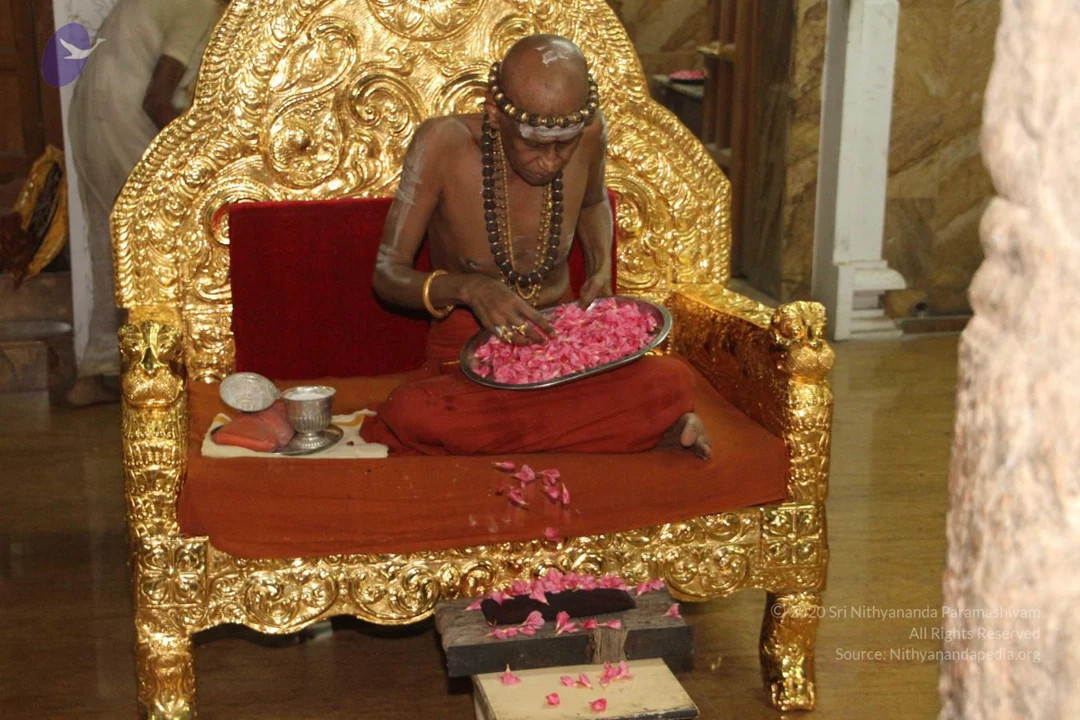
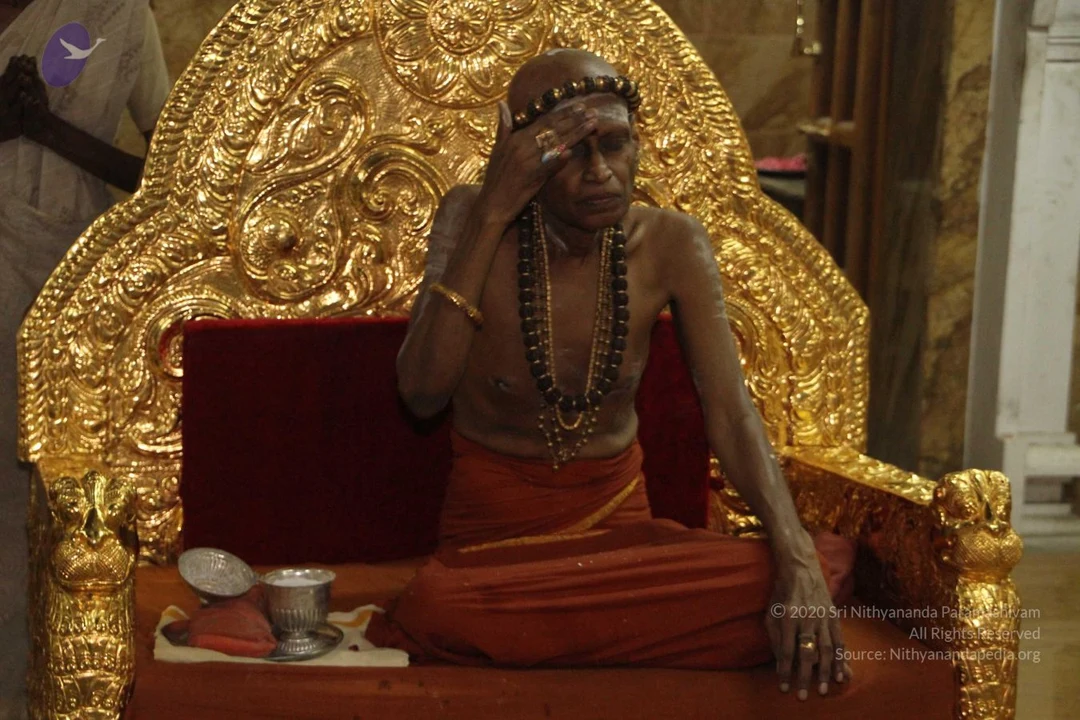
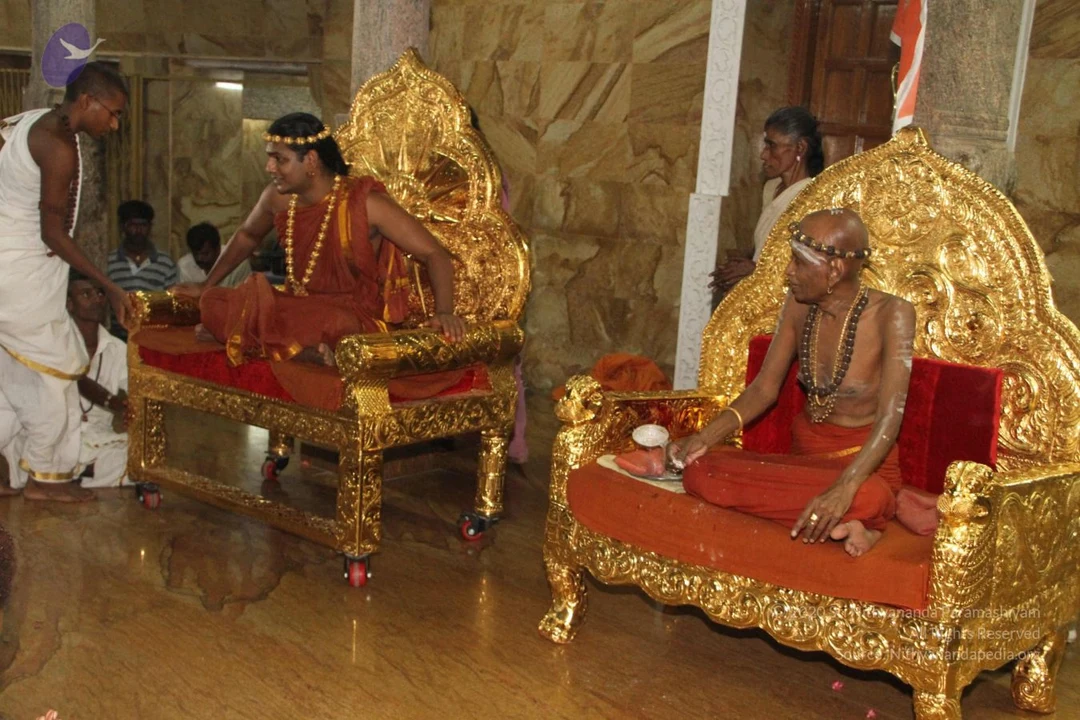
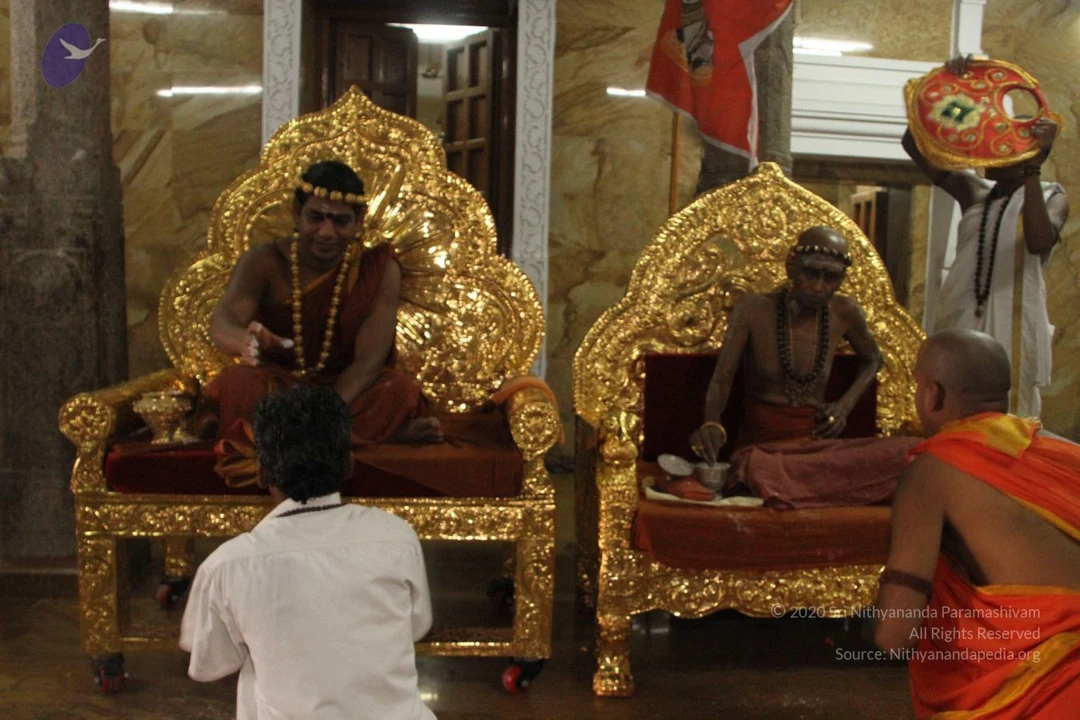
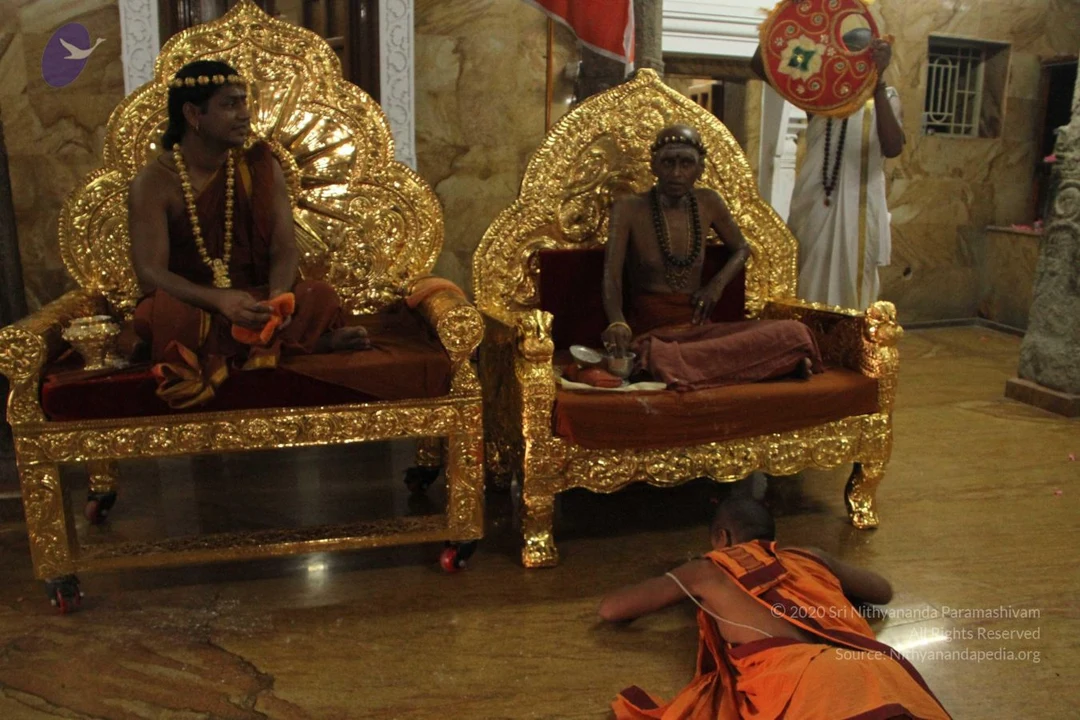
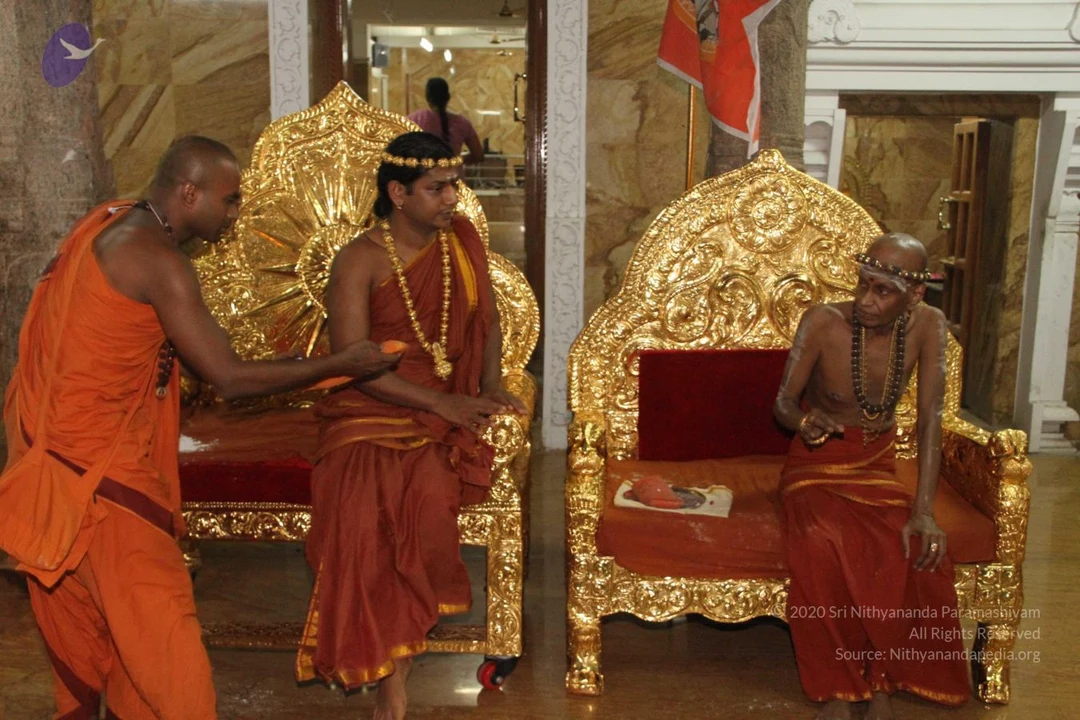
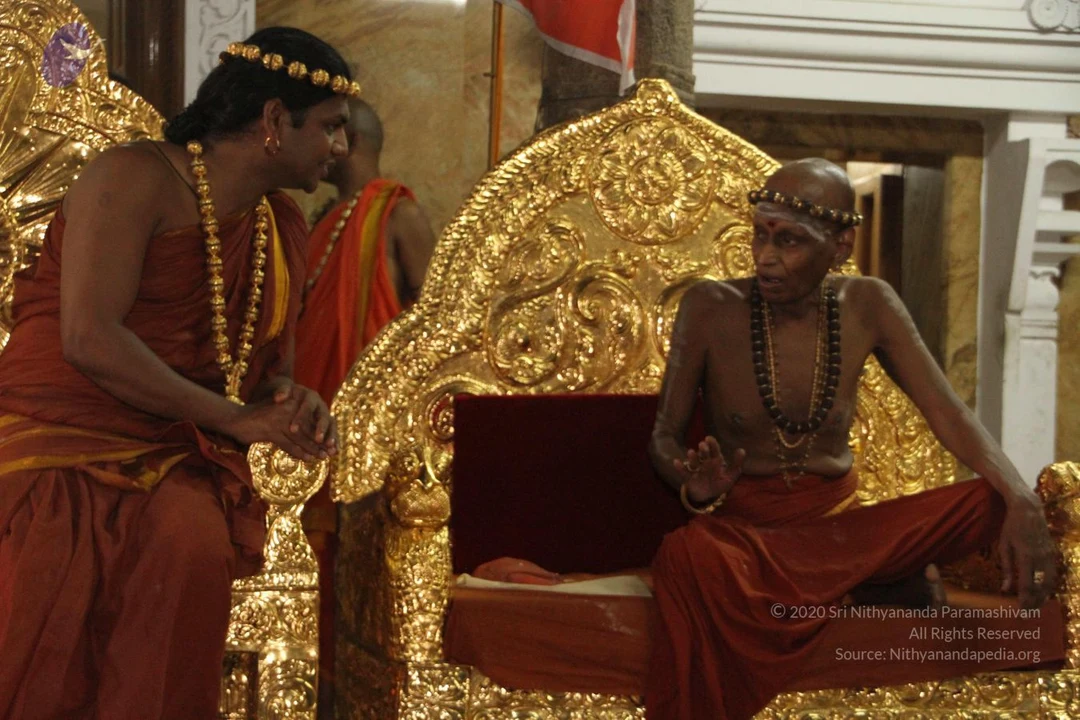
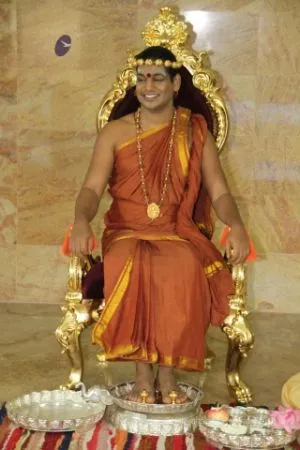
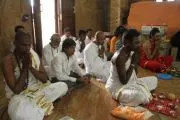
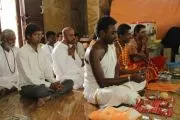
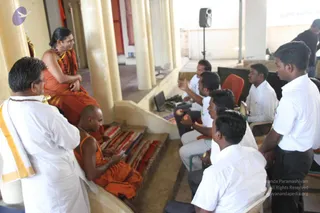
A man seated on an ornate gold throne in a gilded hall, wearing a tall gold crown, a saffron-orange robe draped over his shoulders, a gold necklace, and a rudraksha mala. He raises his right hand in blessing while his left hand rests on his lap. The background is a golden ornamental backdrop. Appearance-based candidate: a person, seated and blessing as satsang teacher.A seated figure on a gold-toned throne in a richly decorated hall, wearing a golden crown-like headdress, a saffron-orange draped garment, and a beaded necklace with a gold pendant. The person raises one hand in a blessing gesture while sitting in front of a golden backdrop.A man with long dark hair and a red tilak on his forehead sits on an ornate gold throne with carved armrests, wearing an orange-saffron dhoti and shawl and a long rudraksha mala with a large gold pendant. He sits with bare feet resting on a silver plate, and small silver plates with offerings and a lit lamp are arranged before the throne on a red and colourful mat against a marble wall. Appearance-based label: a person, seated in a ceremonial role as the honoured guest on the throne.A photograph of a seated group of devotees in an indoor hall during a satsang or ritual. In the foreground a man with a shaved head wears a white dhoti and sits cross-legged. Beside him a person in an orange shawl holds ritual items, and a woman in orange garments sits nearby. Several men in white clothes sit in a row behind, with a red cloth and floral offerings on the floor in front. Walls are plain and wooden.

Temple

14 photosSource gallery
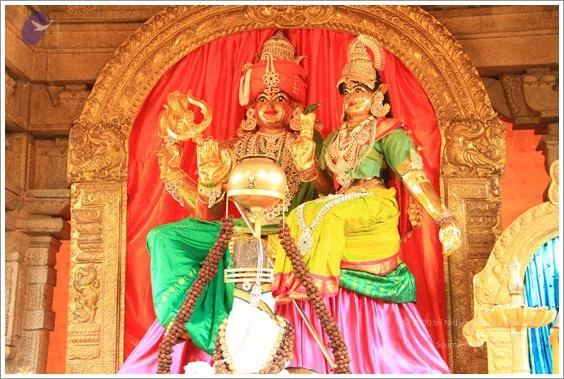
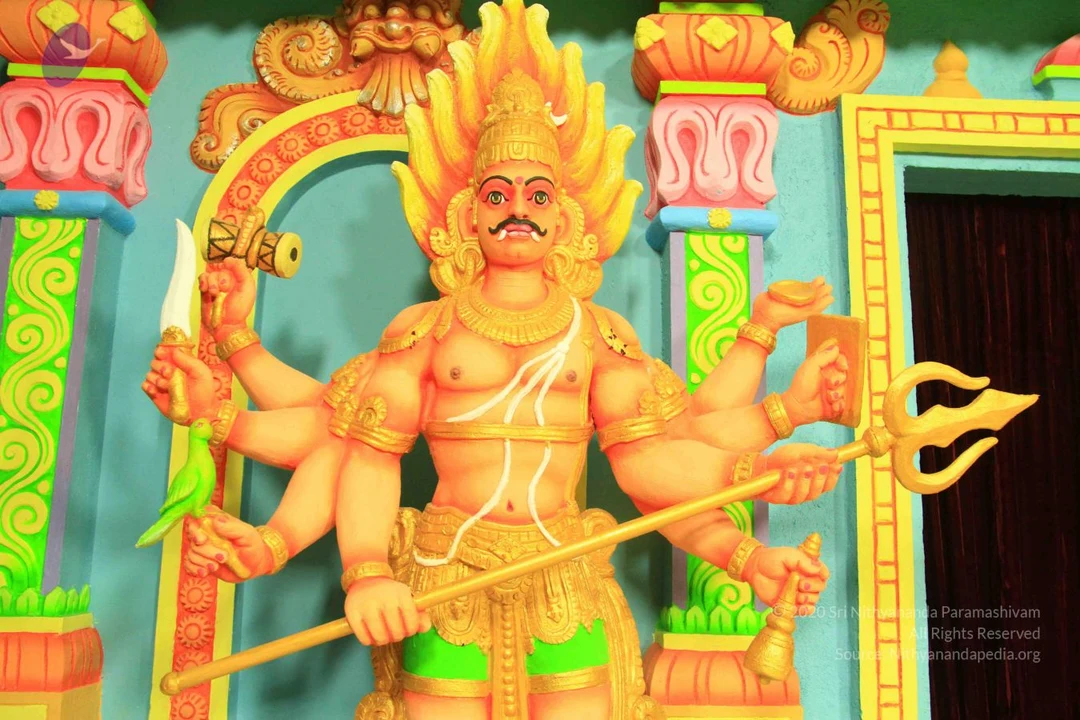
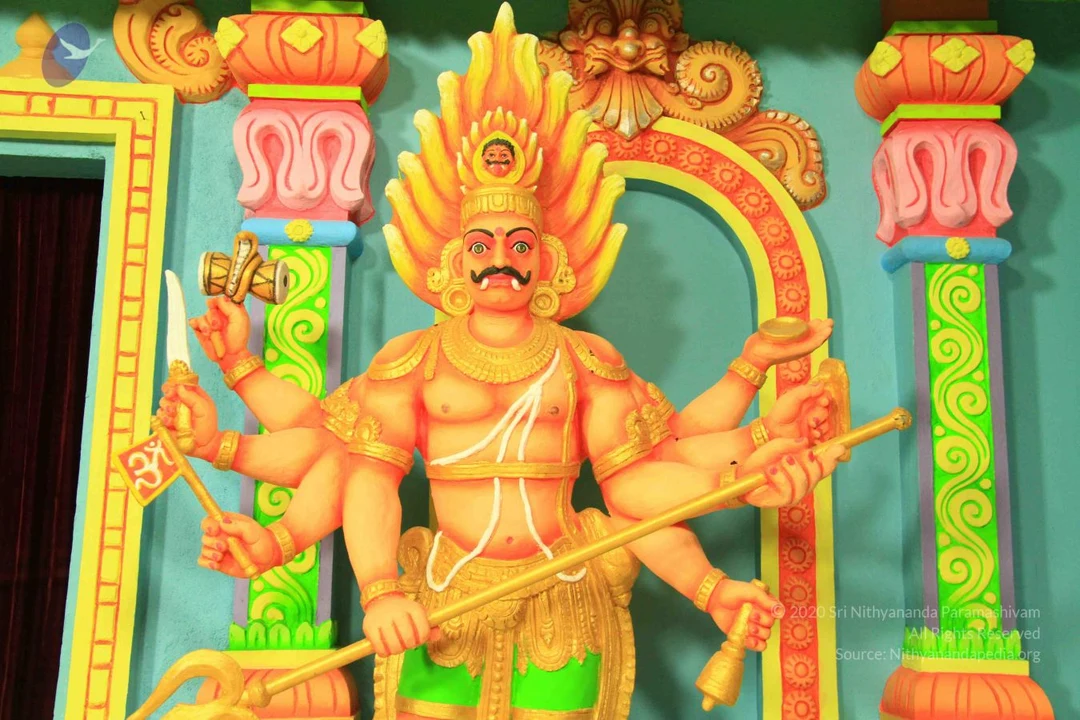
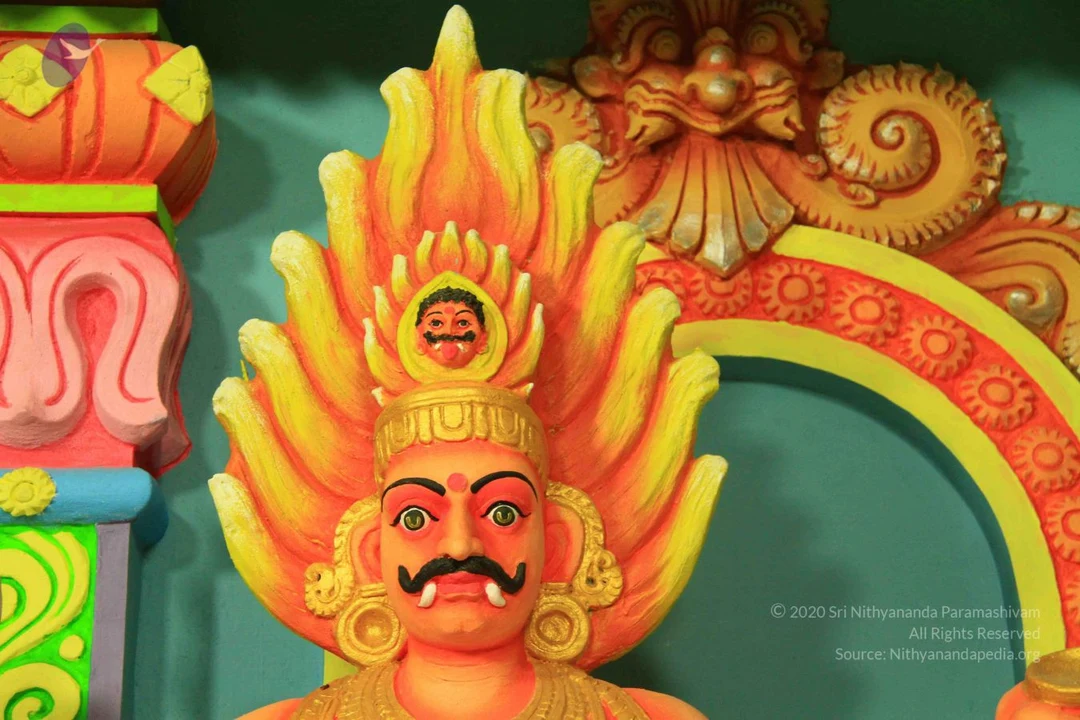
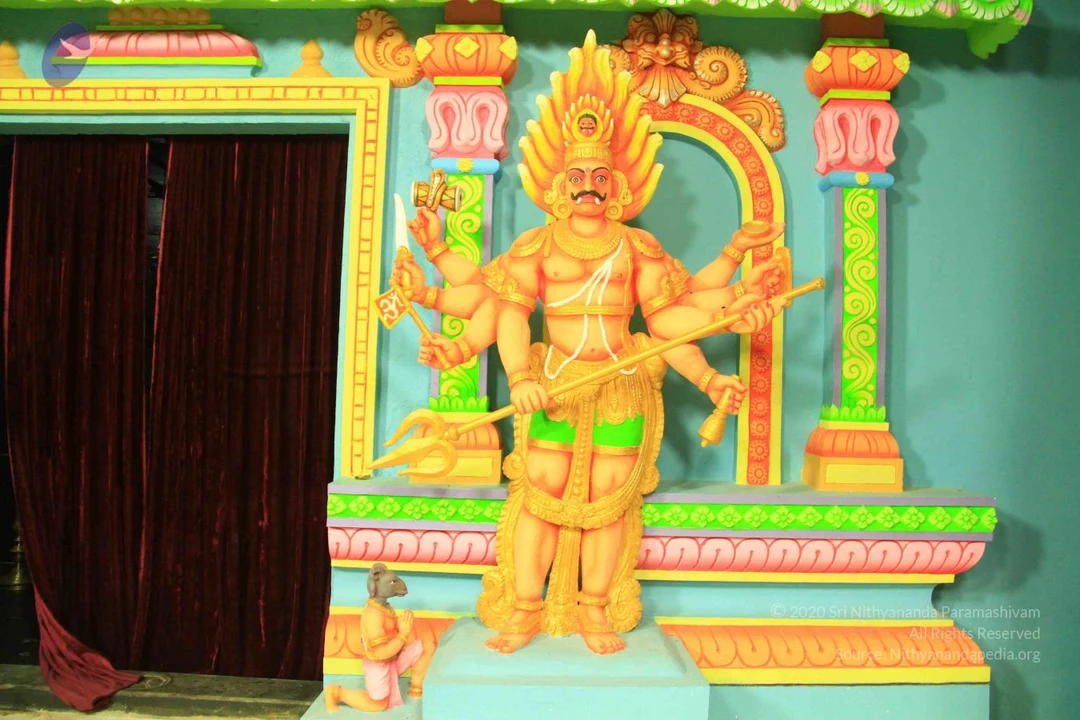
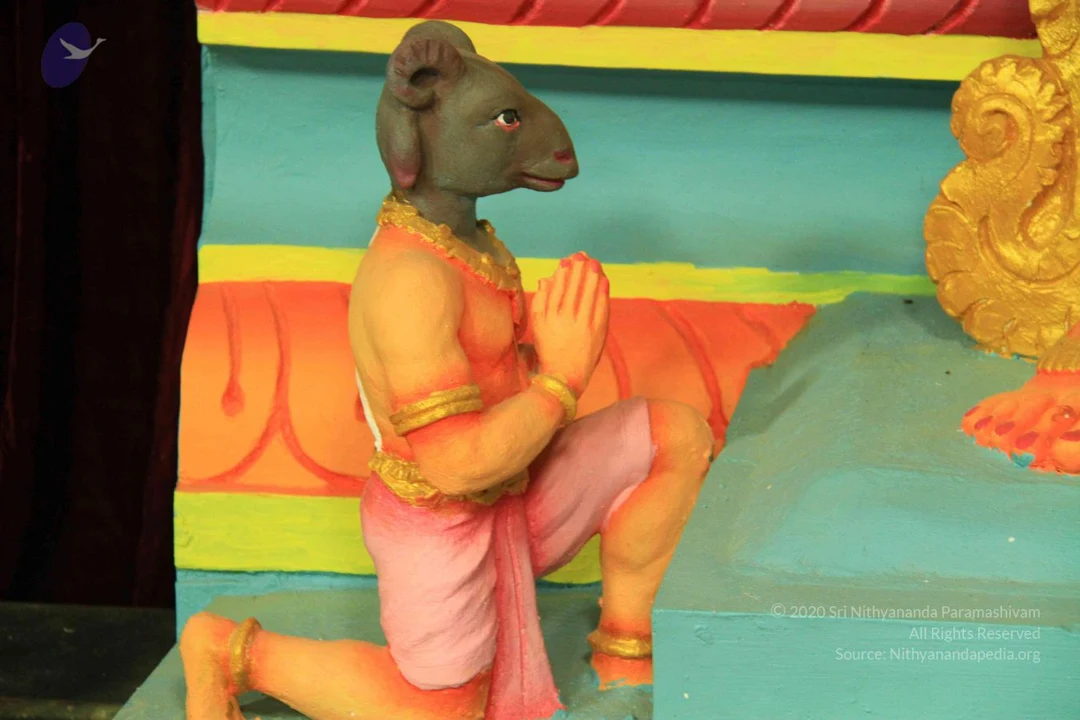
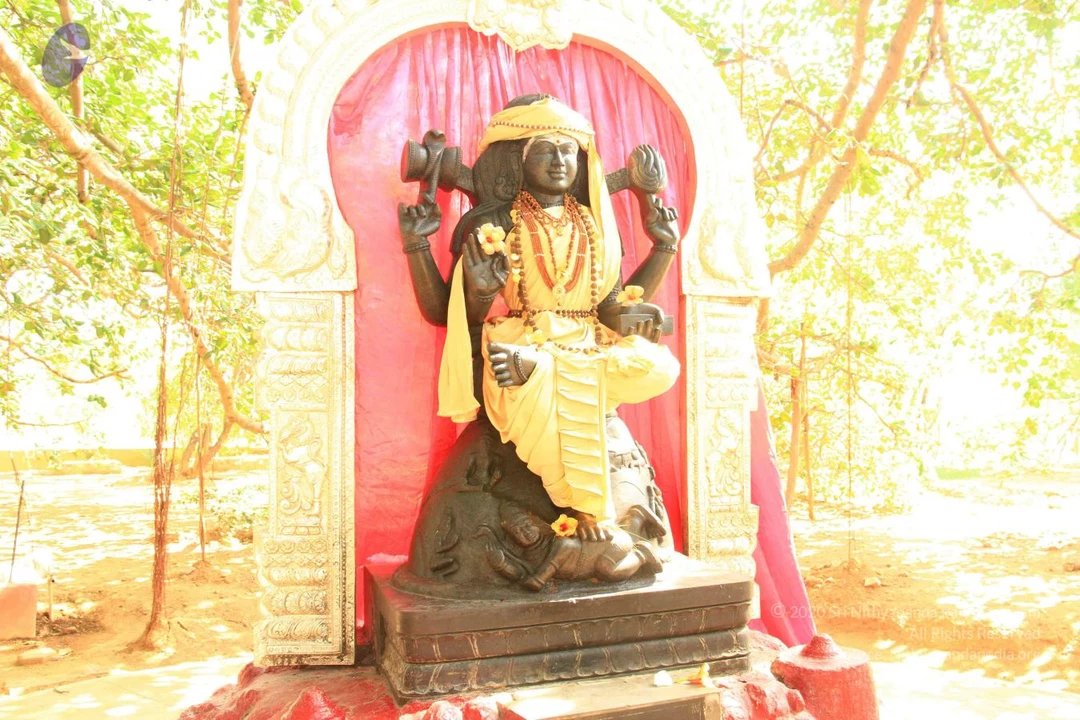
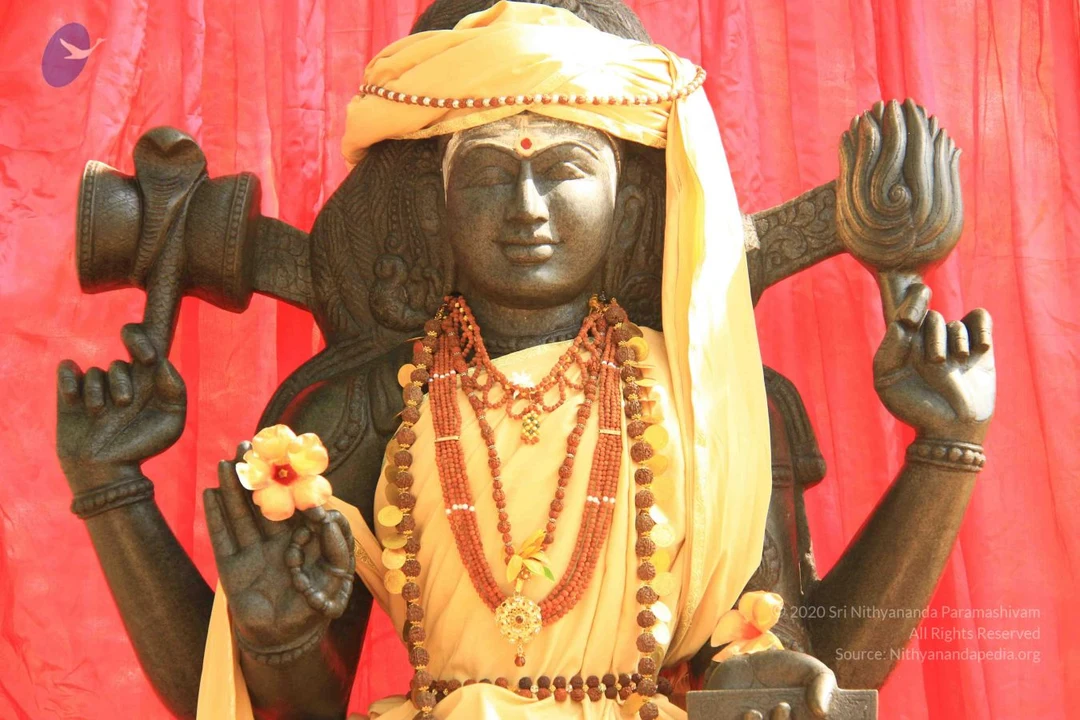
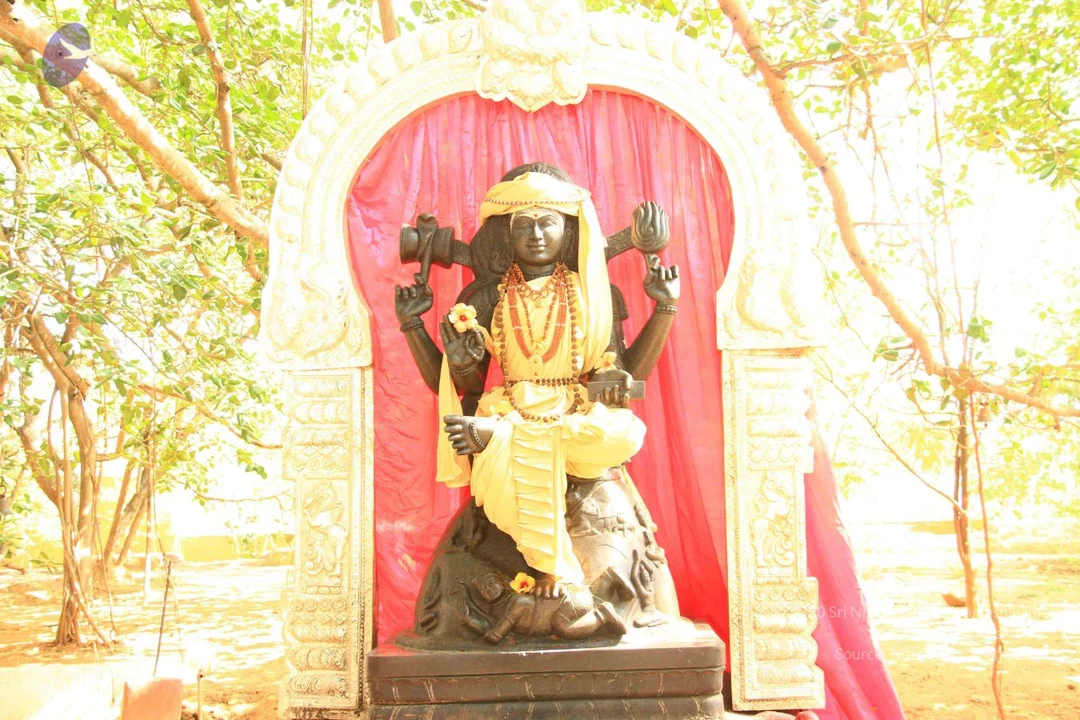
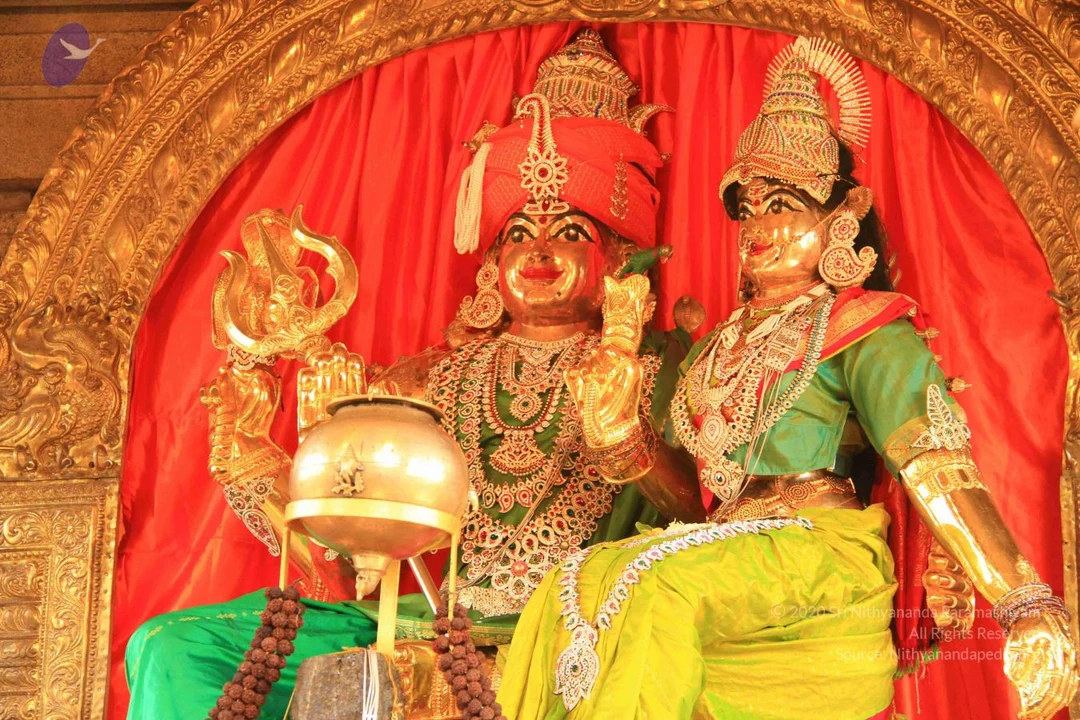
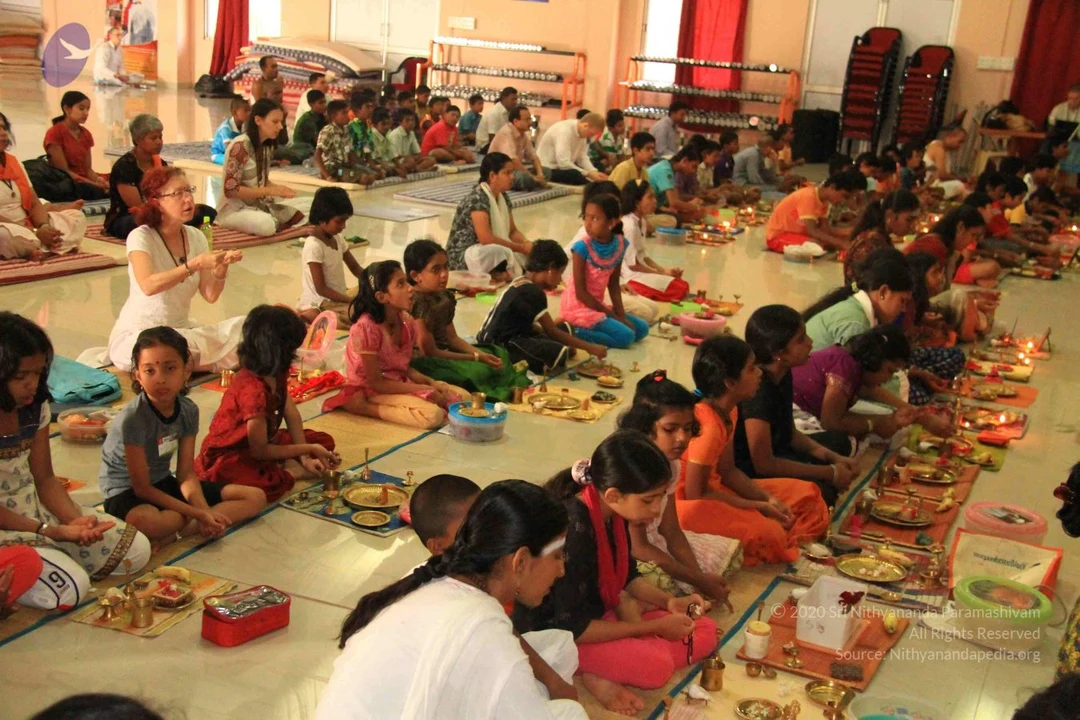
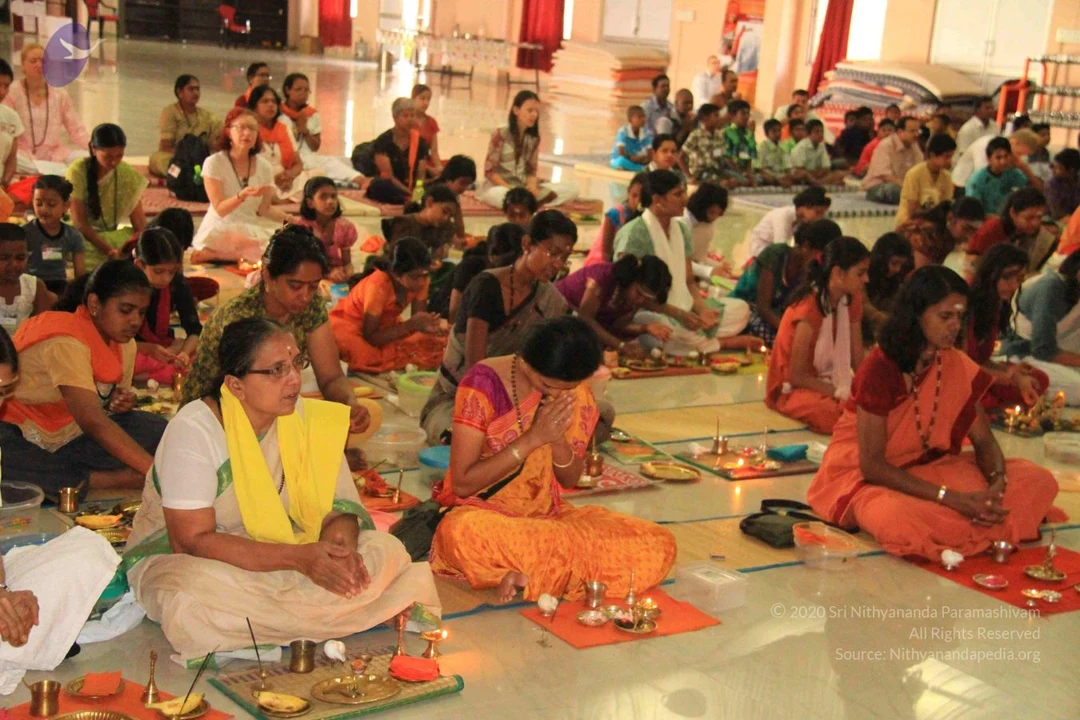
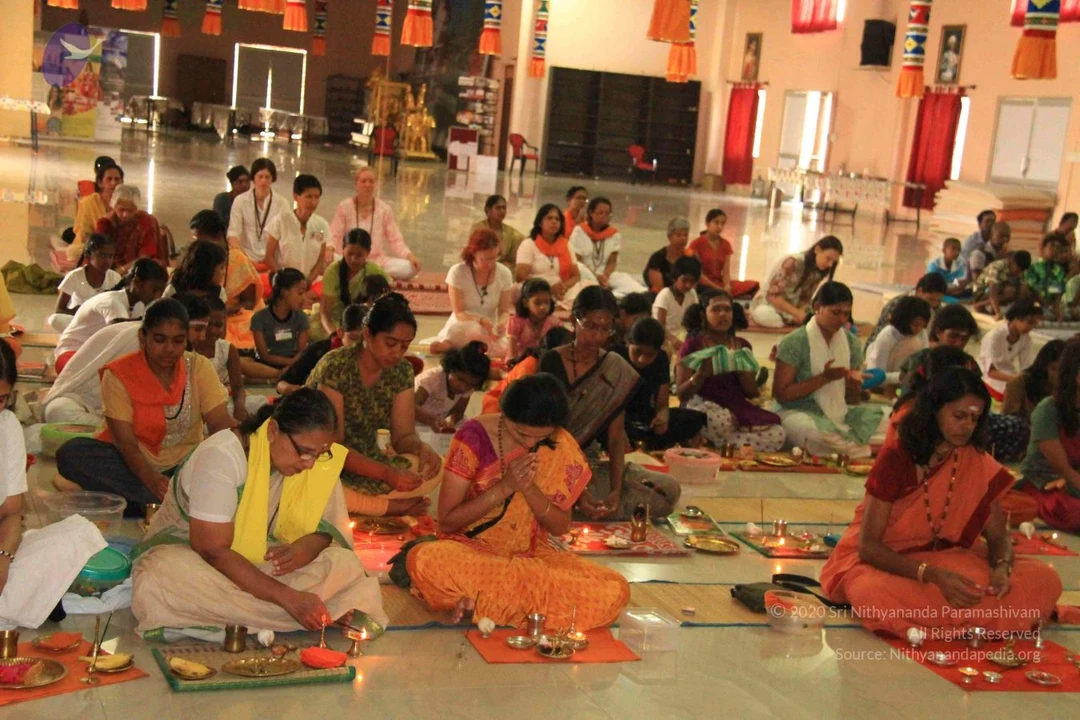
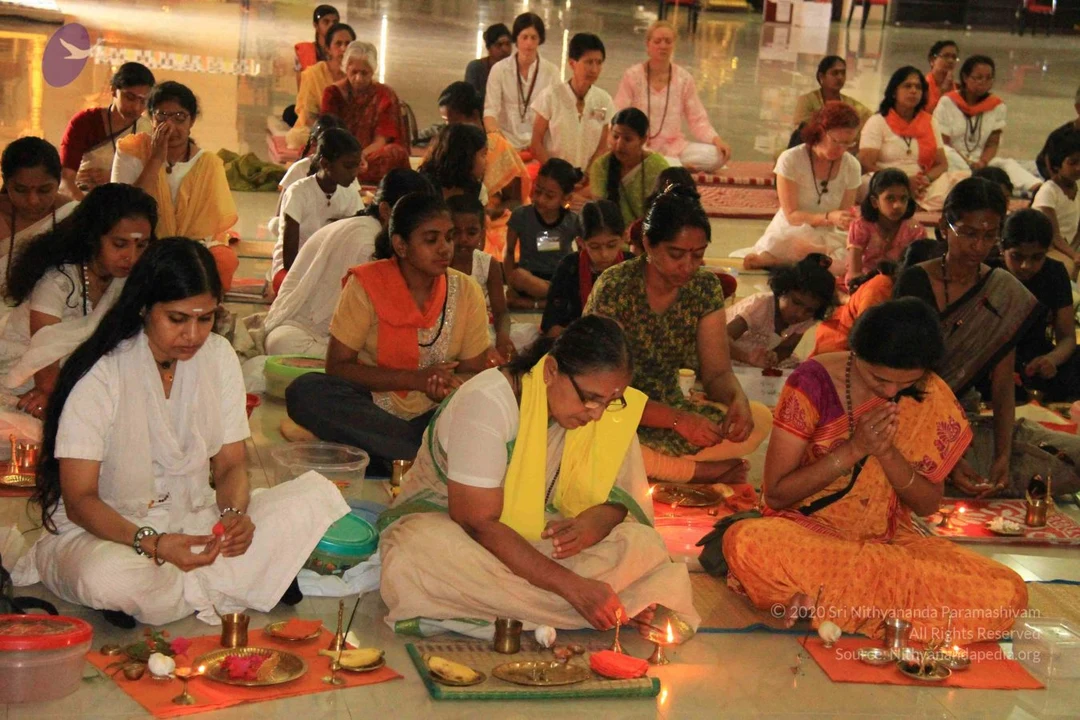
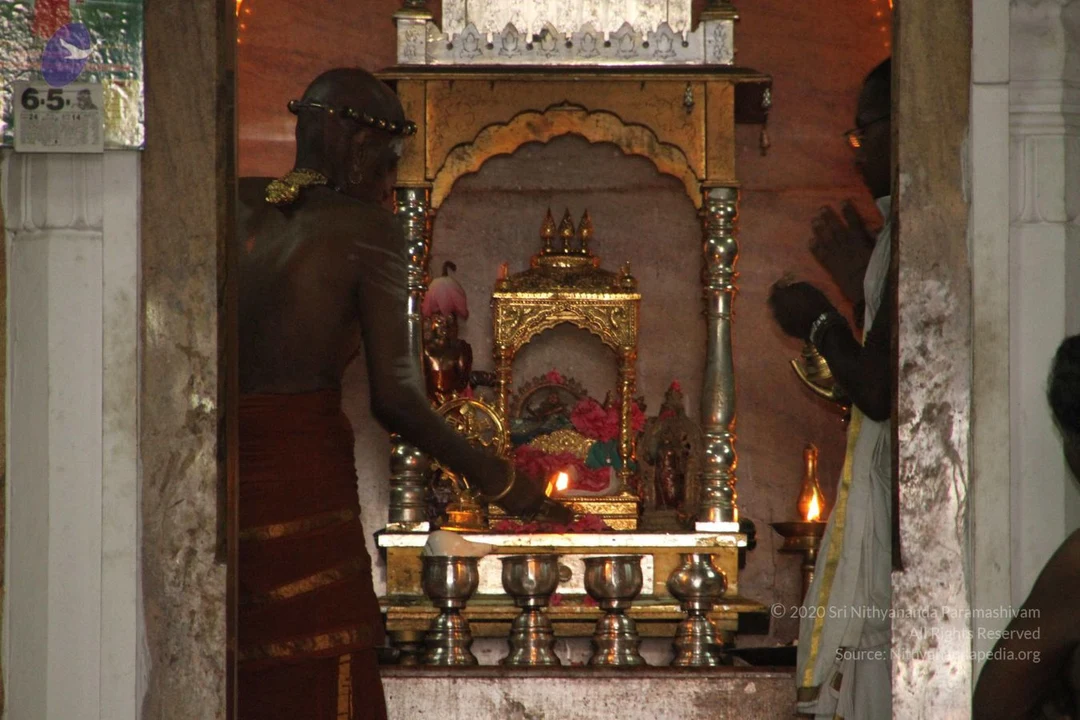
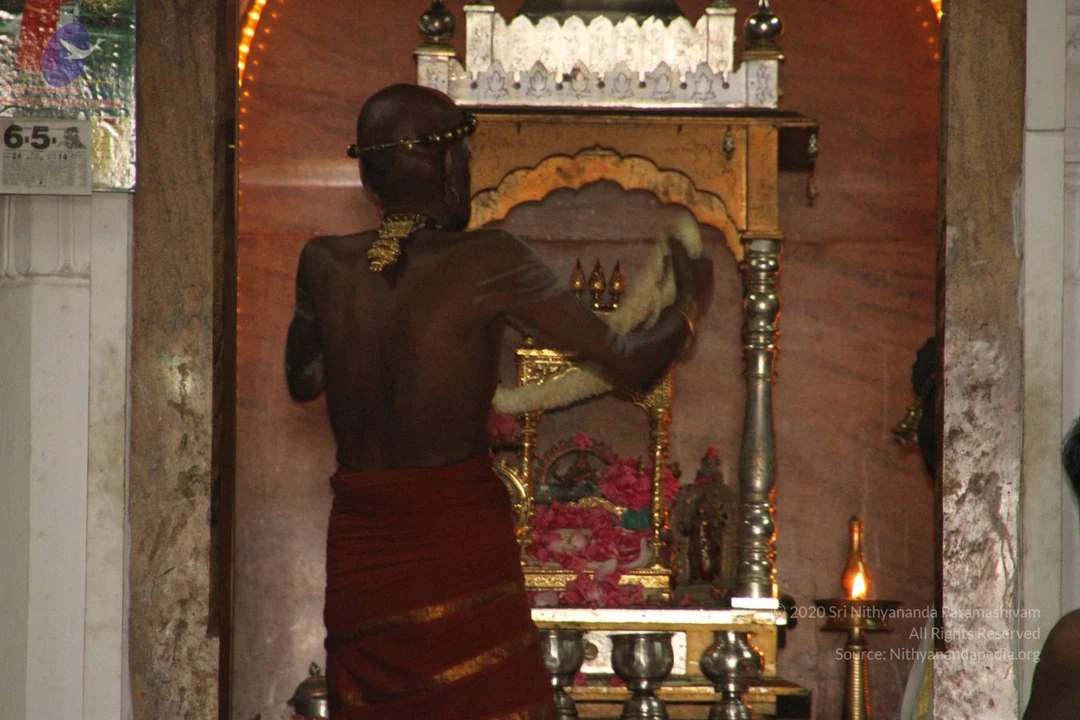
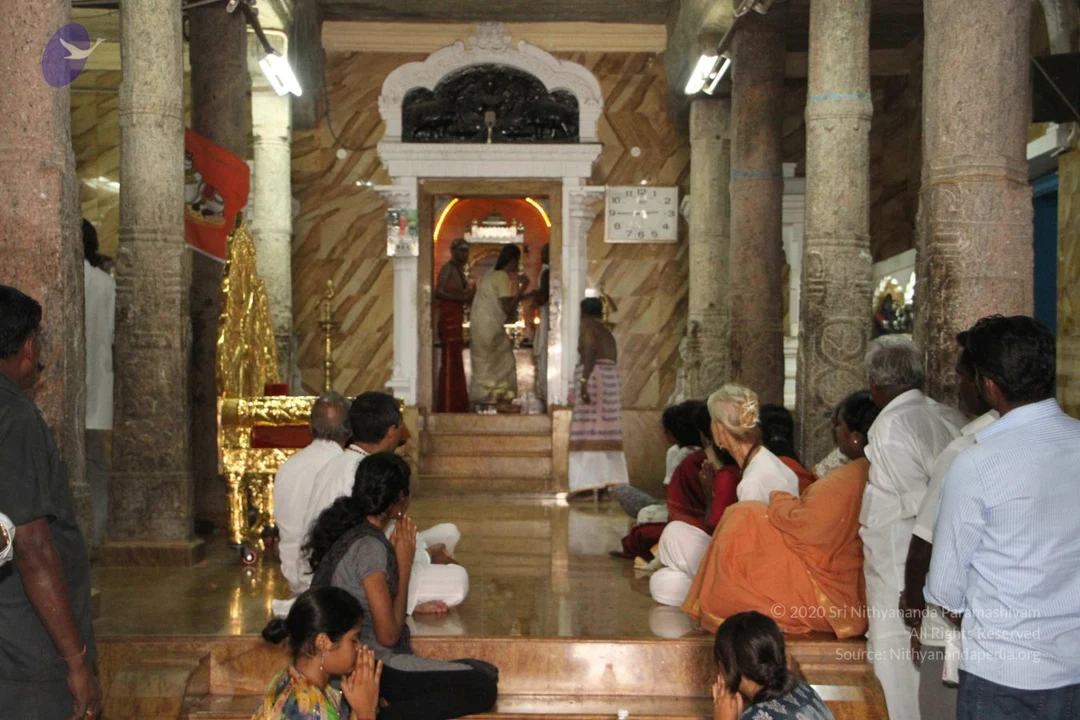
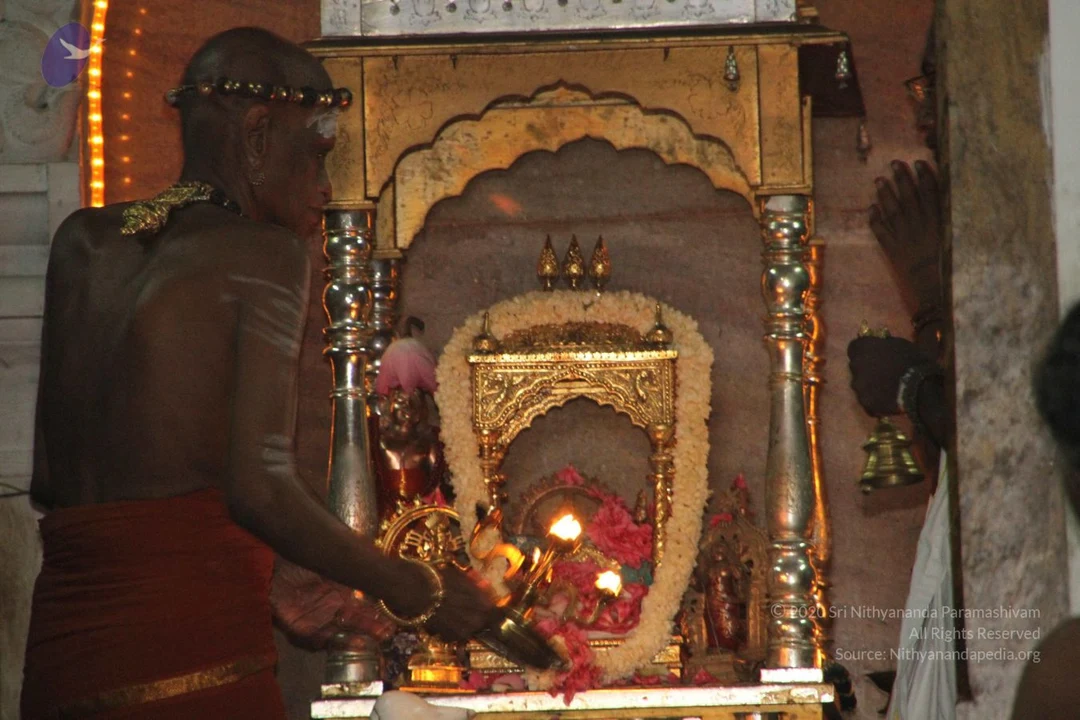
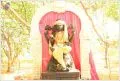
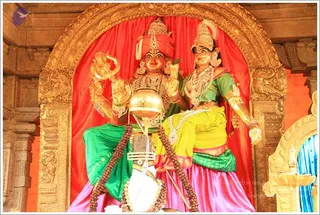
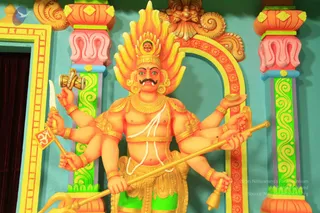
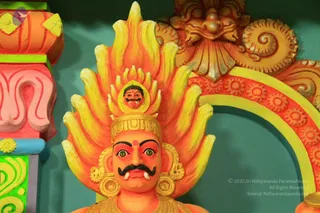
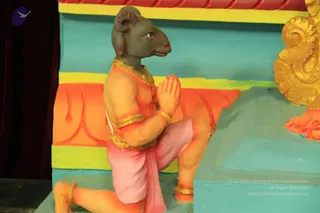
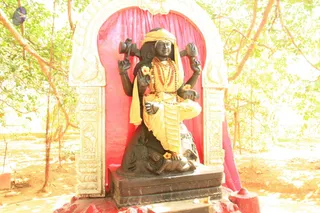
A photograph of a pink-curtained shrine alcove framing a seated white deity murti on a raised pedestal. The murti is adorned with a garland and sits beside a small offering. Bright daylight and a plain background surround the shrine; no people are visible in the frame.A photograph of a temple shrine showing two large painted deity murti, a male and a female figure, seated side by side before a red curtain framed by ornate golden arch carvings. The male figure wears a tall red and gold crown and holds a trident-like weapon; the female figure wears a golden crown, a green and yellow sari with pink skirt, and gold jewellery. Both hold ornamental implements, and a brass kalasha or vessel sits in front of them with a garland of flowers draped across the base. The statues are life-size or larger and the setting is an ornate temple sanctum.A large painted statue of a multi-armed deity stands in front of a turquoise wall with yellow and pink decorative pillars and an arched doorway. The figure has an orange-red face with a thick black moustache, bulging eyes and a golden flame-like halo of rays rising behind the head, with a small face in the crown. It wears a golden necklace, arm bands and a white sacred thread, and holds weapons and ritual objects including a sword, a damaru drum, a trident-like staff, a bell and a vajra-type item.Close-up of a painted clay sculpture of a fierce deity with a red-orange face, thick black moustache, bulging green-rimmed eyes, tusk-like teeth, and a gold crown with large gold earrings. Flaming yellow and orange halo or aura rises behind the head, with a smaller face carved within the flames above the crown. Ornate gold and orange carved arch and pillar decorations frame the figure against a teal wall. No physical people are visible; the figure is a statue.A brightly painted sculpture of a kneeling figure with a grey, rat-like animal head and a pointed snout, shown in profile with palms pressed together in namaste. The figure wears a pink dhoti, orange-pink upper garment, gold armlets, a gold waist band and gold anklets. It kneels on a turquoise pedestal with yellow and orange painted bands behind it. To the right, part of a gilded floral scroll ornament and an orange-toned foot of a larger deity figure are visible. The setting resembles a temple tableau or diorama. No physical people are shown.A dark stone murti of a multi-armed deity stands in a white arched niche backed by a magenta cloth, surrounded by green trees under bright sunlight. The figure wears a yellow dhoti and shawl, a crown-like headdress, and layered red and orange rudraksha-style beaded necklaces, with flowers near the hands. Its raised hands hold a trident-like staff and other implements. The figure rests on a dark pedestal with a small seated figure below, and a red-painted base sits in front. No physical people are shown.

Paduka-Puja

25 photosSource gallery
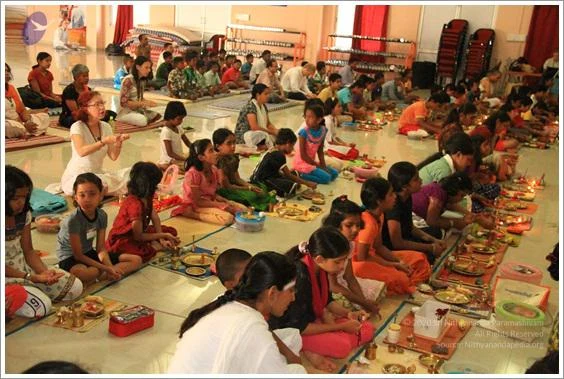
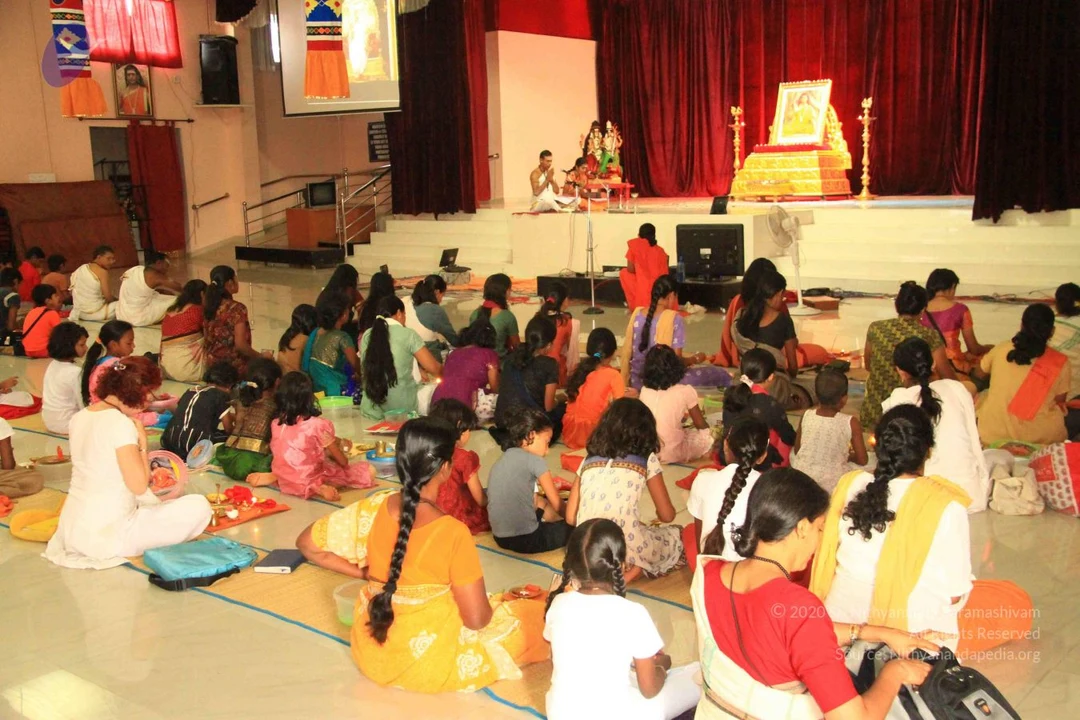
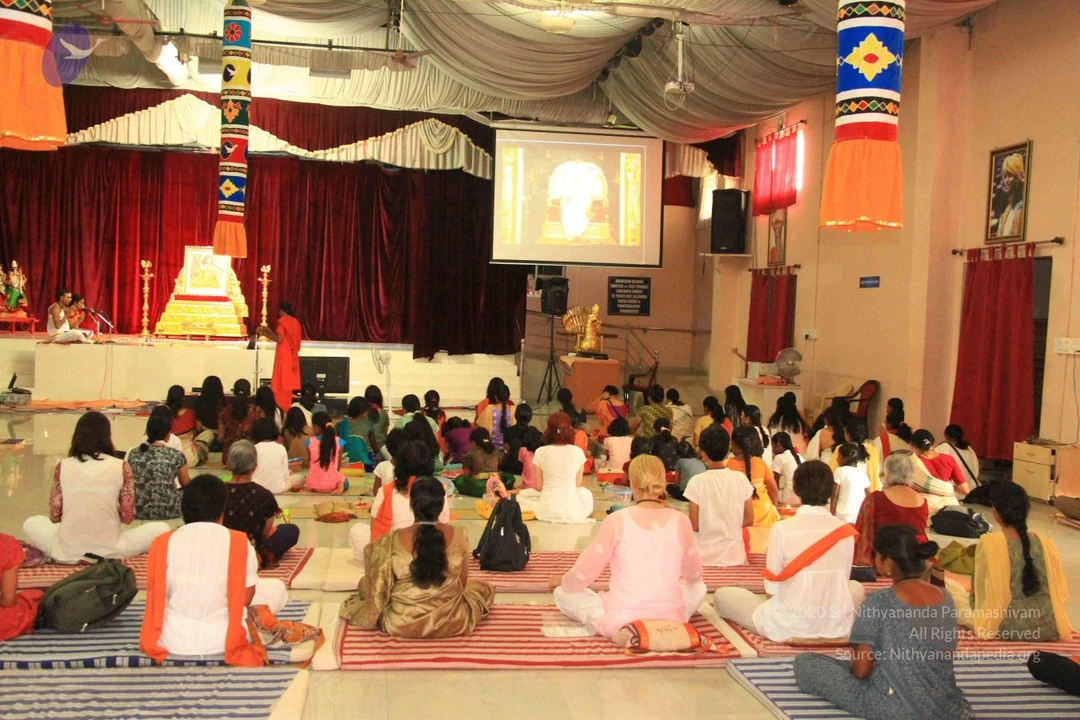
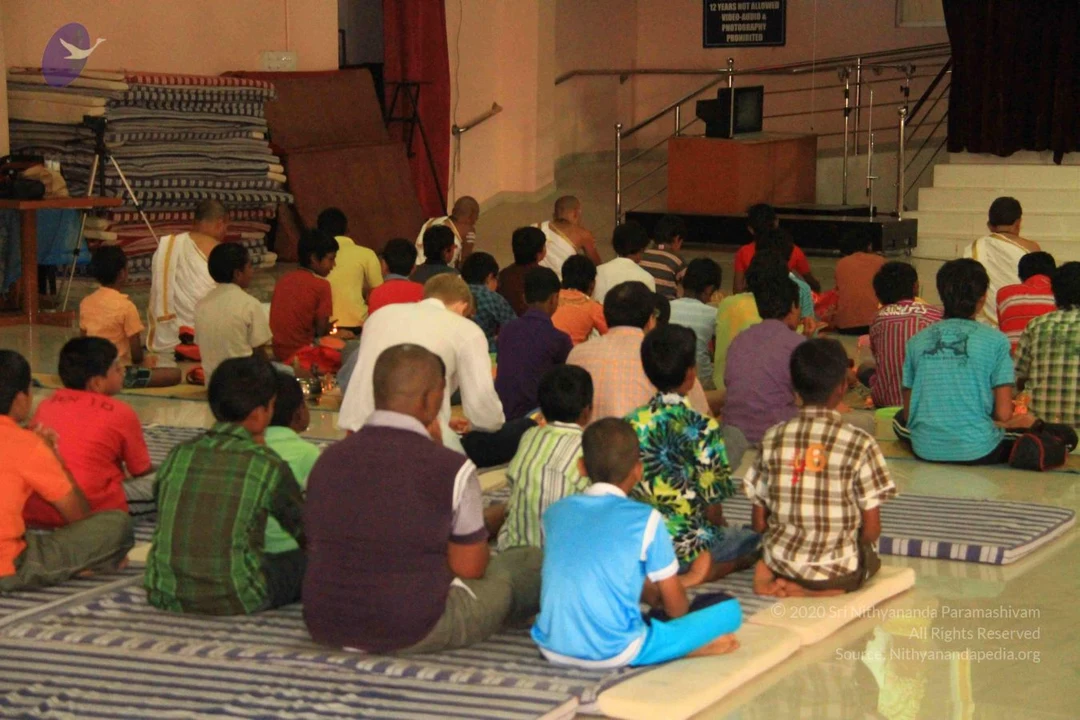
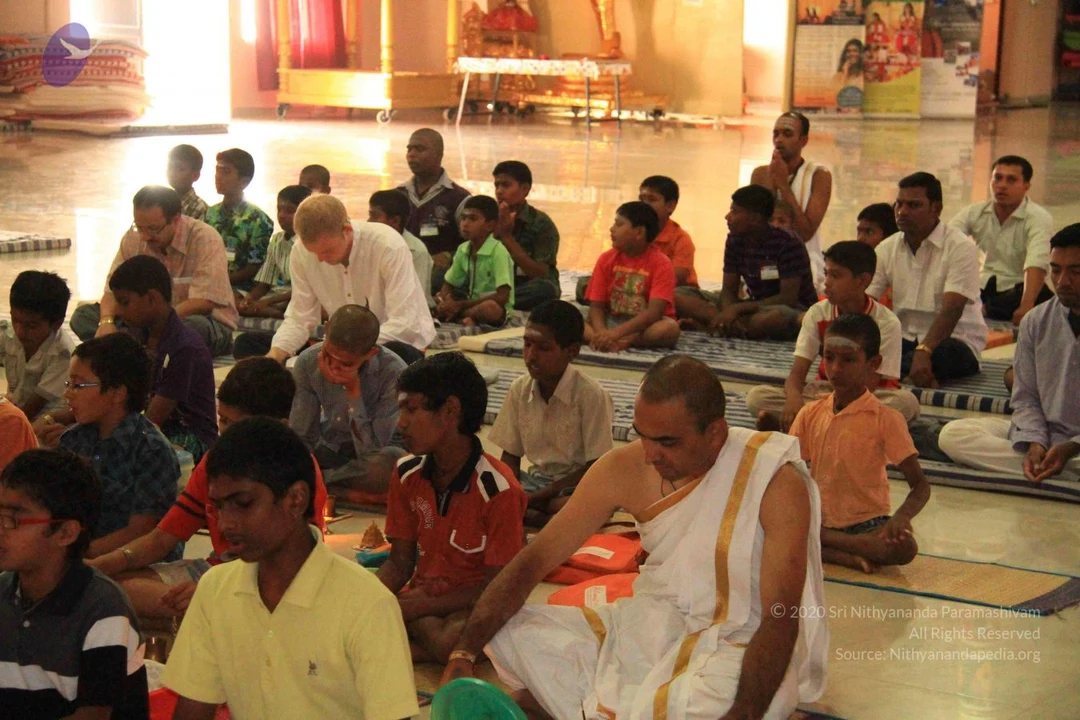
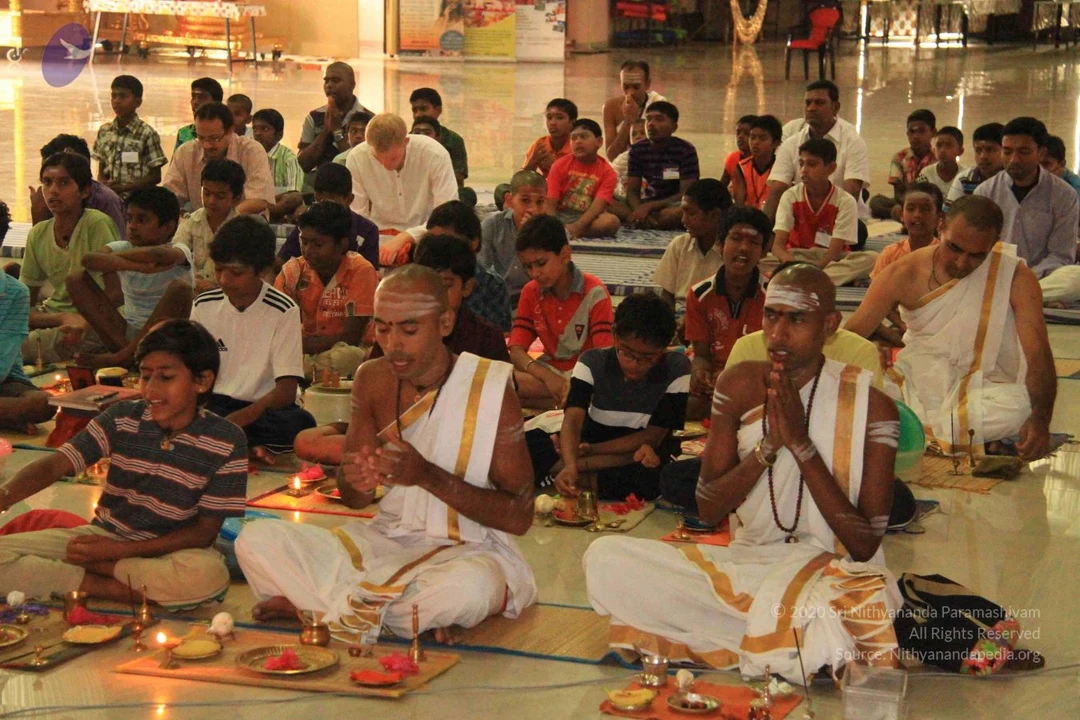
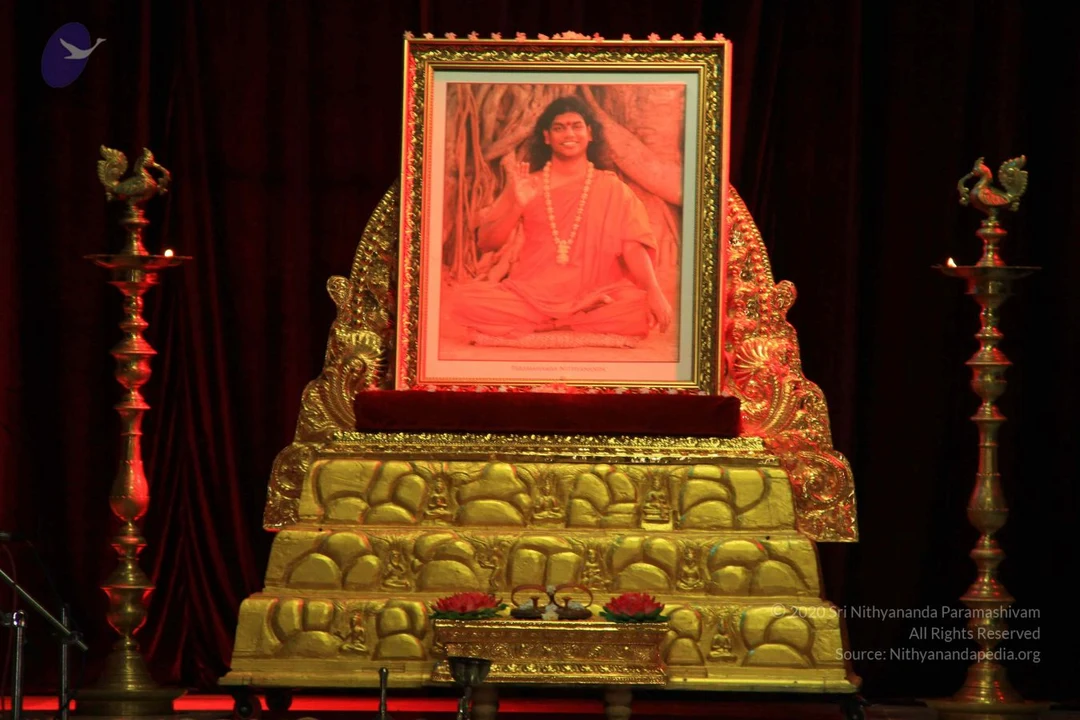
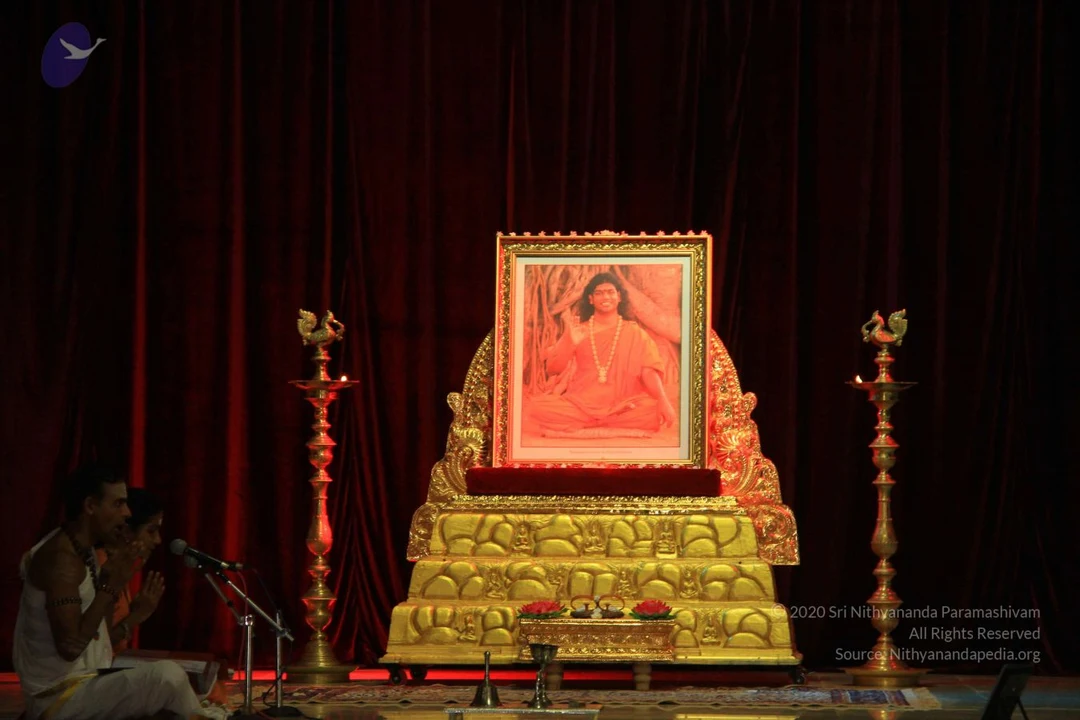
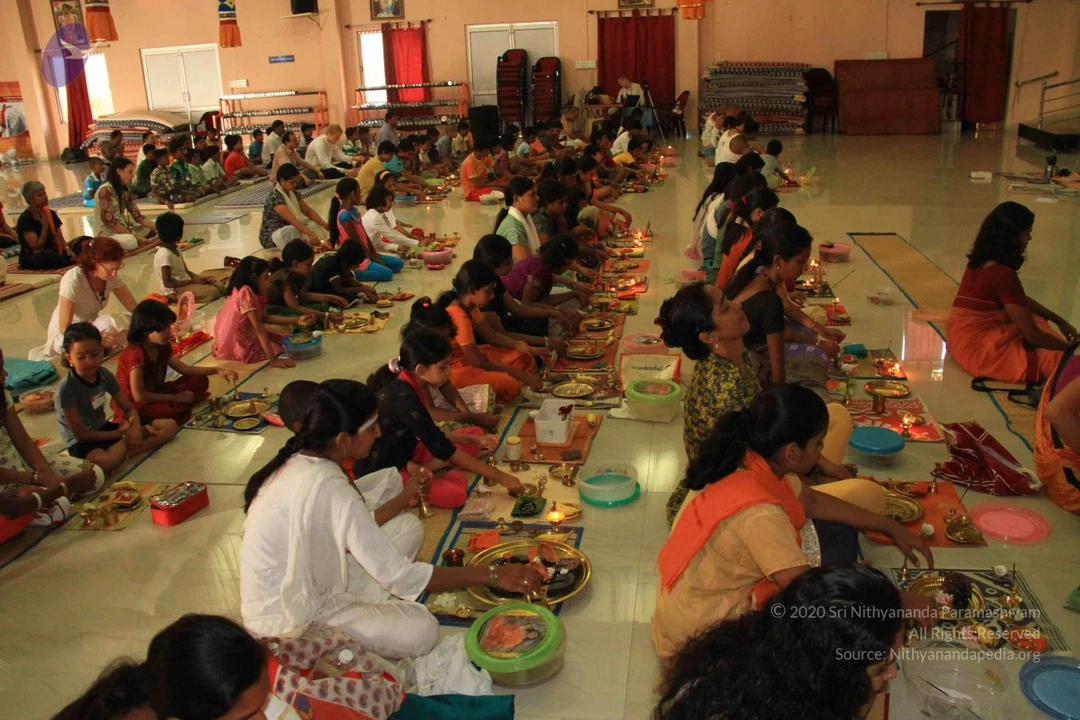
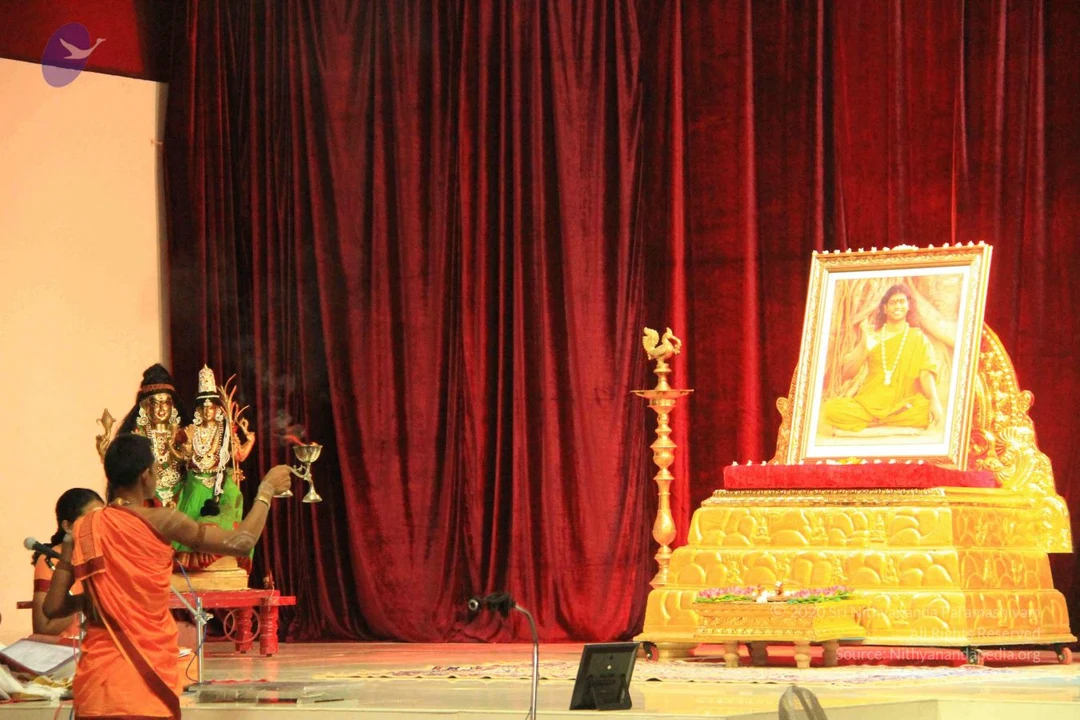
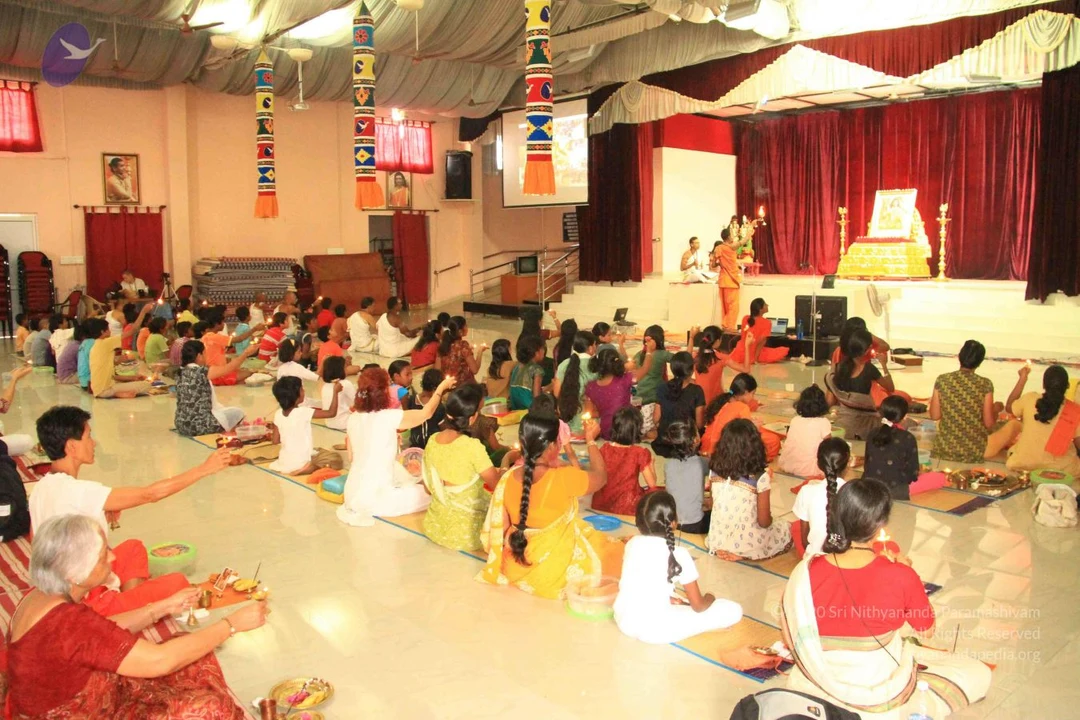
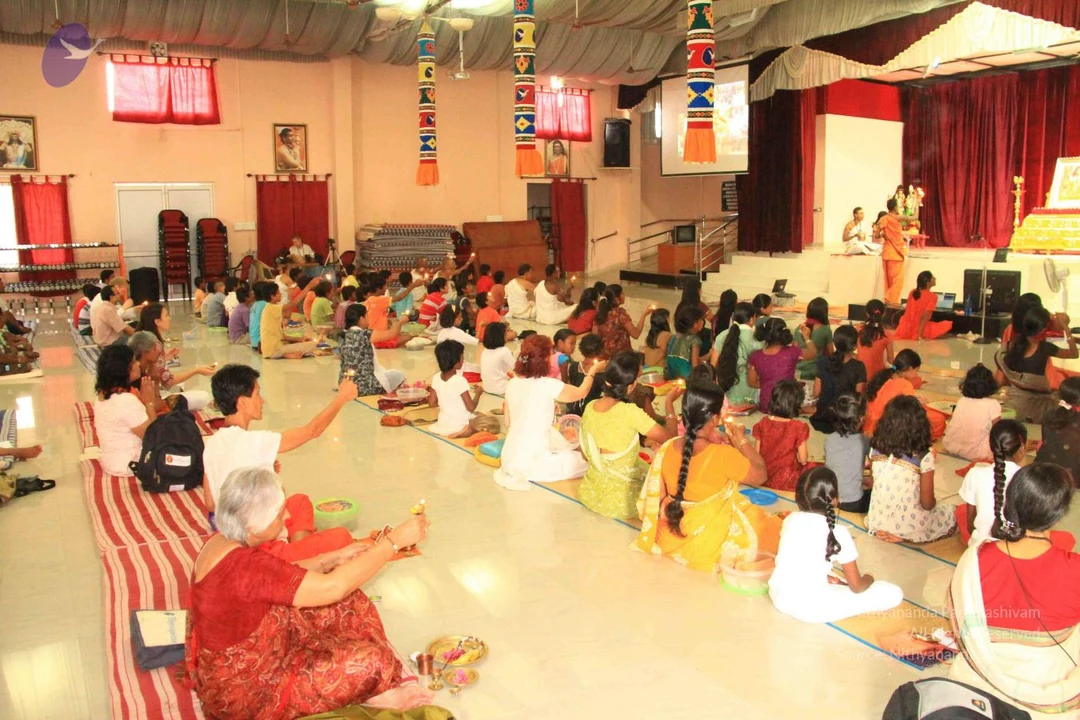
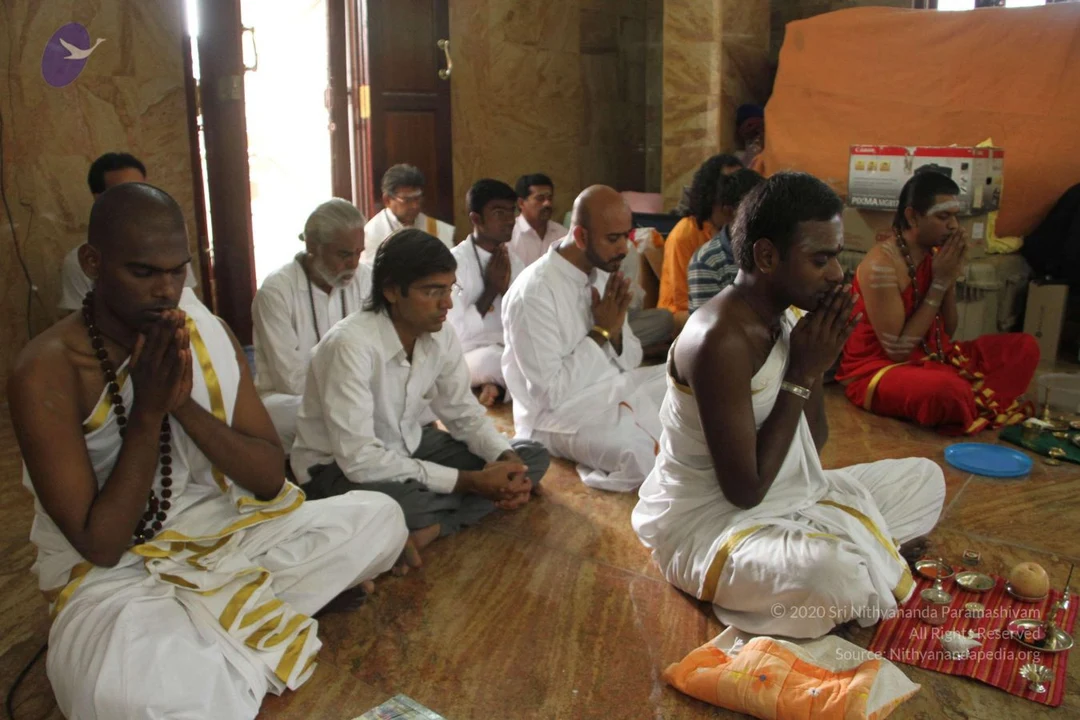
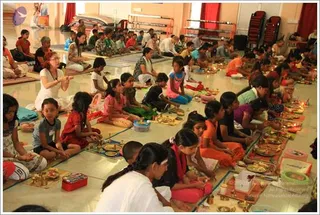
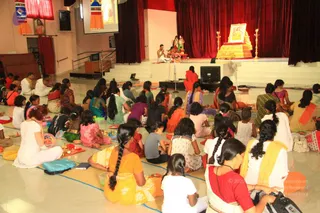
A photograph of a ceremonial stage with a large framed painting of a seated, crowned figure in red and gold, set on an ornate gold throne-like base. Two tall brass lamps flank the display on dark draped surroundings. The painting is a depiction, and no physical people are visible in the frame.A photograph of a satsang hall with a seated audience facing forward toward a raised platform at the front. Many people sit cross-legged on the floor in rows, mostly in white and light-coloured clothing with several wearing saffron or orange garments. Some heads are covered with cloth. The room has warm lighting and wooden or plain walls.A photograph of a seated group during a ritual gathering inside a temple-like hall. Several devotees in traditional clothing sit on the floor in rows, many in white and colourful saris and dhotis, with a few people in the foreground near lit oil lamps and brass vessels. Their heads are bowed or turned toward a central area where a figure appears to be seated, but the figure is too small and indistinct to describe with confidence. Brass lamps and offerings are placed on the floor in front. The scene suggests a satsang or puja with a seated audience.A photograph of a large hall with many children seated cross-legged on the floor in rows, facing a pair of seated adults at the front-left. Most children wear colourful salwar kameez and dresses in pink, orange, green and red, and many have small brass plates and thalis with lamps and offerings in front of them. In the left foreground, a woman in white clothing with her hands pressed together sits among the children, and a man in a white shirt sits near the back. Rows of brass and steel vessels and small lamps line the floor, and a shrine with a deity image is visible in the upper left corner. Some children are holding objects toward the plates.A photograph of a stage with a red curtain backdrop. On the right, a large framed portrait of a seated figure with a golden halo sits beside a gold-and-red decorative display. On the left, a person in a dark sari or dress stands near a small table with a lamp or offering. The scene appears to be a satsang or ceremonial presentation setup.A photograph of a seated congregation in a hall with a polished floor, mostly women and girls sitting on mats in saris and salwar kameez with long braided hair. In the foreground a woman in a yellow sari and a woman in red sit with brass items and offerings. On the raised stage, a man in white ritual clothing sits before a small deity murti and oil lamps, with a woman in orange nearby, and a framed portrait and gold-finished lamp stands flank a red curtain. A projector screen and monitor are visible, and a few people are seated along the left side.

Madurai-PadaPuja

26 photosSource gallery
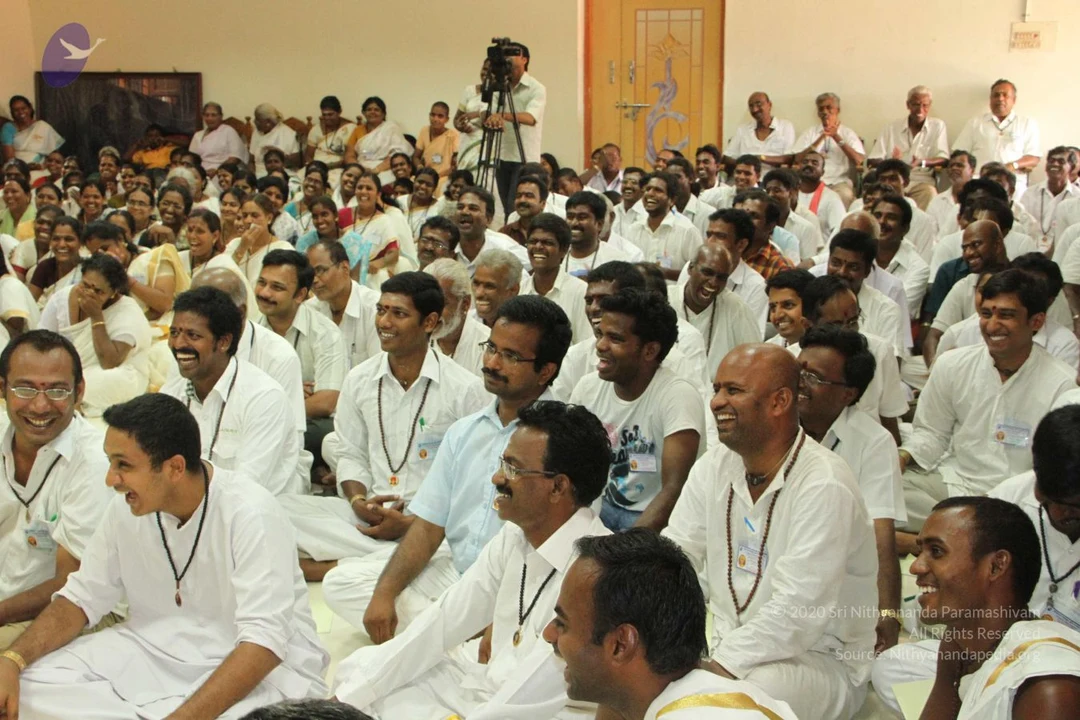
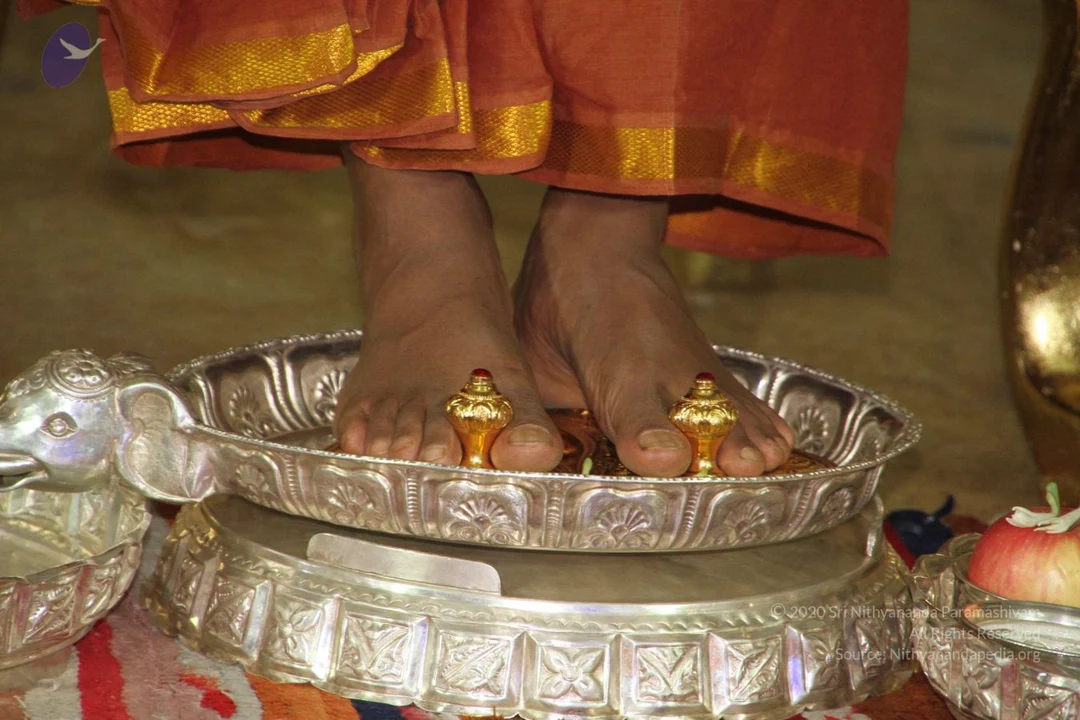
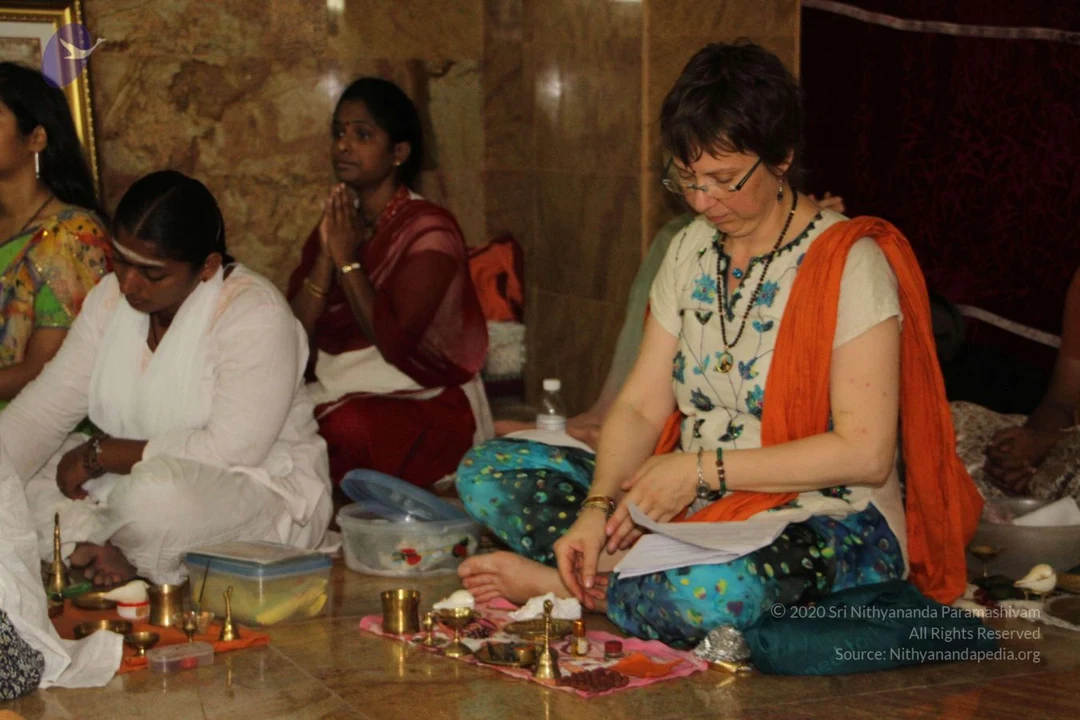
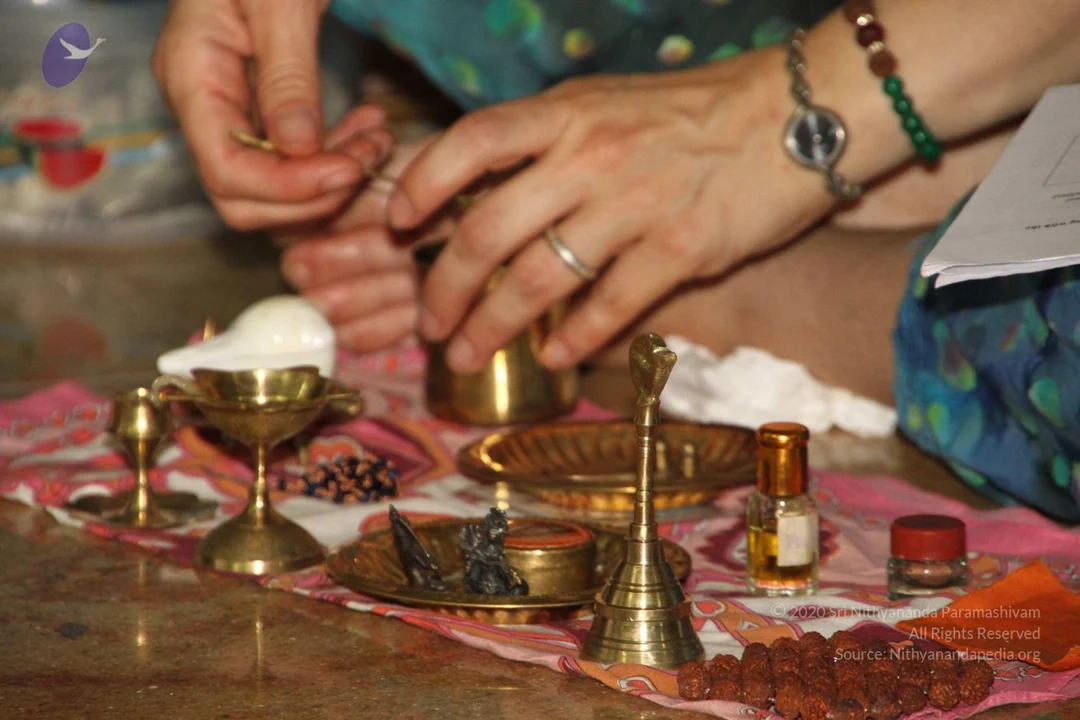
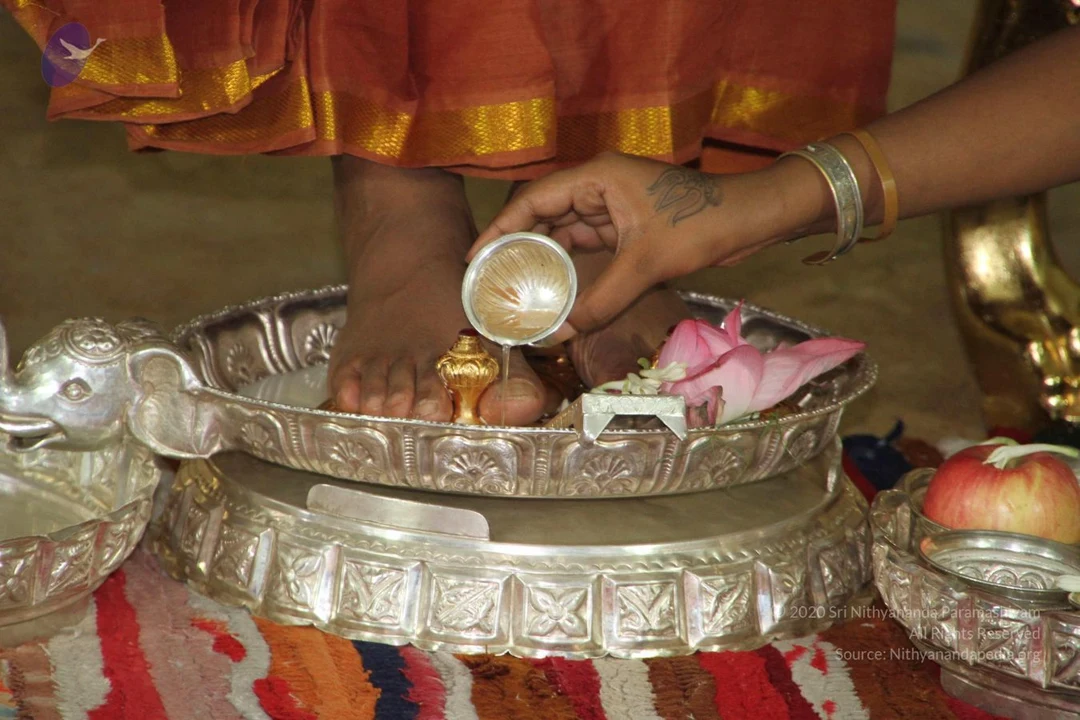
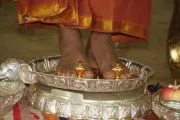
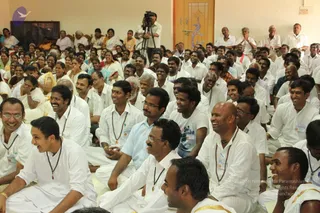
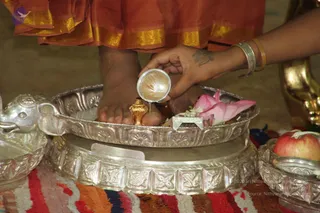
A seated satsang audience in a bright hall, largely dressed in white. Many men in white shirts and white dhotis wear rudraksha malas and small event lanyard badges, smiling and laughing. Some women in white and pastel saris sit at the back, and a cameraman stands behind a tripod at the upper left. A wooden door with a decorative carved panel is at the top centre. No one is clearly identifiable as a person in this frame; the speaker is not visible.A photograph of a seated audience in a plain hall with cream walls, ceiling fans and wooden windows. Most attendees sit cross-legged on the floor with their backs to the camera, wearing predominantly white shirts and dhotis. In the front of the room, a figure in saffron-orange robes sits on an ornate patterned throne decorated with flower garlands. A standing attendee in white stands to the left near a speaker stand.A smiling man seated on an ornate gold throne with carved scrollwork against a golden marble wall. He wears a rust-orange saffron cloth draped over his shoulders with a gold border, a gold-beaded headband, a red bindi on his forehead, multiple rudraksha and beaded malas, and a large gold pendant necklace. He raises one hand in a gesture of blessing. Appearance-based candidate: a person, seated in a satsang setting with a golden throne and saffron attire.A seated ritual scene on a polished marble floor. A woman in the foreground with short brown hair and glasses sits cross-legged in a blue floral top, teal patterned trousers and an orange shawl, holding loose papers while reading. Brass puja vessels, small oil lamps, a brass cup, white camphor-like offerings and rudraksha beads sit on a pink cloth and a silver tray before her. To her left a woman in white with a white forehead mark sits with her eyes lowered, and behind them a woman in a red sari presses her palms together in prayer, with a wall of marble and a red draped curtain in the background. This appears to be a group puja or satsang setting.Close photo of hands at a ritual table covered with a pink and white patterned cloth. A woman in a teal patterned top wears a green bead bracelet, a watch and a silver ring, and her hands hold a small brass bowl and a stick near a brass cup. On the cloth sit brass oil lamps, a brass bell with a handle, a small brass plate with a dark figurine, a shell, a bottle of oil, a small red-lidded container, a rudraksha mala and an orange cloth. No a person candidate is visible.Close-up photo of a ritual foot-washing (padapuja-style) in a temple setting. A person in an orange-red sari with gold border stands with bare feet on a polished silver tray; a hand with bangles and a henna-like tattoo pours liquid from a small silver cup over the feet. Pink lotus flowers and white petals sit on the tray, a silver elephant-headed vessel is at left, a red apple on a silver dish is at right, and a striped woven mat lies beneath. A brass or gold lamp stand is visible at upper right. No face is visible.

Materialisation

4 photosSource gallery
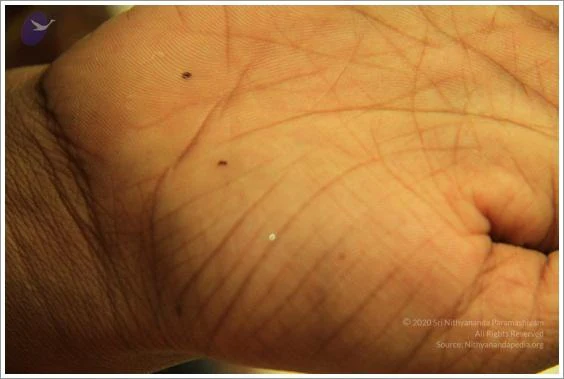
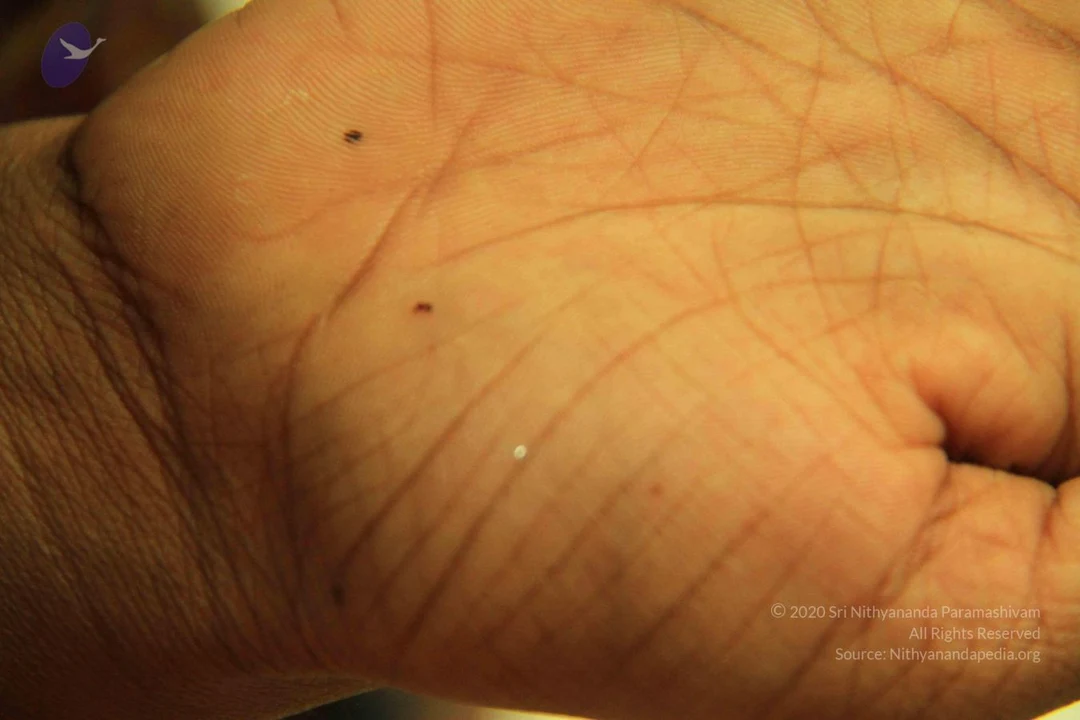
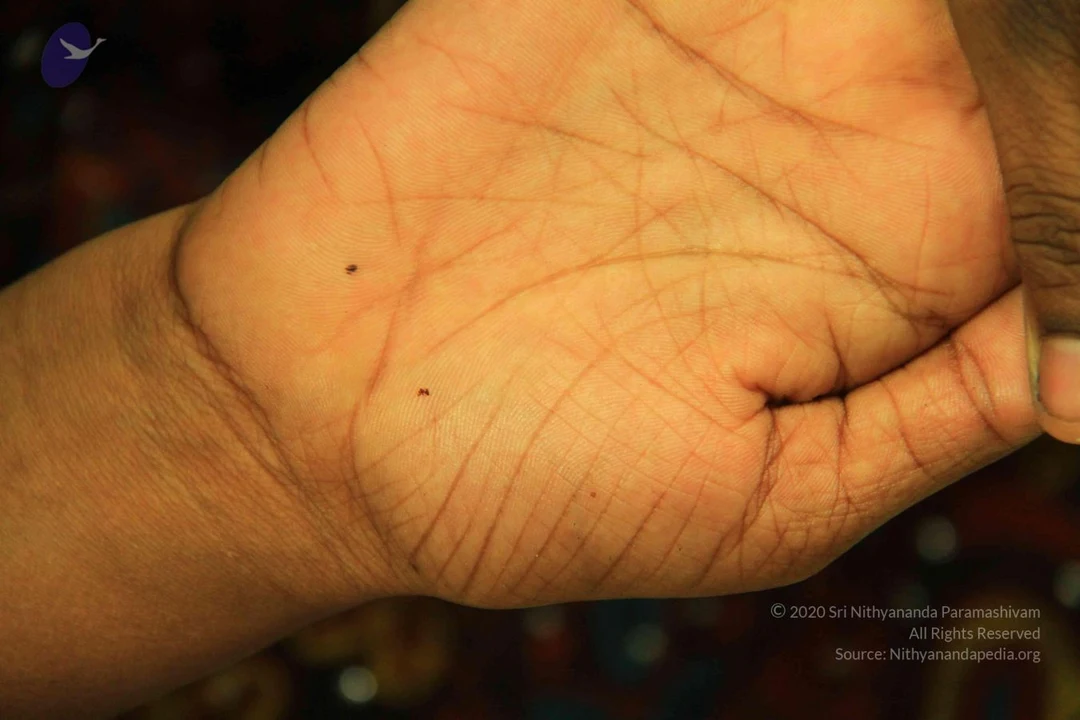
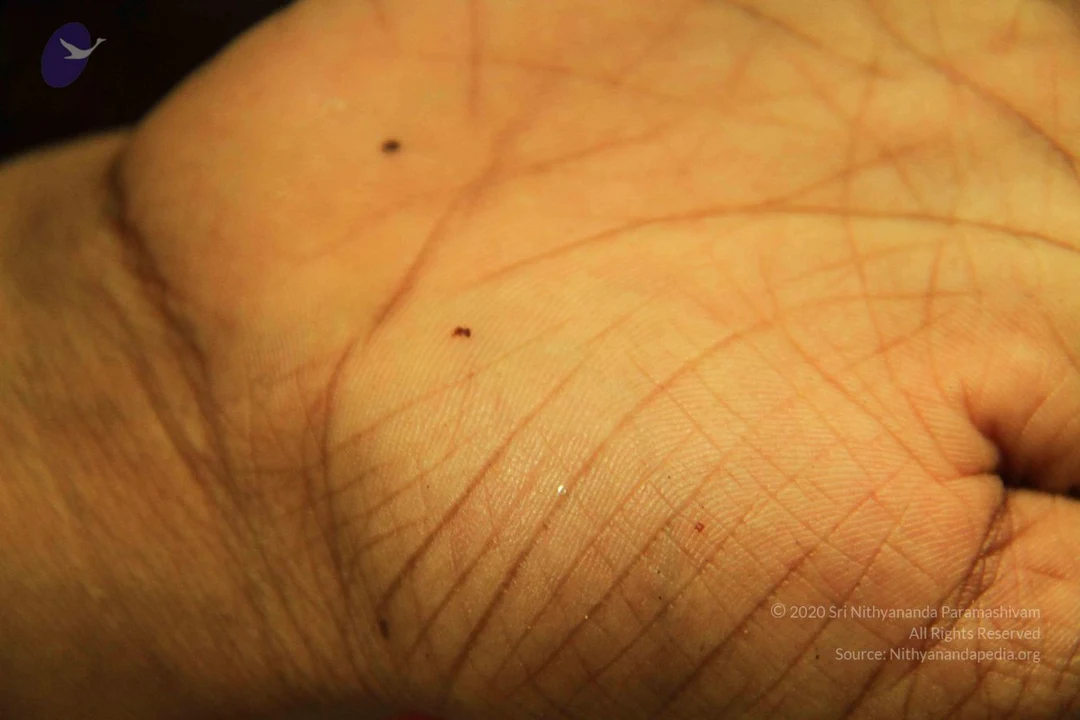
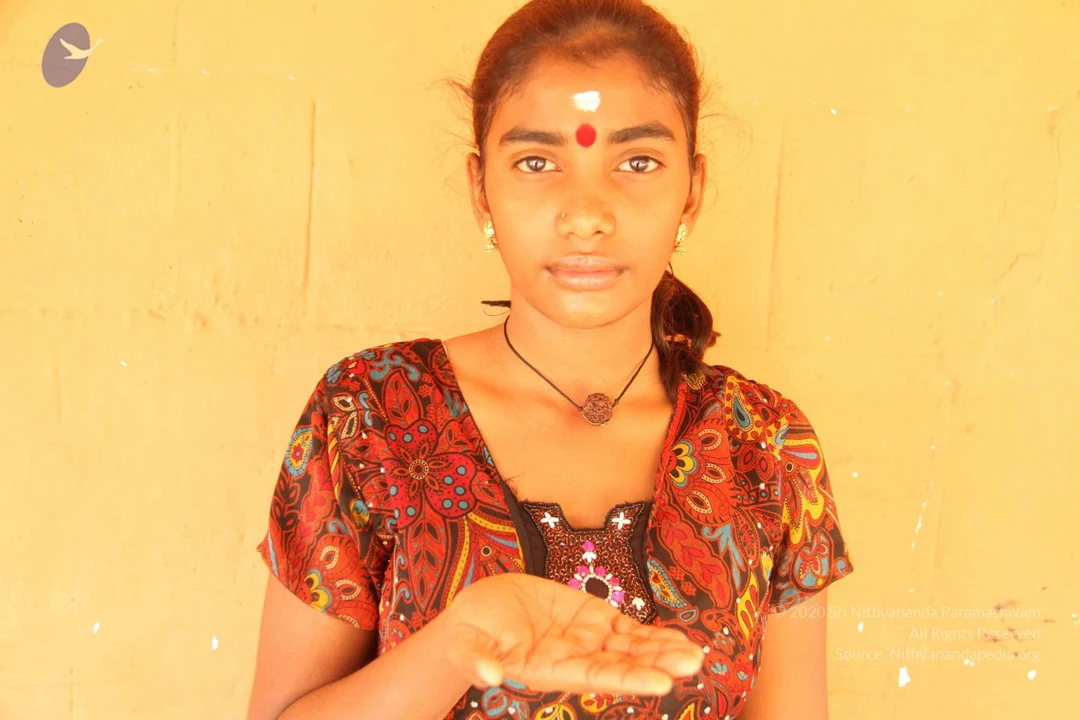
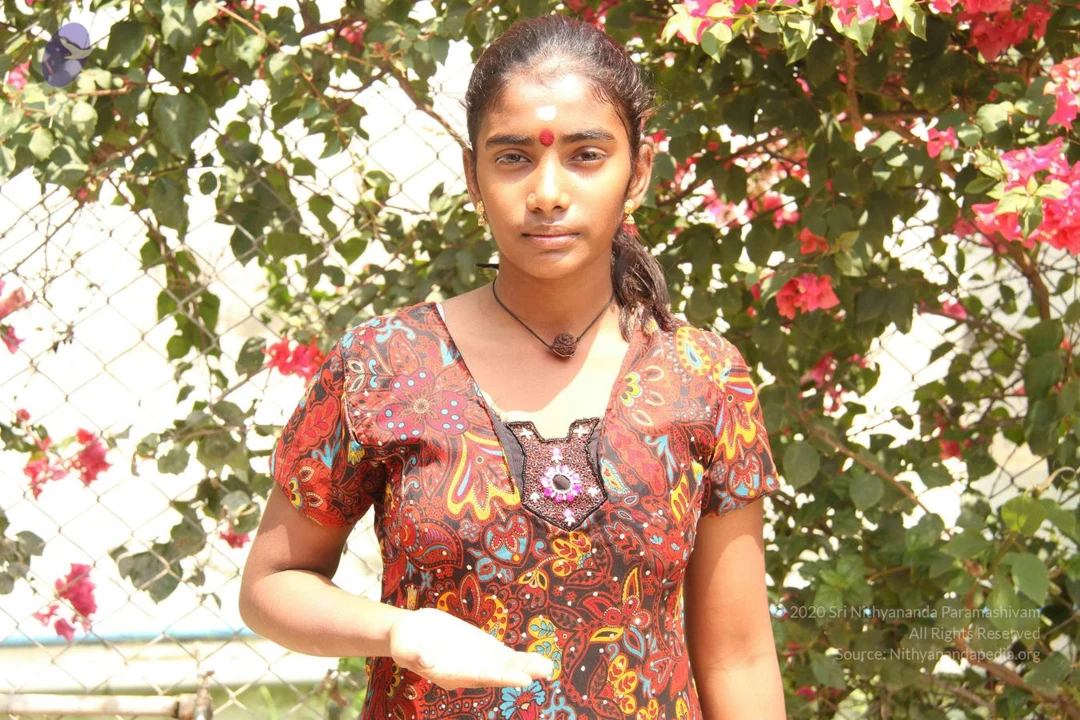
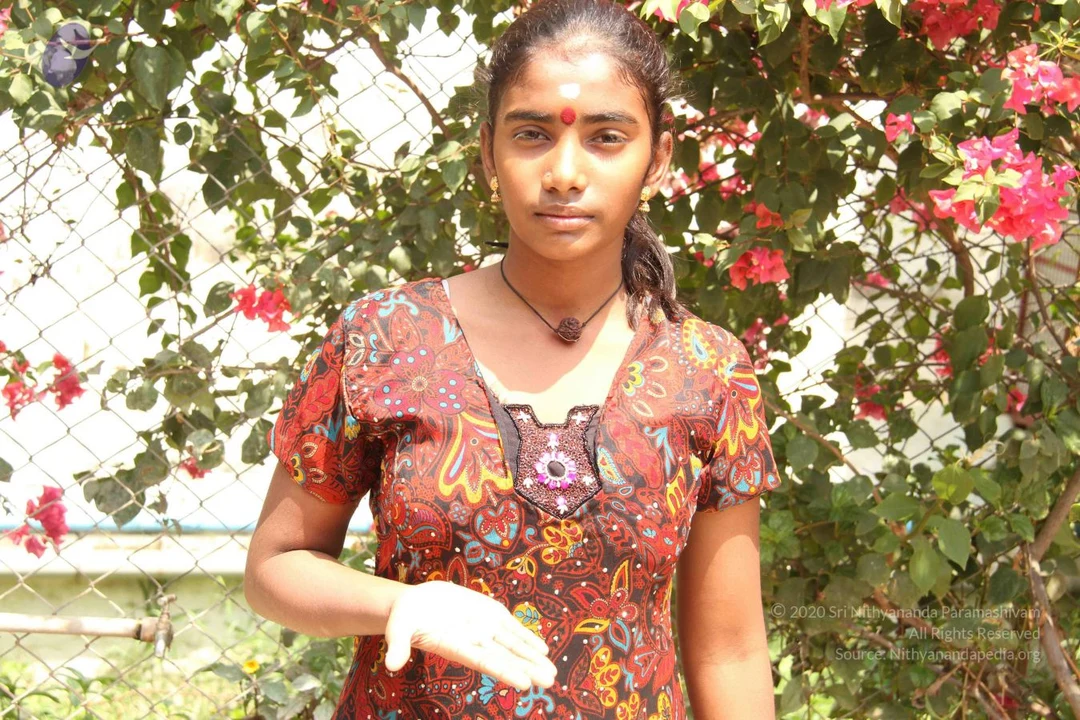
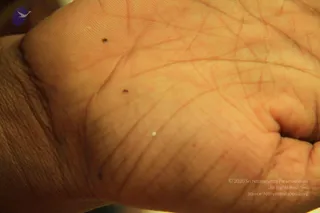
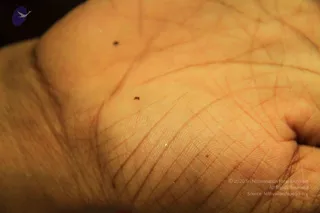
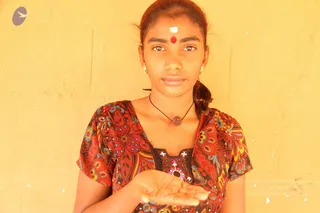
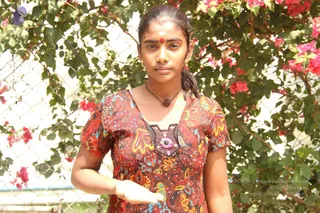
Close-up photograph of an open human palm and inner wrist, showing creased skin lines and a few small dark specks and a pale spot on the skin. No ritual objects, deities, people's faces, or setting are visible; the frame is filled by the hand alone.Close-up photograph of an open human palm, showing creases and lines of the skin in warm orange-brown tones, with two tiny dark specks on the upper palm. No people's faces, clothing or ritual setting are visible; the frame is filled by the hand.A young girl with dark hair pulled back in a ponytail stands against a yellow wall, facing the camera with a calm expression. She wears a red and multicoloured floral print blouse with a dark embroidered neckline and a dark cord necklace with a round pendant. A white vertical tilak mark and a red bindi sit on her forehead, and she holds her right palm open and extended forward at waist height. A small logo appears at the upper left, and no other people or ritual objects are visible.A young woman stands in front of a chain-link fence and a bush with pink and red bougainvillea flowers. She wears a red, orange and black floral printed kurti with a dark embroidered neckline panel set with a small sparkling stone. A dark rudraksha-style pendant hangs on a black cord, and she has a white vibhuti mark and a red kumkum bindi on her forehead, with hair pulled back in a ponytail. Her hand is held low and relaxed at her side.

VIP-Visit-from-Rajsena-group

34 photosSource gallery
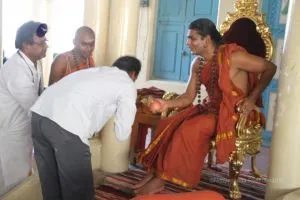
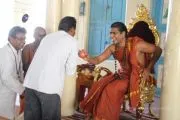
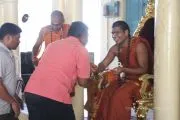
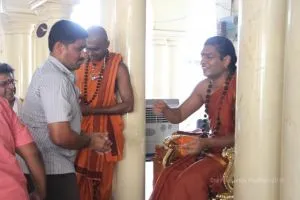
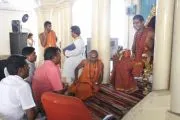
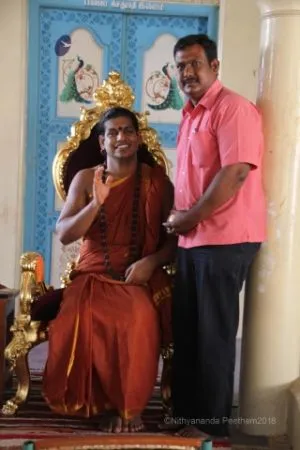
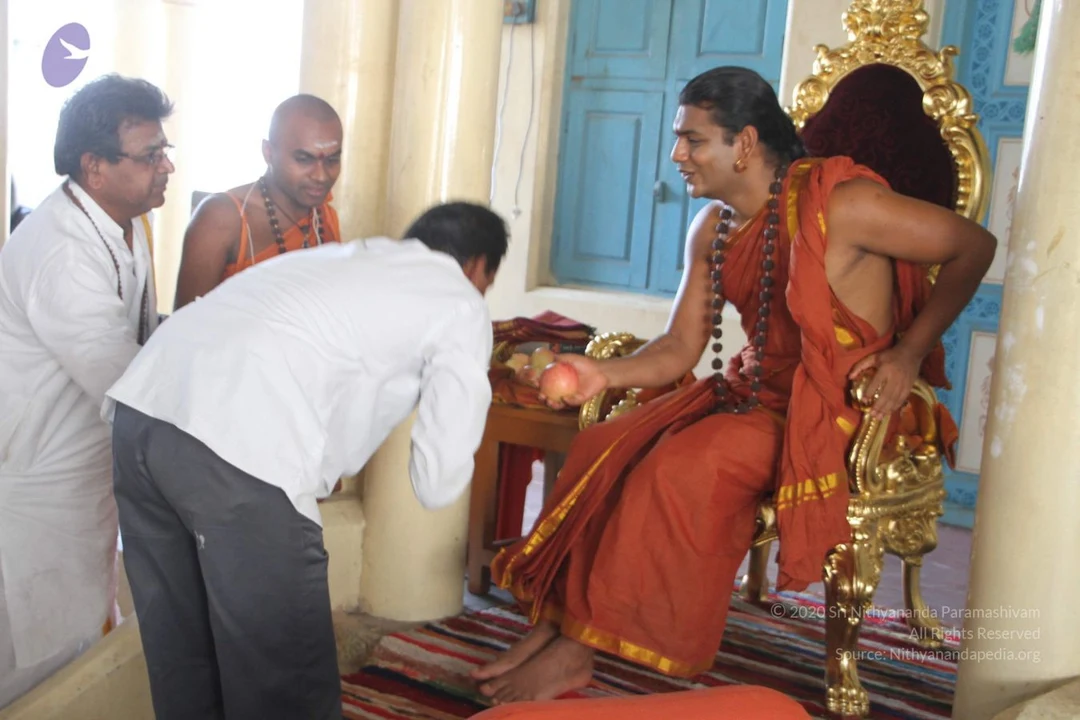
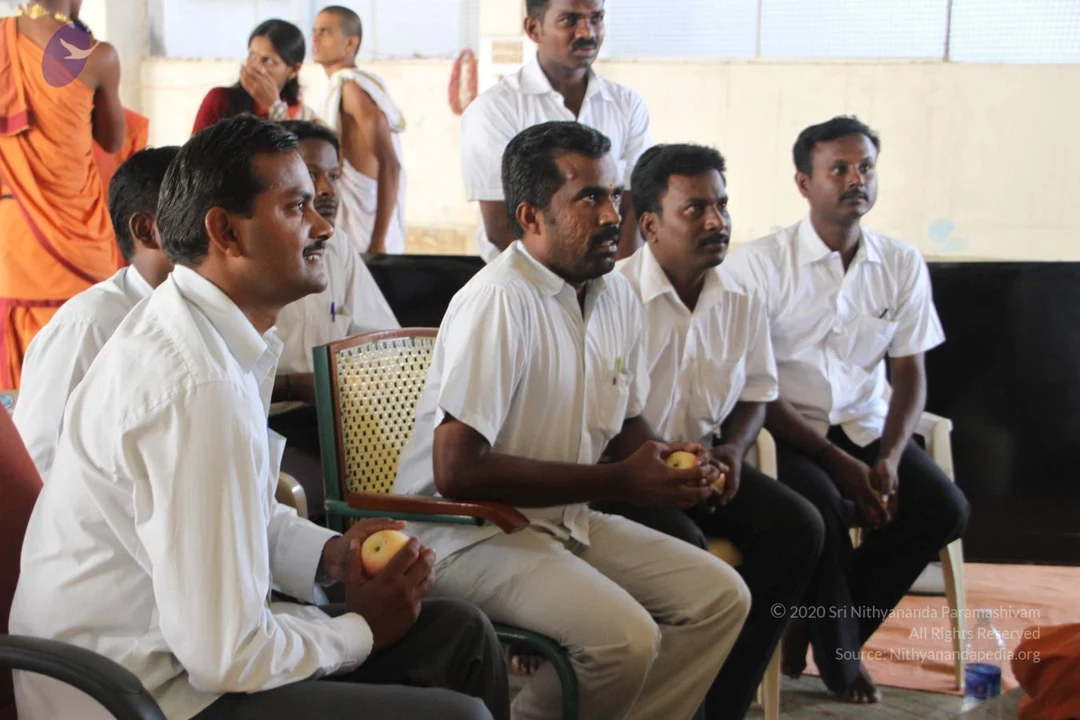
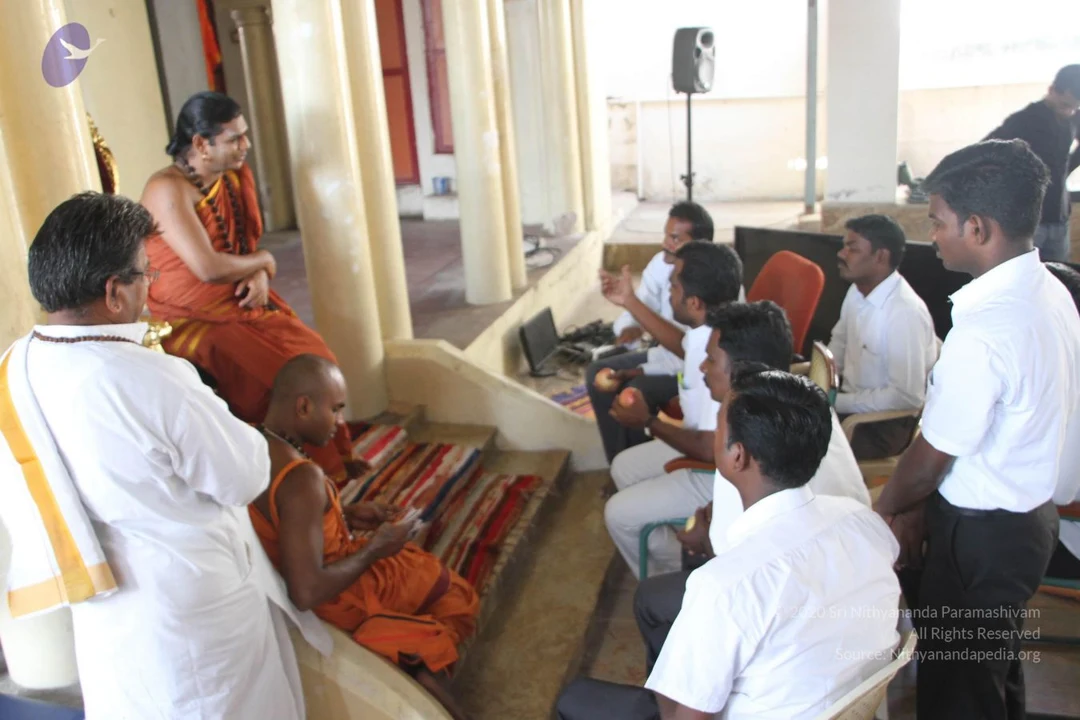
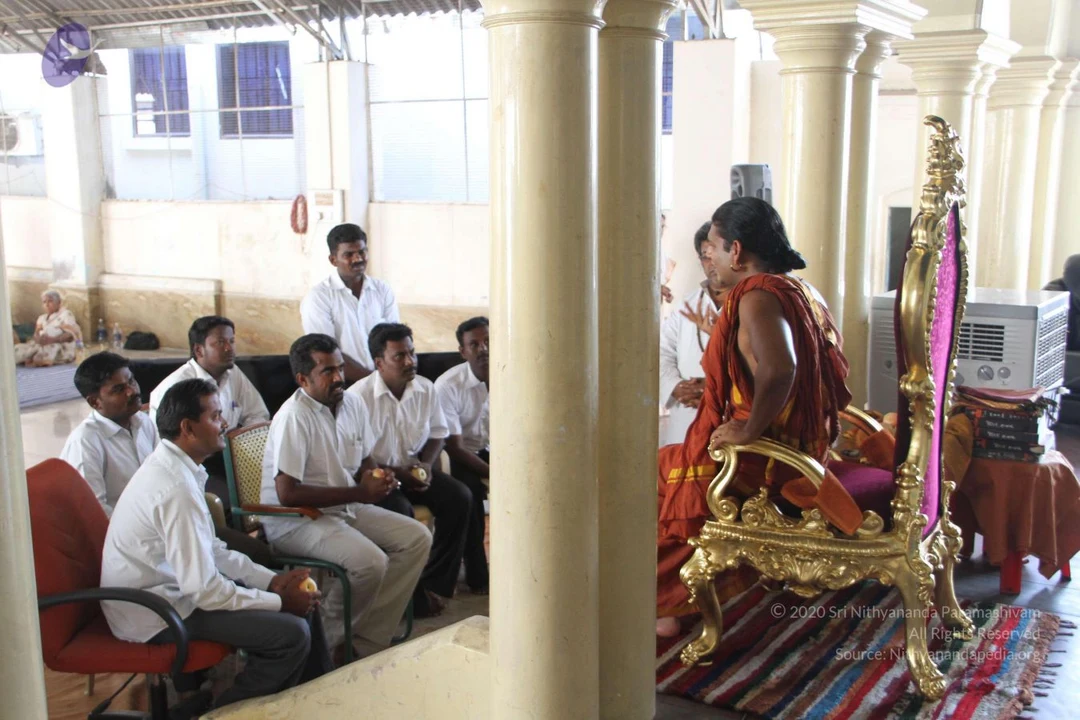
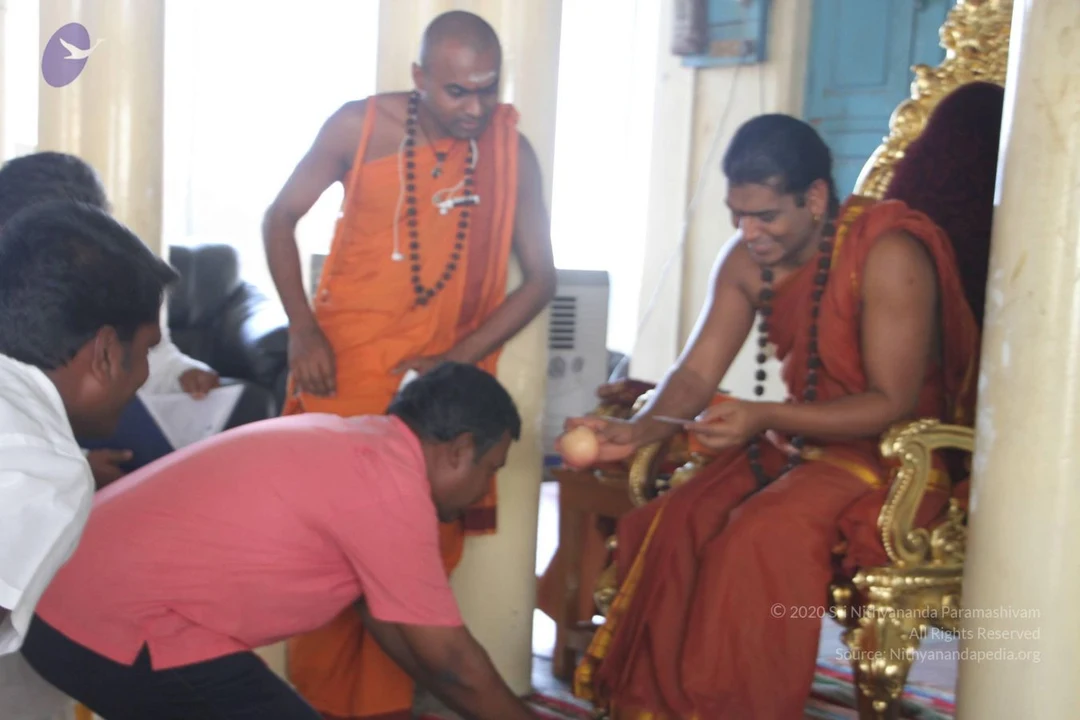
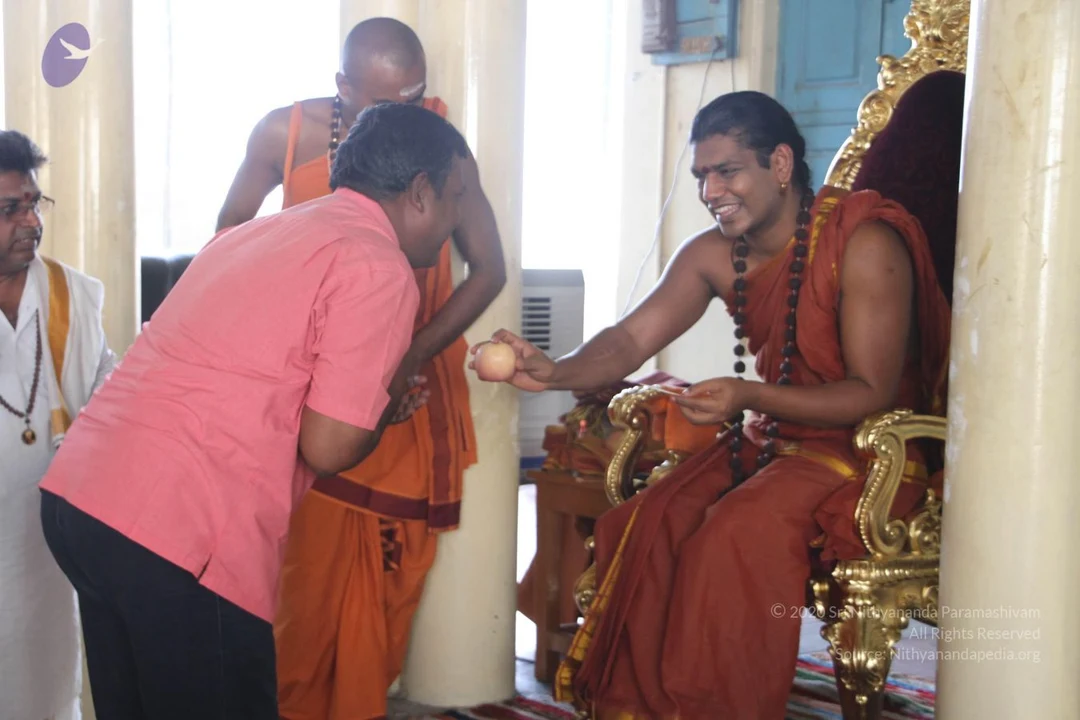
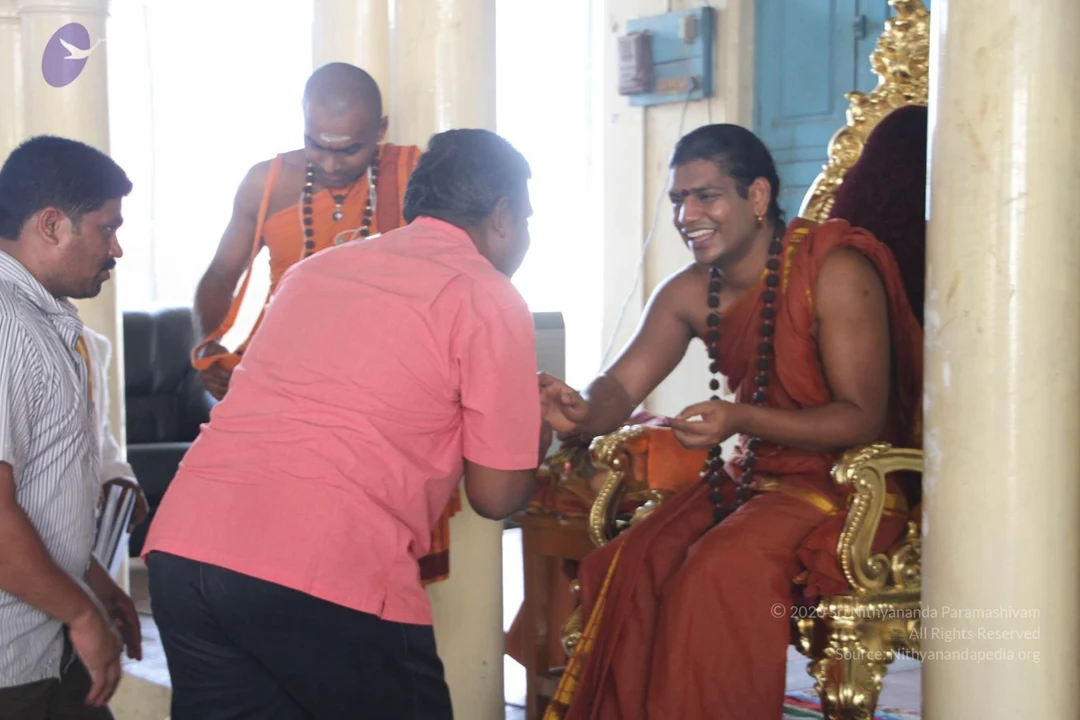
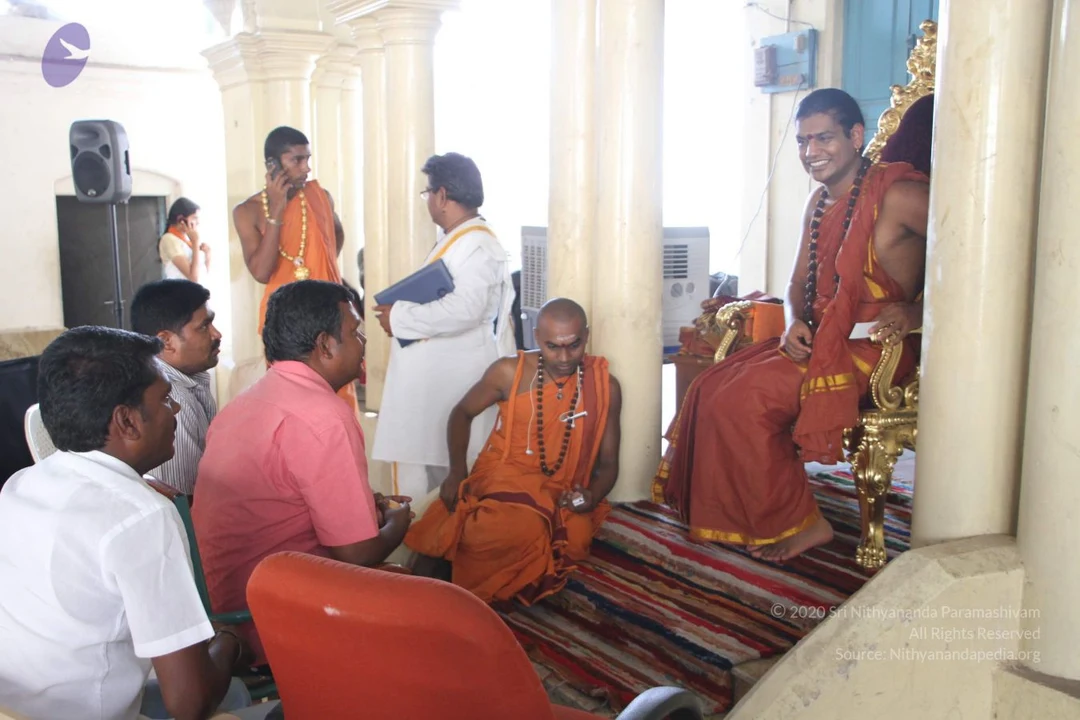
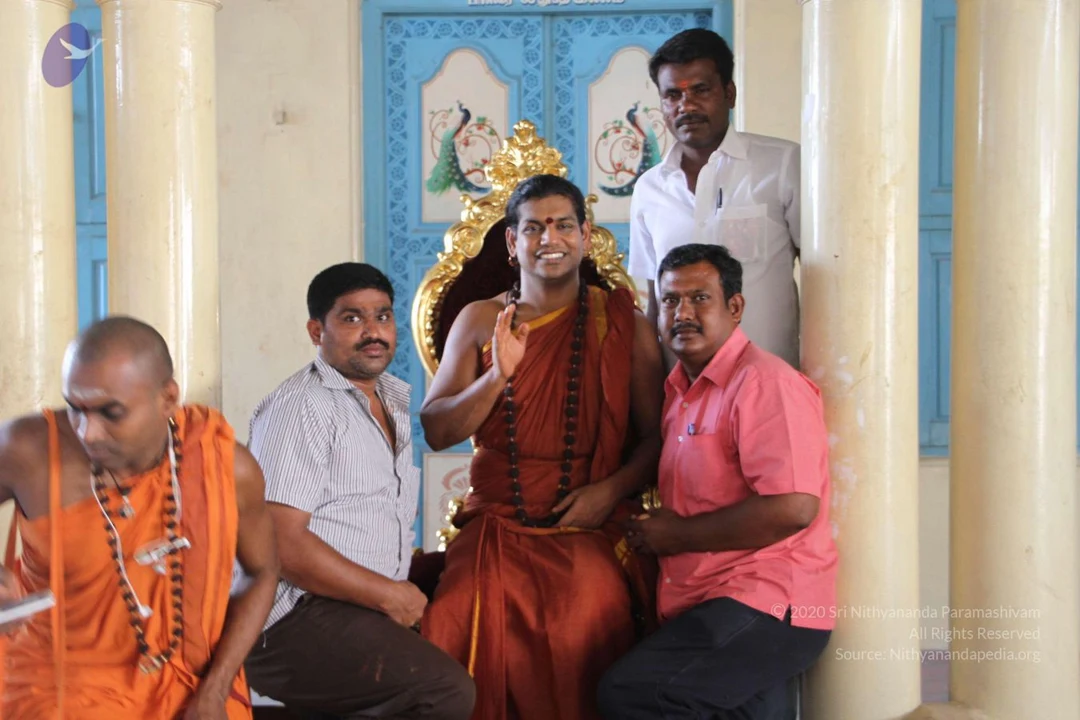
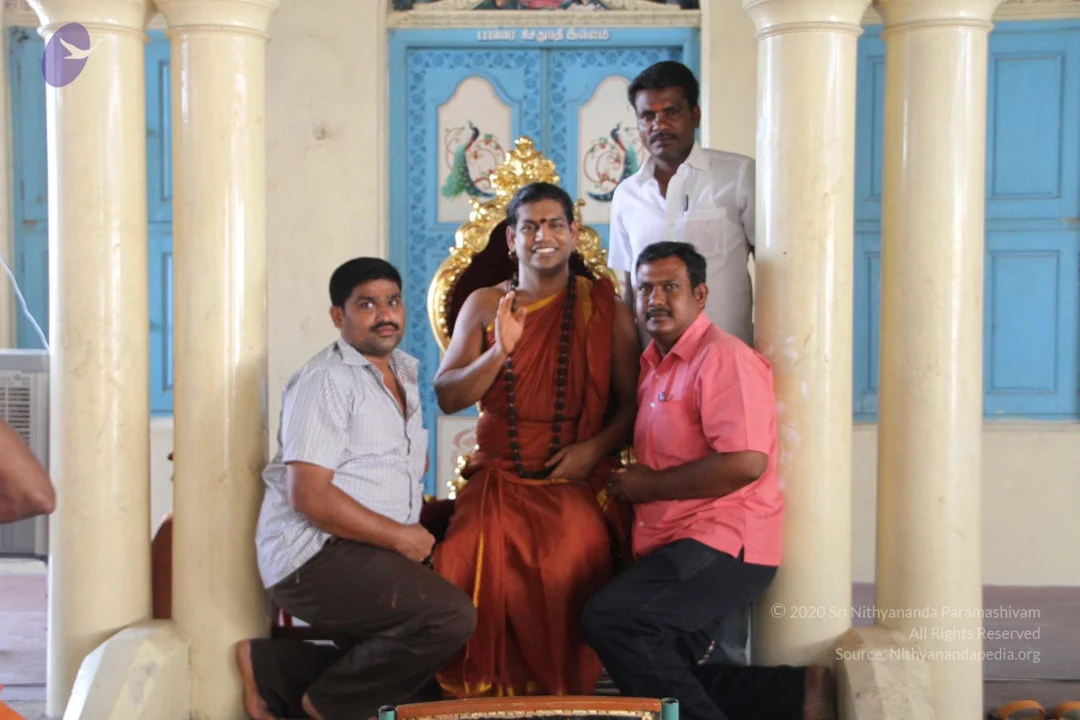
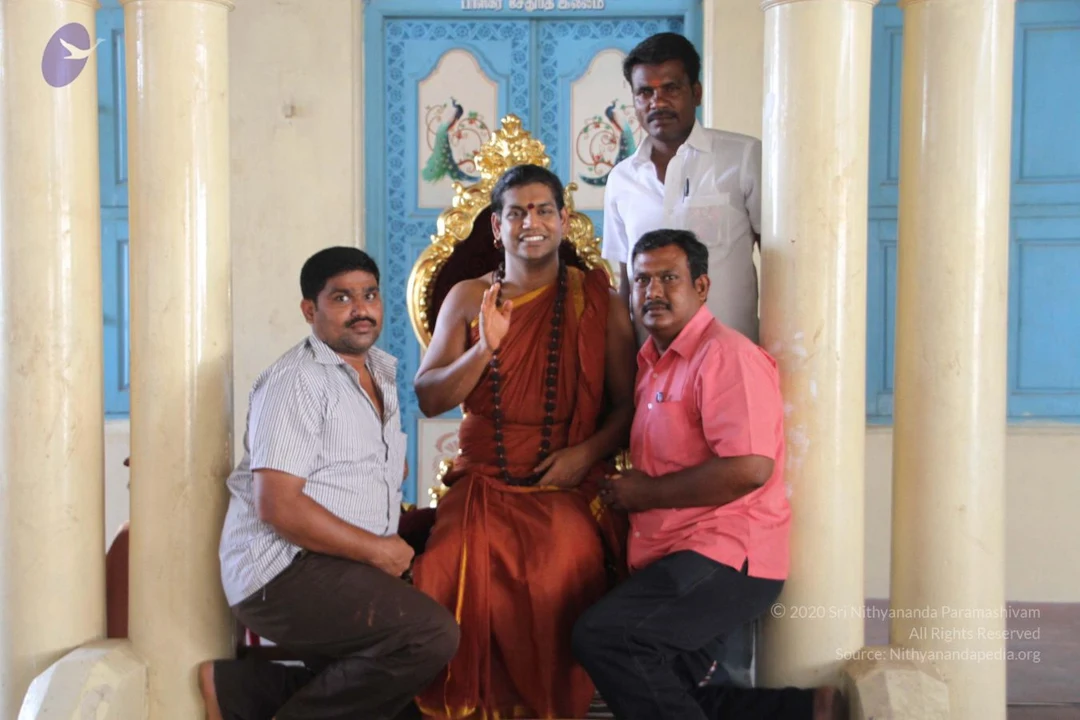
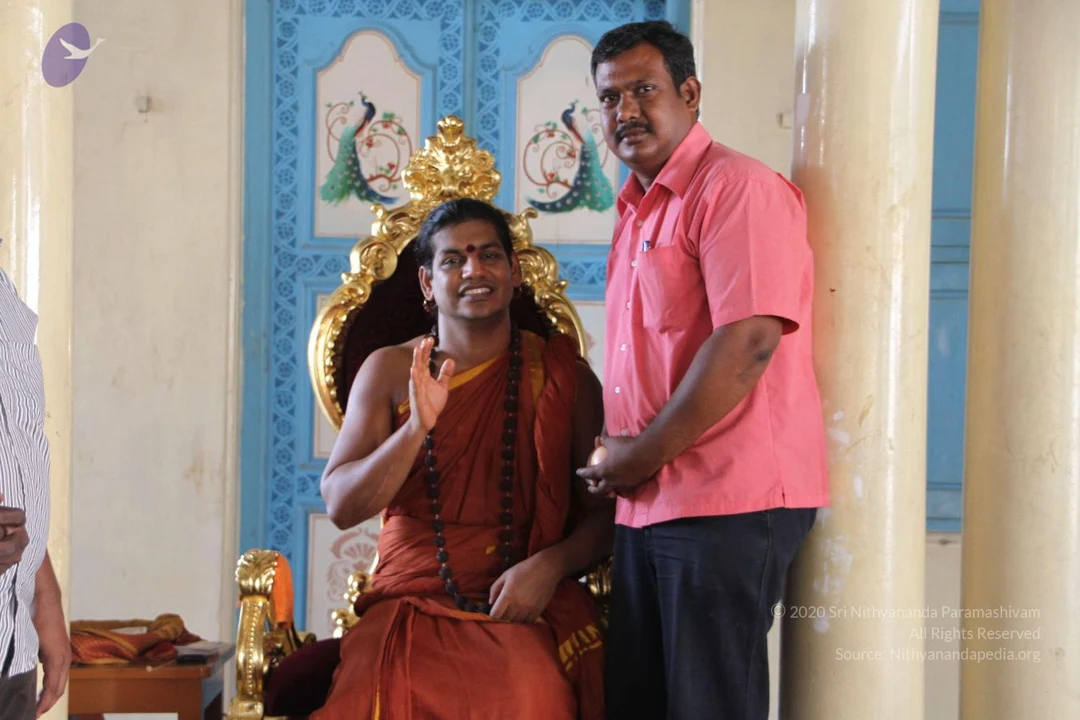
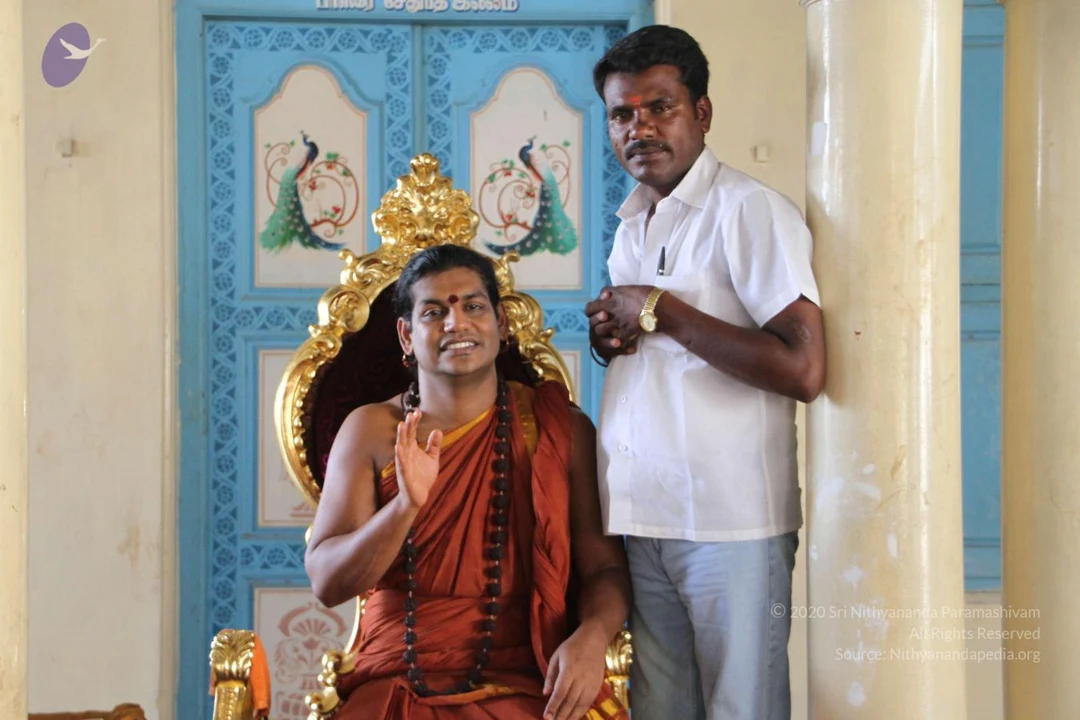
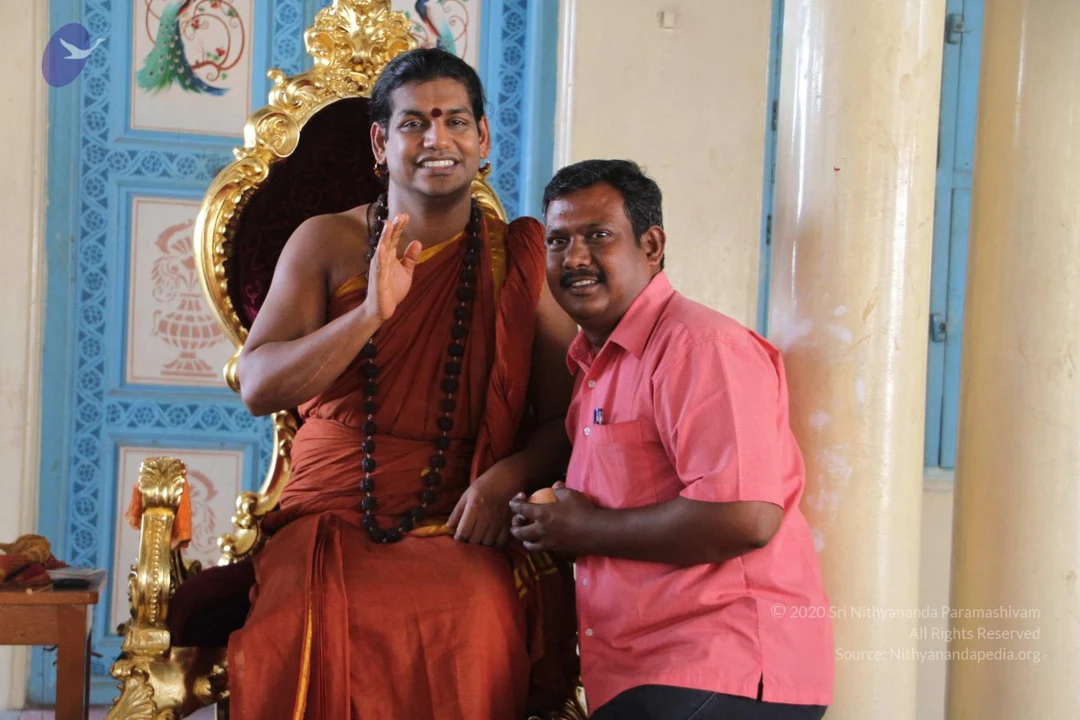
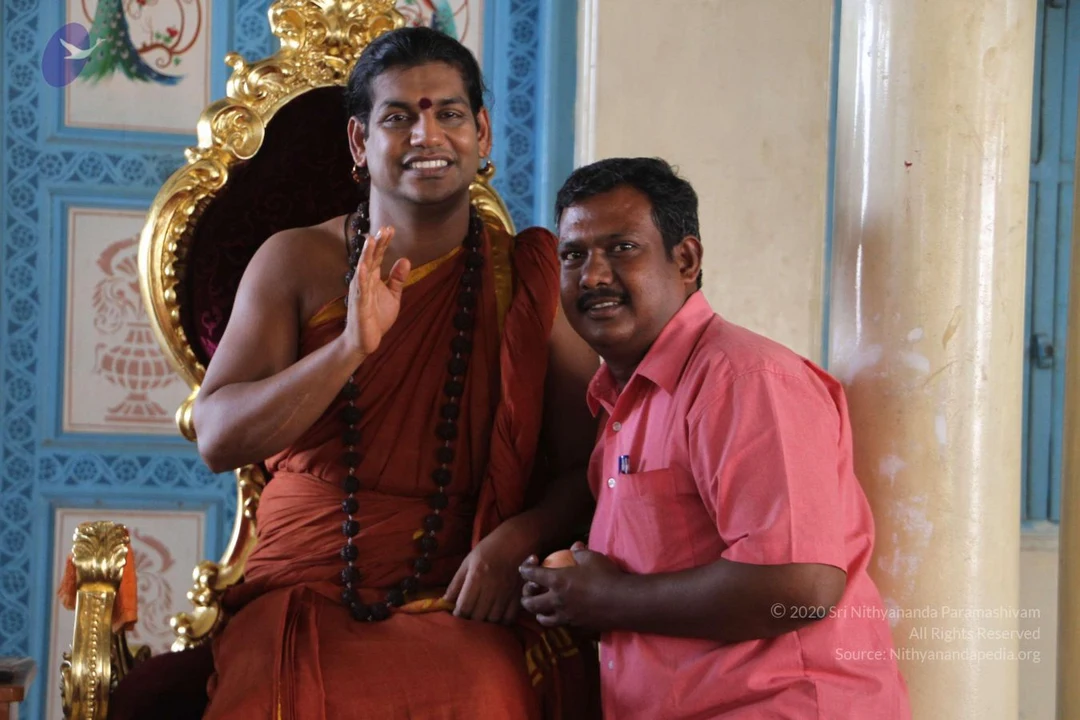
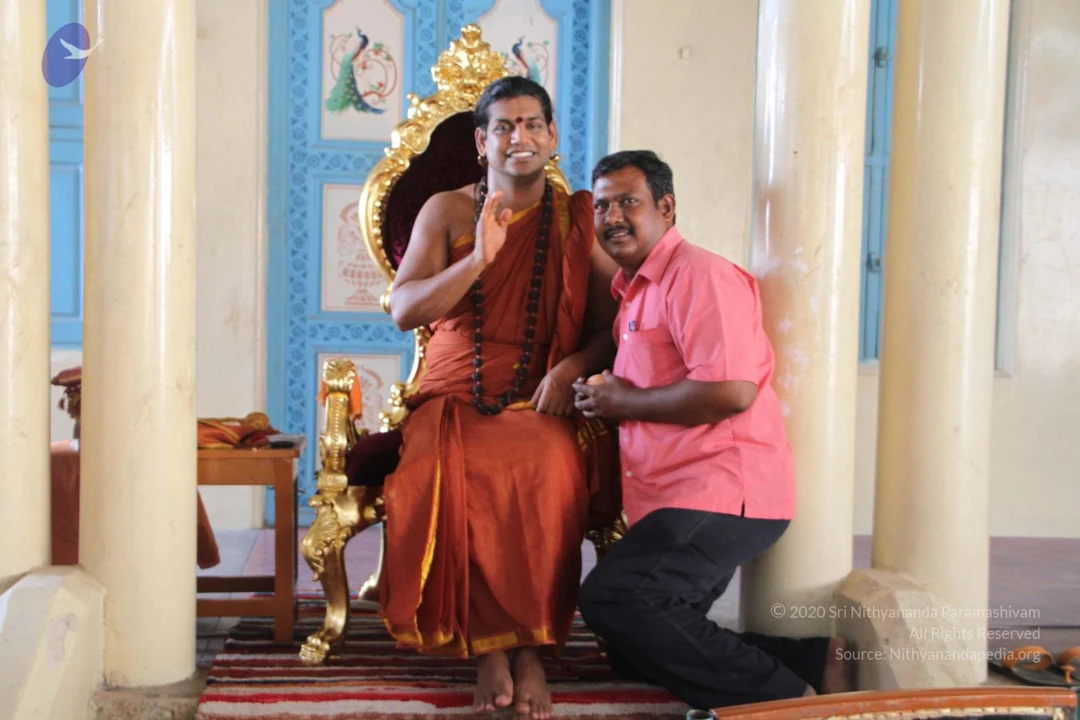
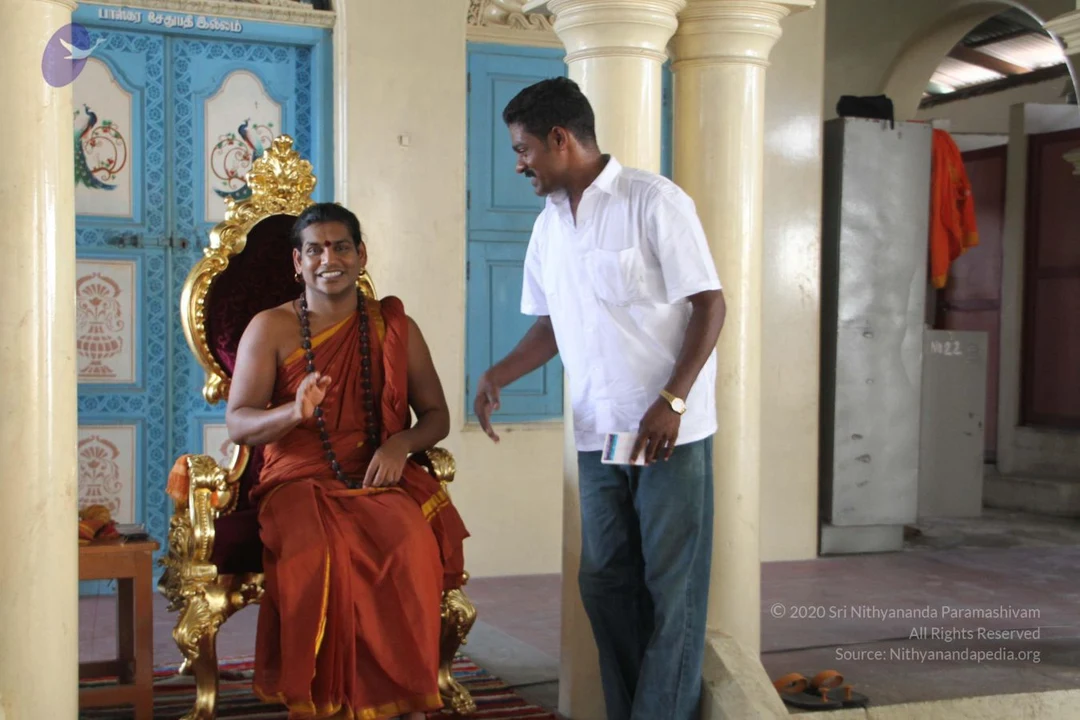
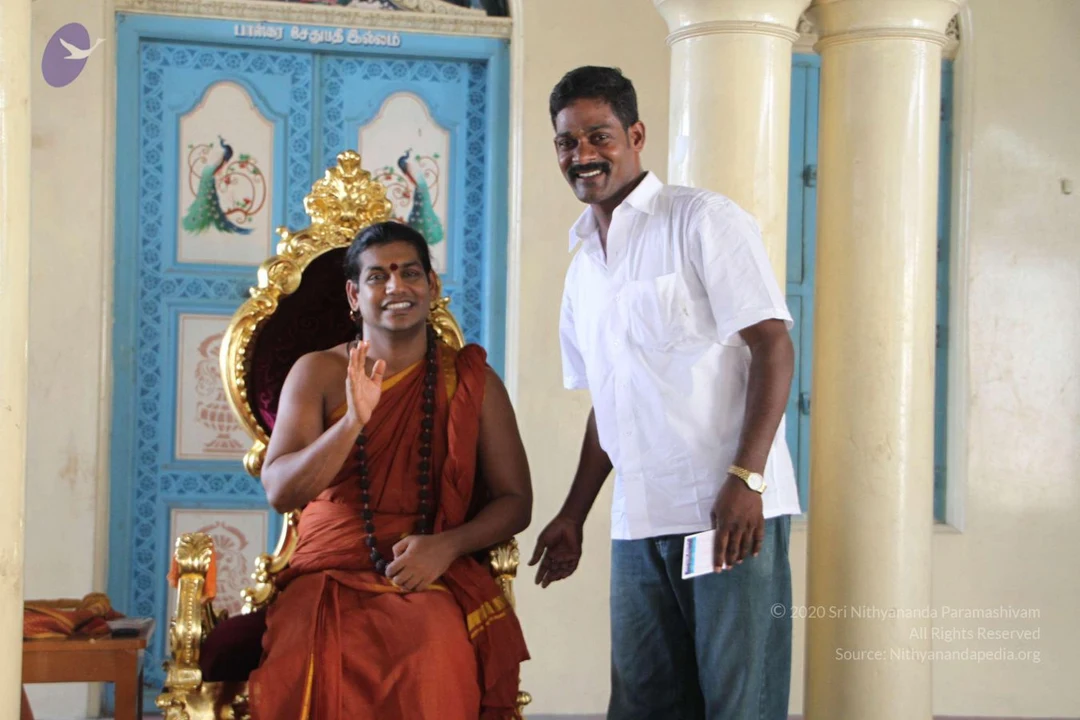
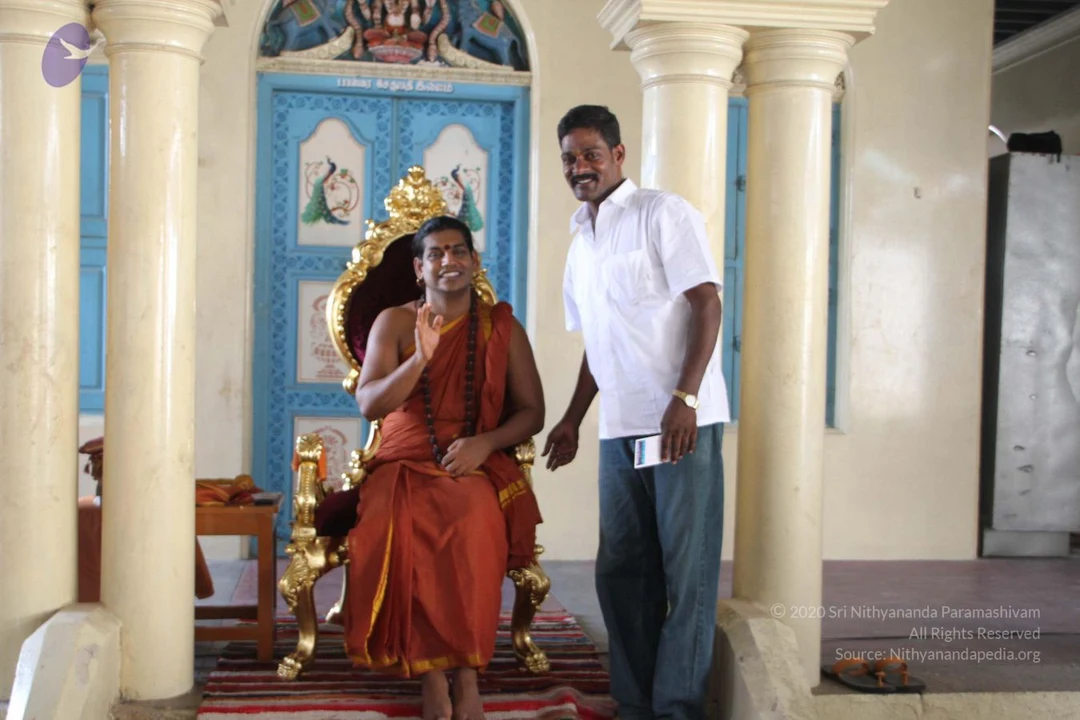
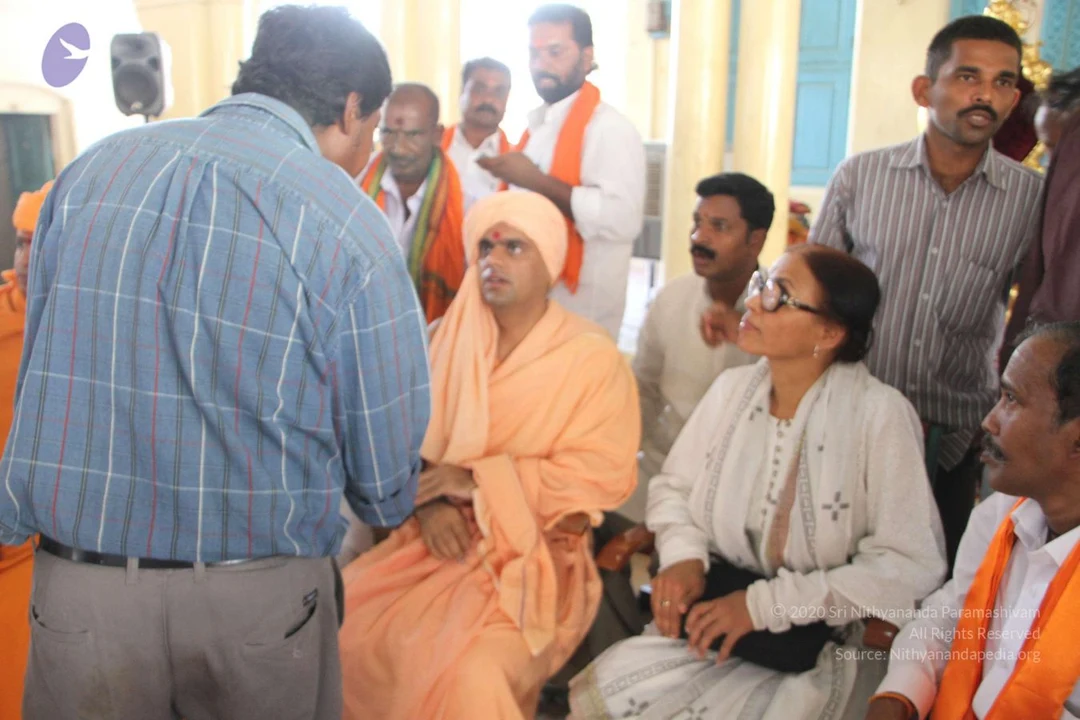
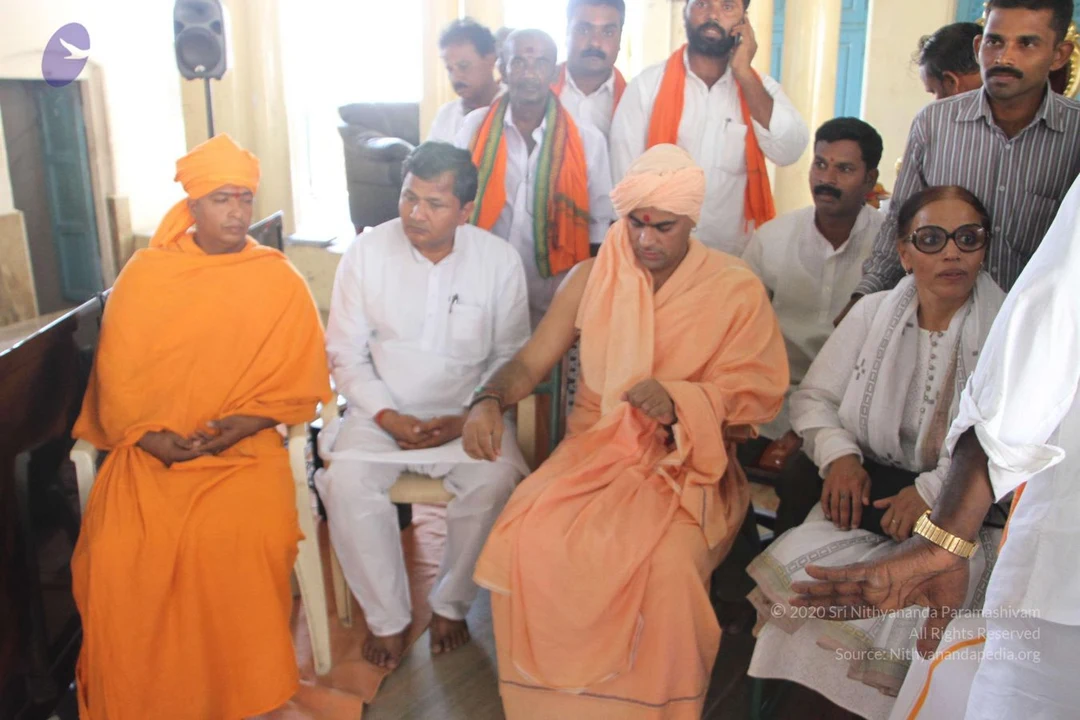
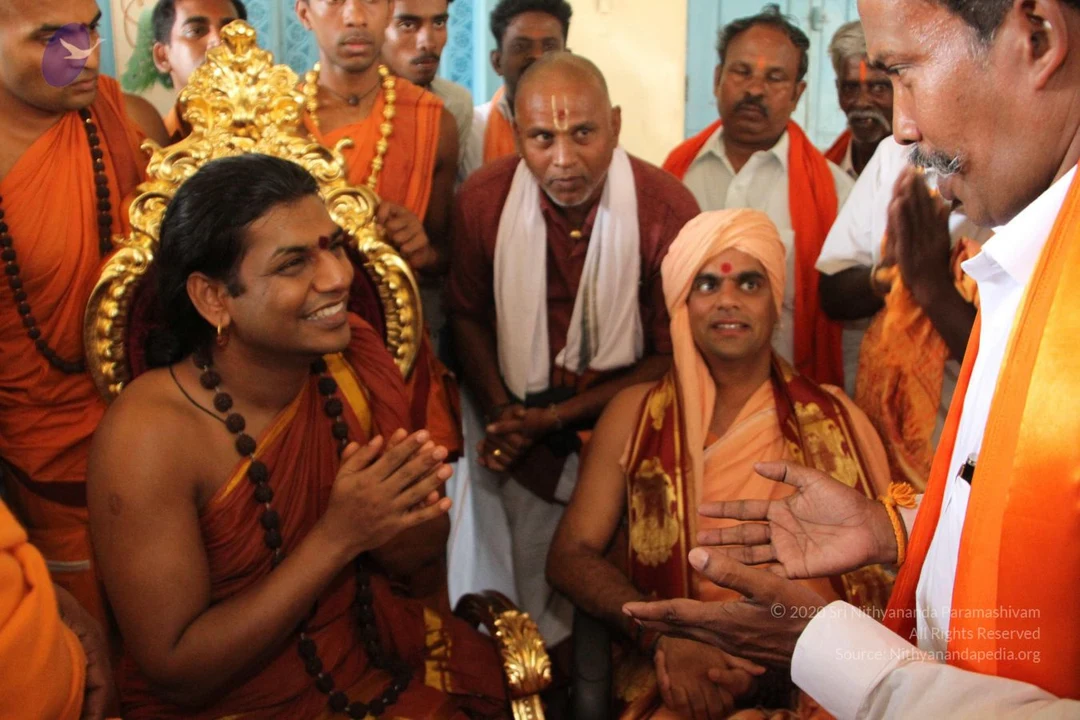
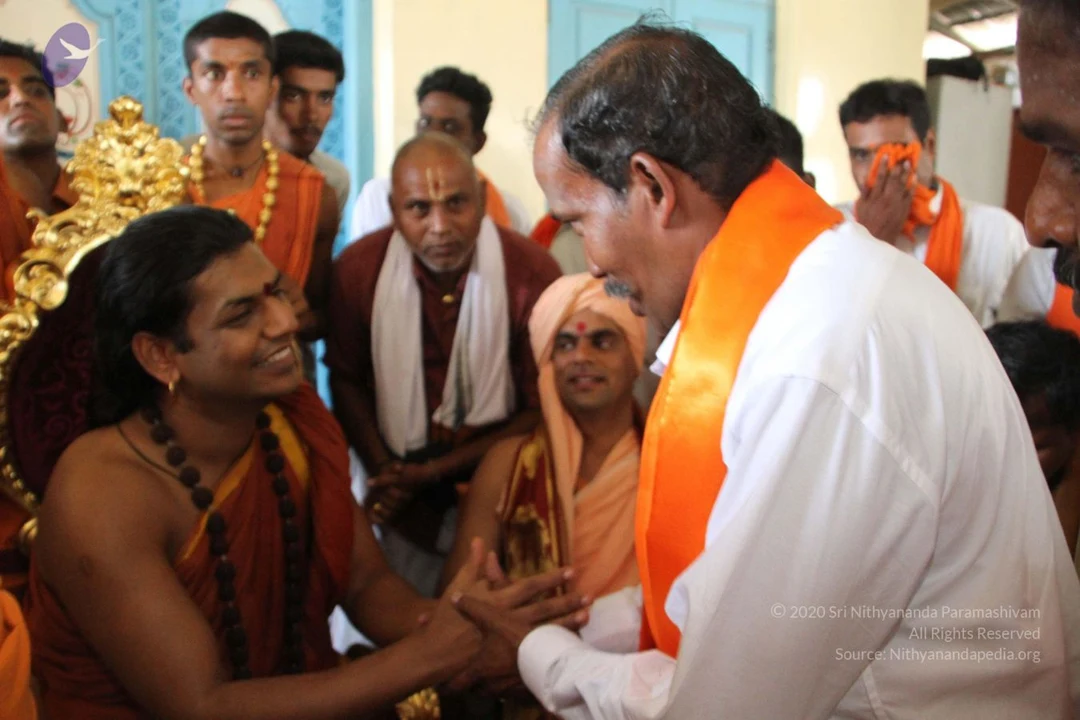
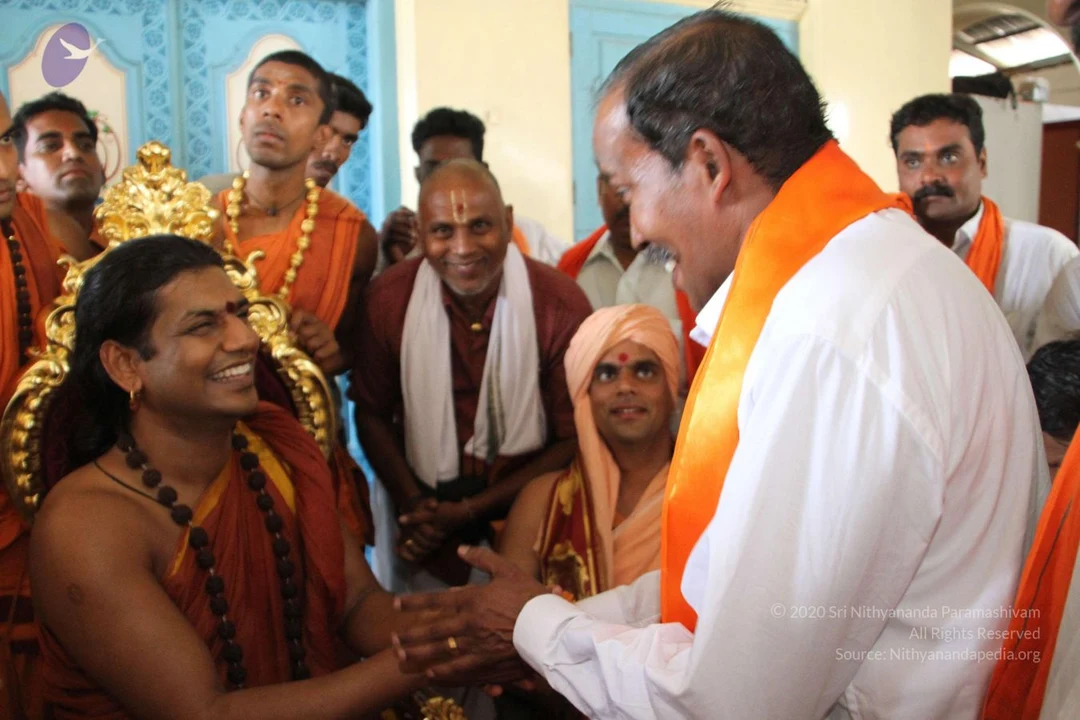
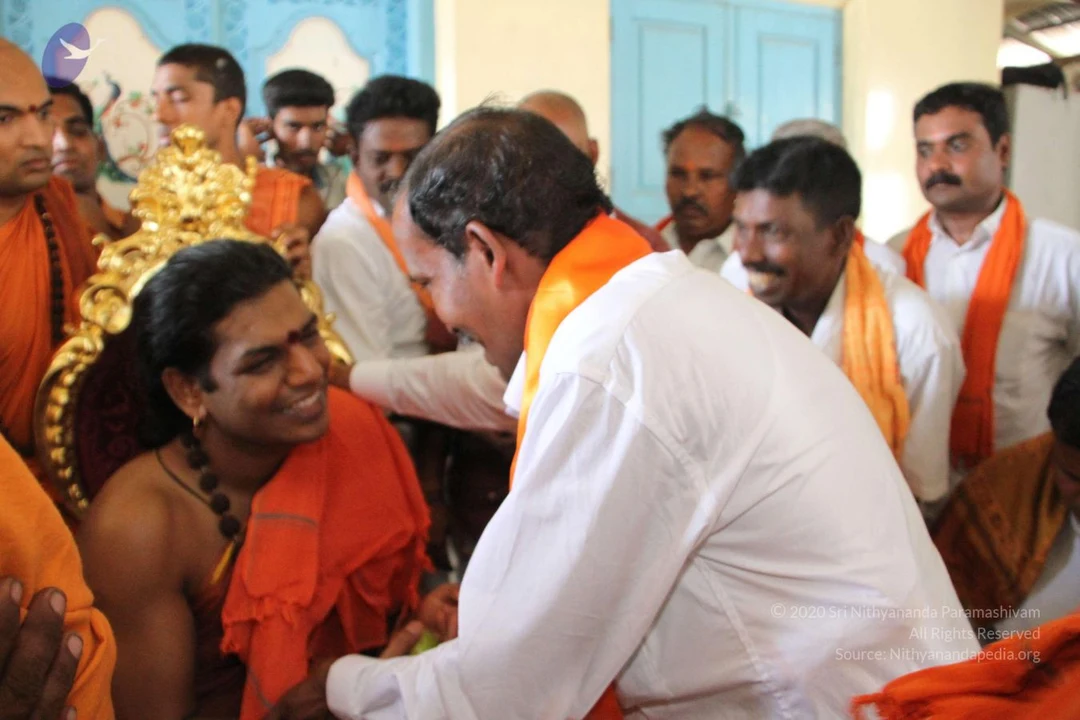
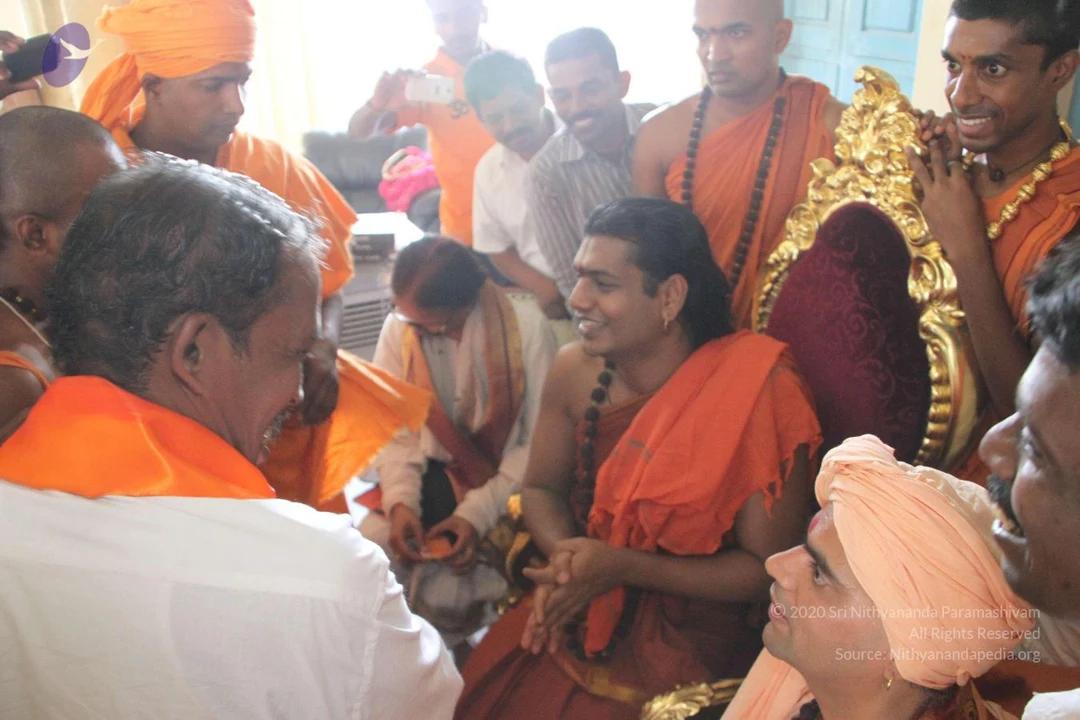
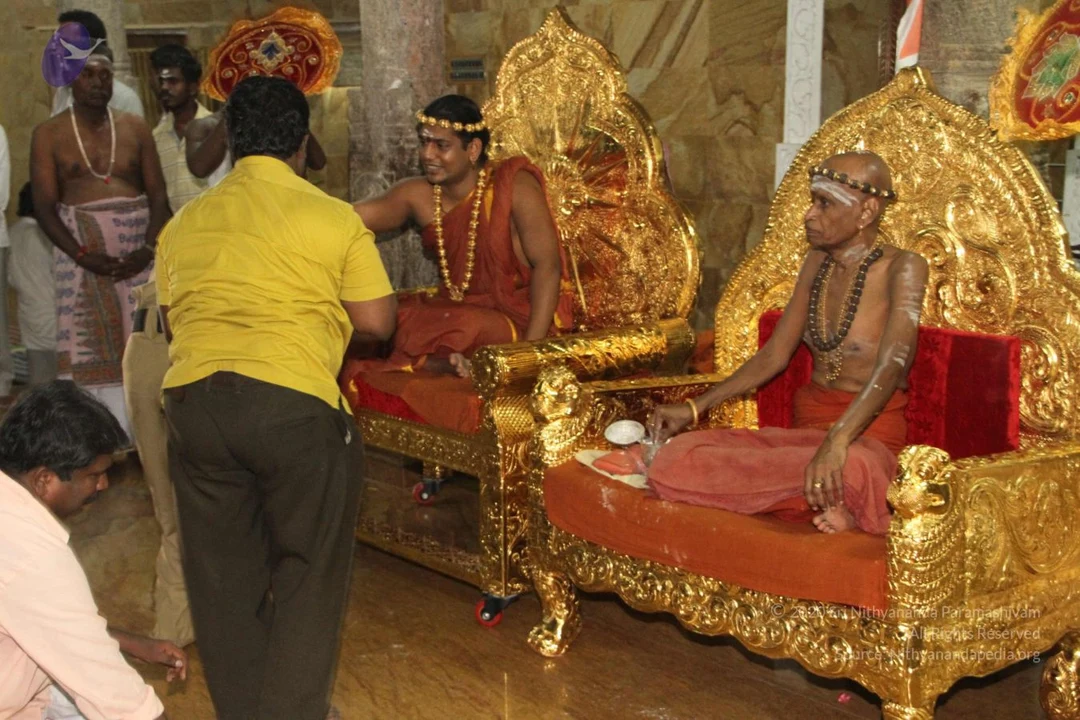
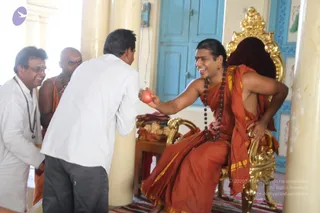
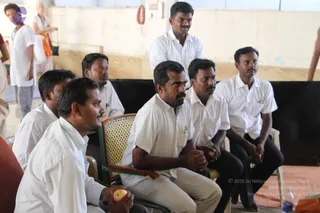
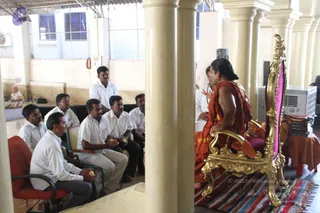
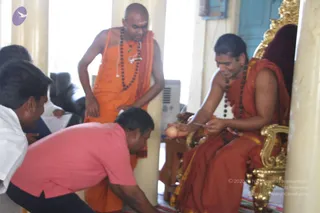
Indoor photo in a pillared hall with pale yellow columns and a blue wooden door. A seated man in a saffron-orange robe with a golden border and dark rudraksha mala sits on an ornate gold throne, smiling and reaching to accept a red apple from a man in a white shirt and grey trousers who leans in. Behind him, a bald priest in saffron and a white-clad man stand. A fruit basket and a small wooden table sit beside the throne, with a striped rug on the floor. The seated figure has long swept-back hair and distinctive saffron and rudraksha cues, but the appearance is not conclusive enough for a firm identification.A photograph of a seated group of men in plain white shirts and trousers listening attentively in a hall with a dark backdrop and cream walls. The man in front holds an apple, and another seated man in the front left also holds an apple. A standing man in a white shirt stands at the back. Two women in white clothing stand at the far left, one wearing an orange shawl over her shoulder.A photograph of a seated group indoors during a satsang-style gathering. A central figure in orange or saffron robes sits on a raised seat, facing a row of men in white dhotis and white shirts seated on the floor. Several attendees with shaved heads and white clothing face the central speaker. The room has light walls and a blue-and-white painted backdrop with decorative patterns.A photograph of an indoor hall with pillars and a tiled floor. A man with long swept-back hair, wearing an orange saffron garment and a beaded necklace, sits cross-legged on a raised platform draped with colourful striped cloth. Below him a bald man in an orange robe sits on the platform, hands together, apparently holding a small object. A man in a white dhoti with a gold-bordered shawl stands at left. Several seated men in white shirts and dark trousers sit on chairs at right, some holding small red fruit, and a standing man in a white shirt stands at far right. A loudspeaker stands on a stand behind them and a laptop sits on a low stool.A photograph inside a pillared hall of a satsang session. A figure with long dark hair, wearing an orange-saffron robe, sits on an ornate gold throne with a purple cushion, facing a group of about eight seated men in white shirts and dark trousers. Several men hold small fruits or objects in their hands. A red-and-white striped rug lies beneath the throne, a stack of books rests on a side table, and an air conditioner sits against the wall. A woman in a light sari sits at the far left edge of the room. The figure's appearance matches the saffron-robed, long-haired cues associated with a person, but the face is not clearly visible, so identity remains uncertain.A seated man in saffron-orange robes with a rudraksha mala and ornate gold-framed throne holds a small object near a white egg-shaped item on a low table. A standing monk in orange robes with a rudraksha mala and a shaved head watches beside him. A man in a pink shirt leans in from the lower left, and another man in white stands at the far left edge. The setting is a pillared room with a blue door and a small air conditioning unit. Appearance-based candidate for Swamiji (probable): the seated man has long swept-back hair, saffron robes, a rudraksha mala and a gold-framed throne.

Akila-Bharatha-Hindu-Maha-Sabha-ChakraPaani-and-Indira-Tiwani

75 photosSource gallery
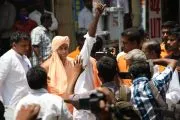
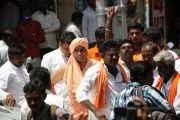
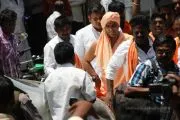
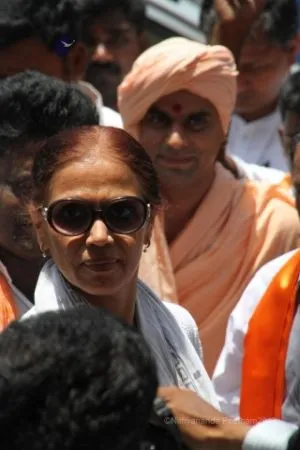
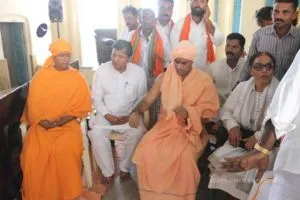
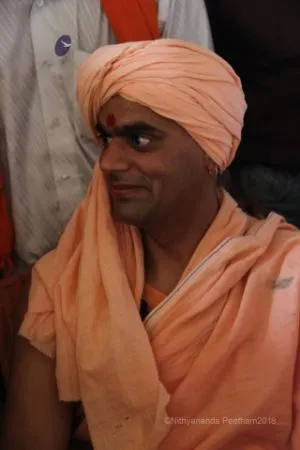
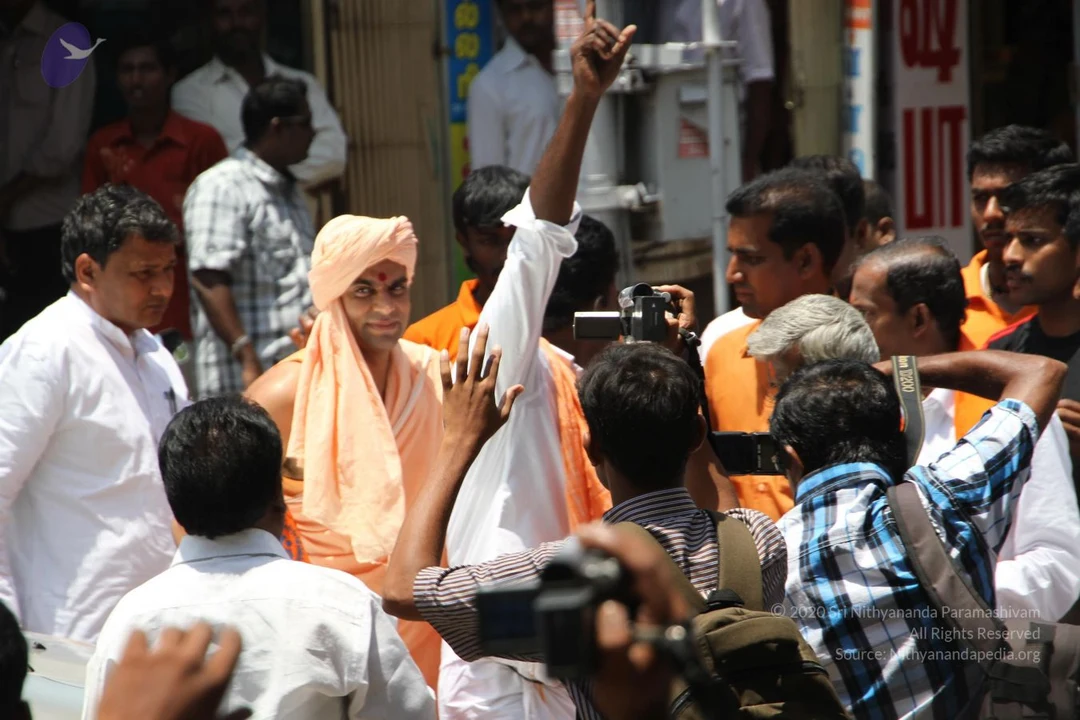
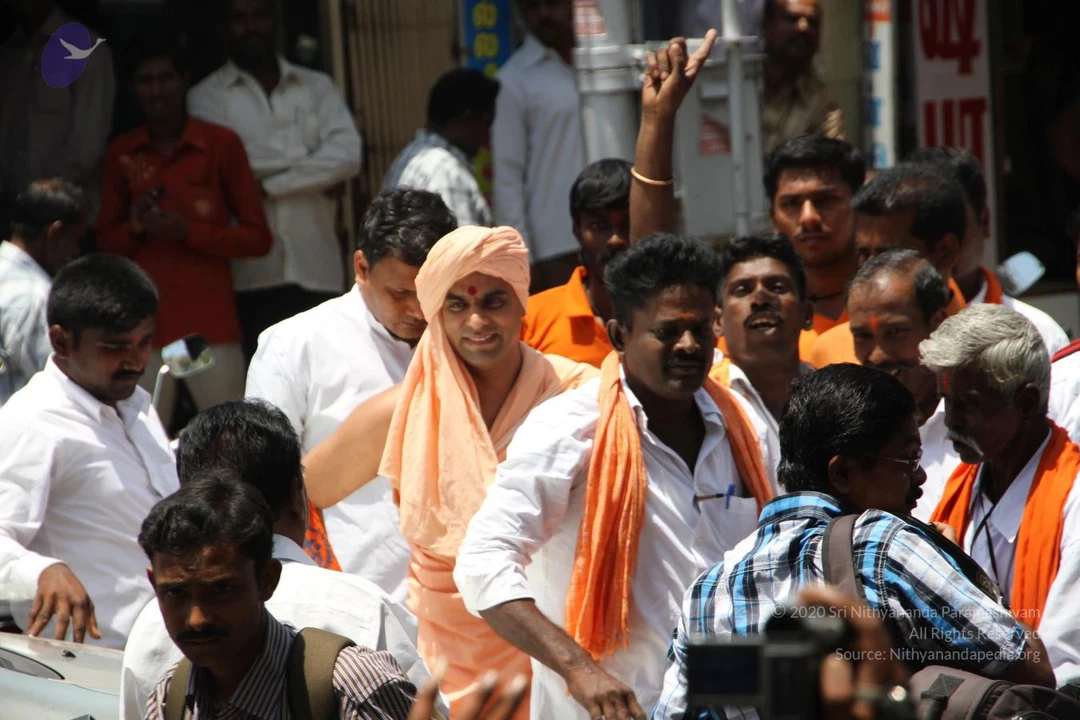
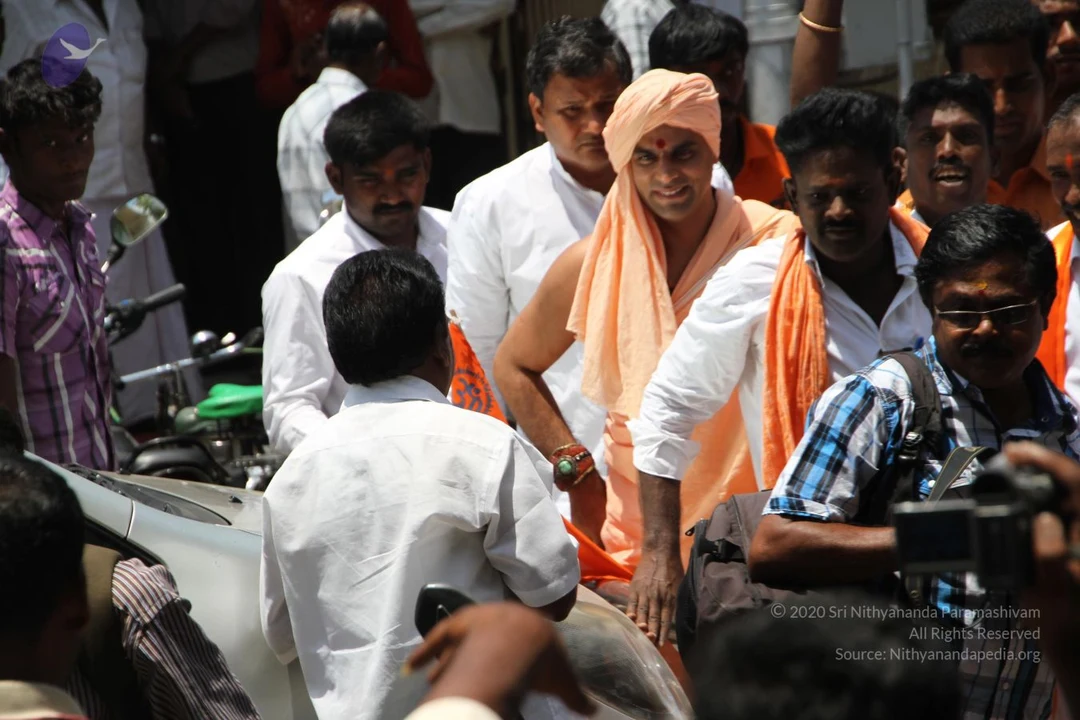
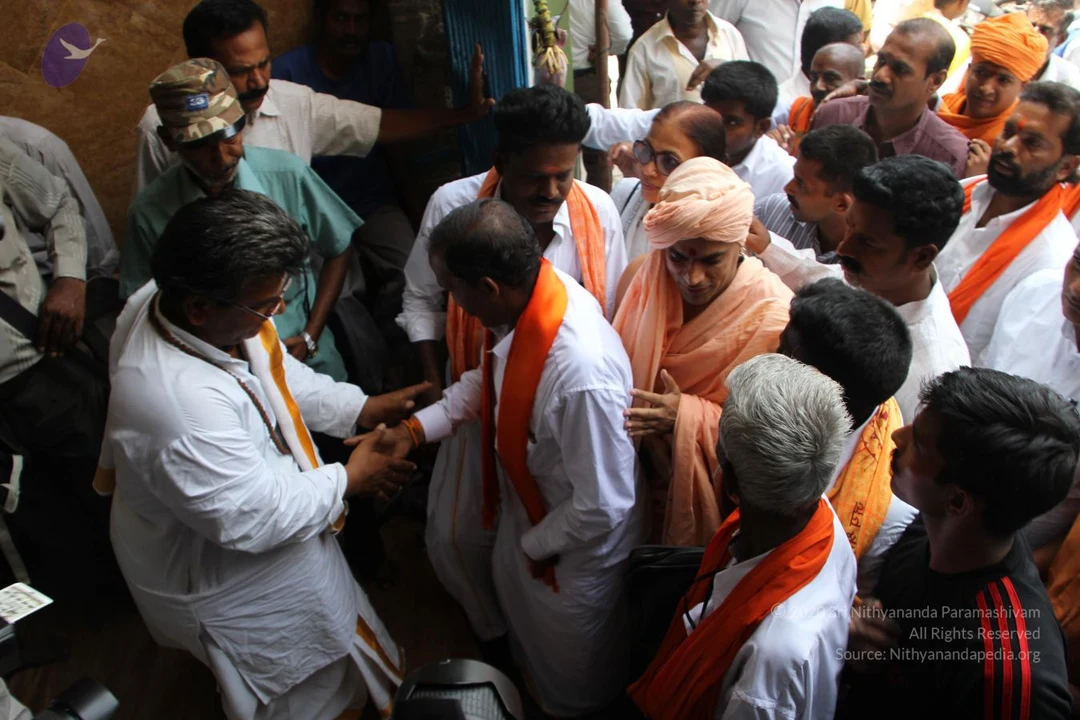
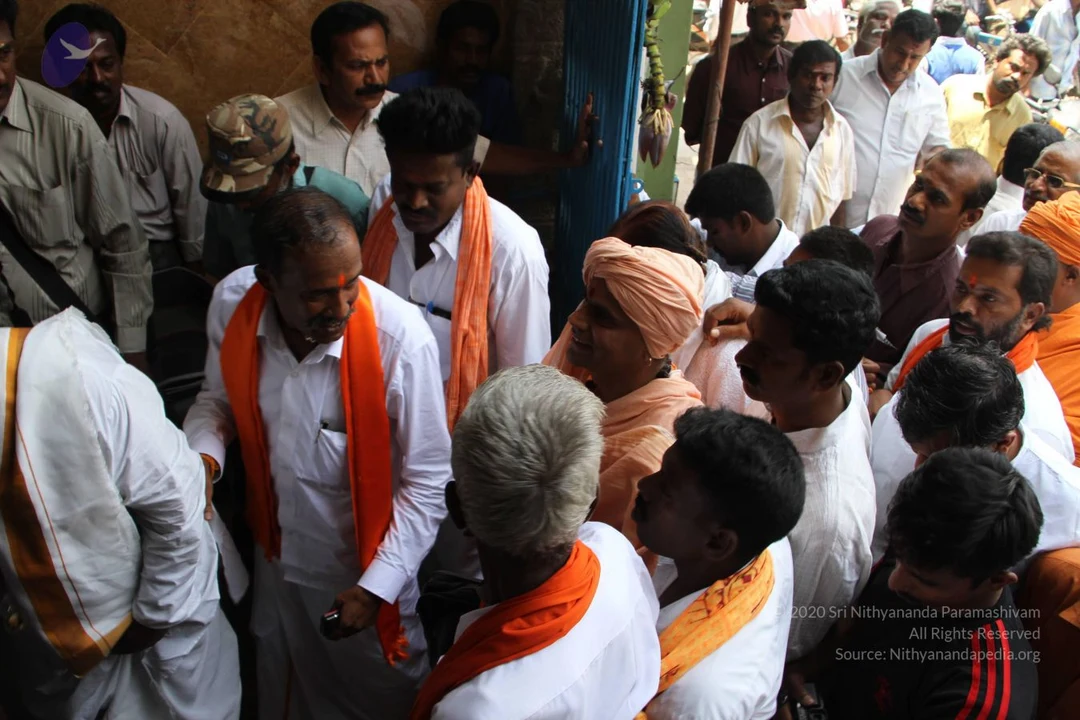
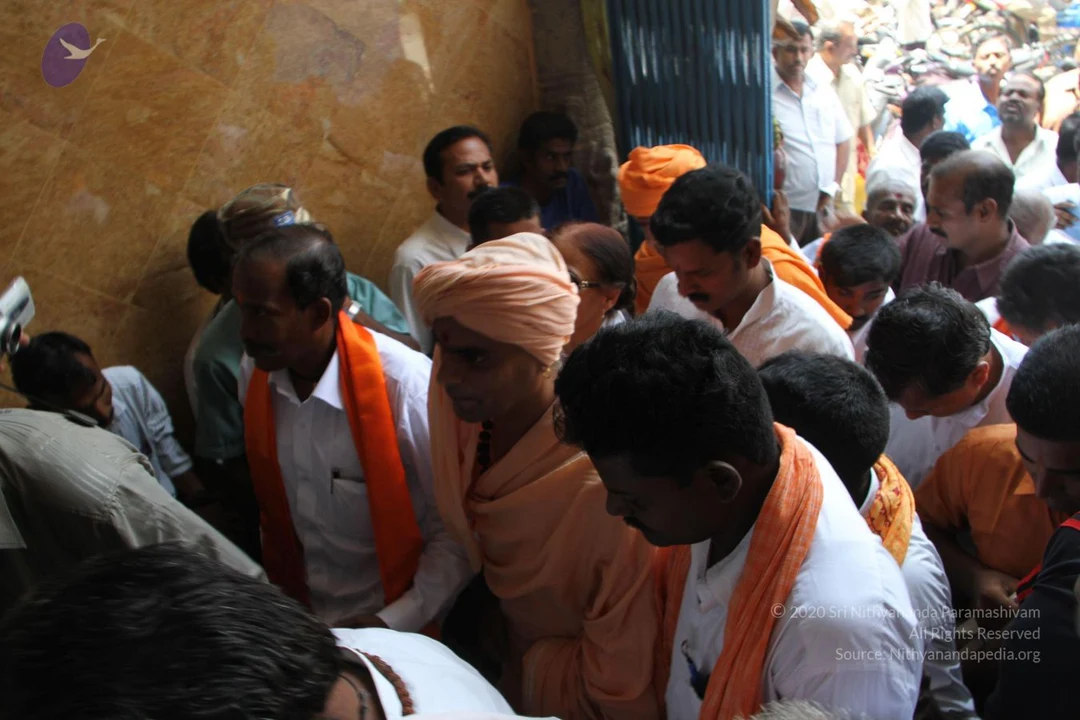
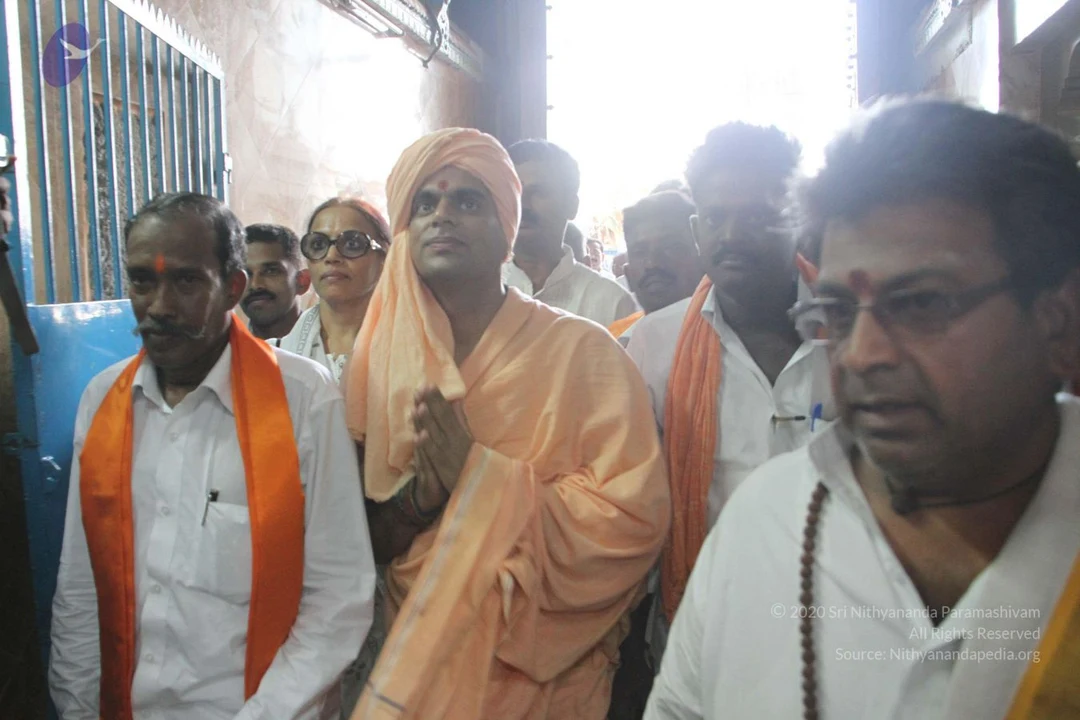
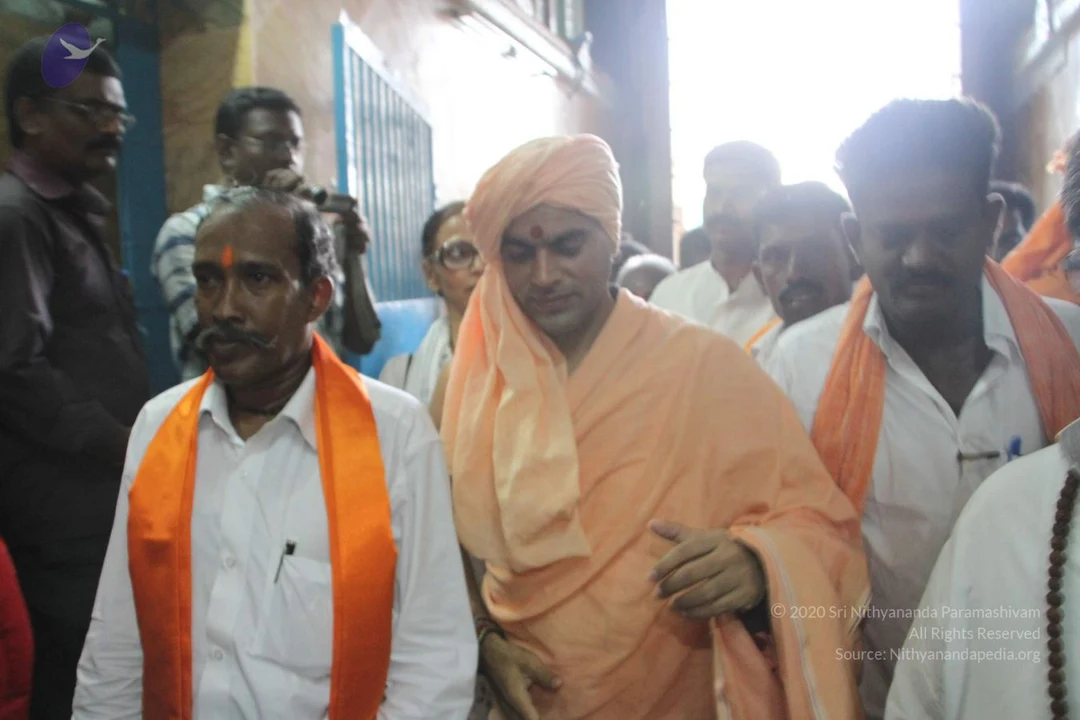
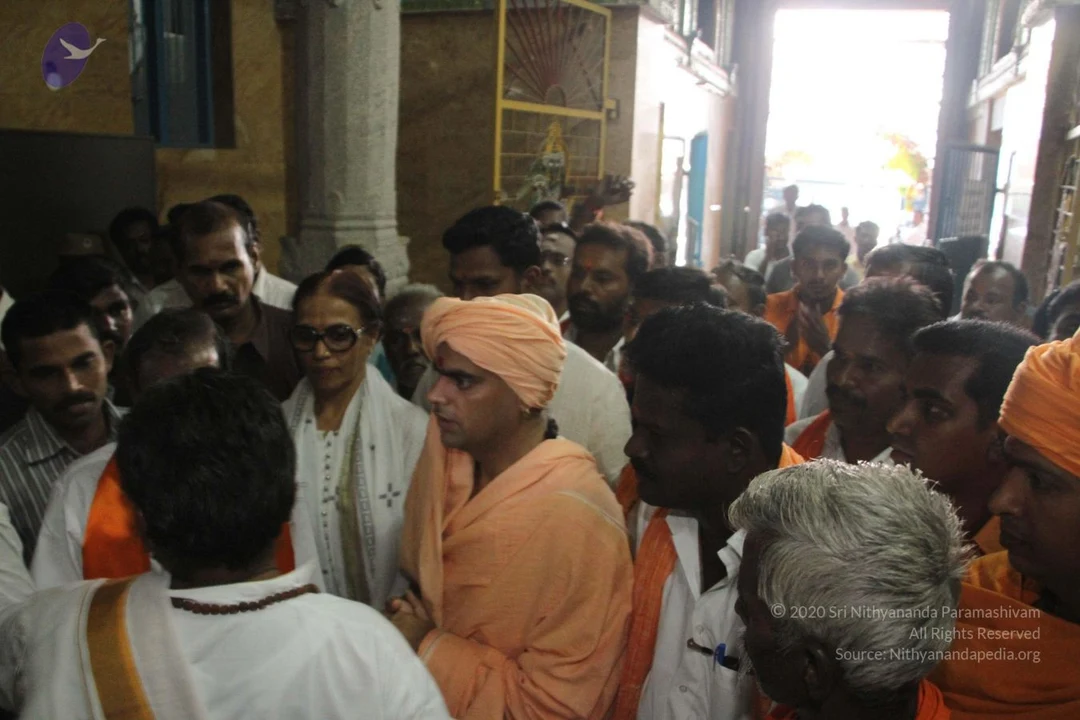
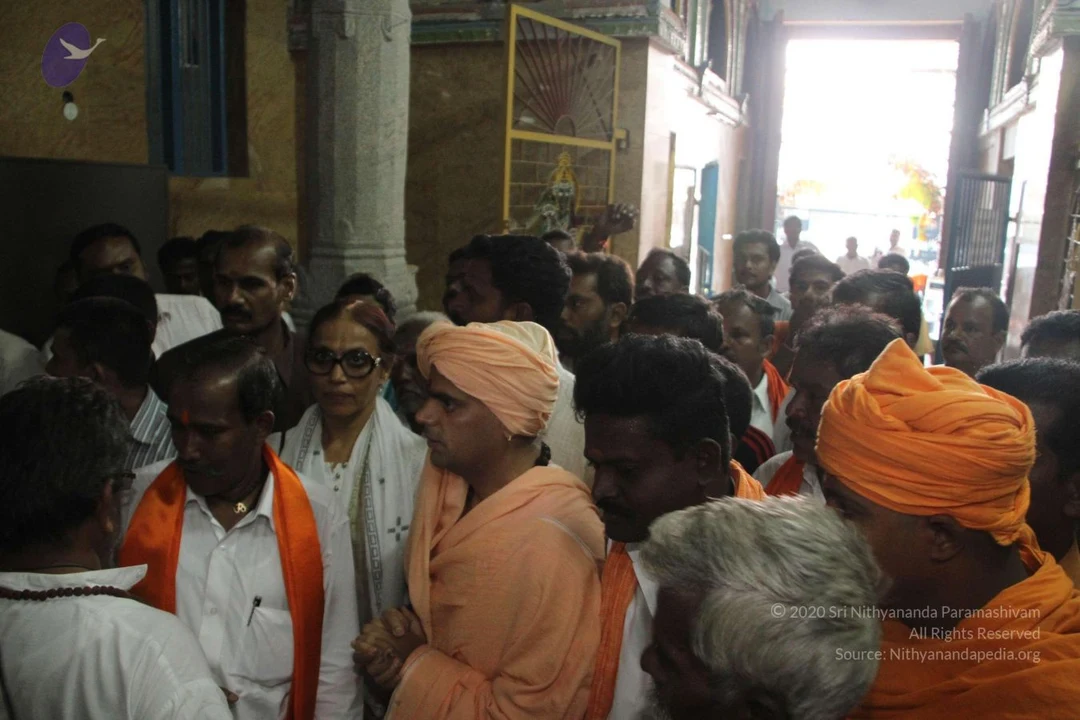
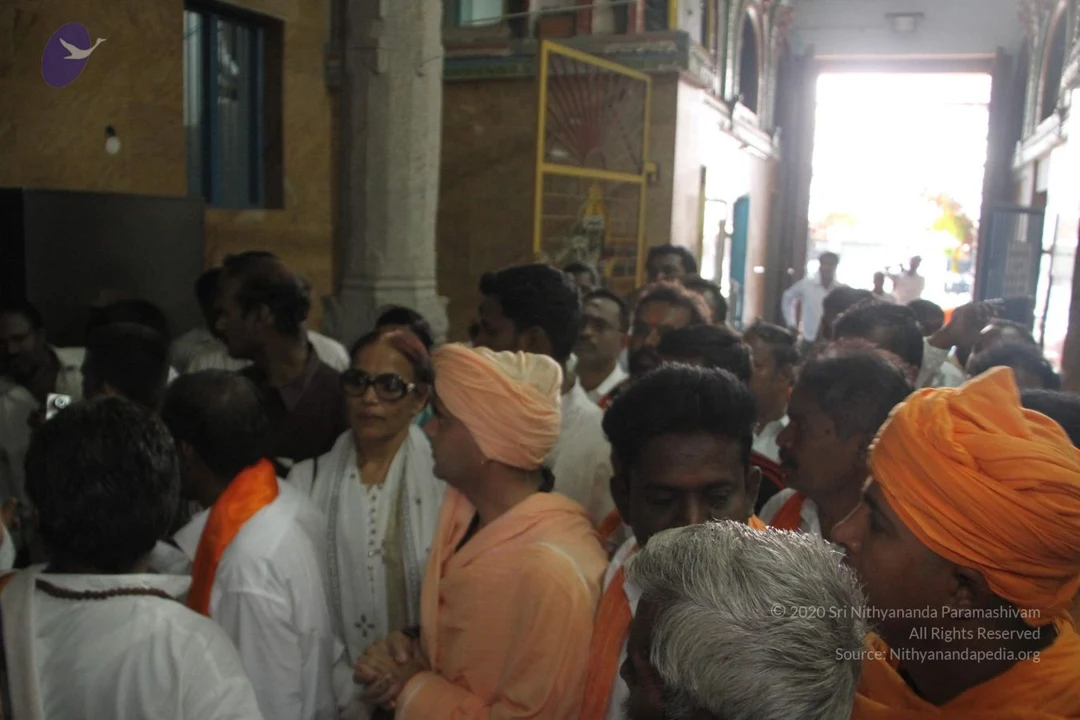
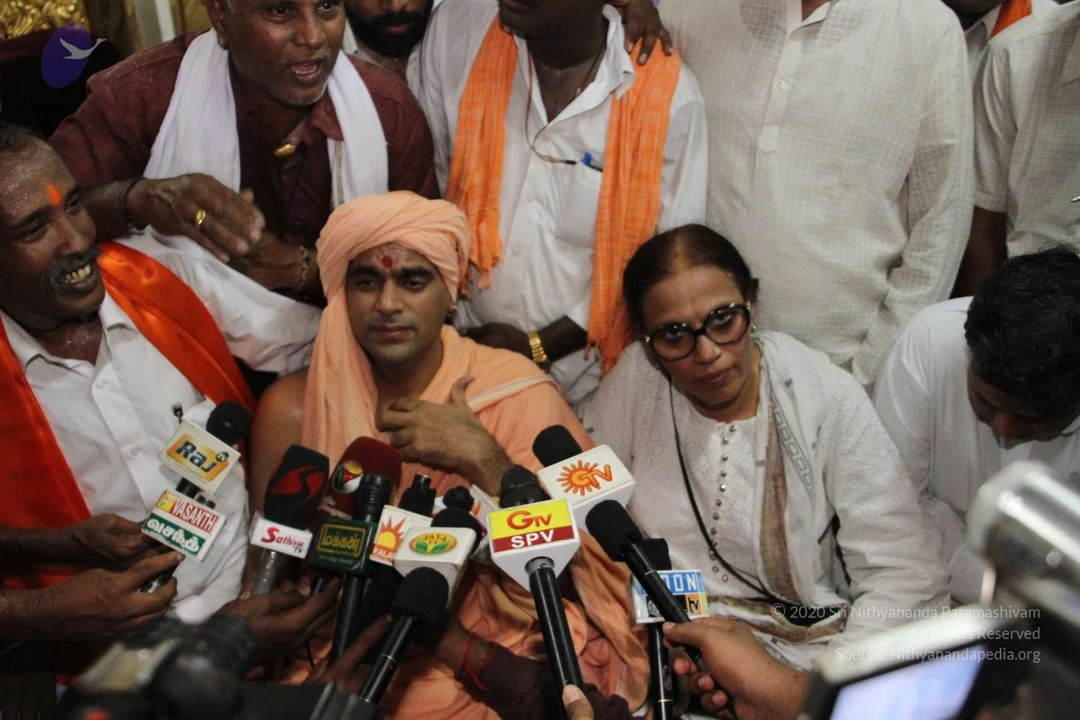
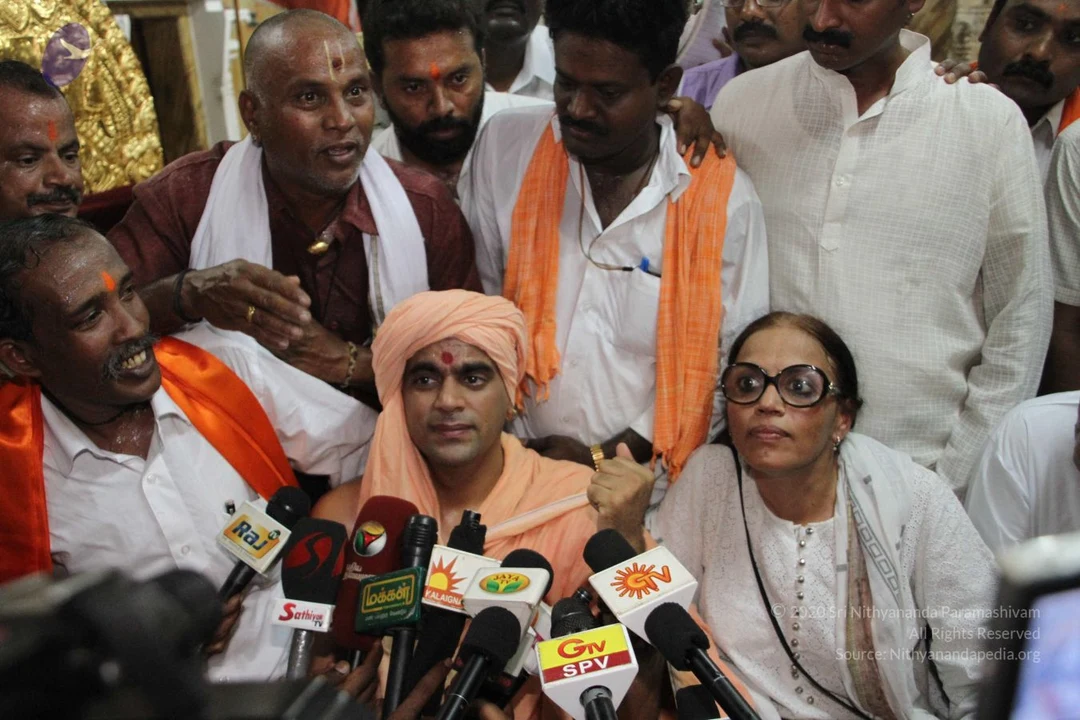
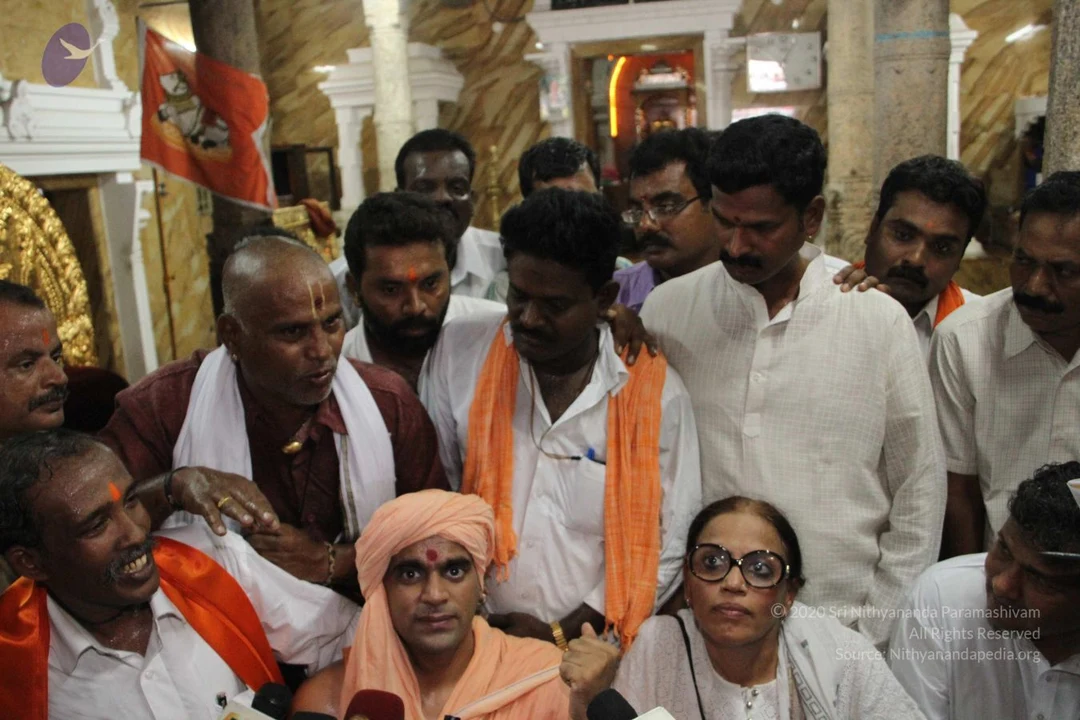
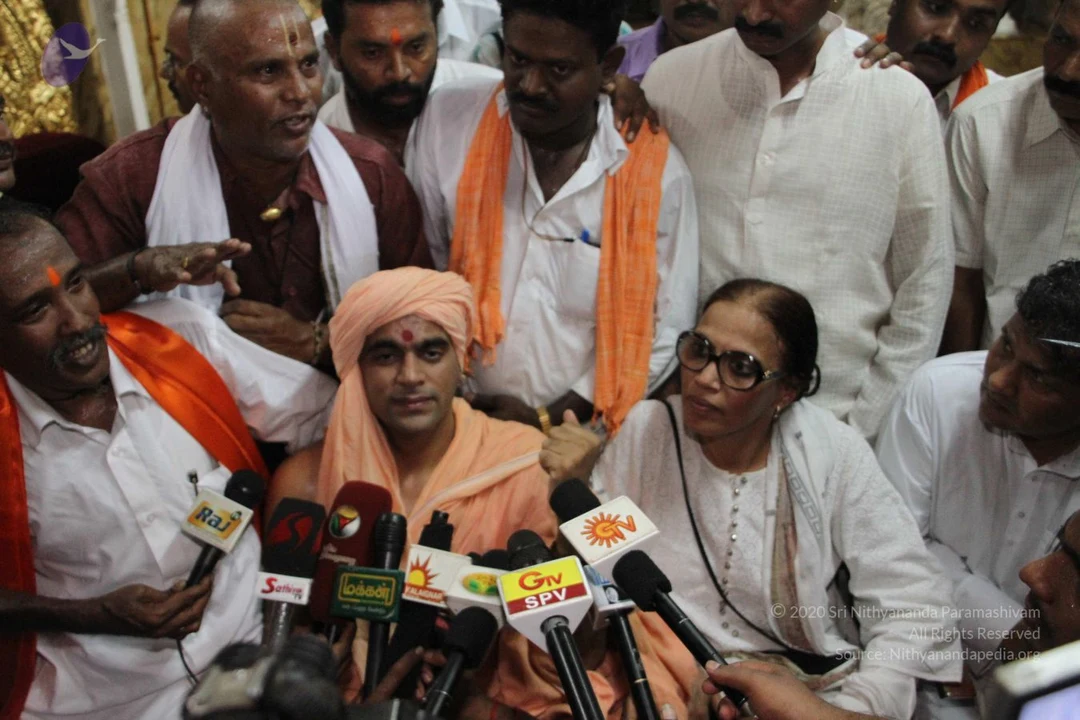
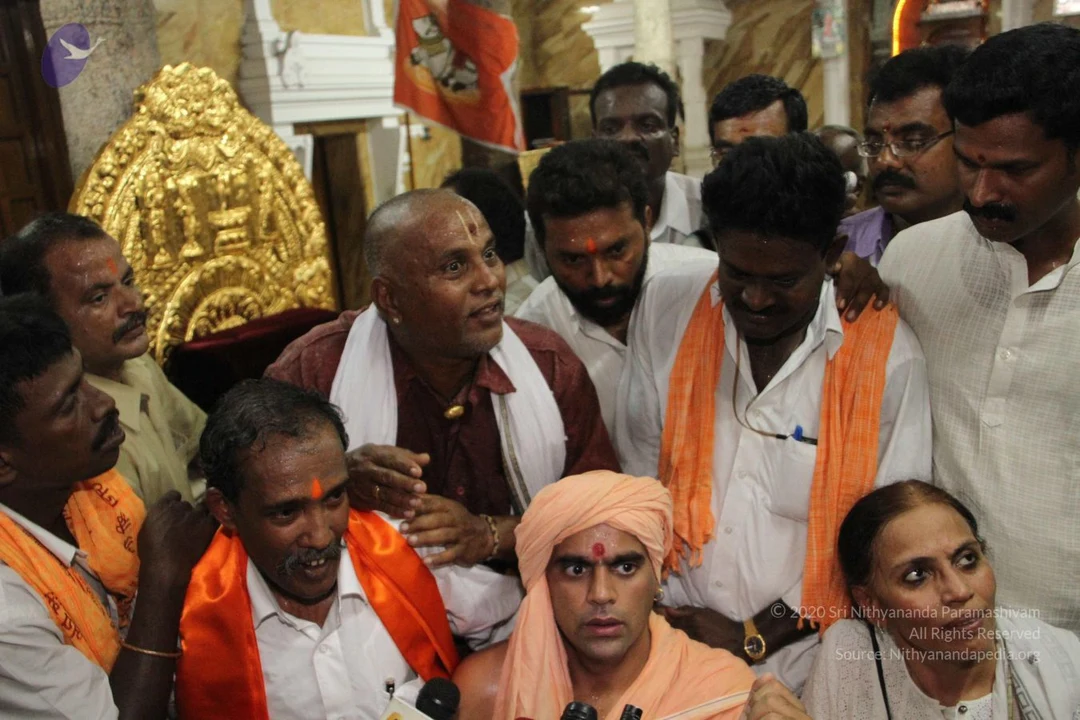
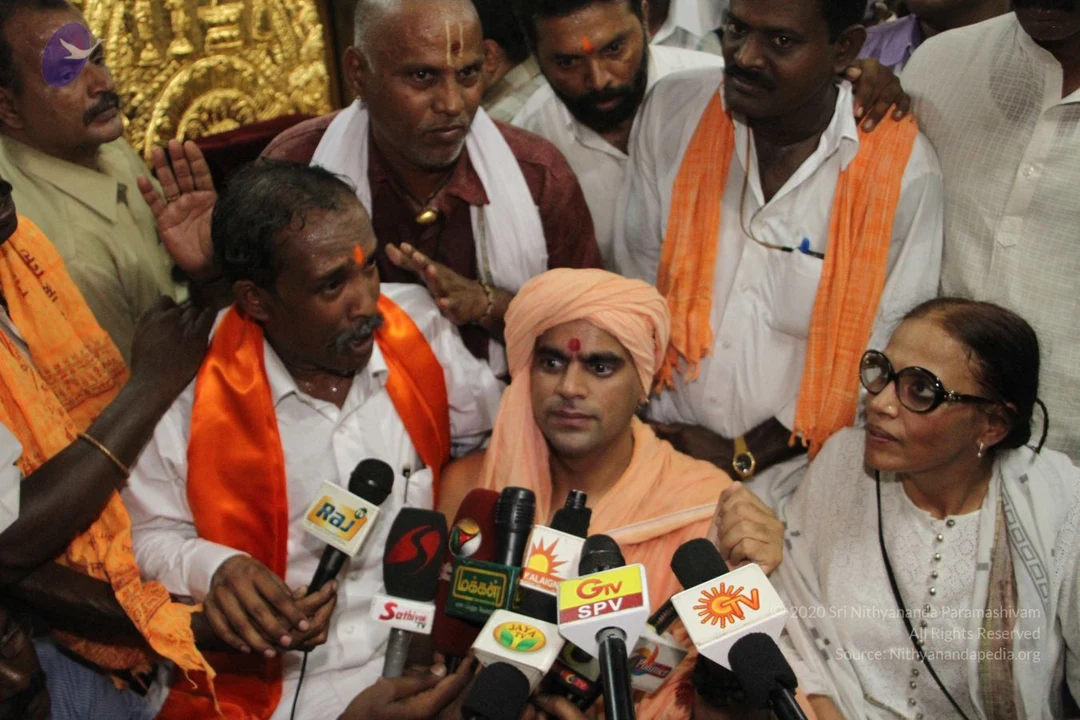
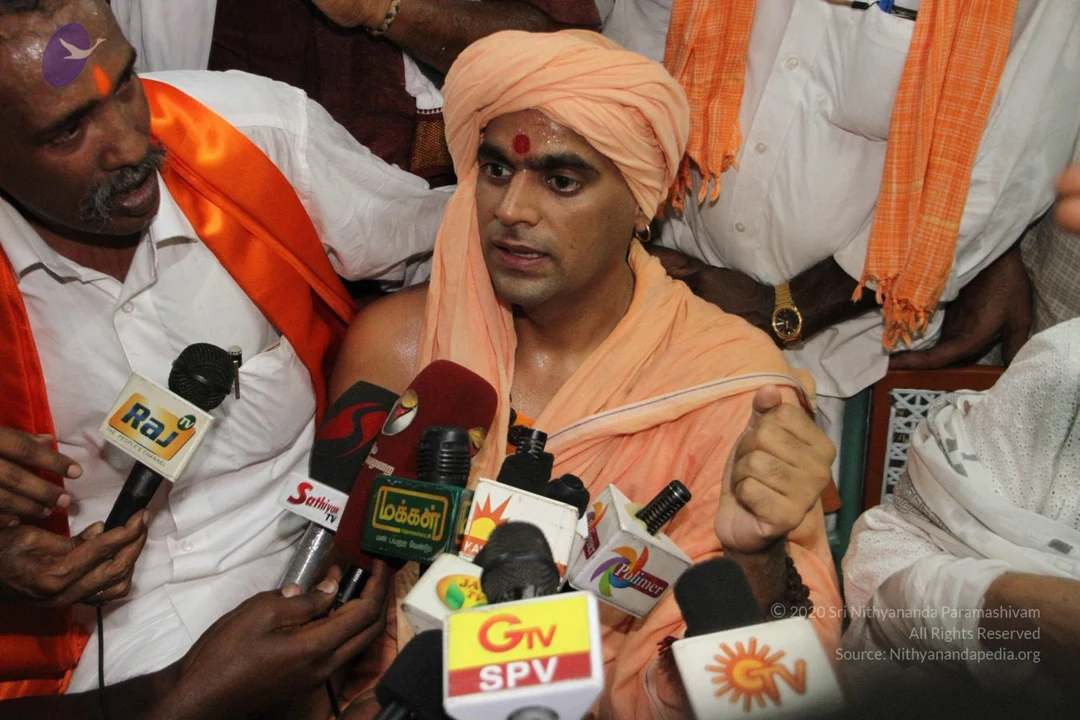
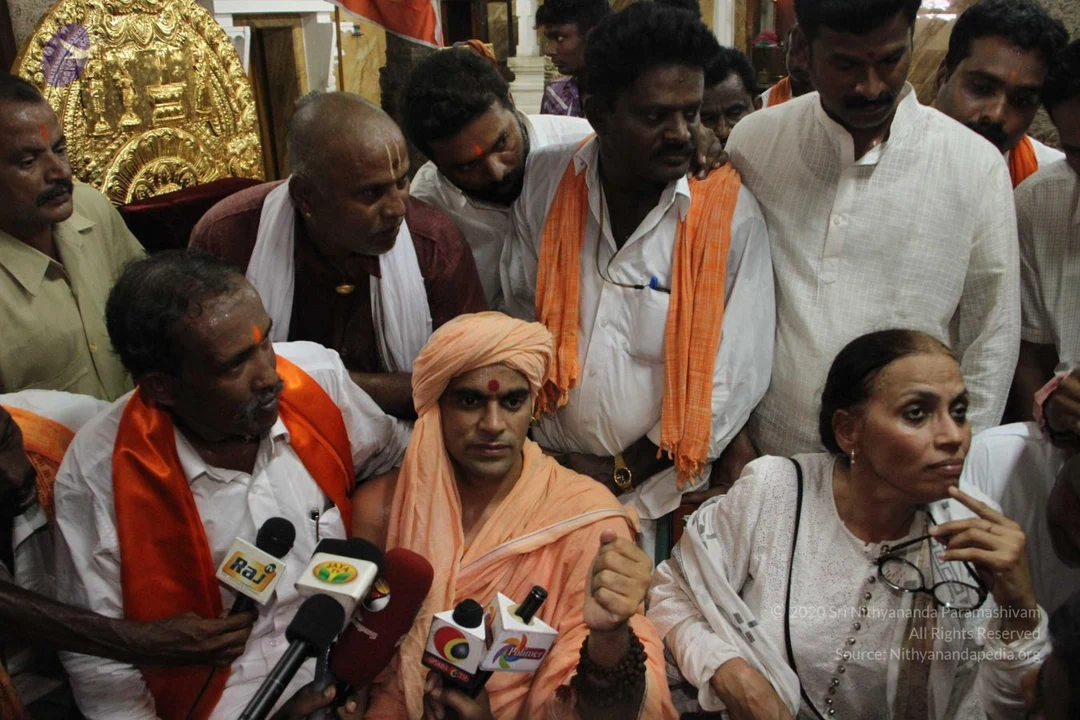
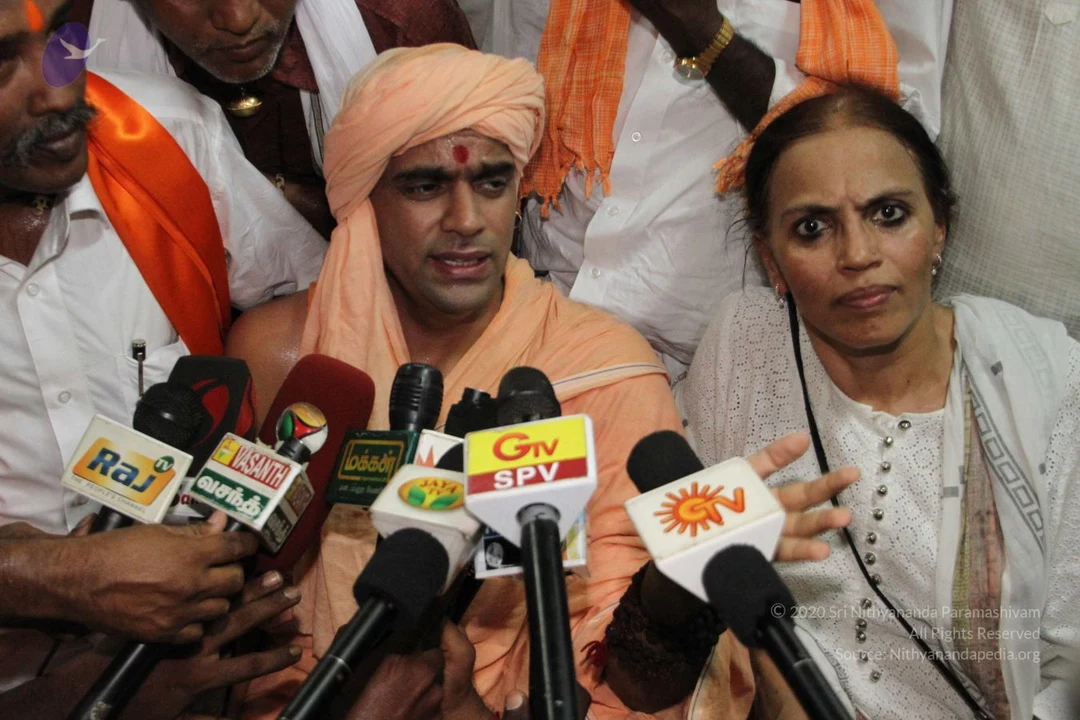
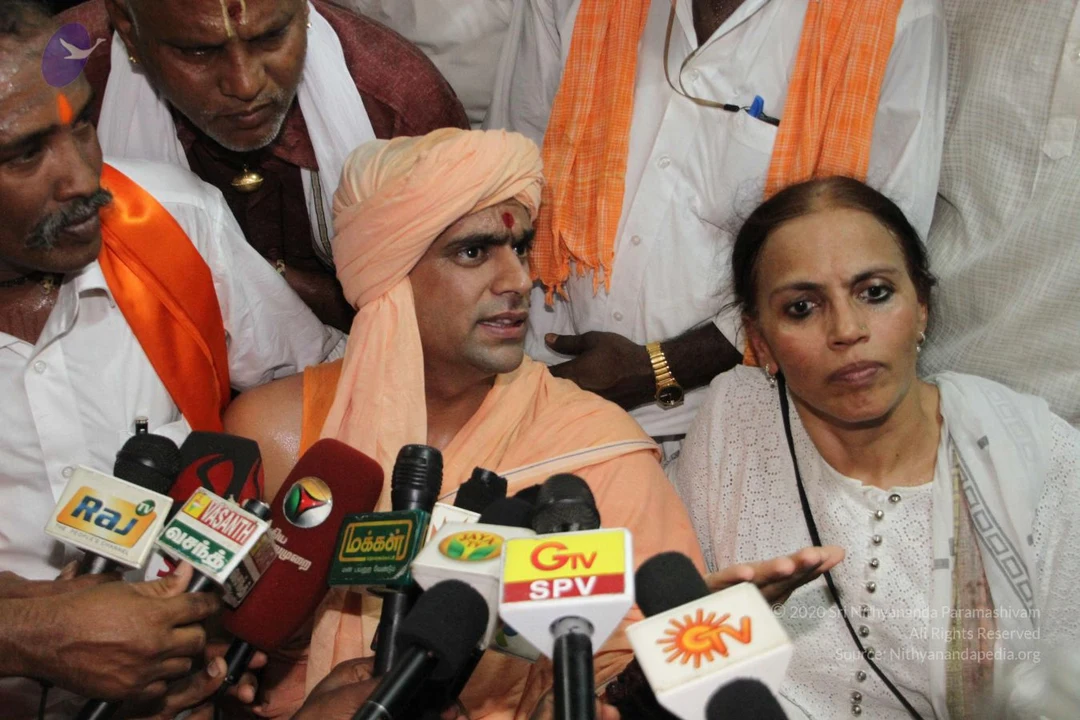
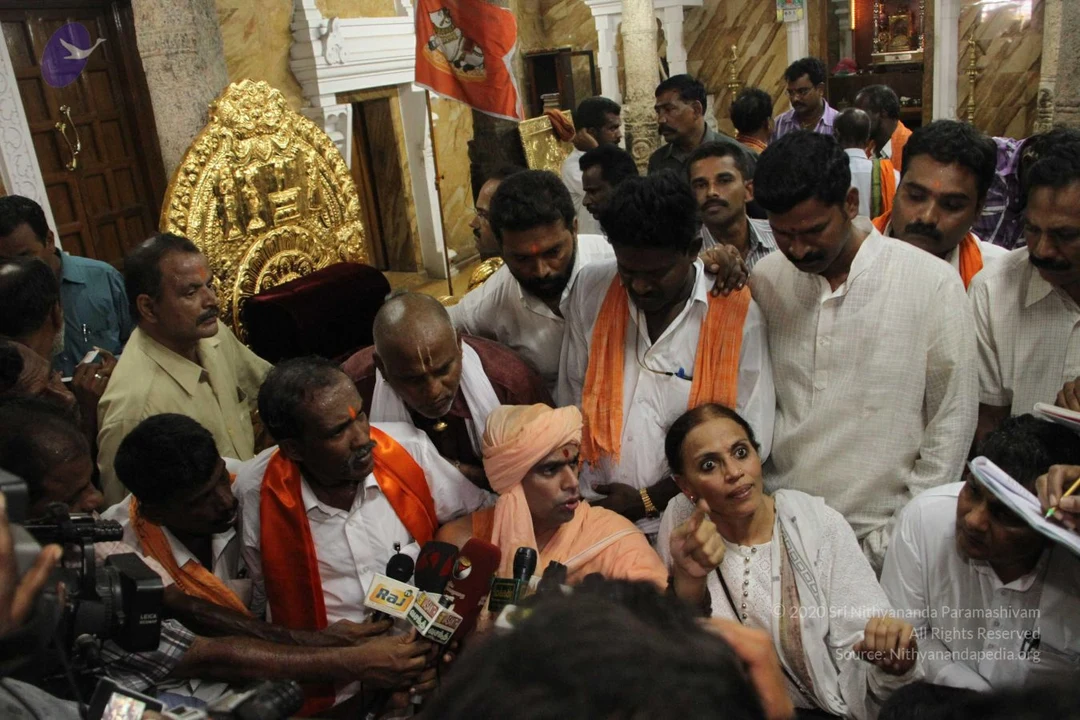
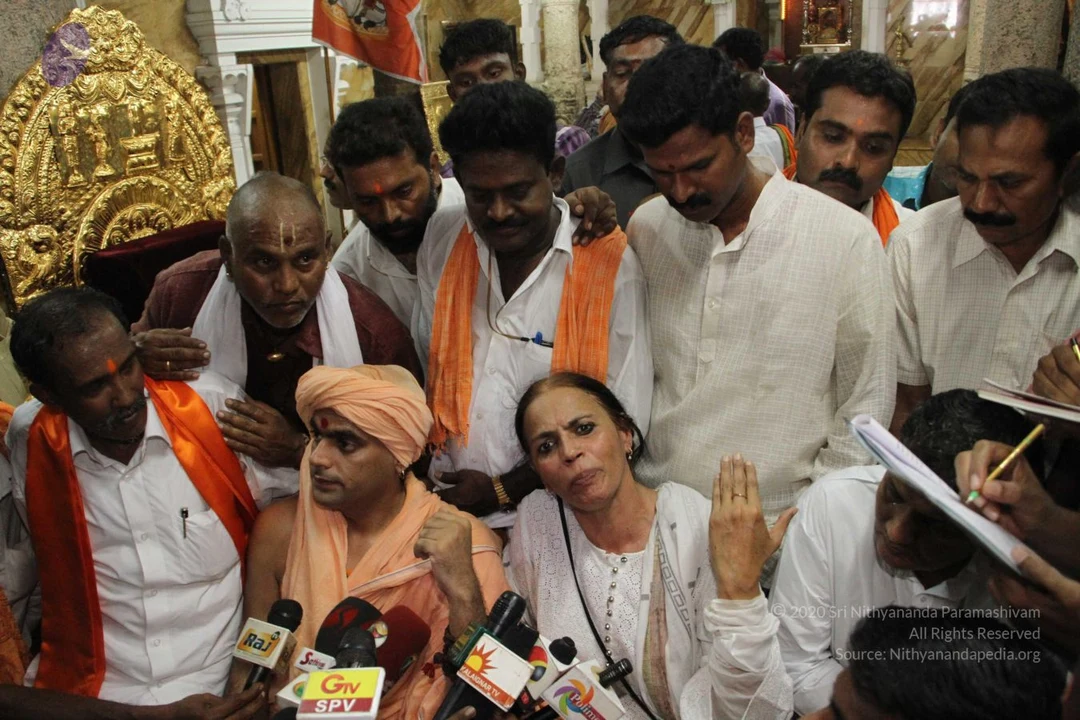
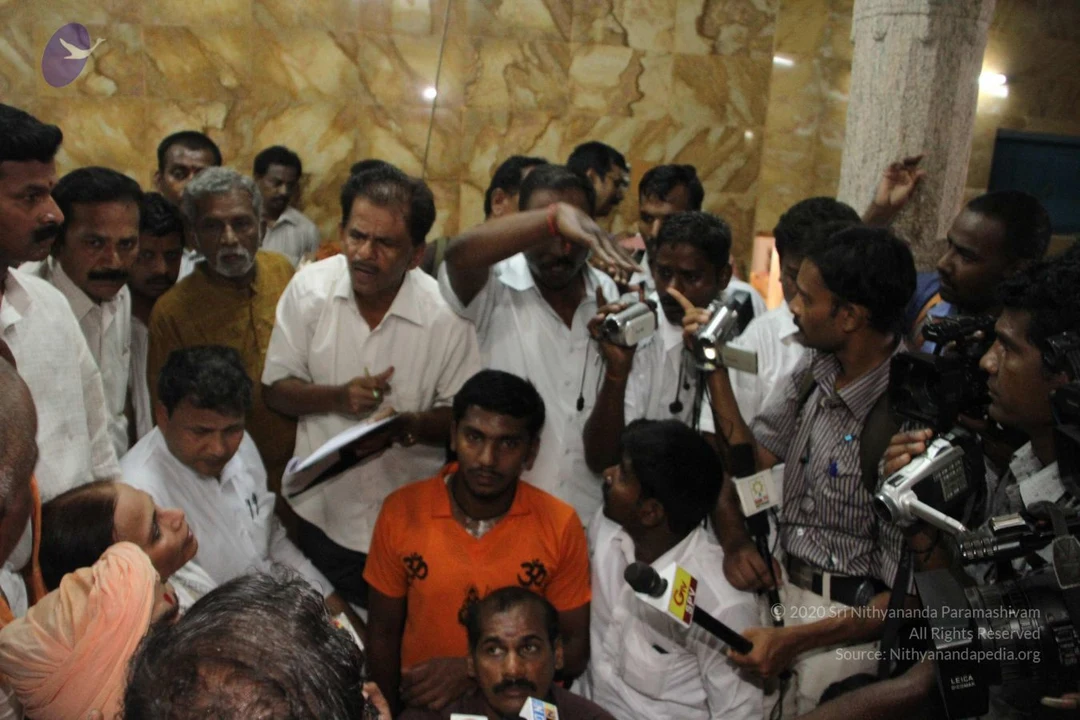
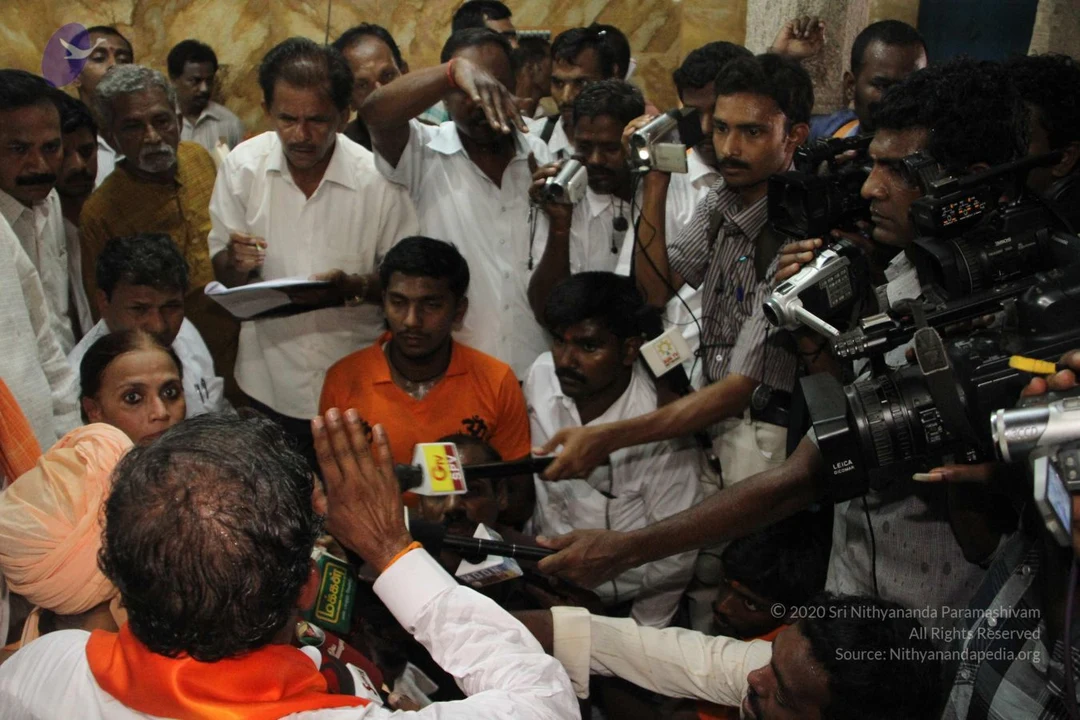
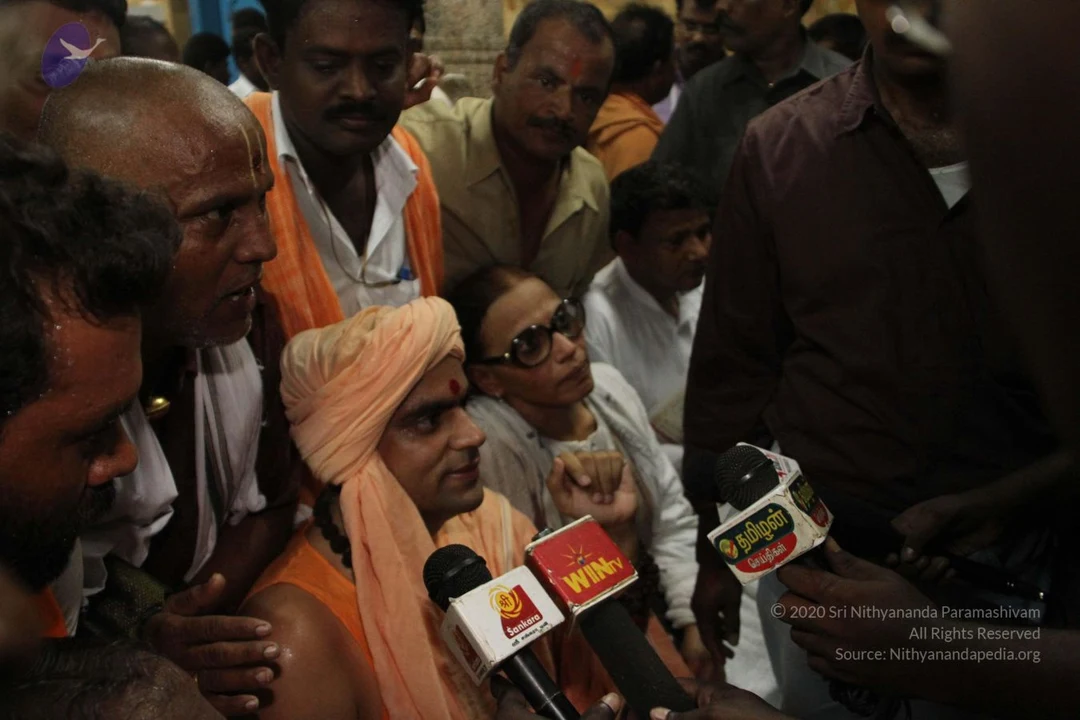
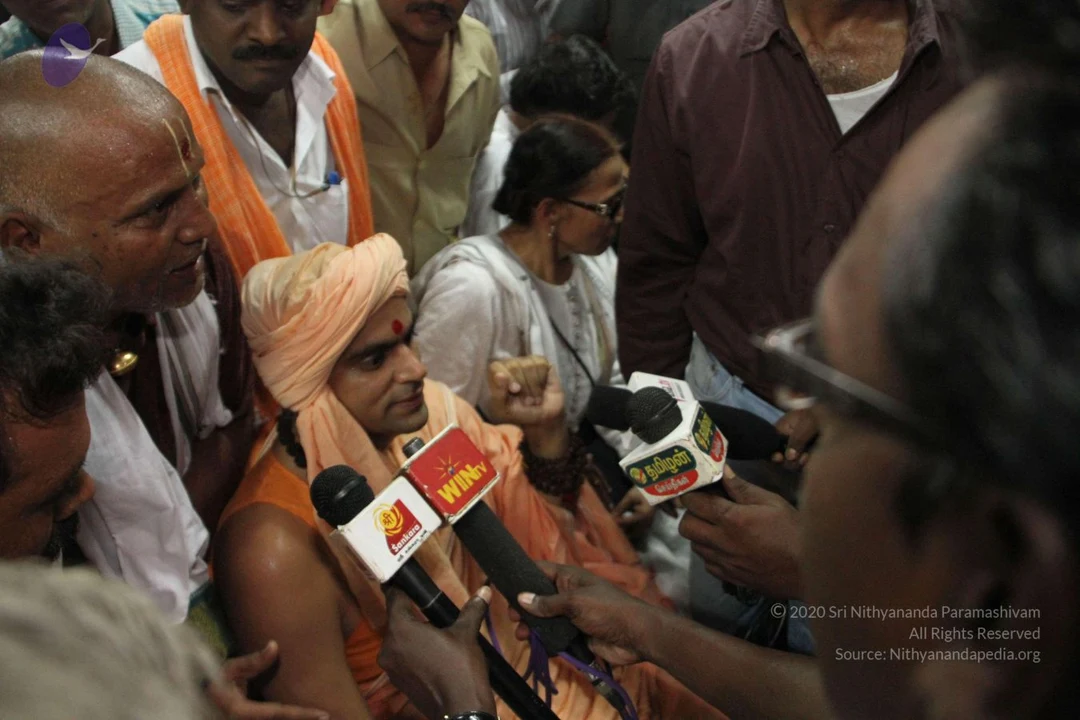
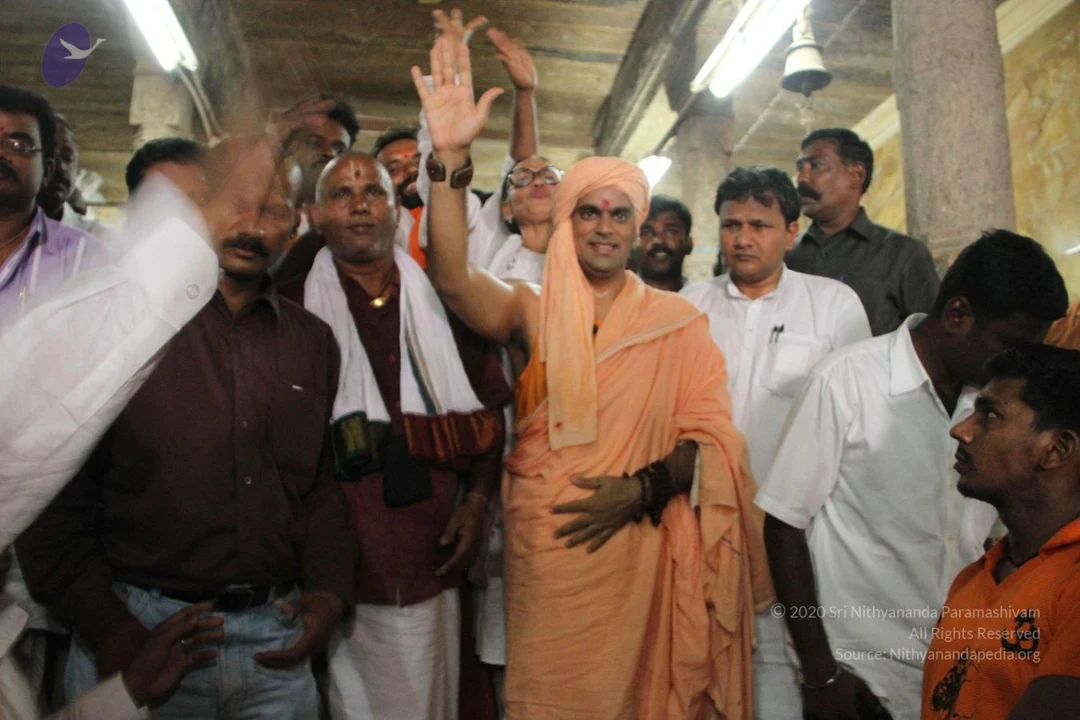
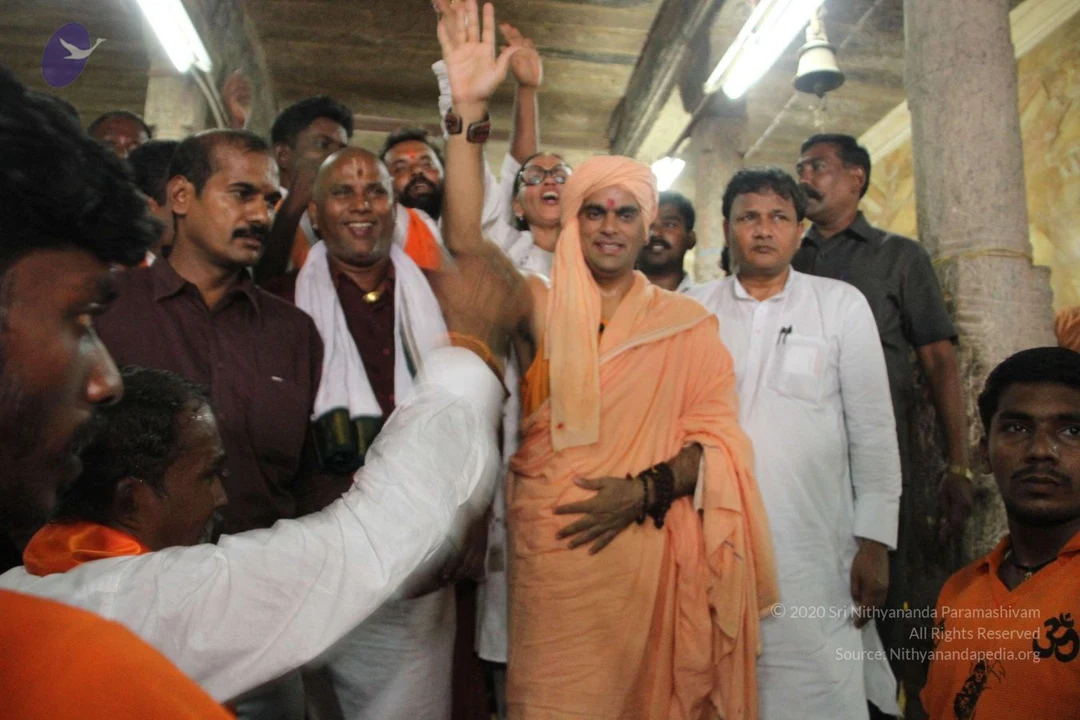
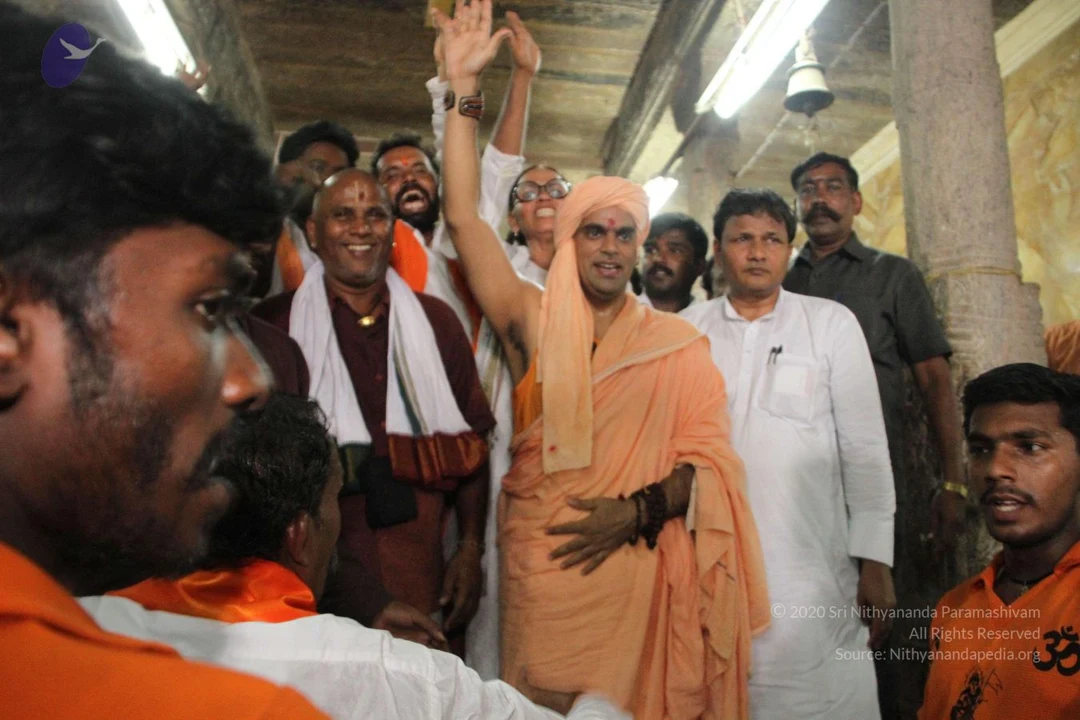
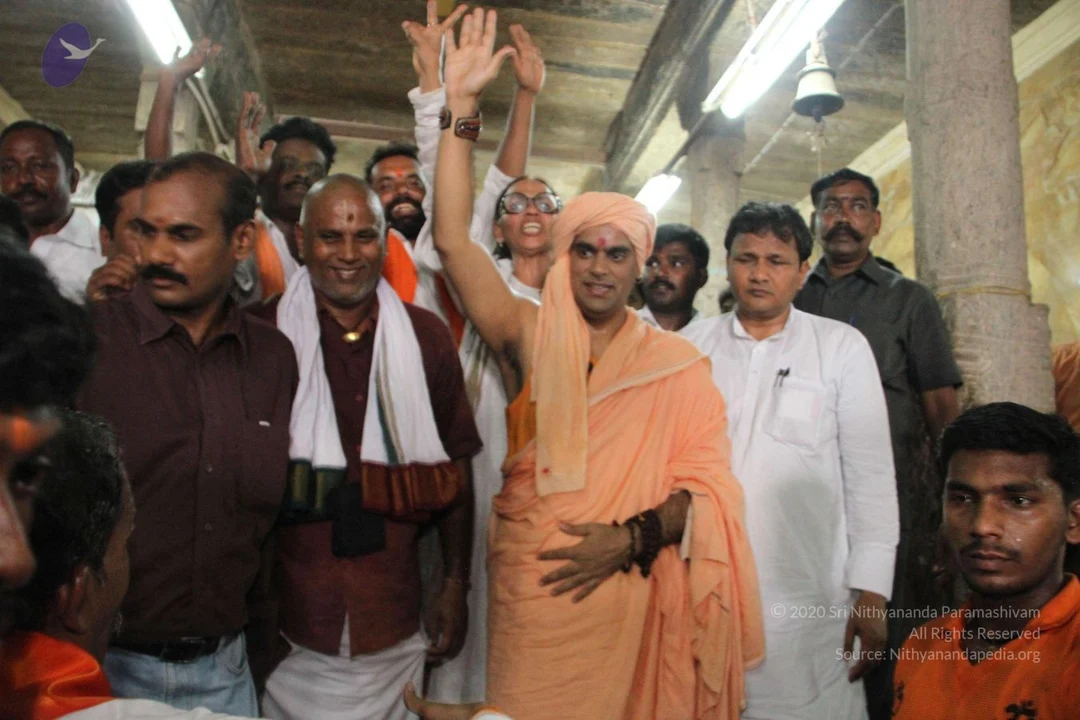
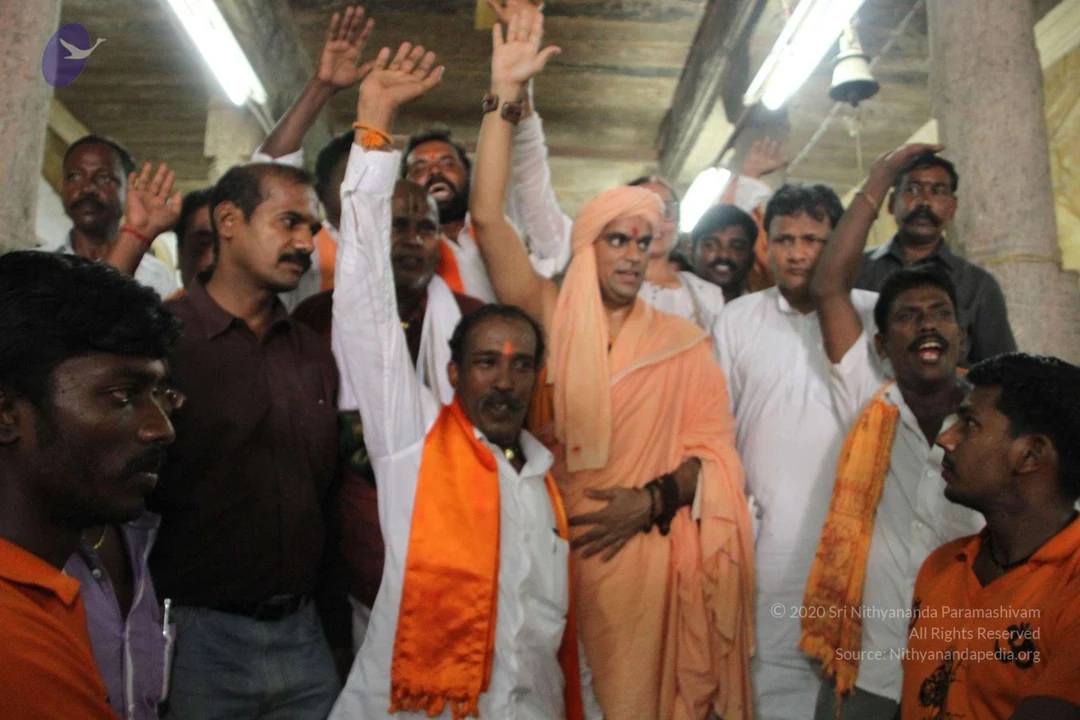
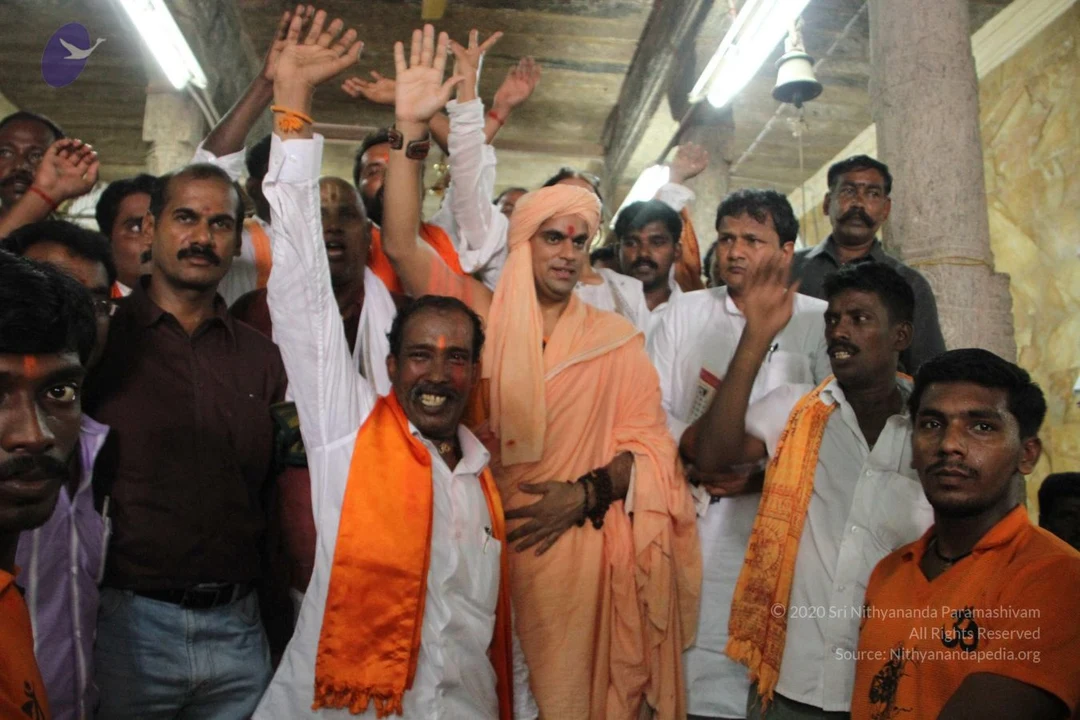
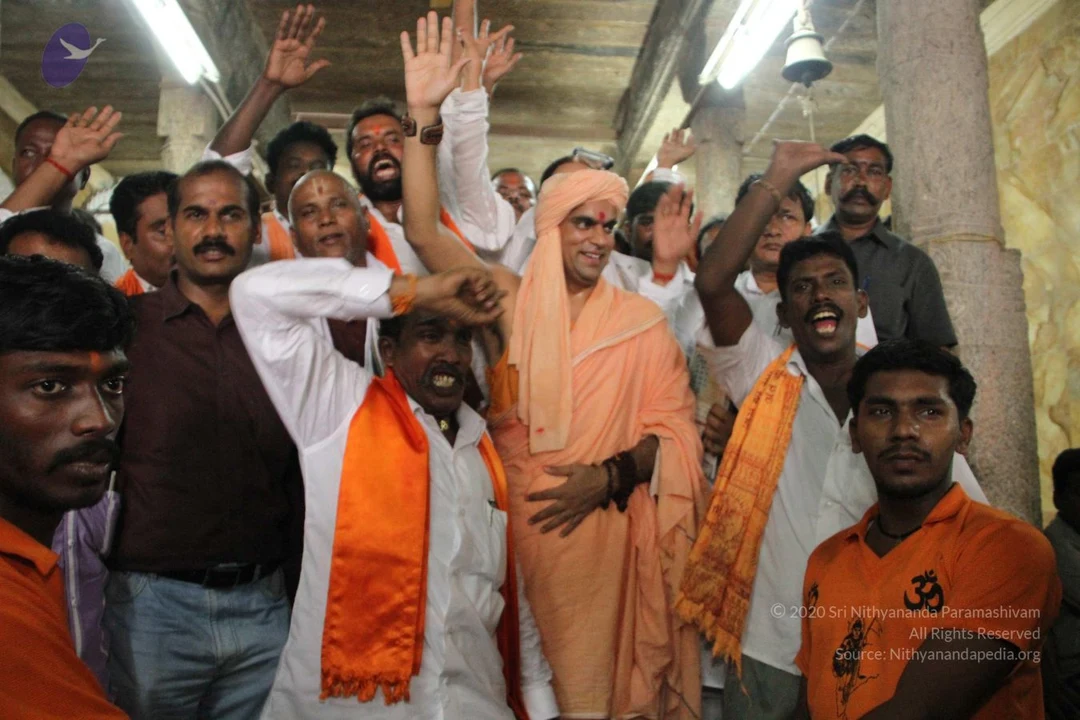
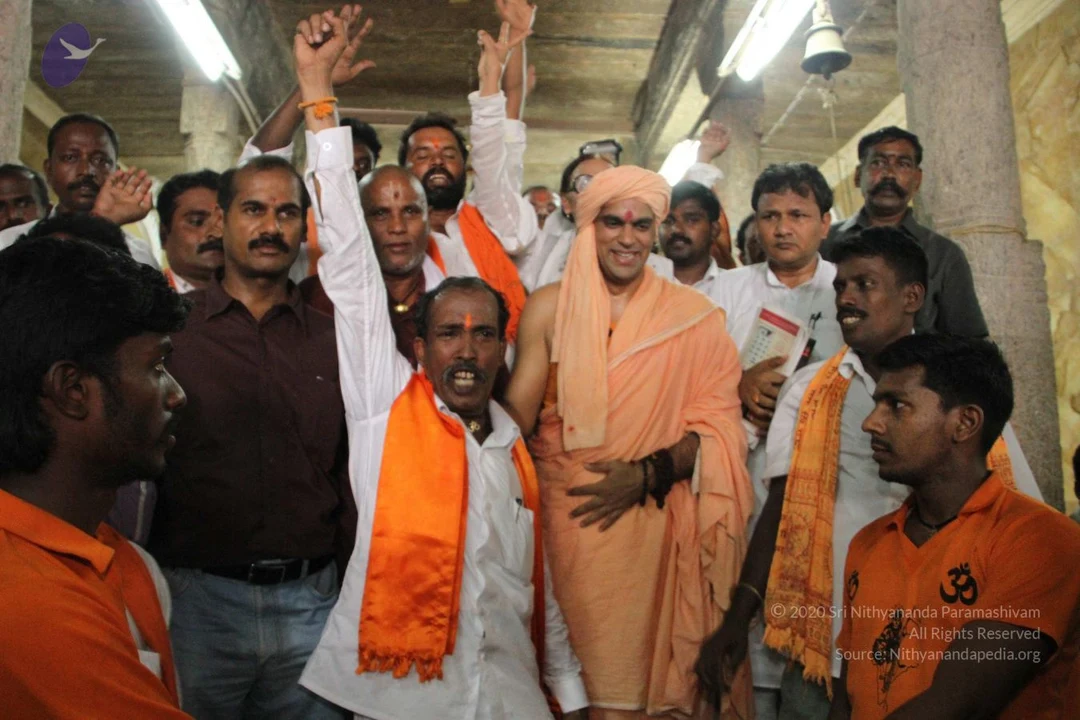
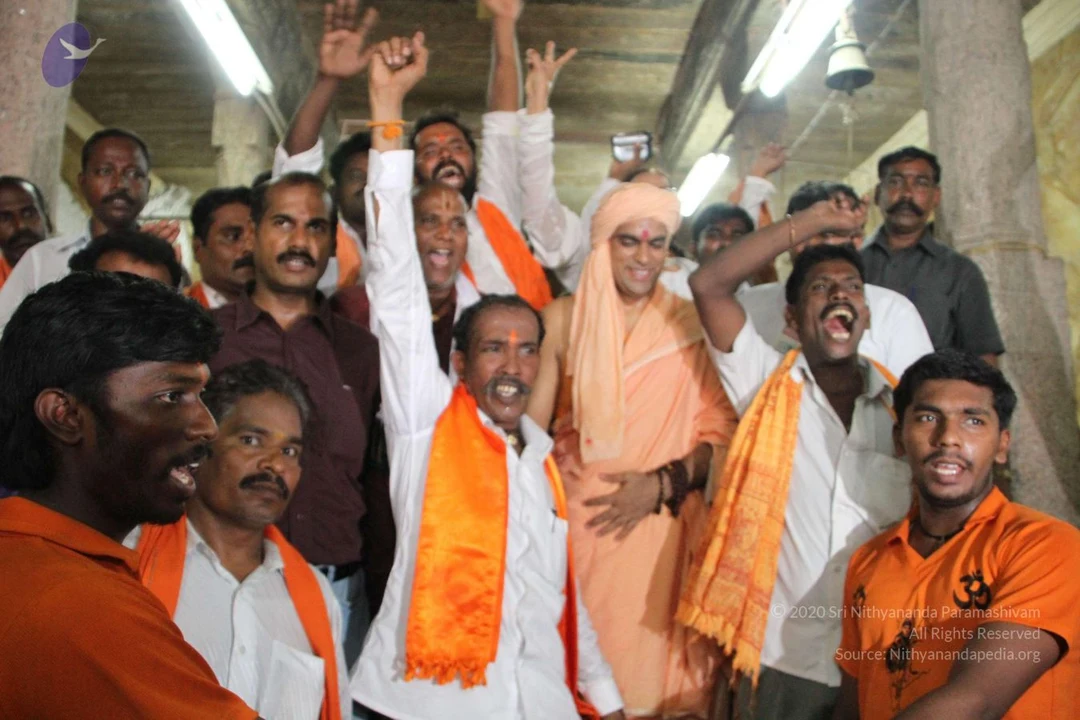
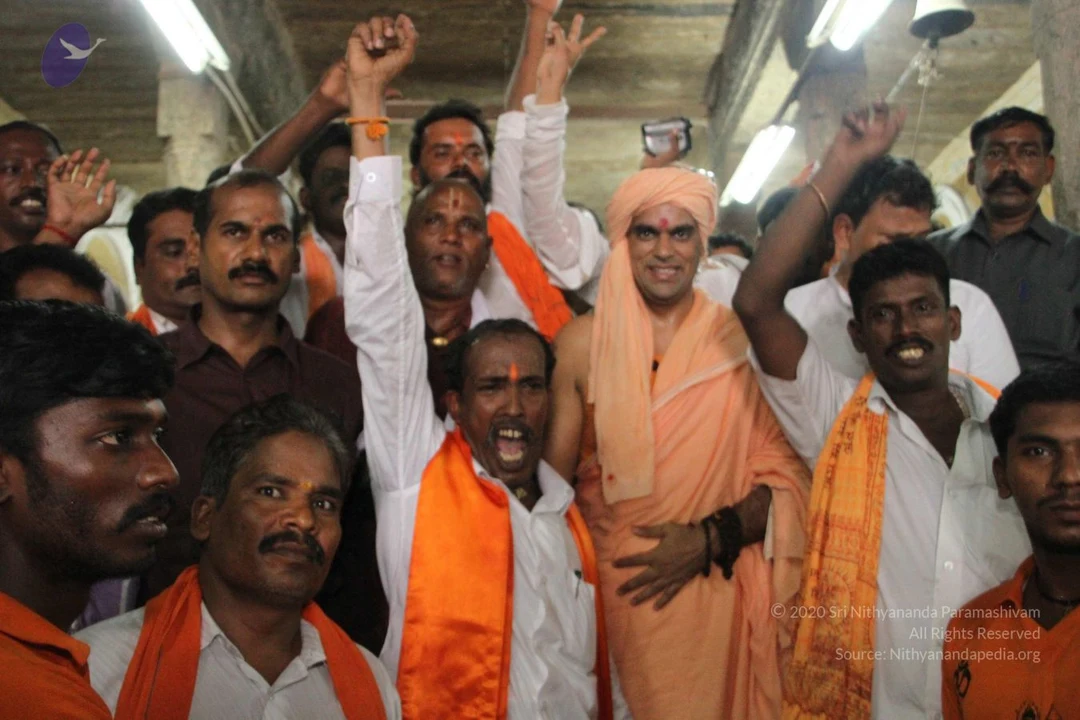
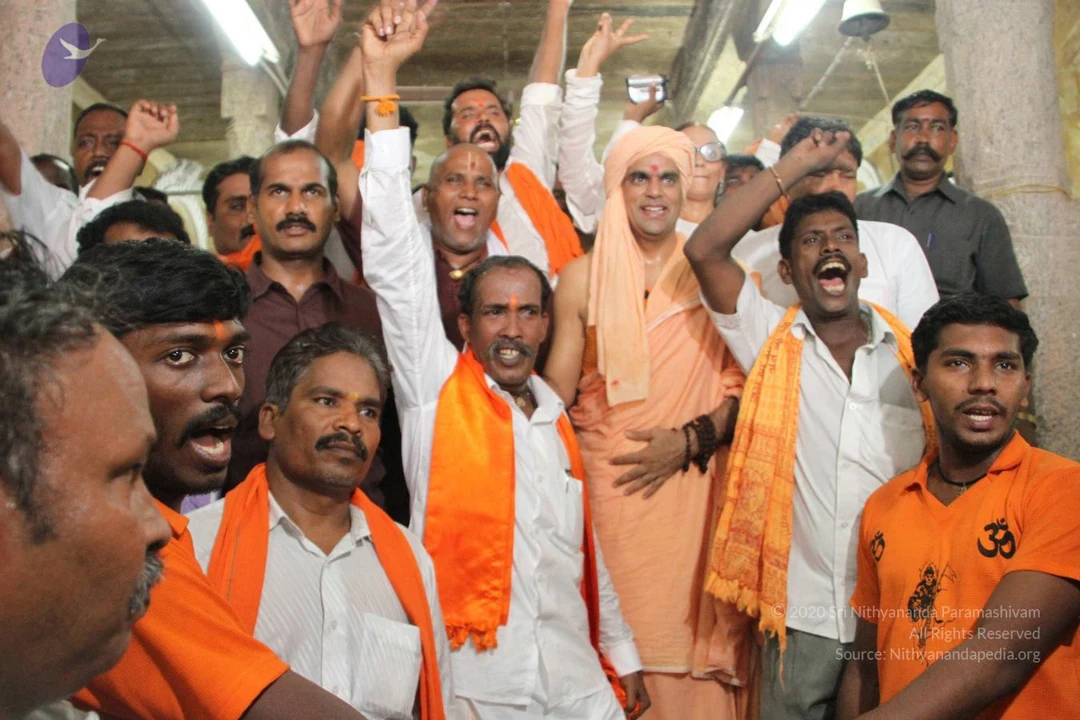
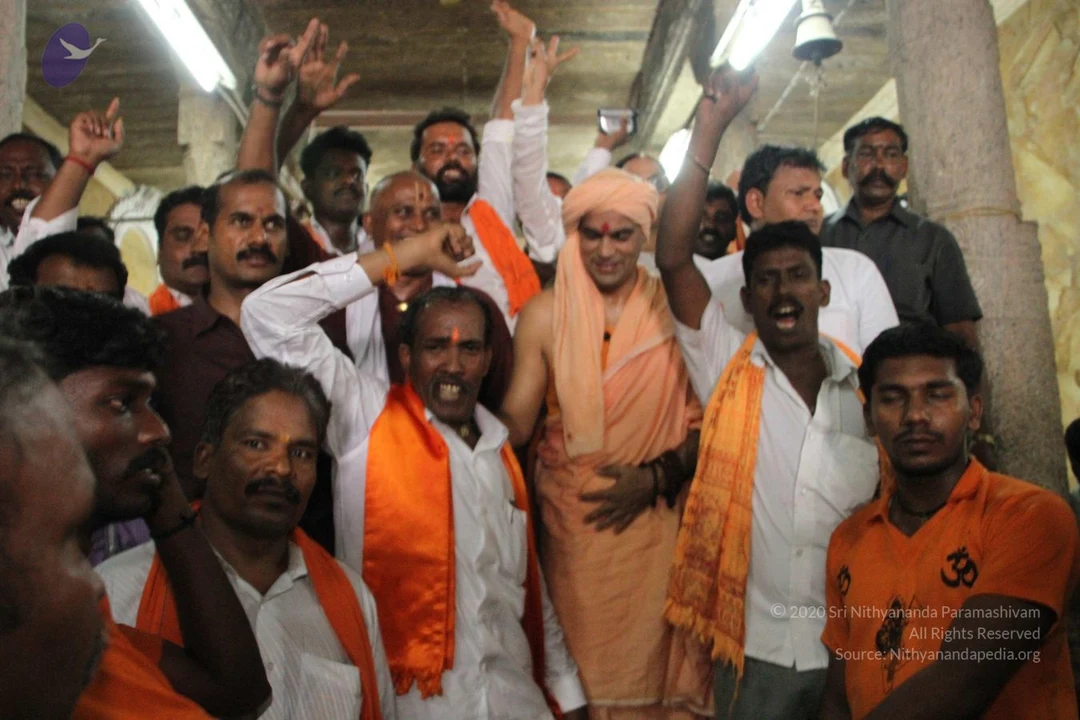
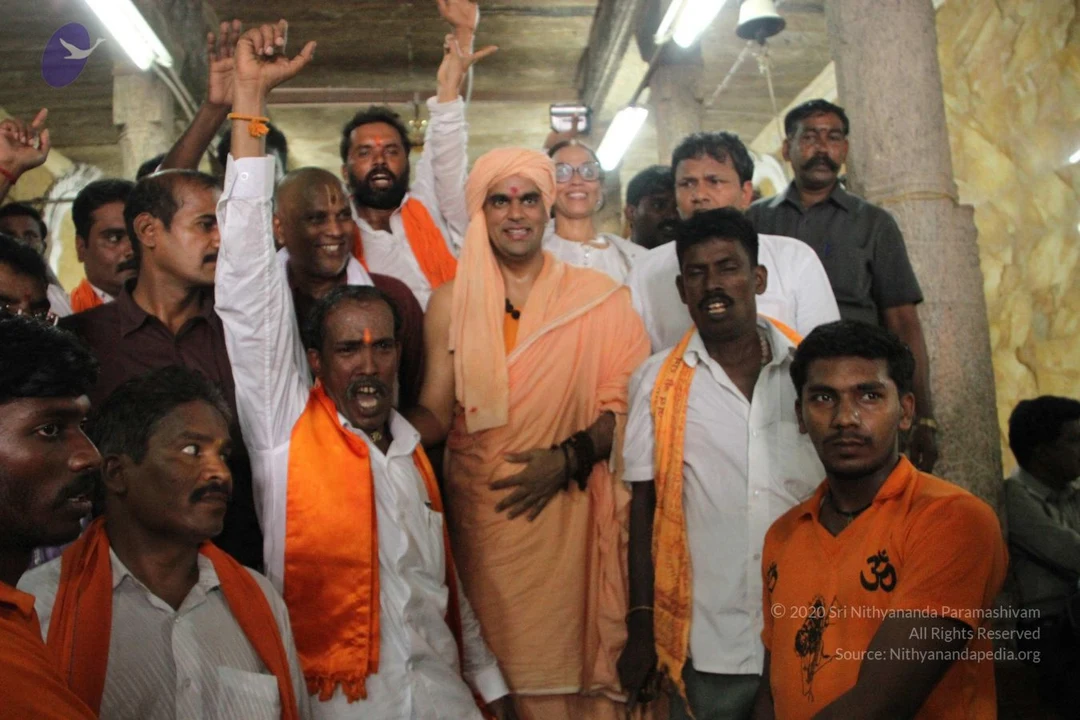
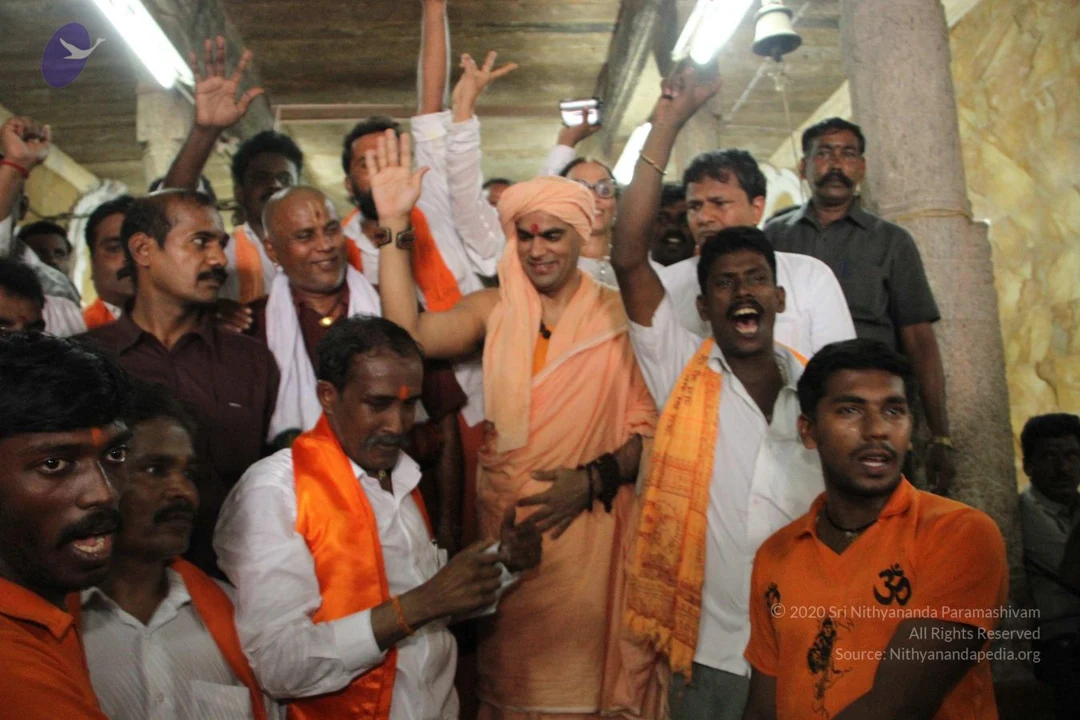
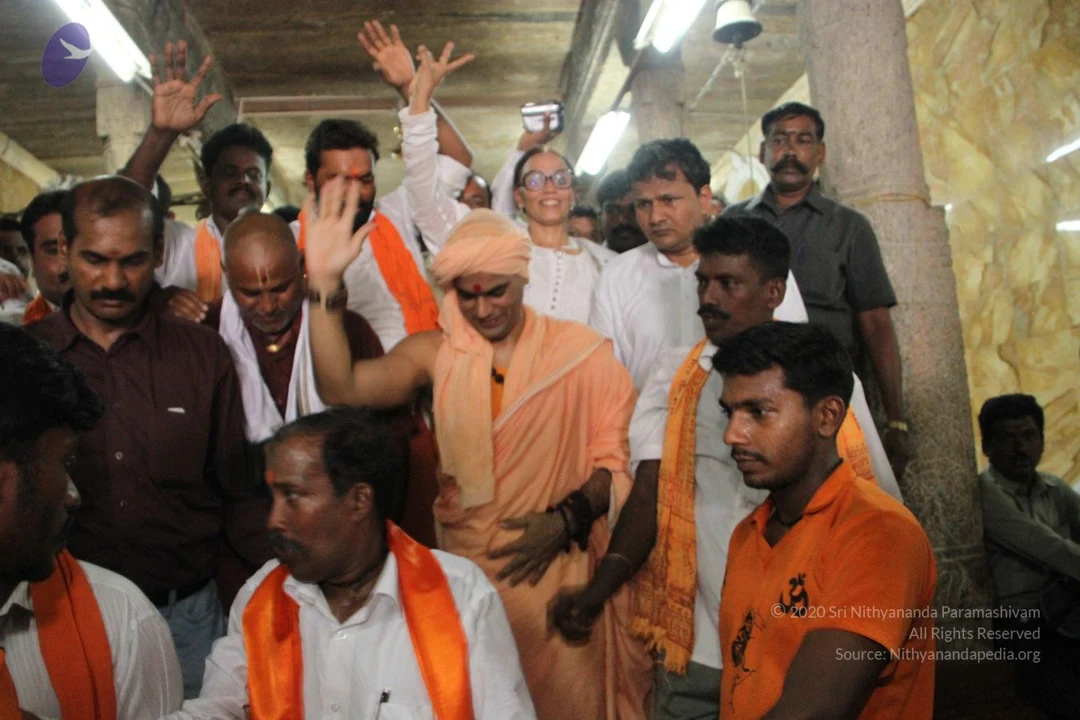
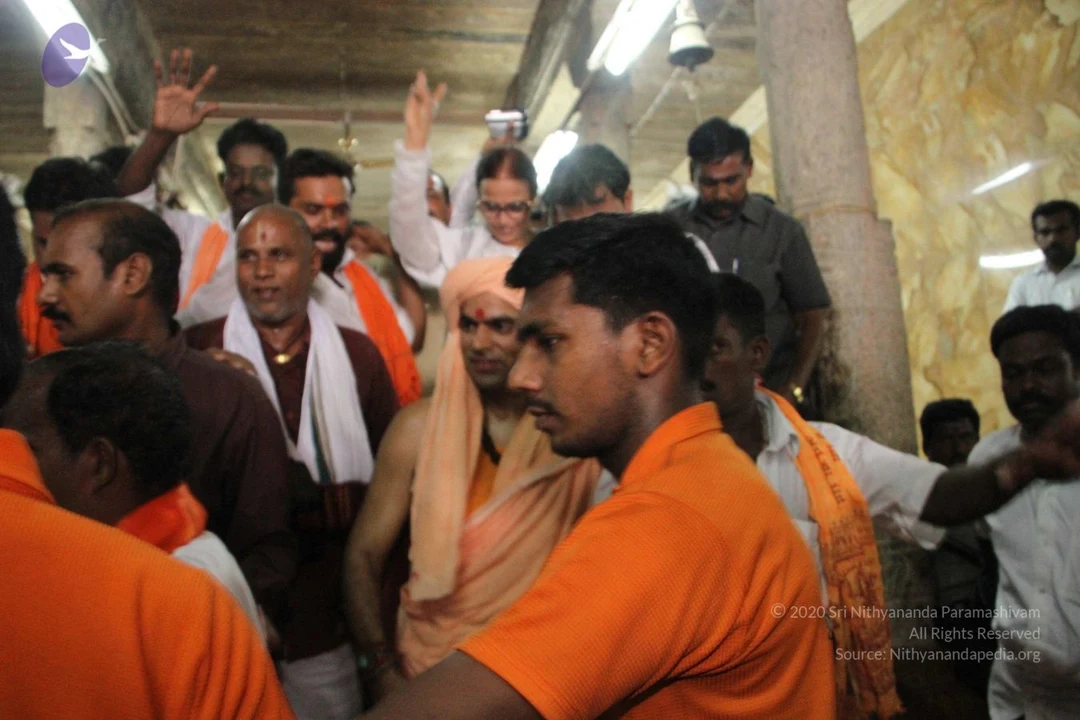
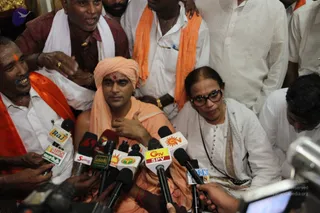
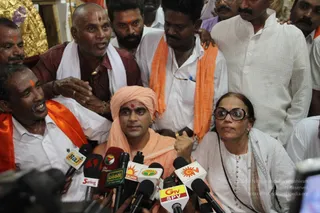
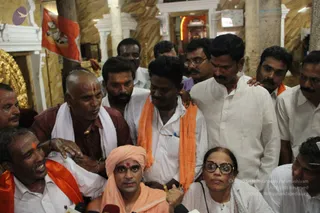
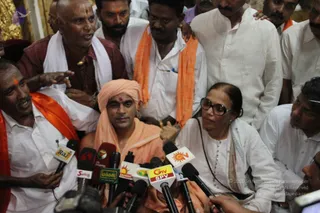
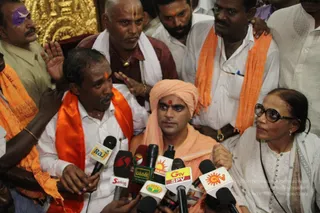
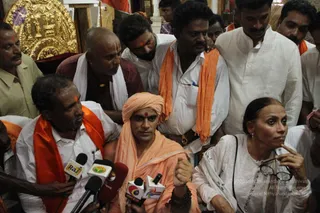
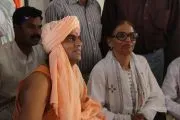
A press scrum at a temple-like setting. A man in a saffron-peach turban with a red bindi and a peach shawl sits centrally, gesturing while speaking, surrounded by microphones from Tamil TV channels including Sun TV, Raj TV, Sathiya, GTV and others. To his right a woman in white with dark-framed glasses and a long beaded necklace sits close, and men in white shirts with orange shawls press in from behind. Several microphones are held up by reporters at the lower edge. Swamiji (probable): the seated central figure wears a saffron-peach turban and shawl with a red forehead mark, matching the page's claim of his presence, though the appearance is only partly clear.A press scrum inside a temple-like hall with gold-coloured decor at left. At centre, a man in a peach-saffron wrap with a red bindi sits surrounded by microphones from several Tamil TV channels, including Sathiyam, Raj, Makkal, Sun, Polimer, Kalaignar and Gemini-style logos. To his right, a woman in white with large dark-rimmed glasses and a long necklace looks toward the press. Behind them, men in white shirts, orange shawls and dhotis press close; a man in a maroon shirt with a white shawl, a vibhuti-marked forehead and a gold pendant gestures at left. About ten to twelve people are visible.Crowded photo inside a temple hall with ornate golden walls and pillars. A man in a pale peach-orange shawl and matching head wrap sits centre-front with a red bindi, speaking into a cluster of microphones. Beside him a woman in large dark-framed glasses and white clothing looks on. Around them stand many men in white shirts and orange-saffron shawls, one holding a saffron cloth, and a shaved-headed man in a maroon shirt with white shoulder cloth and tripundra marks. A saffron flag with an emblem hangs at the upper left, and a lit doorway glows behind. Visible people: about fourteen.A press scrum of devotees and reporters surrounds a central man in a saffron-orange turban and saffron robe with a red tilak on his forehead, speaking into a cluster of microphones. Several microphones carry station logos including Raj, Sathiyam, Makkal and GTV SPV. A woman in white clothing and dark-rimmed glasses stands beside him, and men around him wear white shirts with orange shawls, one holding a white cloth. A bald man in a maroon shirt with a white shawl gestures at left. The setting appears to be an indoor temple hall with gold-coloured decor behind the crowd.A press scrum in a temple setting. In the centre, a man in an orange-saffron head wrap, a red tilak on his forehead and an orange-saffron robe stands before a bank of microphones and TV station logos including Sun TV, Raj, Sathiya and GTV. Around him, men in white shirts, orange shawls and sacred ash or tilak marks lean in, and a woman in white with large dark-framed glasses and a light shawl stands at the right. Behind them, a golden deity murti or ornate gold shrine is visible. The centre figure's appearance fits the page's claim of a person, though the cues are limited, so the identification is uncertain. A man at left in a white shirt and orange shawl speaks, with his hand raised.A crowded photograph inside a temple hall beside a gilded deity shrine with gold-framed ornament at upper left. At centre, a man with a saffron-orange turban, orange-red tilak and a plain saffron robe holds up a fist while speaking. Microphones with station logos (Raj, Polimer, a Tamil channel) are thrust toward him from the left and lower foreground. A man in a white shirt and orange shawl at left faces the microphones. Behind, several men in white shirts and orange shawls press close, one with a white cloth over his shoulder and another in a maroon garment with a white shawl. At right, a woman in white embroidered clothing with pearl necklaces and glasses in her hand watches. Some people wear orange-red tilak marks. The figure in saffron is a person candidate by appearance, with a turban and saffron robe, but the appearance is uncertain given the crowd and lighting.
Times-NowInterview

8 photosSource gallery
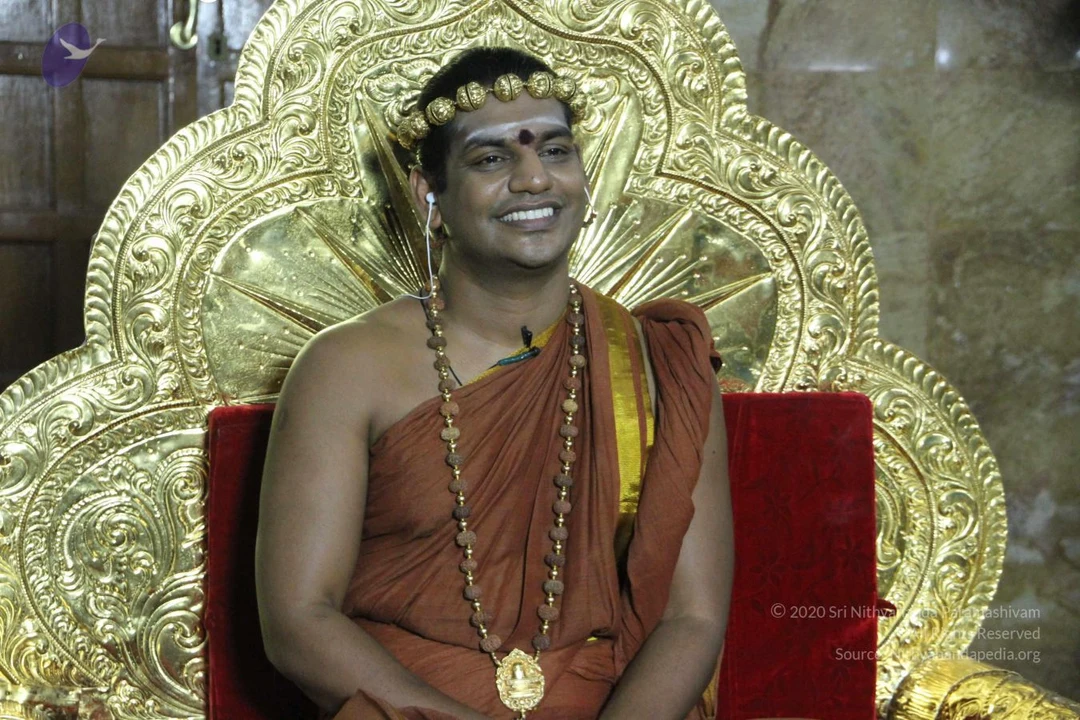
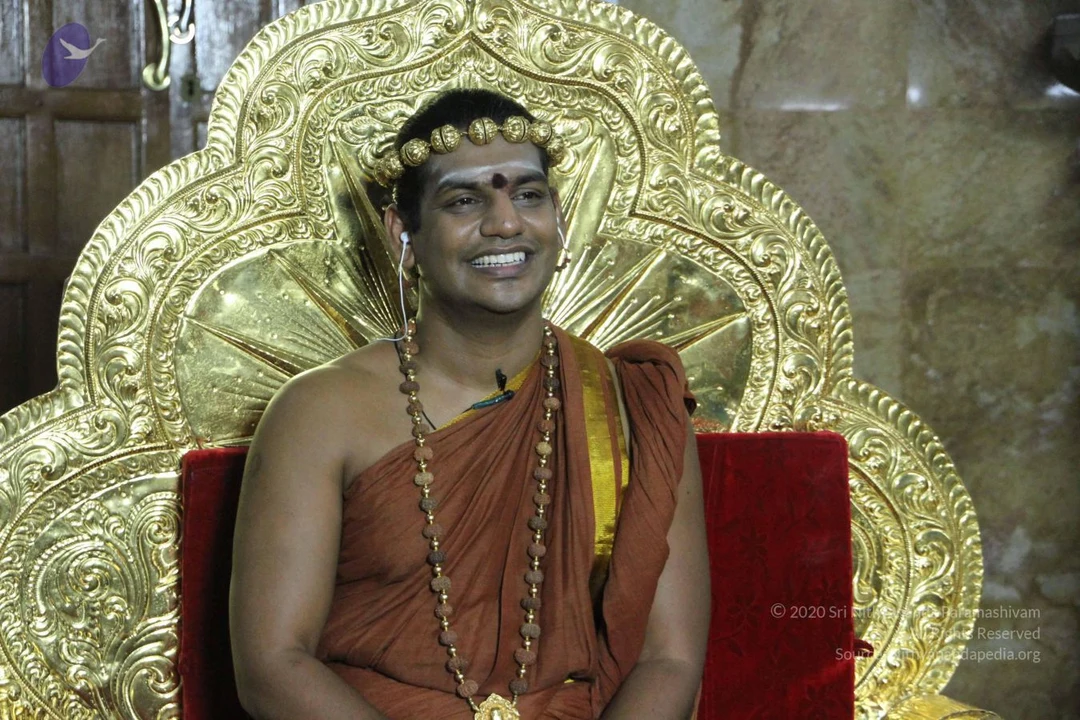
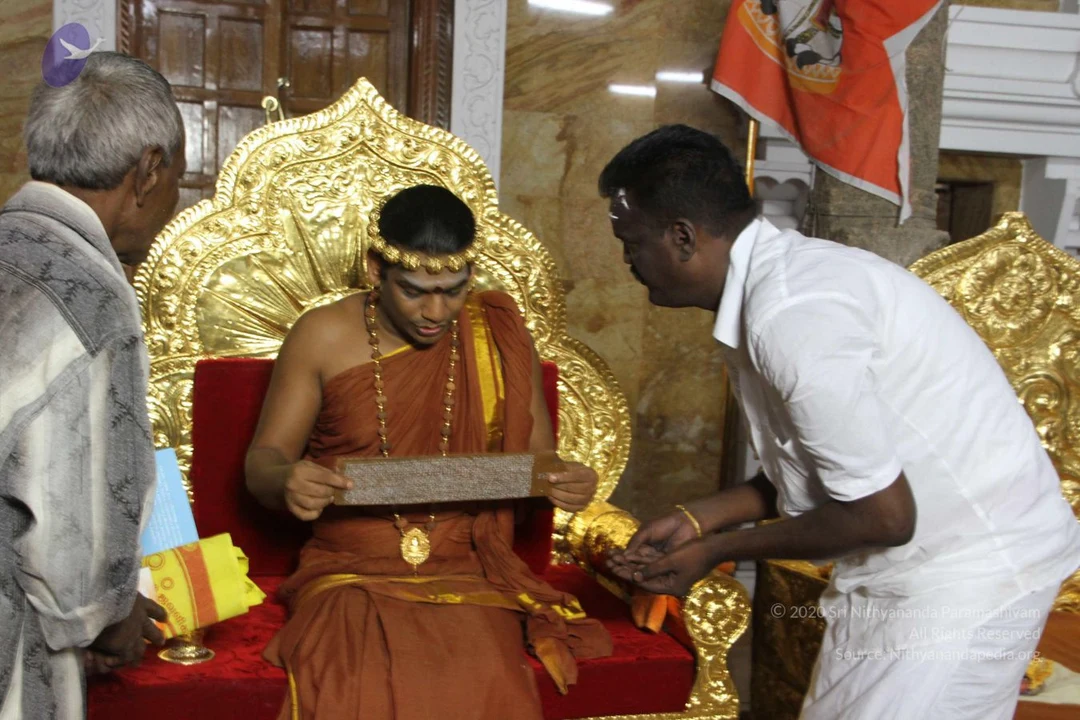
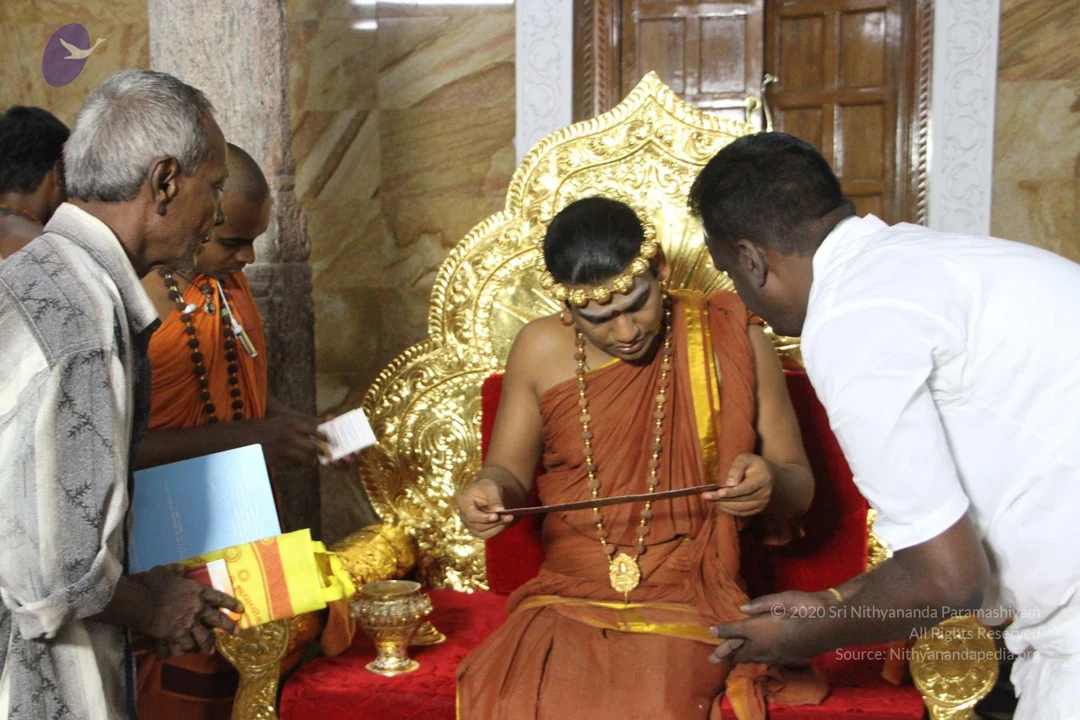
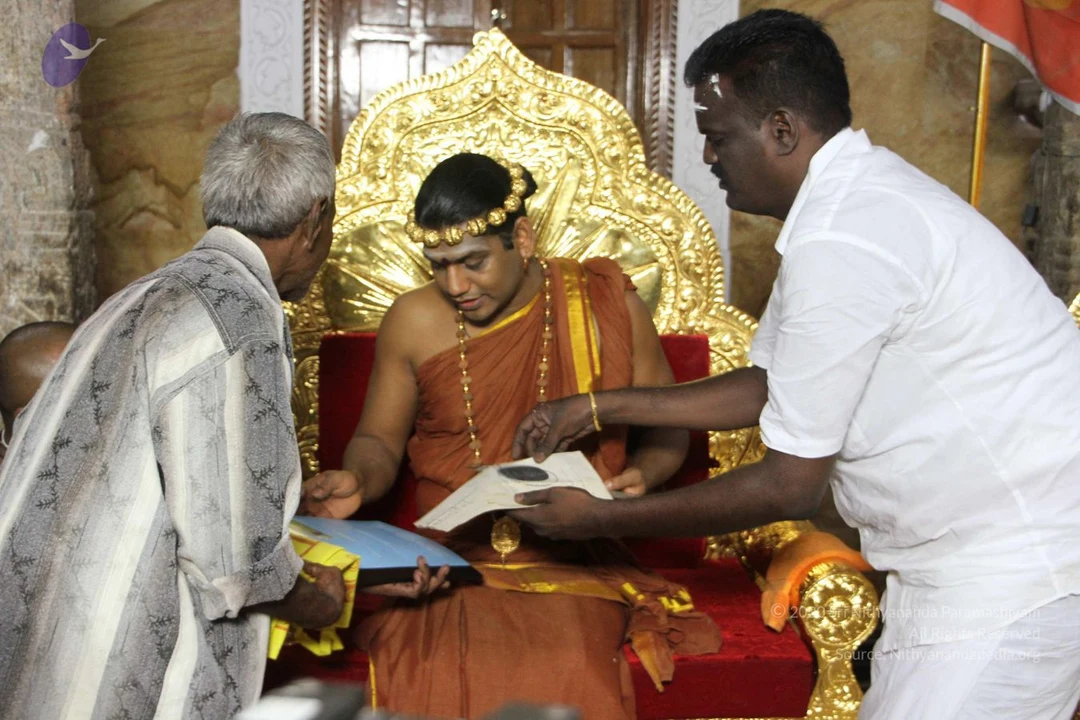
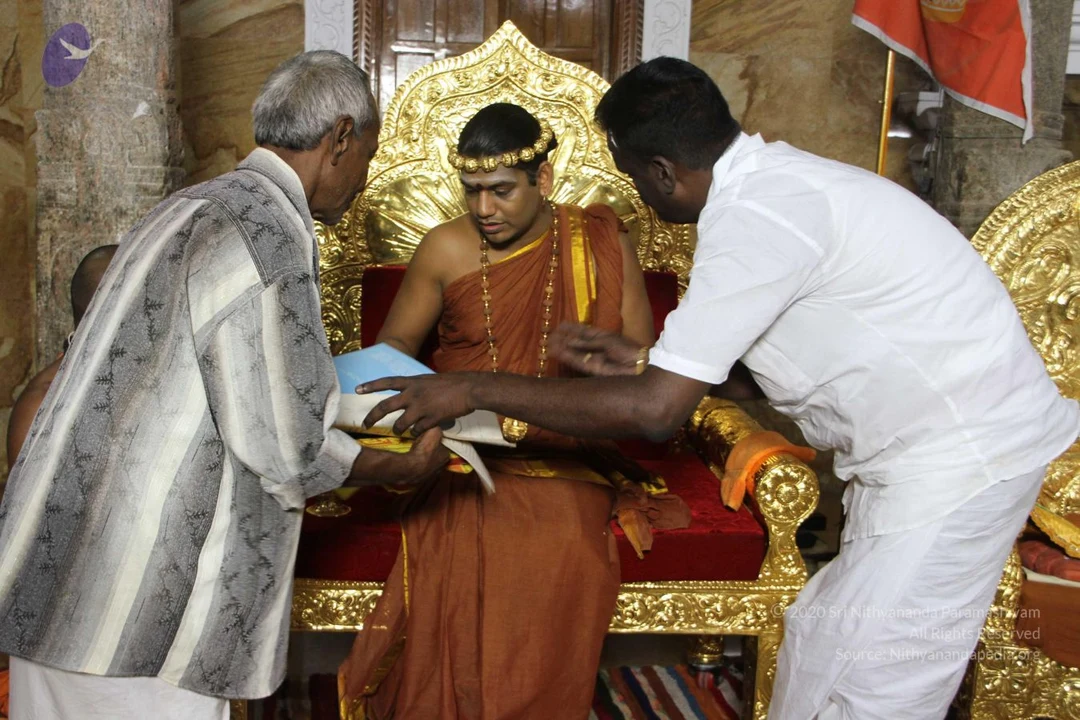
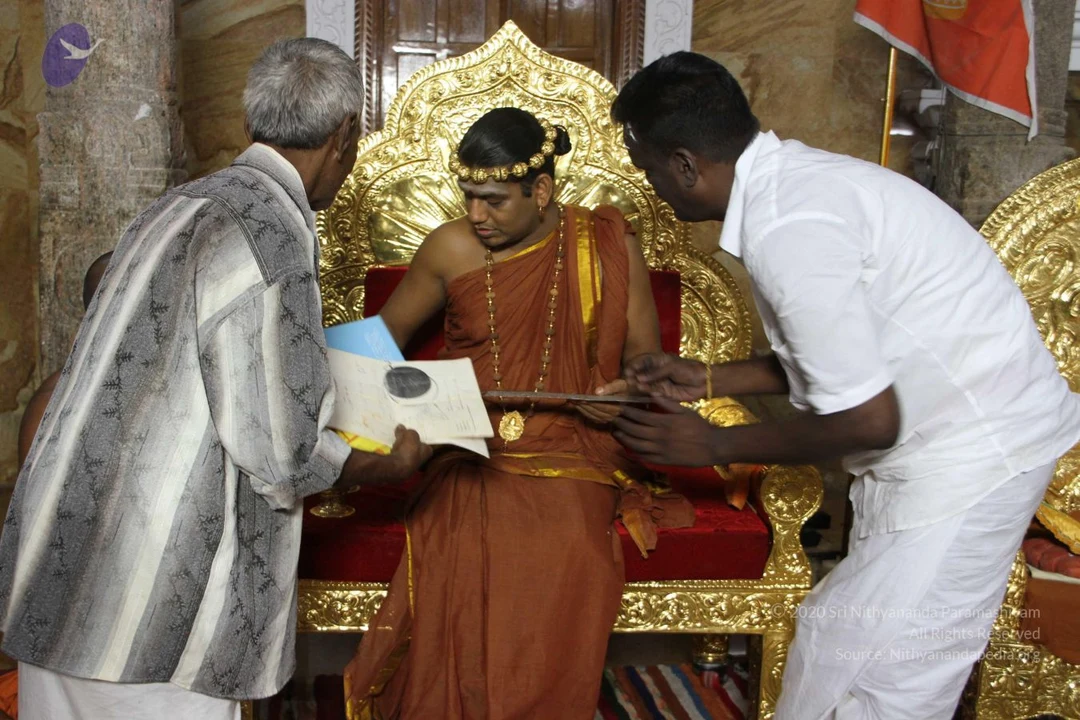
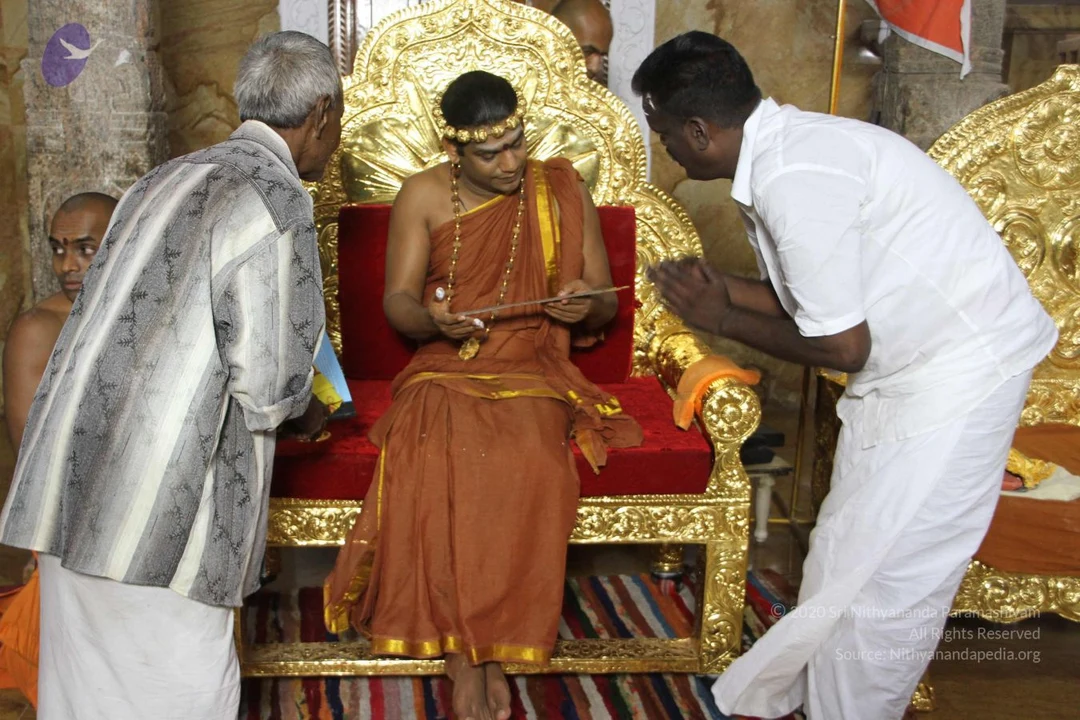
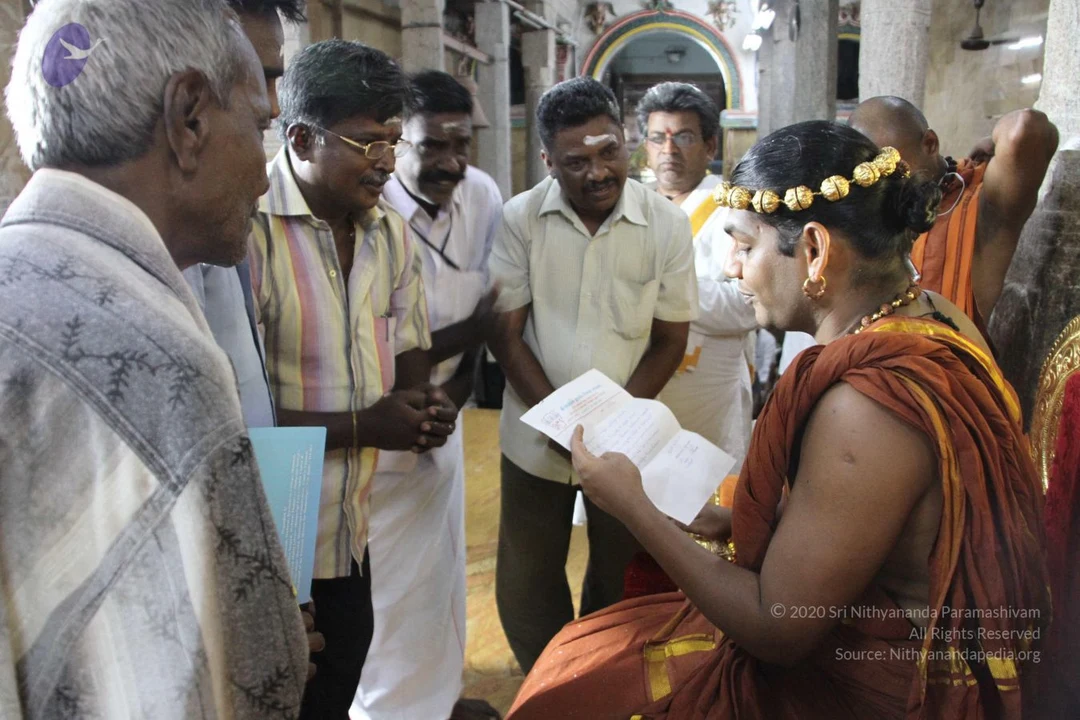
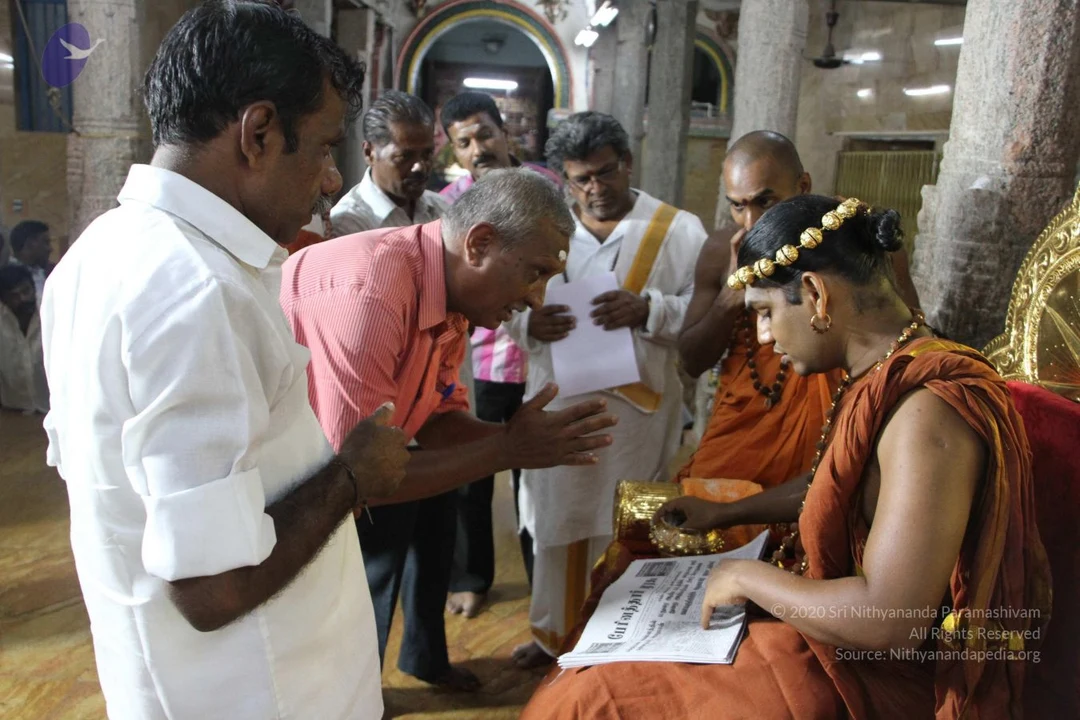
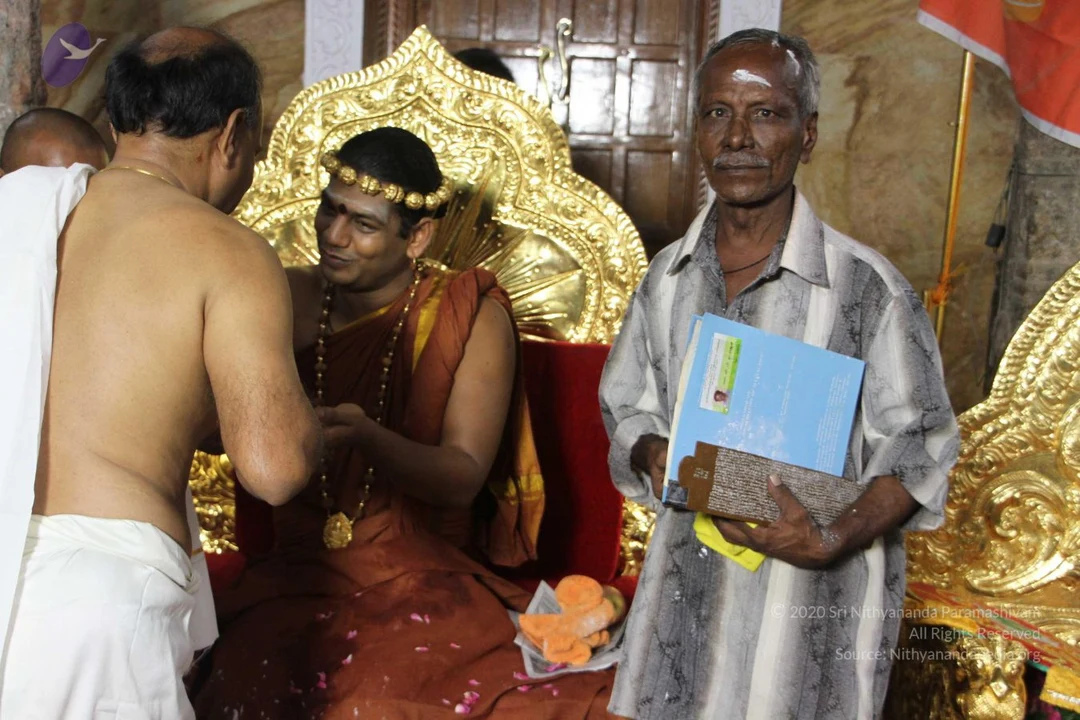
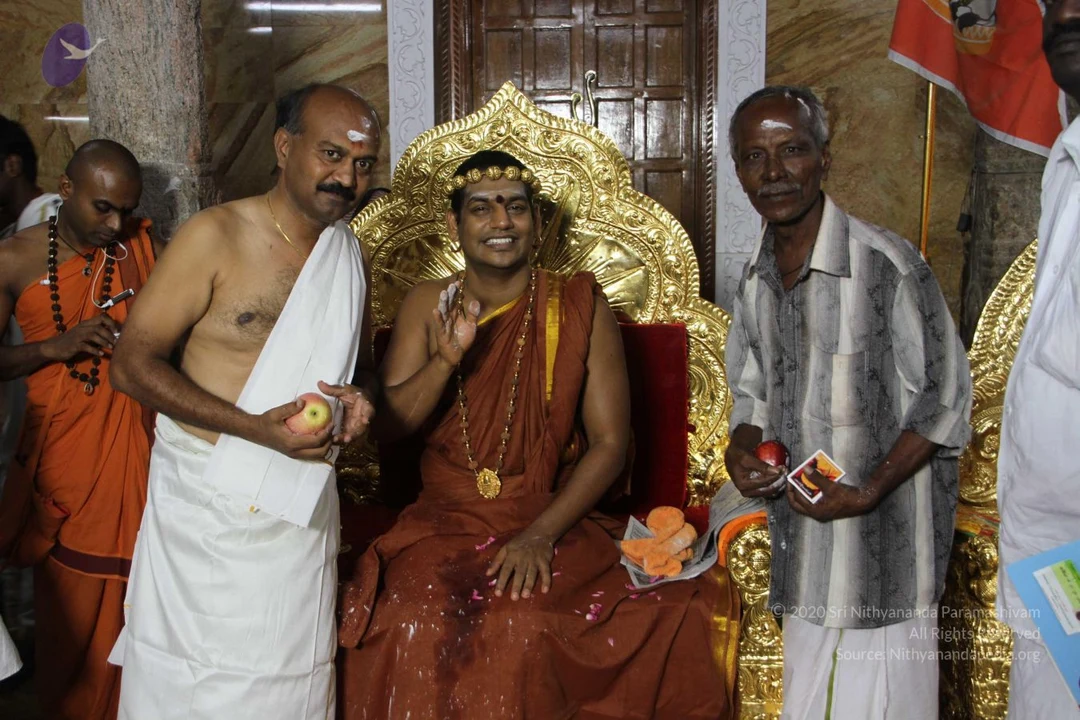
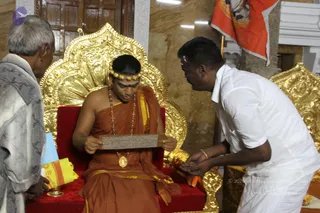
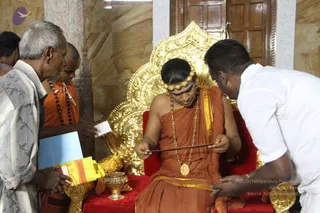
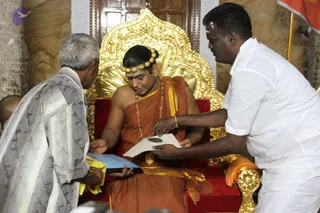
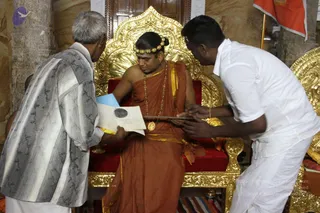
A man sits on an ornate gold throne with a red velvet seat, speaking while gesturing with his right hand. He wears a gold crown-like headband of rudraksha-style beads, a red-brown saffron-toned shawl over bare shoulders, a long rudraksha mala necklace, a horizontal white and red forehead mark, and a yellow-gold border on his garment. A small lapel microphone and earphones are visible. Swamiji (probable): the crown, rudraksha malas, and ornate saffron clothing with a throne are consistent with the page-described Paramahamsa Nithyananda giving a satsang discourse. Background shows carved stone walls.A smiling man sits on an ornate gilded throne with a red velvet seat and a large repousse backrest with sunburst motifs. He wears a golden crown-like headband of beads, a red-orange saffron shawl over a bare chest, and a long rudraksha mala with a ceremonial gold necklace. He has a red bindi and vibhuti on his forehead and a small lapel microphone and earpiece. Swamiji (probable) appears seated in a satsang setting, identified by his distinctive saffron garment, crown, rudraksha mala and ornate gold adornments.Indoor photo in a temple-like hall with gold-leaf ornate chairs and an orange saffron flag on the wall. Seated on a red-cushioned gold throne is a young man in orange saffron robes with a gold-coloured headband, a long rudraksha mala and a gold pendant necklace, holding and reading a small paper document. Standing to the right is a man in a white shirt and white trousers with a gold bracelet, bending forward to offer something from his hands. An elderly man in a grey-and-white striped shirt stands at the left edge, and a yellow cloth and gold kalasha-style vessel rest near the throne. Appearance-based identification is uncertain, so the seated figure is described by role only.A seated man in an orange-saffron robe sits on a red cushioned seat before an ornate gold throne in a marble-walled hall. He wears a gold headband, gold ceremonial necklace, and a yellow sash, and holds a thin brown stick or cane while a man in a white shirt bends in to offer him something. An older man in a grey-white shirt holds a yellow cloth bundle and a blue folder, and a monk in orange robes with rudraksha beads stands behind. A small brass vessel sits on the red cloth. Visible people are about four, with one partially seen at the left edge.A seated man in a saffron-orange robe and a gold crown-like headband sits on a red-cushioned throne with an ornate gold back inside a stone-walled hall. A gold rudraksha-style necklace hangs at his chest and he wears gold bangles. He looks down at papers and a blue folder he holds. On his left, an elderly man with grey hair in a striped grey shirt leans in and gestures toward the papers. On his right, a man in a white shirt and white trousers with a white forehead mark leans in, pointing at a document. A red and gold cloth hangs at the lower right, and a gold ornamental armrest and orange cloth sit in front of the throne. a person is seated on the throne, identified by the saffron robe, gold headband, gold necklaces and ornate throne.A seated man in a saffron-orange robe sits on a golden ornate throne with red cushioning, wearing a gold crown-like headband, a gold rudraksha-style mala and a gold chain necklace. Two standing men attend him: an older man on the left in a grey-and-white striped shirt holding open papers and a blue folder, and a younger man on the right in a white shirt and white trousers leaning in to show a document. The setting is a temple-like hall with carved stone pillars and an orange flag at upper right.

Public-darshan

3 photosSource gallery
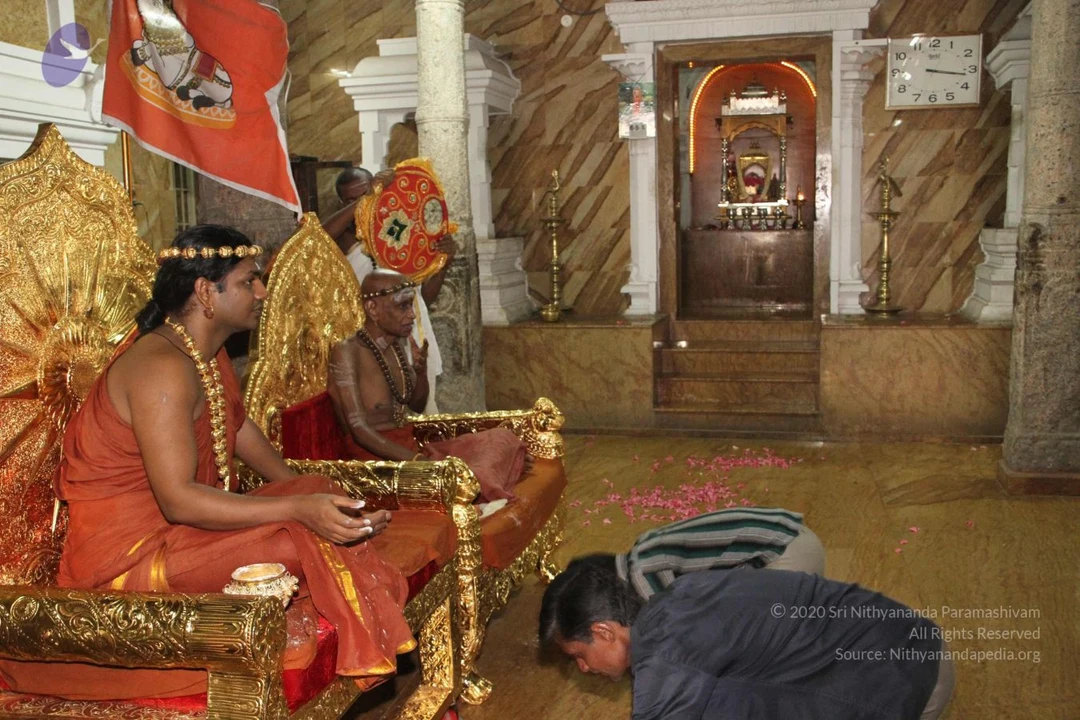
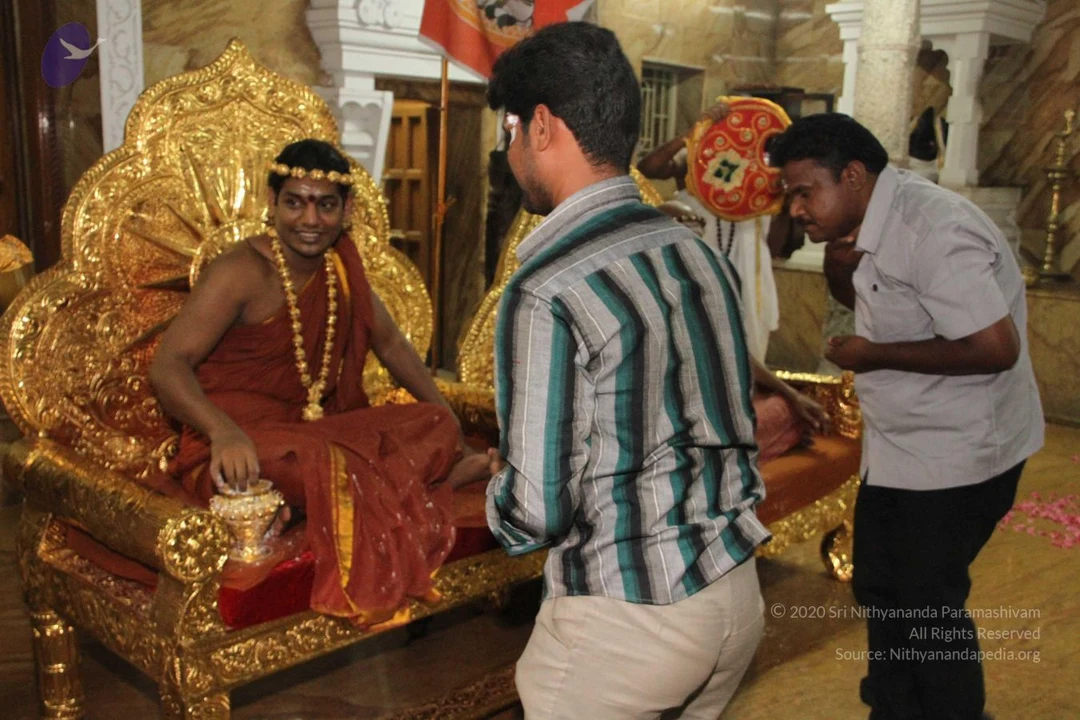
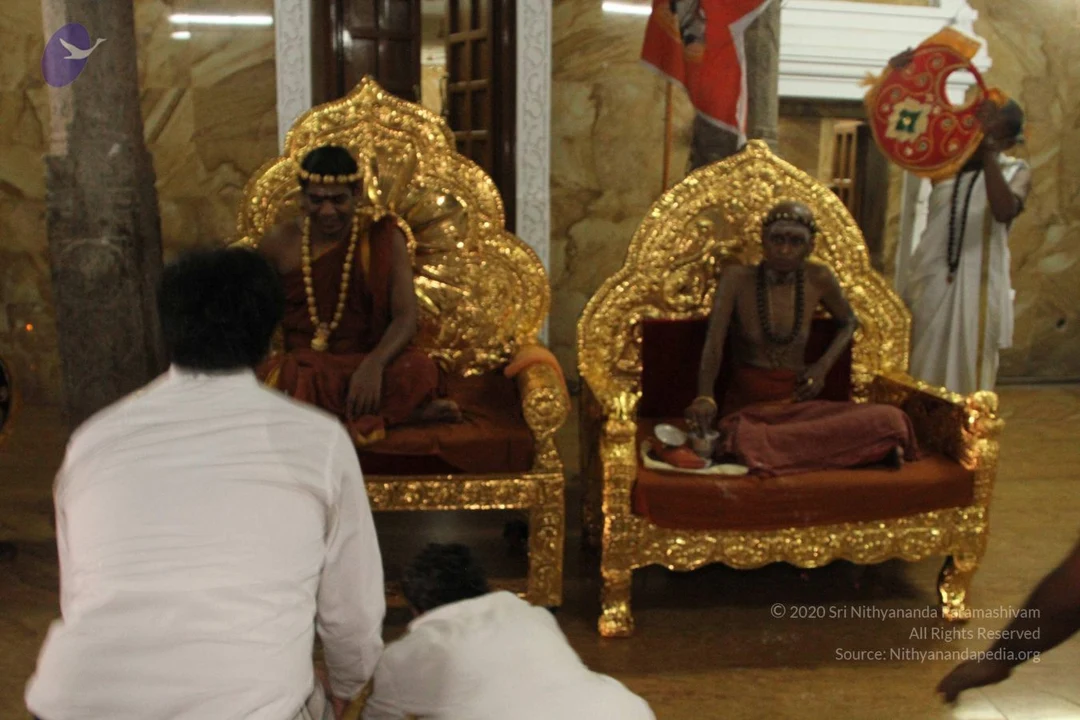
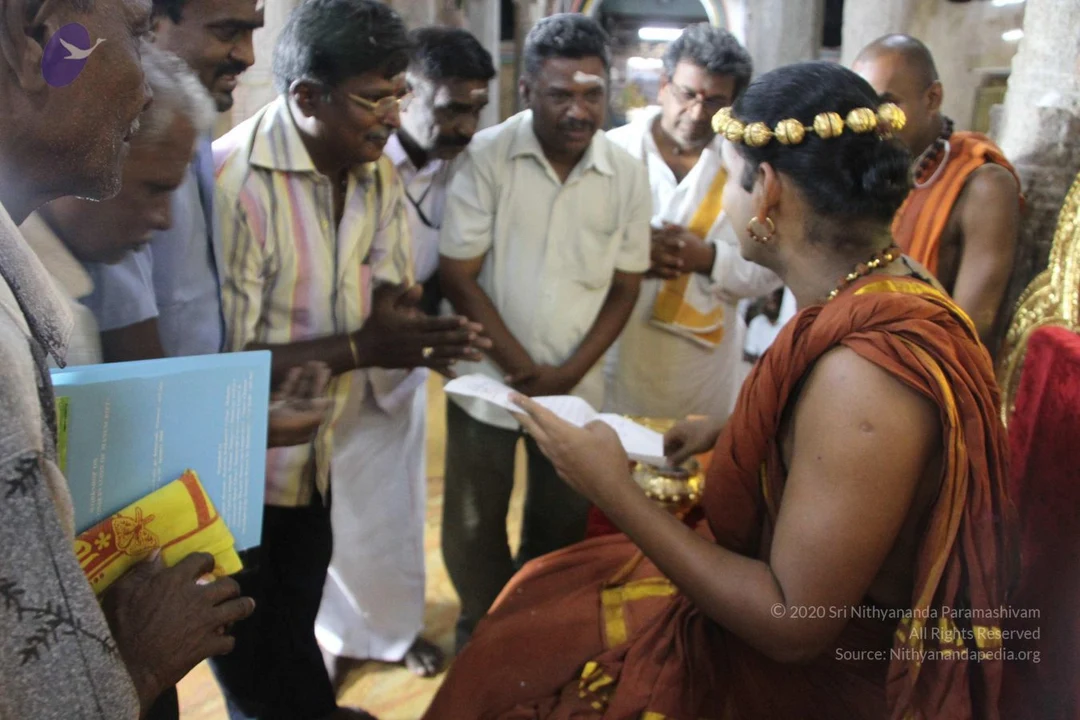
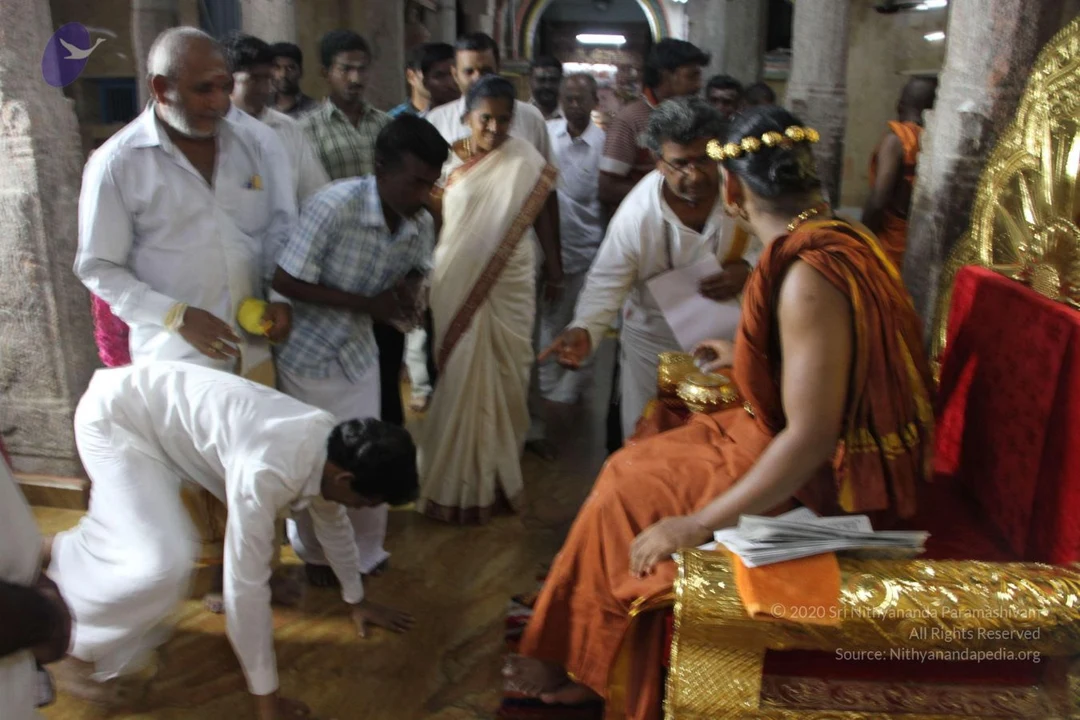
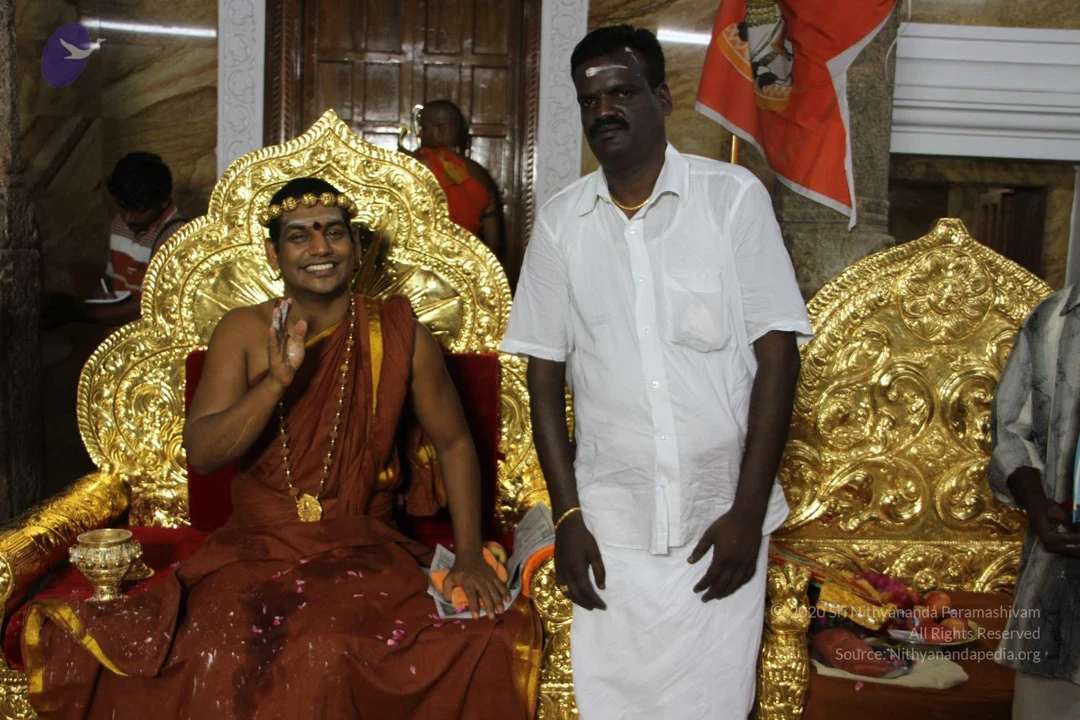
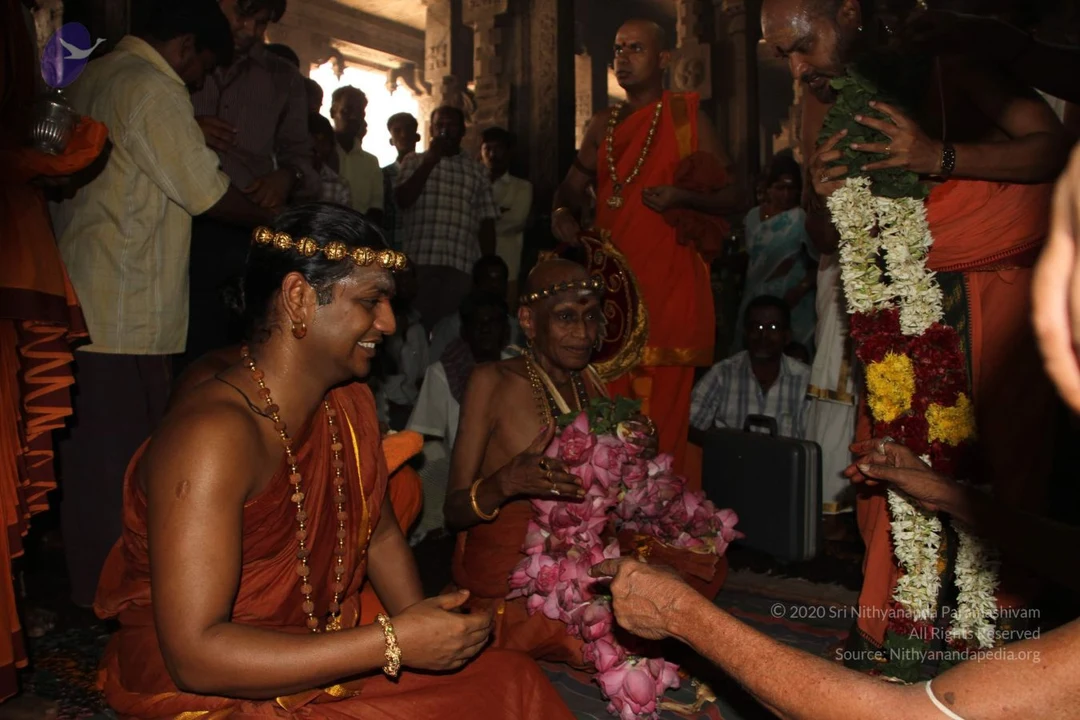
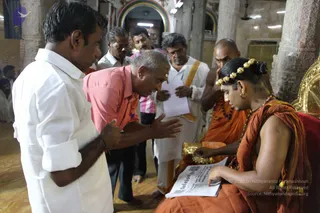
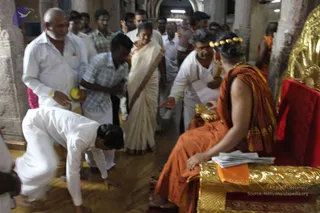
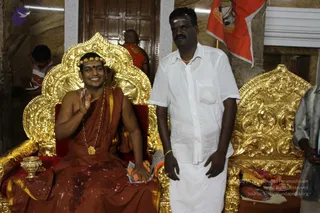
A photograph inside a temple hall with pillars and a bright arched doorway. In the foreground a man in a white shirt stands at left, while a man in a pink-and-white striped shirt leans forward with open hands, speaking. Seated at right, a figure in saffron-orange robes wears a gold floral headband, gold necklaces and rudraksha beads, holding a brass bowl and a printed sheet. Behind them a shaved-headed priest in orange robes with rudraksha beads sits, and a man in a white dhoti and shirt holds papers. Several onlookers stand in the background, and a gilded throne edge is visible at right.A photograph inside a temple hall with stone pillars and an arched doorway in the background. On the right, a seated figure in saffron-orange robes, with a shawl draped over the shoulder, wears a crown-like floral headdress and gold ornaments, and sits on an ornate gold throne draped in red cloth. The appearance matches the a person presence noted on the page, so this is a person candidate seated in the position of a pontiff. A man in white clothes bends low and touches the floor before the throne, while other men in white shirts and mundus, a man in a checked shirt, and a woman in a white sari with a brown border stand nearby watching. A man in a white shirt holds papers. Several onlookers stand in the background.A photograph of two men beside ornate gold-carved thrones in a temple-like hall with a saffron flag on the wall. On the left, a smiling man sits on a red-cushioned golden throne wearing a golden crown, saffron-orange robe, a long gold necklace, and a red tilak, raising one hand in blessing while holding a cloth and orange-tinted items; petals are scattered on the red seat and a brass vessel sits beside him. On the right, a man in a white shirt and white dhoti with a white forehead mark stands beside an empty gold throne. Another person in orange clothing is visible in the background and a flower garland lies on the floor. The appearance of the seated man with crown, saffron robe and mala suggests a probable Swamiji (probable), who is seated in person, while the standing man in white is a devotee.

Meenakshi-Amma-TempleVisit

126 photosSource gallery
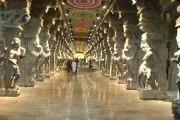
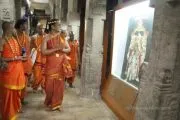
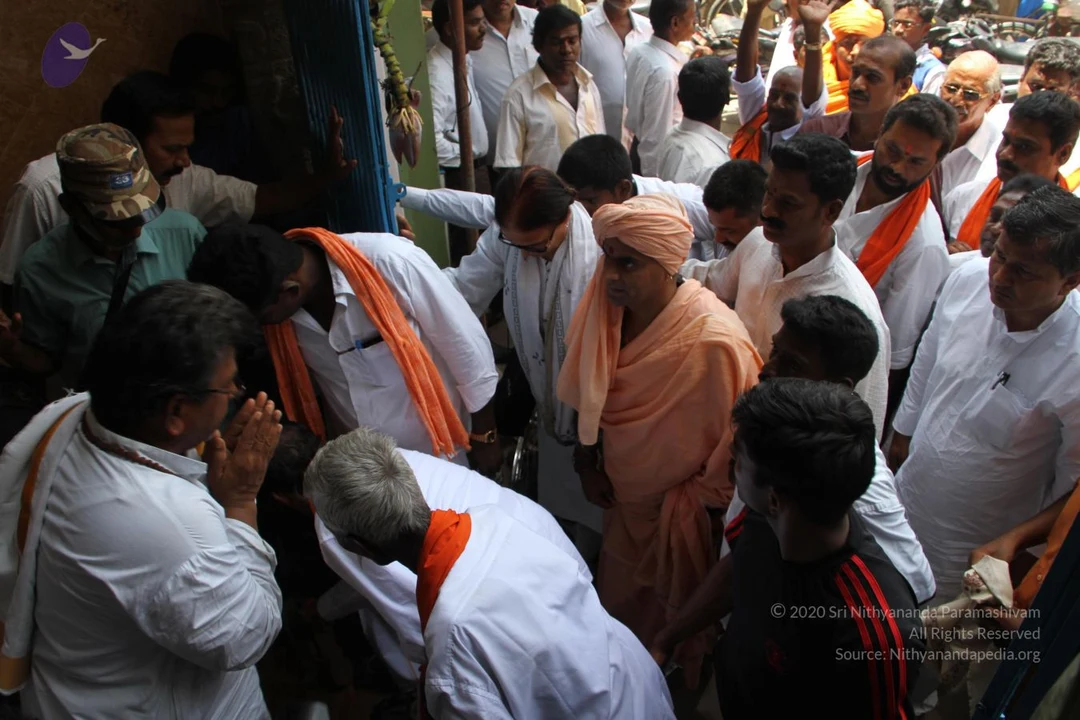
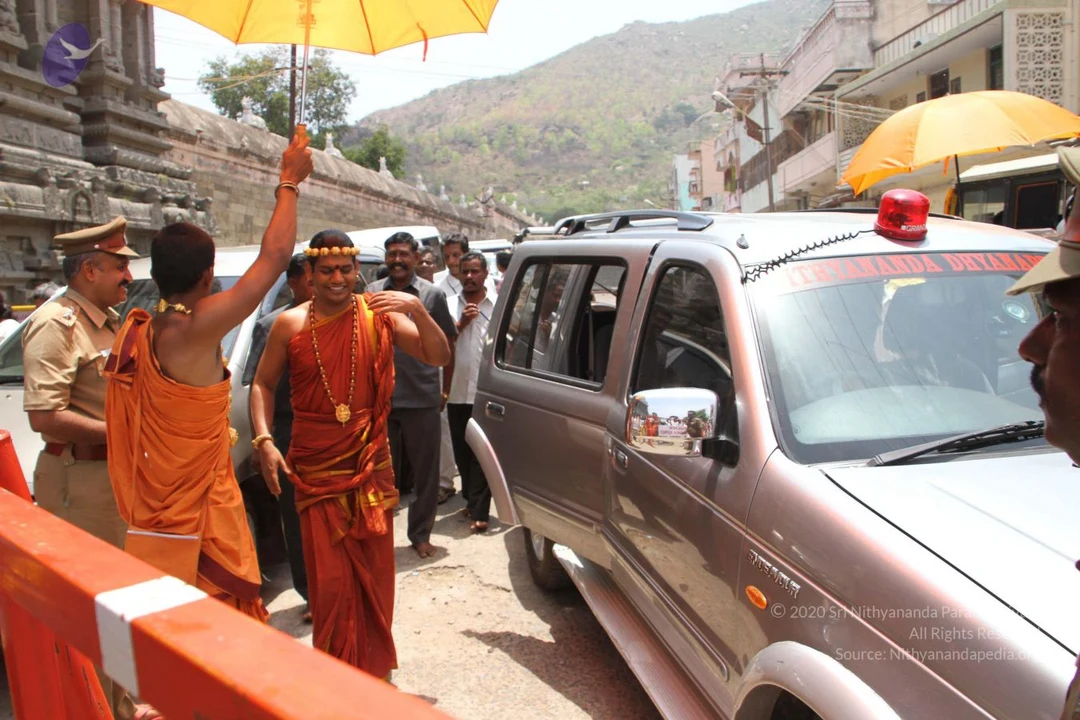
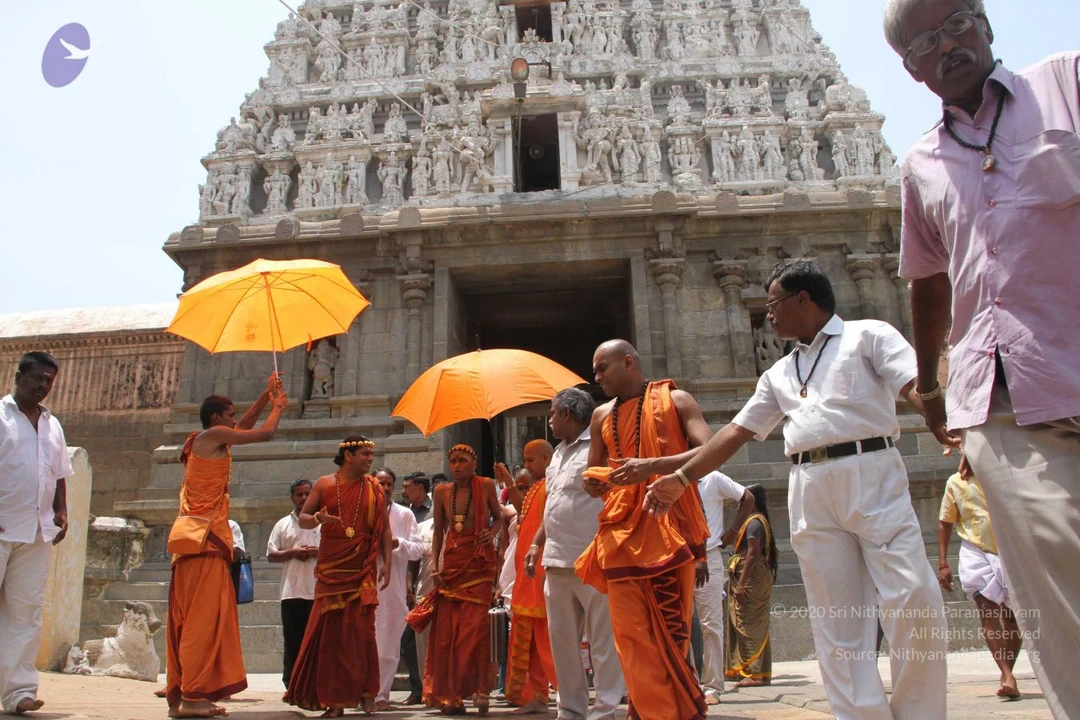
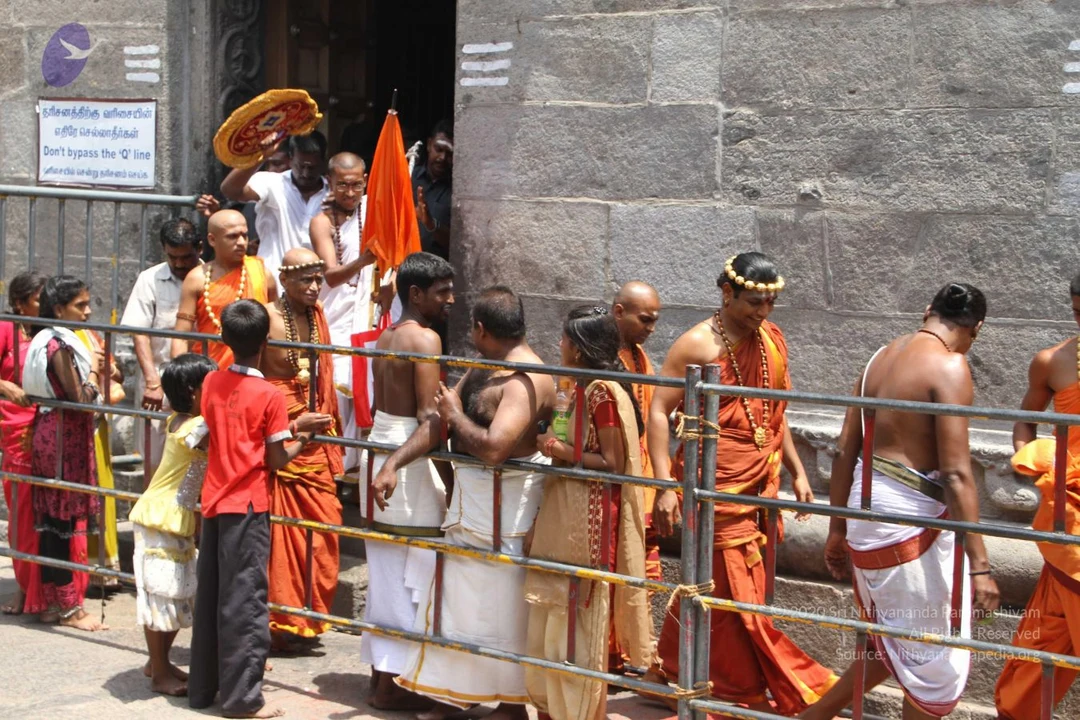
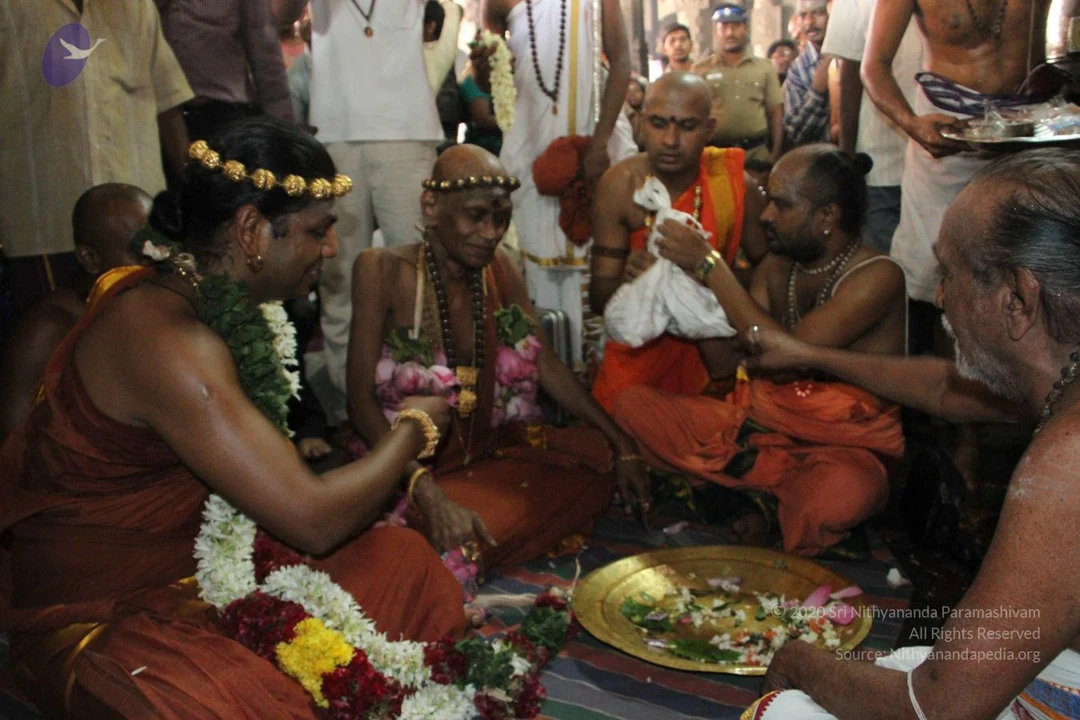
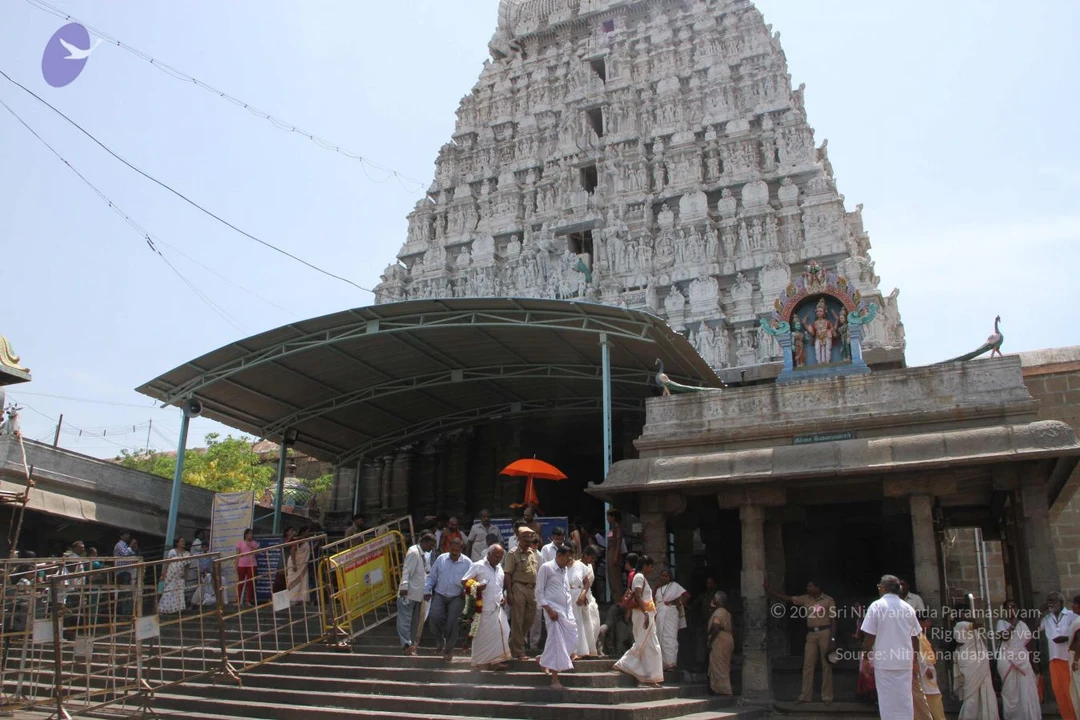
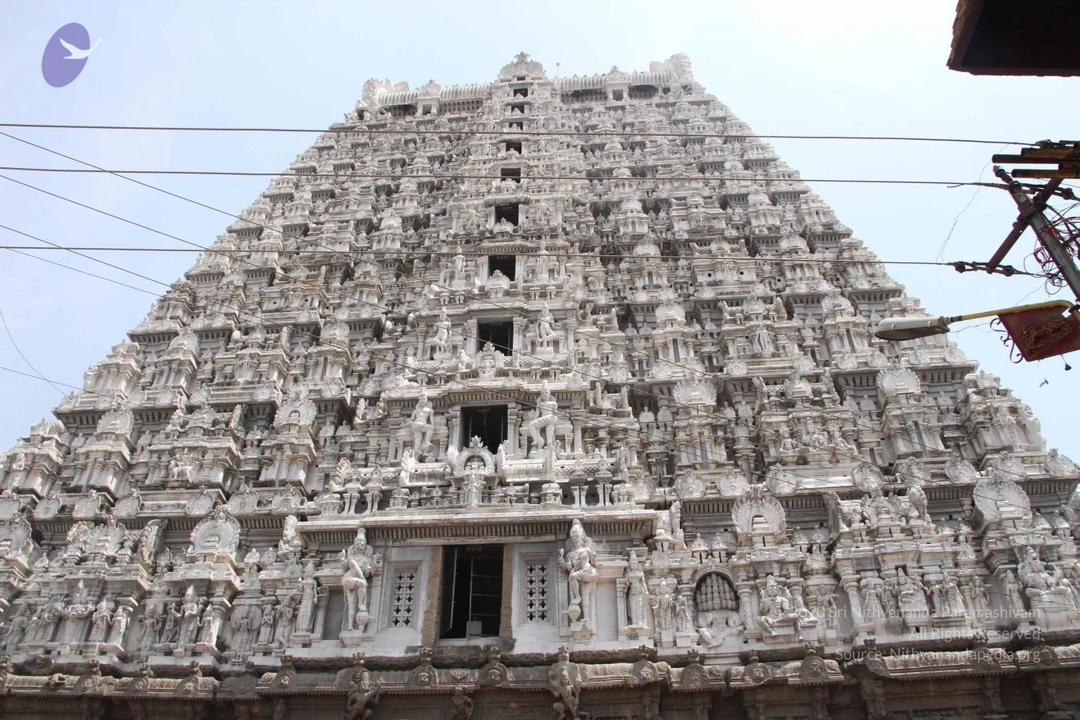
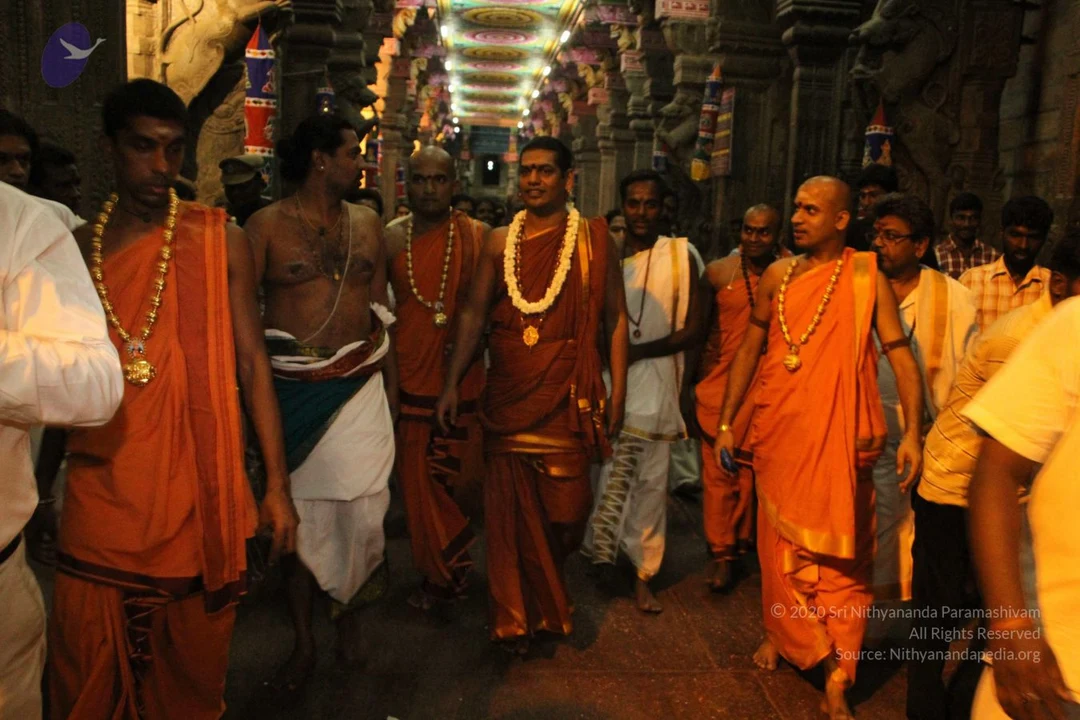
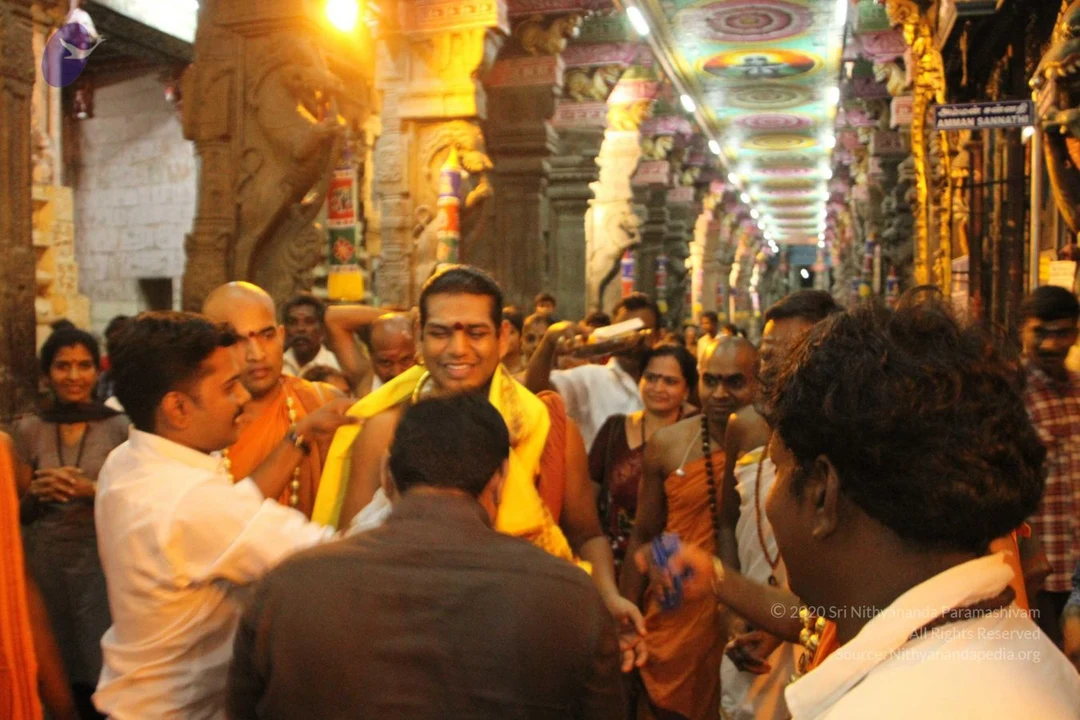
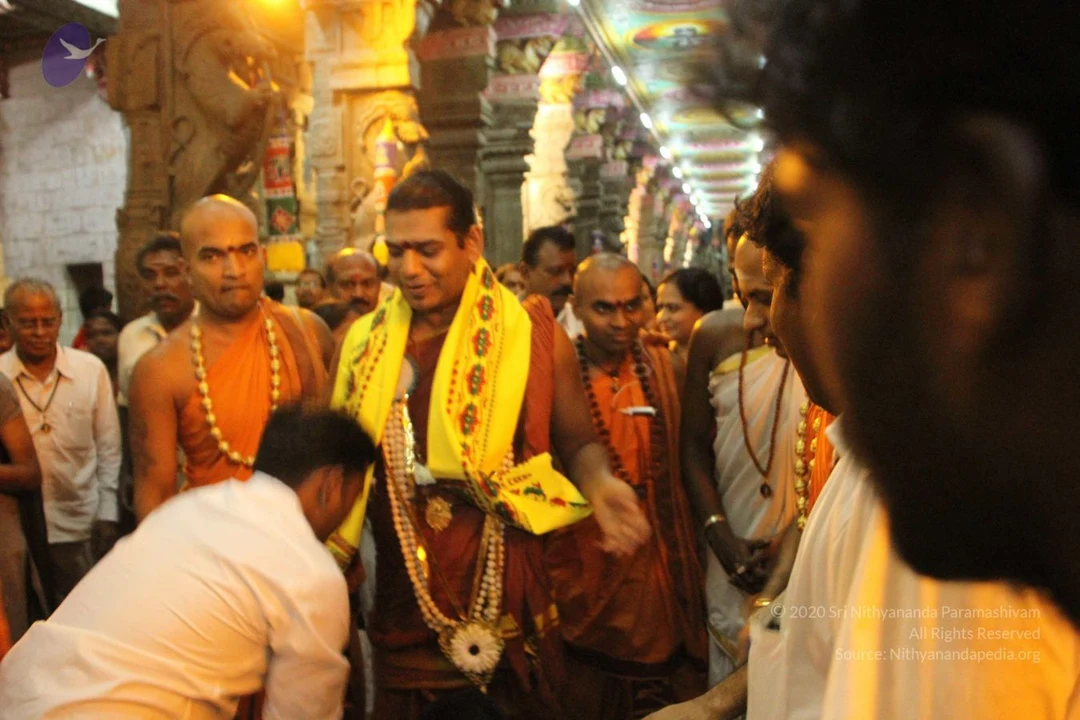
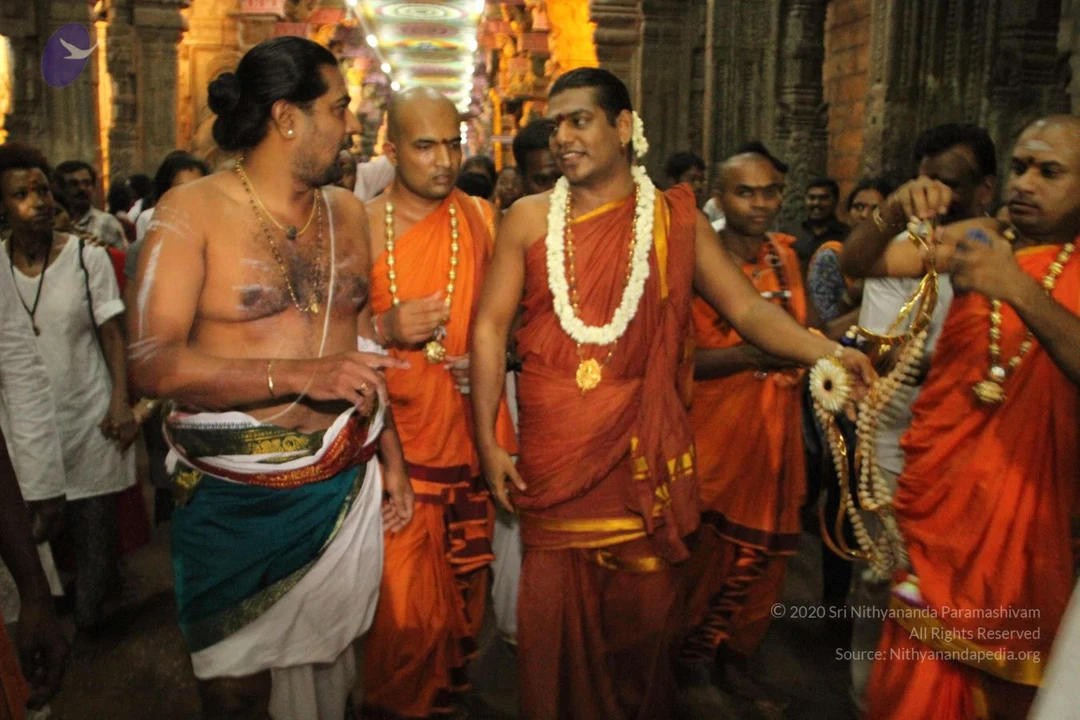
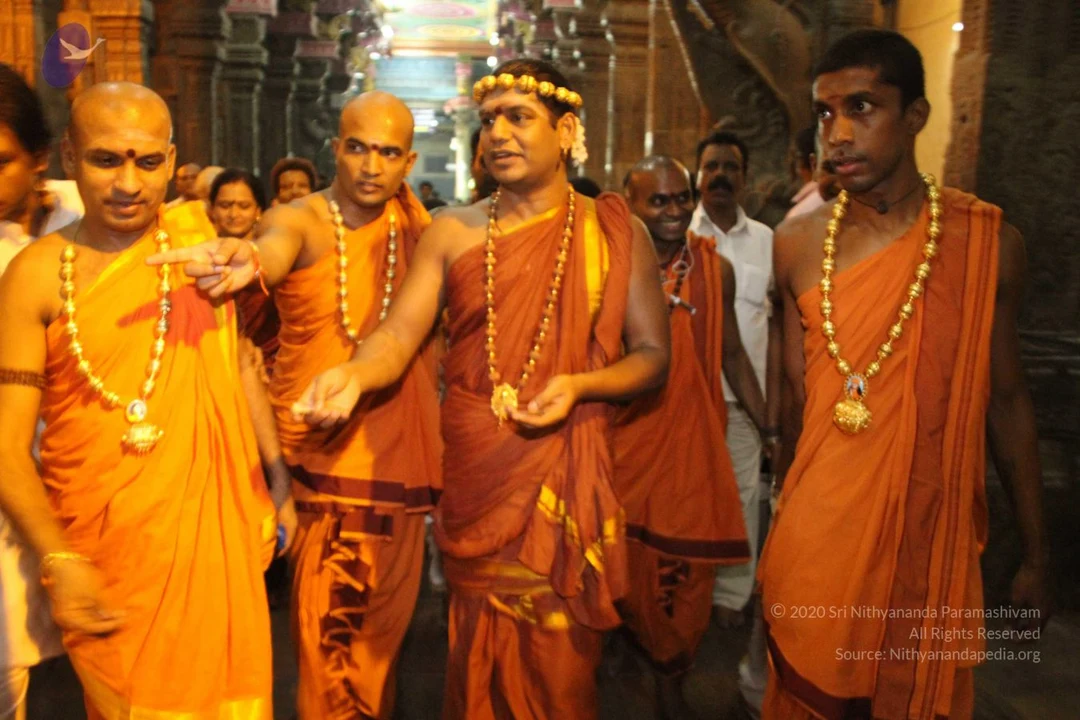
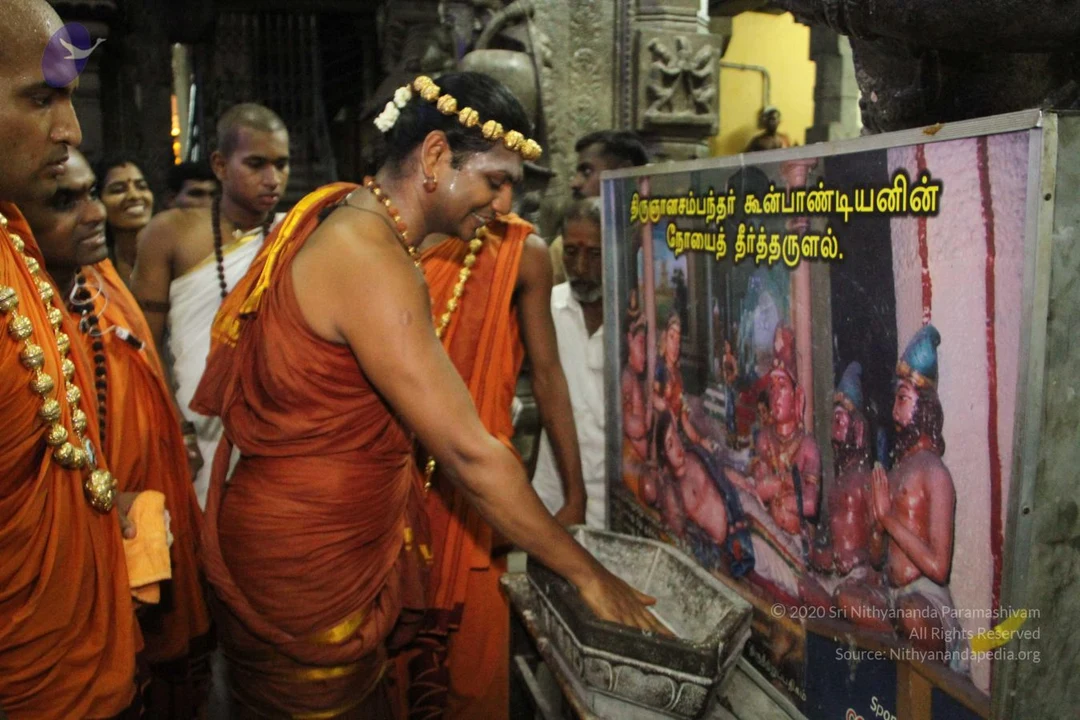
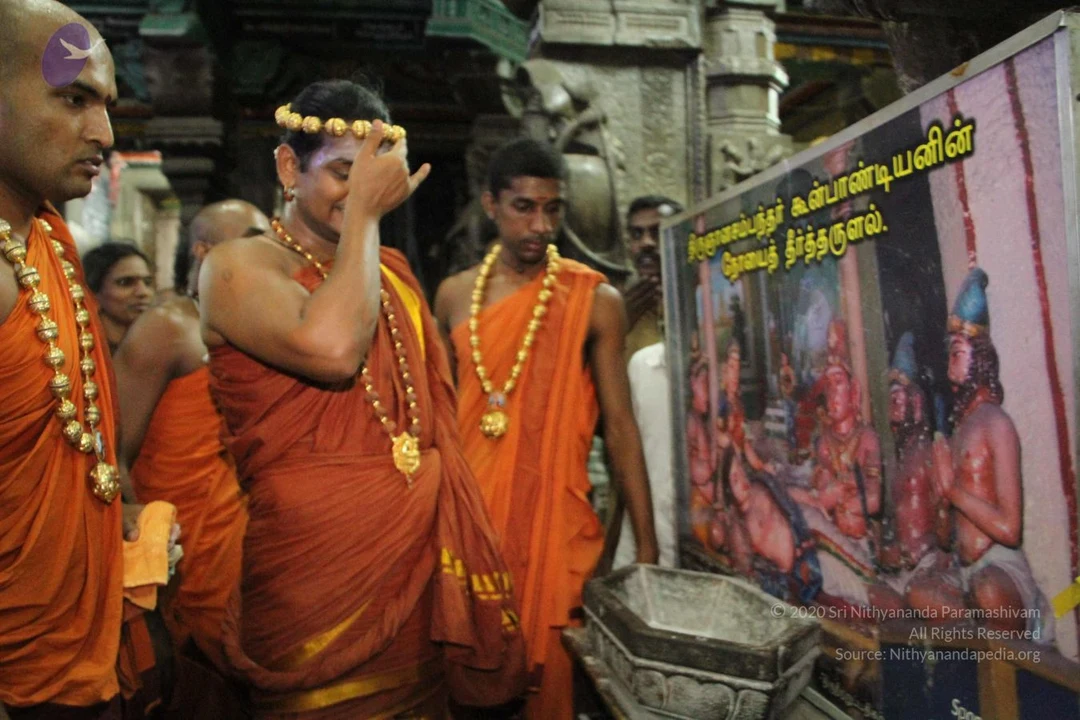
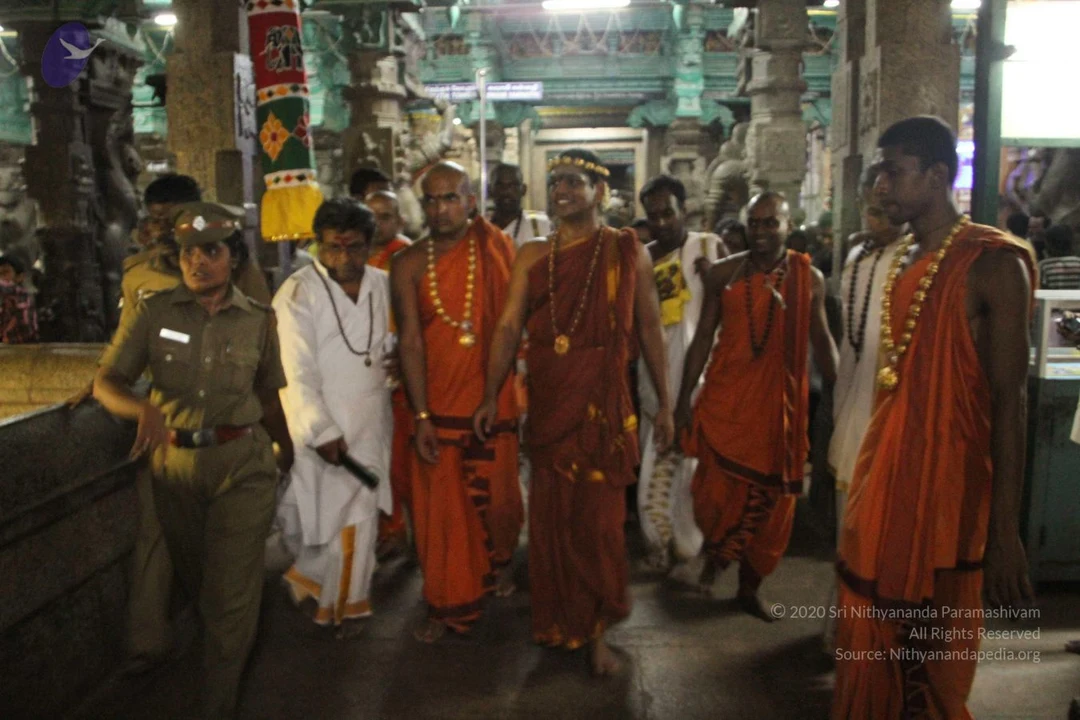
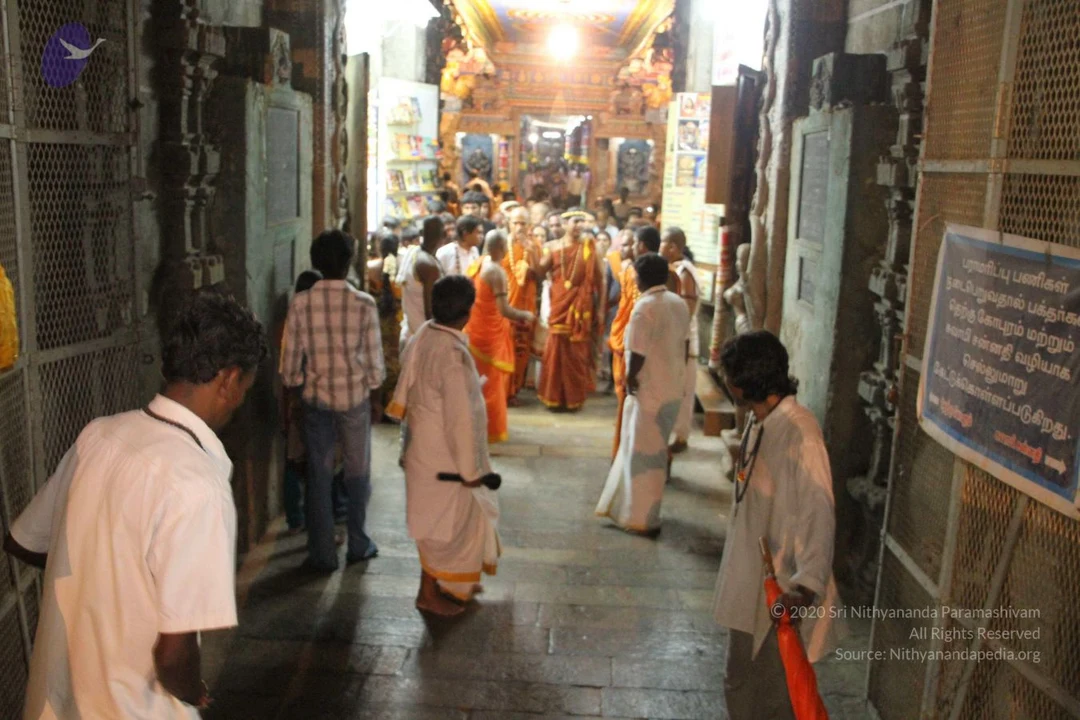
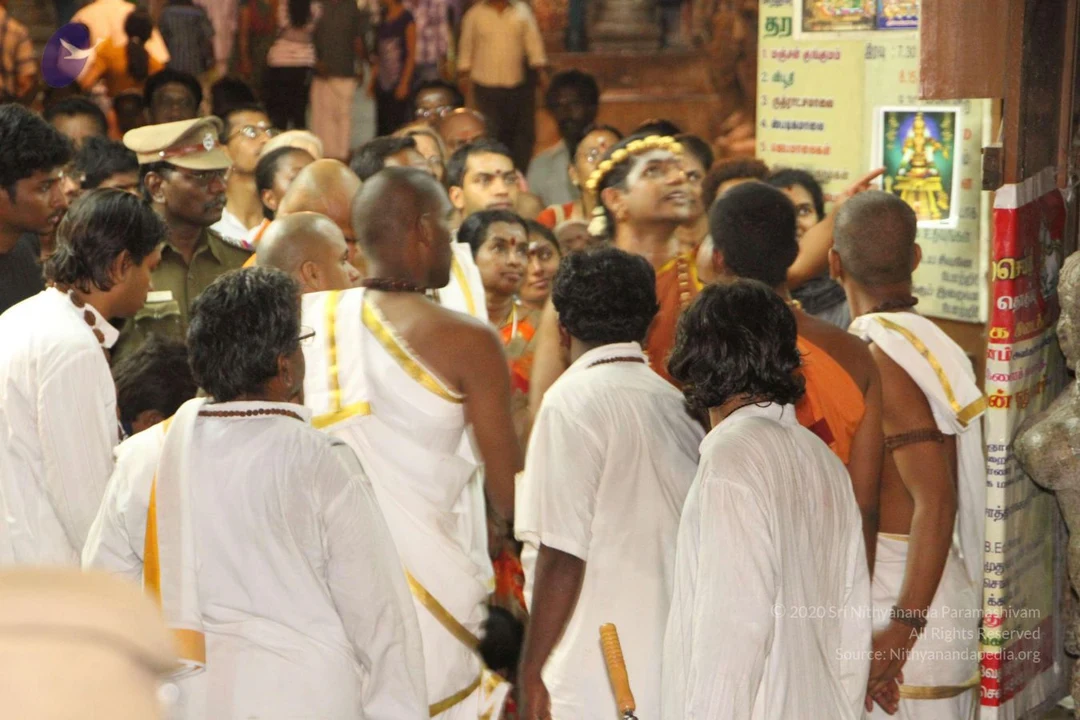
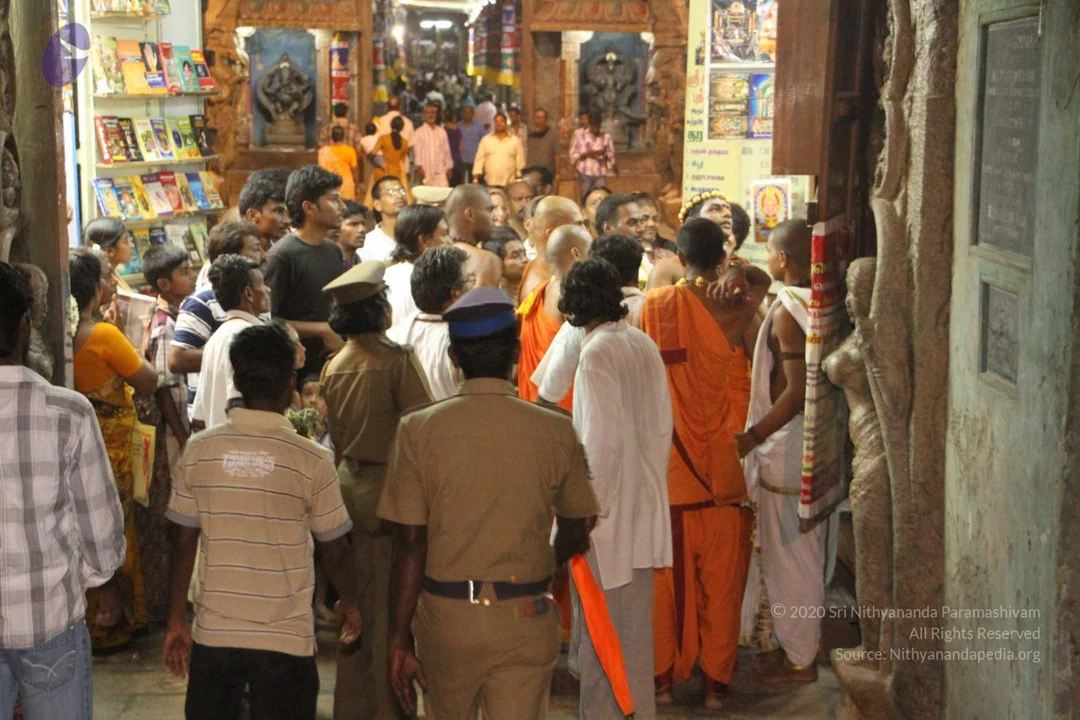
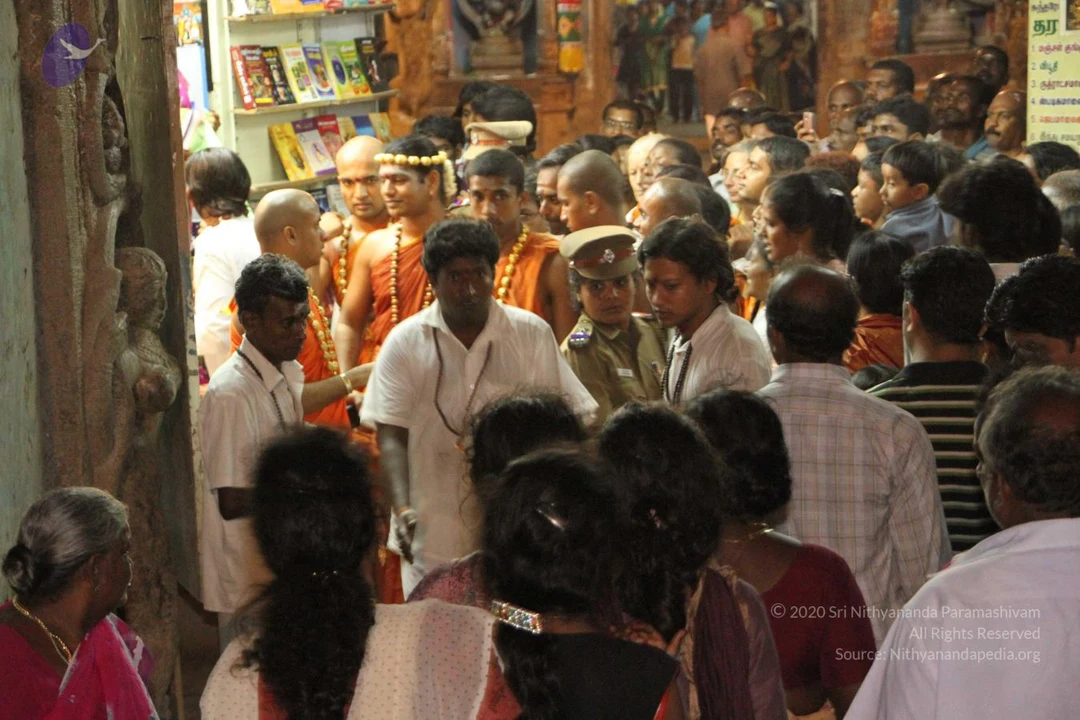
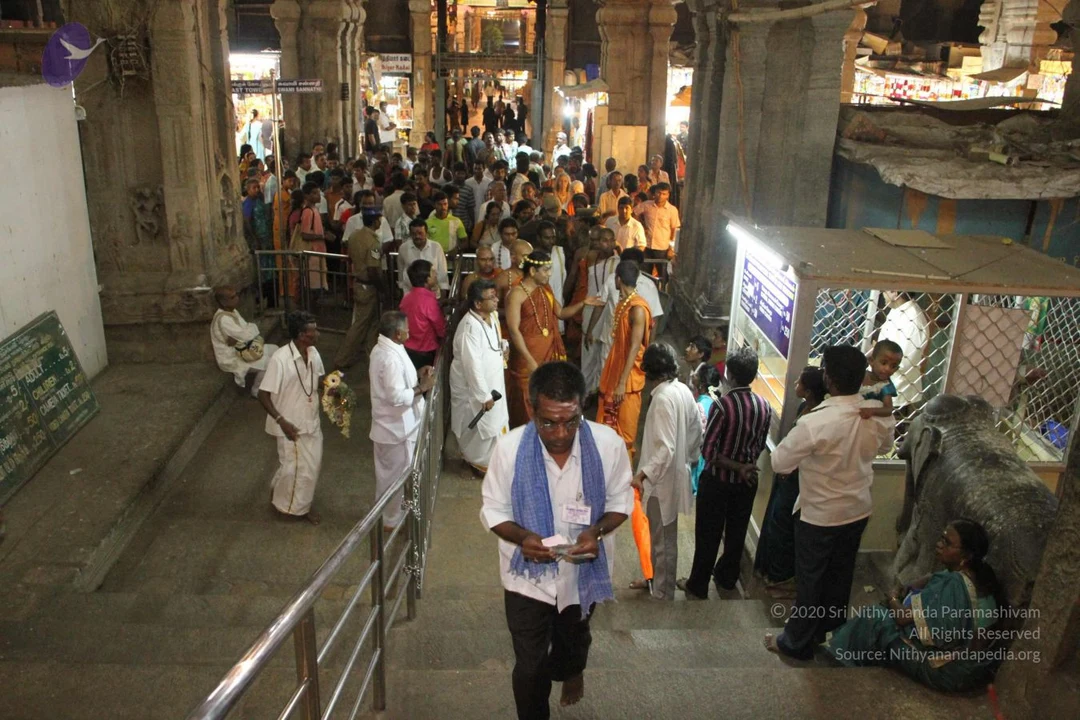
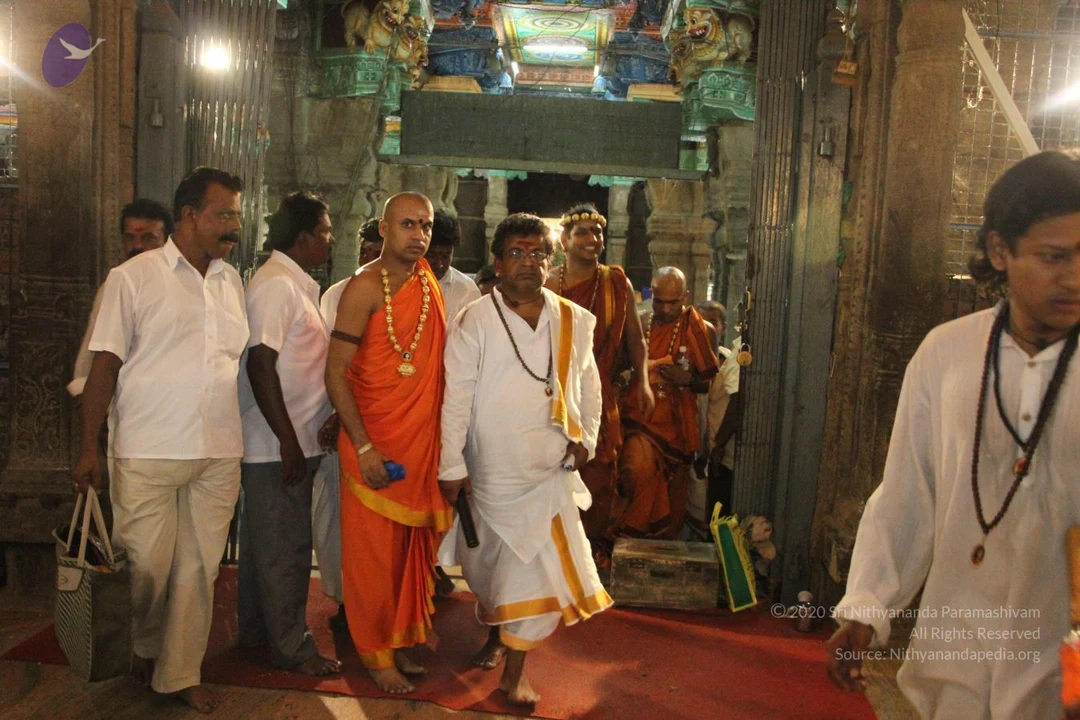
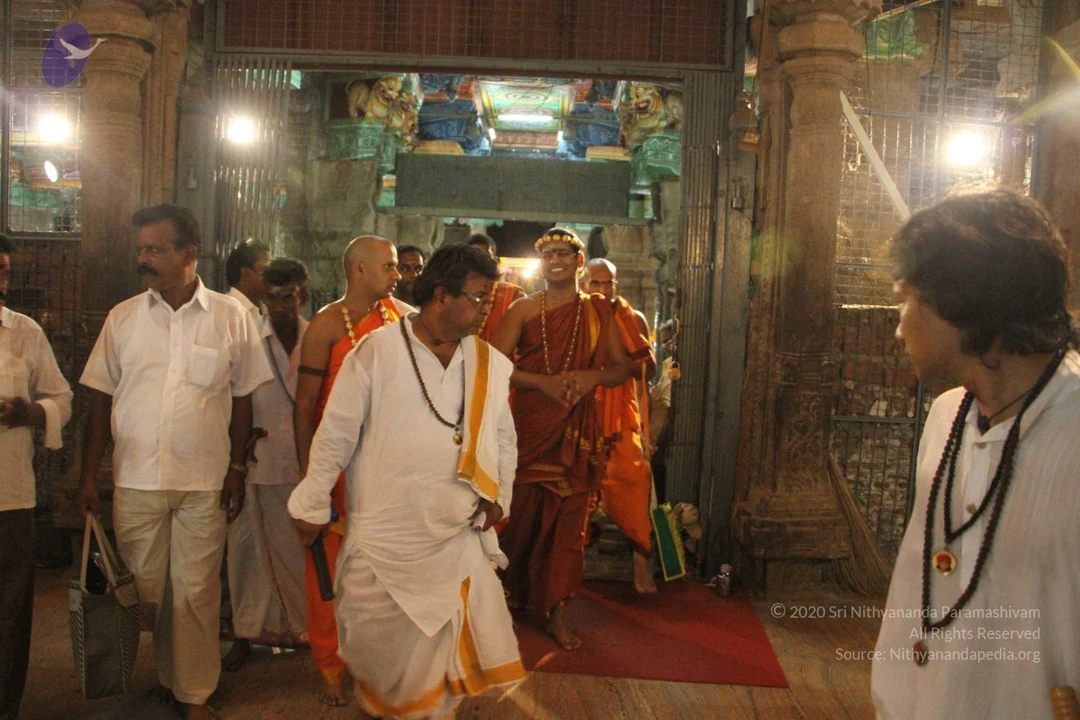
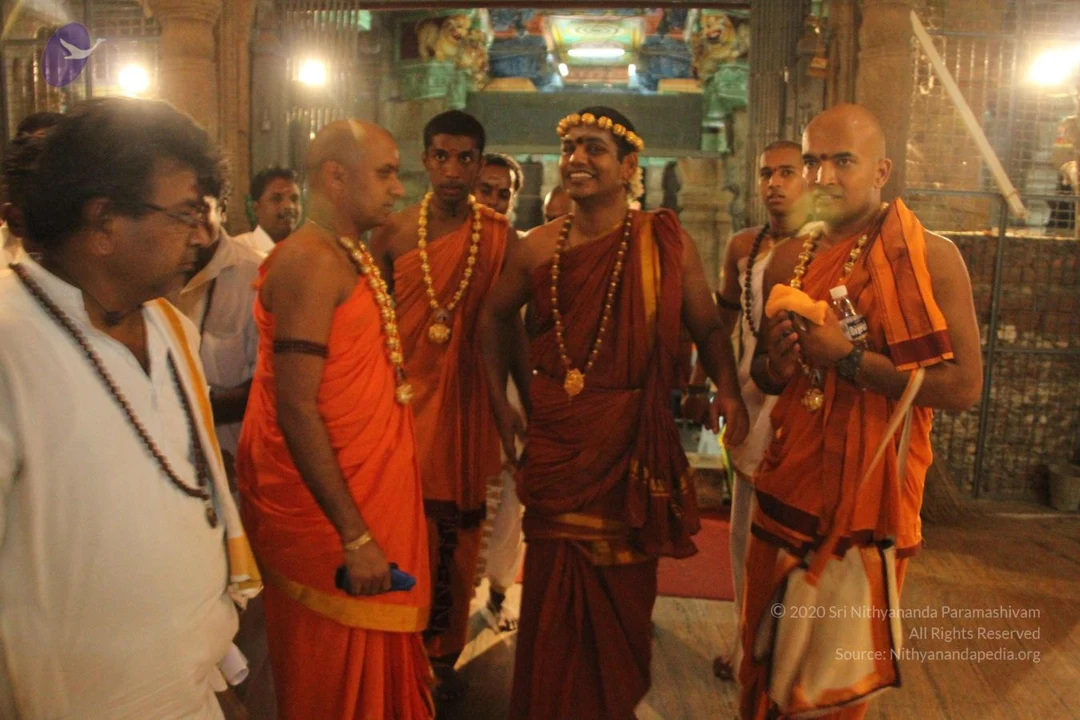
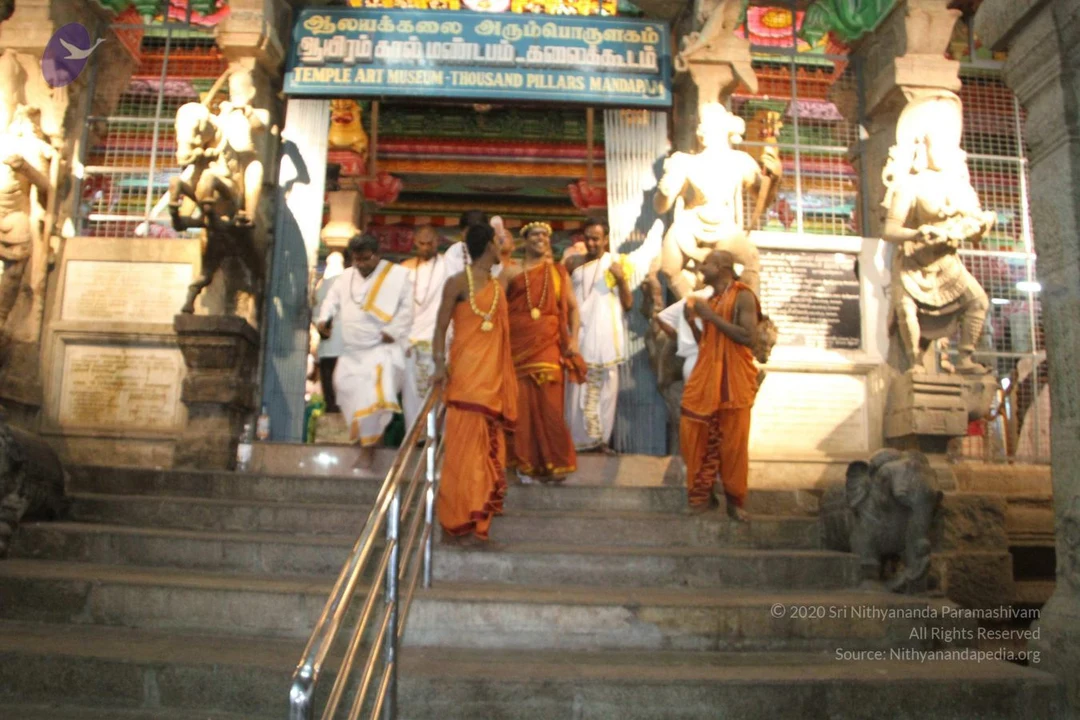
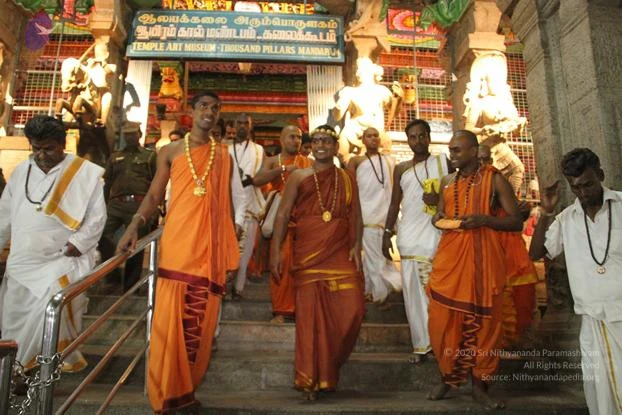
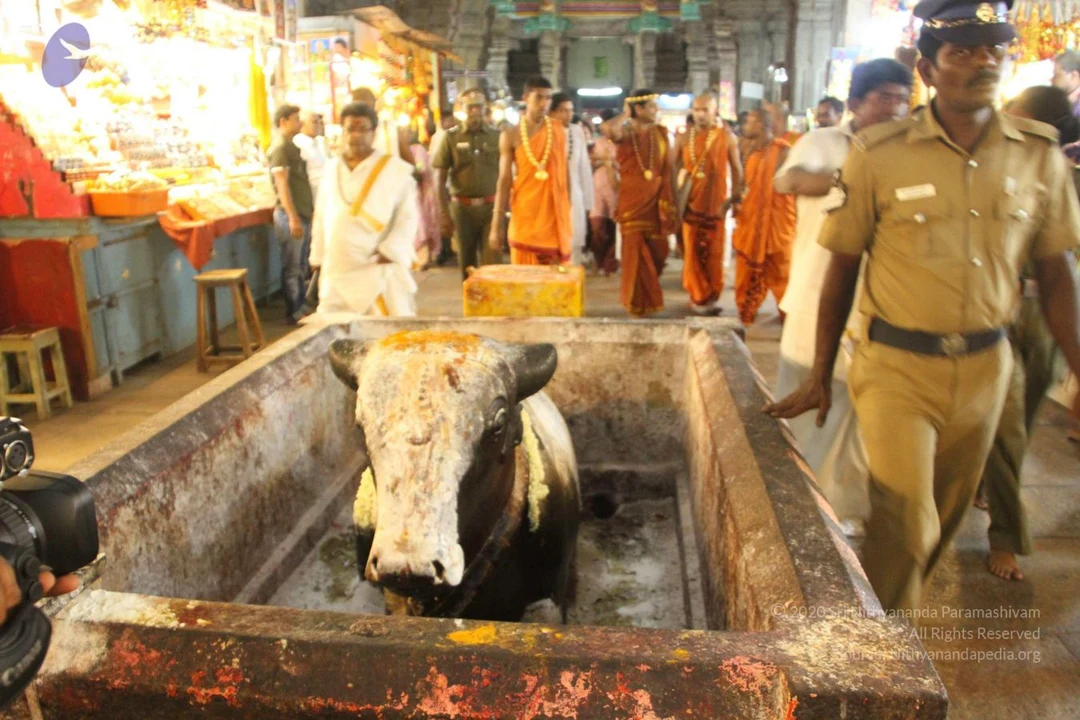
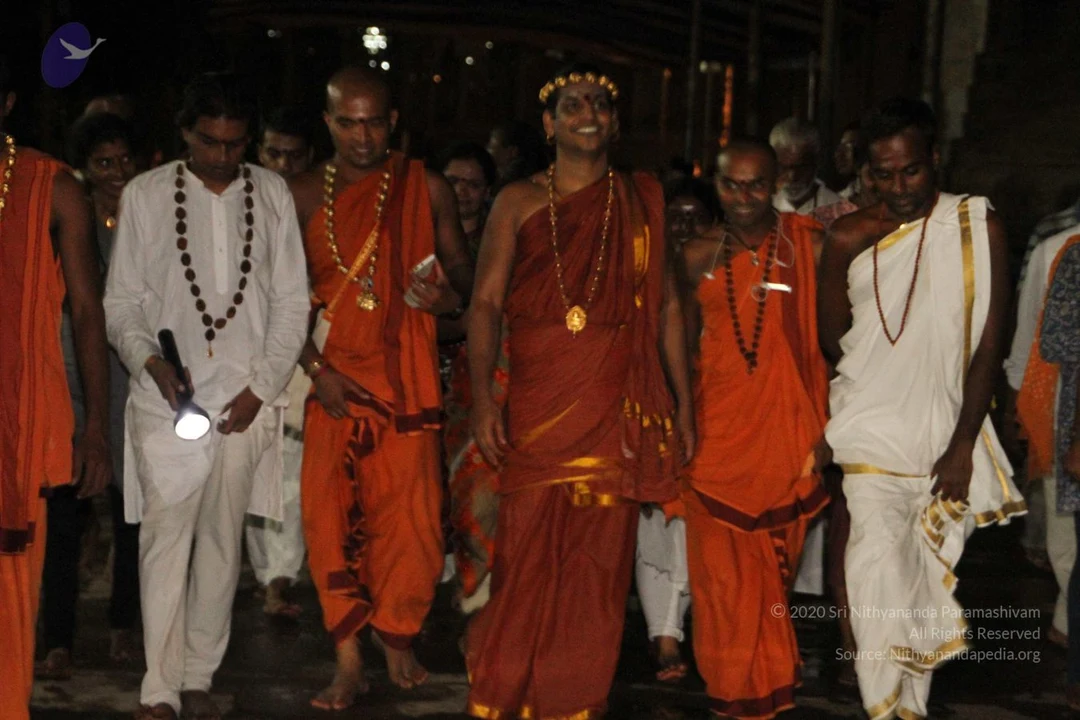
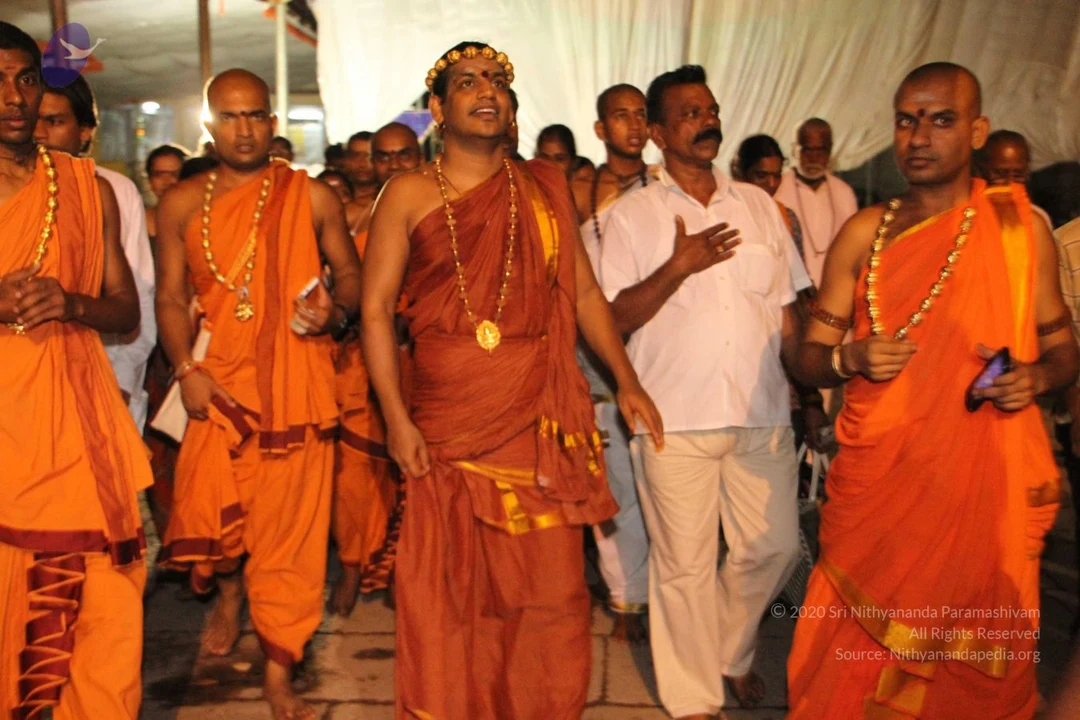
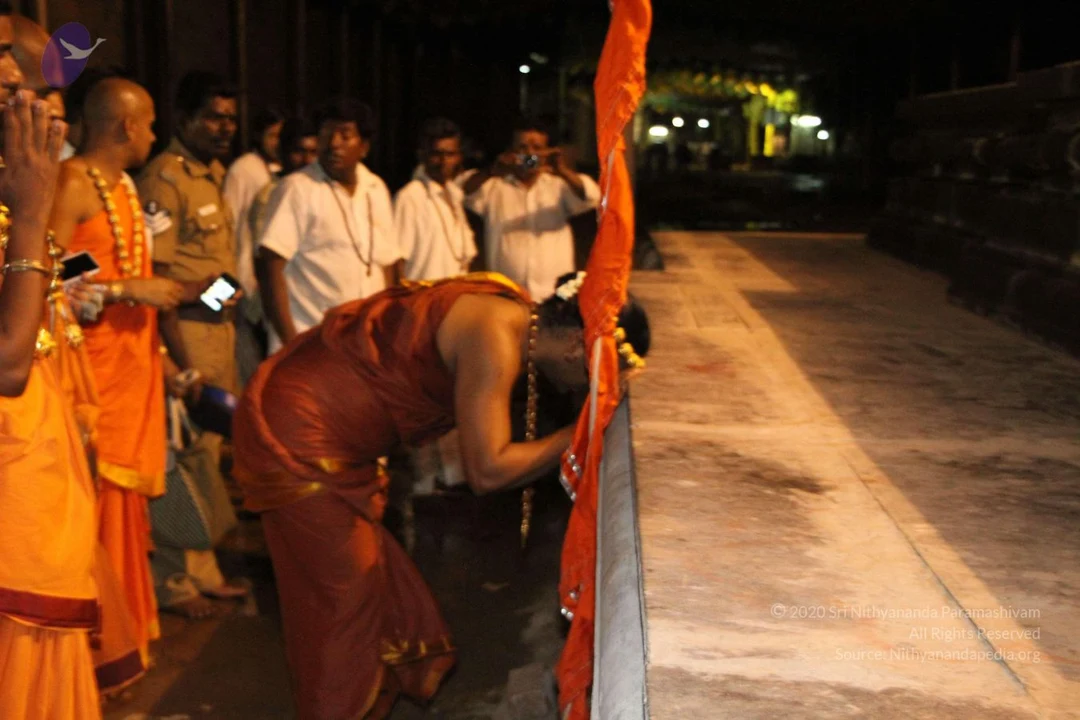
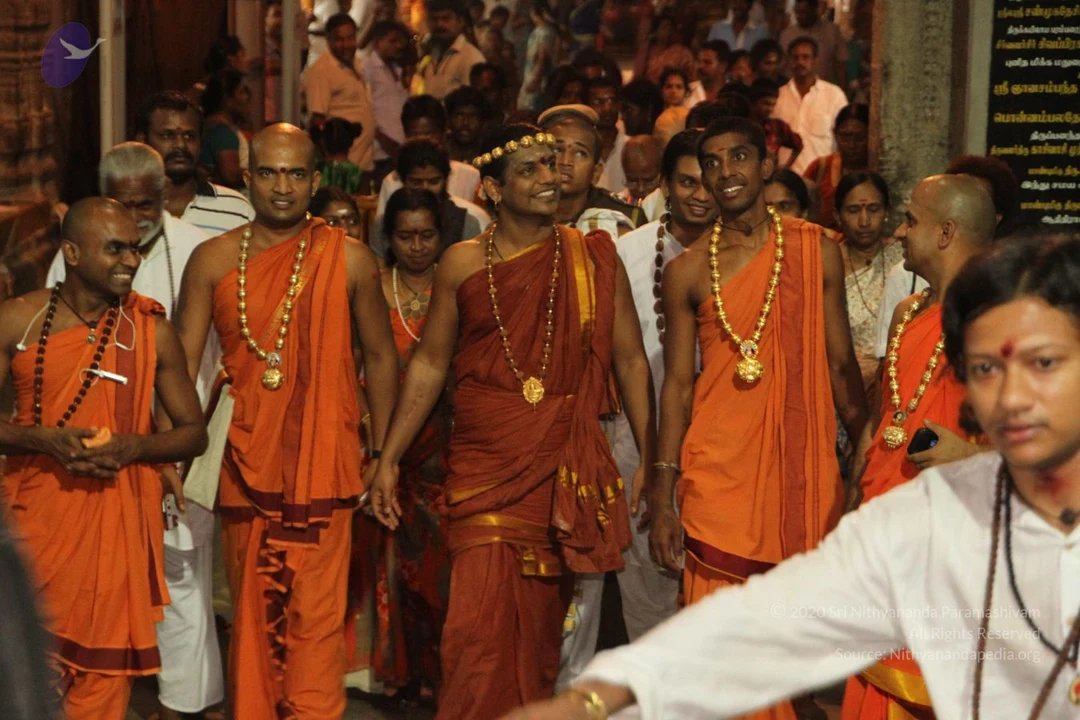
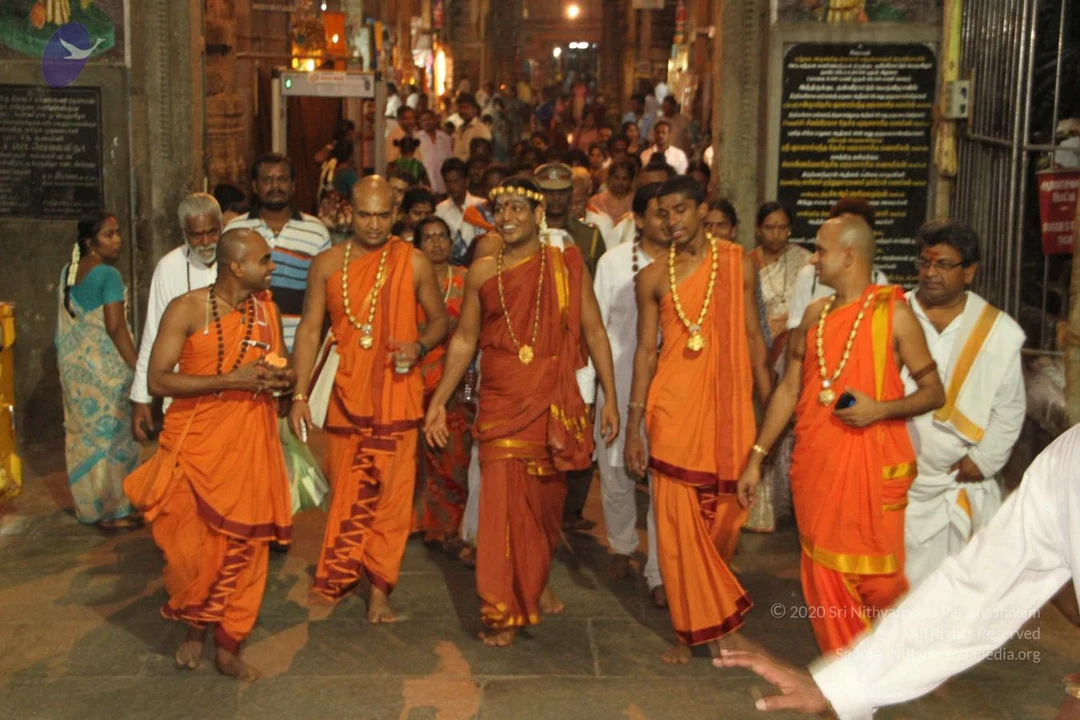
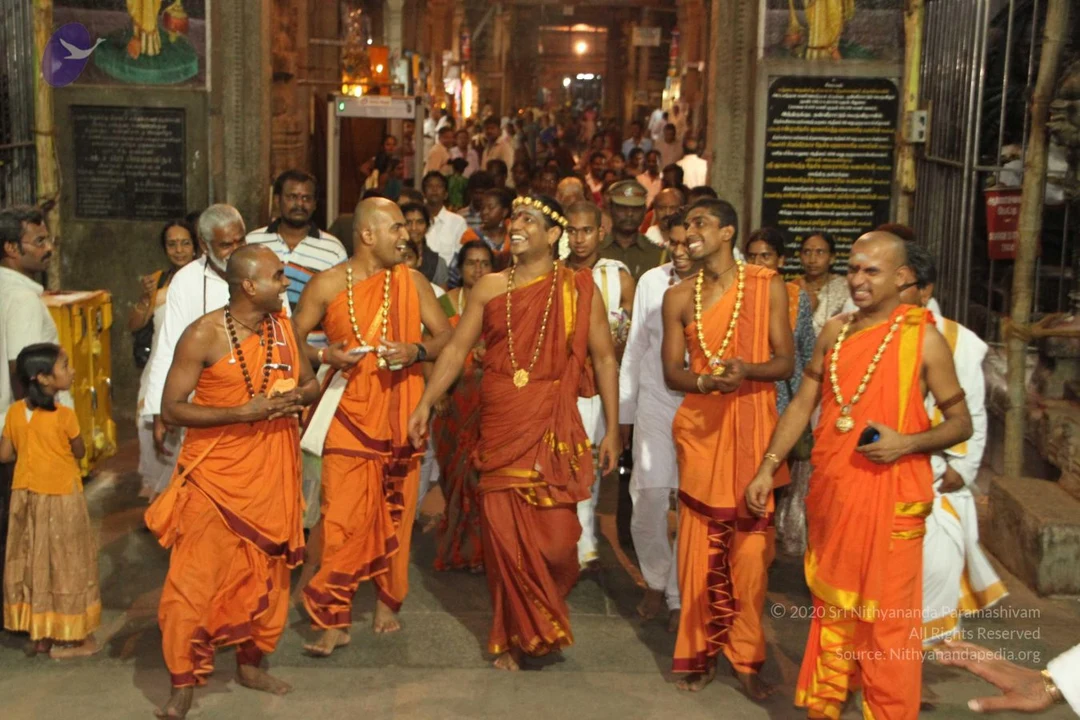
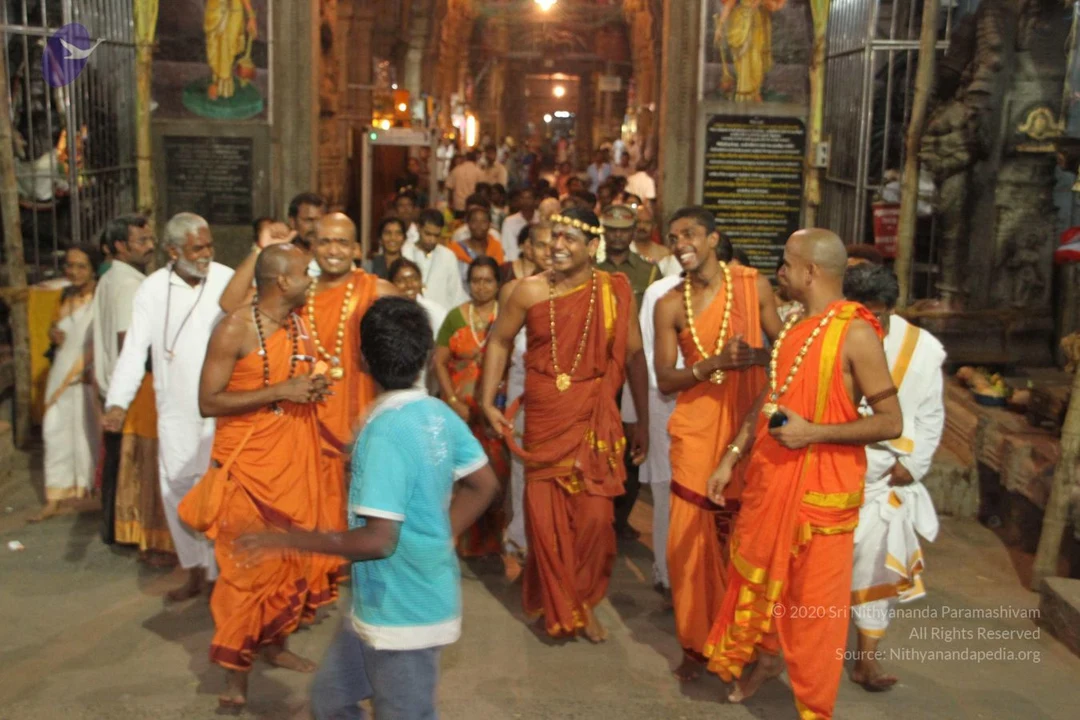
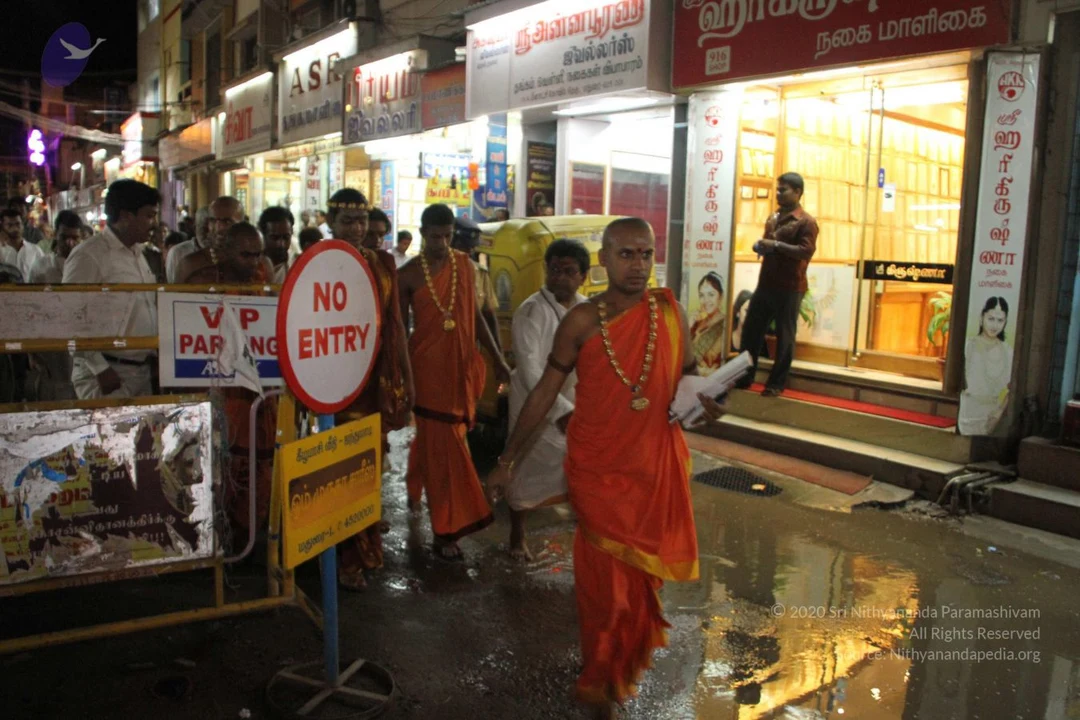
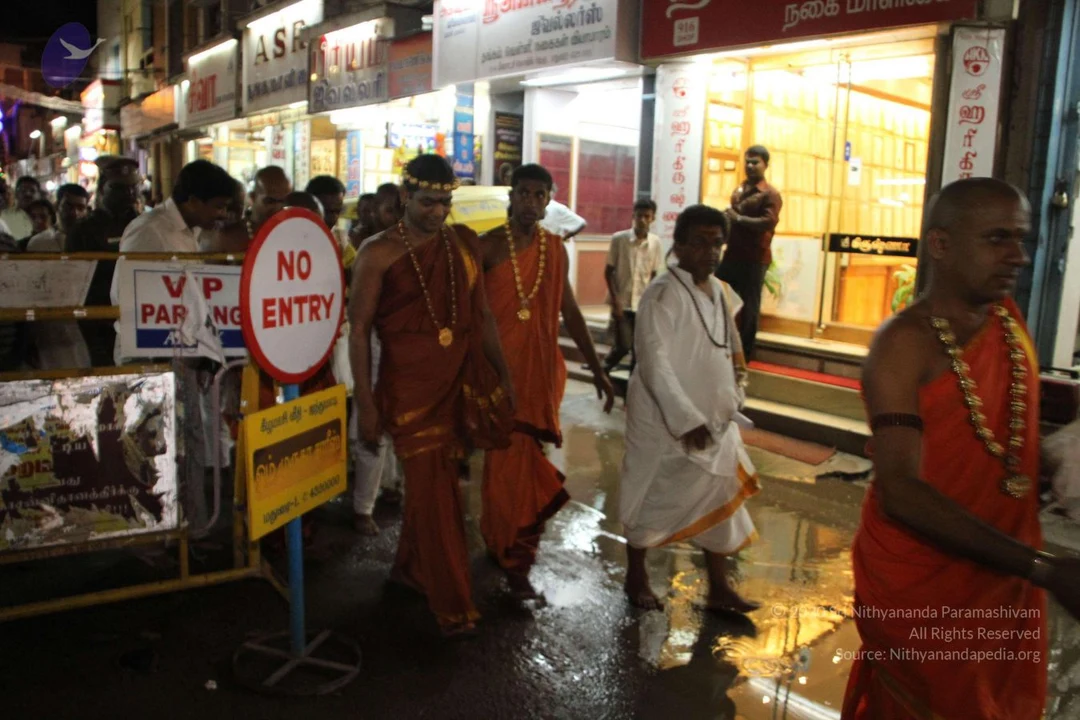
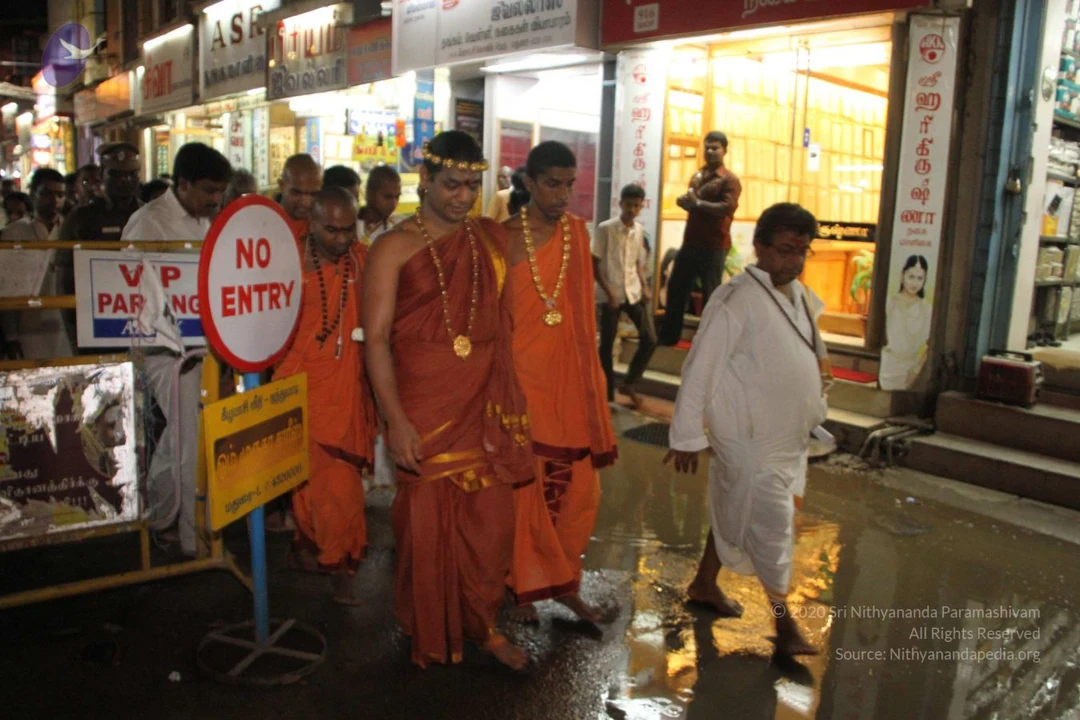
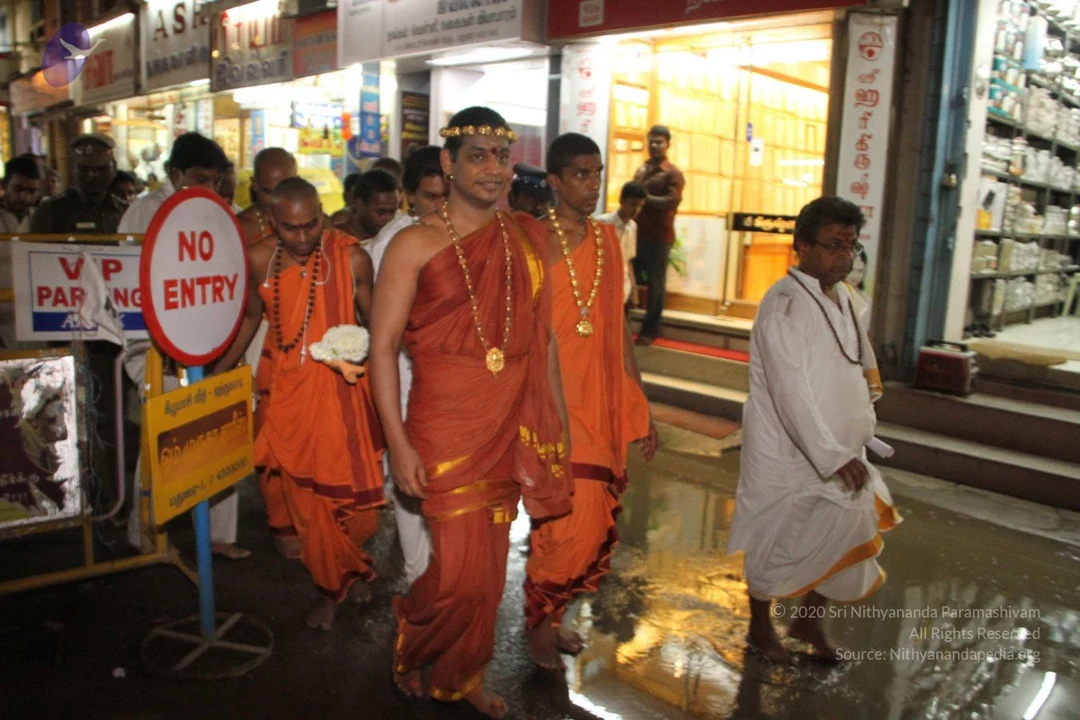
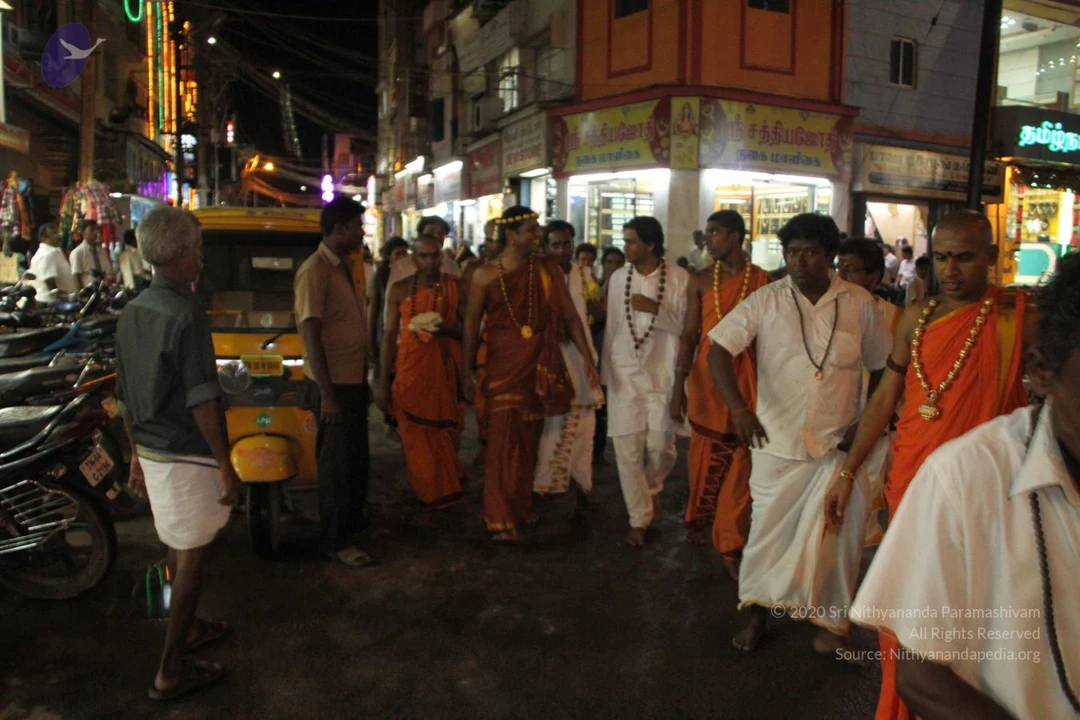
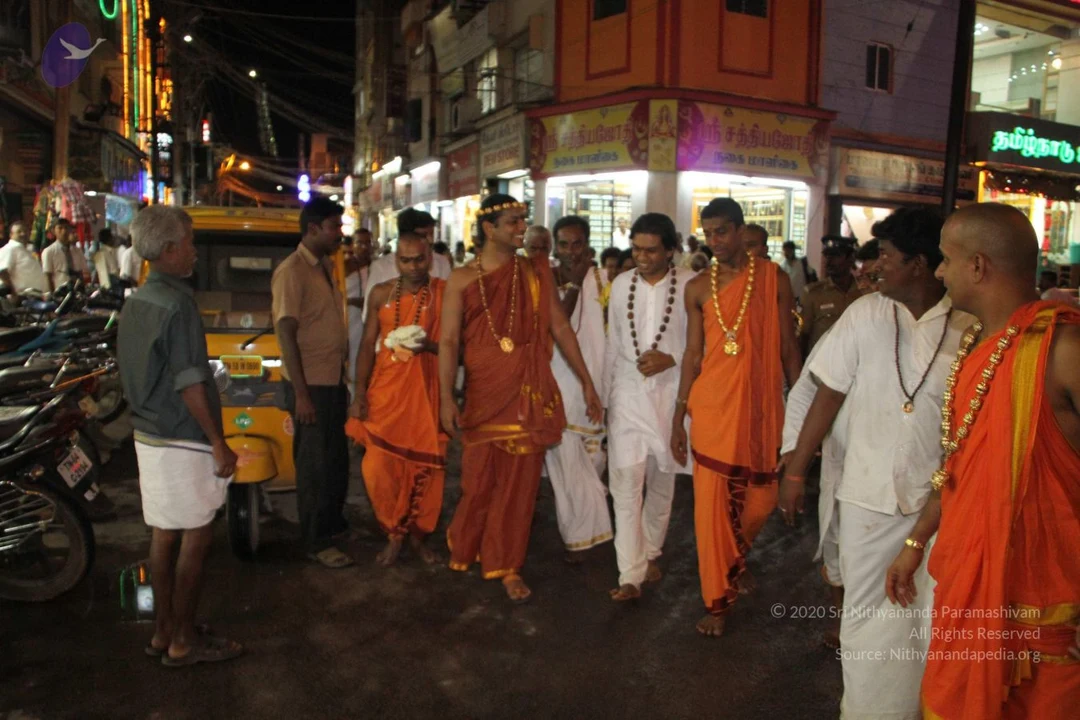
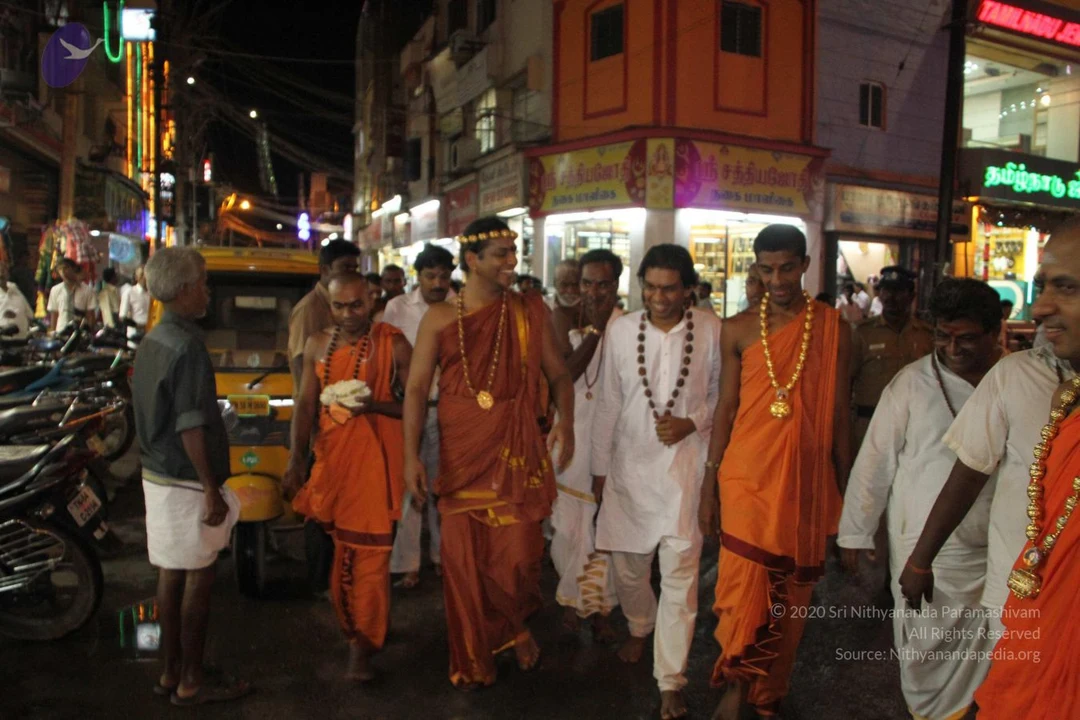
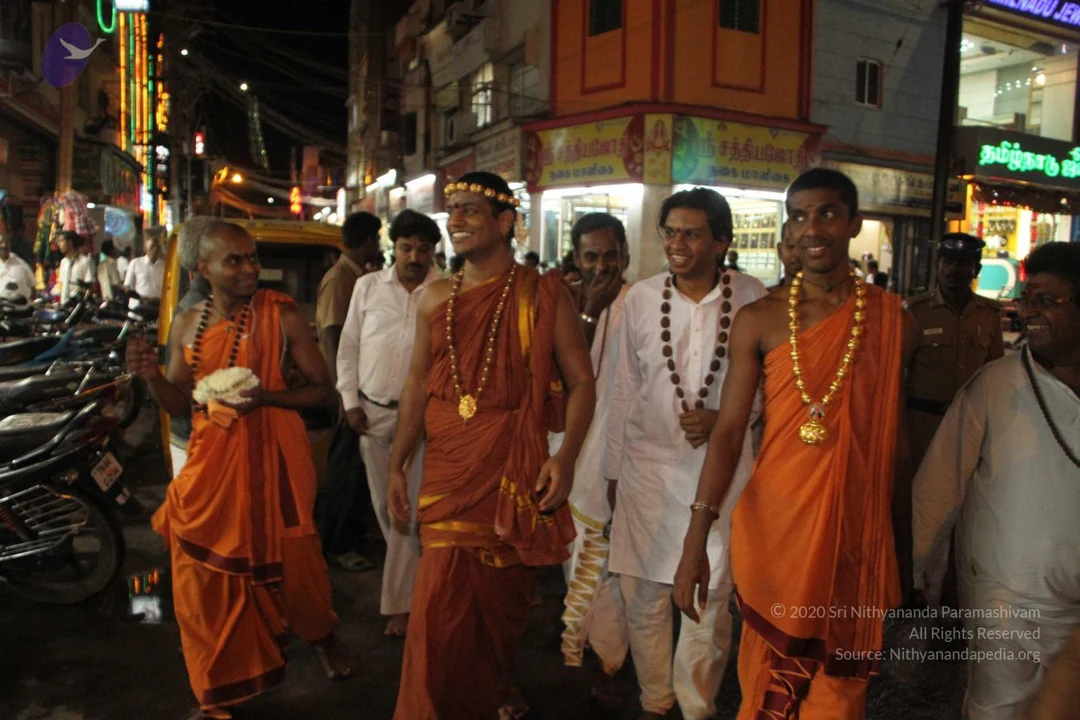
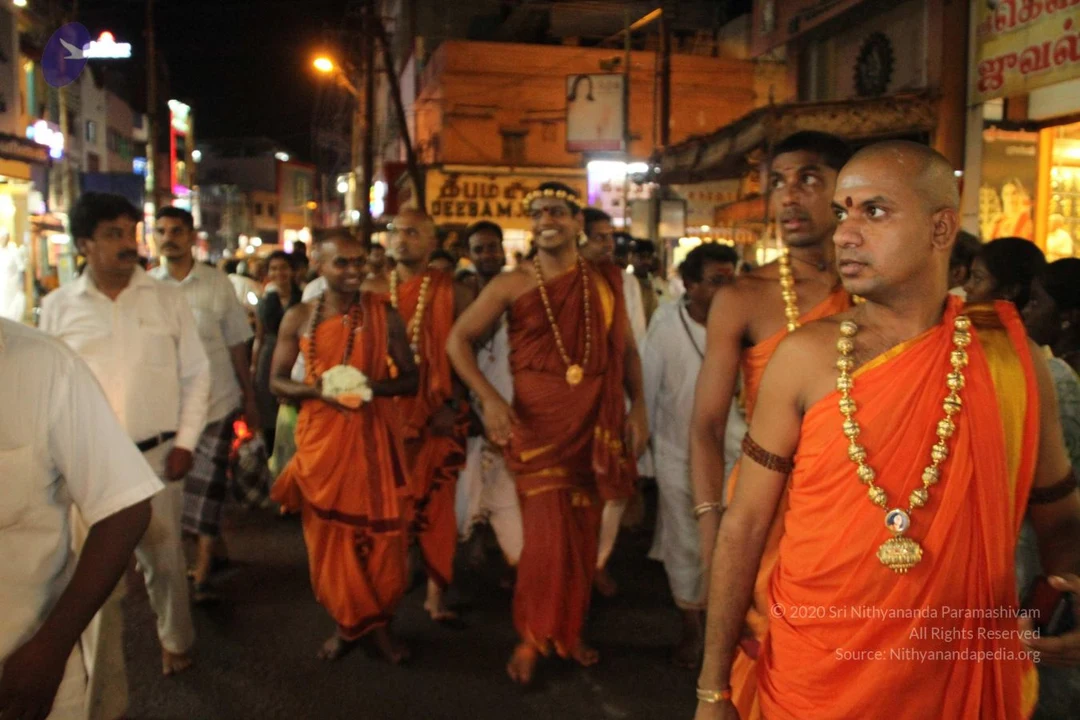
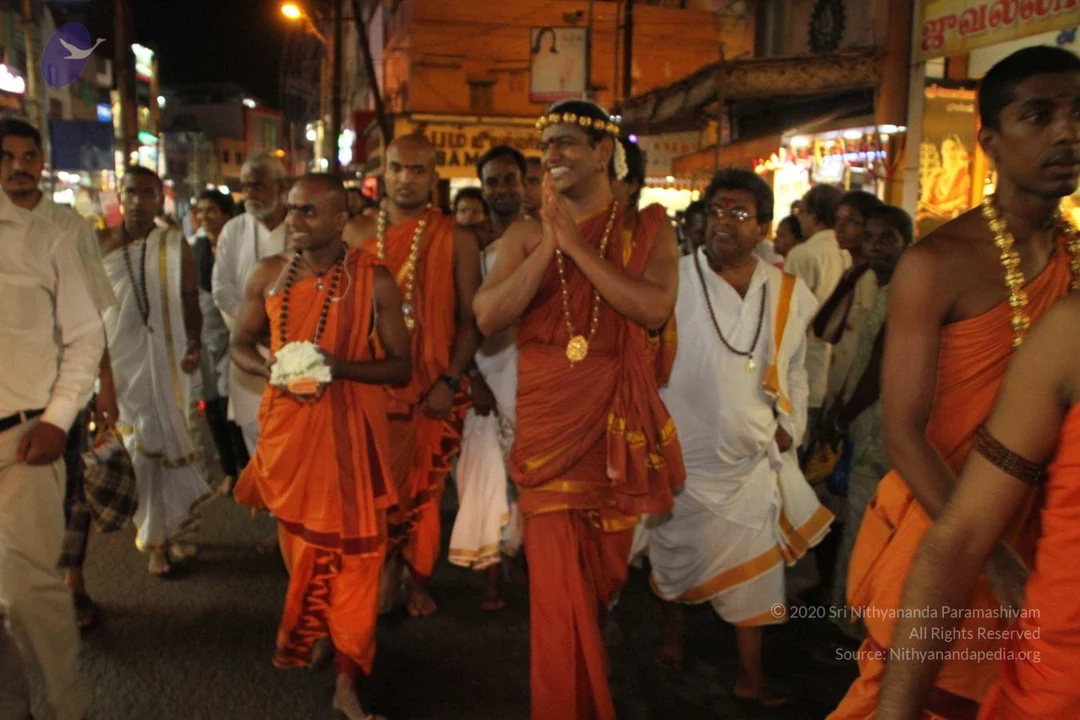
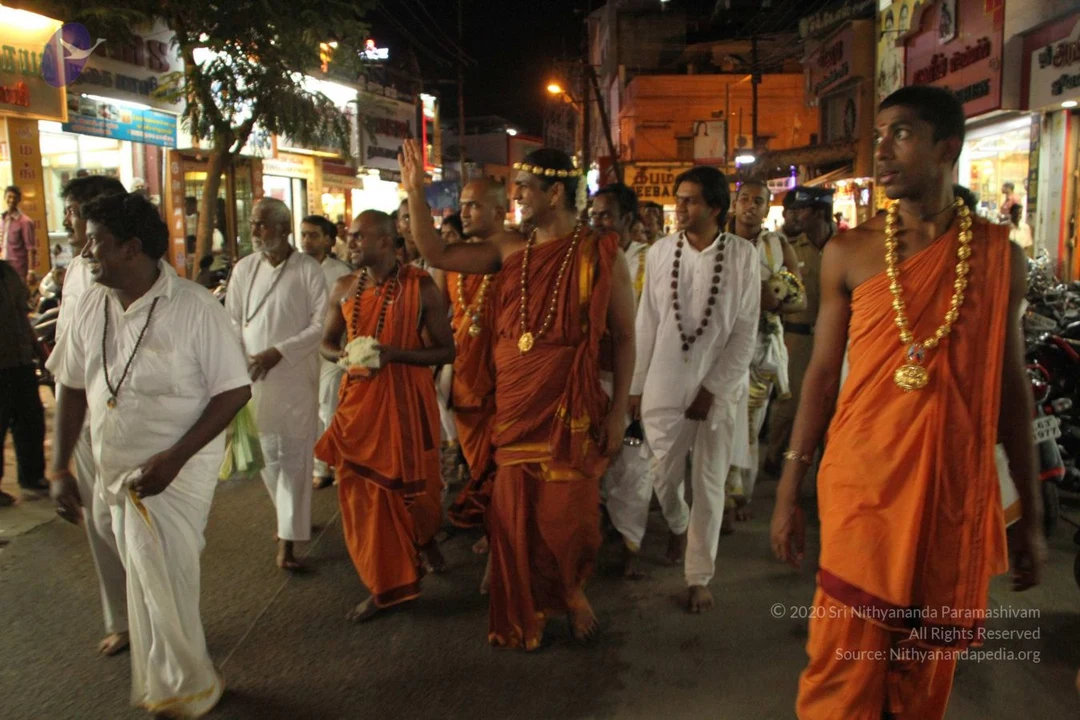
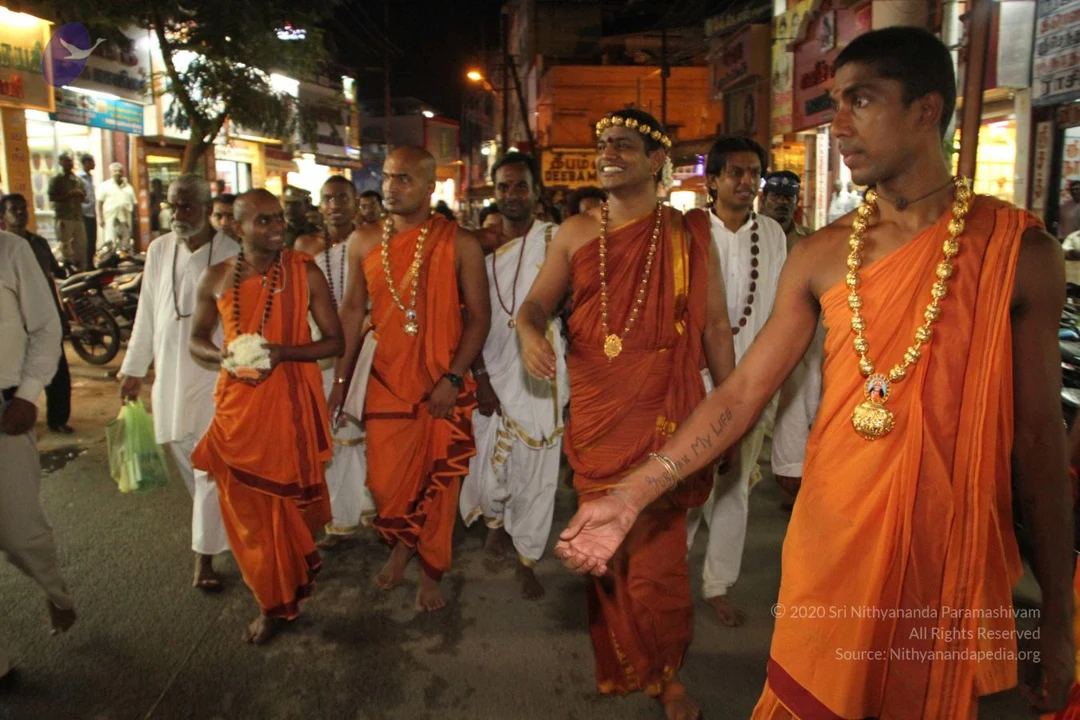
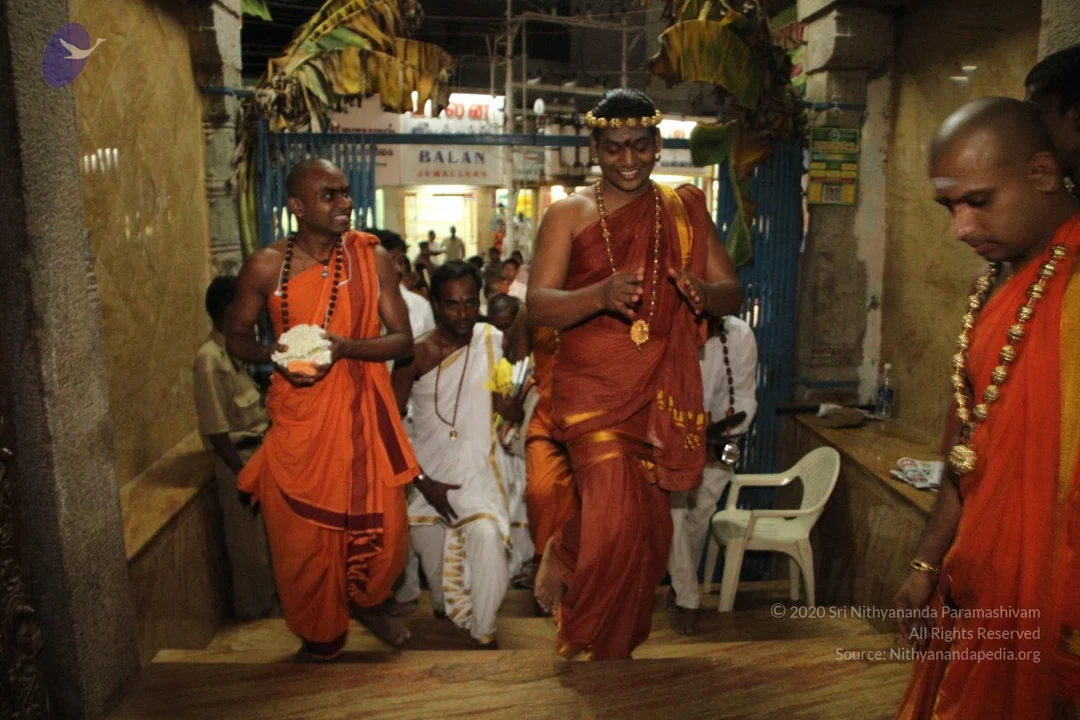
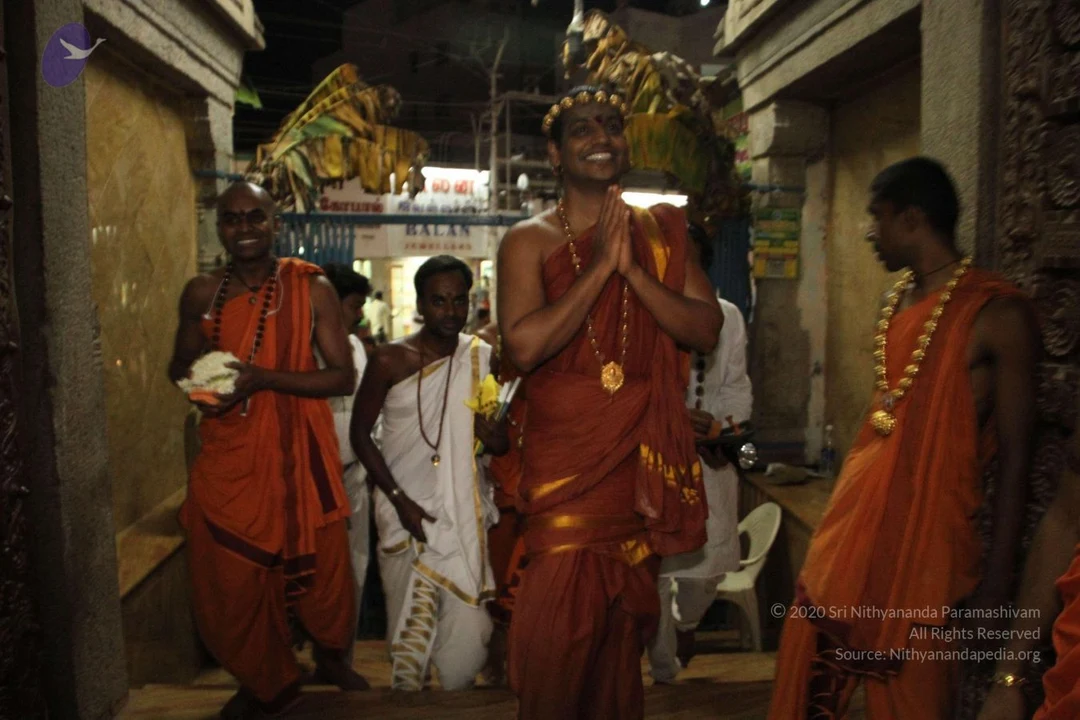
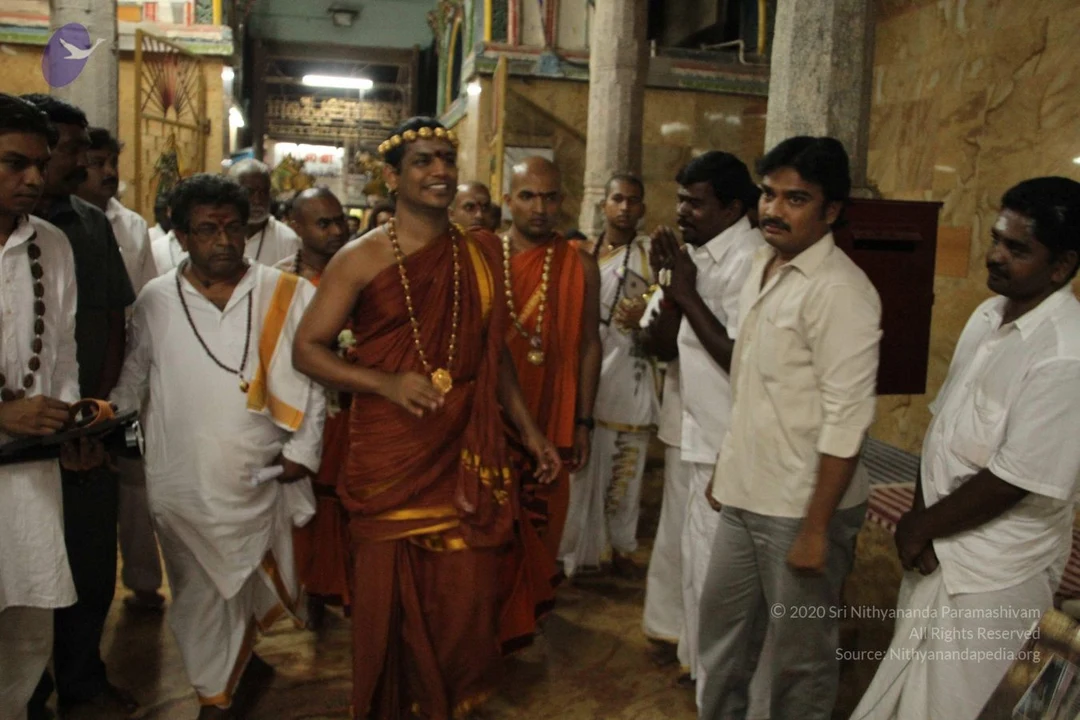
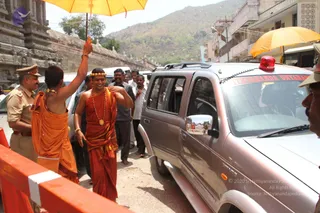
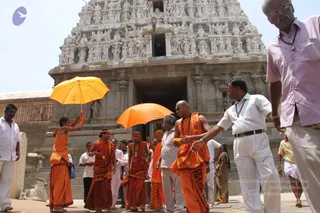
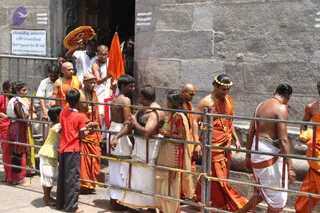
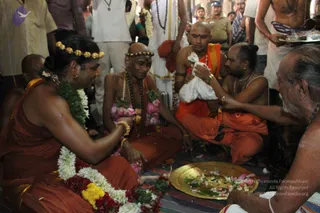
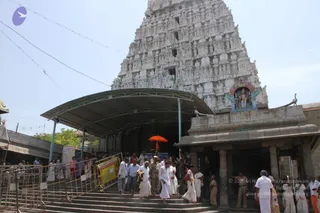
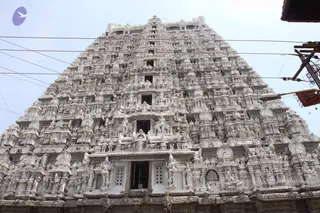
Outdoor street scene near a temple wall with carved stone pillars and a hillside behind. A man in saffron-orange robes with a long rudraksha-style bead necklace and a gold pendant, wearing a flower garland on his head, walks smiling beside a silver-grey SUV with a red beacon light on its roof and the word 'Nithyananda Dhyanapeetam' written on the windshield. A second man in orange robes raises one arm holding a yellow umbrella above the group. Several men in dark shirts and trousers walk alongside, and a uniformed police officer in khaki stands at left behind orange and white barriers. Bright yellow umbrellas shade the street.Outdoor procession in front of a carved stone temple gopuram with tiers of sculpted figures and a dark doorway. Several saffron-robed men walk across a stone courtyard under bright orange umbrellas. The central figure in a saffron dhoti with a gold necklace and rudraksha mala walks at the front, with a shaved head, and a younger man in saffron to his left wears a flower garland on his head. A man in orange holds up an orange umbrella above the group at left. Men in white shirts and white dhotis, some with rudraksha malas, walk around the saffron-clad group, and an older man in a pink shirt stands at the right edge. Bright daylight and clear sky. The central figure is a possible candidate, but his appearance is not distinctive enough to confirm identity.A photograph of a procession at a stone temple entrance with a metal crowd barrier and a sign reading "Don't bypass the 'Q' line". Several men in saffron-orange robes and rudraksha malas walk in a group, some carrying a tall orange flag and a large round ceremonial fan with red and gold trim. Behind them stand men in white dhotis, some bare-chested, and a woman in a tan sari. A man at the right wears an orange garment with a gold-trimmed hair band and multi-strand beaded necklaces. A child in a red shirt and a girl in yellow stand at the barrier on the left. Several other devotees are visible in the crowd.Indoor ritual photo of several seated men in saffron and orange robes on a striped cloth, with garlands of white jasmine and red-yellow flowers. On the left a man in orange with a gold headband and garland sits near a bald elder in a flower-garlanded saffron wrap with rudraksha mala and gold chain, who holds a hand toward a brass plate of petals and leaves. A bald man in orange with gold armlets holds a white cloth bundle, while a bare-chested man with a topknot and beaded mala reaches toward the plate. Standing devotees and a police officer in khaki are behind, and a bare-chested man holds a metal tray at upper right. Ritual puja or padapuja setting.Photograph of a large gopuram of a South Indian temple, its tower covered in white sculpted figures, with a small shrine on the right featuring a painted deity figure flanked by peacocks. A group of people in white dhotis and mundus, some in saris and shirts, walk down a stone staircase beside metal barricades. A man in a khaki uniform stands near the shrine entrance, and a person holds an orange umbrella near the entrance. Several people carry flower garlands. The scene is a temple precinct with crowds moving toward the entrance. Visible people number roughly twenty or fewer.Looking up at the tiered gopuram of a Madurai-style temple tower, its facade covered in white stucco sculptures of deities, figures and niches. Overhead run several thin electric wires, and a street lamp and red cloth banner hang at the right edge. No people are visible in the frame.