Skip to content
Saturday

7 May 2016

07 MAY 2016 Shuddhadvaitam Ujjain

Dated photos
501
Source pages
1
Media
7
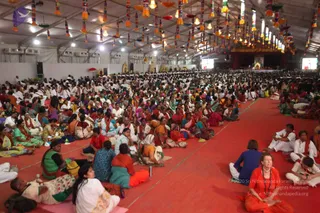
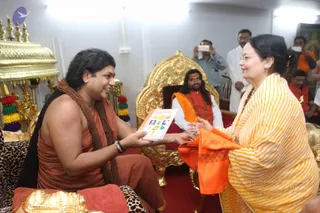
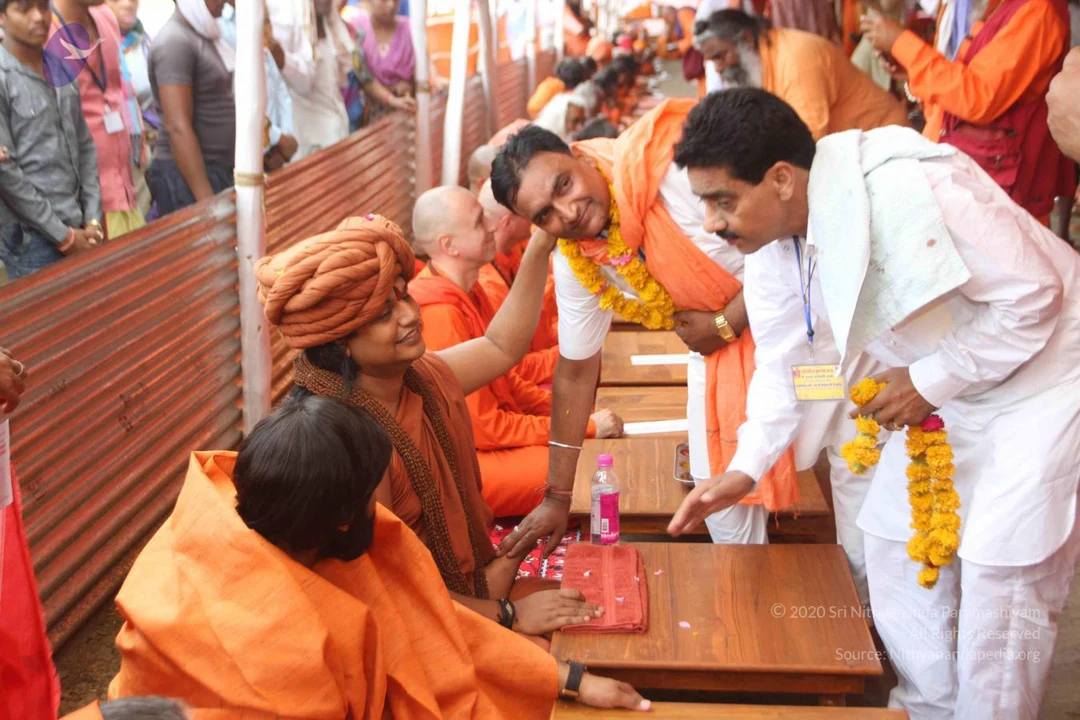
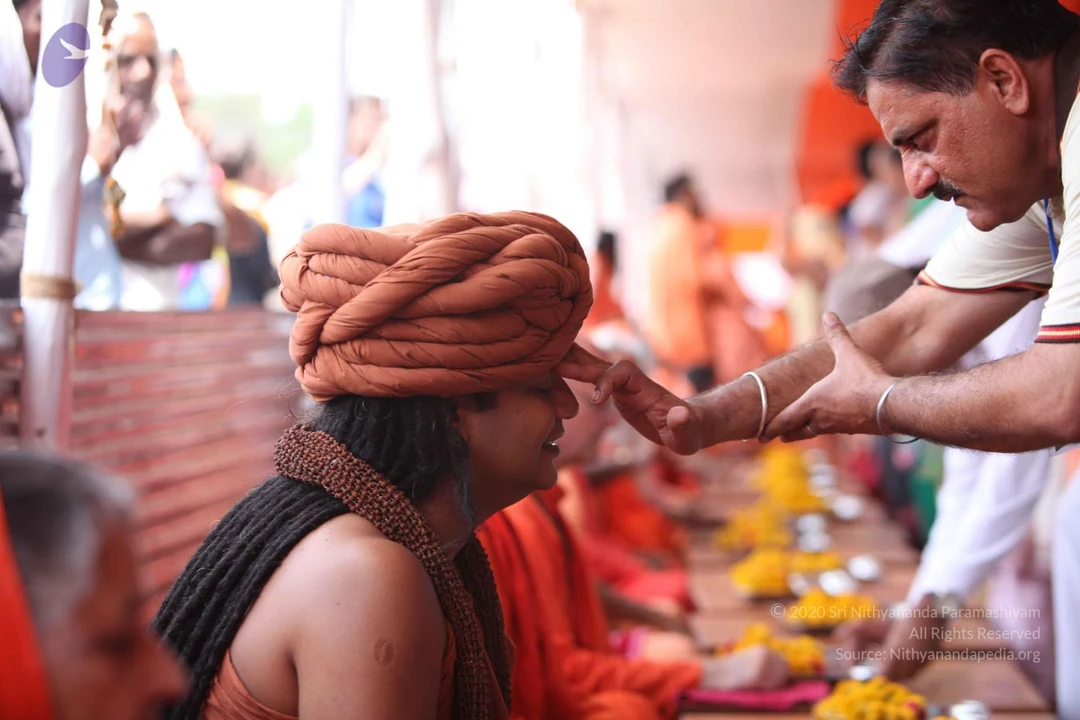
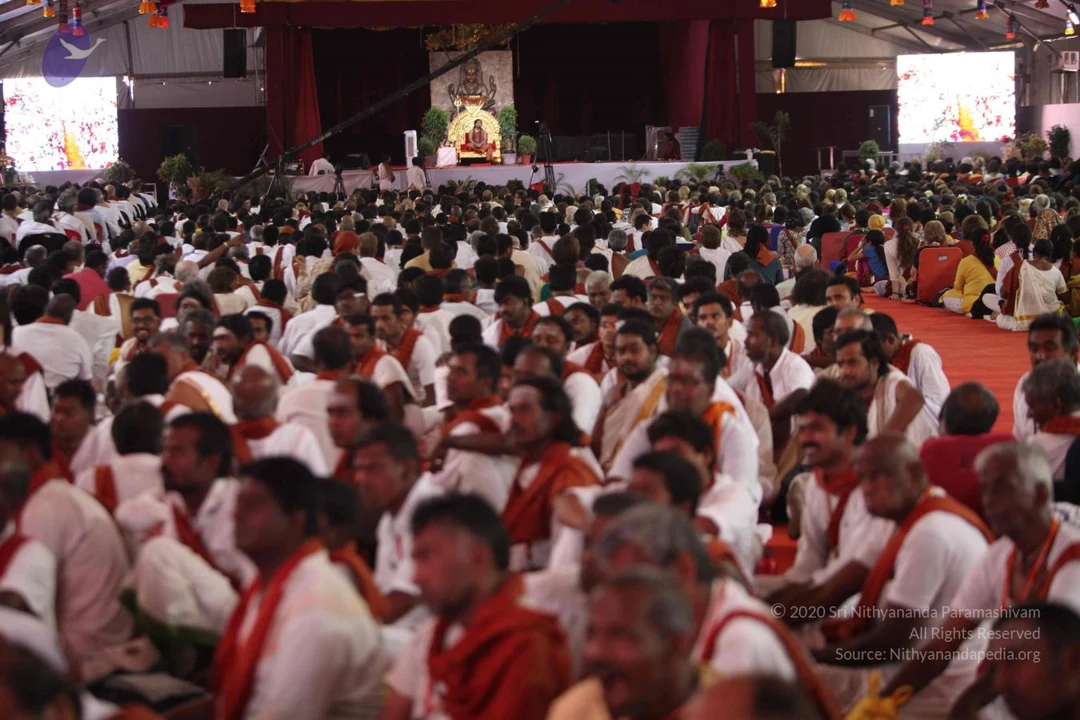
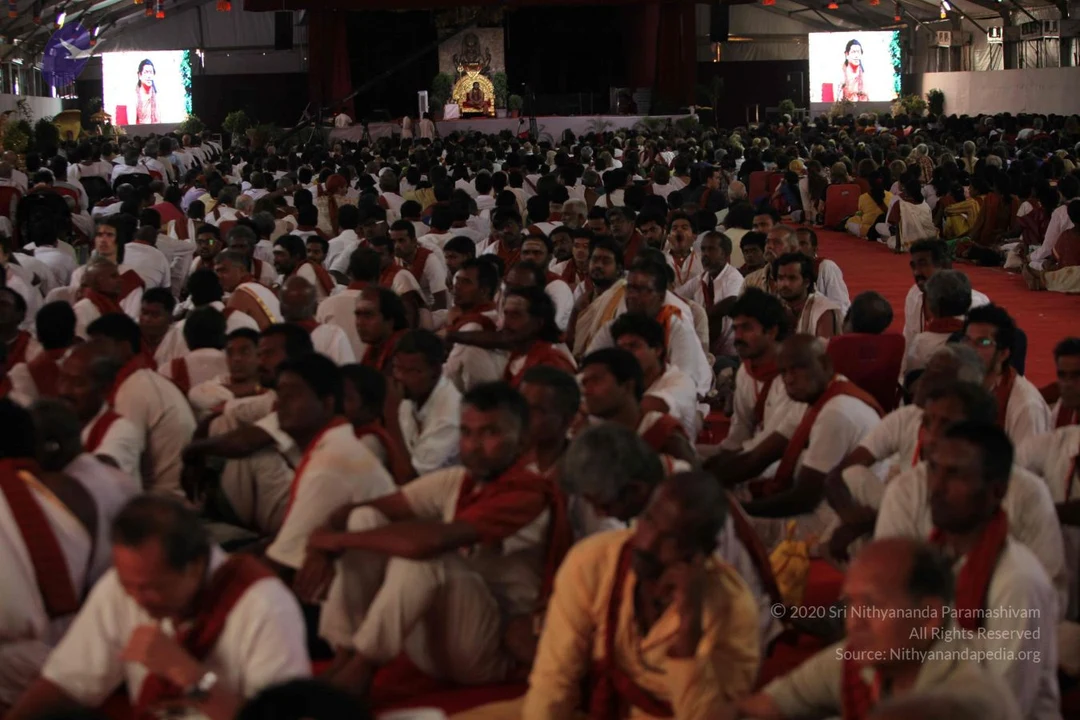
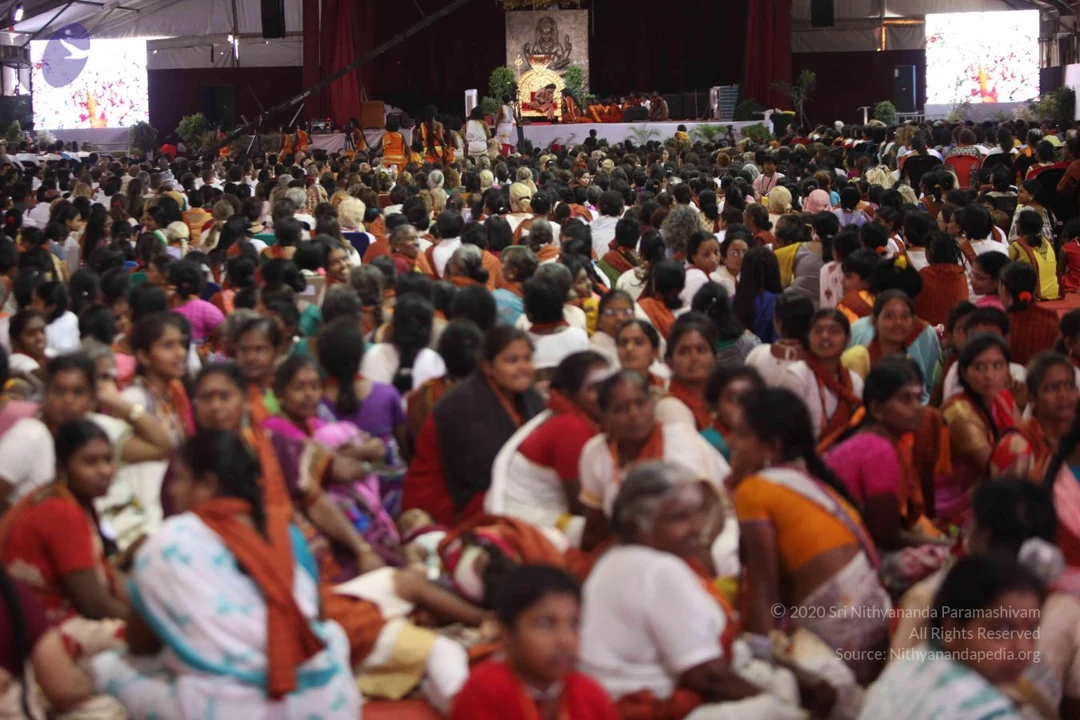
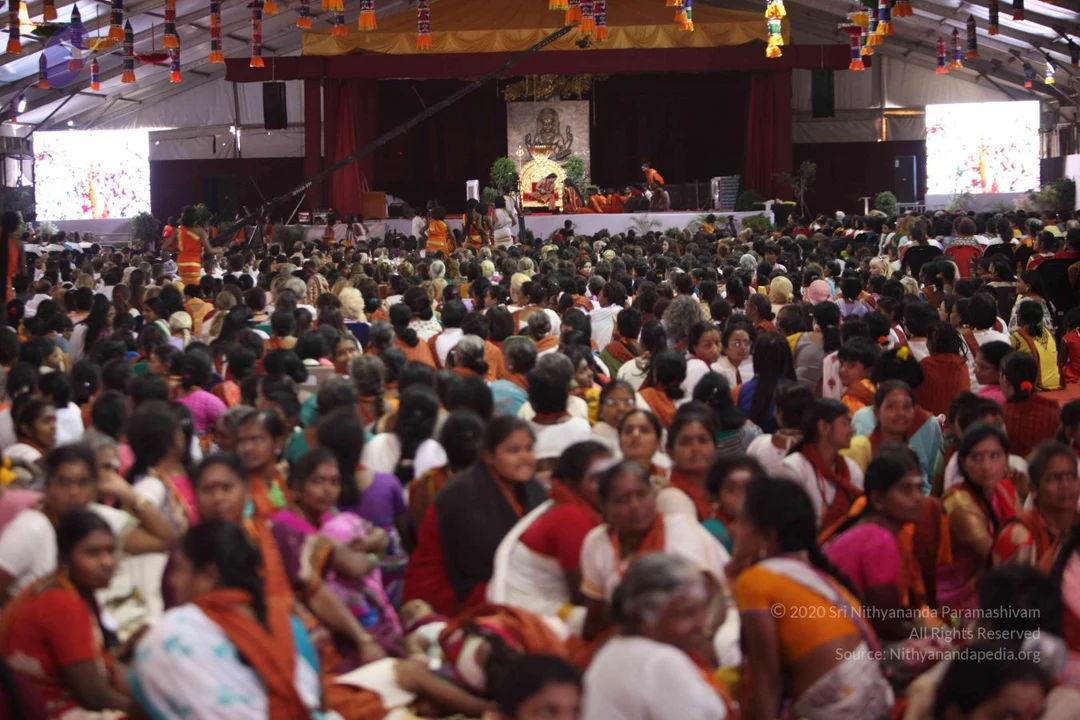
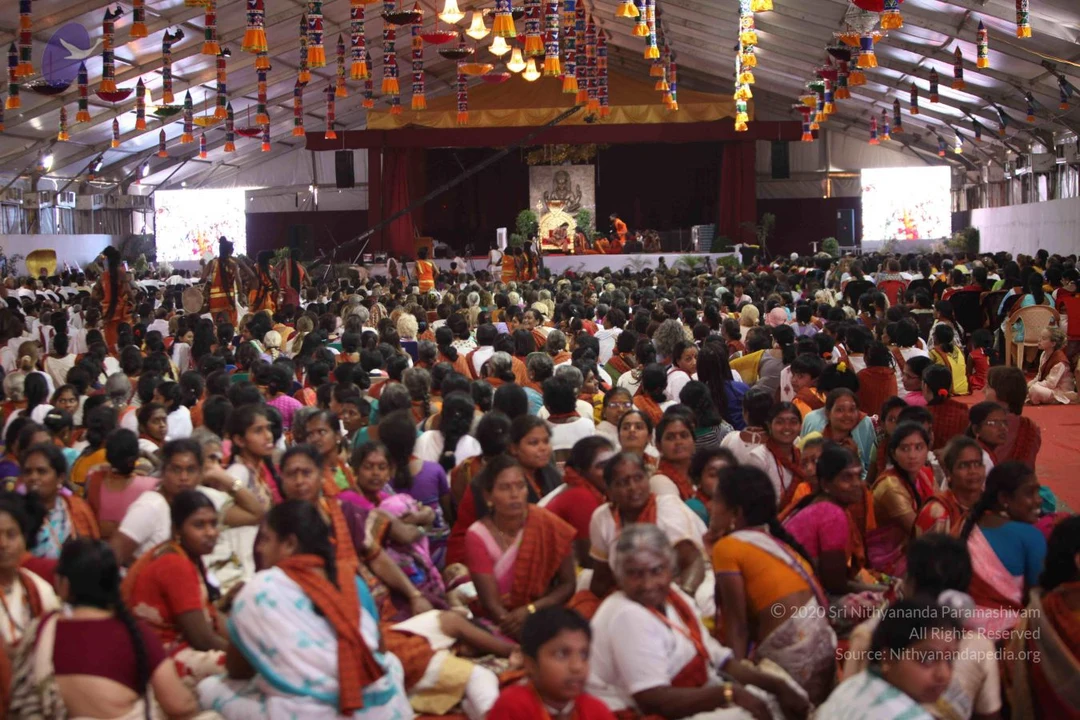
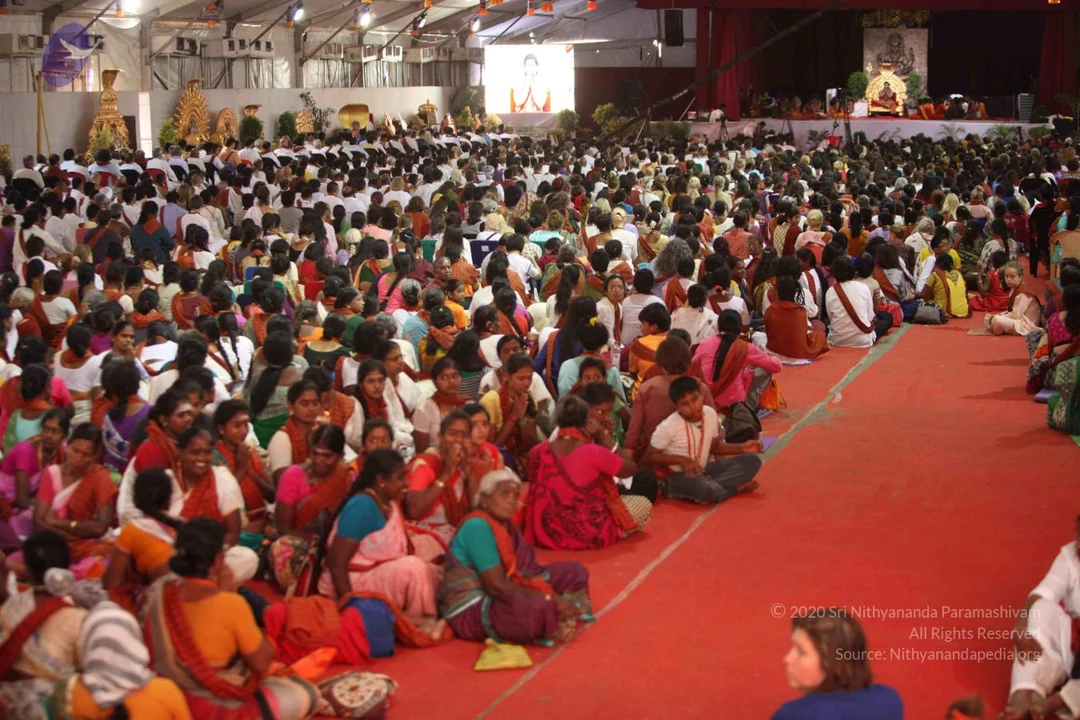
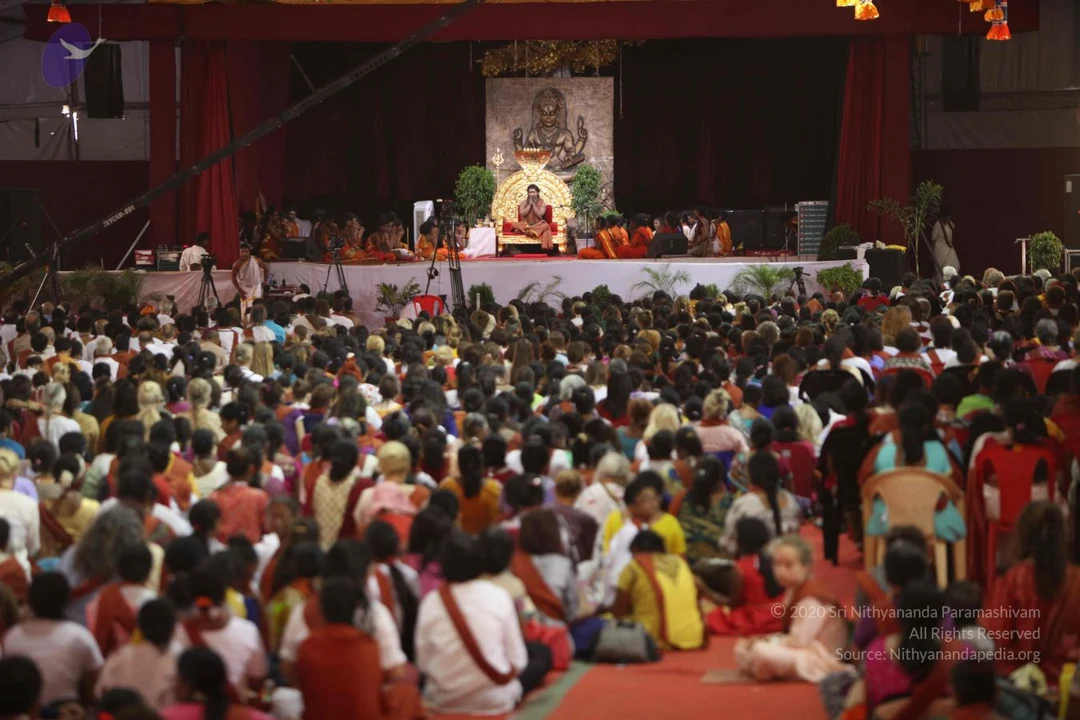
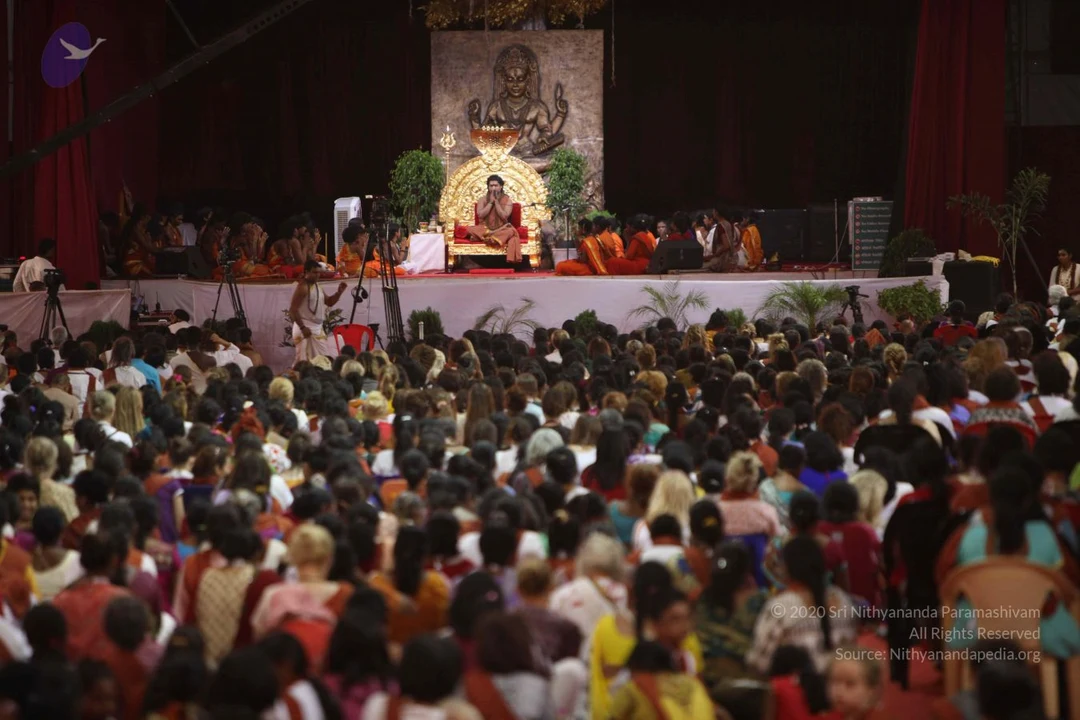
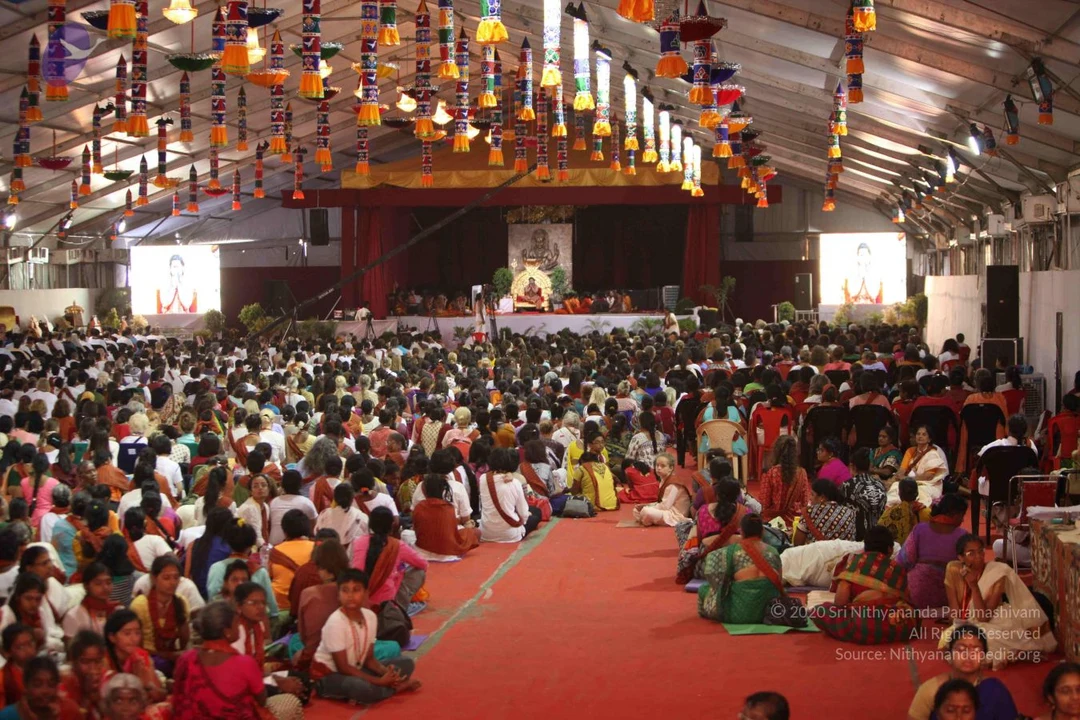
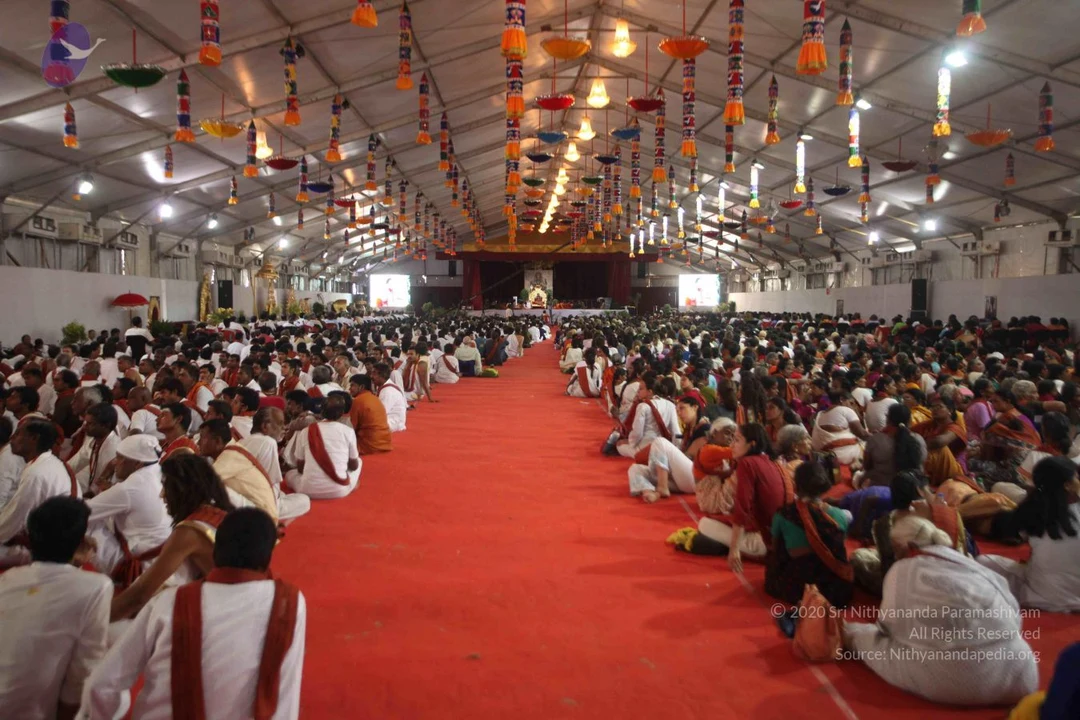
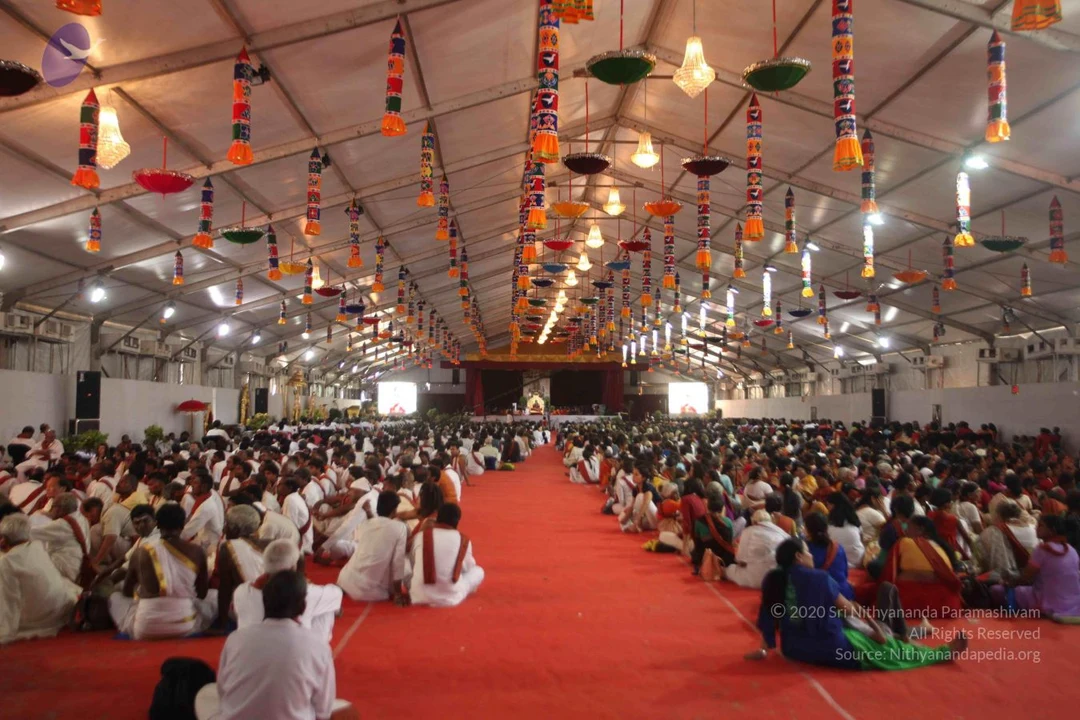
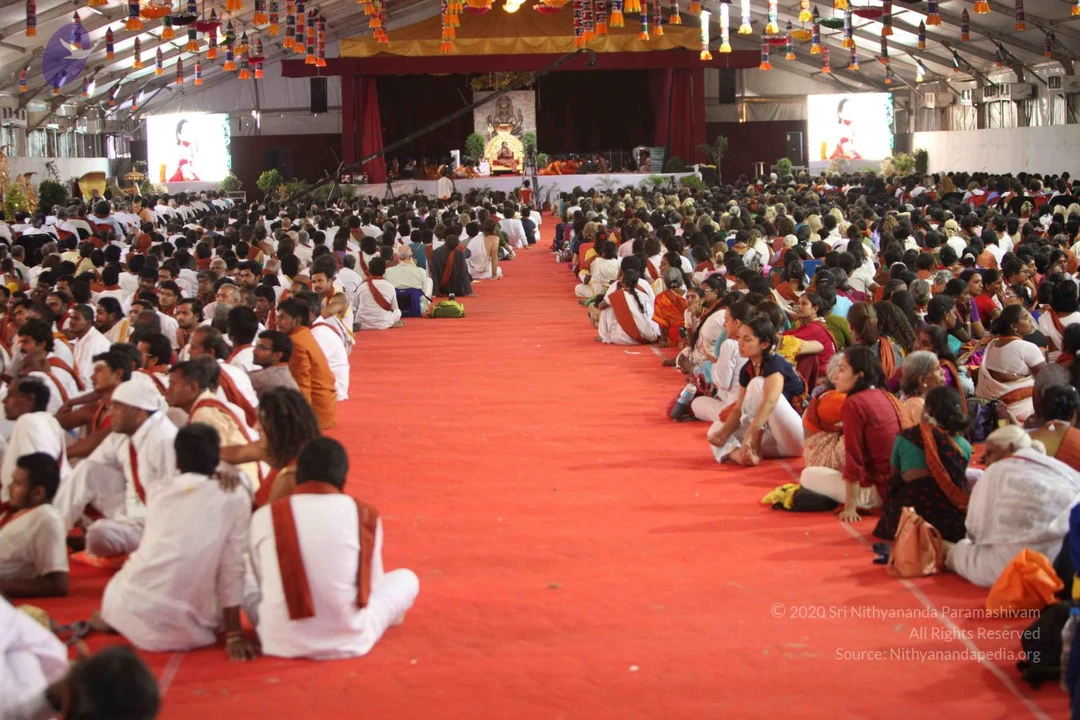
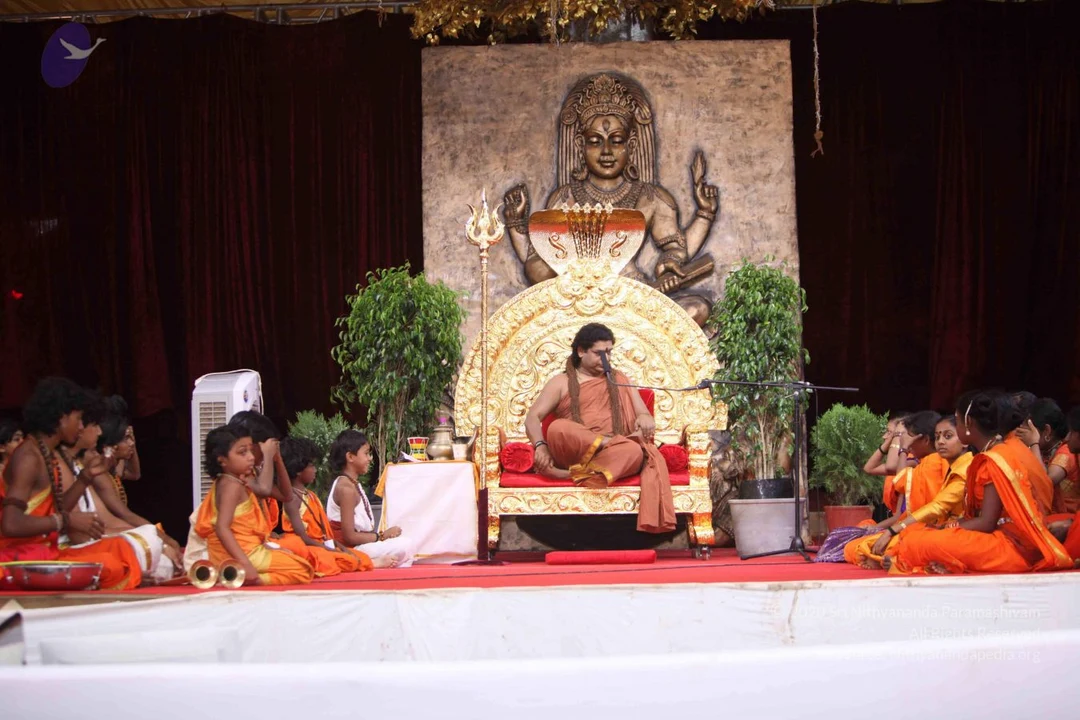
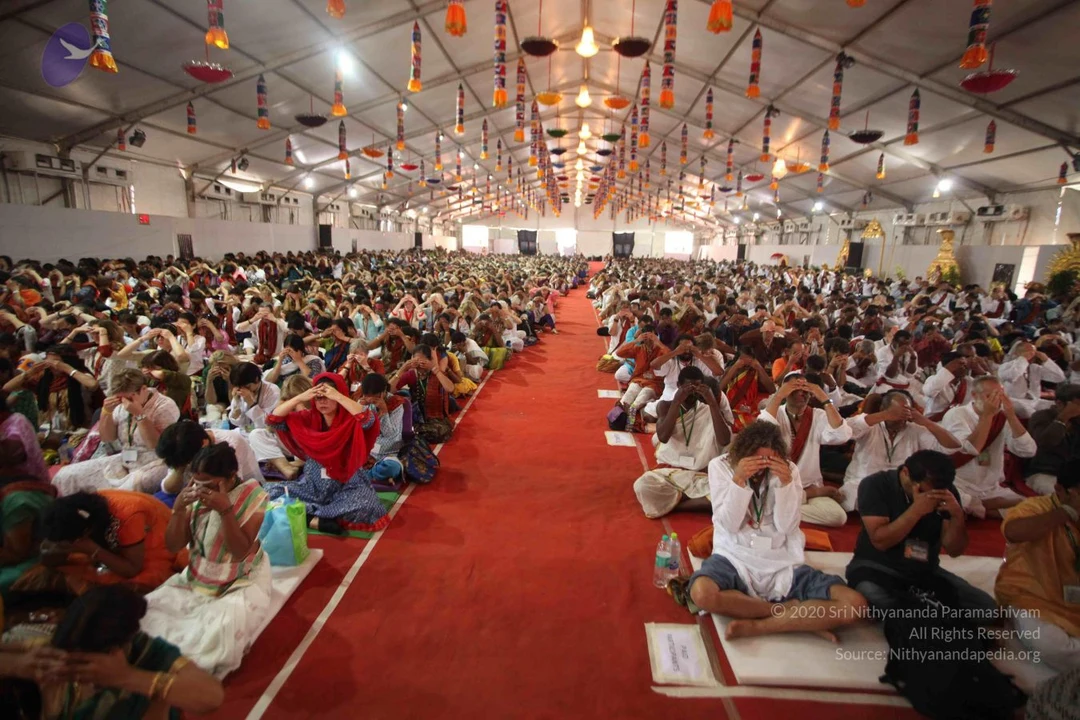
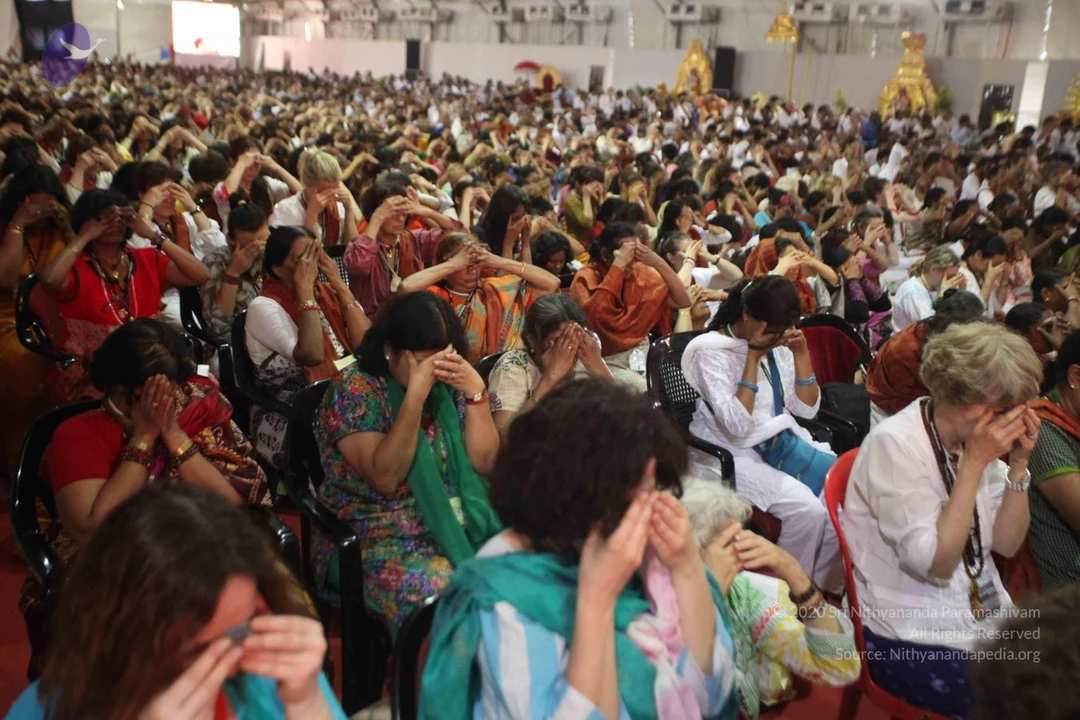
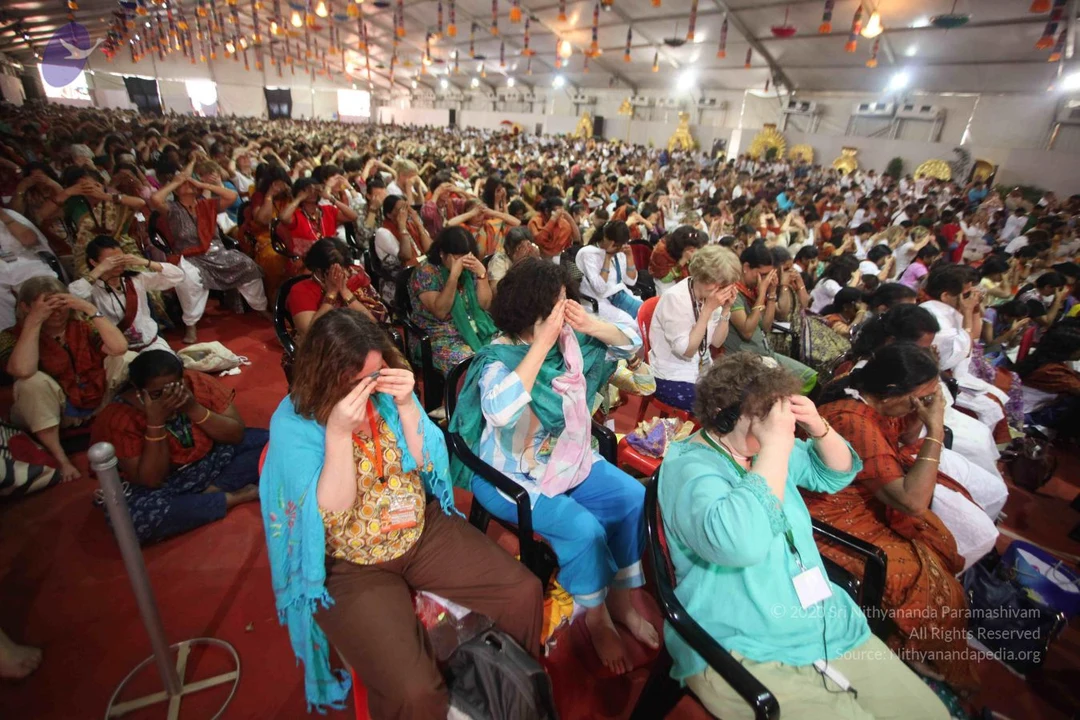
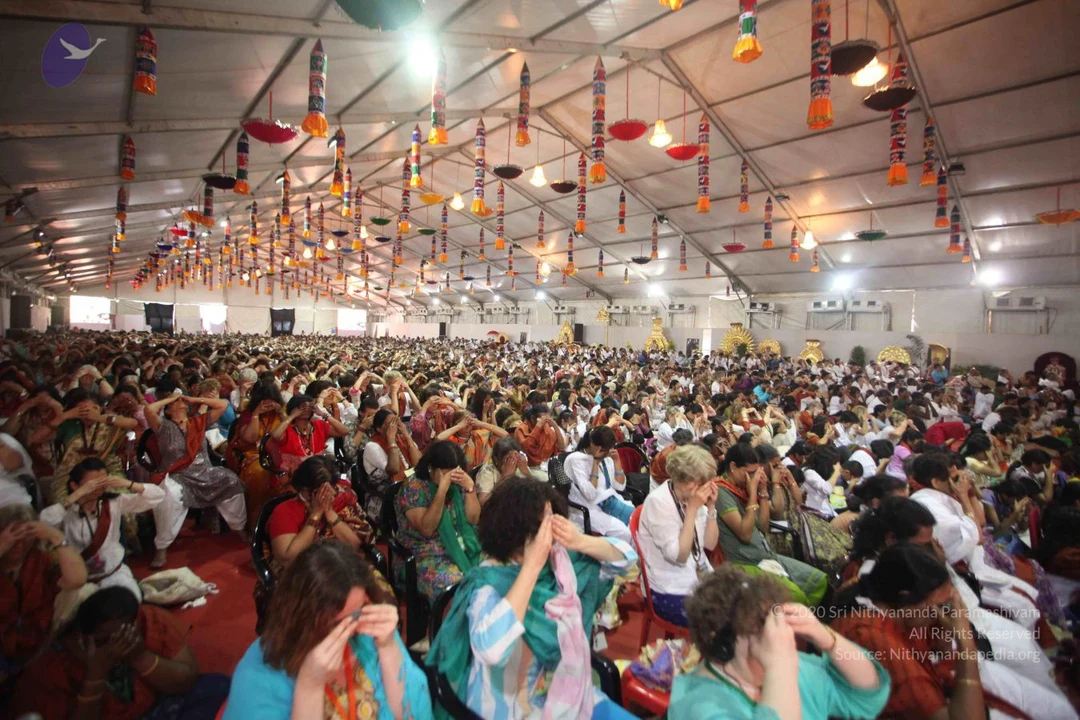
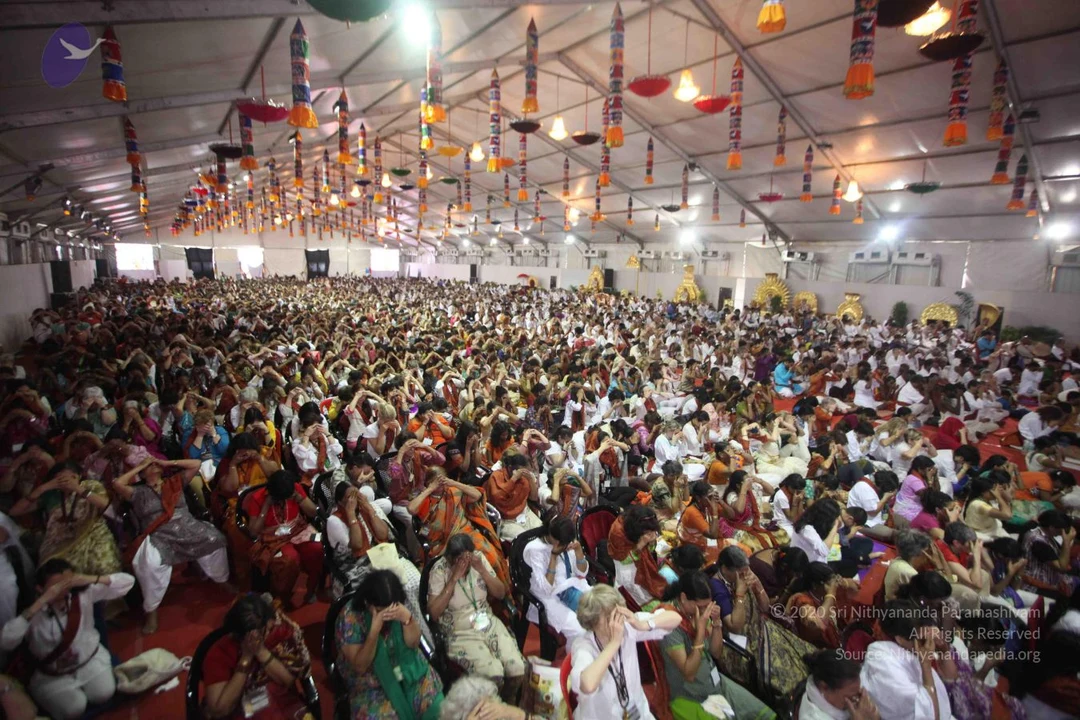
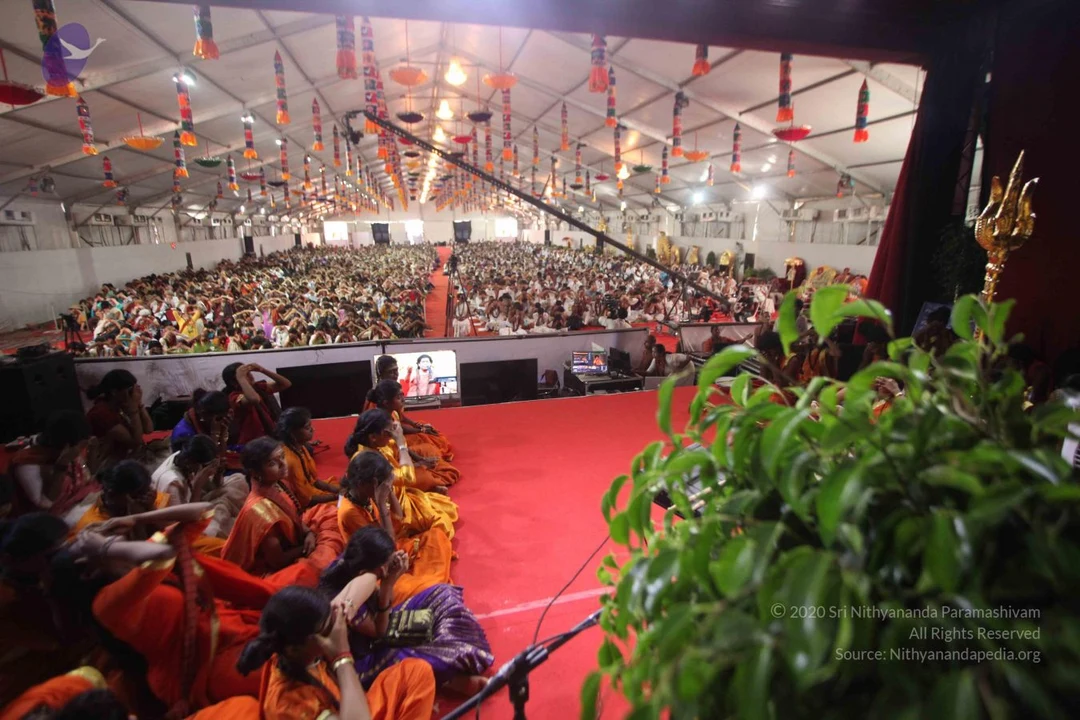
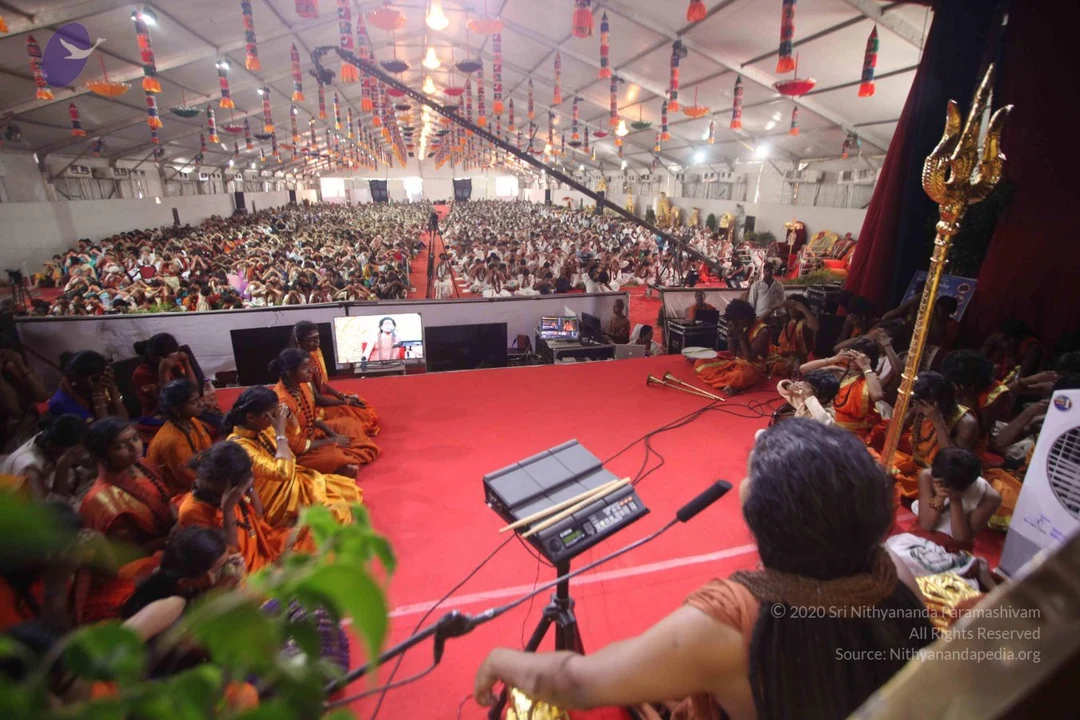
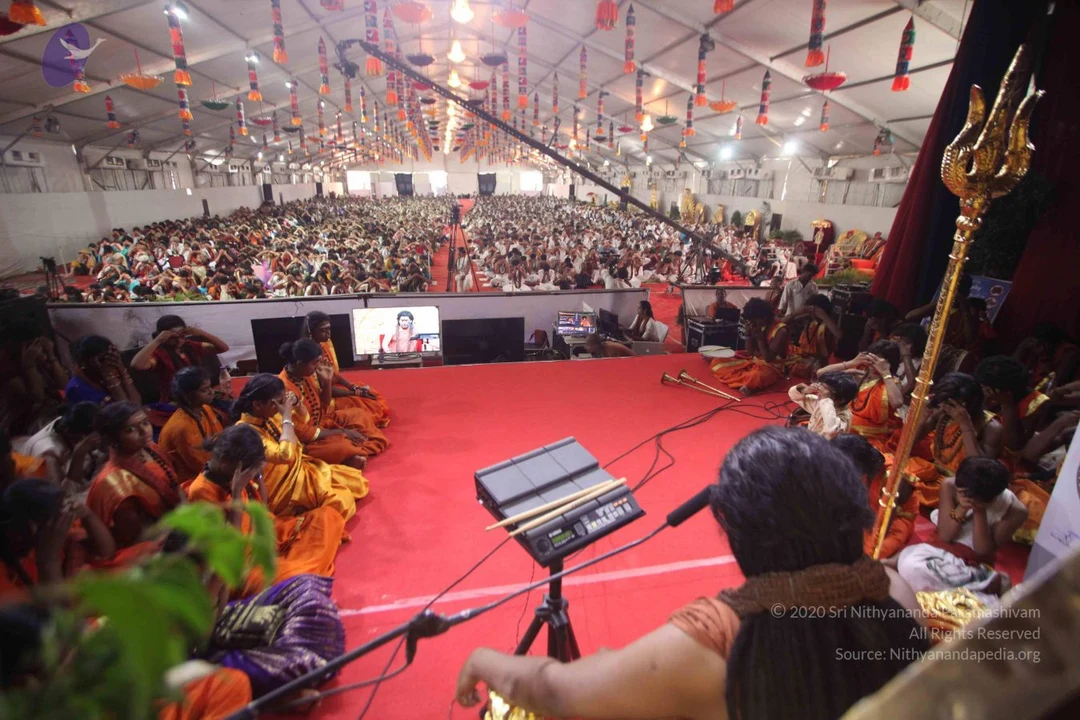
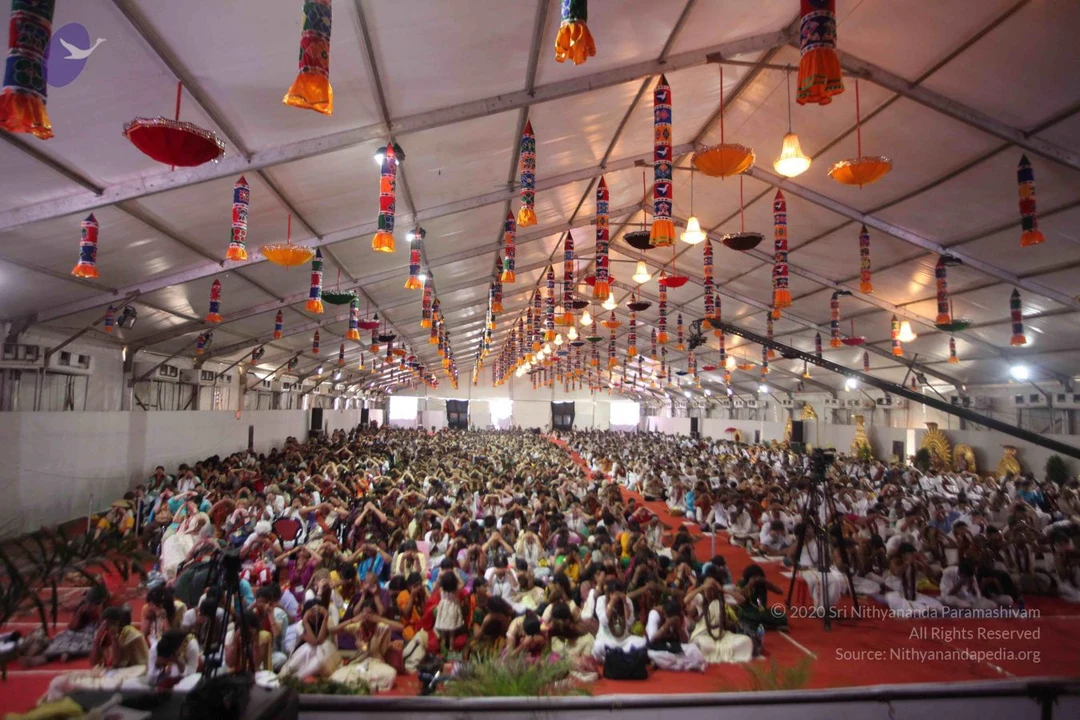
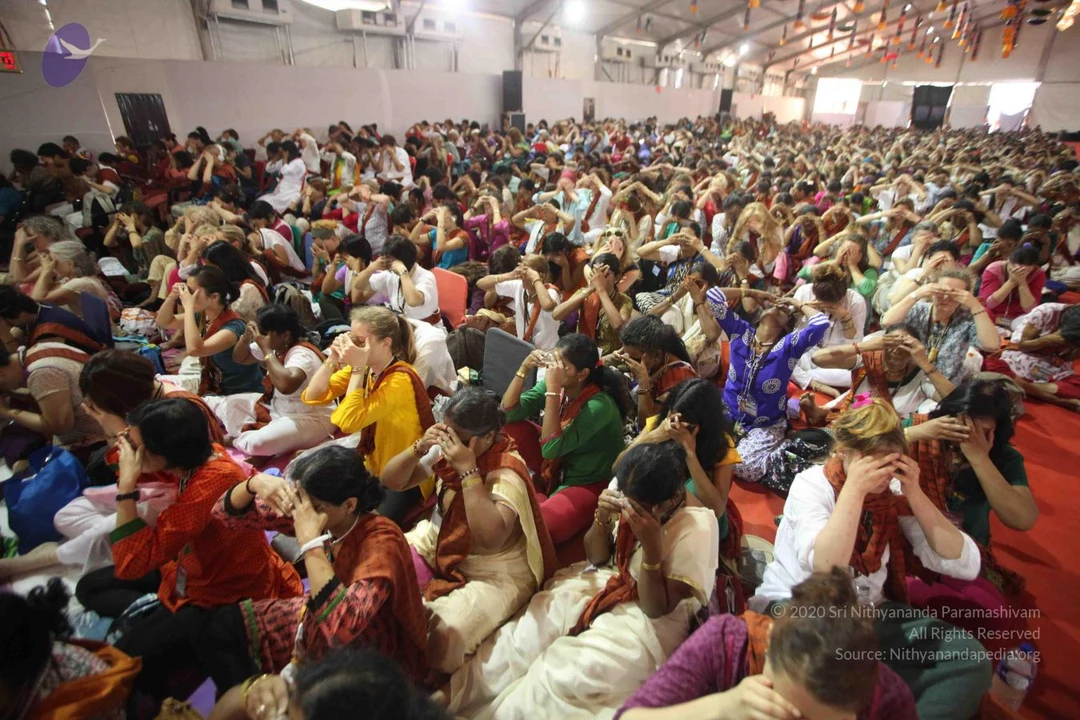
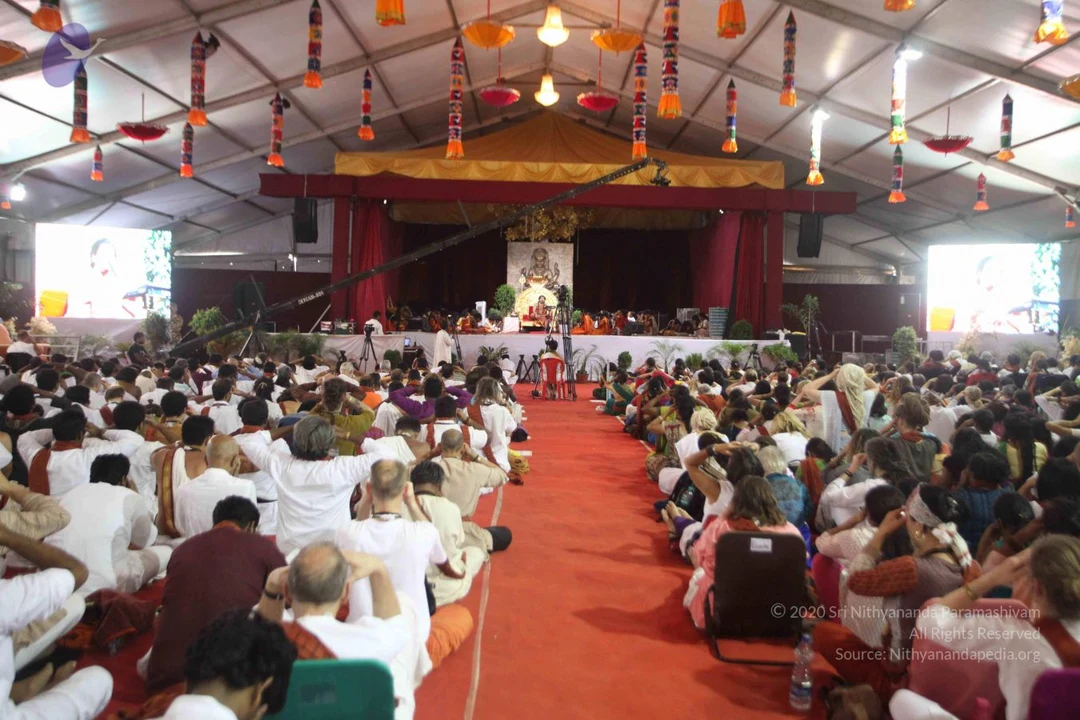
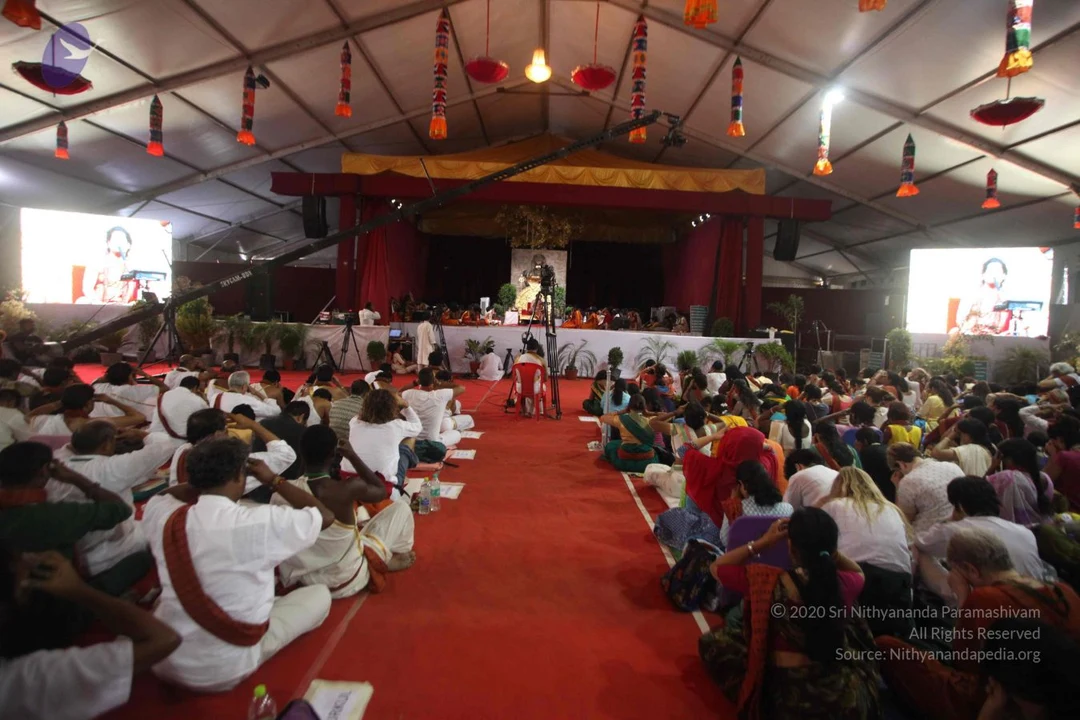
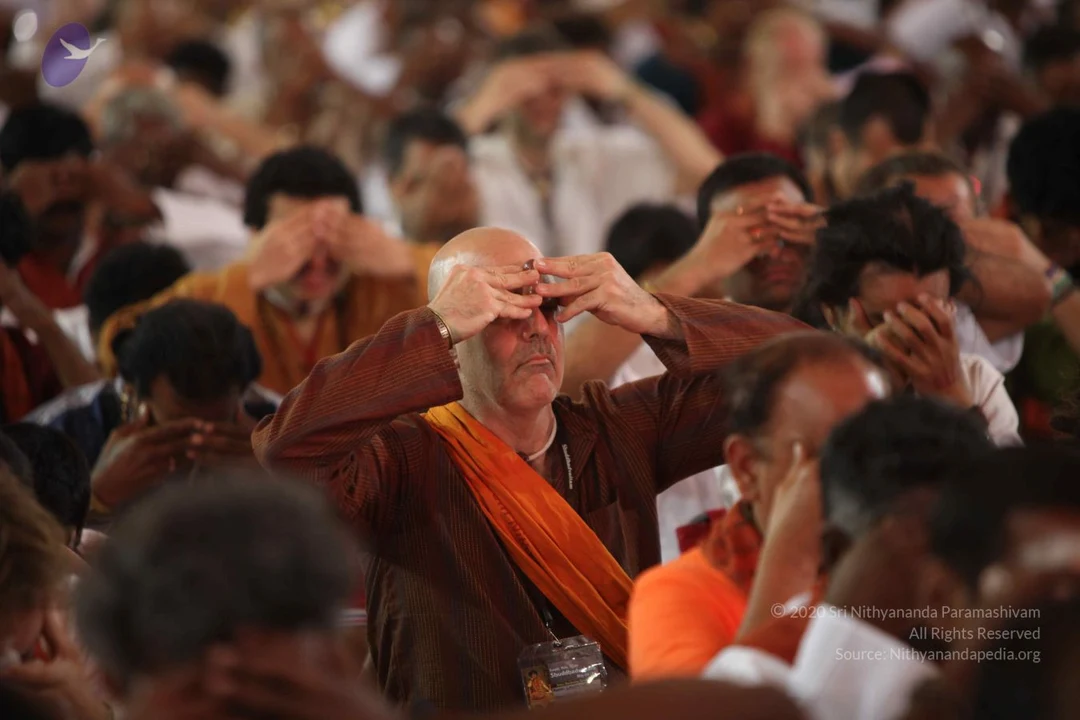
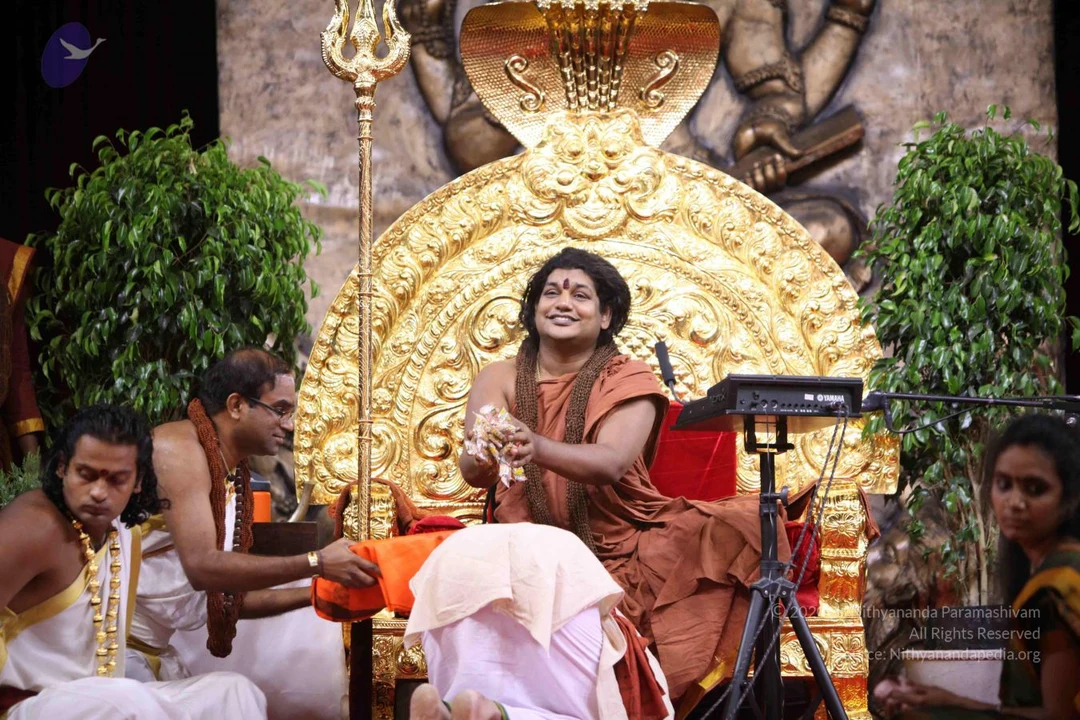
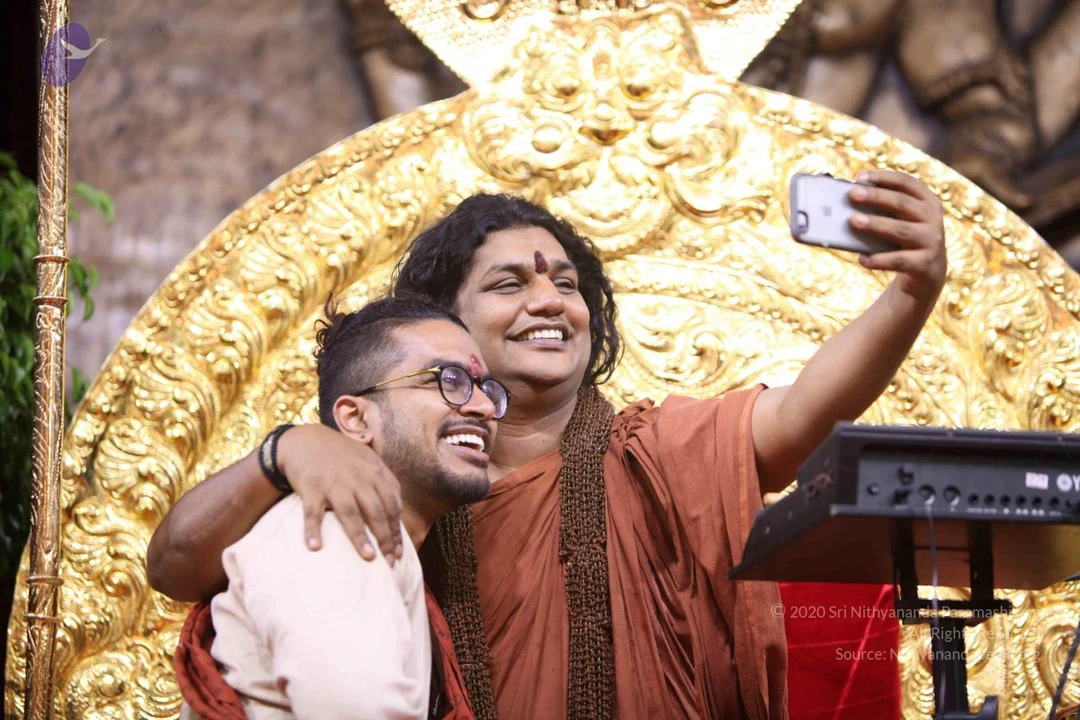
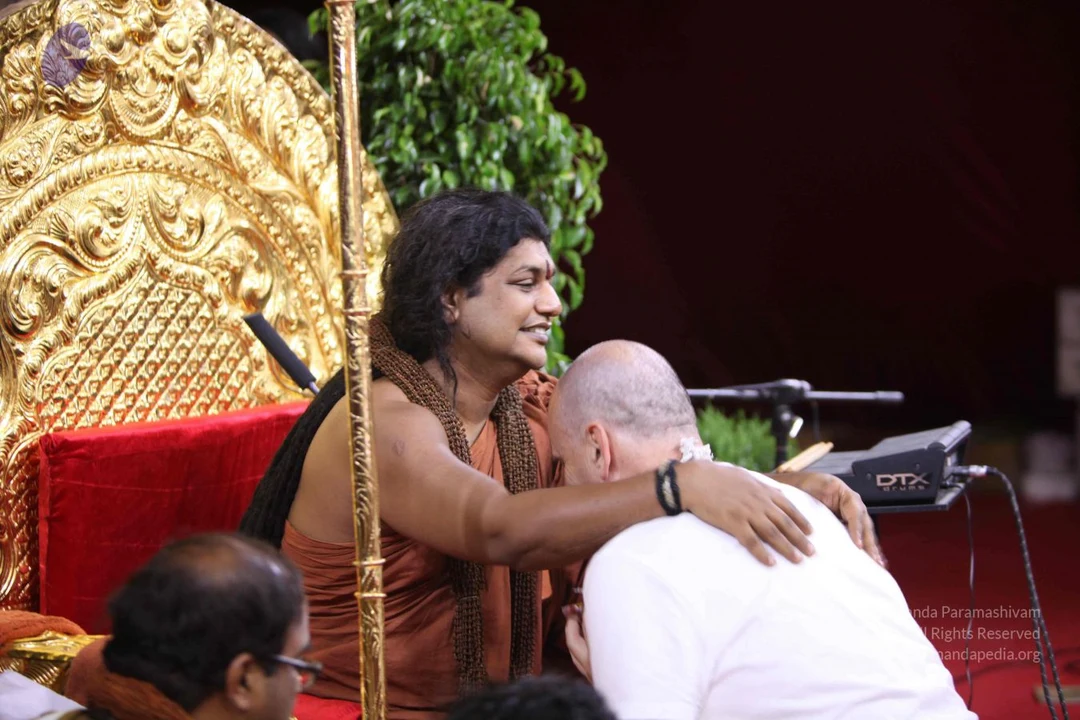
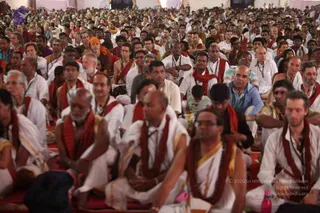
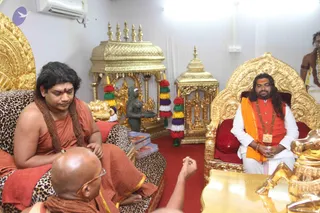
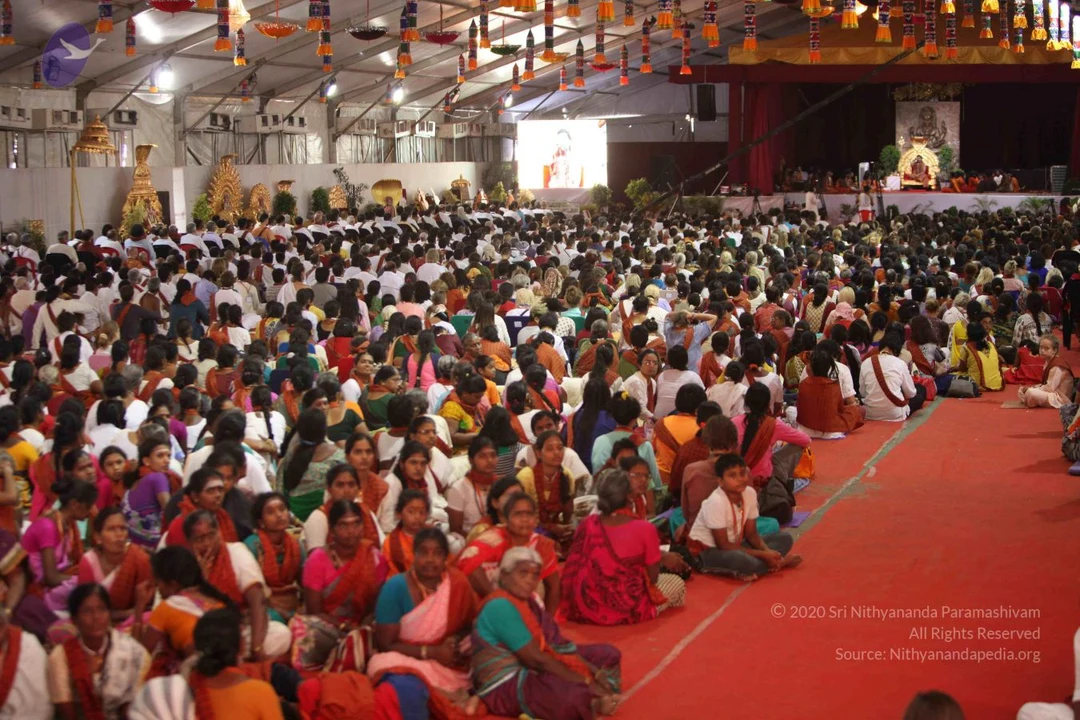
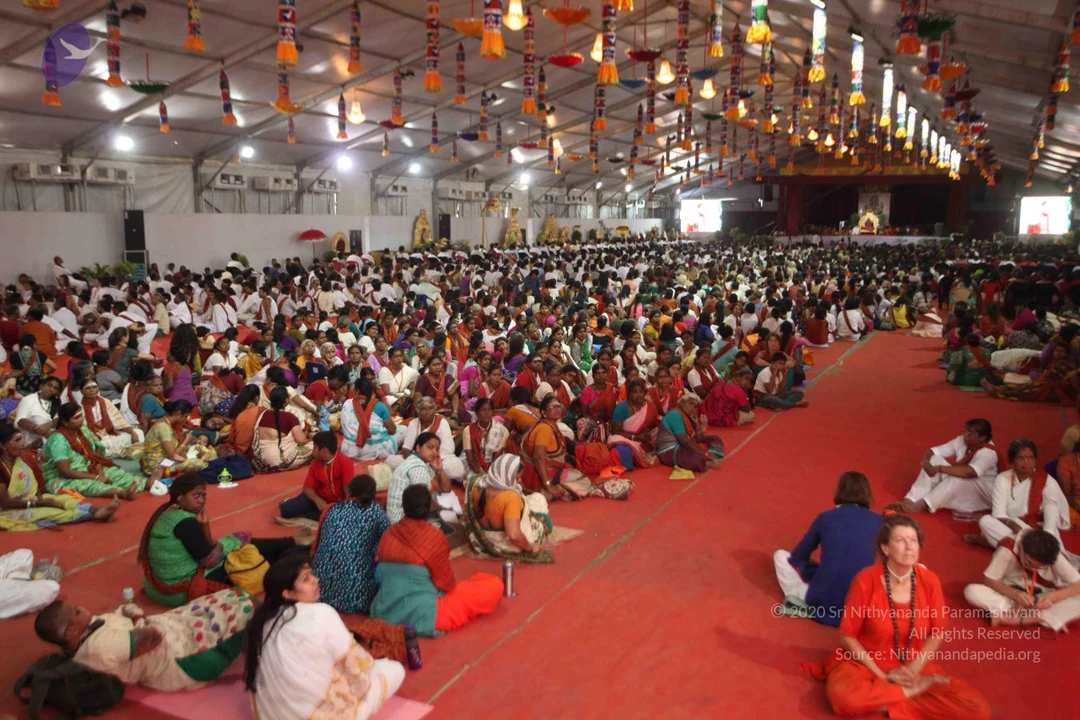
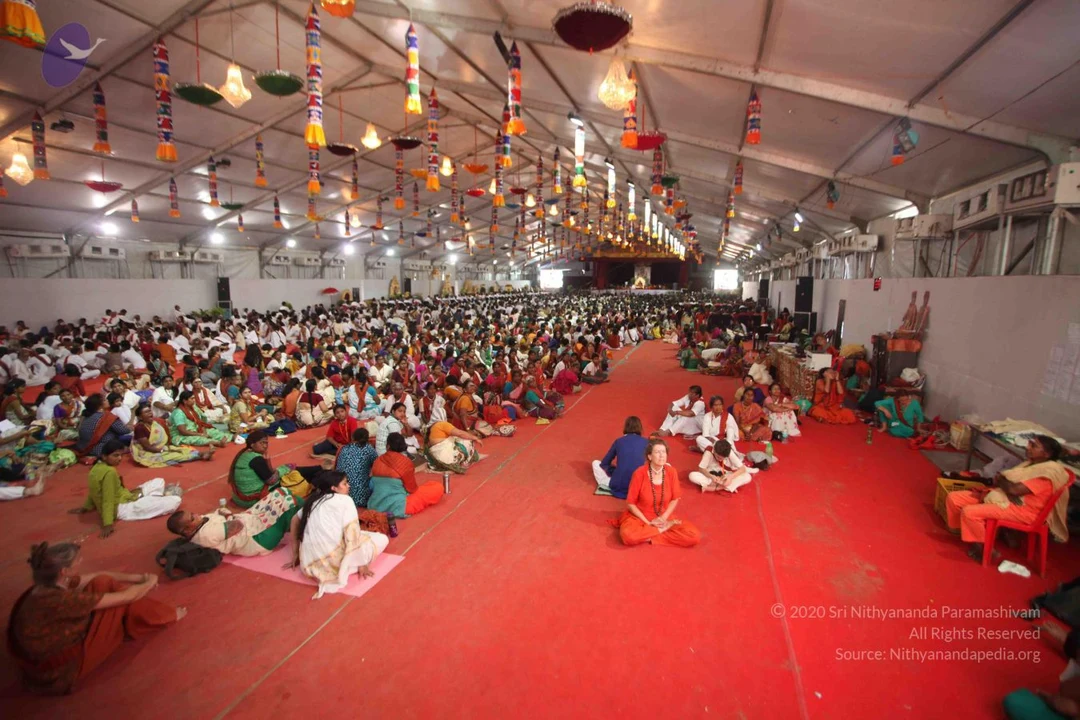
A large photograph of a crowded tented hall with a red carpet where hundreds of seated devotees fill the floor, many in saffron, orange, white and green saris and kurtas, some wearing red shawls. In the foreground, a woman in an orange sari and rudraksha-like beaded necklace sits cross-legged, while a man in white kurta sits to the right. Colourful tassel decorations hang from the white tent ceiling, and large screens and a distant stage with statues are visible at the far end.A seated man with long swept-back dark hair, a rudraksha mala and a rust-brown wrap, sits on a leopard-print cushion and hands a small booklet with colourful illustrations to a smiling woman in a yellow-and-white striped sari who holds an orange shawl. Behind them stands an ornate gold throne with red upholstery; a man in an orange-and-red top with tilak sits on it. Several men stand in the background, two photographing with phones, and a gold palanquin-style canopy is visible at left. a person: the seated man with the long hair, rudraksha mala and wrap is the central figure presenting the booklet.A photograph of a seated sadhu with dreadlocked hair, wearing an orange-brown turban and a rust-coloured rudraksha-style mala around the neck, bare-shouldered in an orange cloth, facing right with eyes closed. A man in a white shirt with a blue lanyard reaches forward to touch the forehead area of the seated sadhu. Behind them a row of seated sadhus in orange robes sit beside rows of marigold garlands and small oil lamps arranged on a raised wooden platform. Blurred onlookers stand in the background.

May 07 2016

Original wiki page
Contents

Title

07 MAY 2016 Shuddhadvaitam Ujjain

Description

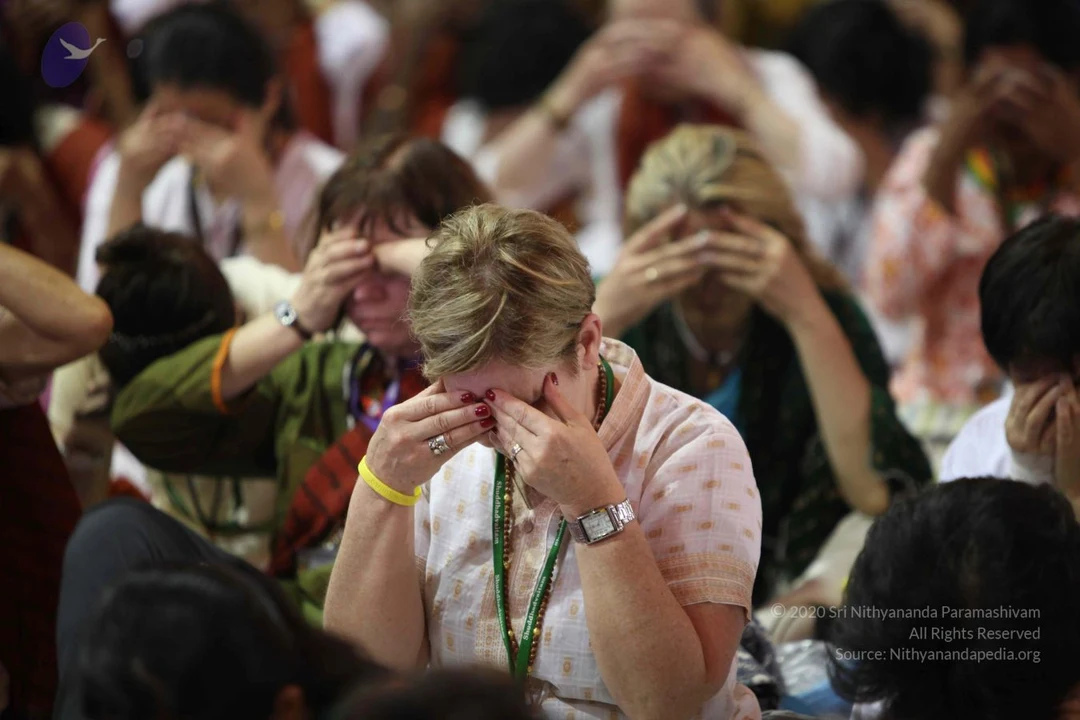
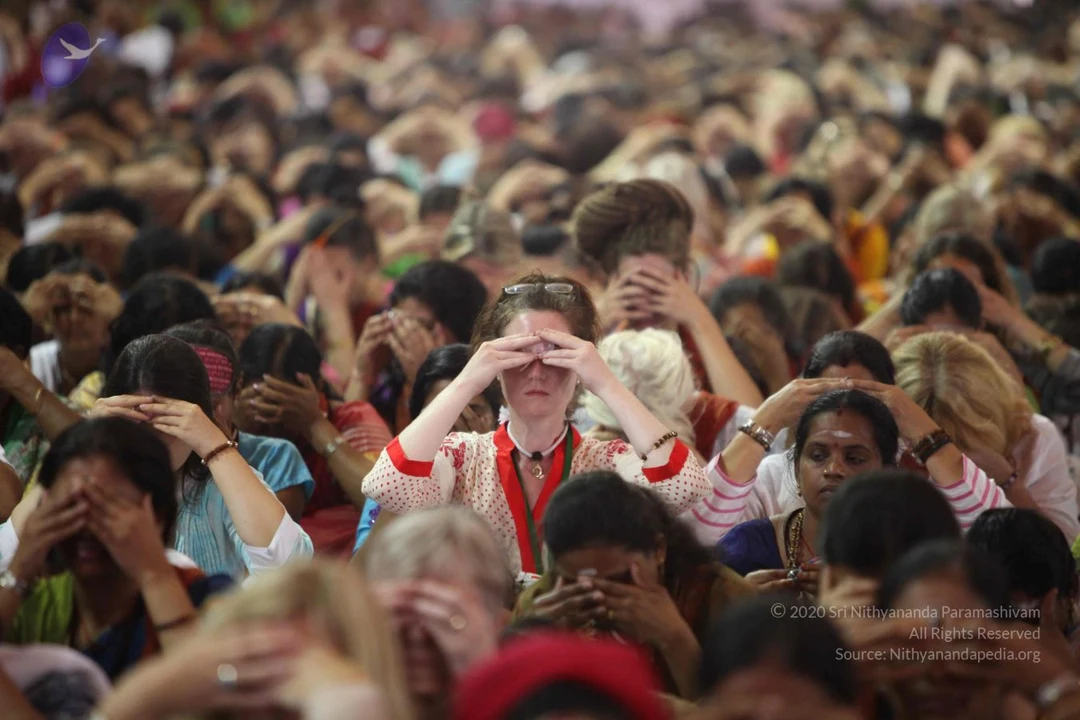
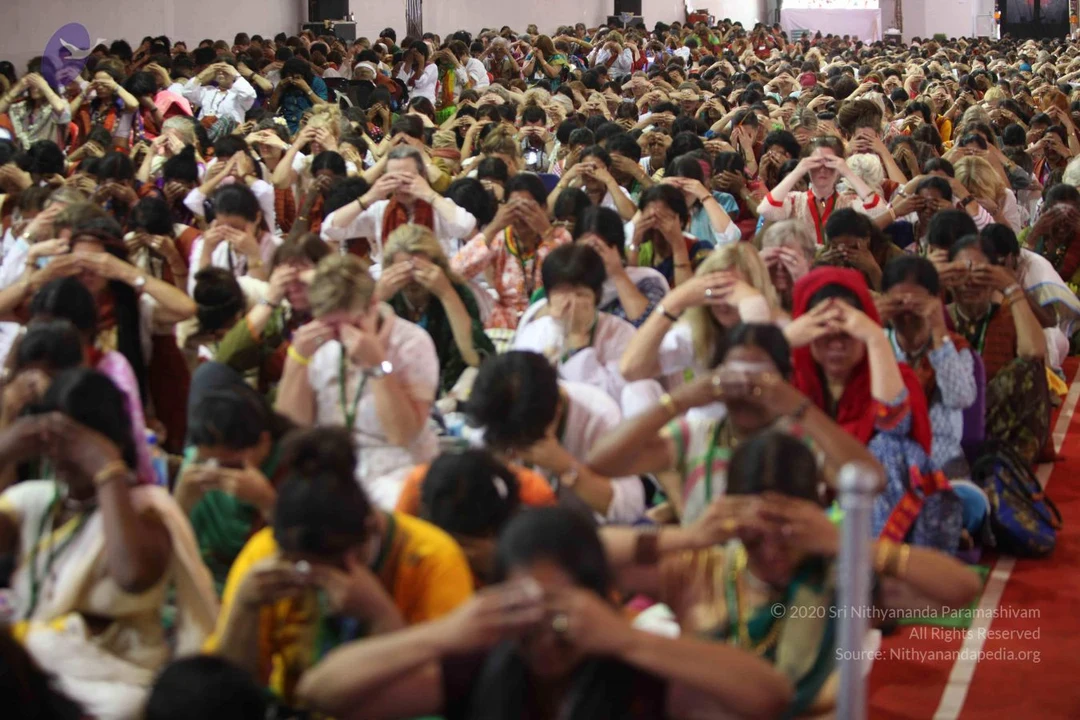
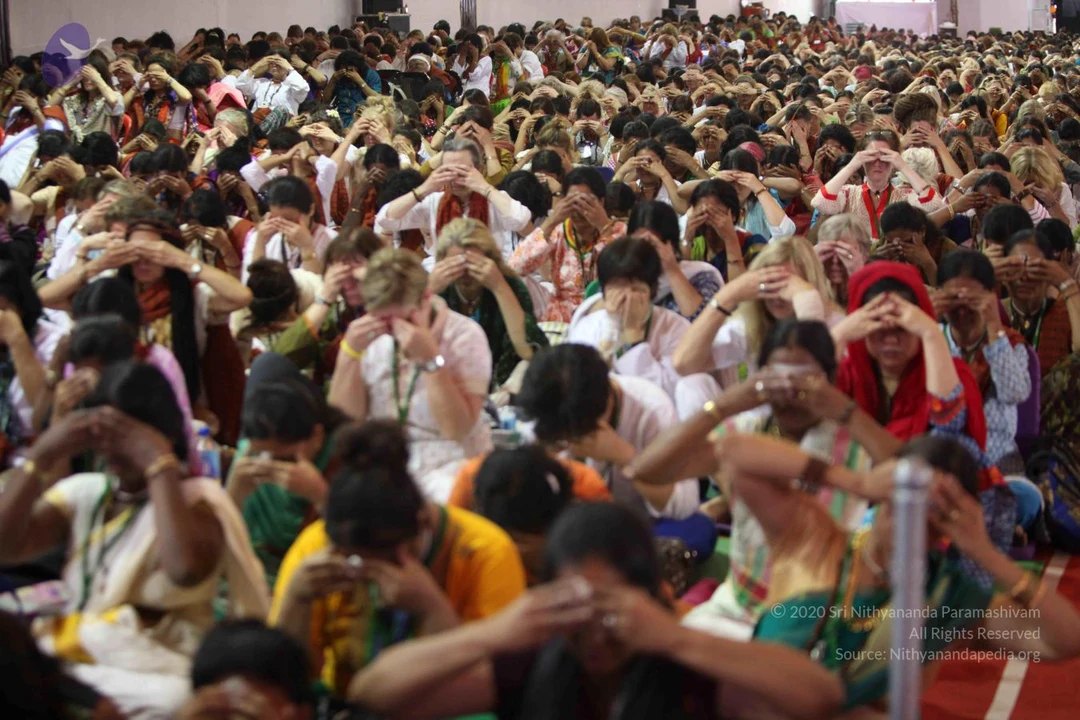
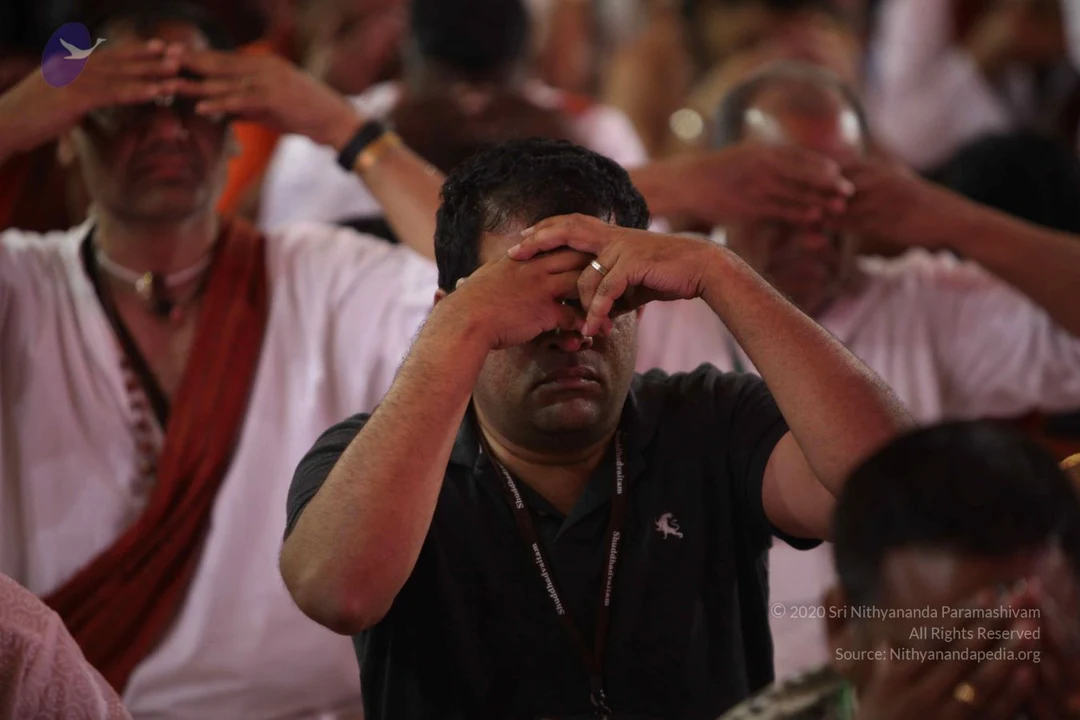
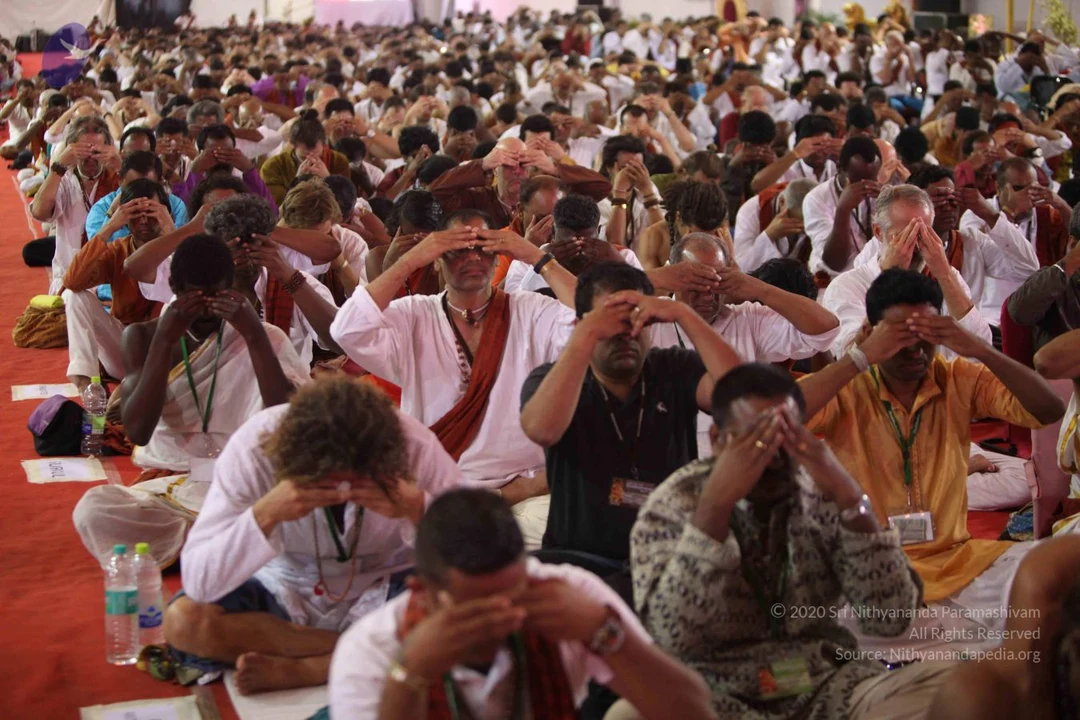
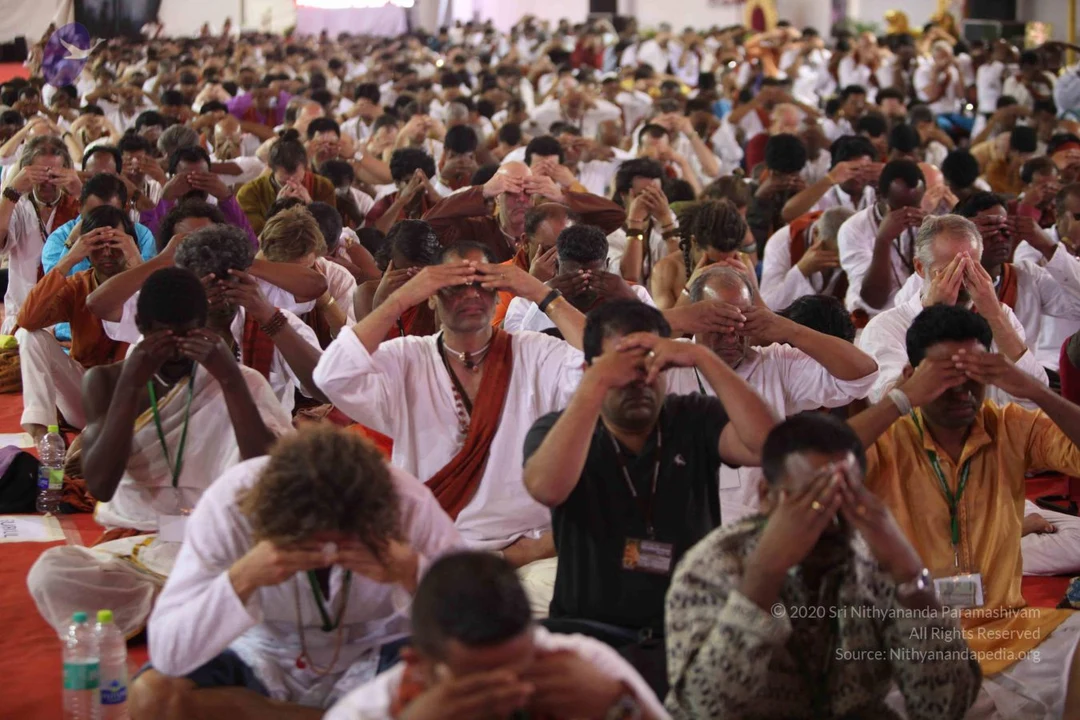
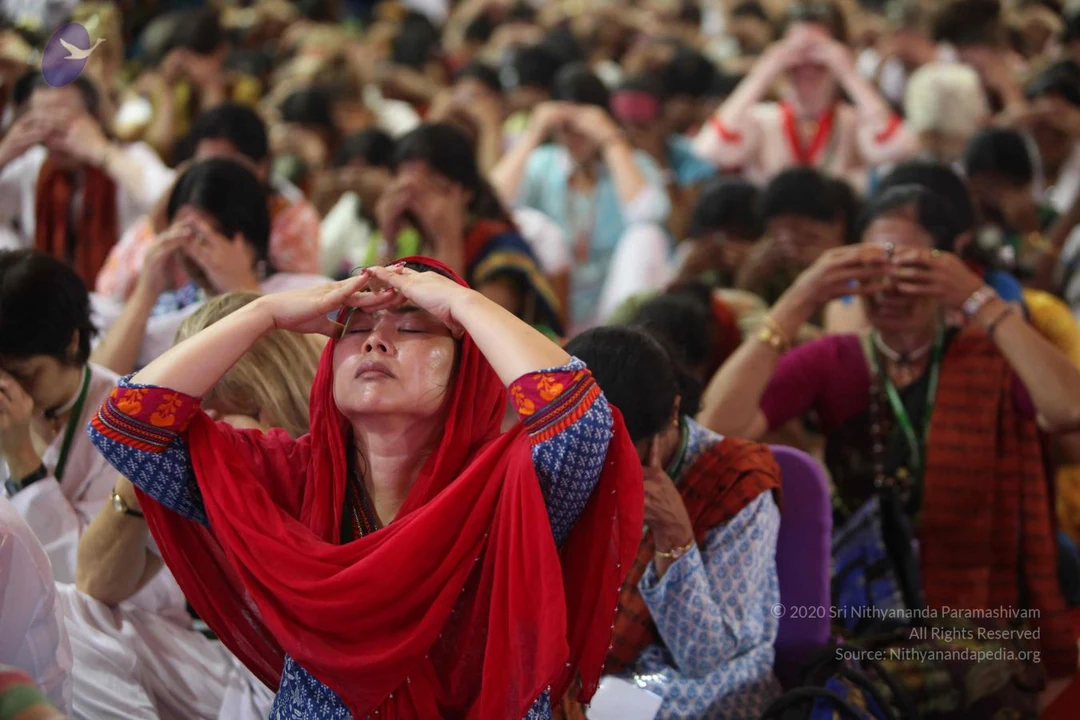
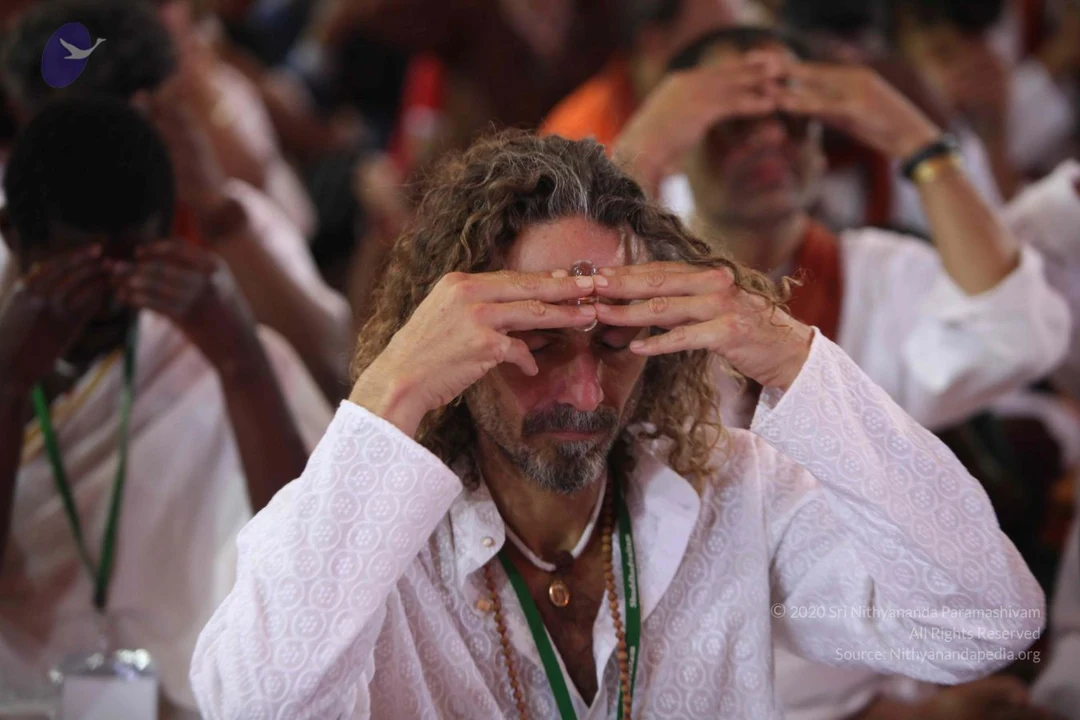
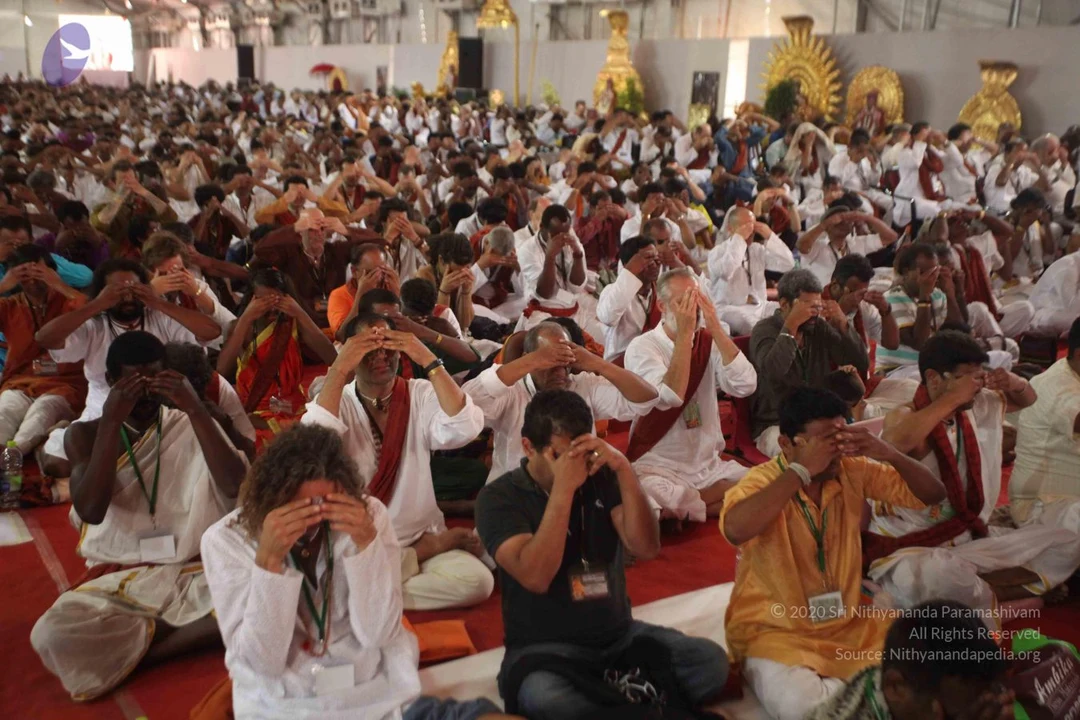
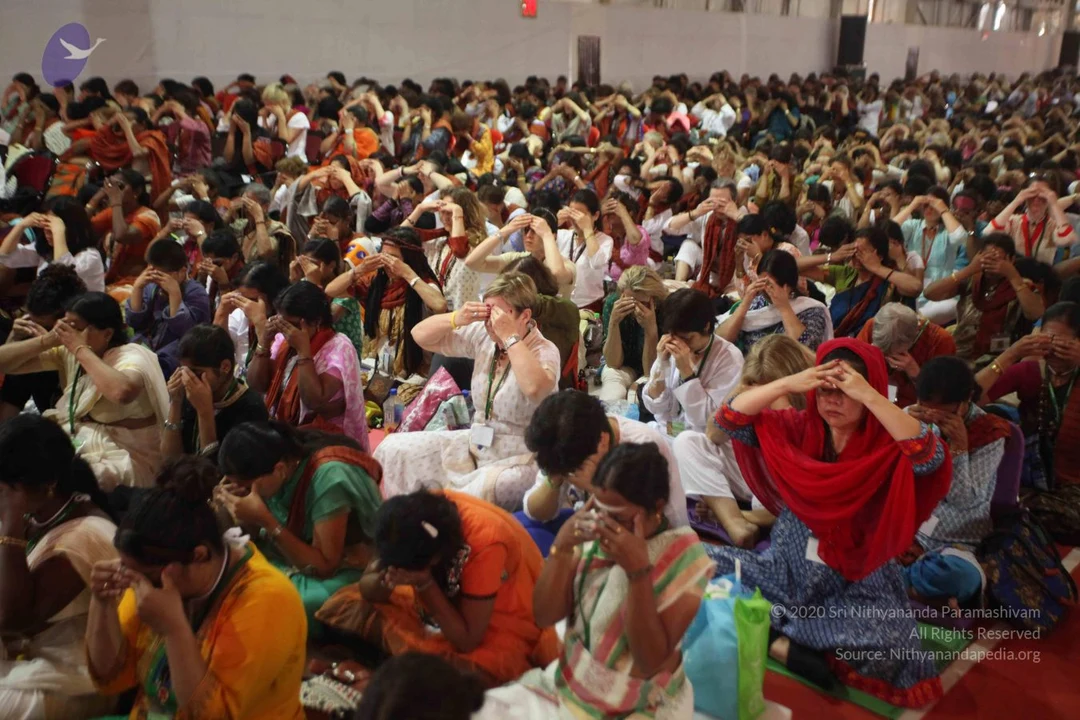
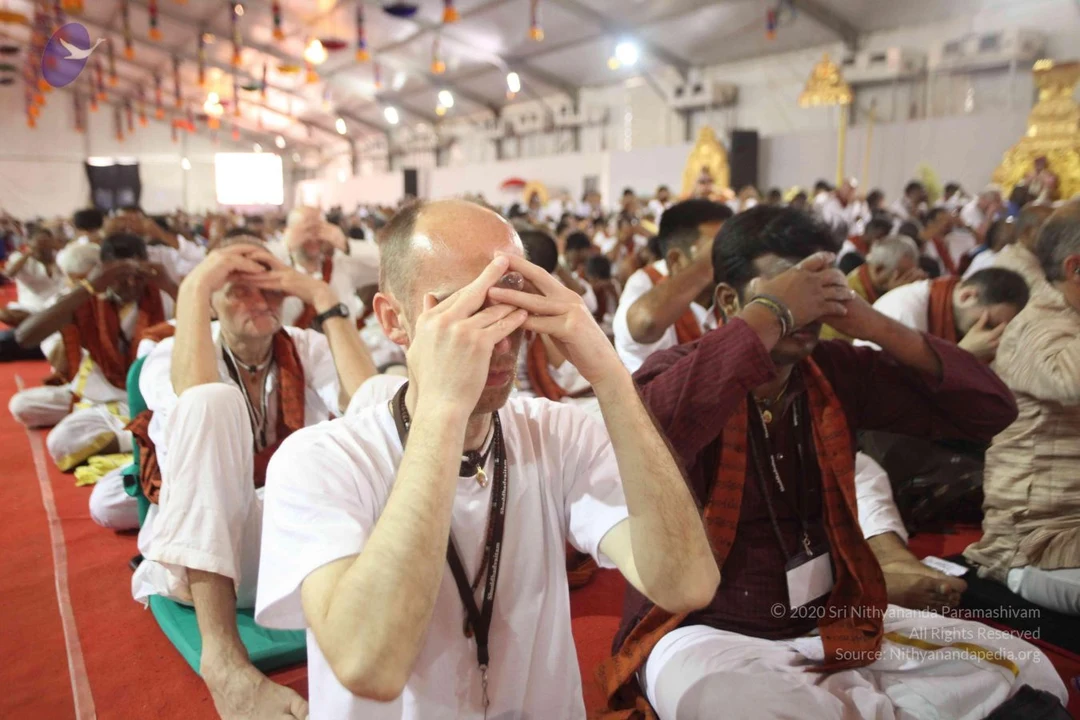
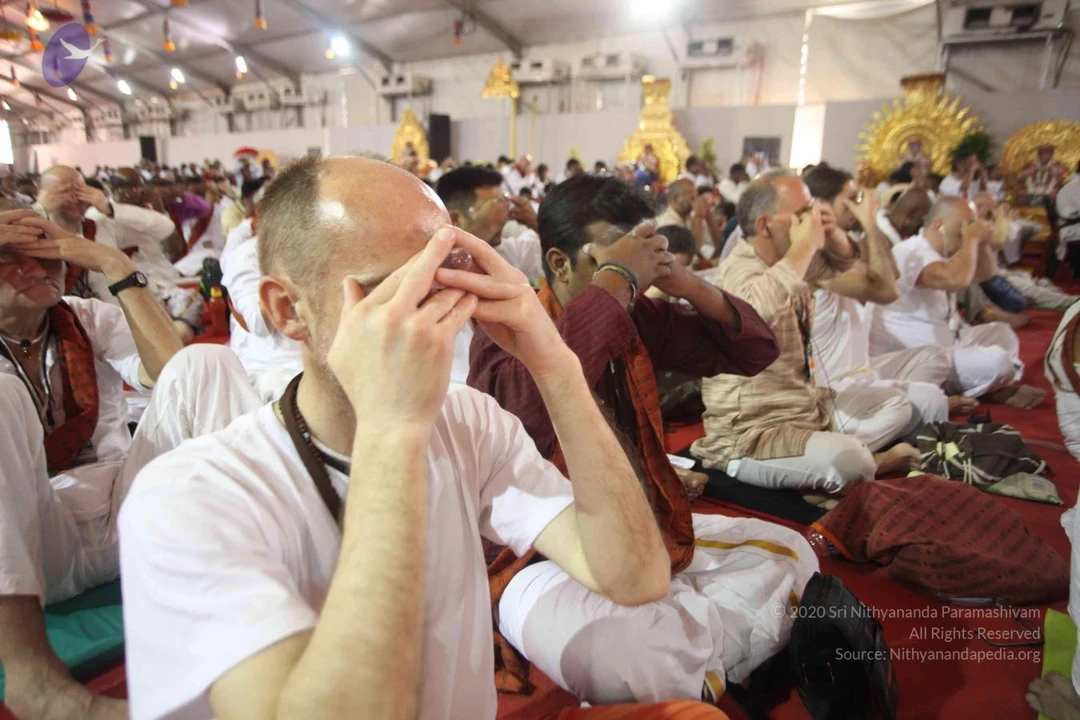
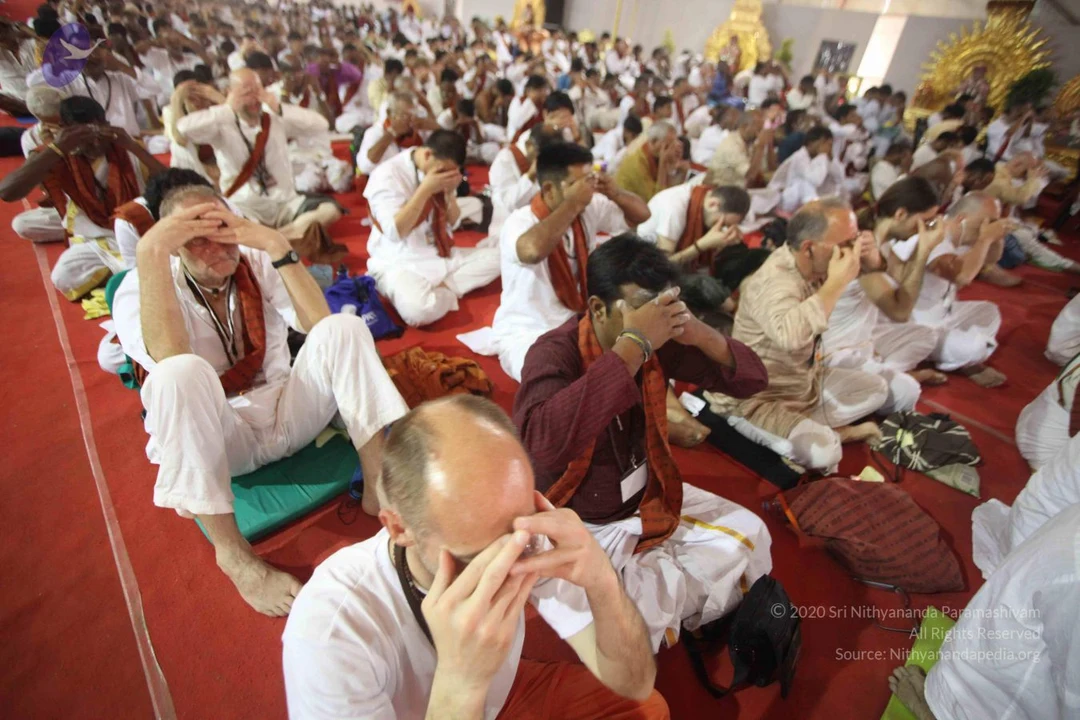
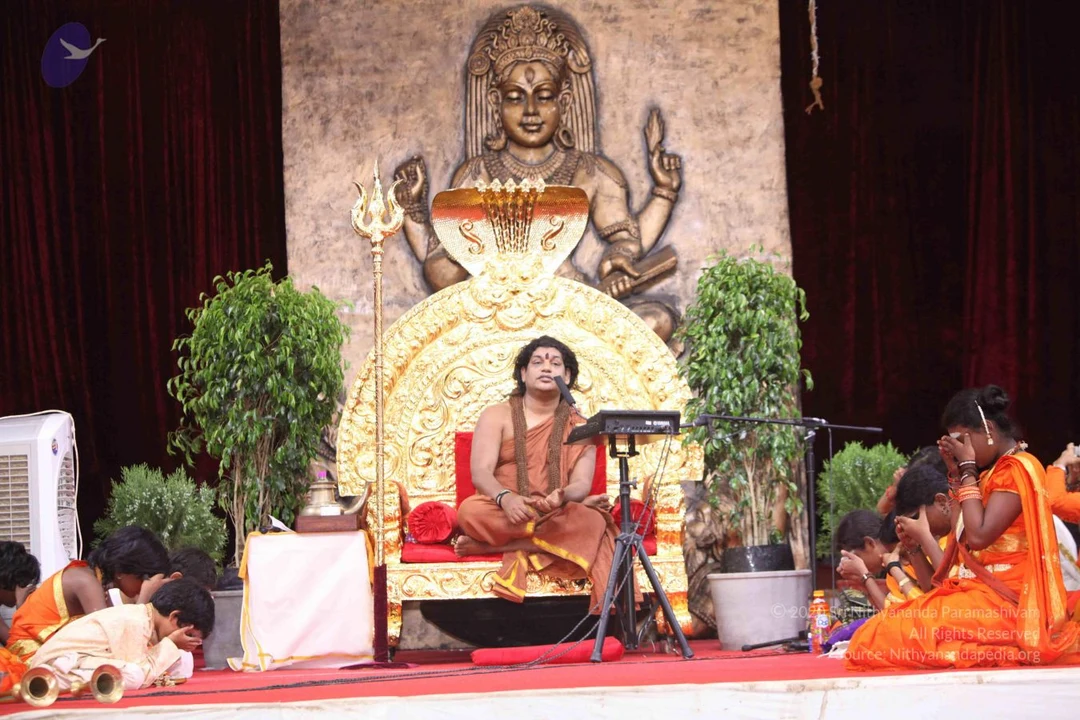
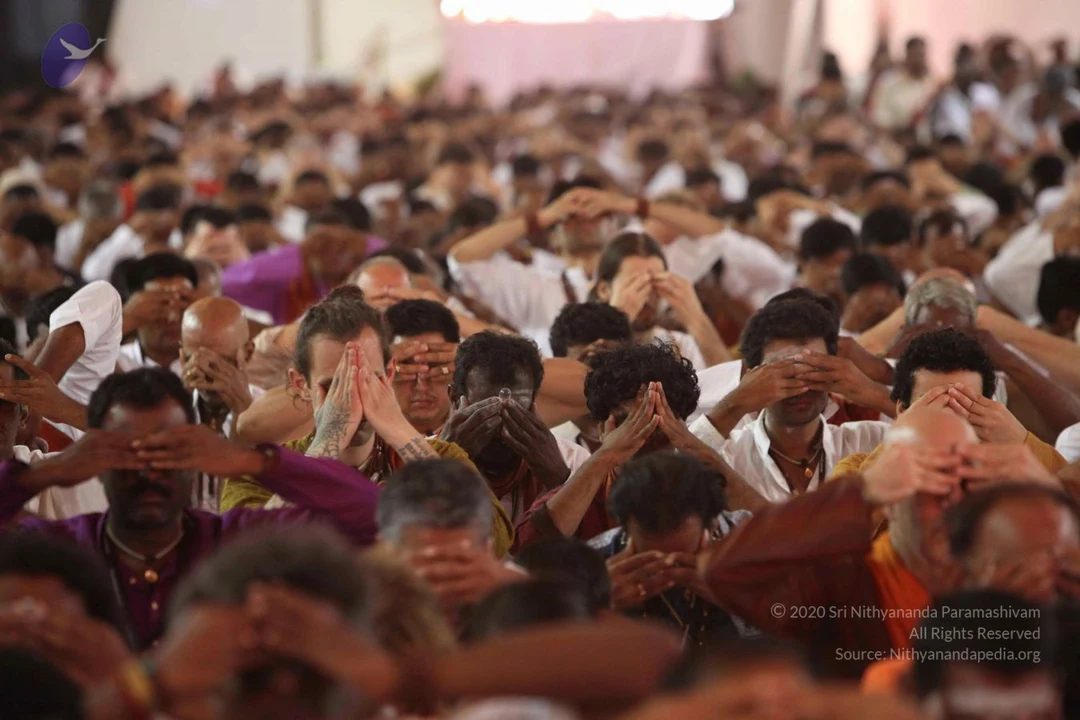
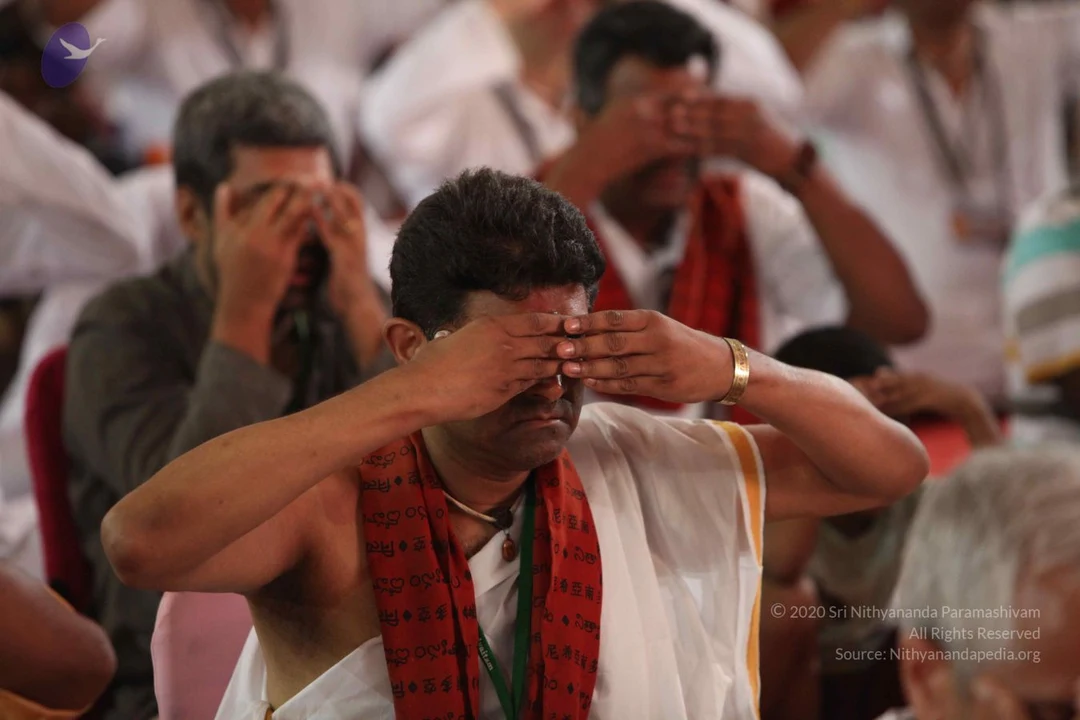
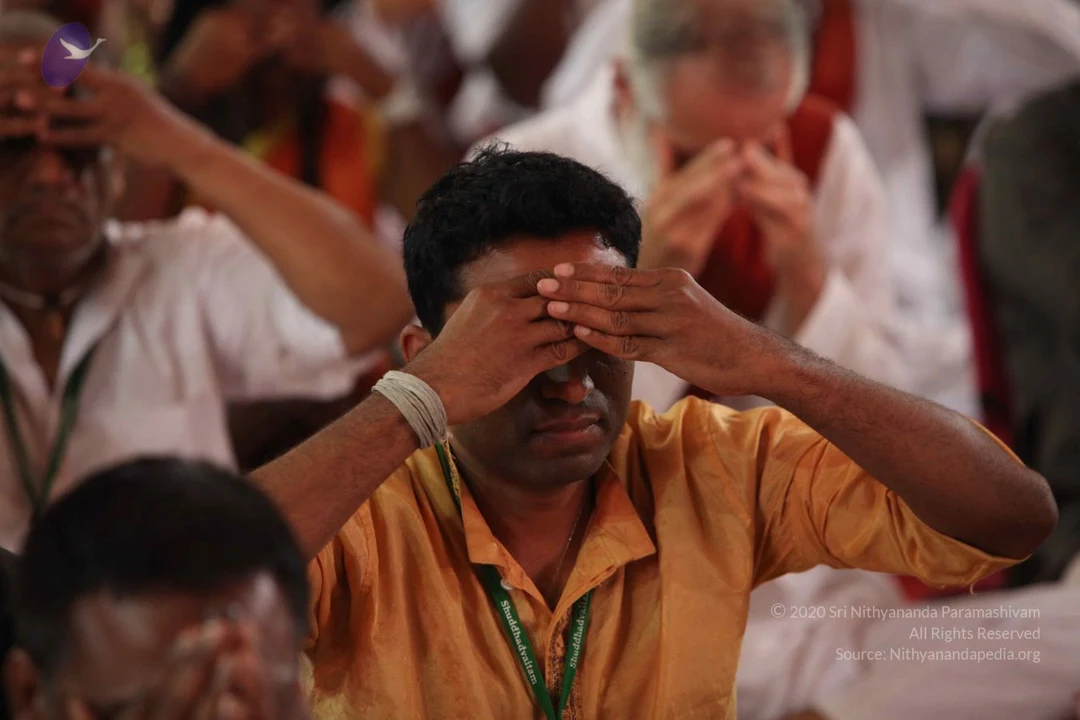
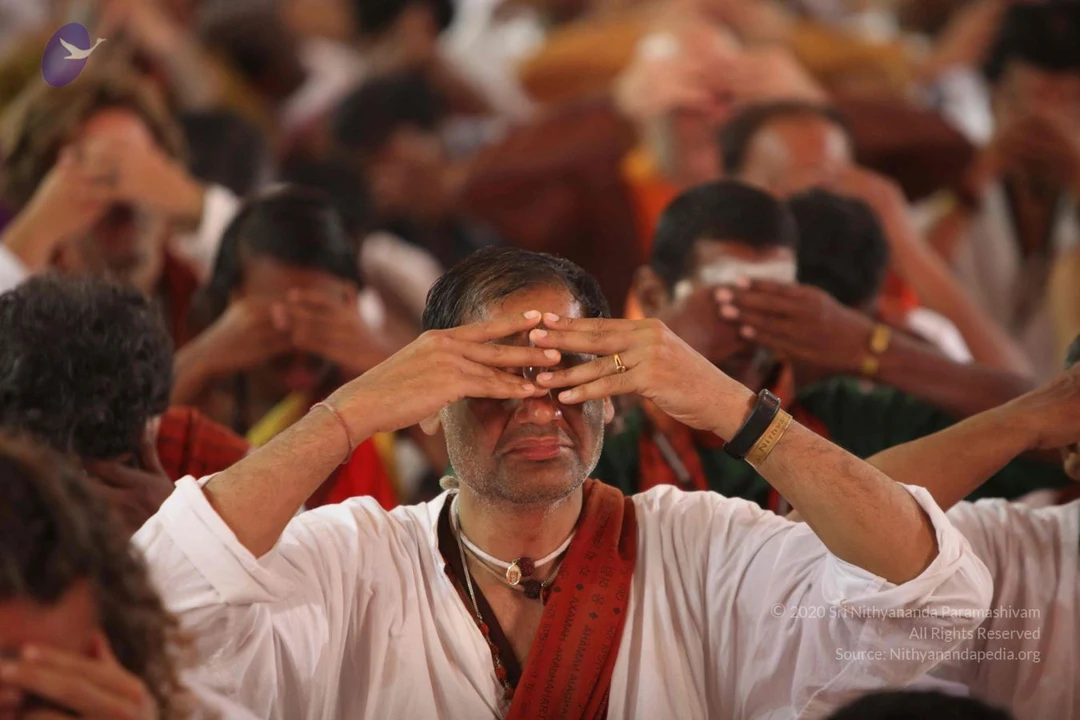
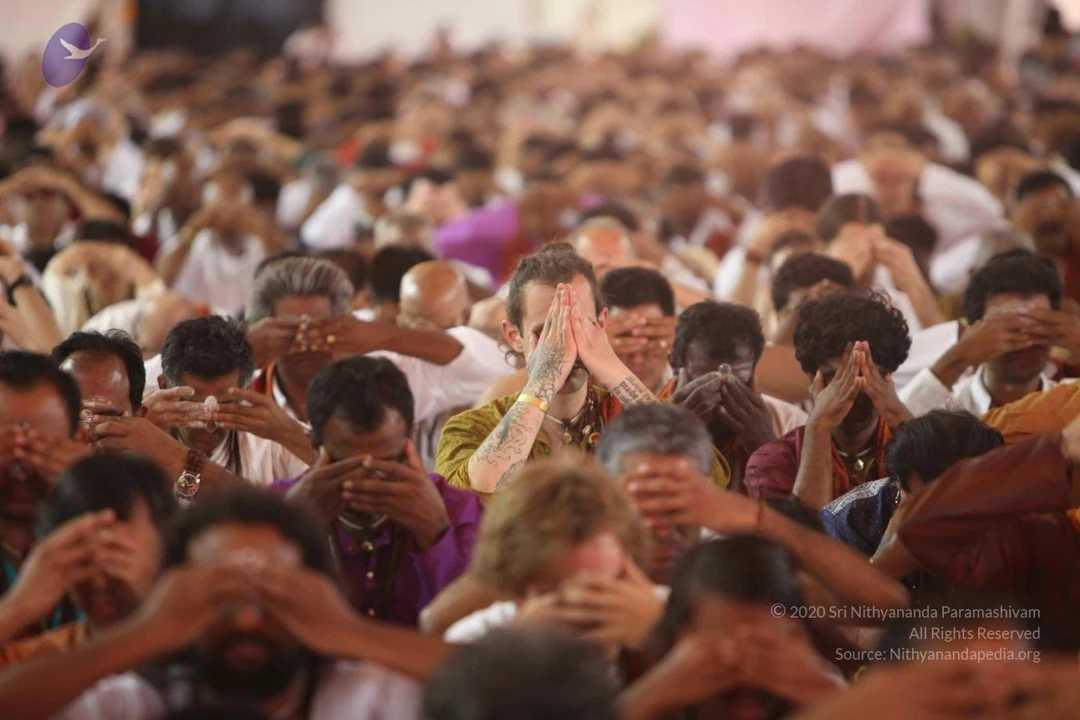
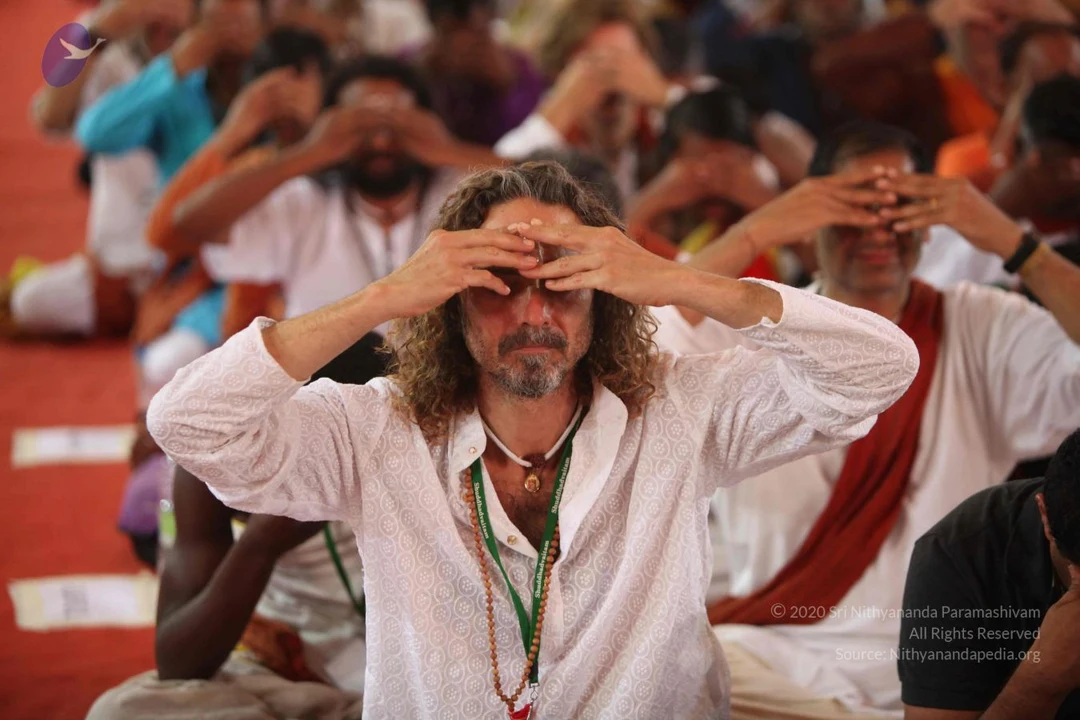
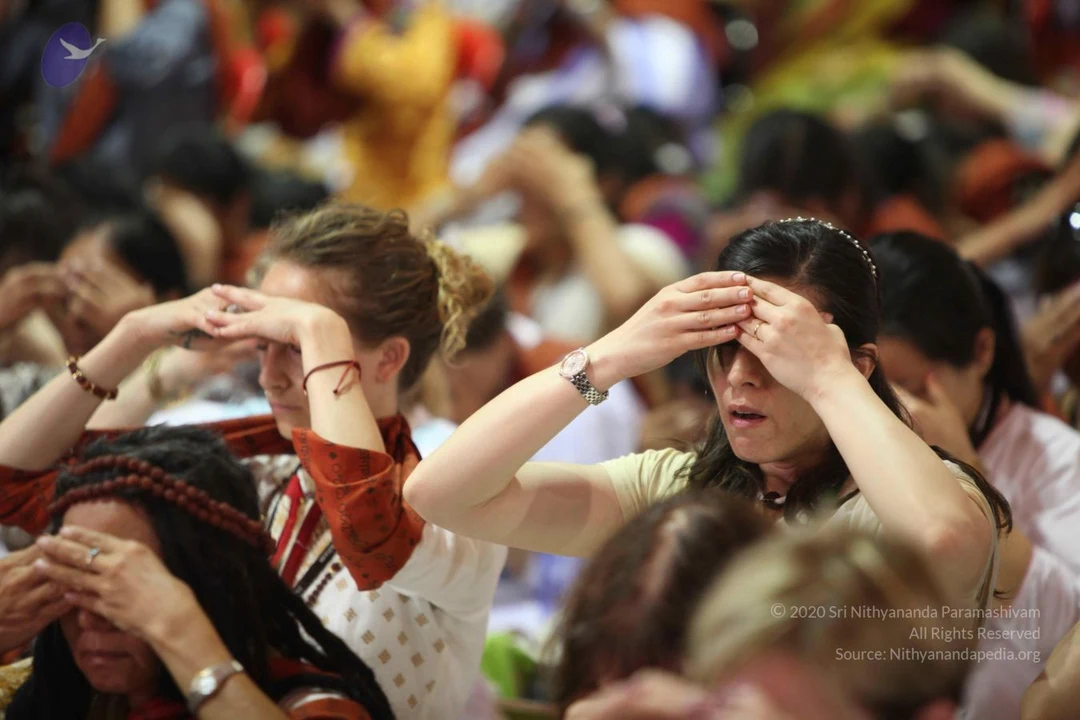
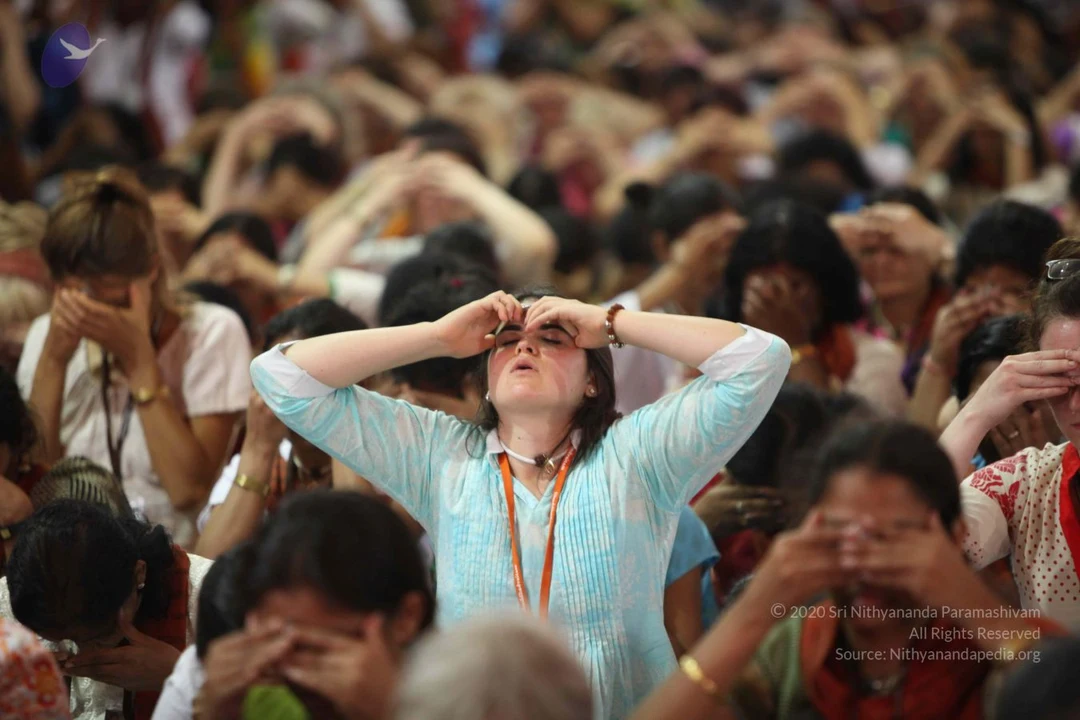
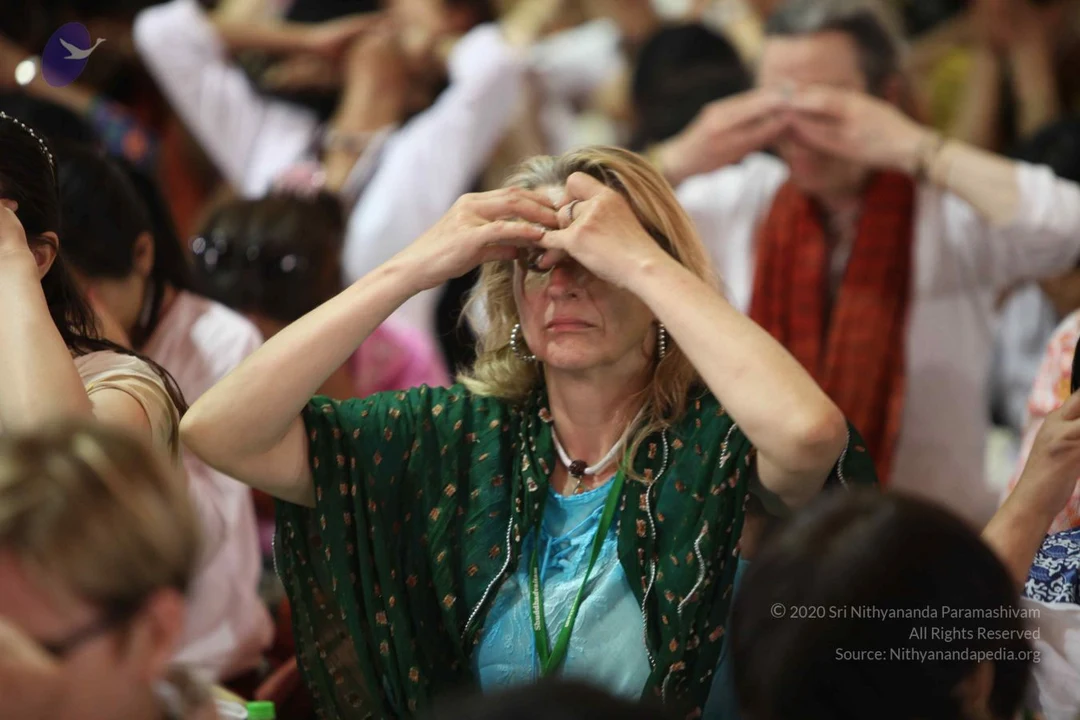
The daily visitors continue to be at over 1 lakh per day. The social and religious services include daily anna daan (free food), free medical camps including emergency care and primary medical care, free Nithya spiritual healing, daily Kalpataru darshans, demonstrations of the power of Third Eye AwakeningSM through reading blindfolded, daily pujas, daily homas, maha aratis, traditional cultural performances

Videos

7 Extraordinary Powers Associated With Eyes

VideoAudio

Transcript

Listen. 7 different powers which manifest through your eyes if the Kundalini is established on your Third Eye. Kundalini means - the inner potential energy you are having, the reflection of God in you, the God particle in you. You have 2 component. The man particle - means your pattern, your fear, your anger, your desire, your laziness, your tiredness, all that. The other part is the God particle in you, your Consciousness. Understand. I dedicate myself to your Consciousness. I will always be ferocious with your patterns. For your patterns, I am the villain, worst villain. For your Consciousness, I am not only the front, I am You.

You are Me. So understand, whenever you feel you melt, your eyes pour, you feel my life is fulfilled, complete - you are experiencing the real You, which is Me. The God particle in you. Whenever you feel I am a villain,”Oh, I just came 1 minute late, he shut the door, what kind of a Swami he is. He should have more patience”. Understand. I am the worst villain for your patterns and best soulmate for your soul. Please understand the whole truth, so you can easily experience. The soul, God particle, Kundalini, all these are different words for the same You. The reflection of God in You. That is what I call God particle. That is what is Kundalini. That is what is Soul. That is what is Consciousness.

When that Kundalini is raised in your body, activated, brought not only to the Third Eye, there are 3 points. See here these 2 points and the exact spot where My kumkum starts...these 3 point is called Intra Organ of the eyes. Listen. In Sanskrit, we call it “Indriya”. Eyes themselves are not Indriya. Eyes are different, Chakshu is different. Chakshu means the power which sees through the eyes. So this 2 point and this point where the kumkum is starting, when the Kundalini is brought and kept in this Third Eye point and connected to all the three. See now, yesterday when I initiated you, I brought the Kundalini to the Third Eye, but now I am going to connect with this 2 points. So when this circuit is opened up, 7 different powers start expressing in you.

Ability to see through any distance, means you can lie down in the open sky and see the …..what is happening in the Mars. What is happening in the Moon. Ability to see any distance, that’s the 1st power.

Second - Ability to see through the obstacle, means there is a wall, you can see what is behind the wall.

Third - Ability to see the Intra Organs, means you can see your own liver, you can see your kidney, you can see your own intestine, you can see own heart pumping. So easy to diagnose. You can diagnose yourself and ability to see that long distance means ‘dur dhristhi’. You can sit here and see, what is happening in your New York home. What is happening in your house in California or any different places, what is happening and in distant what if some person is going through, can be seen. Understand. Seeing the place in distance is different, seeing what the person...for example it’s like an internet Apps only. If you concentrate on the place, you will see what is happening in that place. If you concentrate on the person, you will see what he is doing.

Now, nobody can do it. I think I am creating lot of solutions and lot of problems for lot of people. And 6th ability to see the thought currents. Understand. Ability to see the thought currents. 7th is ability to see the emotions of the person as a Aura. Listen. Seven, seven various powers - 1/ Ability to see the distance, like seeing the stars. 2/ Ability to see through the obstacles. It’s like seeing what is in the other side of wall. 3/ Ability to see the Intra Organs - what is happening inside you. 4/ Ability to see a different place, by concentrating on that place. 5/ Ability to see a different person, by concentrating on that person. Careful, listen don’t miss. 6/ Ability to see thought current of a person. 7/ Ability to see the emotional state of a person as Aura.

These are the 7 various powers, start manifesting, if this circuit is complete. This 2 point and this point. If this circuit is complete with the Kundalini Shakti, these are the 7 various powers manifest, in your system. And listen now, as you have all given me the authority, I am going to straight enter into your system and raise the Kundalini and connect the circuit. You need to know for next 20 days, means till this program gets over, you need to wash your eyes morning and night, both through that eye cup. There is a pancha kriya. We teach pancha kriya. In that pancha kriya set, there is a small cup washing the eyes. So you have to wash your eyes, morning and night because this zone will get heated up. You have to cool with the cool water, fresh water morning and evening. And after you practice the process. If you don’t cool, you will feel the heat and you will feel sleepy because of the heat.

There will no other side effect. There will be no other side effect other than you feeling that you need little more time to sleep or your eyes are little hot, so you need more time to keep your eyes closed. Other than that nothing. So, I have explained everything about the science, now I am going to lead you into the process.

Vegetarian Diet for Manifesting Extraordinary Powers

VideoAudio

Transcript

Why Vegetarian diet for manifesting extraordinary powers? Actually, Plants are also life, no doubt, but they have not developed the bio memory where the pain is stored and gets inside your system and creates pain. No. So if you consume them, if you consume plants, vegetables, there is no pain going inside your system along with it. There is no bio-memory going inside. Pure energy food, only that goes inside.

But with the animal, the muscles have a capacity to store muscle memory and bio memory. So when the animals are killed, they leave a tremendous pain, suffering. They are not going to say ‘Let the whole world be blissful’ and die. No. They leave so much of suffering and die, that gets recorded in that muscle memory and bio memory. When you eat that, you will fall into depression for a small reason. Your husband late from the office for 5 minutes is enough, to make him as a late husband ☺ Understand. No, for very small reason you fall into depression; because your bio-memory is prone to depression. Understand, when you are eating the dead animals flesh, you are also eating the muscle memory, bio memory recorded in it. That becomes part of you; you become prone to that pain. You become prone to that pain. That’s the reason I request you to be a vegetarian.

Please understand. Even if you are a seeker, without vegetarian lifestyle you will not achieve anything; vegetarian life is a basic need. Not only vegetarian lifestyle, not eating anything grown out of chemicals, pesticides and fertilisers... chemicals, pesticides and fertilizers. Try to become more and more organic because, chemicals create a toxic mental setup in your system. I am giving you the straight conclusions - try to become more and more natural, organic consumer. It is good for your seeking, good for your mental balance, good for you; over all it is good for your Enlightenment and manifesting all these powers.

Title

Why Seekers Need a Plant-Based Diet! || Shuddhadvaitam || 07 May 2016

Link to Video:

Title

Initiation Into 7 Third Eye Powers! || Shuddadvaitam || 07 May 2016

Link to Video:

Initiations

Initiation to the 70 mystical powers of Mahadeva

Number of Participants

More than 5000 people have participated

Media Coverage
Shuddadvaitam-Session - IMG_0879.jpg

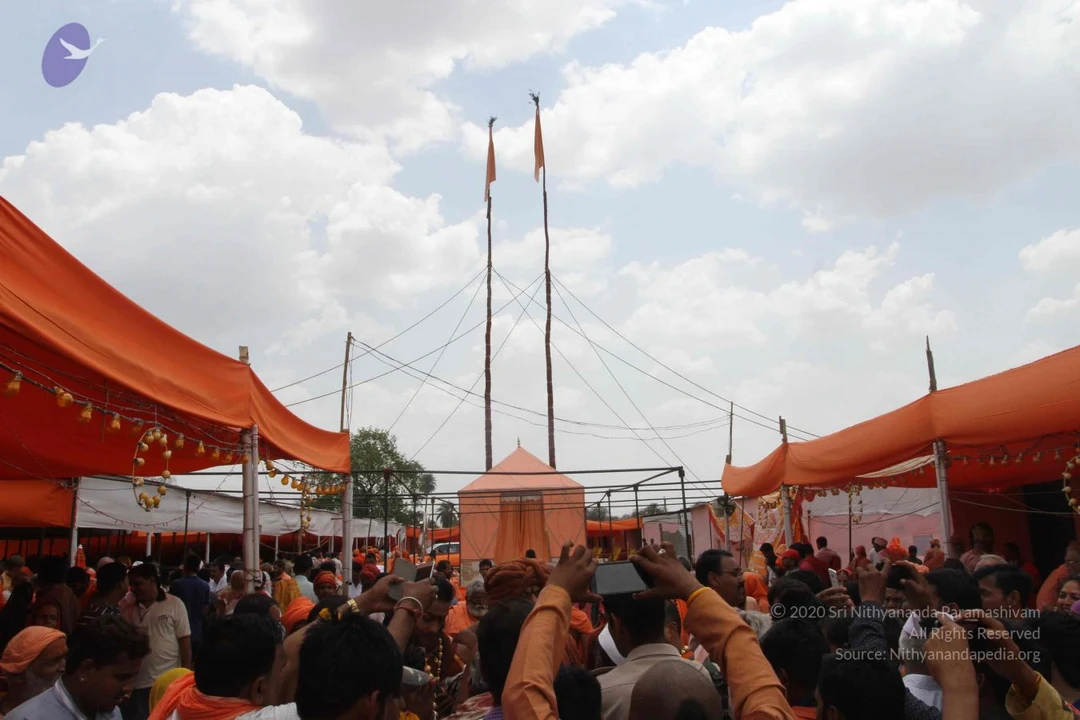
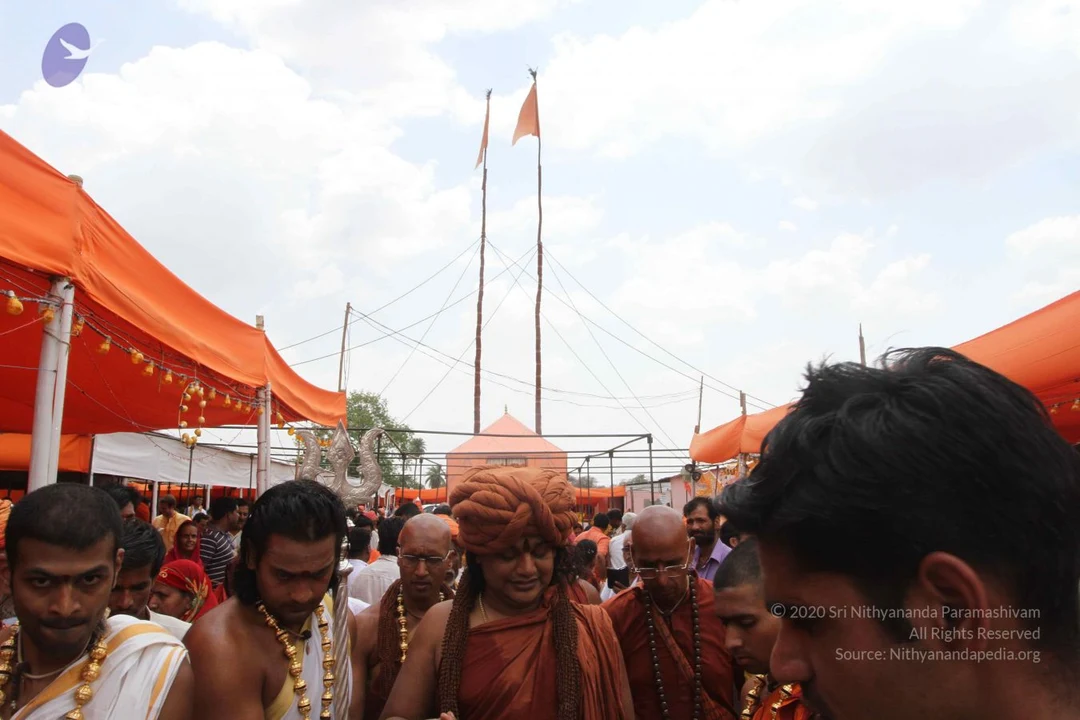
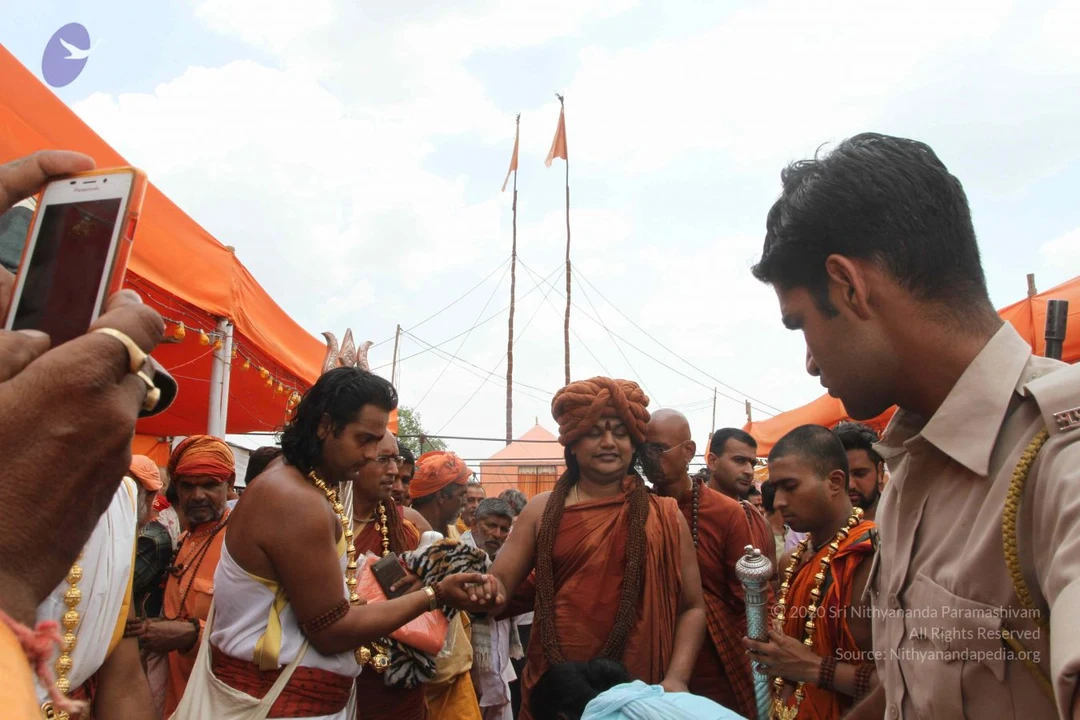
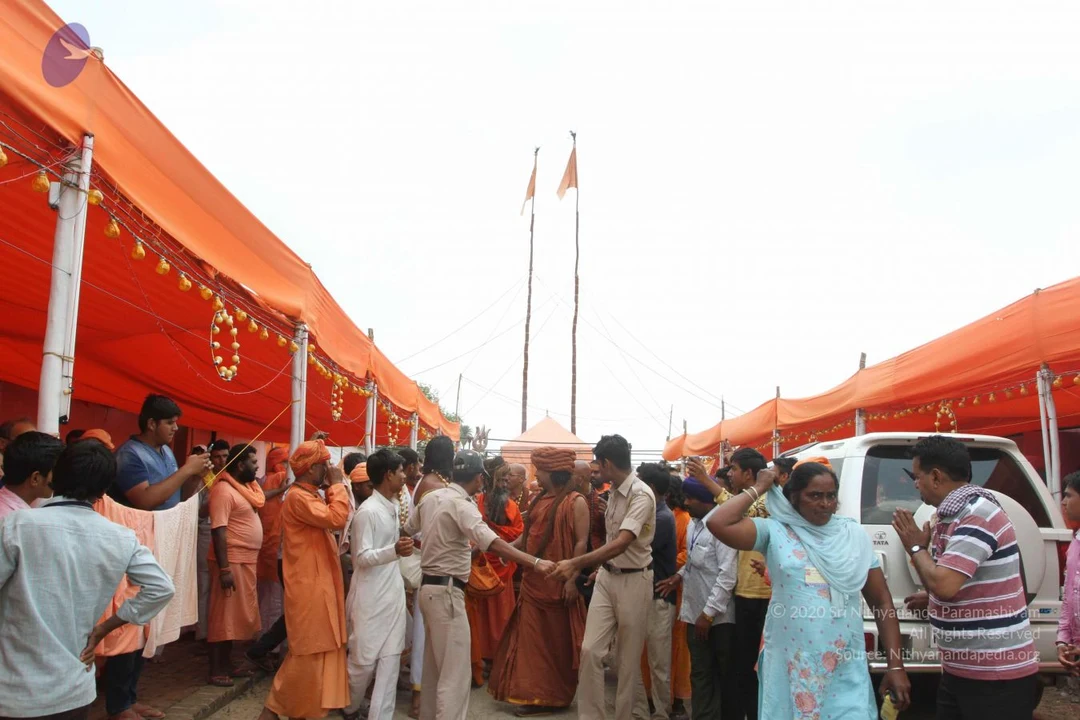
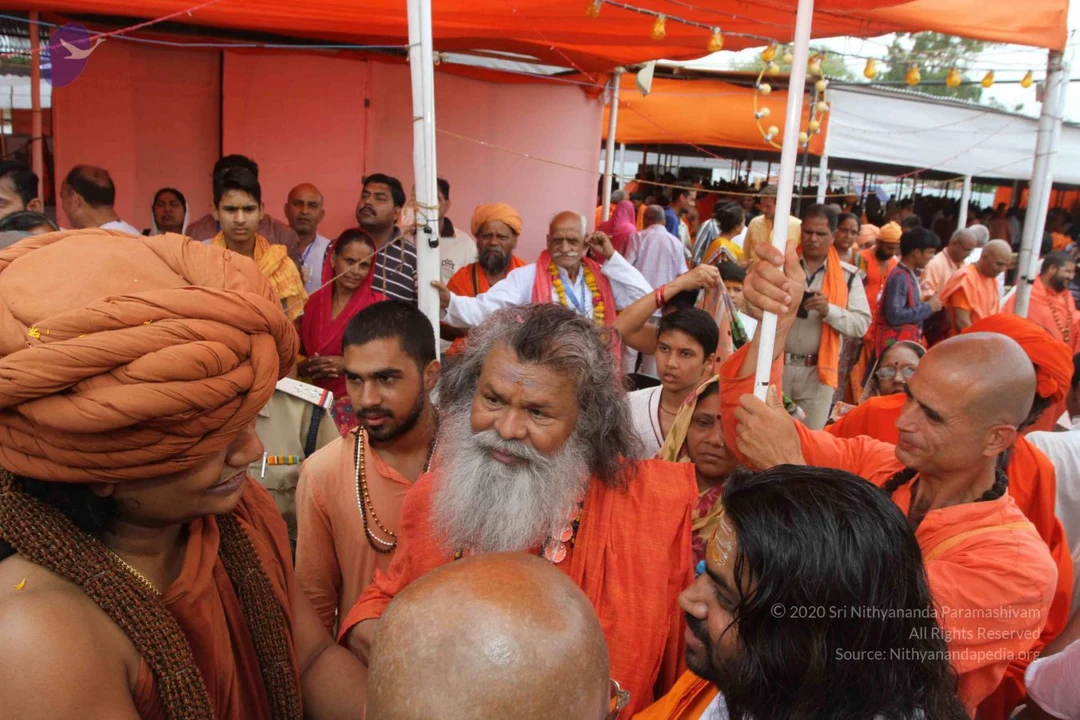
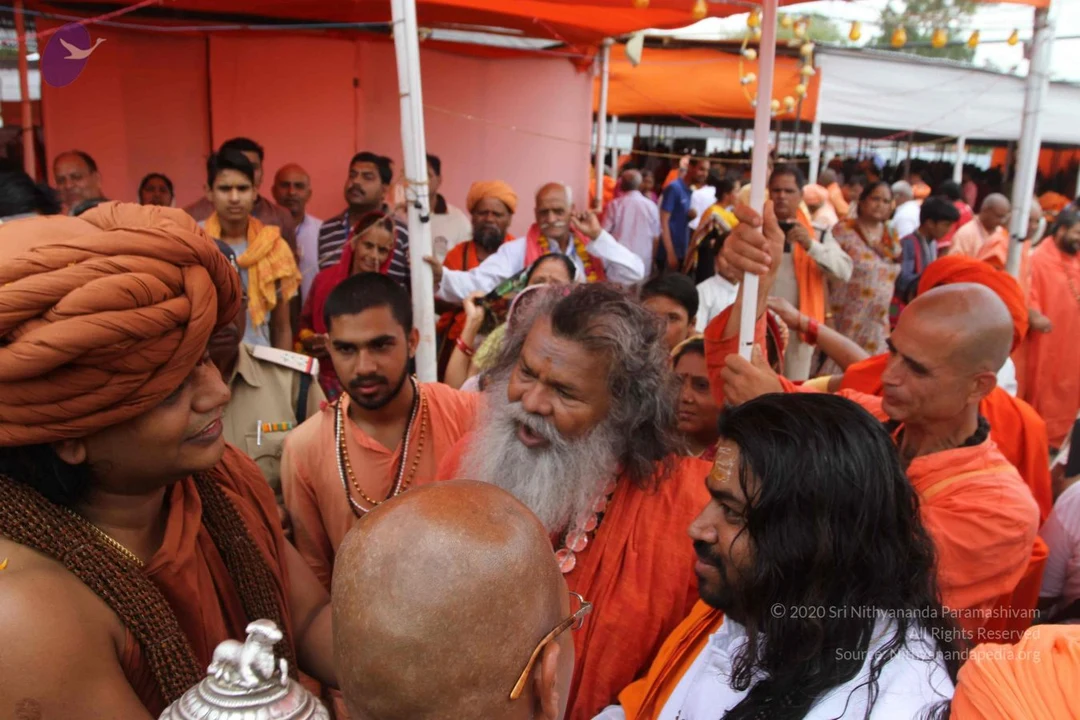
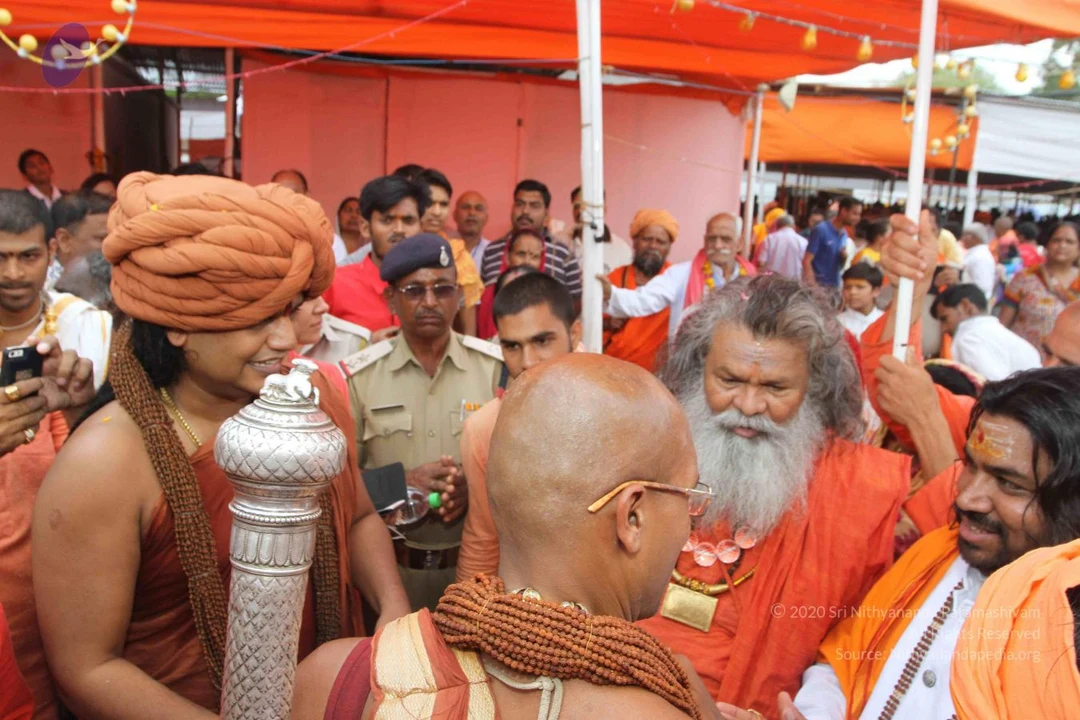
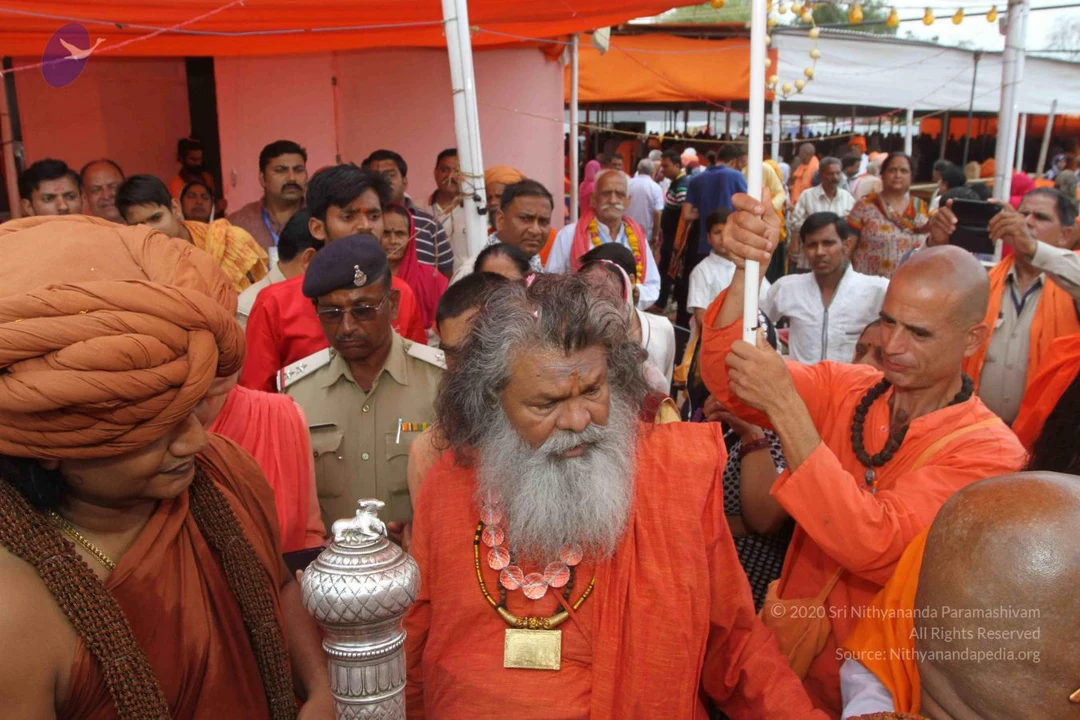
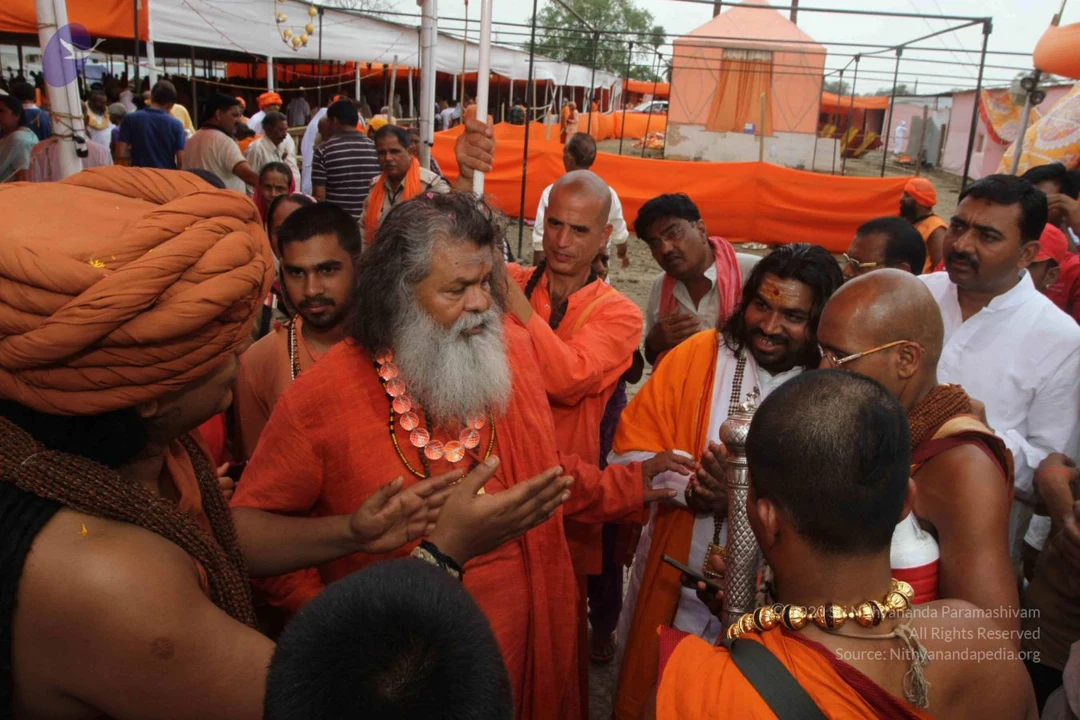
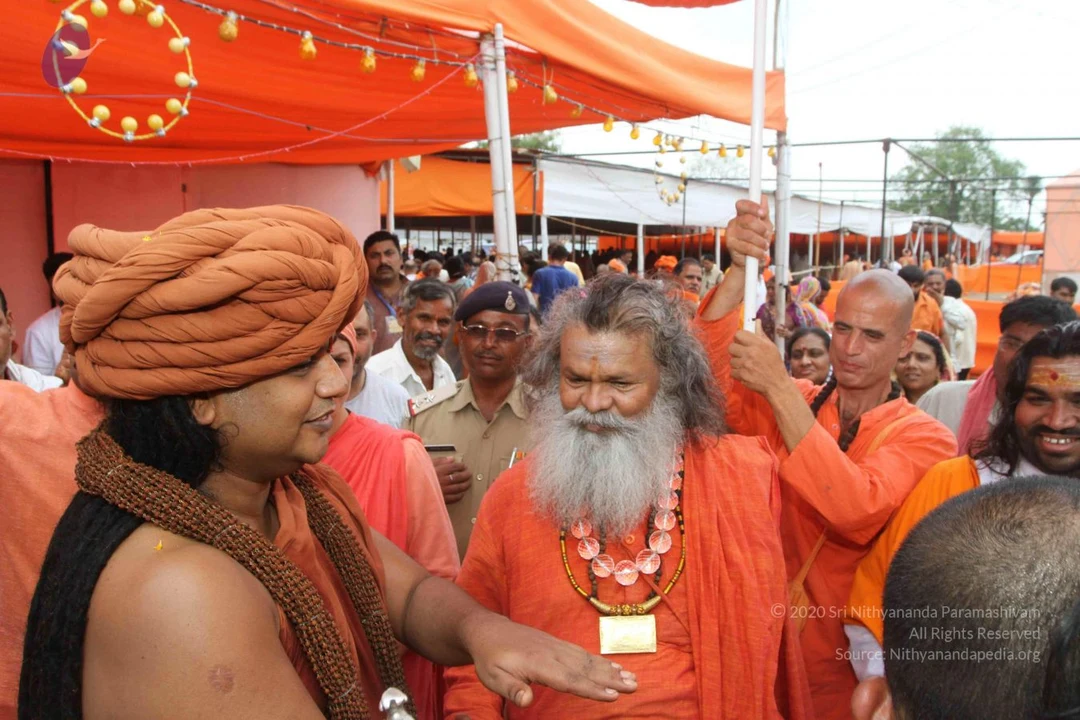
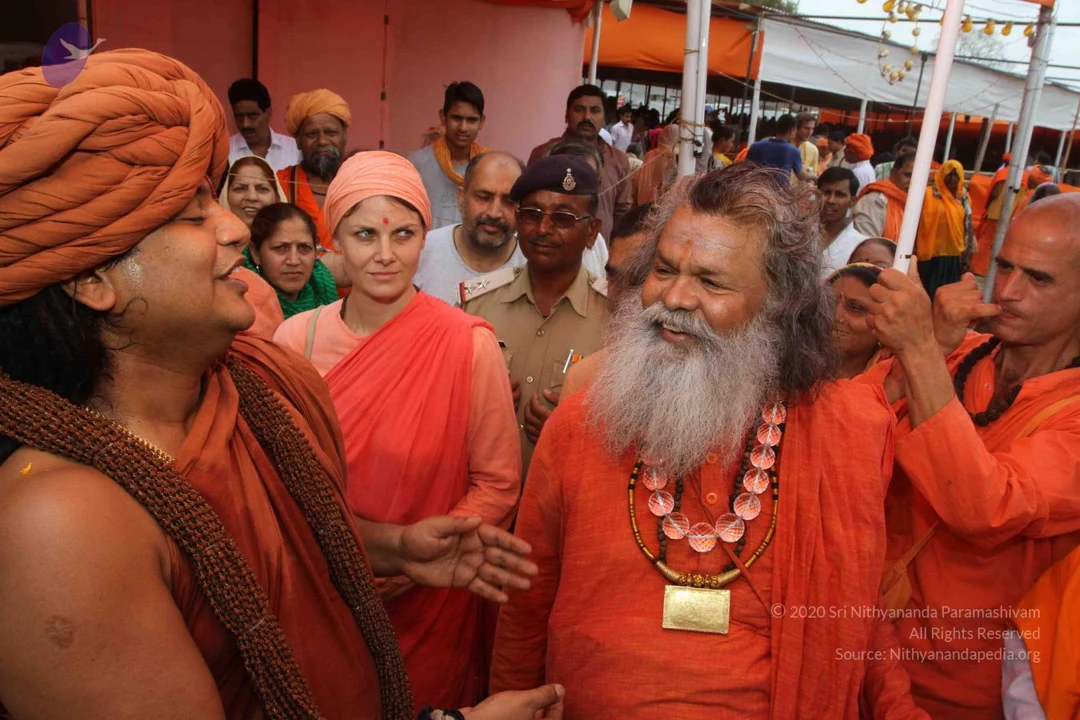
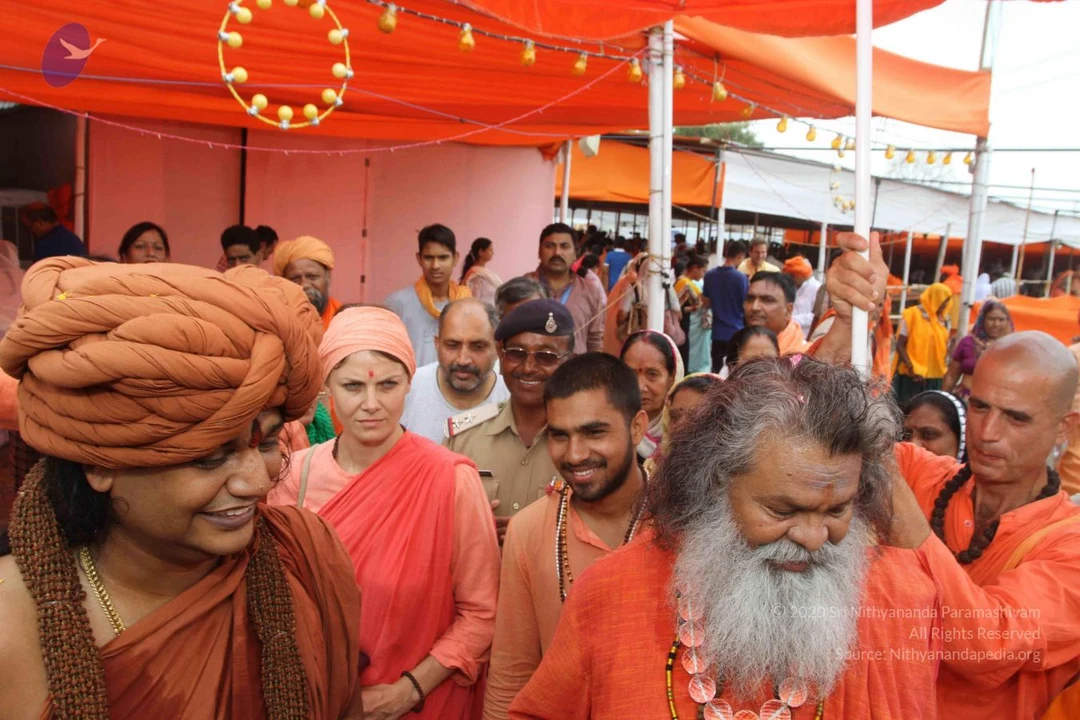
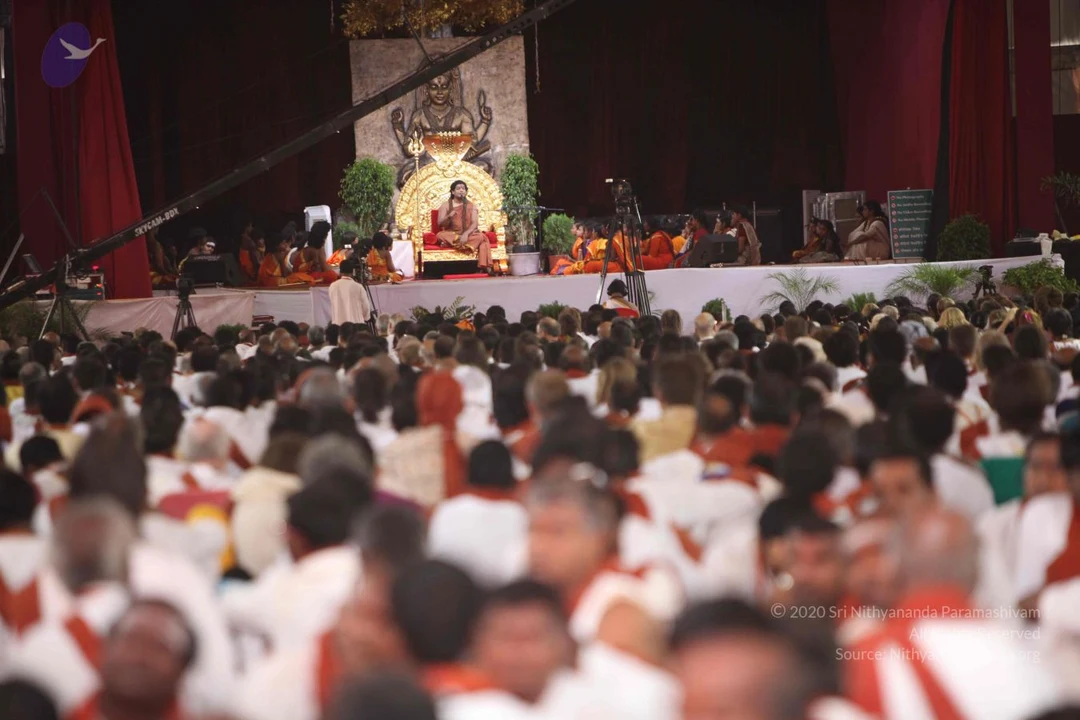
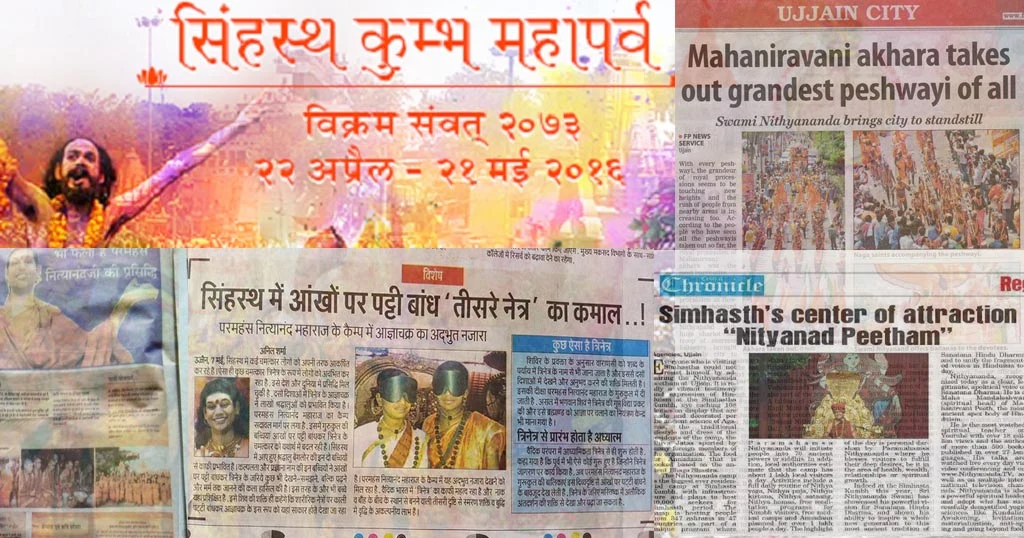
HDH Nithyananda Paramashivam coverage in kumbh mela, where swamiji has bought Ujjain has bought the city to stand still. Swamiji's camp is center of attraction of all the kumbh mela.

Chief guests Visit

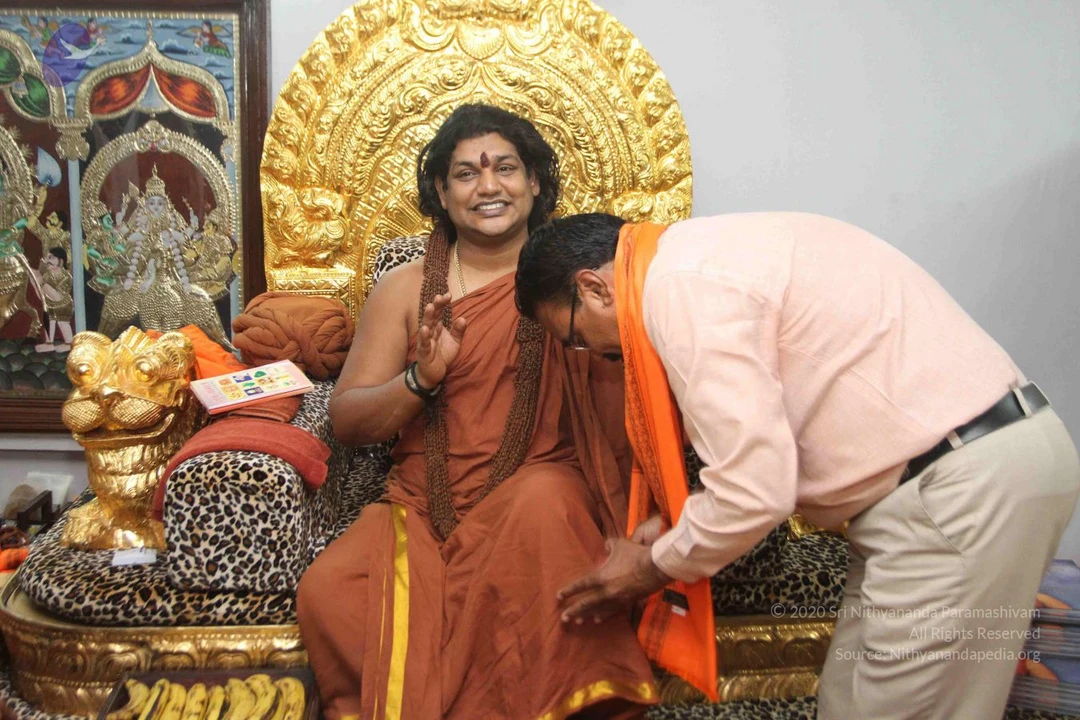
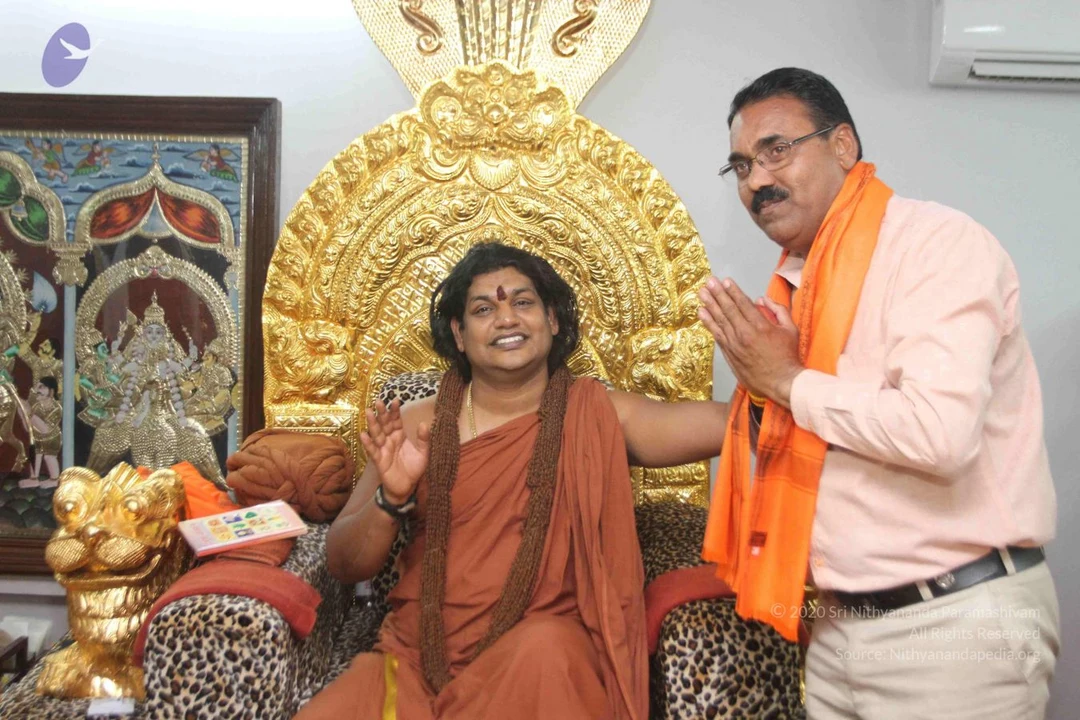
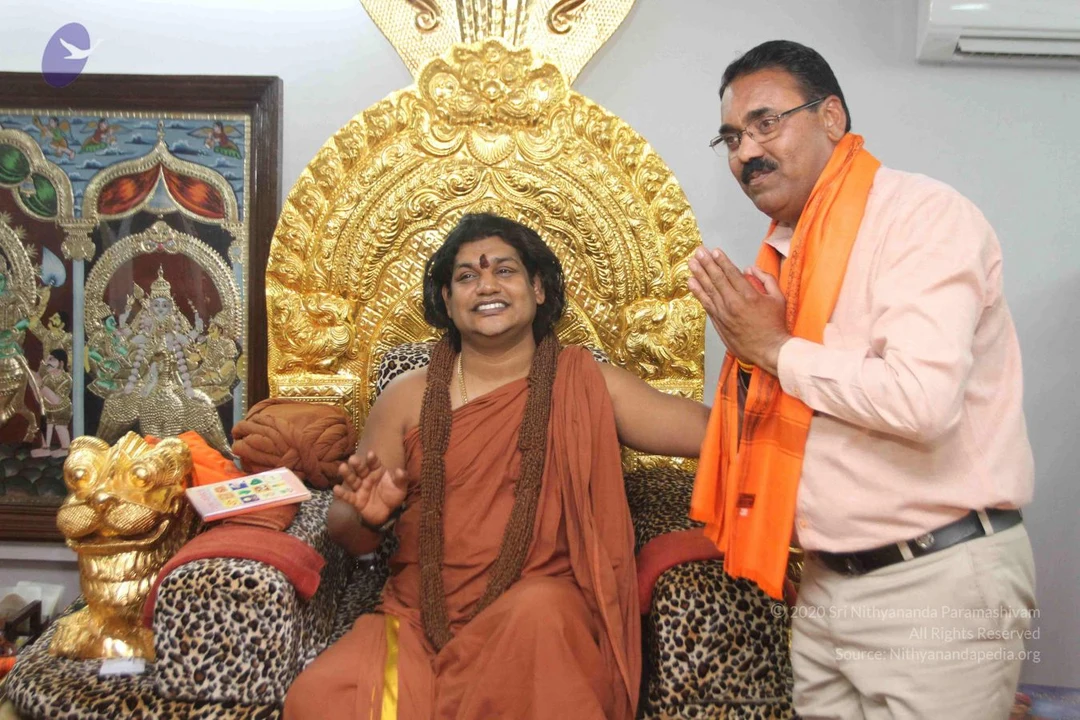
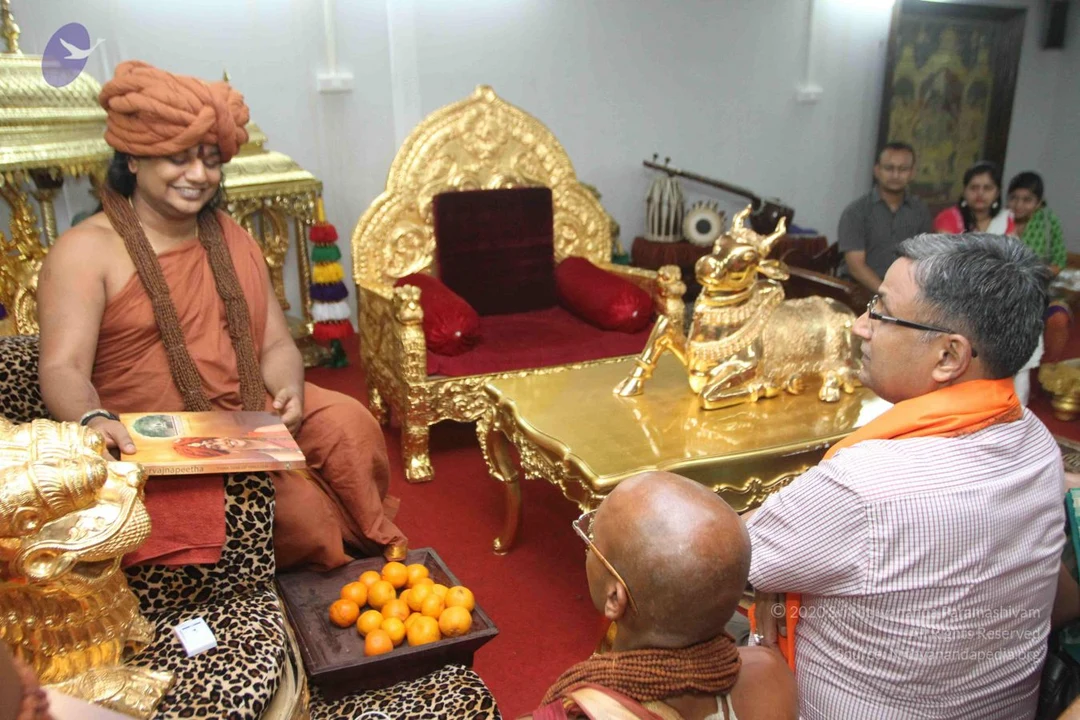
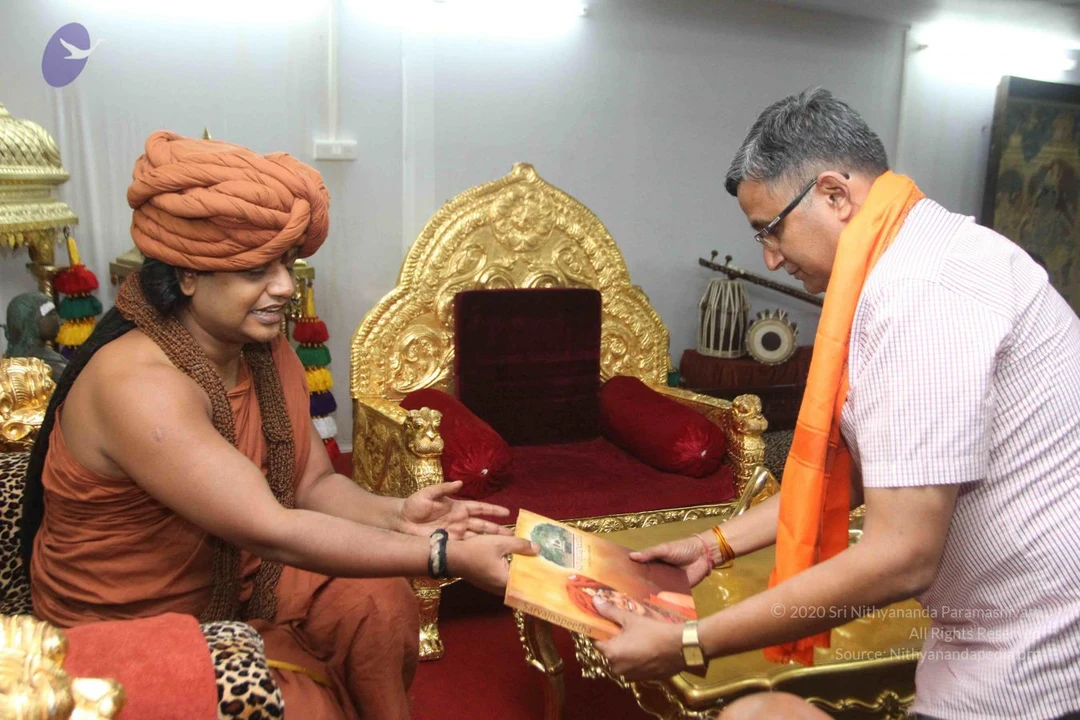
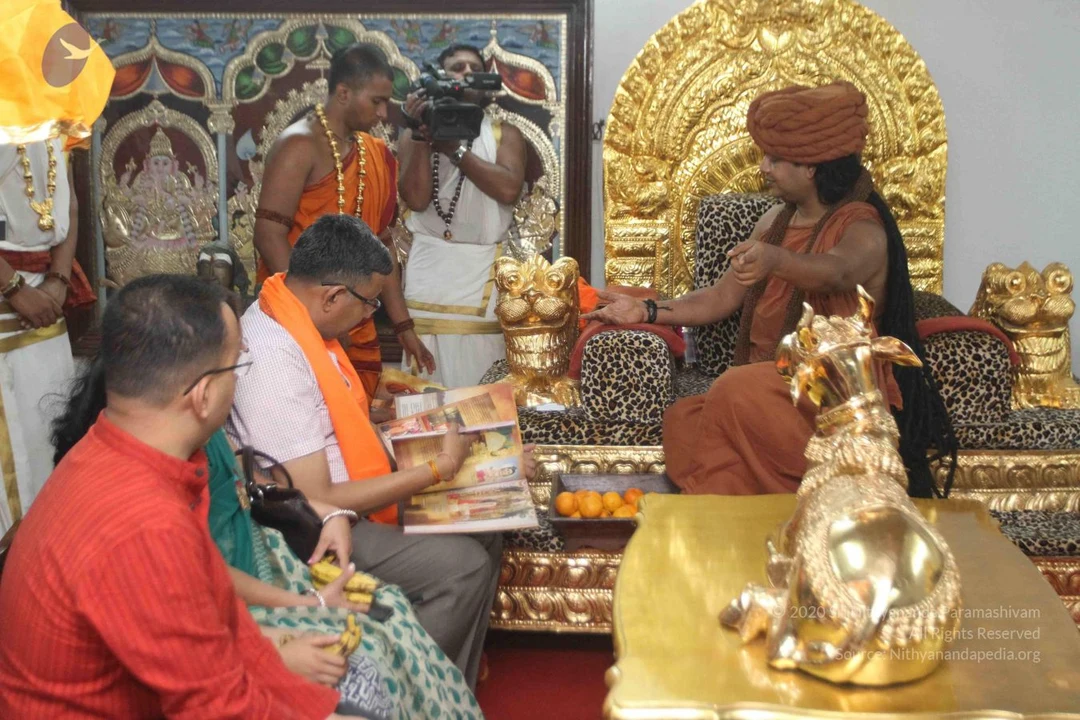
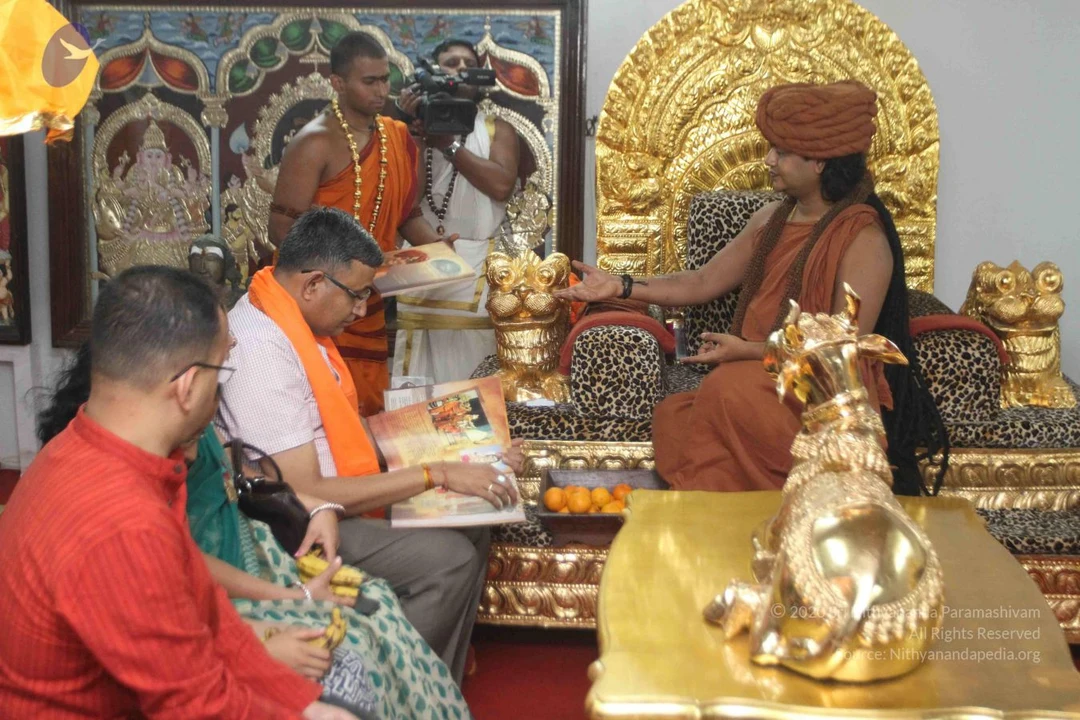
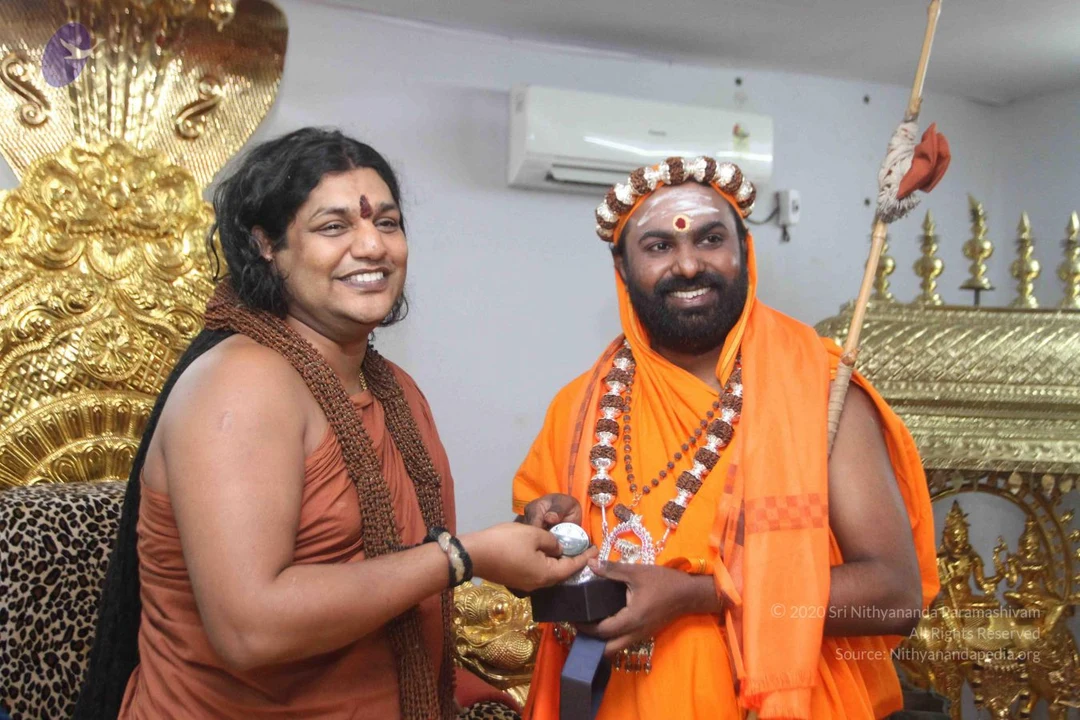
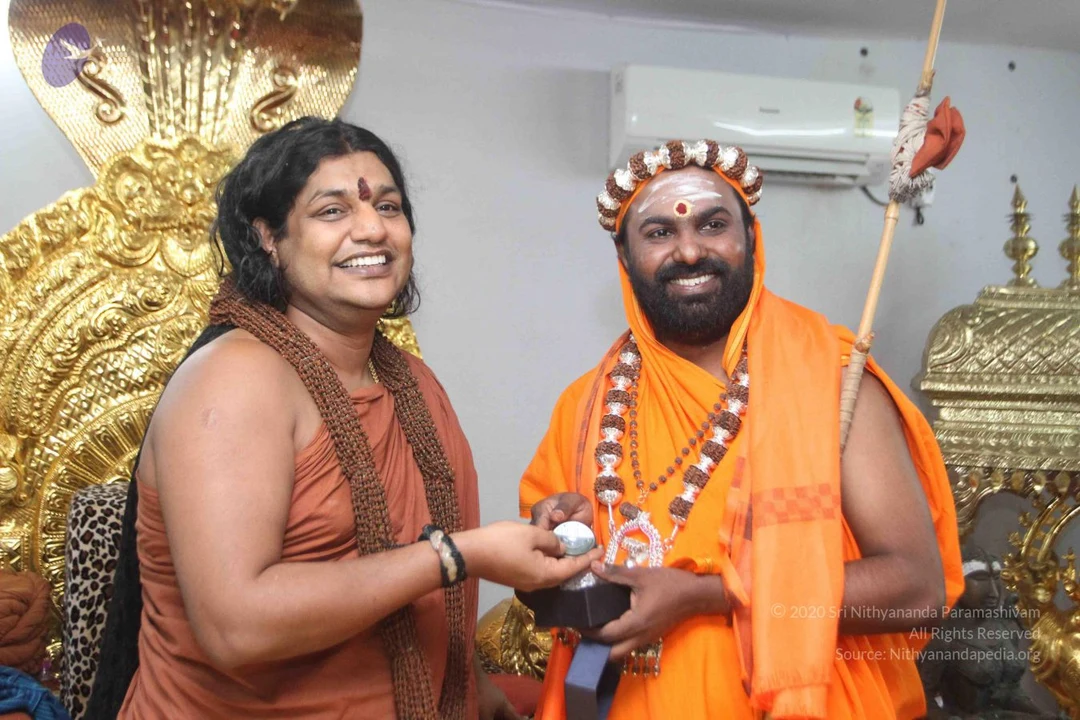
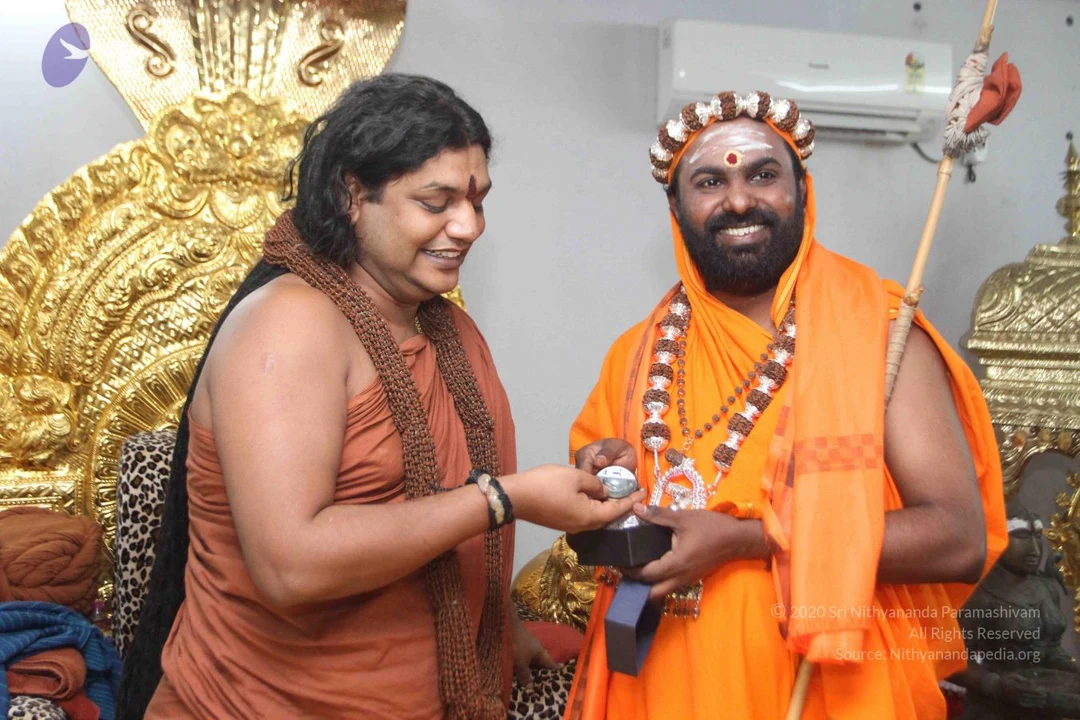
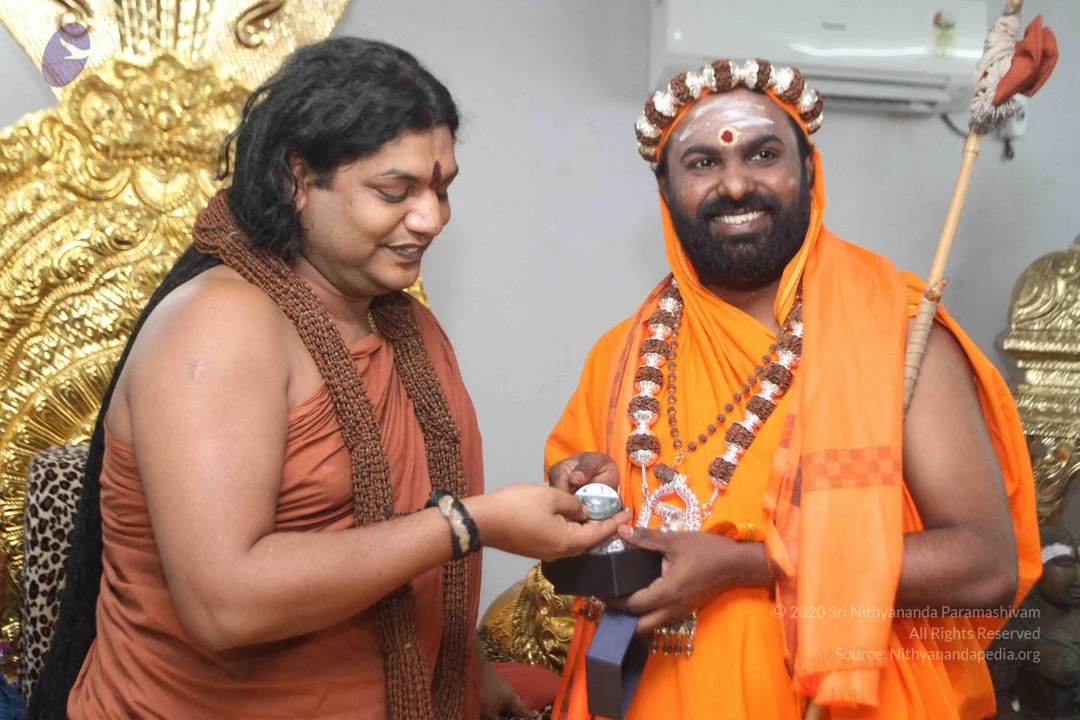
Sri Babulal Jain, Vice Chairman of State Planning Commission and Minister of Madhya Pradesh Visits Nithyananda Peetham Ujjain

Social Media

https://www.facebook.com/Deshpande.Anu/posts/10154173908279283

Sakshi Pramana:

sharing from Kumba mela

Photos Of The Day:

shuddadvaitam-session

bandara-nirvani-akhada1
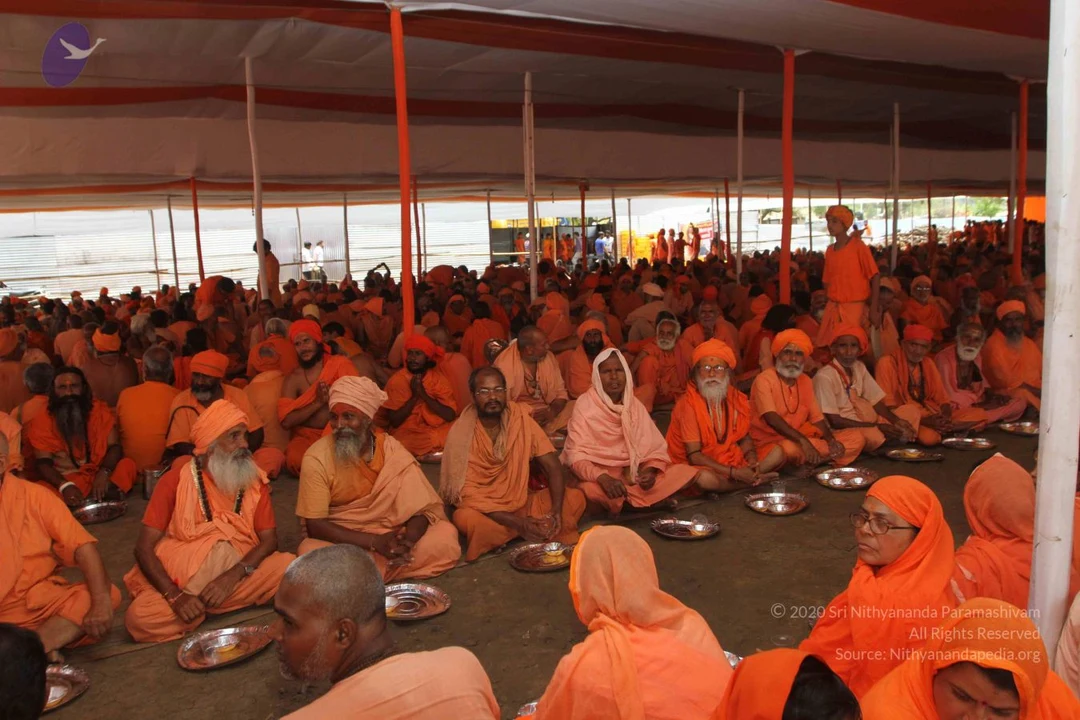
bandara-nirvani-akhada2

Third Eye-initiation

vip-visit

bandara

Photos from this day

View all 501 photos

shuddadvaitam-session

2 photosSource gallery
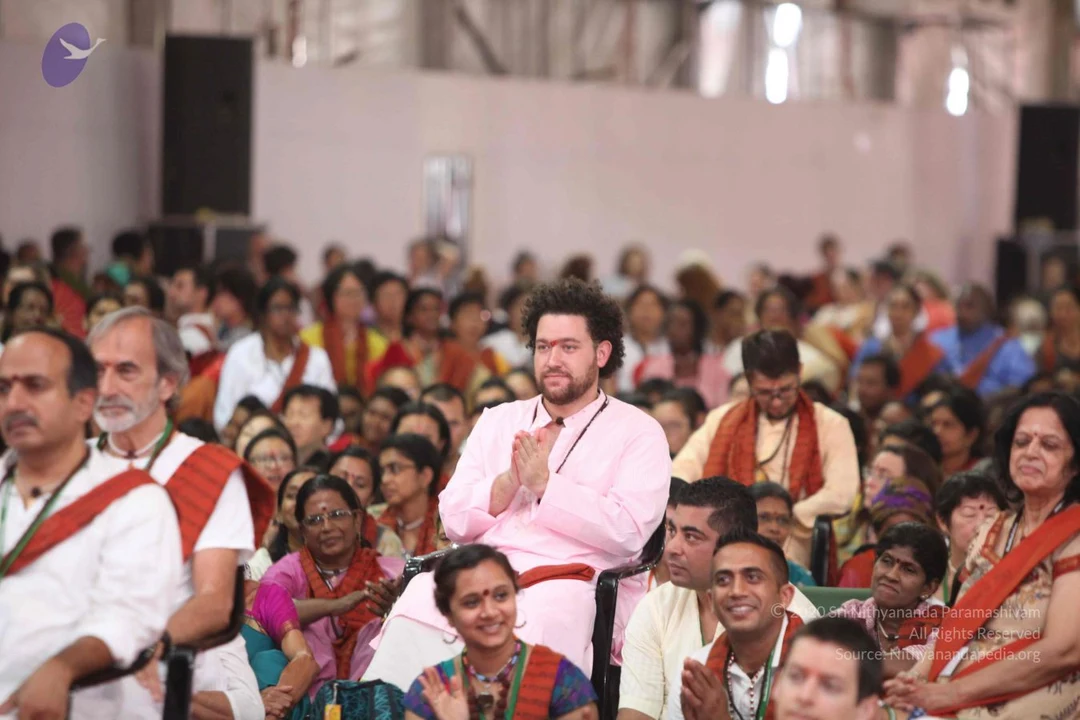
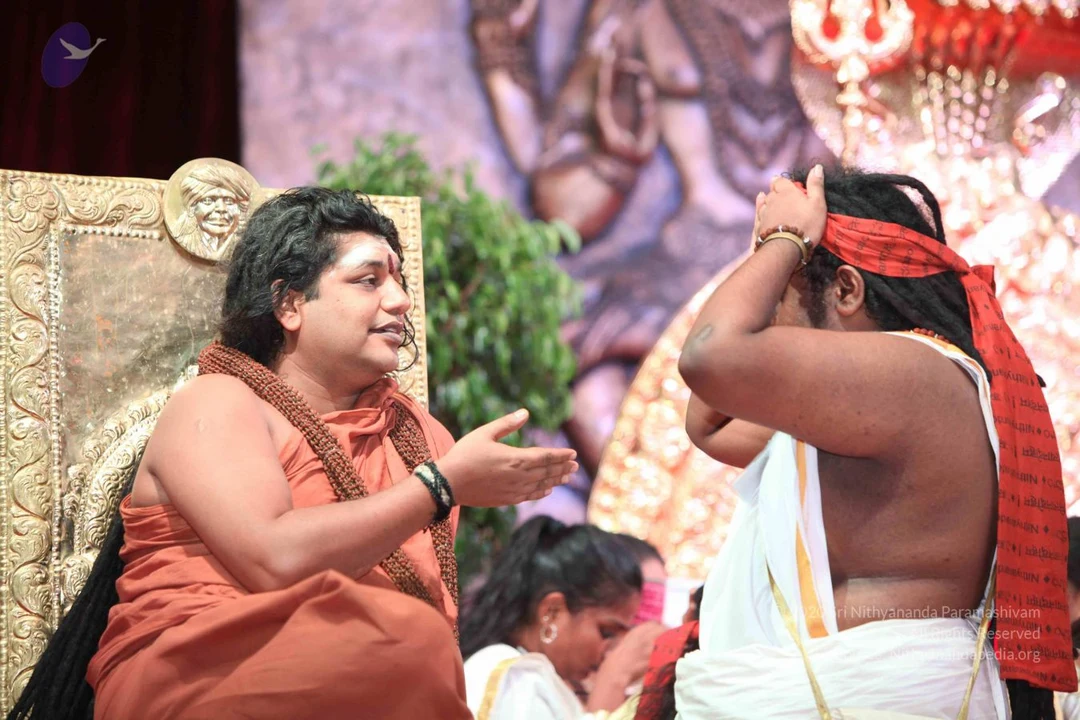
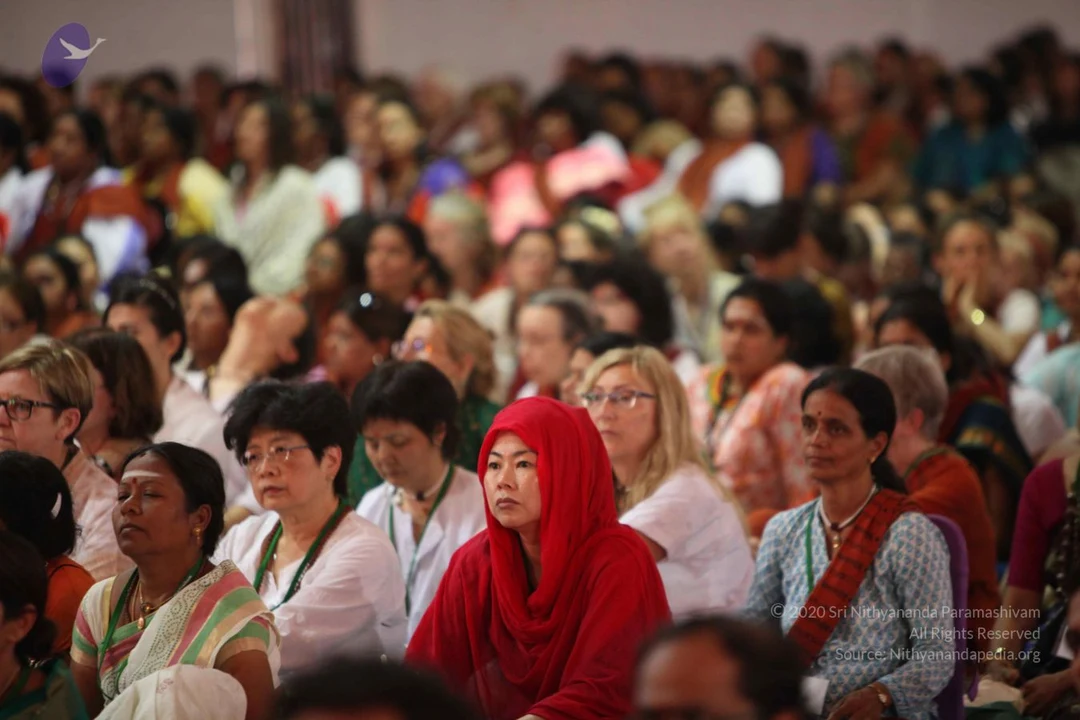
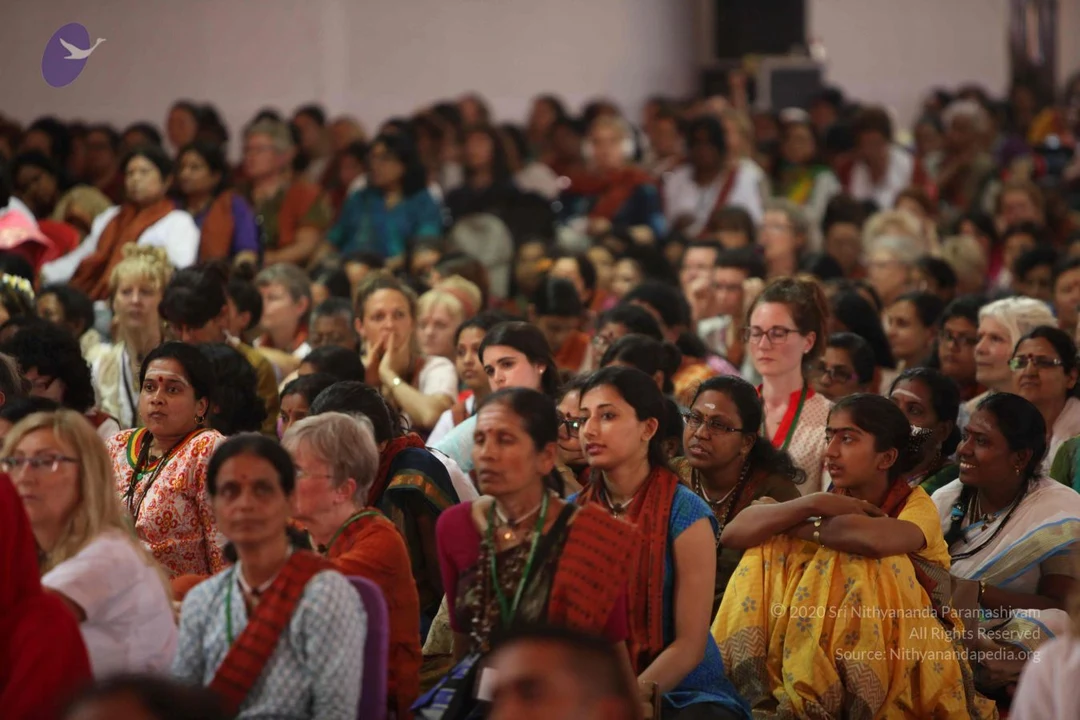
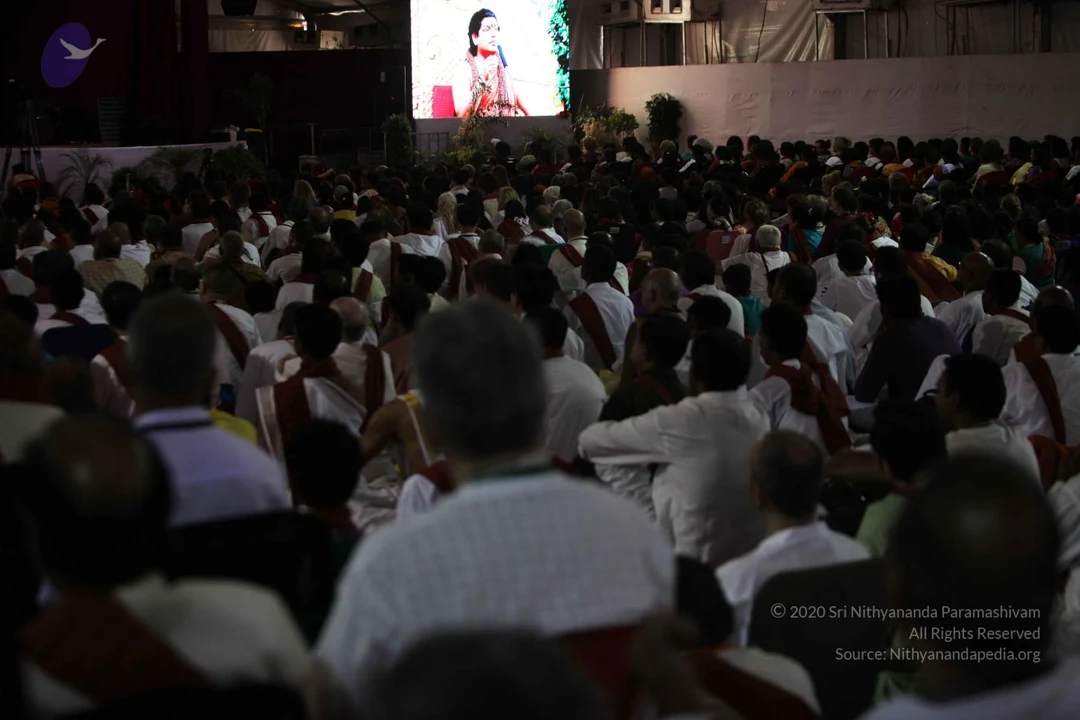
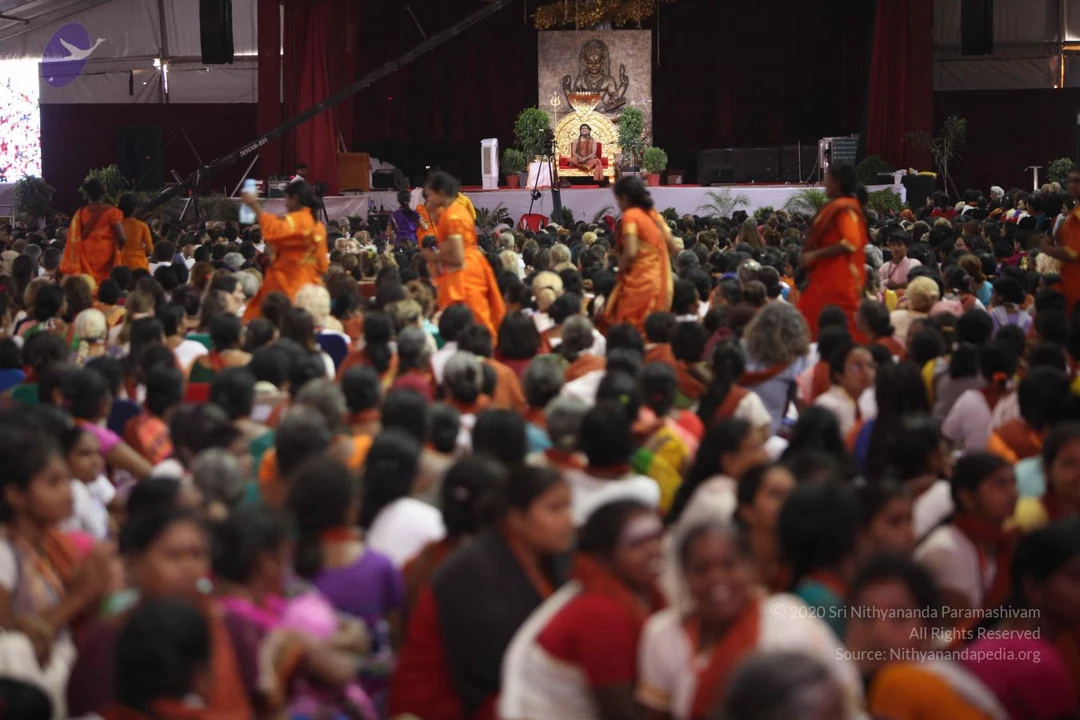
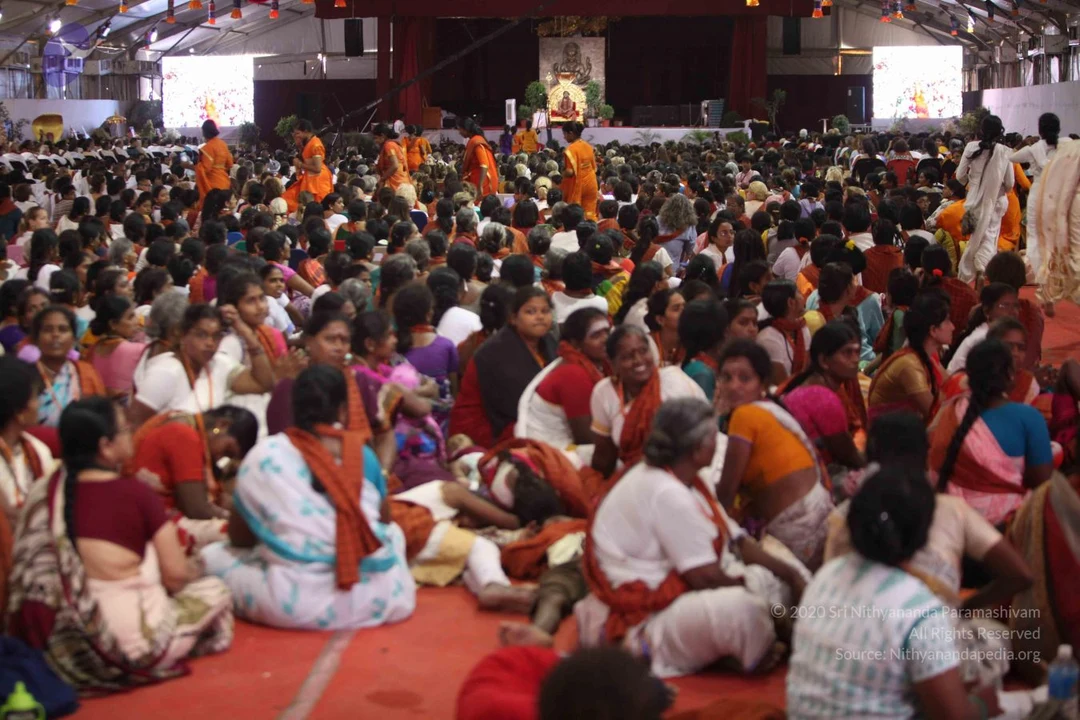
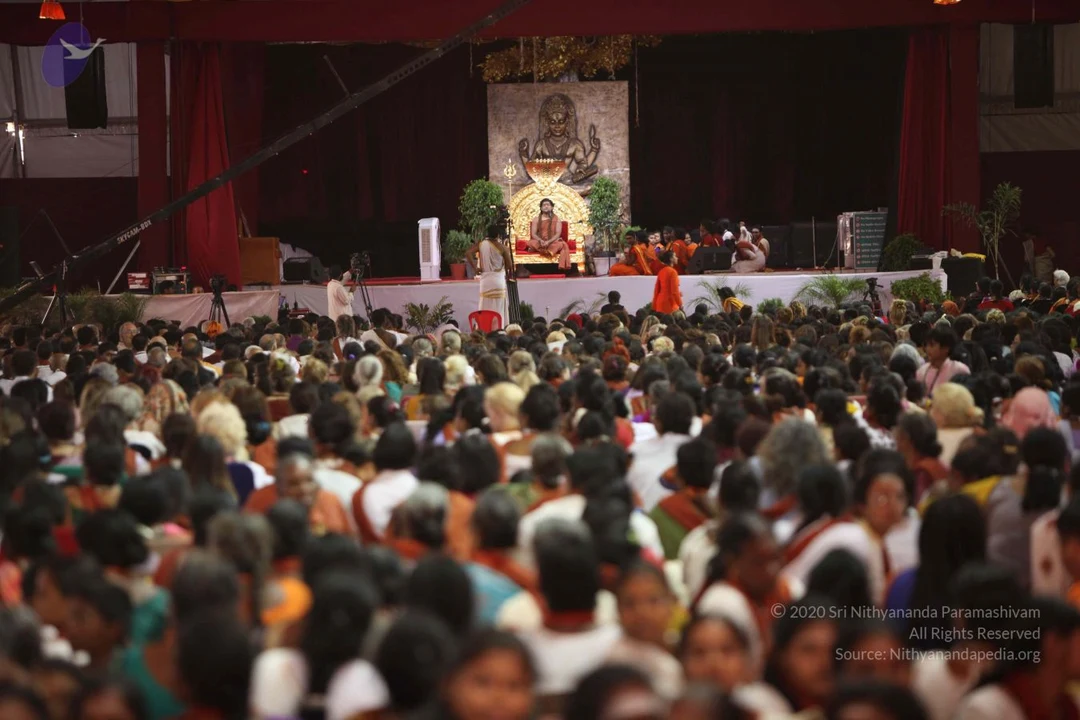
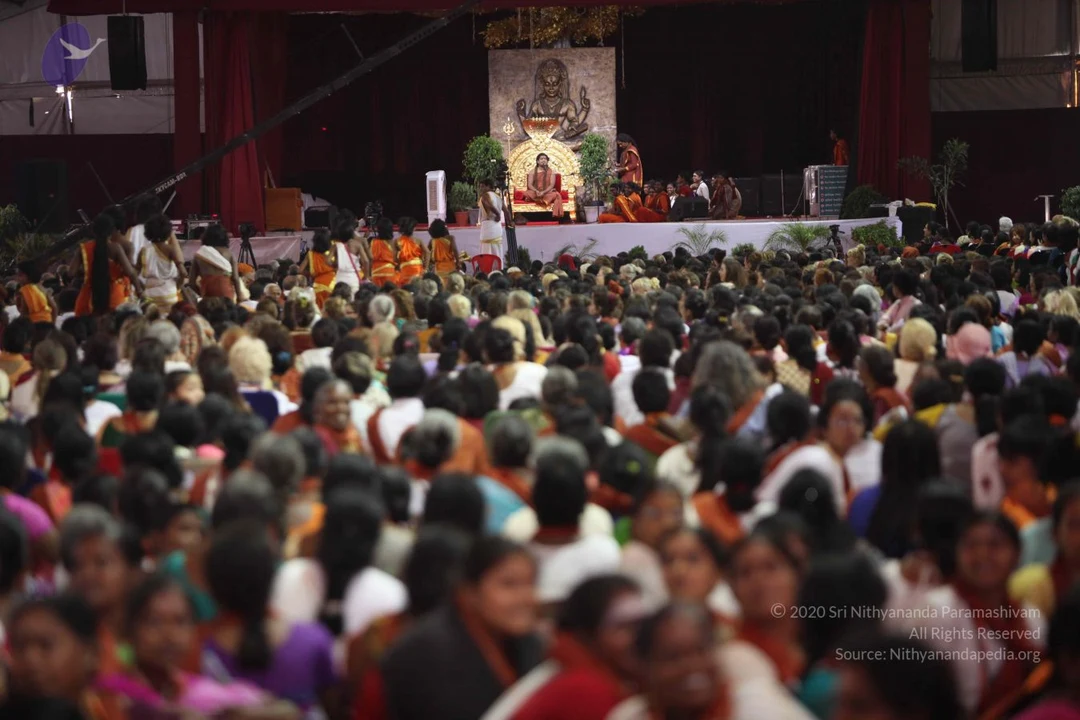
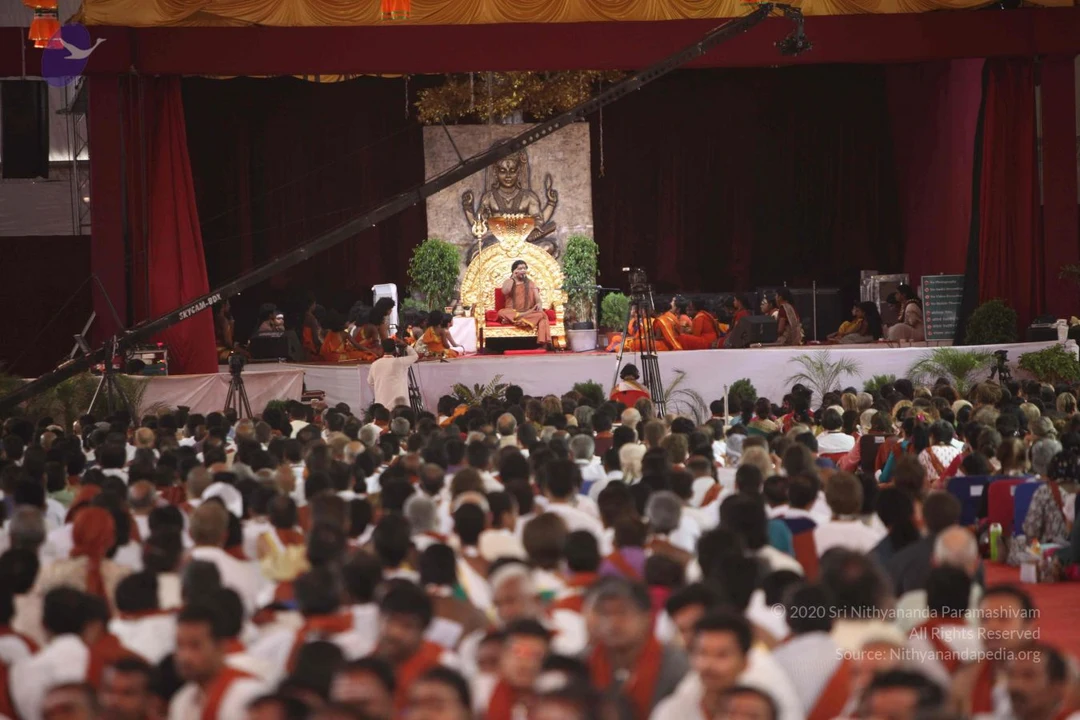
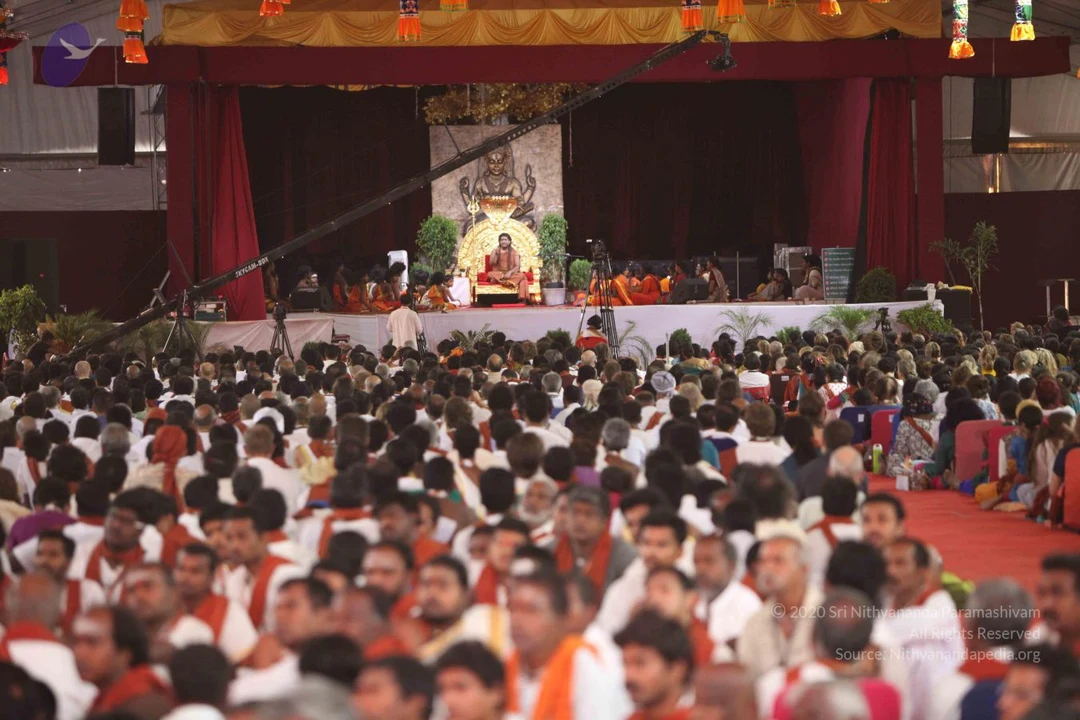
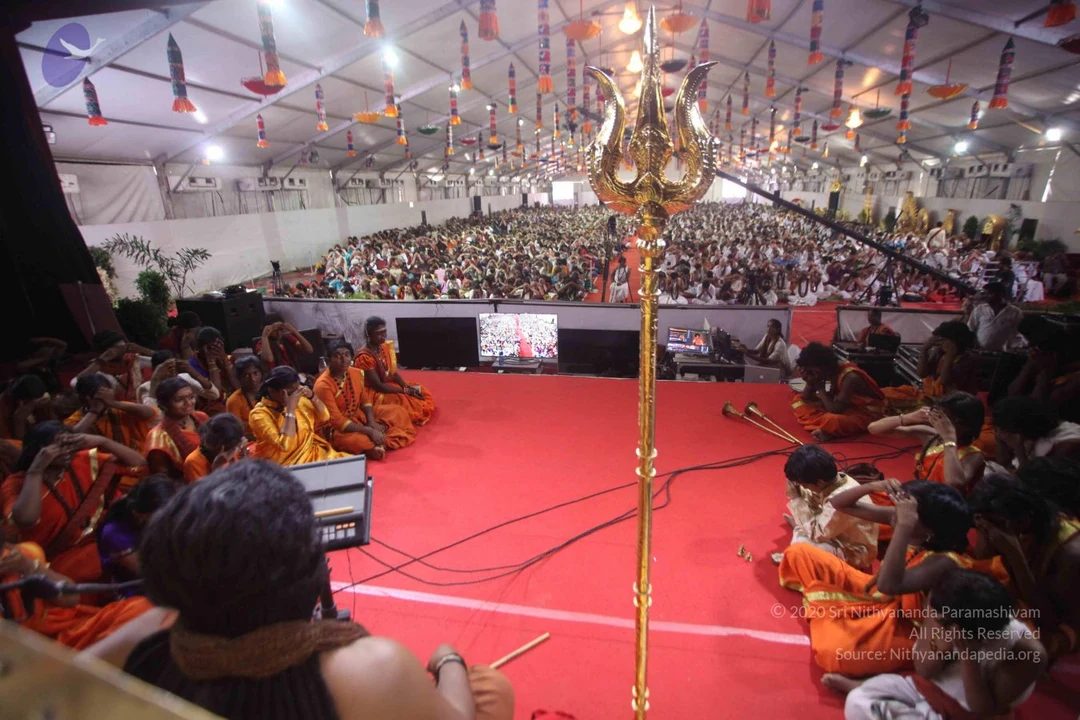
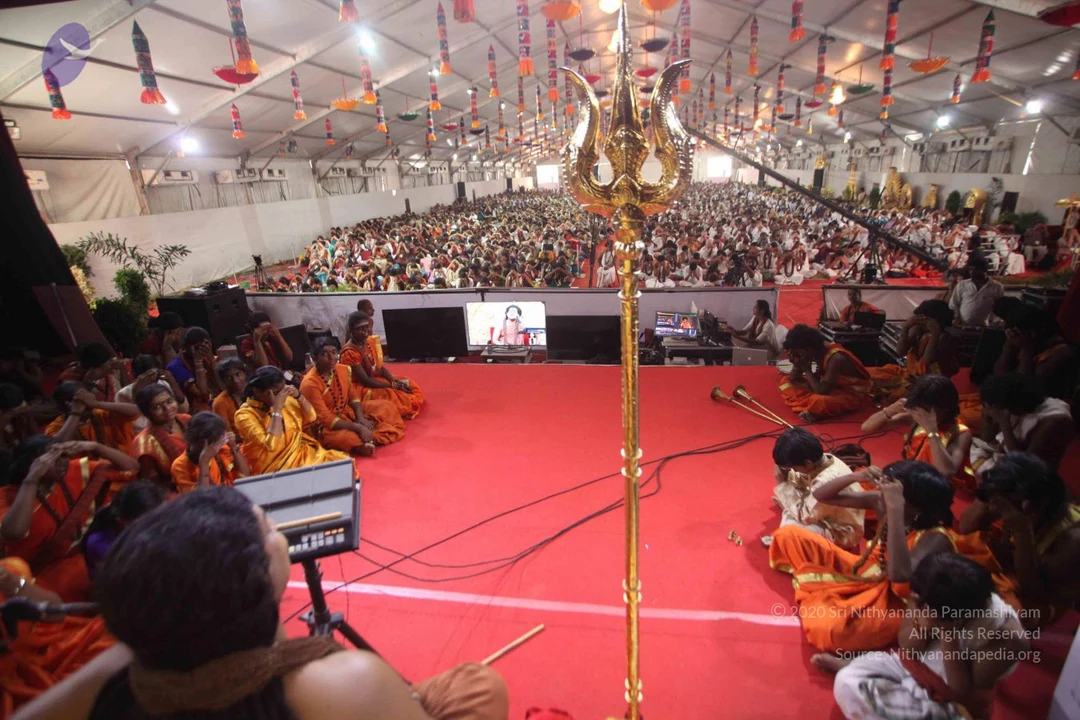
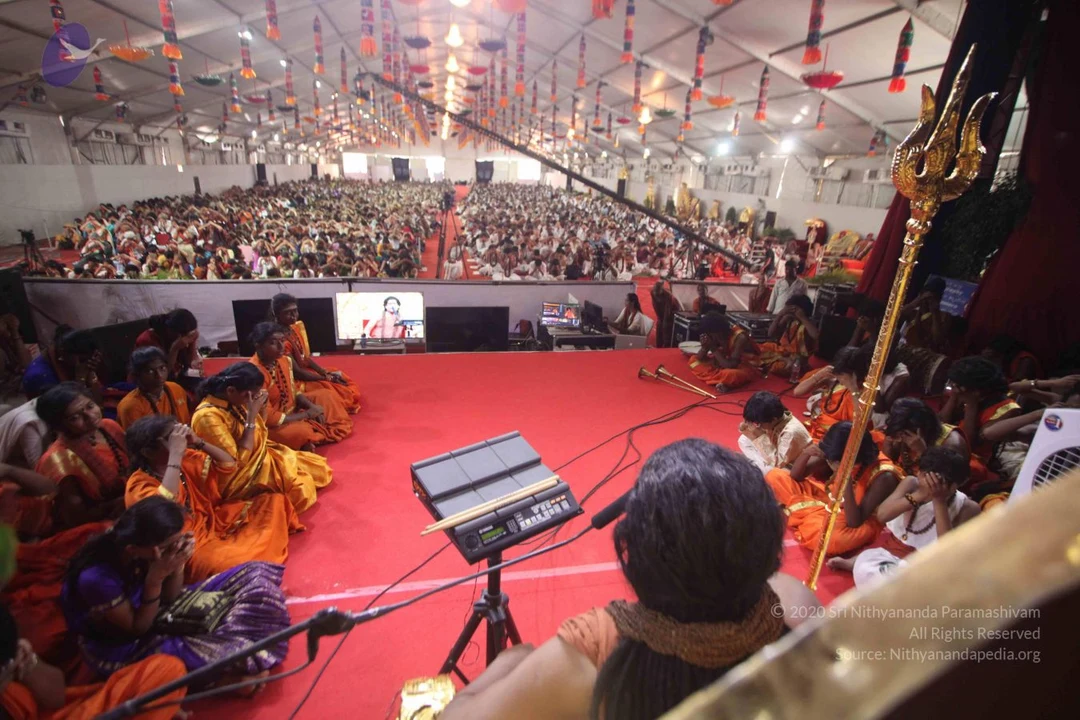
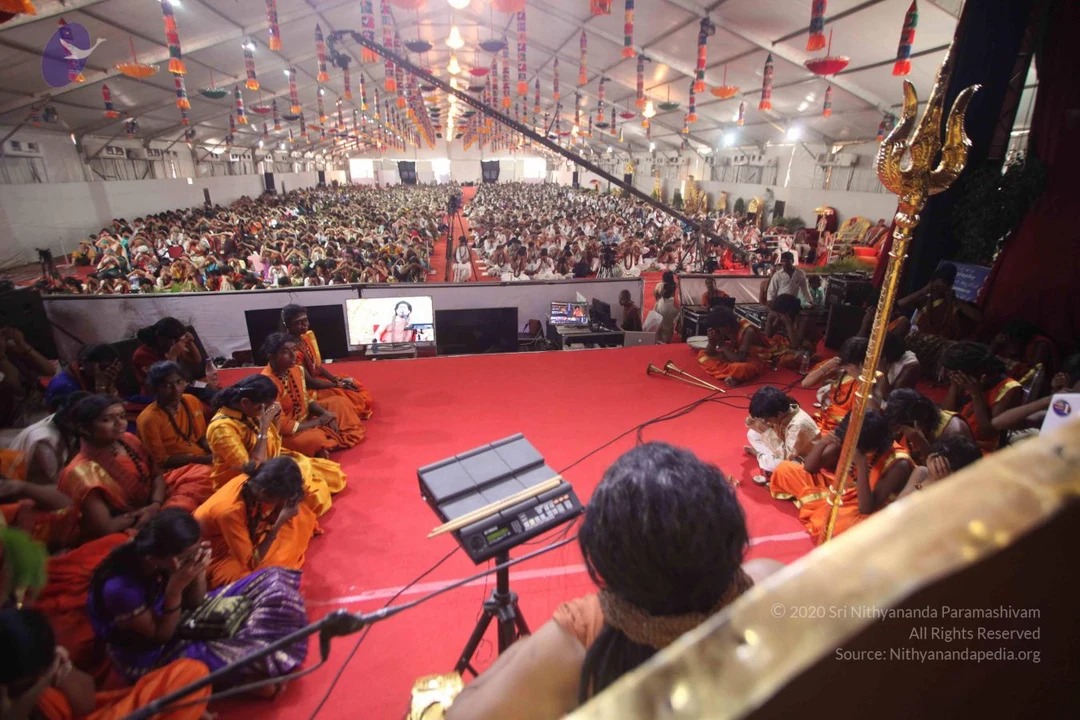
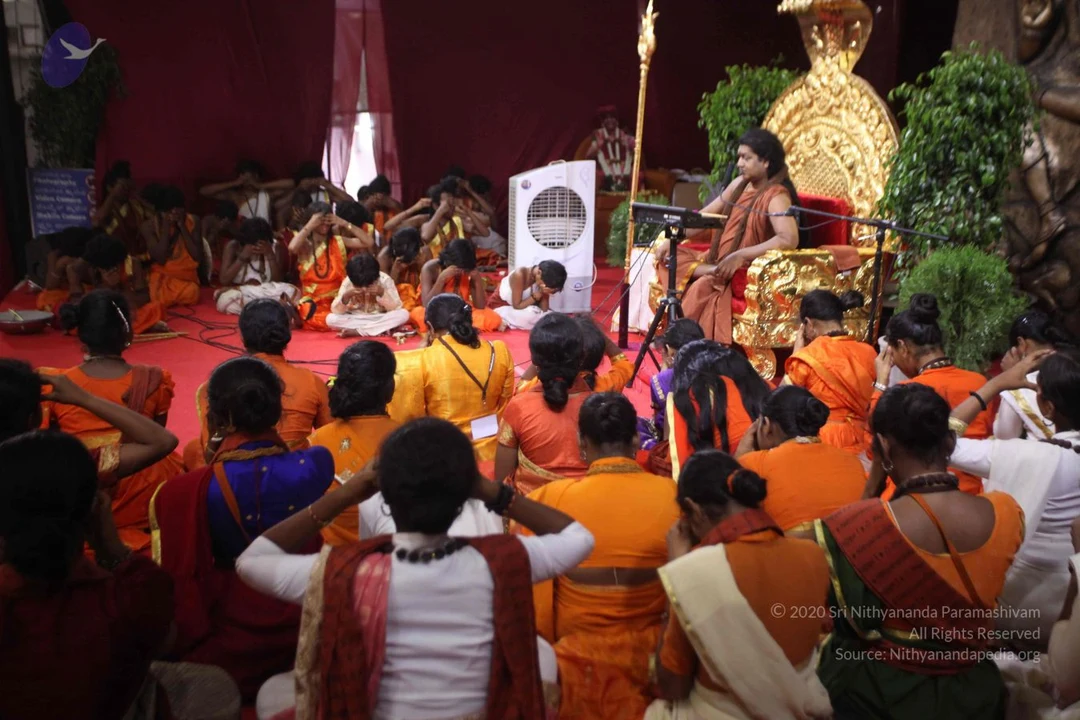
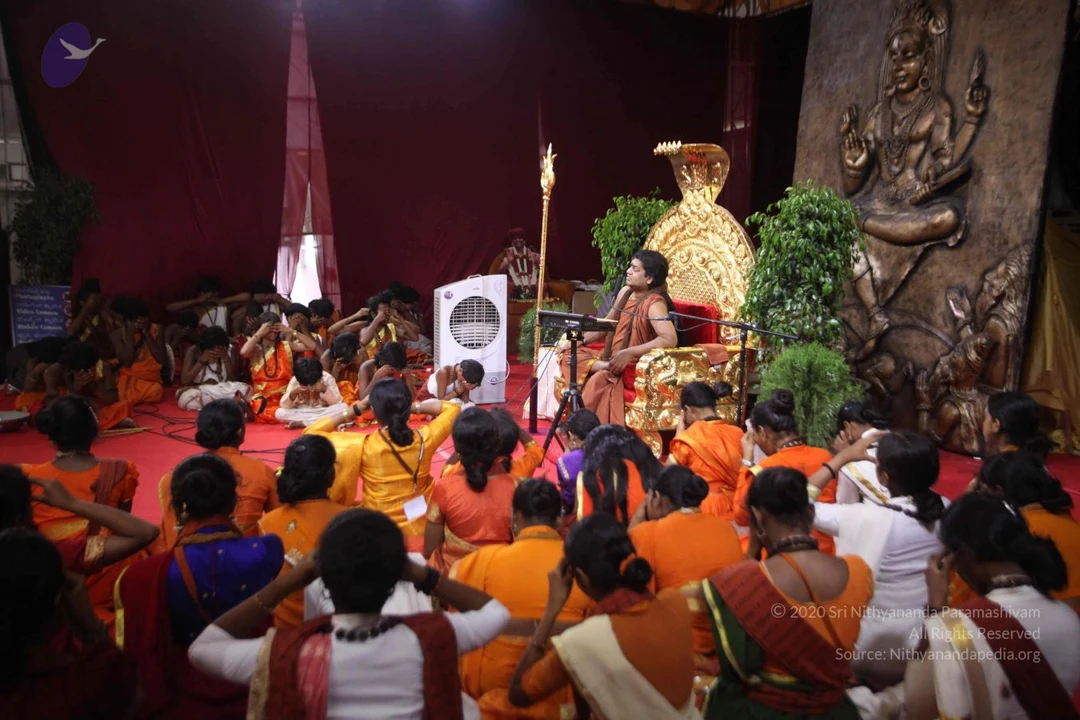
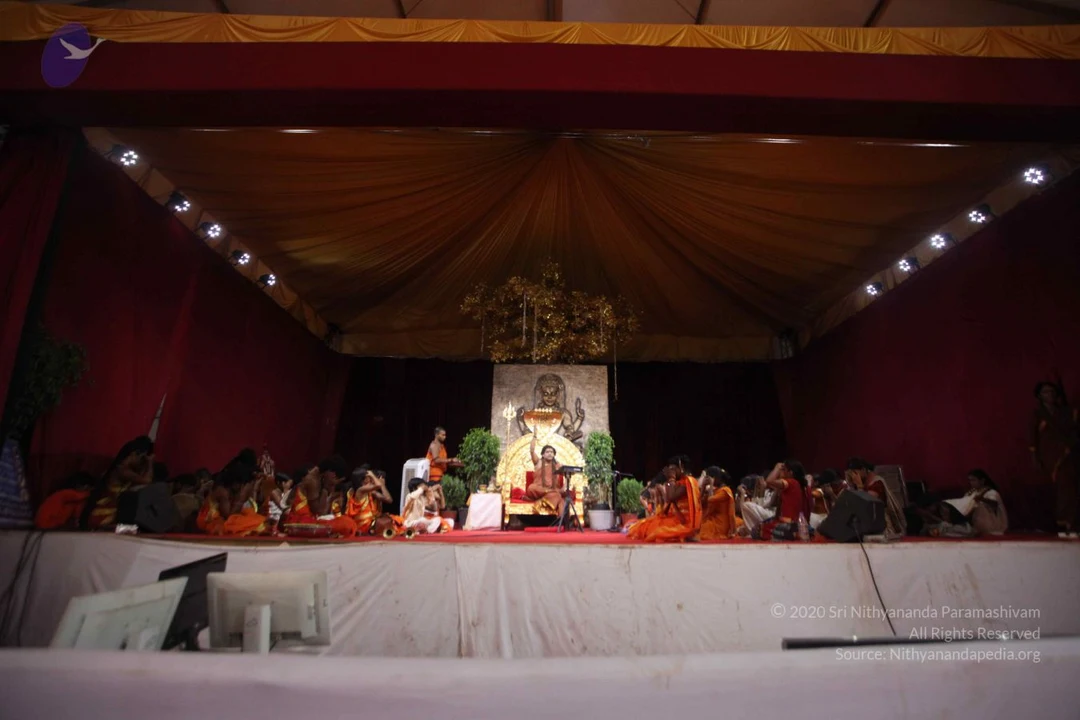
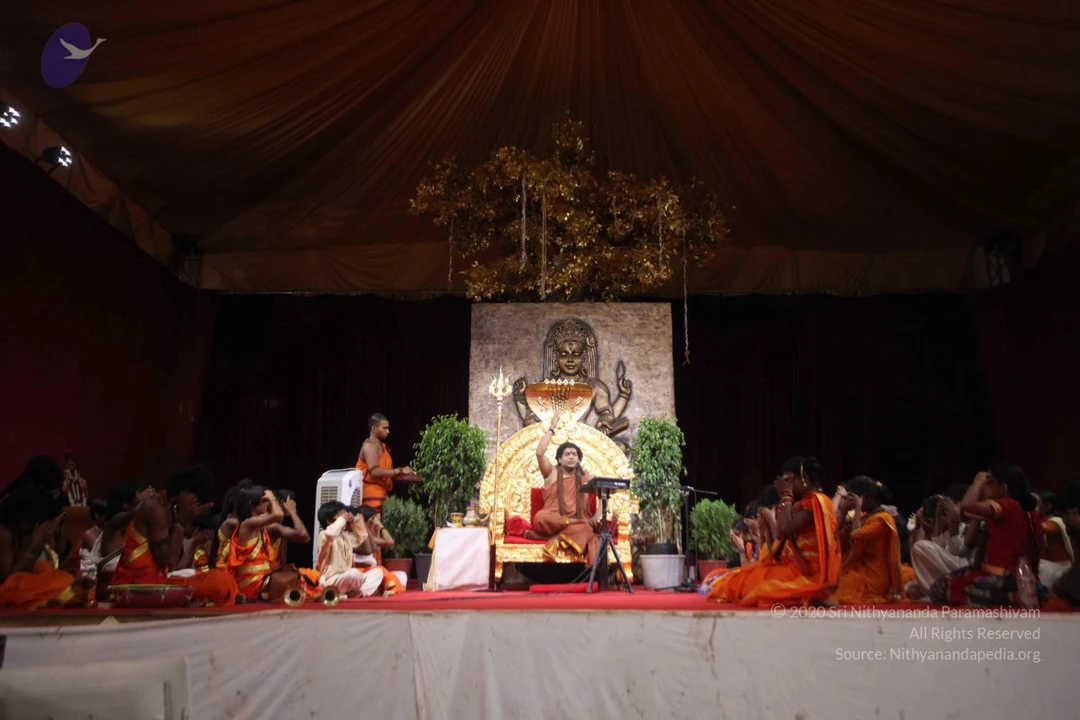
A large indoor gathering of seated devotees fills the hall. At the centre, a young man with curly dark hair and a short beard, wearing a pink kurta-style garment, a rudraksha-style mala and a red-orange tilak on his forehead, sits in a chair with his palms joined in anjali. Around him, men and women wear saffron-orange shawls and white or pink clothing, several smiling and some with their hands folded. The hall has pale walls, hanging lights and black speakers in the background, and a purple bird logo appears at the top left.A photograph of a seated man on a gold-embossed throne wearing an orange-saffron robe, a long rudraksha mala and a white vibhuti line on his forehead, gesturing with his open right hand while speaking. Facing him, a bare-chested man in white dhoti with gold border and a red-and-black printed headband over his eyes raises both hands to his head, appearing to be in a blindfolded demonstration. Behind them, a large painted deity murti and ornate gold-red decorations form the backdrop, with a woman in white sari partly visible at lower centre.

bandara-nirvani-akhada1
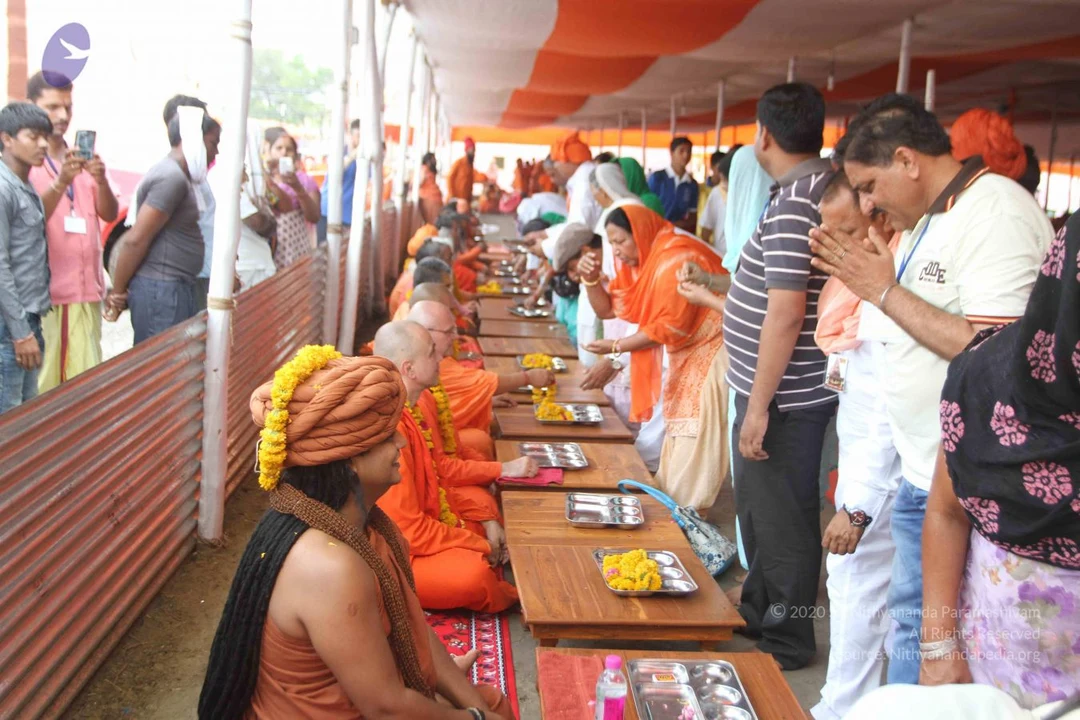
102 photosSource gallery
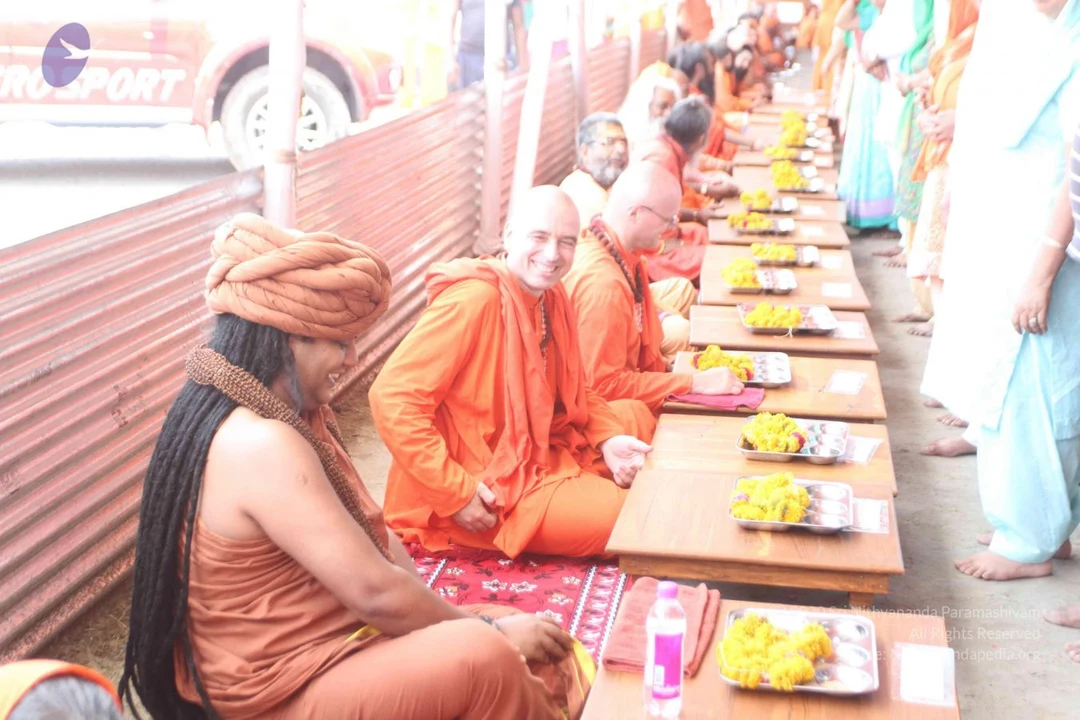
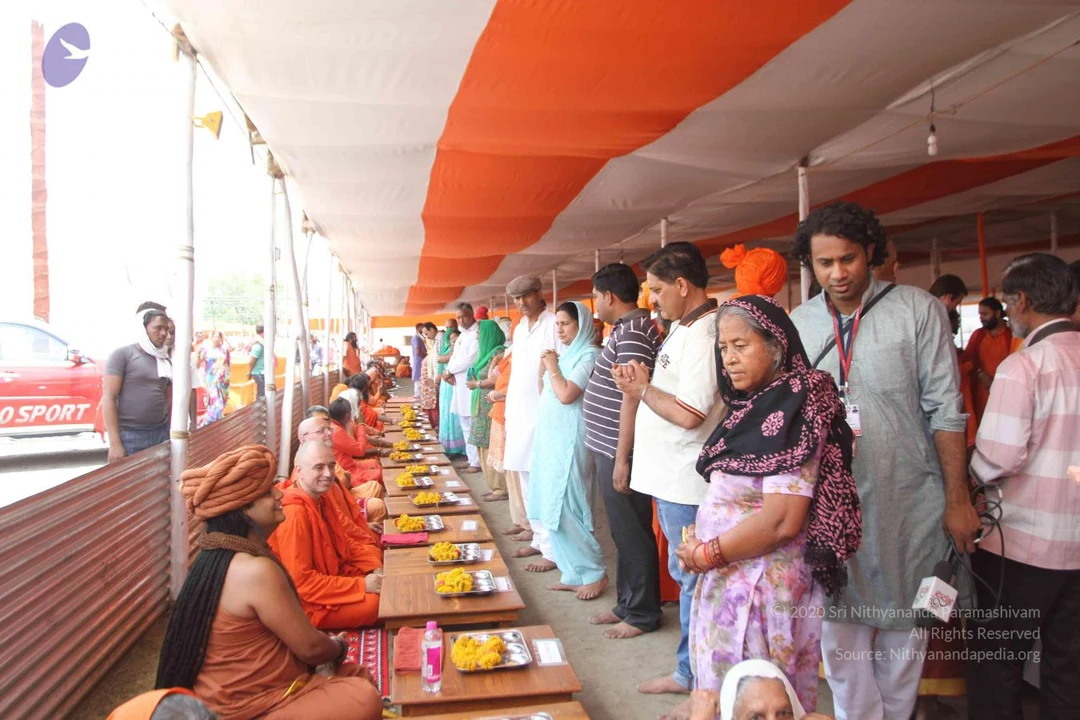
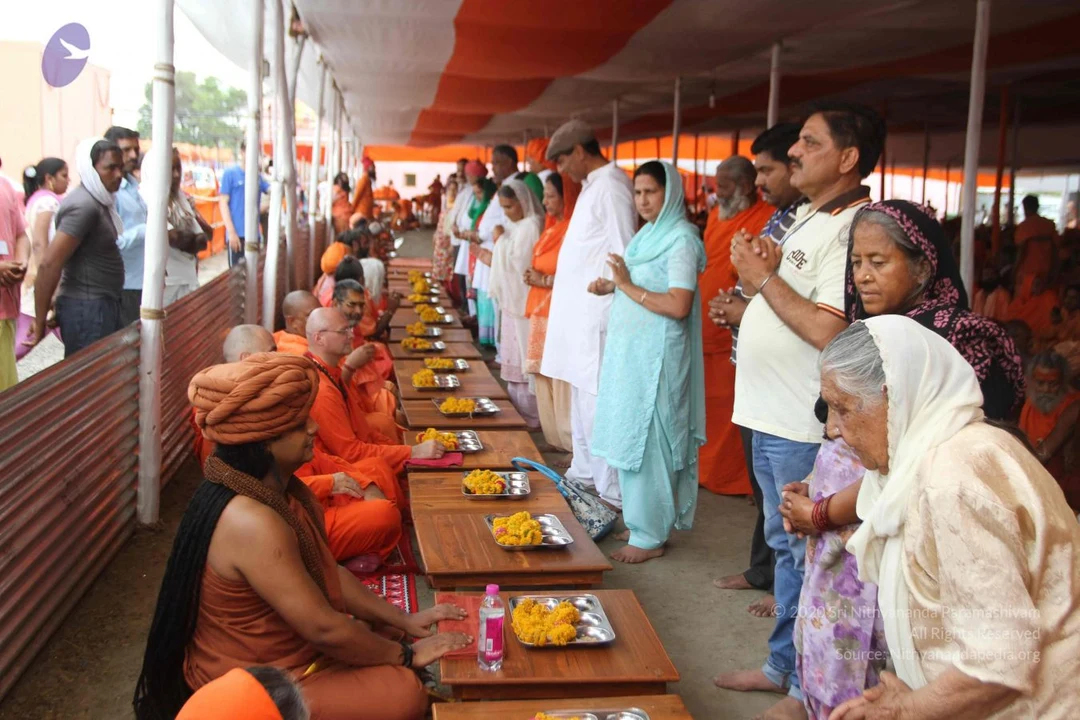
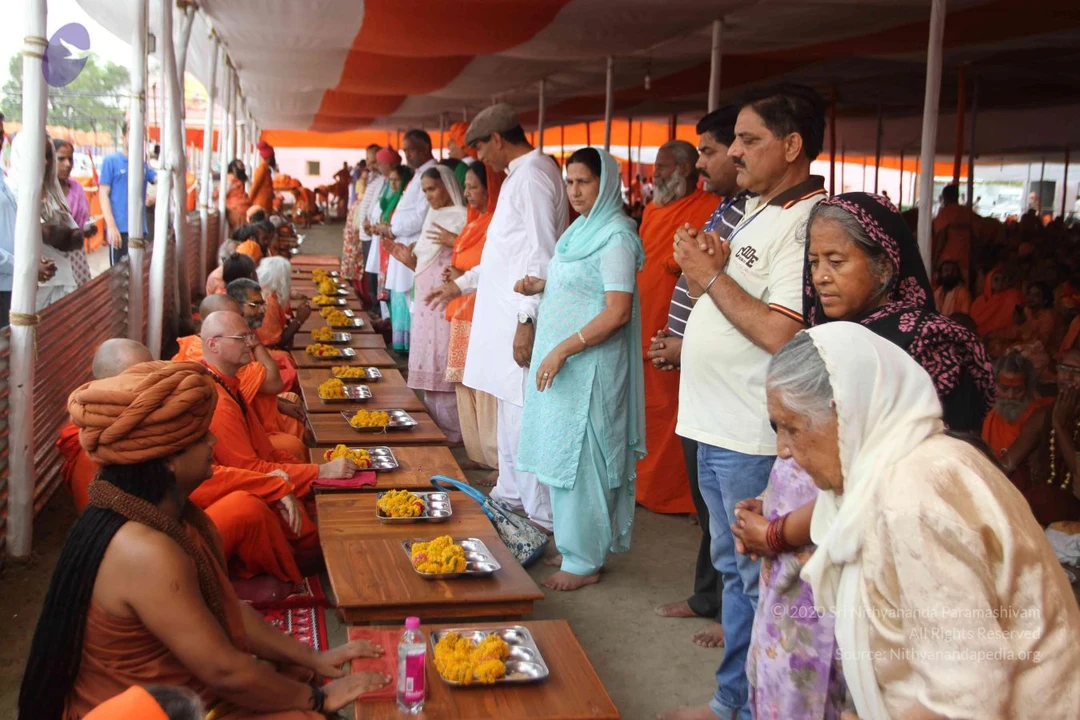
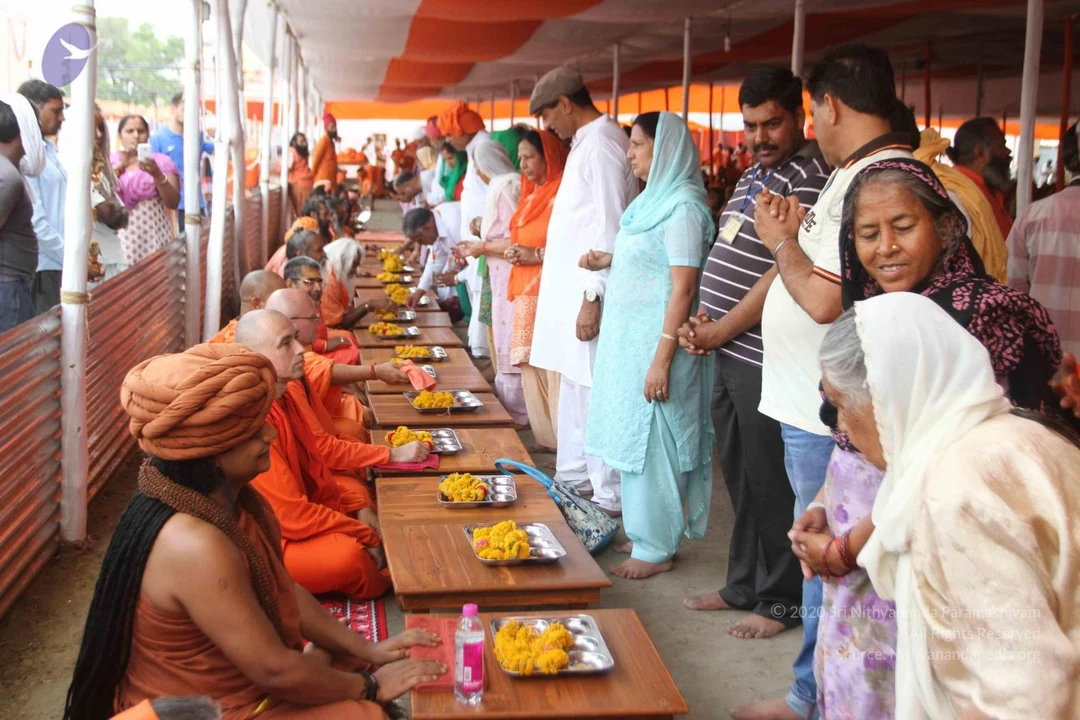
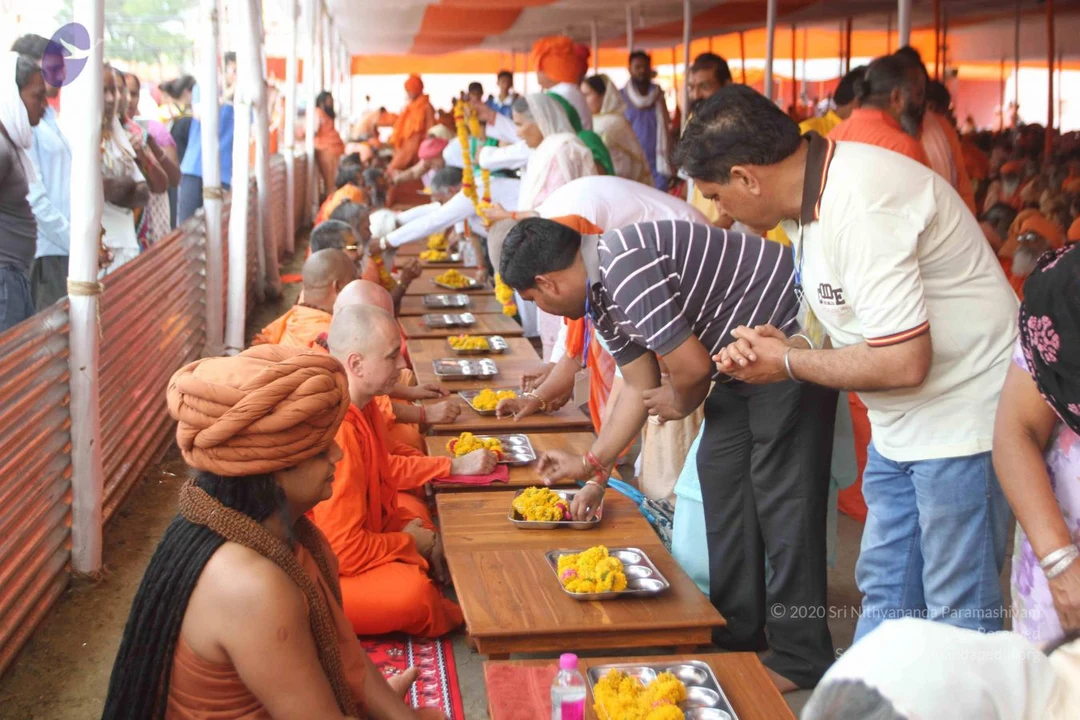
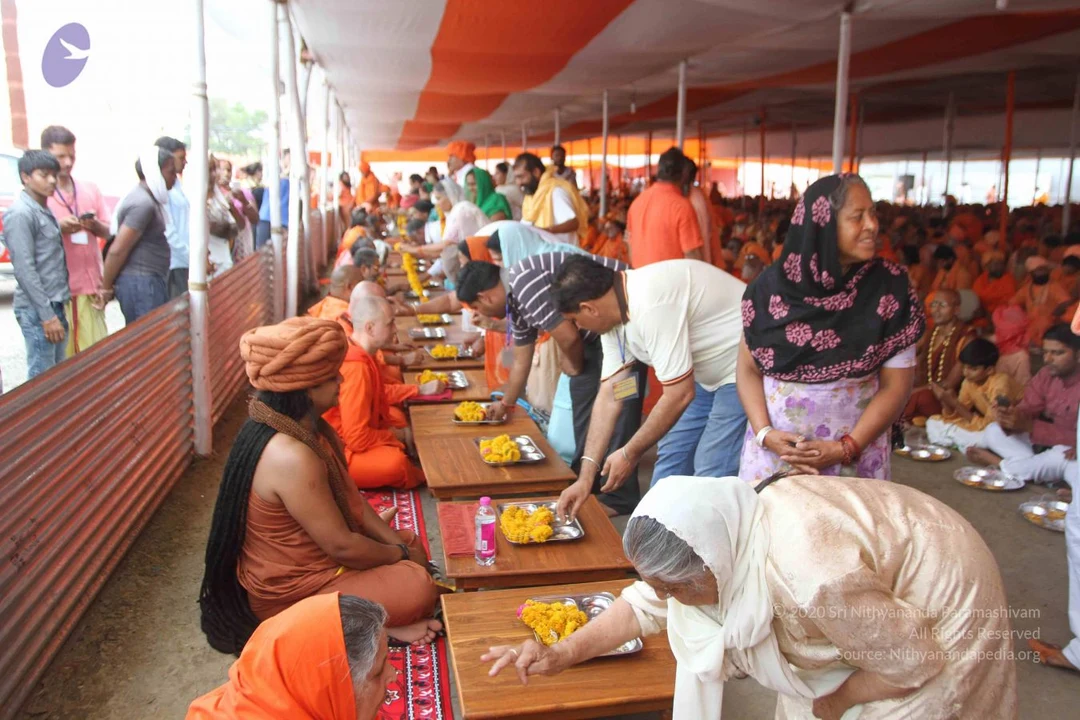
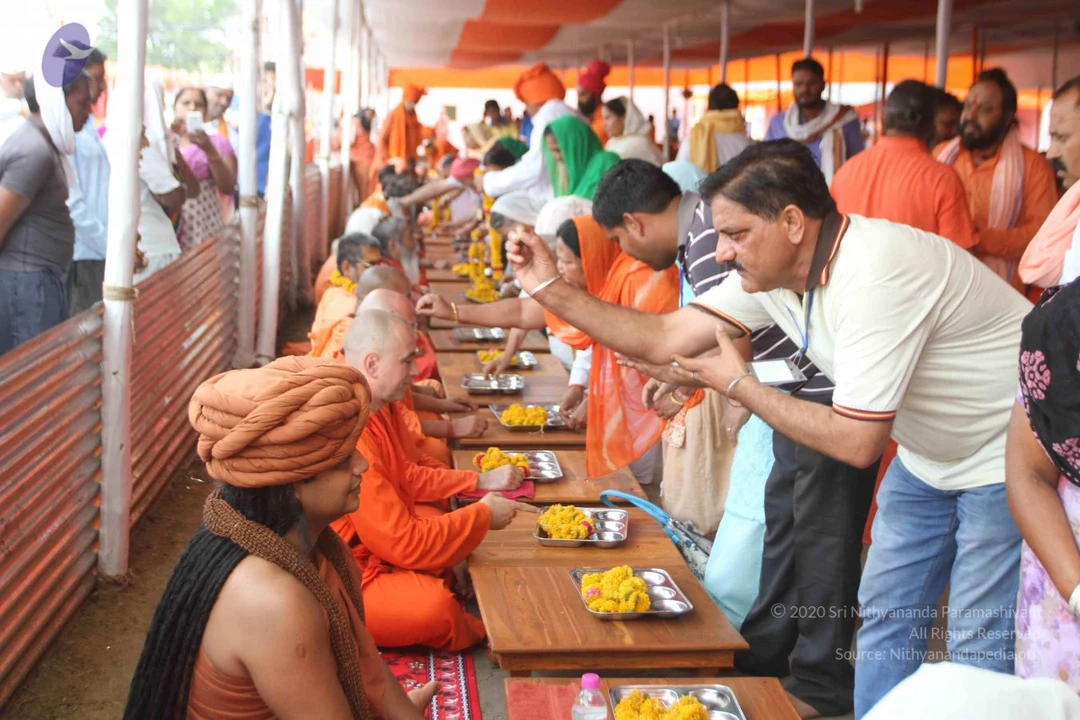
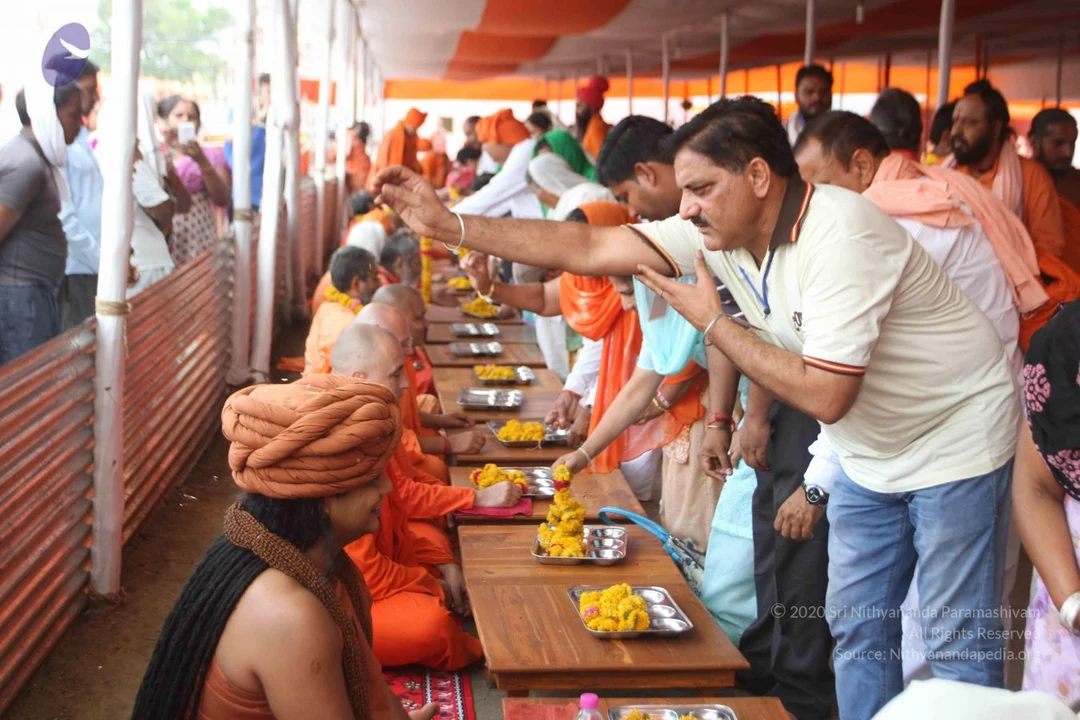
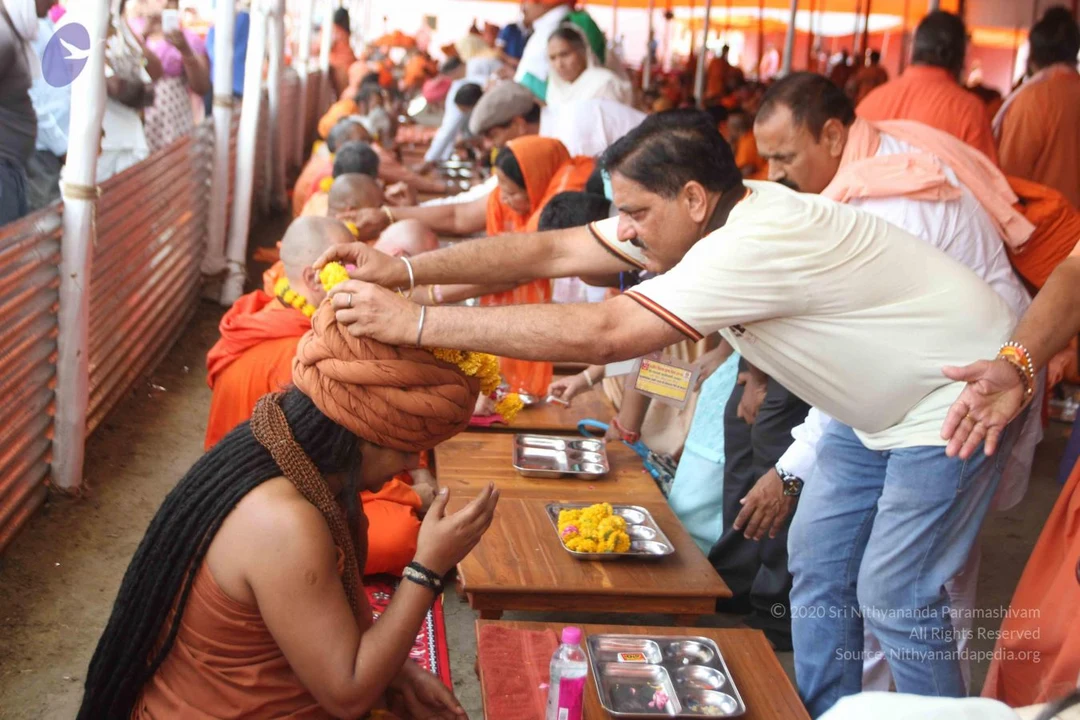
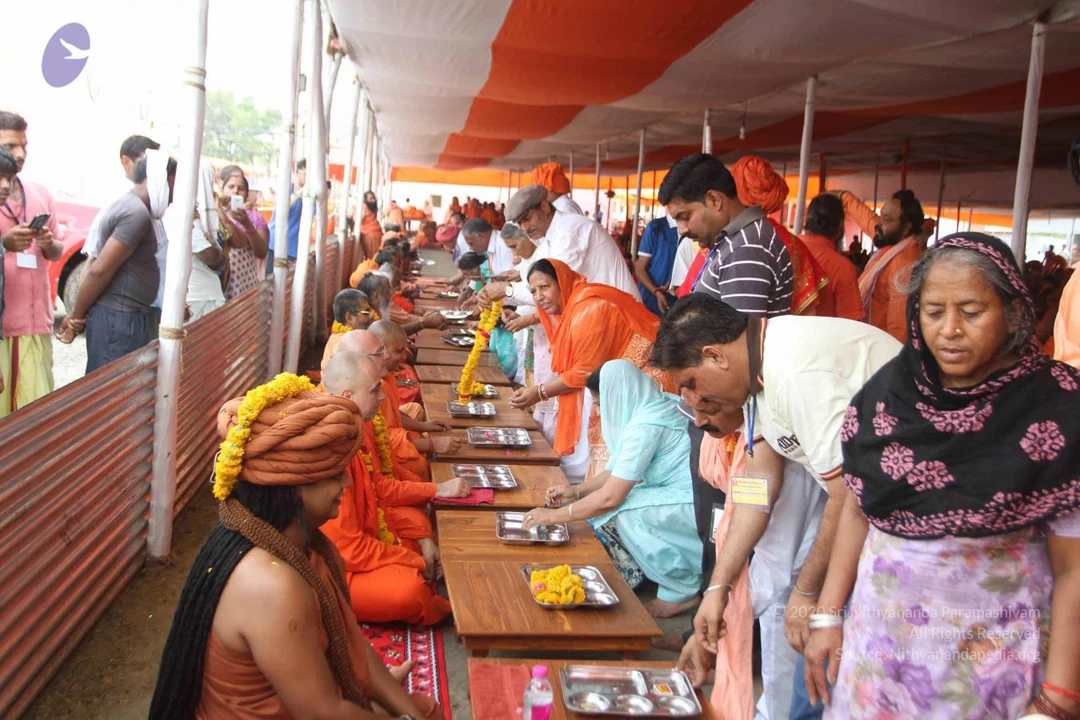
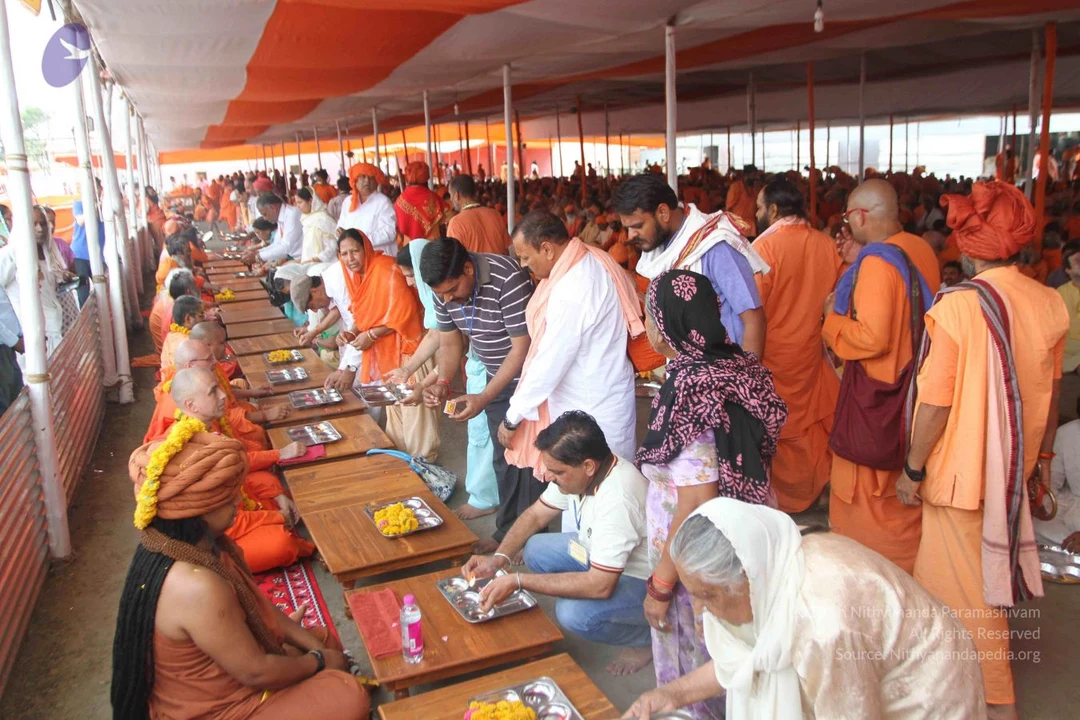
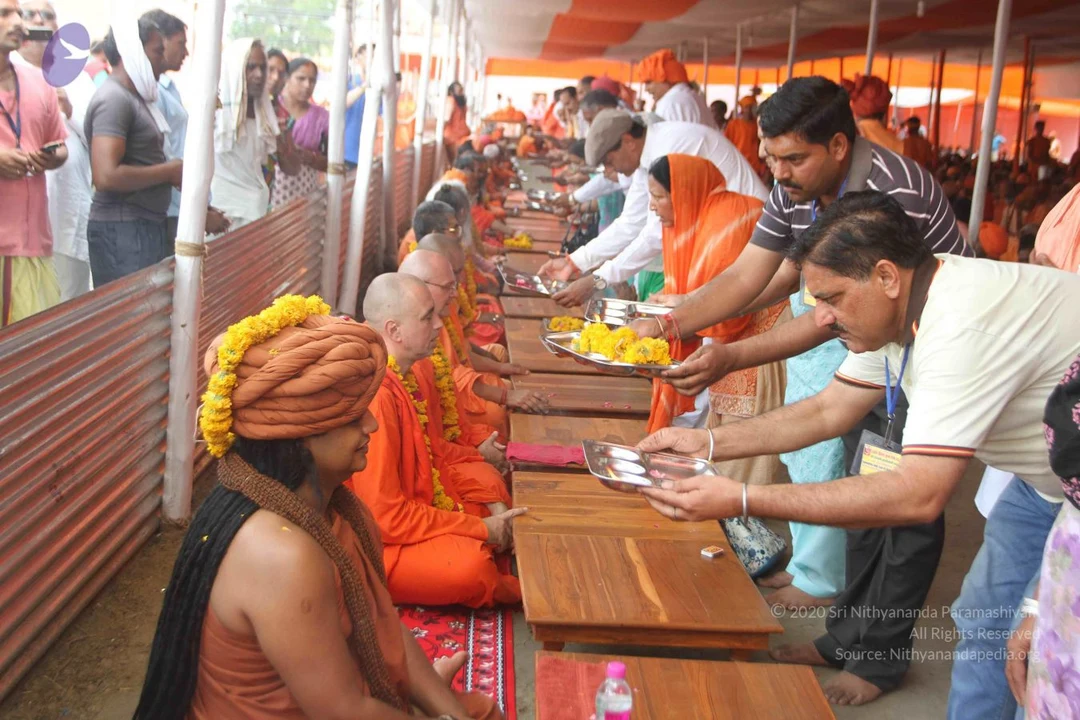
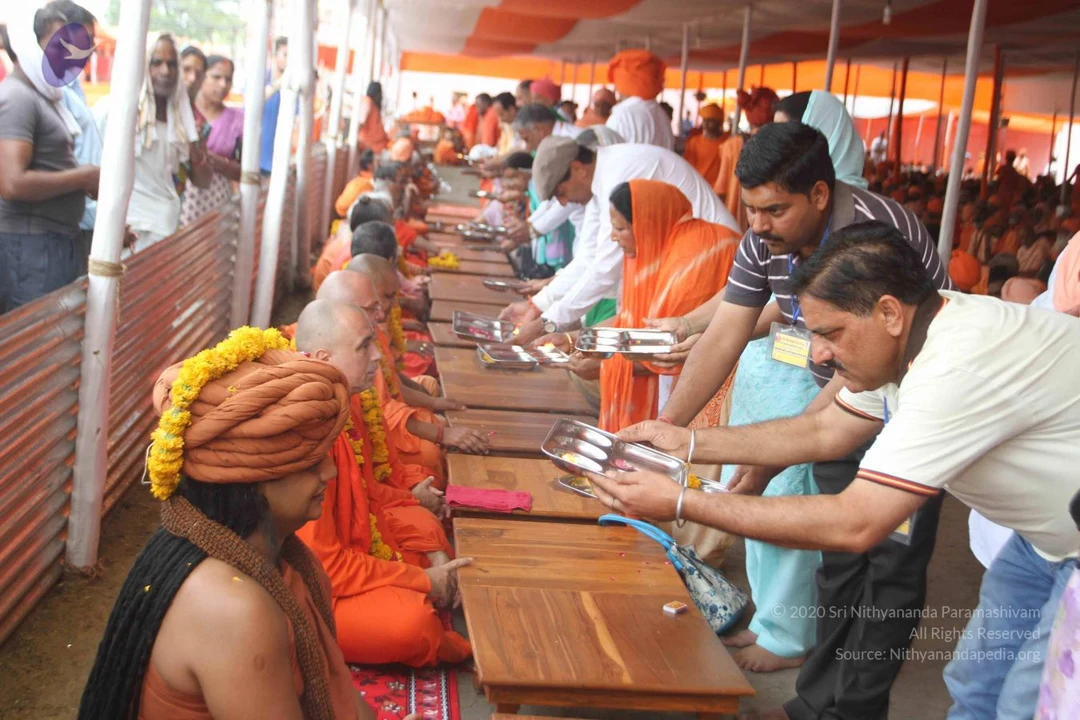
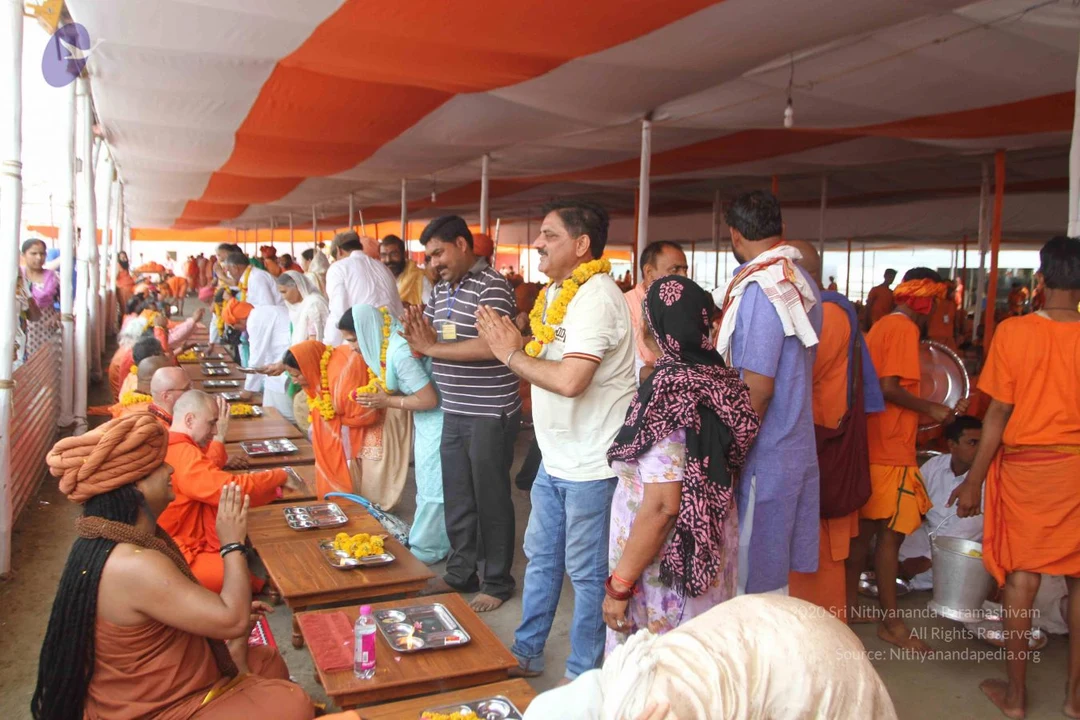
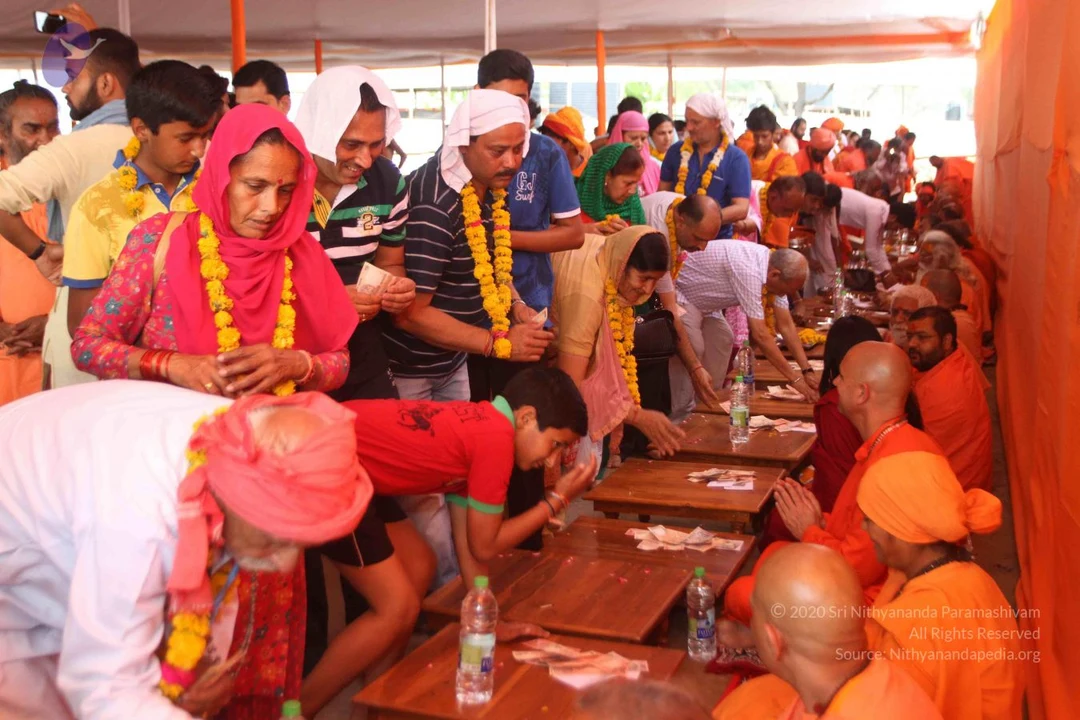
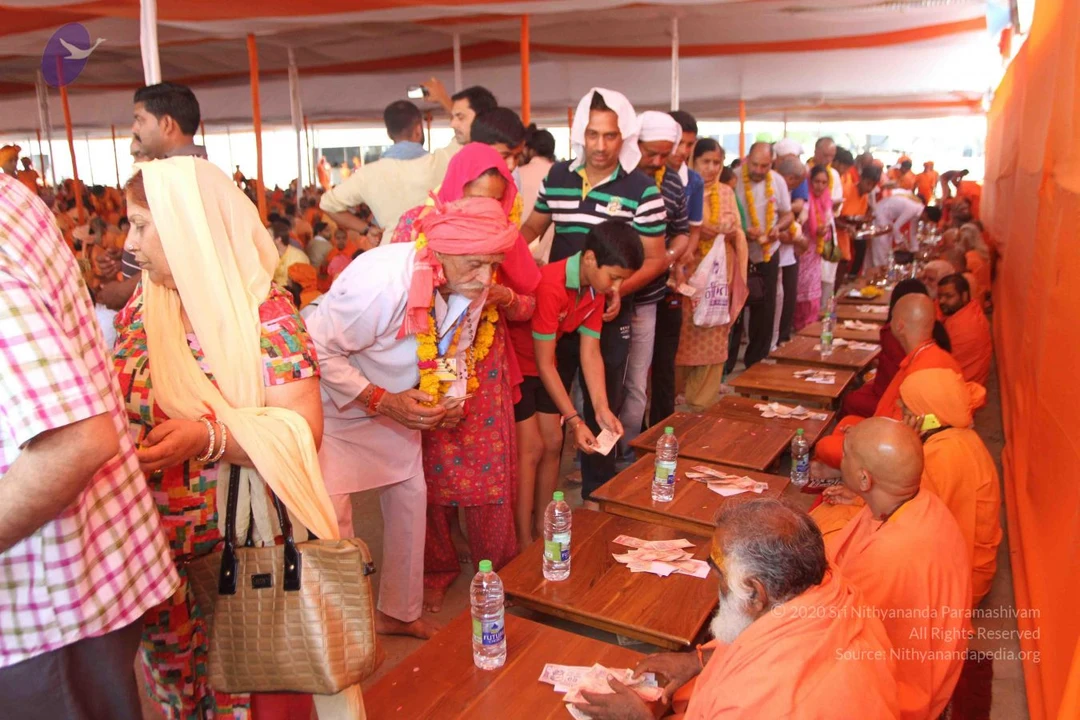
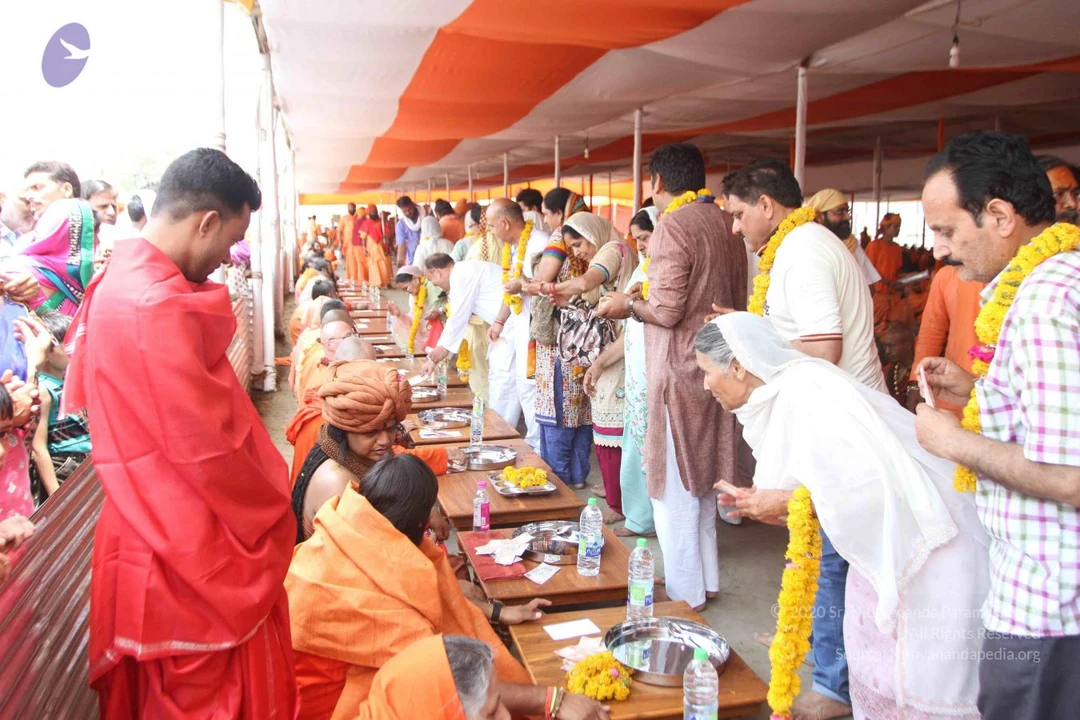
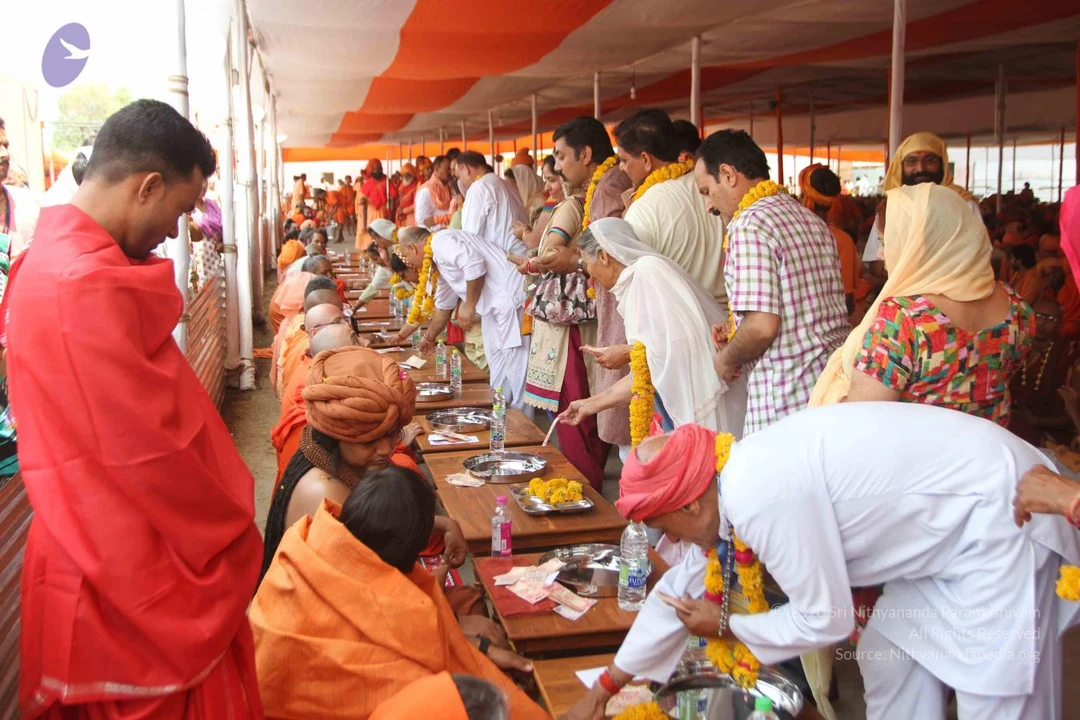
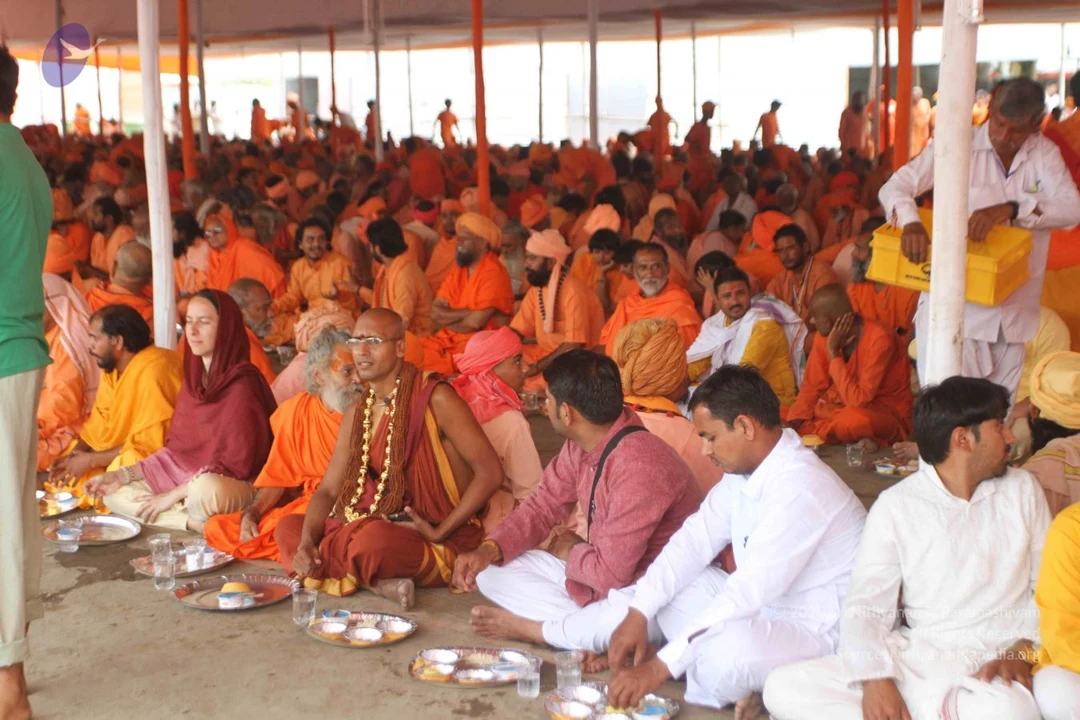
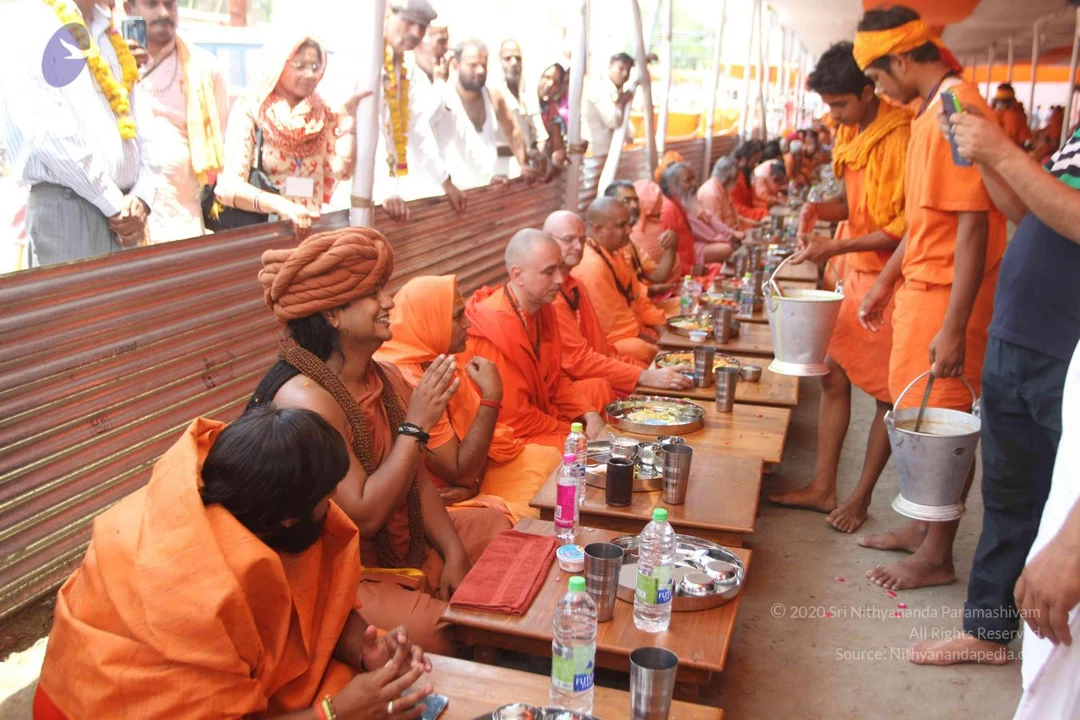
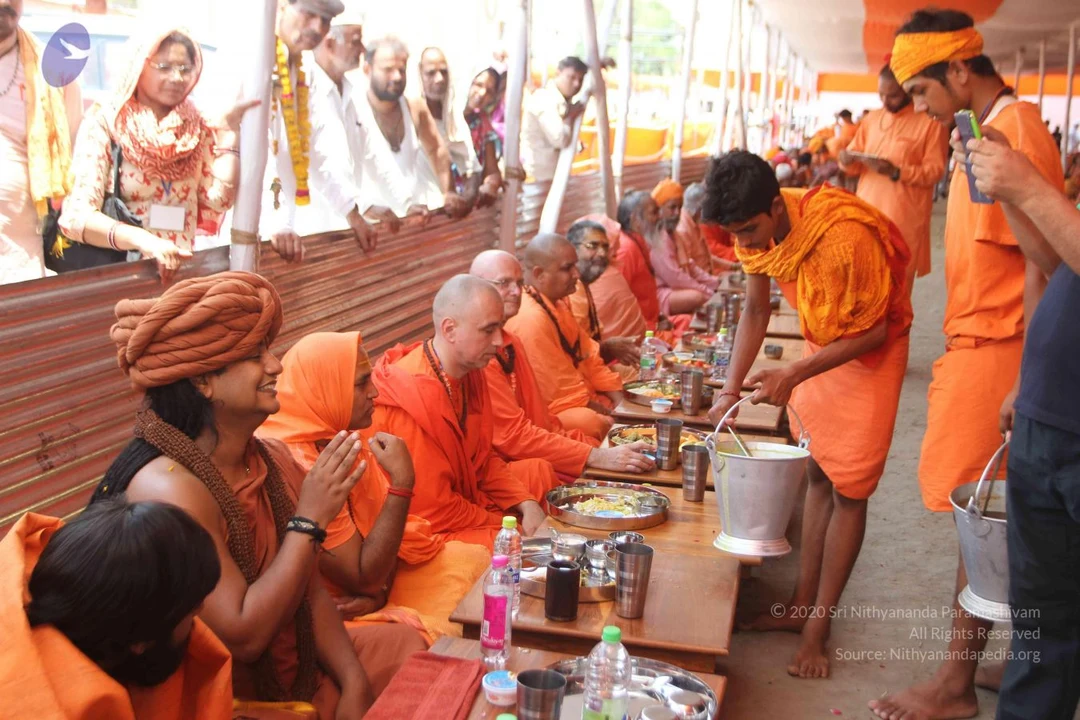
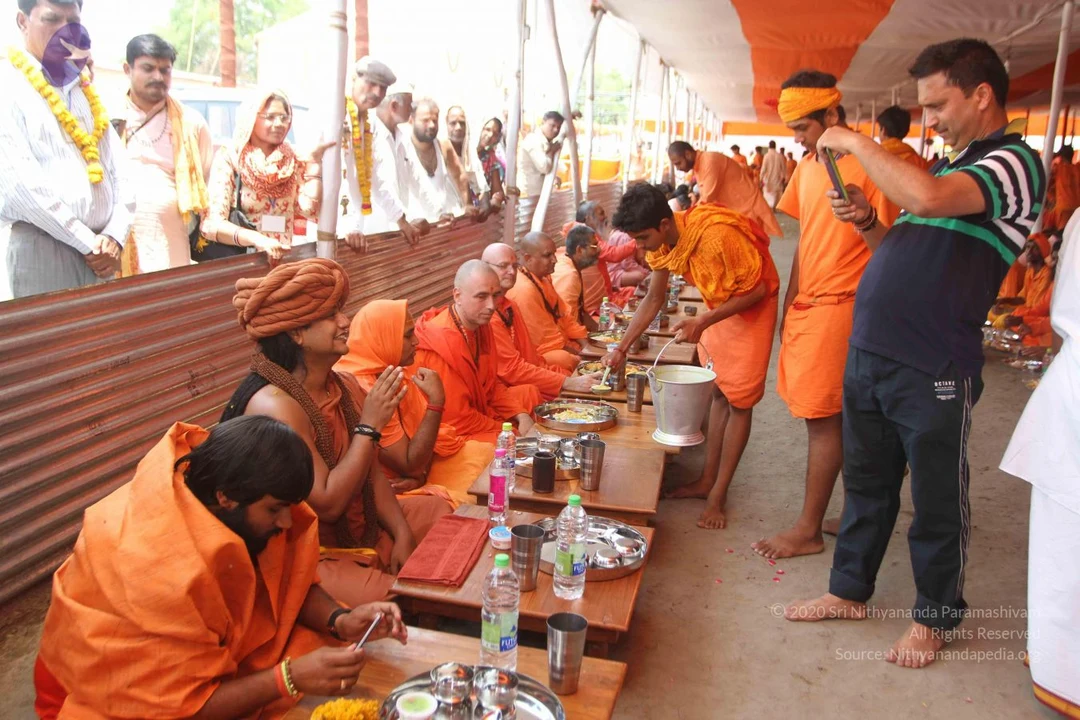
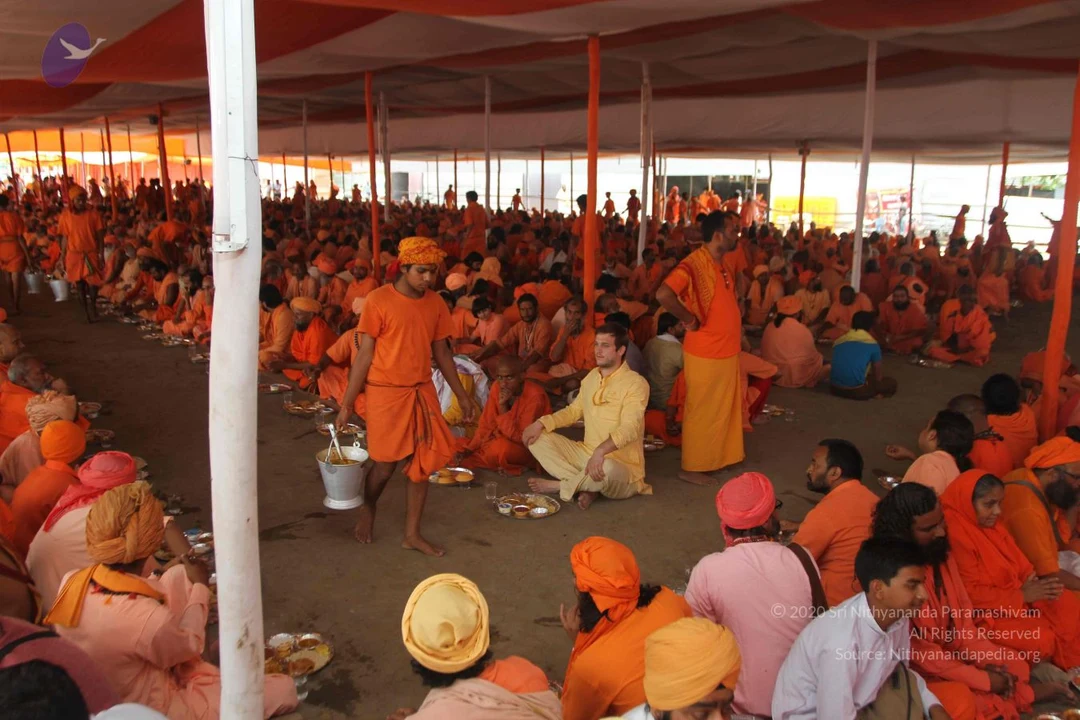
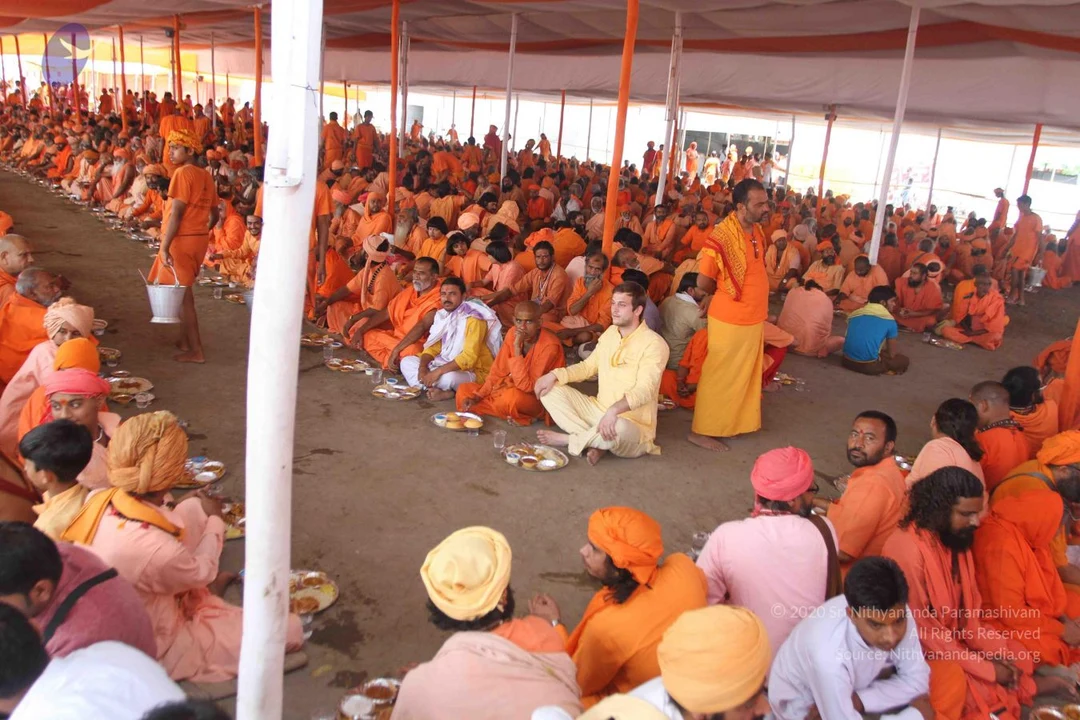
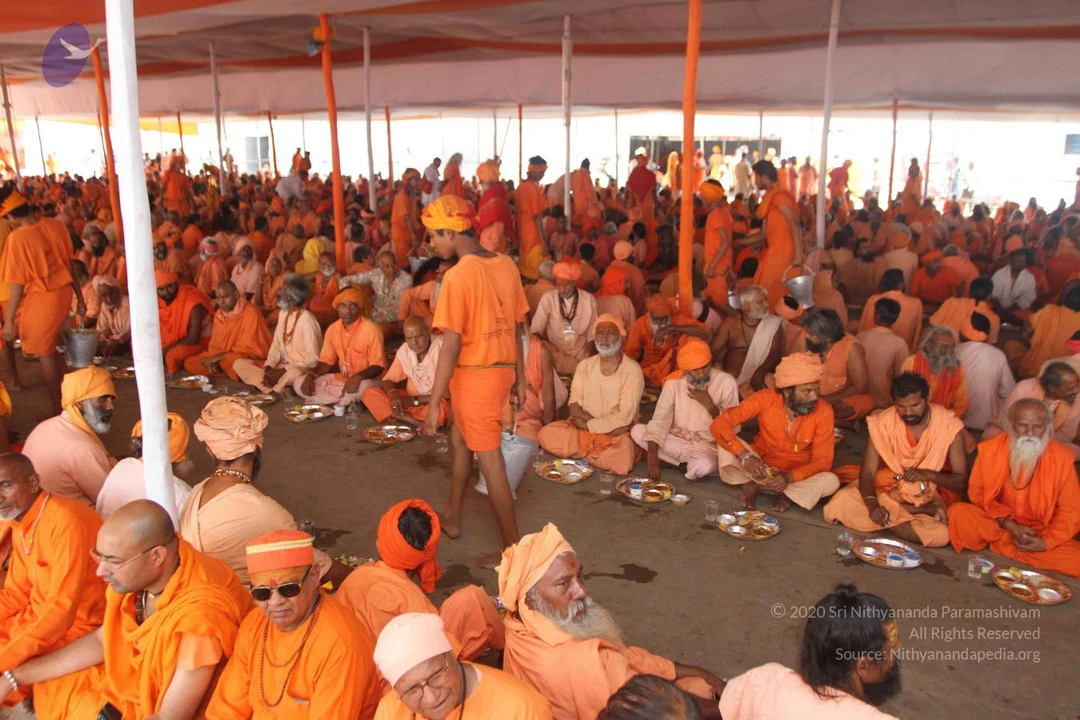
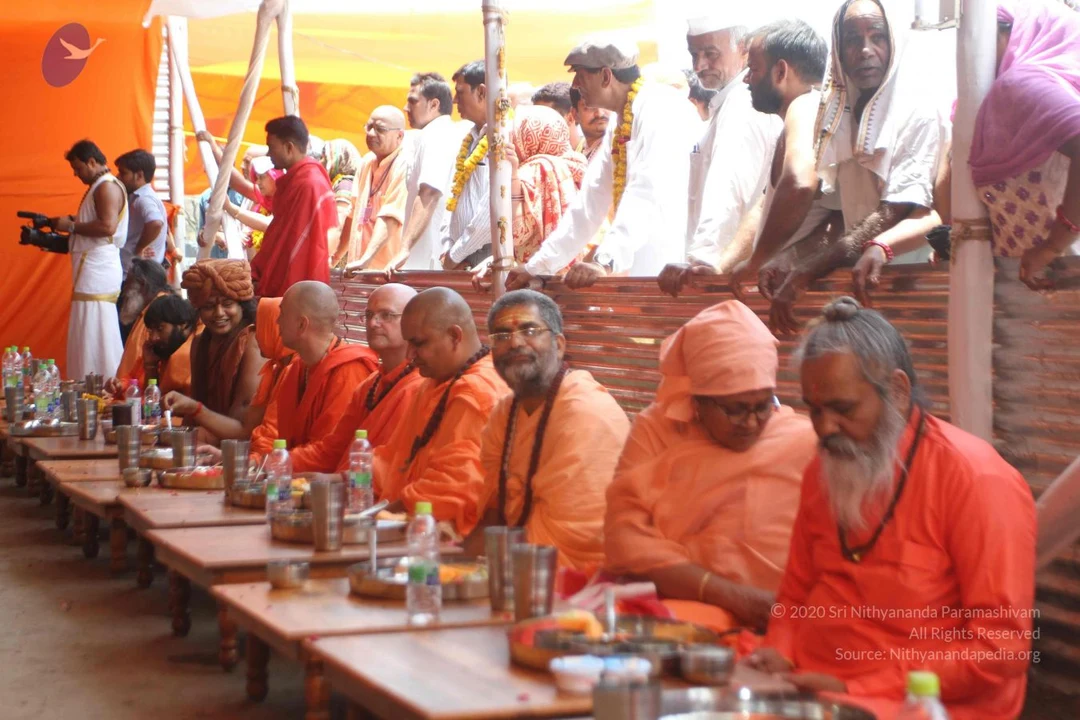
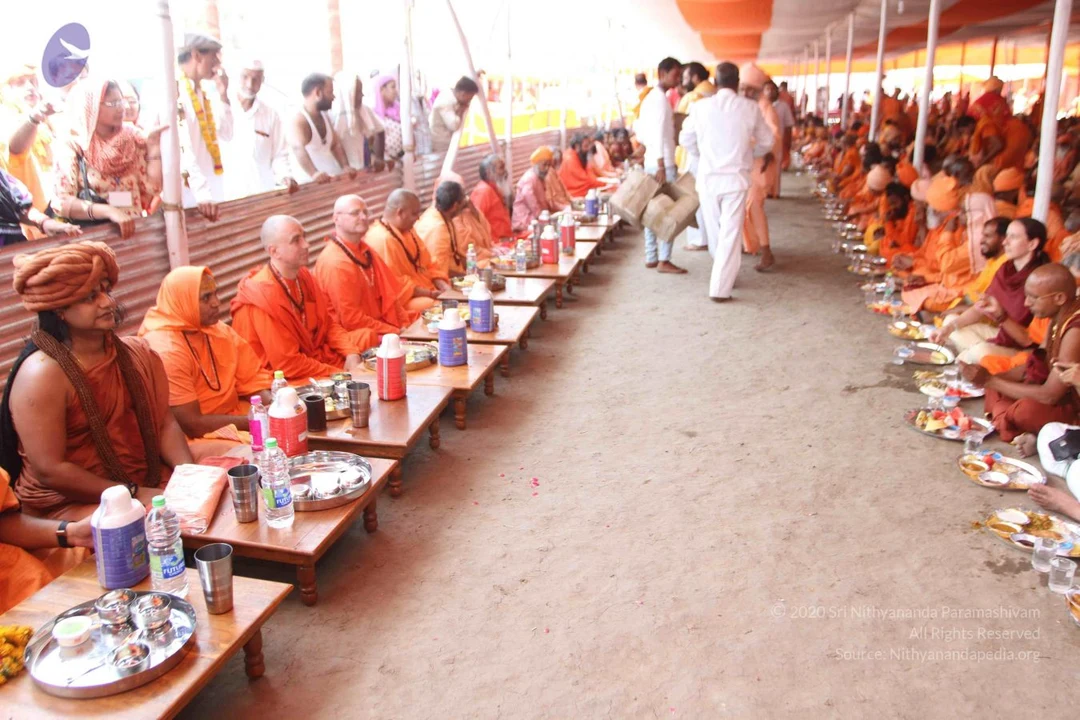
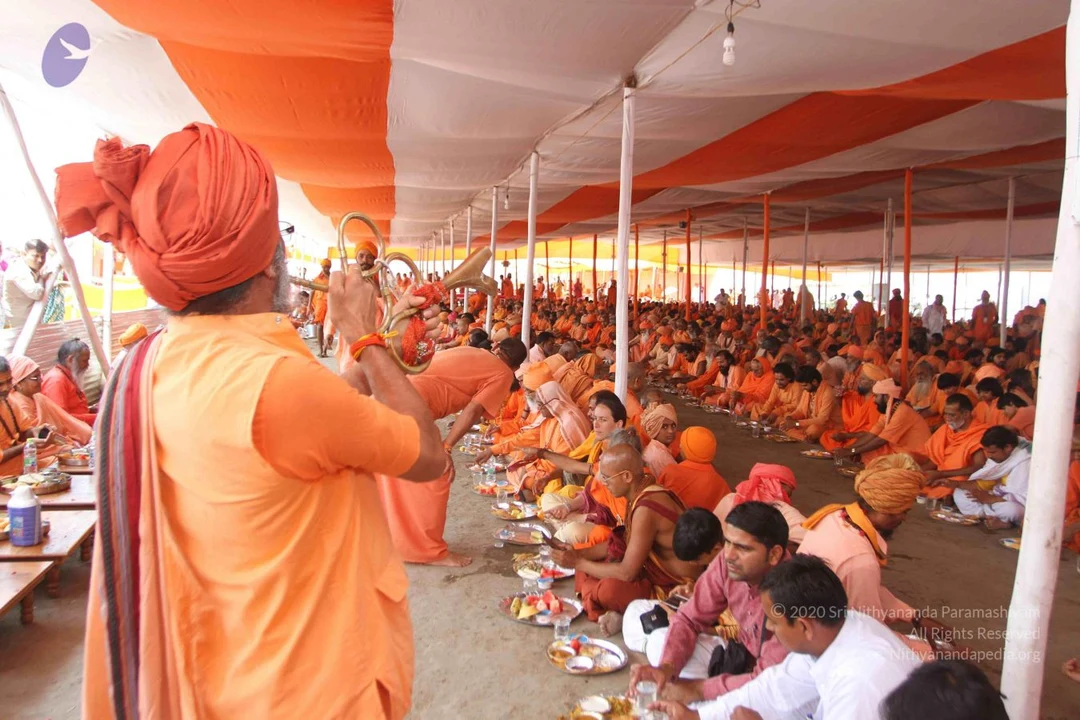
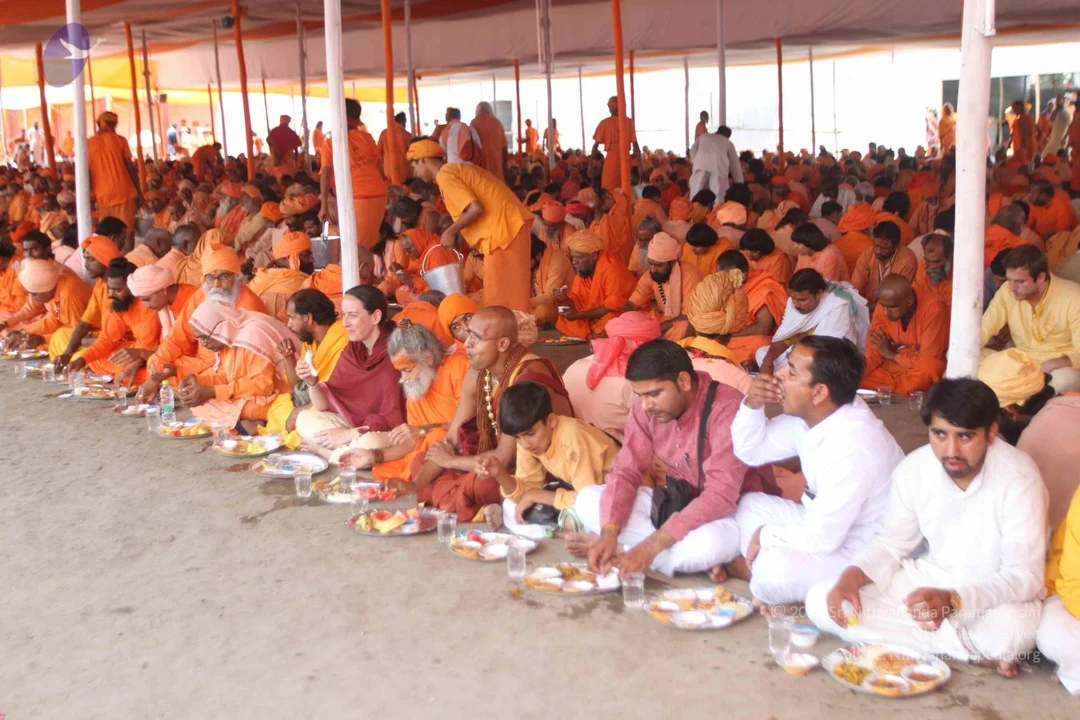
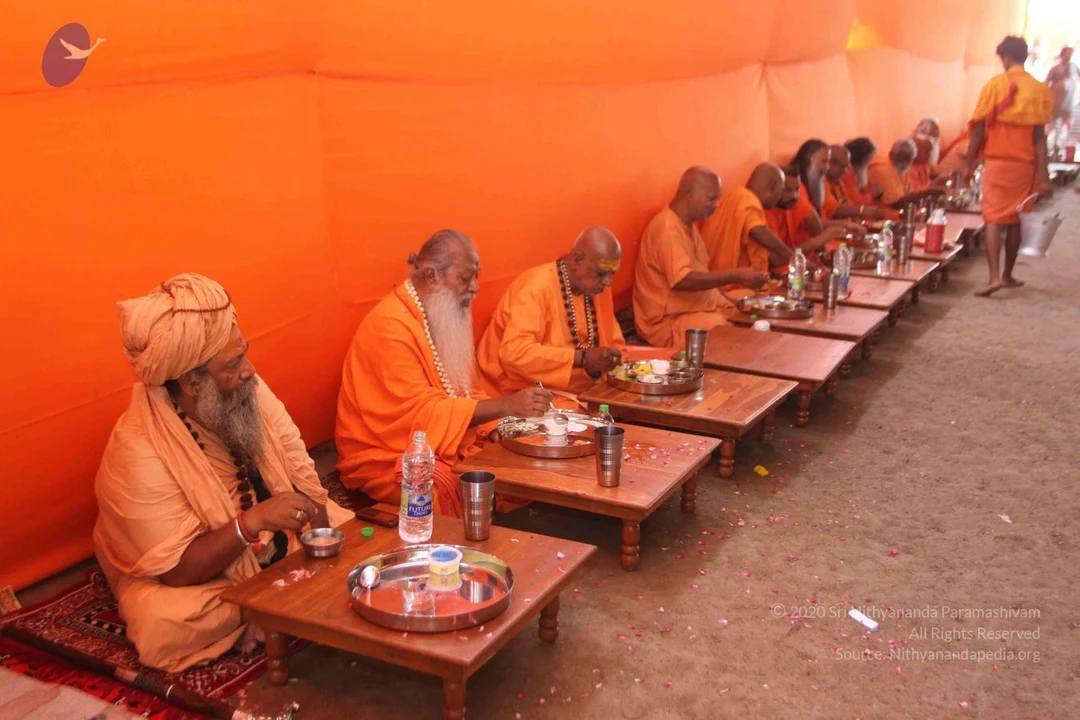
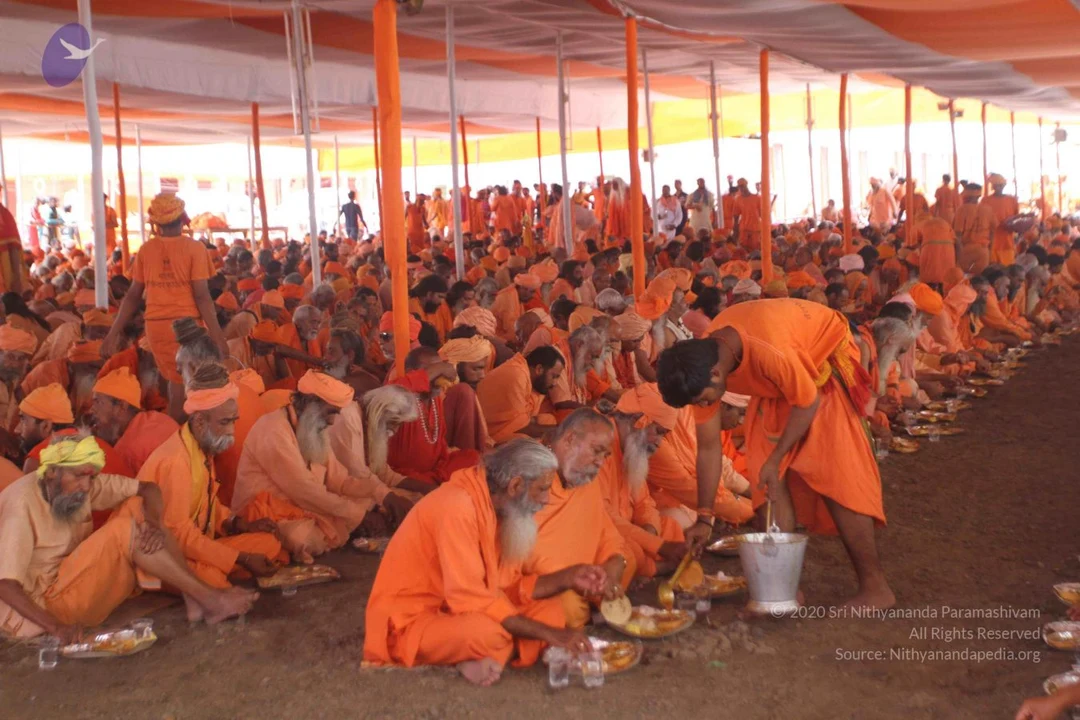
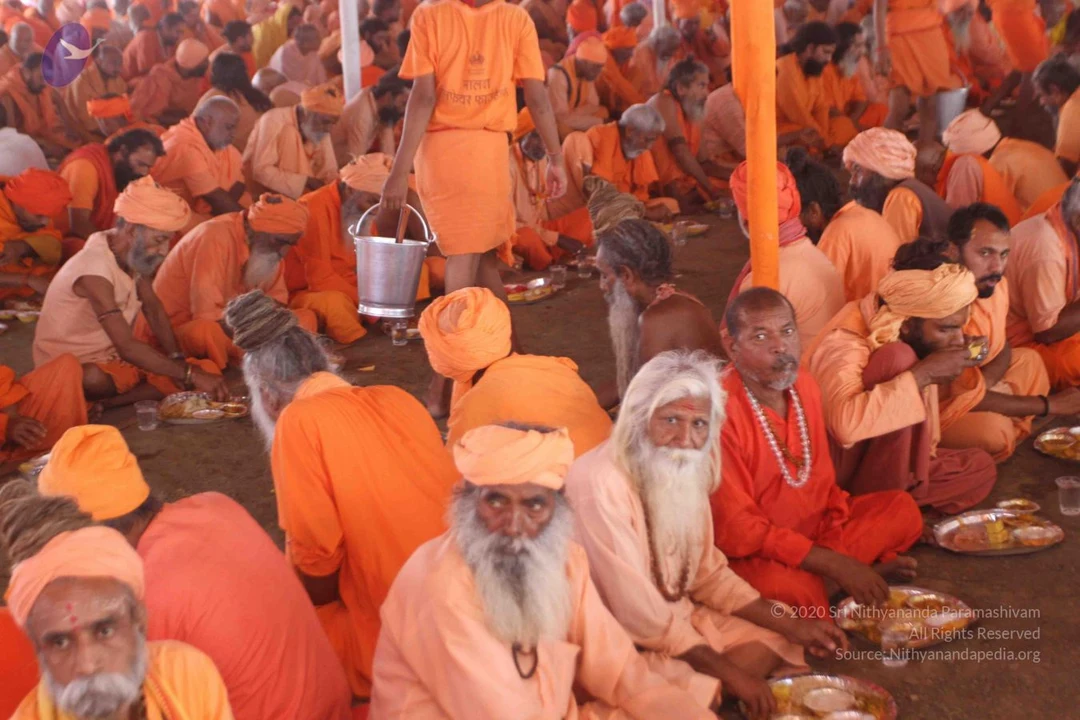
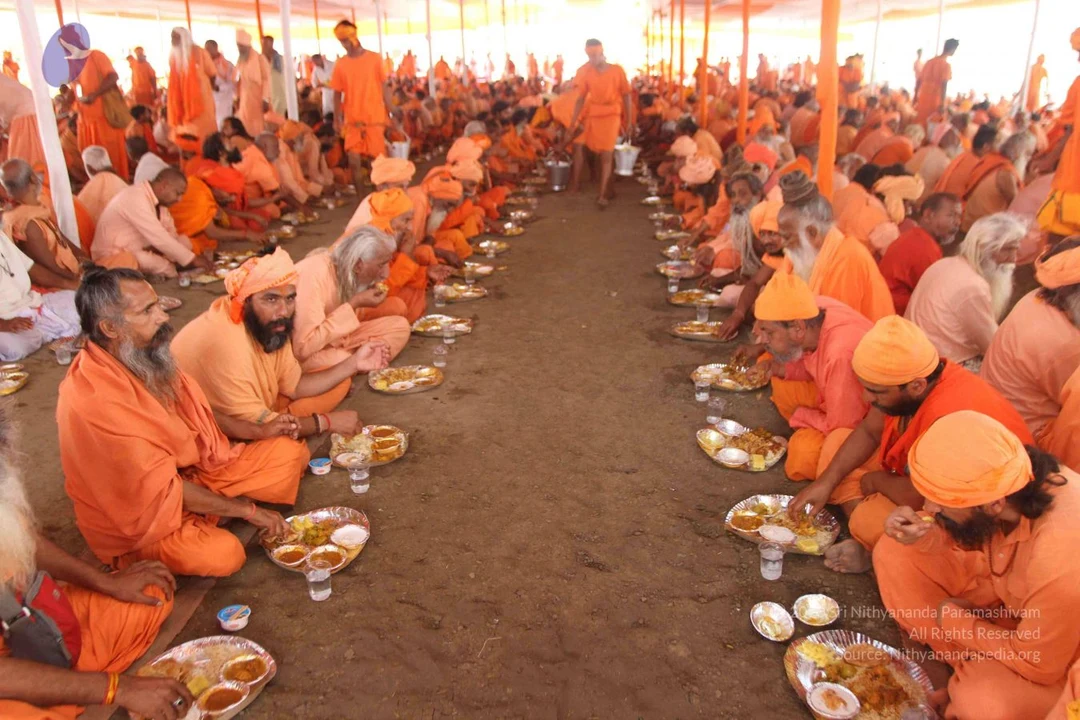
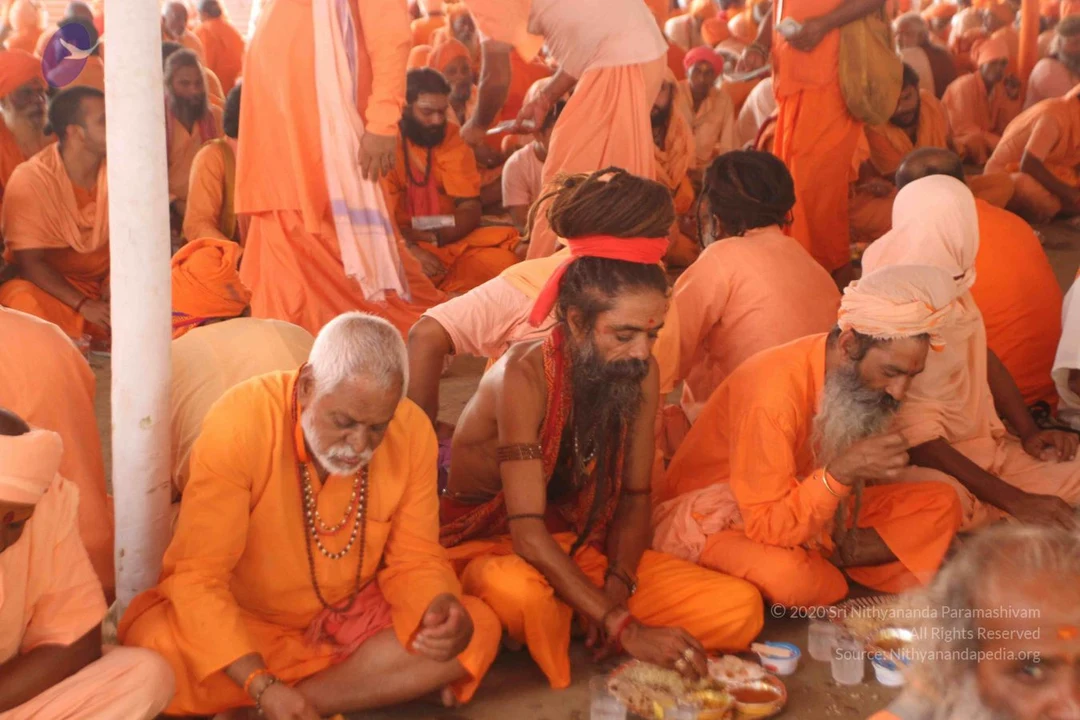
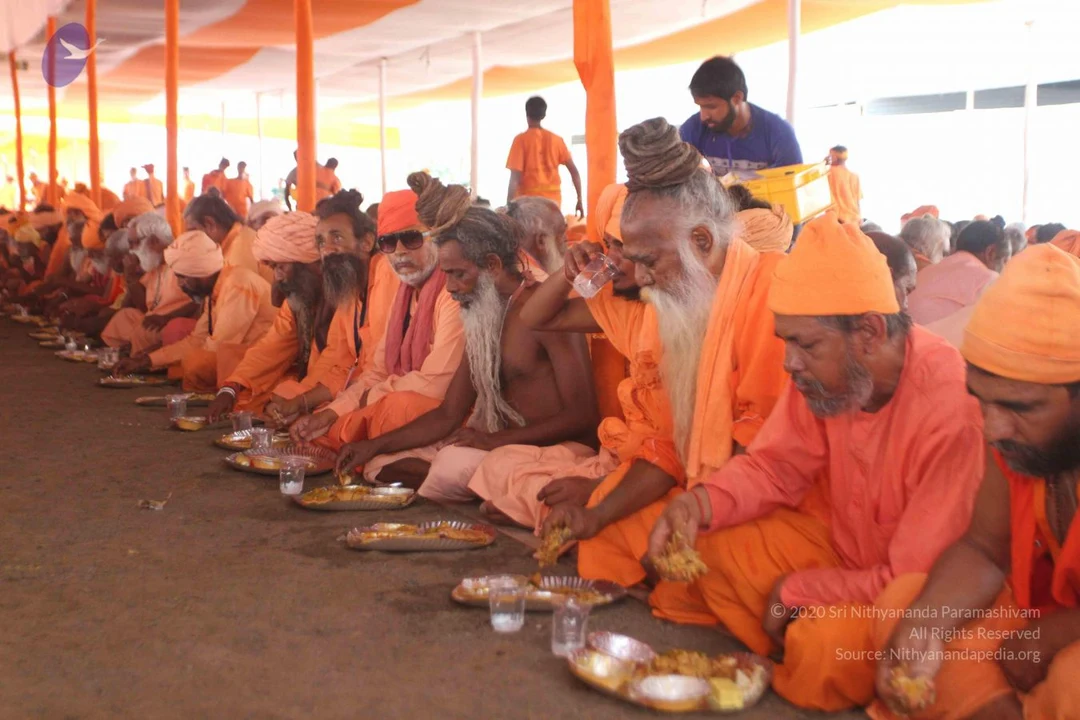
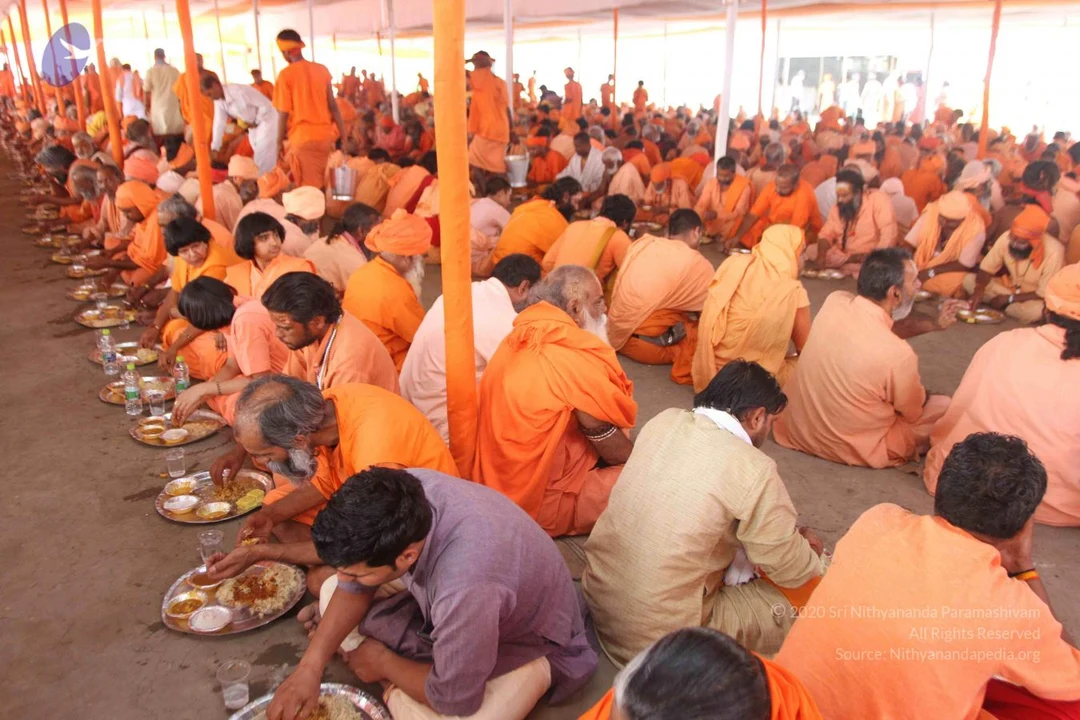
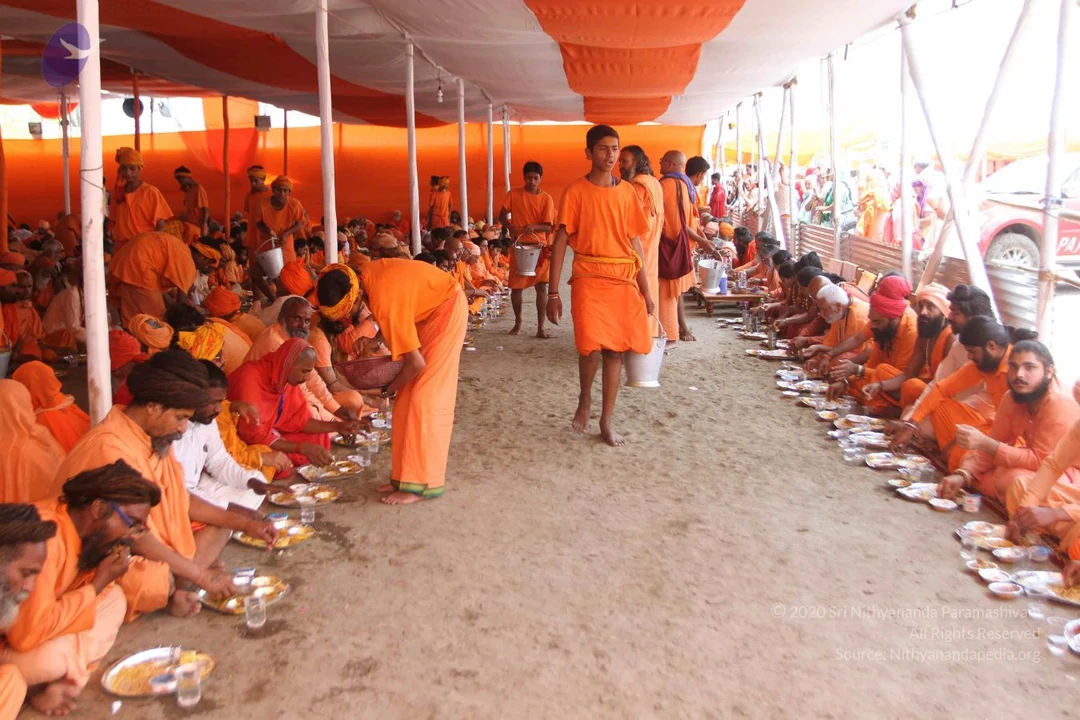
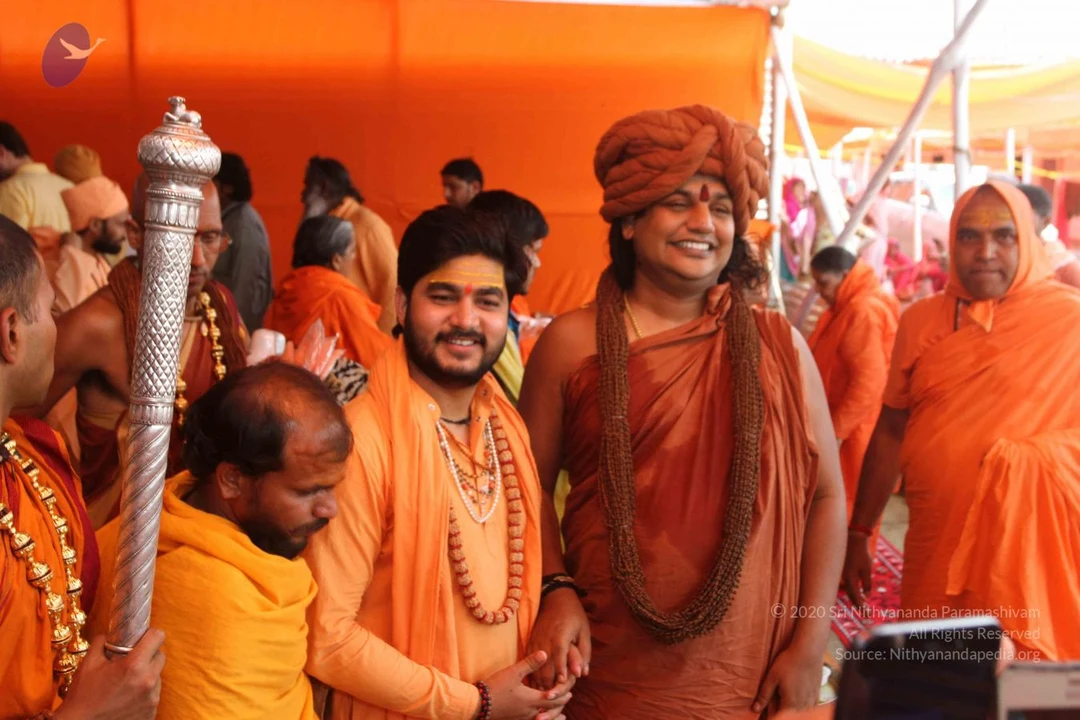
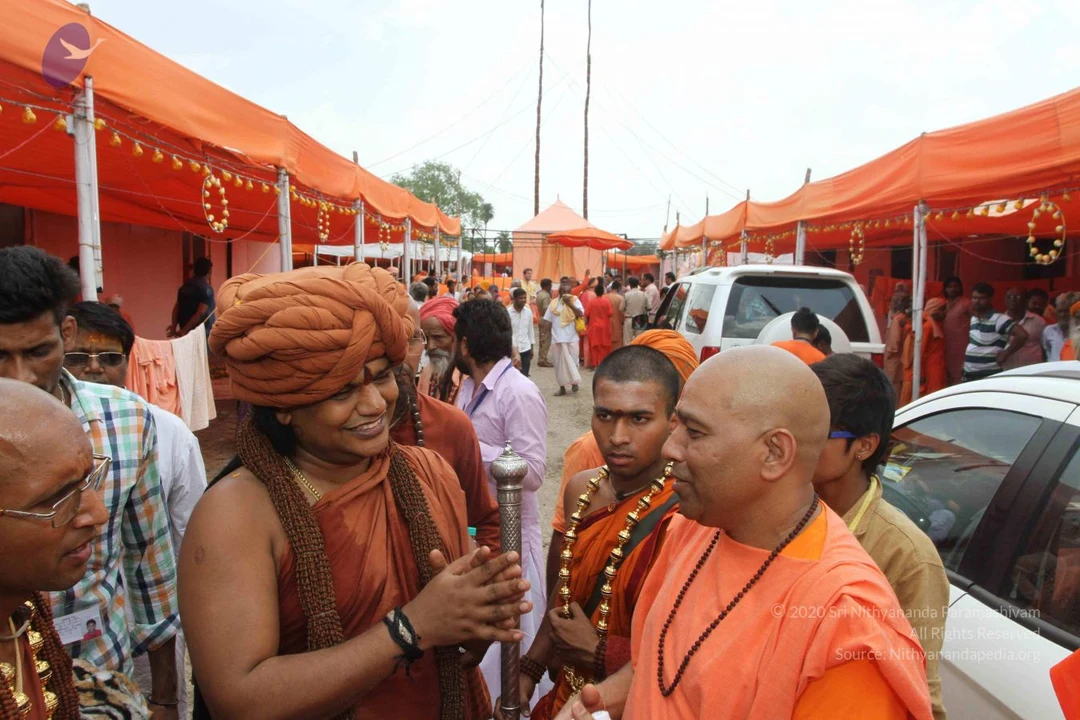
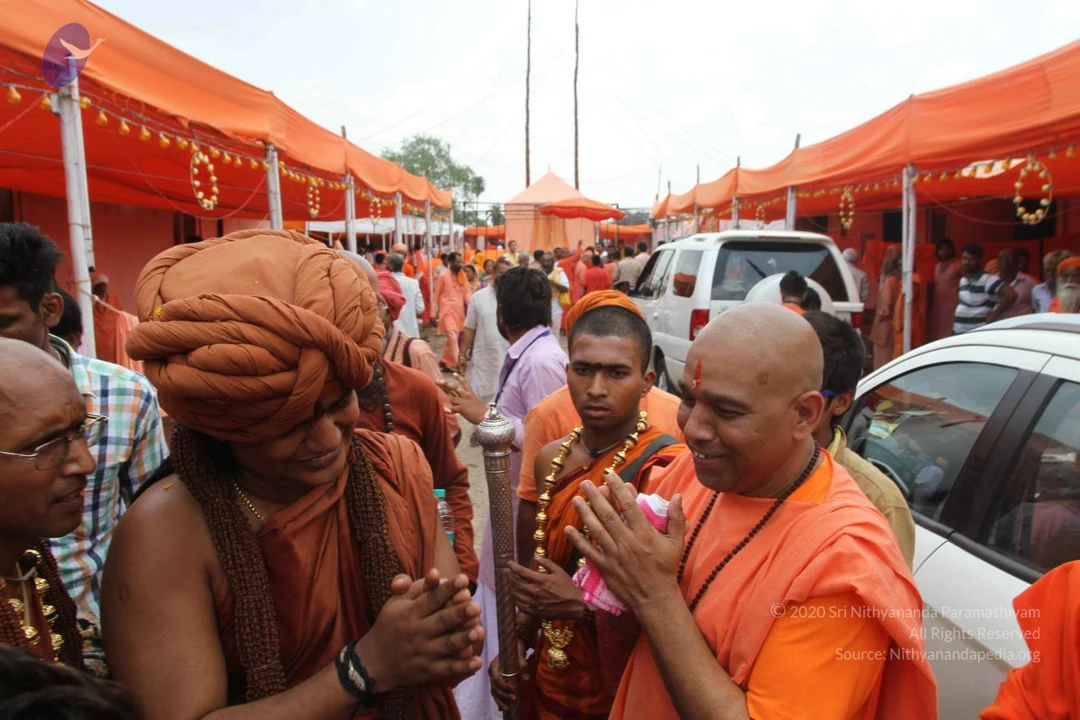
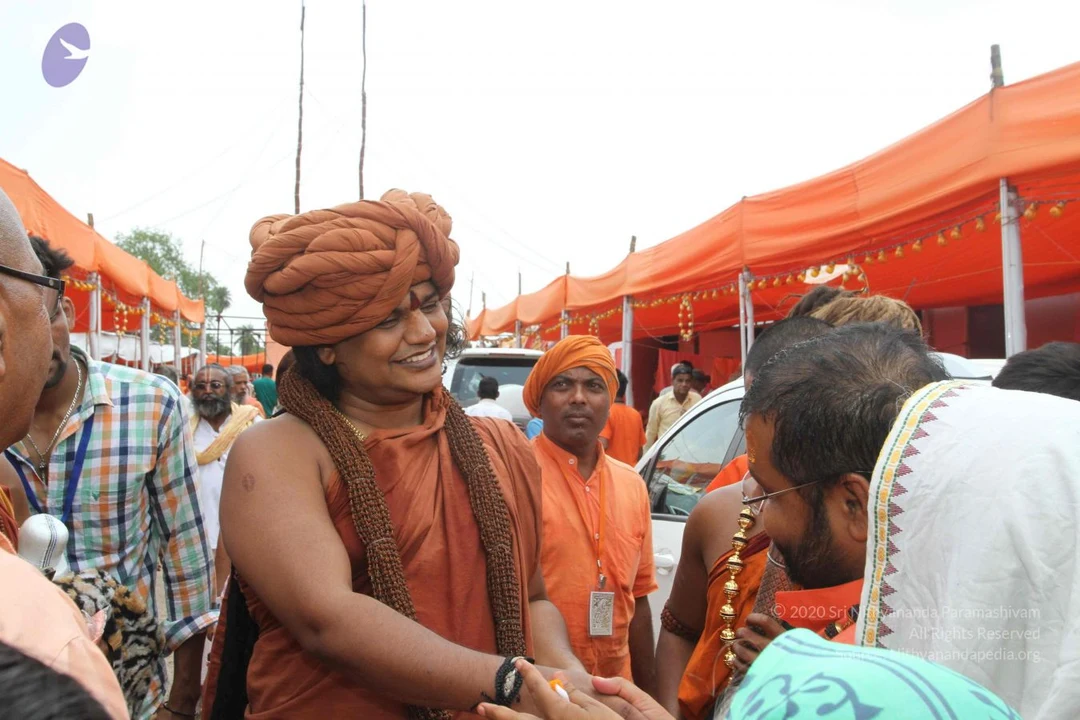
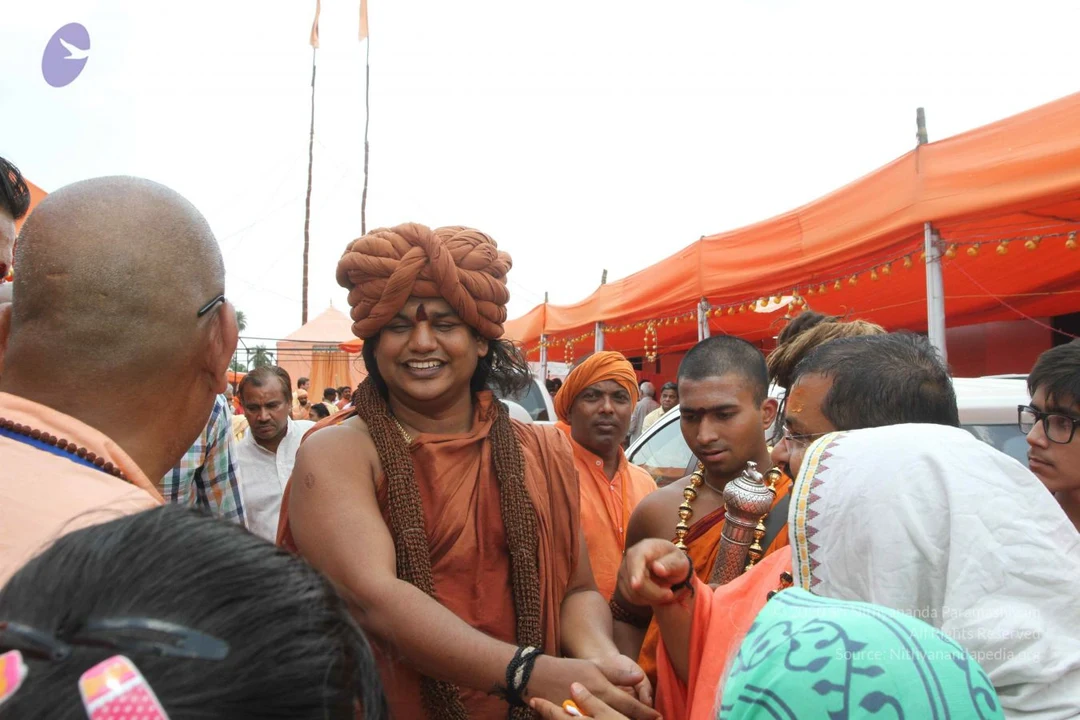
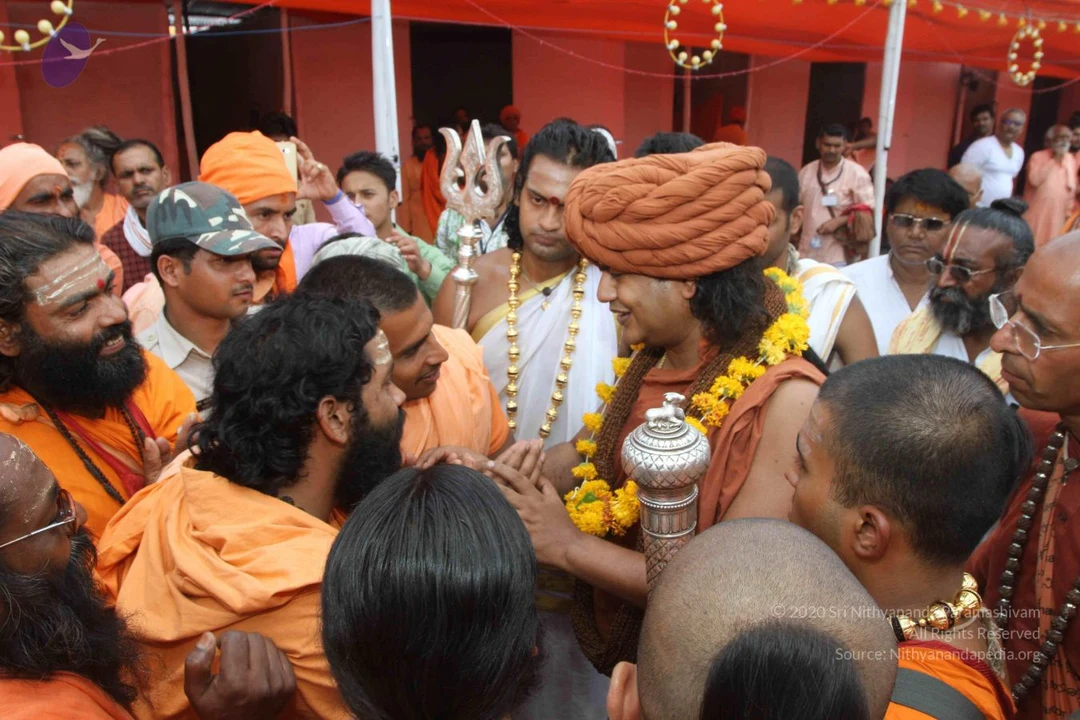
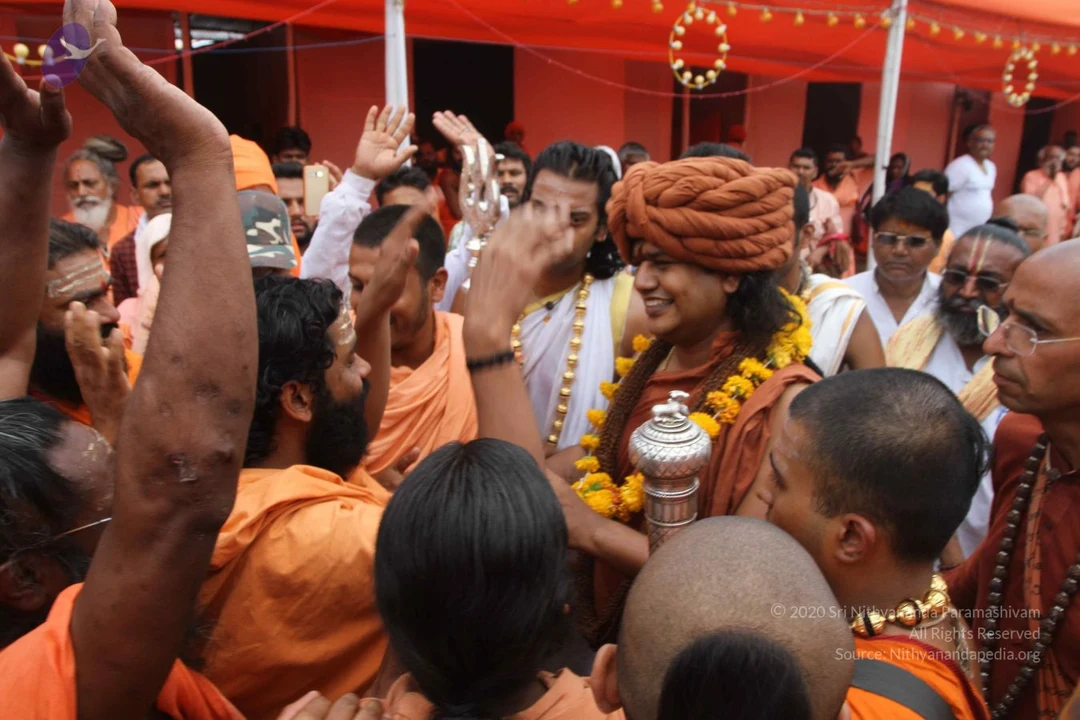
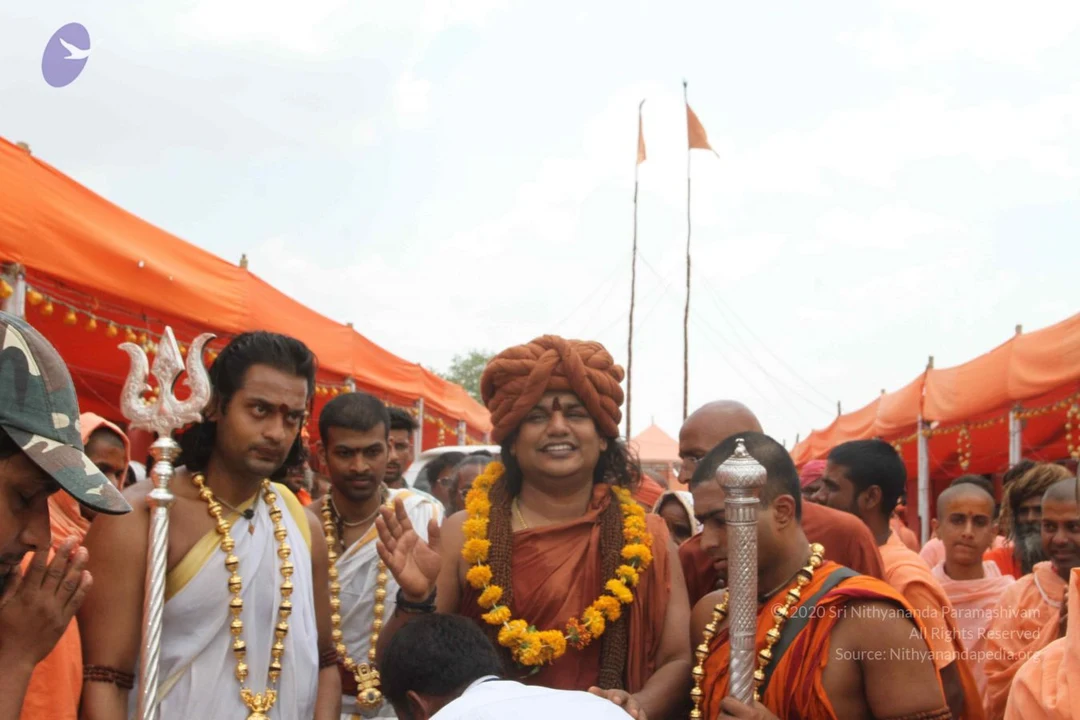
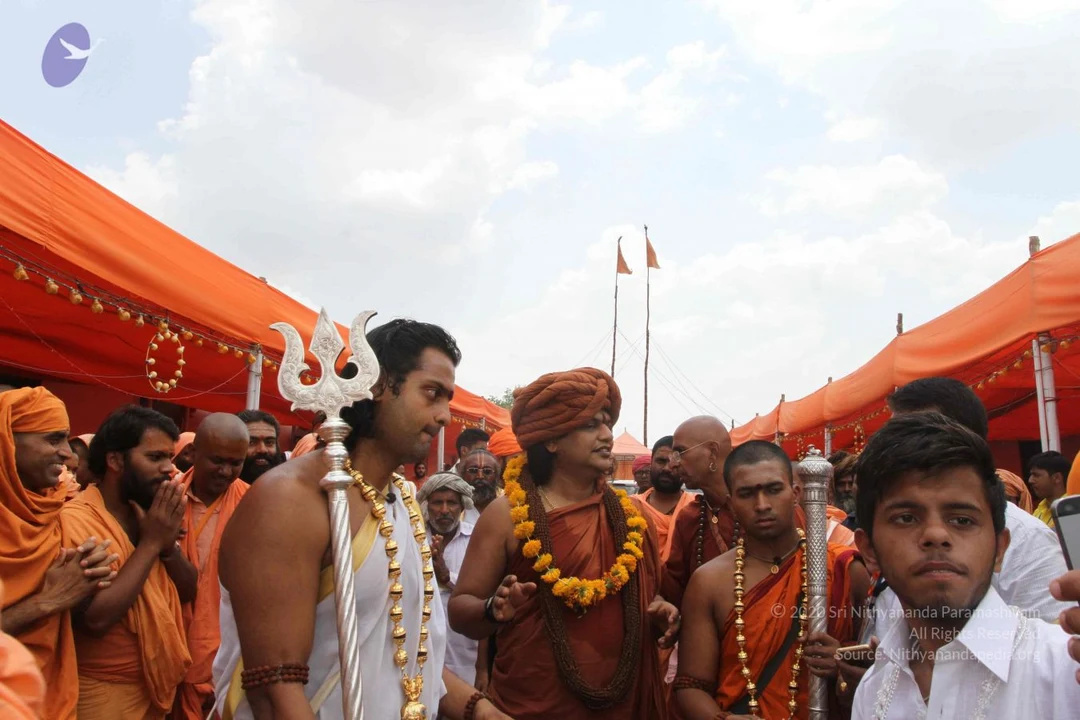
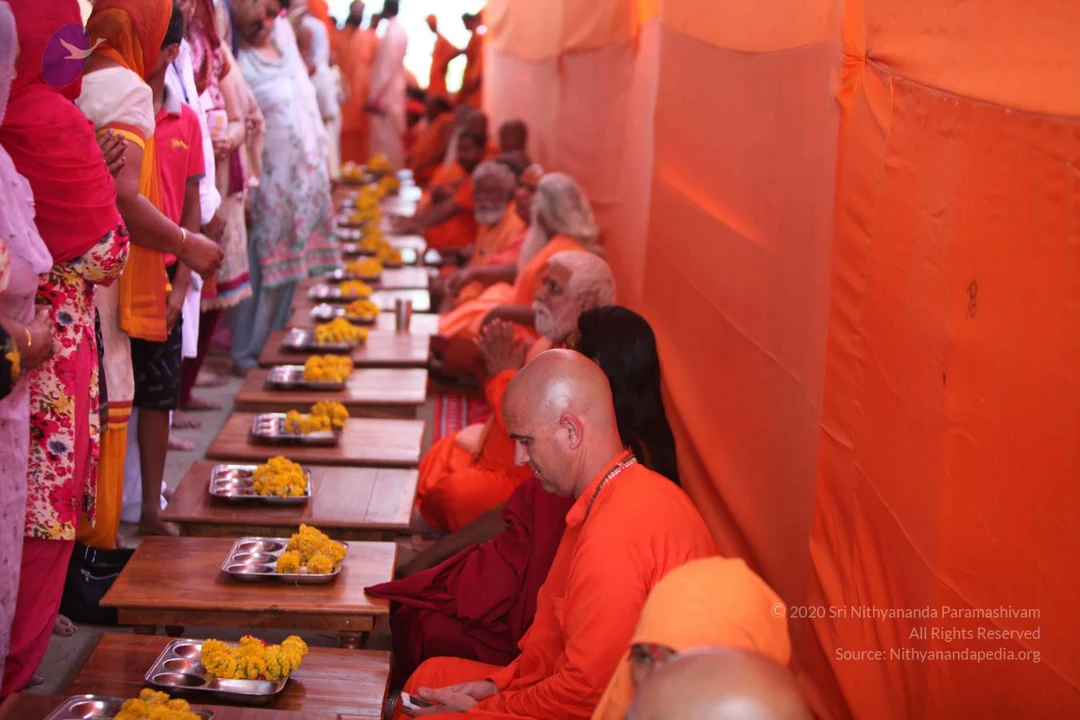
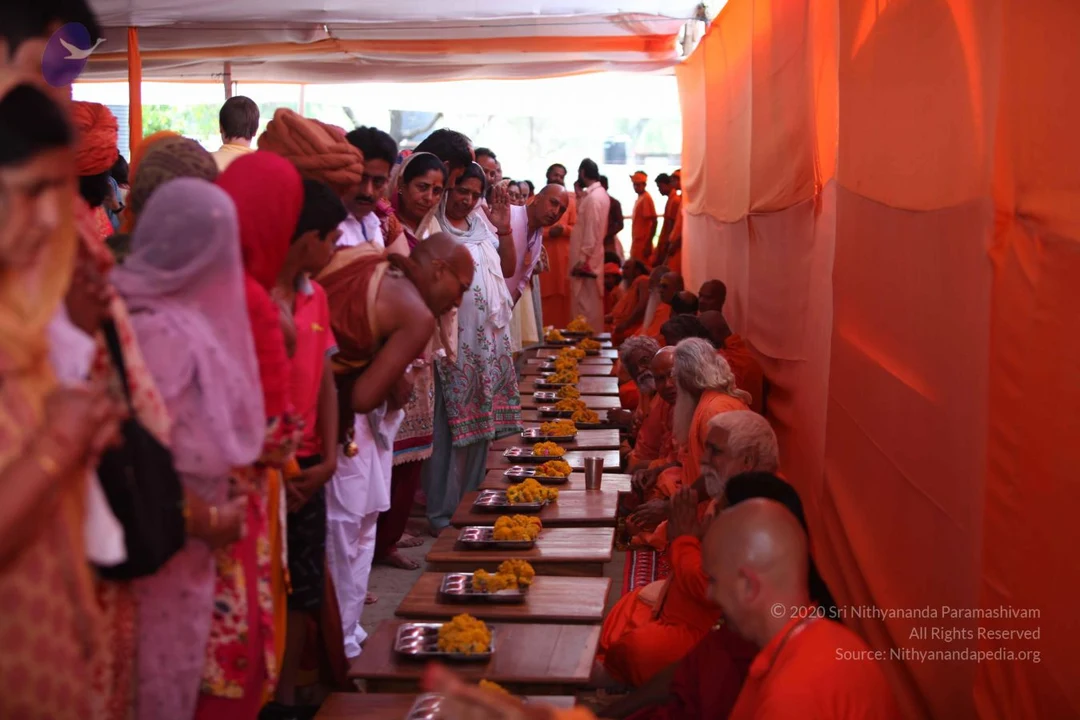
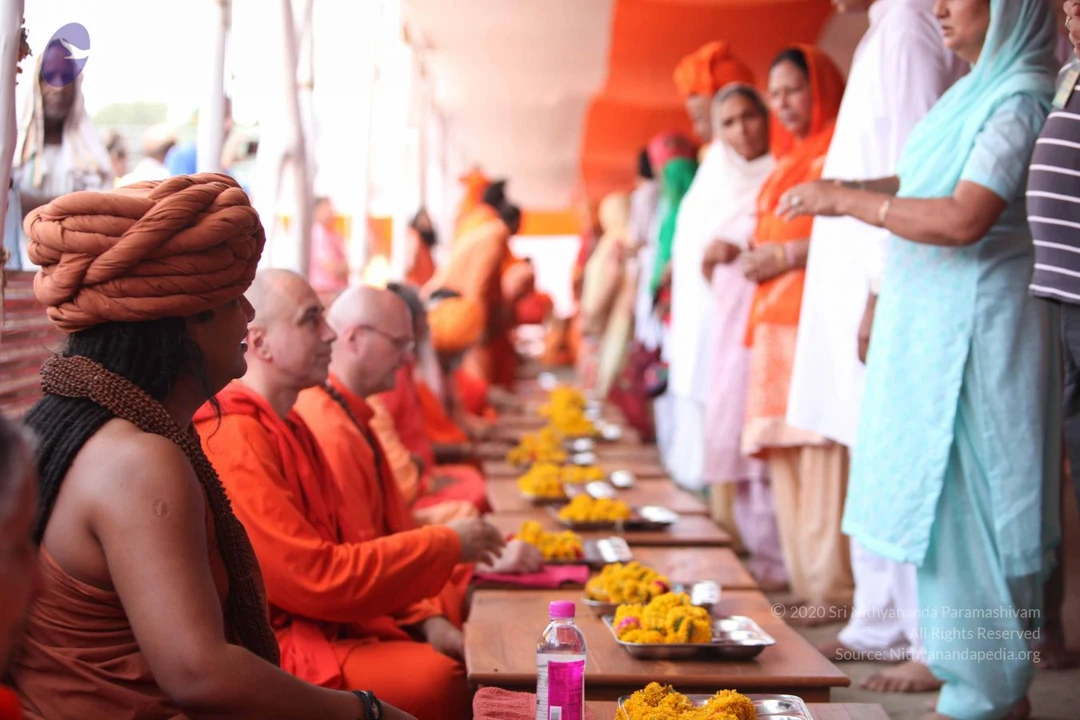
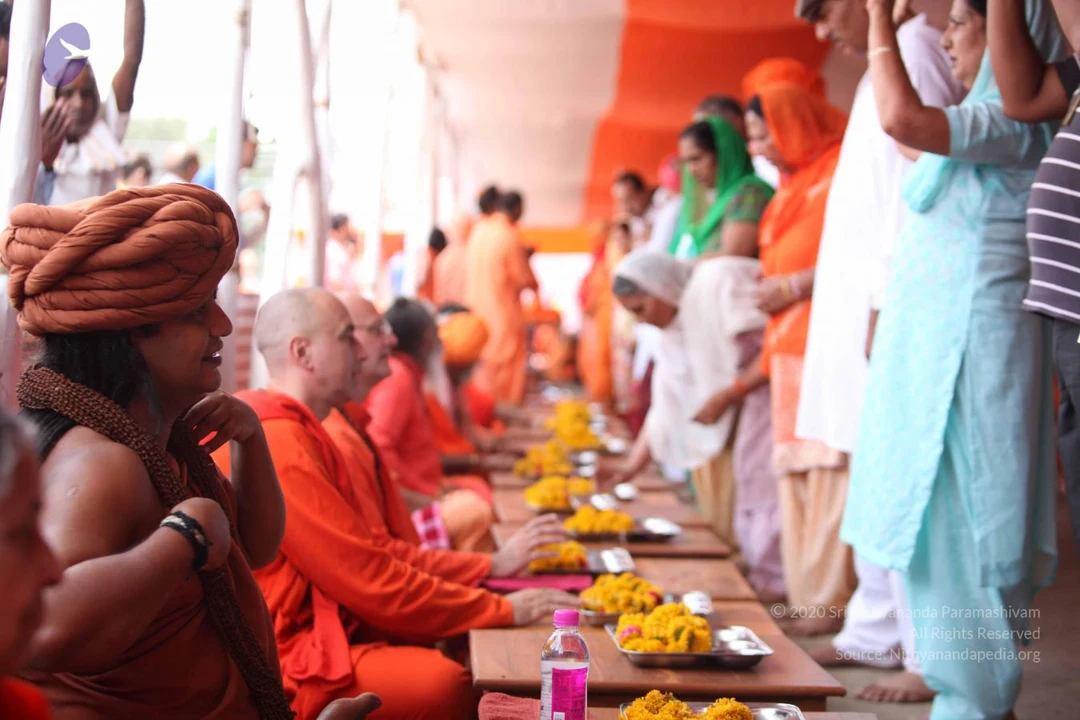
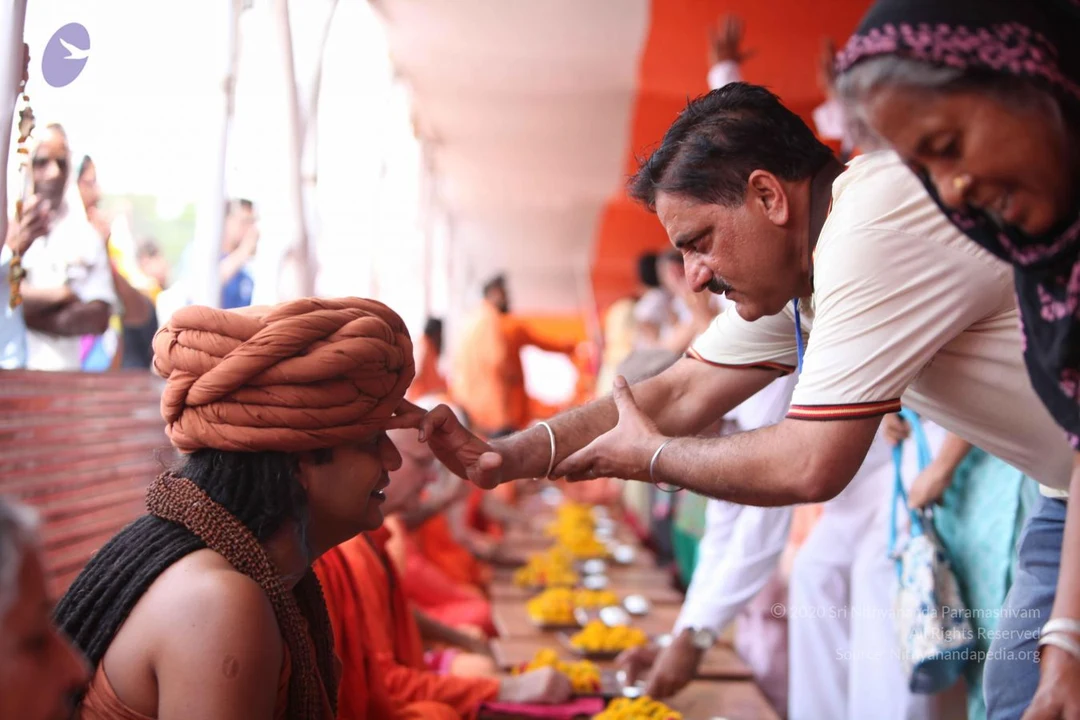
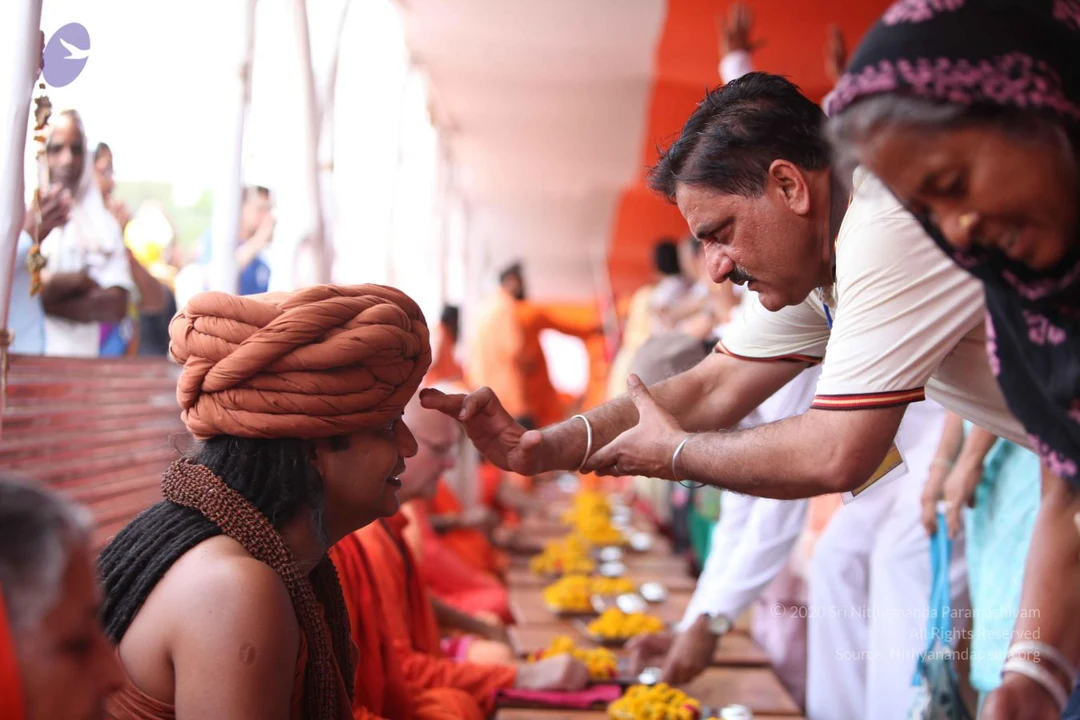
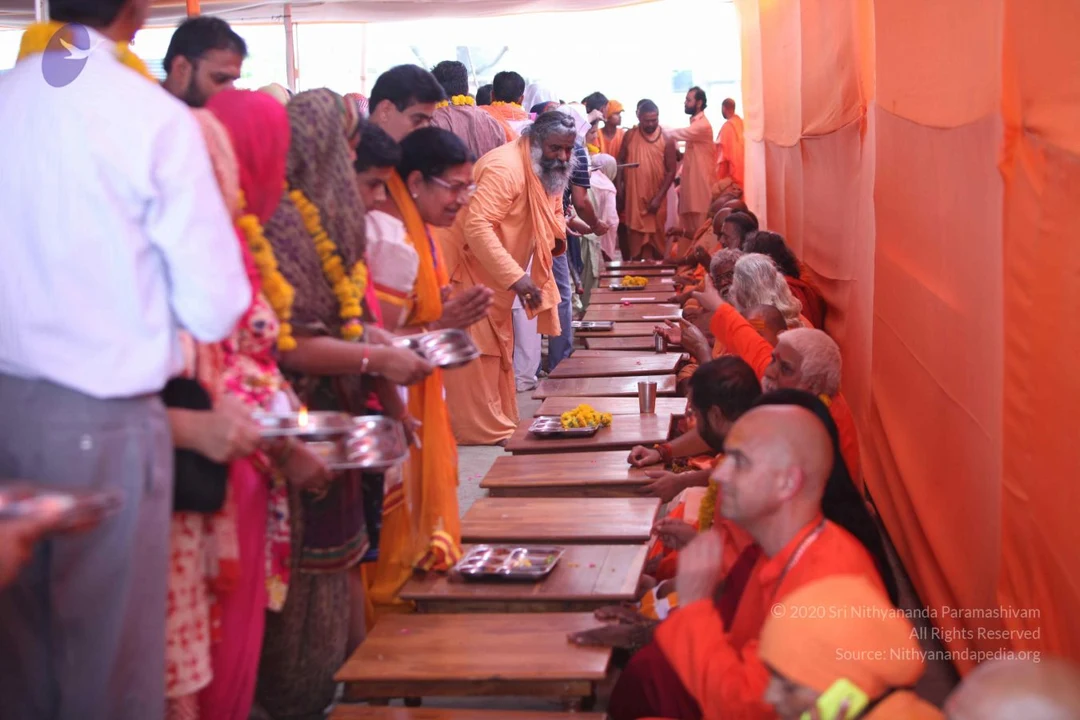
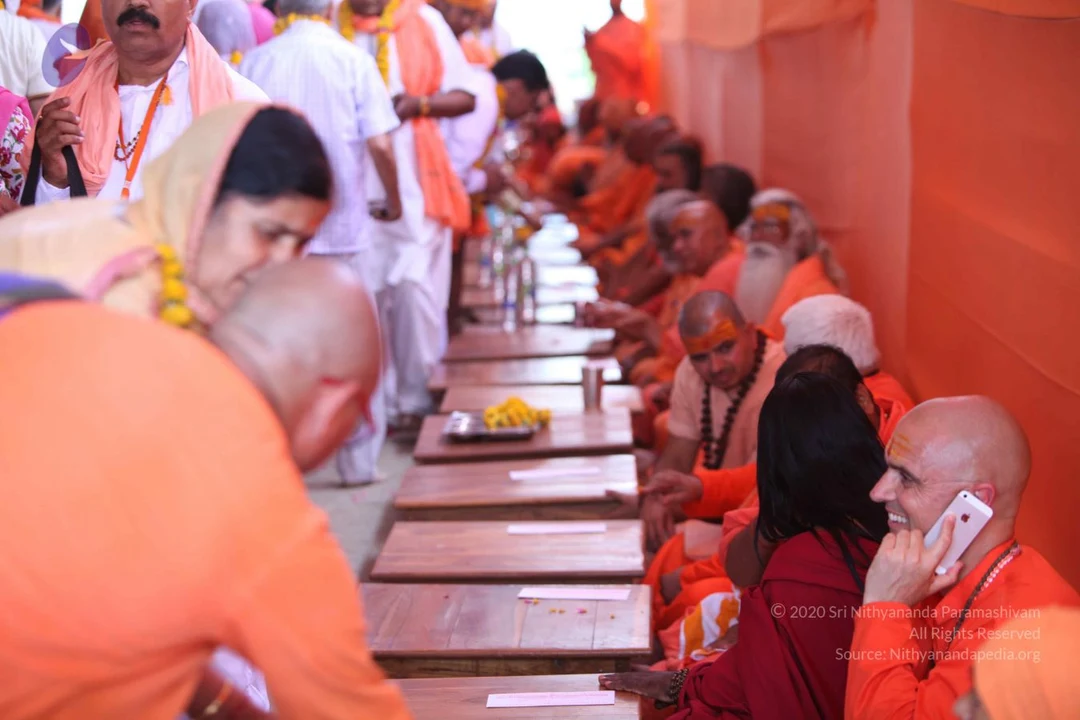
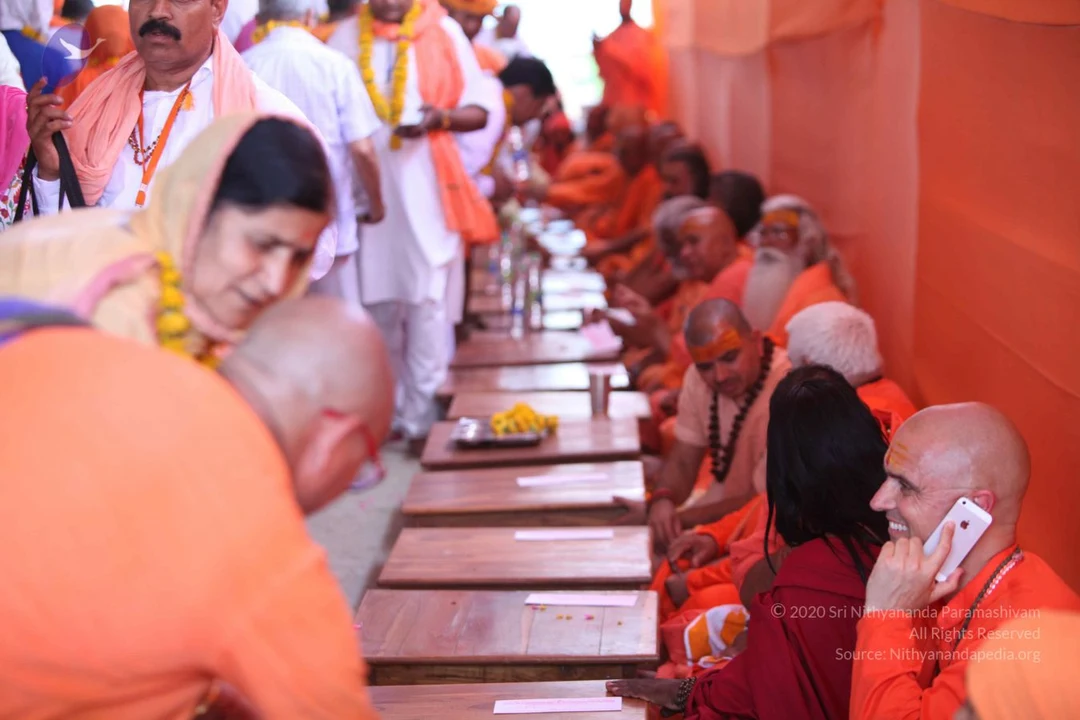
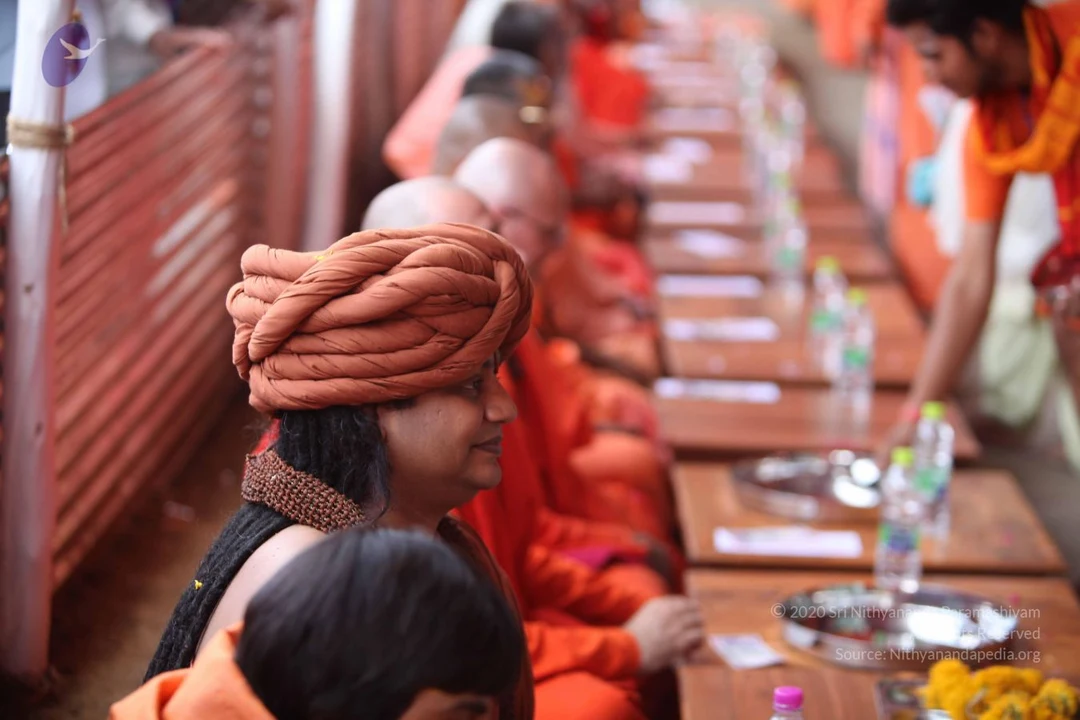
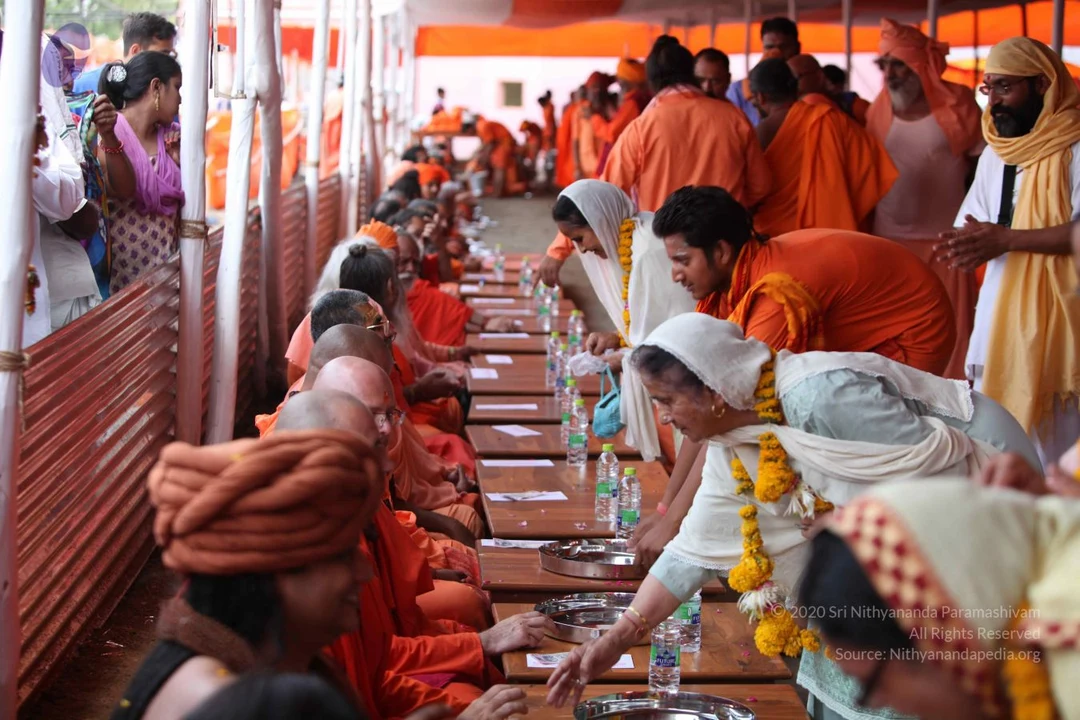
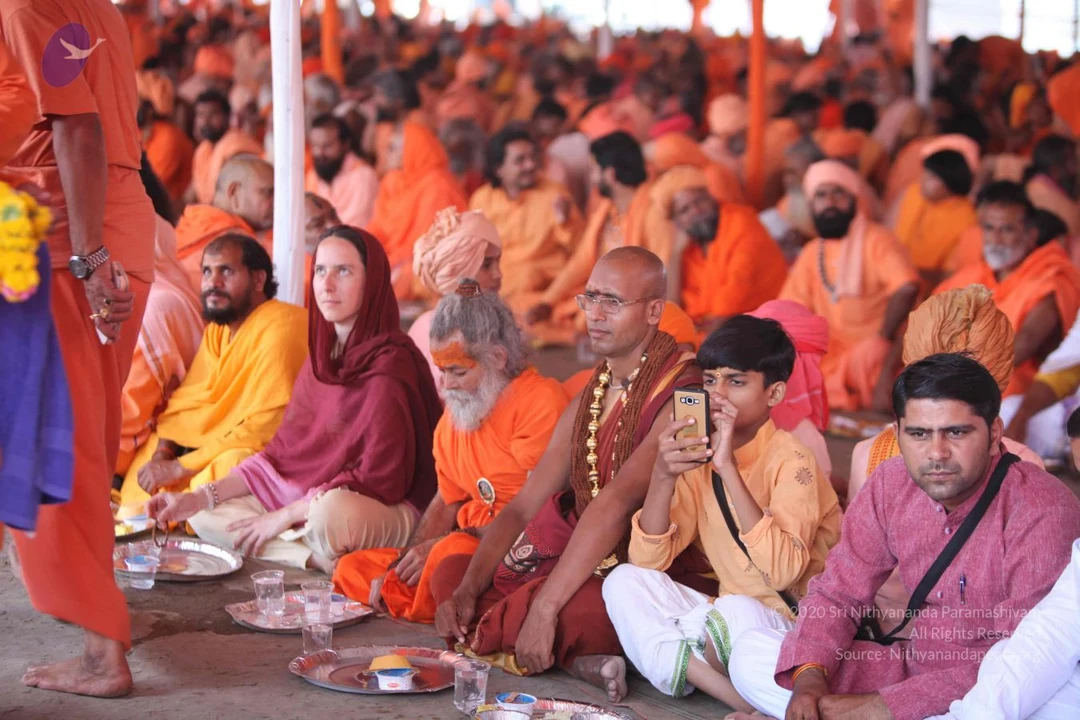
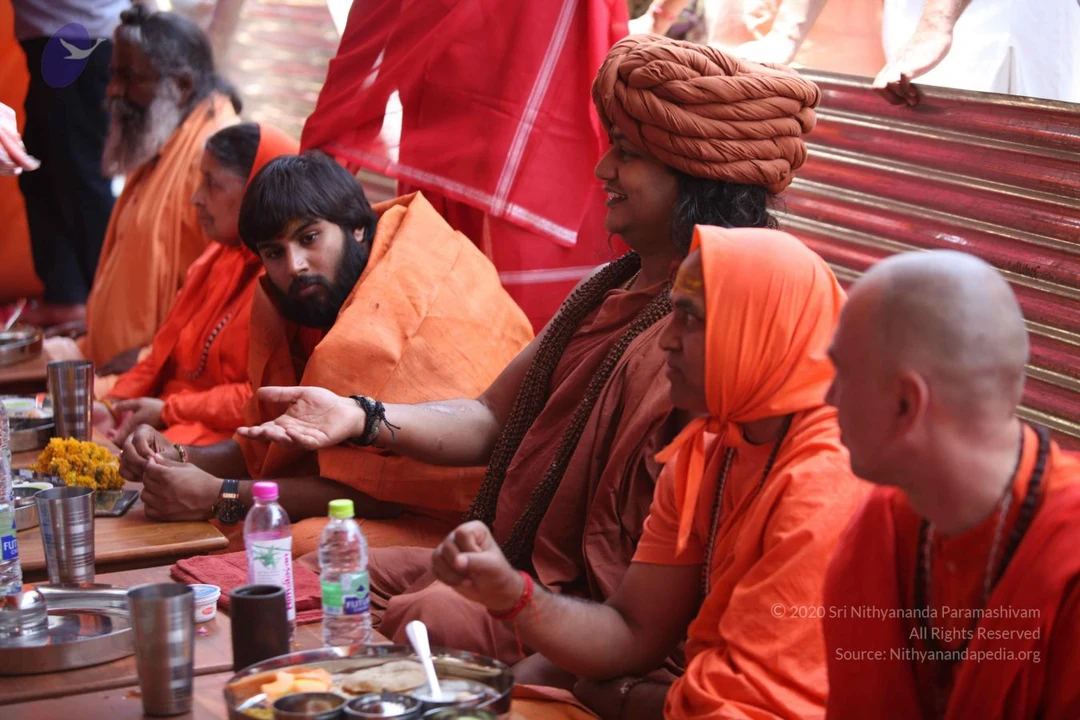
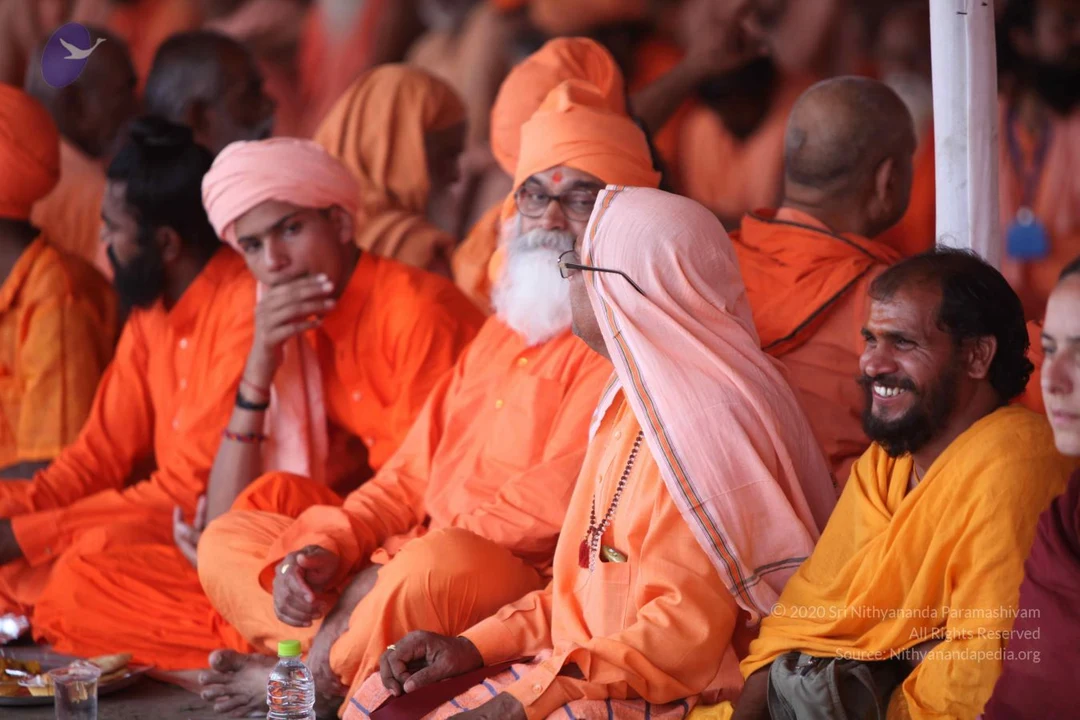
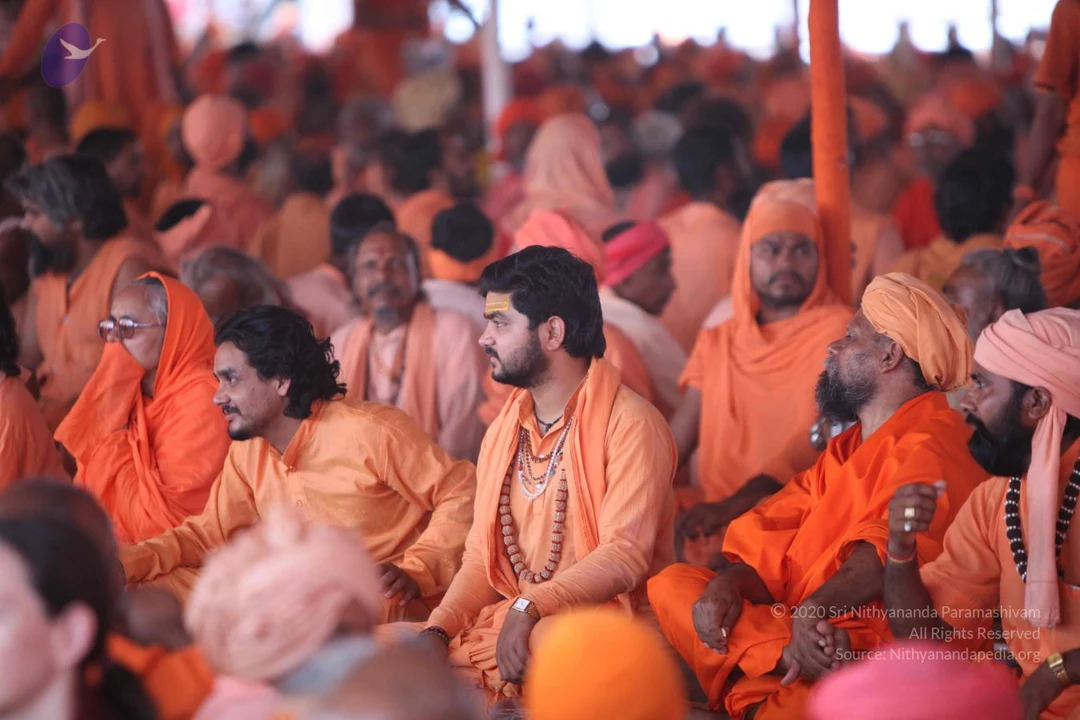
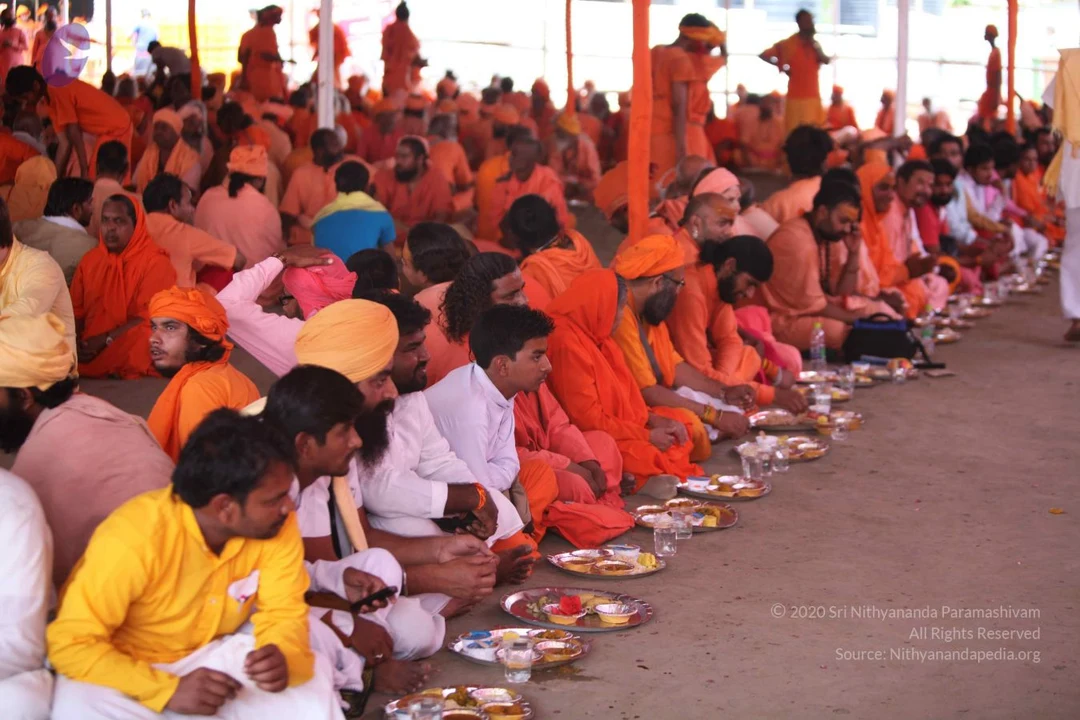
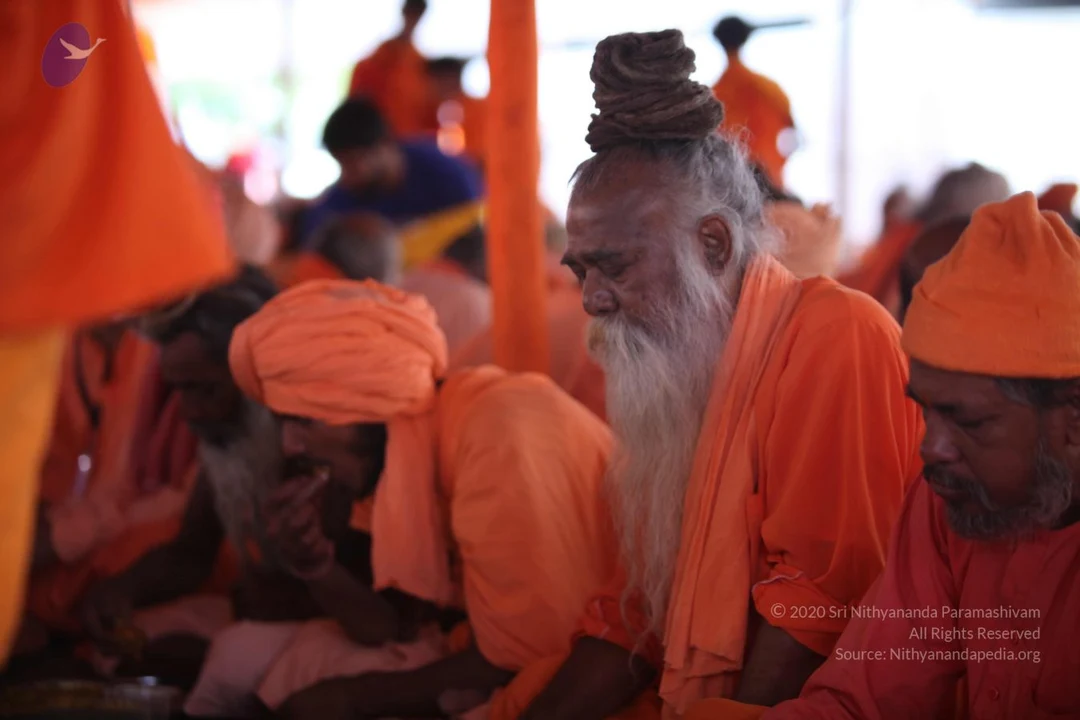
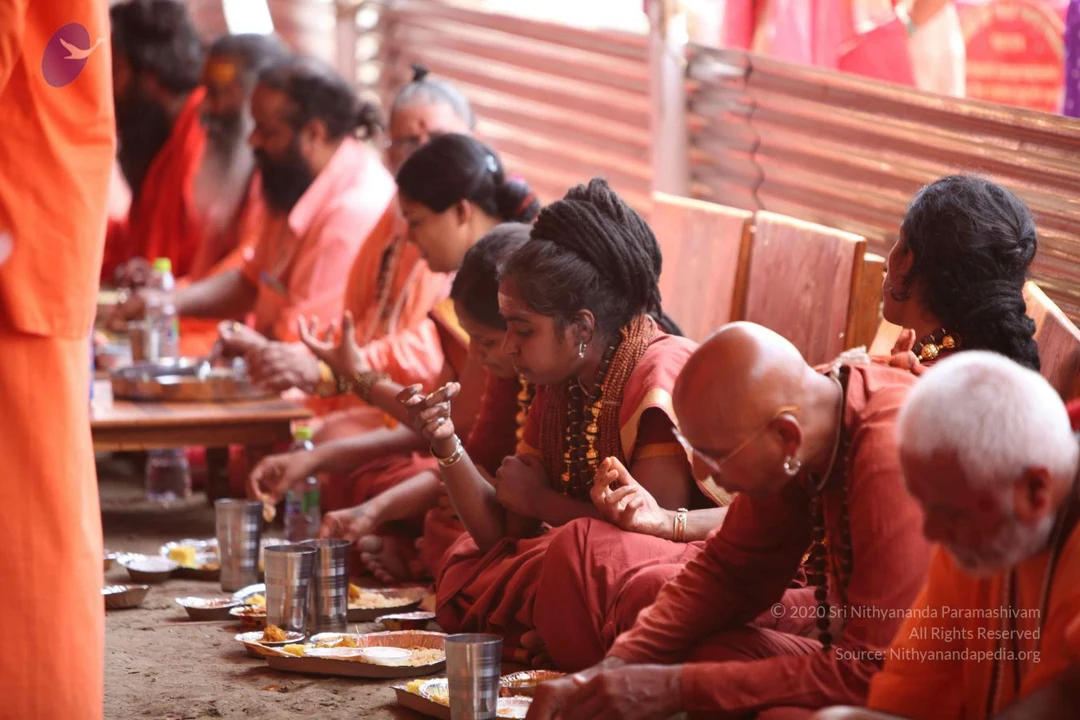
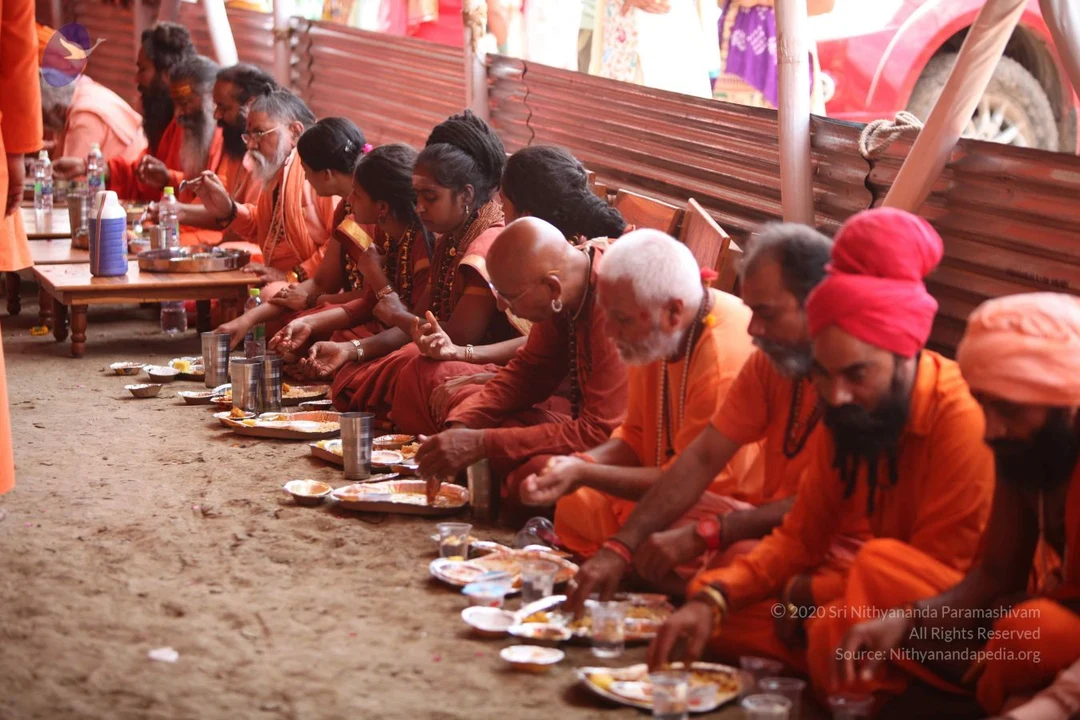
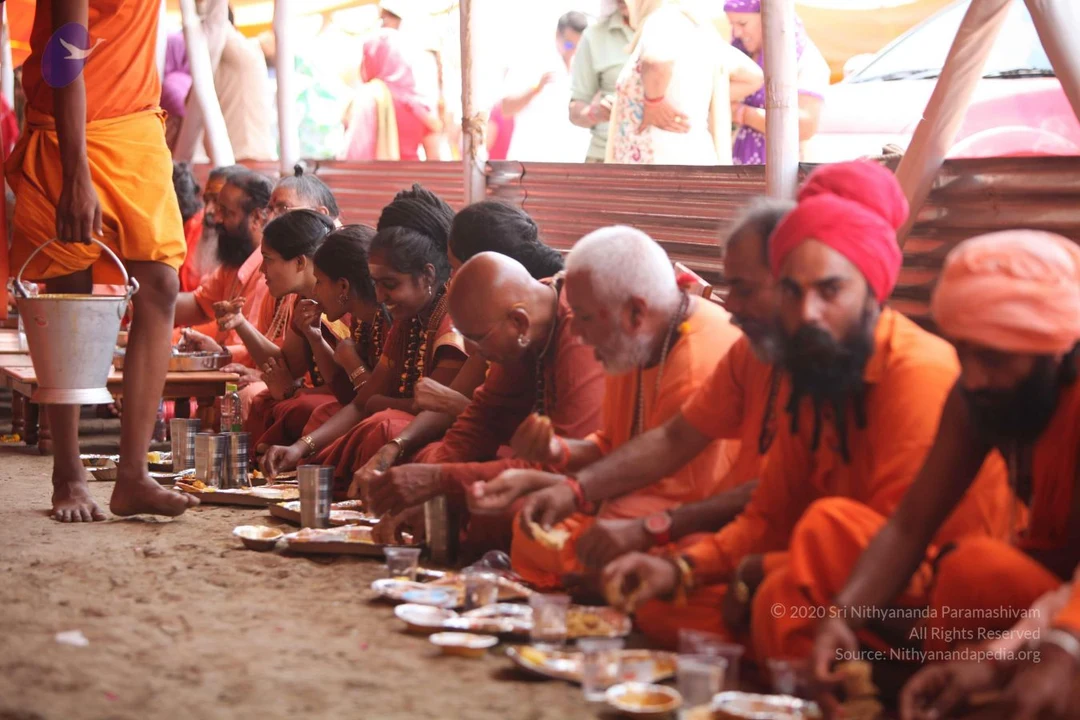
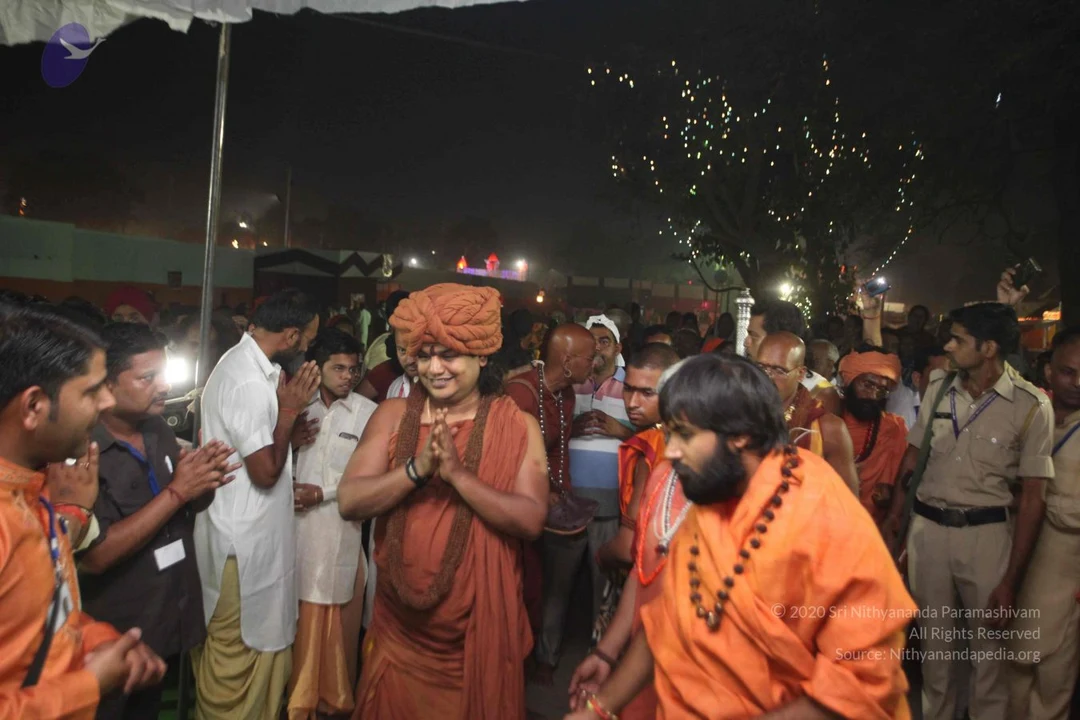
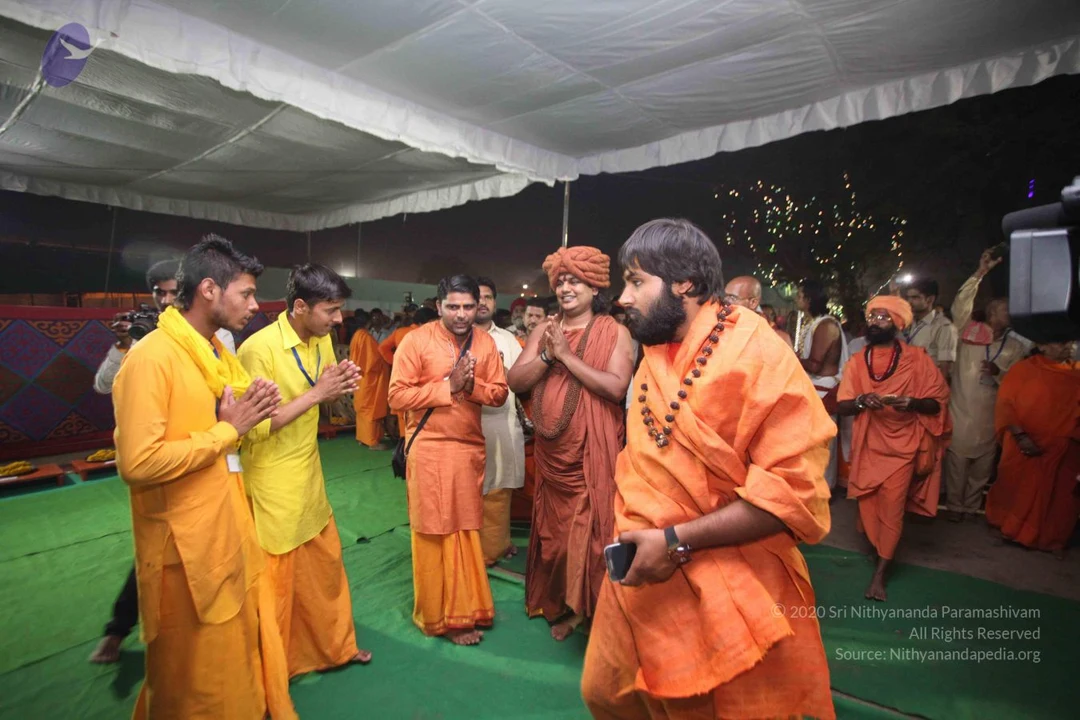
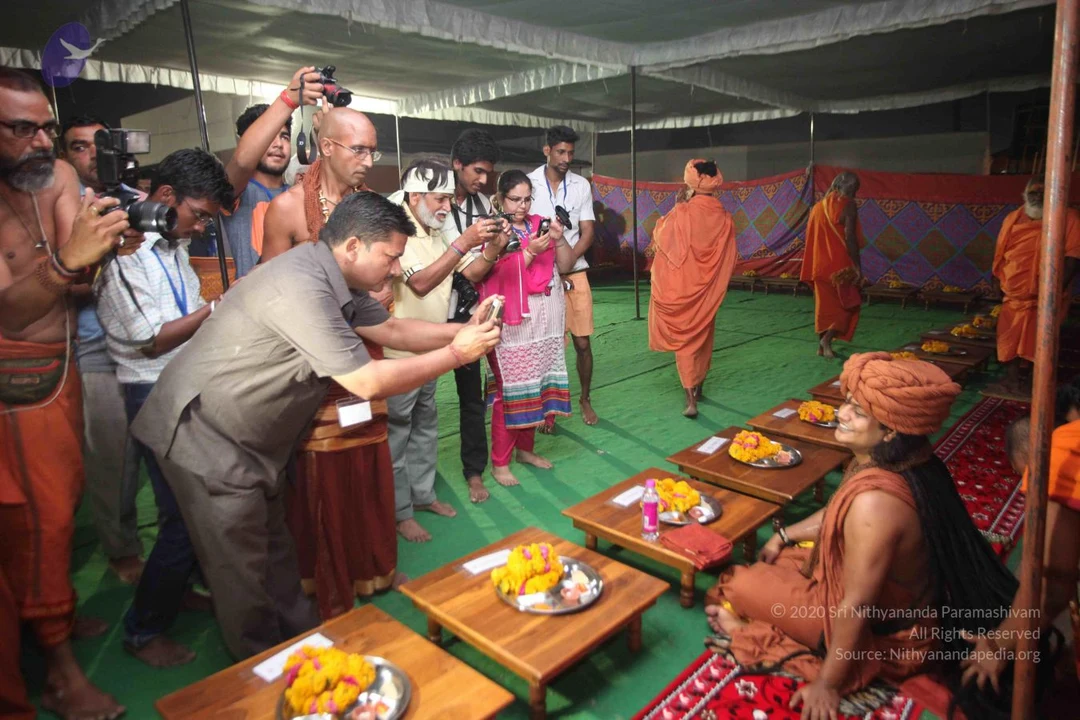
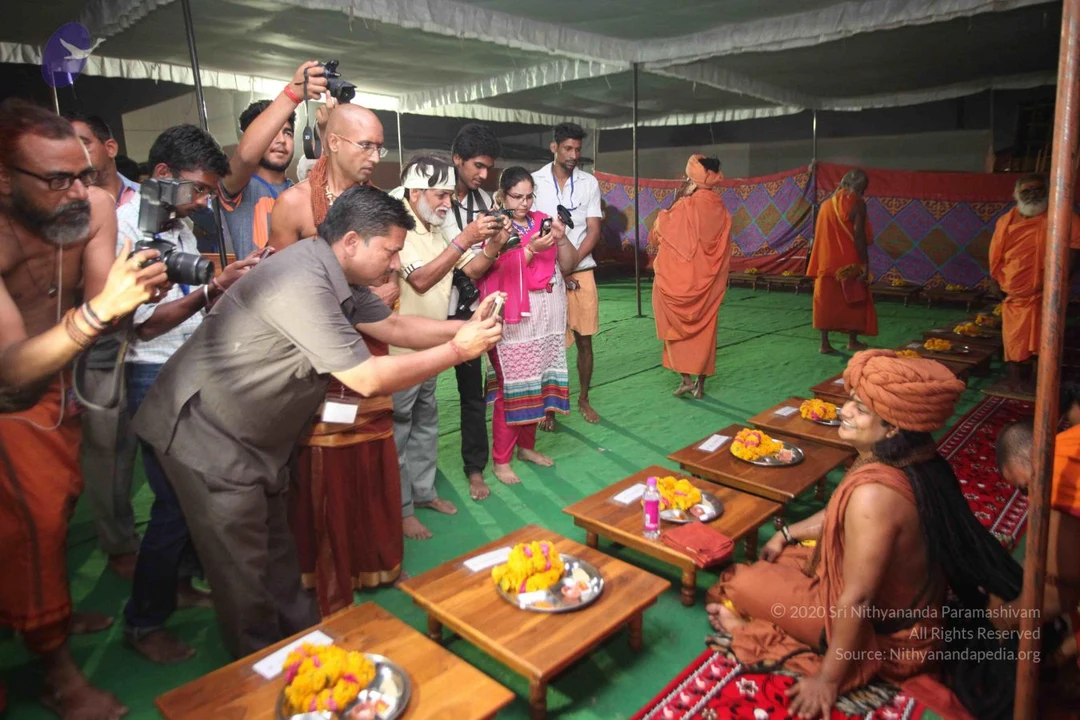
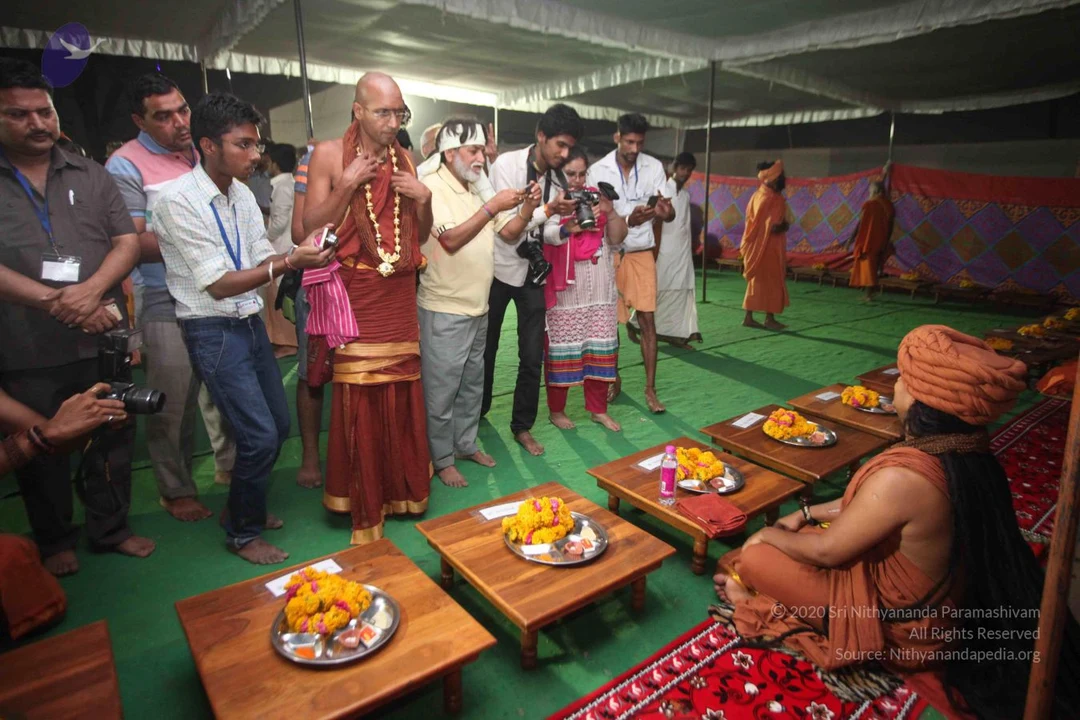
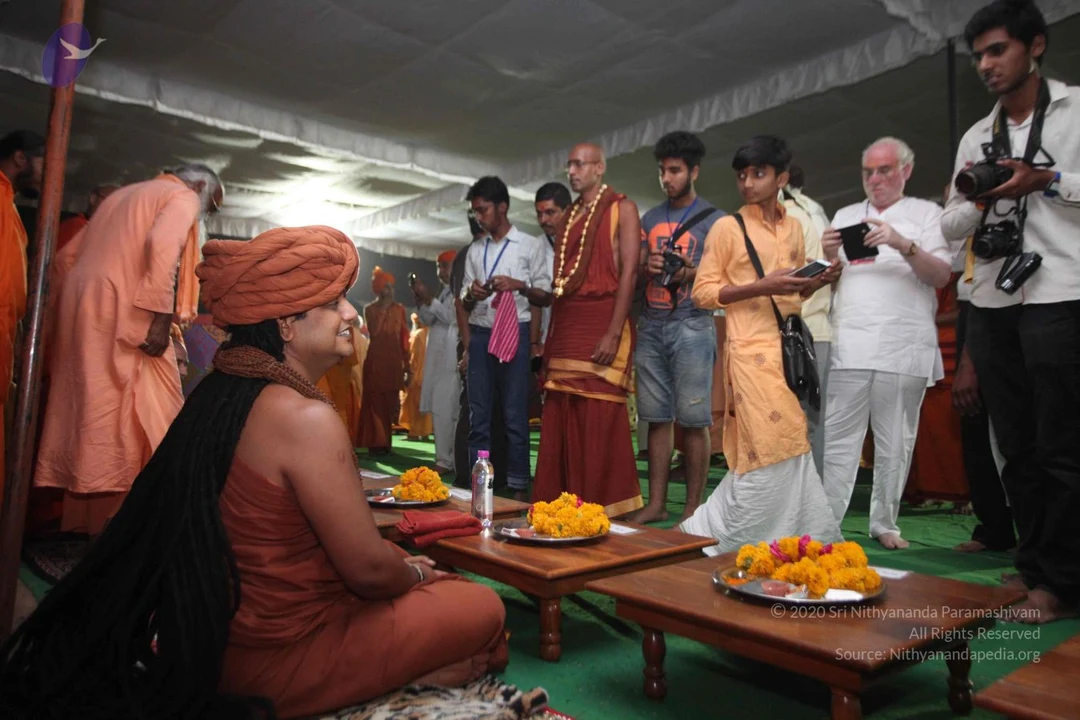
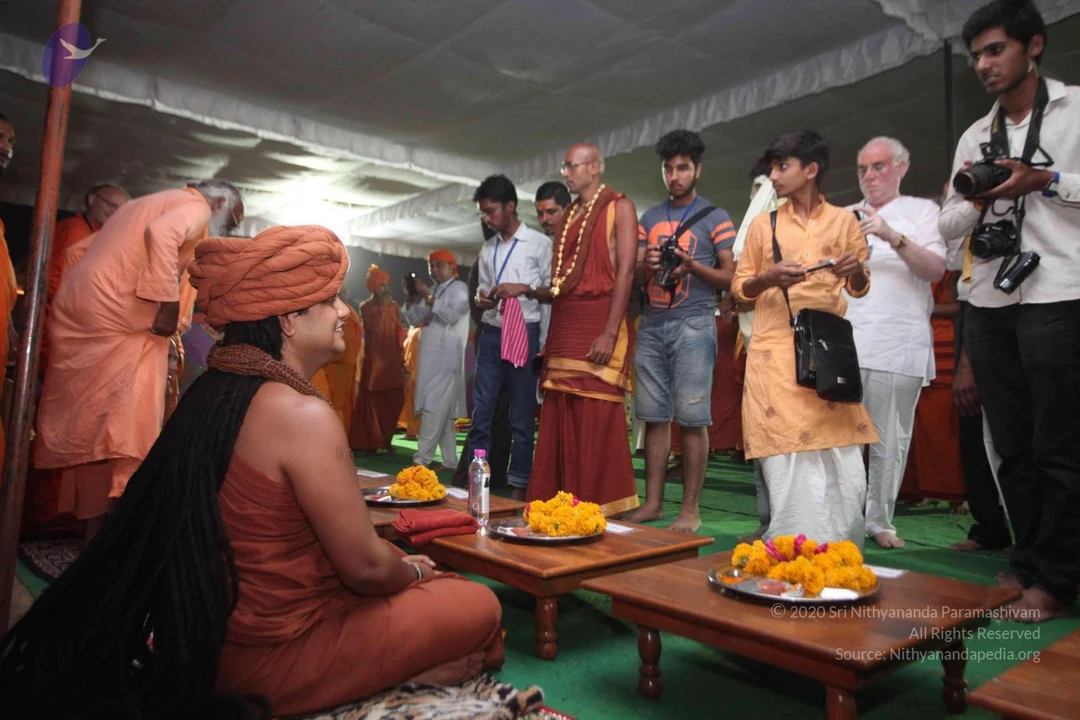
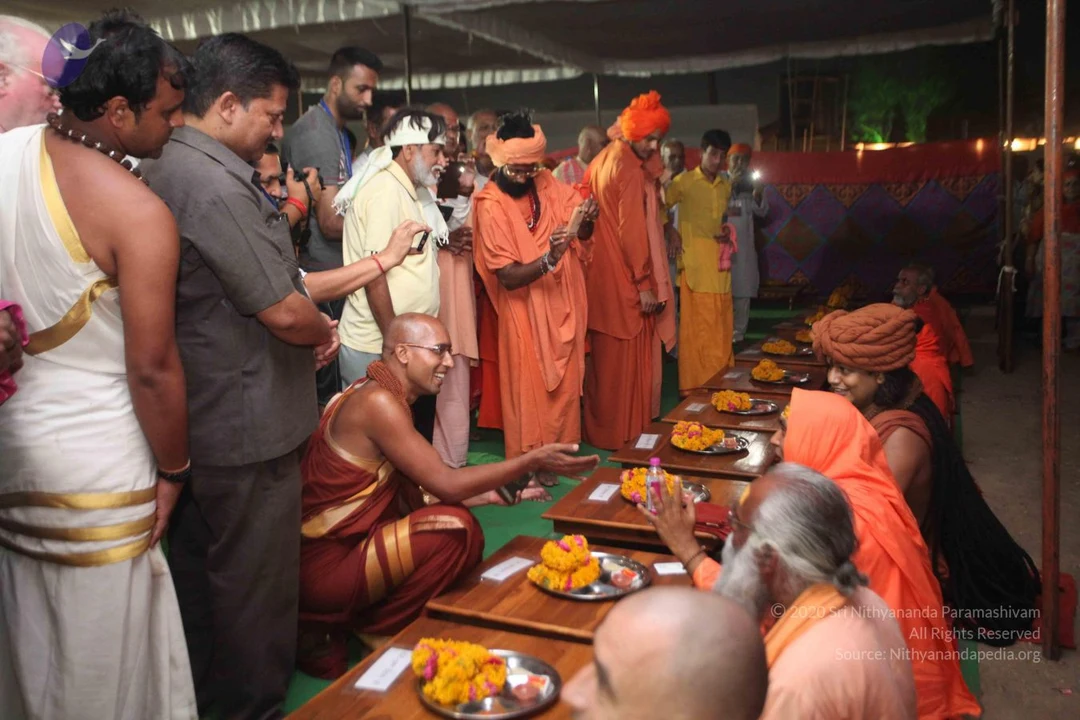
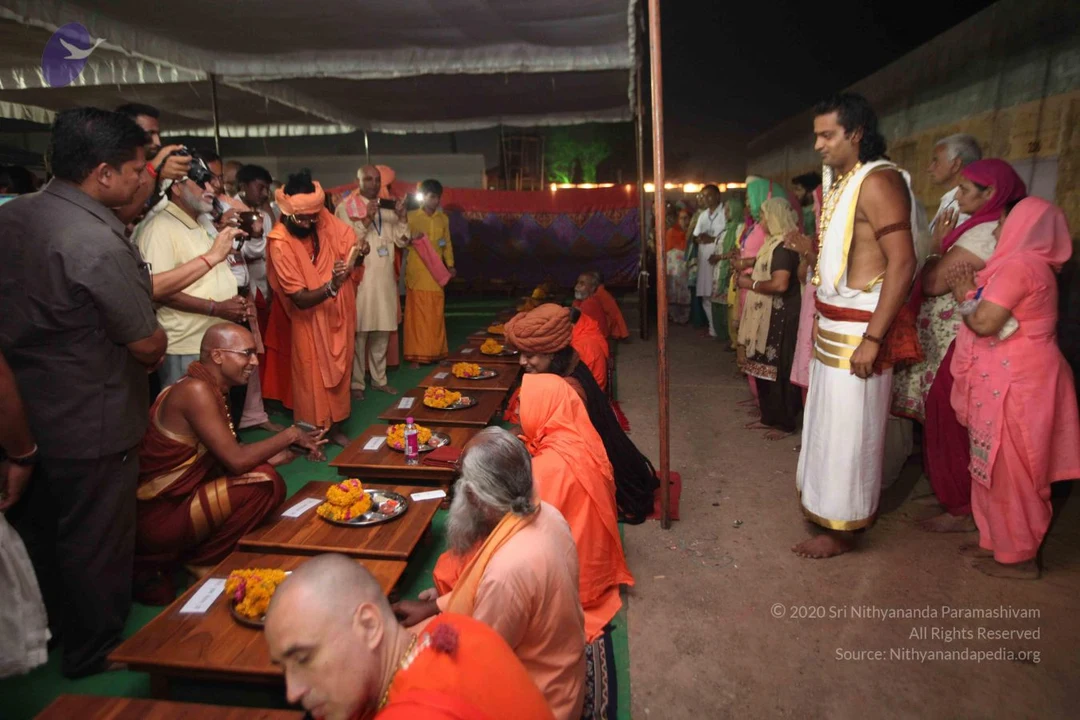
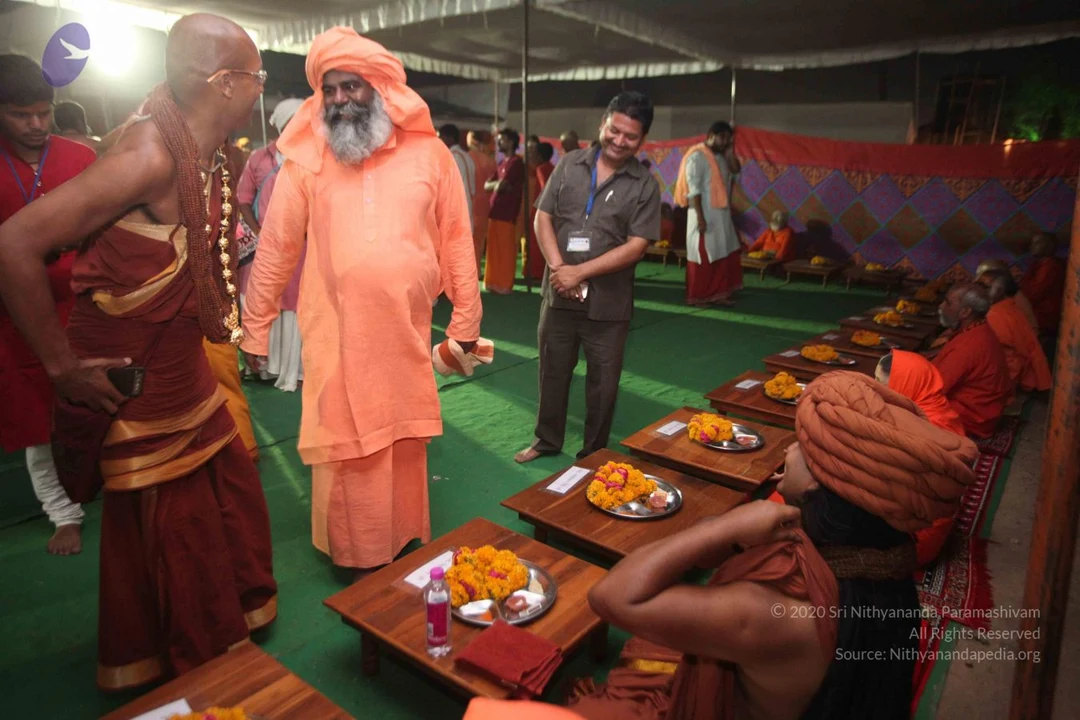
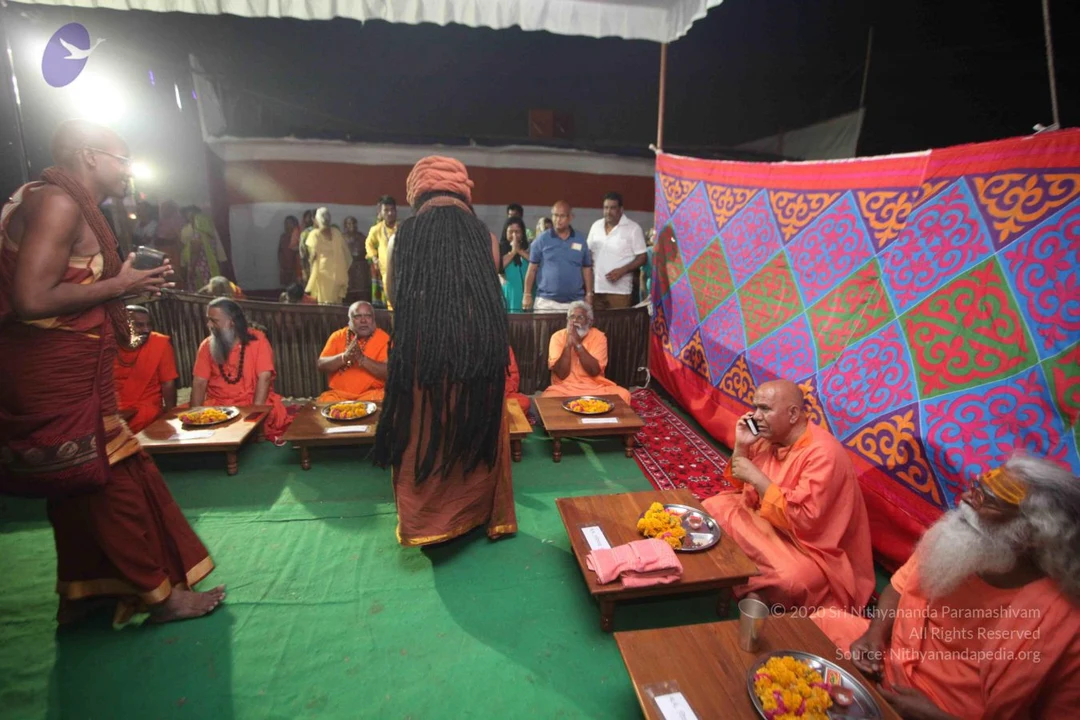
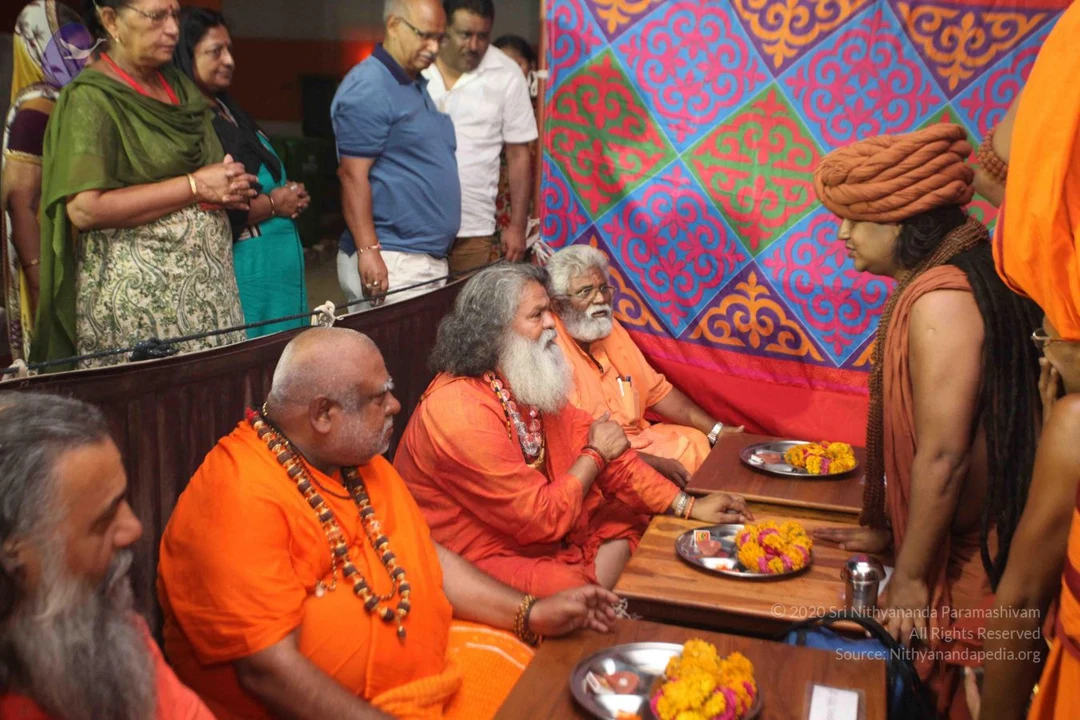
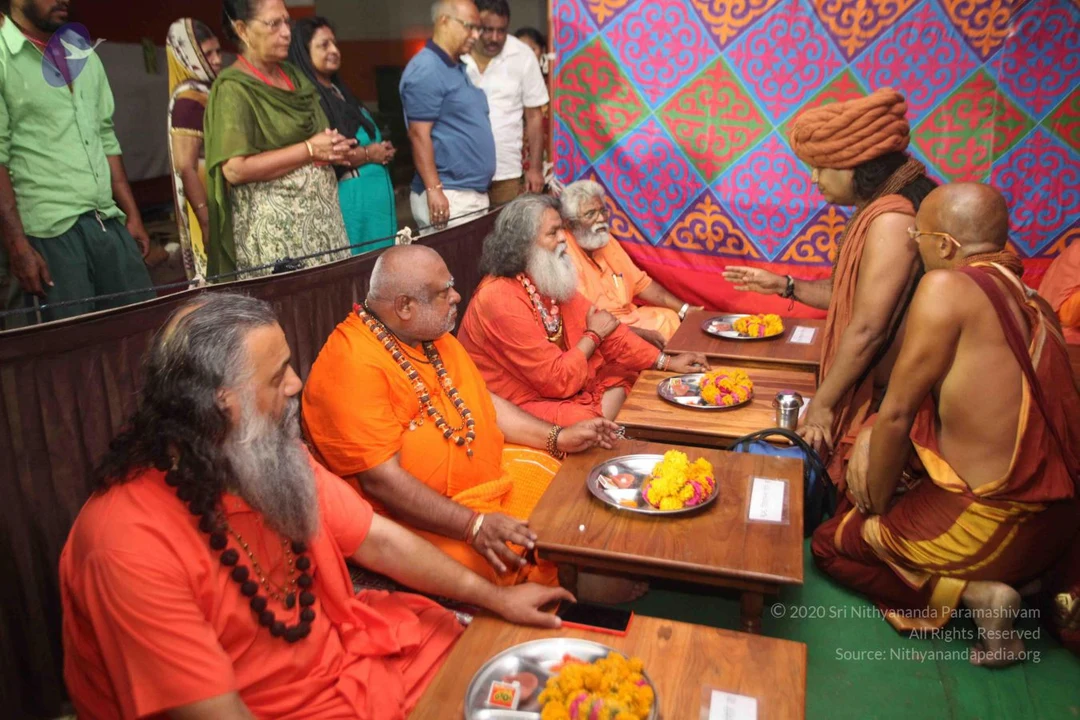
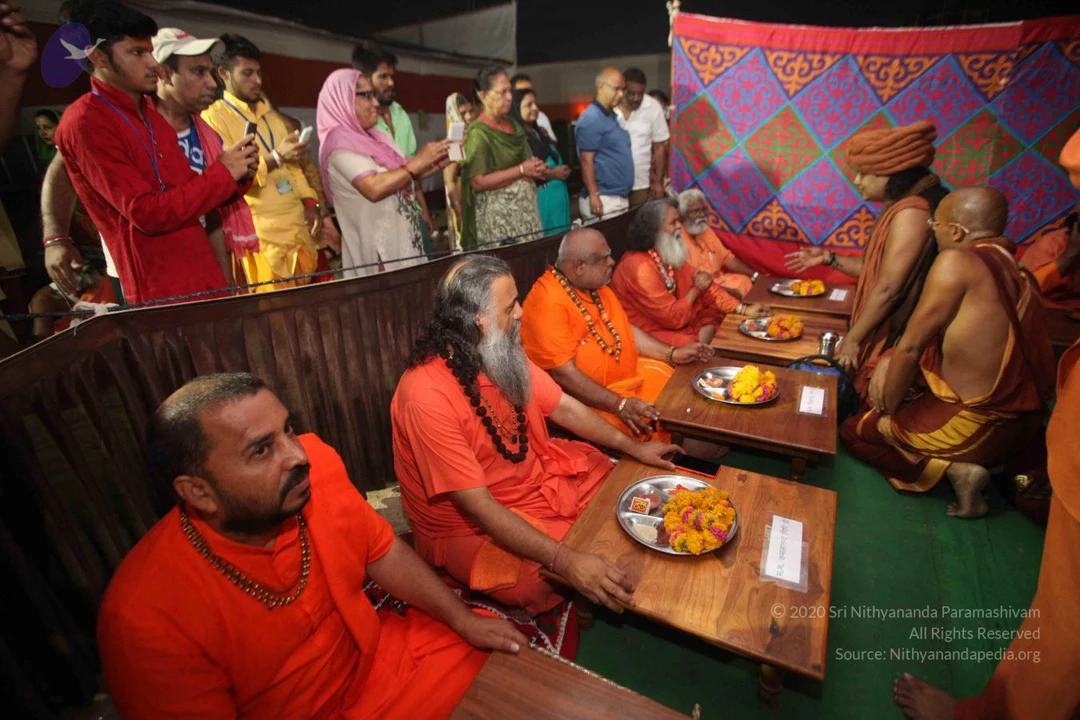
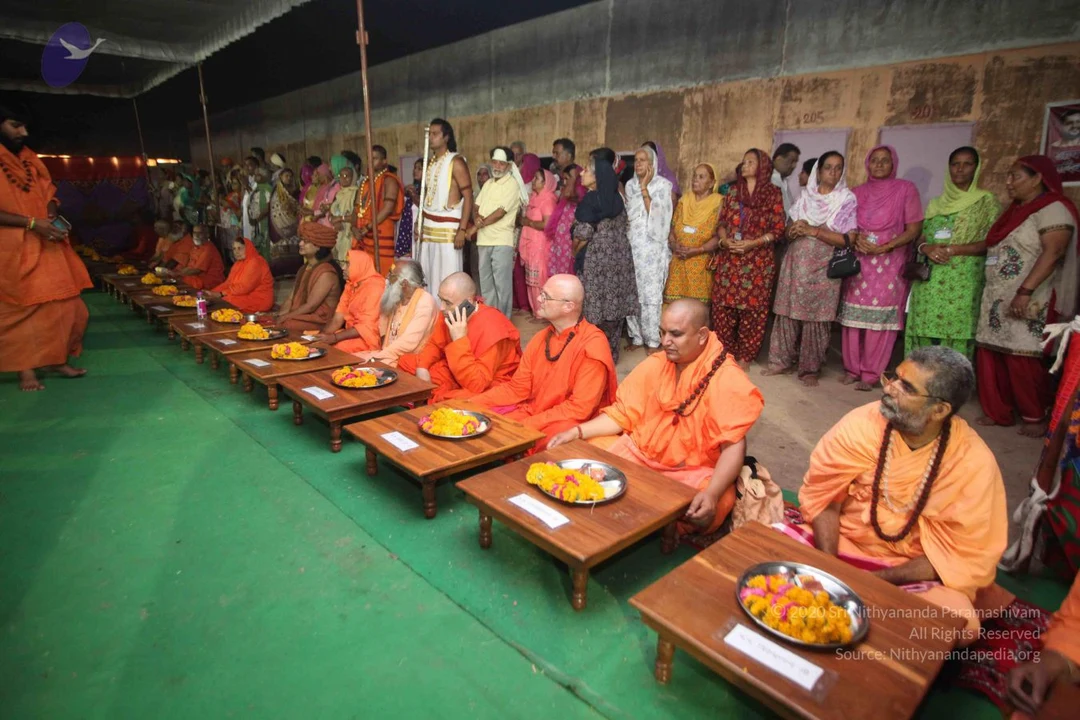
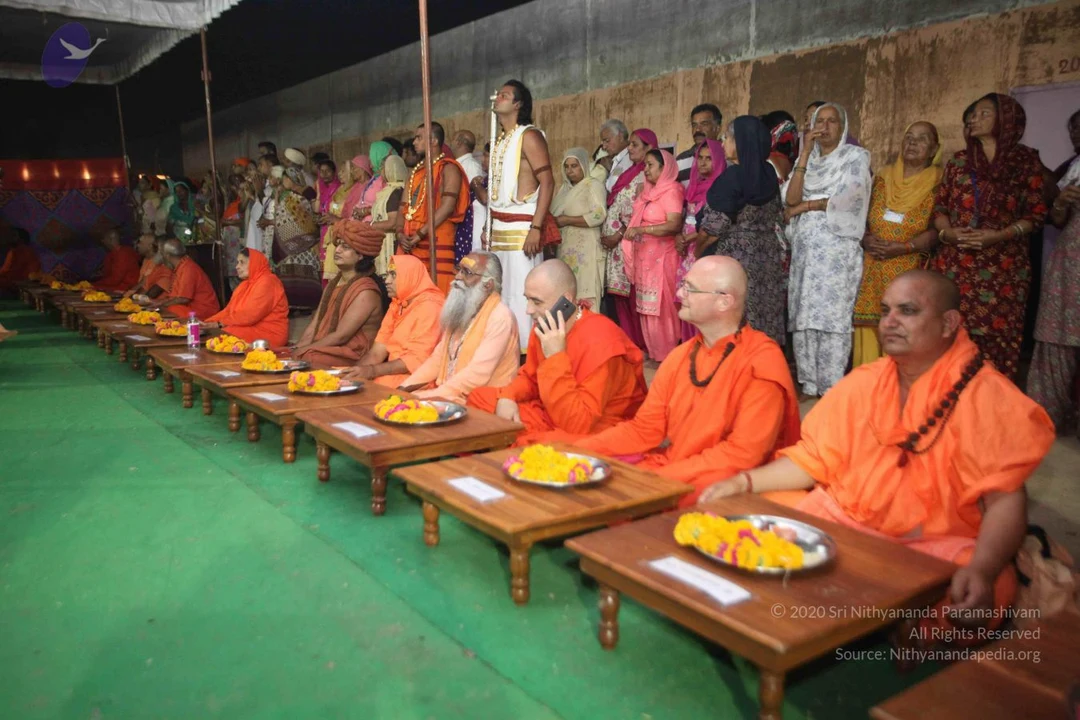
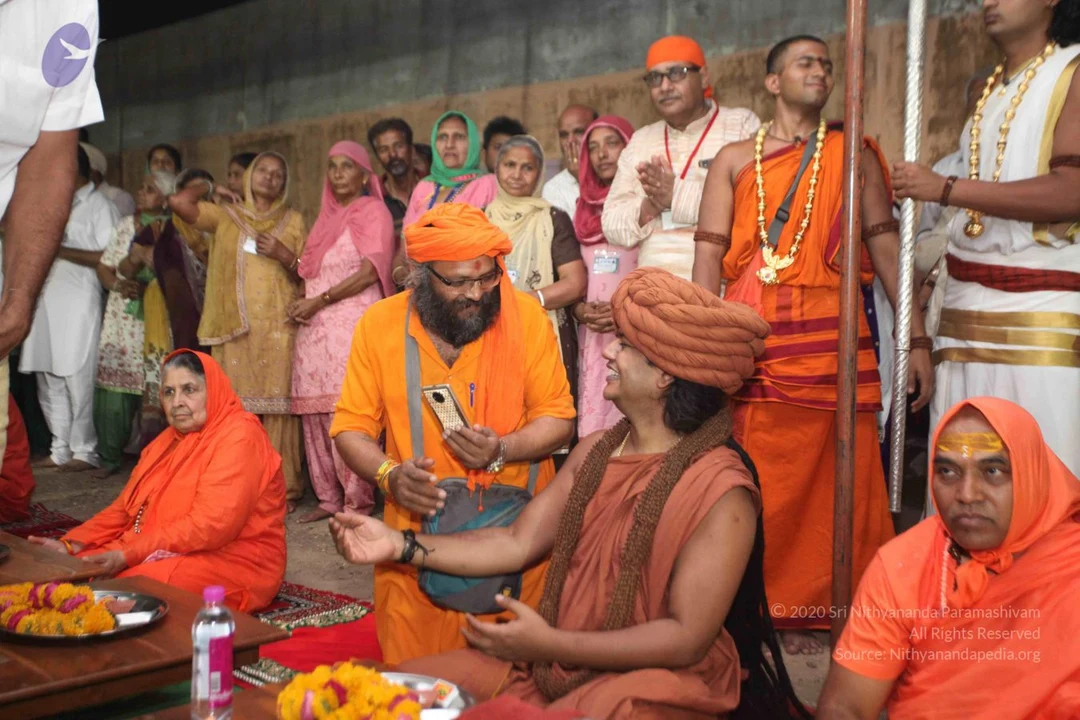
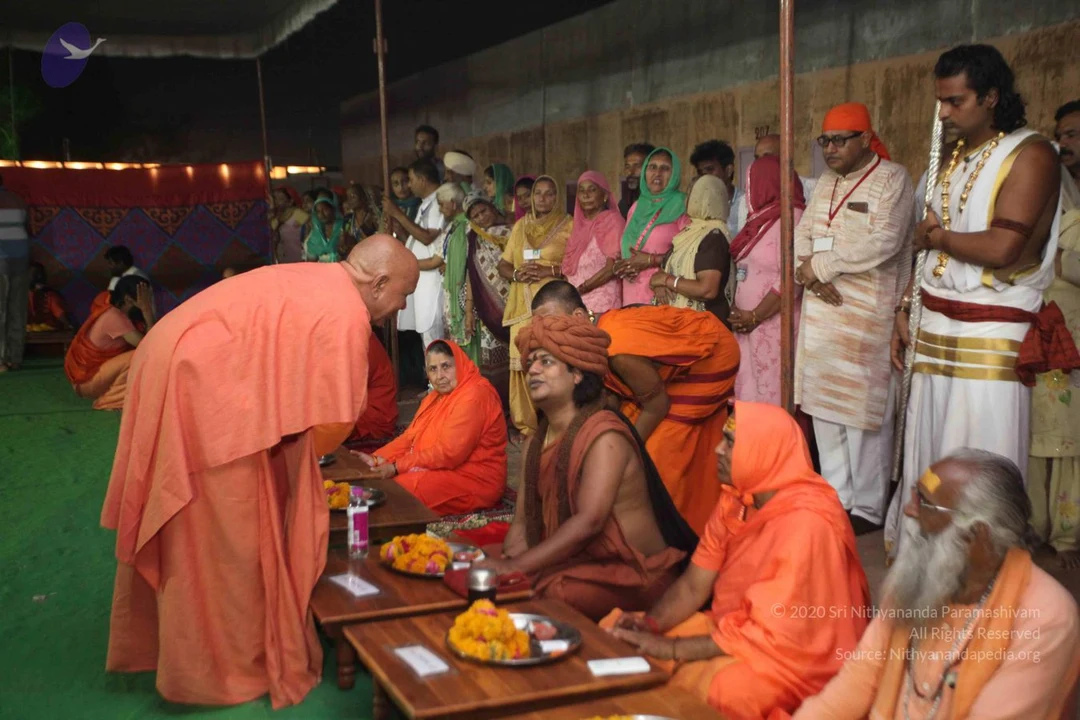
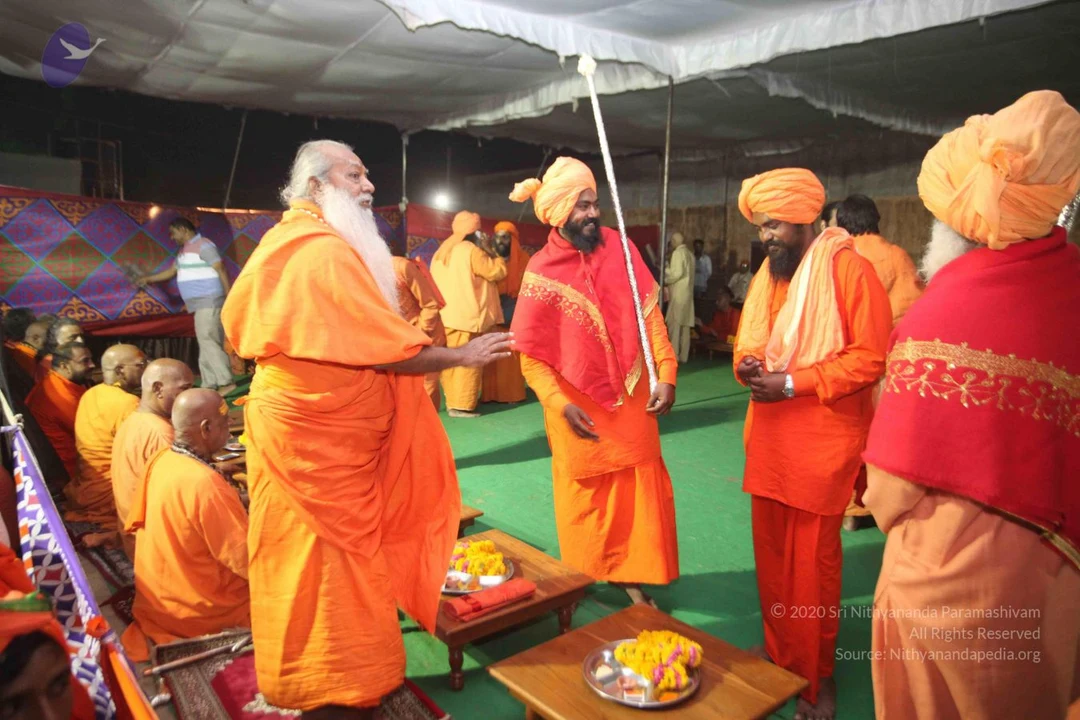
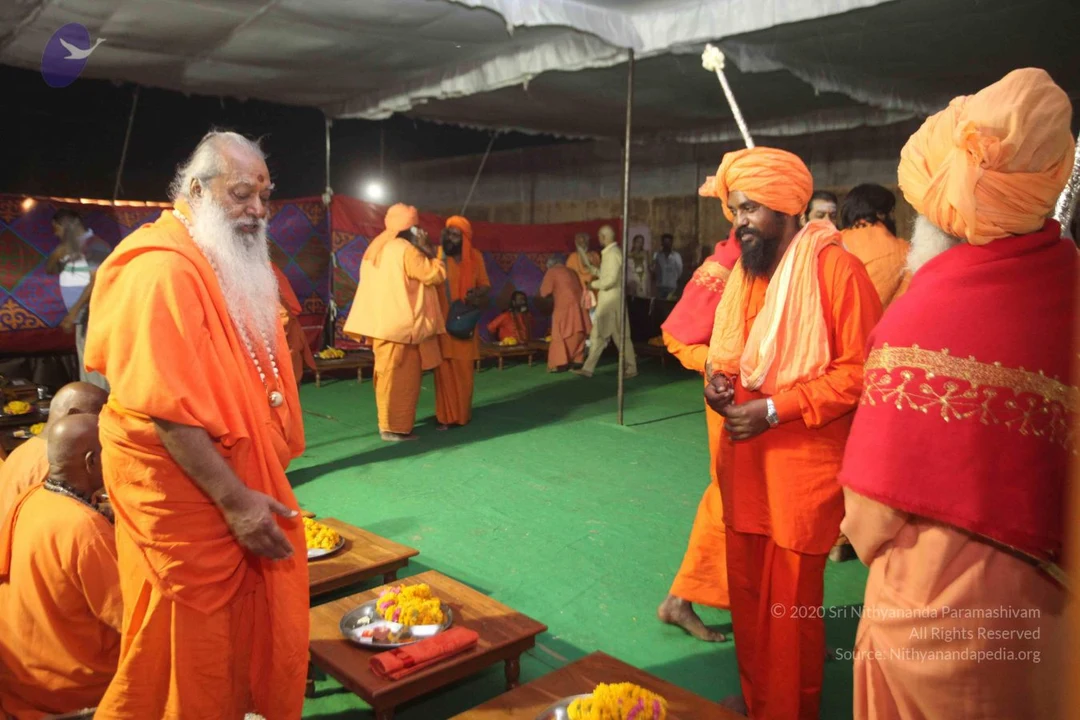
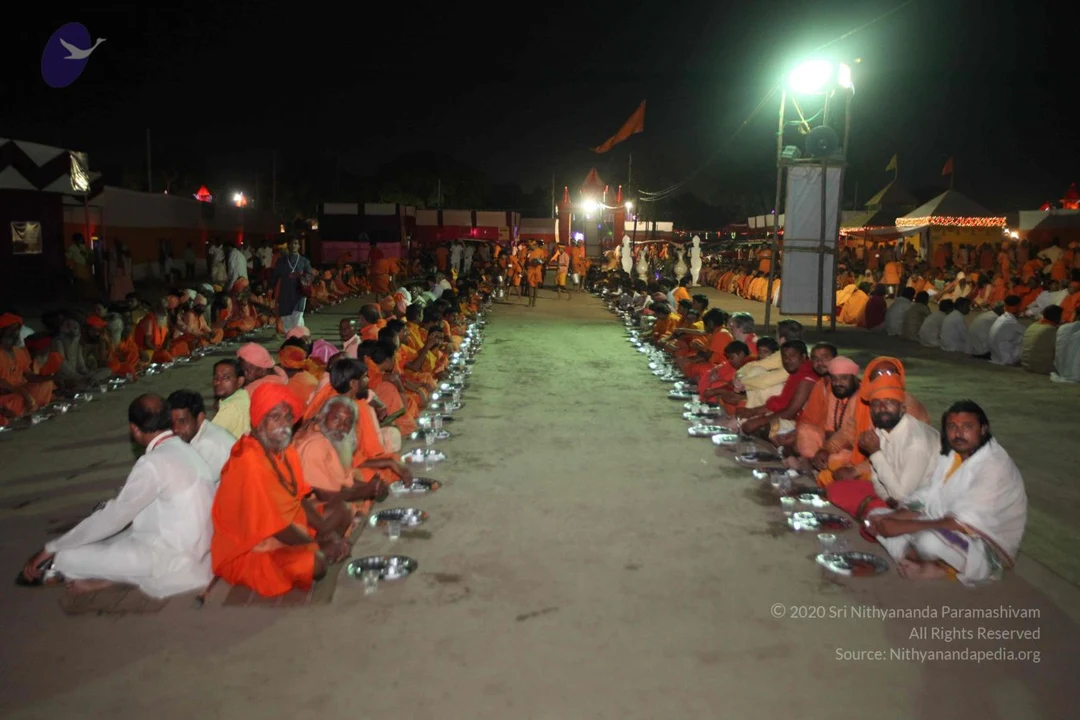
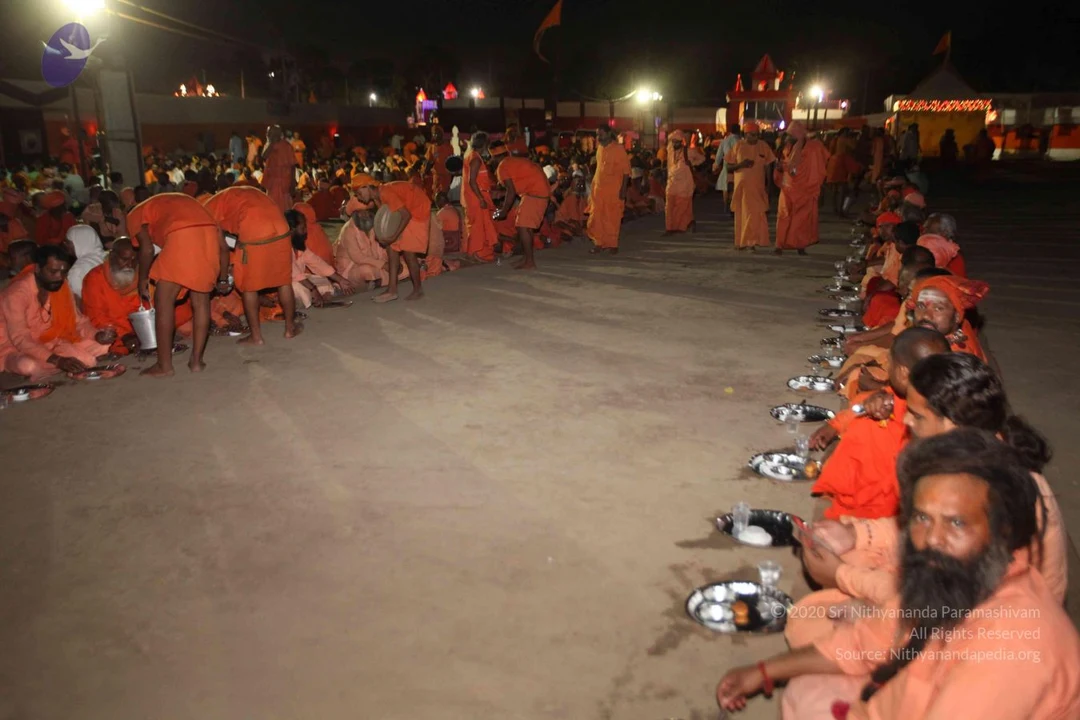
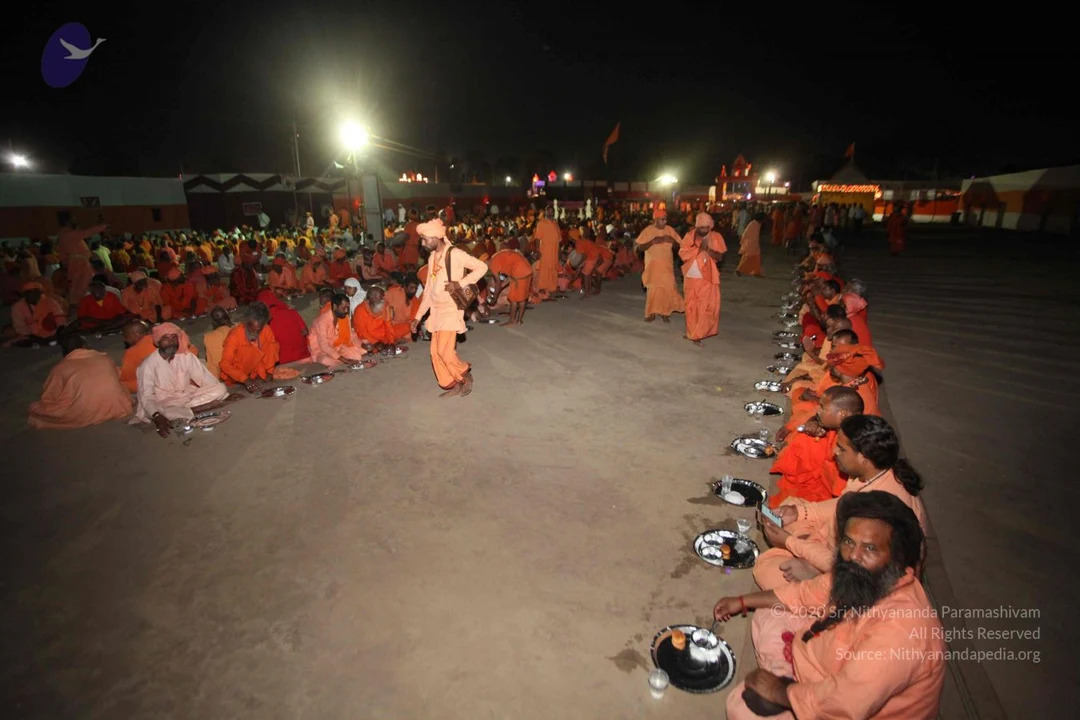
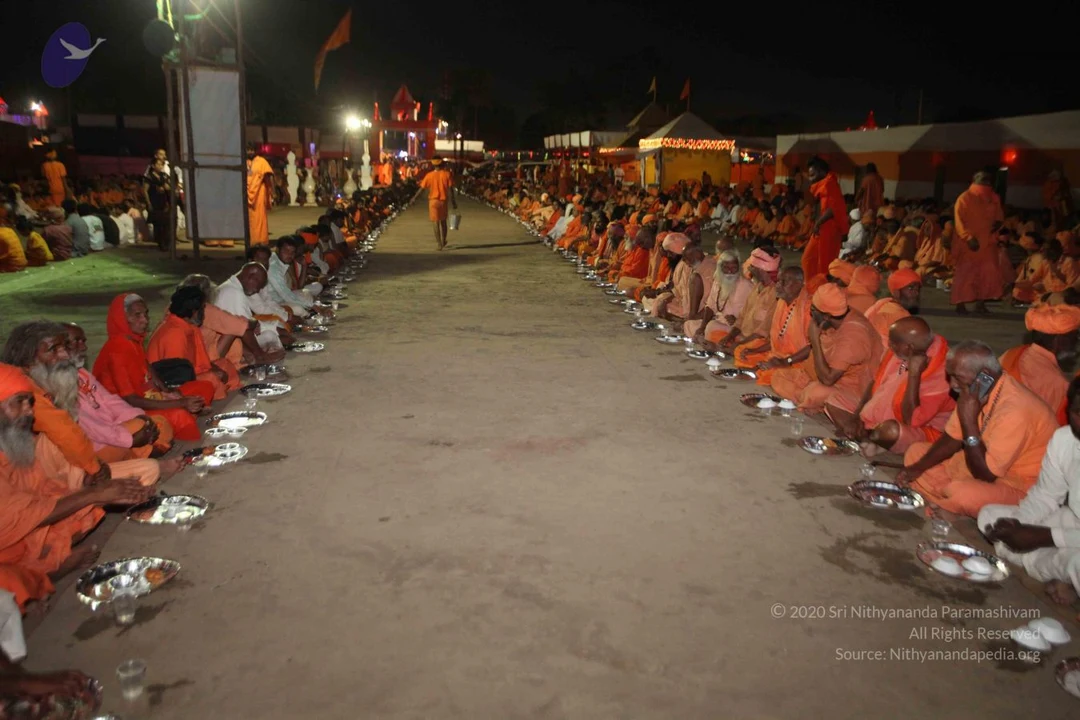
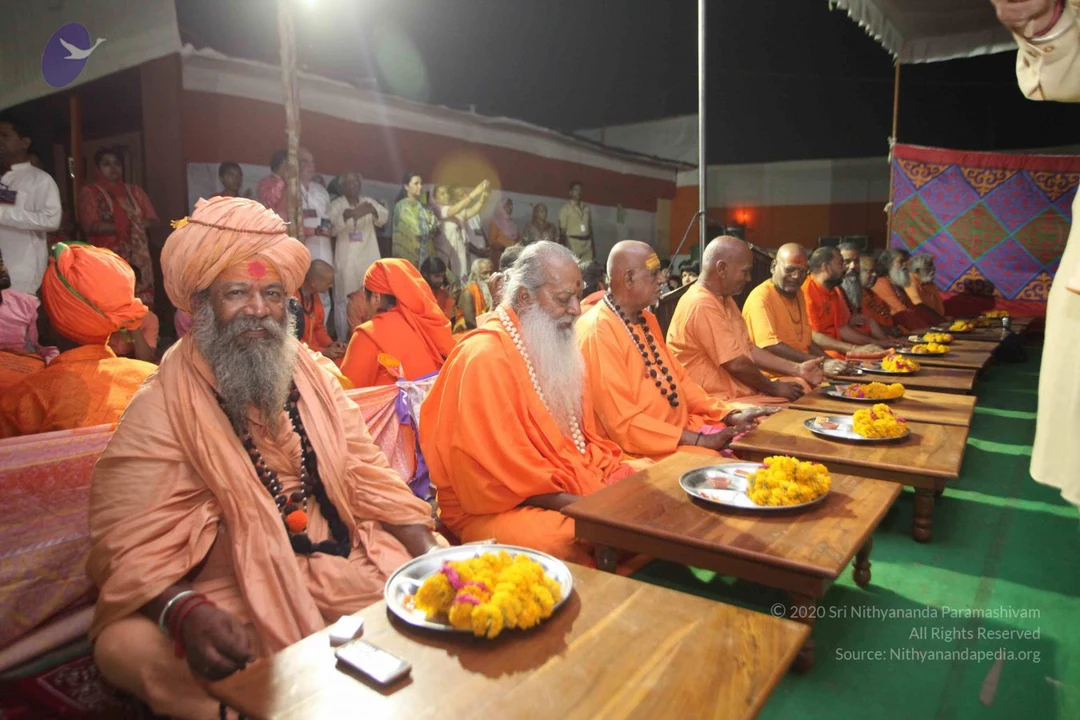
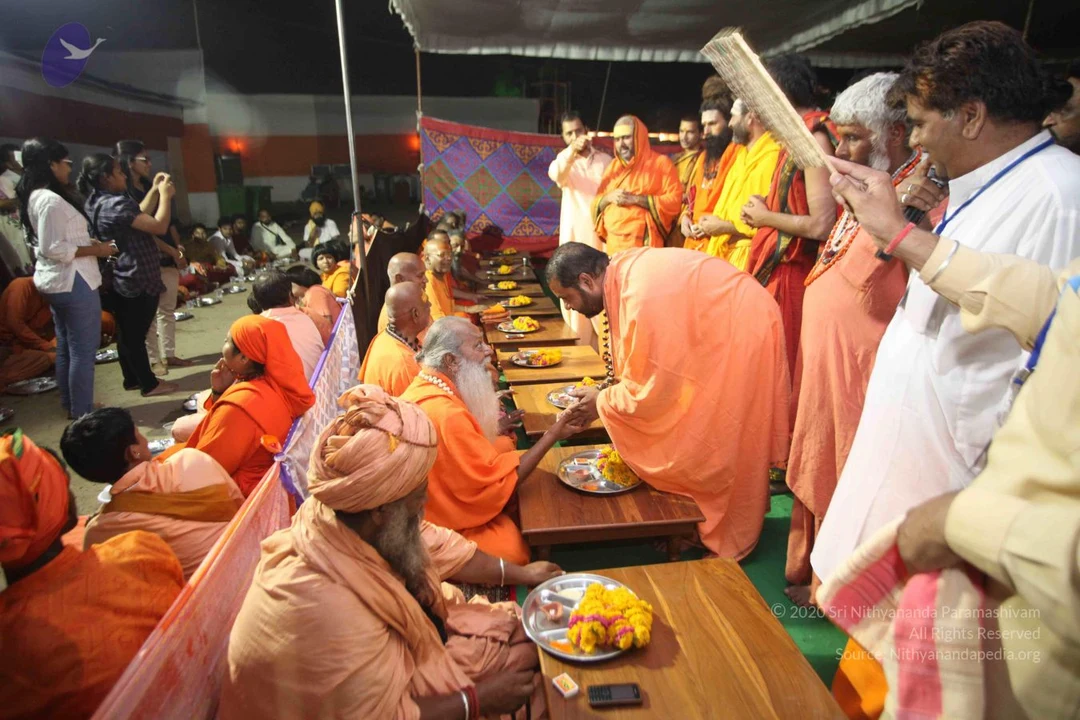
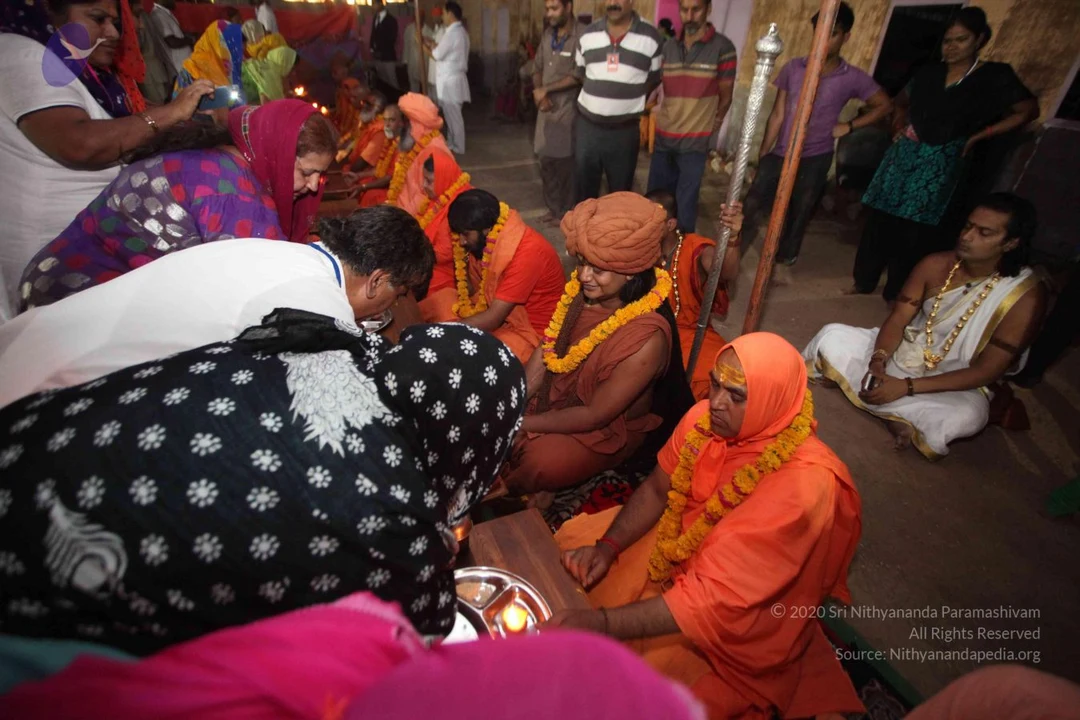
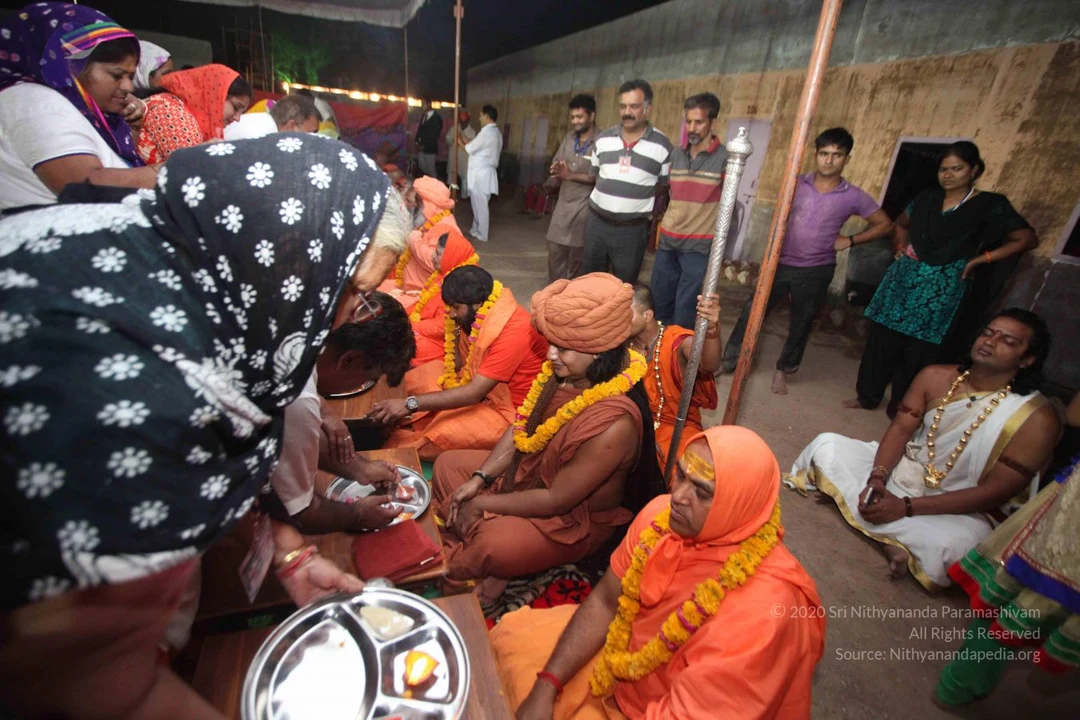
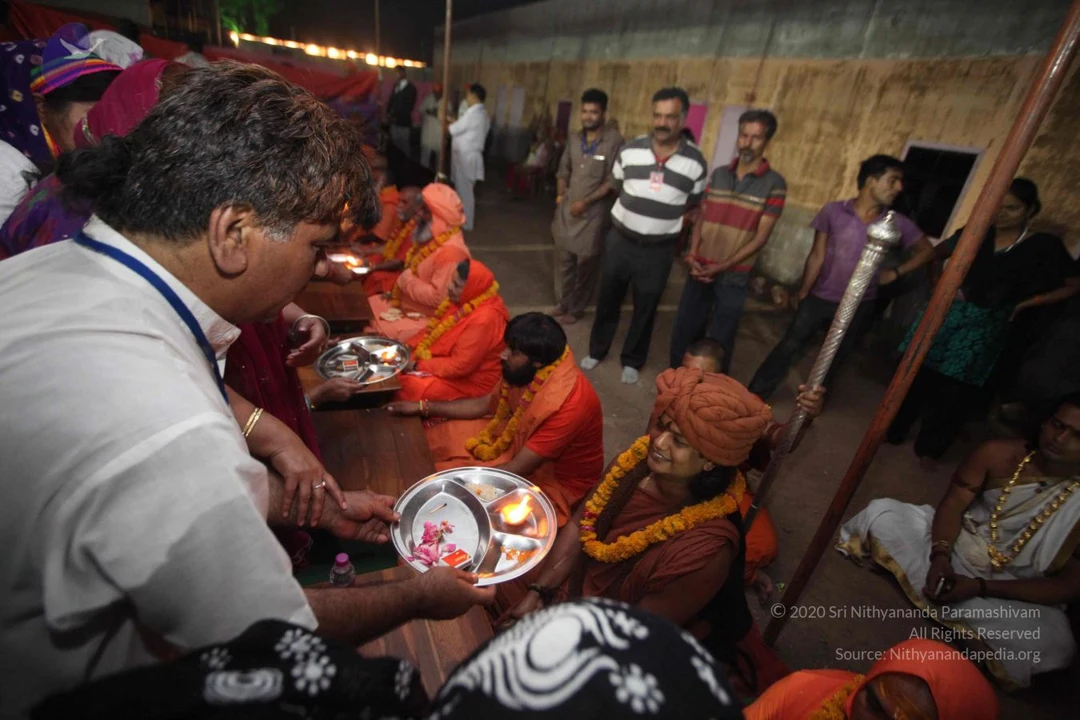
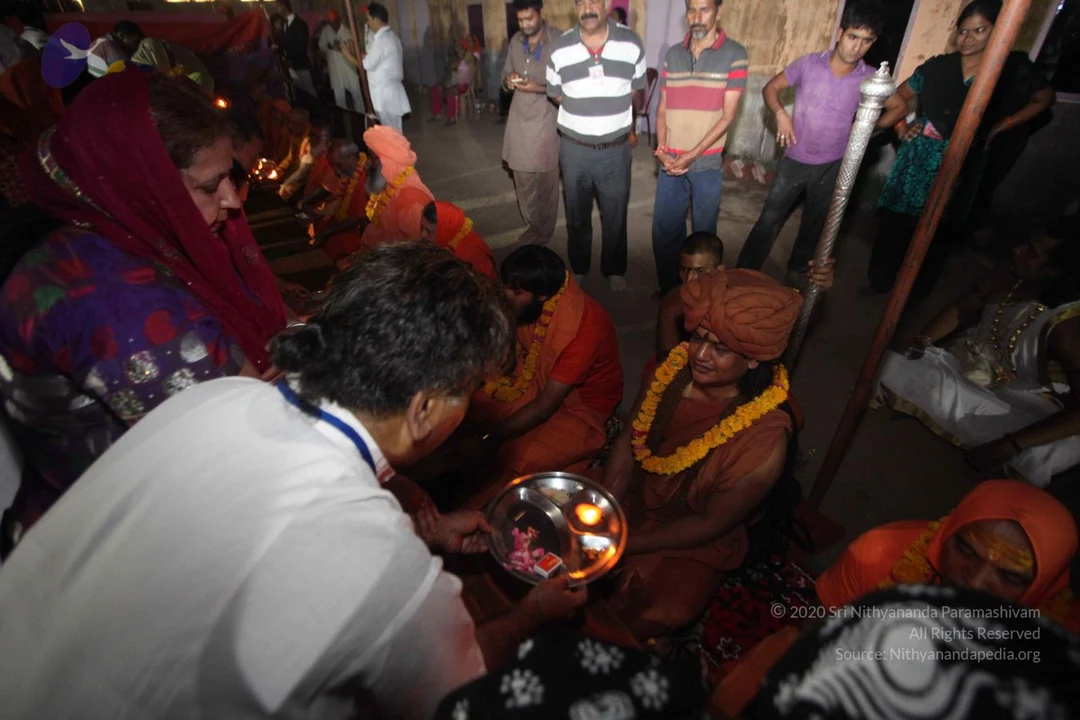
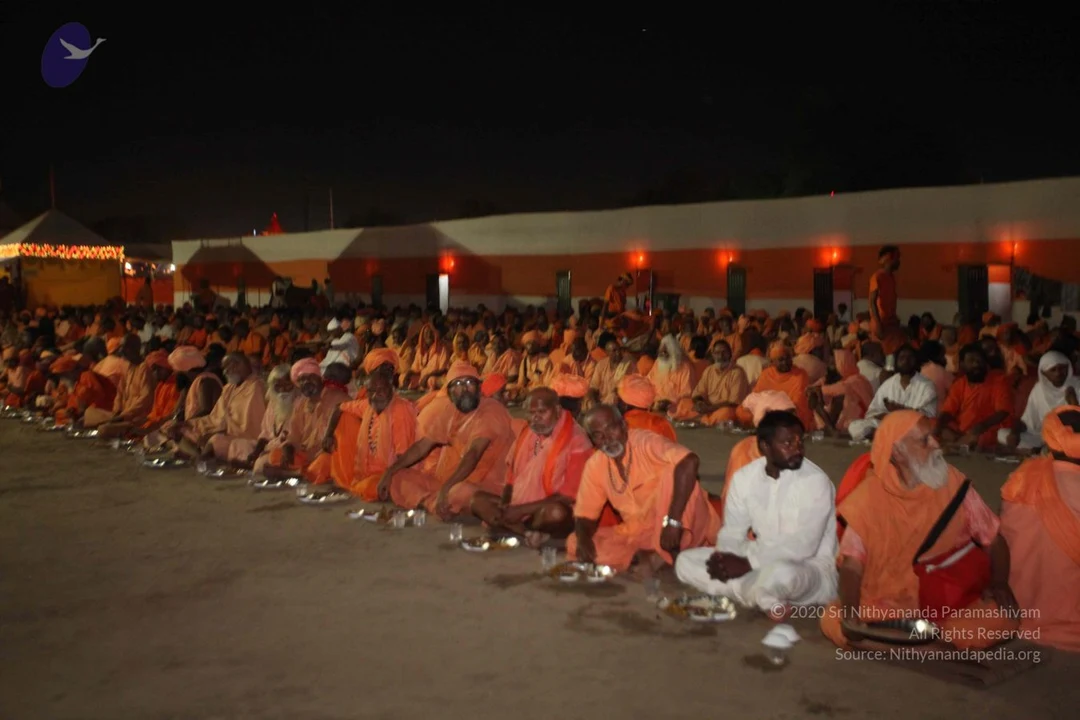
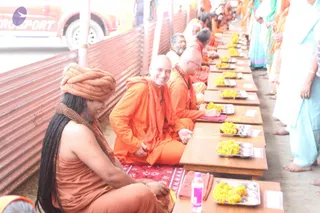
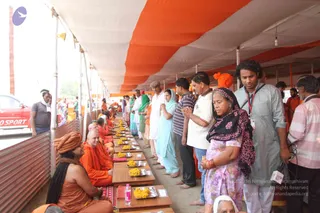
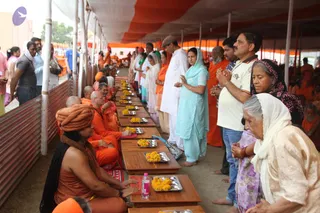
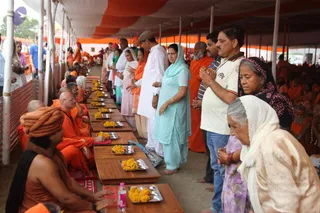
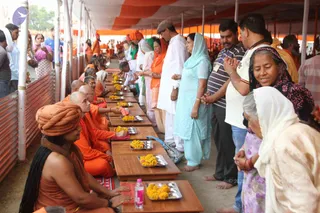
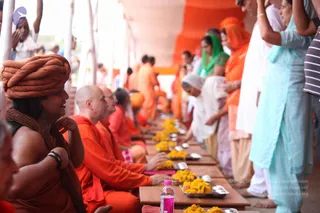
A photograph of a large seated gathering under a white and orange-striped tent canopy with orange-painted poles. Hundreds of people sit cross-legged on bare ground, most dressed in saffron-orange robes and headwear, with some in white or cream shawls. Many hold or sit before silver metal plates and small bowls. A man standing on a raised area near the right pole wears an orange turban. Seated devotees on the front left include bearded men with rudraksha malas and folded hands. An older woman in wire-rimmed glasses sits in the lower right wrapped in orange.A photograph of a long covered hall where saffron-robed sannyasis sit cross-legged on mats behind low wooden tables, each set with a metal tray of marigold garlands and a small pink cloth. In the foreground a figure with long dreadlocks, a rust-orange turban and a wooden bead mala sits smiling. Beside him a bald man in orange robes with a red cloth over his shoulder smiles and leans toward a tray. Behind them more saffron-clad monks sit in rows, and on the right standing devotees in pale blue and teal clothing watch barefoot. A red vehicle and corrugated metal wall form the backdrop.A long open-sided tent with orange and white canvas overhead shows a line of seated saffron-robed sadhus and monastics at low wooden tables, each with a metal plate of marigold flowers and offerings. Several seated figures wear orange robes and turbans, one with a long braided plait. Standing devotees line the right, including a woman in a black and pink patterned shawl and a man in a grey kurta with an ID lanyard. Some devotees have hands folded in prayer. Metal railings and a red vehicle appear at the left edge.A long open-sided tent with orange and white canopy and white poles hosts an annadan meal line. Along low wooden tables, orange-robed sadhus and devotees sit on the left, each before a steel thali heaped with marigold garlands and a water bottle. On the right, standing and kneeling devotees with folded hands, including elderly women in white saris and headscarves, a man in a white polo shirt, and a woman in a light turquoise salwar kameez, face the tables. A bald man in white stands at center. In the foreground, a sadhu in an orange turban and saffron robe sits at the table, wearing rudraksha beads, his long dark hair falling down his back. A corrugated metal fence runs along the left edge.A photograph of an outdoor annadan or food-service tent under an orange and white striped canopy. Rows of wooden benches hold stainless steel thali trays heaped with yellow marigold garlands and bright orange-yellow flowers. Saffron-robed sannyasis sit at the left, one wearing an orange turban and a beaded brown shawl, while many devotees stand in rows on the right with hands folded in namaste. Standing devotees include a man in a white kurta and grey cap, a woman in a light turquoise salwar kameez with a dupatta, a man in a white polo shirt, and older women in white and floral headscarves. Water bottles sit among the trays and bags are on the ground. The scene shows the folded-hands waiting before a meal.Outdoor annadan scene under a striped orange-and-white tent canopy with white poles. Seated saffron-robed sadhus, one in an orange turban with a long braid and brown rudraksha-style beads, sit at low wooden tables serving steel plates heaped with yellow marigold garlands and food. Standing devotees in white kurtas, a turquoise salwar kameez, a striped polo, and headscarves queue at the tables, several with hands folded. Partly visible saffron-clad figures are behind the line. No identifiable a person is visible; the clothing and turban are ordinary sannyasi attire.

bandara-nirvani-akhada2

31 photosSource gallery
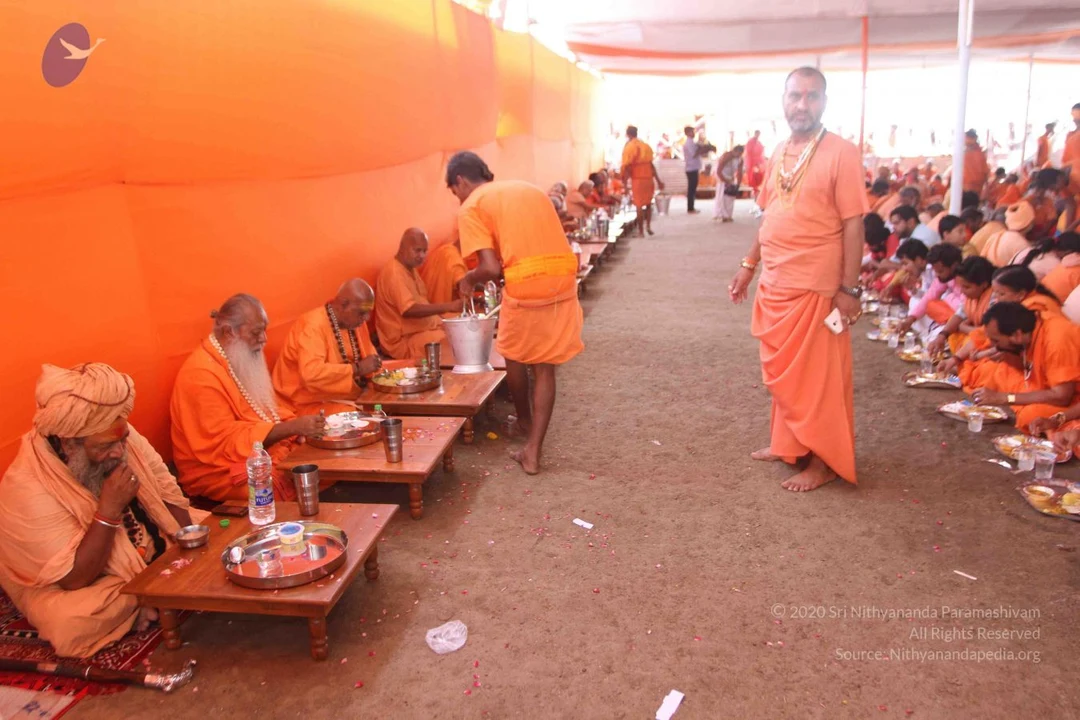
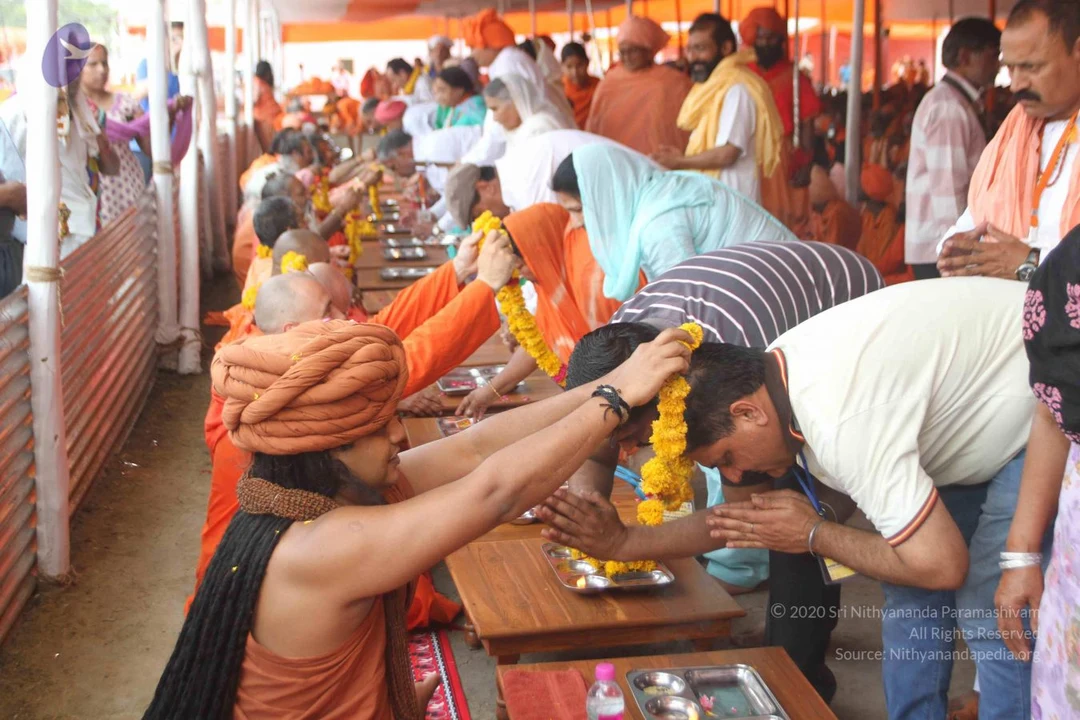
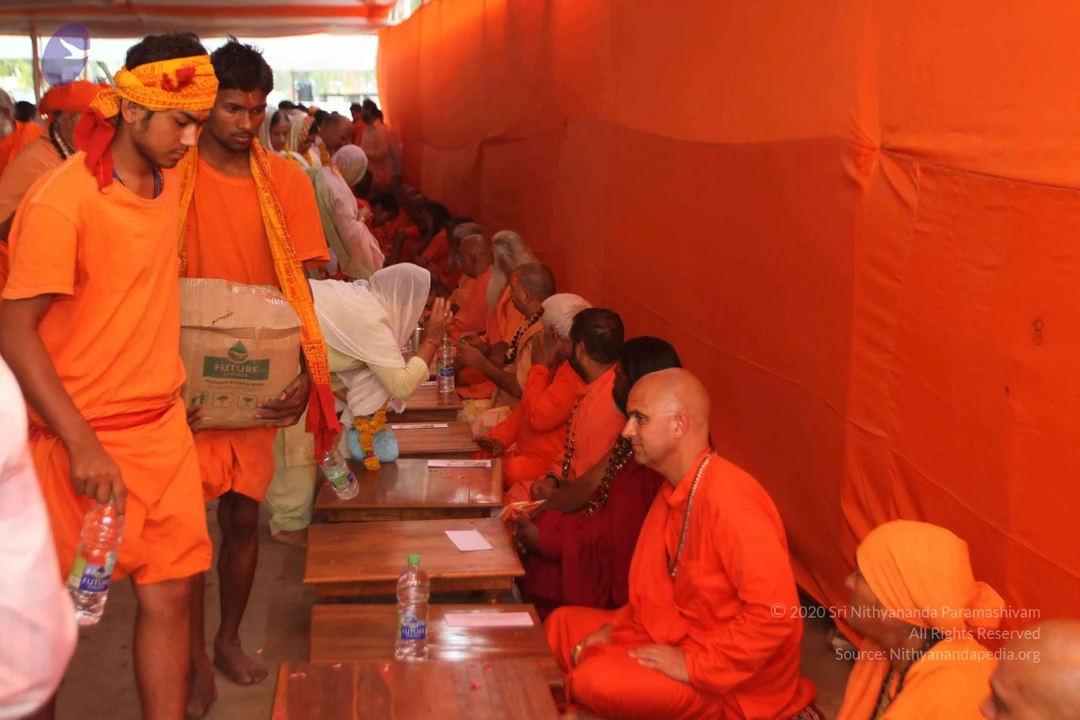
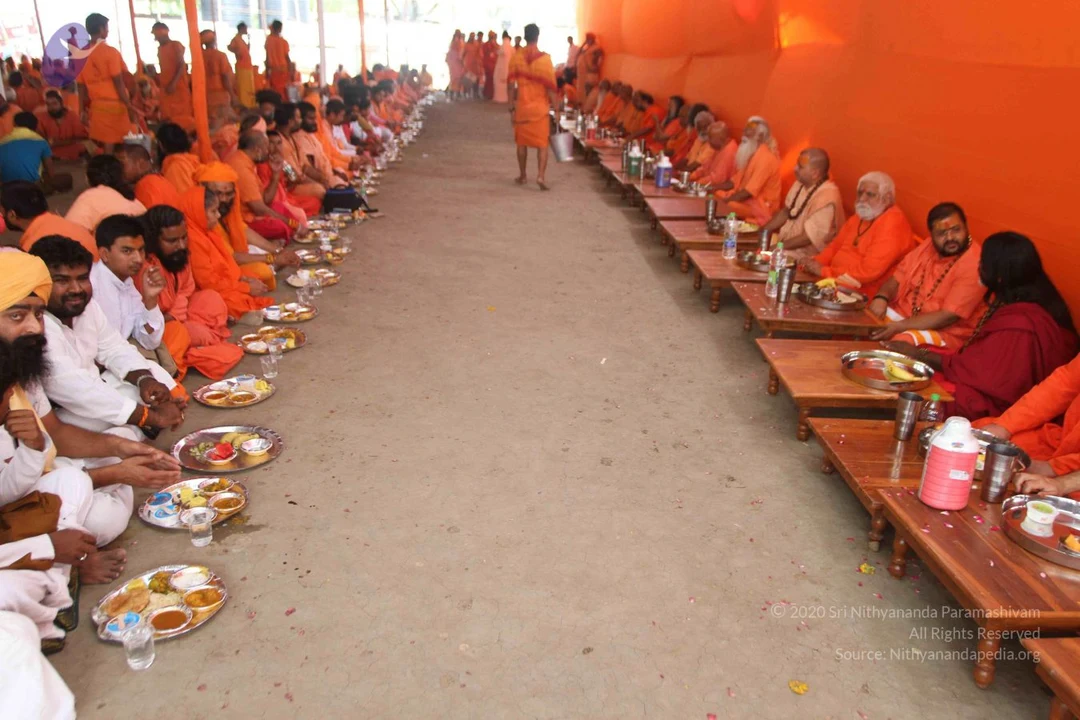
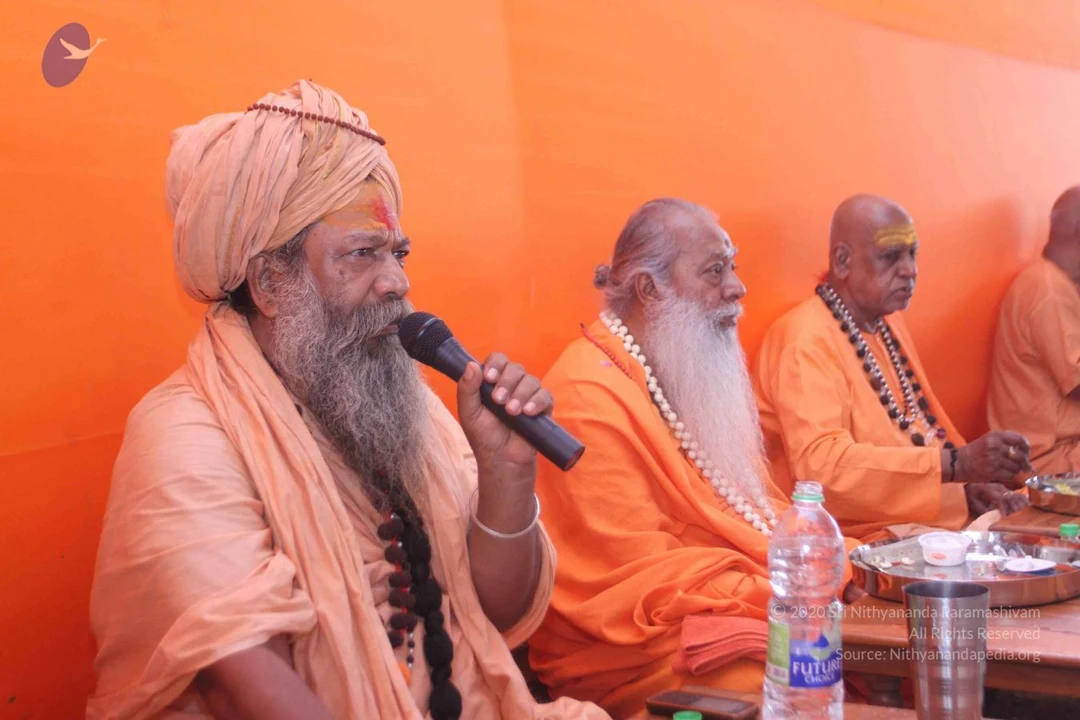
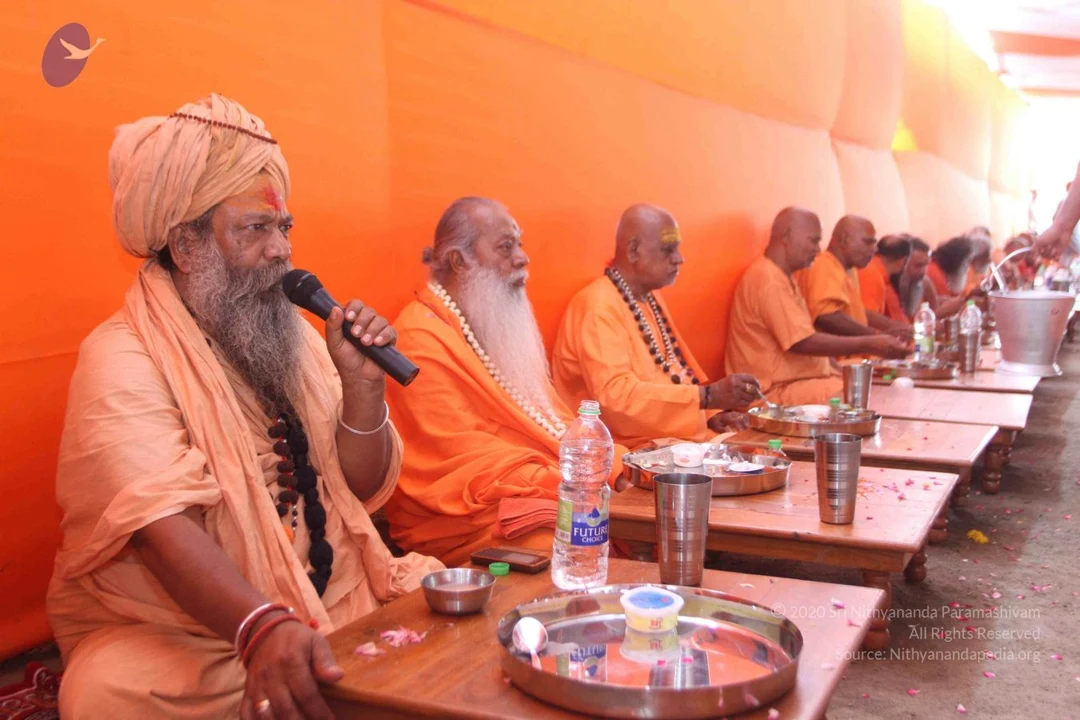
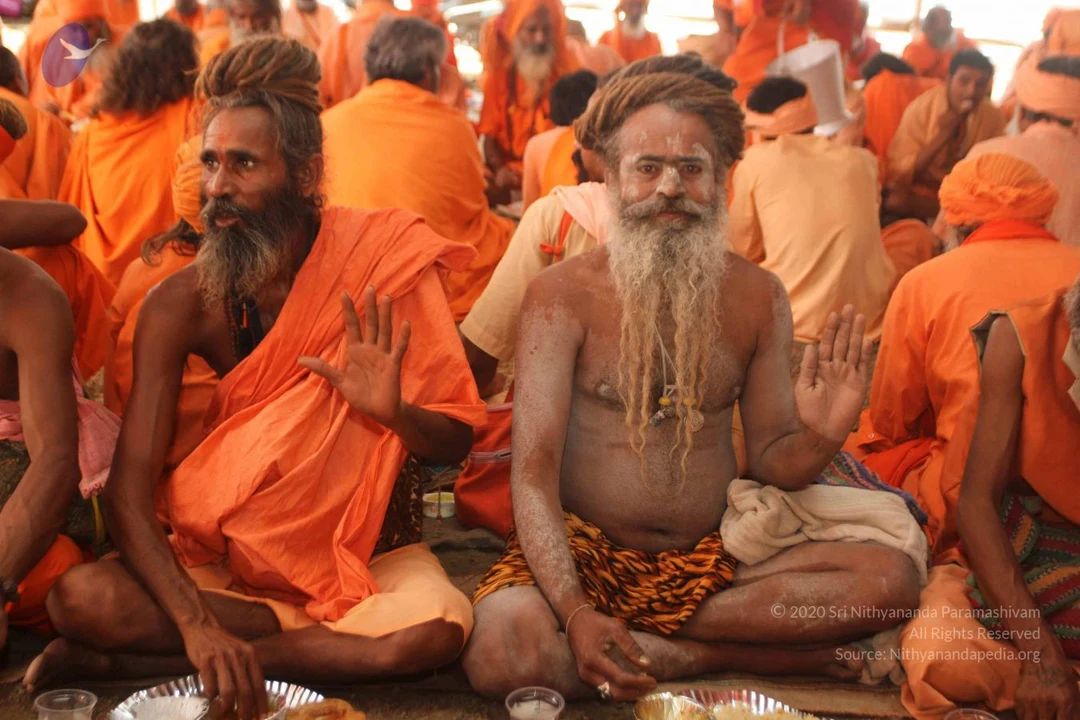
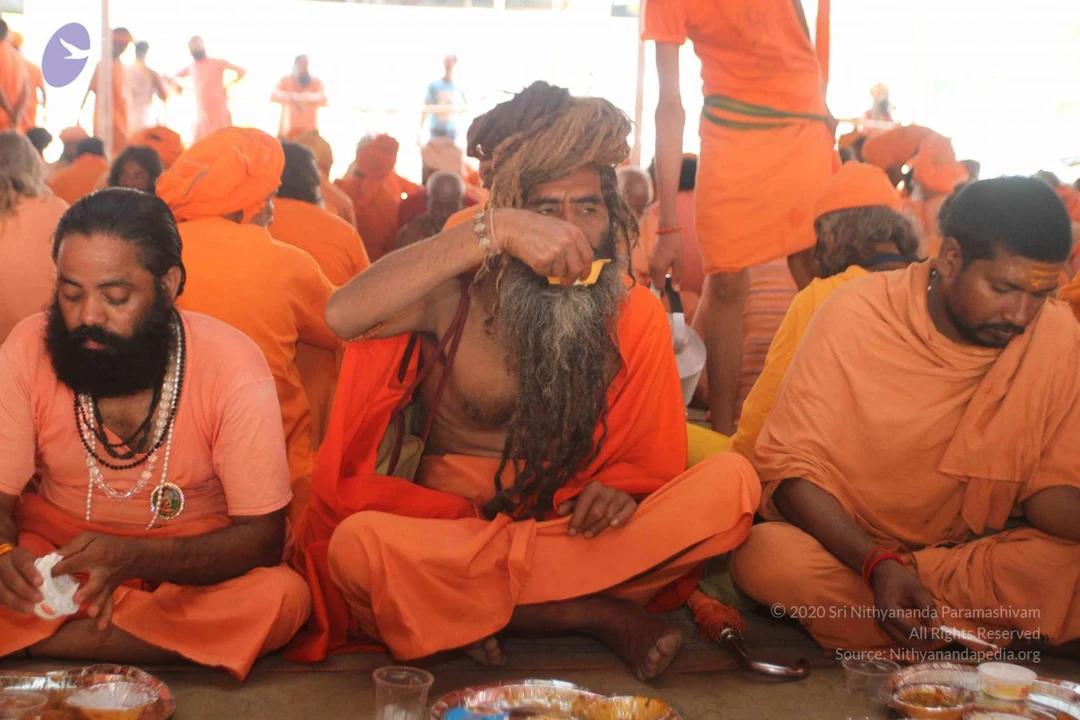
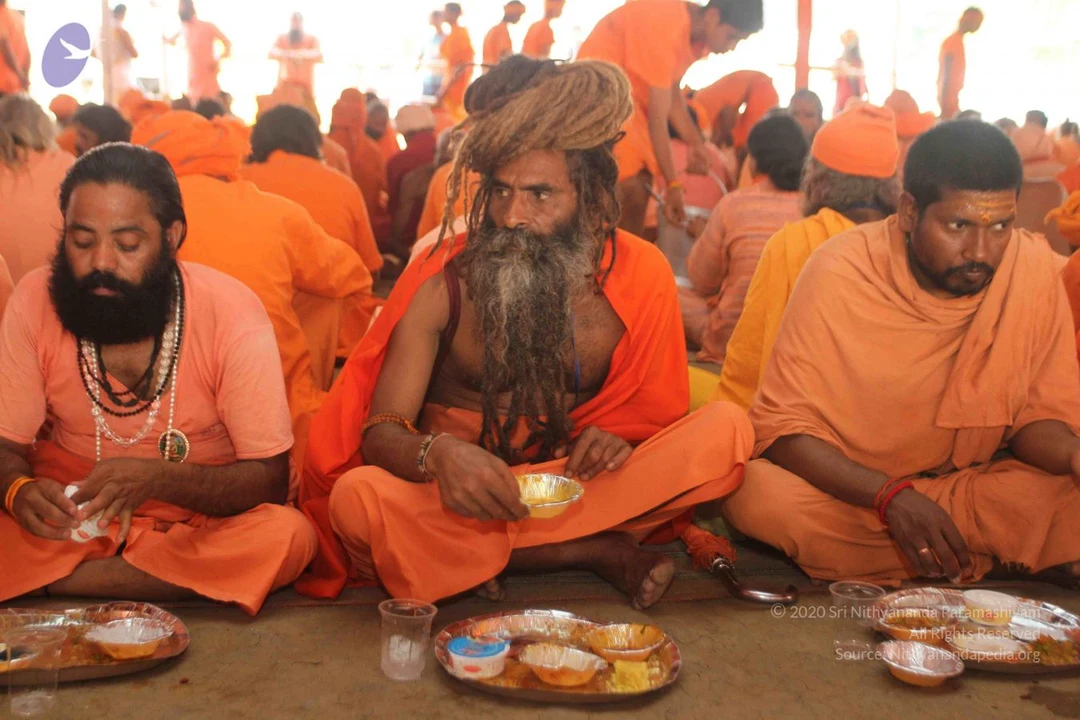
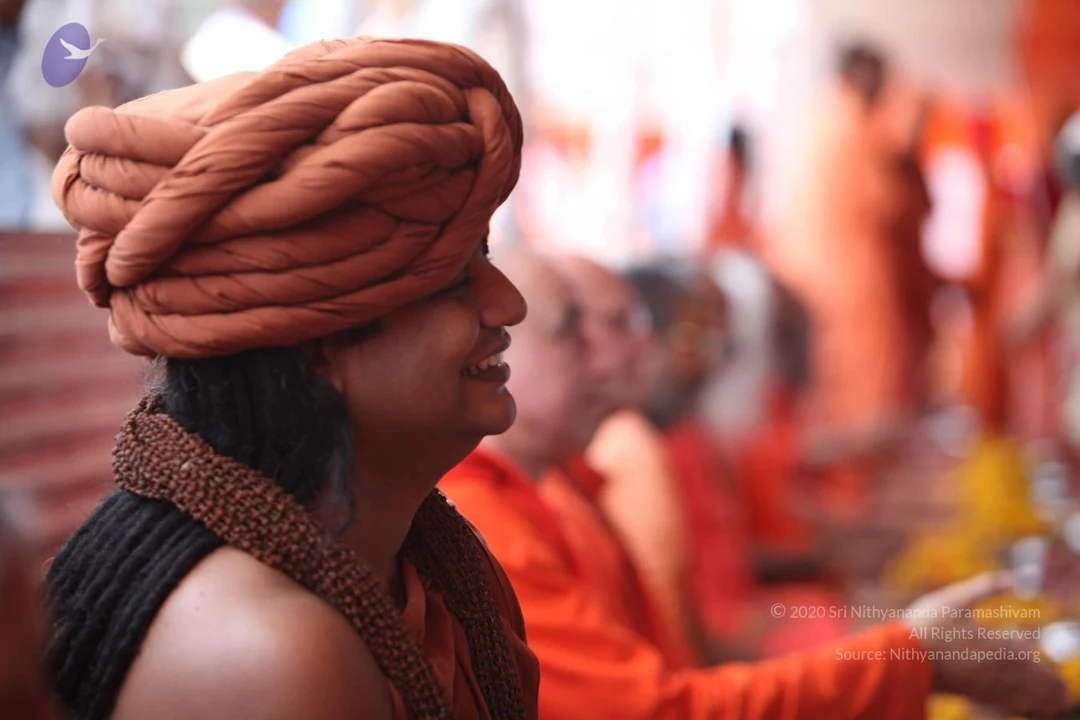
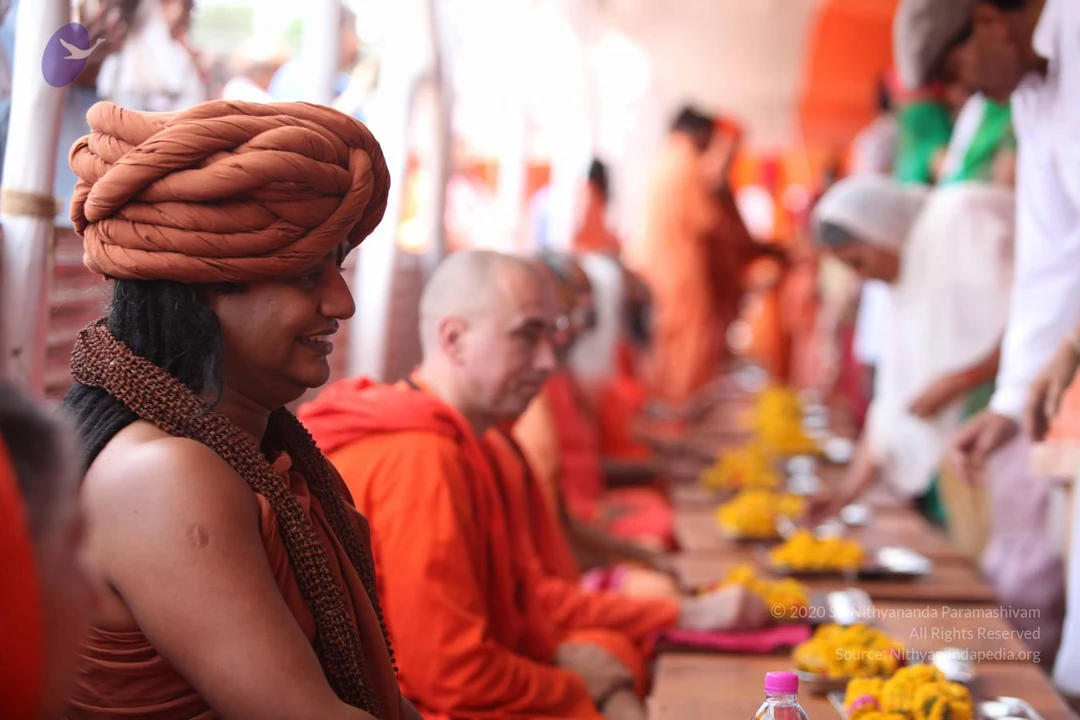
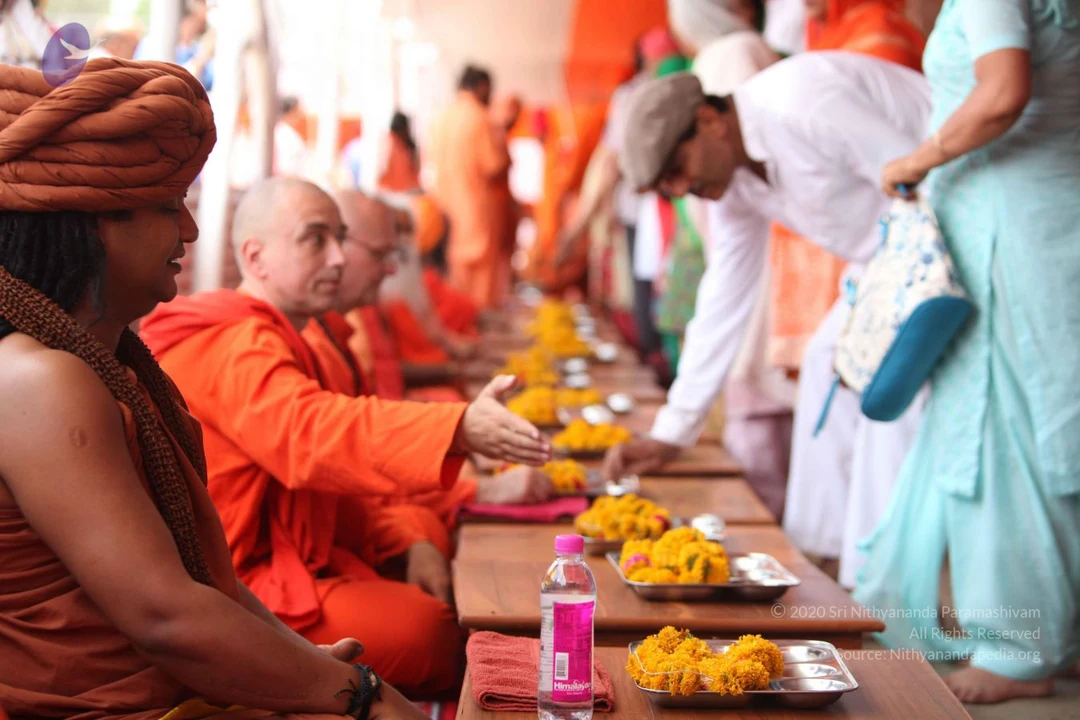
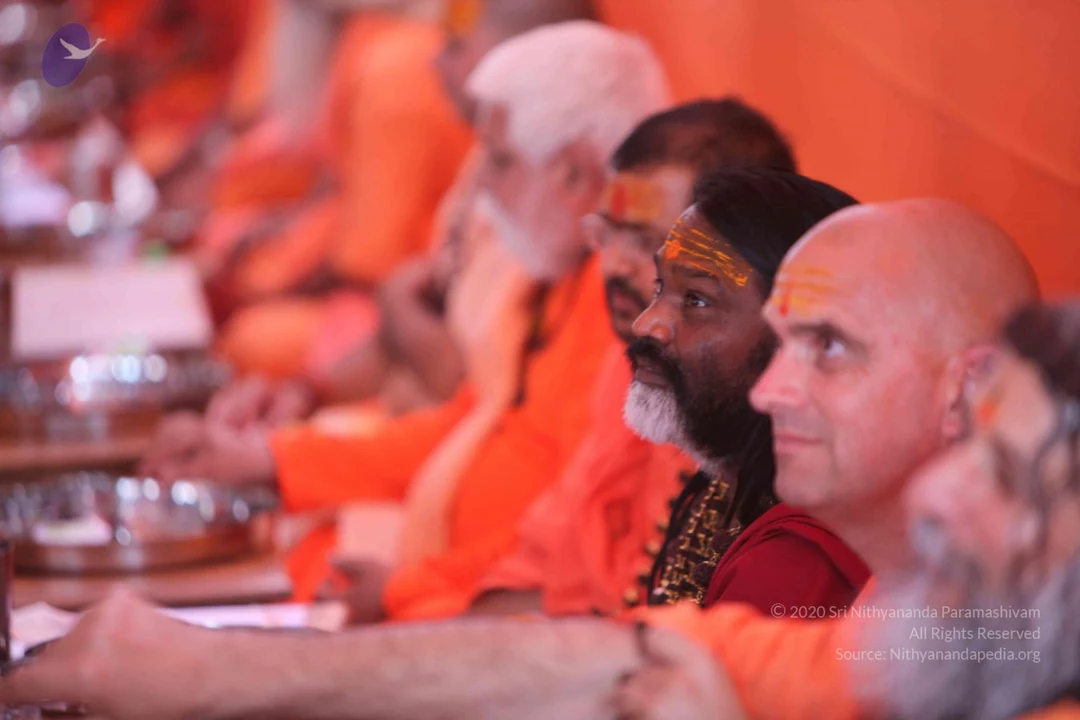
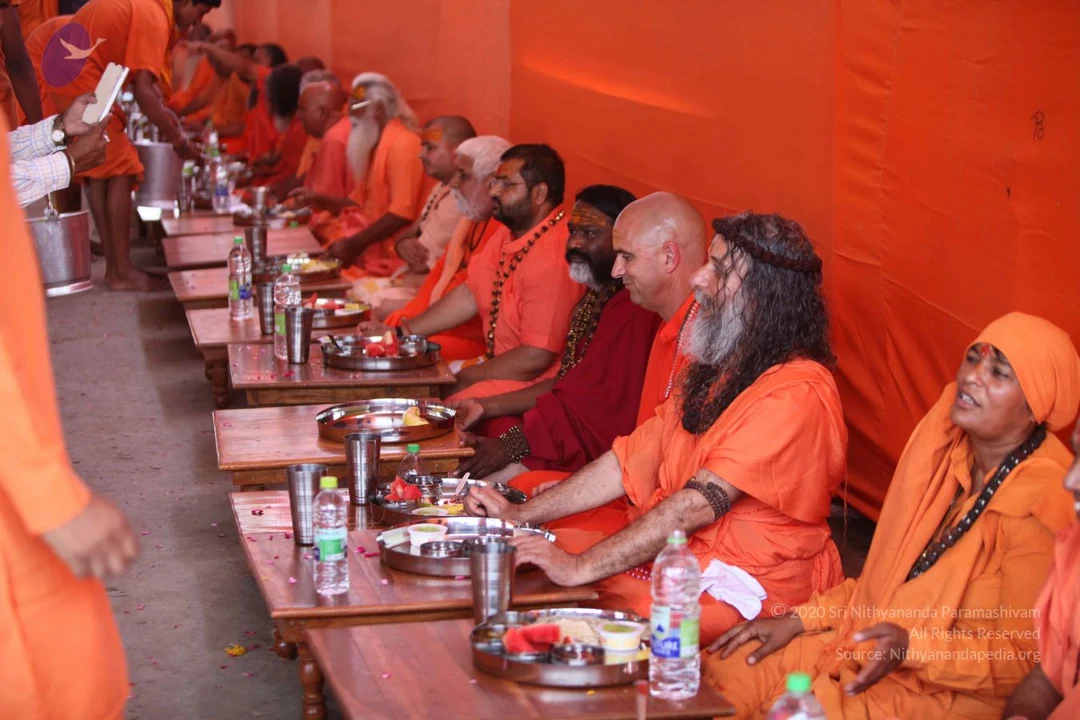
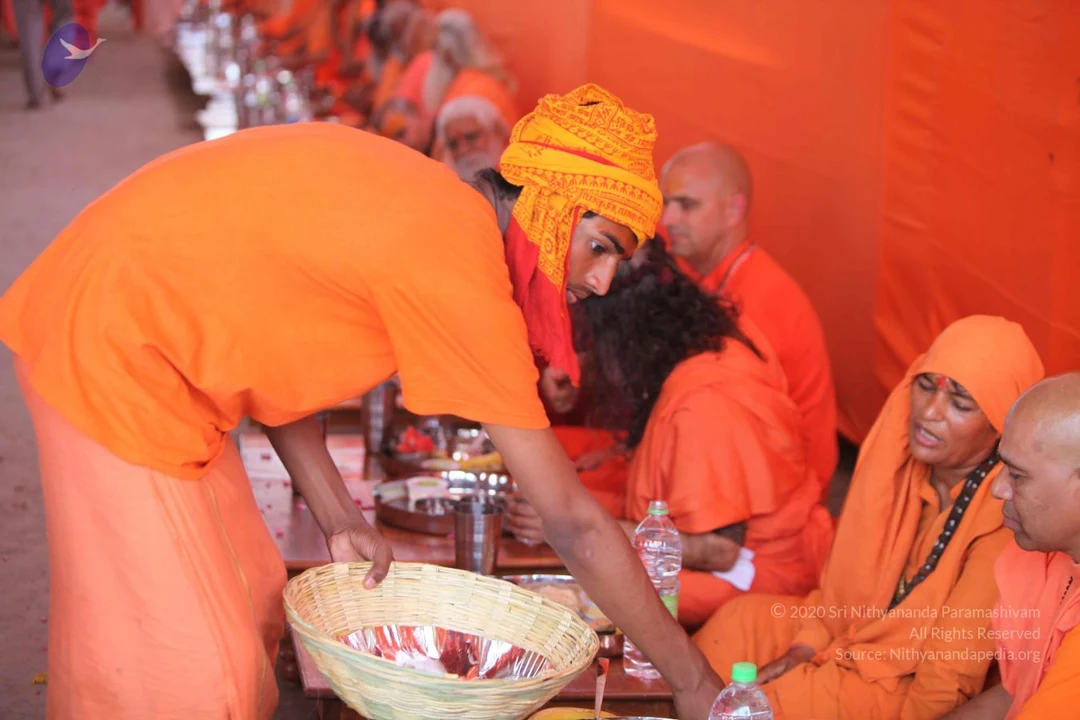
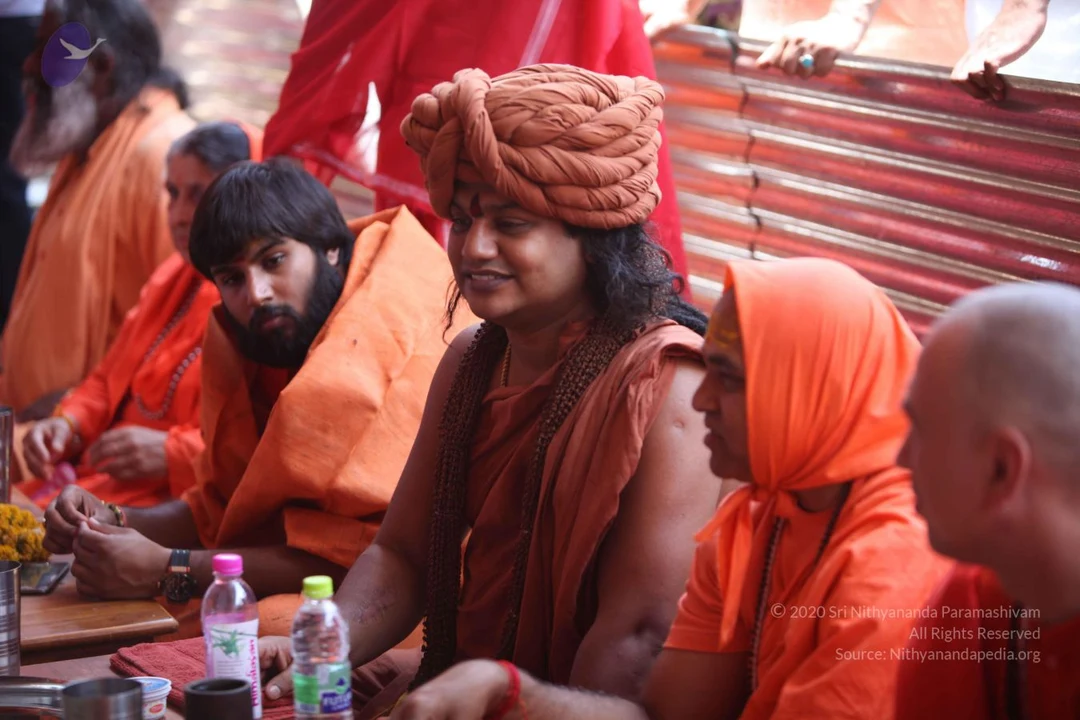
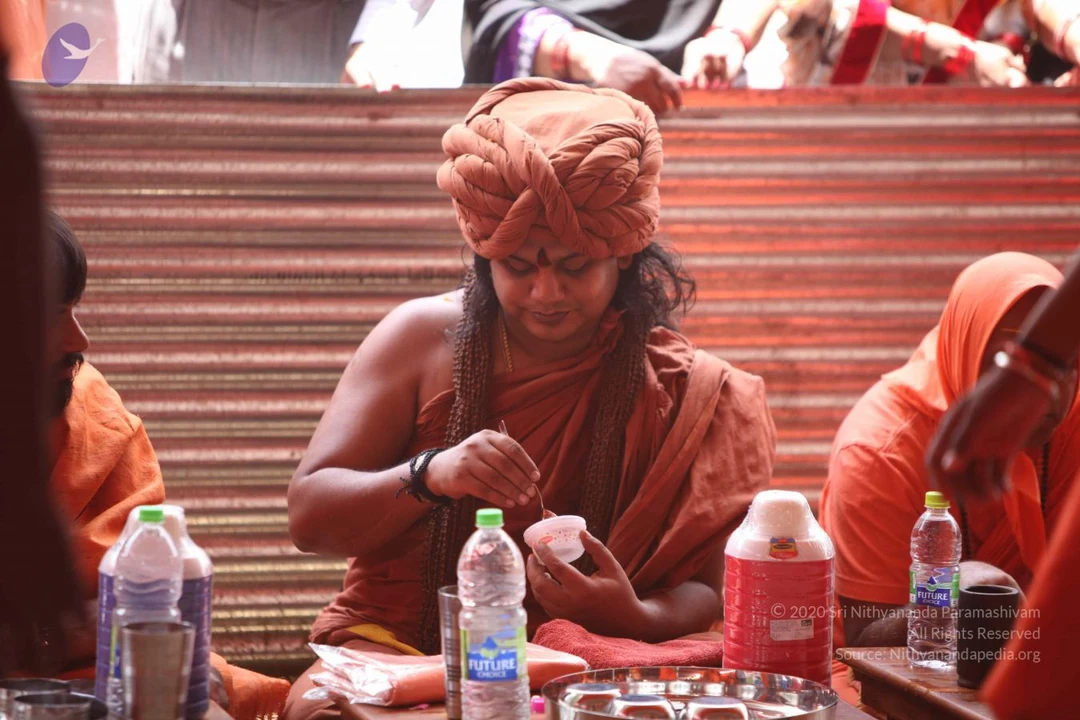
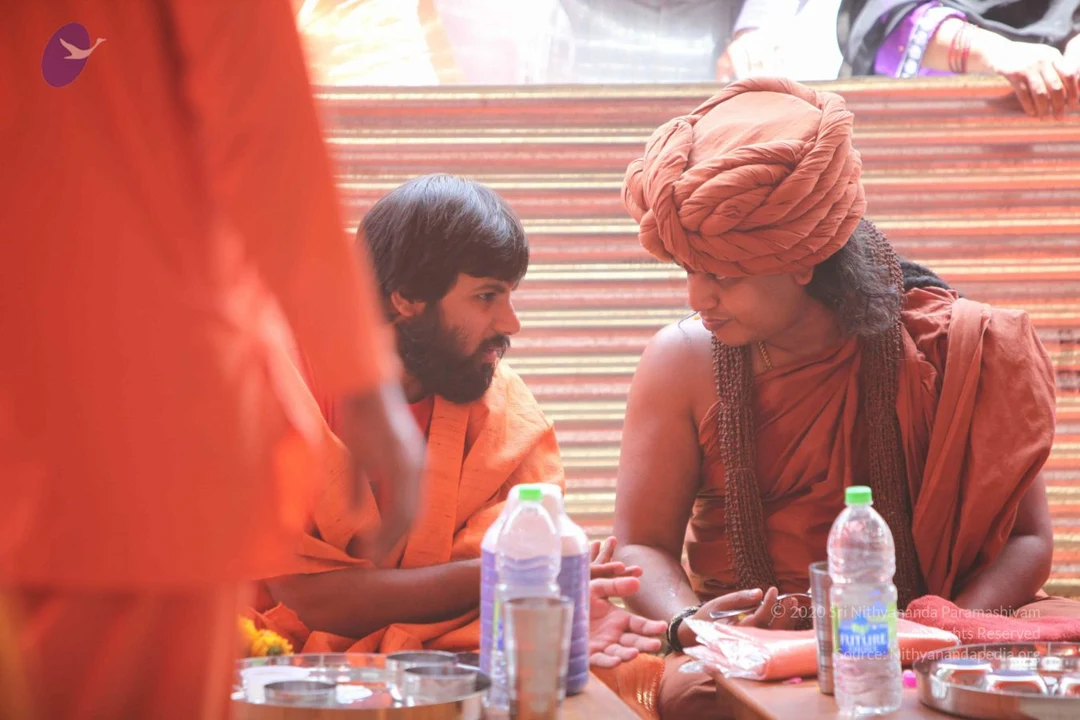
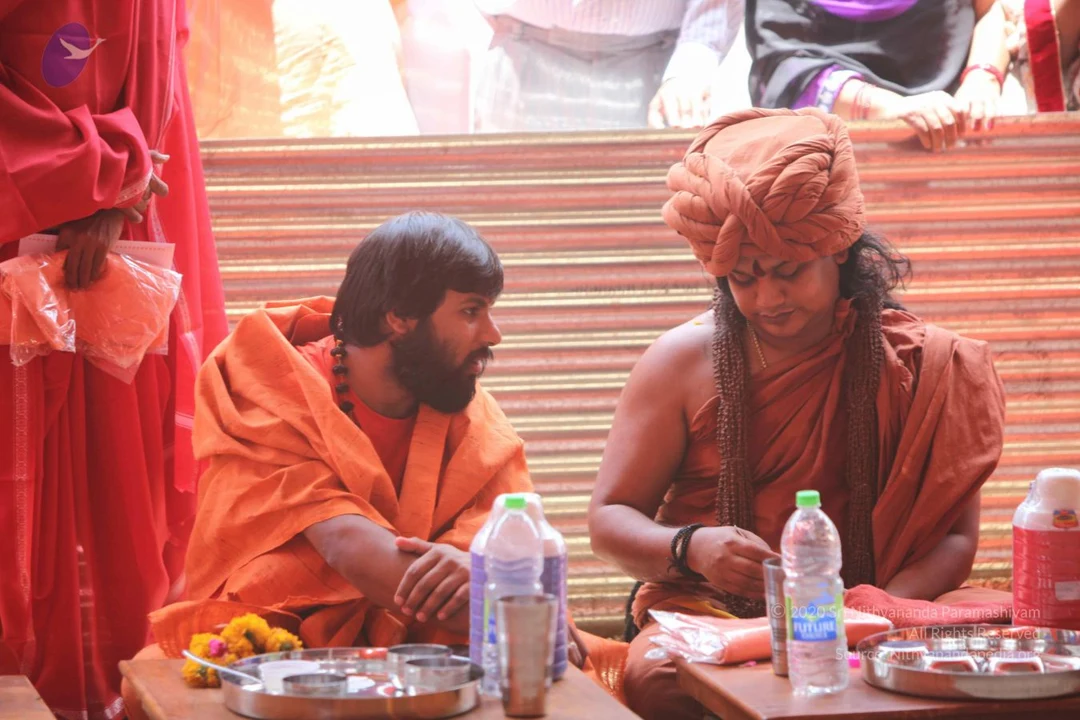
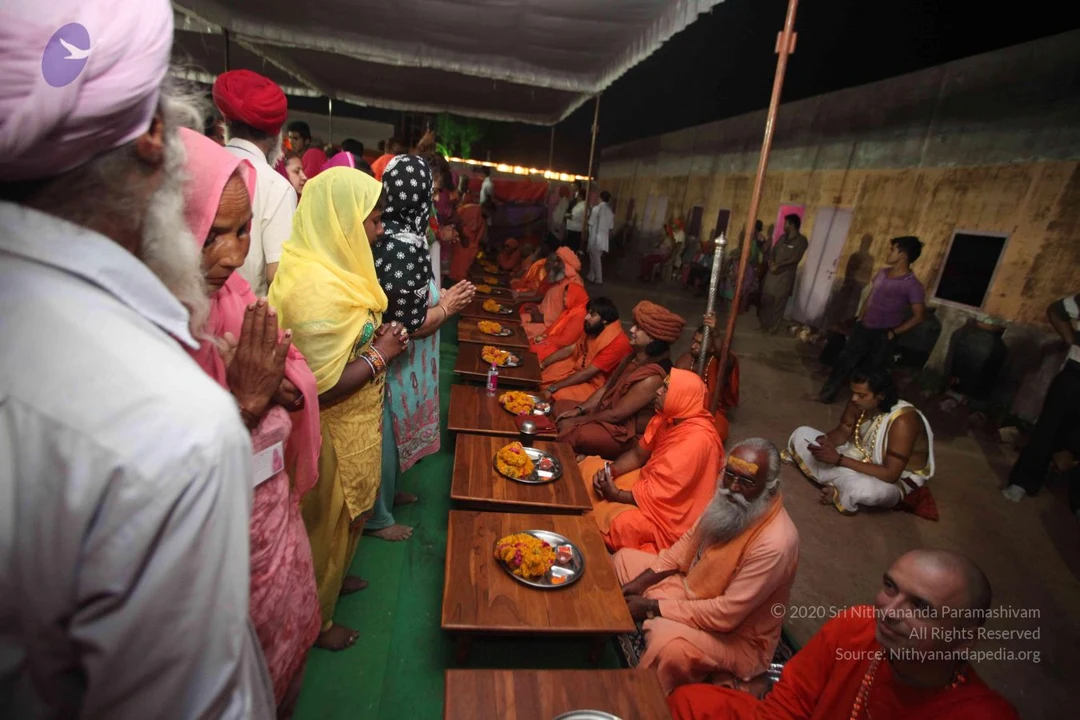
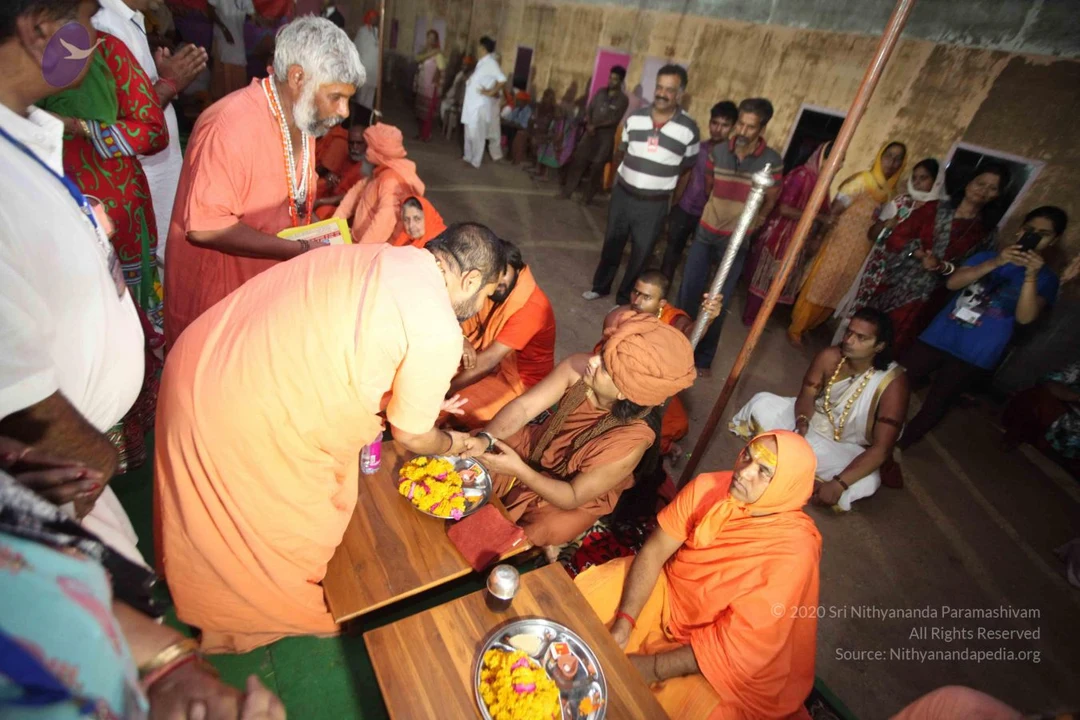
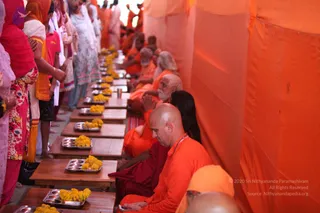
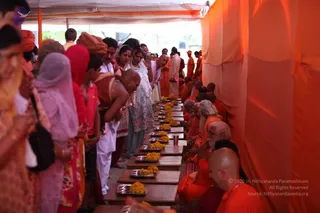
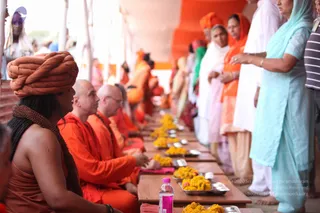
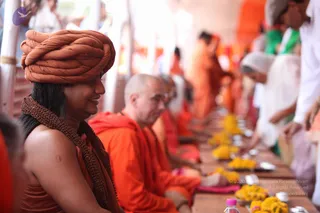
A long orange-draped tent hall with rows of low wooden tables set with steel plates of yellow marigold garlands. Seated on the floor in orange and saffron robes are sannyasis and monastics, several with white beards and shaved heads, and a bald man in orange with a rudraksha mala in the foreground. Standing devotees line the left edge in white, pink and red clothing with orange shawls, some with hands folded in prayer. Other orange-robed figures stand in the background. The setting looks like a ceremonial meal or puja gathering in a temporary tent.A photograph inside an orange tent set up for an annadan-style meal service. Long wooden tables run down the frame, each holding a steel plate heaped with marigold flowers and a steel tumbler. On the left, a line of devotees in saris, salwar kameez and headscarves stands with hands folded. On the right, saffron-robed sadhus and monks sit cross-legged at the tables, several with white or grey beards and shaved heads, while a bald man in an orange robe bows low in the foreground. The tent walls are orange fabric lit warmly from the side.A photograph of an outdoor meal service under a tent, with rows of low wooden tables set with steel plates and marigold garlands. In the foreground a long-haired sadhu in a rust-orange turban, orange wrap and wooden rudraksha-style mala sits at the table edge. Beside him, shaved-headed monks in saffron-orange robes sit in a line, one reaching toward a plate. Women in white, orange and pale-blue saris and salwar stand along the right, one in aqua salwar kameez gesturing toward the table. Plastic water bottles and yellow marigold heaps decorate the tables.Outdoor ritual scene of a long anna daan style serving line under a white tent. In the foreground, a person in an orange-brown turban and rudraksha mala sits at left, smiling and looking to the side. Beside them, shaved-headed sannyasis in saffron-orange robes sit at low wooden tables, eating from metal plates and reaching toward platters of marigold garlands and small steel bowls. Behind them, standing devotees in white, light blue and green salwar kameez and orange shawls lean forward along the row. A plastic water bottle and marigold garlands sit on the tables. Orange fabric hangs in the background.Close side profile of a smiling person in a rust-orange wrapped turban and a bare shoulder, wearing a thick brown rudraksha mala across the chest and long dark hair falling behind. Behind them, several people in orange and saffron robes sit in an out-of-focus row, with yellow flowers visible at the lower right edge. The warm orange palette dominates the scene.A seated row of saffron-clad sannyasis takes a meal at long wooden tables in an open tent. In the foreground a smiling woman wears a rust-orange turban, a dark rudraksha mala around her neck, and an orange-brown garment, and she looks off to the side. Beside her a bald monk in orange robes sits attentively. Behind them, orange-clad attendants and white-clad helpers in green-and-white sashes move along the line, serving food onto steel plates. Marigold garlands lie on the tables near water bottles and small bowls, and the background is bright and blurred.

Third Eye-initiation
129 photosSource gallery
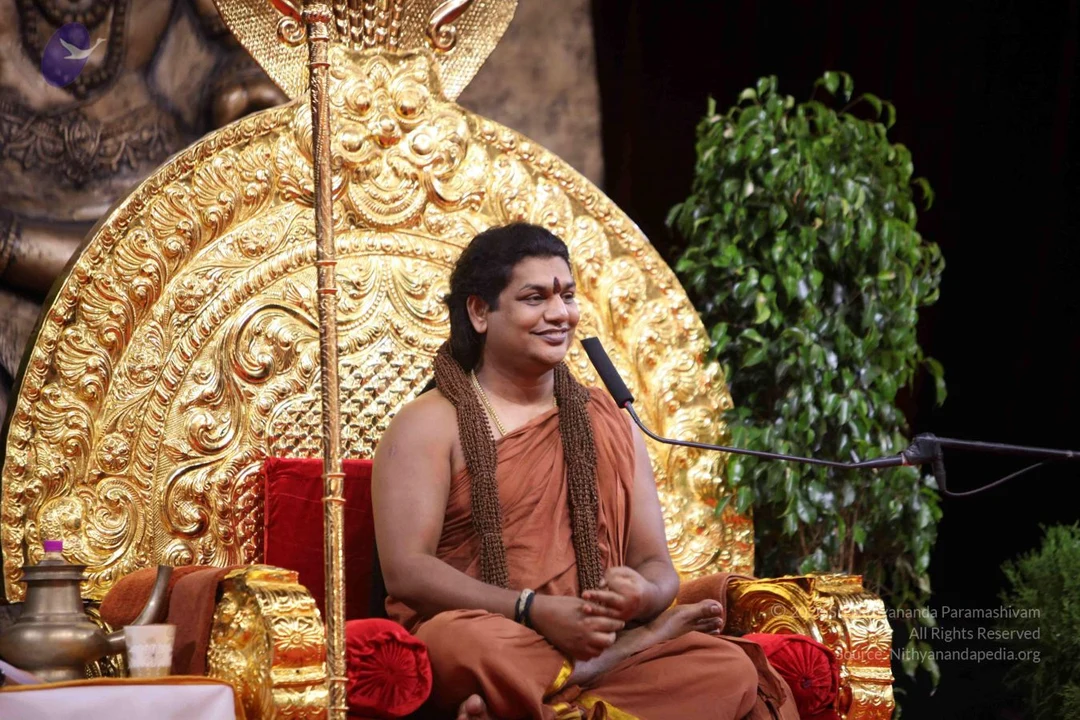
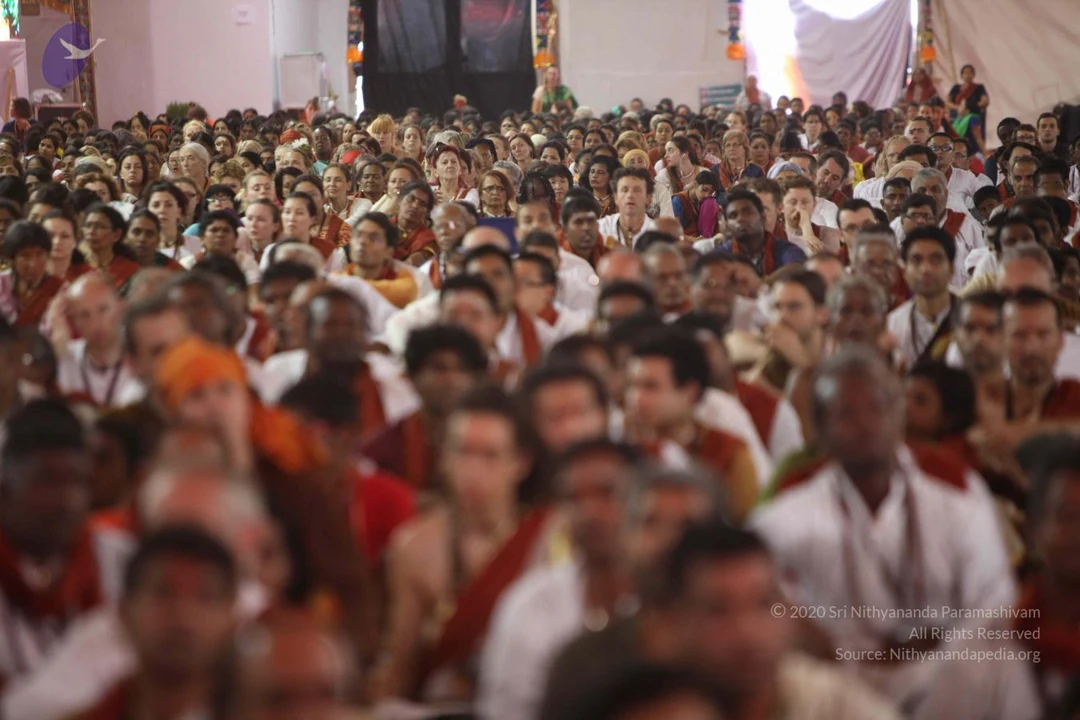
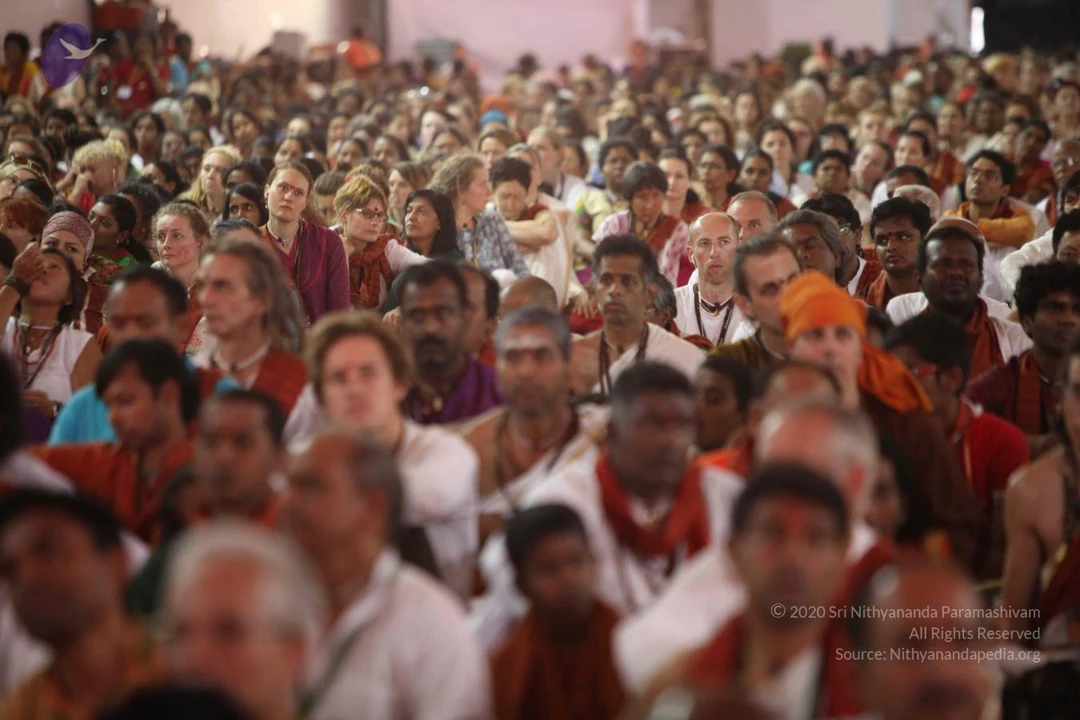
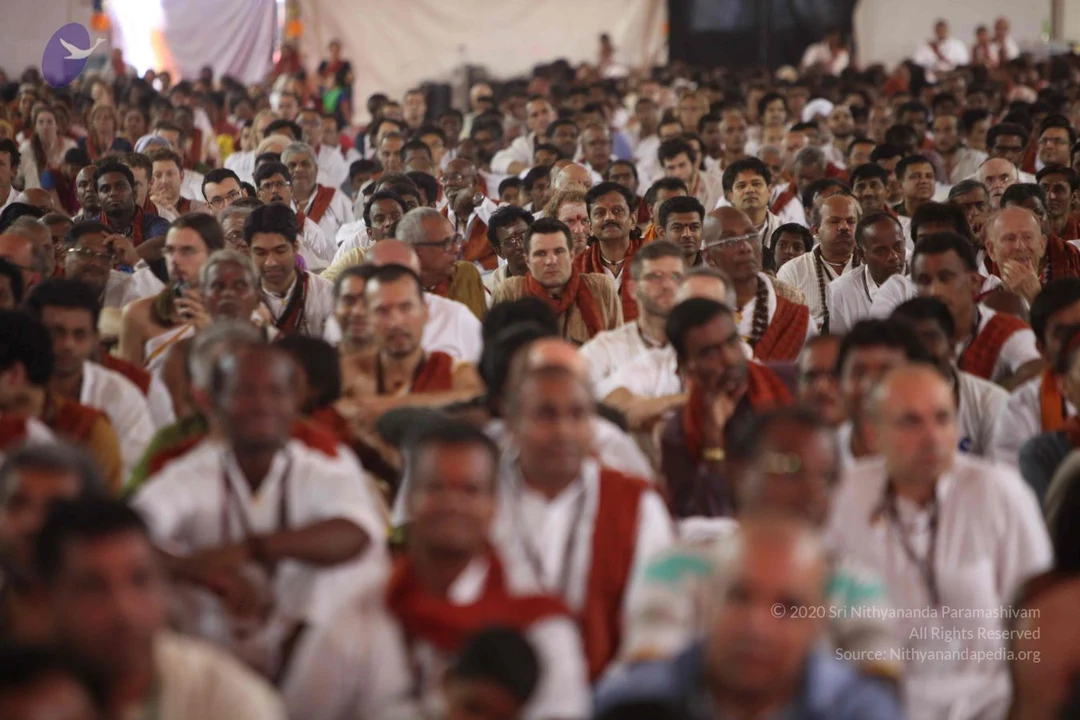
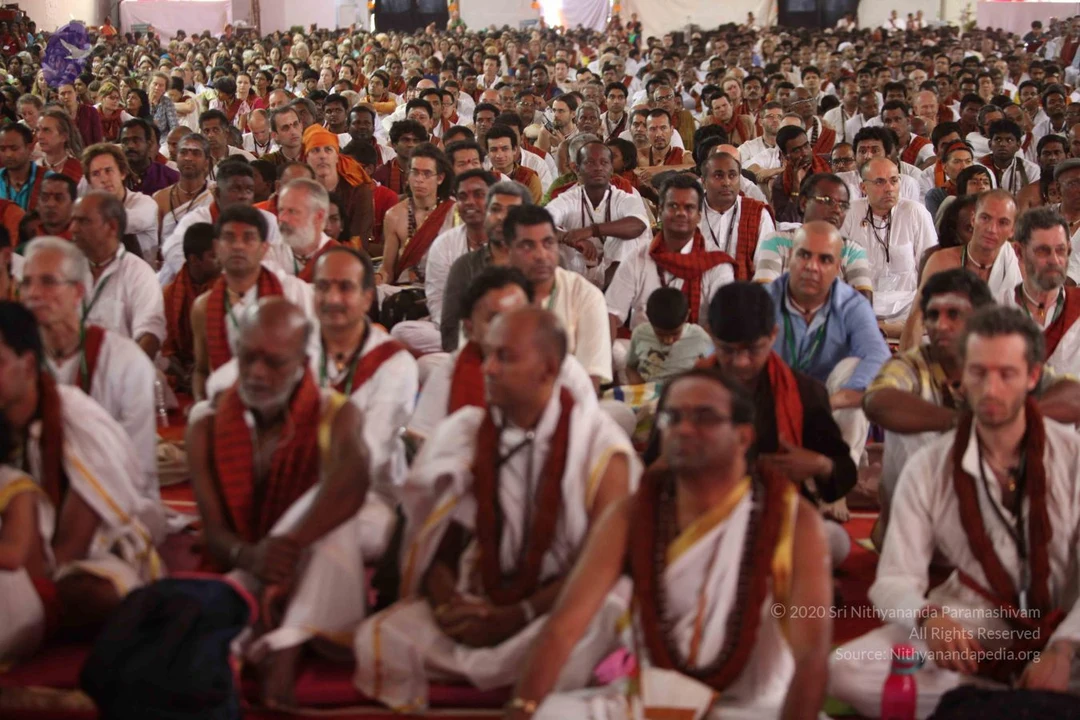
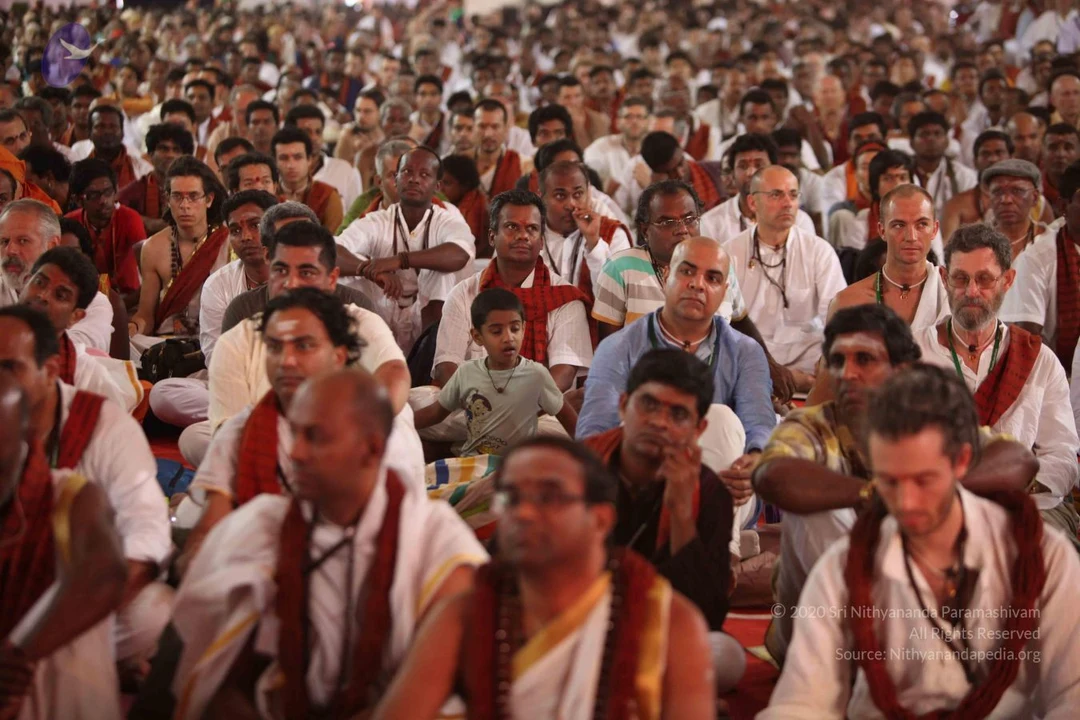
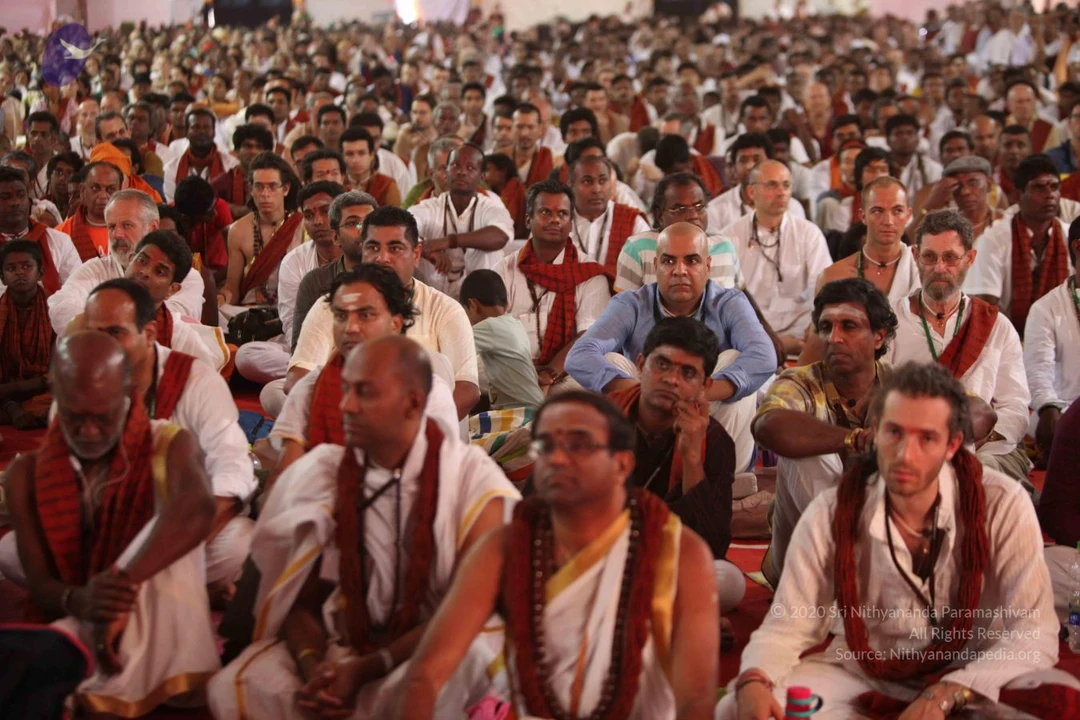
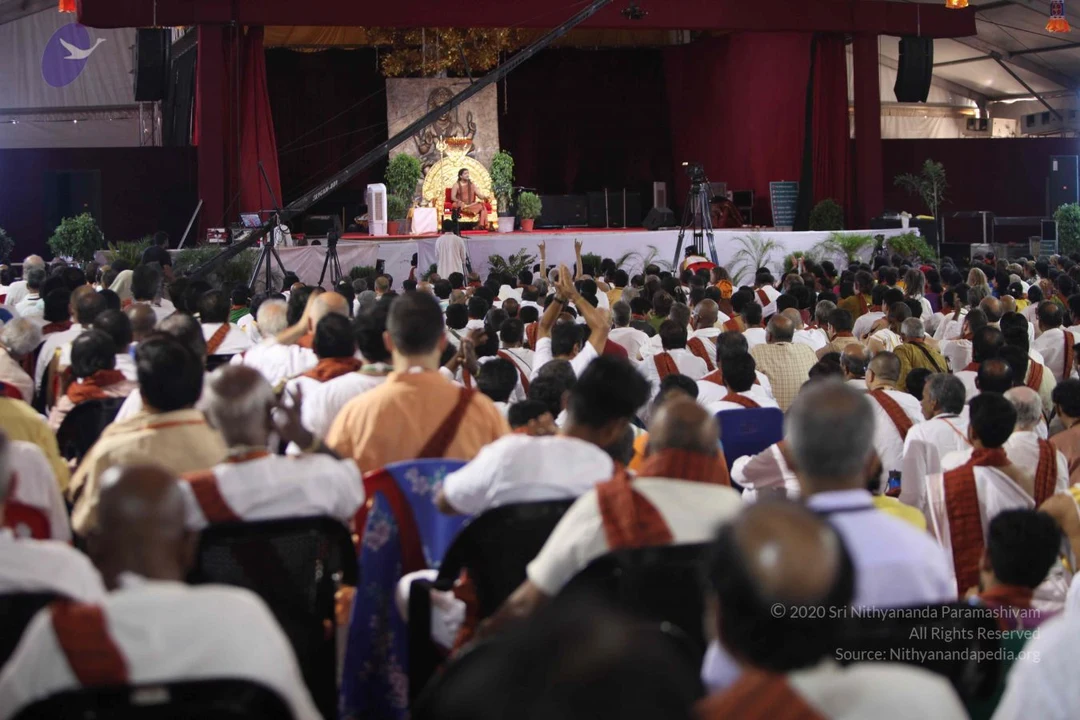
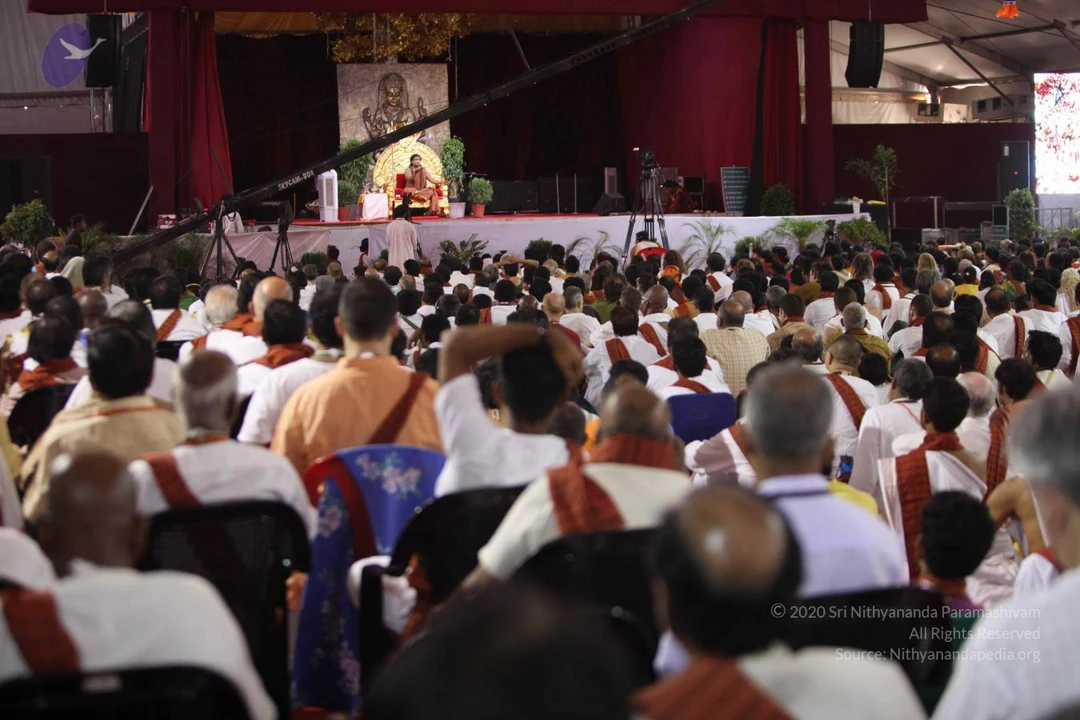
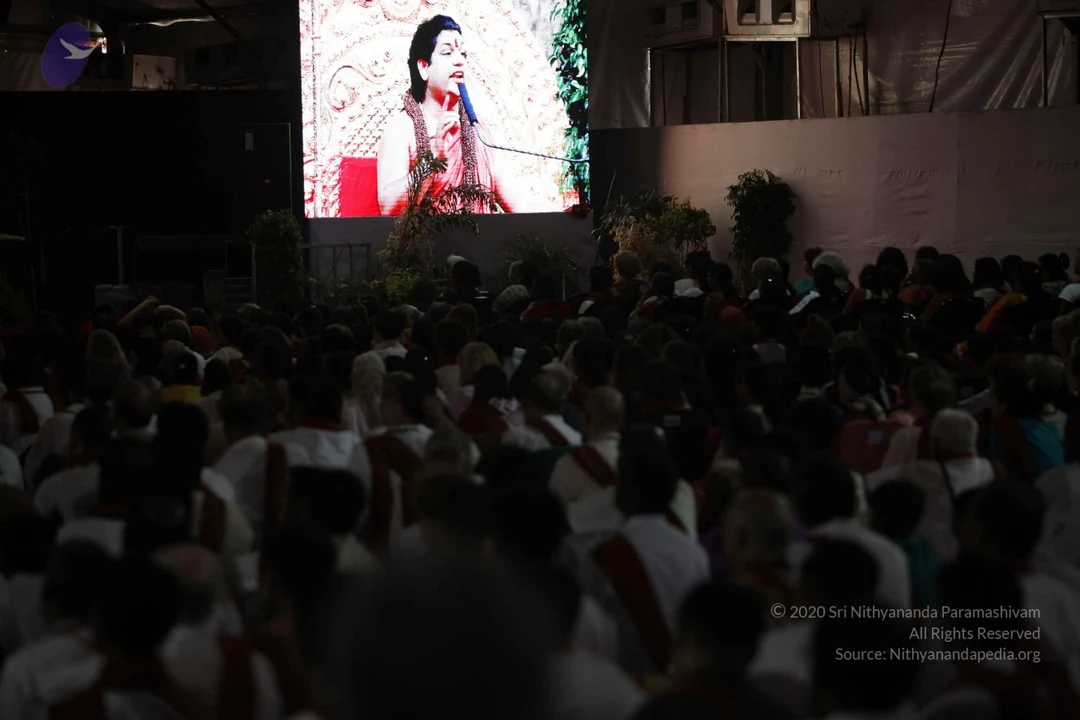
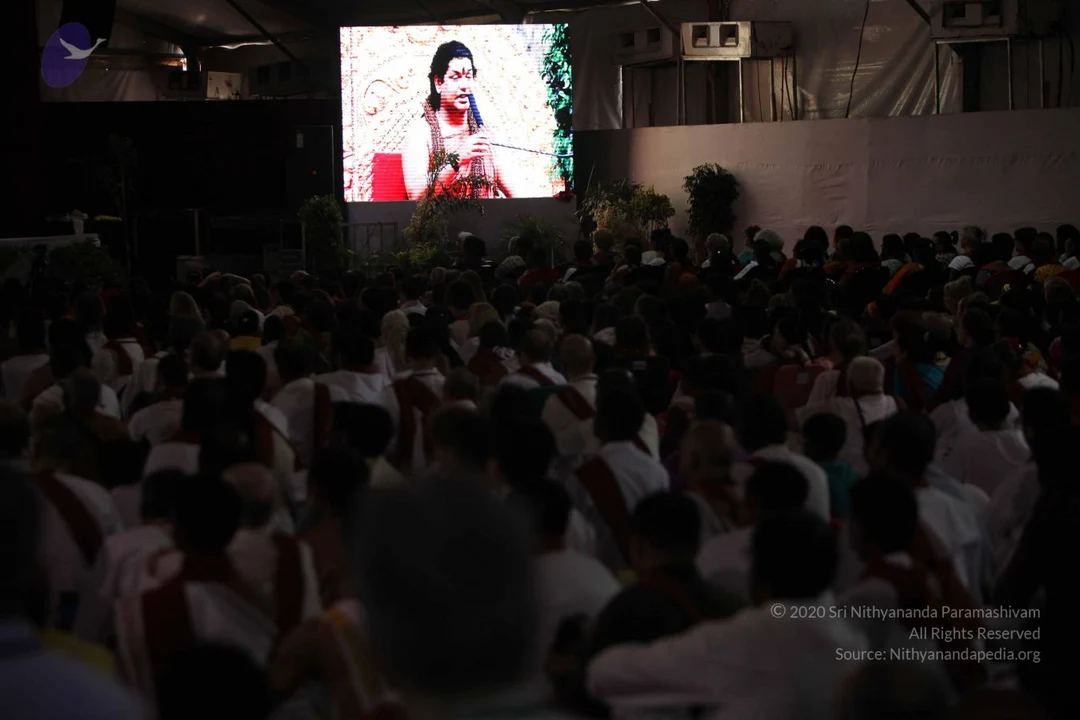
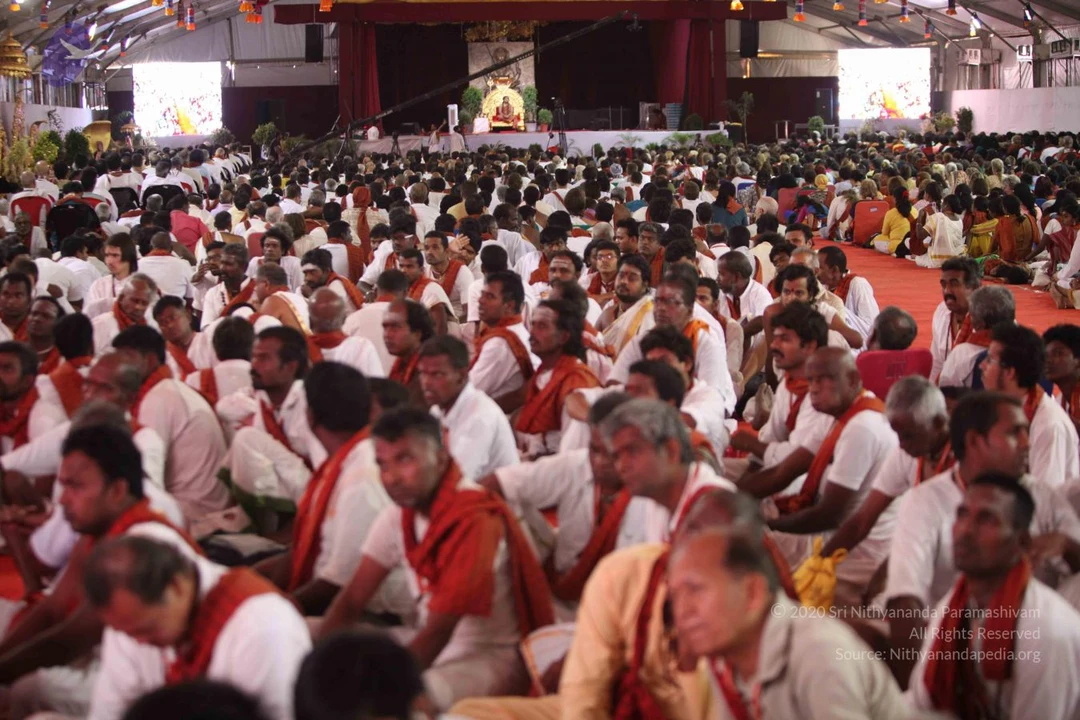
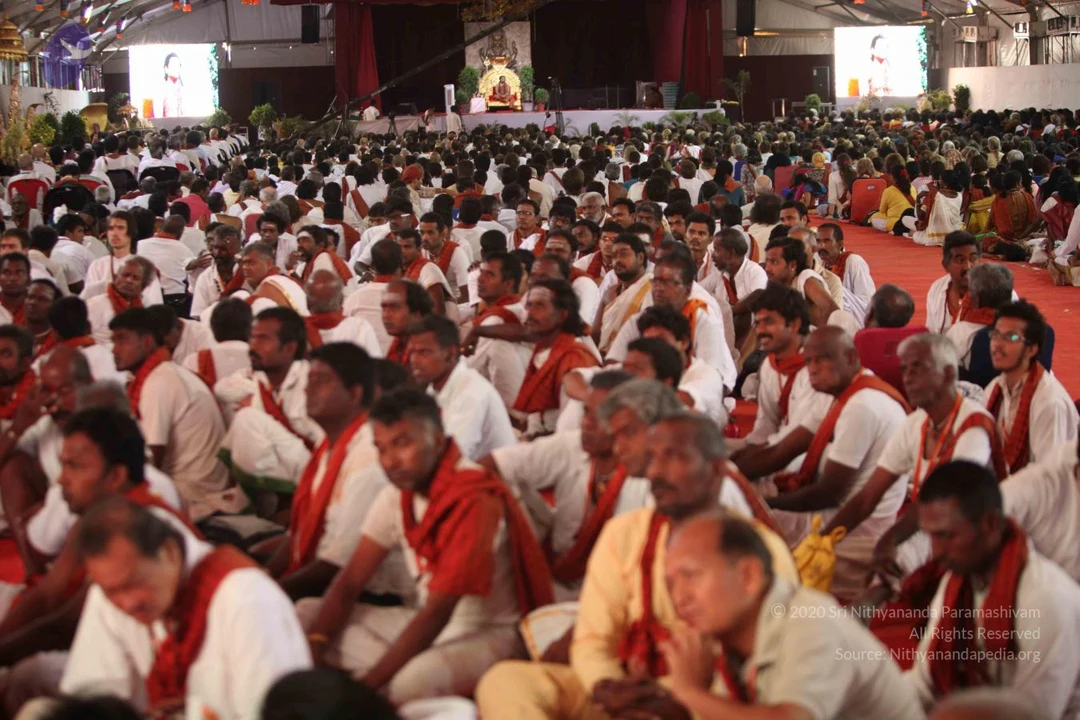
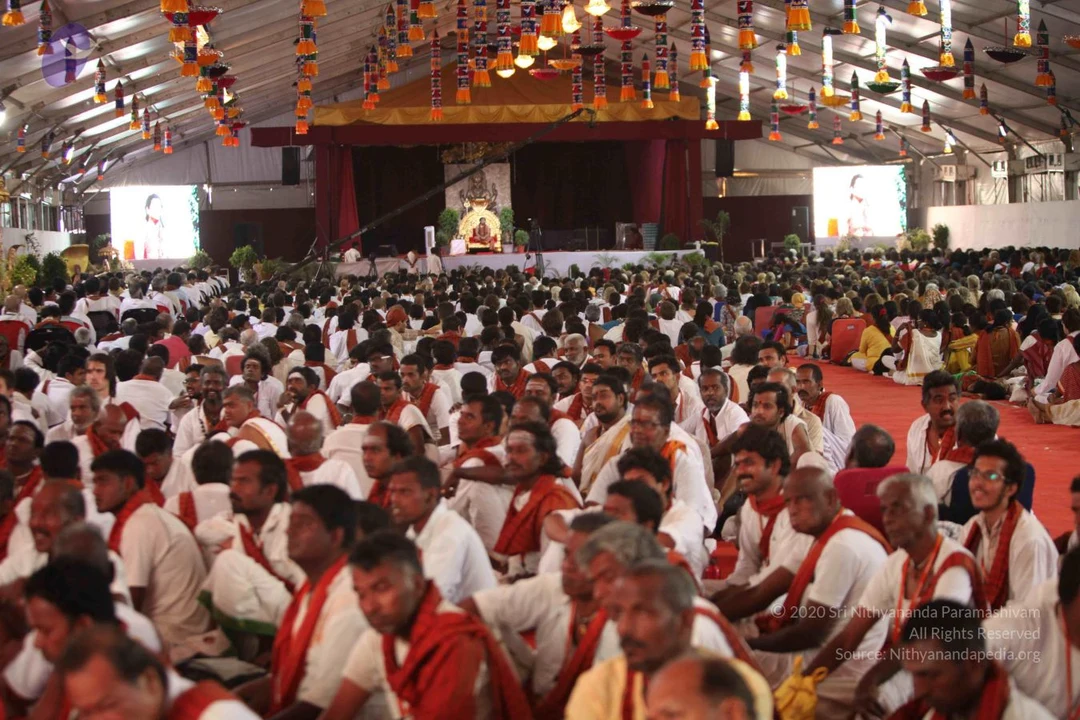
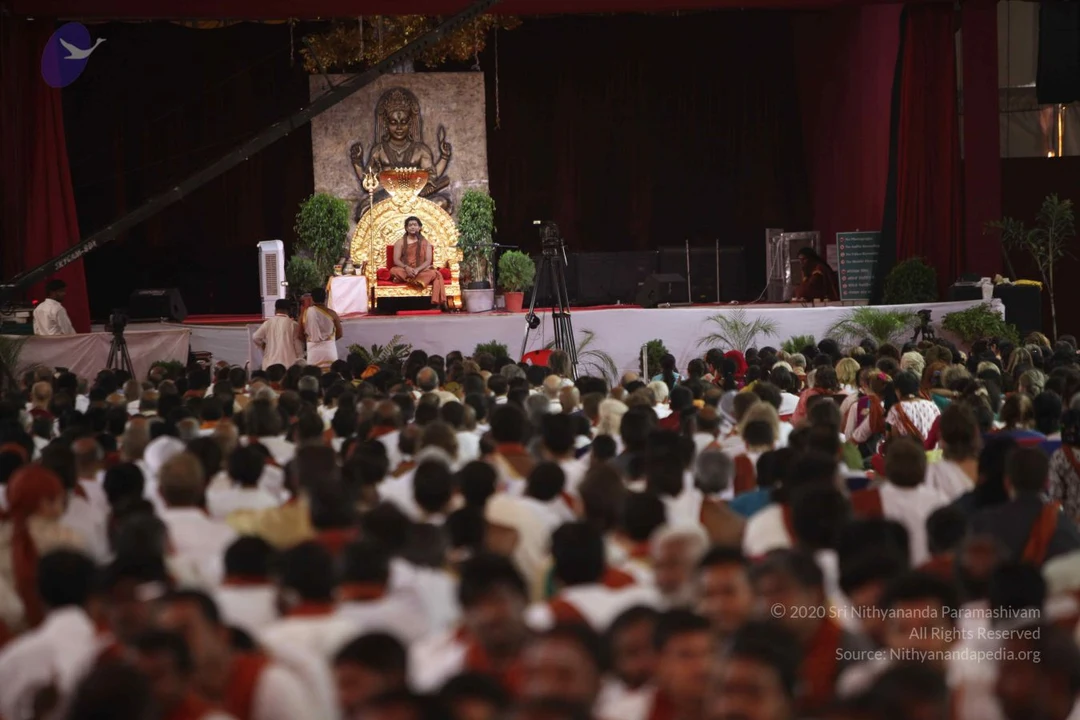
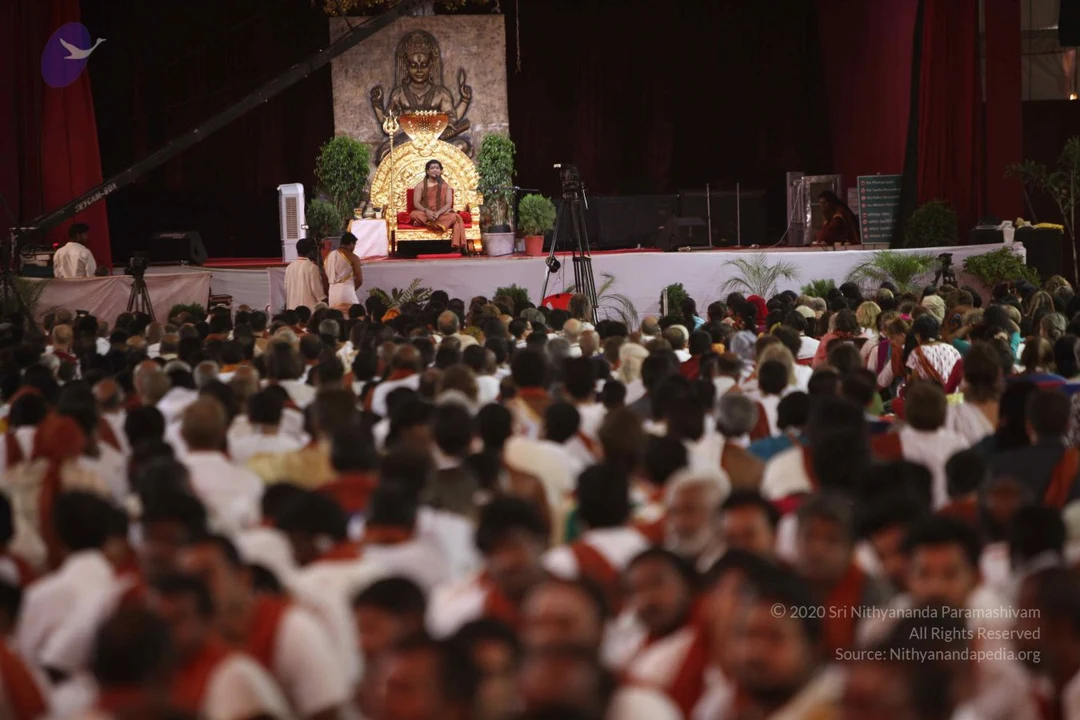
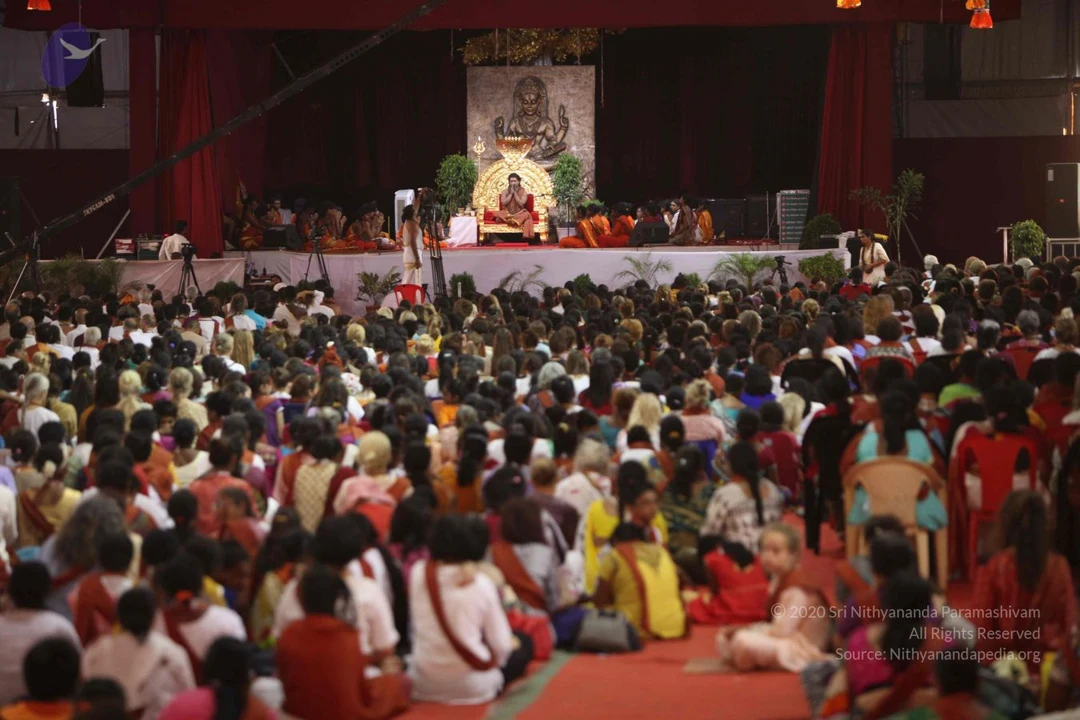
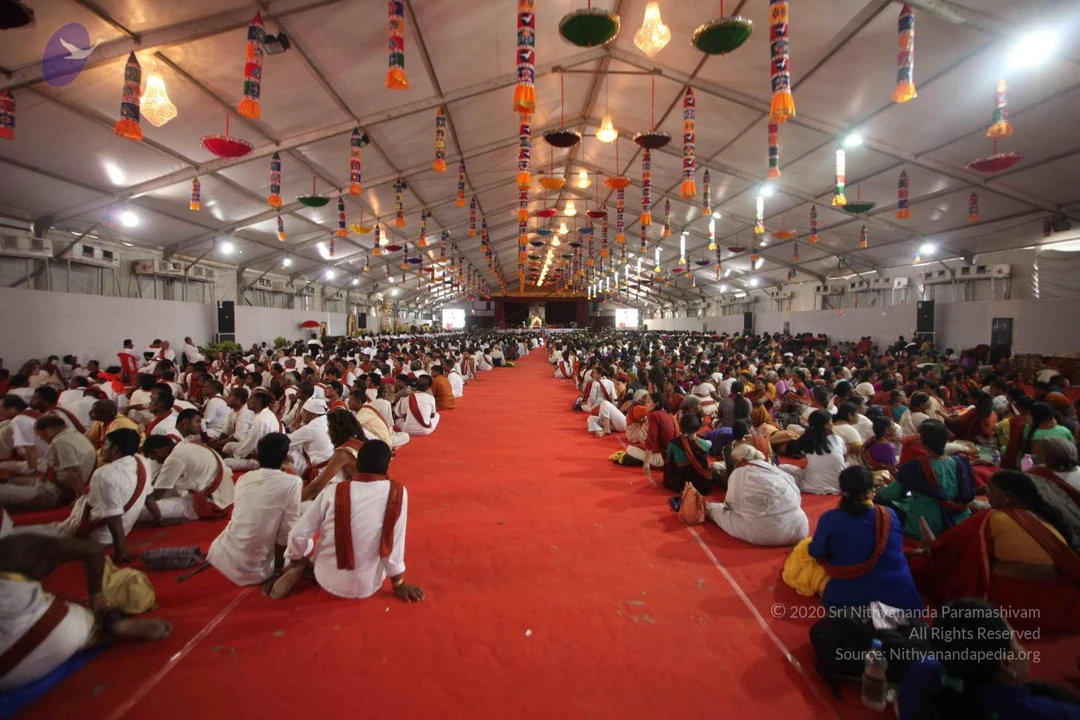
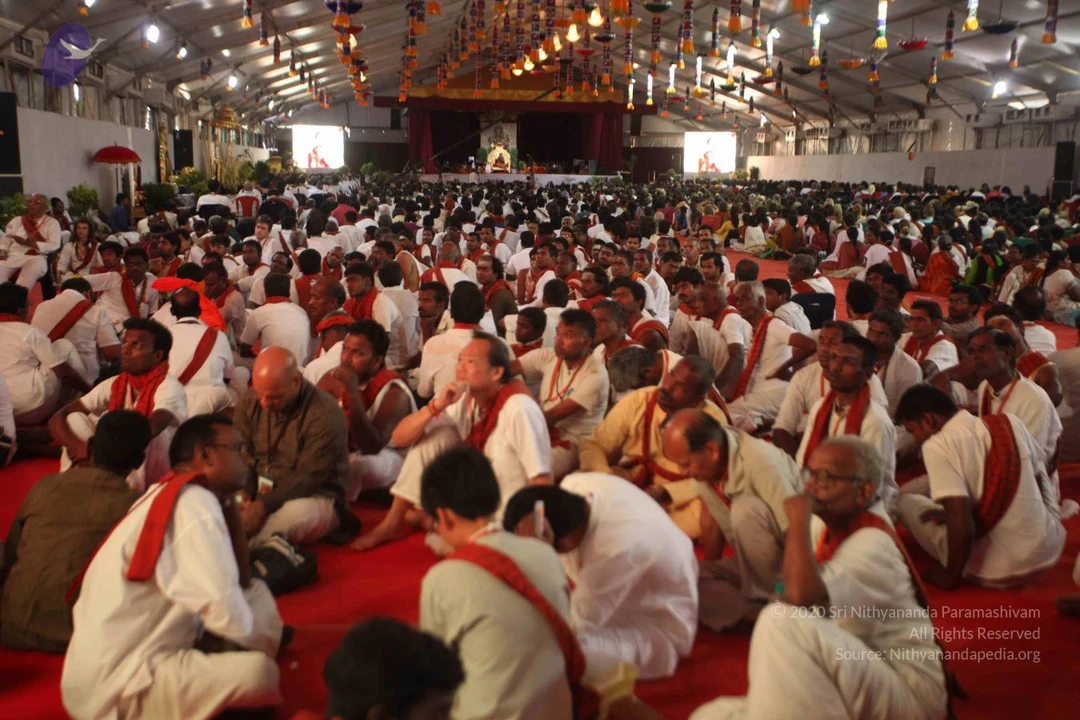
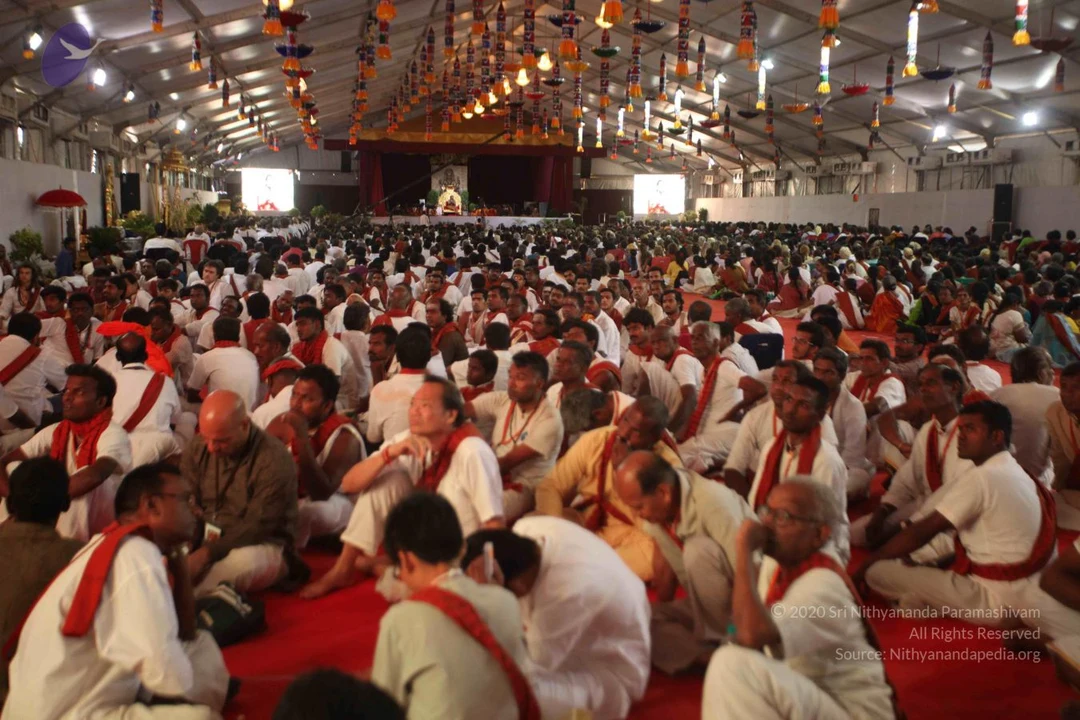
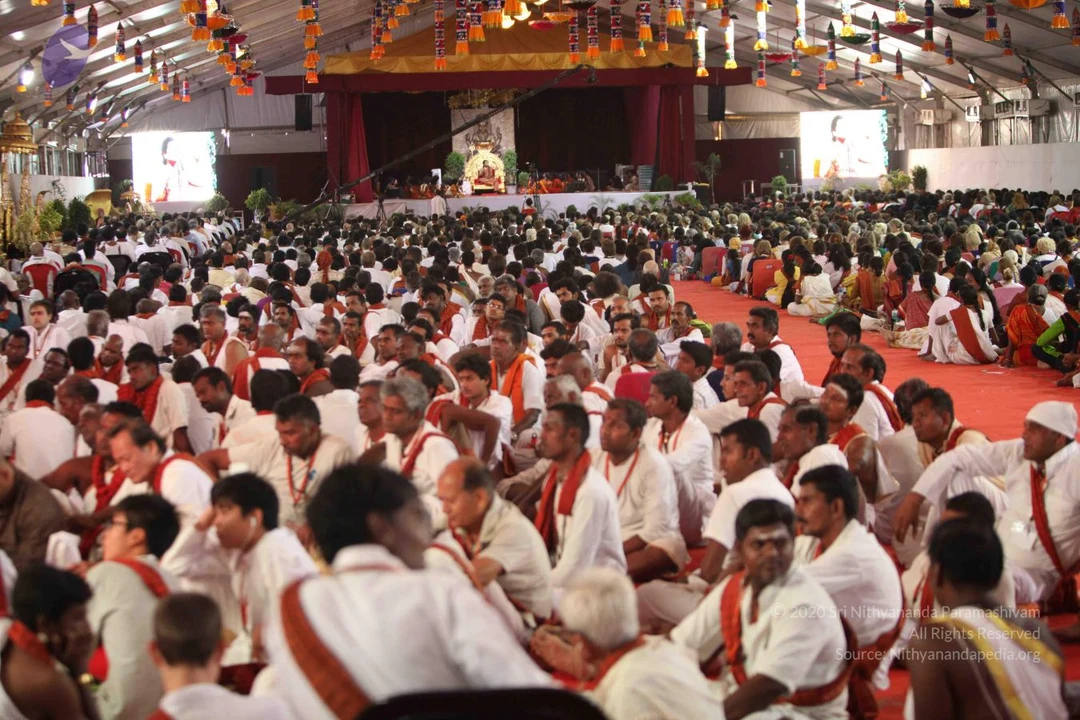
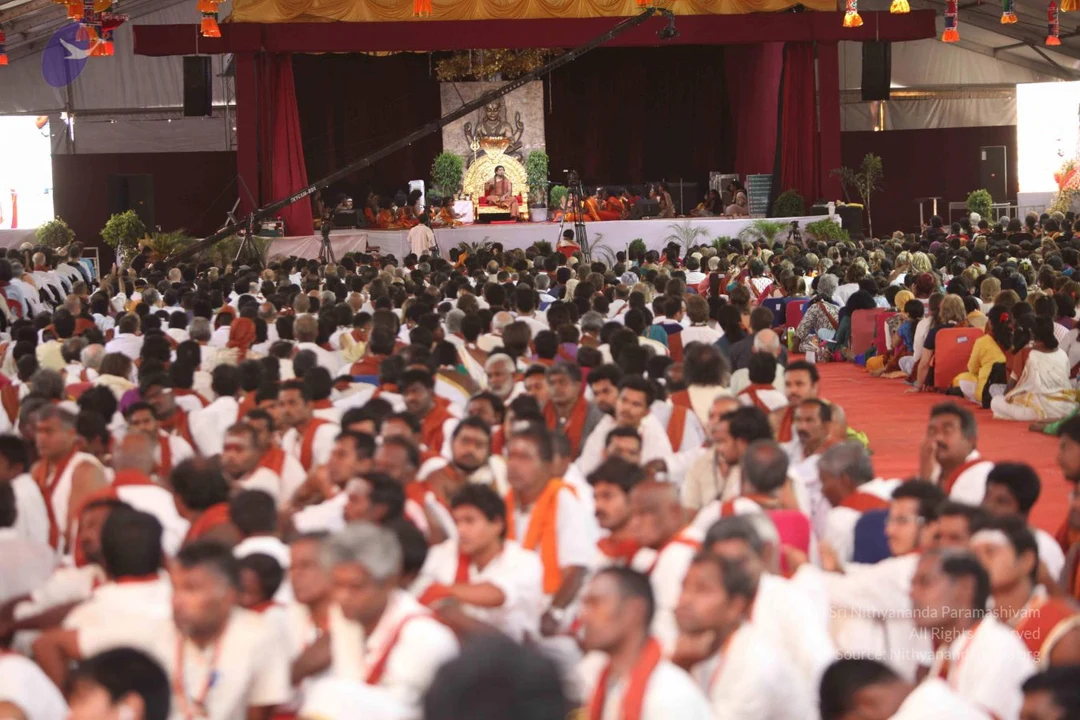
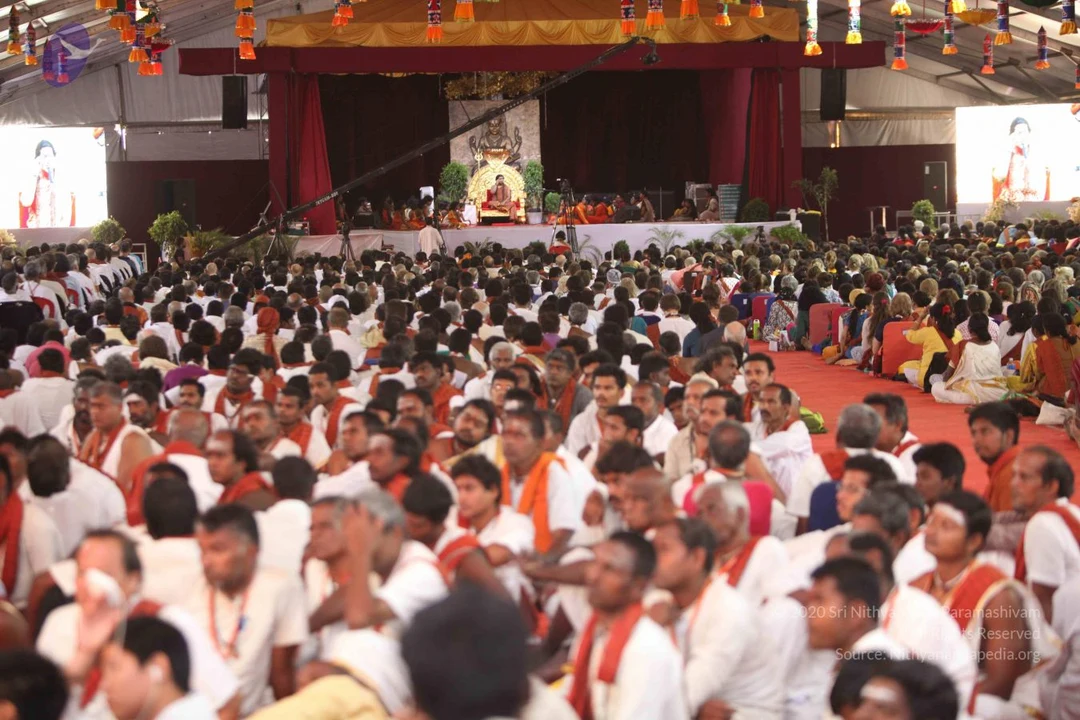
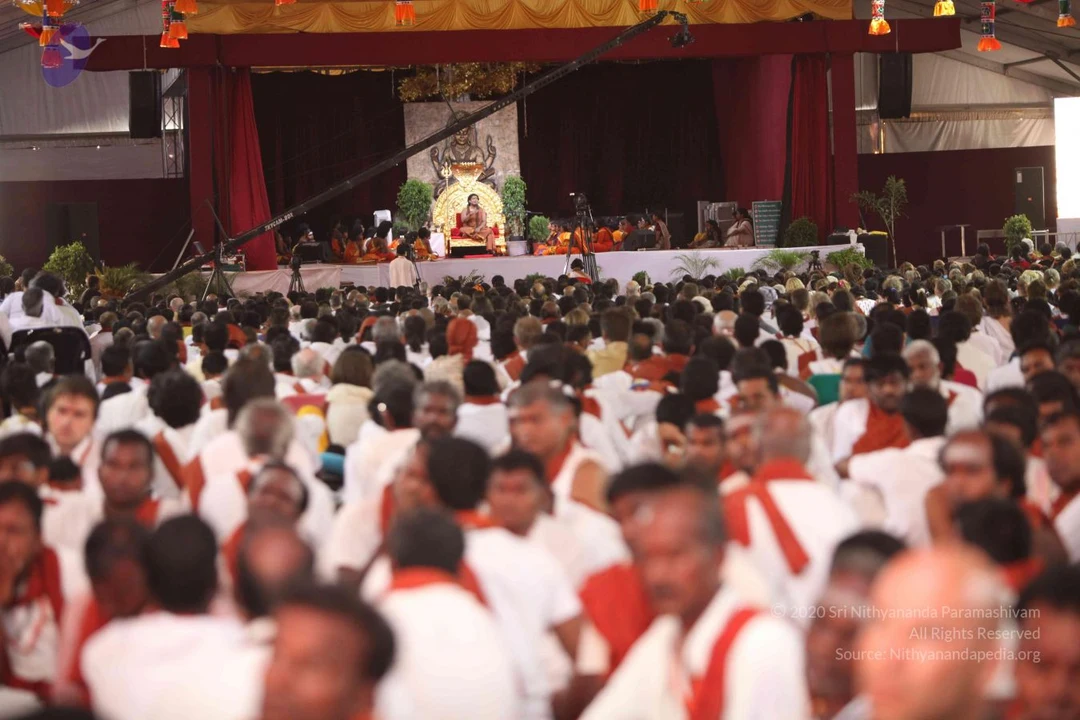
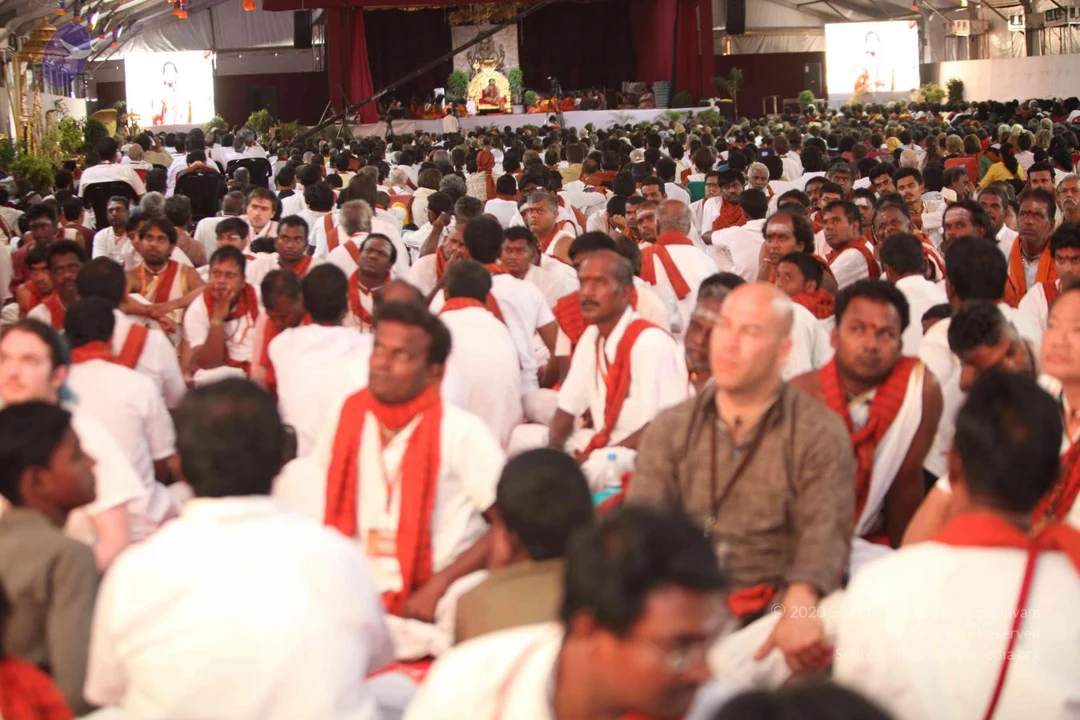
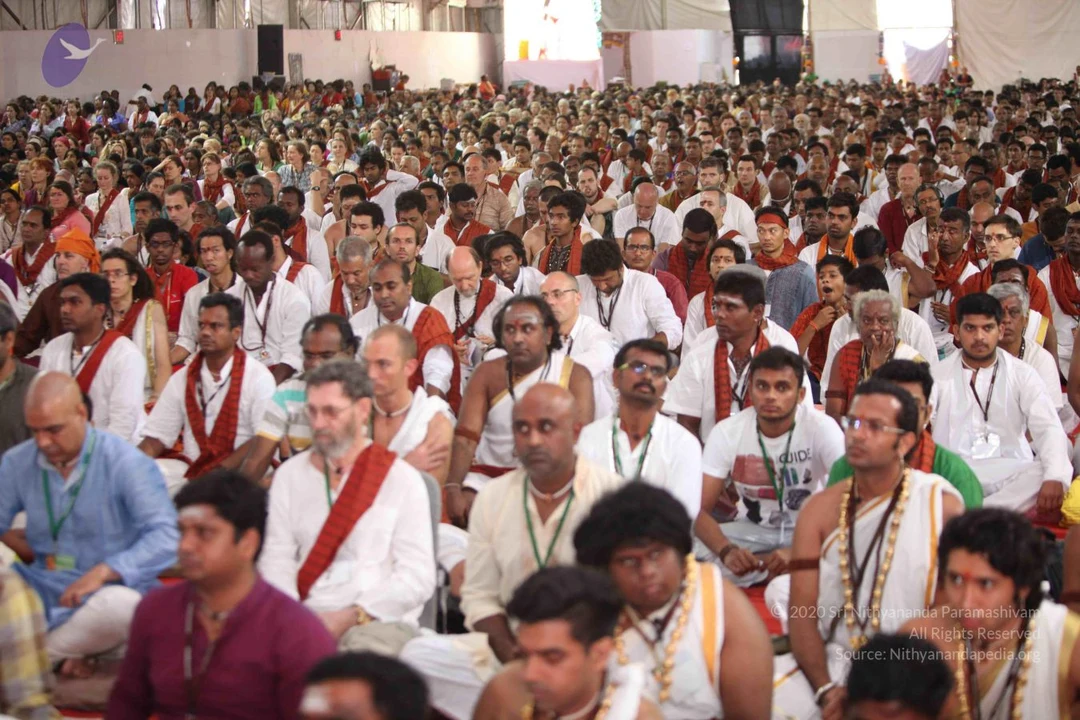
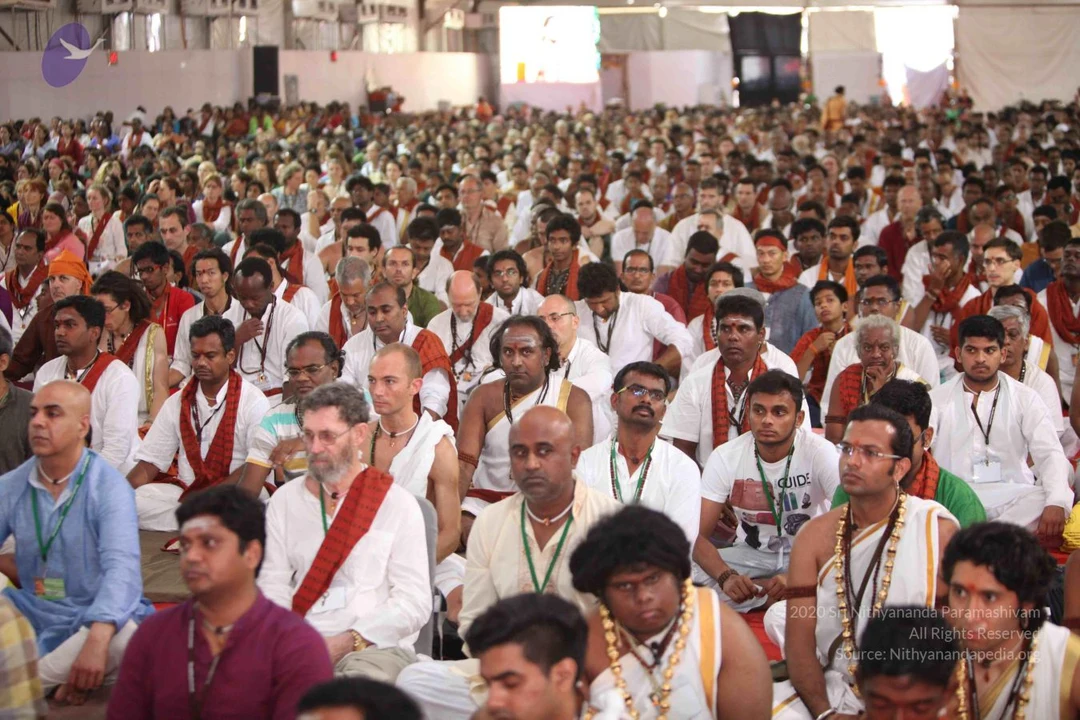
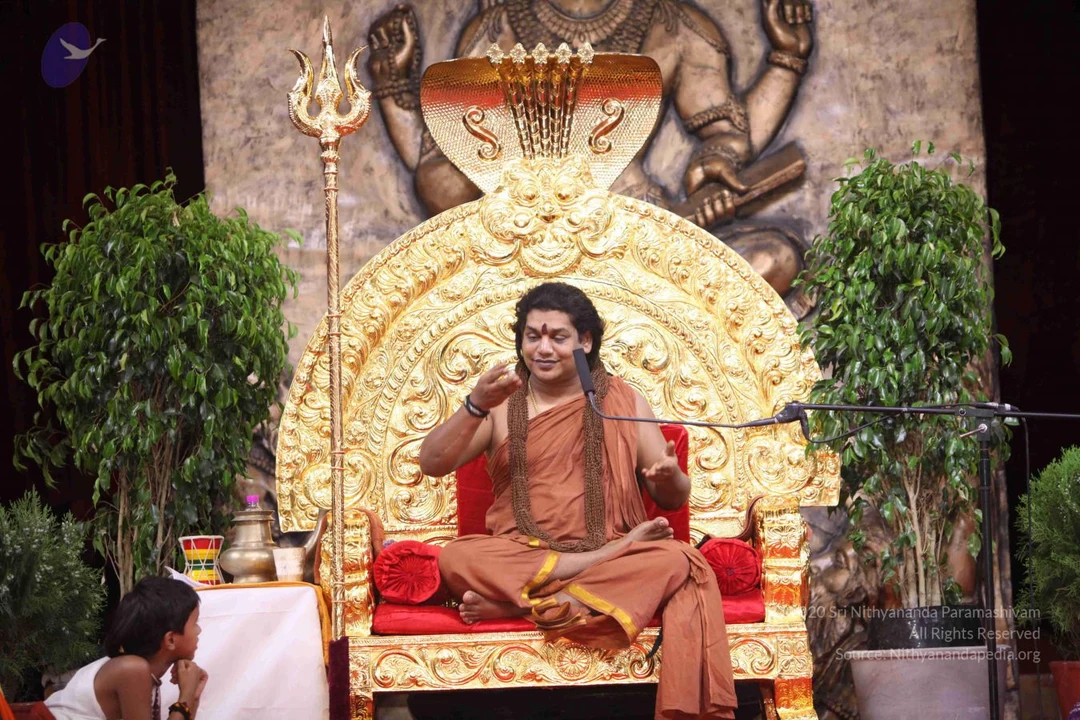
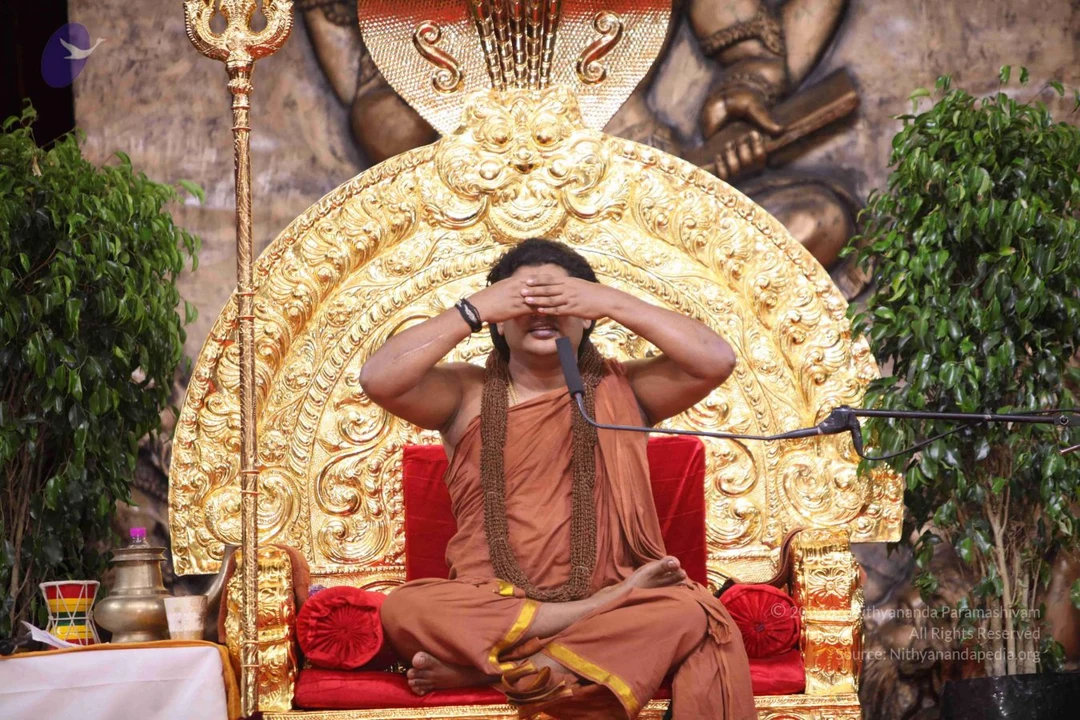
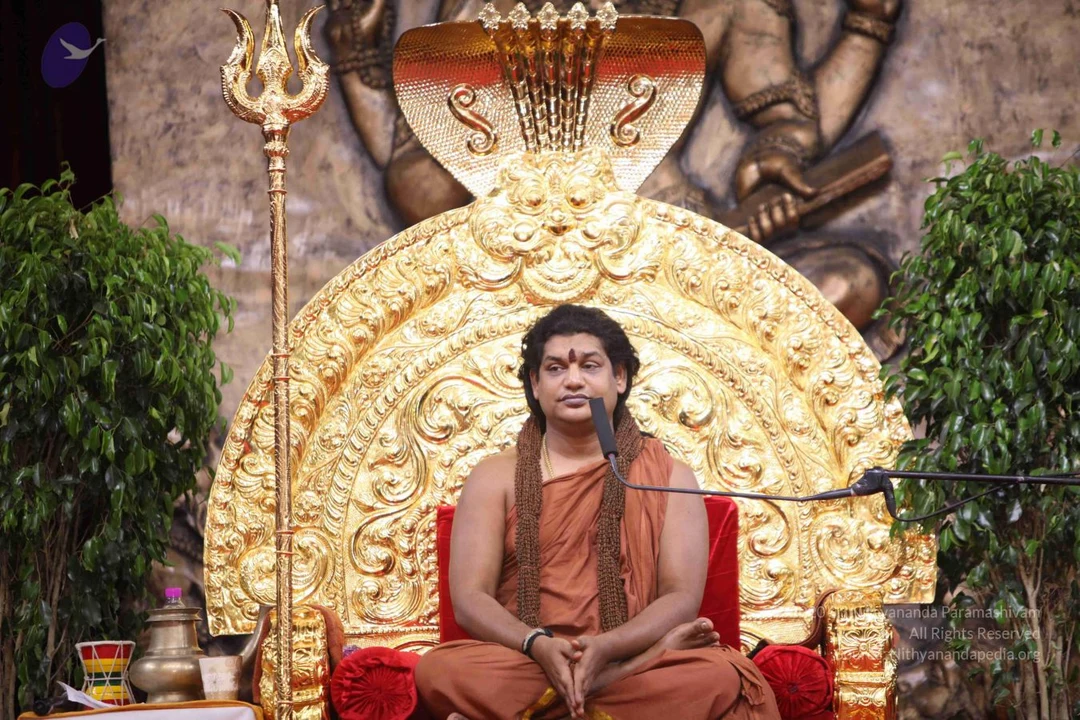
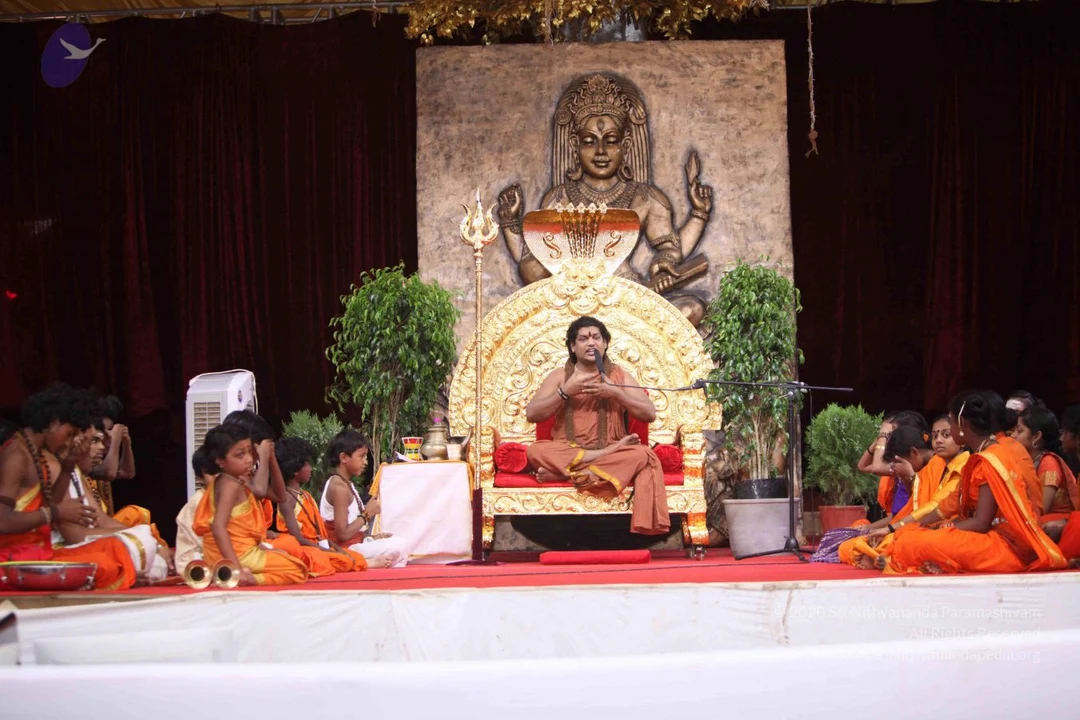
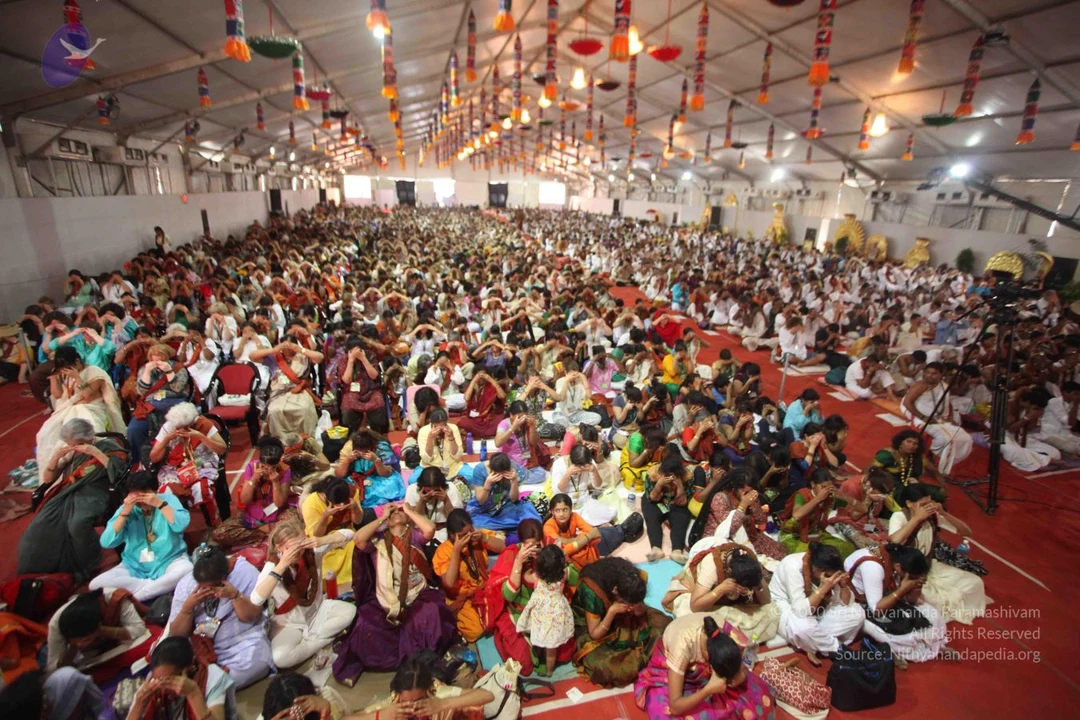
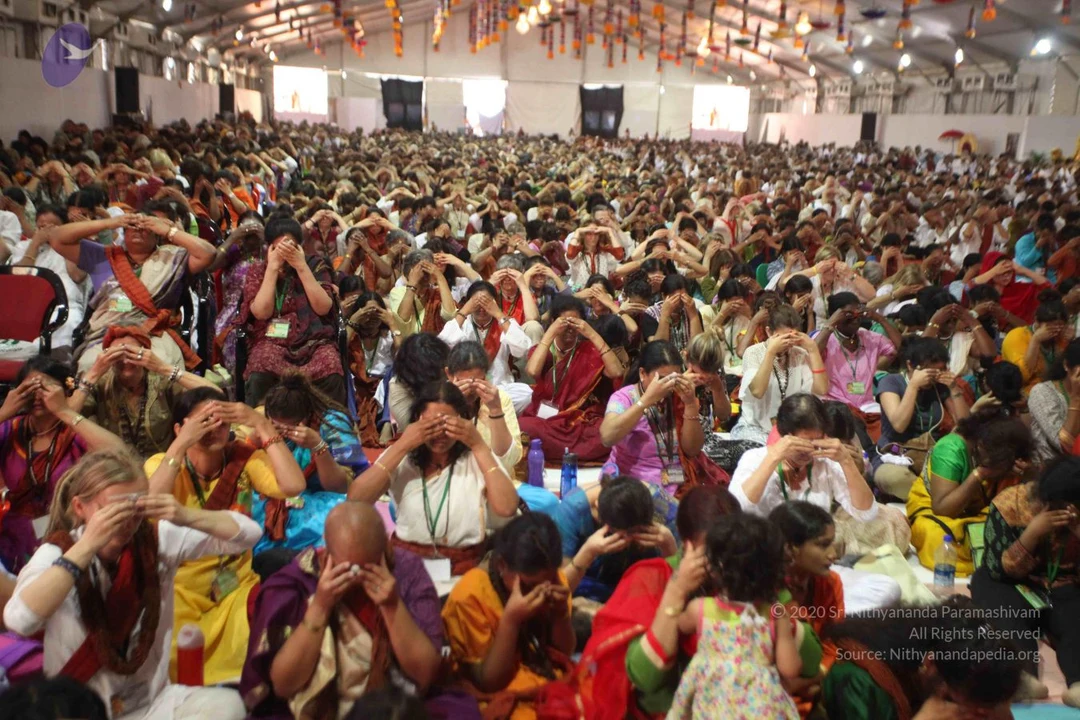
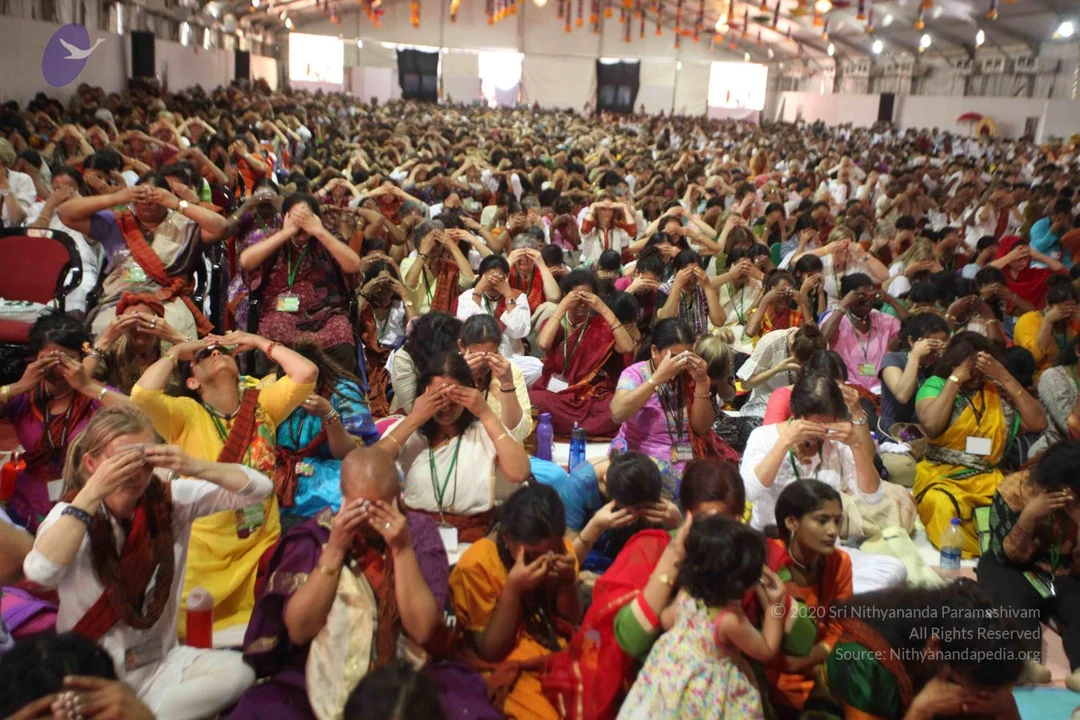
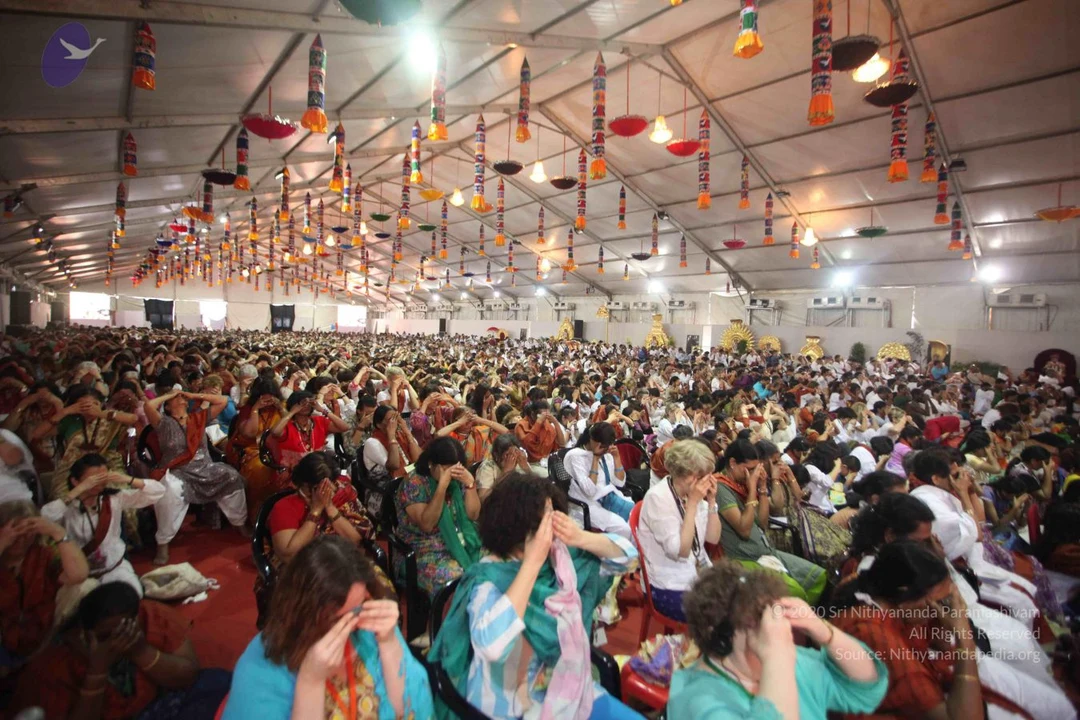
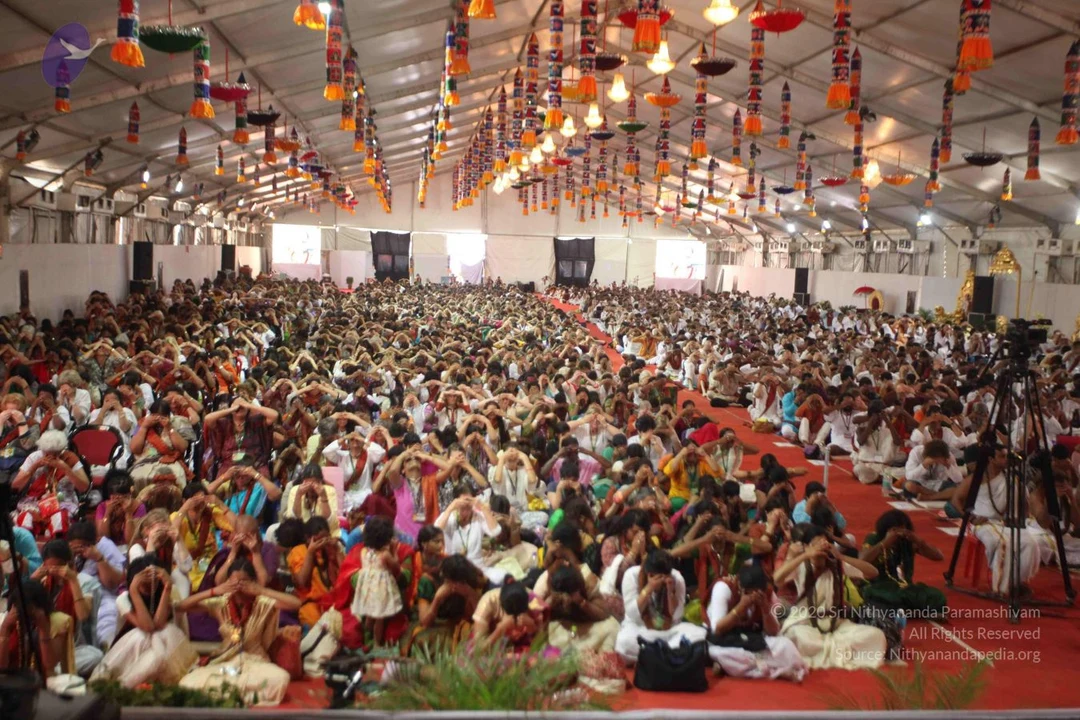
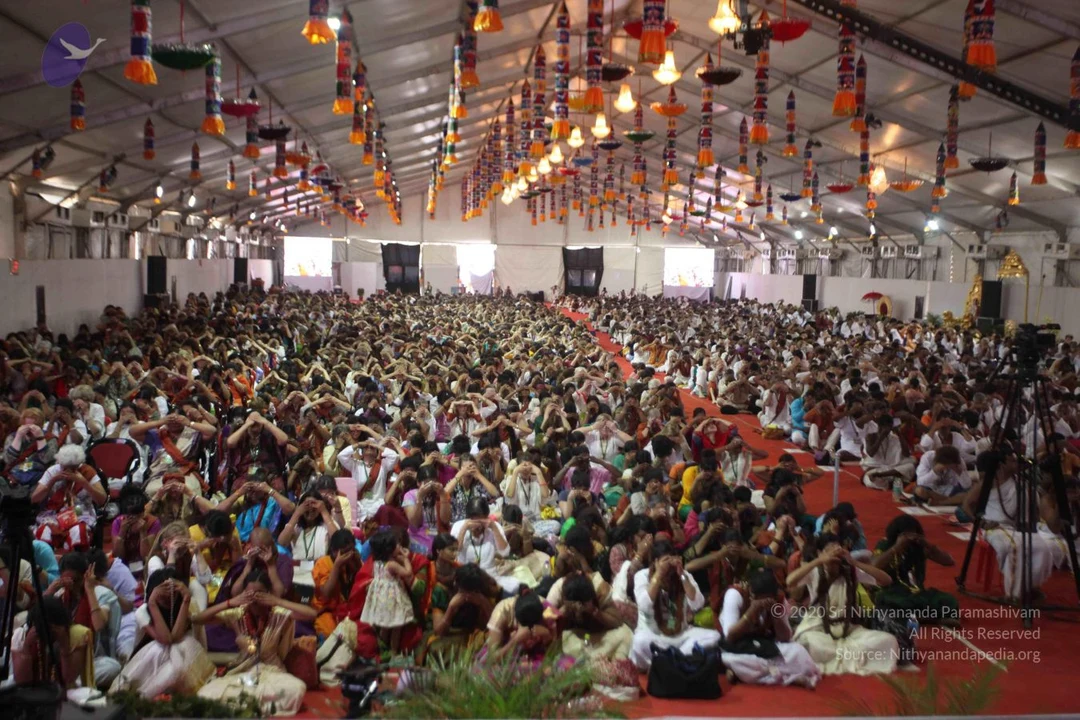
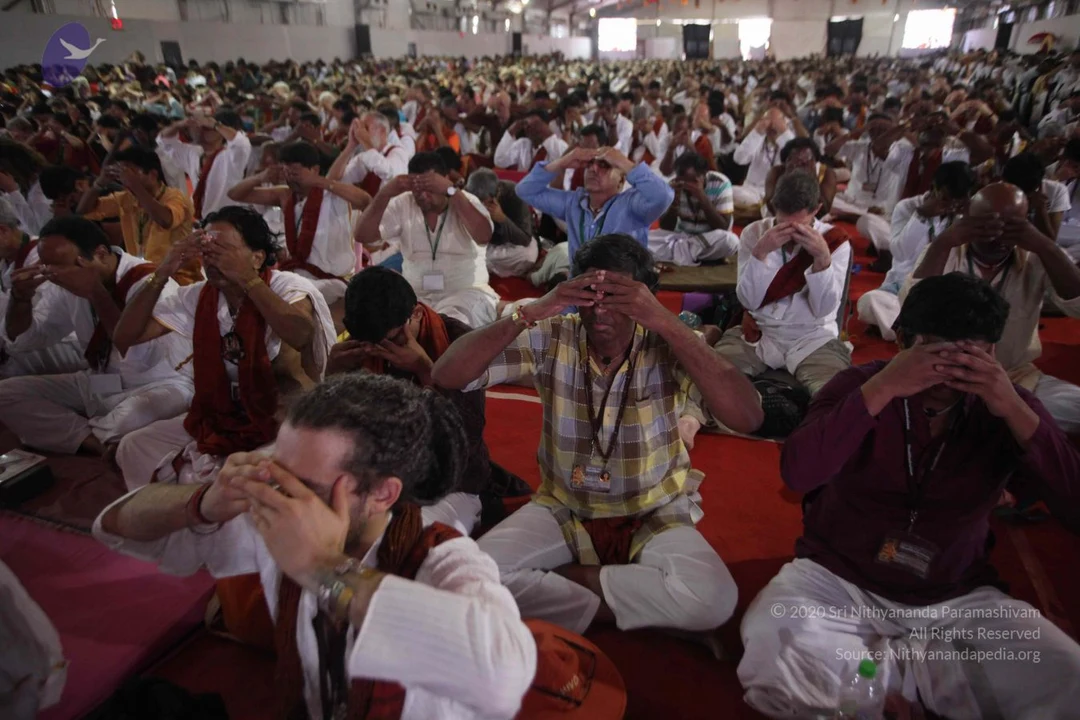
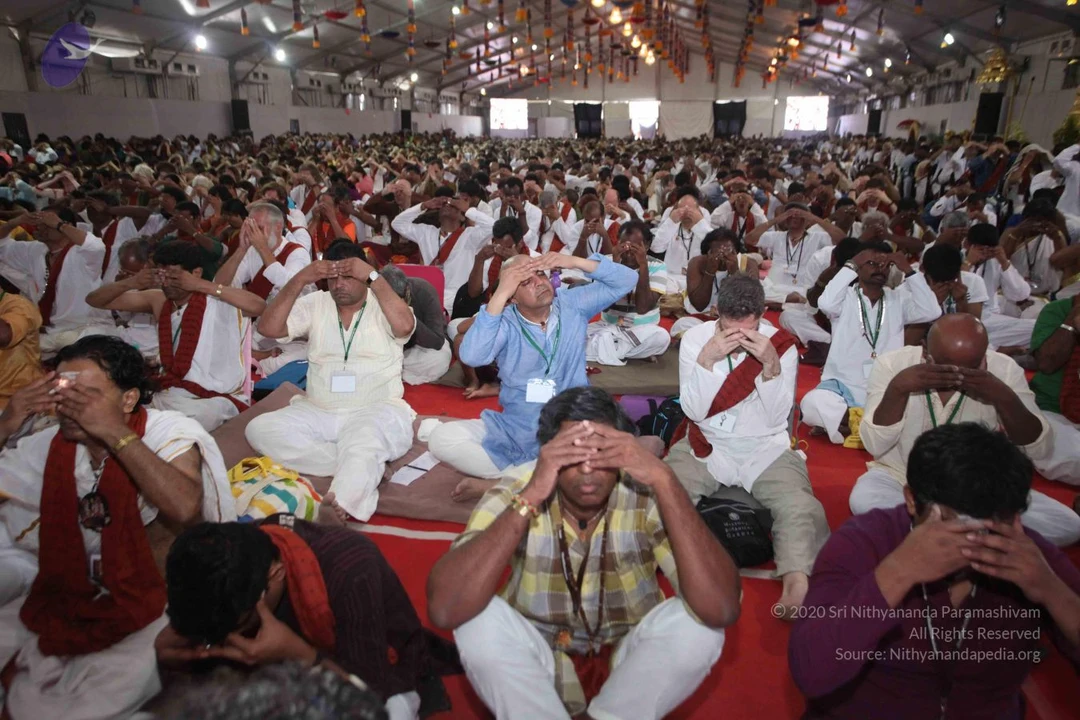
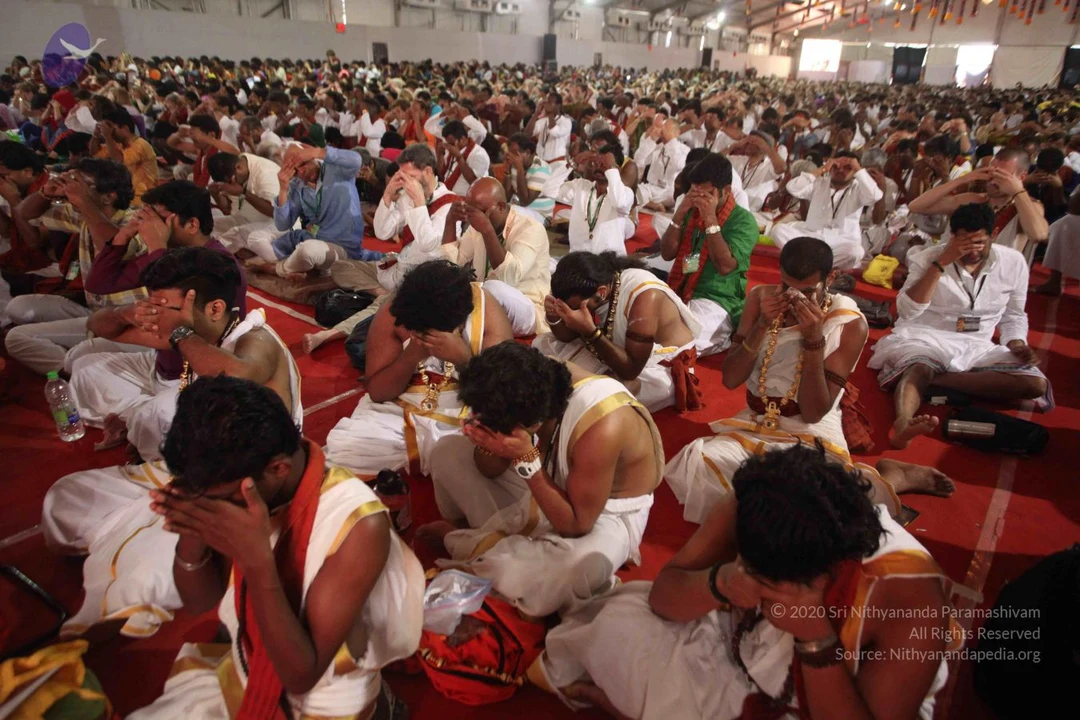
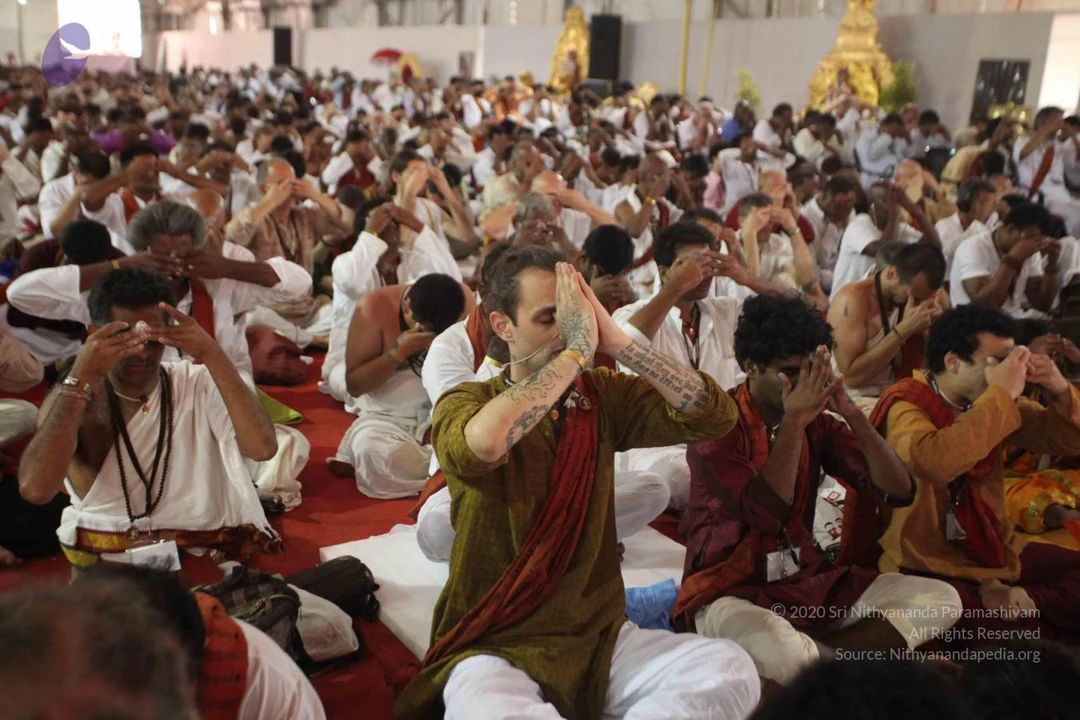
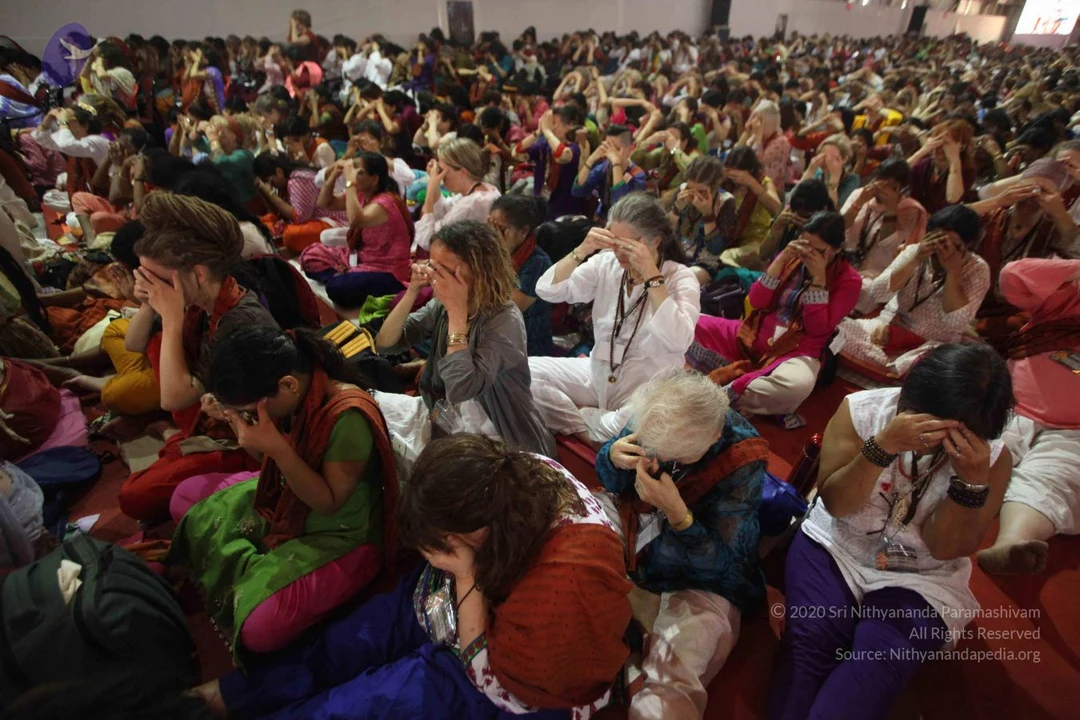
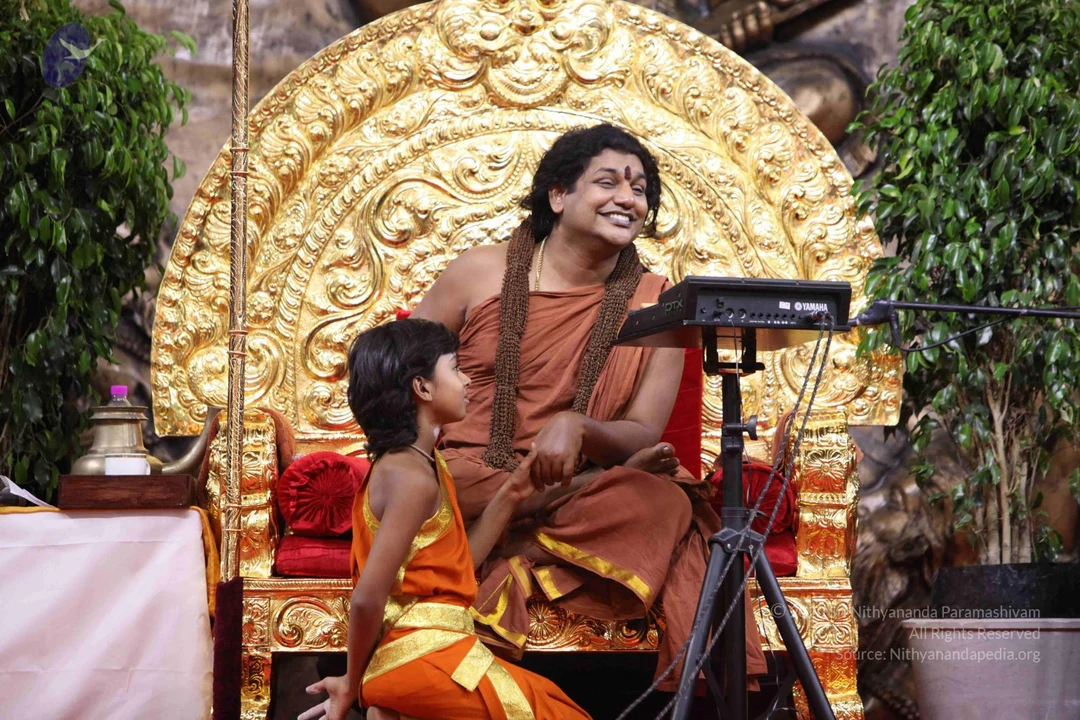
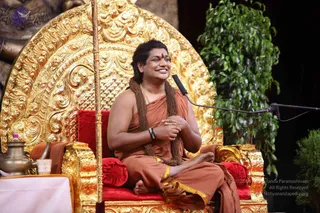
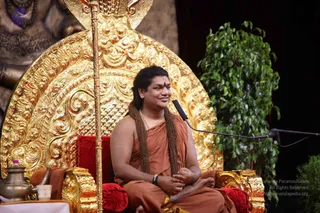
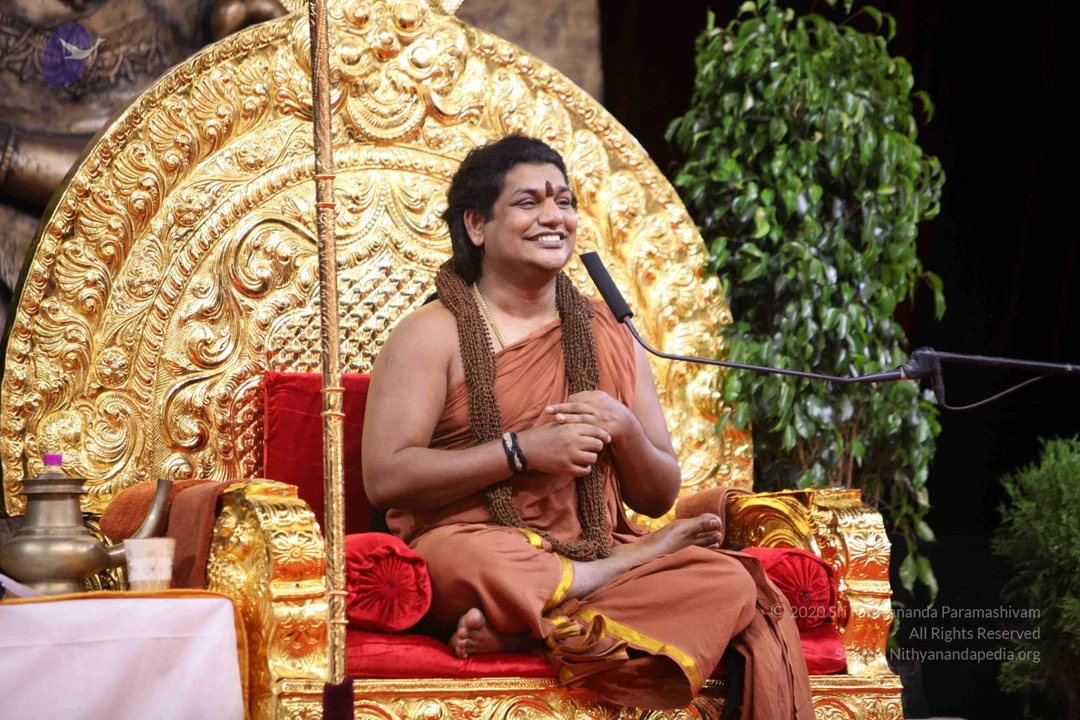
A man with shoulder-length dark hair and a red tilak on his forehead sits cross-legged on an ornate gold throne with red cushions, smiling and clasping his hands at his chest. He wears an orange-brown robe with a gold-edged yellow cloth and a brown rudraksha mala across his shoulders, plus a gold chain and bangles. A microphone stands before him, a potted green plant and a brass vessel sit beside the throne, and a ceremonial staff rests against it. Appearance-based label: a person, seated in person and addressing an audience, with the throne and mala as cues.A seated man in saffron-orange robes and a rudraksha mala sits cross-legged on a red-cushioned golden throne with ornate gold repoussé carving, smiling while speaking into a microphone on a stand to his right. A red tilak mark is on his forehead, a gold chain is at his neck, and a bead bracelet is on his wrist. A tall gold staff stands beside the throne, a green potted plant stands behind, and a brass vessel sits on a table at left. A candidate matching a person by long swept-back hair, saffron clothing, rudraksha mala and ceremonial gold necklace is seated in the throne, delivering a talk.A large crowd of devotees seated closely together in a white tented hall, viewed from behind a blurred foreground. Many wear white kurtas and saffron-orange or maroon shawls over their shoulders, and a few wear saffron headwraps. Some sit with eyes closed in meditation while others look toward a distant stage area draped in dark fabric and white cloth, with coloured garlands visible along the sides. No single figure stands out as a clear candidate for the swami, and the page does not place him at this event.A large dense crowd of devotees fills an indoor hall, seated and standing closely together and viewed from the front in a shallow-focus photograph. Many wear white or cream kurta-style clothing with red, orange and maroon shawls or stoles, and some wear rudraksha-style necklaces and mala beads. One man in the foreground-centre right wears a bright saffron turban. Faces are sharply visible among the rows, with a pale pink wall and hanging banners behind. A watermarked copyright line and a logo appear at the top and lower right corners. Numerous people fill the scene, far more than one hundred, though only the visible figures are counted here.A large seated crowd of devotees fills a white tented hall, the foreground figures softly blurred. Most men wear white kurta-style clothing with red-orange shawls or stoles draped over their shoulders, and some wear lanyards. Several people in the middle rows look toward the front, and a stage area with white draping and lights is visible at the top of the frame. No single identifiable a person is clearly present in this crowd view.A large seated congregation fills a tent hall at a Shuddhadvaitam event in Ujjain, with hundreds of devotees sitting on red floor mats. Many men wear white dhoti-style garments with red or maroon shawls draped over their shoulders, and some wear rudraksha malas. One man near the upper left wears an orange turban. Several men in the front rows wear white clothing with red shawls and sit in meditative posture. Pale pink and white tent fabric and a purple flag appear at the upper edges.
vip-visit

164 photosSource gallery
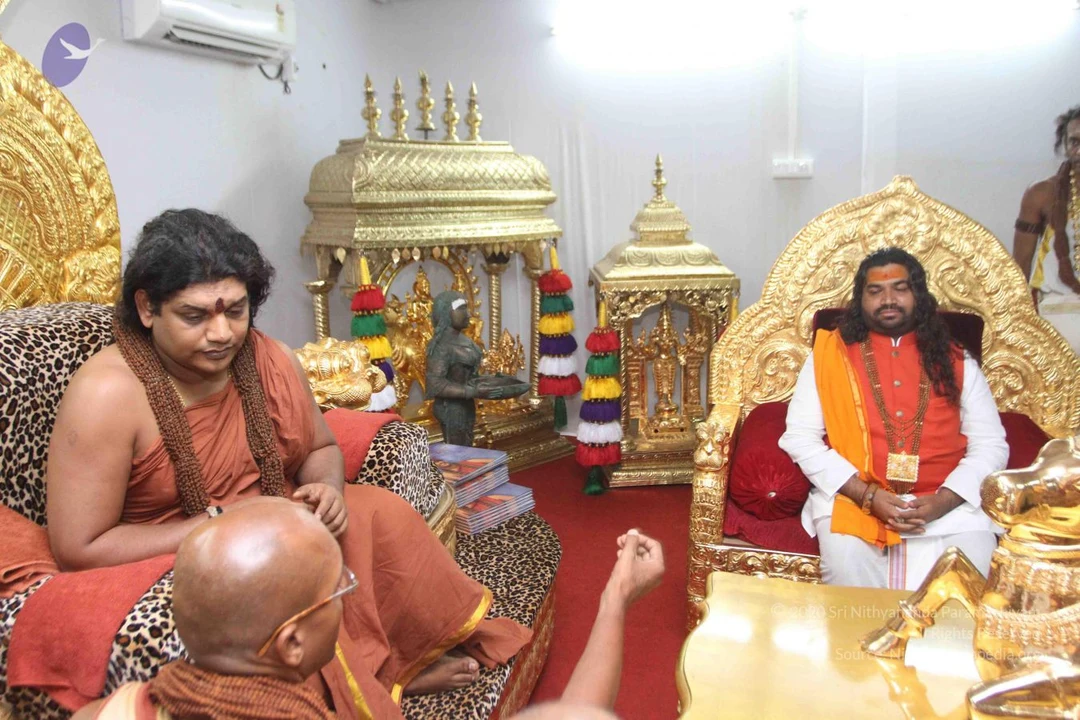
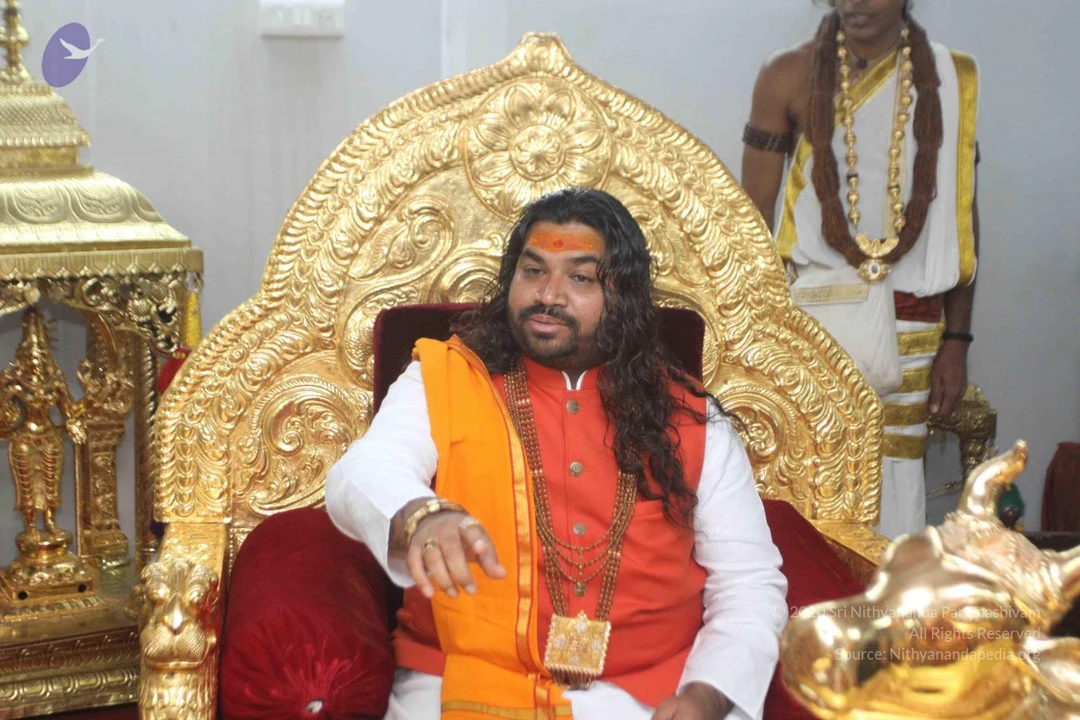
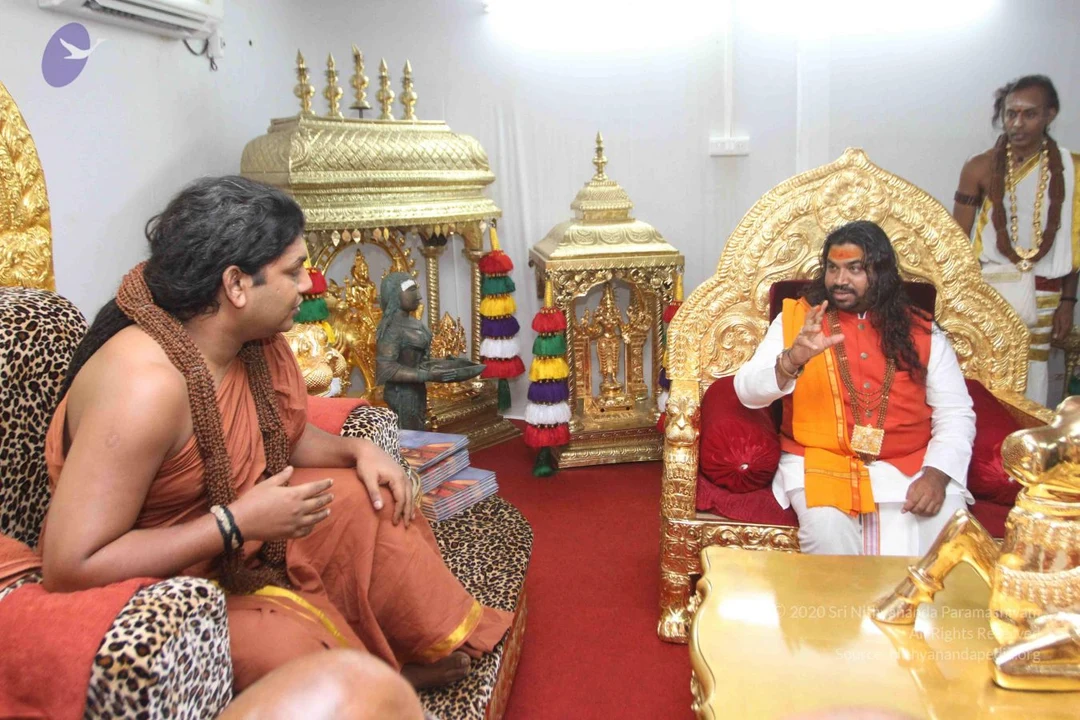
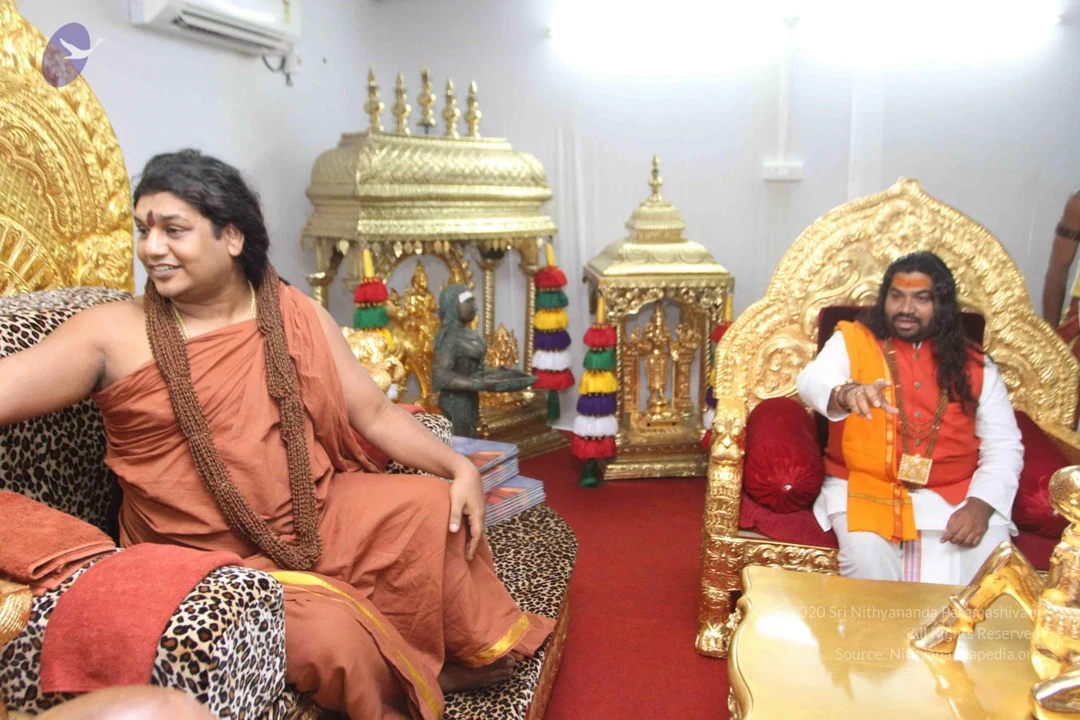
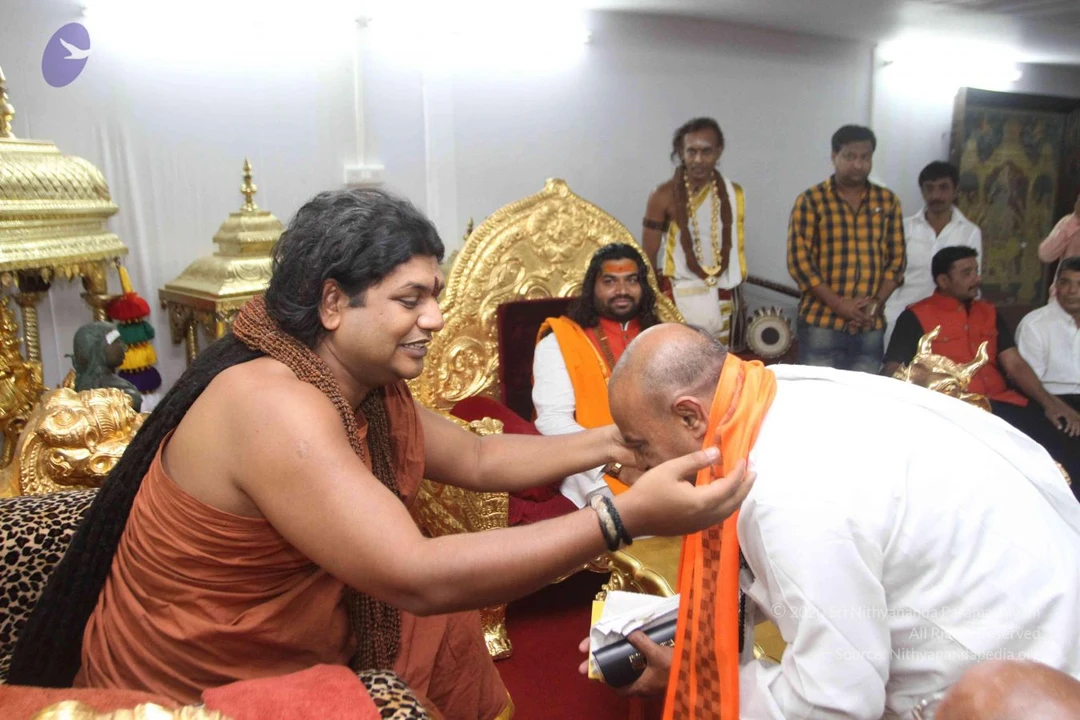
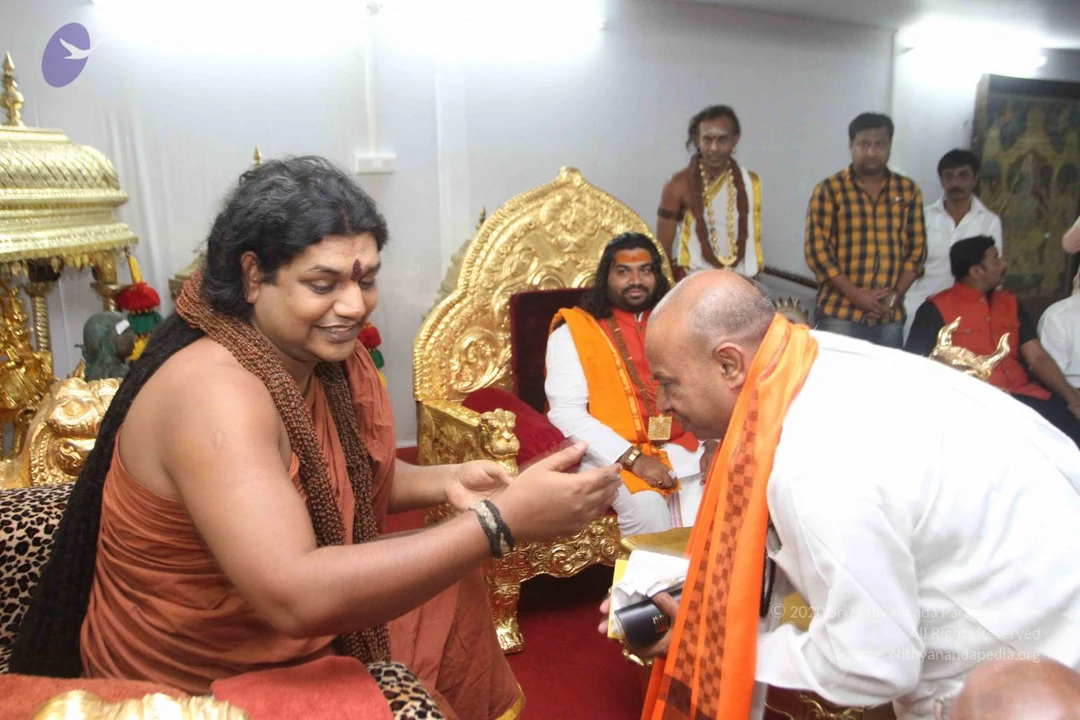
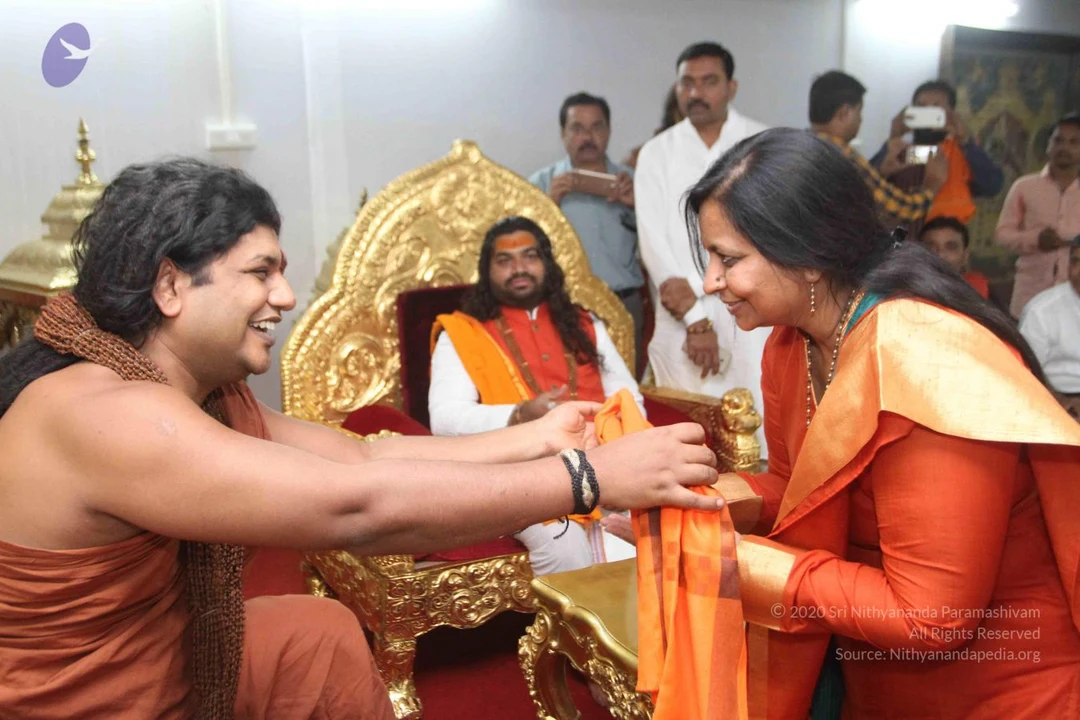
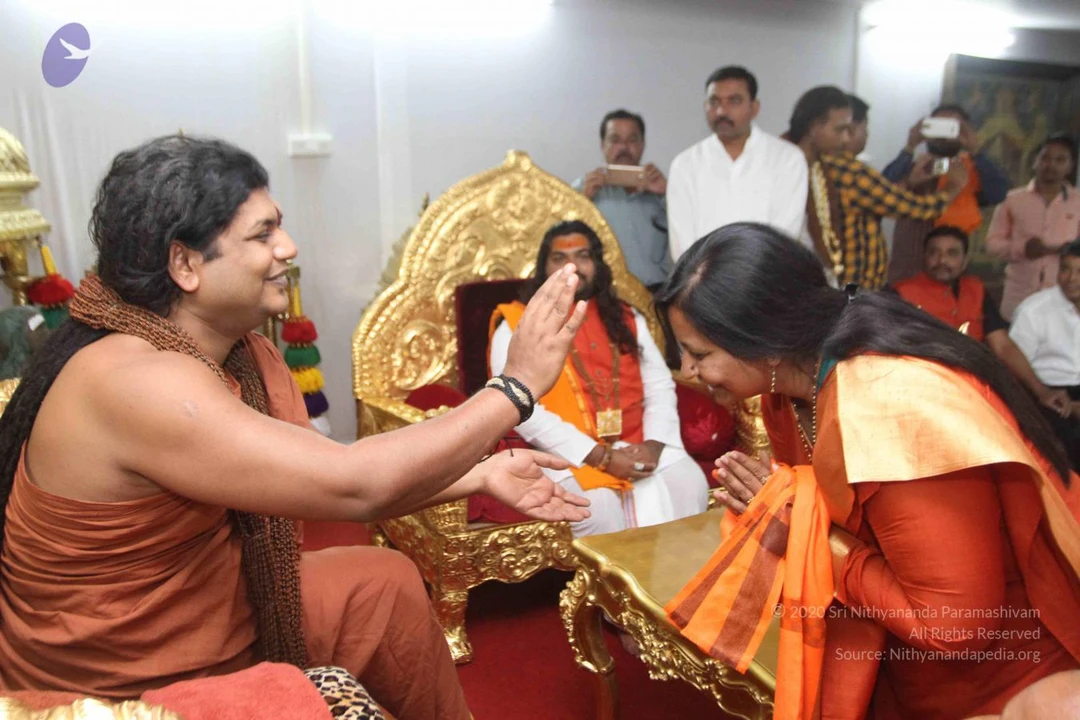
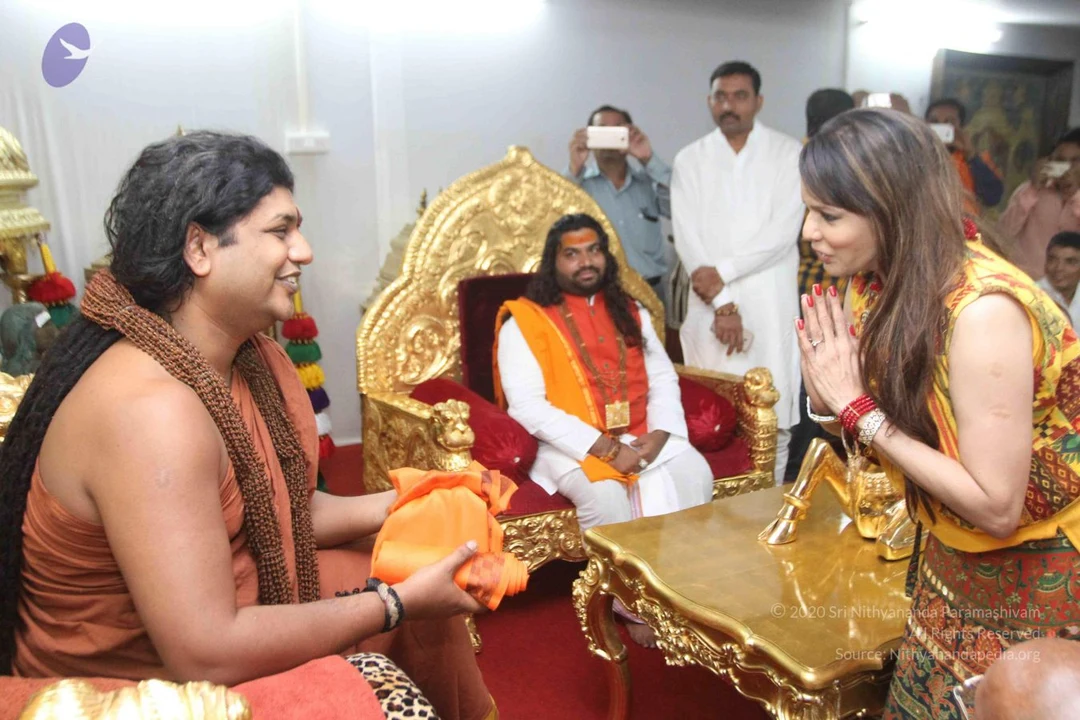
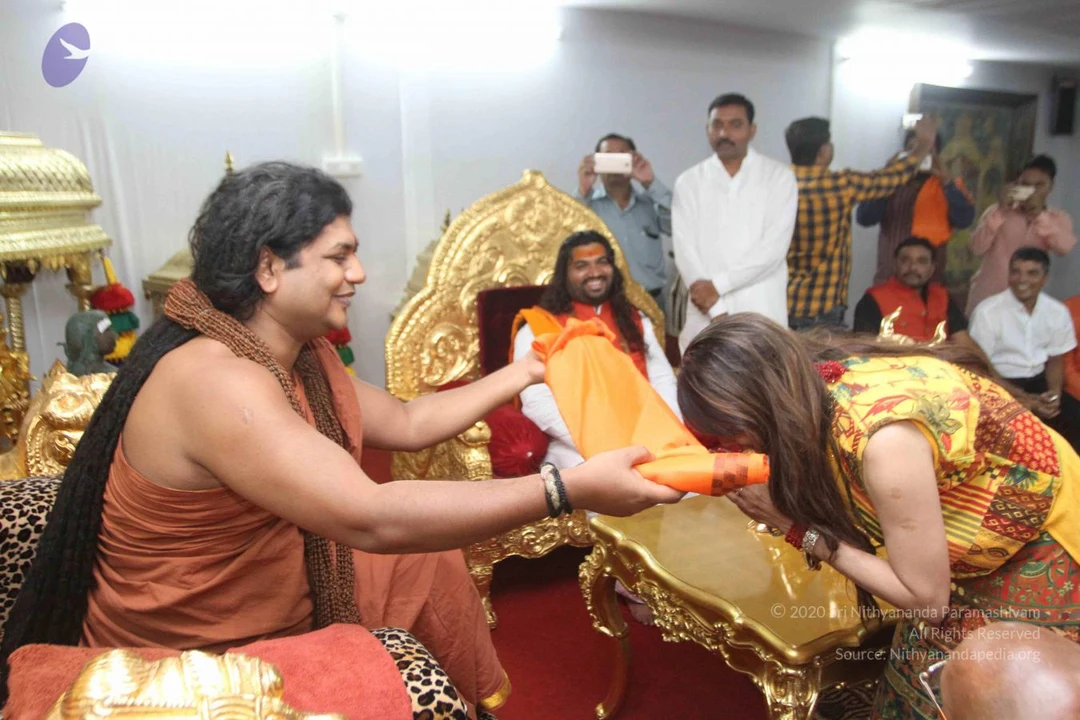
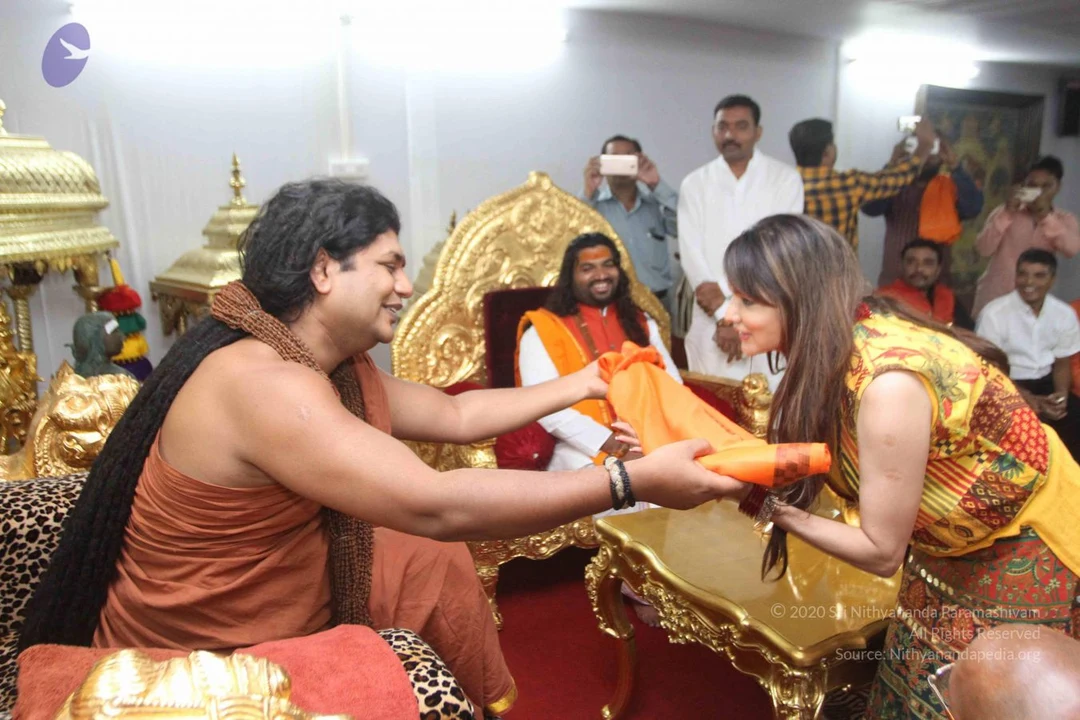
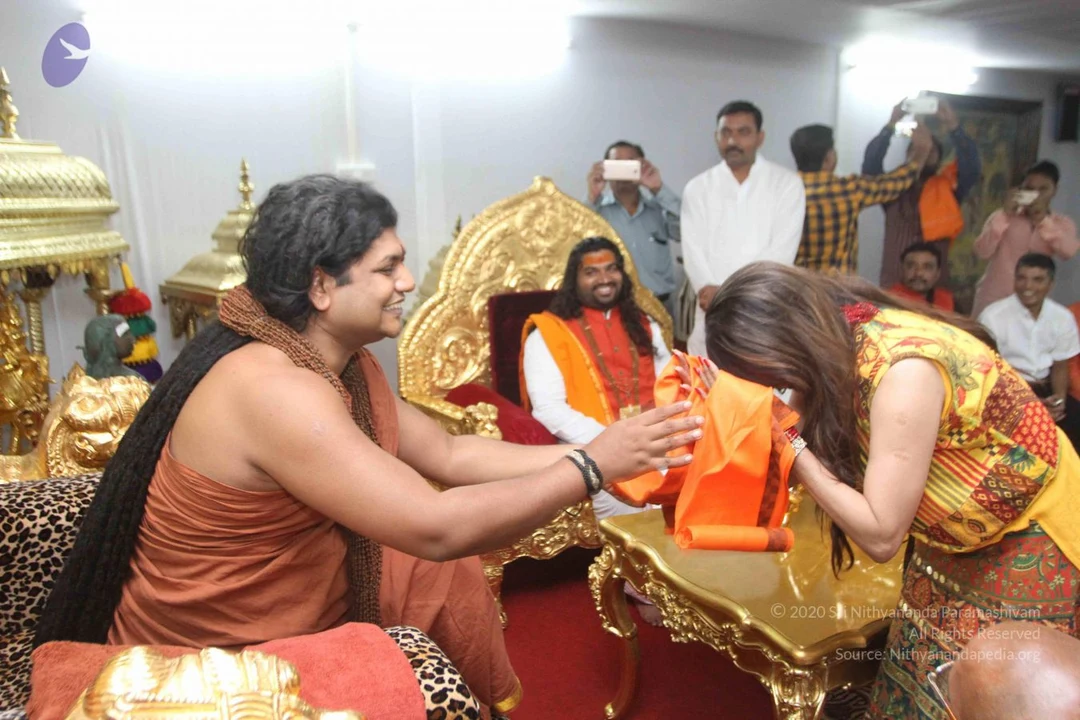
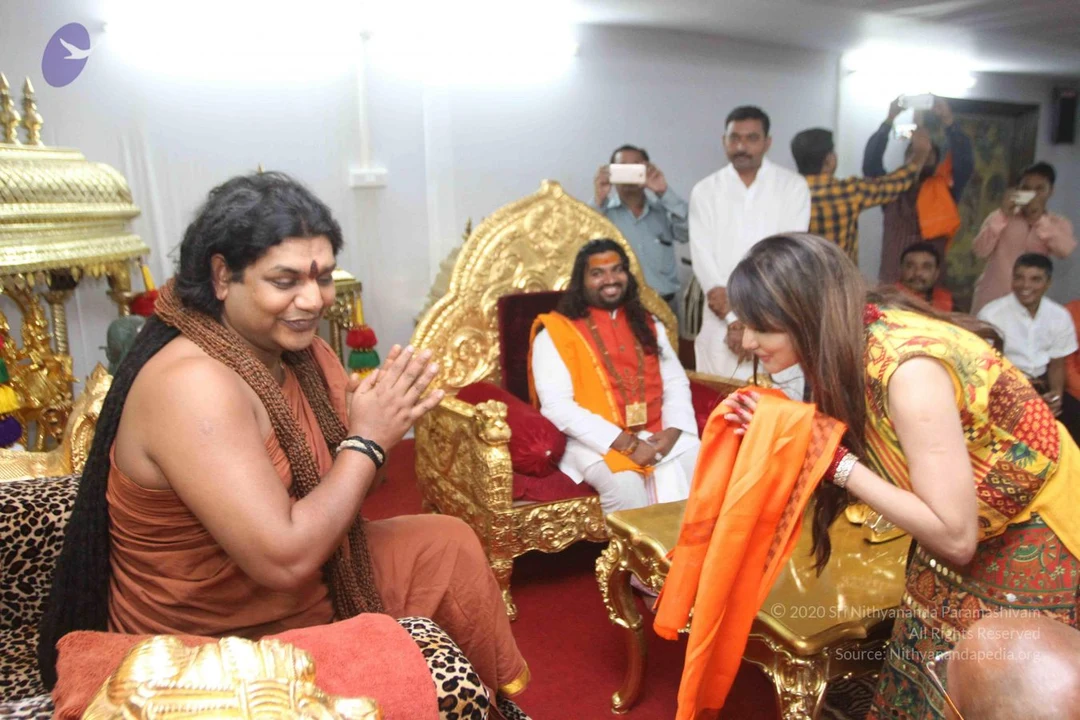
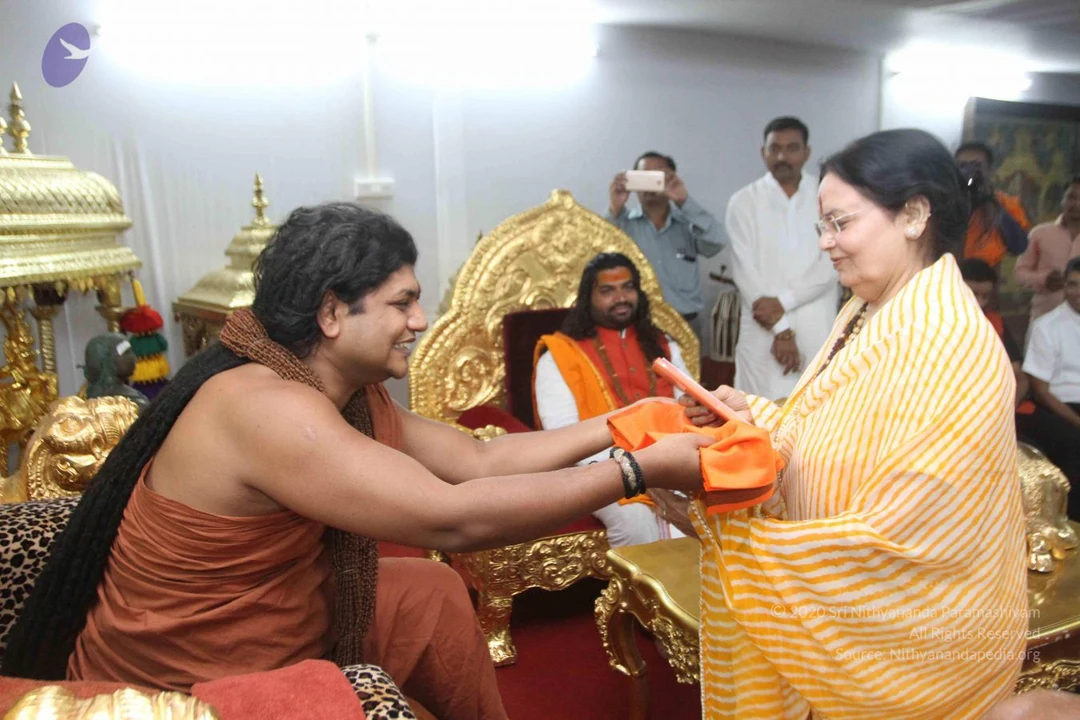
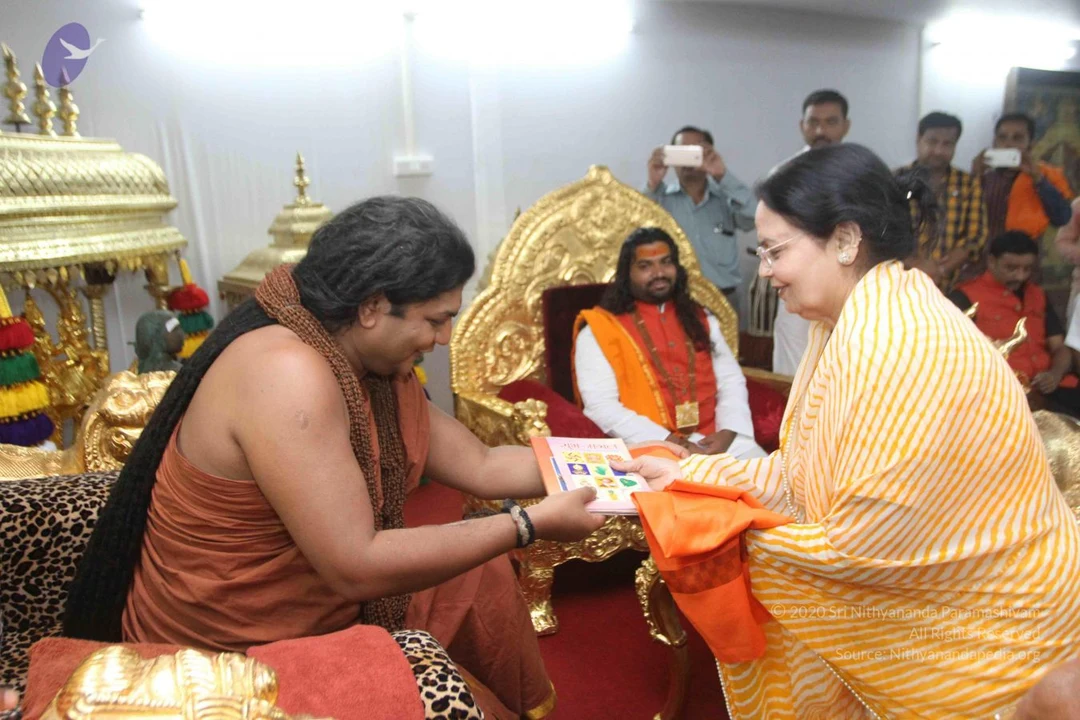
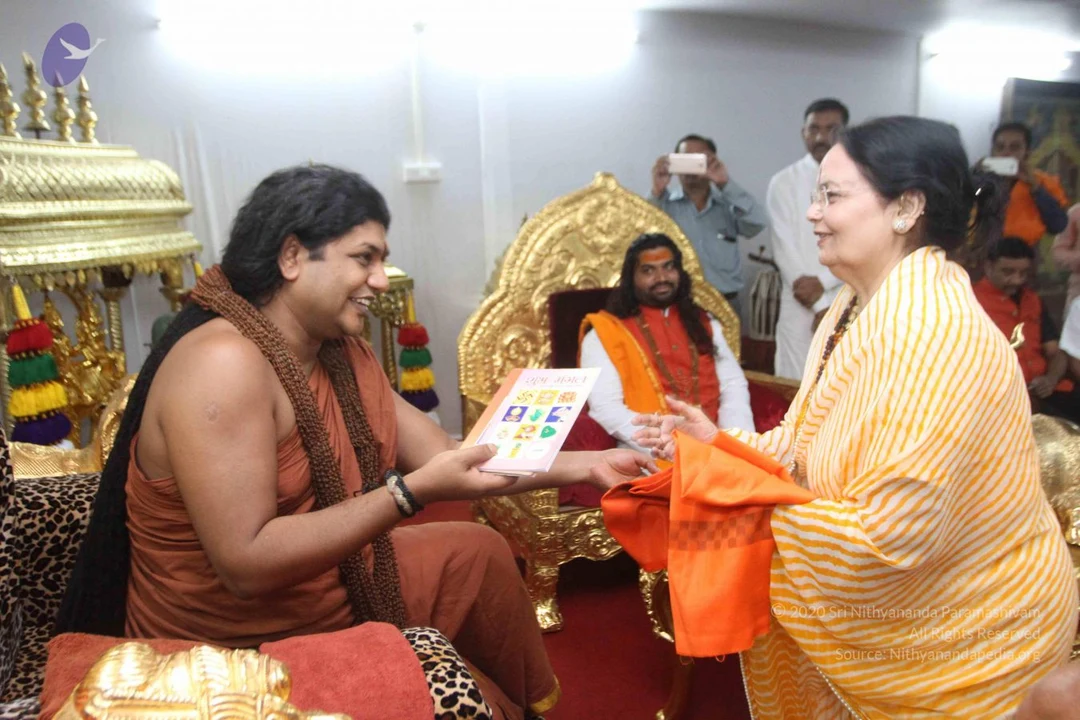
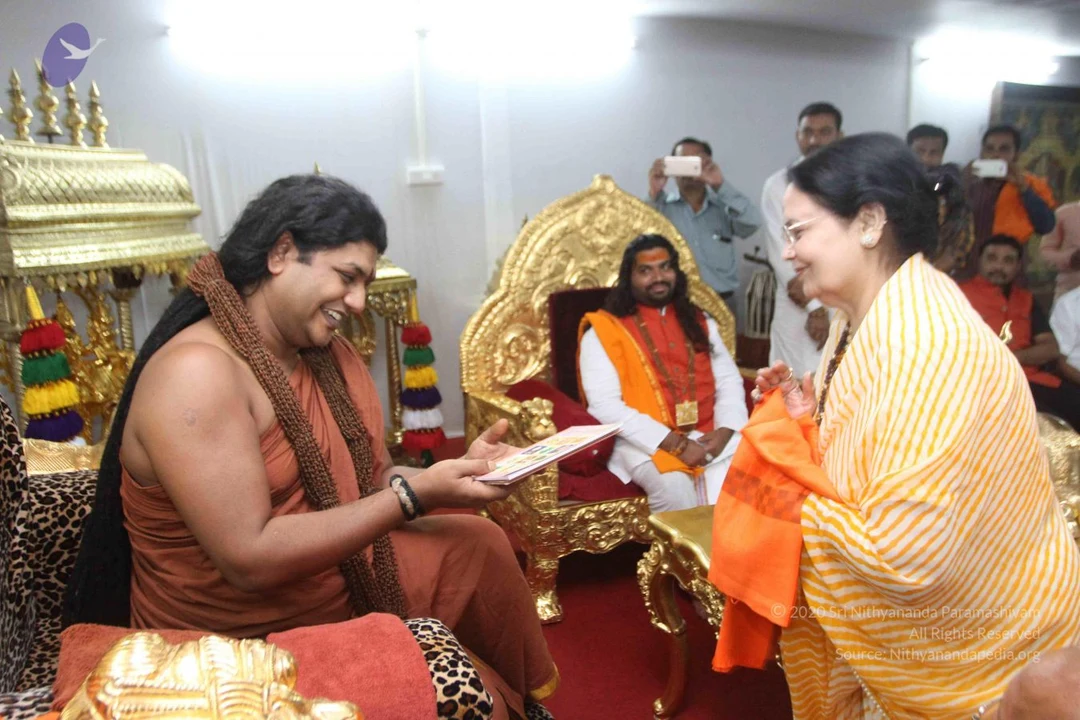
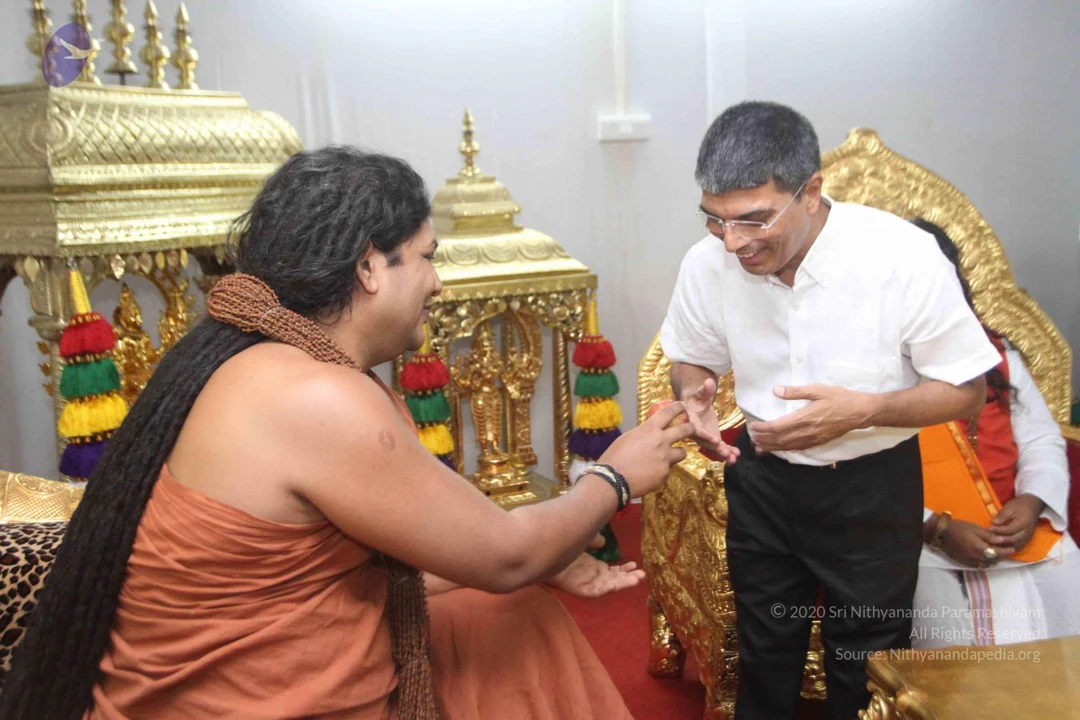
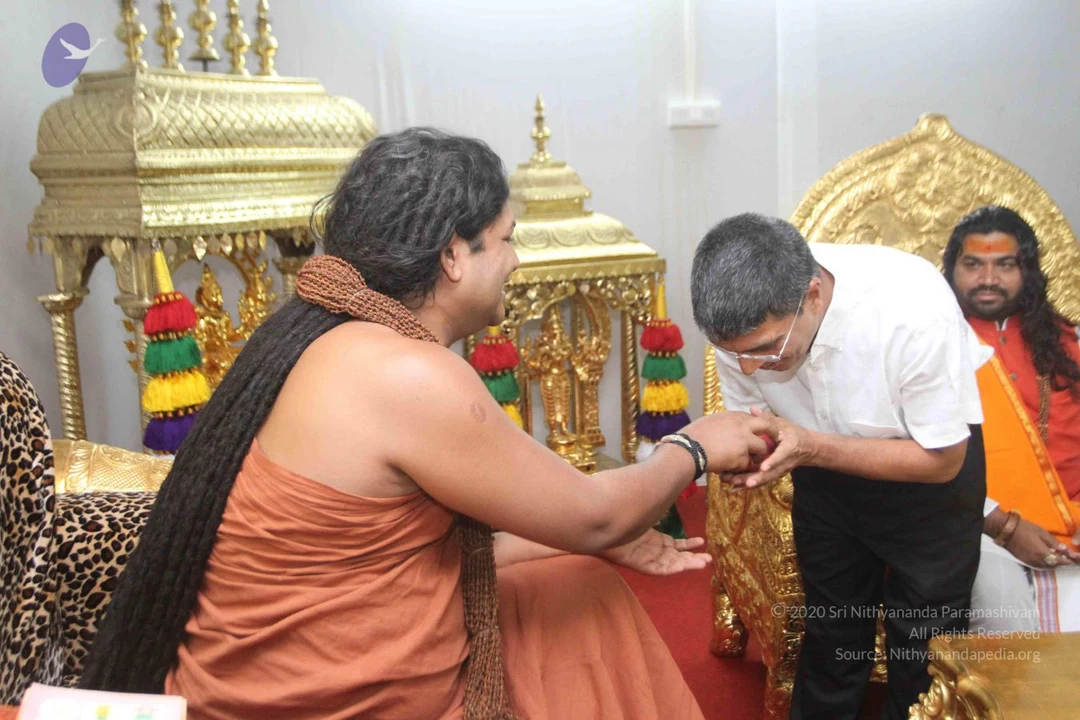
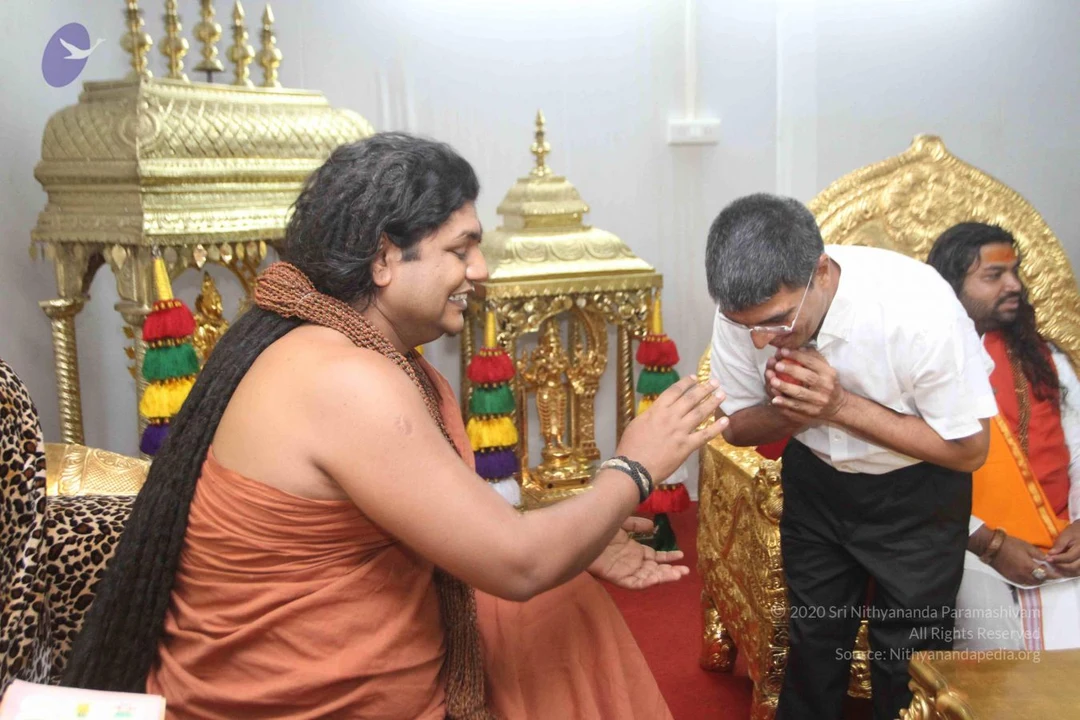
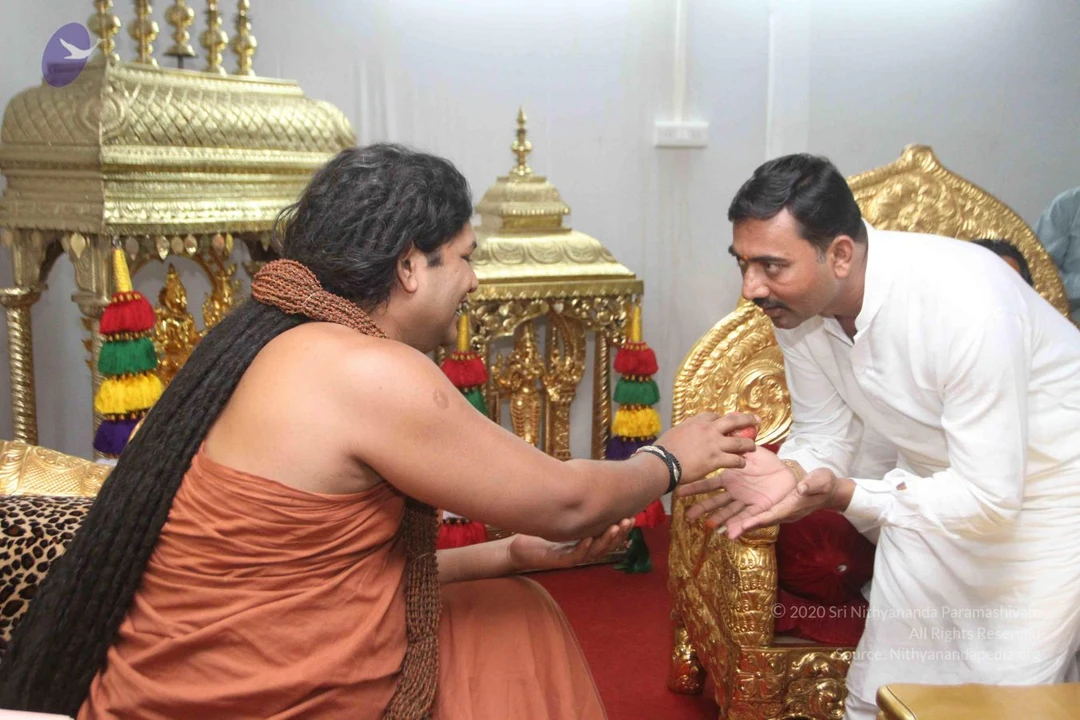
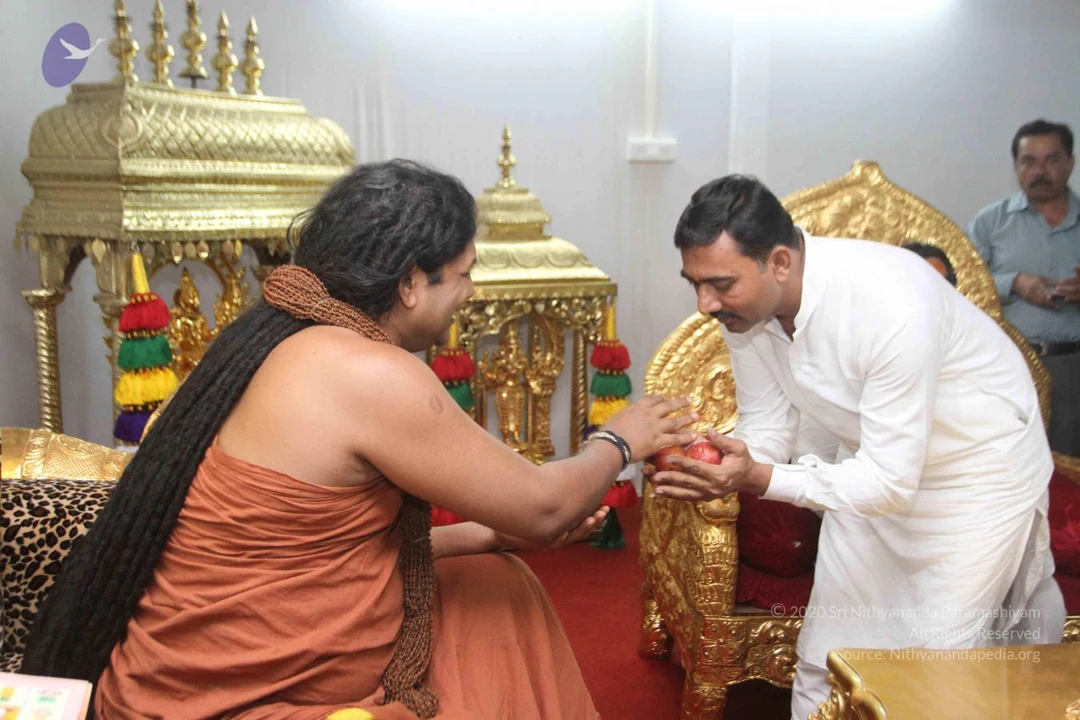
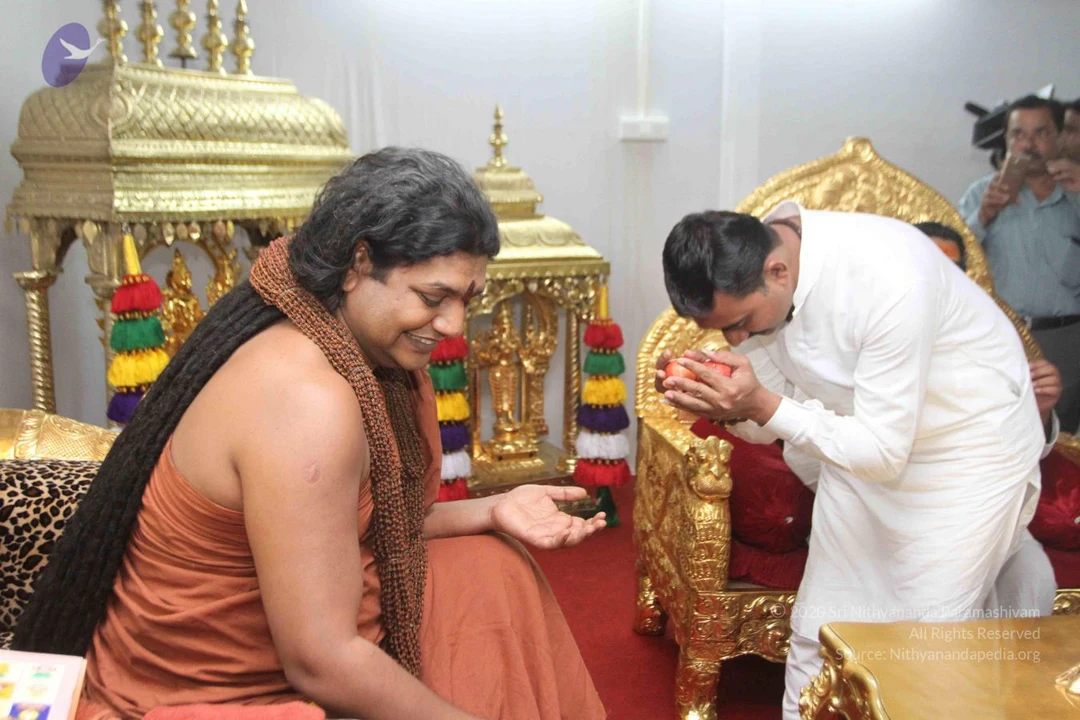
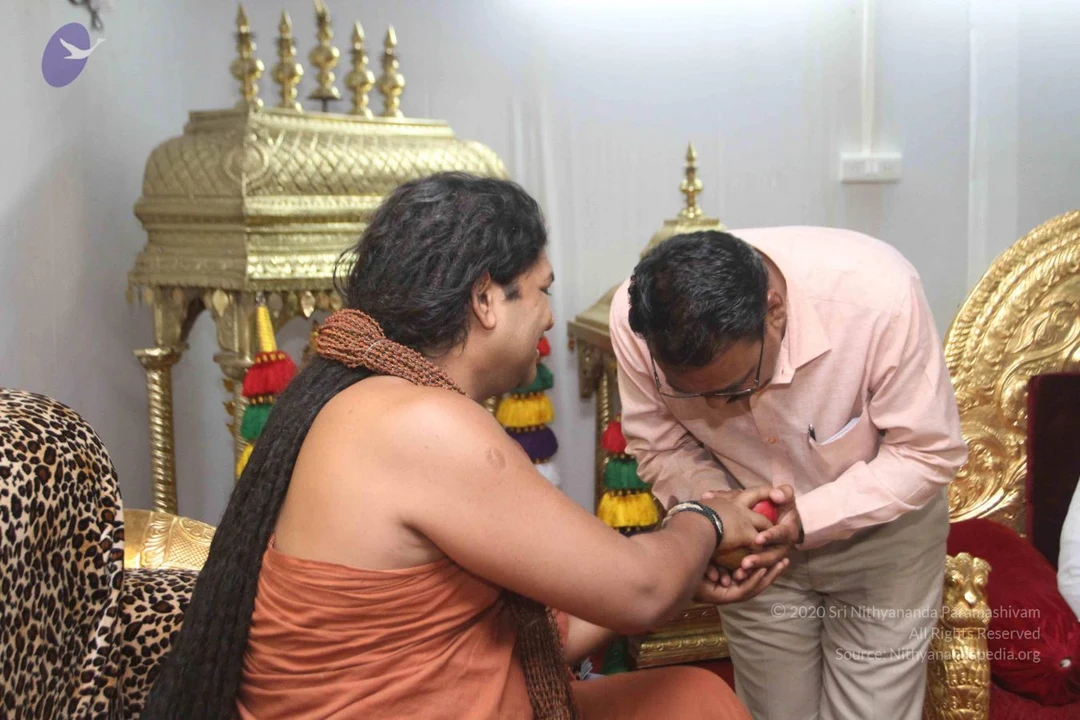
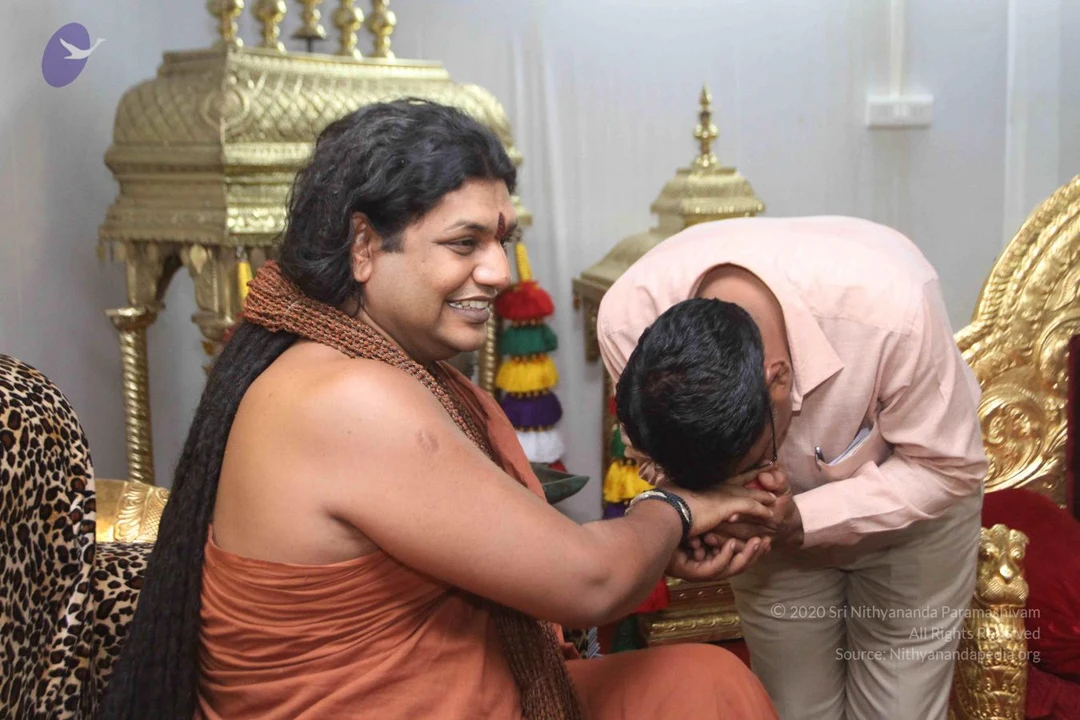
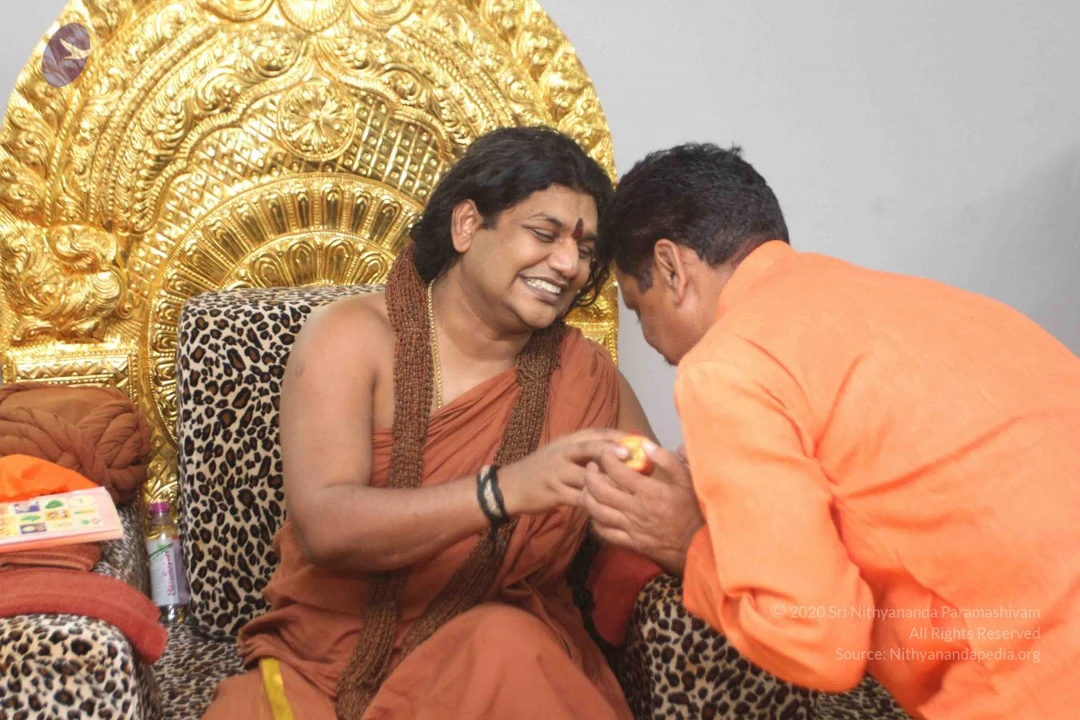
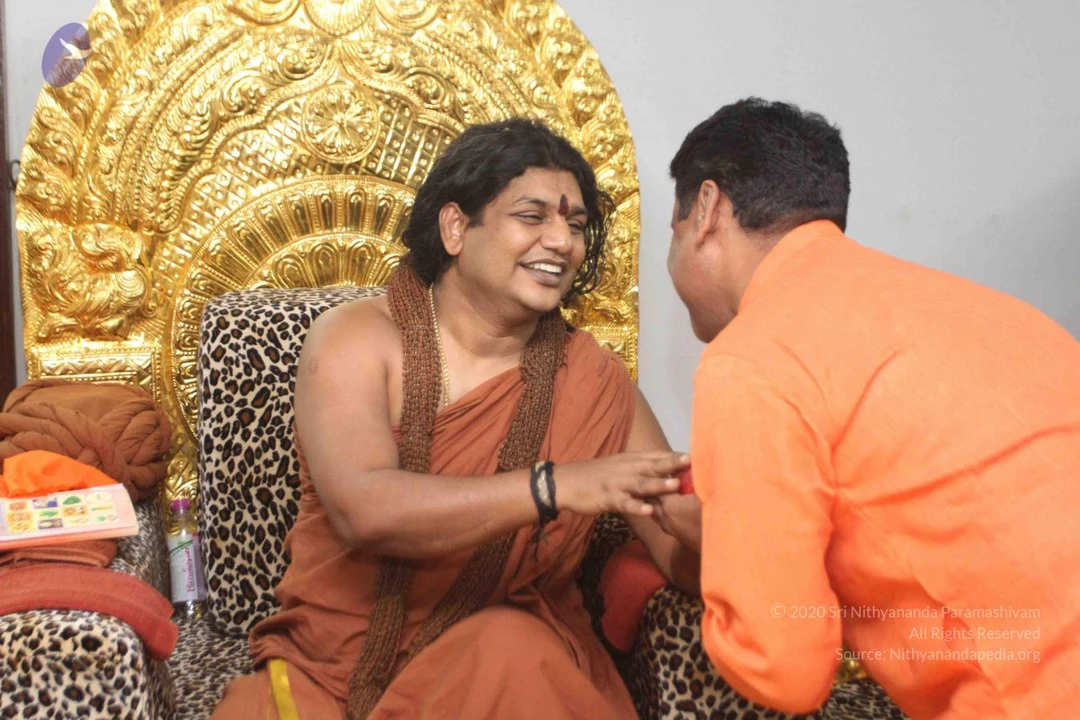
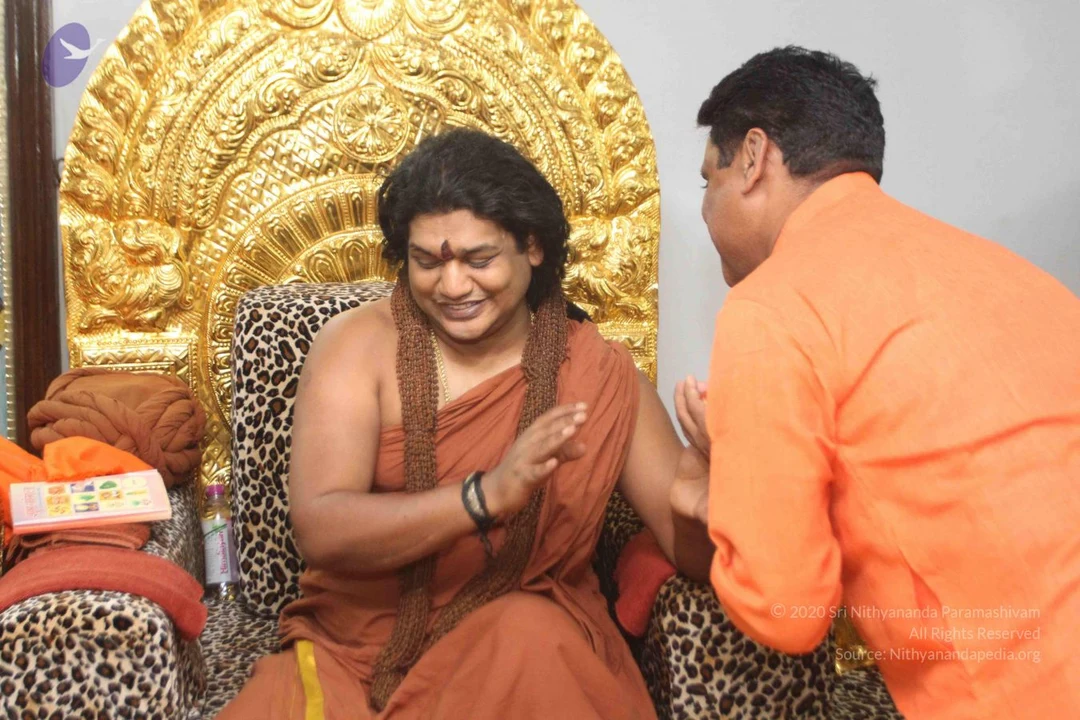
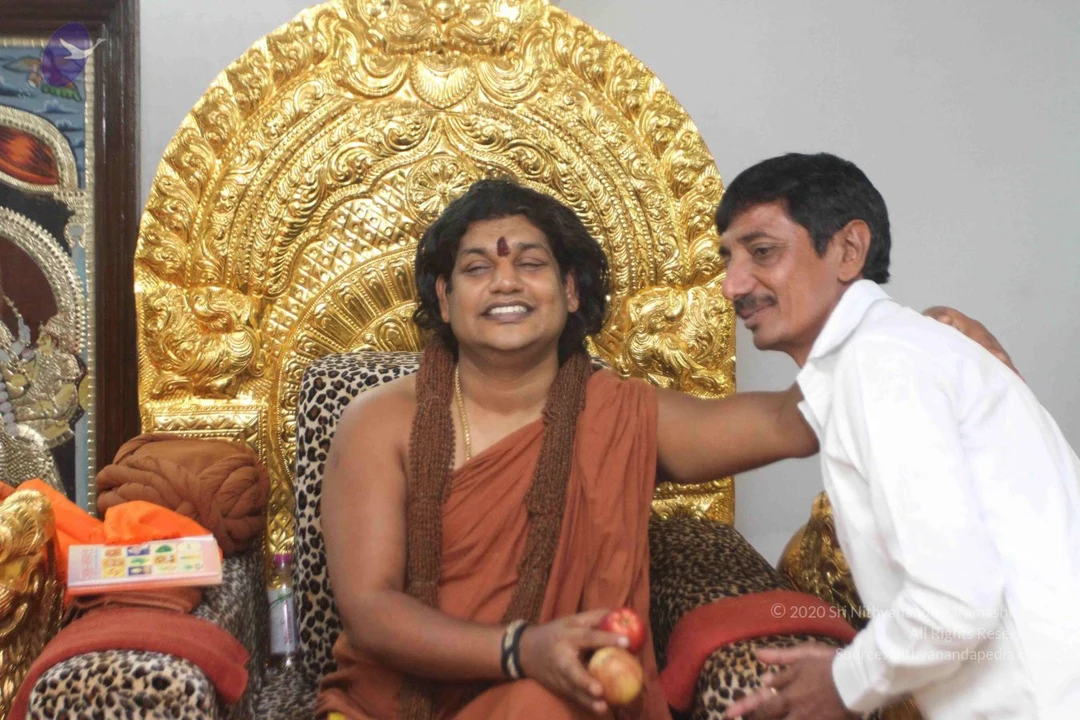
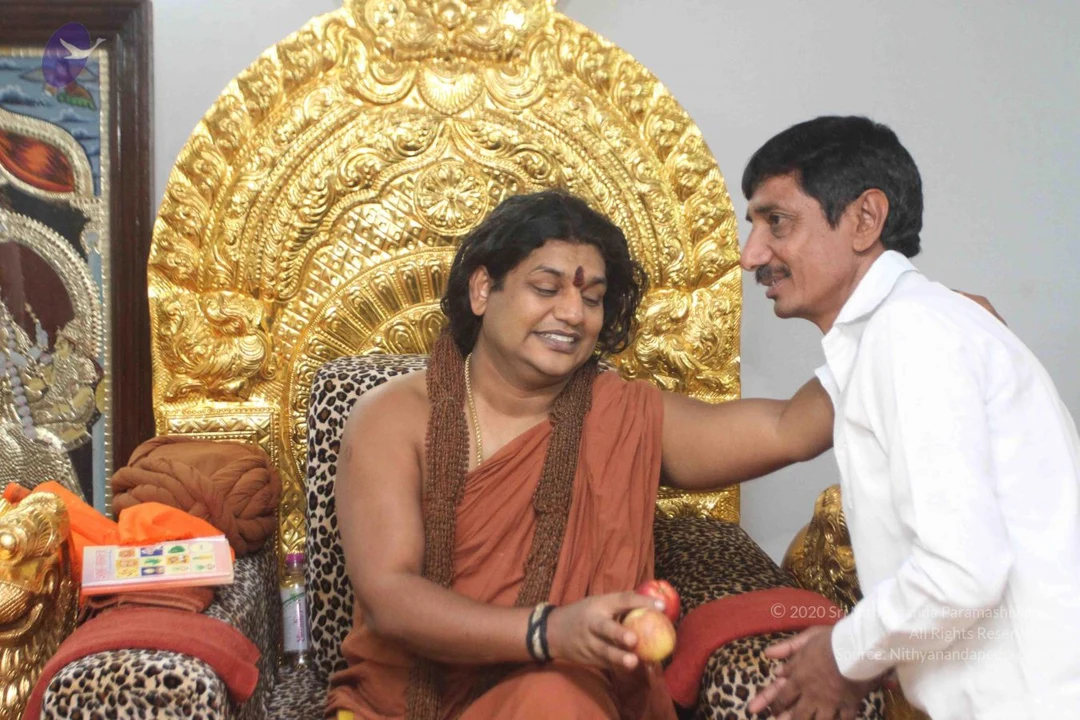
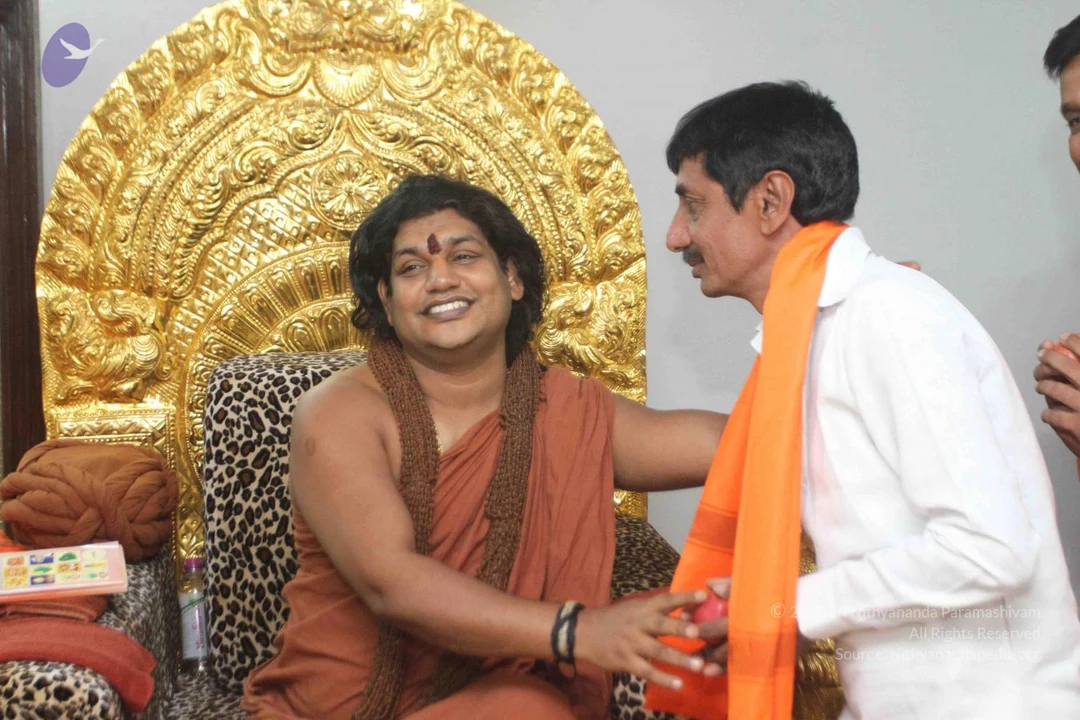
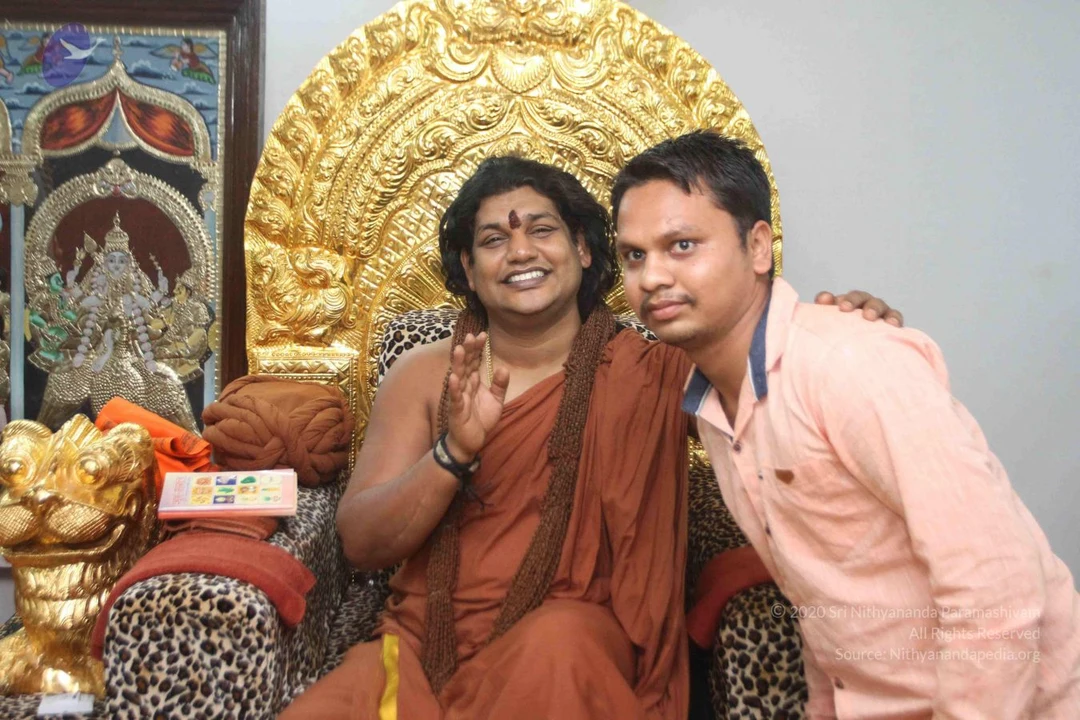
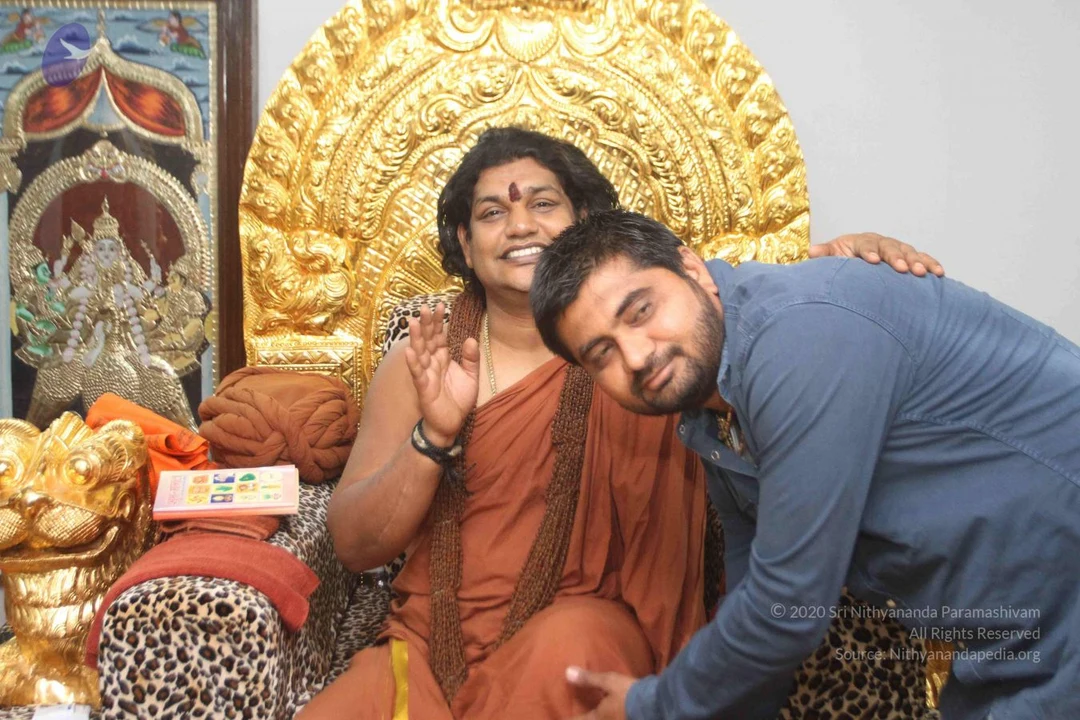
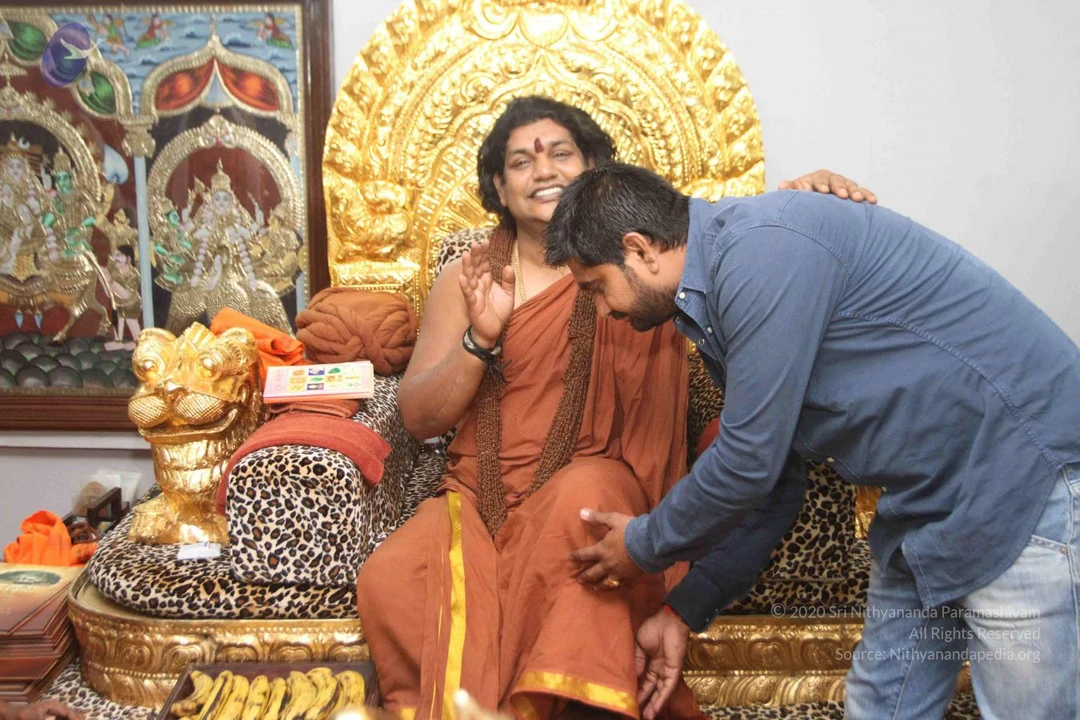
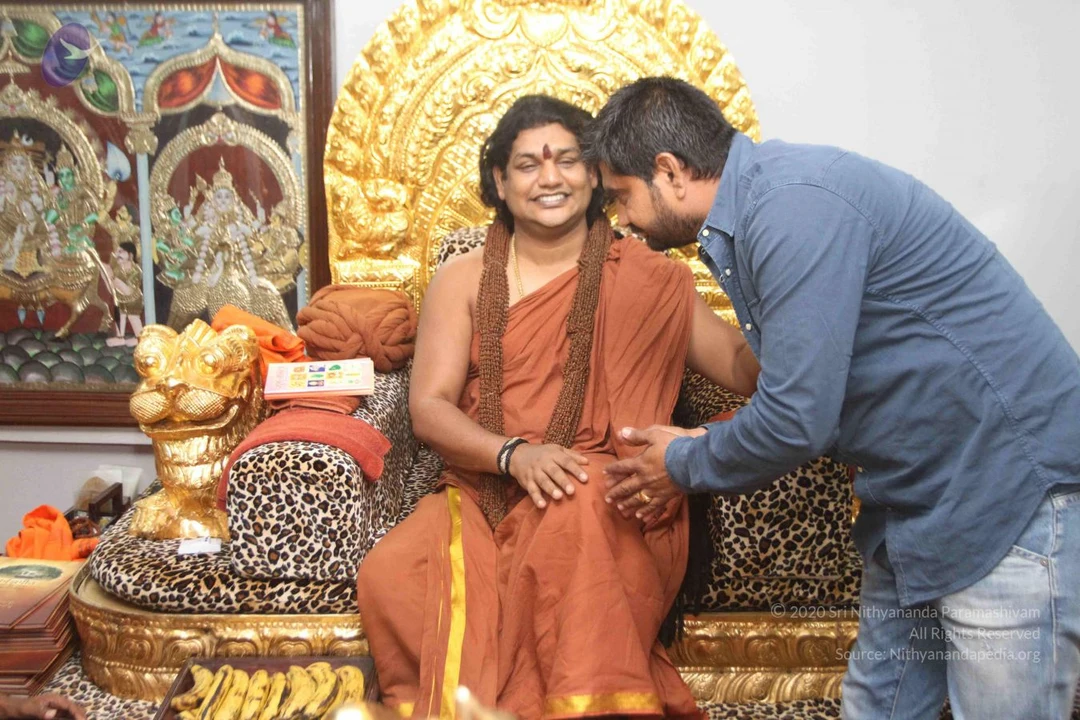
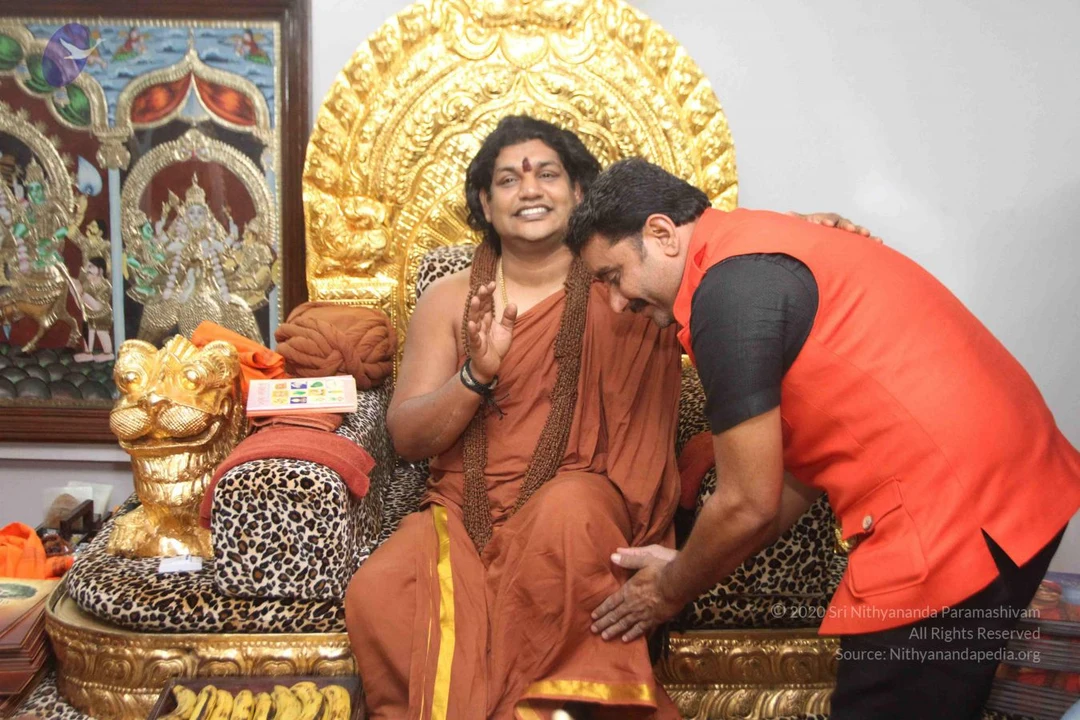
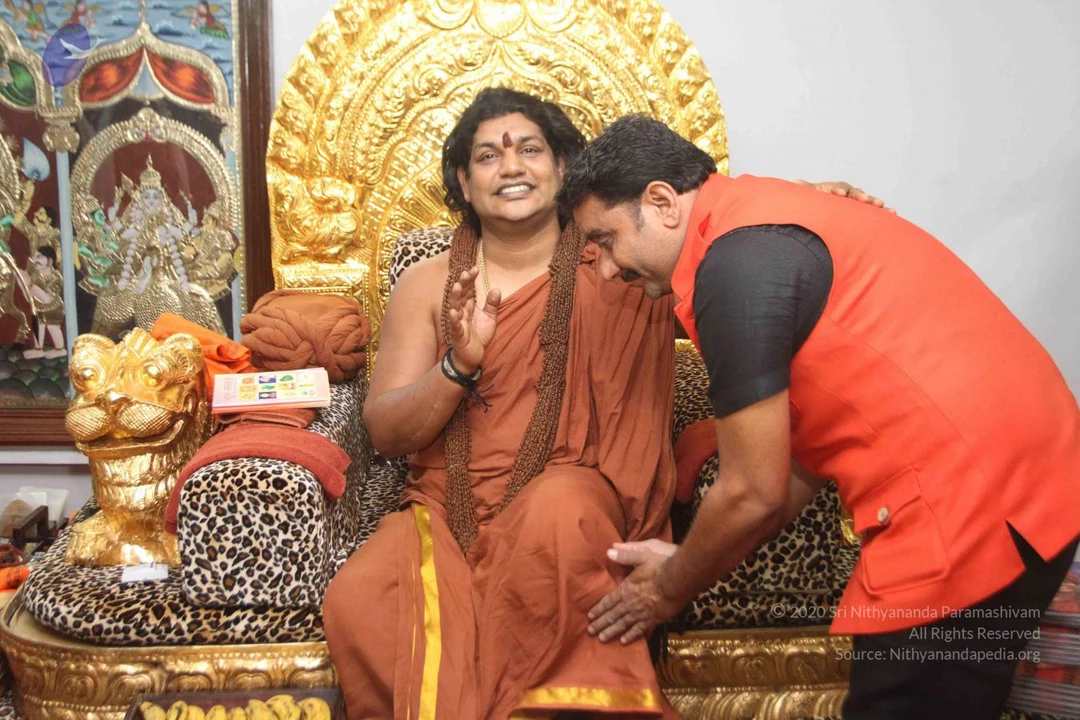
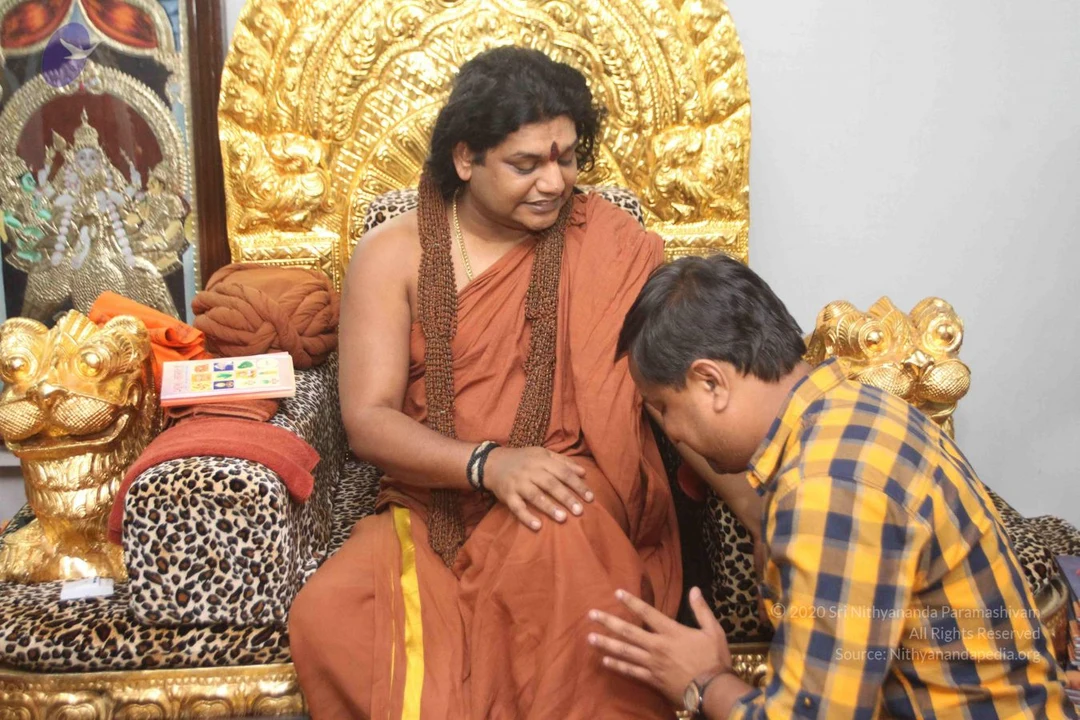
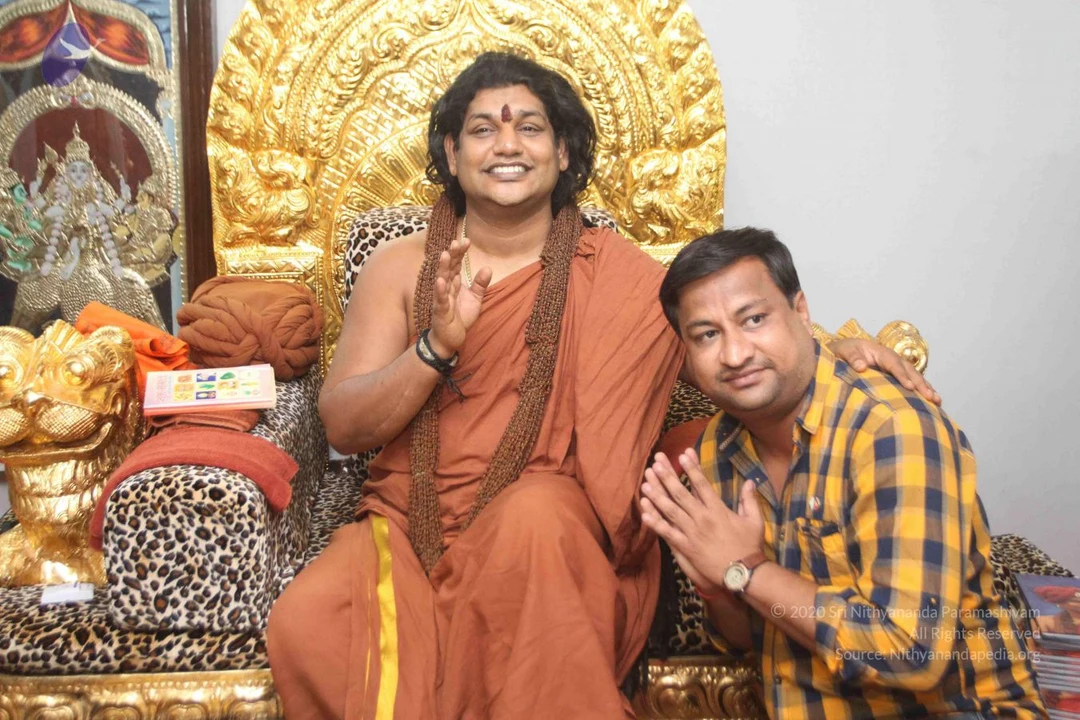
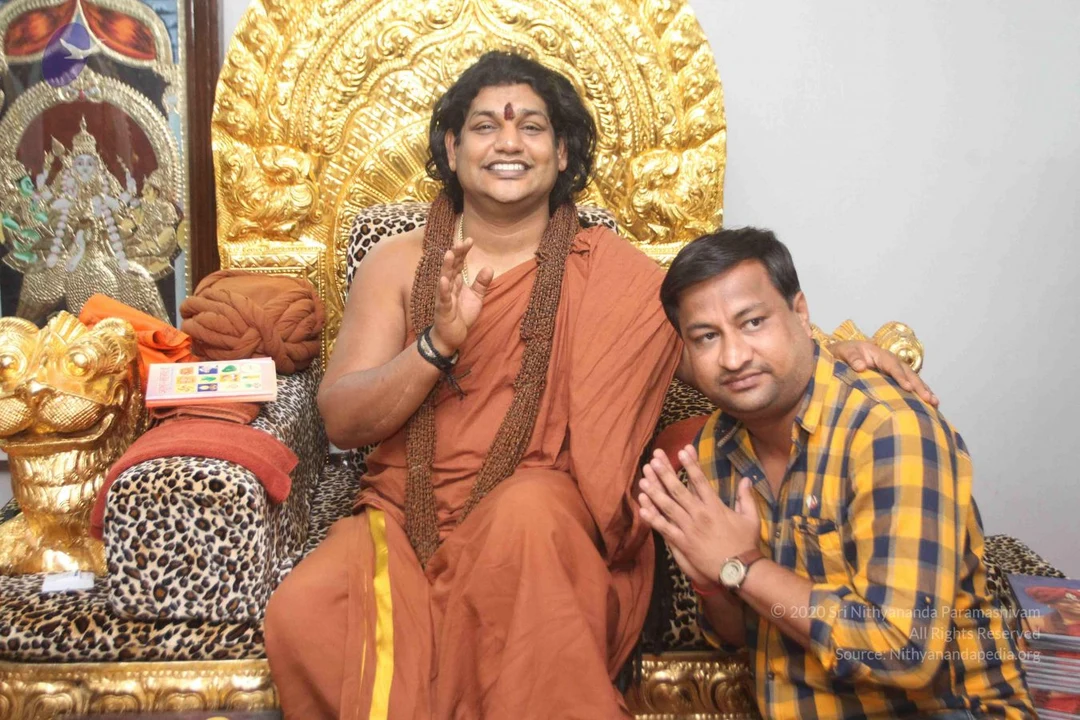
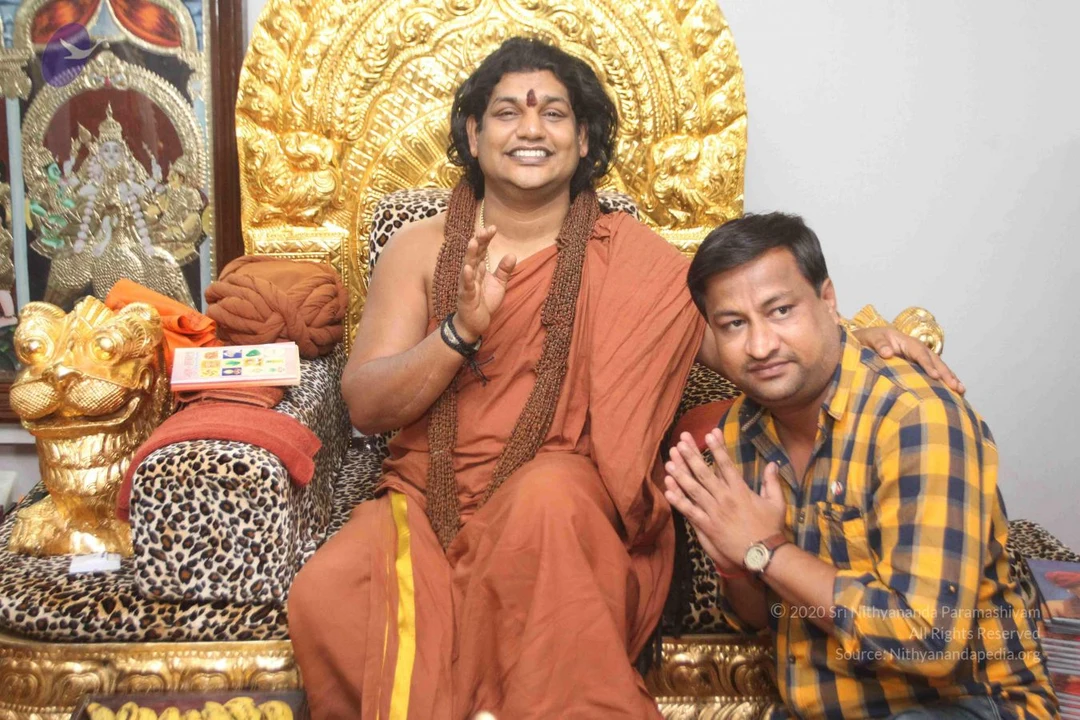
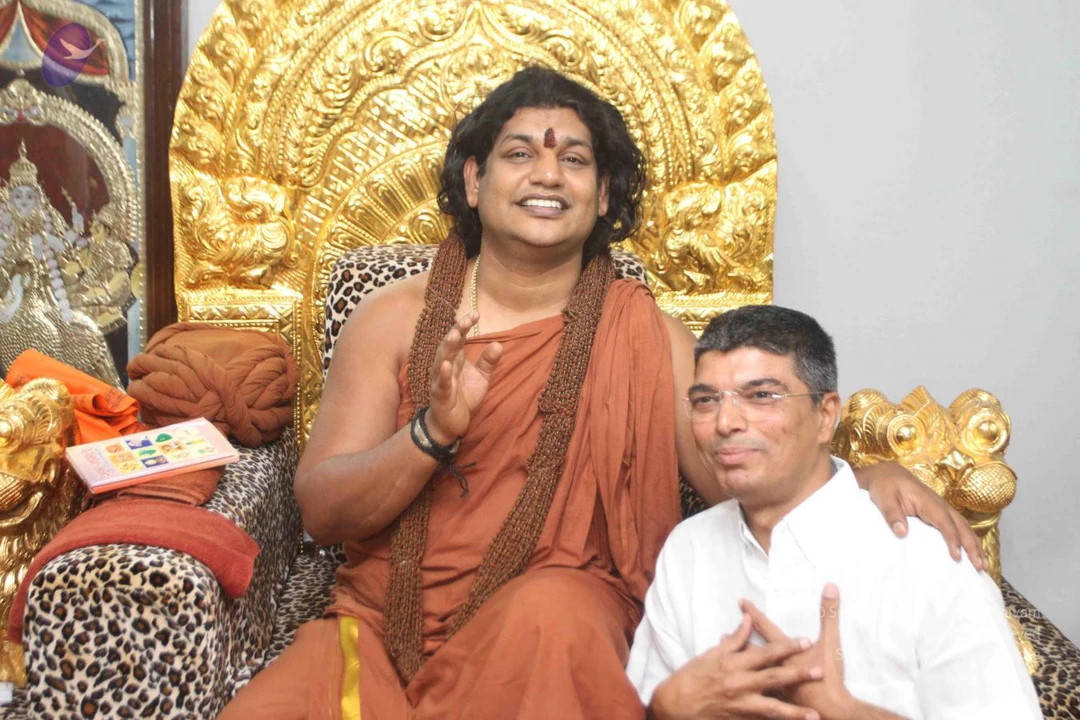
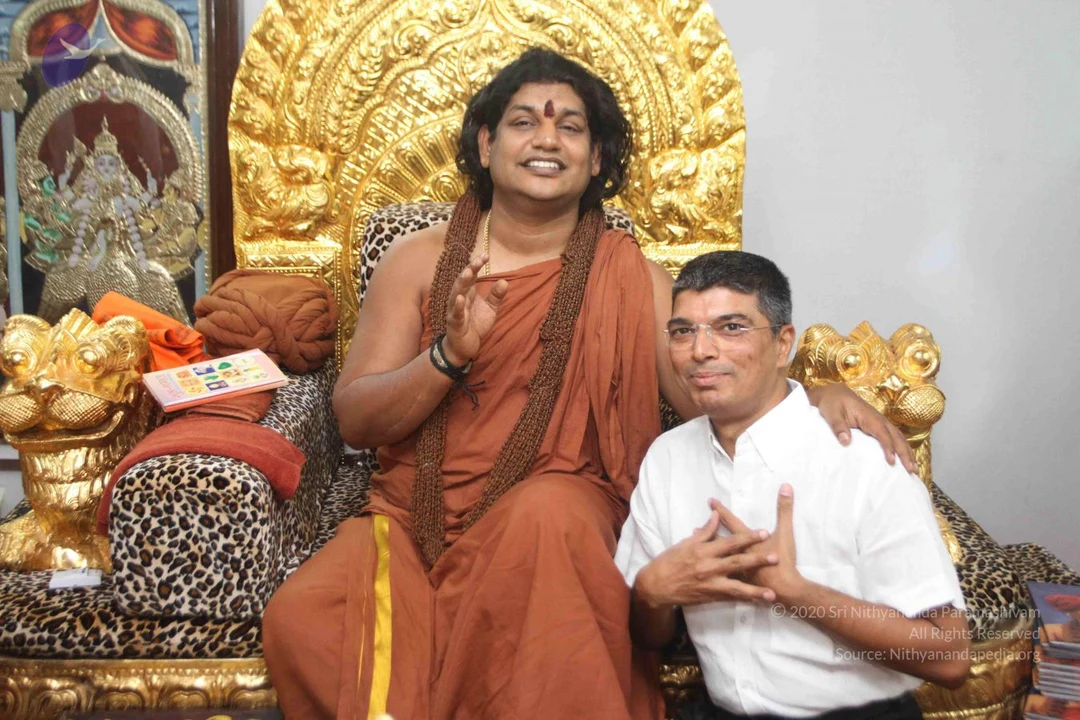
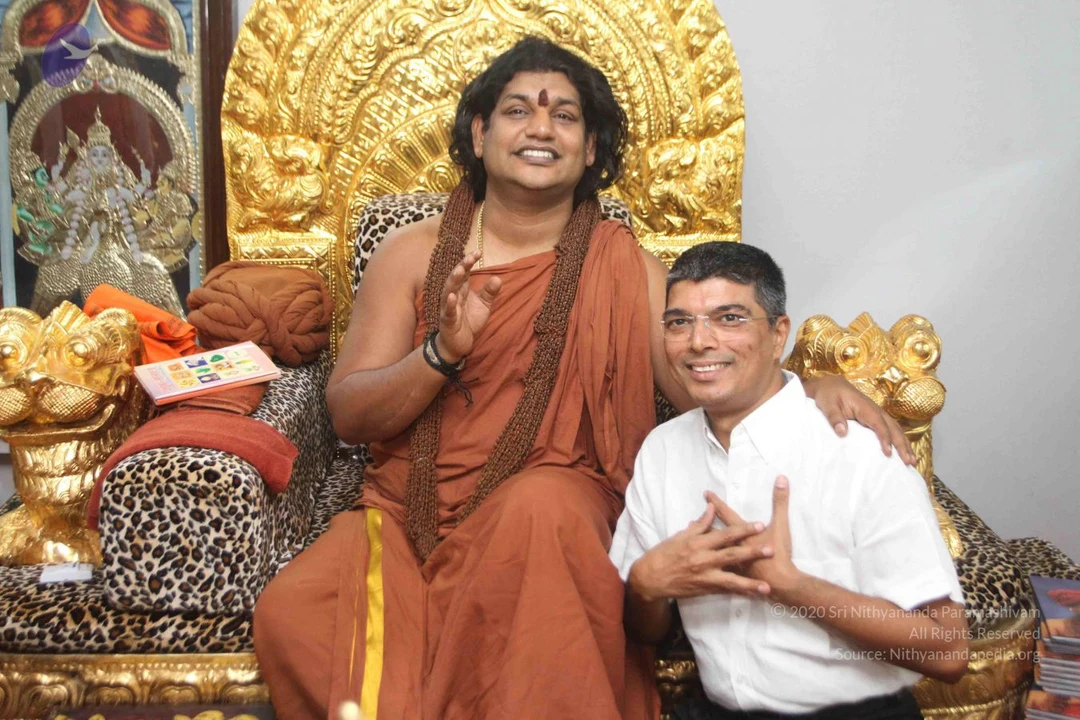
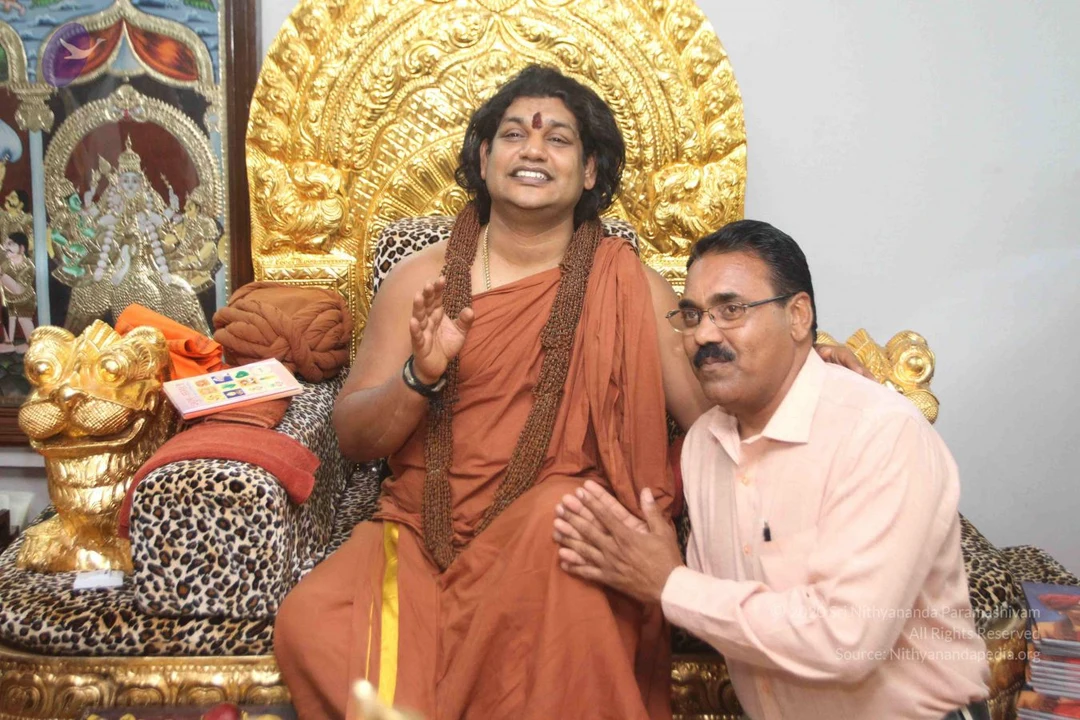
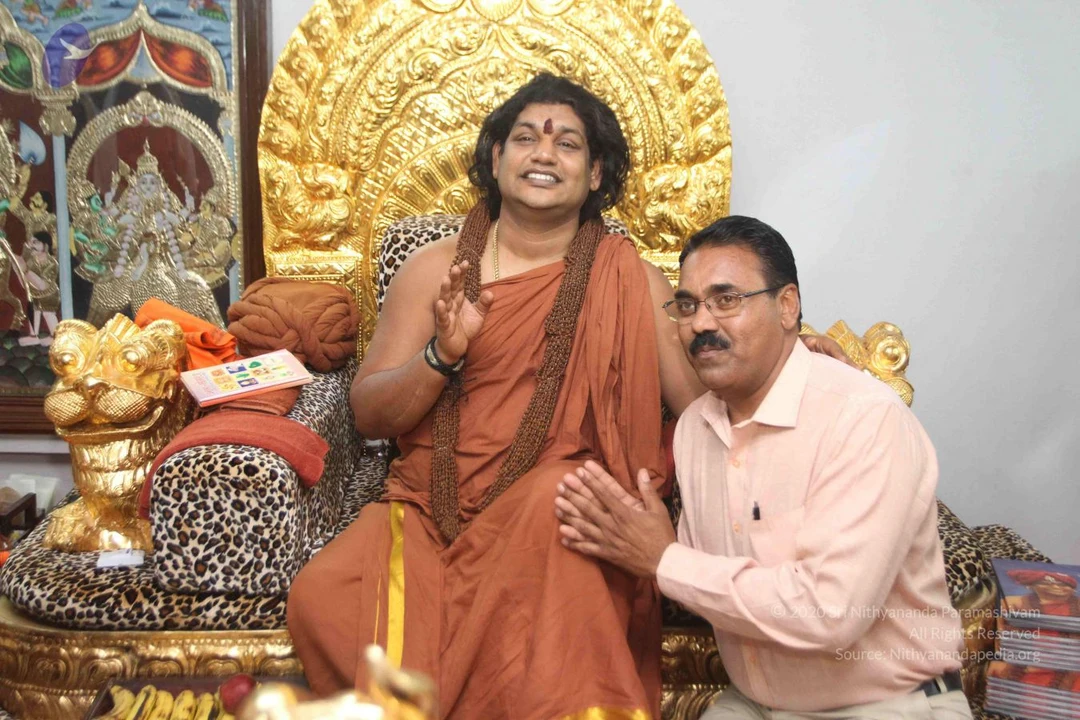
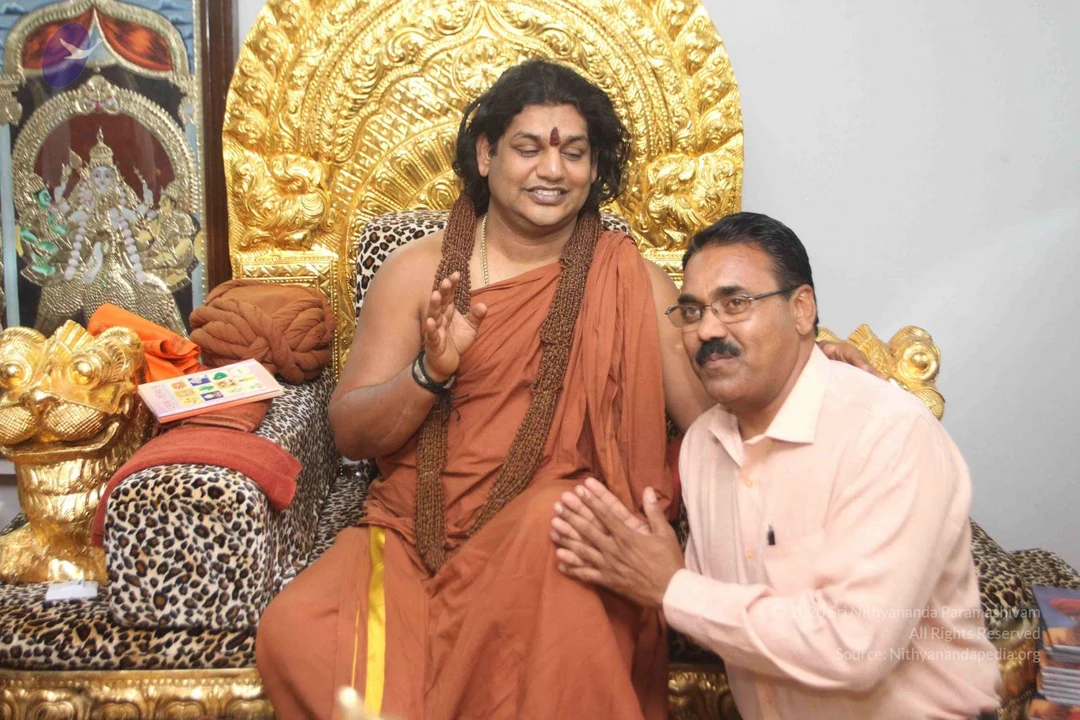
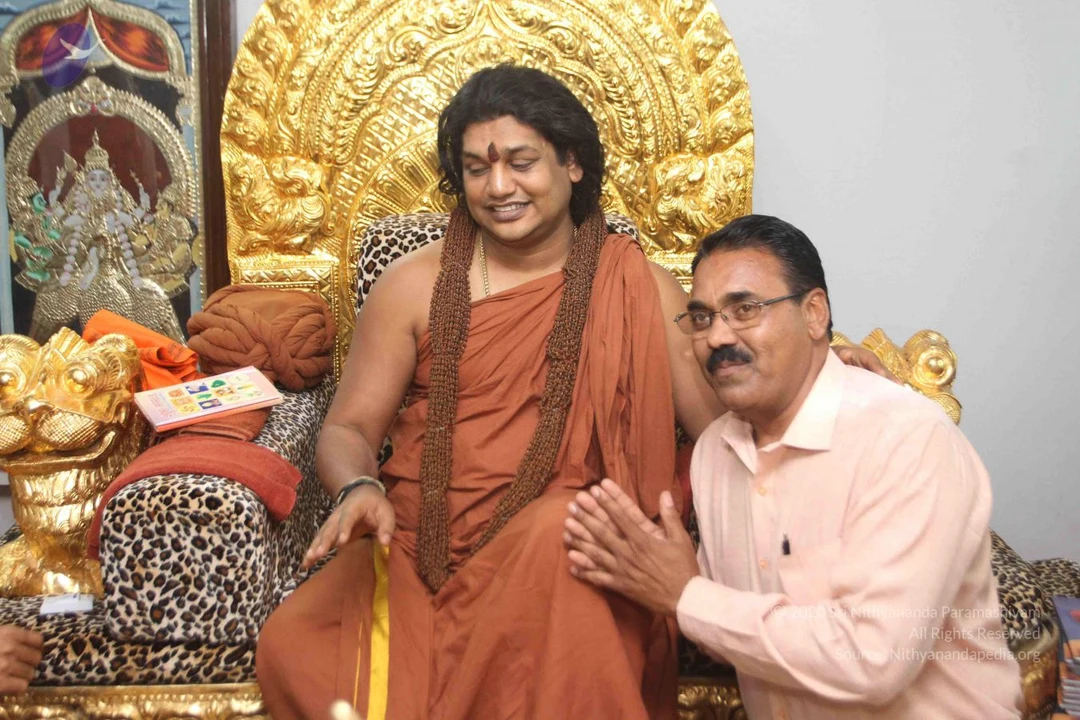
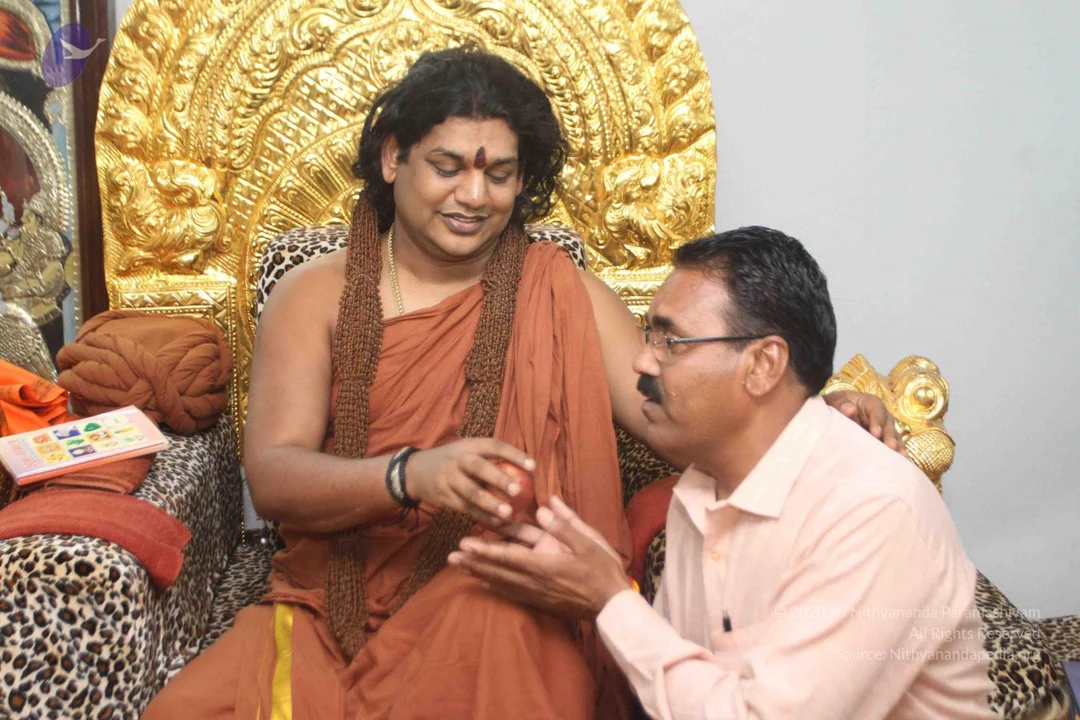
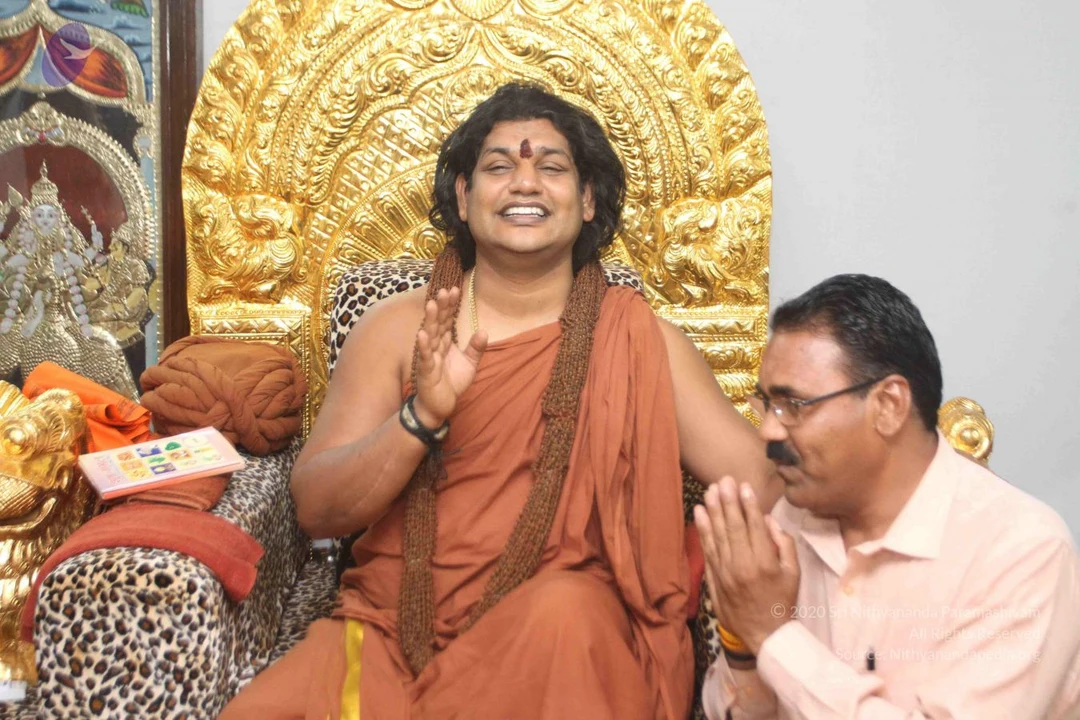
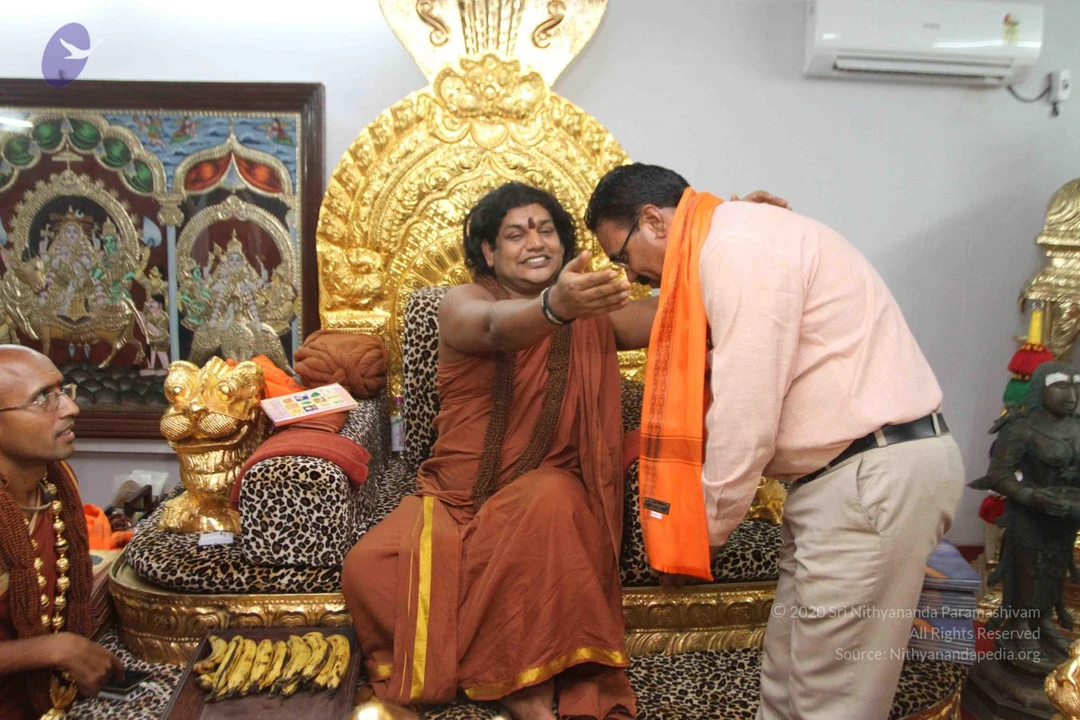
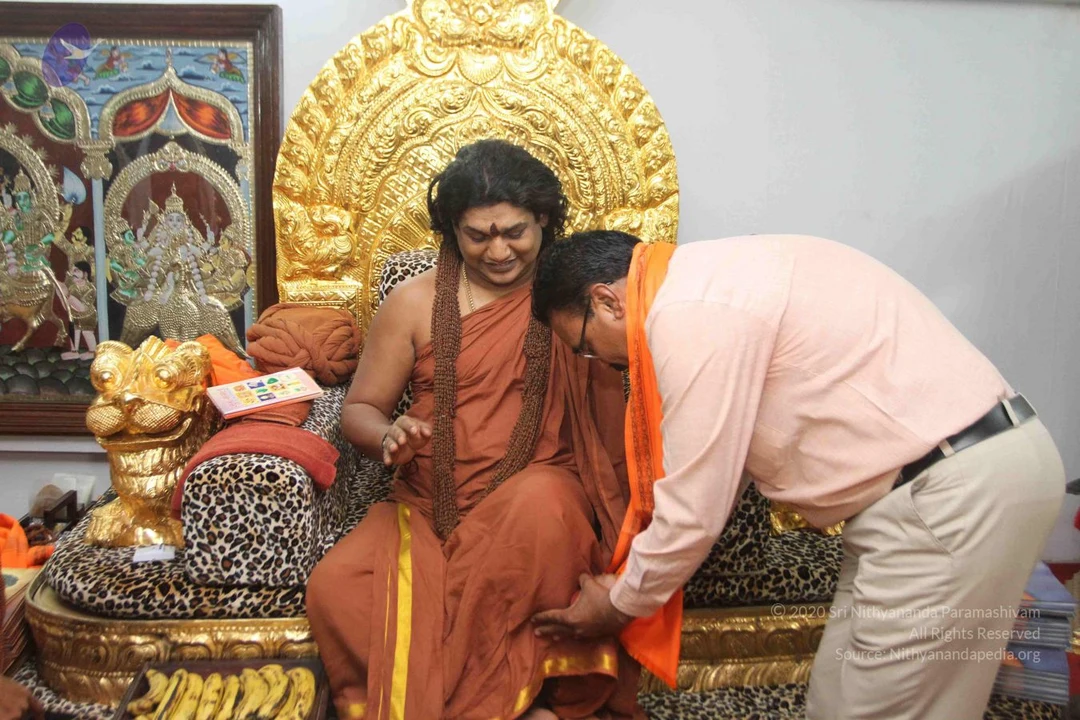
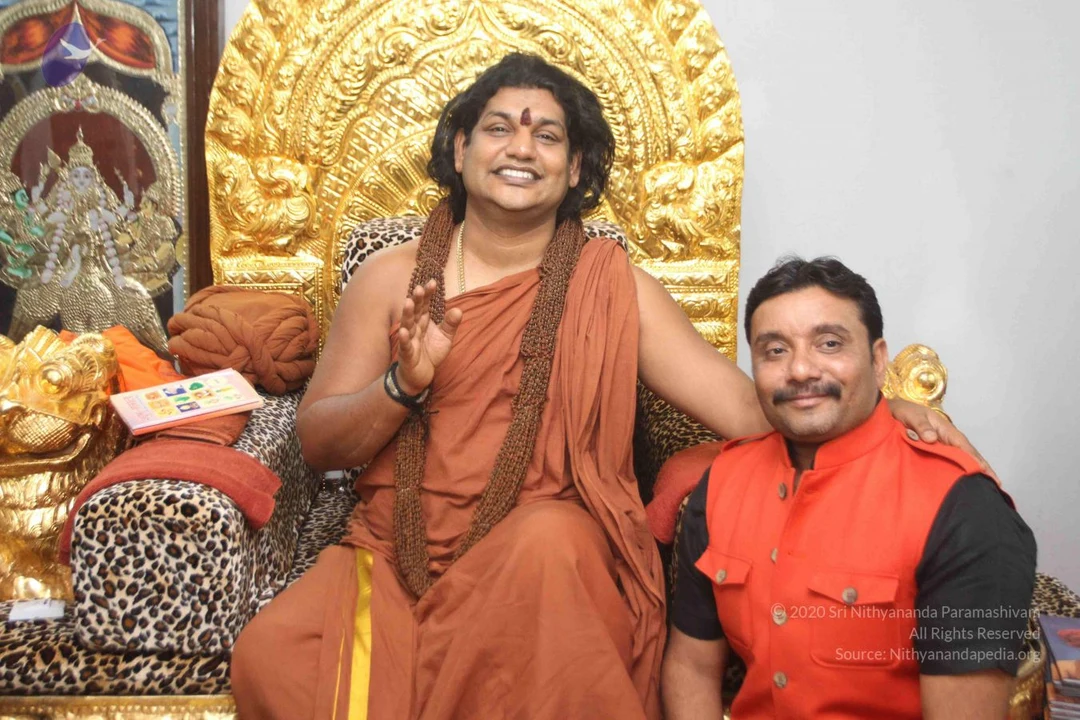
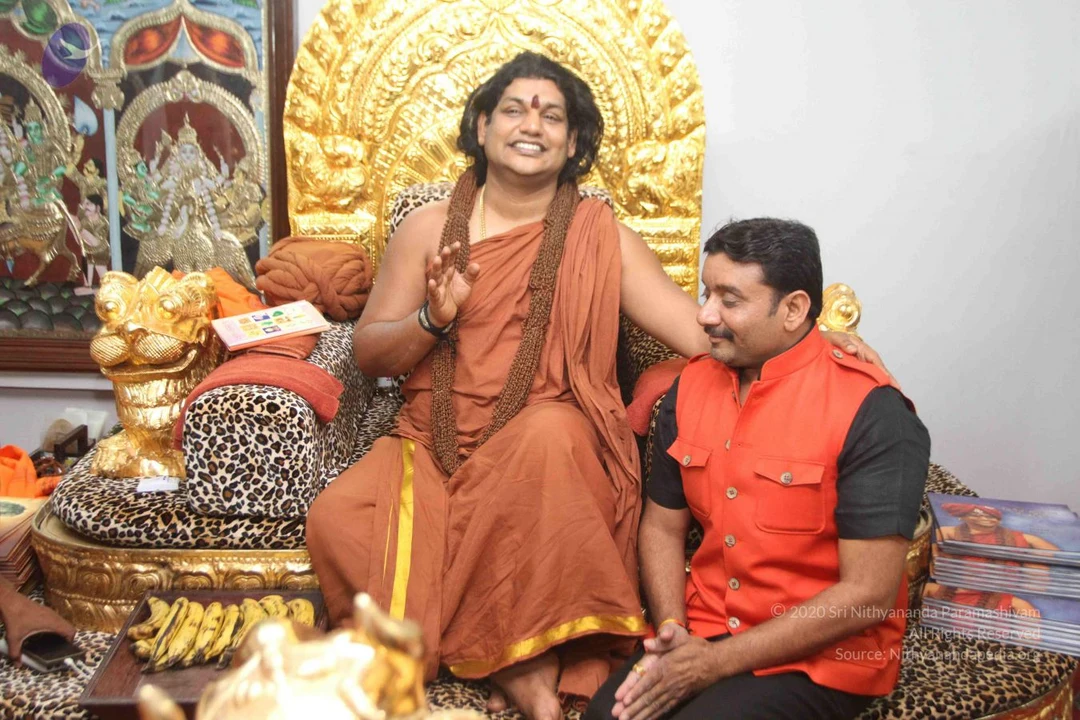
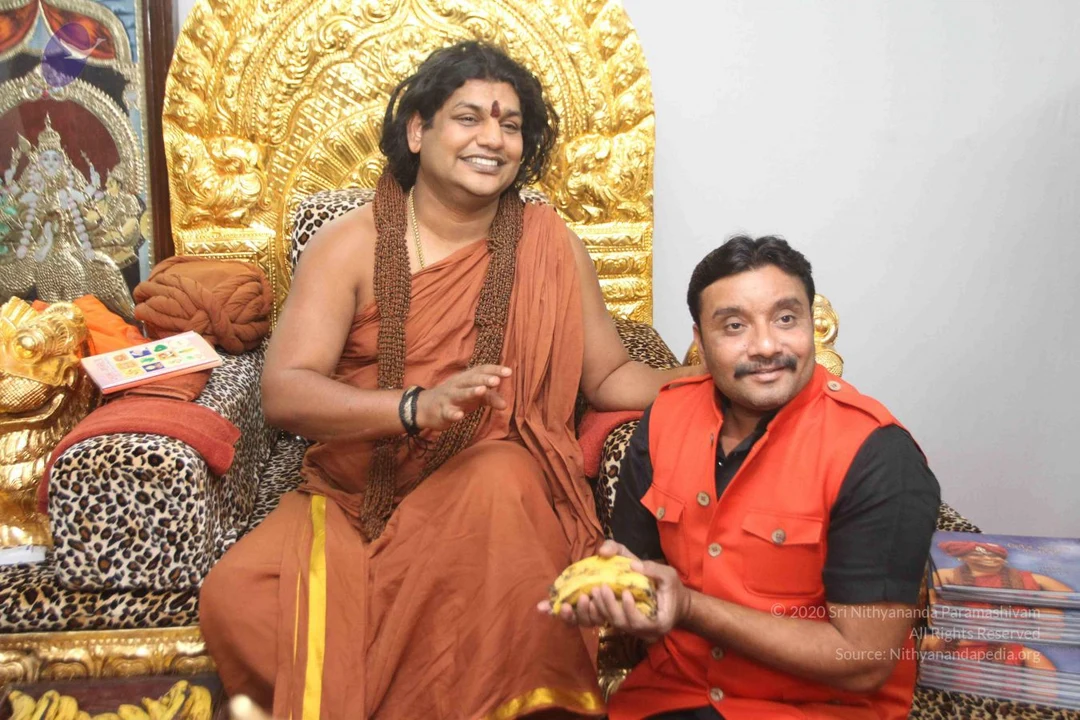
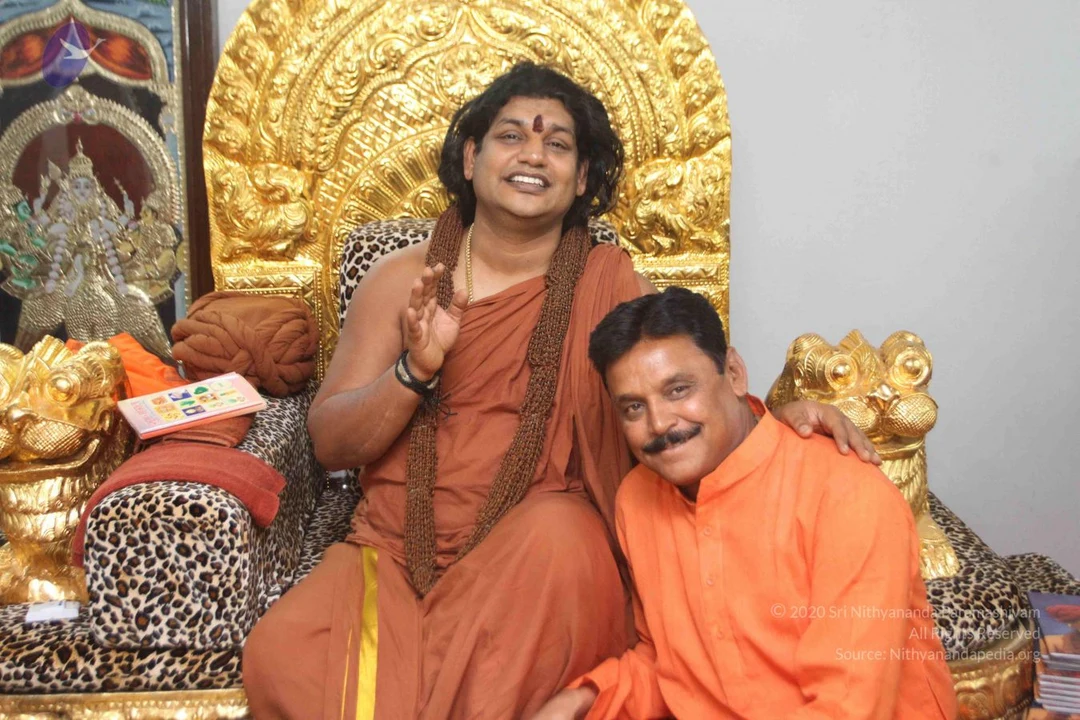
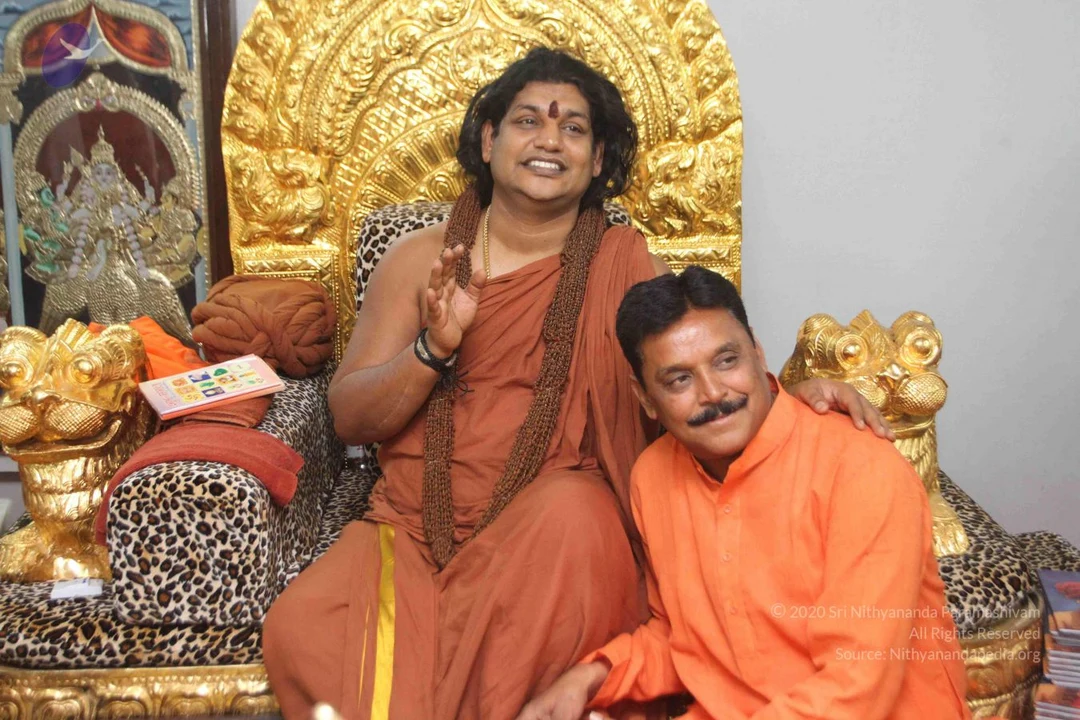
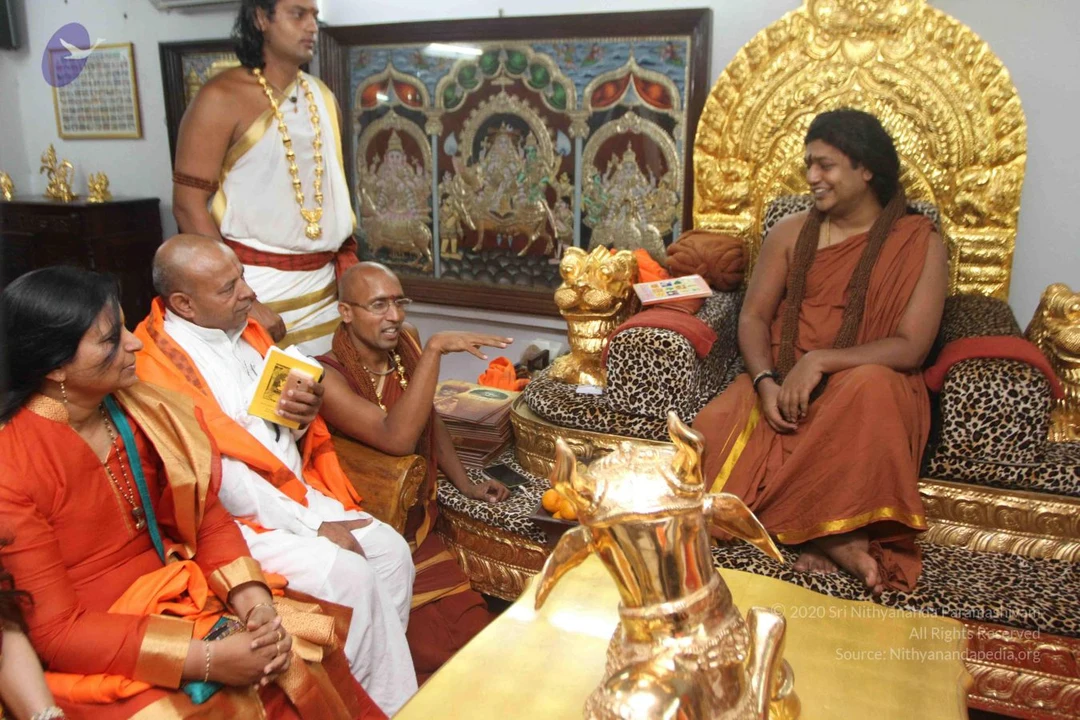
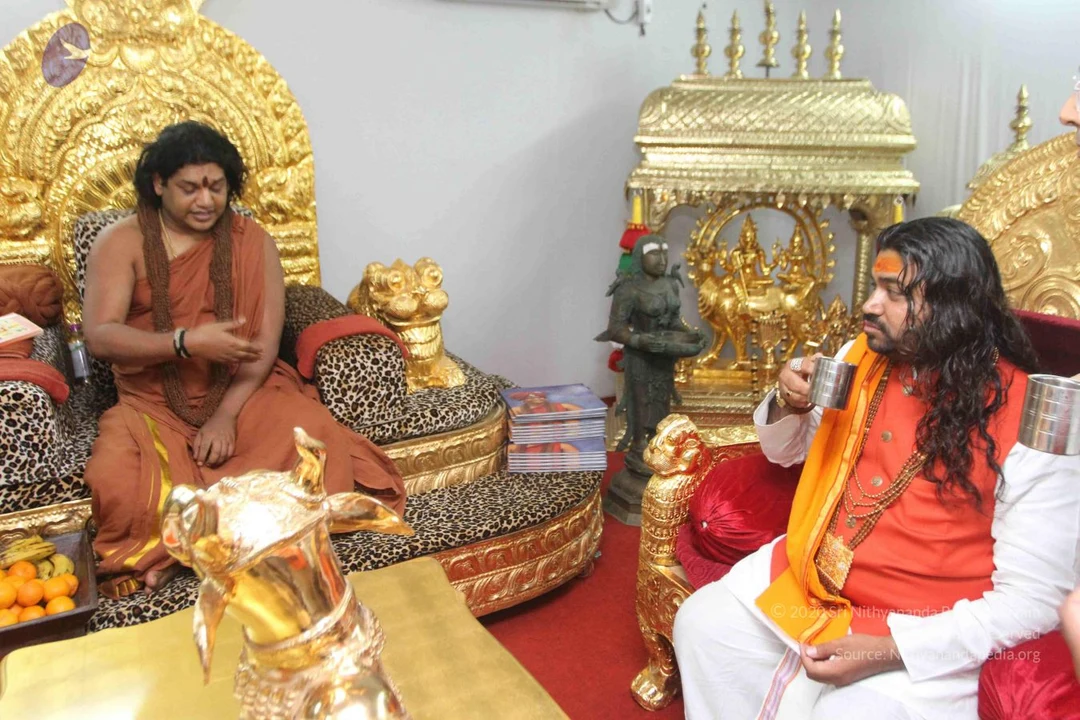
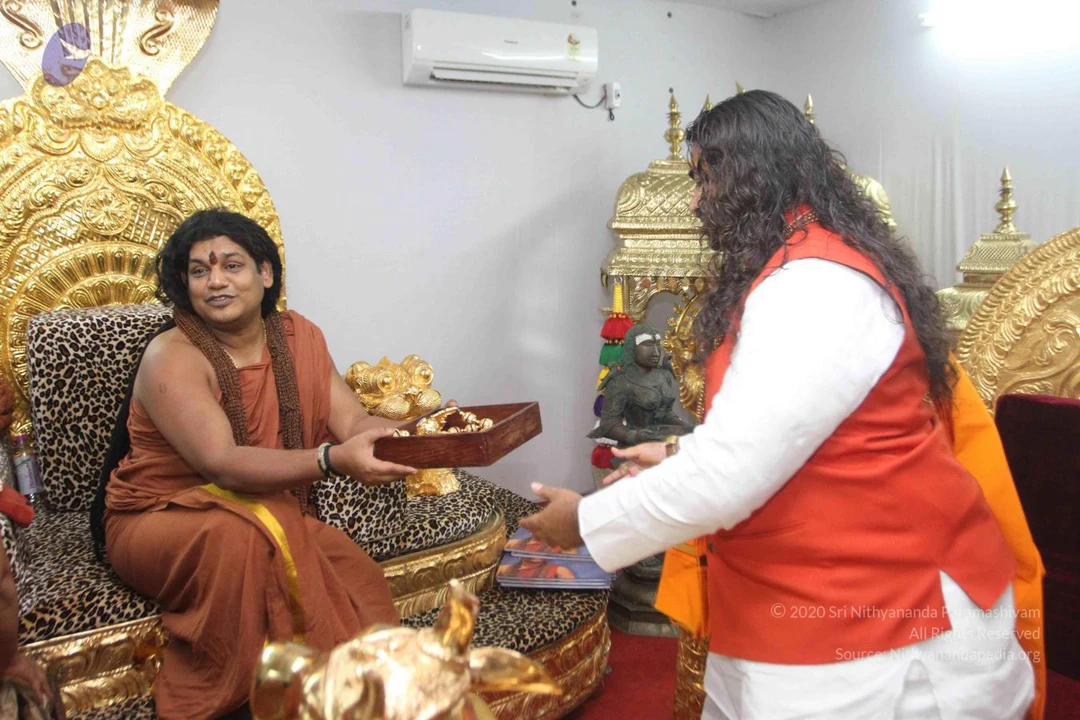
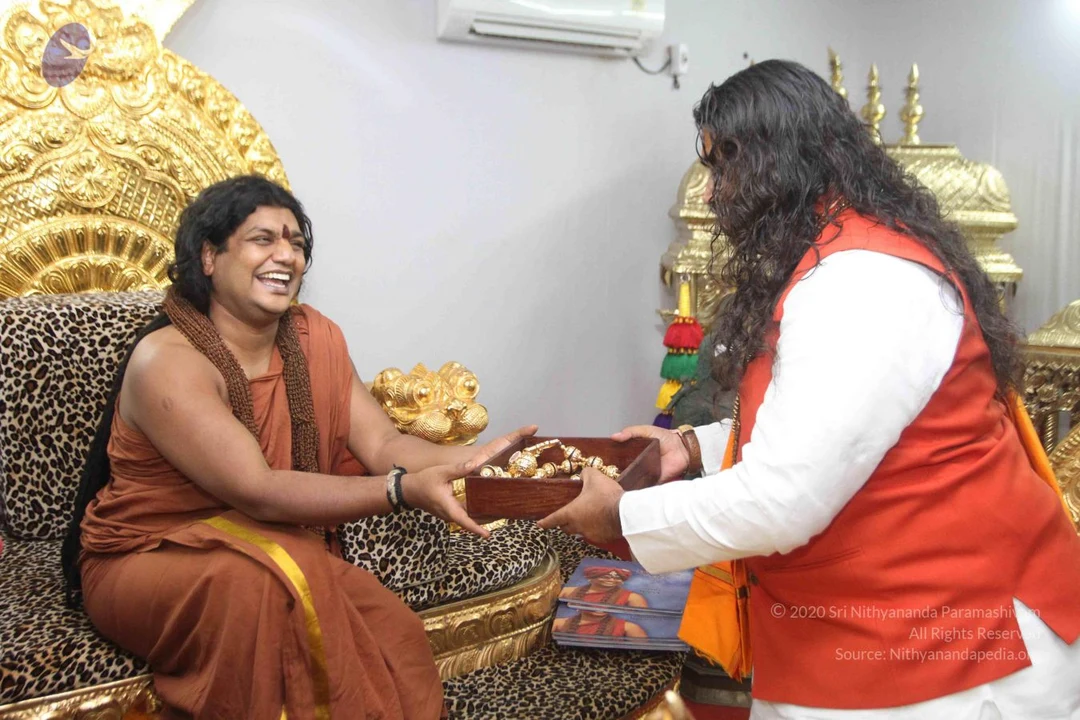
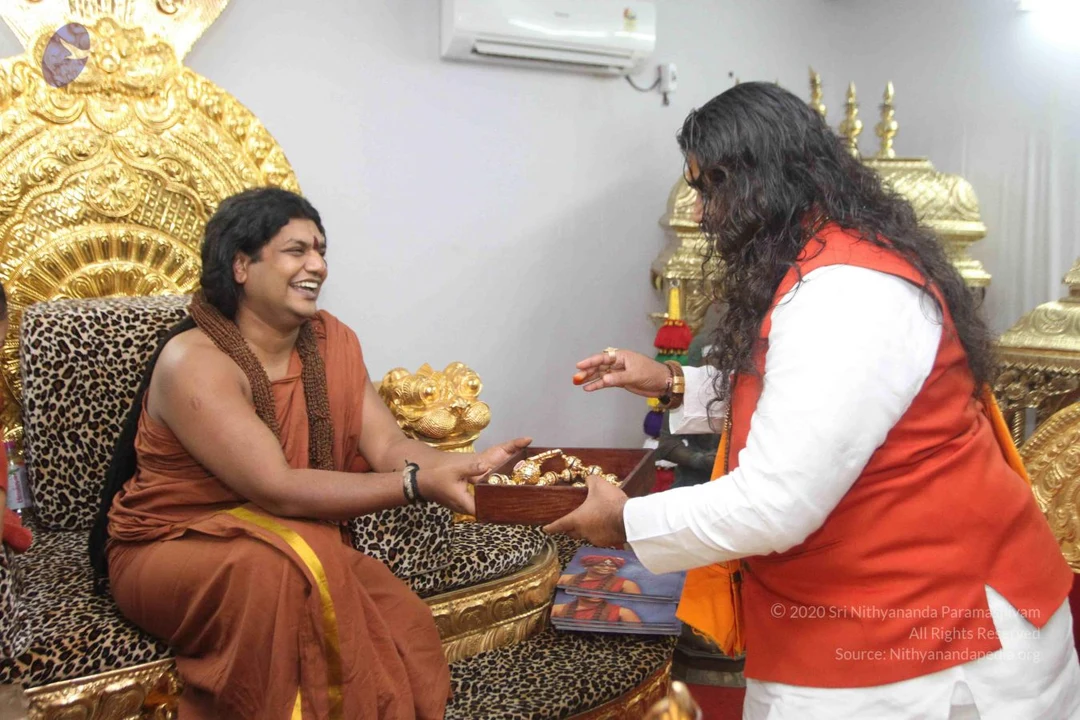
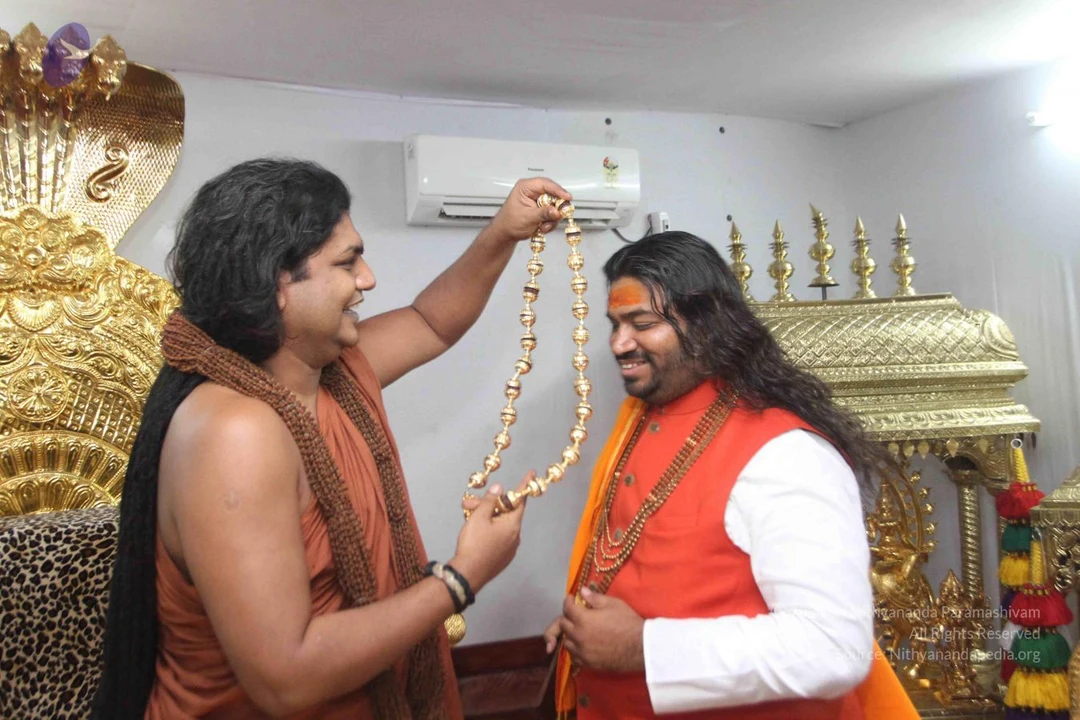
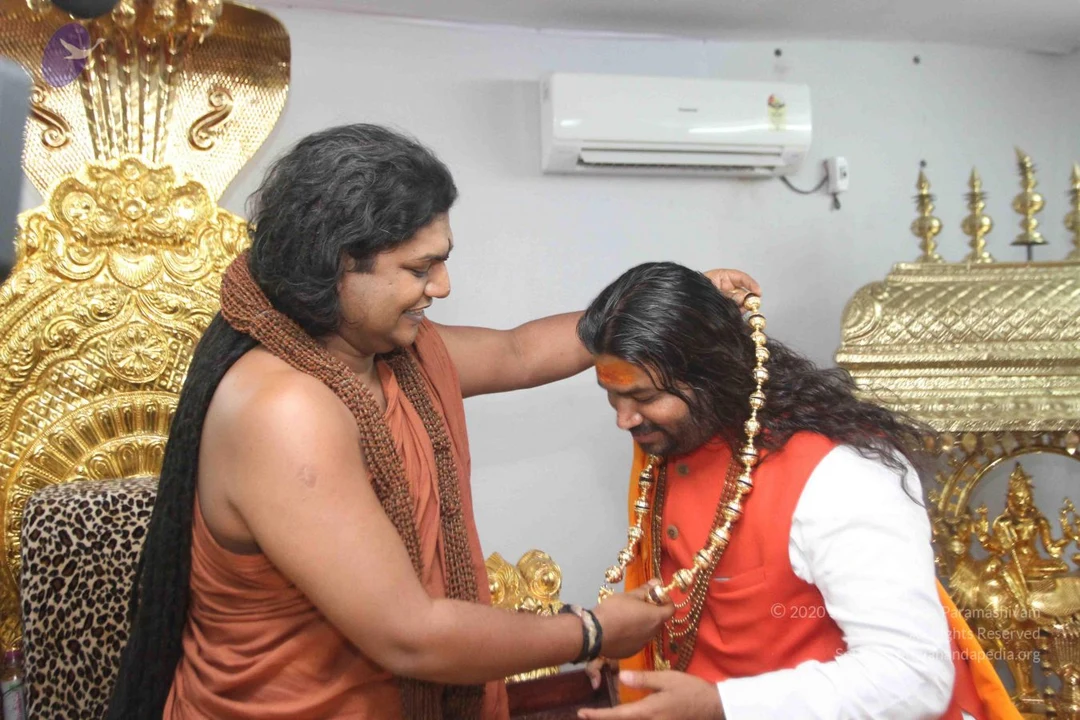
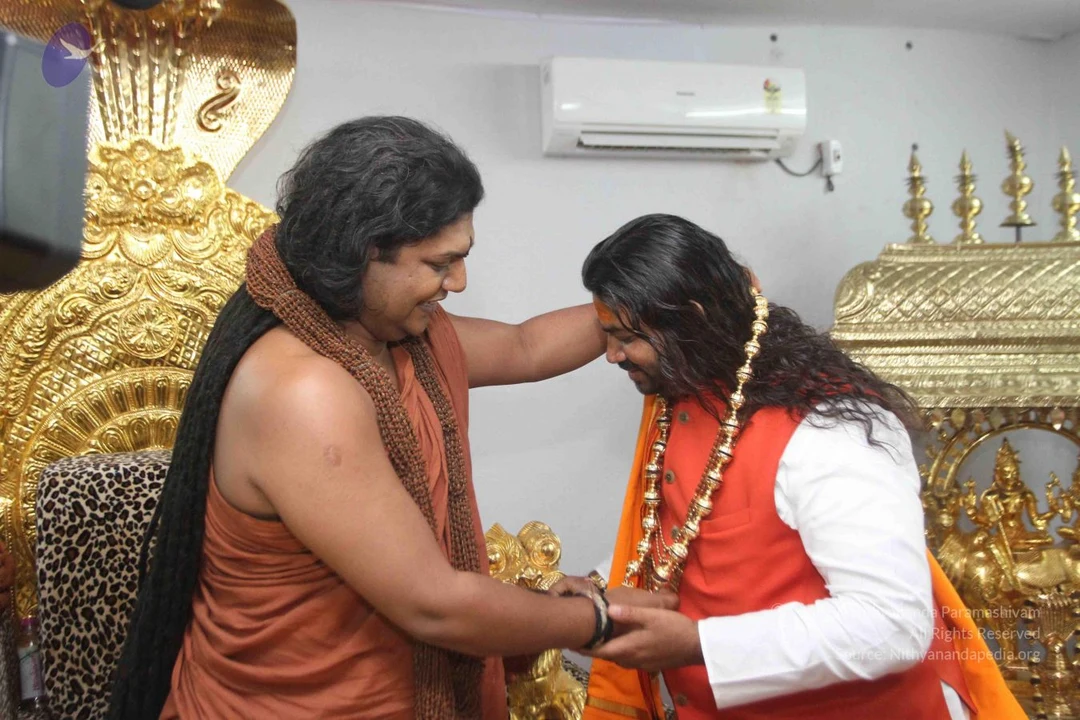
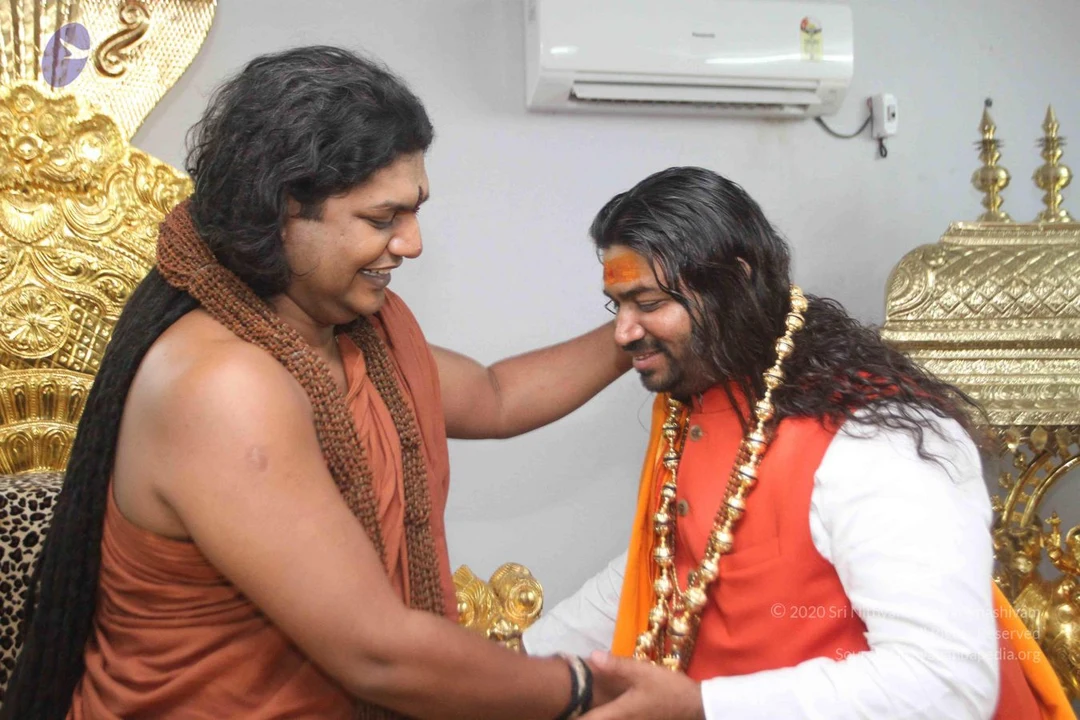
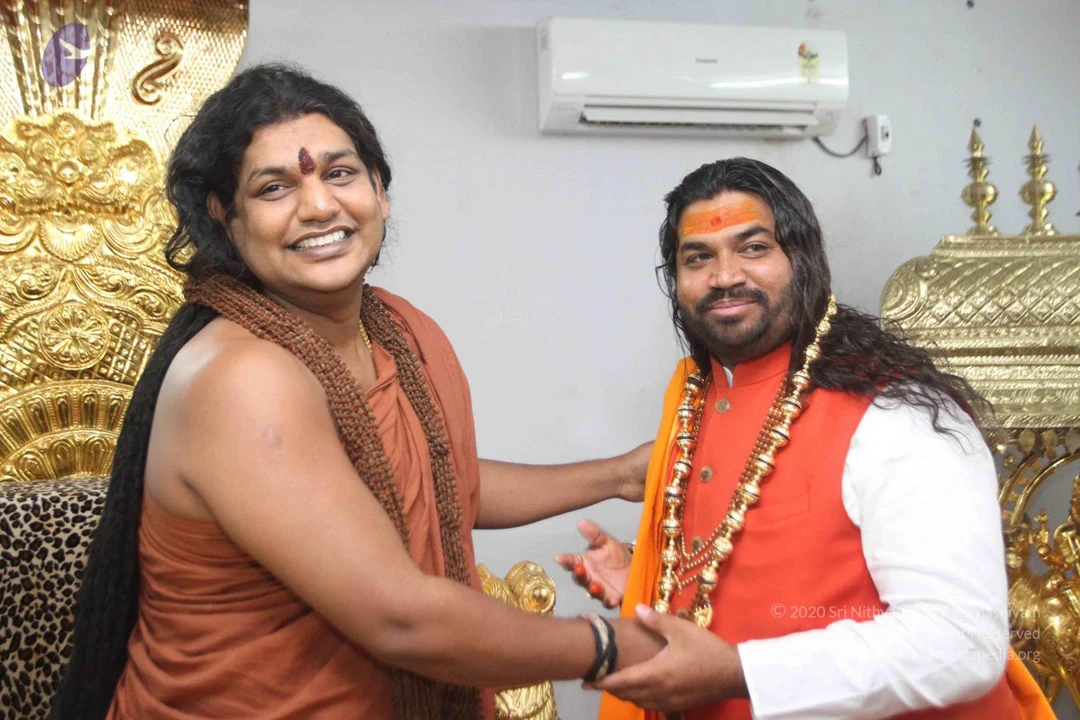
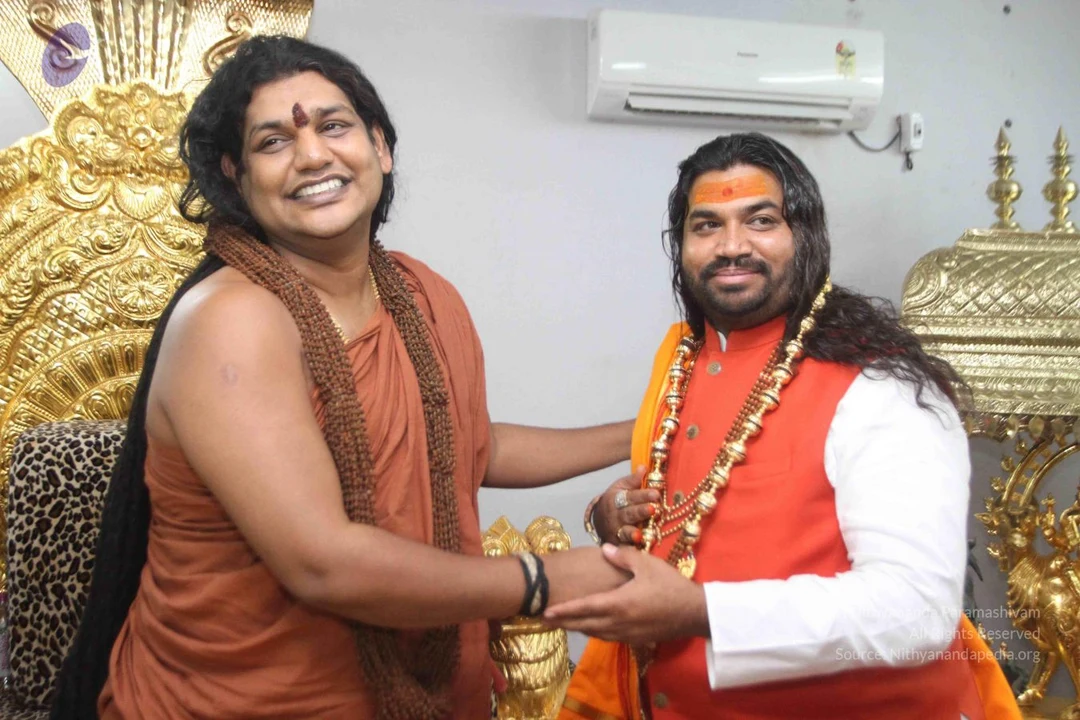
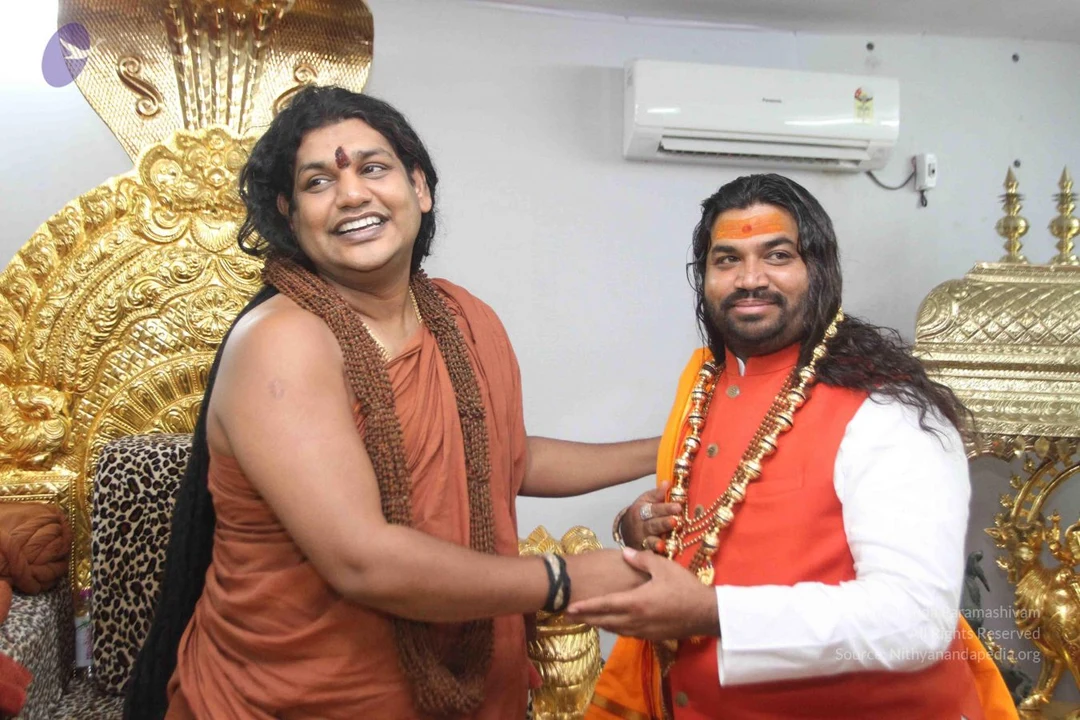
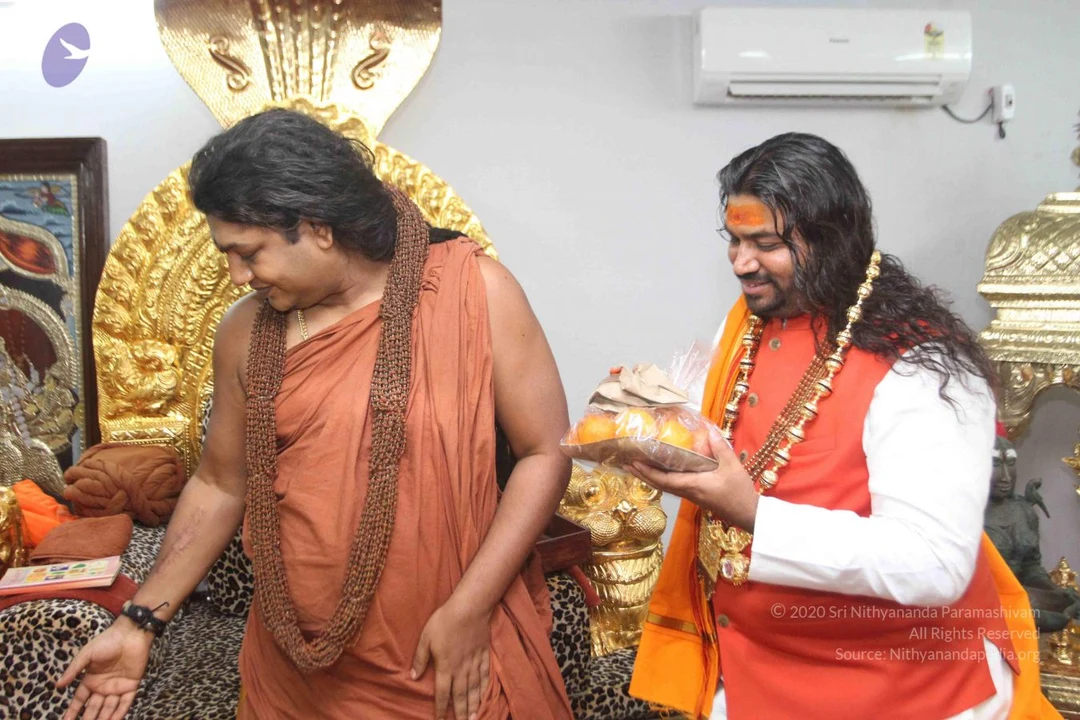
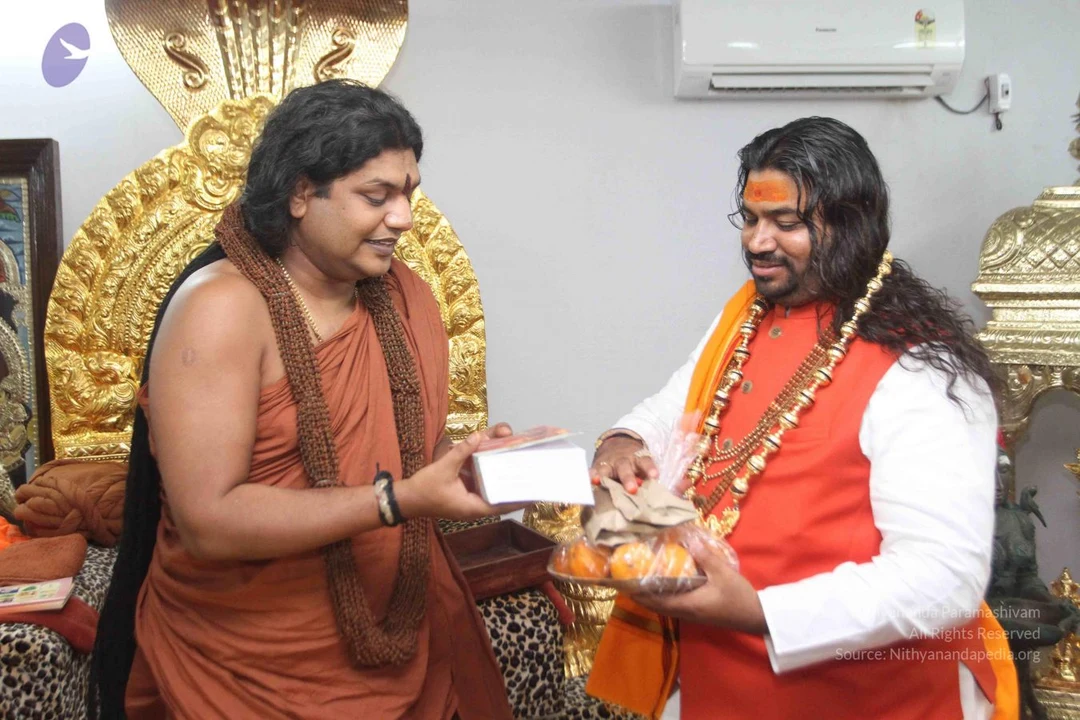
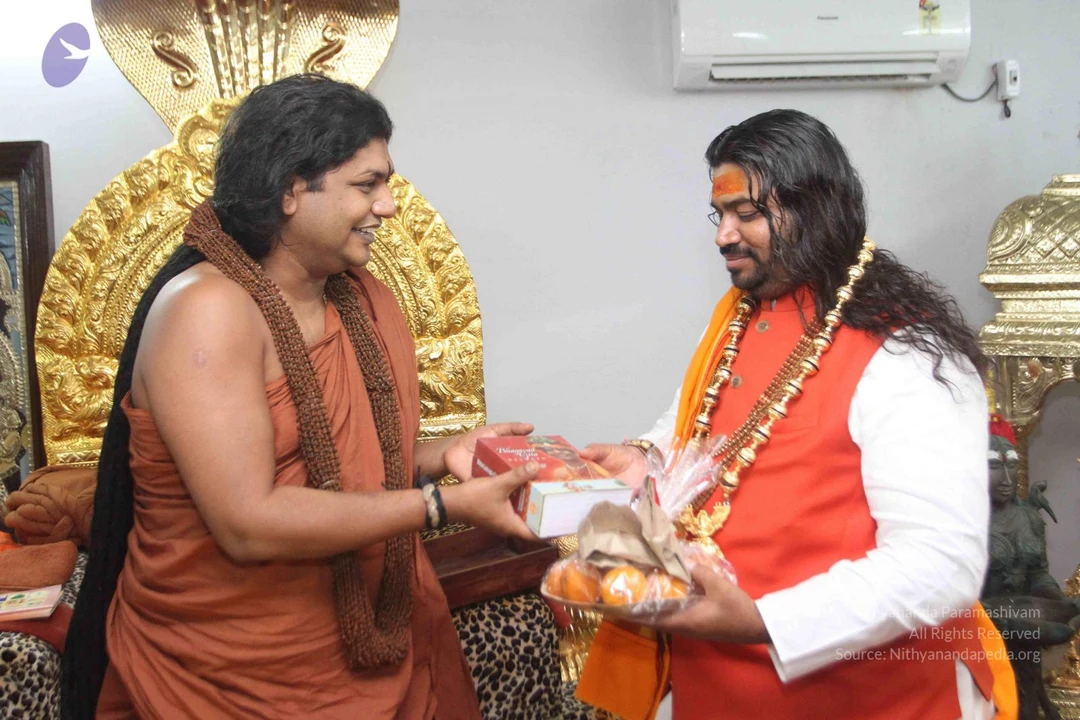
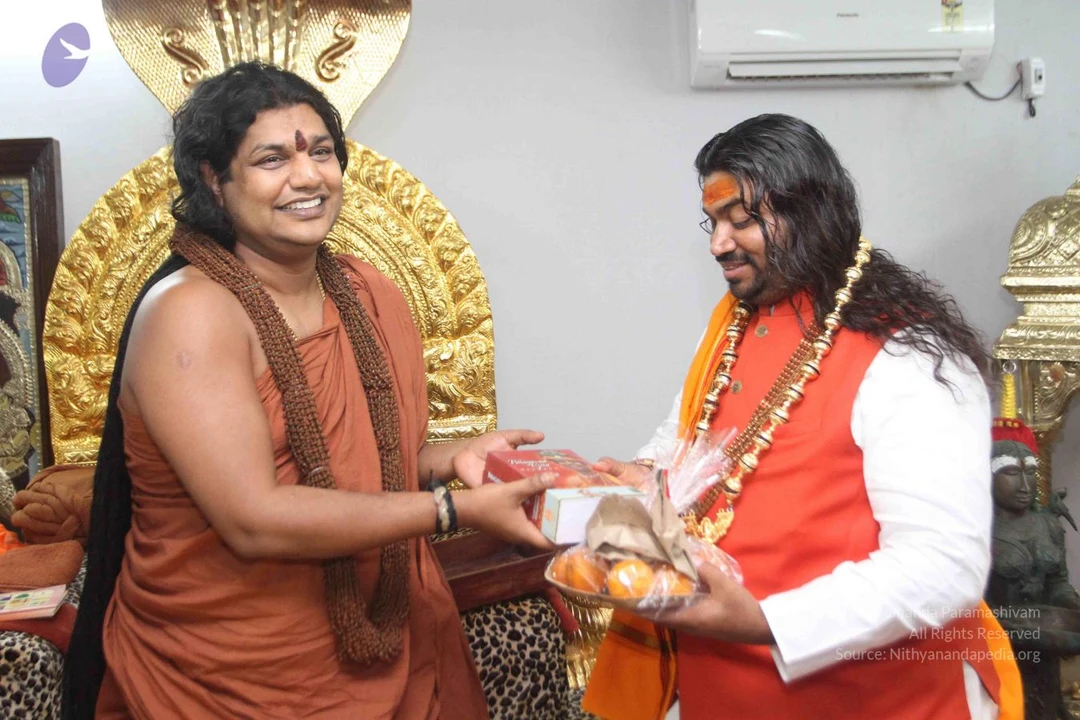
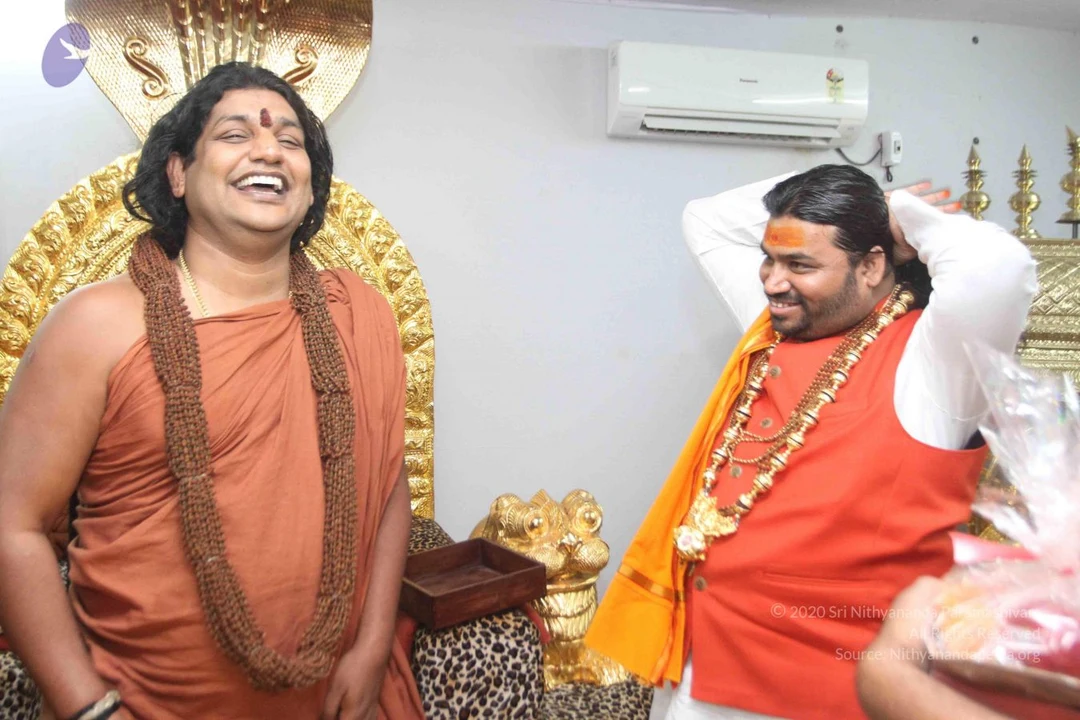
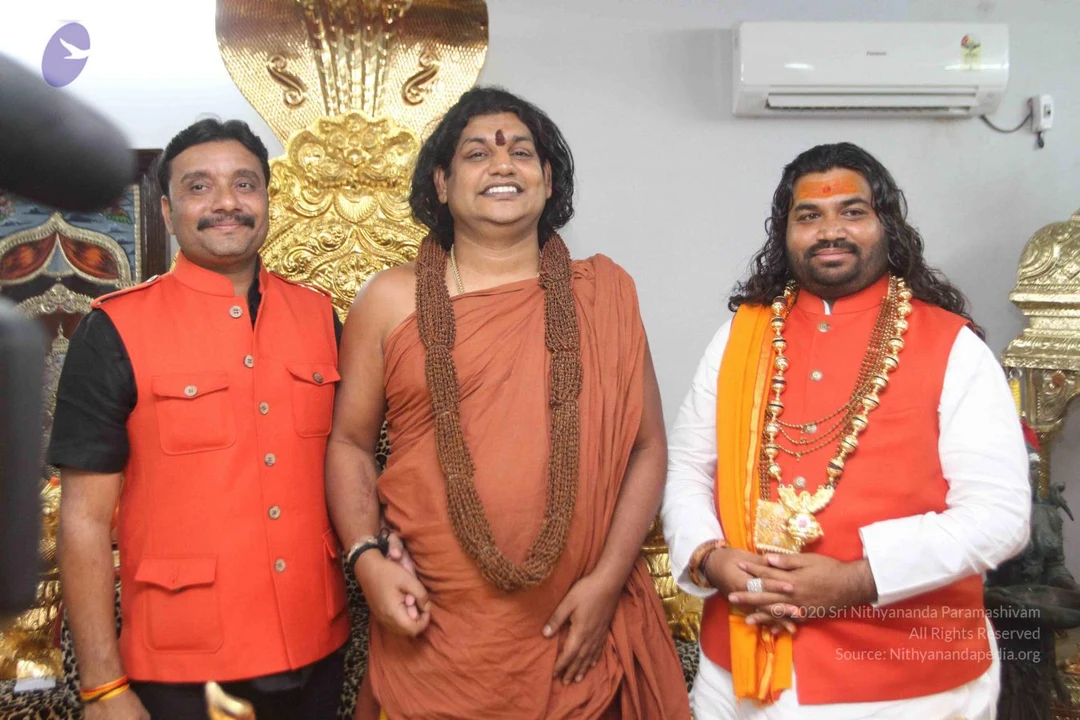
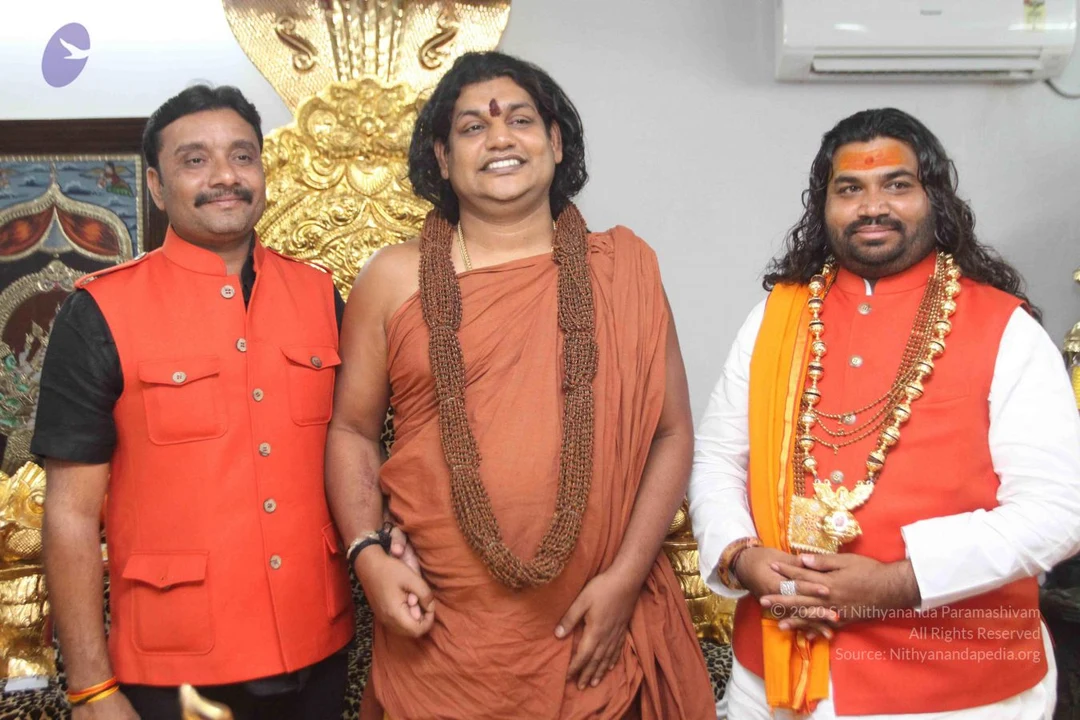
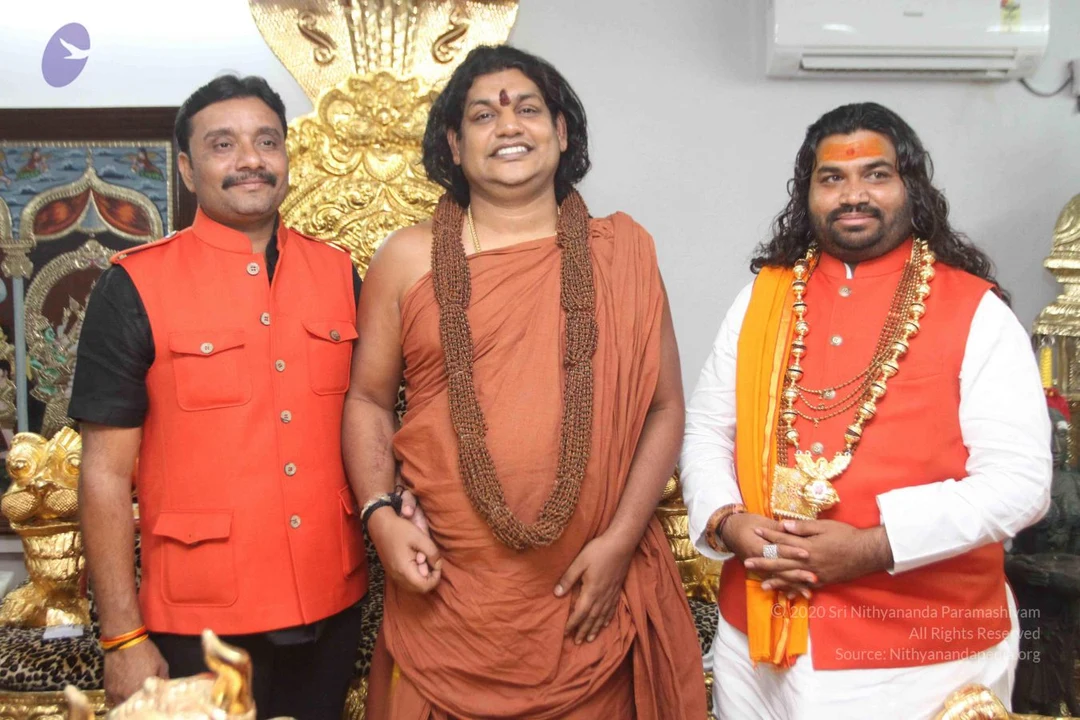
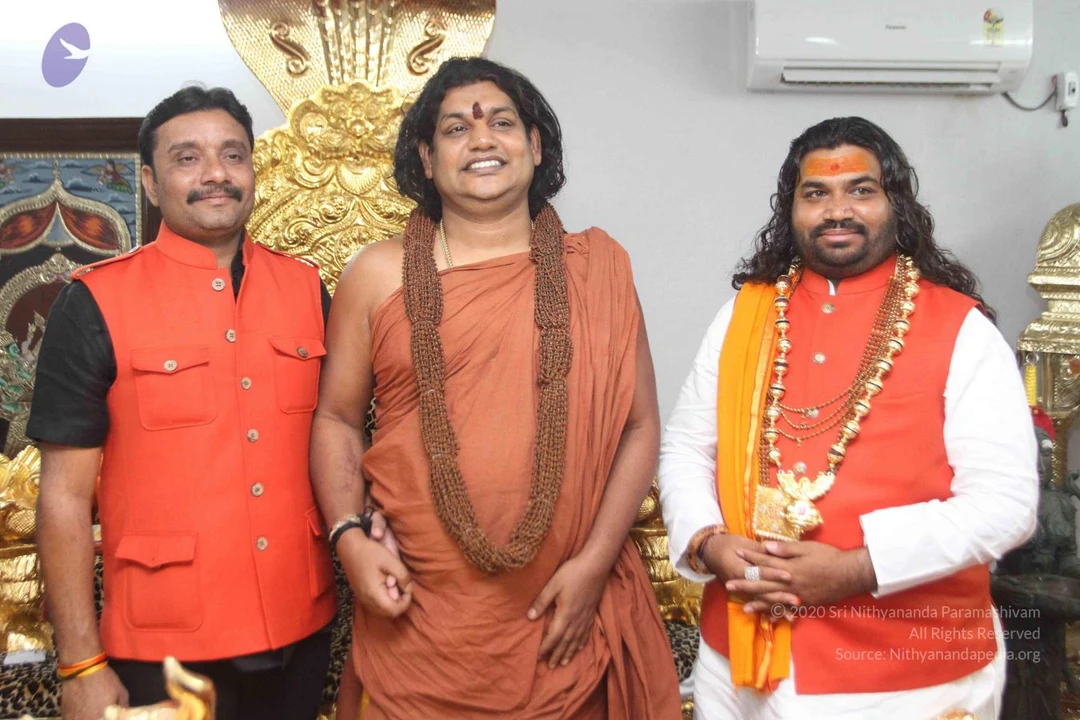
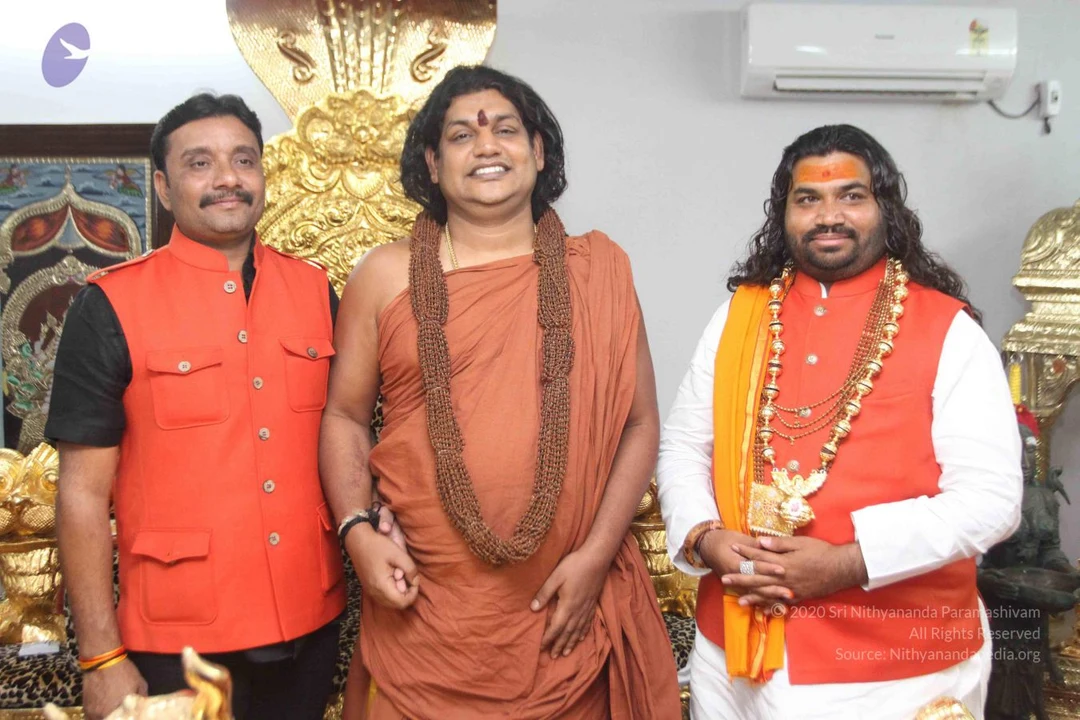
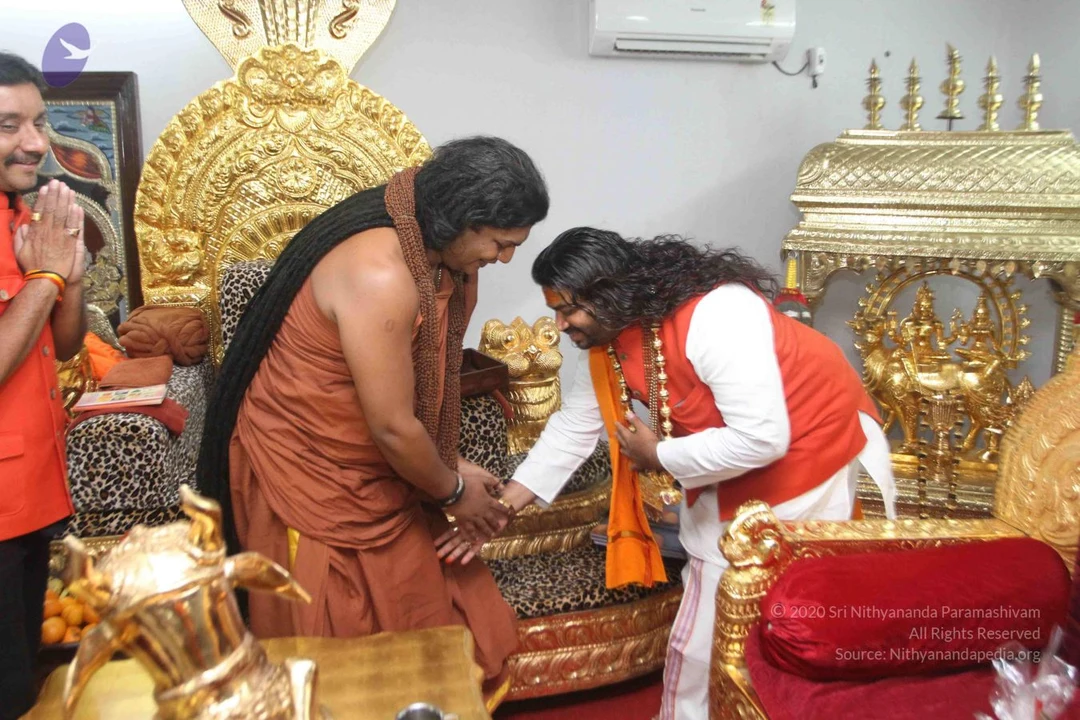
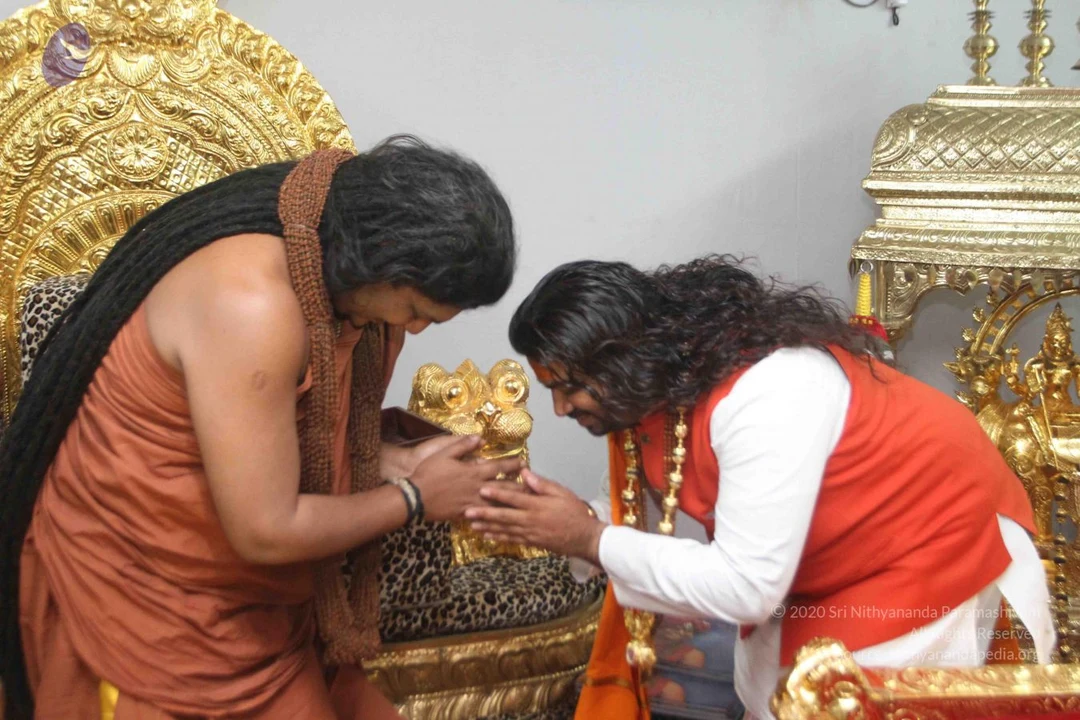
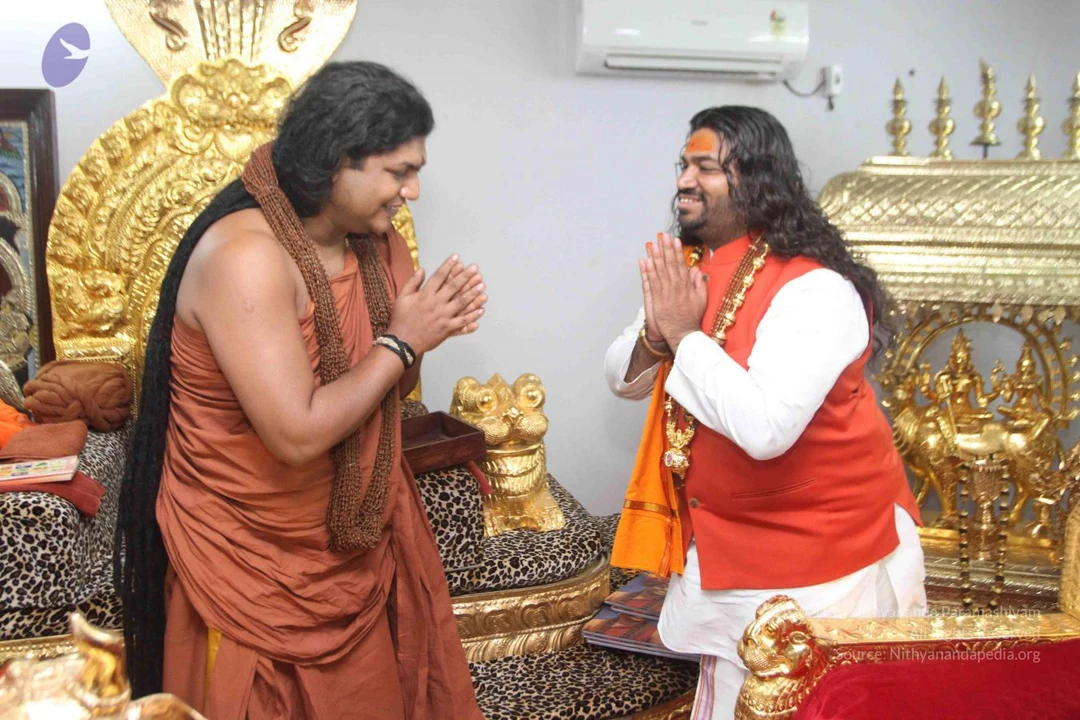
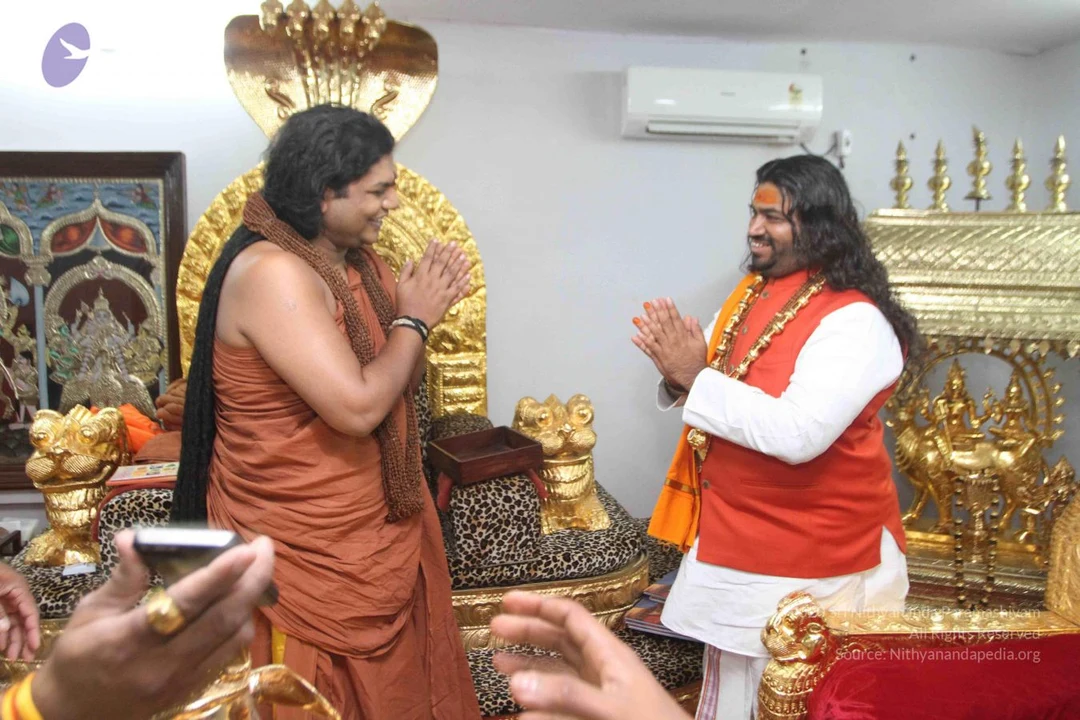
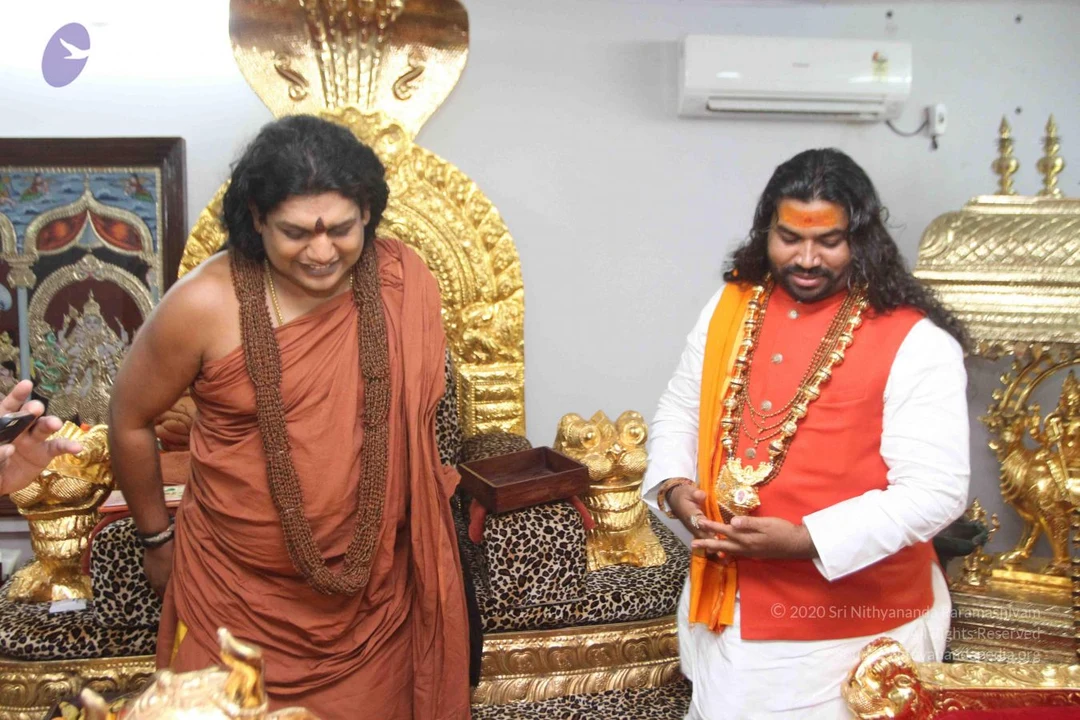
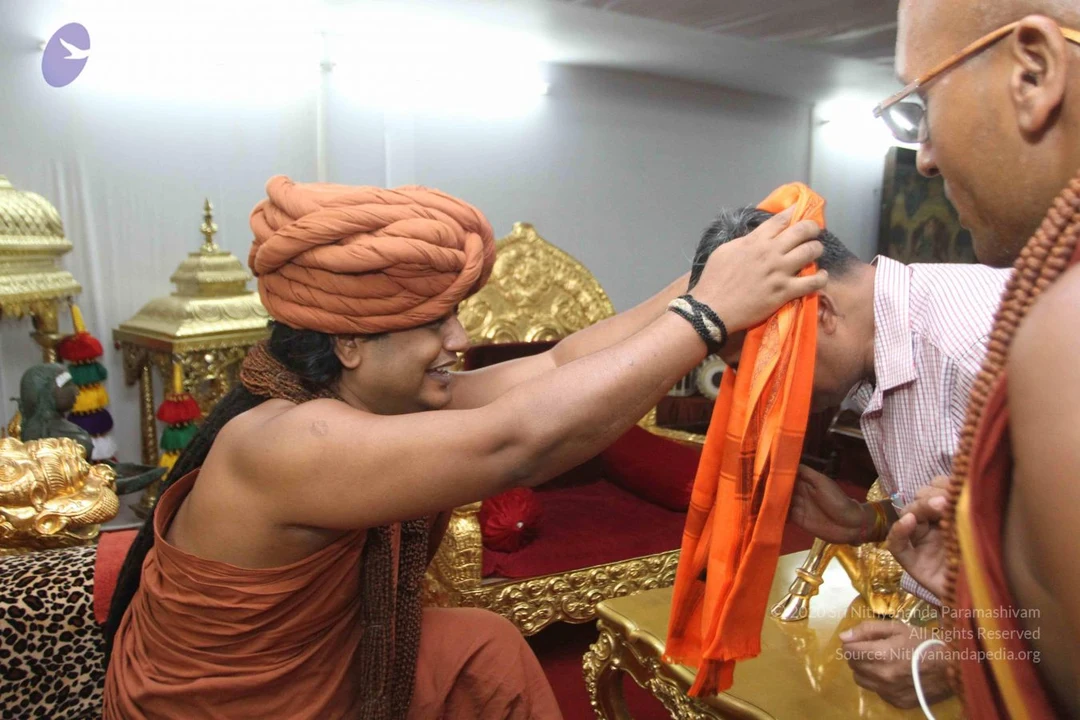
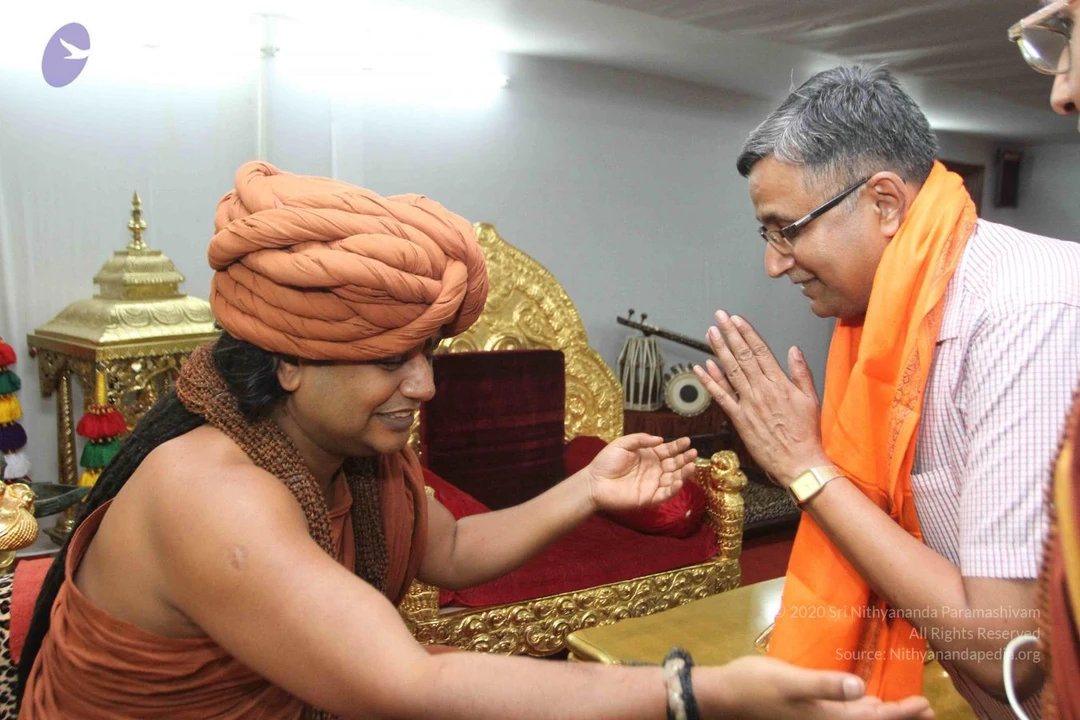
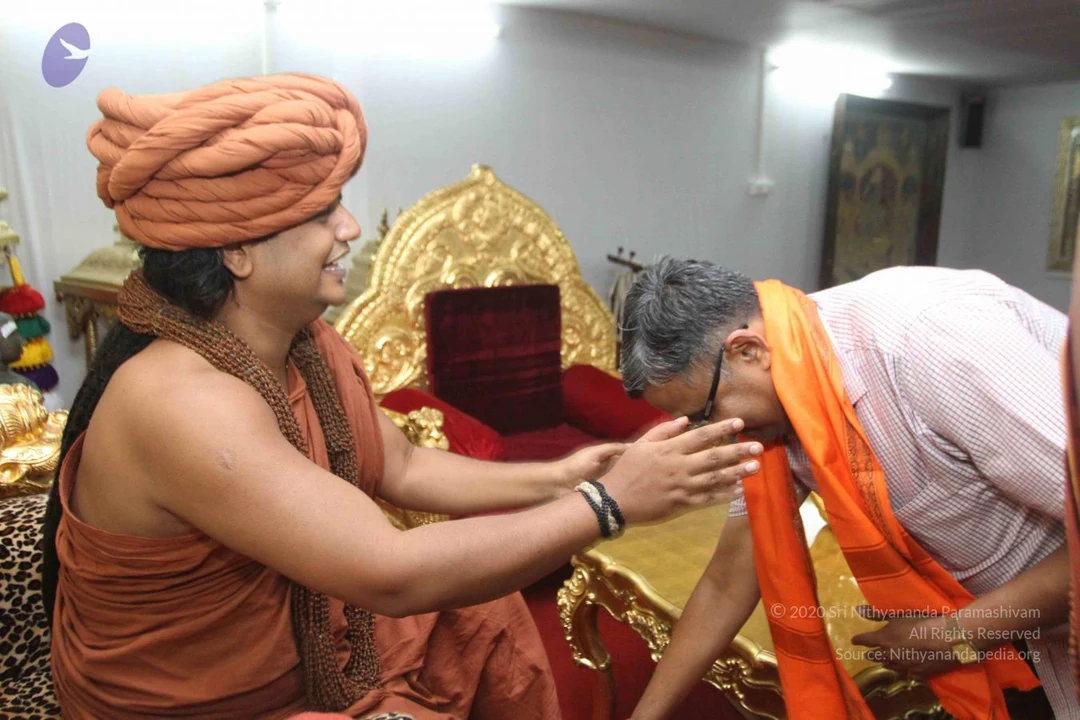
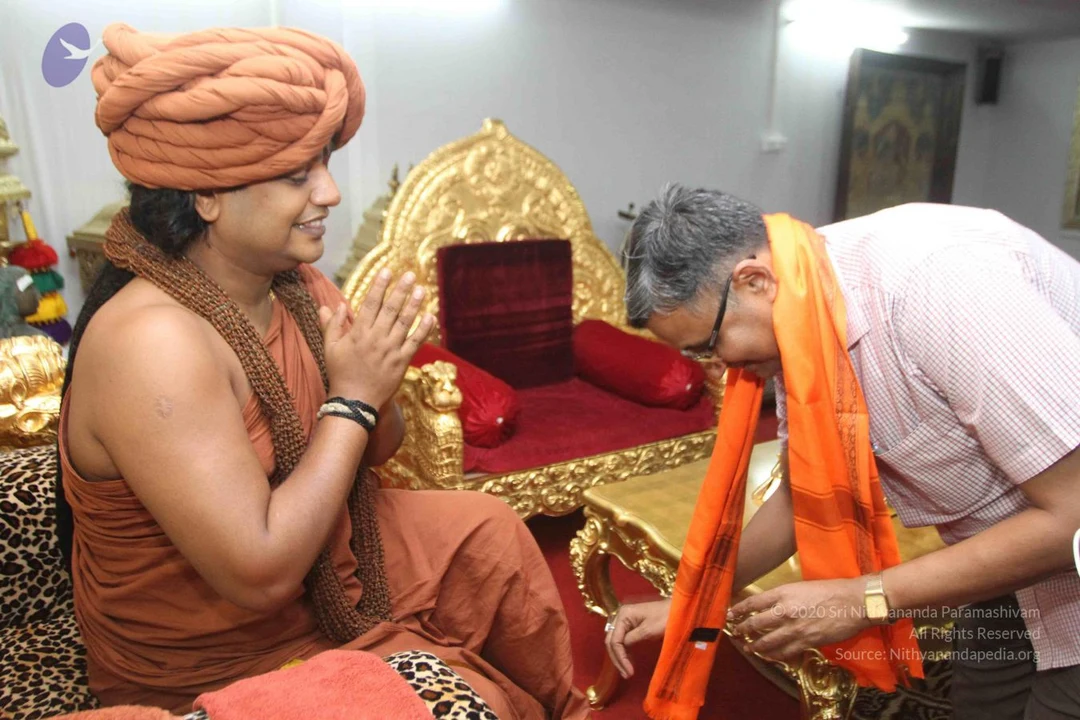
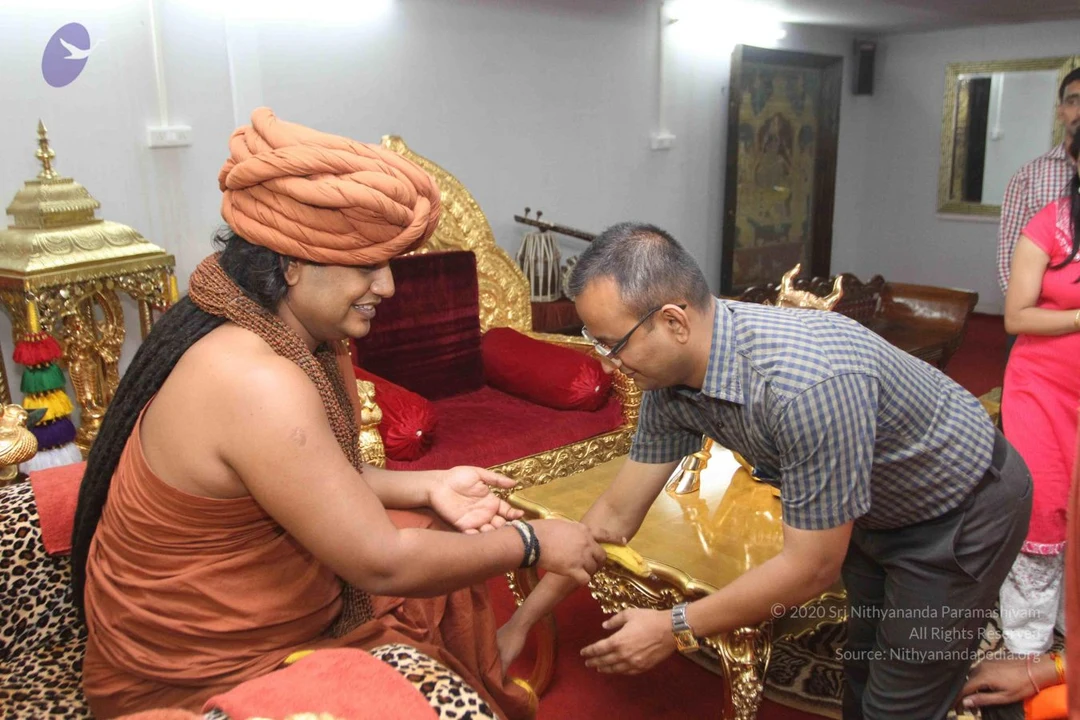
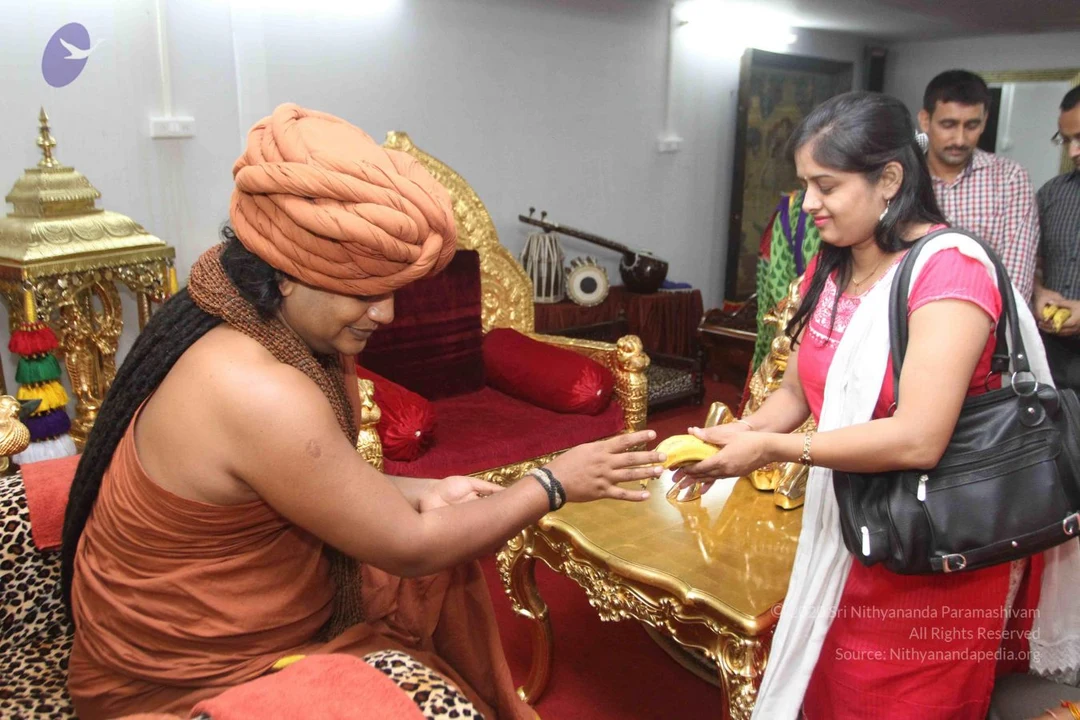
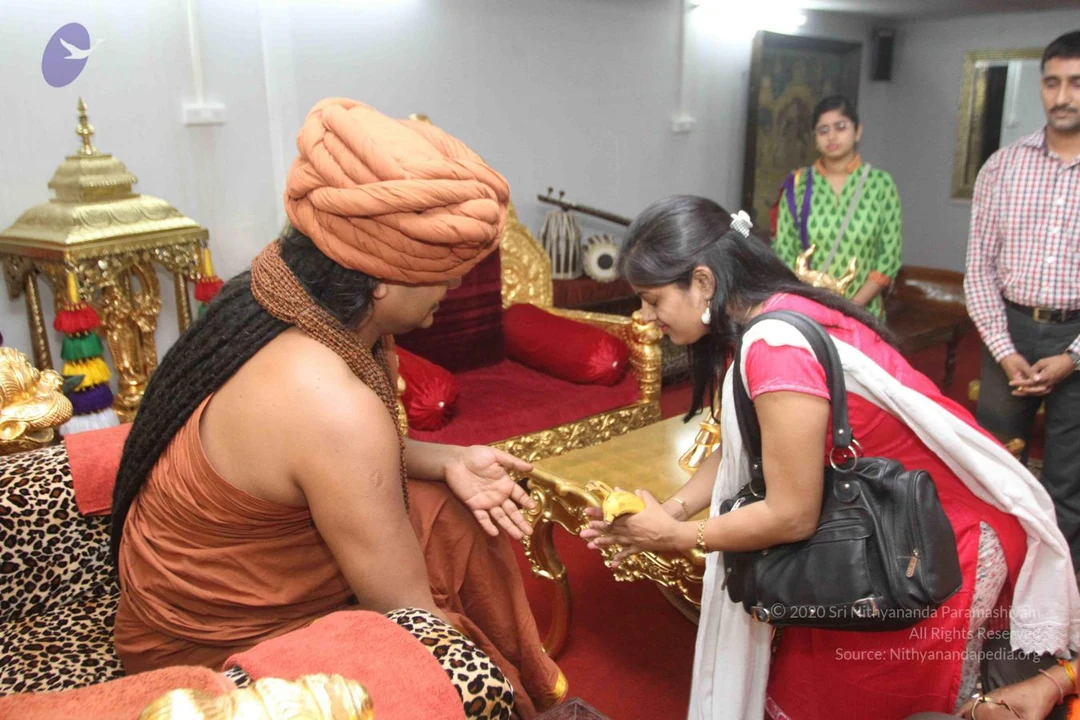
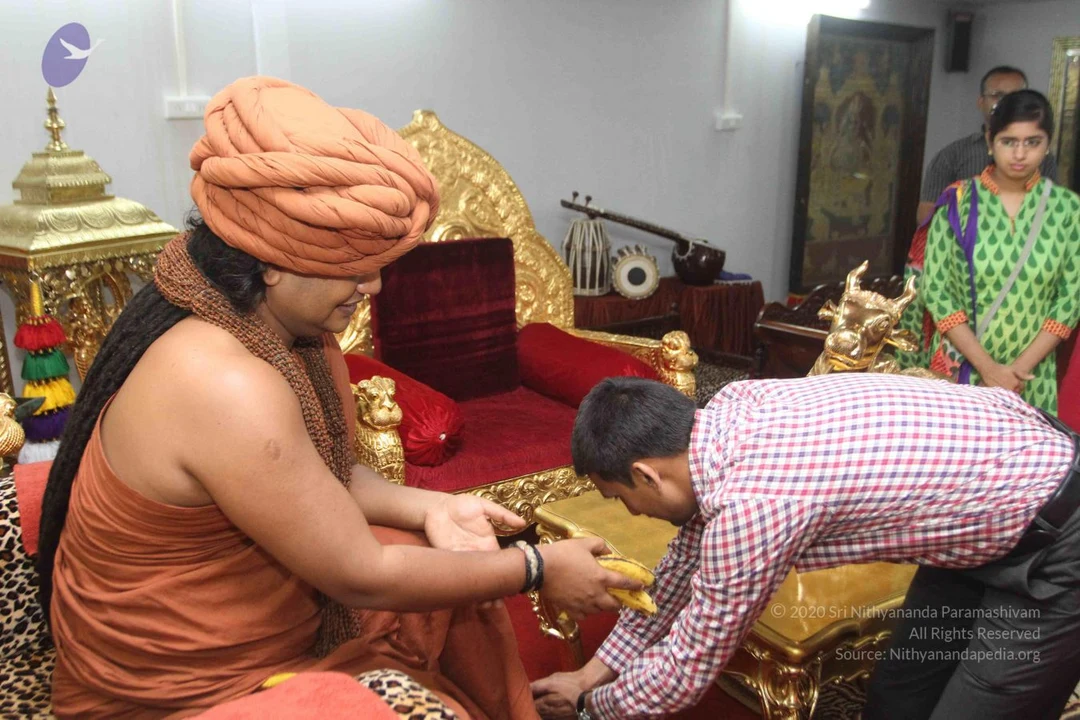
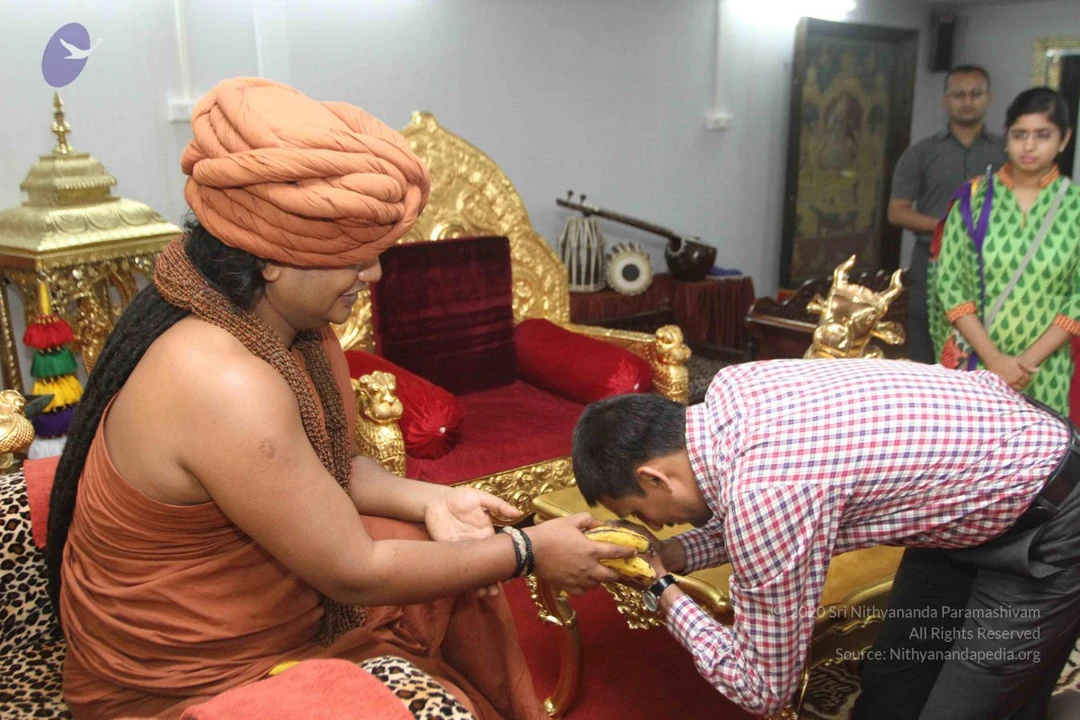
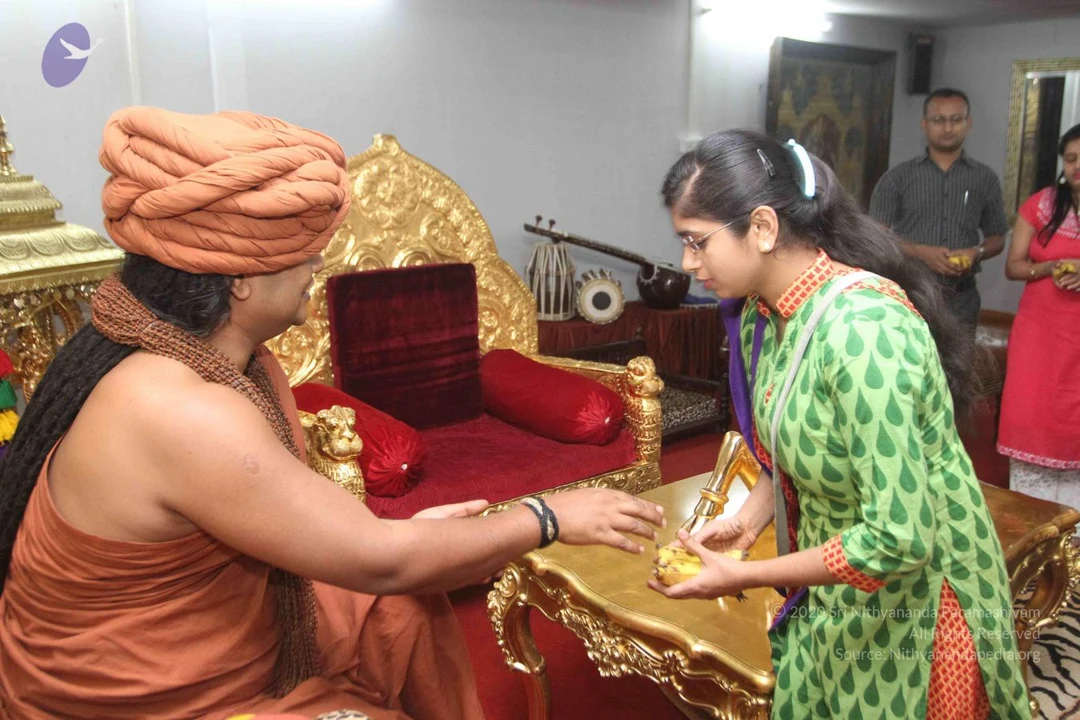
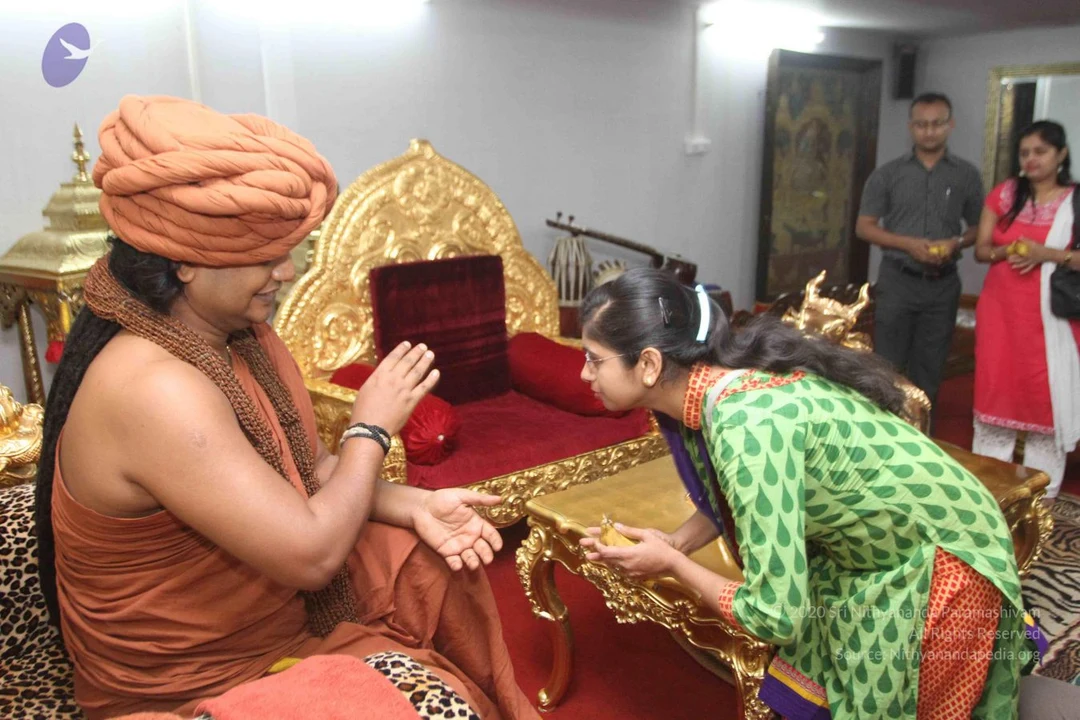
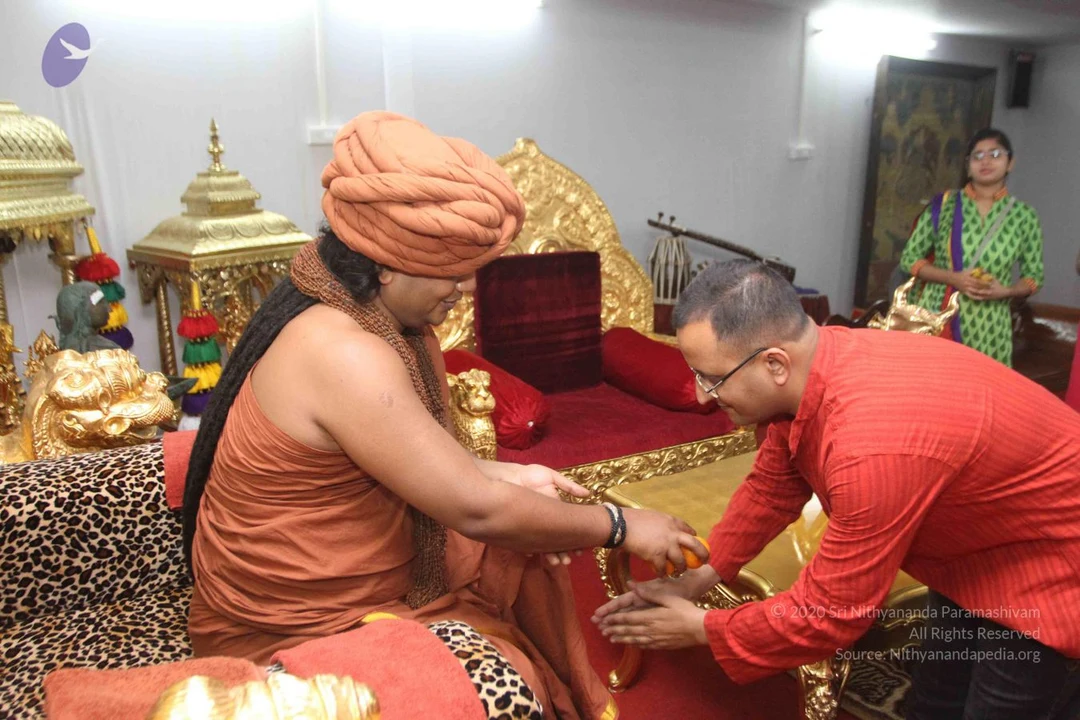
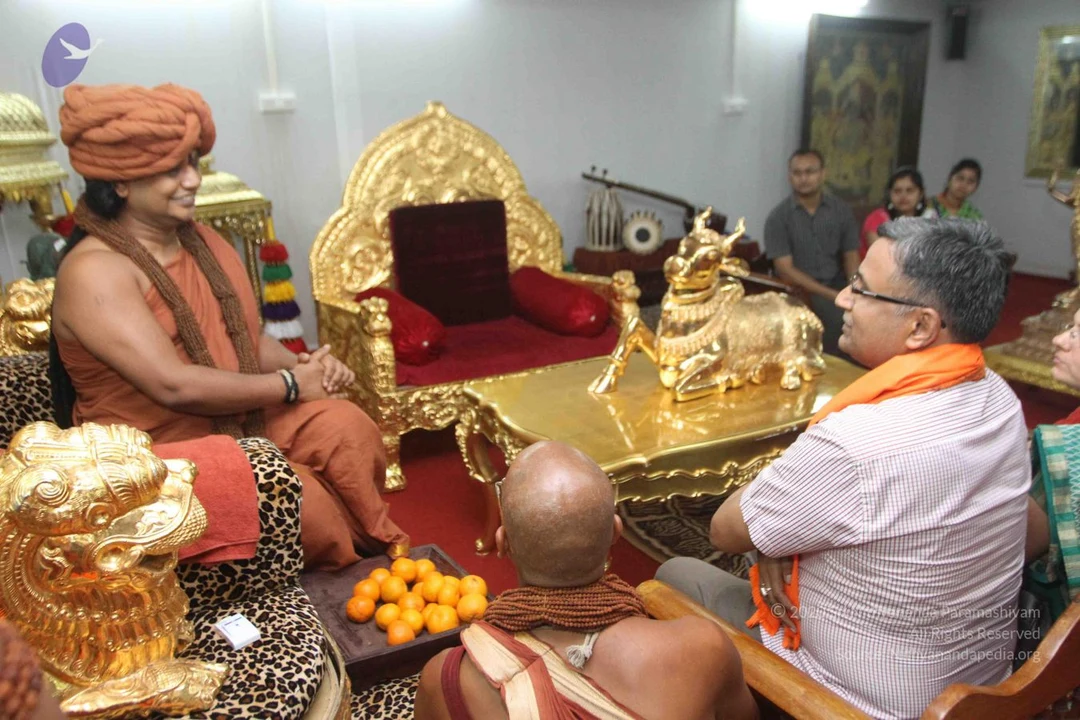
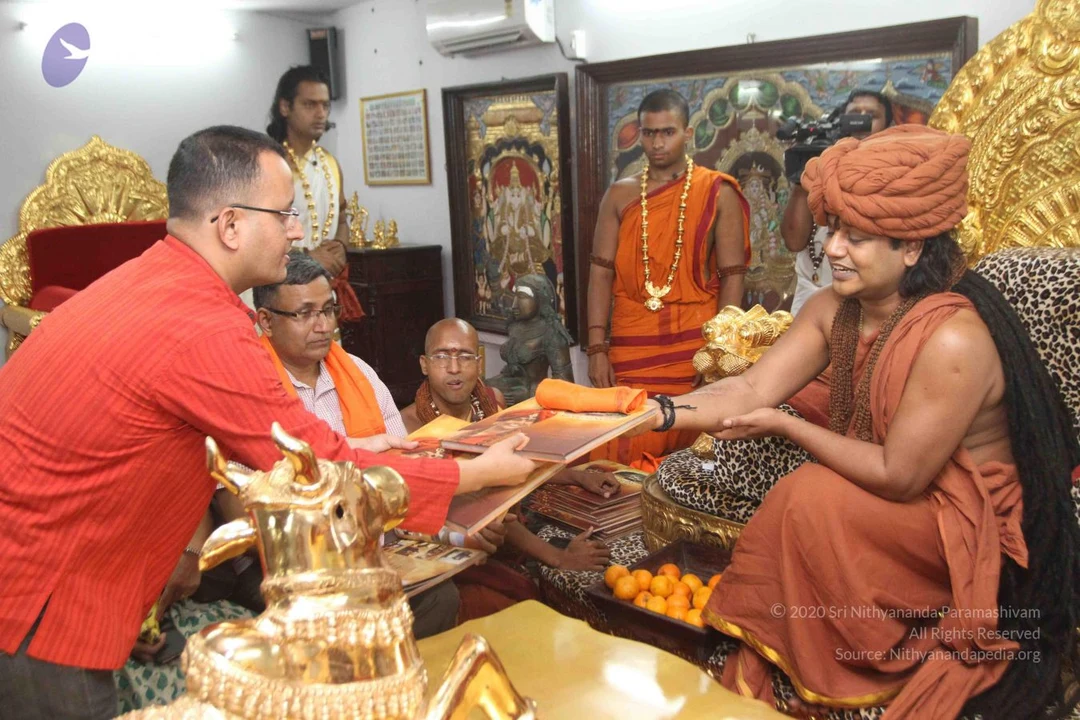
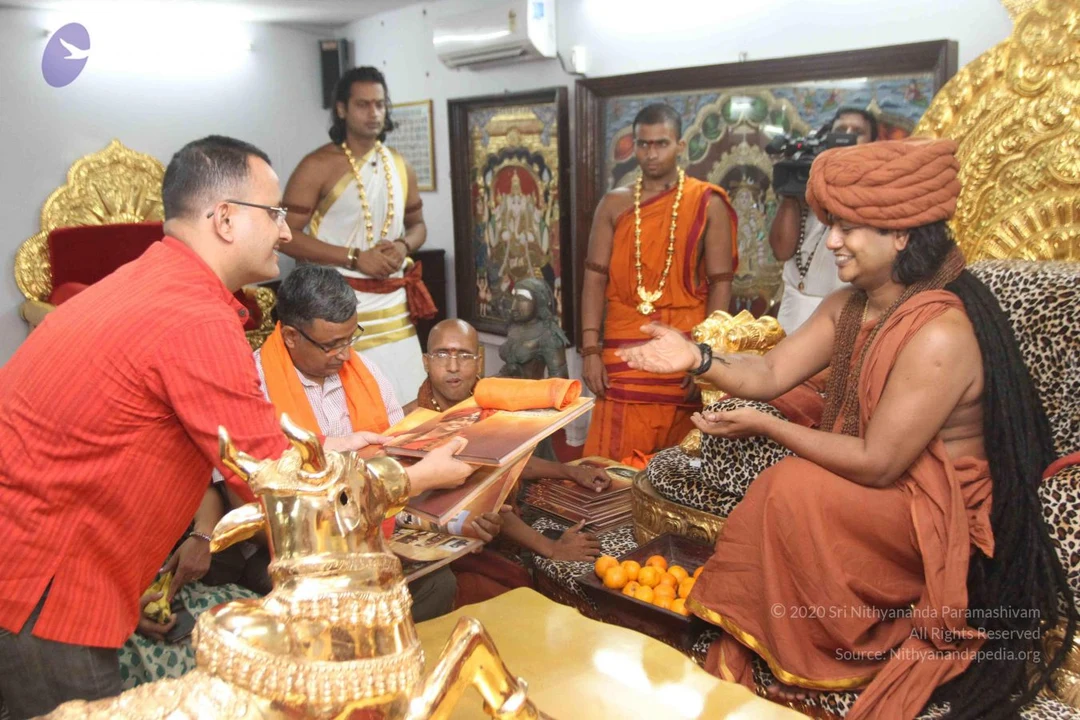
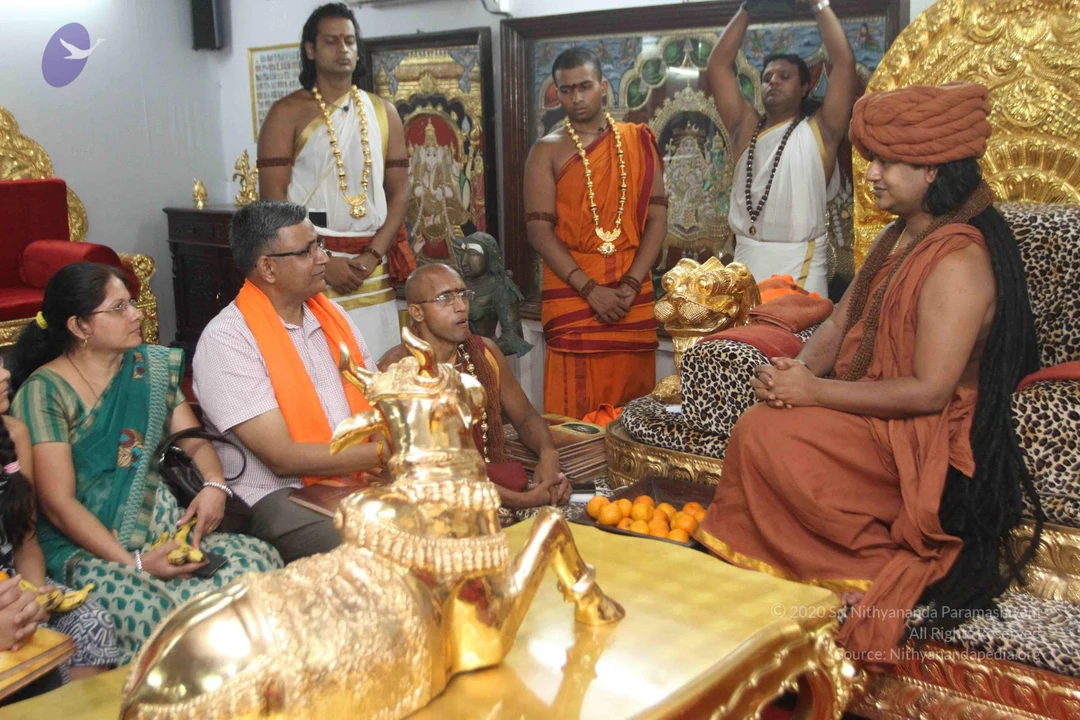
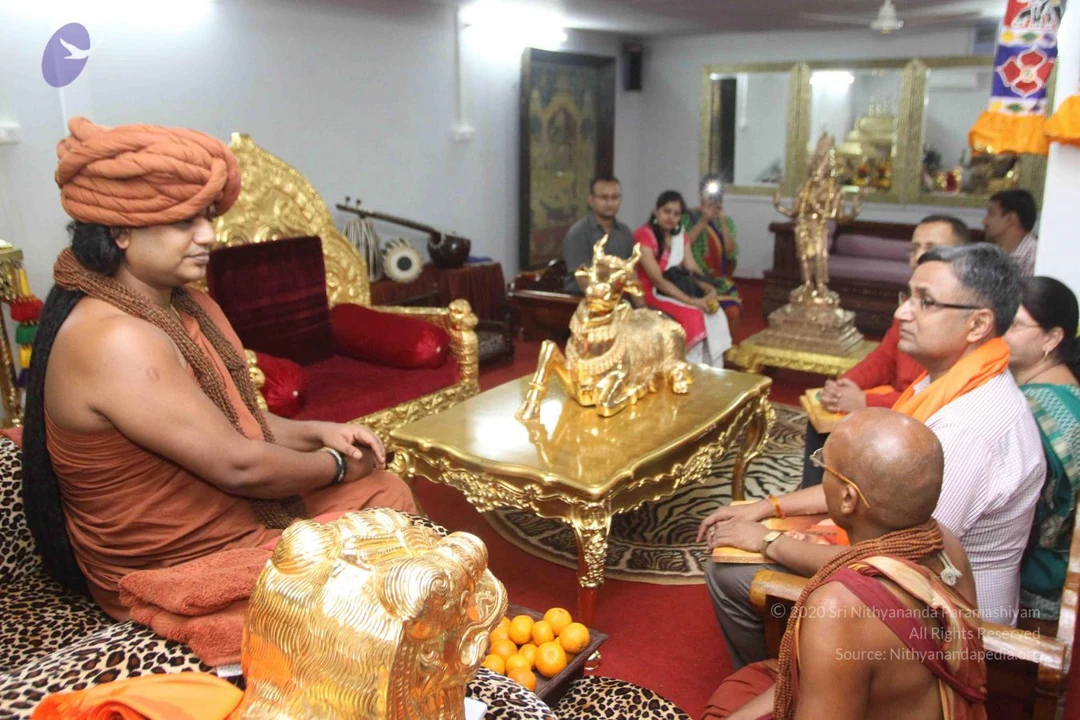
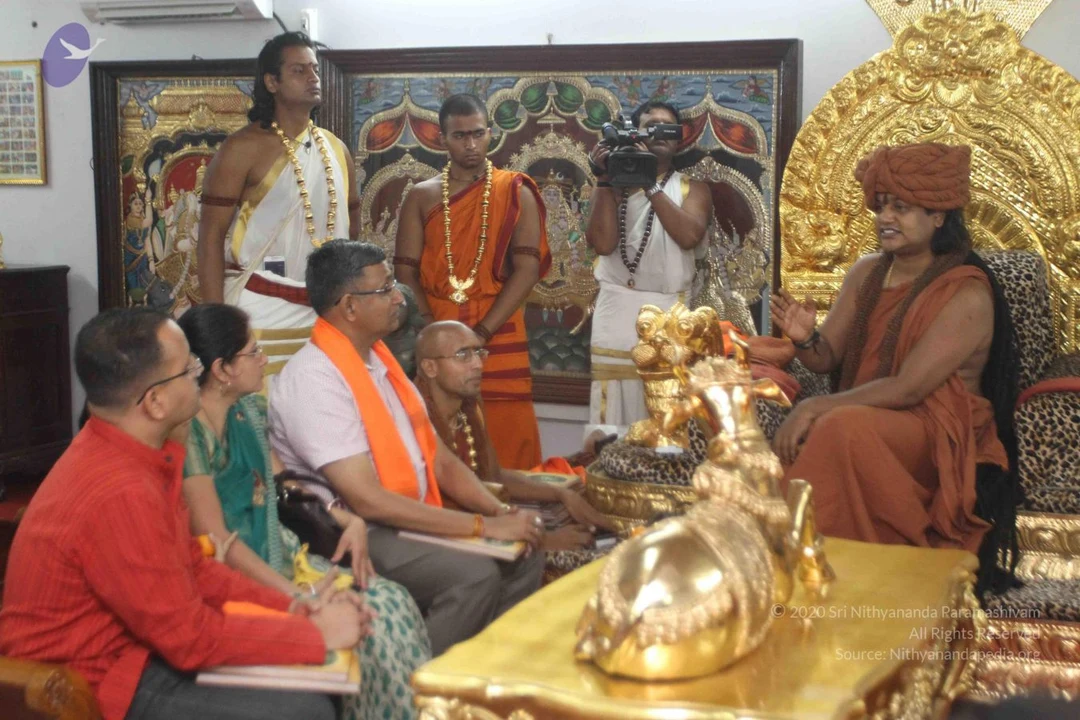
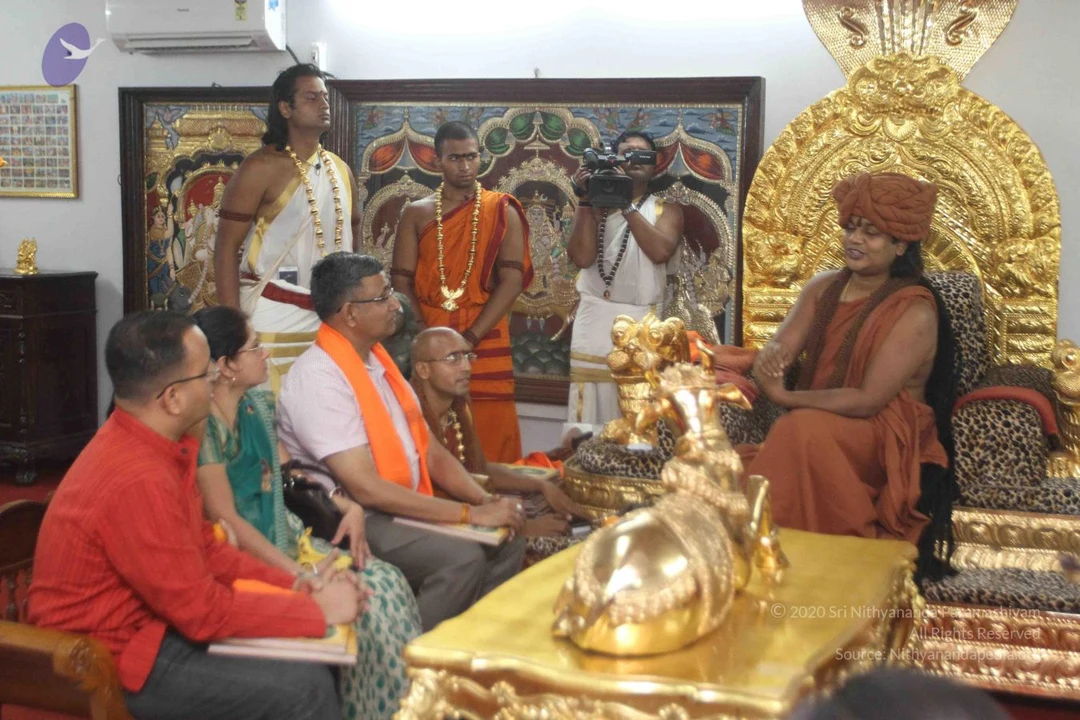
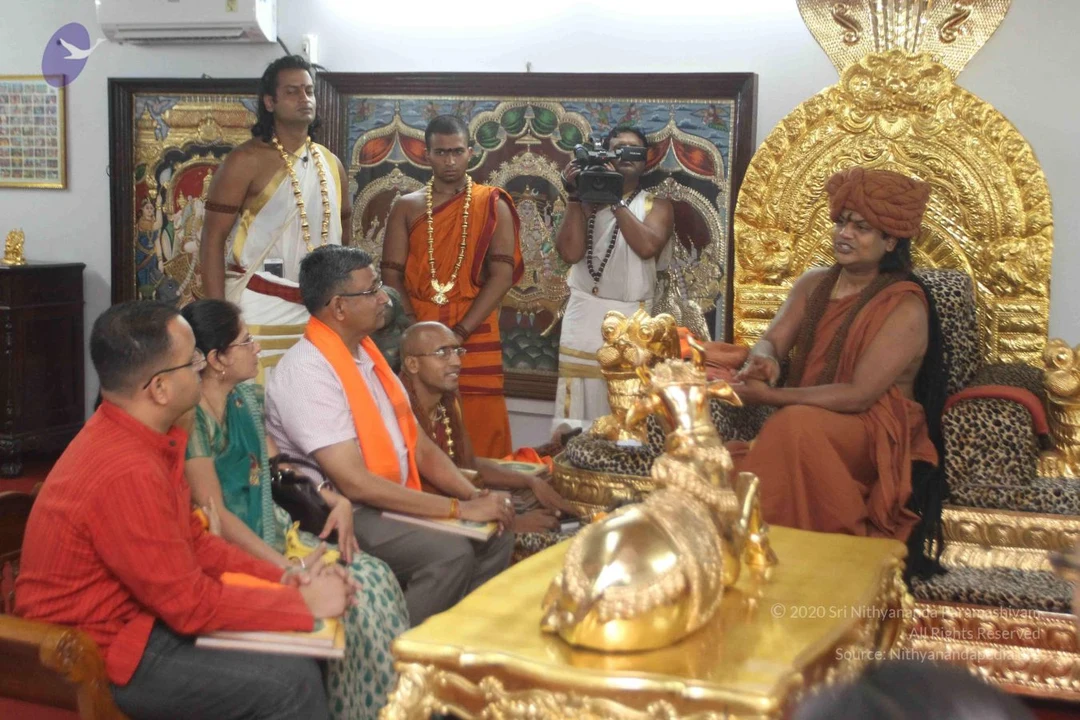
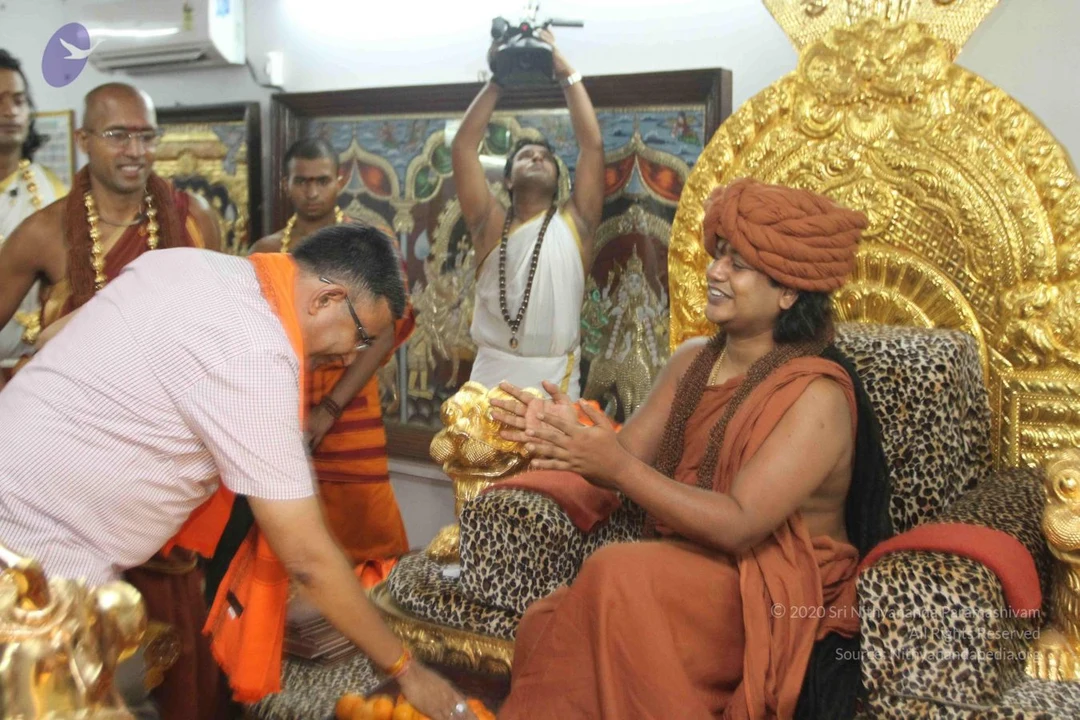
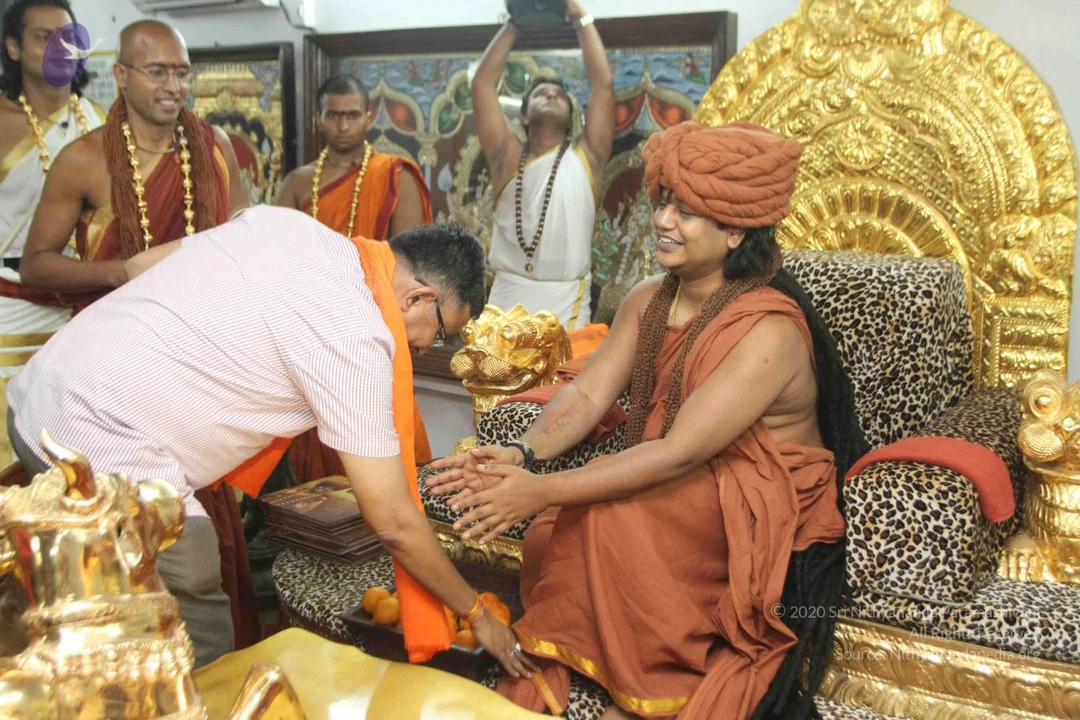
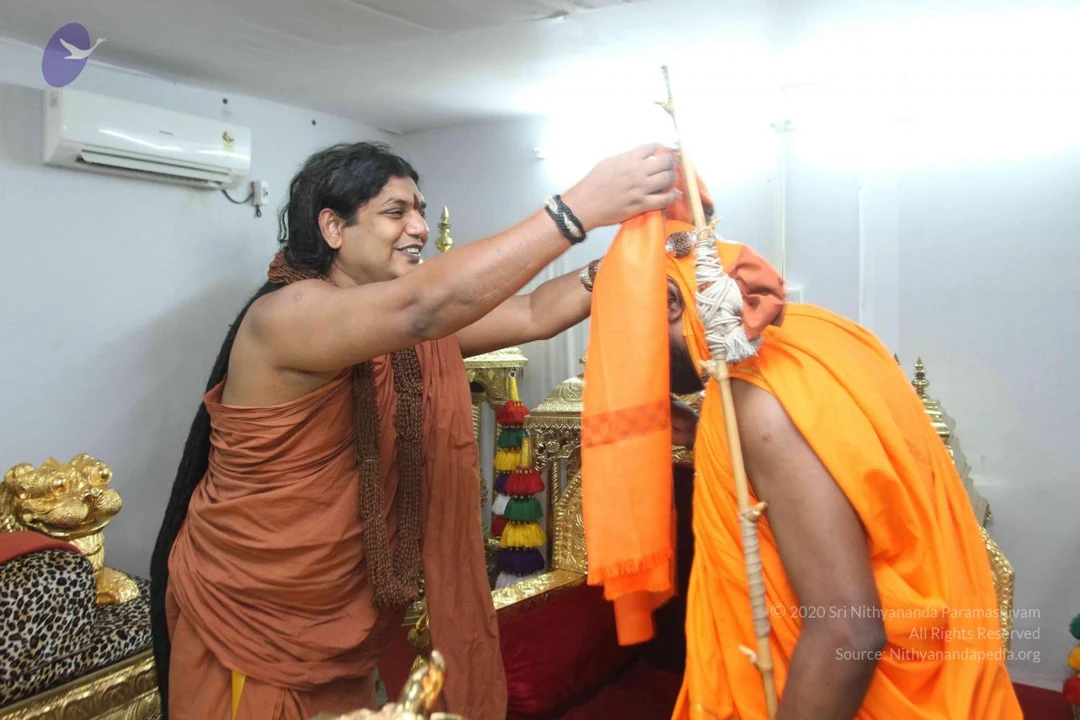
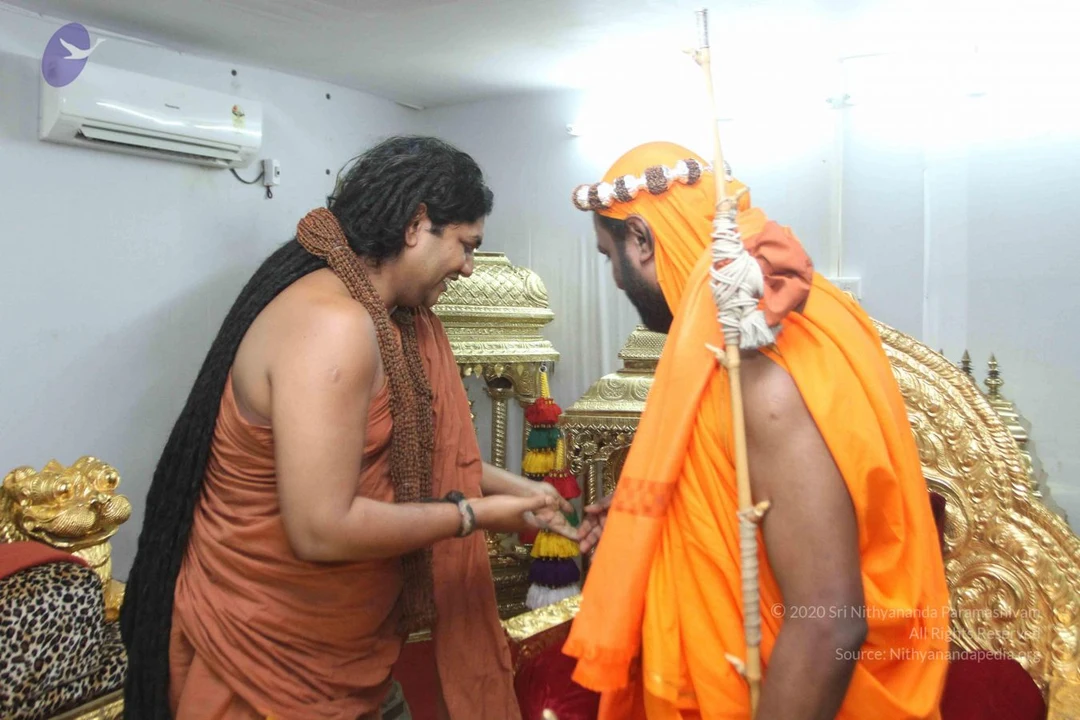
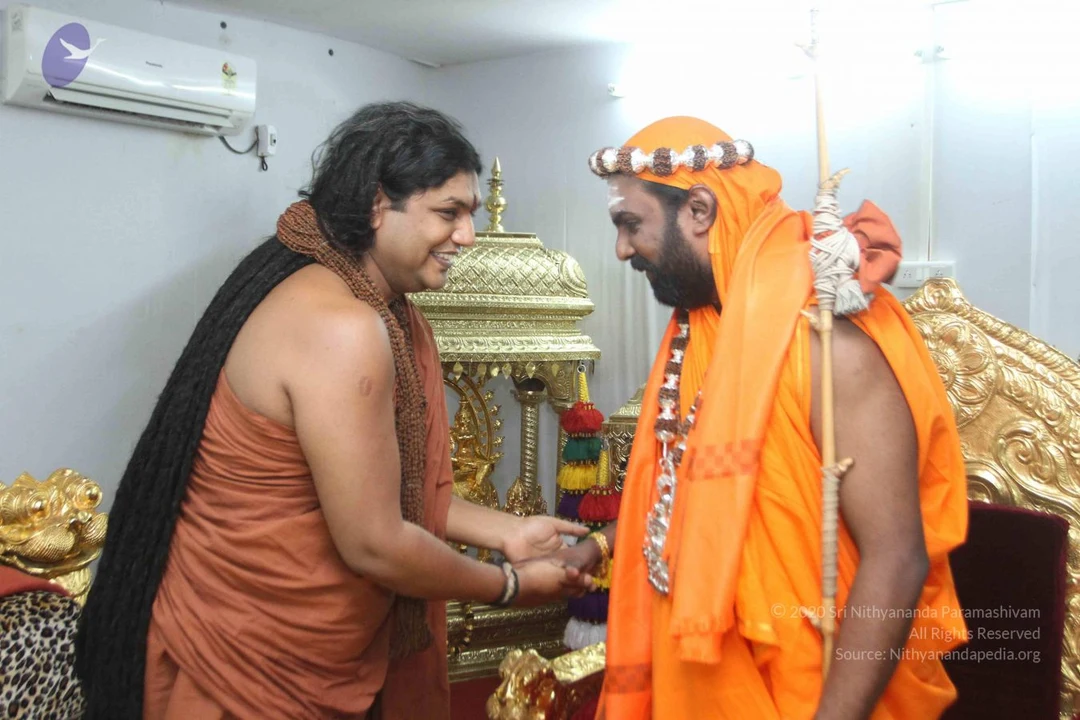
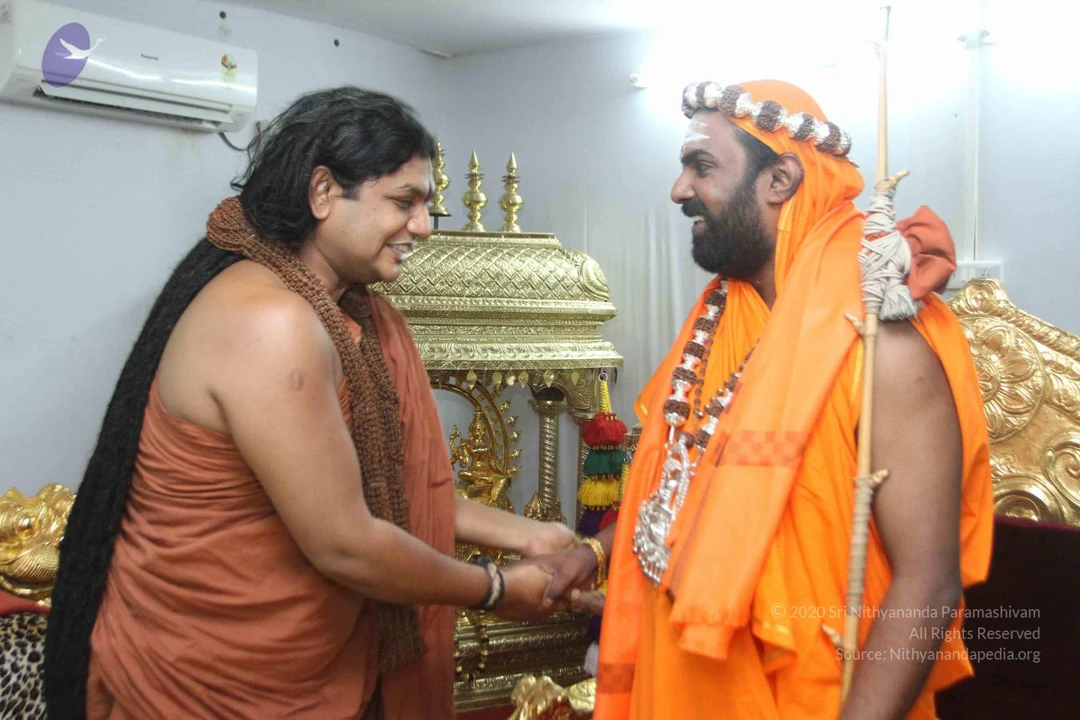
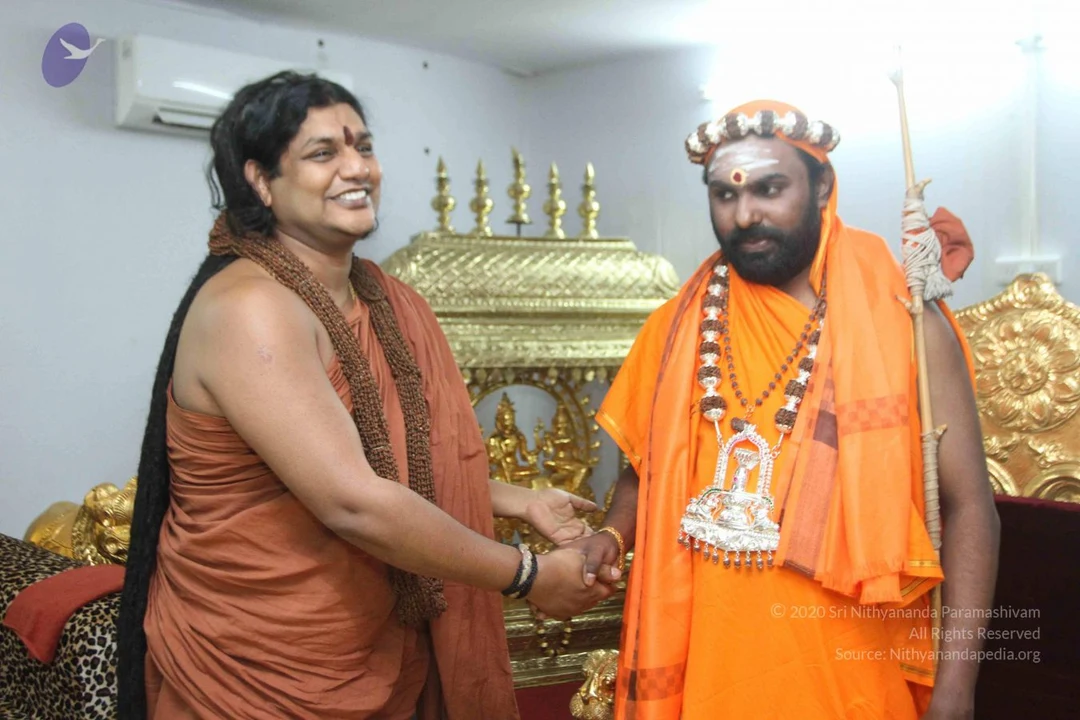
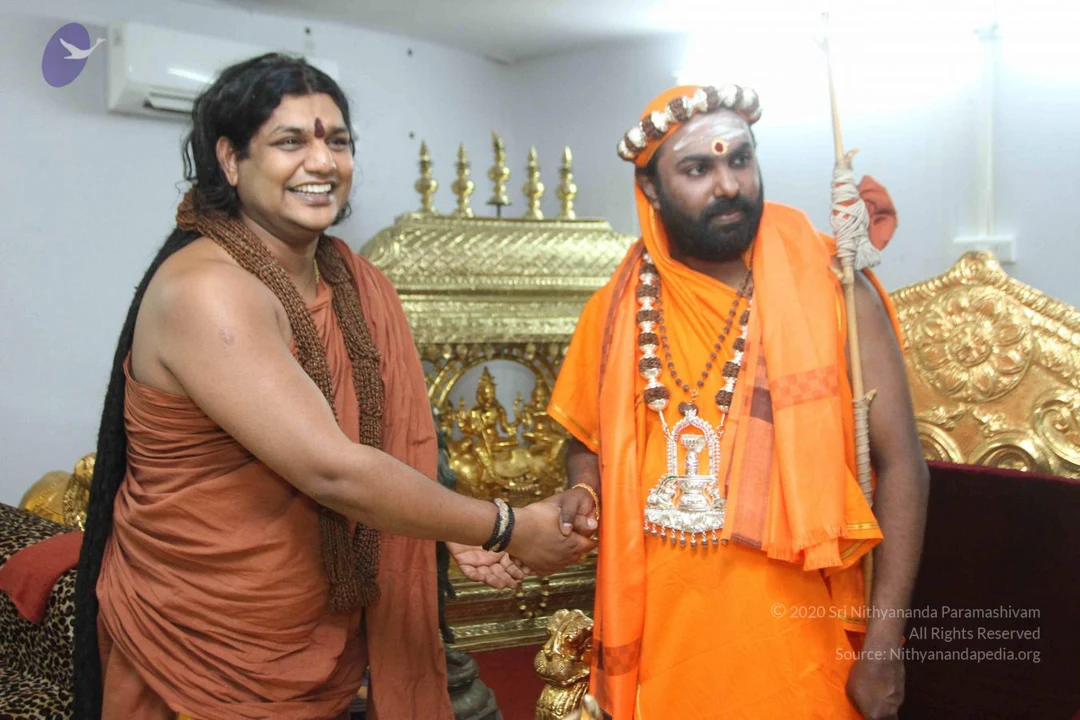
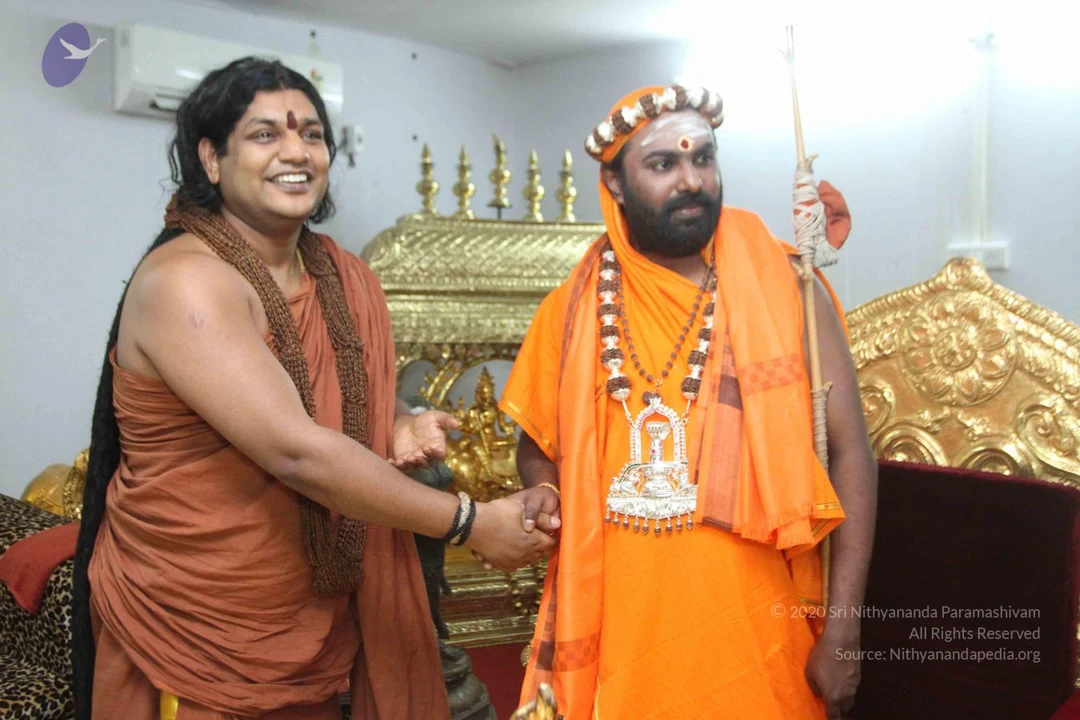
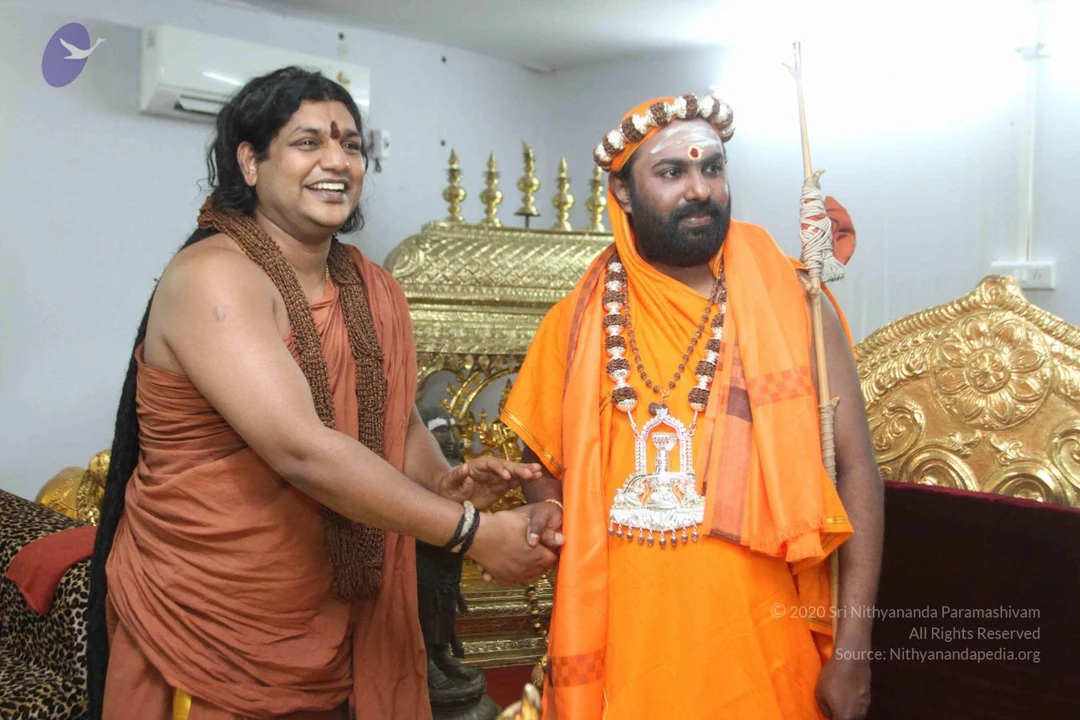
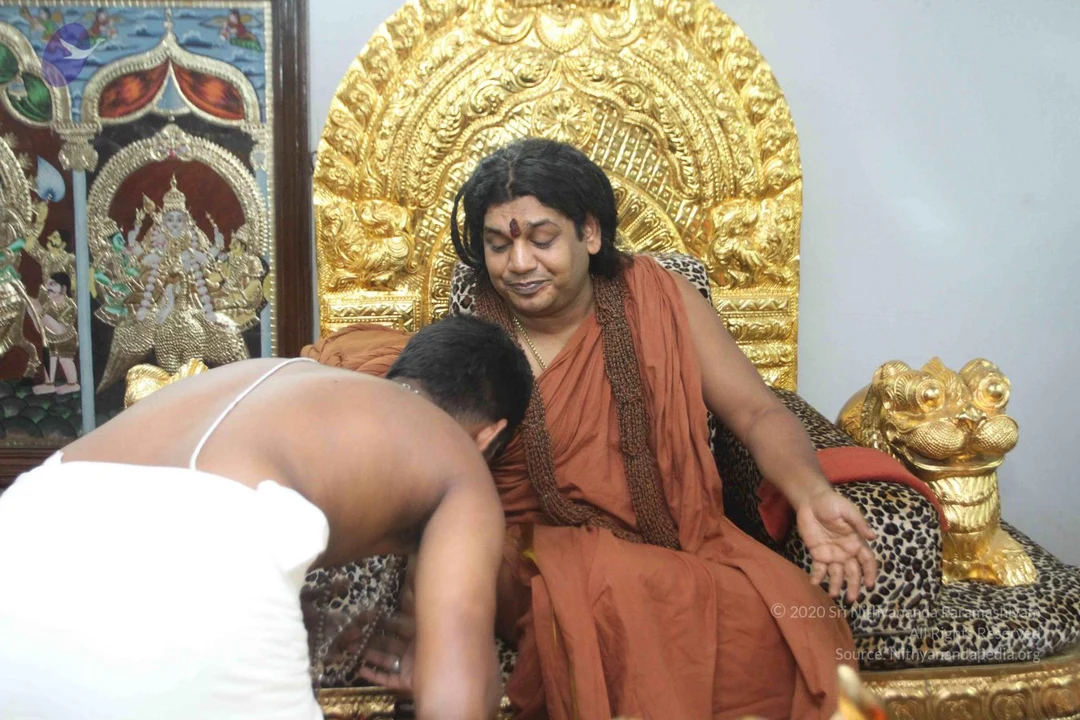
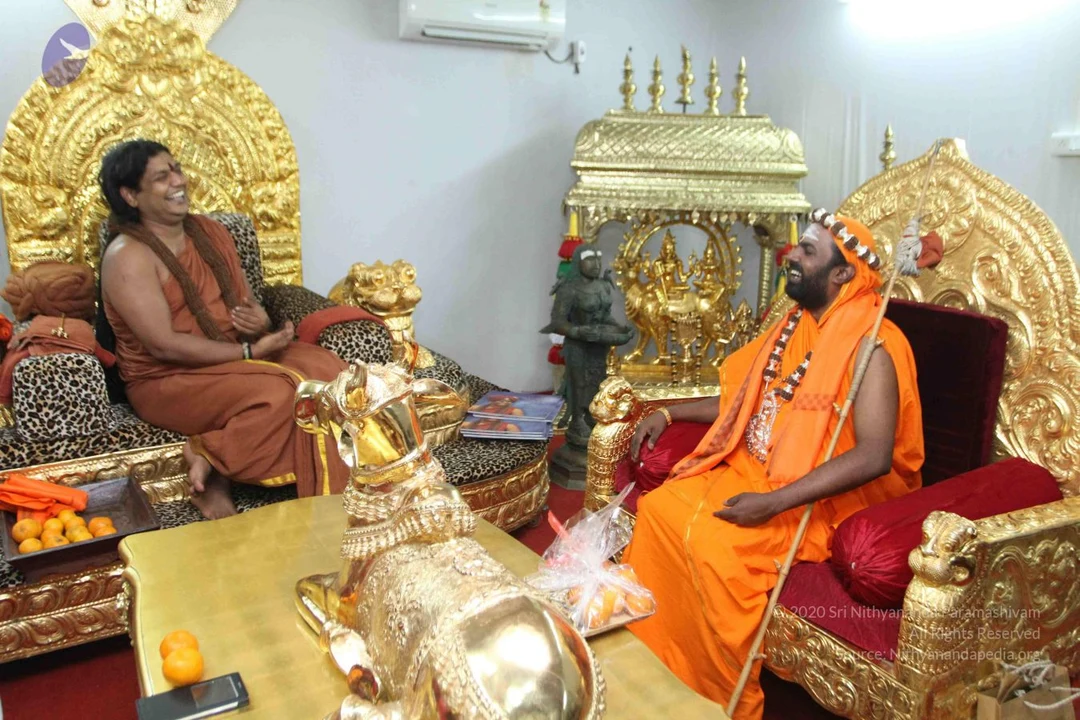
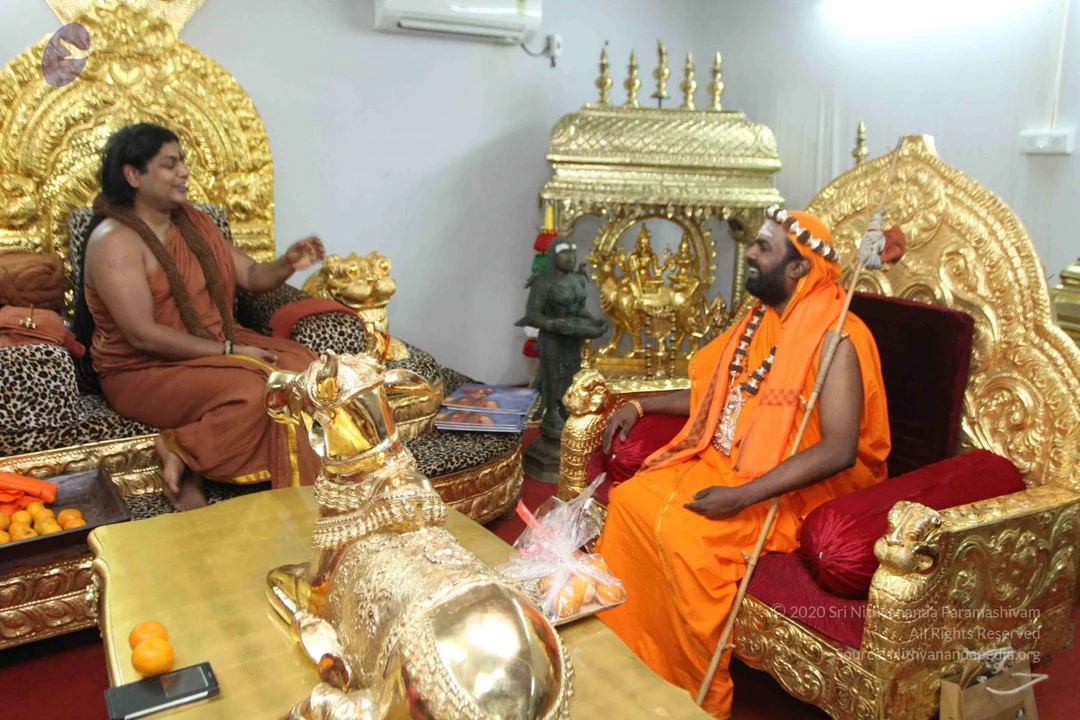
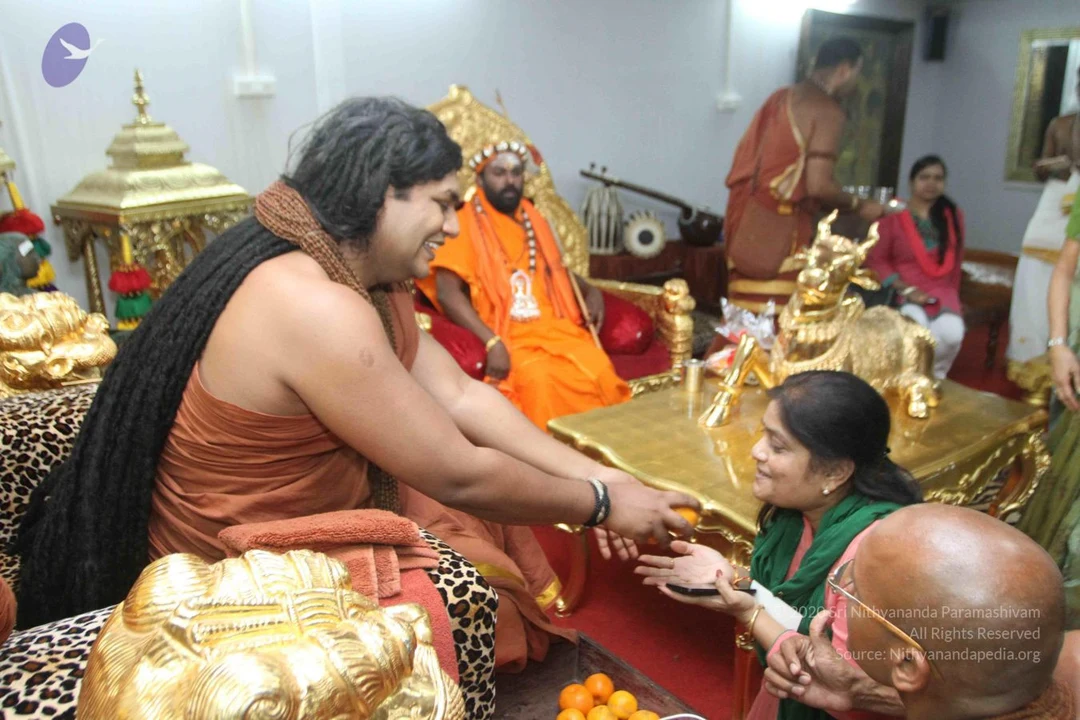
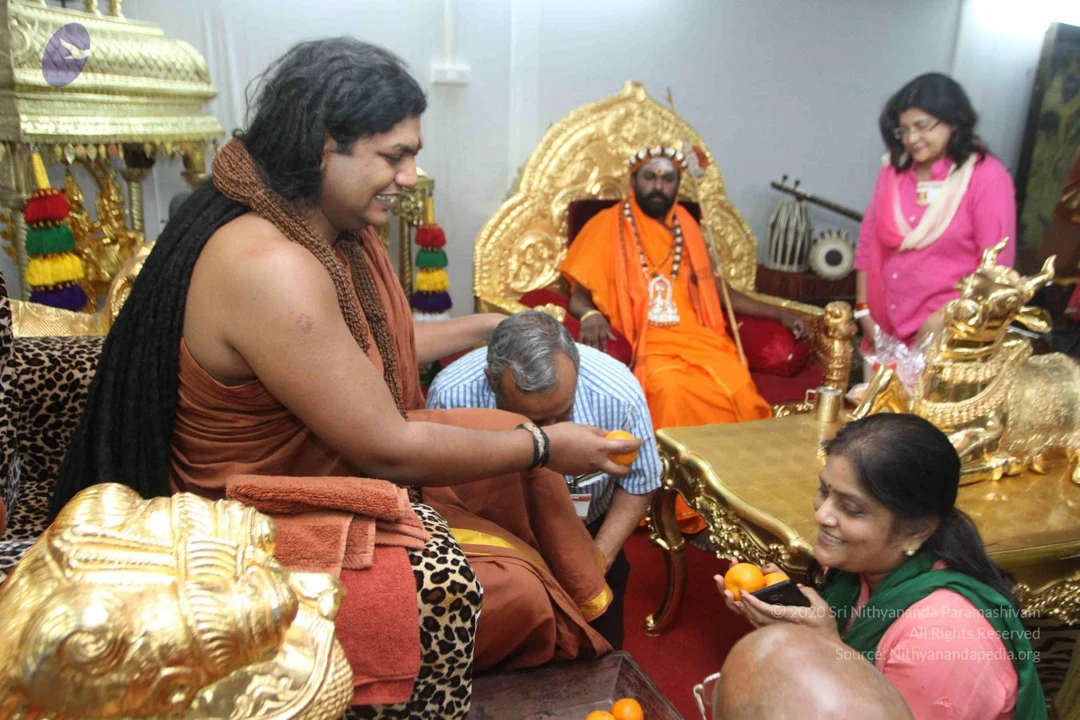
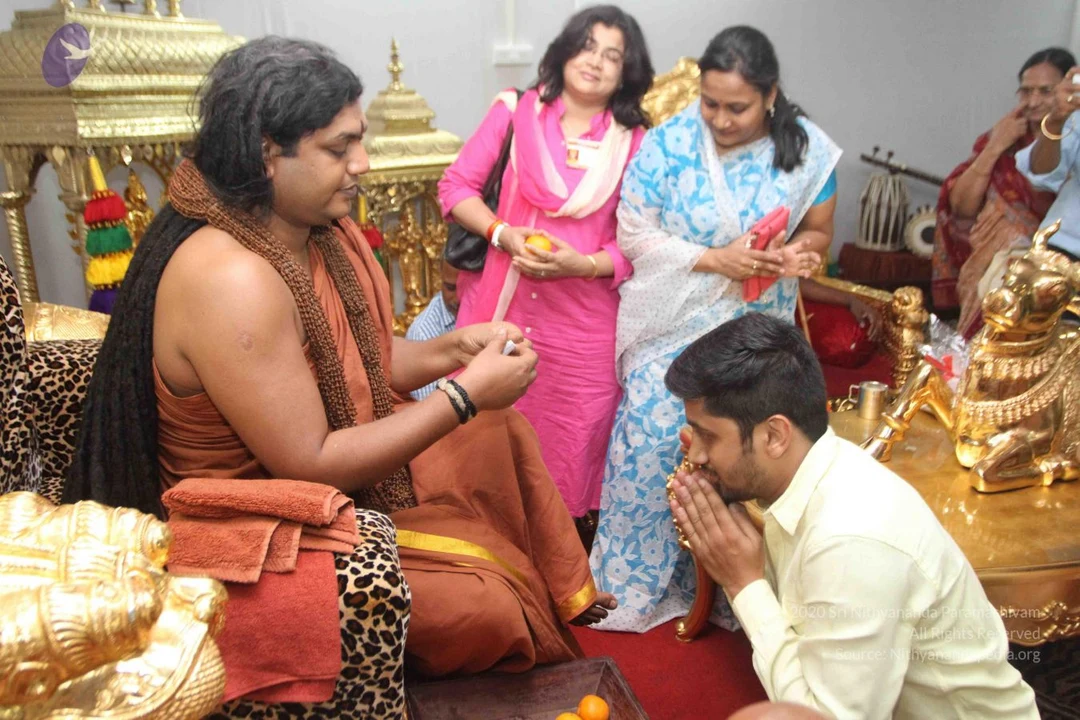
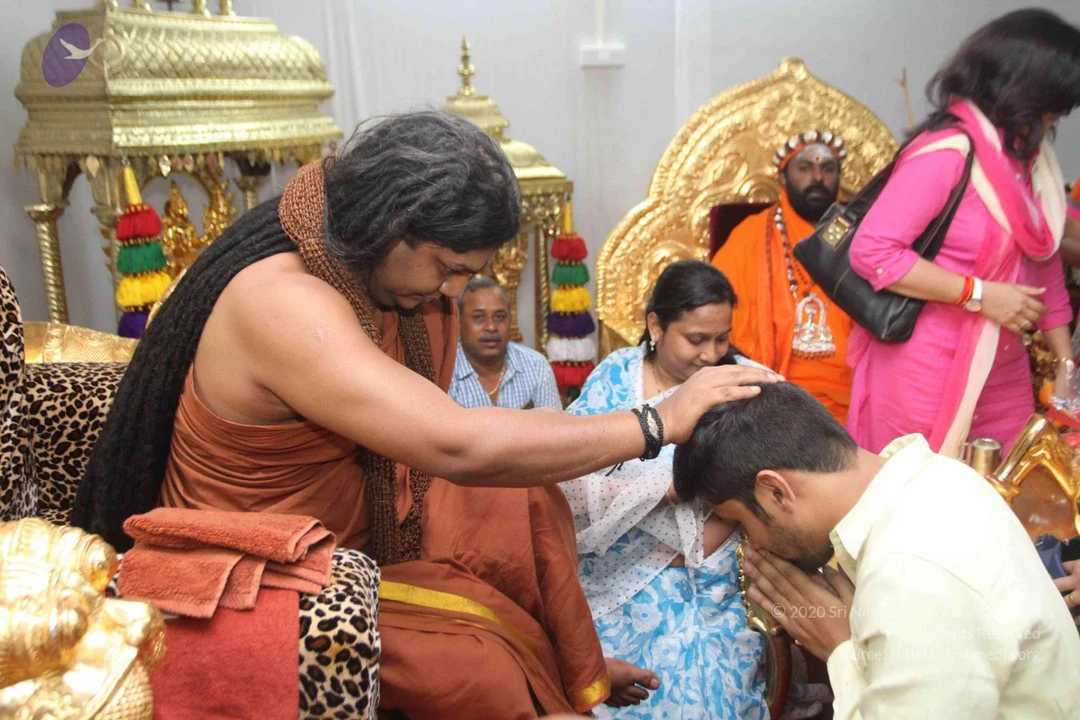
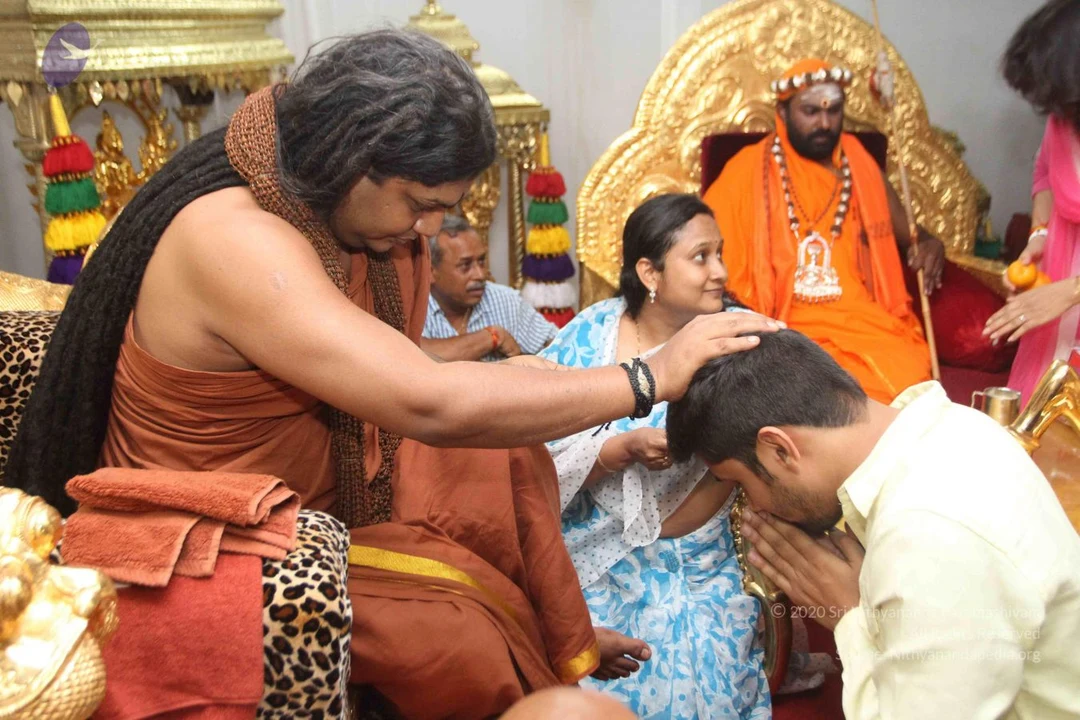
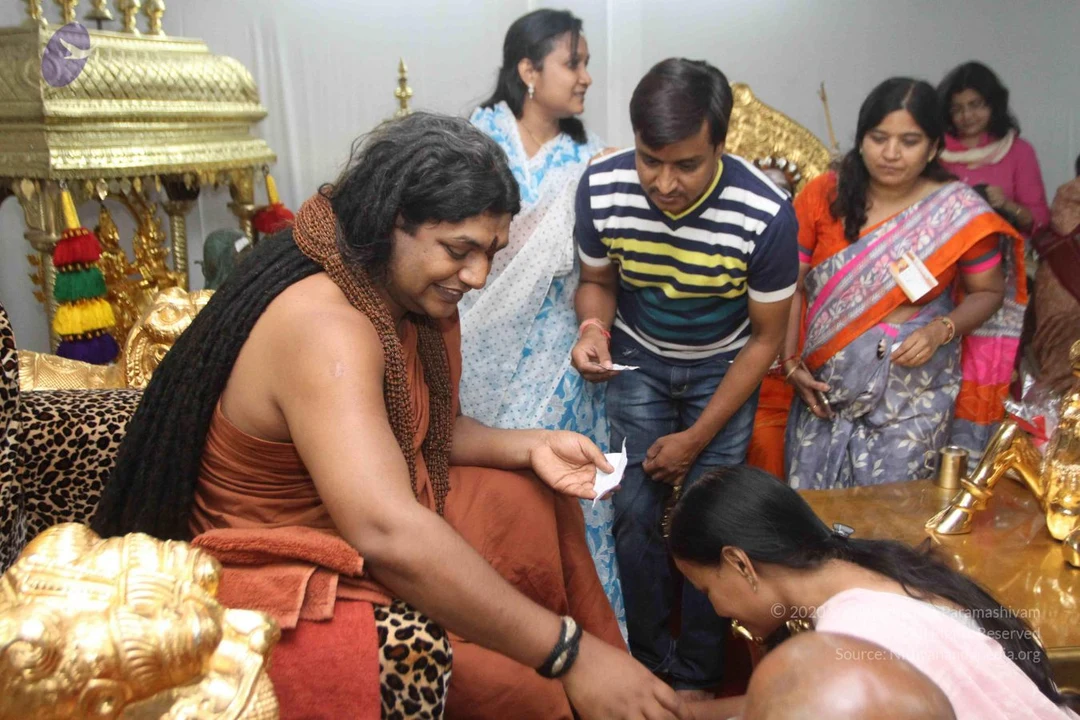
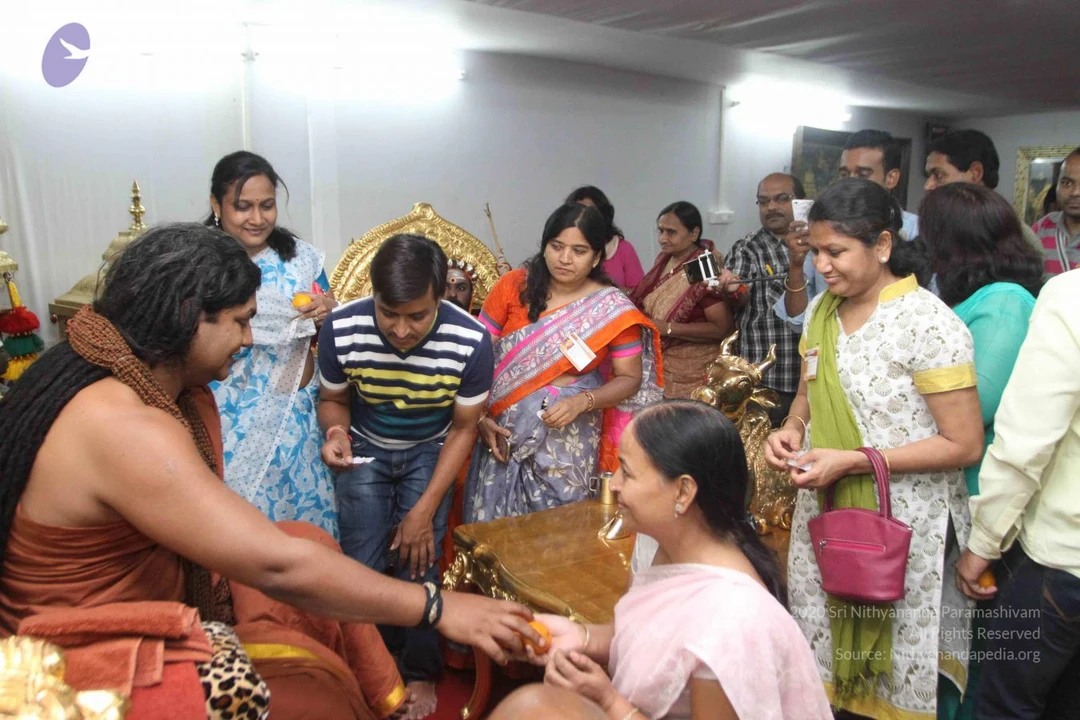
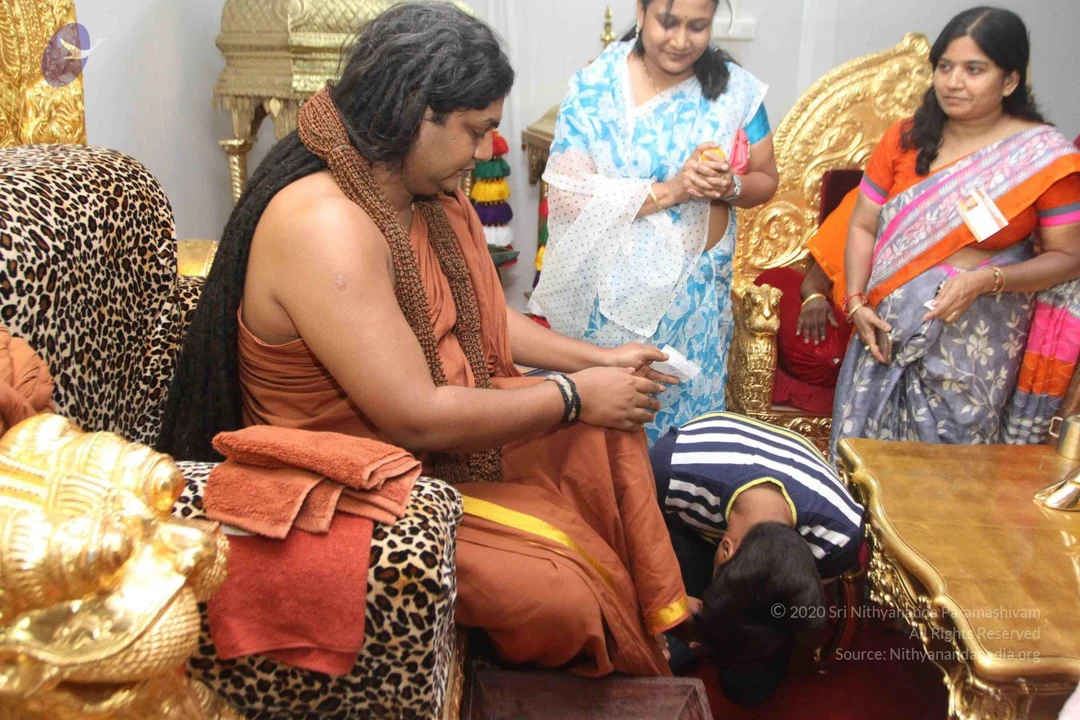
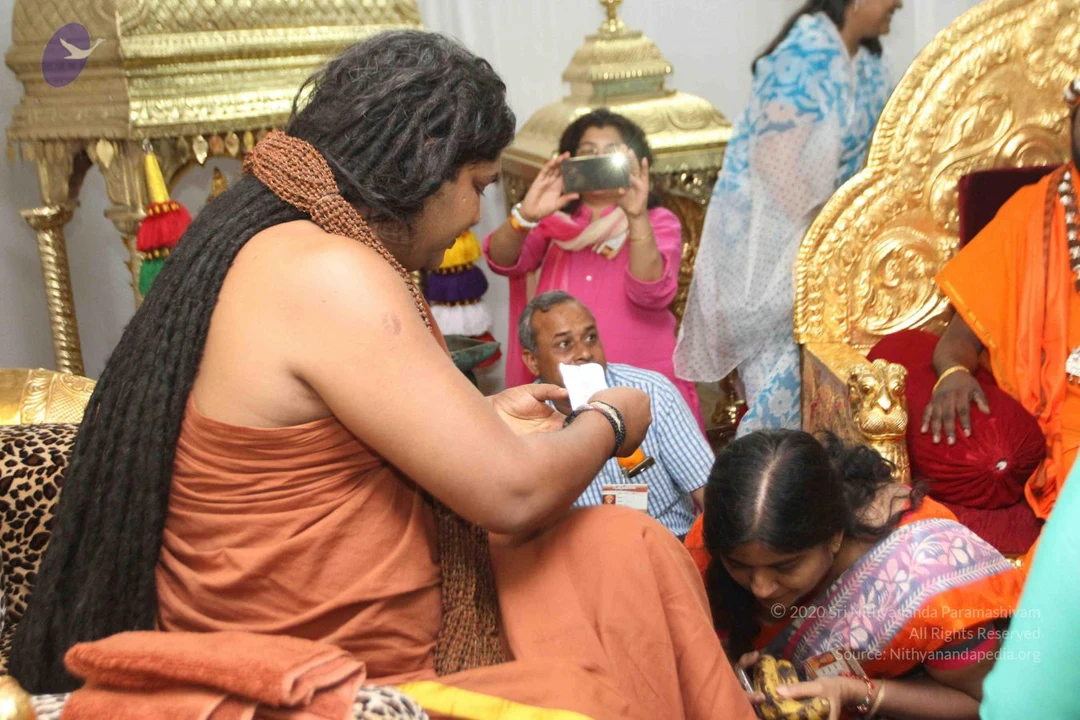
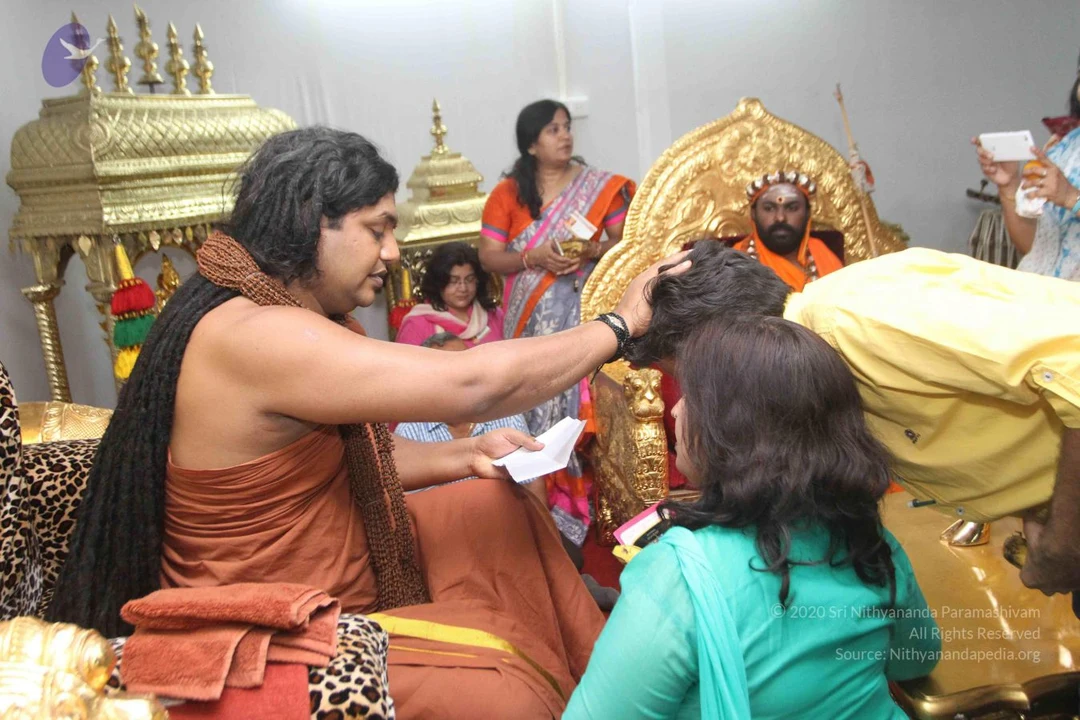
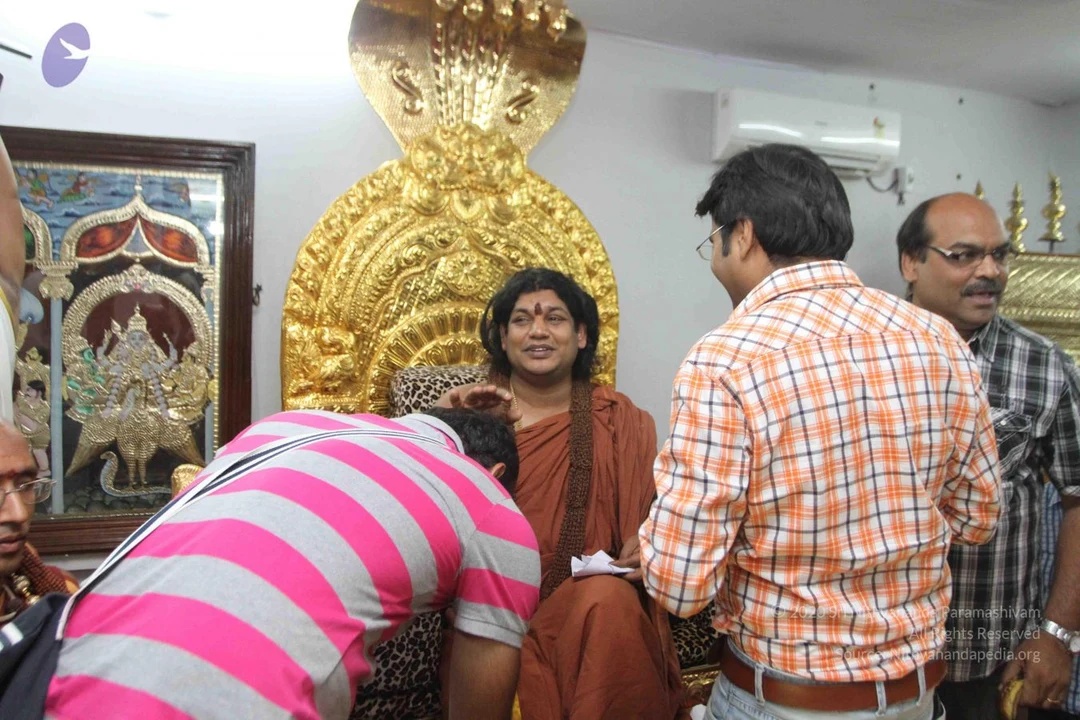
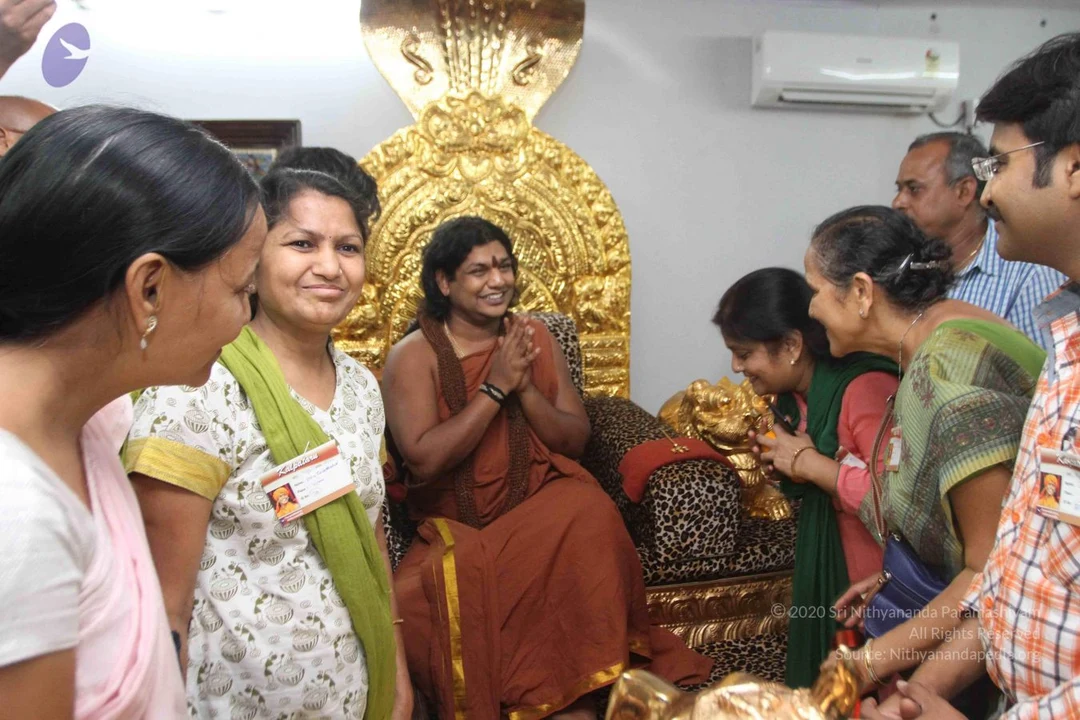
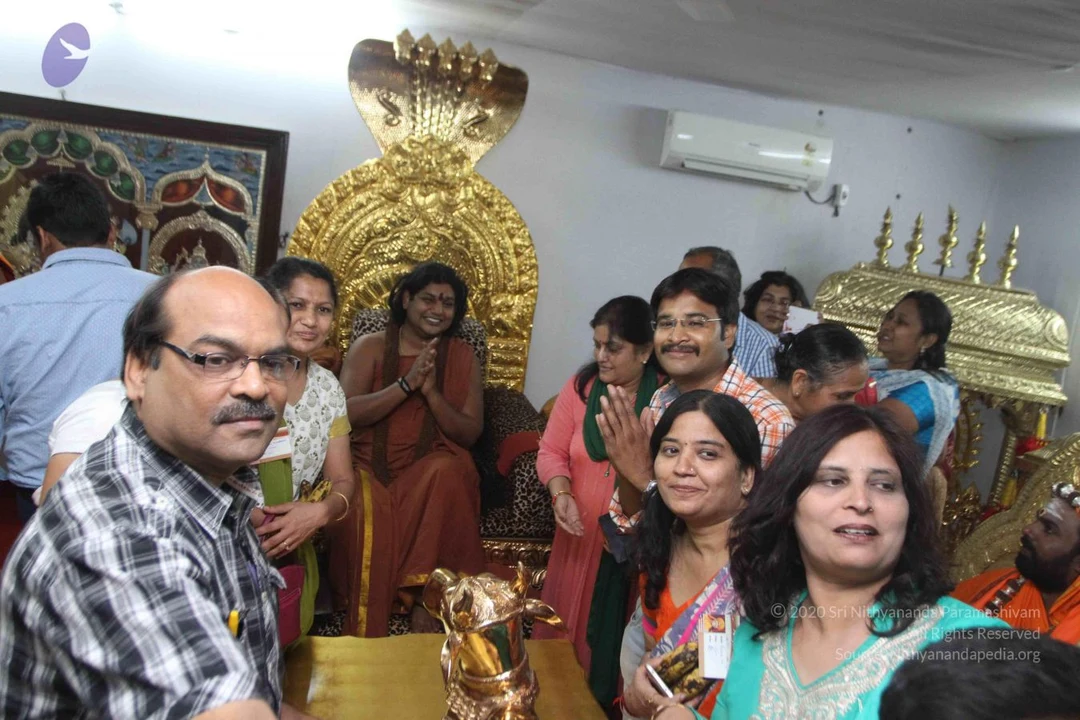
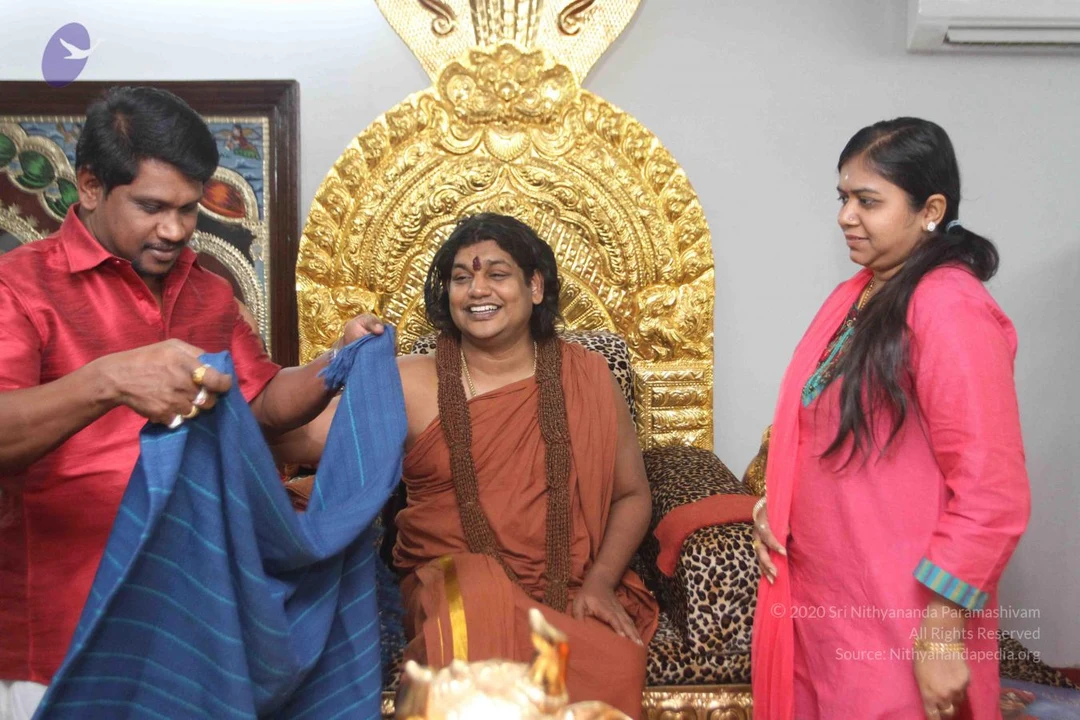
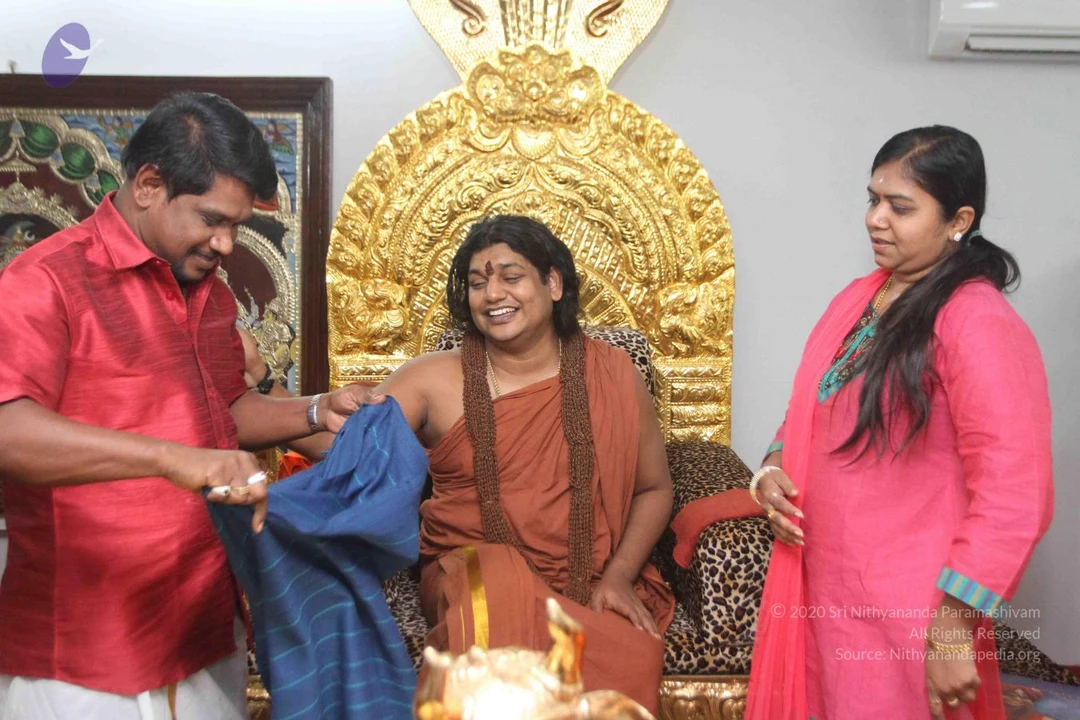
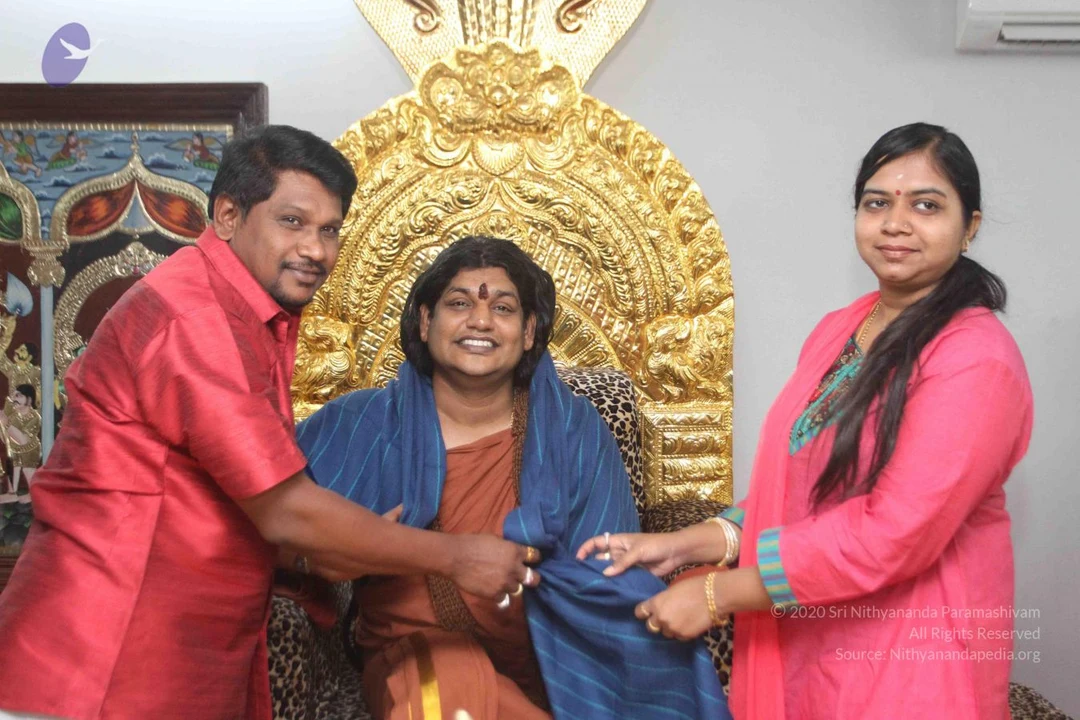
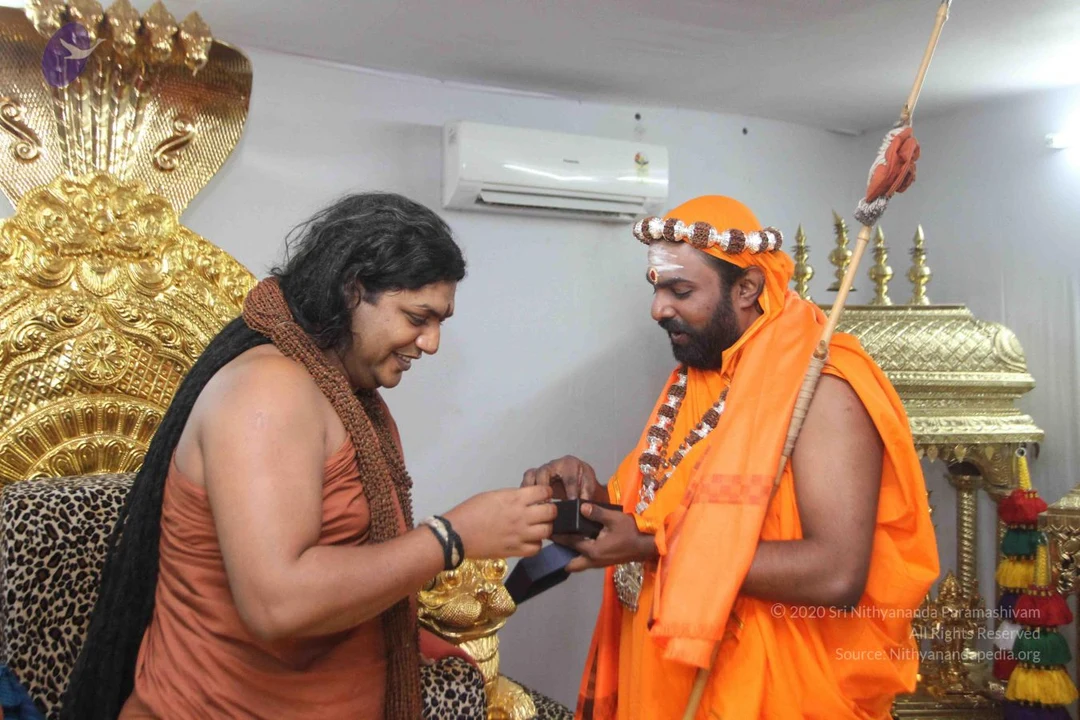
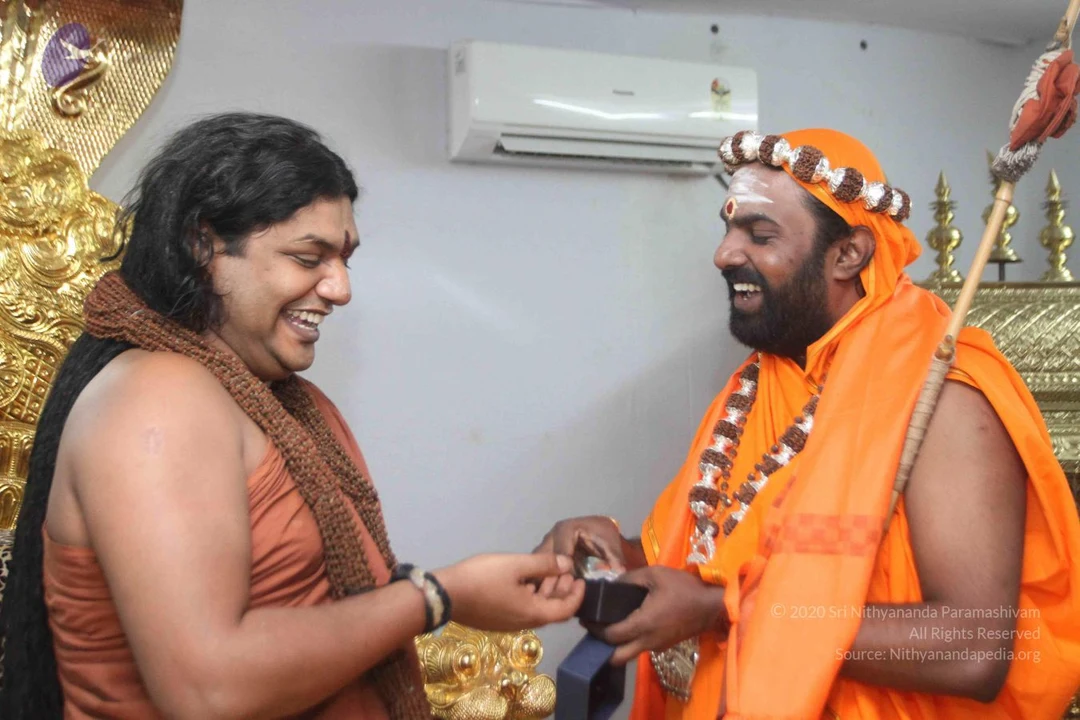
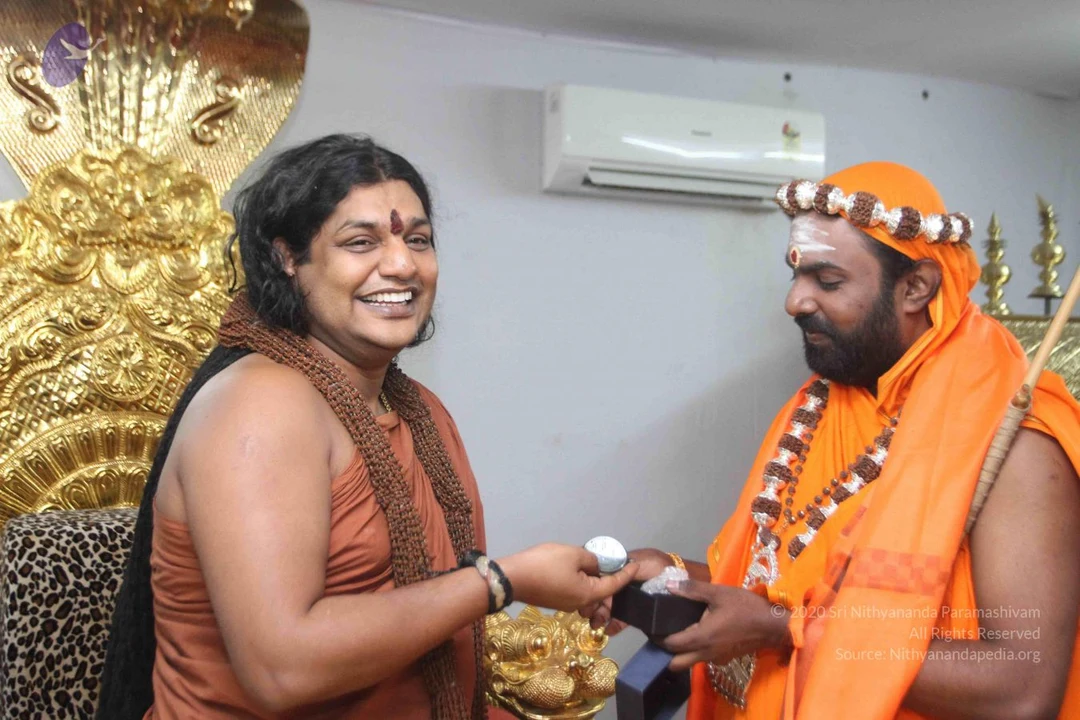
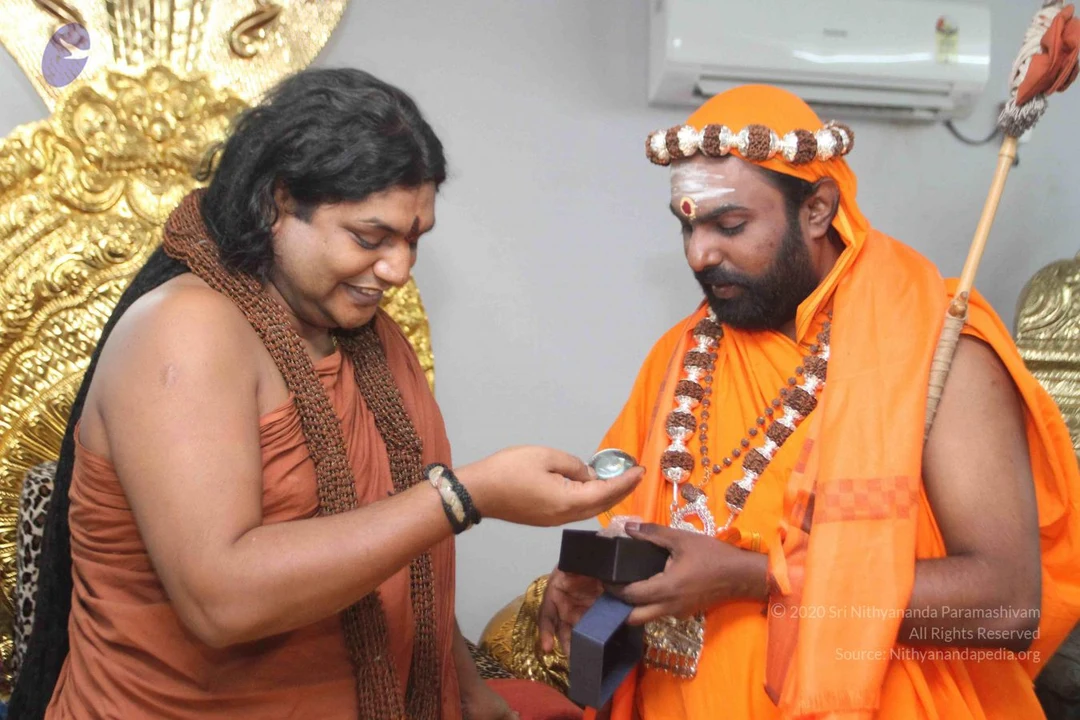
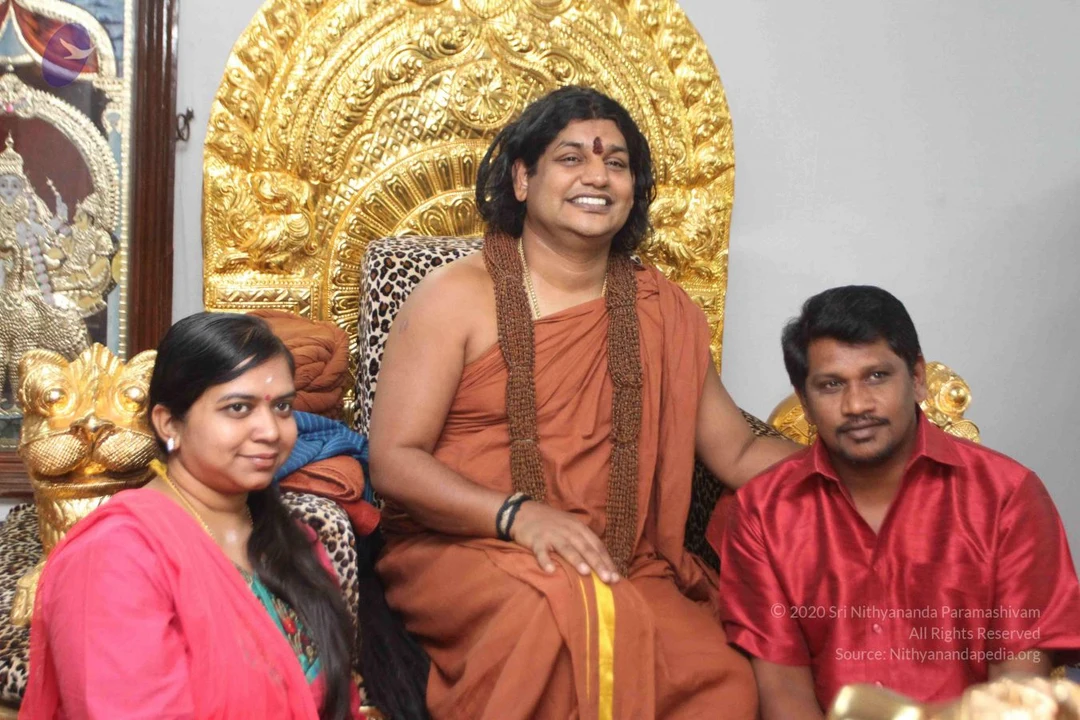
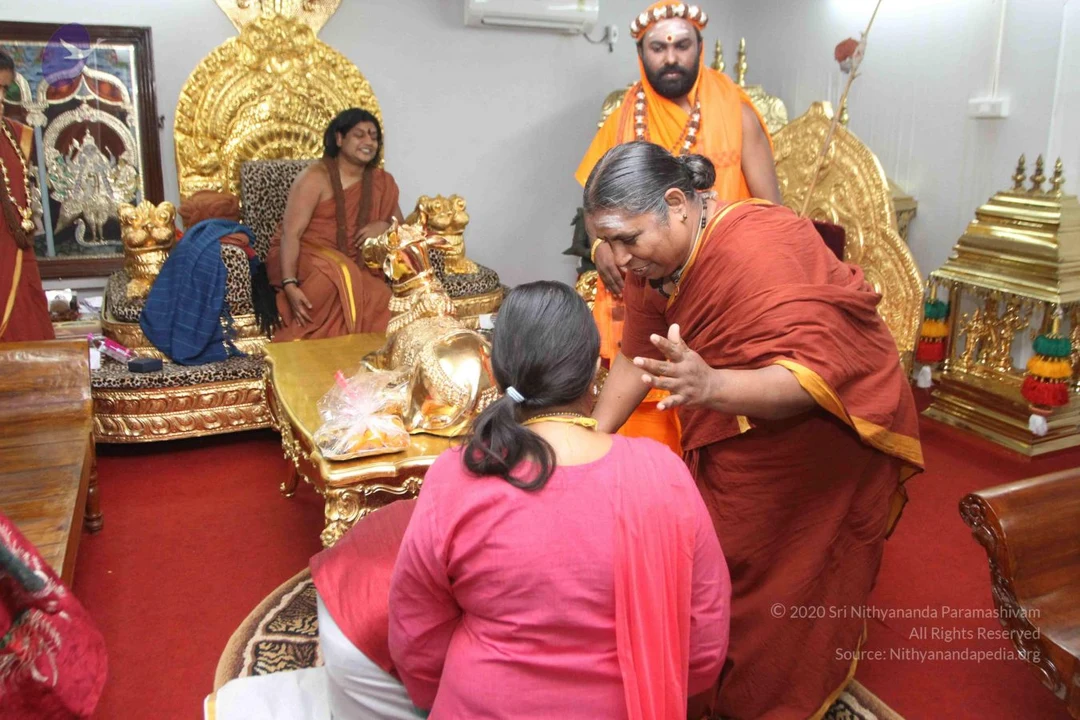
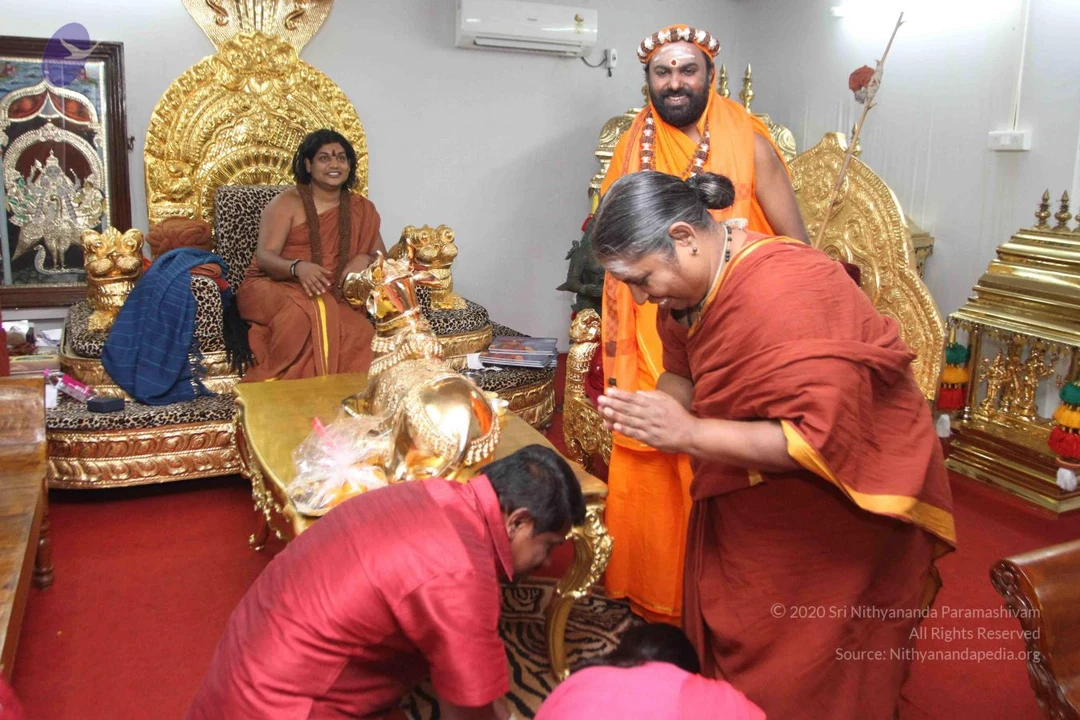
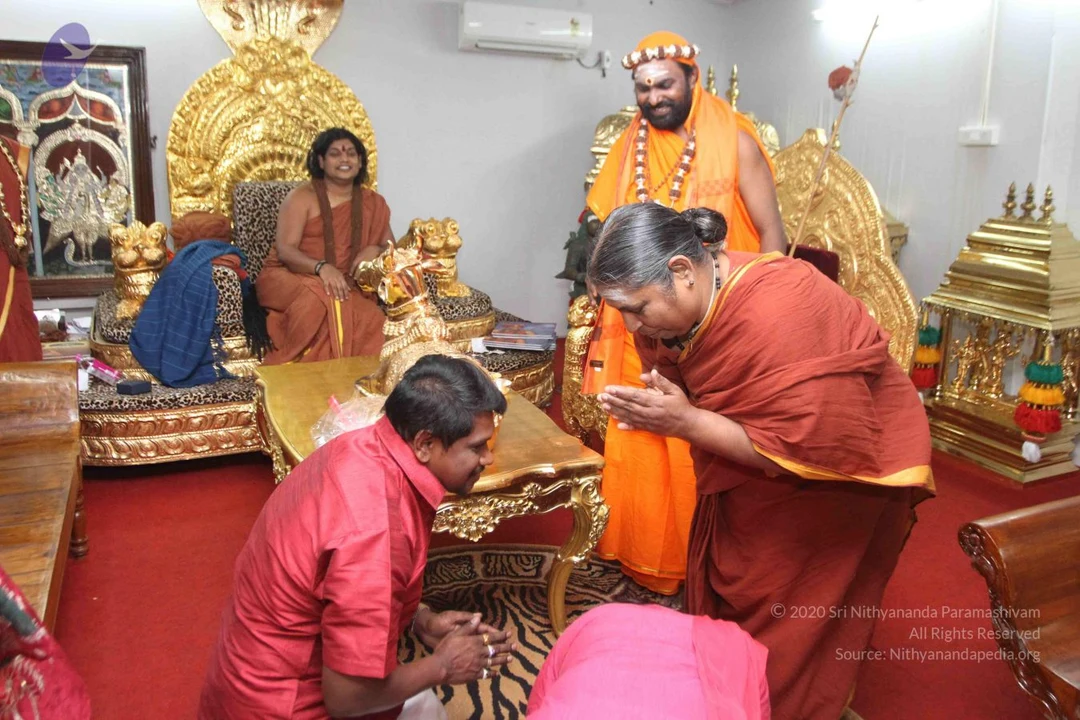
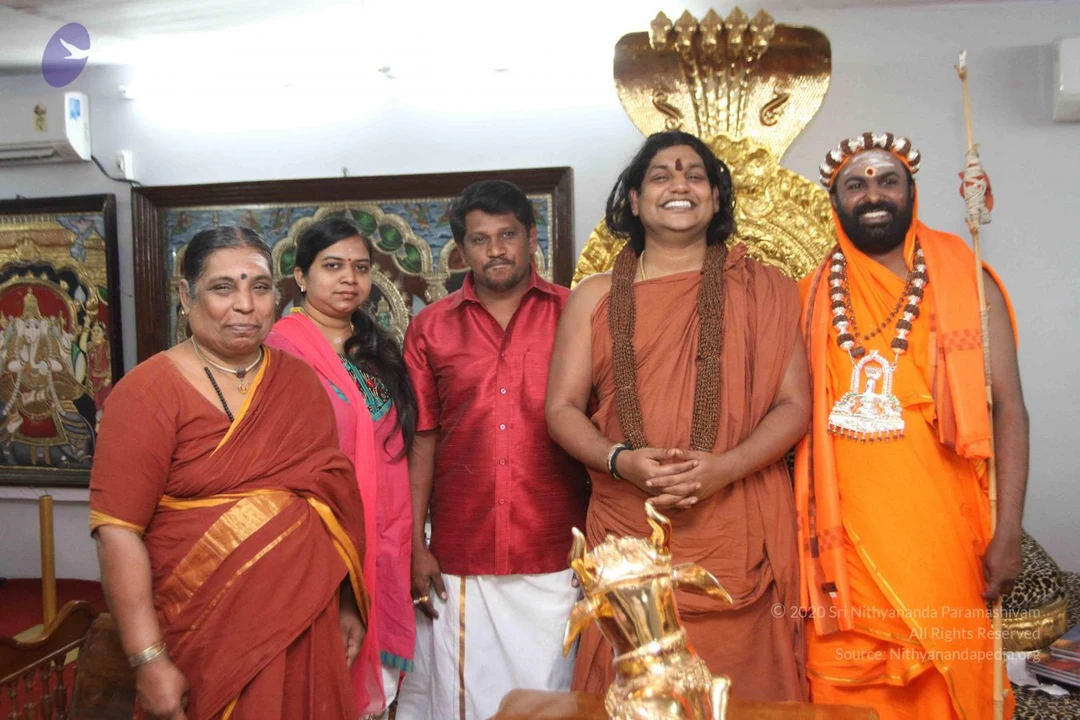
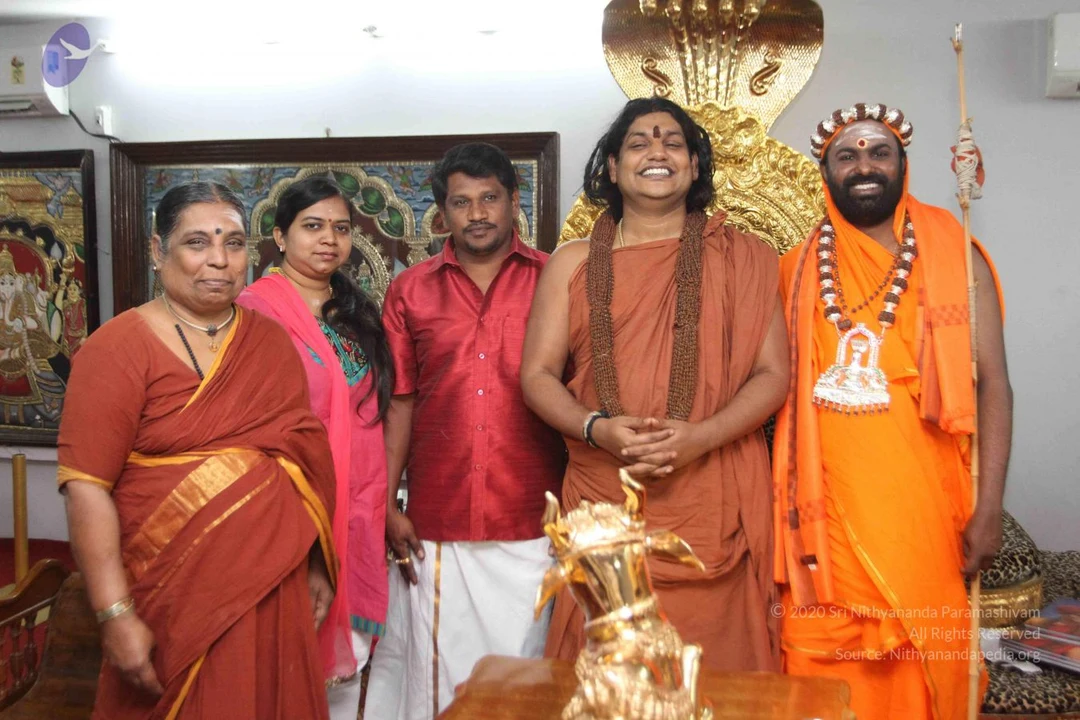
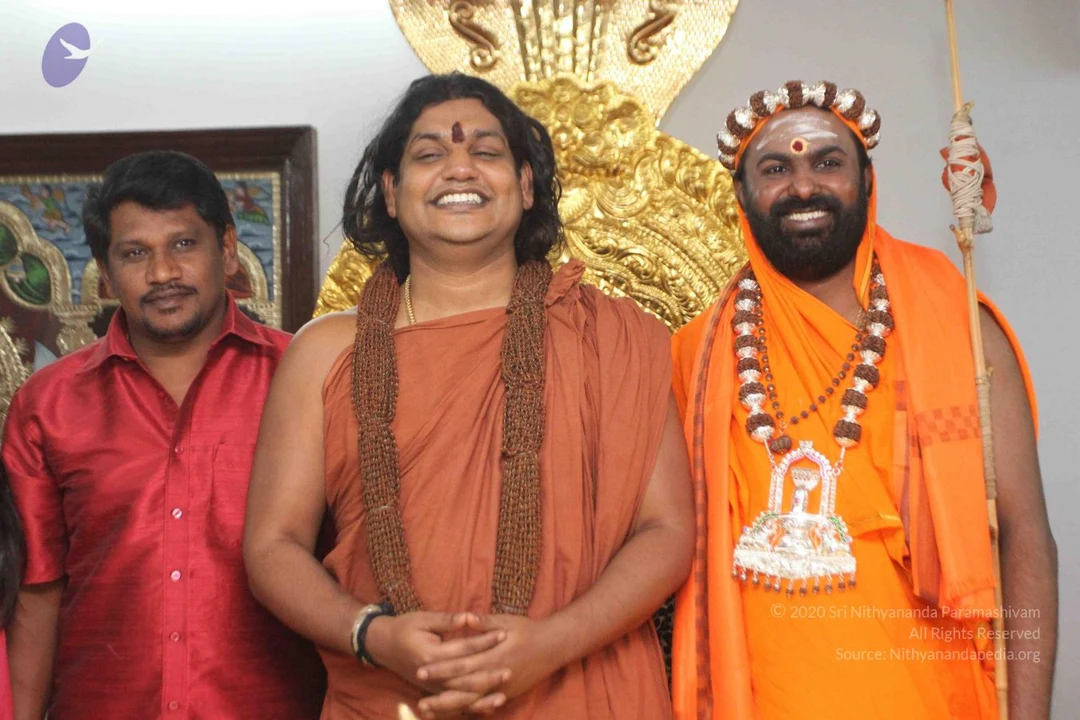
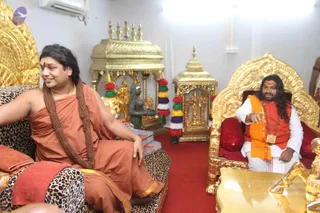
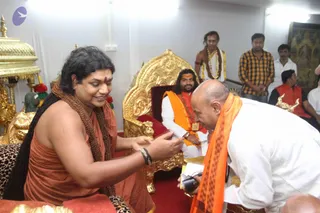
Indoor photo in a white-walled room with a red carpet and gold-trimmed thrones. On the left, a man with long dark hair, a red bindi and a rudraksha mala sits on a leopard-print seat wearing orange robes. On the right, a bearded man with long hair, orange shawl, white dhoti and a large pendant mala sits on a gold ornate throne with hands folded. A seated bald man with glasses in the lower left and a hand gesturing in the foreground face them. Behind them stand a golden canopy shrine, a bronze female figure holding a plate, a golden deity murti, and garlands in green, yellow and purple. Stacked booklets sit on a table. A partial figure in orange stands at the far right edge. Appearance-based cues for the man on the left, including long hair, orange robes and mala, are consistent with a person, but the identity is uncertain.A man with long dark wavy hair and a short beard sits on an ornate gold throne with a red cushioned seat and carved lion-head armrests. He wears an orange-saffron sleeveless vest over a white kurta, an orange shawl with gold border, multiple rudraksha and beaded malas, and a large gold pendant. An orange tilak mark is on his forehead and he has several rings and a beaded bracelet. A second man standing behind him wears a white dhoti with gold border, a gold necklace and a dark rudraksha mala. Golden ritual vessels and a gold palanquin-style structure appear at the left and lower right. Identity is an appearance-based candidate only.A photograph inside a room with red carpet and a gold-ornate throne. A man with long dark hair, wearing an orange shawl over white clothing with a rudraksha mala and a large gold pendant, sits on a gold throne with red cushions, gesturing with one hand while speaking. Facing him on a leopard-print chair, a man in an orange robe with a rudraksha mala listens with hands joined in his lap. Behind them stands a man in white with a red-beaded mala, gold-trimmed cloth and long hair. Nearby are a golden canopy shrine, a dark metal murti of a standing figure holding a plate, a golden palanquin-style shrine with colourful tassels, and a golden lion-shaped stand. Books sit on a small table. a person is seated on the throne, identified by the long swept hair, orange saffron shawl, rudraksha mala and gold pendant.A photograph inside a bright white room with red carpet and golden ceremonial thrones. On the left, a smiling man with long dark hair, a red tilak, rudraksha mala and an orange-brown wrap sits on a leopard-print cushioned seat. On the right, a man with long hair, orange vest over white clothing, and a gold pendant sits on an ornate gold throne with red cushions, gesturing with his hand. Behind them stand gold-coloured shrine canopies, a bronze figure holding a dish, and colourful tassel decorations. A partially visible person stands at the far right edge. Books are on a seat and a gold table is in the foreground.A photograph in a gold-accented room with a golden throne and ornate golden objects. A man with long, swept-back dark hair wearing a saffron-orange wrap, a brown rudraksha mala and a beaded necklace leans forward and touches the head of a bald man in a white shirt who bows low, holding a folded orange-and-checked shawl and a phone. Behind them a bearded man in an orange shawl and a bare-chested man with a gold necklace and garland stand near the throne, and several men in checked shirts, white shirts and an orange-red vest stand along the wall. Cushions with a leopard print sit at the lower left.A man with long dark hair and a red tilak on his forehead sits on a leopard-print cushion in a saffron-orange robe with a beaded brown mala around his neck, smiling as he reaches out to take an offering from a bending man in white clothes and an orange shawl. Behind them, a golden ornate throne with a red seat is occupied by a man with long hair in a white dhoti and orange shawl. Standing nearby are a bare-chested man with a sash and beads, and men in casual shirts, one in an orange vest. A gold canopy and garlands frame the room. The white walls show a painted panel at right.
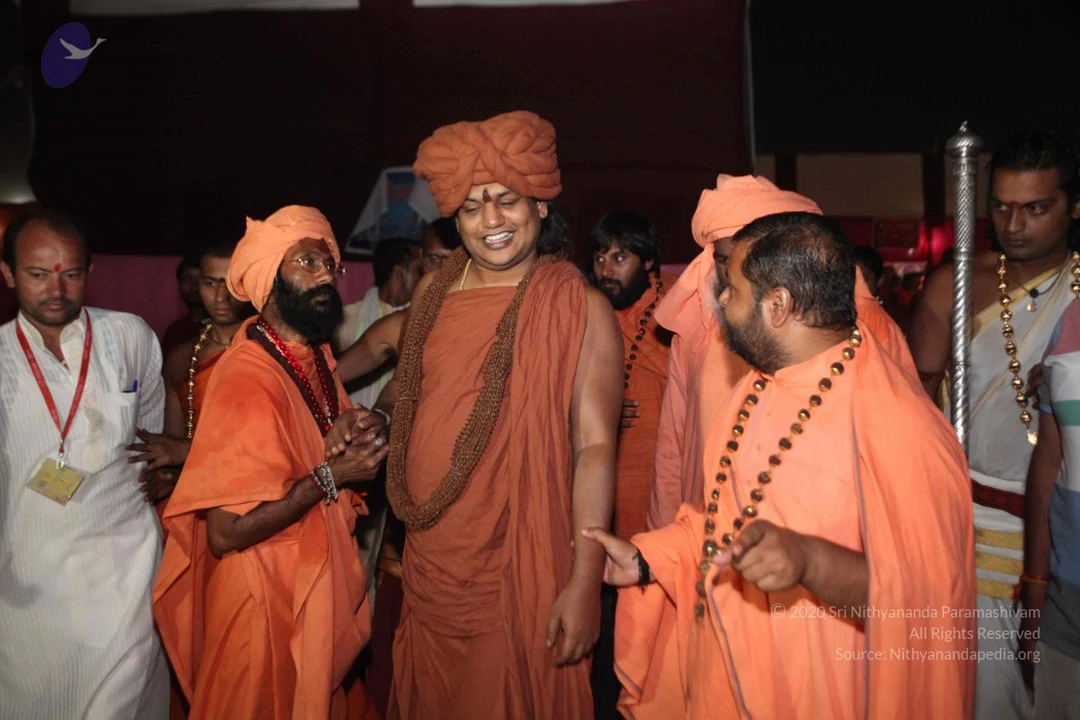
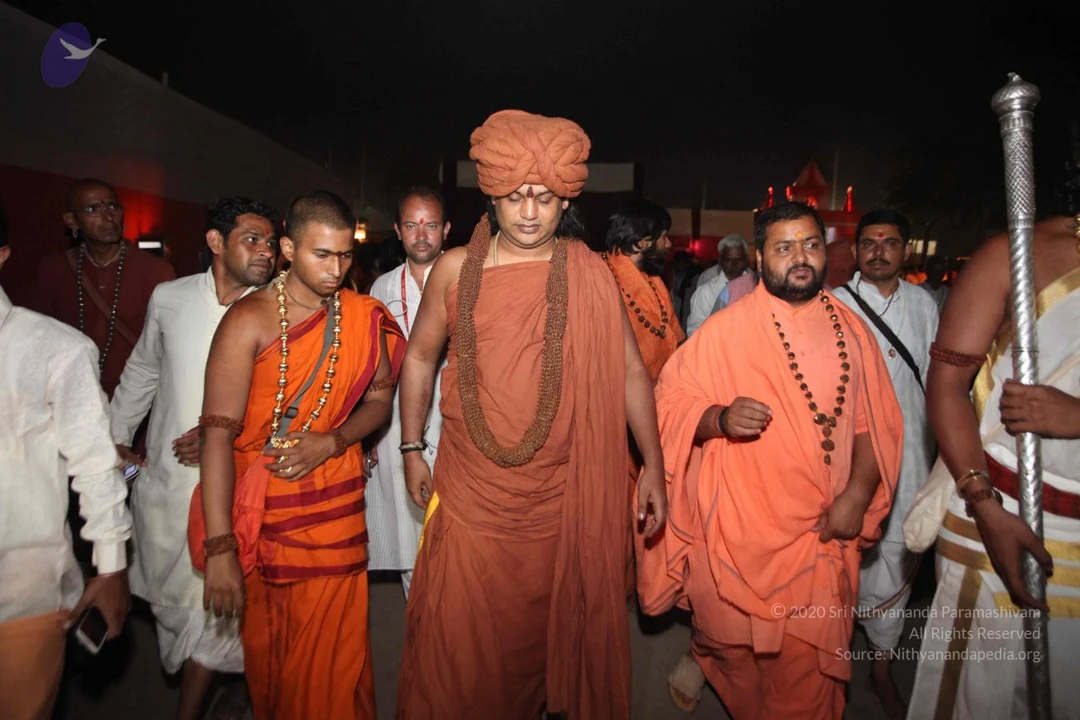
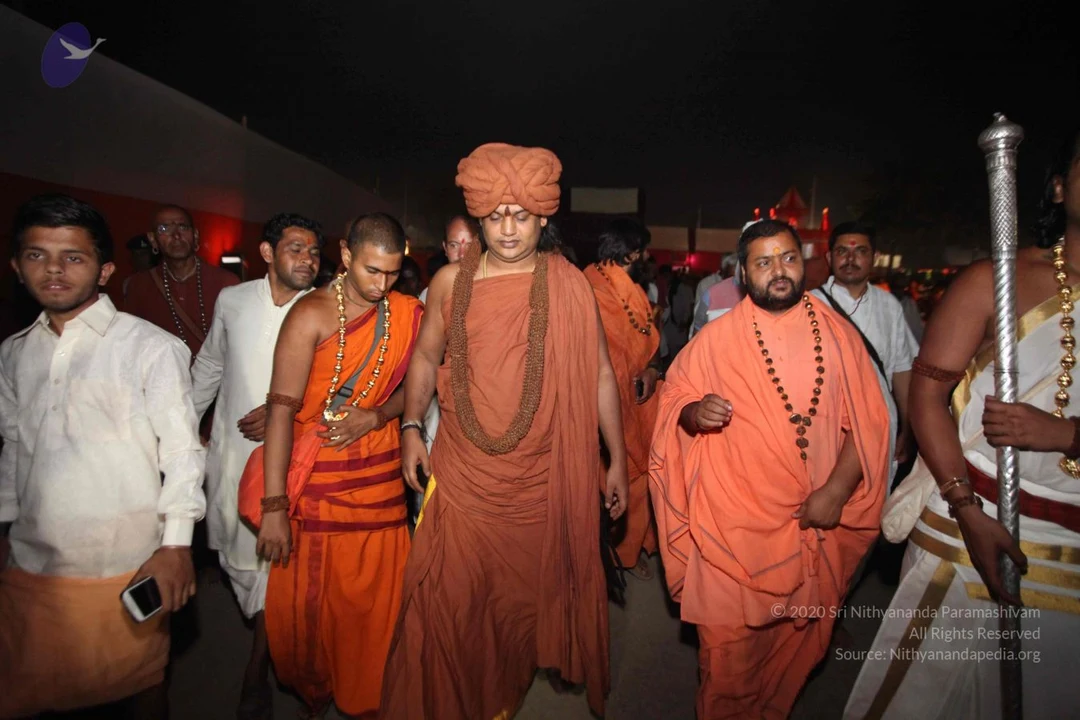
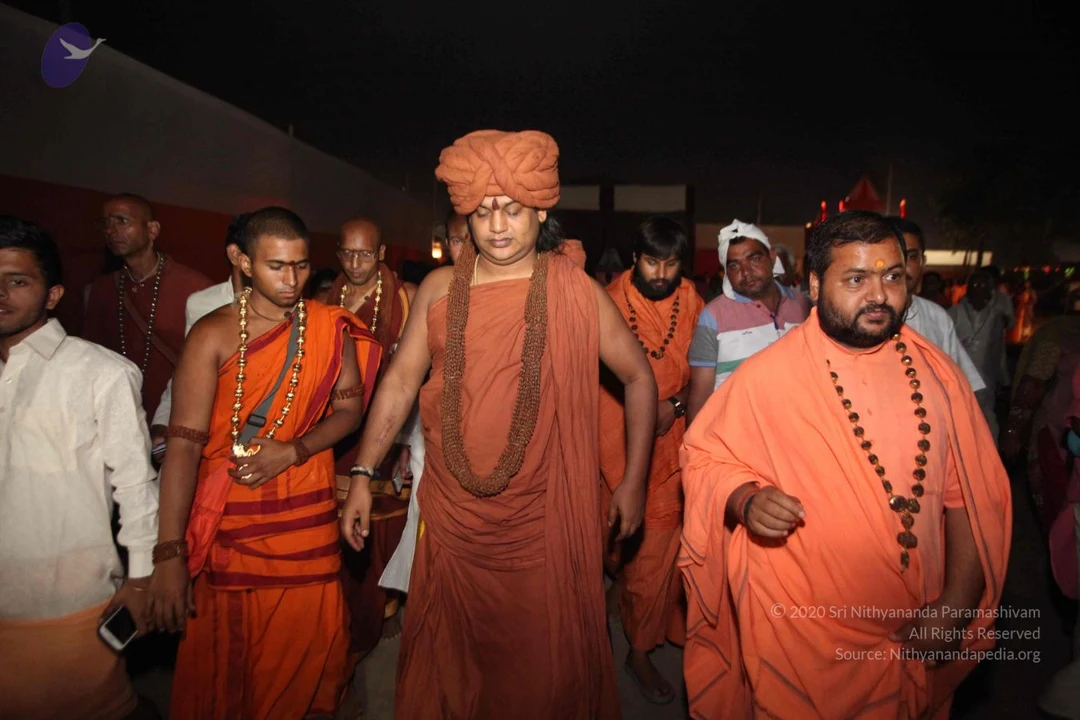
bandara

72 photosSource gallery
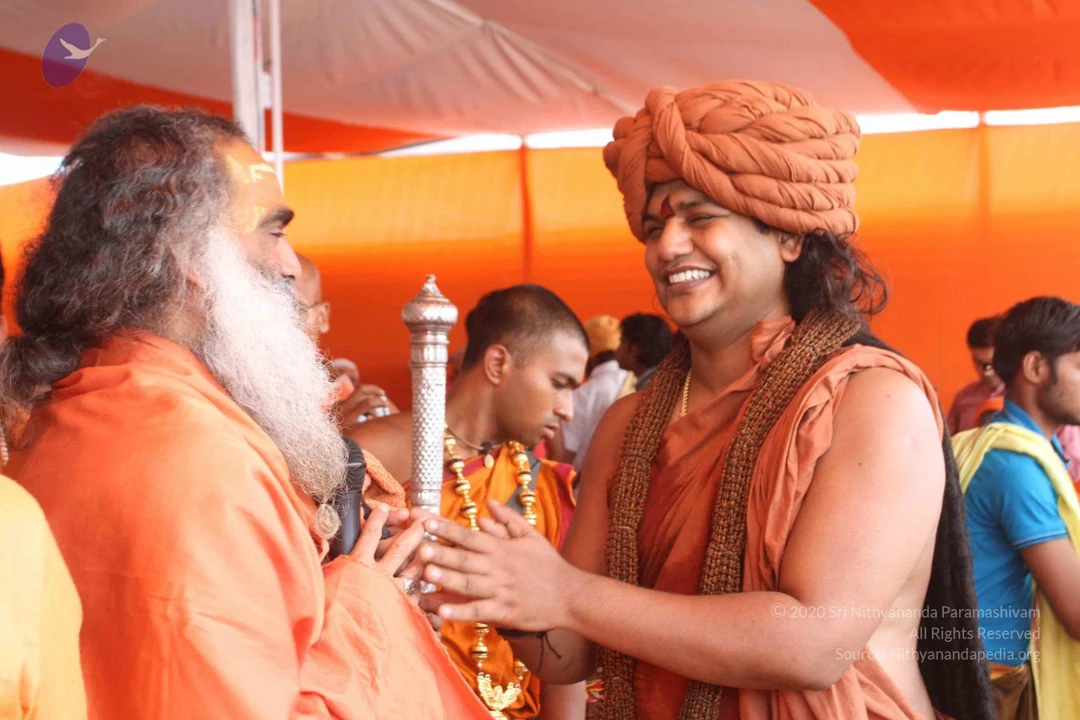
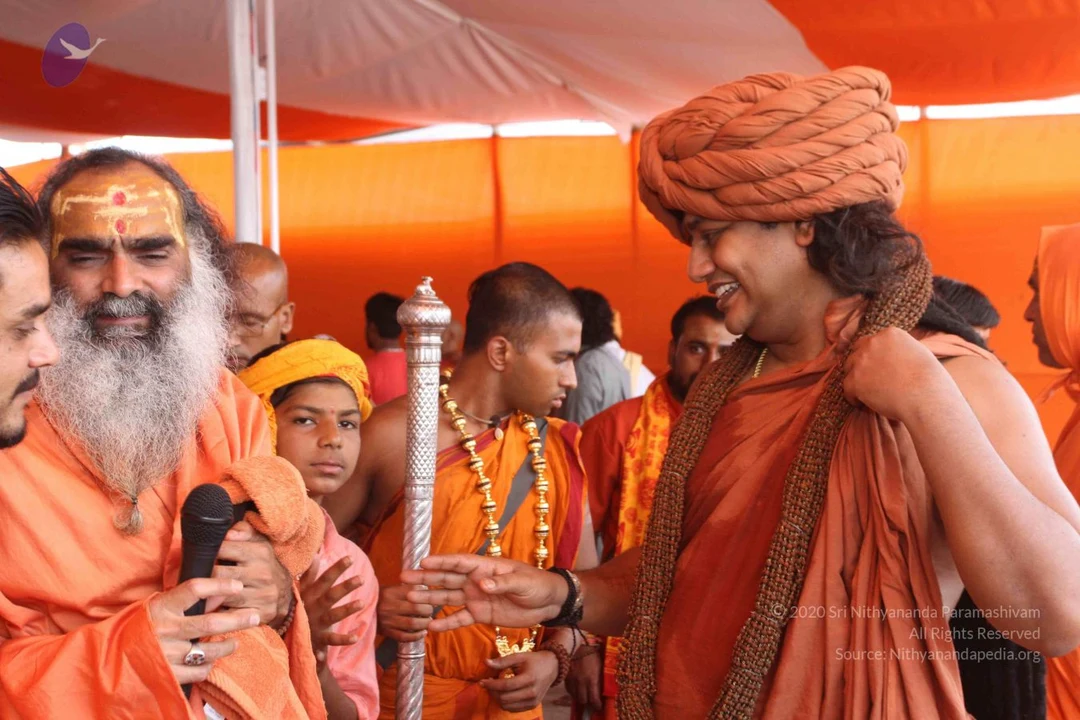
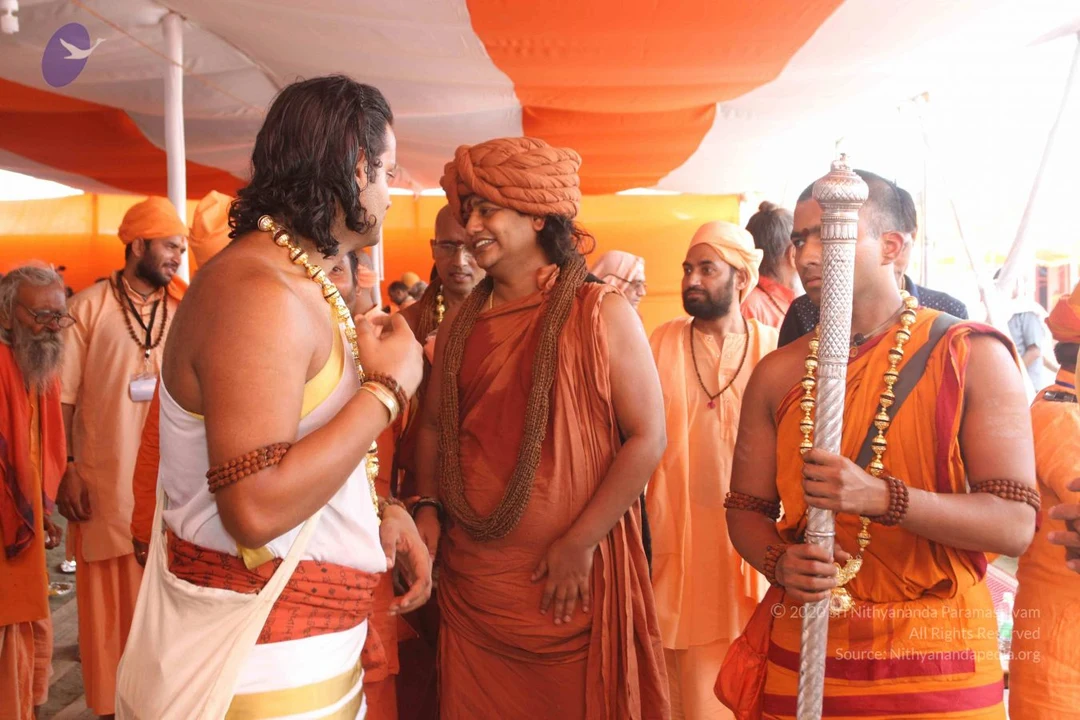
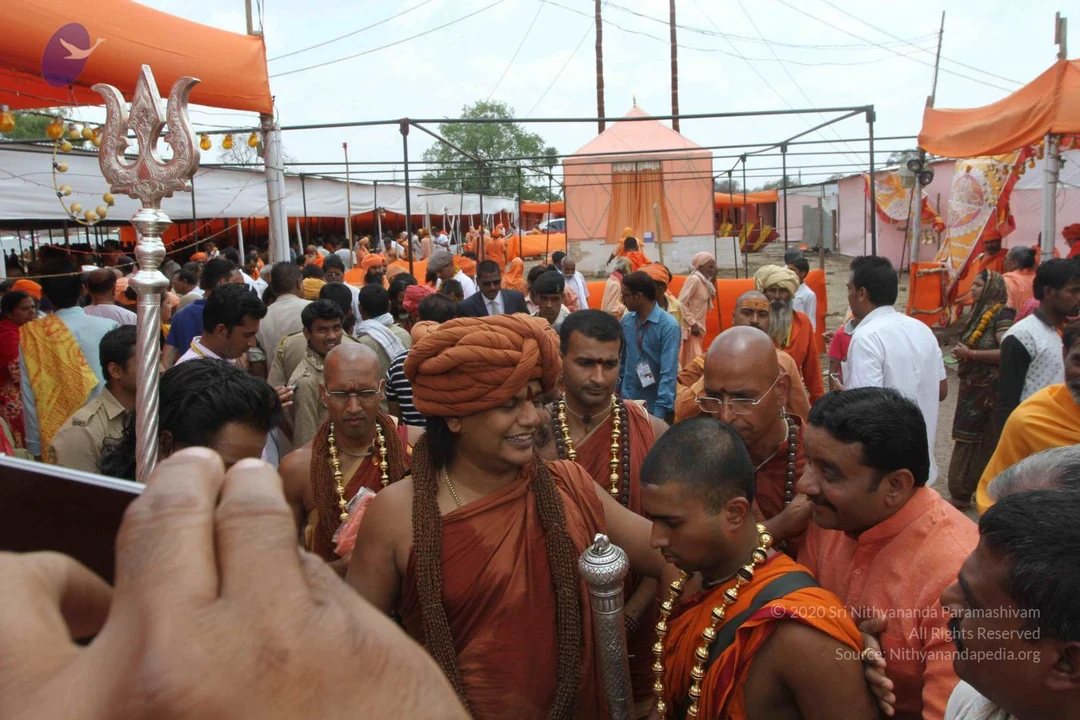
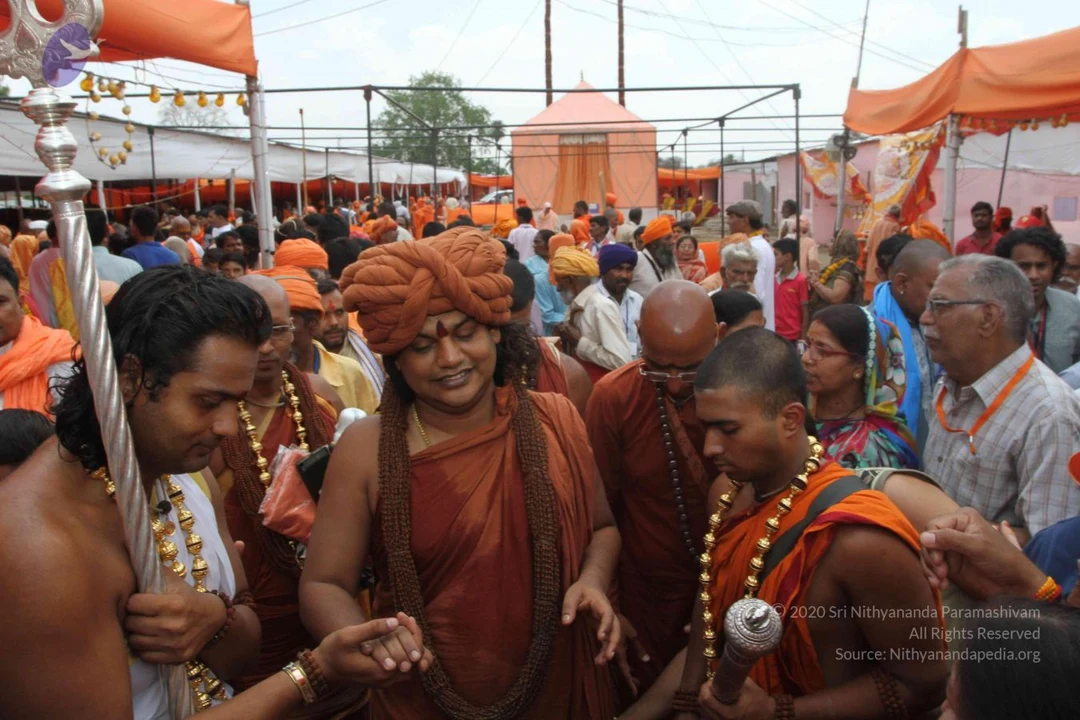
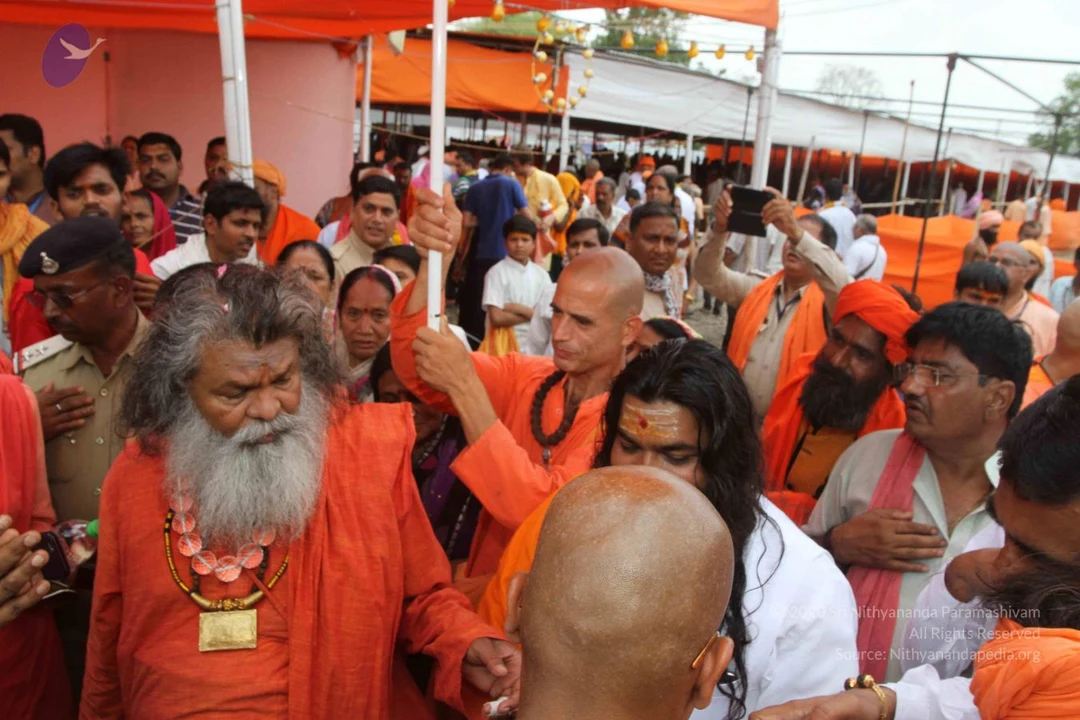
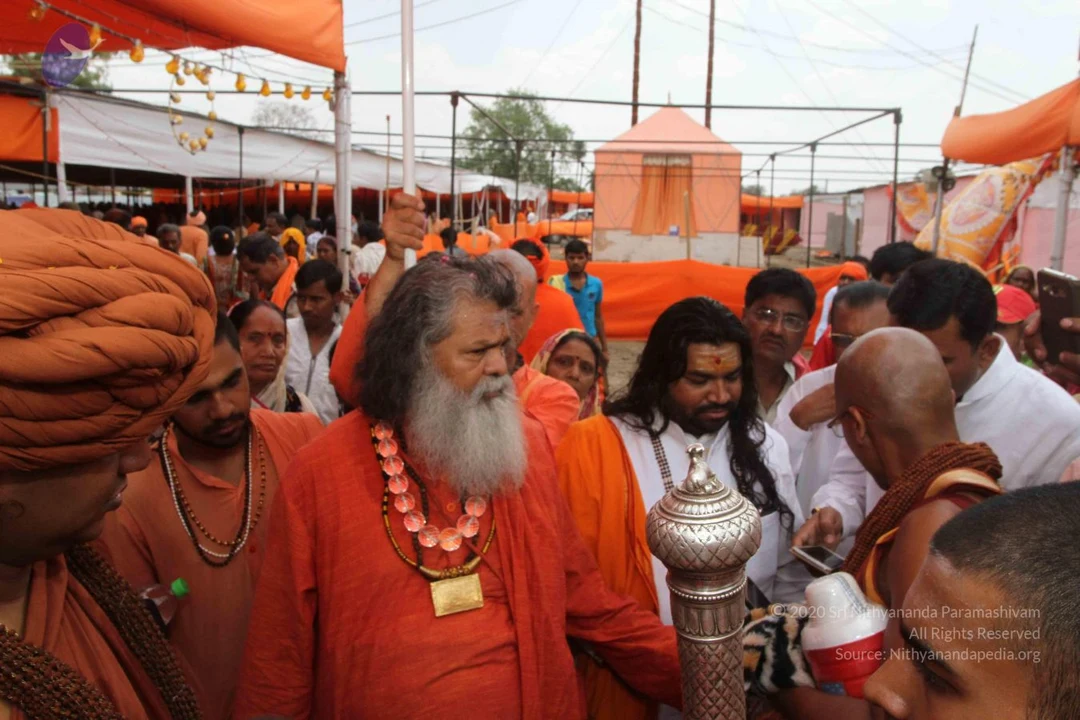
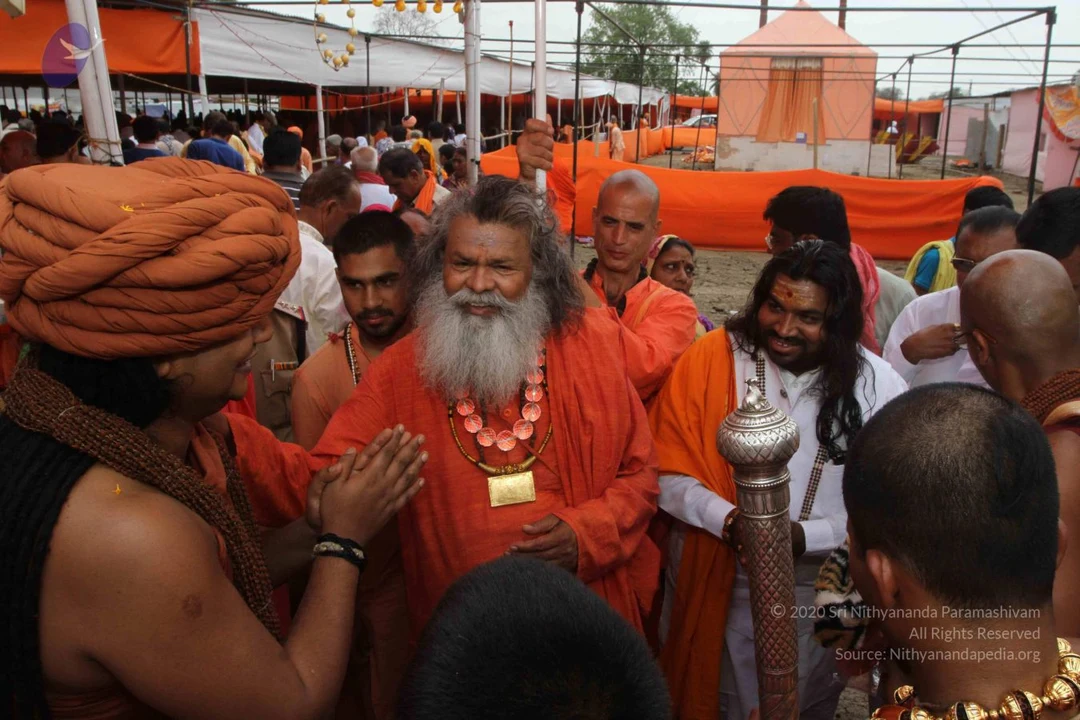
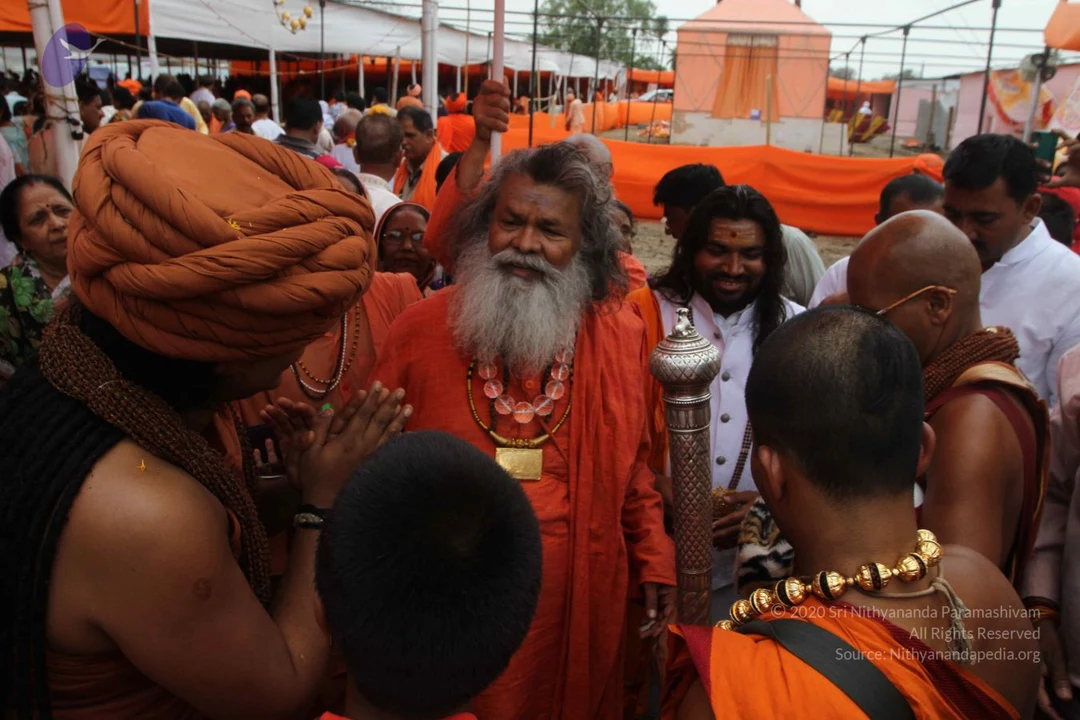
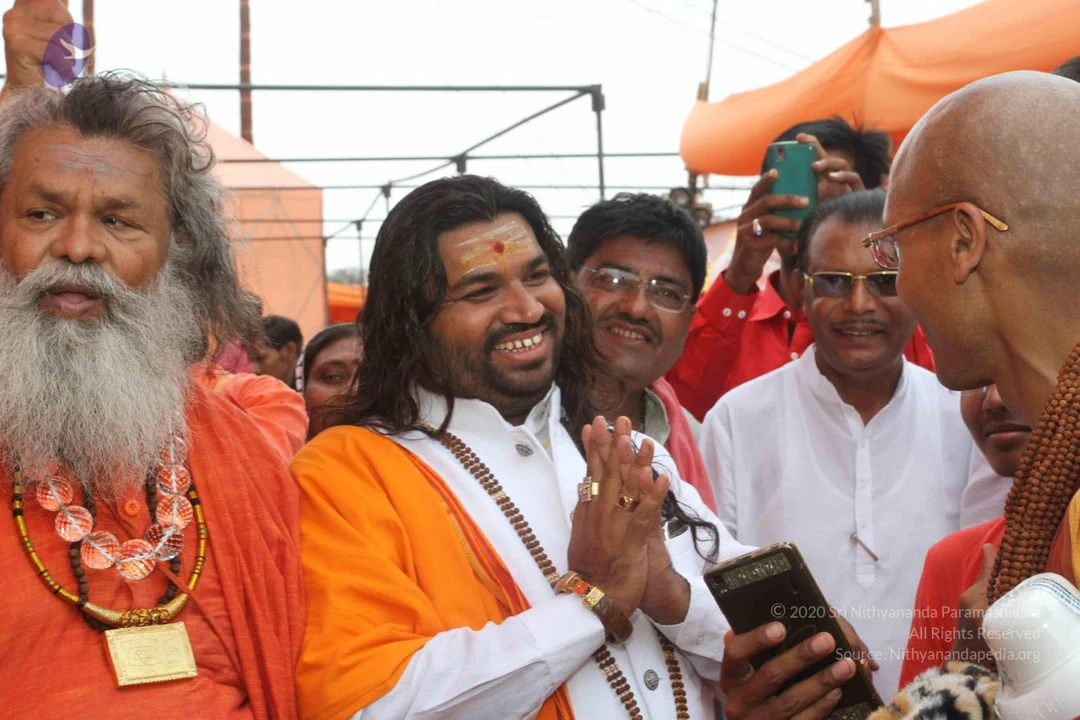
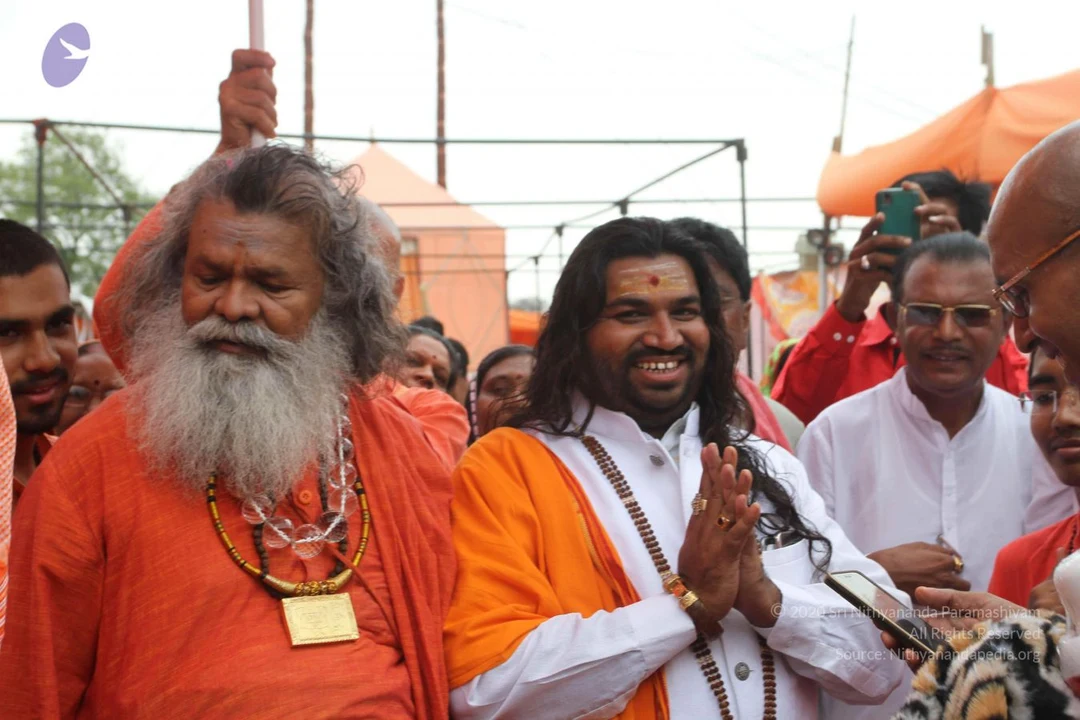
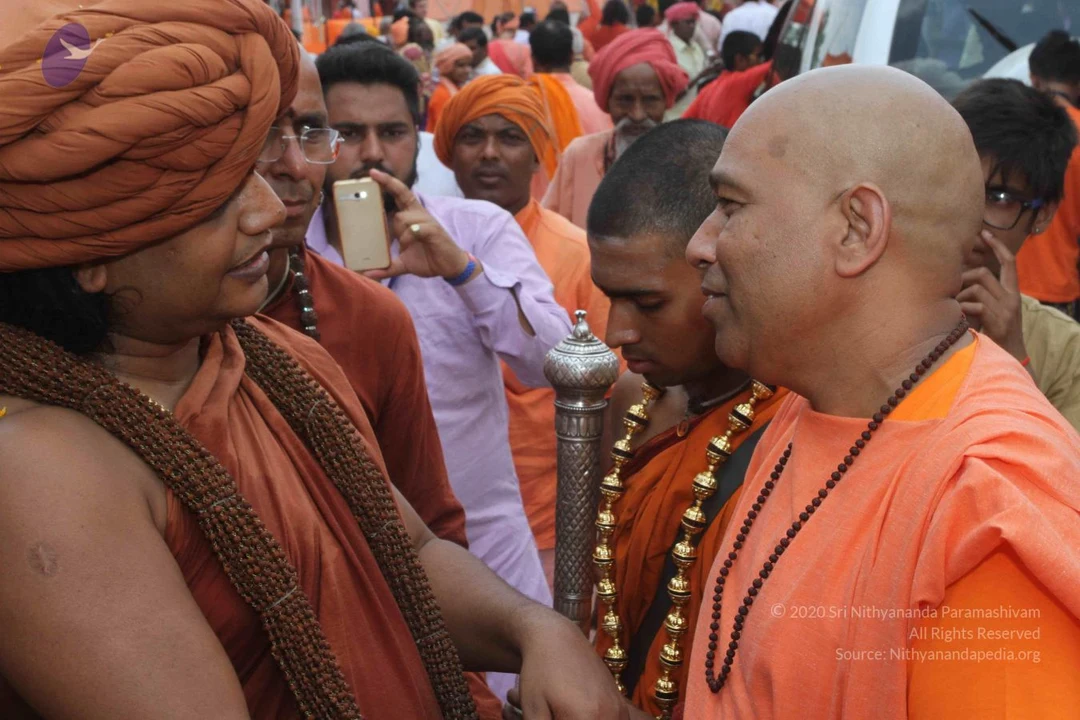
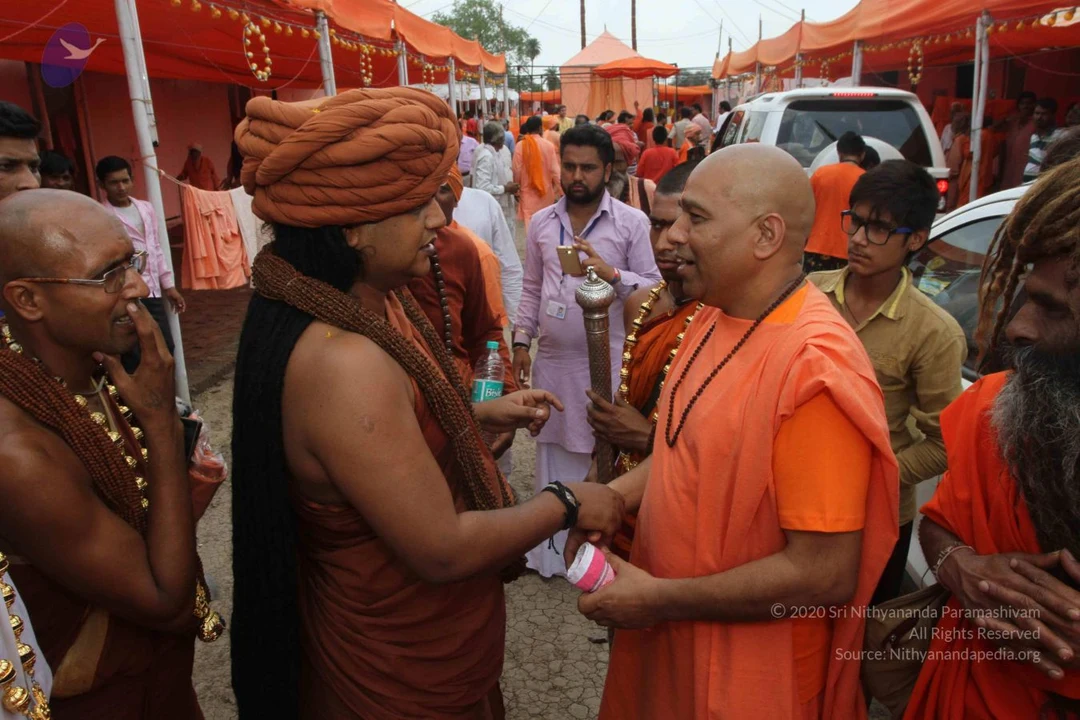
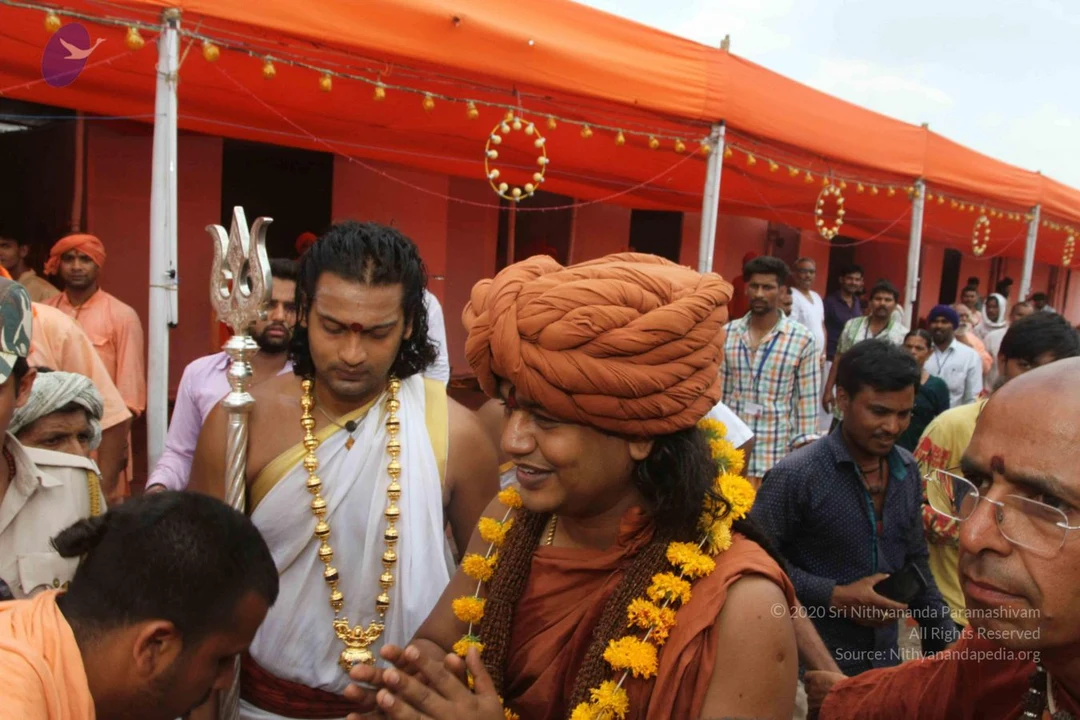
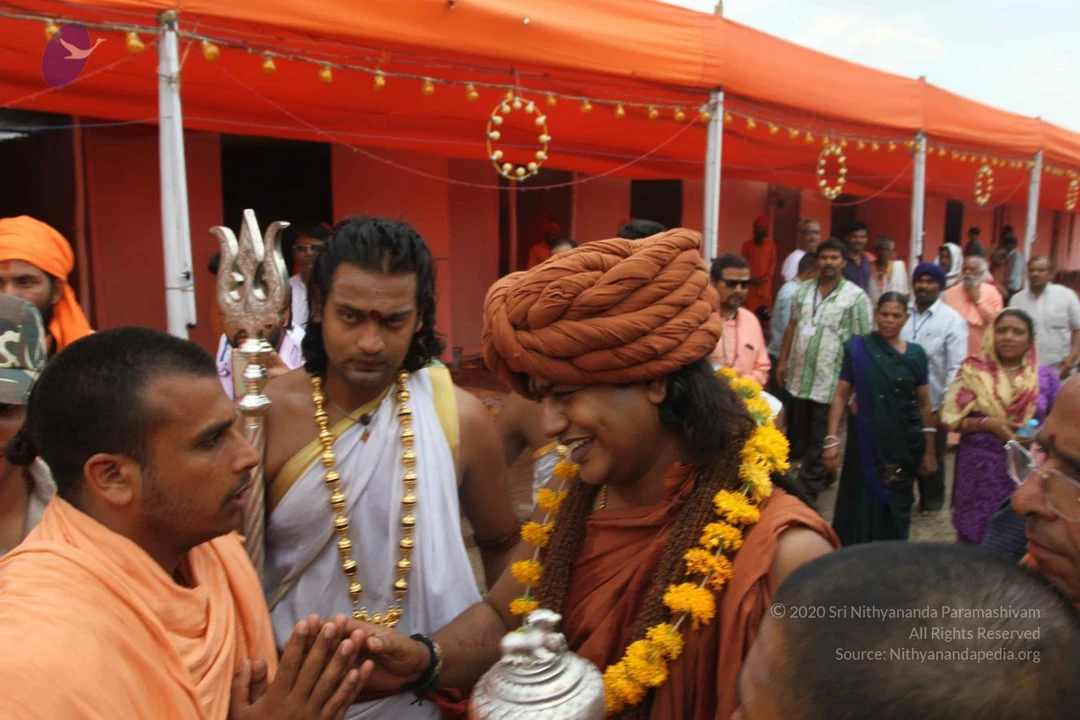
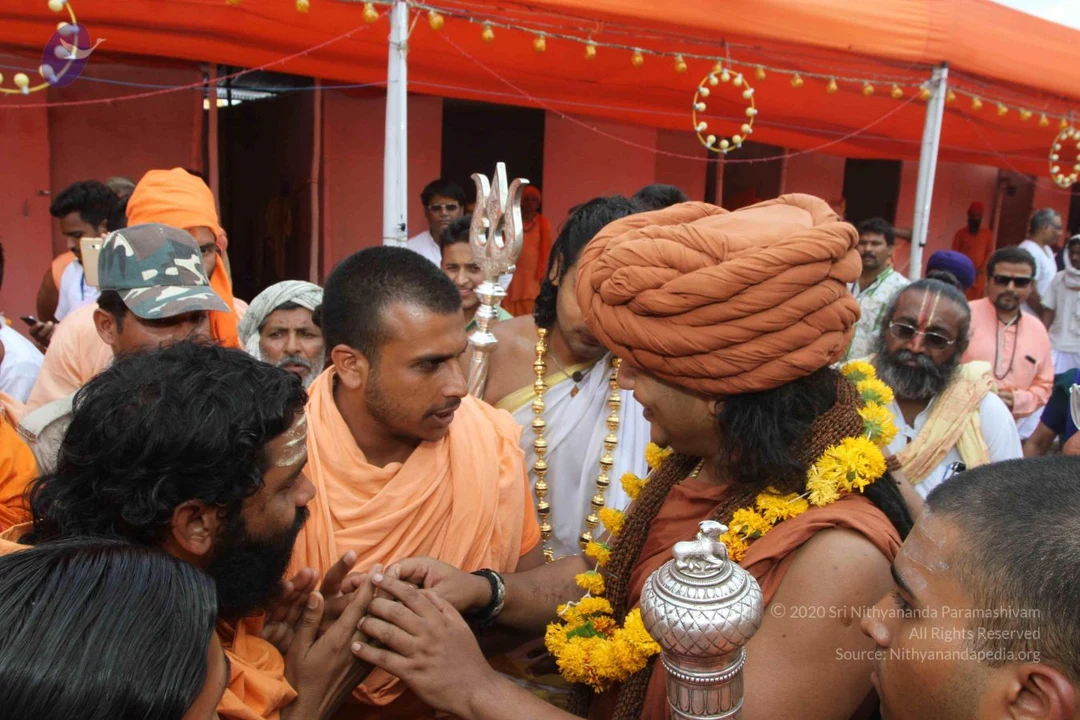
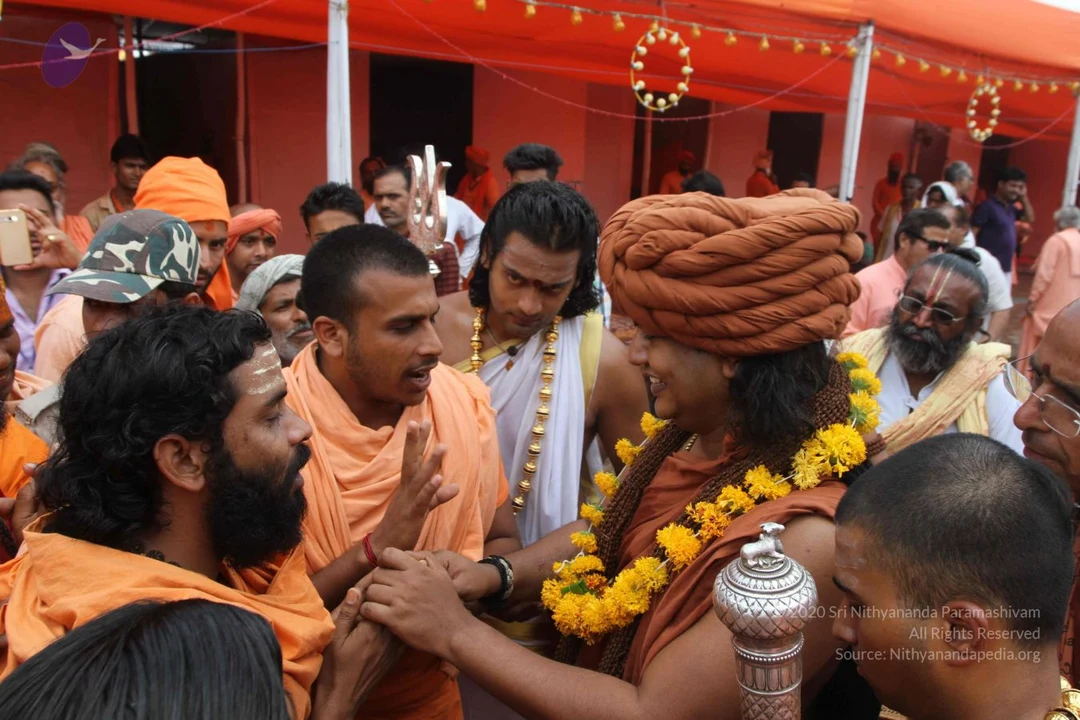
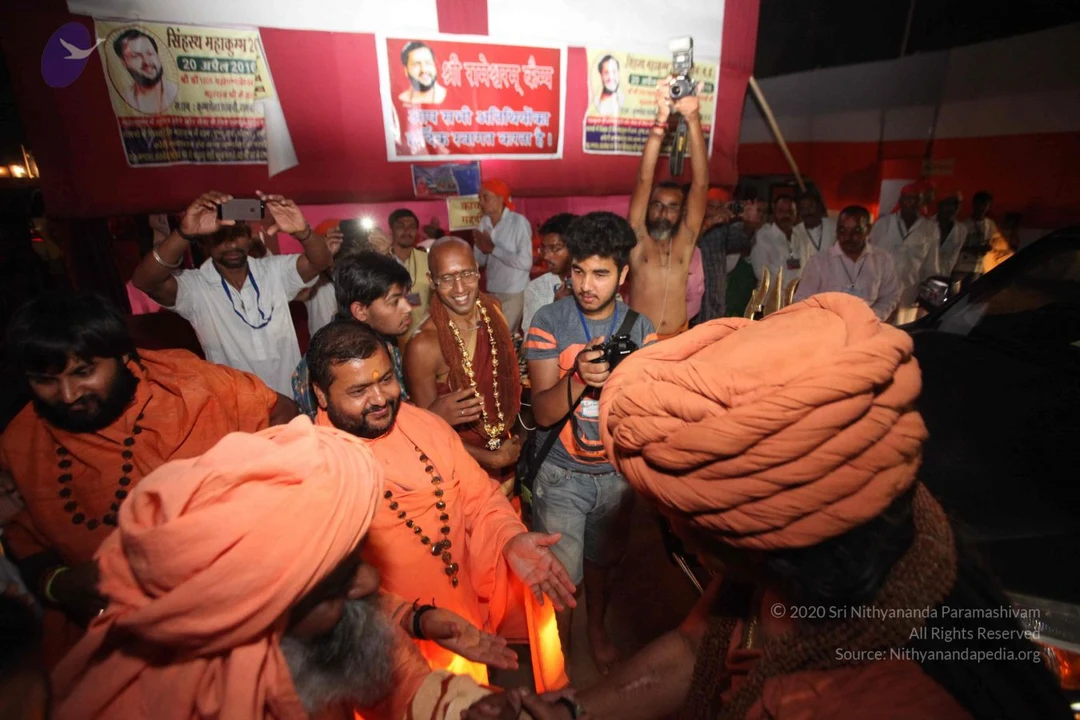
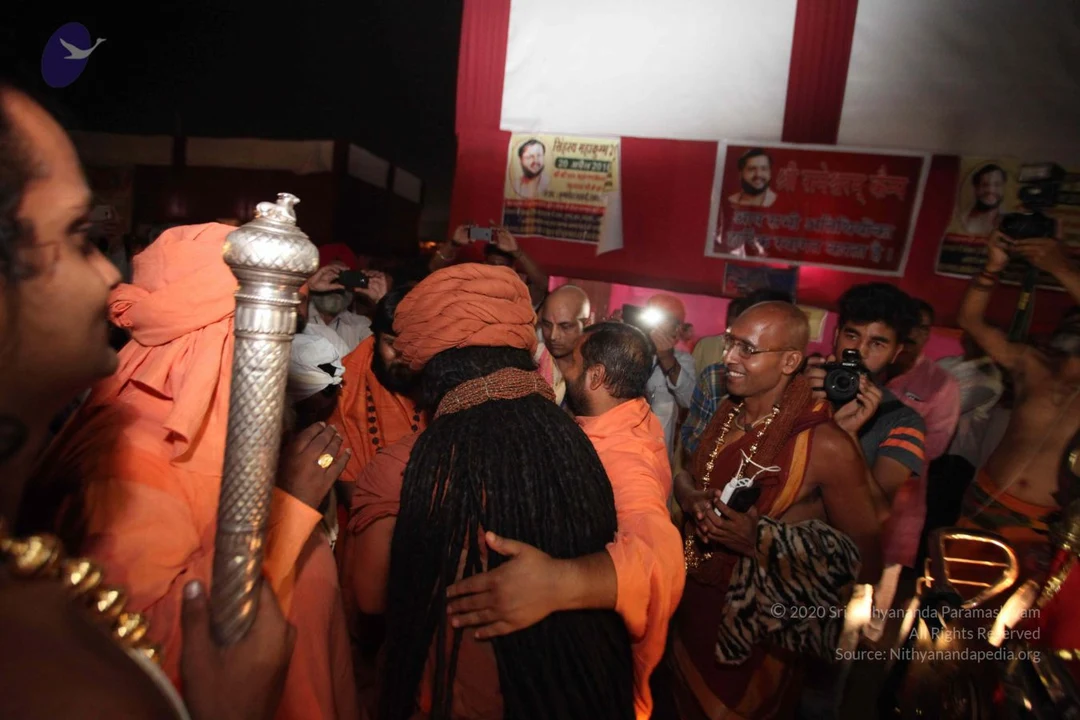
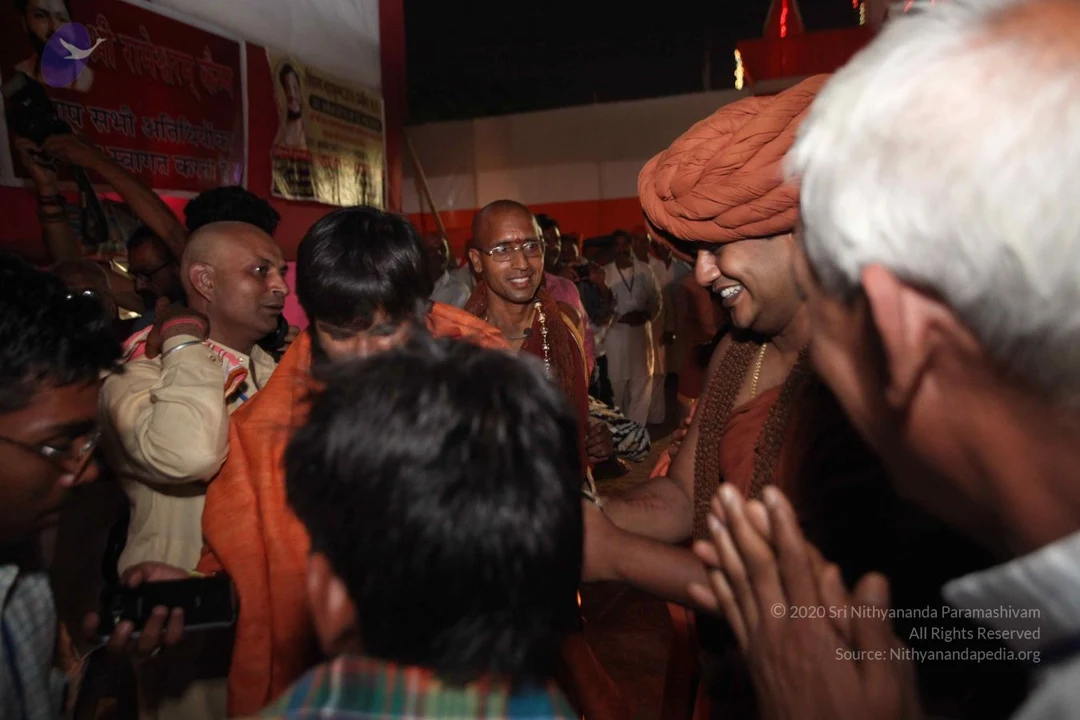
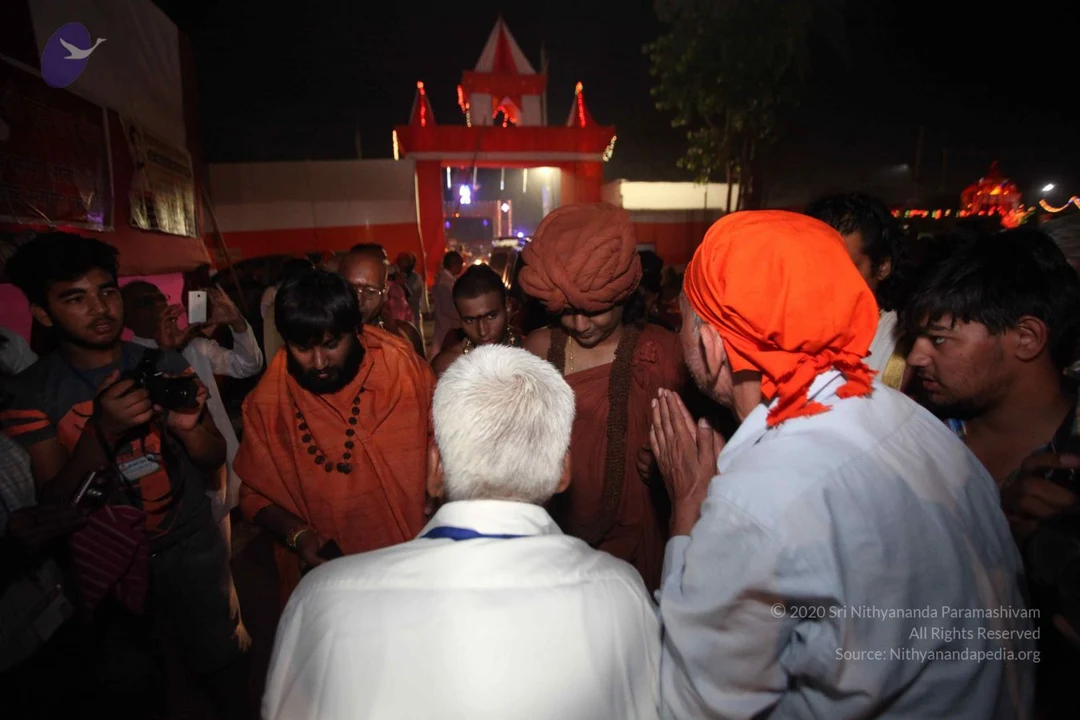
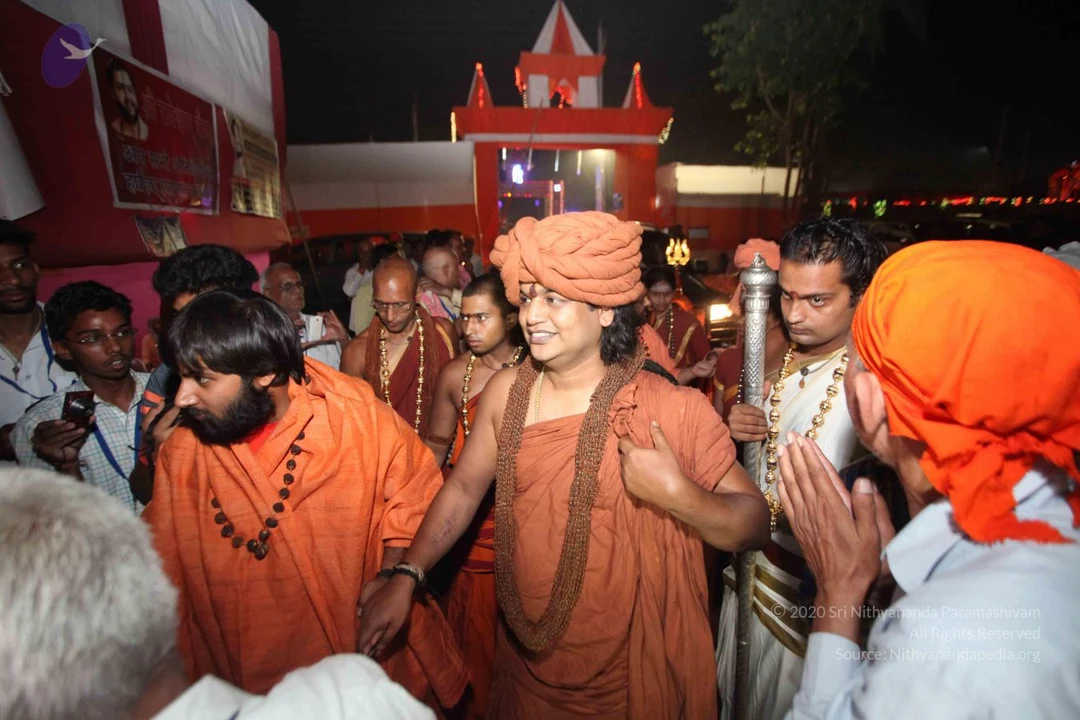
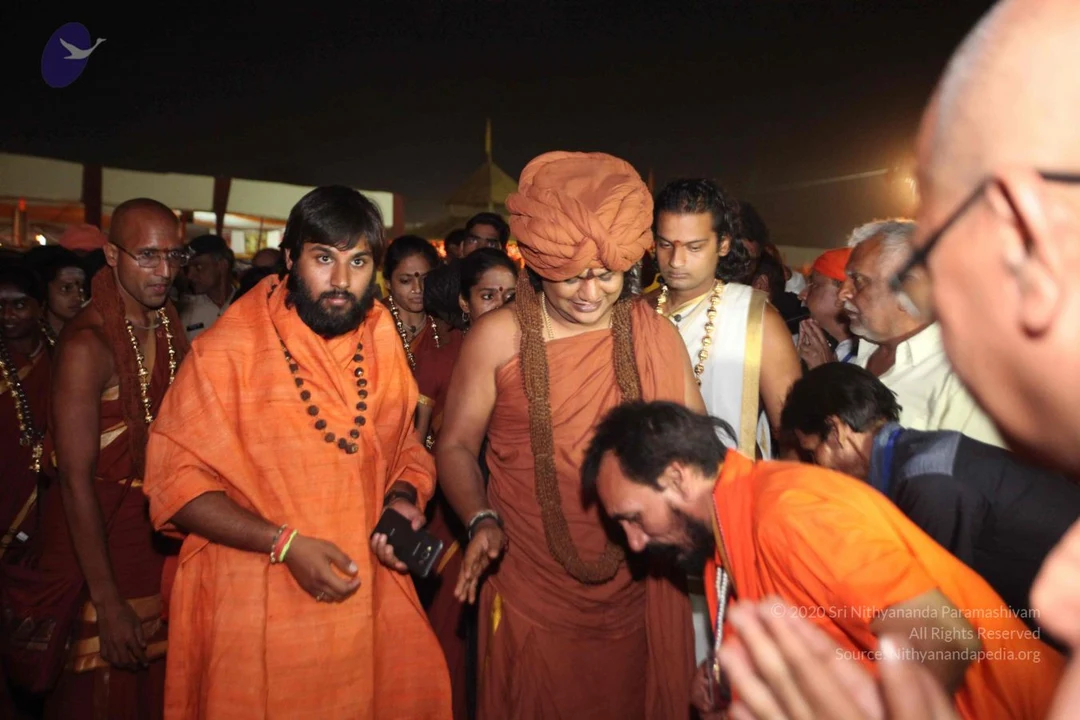
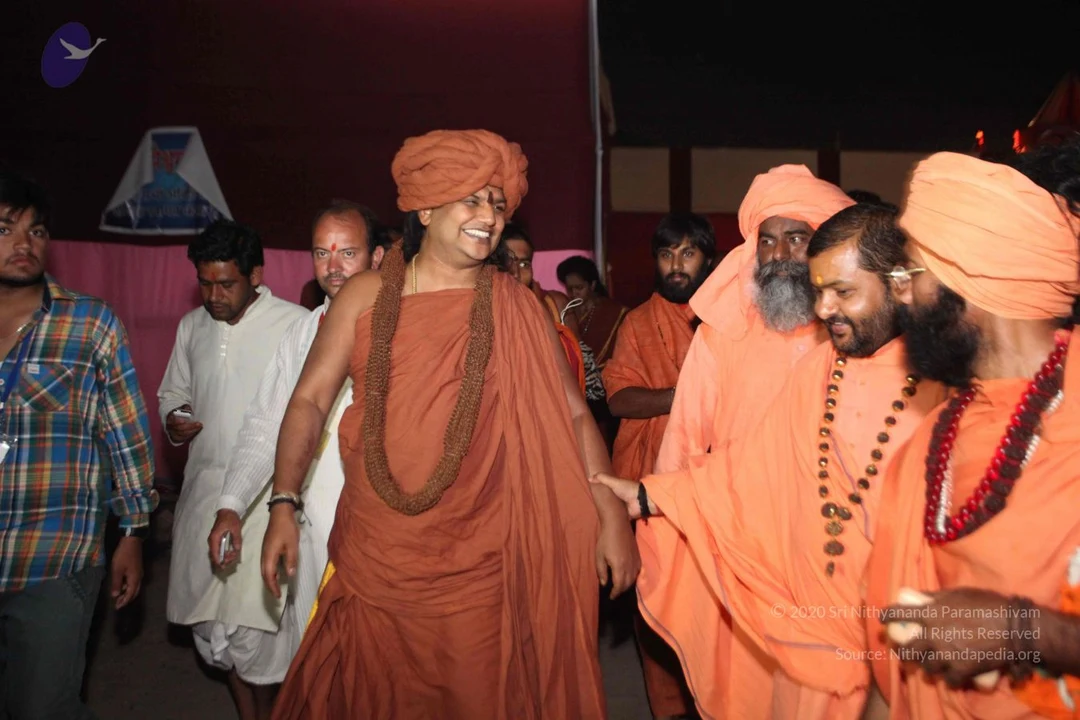
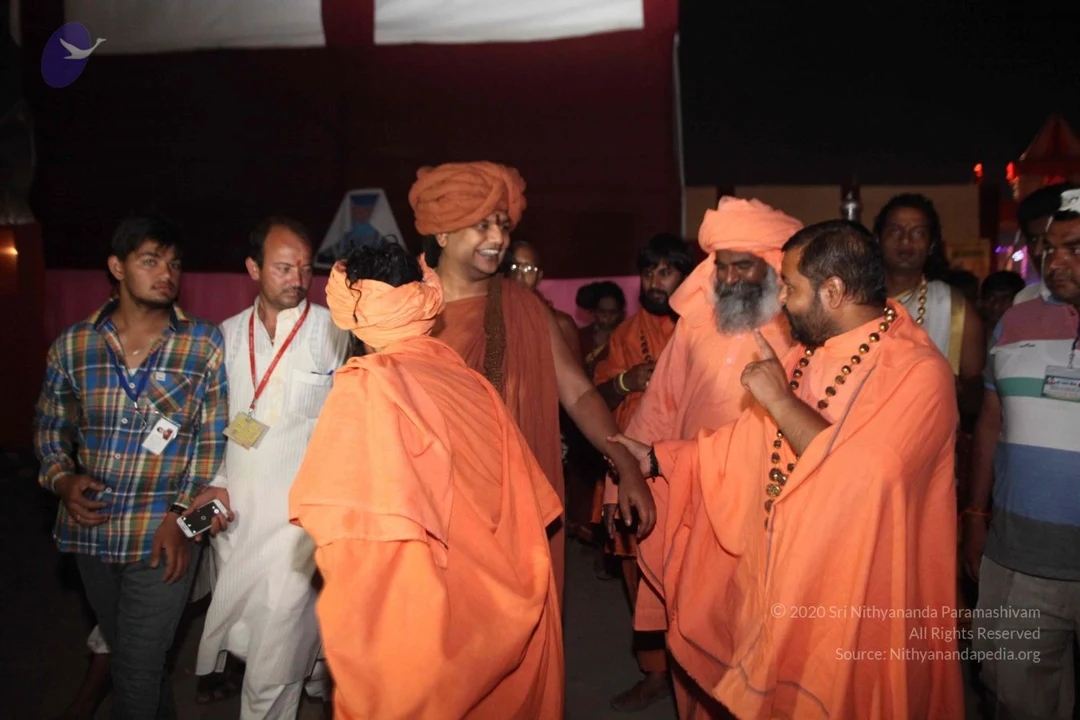
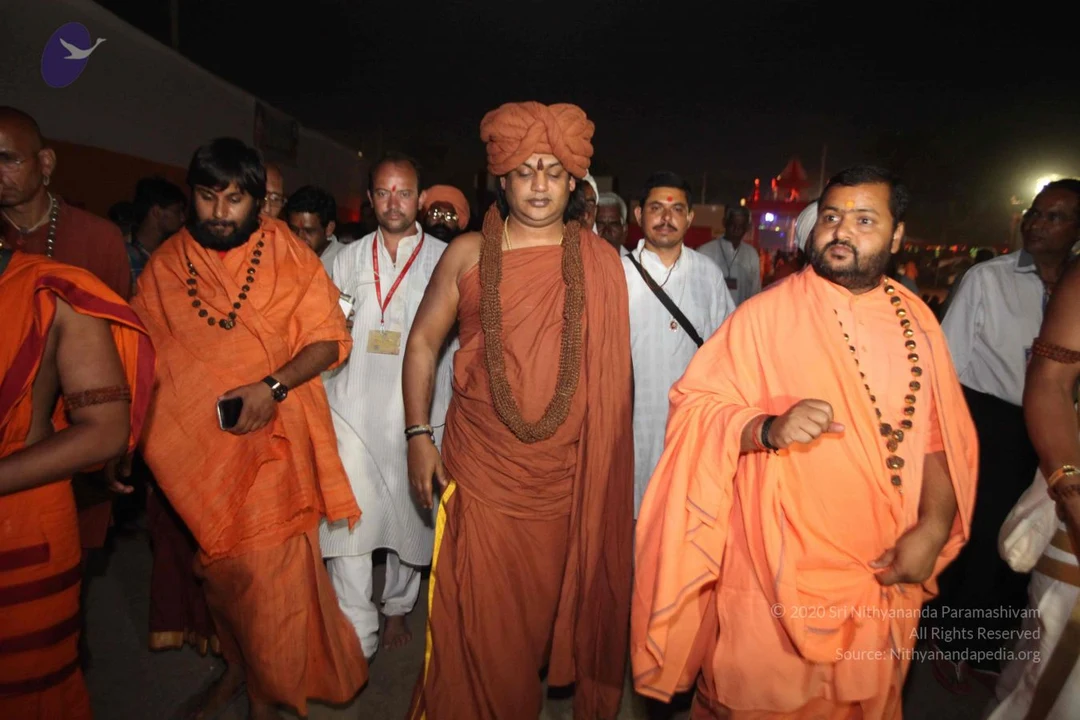
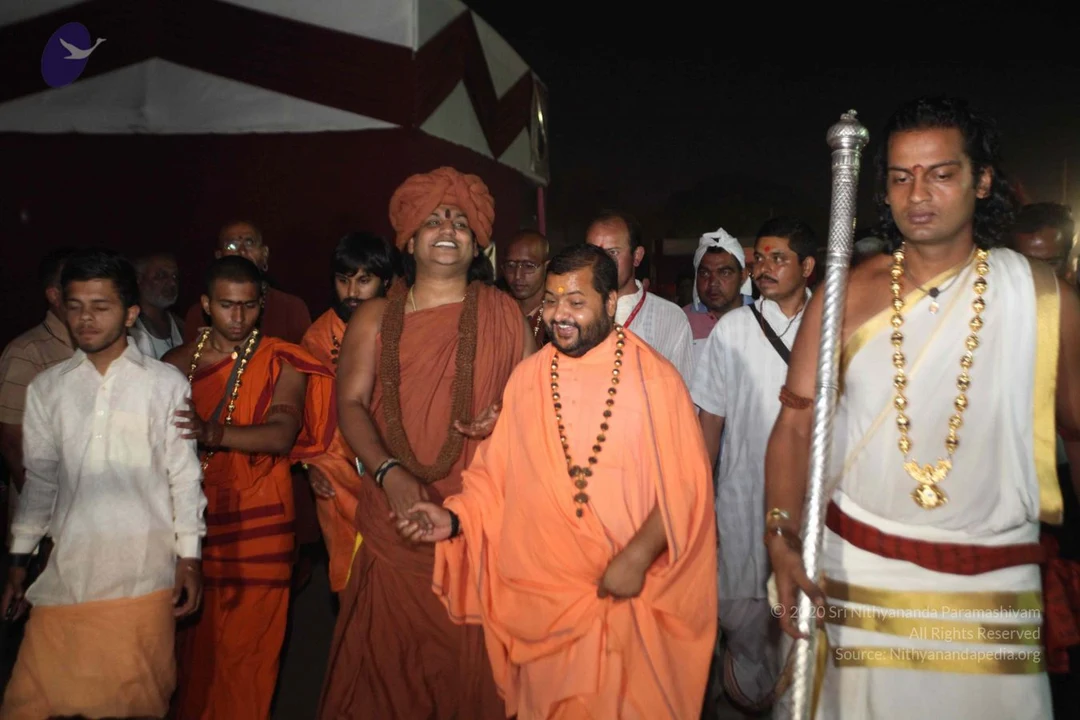
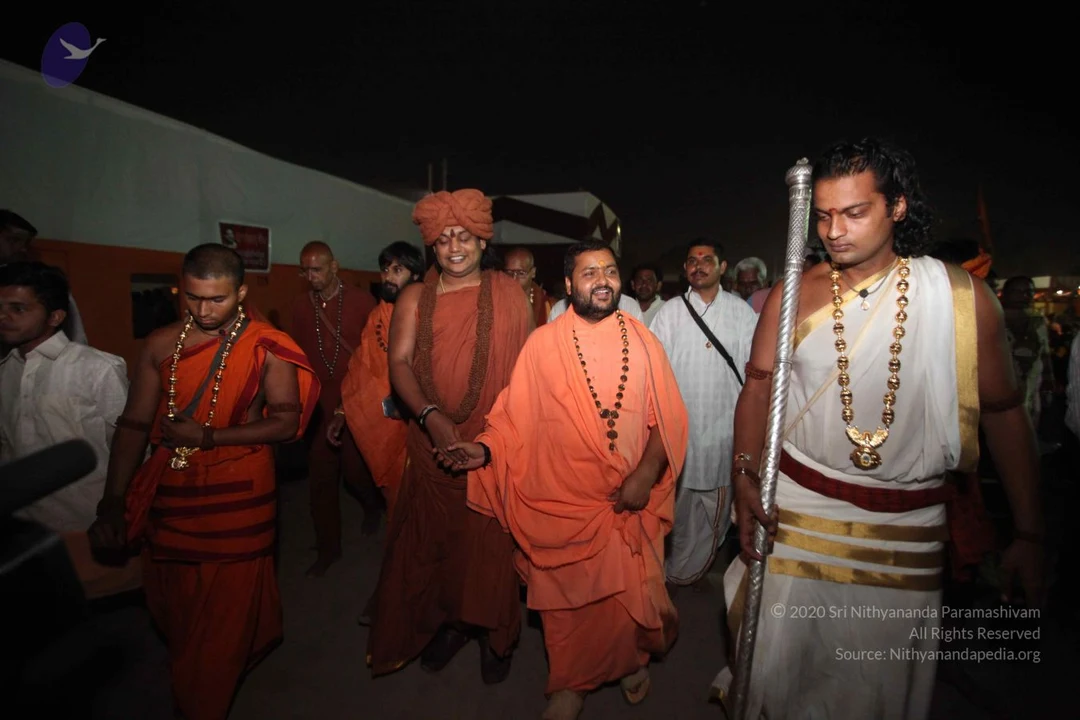
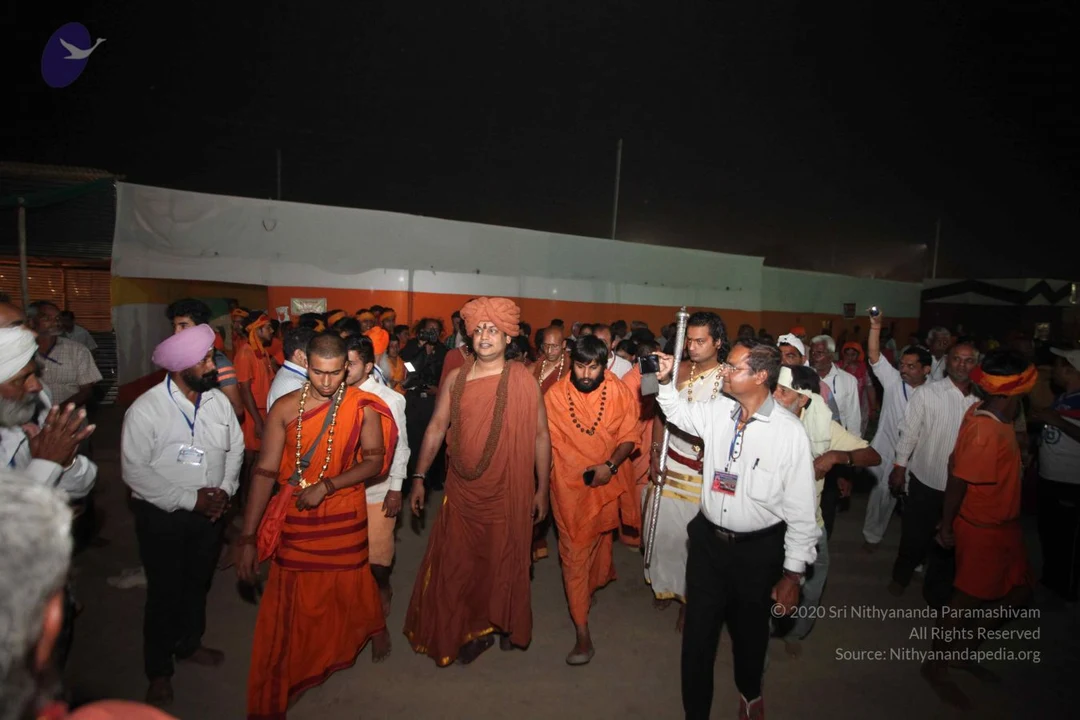
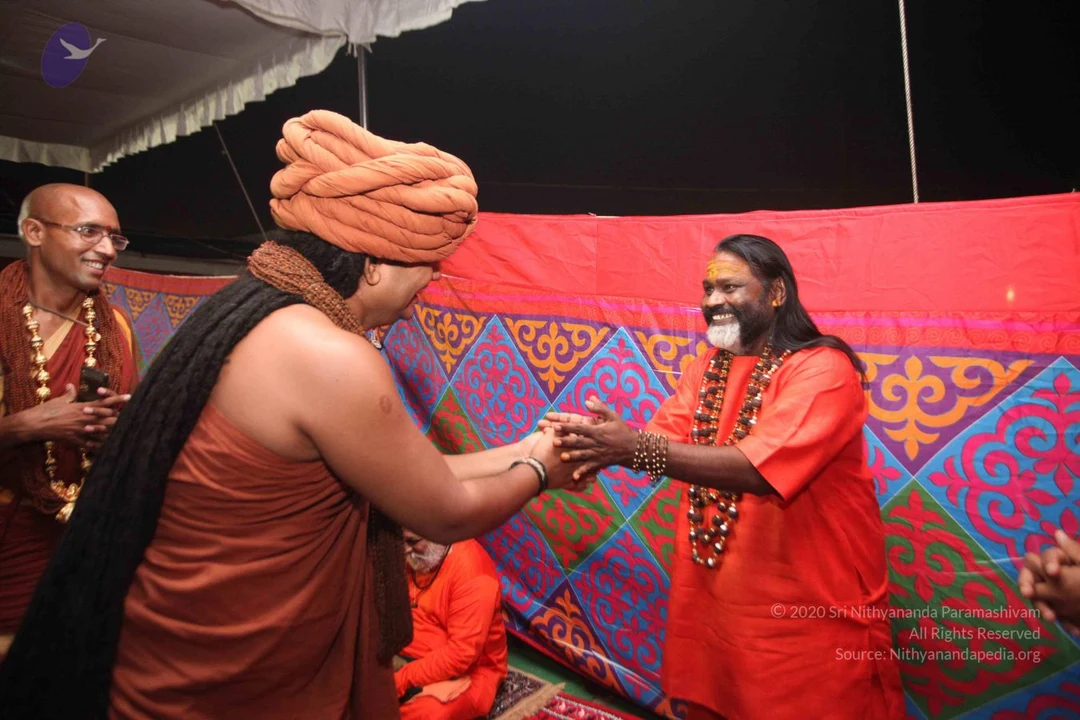
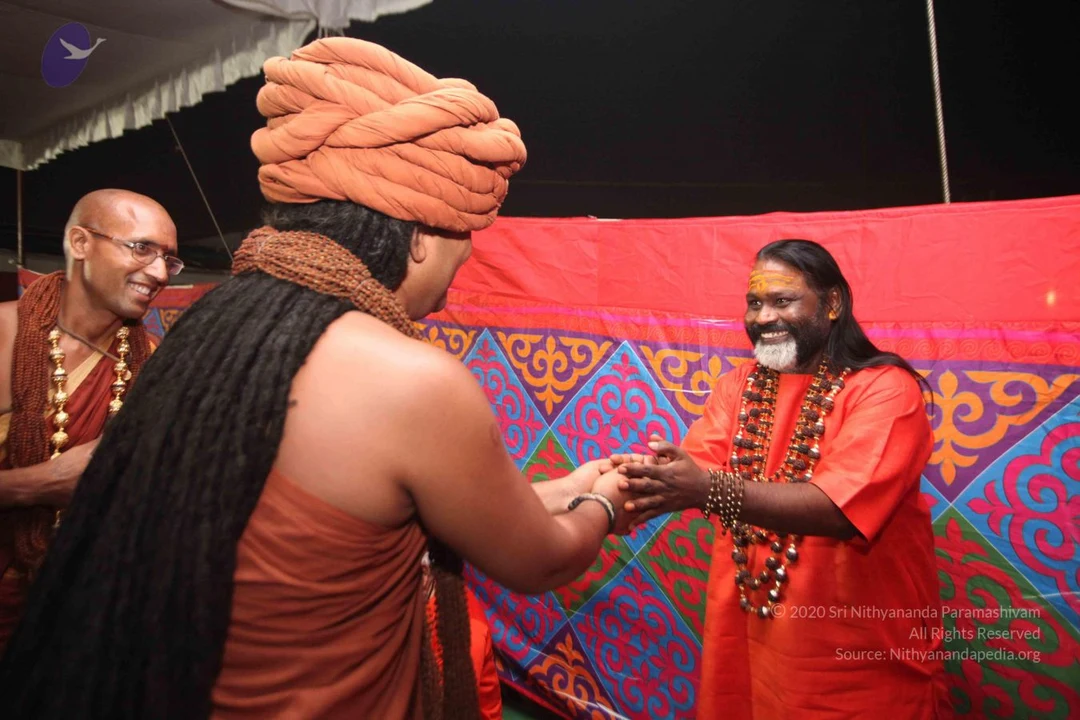
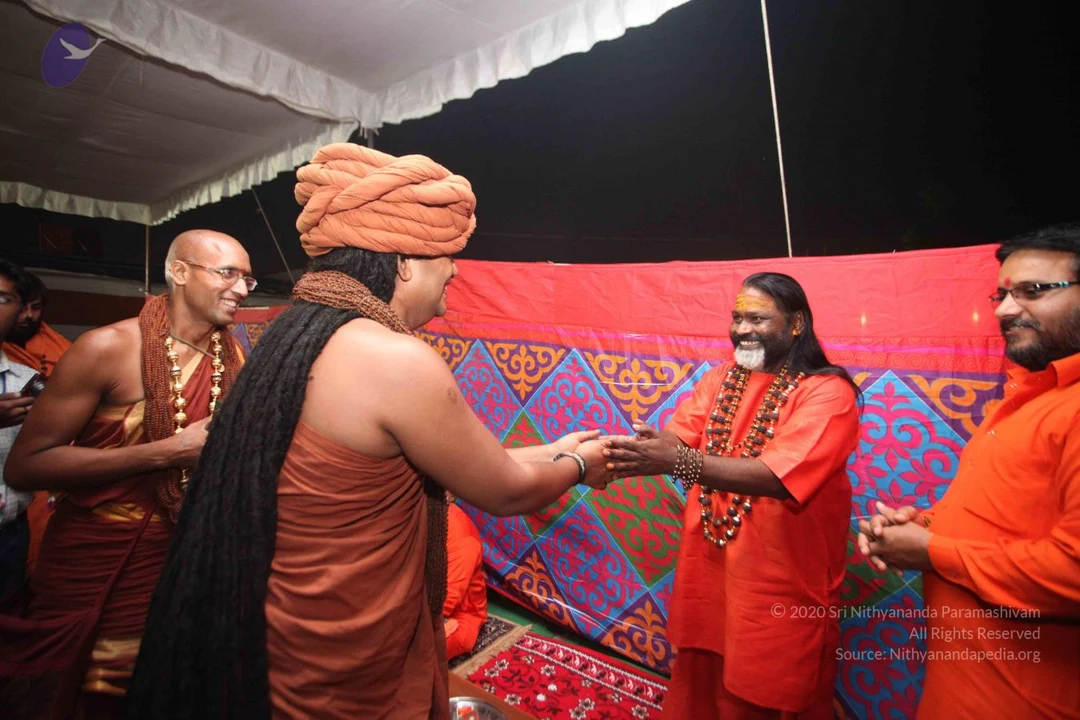
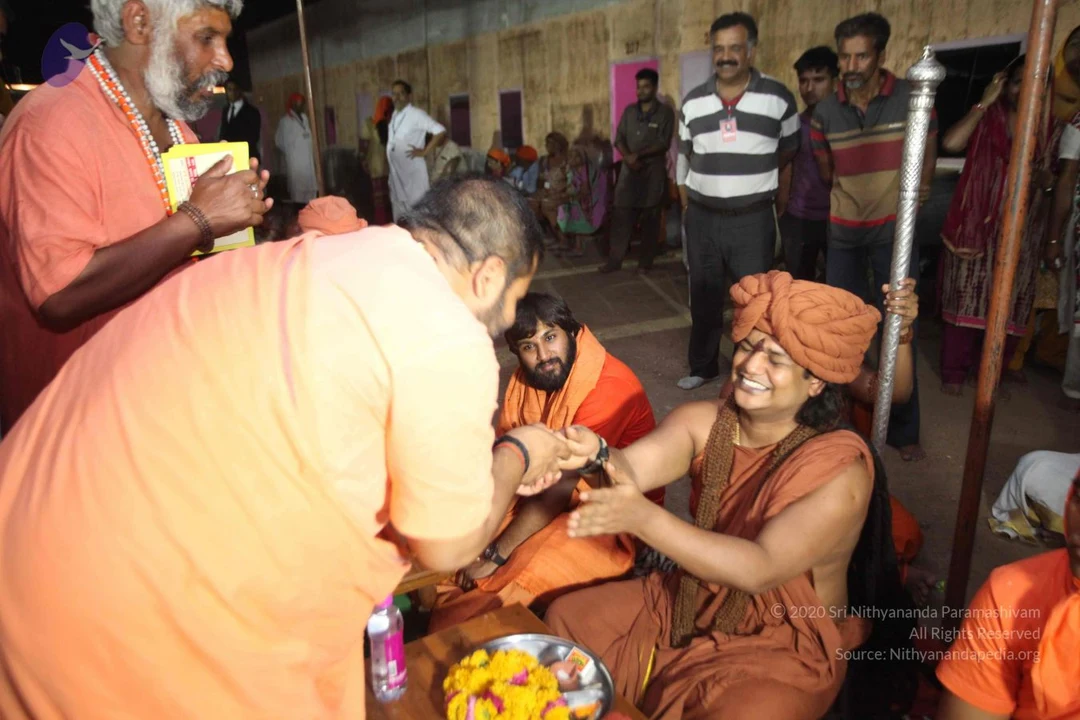
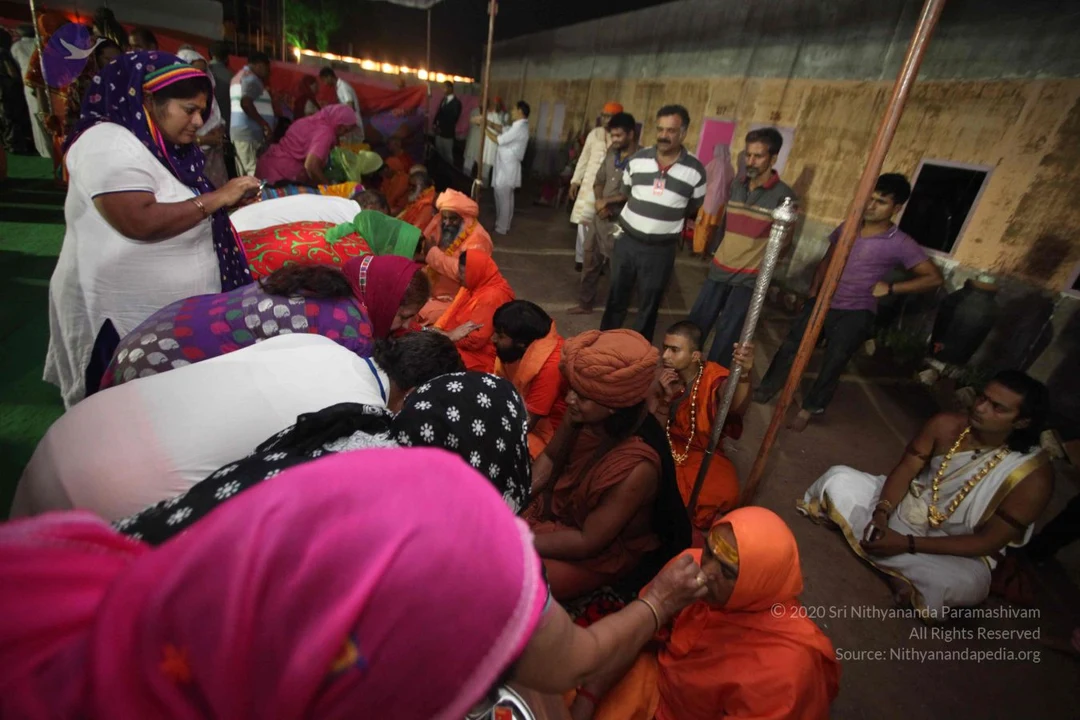
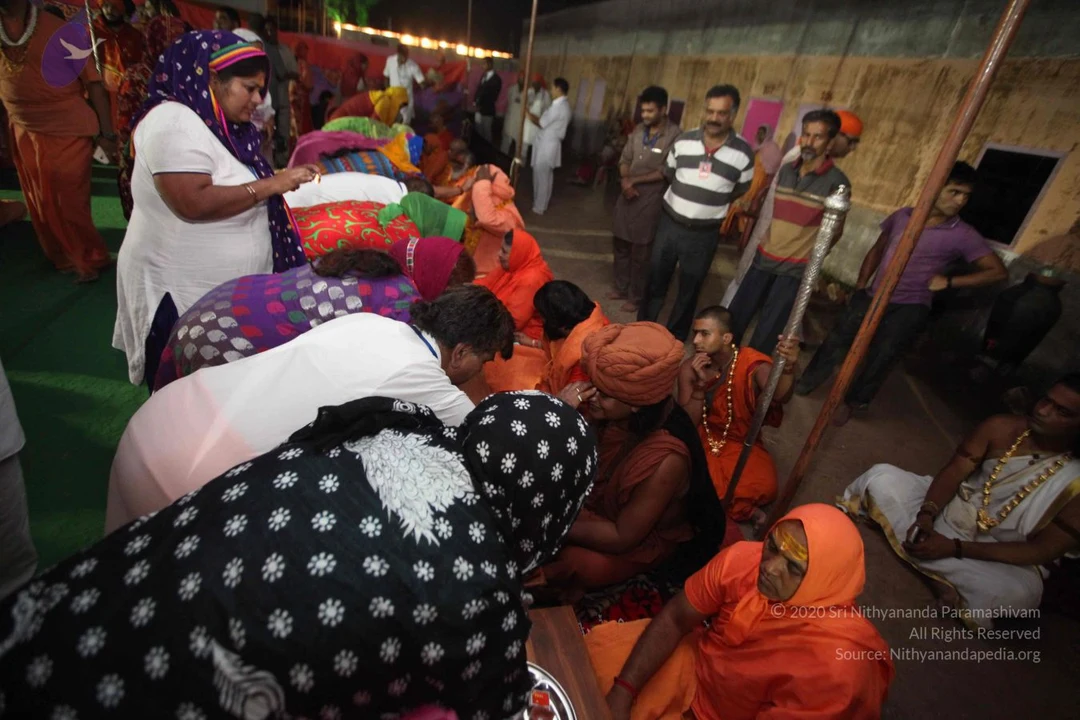
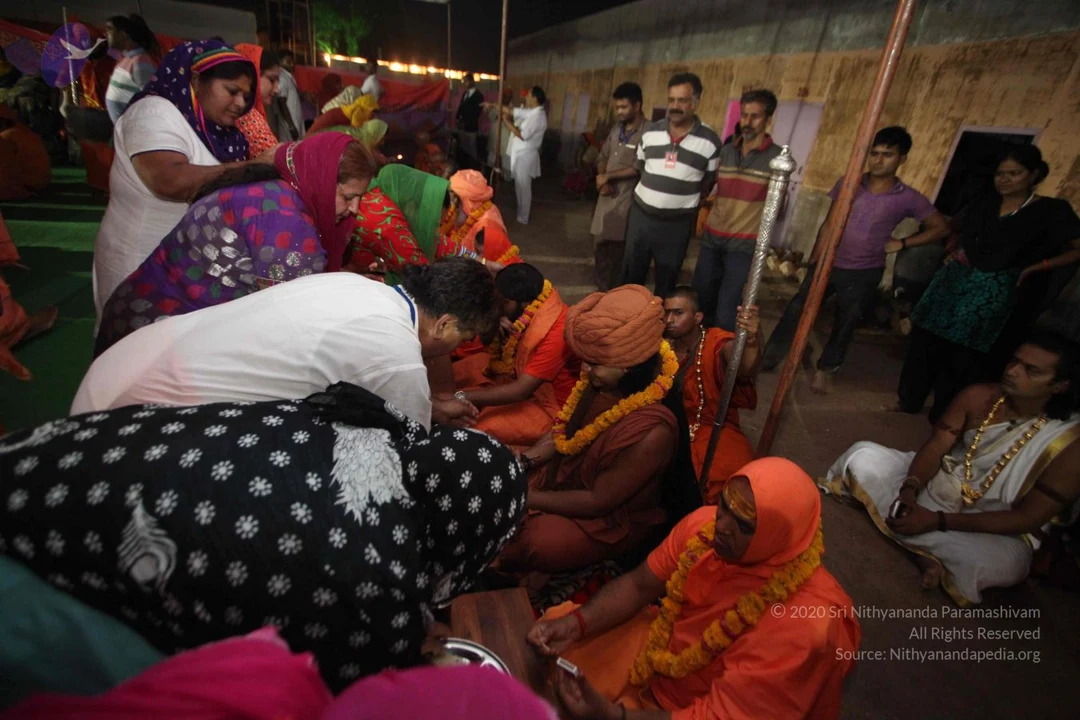
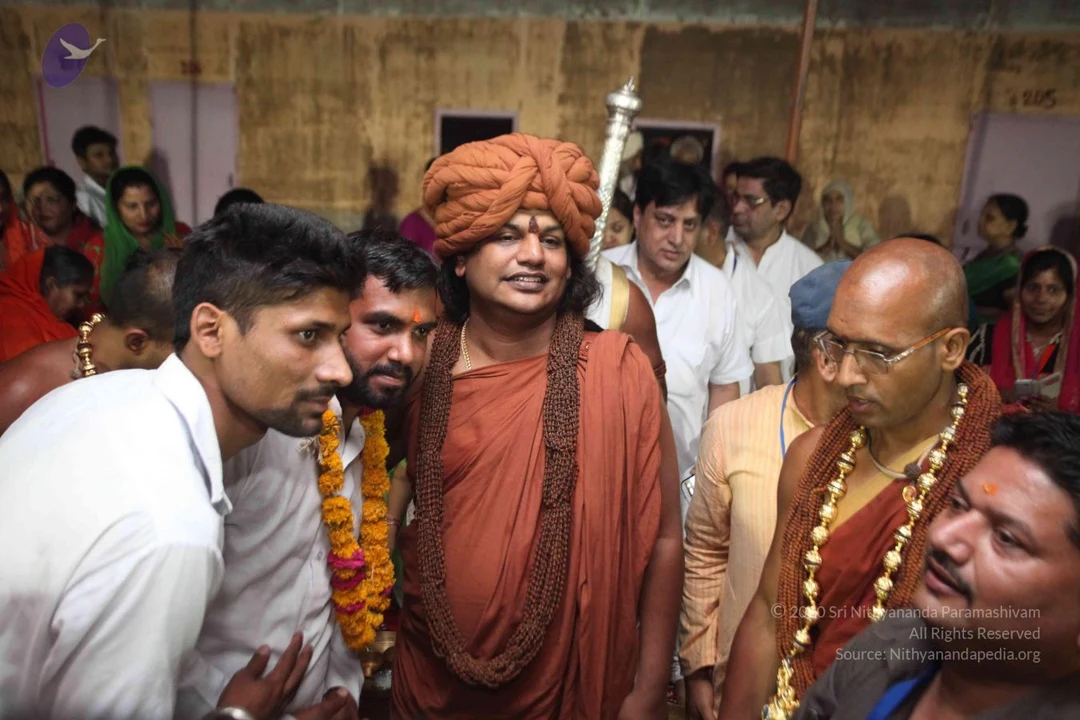
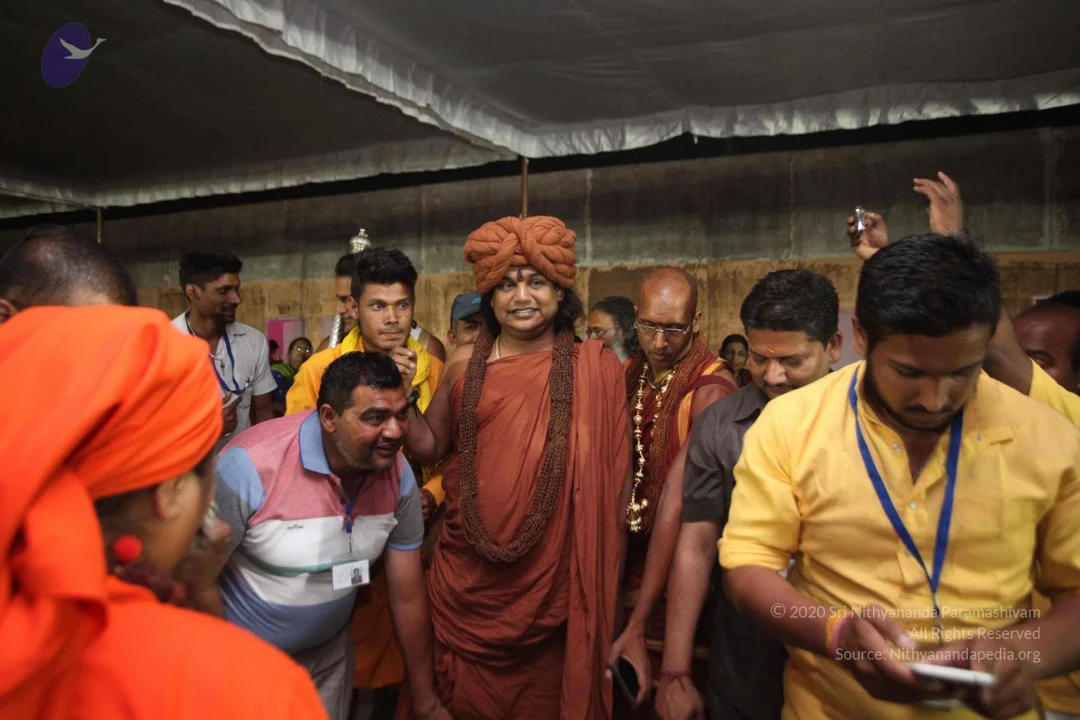
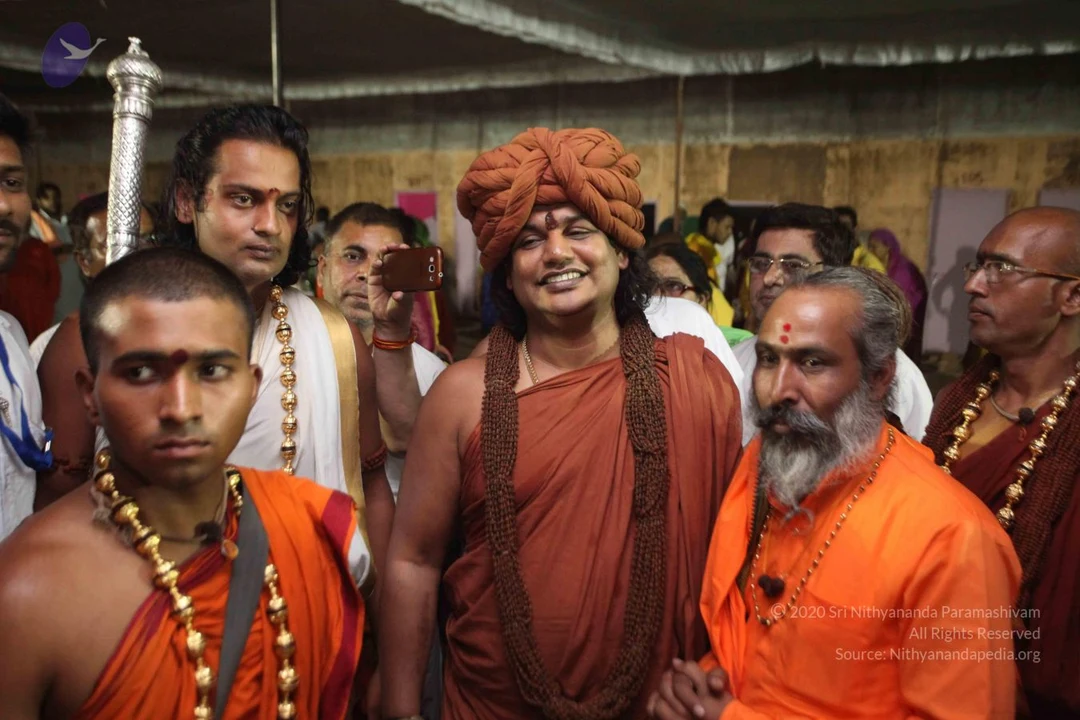
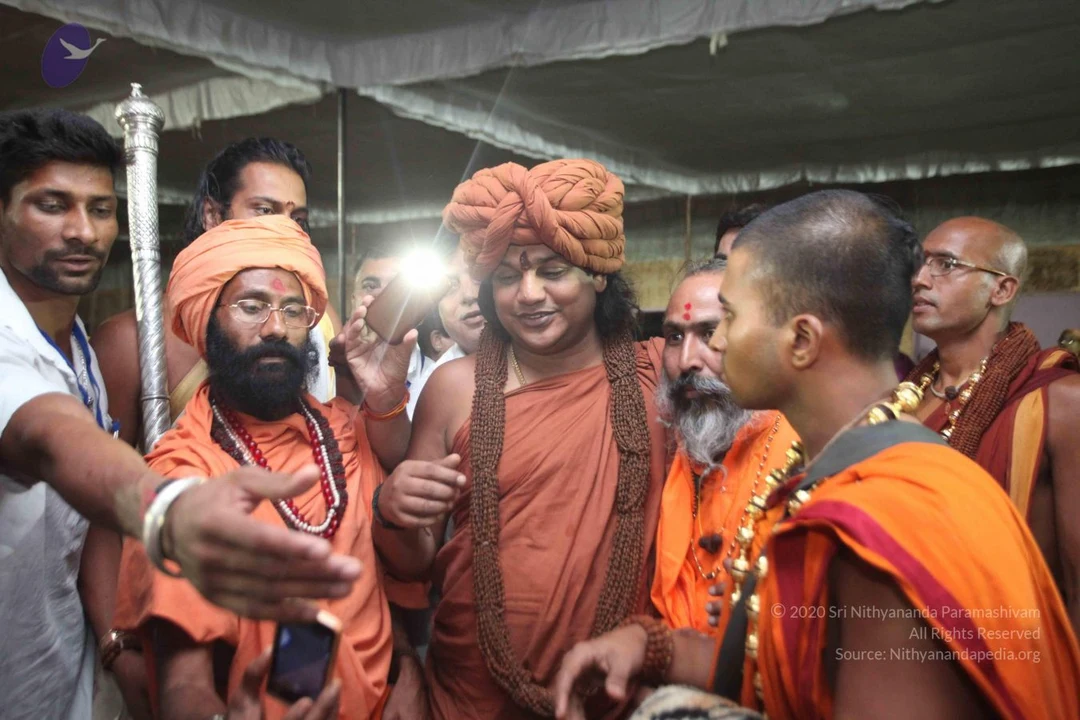
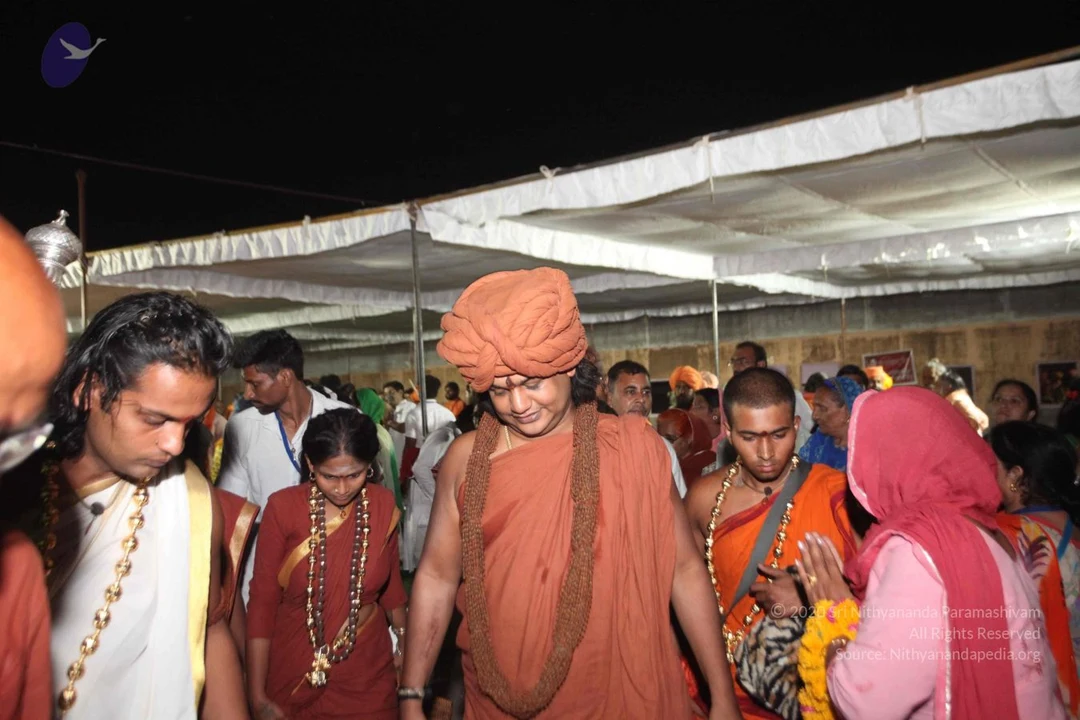
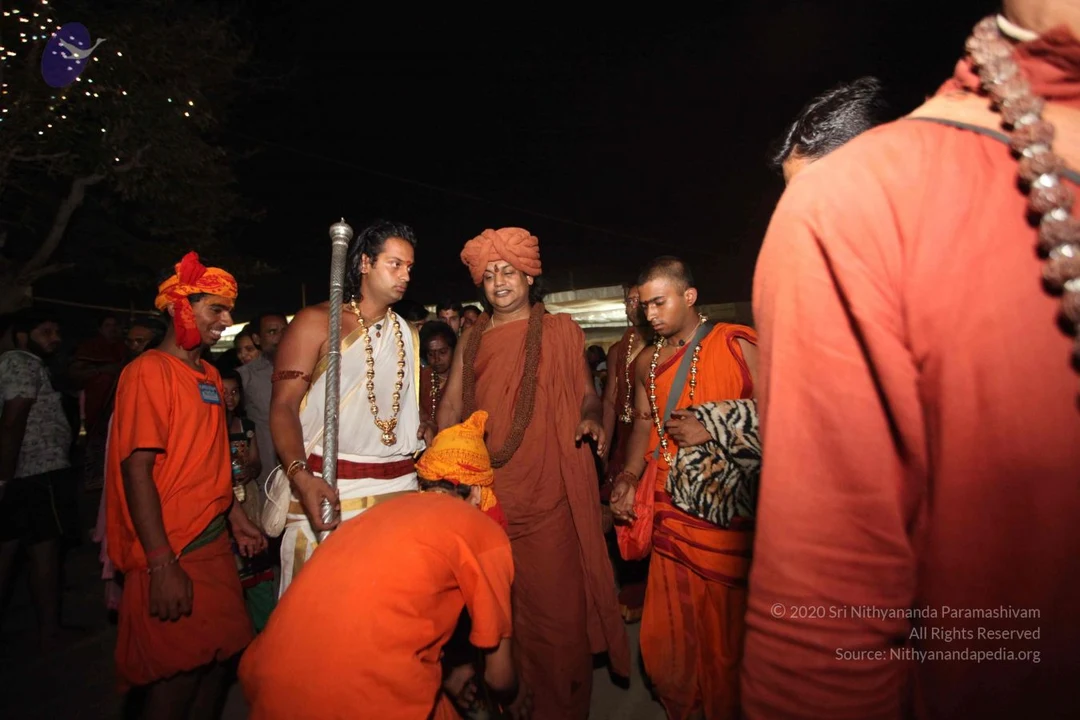
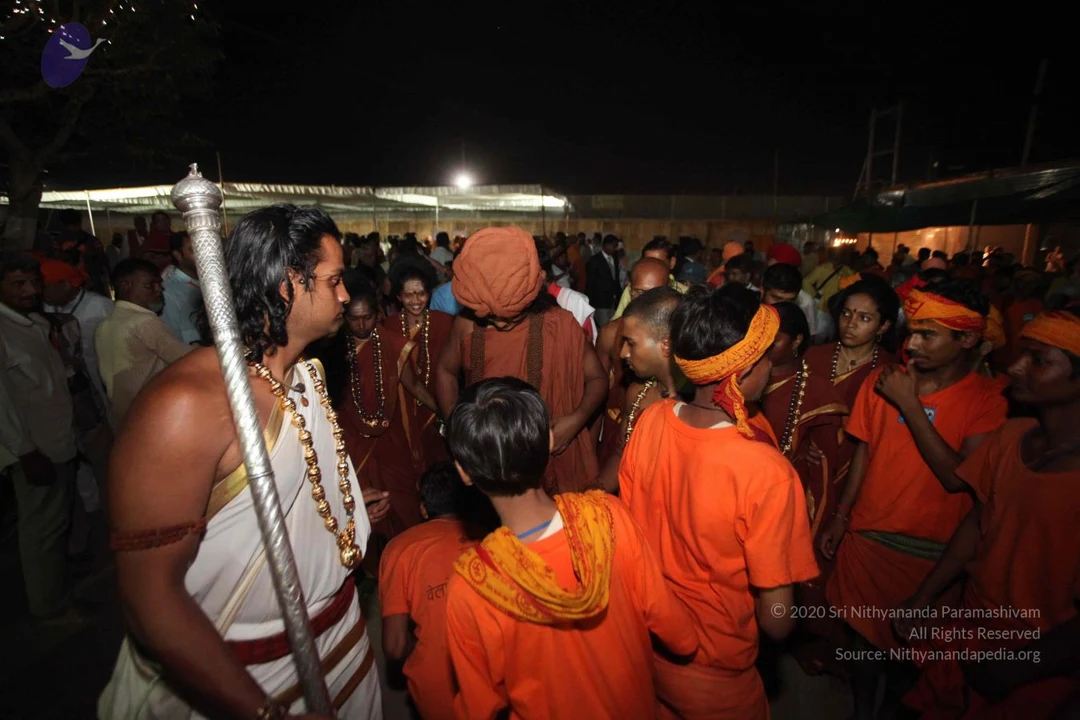
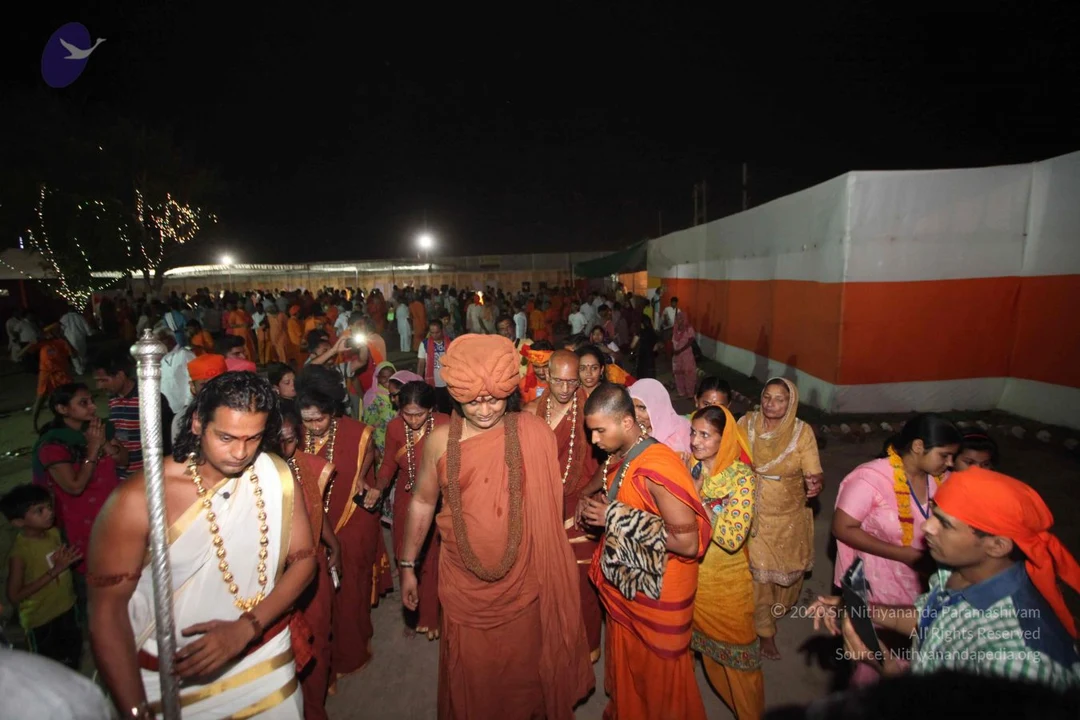
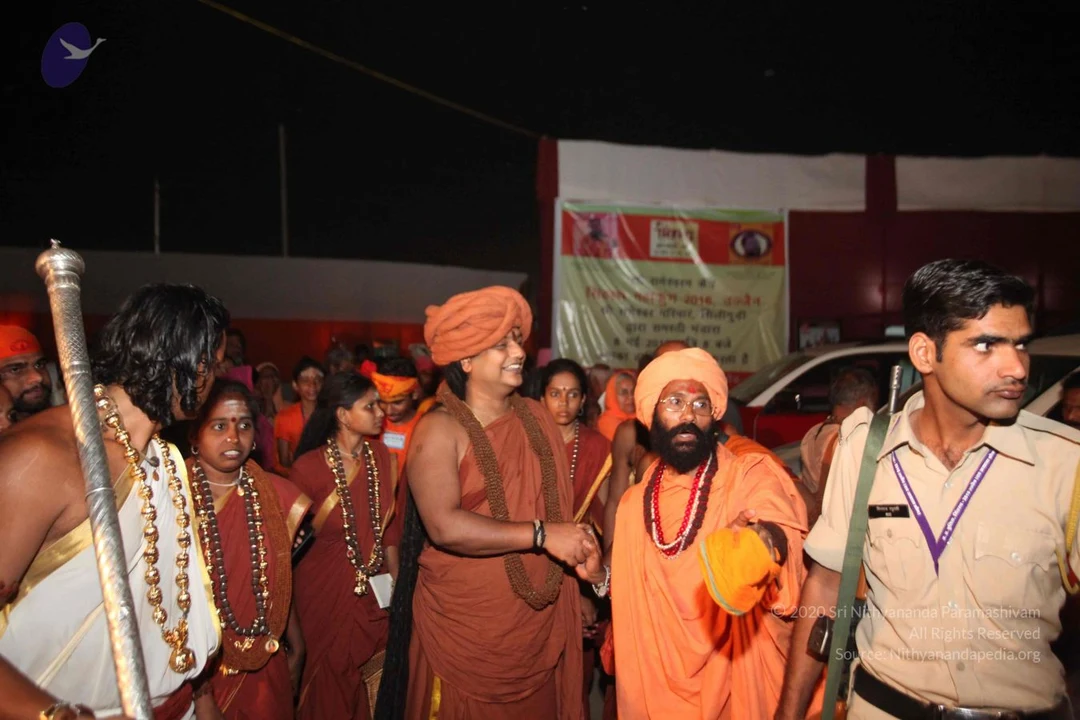
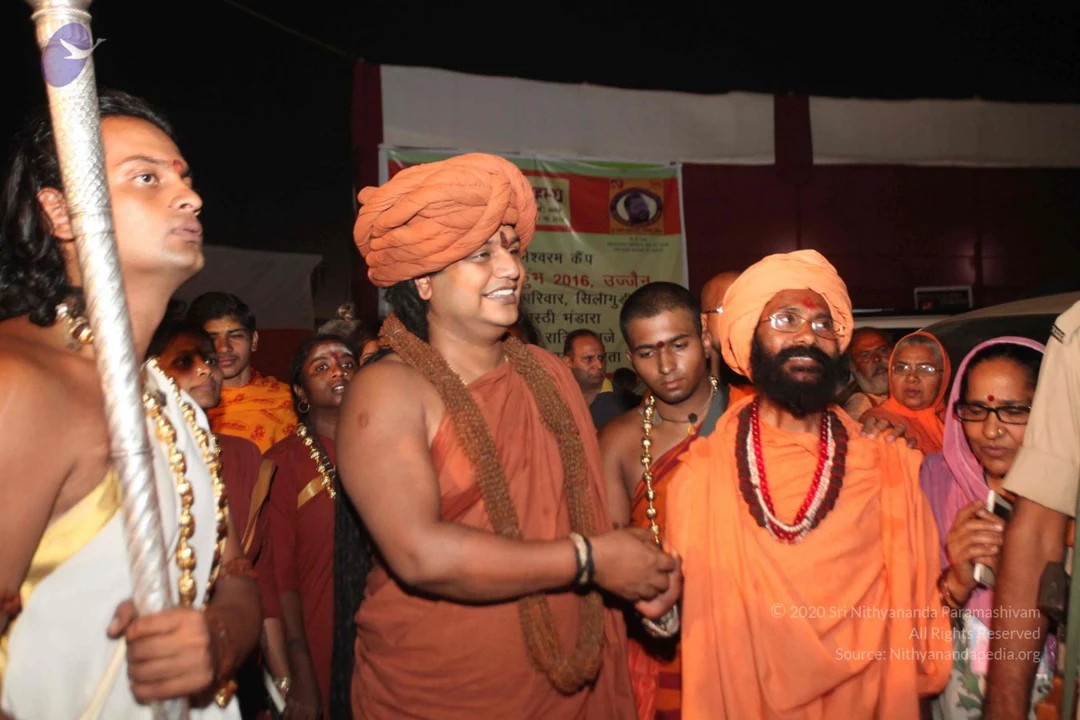
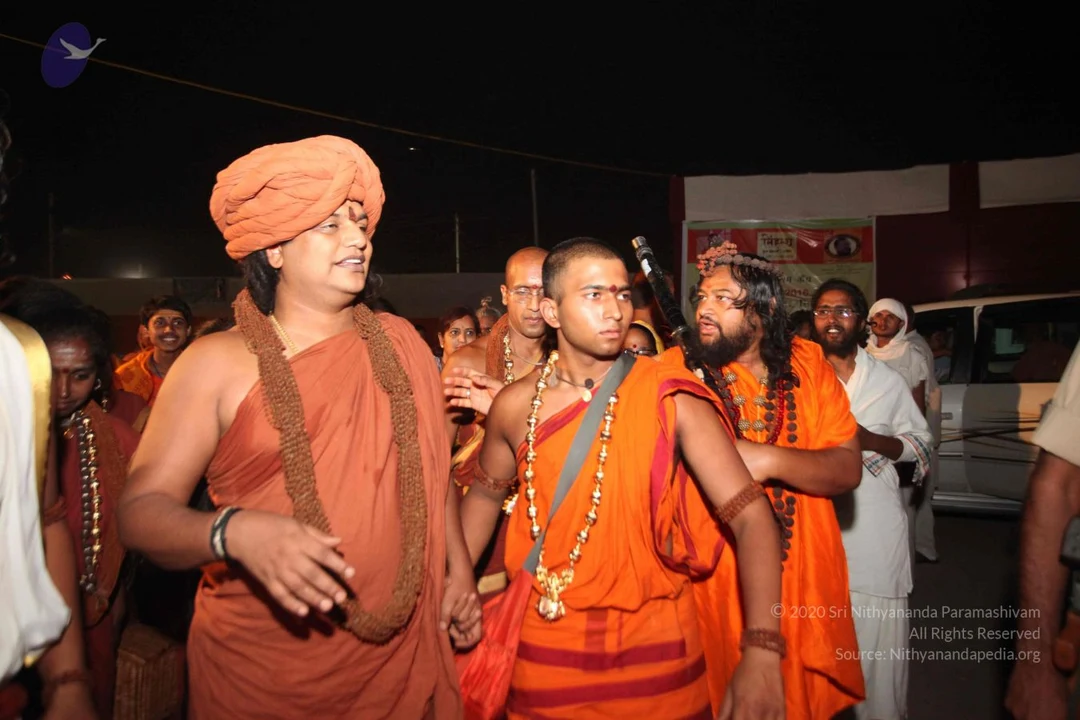
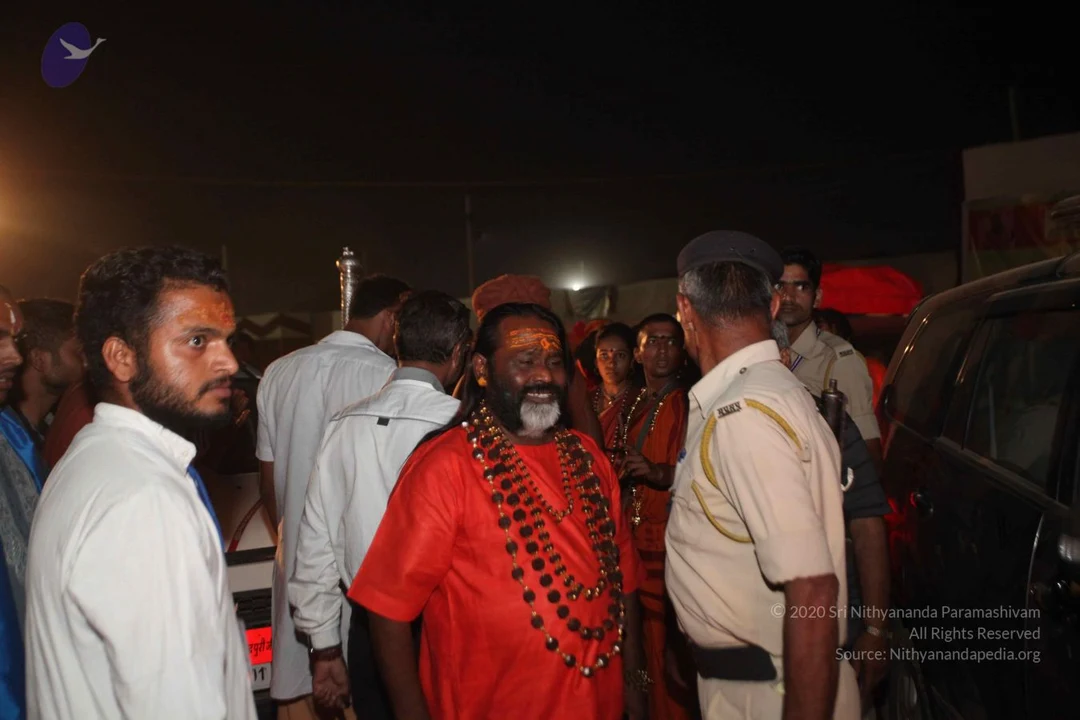
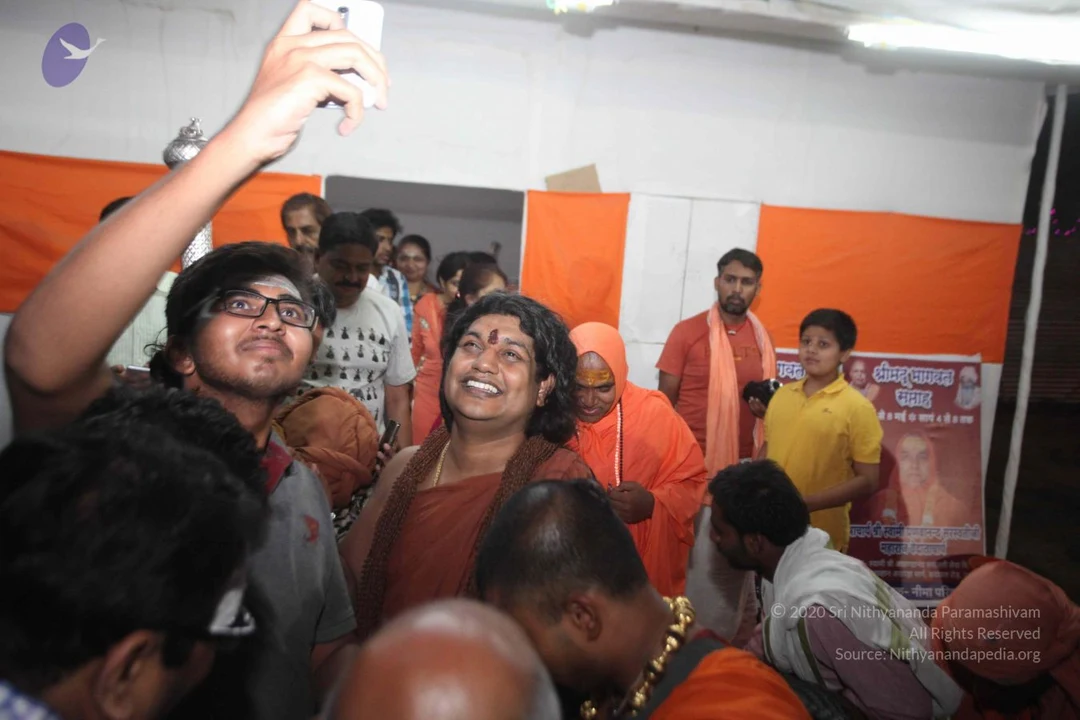
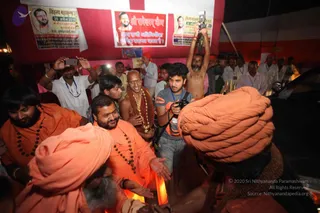
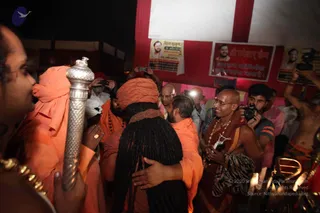
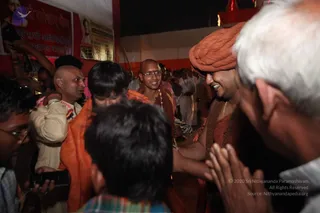
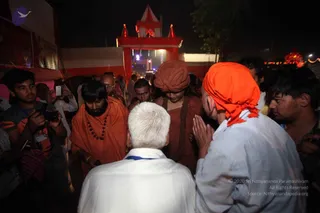
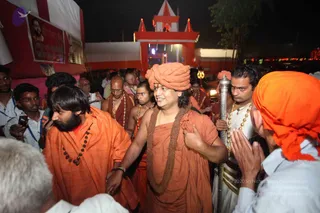
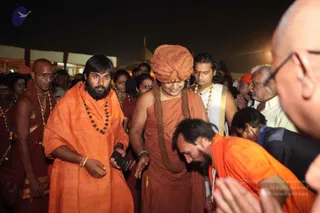
A crowd at night beneath a red and white tent, with several saffron-robed sadhus in orange turbans and rudraksha malas surrounding a bald, bespectacled man in an orange robe with a gold necklace and a red shawl, who gestures with open hands. Behind them, a man in a grey shirt holds a camera and others raise phones and cameras. Red banners on the tent wall show portraits with Hindi text, including a sign reading Shri Rameshwar Kendra and another referencing a Simhastha Mahakumbh on 20 April 2016. Other white-clad devotees and a shirtless man with raised hand stand nearby.Night photograph of a crowded outdoor gathering in front of a red-and-white tent. In the centre, a long-haired figure with a dark, swept-back mane and a black-and-orange beaded necklace embraces a man in saffron robes who wears an orange head wrap. To the left, a sannyasi in saffron holds a tall silver staff with a finial, and a man in an orange wrap with a white cloth on his head stands nearby. On the right, a bald man in saffron-and-red garments with a rudraksha mala and gold necklace smiles while holding a phone, and a photographer with a camera stands beside him. Several devotees and photographers fill the background. Printed posters on the tent wall show a man in an orange robe and a portrait labelled with a Hindi name and date. a person cues are not clearly present on any person, so the identity remains uncertain.Night photograph of a crowd gathered around a smiling man in an orange-saffron turban and reddish-orange robe with a rudraksha-style beaded necklace and gold chain, being greeted with folded hands by people around him. a person is described by the turban, saffron robes and beaded necklace; the figure in the centre has a long saffron-wrapped cloth. Nearby, a bald man in glasses wears a saffron shawl, another man in a cream kurta has a red-threaded wrist, and a woman in an orange shawl stands at left. Hands are pressed together in namaste by a foreground spectator. Behind them, banners on a red wall display Hindi text and a portrait, with red lights on a structure at night.A night-time photo of a crowd gathered outdoors in front of a red and white gate with lit tiers and illuminated red and orange decorations behind. At the centre, a man in a rust-brown turban and matching brown wrap stands with his head bowed. Beside him, a bearded man in orange robes and a rudraksha mala looks on. In the foreground, two men in white clothing face away from the camera; the man on the right wears an orange head wrap and holds his palms together in namaskar. Several young men around them hold up mobile phones and cameras, and a figure in orange clothing stands at the left edge. a person candidate appearance is not clearly established, so the central figure is described by role only.Night photograph of a crowd around saffron-robed sadhus at an outdoor religious event. The central man wears an orange turban, an orange shawl over a rudraksha-bead necklace, and a long brown rudraksha mala, and is smiling as he walks forward. Beside him a bearded man in an orange garment with a dark mala walks alongside. On the right, a man in white dhoti with a golden border holds a silver staff, and a man in an orange cloth folds his hands in greeting. Behind them, several saffron-clad sadhus with beaded malas and a bald man in an orange robe move through the press. A red and white temple gateway with lights and a poster on a red banner appear in the background. Several people in blue lanyards and jeans are at the edges, one holding a phone. Overall, about 15 physical people are visible.Night-time outdoor photo of a procession at a religious event. A central figure in an orange-saffron turban and orange-saffron robe with a rudraksha-style bead necklace walks forward with hands together, flanked by a bearded man in orange shawl with a dark bead mala holding a smartphone, and a younger man in a white dhoti with gold border and garland. Behind them, several people in saffron and red-orange clothing with garlands follow, and a bald man in orange in the foreground bows with palms pressed together. A tent and temple-like spire are faintly visible in the background.