Skip to content
Wednesday

4 April 2012

You Are The Boss Of Your Life

Dated photos
773
Source pages
1
Media
6
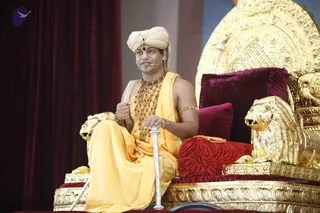
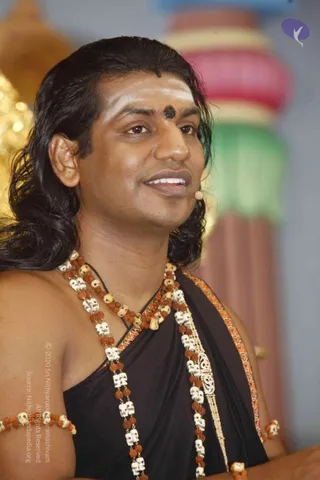
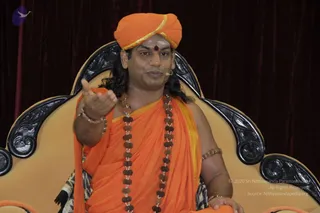
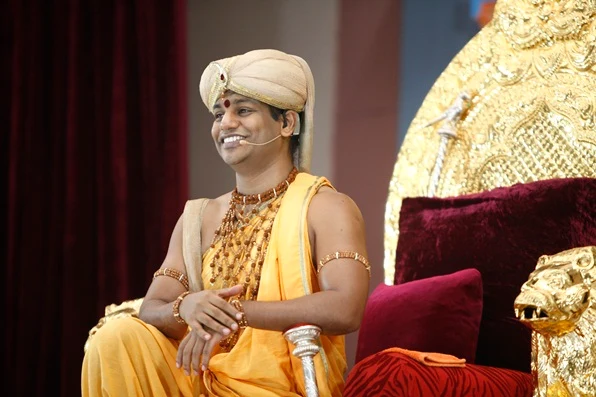
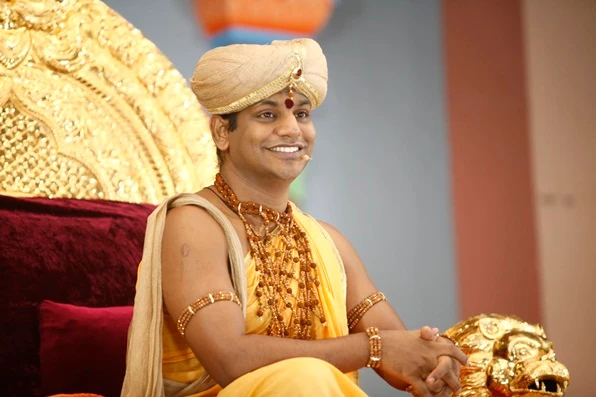
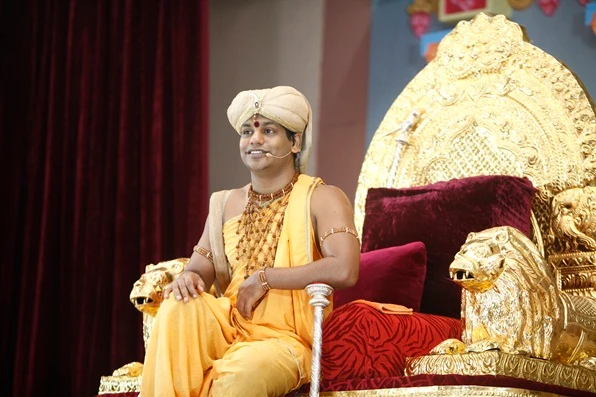
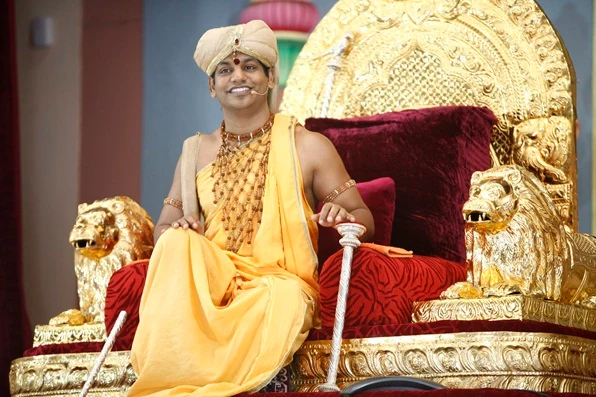
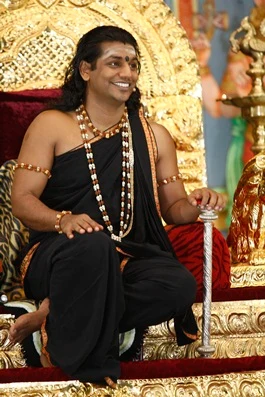
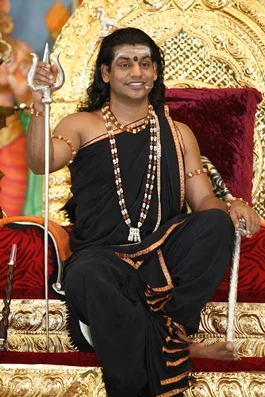
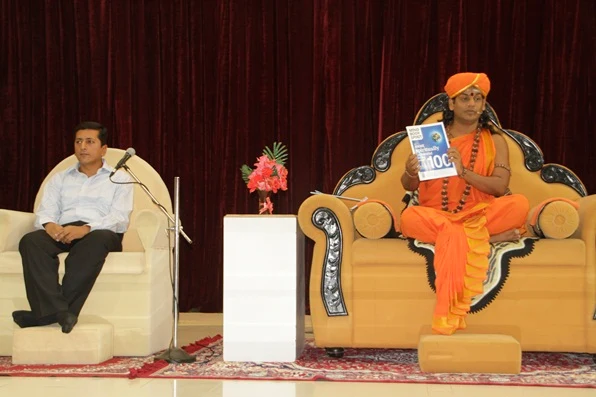
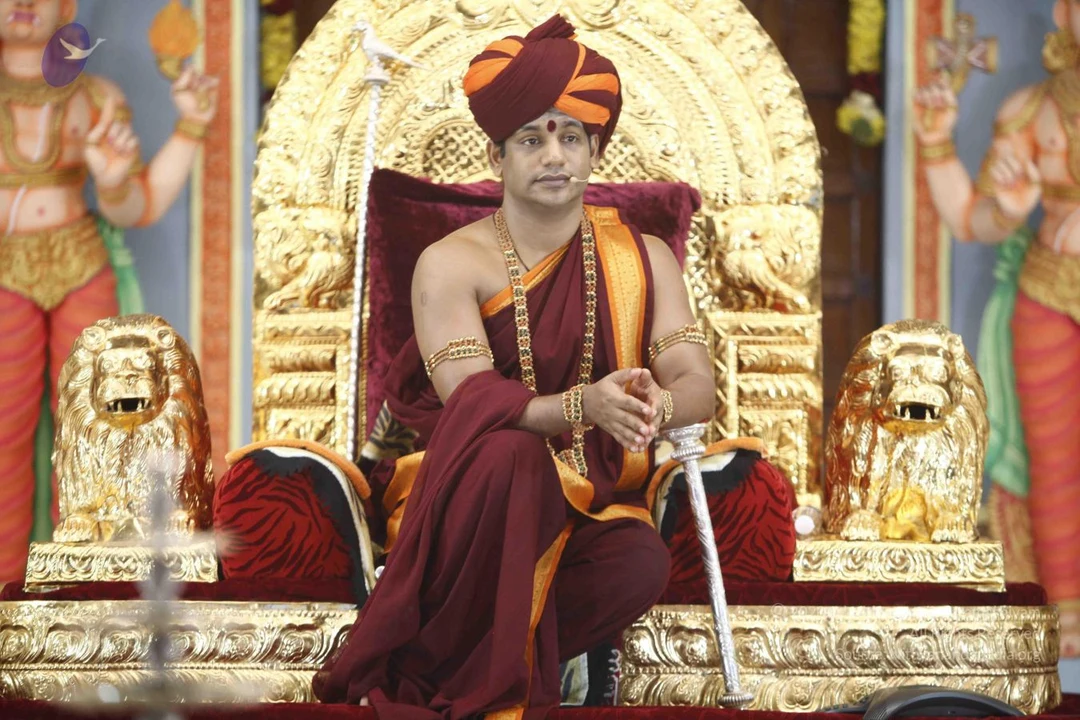
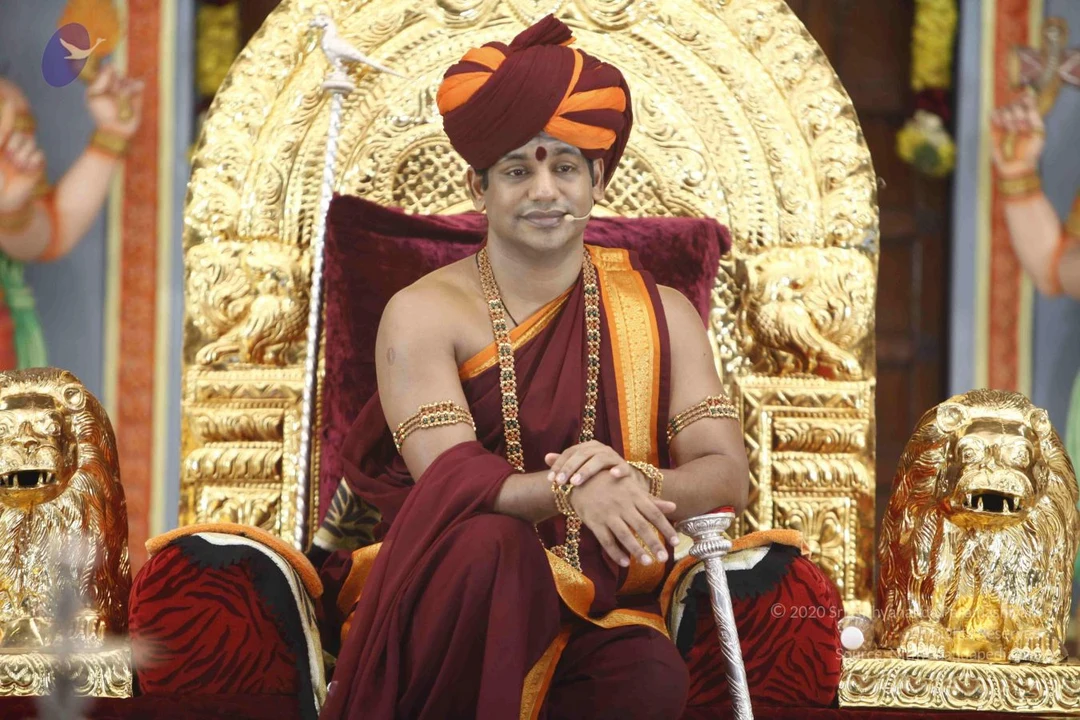
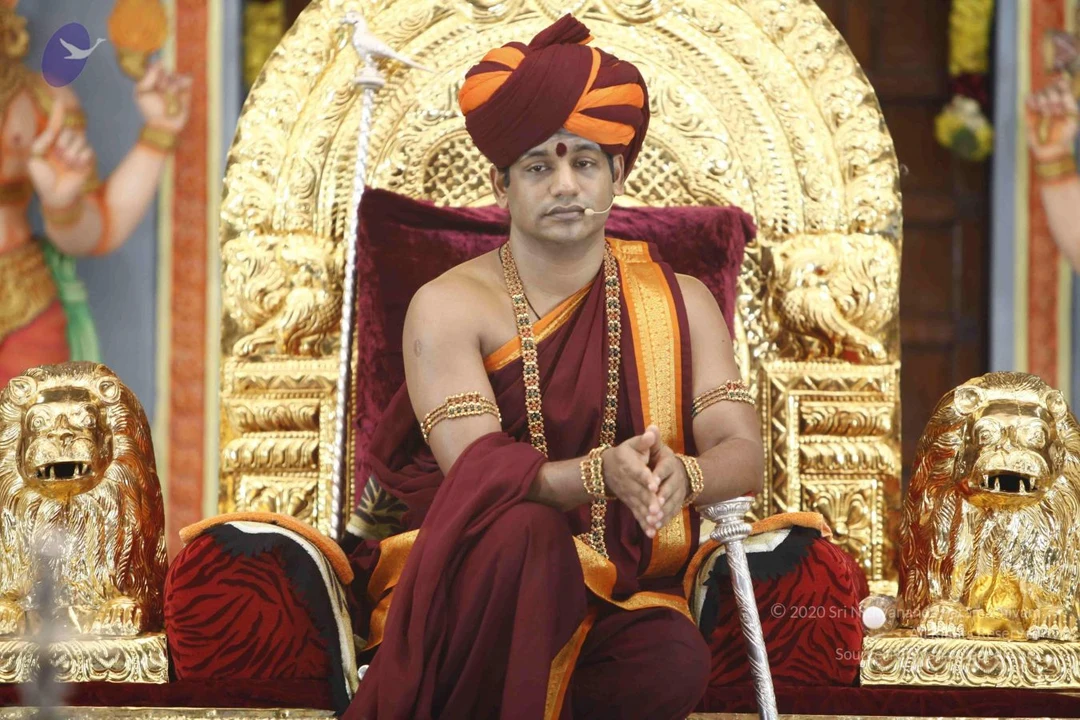
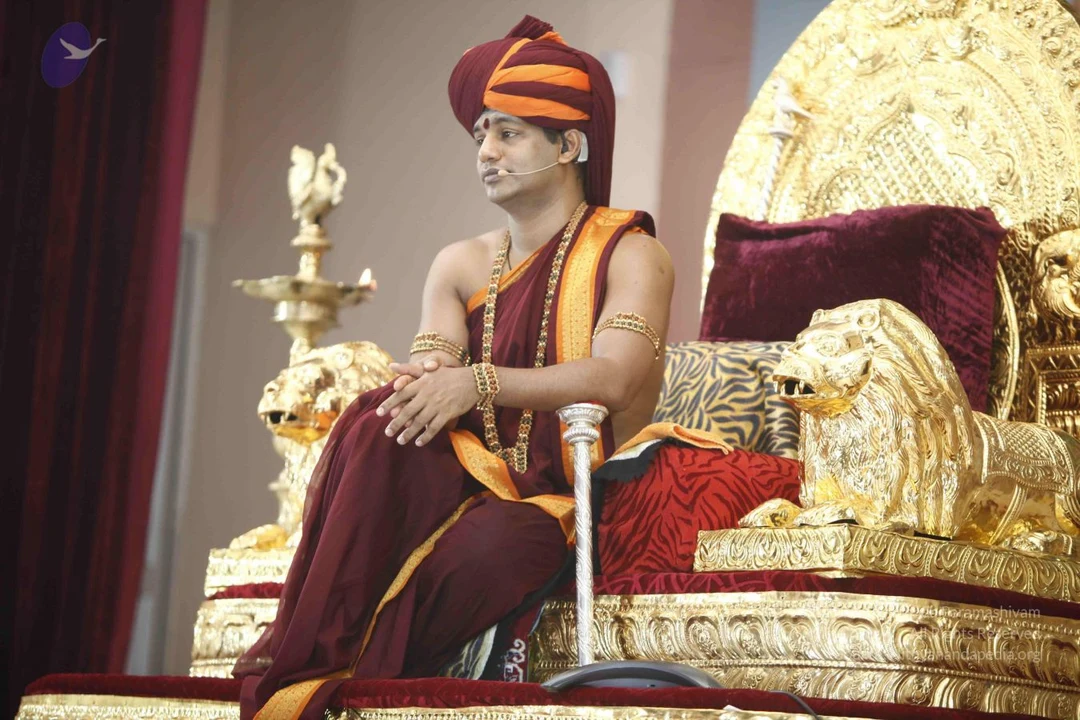
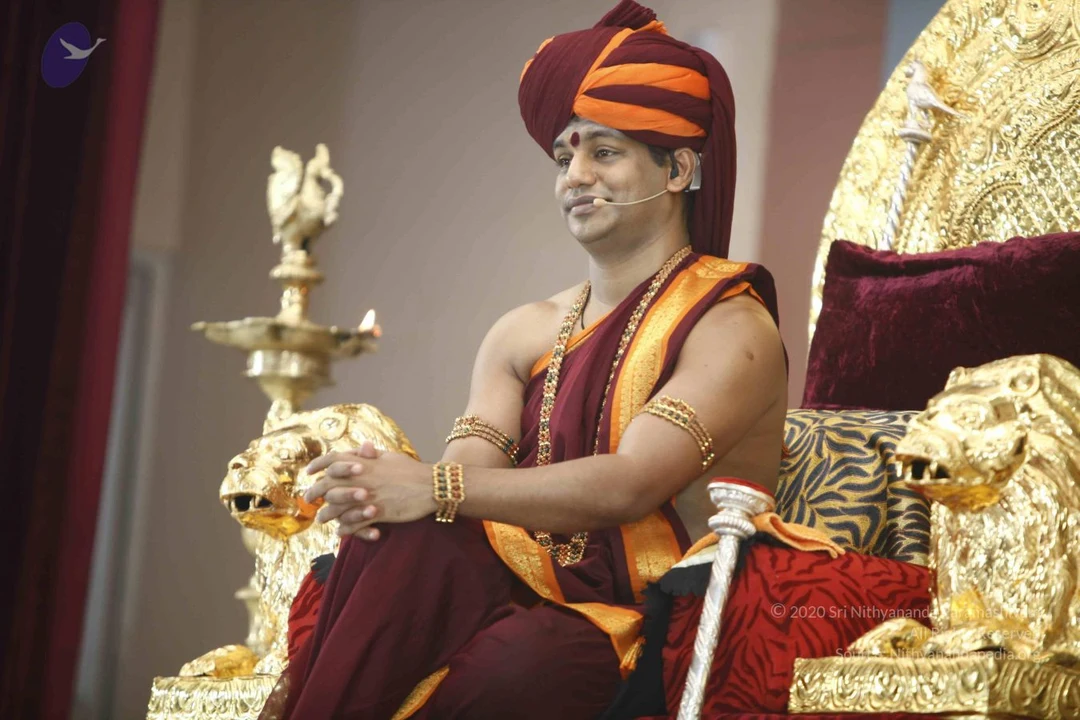
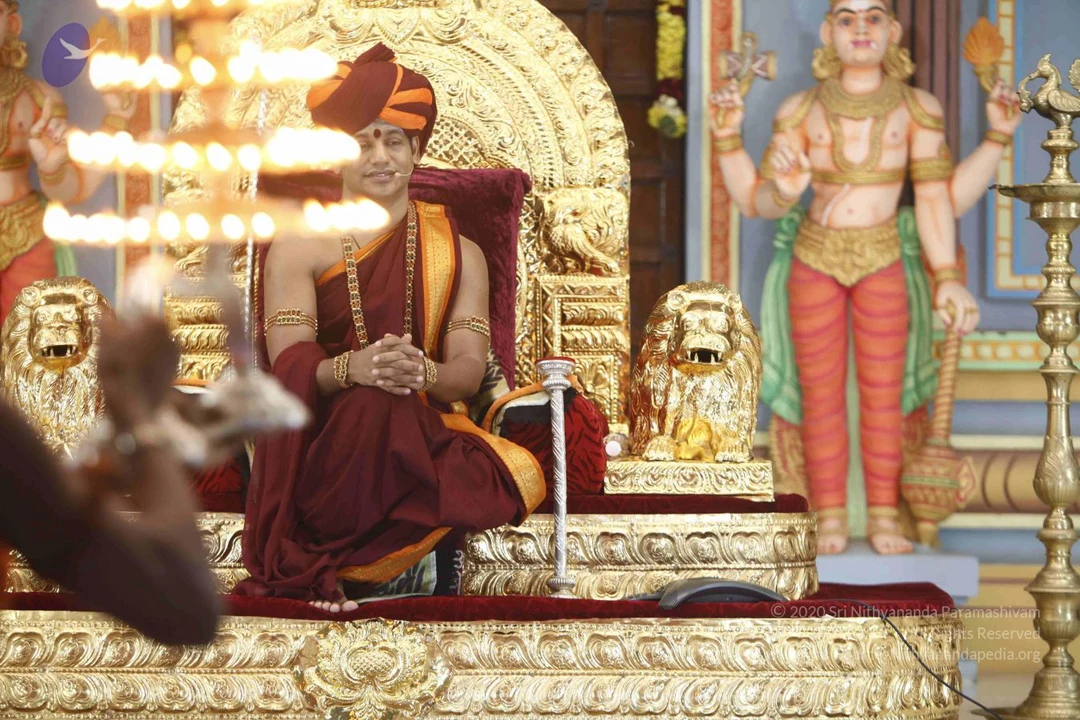
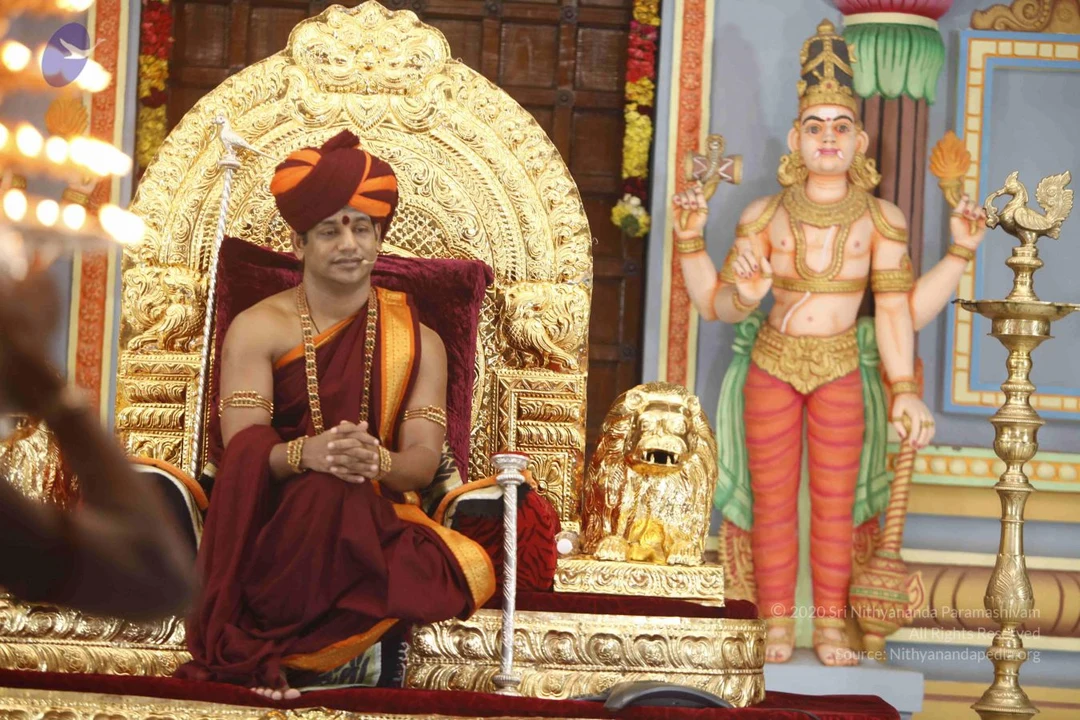
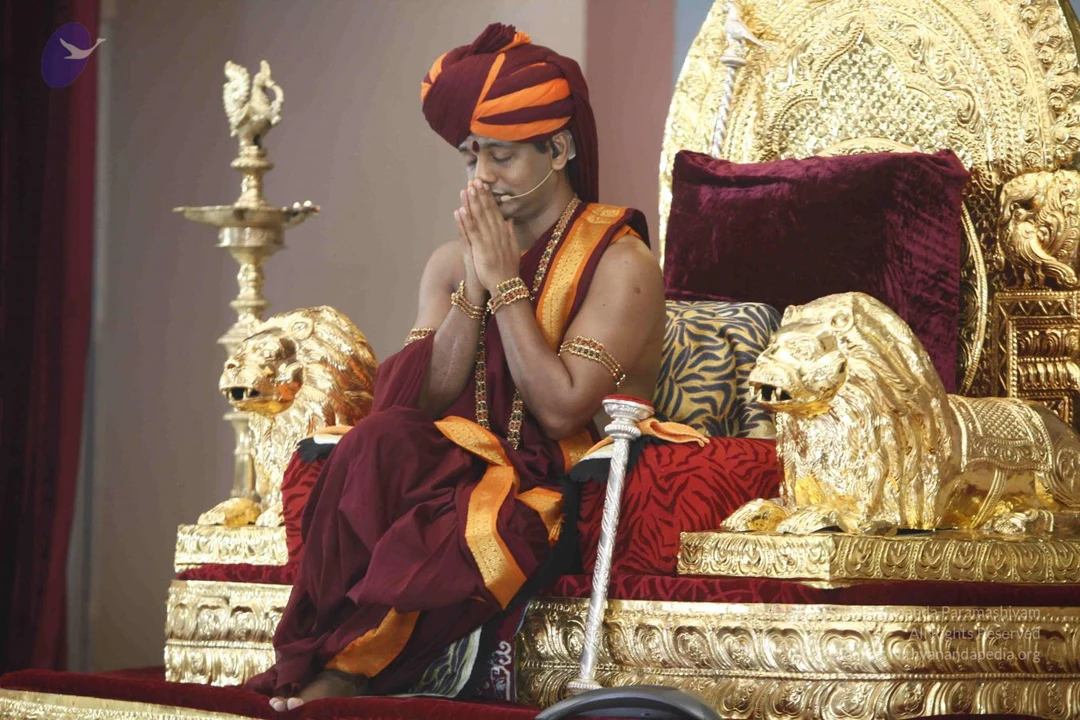
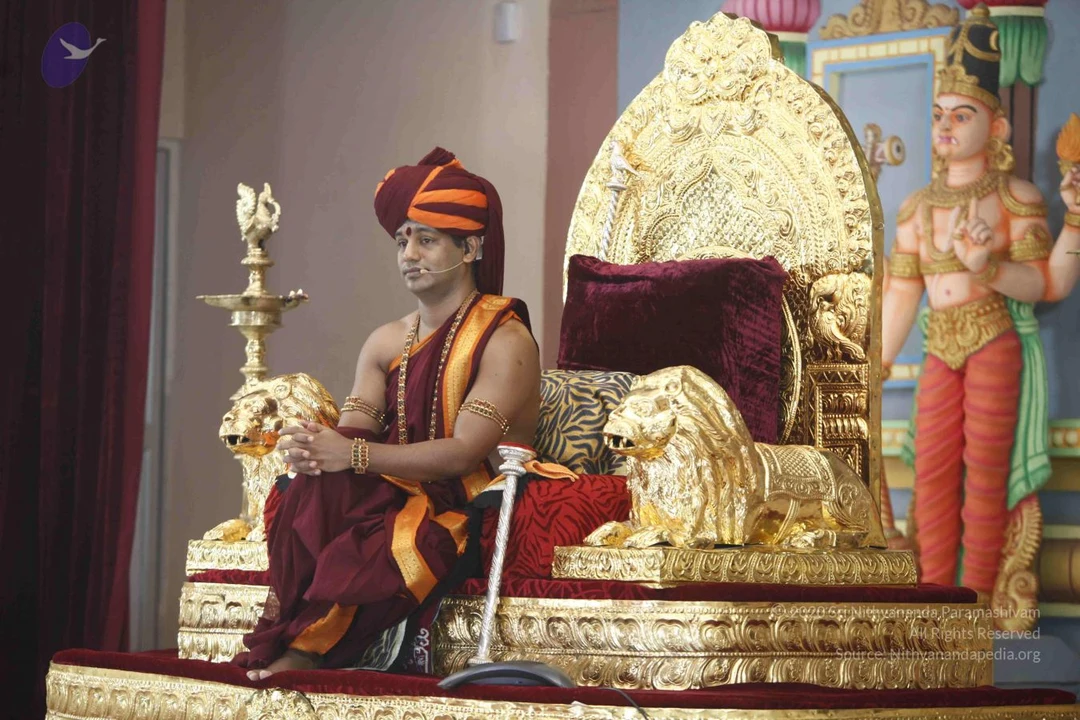
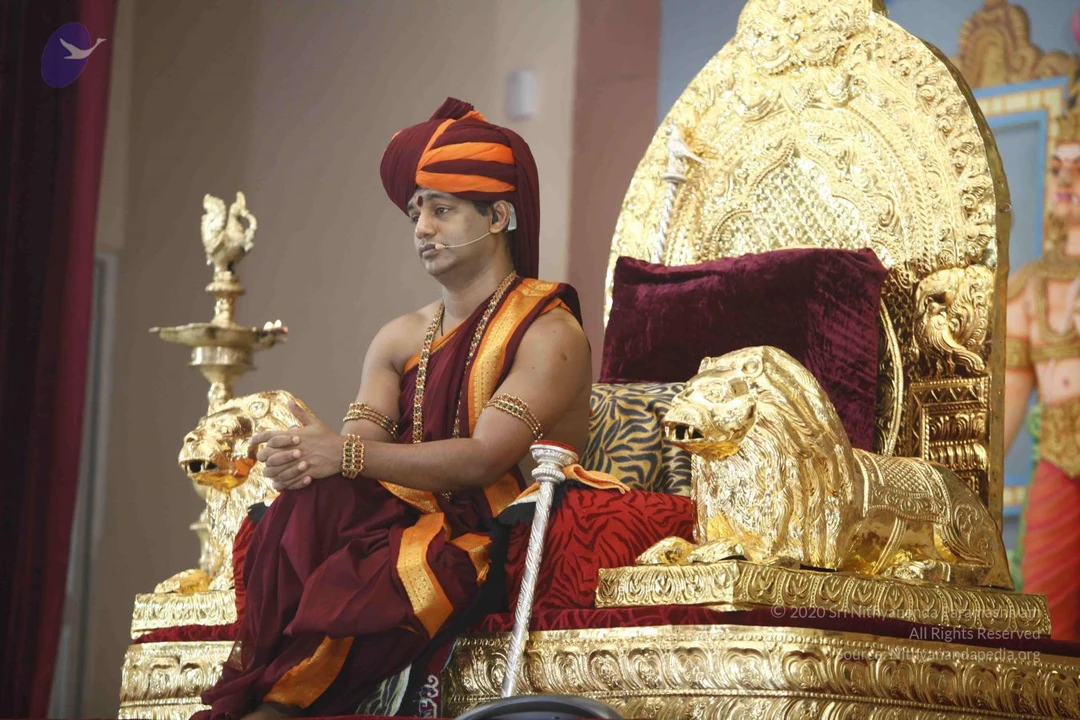
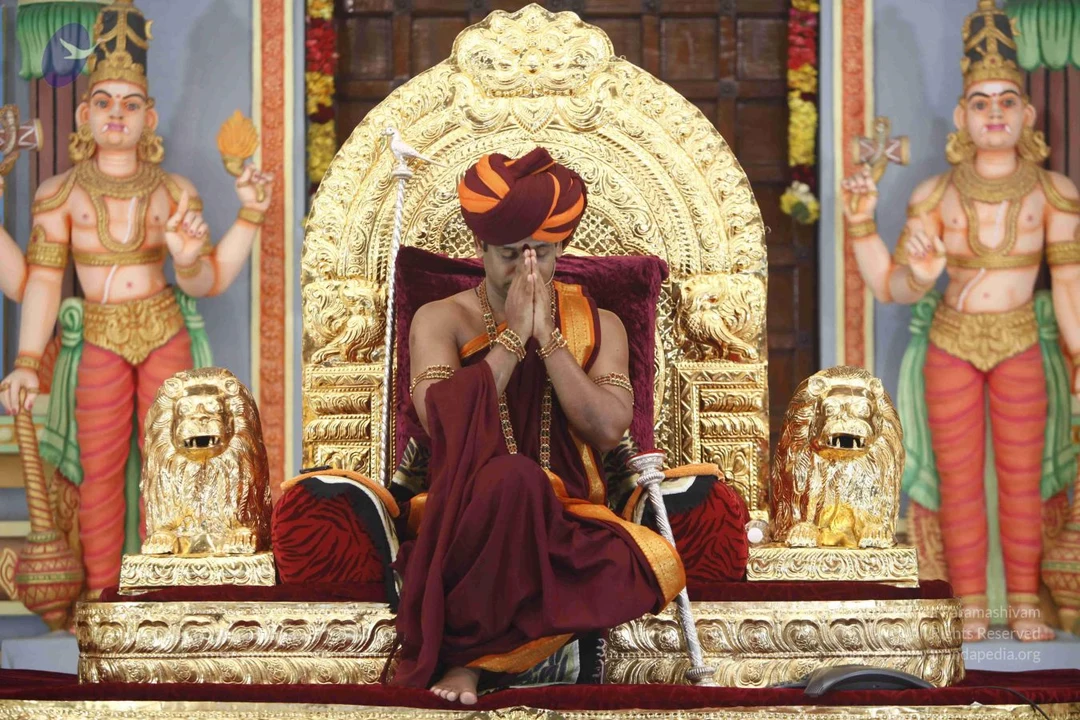
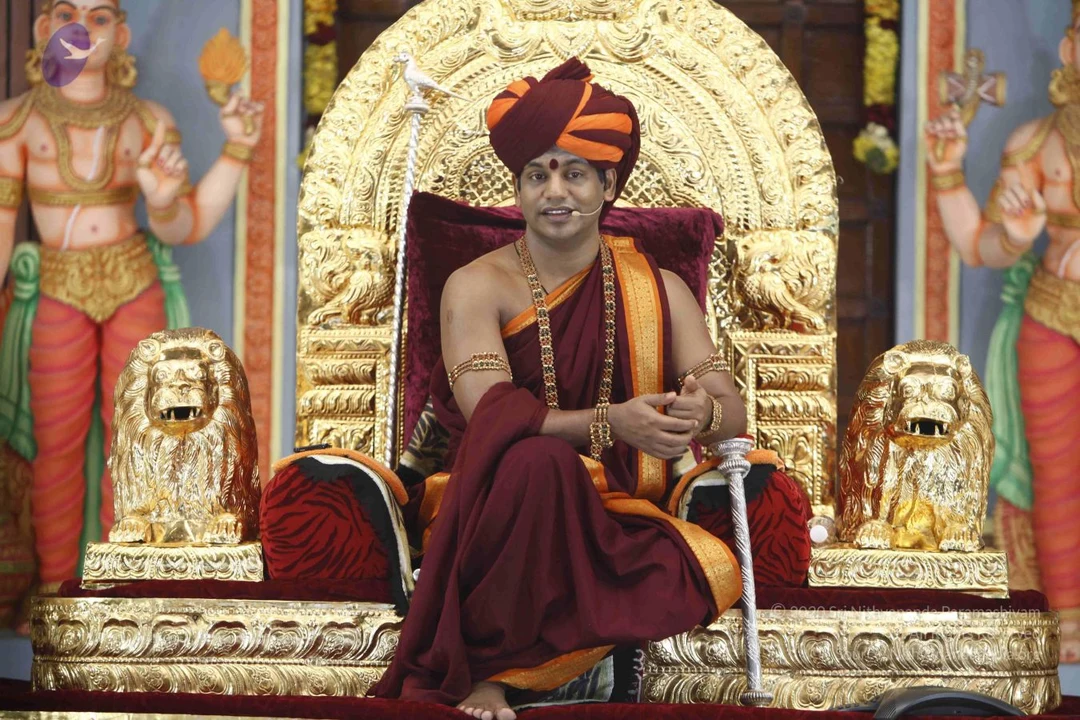
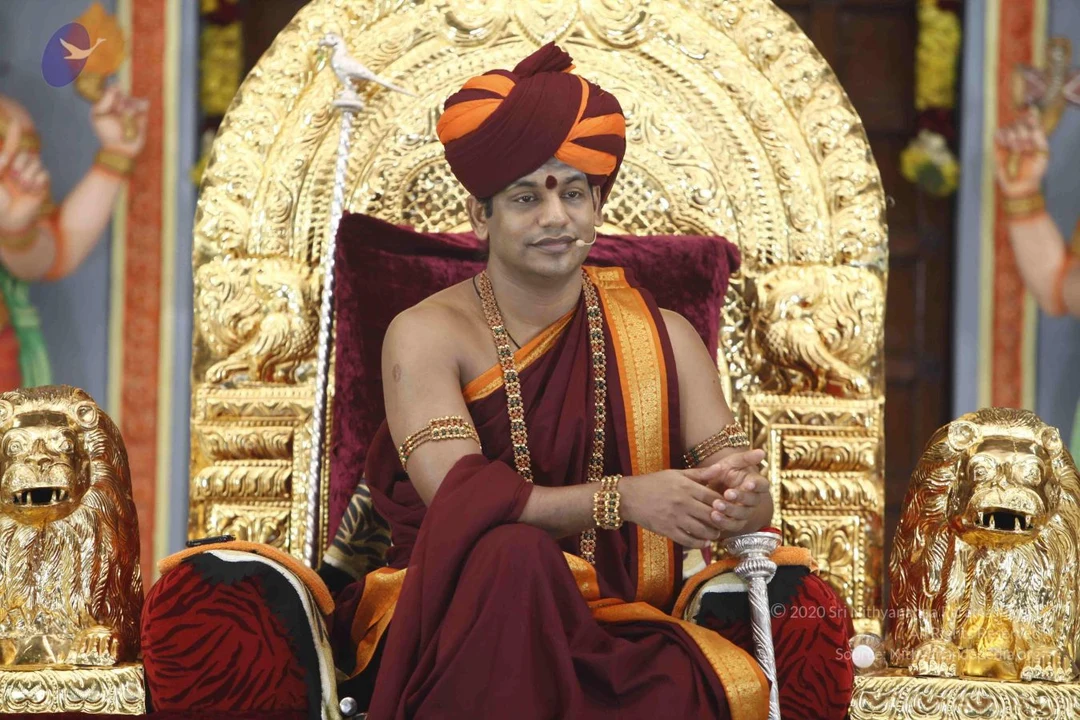
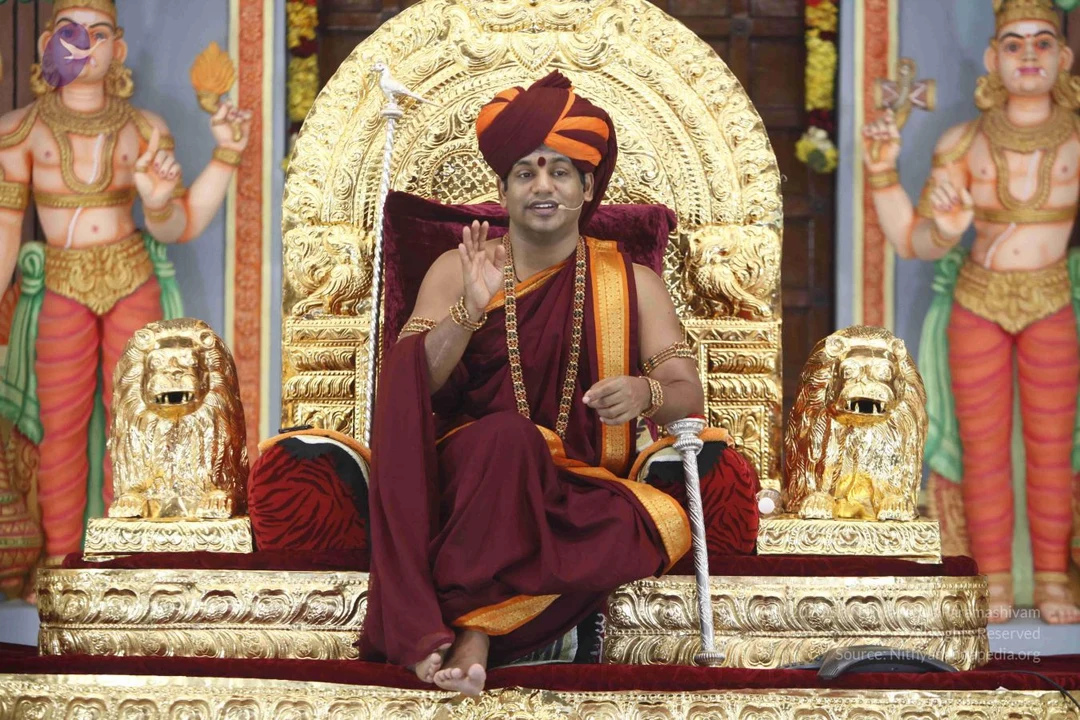
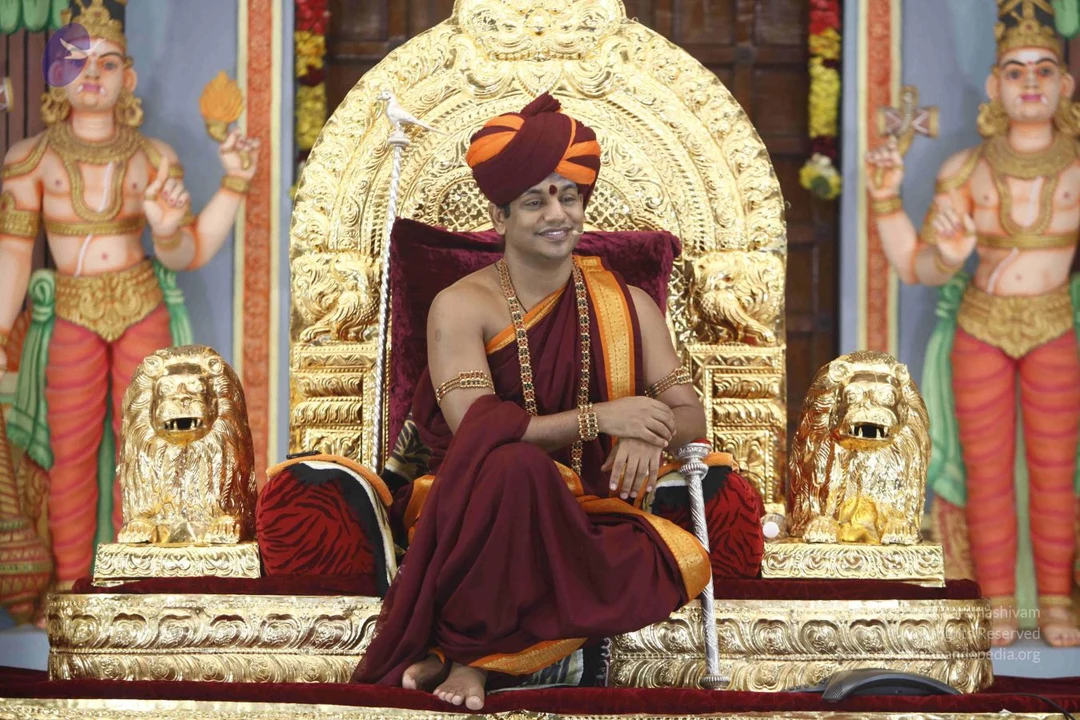
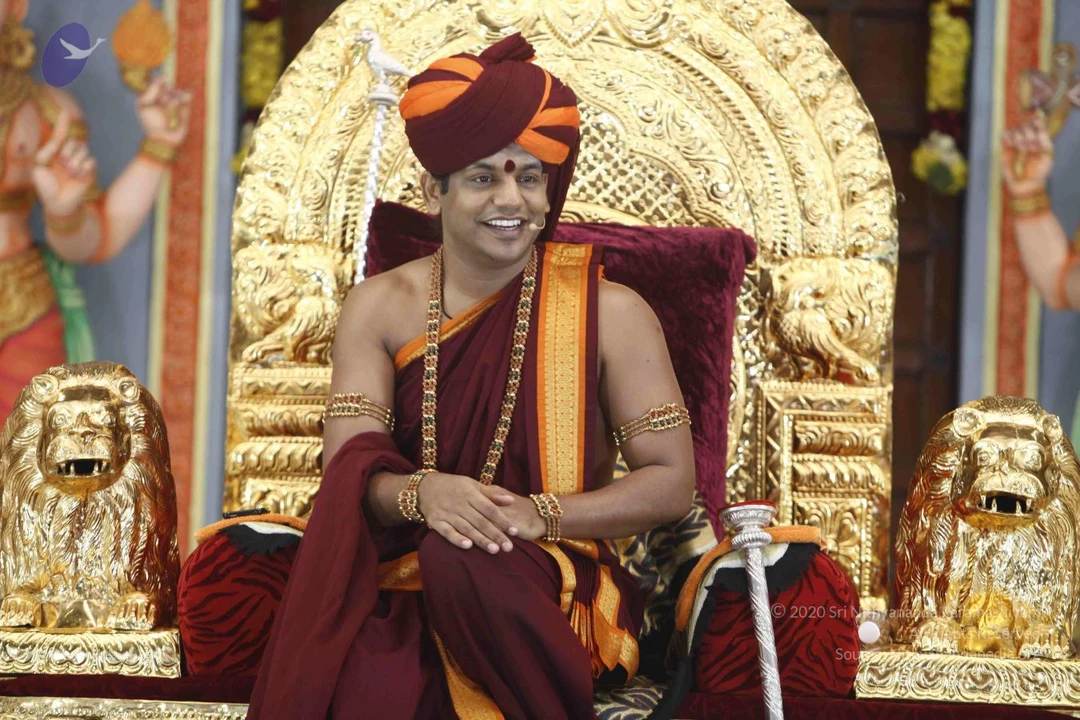
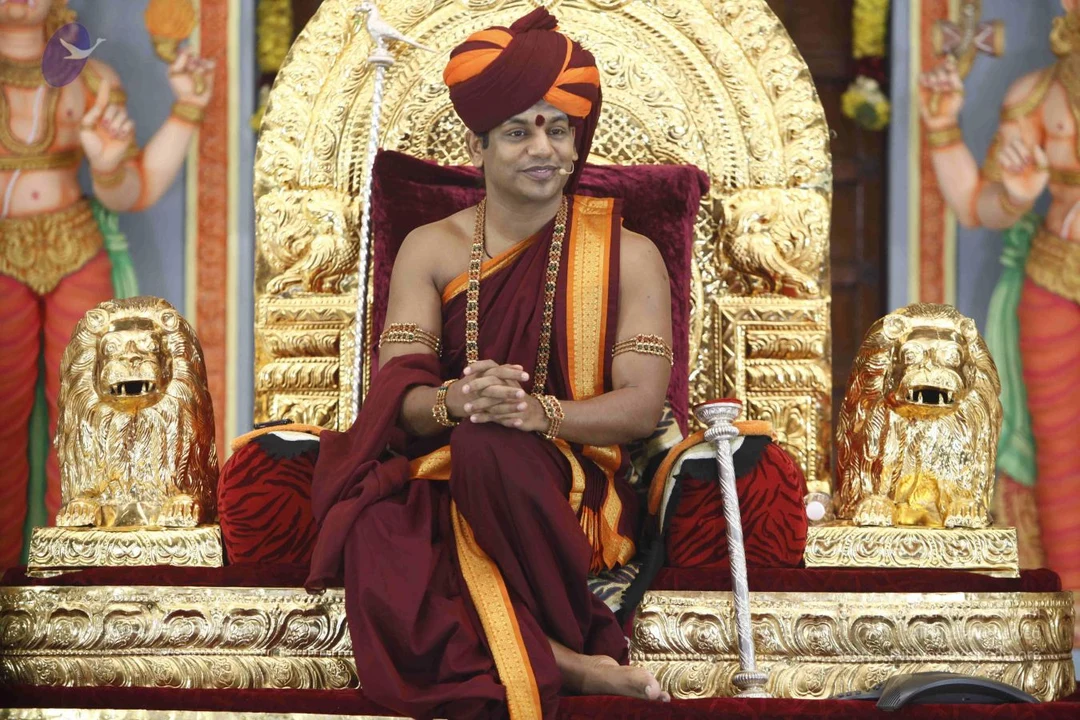
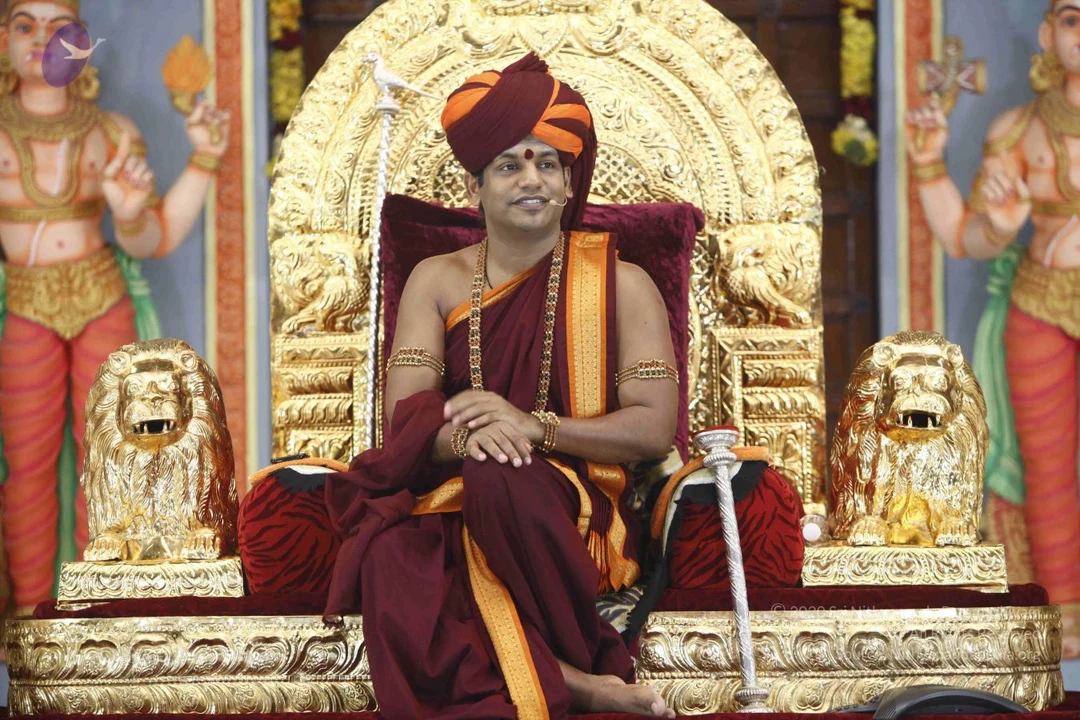
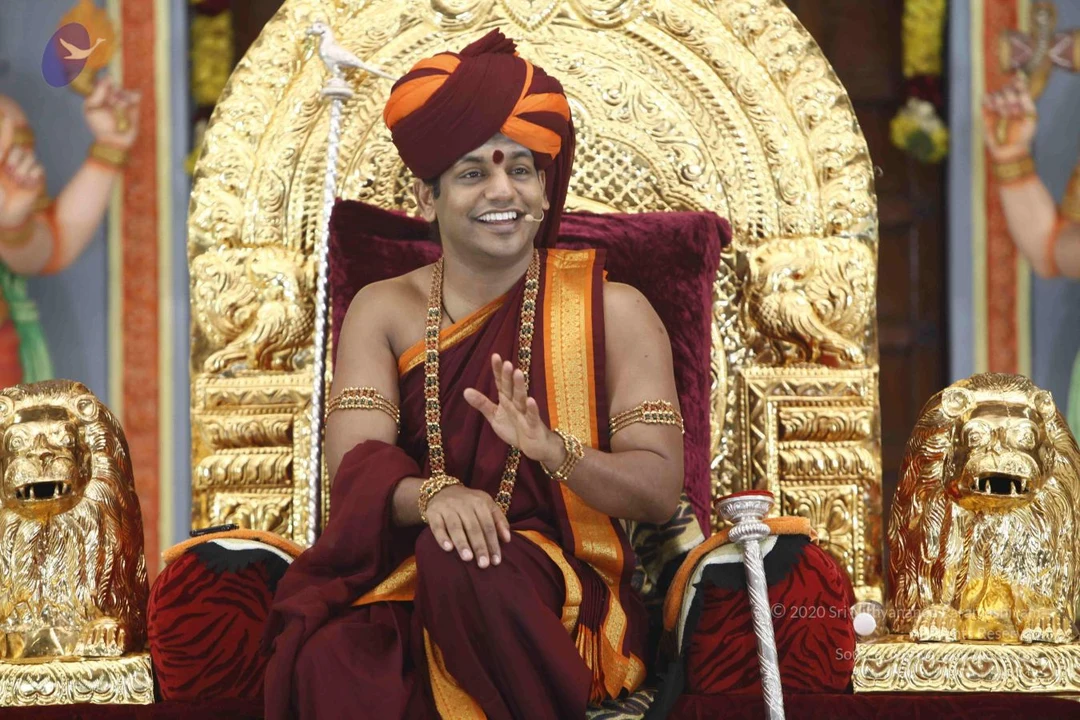
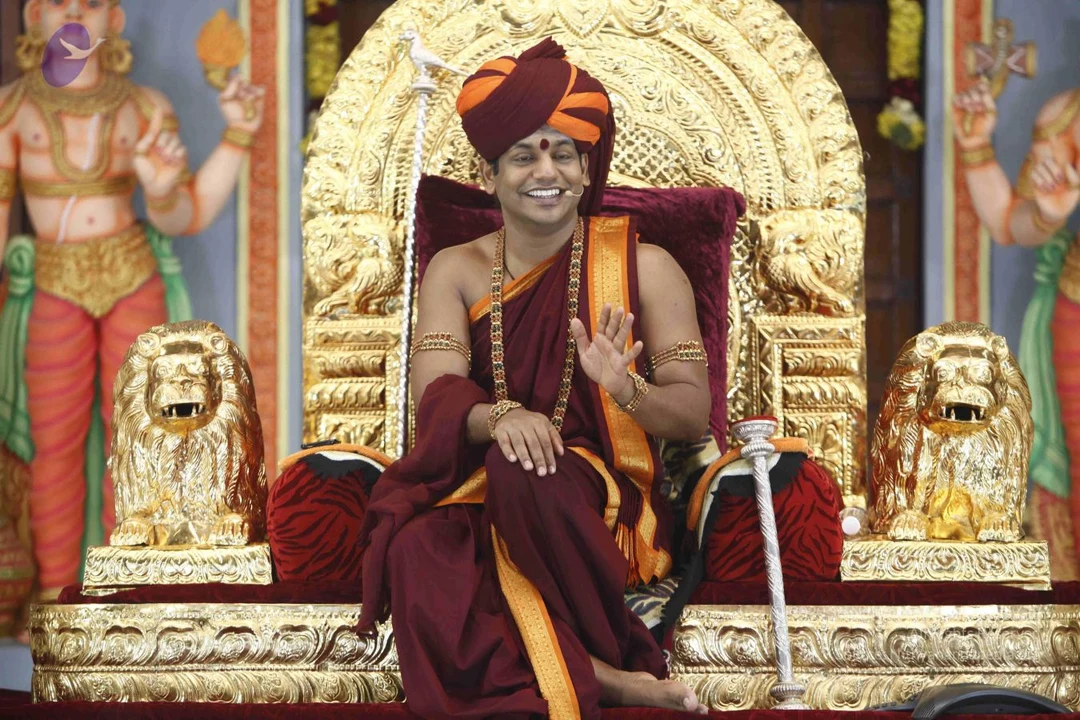
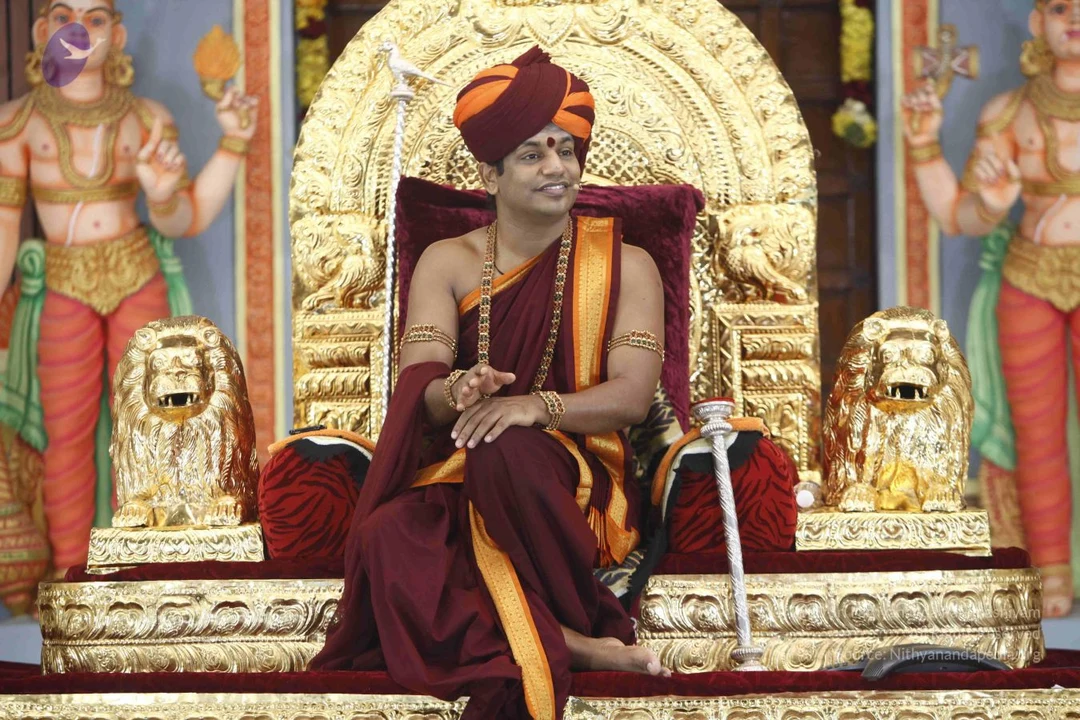
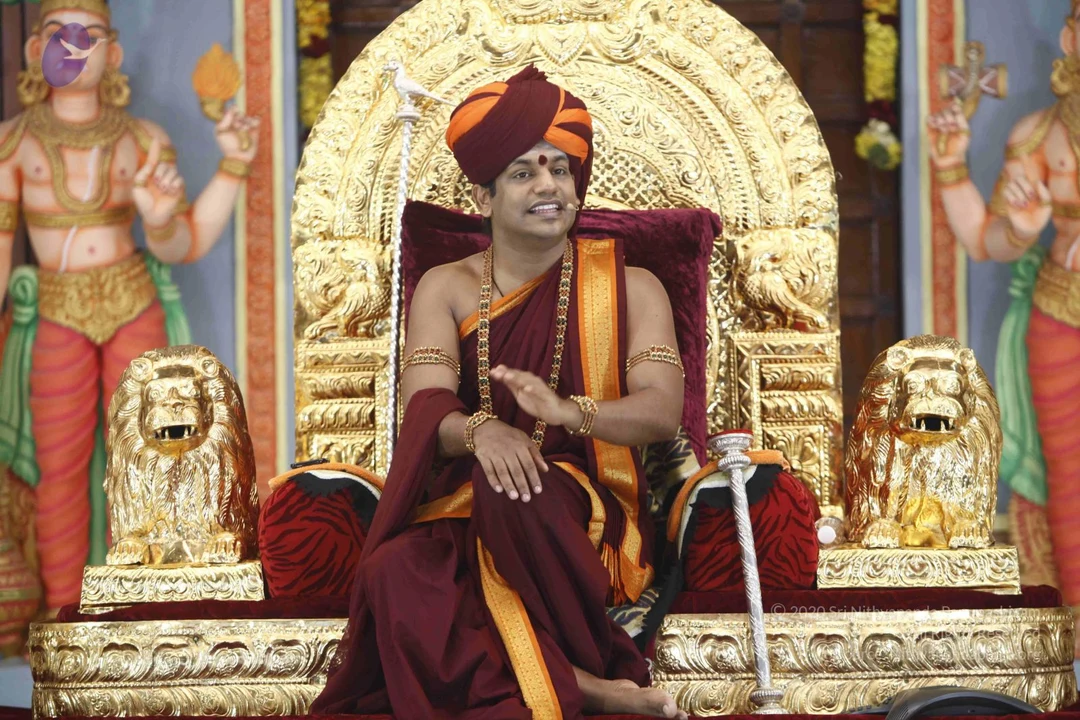
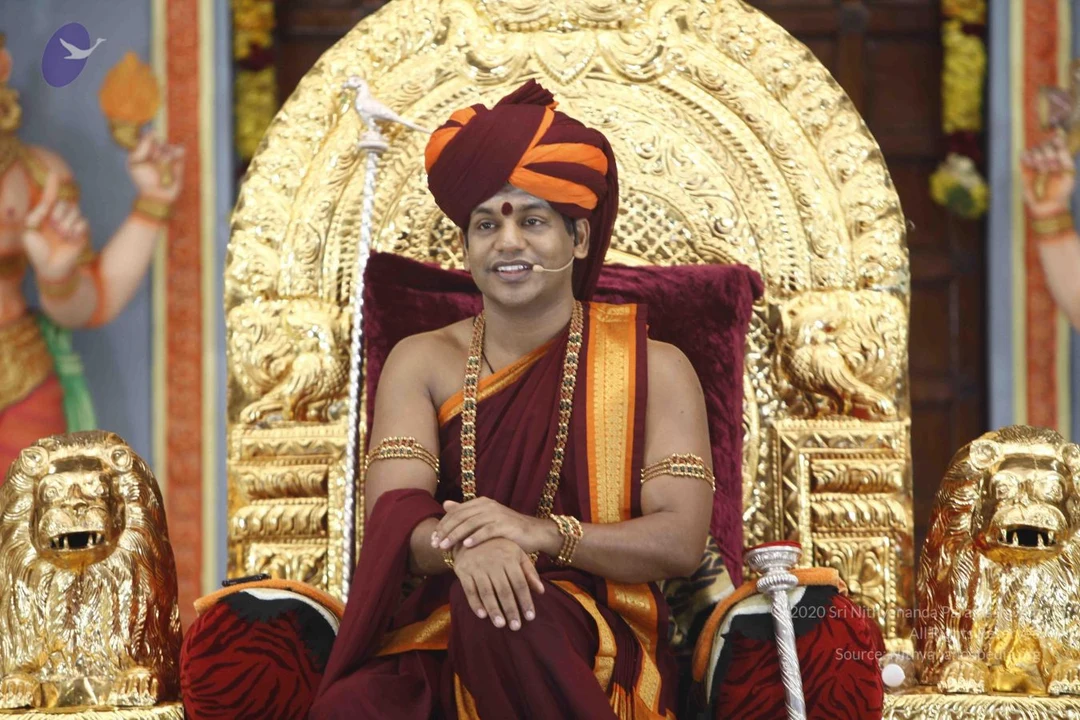
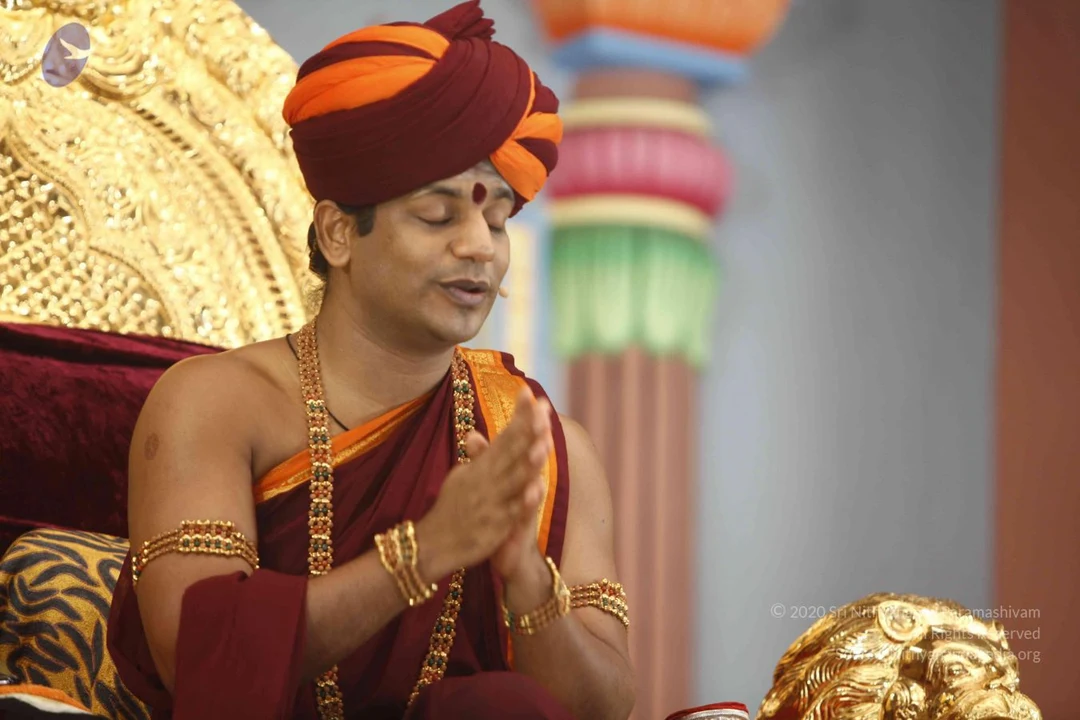
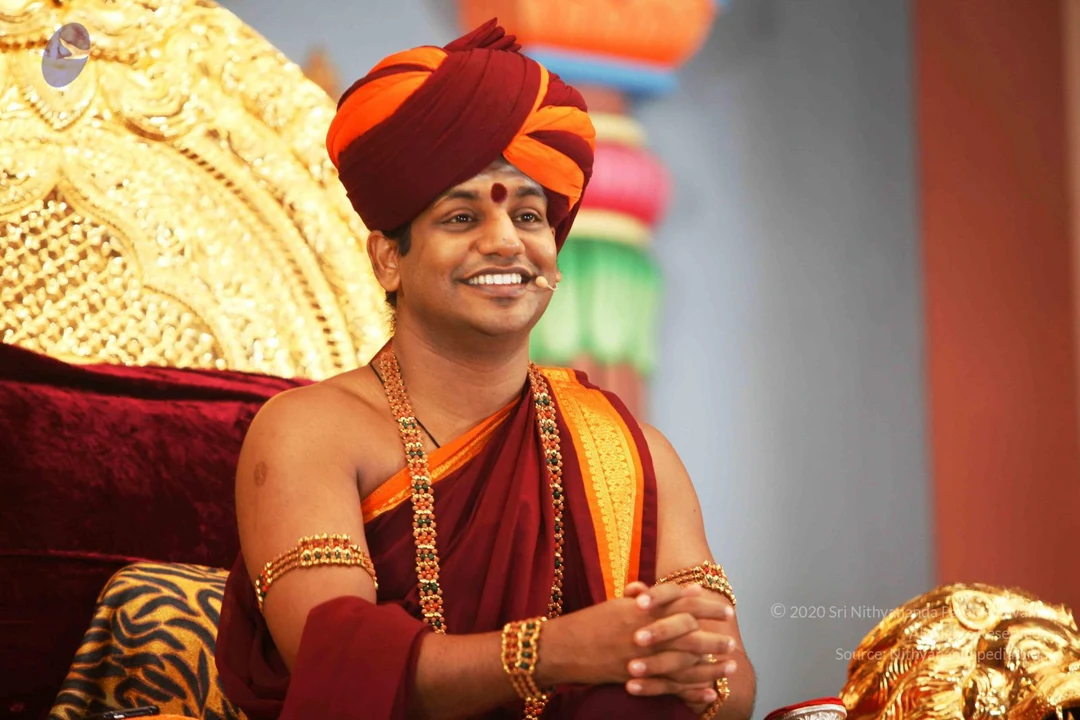
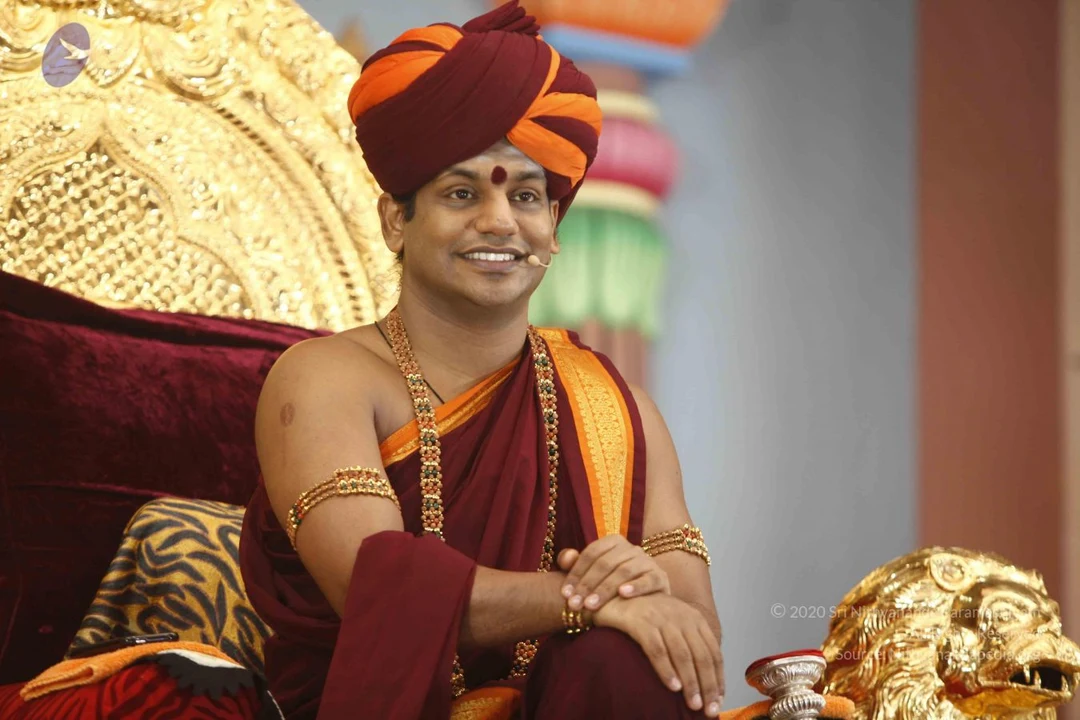
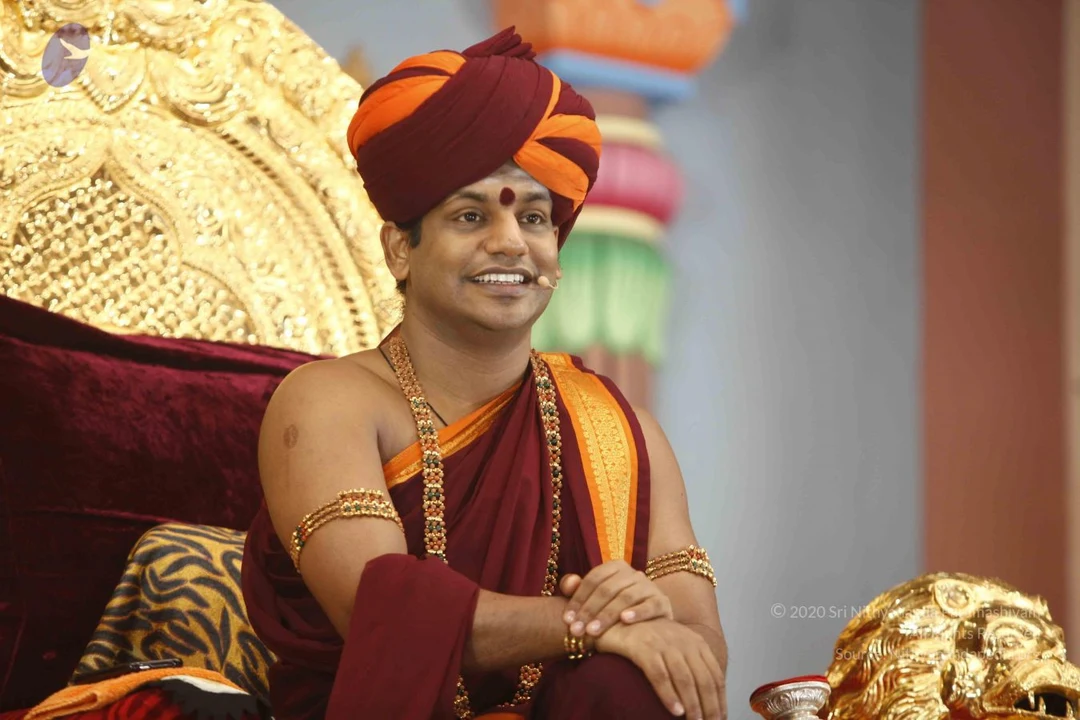
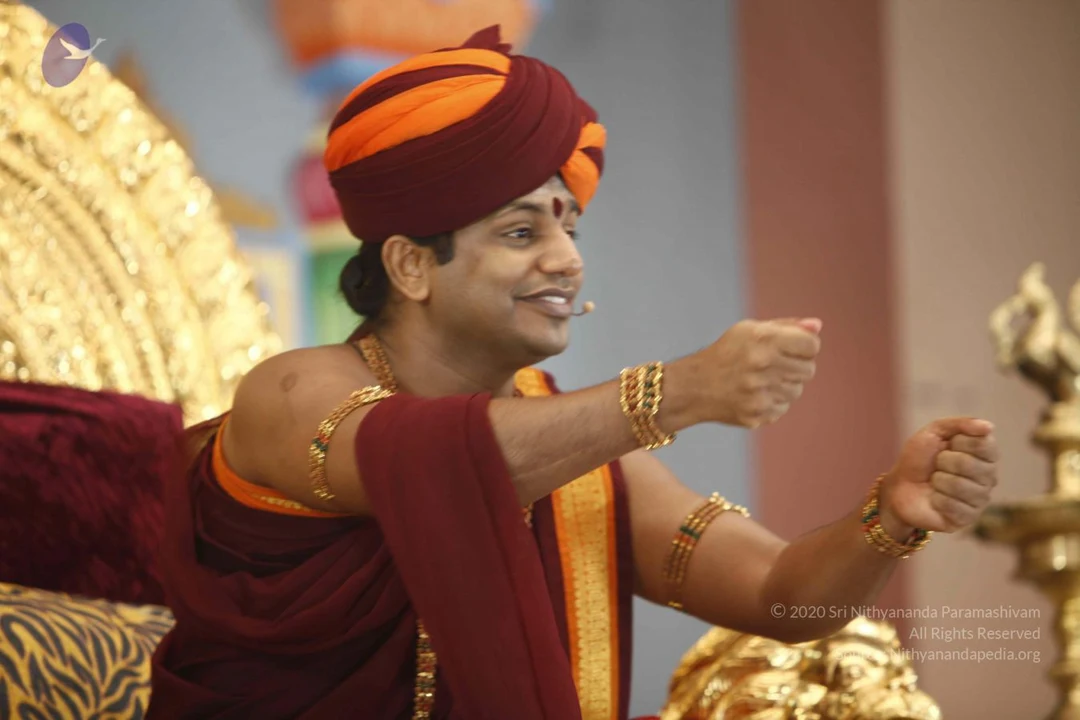
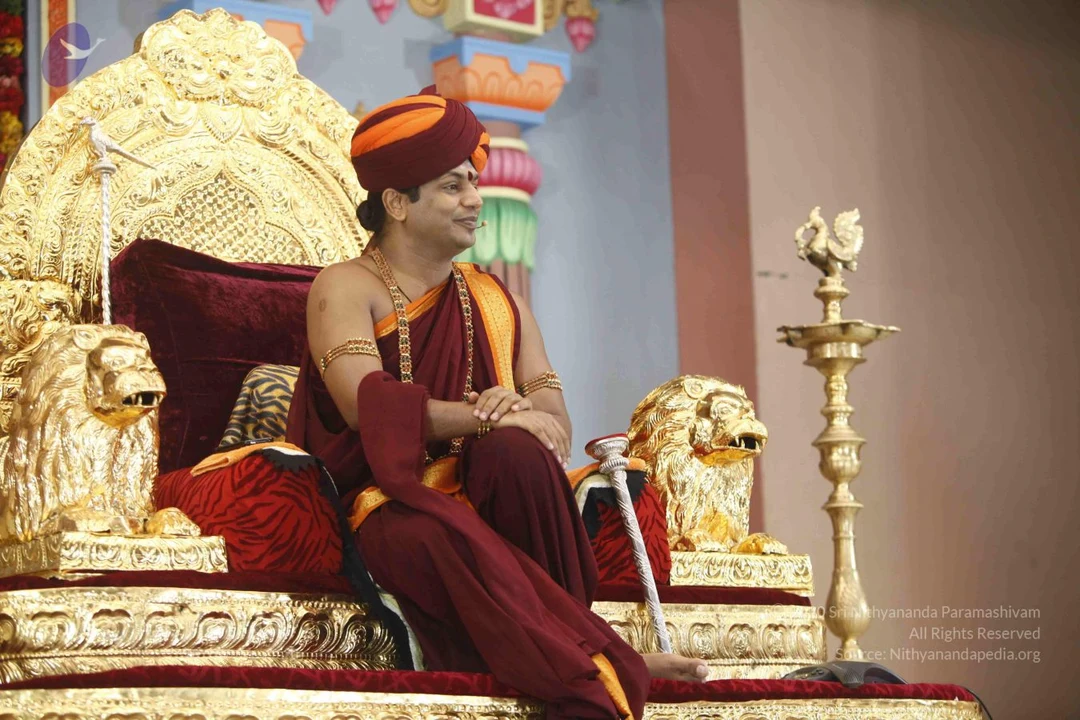
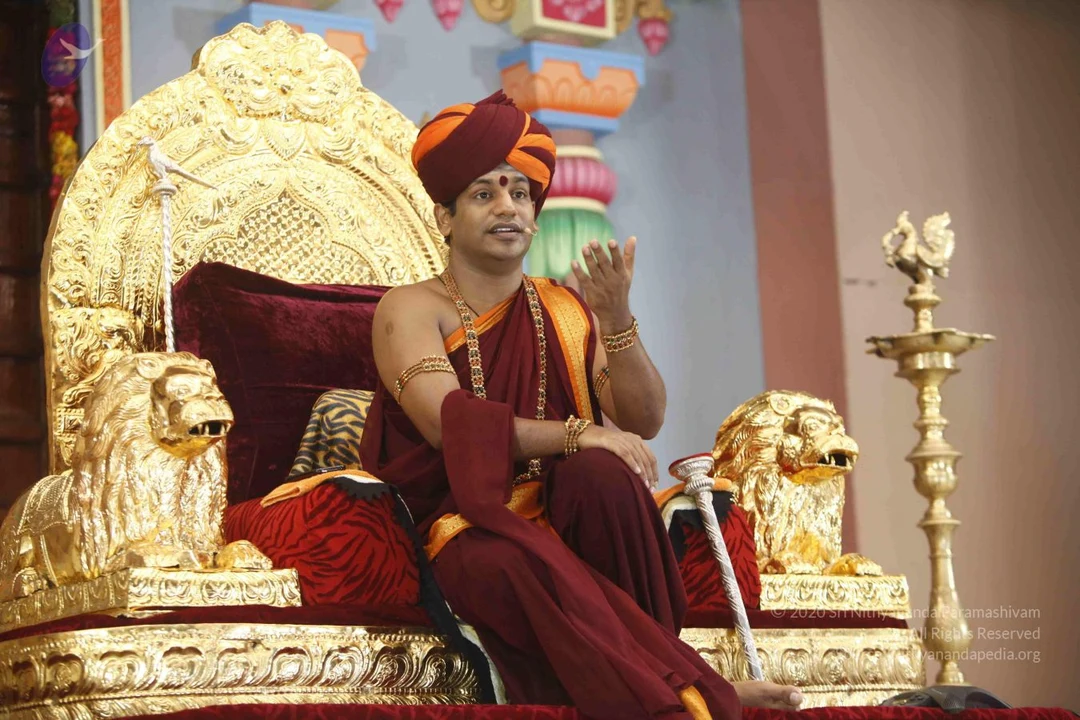
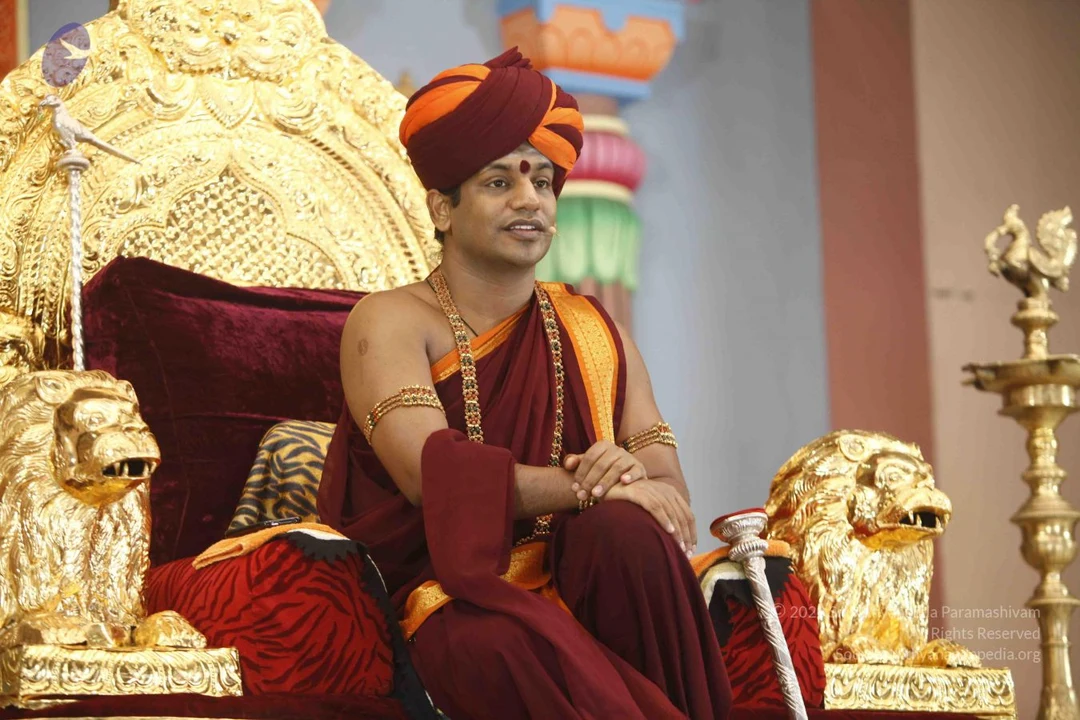
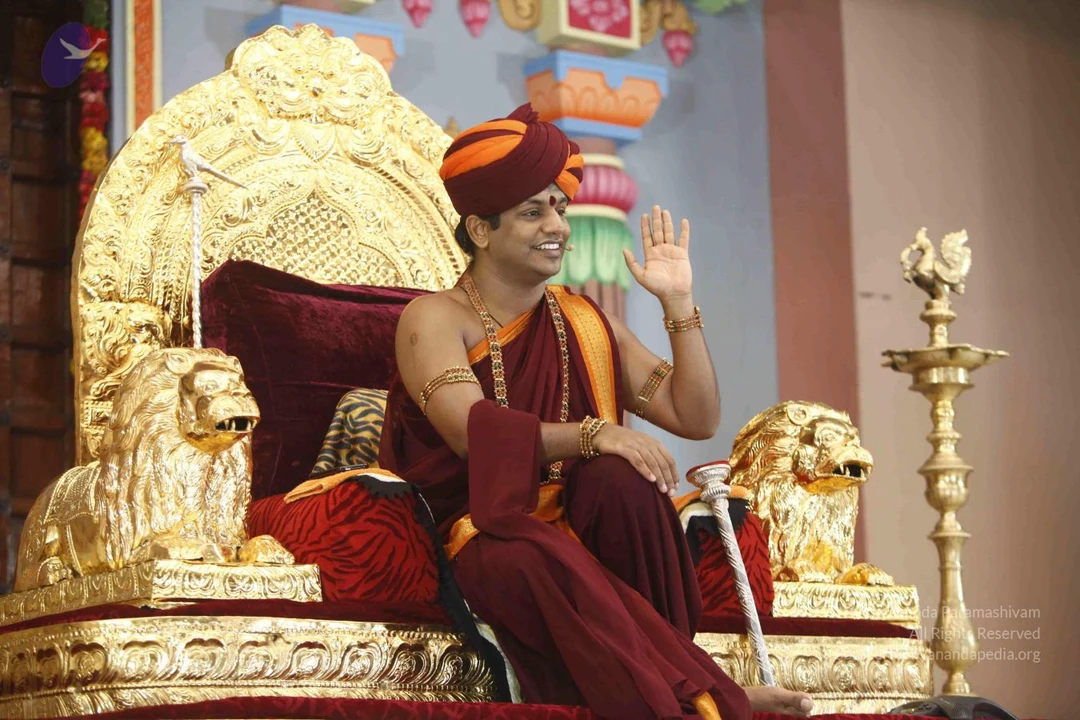
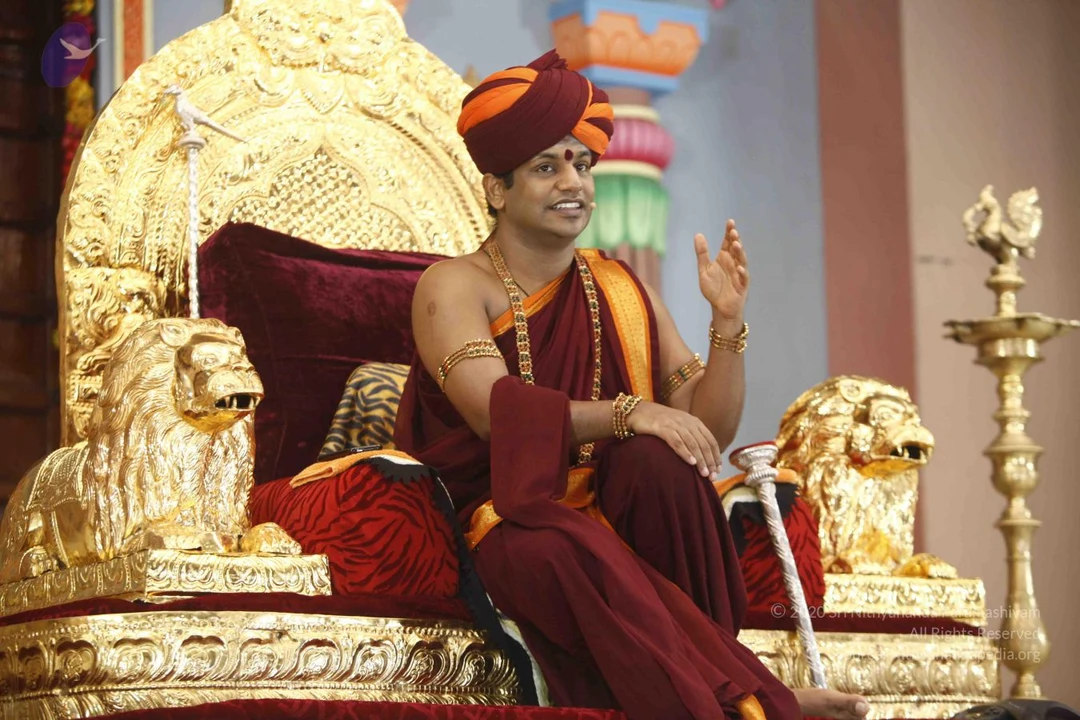
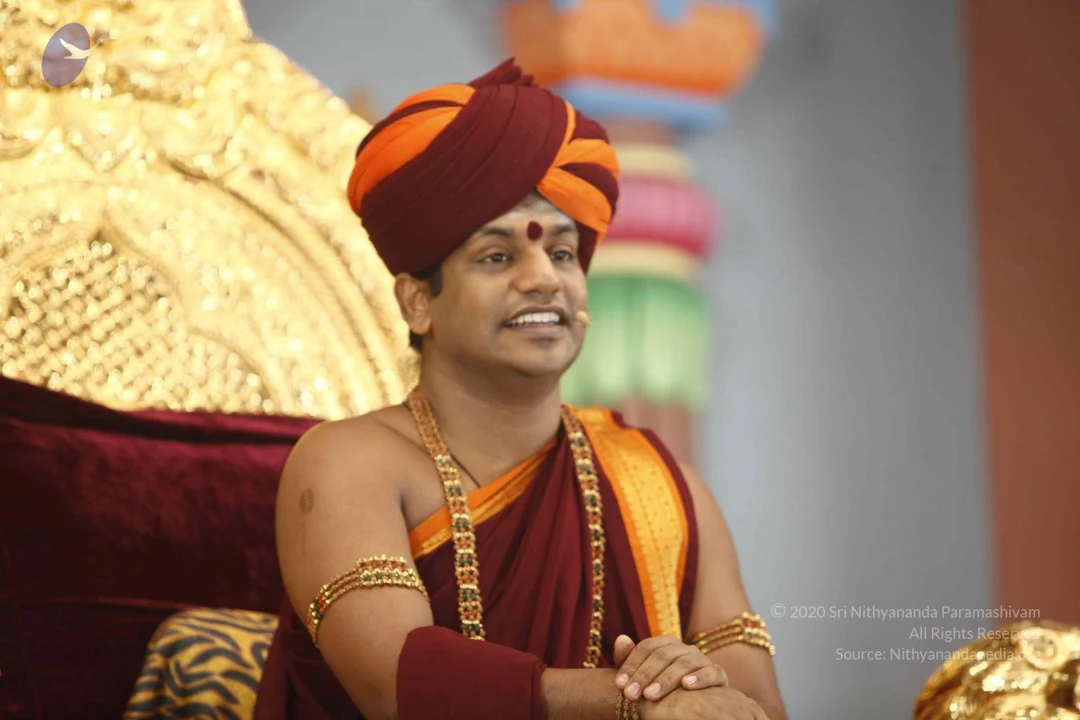
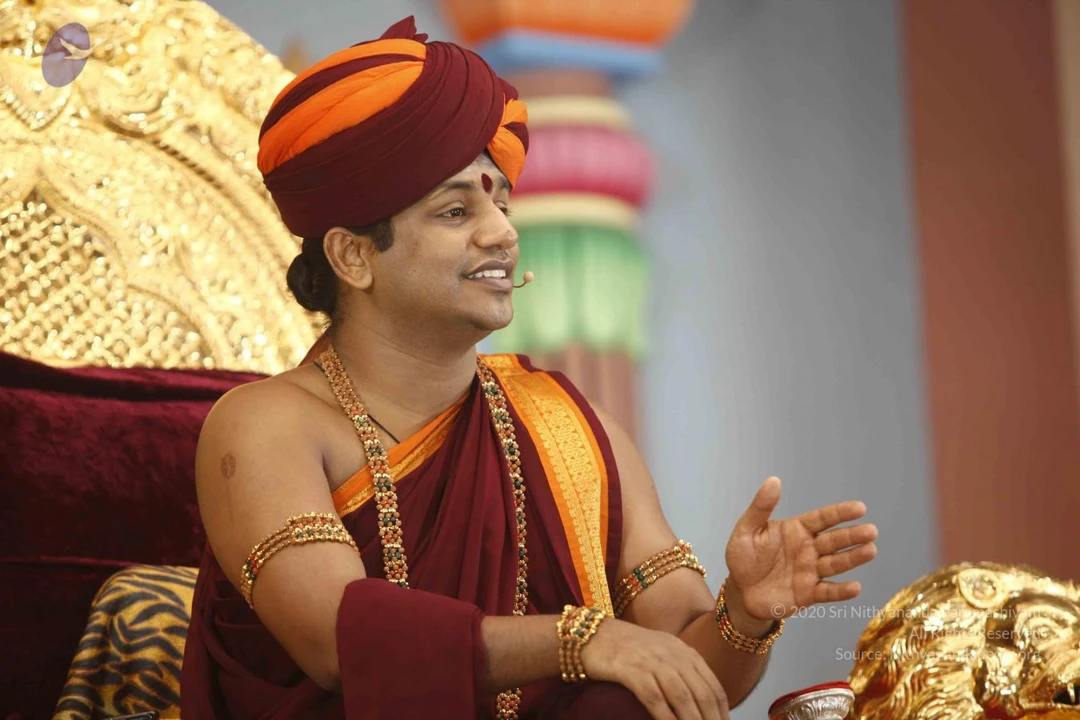
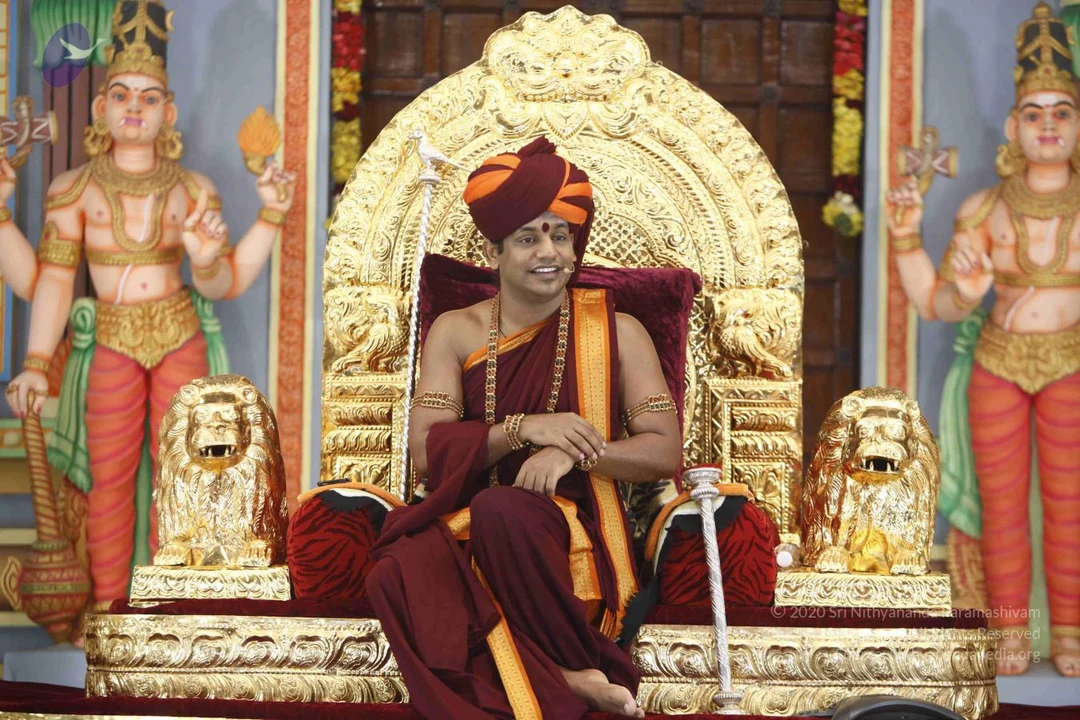
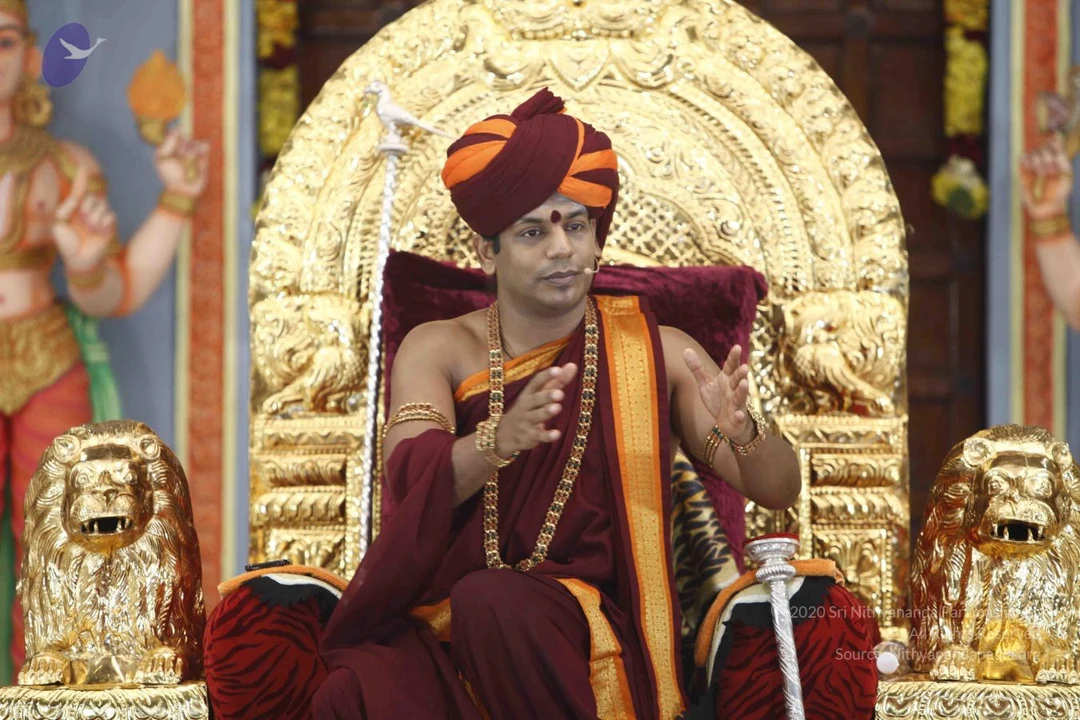
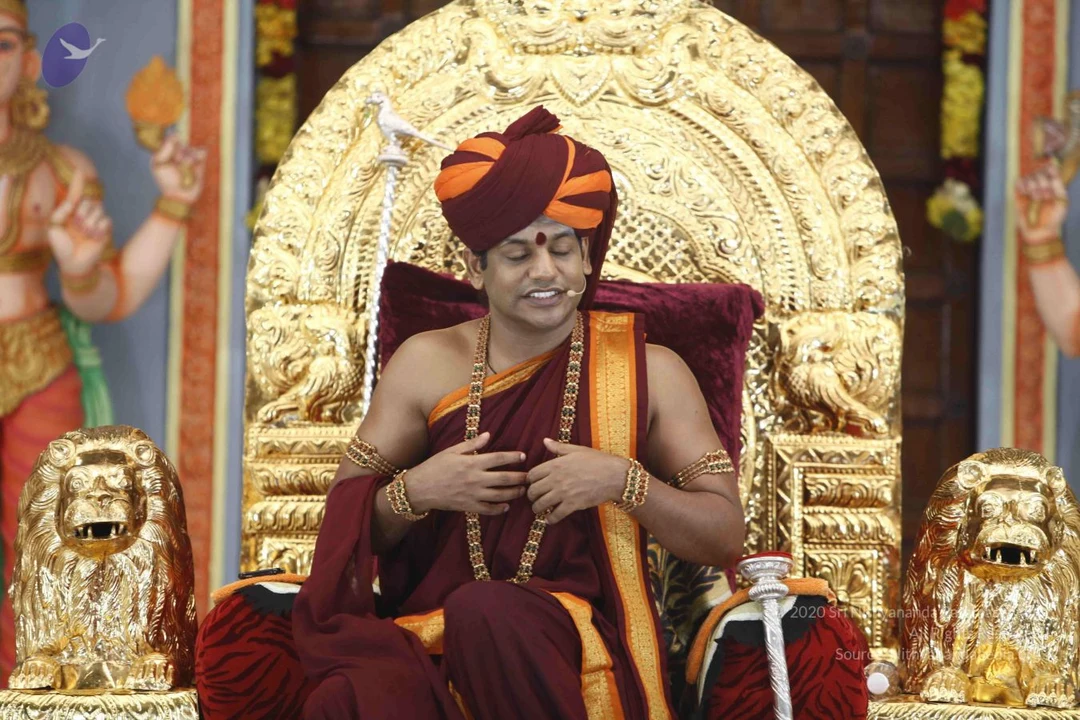
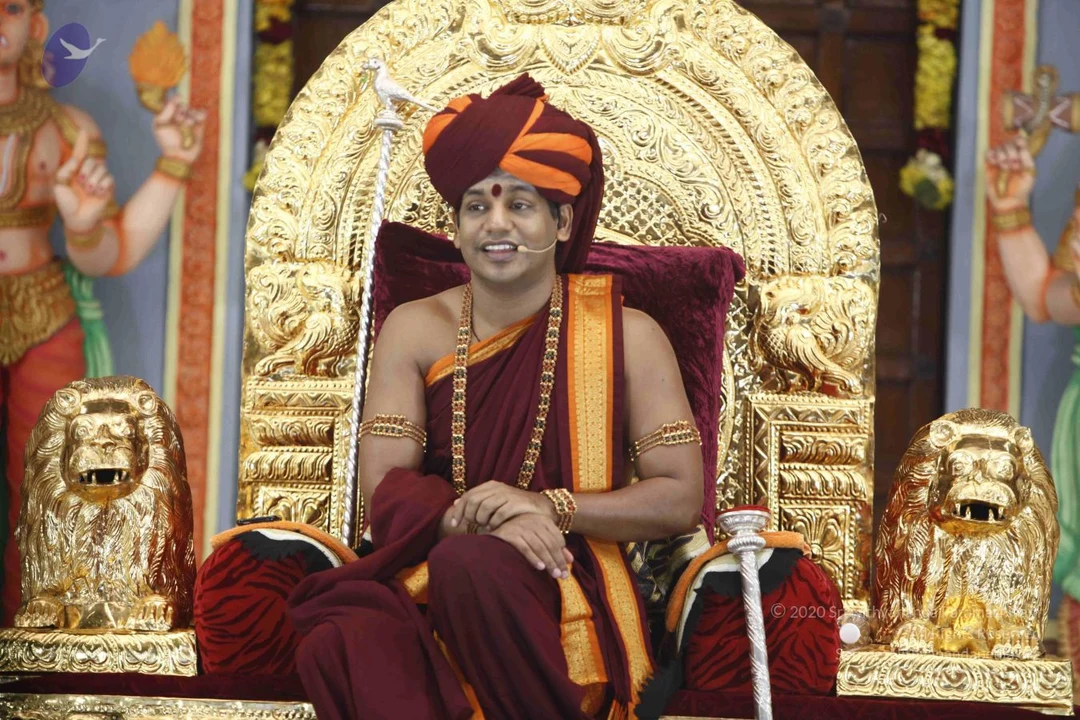
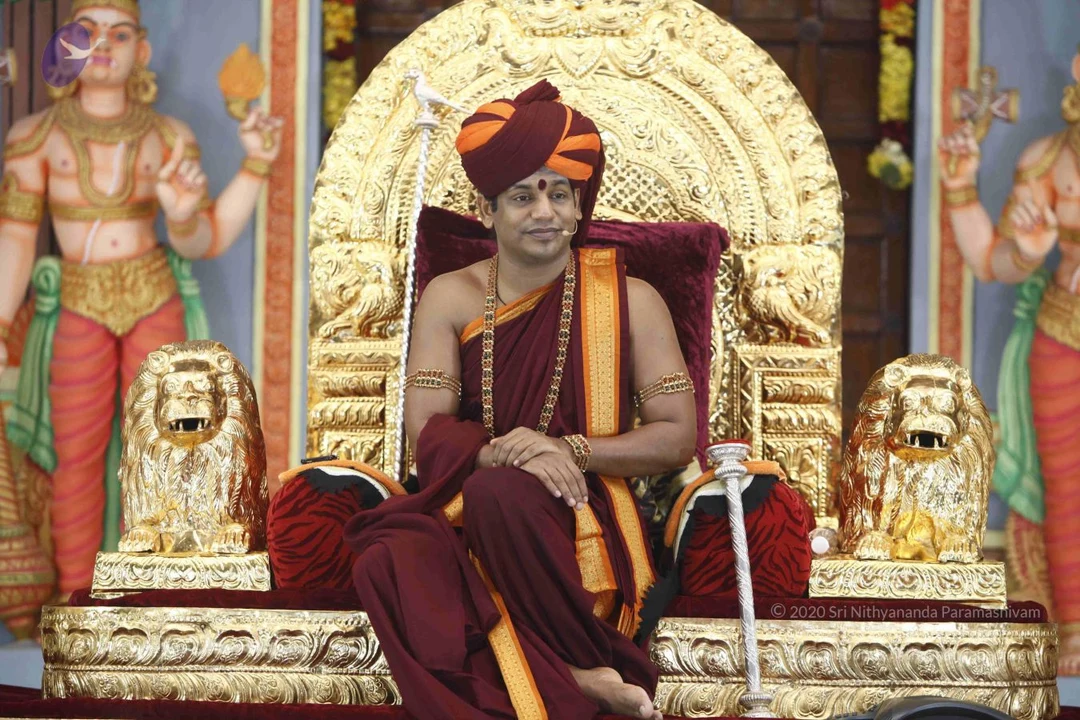
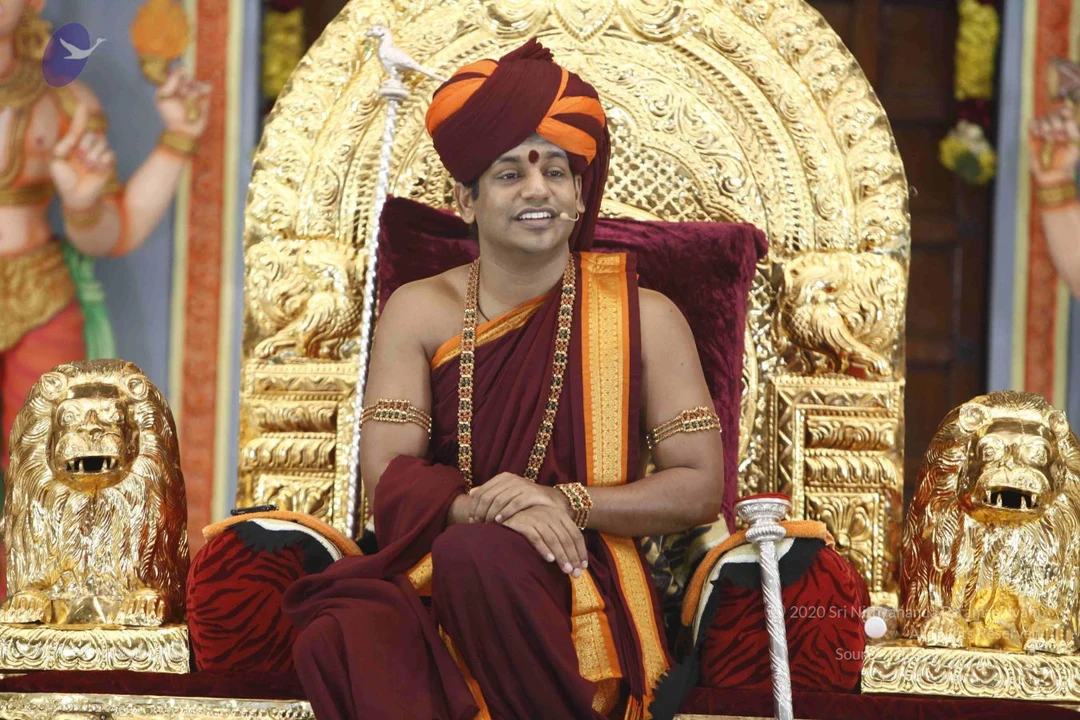
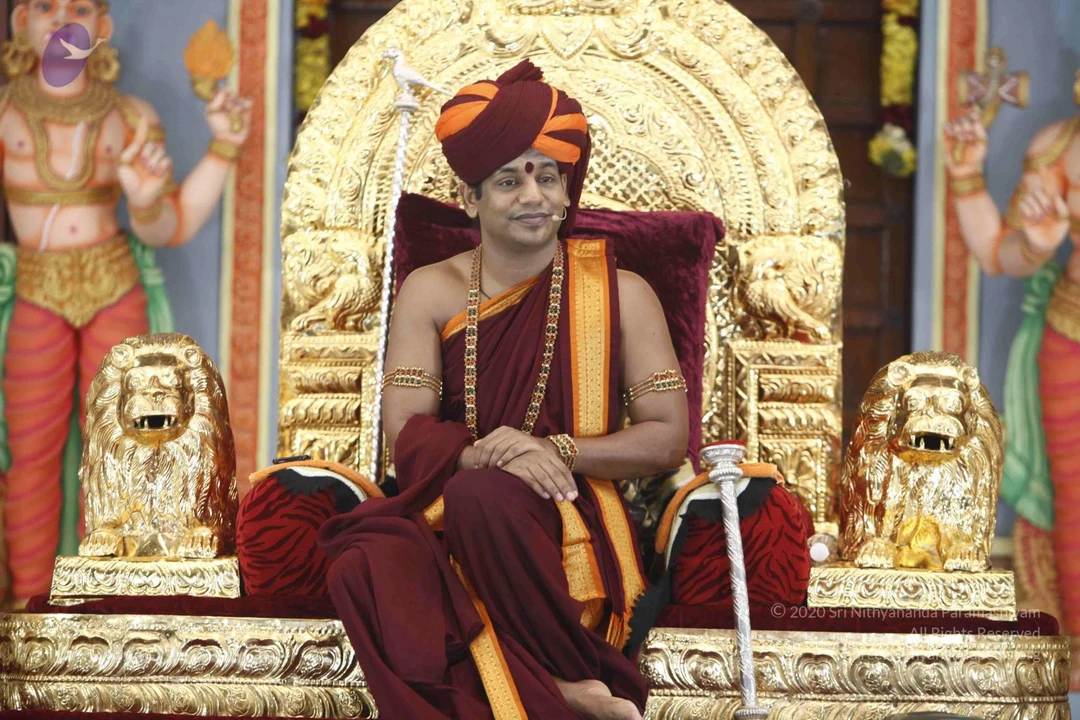
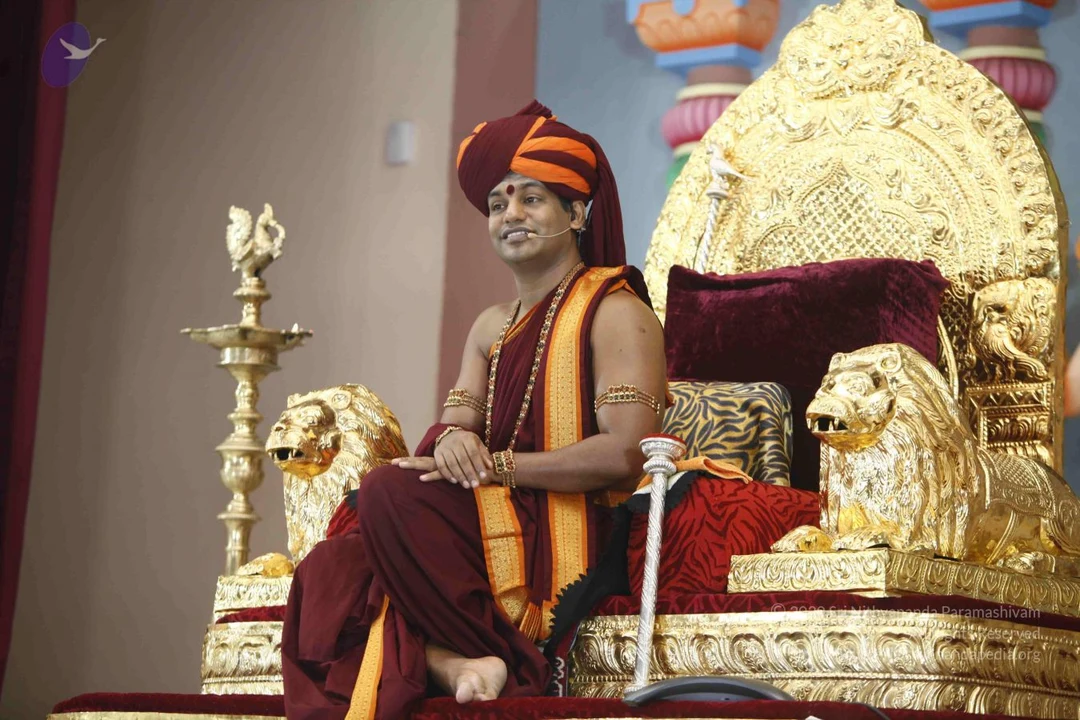
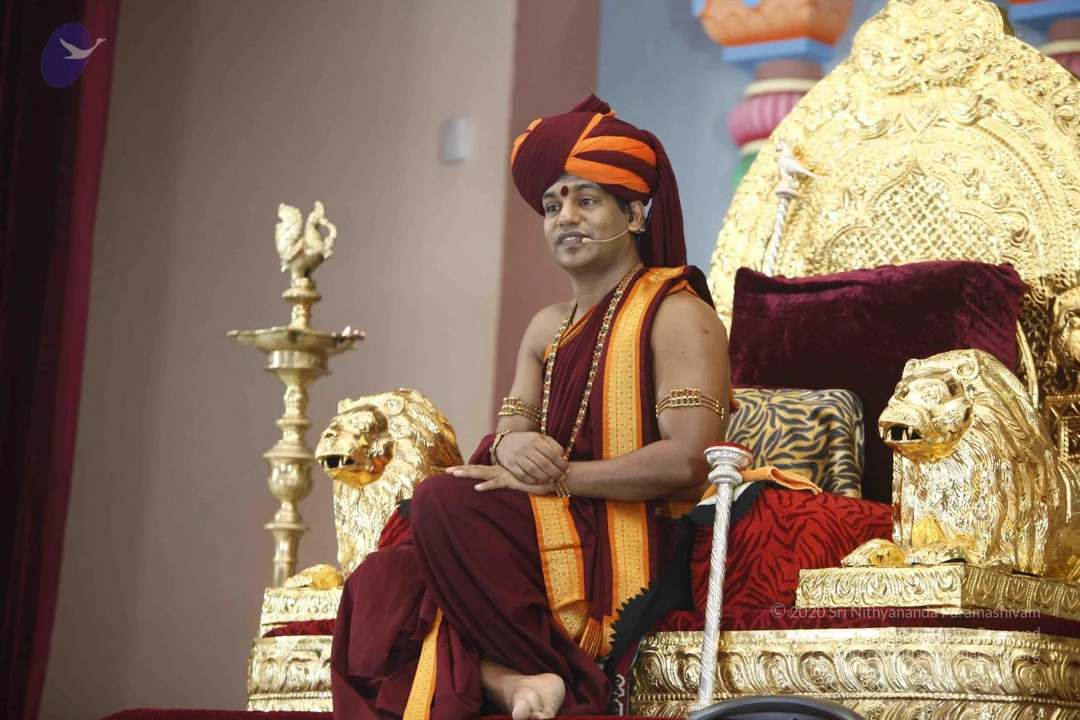
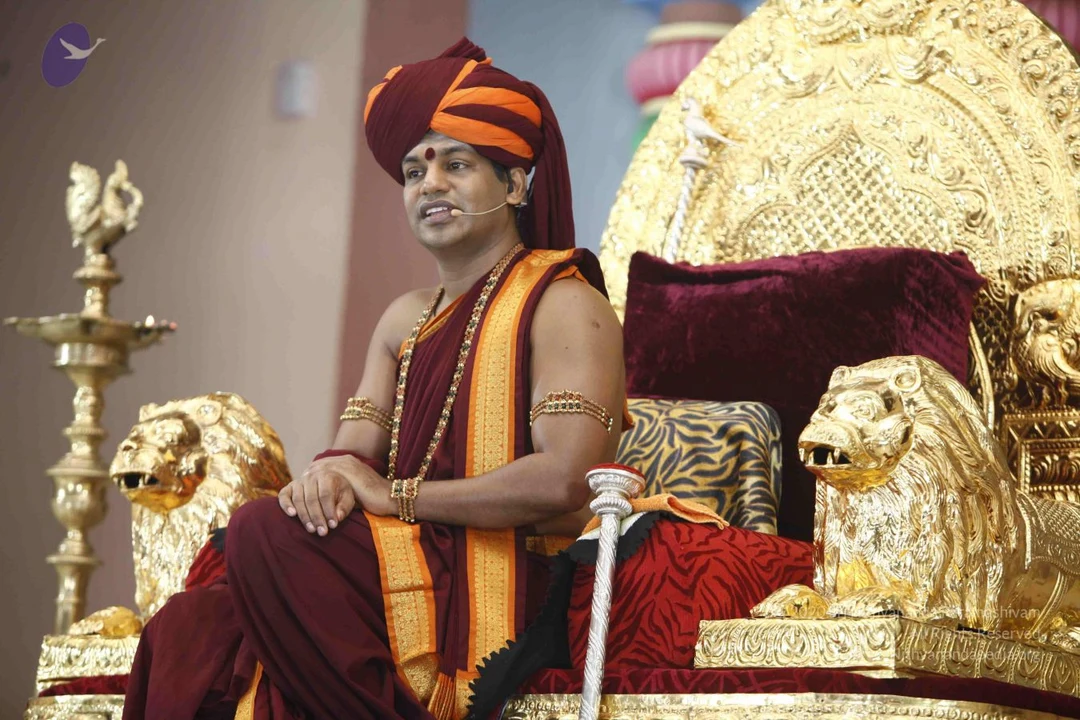
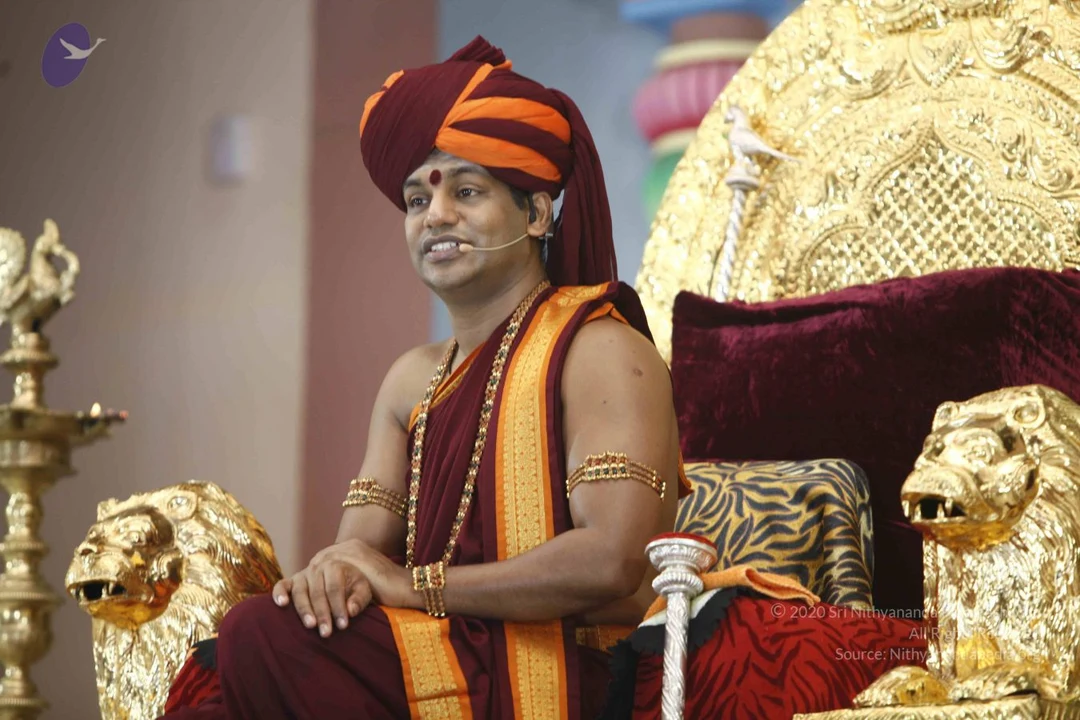
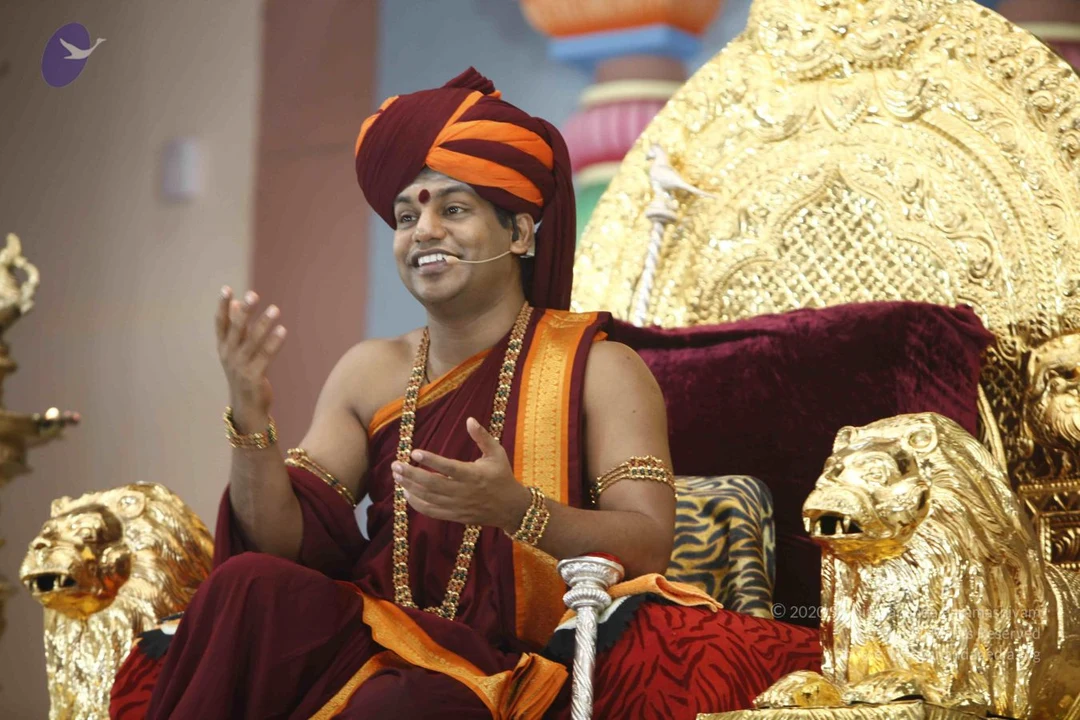
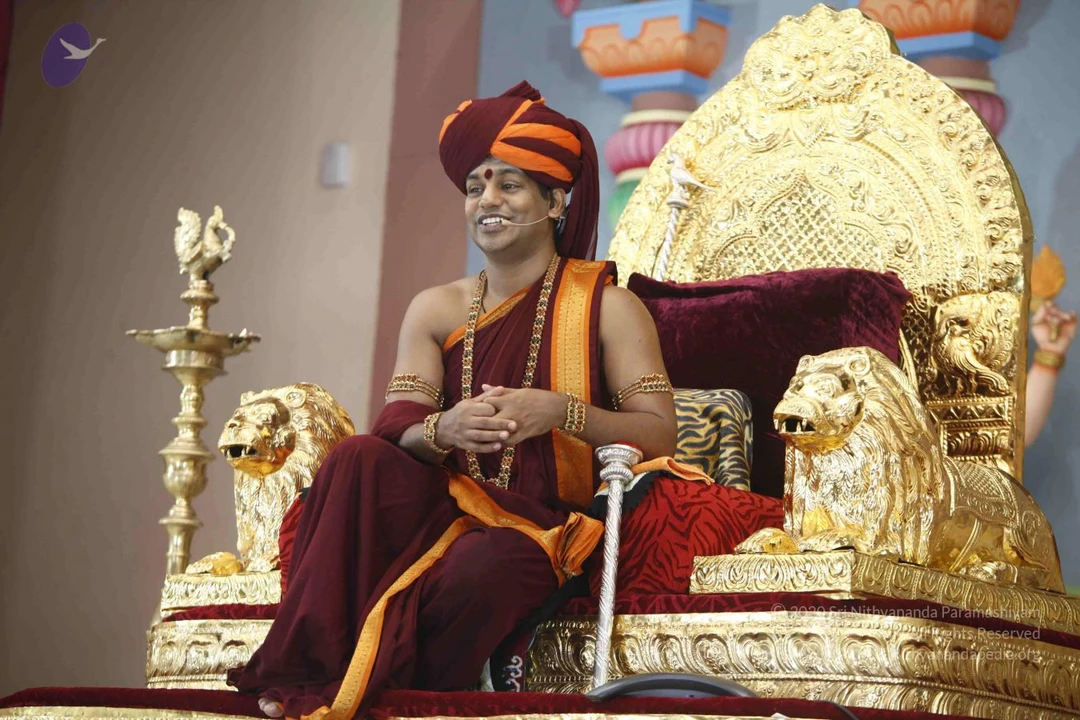
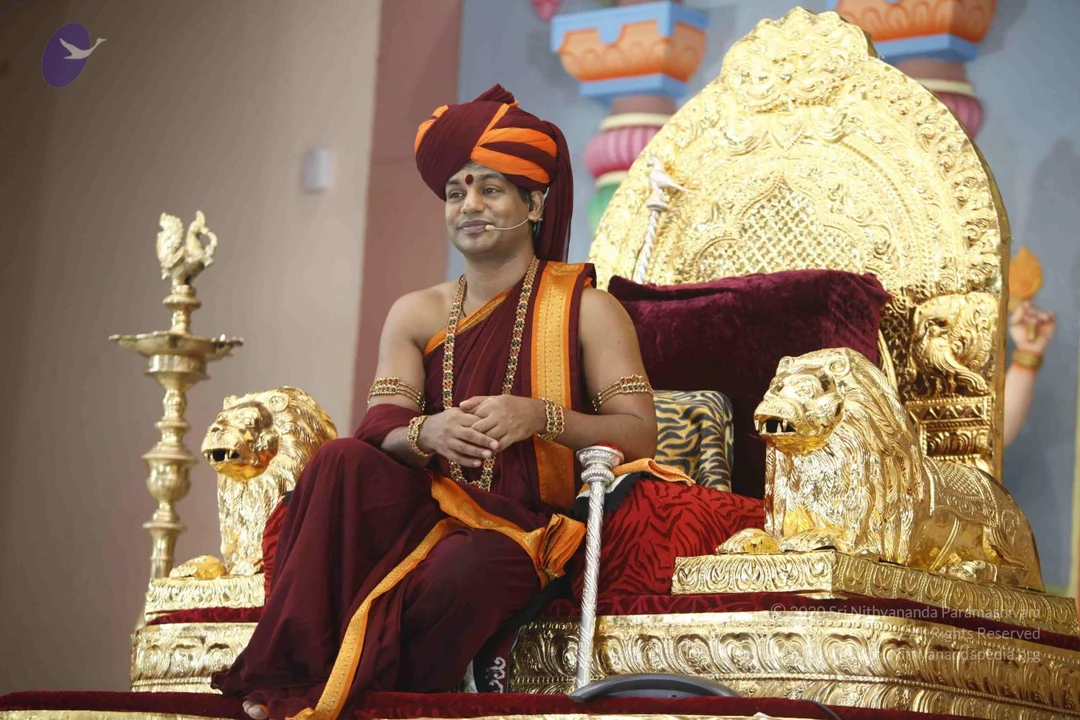
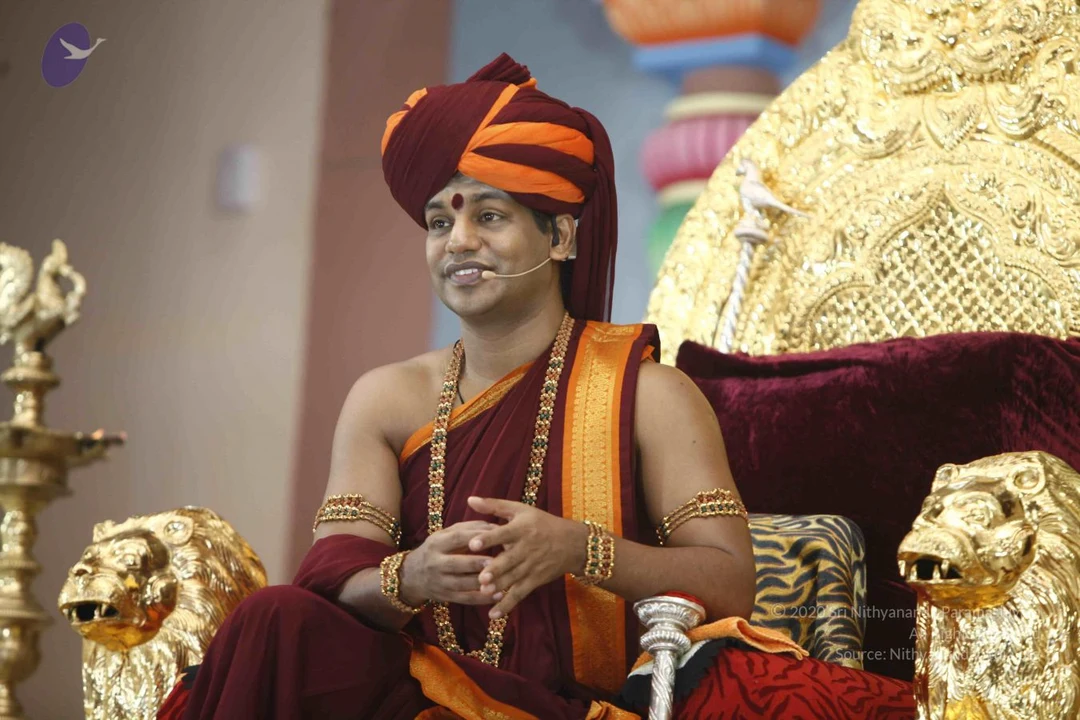
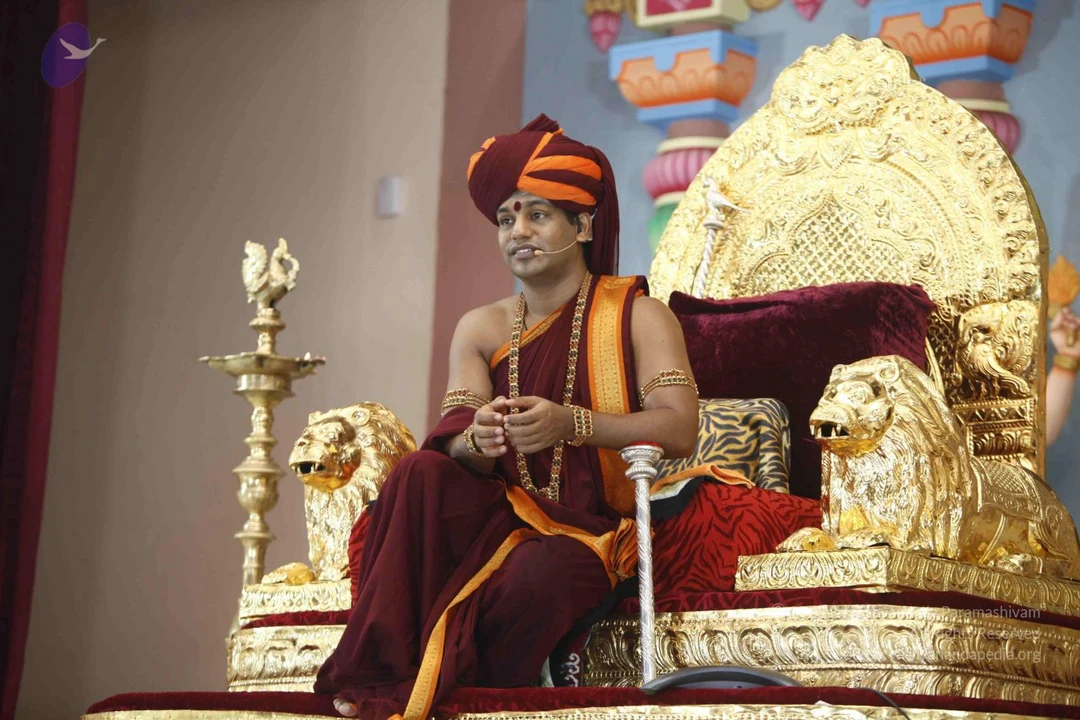
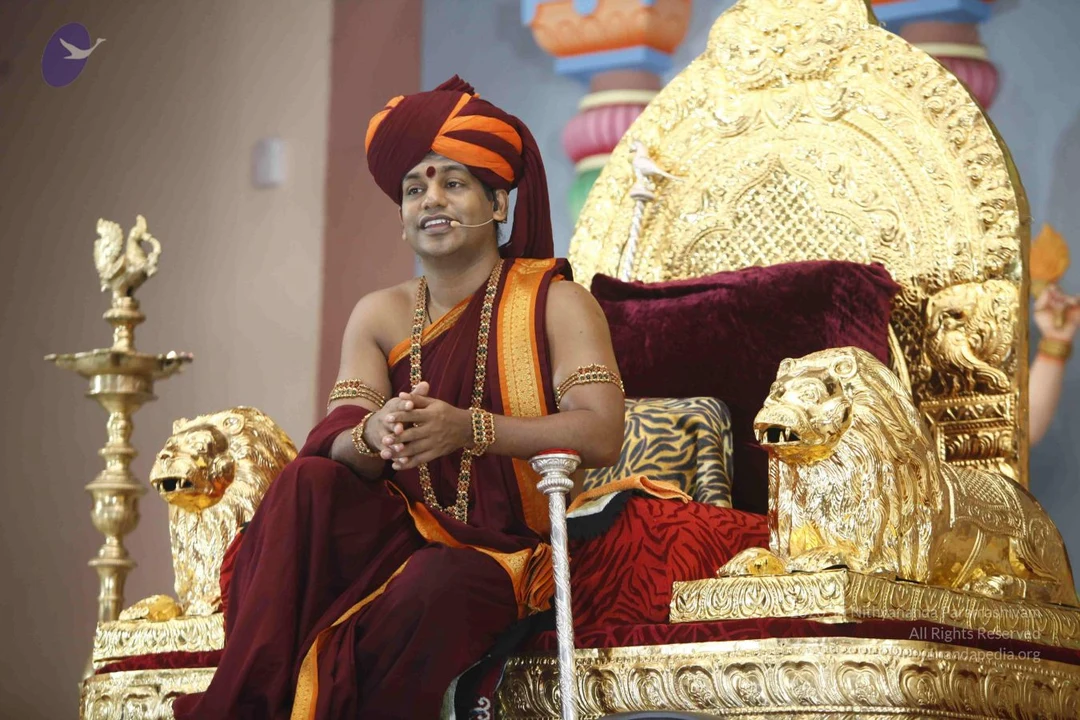
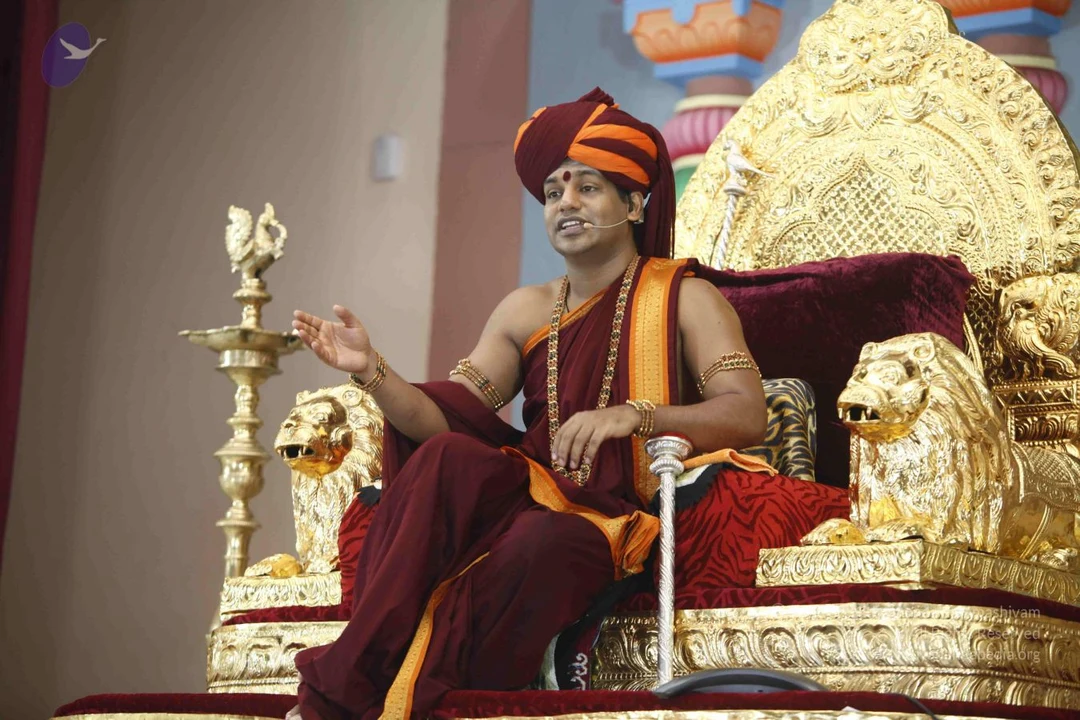
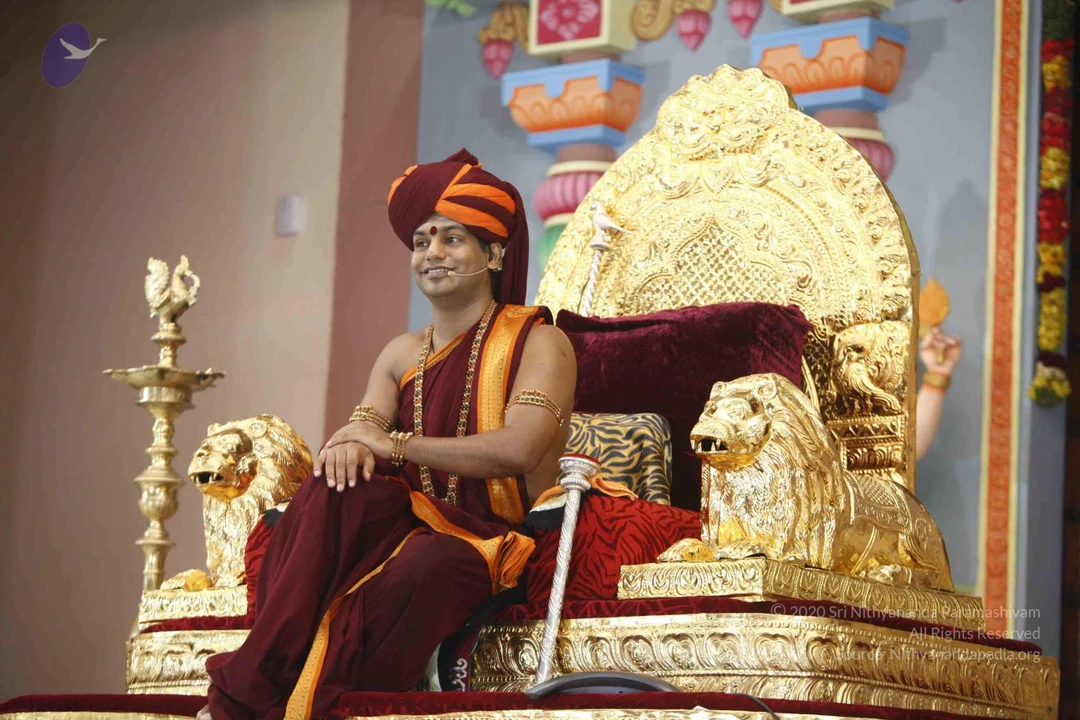
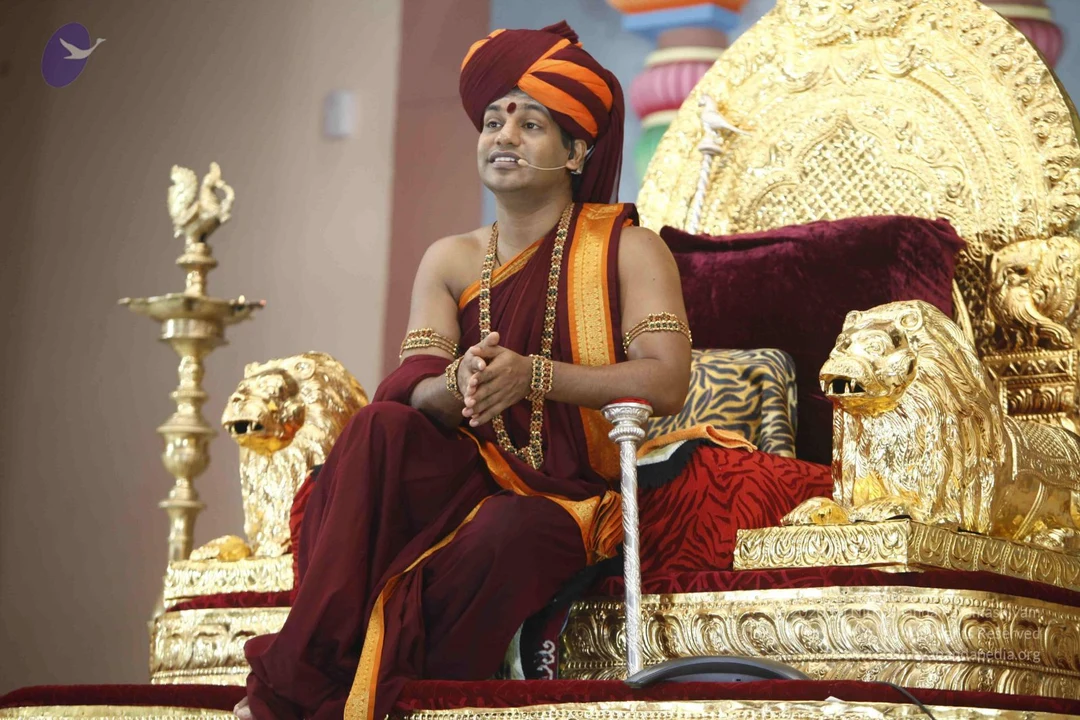
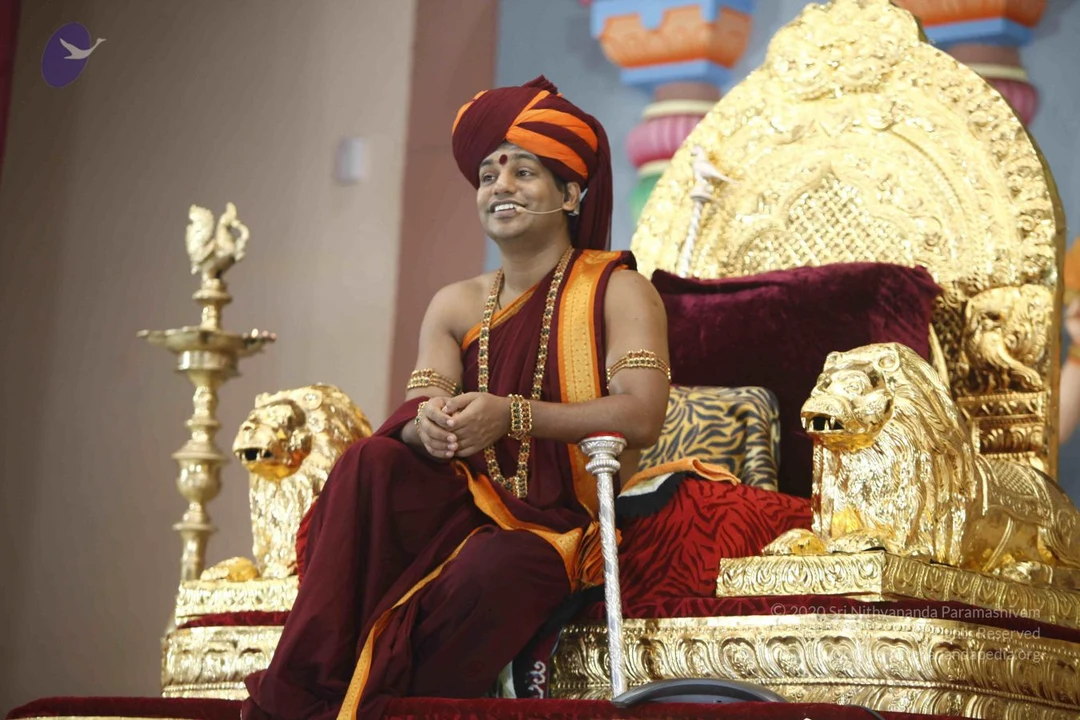
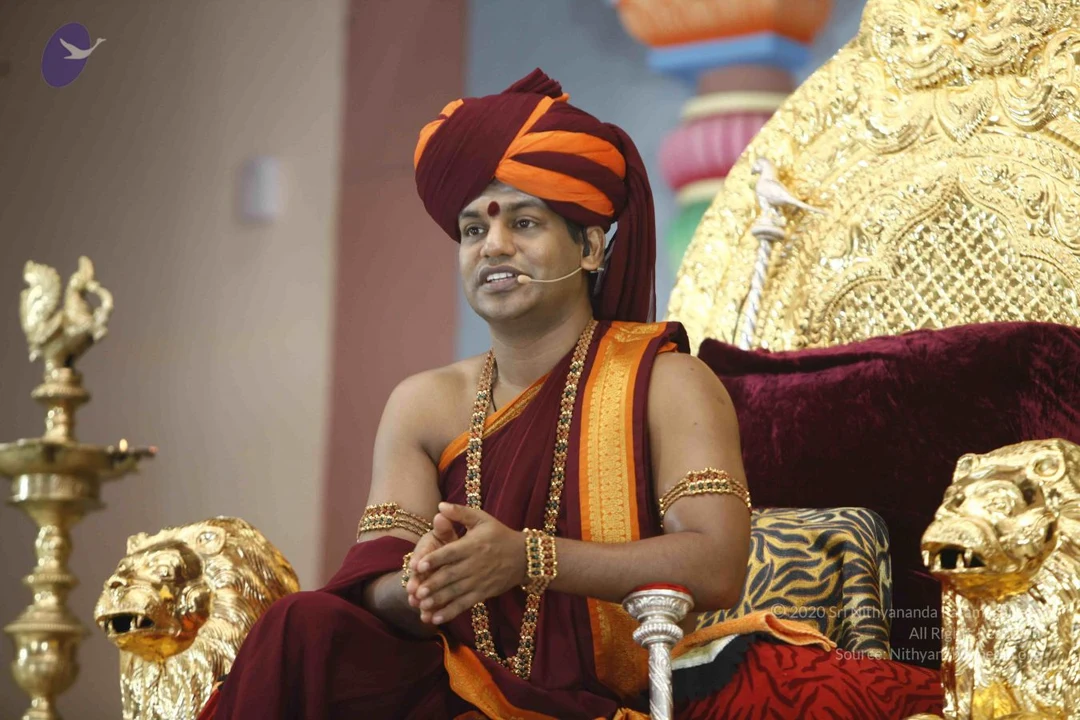
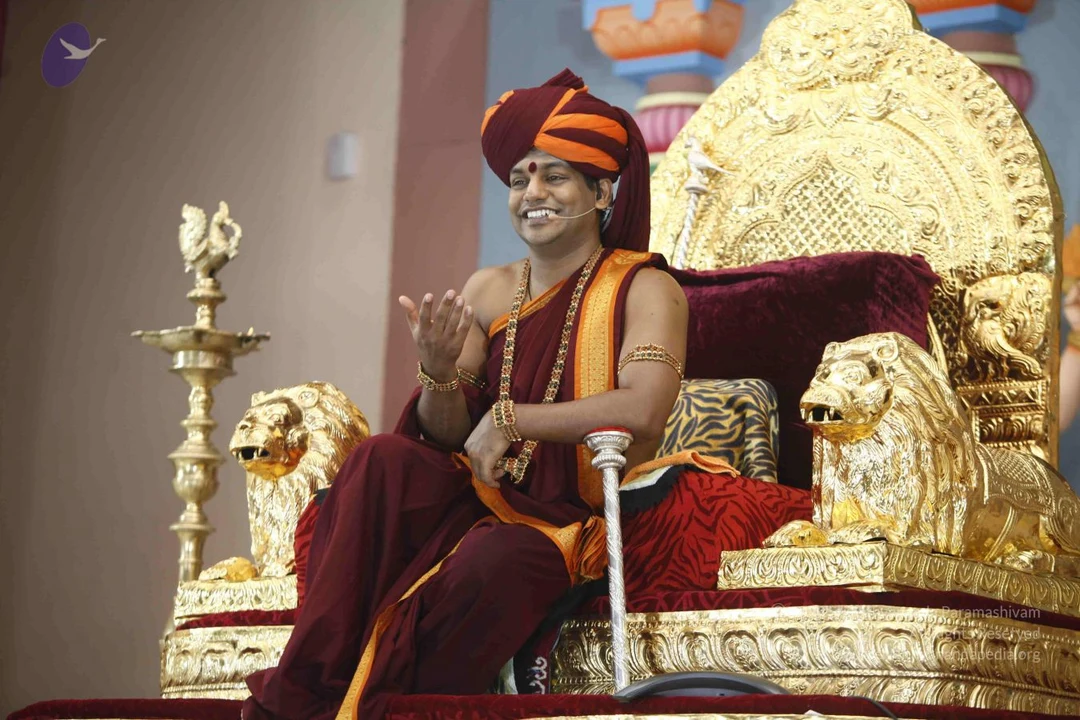
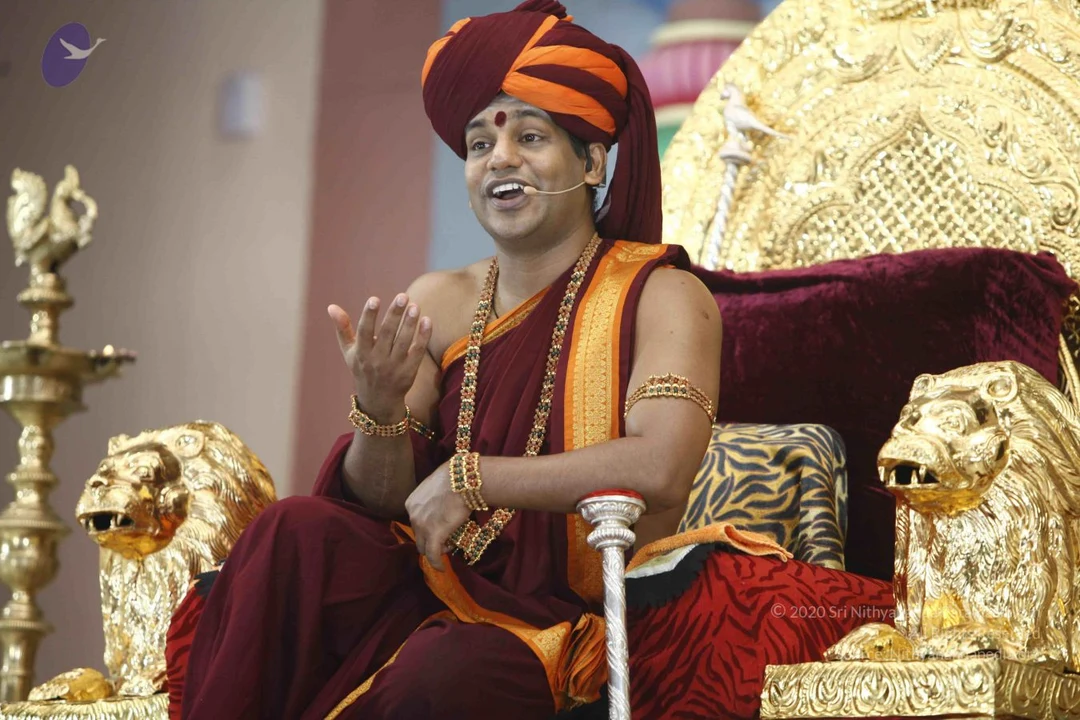
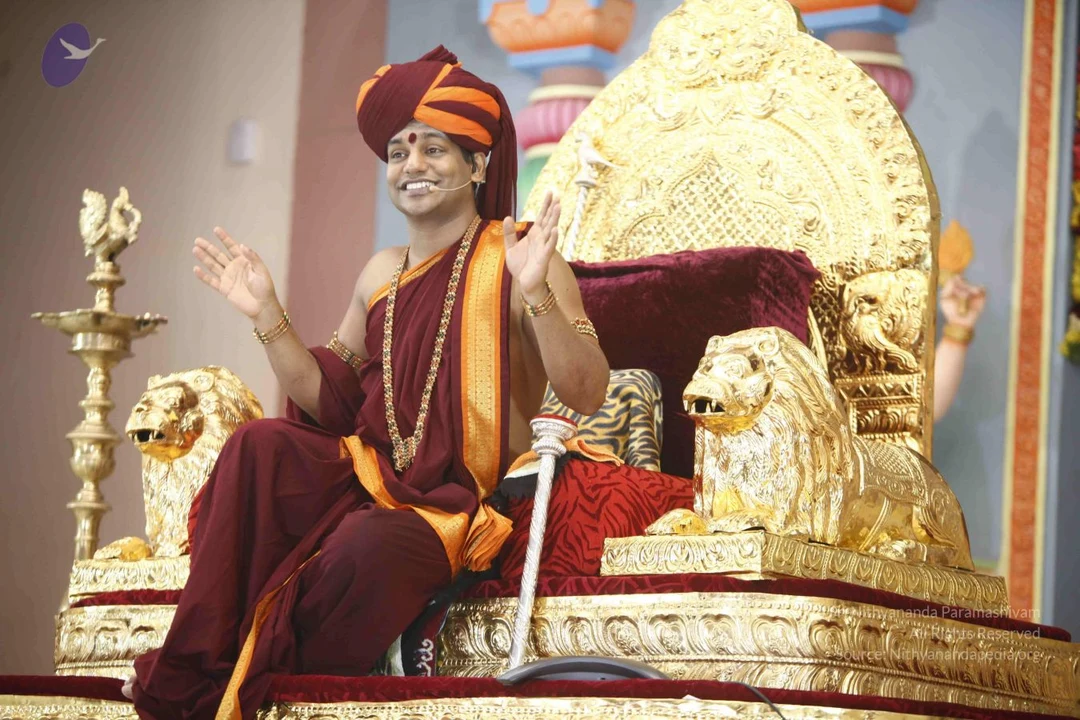
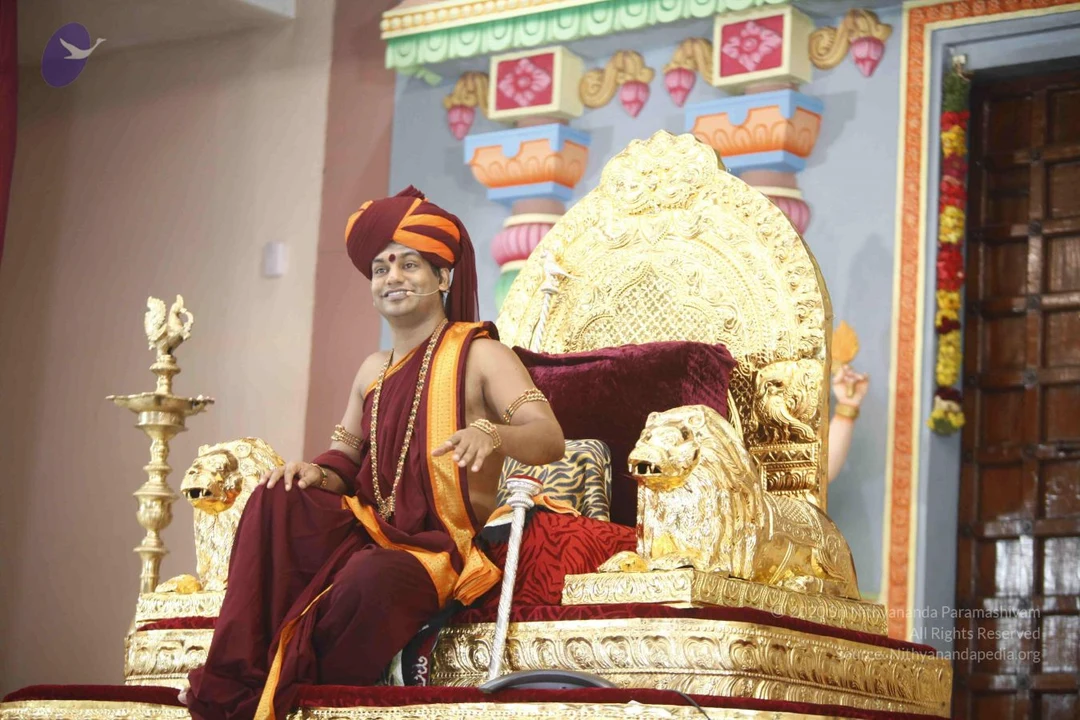
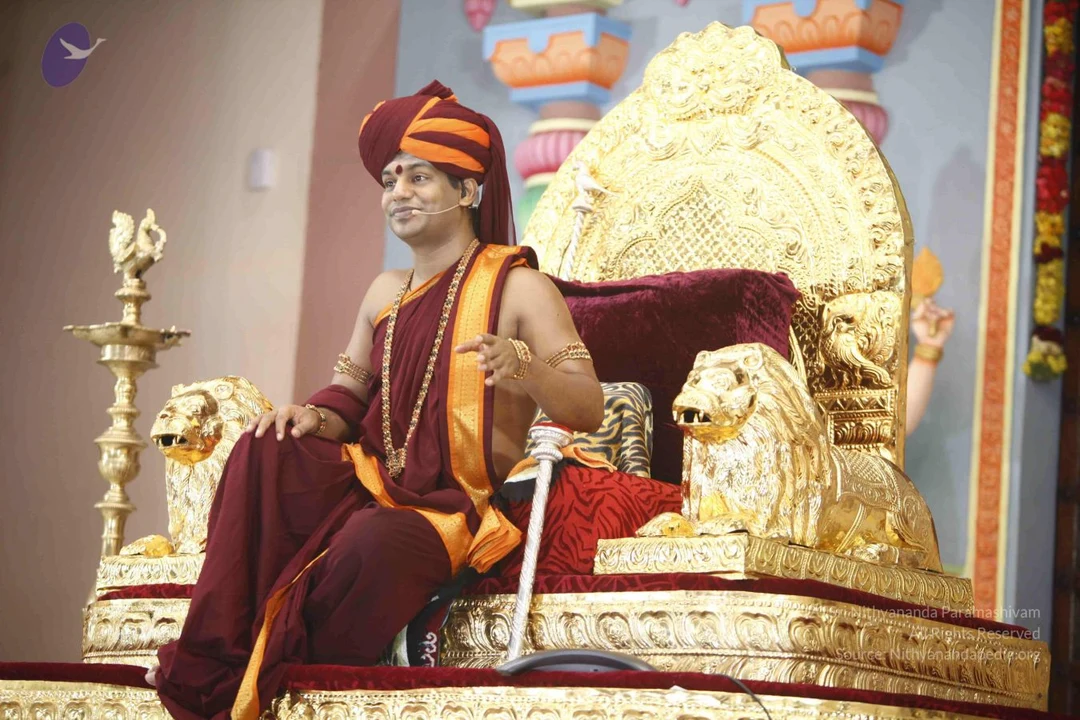
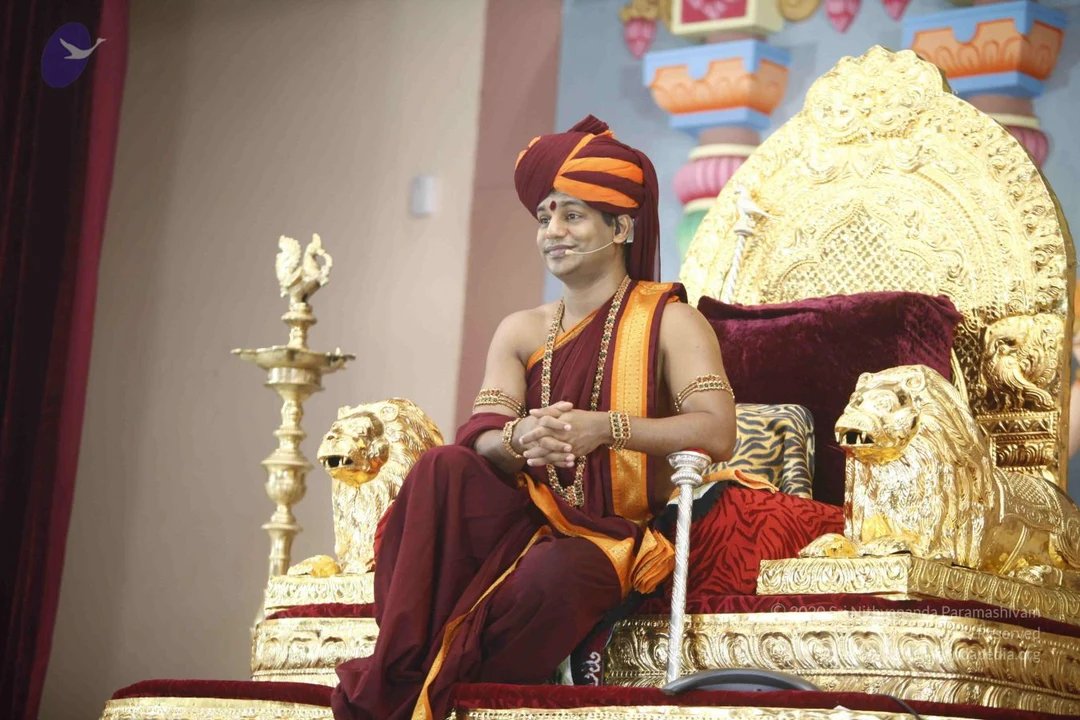
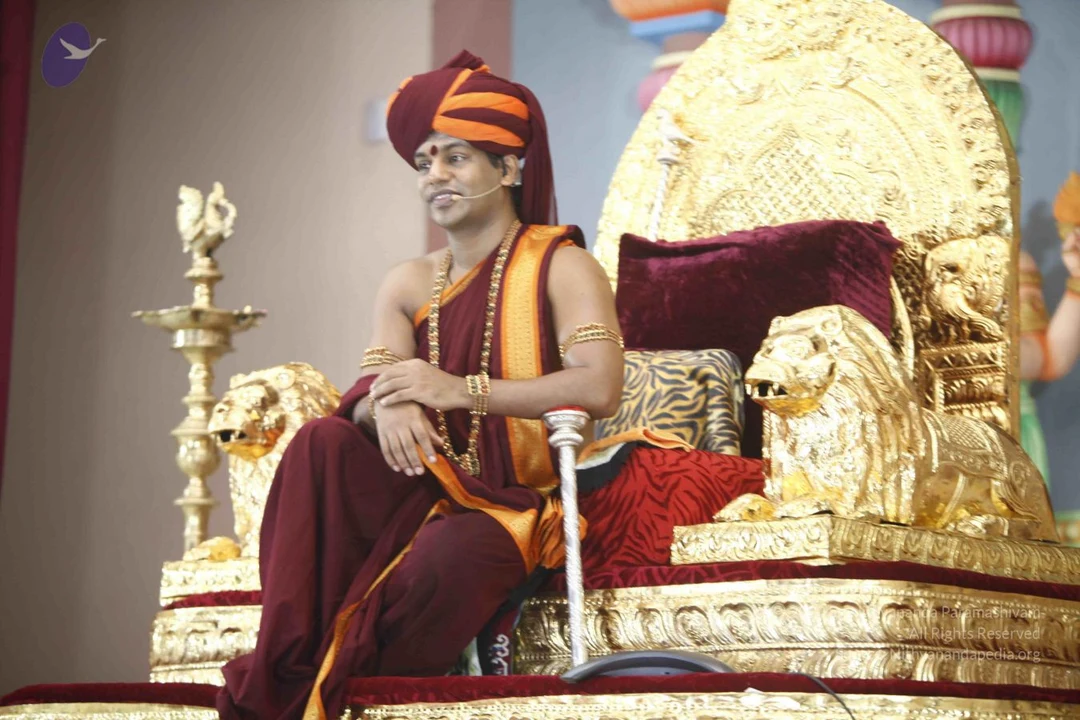
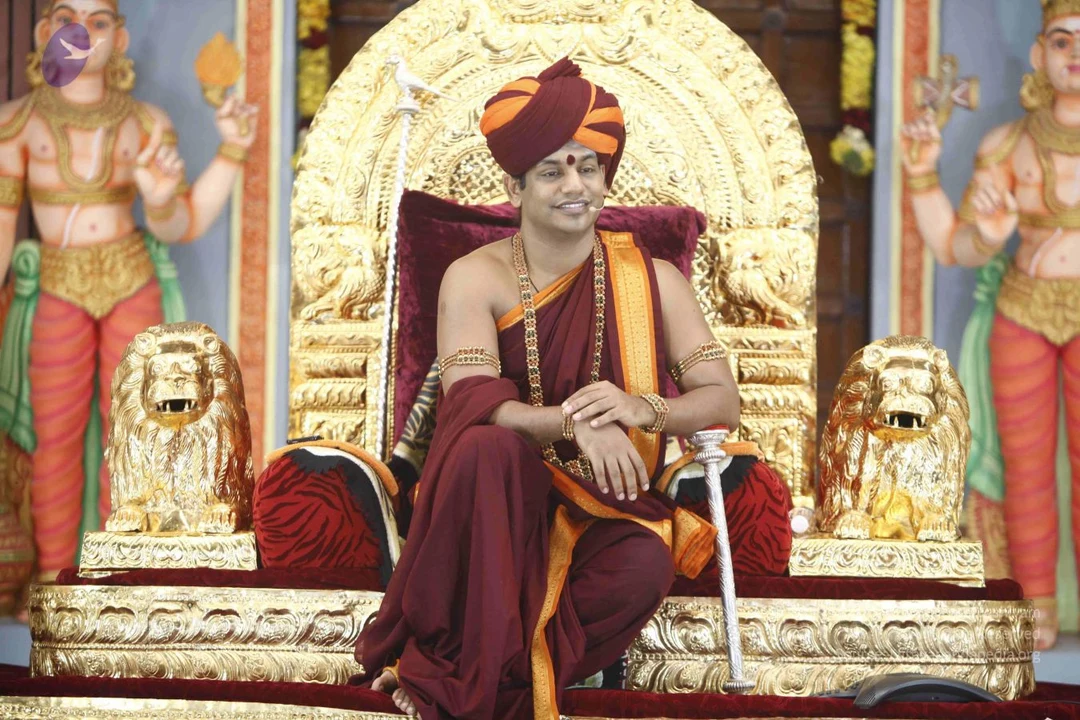
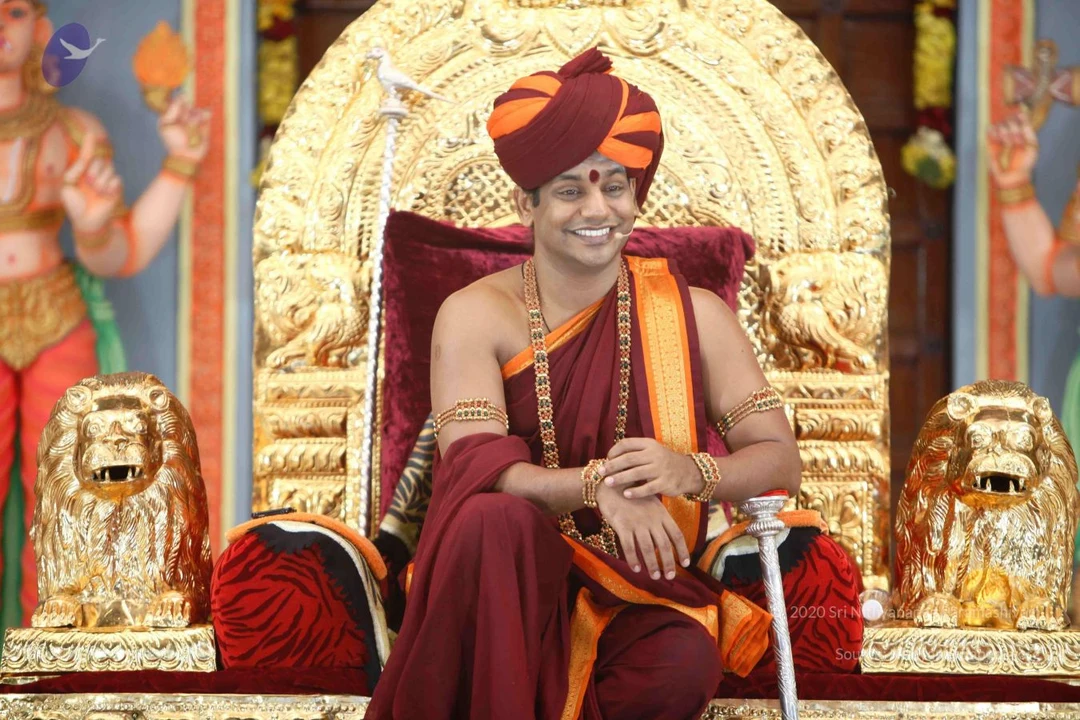
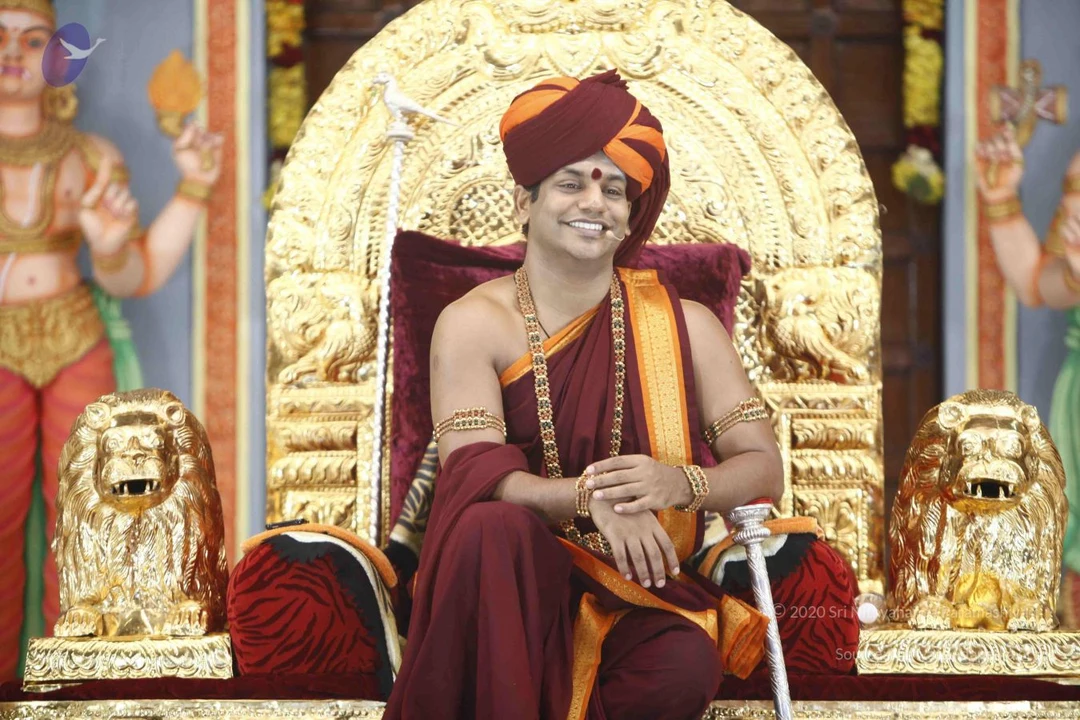
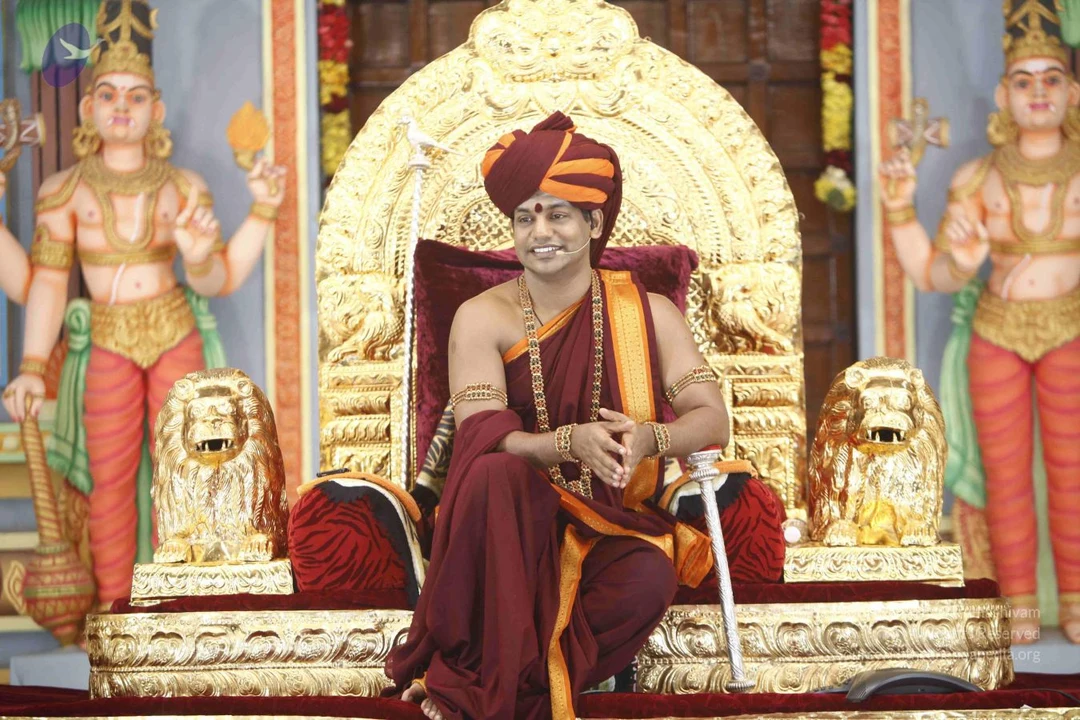
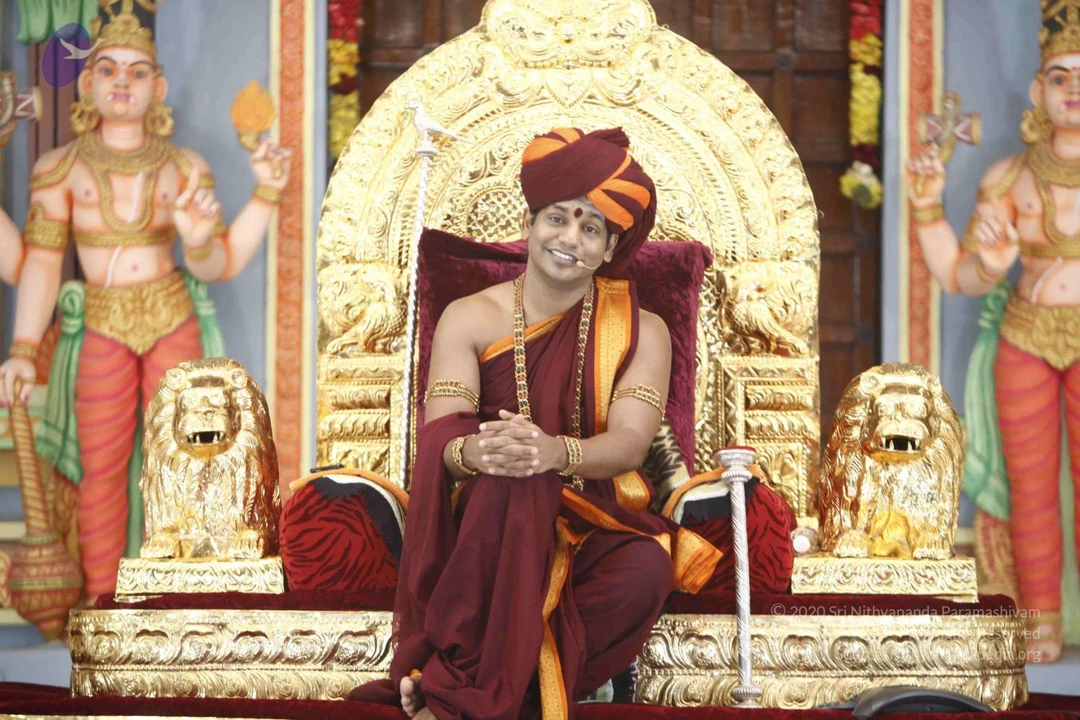
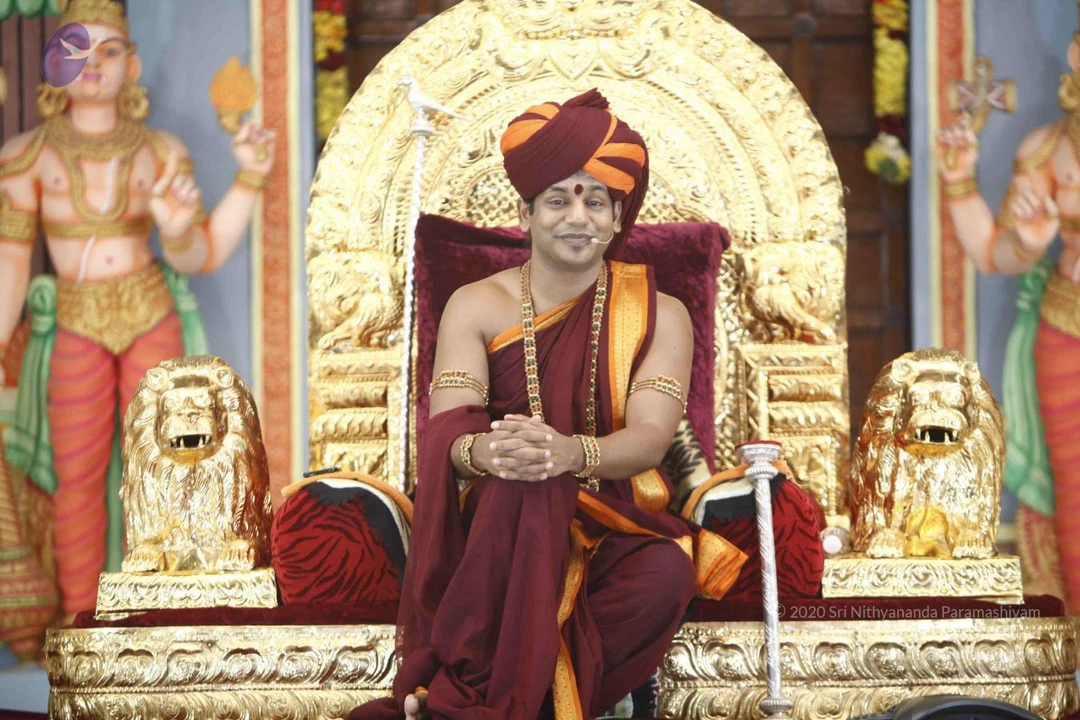
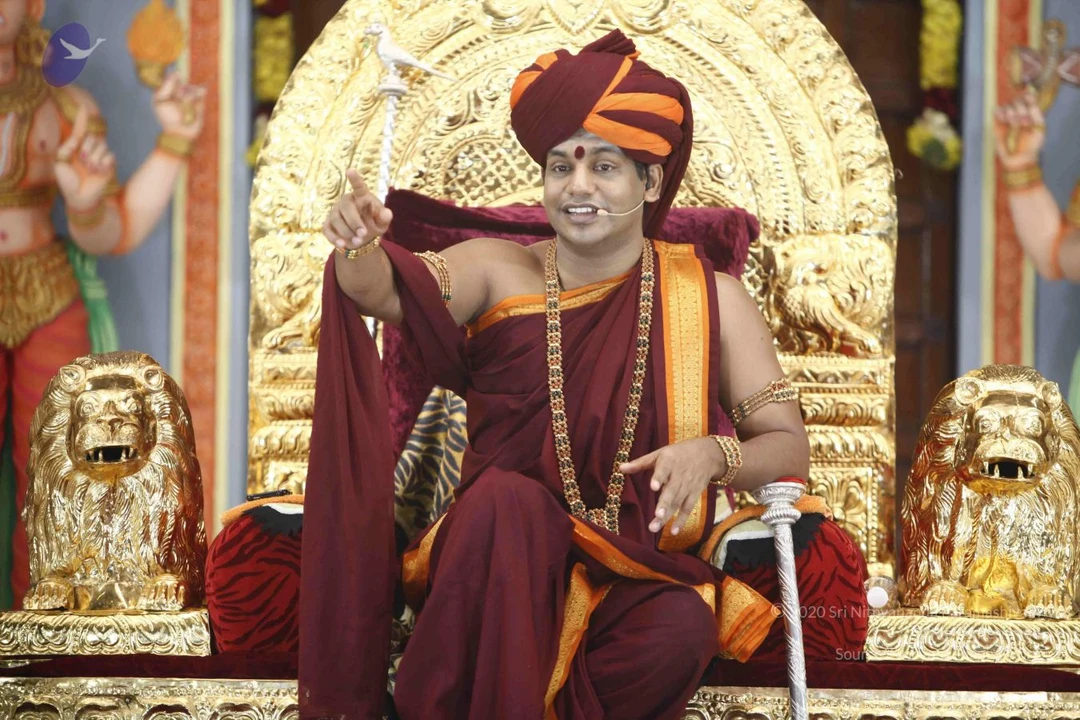
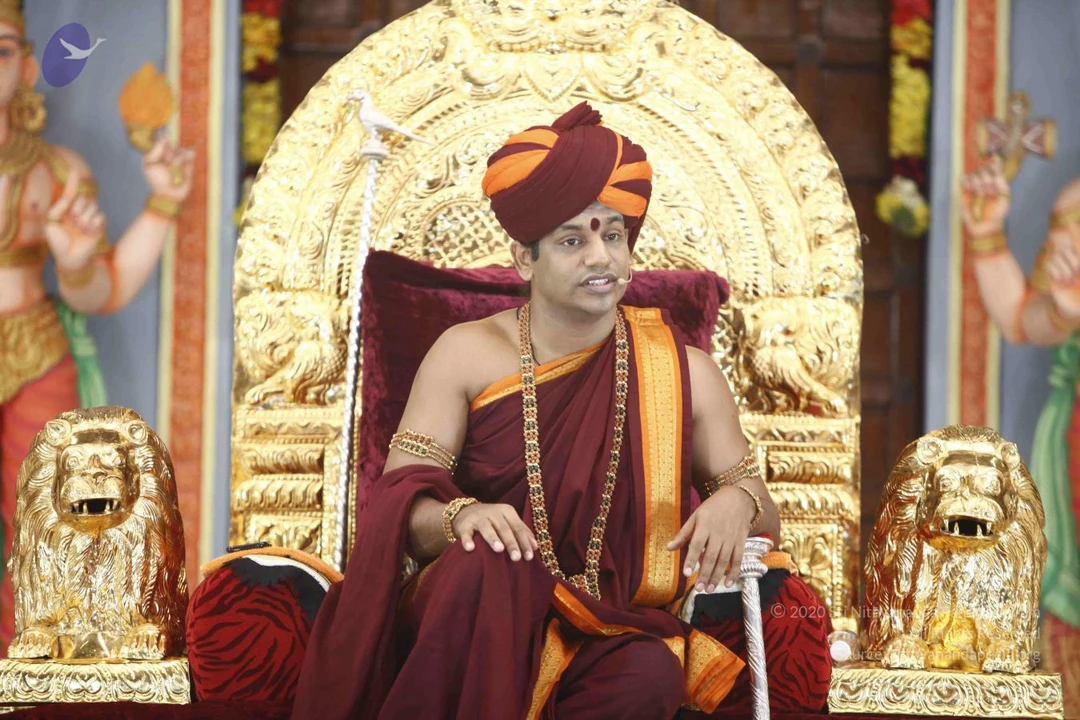
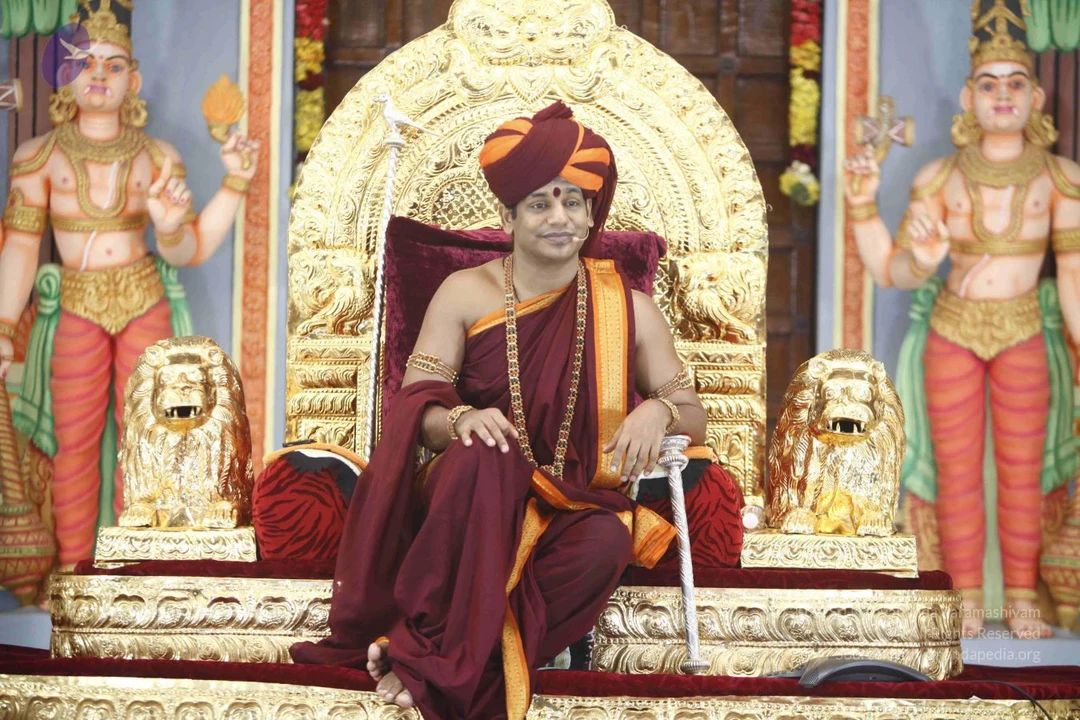
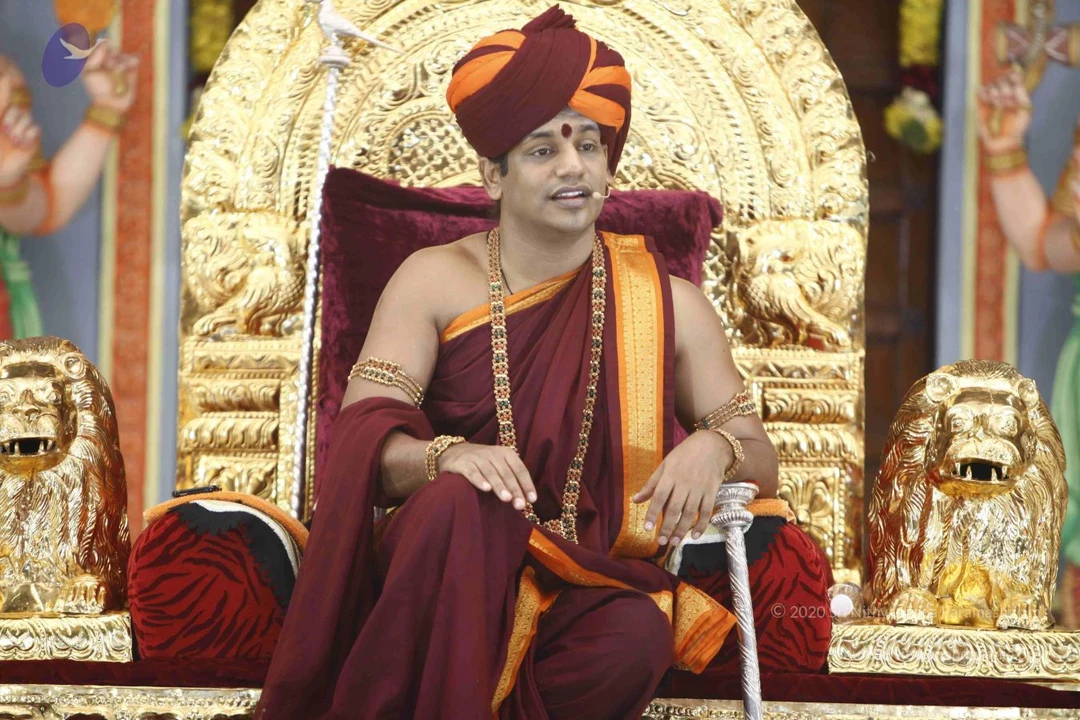
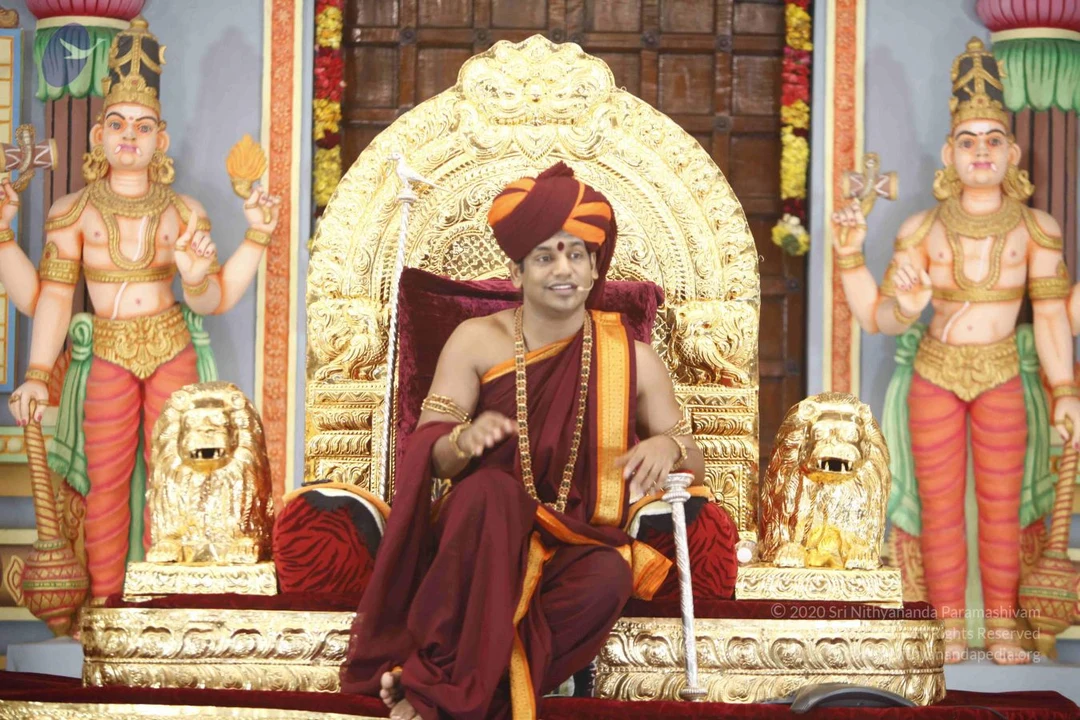
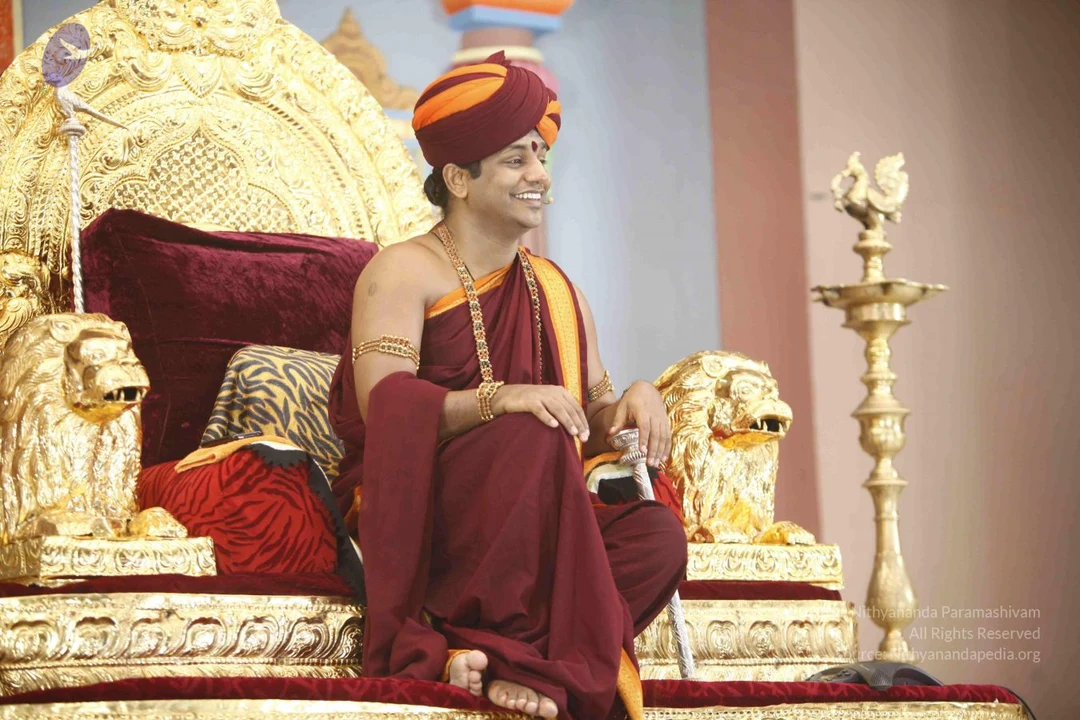
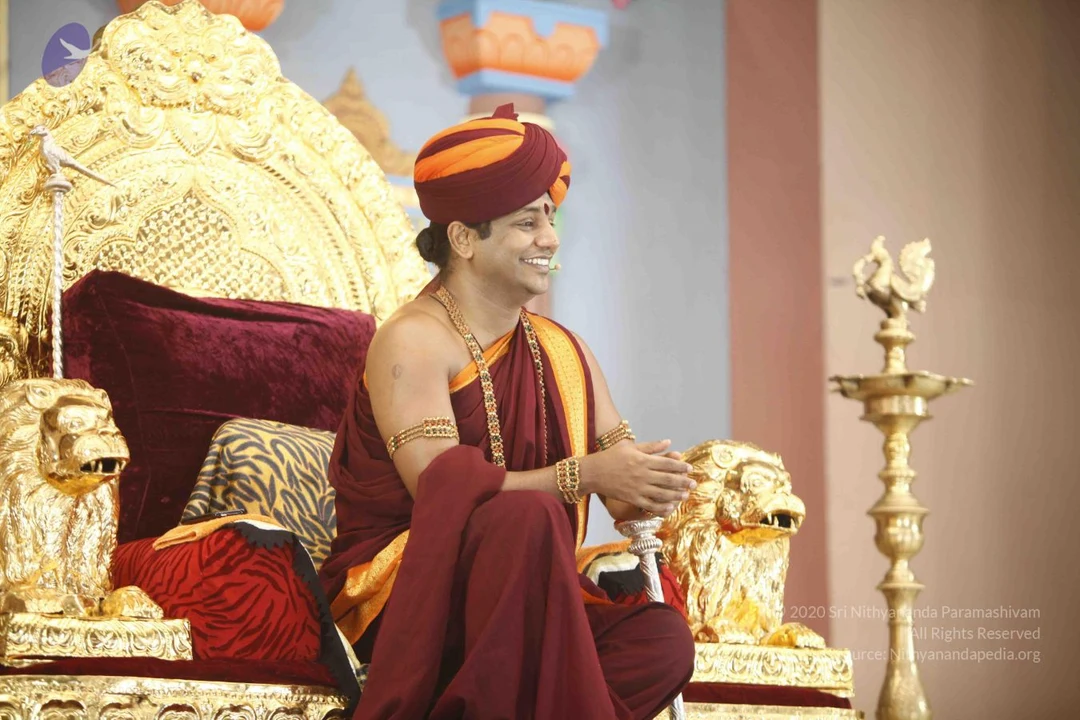
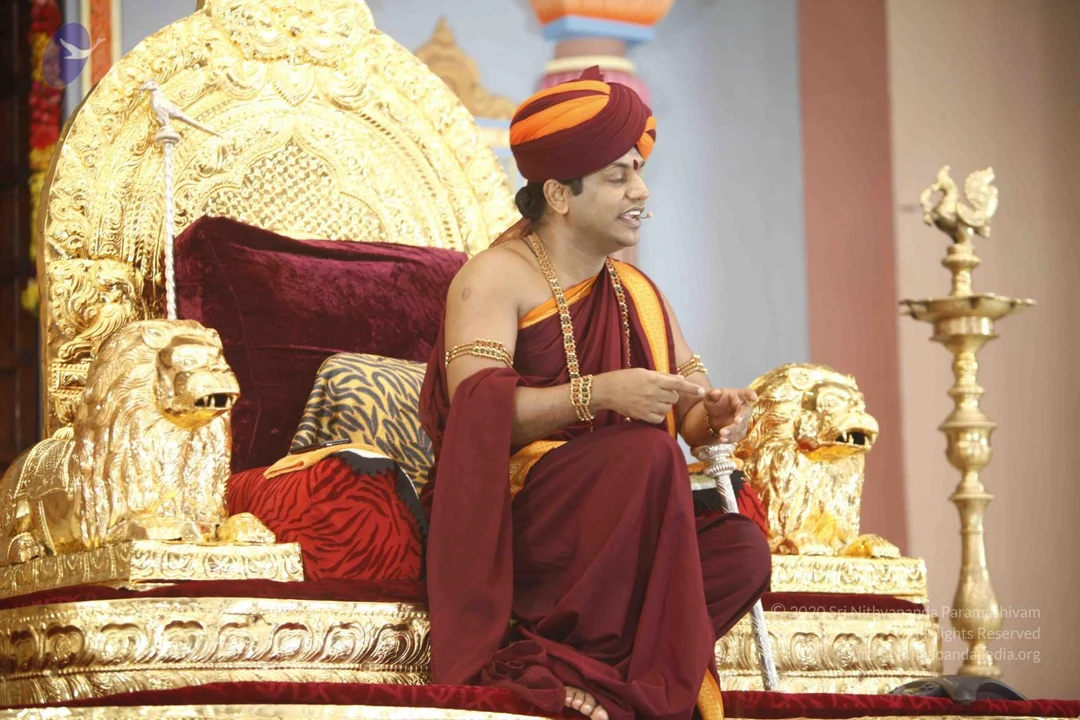
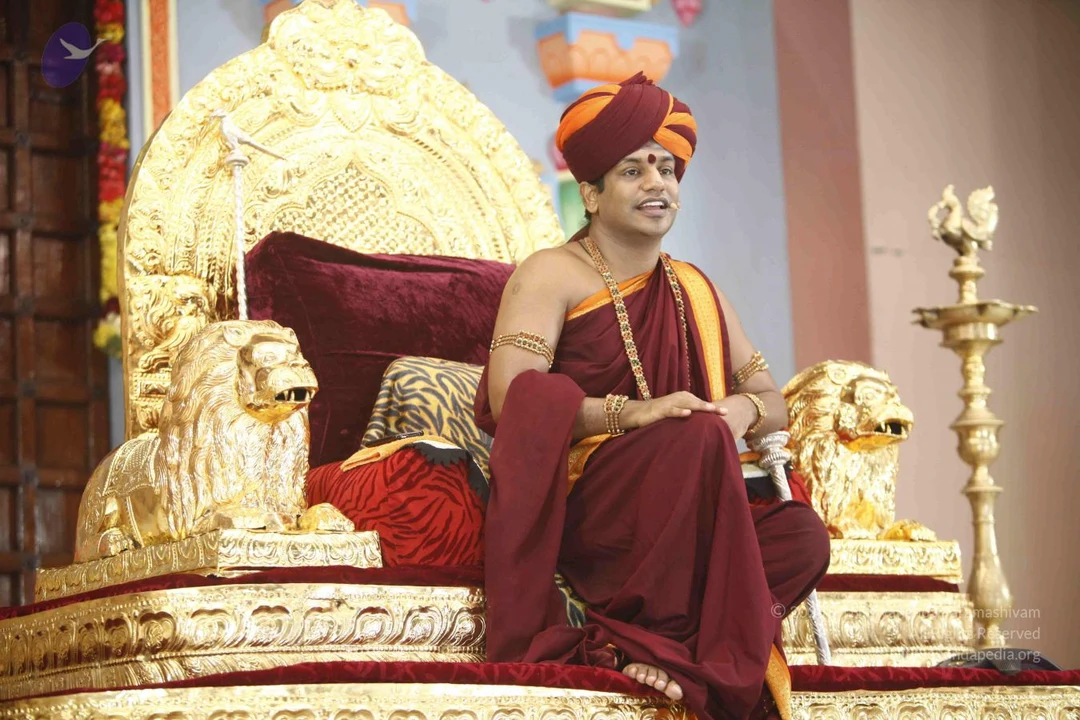
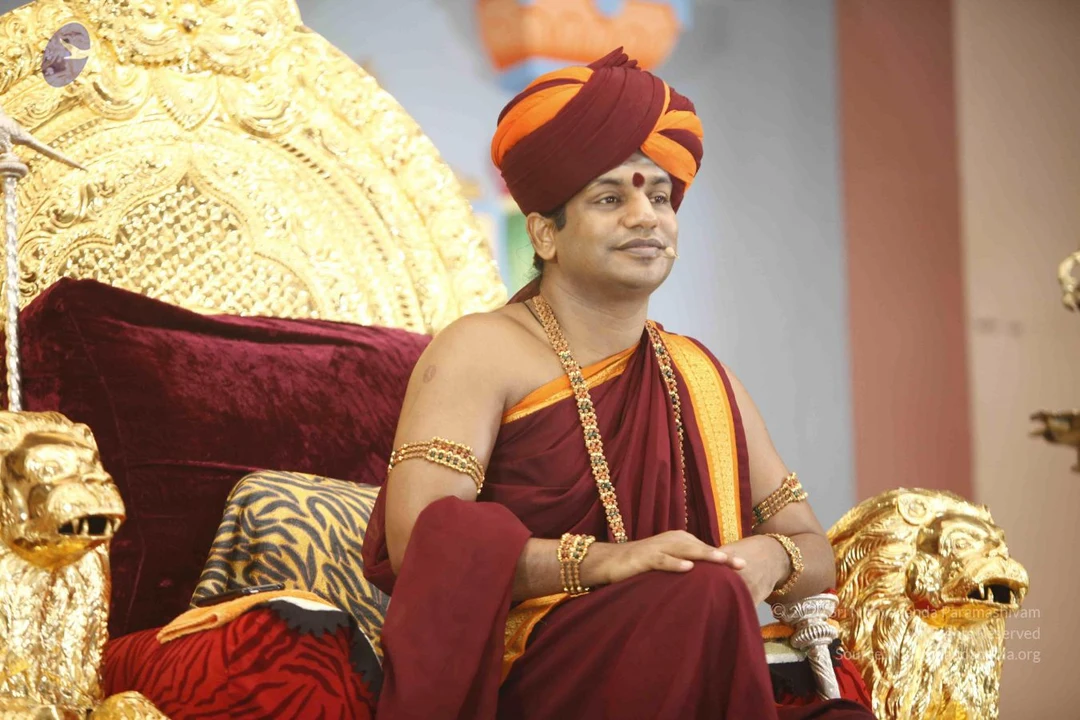
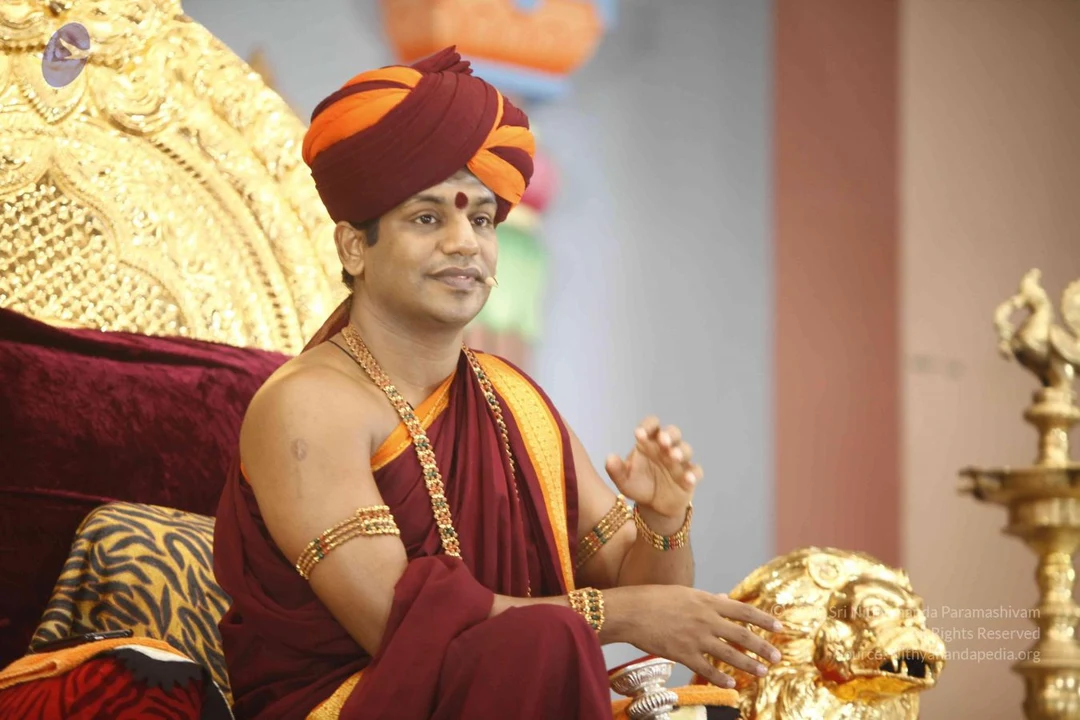
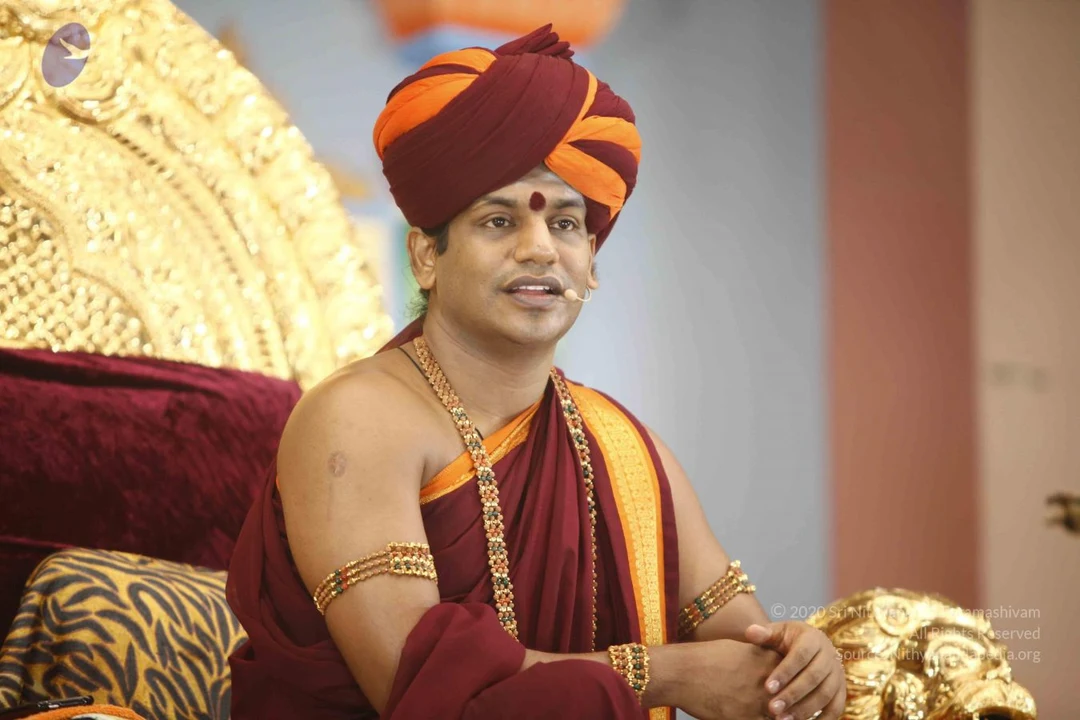
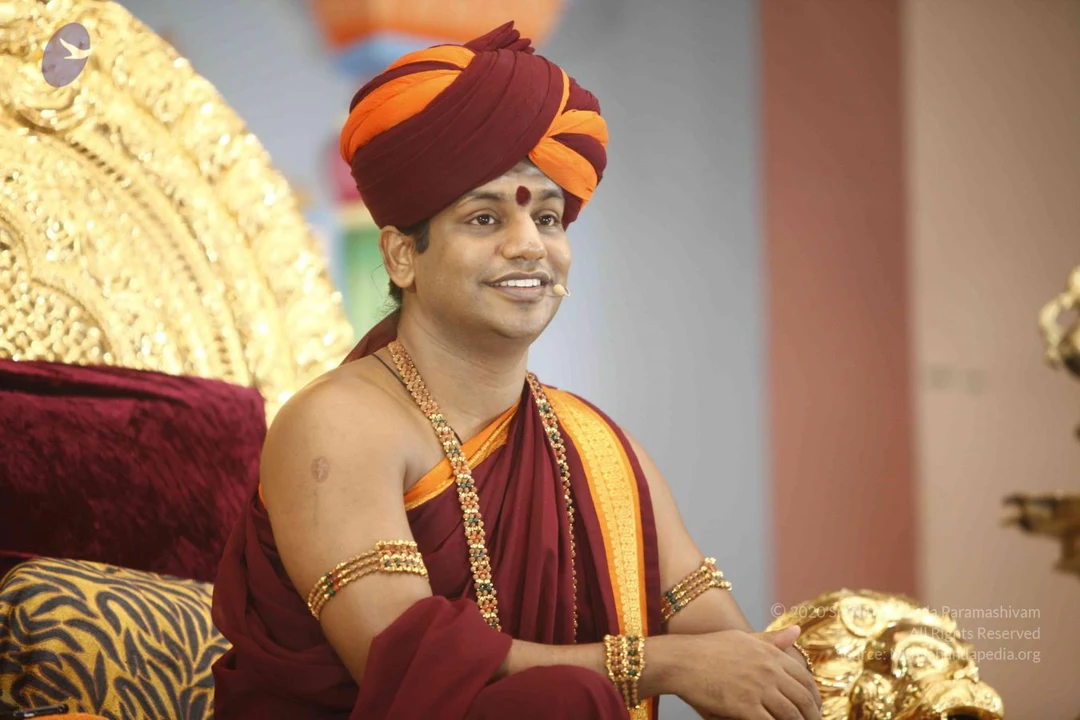
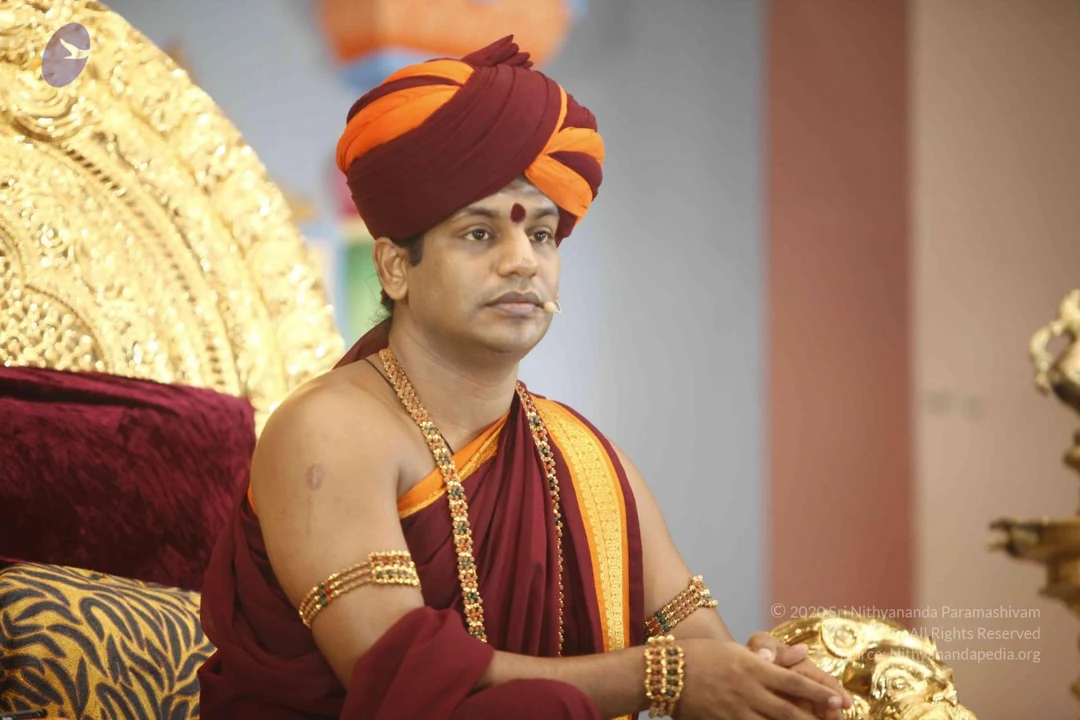
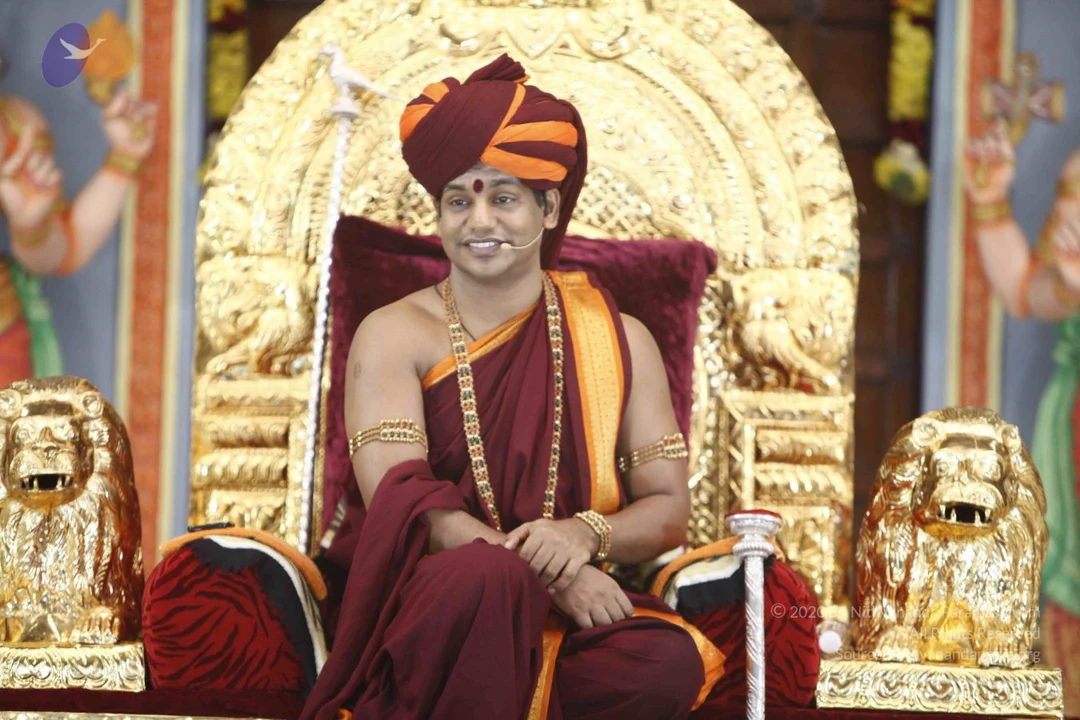
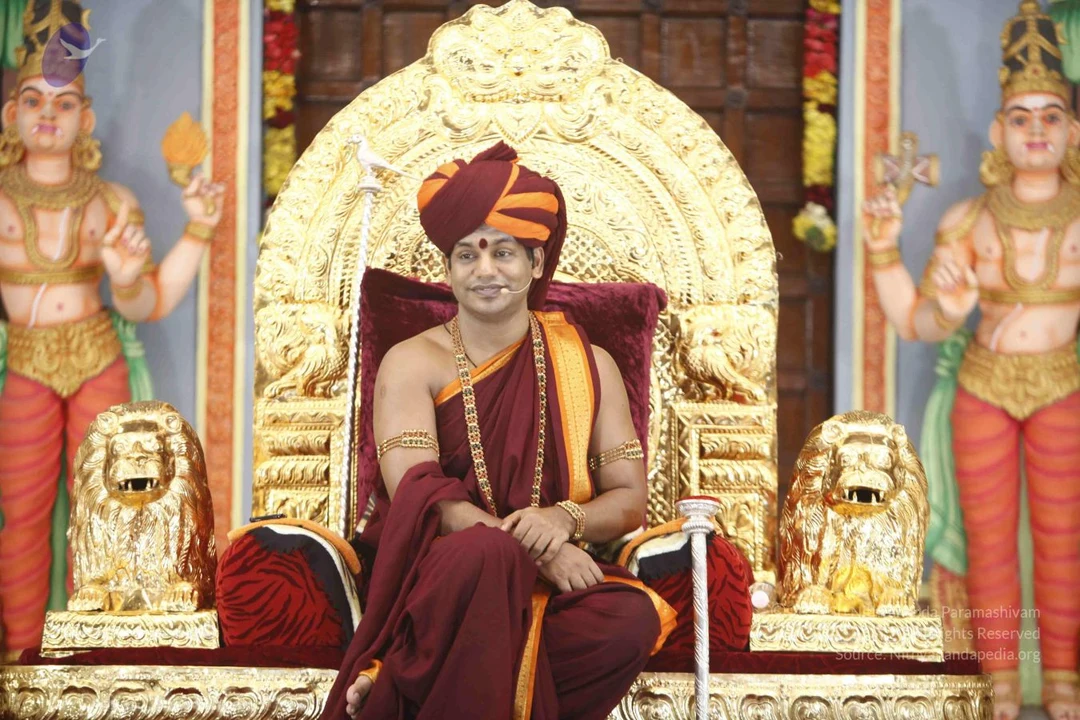
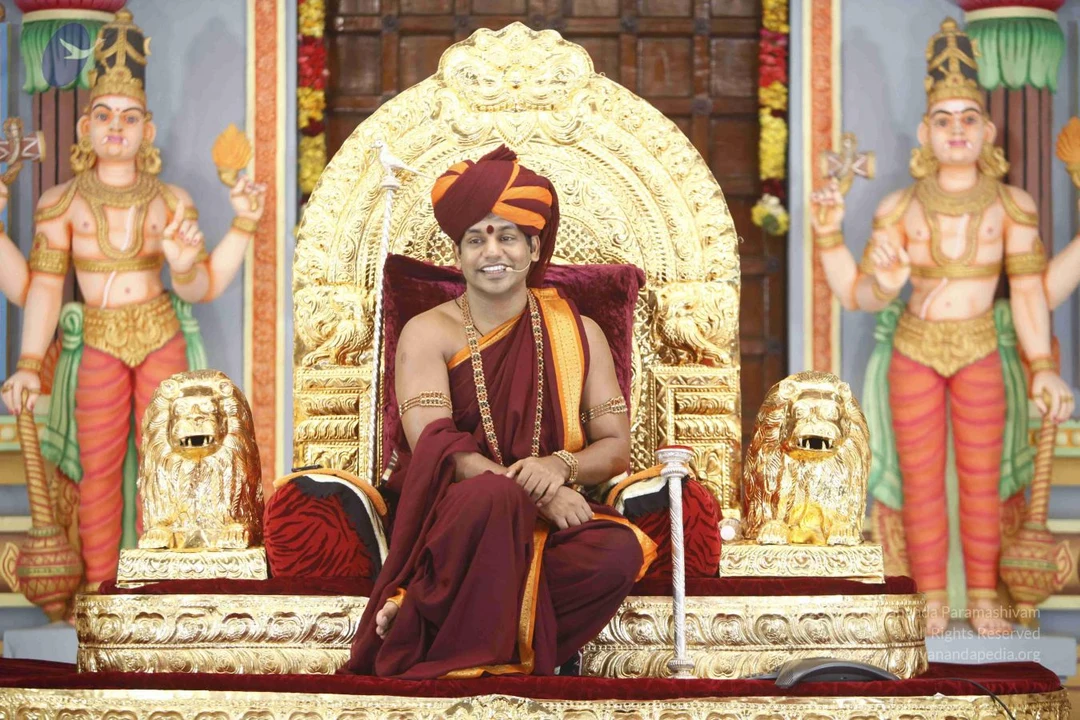
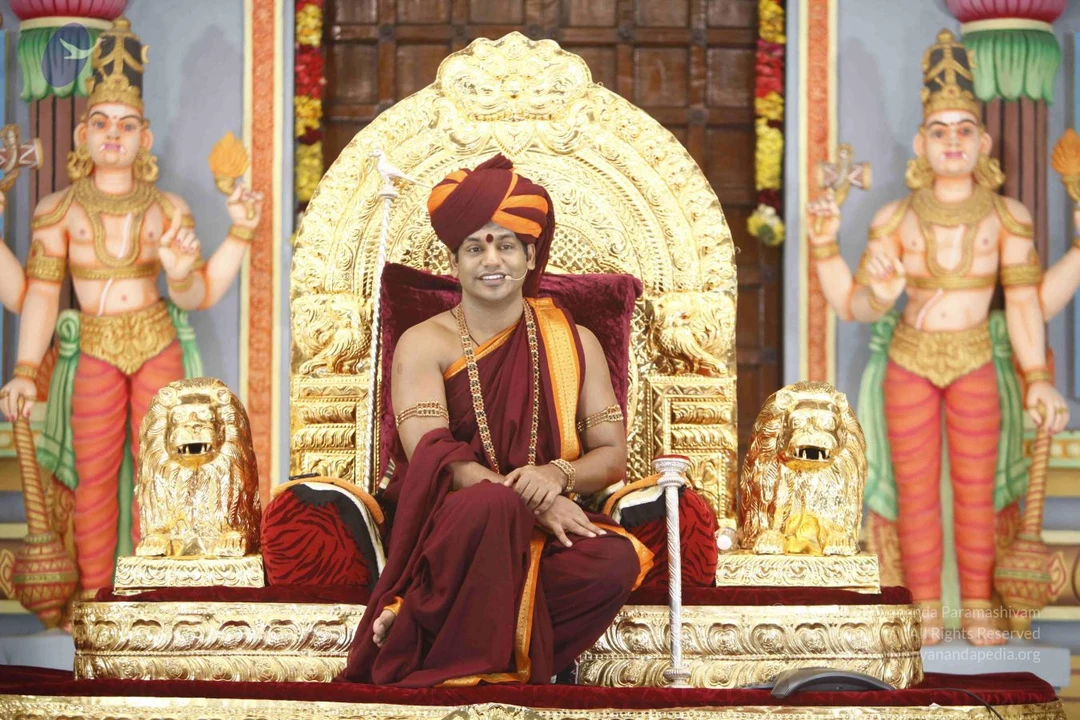
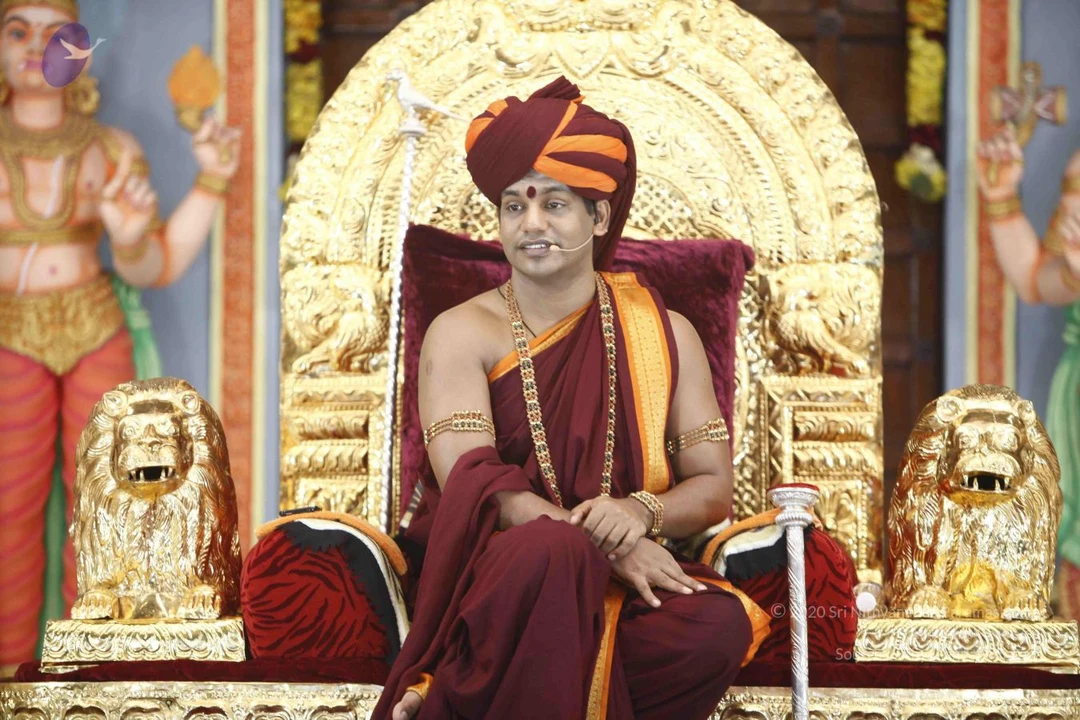
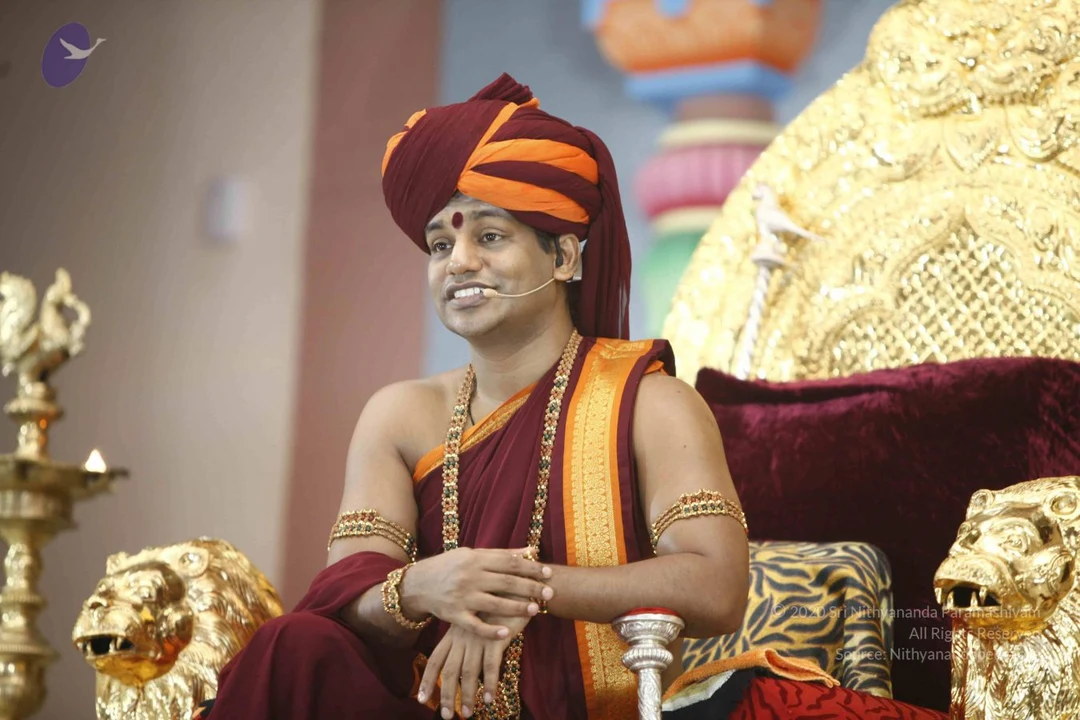
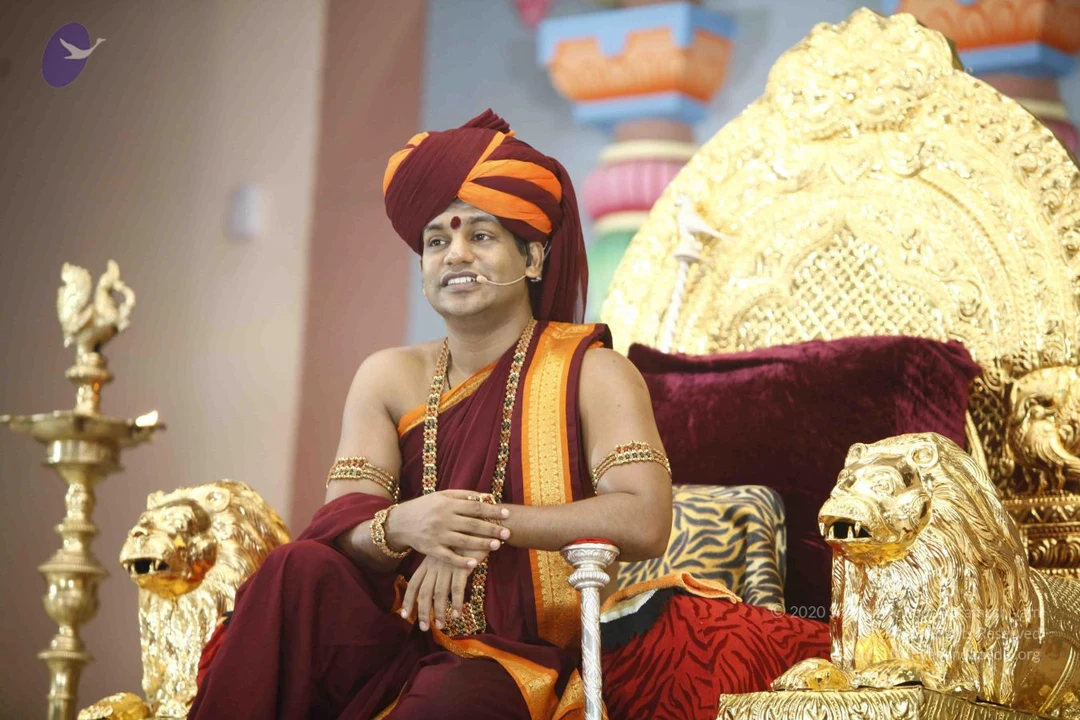
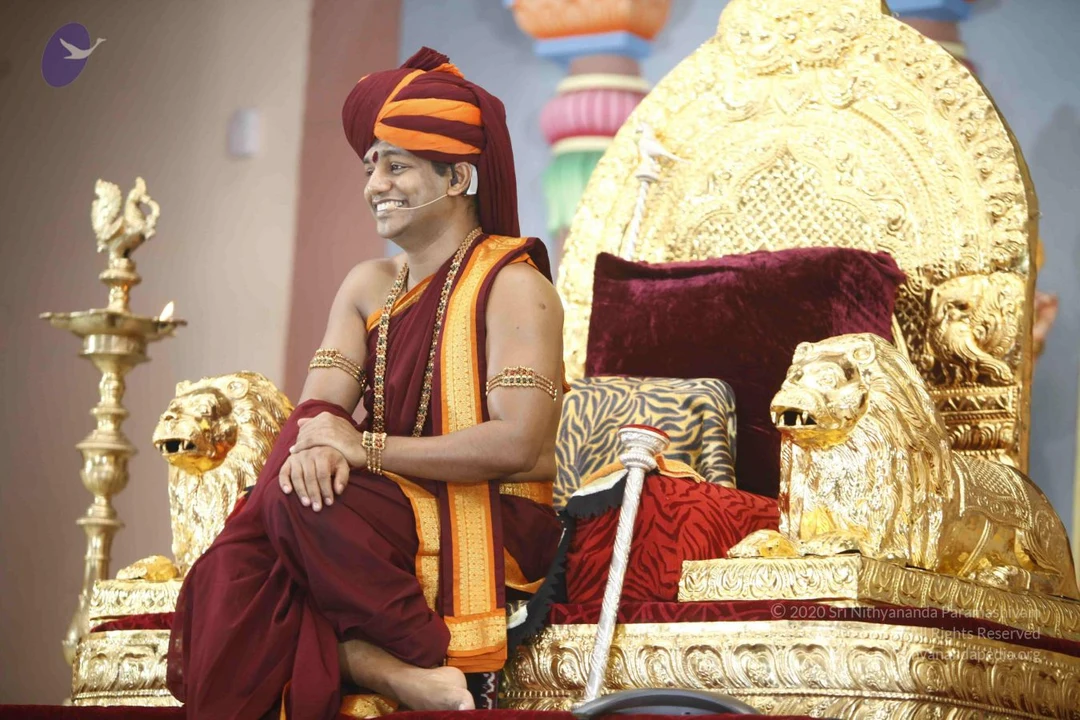
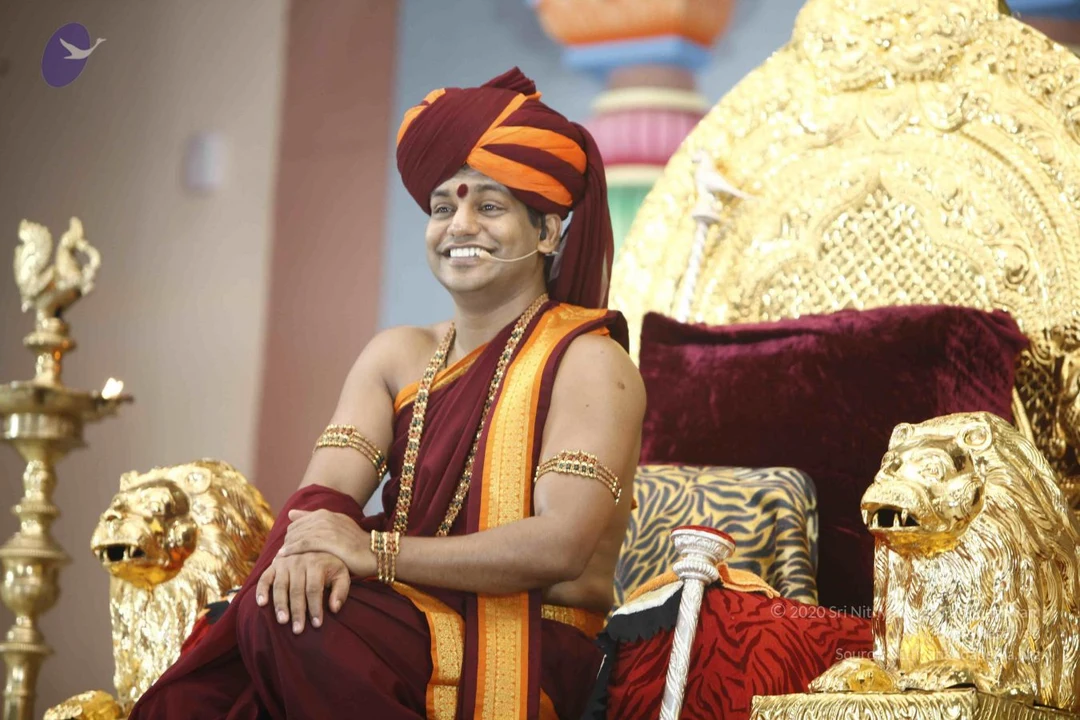
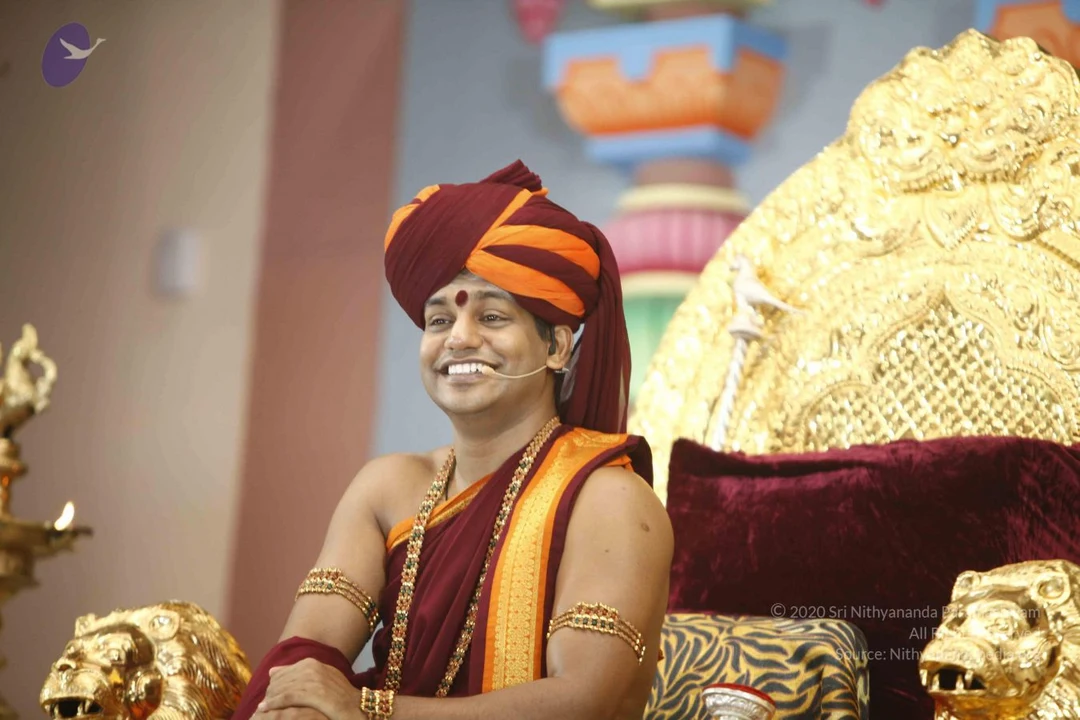
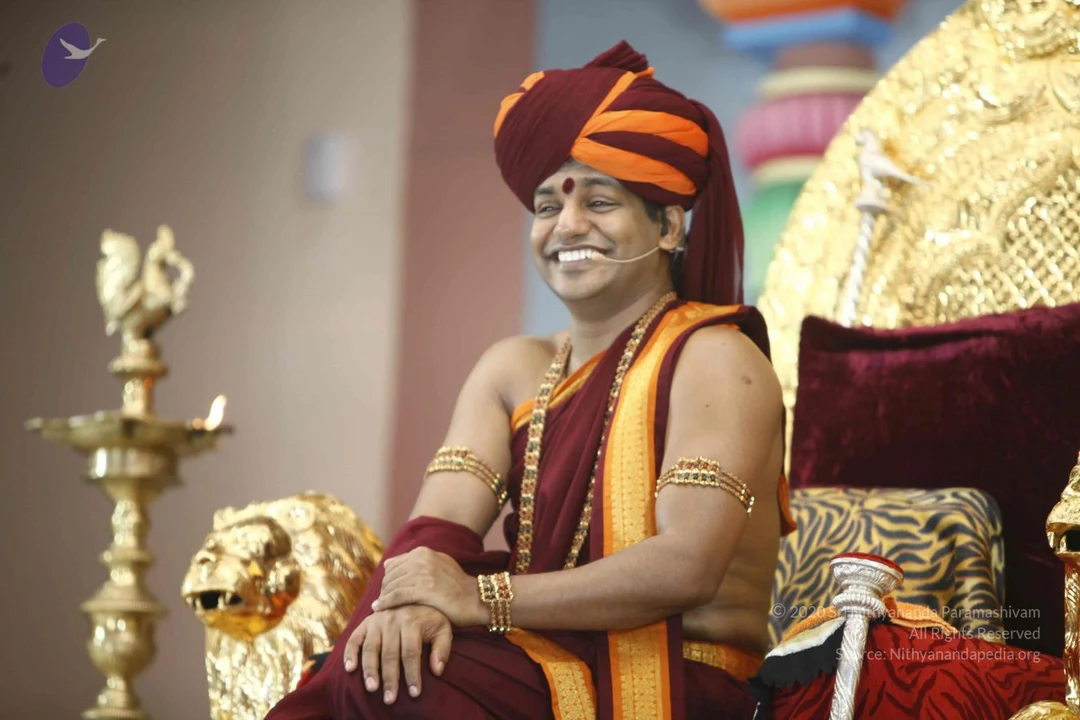
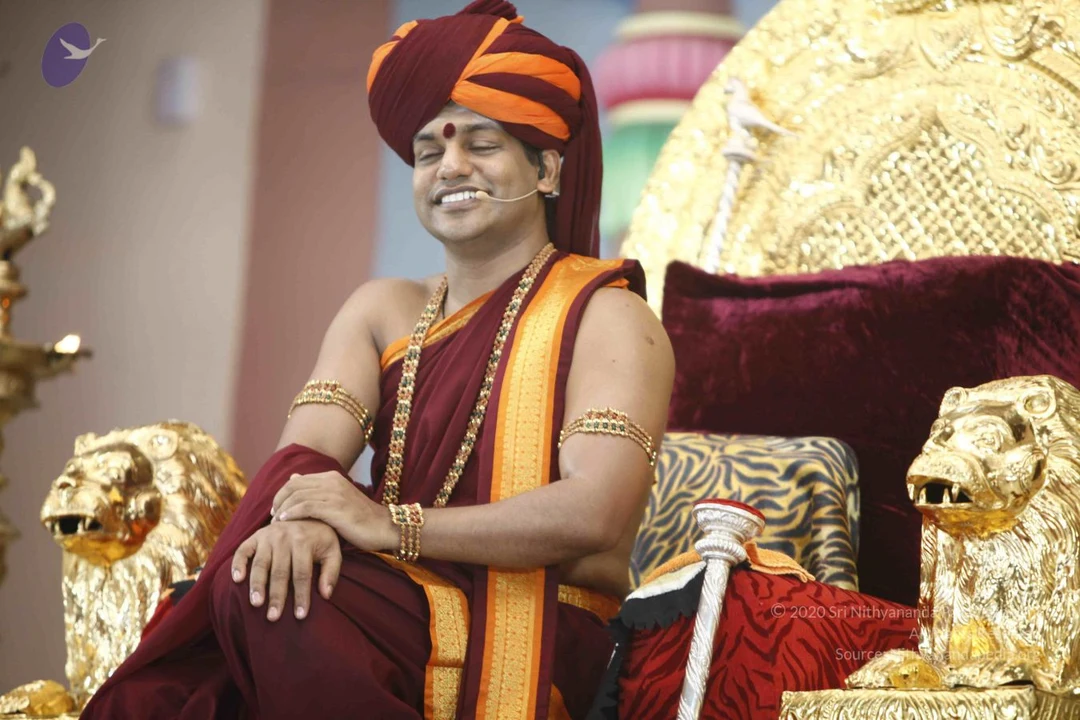
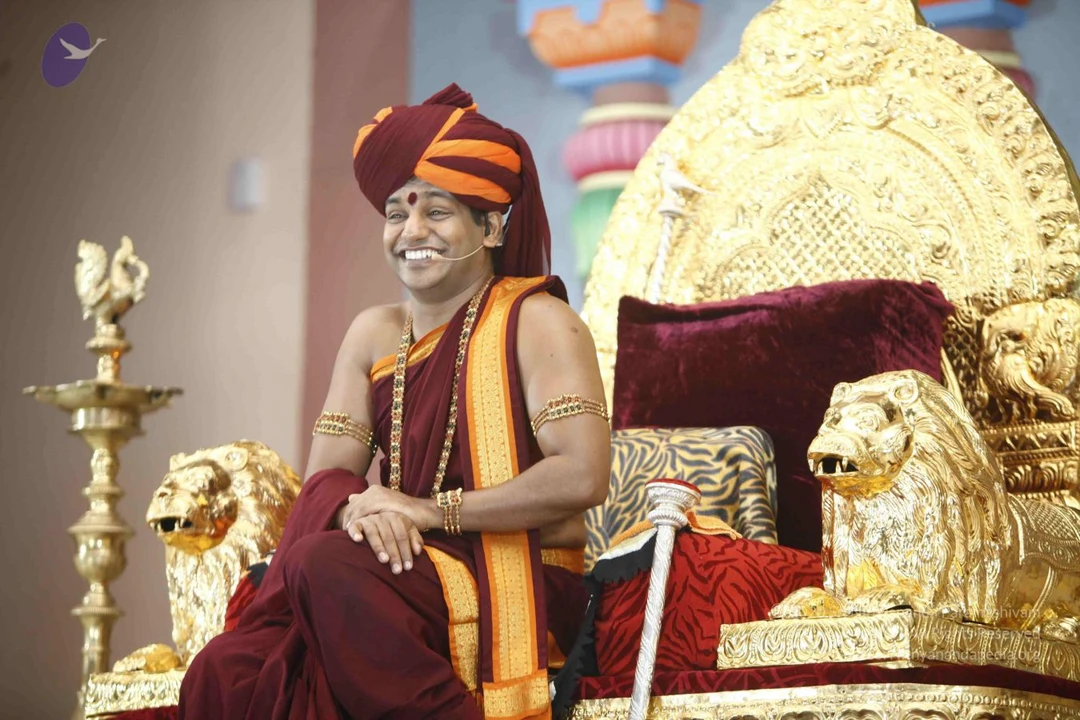
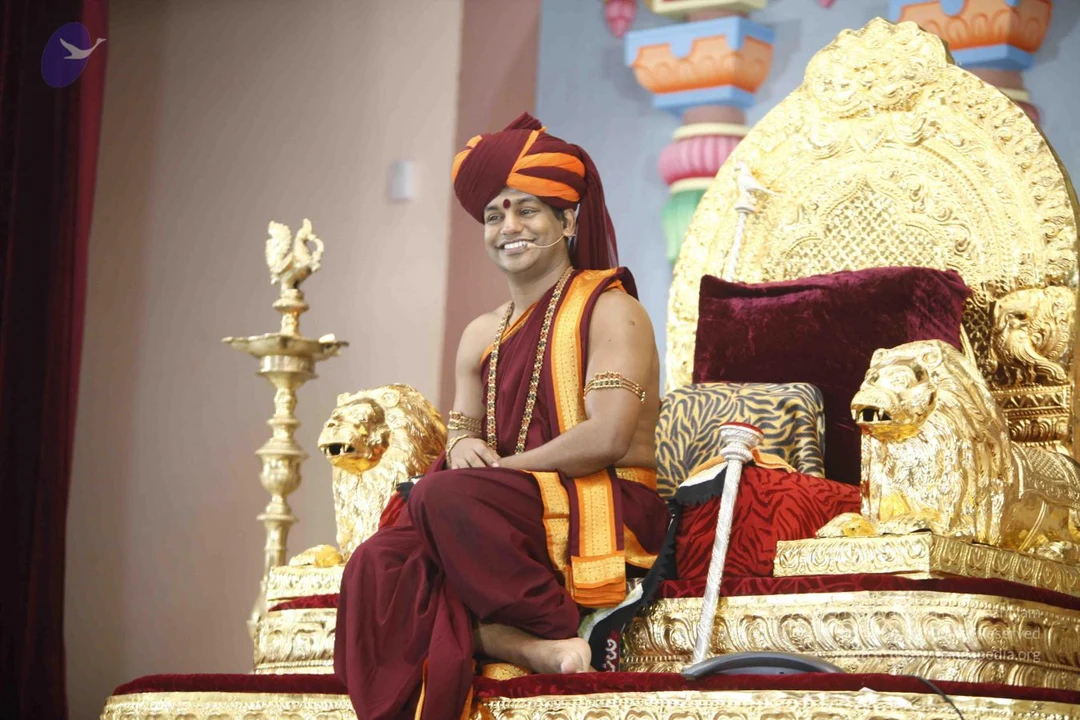
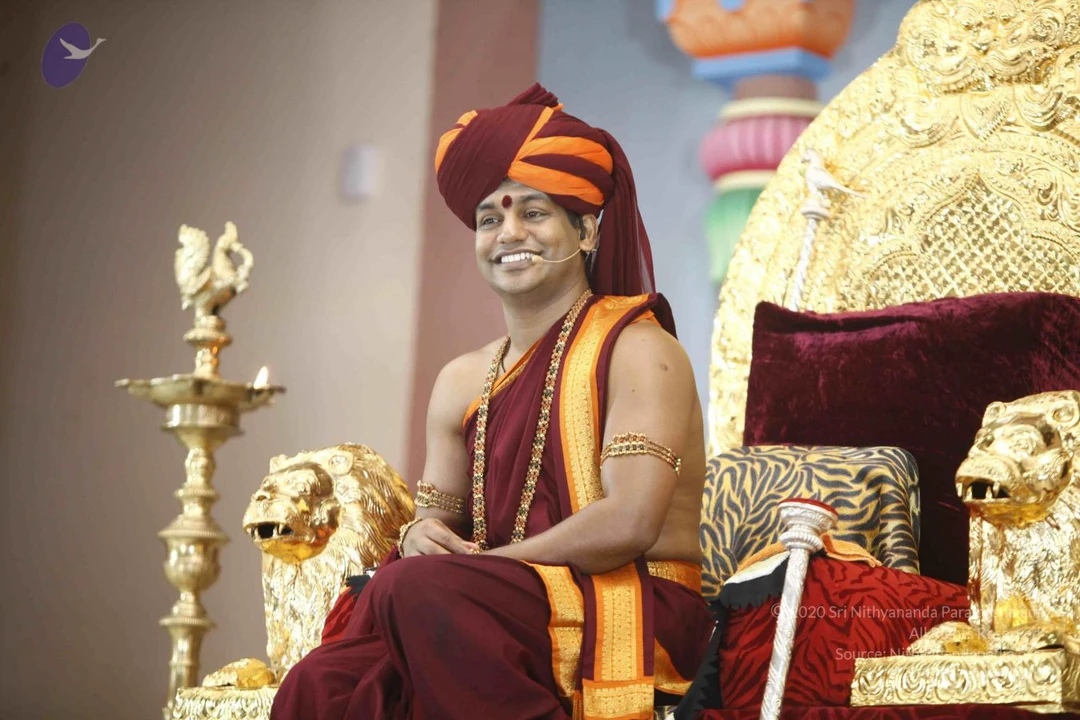
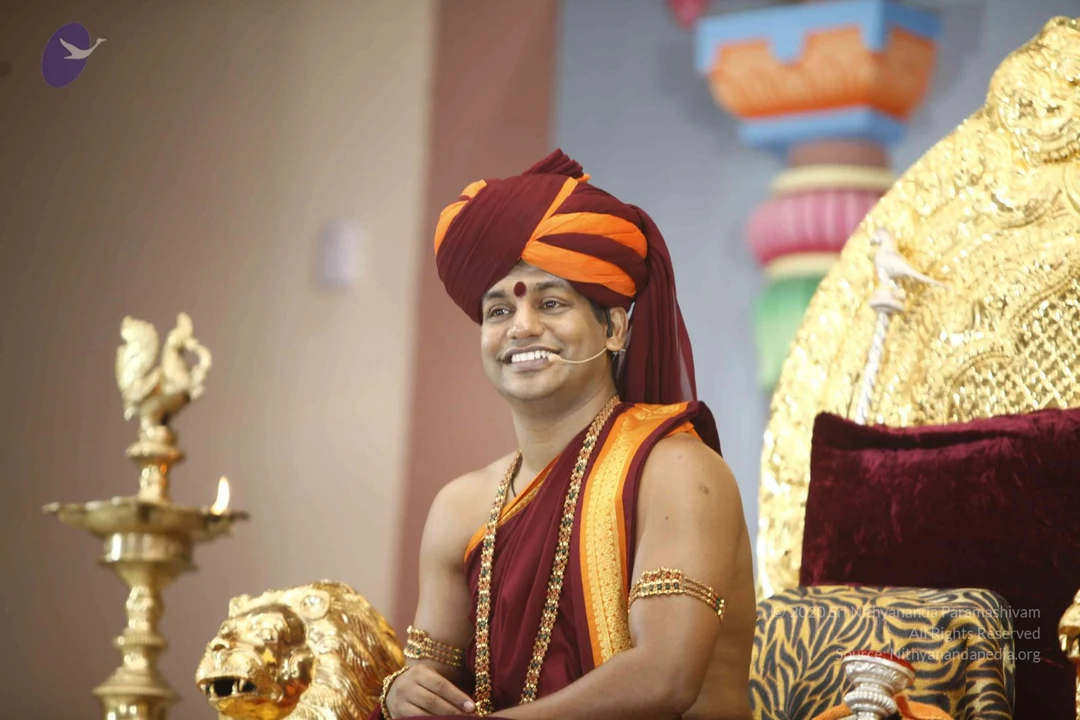
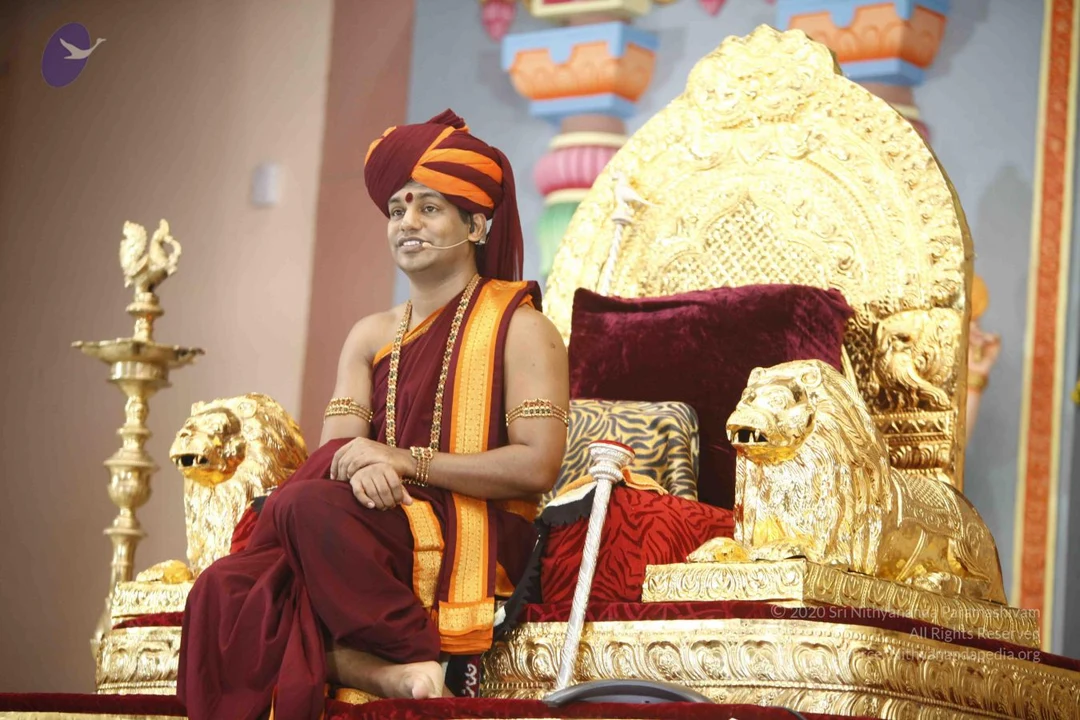
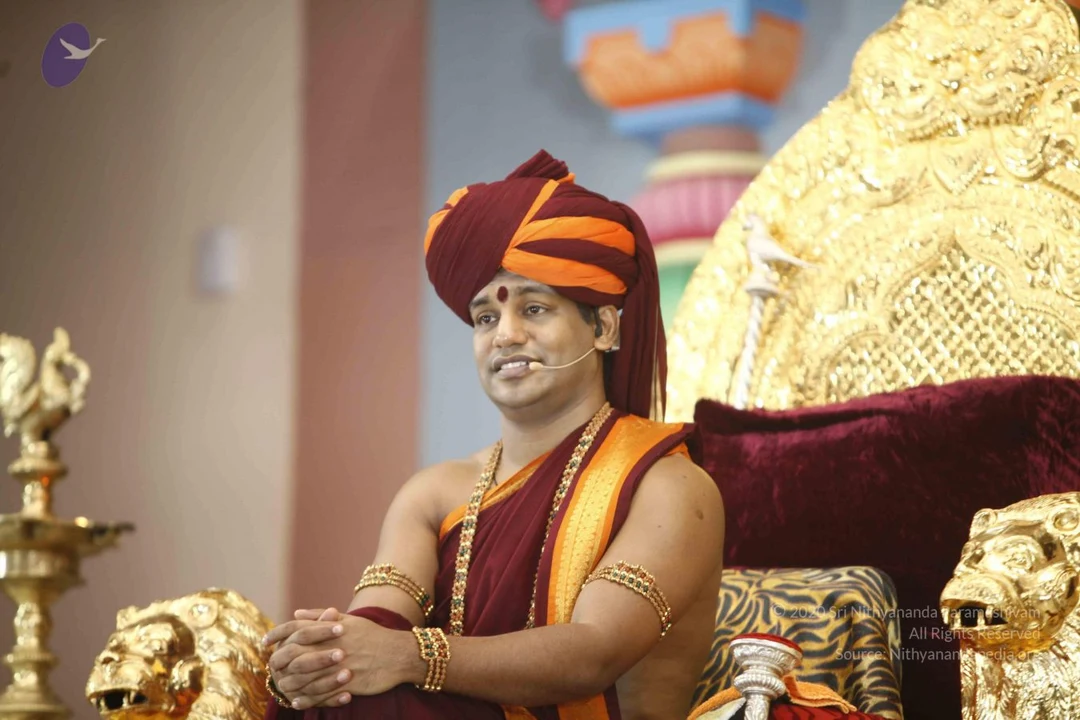
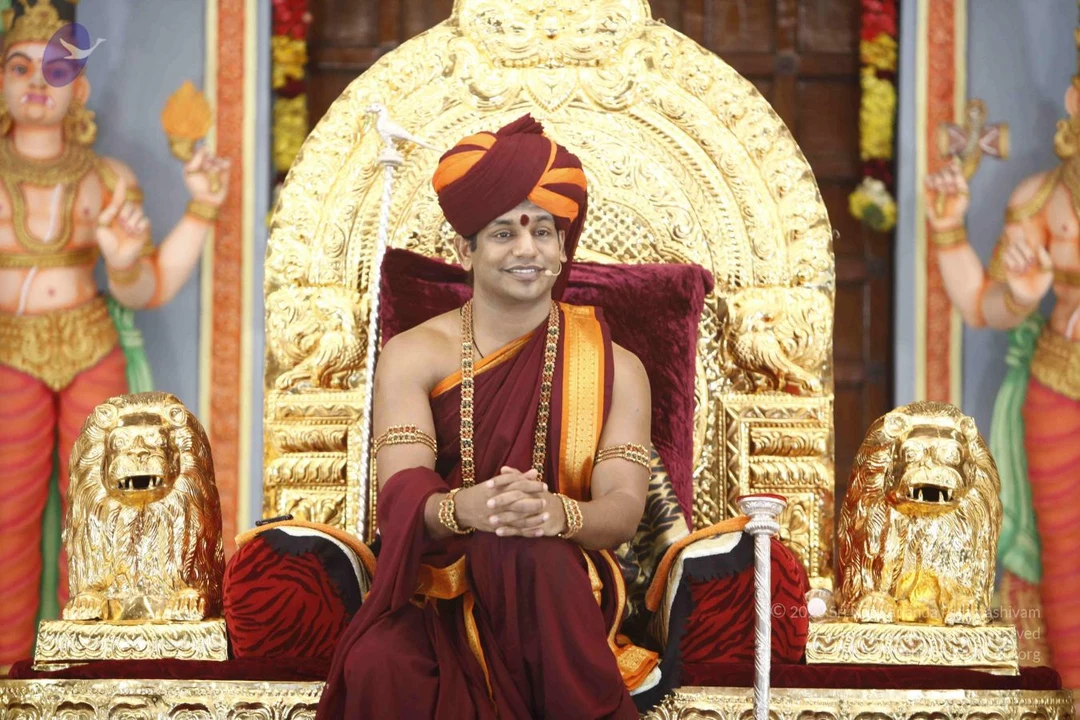
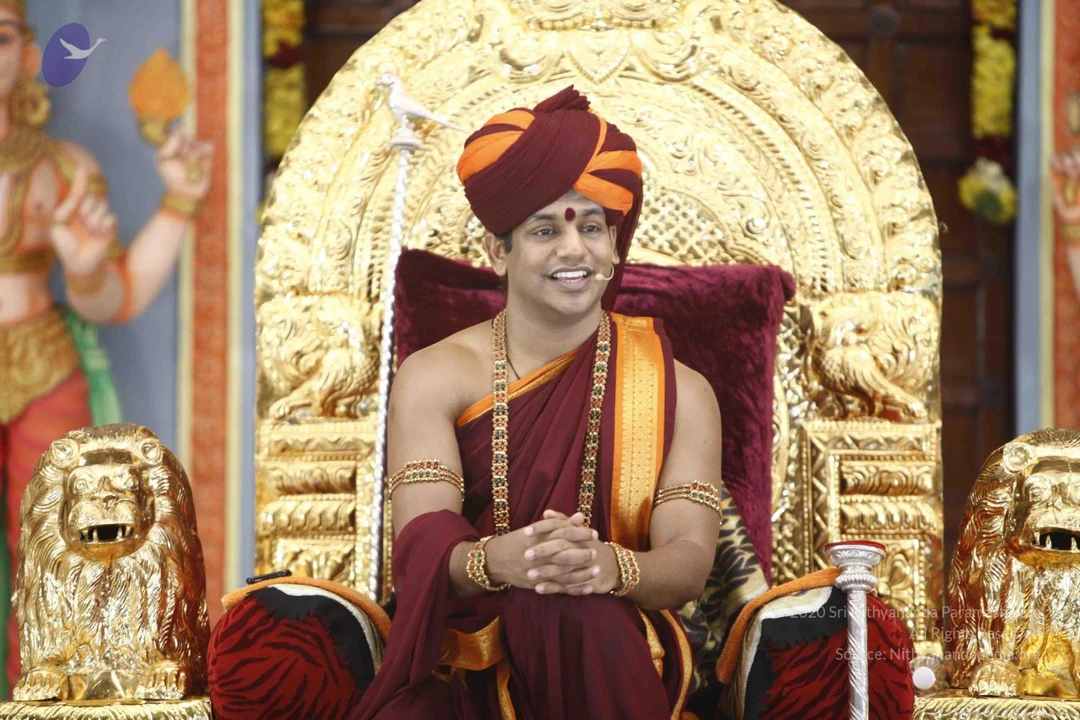
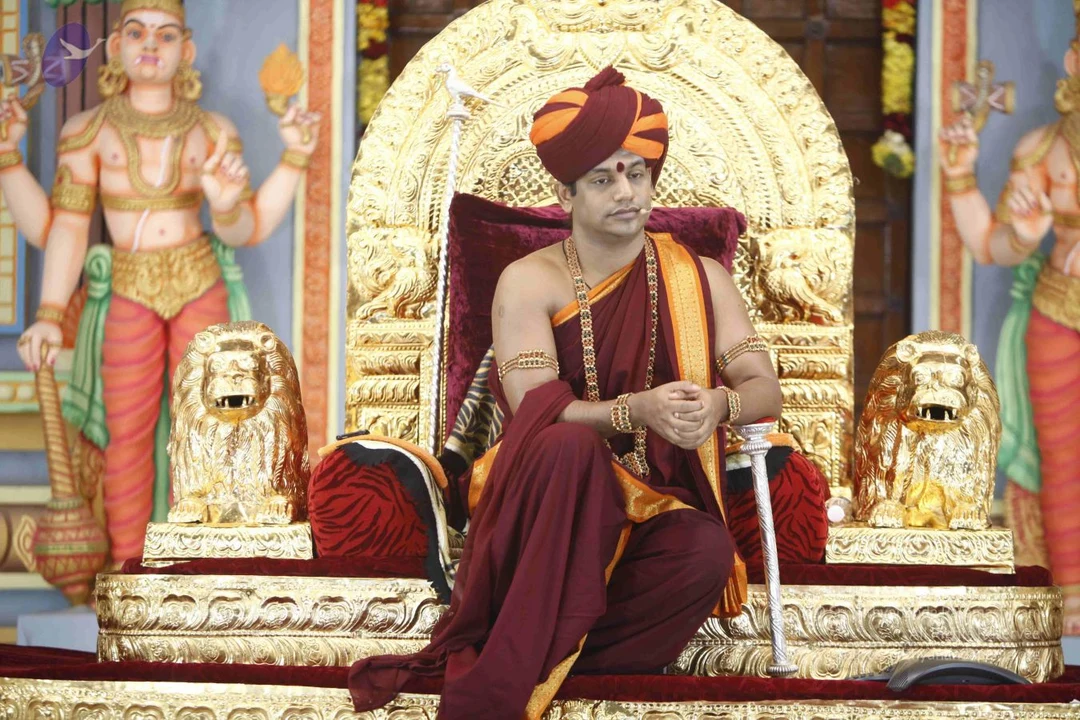
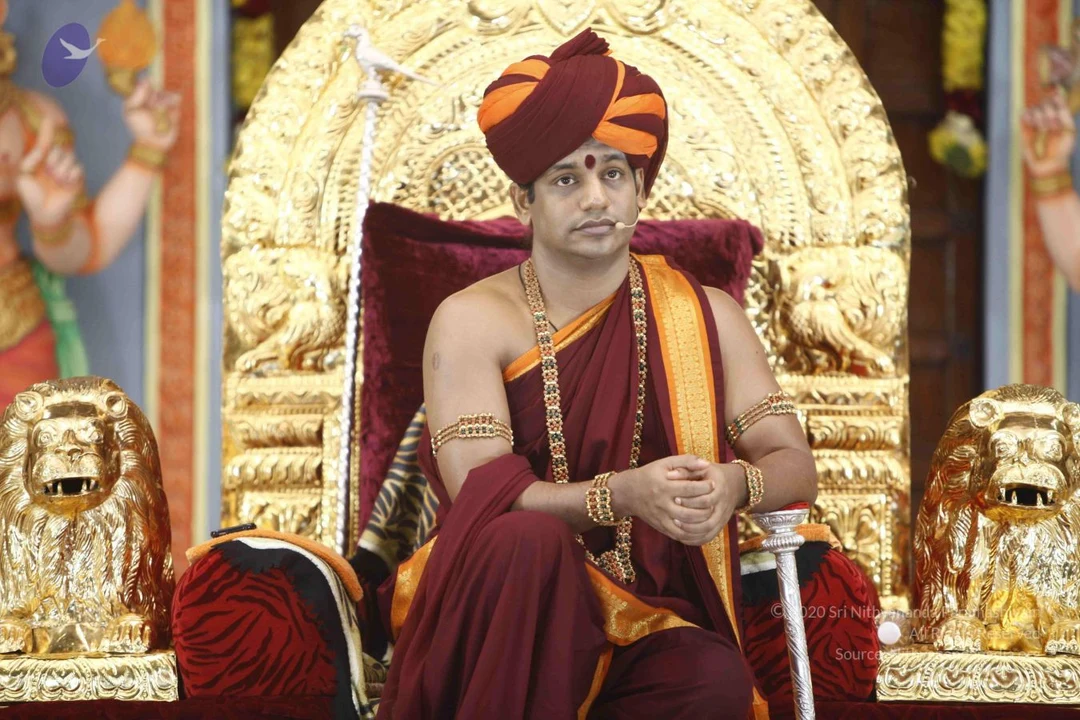
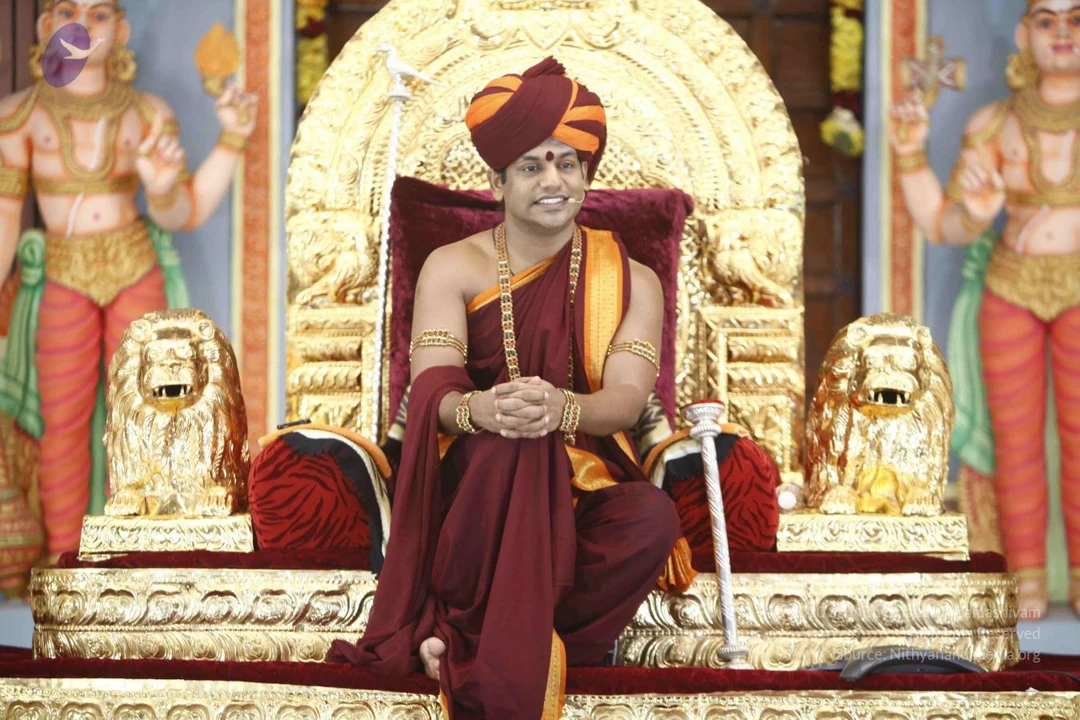
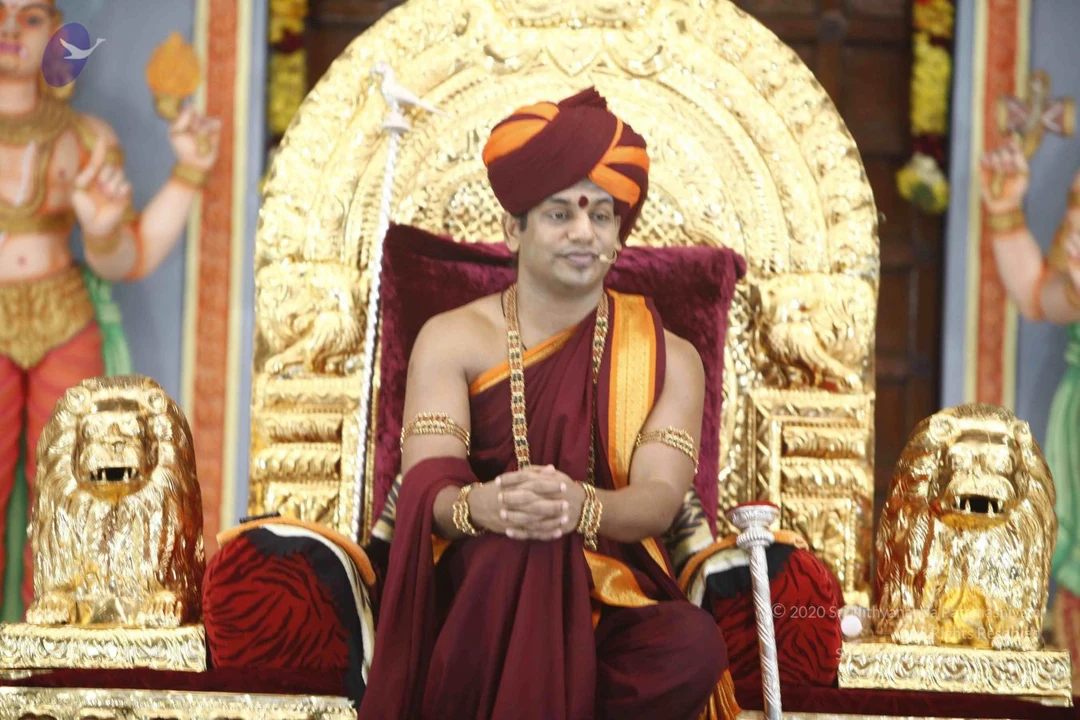
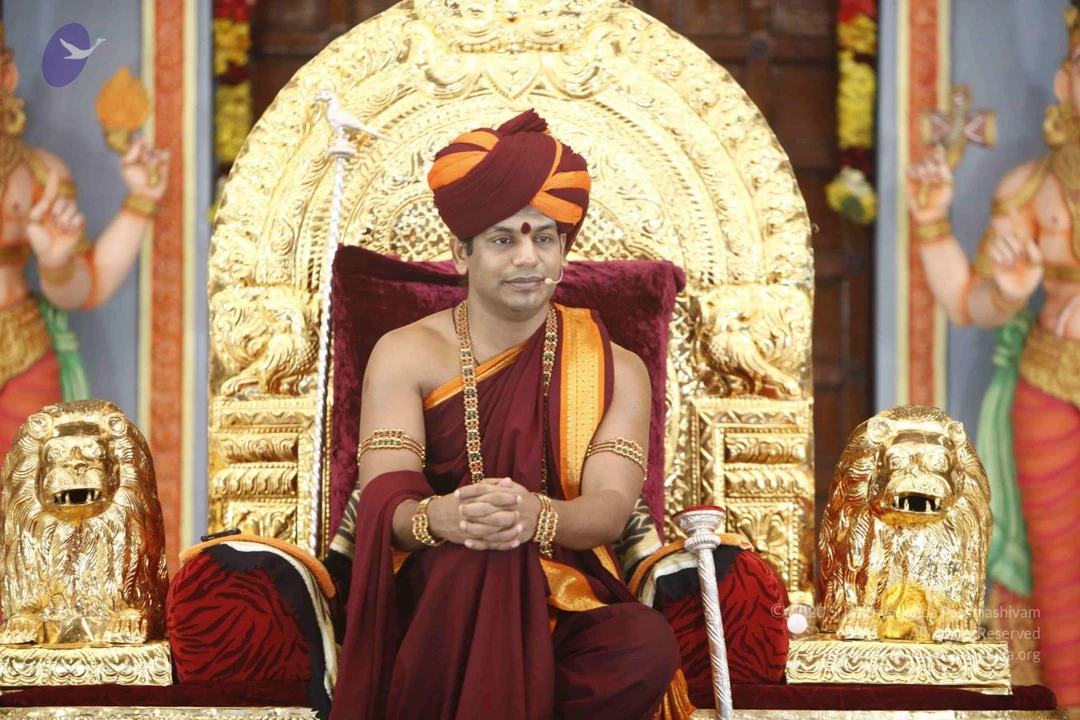
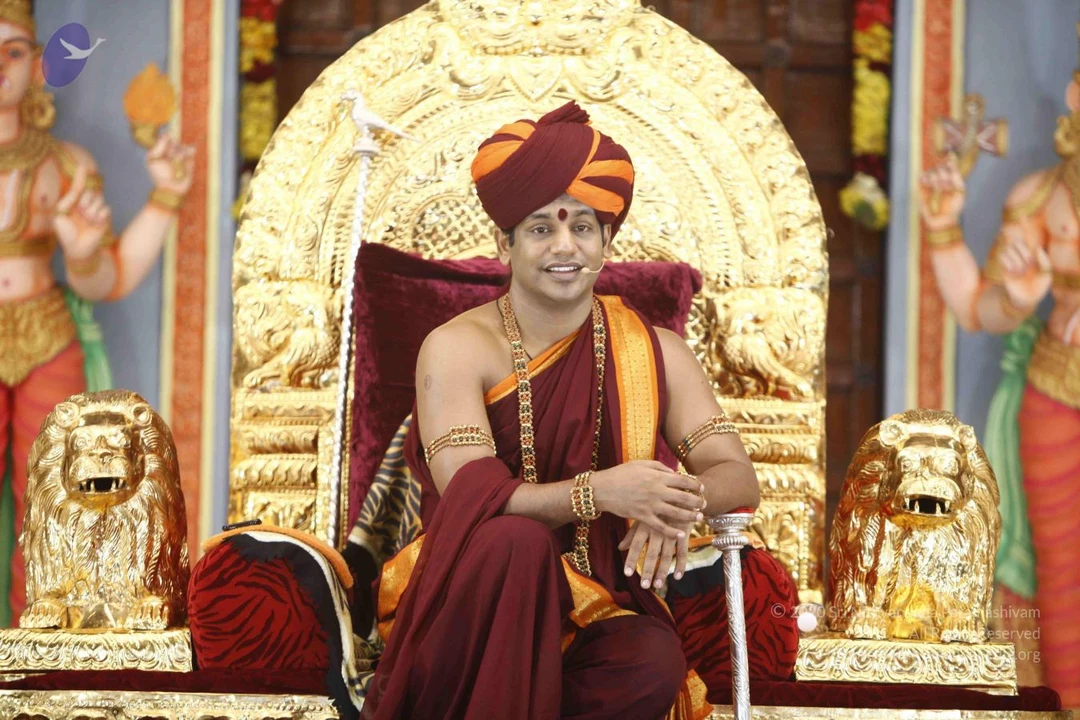
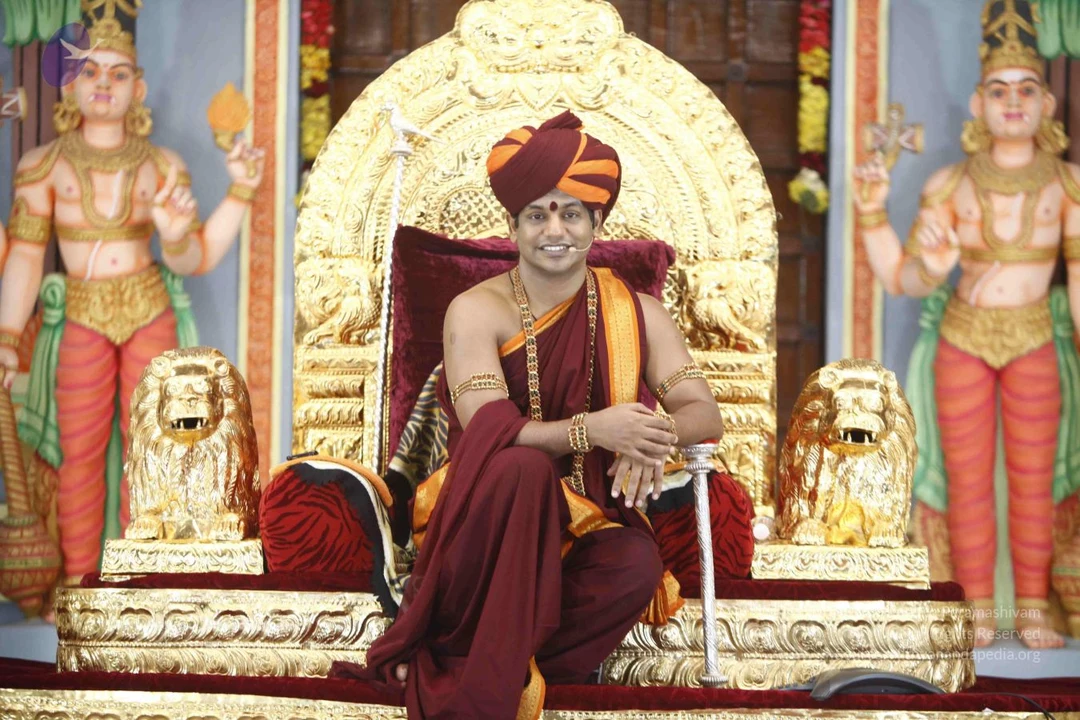
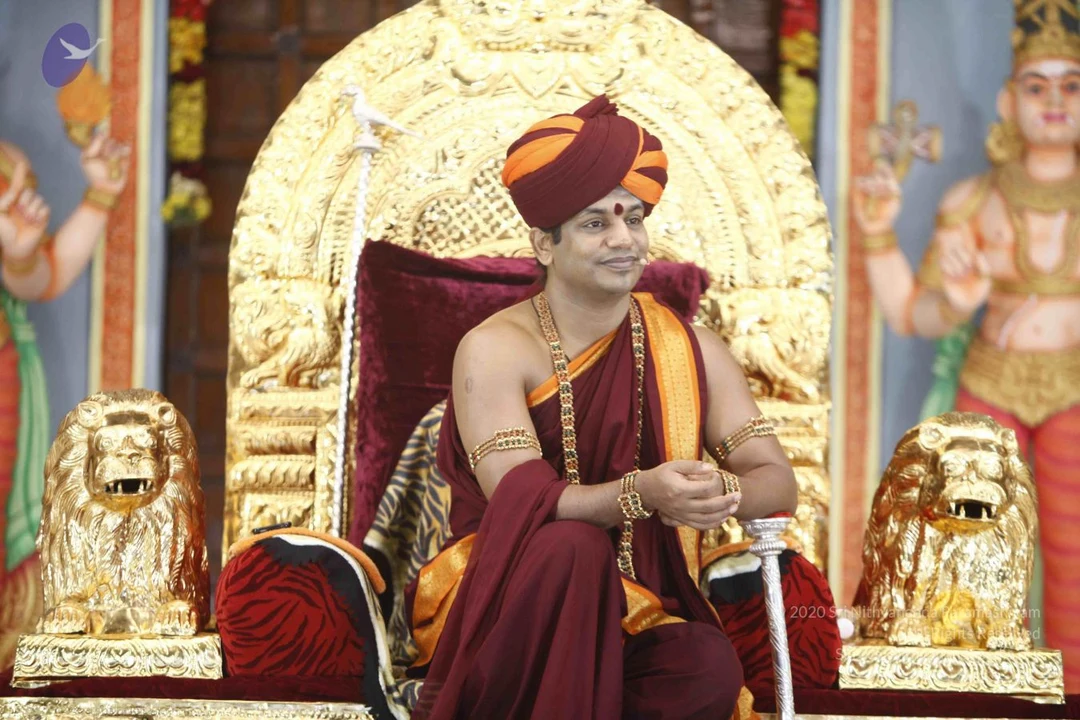
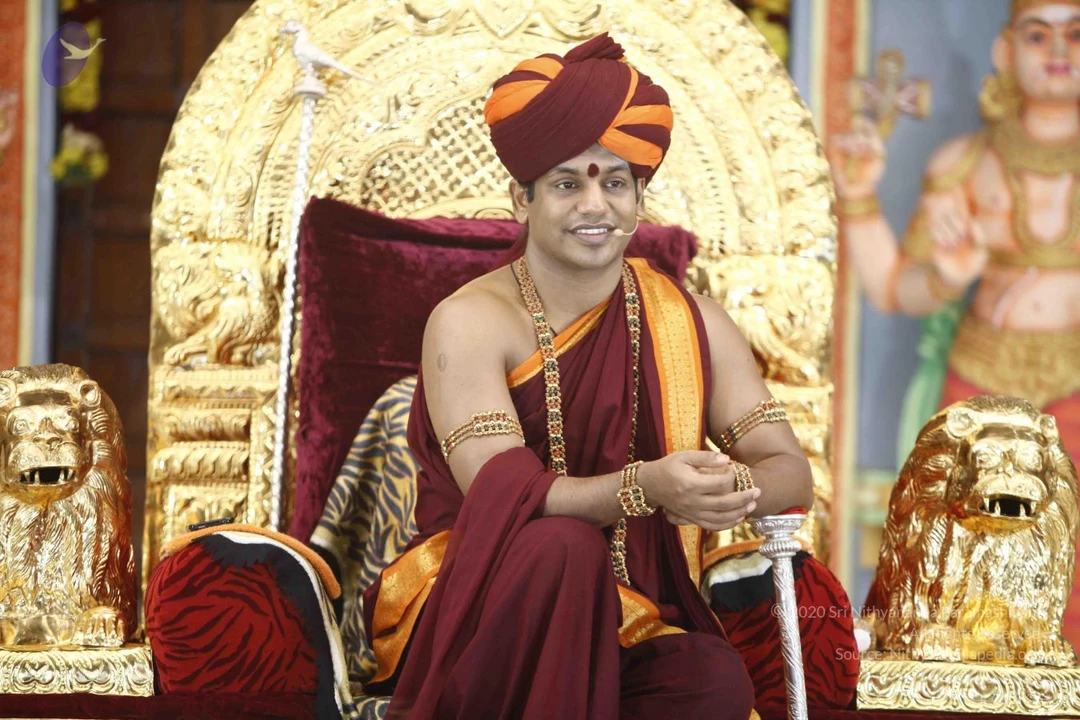
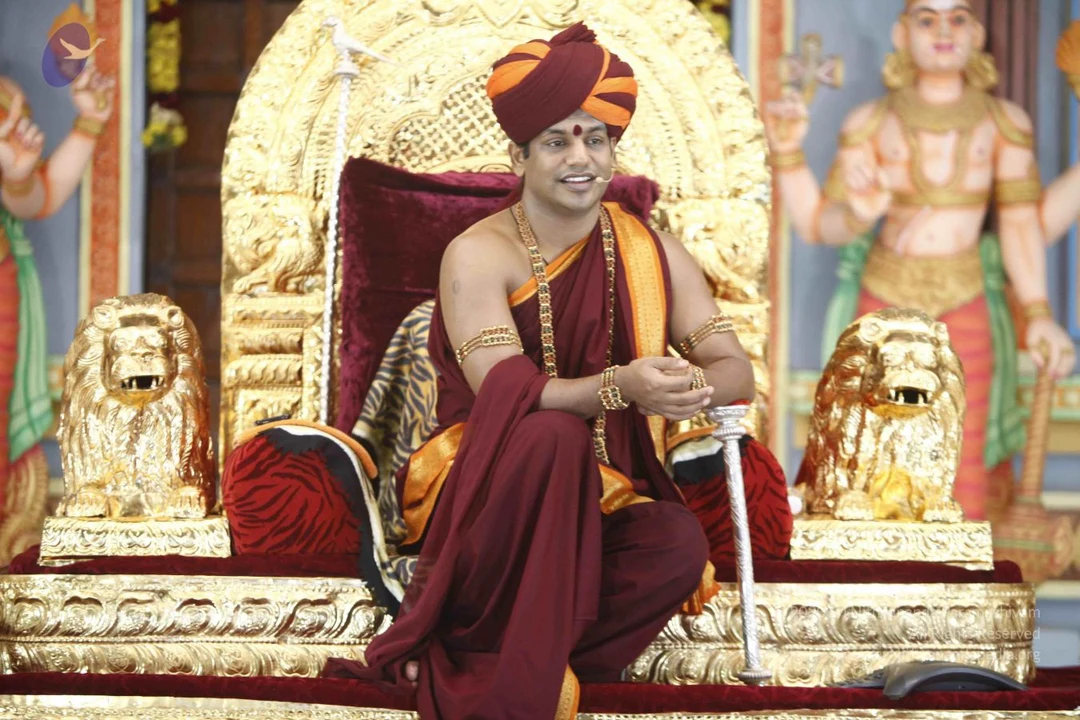
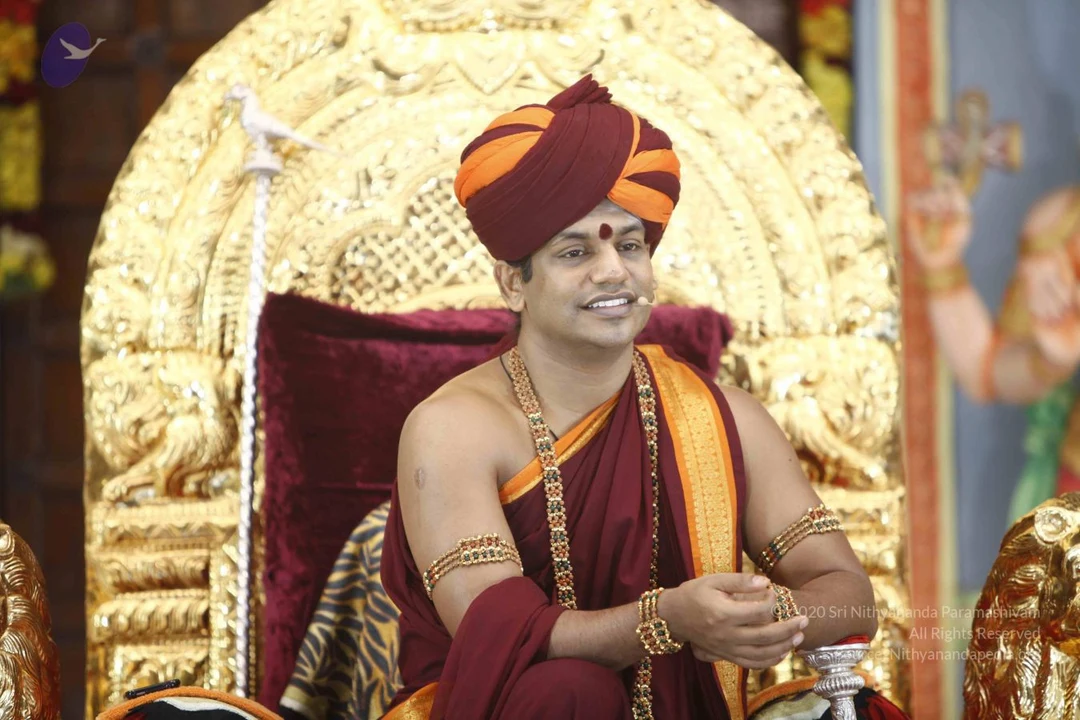
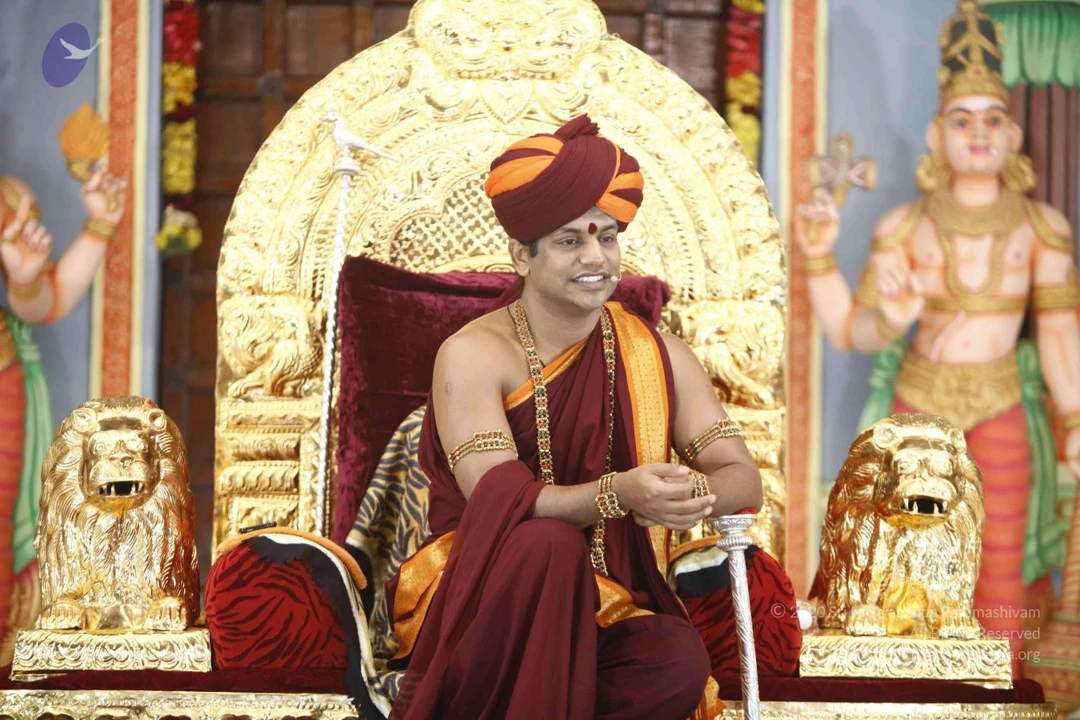
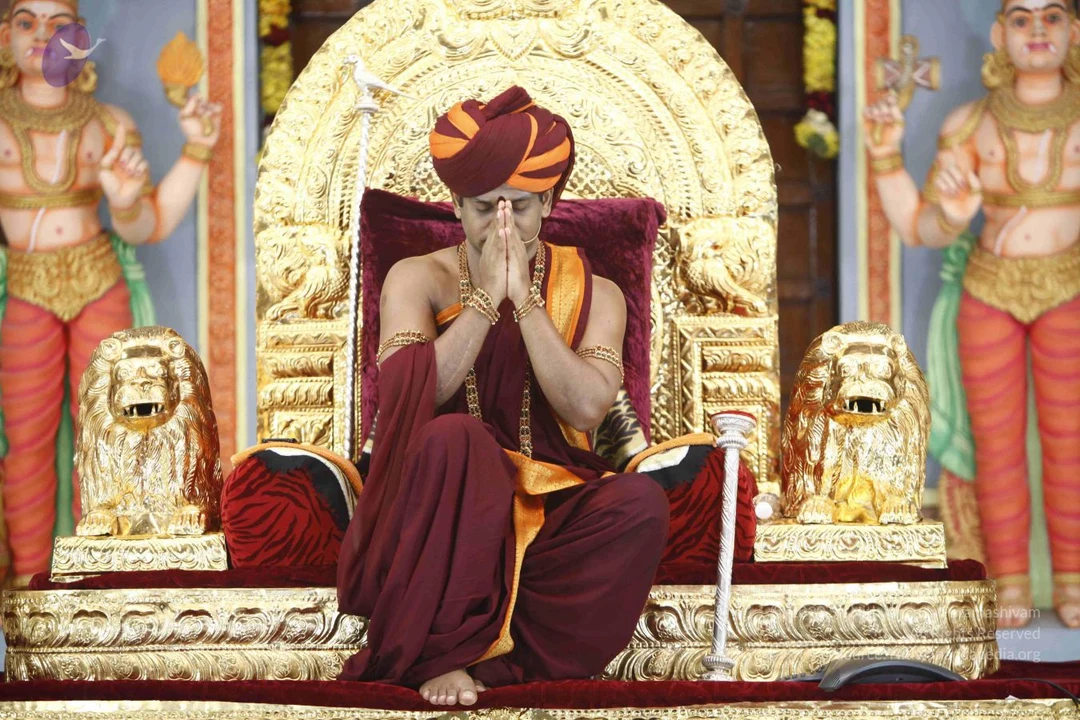
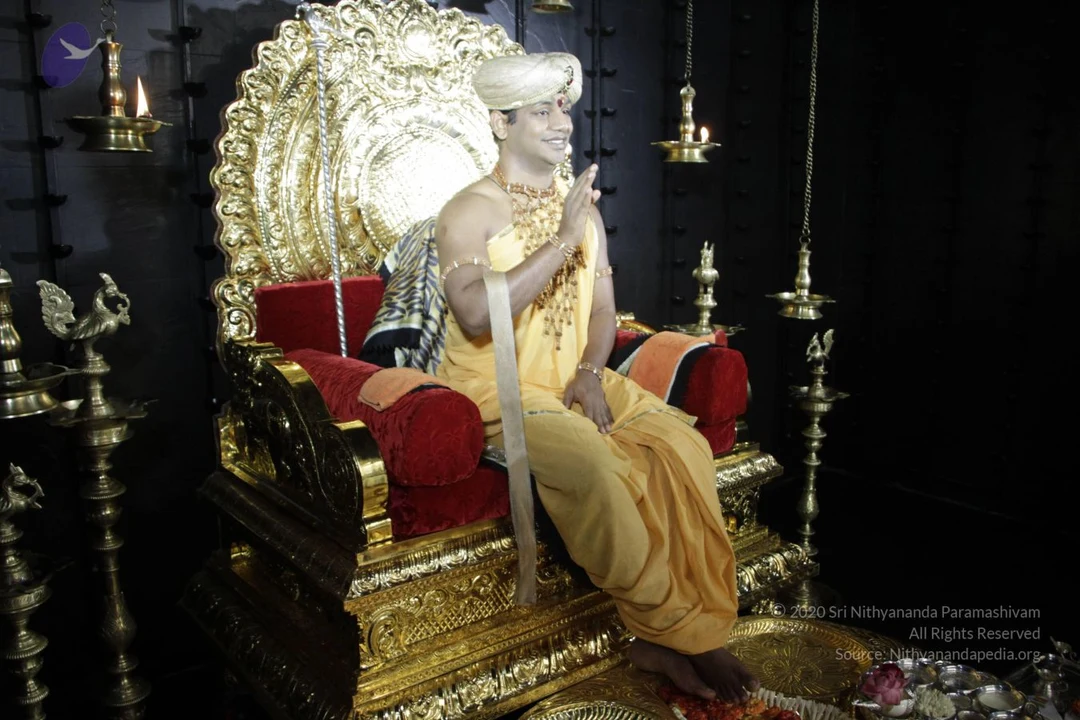
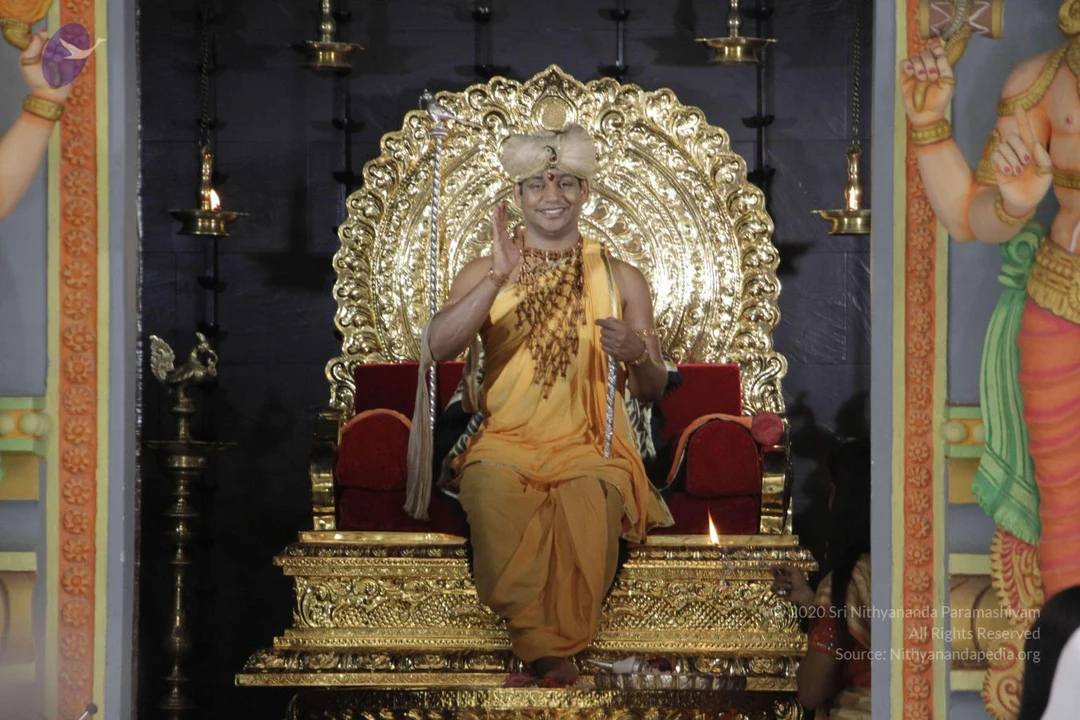
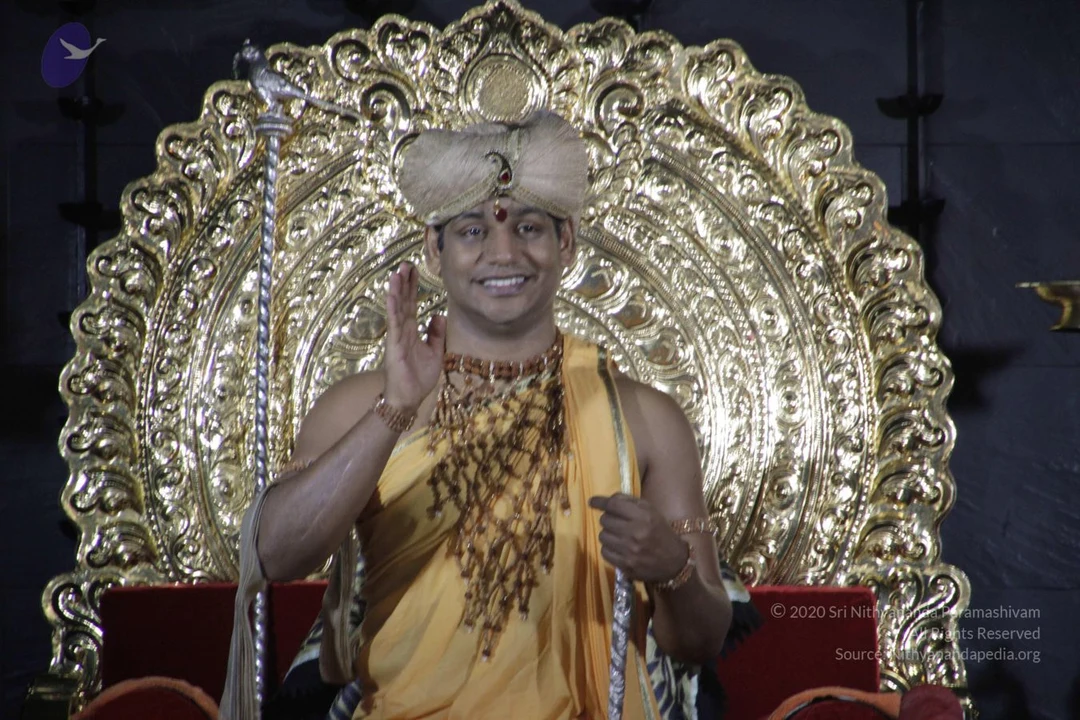
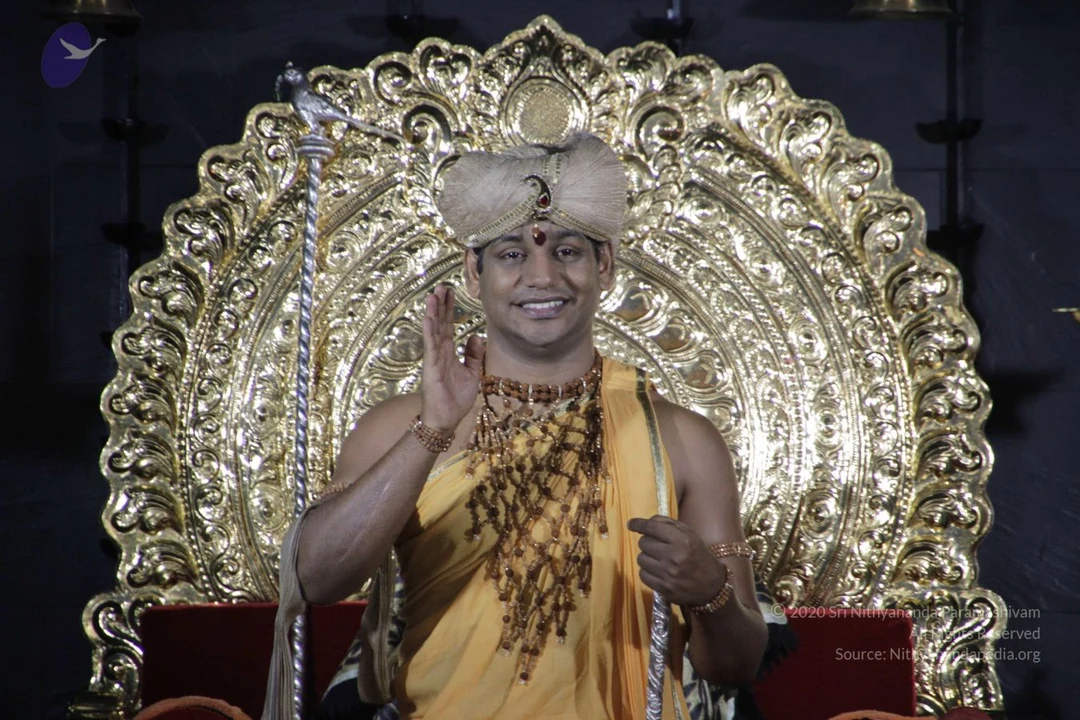
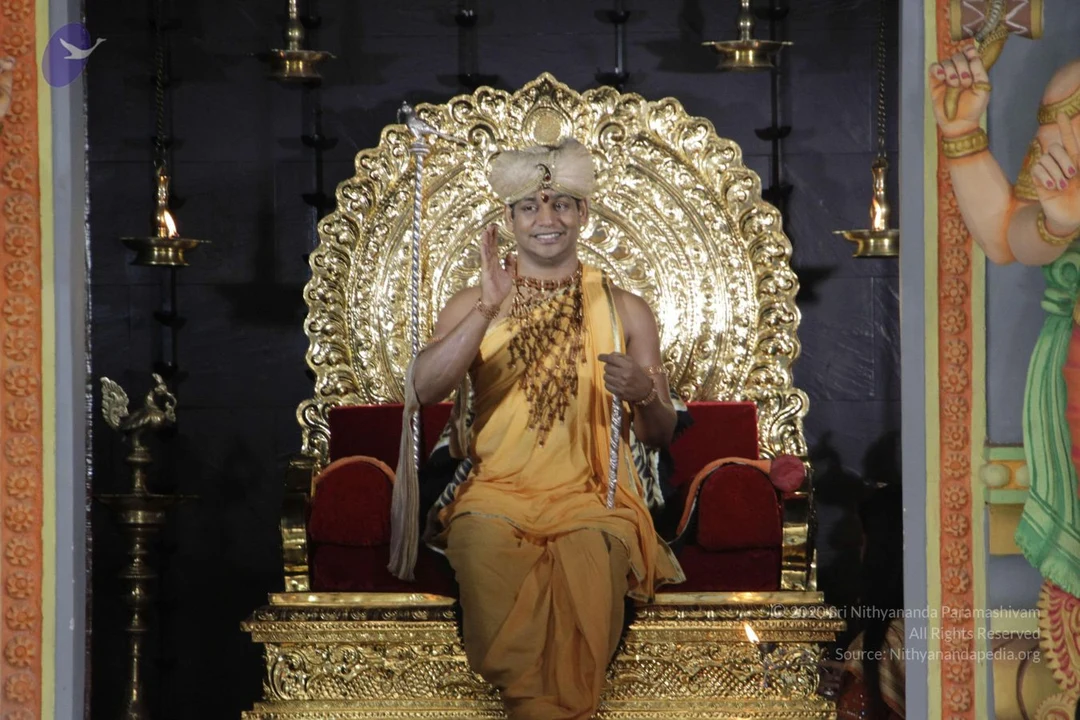
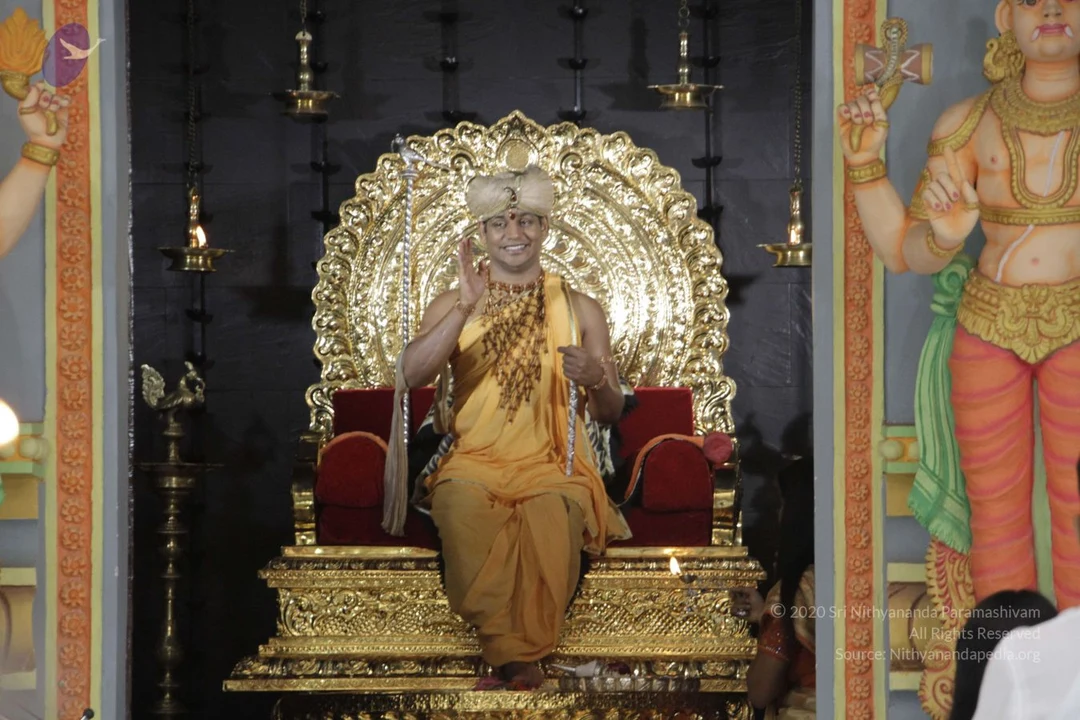
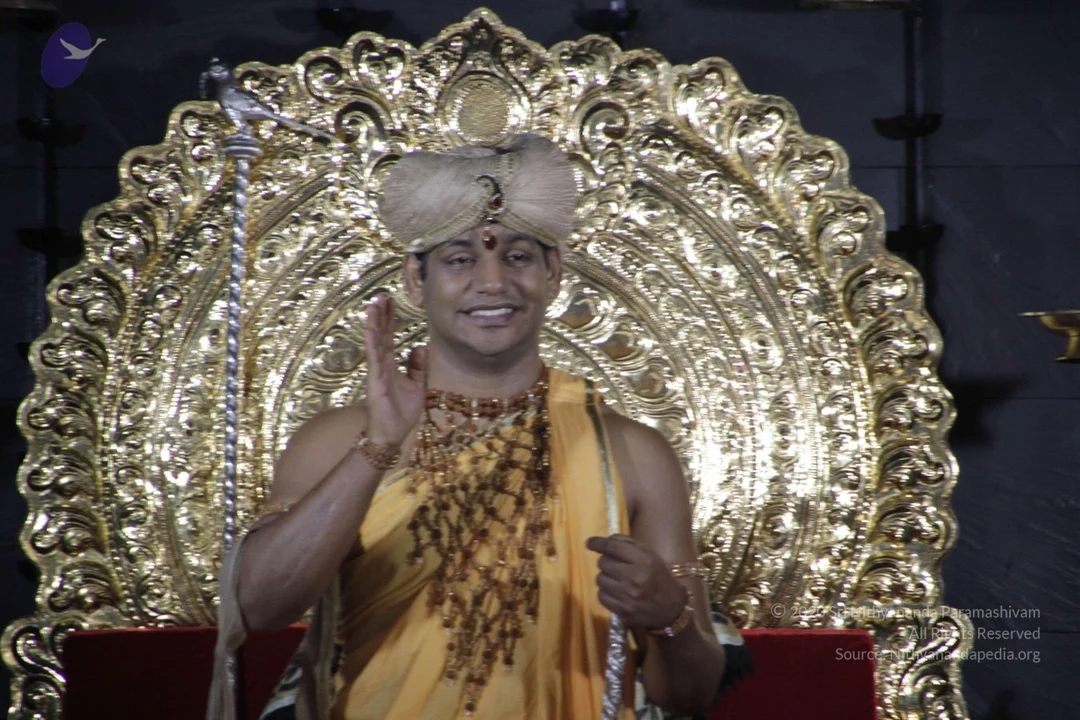
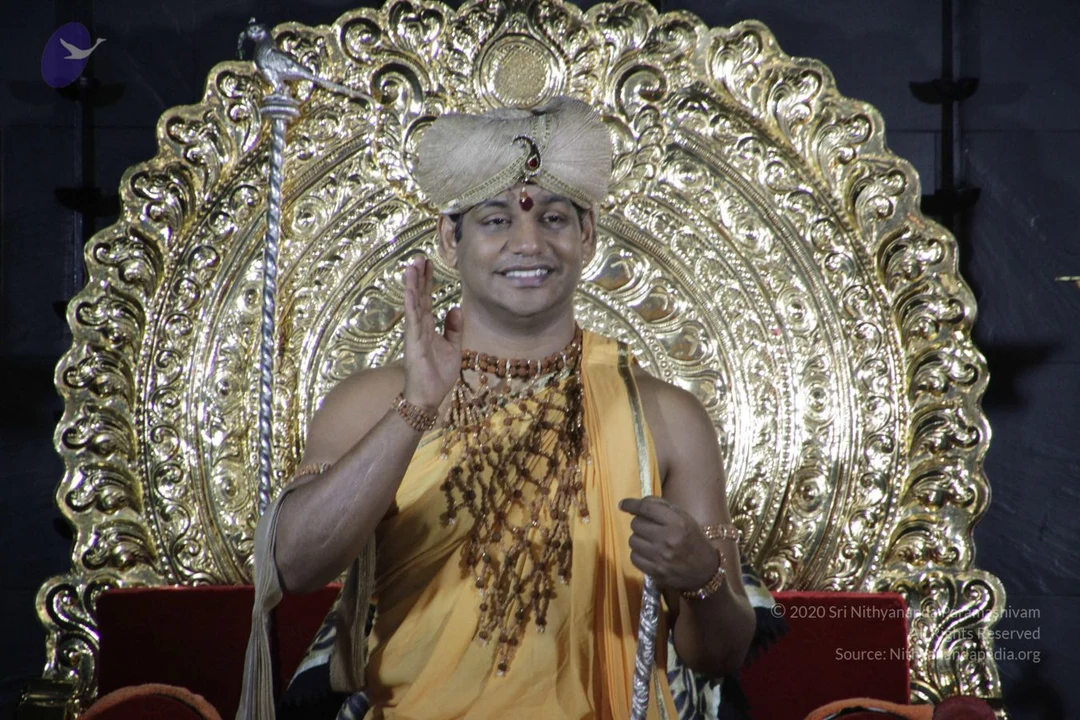
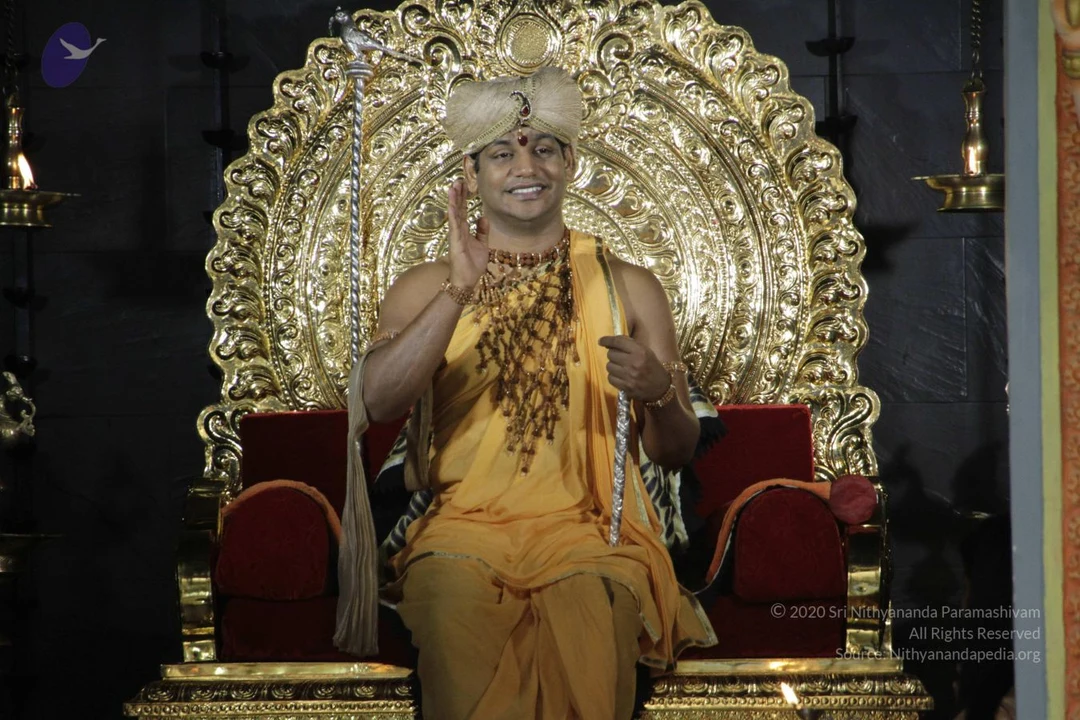
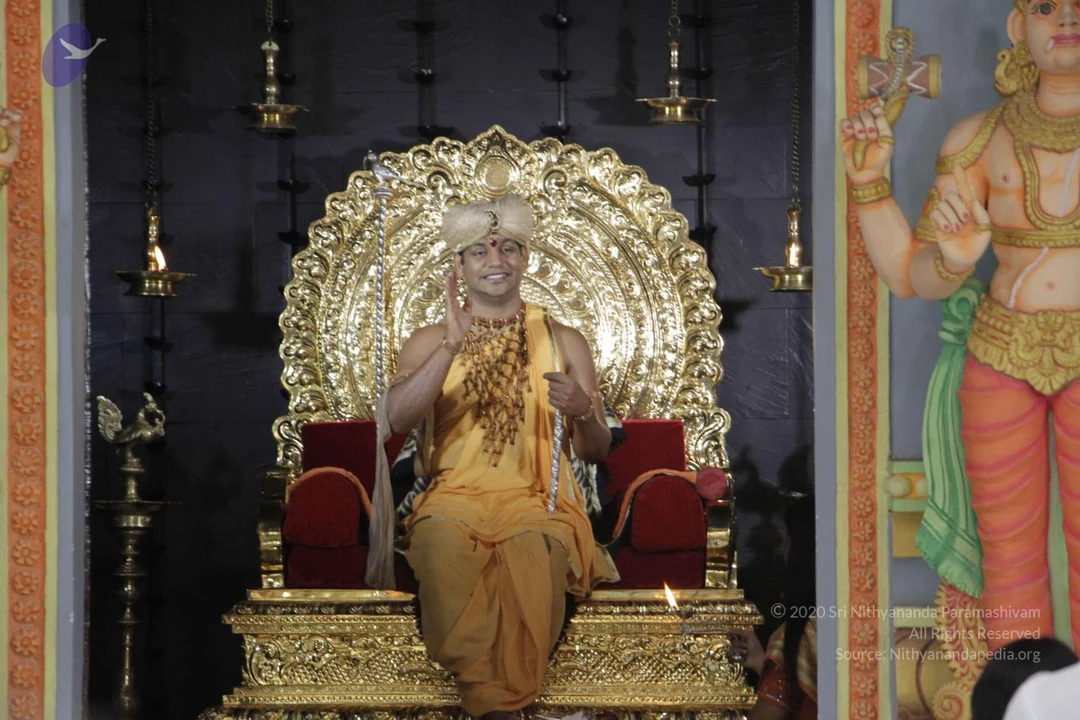
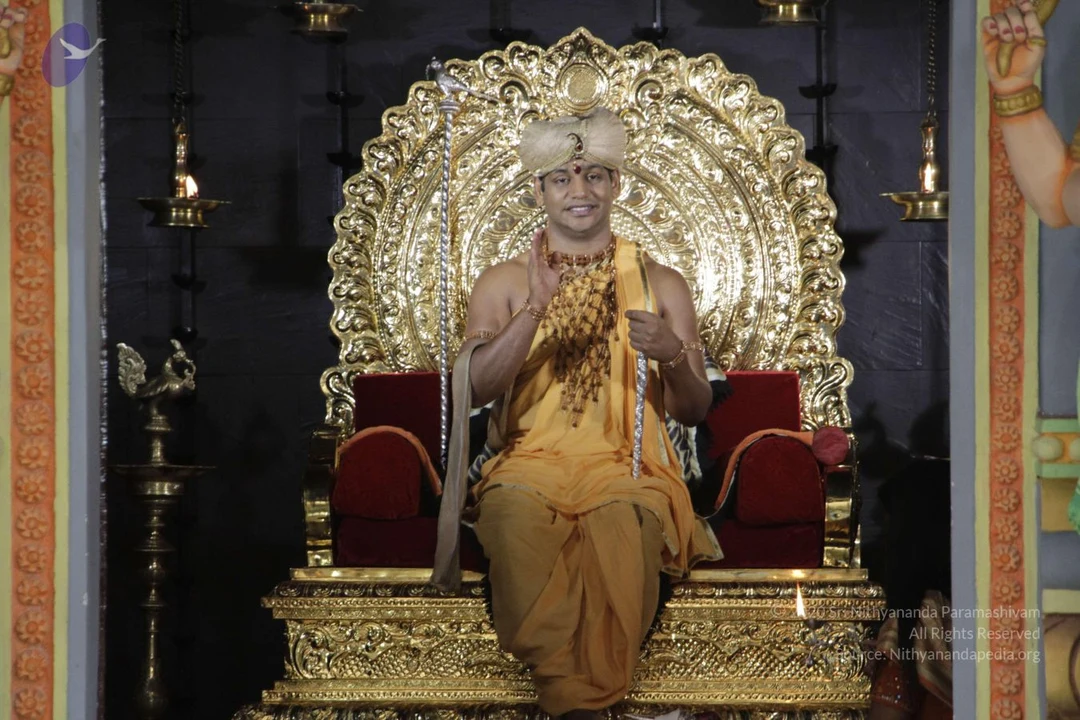
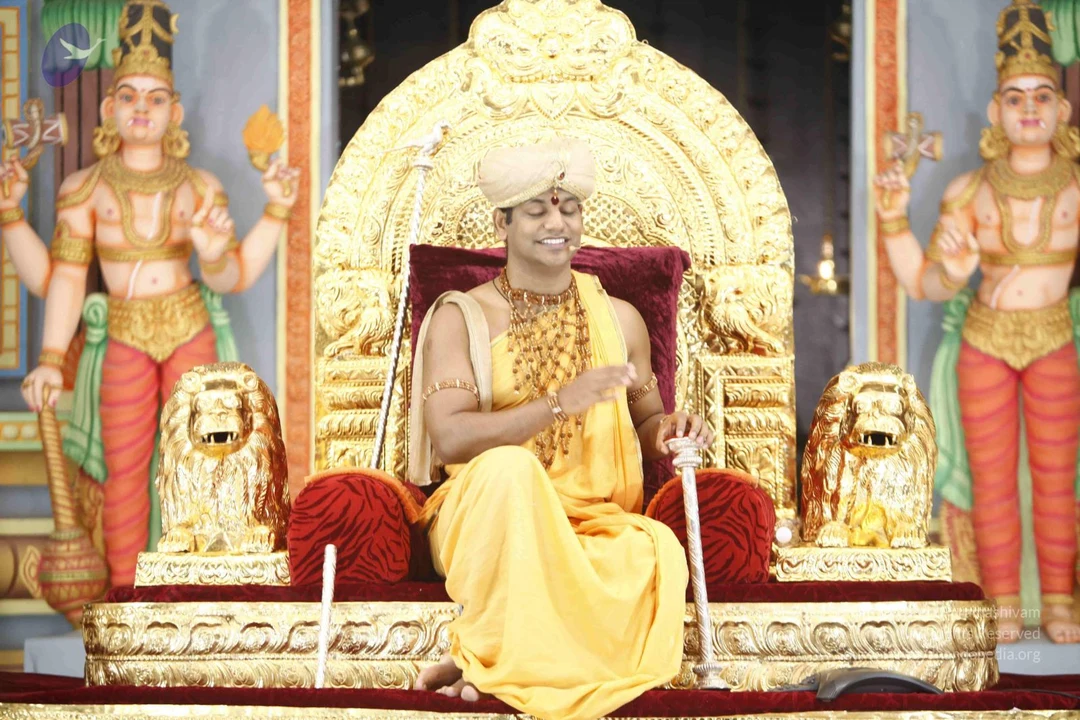
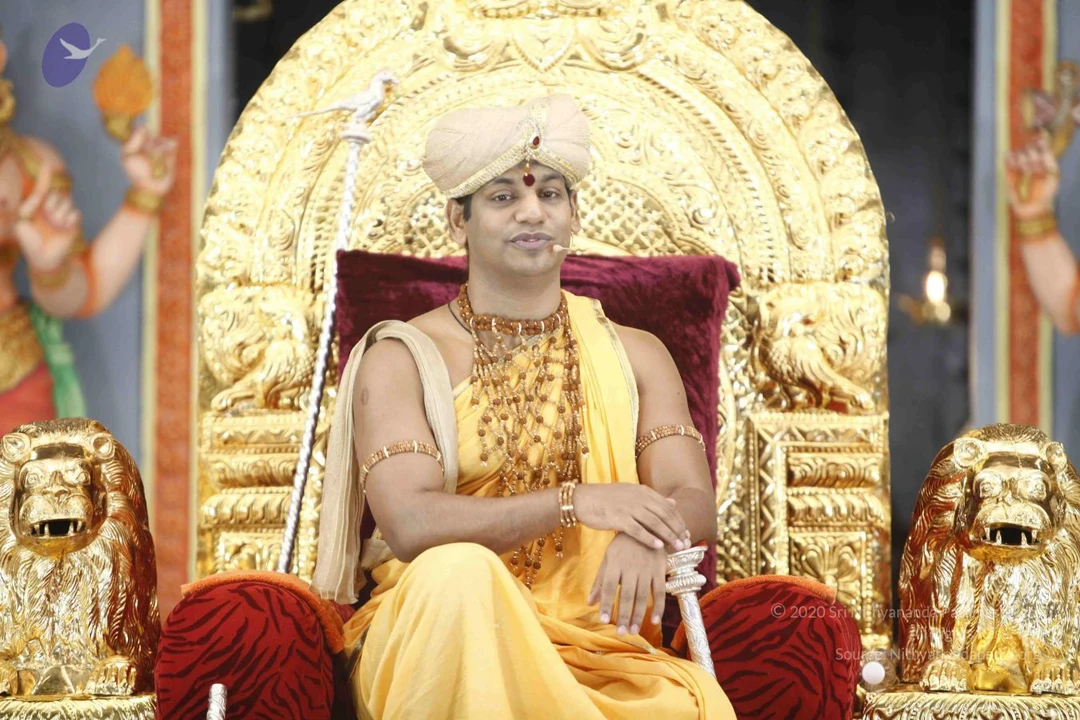
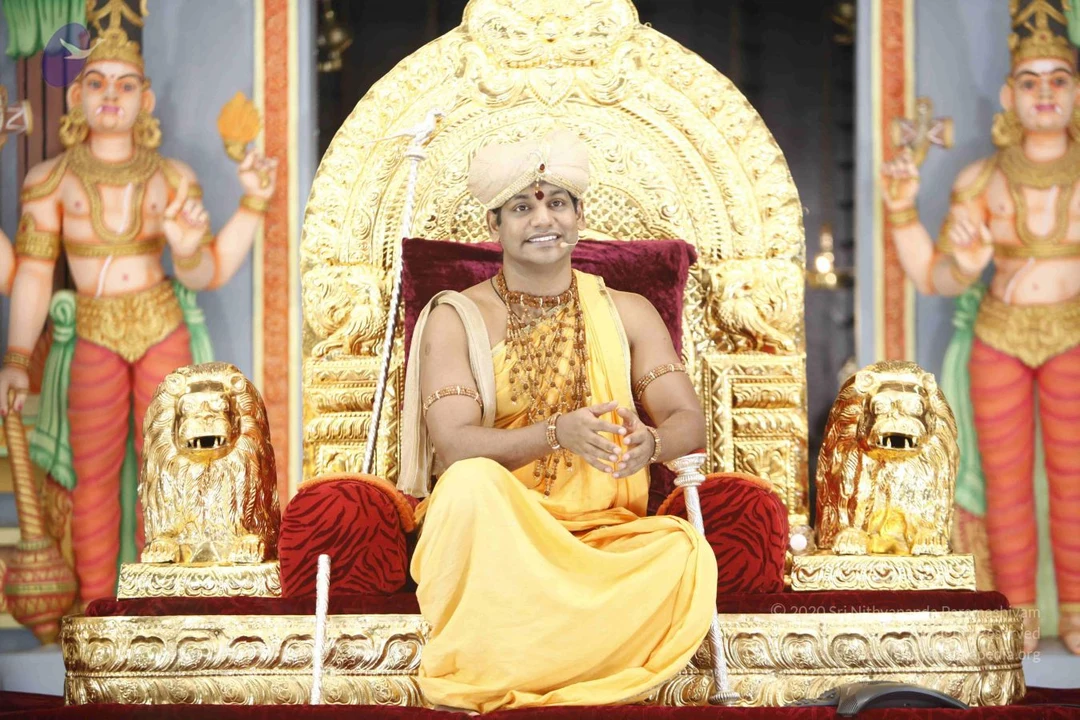
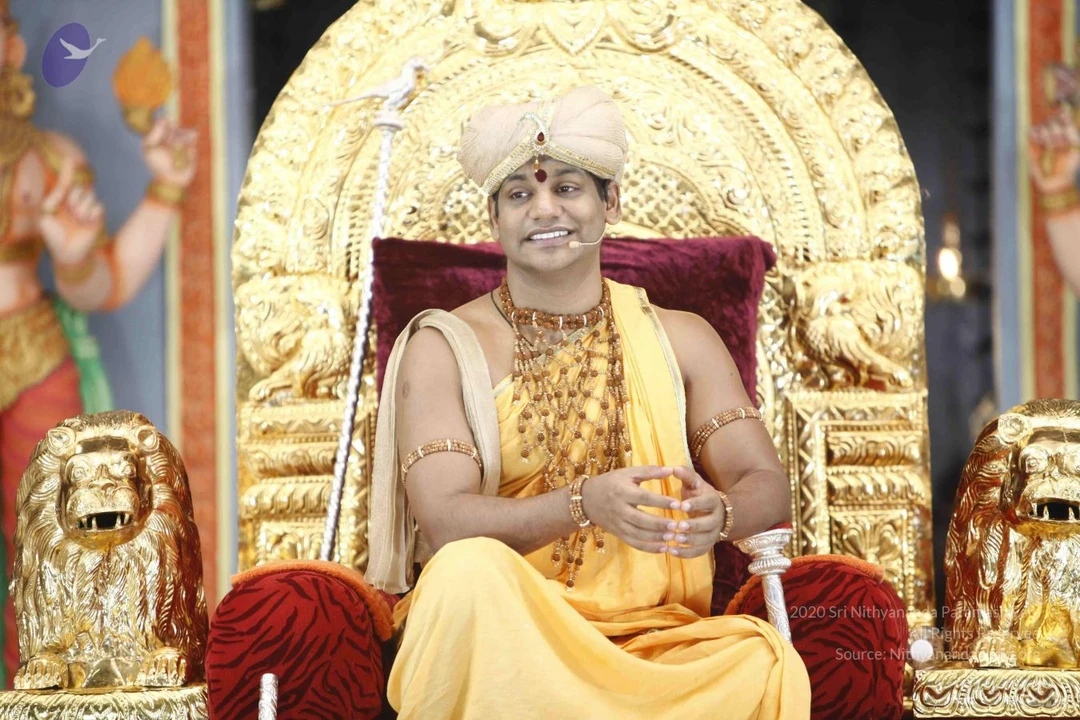
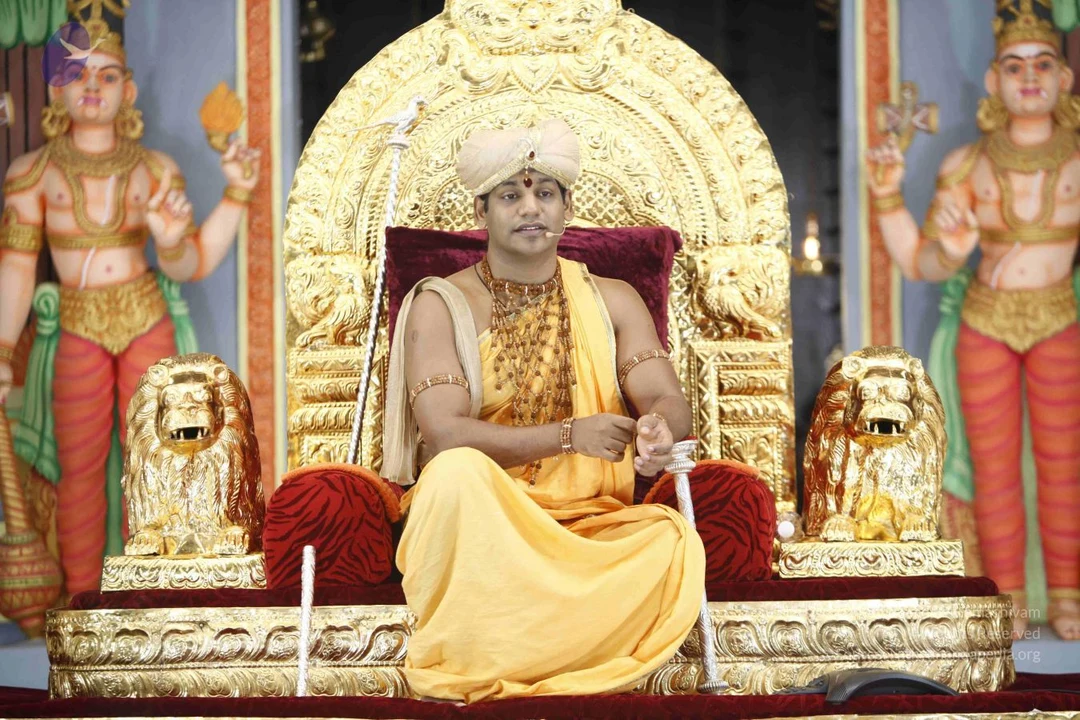
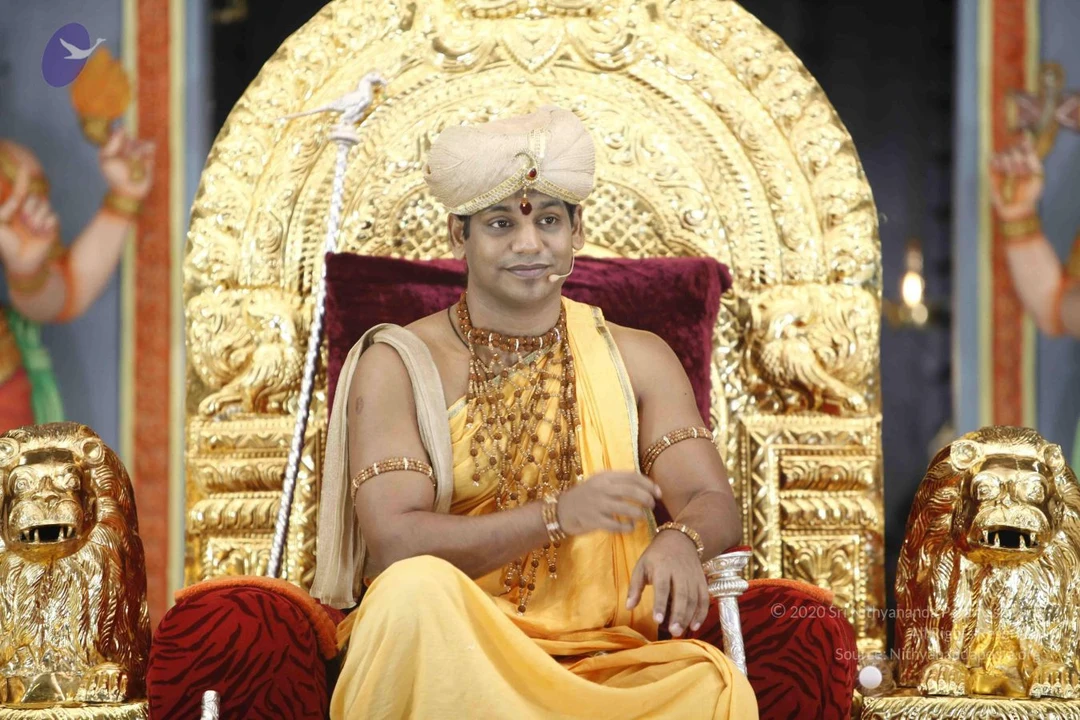
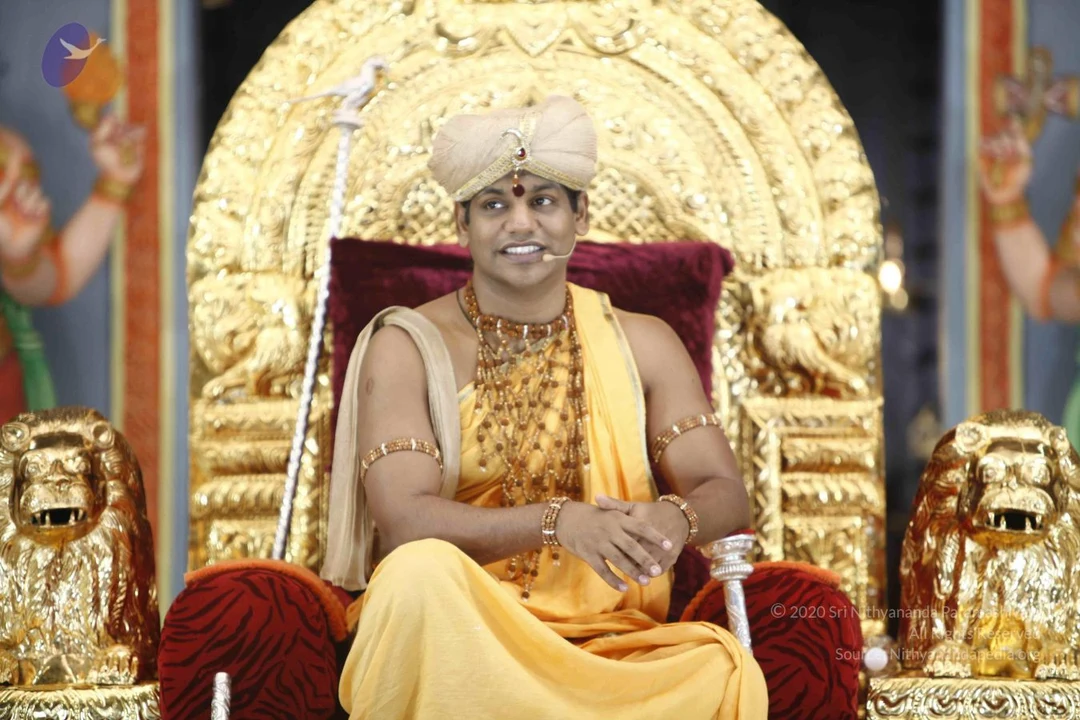
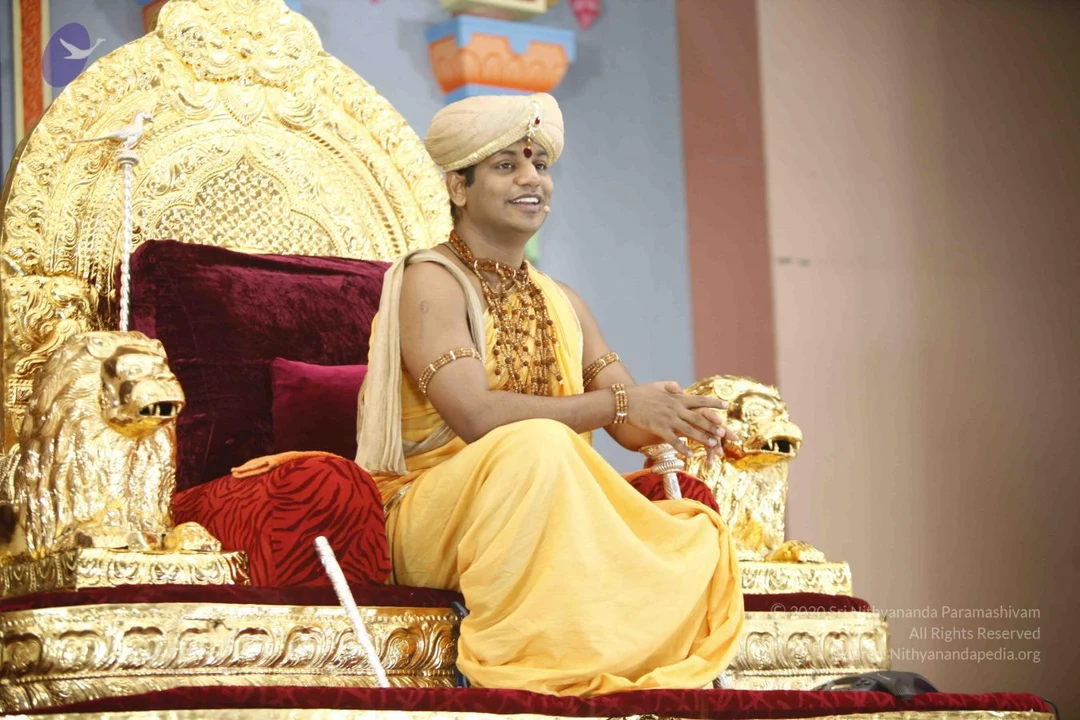
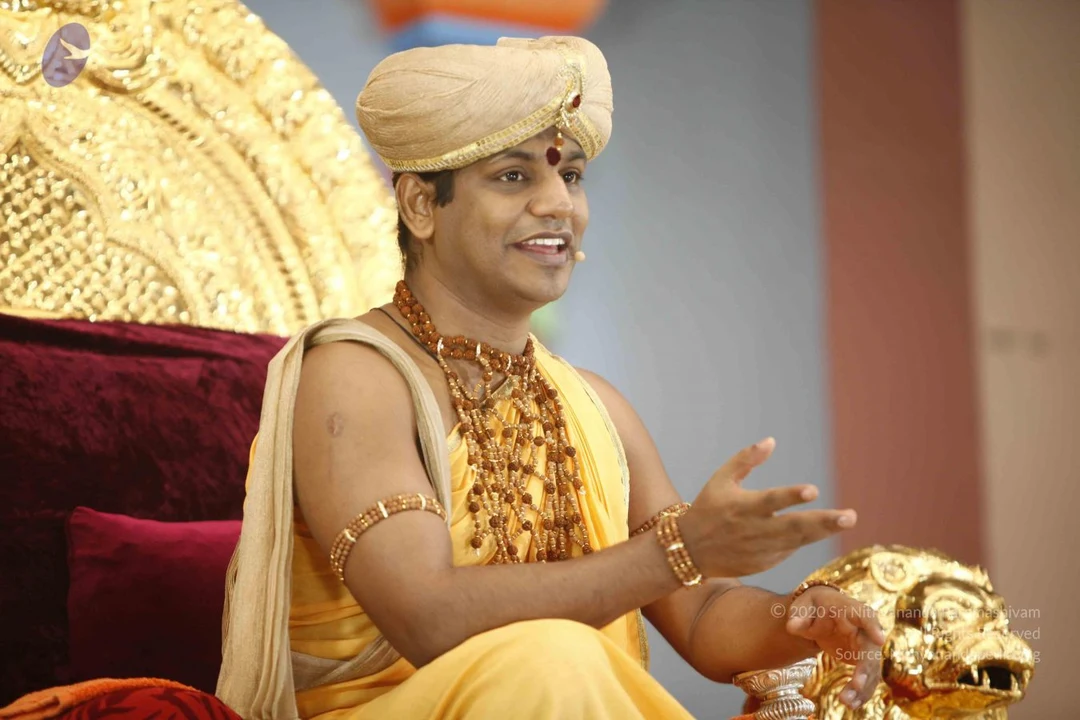
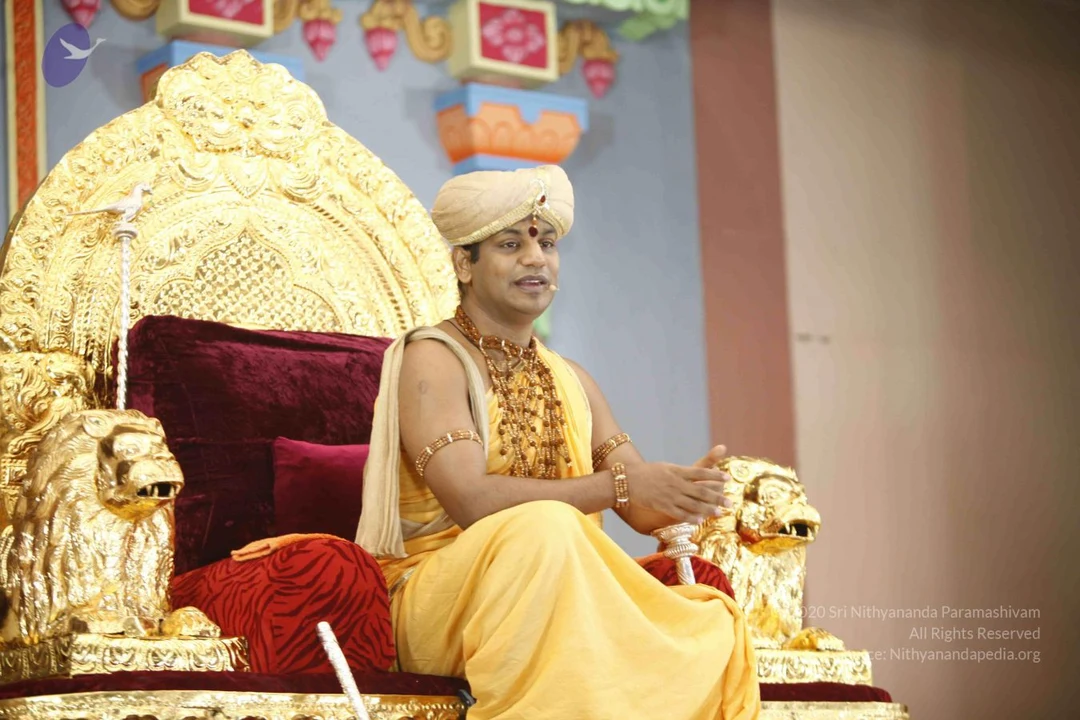
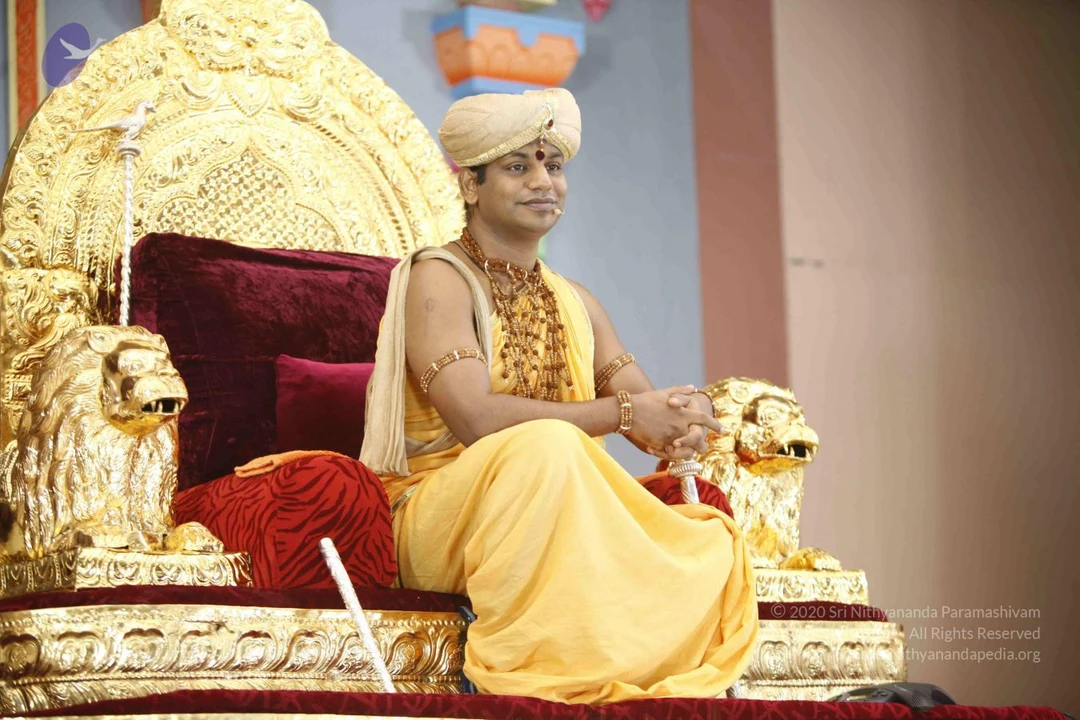
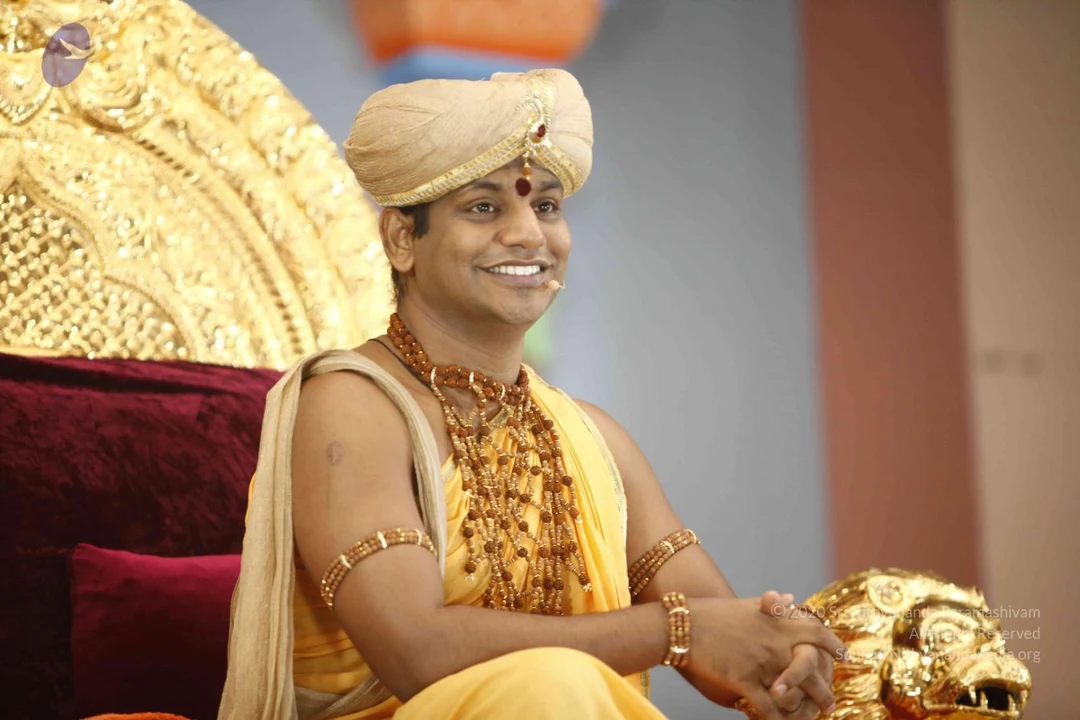
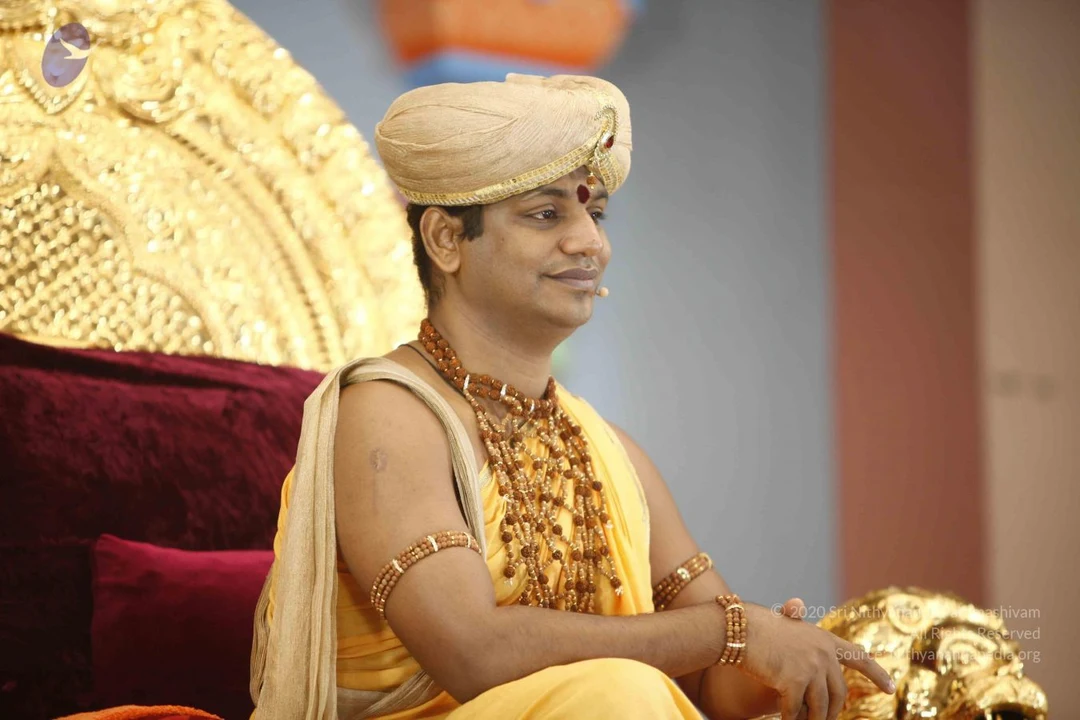
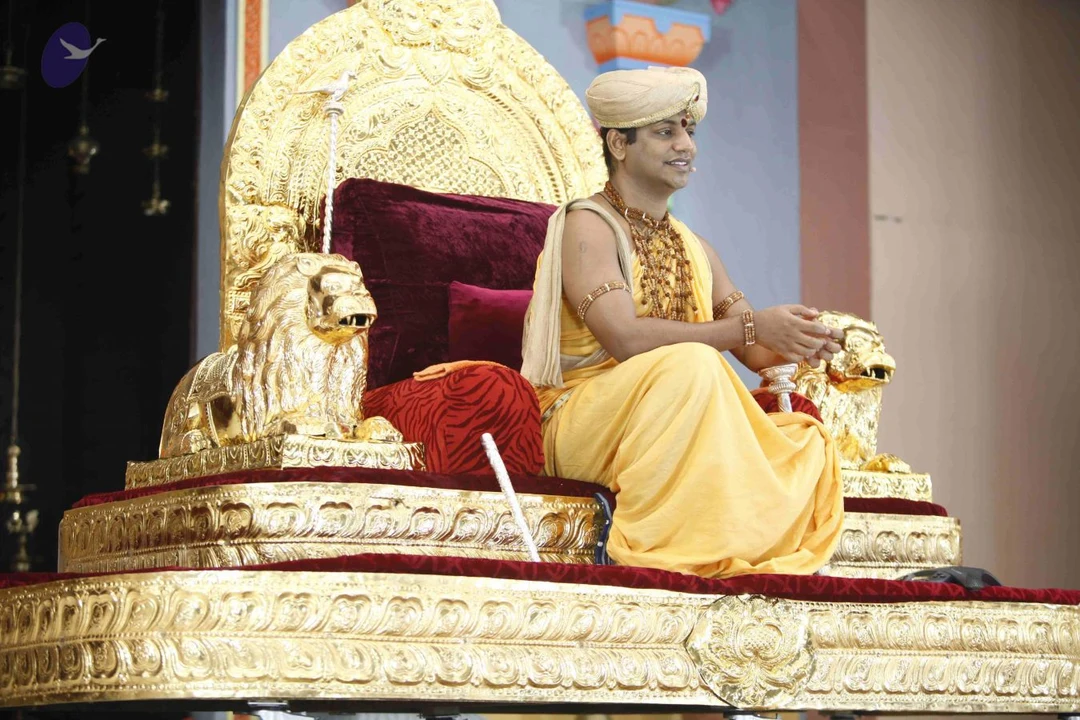
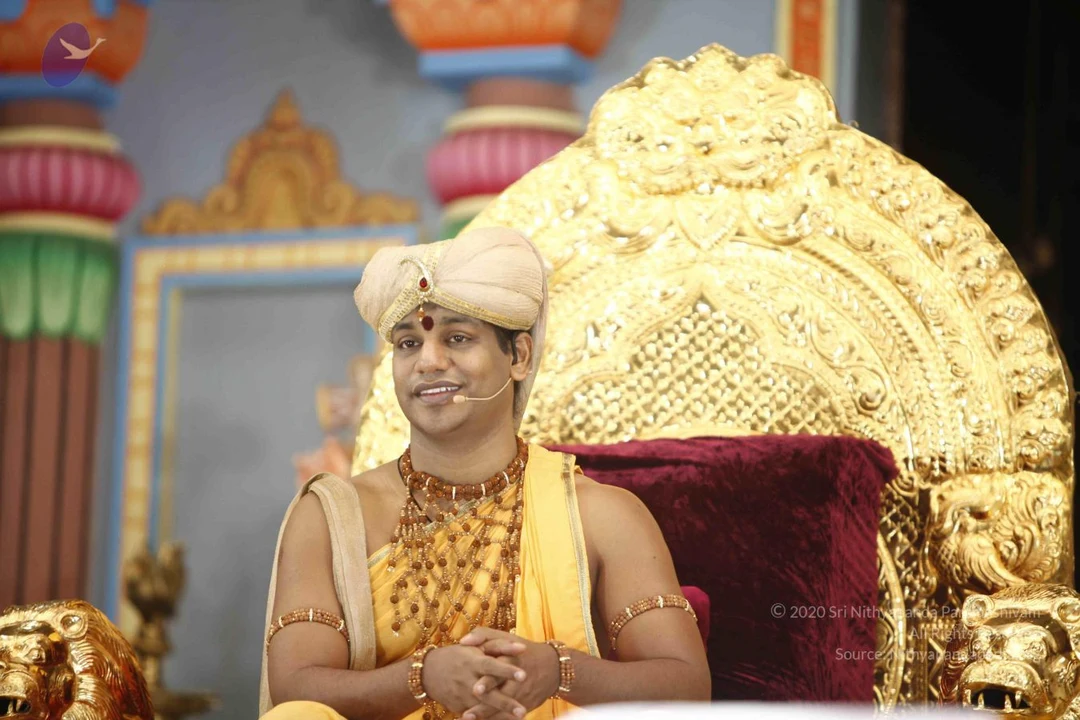
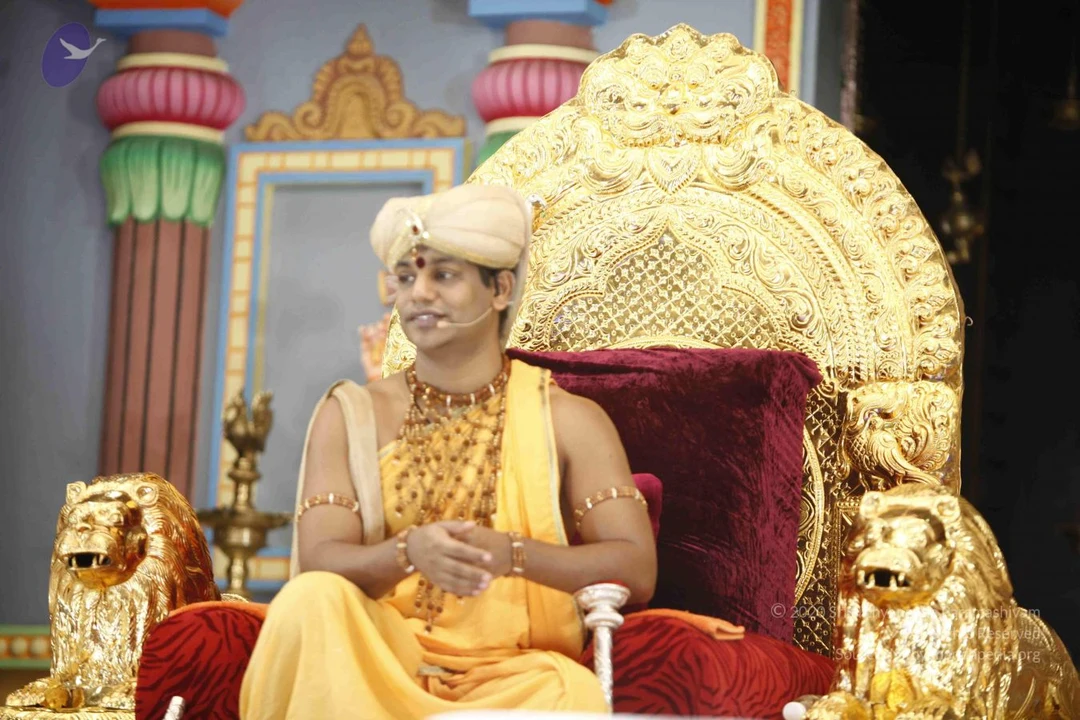
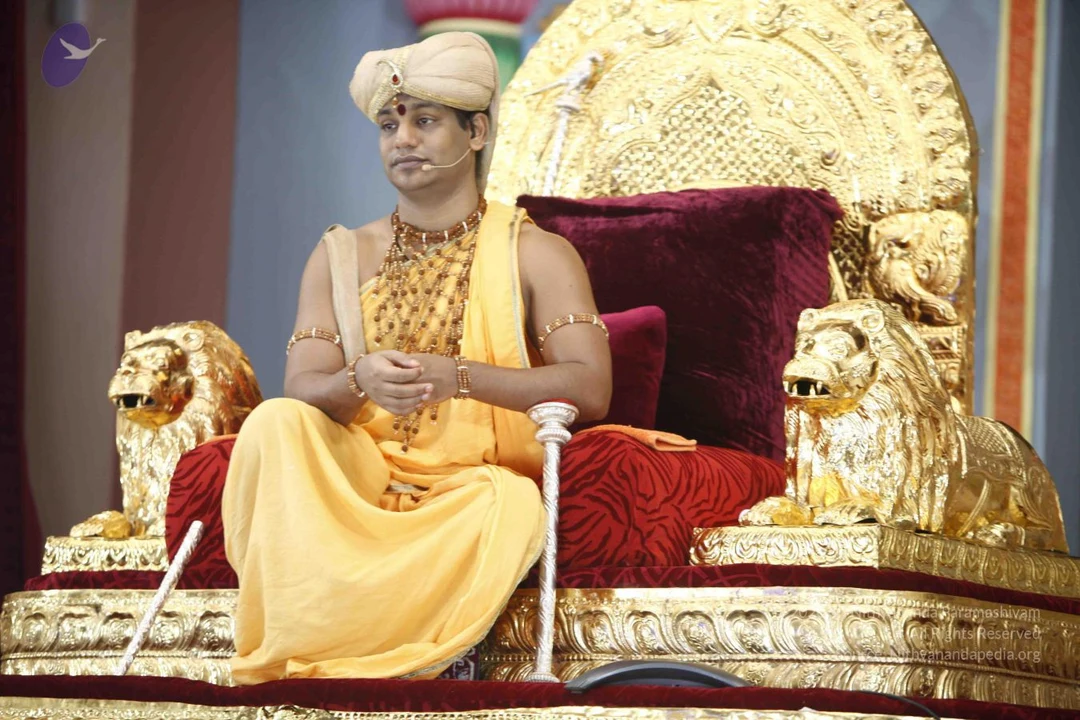
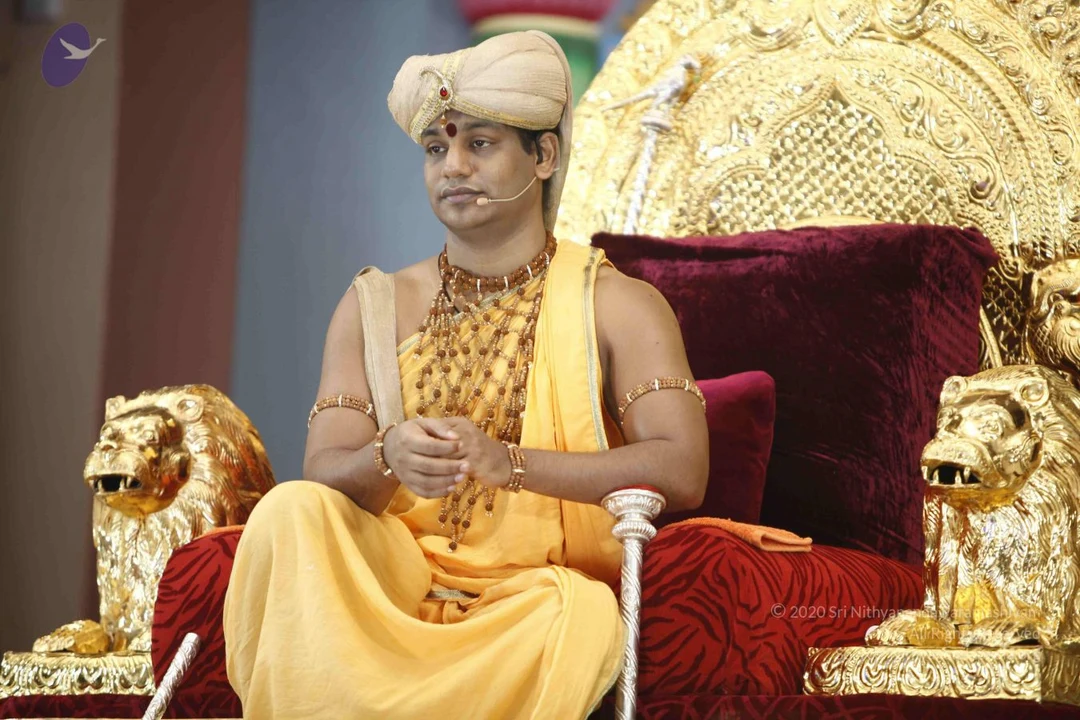
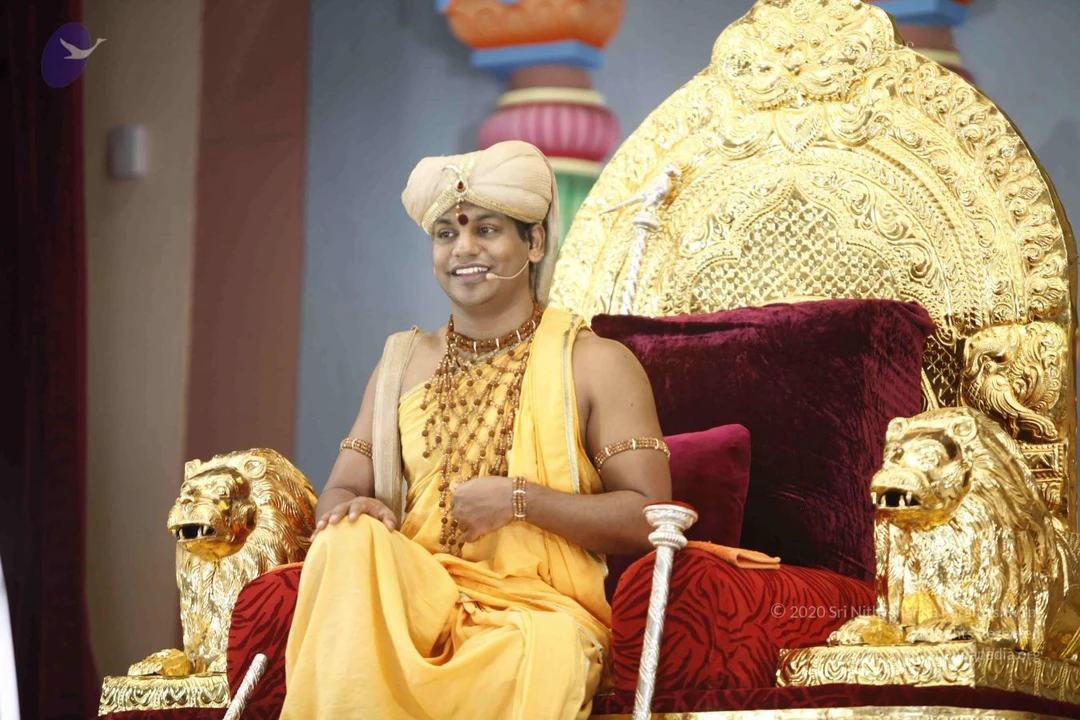
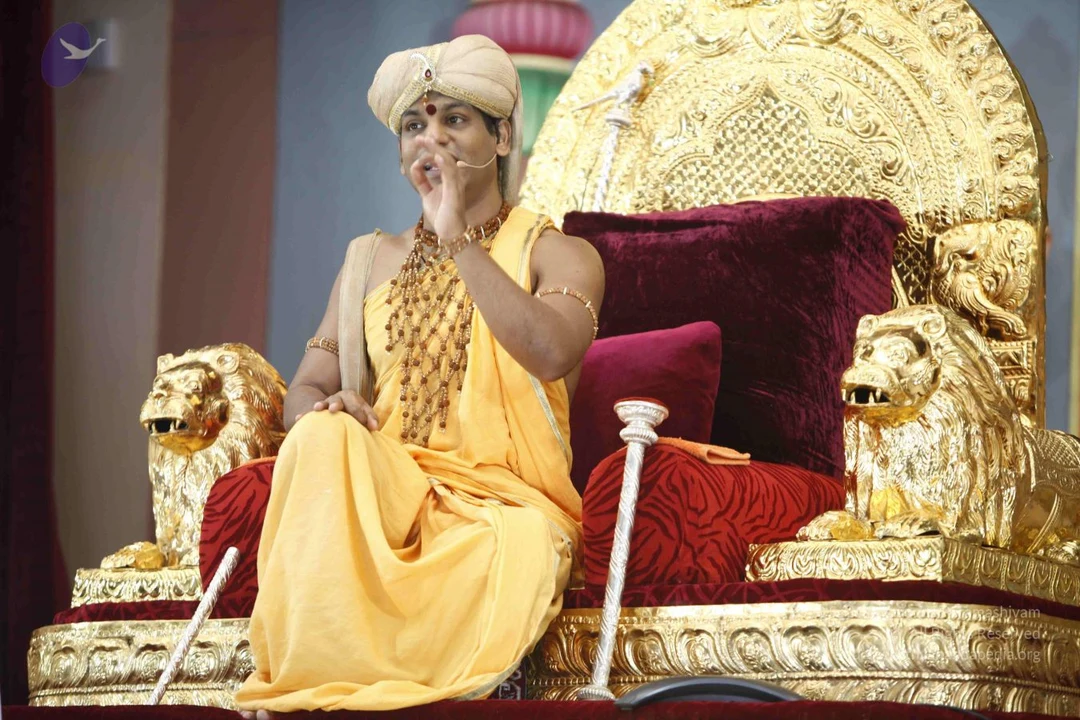
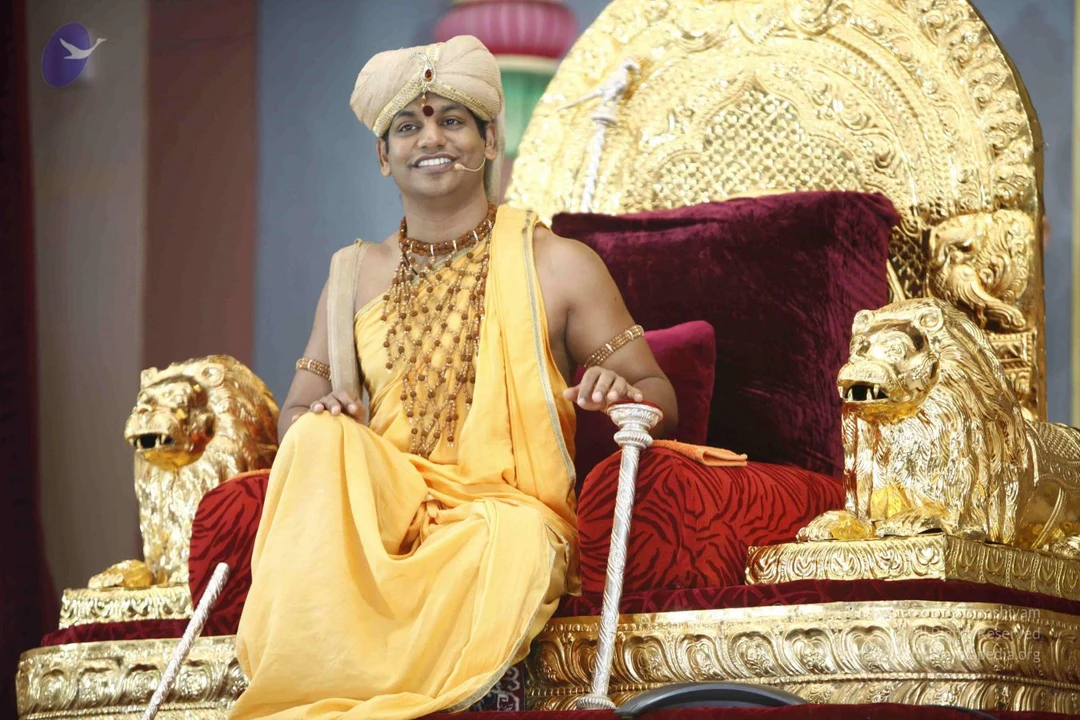
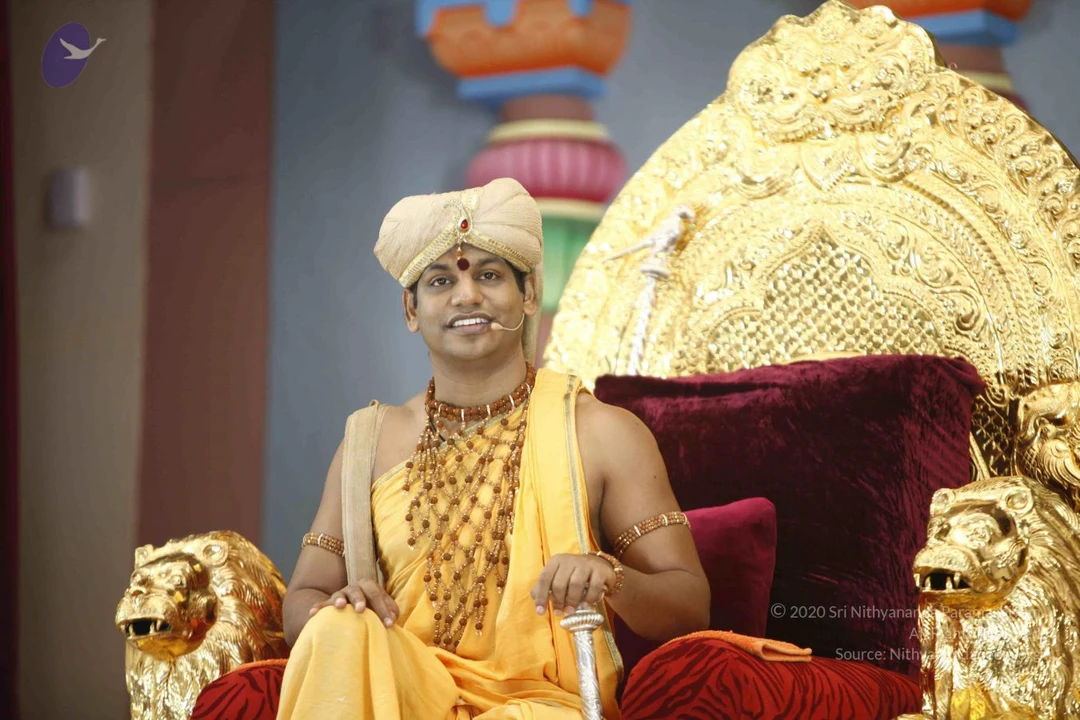
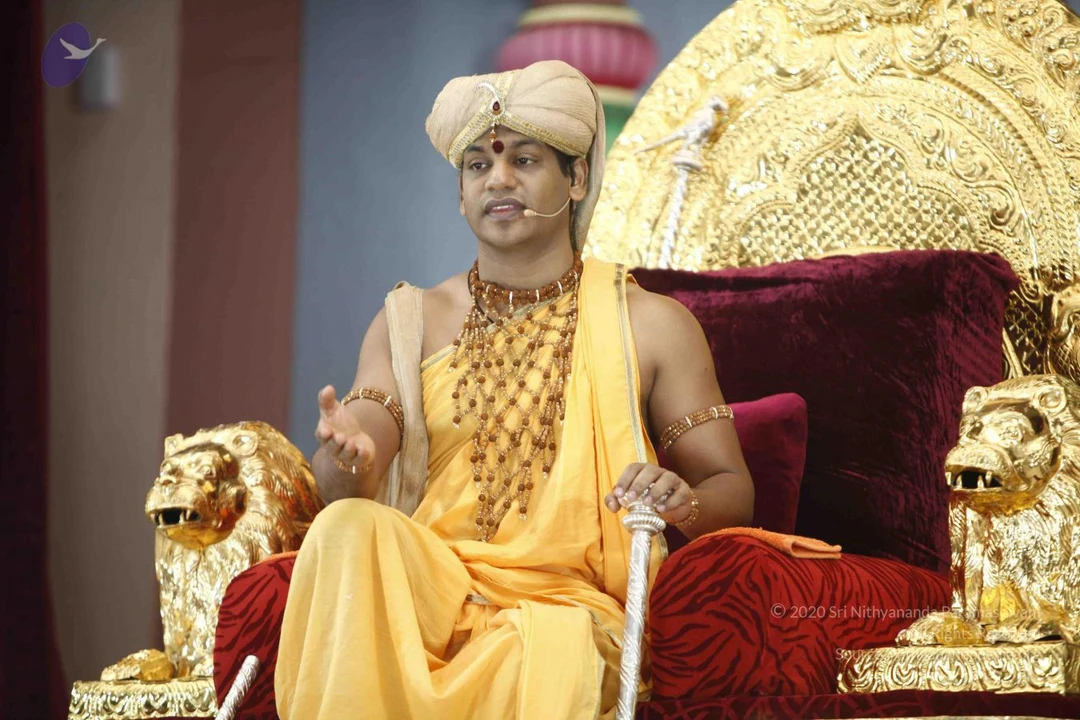
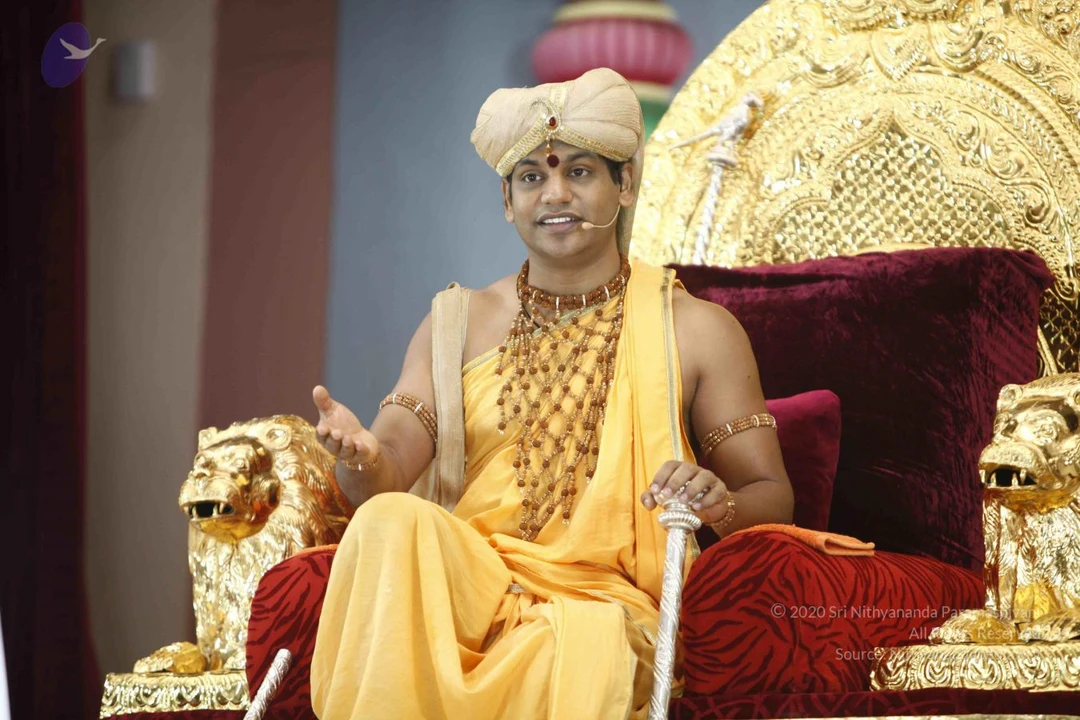
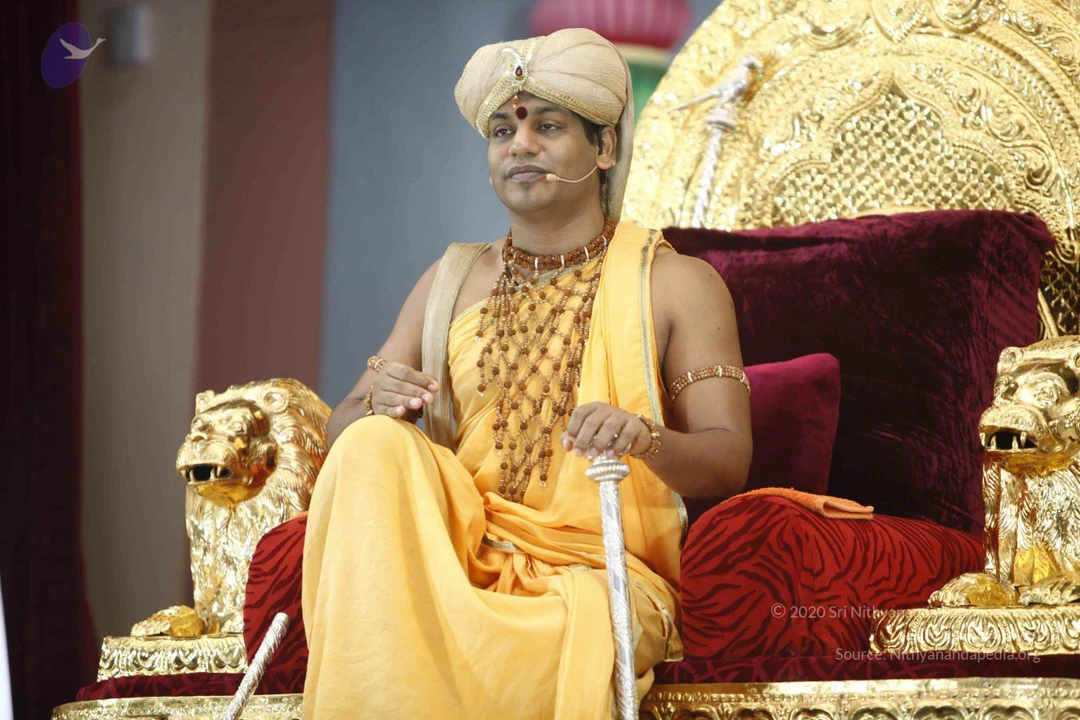
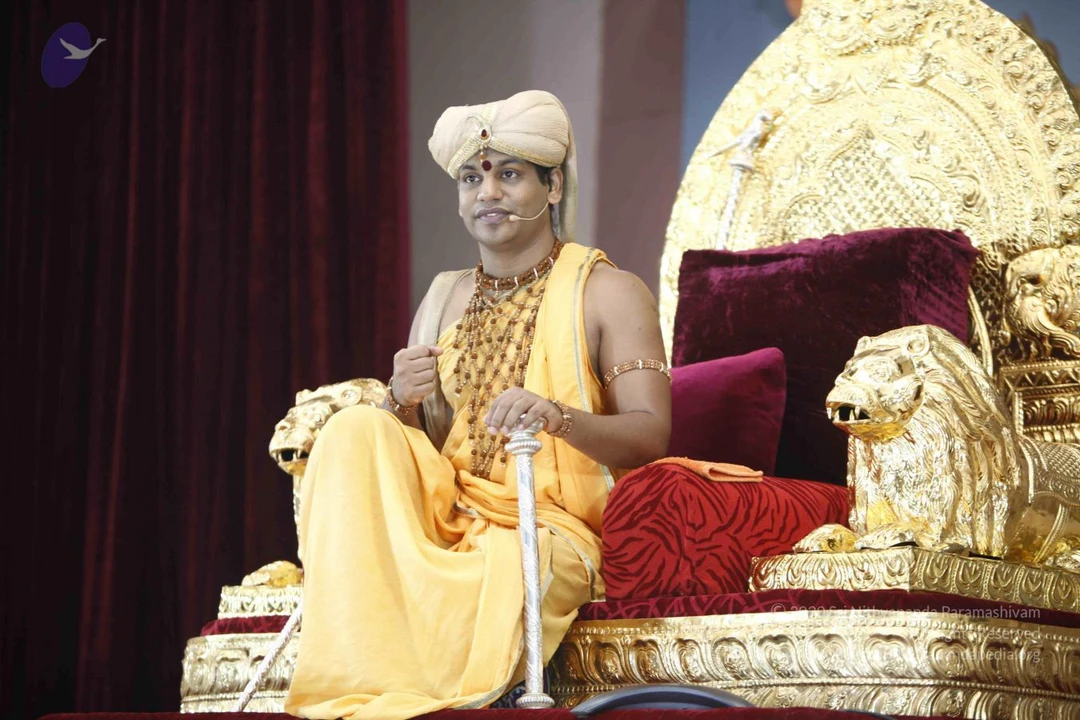
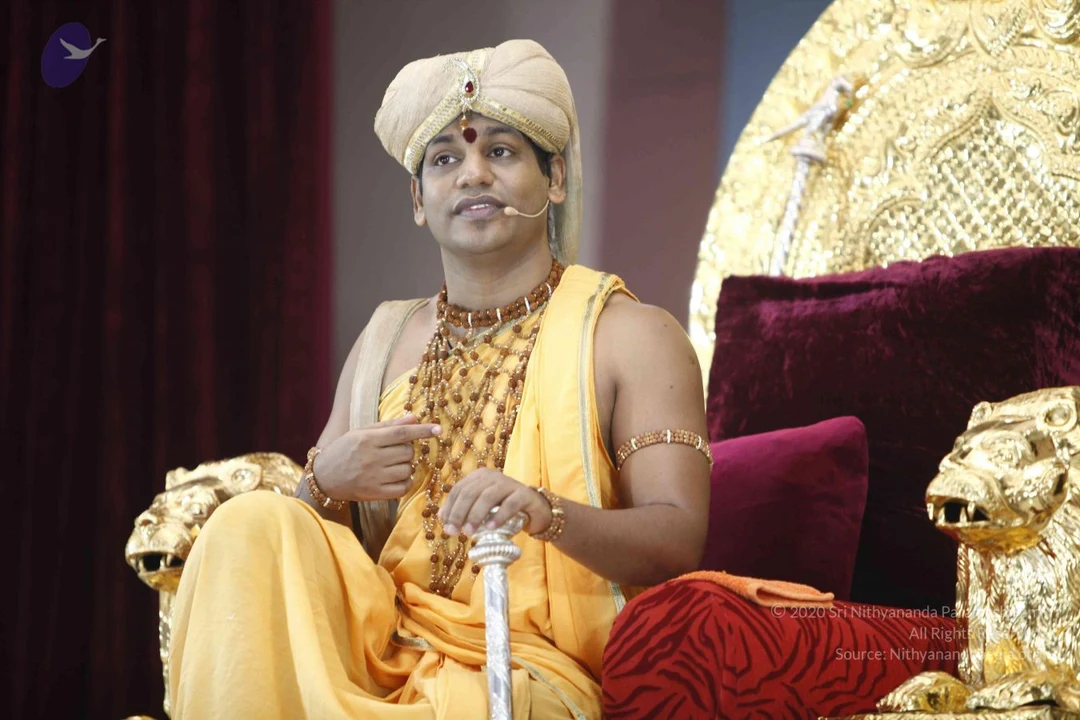
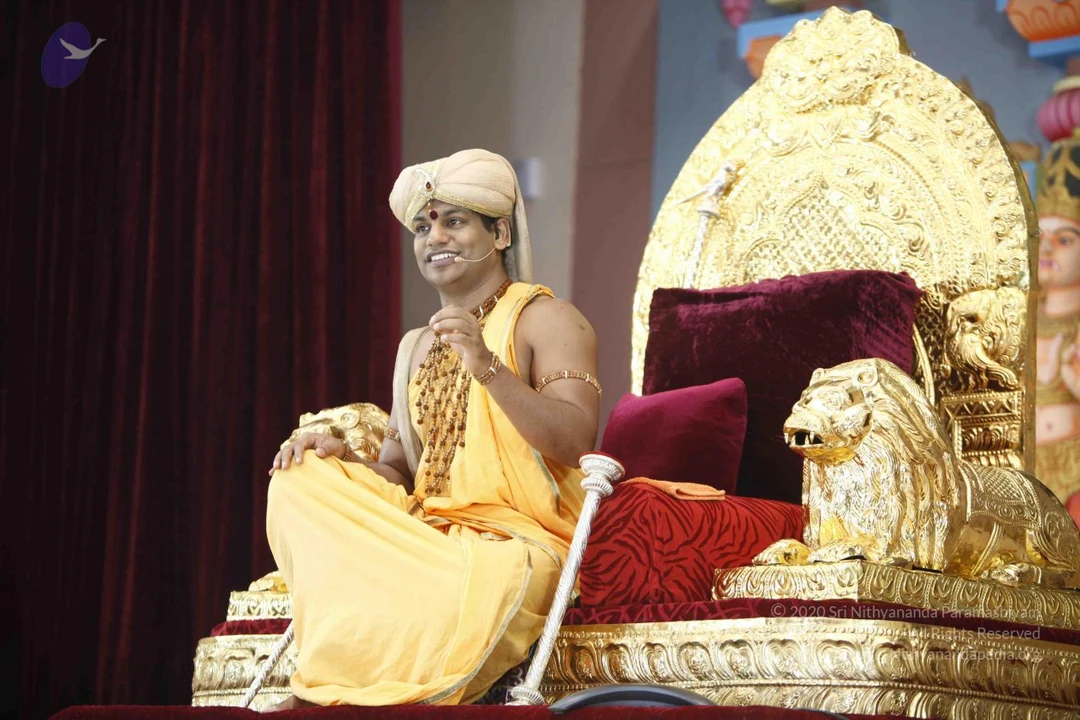
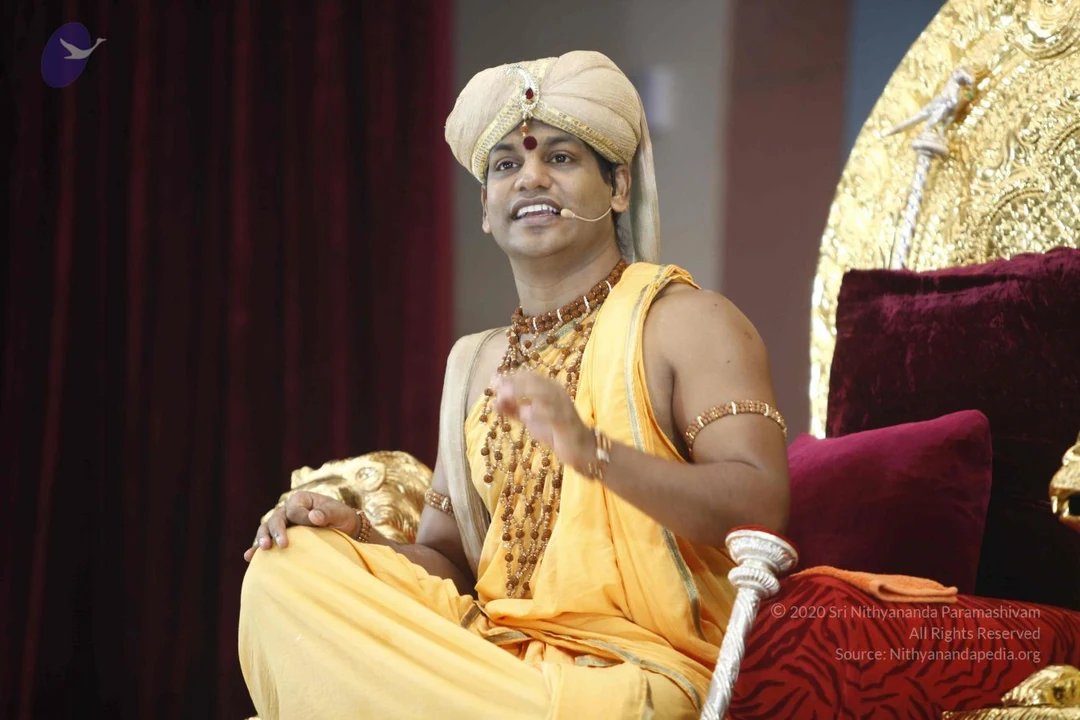
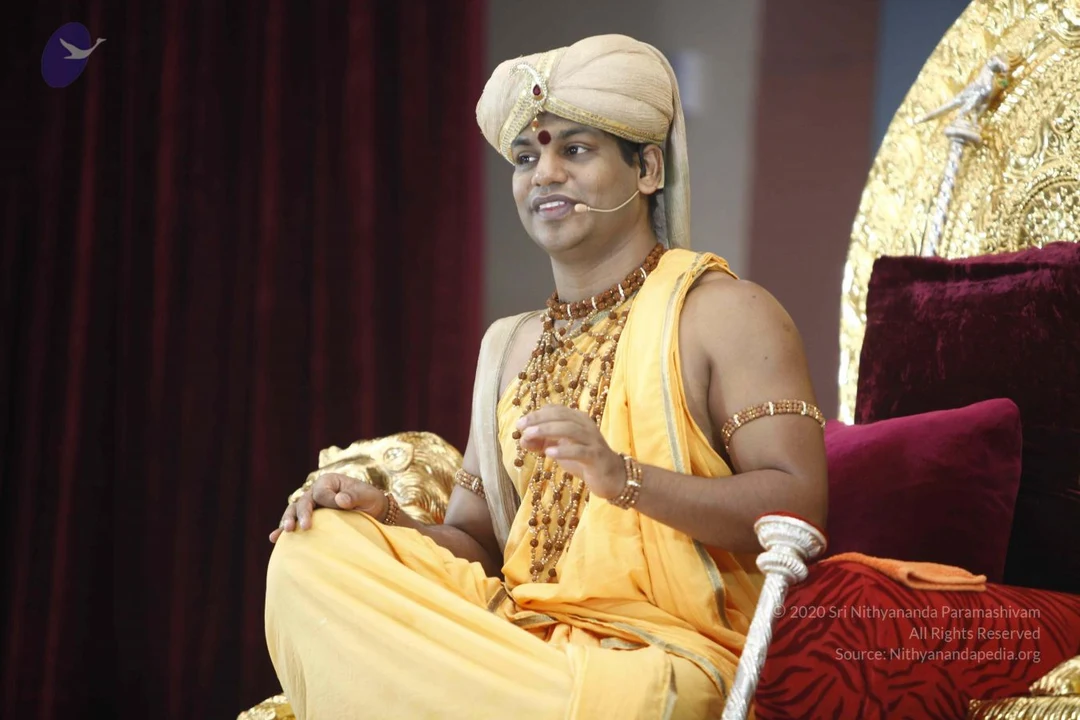
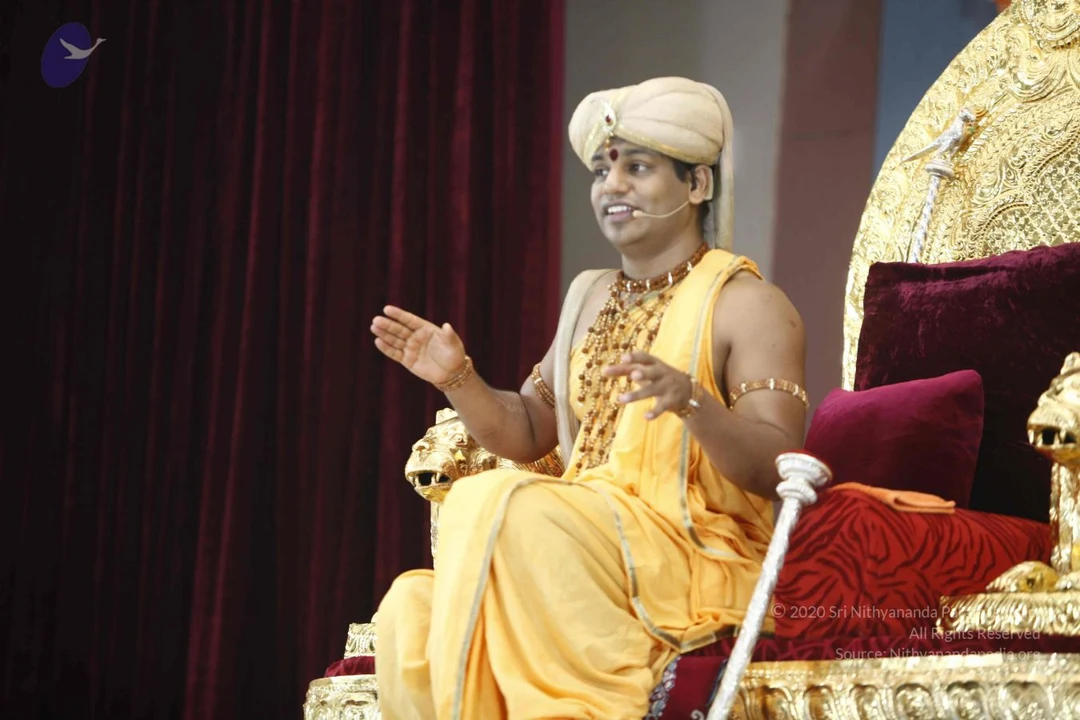
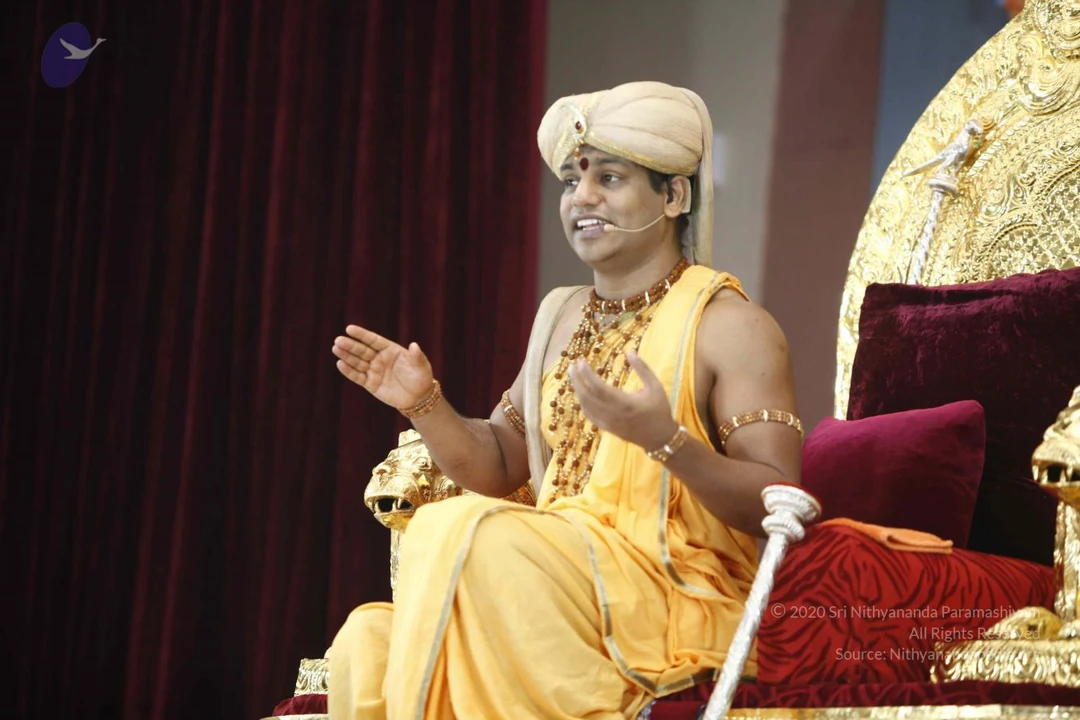
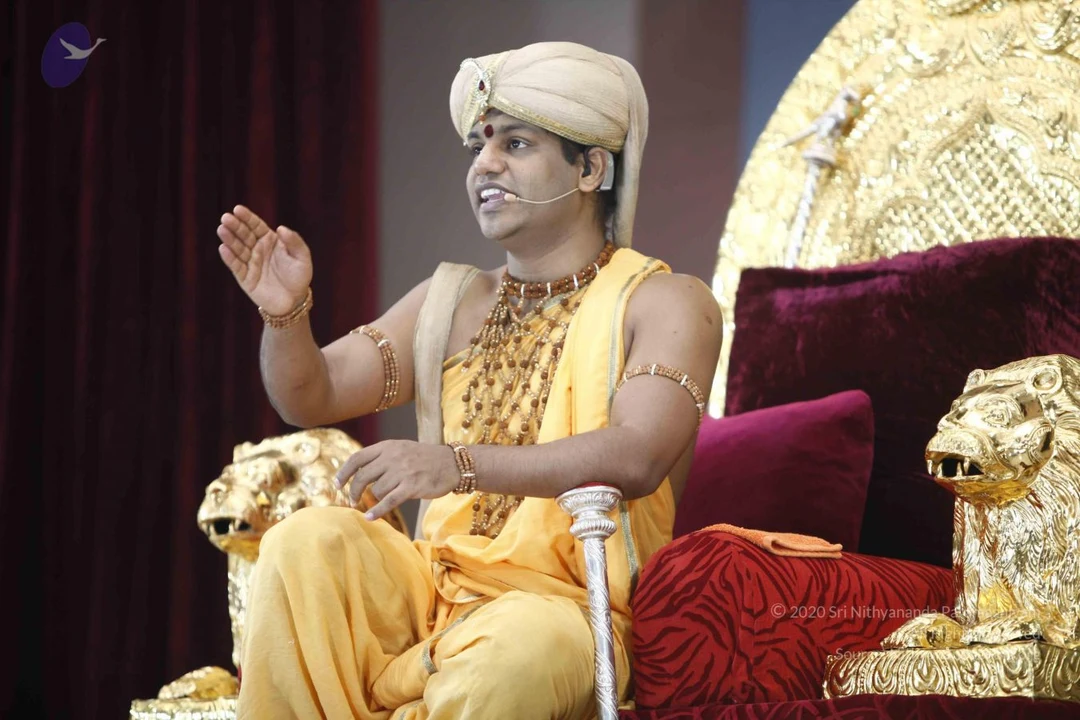
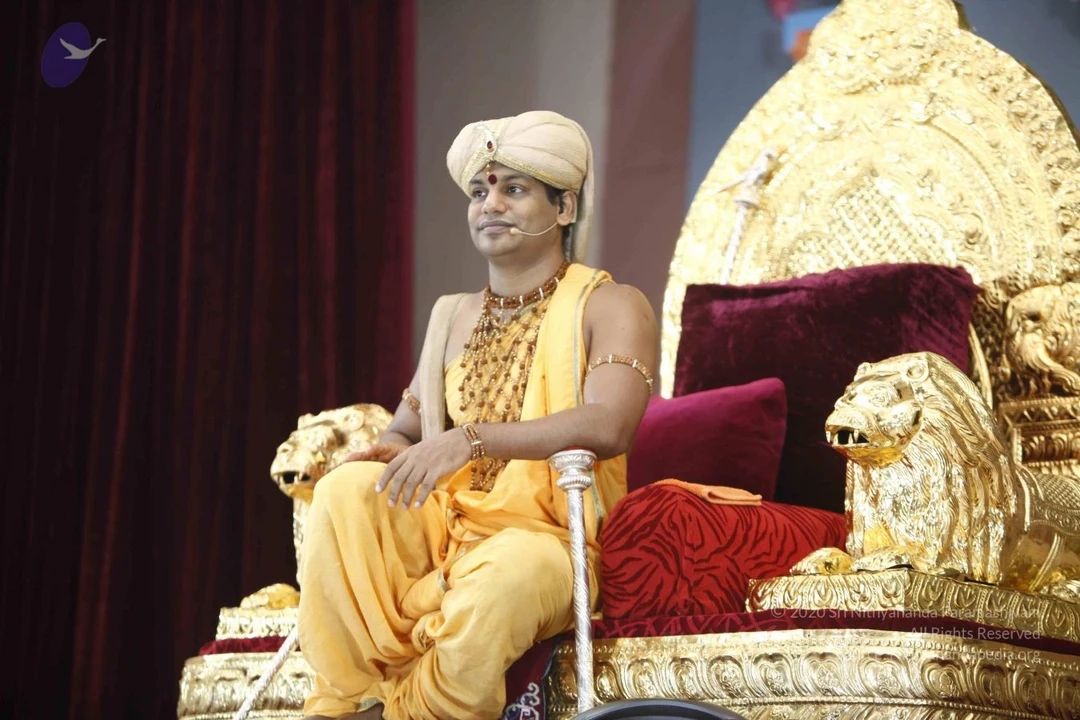
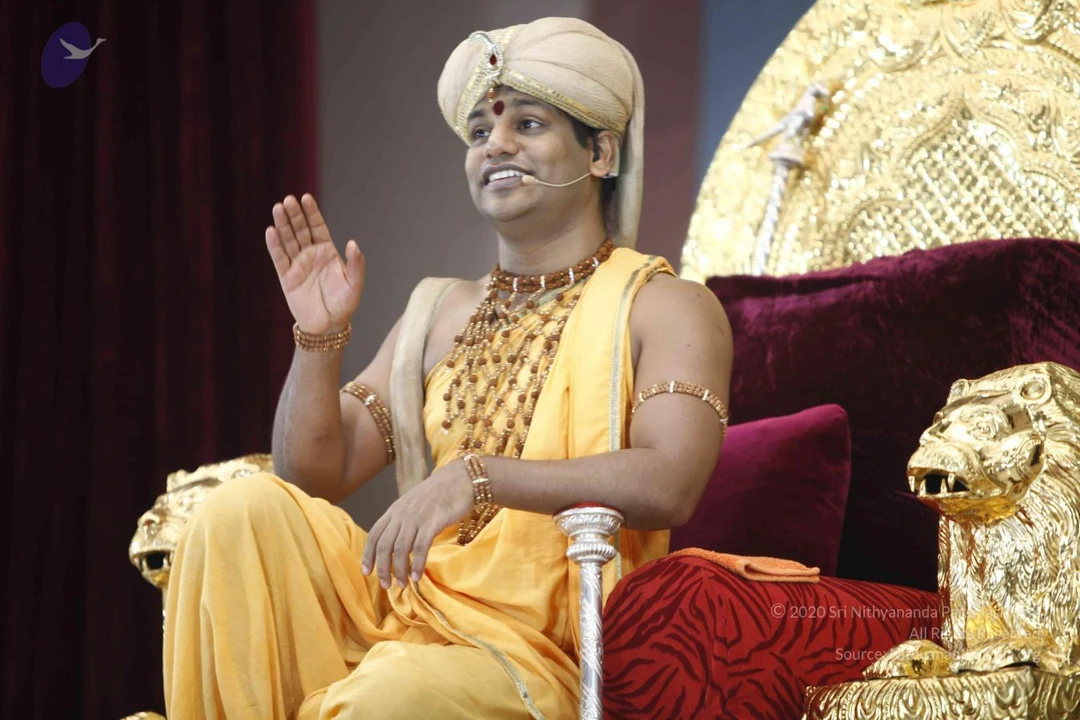
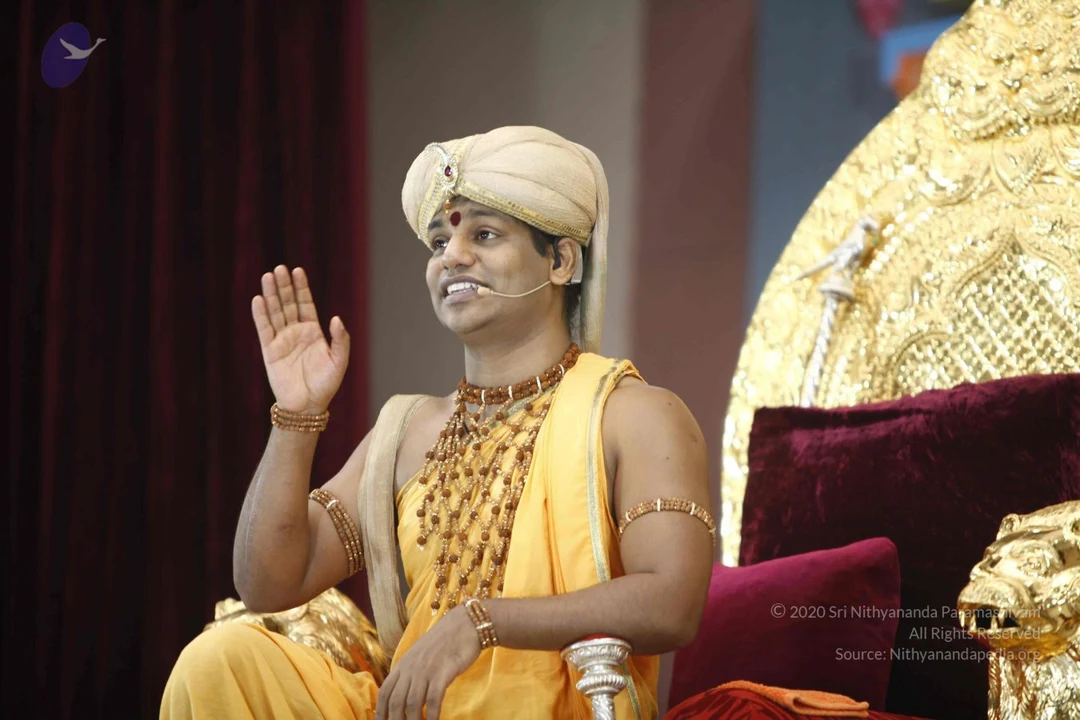
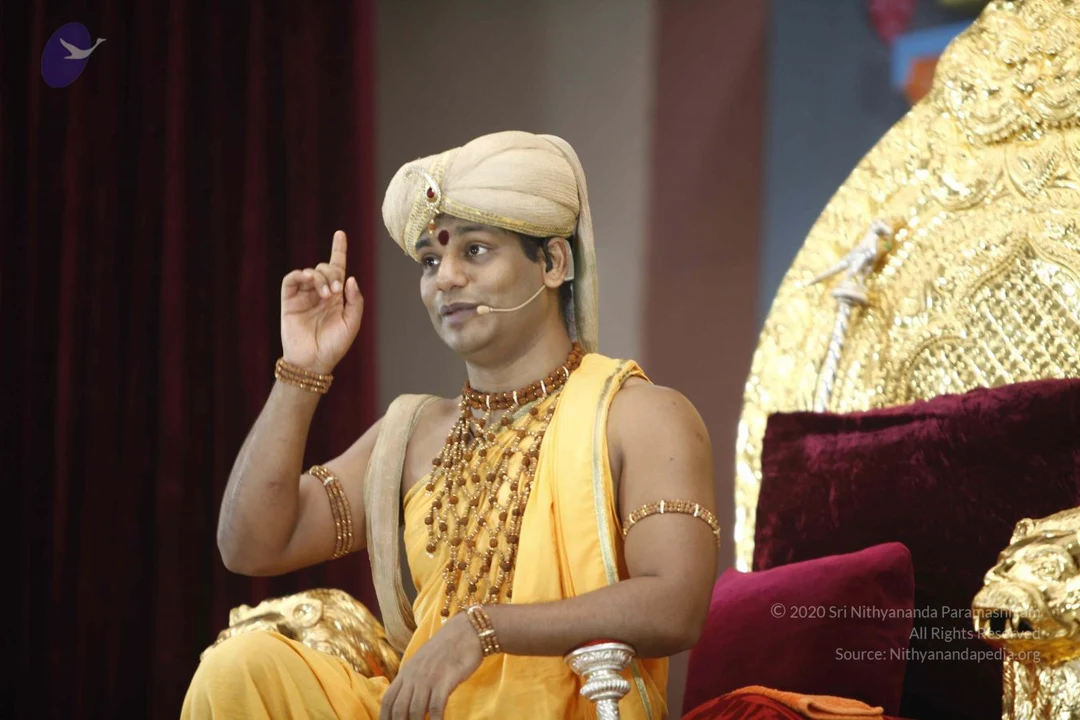
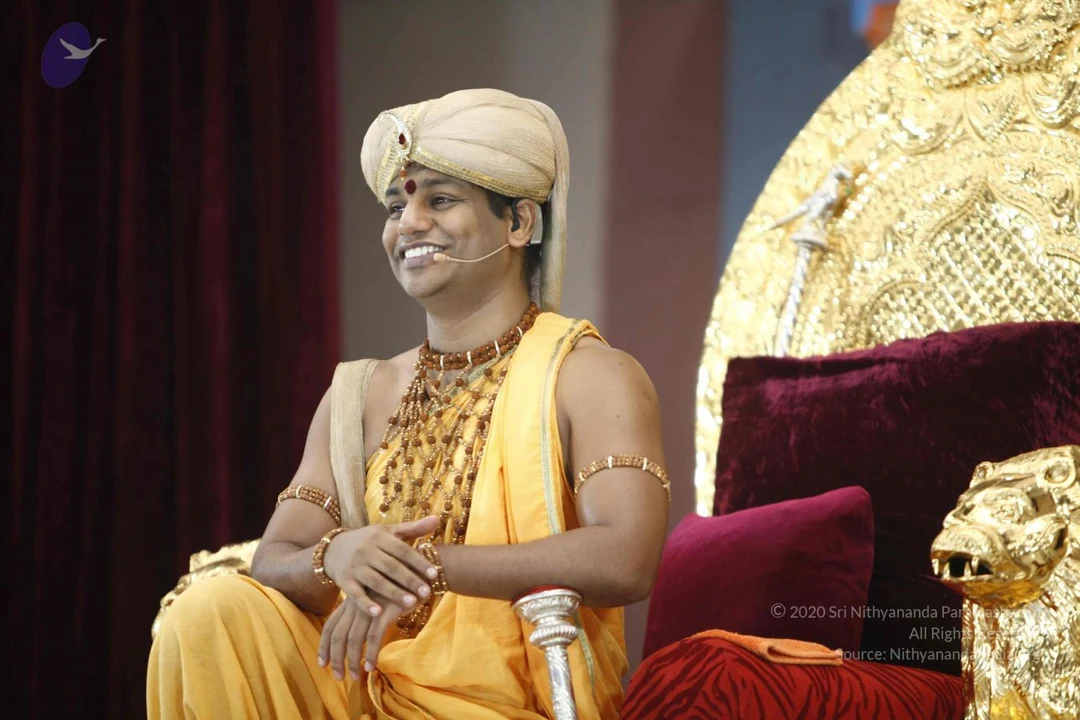
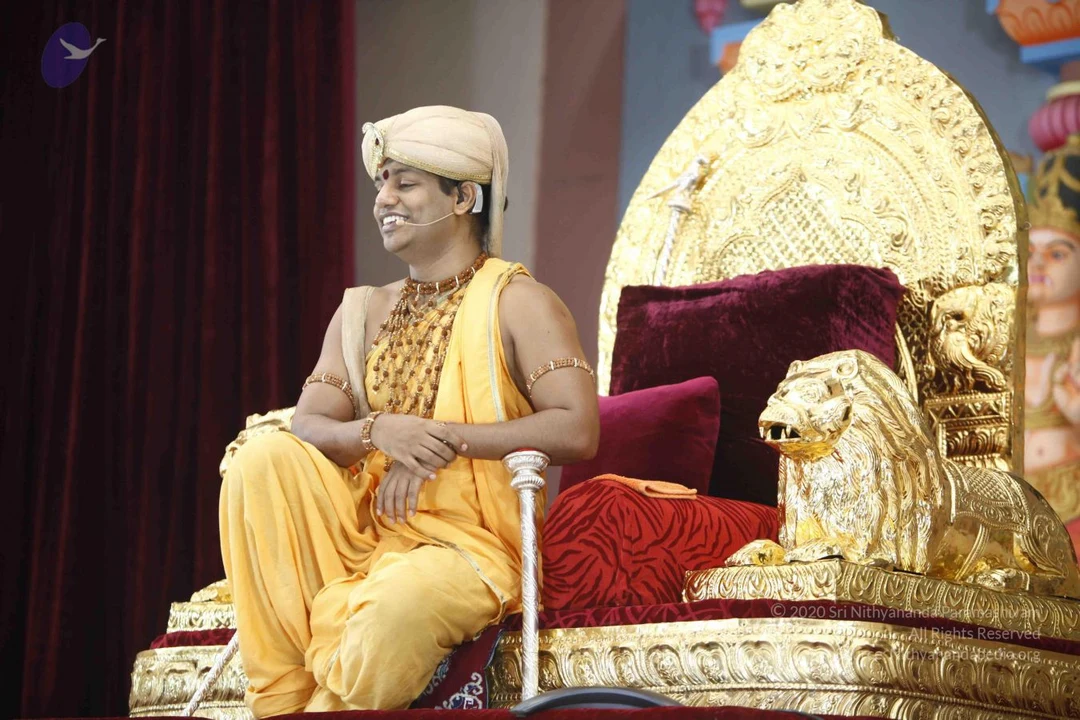
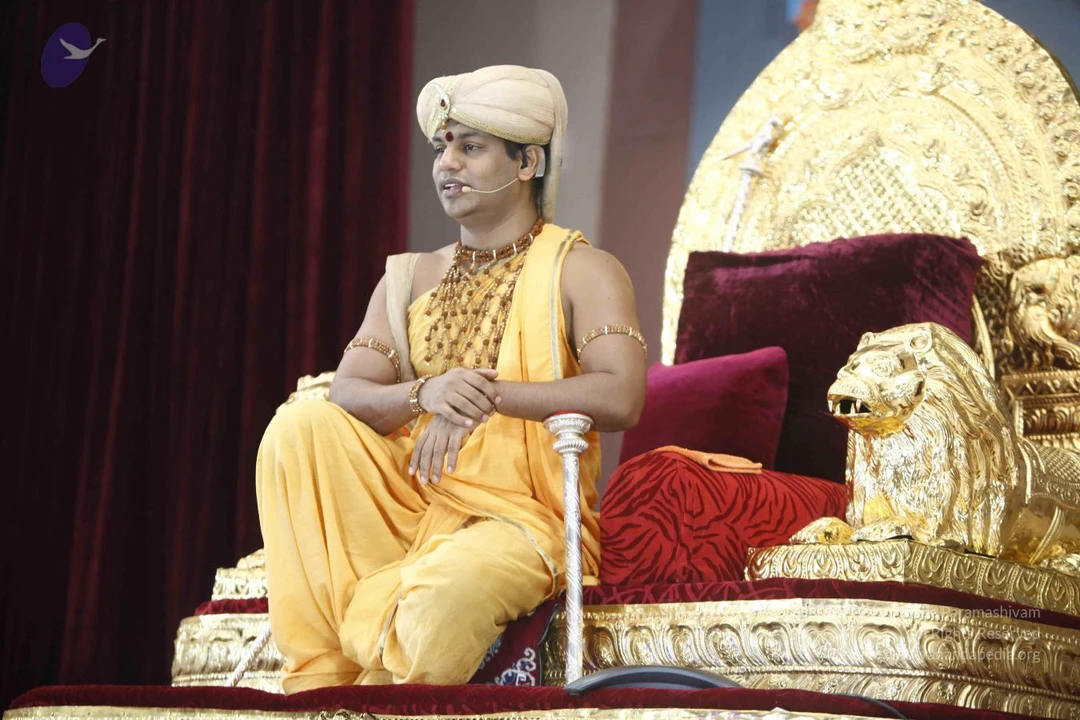
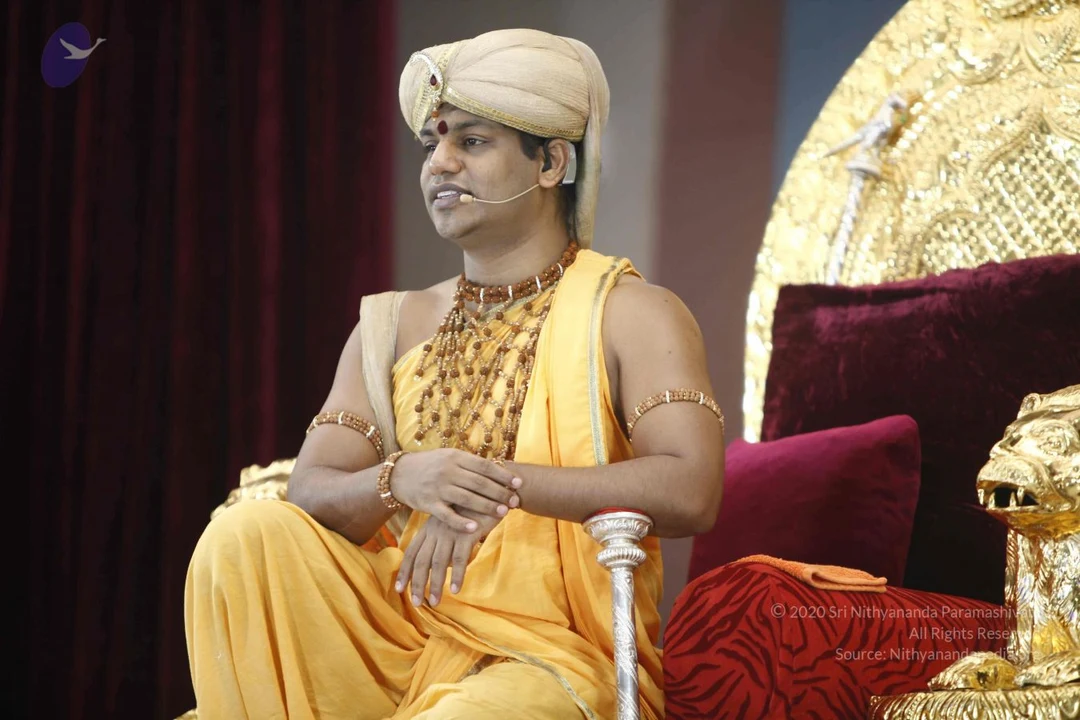
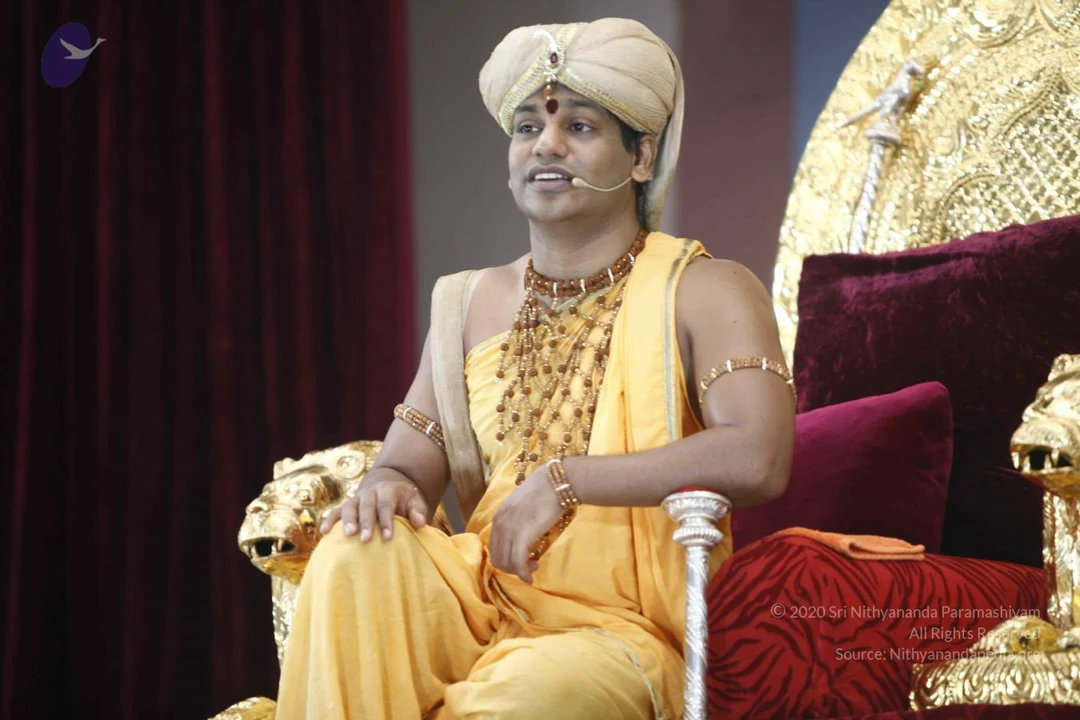
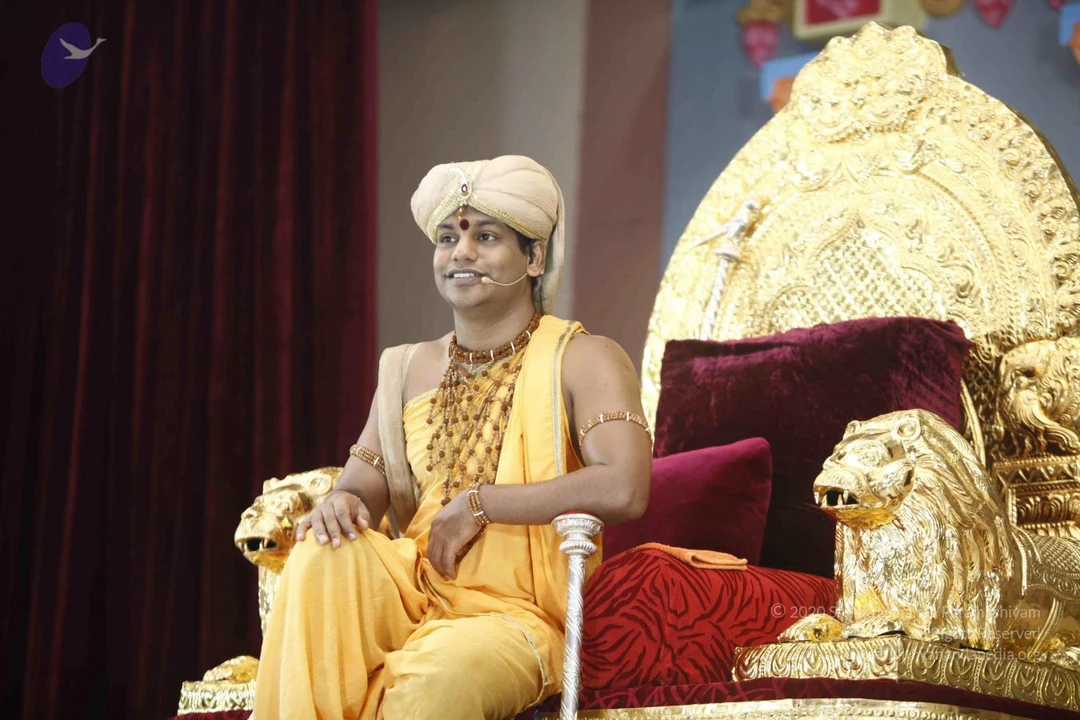
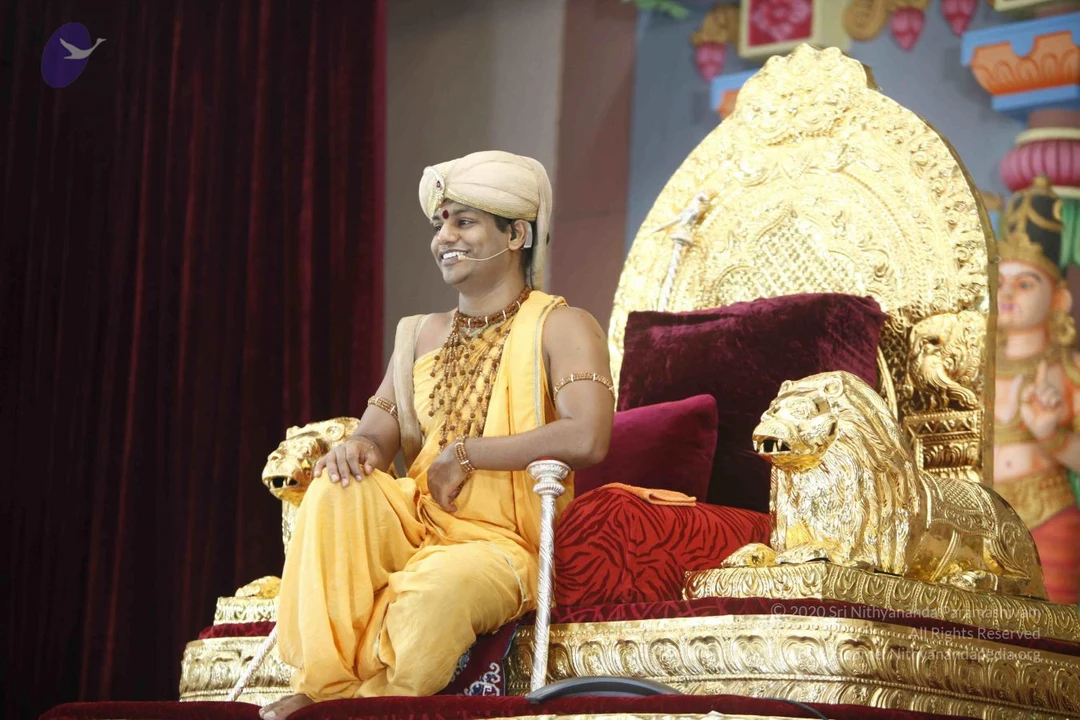
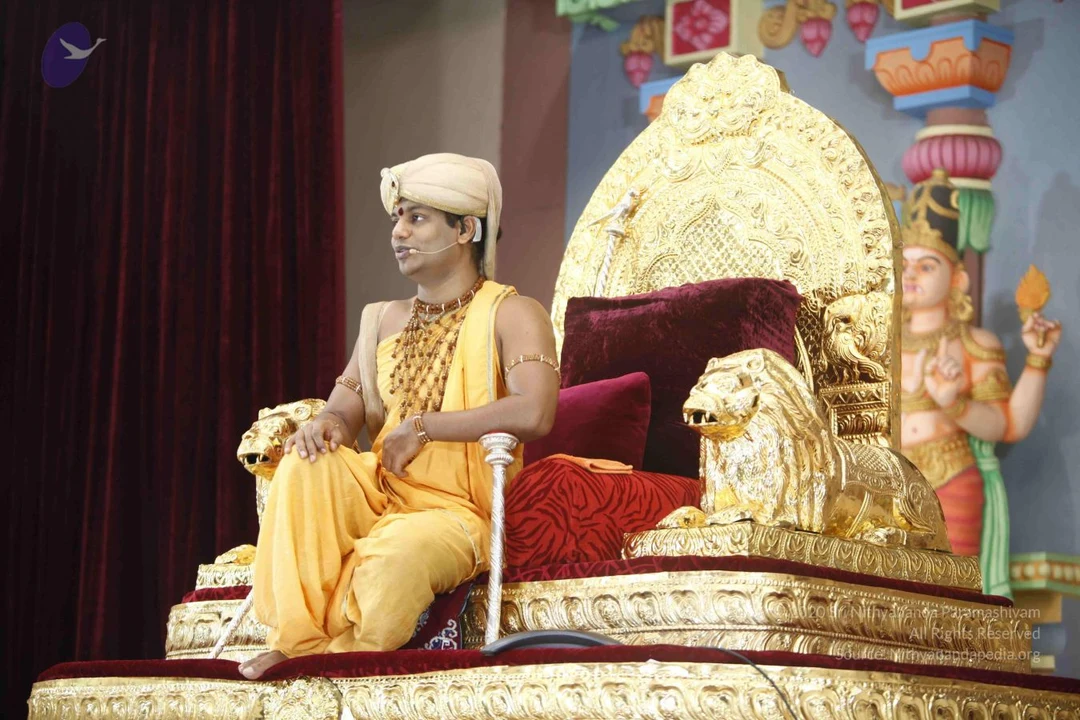
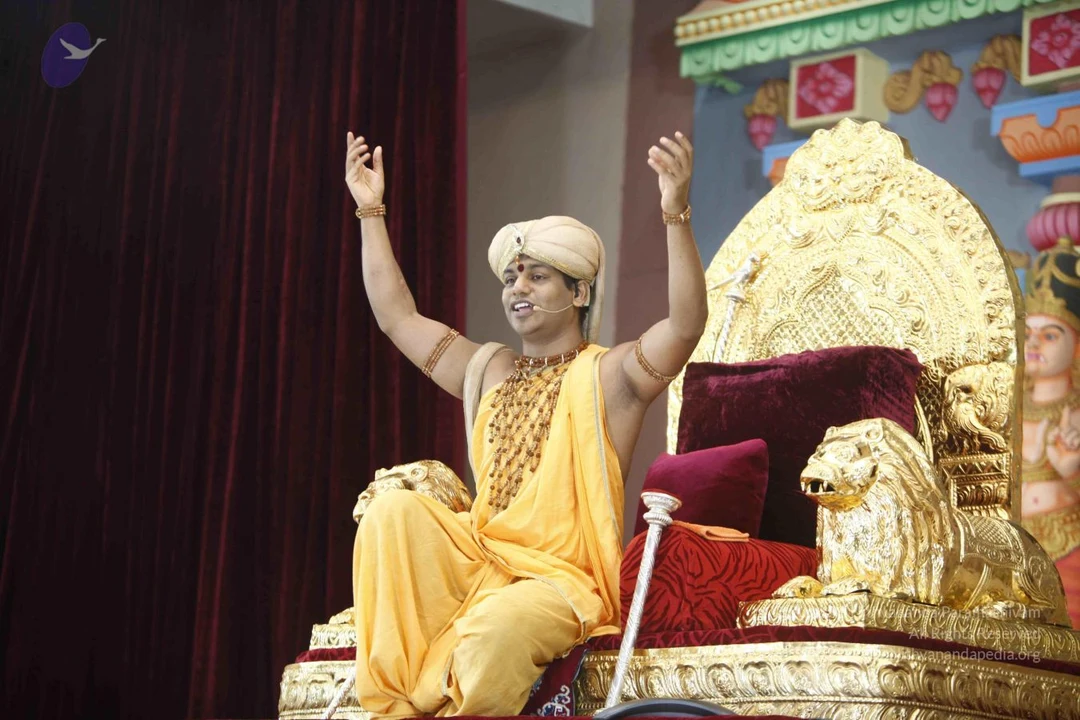
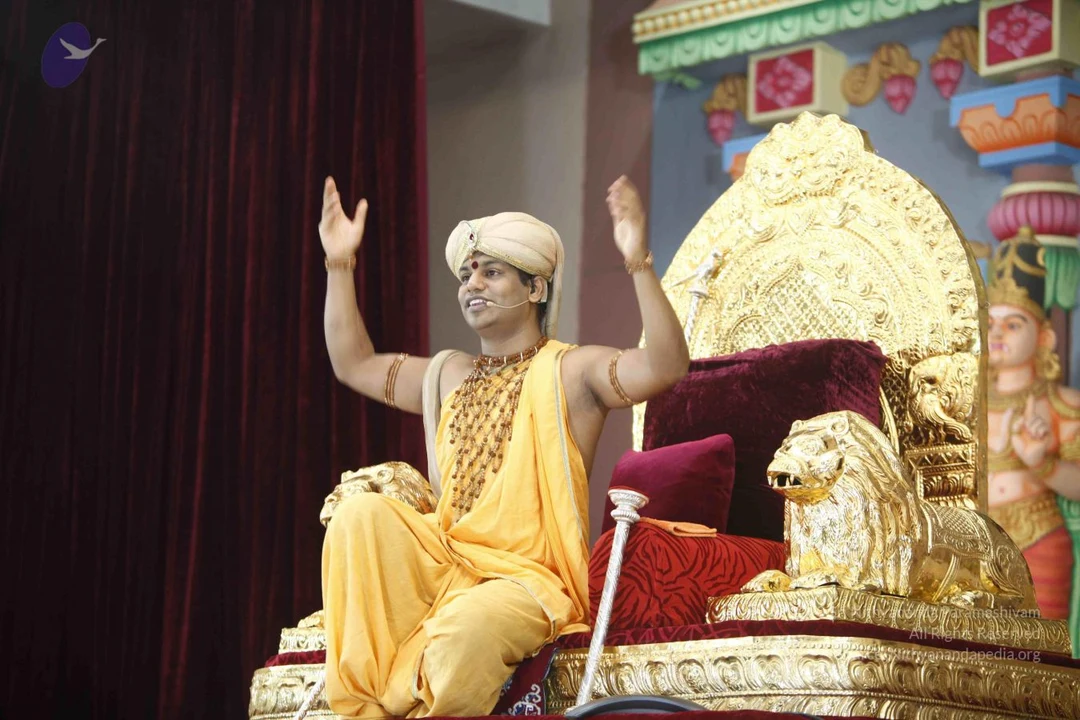
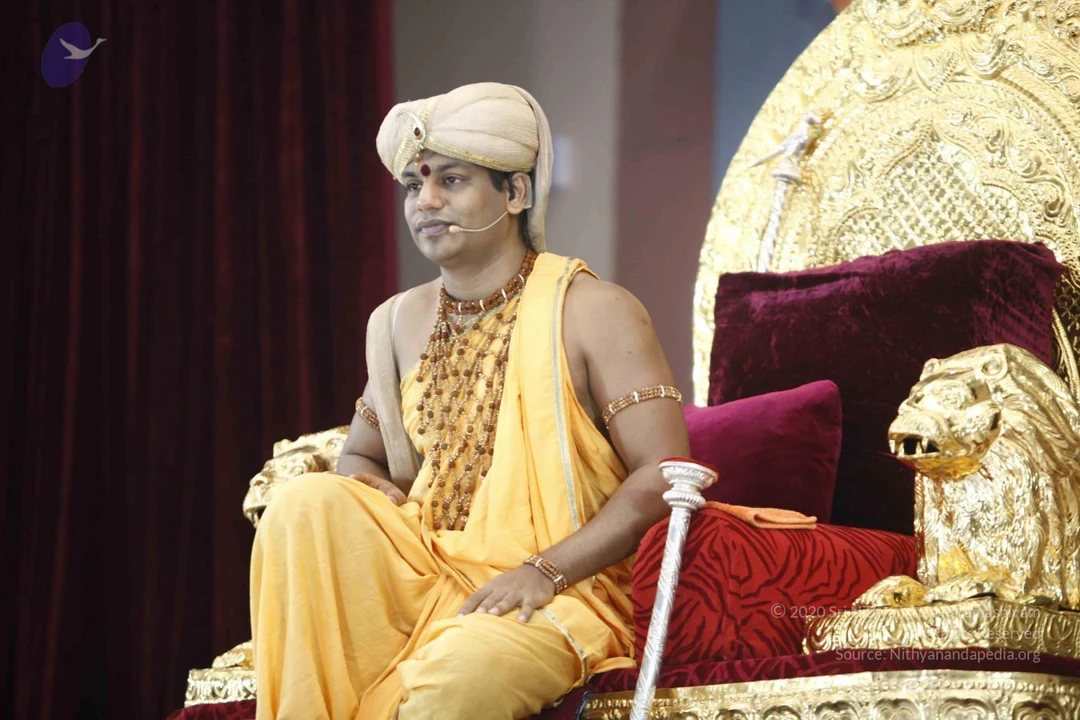
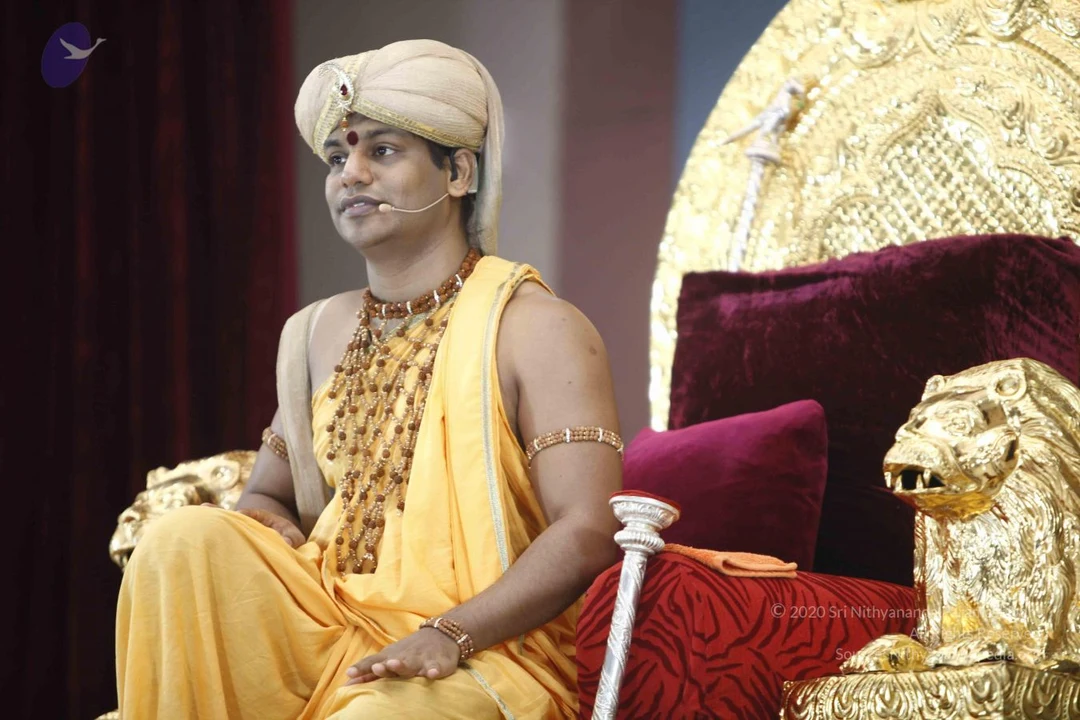
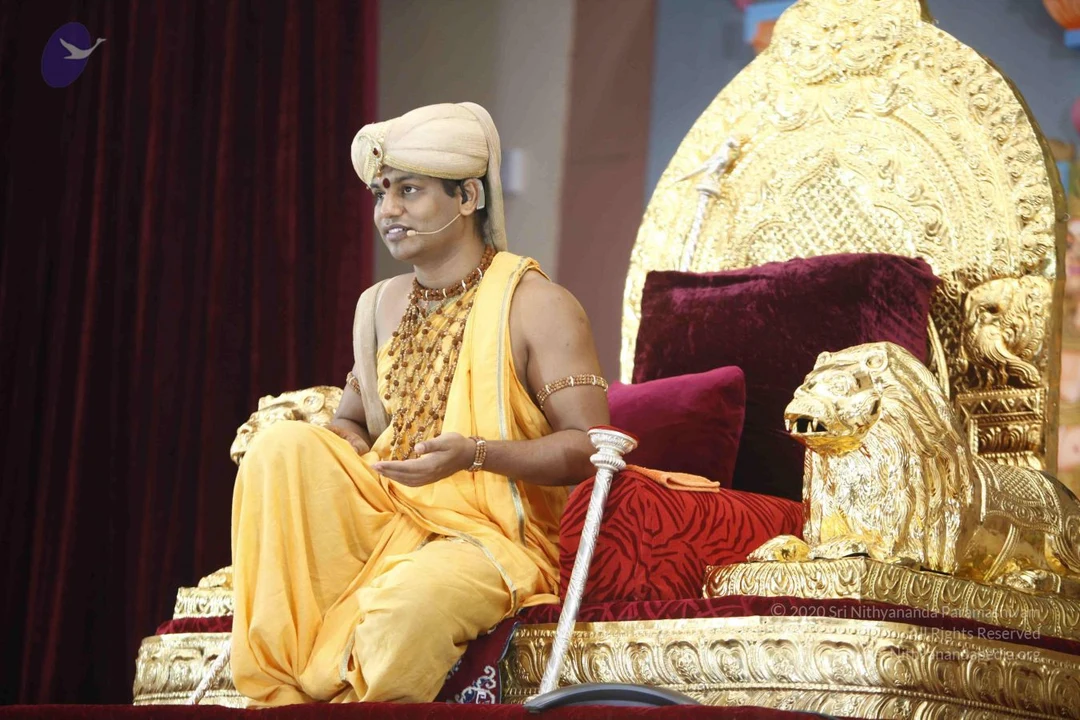
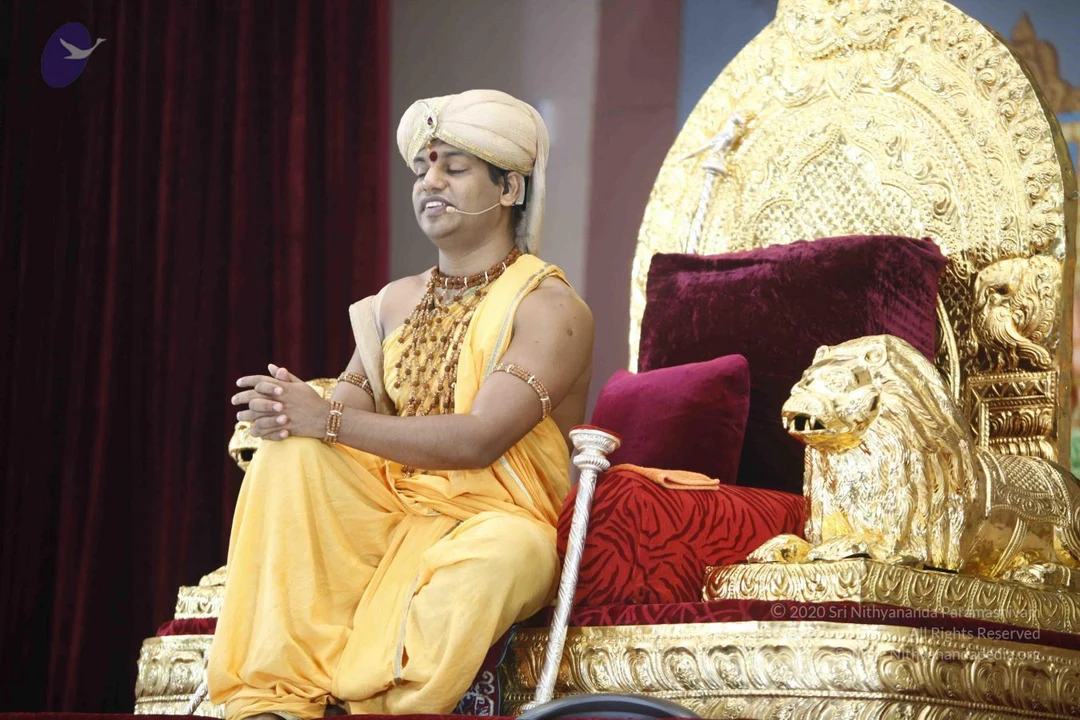
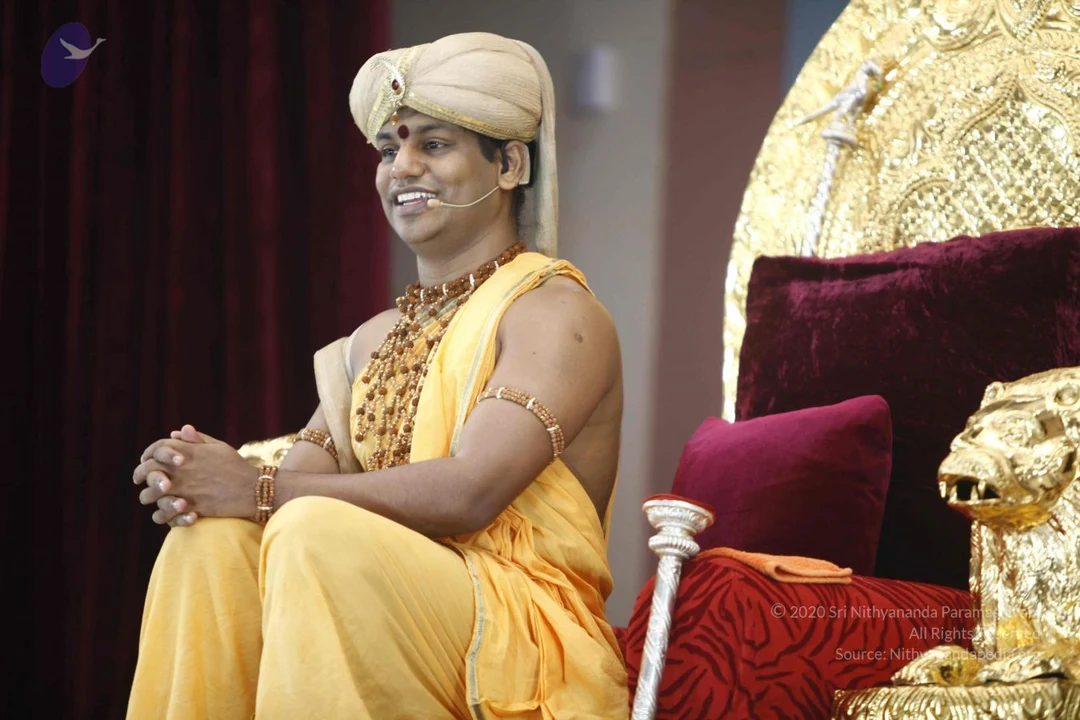
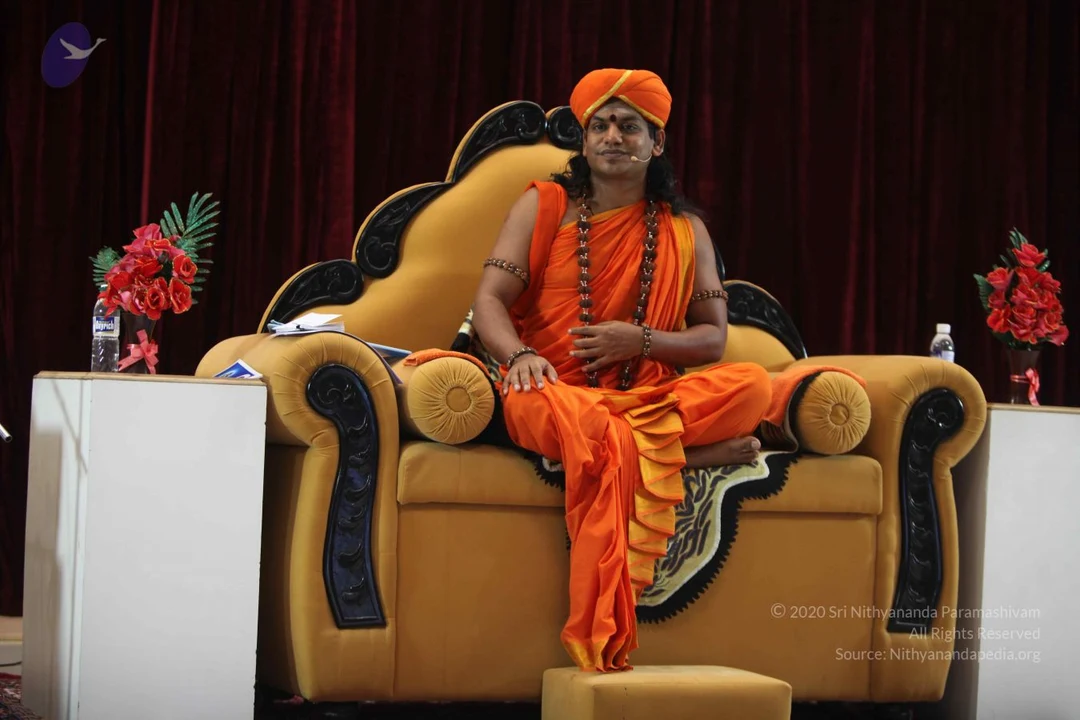
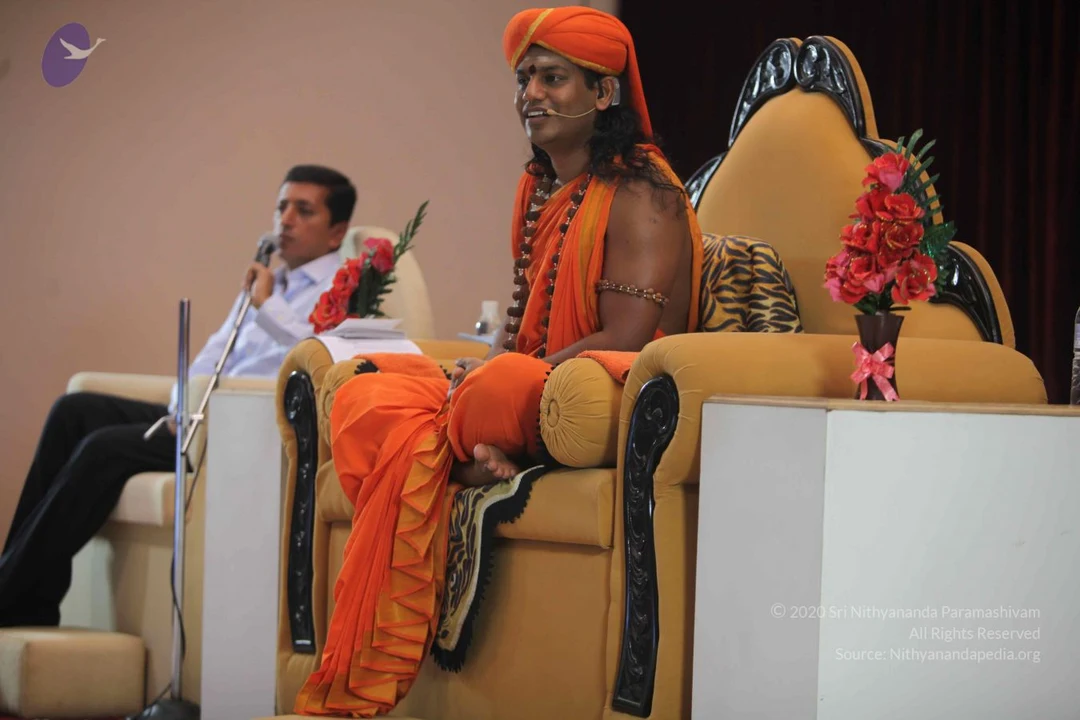
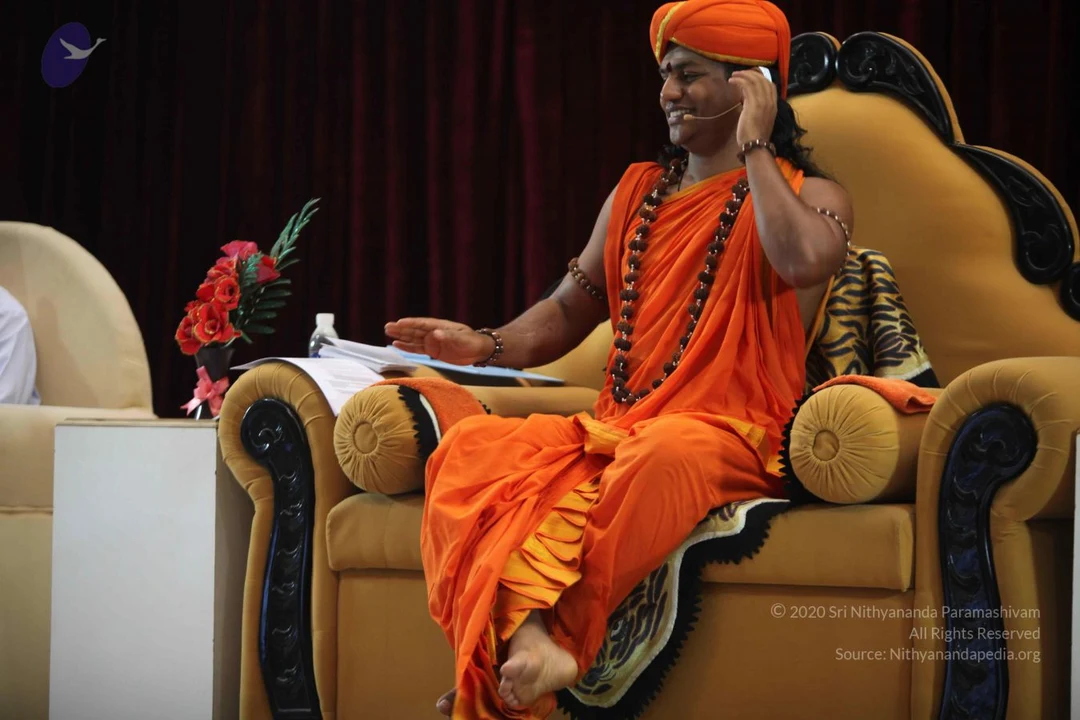
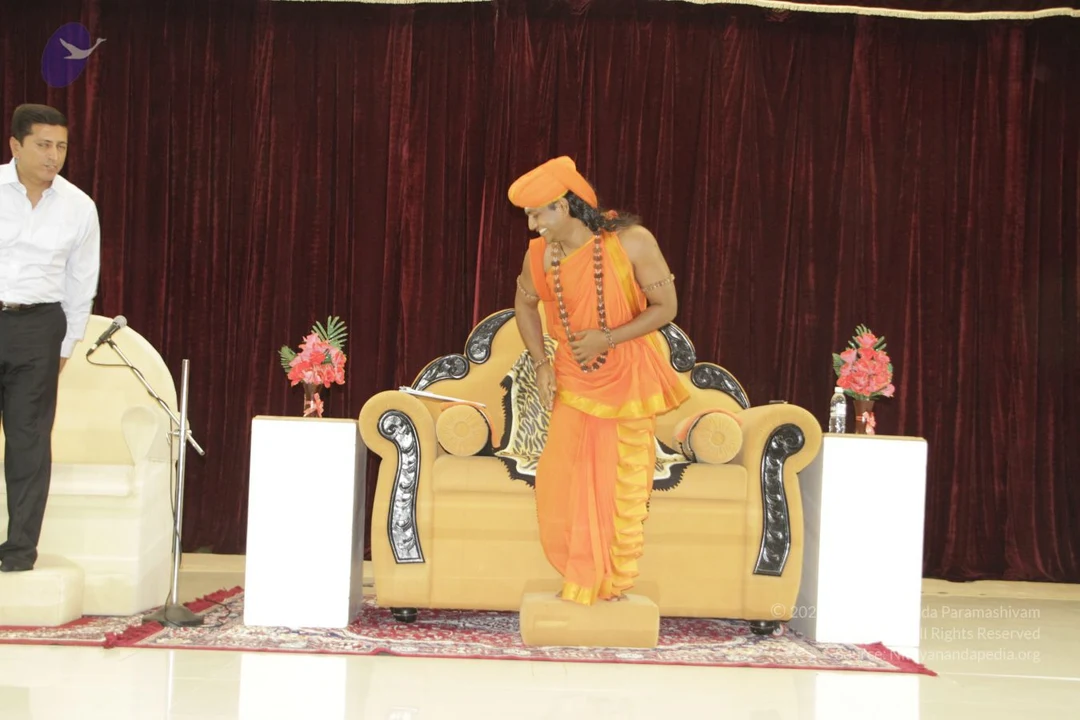
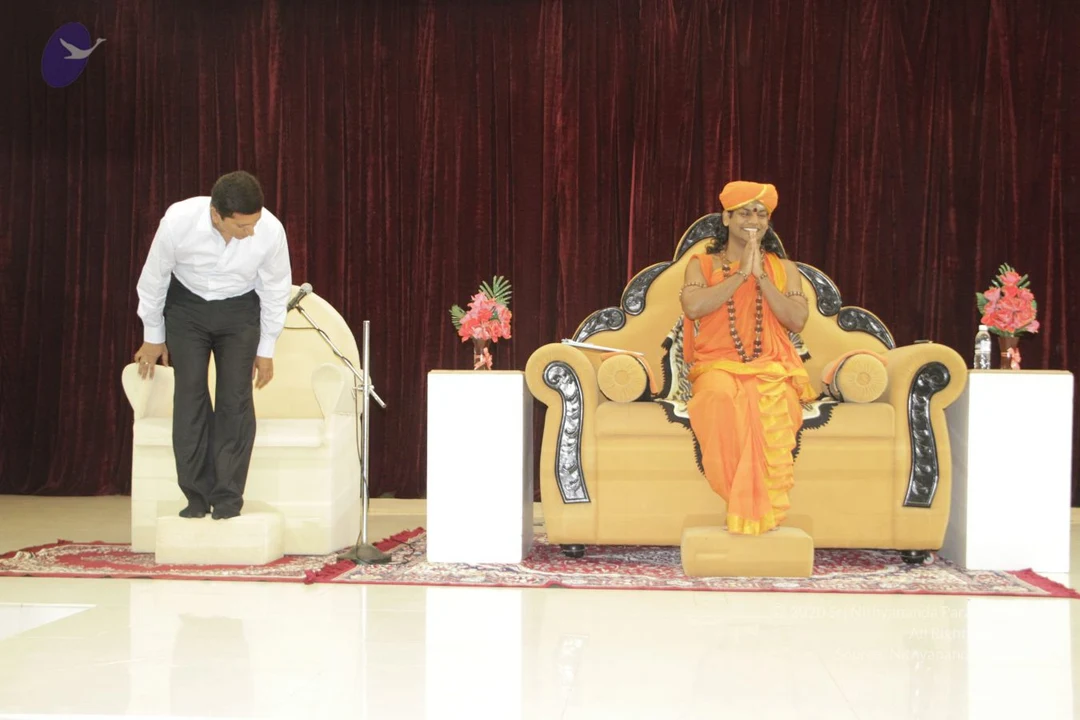
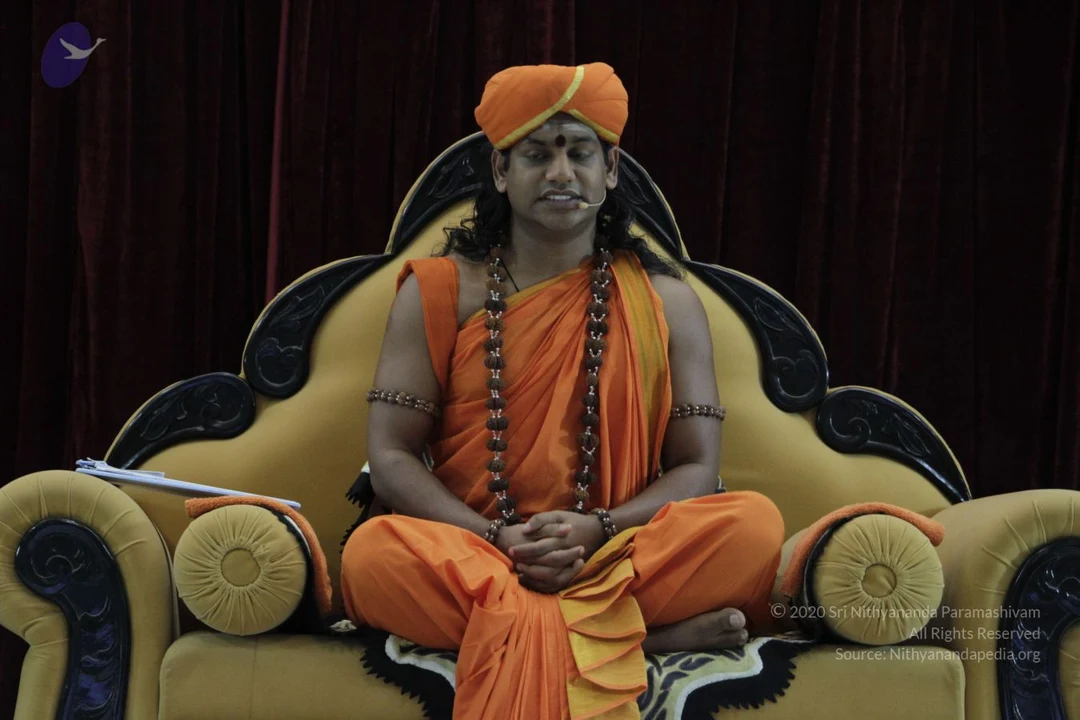
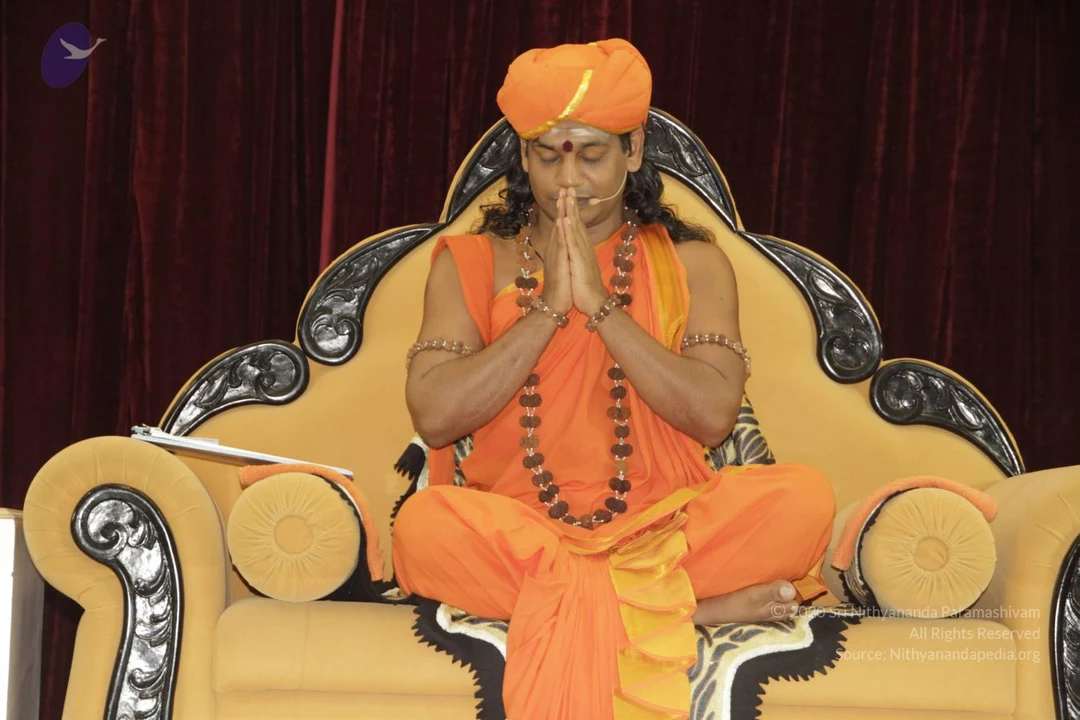
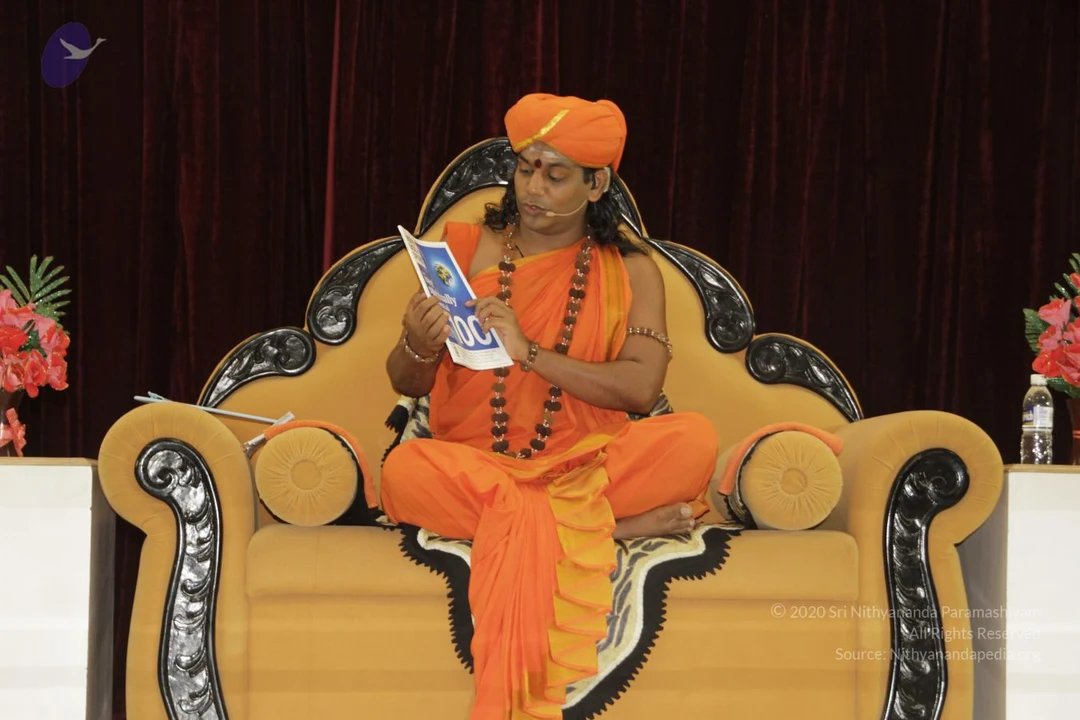
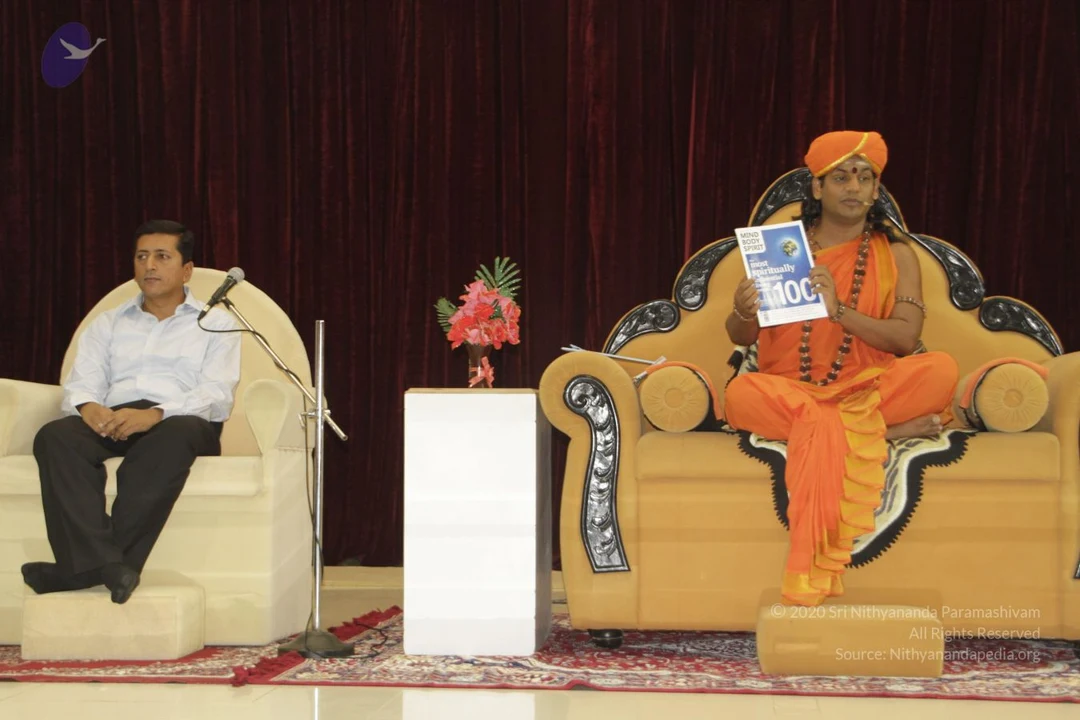
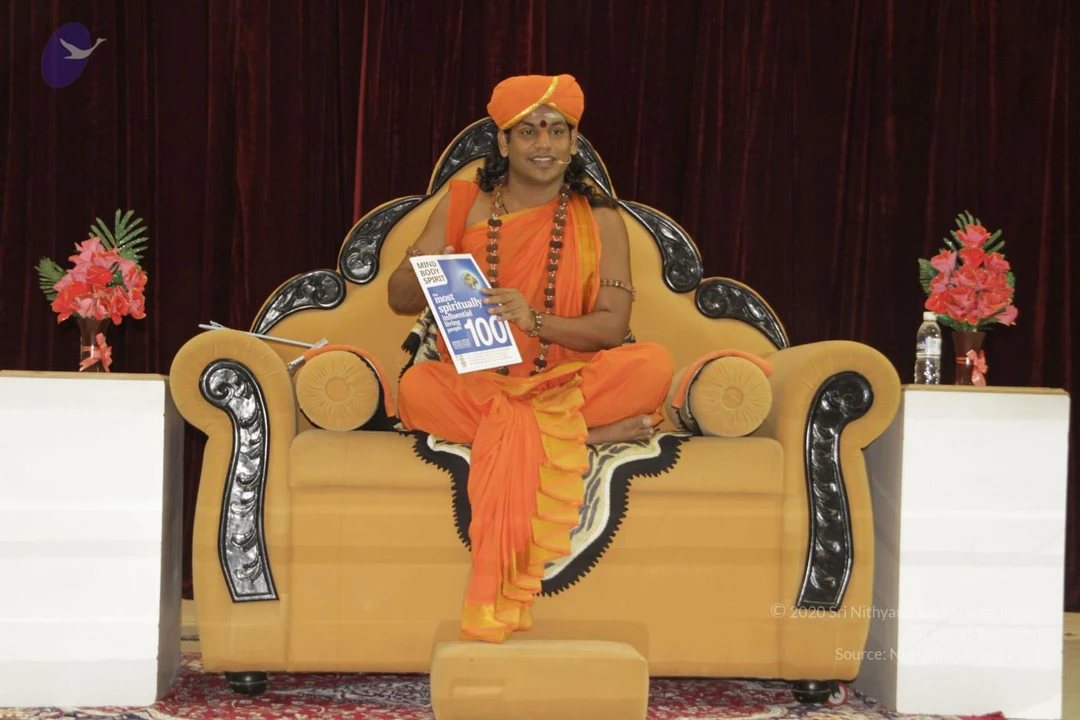
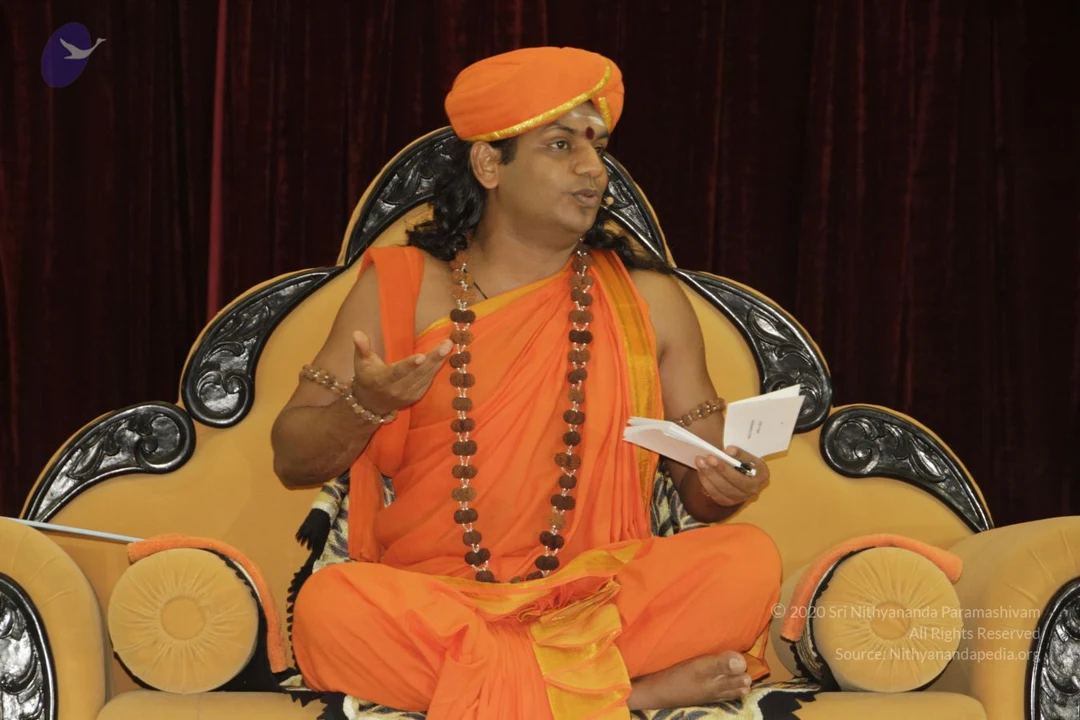
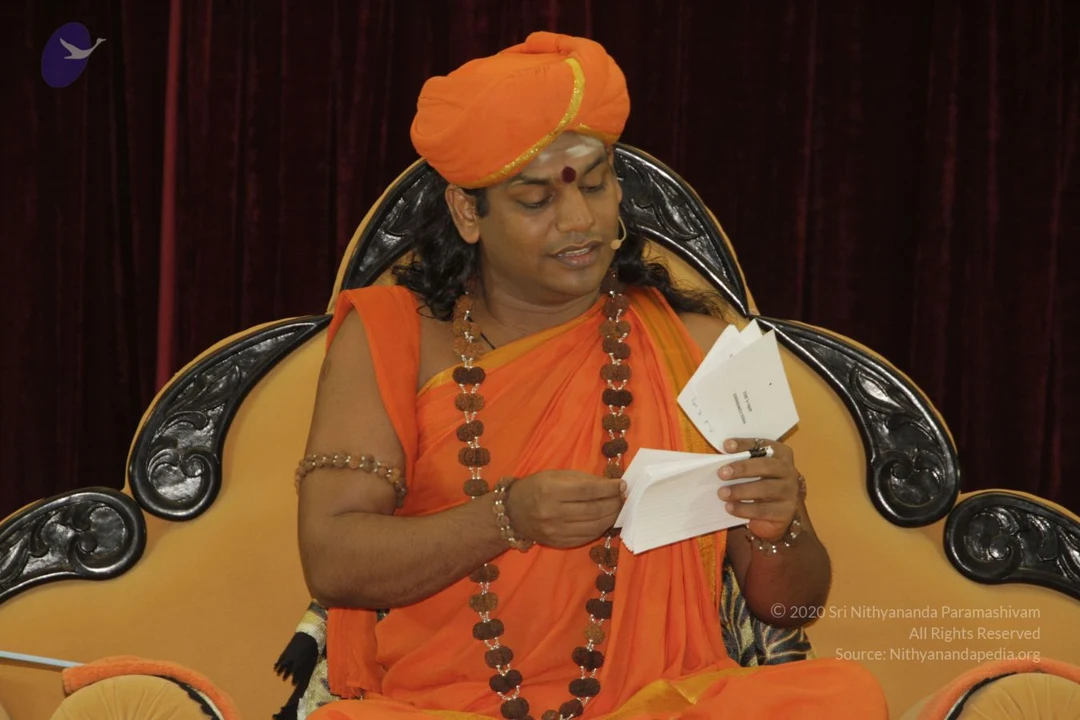
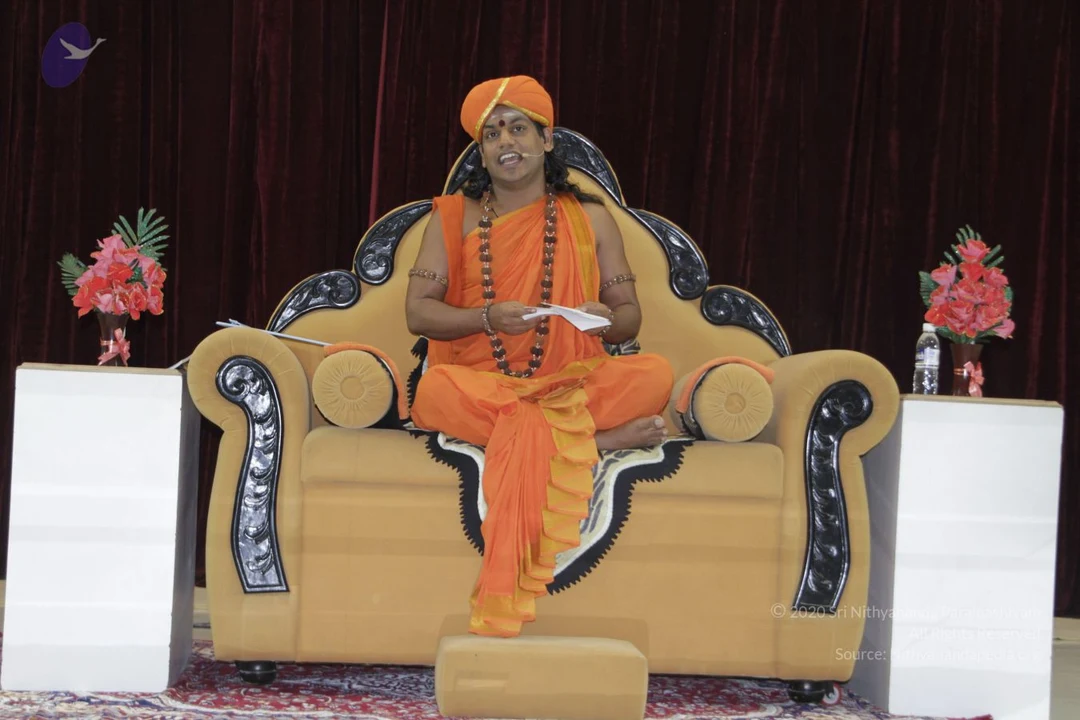
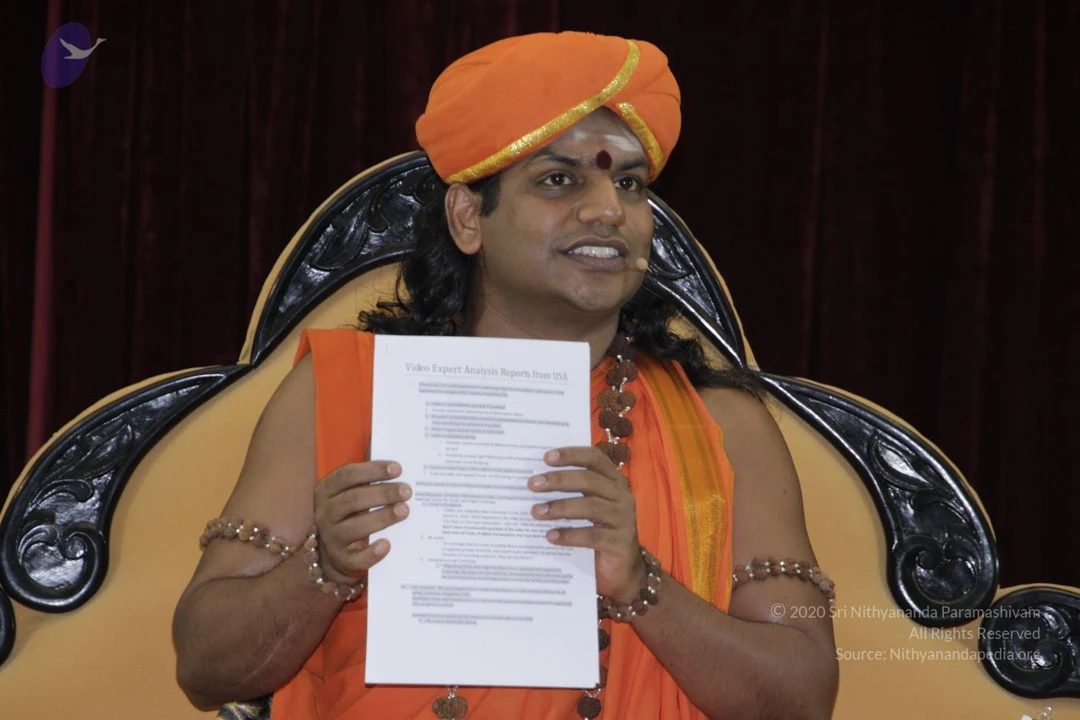
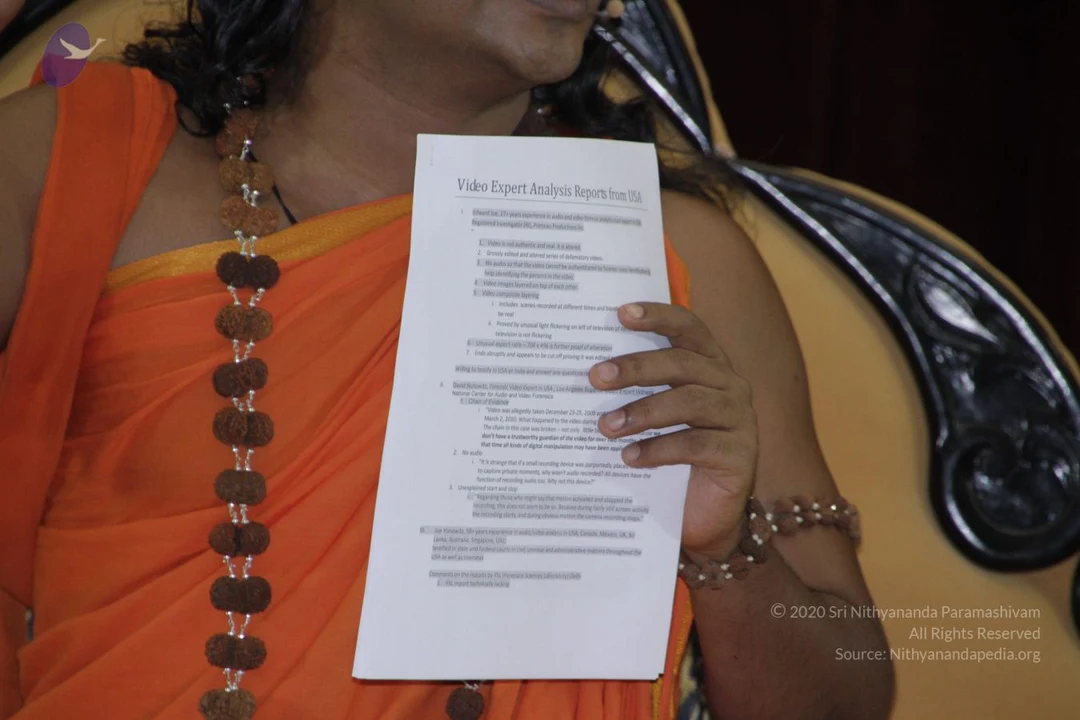
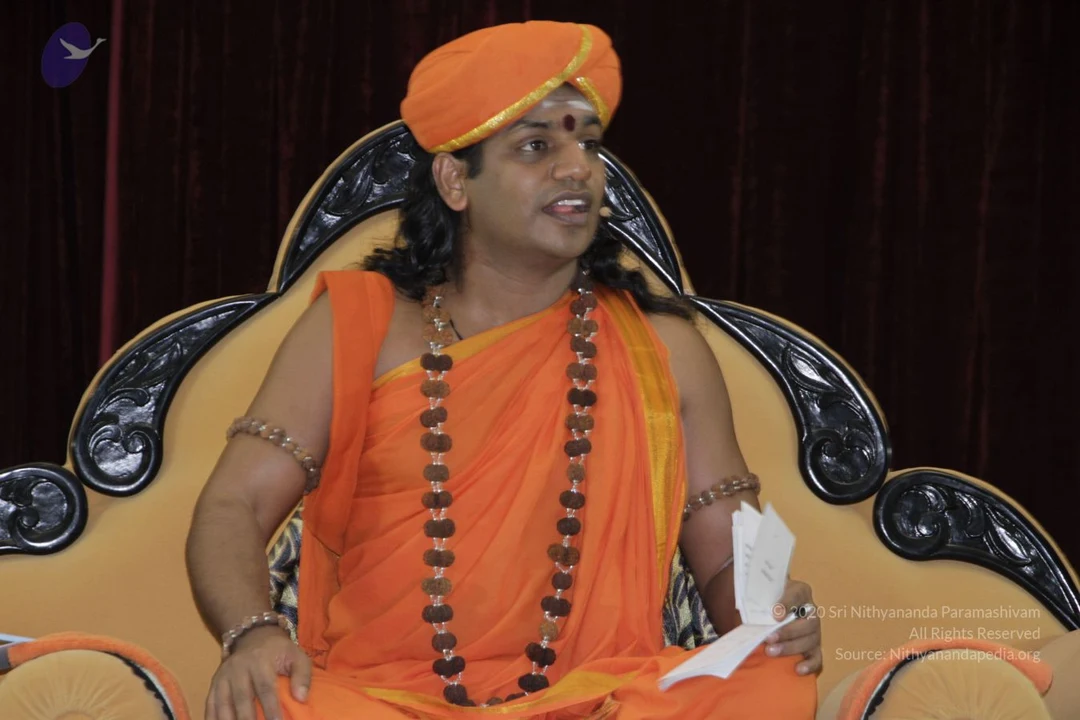
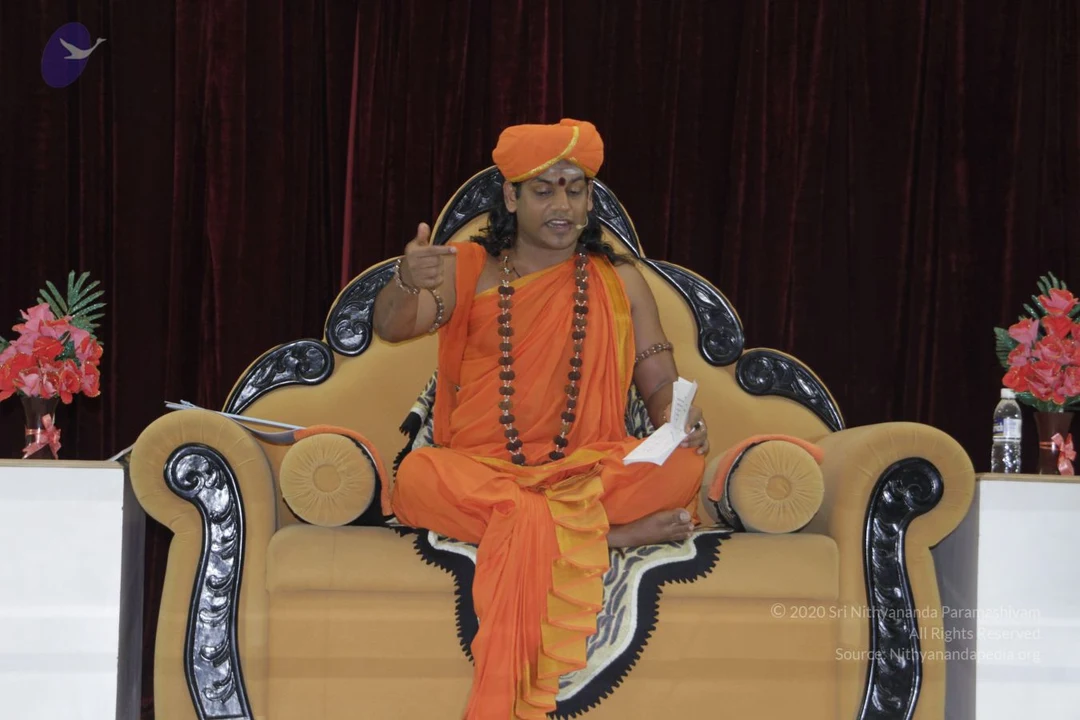
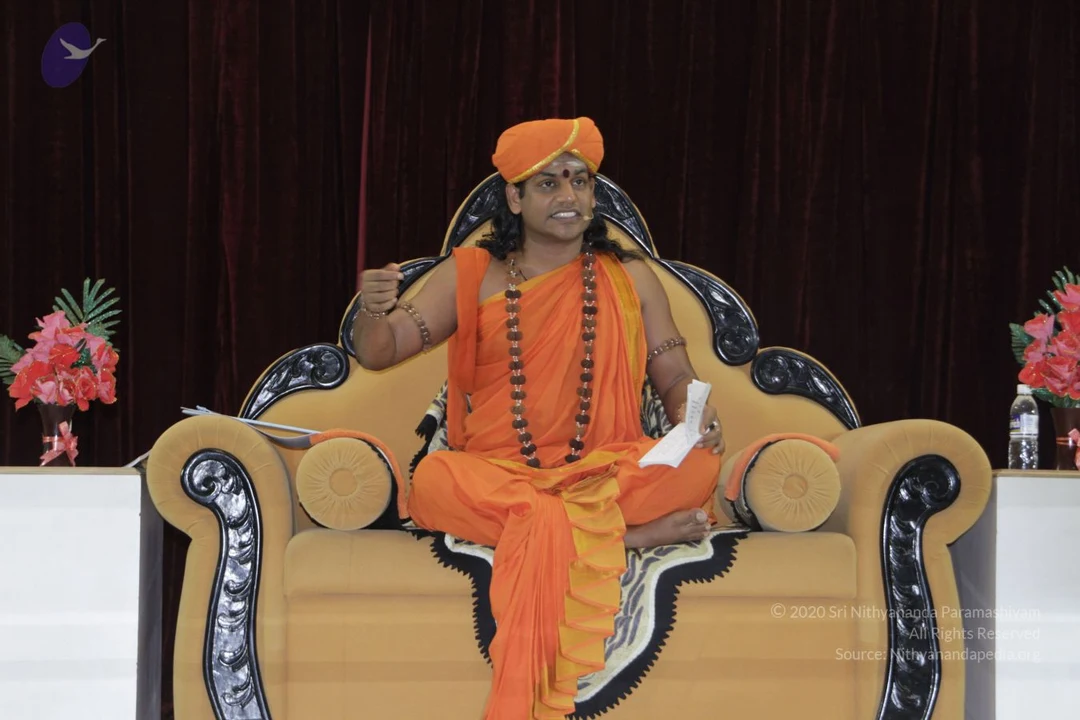
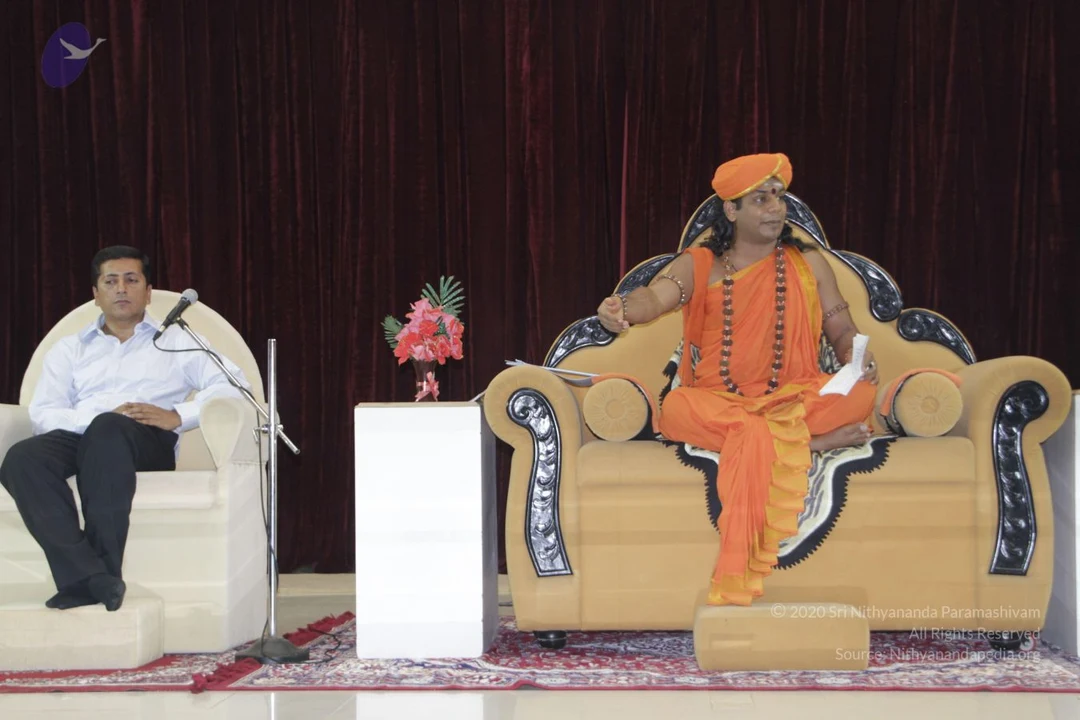
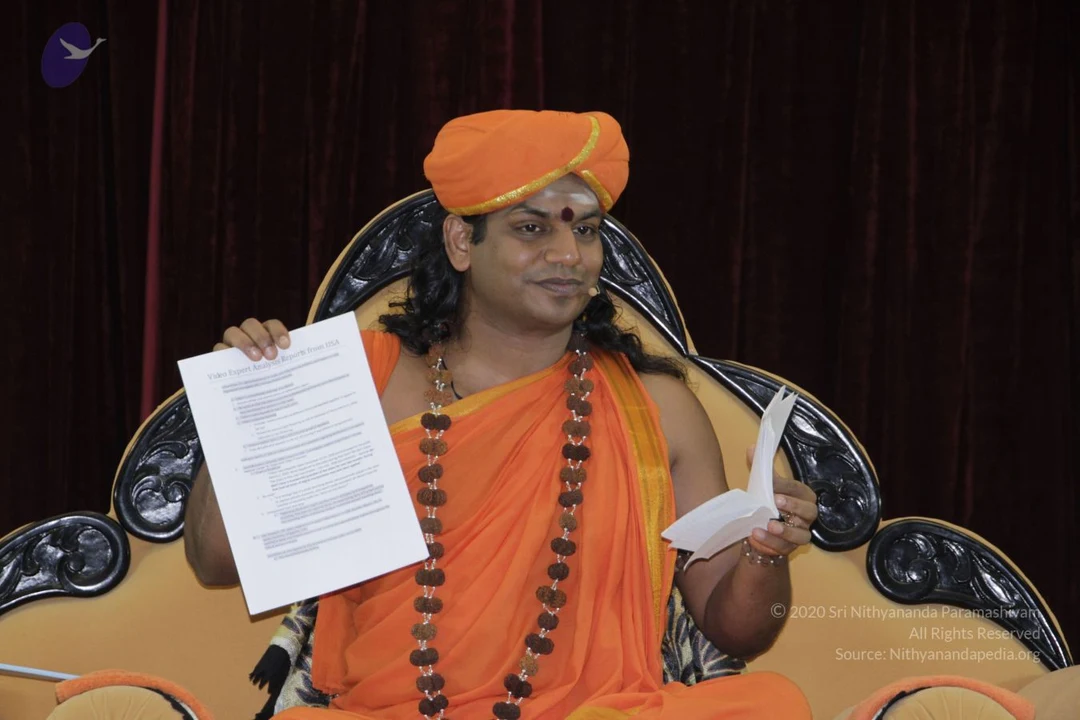
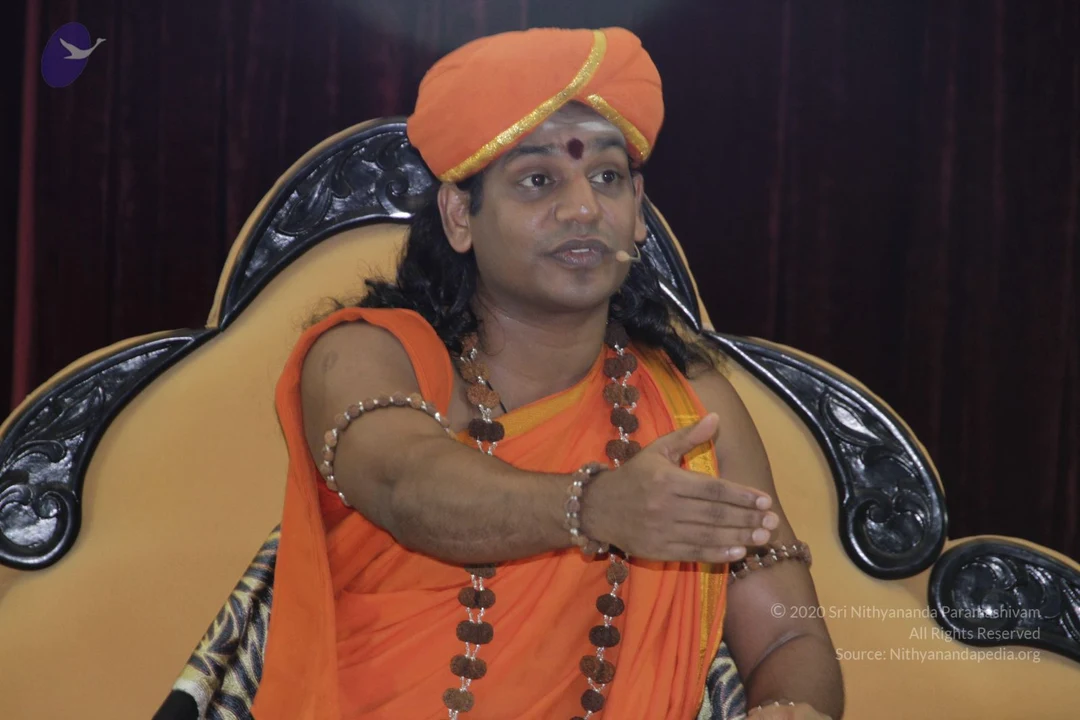
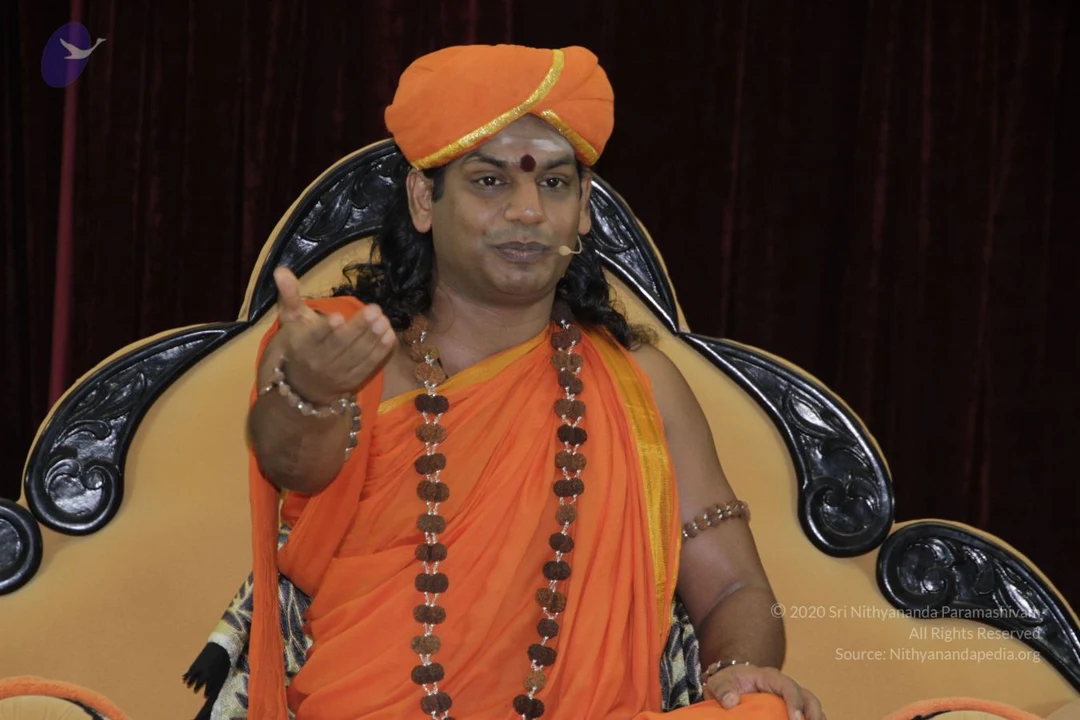
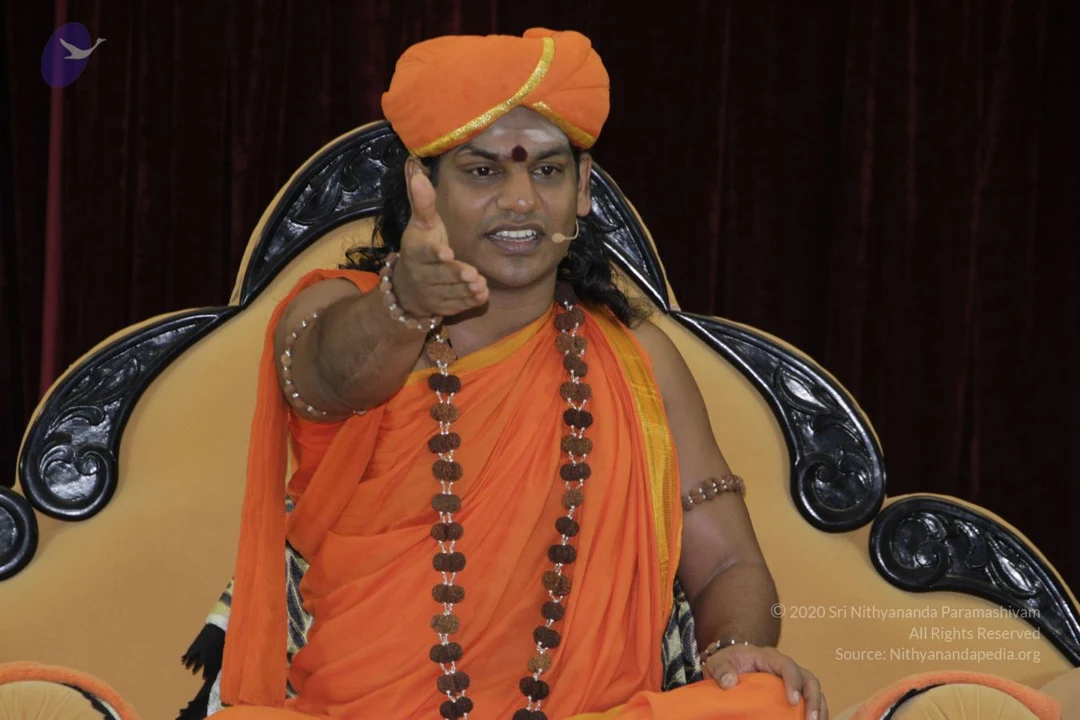
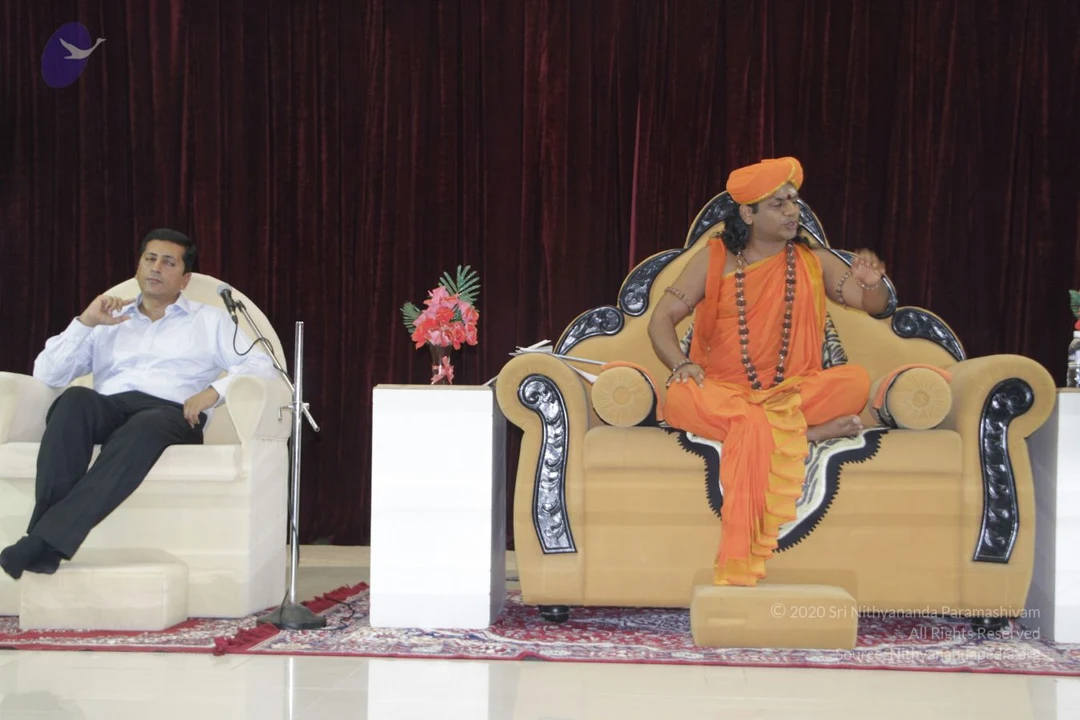
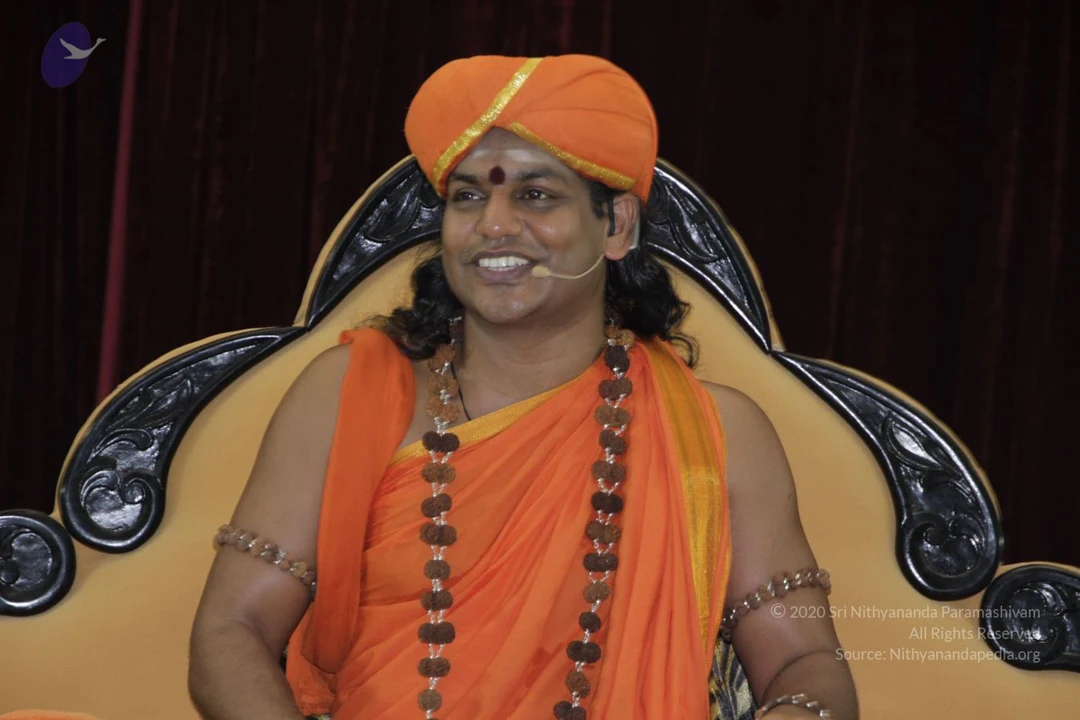
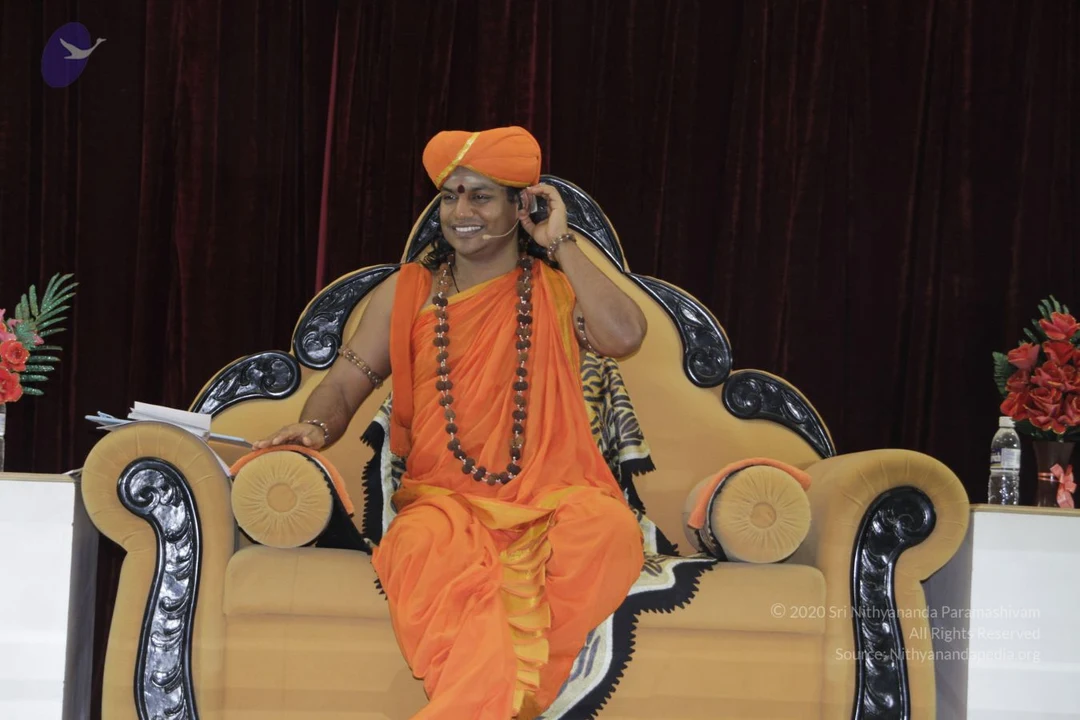
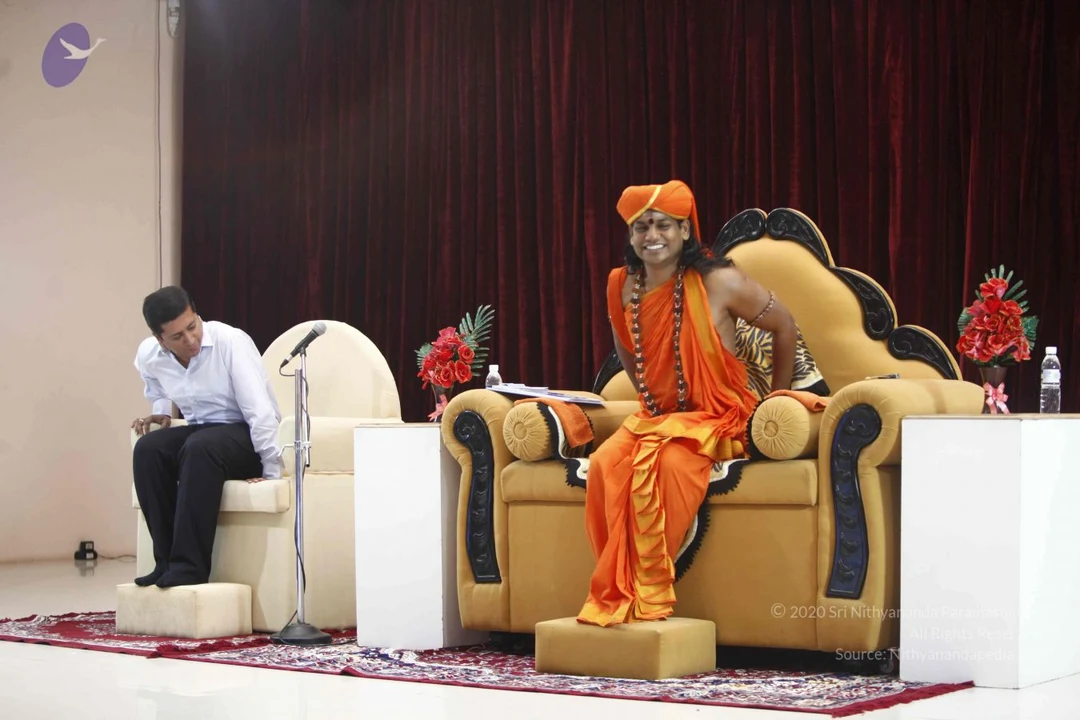
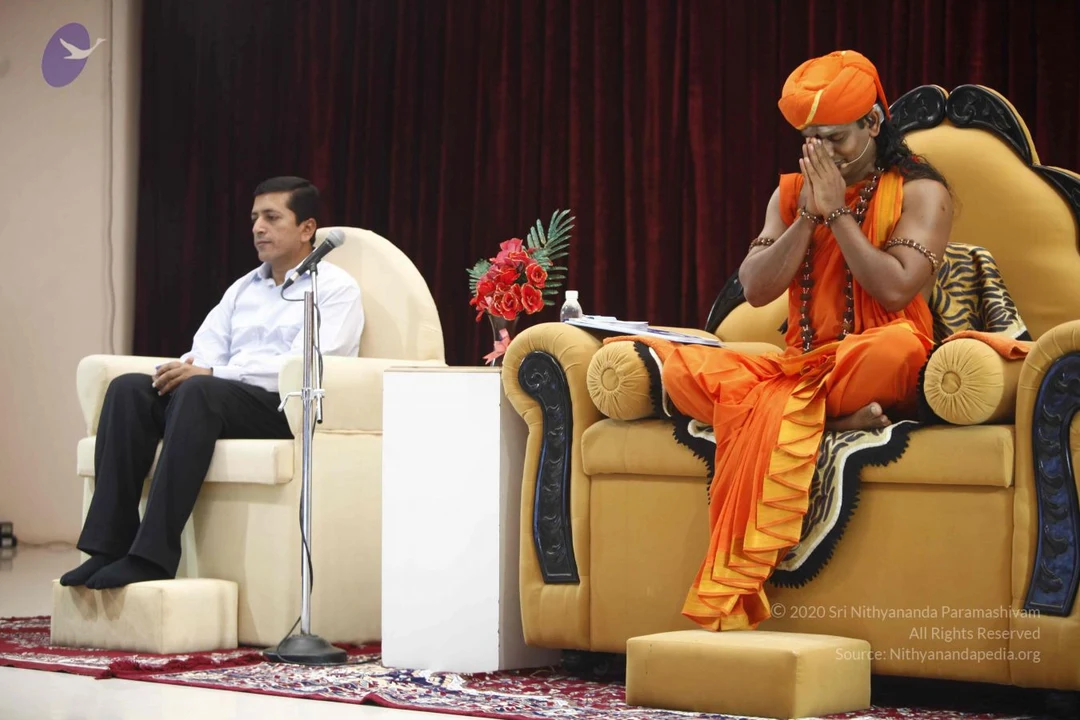
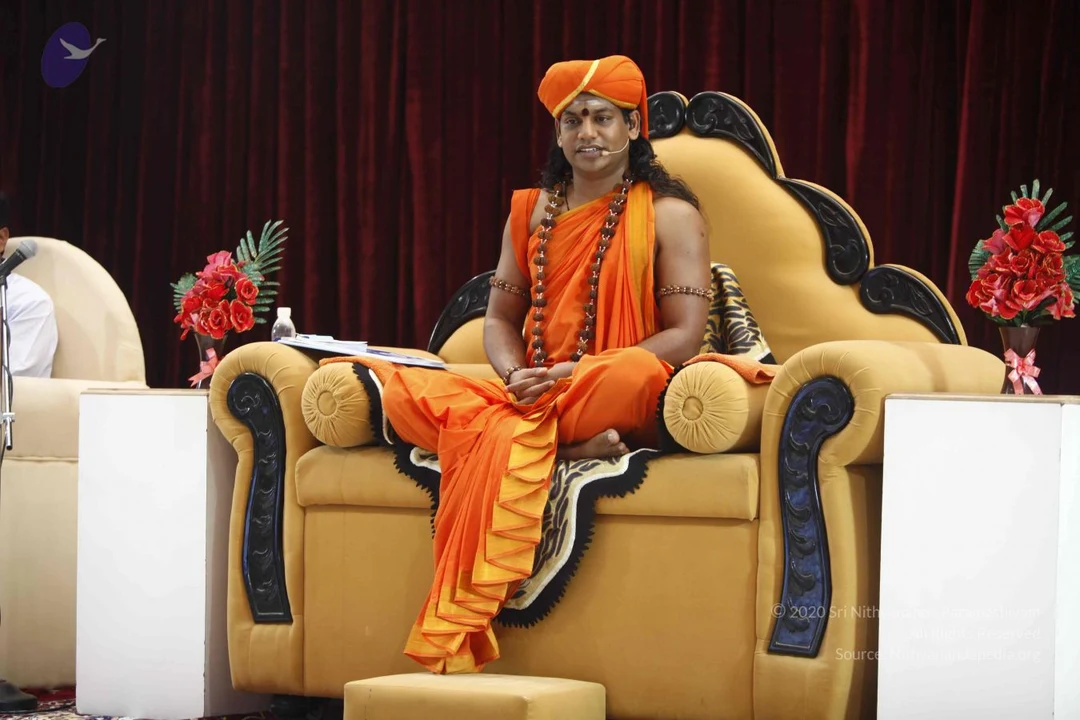
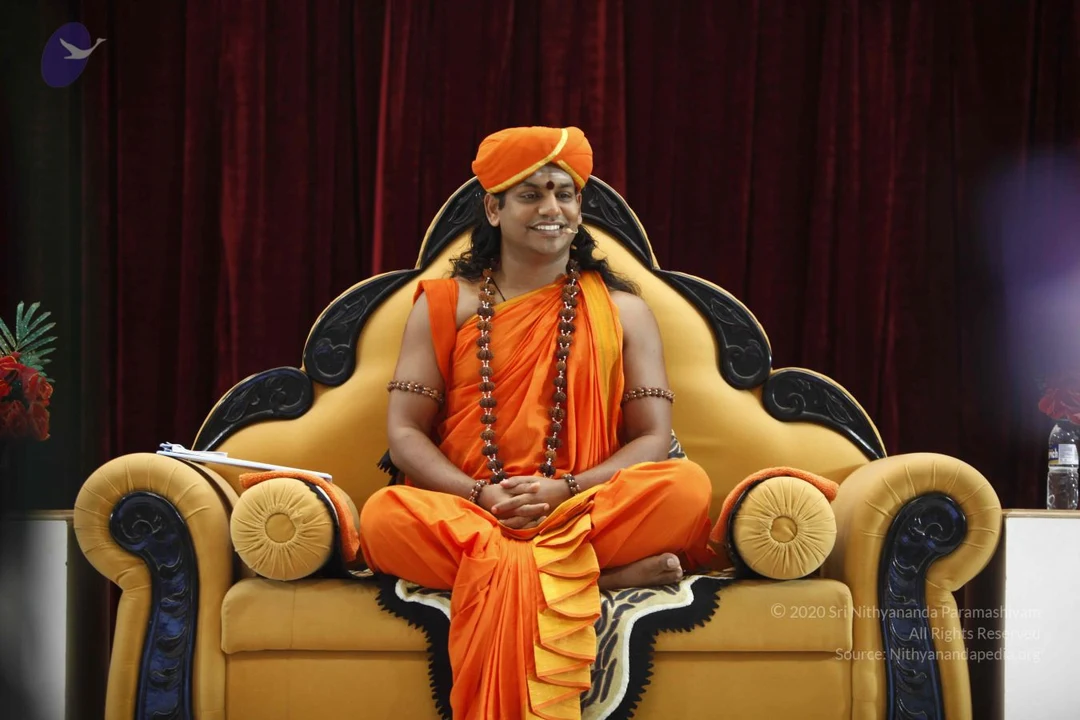
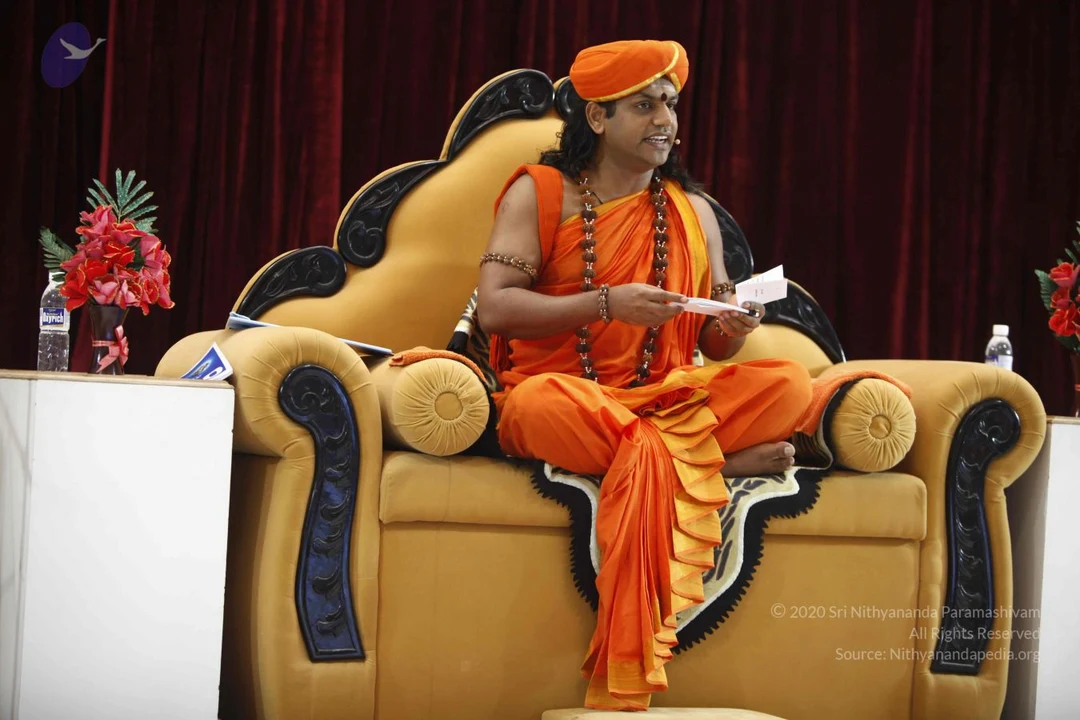
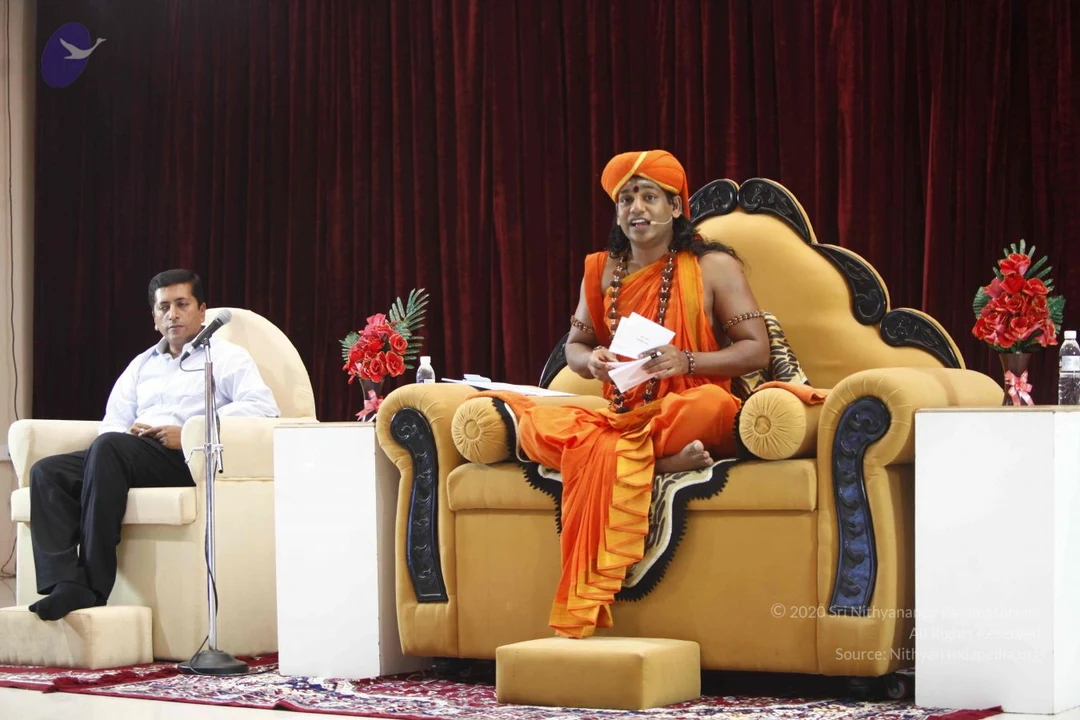
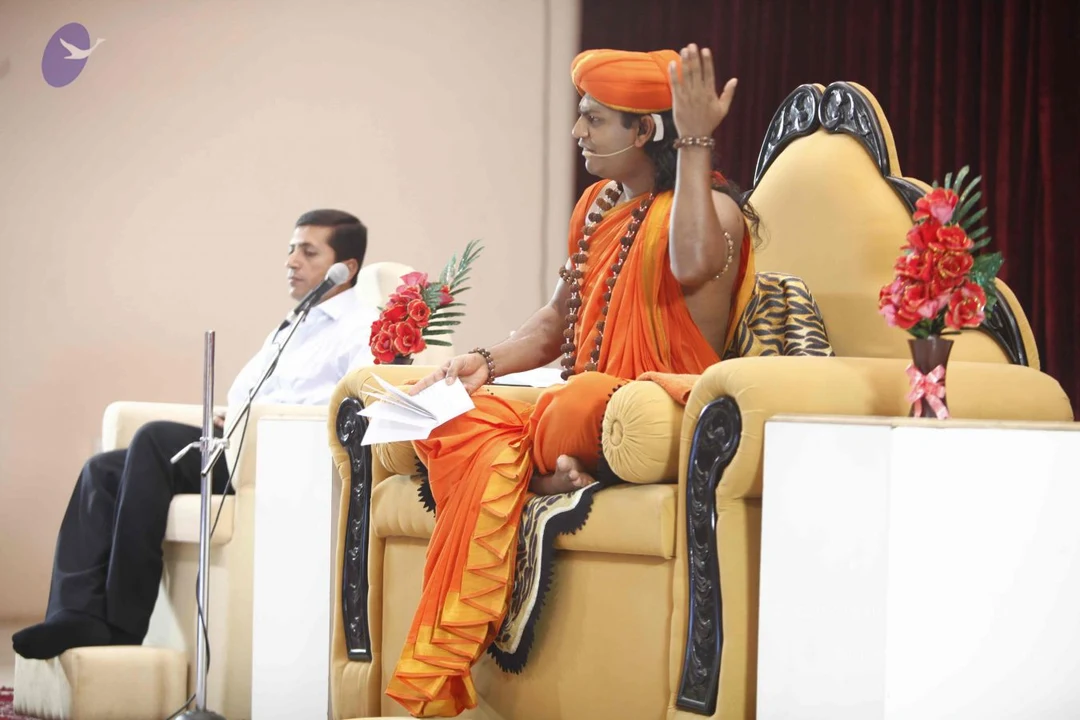
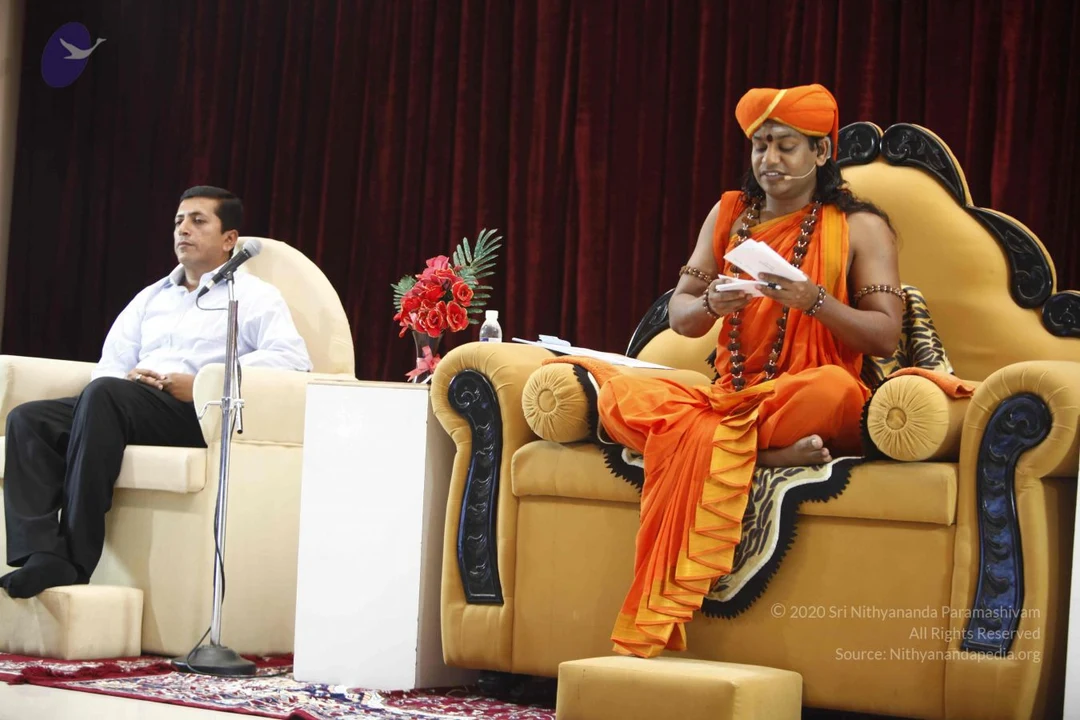
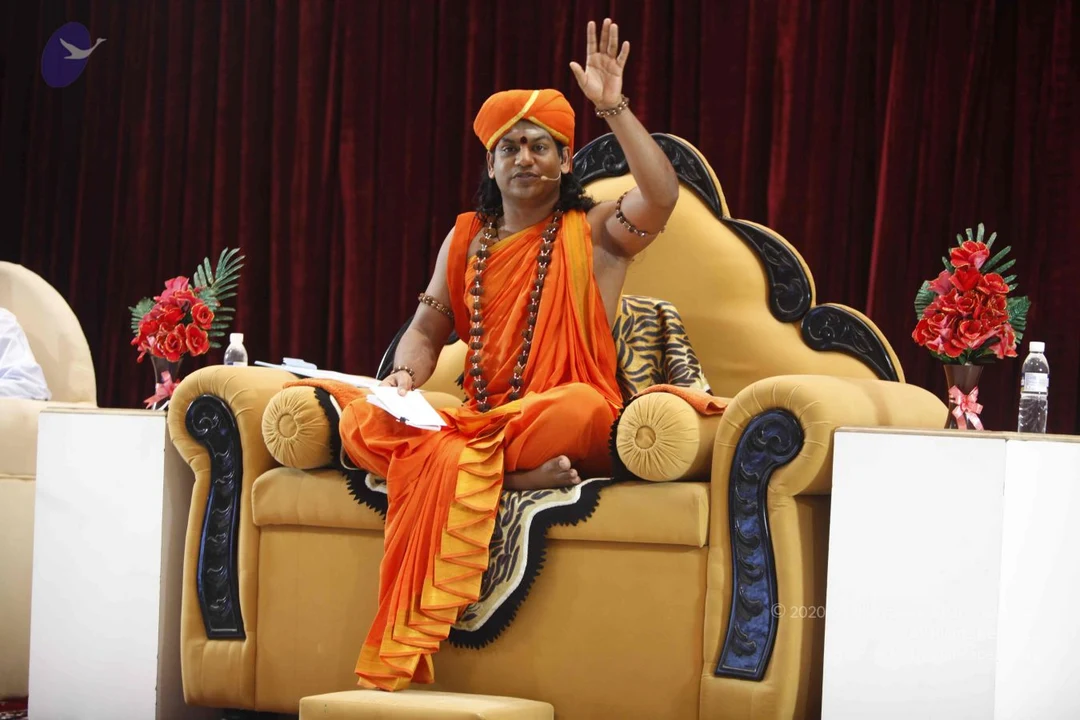
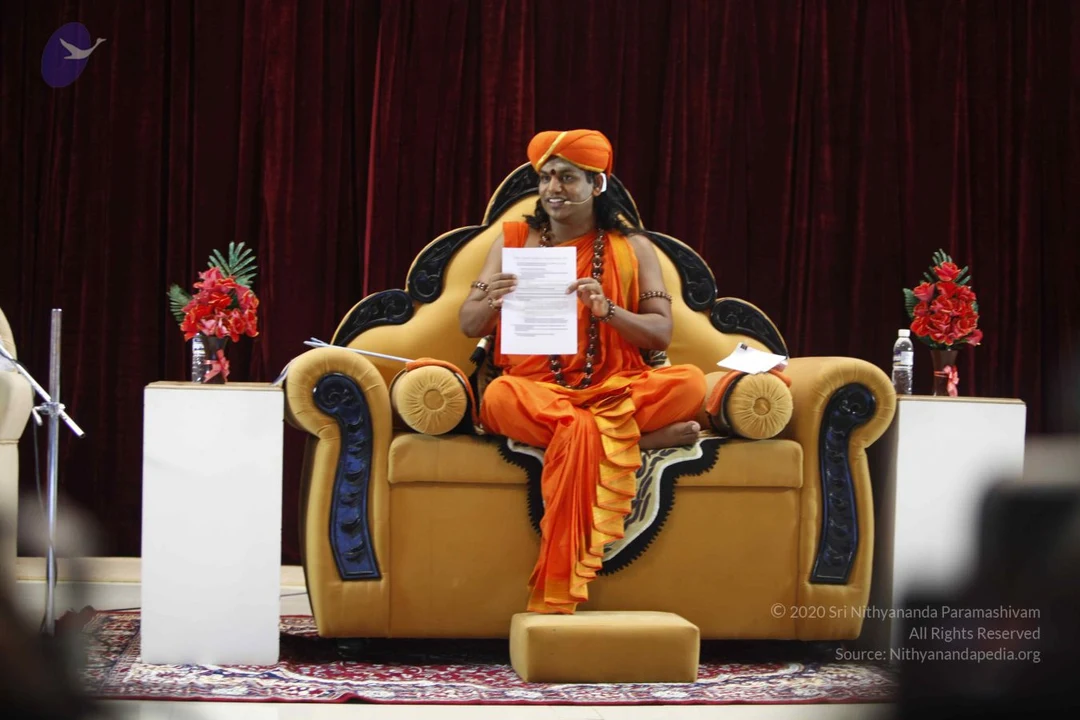
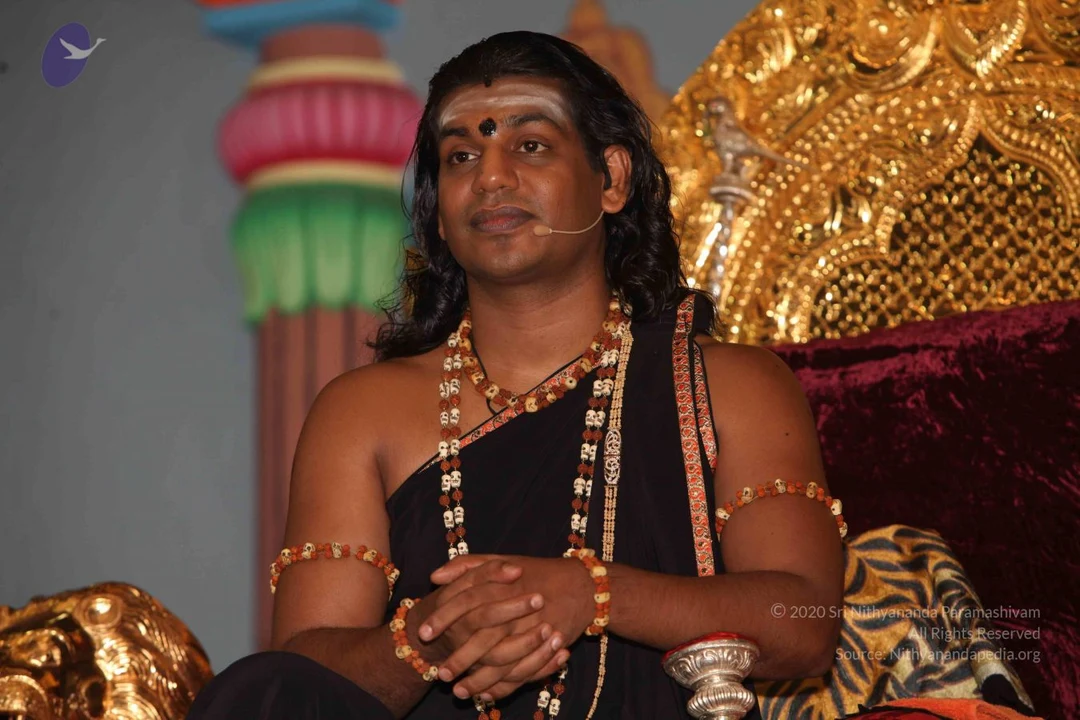
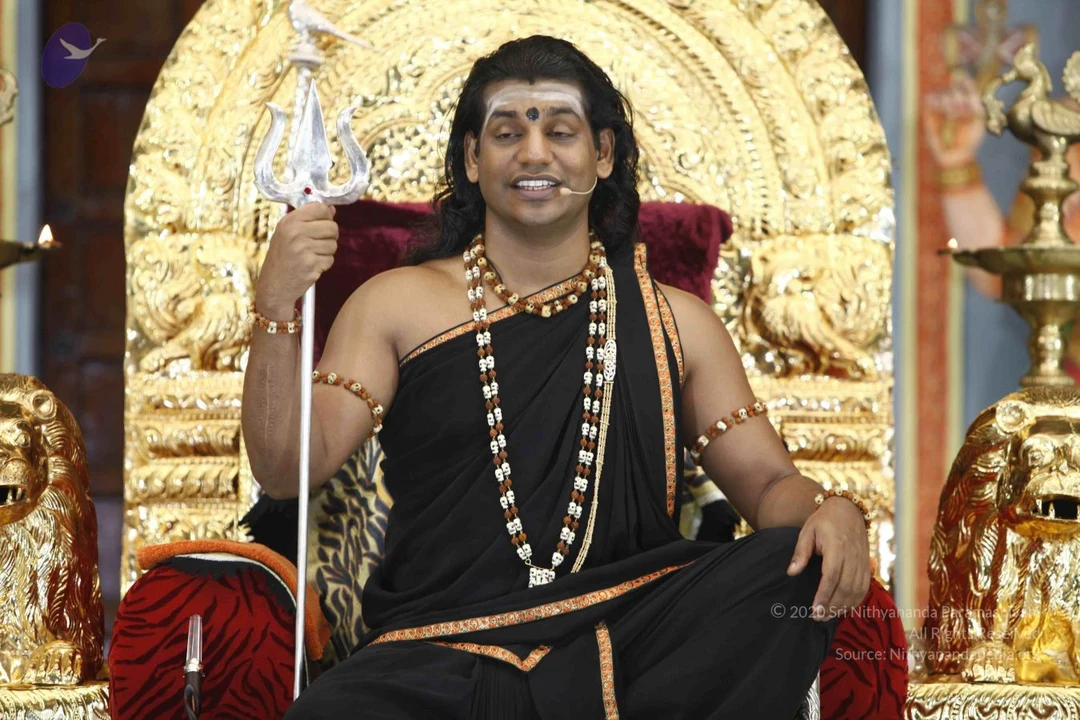
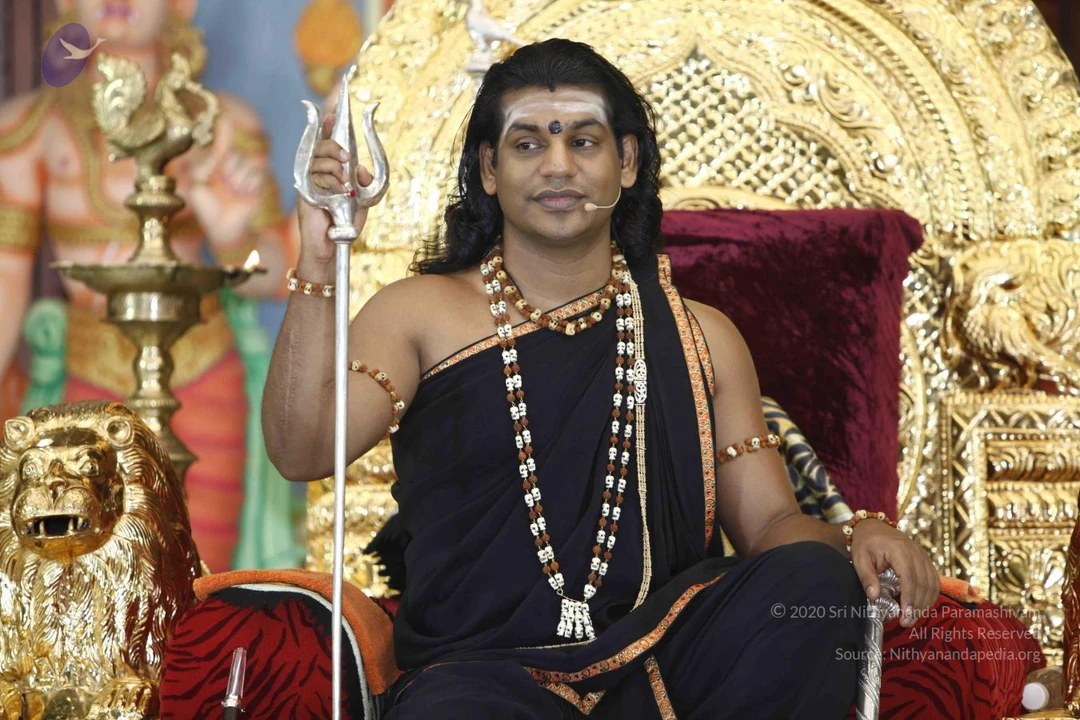
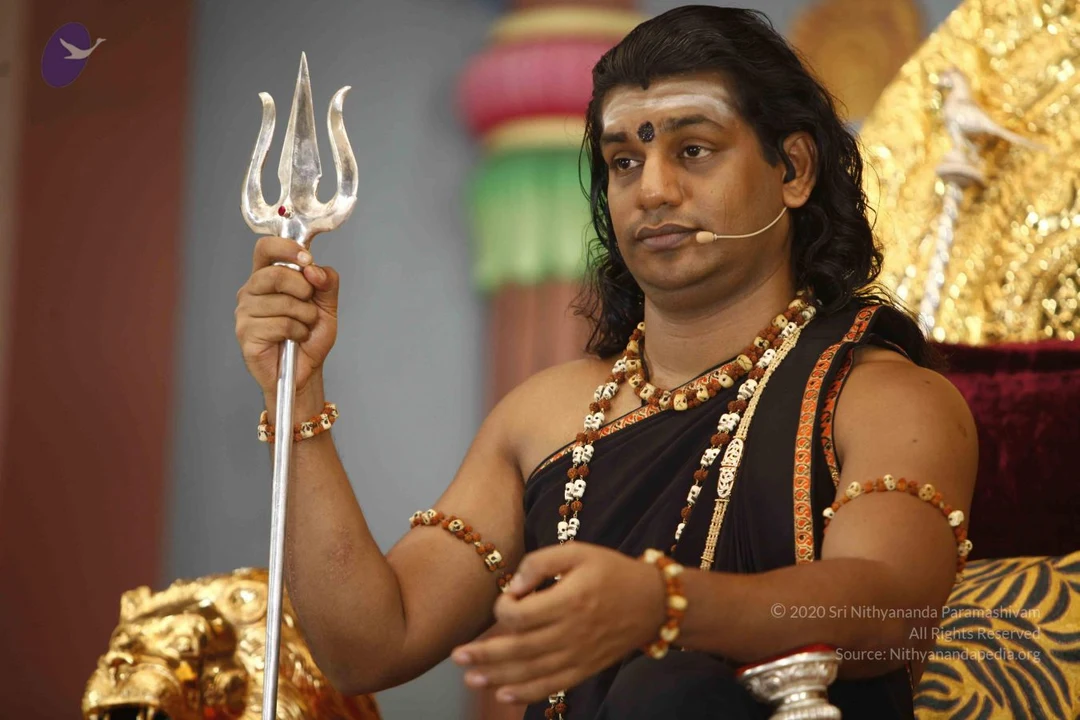
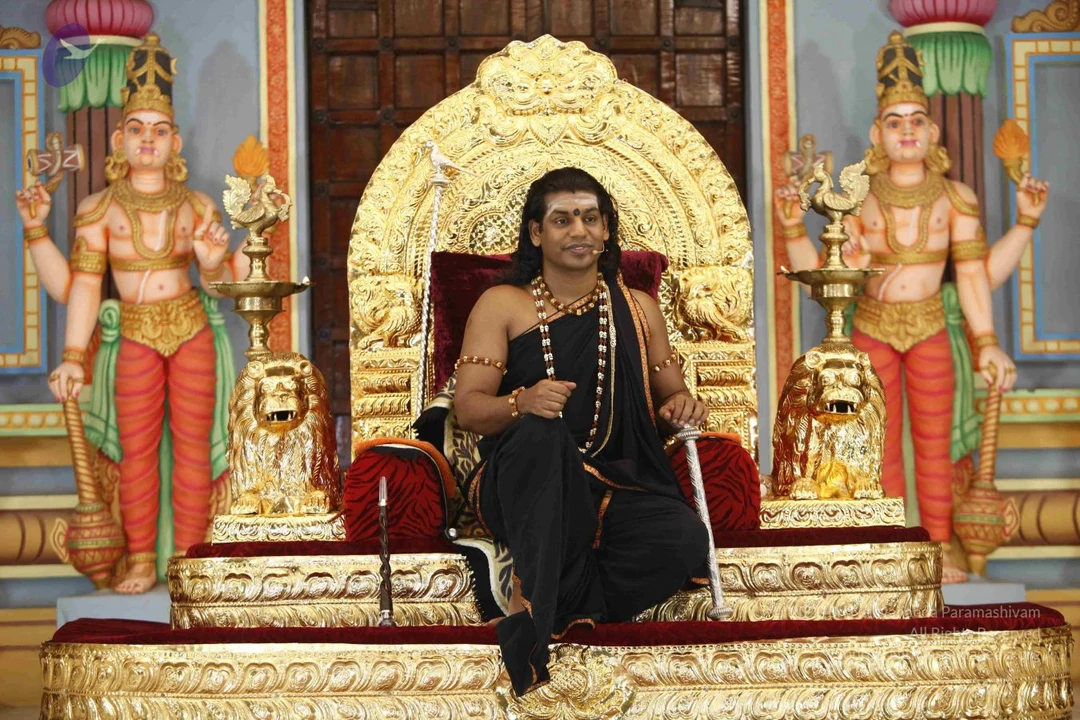
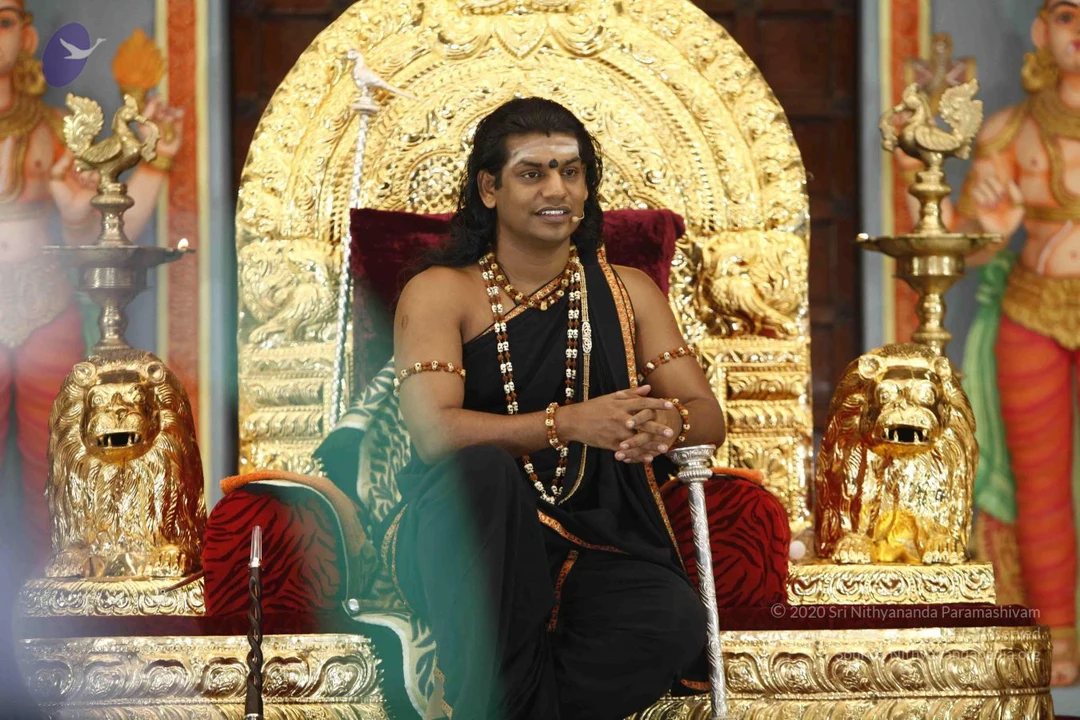
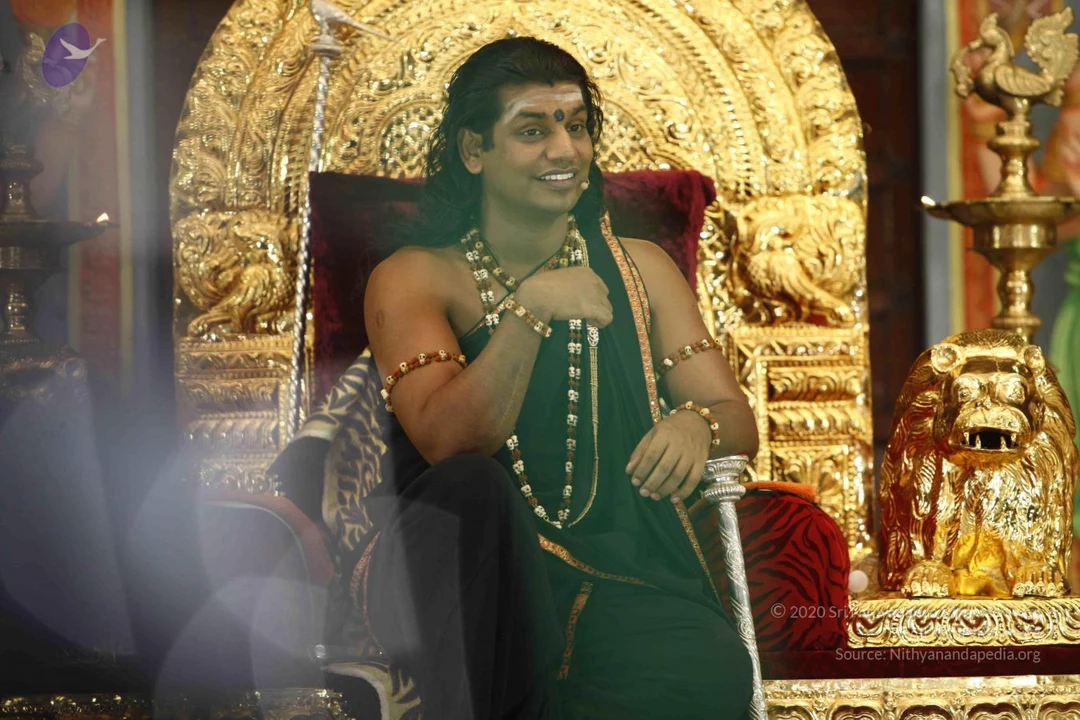
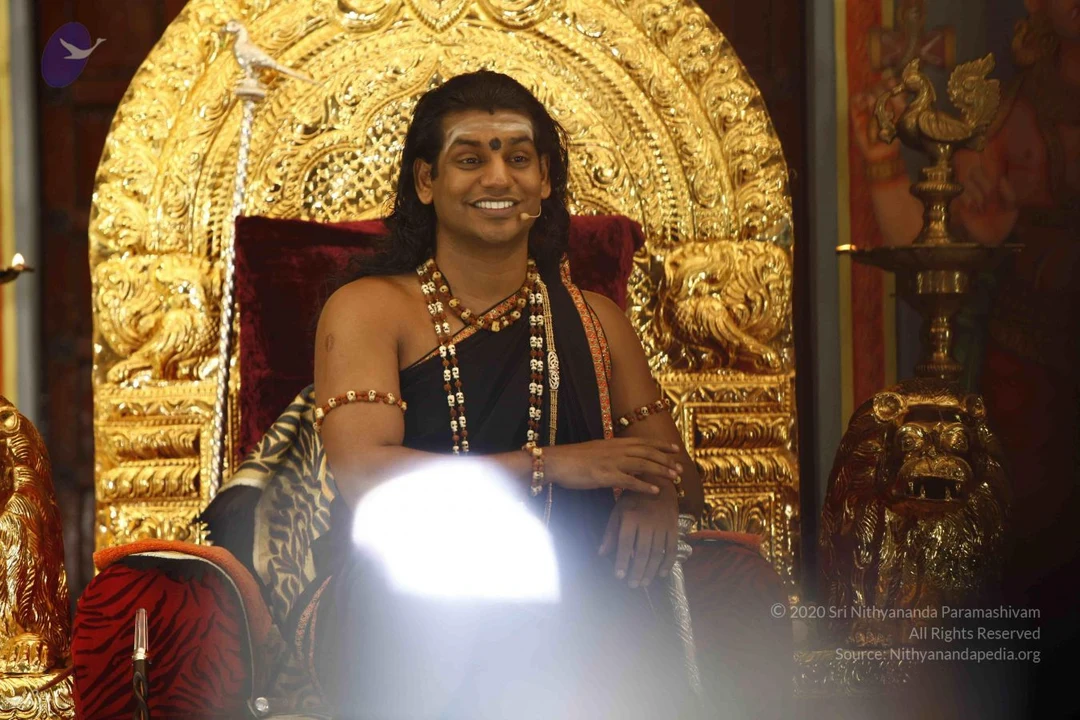
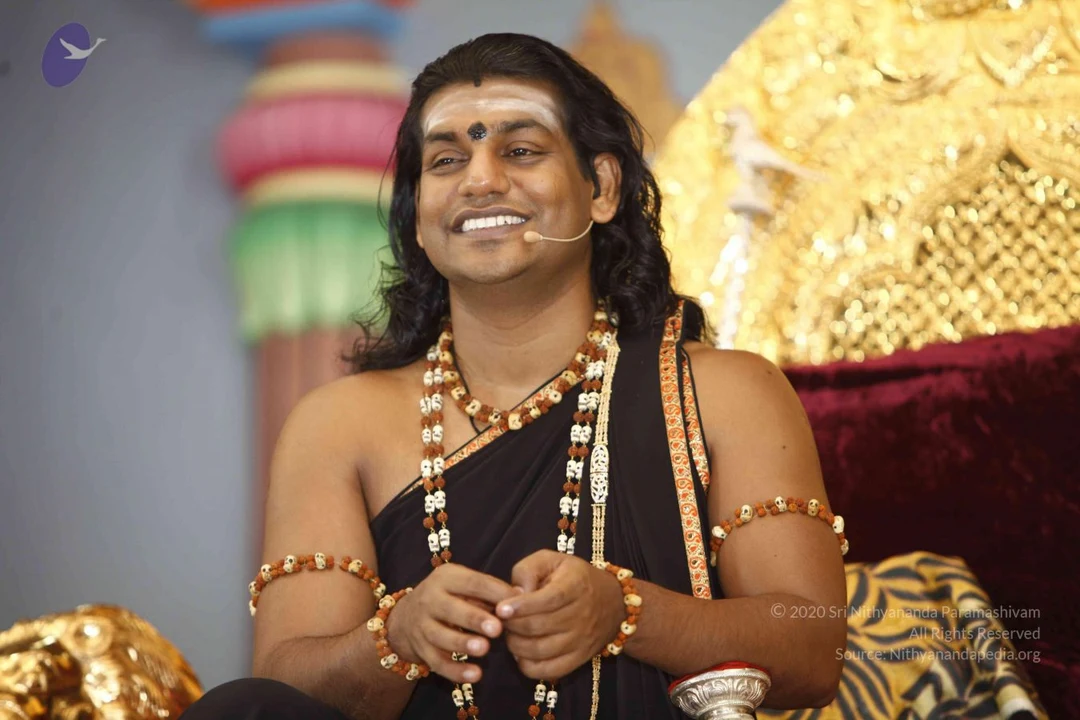
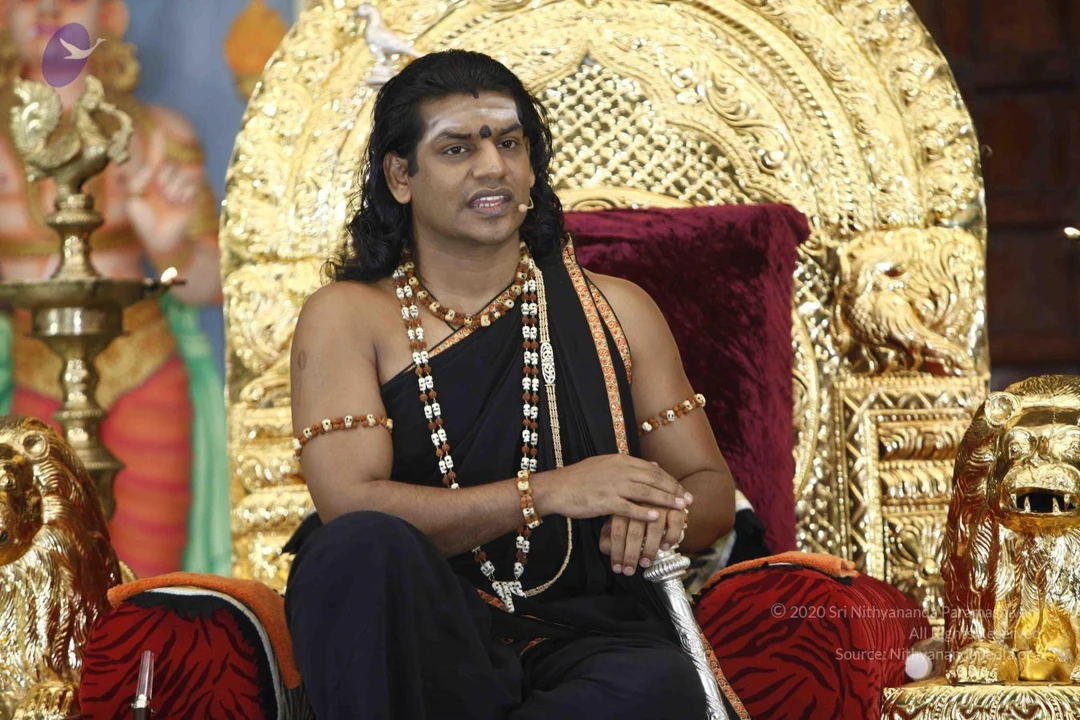
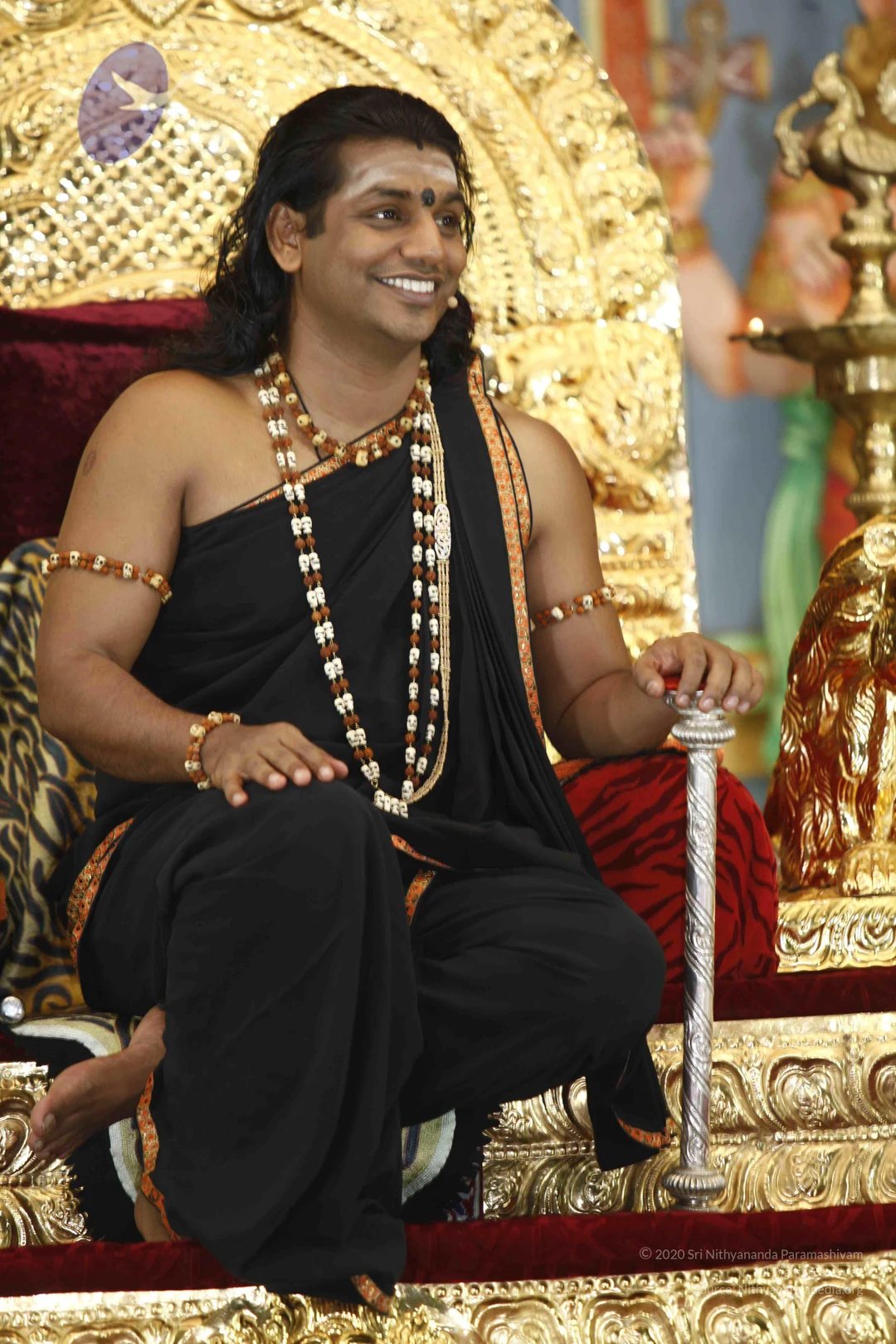
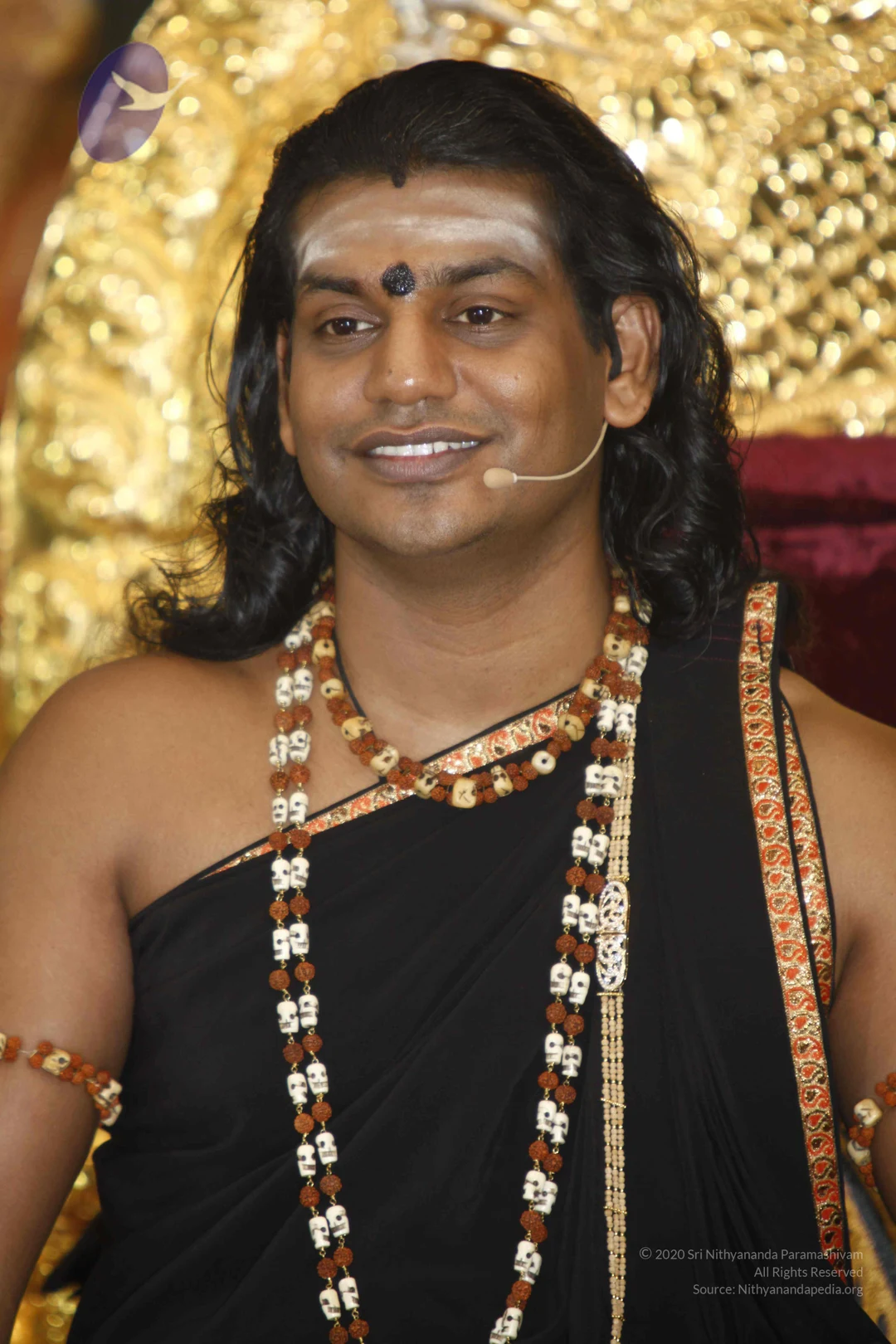
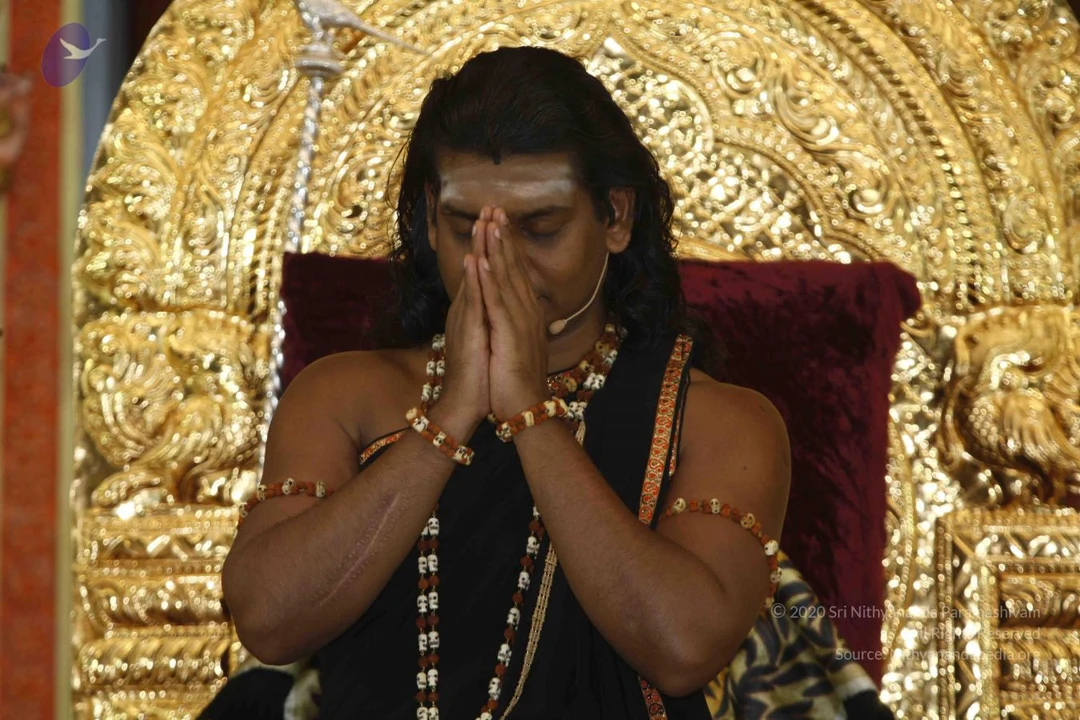
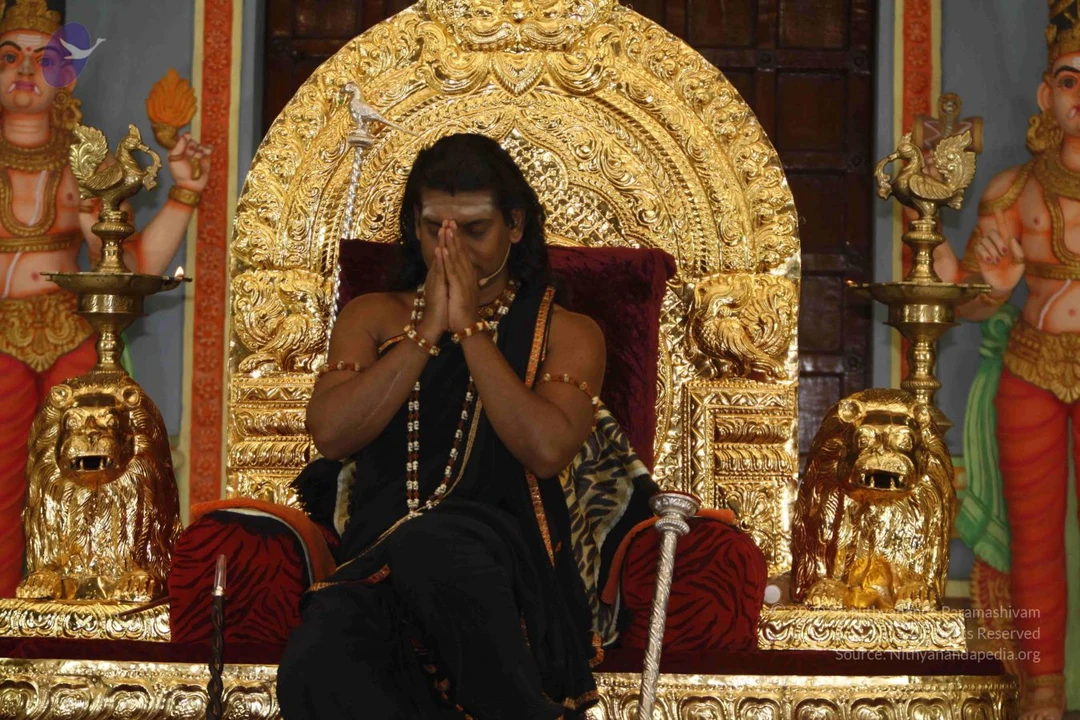
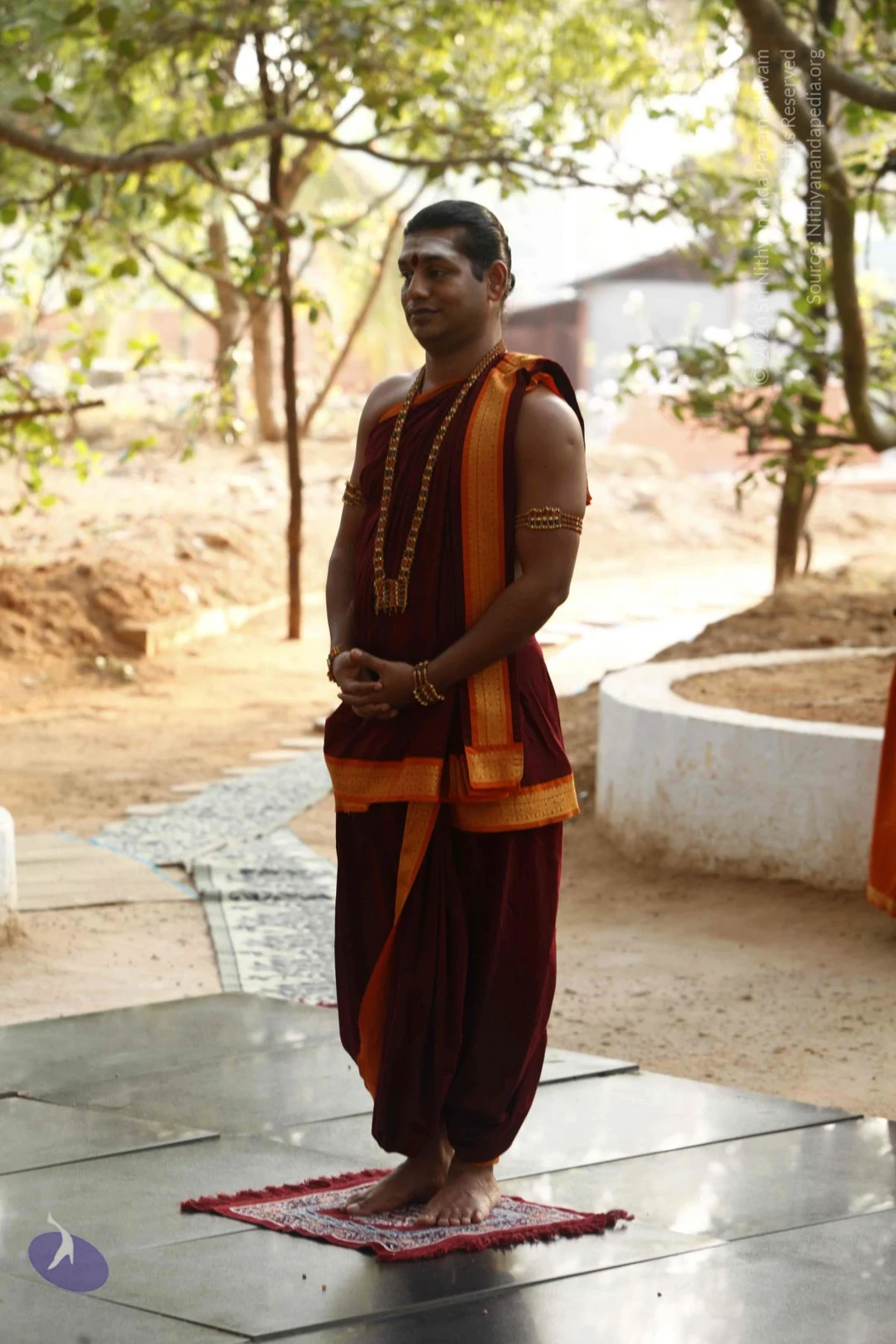
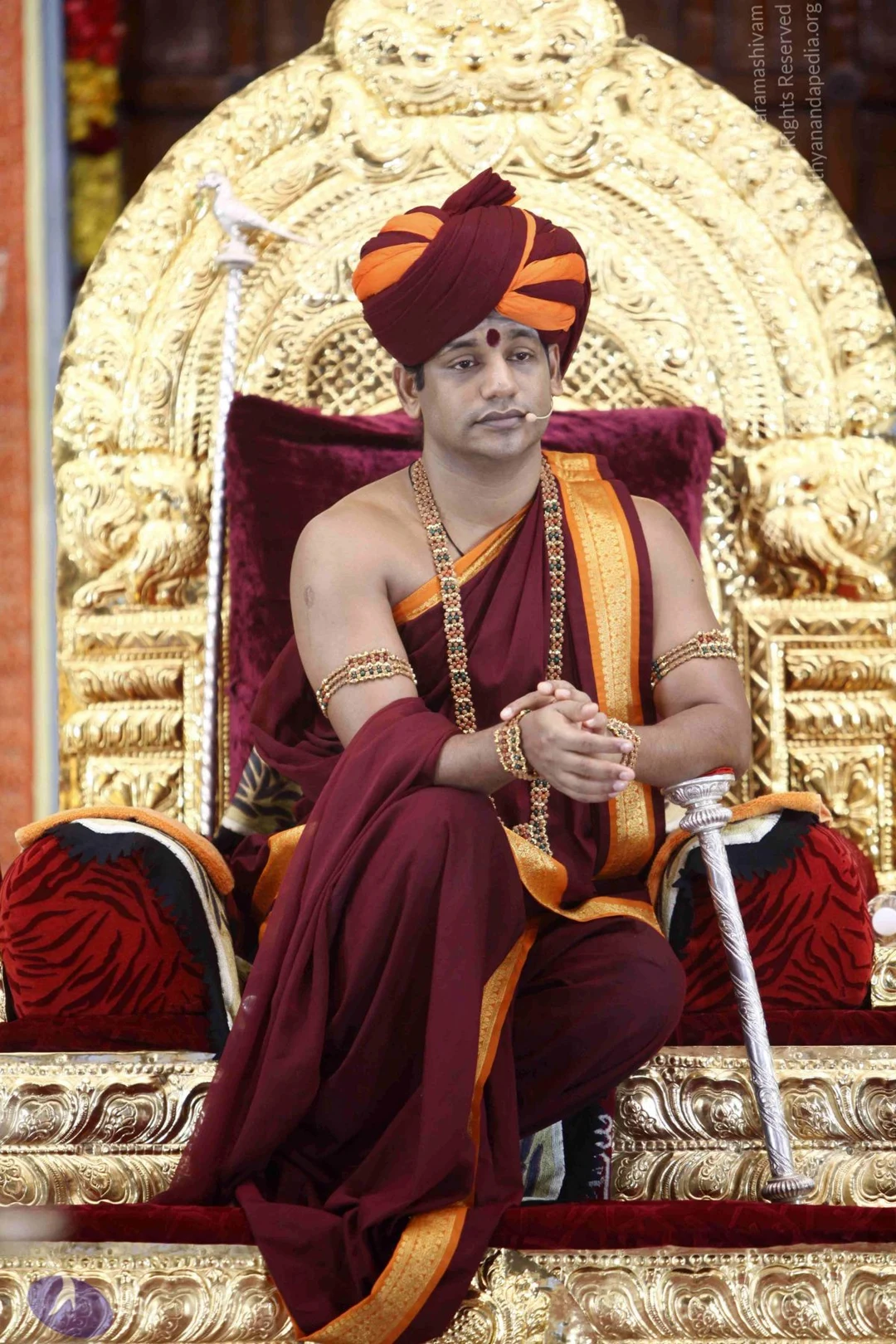
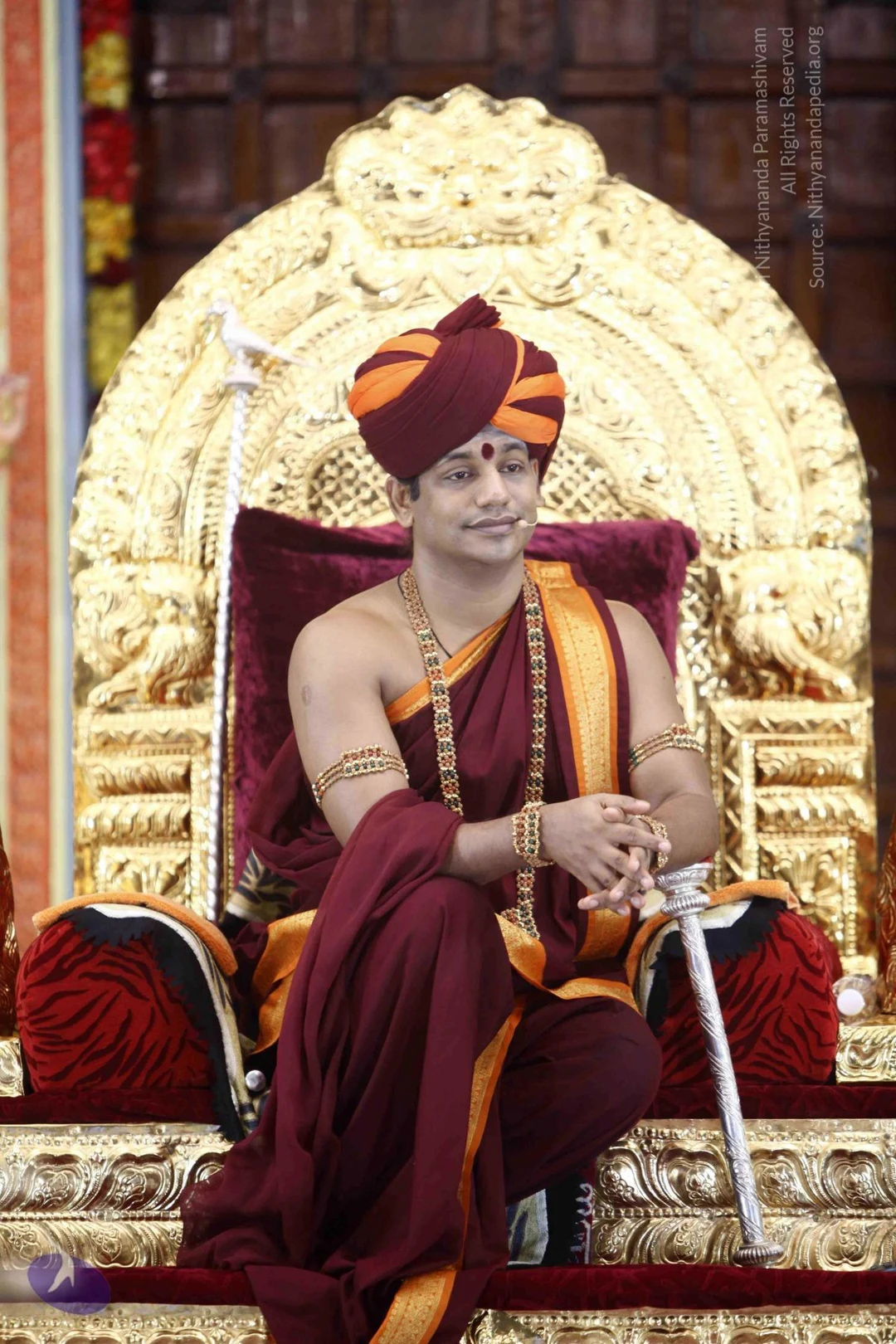
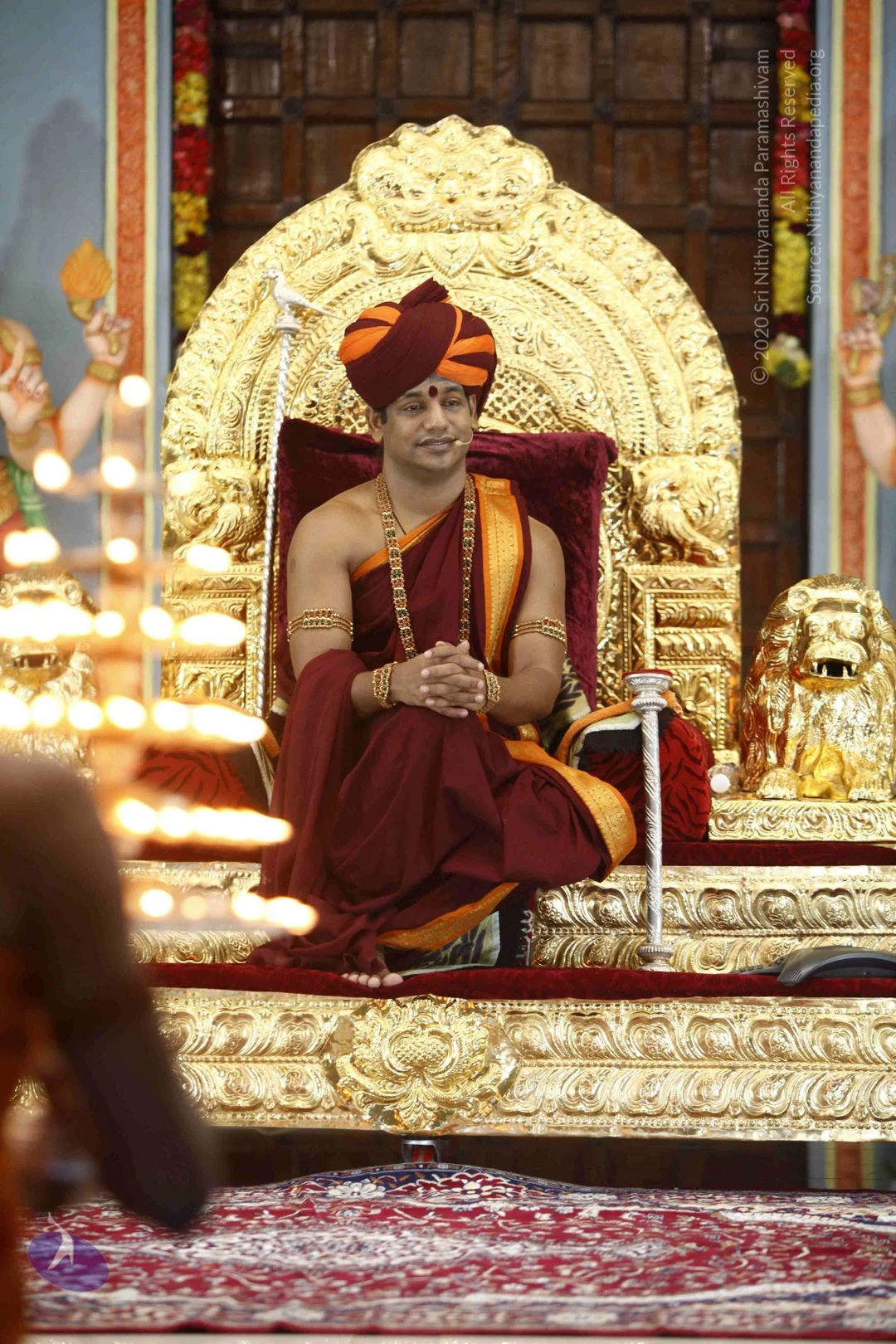
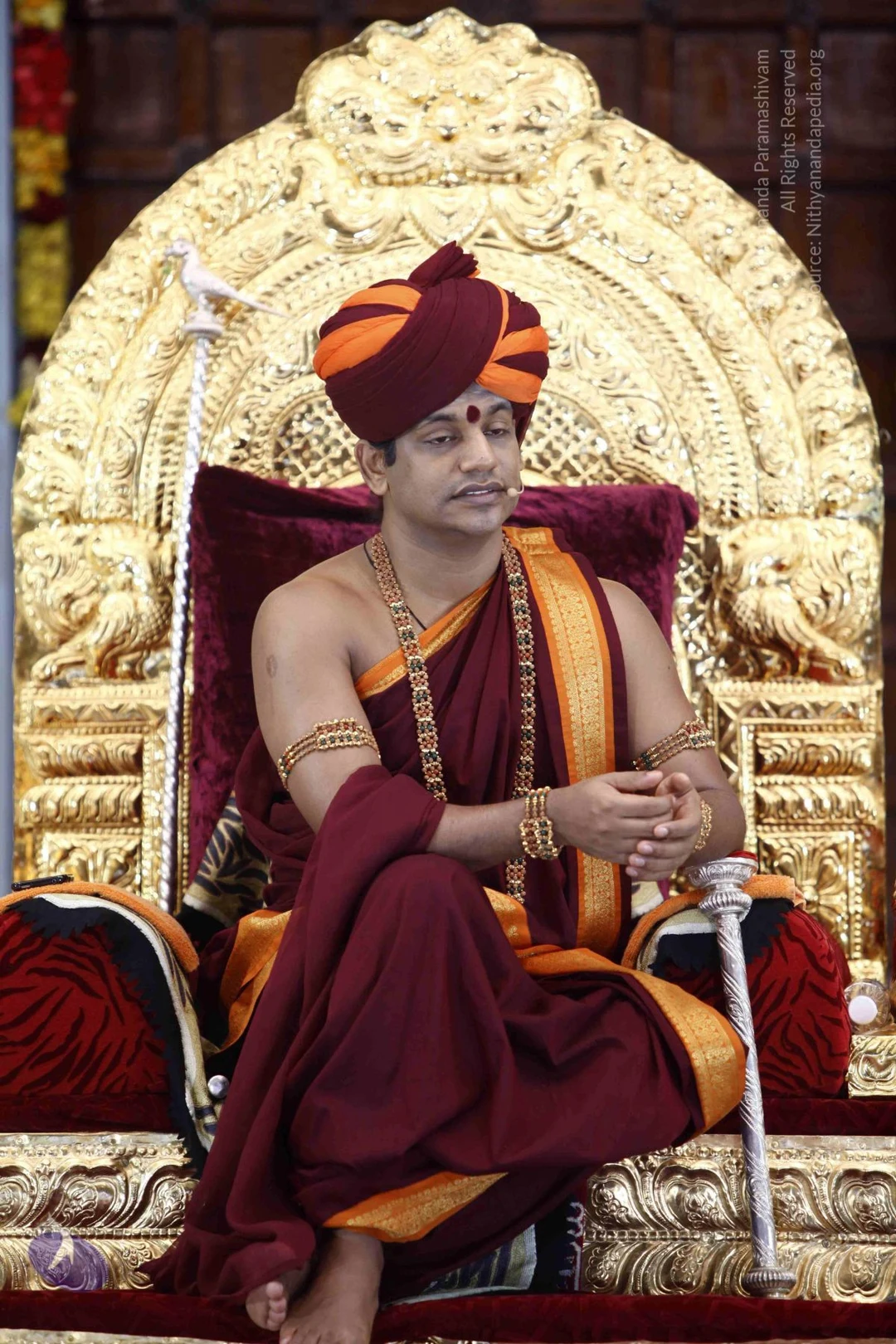
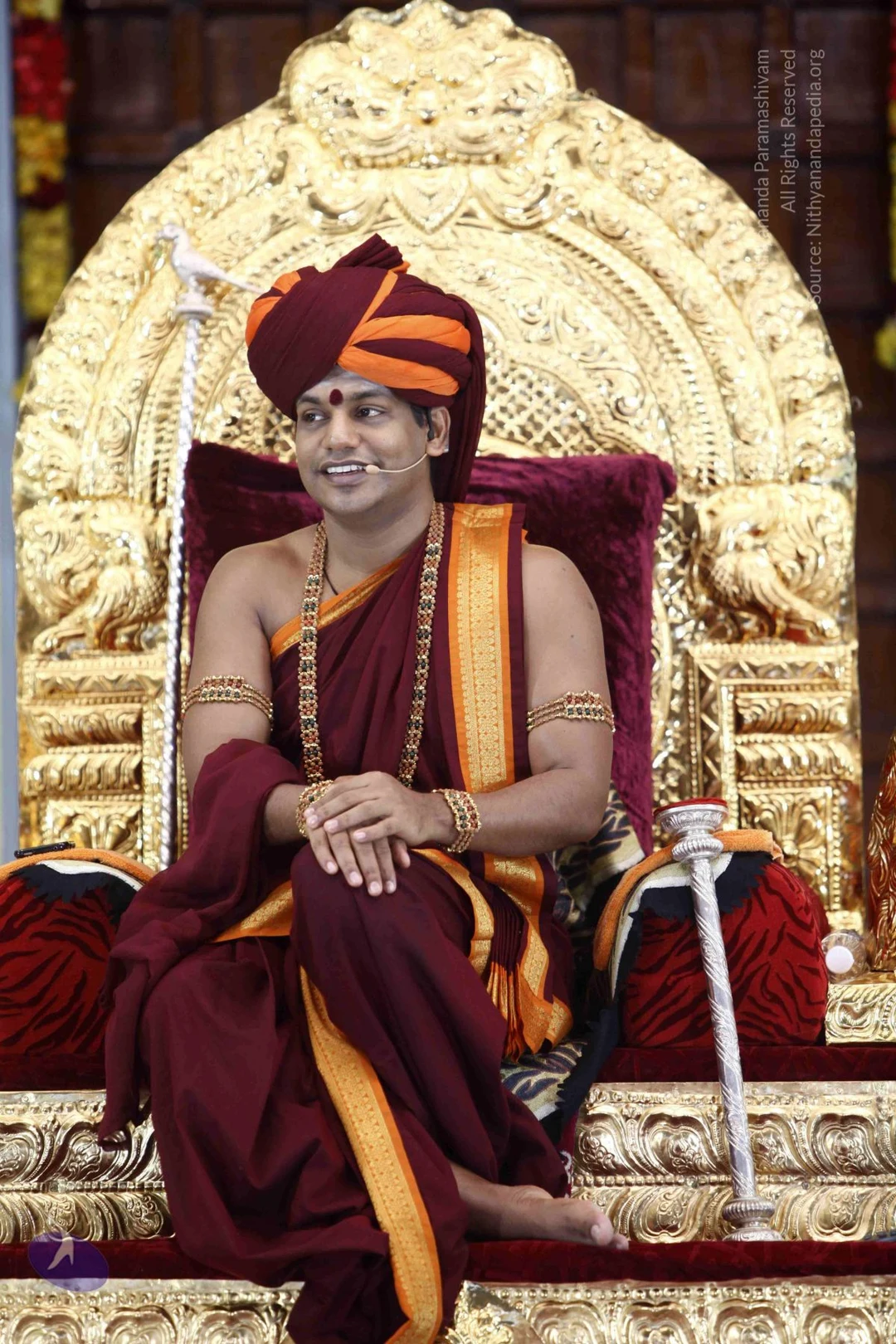
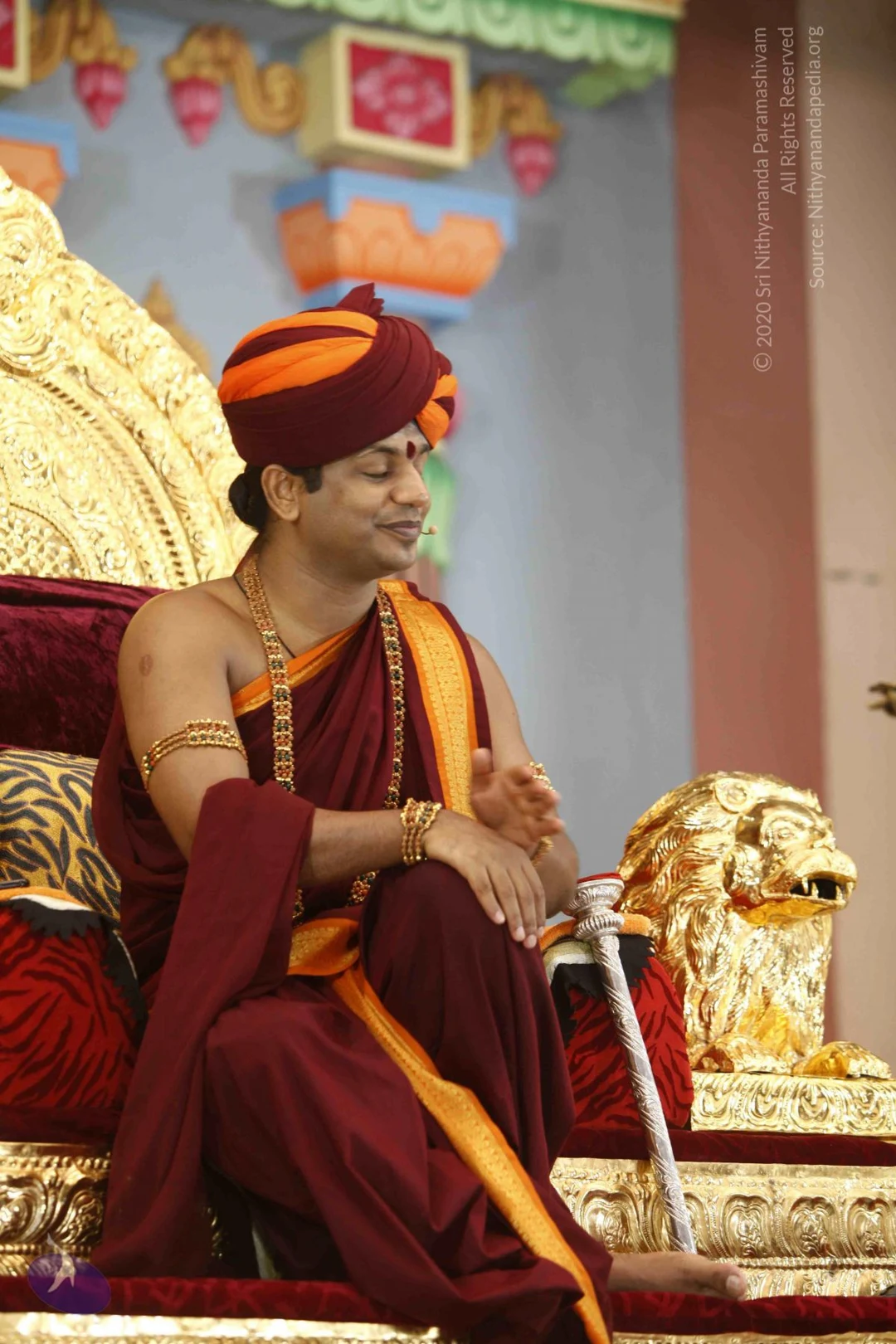
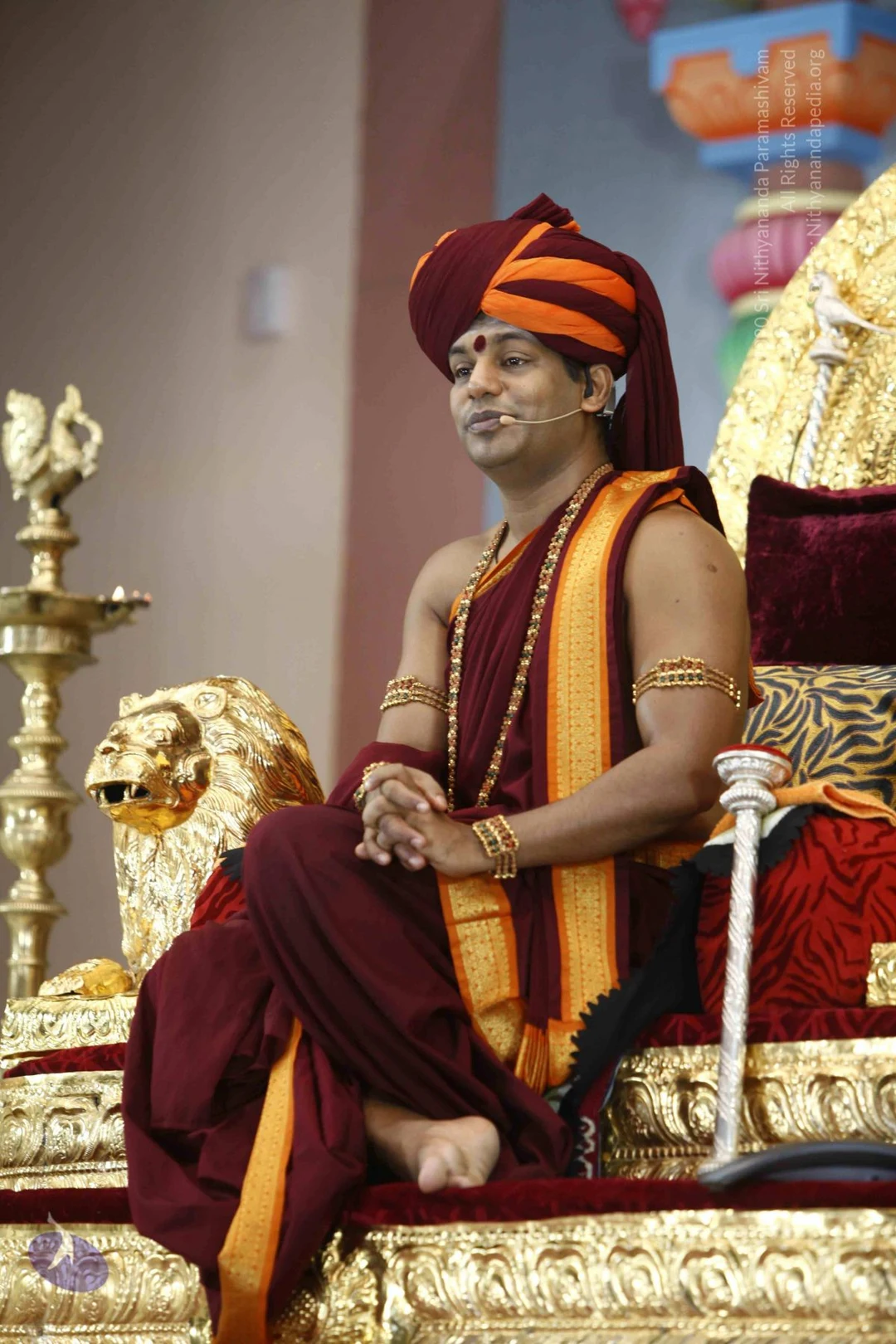
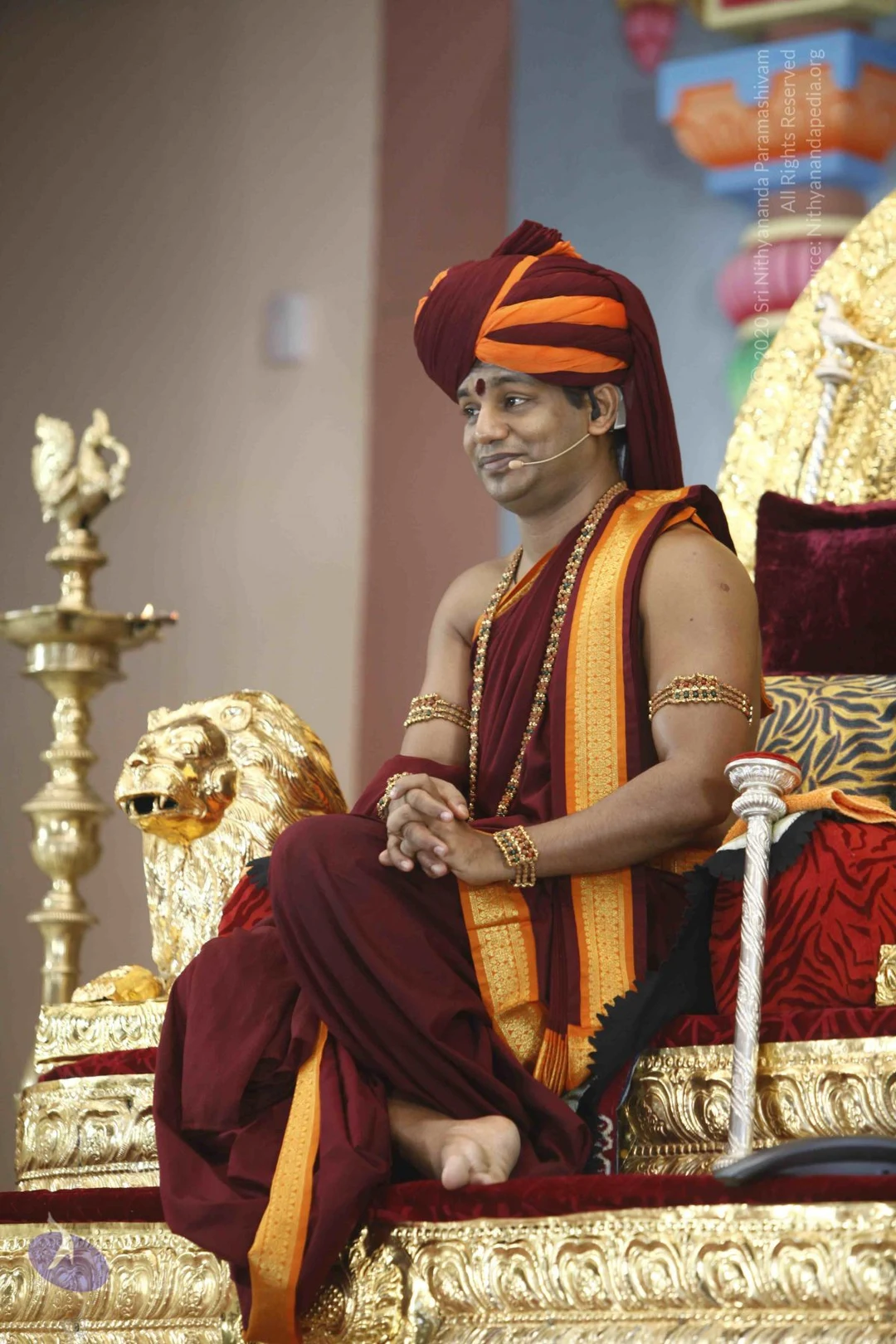
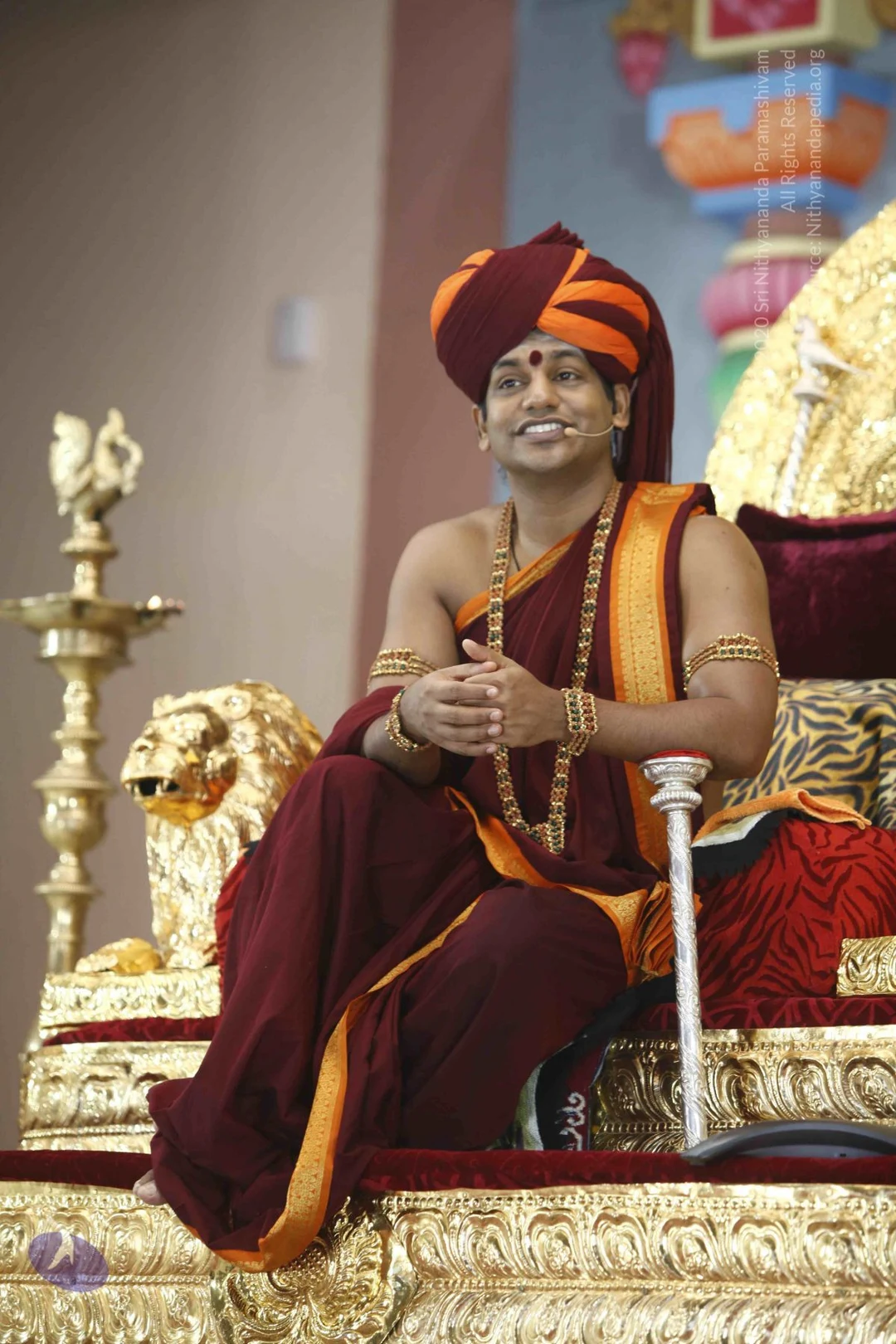
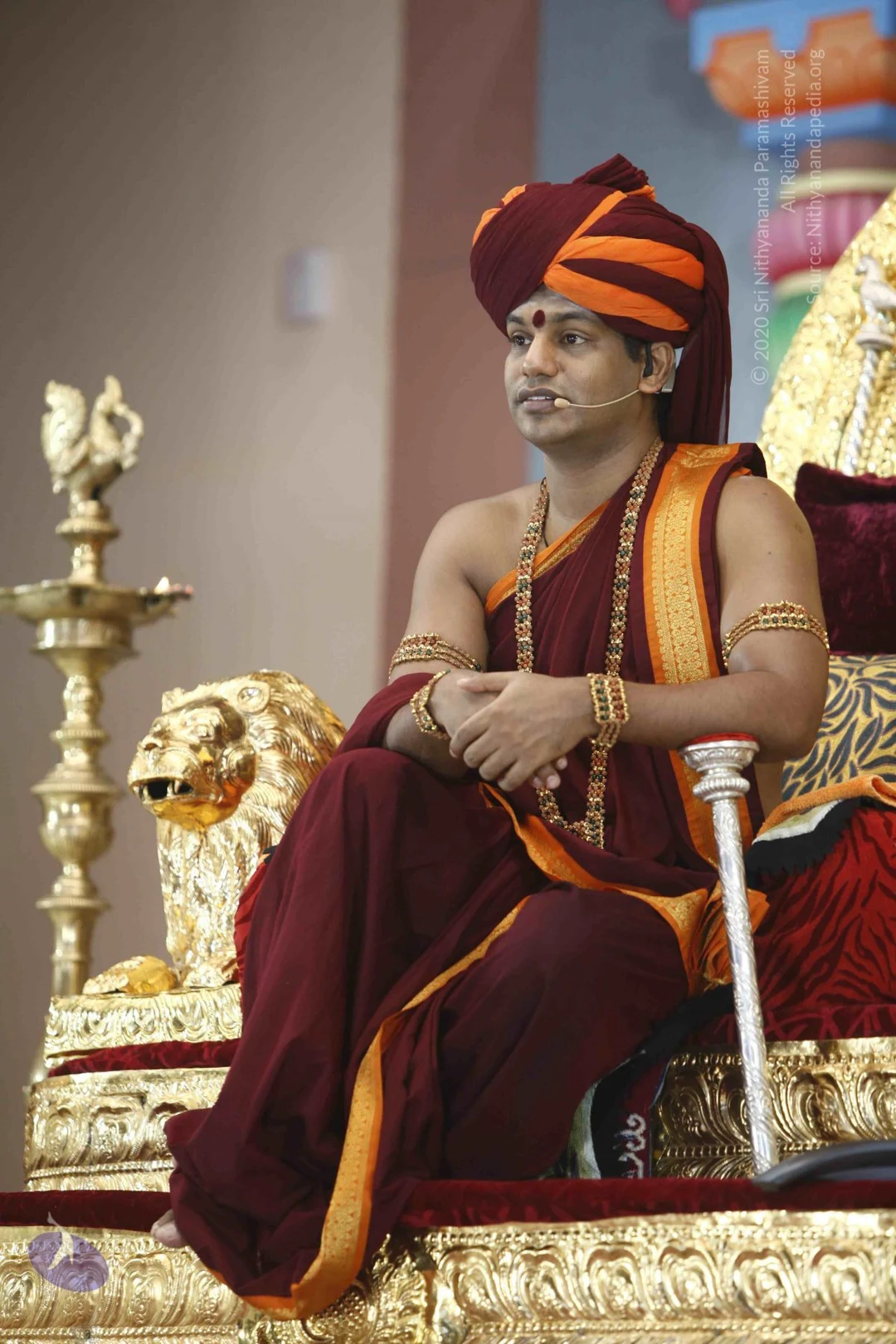
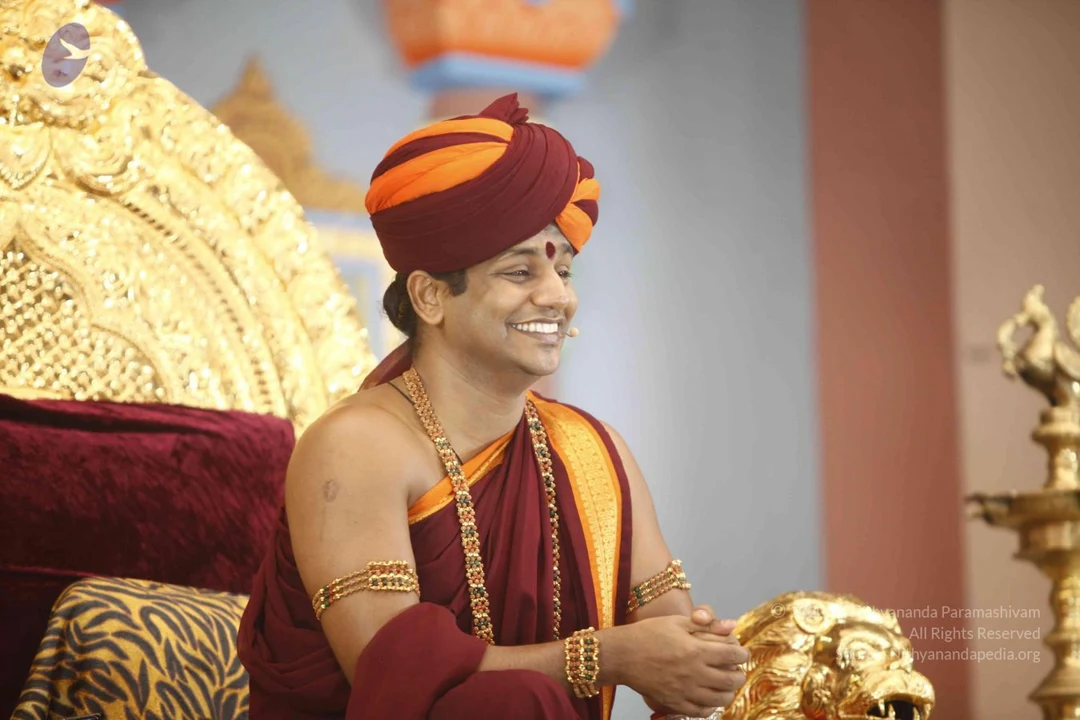
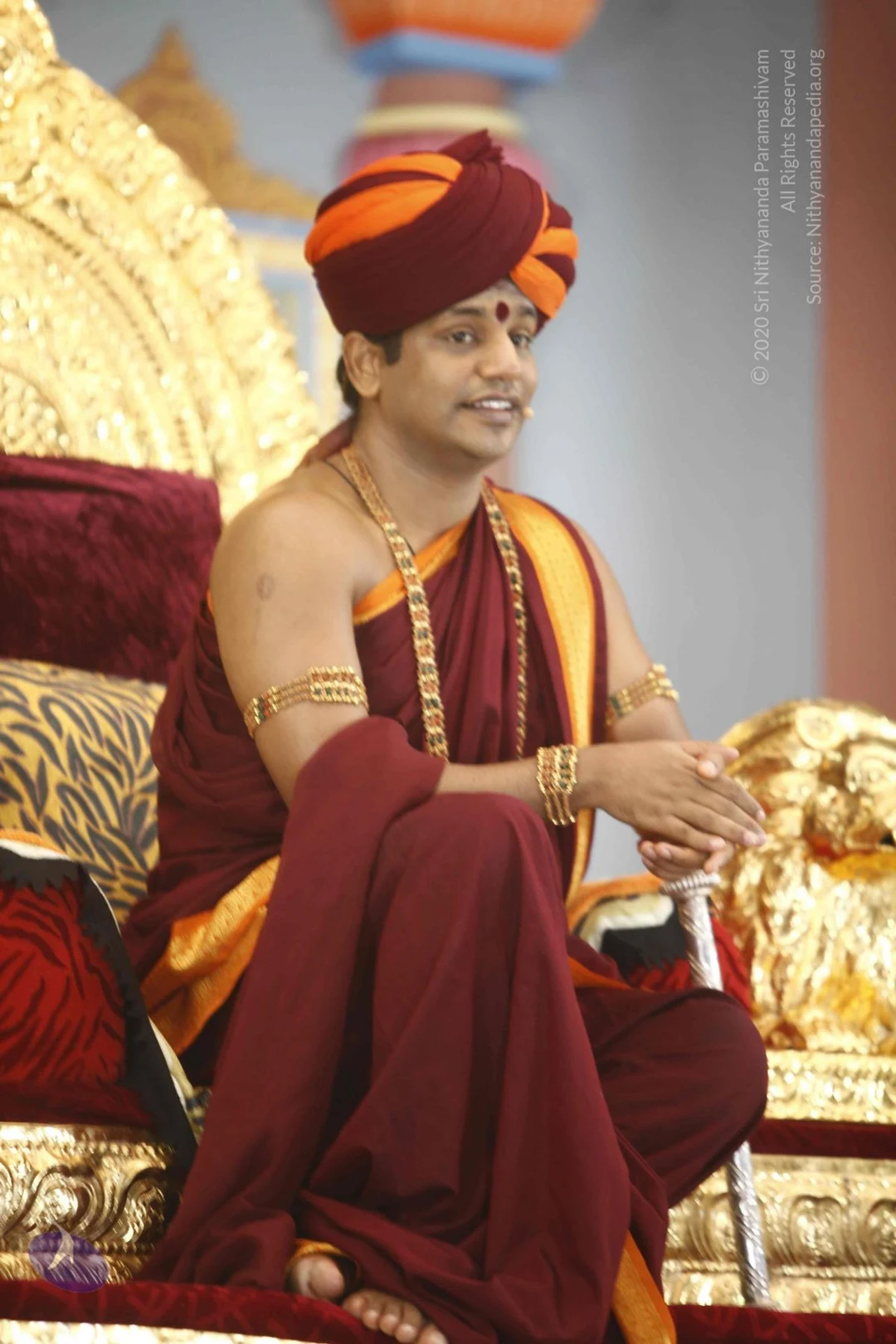
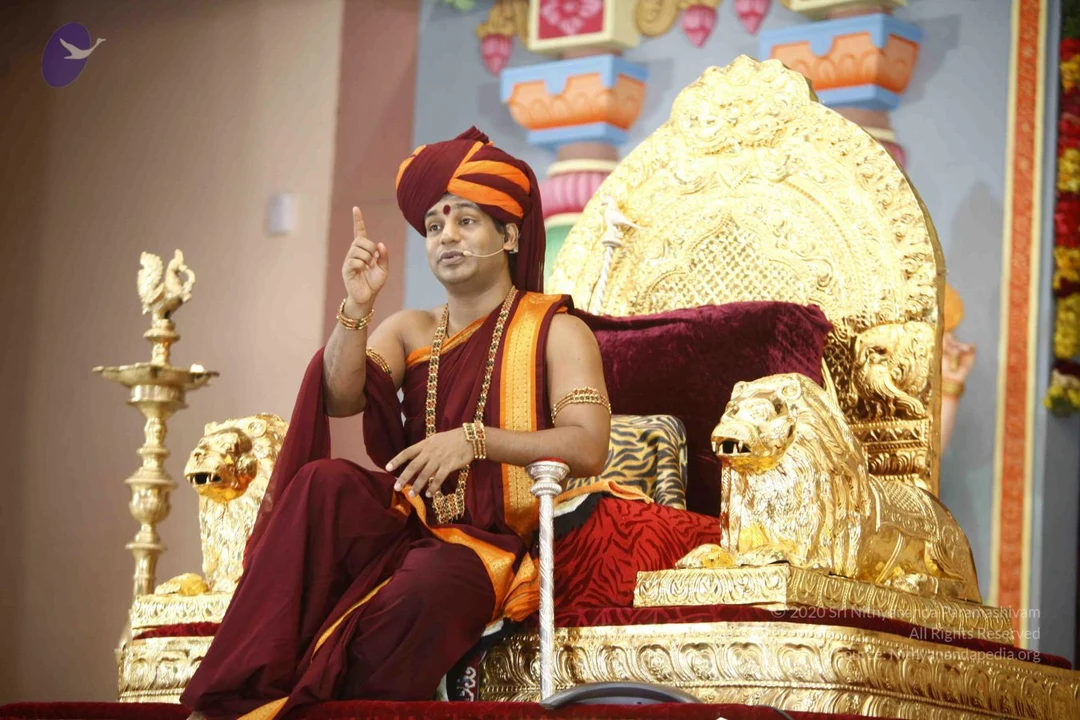
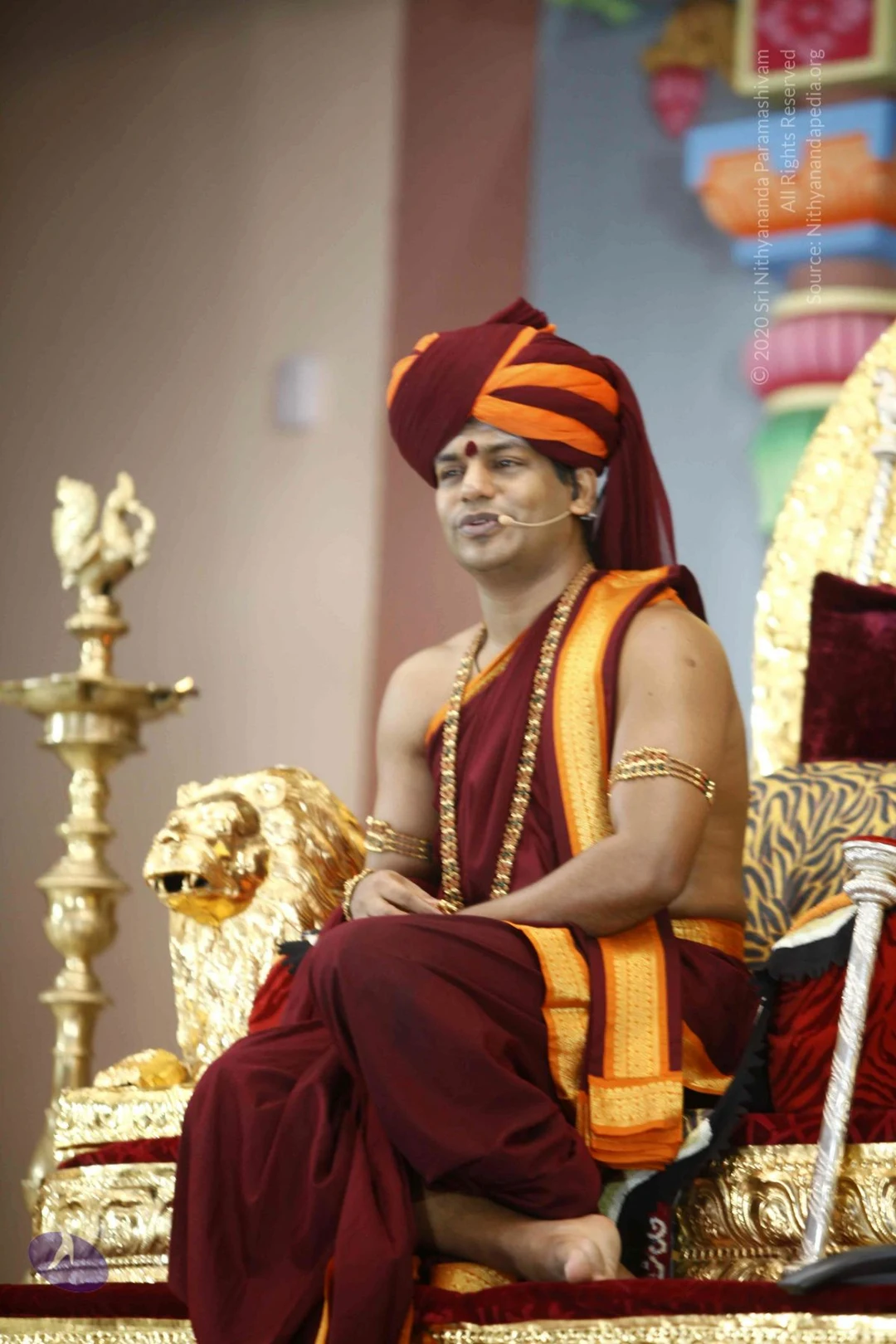
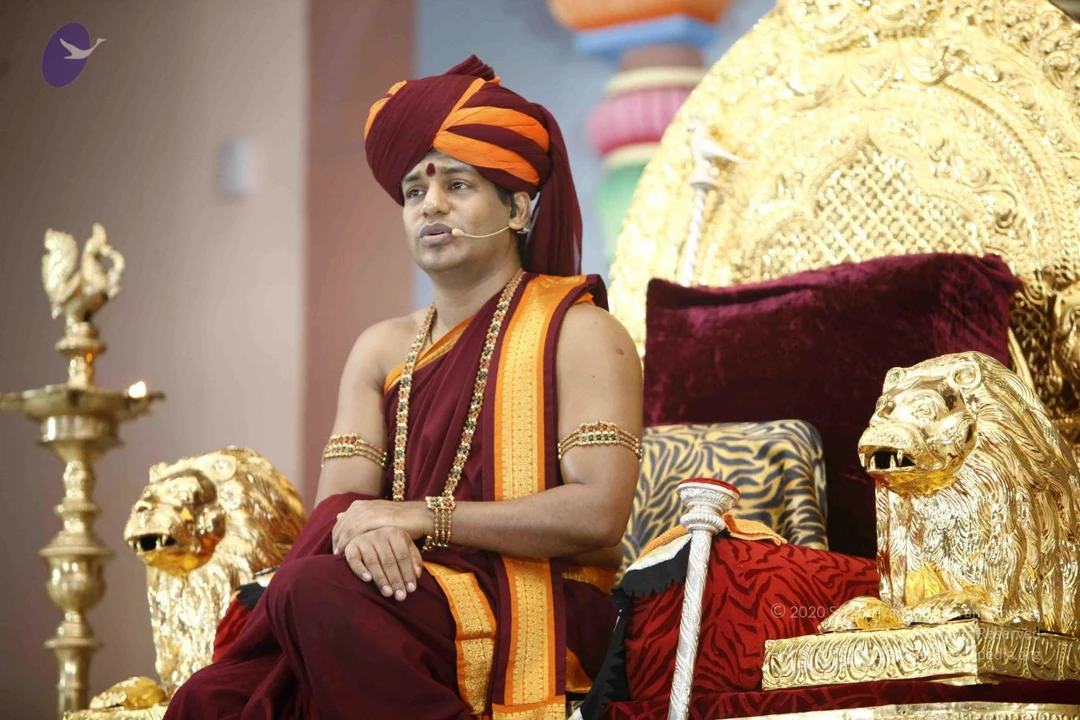
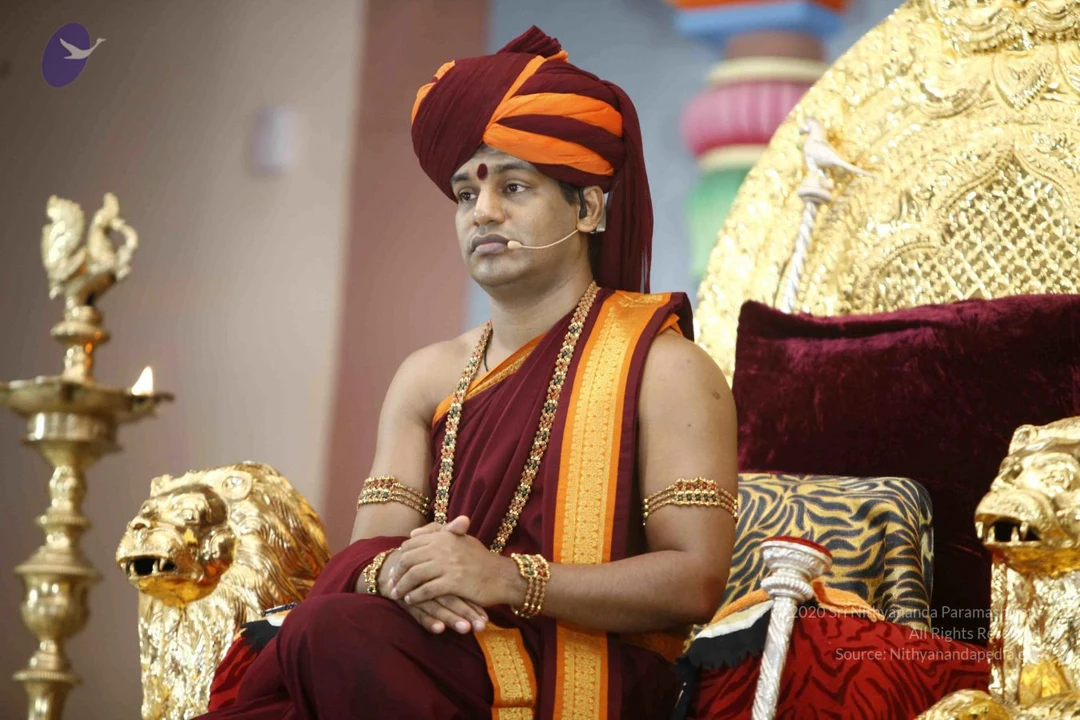
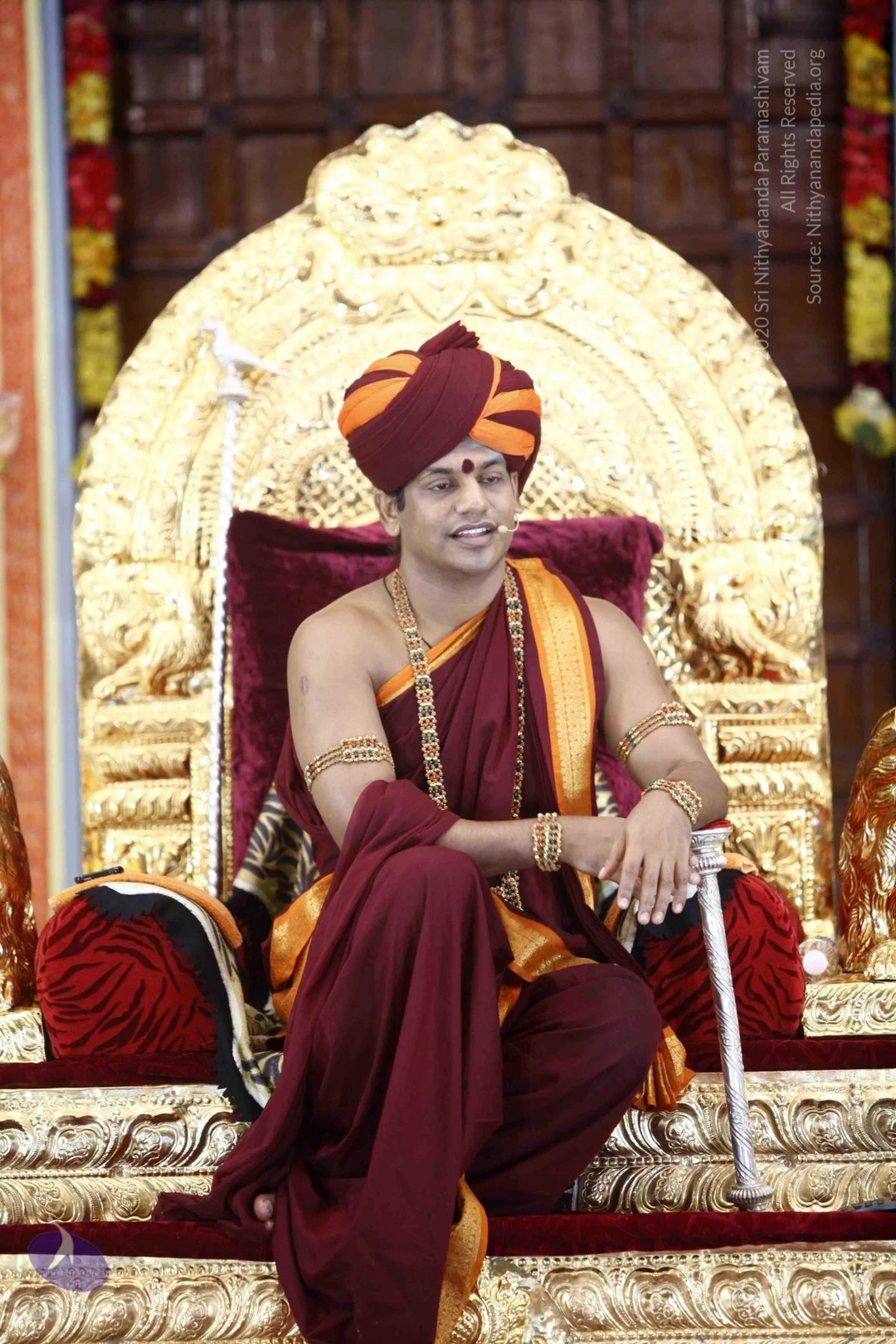
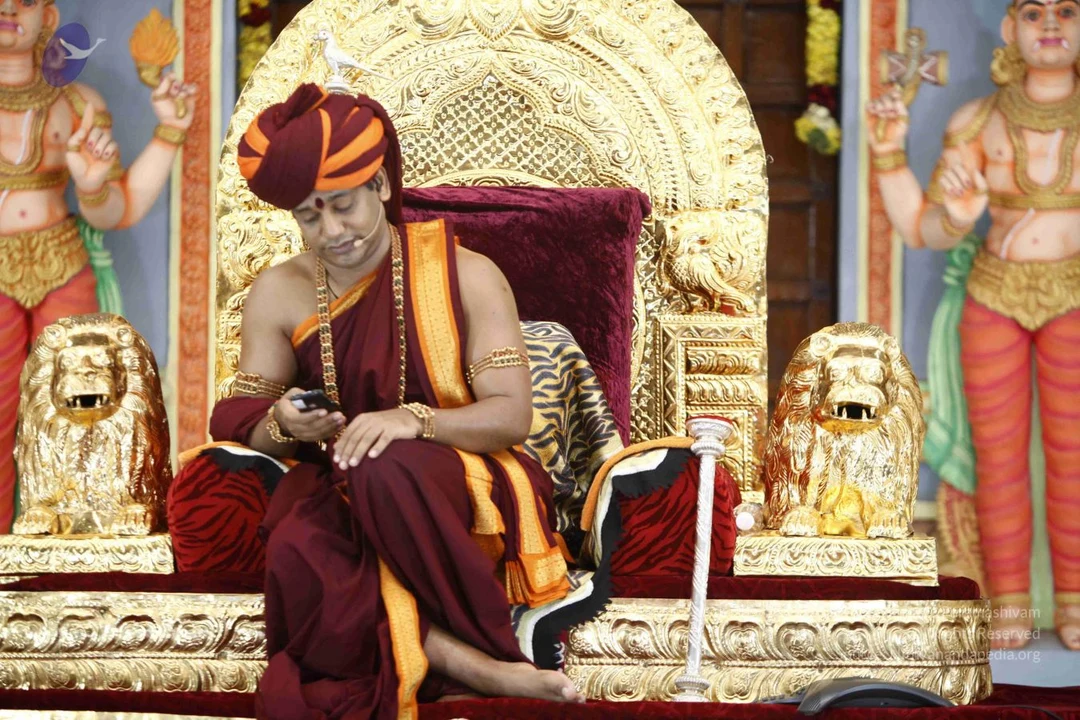
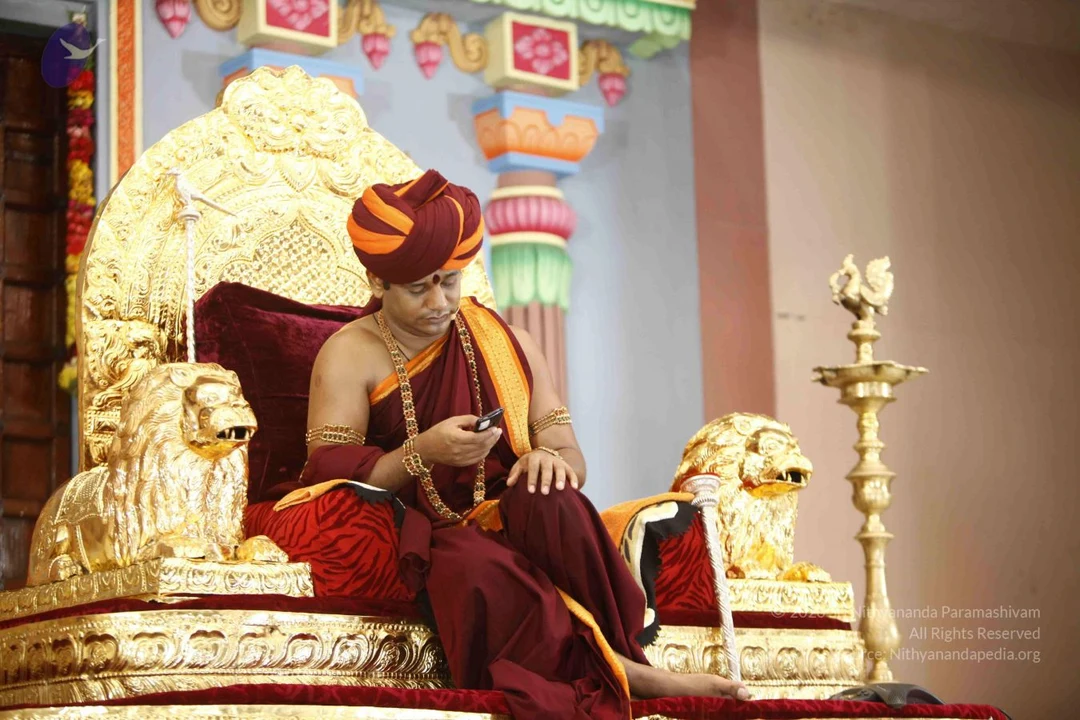
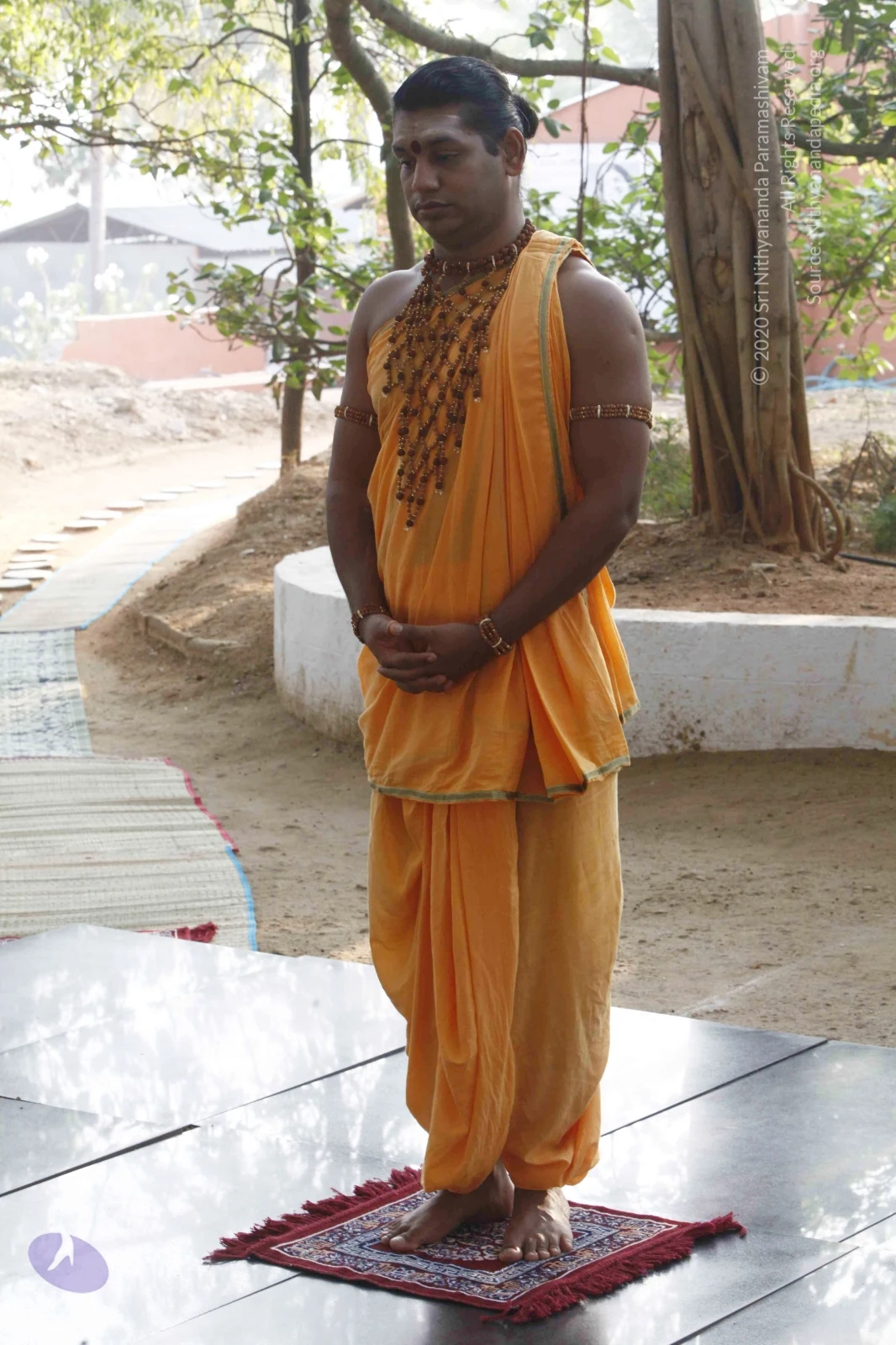
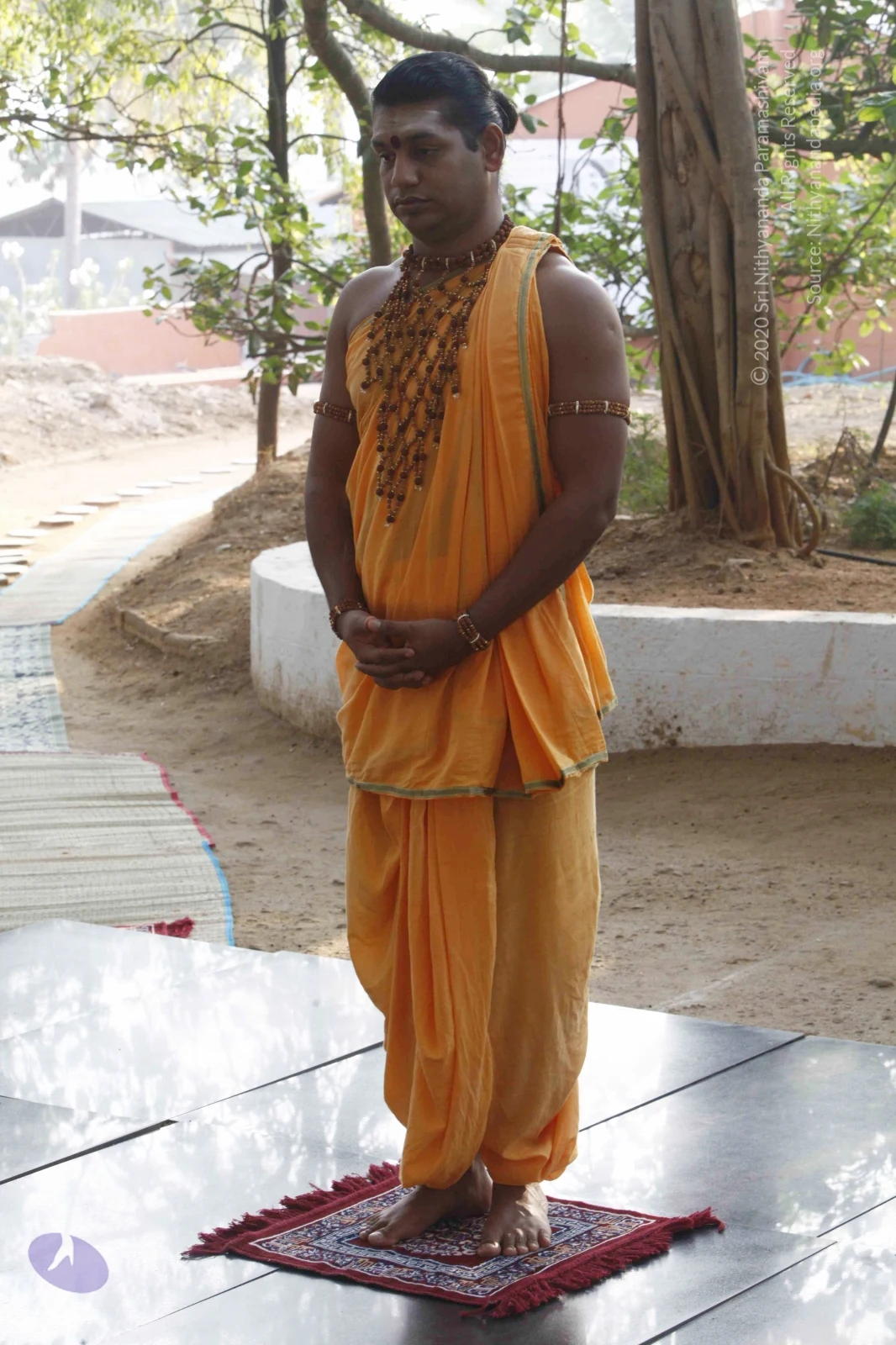
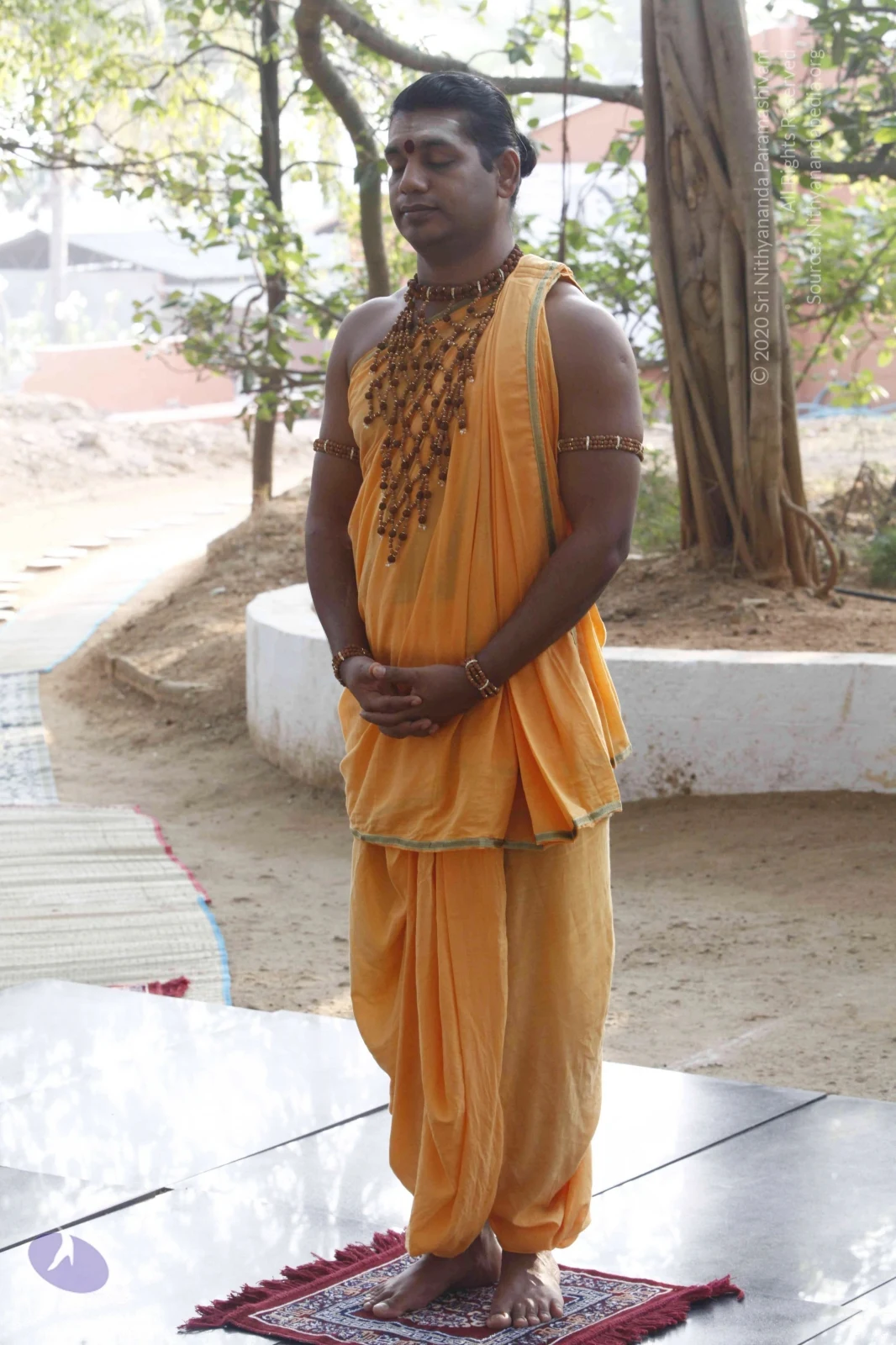
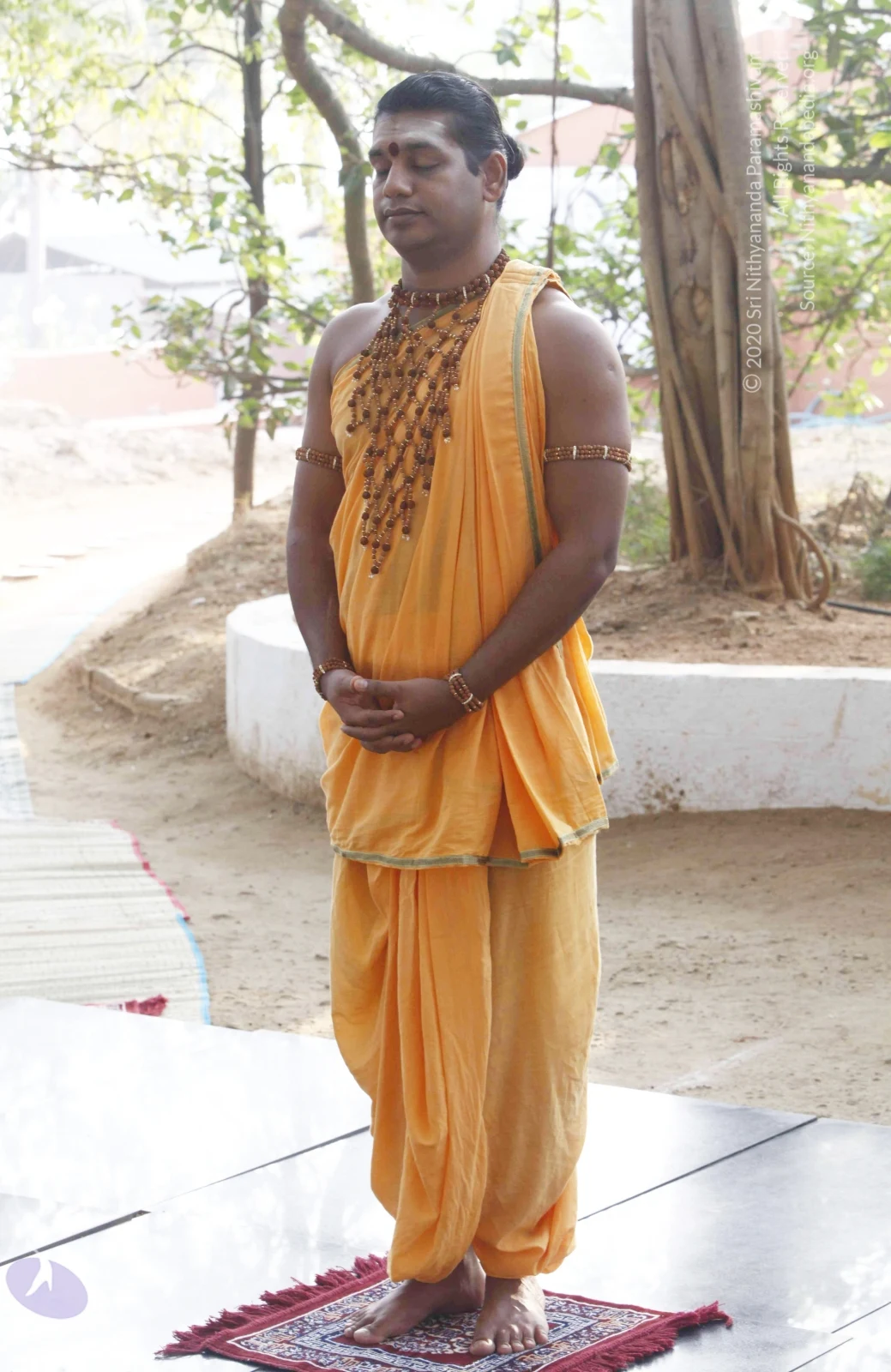
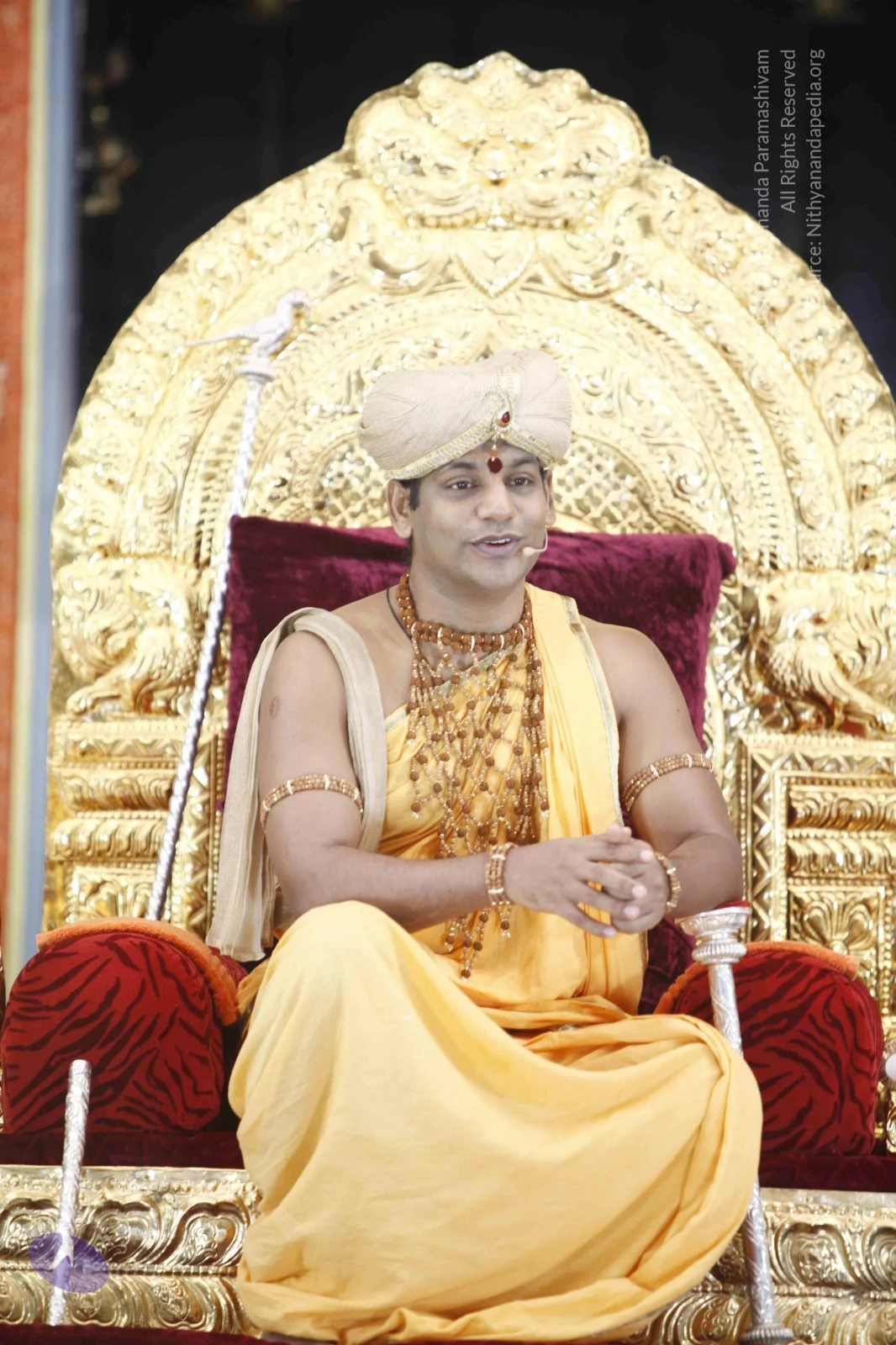
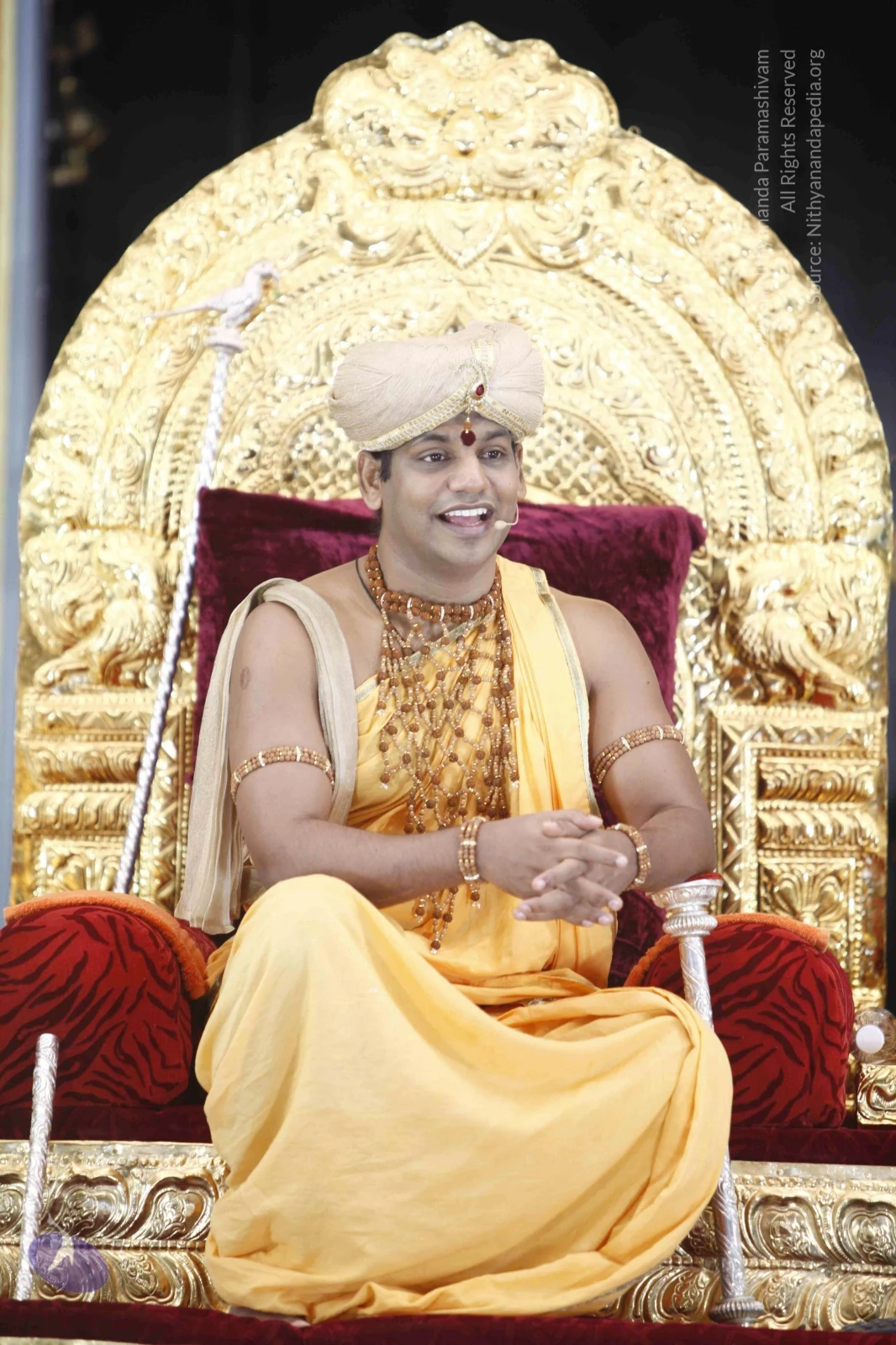
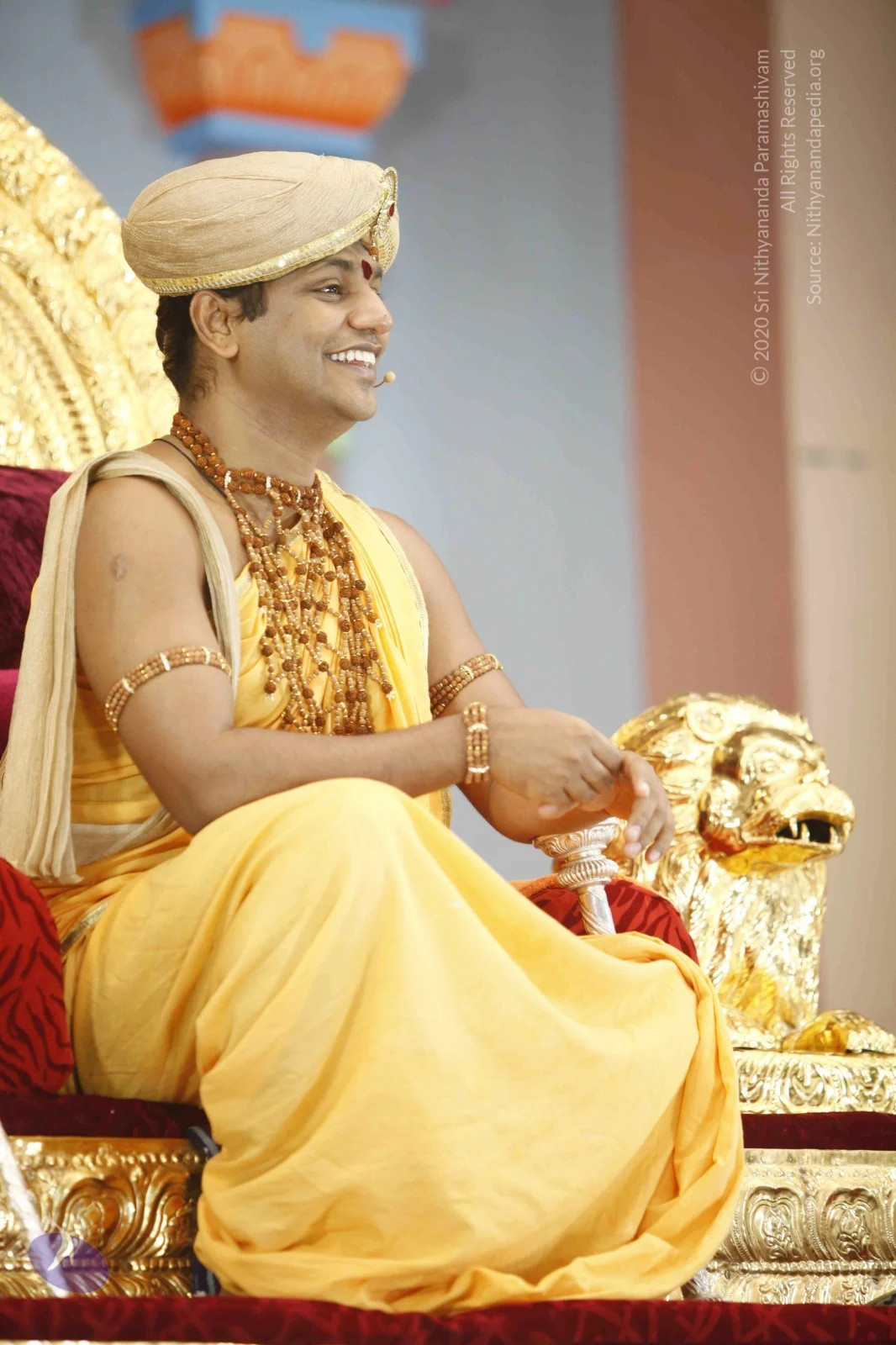
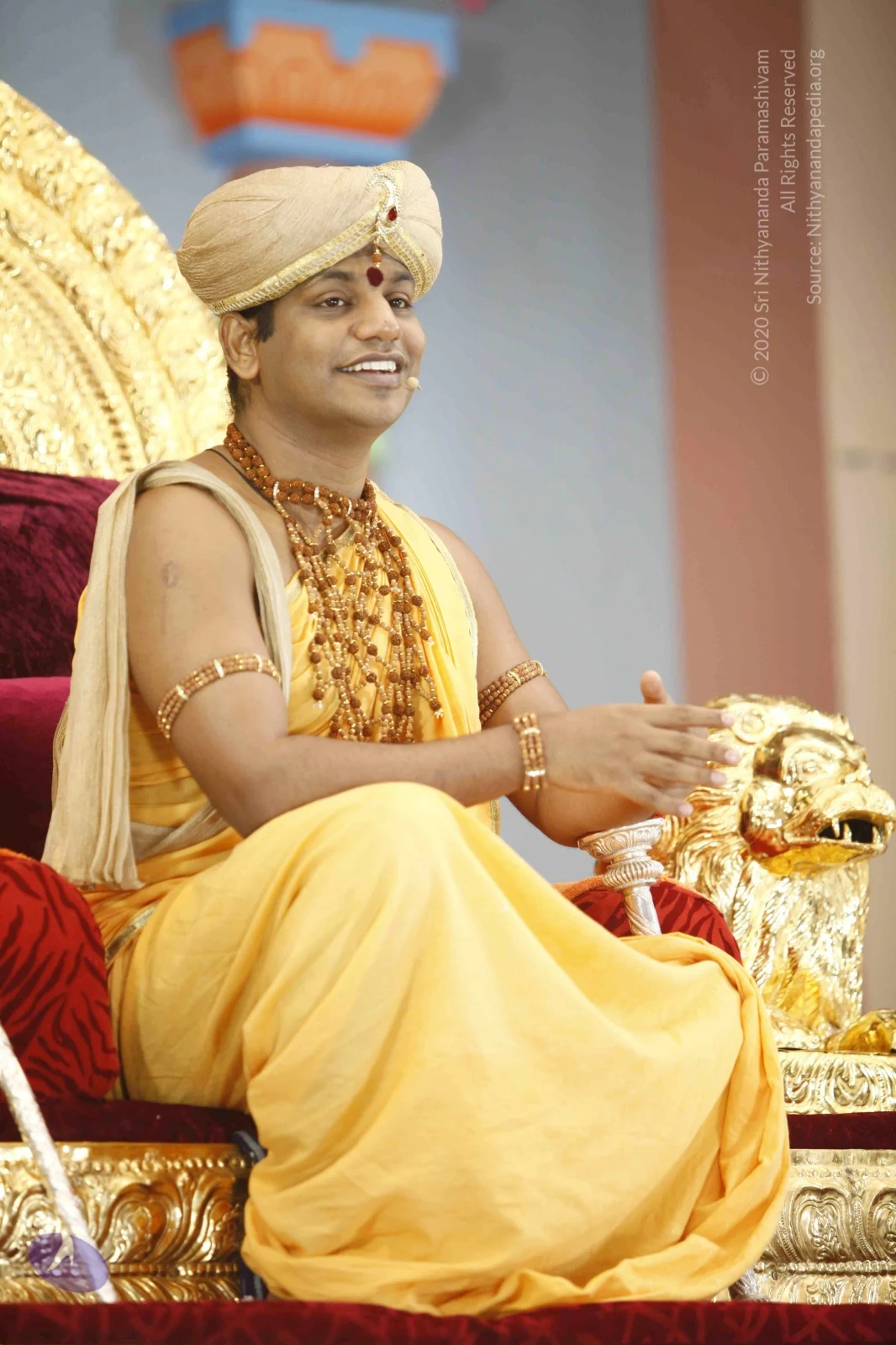
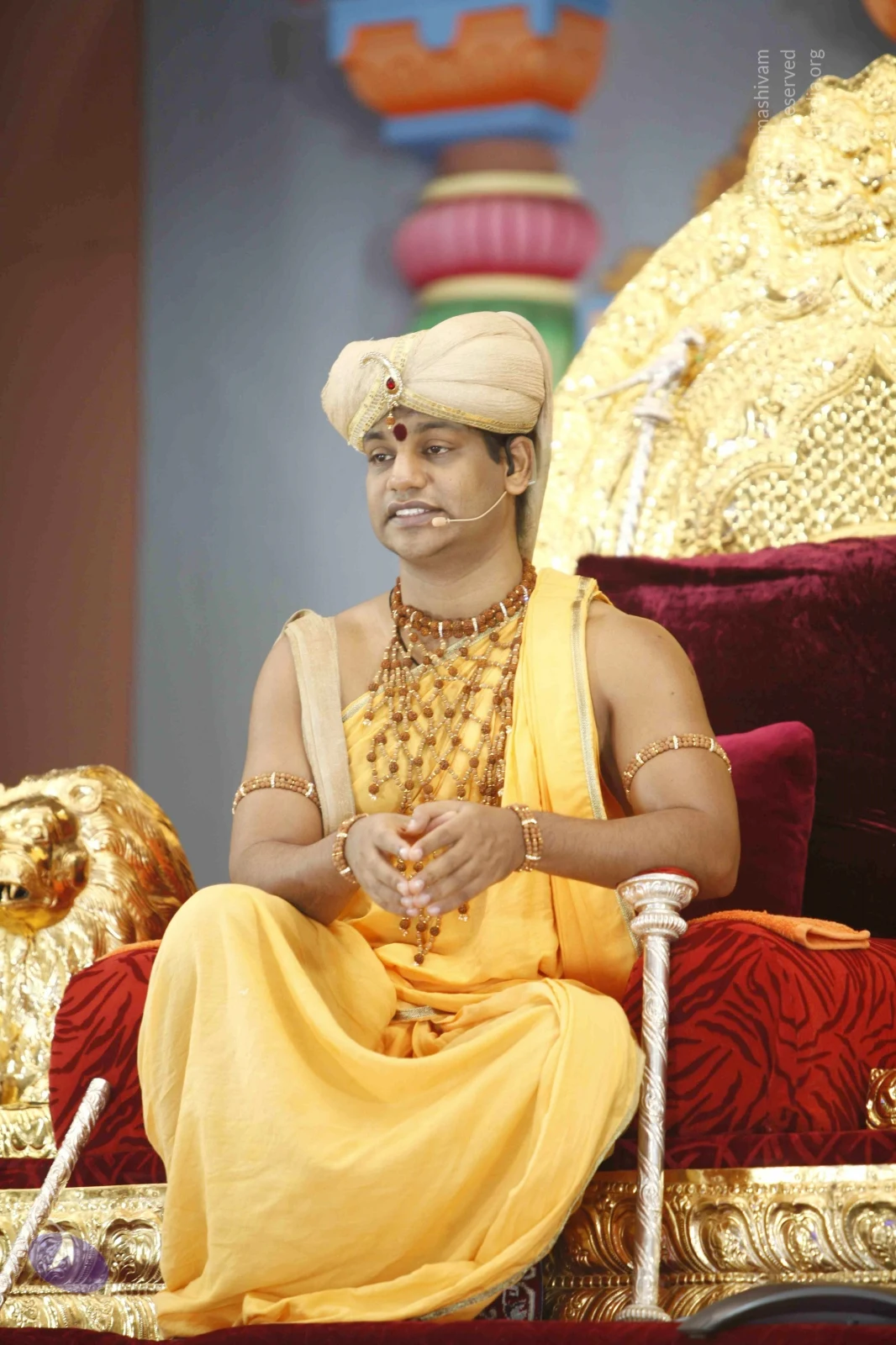
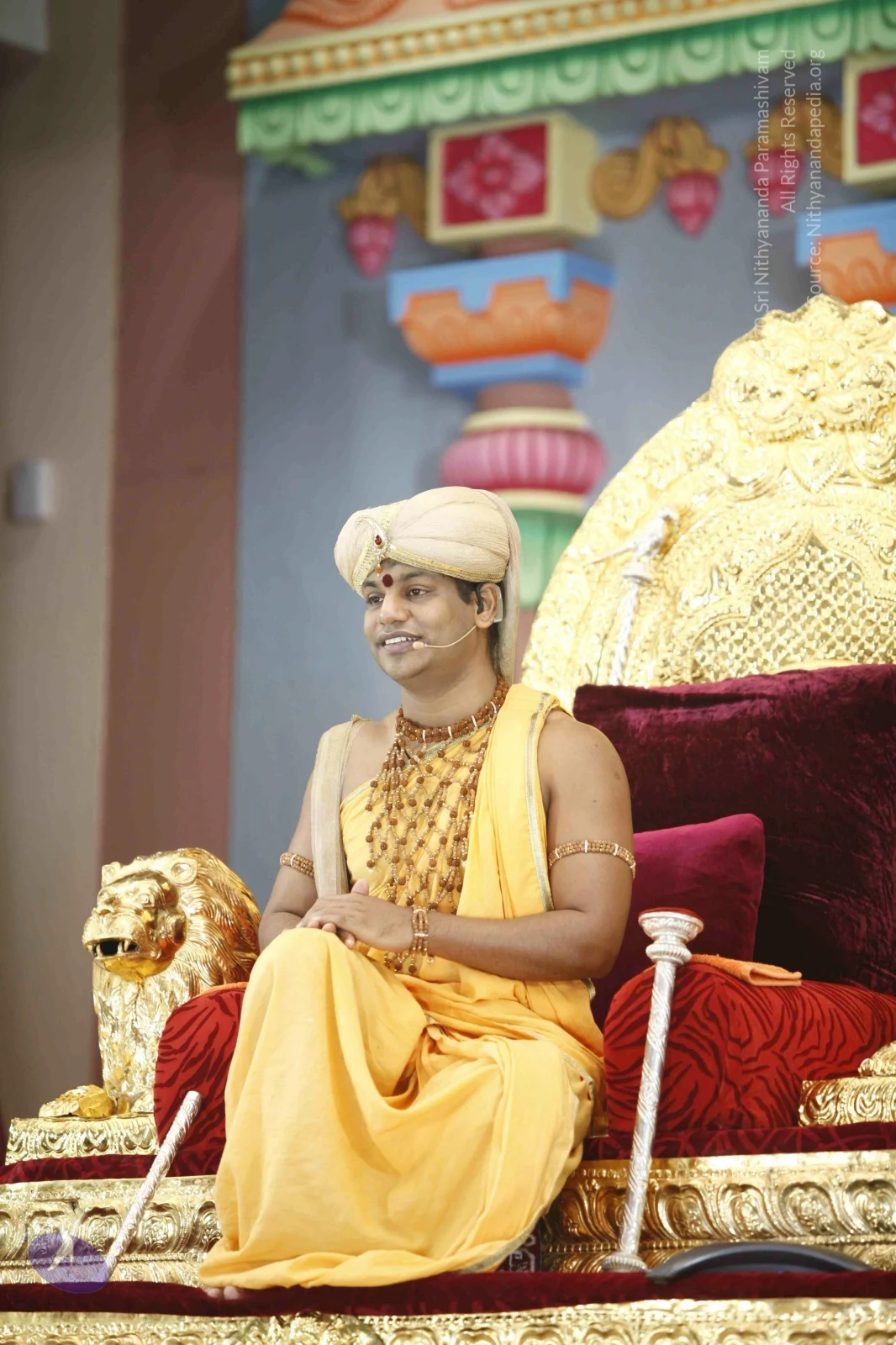
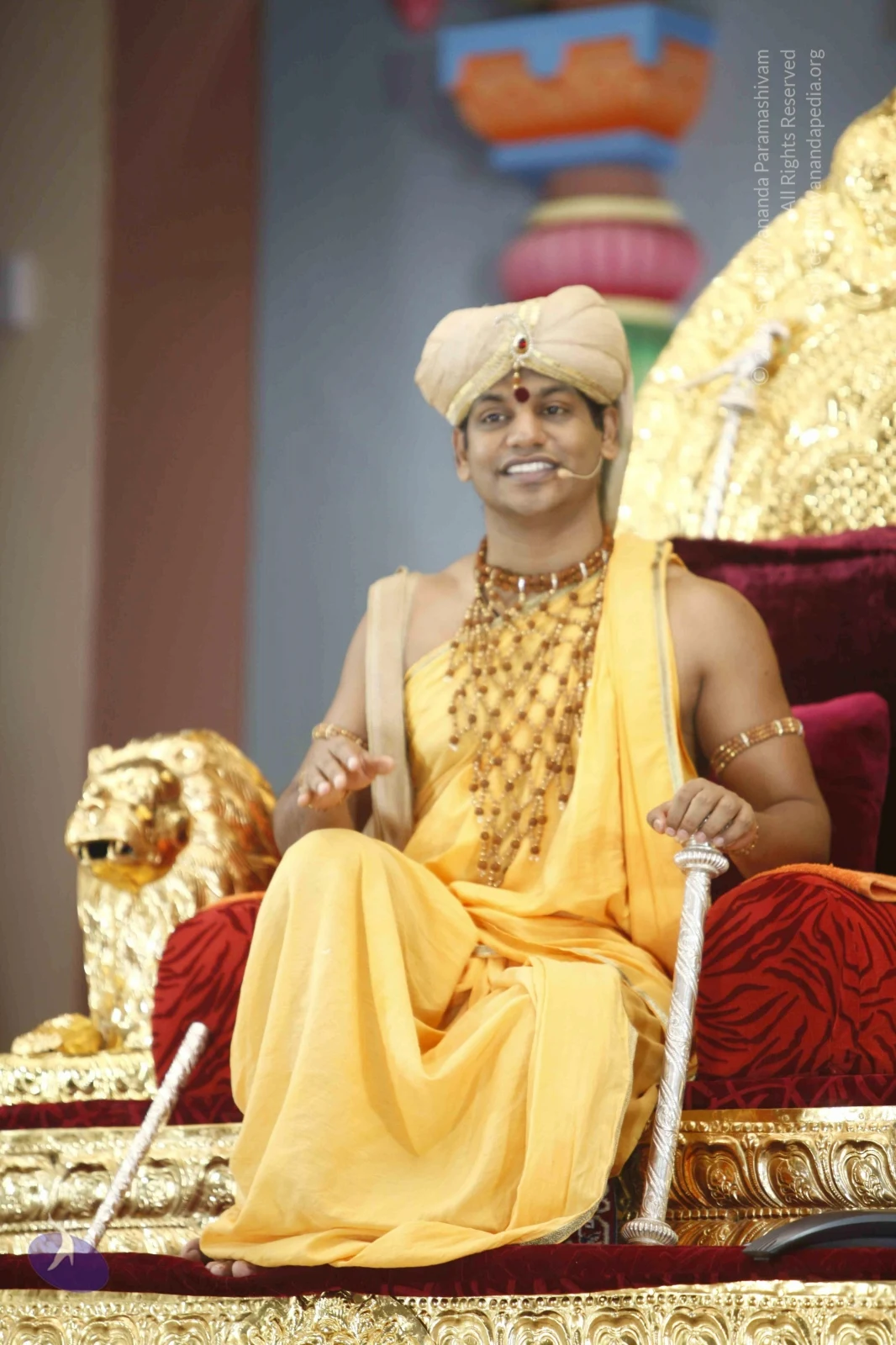
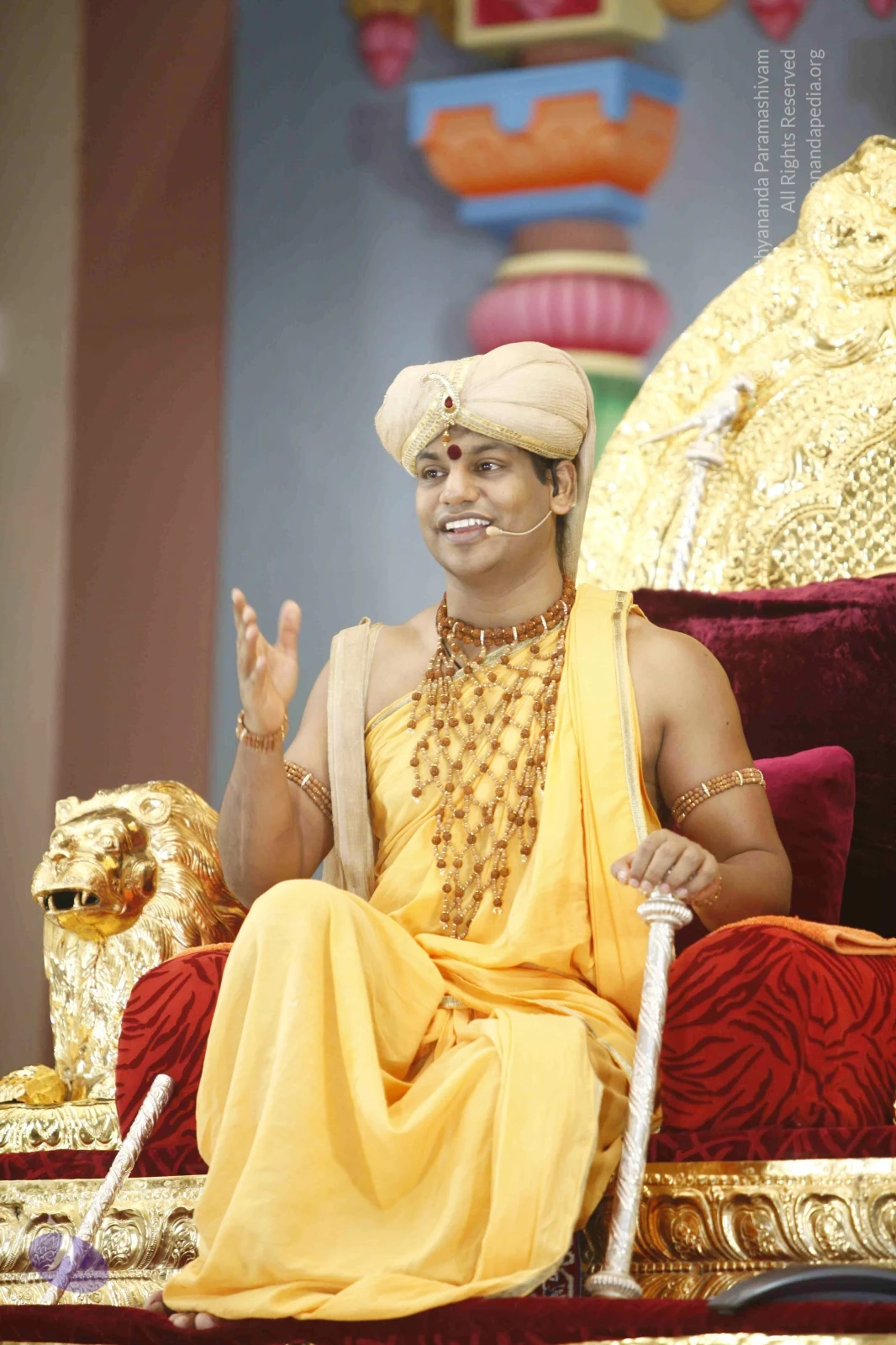
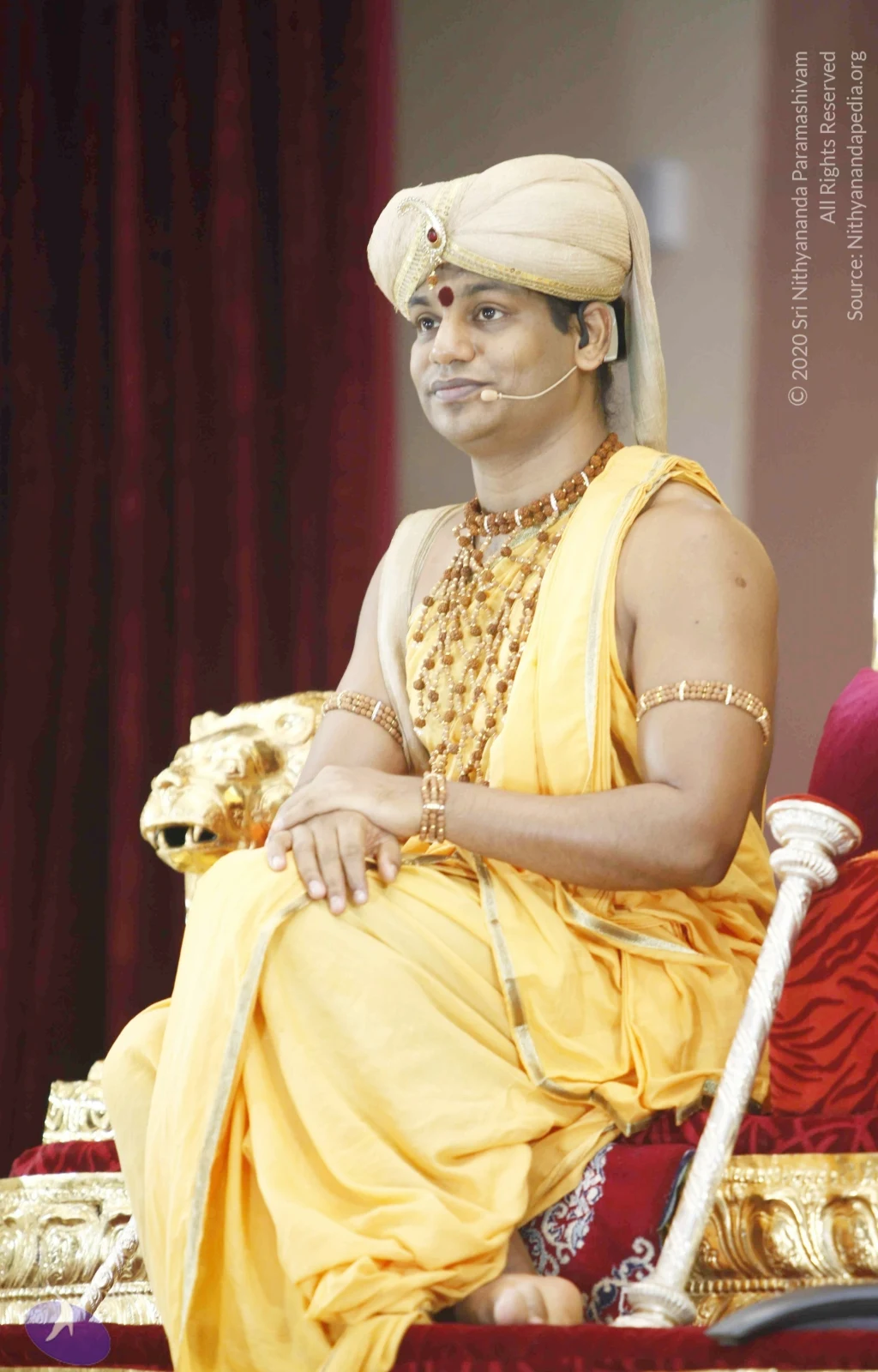
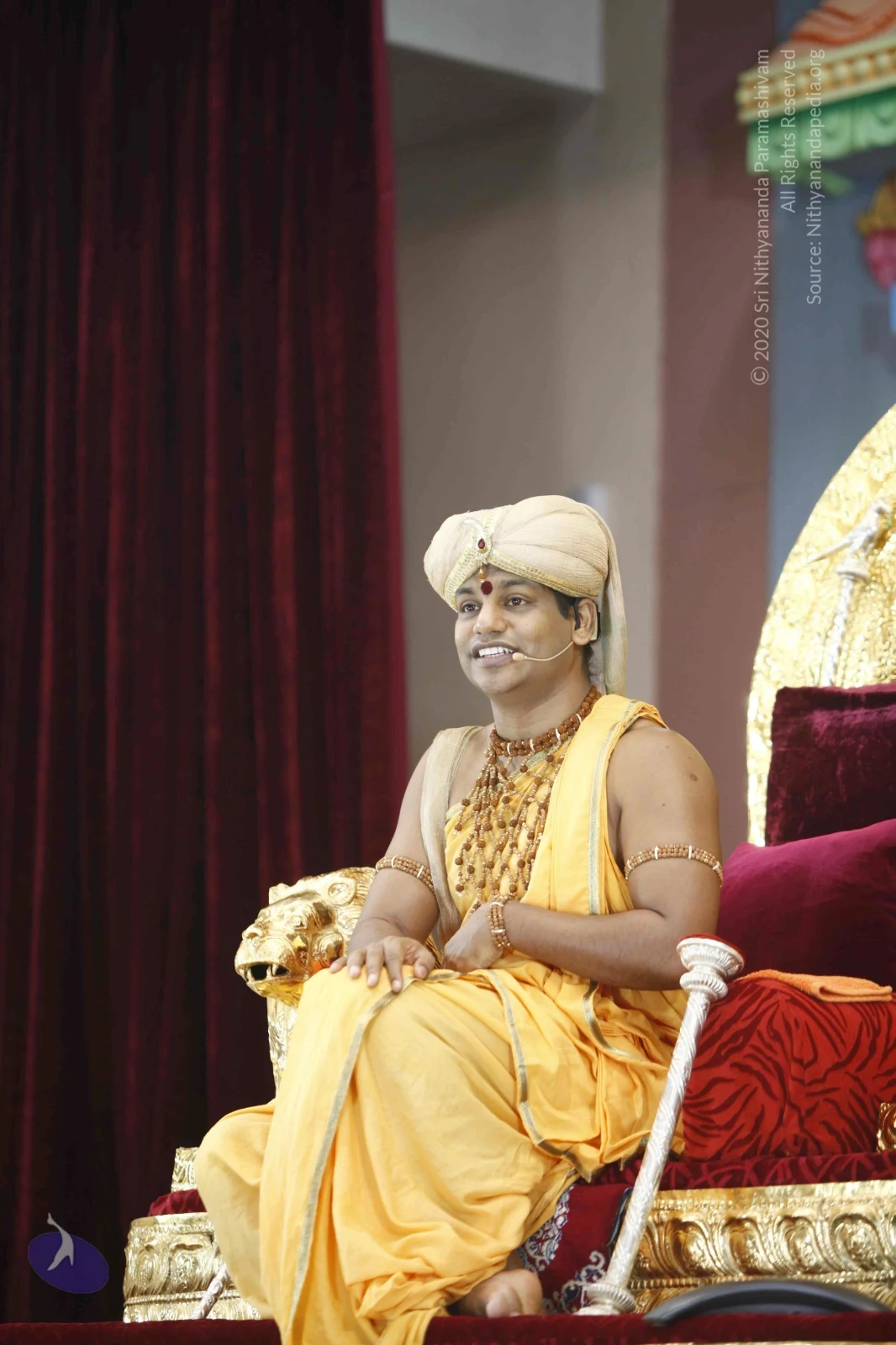
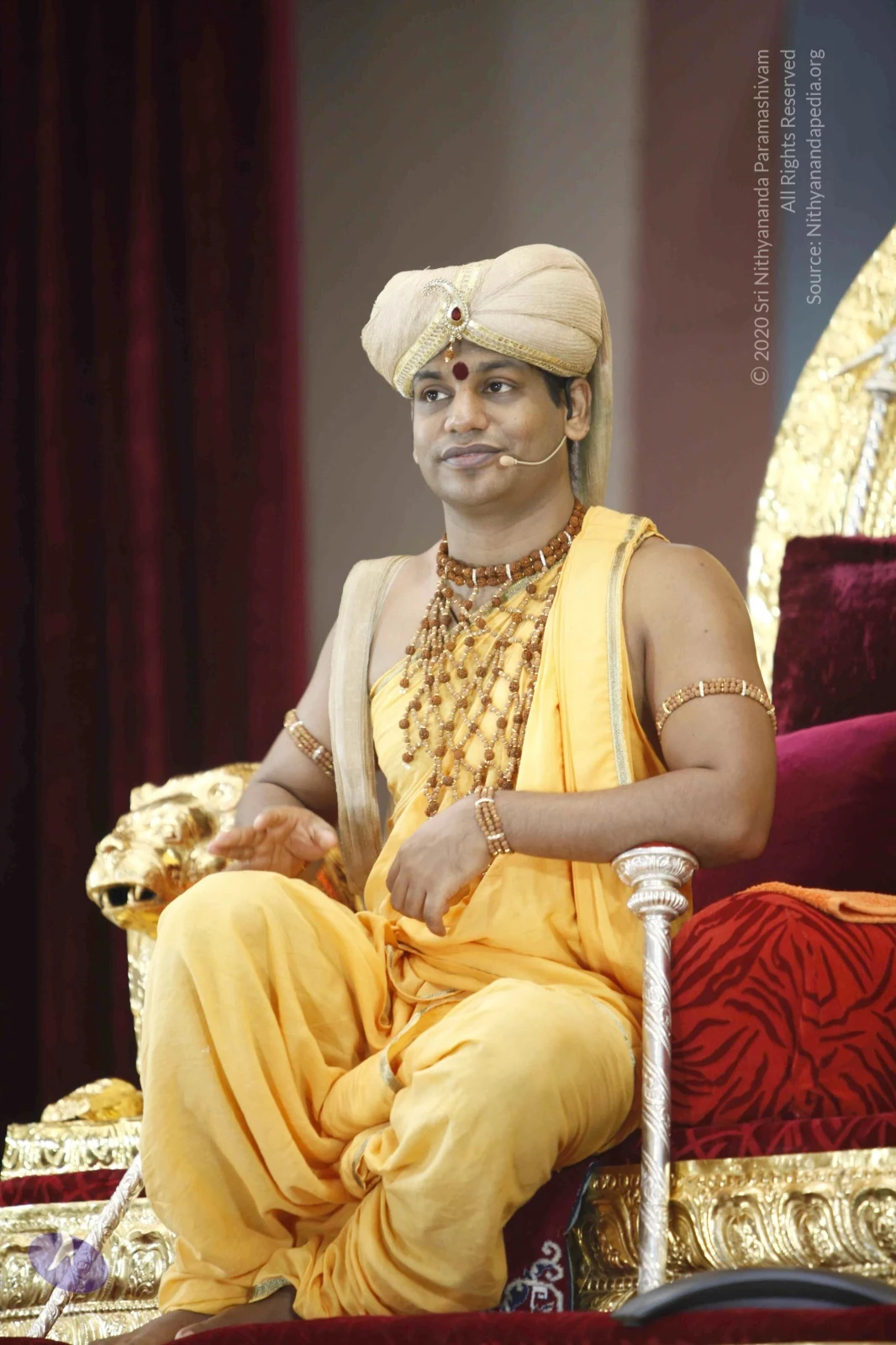
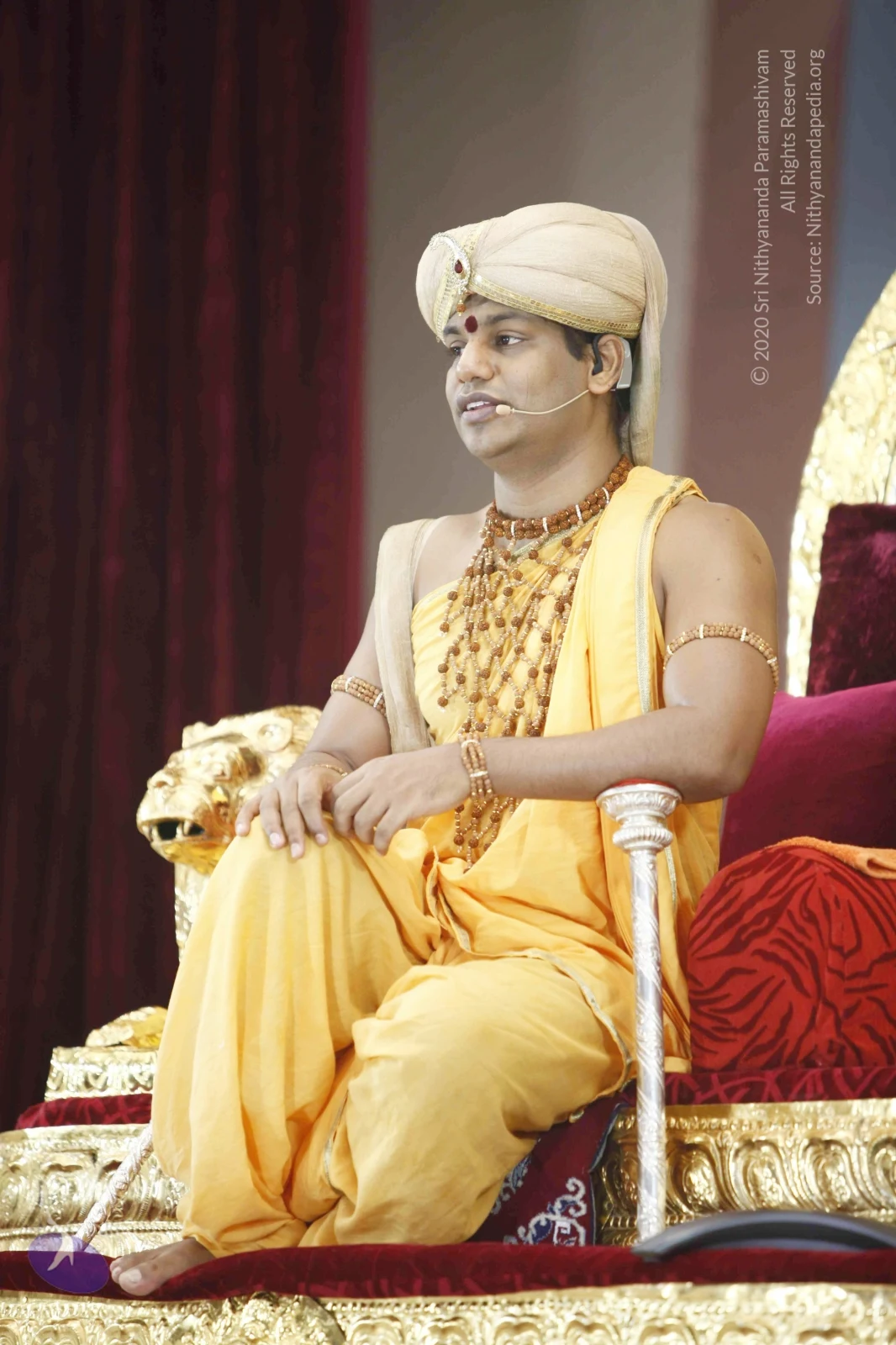
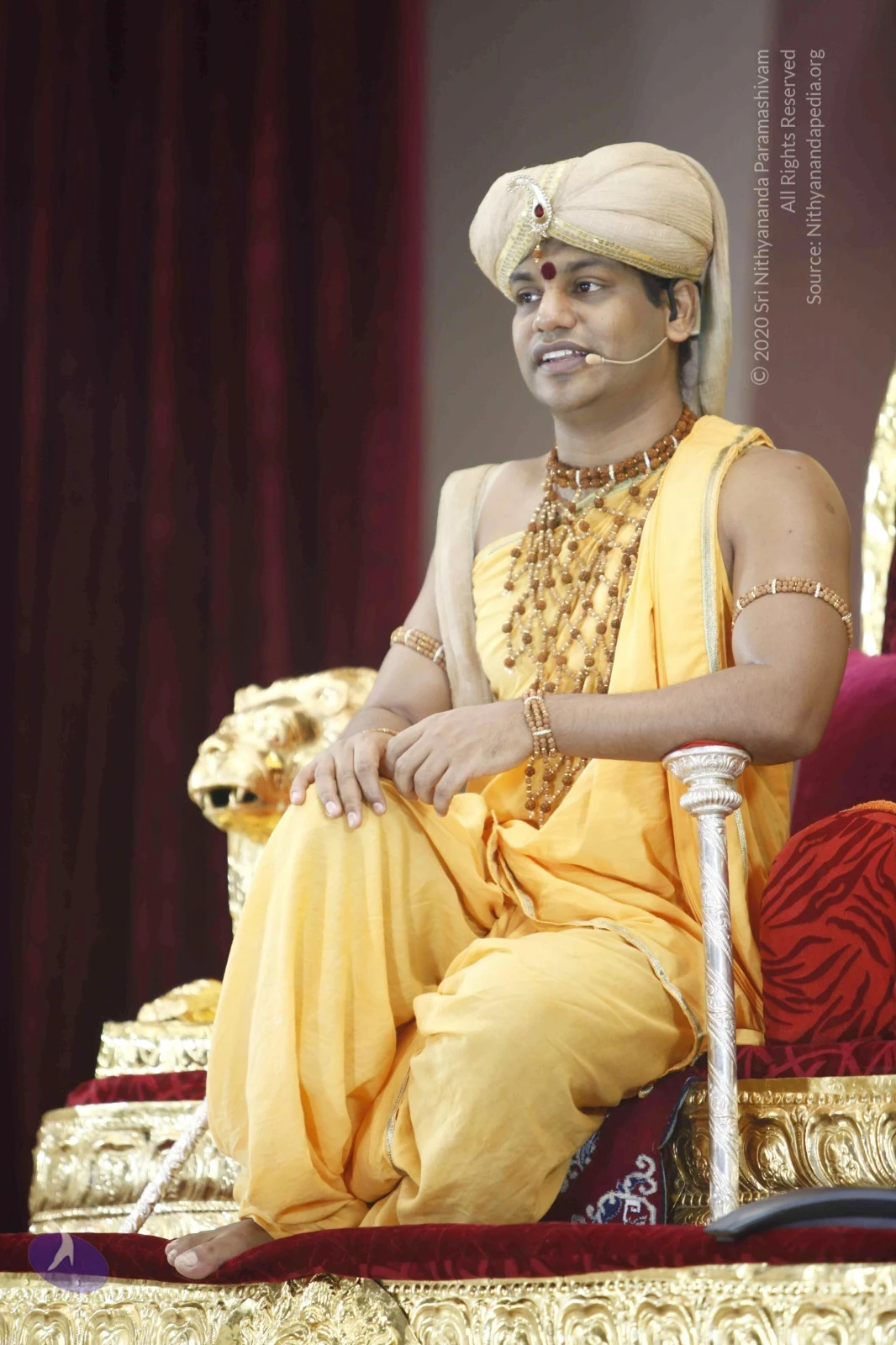
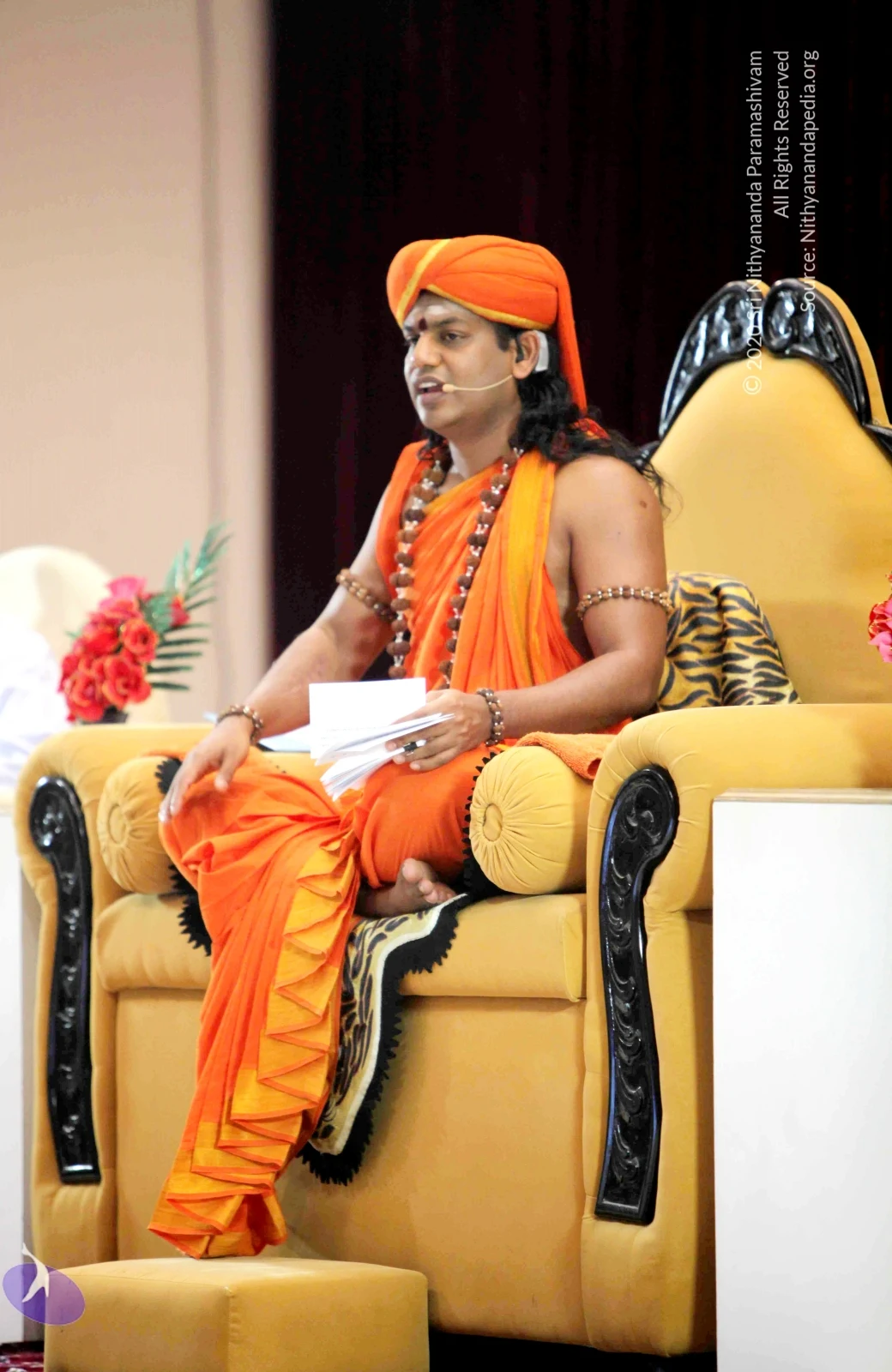
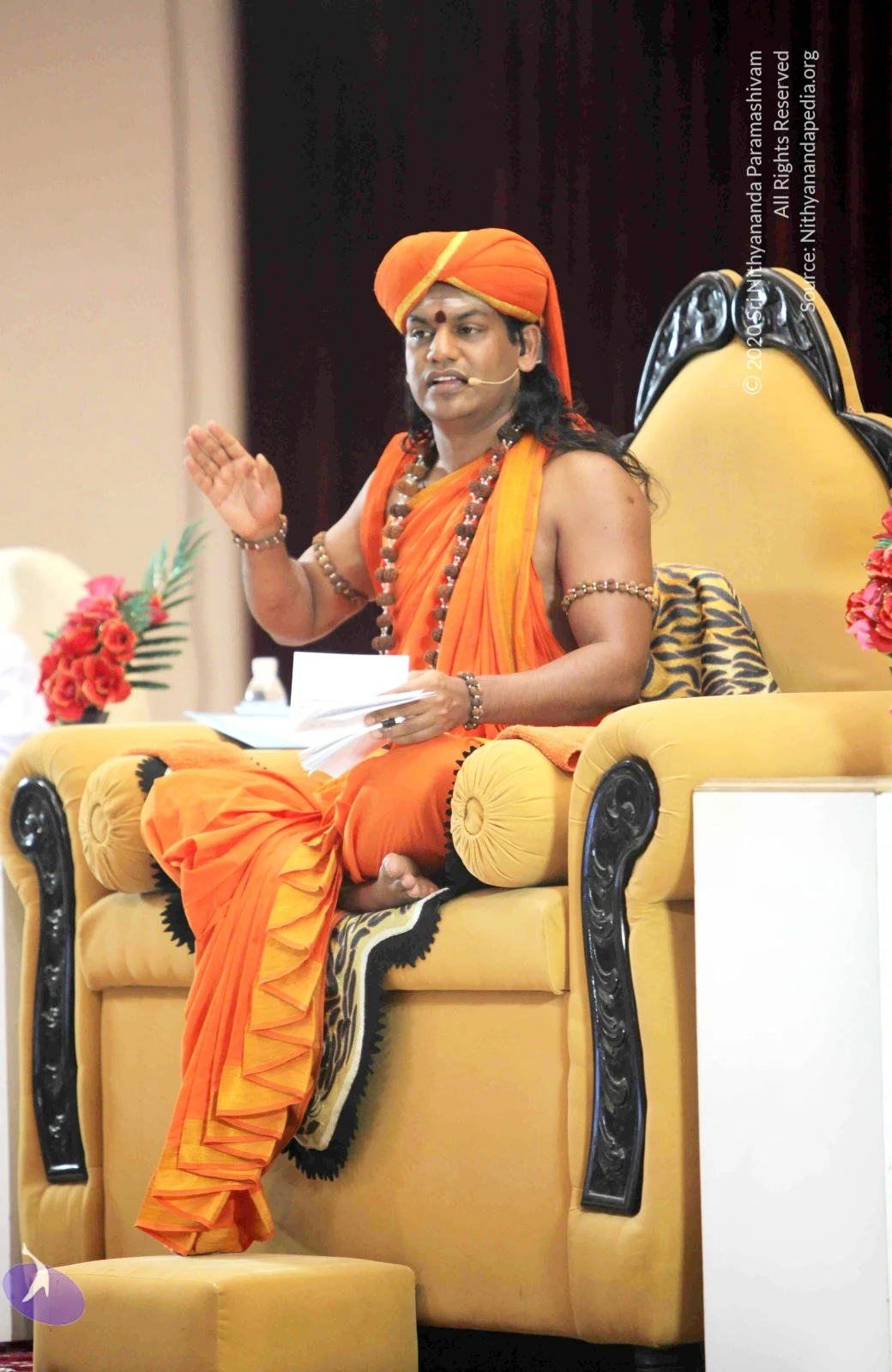
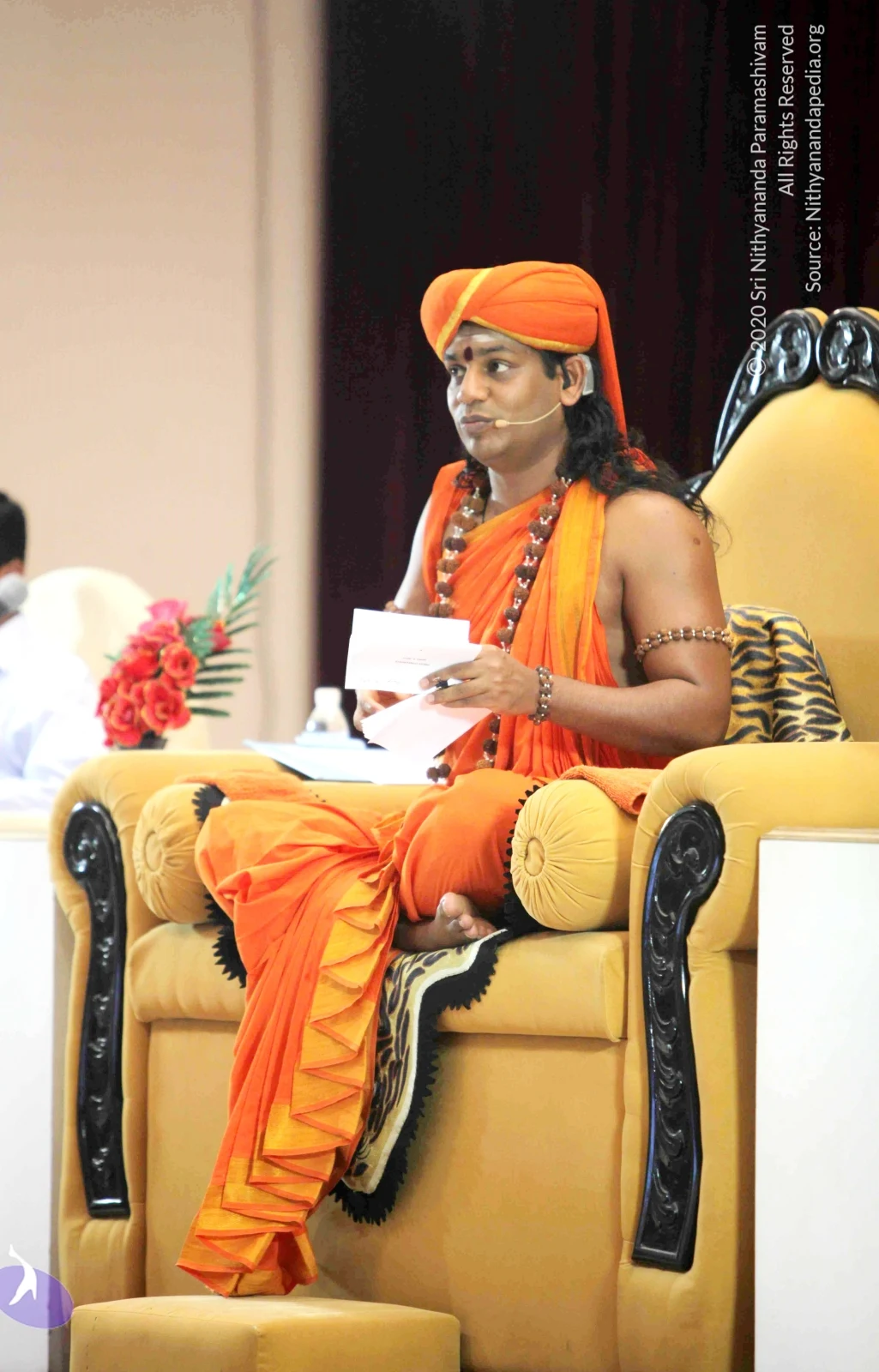
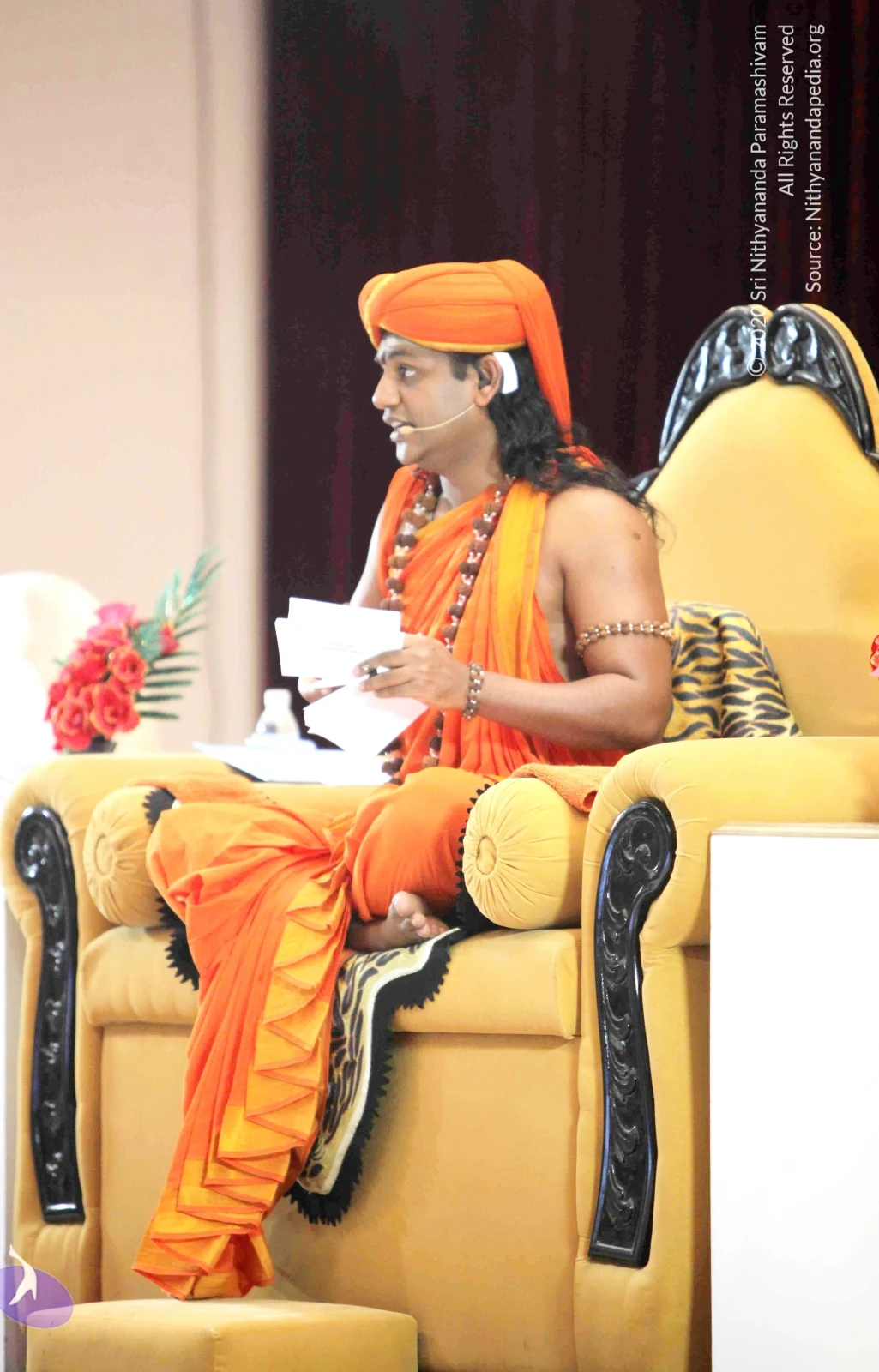
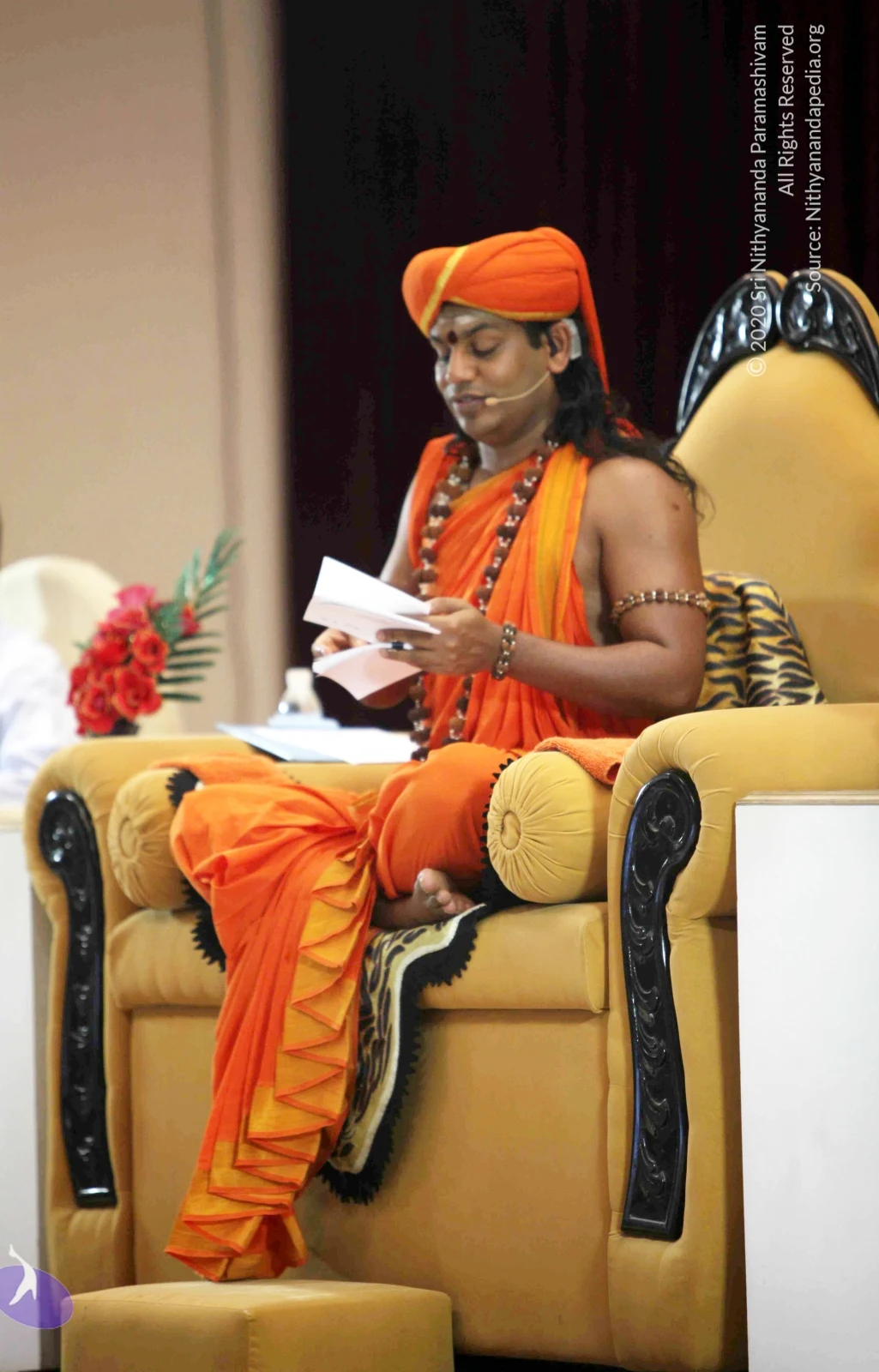
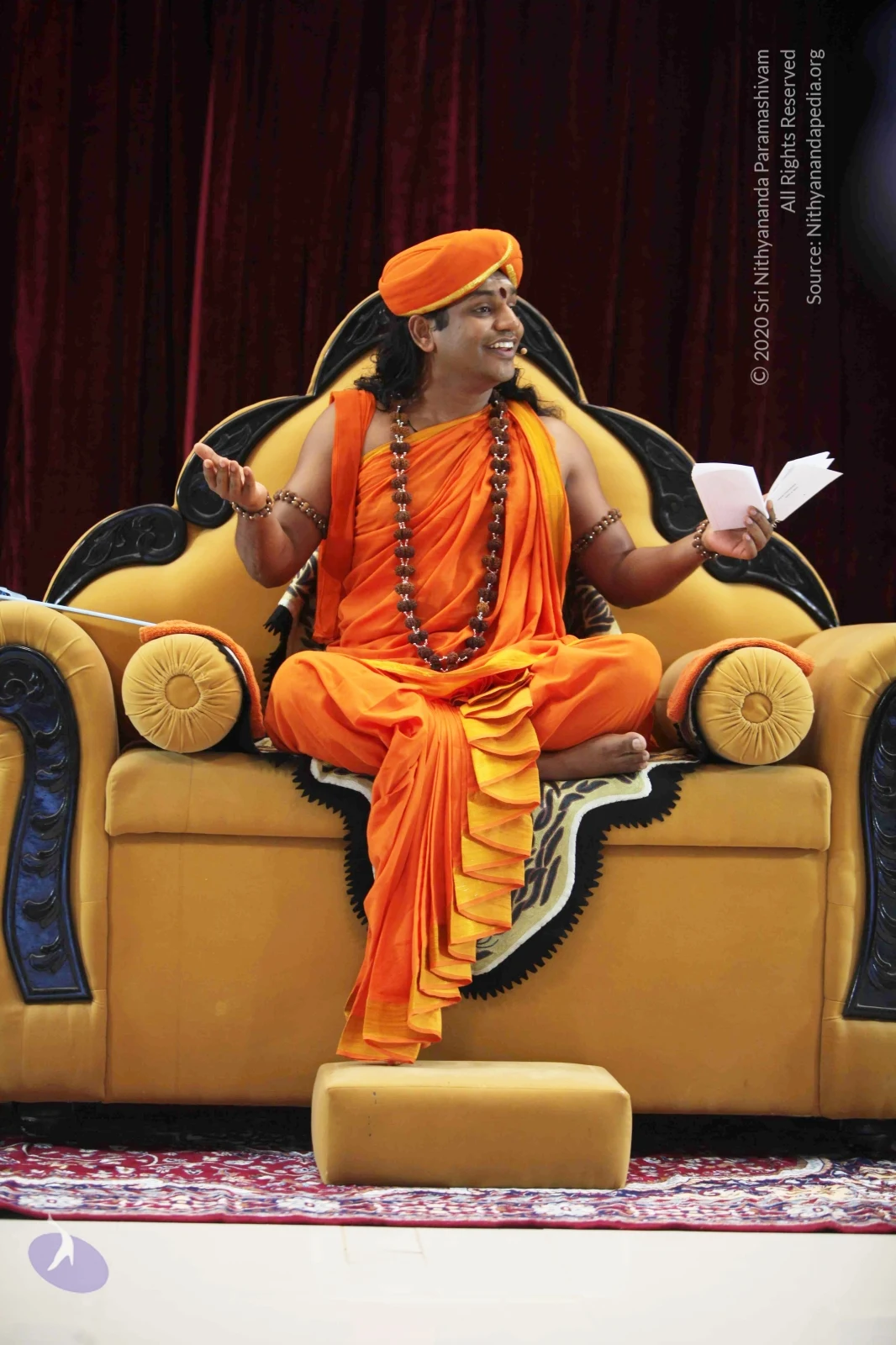
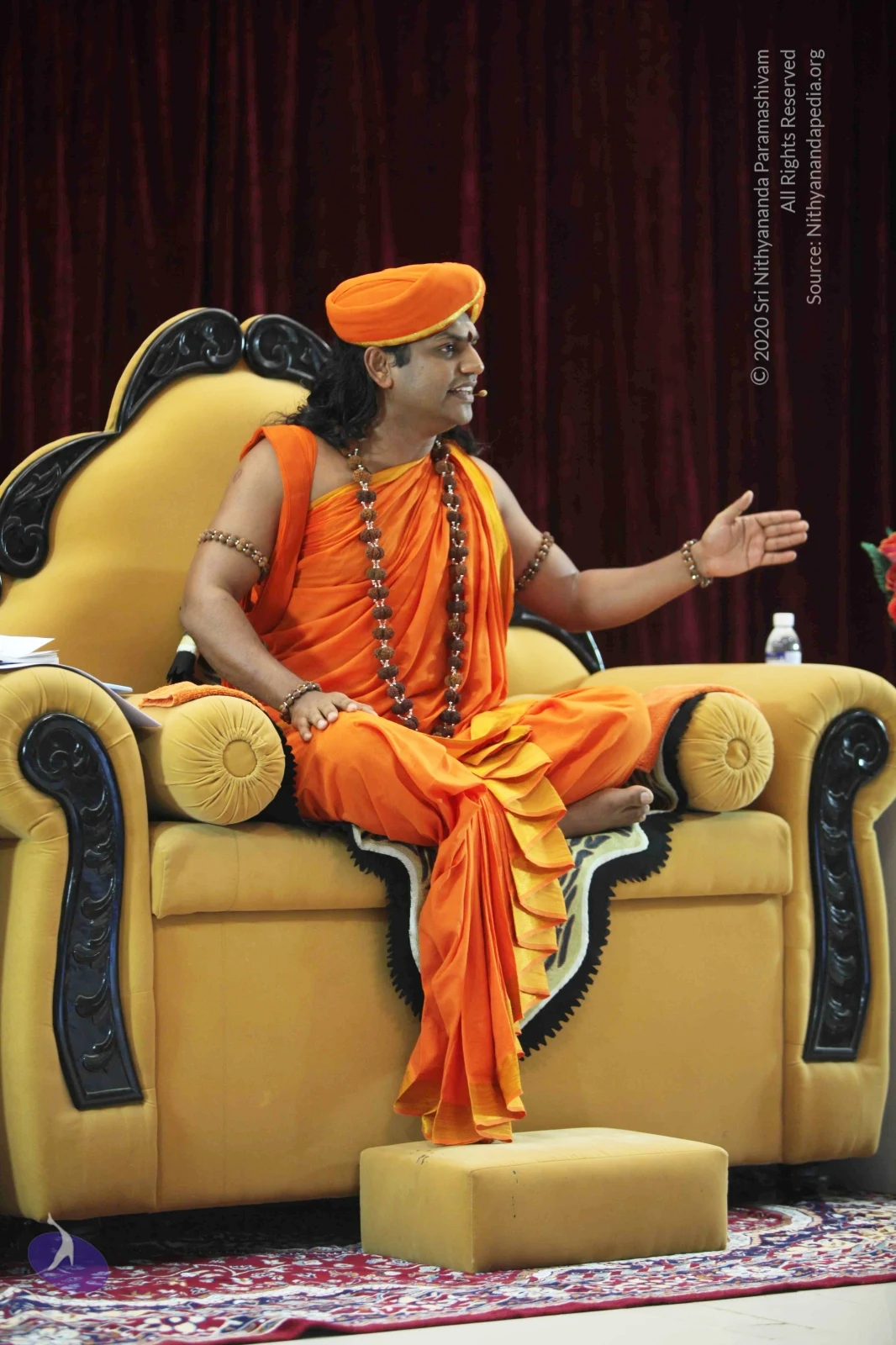
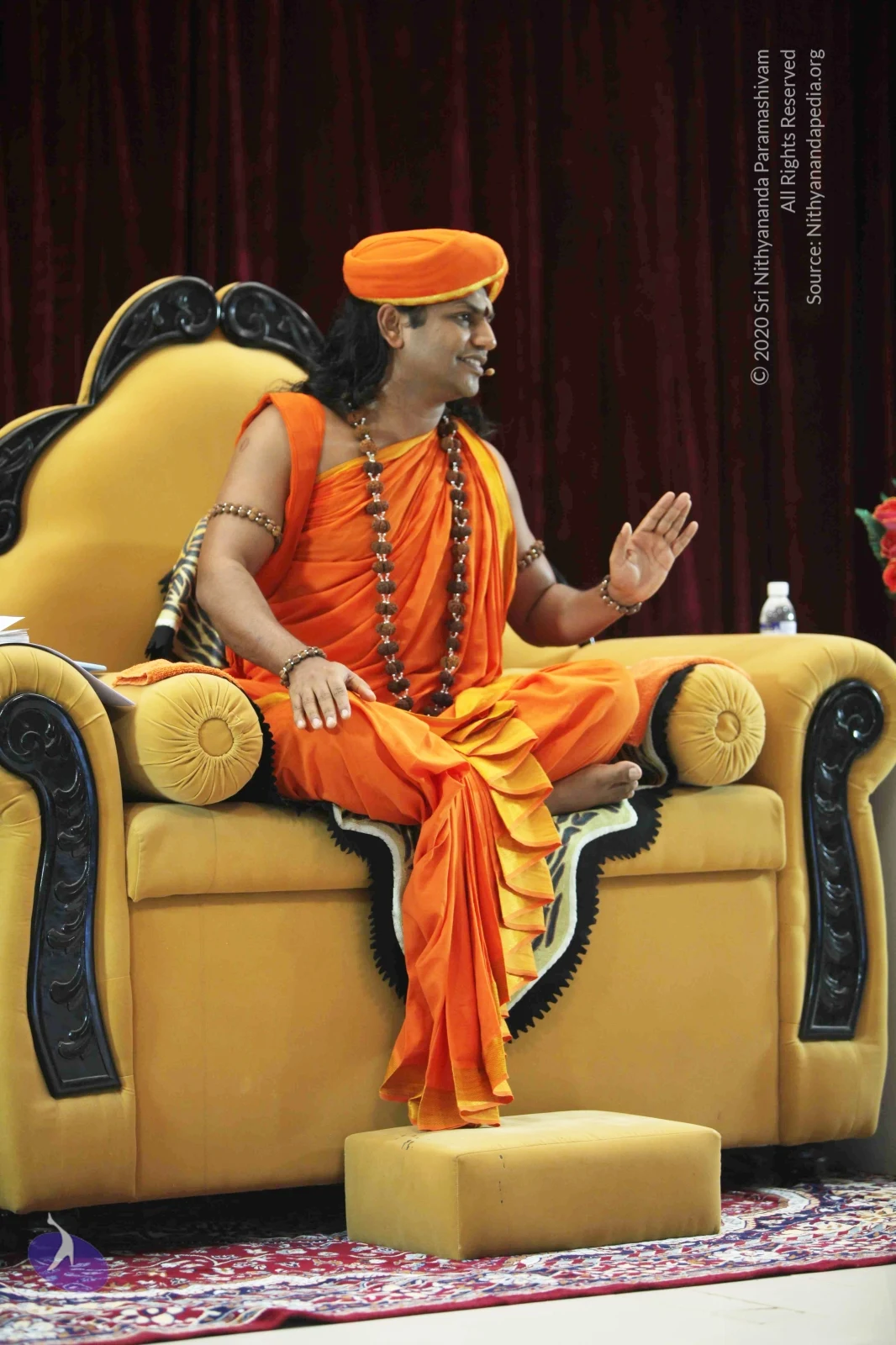
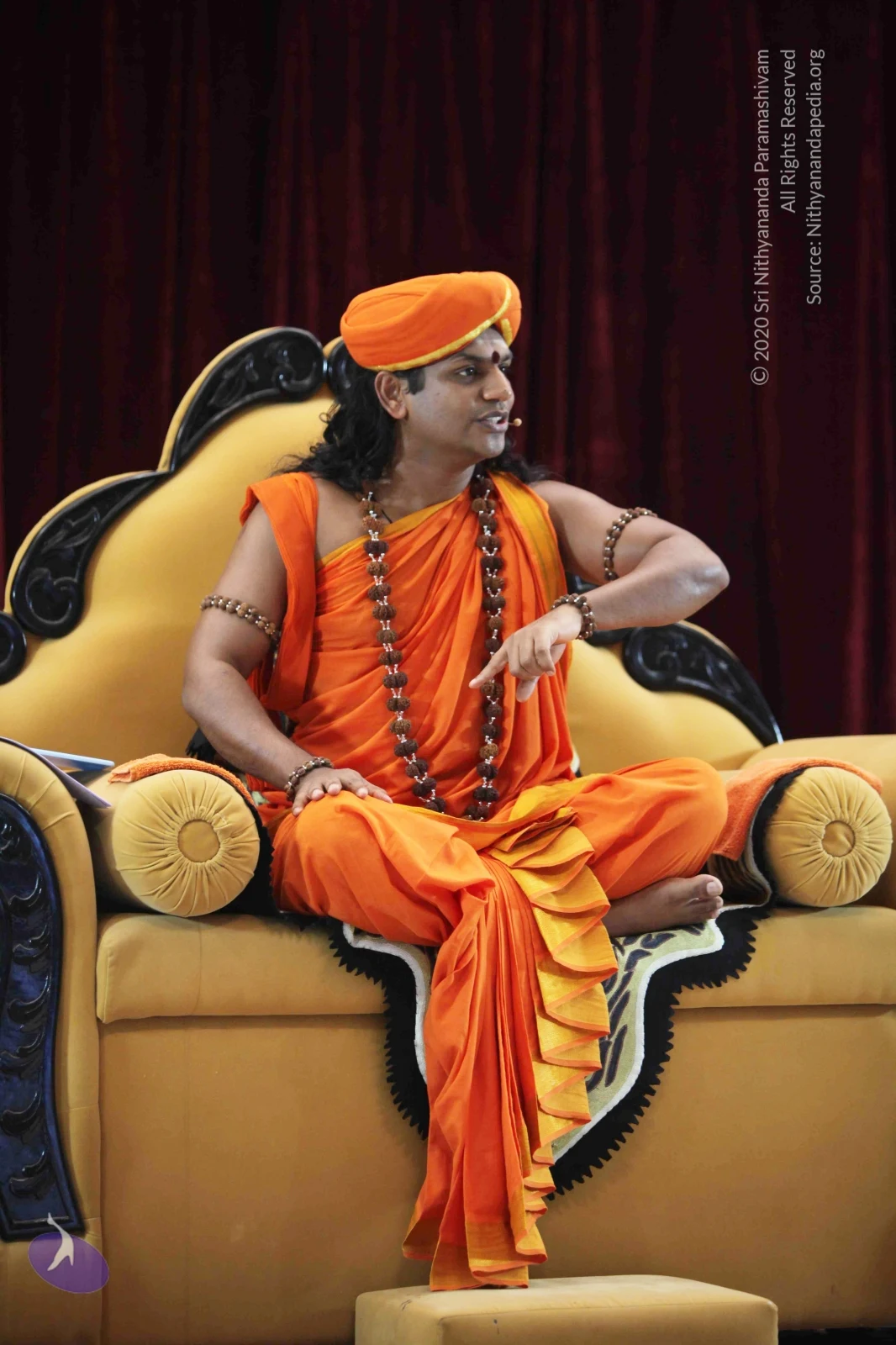
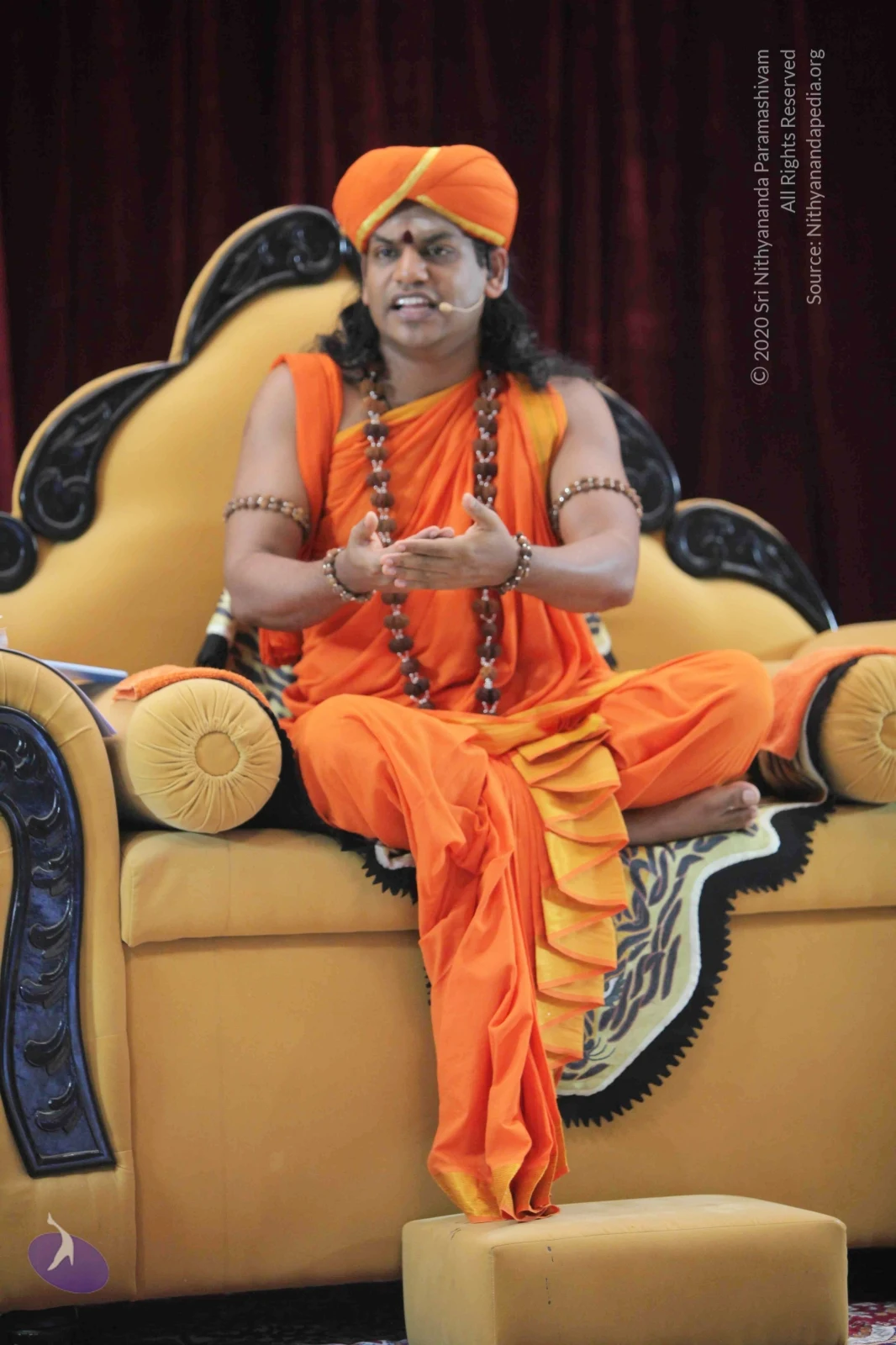
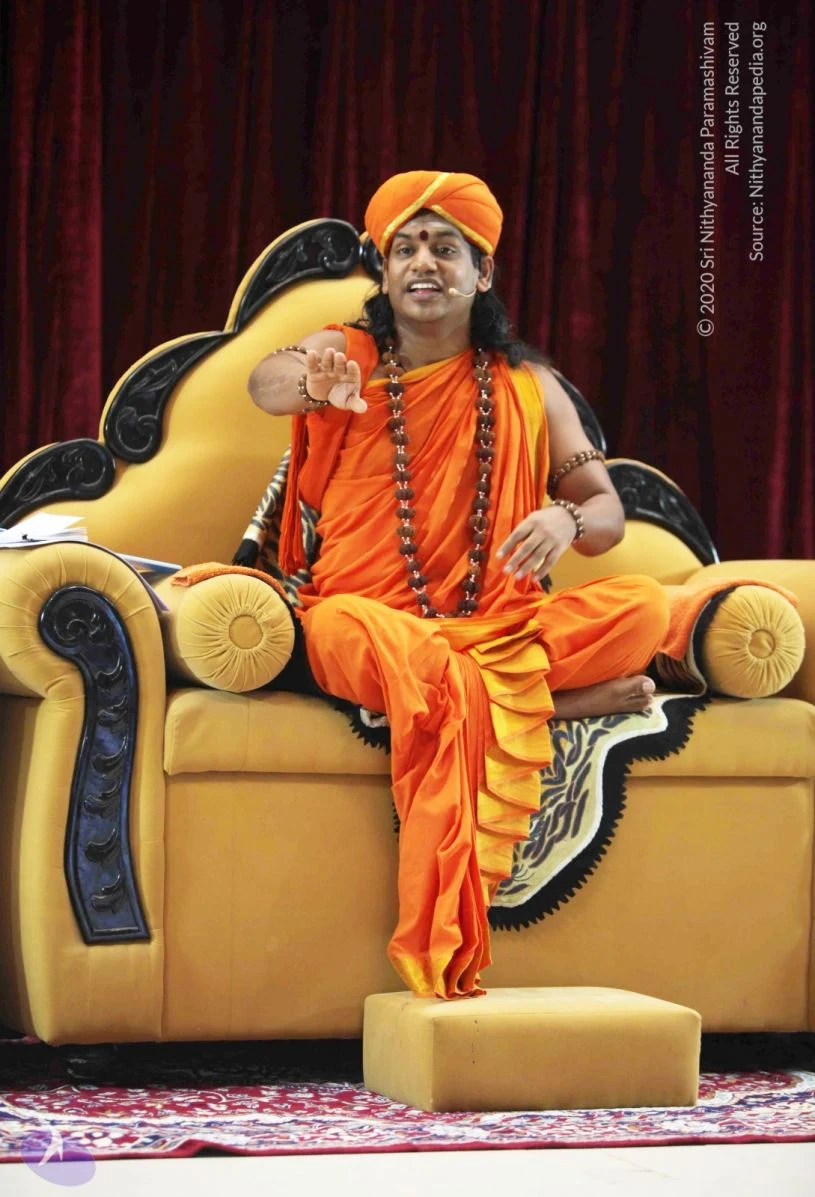
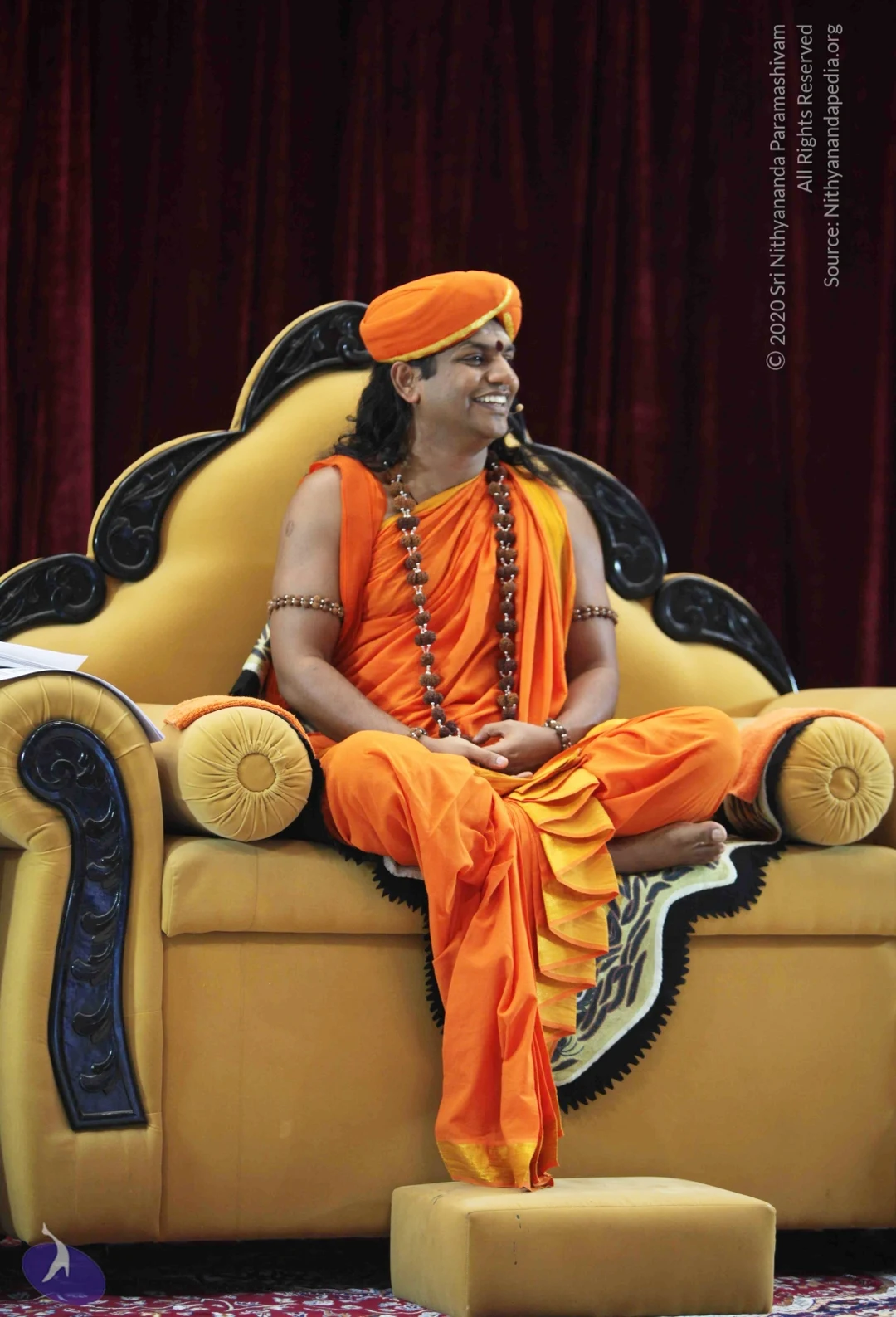
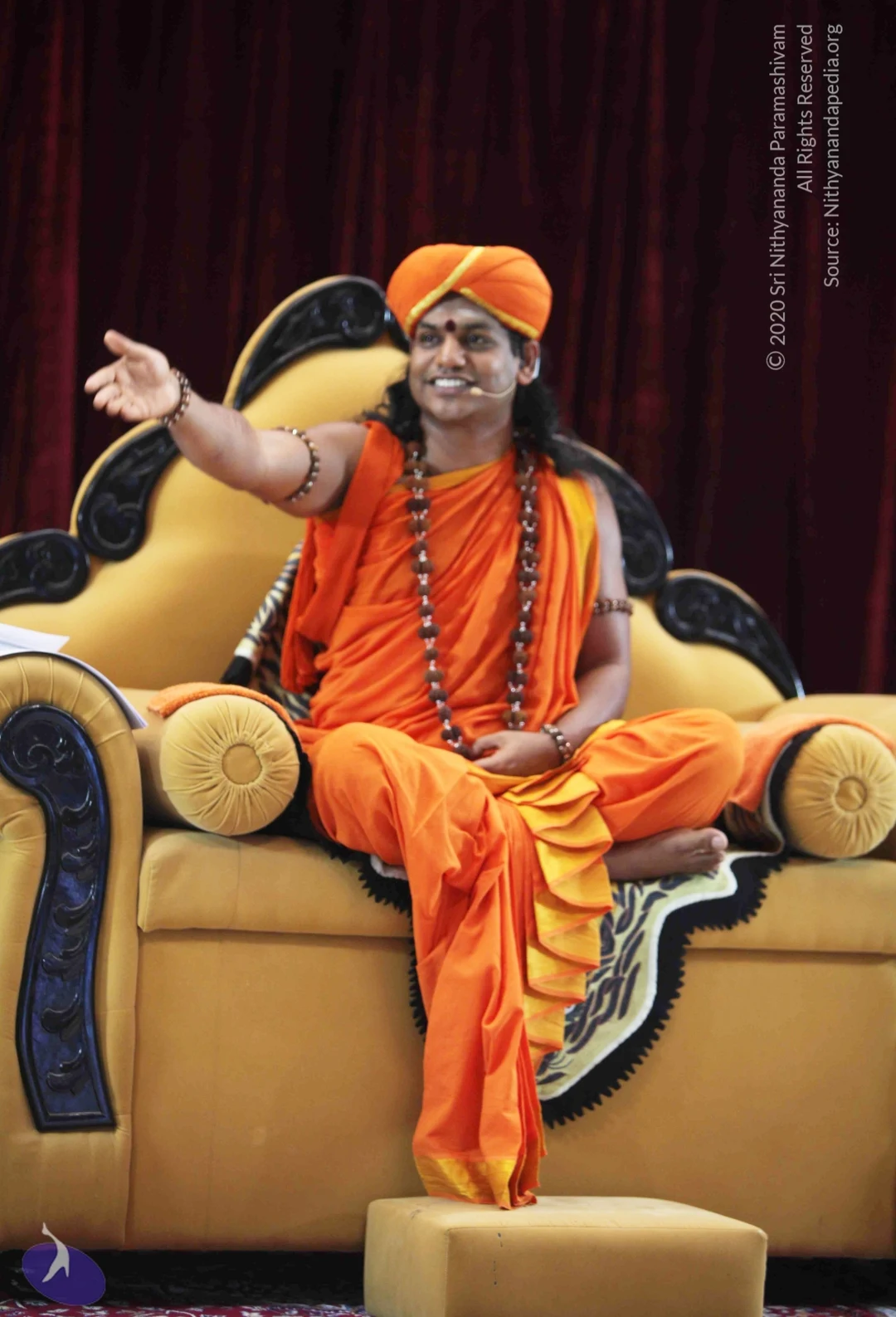
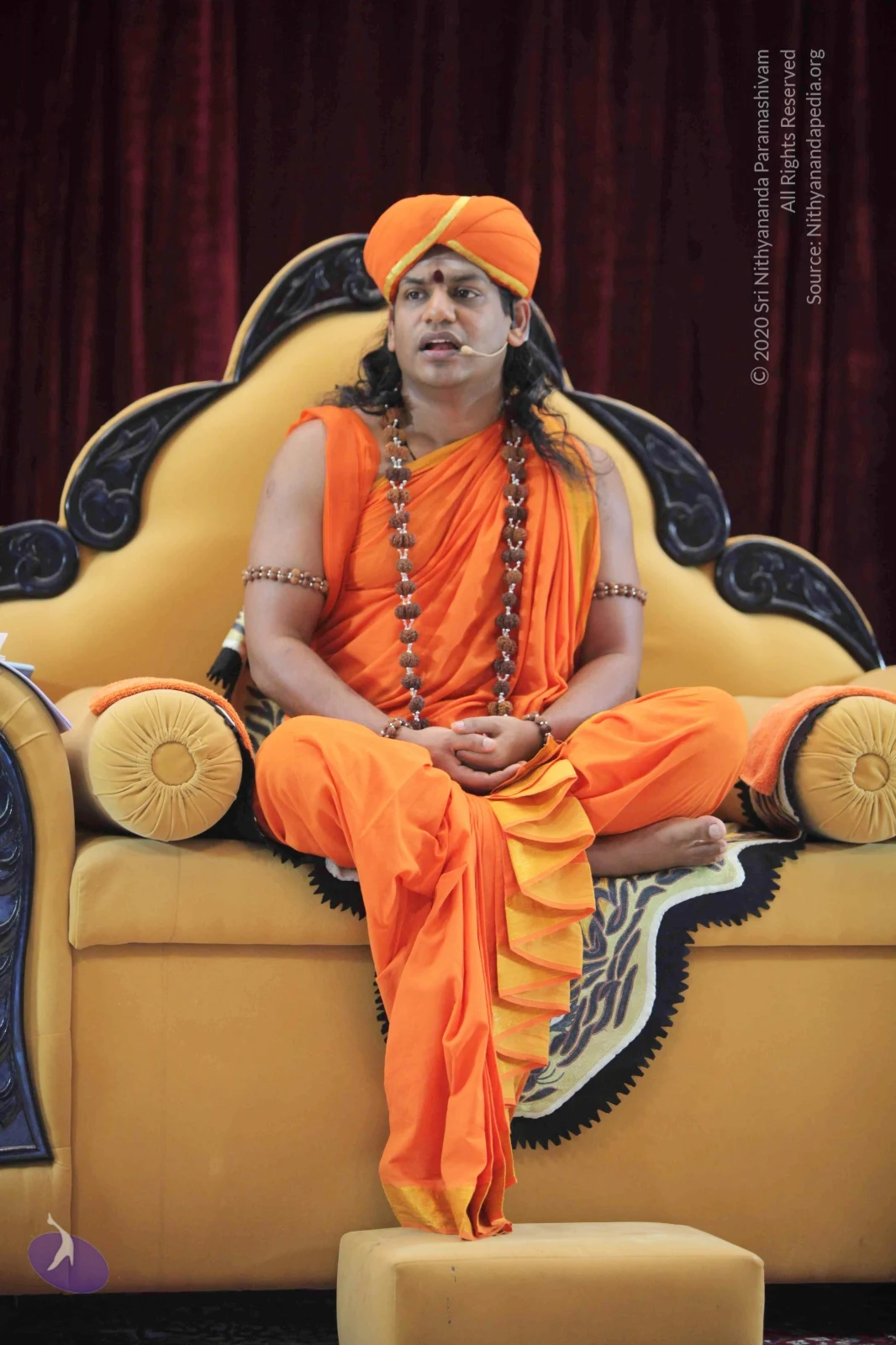
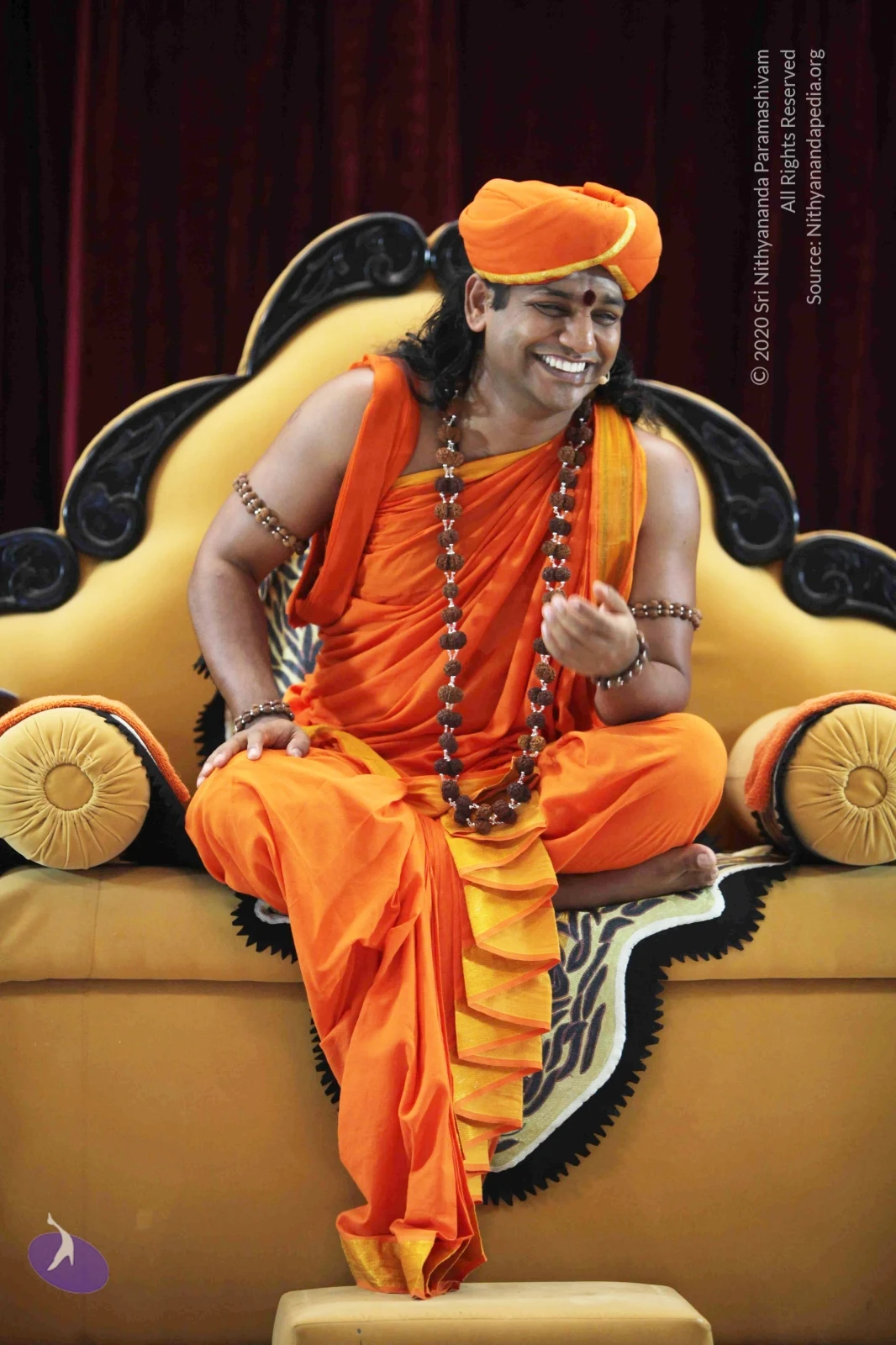
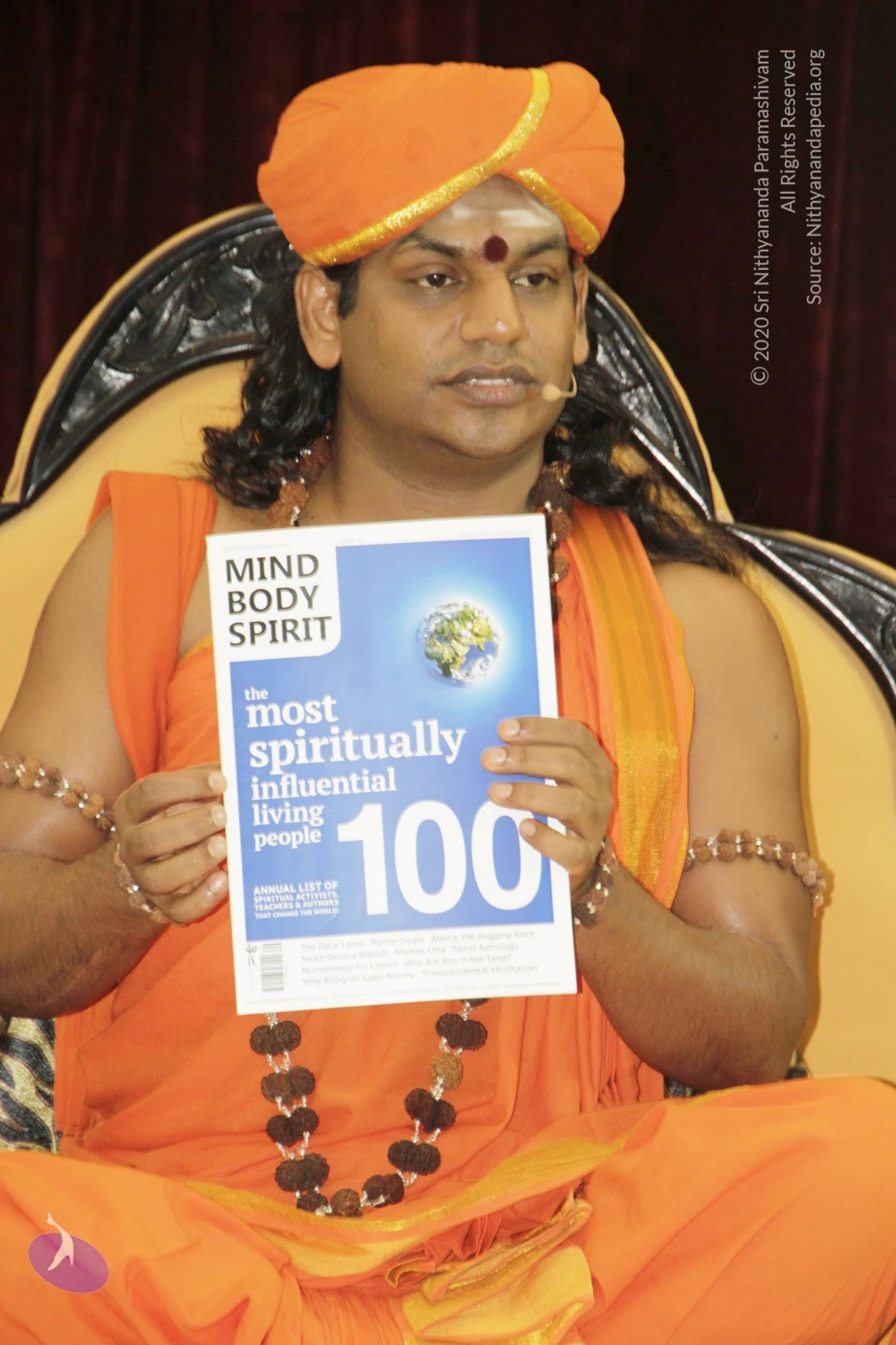
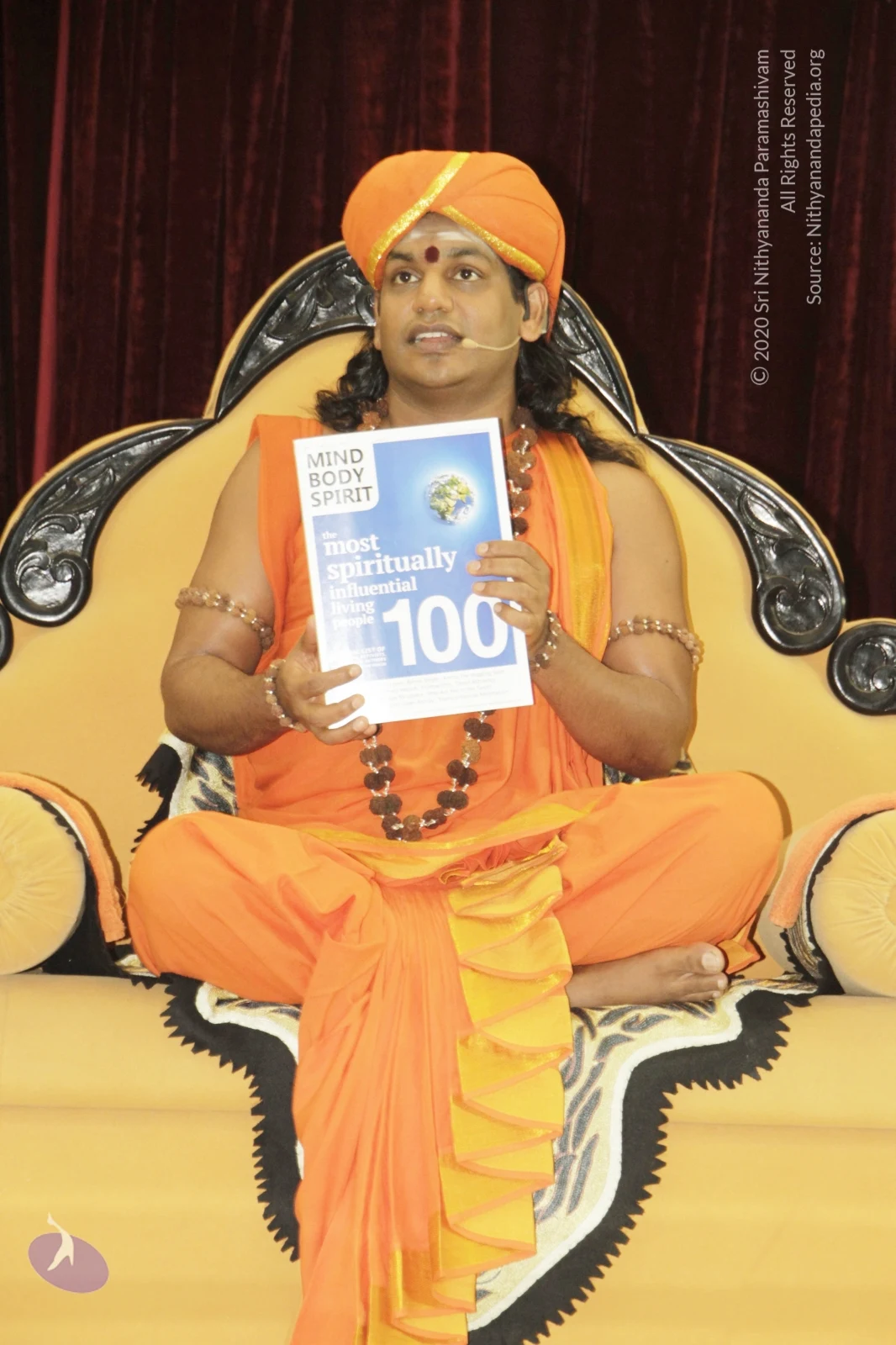
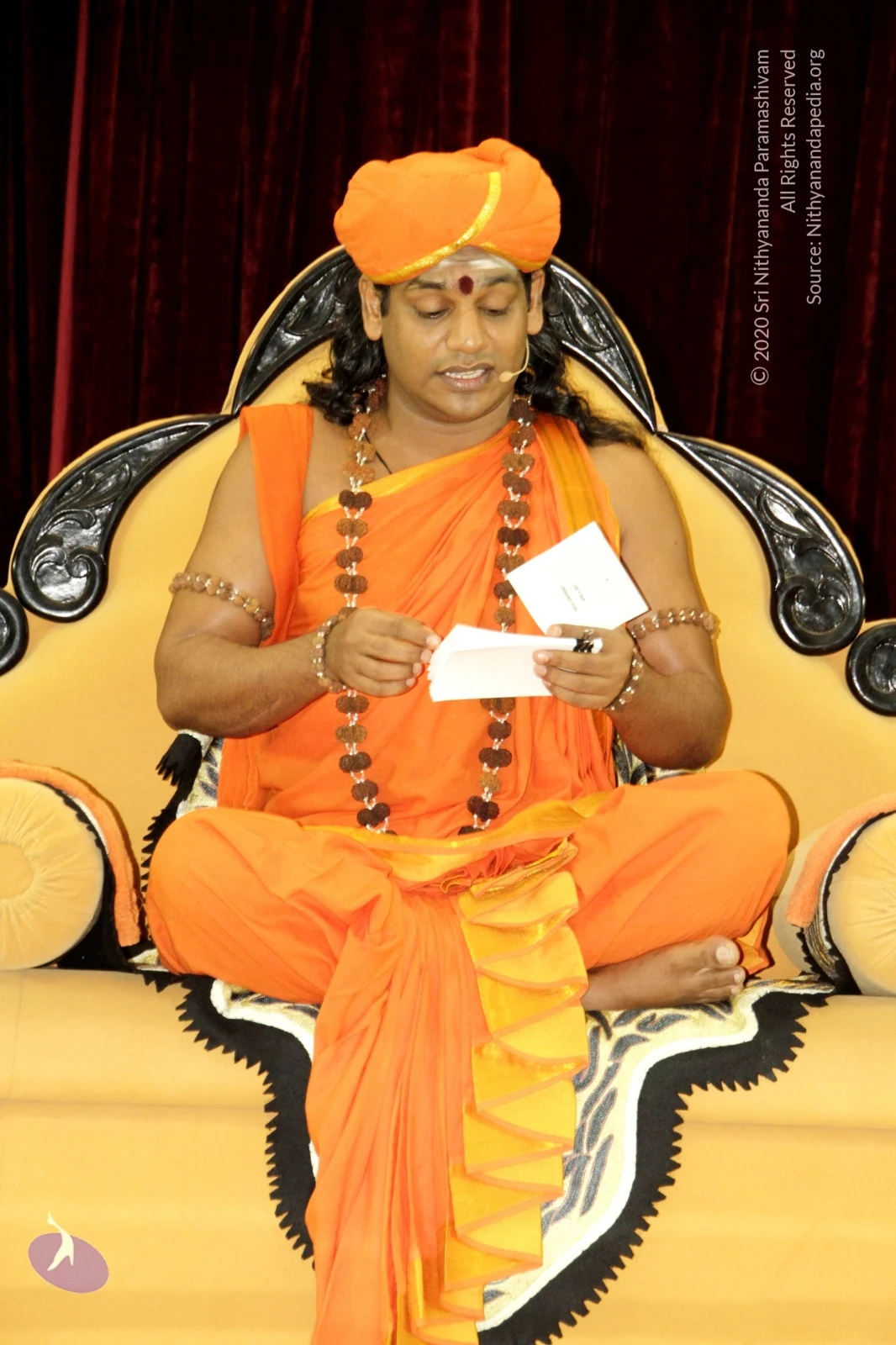
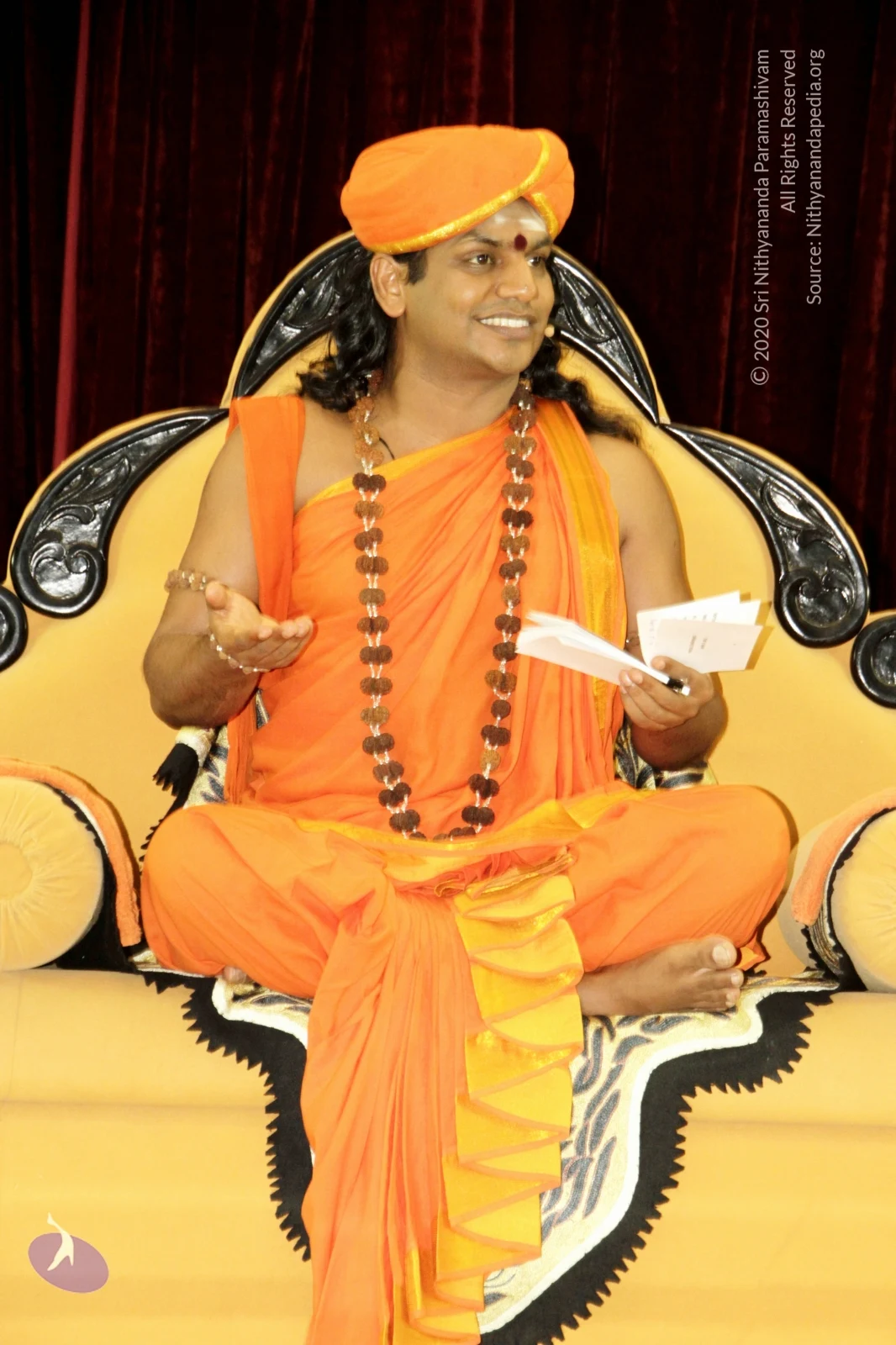
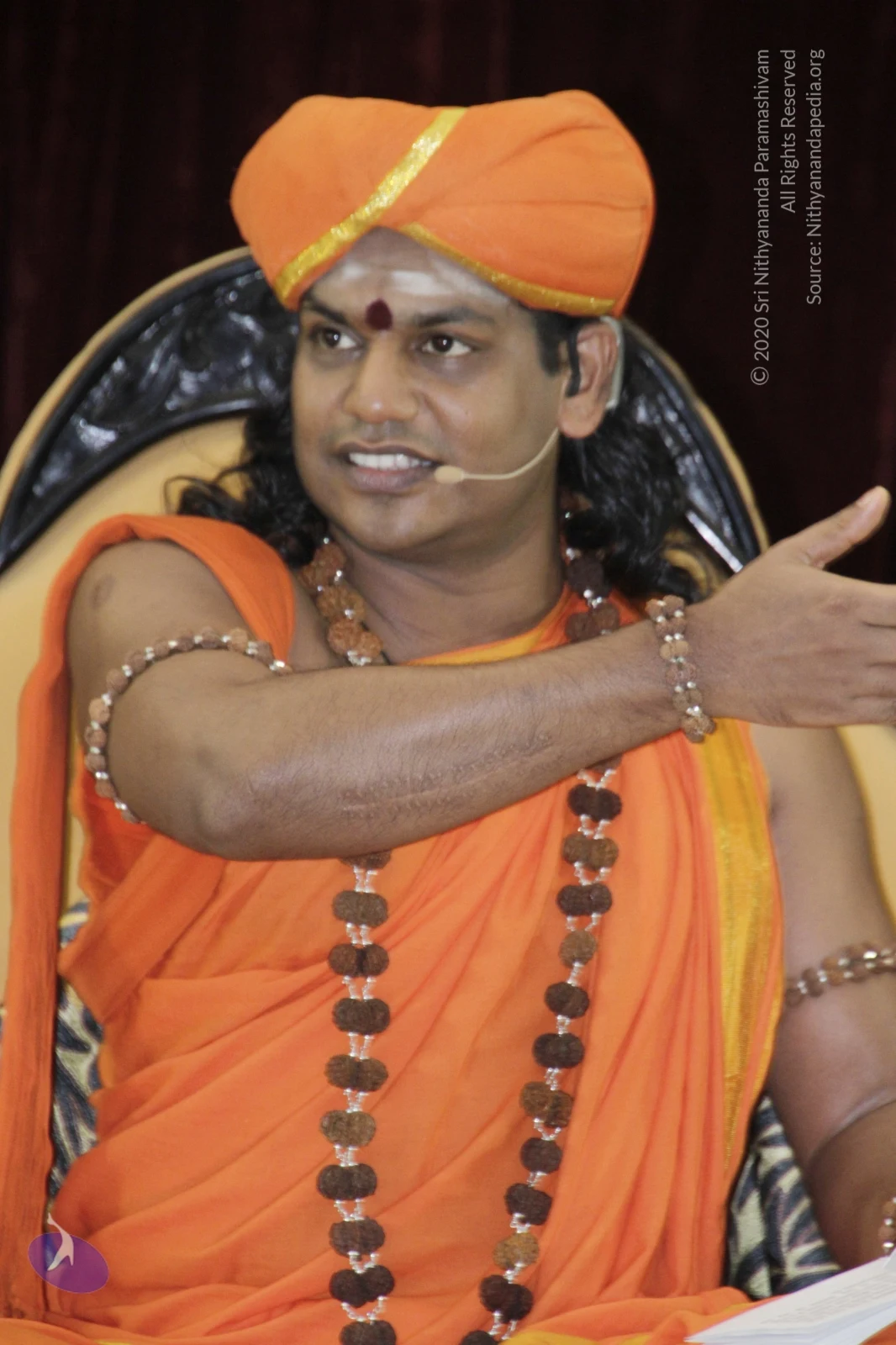
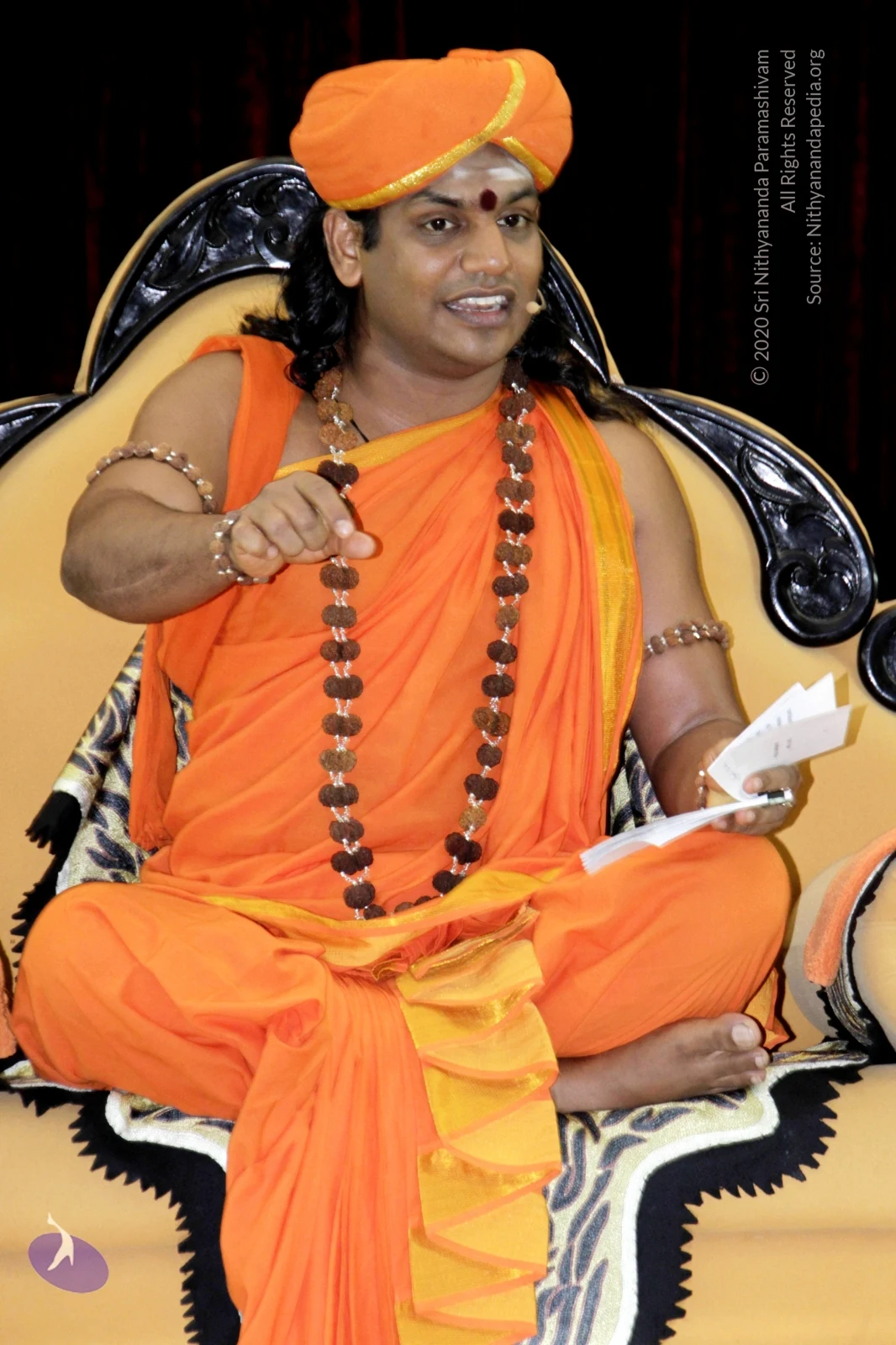
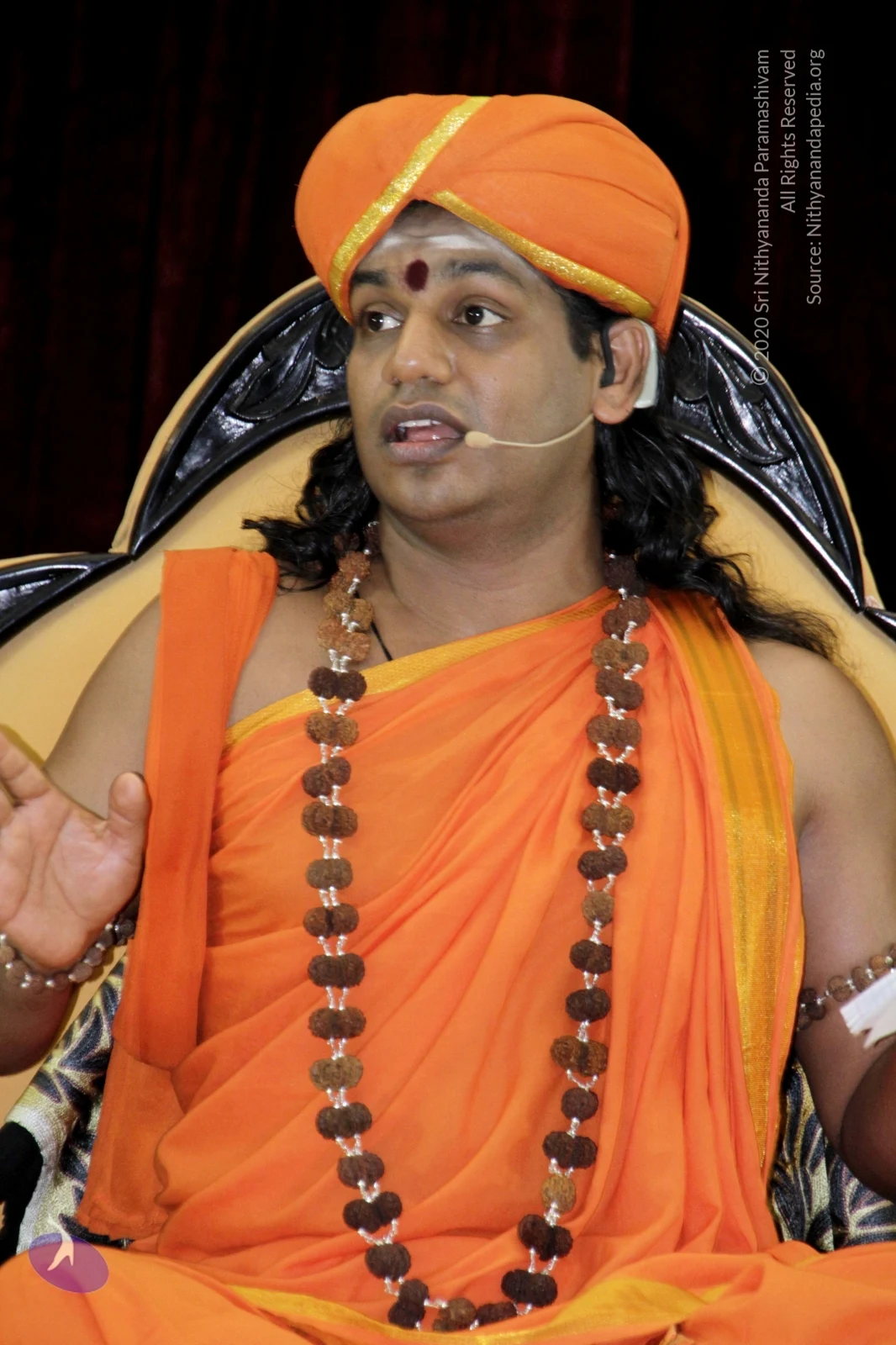
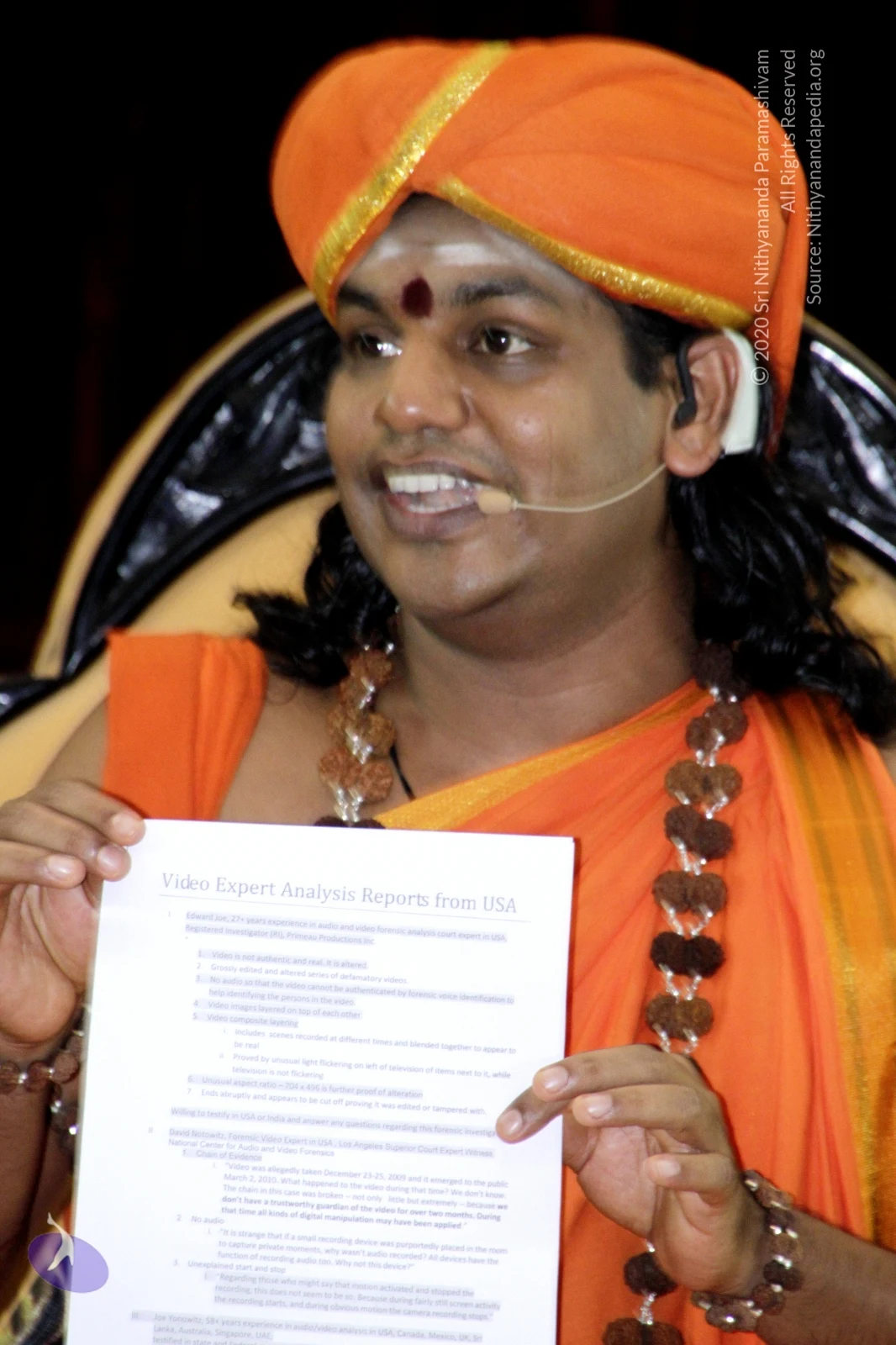
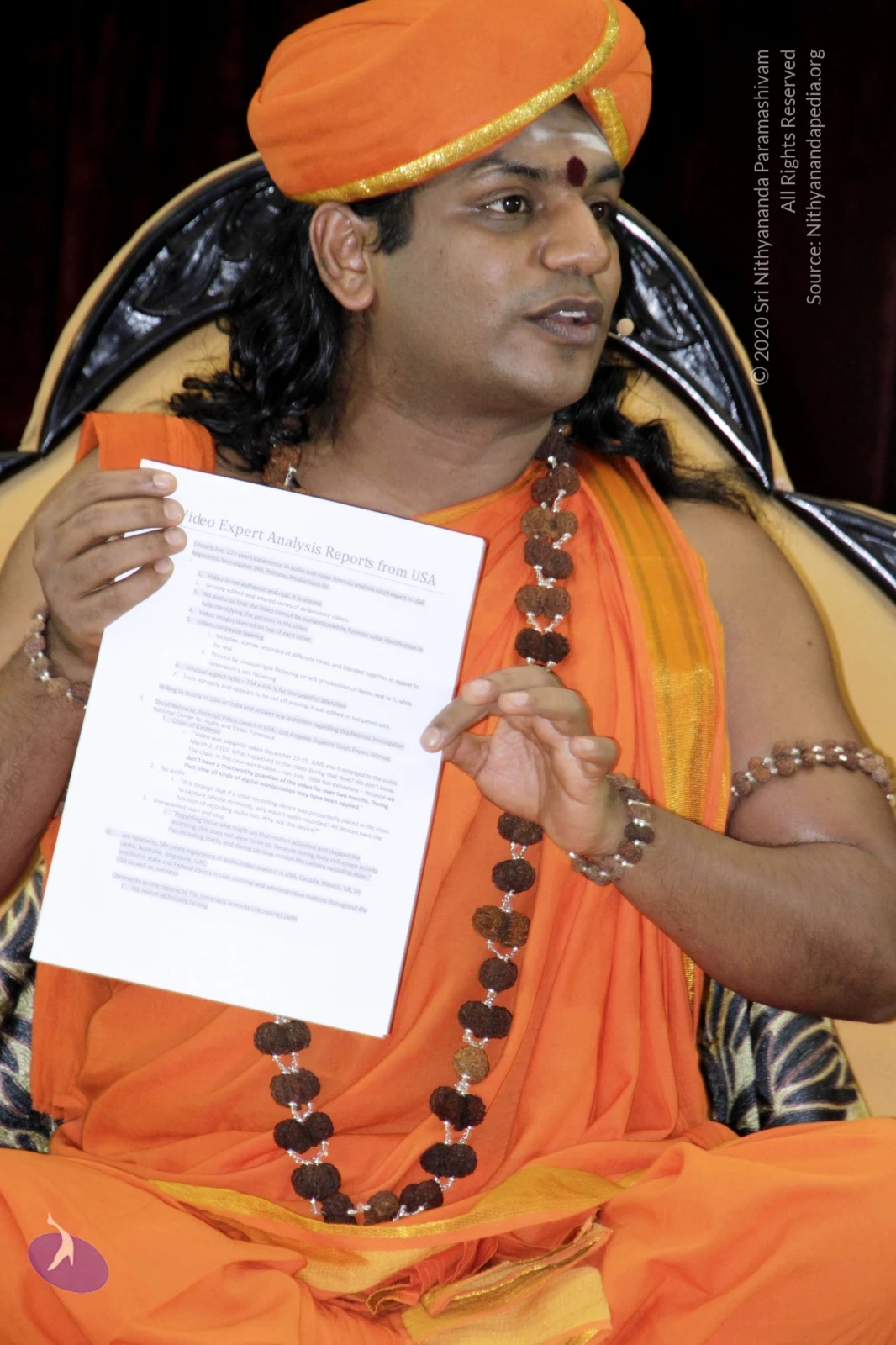
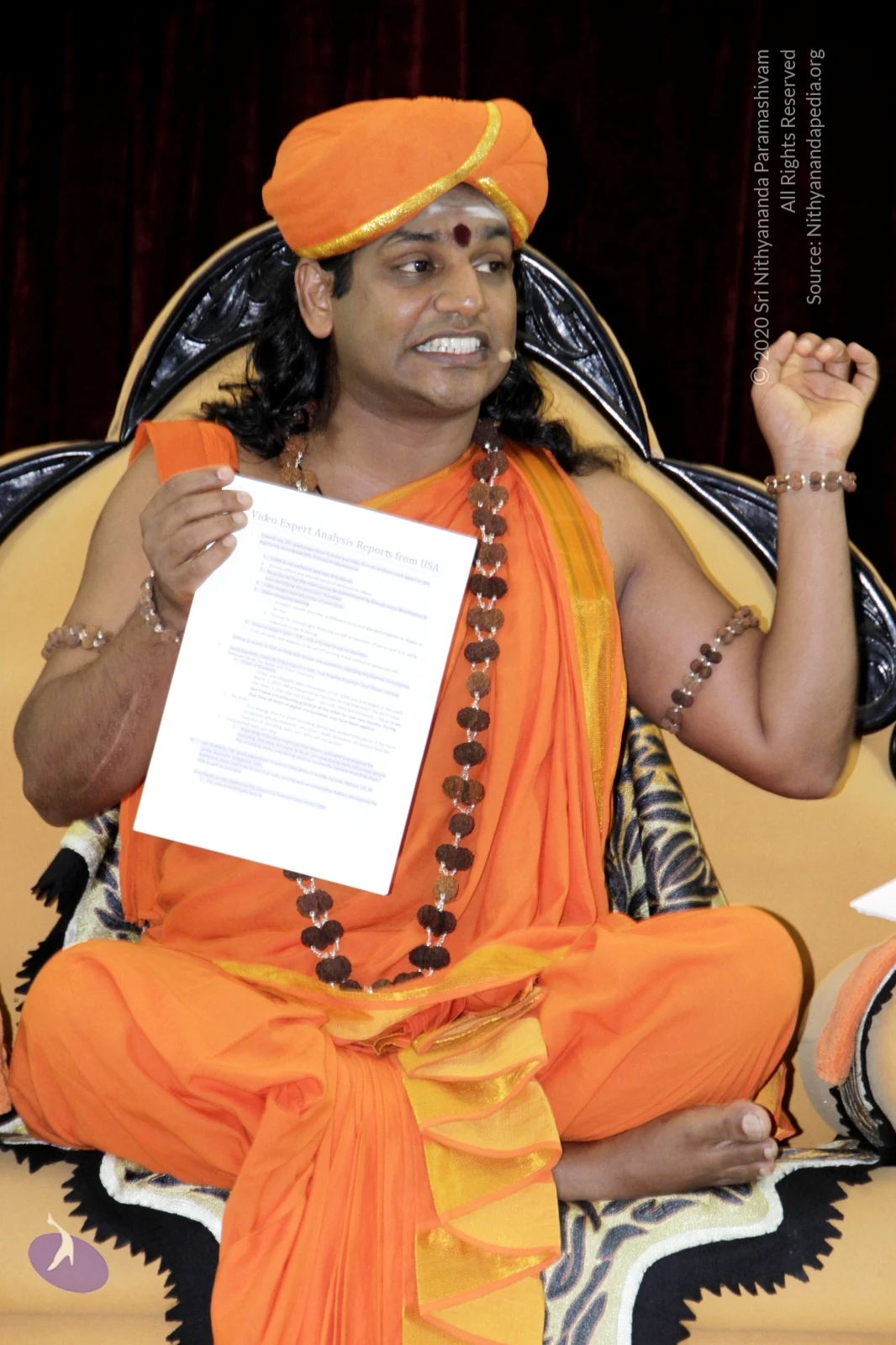
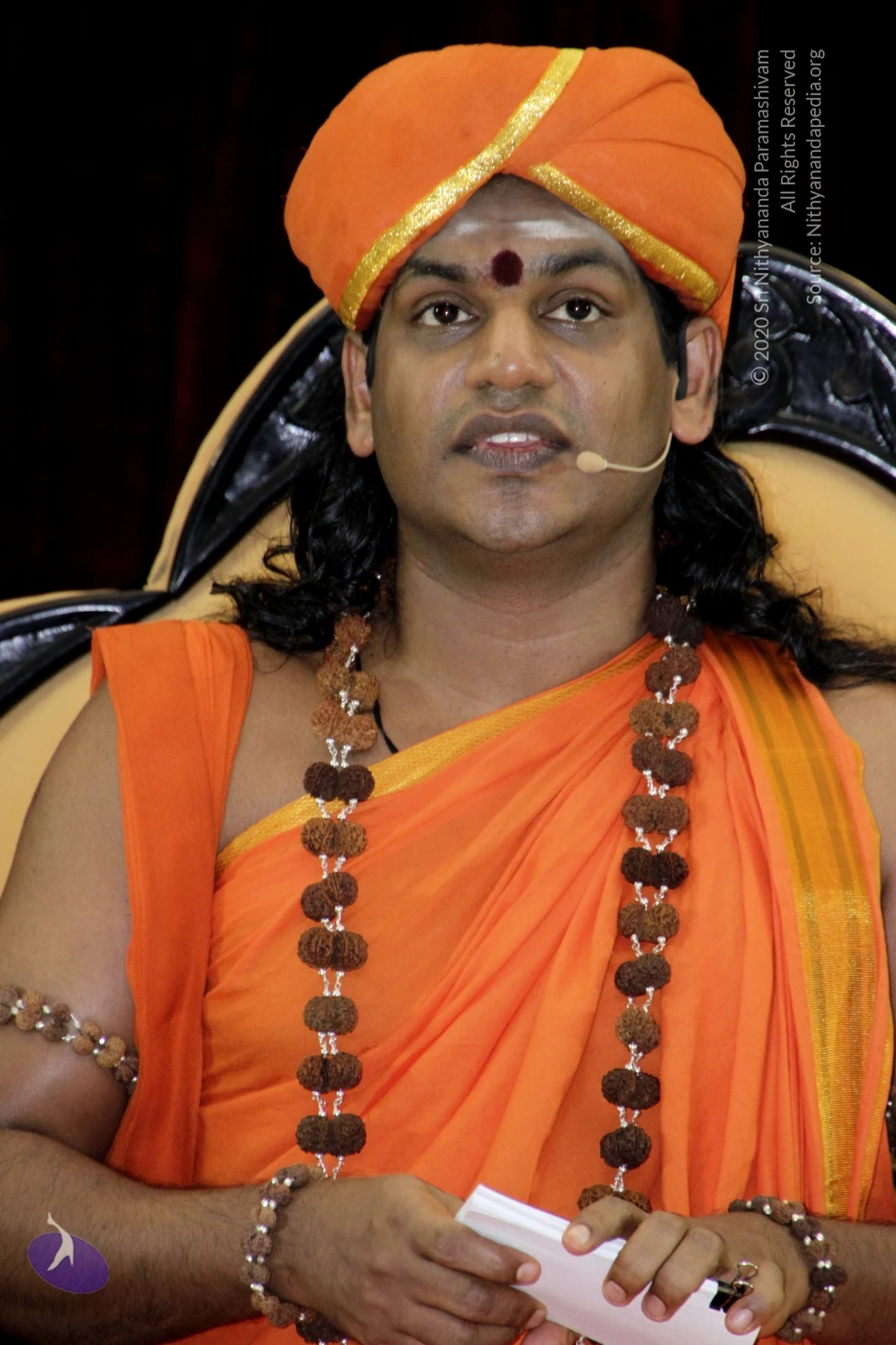
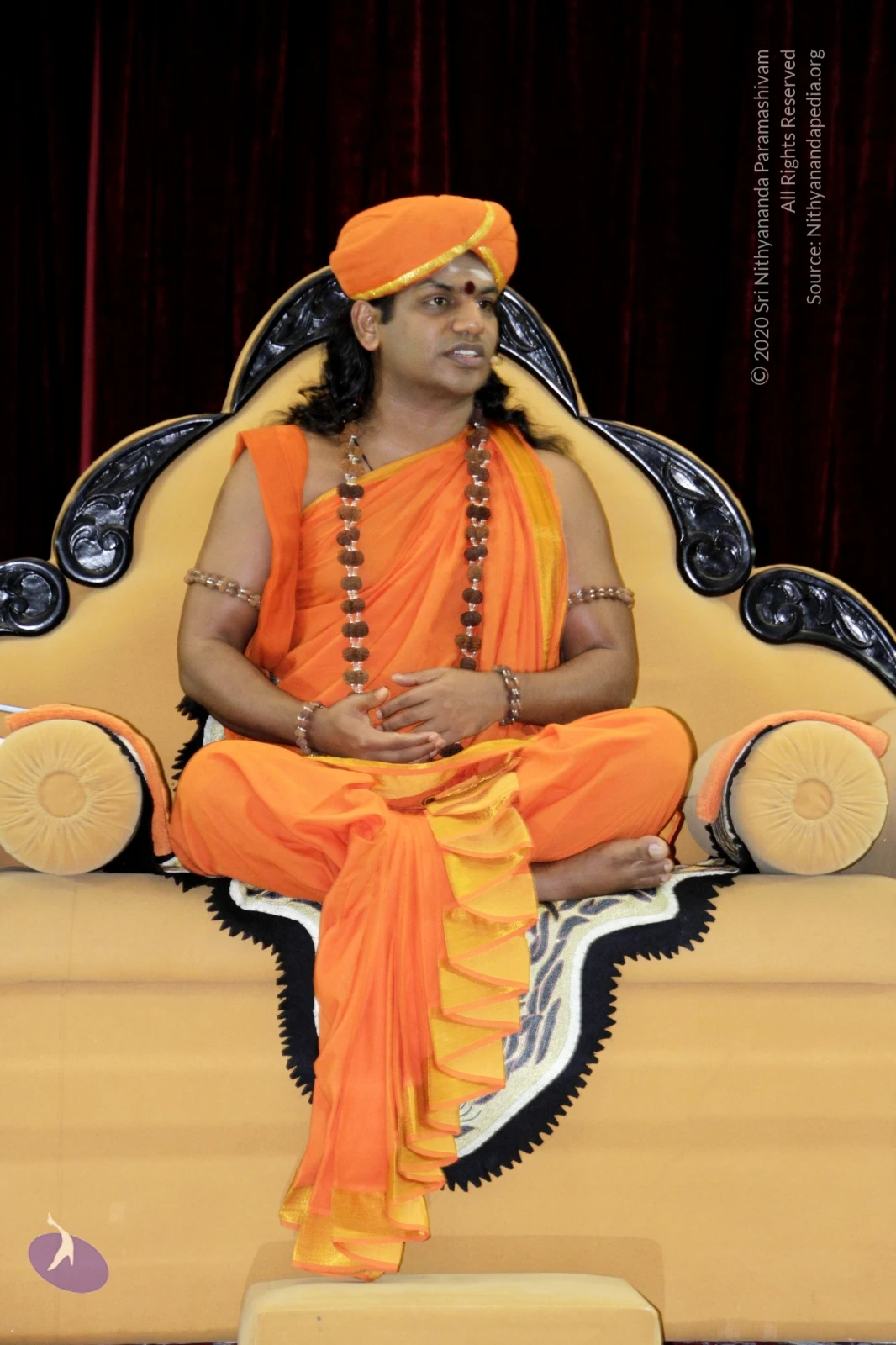
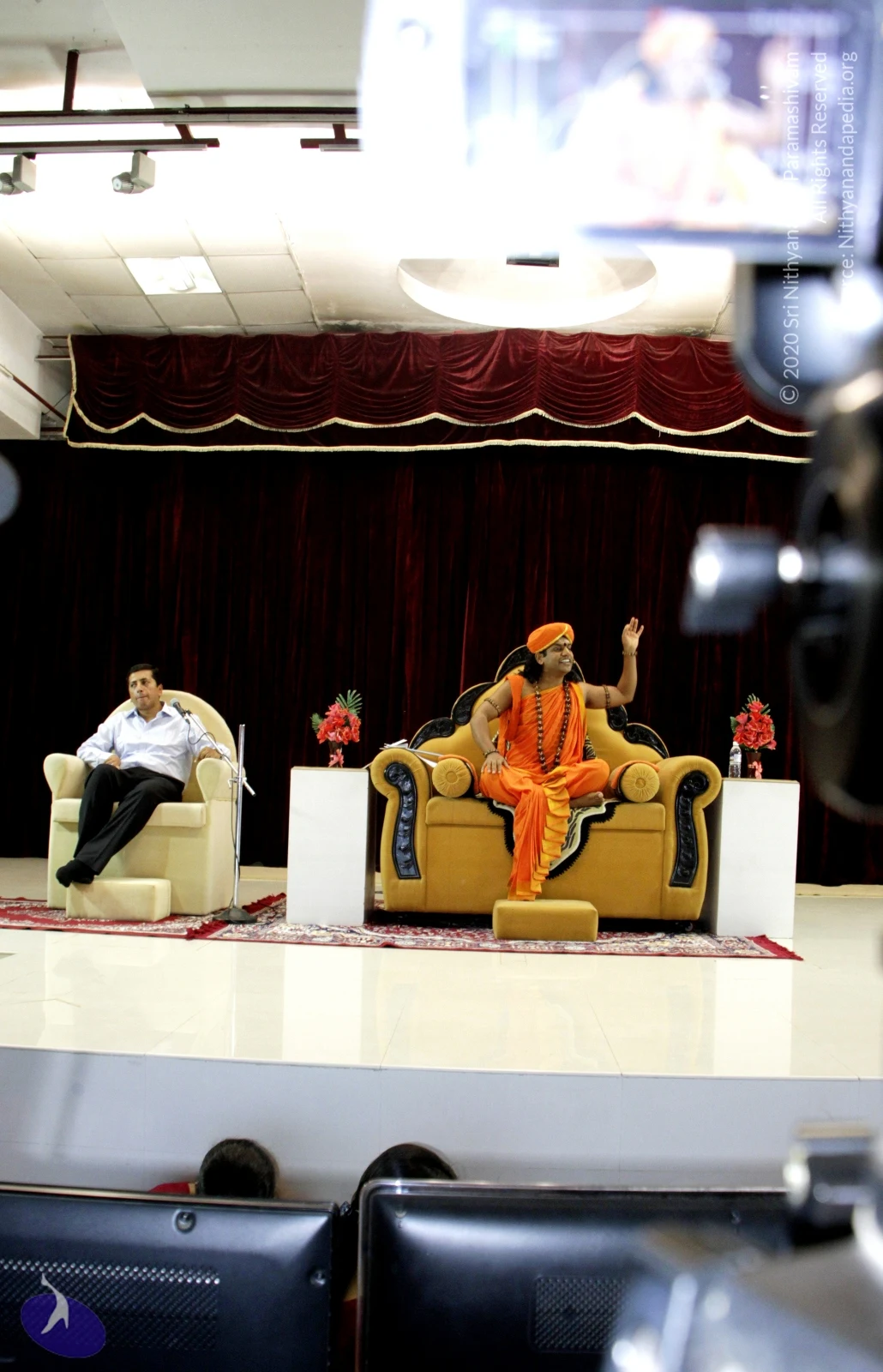
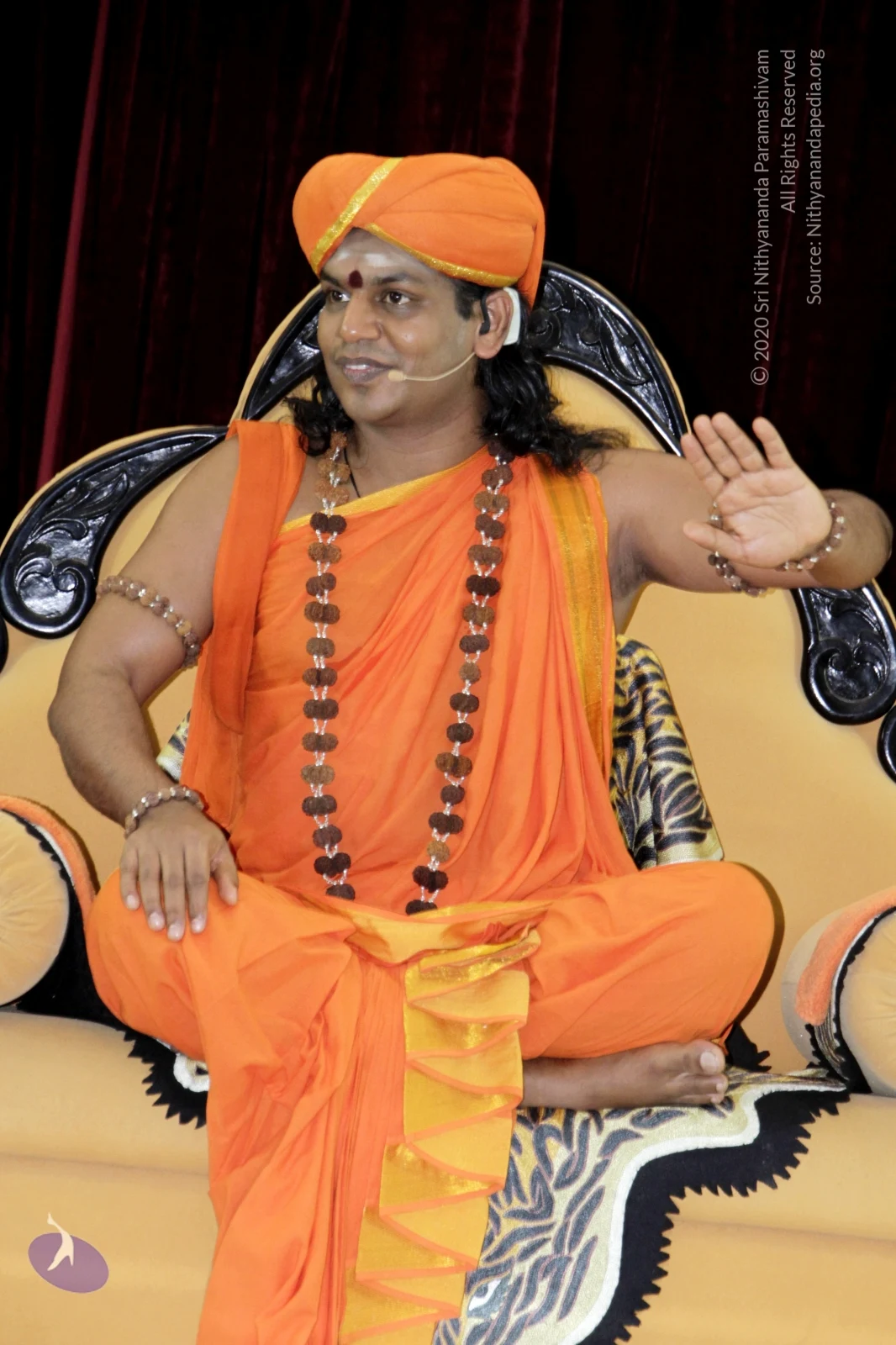
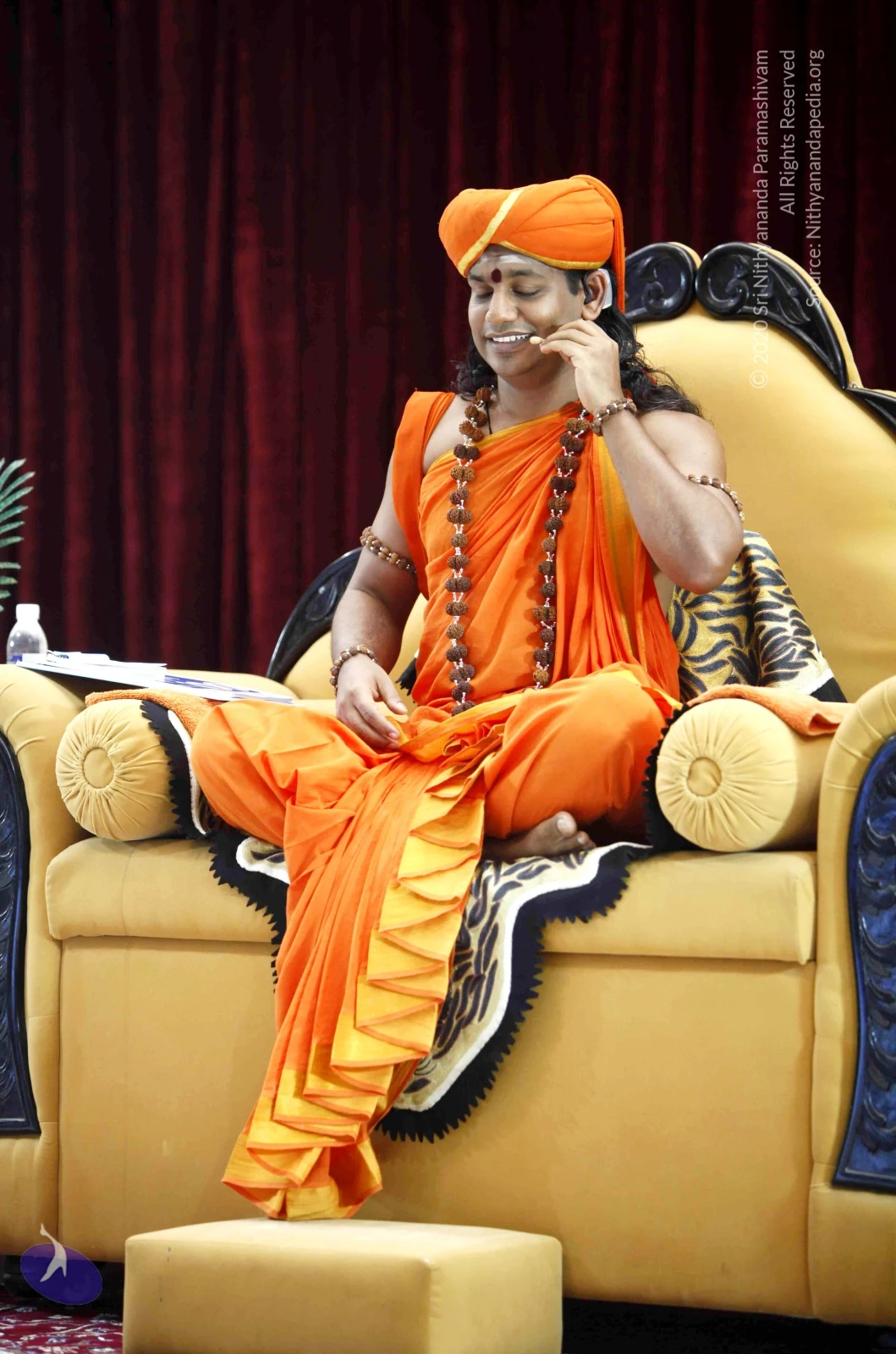
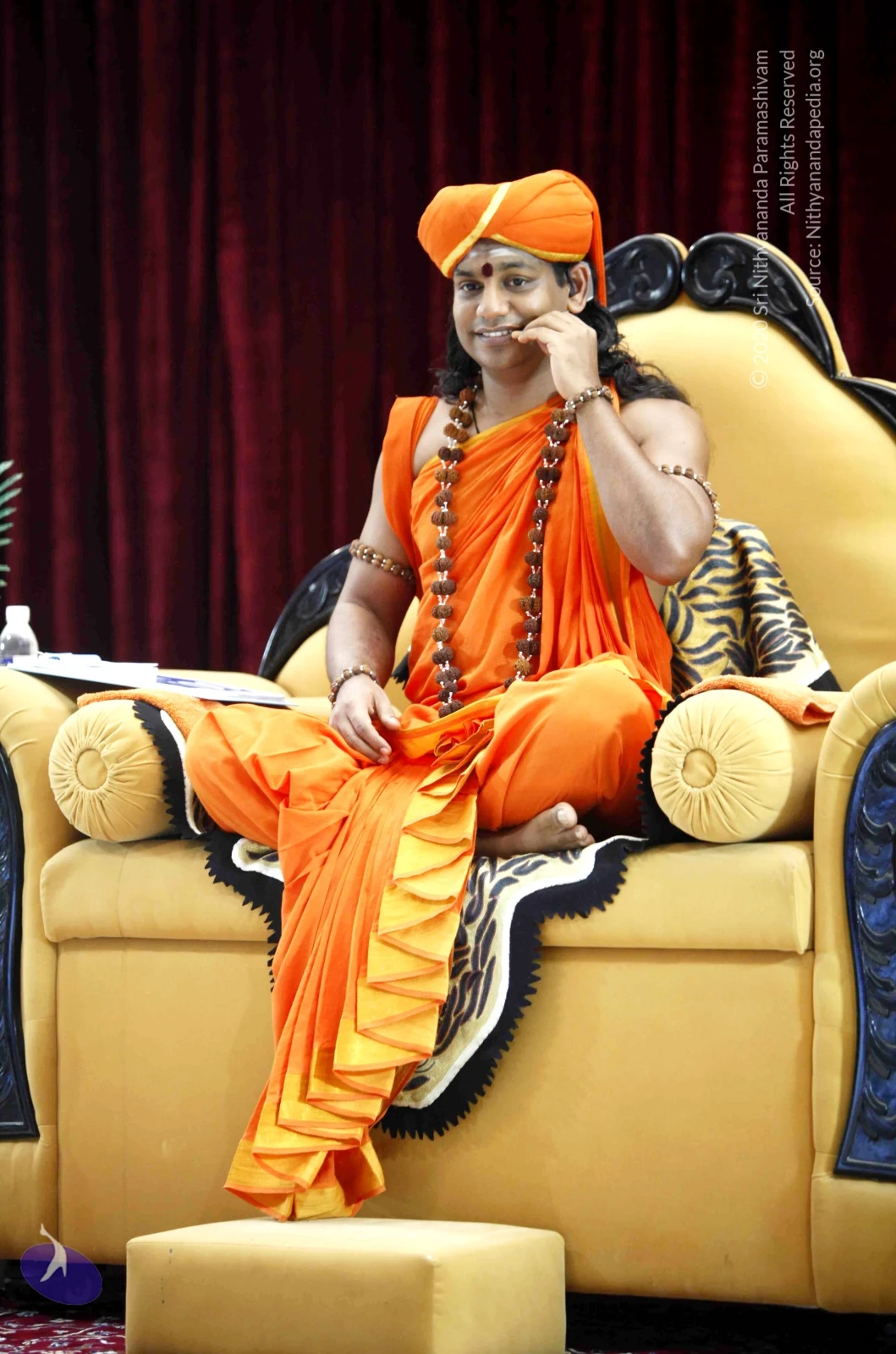
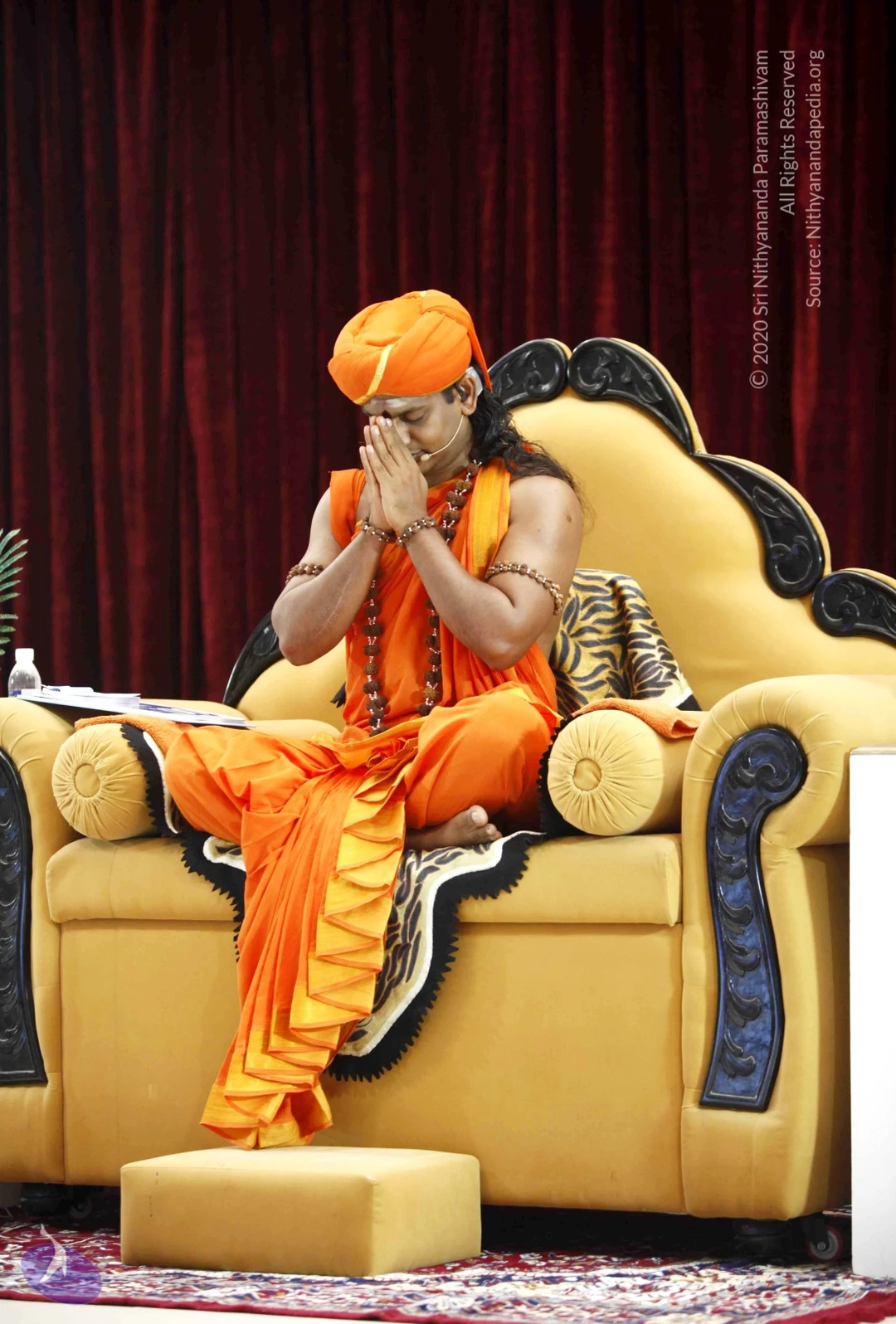
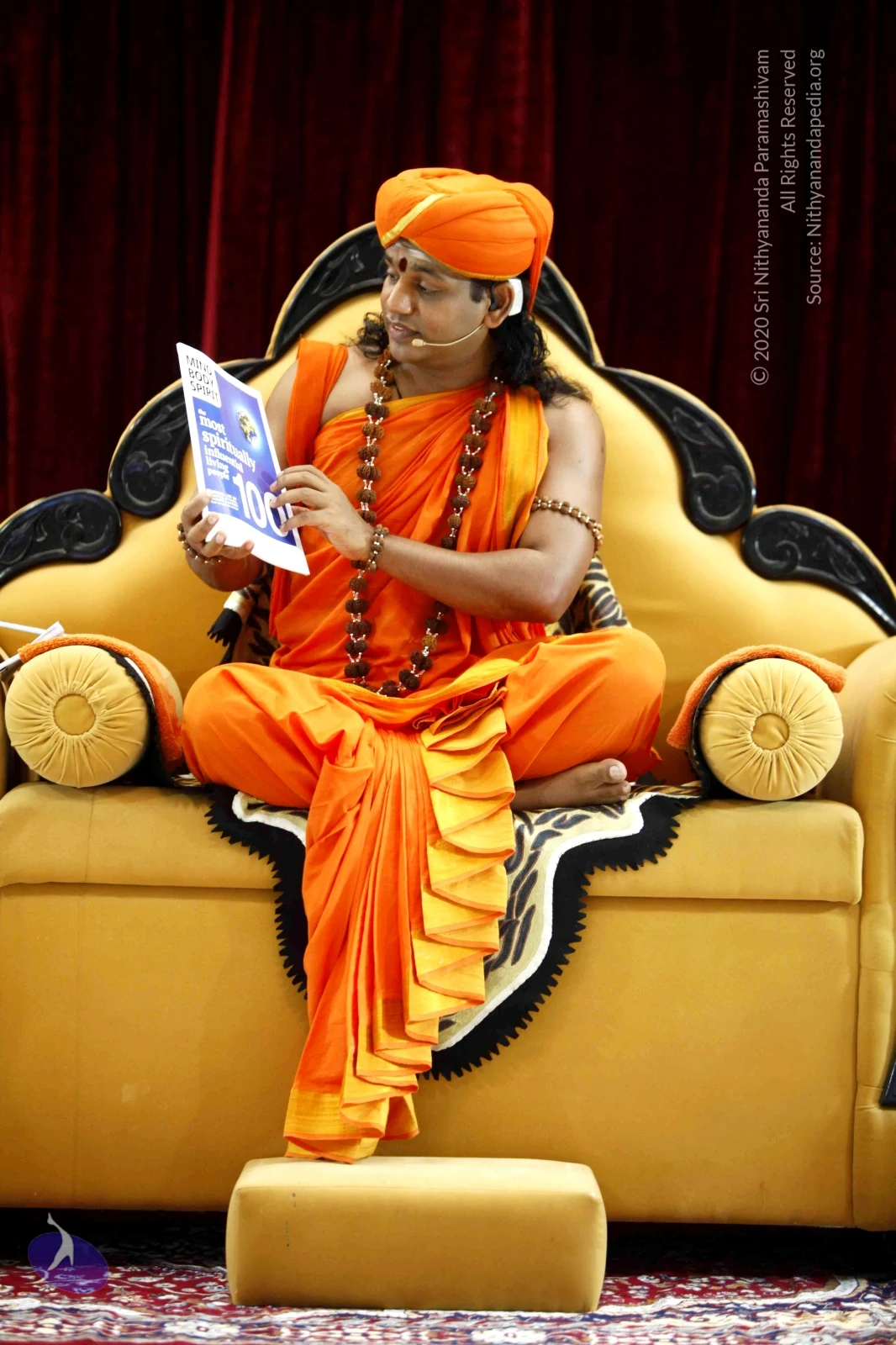
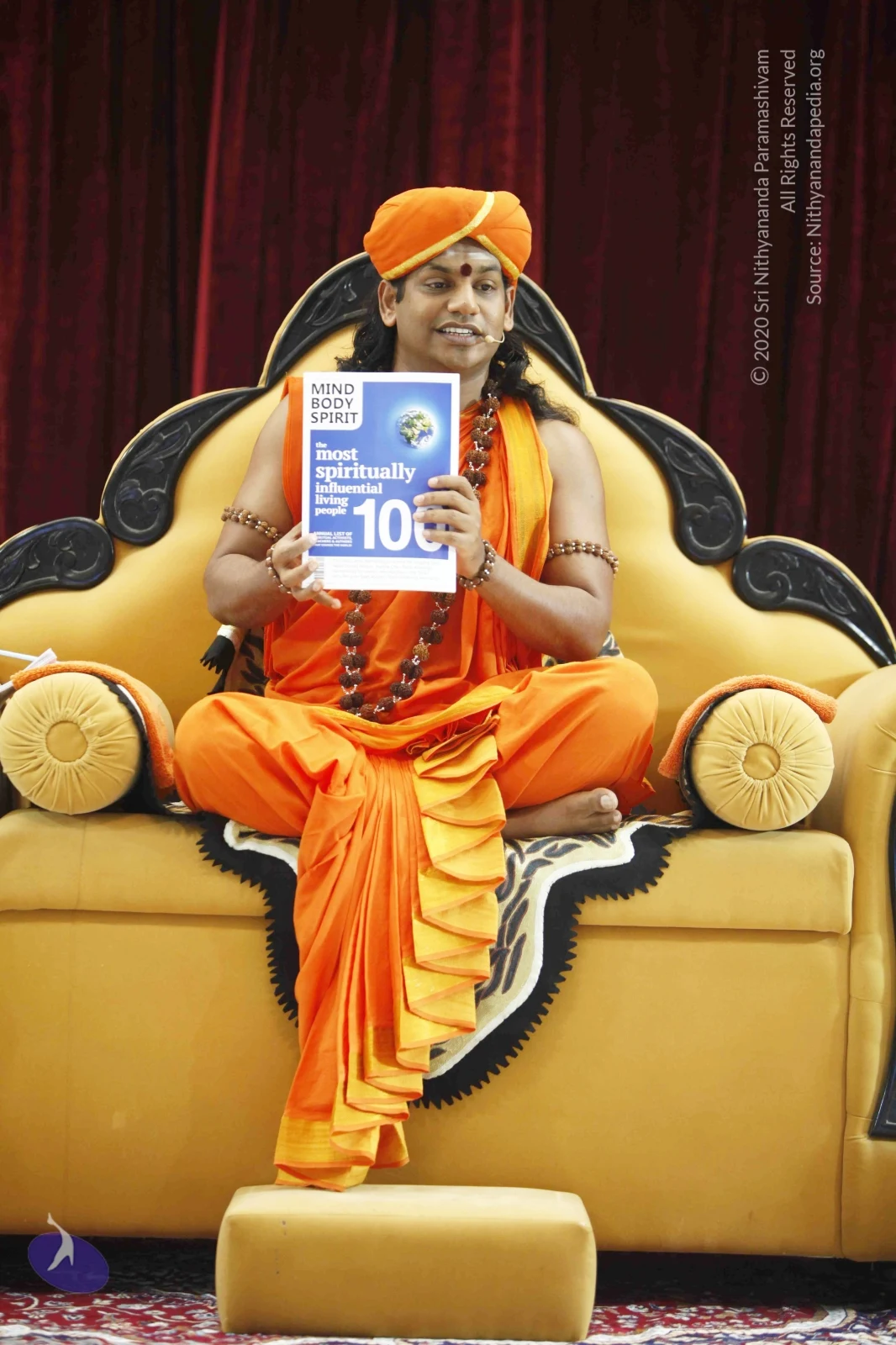
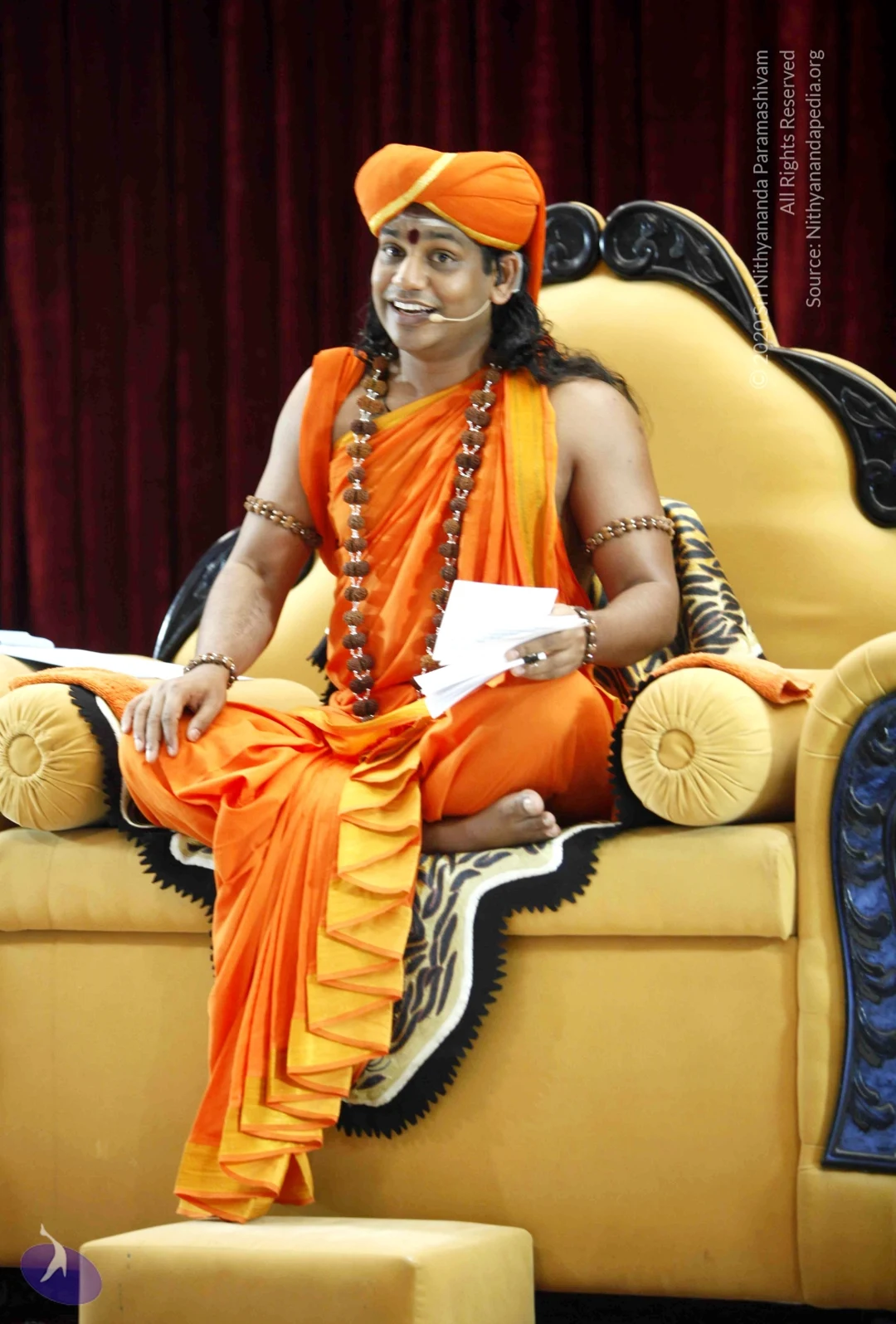
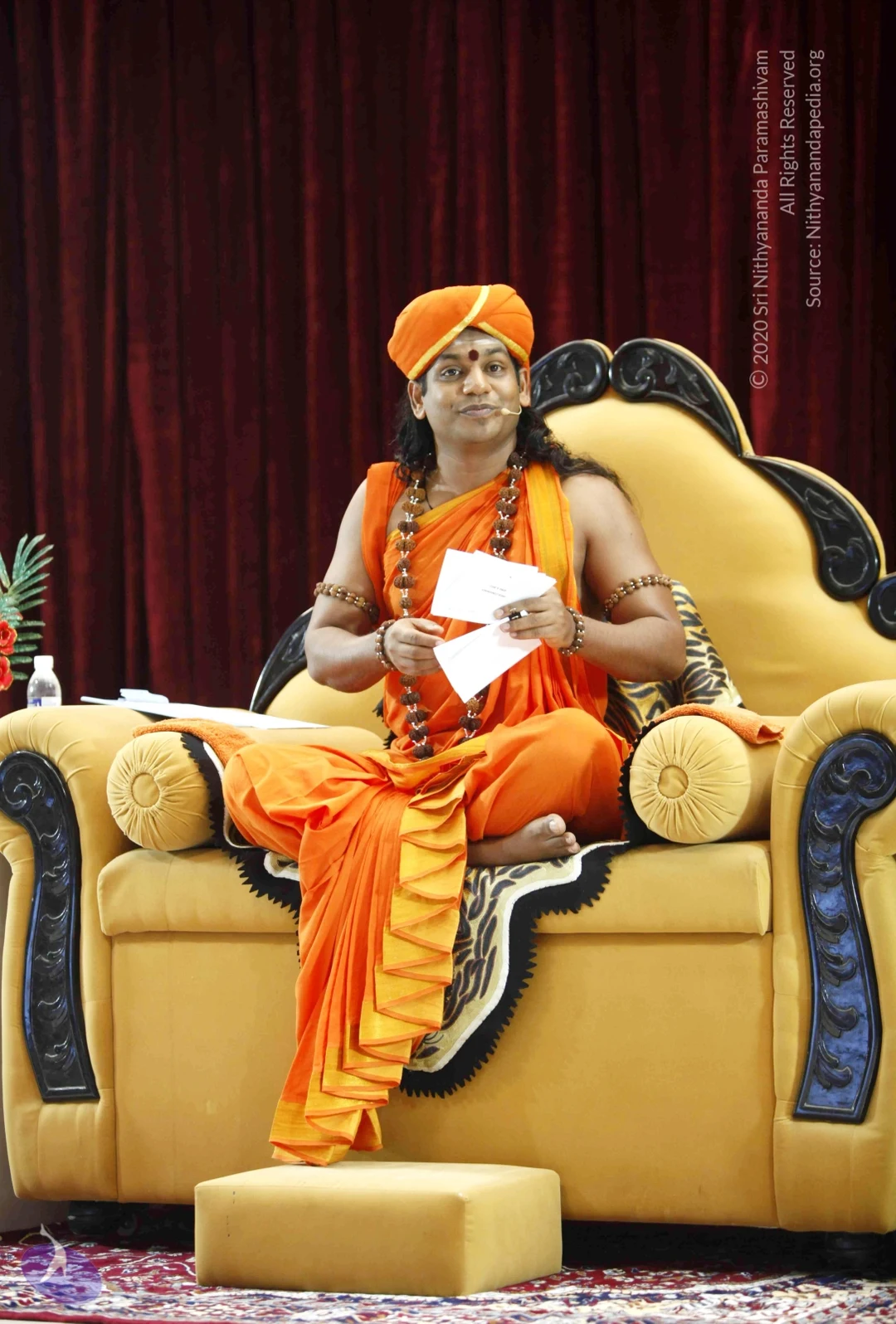
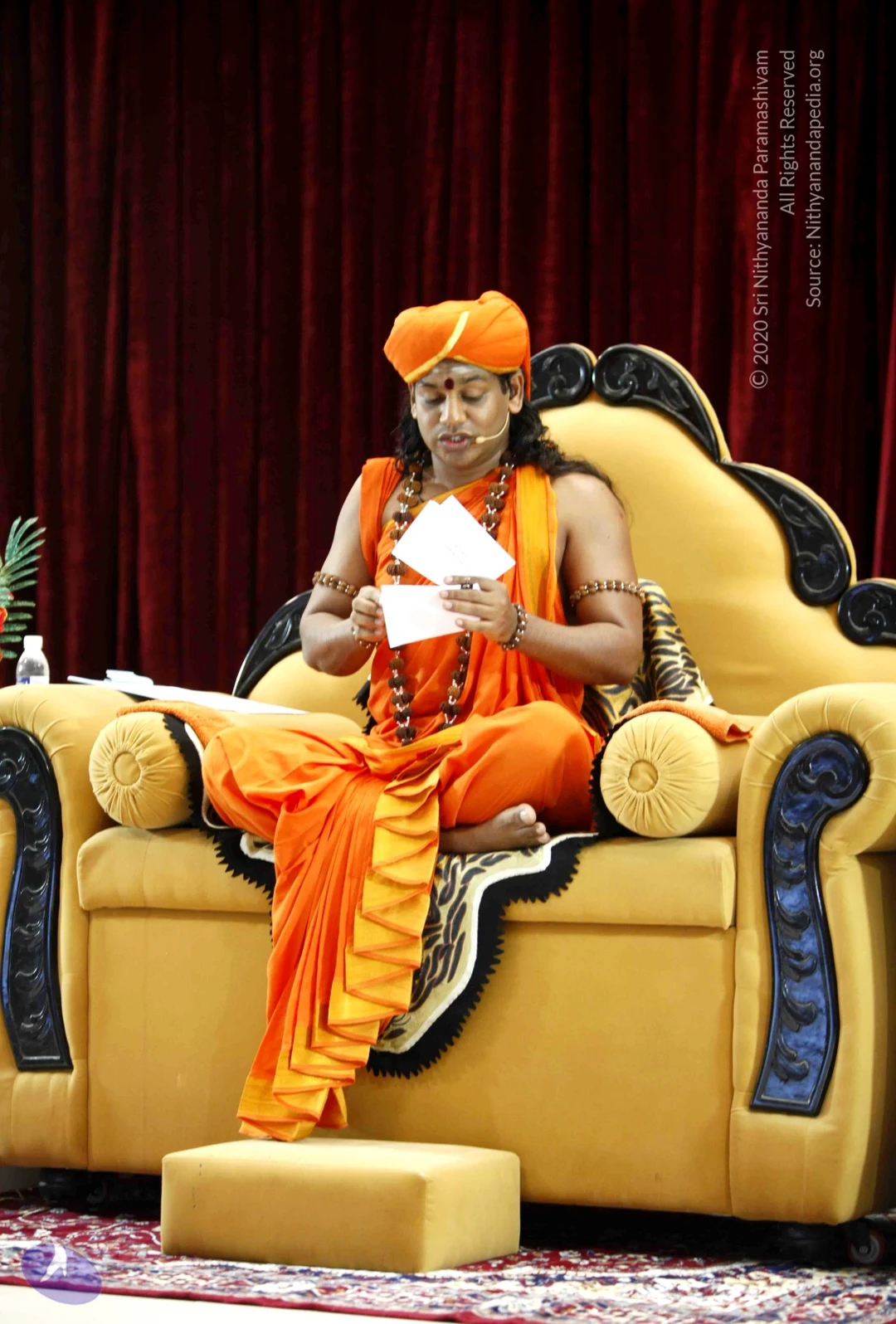
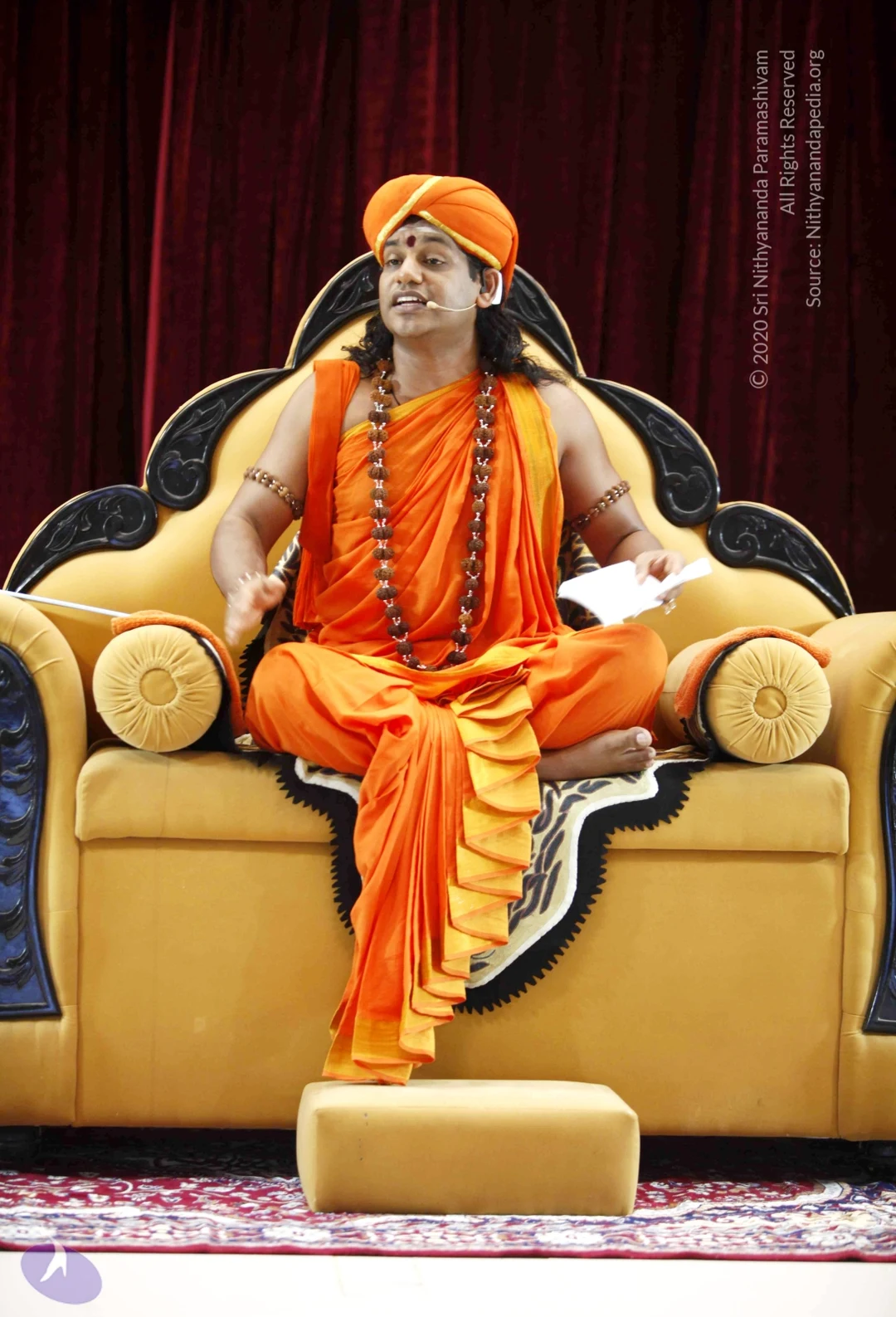
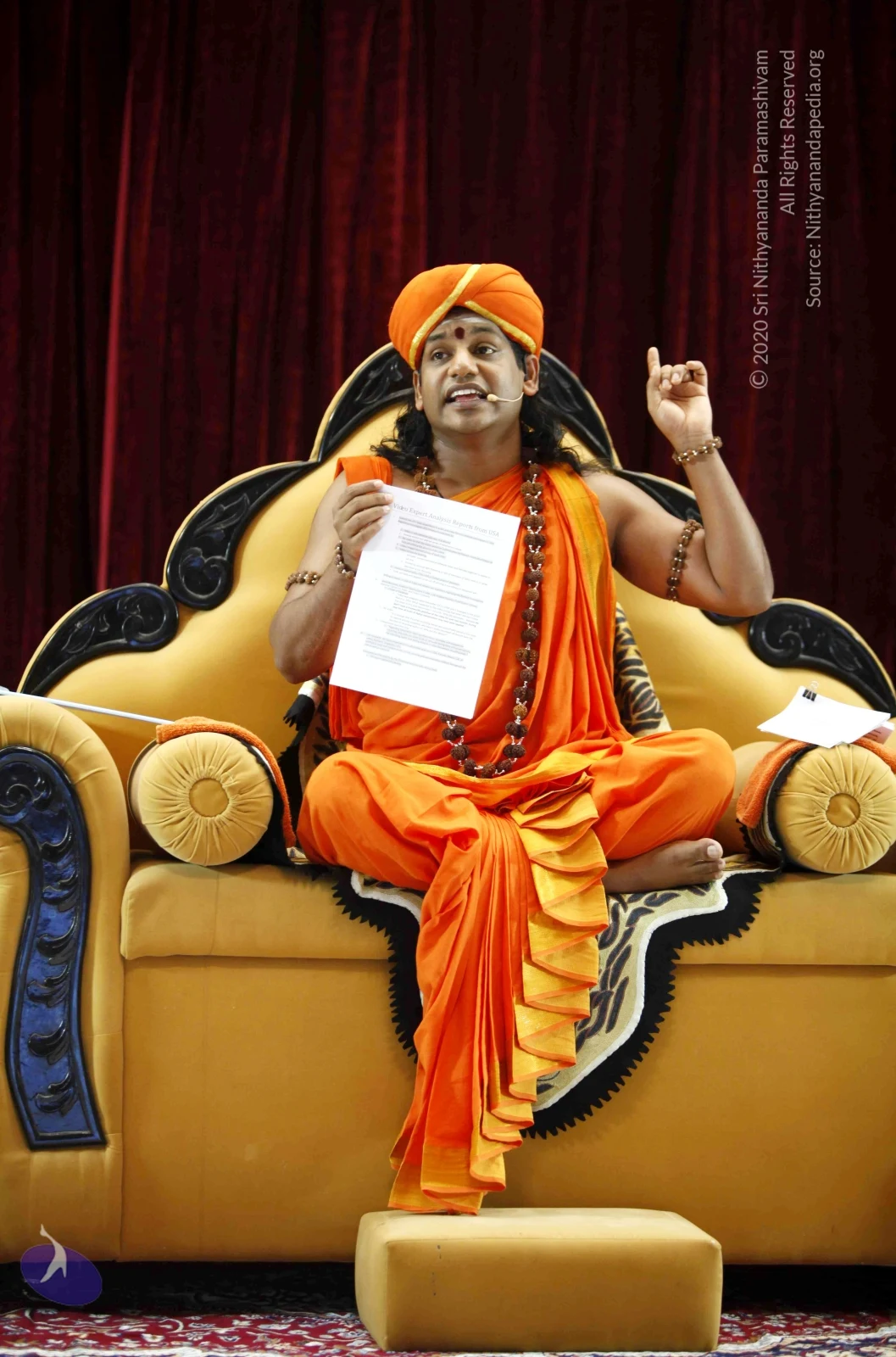
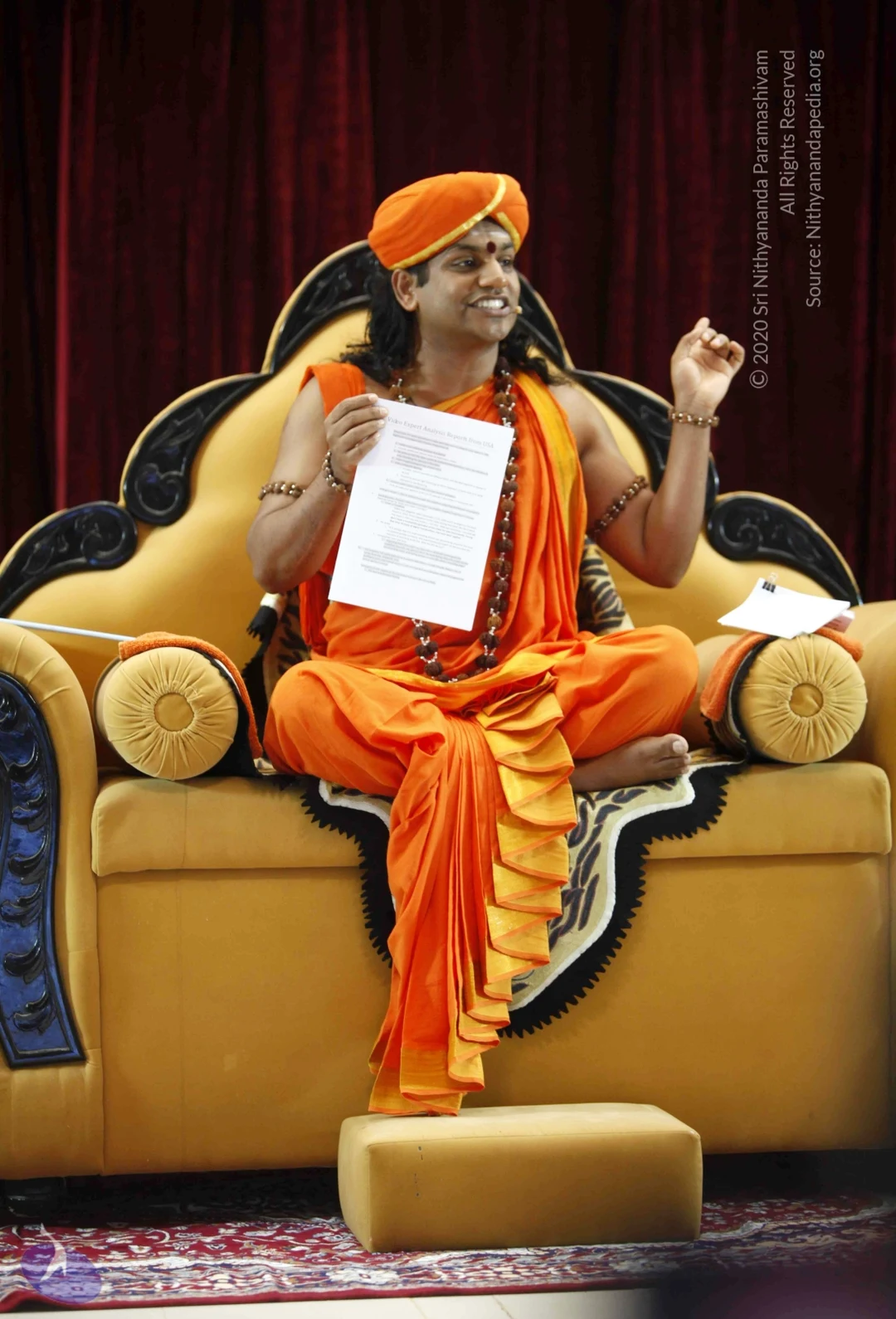
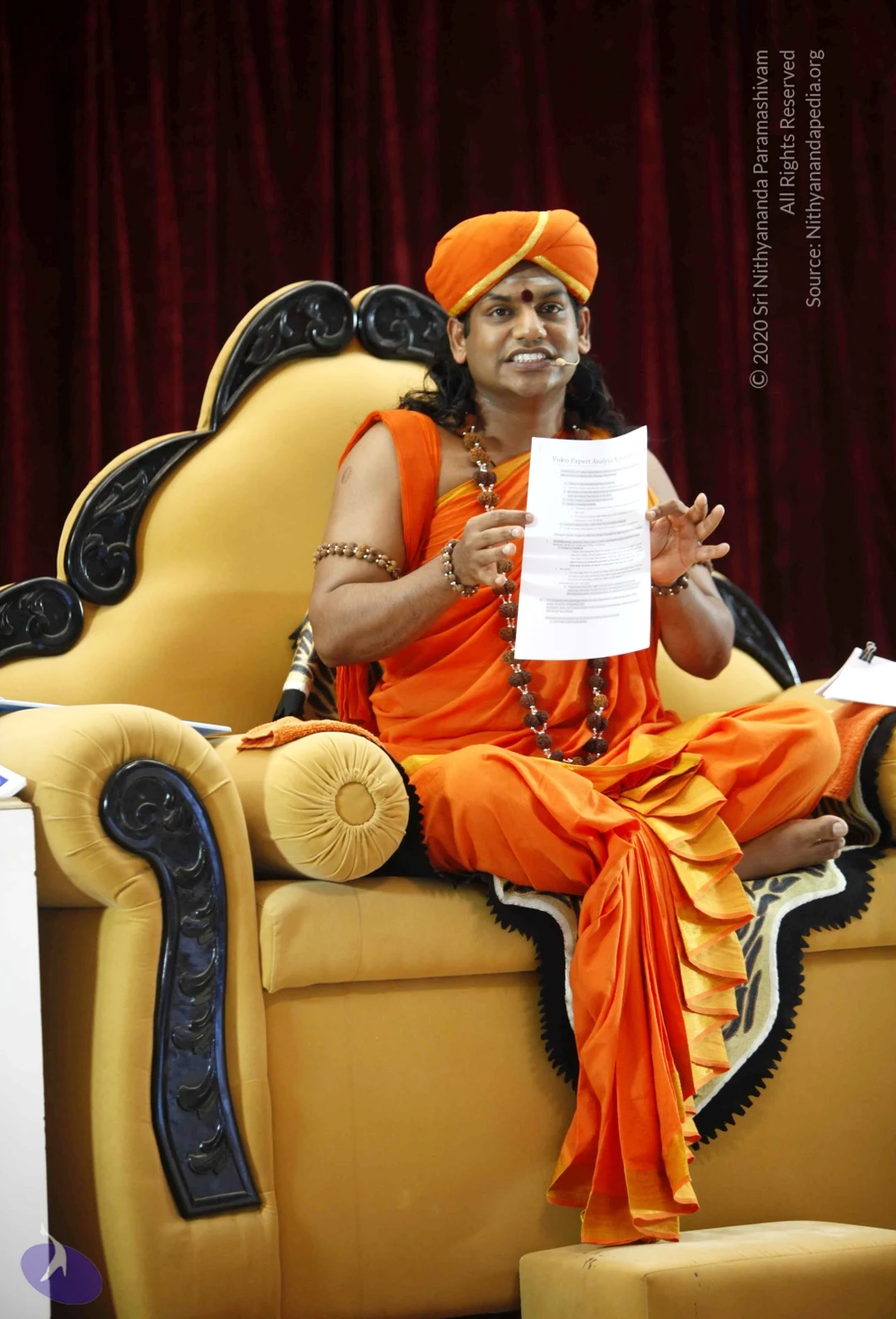
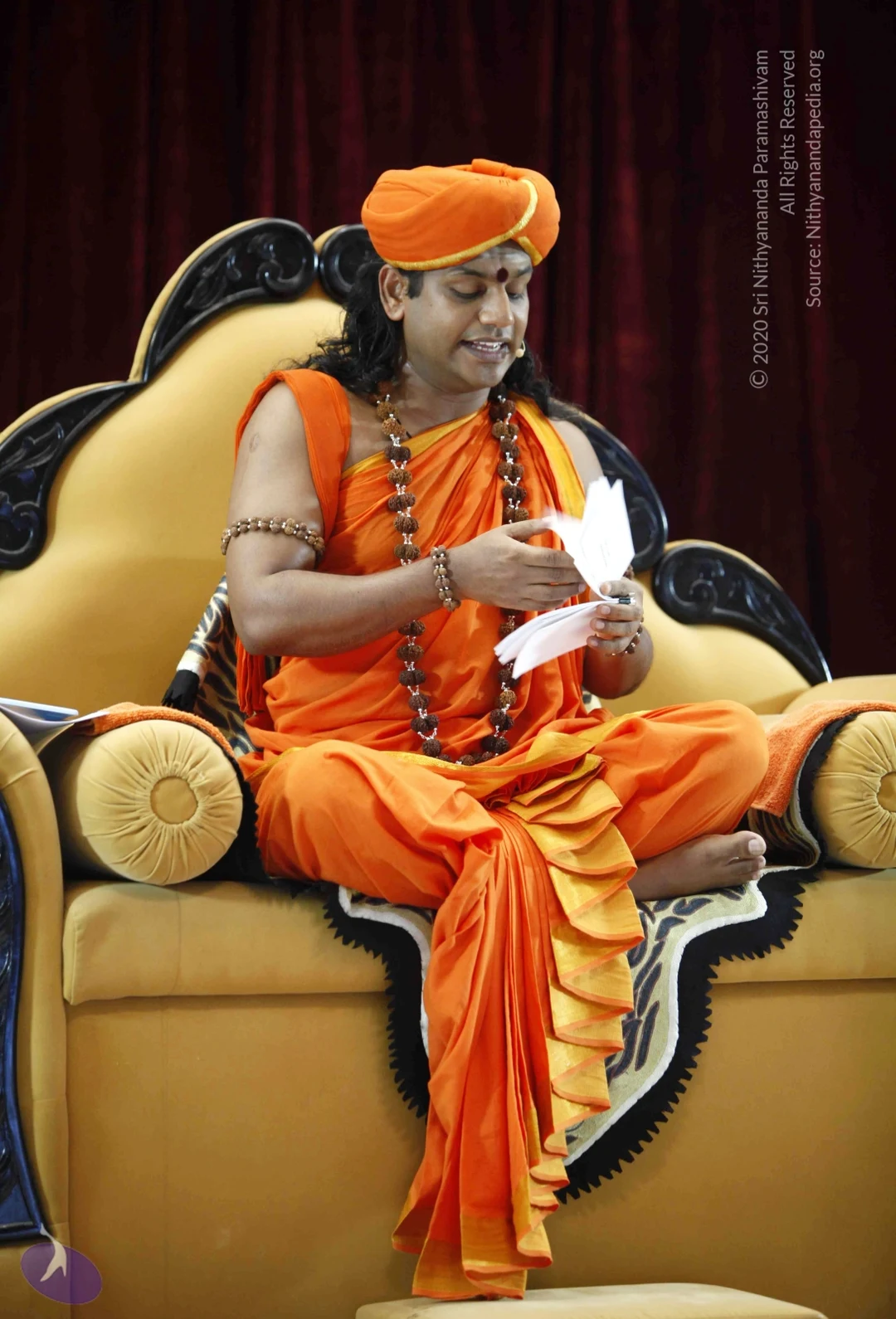
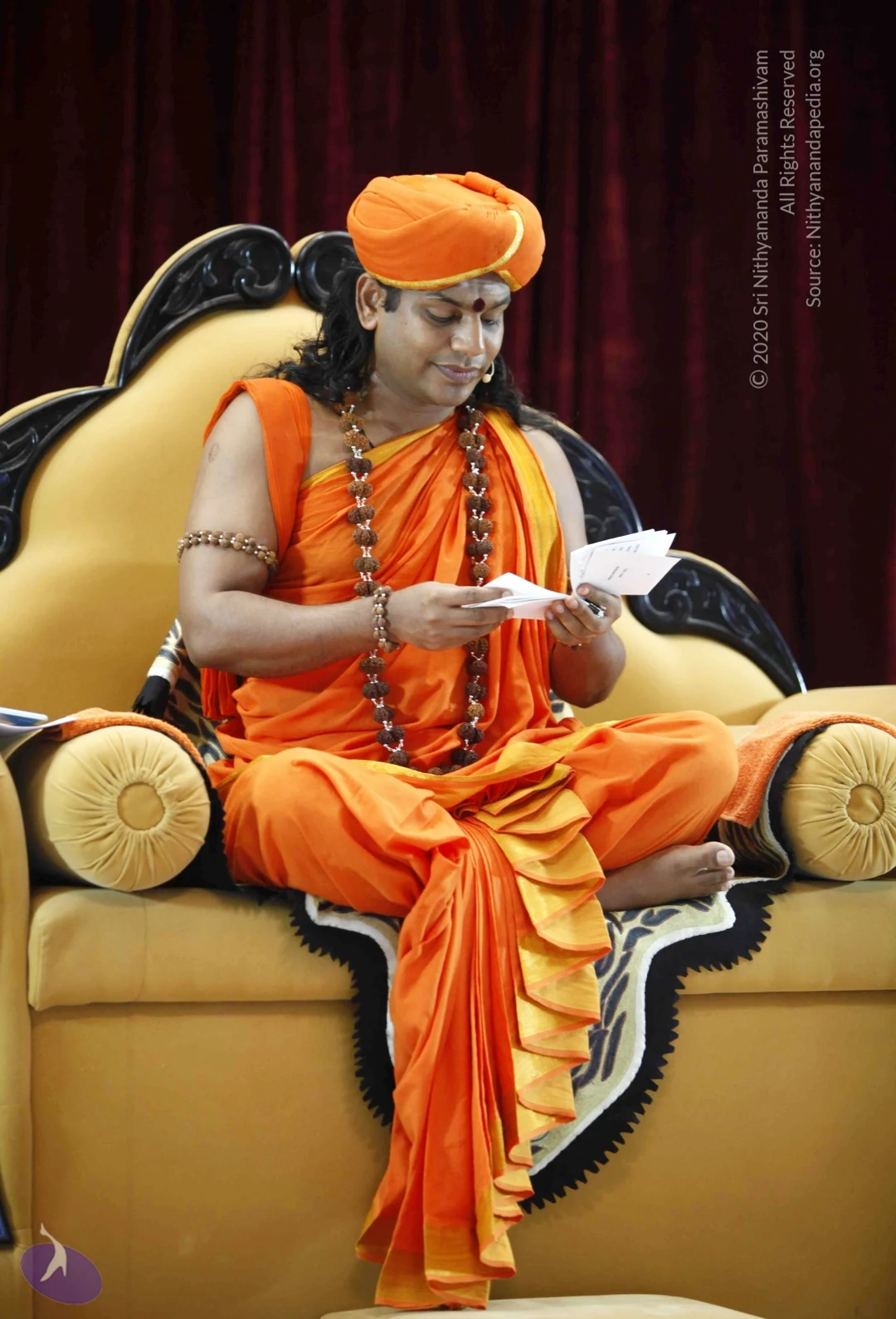
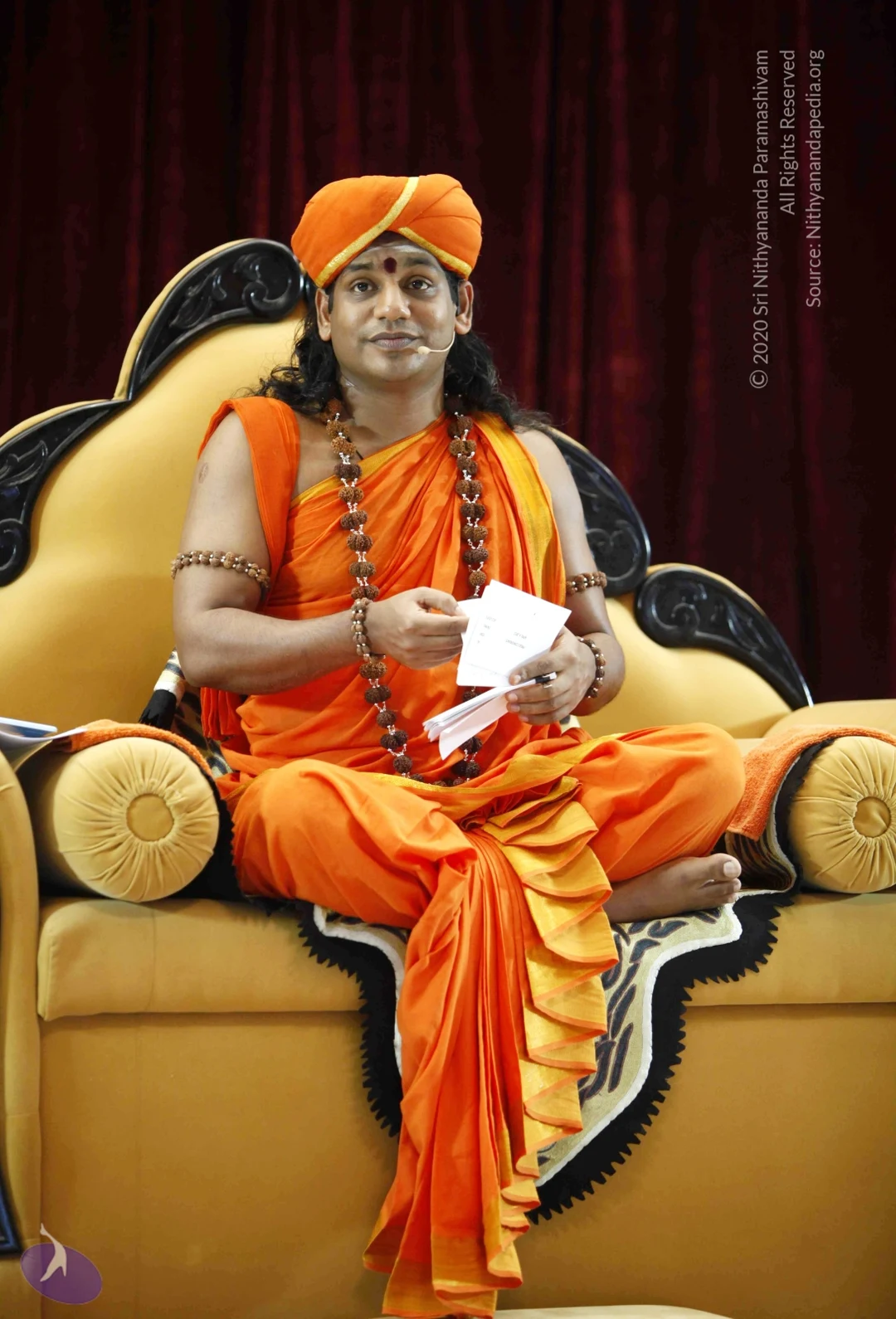
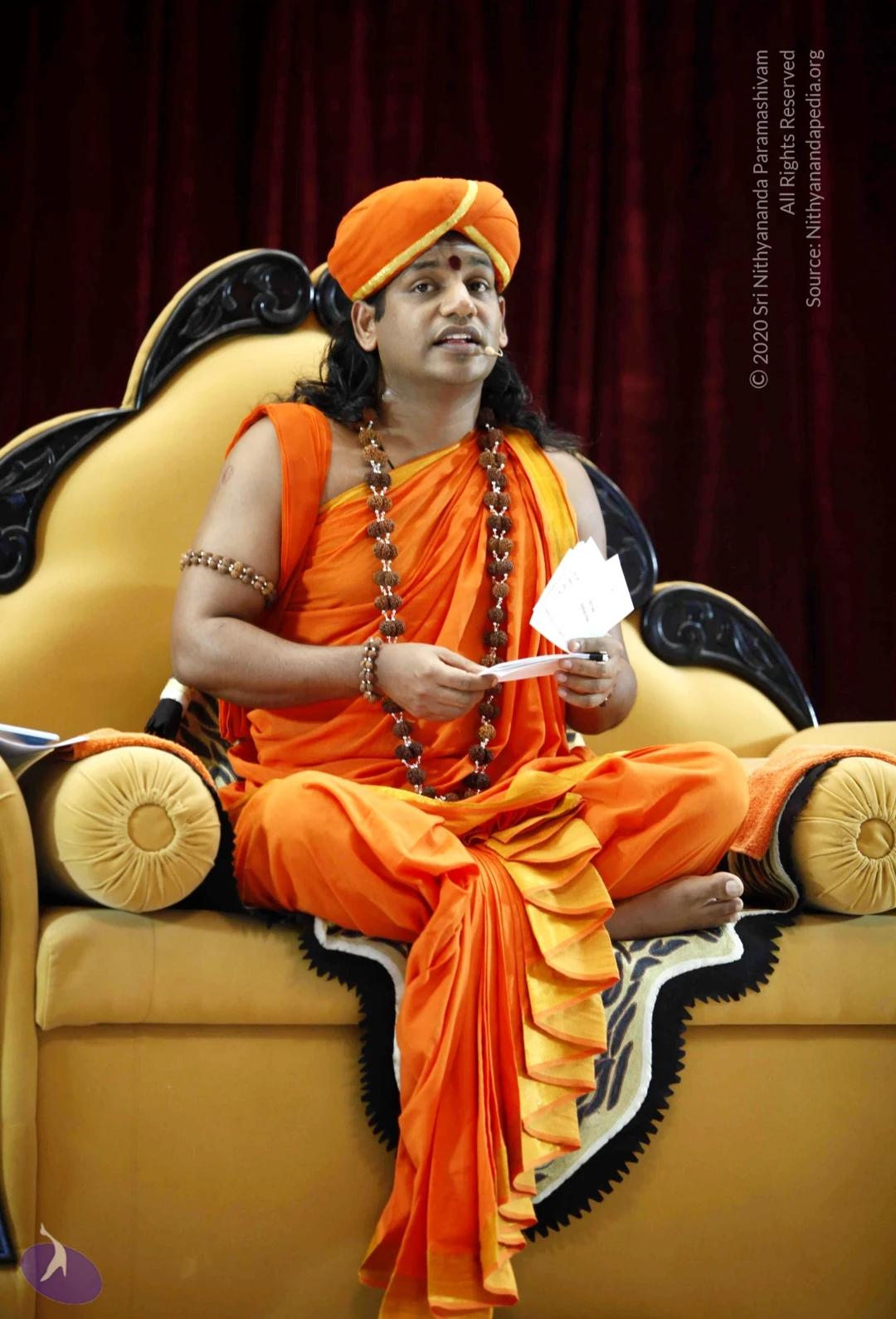
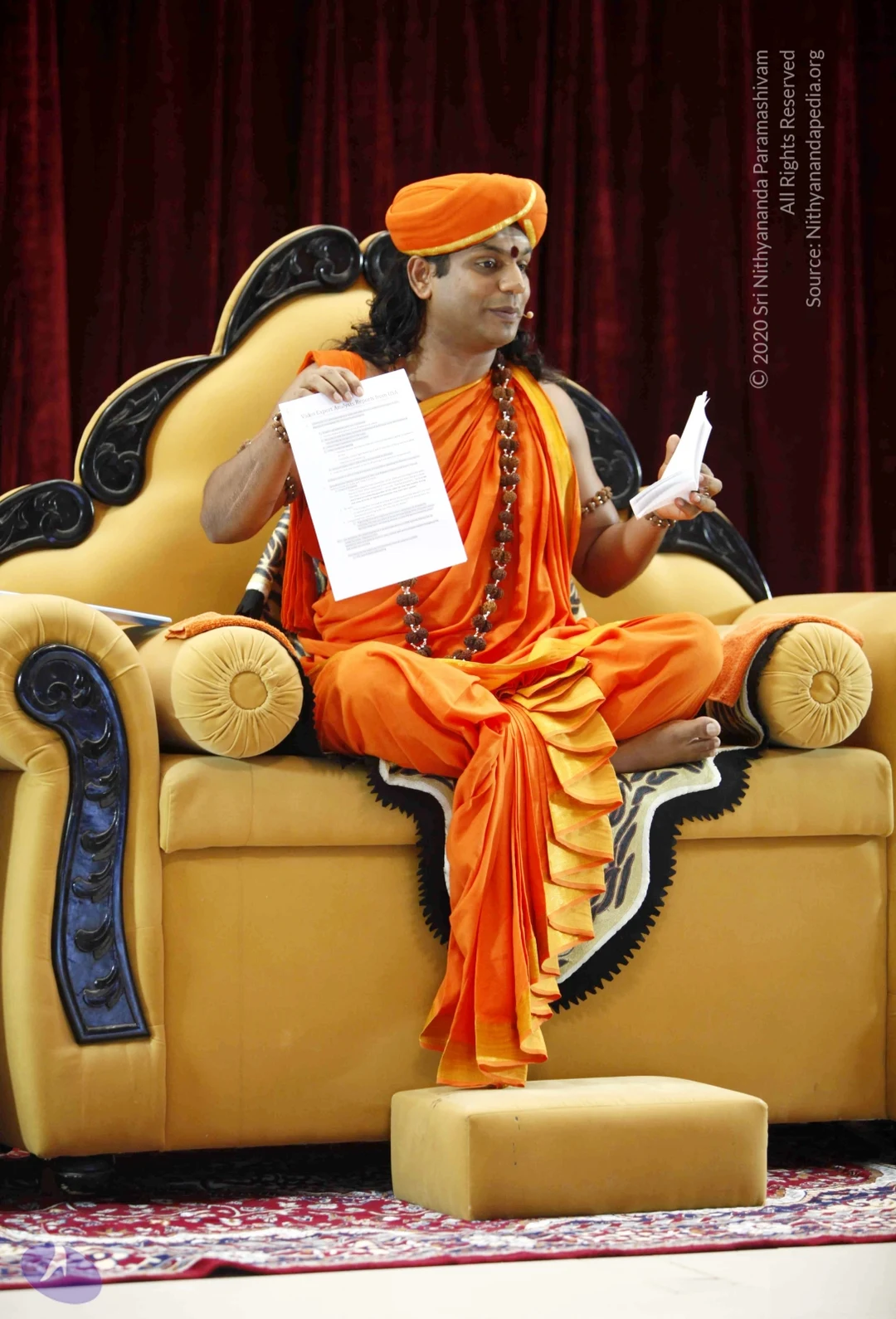
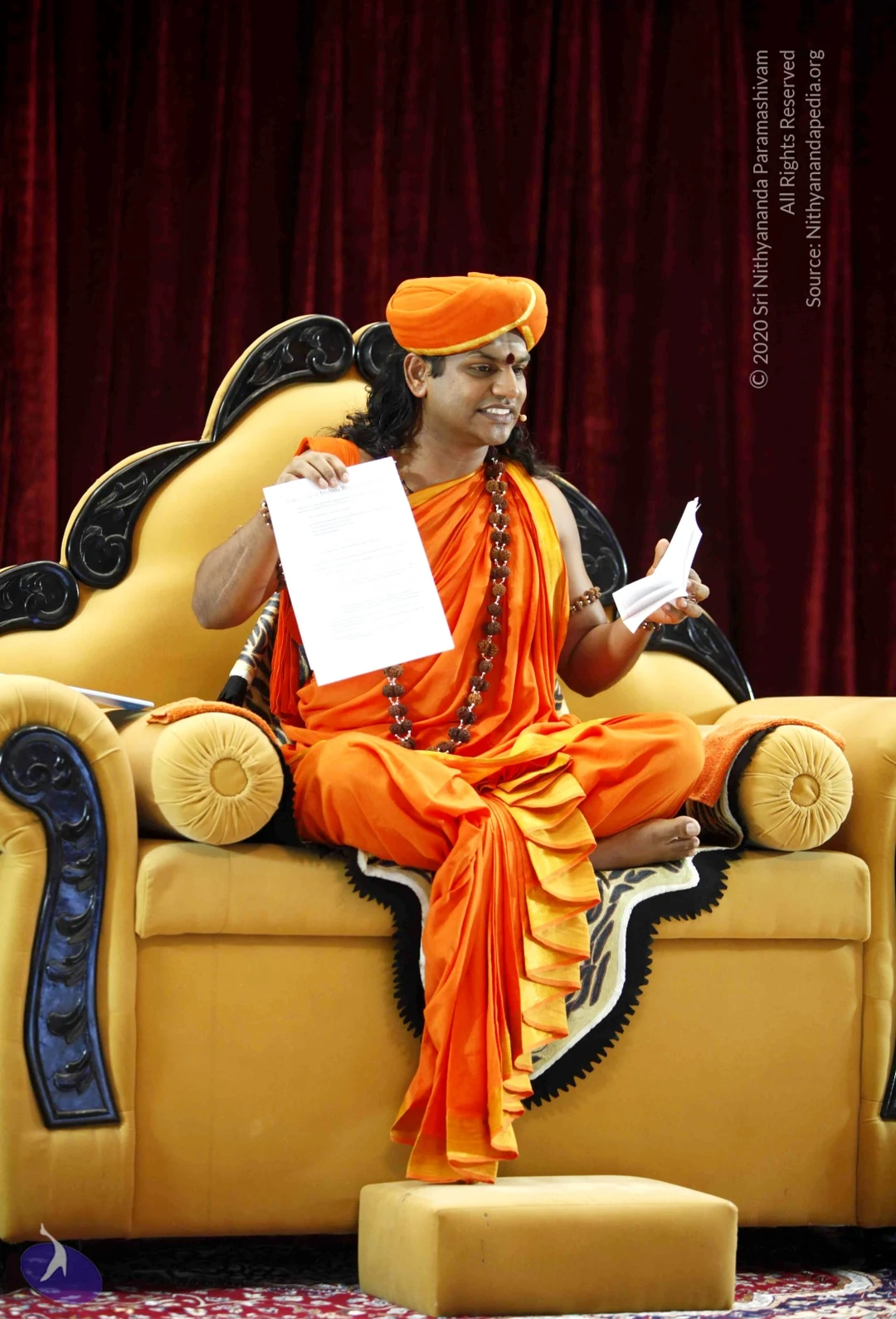
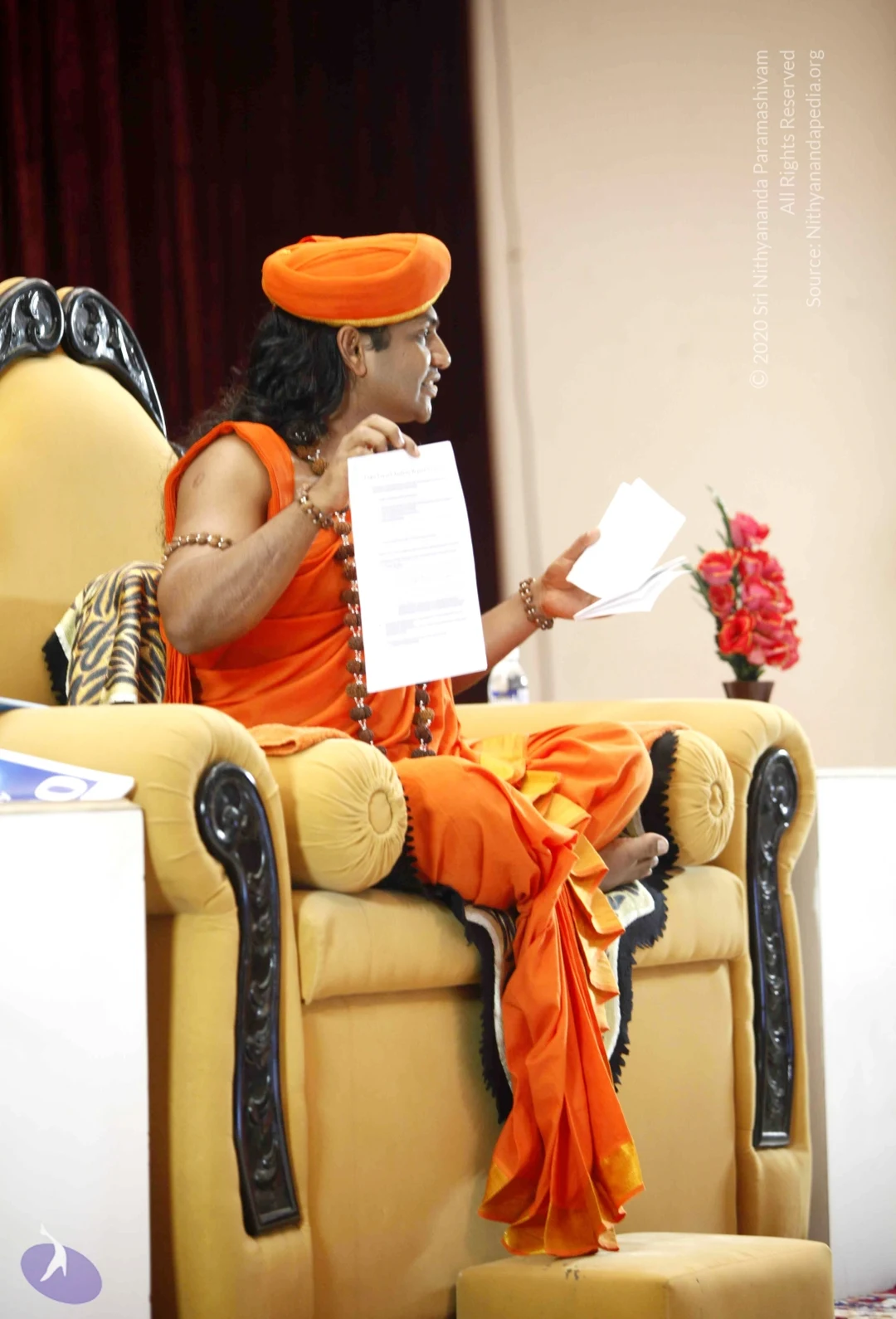
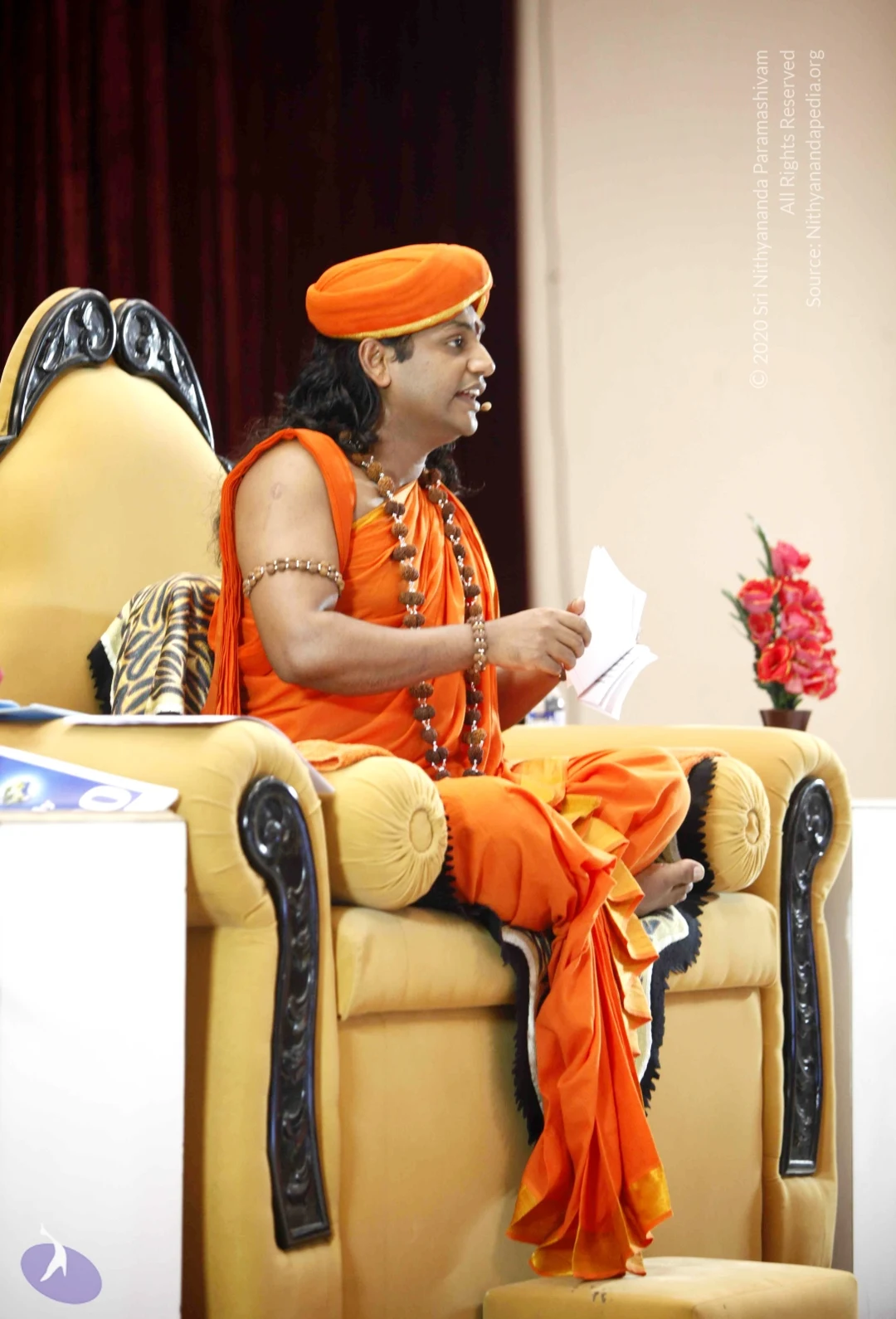
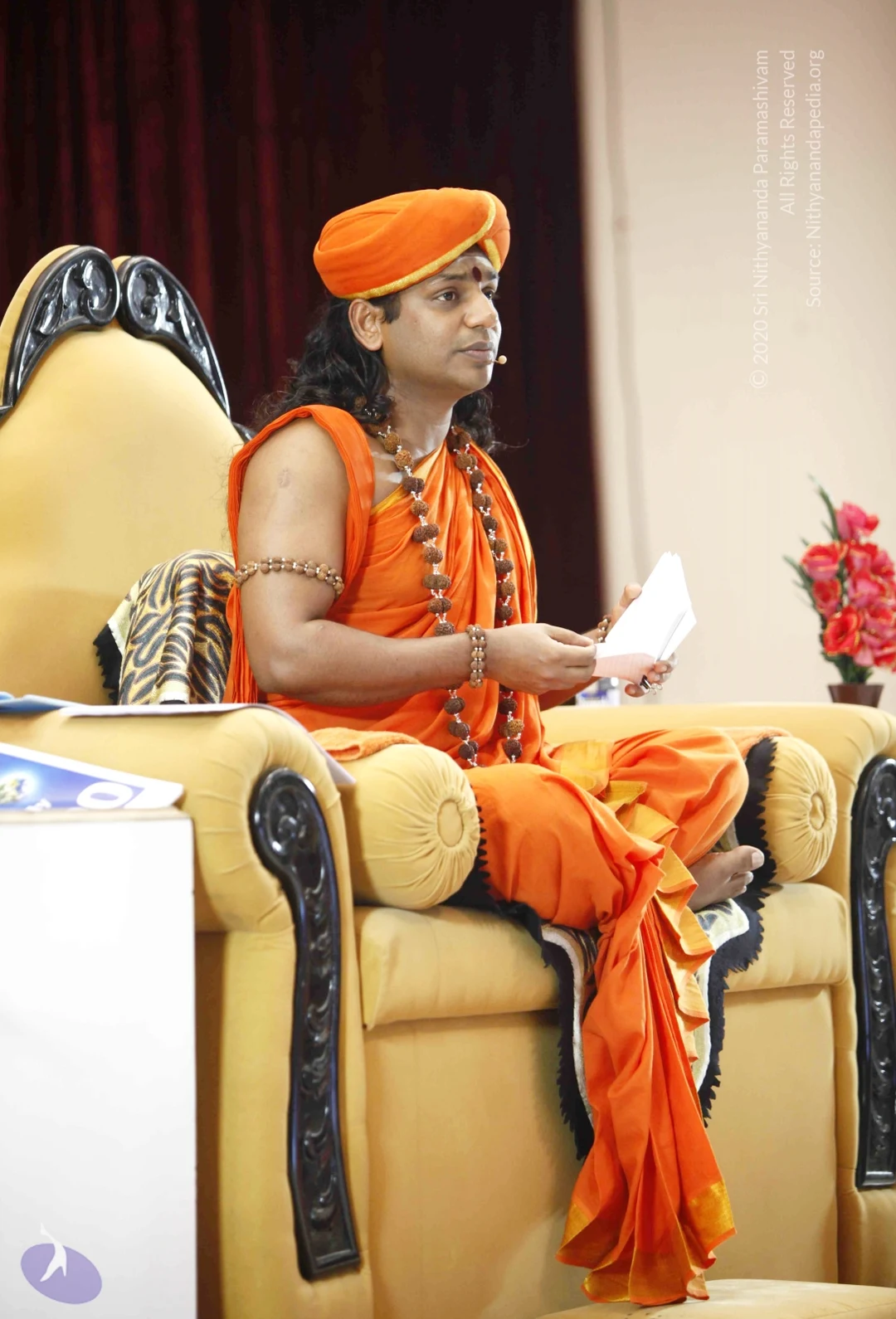
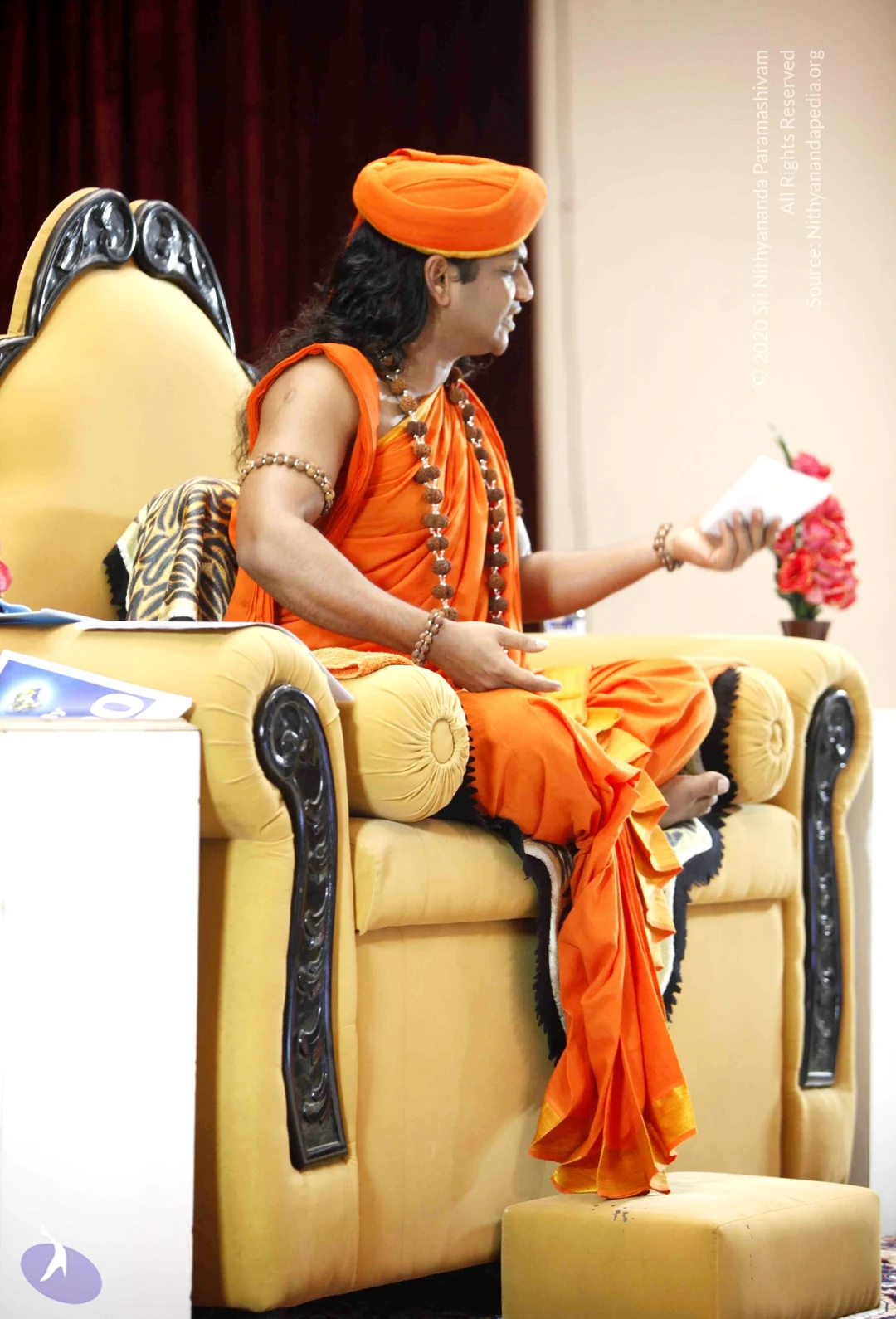
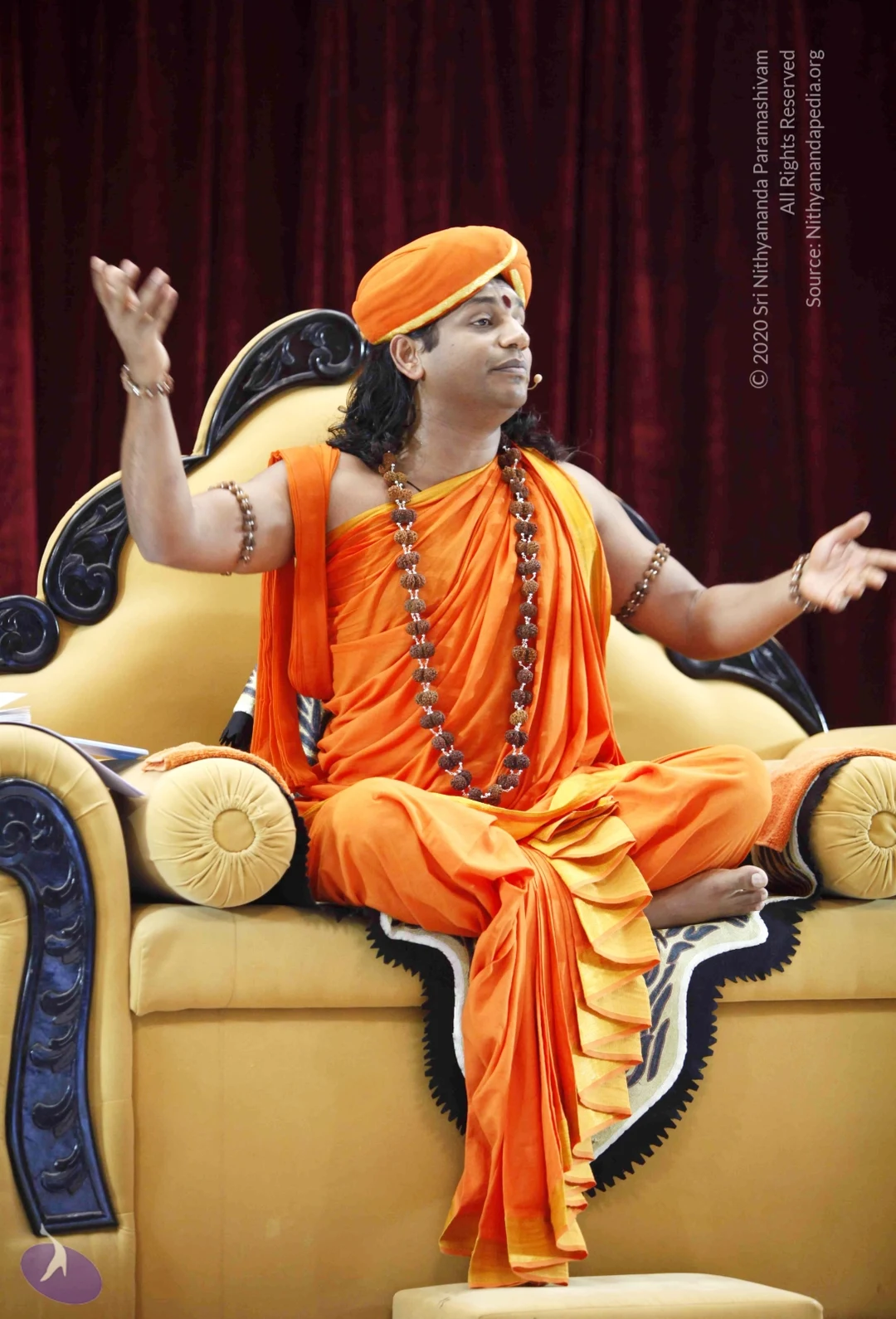
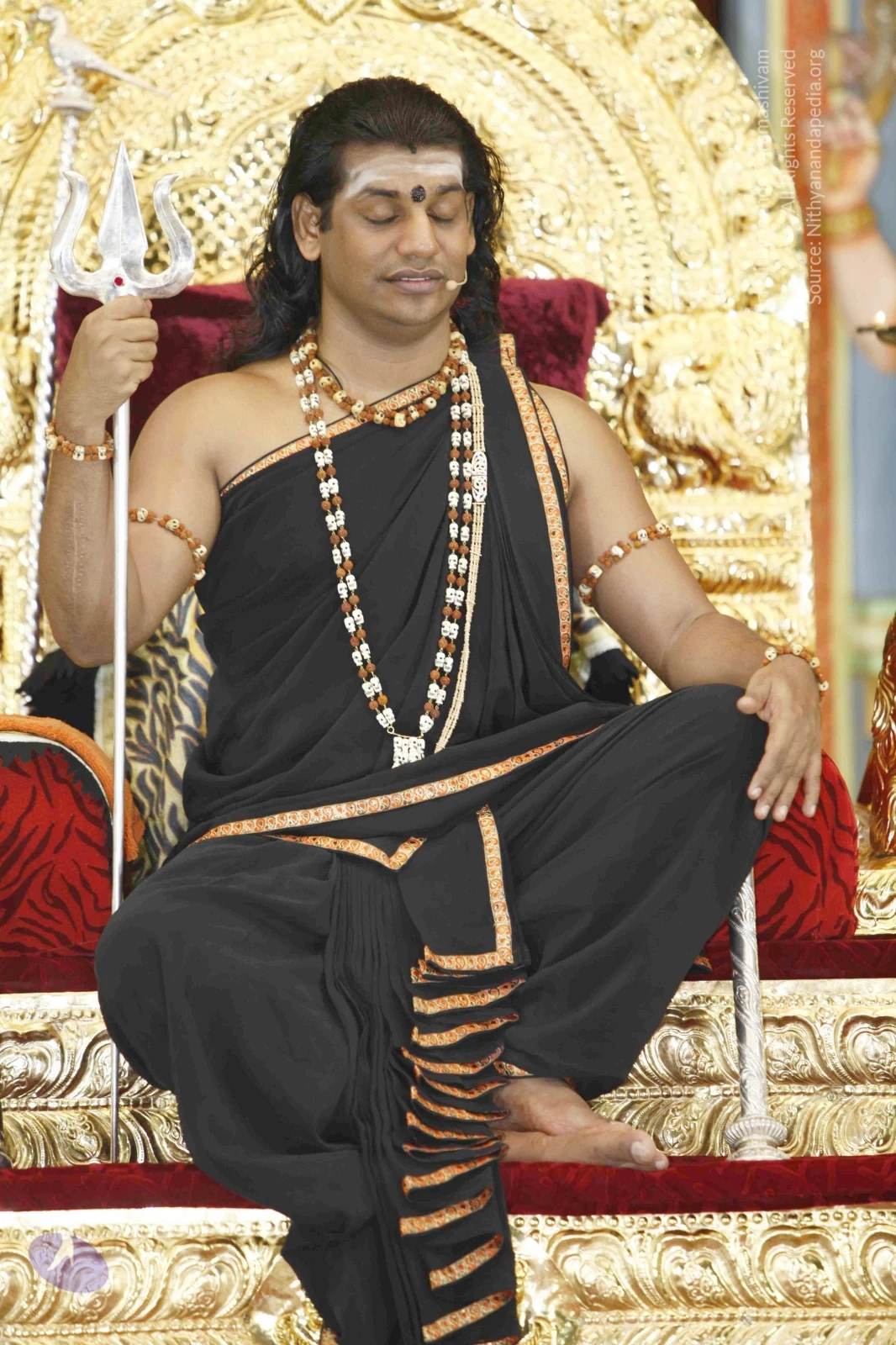
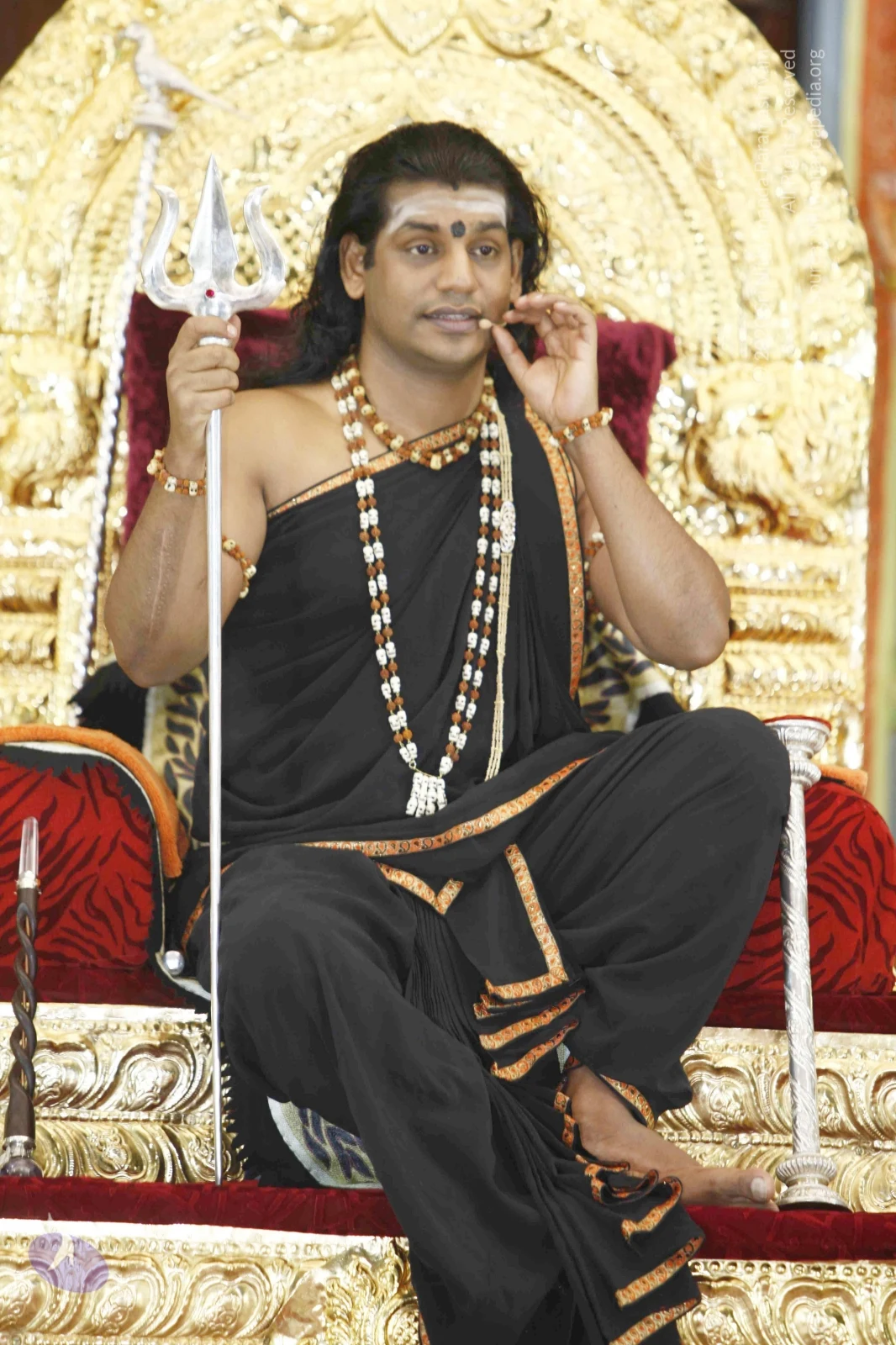
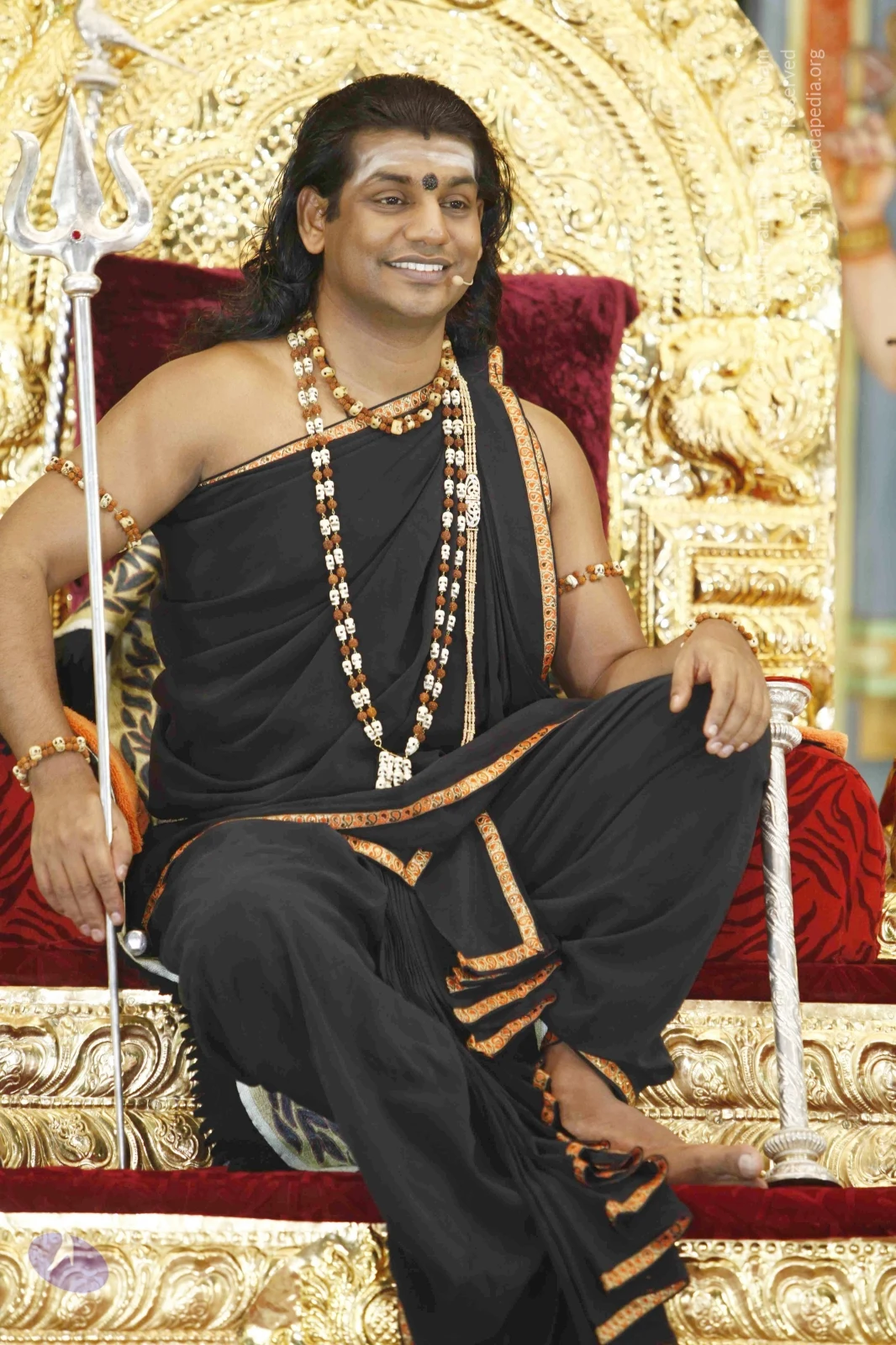
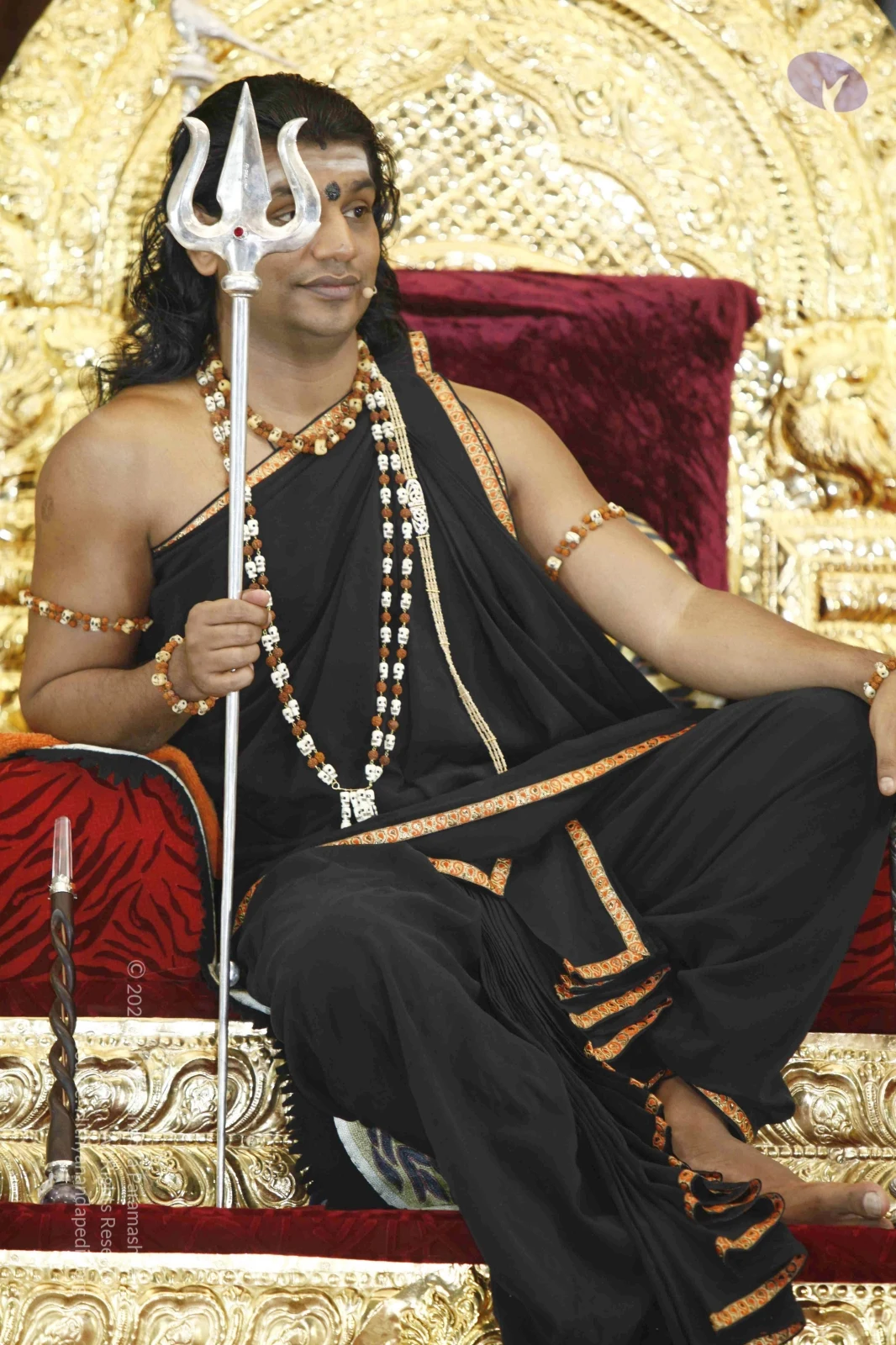
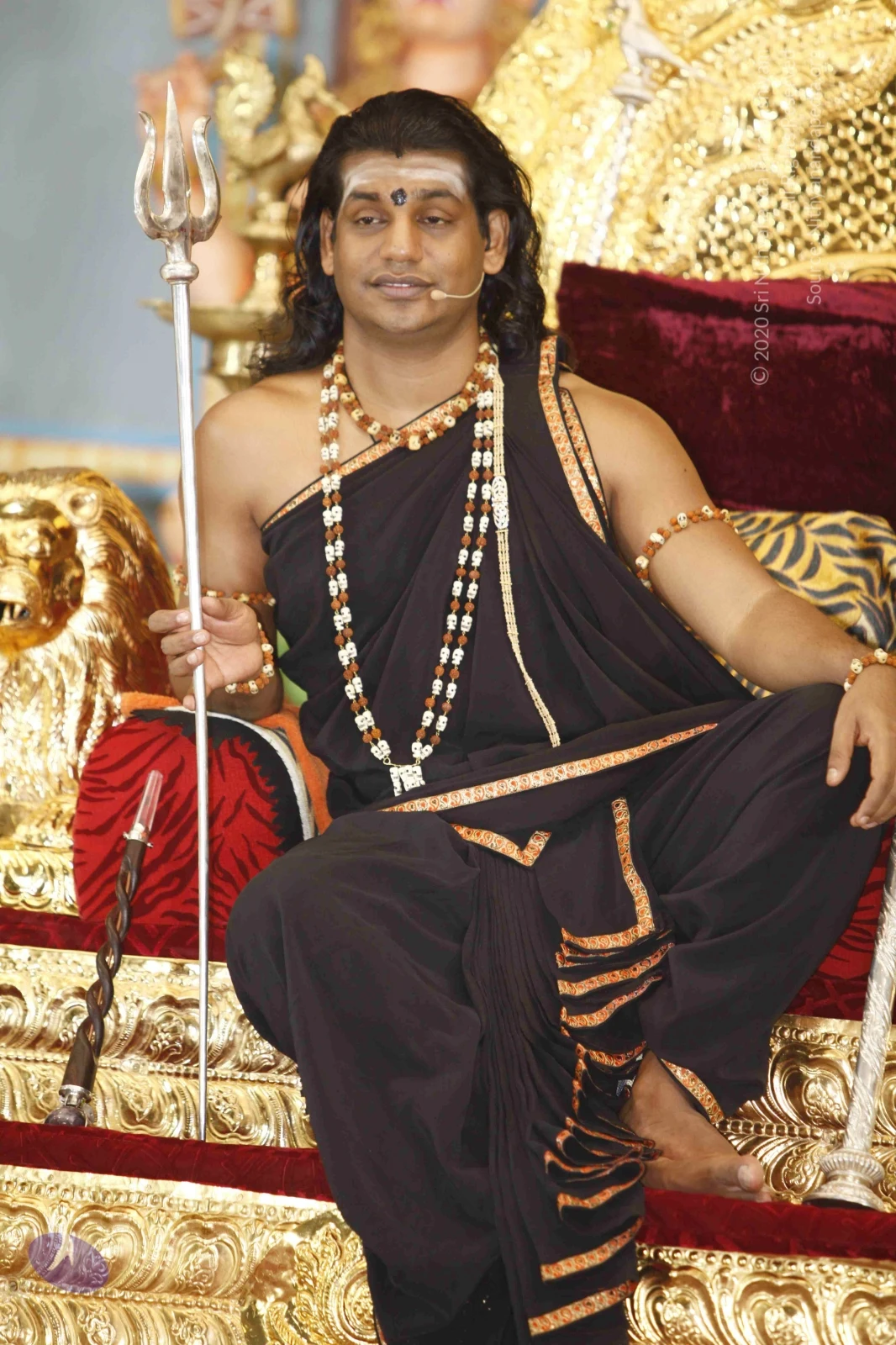
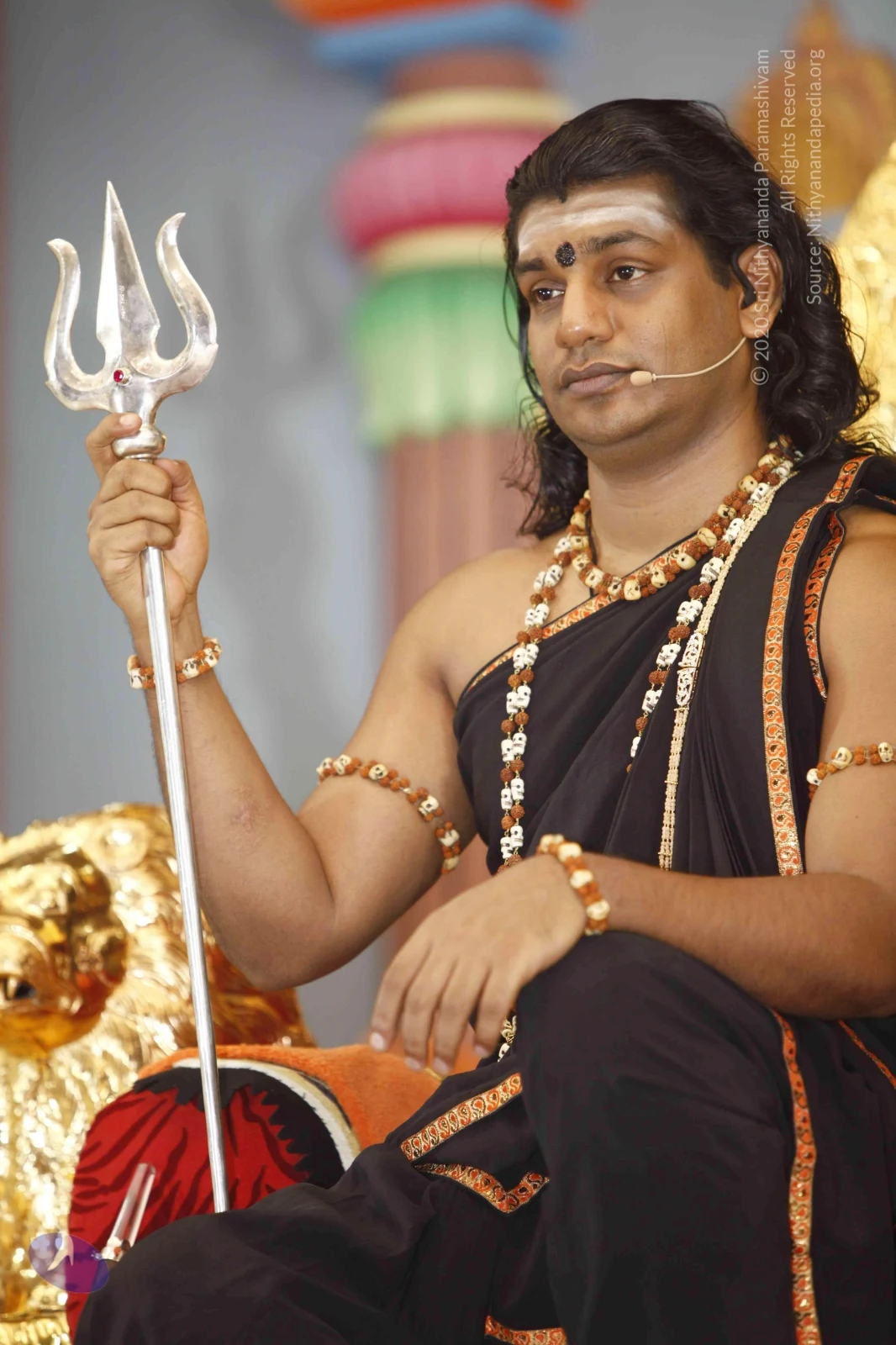
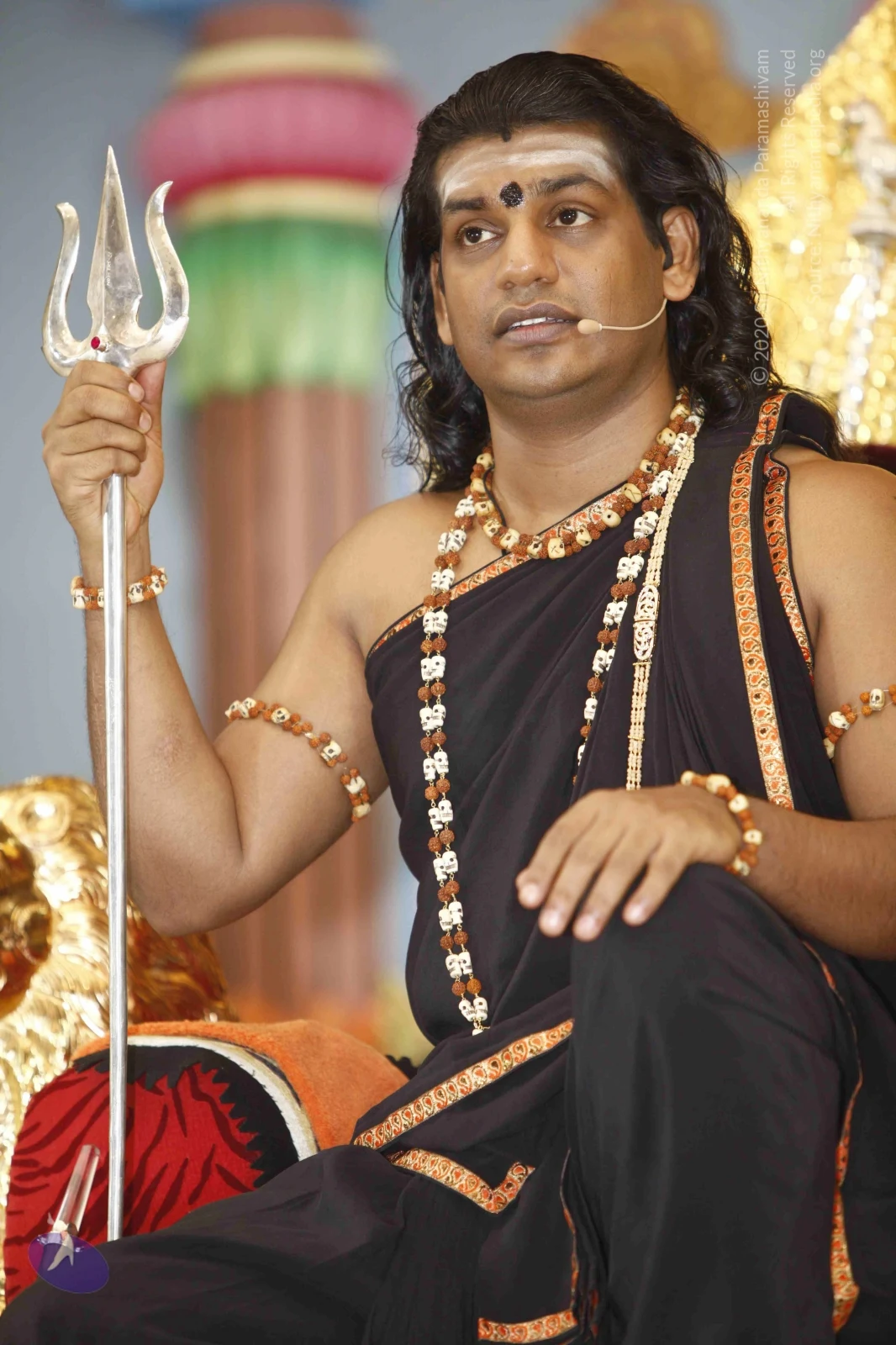
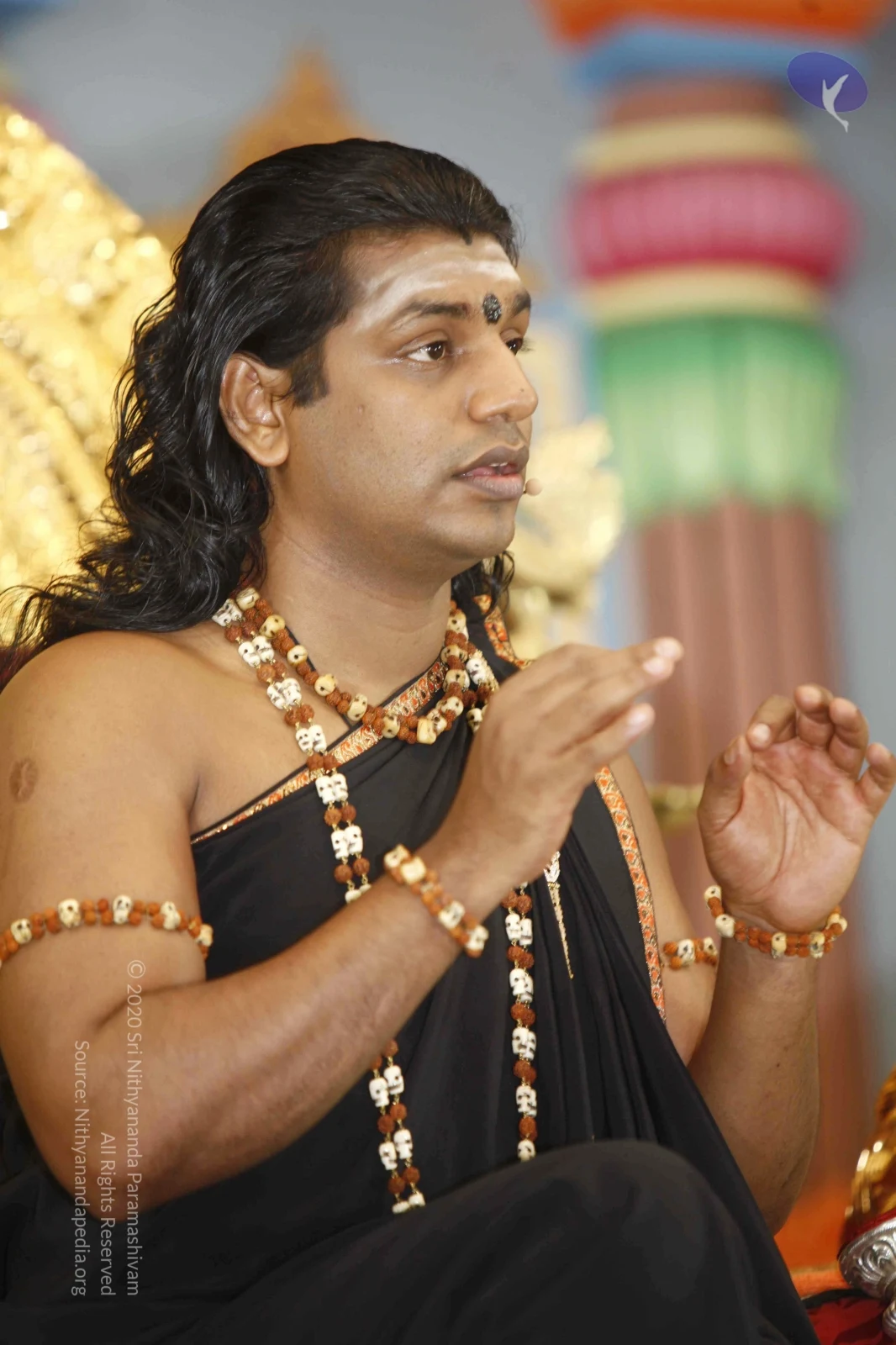
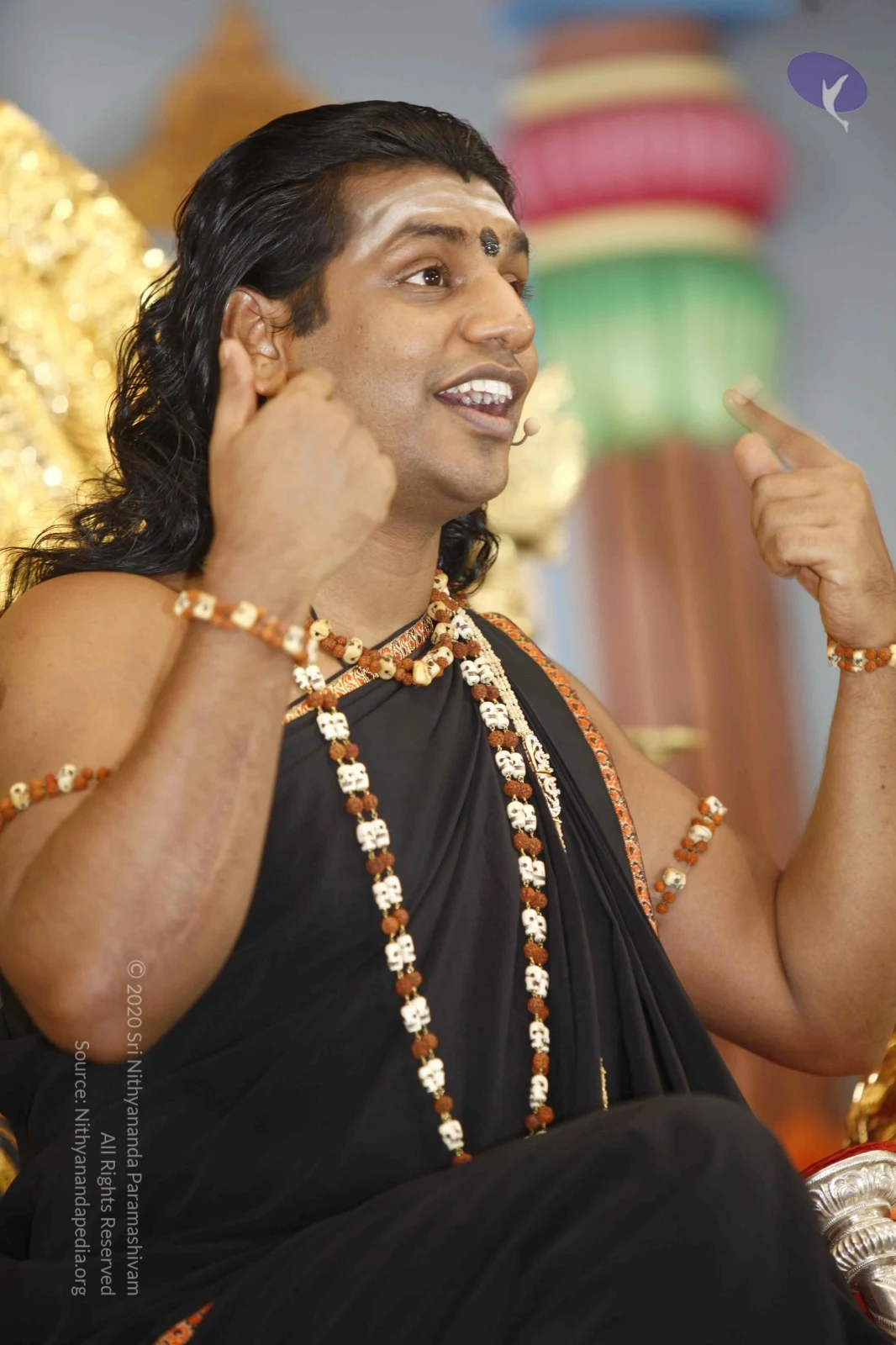
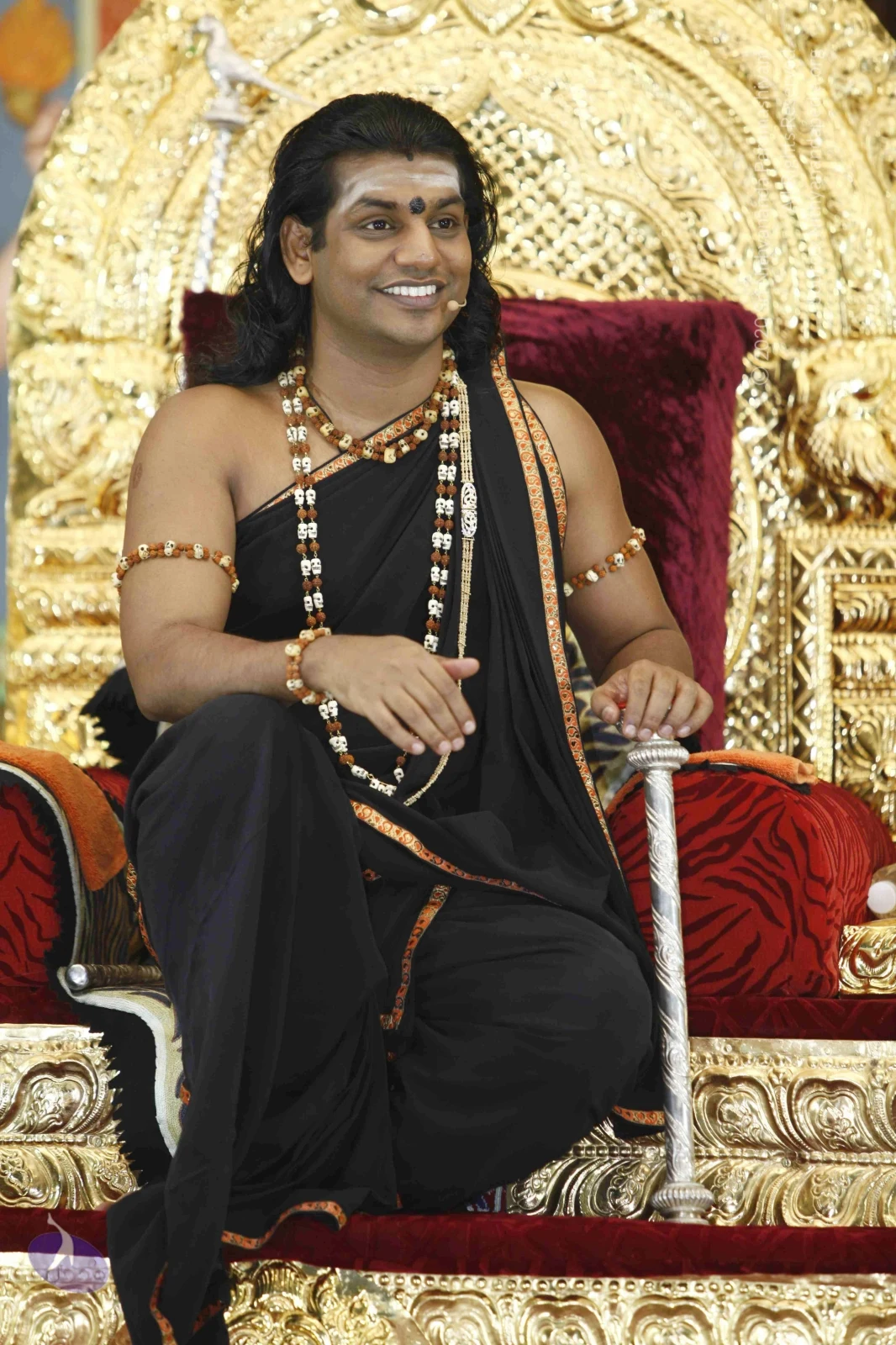
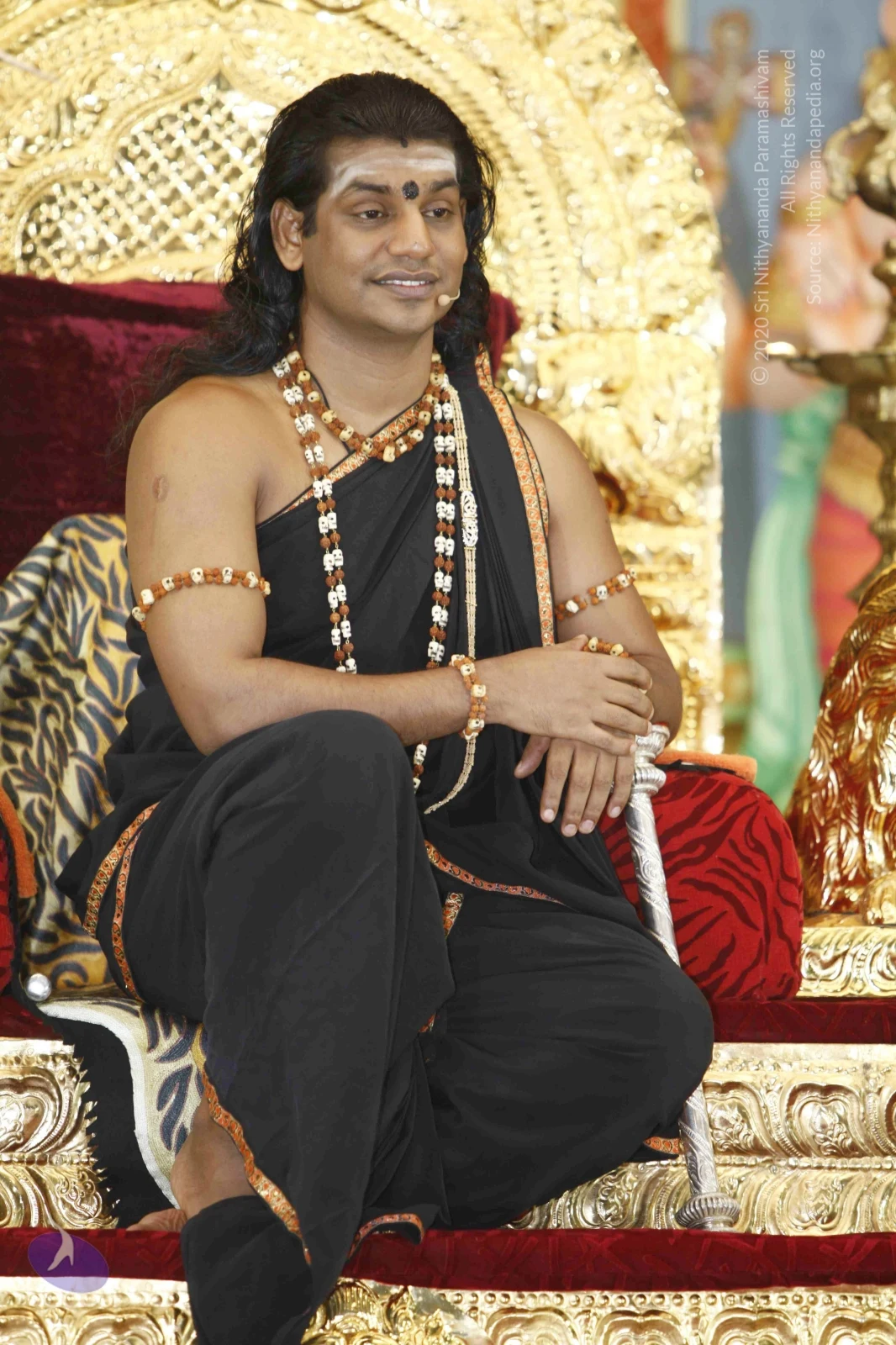
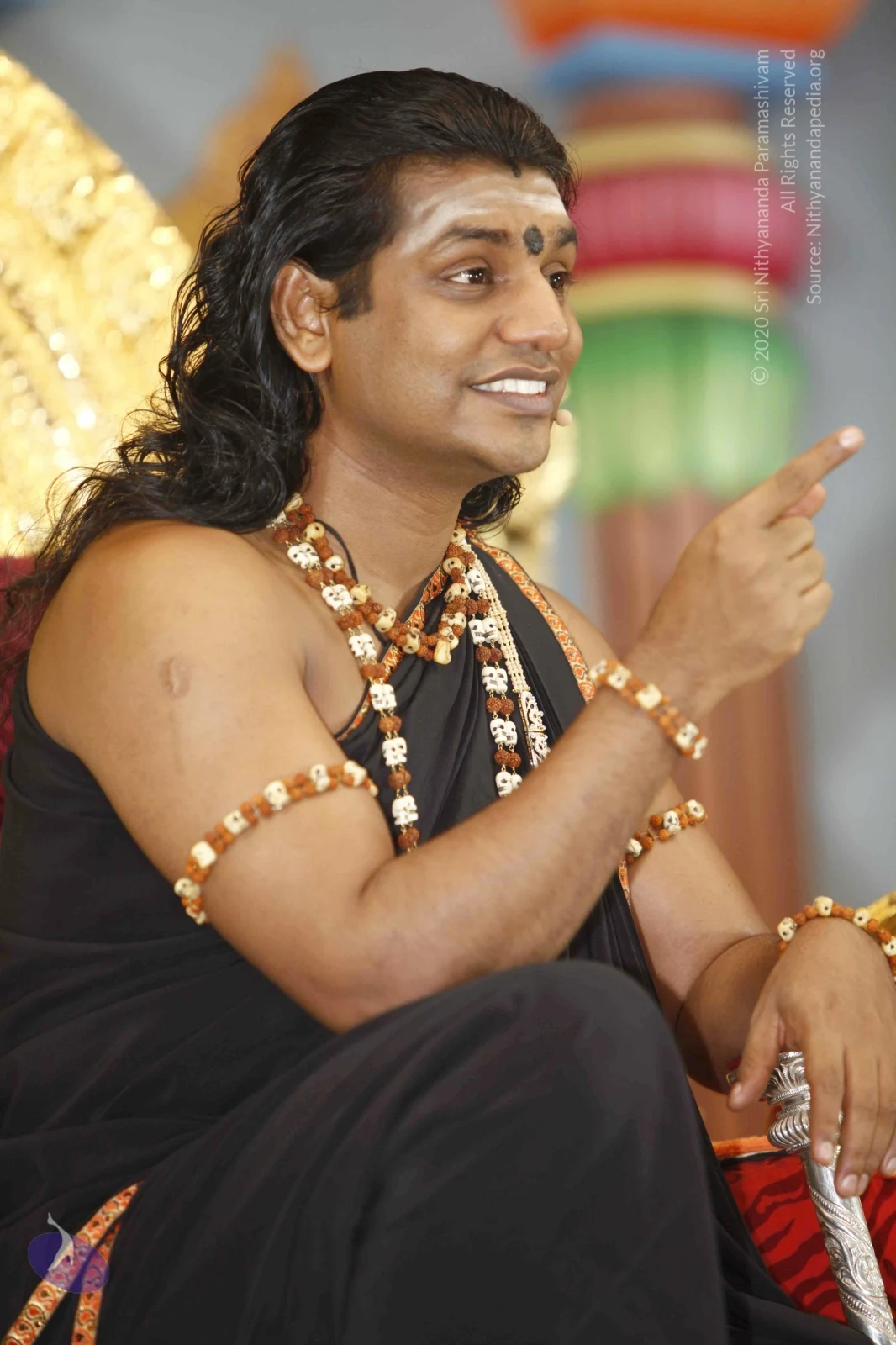
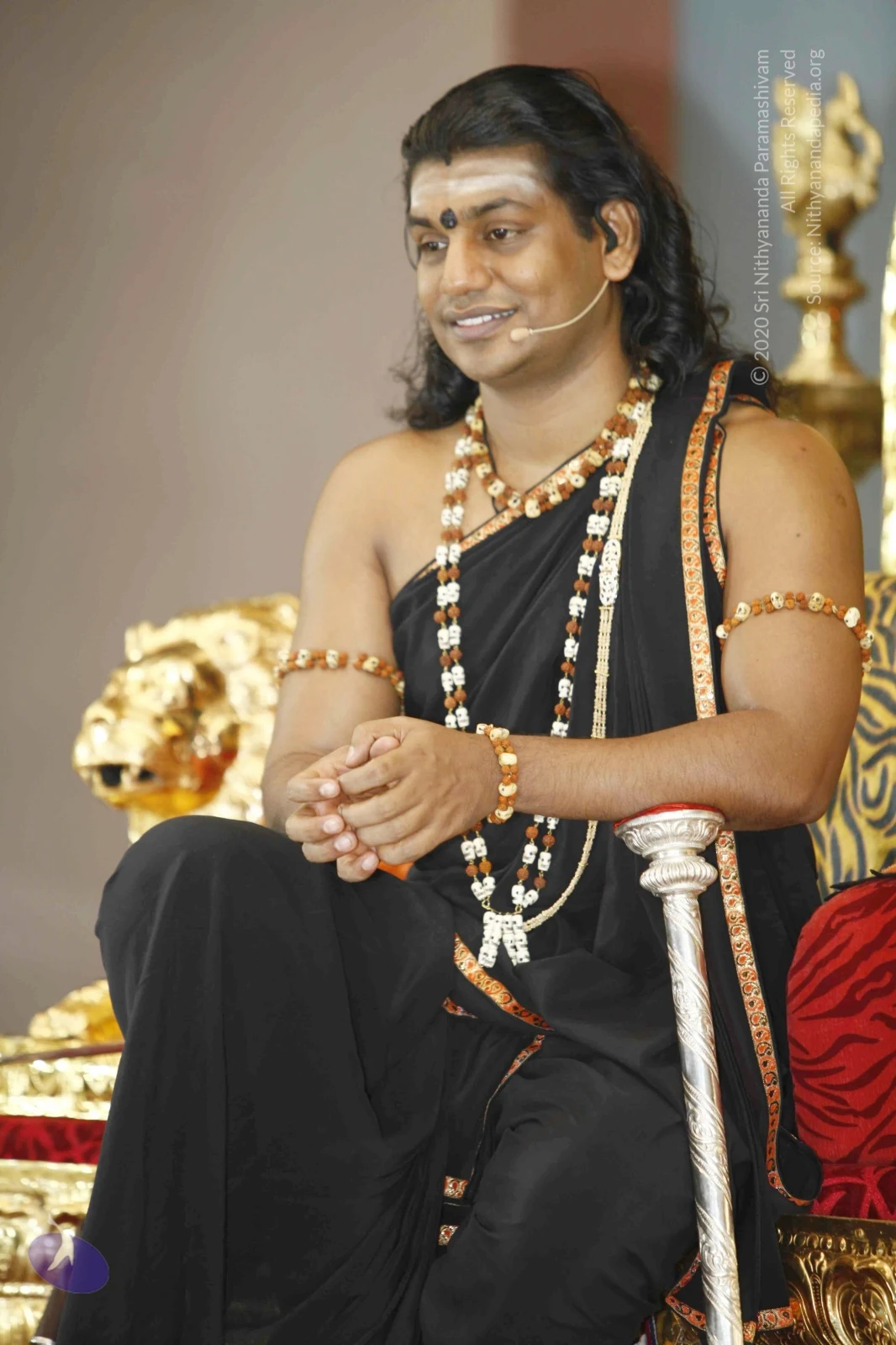
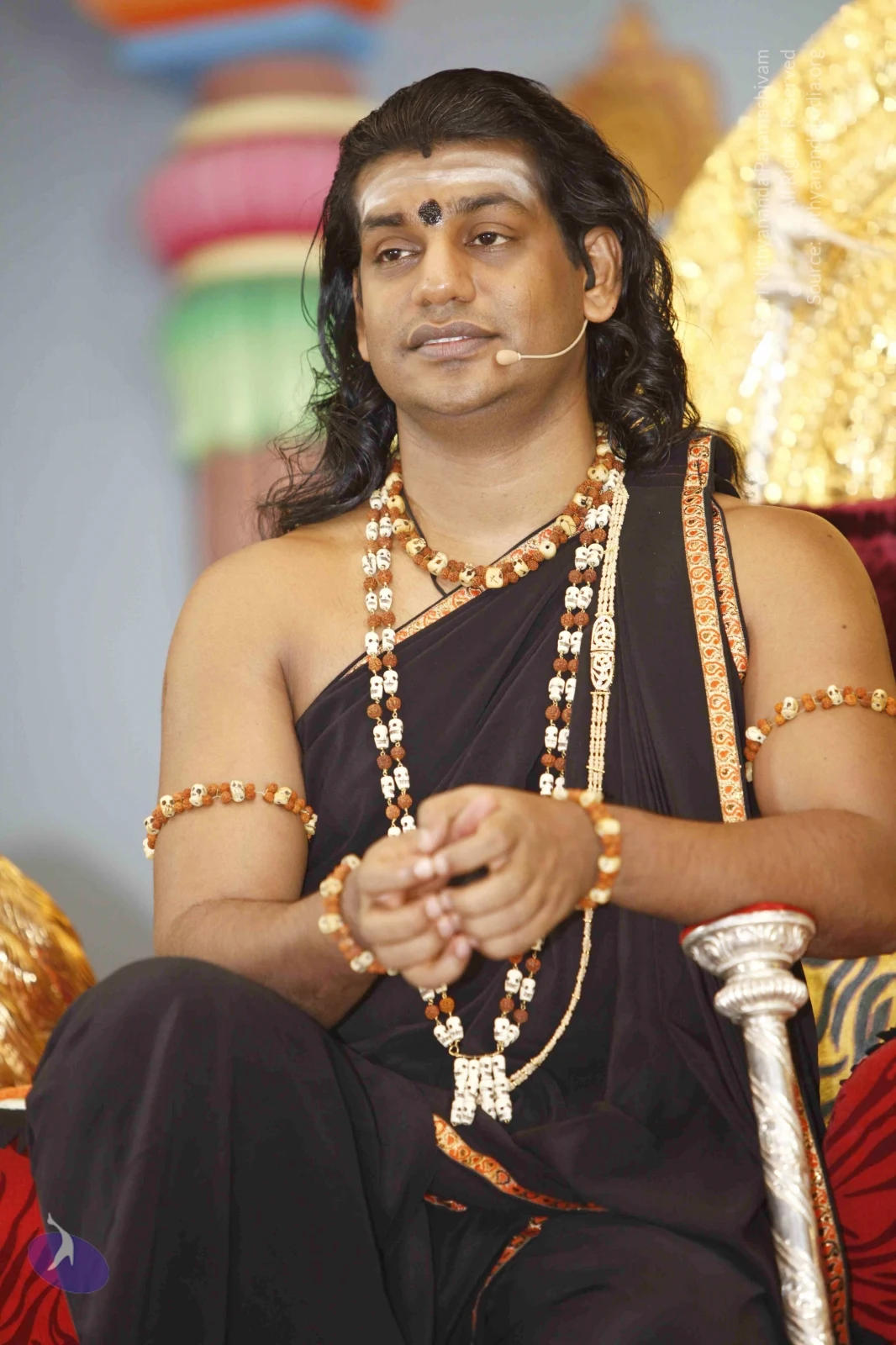
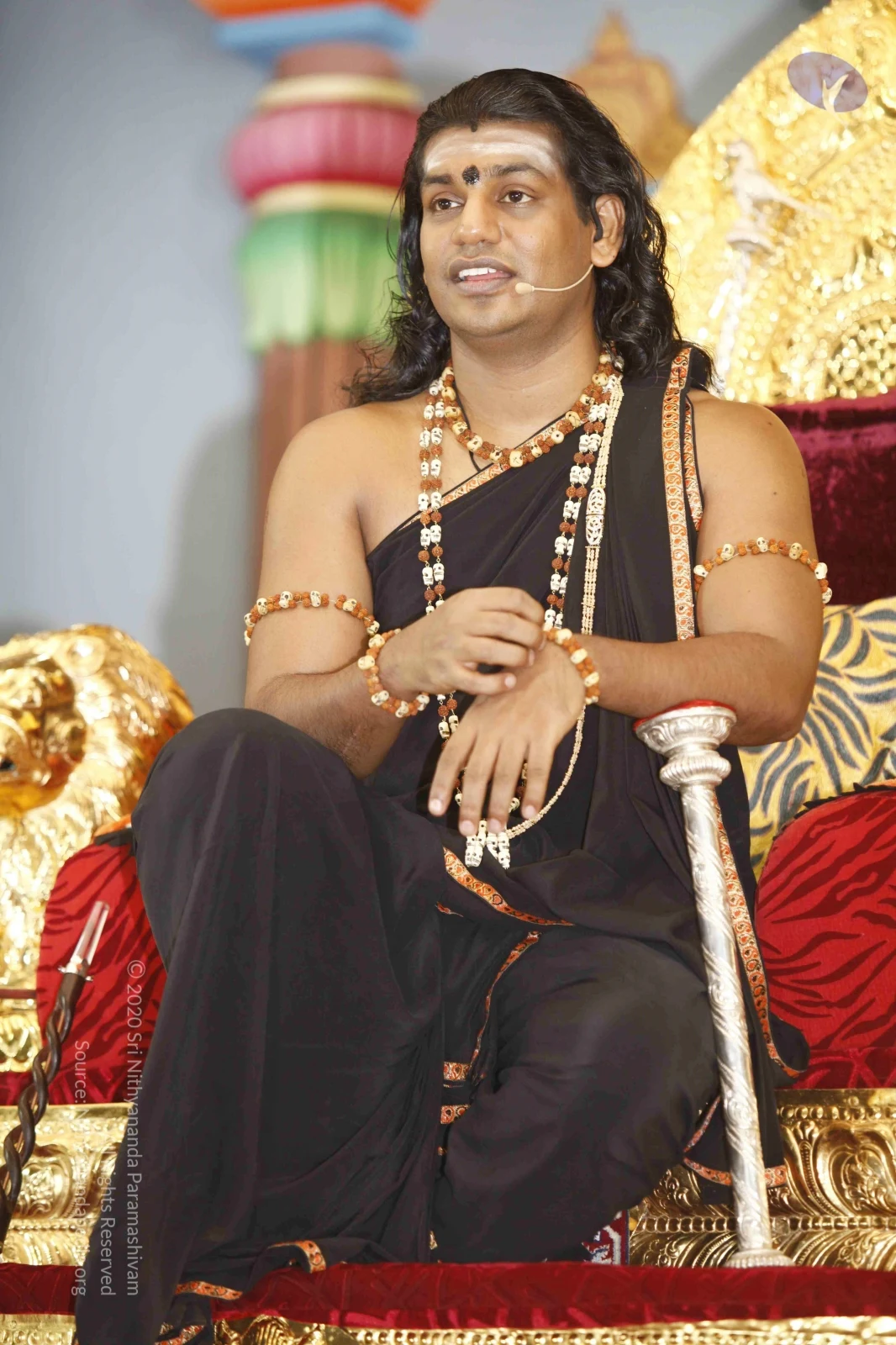
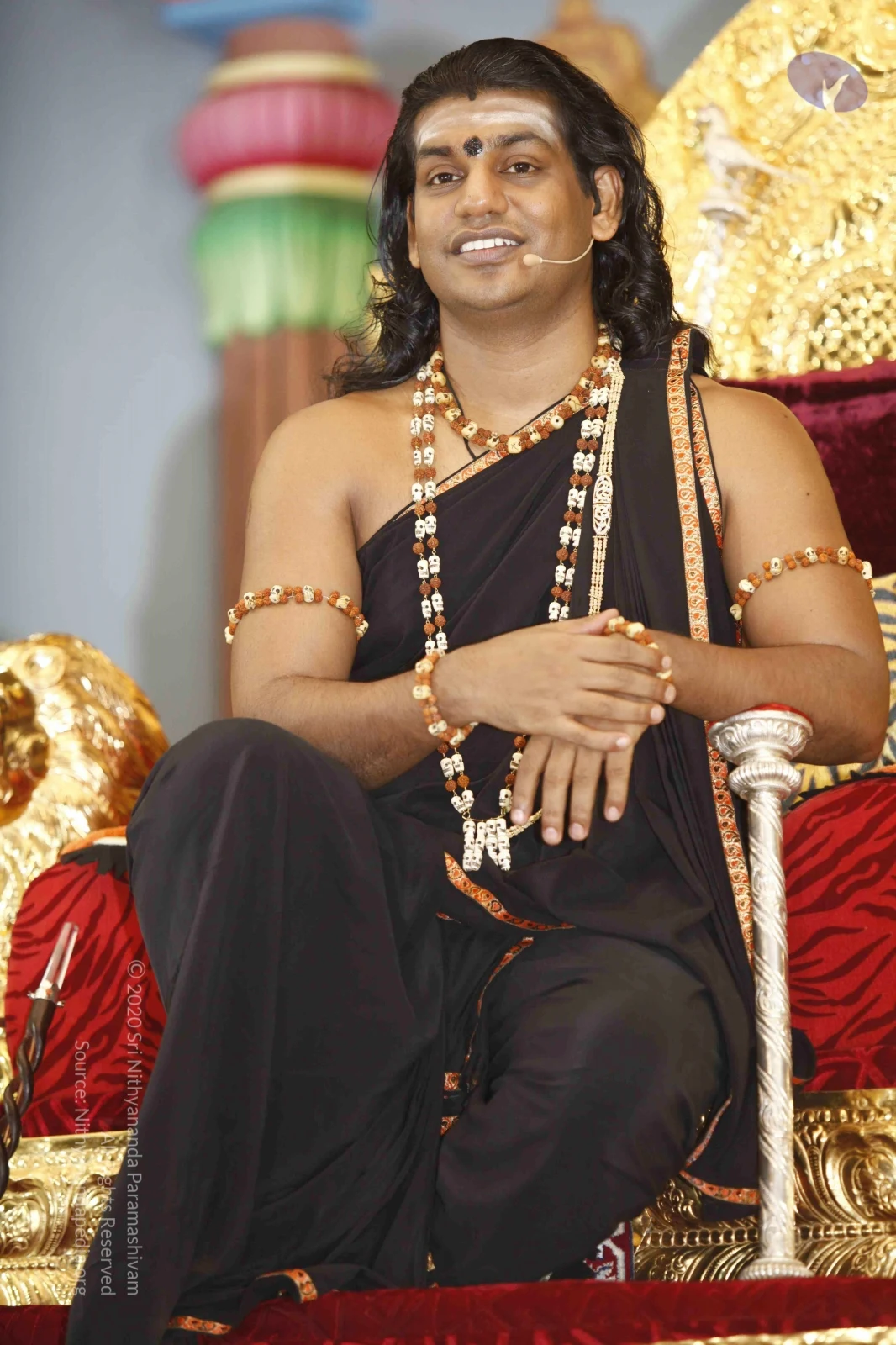
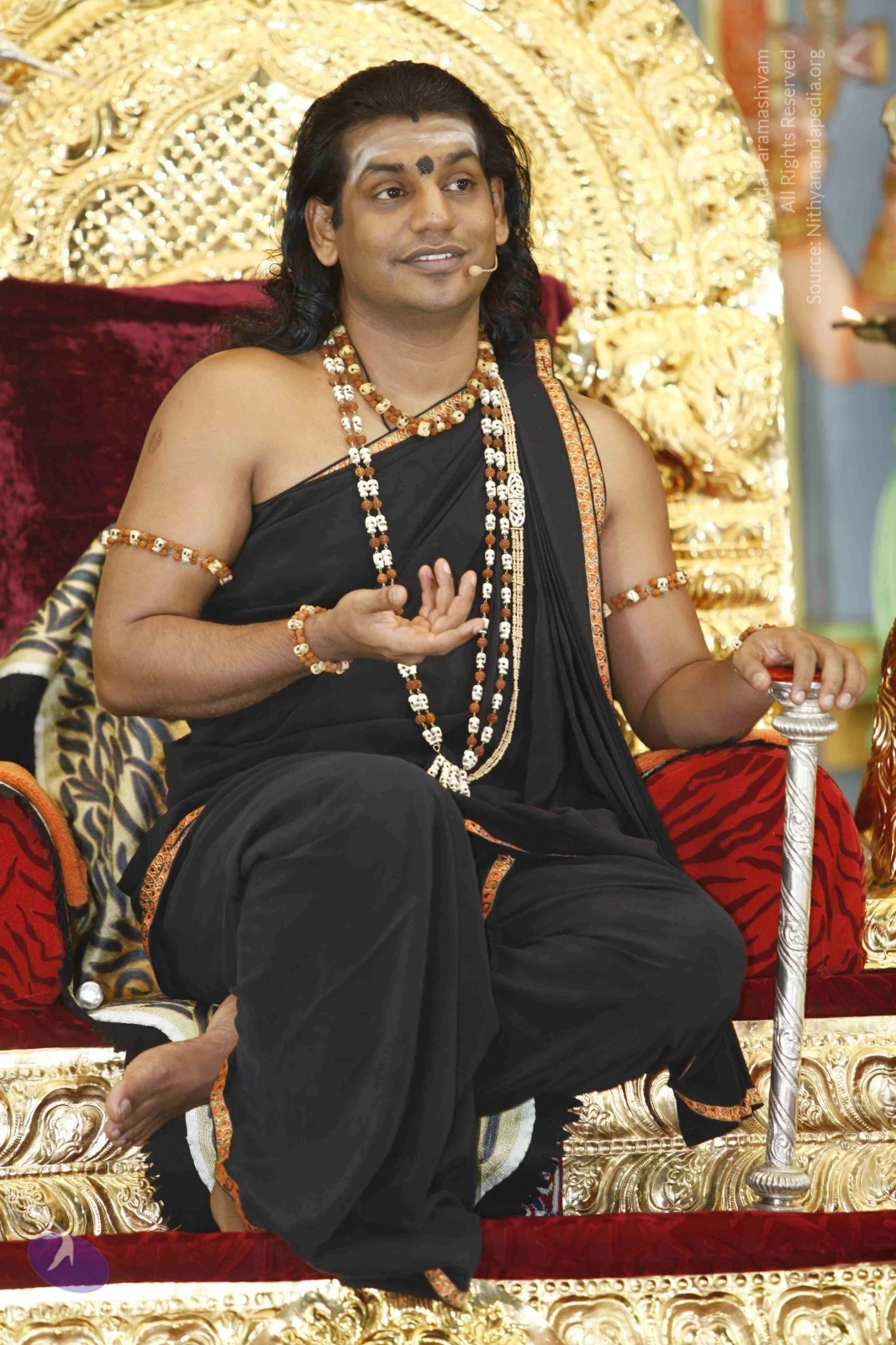
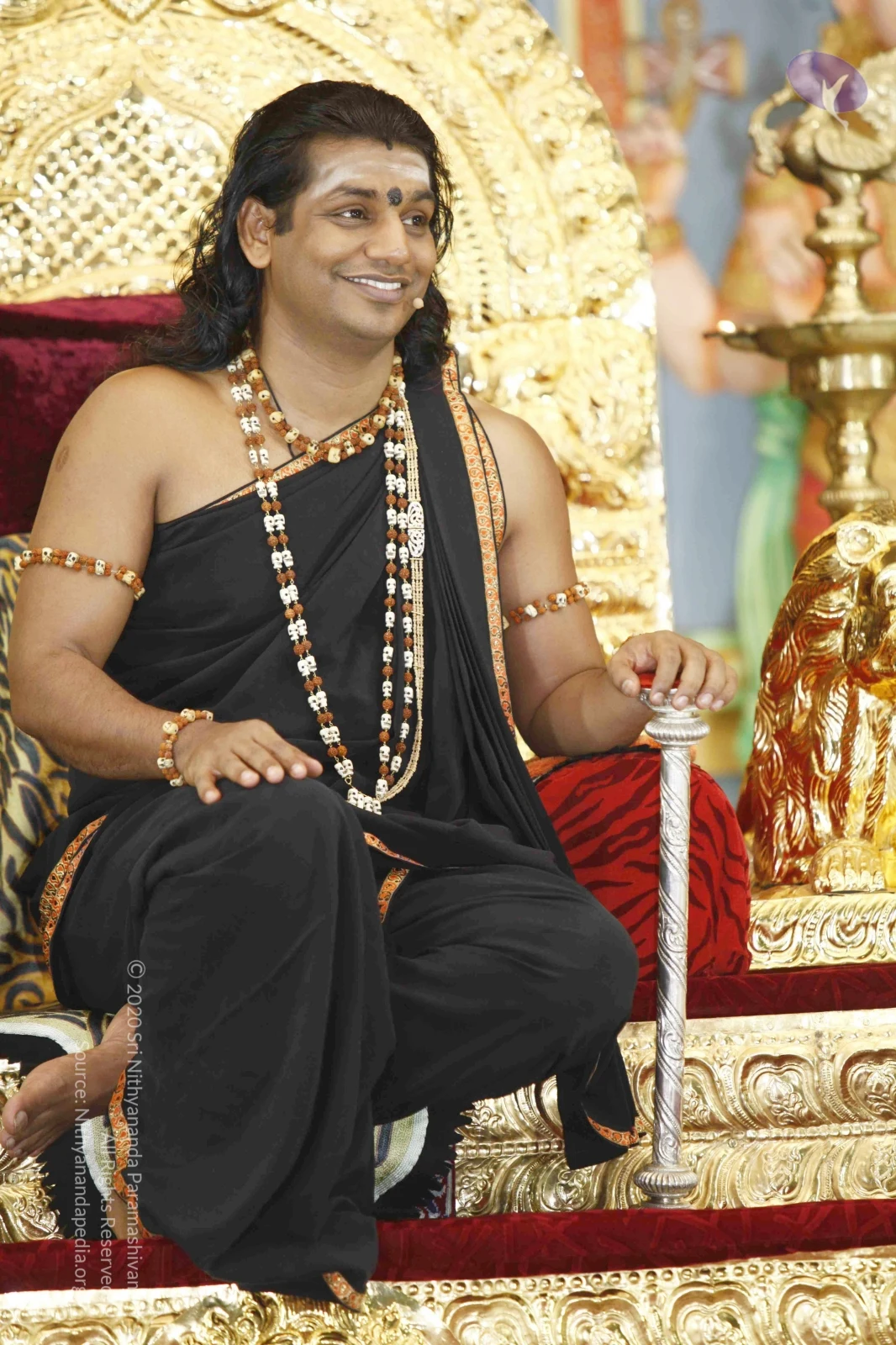
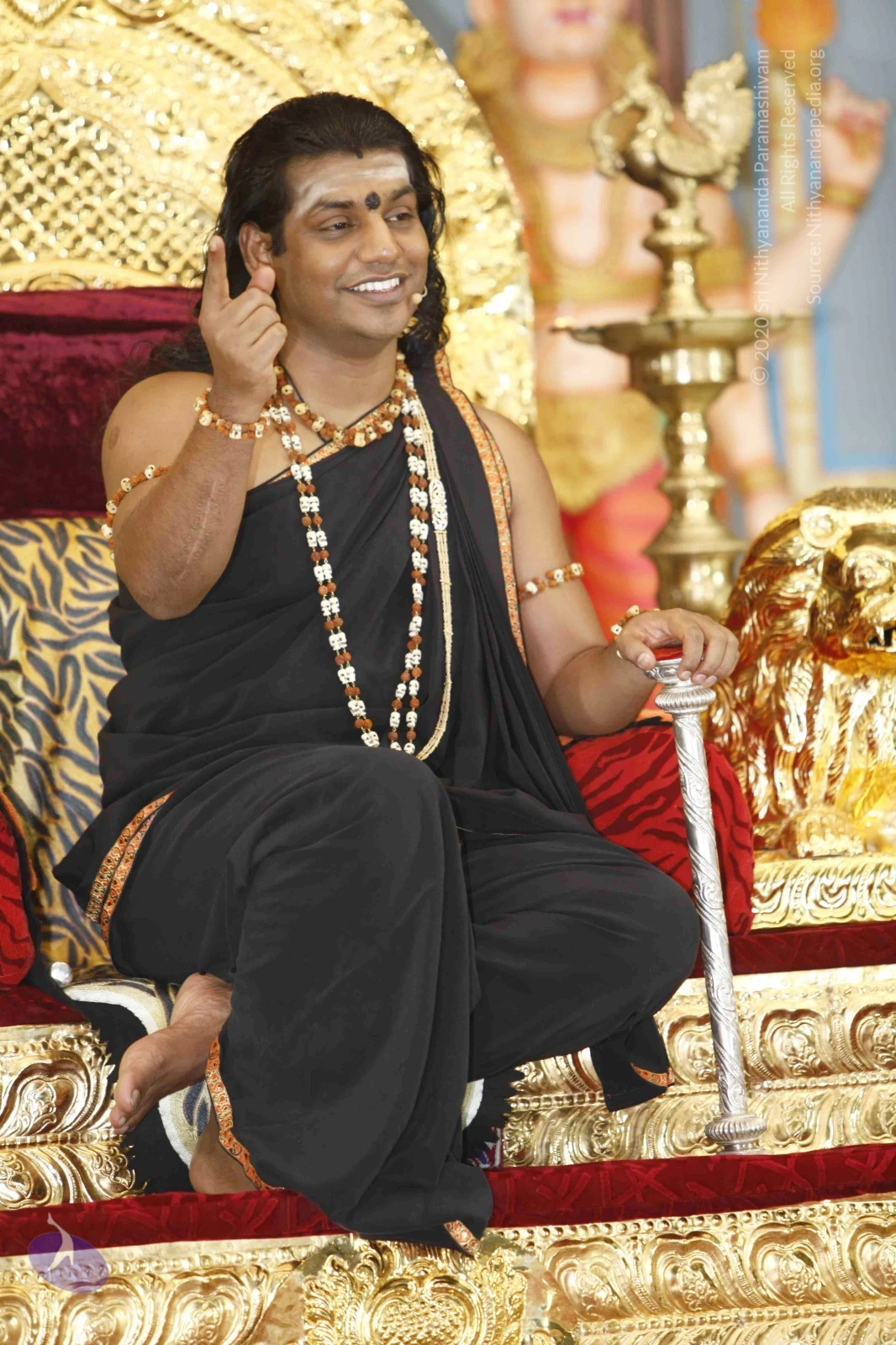
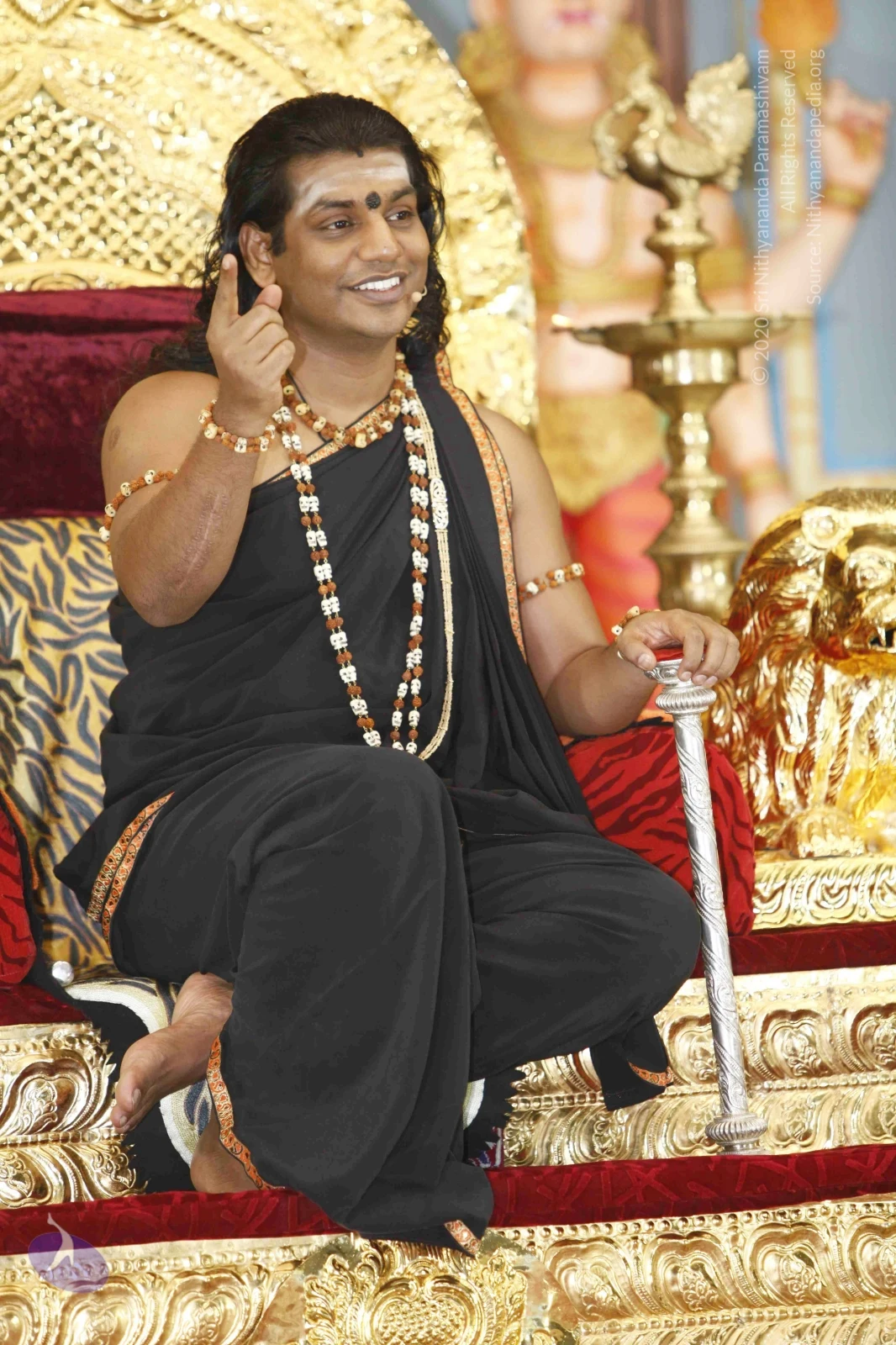
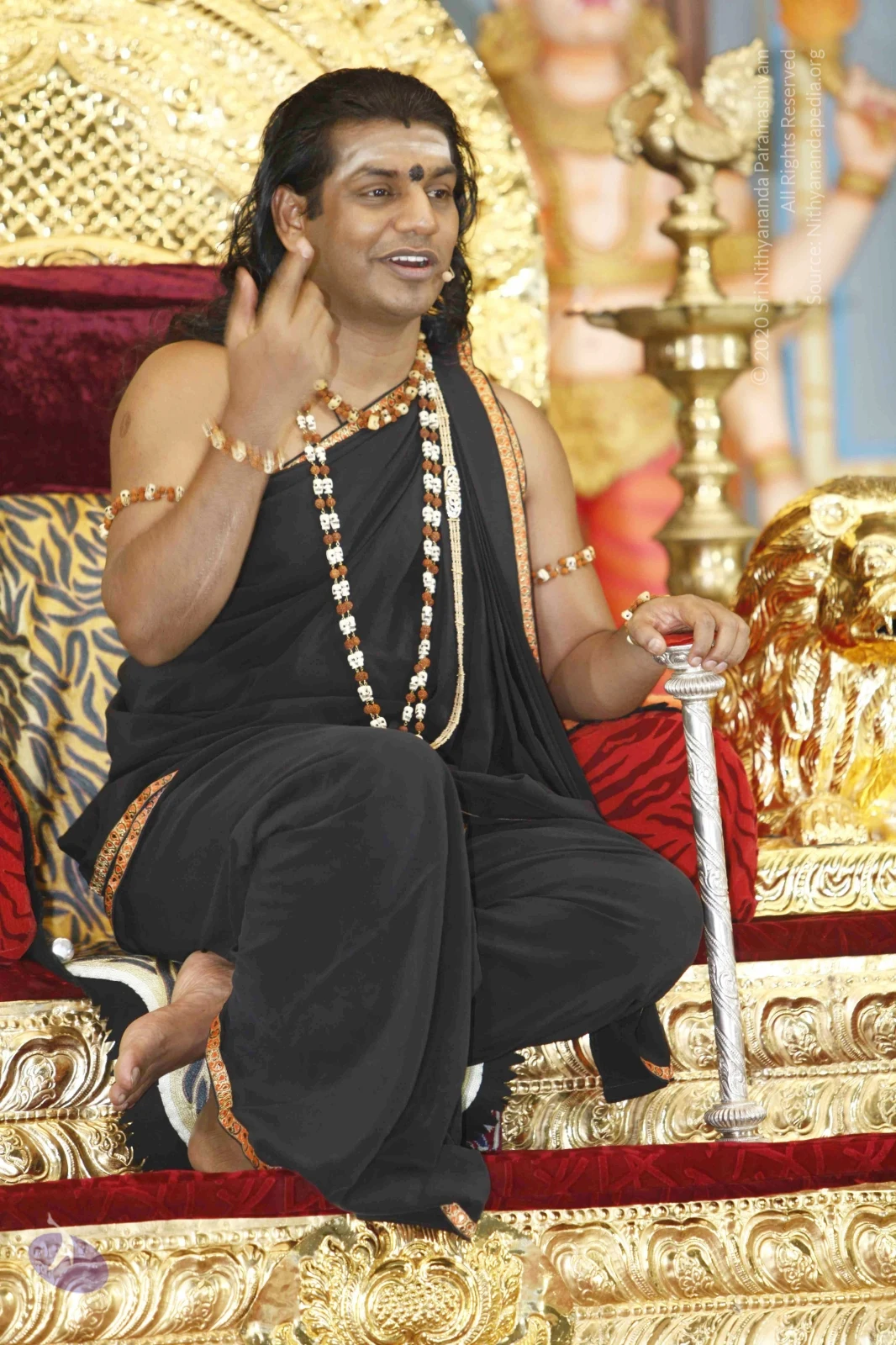
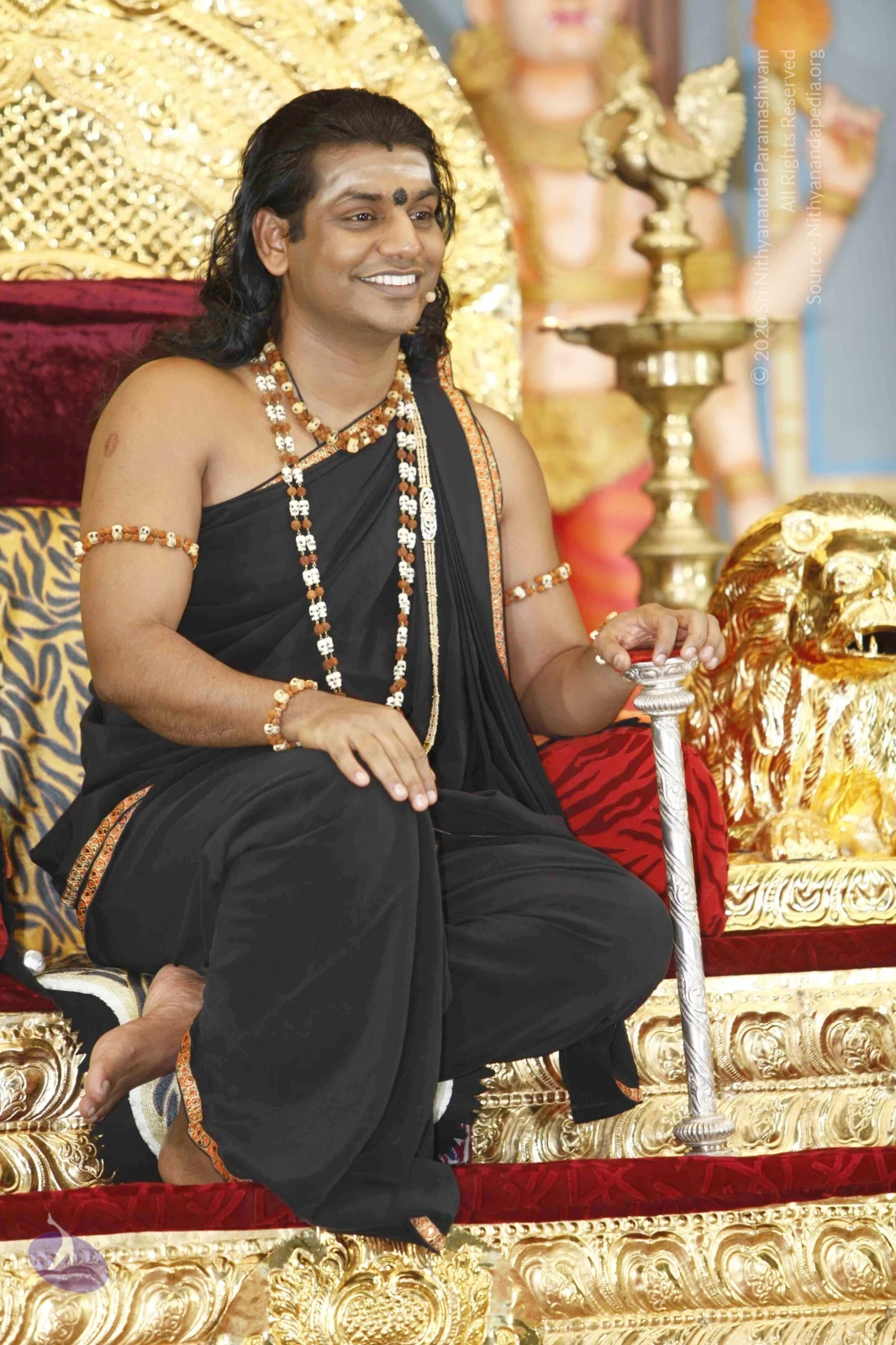
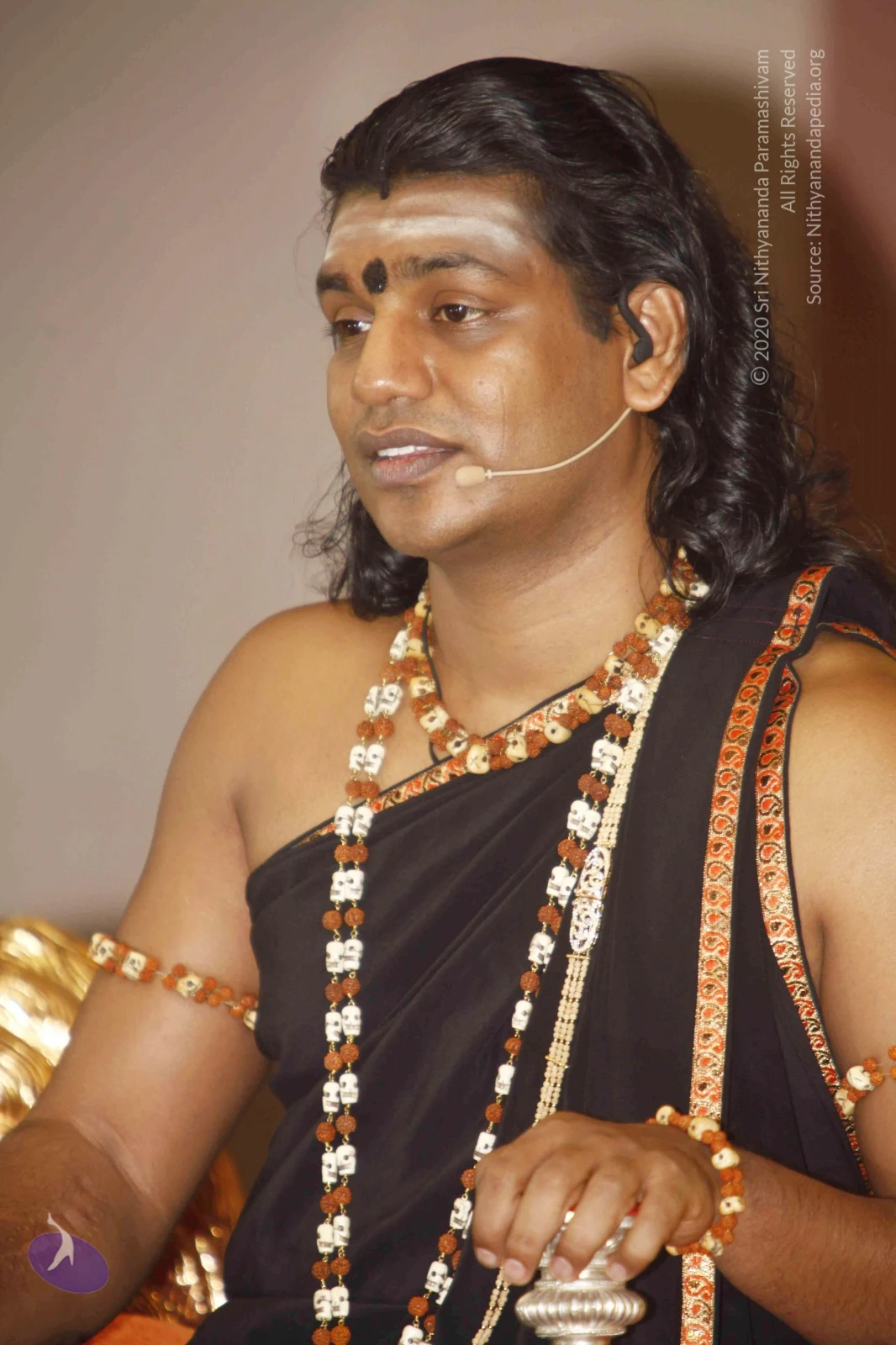
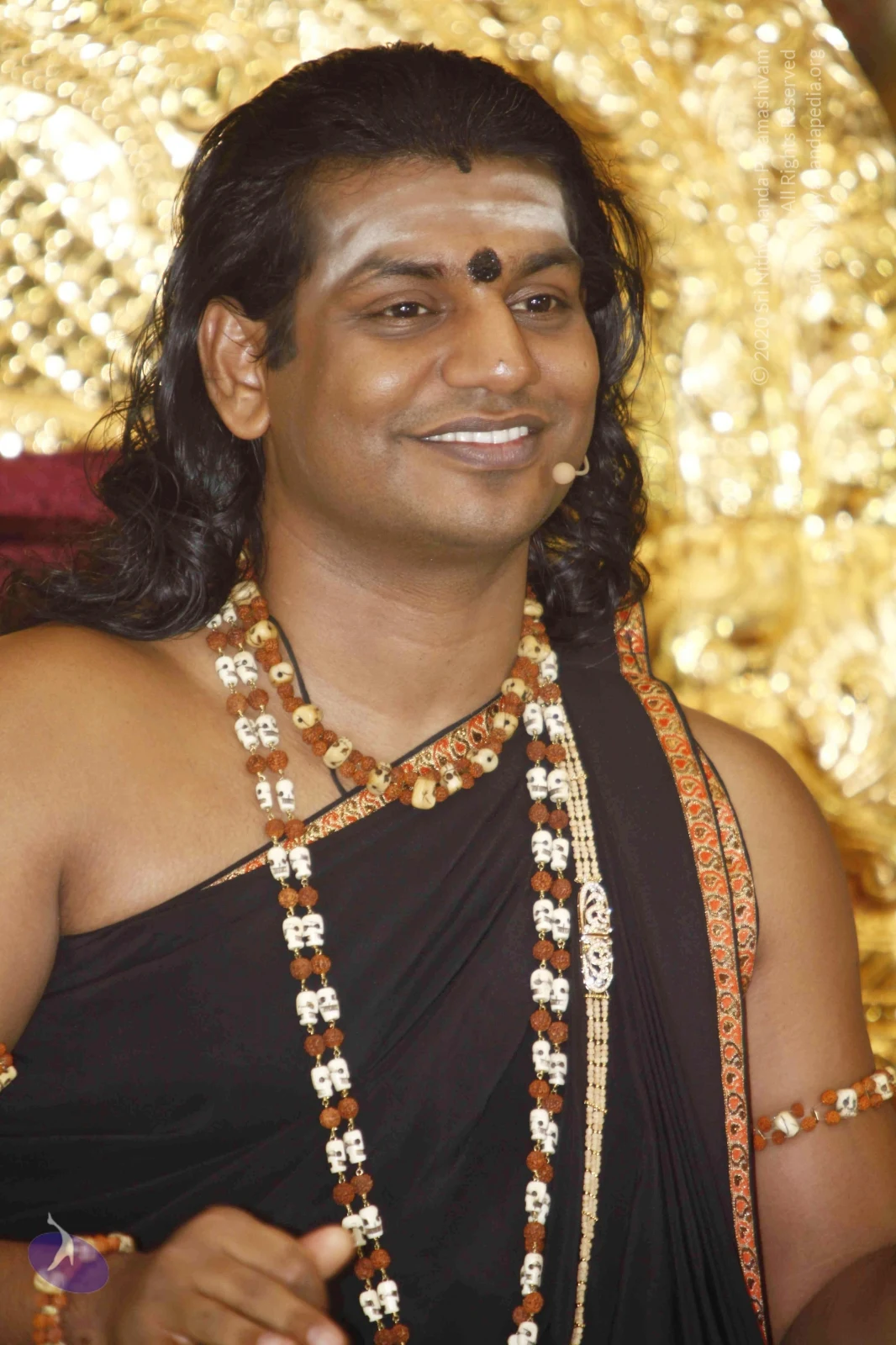
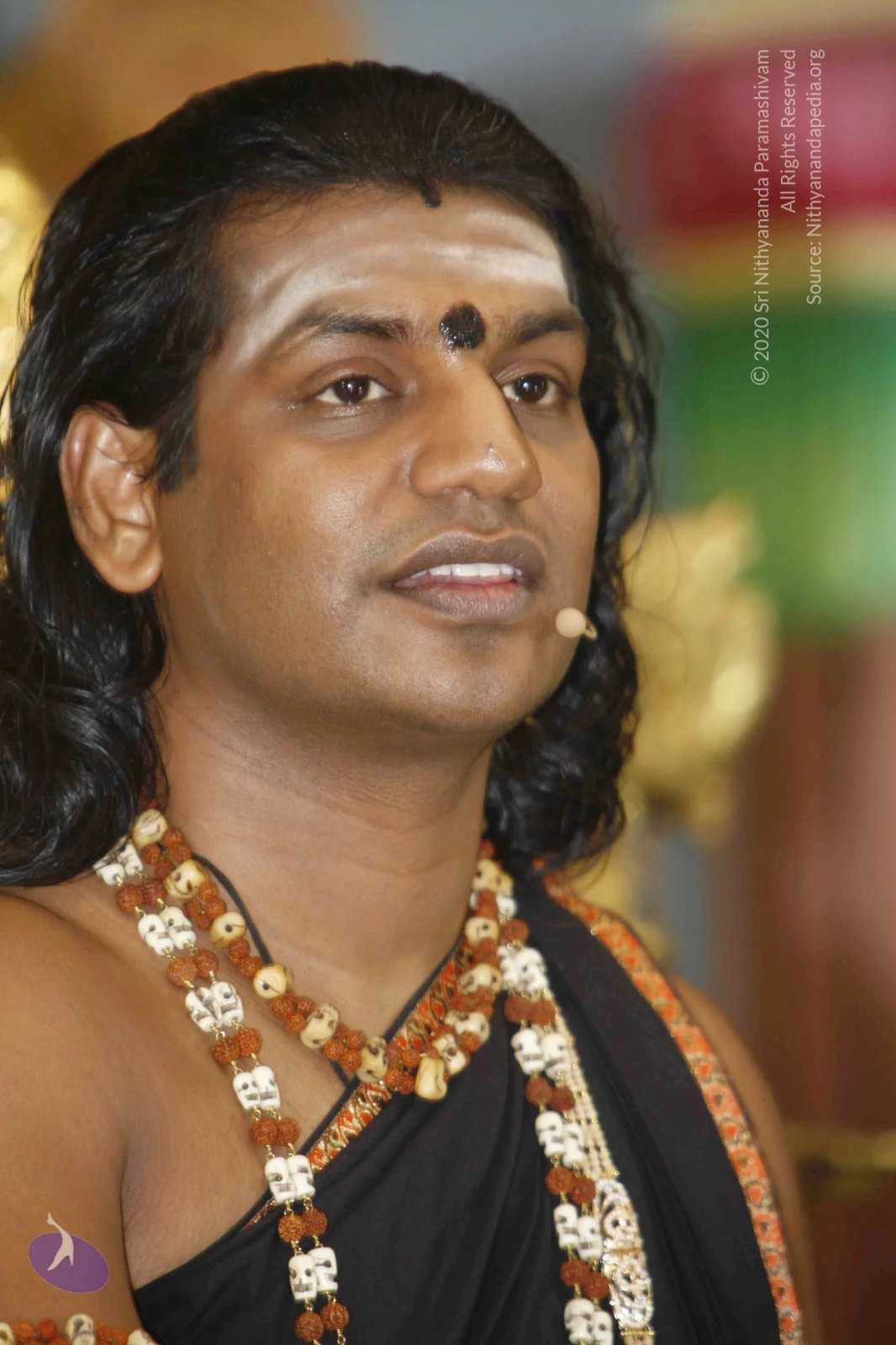
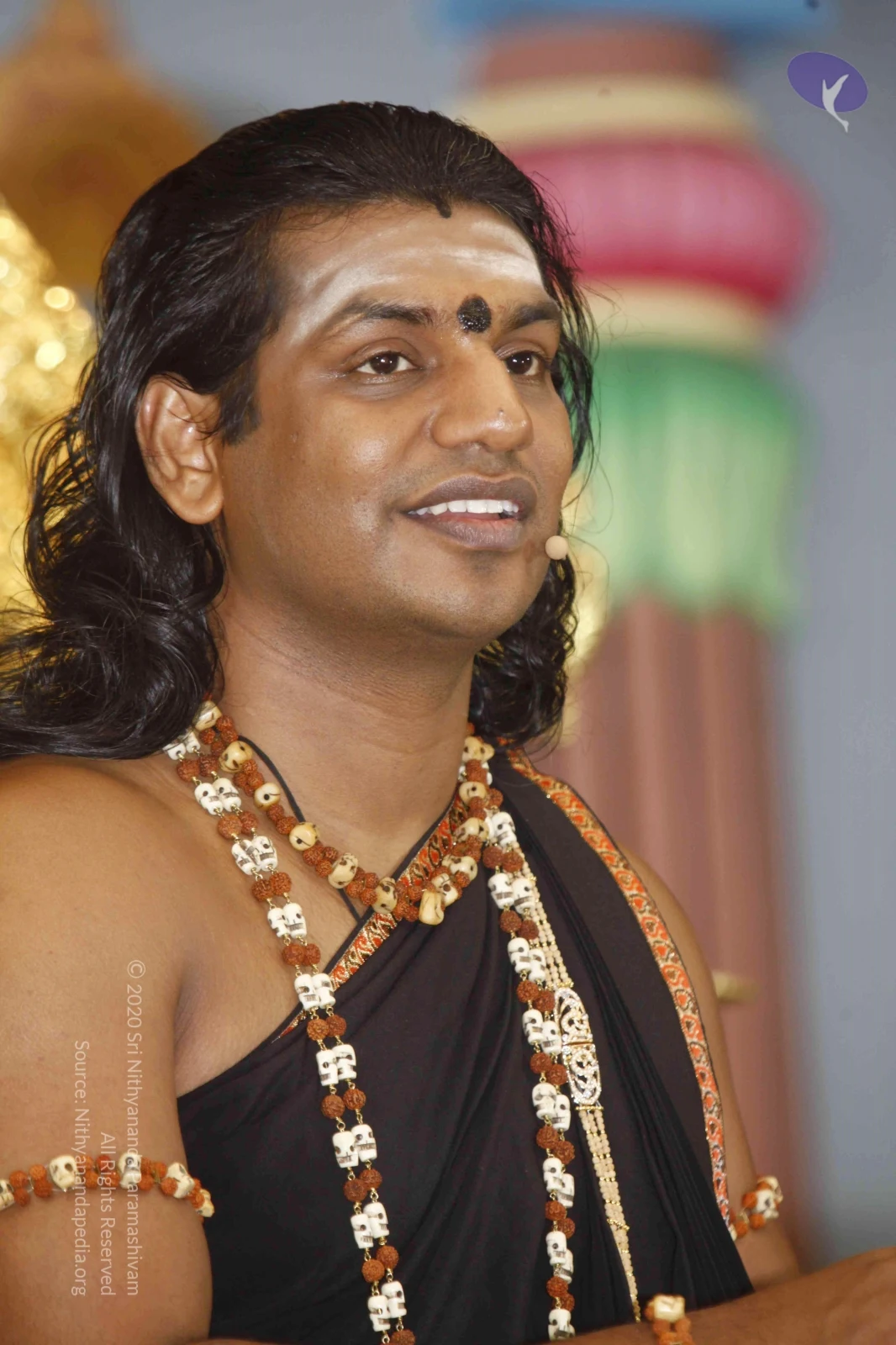
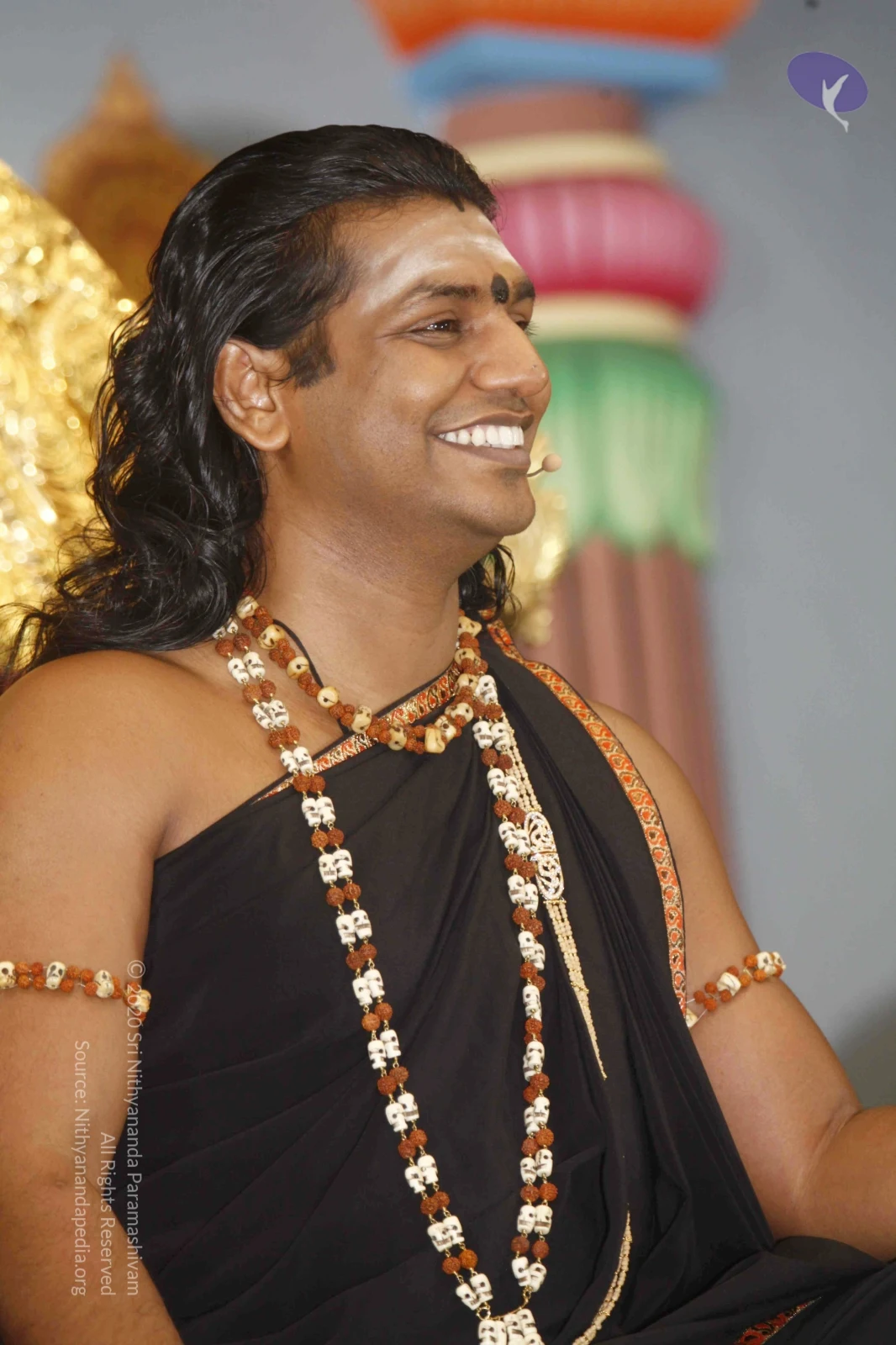
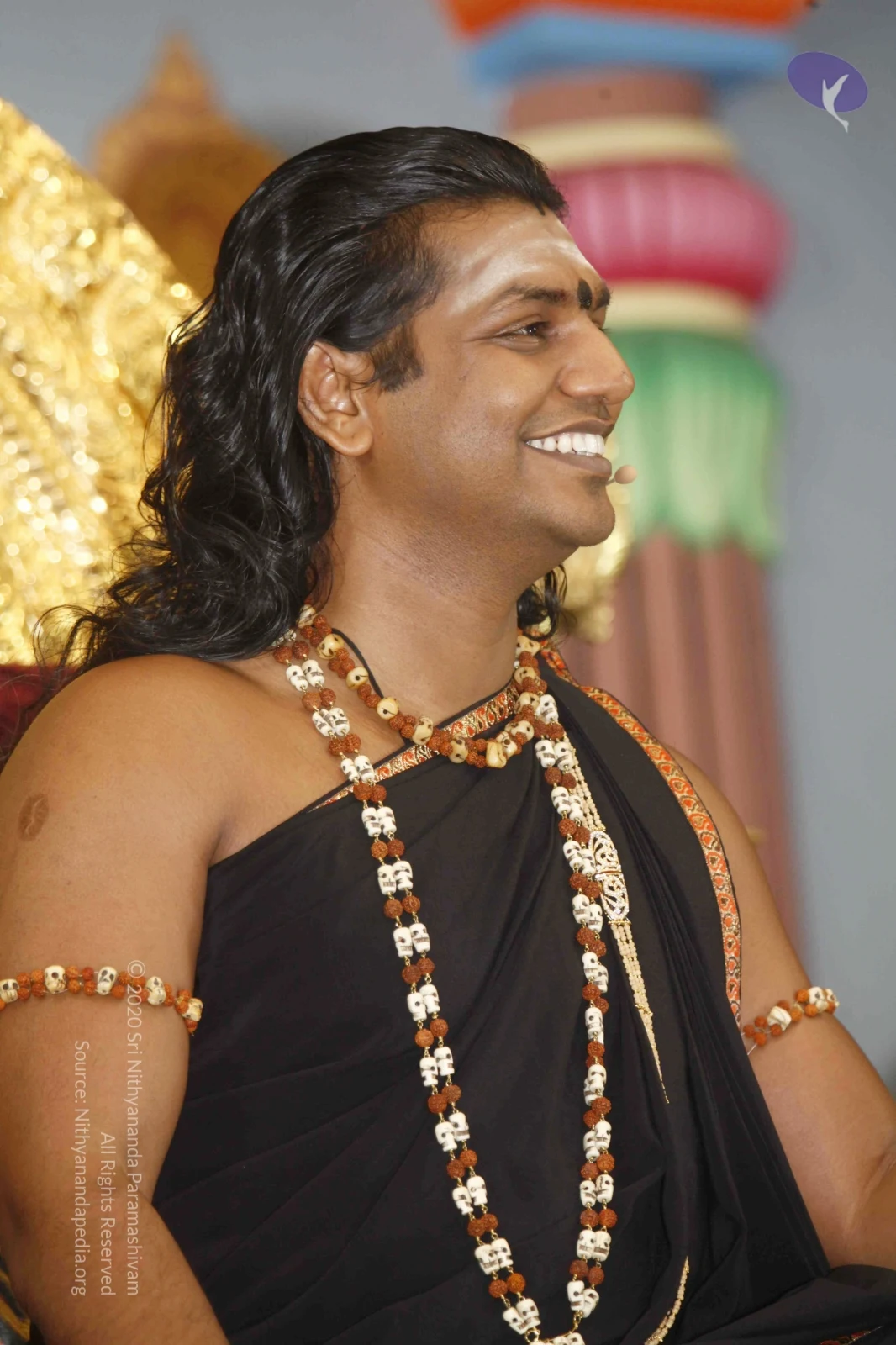
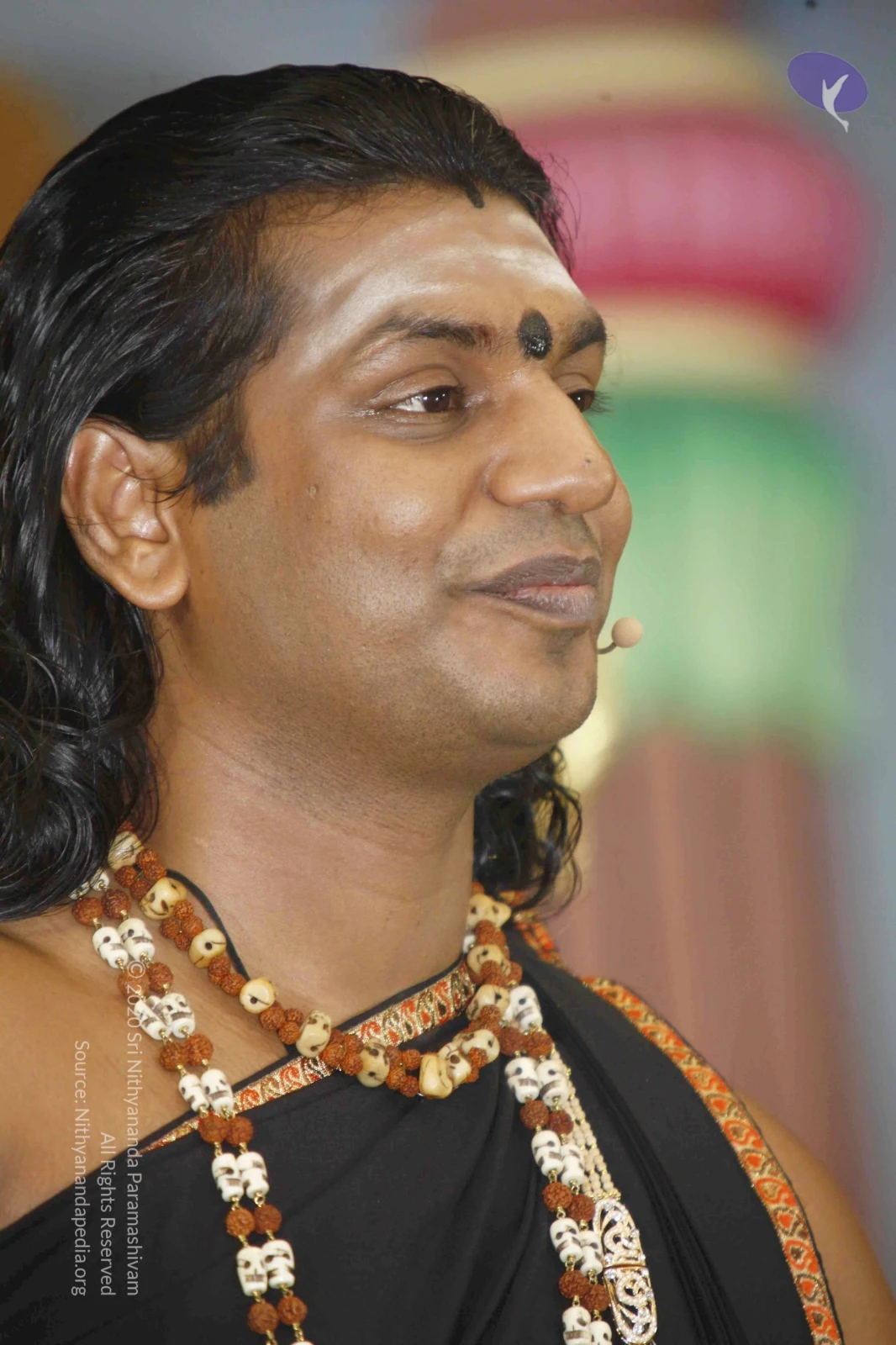
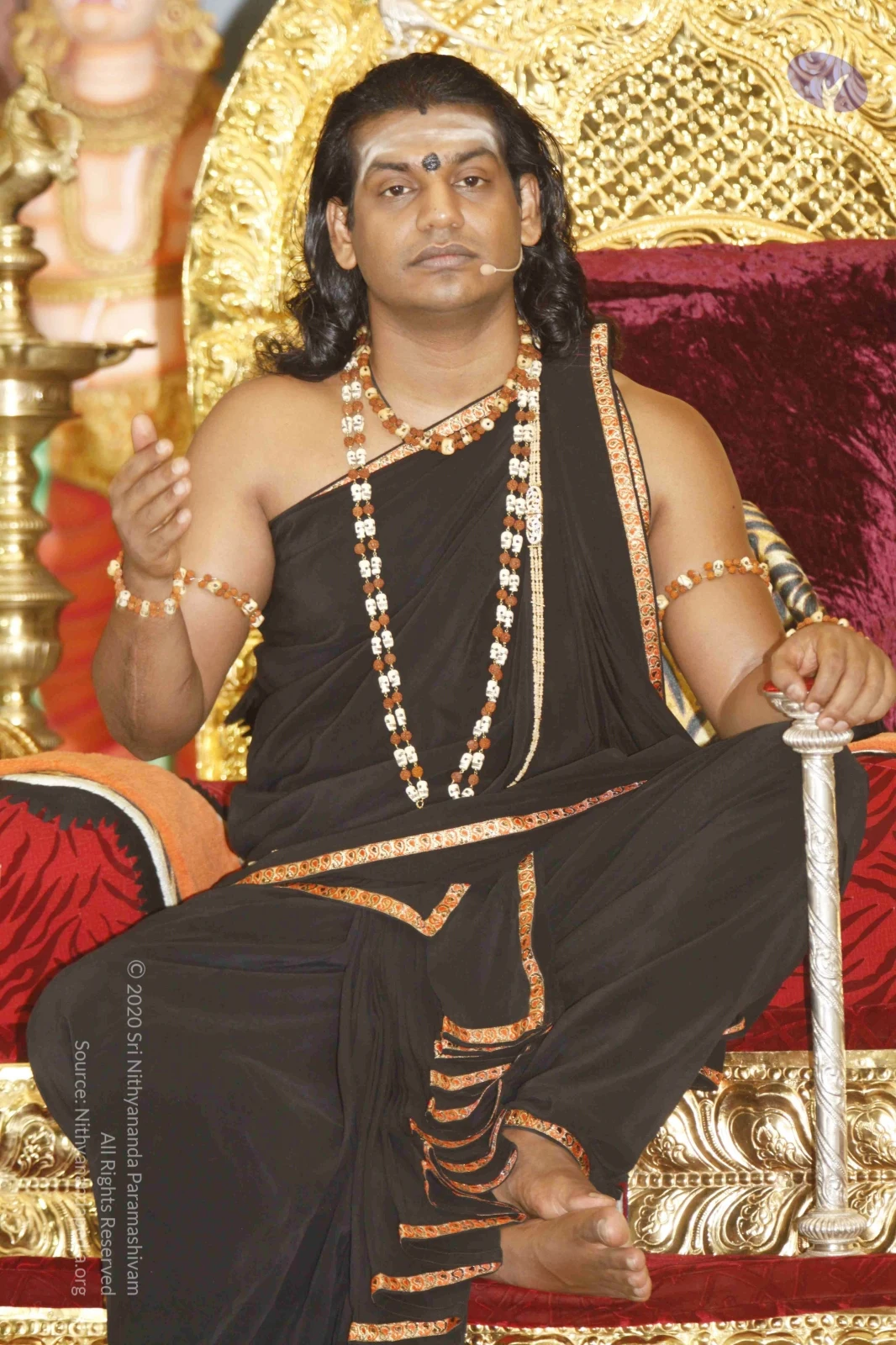
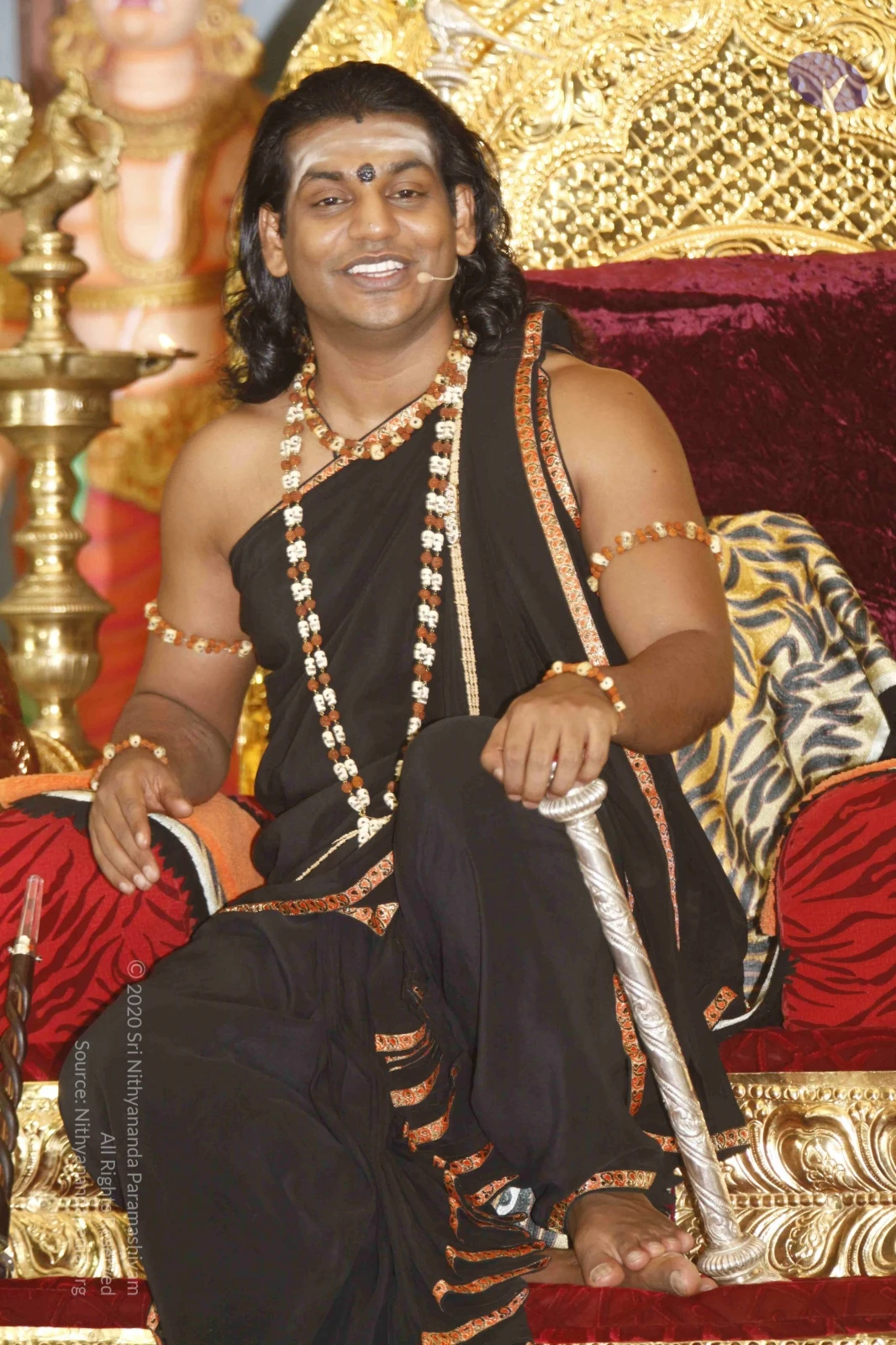
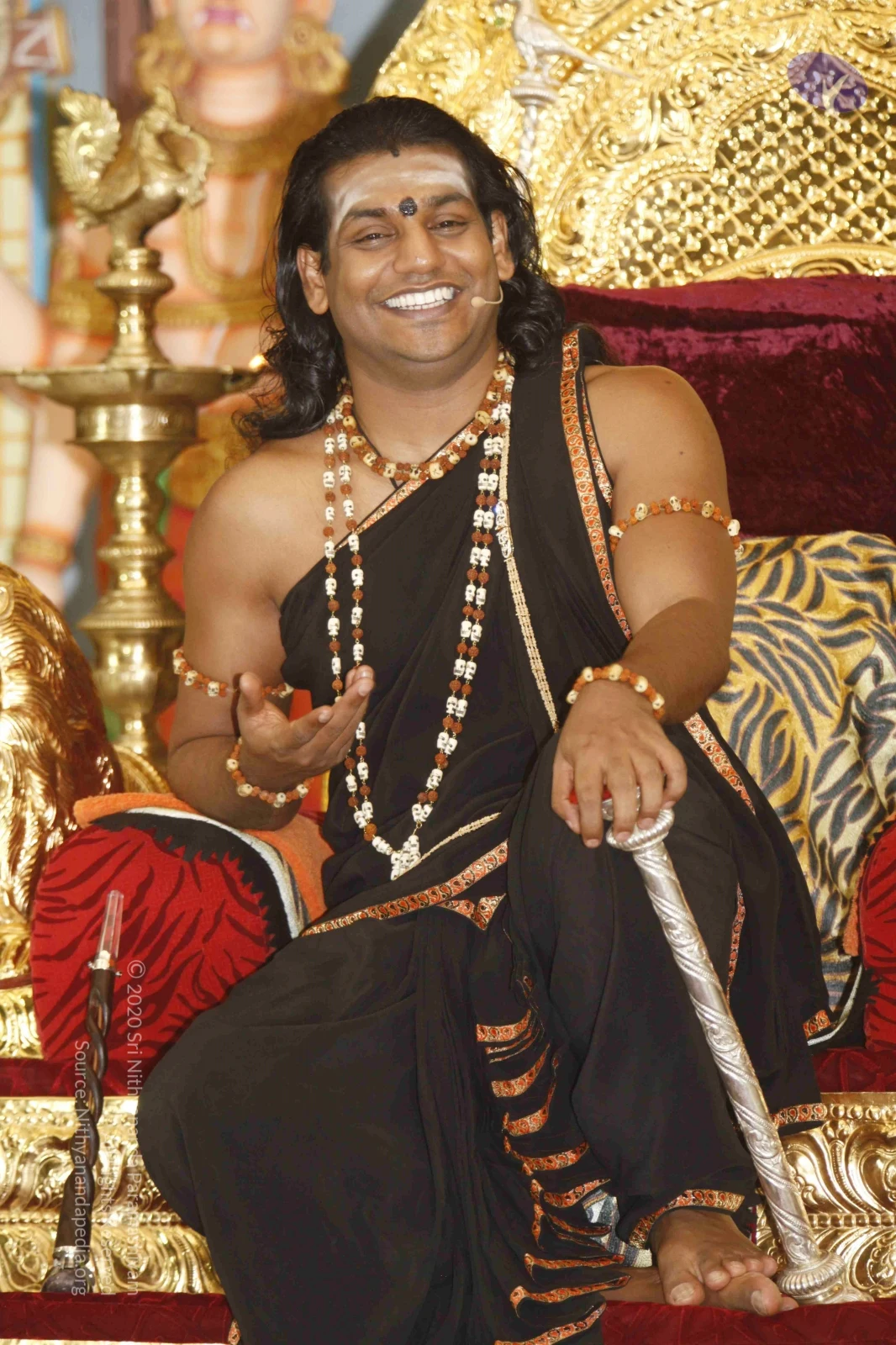
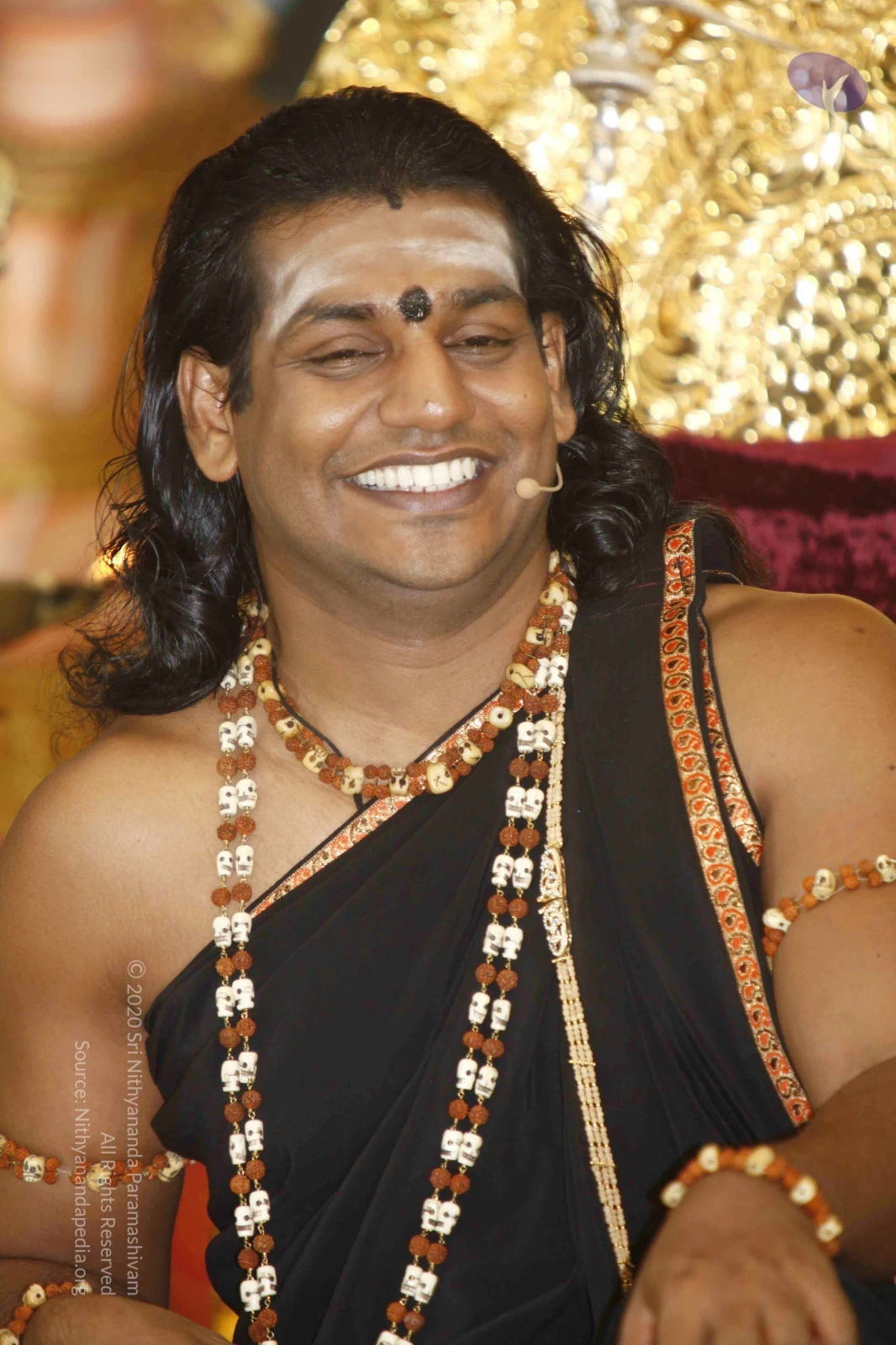
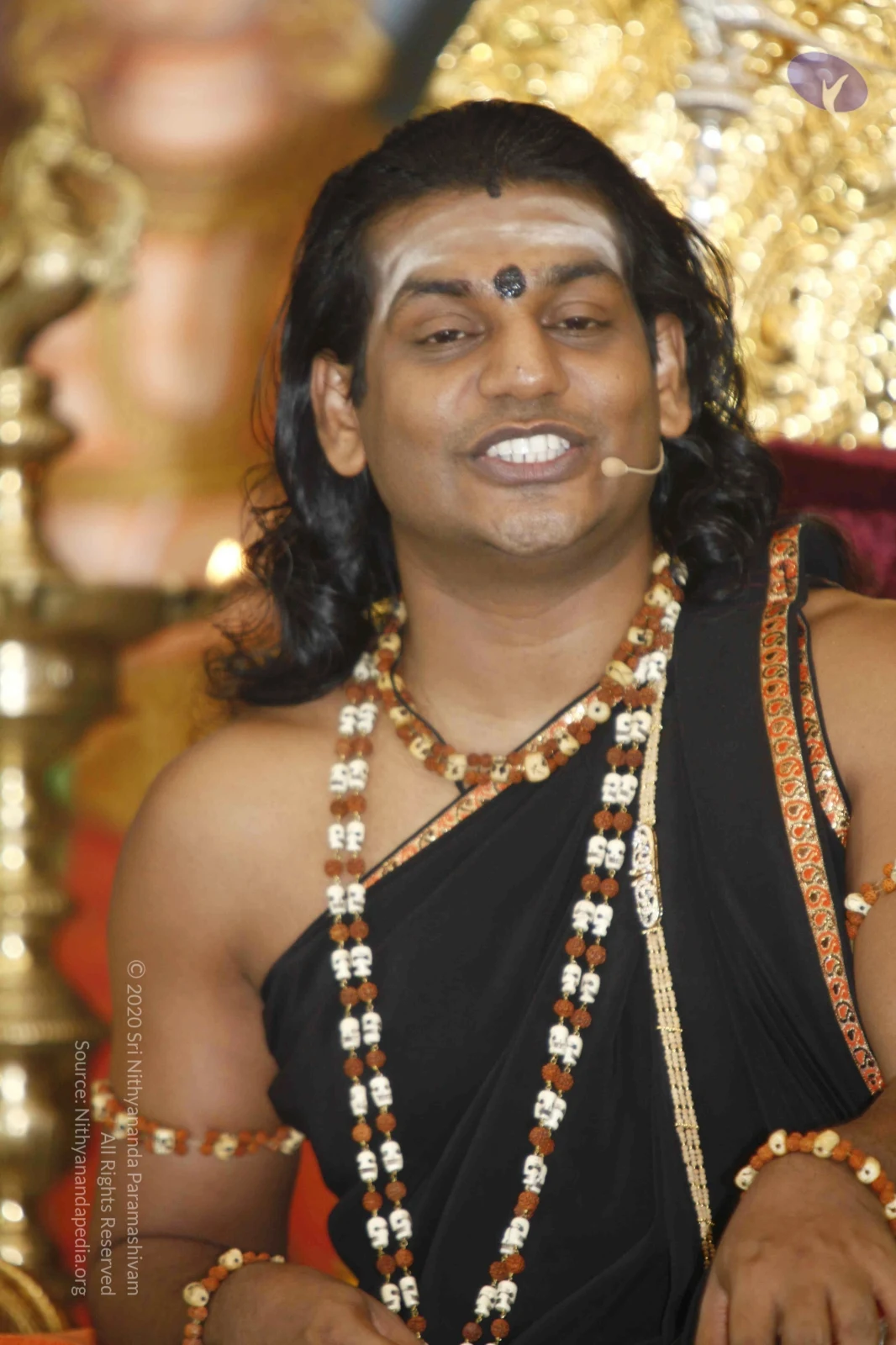
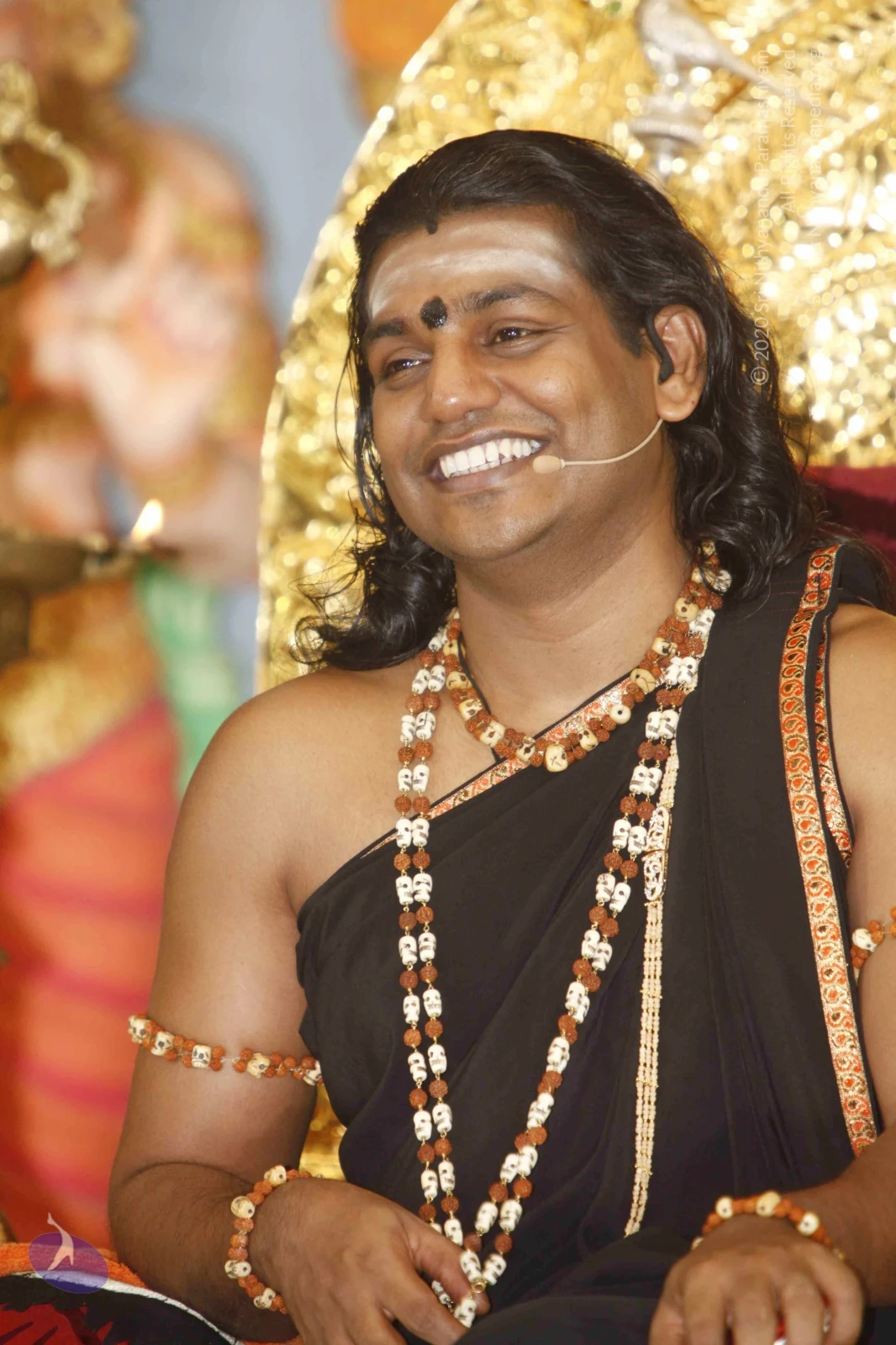
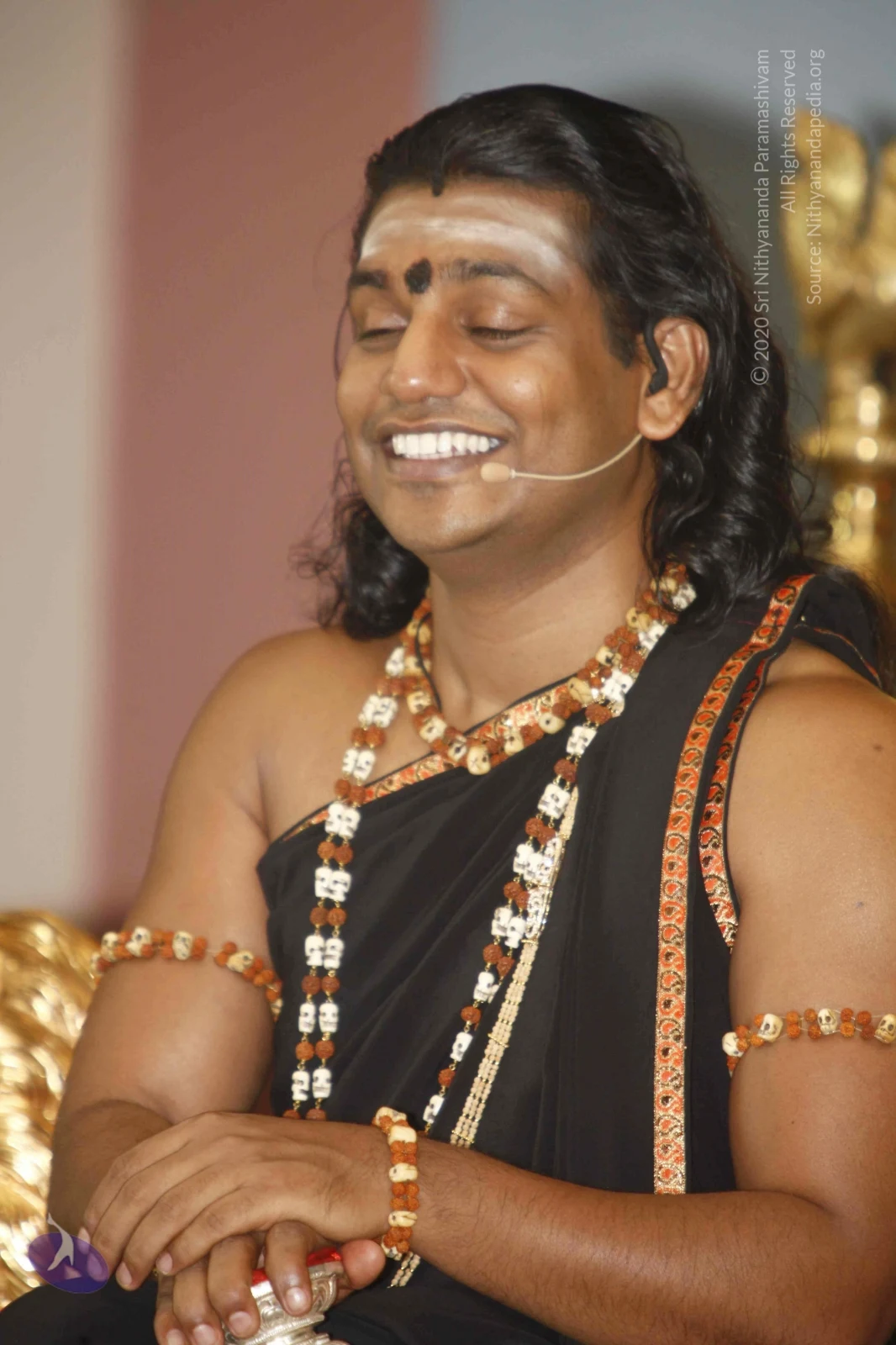
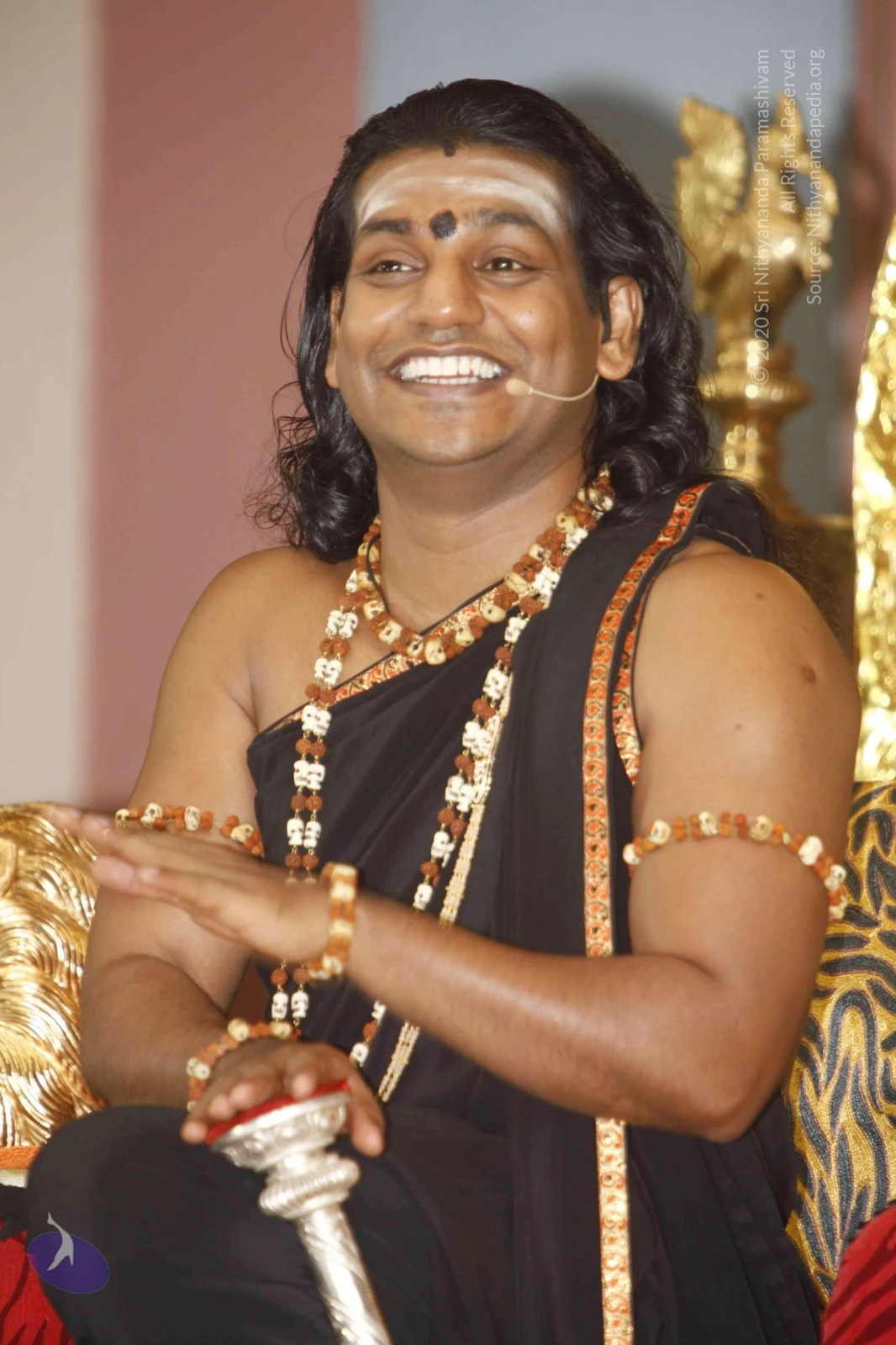
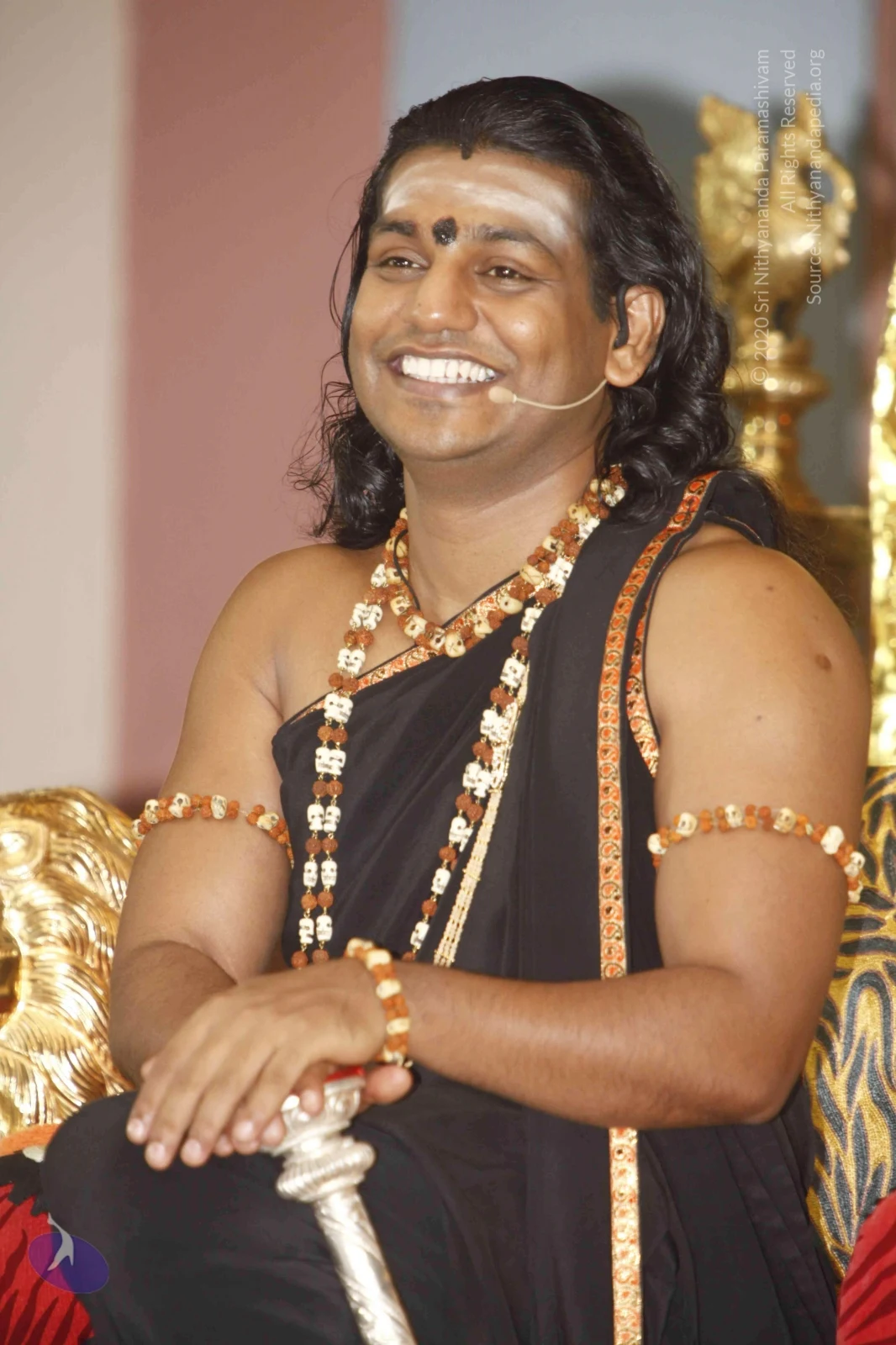
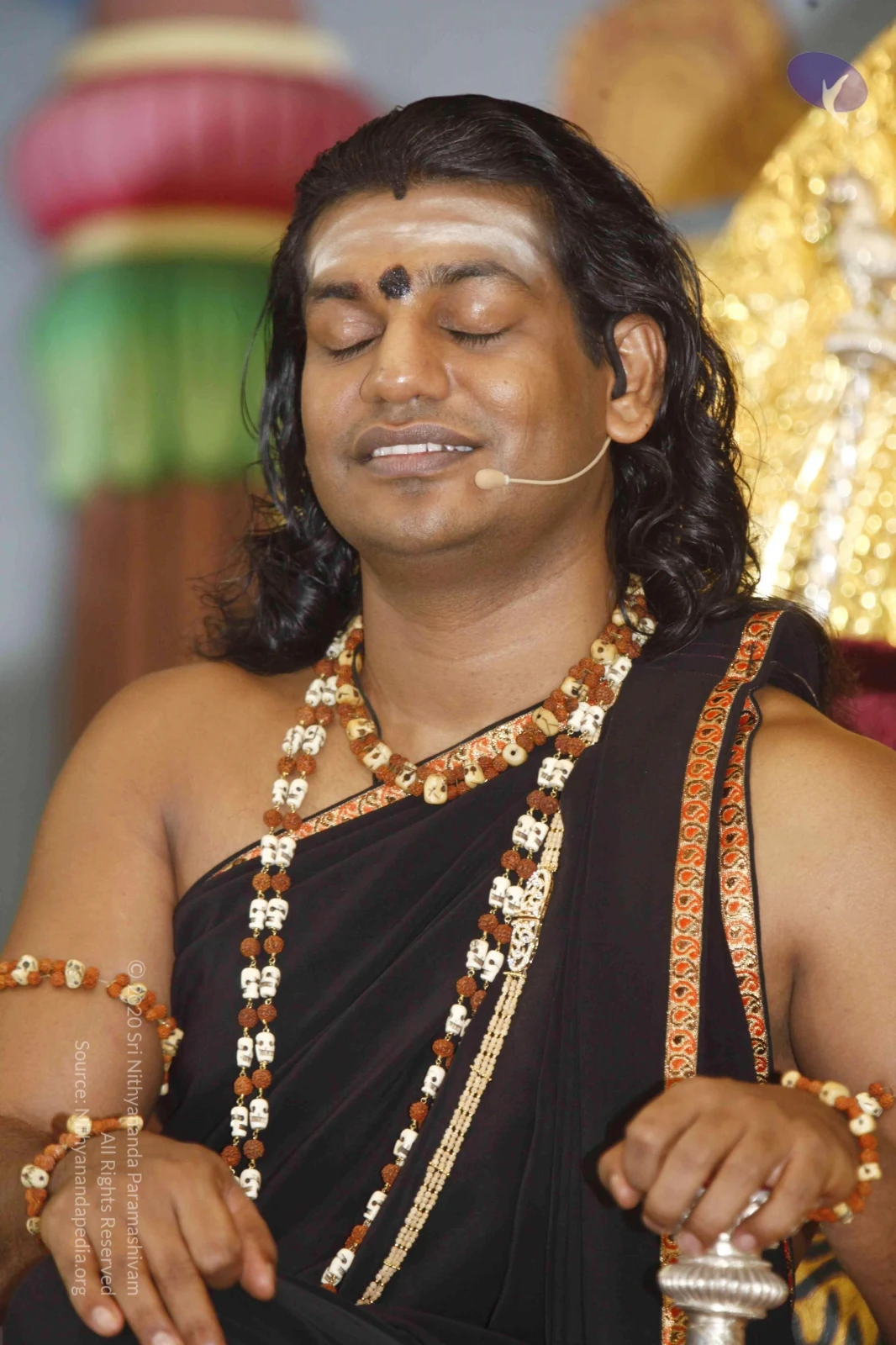
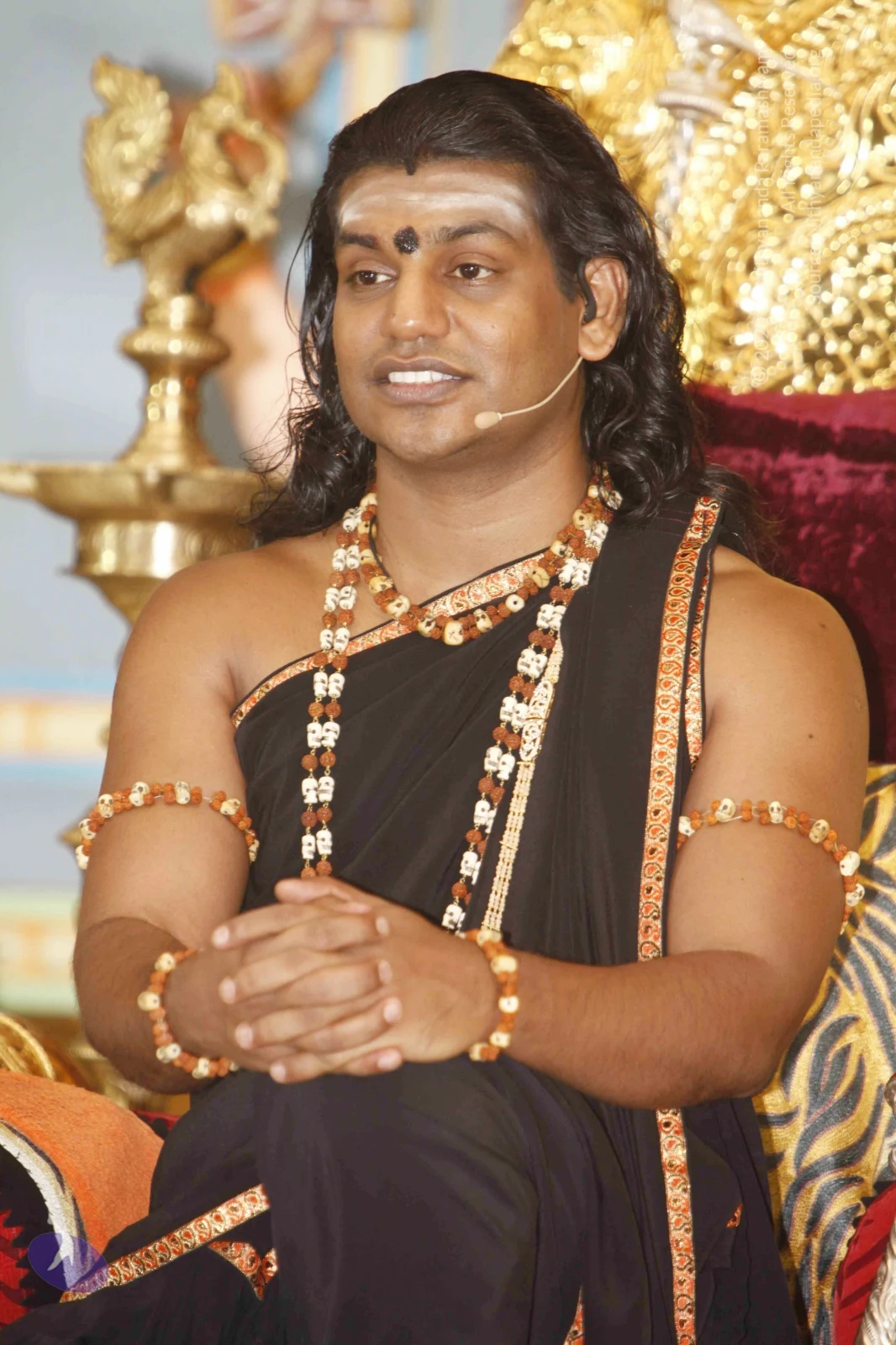
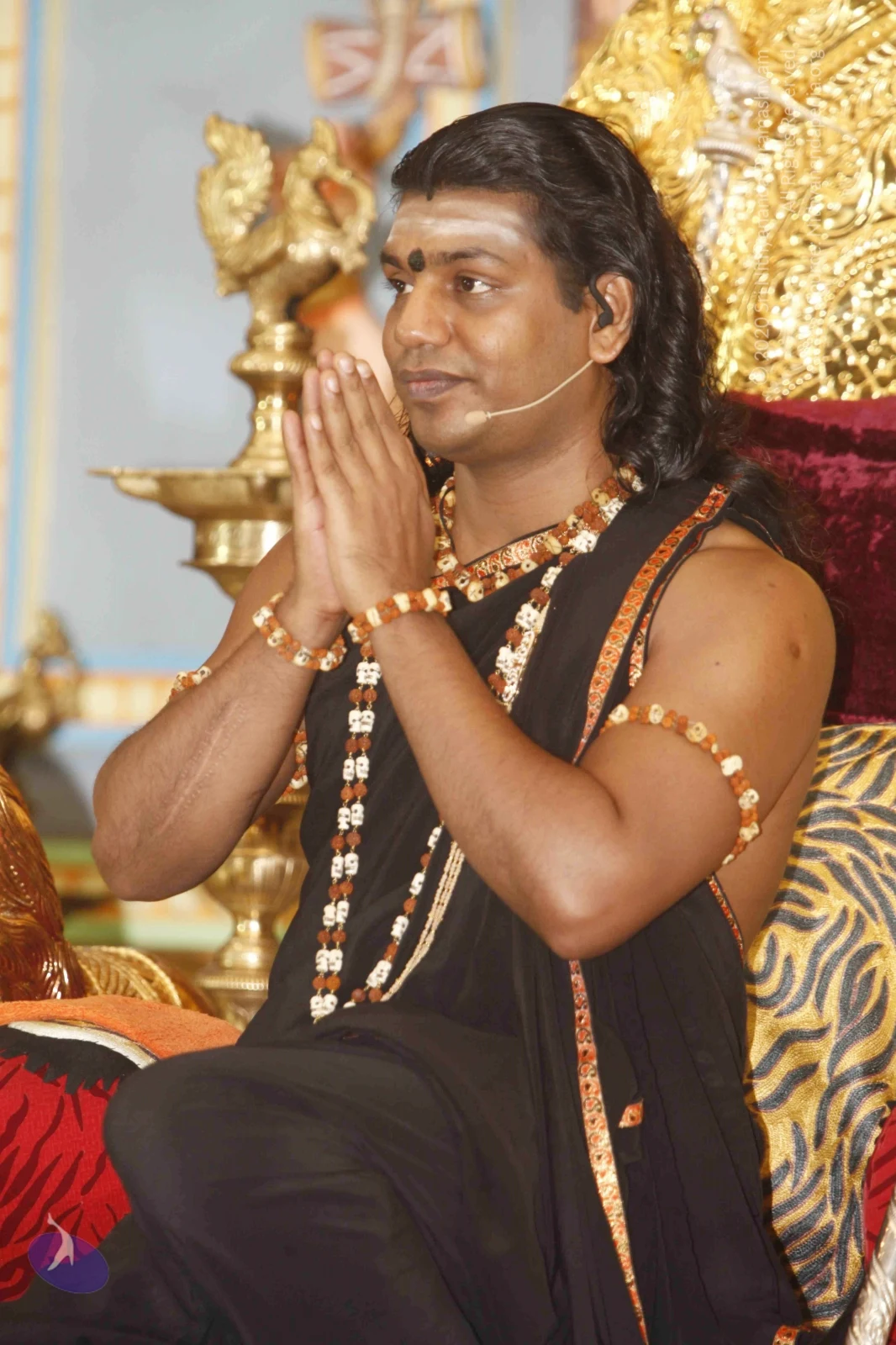
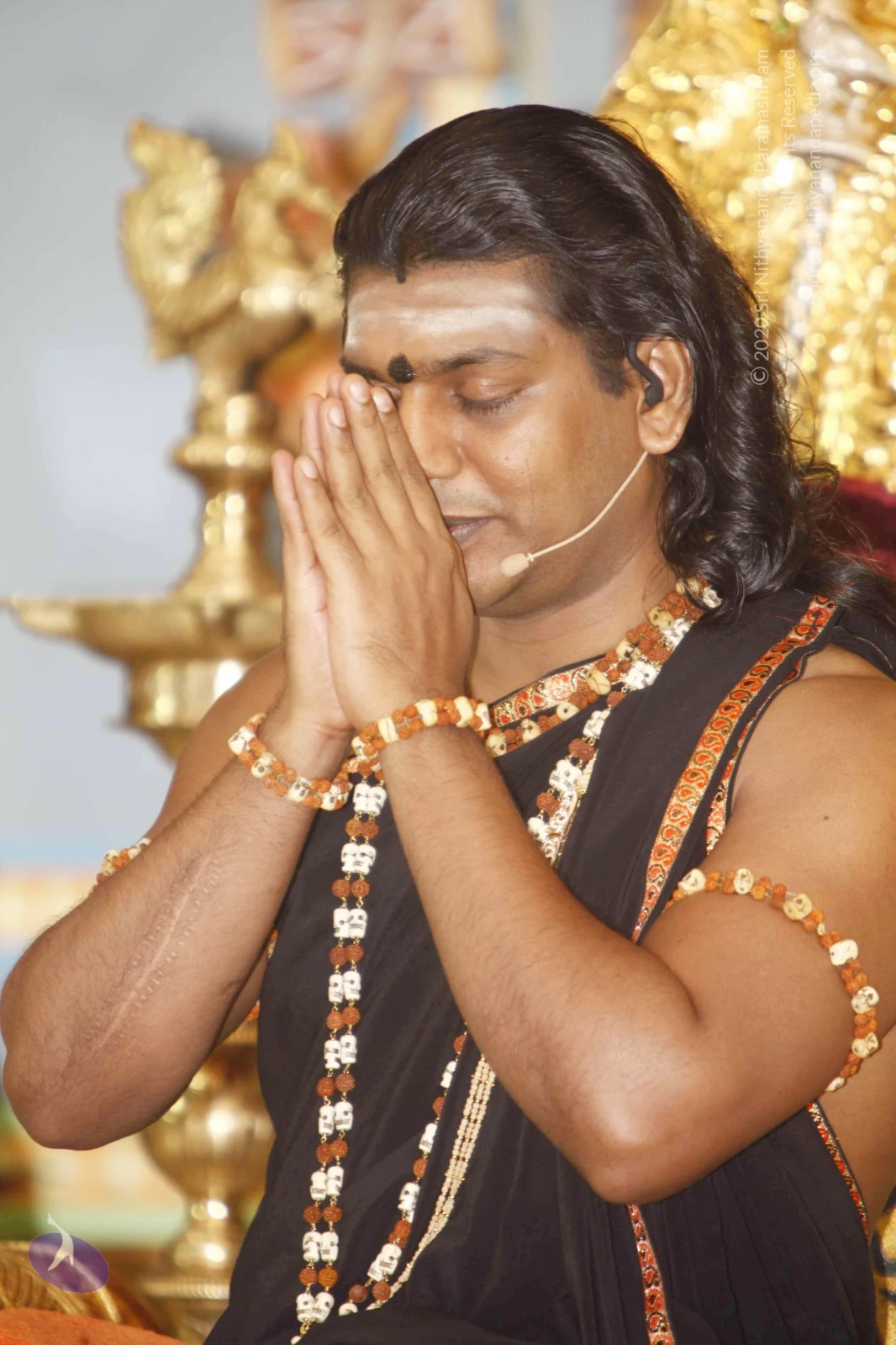
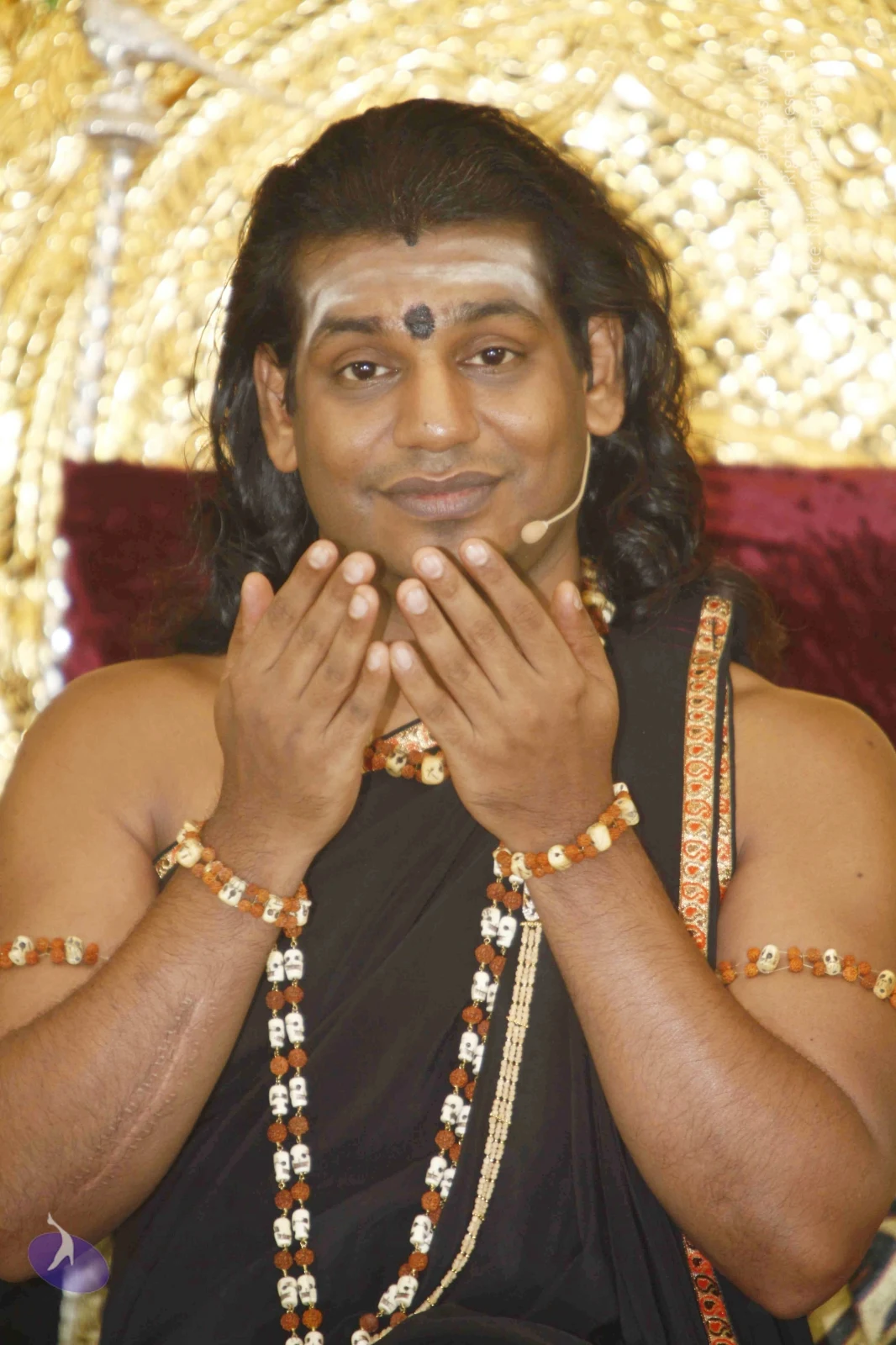
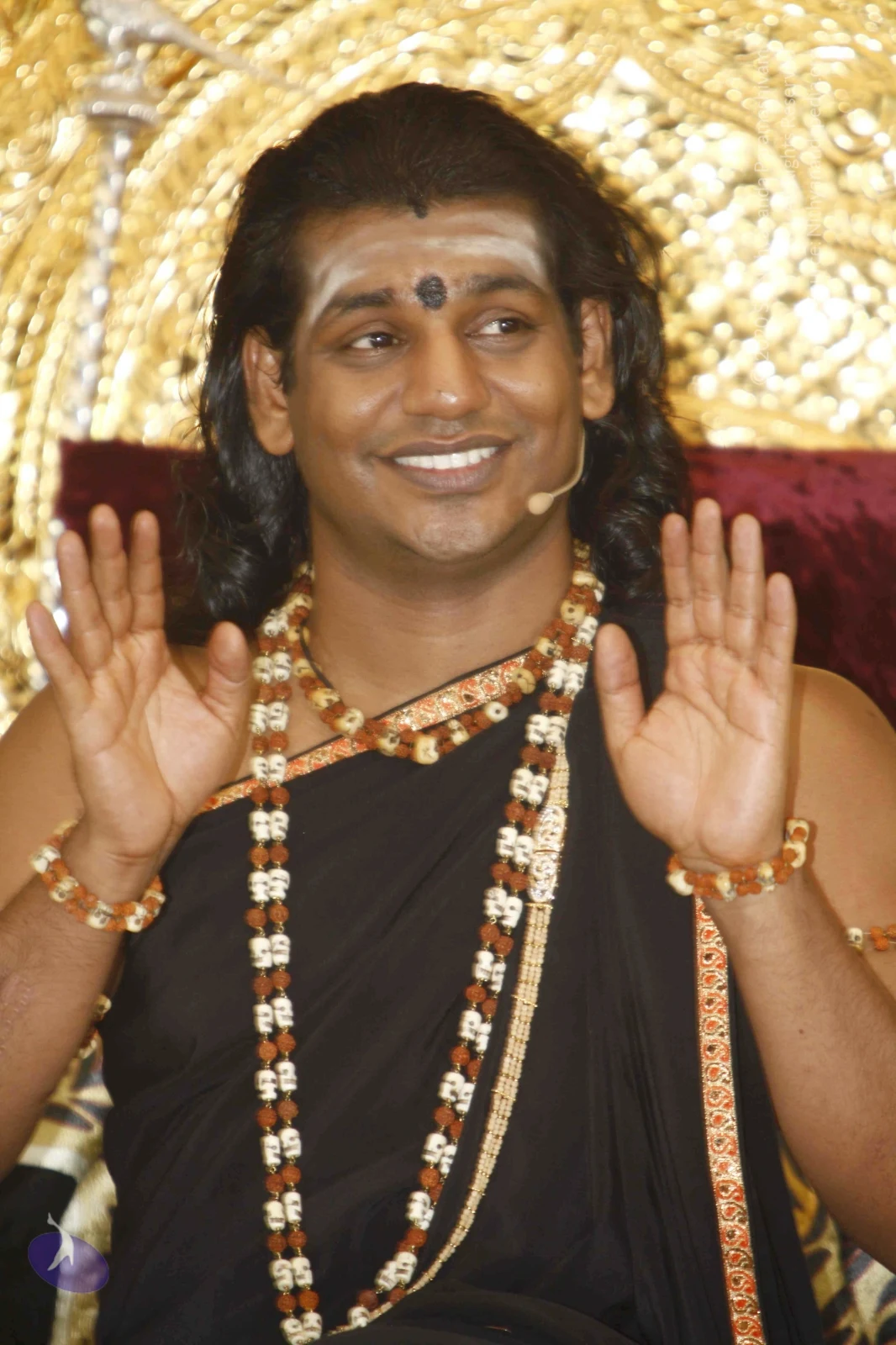
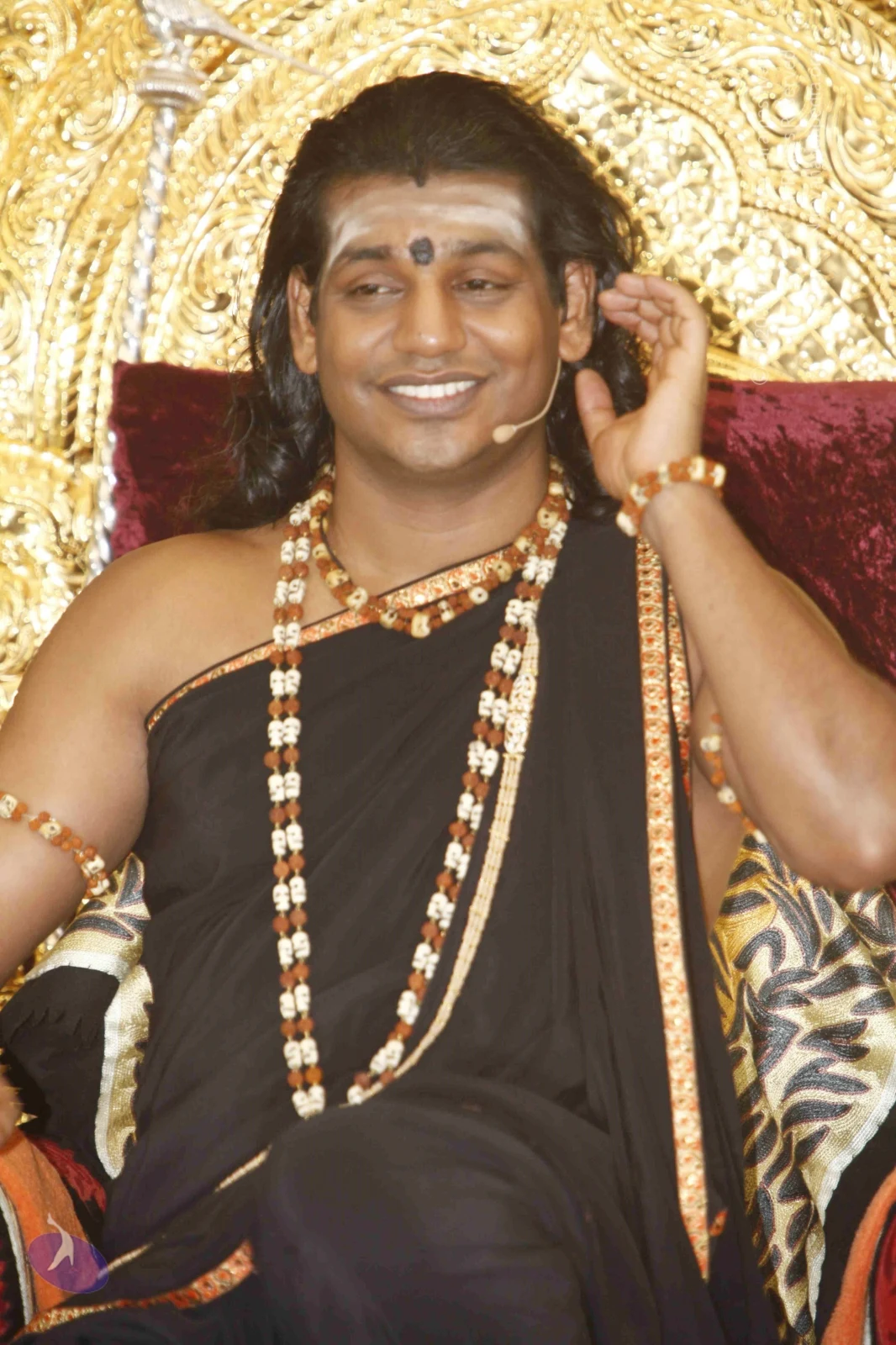
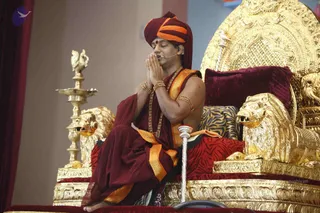
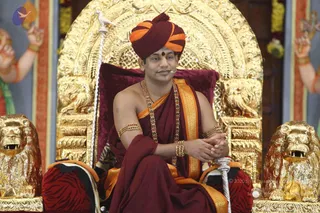
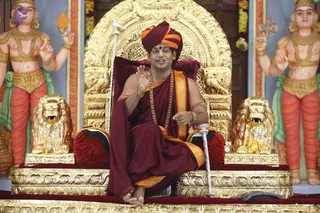
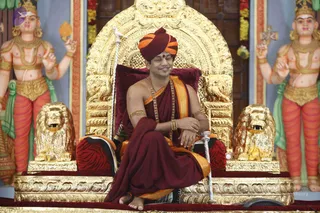
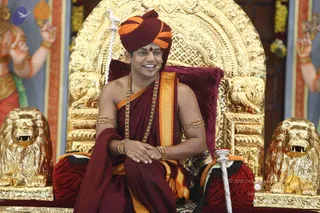
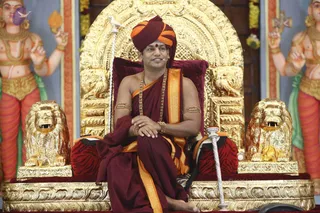
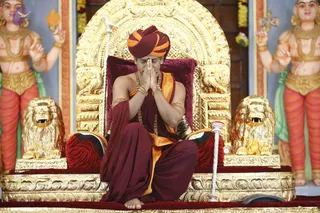
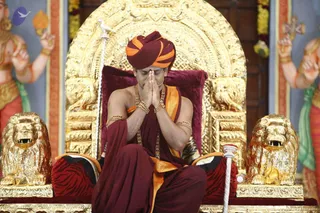
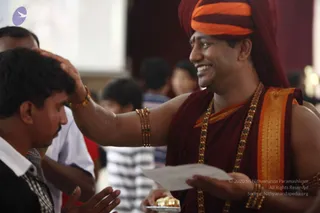
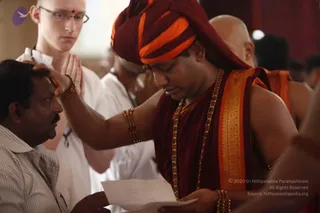
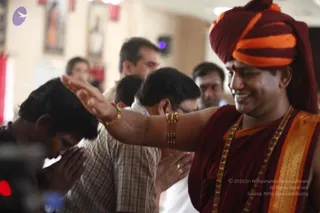
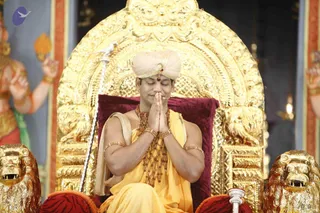
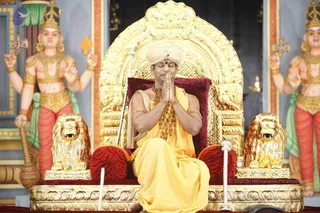
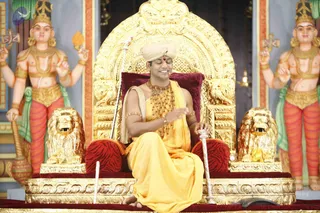
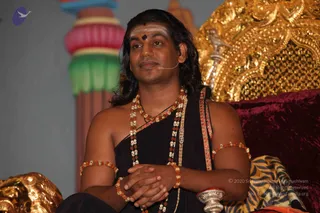
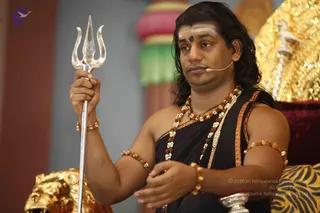
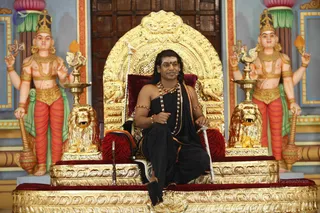
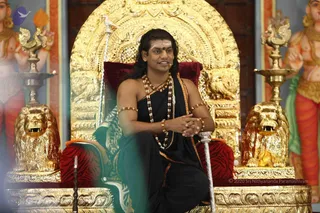
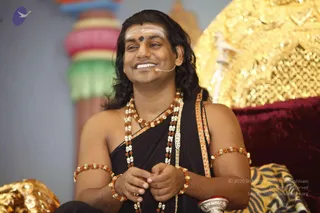
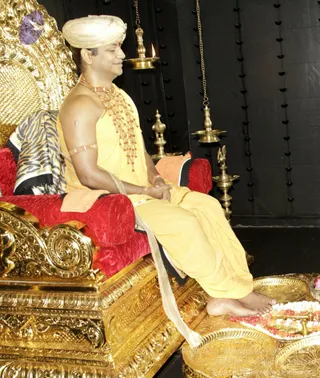
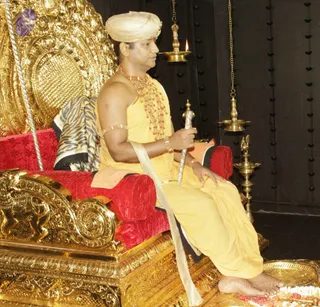
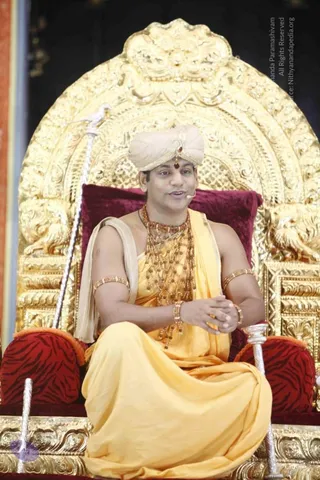
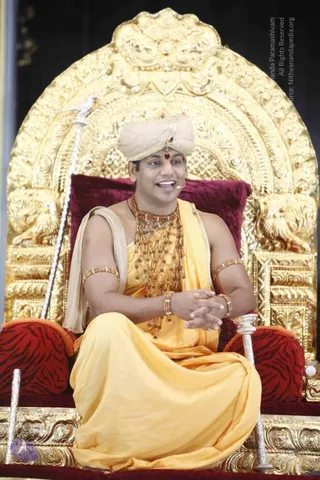
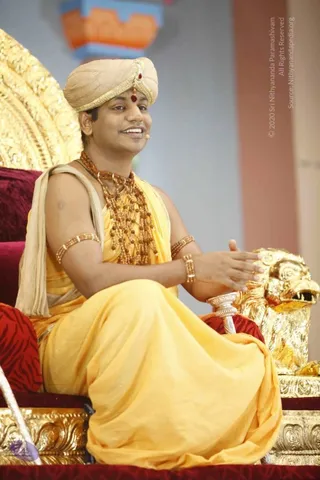
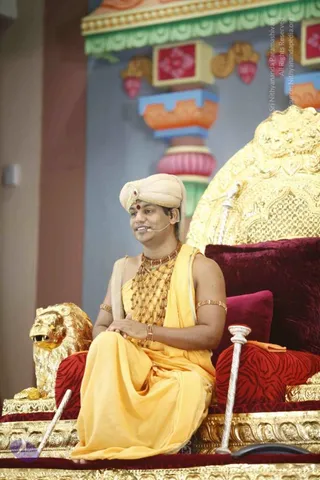
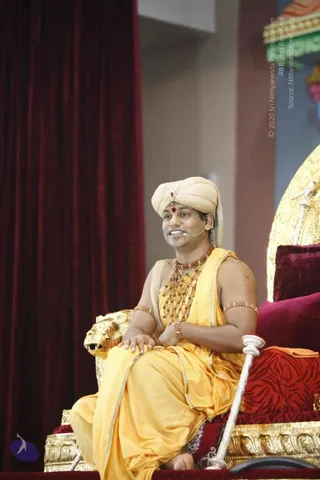
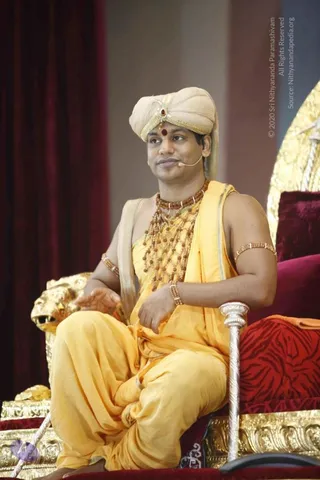
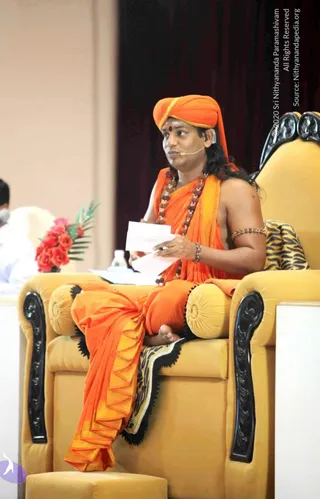
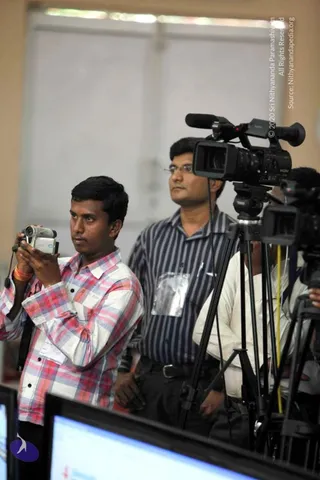
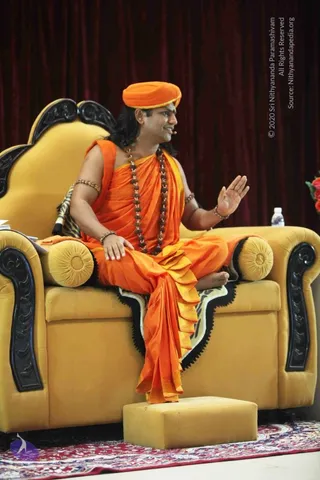
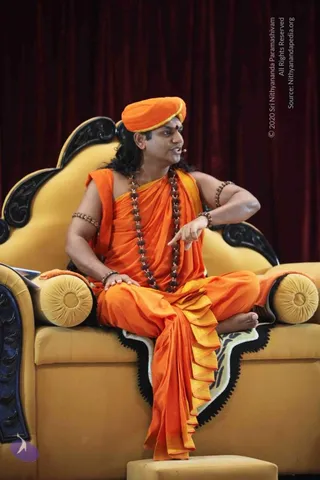
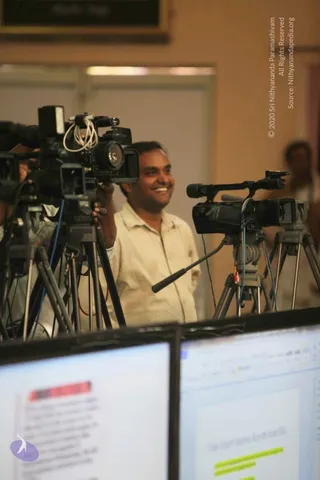
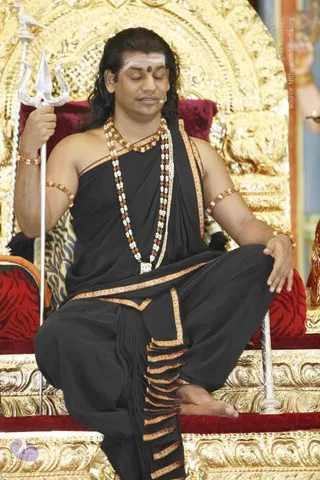
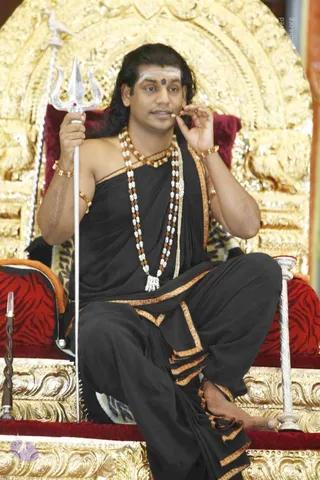
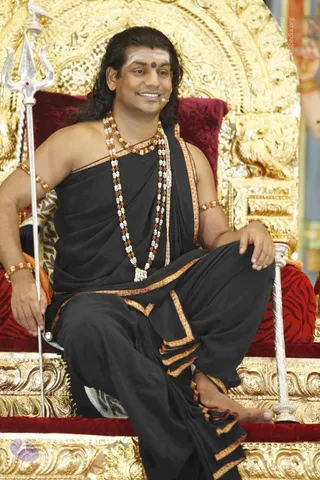
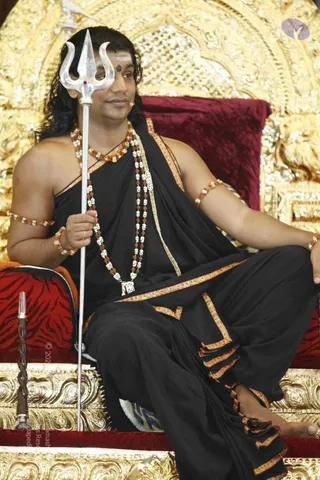
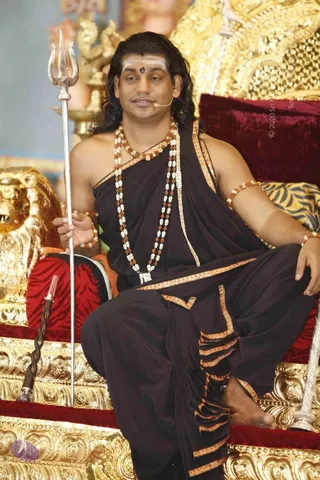
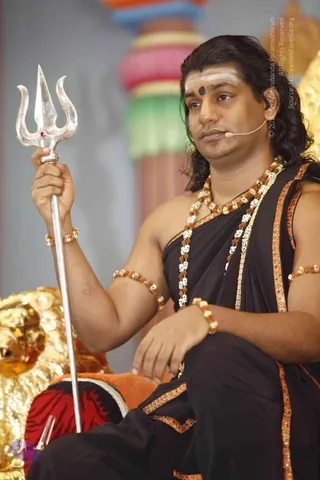
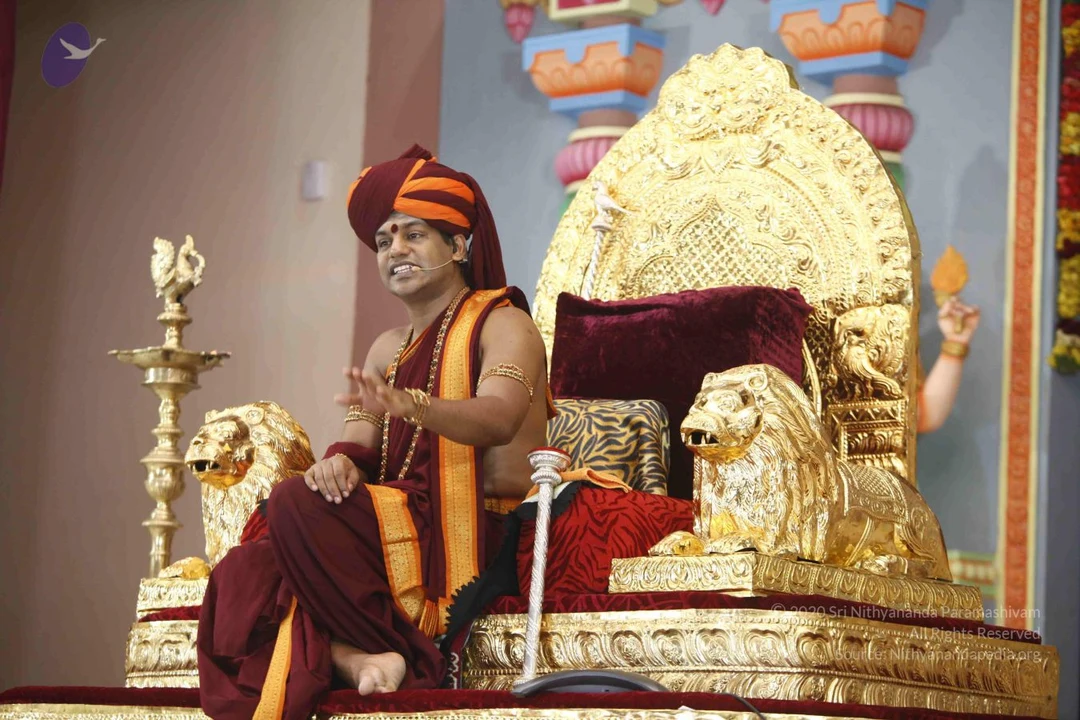
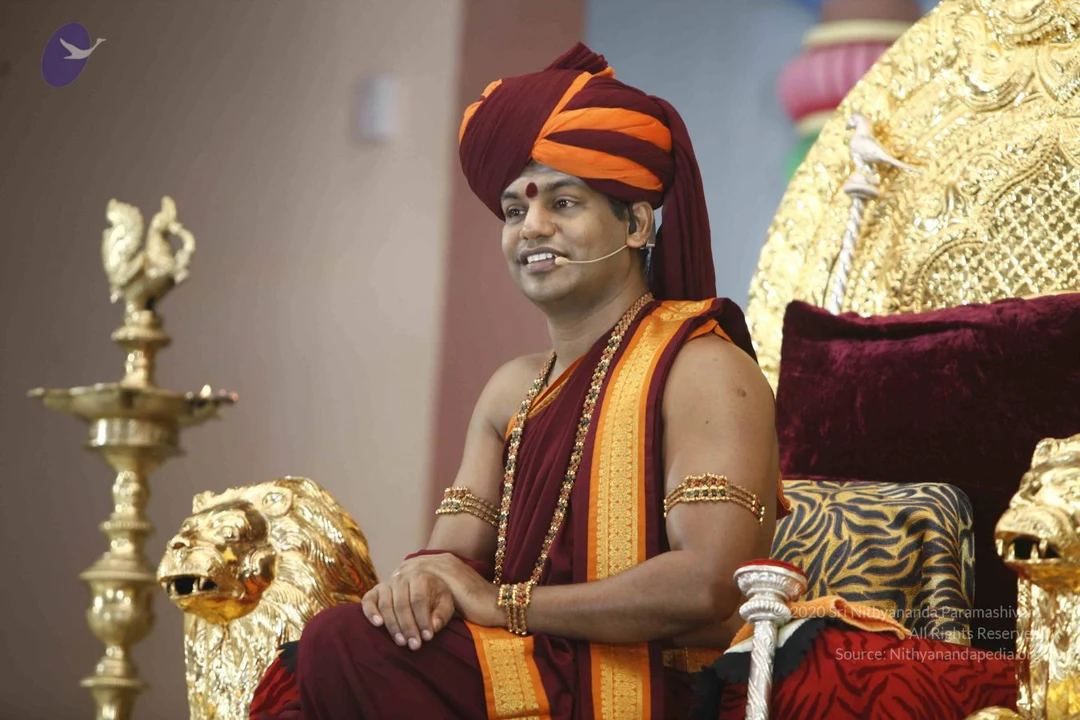
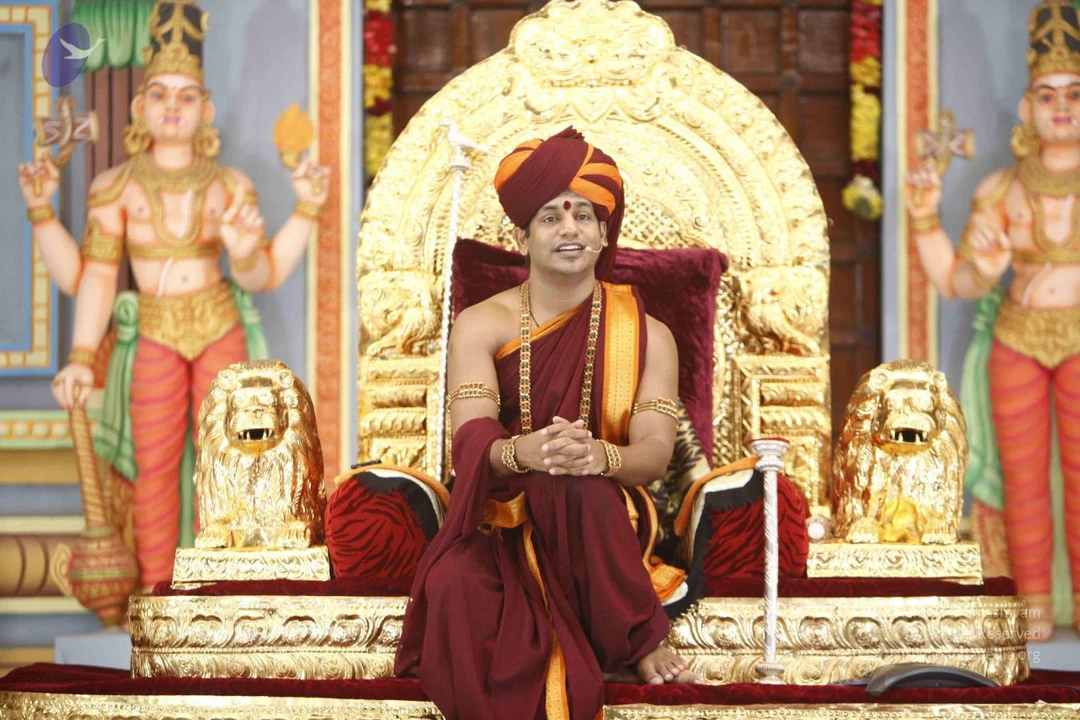
A man seated on an ornate golden throne carved with lion heads and a large gilded back, with a red velvet cushion and red tiger-striped seat cushion. He wears a cream turban with a red bindi, a saffron-yellow draped garment over his shoulders, multiple rudraksha-style beaded necklaces, gold armbands and bangles, and wears a small head microphone while speaking. A silver staff rests beside the throne against a deep red curtain. Appearance-based label: Swamiji (probable), given his turban, saffron garments and beaded malas, seated in an in-person talk setting.A man with long, swept-back dark hair sits in front of a colourful pillar with pink, green and brown bands and a blurred gold background. He wears a black shoulder-draped garment edged with orange and gold woven border, and layered necklaces of rudraksha beads and white beads. A white tilak with a dark kumkum dot marks his forehead, and a small clip-on microphone is attached near his mouth. Swamiji (probable) is shown speaking with a slight smile, the cues being the long hair, rudraksha malas and ornate black-and-orange clothing.A man seated on an ornate gold and black carved throne speaks while gesturing with his right hand raised. He wears an orange turban with gold trim, an orange and gold draped robe, a long rudraksha mala necklace and beaded bracelets, with a red bindi on his forehead and a small headset microphone. Behind him hangs deep maroon drapery.

April 04 2012

Original wiki page
Contents

Title:

You Are The Boss Of Your Life

Description:

TALKS FROM MORNING SATSANGS ON 4TH APRIL 2012 AT BIDADI ASHRAM,INDIA In today’s morning satsang, Paramahamsa Nithyananda (Swamiji) demonstrates how to integrate our short-term productivity with our long-termcreativity. The two are unified by our inner attitude. When we understand that every action is an opportunity to enhance the lives of others and thereby also raise our own integrity, we spontaneously move toward increasing our excellence in every task. We become completely honest in our work because perfection is our natural inclination. Once all our work is infused with this principle of expansion, the long-term results likewise reflect our authentic creativity.

Link to Video:

VideoAudio

Transcript:

YOU ARE THE BOSS FOR YOUR LIFE

Q: How might we rebalance compensation and measurement systems to provide incentives for long term value creation along with short term performance?

A: The first thing. There is no such thing separately. See Your questions says: Long term value creation and the short term performance is two separate. No. Please understand. Being is long term value creation, doing is short term performance. That’s all. If there is problem in doing, there is a problem in being. If there is a problem in being, there will be a problem in doing. These two are not two separate things.

What is long term value creation? Understanding and internalizing, spiritually realizing the importance and the method of the short term performance is long term value creation. Understanding, internalizing philosophically realizing the importance of short term performance is long term value creation. Why you should perform in short term, why you should immediately deliver, why you should be productive. I tell you again and again and again human beings suffer with the concept why should I be productive responsible working. This is what way going to add to my spiritual life. Array you don’t understand, only when you perform, when you create, take the responsibility, your own understanding about you raises. Your own idea about you raises. There is no other way.

Only when you take the responsibility, contribute and make difference in others lives, either directly or you do actions which makes differences in other life, you have a right understanding about you.

What is long term value creation? It is nothing but creating the right understanding and internalization. I can give you 100s of examples, where if the right understanding, philosophical realization is not there, the delivery also won’t be there. Even a small action like morning you get up and make coffee for yourself or for your family, have philosophical internalization. Even the reason for that very small act, think and philosophically internalize. Why should I do? What is the need? If you understand that naturally as a basic natural evolution process, your mind will start saying, how better I can make this coffee.

Understand, by nature you are a person expanding. If you are not expanding, you are not philosophically convinced; there is something seriously wrong with your inside.

Long term value creation is nothing but philosophically internalizing, understanding, realizing the short term performance. When you philosophically internalize, and realize every action you need to perform, simply the long term creation will also happen and the short term performance will happen every day by your nature will ask how can I better my short term performance?

It is nothing but non-internalization and continue to live with a hypocrisy of non-internalization. I tell you, if you philosophically internalize the necessary for the short term performance and build the long term values, even if you are not part of the sanga, any fear and greed, that also you will not compromise with that. You will go on performing. Because performing is life.

The other day I was teaching, Jothish Sutras. The Astrology rules for close group of Adheenamites.

See in the Nava Grahas, the nine planets, the nine energies which influences your life, two Gurus, two shadows, 5 planets. Two gurus are the Deva Guru, Bruhaspati means Guru of Gods, Guru of Demons, Sukra, two shadows are Rahu and Ketu, 5 planets – Sun, Moon, Angaraha, Buda, and Saturn.

The two shadows are Rahu and Ketu.

Ketu will always lead you to the thought trend of expansion, expansion, expansion.

Rahu will always lead you to the thought trend of Shrinking, shrinking, shrinking.

When you are cornered, when you are in very critical position, when you are questioned, if you feel how can I become fortunate to be fit in this situation, how can I expand, how I will be successful here, you are possessed by ketu.

If you are feeling Oh, what is there all these things, kick-it out, let us go to something else, let us go for some other option, what is there…if not here, there - then you are hold, you are possessed by Rahu.

Devaguru, the master of Gods will always put you from Rahu to Ketu means negative pattern to Positive pattern. He will always be pushing you. “Hey Listen. This is not the exact right pattern. Move, move”. He will always be pushing you from the Rahu to Ketu.

Asura Guru, Sukra, will always be pushing you from Ketu to Rahu. He will always push you from the positive pattern to the negative pattern.

How these 5 planets act. These 5 planets act based on their association with Deamons Guru or Gods Guru – with Brahaspati or Sukra.

This whole thing can be nullified by one energy - that is constant performance. If you are constantly performing, the influence of planets on you, gets nullified. You may ask how. Constant performance raises your frequency more than Ichcha sakthi more than the desire energy and knowledge energy, your creative energy expresses.

Please understand all the 5 planets impacts only your Ichcha Sakthi and Gnana Sakthi.

If you unclutch your creativity from your desire and knowledge and push it independently it means whether you feel like or not morning waking up, whether you feel like or not performing.

See planets can interfere only as suggestions while you perform. When you ignore those suggestions and start performing, suddenly you reach a space where the planets are no more able to affect your mental set-up or life style and not only that please understand internalizing necessity of the short term performance puts you completely stable with Ketu, even one small act like morning making a coffee or tea connecting it so strongly and internalizing it, it is directly towards life mission - enlightenment. If you wake up and make this tea, and drink this tea, your body will be fresh, you can continue with awareness, your ajapa japa, unclutching and you will be moving towards enlightenment. Even a small act philosophically realized, internalized connected with your life’s mission liberates you from all the evil effects of the grahas. That understanding philosophical internalization is what I call long term value creation.

Sit and do this as a home work. Do this home work for 5 days.

A typical day of you how your day is spent, what are all the action you are performing form morning waking up to night, understand and internalize how every action is directly connected to your very core. What you believe as your life mission integrate all your actions authentically with your life’s mission, with your life’s purpose, internalize.

The moment philosophically you realize morning you making a cup of tea and drinking is directly fullfilling your life’s purpose – enlightenment. Next day naturally you will start thinking, how better I can make tea, how better I can do this job. Unfortunately neither you have patience nor you spend time philosophically internalizing all your actions. Morning in the office you sit and shout at your subordinates, get the beatings from your boss. This is your every day actions for short term performance. But if you internalize how this directly helps and supports fulfilling your life’s mission what you want to achieve in your life. If you can internalize that, next day you will automatically start working how better I can perform without bulldozing my subordinates, how better I can offer what my boss wants without provoking him.

It will be your natural tendency. Understand by your very nature of inhaling and exhaling your expansion. As long as you are inhaling and exhaling, you are expansion typed person. Only when you stop breathing, expansion stops. If you are still breathing, be very clear, you are bound by the law of expansion. Of course, even after your stop breathing, your being takes another body and from there you start expanding, constantly expanding. Understand - life is not going to leave you, you cannot hide or escape. If you escape from one office to another office, life is also going to come back, come behind you in the form of another one boss.

Life is not going to leave you till you realize you are the boss, you are responsible, till you realize.. Because, life is so compassionate. Till you actualize and realize yourself, it doesn’t leave you. It has given a boon. Till you achieve the state I will be there constantly reminding you, constantly awakening you, constantly asking you to wake up.

Understand - when you philosophically internalize every action you perform for the short term performance, you will not have any pain or suffering to take up the responsibility. To run when you don’t philosophically internalize you will have lot of suffering. That’s all. Nothing else. Not little. A lot.

I can see very clearly people who can philosophically internalize, understand the necessity for short term performance build the long term values. Long term value is what: Building a beautiful mental pattern, the right mental make-up to go on living is what I call “Shiva” - No death for you, No question of shrinking. Only Guru and Ketu. No Shukra and Rahu. When you are centered on Guru and Ketu, Saturn becomes your servant, Sun and Moon become your eyes, vision, Mangala becomes your life style, Budha becomes your body your very earth on which you are operating.

Understand this idea of short term performance and long time term value creation – these 2 have become different things because you neither have intelligence nor have patience to internalize every action’s reason.

Integrity is what is 'you' - whether you are going to have joy in life or suffering in life, first you need to live. Life itself will happen to you only with integrity. After that you can start working for avoiding suffering or having joy. But even when the integrity is not there, any joy you bring will only be a depression. Any suffering before even it comes it will provoke depression in you. Even your sufferings you will go with your understanding and knowledge, even your suffering will add strength to you. What for I am alive - to teach to people. I will do that till I am alive. I will do this even after I leave this body. I am very clear.

Understand - honesty and authenticity brings the long term value. It does not disturb your short term performance. It only increases your short term performance. If you feel your short term performance is not allowing you to create long term values both are contradicting, you are cunning. If you feel both are not contradicting, both go hand in hand, may be I can call you as little honest. Only when you realize long term value creation is expanding your short term performance, both are enriching each other, I will call you, you are authentic.

Neither honesty nor authenticity... I tell you even in your company, if you feel people are honest and trying to move towards authenticity, run the department, otherwise shut it down. Because, it is going to be dangerous for you. I teach you what I practice. I practice what I teach. Understand this corporate decision which I am giving you is a very important decision.

Do not even respect human beings who have not come even to the level of honesty as human beings. All of you take up this as a home work. Sit and associate every action you perform to the core of your life’s mission honestly. Understand if you can honestly connect and able to believe the short term performance every action is directly connected to your long term values, you will not only be blissful inside, your performance will just explode. When there is direct connection of long term value creation is not there, not only your short term performance does not happen, you become cunning, you start cheating on life. When you cheat on life, you lose the life itself. Cunningness is cheating on life. It is like you steal from your own house. When you steal from your own house and destroy your life, you are doomed. Nothing else.

Unable to connect the short term performance with the long term values means cheating on life. Nothing else. Dishonesty.

I tell you never ever believe the people, their words, their actions who cheat on life. Who cheat on life is the worst fellows, can do anything. They should neither be trusted nor be believed or be respected as human beings.

People who cheat on life are chandalas, because they don’t even have respect on their own life. Aligning short term performance and long term value creation is inner awakening. Integrity is your life. The word you utter, the commitment you make is your life. Die to keep up that. Even if you die nothing wrong. You will live. Understand Cosmos will remember you only as your integrity. The life will remember you only based on the strength of your integrity. Nothing else. Die to keep your integrity alive. Nothing is wrong. How many bodies you sacrifice to keep the integrity alive, it is worth. But, whatever you sacrifice to keep the integrity alive, but you sacrifice the integrity for any reason to keep your laziness, coziness, non-thinking, cunningness, anything alive, you will be destroyed. Then only Kalabairav’s Thrisul tool to relate with you, nothing else will relate with you.

Integrity is life. Dishonesty is death!

Title

Living Without Food || Part 1 || NS || 04 April 2012

Description

Title: Living Without Food Part 1
Name Of The Convention: Nithya Satsang
Session on: Divine possibilities in the human body
Date : 04 April 2012
Venue : Adi Kailasa, Bengaluru, Karnataka, India

In this video Supreme Pontiff of Hinduism HDH #Nithyananda Paramashivam talks about the evolution of the human body. He says all the capabilities from prior births are available in our bio-memory. By awakening these latent capabilities, we can absorb the required life energy from the sun and live without the need for food.

The Supreme Pontiff of Hinduism Jagatguru Mahasannidhanam His Divine Holiness Nithyananda Paramashivam (HDH) is the reviver of #KAILASA - the ancient enlightened civilization and the great cosmic borderless Hindu nation. Revered as the incarnation of Paramashiva - the primordial Hindu Divinity, HDH has a following of 2 billion Hindus worldwide with de facto spiritual embassies in over 150 countries. He has worked untiringly for over 26 years for the revival of Kailasa, for global peace and to give super conscious breakthrough to humanity. He has survived the worst persecution of multiple assassination attempts on person and on character by anti-Hindu elements. He is collecting, organising, preserving, time capsuling, decoding, spreading and reviving 20 Million source books of Hinduism and the 64 sacred arts & sciences like Ayurveda, music, dance, sculpting, astrology, vastu and much more. Close to 20,000 hours of HDH’s timeless talks have been recorded till date (Sep 2020), which are a treasure trove of powerful cognitions to solve individual and global problems of any kind.

Link to Video:

VideoAudio

Transcript:

(03:46)

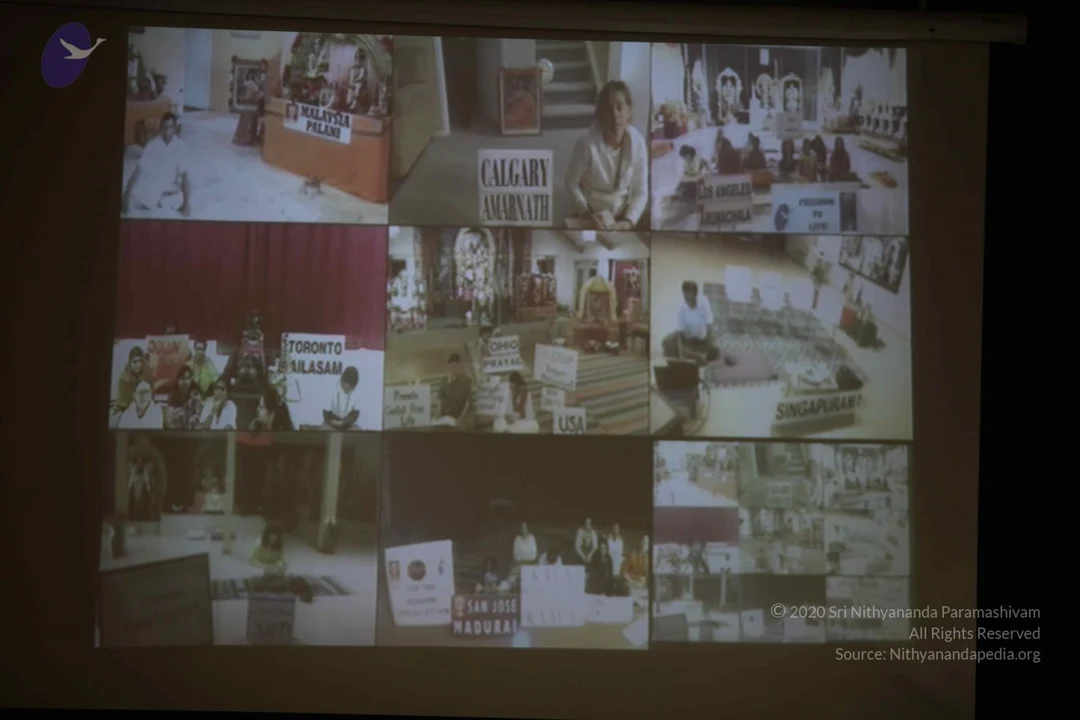
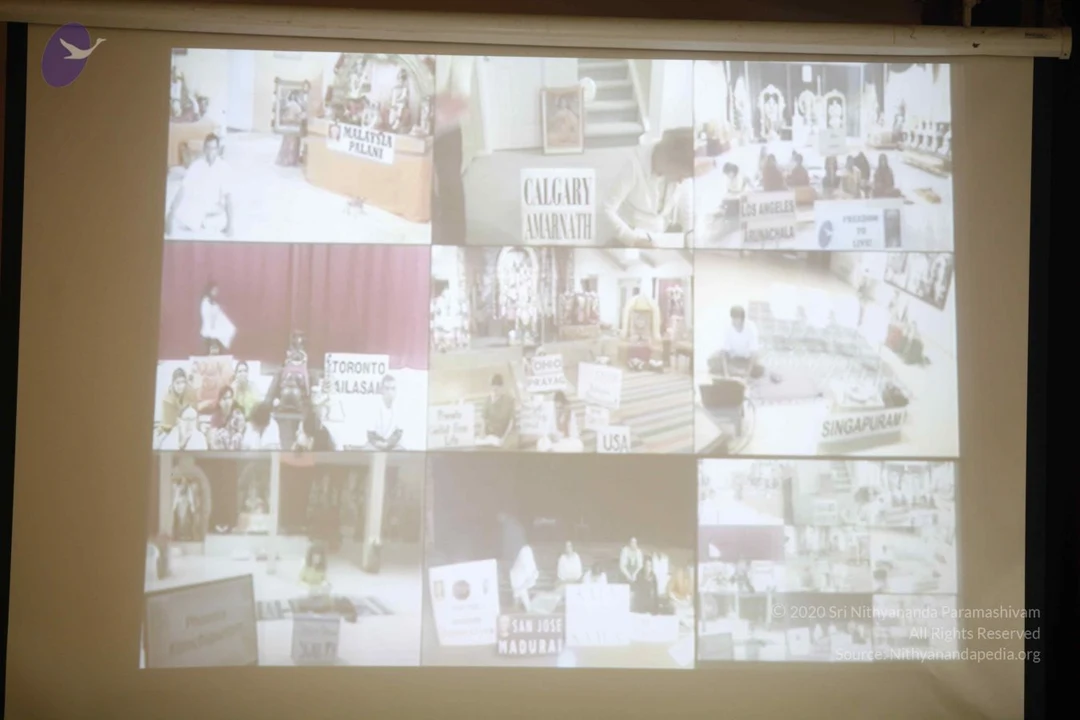
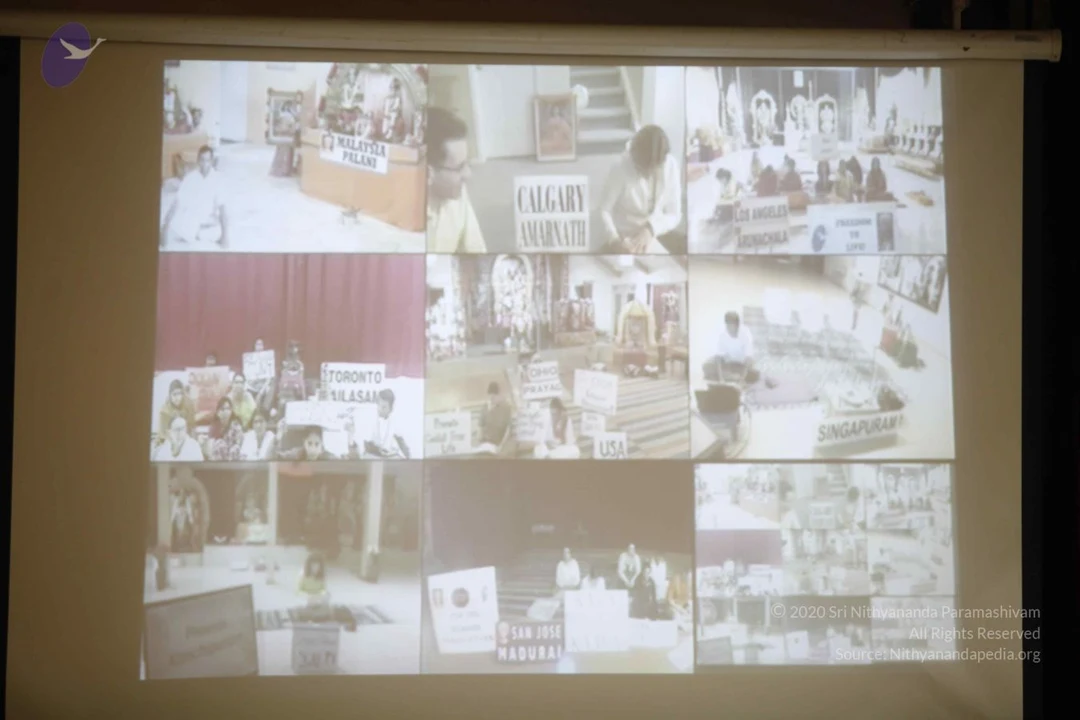
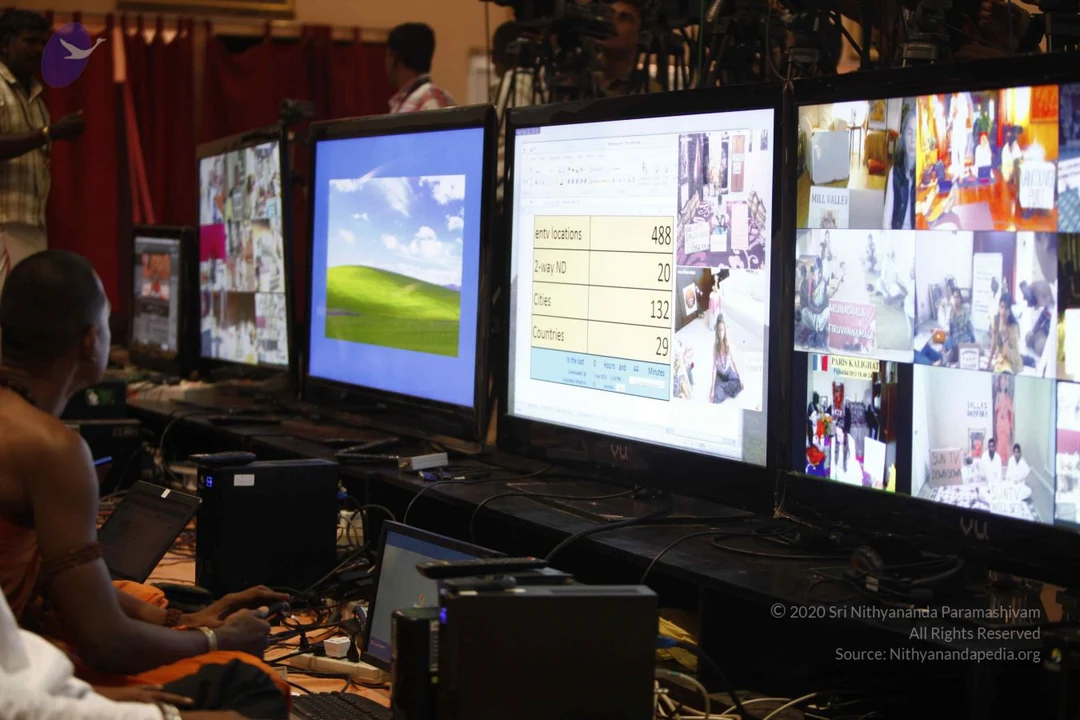
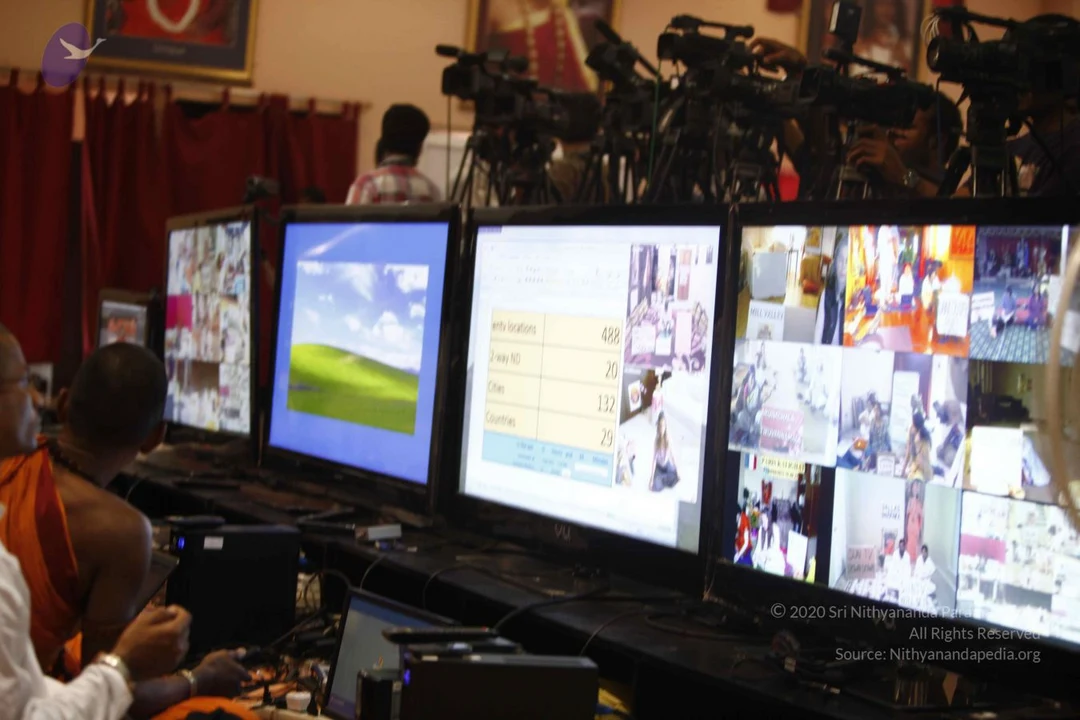
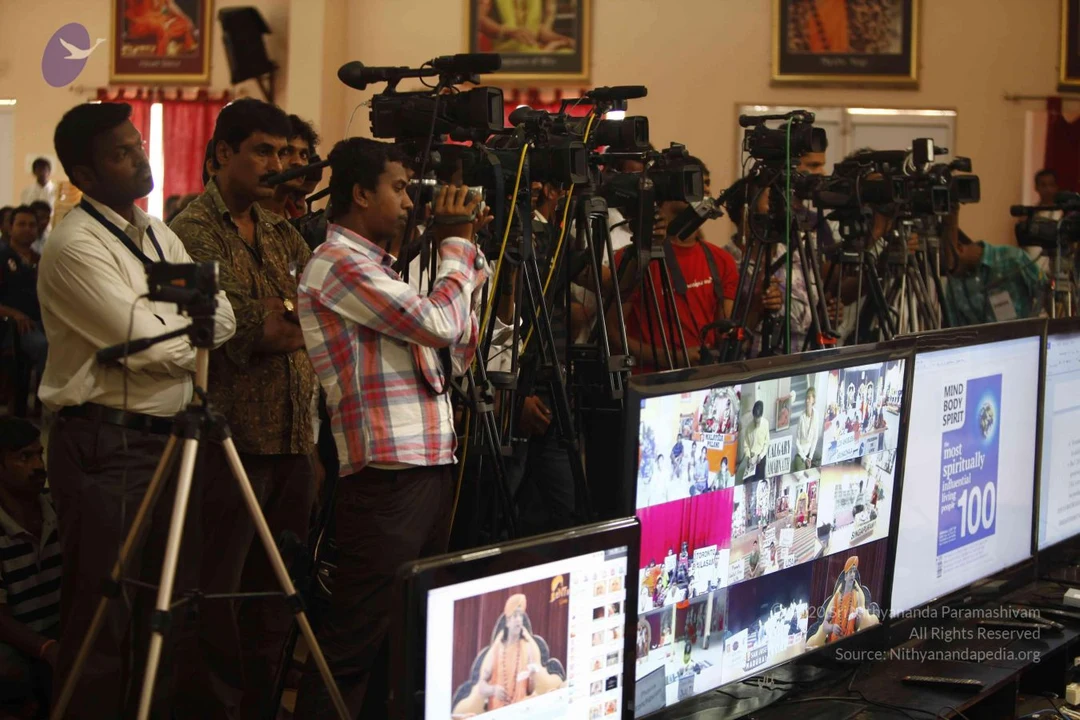
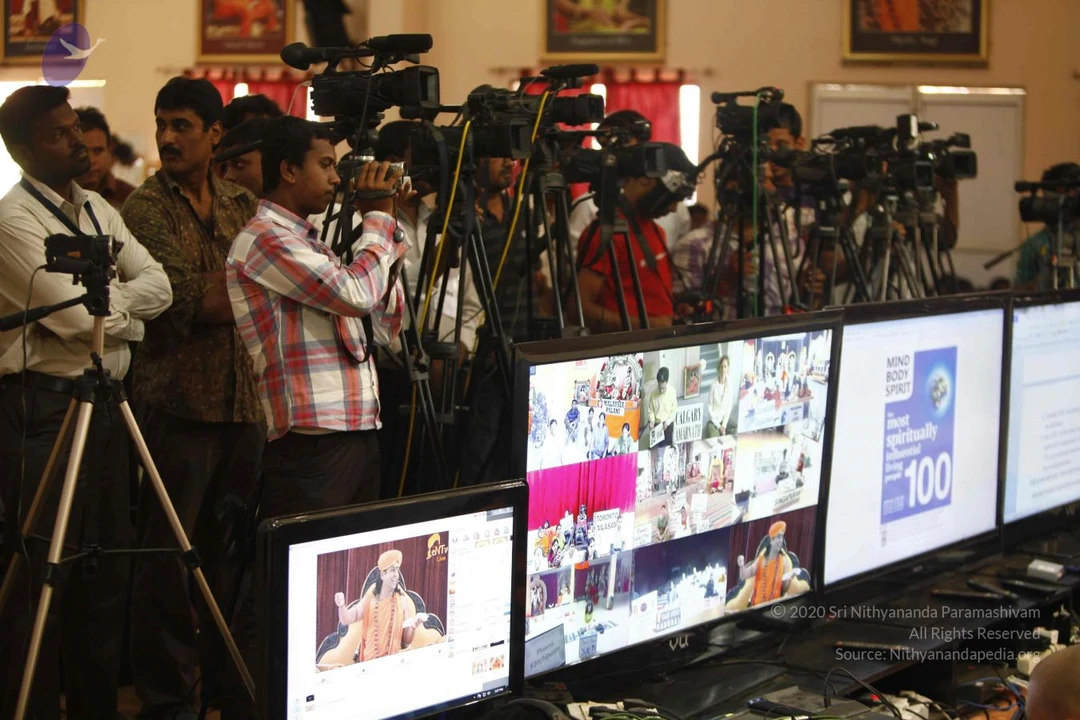
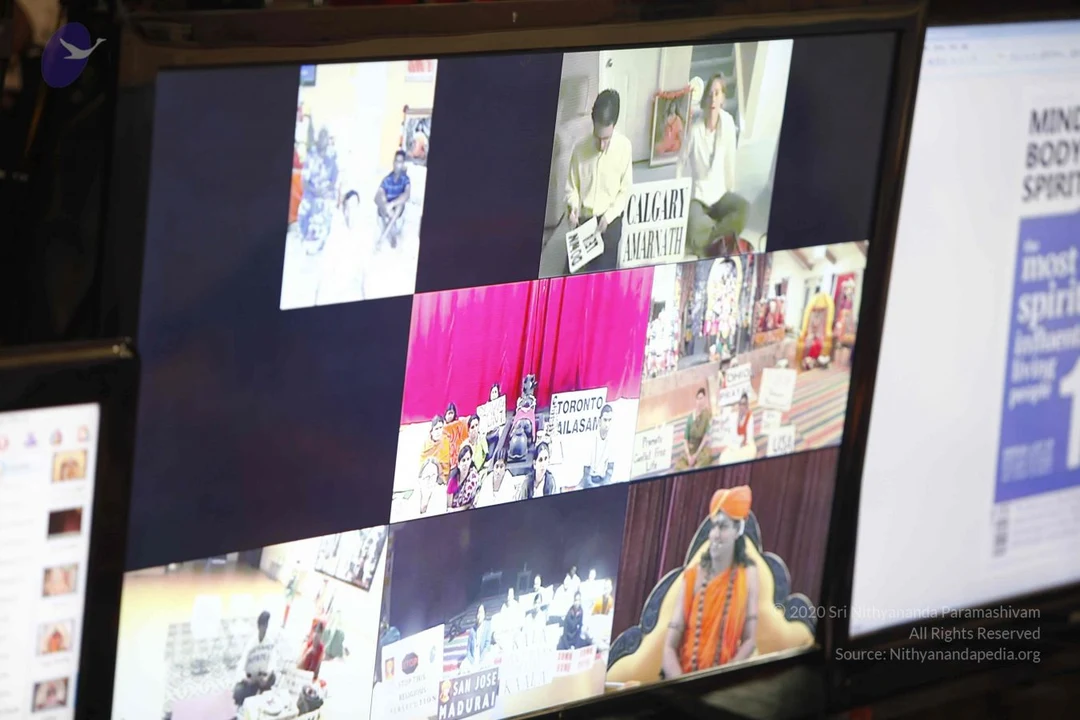
Sadāshiva samārambām shankarācharya madhyamām Asmadācharya paryanthām vande guru paramparām I welcome you all with My love and respects. I welcome all the devotees, disciples, samajis, satsangis sitting with us around the world at this moment. 300 places through NTV, 11 places two-way Nayana Deeksha in 91 cities in 16 countries around the world. Cities sitting with us in two-way video conferencing Nayana-Deeksha Oman-Shiv Gangai, Abu Halifa- Quete, Singapore-Bhakti Maya, Toronto-Kailasam, Ohio-Prayag, Seattle-Chidambaram, Singapore-Singapuram, Toronto-Kailasam, Los Angeles-Arunachalam, Malaysia-Parani, Phoenix-Kanchipuram, Tiruvannamalai-Arunachalam, Hyderabad city center, San Jose-Madurai, I welcome all of you with My love and respects.

(05:45)

Today we will see about a great Siddha Purusha who lived for more than seven hundred years, two hundred fifty years recorded life history. Please understand, two hundred fifty years well known and recorded history but lived around seven hundred years. His name is Devaraha Baba. He passed away in 1989. This Baba, Devaraha Baba lived around seven hundred years. In his own words, we have recorded history of at least two hundred and fifty years. At least for two hundred fifty years people have seen as per the record available but before two hundred years, two hundred and fifty years, he says he was in the forest and all. He spent his time in forest and different areas, places but at least two hundred and fifty years he is seen in India amidst people. There is a record but two hundred fifty years before when people saw him itself he was old. So for two hundred fifty years there was no change in his form. The same old body with a long white beard that was the same form.

(07:28)

Now lot of questions arises with this. Only difficulty I have is not able to handle these great mystical things in just one hour. I have to go on show like a TV serial, bit by bit, bit by bit. Today at least I will explain the basic concept of food and living without food. Understand, all the births you have taken when you go to the next level body, the earlier bodies best qualities are preserved in your new bio-memory. For example, when you are in the fish body, you look around and you get to see a tortoise and you become greedy to have that kind of a power to be in water and in the land. Then when you leave the fish body and ready to mold your next body, you plan and mold a tortoise body and assume. In the tortoise body you just look around and see a pig, “Wow! this is more big, huge than me and it can run around. Let me make that kind of legs and body.”

(09:09)

One more thing, in the tortoise body even if you see the human body you will not be able to create the human body. Your greed and possibility distance is too much. But pig seems to be possible. Then when you die, leave the tortoise body, you create the pig body. In the pig body, that is the way actually incarnations. See, Matsya Avatara, Kurma Avatara, Varaha Avatara, varaha means pig body. Then from Varaha Avatar, Narasimha Avatara means half man half animal. From there you evolve to a Vamana Avatara, pygmy, small man. From there you evolve a full human being, complete human being- Ramachandra. Sri Ramachandra. From there you evolve a guy who is not only human being, a strategy planner. With all the extraordinary powers, a Siddha Purusha, Poornavatara, Shri Krishna. This is the way the incarnation, avatara, tattva evolves. This is the same way you also evolved. If you become an incarnation and remember all your past birth and write, it will become a history, that's all. This is the way all of you have evolved.

(10:49)

Now a tortoise keeps all the best things of fish in his bio-memory. Pig keeps all the best things of the tortoise in his bio-memory. Understand this principle. So finally the human body you carry is the best body you can have. In this body, you have all the best bio-memories of all the earlier bodies. All the best bio-memories of all the earlier bodies. By your very nature, you are carrying the bio-memory of directly making food from the Sun in your body which you got it when you were in the tree body. When you were in the form of trees, you had this intelligence. It is there in your bio-memory even now. This power, power to create energy, life energy from the Sun is called photosynthesis in plants. You have that power of photosynthesis in your bio-memory. Only thing, now because you did not use it for so many births, at least last two hundred births, you may not be a tree. From tree you would have traveled at least two hundred births. Of course, sometime you don't change the quality, that is different but at least two hundred janmas you have traveled from tree to this body. Because you have not used it for two hundred births you forgot how to use.

(13:04)

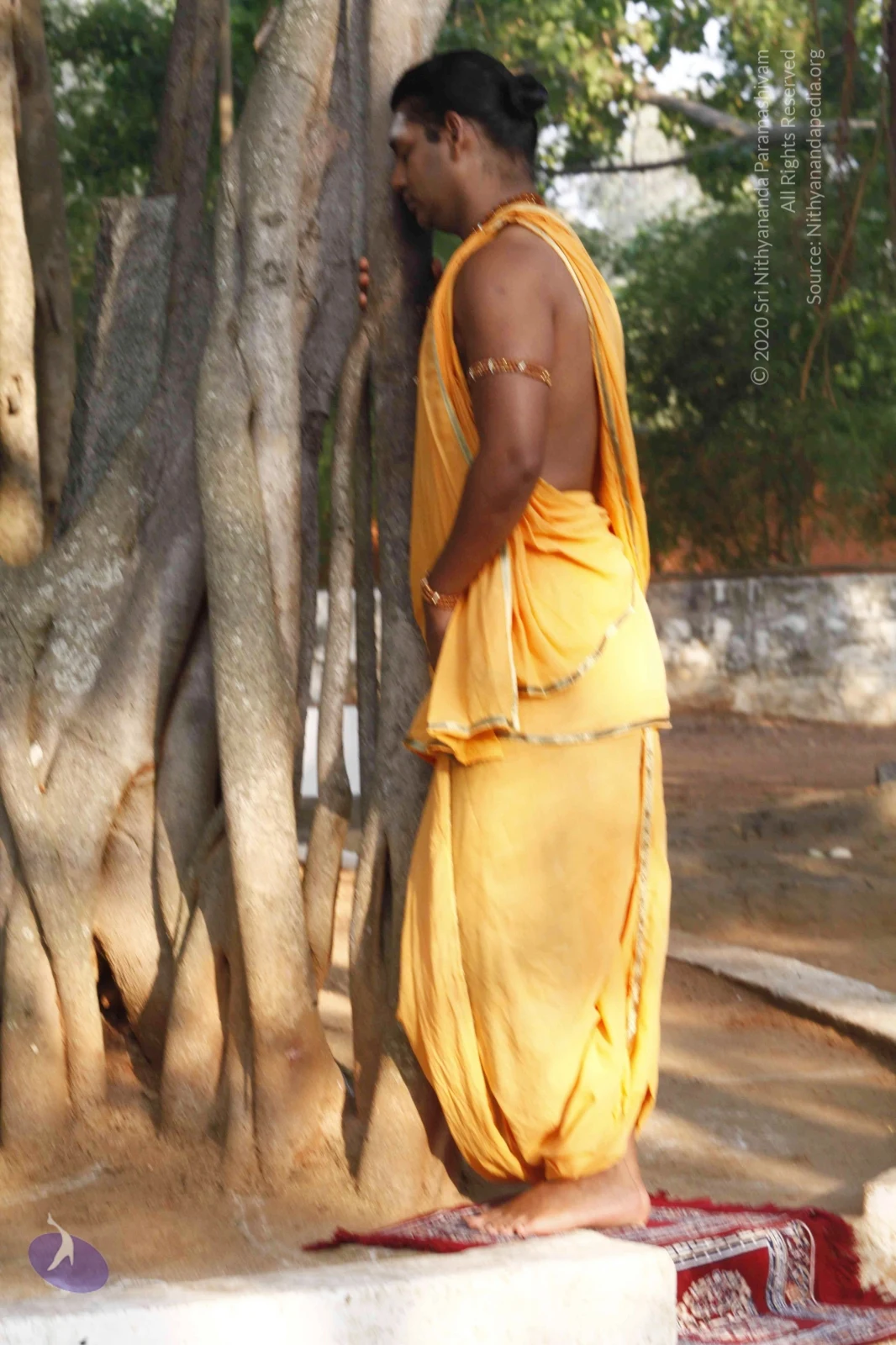
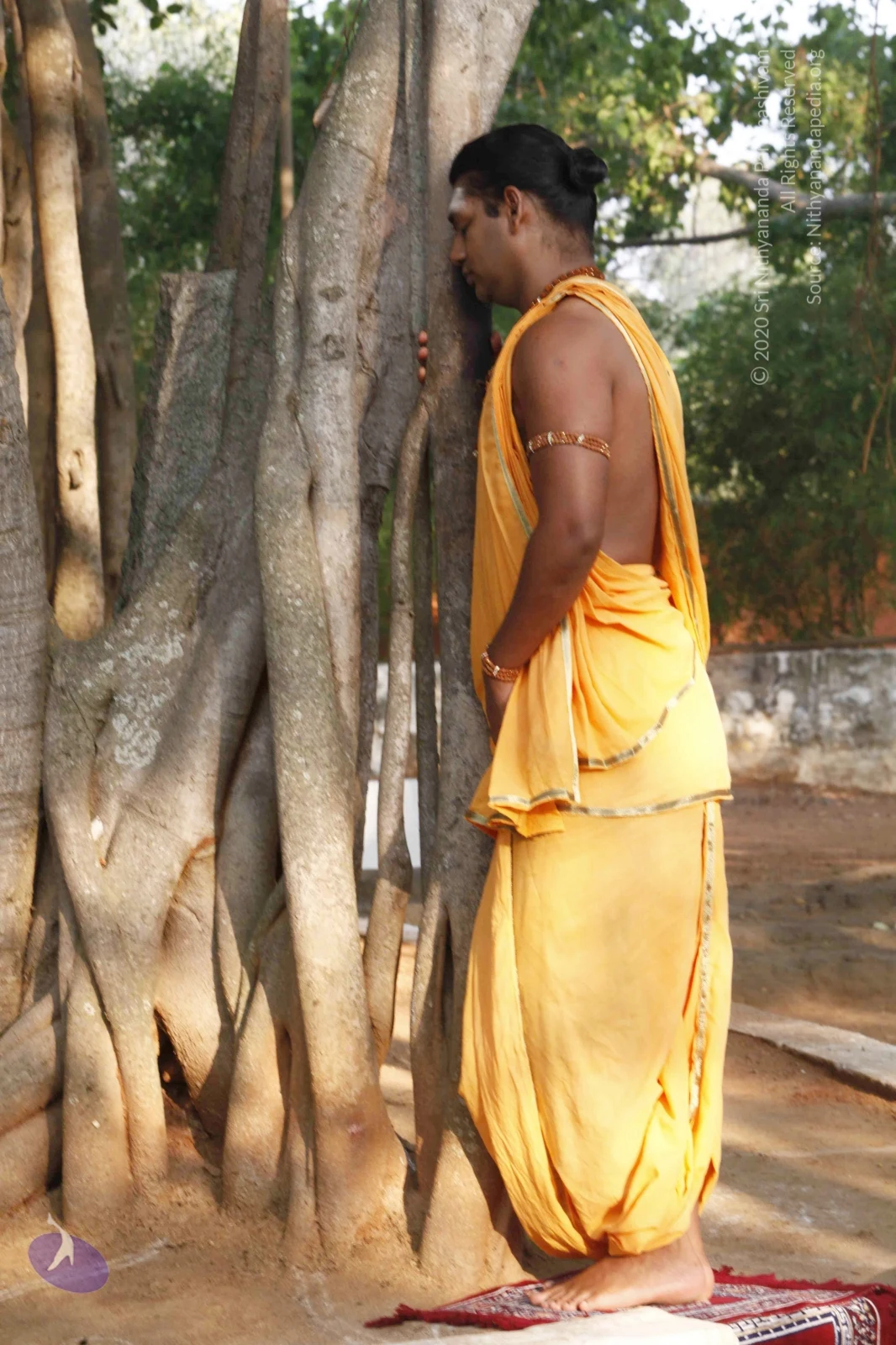
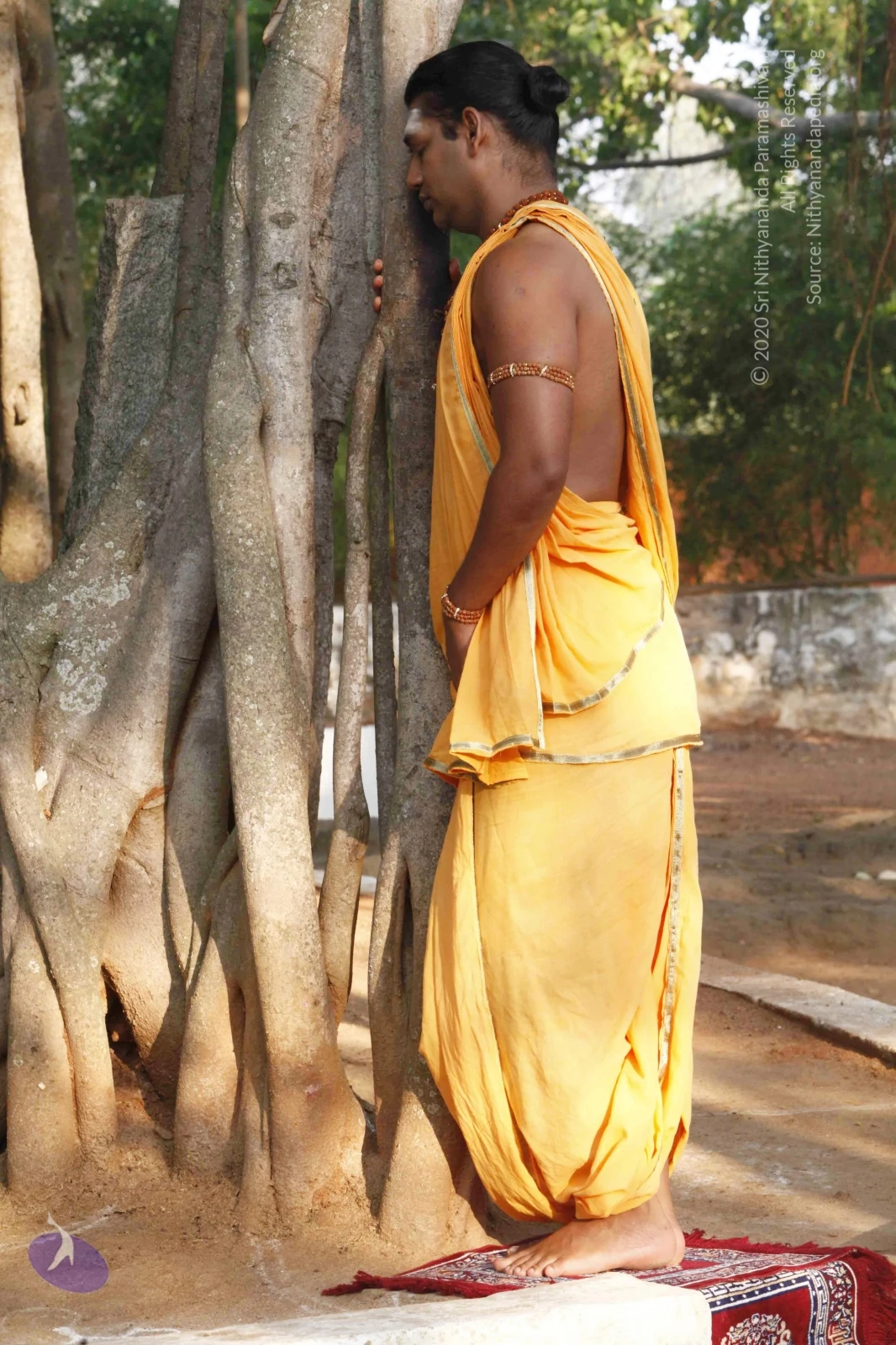
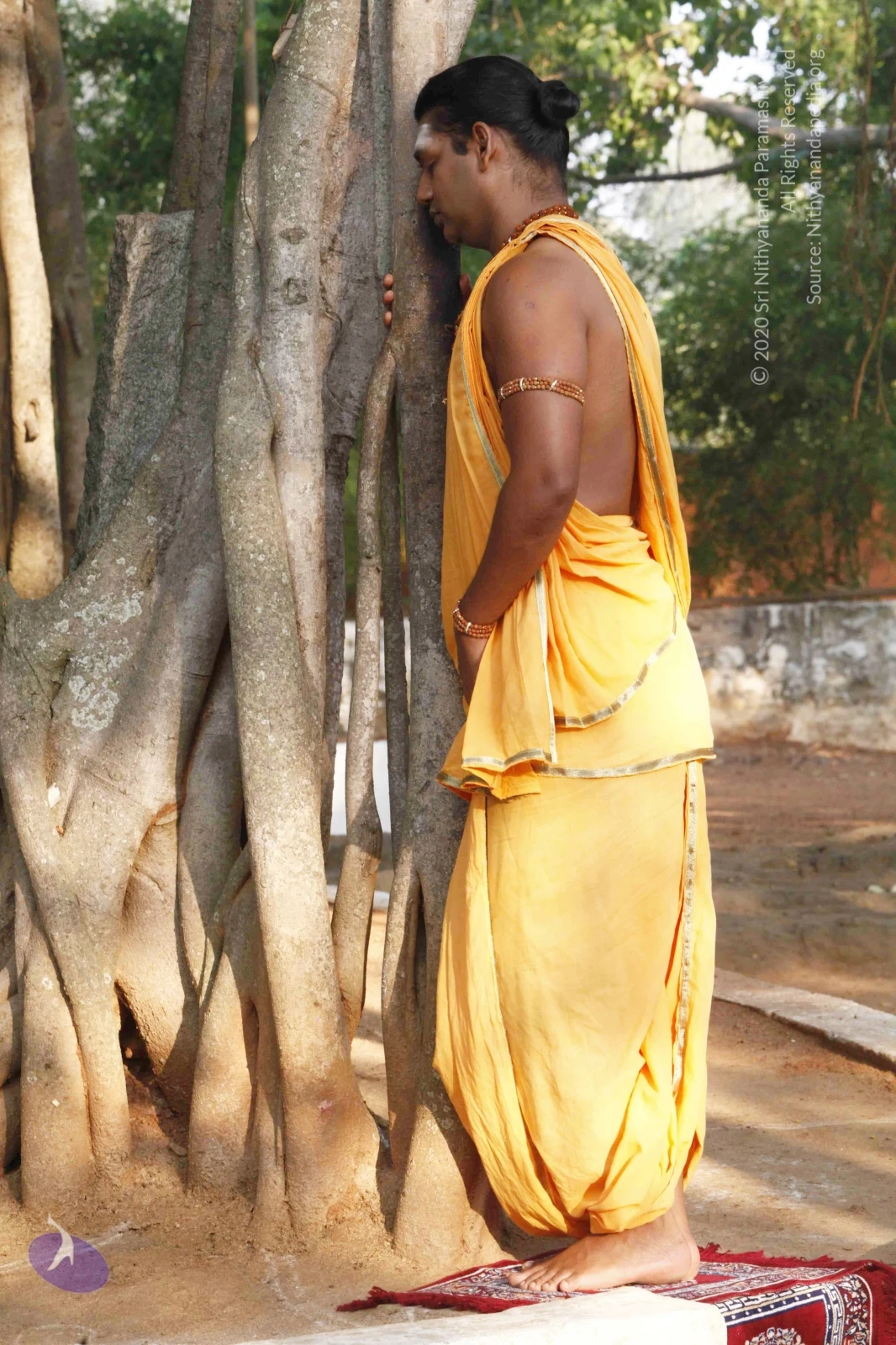
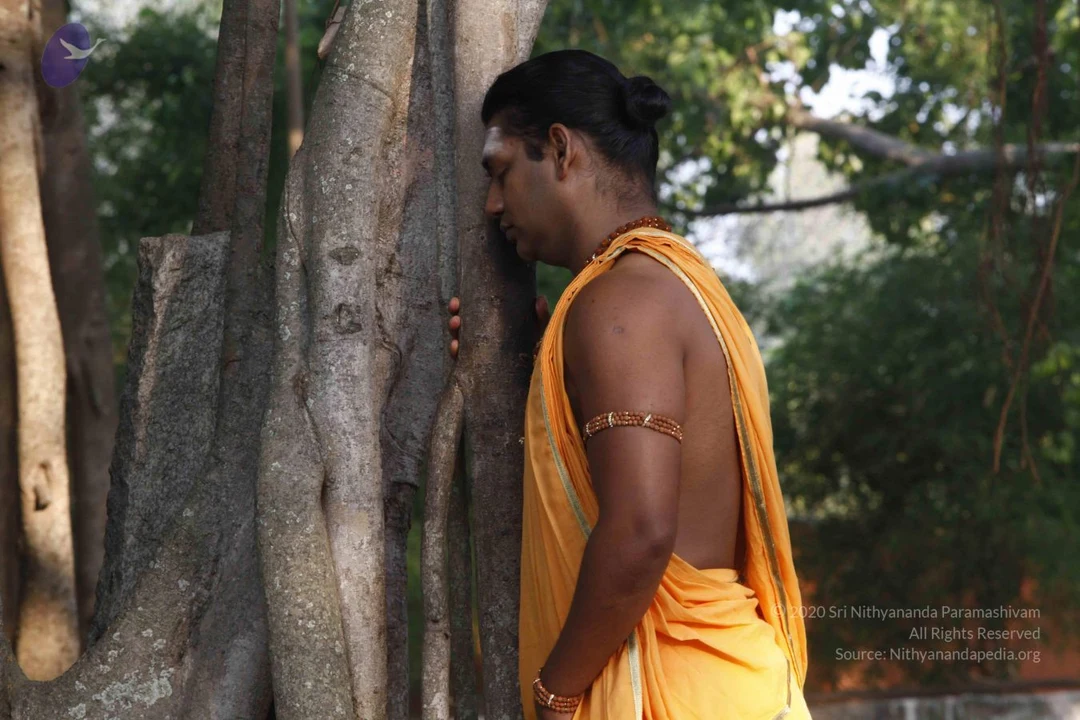
Now you can awaken that intelligence. A very simple process. Sit near a tree. Visualize you also have roots like a tree. Your hands are the branches. Your hair is the leaf. Just you have become tree. Sit. Understand, a very powerful technique to awaken the photosynthesis bio-memory in your body. You have this bio-memory. I can tell you, within eleven days of this process, maybe do morning one hour and night one hour. That is all I am asking. Within eleven days you will lose weight like anything because your food intake will reduce. First eleven days you will lose weight when the food intake reduces. Weight will come to the balance. I tell you, all of us... when I say all of us, I mean all of us are overweight. If a normal scale is seventy kg for your age, the actual weight should be forty kg because the normal scale itself is abnormal. All of us are overweight.

(14:47)

First eleven days, that excess weight will start dropping because your food intake will reduce. I am not saying fast from the day one, no. Eat how much you need but along with your eating do this two- Two hours samyama, morning and evening. Just visualize you have become tree. Feel your skin is breathing like a tree, you are directly processing the sun energy and making food out of it. The photosynthesis is happening. After a month if you continue this samyama for more than a month, then your food intake will drop but weight will not drop. I can say, maybe six months but by six months you are expected to do this samyama at least eight hours a day. By that time your food intake will come down to just one meal. You will not be losing weight. Maybe it will take two years. By the time you are able to just live without food, just with water. Little bit of liquid you will be able to go round and live.

(16:24)

I have seen Kuppammal doing that. For years I have seen her just living on water. I have seen Isakkhi Swamigal without even water. No food, no water. Kuppammal, only water. Ram Surat Kumar I have seen him just tea, nothing else. For years, only tea. Morning one cup tea and evening one cup tea, over! I have seen Raghupati Yogi doing all these yogic feats, adventures not eating and just sitting for days, days without moving from one place to another place. Just he will sit in one place. Unfortunately because you never used that photosynthesis bio-memory and you always loaded your body with too much of food, your body has forgotten that great truth you can live without food.

(17:50)

A great Sadhu lady, Madhubala Giri who is mentioned in Paramahamsa Yogananda's autobiography in the name of Giribala. Of course, her full name is Madhubala Giri. You can see her picture from Autobiography of a Yogi book. This lady, she has not eaten for more than fifty six years when Paramhamsa Yogananda met her. Her original name is Madhubala. Giri is Sanyas name. In course of time, people have started calling her Giri Bala and Paramhansa Yogananda mentions of her as Giri Bala in his autobiography. Say I am talking about these esoteric things to make you understand these possibilities. I really tell you, if you believe, even believe these possibilities that without food you can live, even this belief opens certain channels in you.

(19:10)

Title

Living Without Food || Part 2 || NS || 04 April 2012

Description

Title: Living Without Food Part 2
Name Of The Convention: Nithya Satsang
Session on: Divine possibilities in the human body
Date : 04 April 2012
Venue : Adi Kailasa, Bengaluru, Karnataka, India

In this video Supreme Pontiff of Hinduism HDH #Nithyananda Paramashivam talks about the evolution of the human body. He says all the capabilities from prior births are available in our bio-memory. By awakening these latent capabilities, we can absorb the required life energy from the sun and live without the need for food.

The Supreme Pontiff of Hinduism Jagatguru Mahasannidhanam His Divine Holiness Nithyananda Paramashivam (HDH) is the reviver of #KAILASA - the ancient enlightened civilization and the great cosmic borderless Hindu nation. Revered as the incarnation of Paramashiva - the primordial Hindu Divinity, HDH has a following of 2 billion Hindus worldwide with de facto spiritual embassies in over 150 countries. He has worked untiringly for over 26 years for the revival of Kailasa, for global peace and to give super conscious breakthrough to humanity. He has survived the worst persecution of multiple assassination attempts on person and on character by anti-Hindu elements. He is collecting, organising, preserving, time capsuling, decoding, spreading and reviving 20 Million source books of Hinduism and the 64 sacred arts & sciences like Ayurveda, music, dance, sculpting, astrology, vastu and much more. Close to 20,000 hours of HDH’s timeless talks have been recorded till date (Sep 2020), which are a treasure trove of powerful cognitions to solve individual and global problems of any kind.

Link to Video:

VideoAudio

Ttanscript:

(0:15)

I wanted to tell you one thing, like placebo medicine always cures at least 40% of people. Please understand, any disease, placebo cures 40% of people. Means that 40% of the people are waiting for anything just to get cured. Siddha, allopathy, homeopathy, ayurveda, any pathy any pathy, just give something, they will get healed. That 40% placebo effect people are waiting to get cured. I tell you, if you can be healed by the placebo medicine, you are a yogi yet to be discovered by you. I tell you, there is a huge possibility sitting in your bio-memory. You are a yogi yet to be discovered by you. The huge possibility. Even if you feel connected to these great truths, immediately those powers will start opening up in you. I am talking about this Esoteric evening, everyday esoteric truths for two reason: One, to help that 40% of people. Second, if you again and again hear about different esoteric powers and extraordinary powers, some power which is in you will open up.

(02:10)

See, now I am talking about living without food. For 40% of people, this power itself will open up. There are other 50% of people on whom suddenly some new power will open up. They will be able to drive the bicycle without holding the hands. You may think, “How that has connected to eating without food?” You don't know. When some esoteric powers, great truths about the esoteric powers enter into your bio-memory, some… if you are convinced about some powers, some other powers which is there closer to your bio-memory will wake up. So with this Esoteric evening series, I will be waking up many of the different mystical powers many of our disciples have.

(03:24)

Understand one more thing, if you are feeling connected to Me, you are a yogi. You are going to have Enlightenment with all spices- Ashtama Siddhis and extraordinary powers. It is juicy, spicy. There is no brand. I think we will have to create our own Nithyananda brand…. where not only you are going to express enlightenment, you are going to express continuously extraordinary powers and expressions, energies. I tell you, if you are feeling connected to Me, be very clear, you are a yogi who is going to express the enlightenment with all its spice. Only that kind of bio-memory people will have even feeling connection with Me. This Esoteric evening series, even listening, understanding... understand one more thing, when I show all these extraordinary masters and great truths, I am also programming your inner space to it. You are seeing in My space. Beyond your mind, your bio-memory starts believing.

(04:54)

Just today, one disciple complained to Me that she has been hurt and I challenged I will see to it you are healed. “You try to hold on to your hurt. I will heal. Come on, let's see,” because I know her bio-memory listens to Me more than her. It is beyond her control. Her bio-memory simply listens to whatever I am saying because her bio-memory has a deeper trust and faith, feeling connection than herself. Same way, when you are sitting in My presence and seeing all these great truths, simply it gets into your bio-memory. You may be getting the information about levitation in this Esoteric evening. More than 40% will have that experience itself, levitation itself. There is another 50% which will have some other power suddenly awakened. They will be able to stand on their just one hand. They will be just able to do shirshasana. You may think, “How come that power, this...?” It is possible. Esoteric powers are nothing but tuning your body to new energies, different channels, that's all.

(06:53)

Here I am going to create at least hundred yogis whose bio-memory is expressing all types of siddhis so that anybody can come and catch that siddhis. So when you enter and go out, the seed of enlightenment is sown in you. Over! And I am also working on programming some twenty five trees. I am talking to all of them and doing an interview. Last few days I am doing an interview. Trees I am going to program to transmit, initiate people into this photosynthesis bio-memory, means you just go and hug that tree and sit for five minutes or ten minutes. That tree will initiate you. That will transmit that bio-memory to you. (08:02) Already for four Rashi people I have interviewed the trees. You see, it depends on your horoscope. Your astrology needs to be involved here. Kanya, Mesha, Simha, Vrishchika Rashis already I have interviewed the trees and the job is done. I am waiting for completing the interview for other Rashis. Once the remaining eight Rashis are done, I will literally show you guys. Just go and hug the tree for 10-15 minutes. The tree will initiate you, your bio-memory. It will awaken that photosynthesis bio-memory in you. Suddenly your hunger will drop and thirst will drop…. You will feel full. It is possible. It is possible. I will prove all these possibilities.

(9:14)

You see, when I spoke about the Kundalini Awakening, people levitating, not only in My physical presence, far off places just by video conferencing, nobody trusted. When two-three people started levitating in the ashram, they thought they are all My agents. Then when two-three started levitating all over the world in different centers, again media wrote they are all My agents. Now thousands, now I am challenging, let anybody come to Inner Awakening, I will challenge and see to it they levitate, their kundalini is awakened. I am challenging now. Whole world is My agent or what? Of course, whole world is My agent, that is different…. When I spoke, nobody believed it is possible. When I spoke about materialization, nobody believed it is possible. Only when I showed, people realized it is possible. Now I am telling you, it is possible. I will show you. Only when I show, you will understand.

(10:40)

These esoteric, mystical, spiritual powers, only when they start expressing in your body and mind, you will constantly have the courage and confidence to go towards Enlightenment. Otherwise on the way, thousands of people get depressed and stop that very travel itself. I know, after two-three years of the spiritual journey, they get depressed and stop the journey itself or they travel by bullock cart to reach the moon. They go by bullock cart. Ask them, “Where are you going?” “No, I am going to the moon.” “When will you reach?” “It's okay, after ten janmas.” “Fool! Why can't you get into the flight this janma? Why can't you get into the rocket this janma and reach the moon?” “No, no, no, no, no, that is not as per the tradition.”

(11:43)

Nowadays in the Twitter also I started awakening the Kundalini. I tell you, the possibilities, so much possibilities are there. Only the fellows who tell that there is no higher possibility for human beings are spreading superstitions, superstitious beliefs. I am actually spreading supernatural beliefs. Maybe we can say we are super auspicious. The possibilities I will expand continuously in further satsangs about all other divine possibilities in human body. I wanted to tell you only one thing. You are not a human being having divine experience; you are a divine being having human experience. Okay, I bless you all who are sitting with us 536 places through NTV, 13 places two way Nayana Deeksha, in 138 cities in 21 countries. Let you all achieve, experience, live, express, radiate, share, explore and explode in Eternal Bliss - Nithyananda. Thank you.

(13:34)

Photos From The Day:
Enriching Materials

http://drive.google.com/uc?export=view&id=https://drive.google.com/file/d/1Dh1UV8rJ-nG0245cYv2AwU5K5Z8wDryI/view?usp=sharing

Photos Of The Day:

temple

pada pooja
bhagavad gita

sarva darshan

Tags:

integrate, productivity, creativity, attitude, opportunity, lives, integrity, excellence, honest, perfection, expansion, authentic,leadership,management,corporate

Photos Of The Day:

Temple

Prathyaksha-Pada-Puja

Q-and-A-Session

Sarva-Darshan

Press-Meet

Esoteric-Satsang

Photos Of The Day:

BhagavadGita

Photos Of The Day:

Temple

Prathyaksha-Pada-Puja

Q-and-A-Session

Sarva-Darshan

Press-Meet

Esoteric-Satsang

Photos from this day

View all 773 photos

temple

7 photosSource gallery
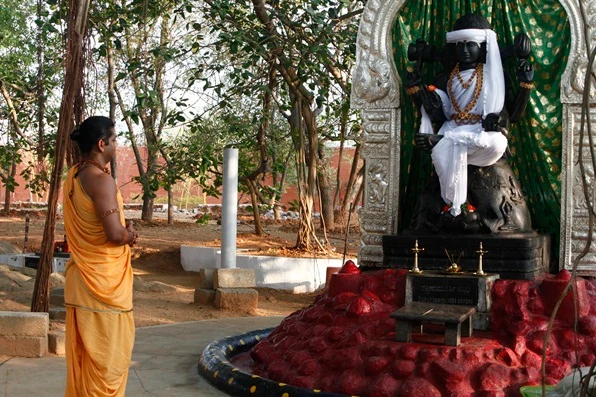
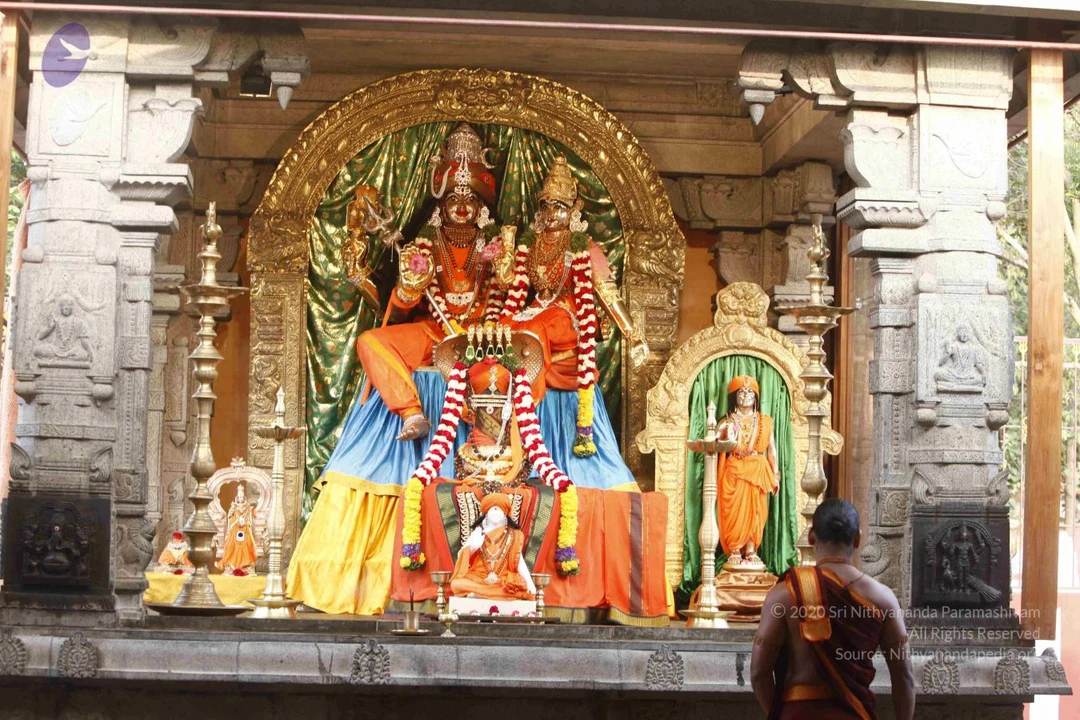
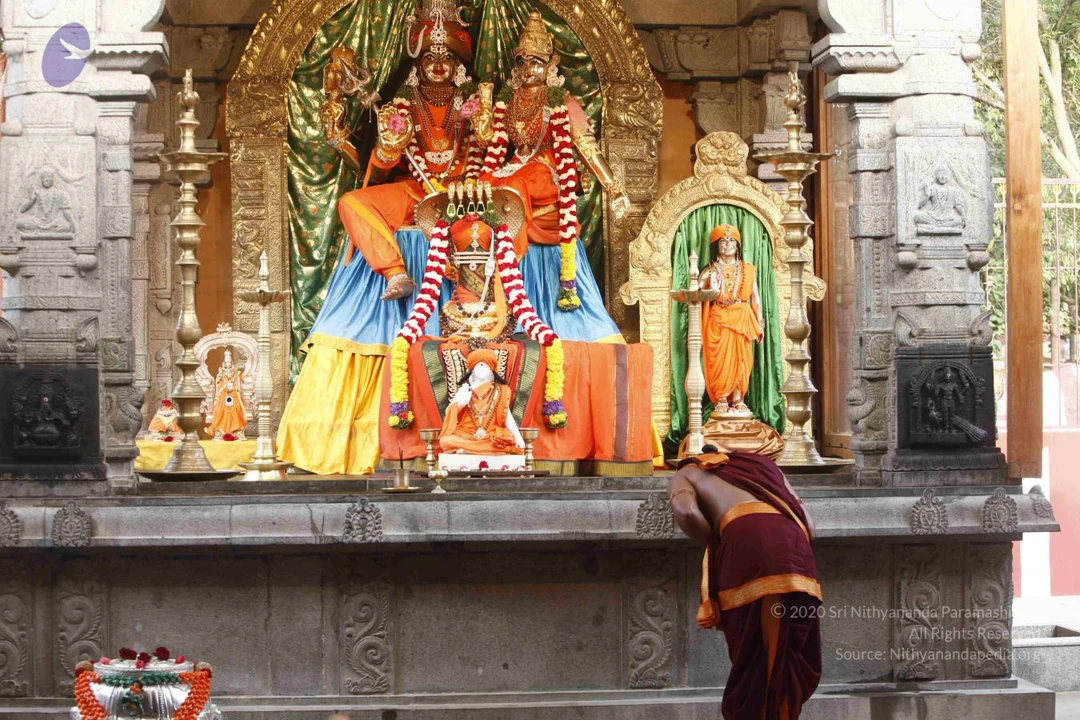
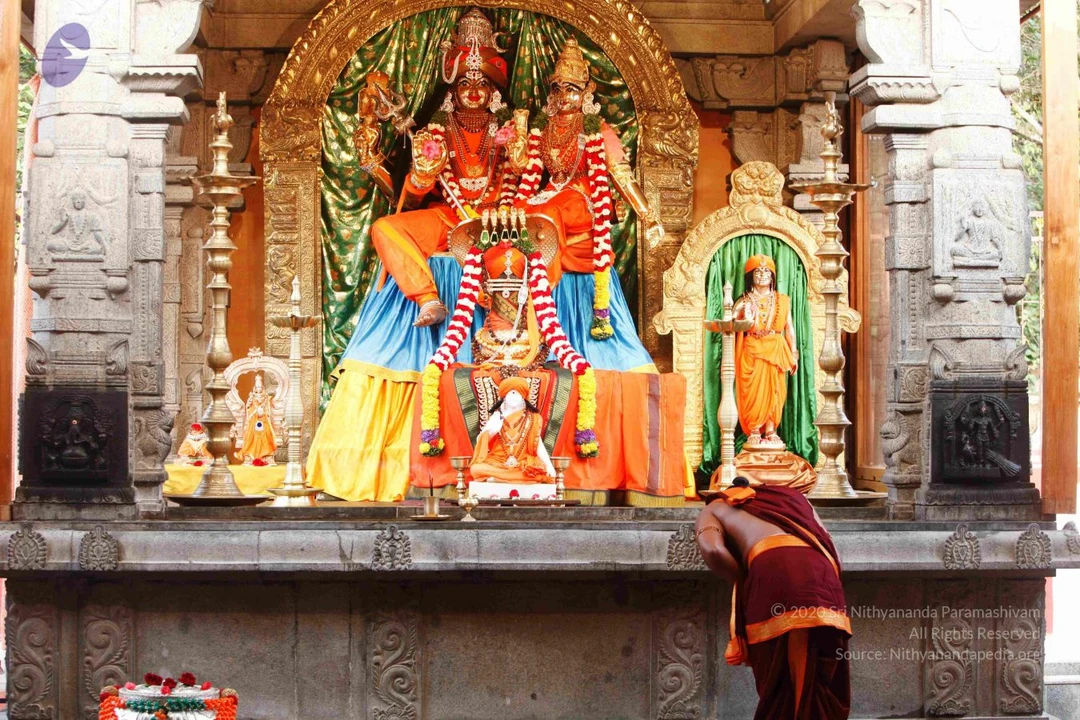
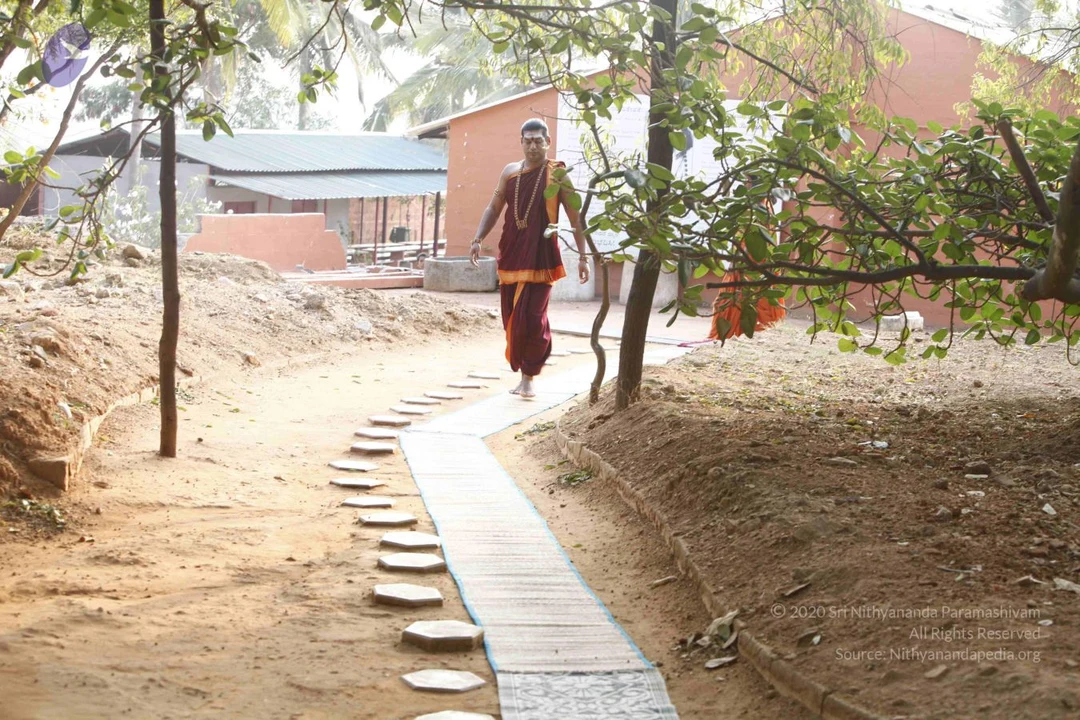
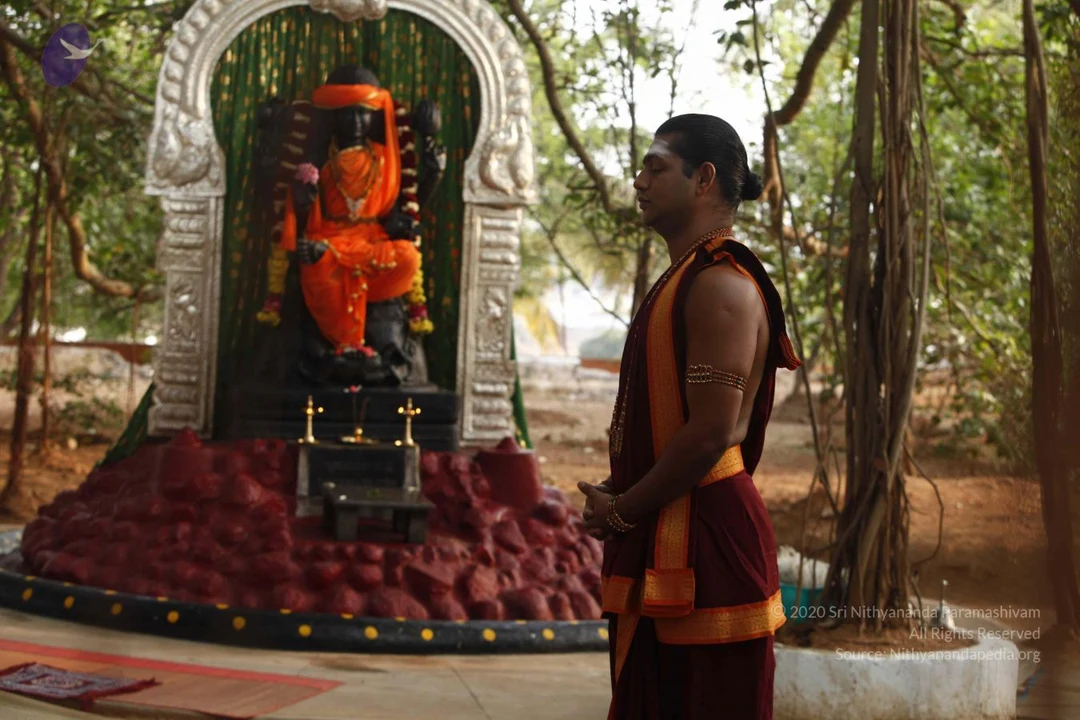
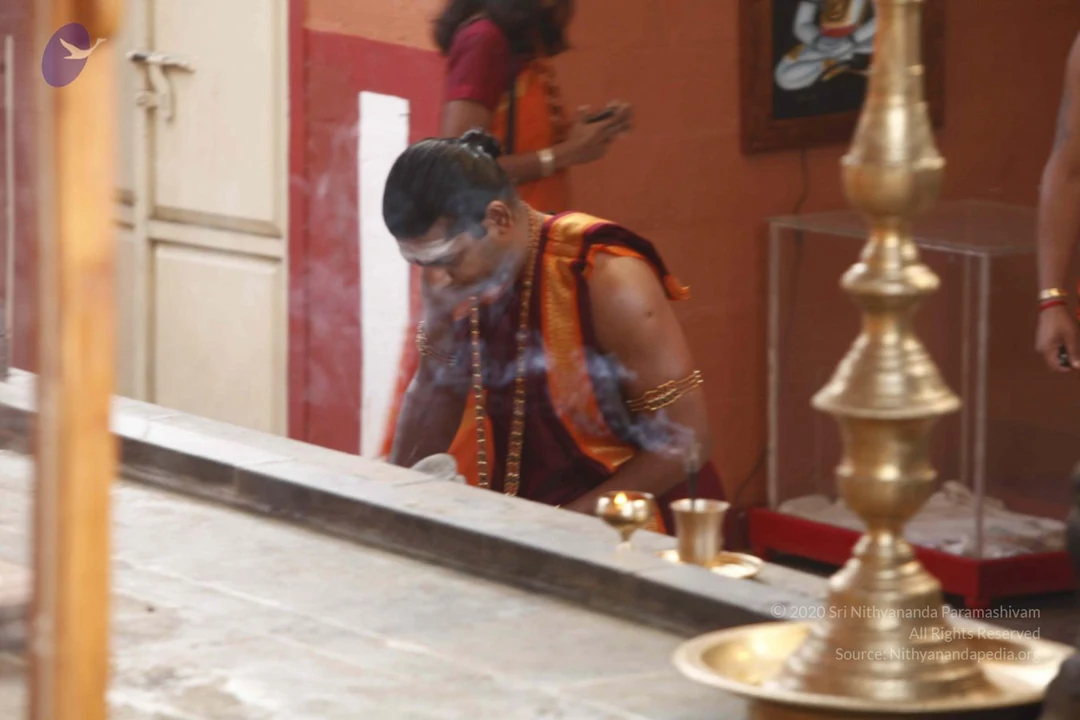
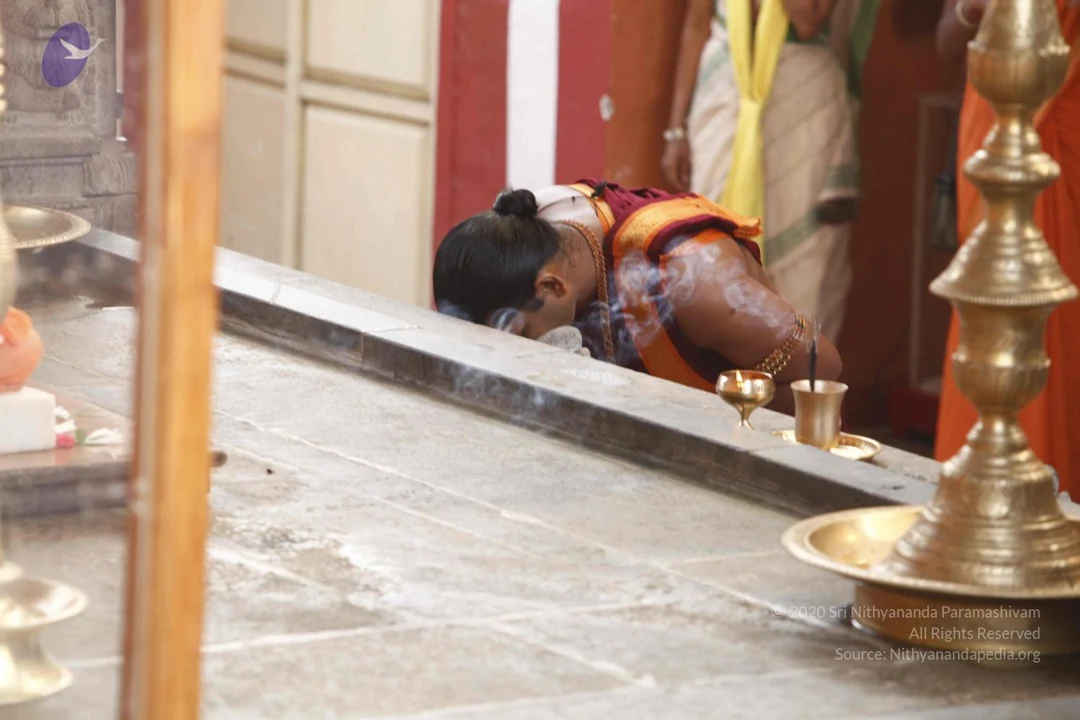
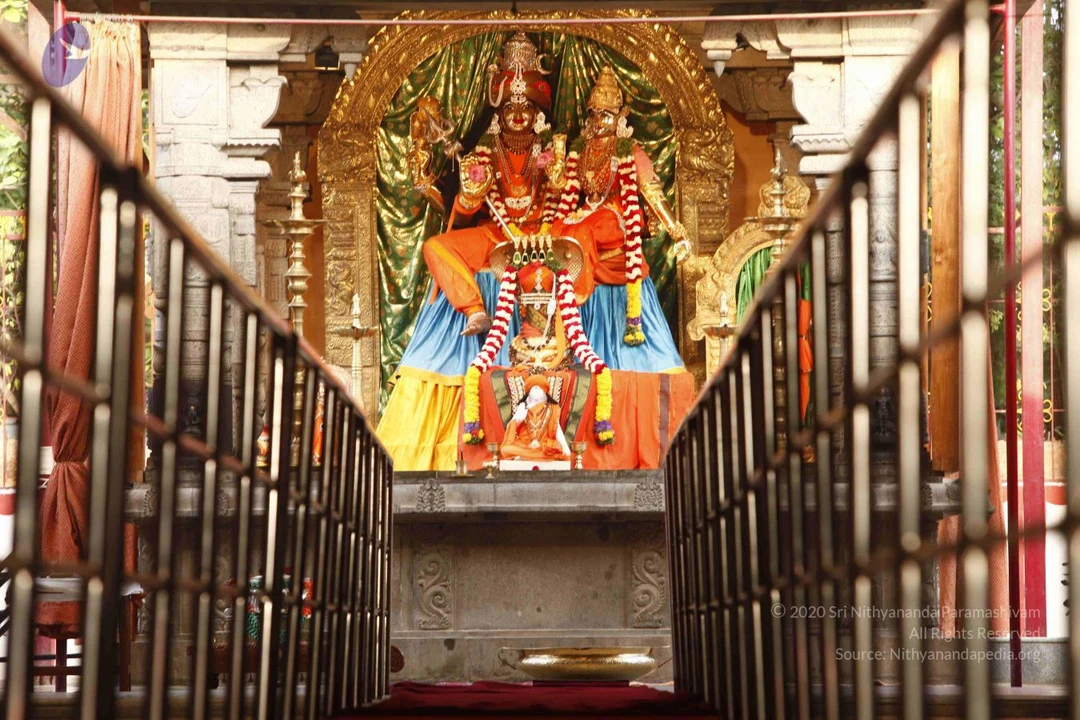
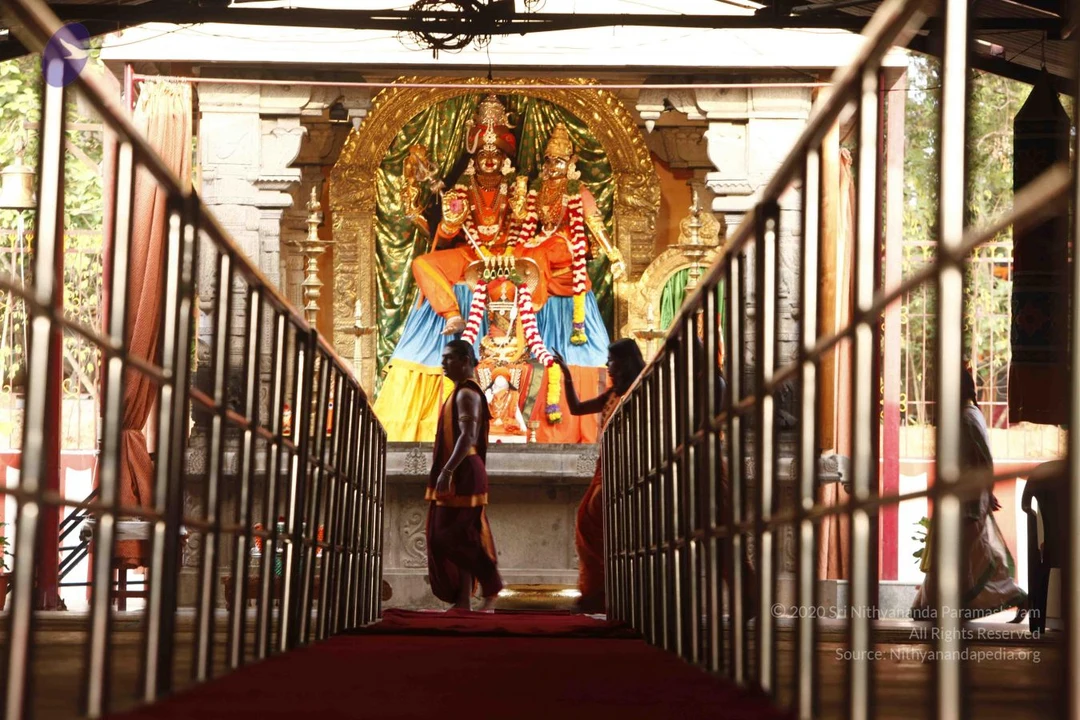
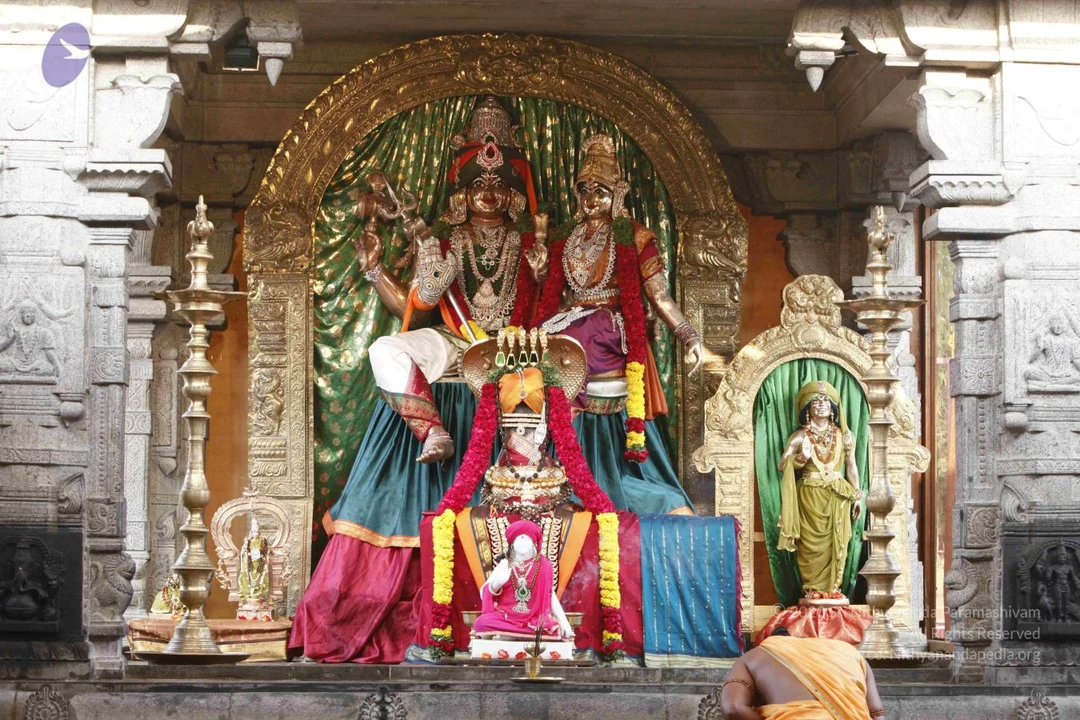
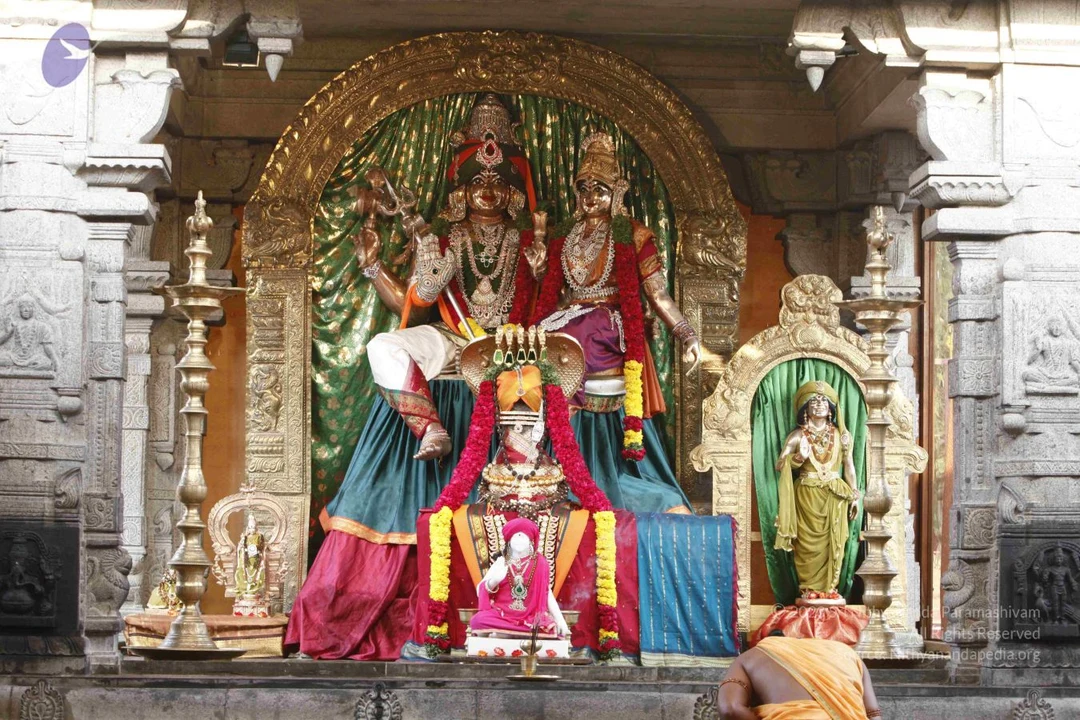
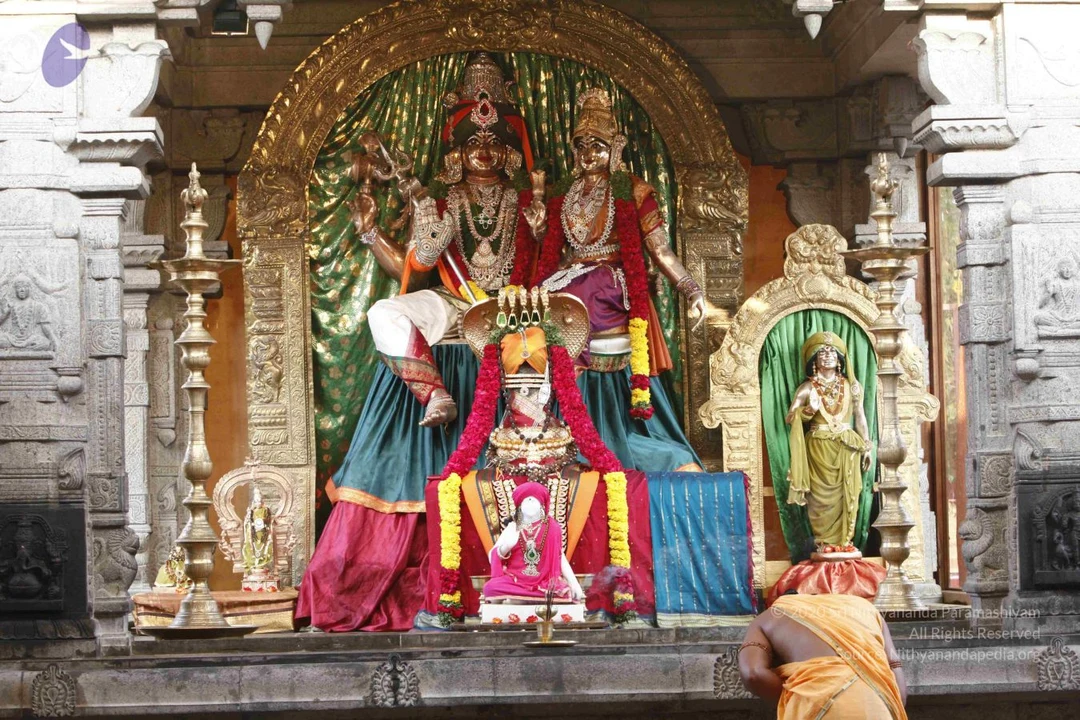
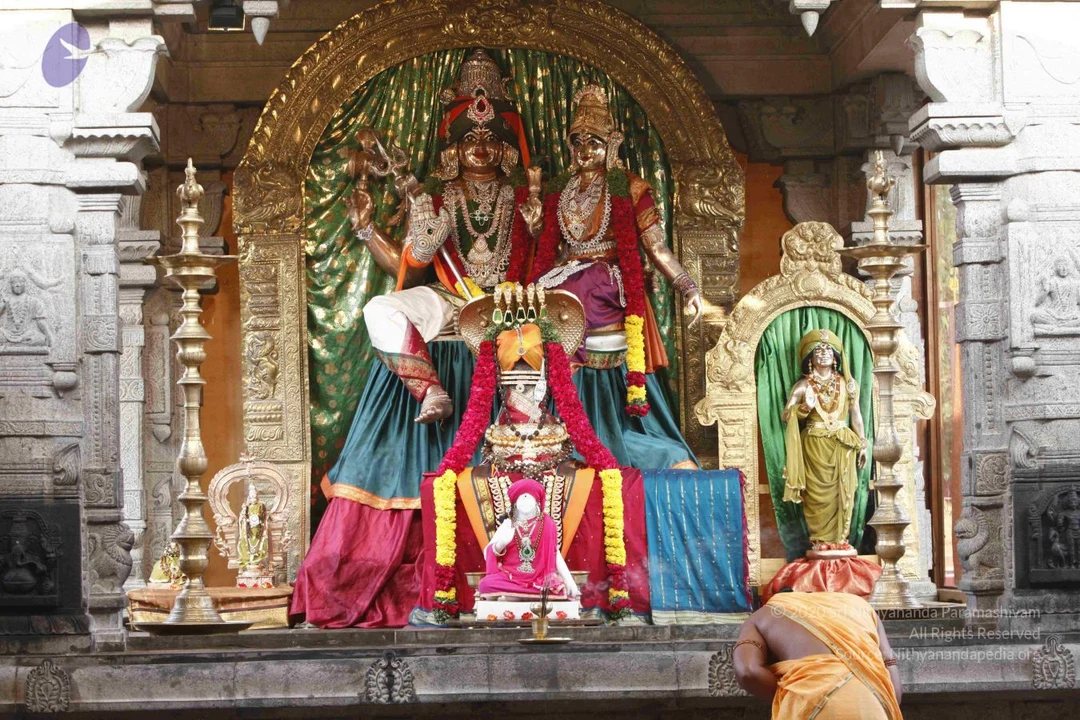
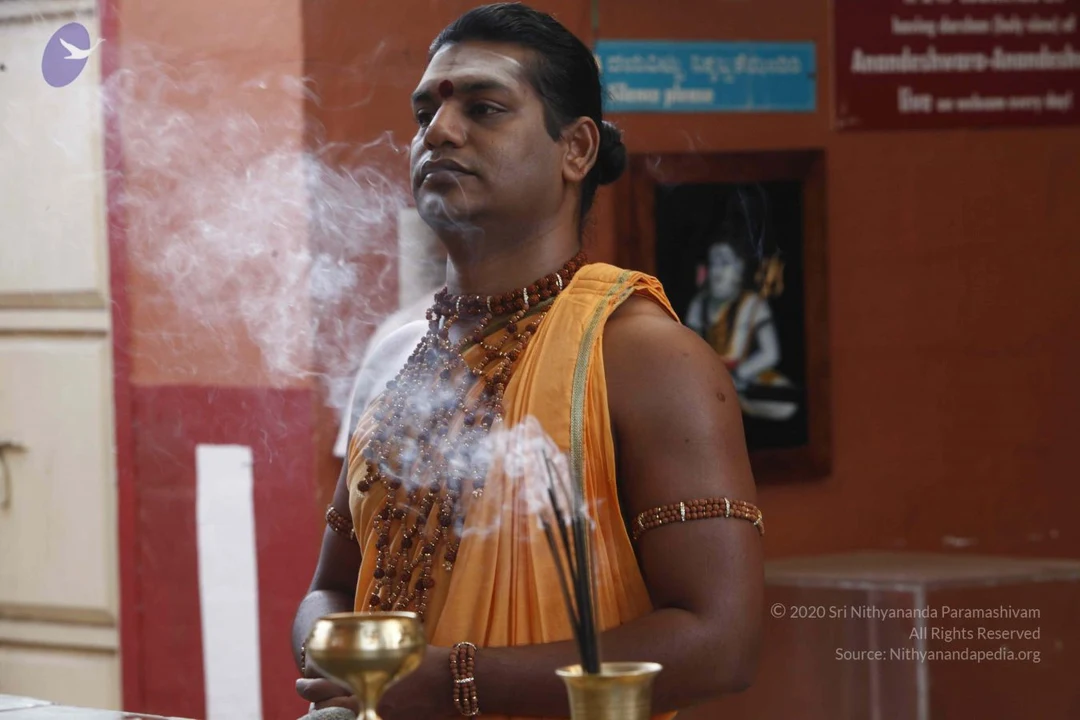
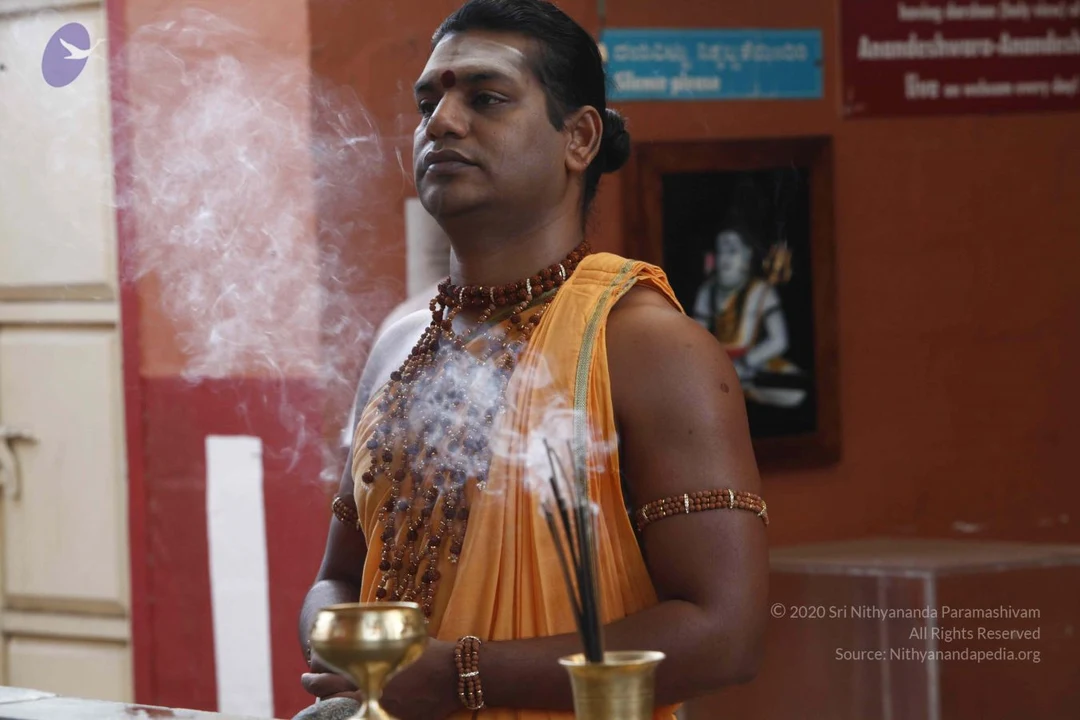
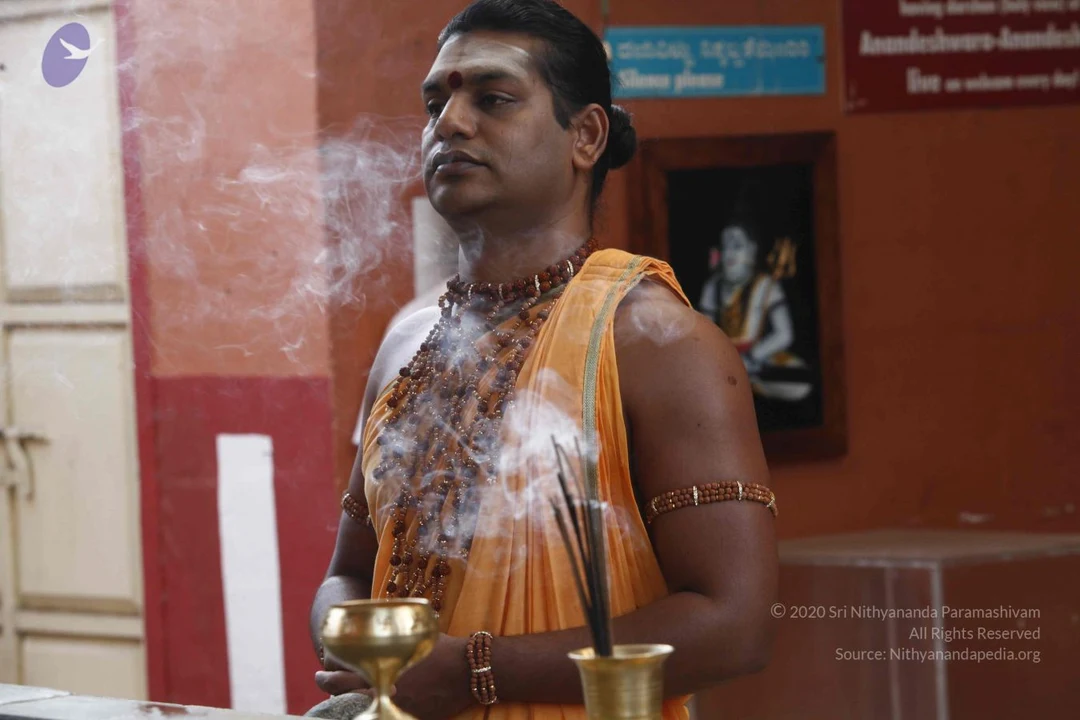
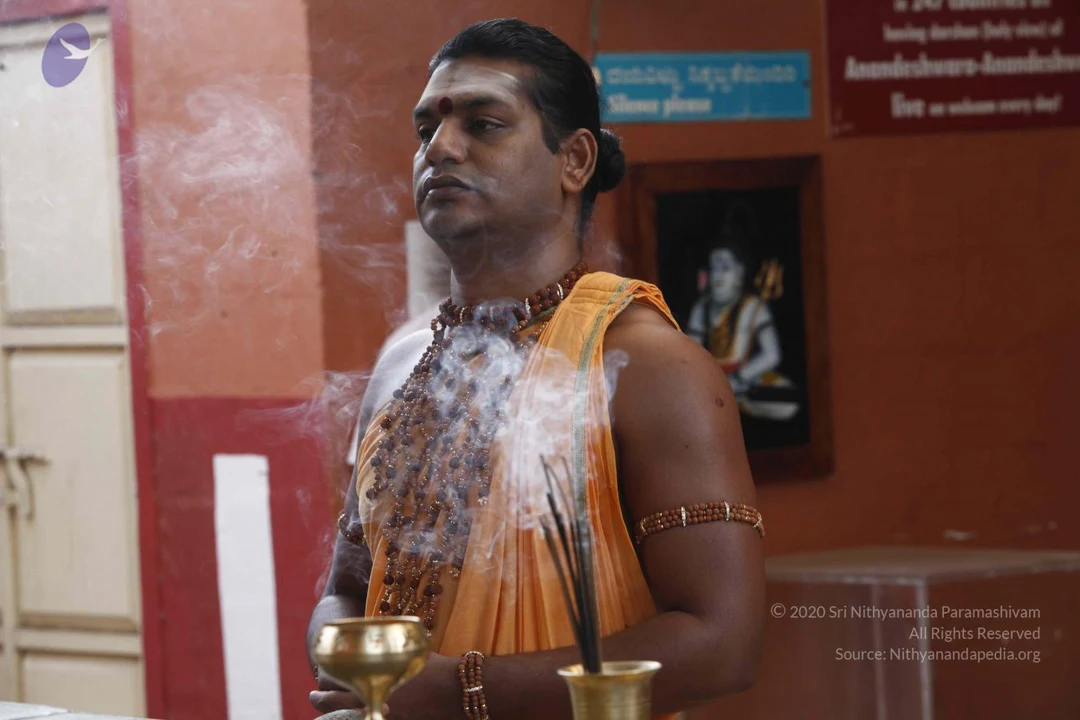
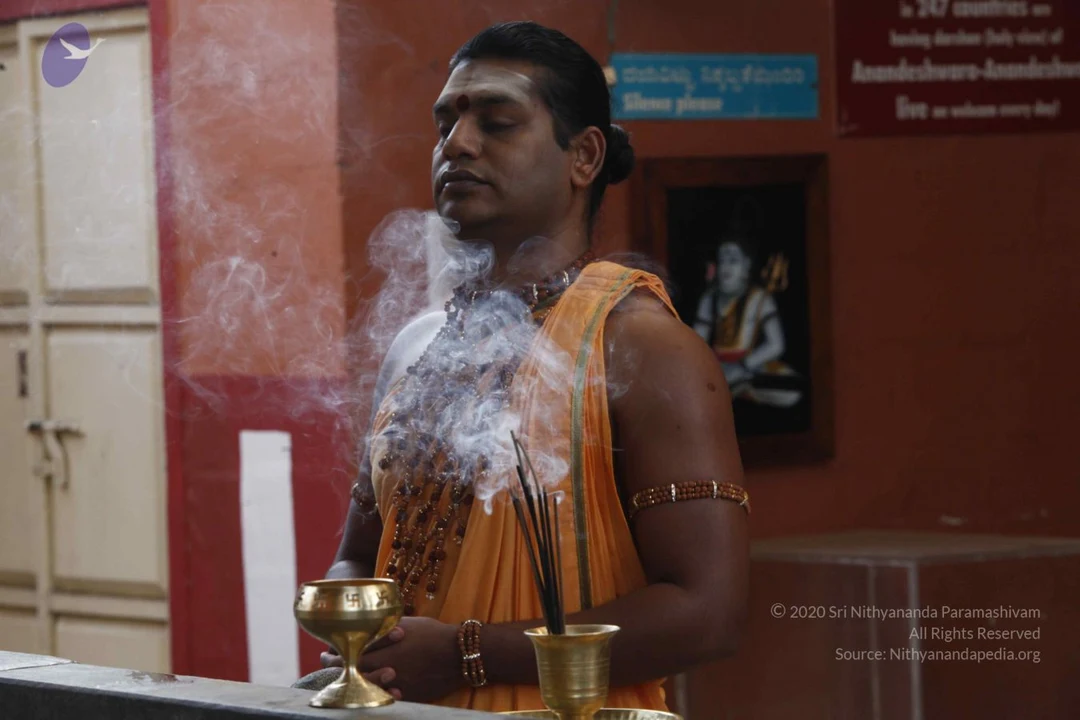
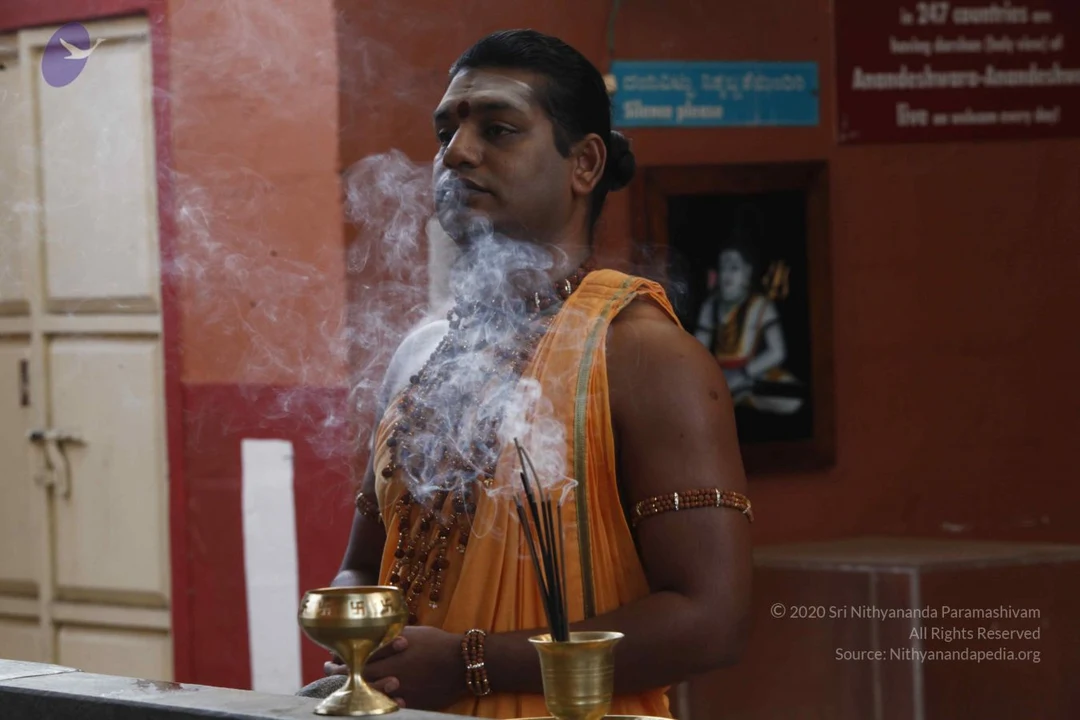
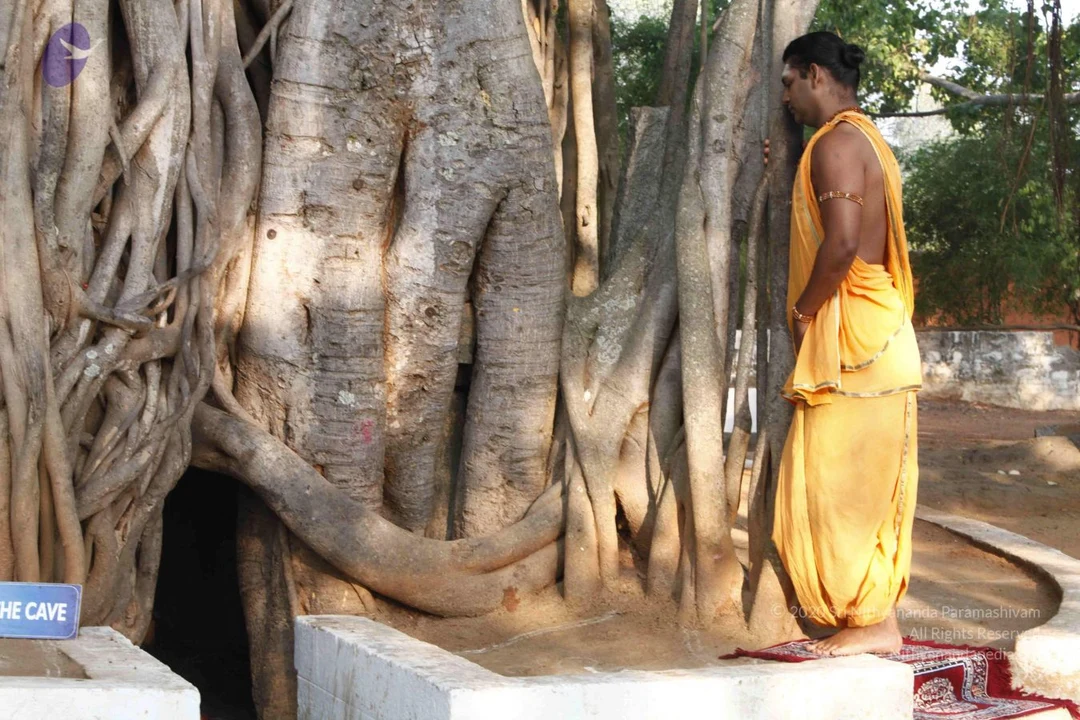
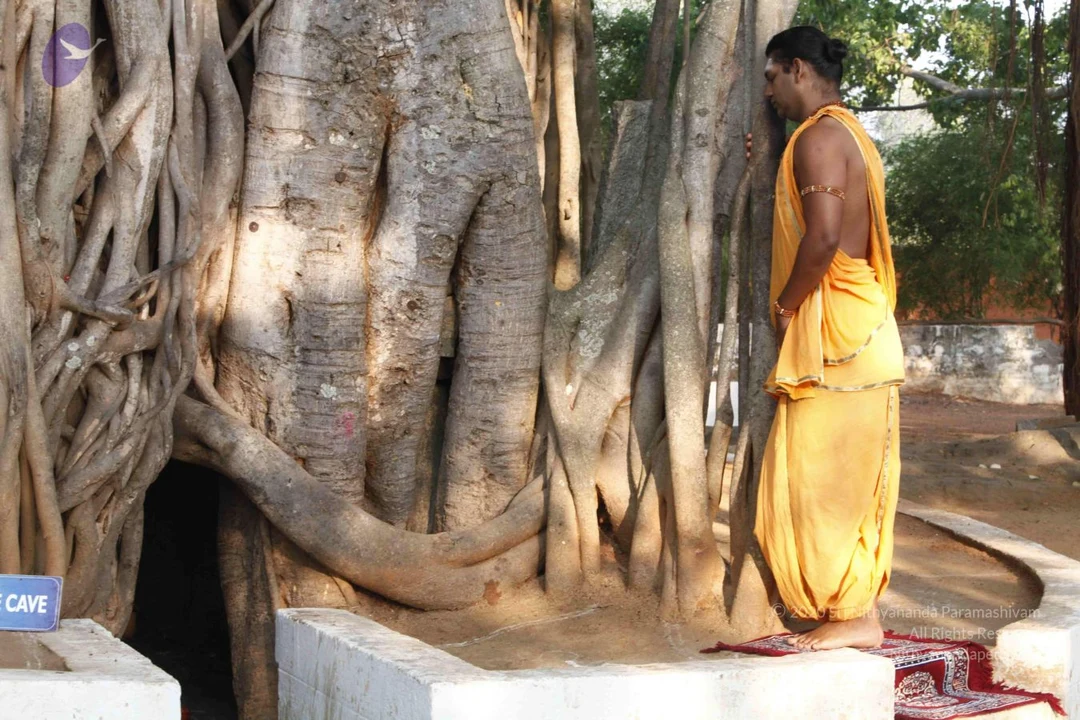
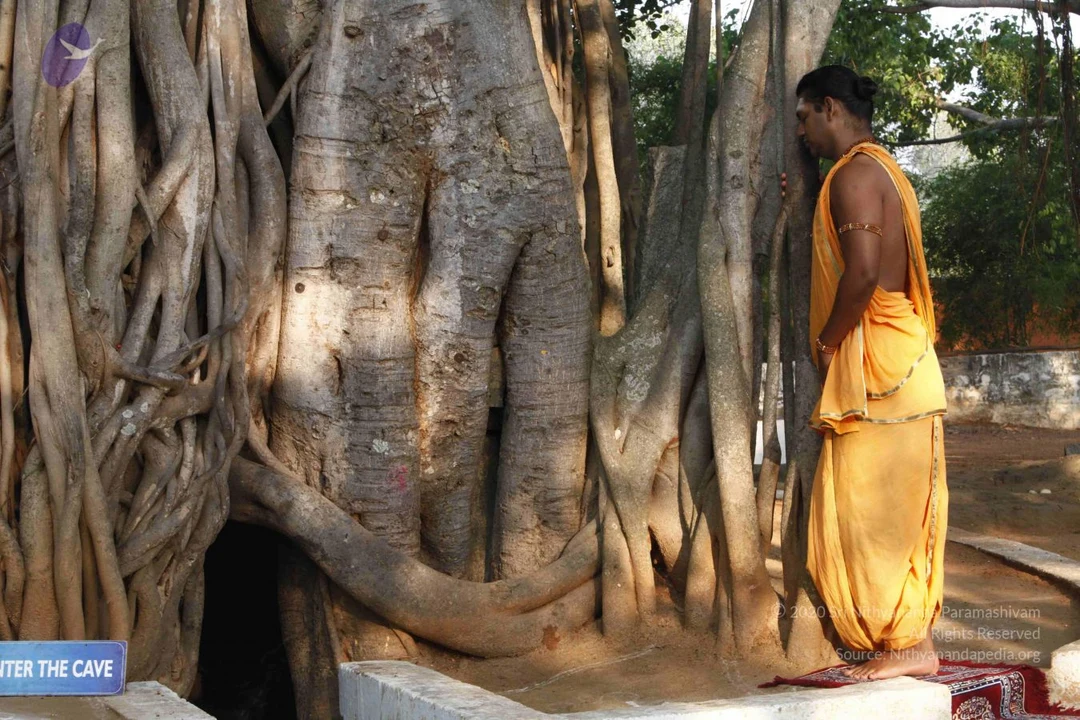
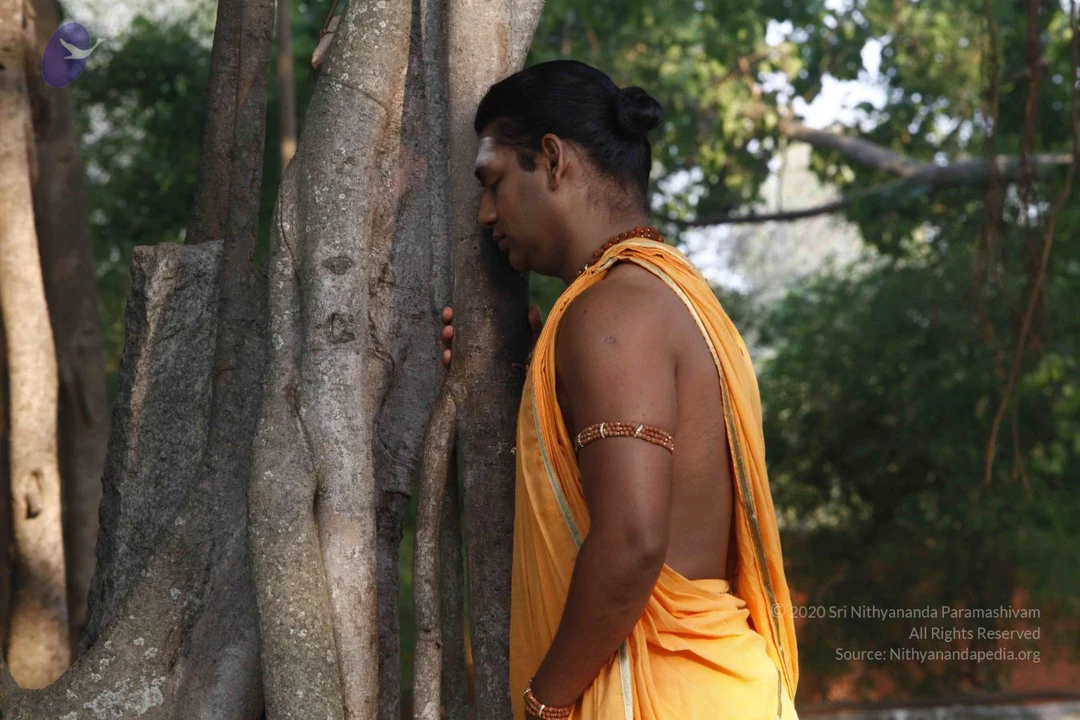
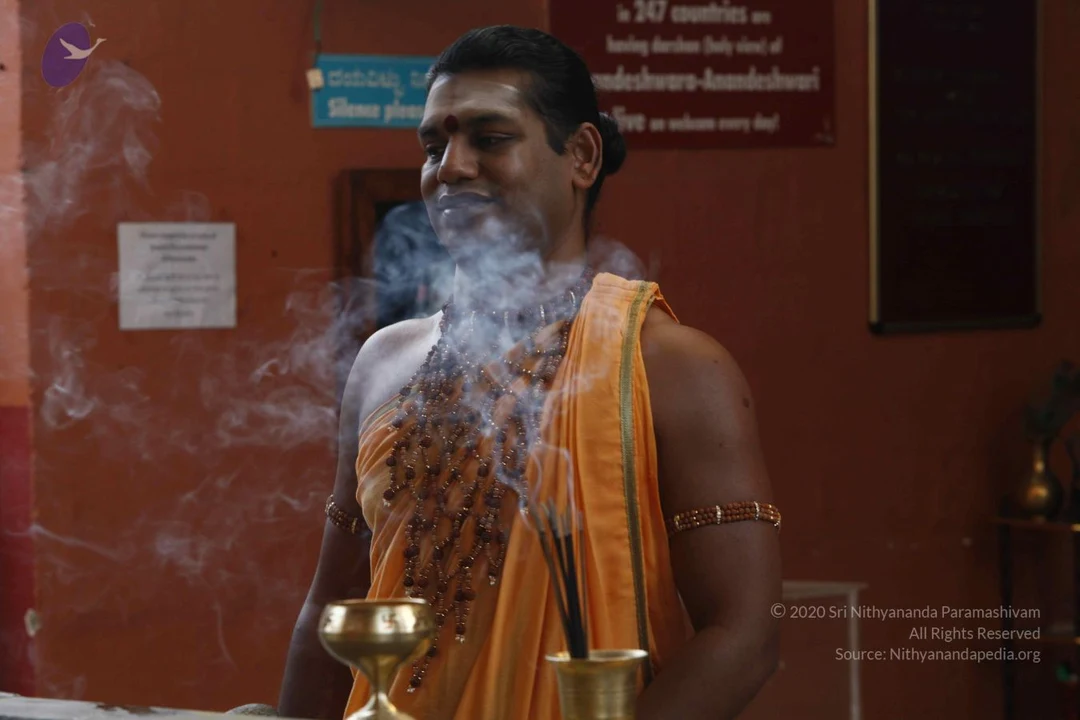
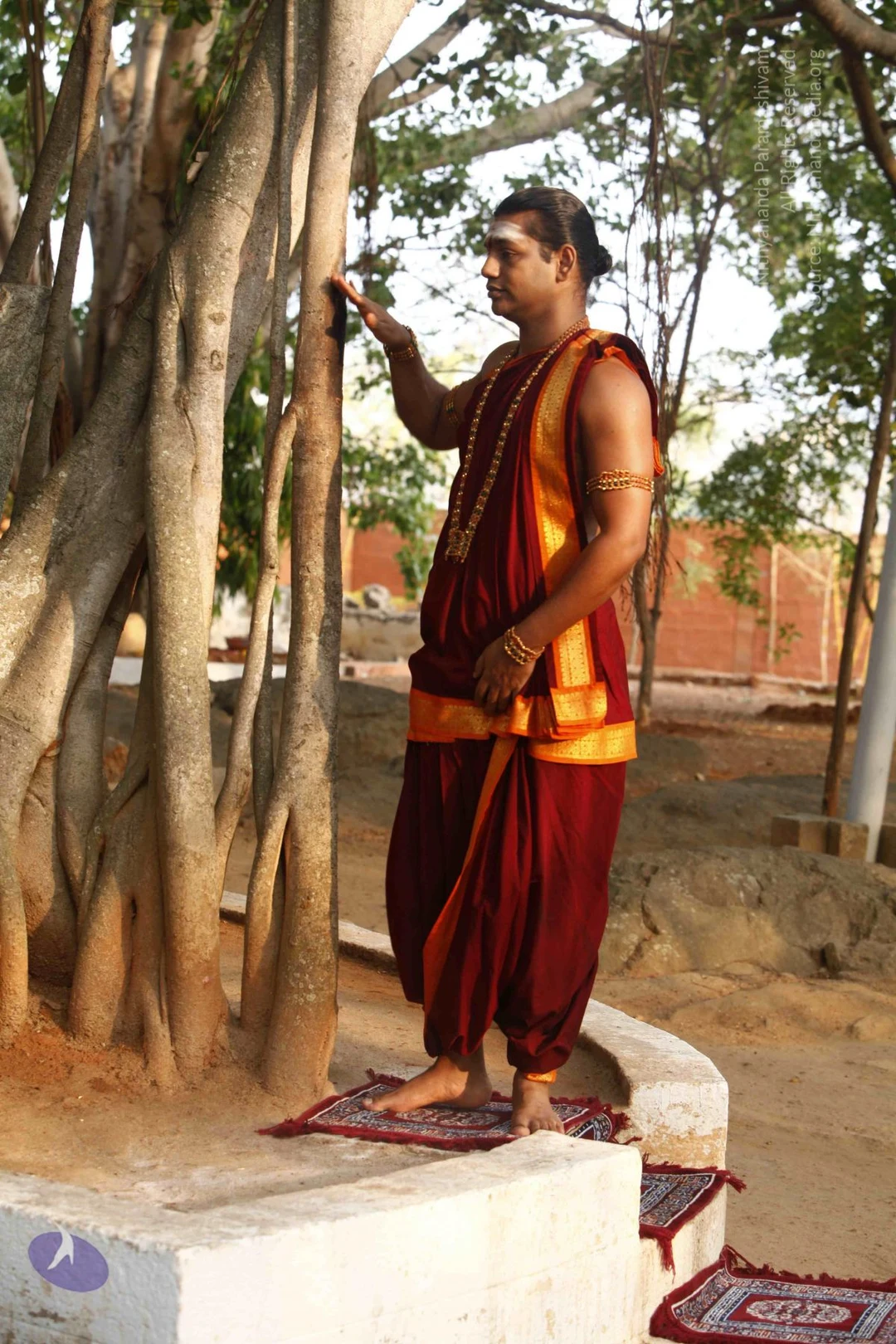
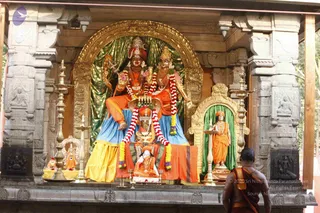
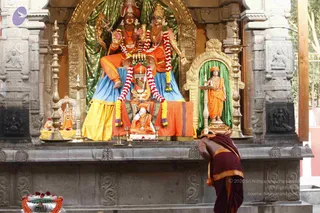
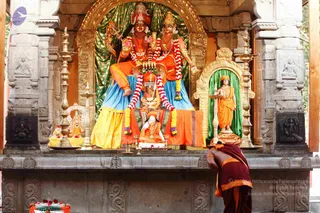
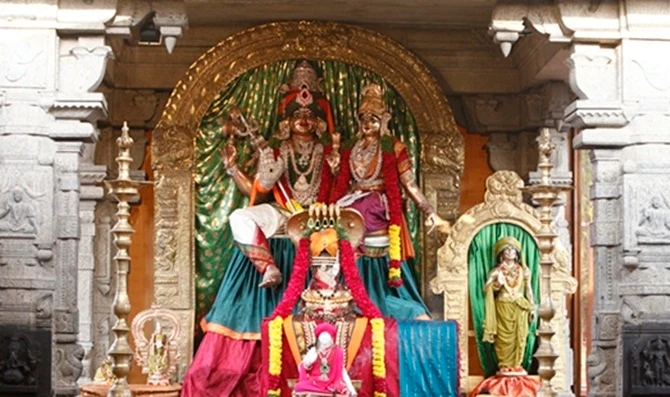
A photograph of an ornate temple shrine with carved grey stone pillars and a gilded arch framing a green curtain. Central seated deity murti figures with crowns, garlands of white and red flowers, and orange and yellow garments sit on a raised dais, with a smaller seated figure in orange at the front. Brass oil lamps stand on both sides. A bare-chested man in an orange-brown dhoti stands at the lower right, facing the shrine, apparently in worship.A photograph of a temple shrine with stone pillars and carved panels. Two large seated deity murtis stand at the back, draped in orange and yellow cloth with red and white garlands. A central seated figure in orange robes sits on a red-and-orange throne, and a standing figure in orange clothes stands to the right beside a brass oil lamp. Tall brass lamps stand on the stone platform, and a silver kalasha with marigold garlands sits at lower left. In the foreground at right, a bare-backed man in a maroon dhoti with an orange shawl bends forward in reverence before the shrine, a devotee offering respect. Number of physical people visible: one.A photograph of a temple shrine with a large ornate sanctum: two large painted deity figures in orange and red garments with blue and yellow lower cloths stand behind a central seated figure in orange robes with a red cloth. Garlands of white, red and yellow flowers hang on them. Brass oil lamps stand on both sides, and a green curtain frames the shrine. On the right, a standing figure in orange robes is also present. In the foreground at lower right, a person in maroon and orange robes bends forward in reverence toward the shrine. Carved granite pillars with niches frame the scene, and a small flower offering sits at lower left.A man in a maroon dhoti with an orange-yellow border and a matching maroon upper cloth walks barefoot along a narrow paved path of hexagonal stepping stones across sandy ground. He wears a rudraksha mala and a beaded necklace and carries a small object in one hand. Trees, a low pink-washed building and a corrugated-roof shed frame the path, with an orange cloth hanging on a line in the background.A photograph of a standing man in profile at an outdoor shrine beneath banyan trees. He wears a maroon dhoti with orange-gold borders, an orange-gold shawl over one shoulder, gold armlet and bracelet, and a beaded neck mala, with hands folded in front in prayer and eyes closed. Behind him a dark stone deity murti in orange cloth, a green curtain and garlands of marigolds sits within an ornate silver arch, before a mound of red kumkum and small brass lamps on a black stone platform. A red and white mat lies on the ground in the foreground.A man with his hair tied up and a white forehead marking bends over a stone ledge, with smoke or incense drifting near his face. He wears an orange and maroon garment, a long beaded necklace, and gold armbands. A woman in a red and orange sari stands behind him. A tall brass lamp stand and a small brass cup sit on the ledge, and a glass display case is visible on the right. a person (a person) is not visually confirmed here; the figure's appearance is uncertain.

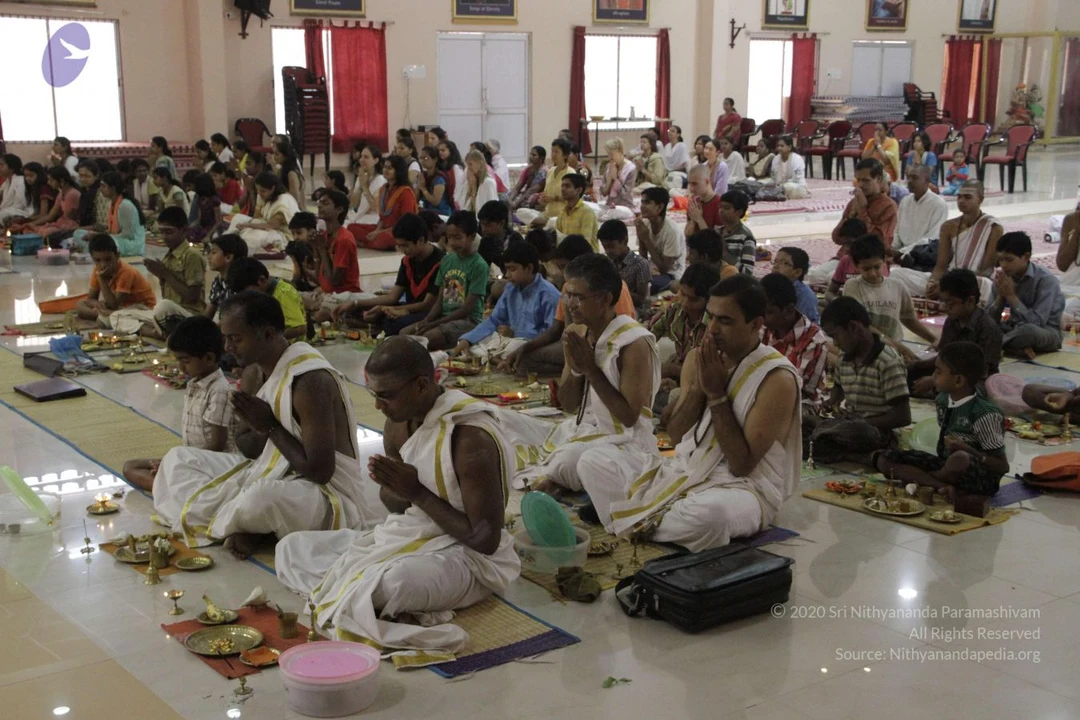
pada pooja
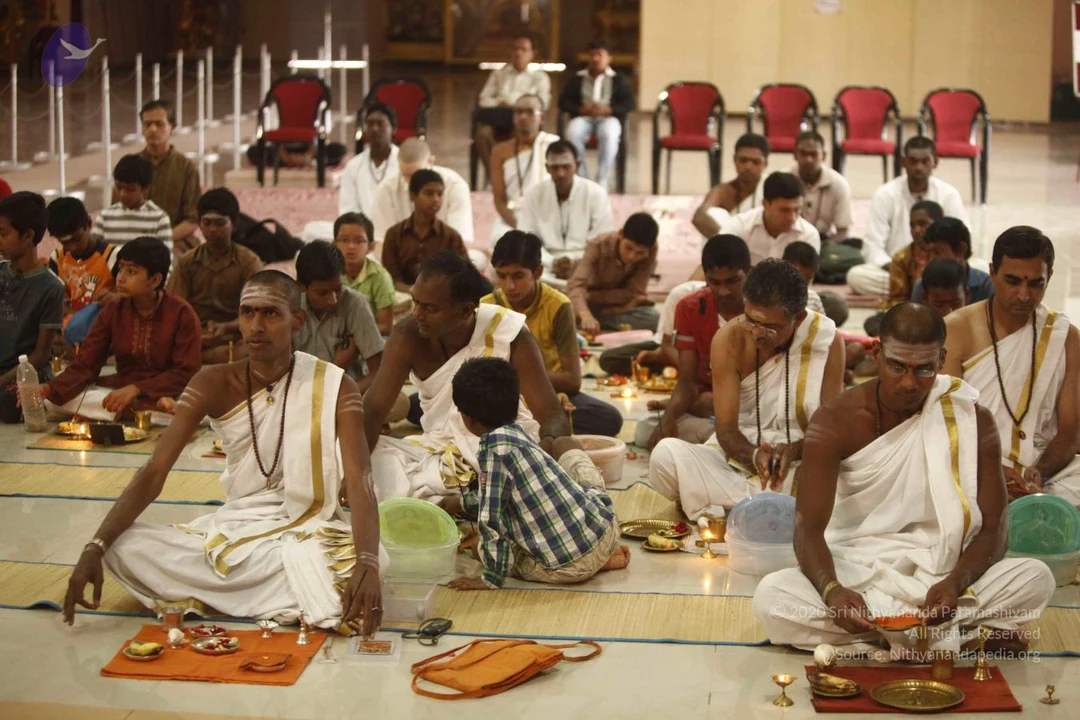
37 photosSource gallery
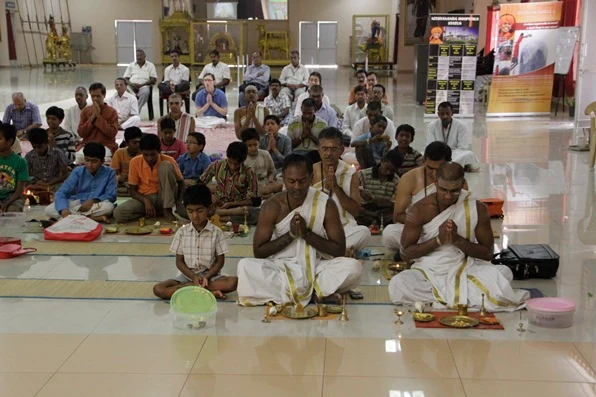
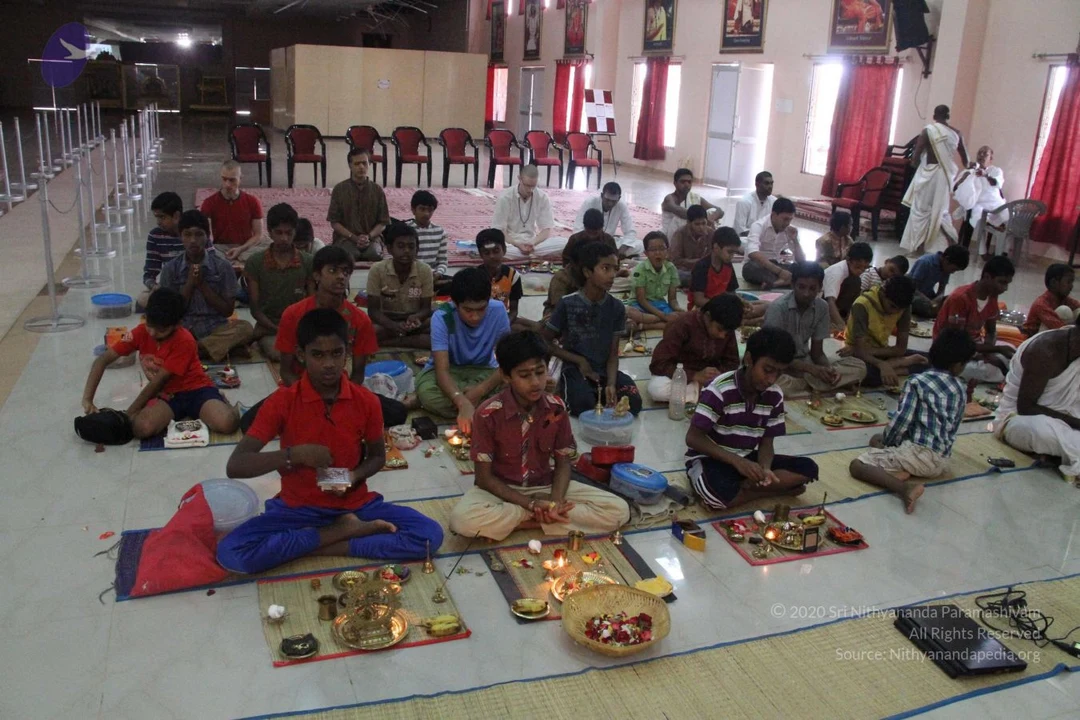
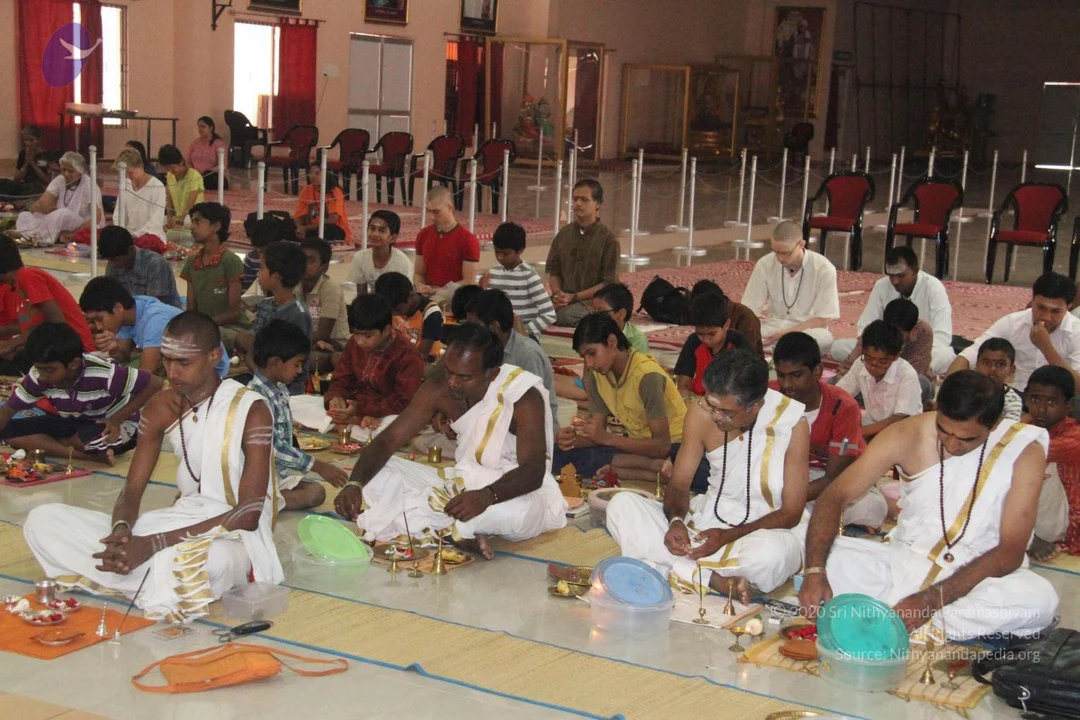
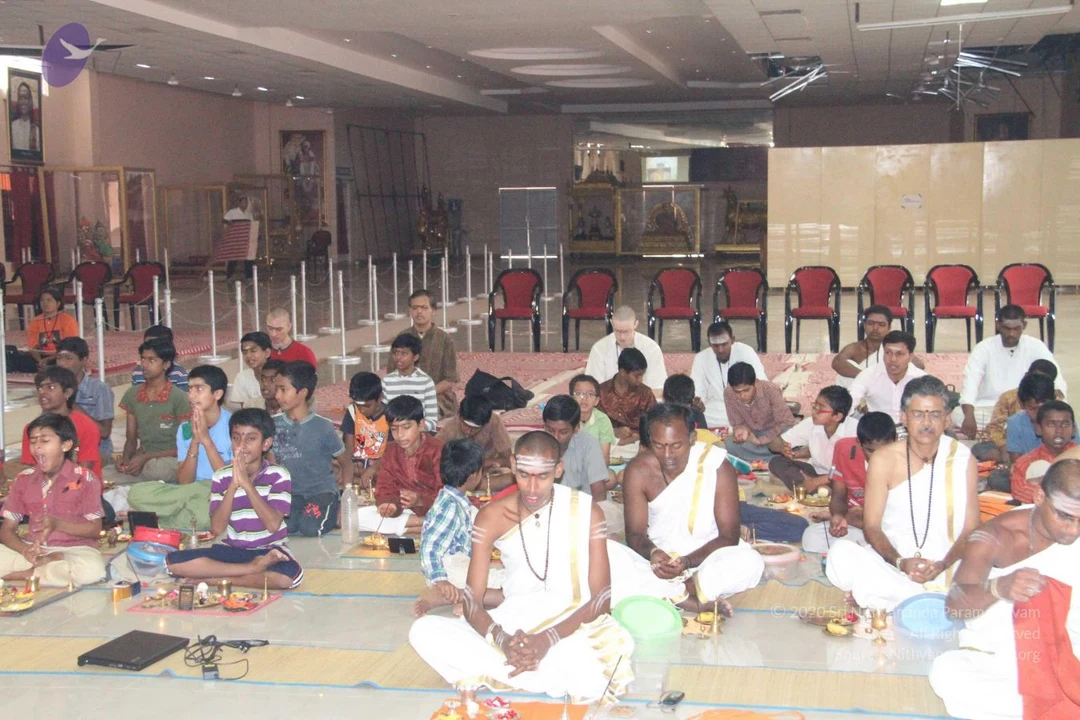
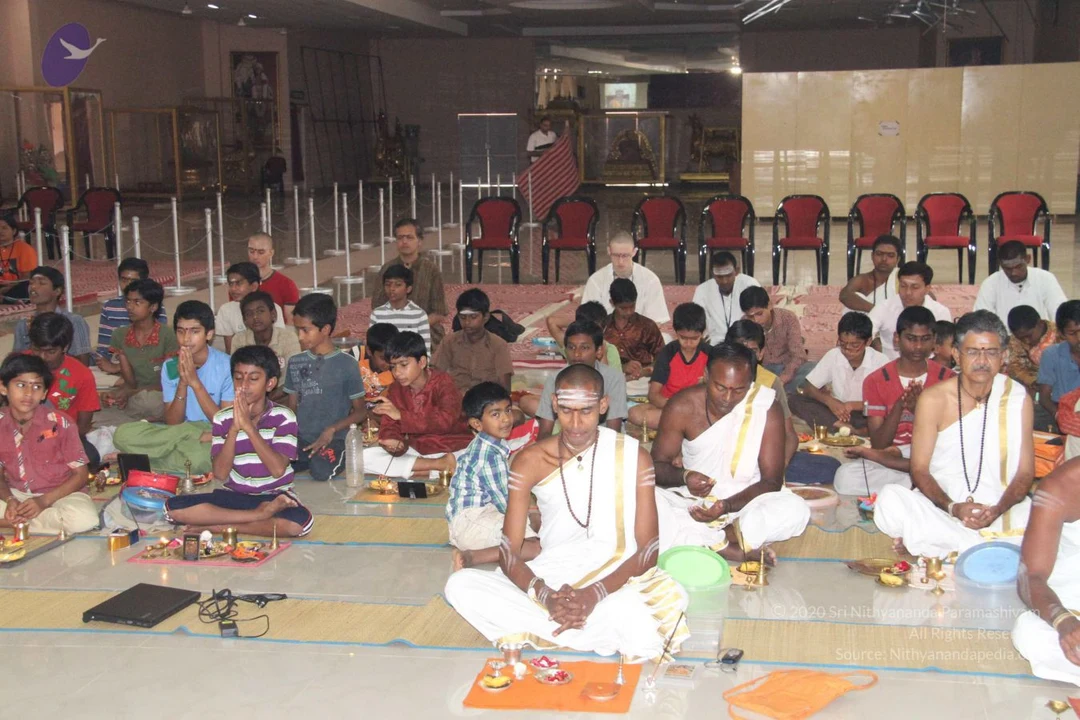
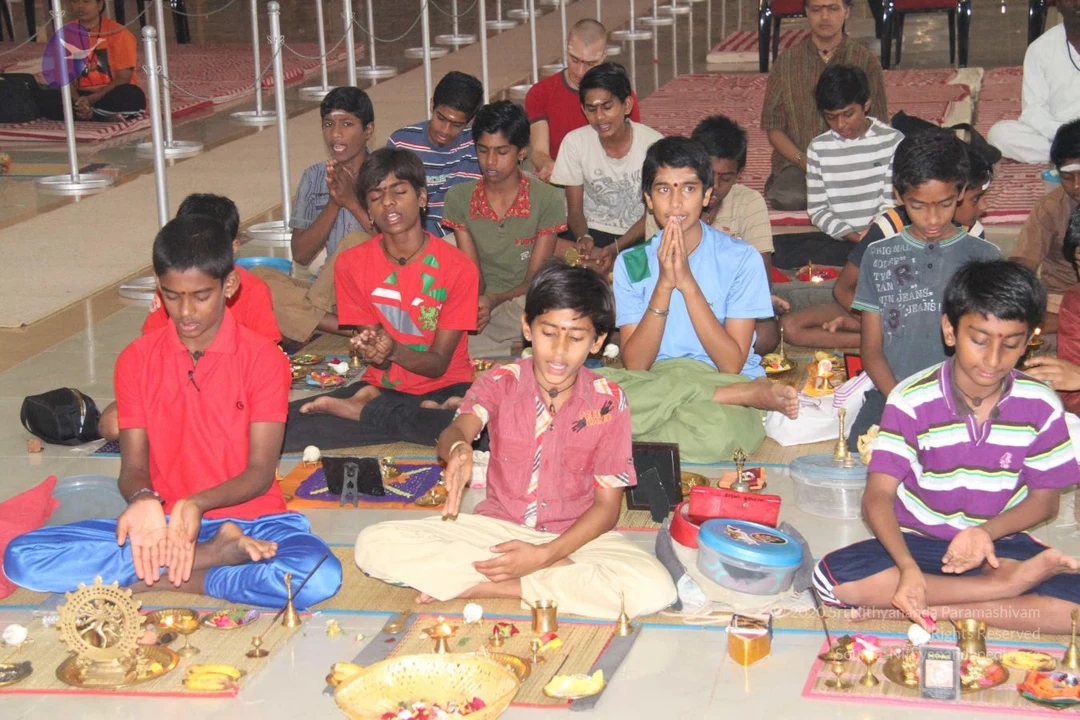
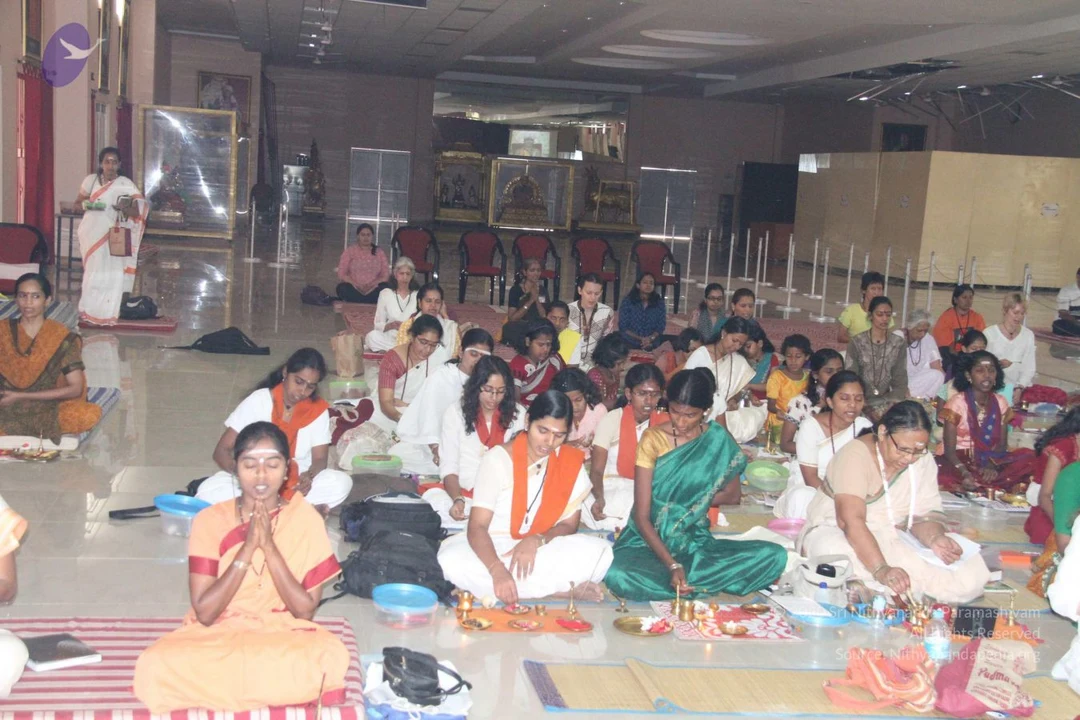
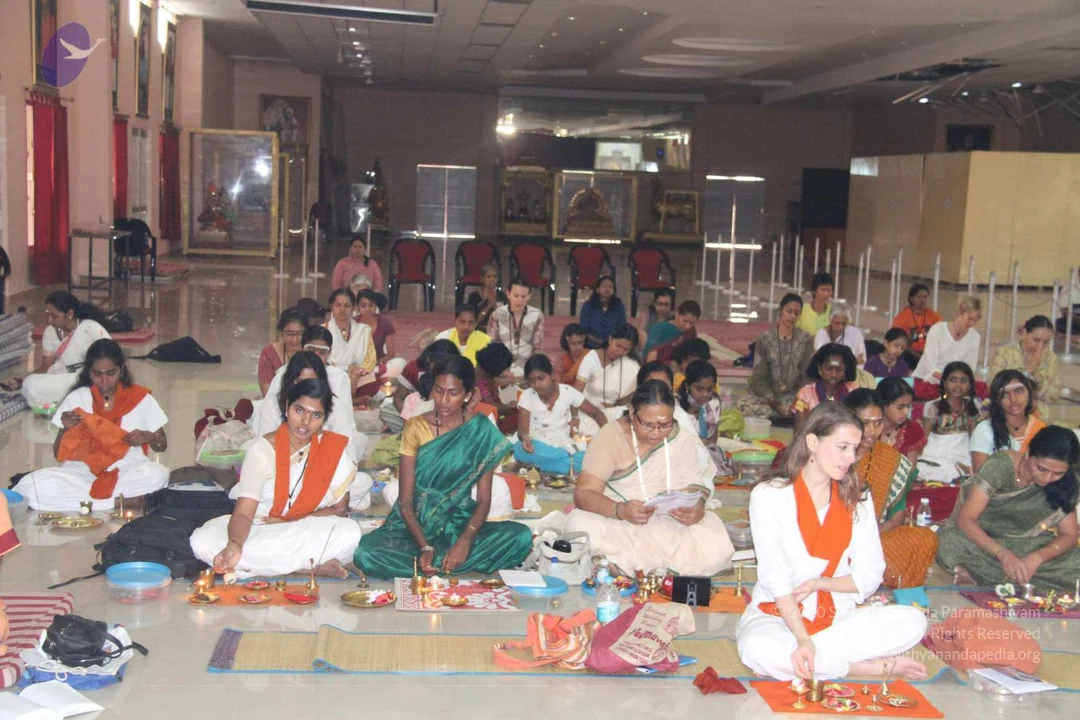
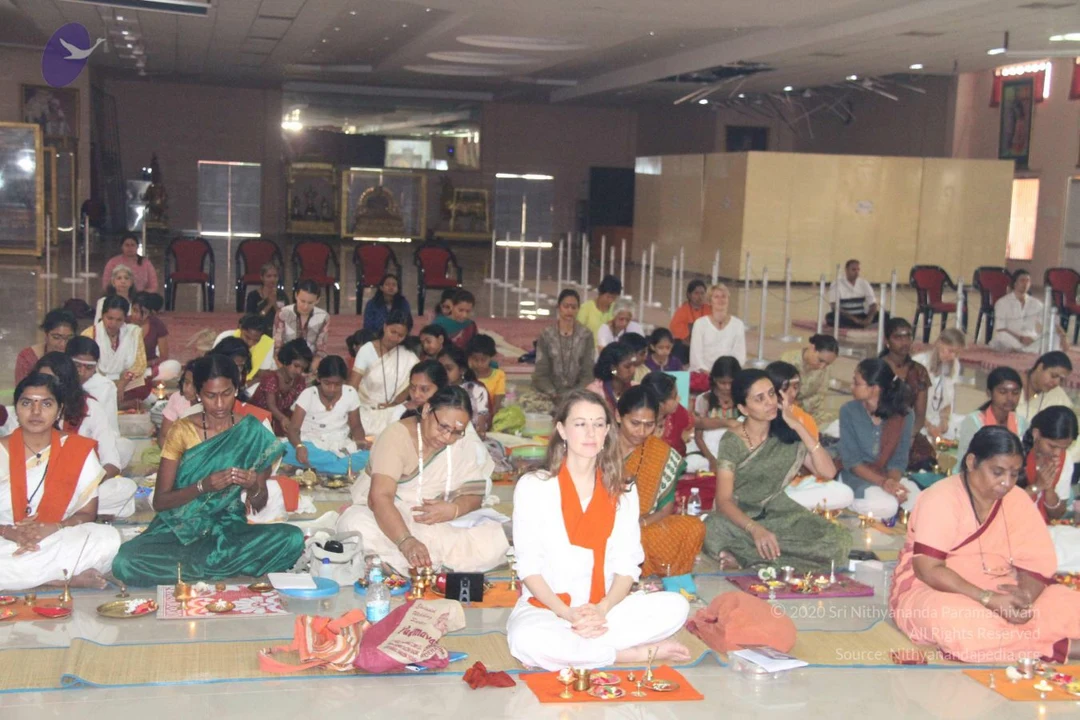
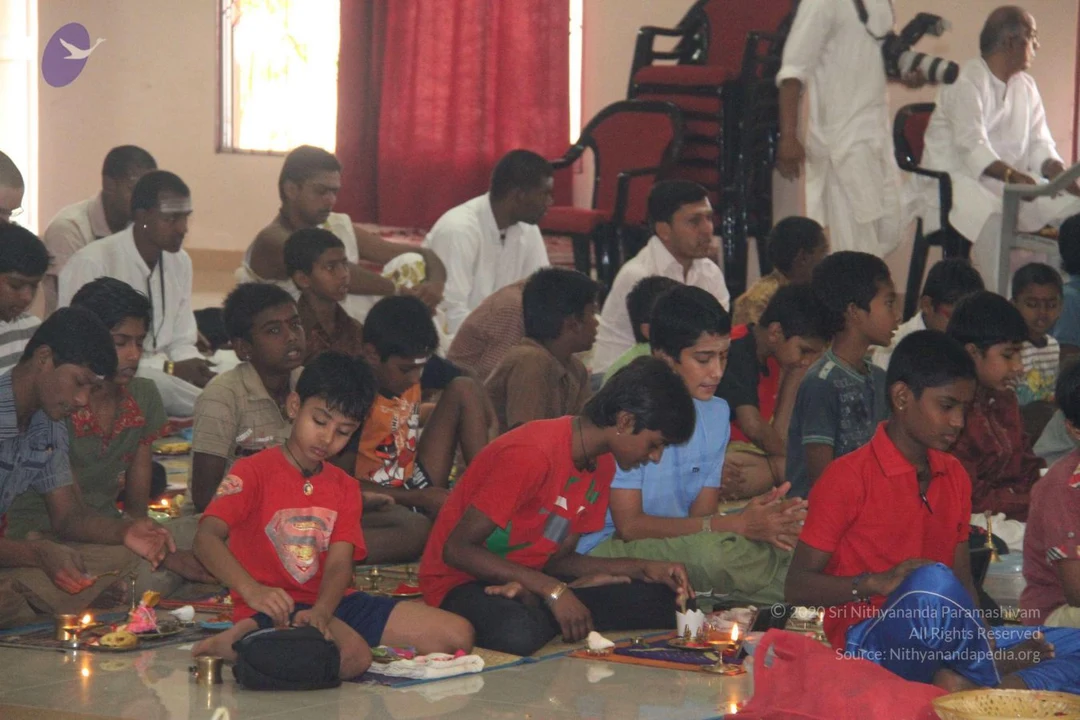
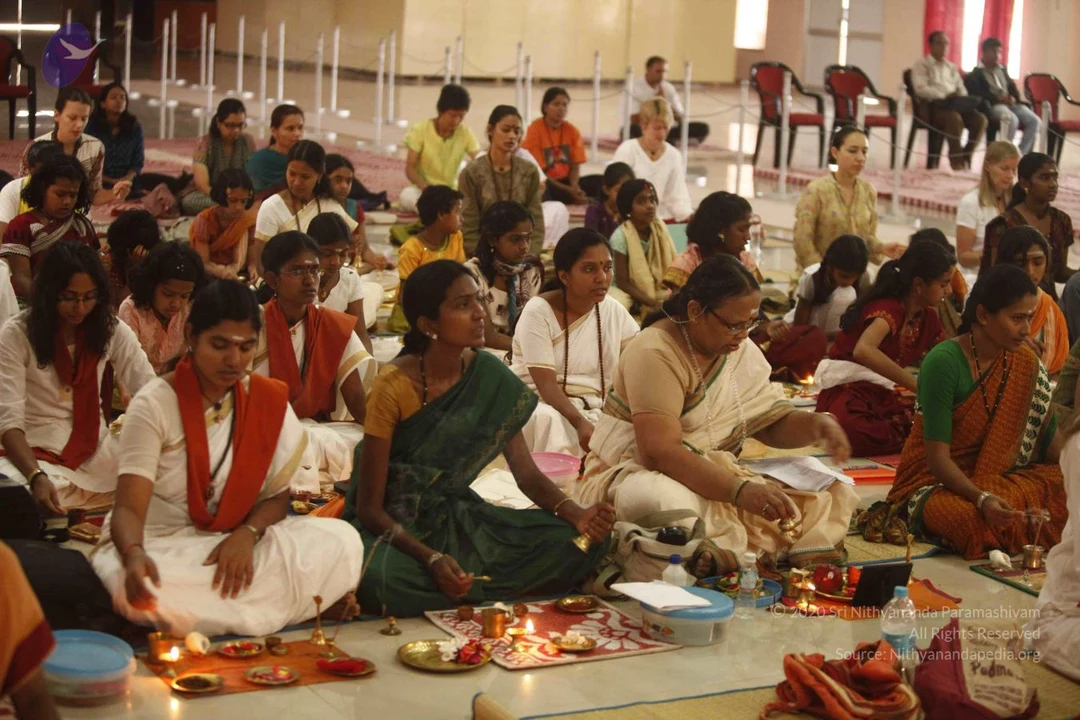
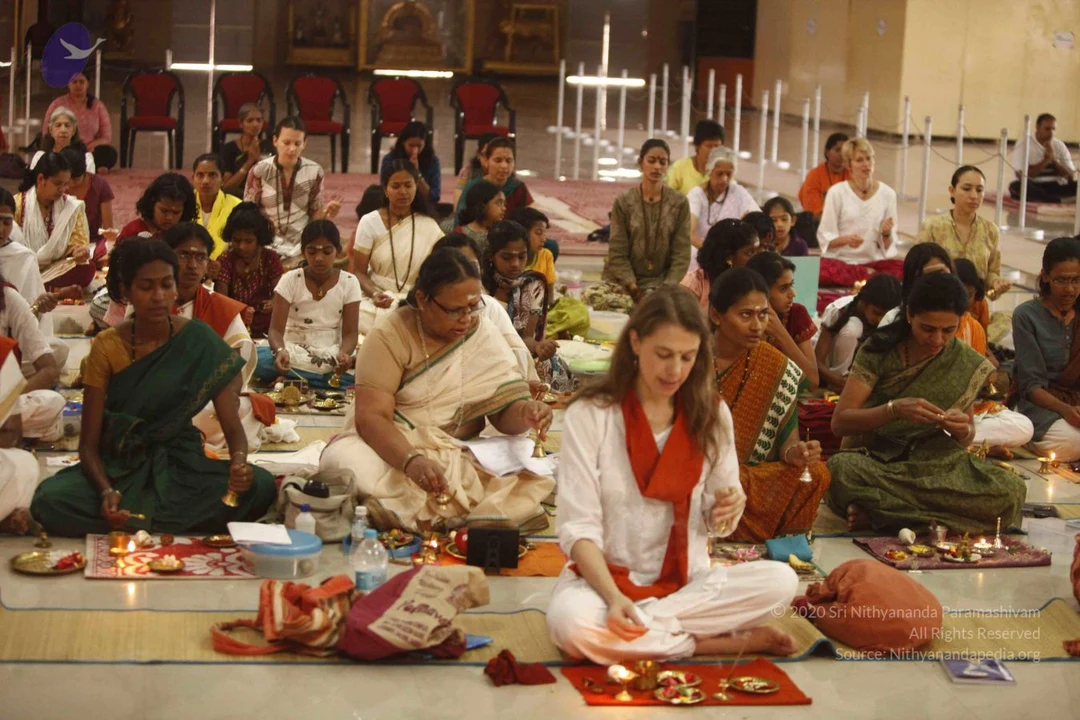
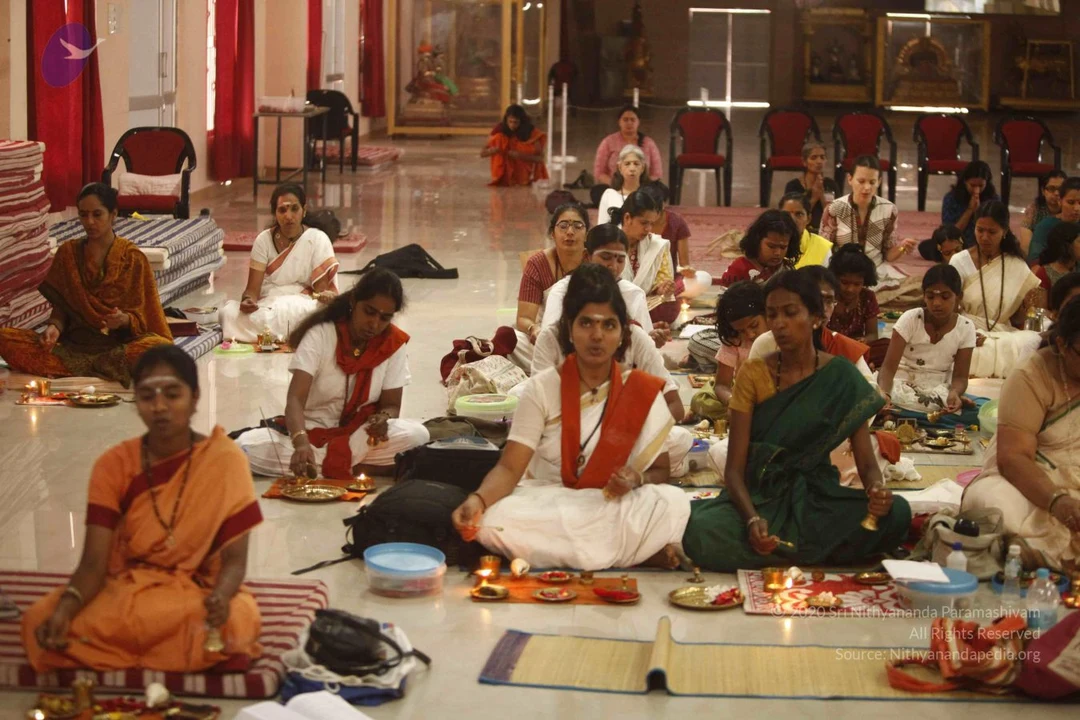
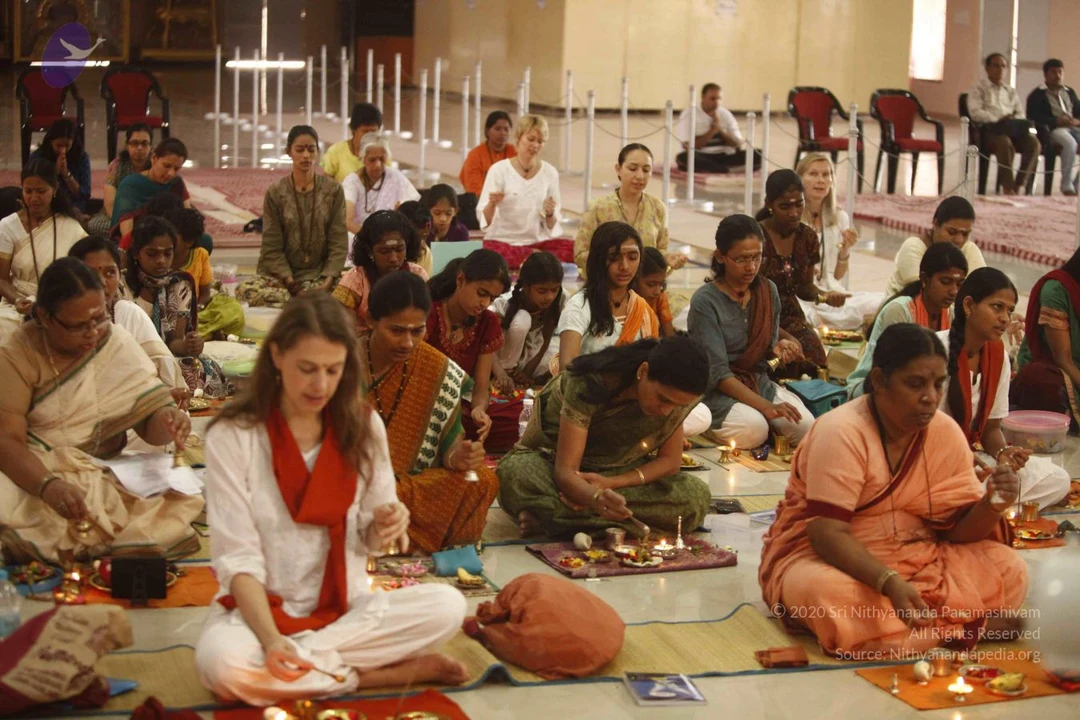
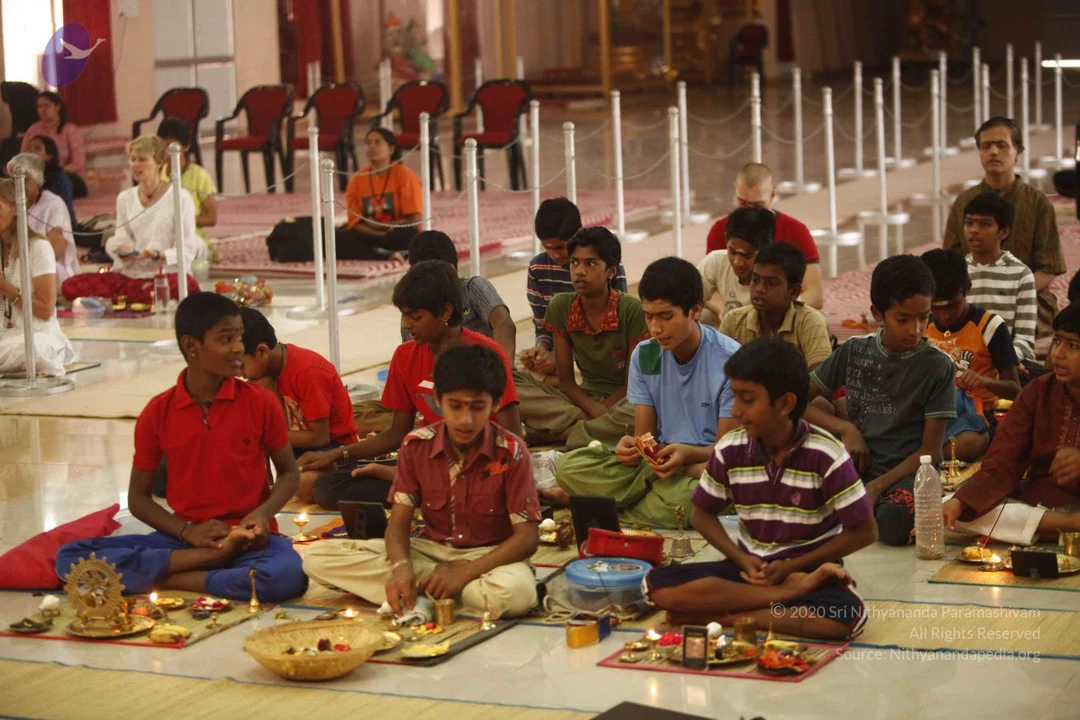
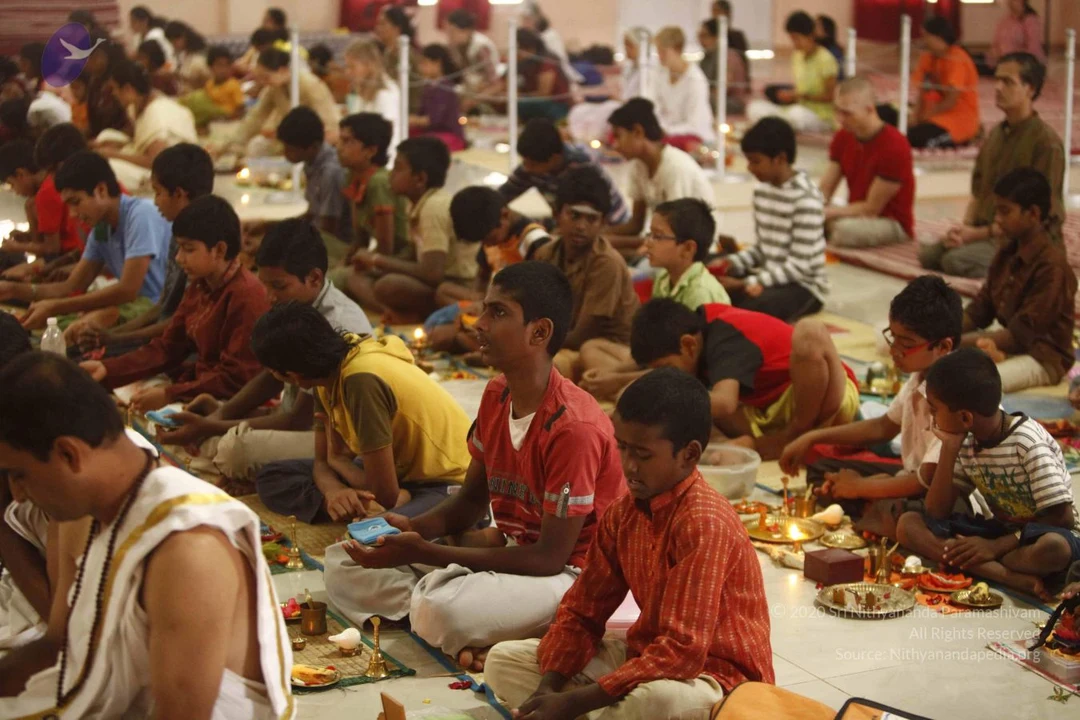
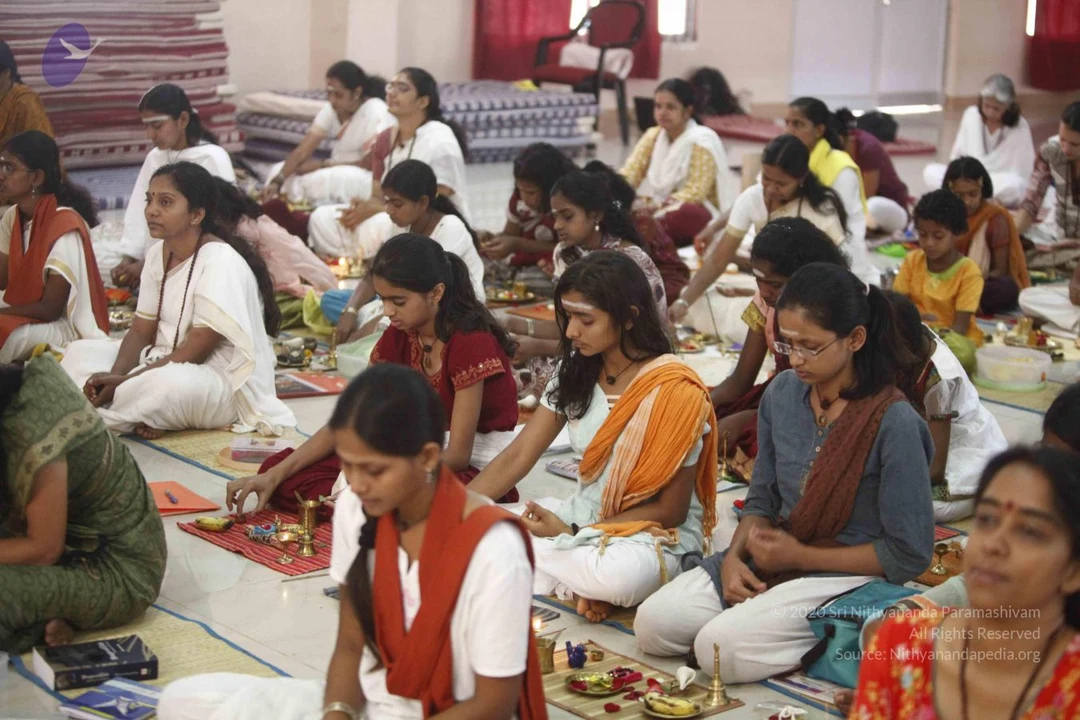
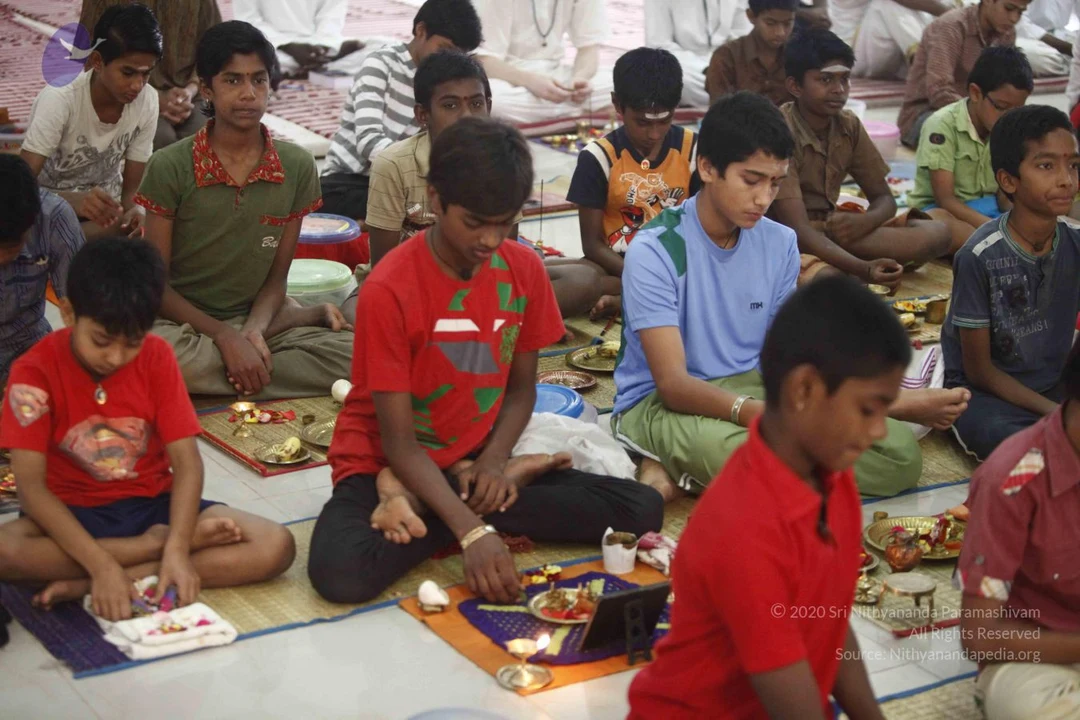
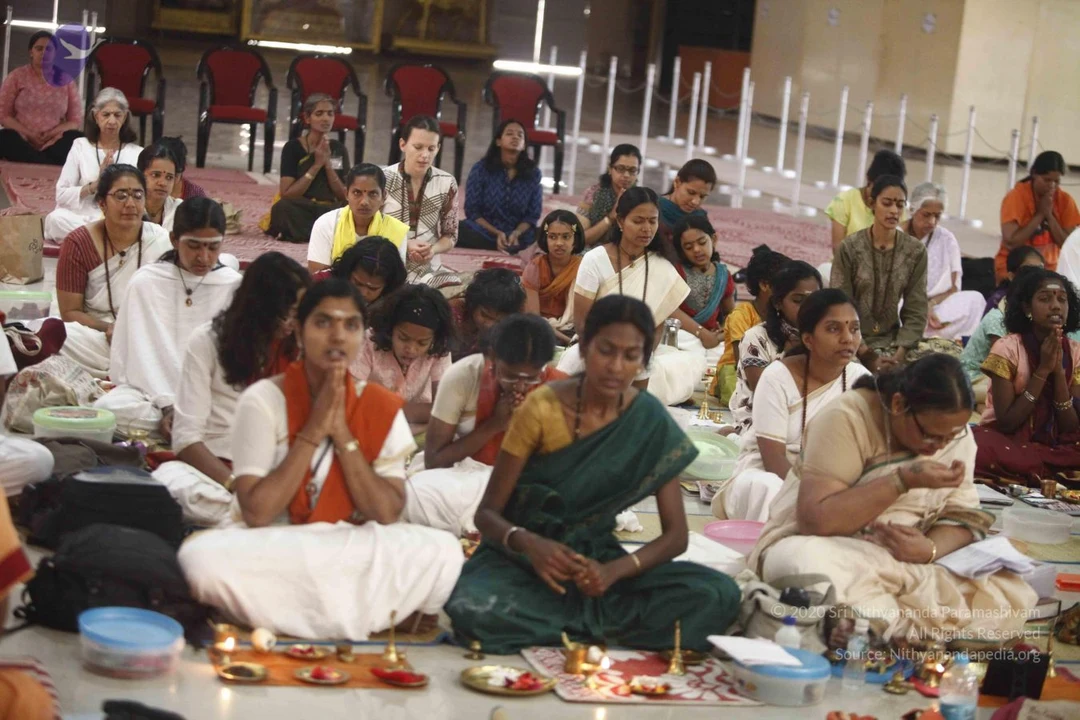
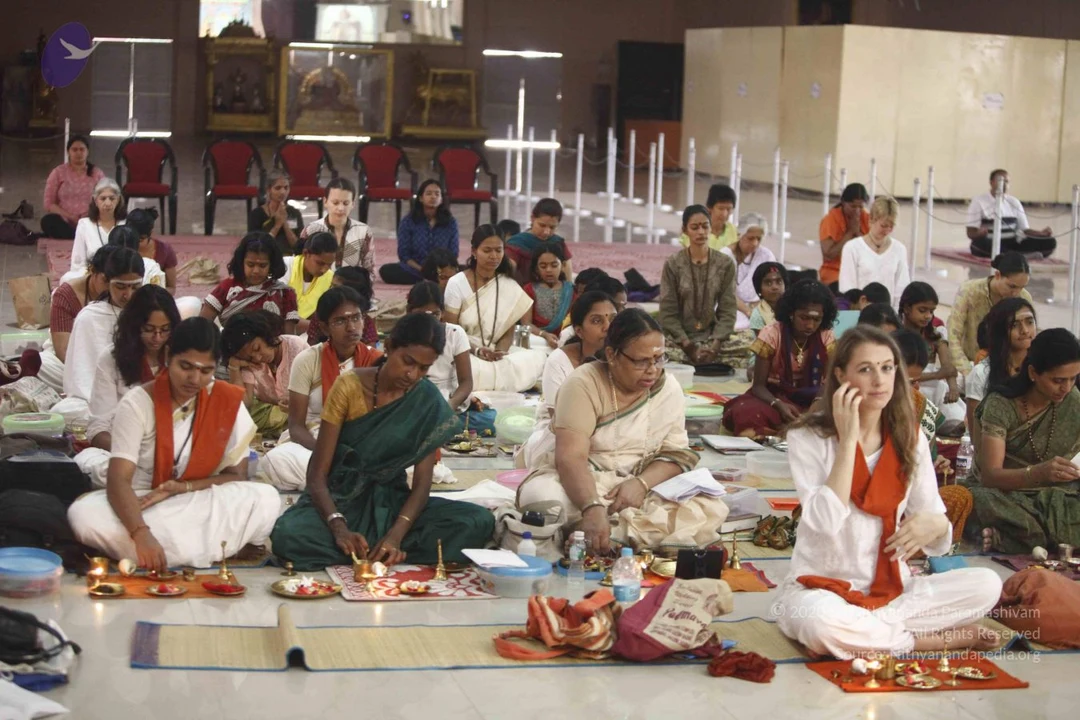
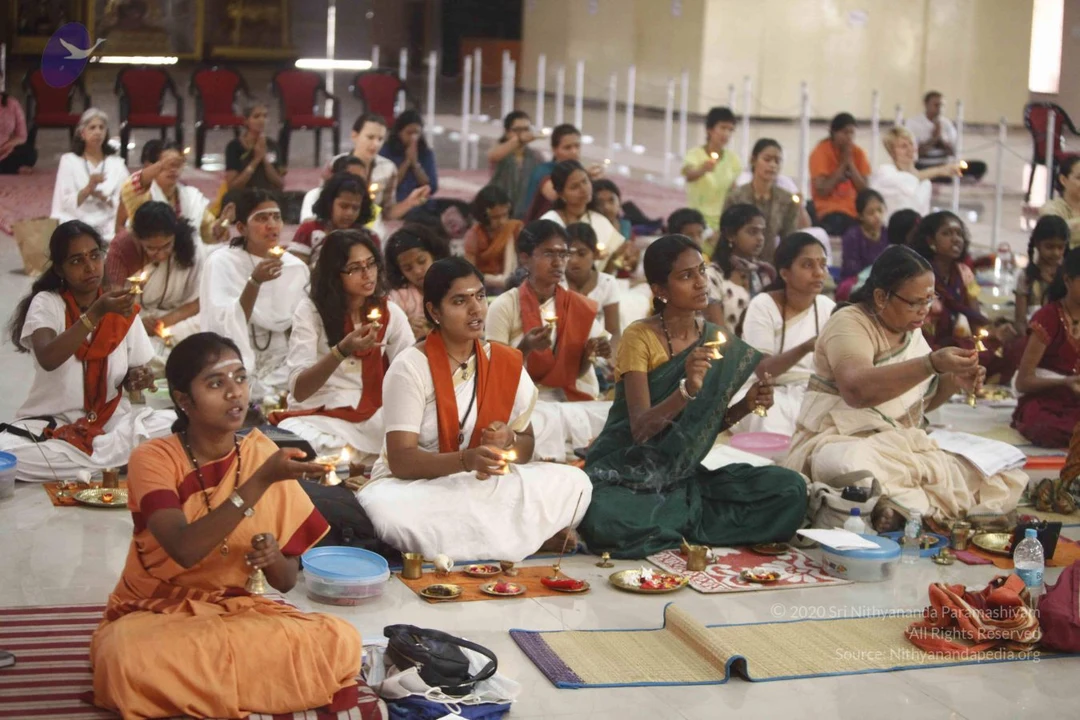
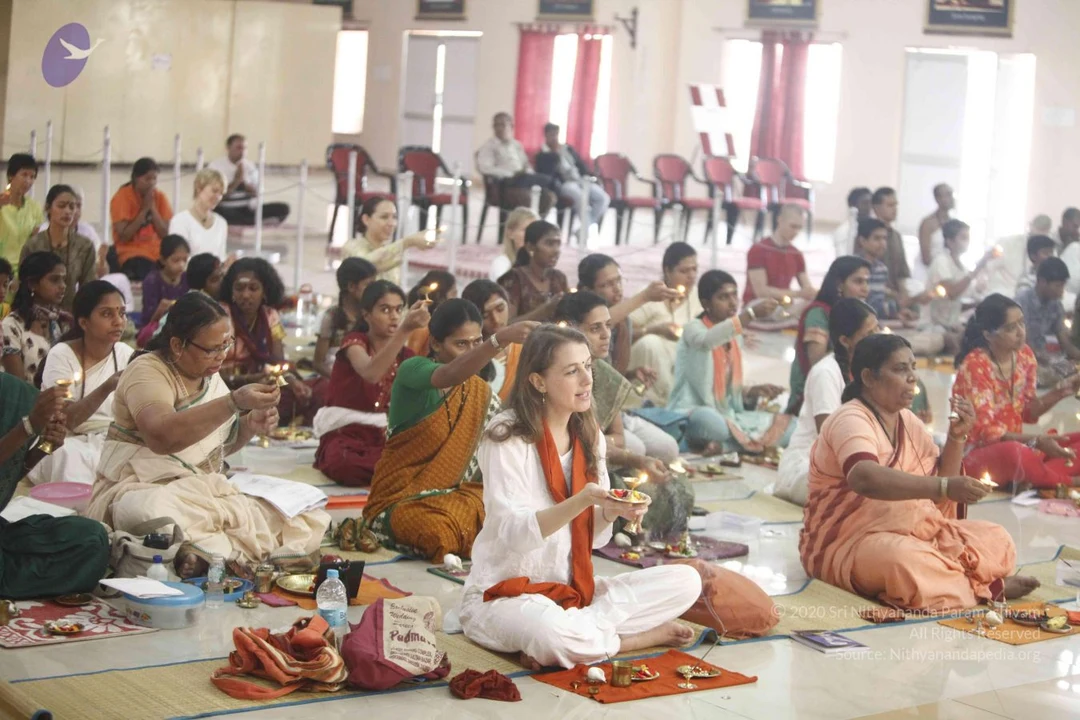
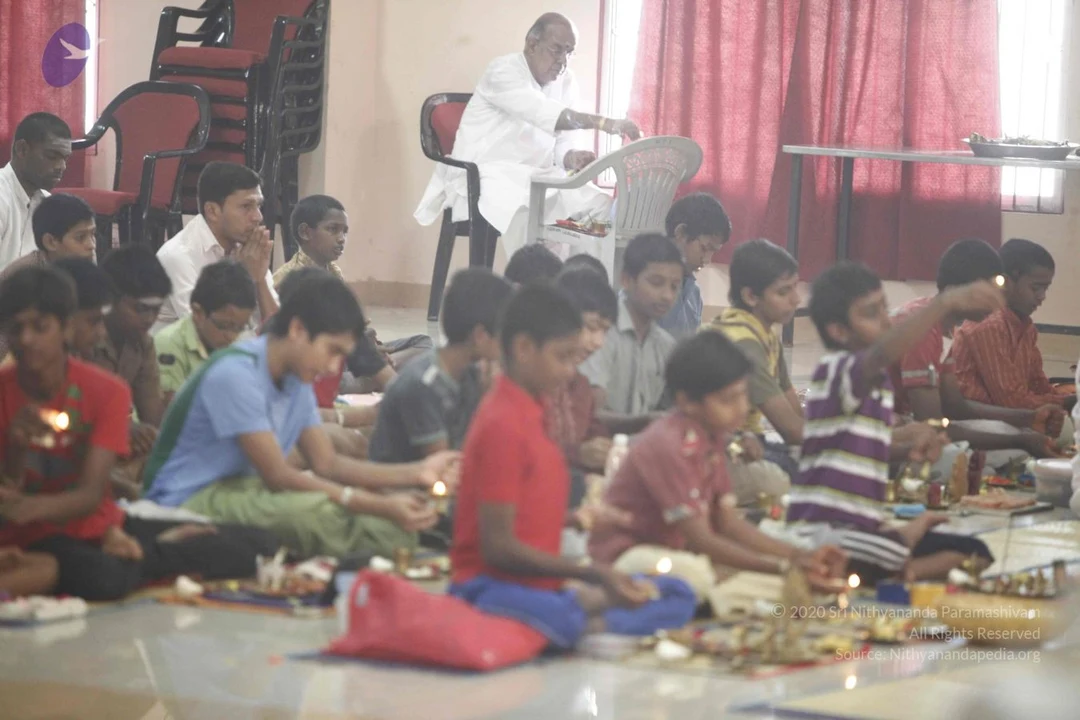
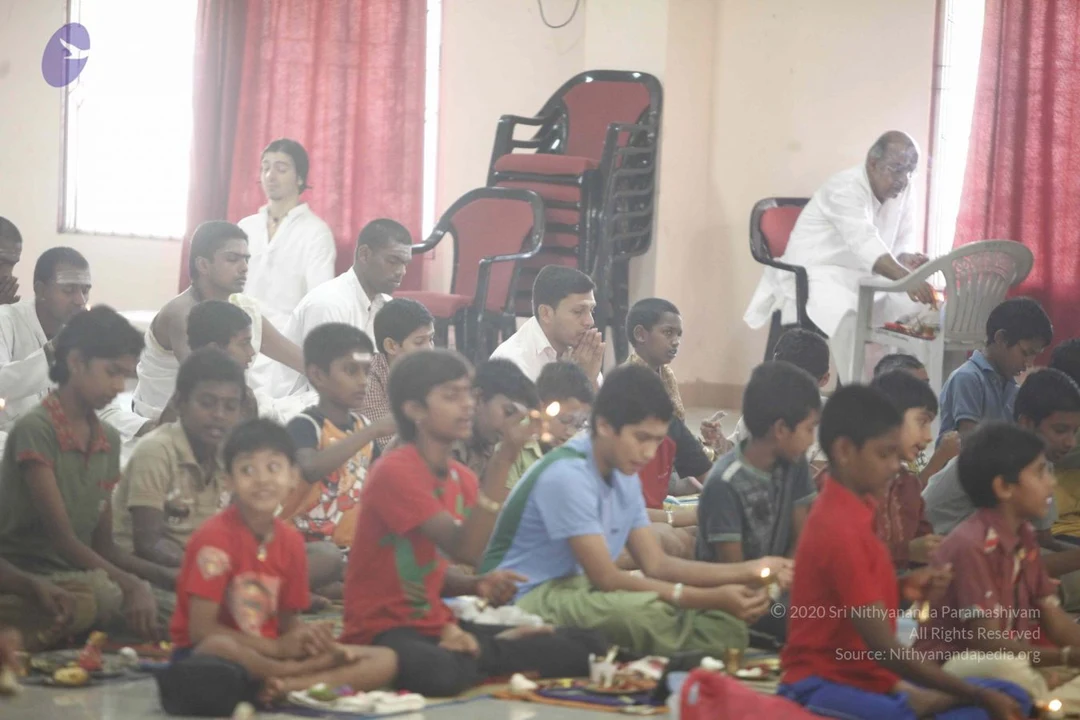
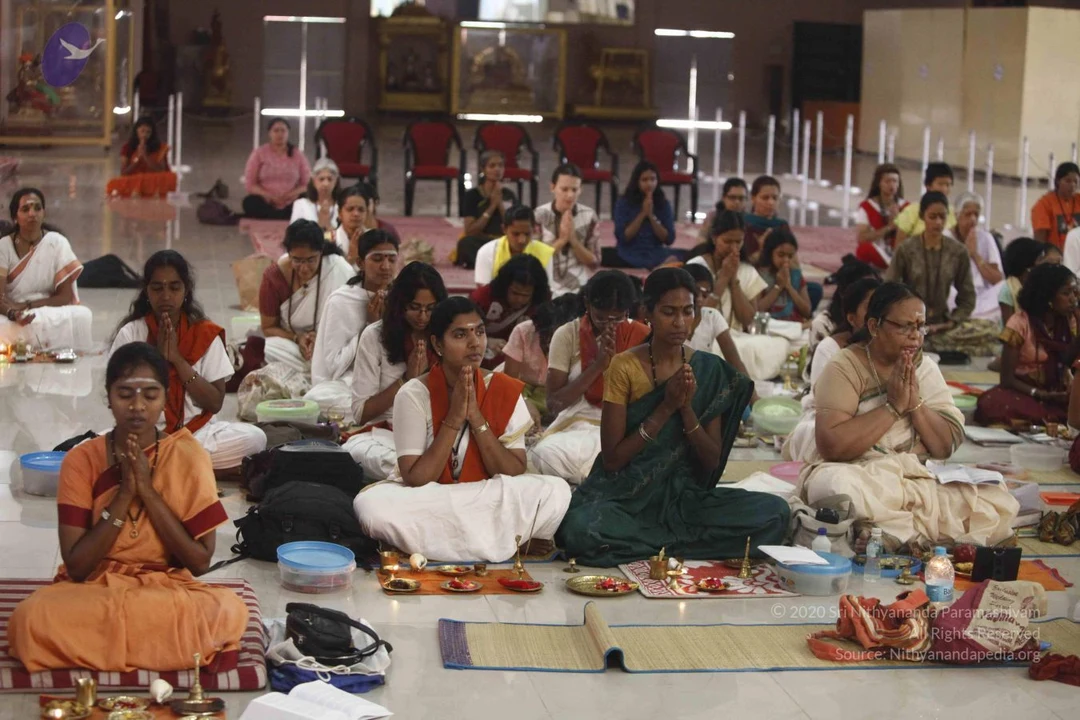
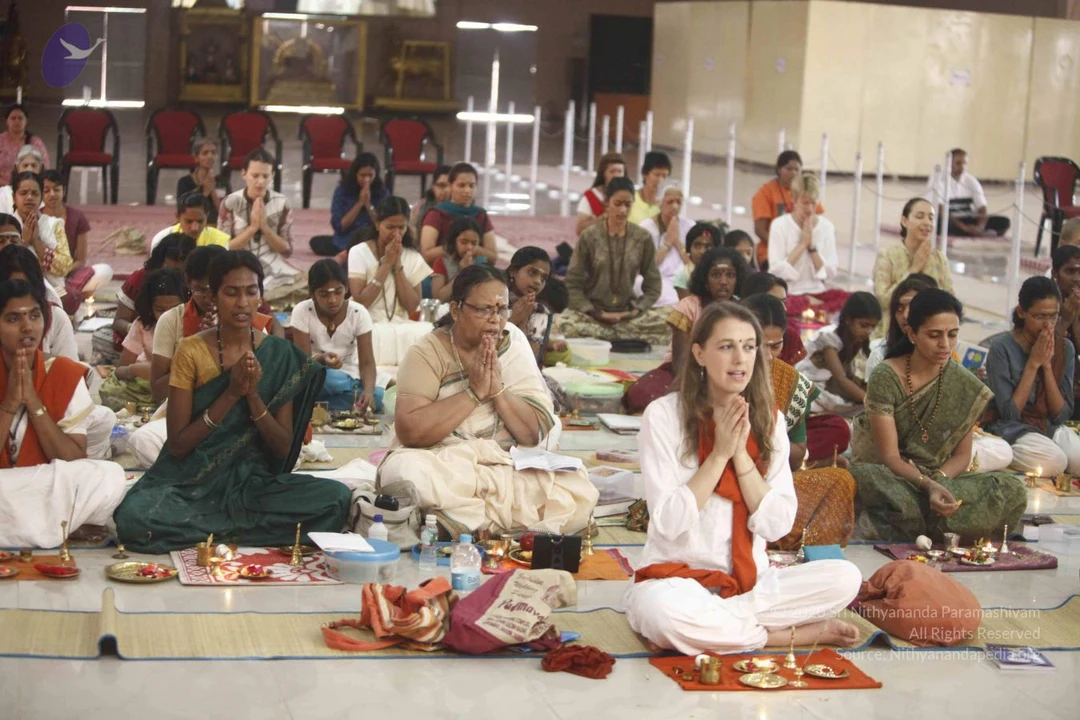
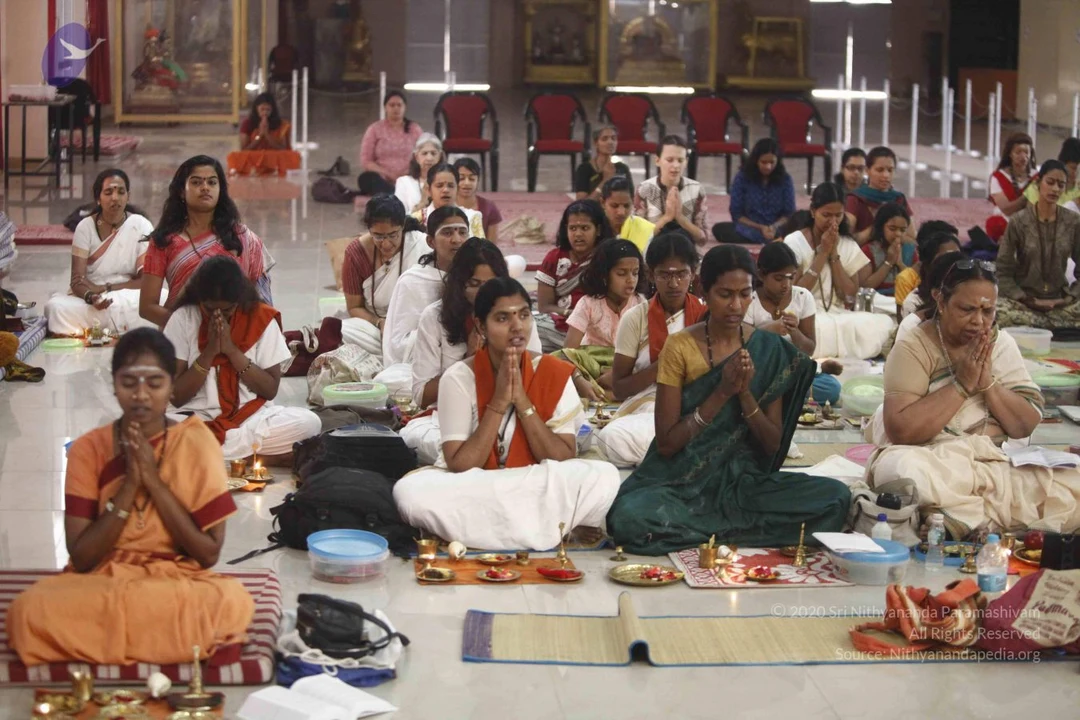
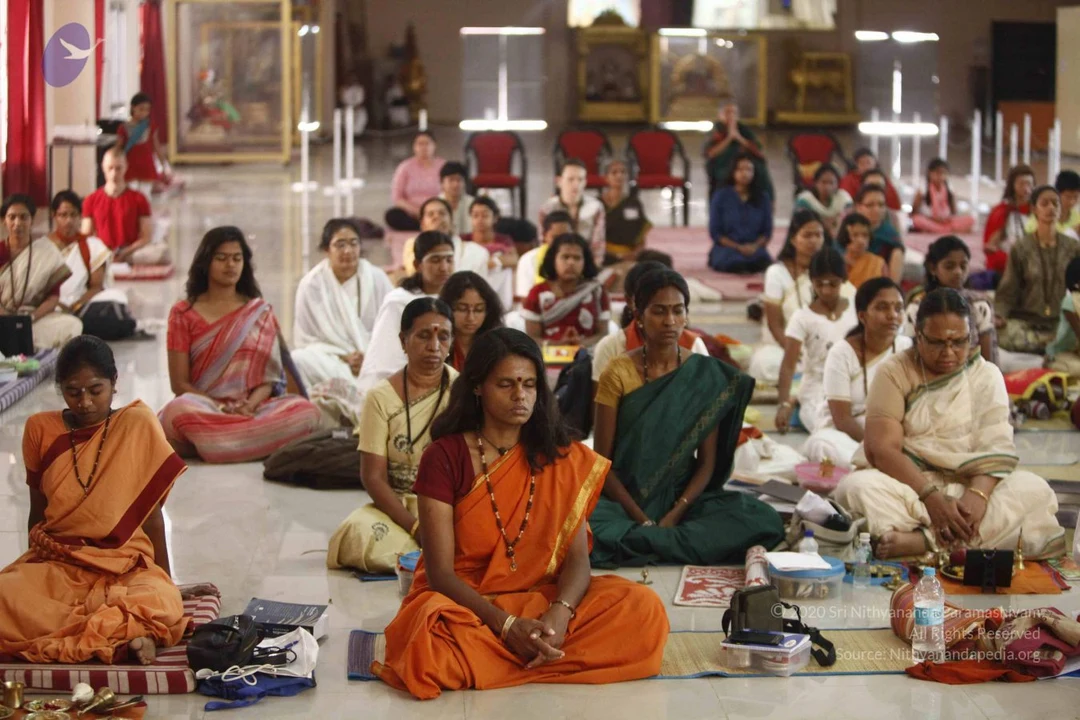
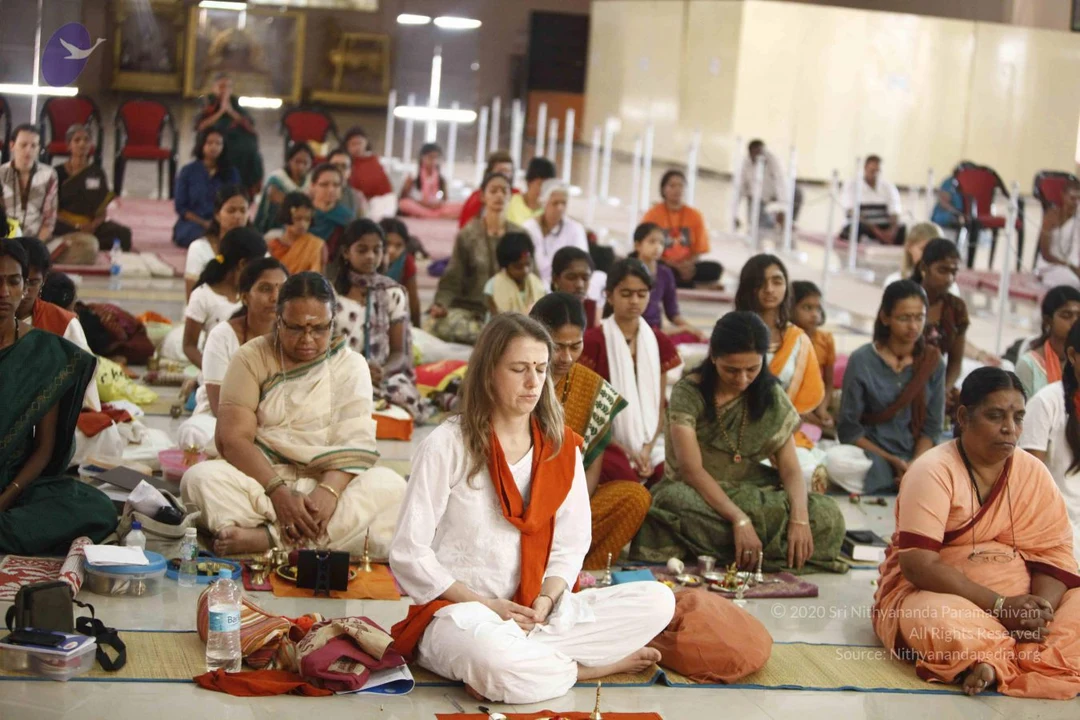
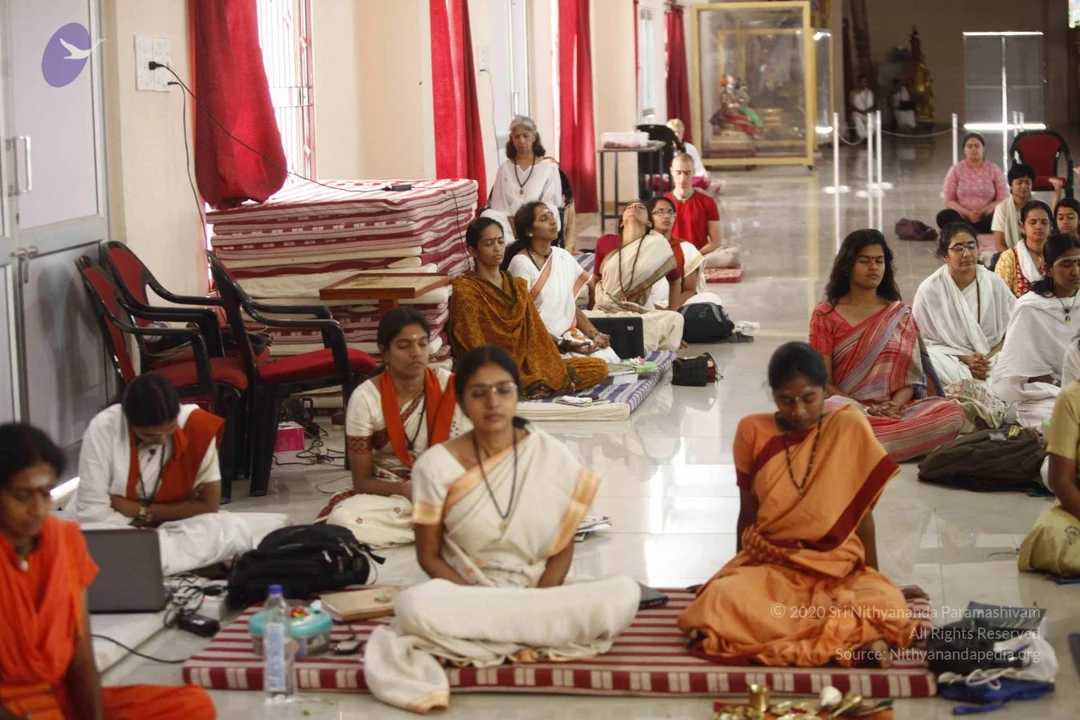
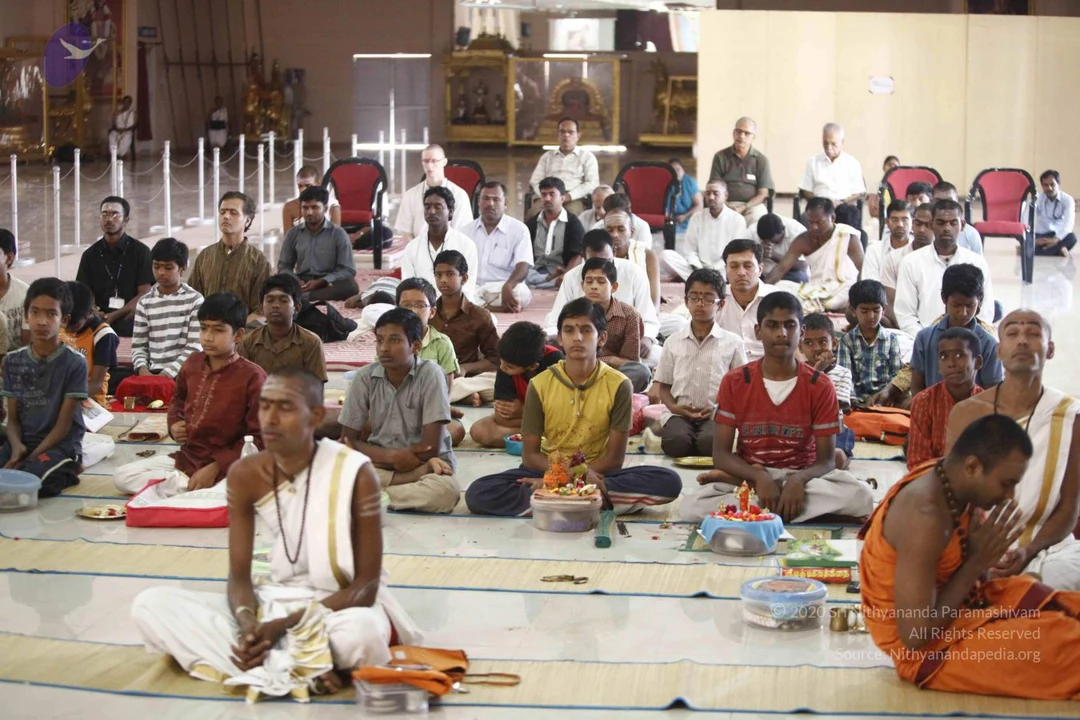
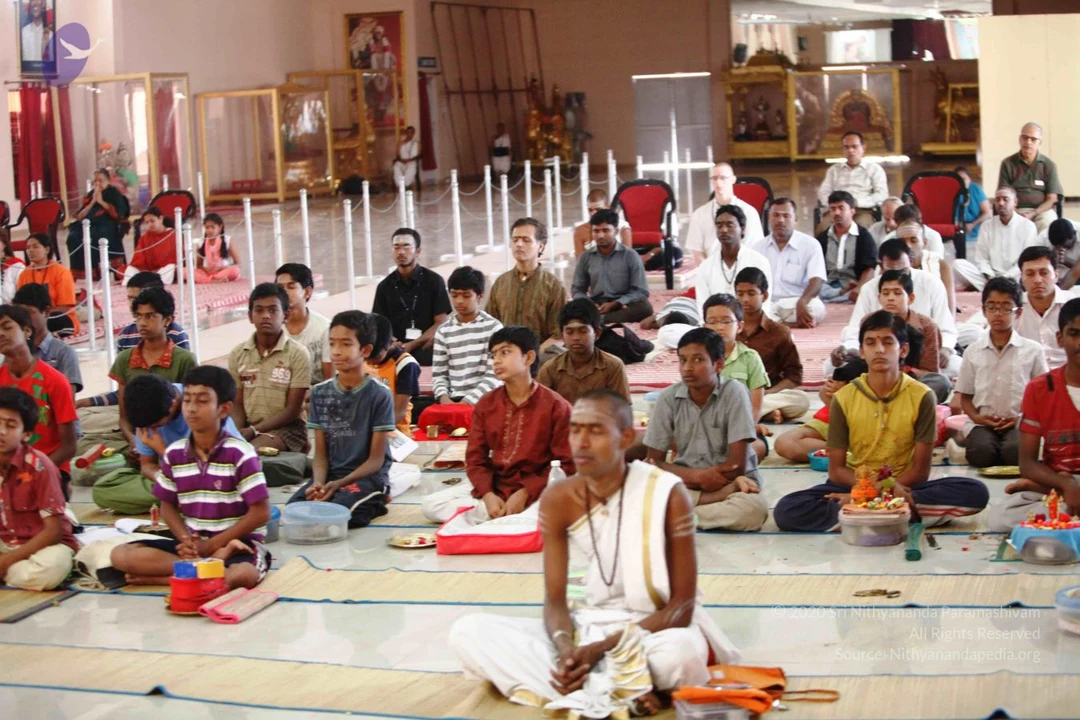
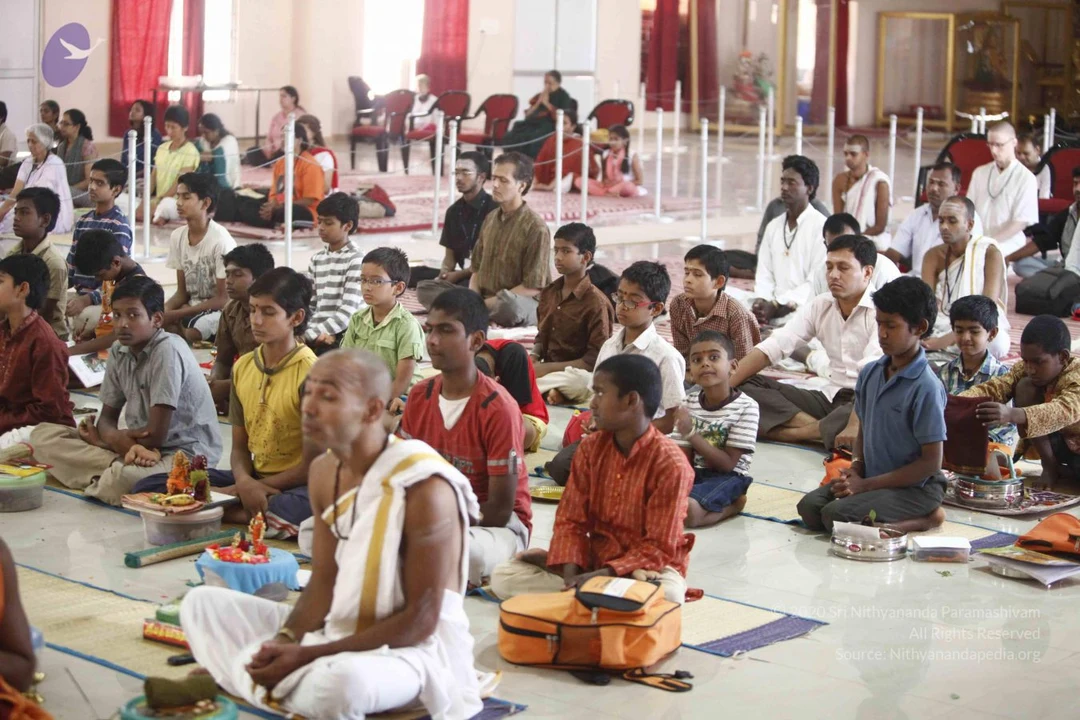
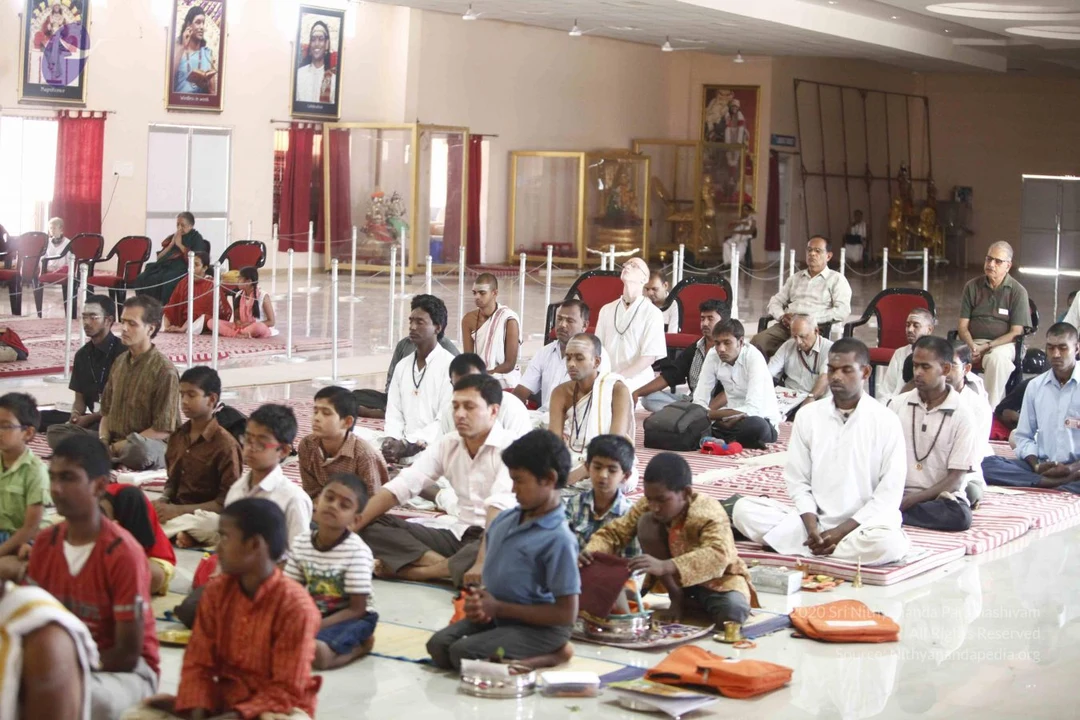
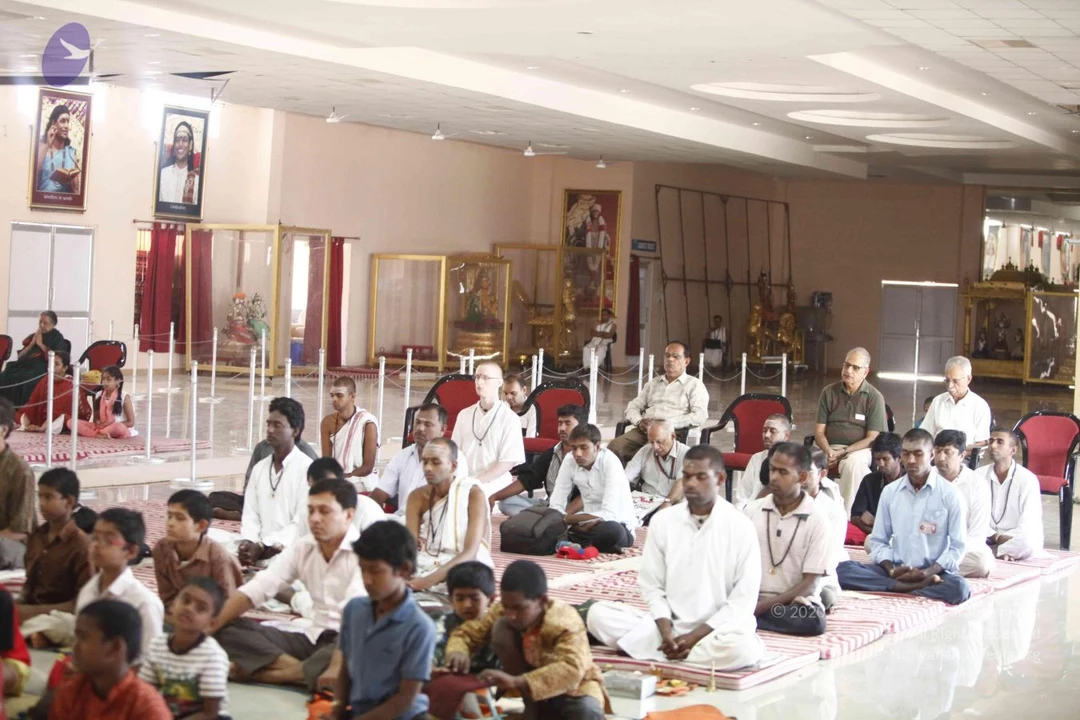
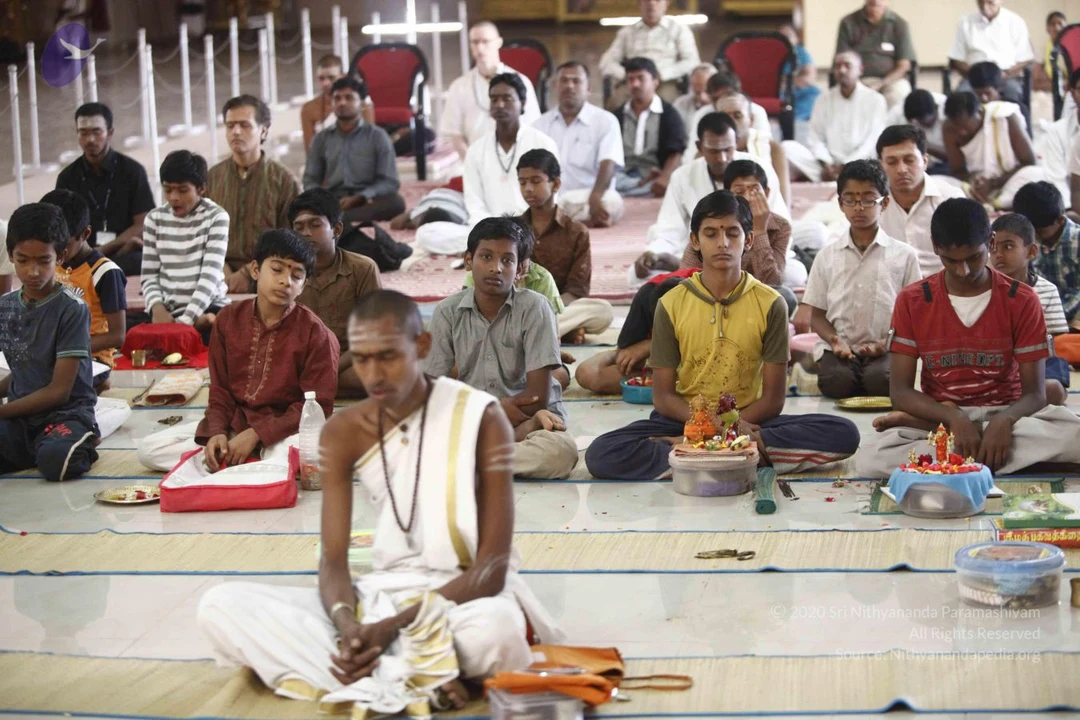
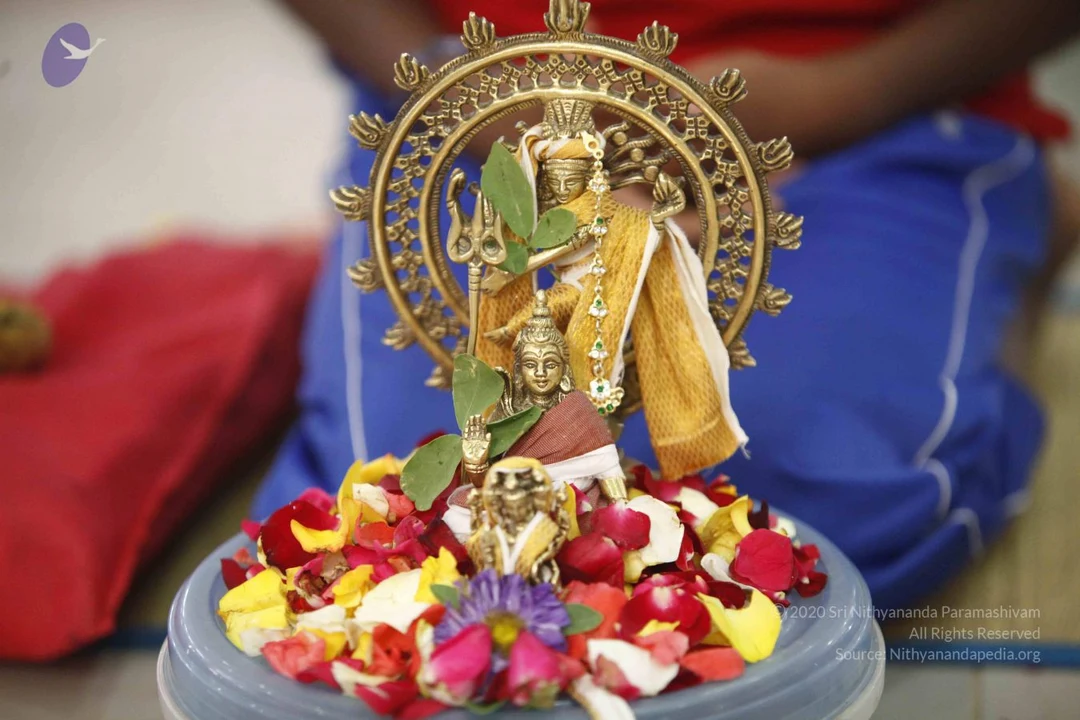
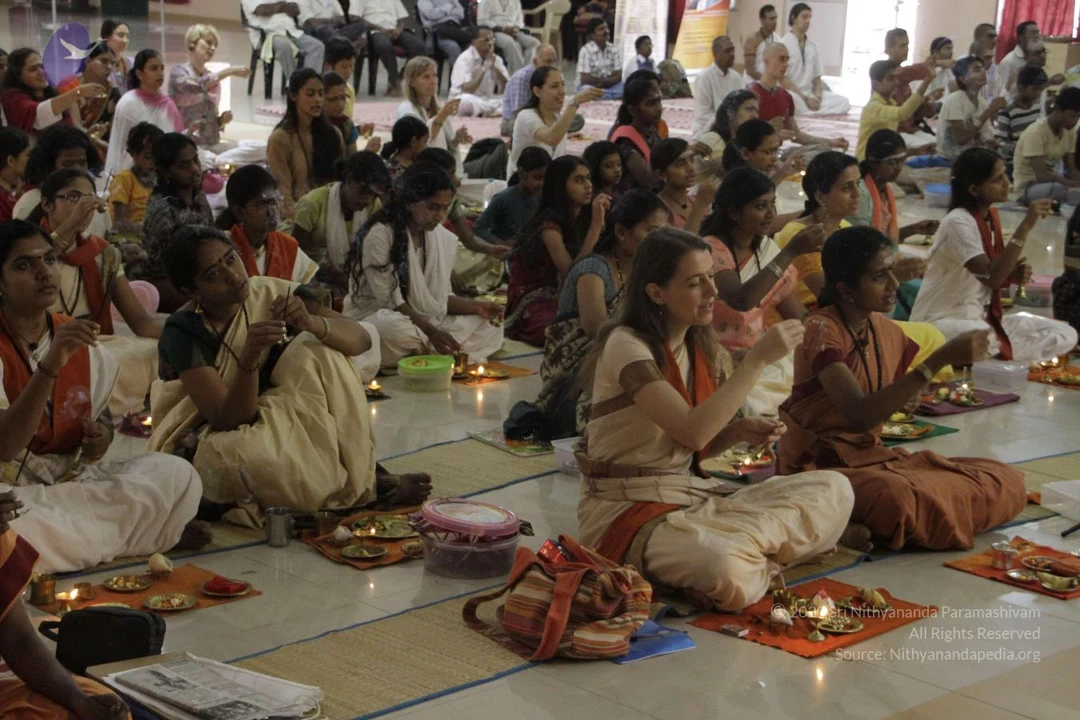
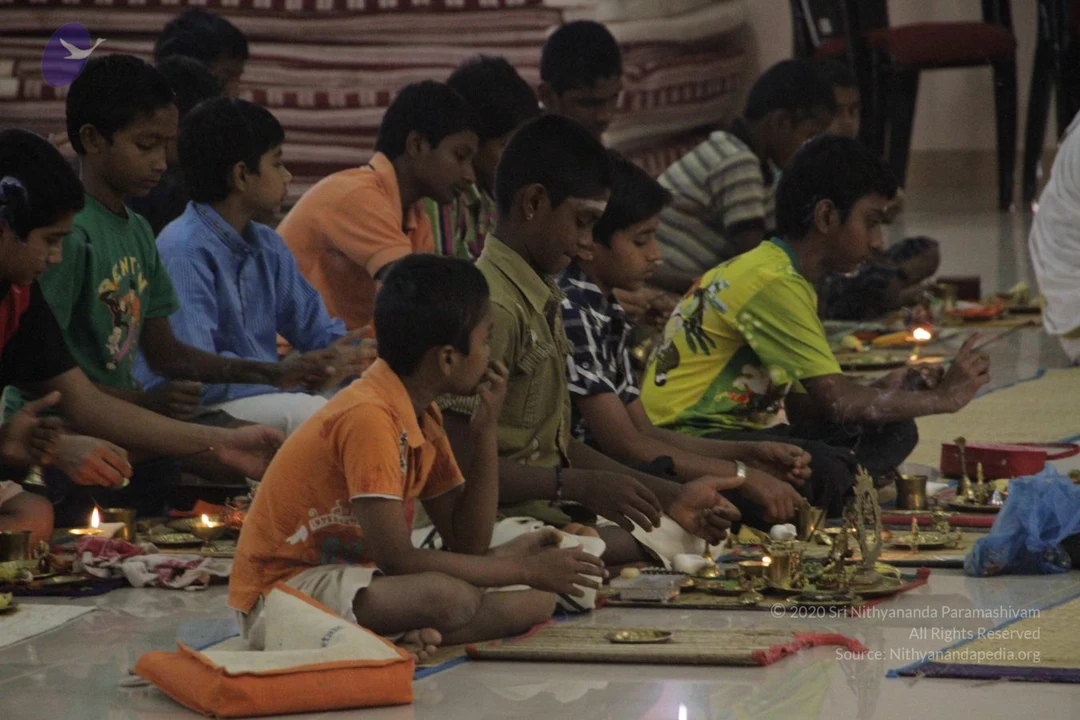
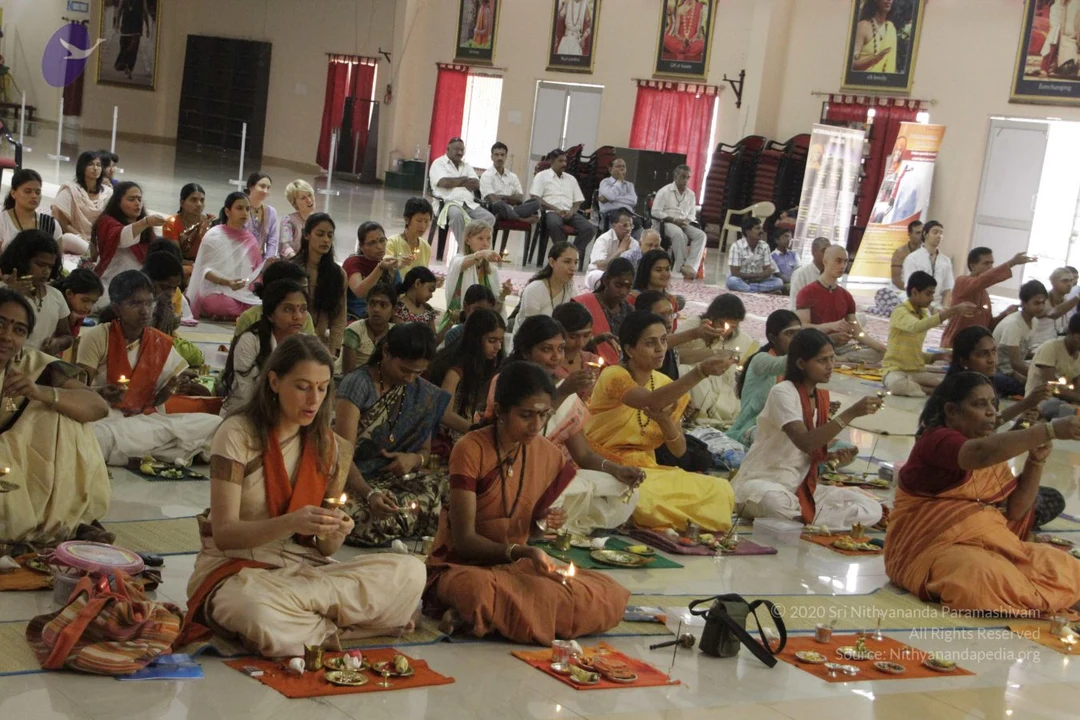
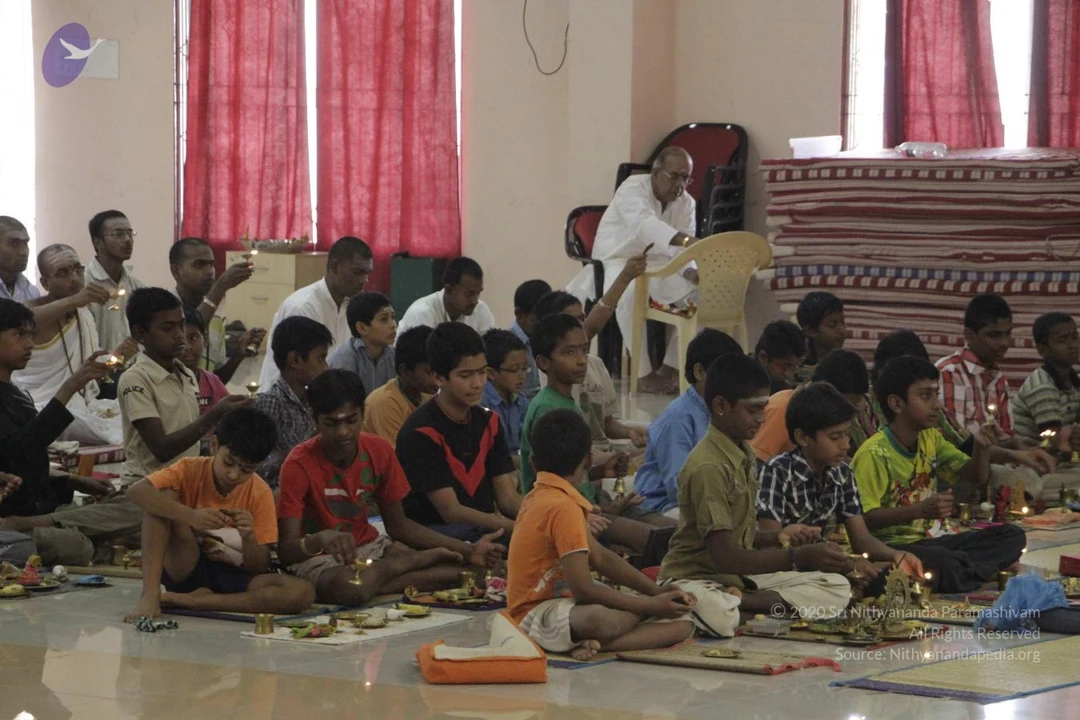
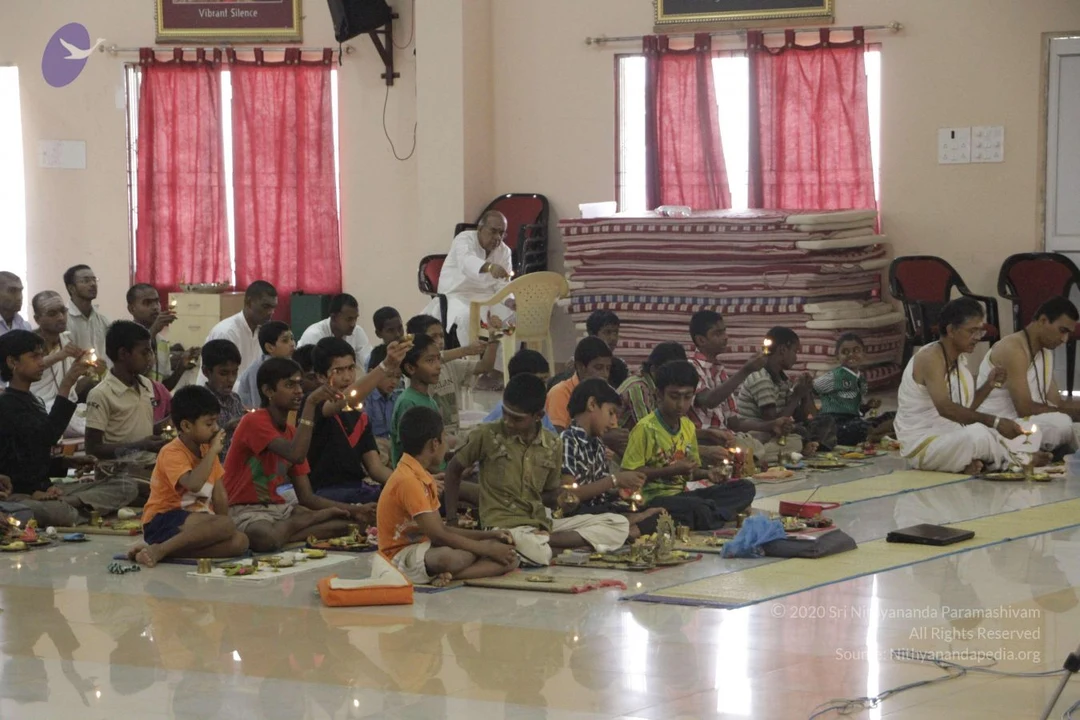
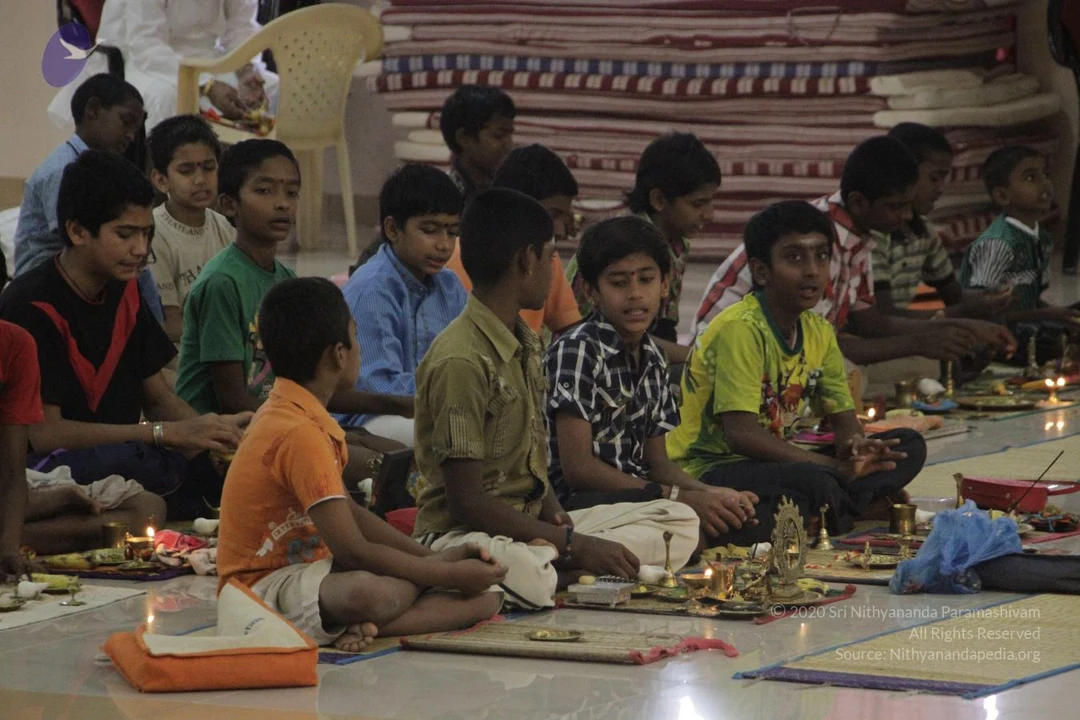
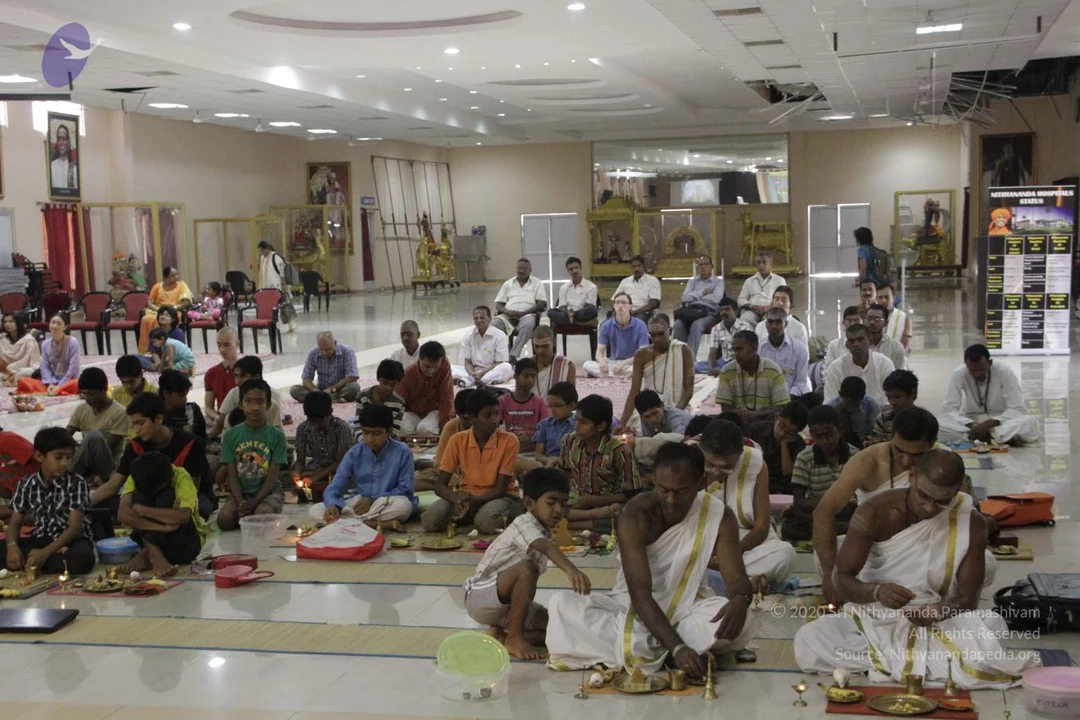
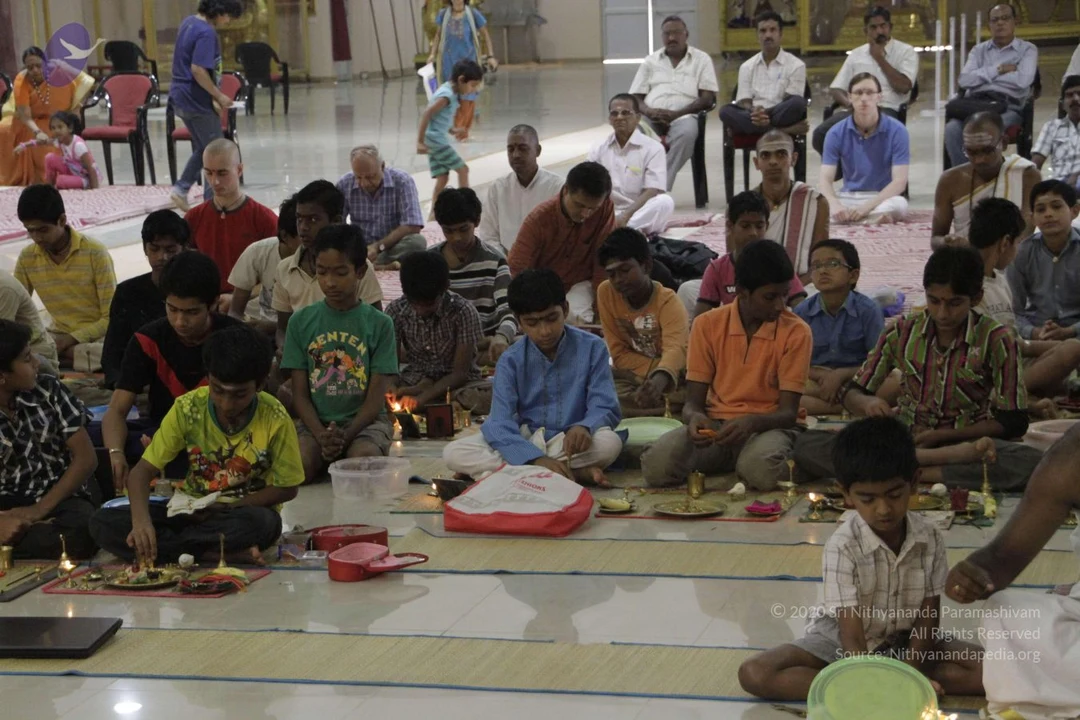
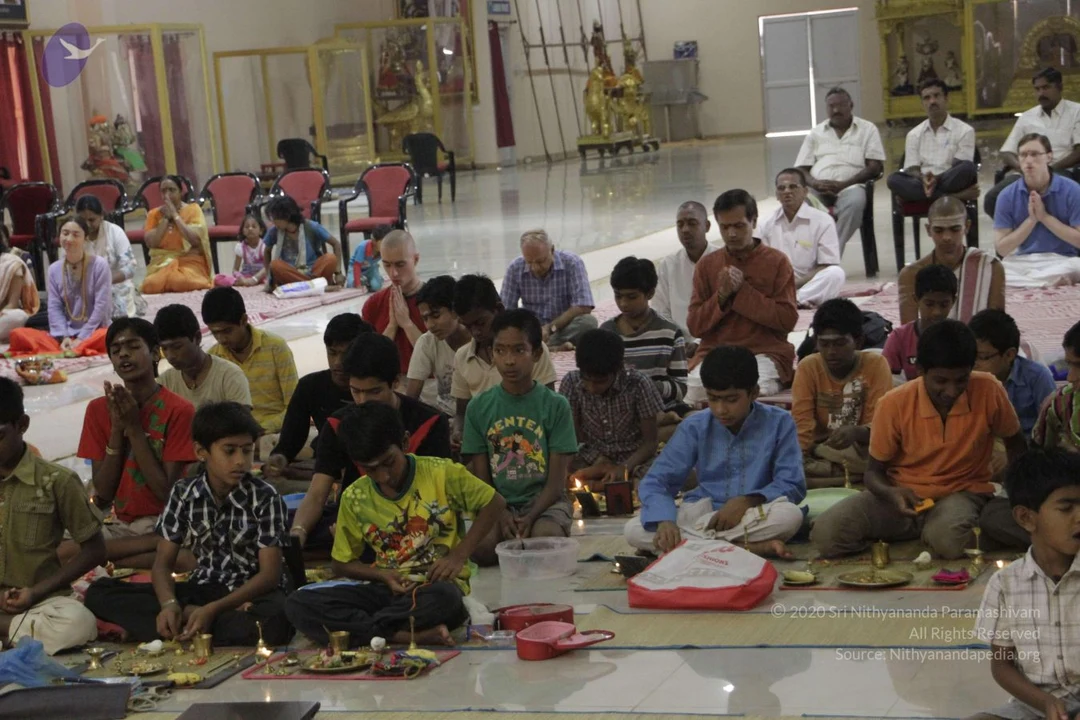
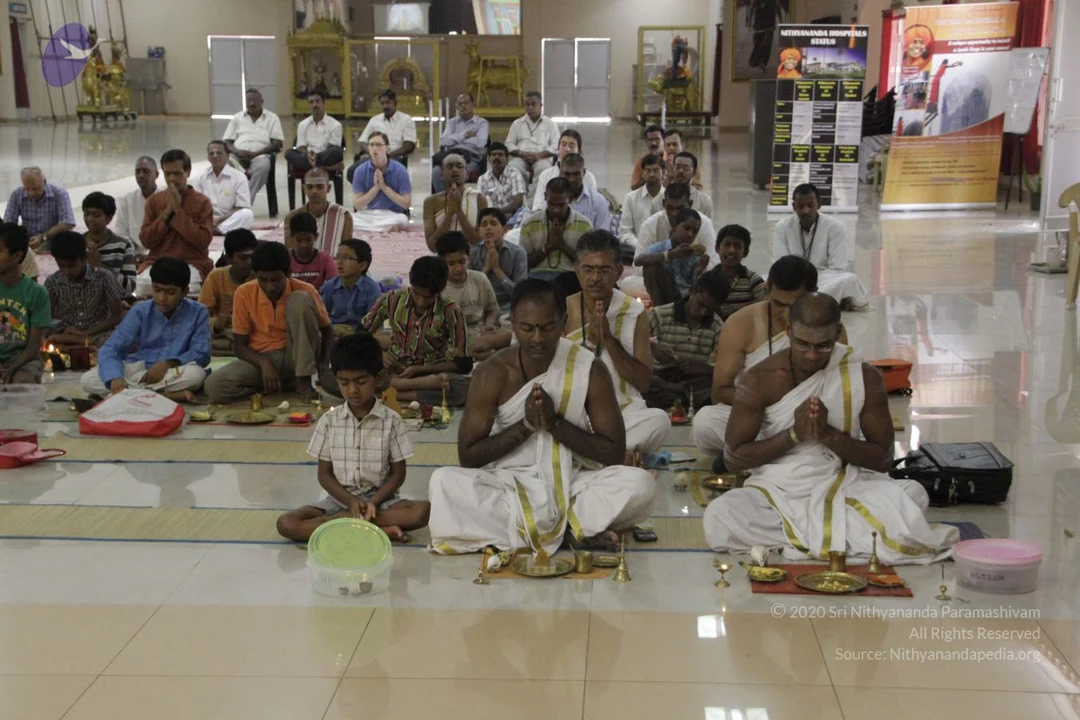
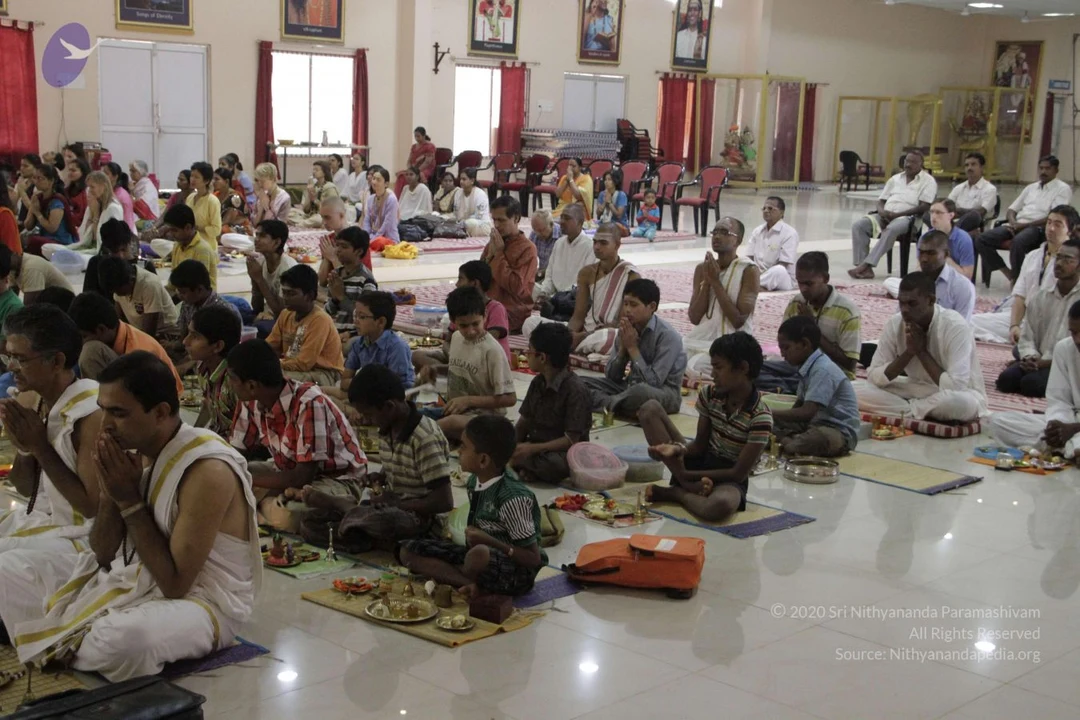
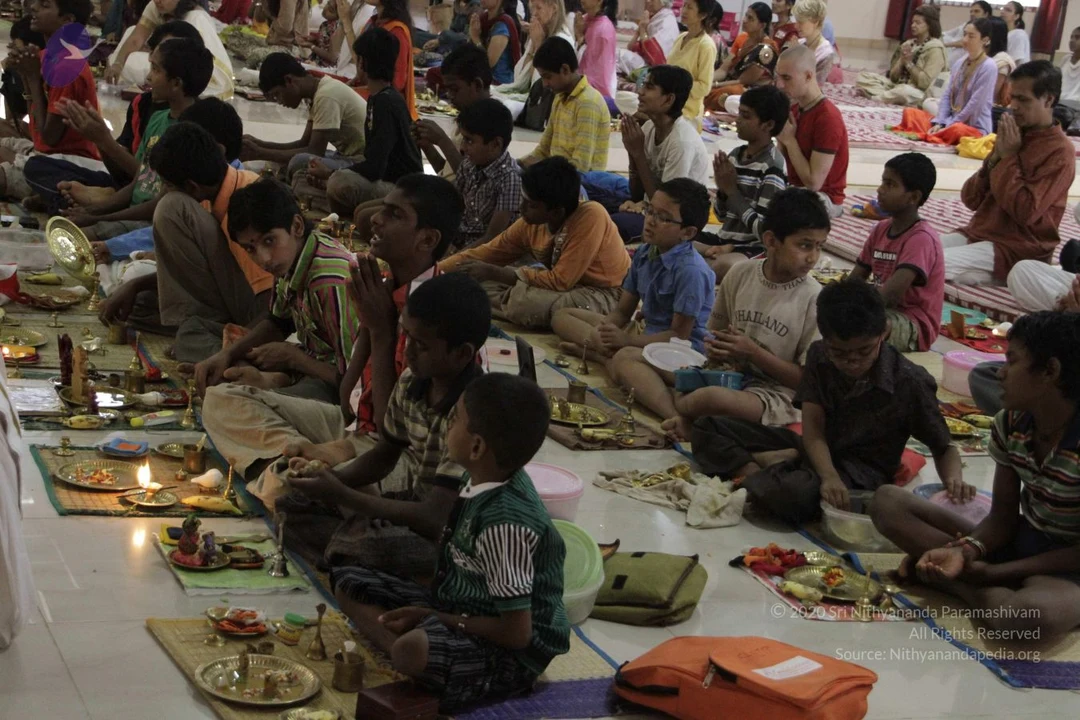
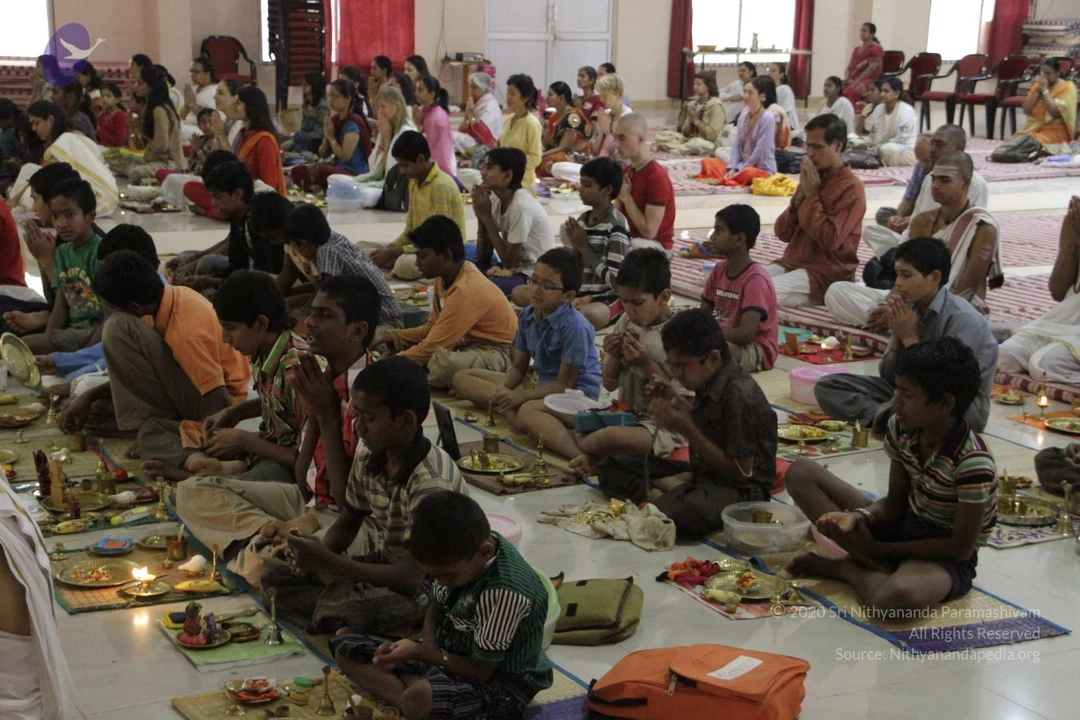
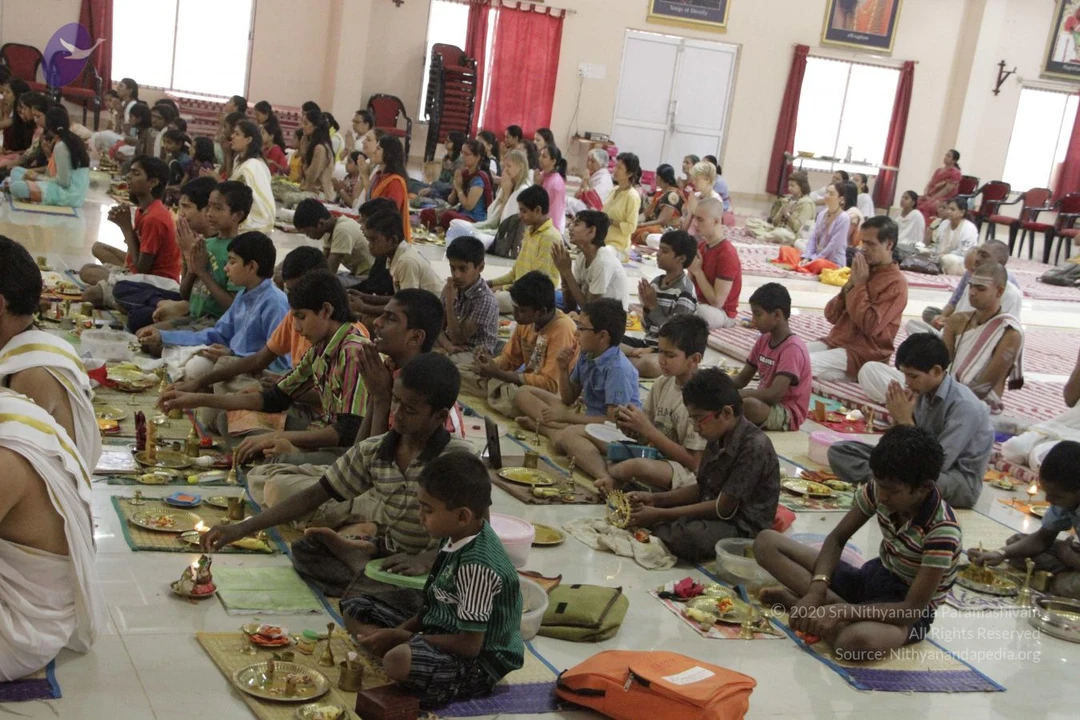
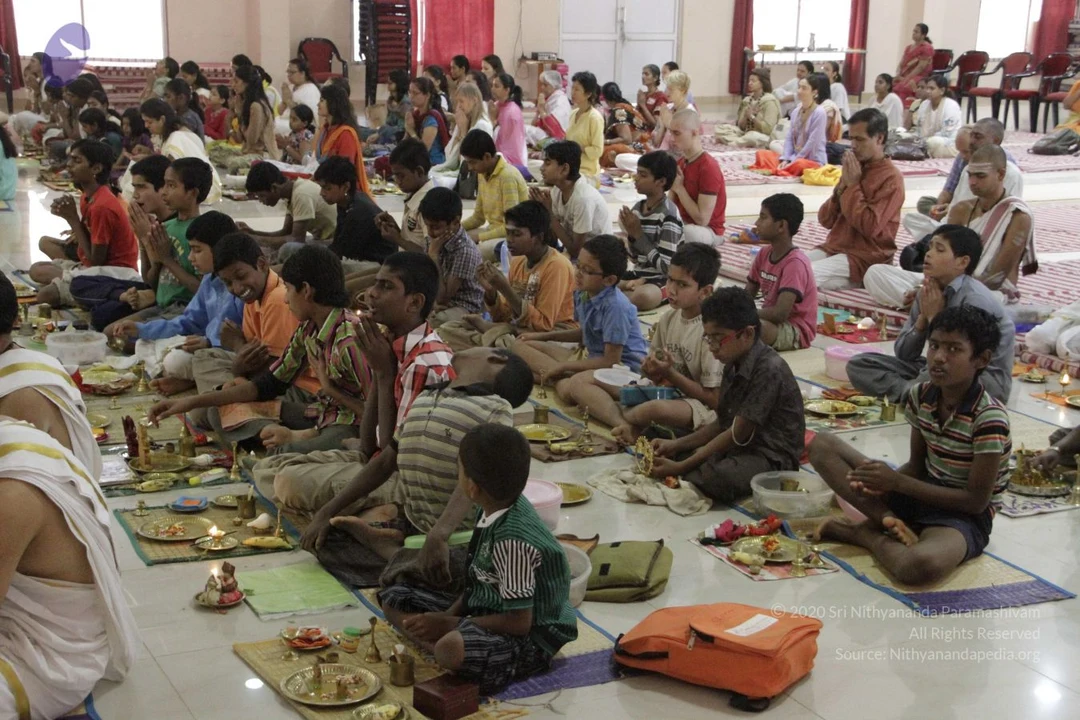
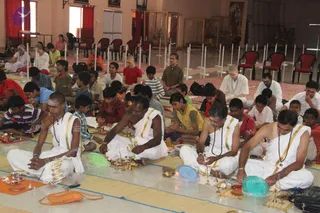
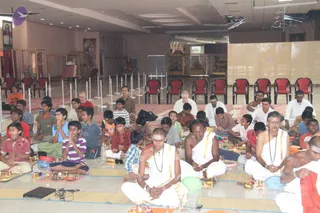
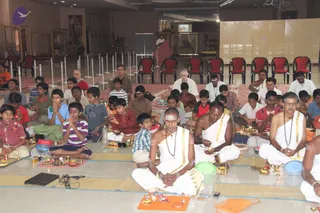
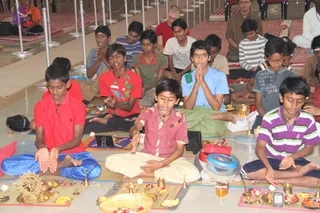
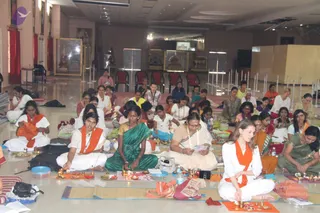
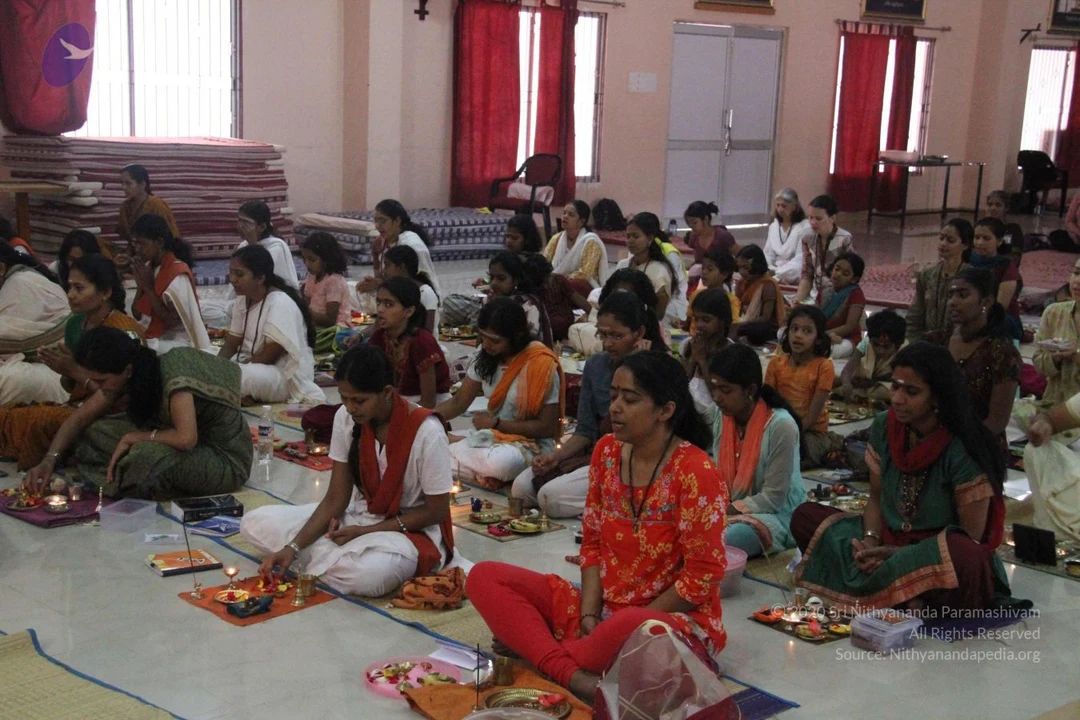
A photograph of a hall where a group of boys and young men sit cross-legged on mats and floor cloths before brass puja plates, lamps and bowls of flowers. Several boys wear red, blue and striped shirts, while two bare-chested men on the right wear white dhotis and one man in white stands near a table. Seated at the back are a few adults in red and white clothing, and red curtains and framed posters hang on the walls behind them.Indoor photo of a large group seated on the floor of a hall with red and beige mats, performing a puja. Front row men in white dhotis with gold-bordered shawls, rudraksha malas and forehead markings sit before brass oil lamps, bells and plates of offerings, one tending a small lamp. Behind them, many children and adults in colourful shirts sit in rows, with white posts and red chairs along the back. Framed images and a glass case appear on the walls. No clearly identifiable a person figure is visible among those seated.Wide indoor hall at an ashram with a seated group of devotees on red and pink mats, many boys and young men in white dhotis and simple shirts, several adults in white with gold-bordered dhotis and rudraksha malas, some with white tilak and sandalwood marks on their foreheads and arms. In the foreground, a man with a shaved head and horizontal tilak sits cross-legged before brass plates and small oil lamps, hands pressed together. A laptop sits at lower left. Behind them, red-cushioned chairs line the back wall, with framed portraits and a glass-enclosed shrine with a deity murti at the back. Some people have their eyes closed in prayer.A photo of a large hall where a group of mostly boys and young men sit cross-legged on mats in a ritual puja. In the front row, a shaved-headed priest in white dhoti with gold border and a white sacred thread sits before brass puja plates with oil lamps, flowers and fruit offerings, hands folded. Beside him, another man in white with gold-bordered dhoti and rudraksha mala sits with folded hands. Behind them, rows of seated boys wear mixed shirts and kurtas, some with palms pressed together. Red chairs line the back, a glass-cased shrine and a deity display are visible on the right, and an American flag stands near the centre. Approximately 40 people are visible.A group of boys sit cross-legged on mats in a hall during a seated puja. They wear casual shirts in red, blue, purple-striped and pink, with some in white and green. Several have palms pressed together or hands raised in prayer, and eyes closed. Brass bowls, oil lamps, a small brass Nataraja figure, marigold flowers, bananas, fruit and a golden bowl of petals are set on the floor in front of them. An older man in a grey striped shirt sits in the background among others, and red mats line the room.A large hall with cream walls and polished floor shows a group of women and girls seated in rows on mats, performing a puja with brass oil lamps, kalasha-style vessels and small brass plates of offerings in front of them. Most wear white kurtas or saris with saffron-orange shawls, while others wear green, mustard and maroon saris. Some hold open books or prayer sheets and two appear to be lighting or tending lamps. Framed deity murtis and paintings hang on the walls behind, with red chairs and banner stands in the background.
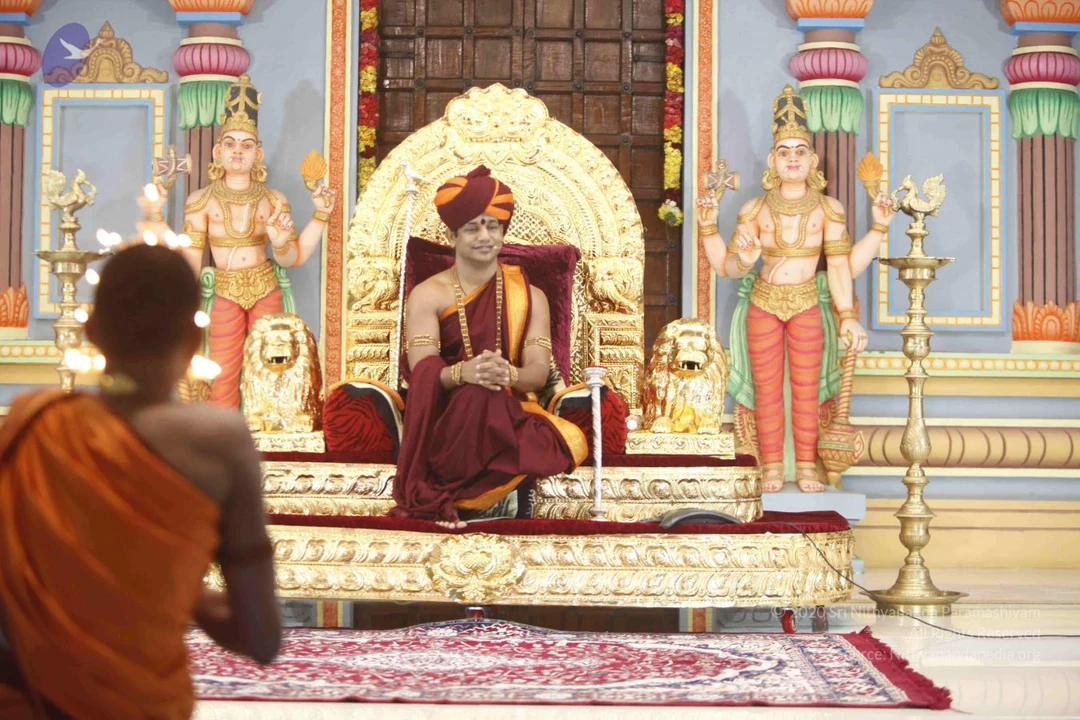
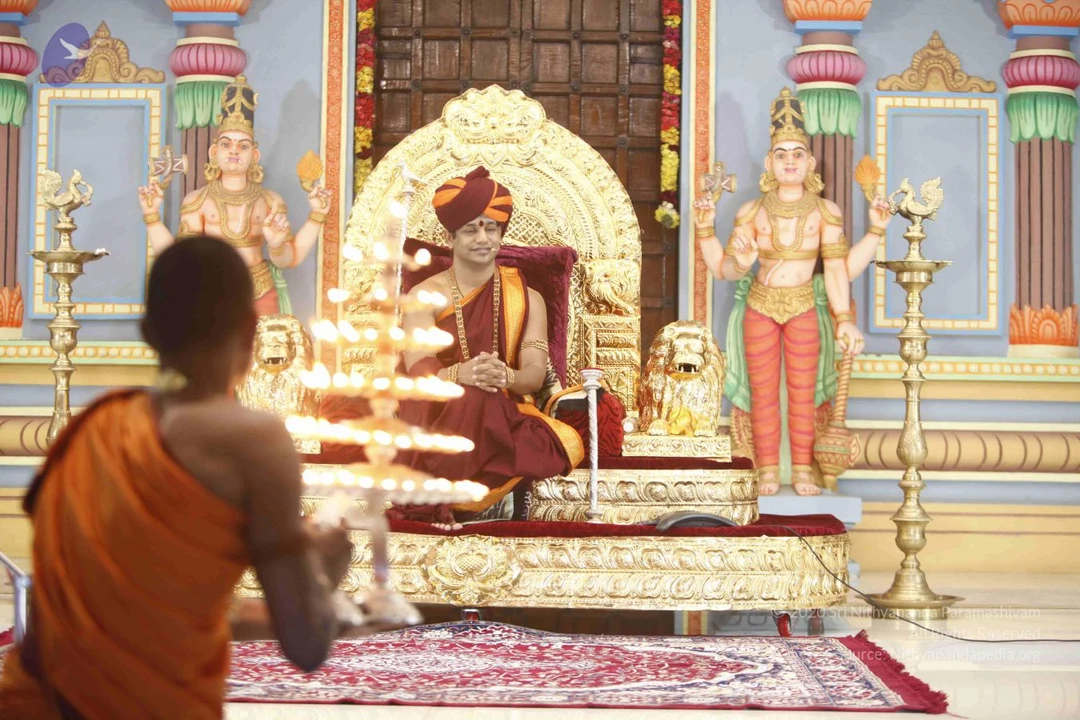
bhagavad gita
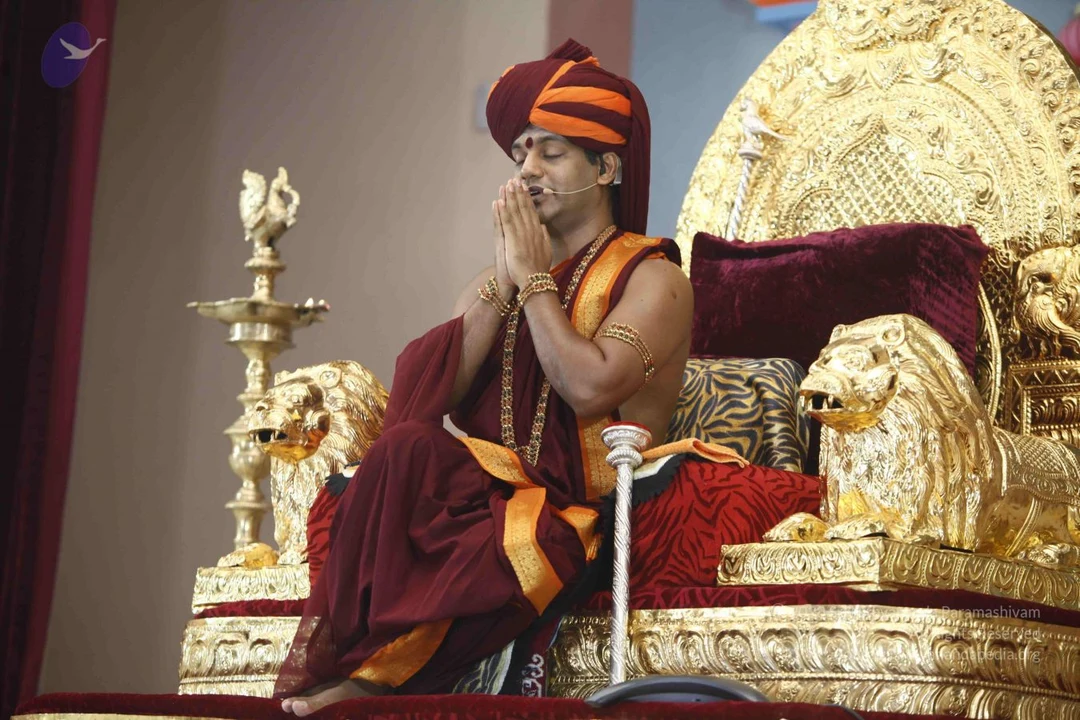
79 photosSource gallery
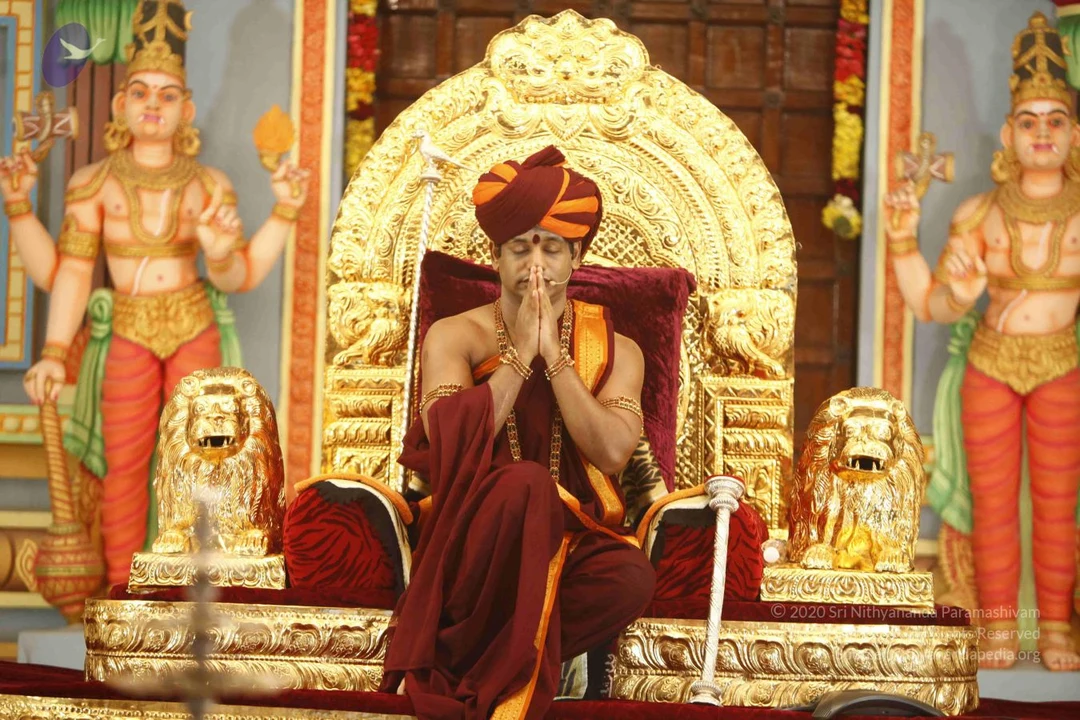
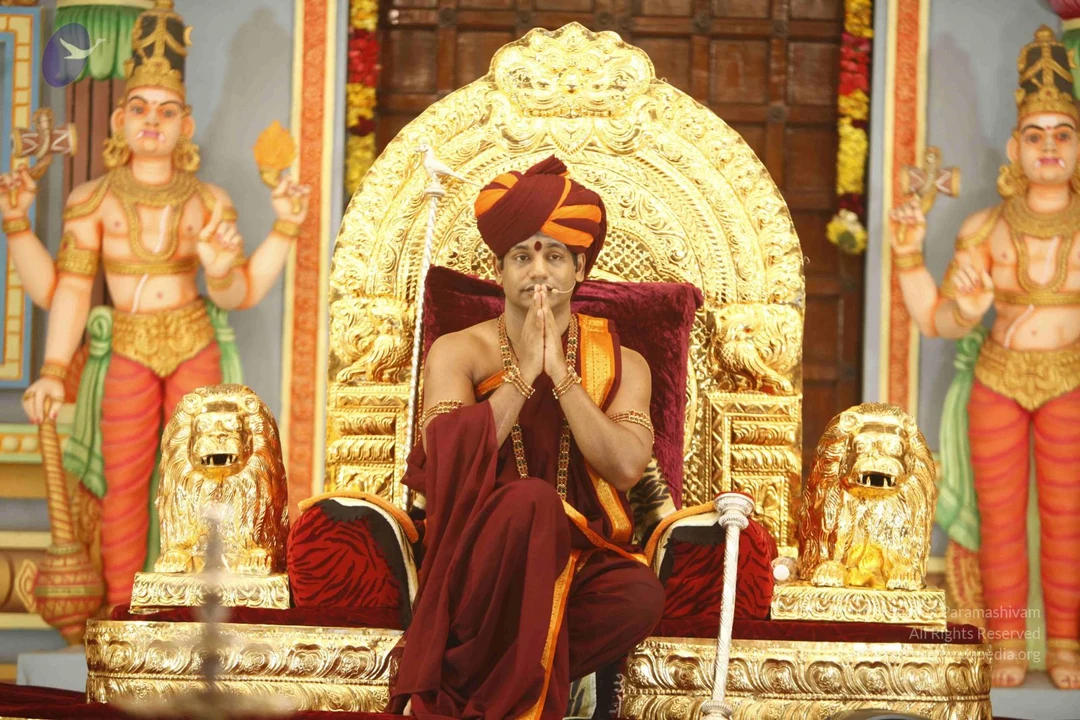
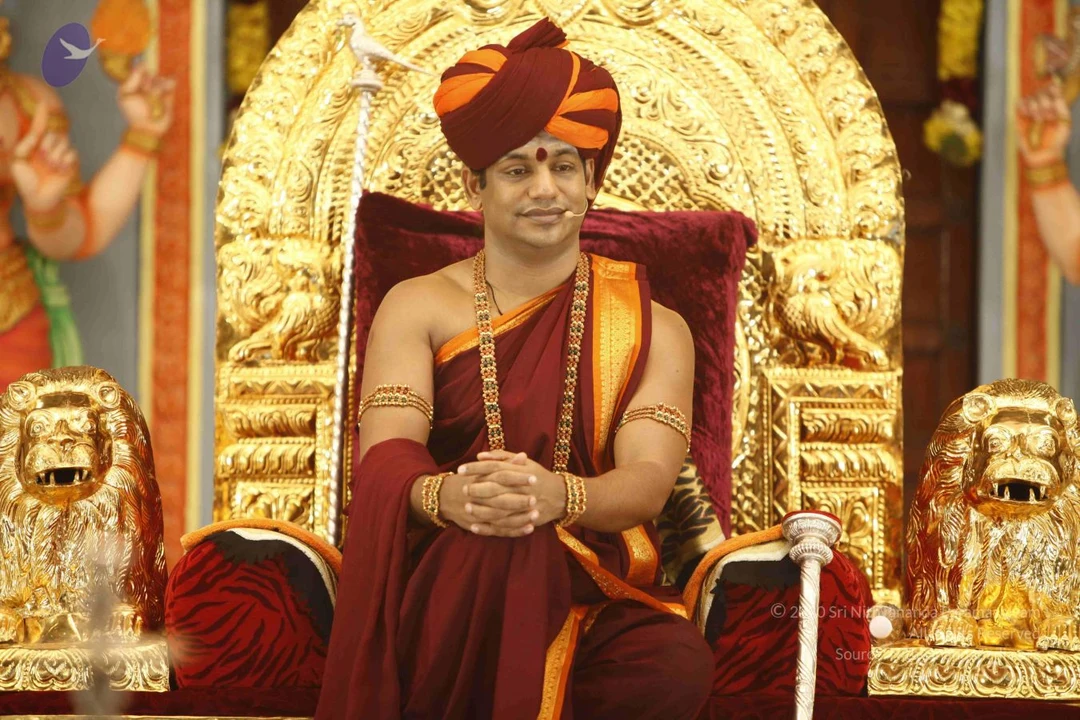
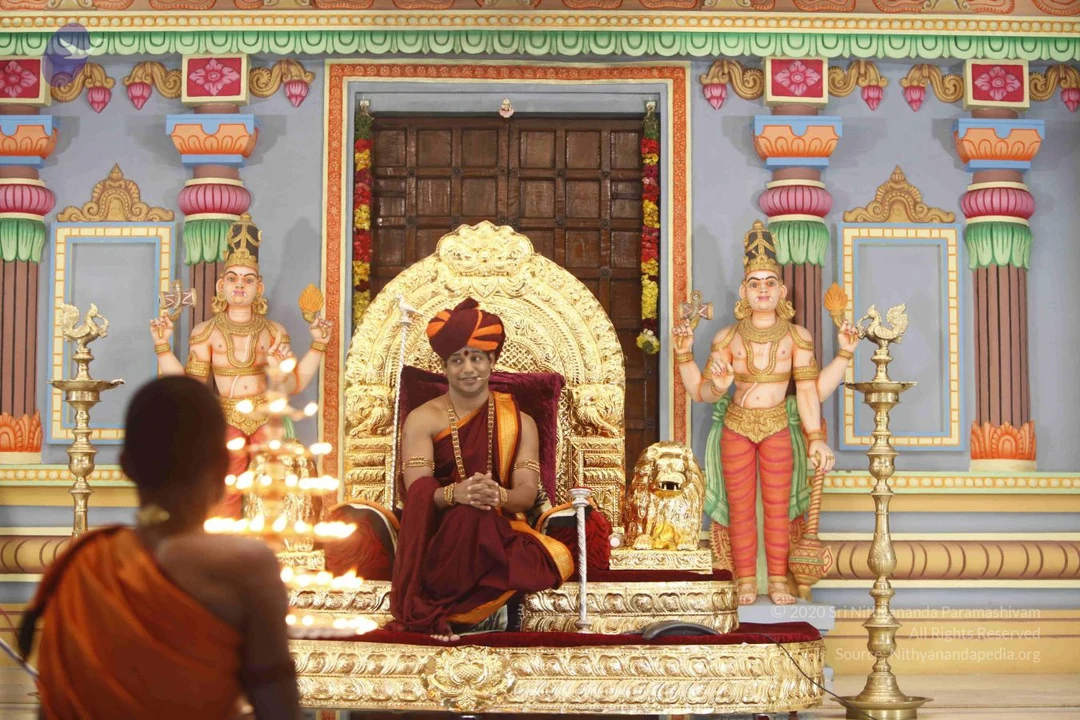
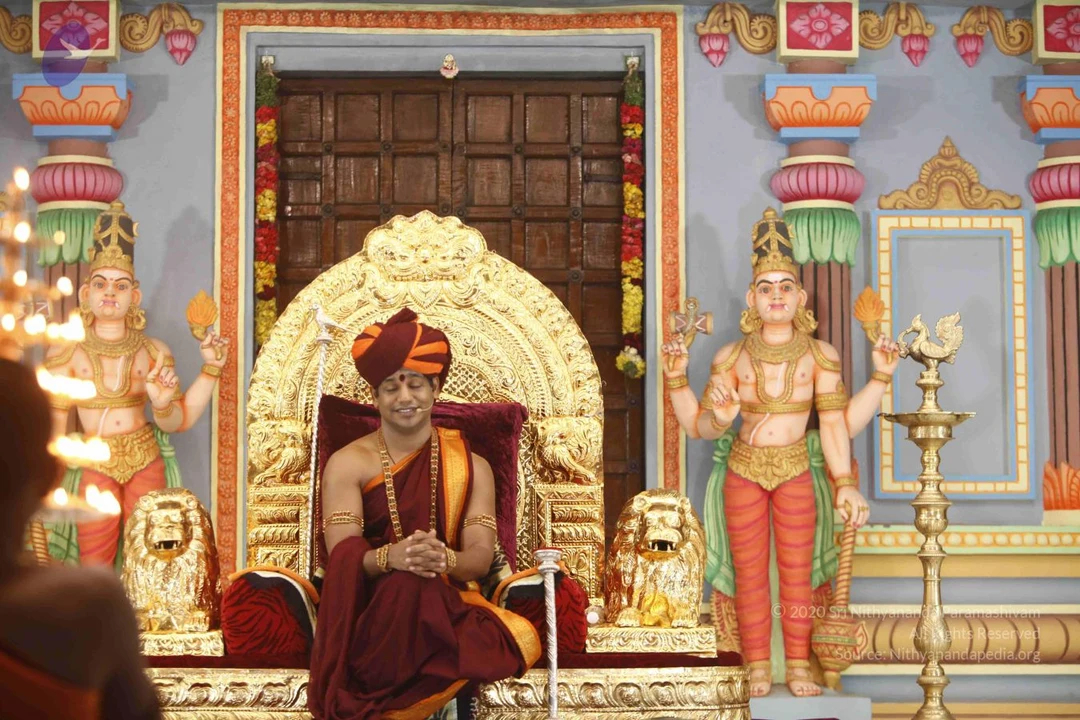
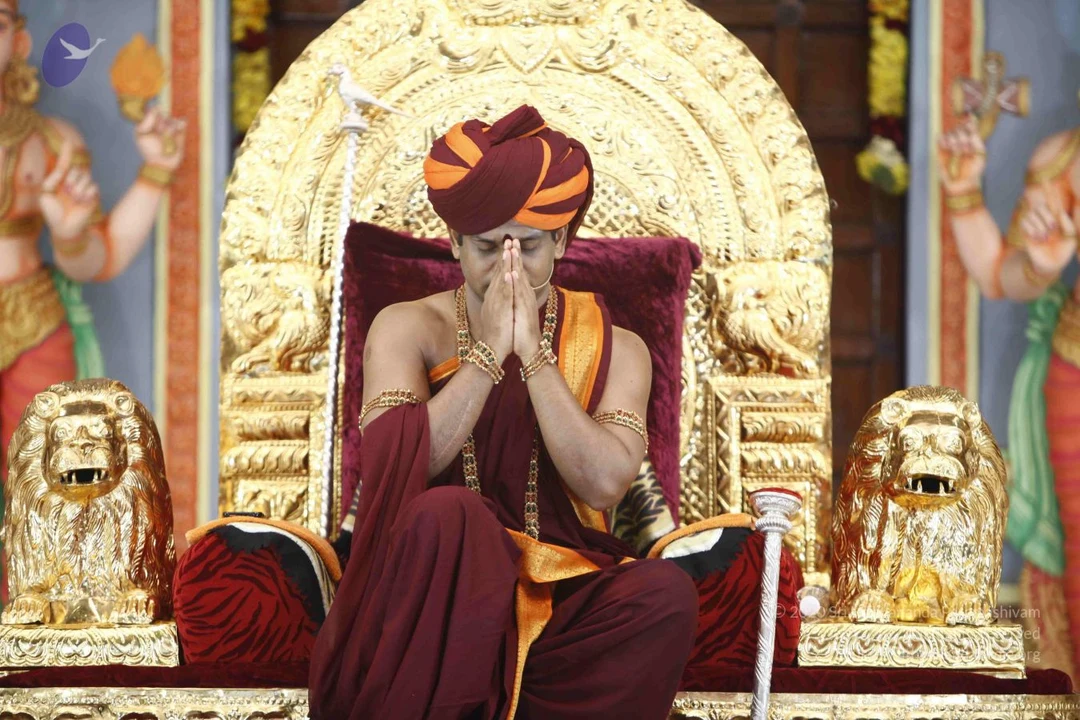
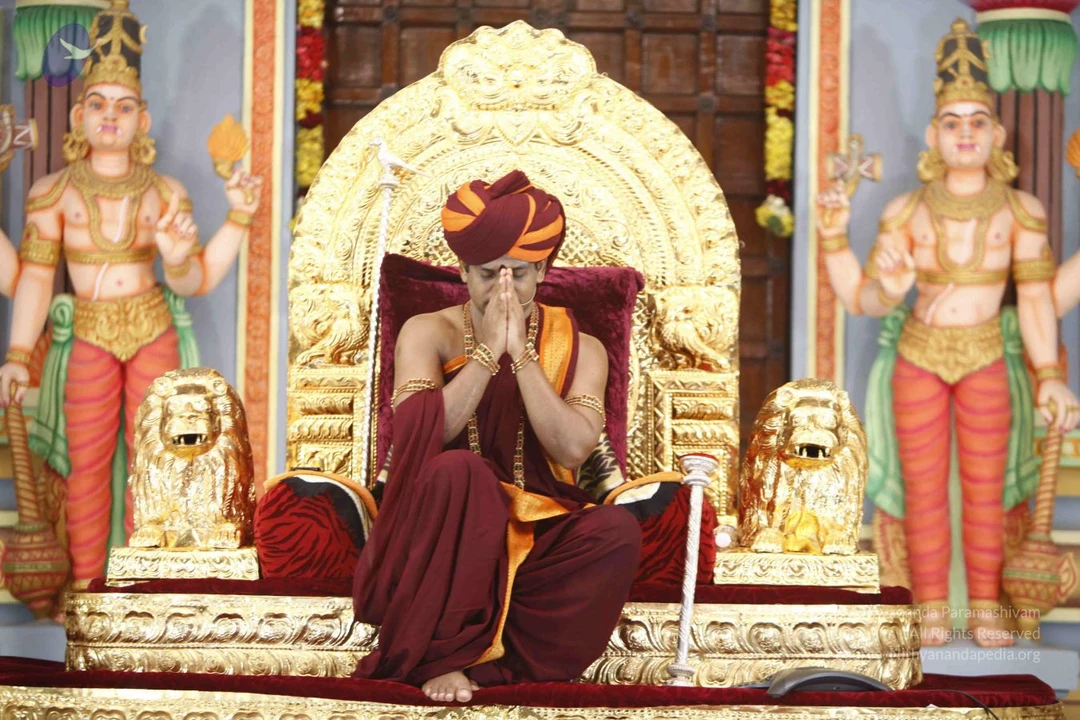
A man seated cross-legged on an ornate gold throne with carved golden lion armrests and a red velvet cushion, hands pressed together in namaste with eyes closed. He wears a maroon and saffron-orange turban, saffron-bordered maroon robes, a rudraksha-style beaded mala, a gold necklace and gold bangles, and a small microphone is clipped near his face. Behind him is a brass oil lamp on a tall stand and a gold-embroidered backdrop. Probable Swamiji seated on the throne, with the appearance cues of orange turban, maroon-saffron robes, ceremonial gold necklace and bangles. A watermarked-style photo is shown in the corner area as an archive image.A seated man in a maroon robe with orange-and-gold border, wearing a maroon and orange turban with a red bindi, sits on an ornate gilded throne carved with lions and cushioned in red velvet. He wears layered beaded necklaces, gold armlets and bangles, with hands resting in his lap and a microphone clipped near his face. A white bird perches on the throne's finial, and golden lion statues flank the seat. Behind him, painted deity figures with multiple raised arms frame the scene. Probable Swamiji is shown with a turban, maroon robes, beaded necklaces and gold ornaments in a satsang setting.A man seated cross-legged on an ornate golden throne with two carved golden lions on its arms, raising one hand mid-discourse. He wears a maroon robe with orange-gold borders, an orange and gold turban, a gold necklace and rudraksha-style beaded mala, and several gold bangles. Behind him stand two painted deity murti figures in orange dhotis with gold jewelry. A red and maroon cushion covers the seat, and a silver staff rests against the throne. The setting appears to be a temple-like hall for satsang talk. Swamiji (probable), seated in the teaching position, with the visible cues of orange-gold turban, ornate gold necklace and robes.A seated man in maroon and saffron-orange robes sits on an ornate golden throne flanked by two golden lion figures on a raised stage. He wears a maroon and orange turban with a red tilak on his forehead, a long gold-toned beaded necklace, and gold armbands, and he smiles with his hands resting on his knee. Behind him stand two large painted deity statues with gold crowns, gold necklaces and orange-and-red dhoti-style lower garments, one holding a lamp. A small silver staff rests beside the throne.A man seated on an ornate gilded throne with carved lion armrests and a red velvet cushion, smiling with hands resting in his lap. He wears a maroon robe with orange and gold border, an orange-and-maroon turban with a red bindi, a long beaded necklace, and gold armbands and bangles. Golden lion statues flank the throne, and a painted deity figure with raised hands appears at the left edge. A white bird finial and a silver staff stand beside the seat. a person, seated as a teacher giving satsang, in a saffron-and-maroon ceremonial costume with a turban and ornate necklaces.A seated man in a maroon and saffron-orange robe and a red-and-orange turban sits on an ornate gold throne with carved lions and red velvet cushions. He wears gold necklaces, gold armbands and bangles, and has a red bindi on his forehead. He sits cross-legged with his hands folded on his lap, smiling. Two golden lion statues flank the throne. Behind him are painted deity murti figures with multiple arms, wearing gold jewellery, and a golden arched backdrop with a white chauri at the side. The appearance matches a person seated on the dais, but the image is not conclusive. Single person in a temple-style hall.

sarva darshan

10 photosSource gallery
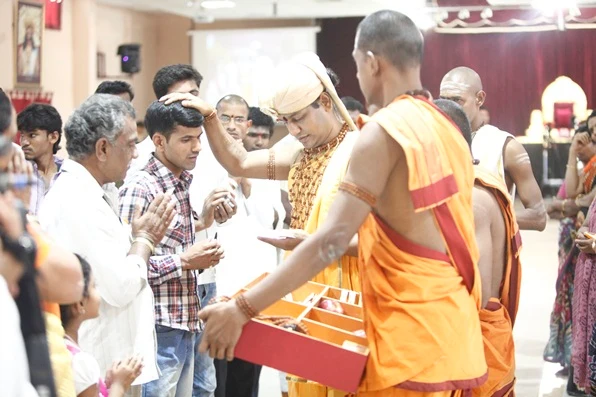
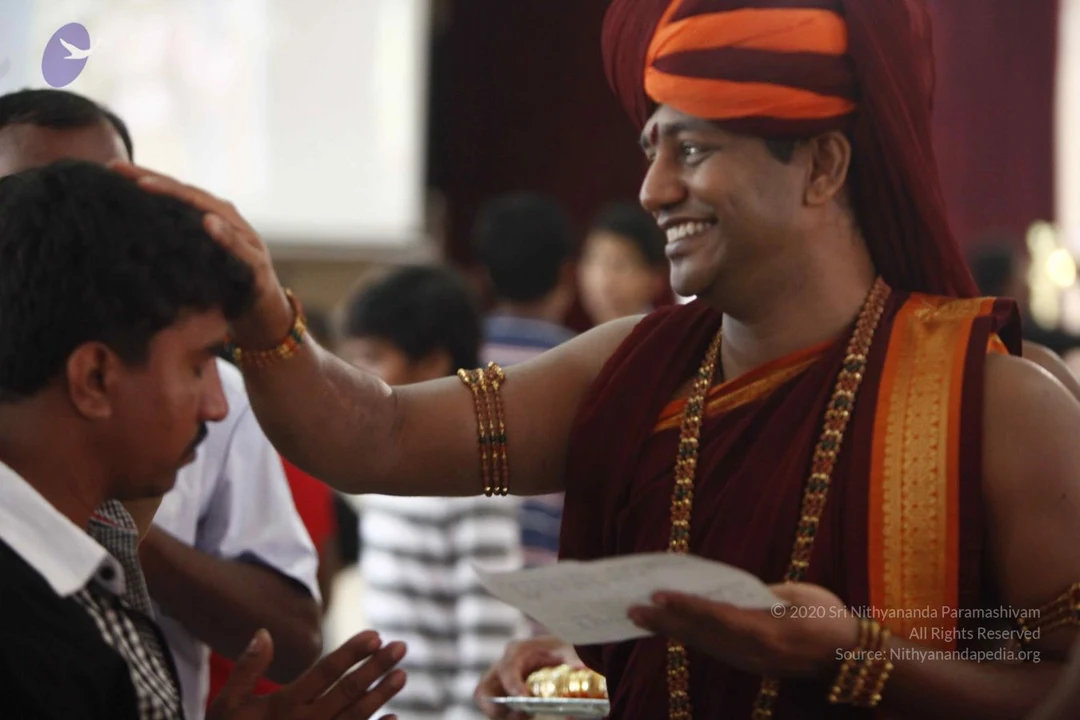
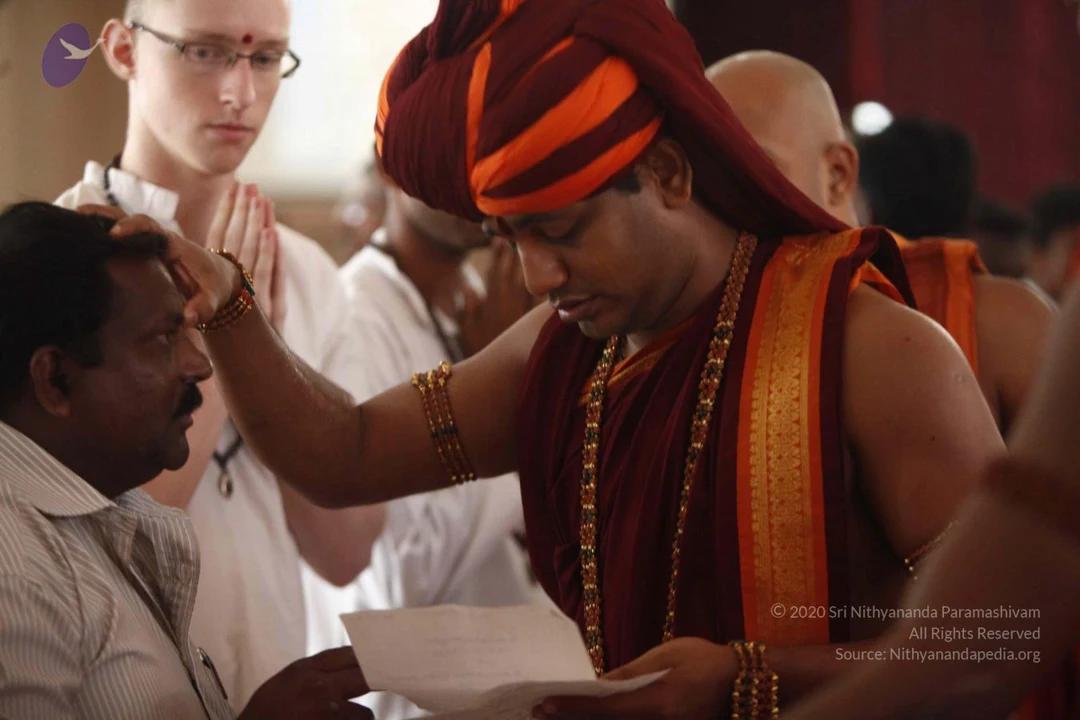
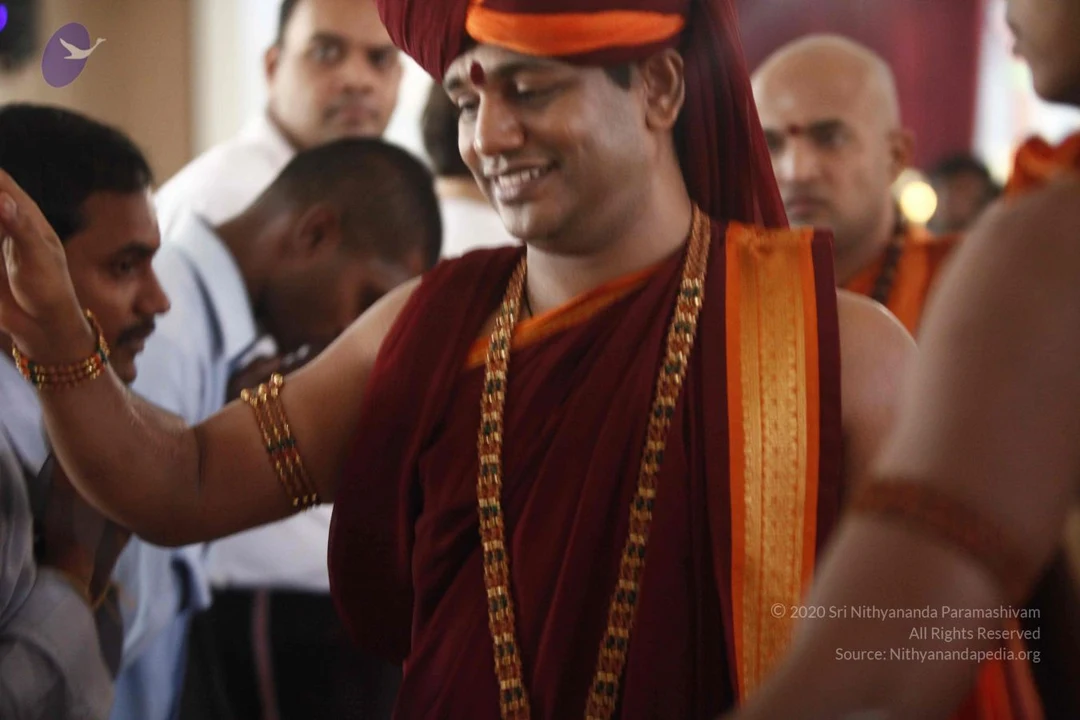
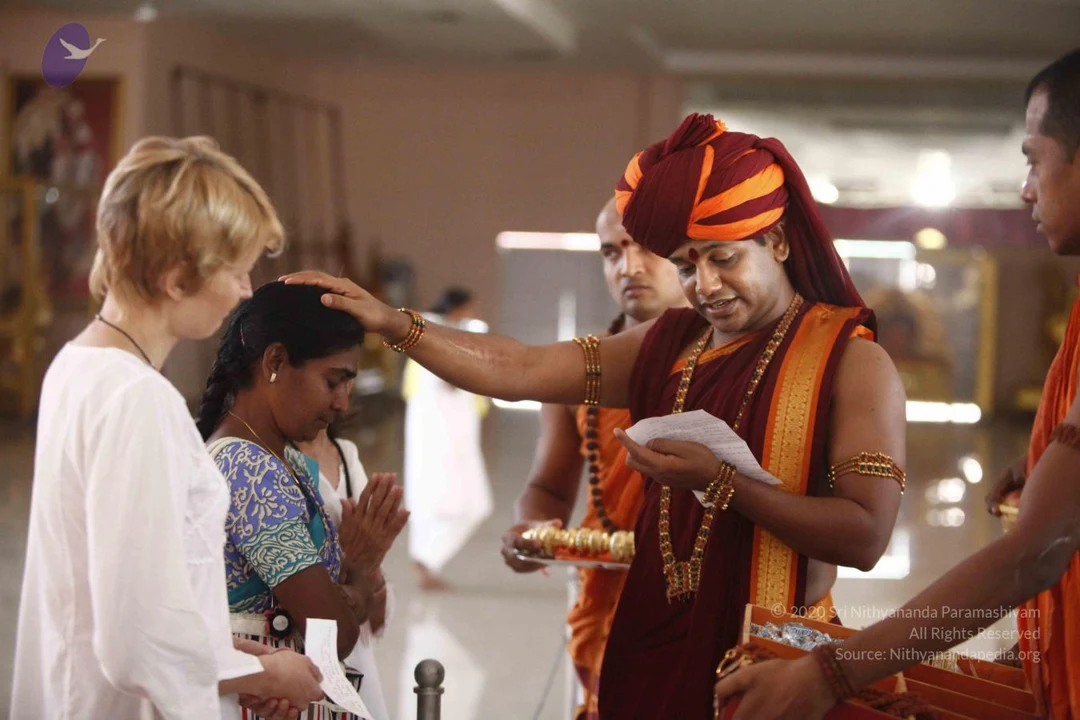
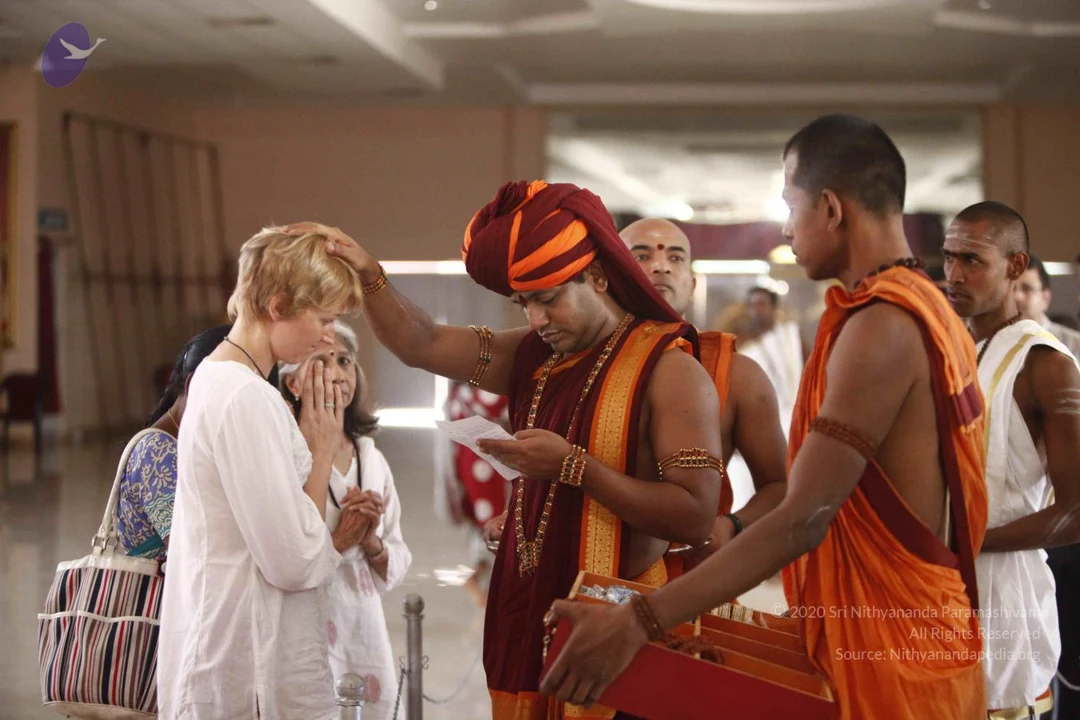
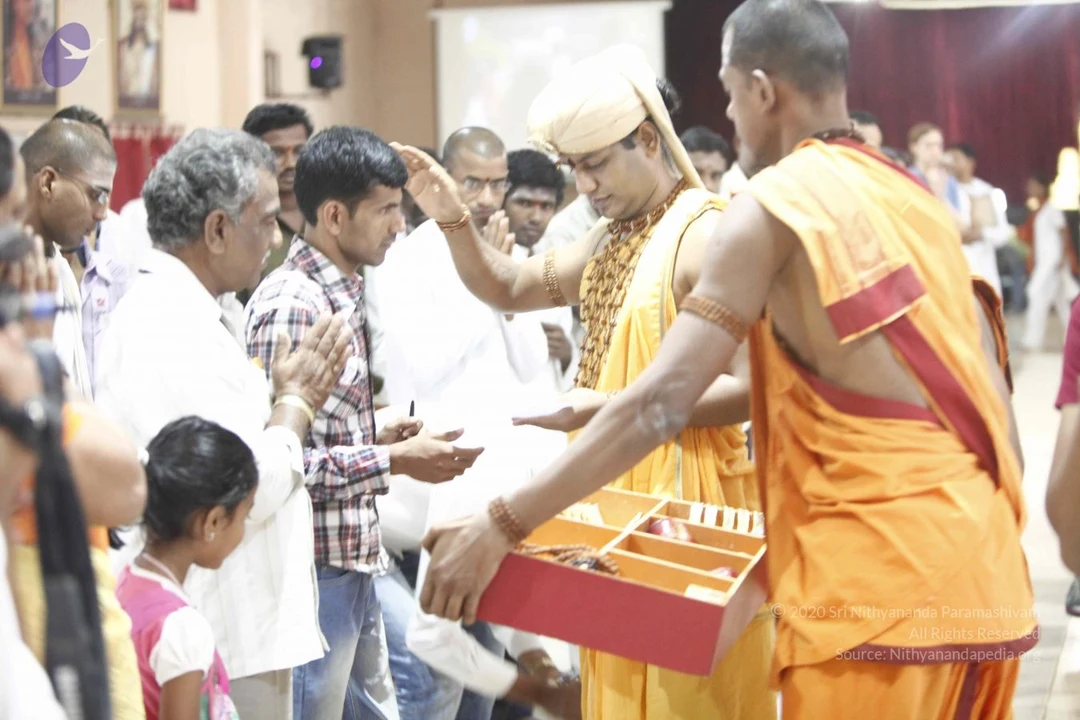
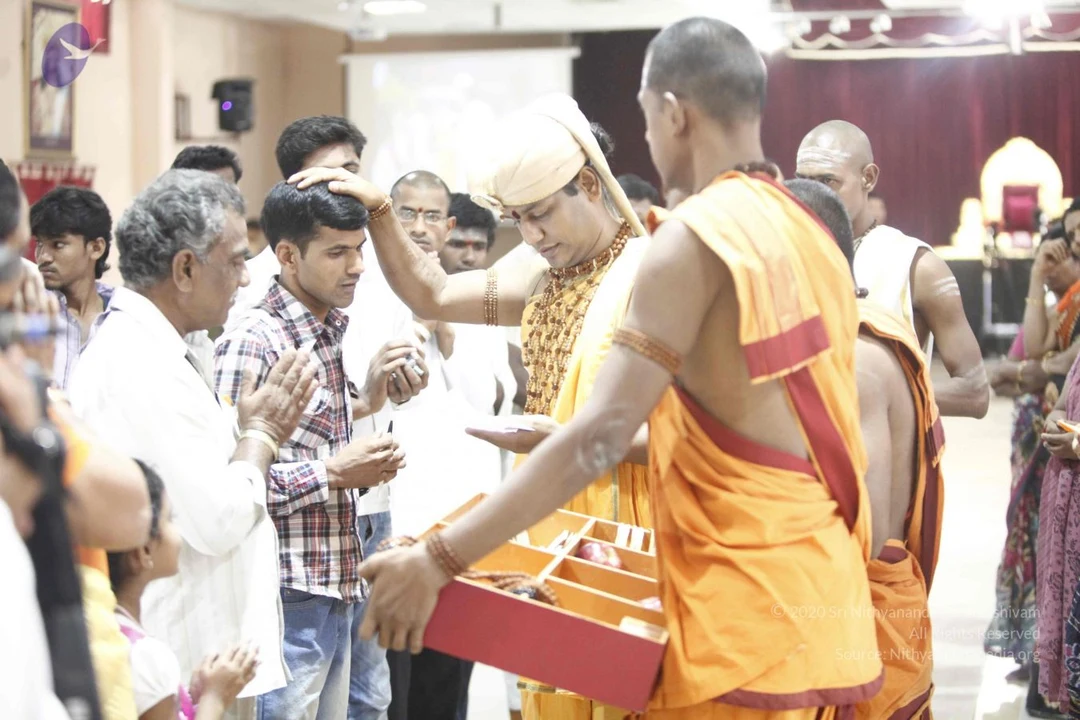
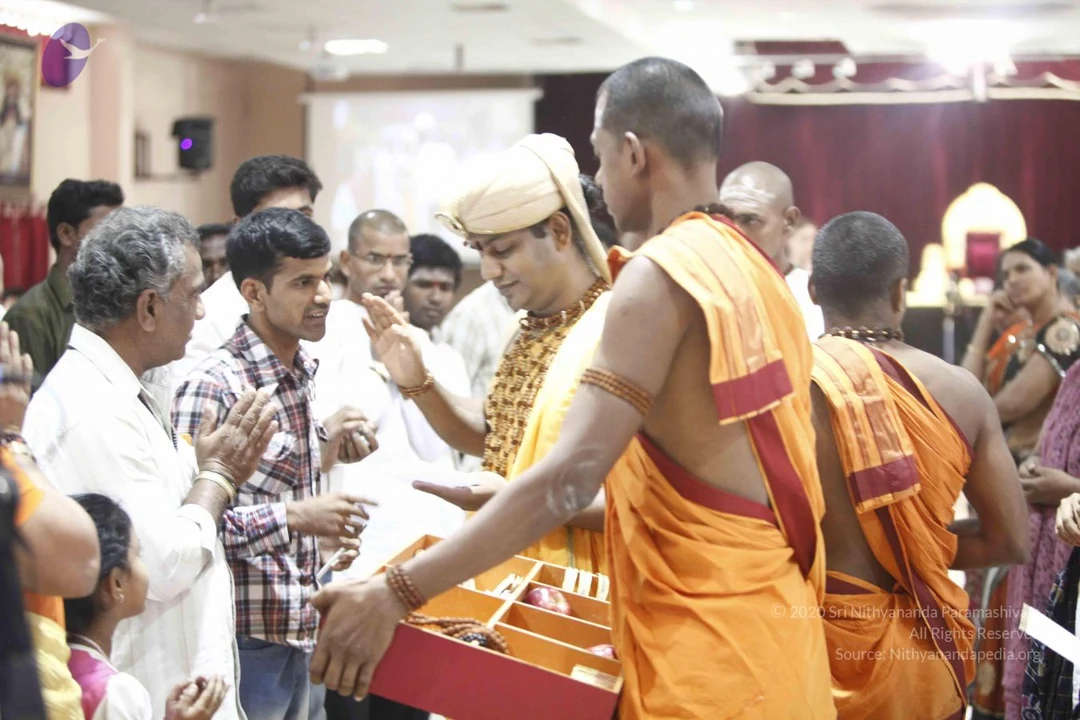
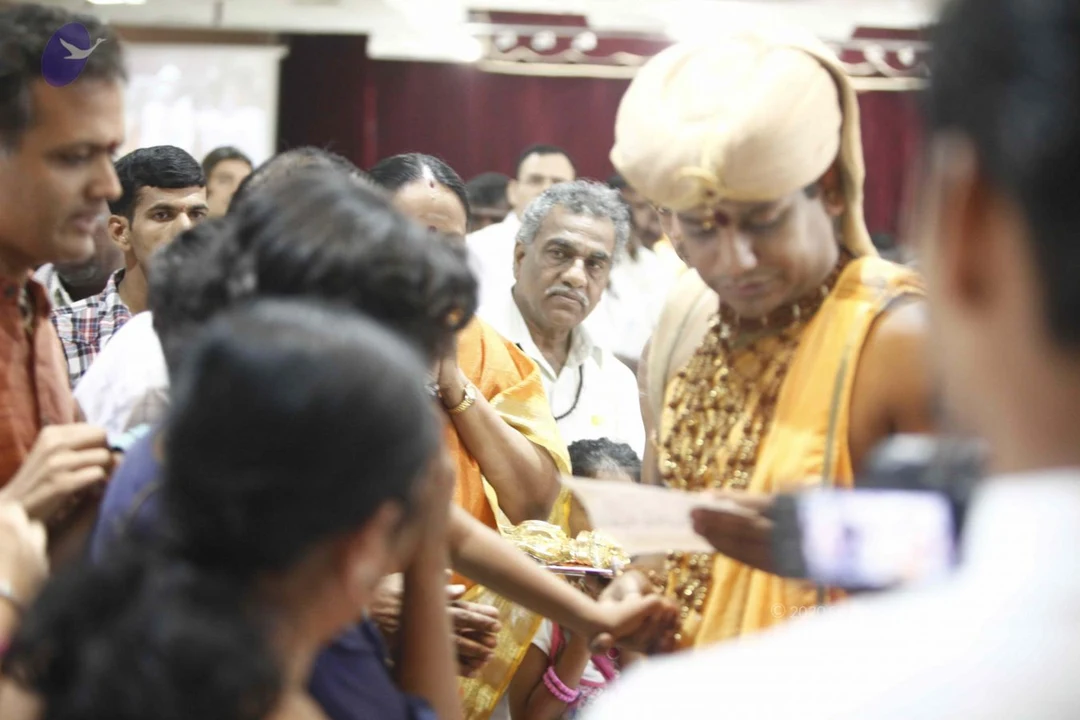
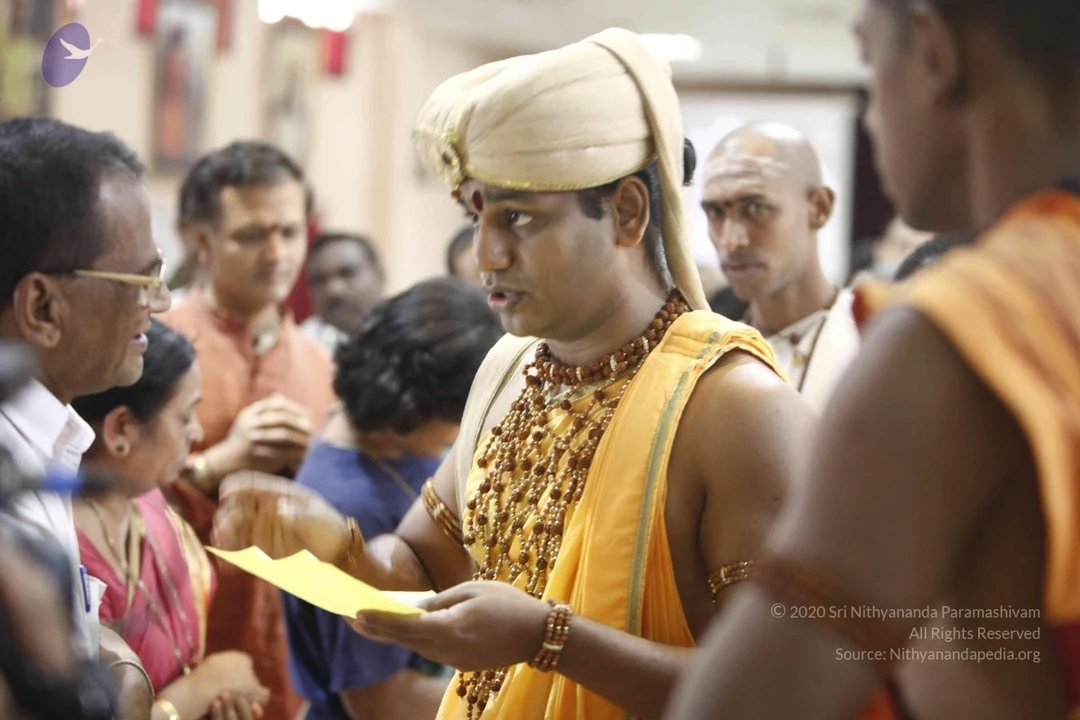
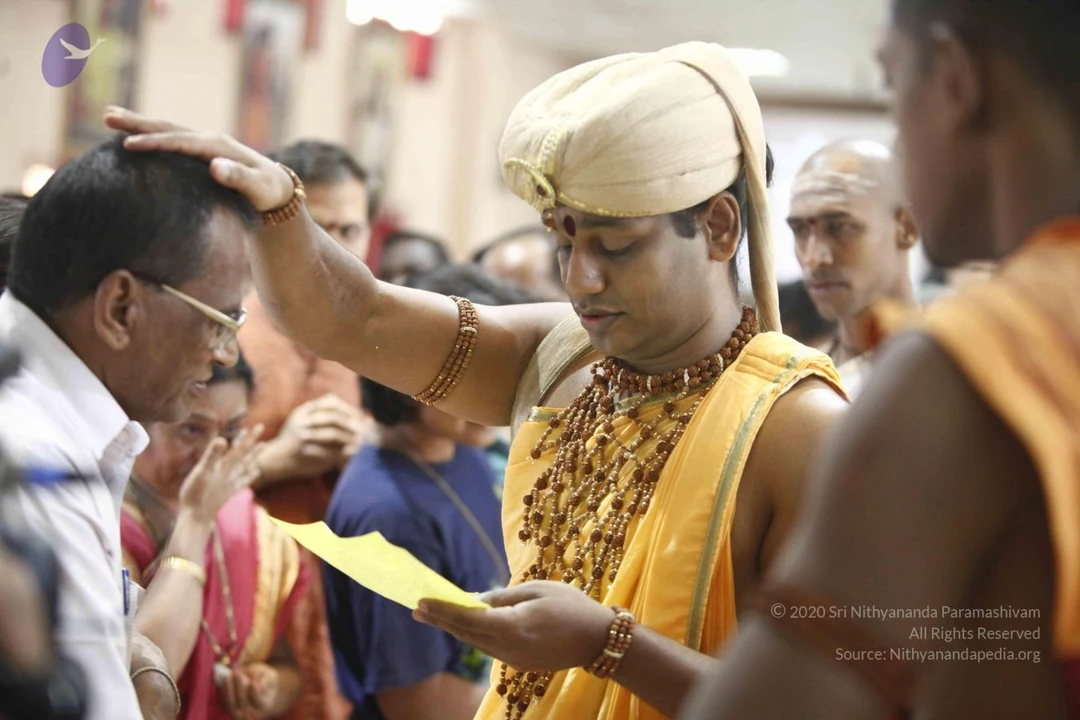
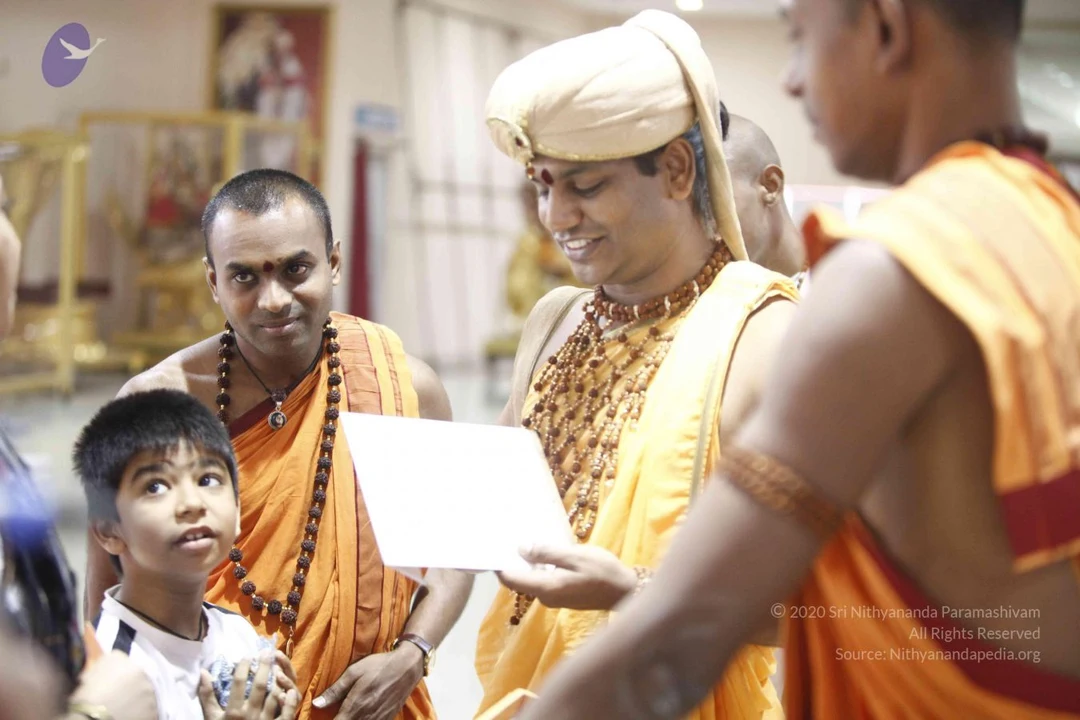
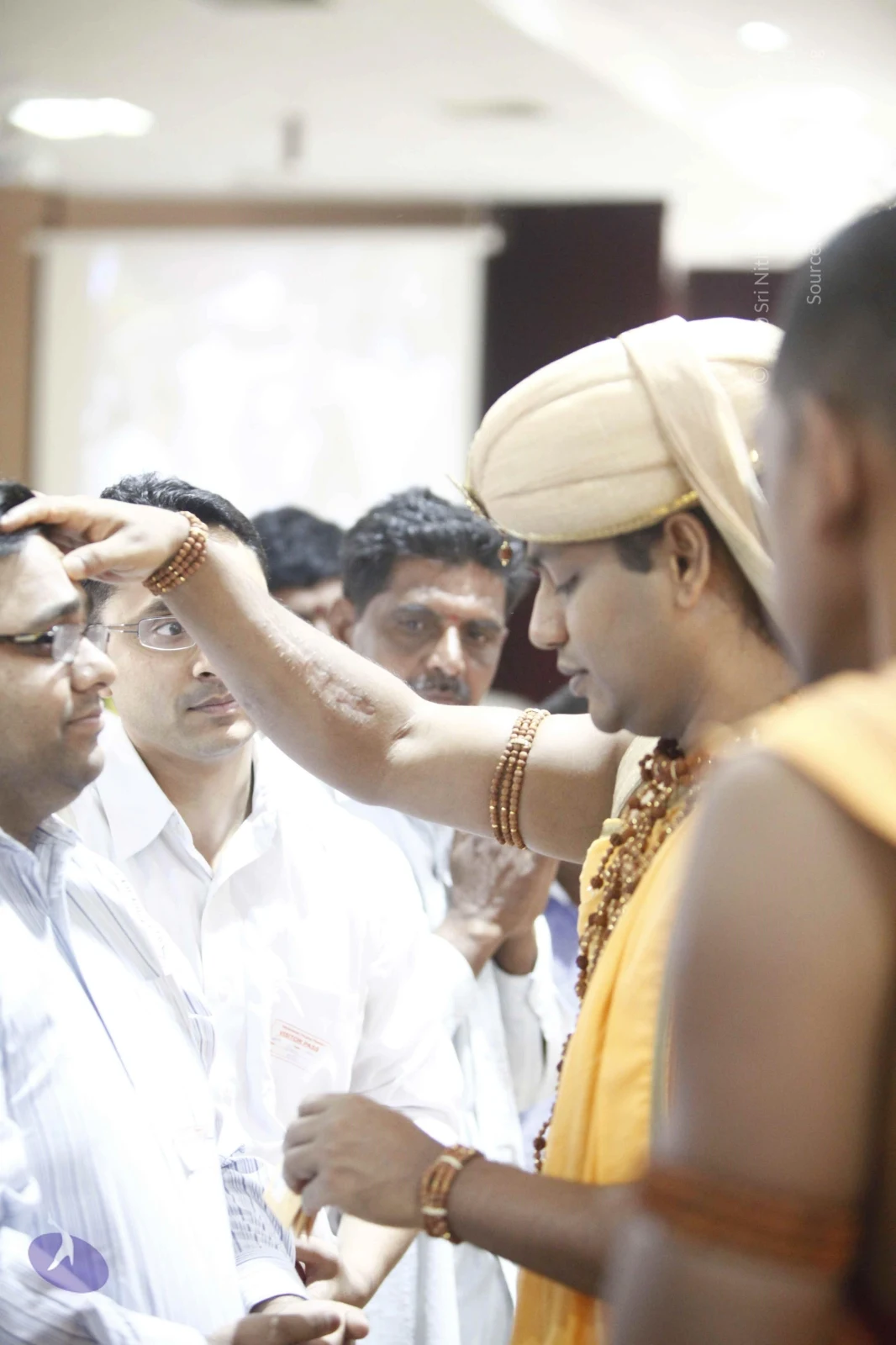
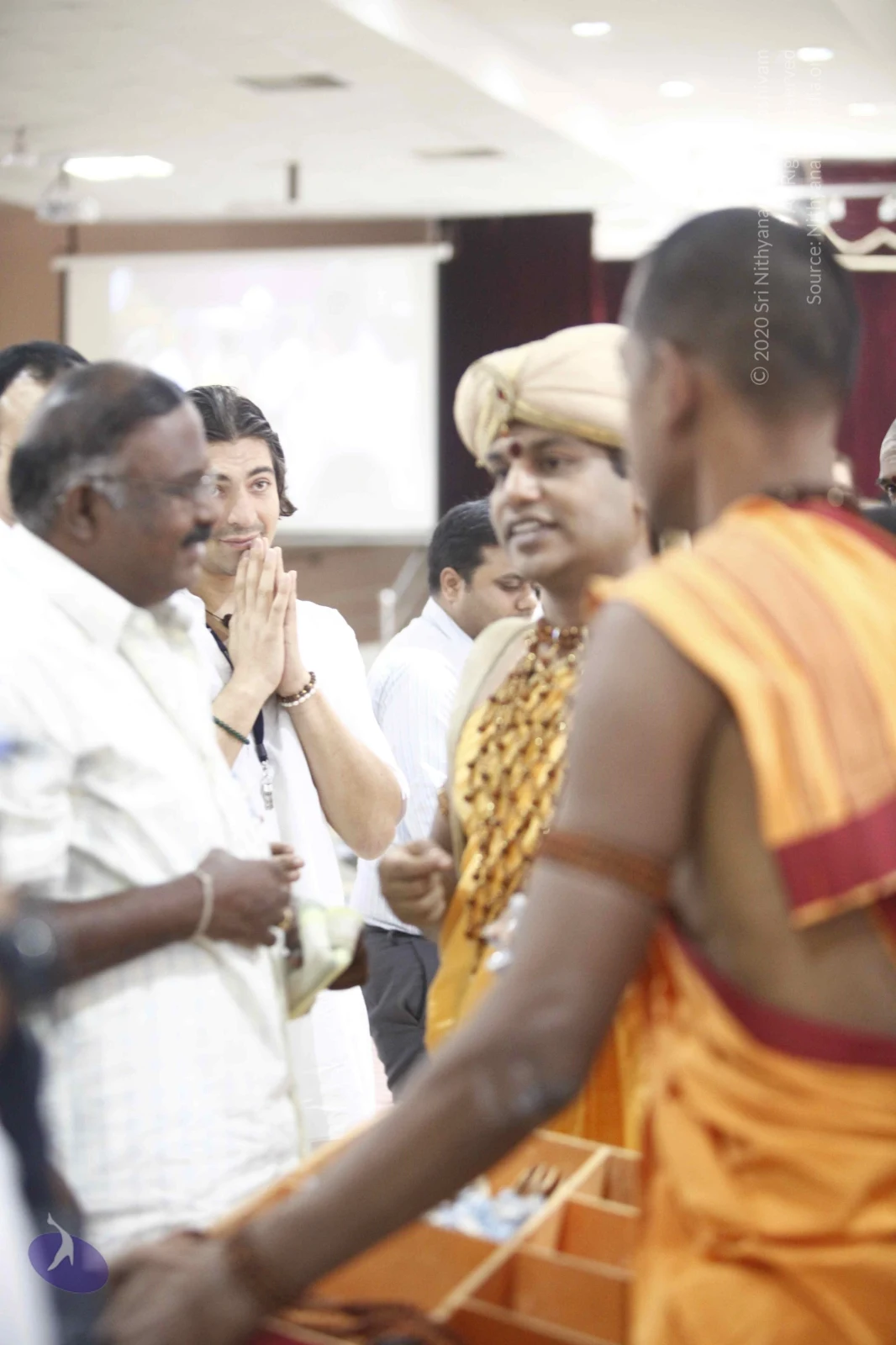
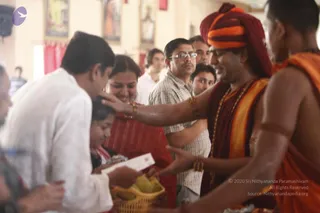
A seated man in a maroon and orange turban and maroon robes sits with palms pressed together in namaste on an ornate golden throne with lion-headed armrests and a deep red velvet cushion. Two golden lion sculptures flank the throne base. Behind him, two painted deity murti figures with multiple arms and red-orange skirts stand against a gold-framed backdrop with garlands. A silver staff rests beside the throne. The man has a gold necklace and bangles and is barefoot.A seated man in a maroon and orange turban and maroon robes sits cross-legged on a gilded throne with golden lion armrests and a red velvet cushion, his palms pressed together at chest level in namaste with eyes closed. He wears a saffron-orange sash, multiple beaded malas and bangles. Golden carved panels and two gold lion statues flank him, with painted deity figures visible at both edges and a white bird ornament on a staff beside the throne. A throne setting with a folded-hands greeting, consistent with a satsang or darshan stage.A smiling man in a maroon robe with a bright orange turban and orange-gold border cloth stands beside a seated man in a white shirt and checked jacket, placing his hand on the seated man's head in a blessing gesture. The standing man wears layered beaded malas and gold bangles and holds a white paper and a small brass plate with gold items. A blurred crowd of people and a white screen stand in the background of an indoor hall. Swamiji (probable): the standing man has long swept-back hair beneath an orange turban, a maroon robe with orange border, and layered rudraksha-style malas with ornate gold necklaces.A photograph of a man in a maroon and orange striped turban and maroon robe with an orange-and-gold border, wearing beaded necklaces and bangles, touching a seated man's forehead with his right hand while holding a sheet of paper in his left. The seated man, in a striped collared shirt and moustache, has his eyes lowered. Behind them a young man in white with glasses stands with palms pressed together, and a bald man in white and other people are partly visible in an indoor setting.A smiling man in a maroon and orange turban and maroon robe with gold-bordered orange trim raises one hand in blessing toward a line of devotees with folded hands. He wears a rudraksha-style mala and a beaded gold necklace and several beaded bracelets. Devotees in plaid and white shirts bow with hands joined in front of a bright hall with framed portraits on the wall behind them. Several people are visible, including a man in a striped shirt and others in the background.A photograph of a satsang or blessing line in an ashram hall. A man in a maroon and orange turban, maroon and gold shawl and rudraksha-style beaded necklaces stands centre-right, extending his arm to touch the head of a man in a white kurta at left, who holds a small paper and fruit basket. Behind them, a man in glasses and a checked shirt, a woman in a red dupatta, a child and a young man in orange robes look on. A yellow basket of fruit sits lower left. Framed pictures and red drapes decorate the wall behind. The central figure is an appearance-based a person; a visible identity cue is the long-robed turban and beaded necklaces, but the face is not visible enough to confirm.

Temple

29 photosSource gallery
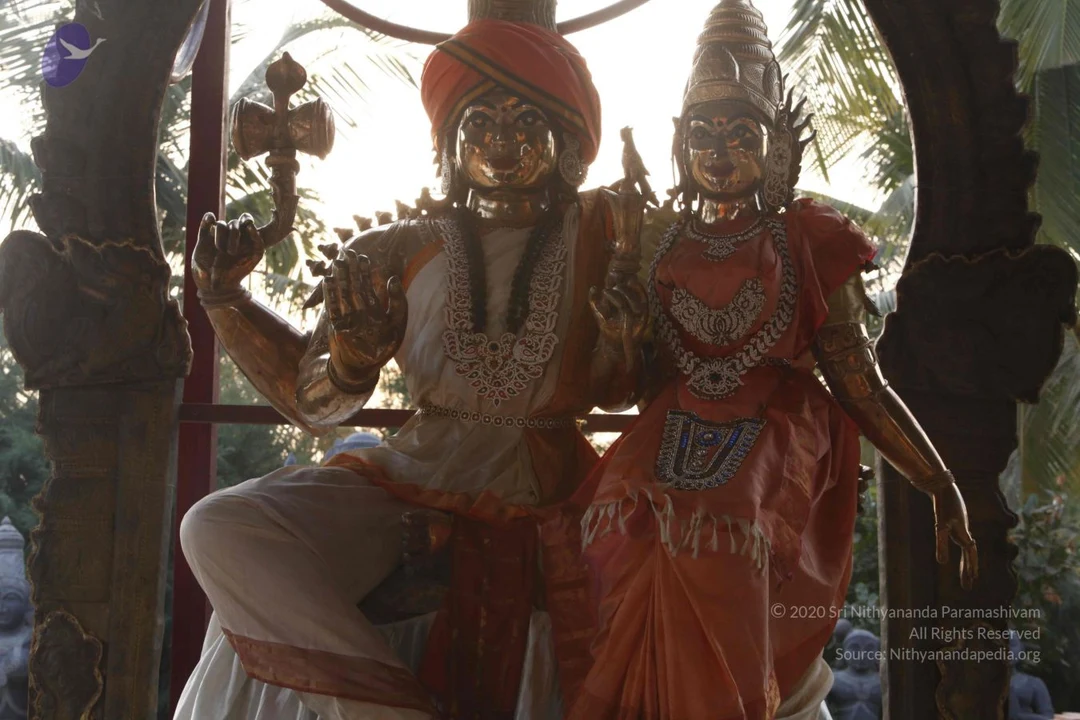
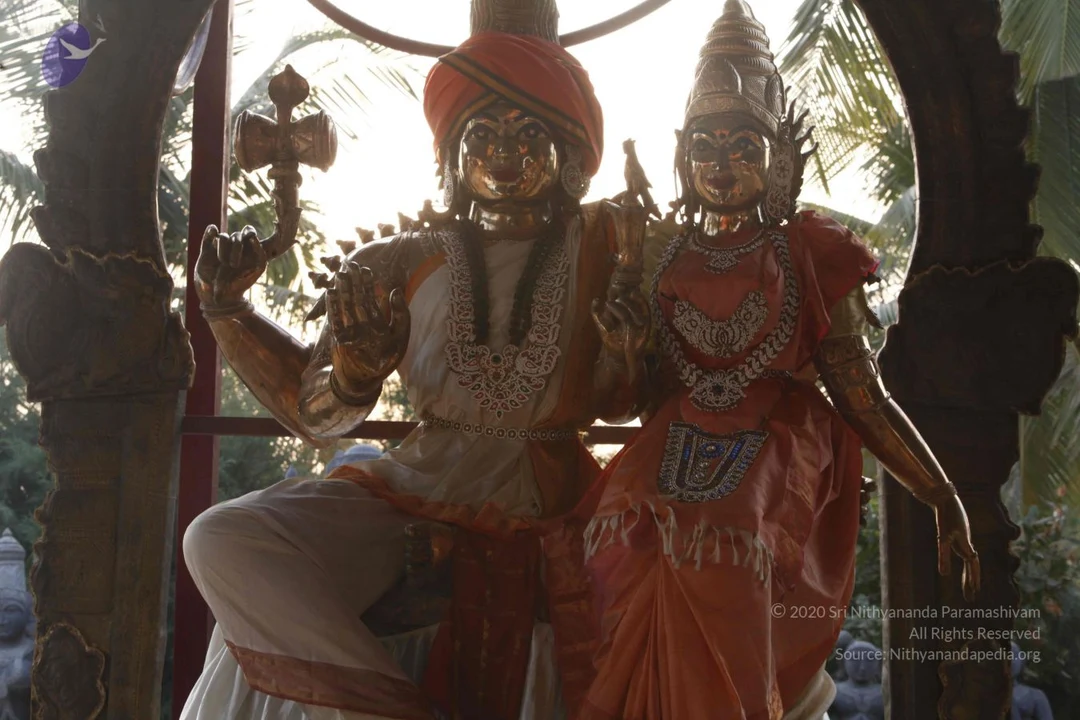
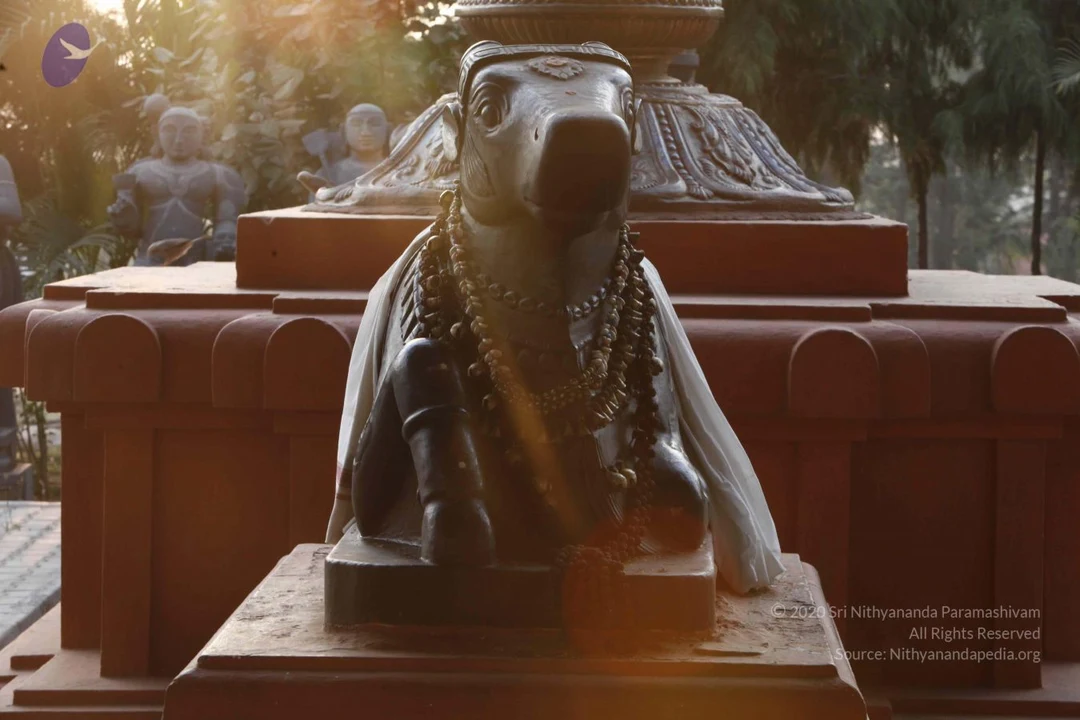
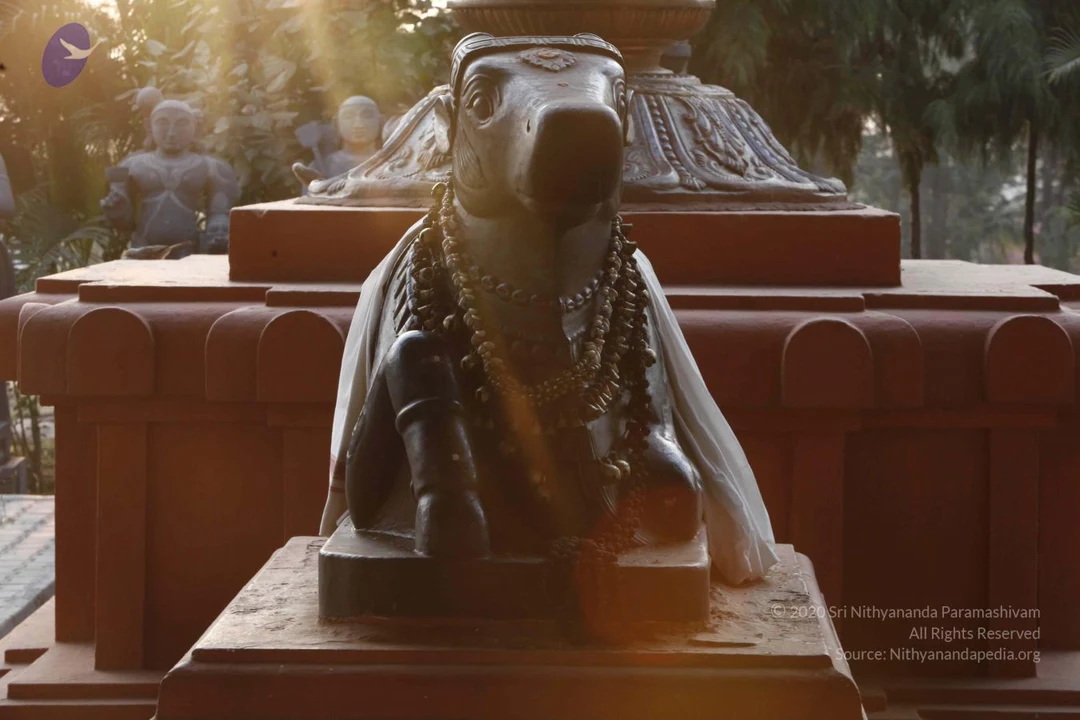
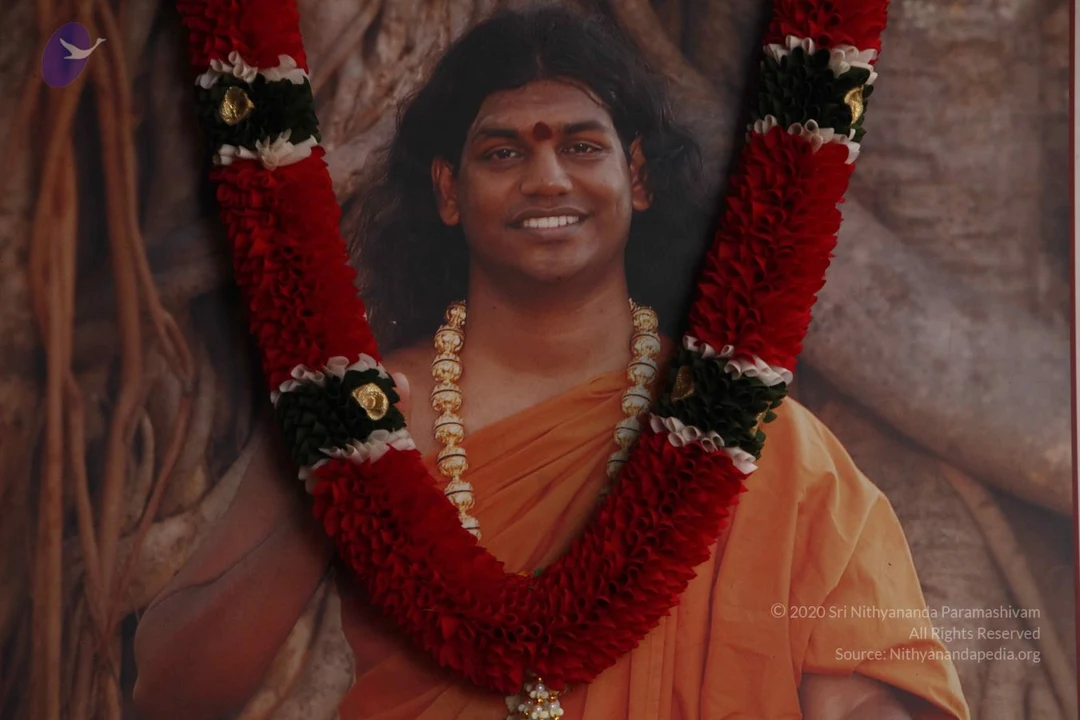
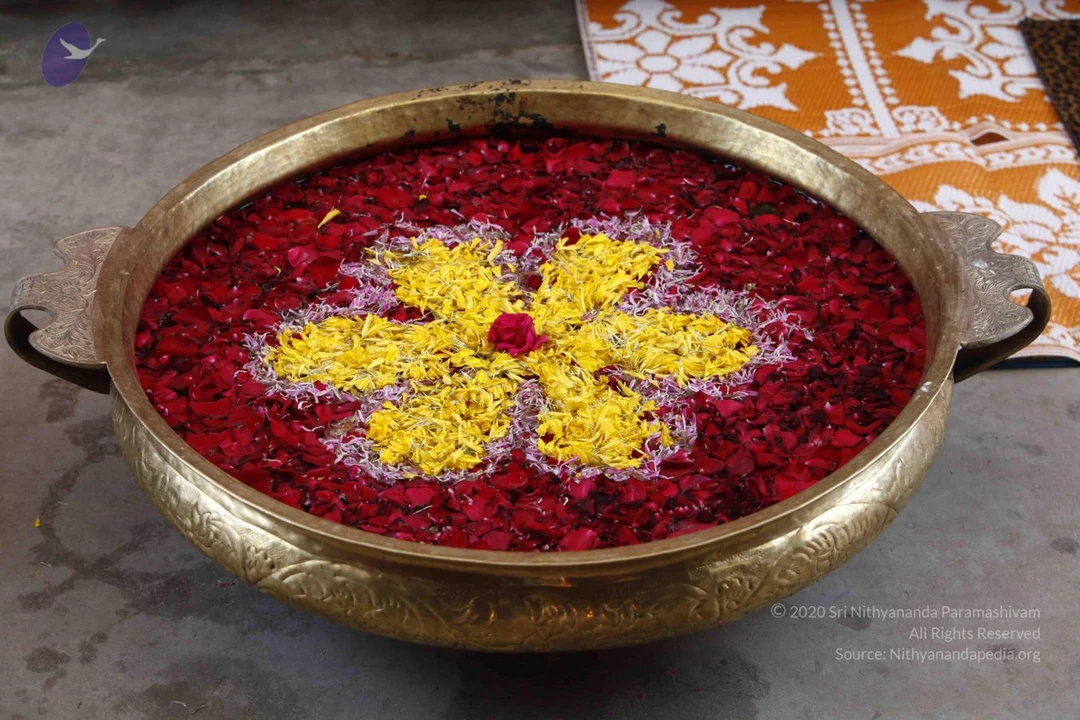
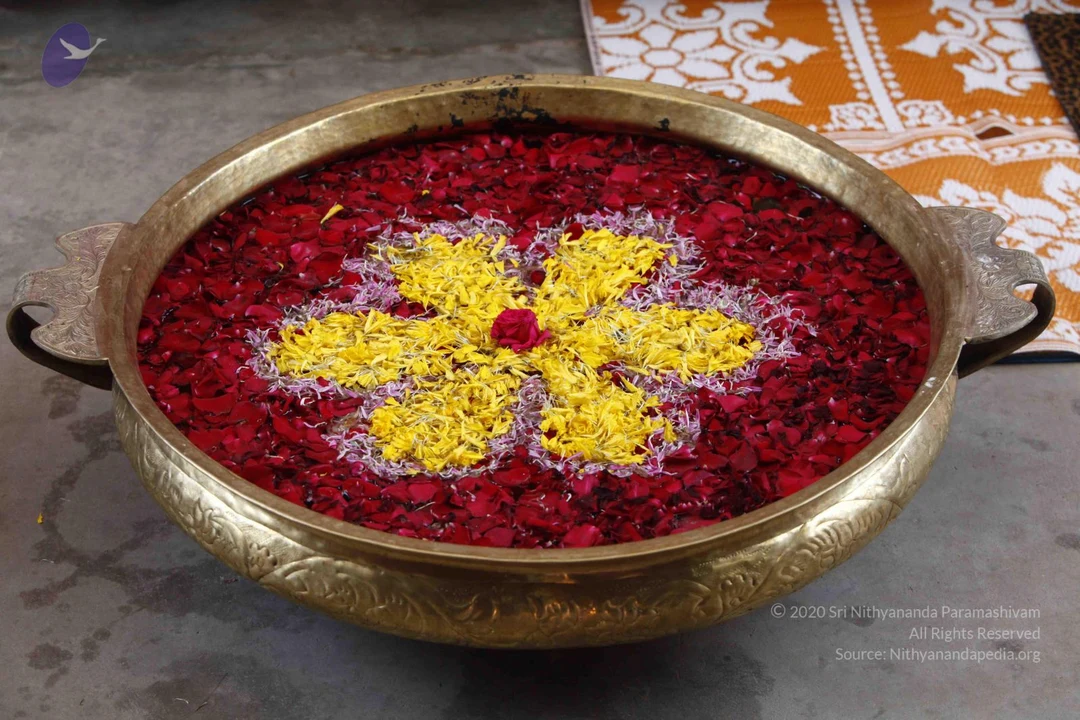
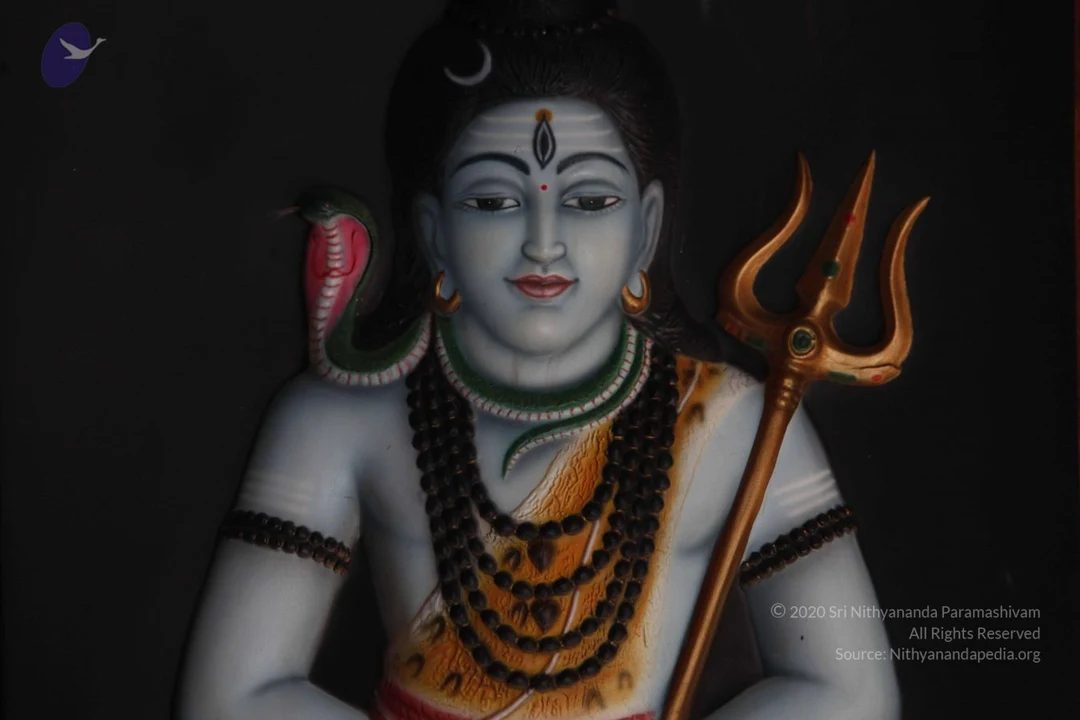
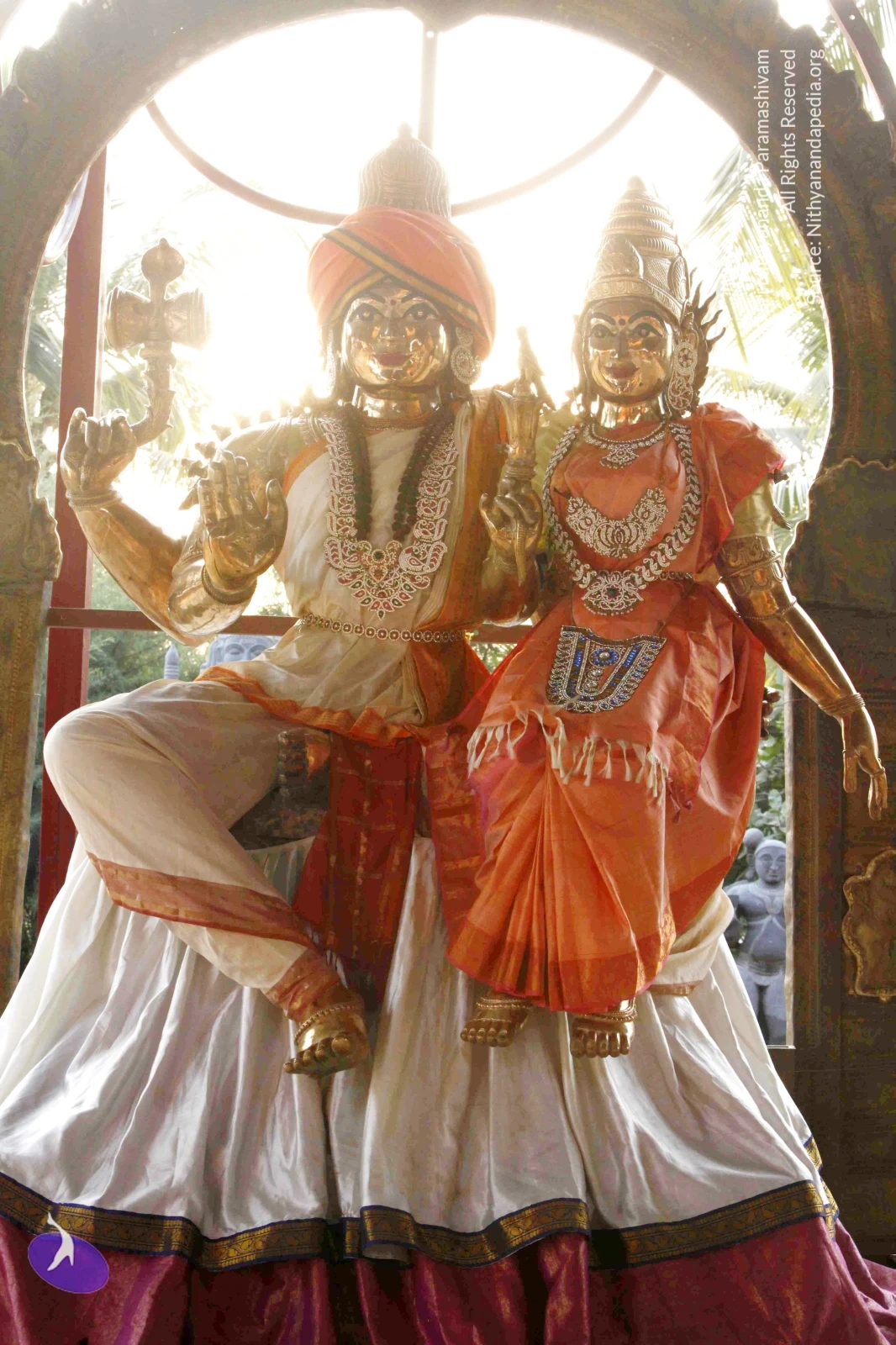
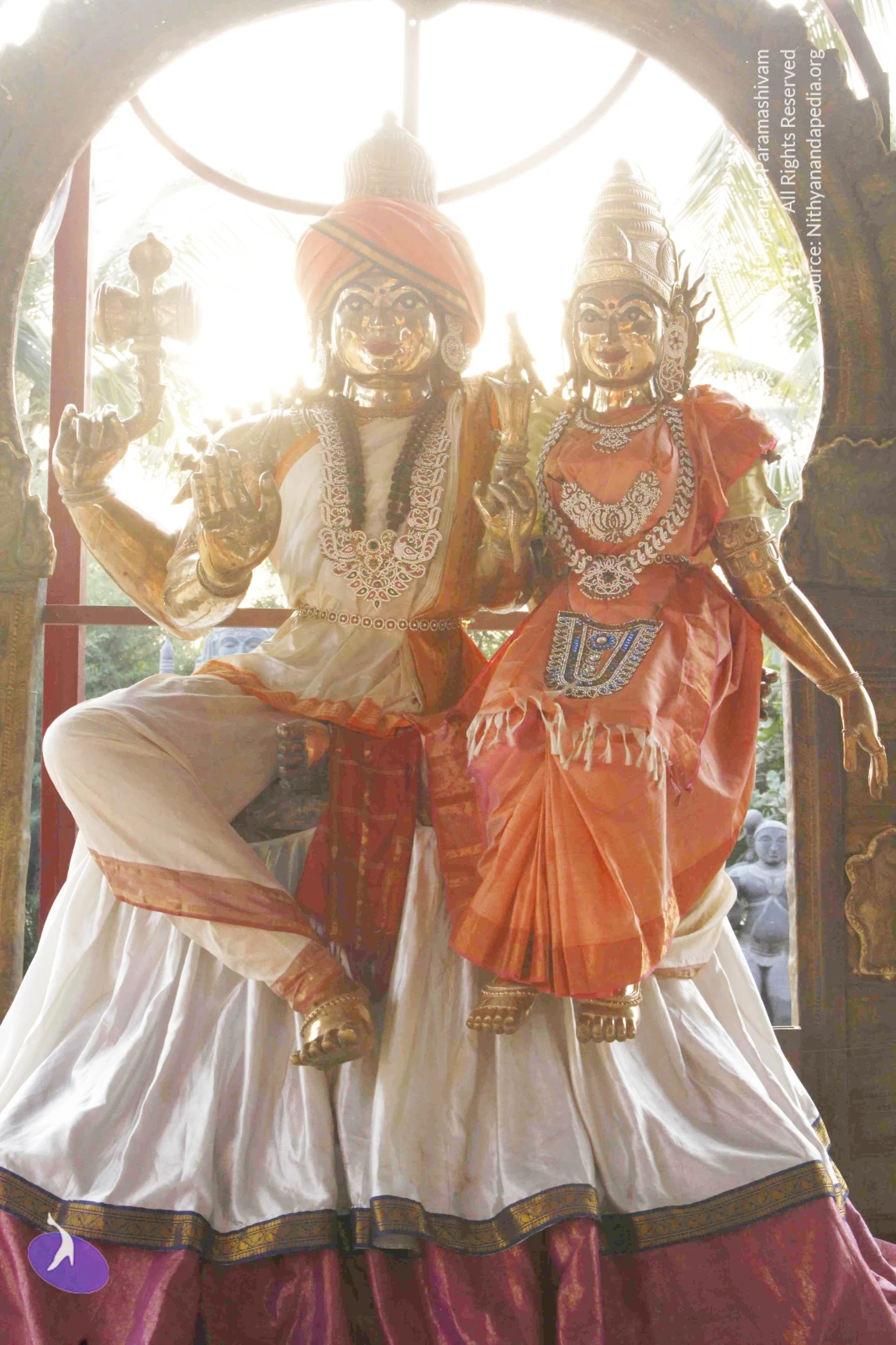
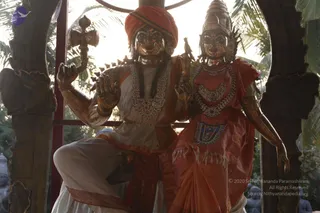
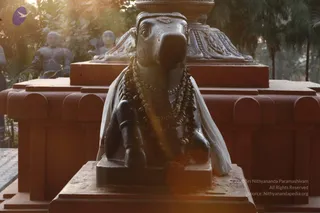
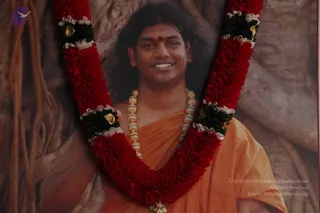
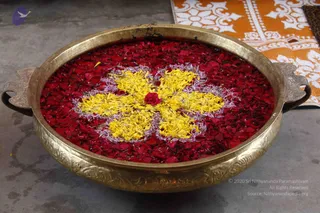
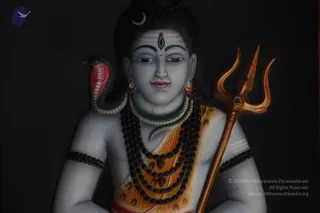
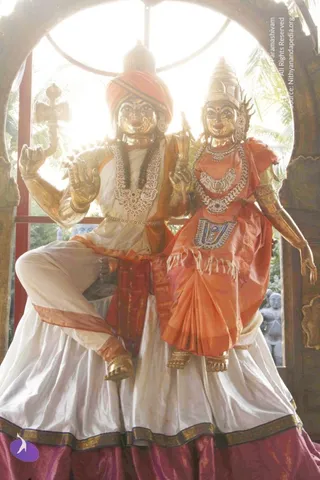
A photograph of two large golden-faced deity murti statues standing side by side in an outdoor setting with palm fronds behind them. The figure on the left wears an orange turban, white dhoti, layered beaded necklaces and holds a trident-like staff in one raised hand. The figure on the right wears an orange sari with silver ornaments, a tall ornate crown and layered necklaces. Both have gold-painted faces and arms, and stone sculptures are visible at the edges. No physical people are present.A dark stone or bronze statue of Nandi, the bull, sits on a red stone plinth in warm low sunlight. It wears a white cloth draped over its back, strings of rudraksha beads or dark beads around its neck, and a decorative band on its forehead. Behind it, a red sandstone structure with carved pillars and stacked stepped tiers supports a grey ornate finial. Several pale grey human statues stand in the blurred background among green trees.A large printed portrait of a smiling man with long dark hair, a red bindi and an orange saffron wrap, shown with a thick red and white flower garland draped in a V-shape and a gold-and-white bead necklace. The backdrop is a photographic image of an enormous tree trunk with aerial roots. The photograph contains no physical people.A large brass vessel with decorated handles and engraved floral borders sits on a grey floor, filled with red rose petals. A yellow flower arrangement forms a four-petalled cross with a single red rose at its centre, edged by white threads. An orange patterned mat lies beside the vessel. No people are visible.A large brass vessel with decorative engraved rims and handles sits on a grey floor, filled with red rose petals in water. Yellow flower petals are arranged in a four-petalled floral pattern at the centre, with white stamens and a single red rose bud placed in the middle. An orange and white patterned mat lies behind it. No people are visible.A painted or sculpted deity murti of Shiva against a black background, shown from the chest up. The figure has blue-grey skin, a crescent moon in dark hair, a red bindi and tripundra markings, and gold hoop earrings. A green and red cobra coils over one shoulder, and multiple strands of dark rudraksha beads hang across the chest and arms. An orange and gold cloth drapes the body, and a gold trident with green accents rests at the right side. No physical people are visible.

Prathyaksha-Pada-Puja

27 photosSource gallery
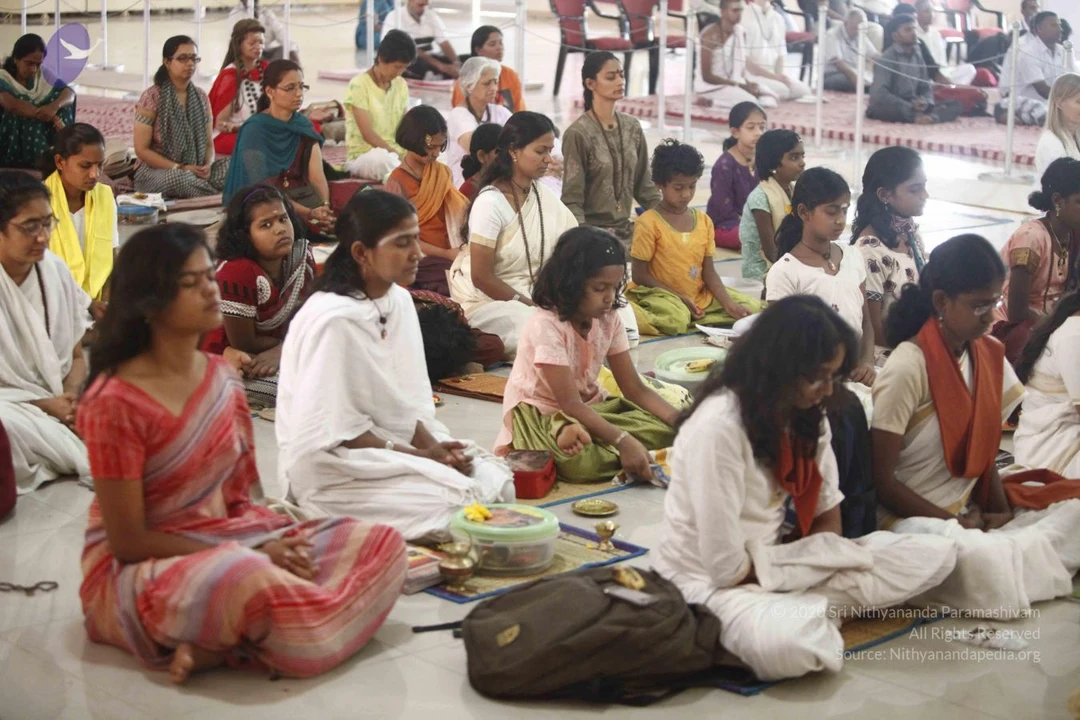
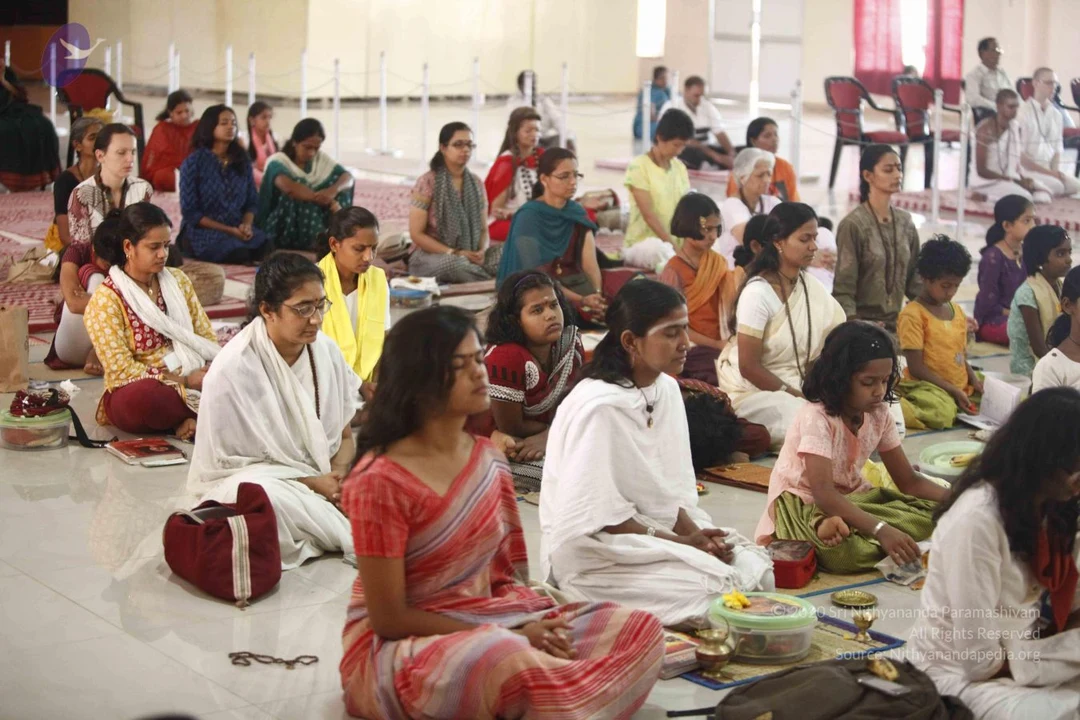
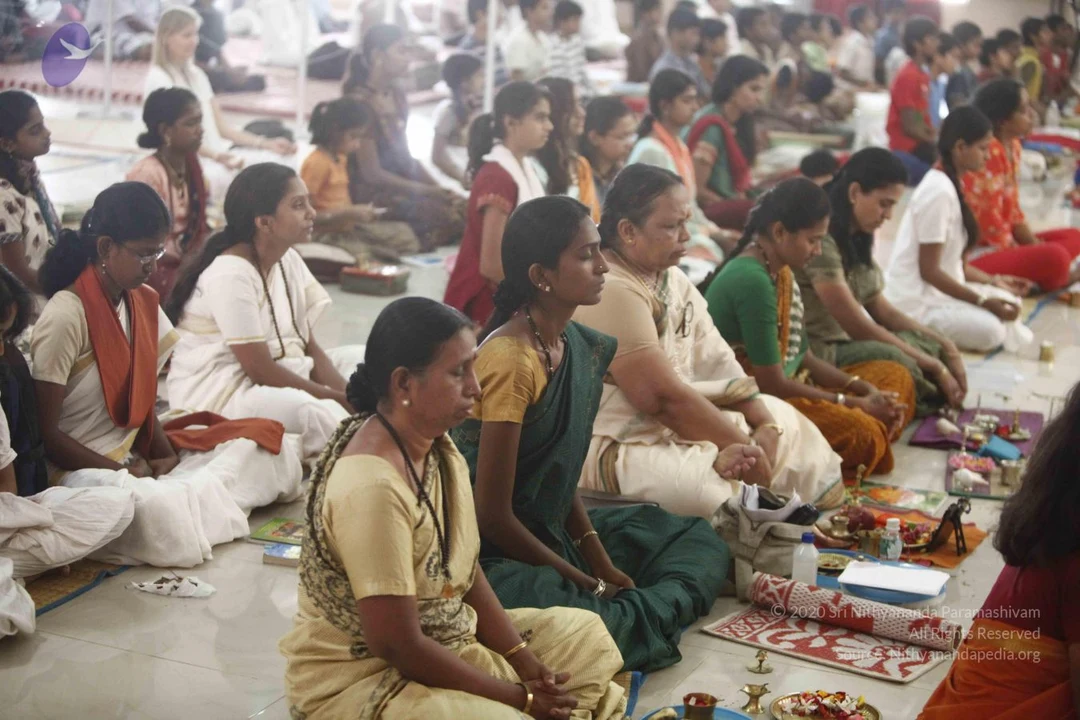
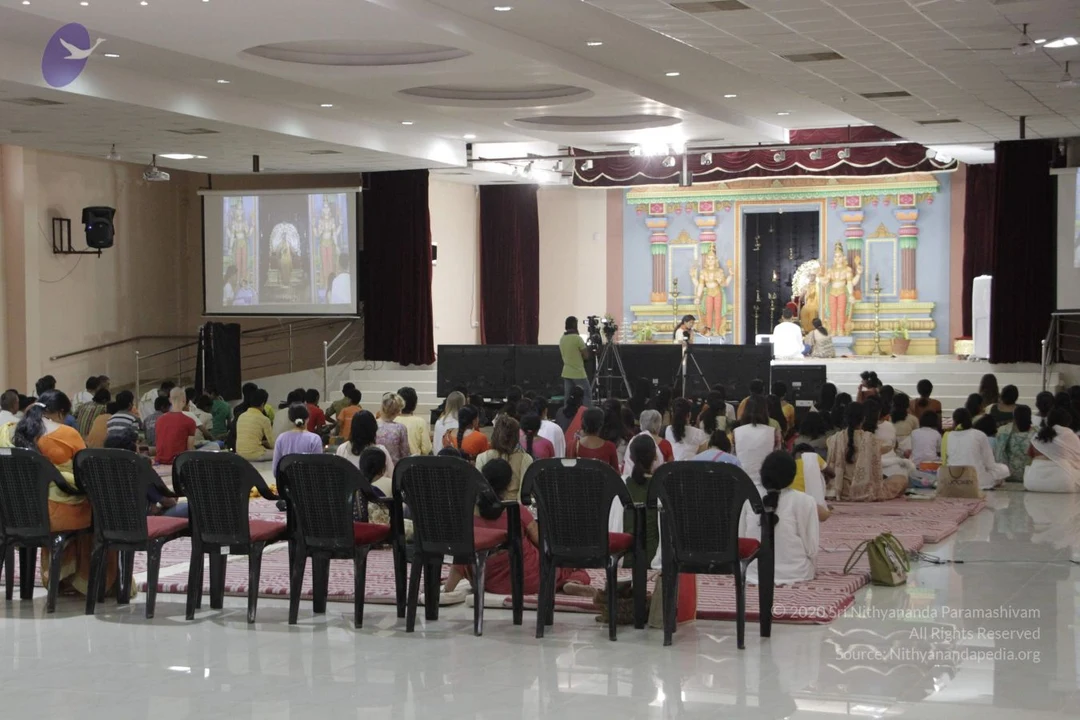
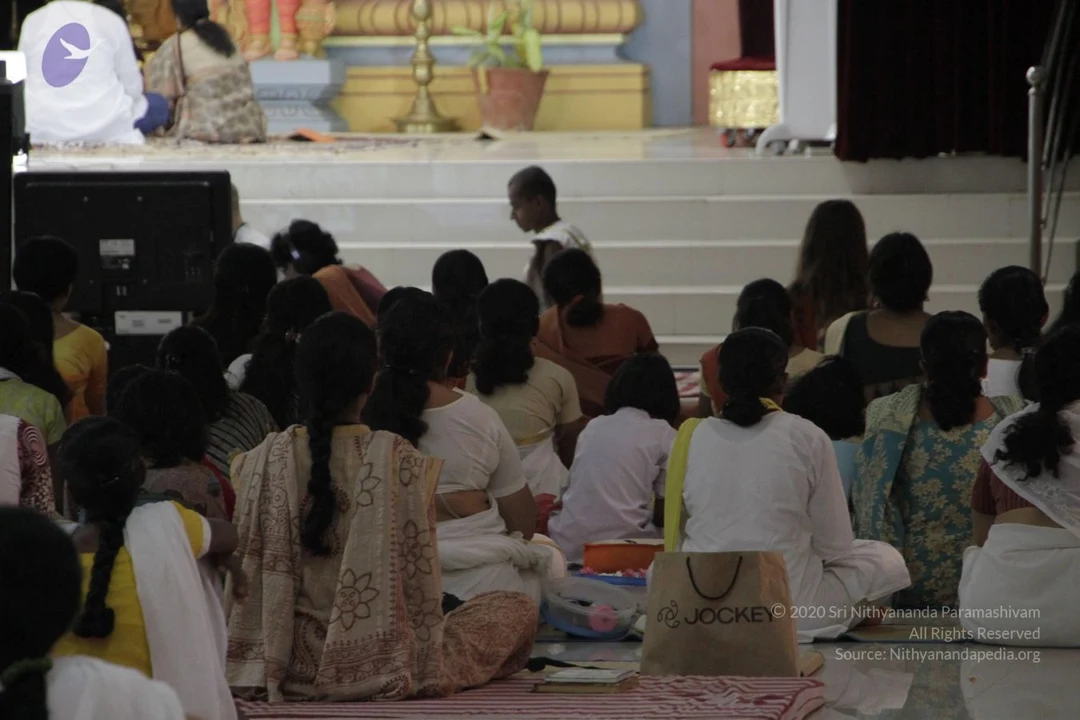
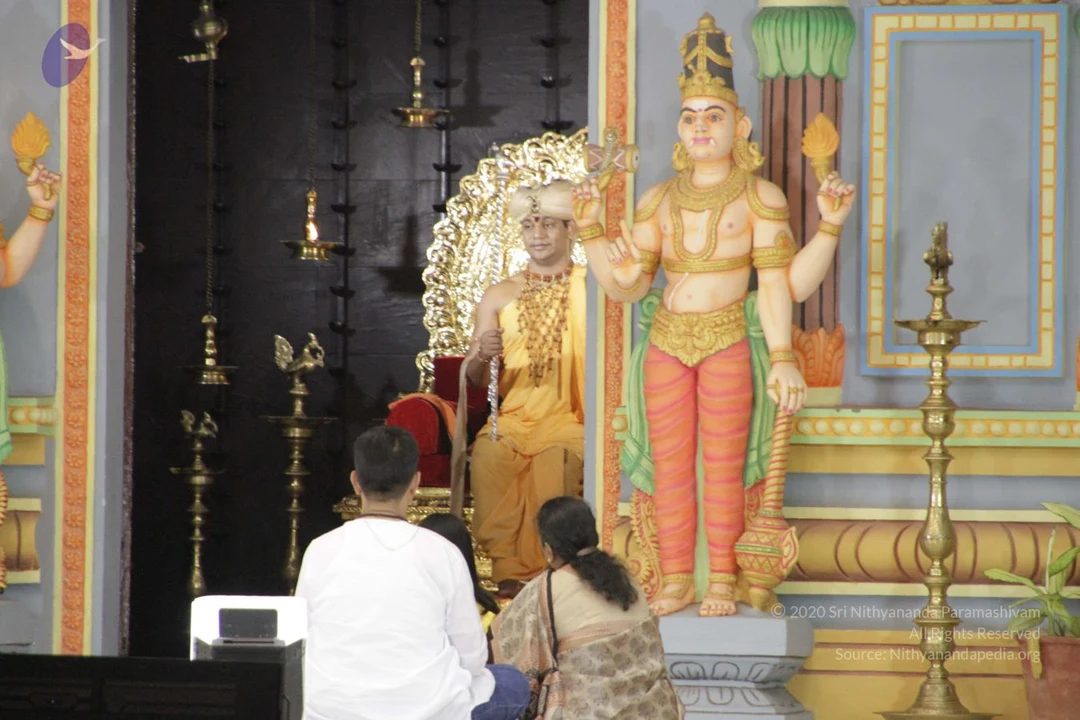
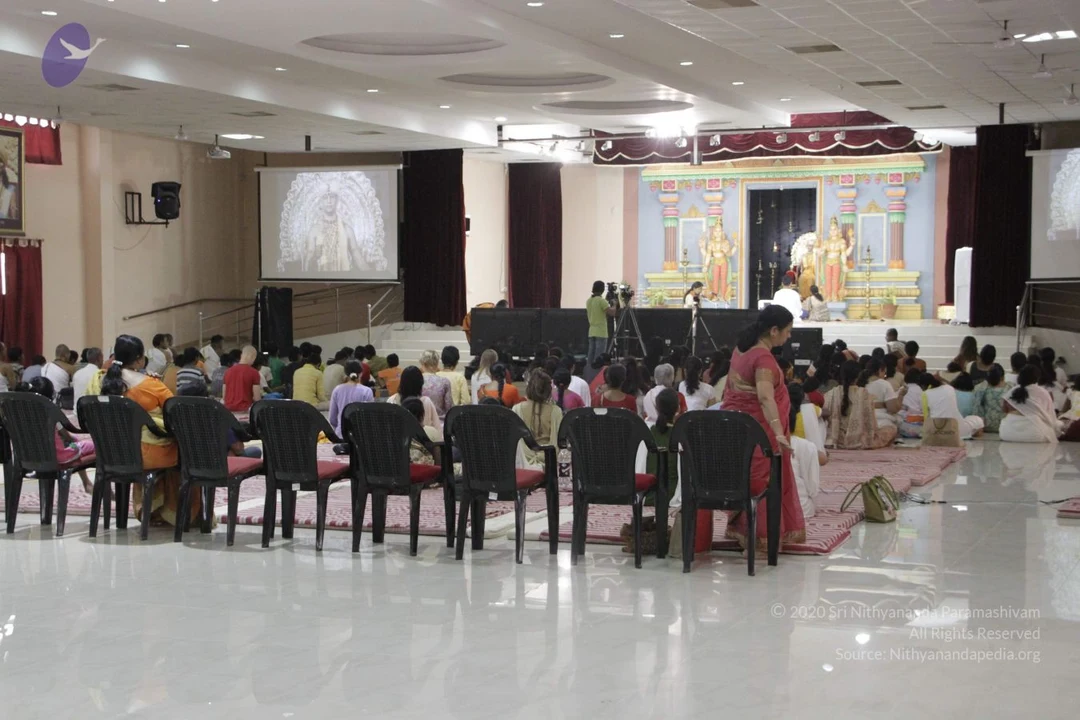
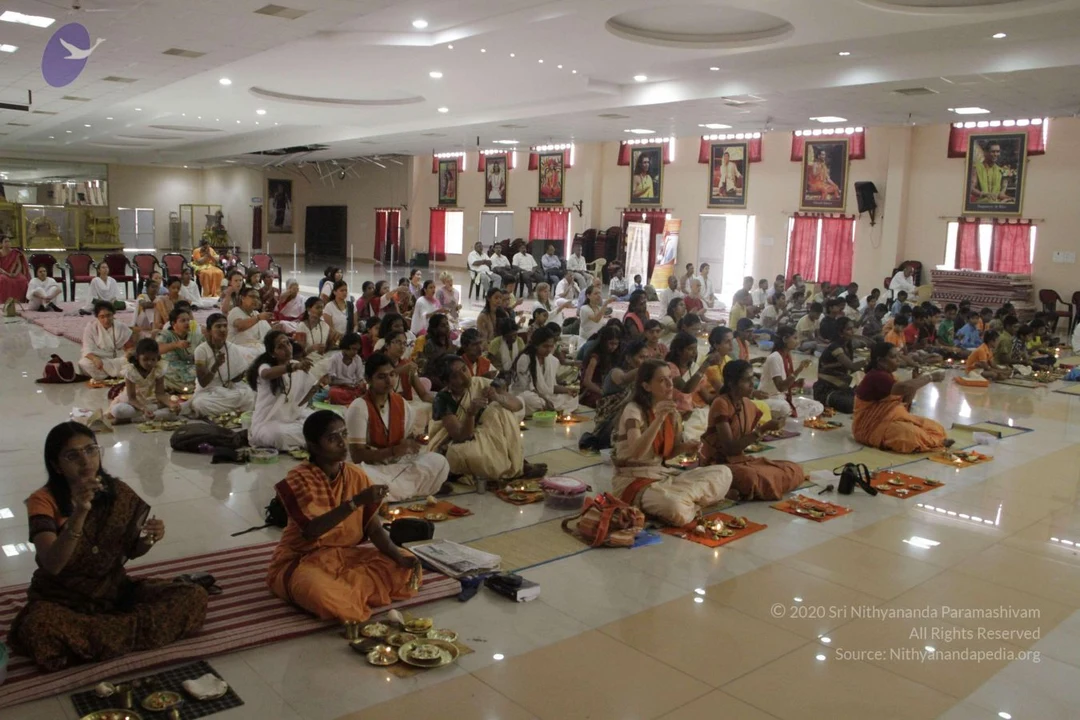
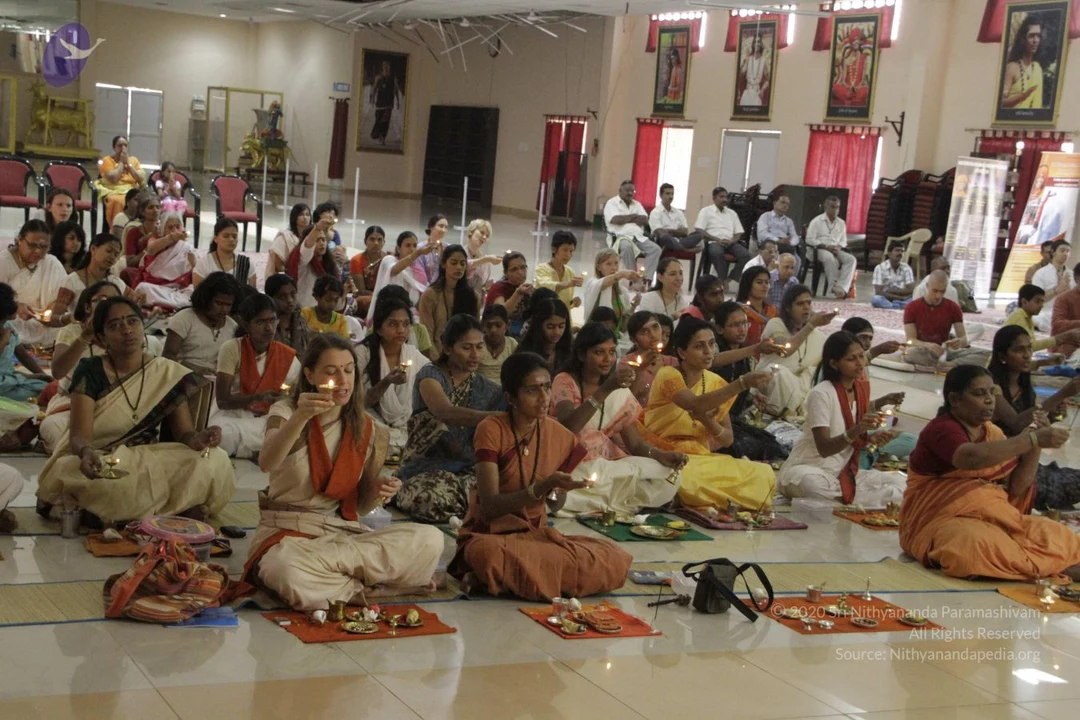
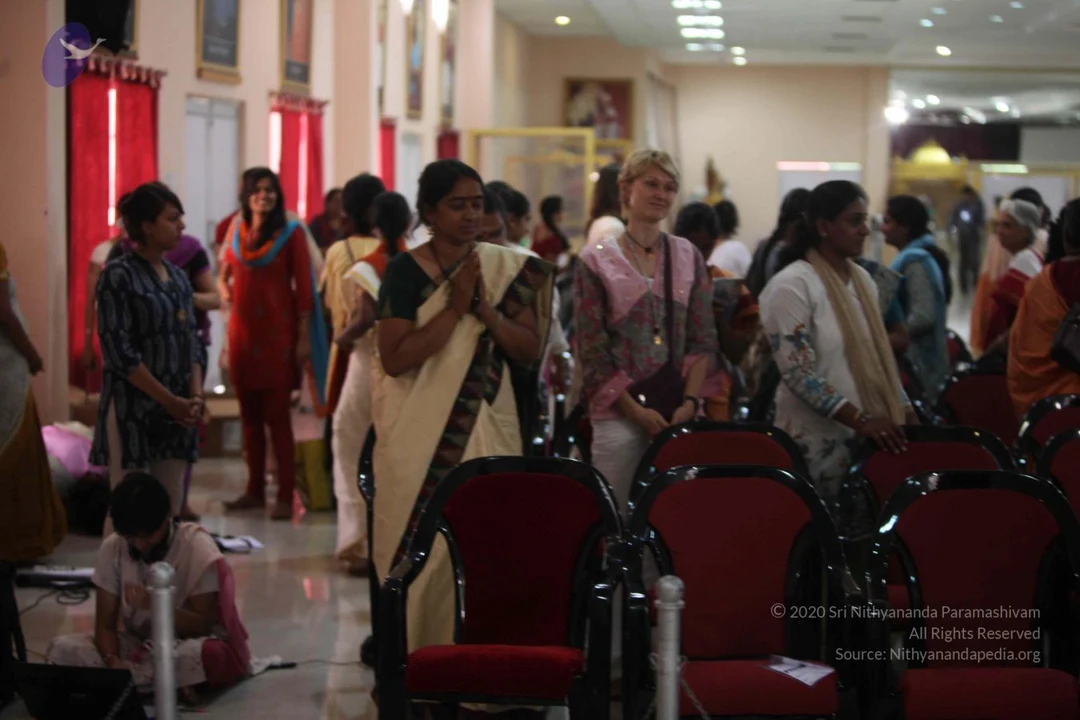
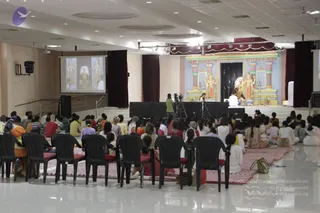
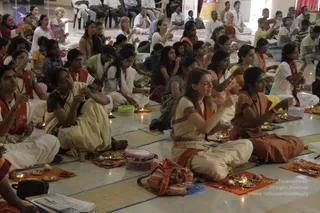
Photograph of a satsang hall where a large seated audience sits on red-and-white striped mats and black plastic chairs facing a stage. The stage backdrop is painted blue and gold with pillars and two gilded deity murti figures flanking a central doorway, with a small seated figure in white at the front. A cameraman with a tripod stands at the side, and a projection screen on the left shows a deity image. Many attendees wear white, saffron and pink saris and kurtas. A grey-haired person in a white robe sits near the centre of the stage.Photograph from behind of a seated audience on the floor of a temple-style hall, facing a raised stage. Many women with long dark braids sit in rows wearing cotton saris and salwar kameez in cream, white, yellow, orange, green and floral prints. Several sit on red-and-white striped mats, and a shopping bag reading JOCKEY rests on the floor. On the stage behind them, a figure in white clothing kneels near a brass lamp and a small plant, and a red-curtained alcove sits to the right. A person in orange robes stands on the steps near the stage edge. A flat-screen monitor stands at left.A seated figure in saffron-orange robes and a white turban sits on an ornate gold-and-red throne inside a temple hall, holding a silver staff. Beside him stands a large painted deity murti with four arms, gold crown and gold jewellery, holding a trident-like weapon and a lotus-tipped object. Brass oil lamps (lamps) stand on either side and hang from the ceiling. In the foreground, two devotees sit with their backs to the camera: one in a white shirt and one in a beige sari. The figure's appearance matches several cues including saffron clothing, turban and layered beaded necklaces, but identification is uncertain.Wide photo of a satsang hall with a seated audience facing a stage. Rows of black plastic chairs at front hold attendees, while many others sit cross-legged on red and pink mats on the polished floor. A standing woman in a red sari with a bun walks in the foreground. On the stage, golden deity murtis flank a dark doorway with a decorated pink-and-blue backdrop, and a standing figure in white stands near a camera operator. A projection screen shows a white ornate deity image, and a side screen shows another image. Maroon curtains hang at the sides. Seated devotees wear white, yellow, orange and blue clothing.Wide view of a large hall filled with seated devotees on mats, many in white and orange clothing, some holding small brass plates with oil lamps and offerings in front of them. Pink and red curtains hang at the windows, and framed portraits in pink borders line the walls. A few figures seated at the far end wear white. The hall has polished floors and recessed ceiling lights.A large seated congregation in a tiled hall at an ashram gathering, with devotees on woven mats and thin rugs. Many people sit cross-legged, some in cream and white garments and others in orange and saffron sarees or shawls, with orange scarves draped over shoulders. Small brass plates on orange mats hold fruit, sweets and lit oil lamps before them, and several women raise their hands in offering. Background figures in white and cream are seated in rows, with a banner and a pink curtain visible at the back. The scene suggests a puja or satsang with lamps and offerings laid out, though no single speaker or dais is clearly shown.

Q-and-A-Session

44 photosSource gallery
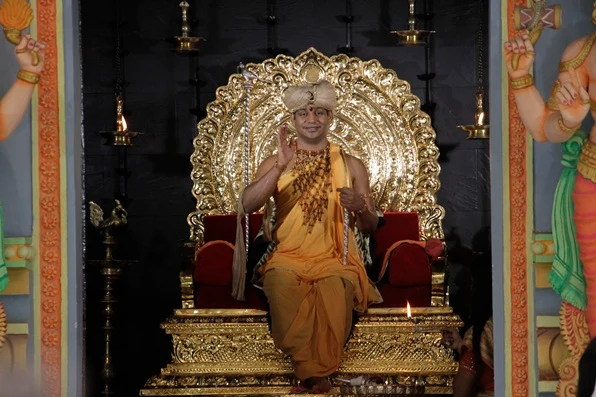
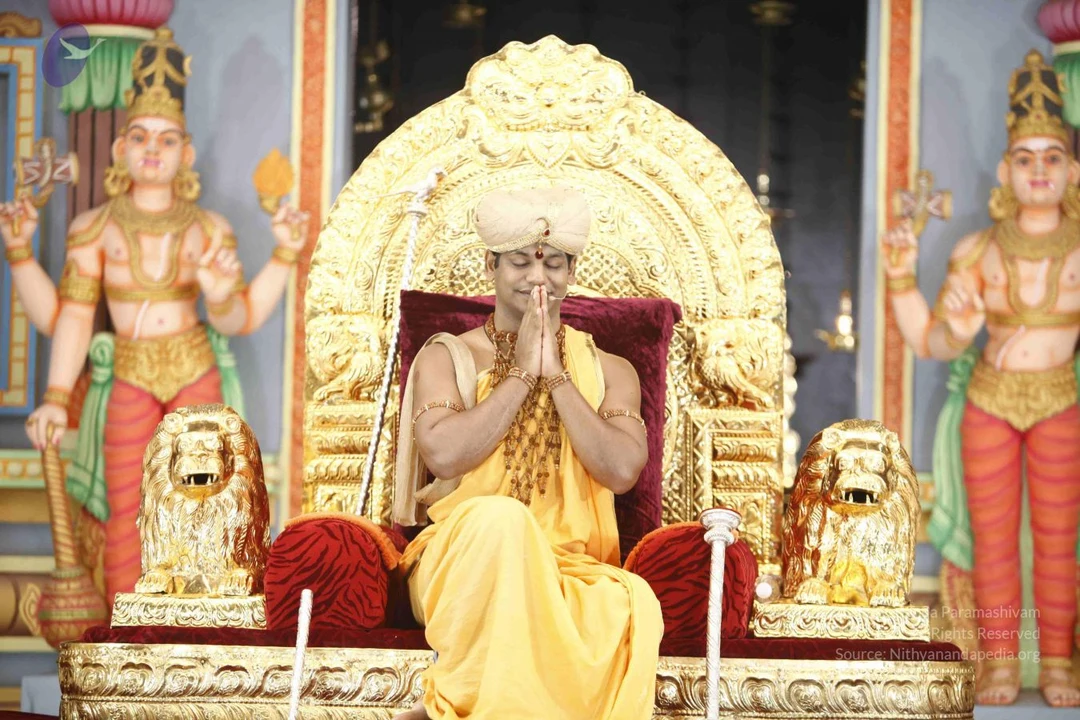
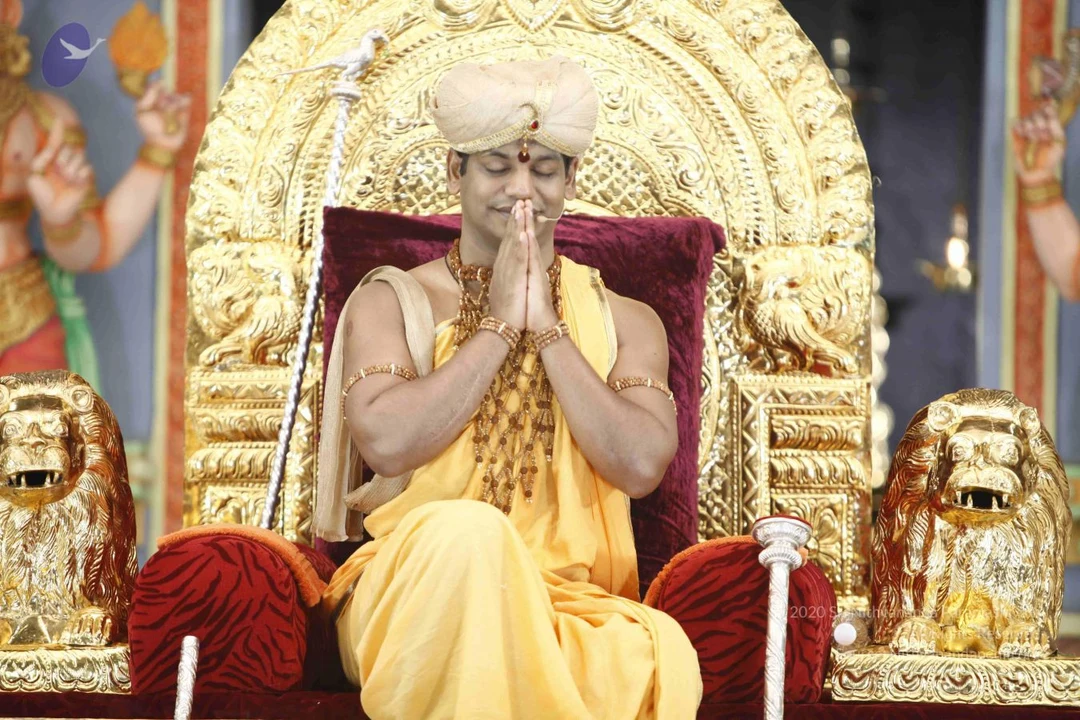
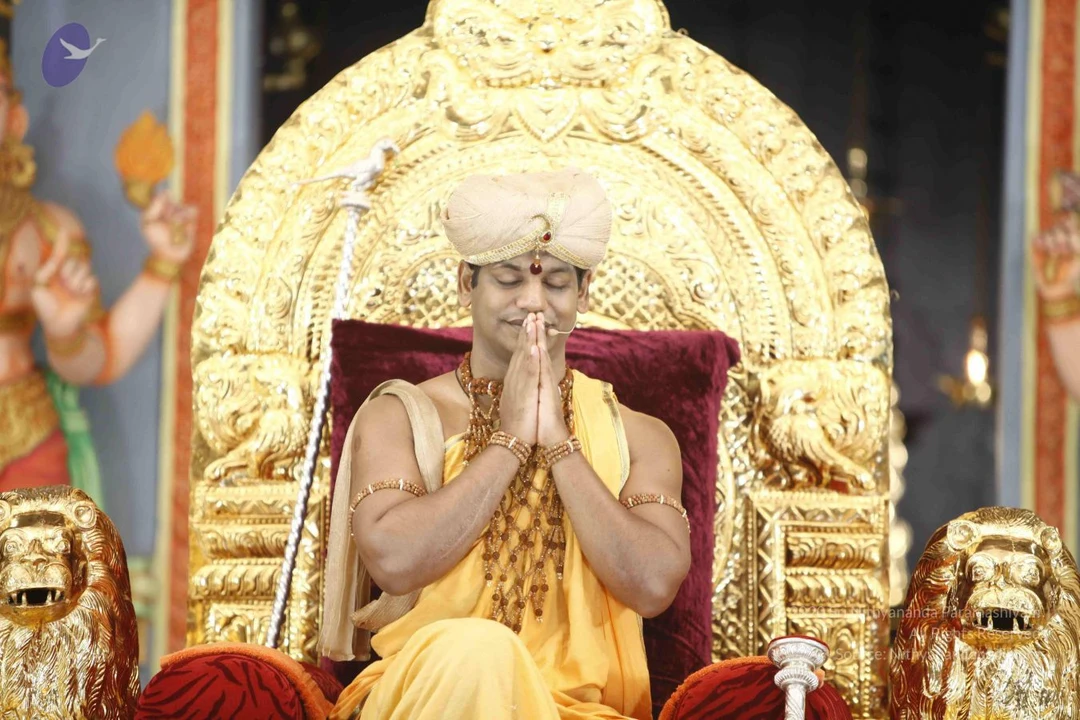
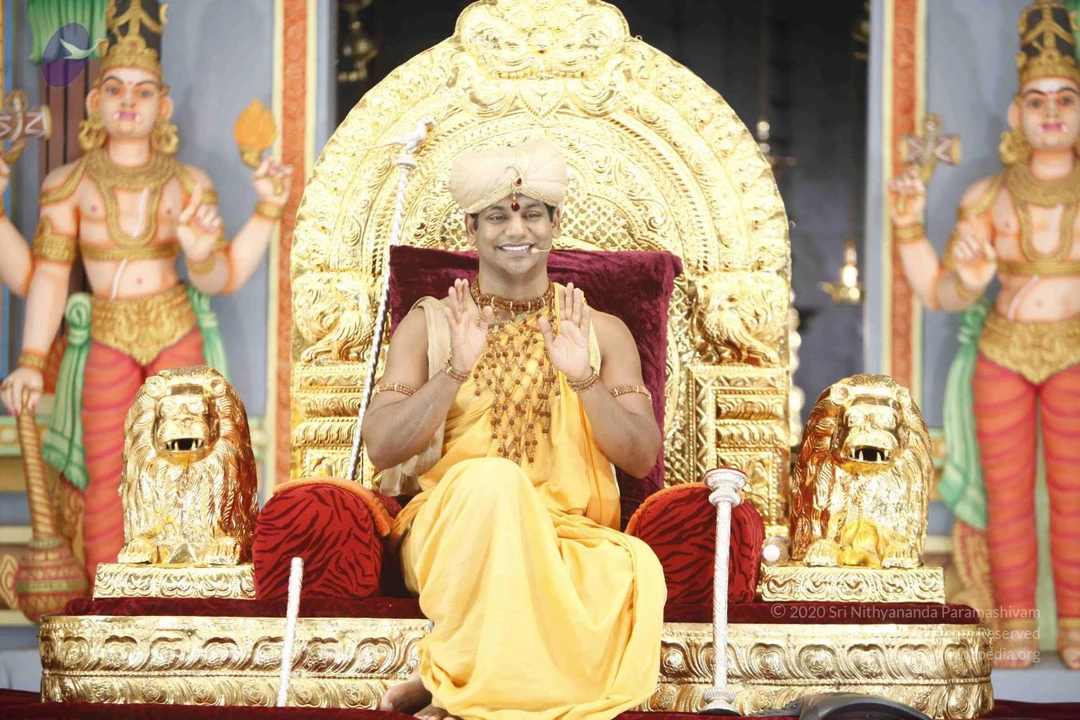
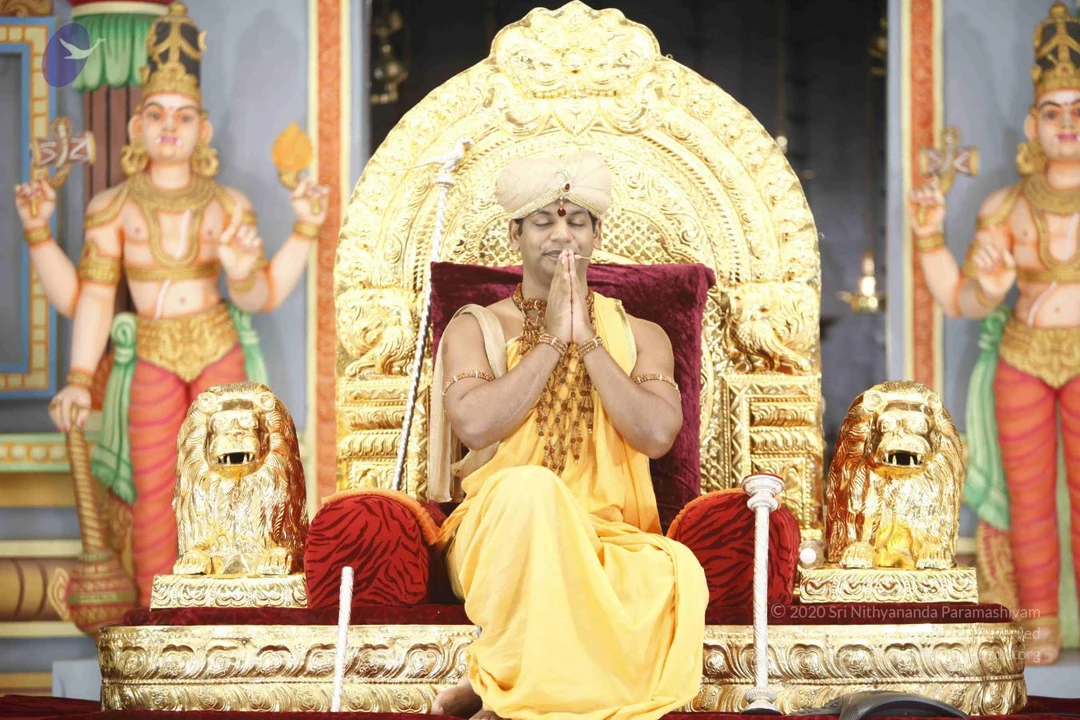
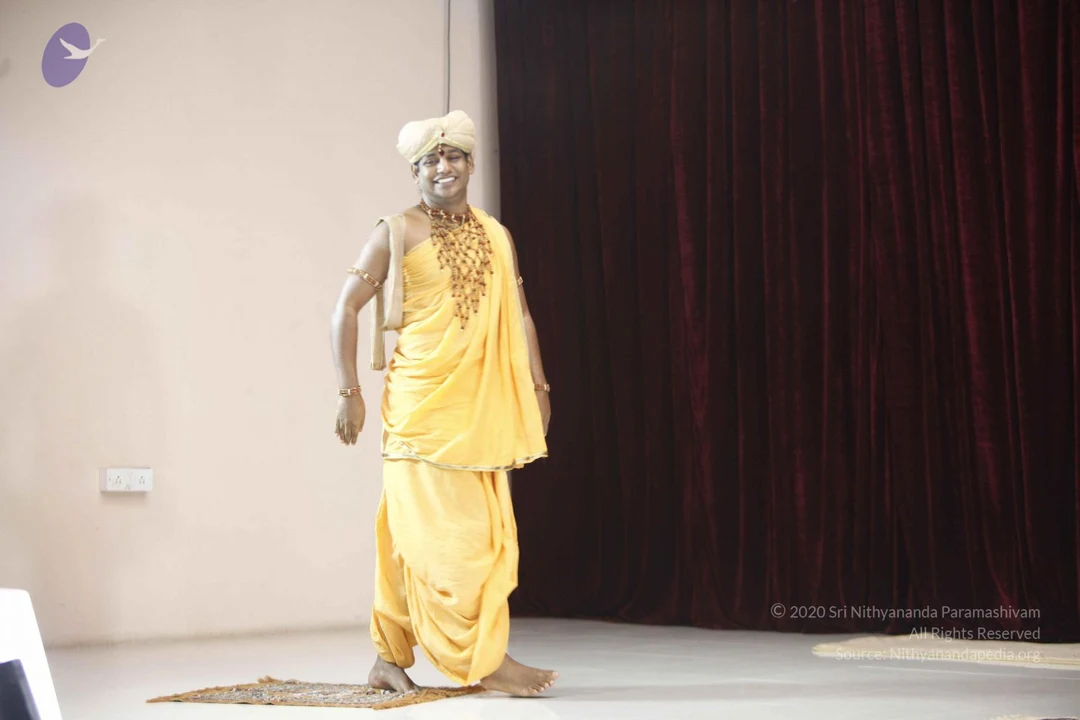
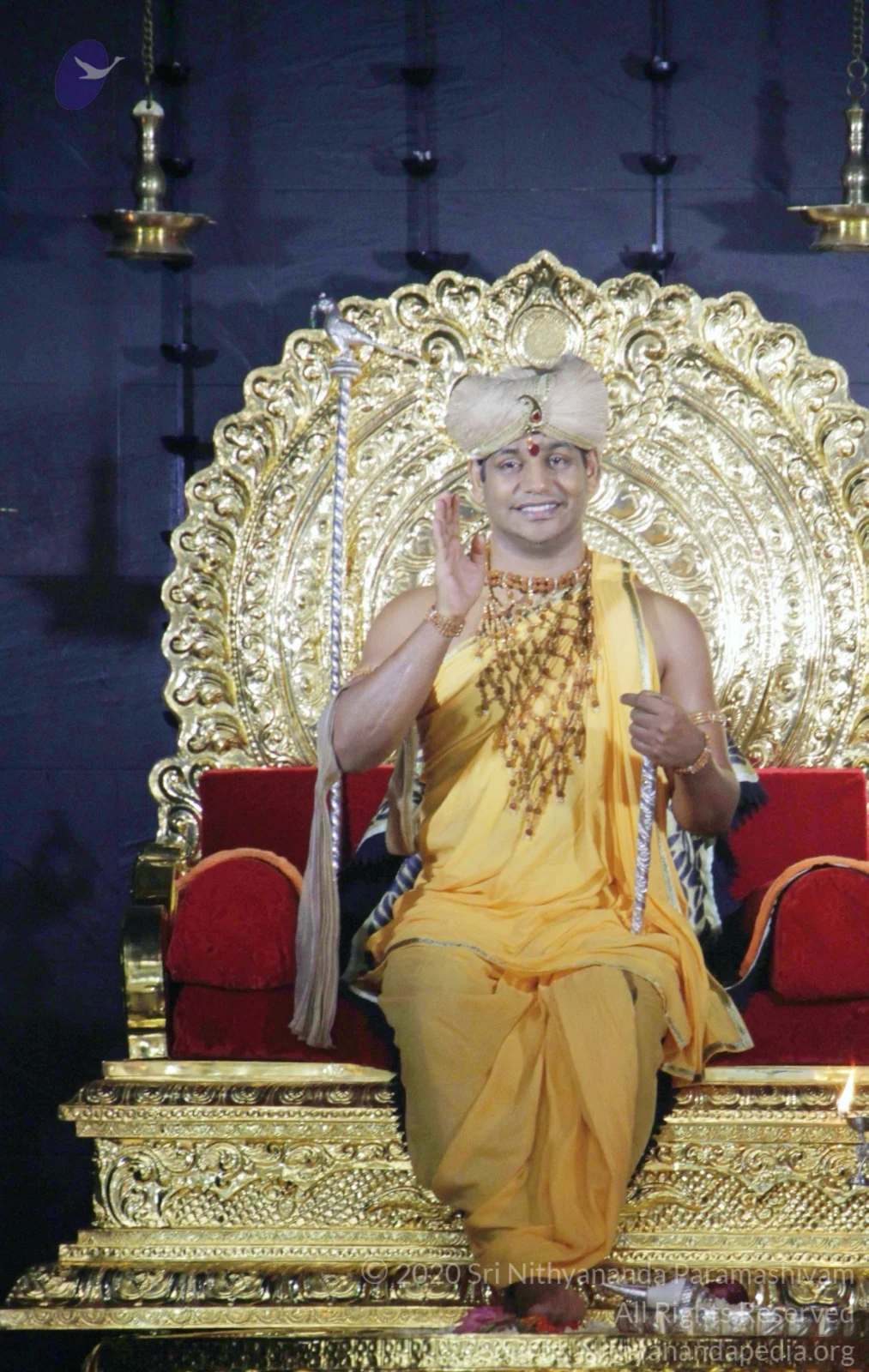
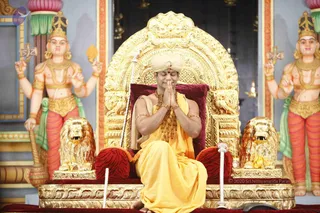
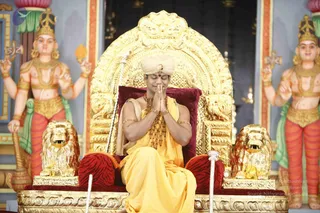
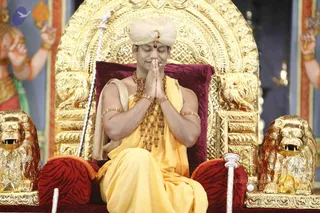
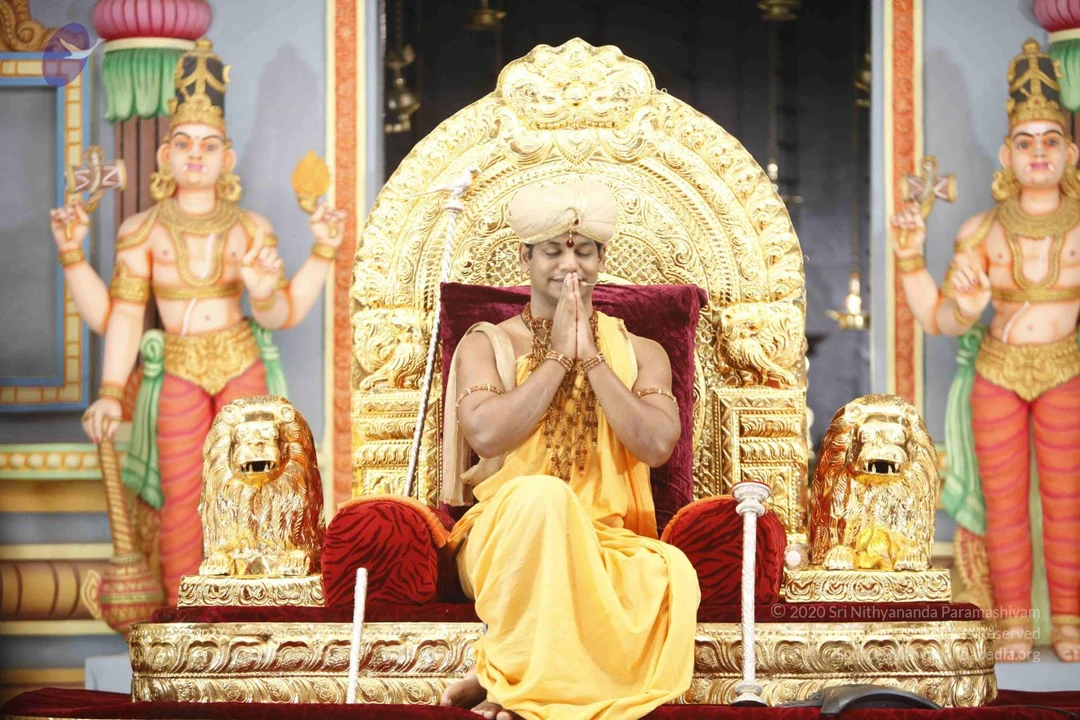
A man seated cross-legged on an ornate golden throne with a deep red velvet cushion and two golden lion figures at its base, hands pressed together in namaste with eyes closed. He wears a cream turban with a red tilak mark, a yellow-orange dhoti-style robe, layered gold necklaces and rudraksha beads, and gold armbands. Two painted deity statues with multiple arms and gold crowns flank the throne, and a ceremonial staff with a white tassel rests beside it. a person is seated in front of the throne, with the throne and turban marking a ceremonial setting.A seated man in a golden ornate throne with carved arch and two golden lion sculptures at the armrests presses his palms together in anjali mudra with eyes closed. He wears a cream turban with a red tilak, a saffron-yellow dhoti and shawl, layered gold-toned beaded necklaces, and gold bangles. Behind him stand two large painted deity murti figures with multiple arms holding ritual objects, one wearing a crown and green sash. The setting is a temple-like hall with a blue-grey wall. A swami identification cannot be made from appearance alone, so the figure is described by role as a seated teacher in a throne.A man seated on an ornate gilded throne with lion-head armrests and a deep red velvet cushion, hands pressed together in anjali mudra with eyes closed. He wears a cream turban with a red tilak, saffron-yellow robes with a cream shawl over one shoulder, layered rudraksha-style beaded malas and necklaces, and gold bangles. Golden lion statues flank the throne, and a painted multi-armed deity mural with red and orange tones appears behind. a person: appearance cues include the ornate saffron-yellow clothing, layered beaded malas, gold bangles and a throne setting, with the page indicating this satsang event.A seated man with eyes closed and palms pressed together in anjali mudra sits on an ornate gilded throne carved with lion heads, a red velvet cushion on the seat. He wears a pale peach turban with a red bindi, a saffron-yellow robe over his shoulders, layered rudraksha and beaded malas, and gold armlets and bangles. Gilded lion figures flank the throne at the bottom corners, and painted deity figures with raised hands appear at the left and right edges. Swamiji (probable): the man's appearance, with turban, saffron robes and rudraksha malas, matches the page's identification. A small white bird figure sits on a perch by the throne, and a candle-like lamp is visible at the upper left.A man seated on an ornate gilded throne with a red velvet cushion and two golden lion heads on the armrests, palms pressed together in namaste with eyes closed. He wears a cream turban with a red mark, a saffron-yellow robe, a rudraksha mala and layered gold necklaces, plus gold armbands. Two painted standing deity figures with multiple arms flank the throne, one holding a trident-like staff. A small oil lamp sits at the right edge. The setting resembles a temple stage with a red-and-gold backdrop.A seated man on a large gilded throne with lion-armrest supports, wearing a cream turban with a red bindi, a saffron-yellow wrap, layered gold and beaded necklaces and gold armbands. He smiles with eyes closed and gestures with his right hand while holding a white ceremonial staff. Two painted, gold-crowned deity statues with multiple arms flank the throne against a colourful temple backdrop. a person, seated in an ornate throne as the speaker at a morning satsang, appearing in person.

Sarva-Darshan

16 photosSource gallery
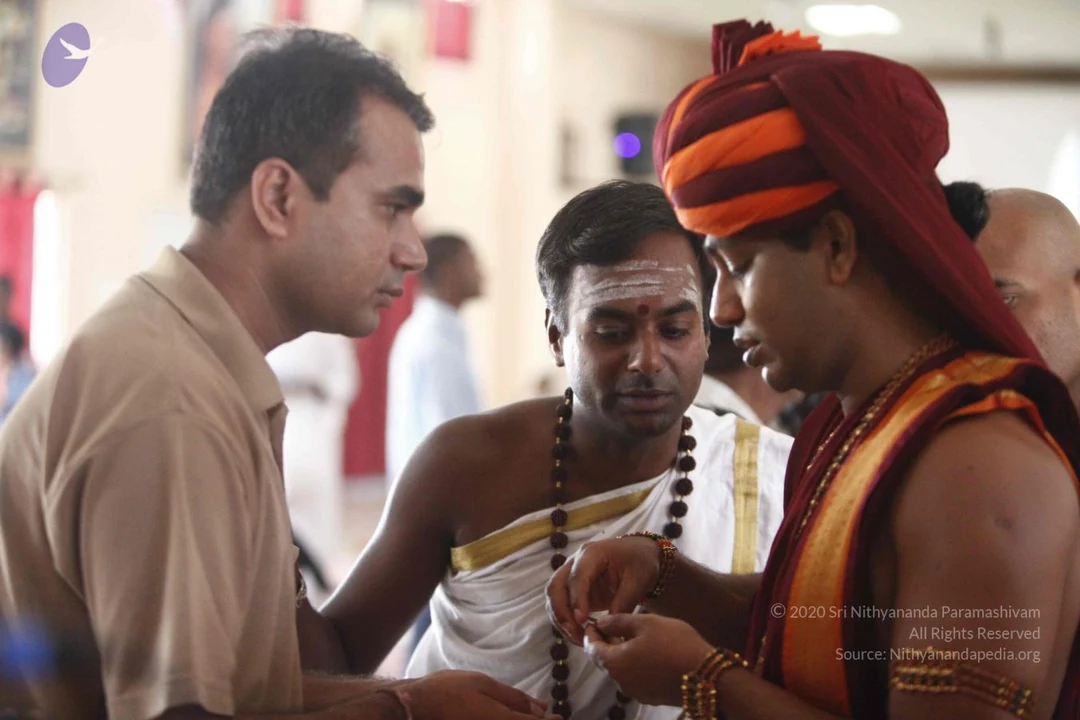
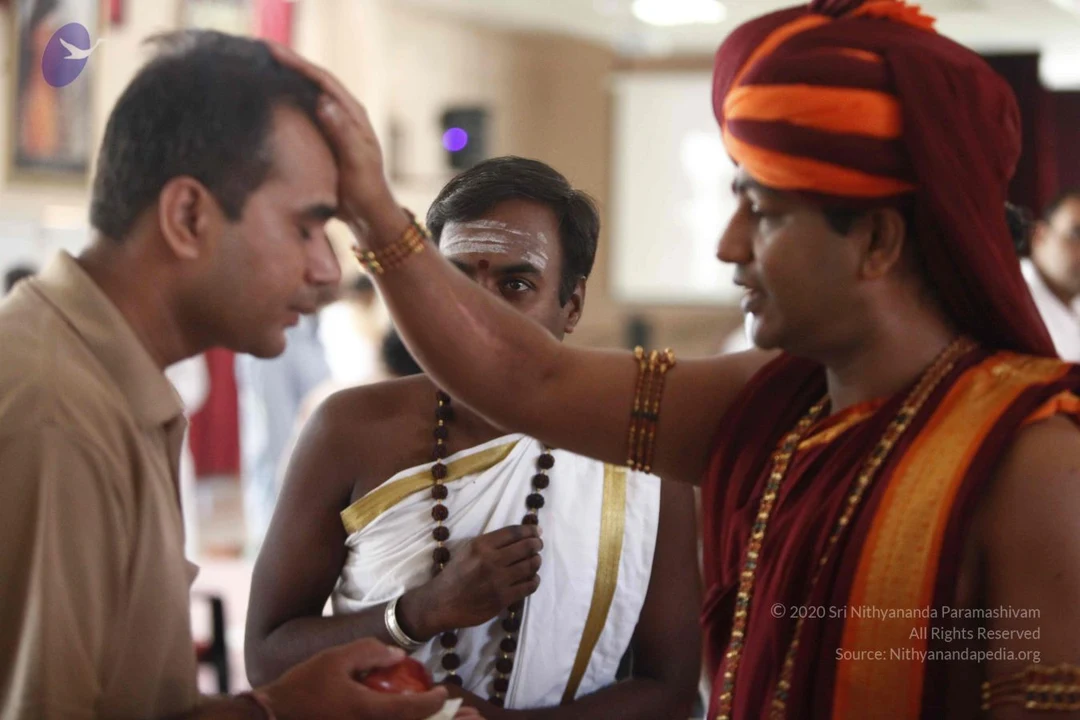
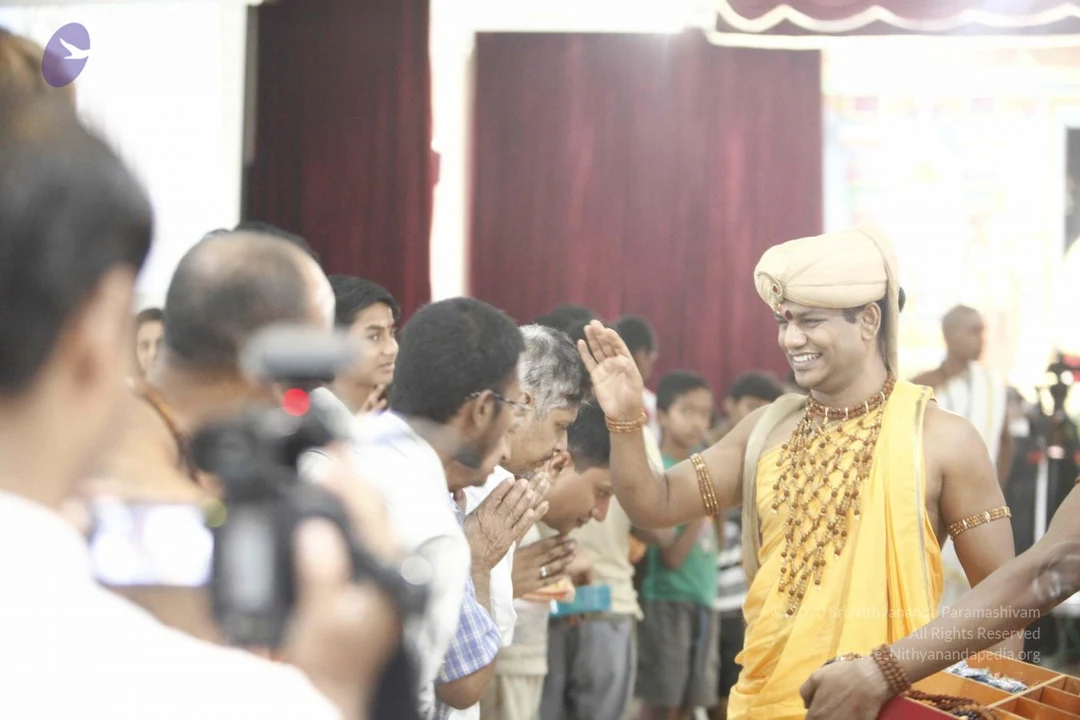
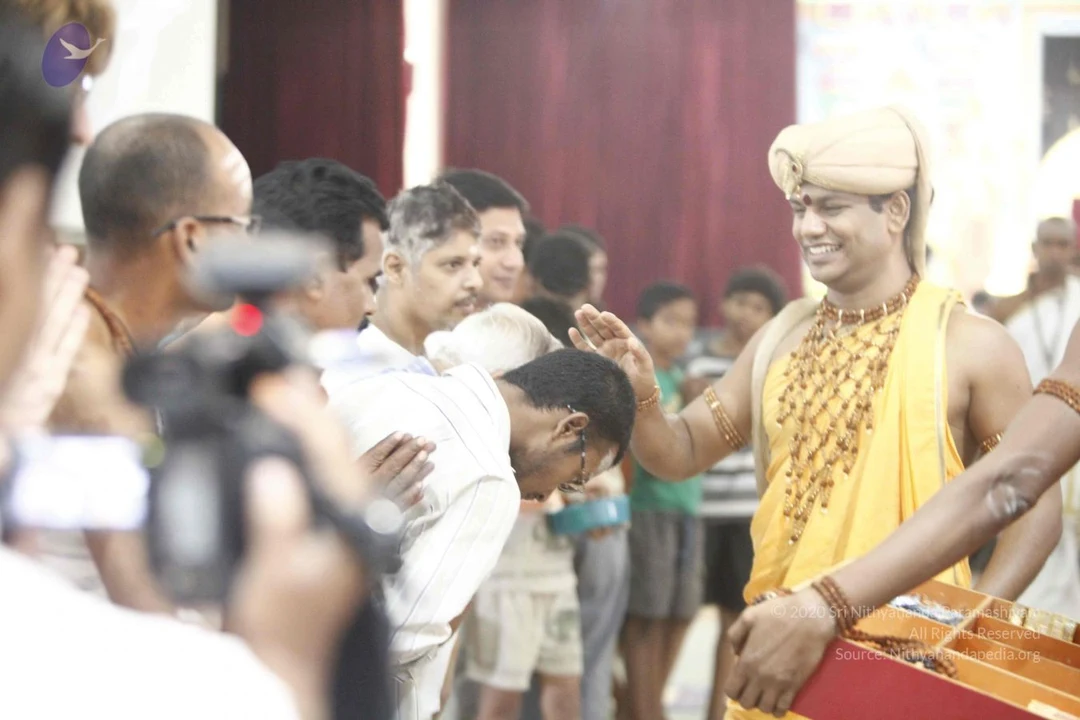
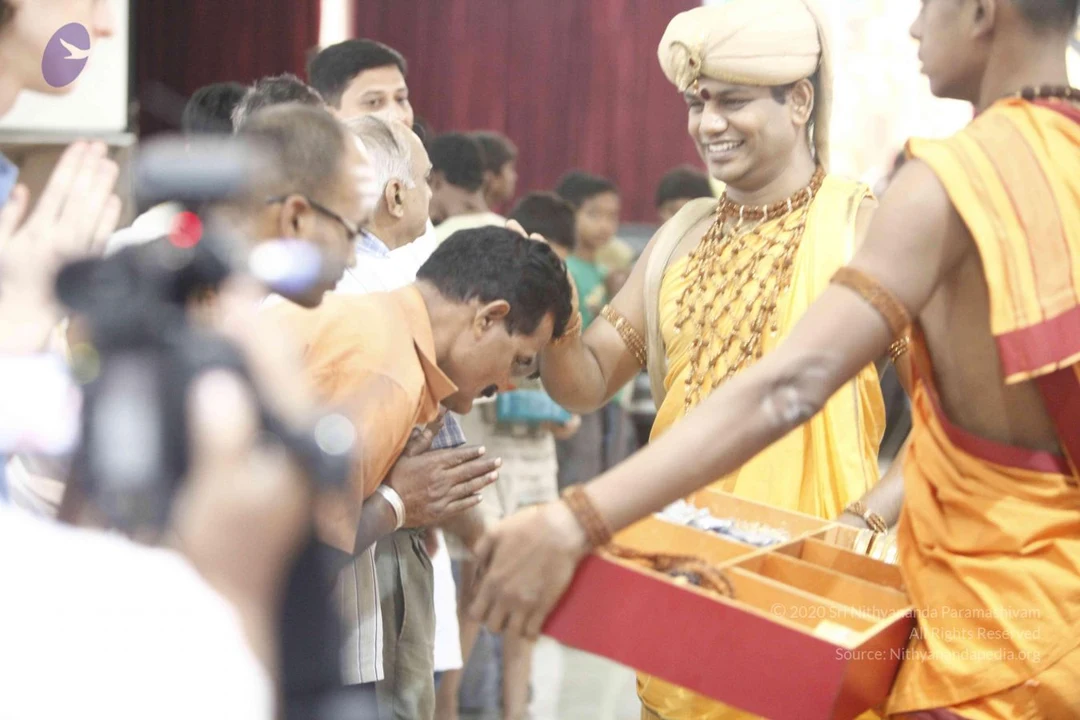
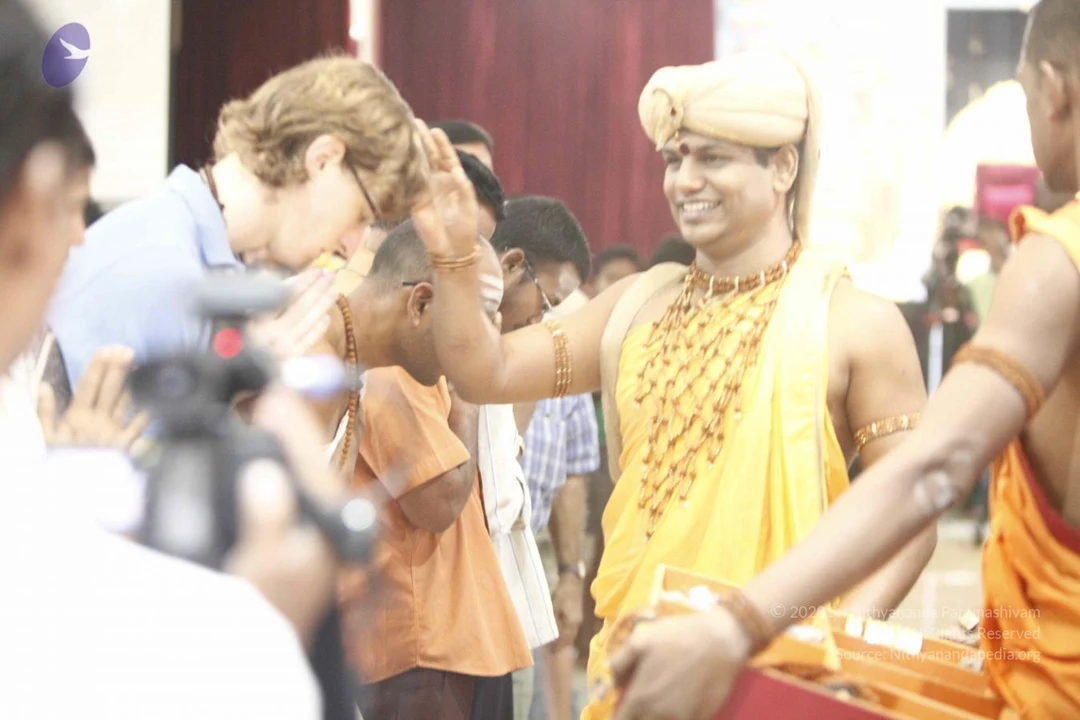
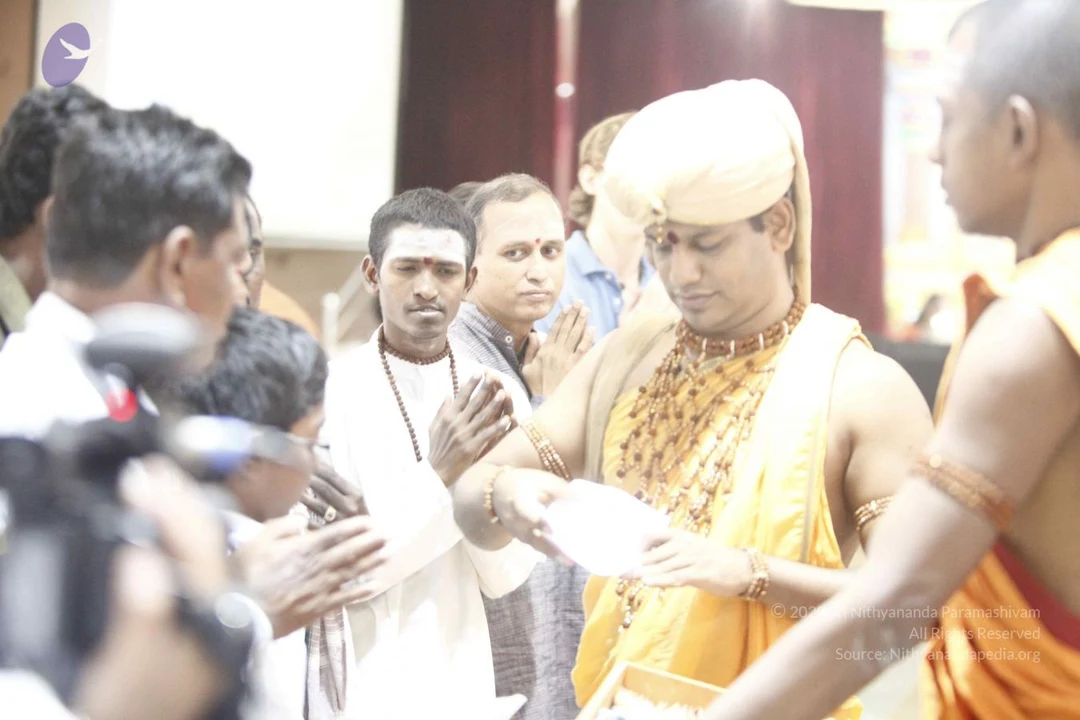
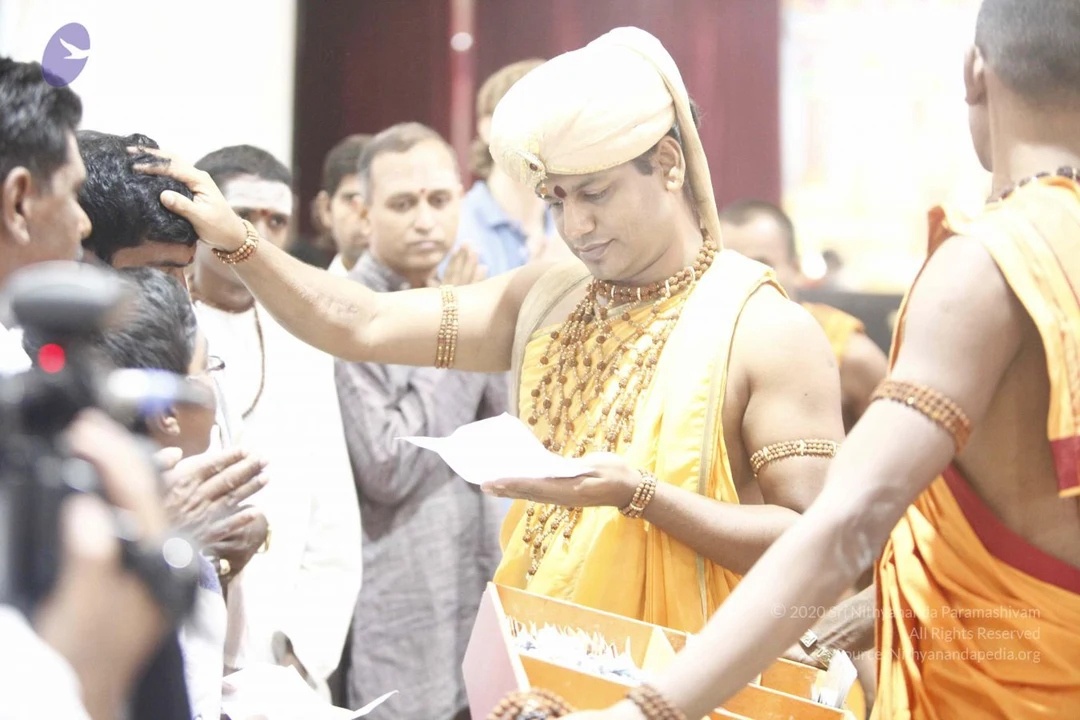
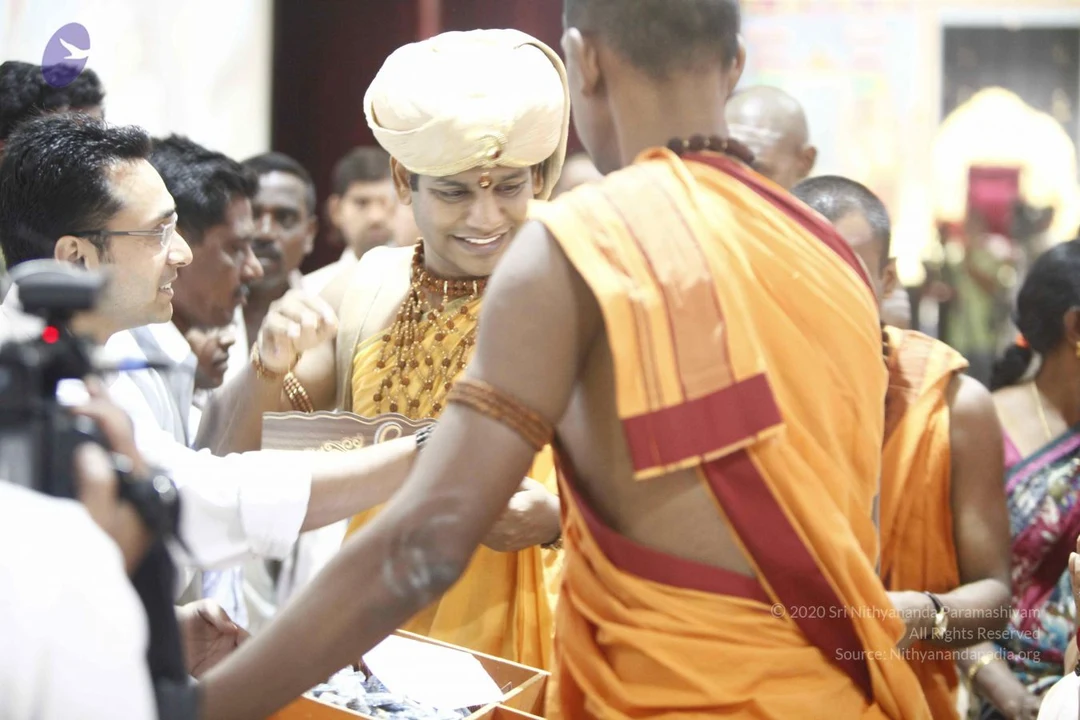
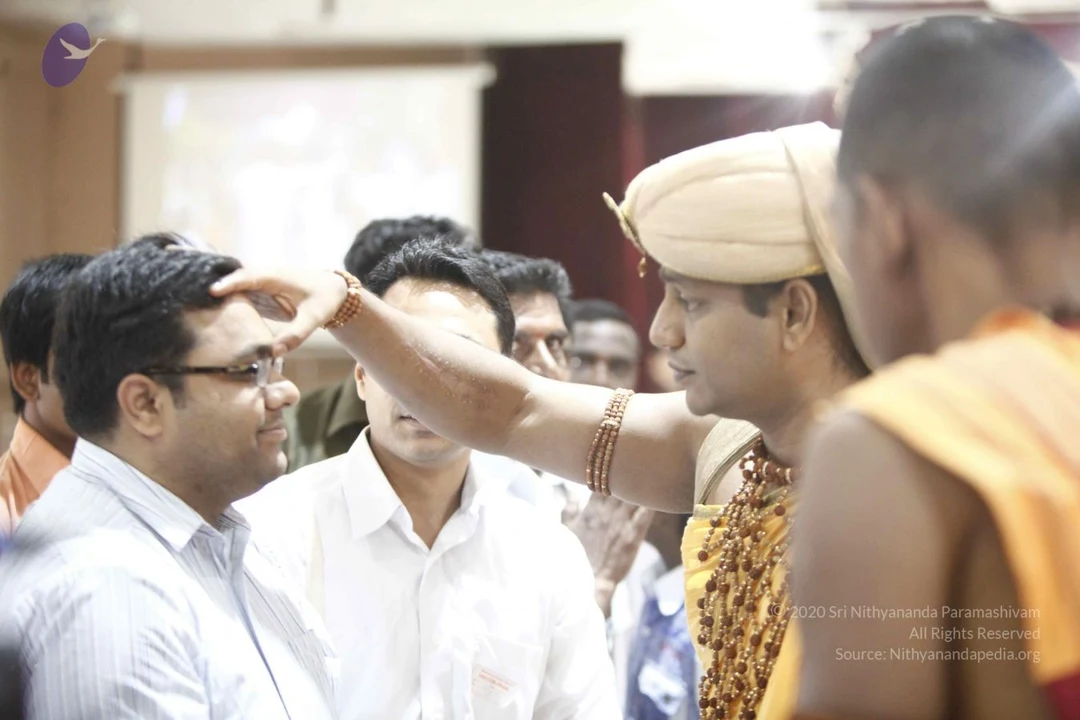
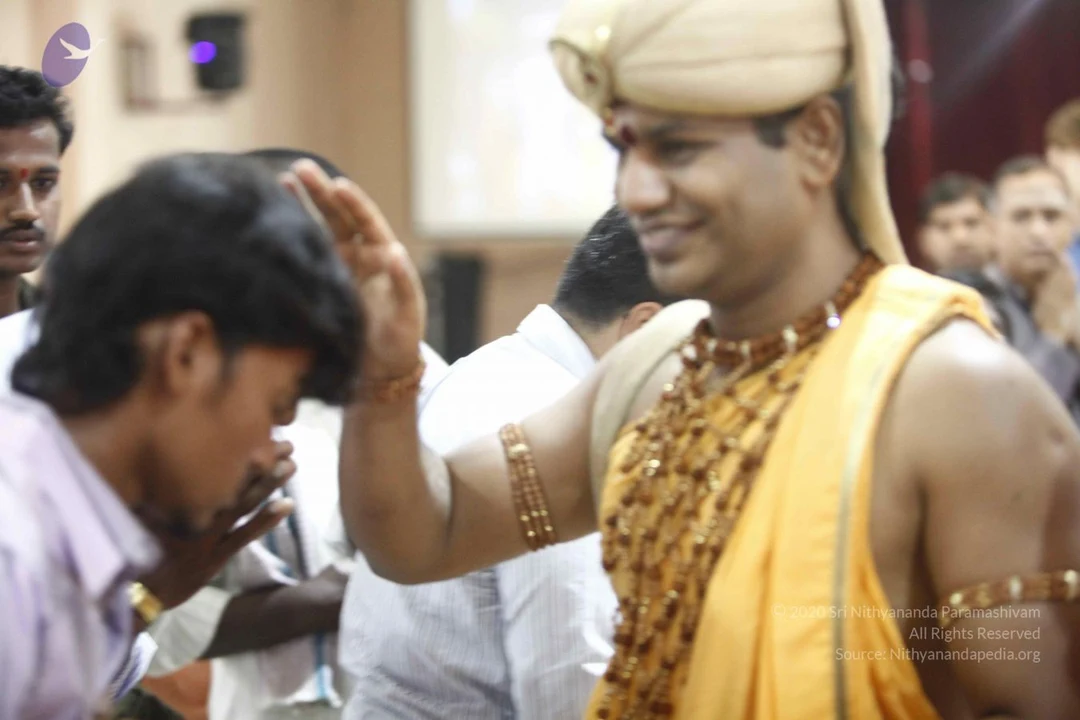
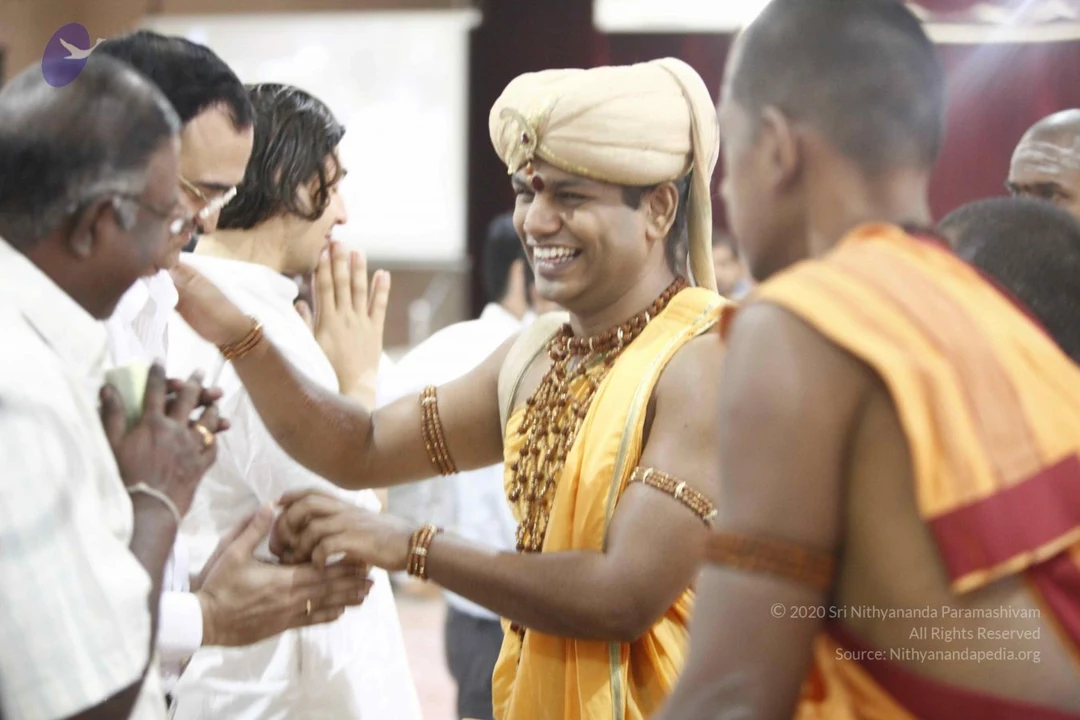
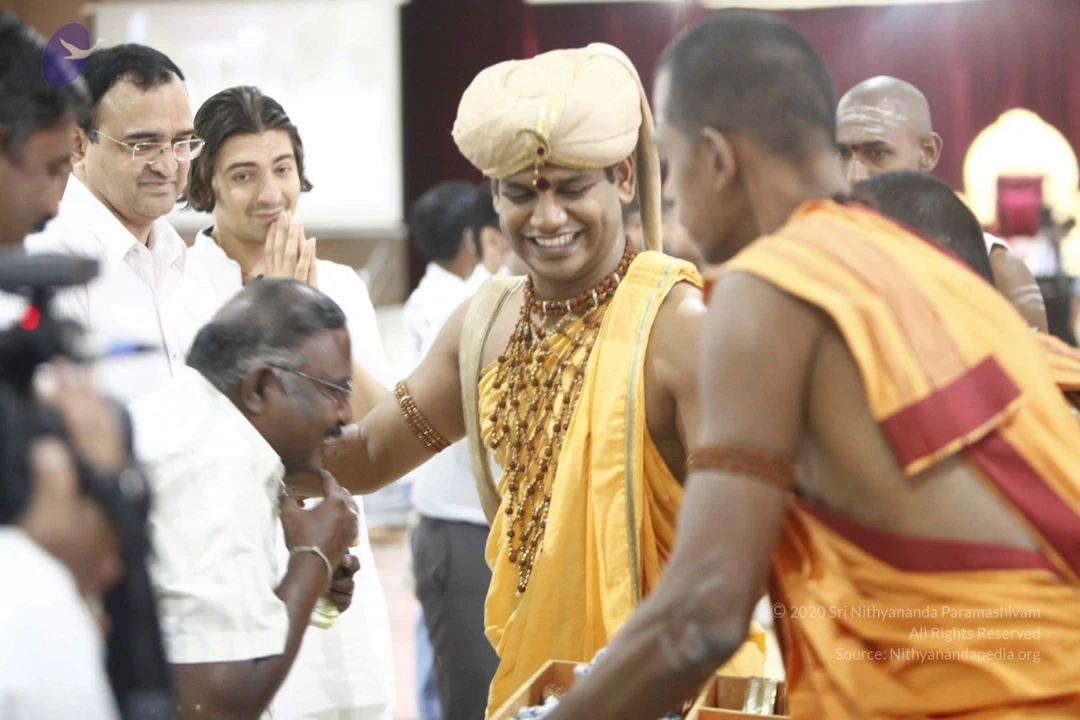
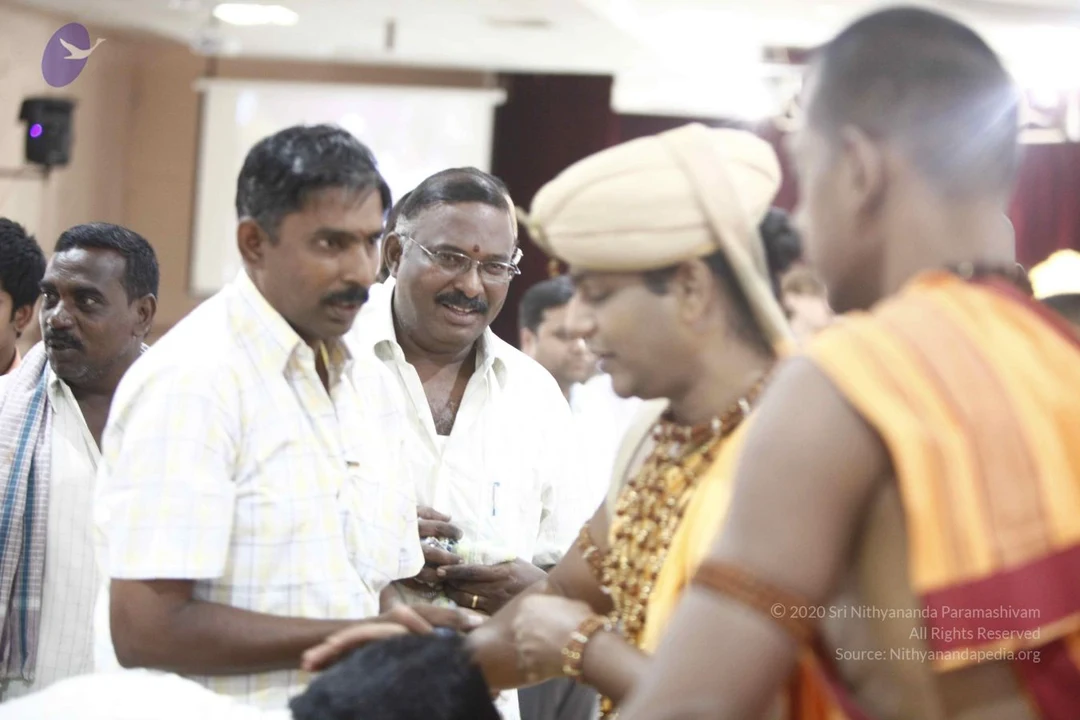
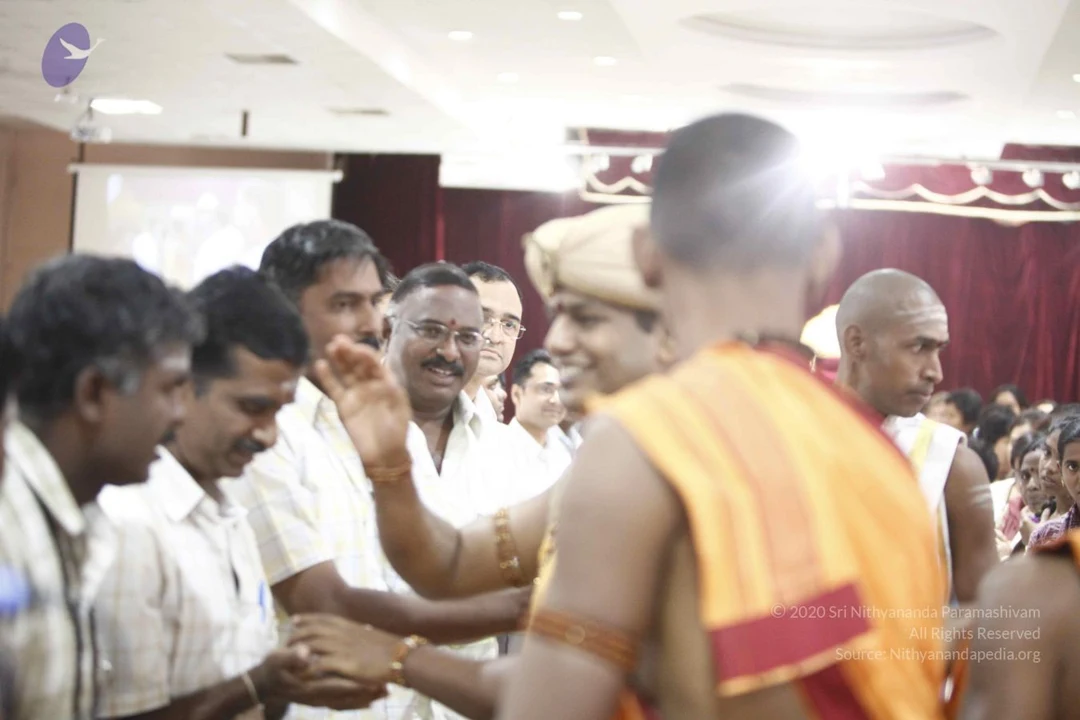
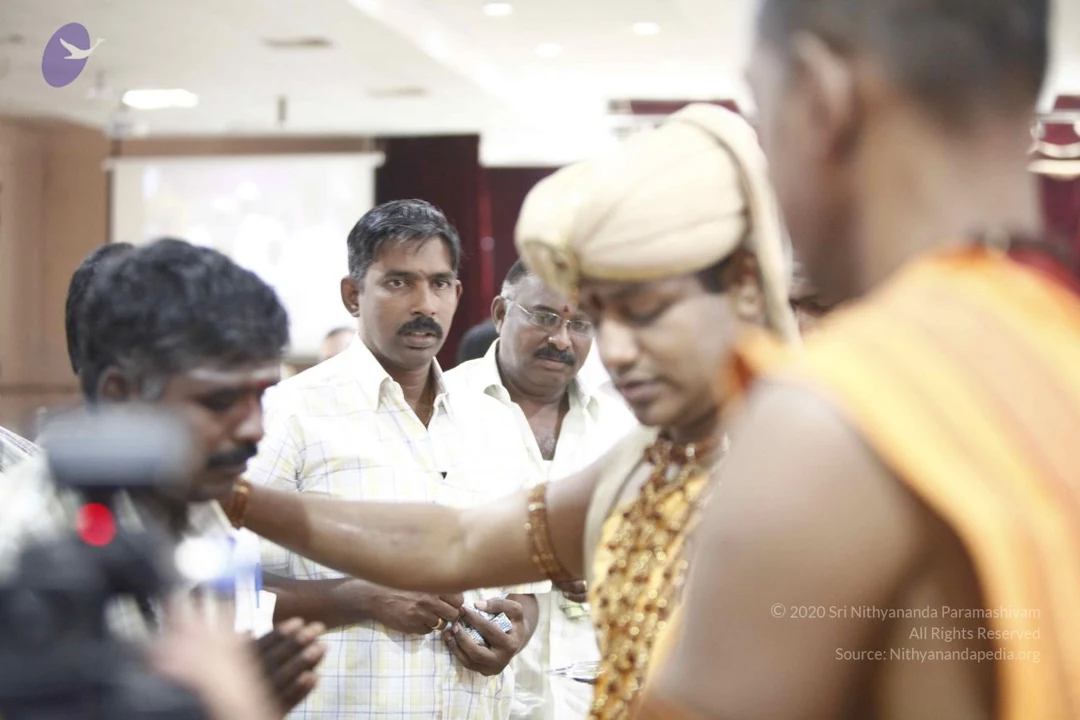
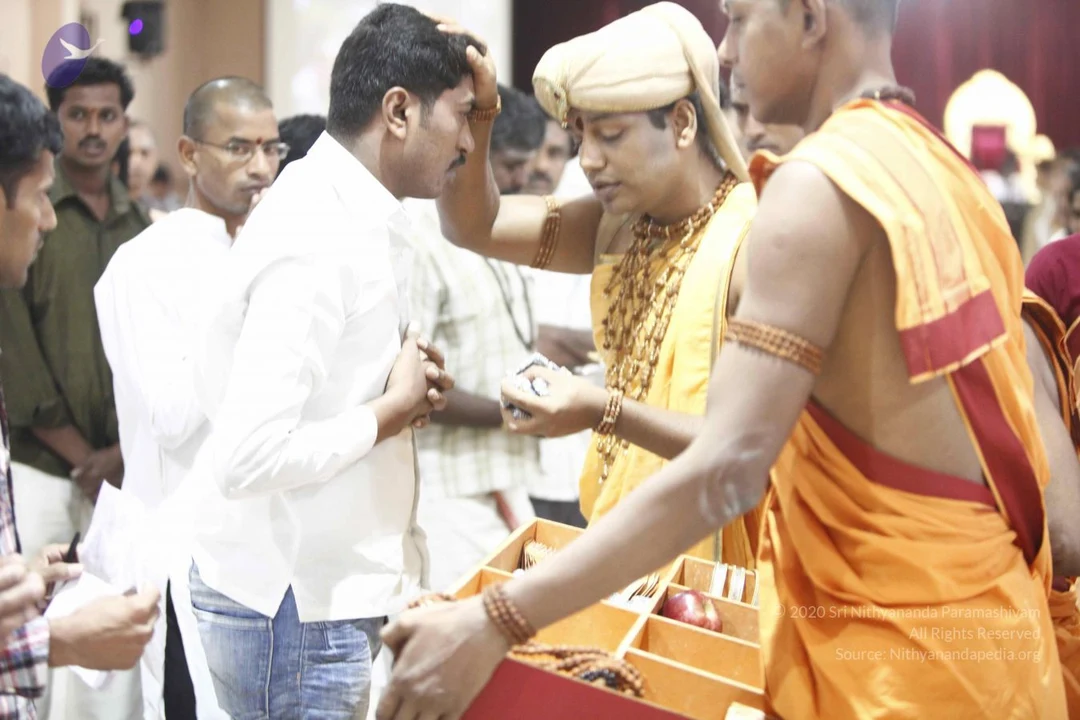
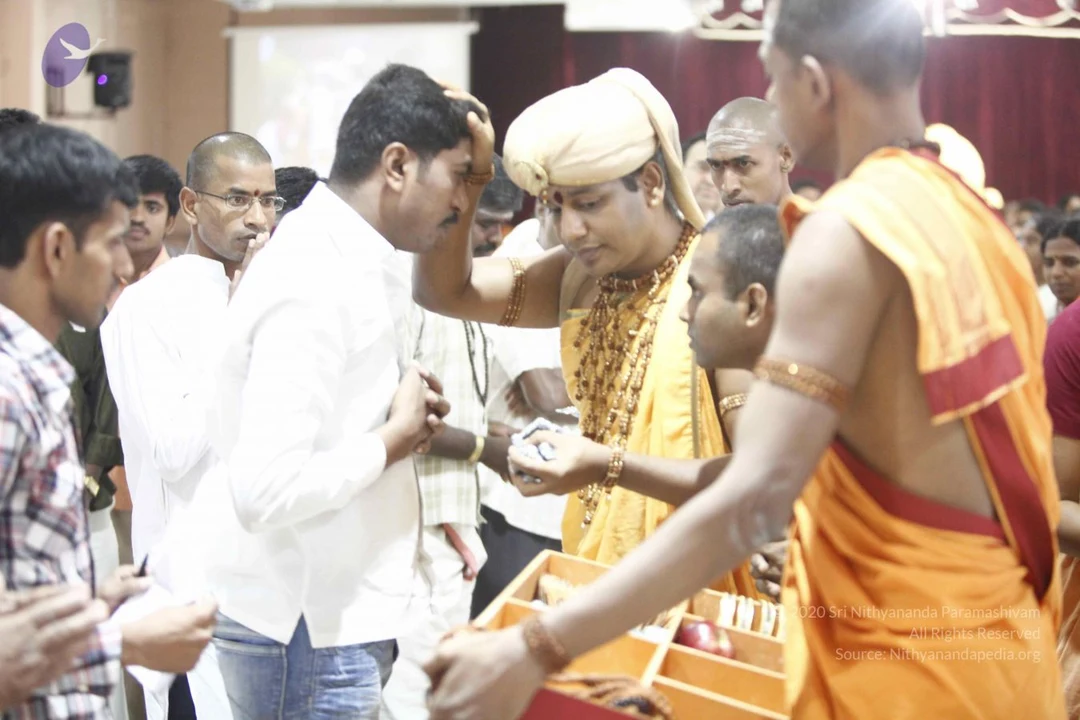
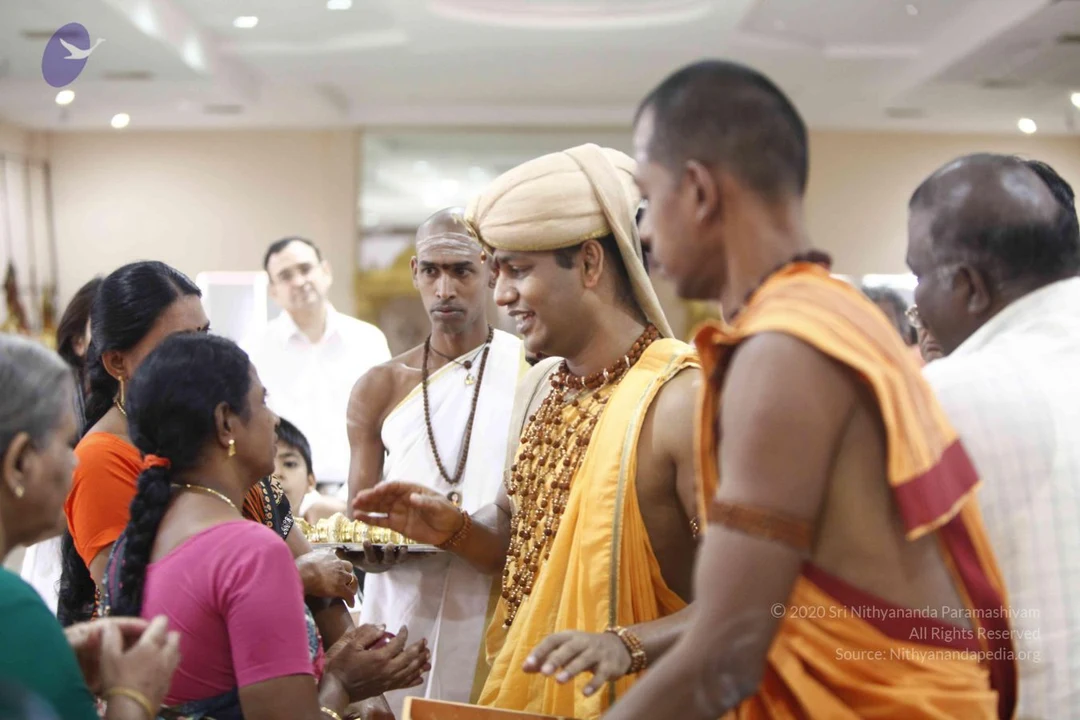
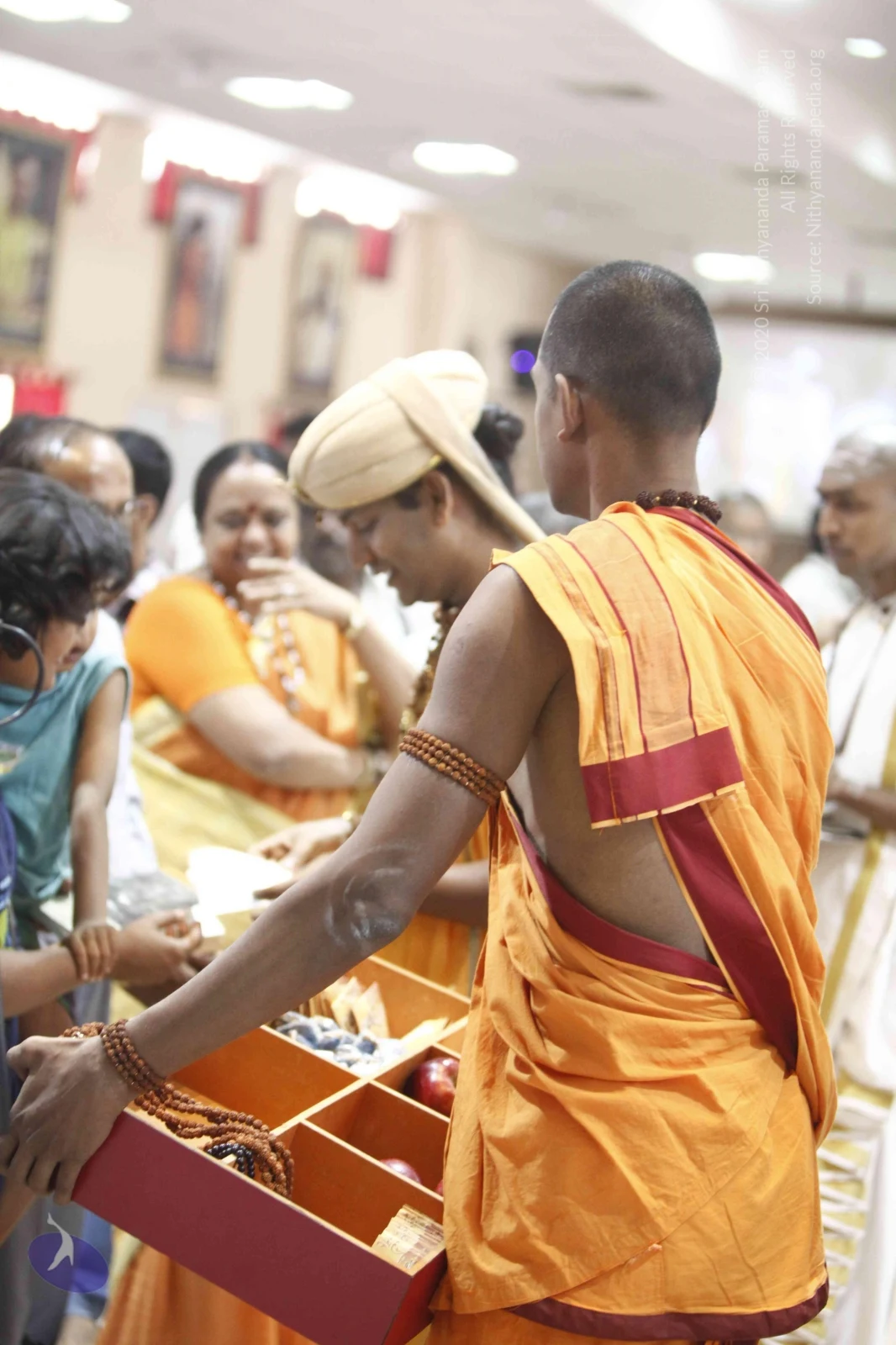
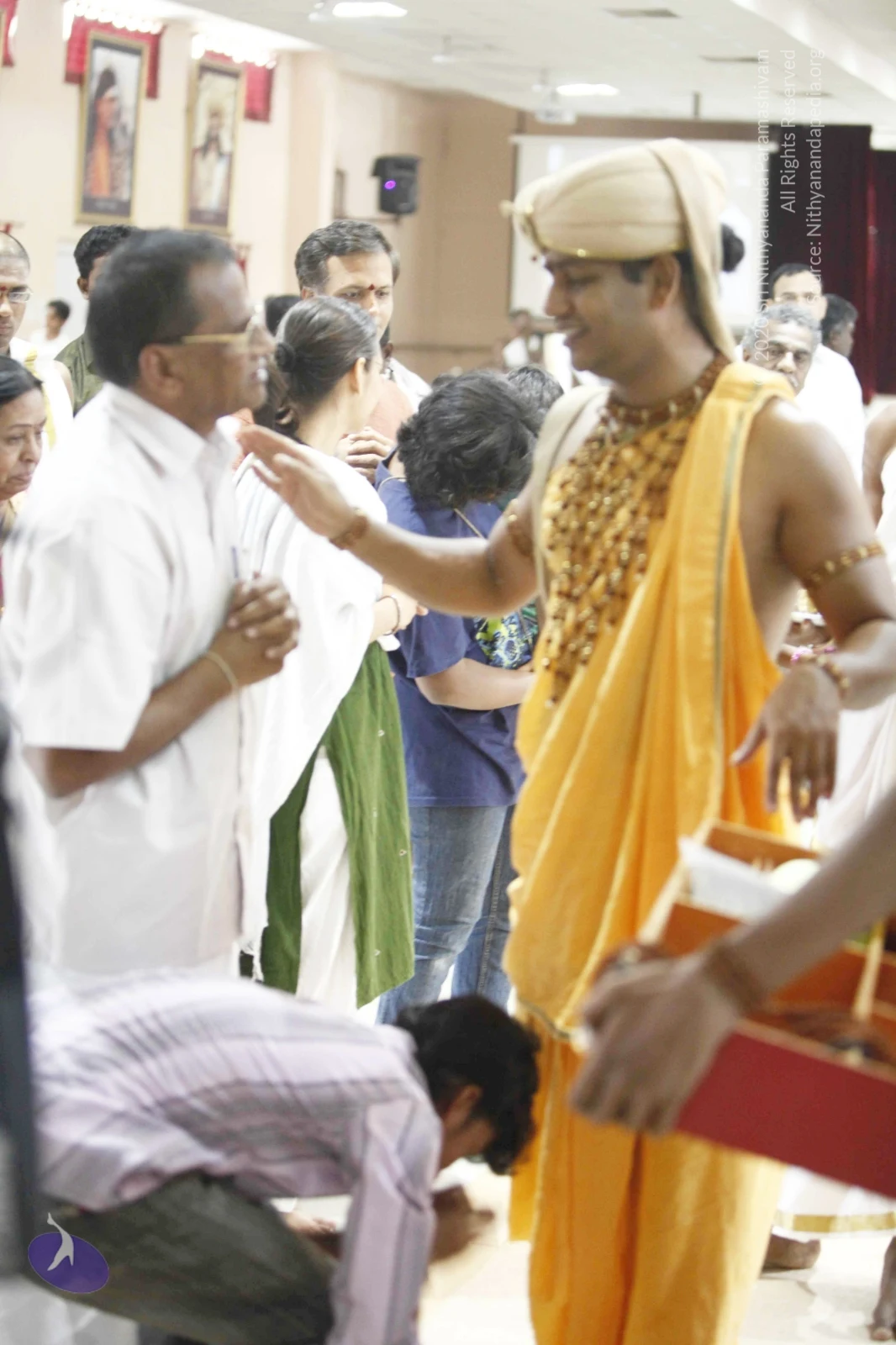
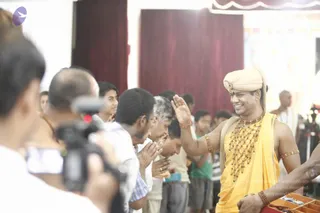
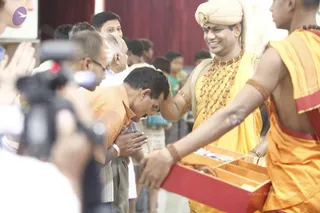
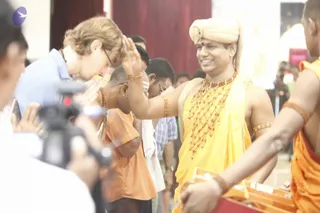
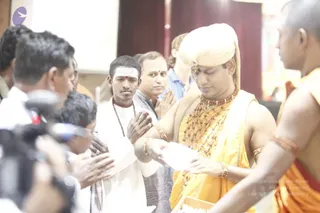
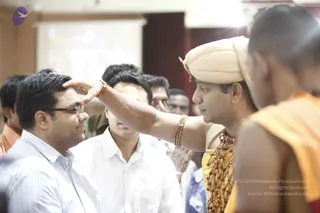
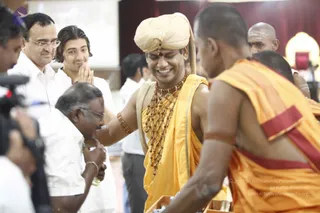
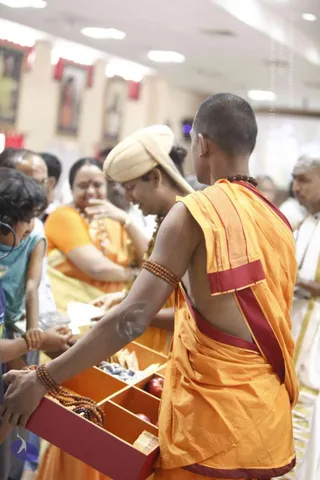
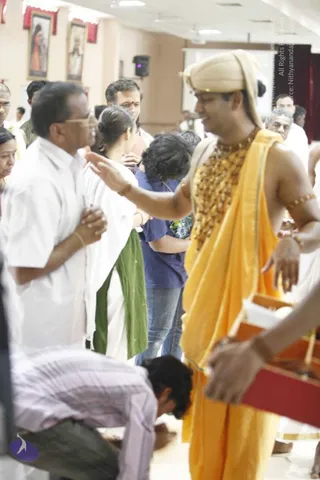
A photo of a man in a cream turban and saffron-yellow dhoti with a bare upper body, wearing layered rudraksha-style beaded necklaces, gold armlets and bangles, raising one hand in greeting toward a line of people. Several devotees stand with palms pressed together in anjali, one man with white hair bowing his head. Behind them are maroon curtains and a camera operator in the foreground. About 8 to 12 people are visible.Photograph of a ceremonial blessing scene in a hall with red curtains. A man in a turban and yellow-gold robe, wearing layered rudraksha malas and a heavy ornate gold-toned necklace, smiles and touches the head of a devotee who bows with palms joined; the devotee wears an orange shirt and light trousers. A younger attendant in orange robes holds out a red tray with compartments containing small items, possibly rudraksha beads. Onlookers stand behind, and a camera operator is visible at left. a person: the turbaned man in yellow-gold robes with rudraksha malas and ornate necklace, giving a blessing to a bowing devotee.A photograph of a ceremonial blessing at an indoor ashram event. A smiling man in a cream turban and a saffron-yellow dhoti wrap, with bare upper body, a red tilak on his forehead, and many rudraksha beads and ornamental necklaces, raises his hand in blessing over the bowed head of a boy in an orange shirt. A fair-haired foreign devotee in a blue shirt bends forward nearby, and a man in orange holds a wooden tray with offerings at right. A camera on a tripod is visible at left, and a red curtain hangs in the background.A photograph of a ritual or satsang setting with several men gathered closely around a central figure. The central figure wears a cream-white turban, a saffron-orange robe draped over the shoulders, and multiple beaded rudraksha-style necklaces and bangles on the arms, and is handing a small white object down toward hands reaching up from the crowd. To the left, a man in a white shirt and a bare-chested man with a cloth over his shoulder reach forward with folded hands. A young man in white with a white tilak on the forehead and a beaded mala stands in the middle, and a man in a grey shirt presses his palms together. A red curtain and a white screen are visible in the background, and a camera operator is partly visible at the left edge.Indoor satsang scene where a man in a cream turban and gold-and-brown garment with multiple rudraksha mala necklaces and beaded bracelets raises his right hand to touch the forehead of a bespectacled man in a light striped shirt. Several other men stand around in white shirts and dark clothing, and a saffron-robed person is partly visible at right. A projection screen and maroon curtain are in the background. The man in the turban shows a blessing gesture, and the scene is consistent with a satsang blessing.Indoor ashram gathering. In front of him, a man in white shirt bows and reaches toward him while a younger man in white folds his hands in greeting. On the right, a bald priest in orange robe with red border holds a wooden tray and offers items. Other attendees in white shirts and a camera operator with a boom microphone are at the left edge; a white board and red curtain sit in the background.

Press-Meet

105 photosSource gallery
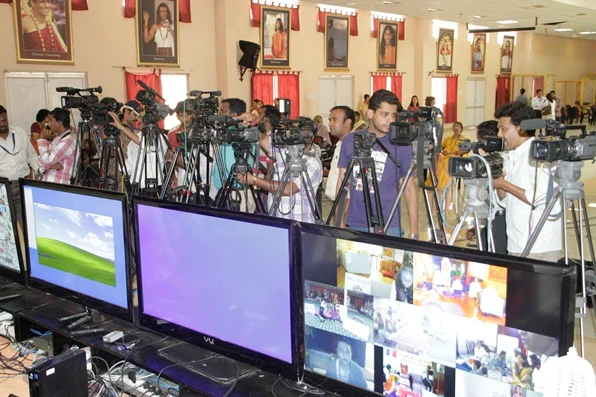
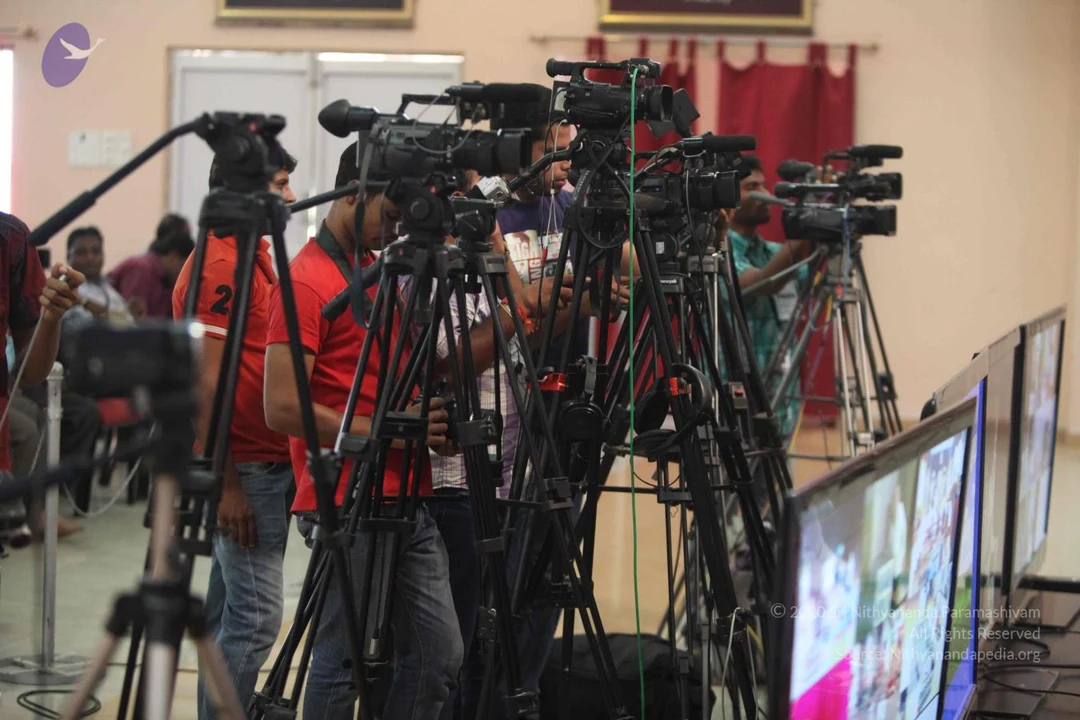
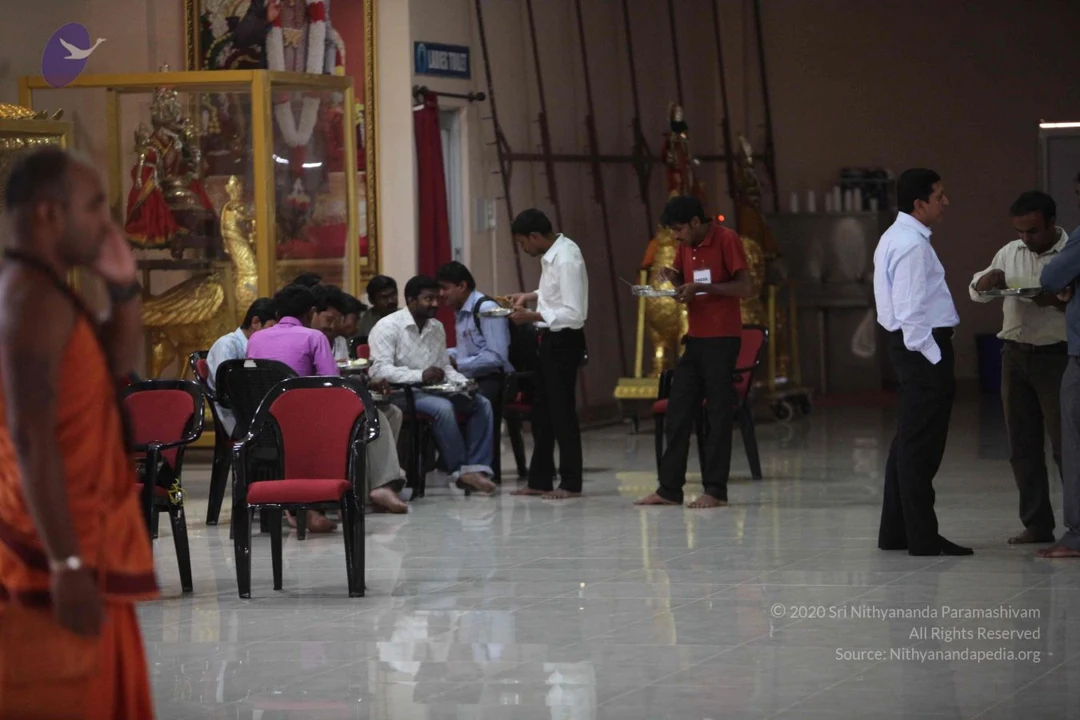
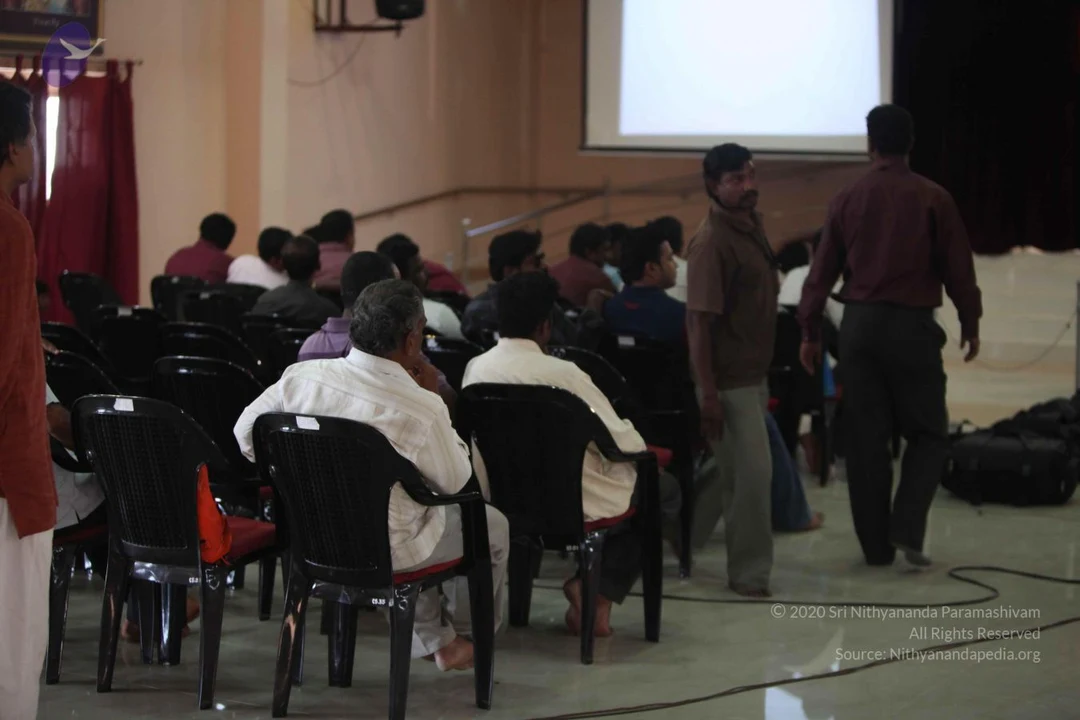
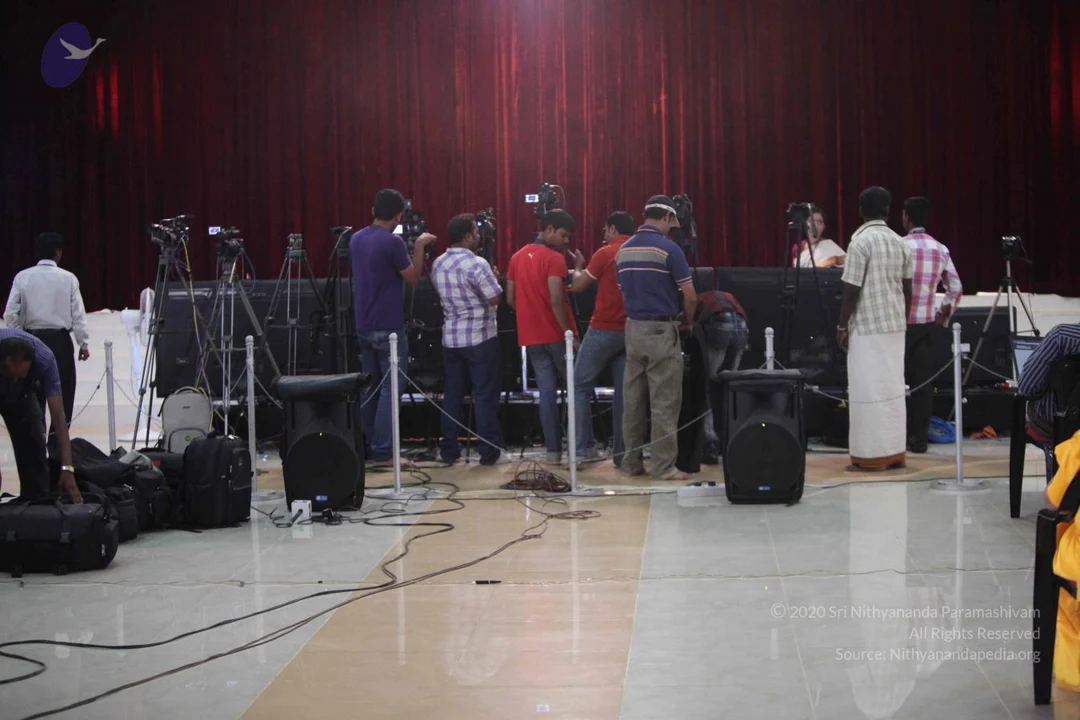
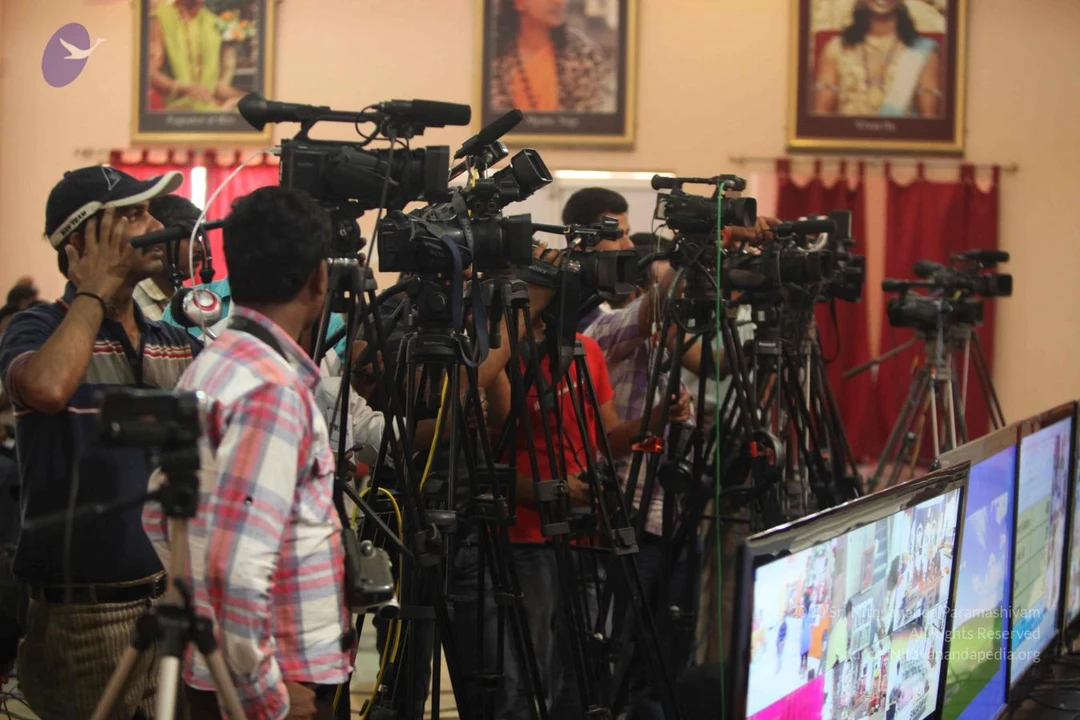
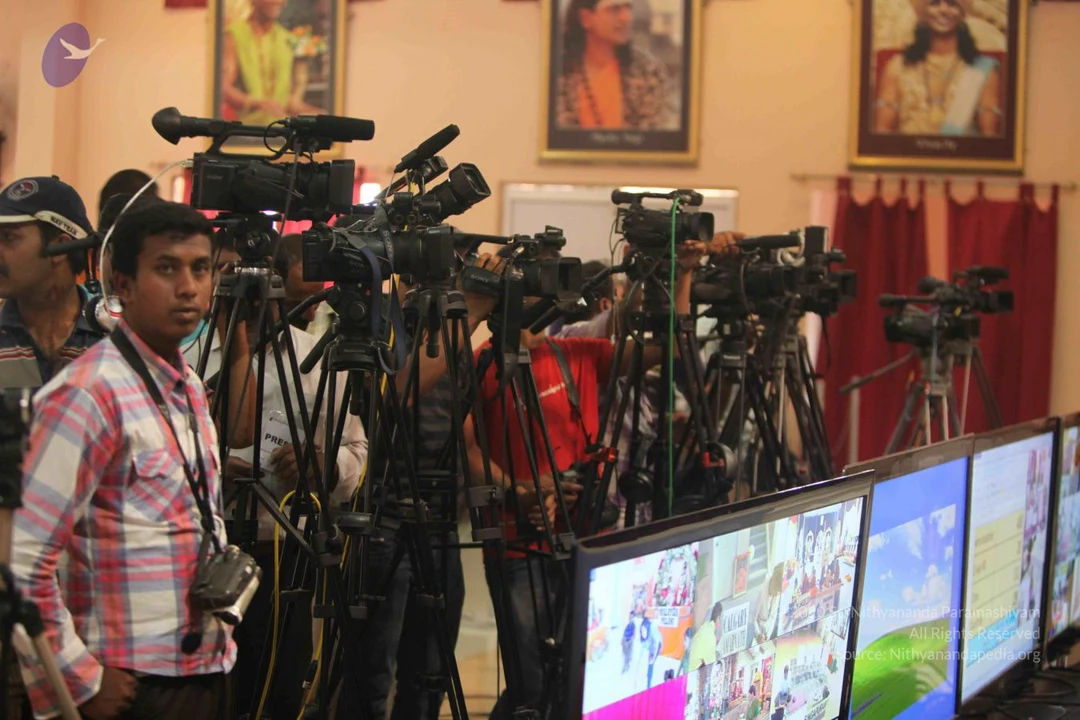
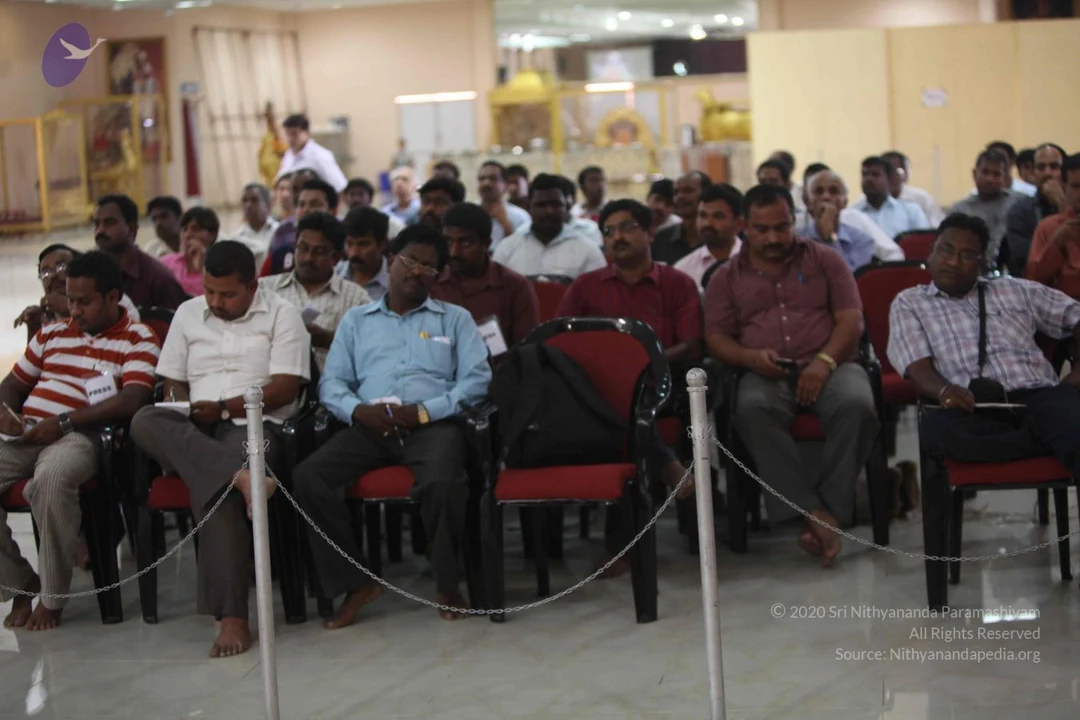
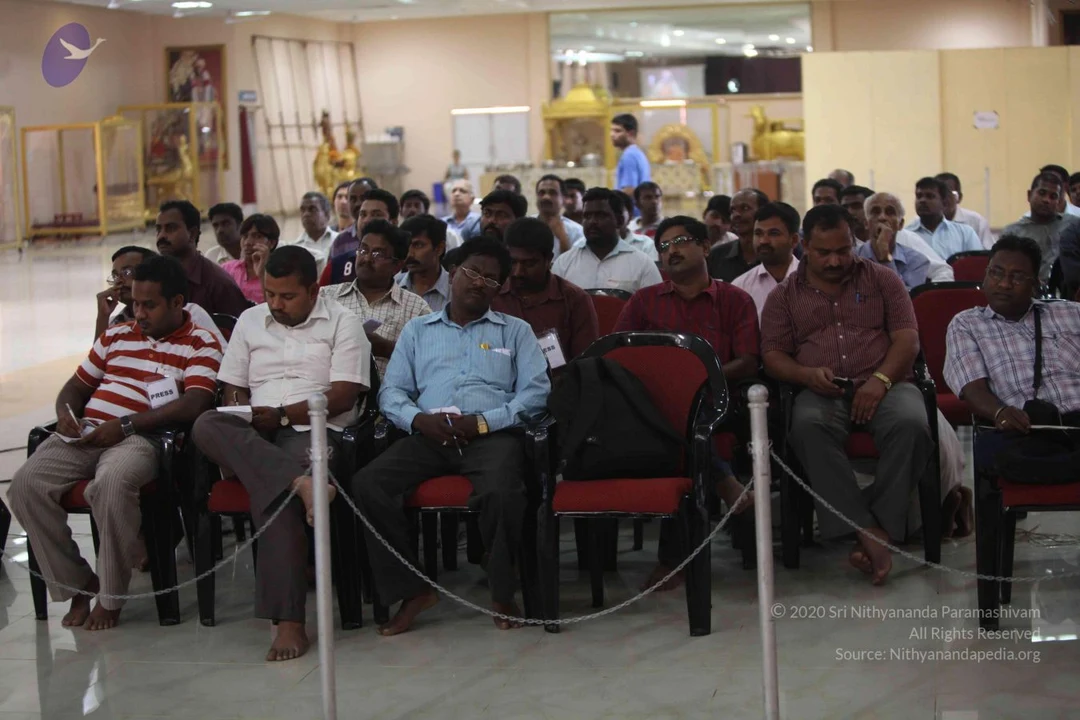
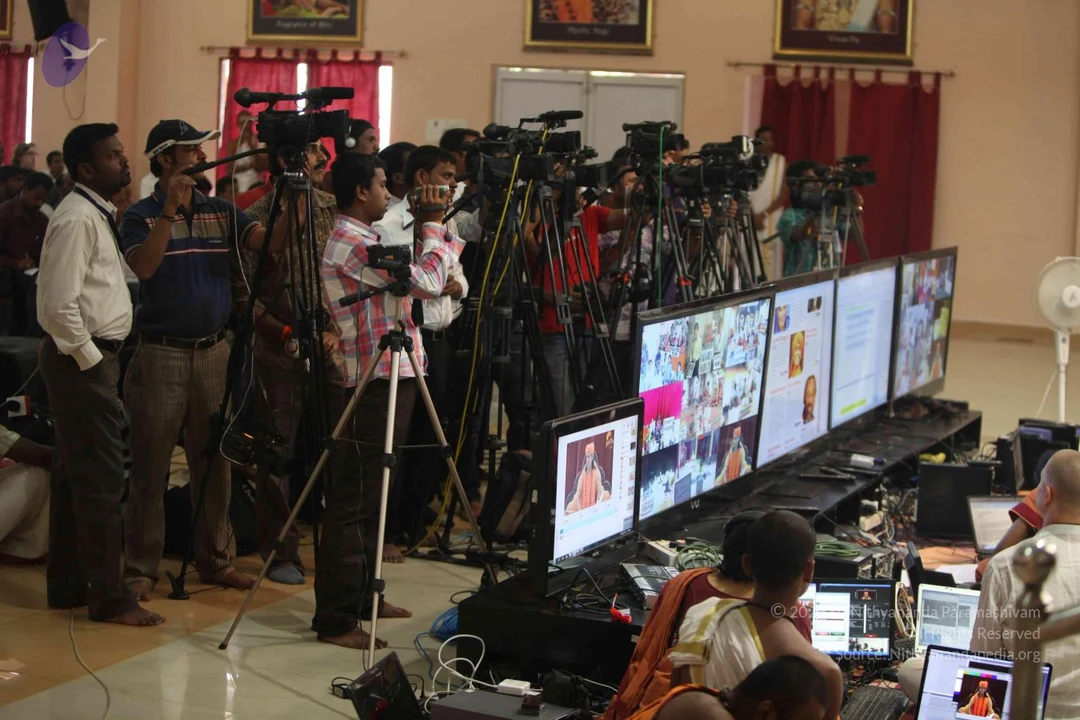
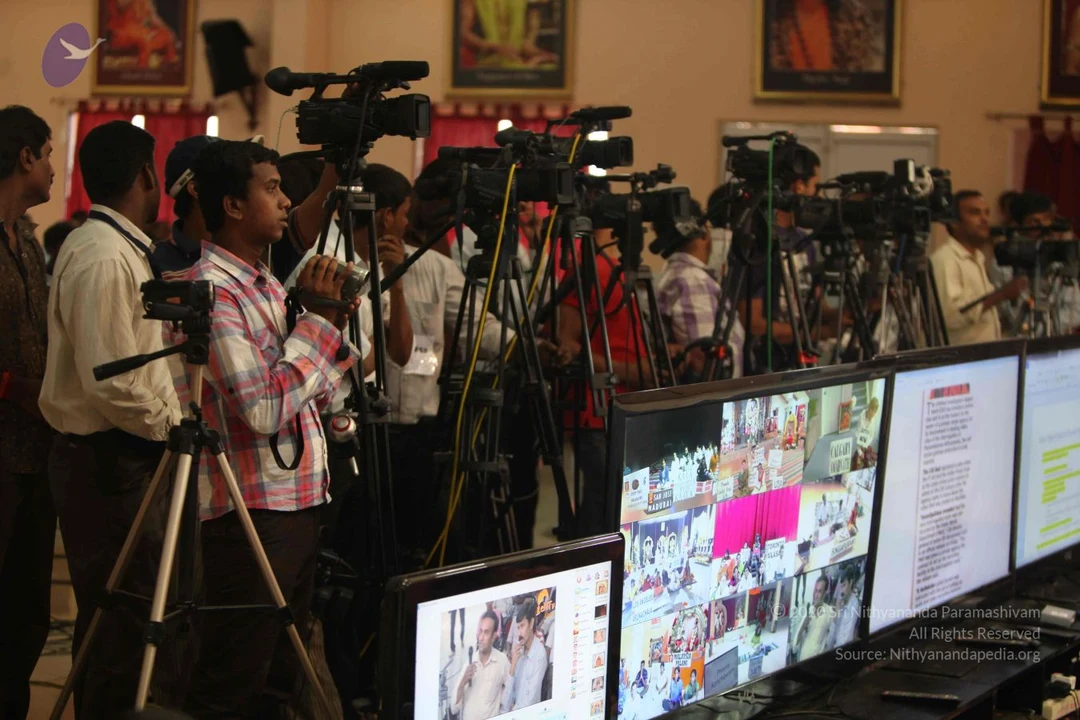
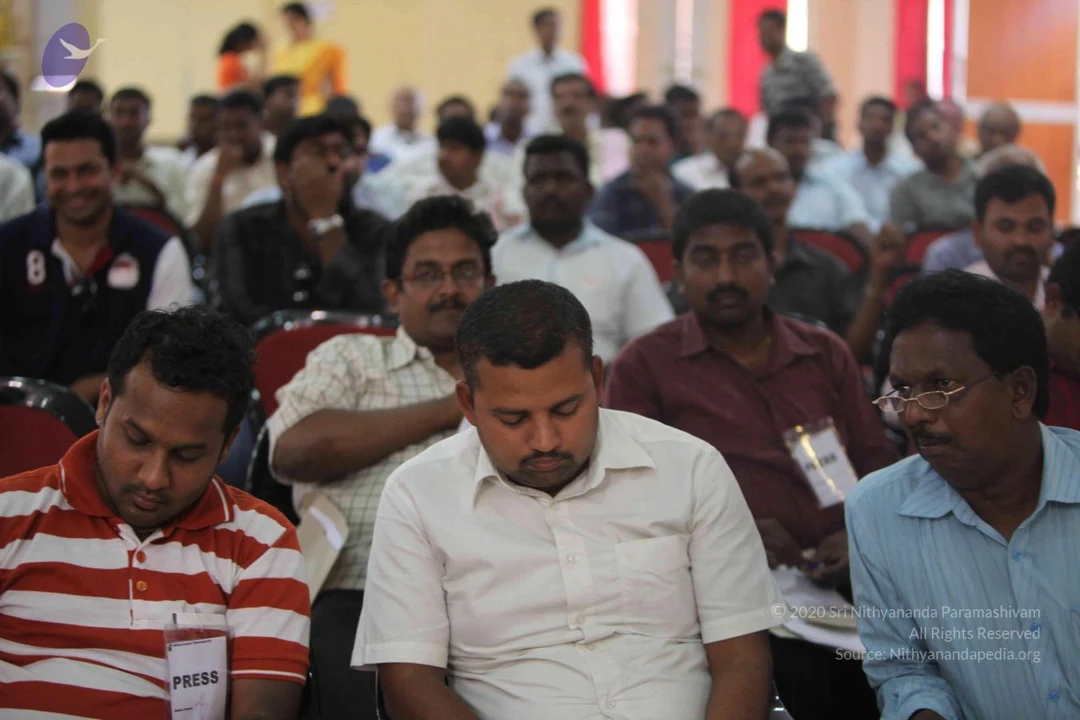
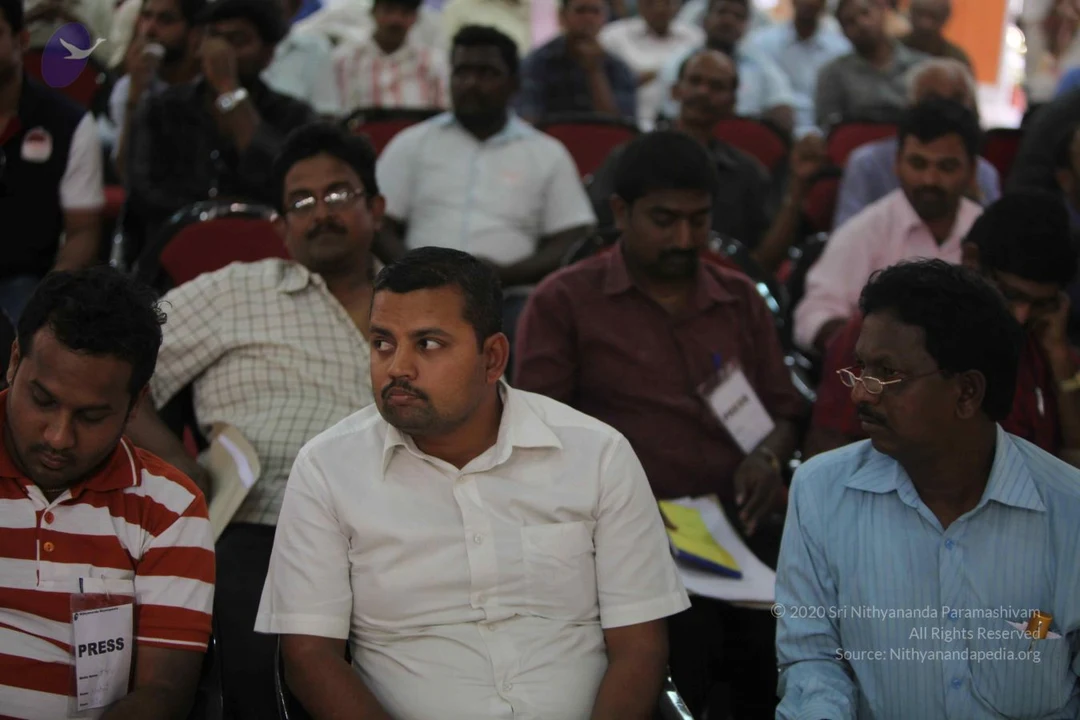
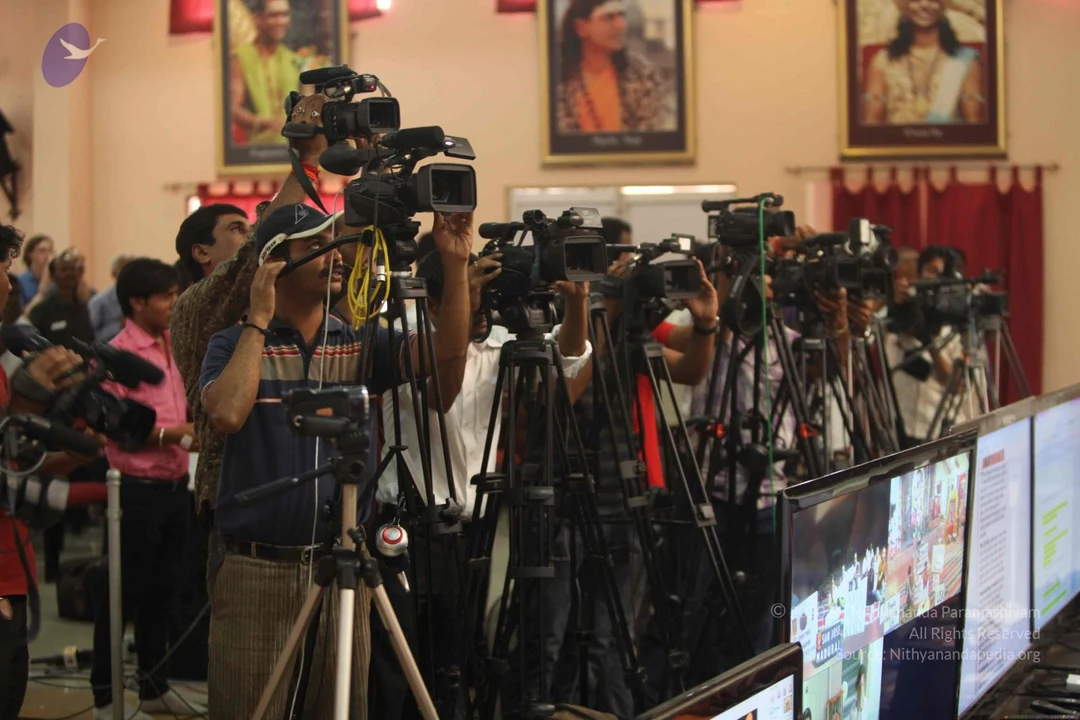
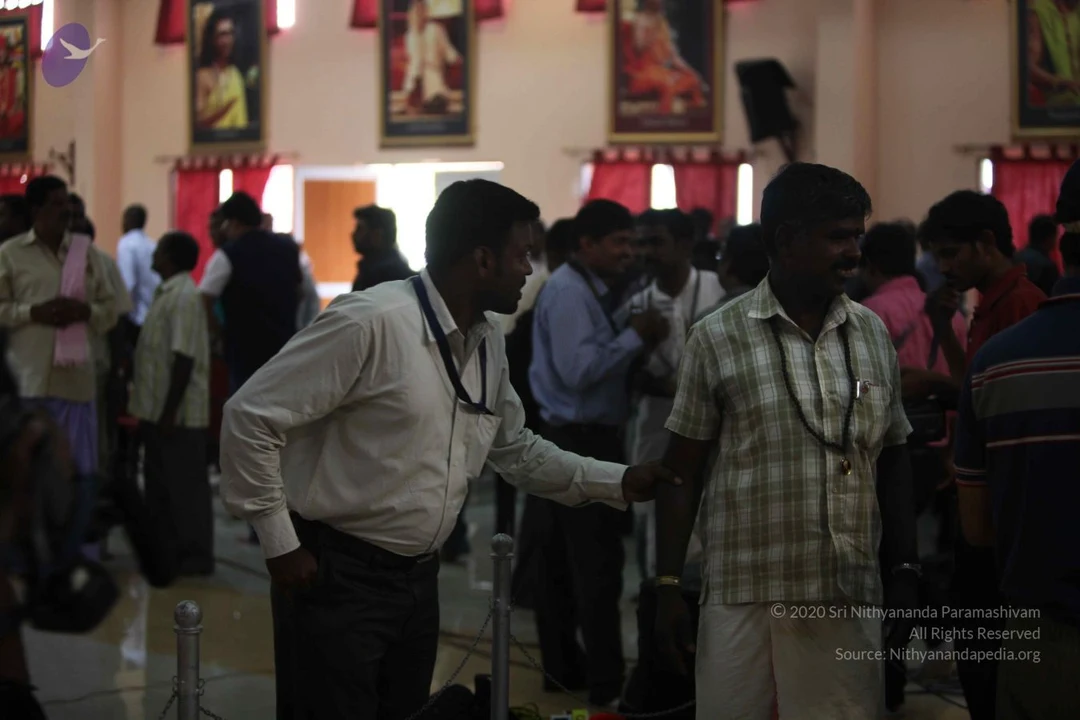
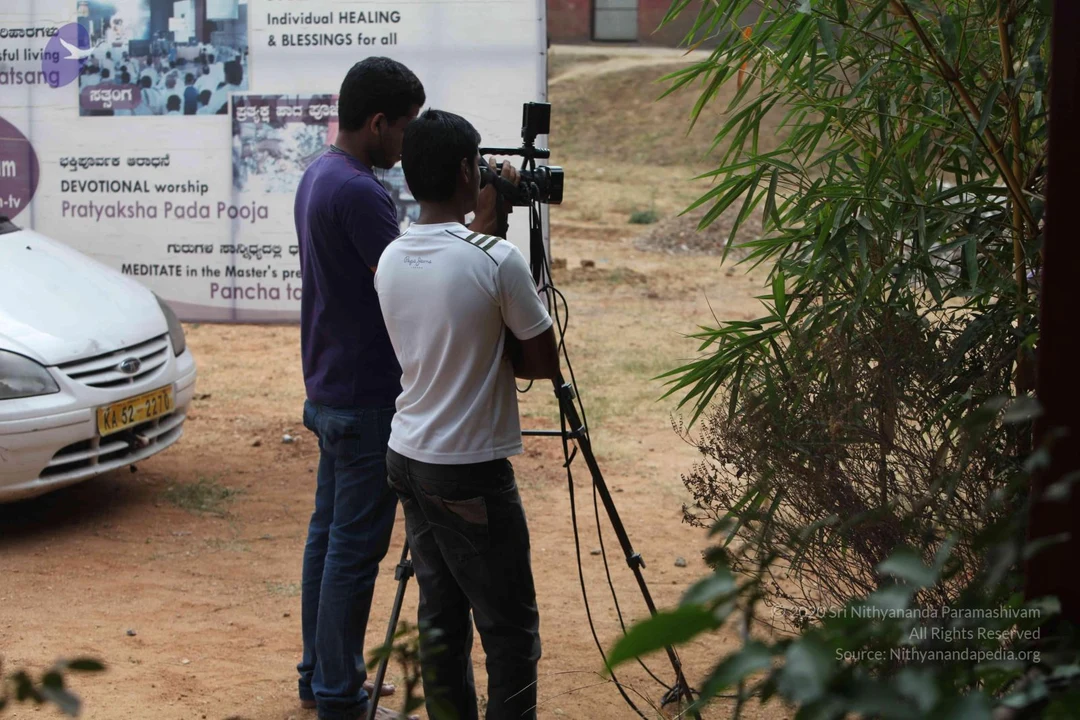
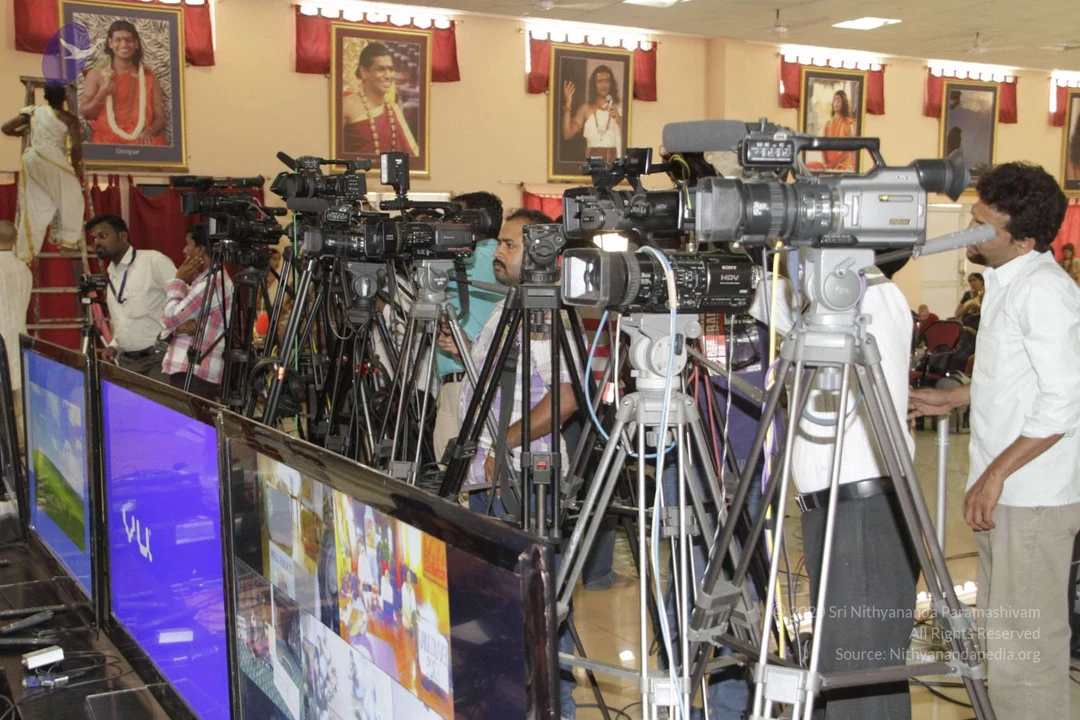
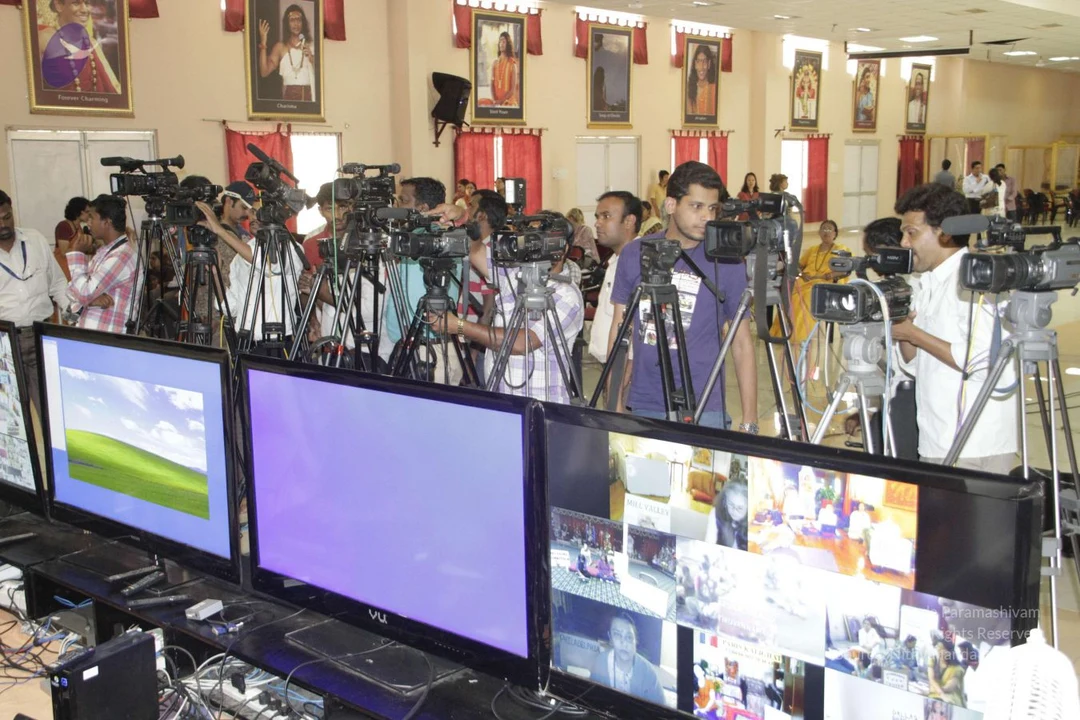
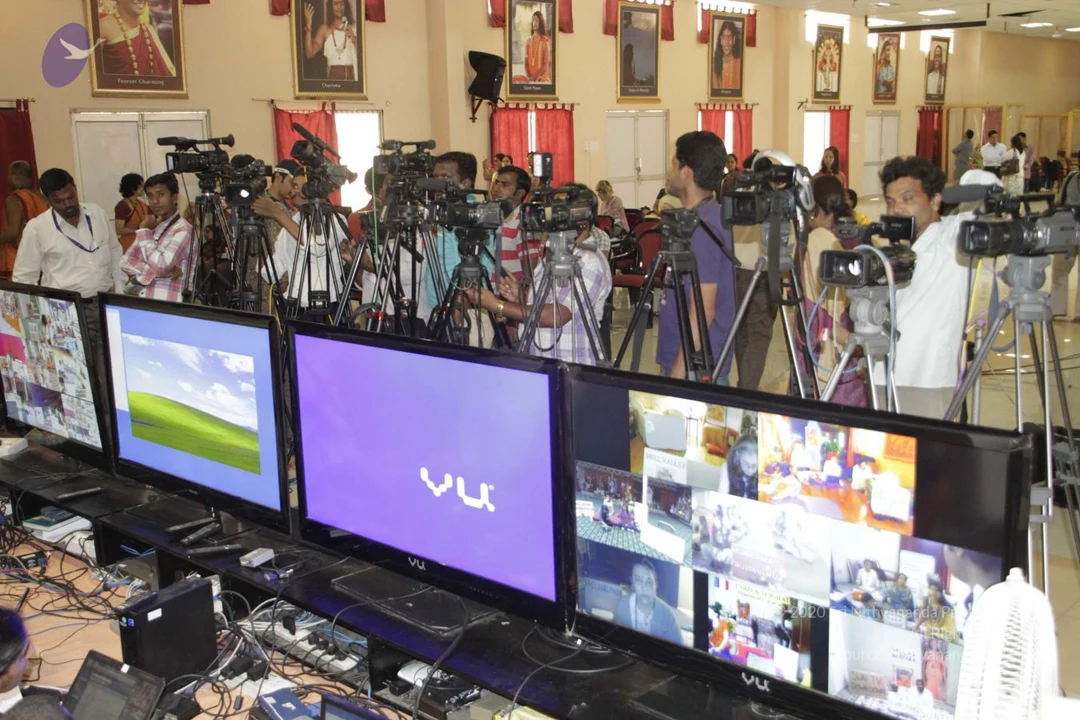
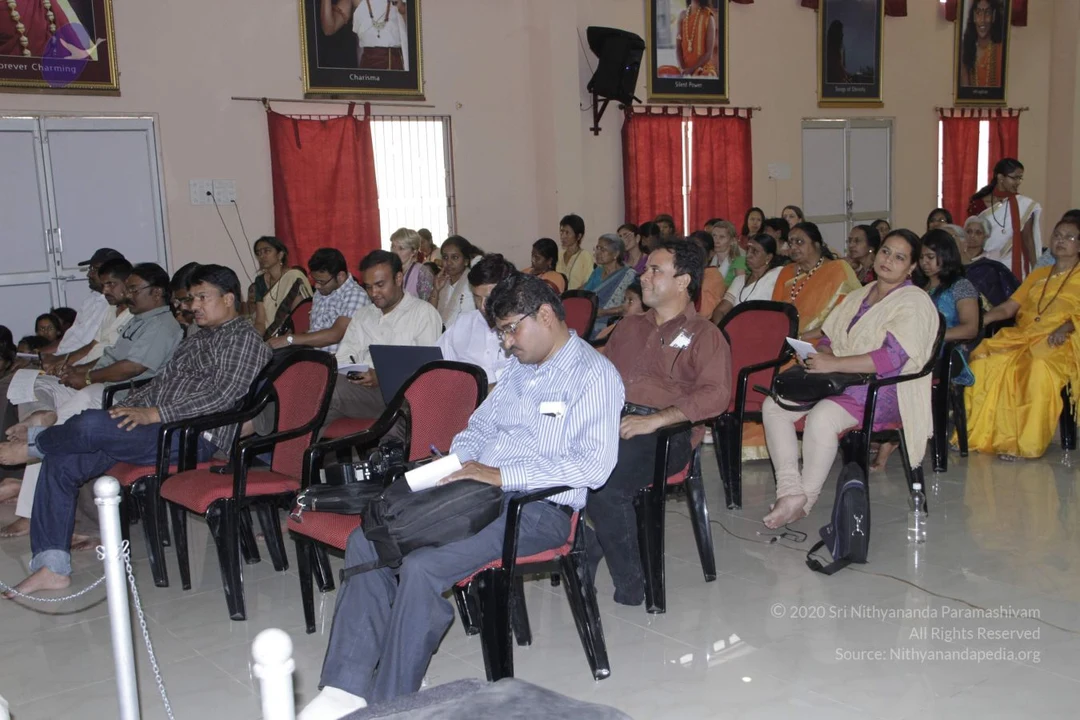
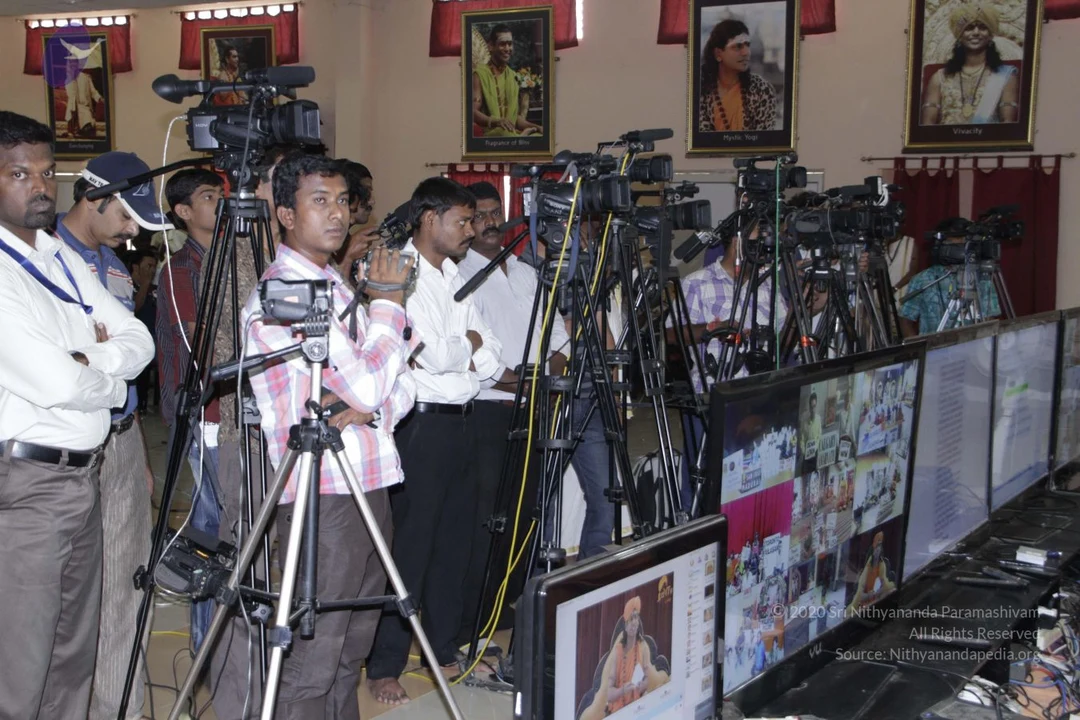
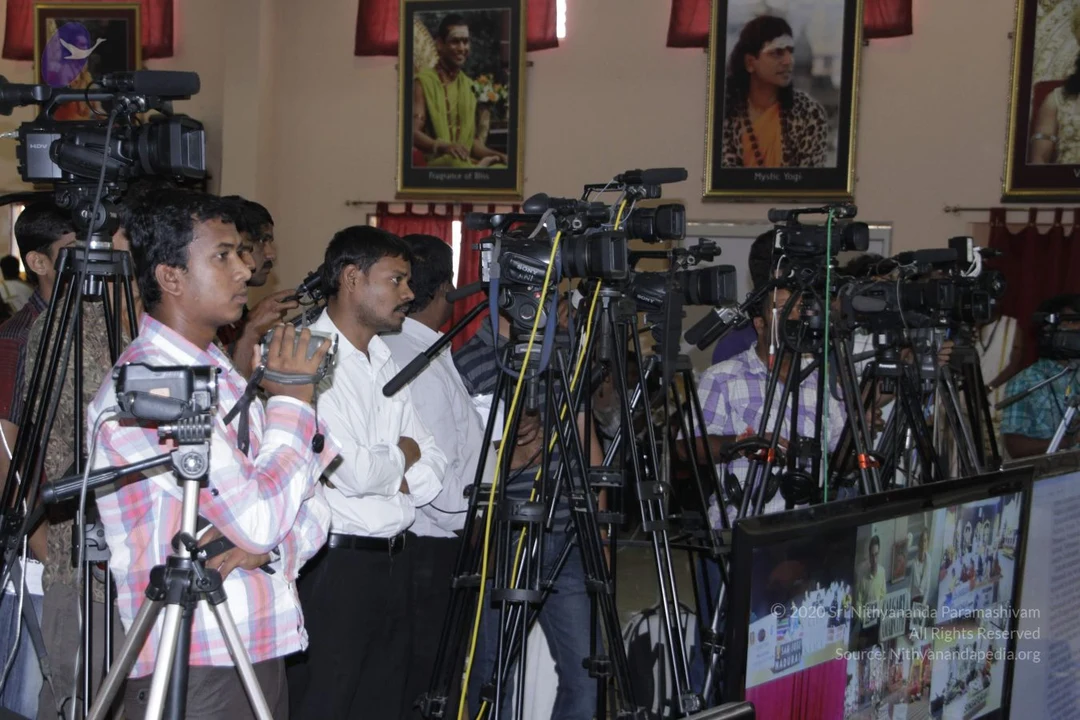
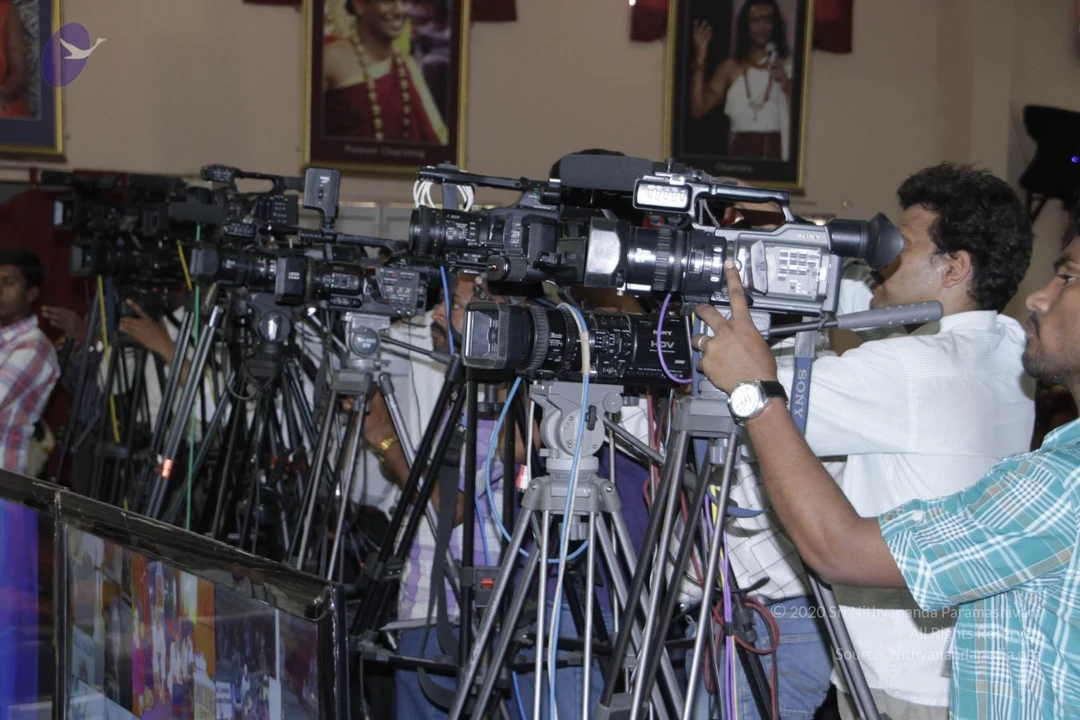
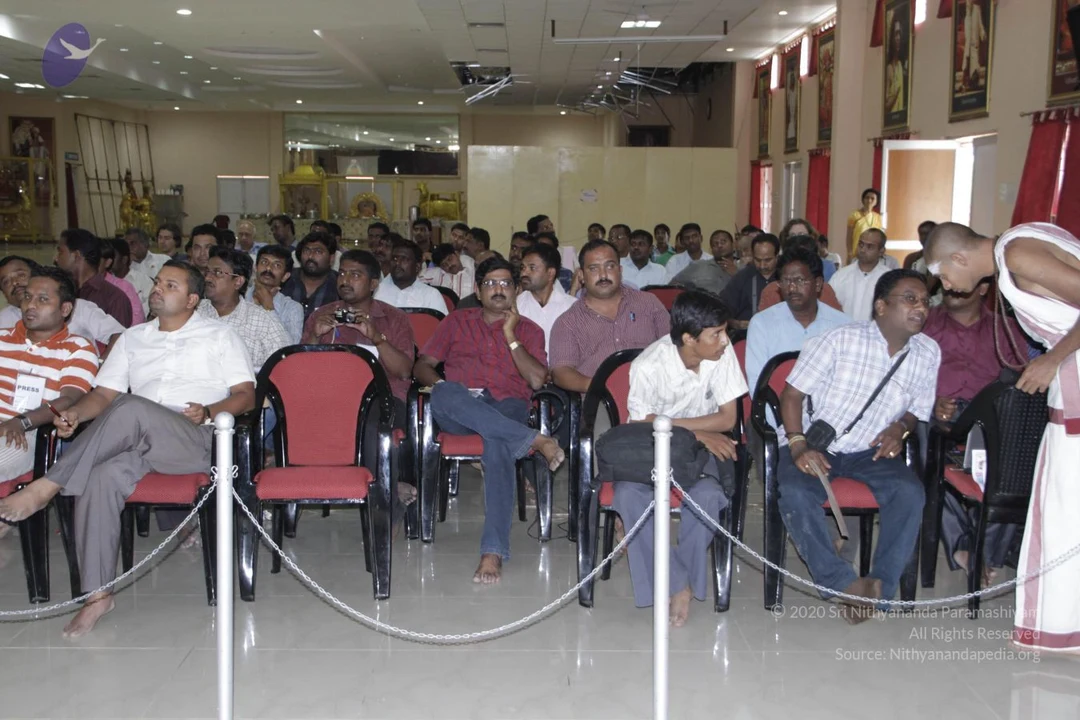
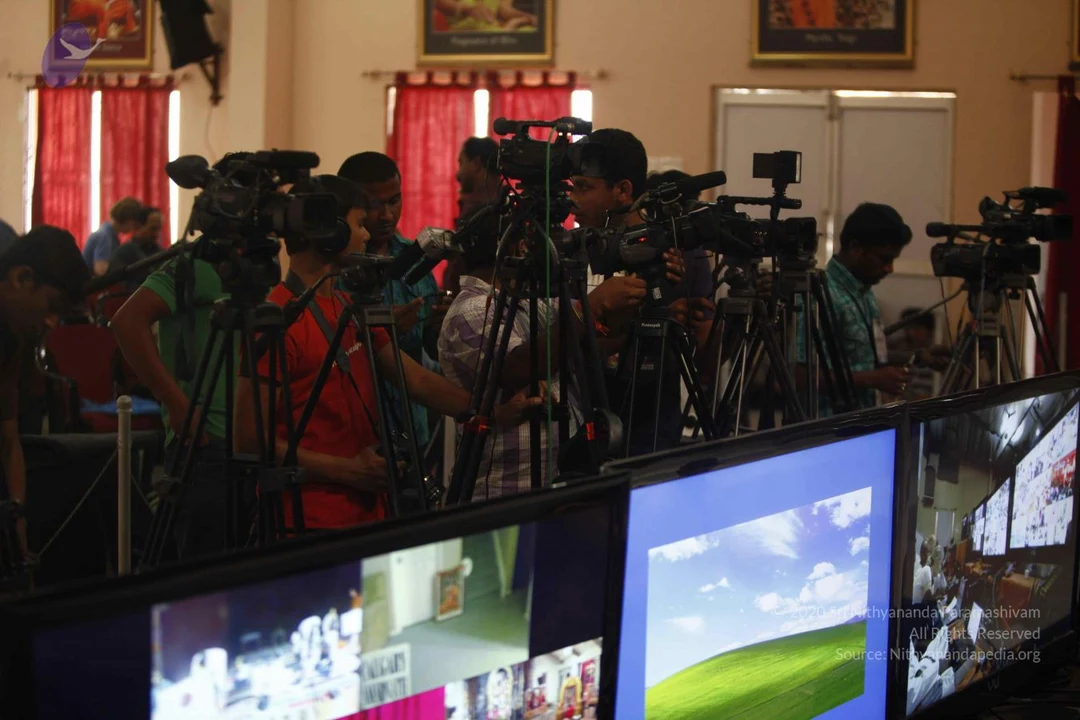
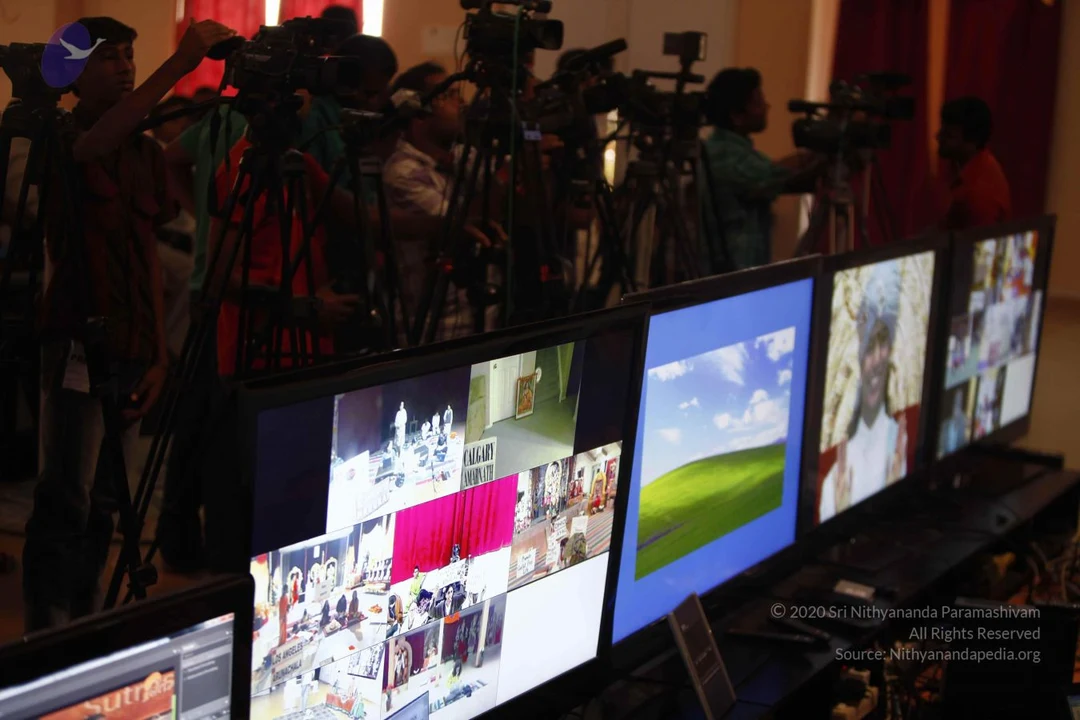
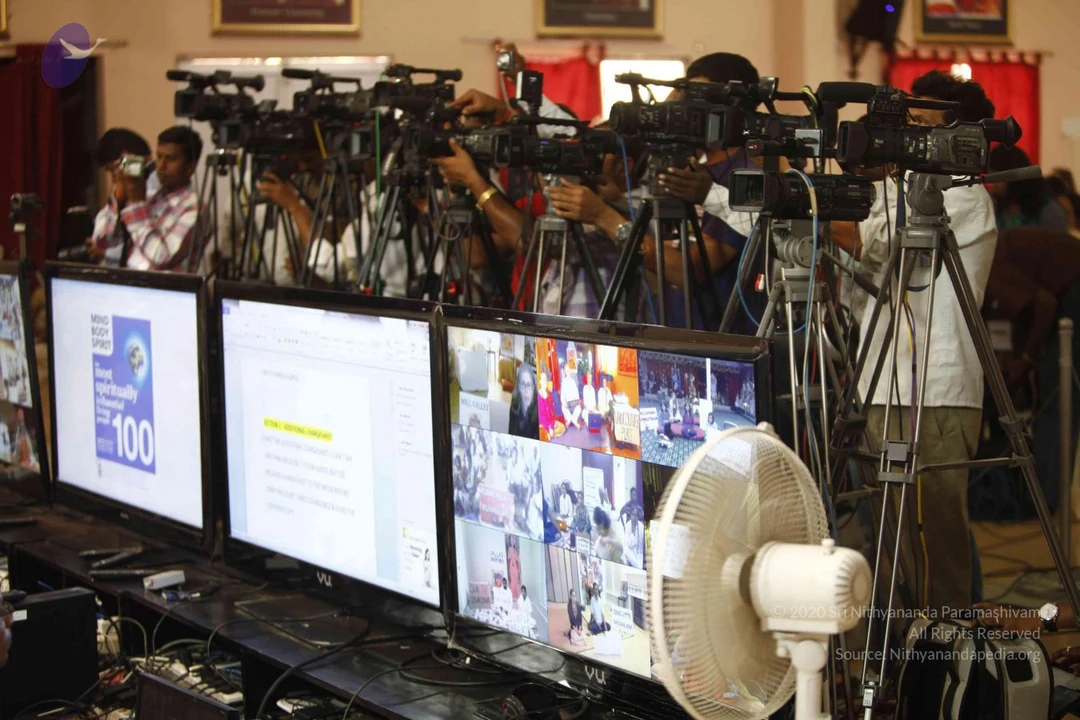
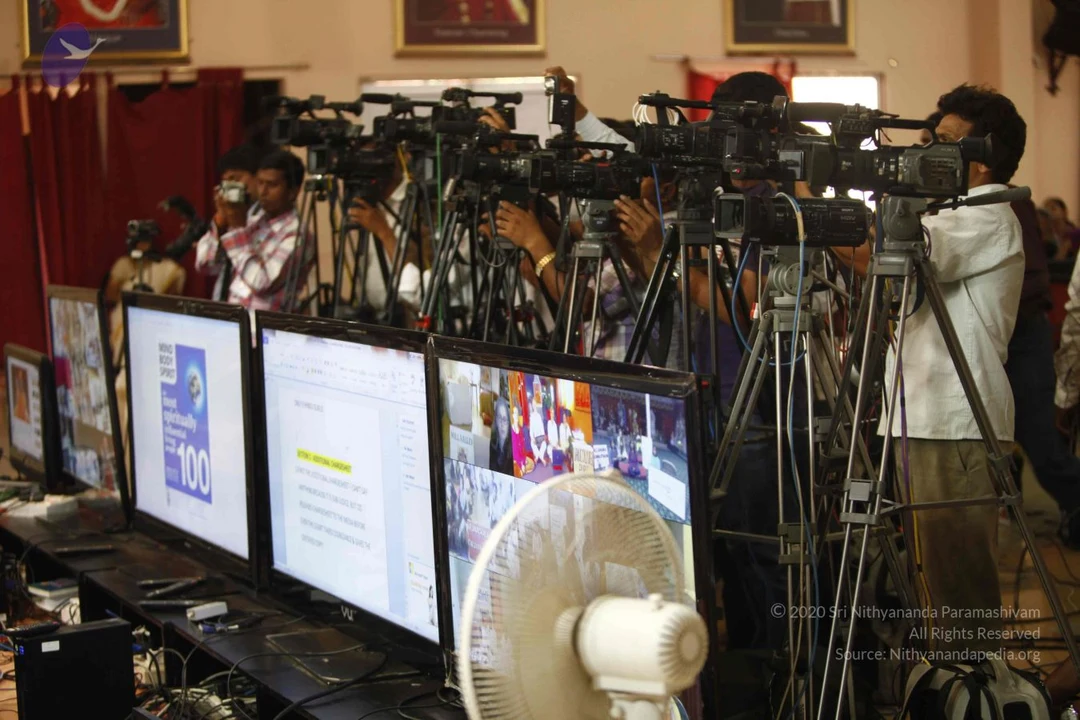
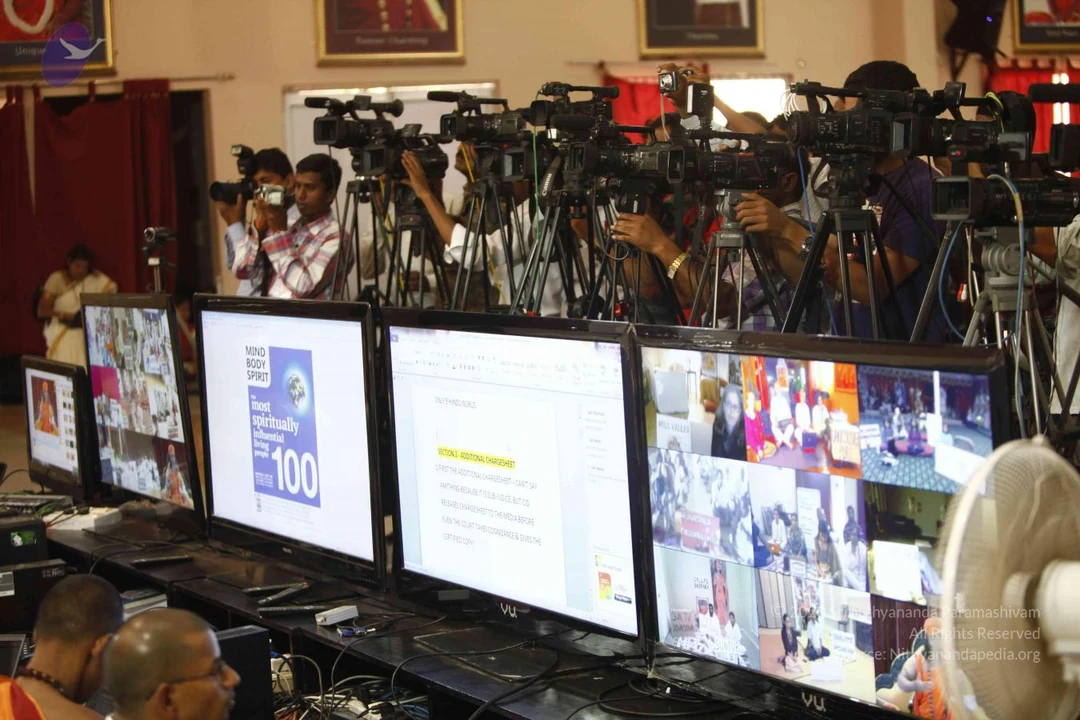
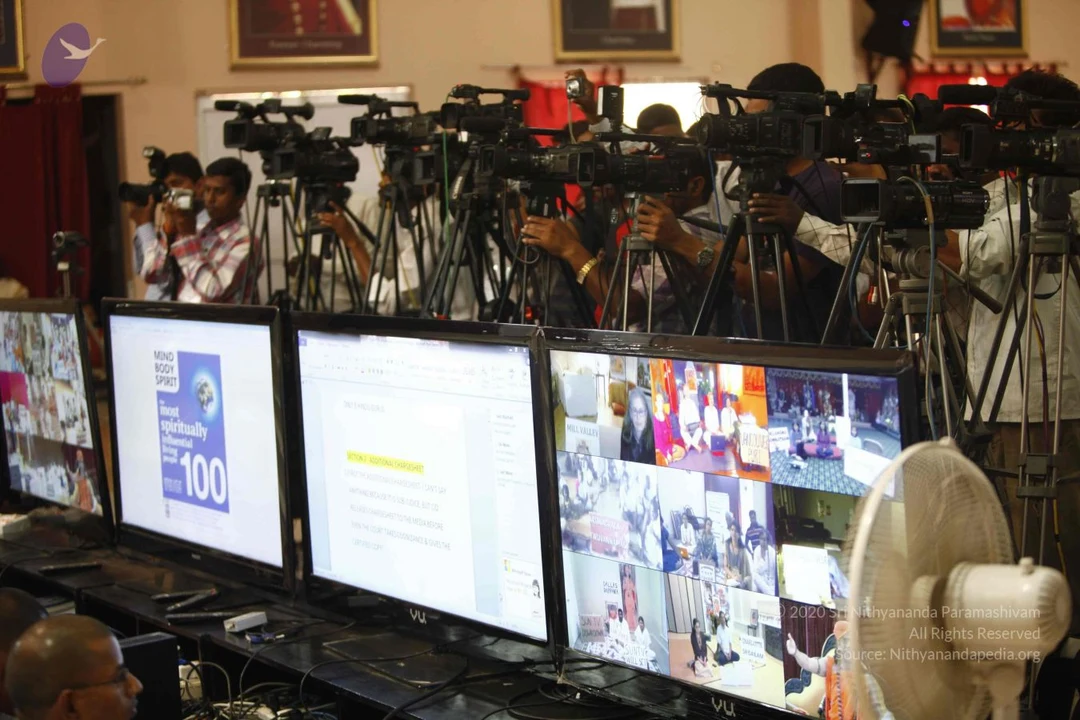
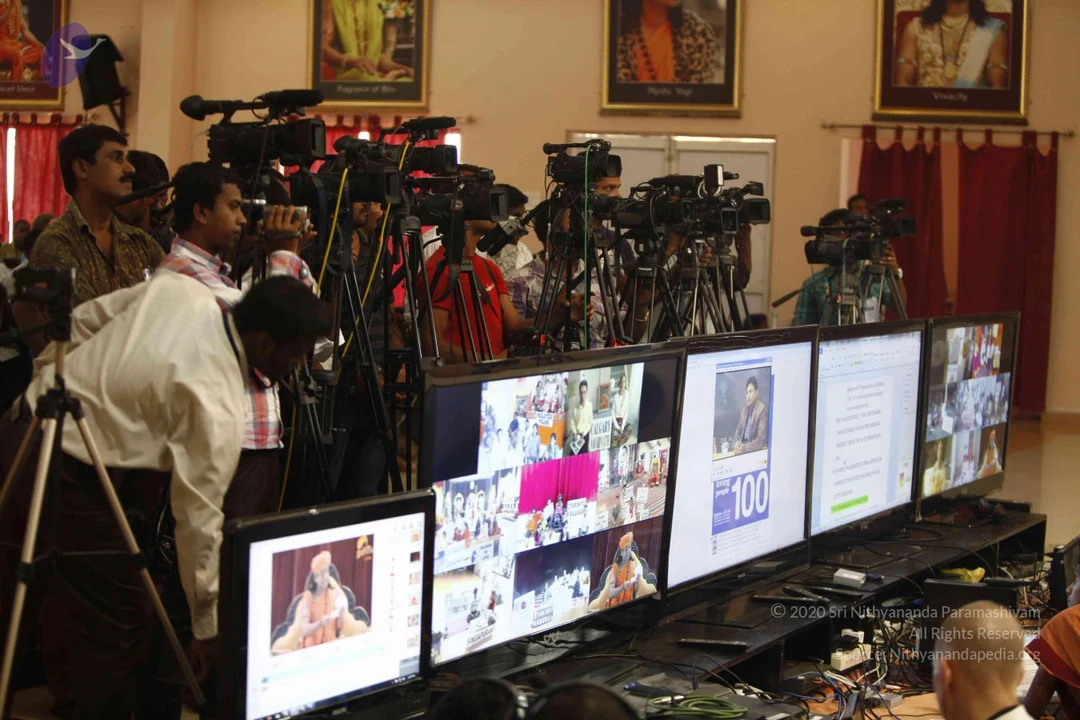
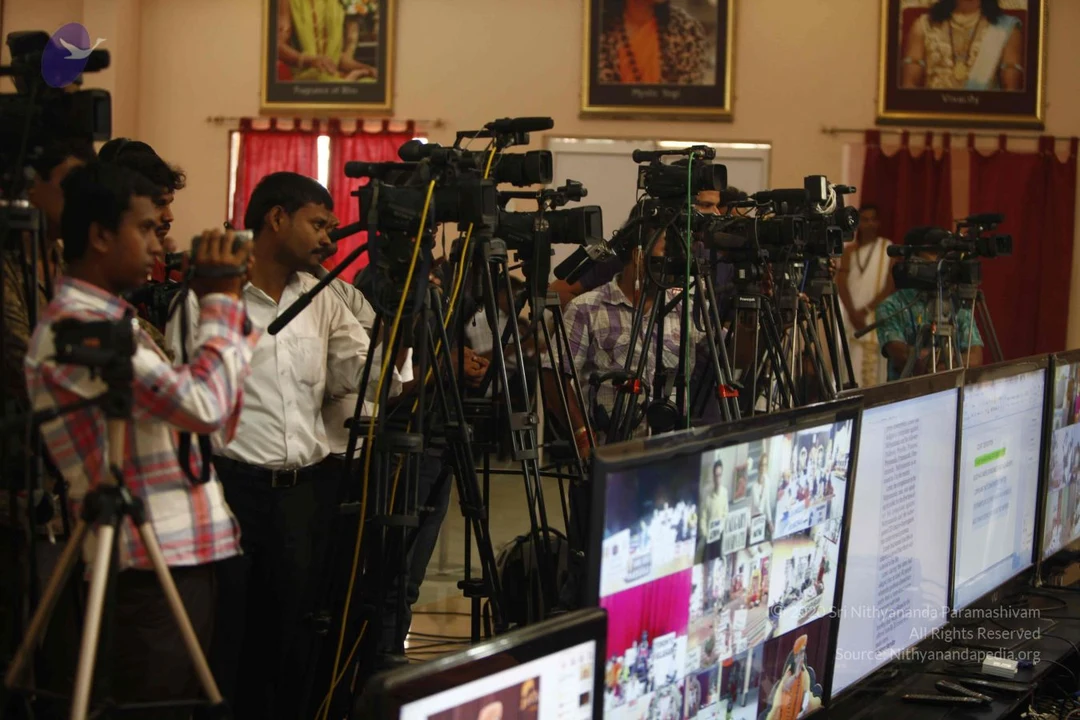
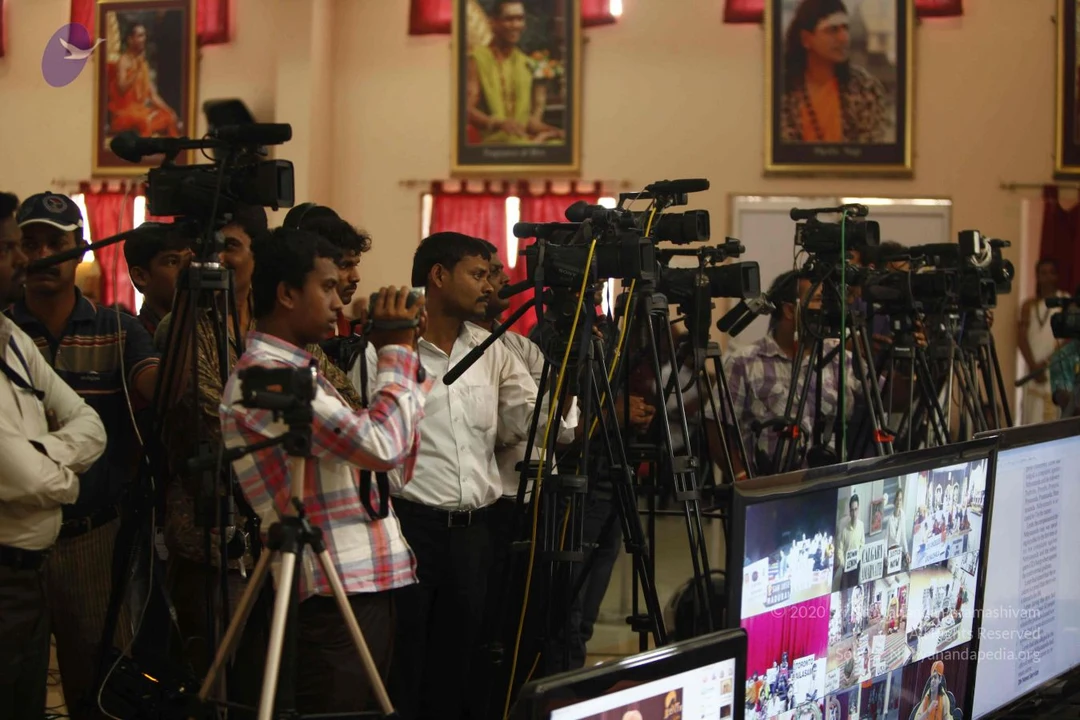
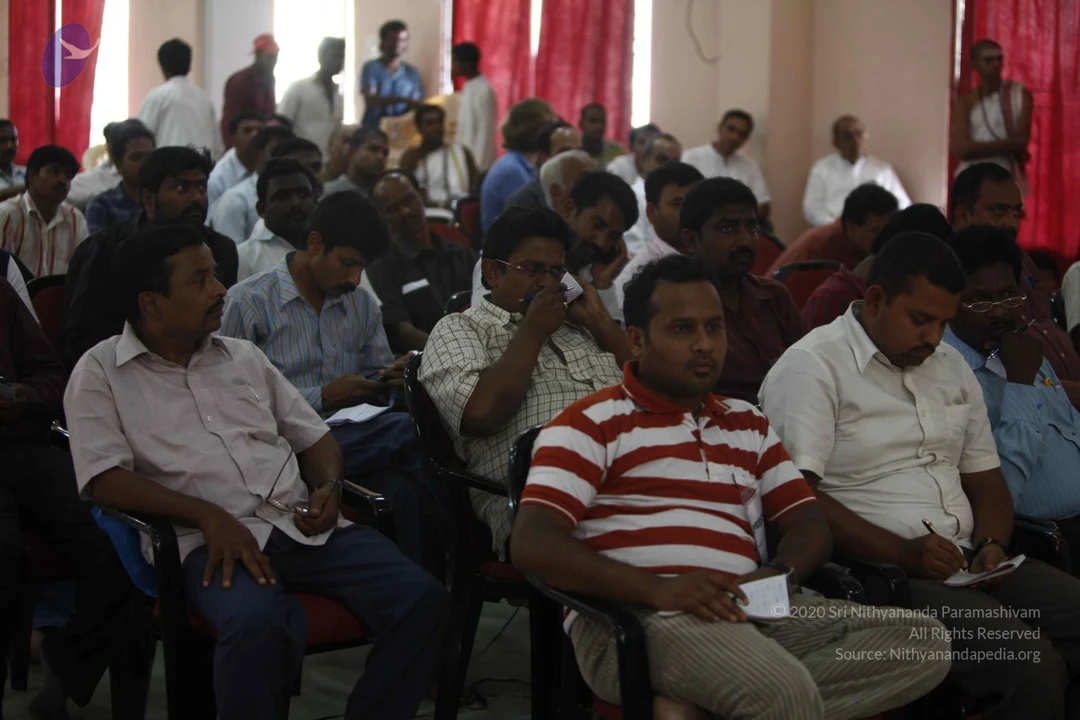
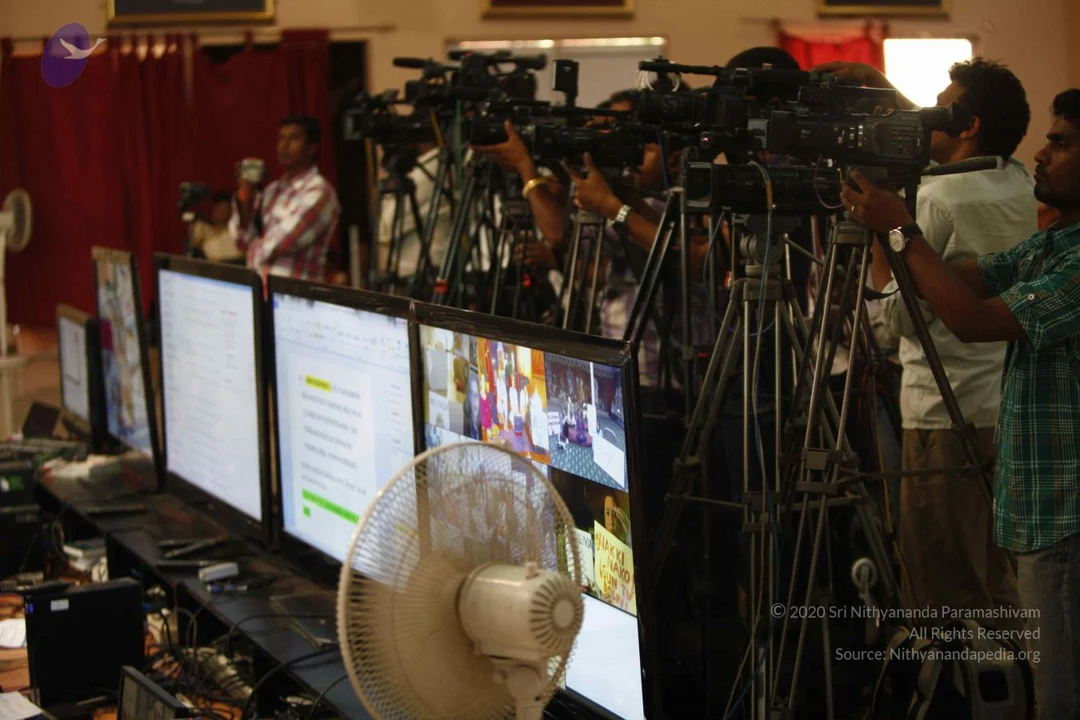
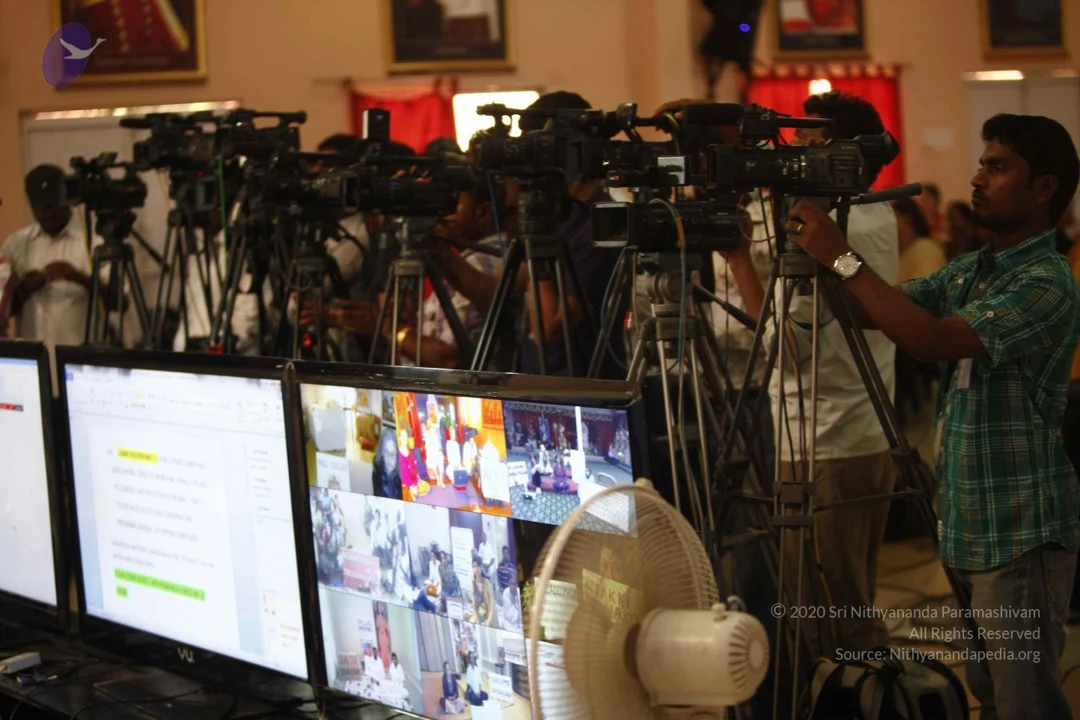
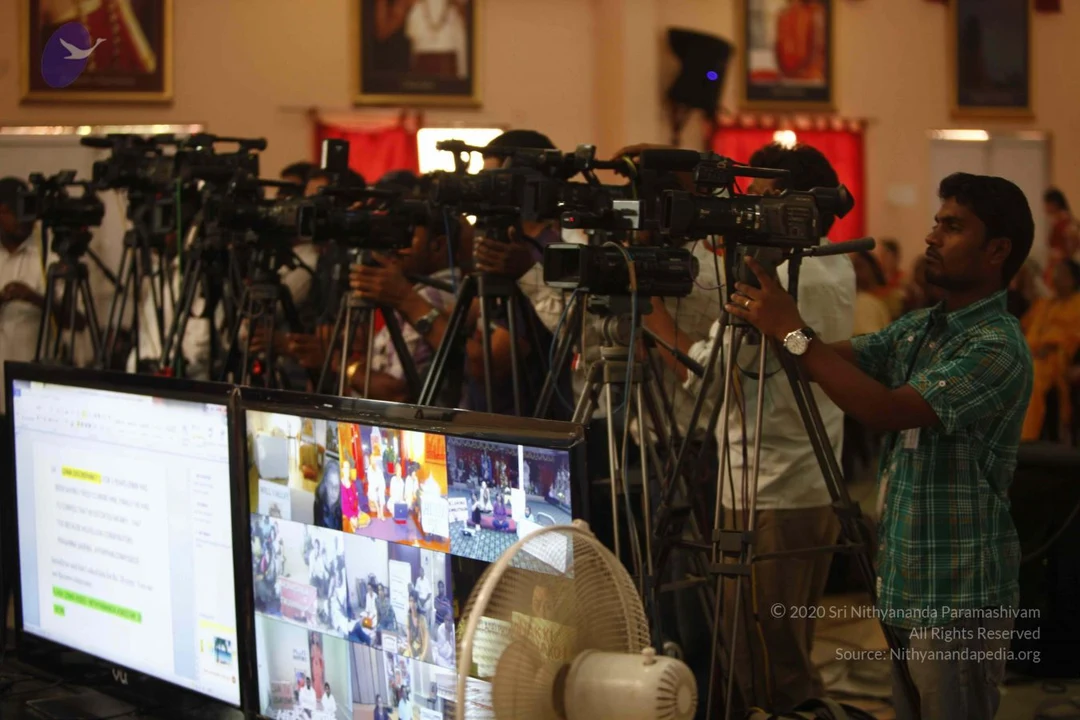
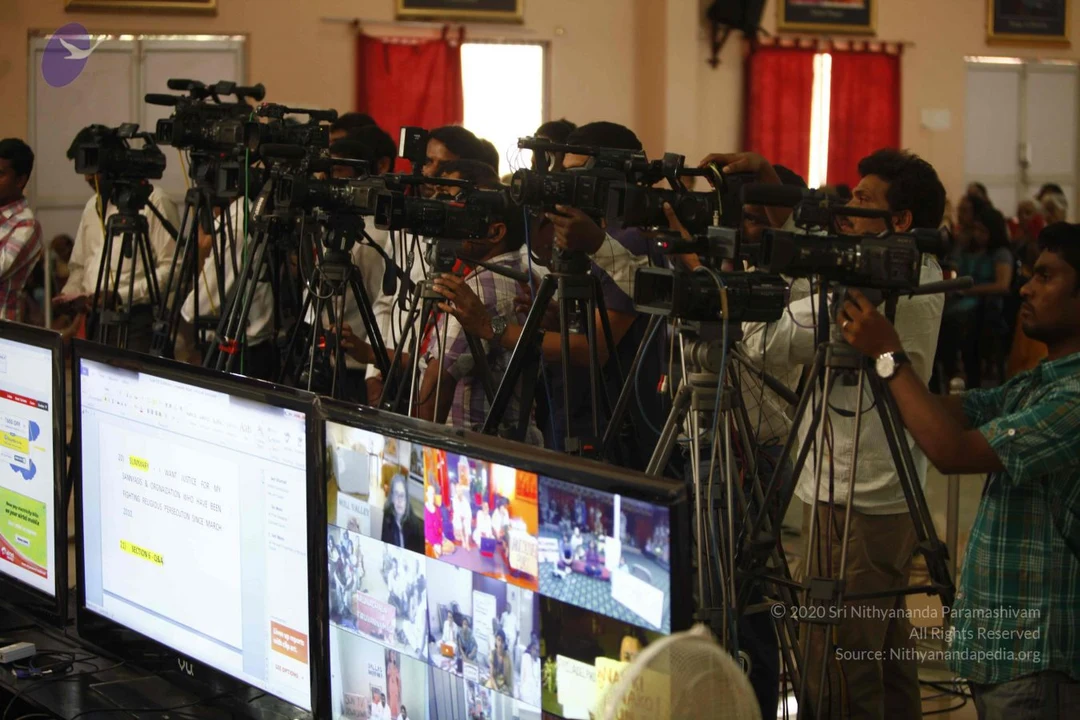
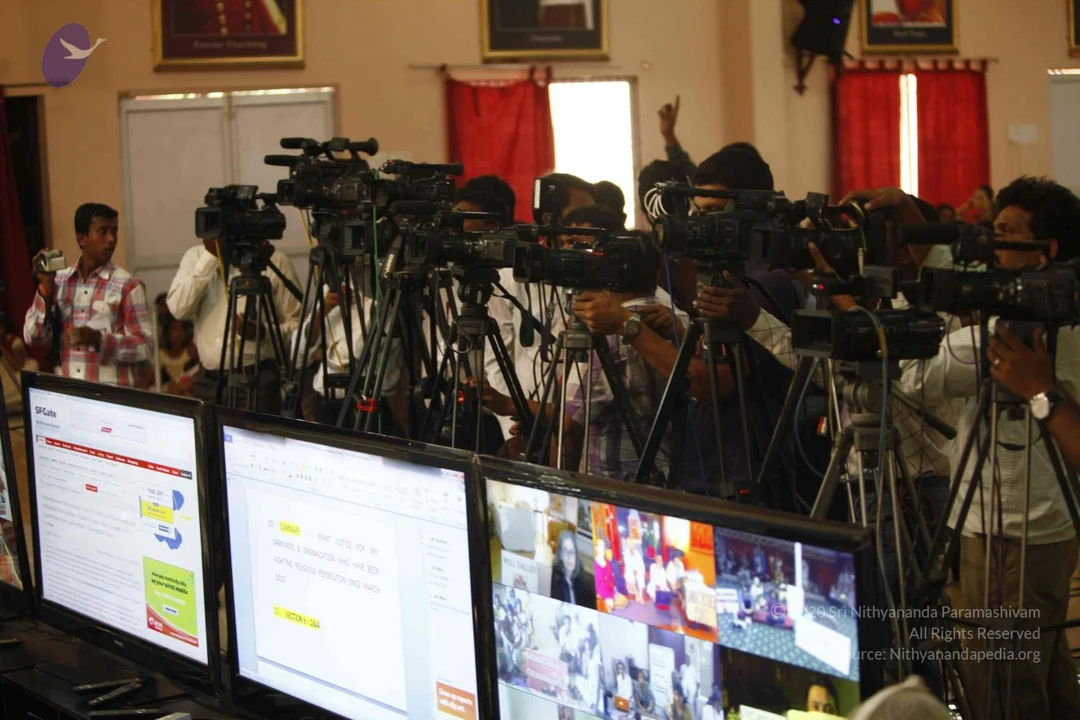
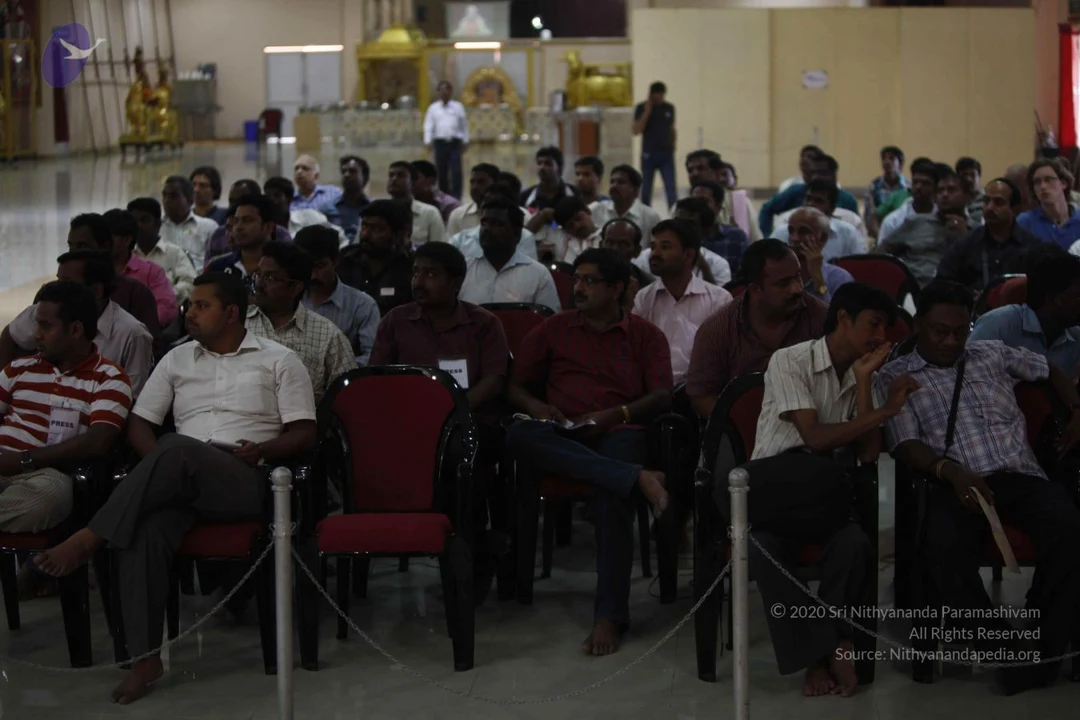
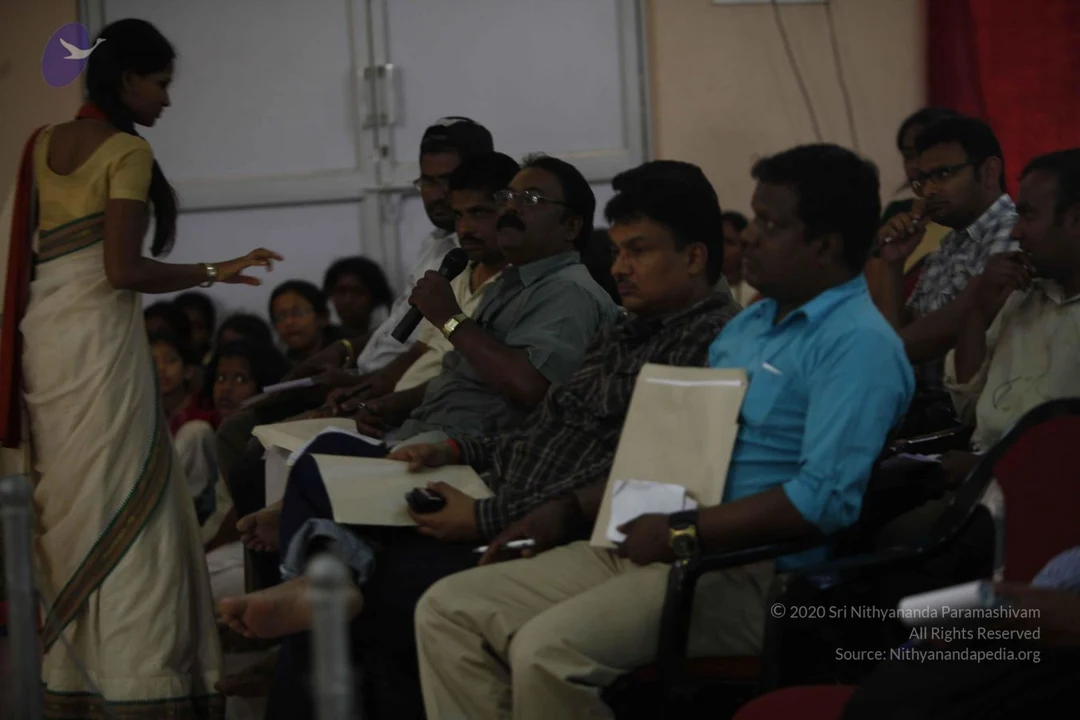
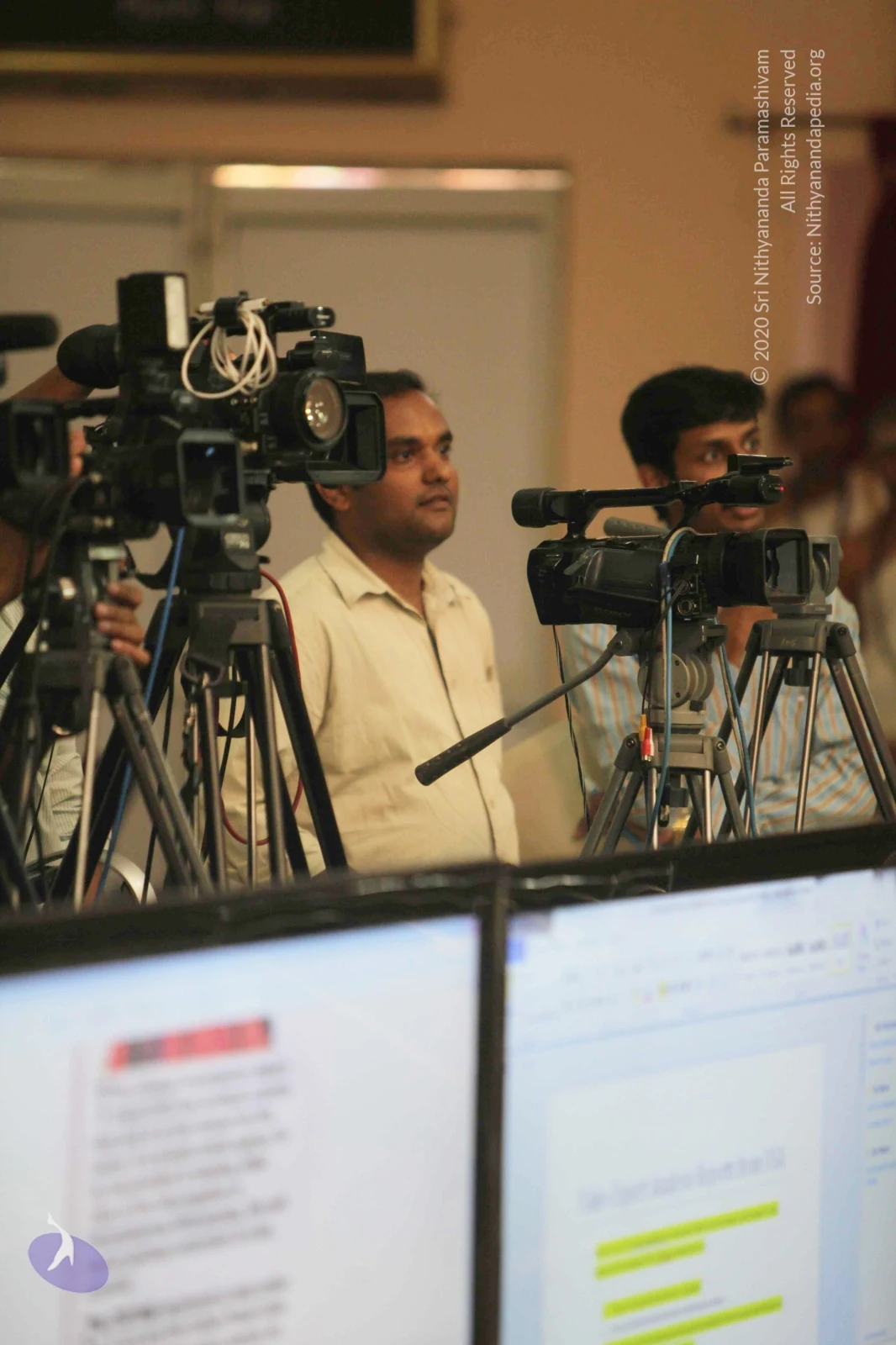
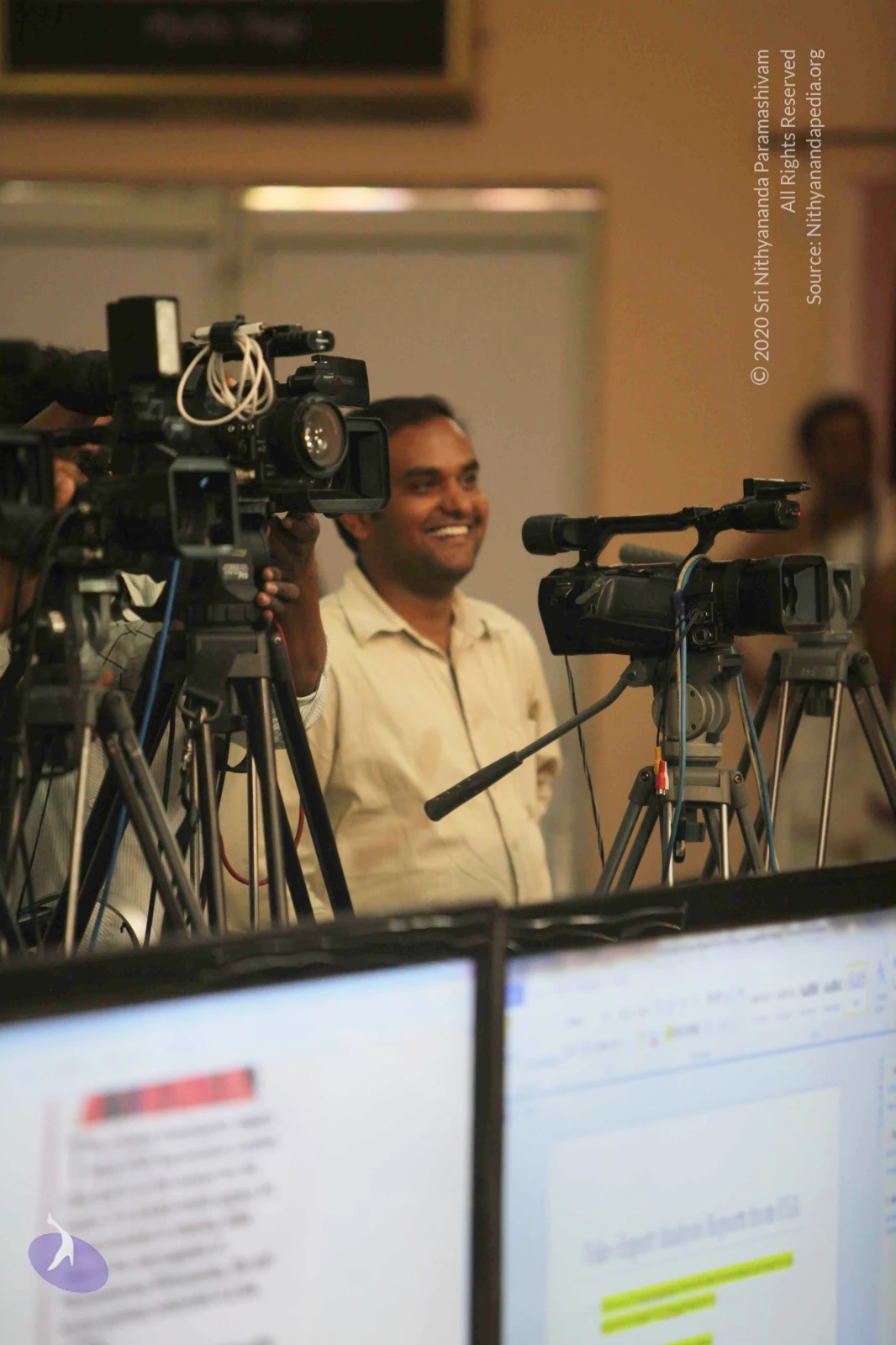
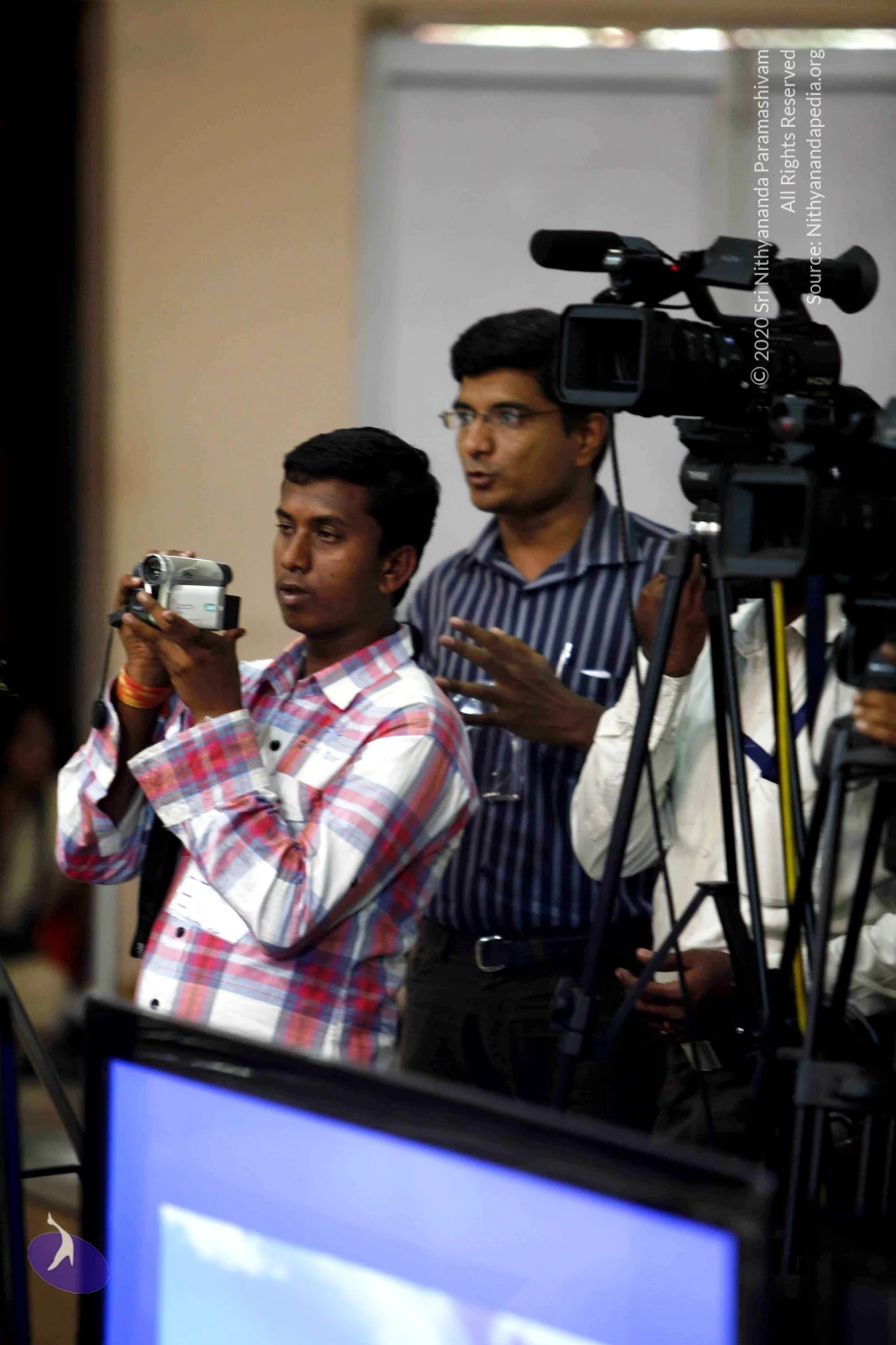
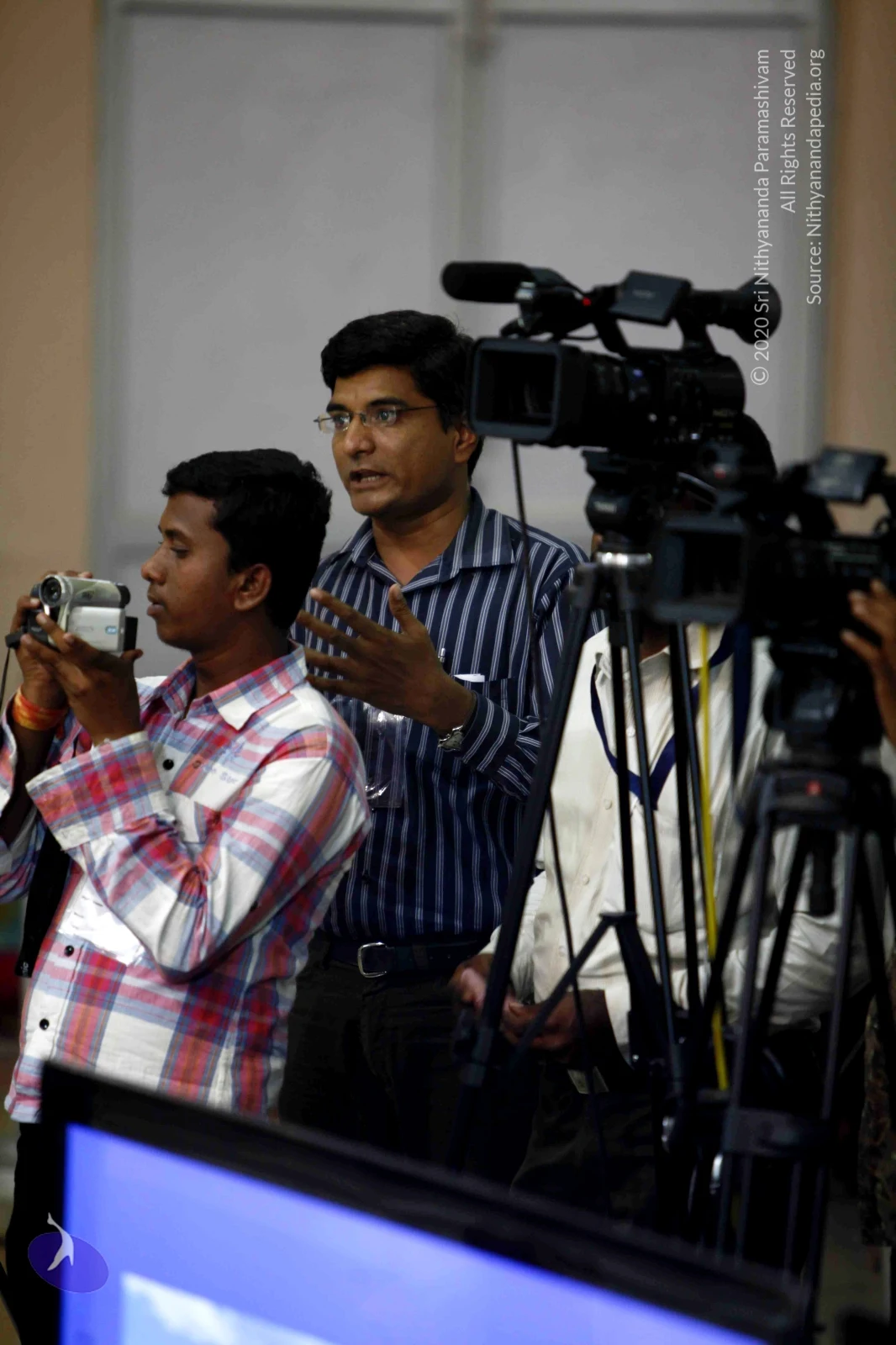
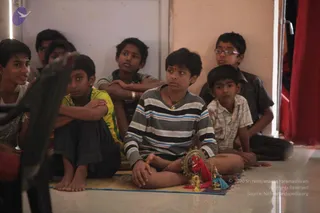
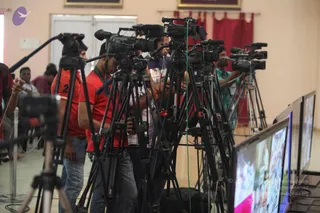
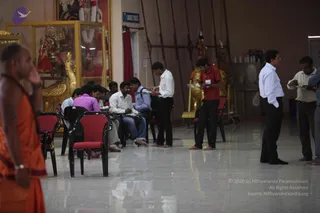
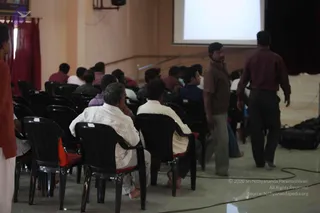
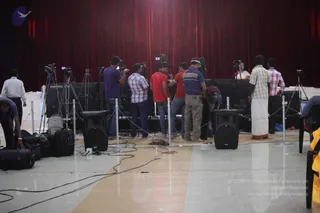
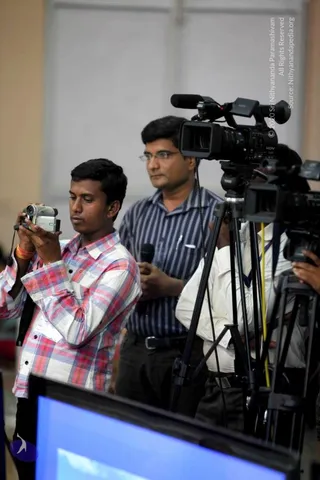
A photograph of a group of boys seated on the floor in a small room, listening attentively toward something off-frame at left. In the foreground a boy in a grey-and-navy striped top sits cross-legged on a woven mat beside a small brass deity murti or kalasha-style figure with red cloth draped over it and a trident-like brass ornament. Other boys in yellow, striped and checked shirts sit against a pale wall, one wearing glasses. A red curtain hangs at the right edge.A row of video camera operators stands behind black tripods in a hall with cream walls and maroon curtains. Several men wear red polo shirts, one with a number 2 on the sleeve, another in a purple striped shirt, and a man in a green shirt at the right. Monitors on the right show a live feed of a event. A boom microphone and cables run across the floor, and a few people sit in the background near the wall.A white minivan parked on bare dirt ground at an ashram-like site, with a red brick building and a tree behind it. The van's side door displays a PUBLIC TV logo in red, blue and black with Kannada text beneath it. No people are visible in the scene.A photograph inside a bright tiled hall where men are seated on red-cushioned chairs eating from metal plates, while others stand holding plates, one in a red polo shirt with a name badge and another in a white shirt. At left, a figure in an orange robe with a dark wrap stands with his hand near his face, partly cropped. Behind them, glass cases hold gold-coloured deity murti adorned with garlands and a gold peacock-style figure, and a ladies' toilet sign is visible on the wall. The scene suggests a communal meal, possibly annadan.A photograph of a hall with rows of black plastic chairs filled with seated audience members, mostly seen from behind, many wearing white or light shirts and dhotis. In the foreground a man in an orange-brown top stands at left, and a man in a dark maroon shirt and grey trousers walks along the right. A projection screen glows blank at the top of a stage area, with red curtains at the left edge and a black cable running across the floor.Behind-the-scenes view of a stage being set up in a hall with a deep red curtain backdrop. Several men stand in front of large black speaker cabinets and camera tripods, some operating video cameras, while others work near cables and equipment. Men wear casual shirts and trousers, including a red t-shirt, a purple top, checked shirts, and a white dhoti on one standing figure. Black roller bags, cables taped to a glossy floor, and small black monitor speakers are in the foreground. A white-clad figure appears at the far right edge, partly visible. No identifiable a person depiction is present in the scene.

Esoteric-Satsang

11 photosSource gallery
Photograph of a man seated on an ornate golden throne with a deep red velvet cushion, speaking at a satsang stage. He wears a black draped garment with an orange-and-gold patterned border, long dark swept-back hair, a vertical white tilak with a red dot, multiple strands of rudraksha beads and a ceremonial gold necklace, and rudraksha armbands. His hands are folded in his lap and a small wired microphone is clipped near his face. Behind him stand pink, green and white pillars and a gold kalasha-style vessel rests at the lower right.Photograph of a seated man in a dark robe with orange trim, holding a silver trident in his raised right hand while his left hand rests on his knee. He wears layered rudraksha and white bead necklaces, rudraksha bracelets on both arms, a head-mounted microphone, and white tripundra with a dot on his forehead, with long dark hair. Behind him is an ornate gold throne, and at his feet a gold lion-head sculpture. Background includes red and green pillars. a person appearance-based label applies: saffron-trimmed dark robe, rudraksha malas and a trident in a ceremonial seated setting.A man seated cross-legged on an ornate gold throne with a deep red velvet cushion, wearing a black dhoti-style garment, a long rudraksha mala, a gold necklace and gold armlets, with a red bindi and tripundra on his forehead. He sits bare-chested with a black shawl draped across his body and holds a sword resting on the throne, with the lion-headed gold armrests and a gold kalasha-topped lamp on either side. Flanking him are two painted deity murti figures with multiple arms, holding ritual objects, in green, orange and gold. A wooden door stands behind.A man seated on an ornate gold throne with carved lion-head armrests and a red velvet cushion, speaking with hands clasped in his lap. He wears a black dhoti-style wrap with orange trim, a long rudraksha mala and layered beaded necklaces, bead armlets, and a white tilak with a dark bindi on his forehead. Golden lion-headed lamp stands with lit oil lamps flank the throne, and painted standing figures in red and gold dhotis frame the background. A small white bird sits atop a gold pole.A smiling man with long dark hair and a white-and-red tilak on his forehead sits on an ornate gold throne with a deep red cushion, flanked by gold lion-head armrests. He wears a black garment over his shoulder, layered rudraksha malas and beaded bracelets, and a small microphone clips near his face. A bright blurred light is in the foreground, a gold kalasha-style lamp stands at right, and a red and striped cushion lies at lower left. a person: the long swept hair, ornate gold throne, layered rudraksha malas and ceremonial adornments match the page's description of a satsang seat; he is seated in a satsang-style setting, so this is a person in person.A smiling man with long, dark, swept-back hair sits on a red velvet seat in front of an ornate gold-embroidered backdrop. He wears a black garment draped over one shoulder with an orange-and-gold border, layered rudraksha malas and a long ceremonial gold necklace, and beaded rudraksha bracelets on his upper arms. A white tilak with a red dot marks his forehead, and a small headset microphone is clipped near his ear. His hands are clasped in his lap, and a silver bowl sits beside him. Pillars in pink, green and cream stand in the blurred background. The cues match the a person appearance, consistent with the page's note of his presence at this satsang, though the image itself is not conclusive.

BhagavadGita
27 photosSource gallery
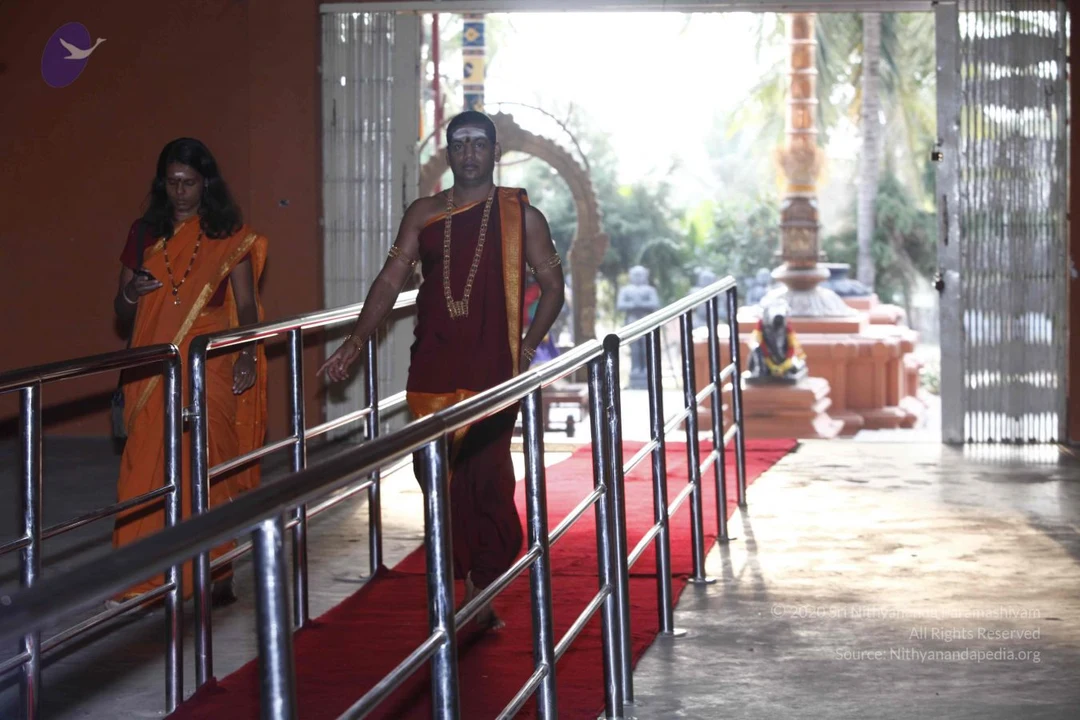
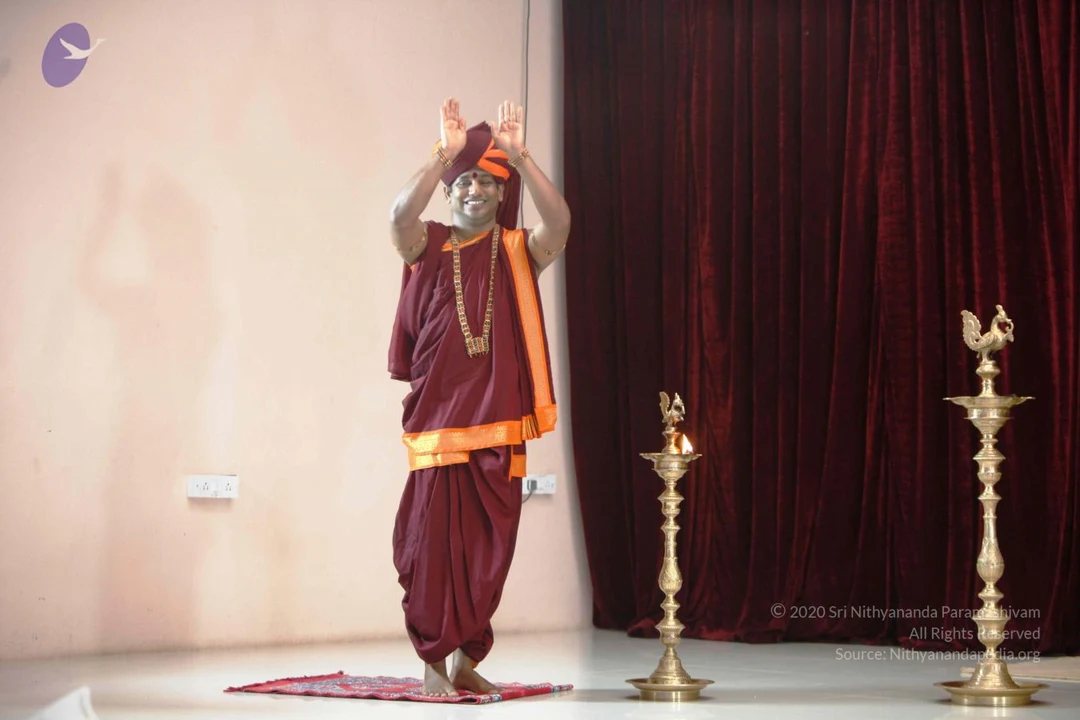
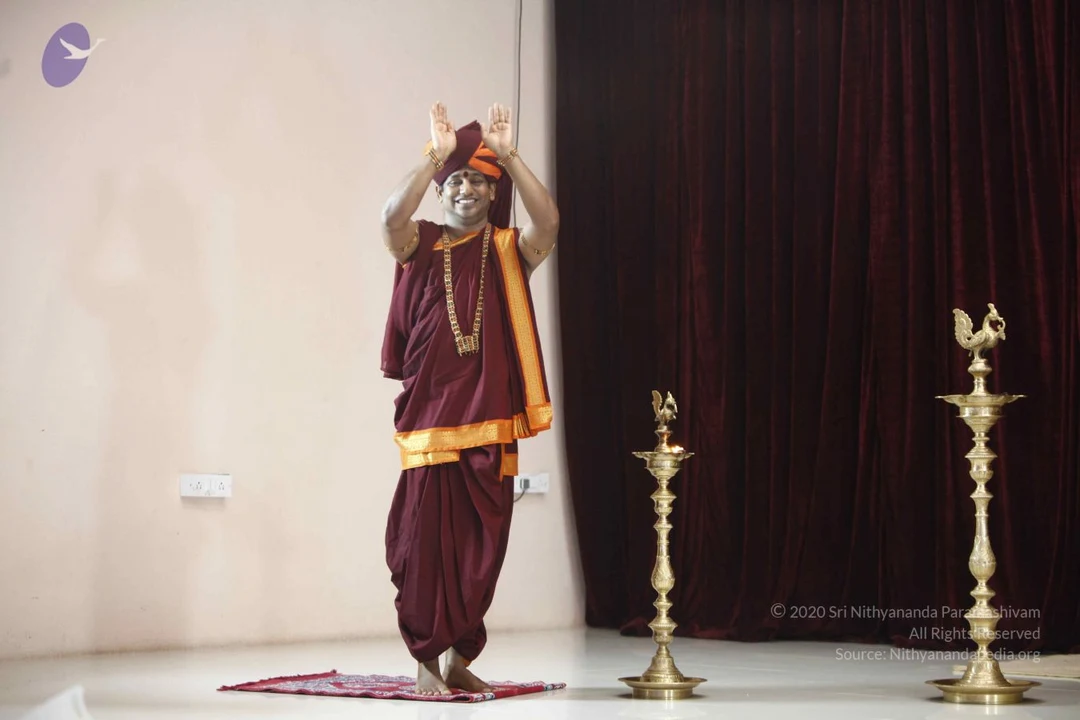
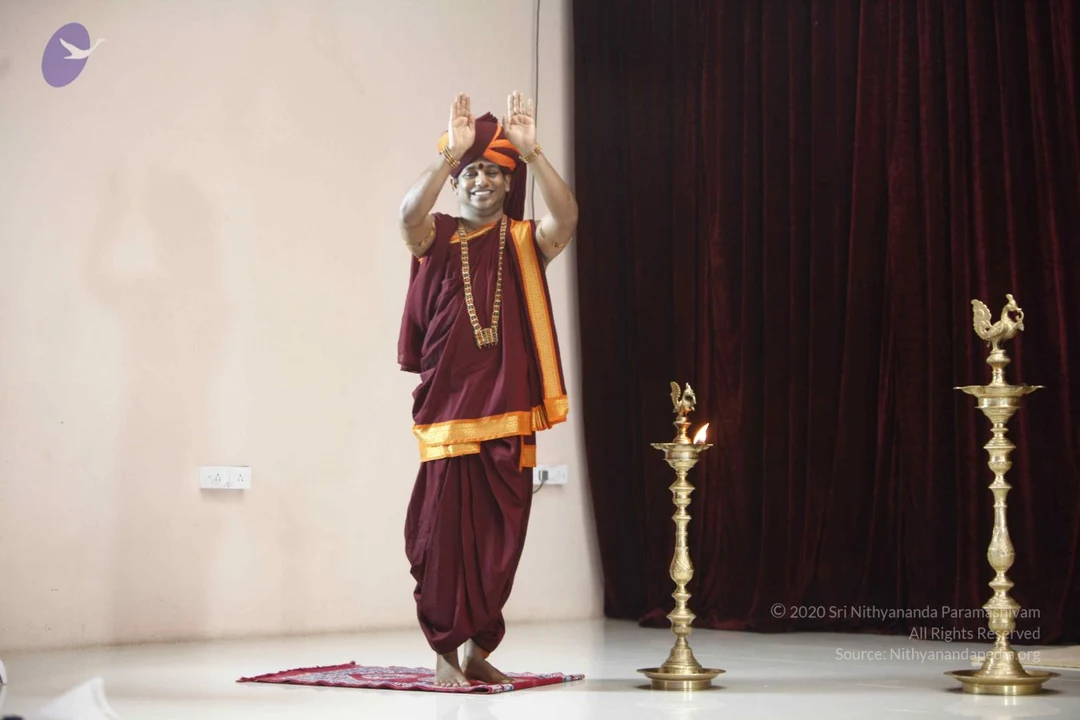
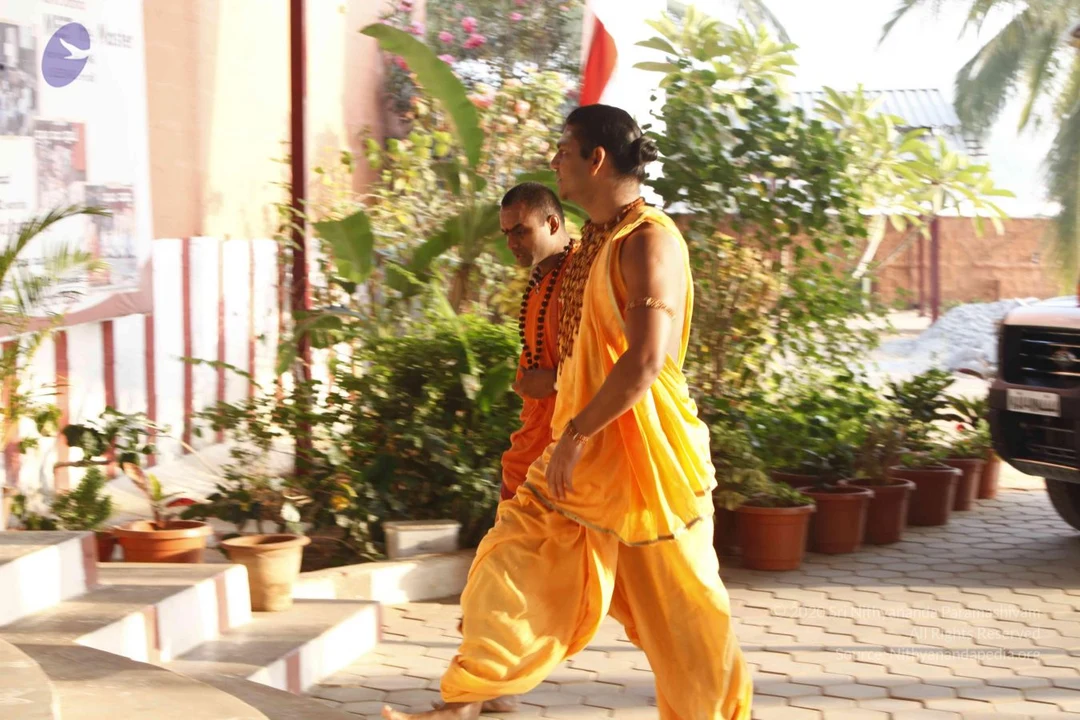
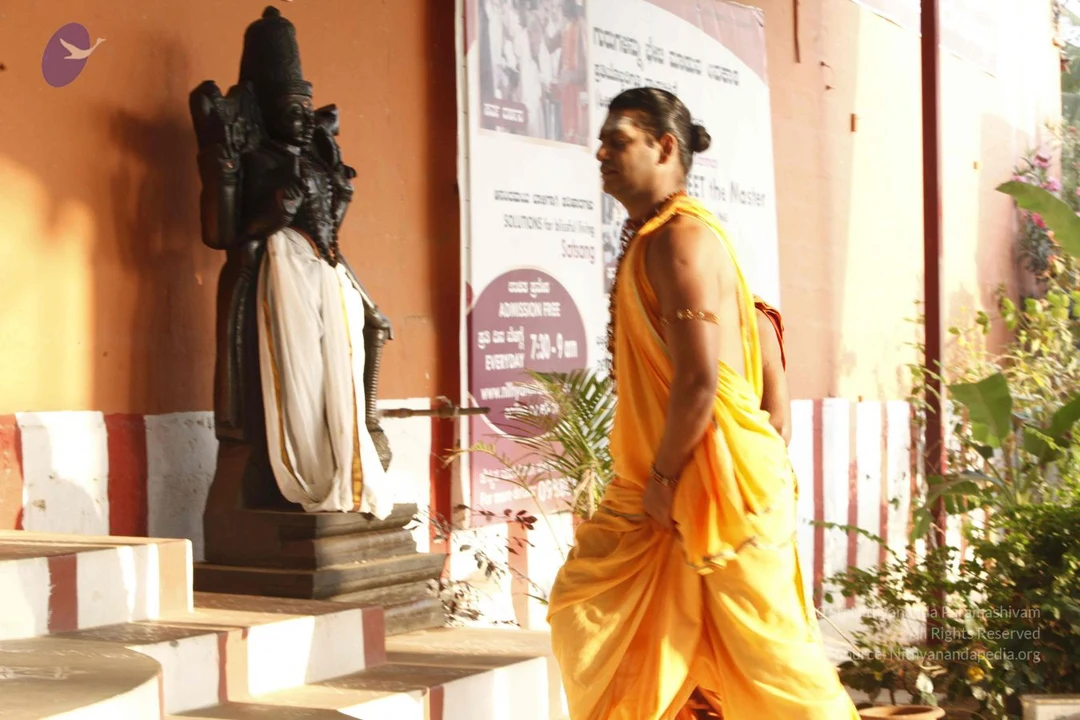
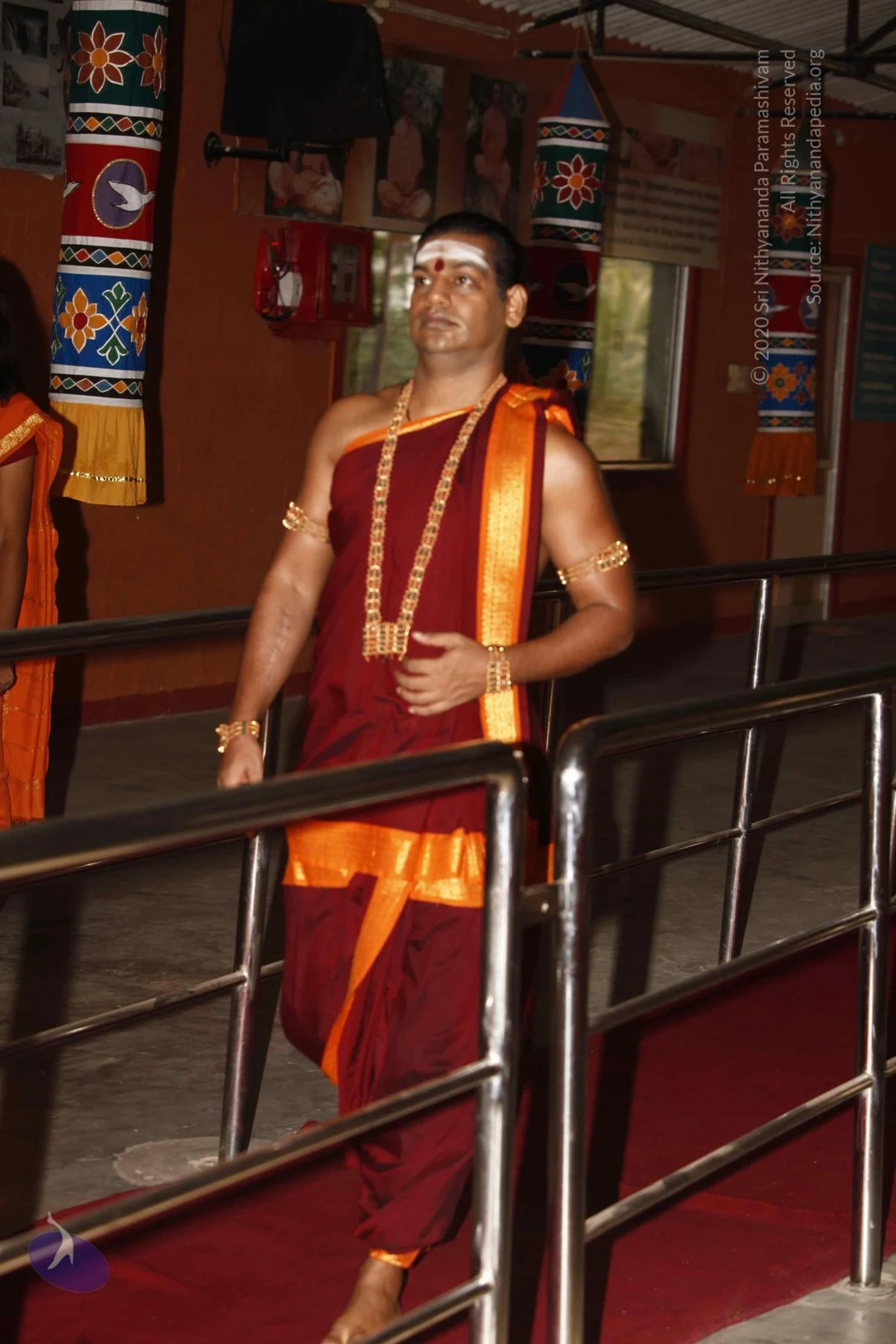
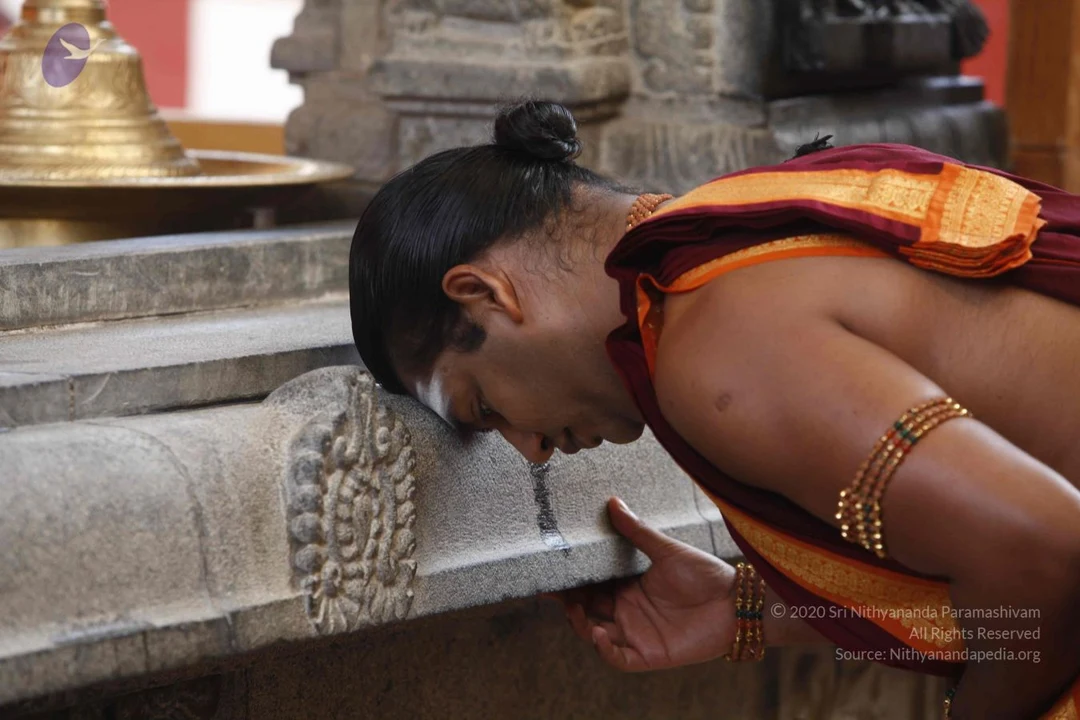
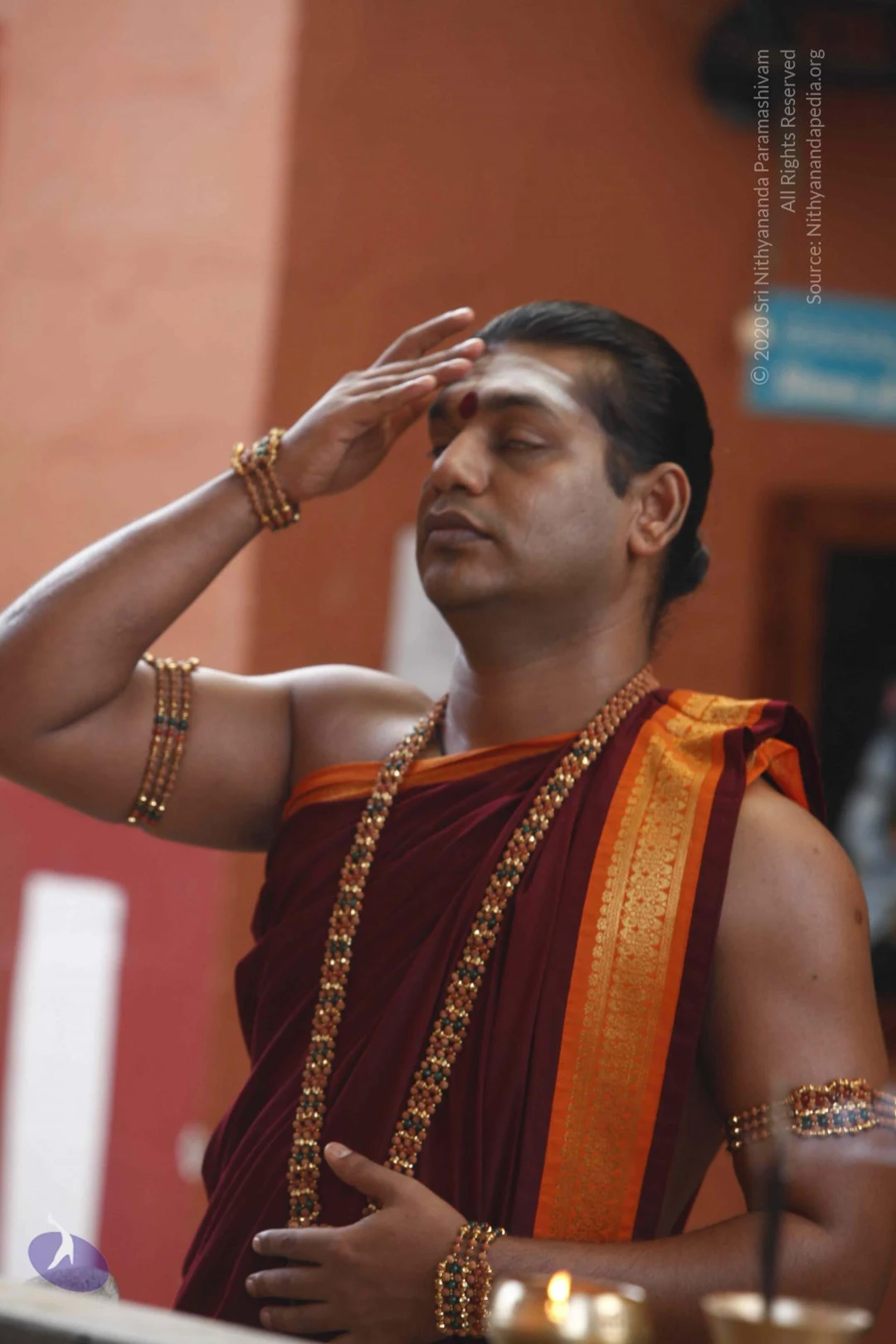
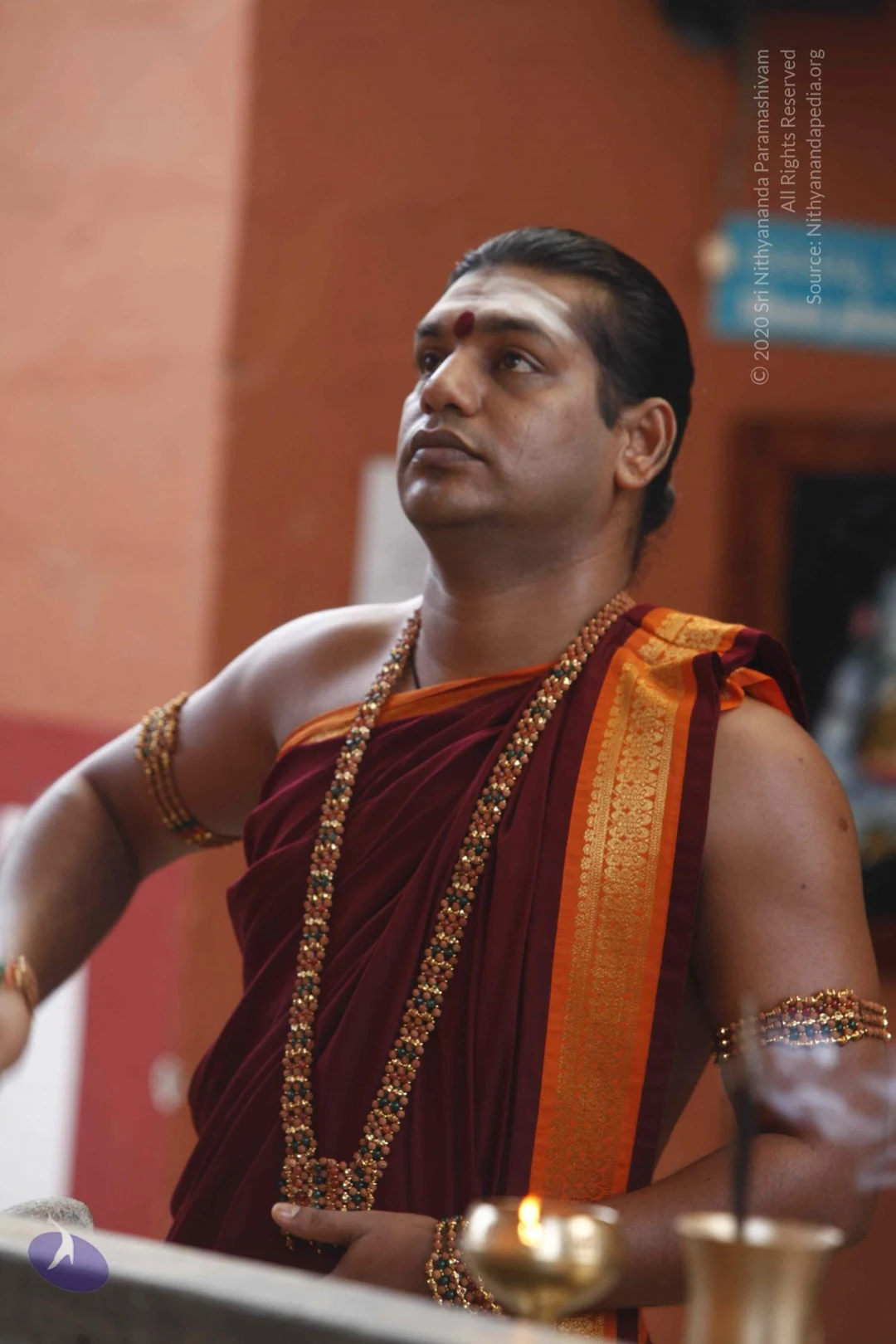
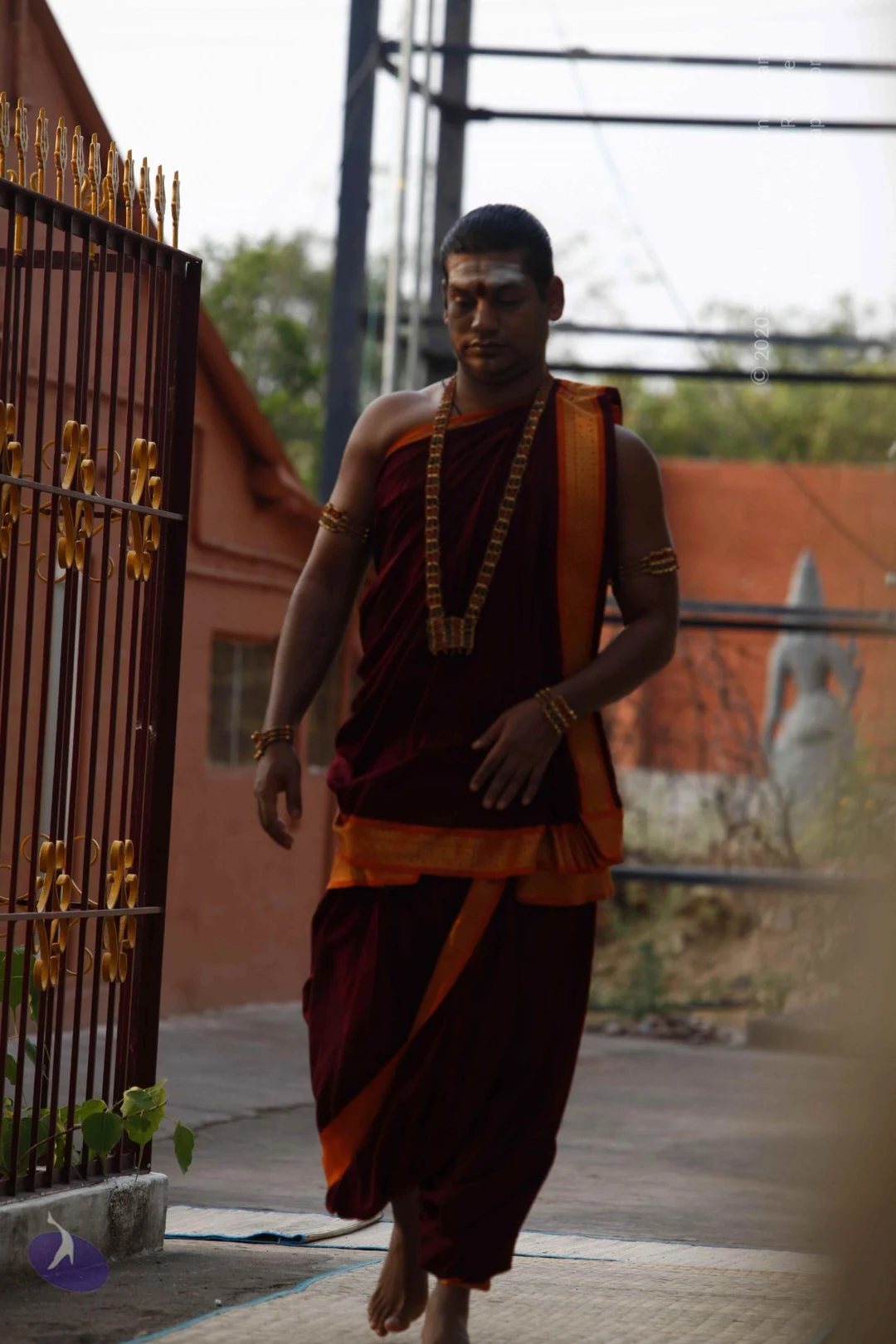
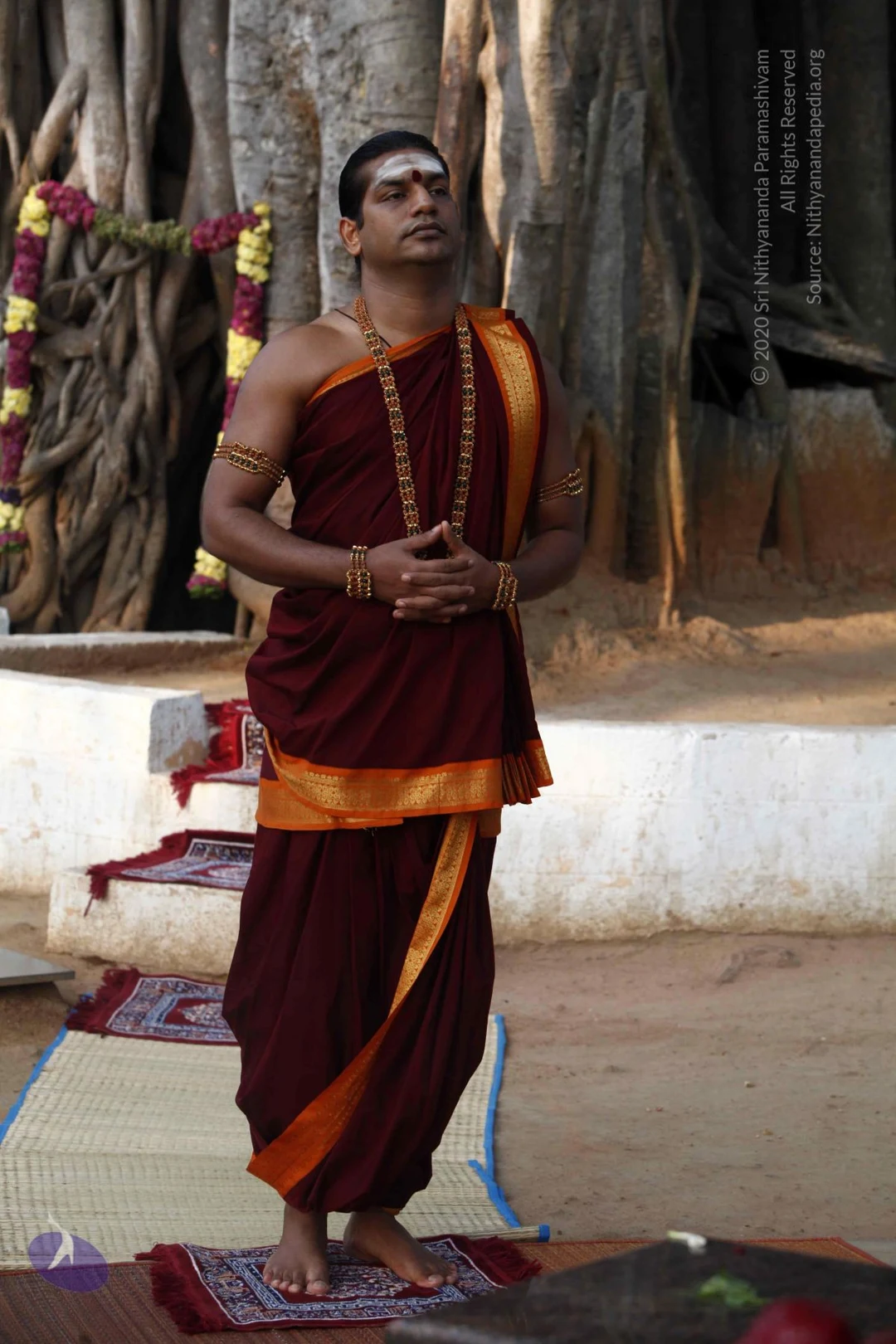
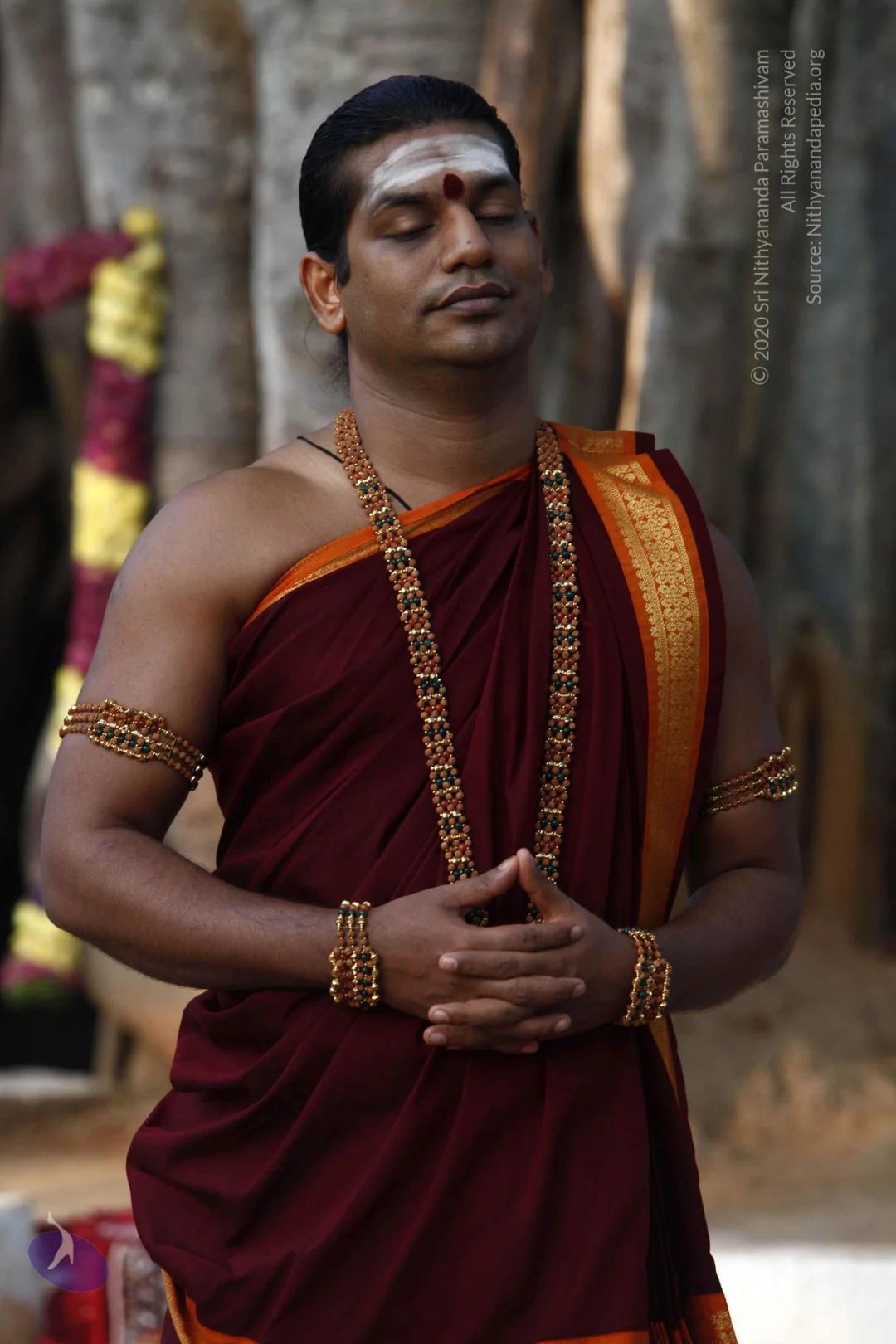
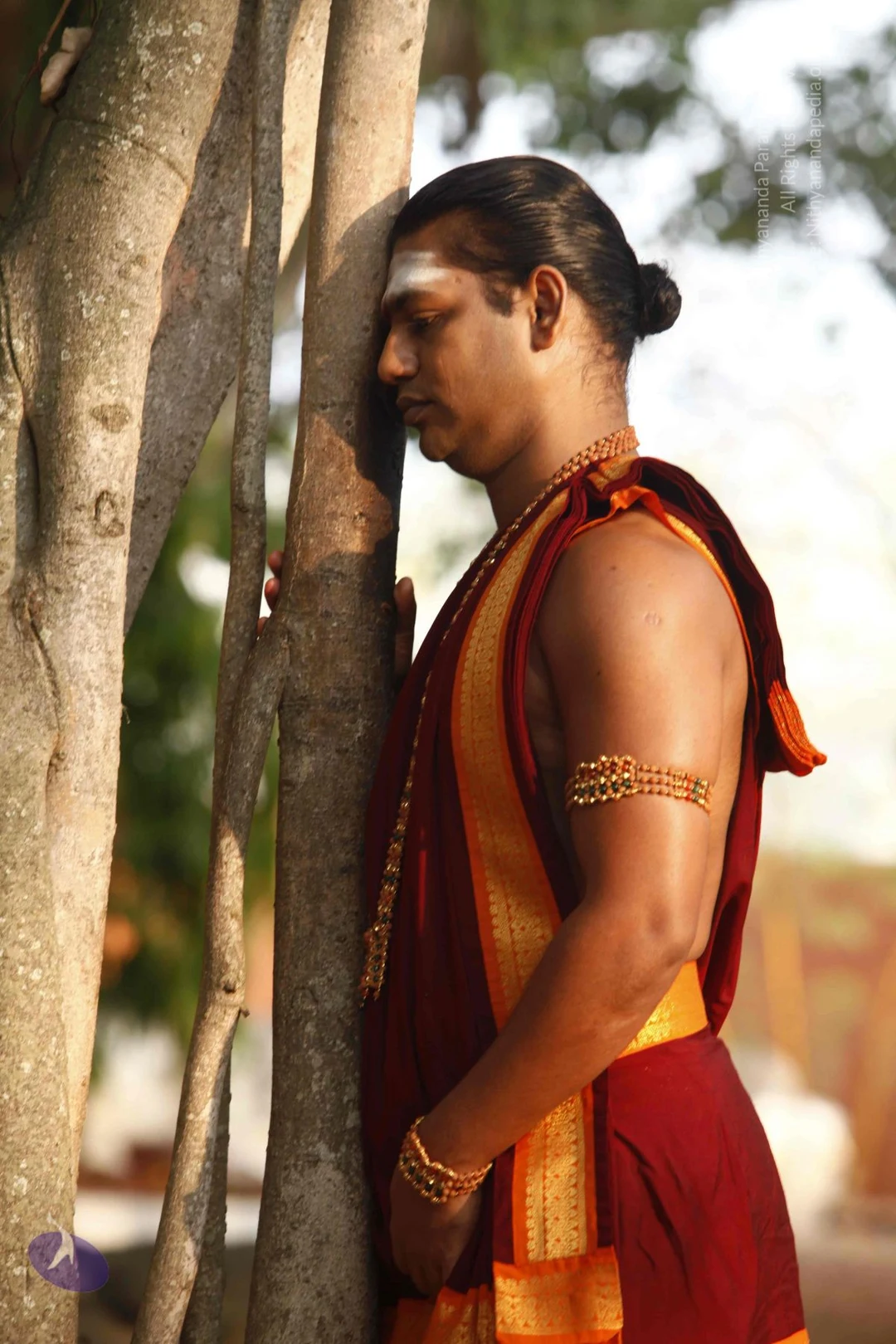
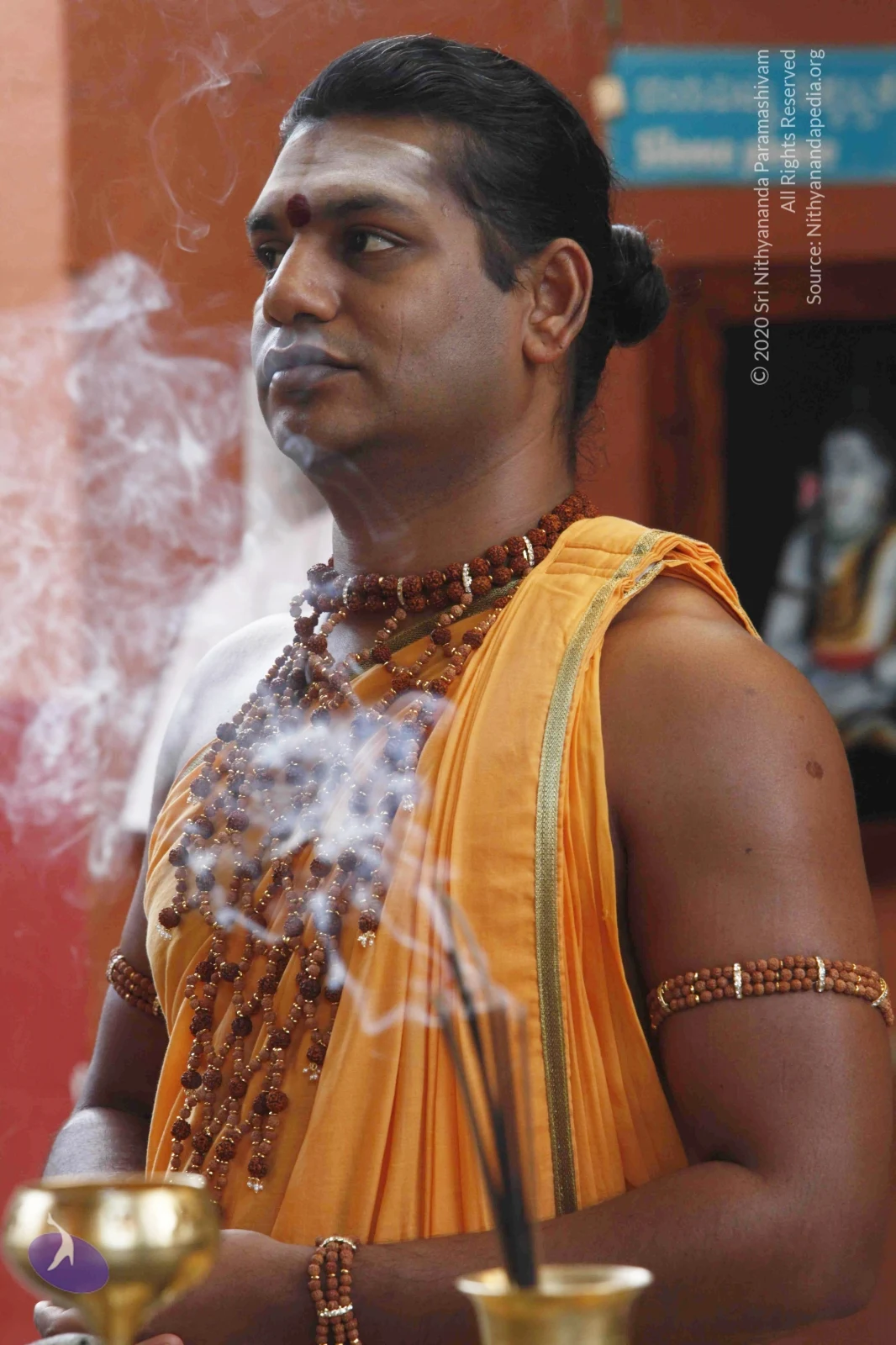
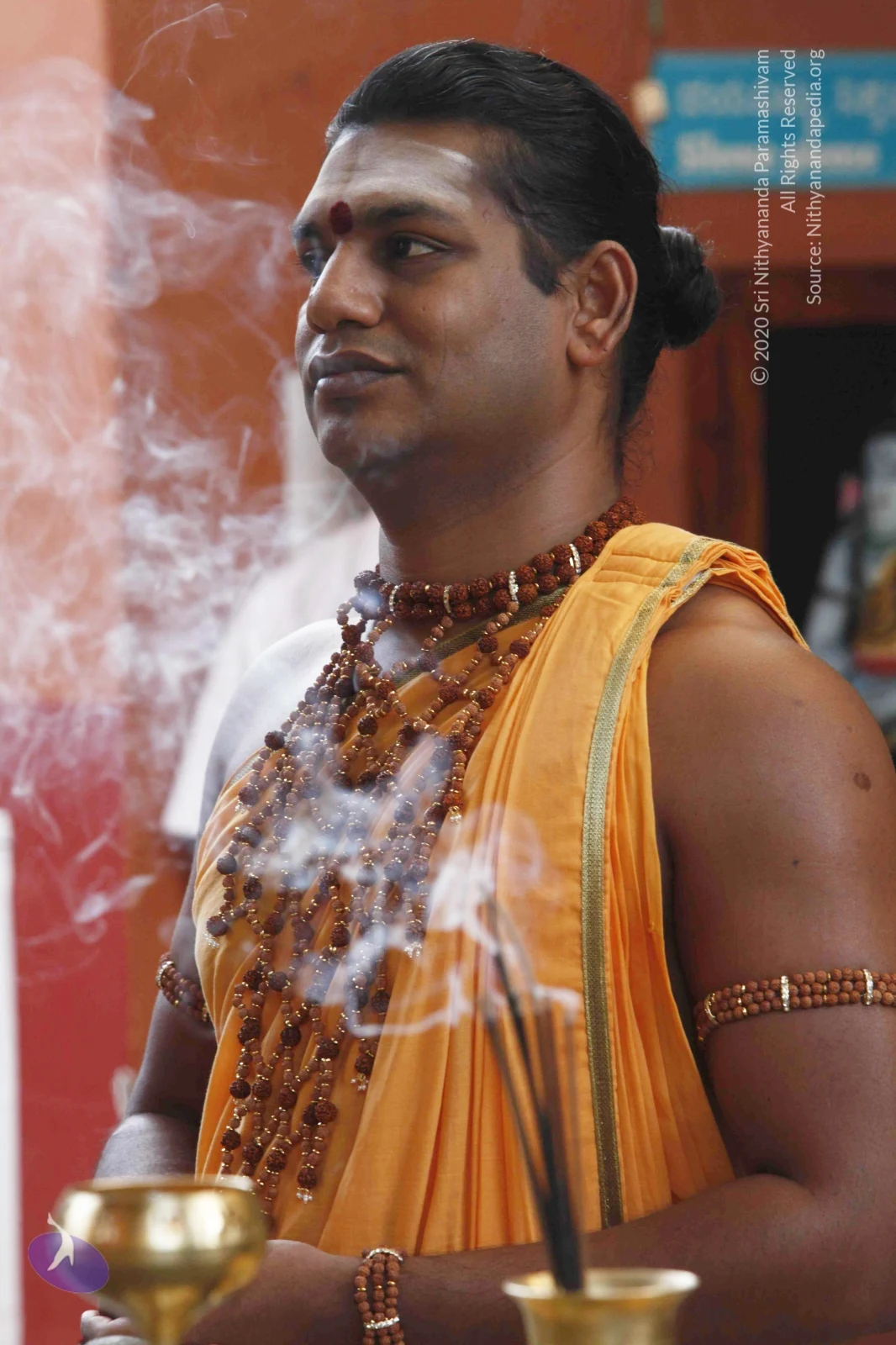
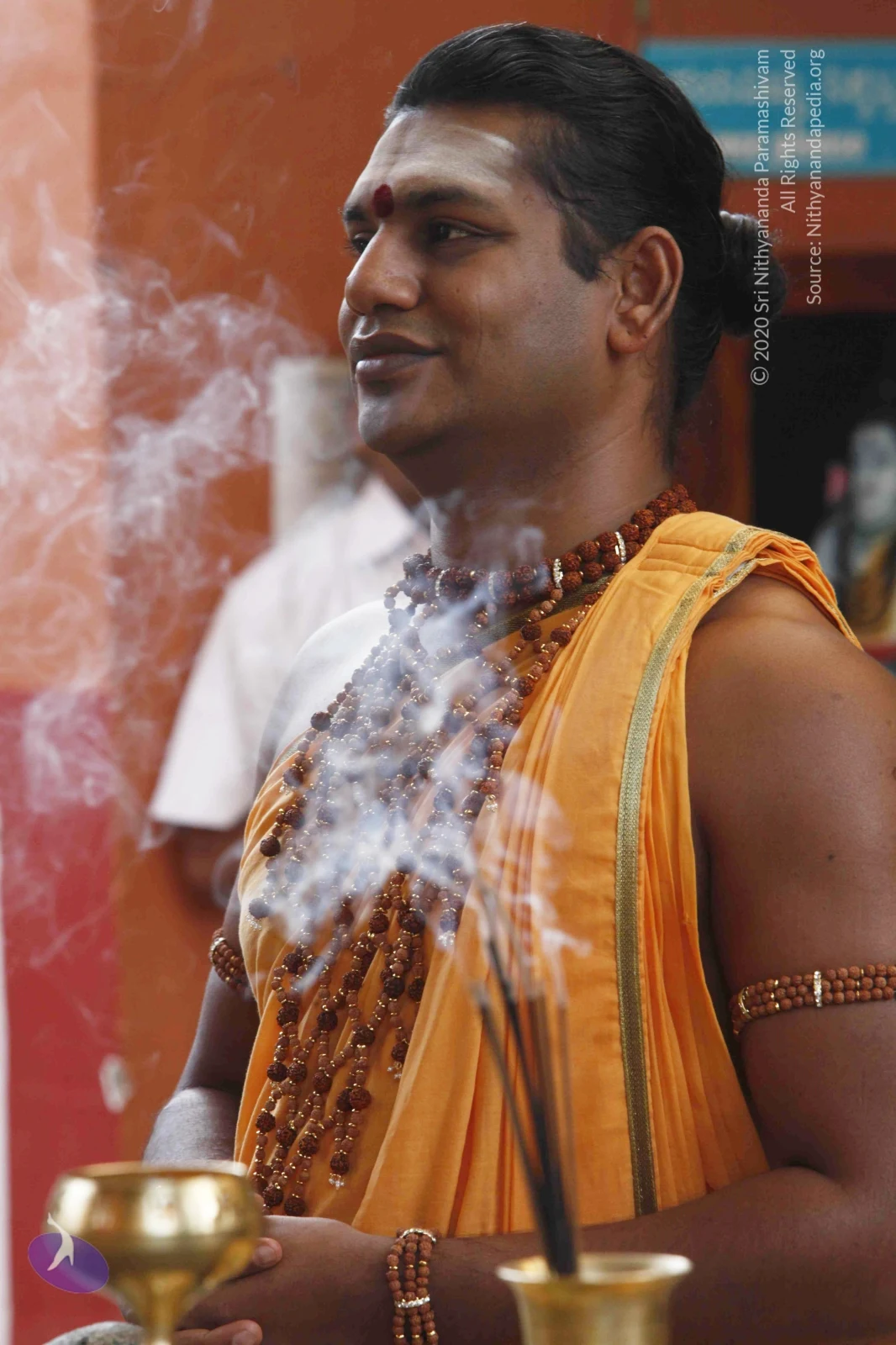
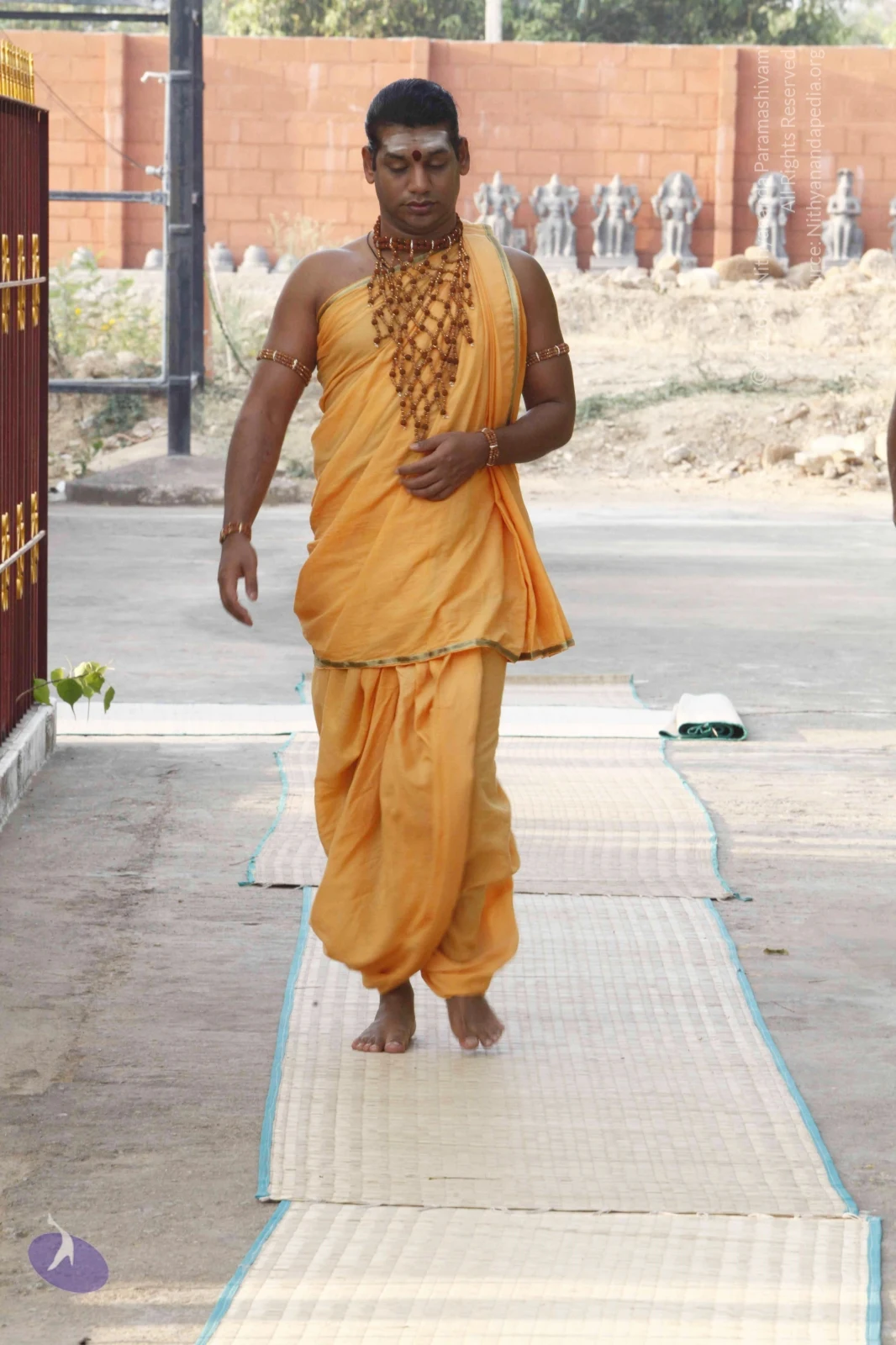
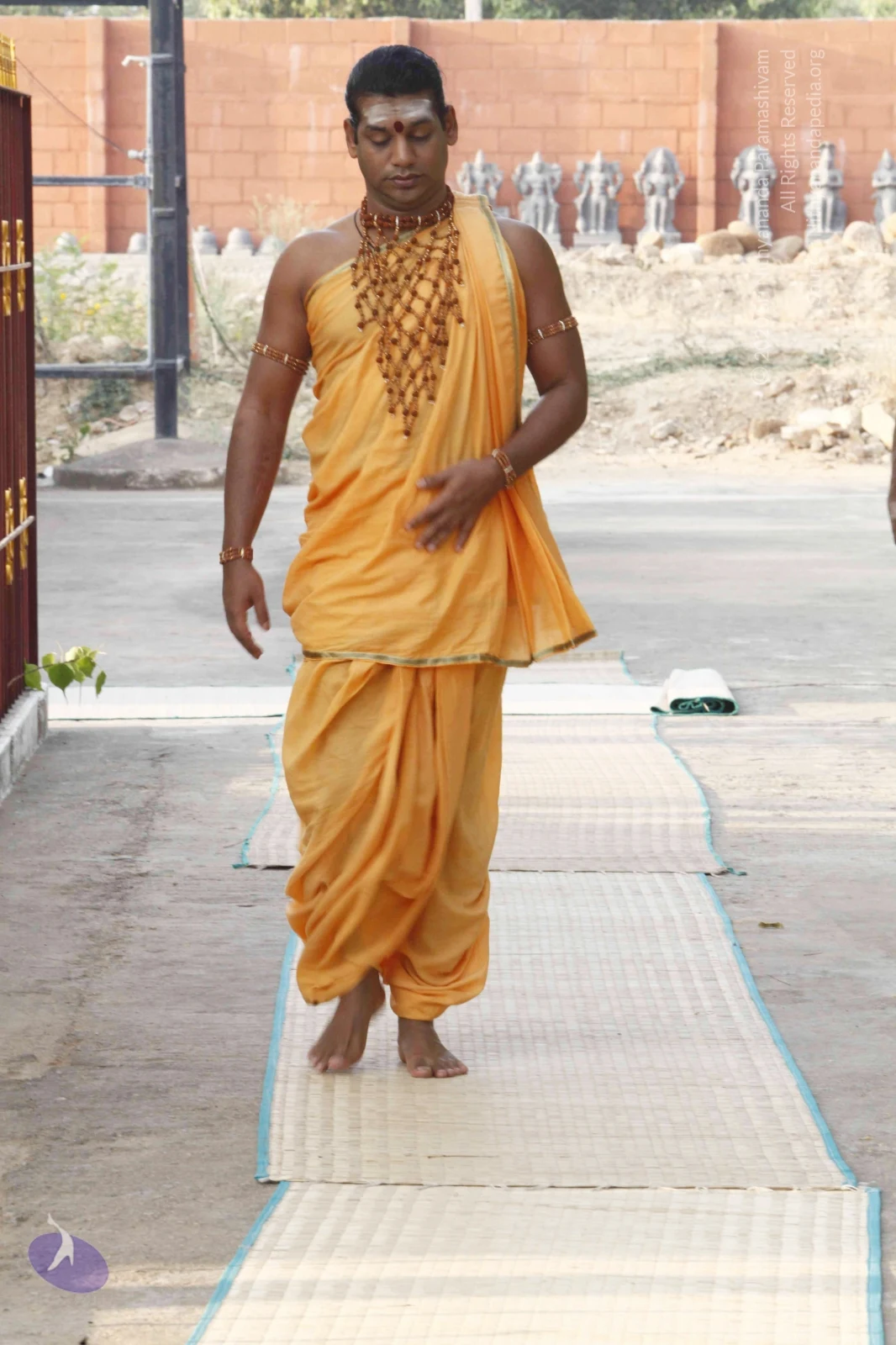
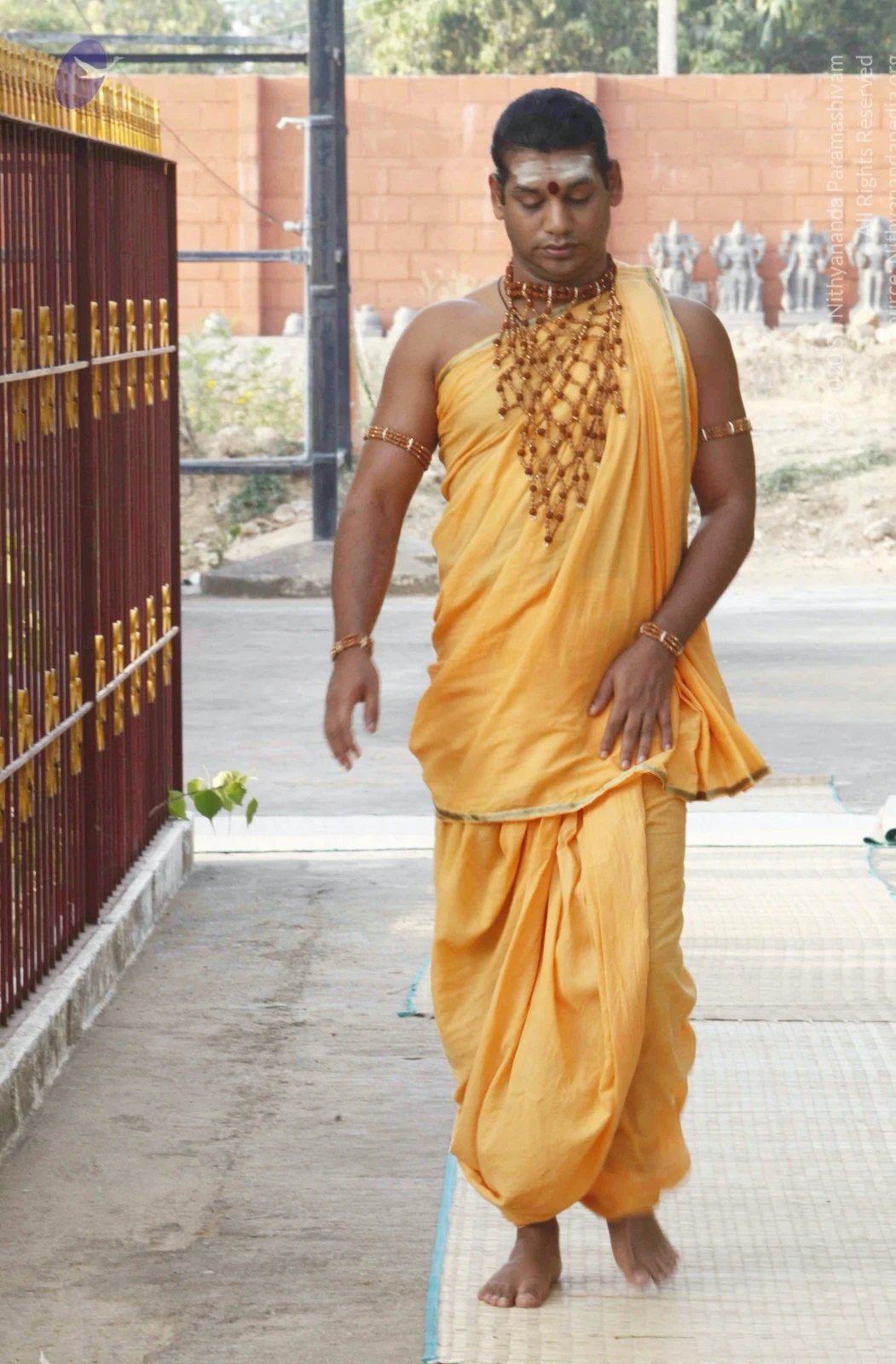
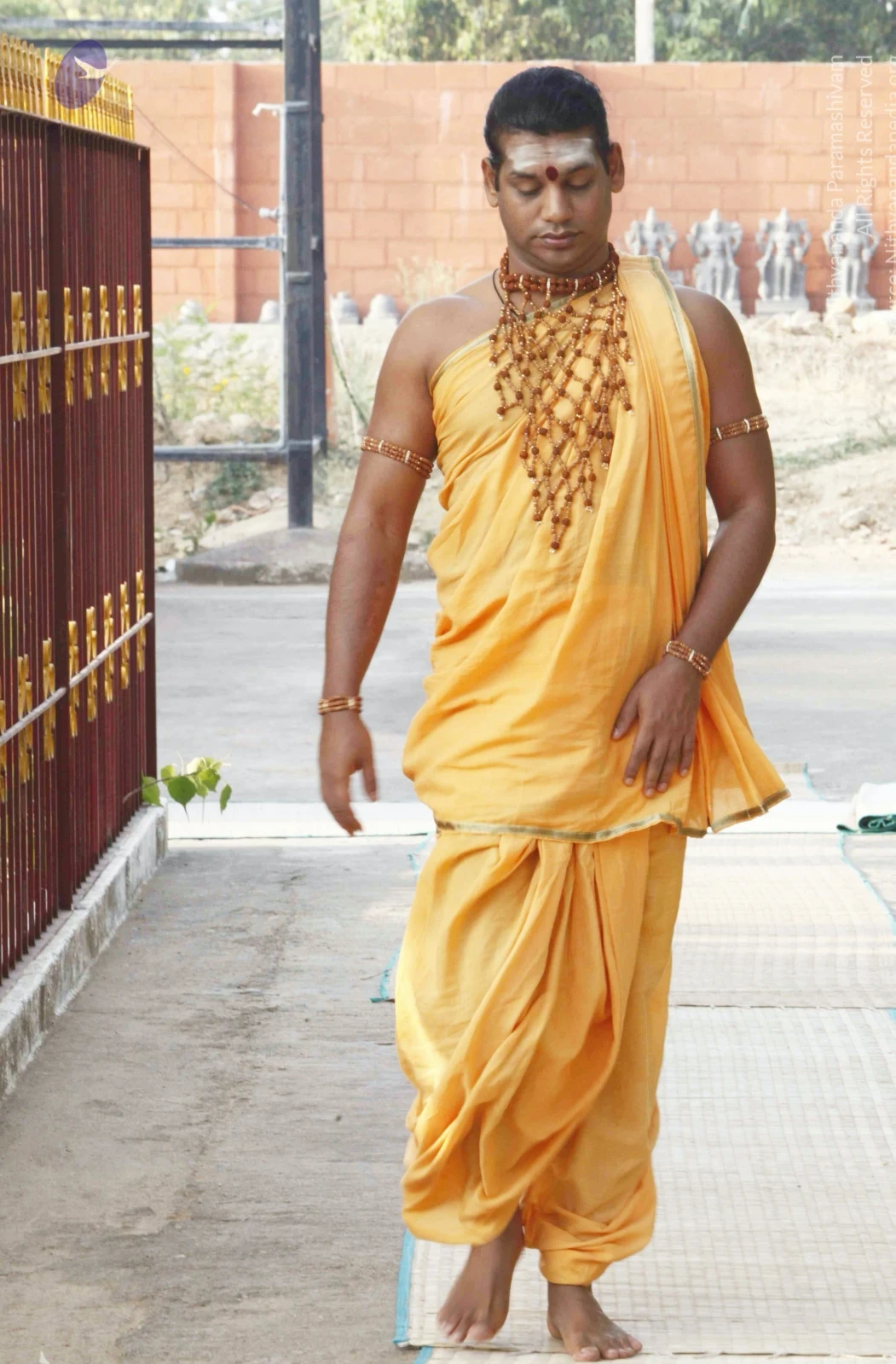
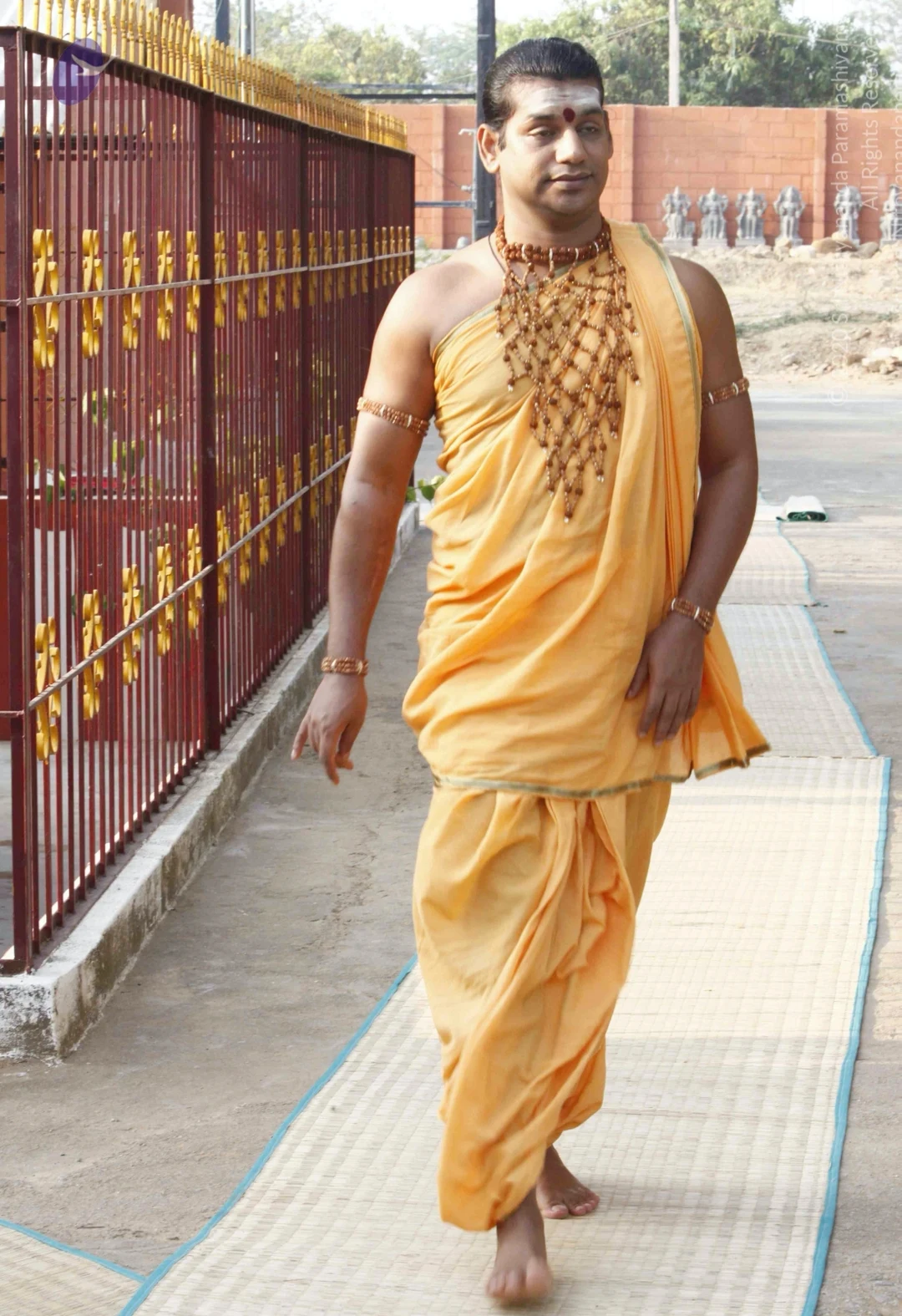
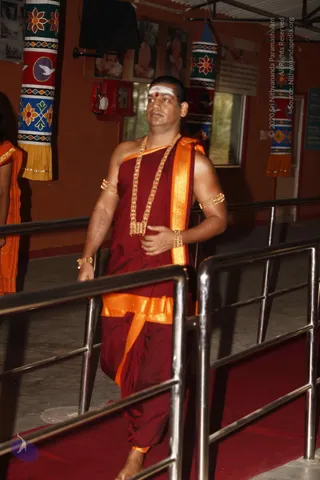
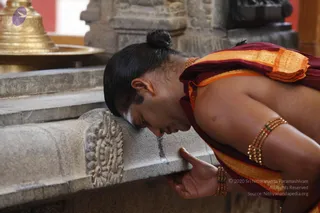
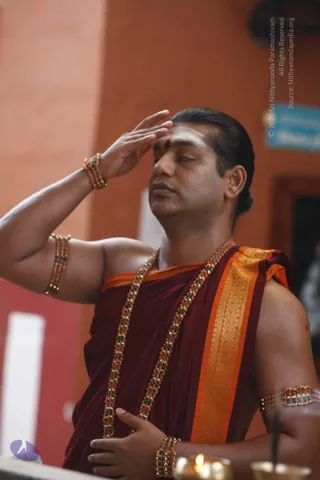
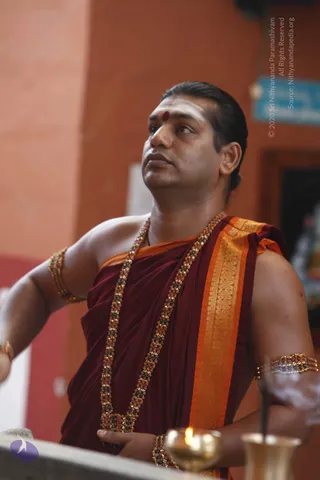
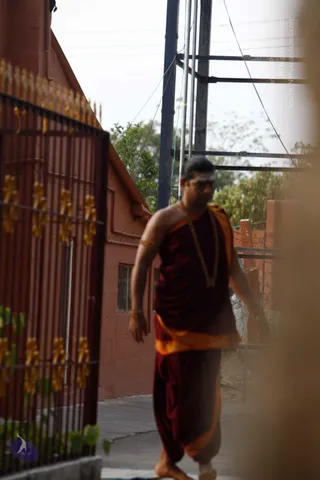
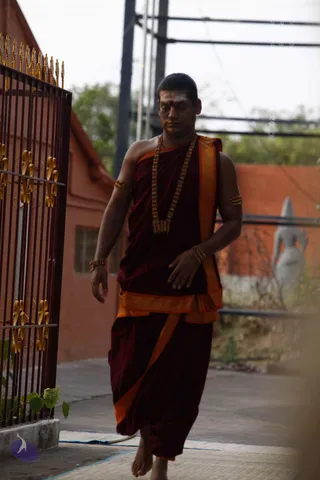
A photograph of a man walking along a red-carpeted walkway between metal railings inside a building with orange walls. He wears a maroon dhoti and shawl edged with gold-orange border, a gold chain necklace, gold armbands and bangles, and has white vertical tilak marks with a red bindi on his forehead. Behind him hang colourful patterned cloth banners with floral motifs and a framed photo display on the wall. A partially visible person in orange garments stands at the left edge. Appearance-based label: a person, walking in ceremonial dress with gold ornaments and gold-bordered maroon and orange garments, with the page mentioning a person at this event.A bare-chested man with hair in a top knot bends forward and rests his forehead on a carved grey stone ledge, his right hand pressed flat on the stone. He wears a maroon cloth with gold-bordered orange edging draped over his shoulder and tied at the waist, and multiple beaded bracelets on his arms and wrists. A gold-toned metal vessel sits on a stone platform behind him, with carved stone pillars in the background. The stone bears a white vertical line marking.A man stands before an orange-red wall, eyes closed, right hand raised to his forehead in a gesture of reverence, with a red kumkum dot and white vibhuti marking his brow. He wears a maroon garment with an orange and gold-bordered shawl draped over one shoulder, a beaded rudraksha-style mala necklace, and multiple beaded bracelets and armlets. His left hand rests on his chest. Oil lamps glow in the lower foreground. a person appears here as a sannyasi in saffron-maroon robes with beaded adornments, performing a devotional gesture during the ritual.A man in a maroon garment with a gold-bordered orange edge stands indoors against an orange wall, gazing upward. He wears a red bindi and white forehead markings, a multi-strand beaded necklace in coral and green tones, and gold bangles on his arms. An oil lamp burns on a brass dish and an incense stick smokes in a brass vessel in the foreground. Appearance-based candidate: a person, shown in ritual dress performing puja or aarti; the visible cues are the ornate beaded mala, the gold-bordered maroon wrap and the gold armlets. A blue sign with partial text is visible at the upper right.A man in a maroon and orange sannyasi-style robe walks barefoot along a concrete path beside a tall red-brown building and a wrought-iron gate with gold-tipped finials. He wears a gold-toned beaded necklace and bangles, and has a tilak on his forehead. Behind him are metal utility poles, overhead wires, and green trees under a pale sky. A blurred foreground object sits at the right edge. Candidate identity is not established from appearance alone, so the a person field is unsure.A barefoot man in a maroon and orange sannyasi-style dhoti and upper wrap walks along a paved path beside an ornate gold-tipped iron gate. He wears a multi-strand rudraksha-style mala around his neck, gold-toned armlets and bangles, and a red tilak on his forehead, his head shaved to short dark hair. Behind him stand an orange-brick wall and a white statue on a pedestal, with a utility pole and trees in the background.
Temple
21 photosSource gallery
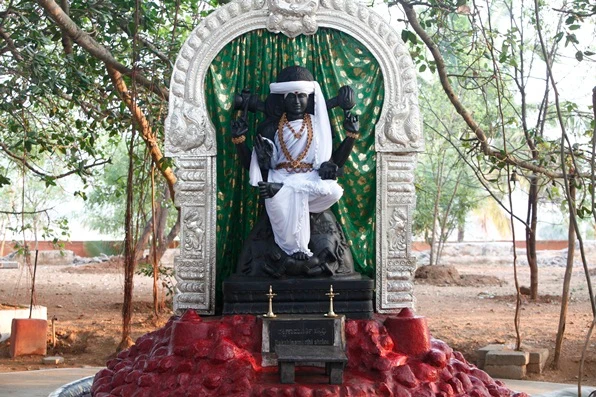
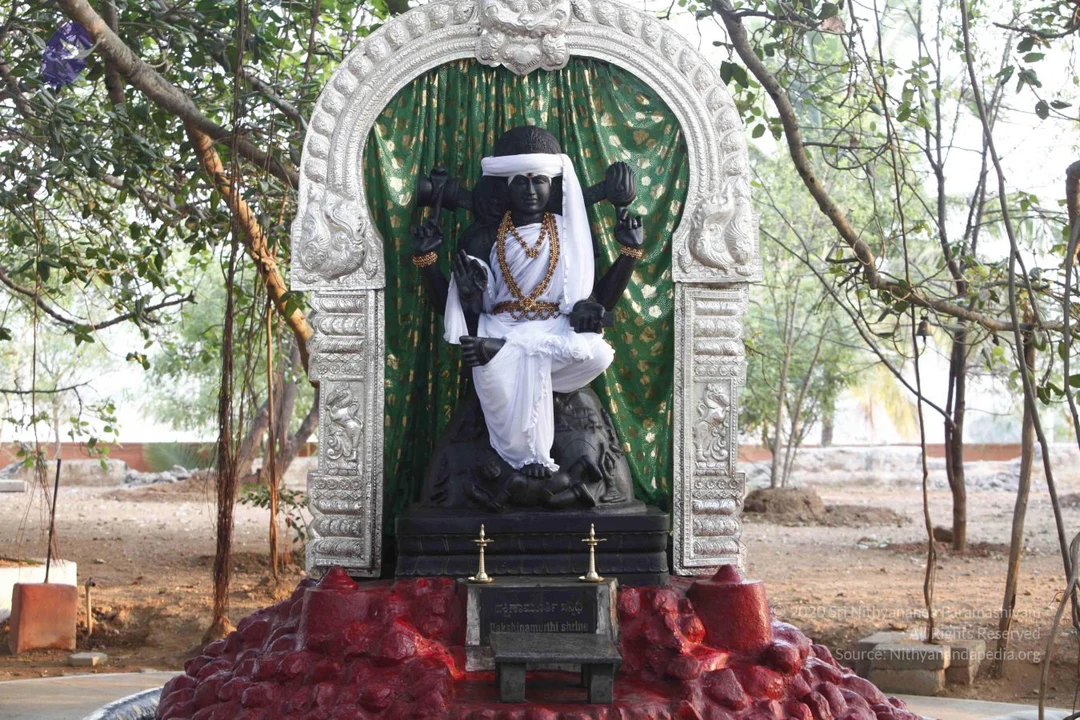
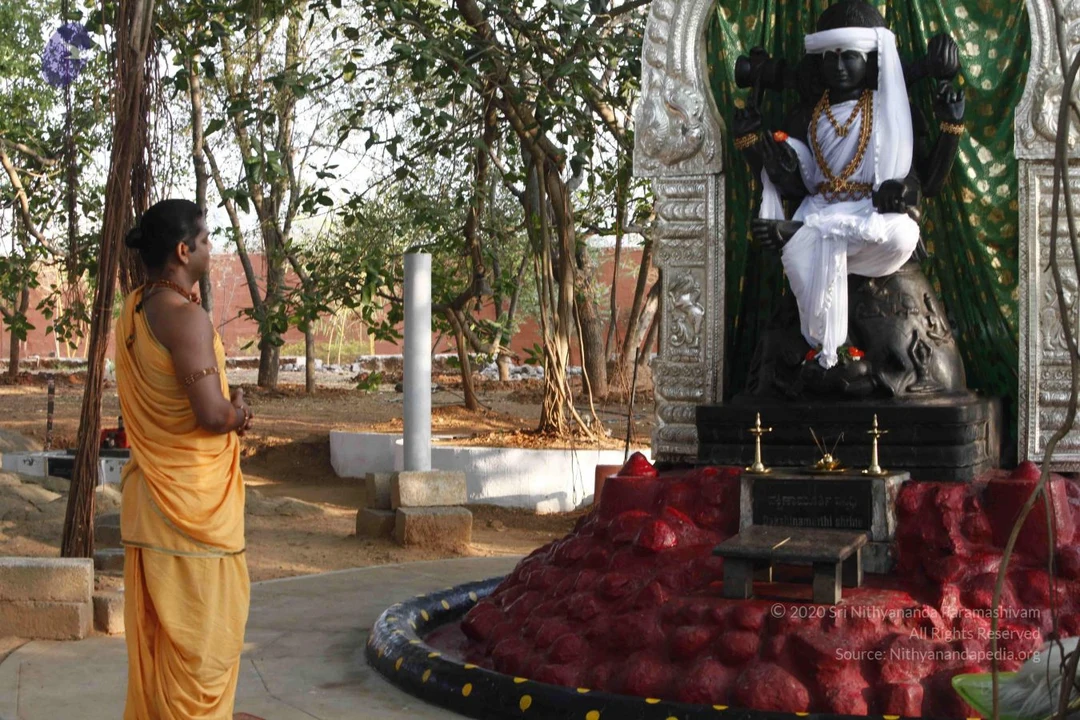
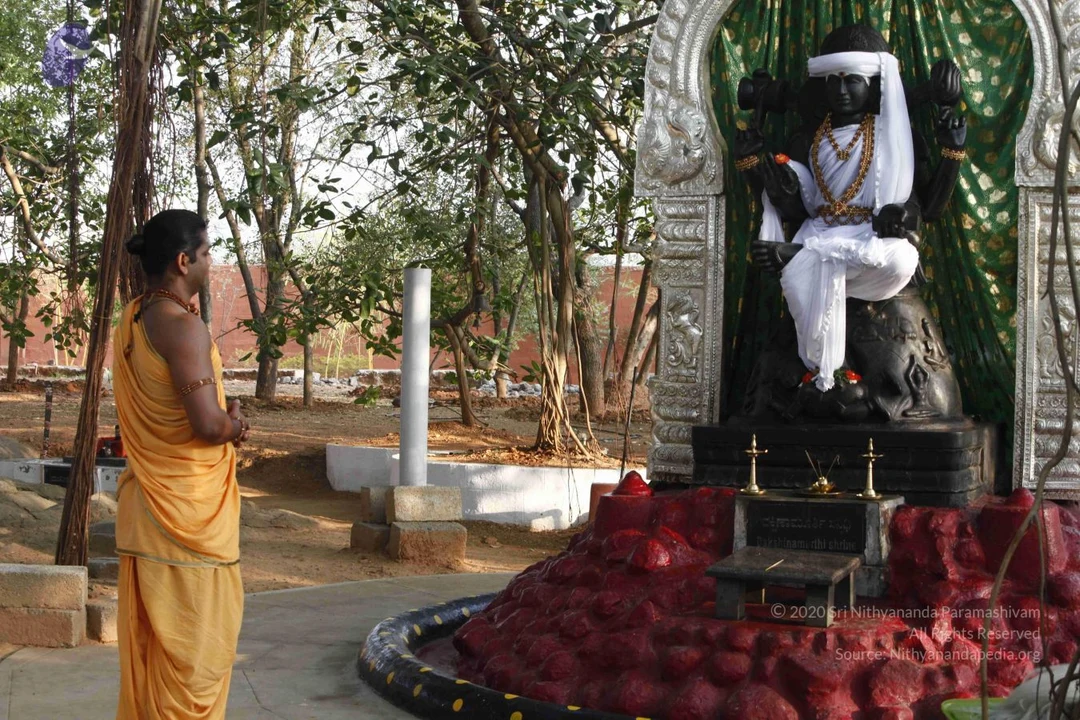
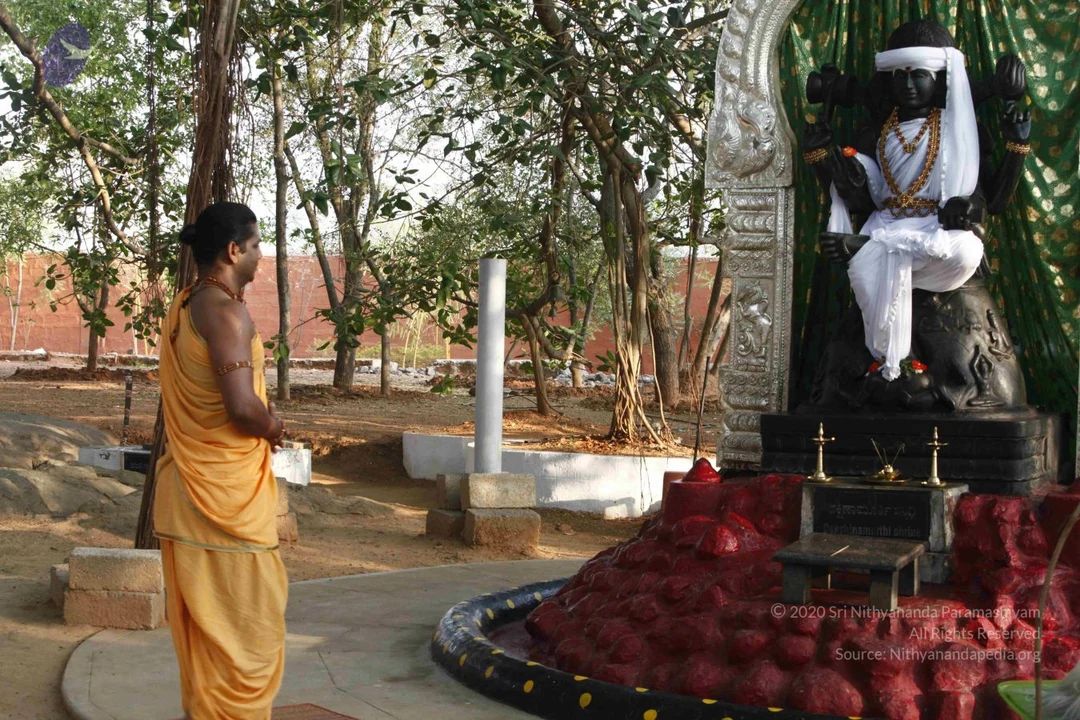
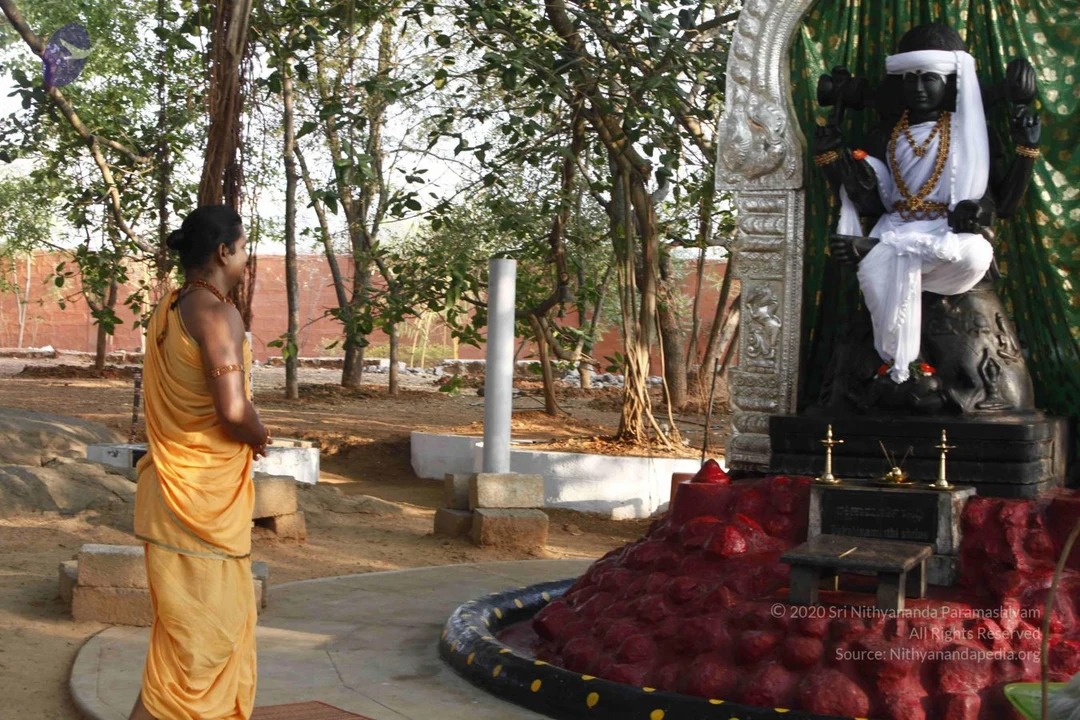
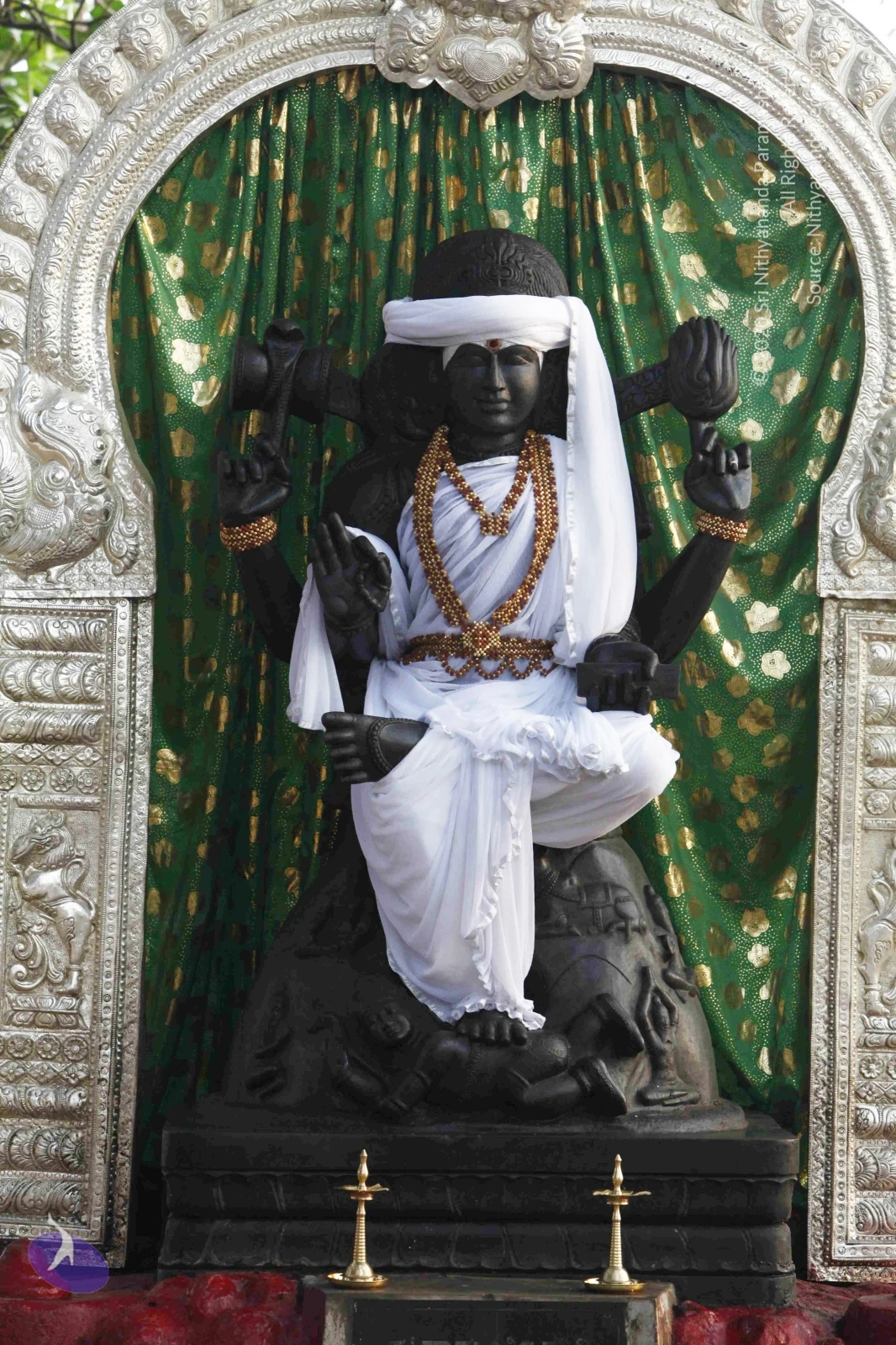
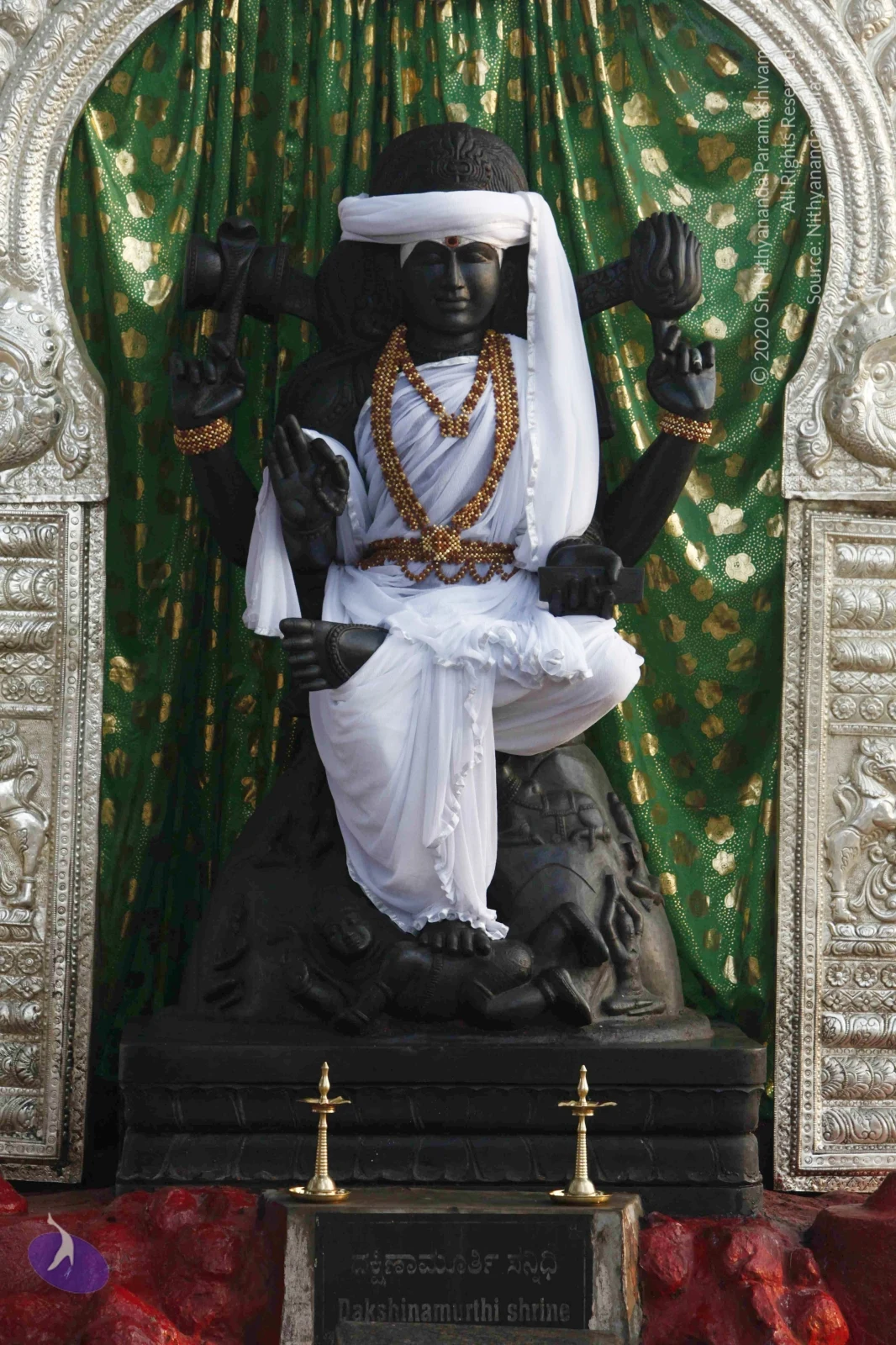
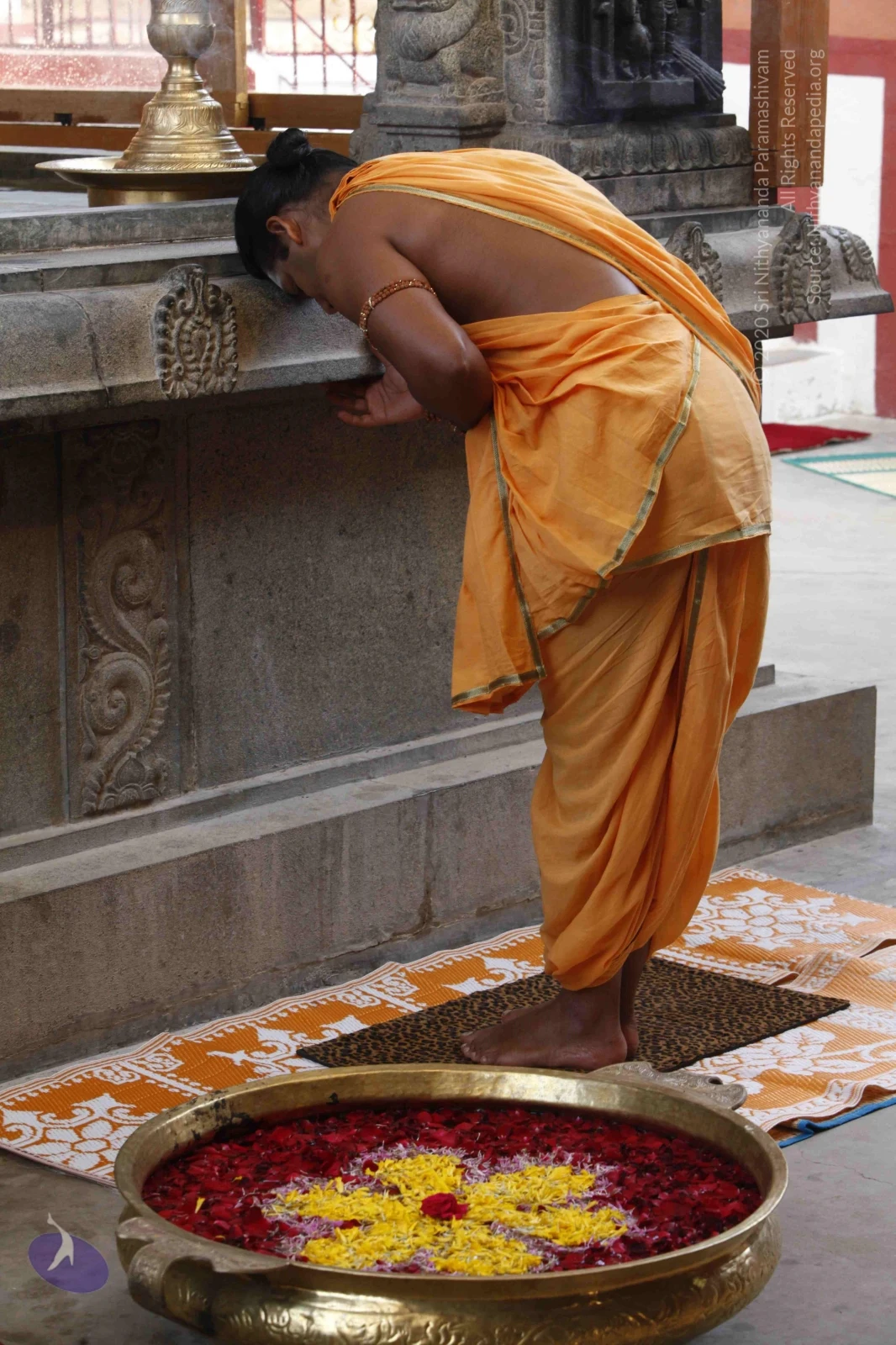
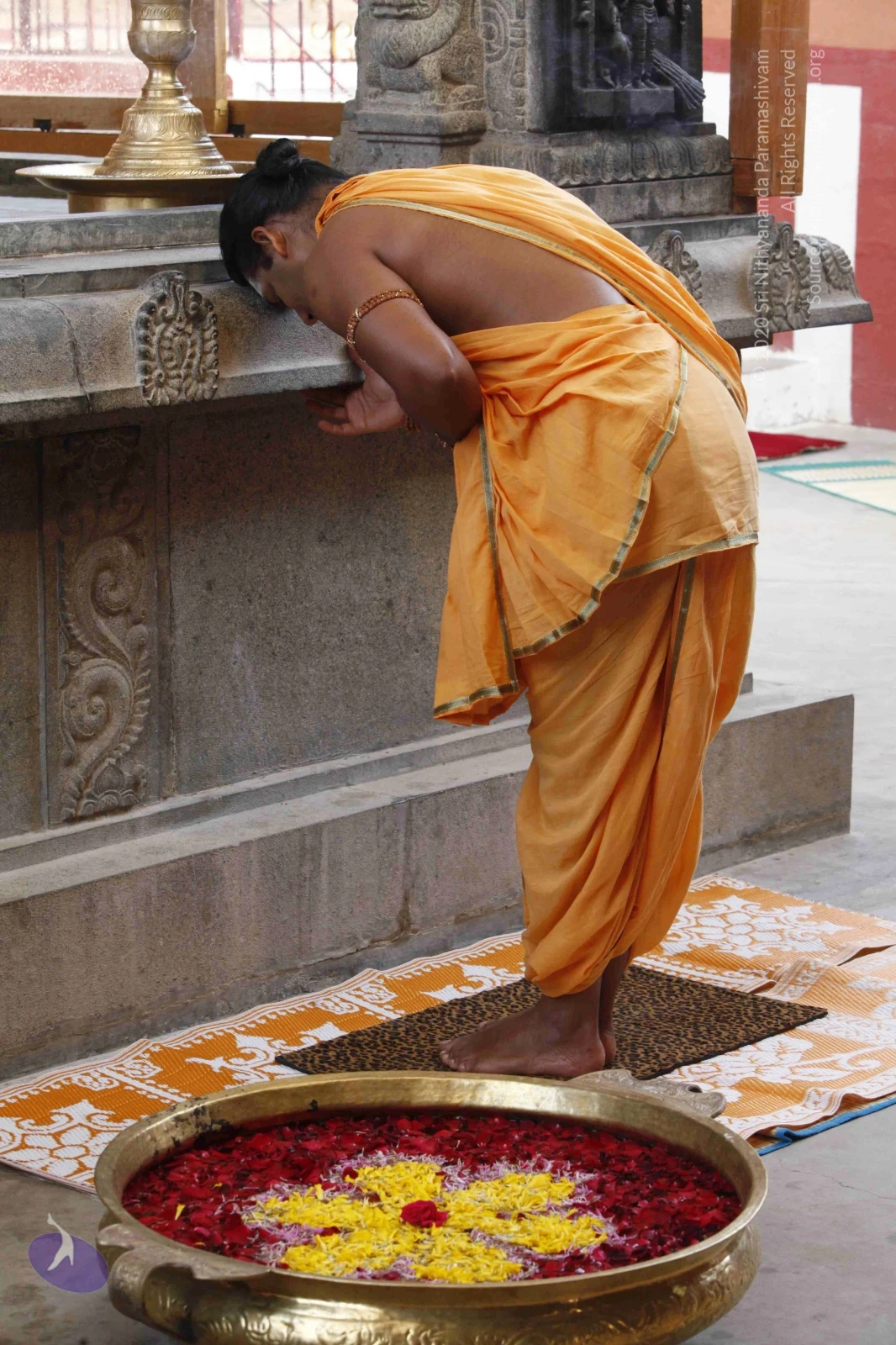
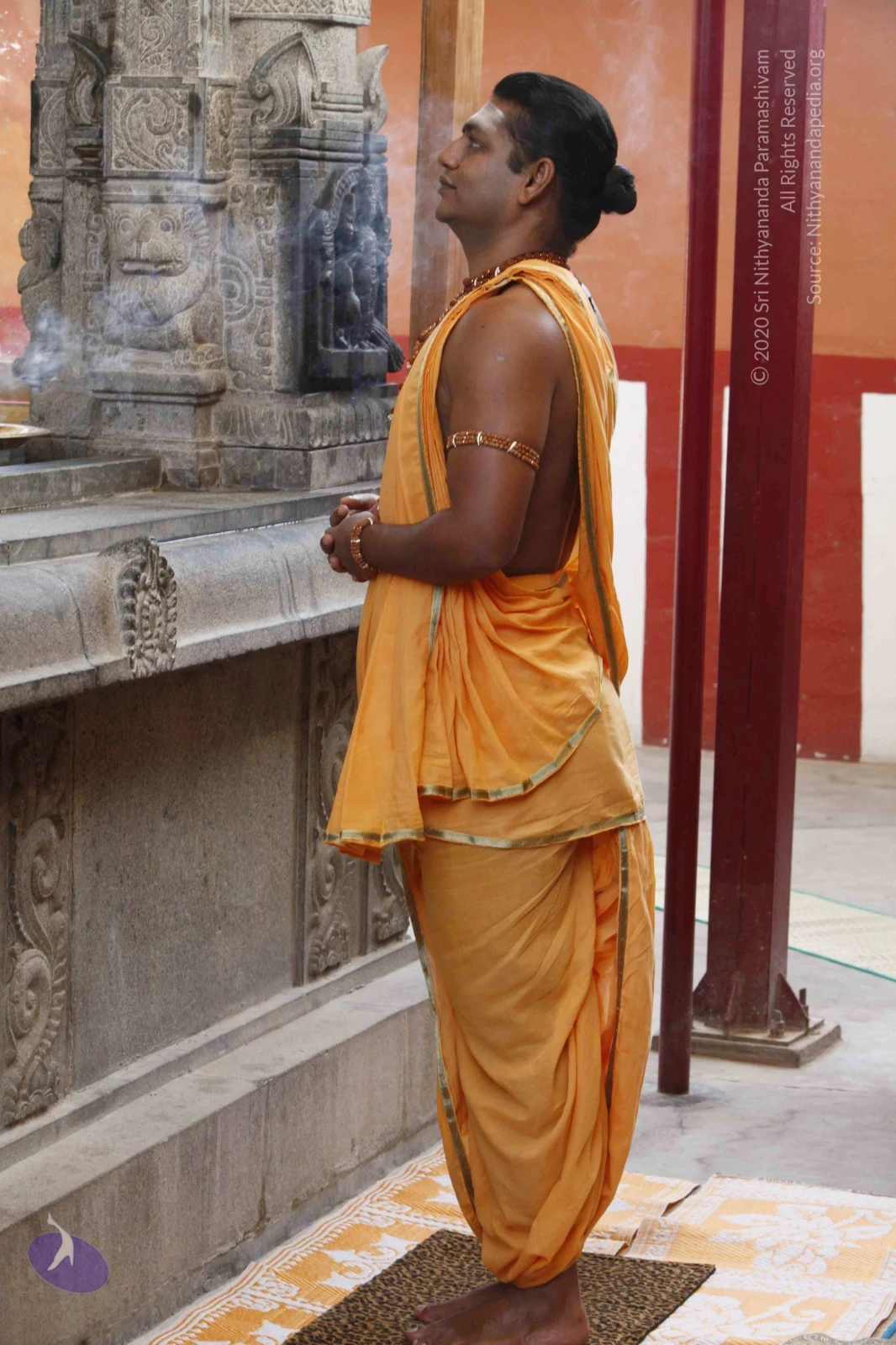
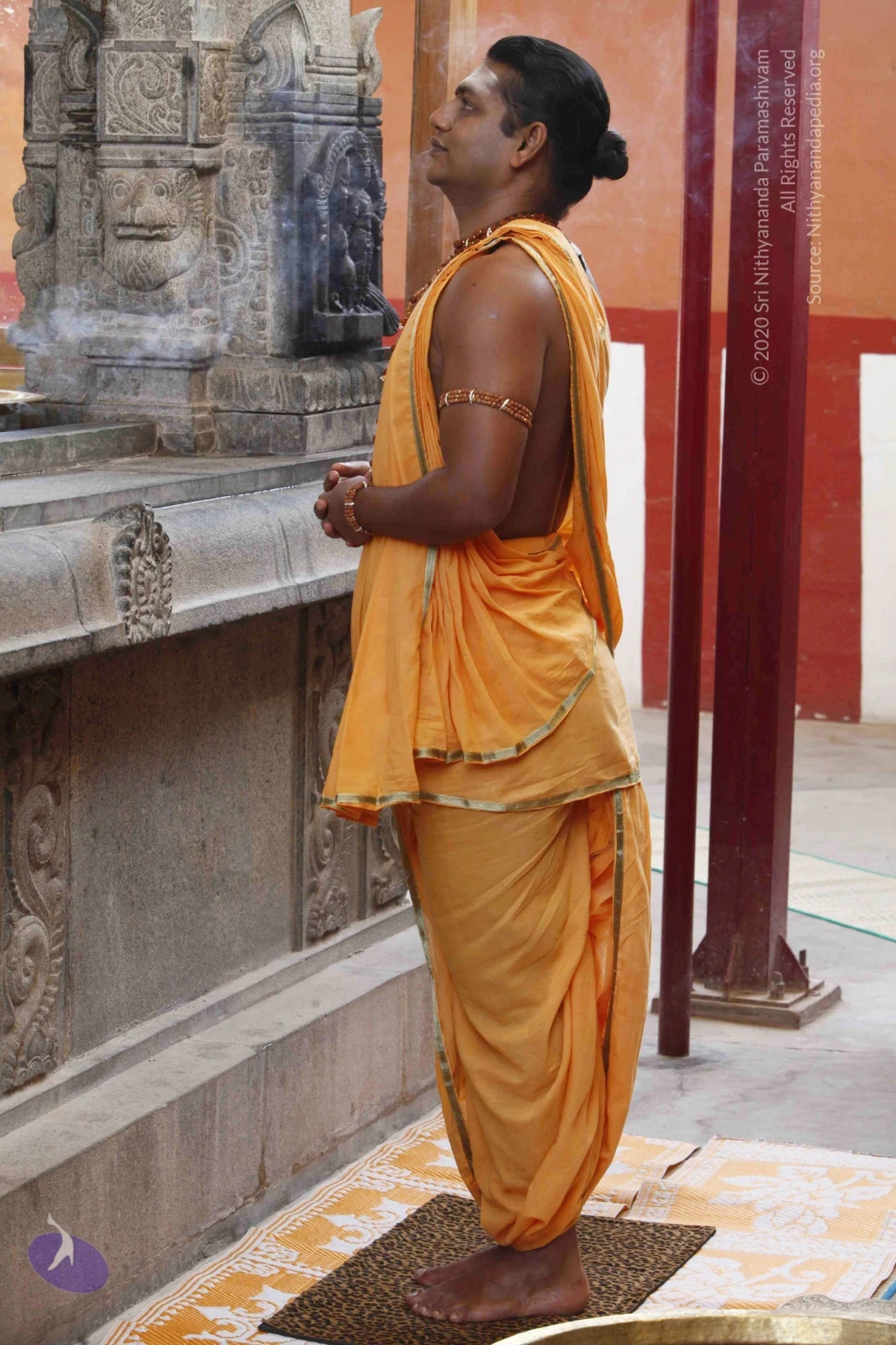
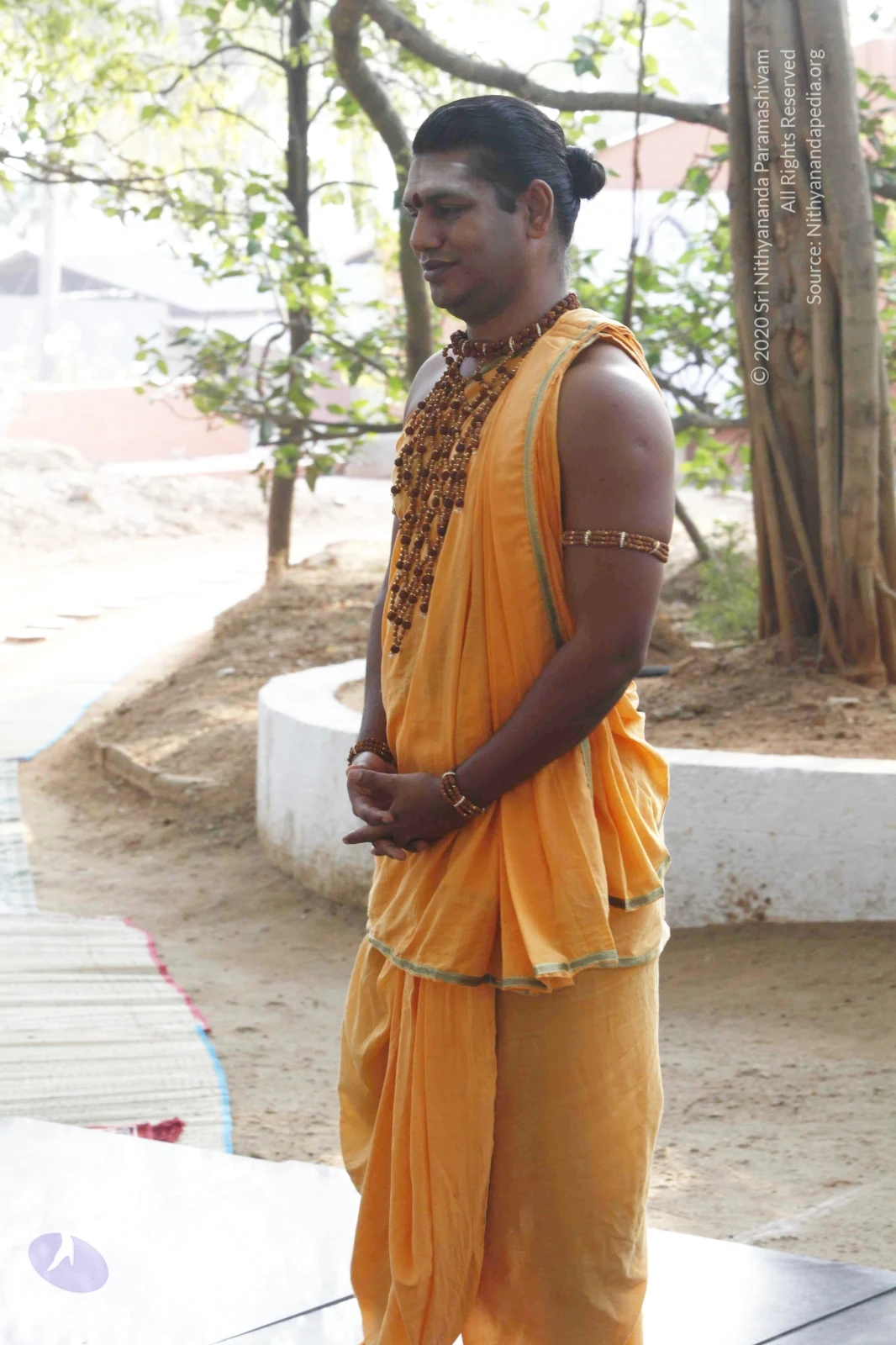
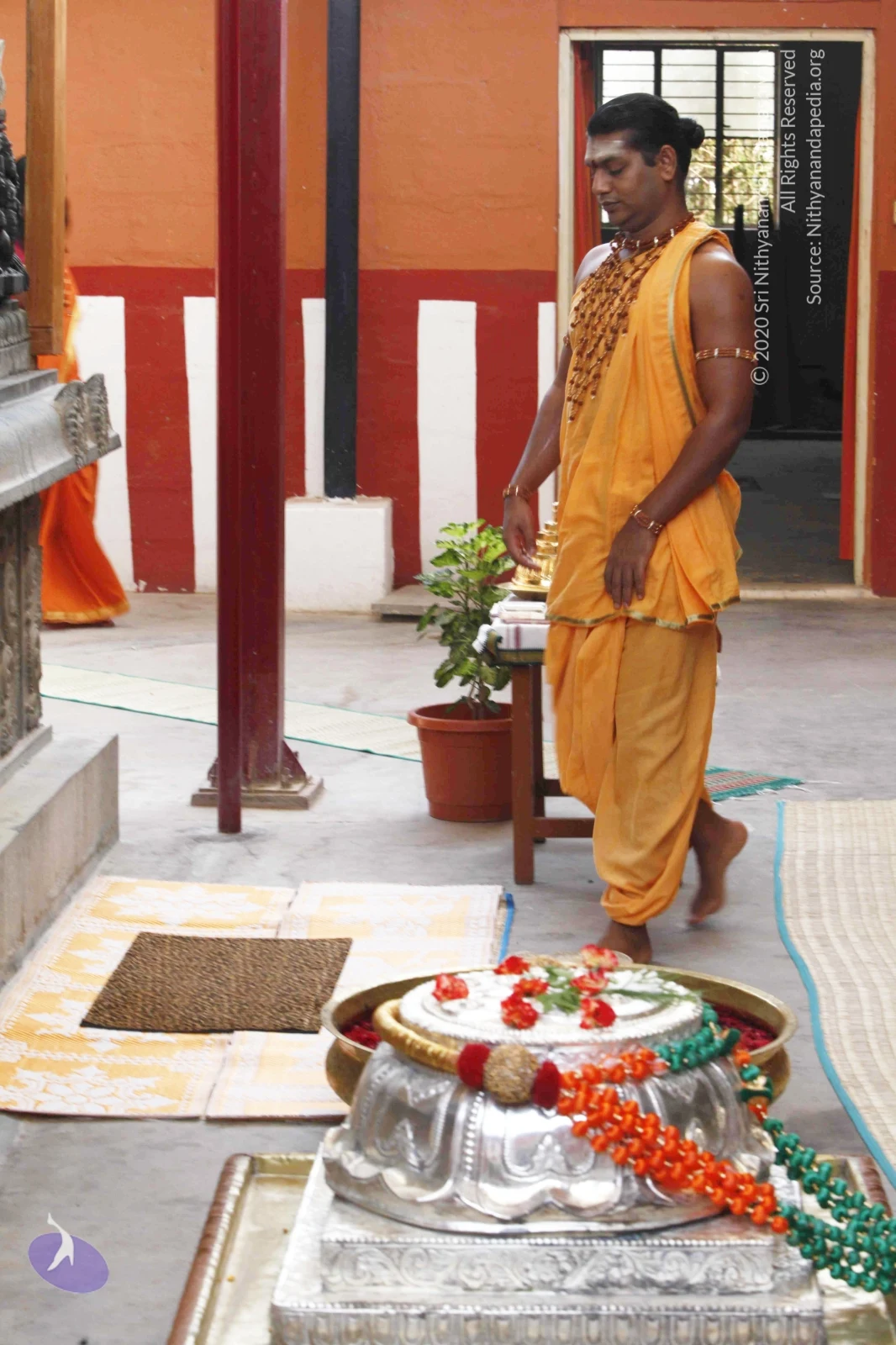
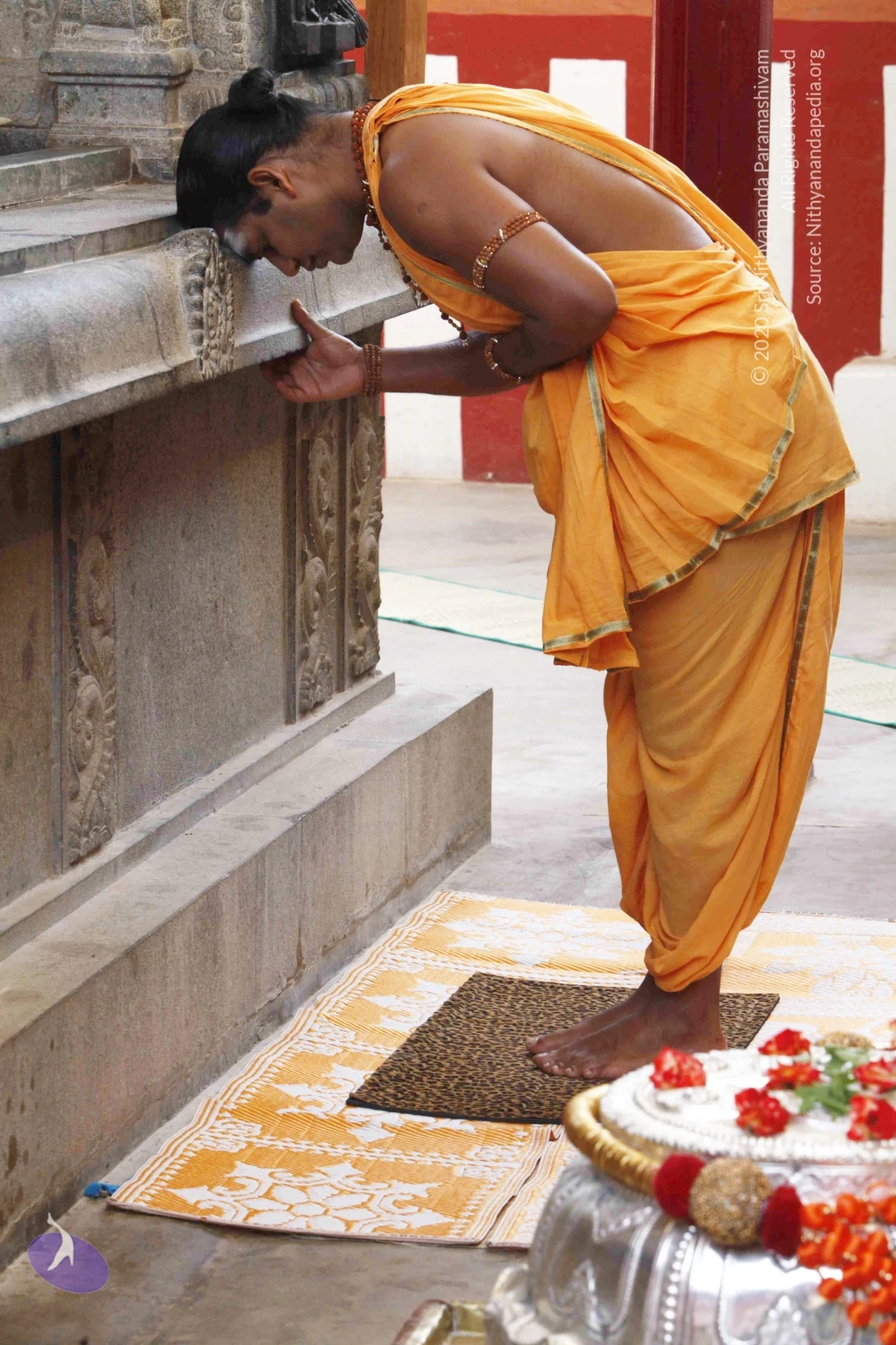
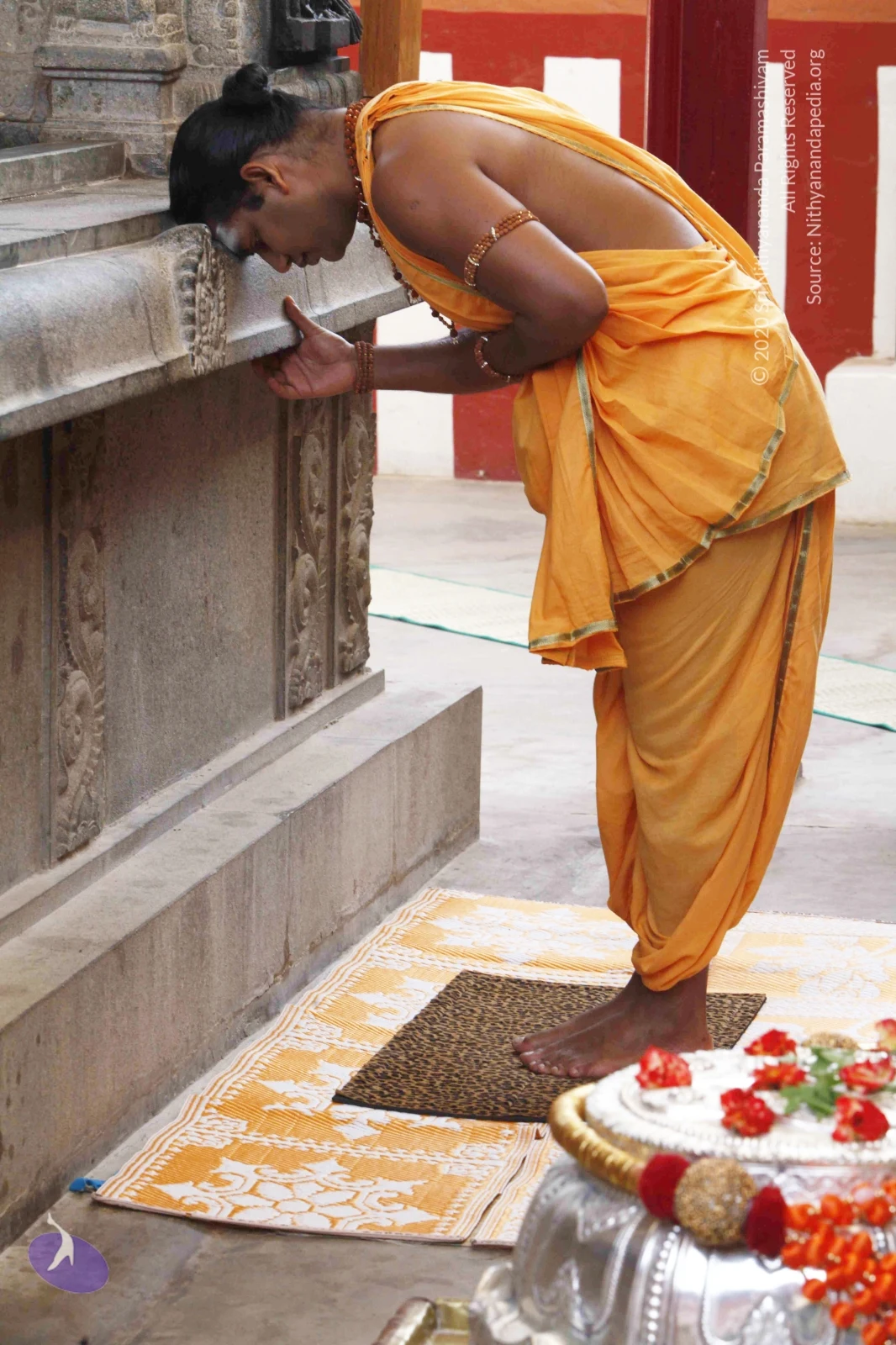
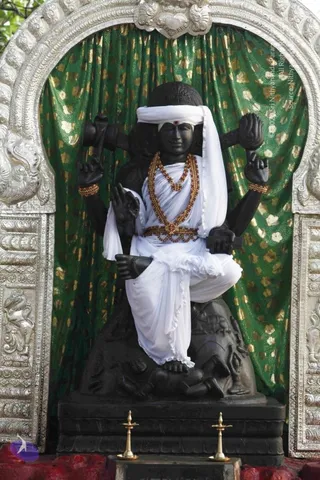
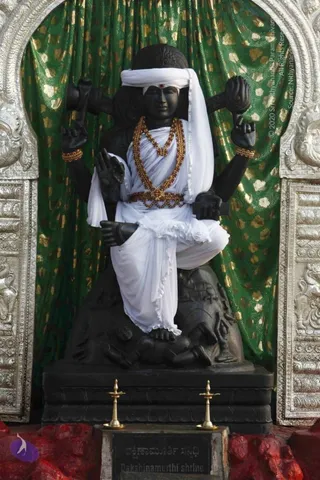
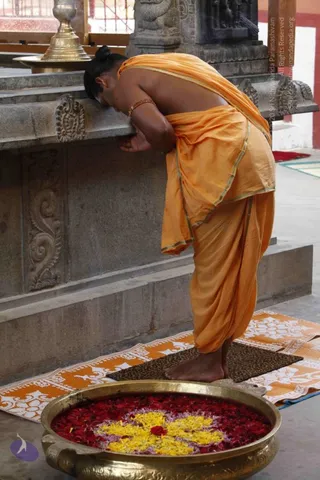
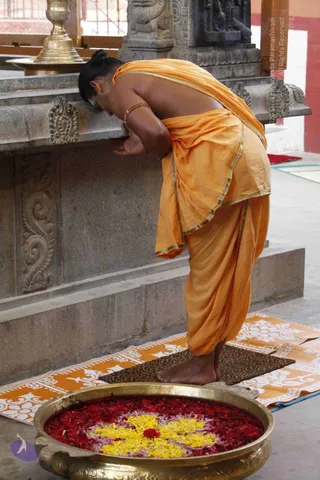
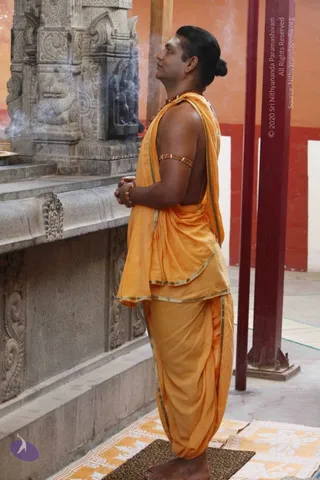
Photograph of a pair of gilded deity murti statues seated together under a sunlit arched doorway with palm fronds behind. The left figure wears an orange turban, white dhoti-style garment with an orange sash, layered gold and white beaded necklaces, and holds a trident-like staff. The right figure wears an orange silk sari with a jewelled waist ornament, a tall ornate crown, and gold jewellery. Both have gilded faces and feet. The statues are not living people, and no identifiable person is shown.A large black stone statue of a four-armed deity murti seated on a rocky base, draped in white cloth with a white head wrap and a red tilak on the forehead. It wears layered rudraksha-style beaded necklaces and a beaded waist belt, with beaded bracelets on the wrists. The figure is set within an ornate silver arch against a green curtain with gold floral motifs, with a pair of brass oil lamps in front on a dark pedestal. Red flower petals line the base.A black stone murti of Dakshinamurthi, seated on a rock pedestal with four arms, wrapped in white cloth with a white headcloth and red tilak, wearing a multi-strand rudraksha-style bead necklace and bead belt. Behind it hangs a green curtain with gold spots inside a silver ornate arch. Two brass oil lamps stand at the base in front of a black plaque with Kannada text reading Dakshinamurthi shrine.A photograph of a barefoot person in an orange saffron dhoti and shawl with gold border, hair tied in a bun, bowing forward with hands pressed against a grey carved stone platform inside a temple. A brass bowl in the foreground holds red rose petals and yellow marigold petals arranged in a flower-like pattern. An orange and white patterned mat lies on the floor, with a leopard-print mat beneath the feet. A brass lamp stand sits on the stone platform behind.A man in saffron-orange dhoti and matching shawl, bare-chested with a hair knot, bows deeply forward with his forehead resting on a carved grey stone platform in a temple. He stands barefoot on a leopard-print mat over an orange and white patterned rug. In the foreground a large brass bowl holds red rose petals and yellow marigold petals arranged in a symmetrical floral design. Behind him a brass oil lamp stands on a tray and carved stone pillars with floral and figural motifs frame the scene.A standing man in profile faces a carved grey stone shrine with incised floral and figural relief, with incense smoke rising at left. He wears an orange-yellow dhoti and upper cloth with gold-thread borders, a rudraksha mala at his neck, and beaded armlets and bracelets. His palms are pressed together in prayer. He stands barefoot on a woven mat with a leopard-print rug in an ochre-walled hall with red wooden pillars.

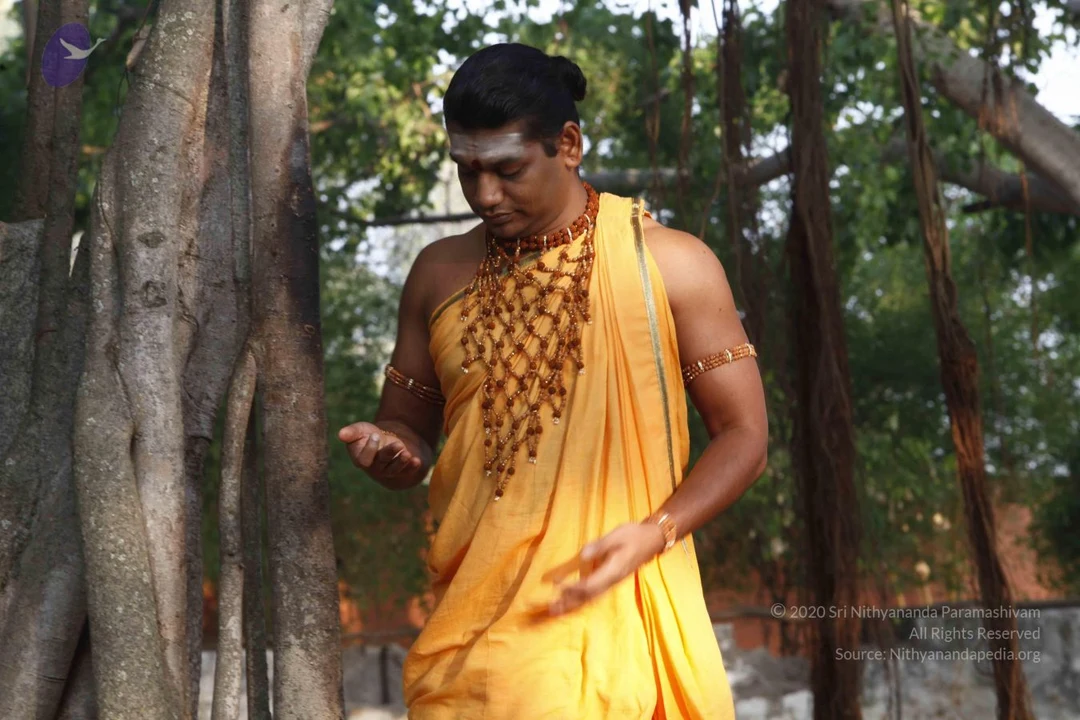
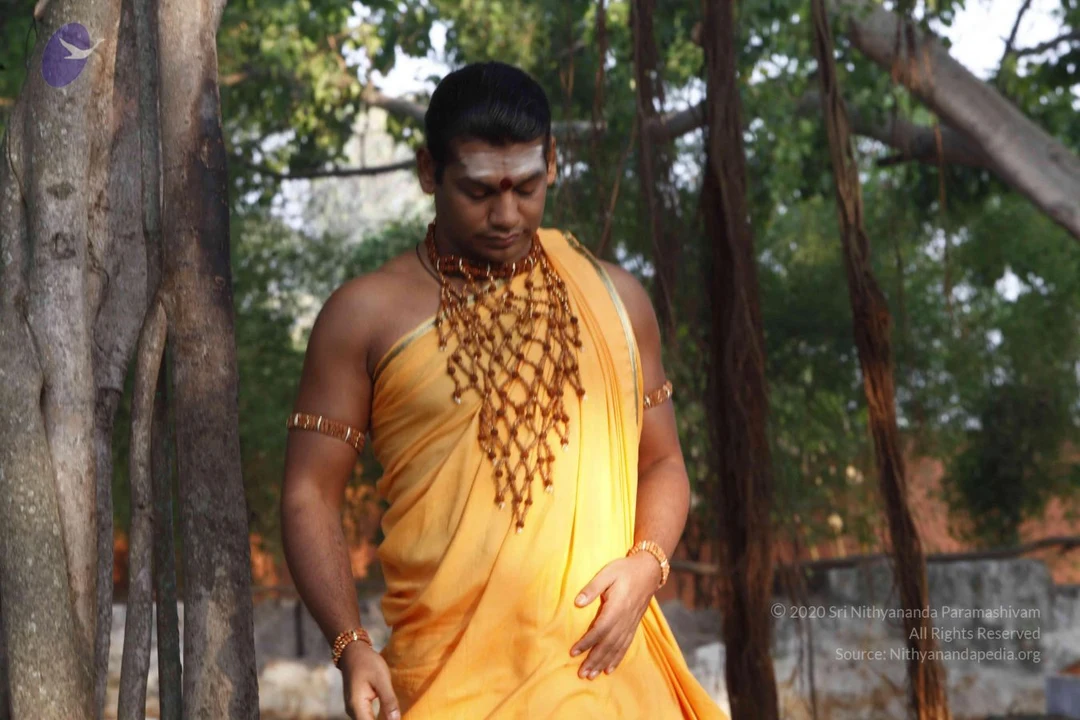
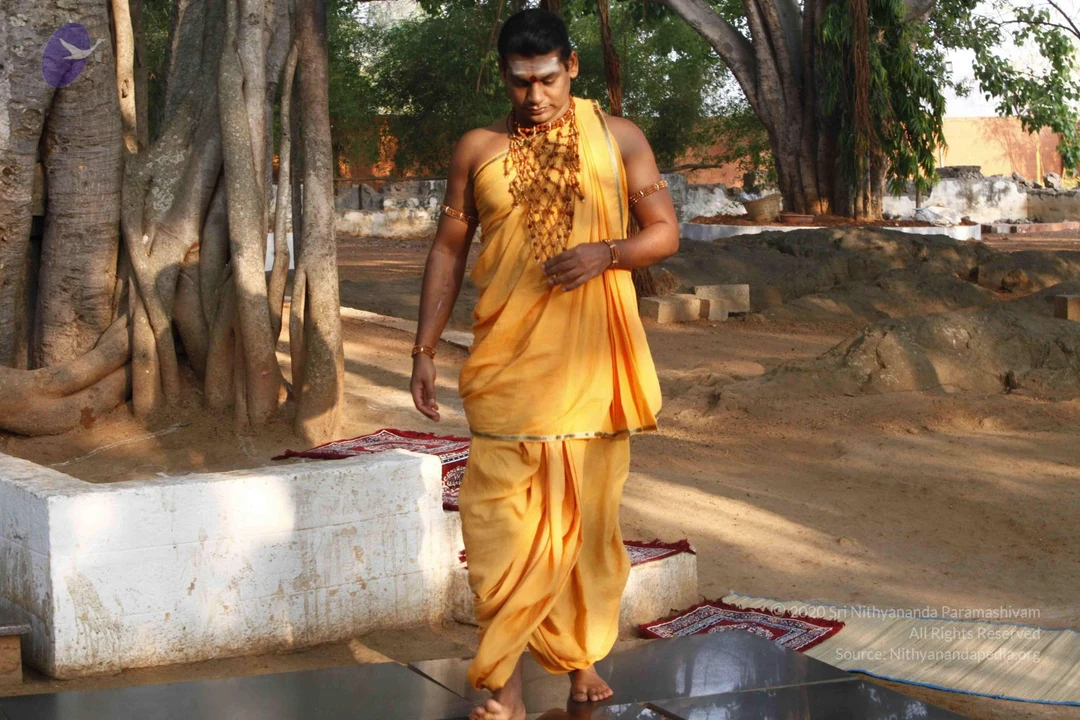
Prathyaksha-Pada-Puja

9 photosSource gallery
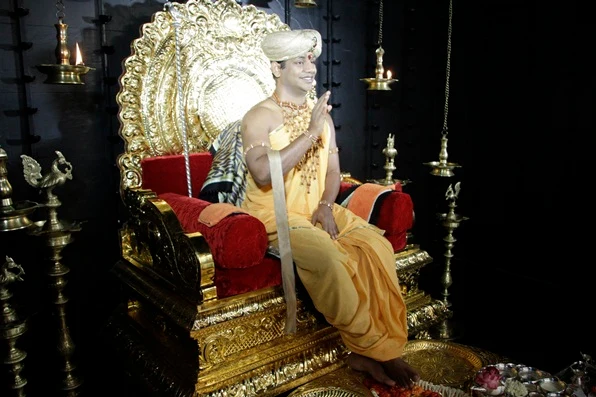
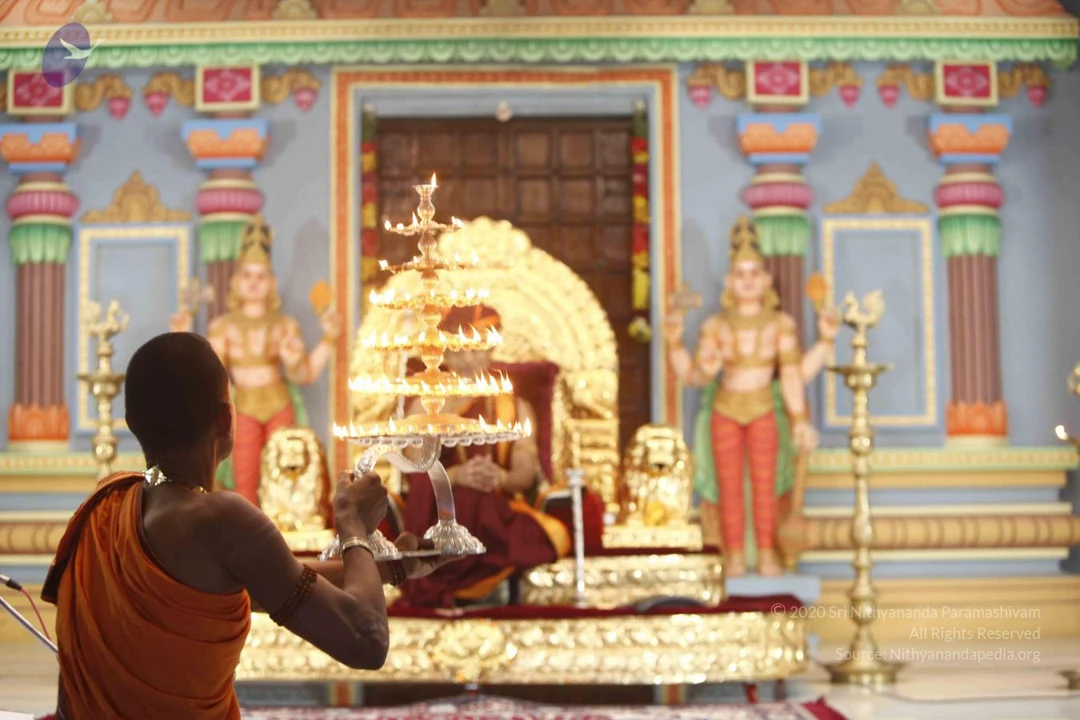
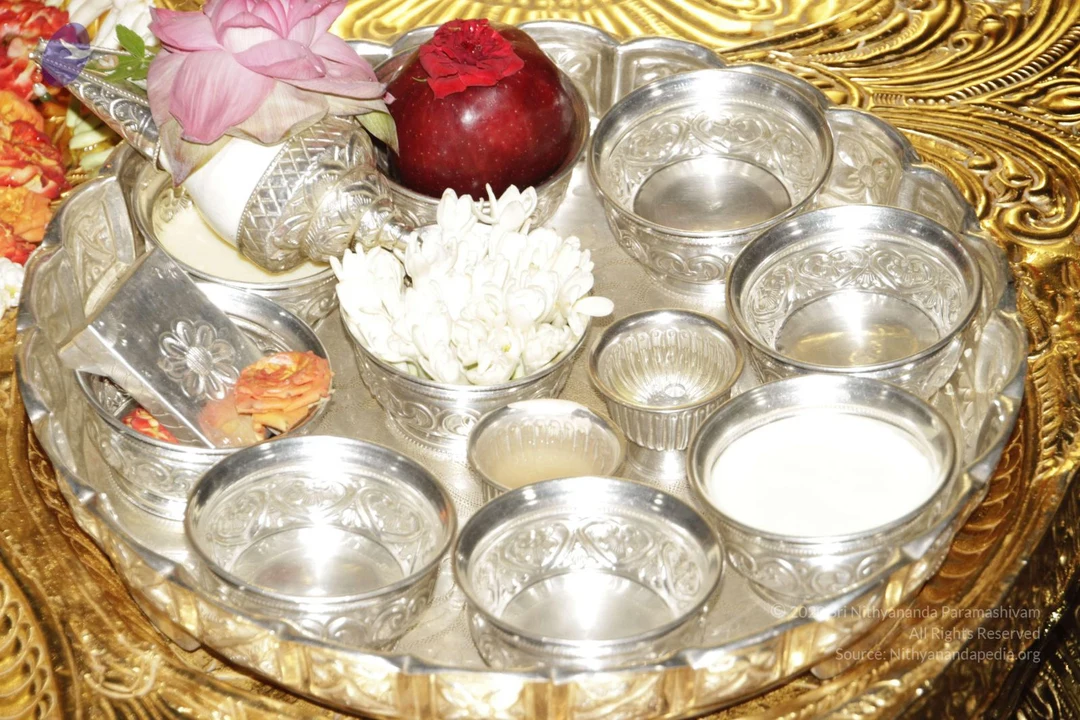
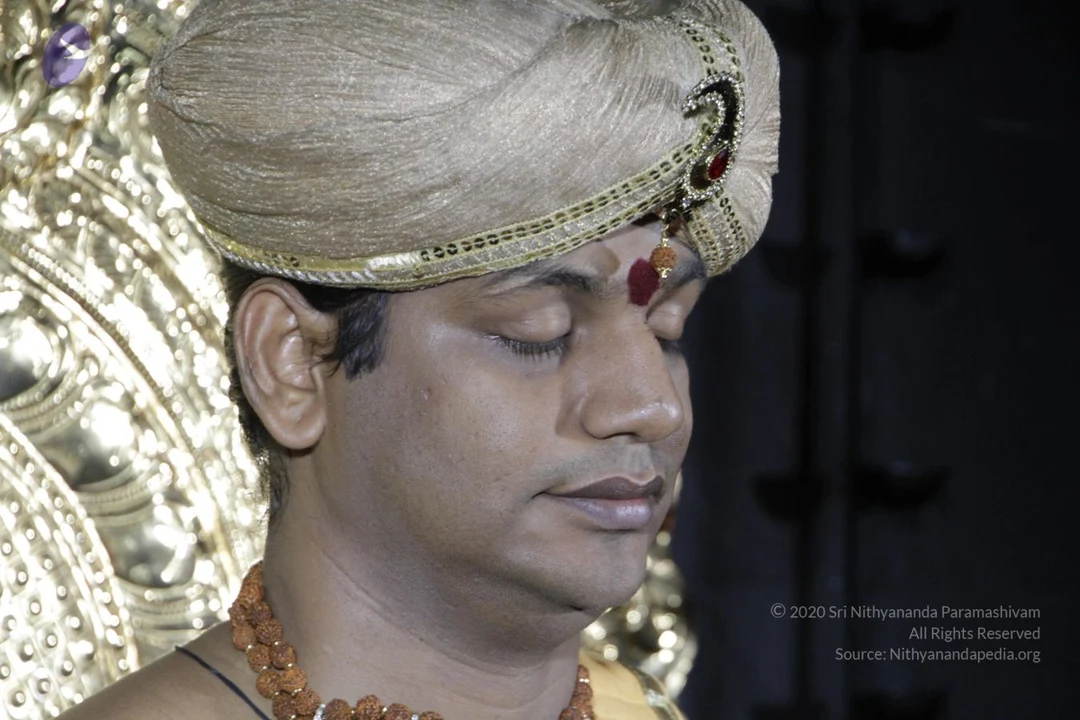
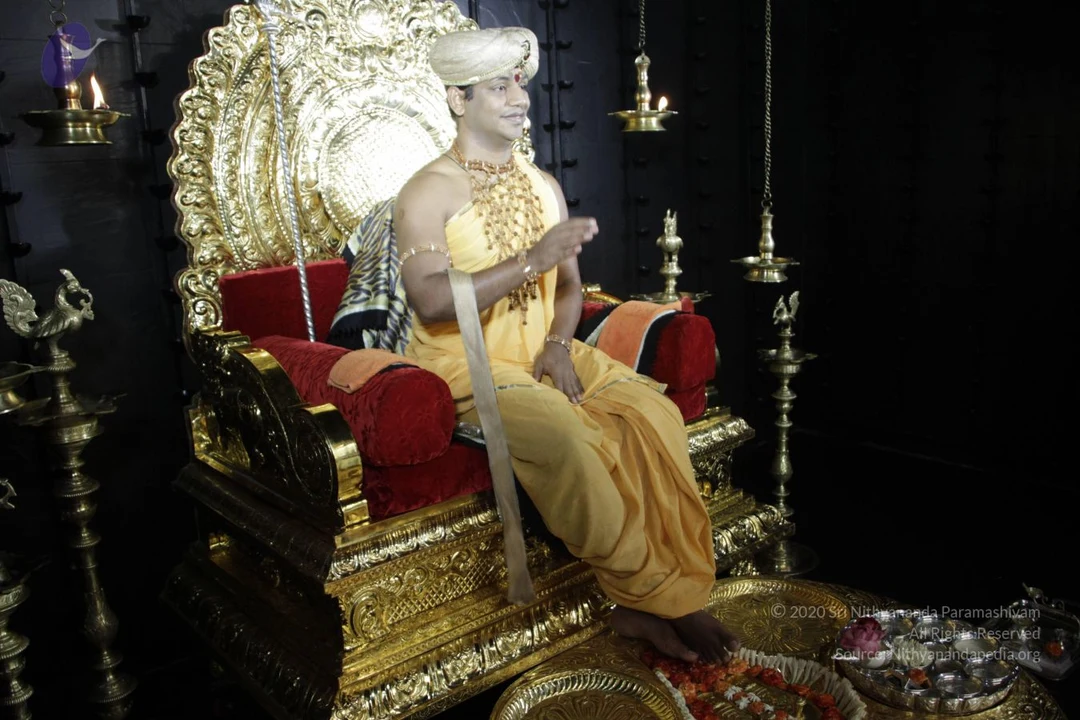
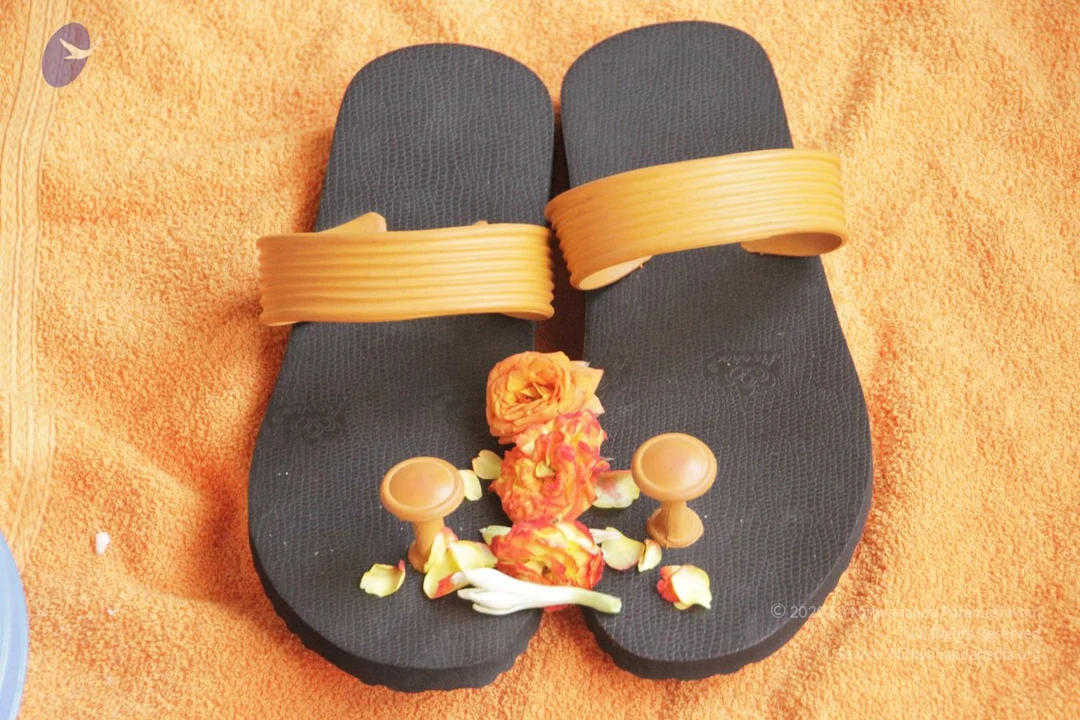
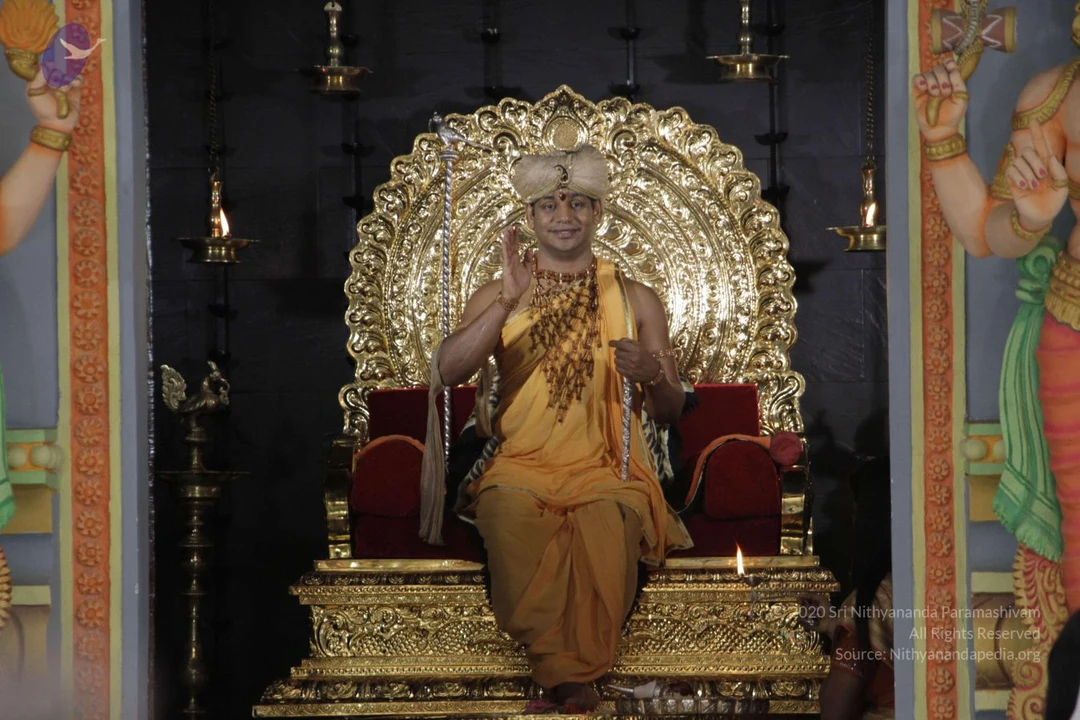
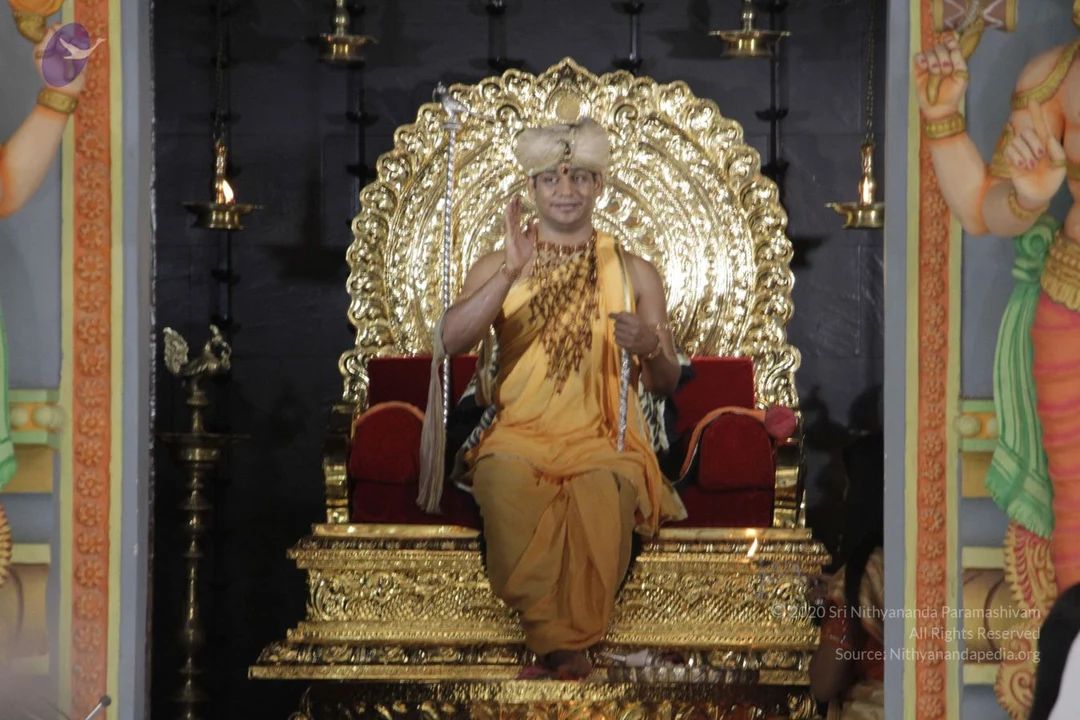
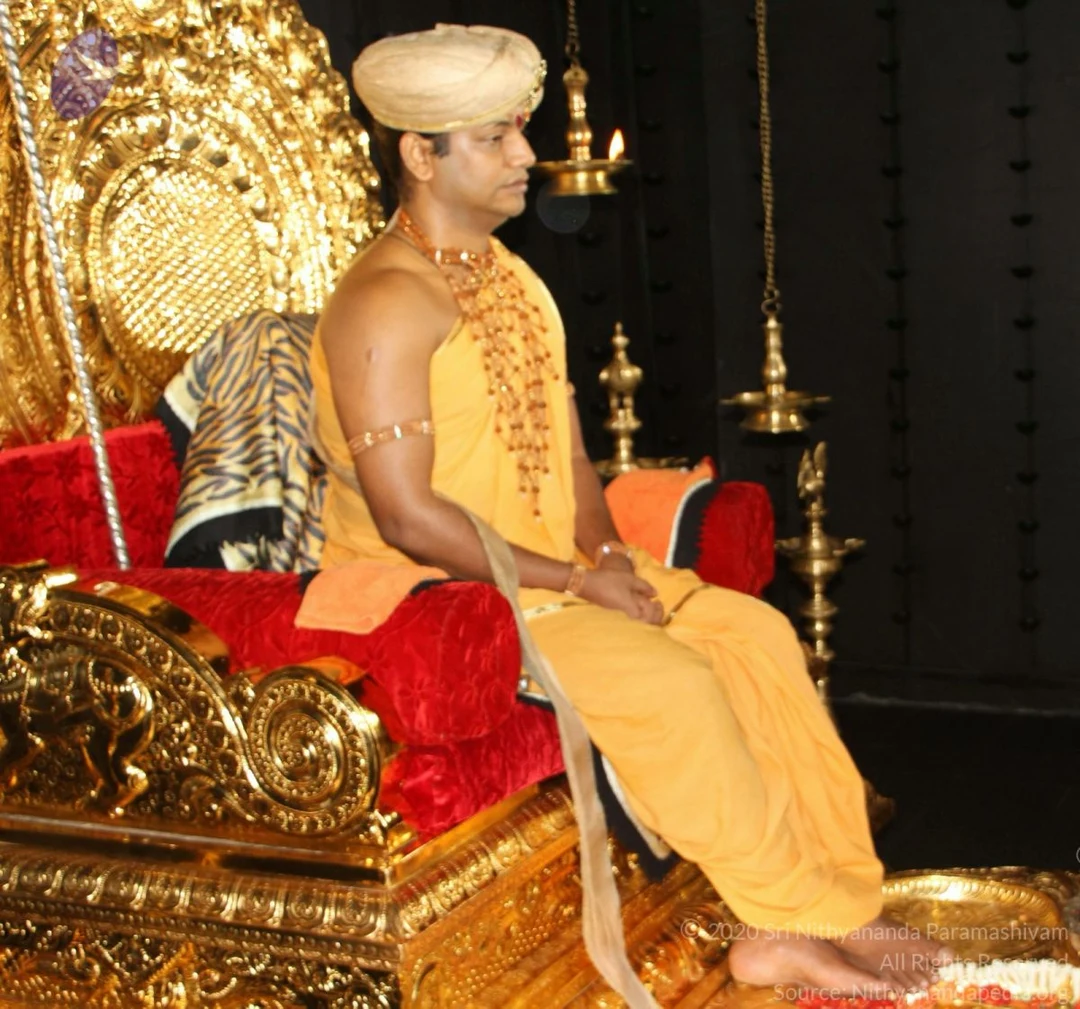
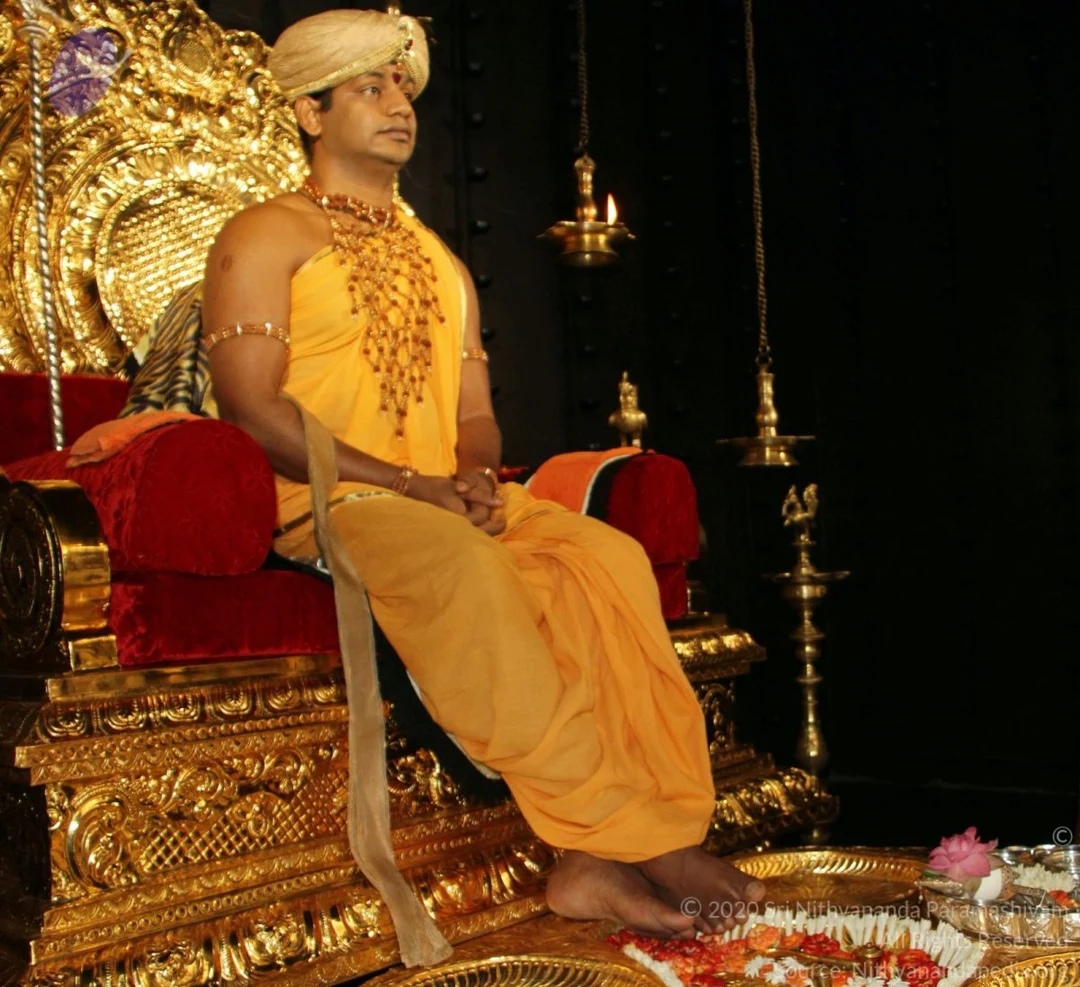
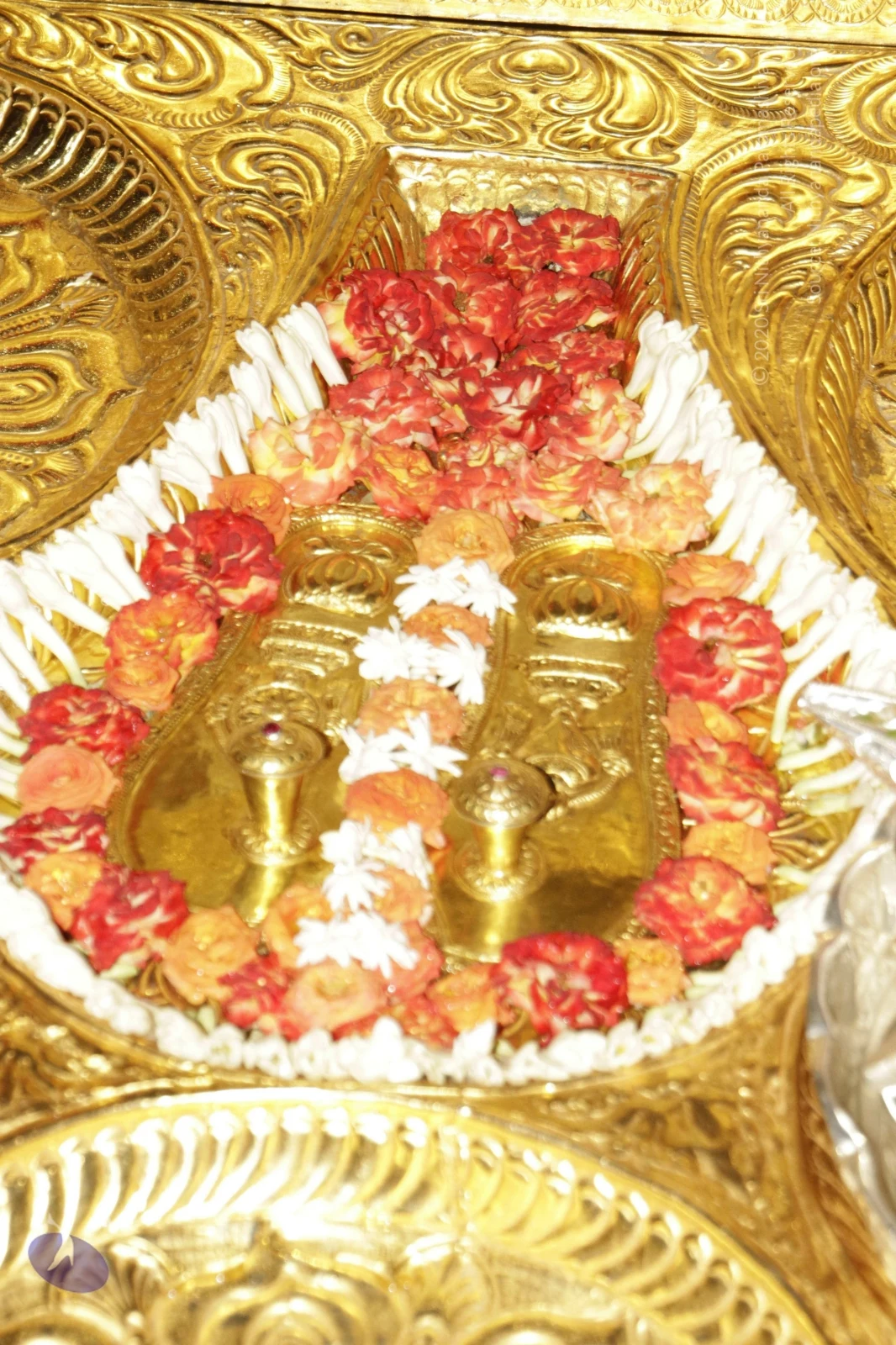
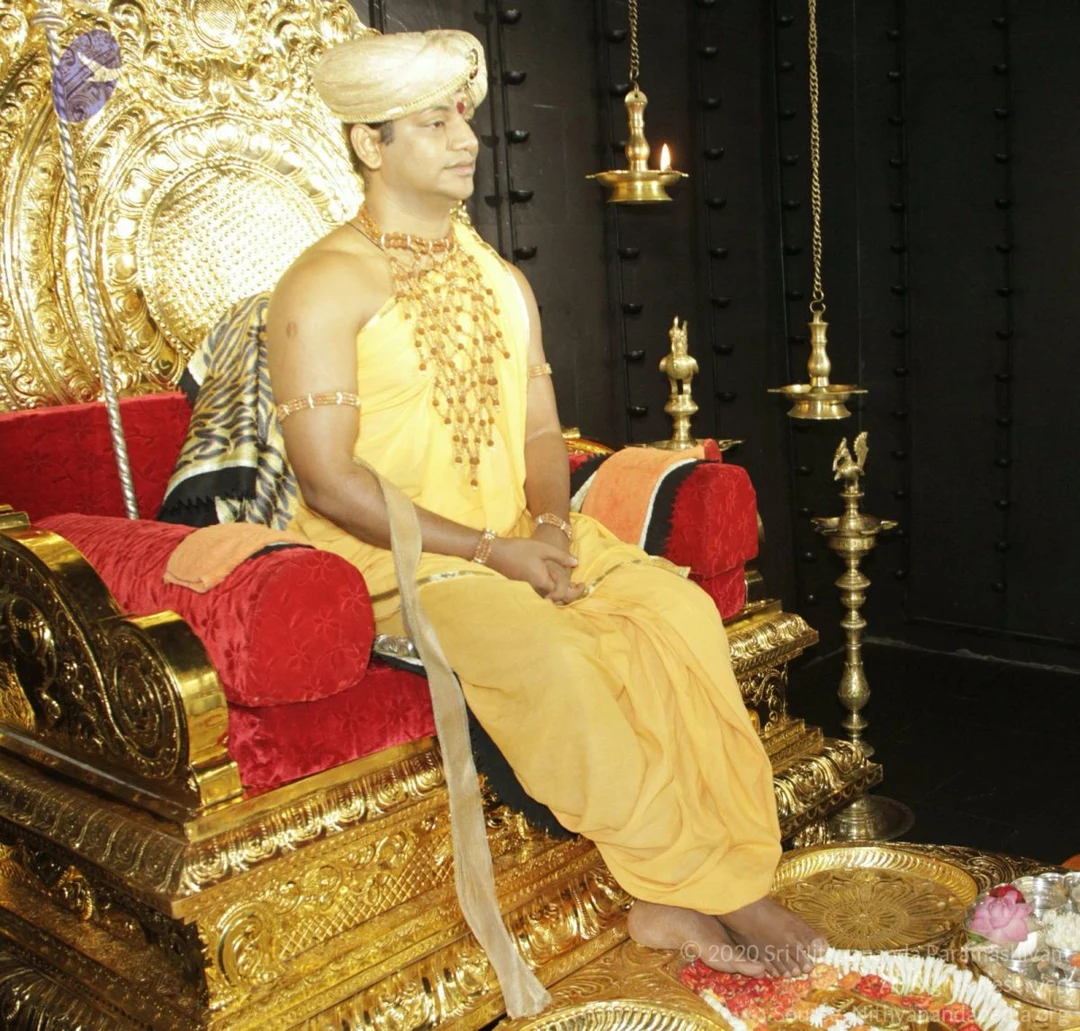
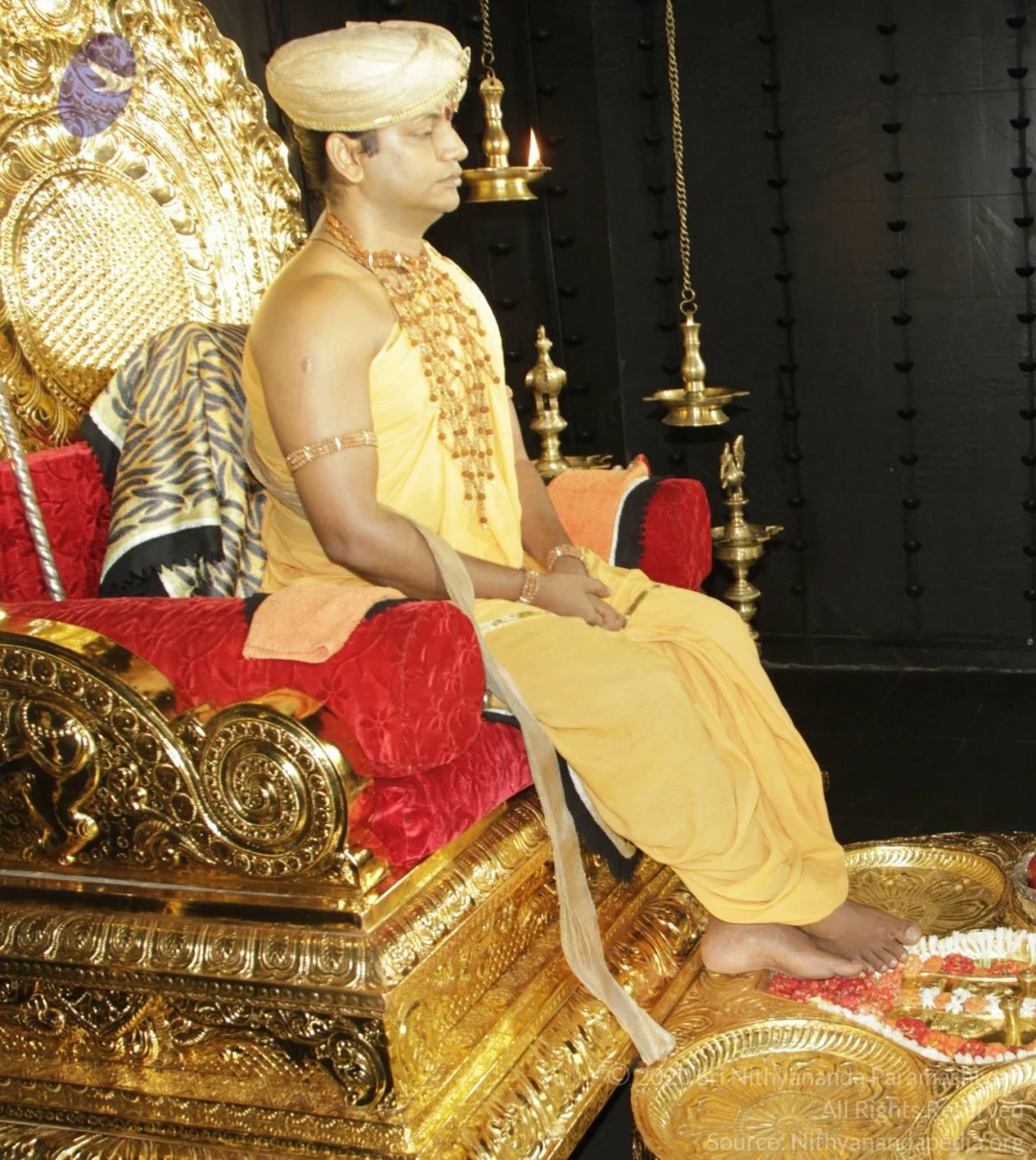
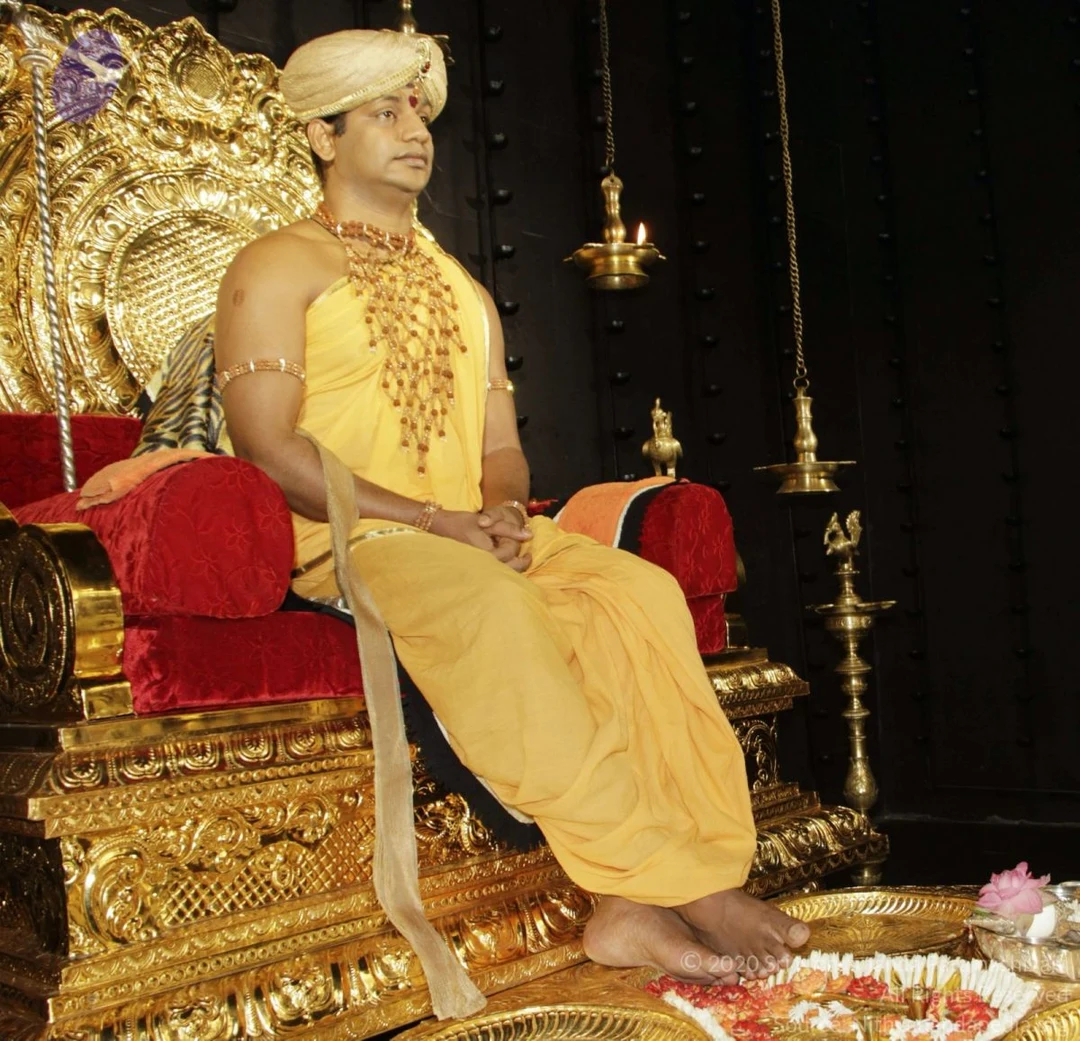
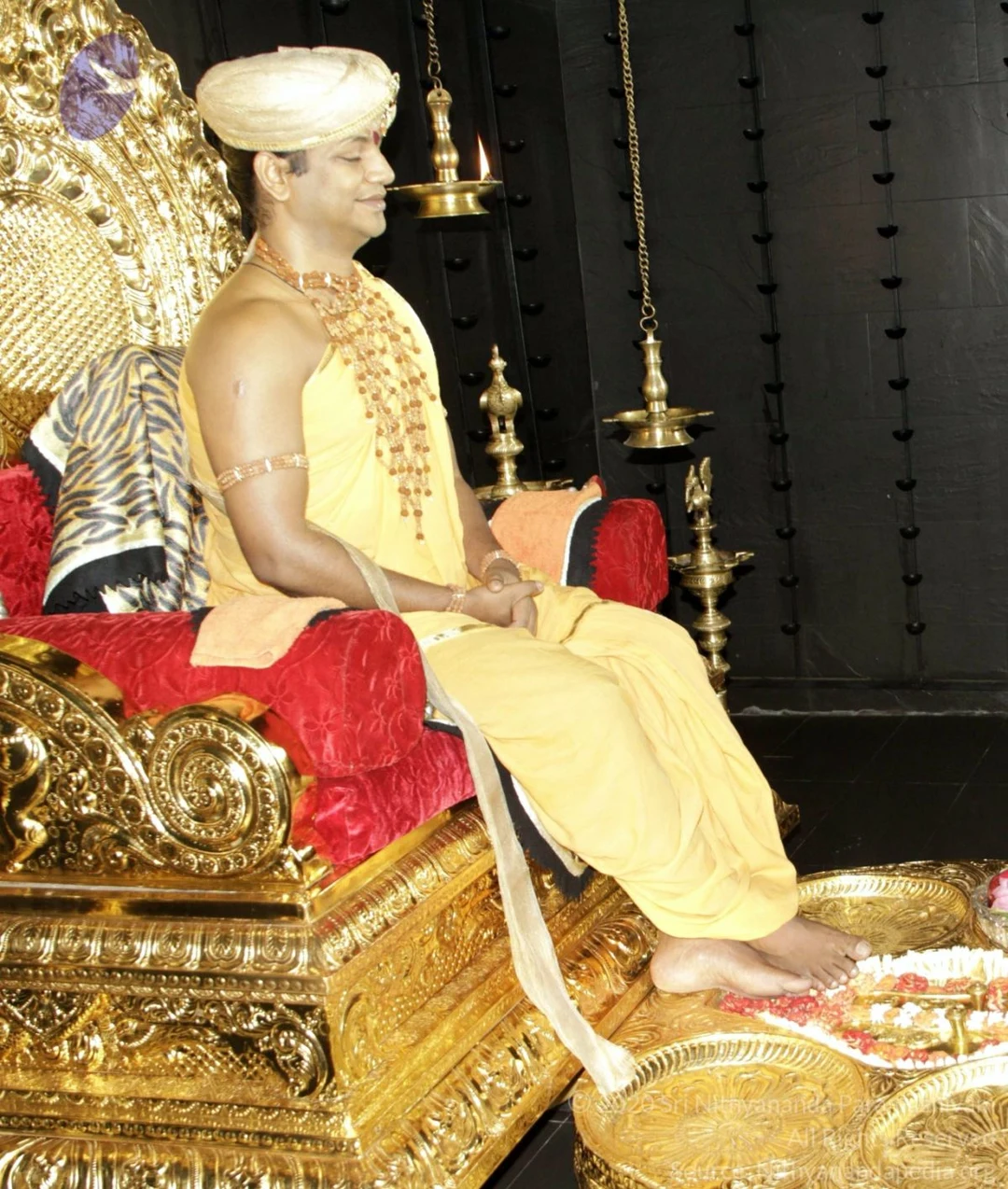
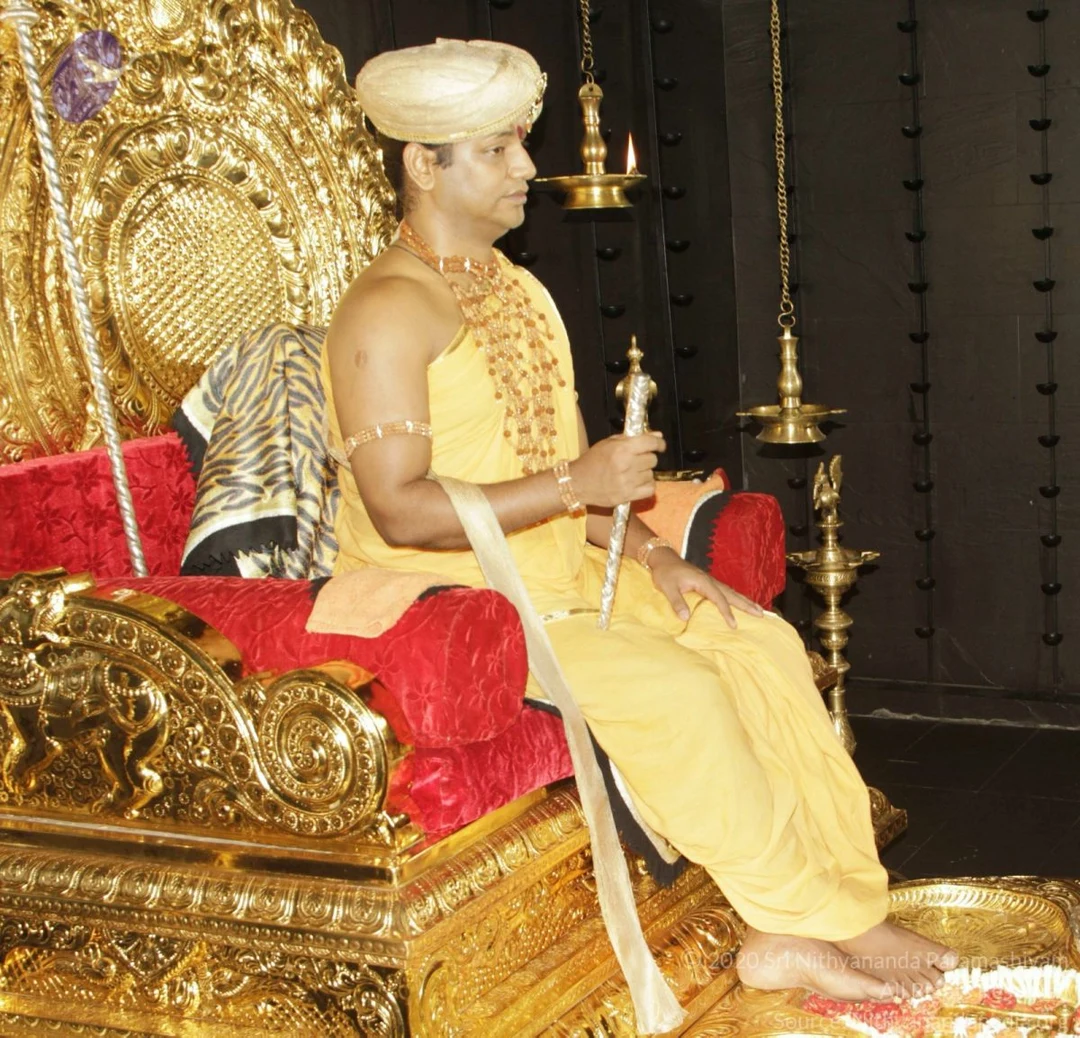
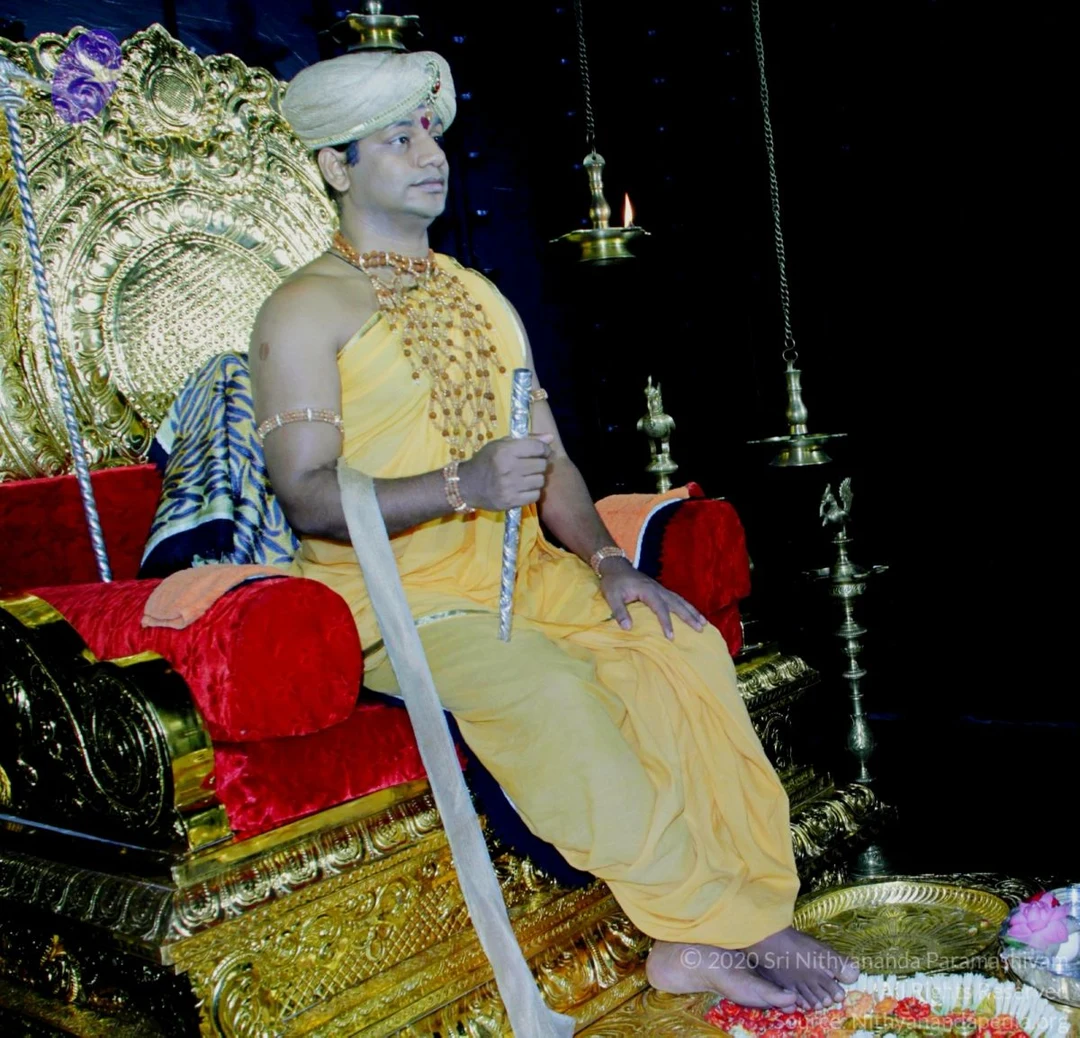
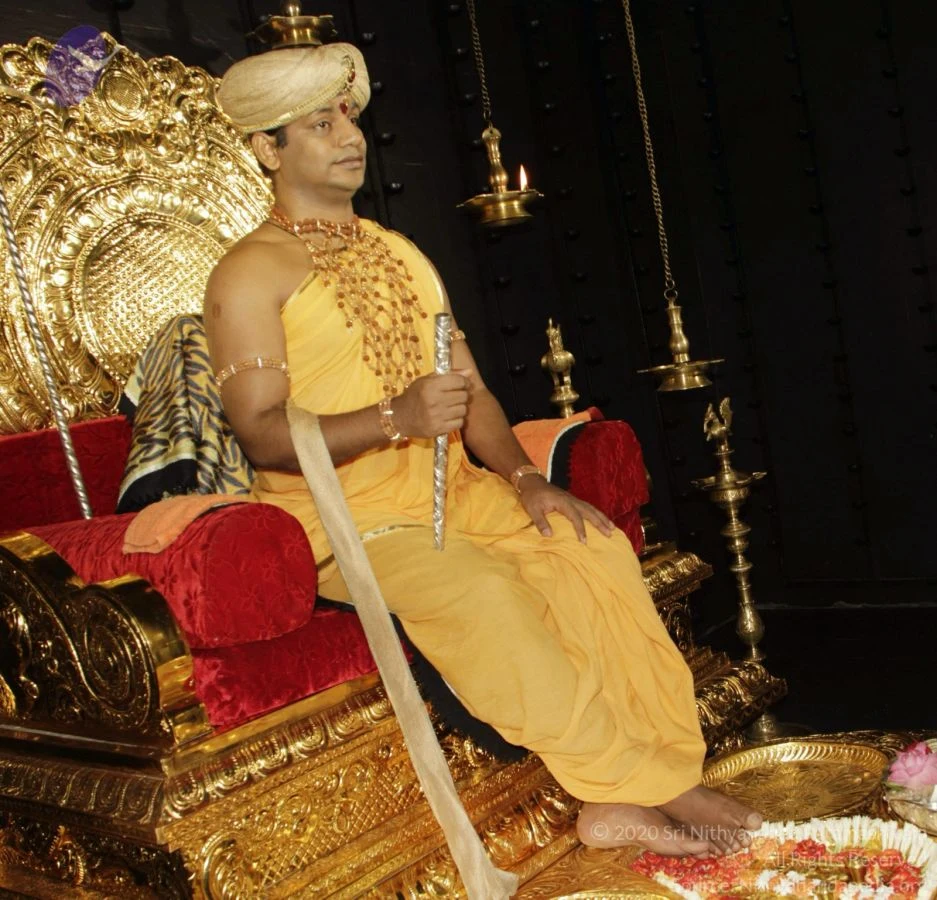
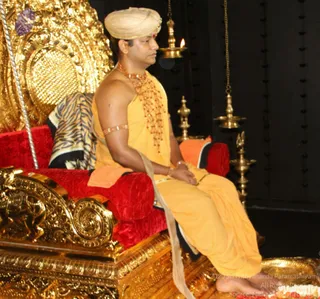
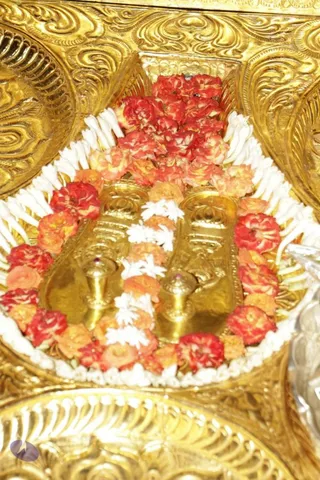
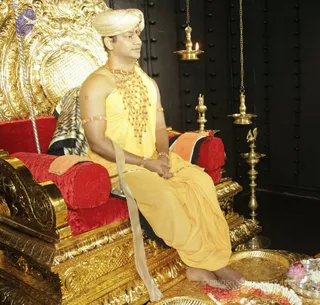
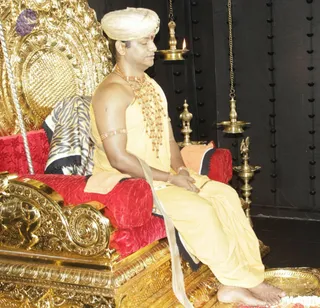
A seated man in profile sits on an ornate gold throne with red velvet cushions and a tiger-striped cloth draped over the back. He wears a cream turban, a saffron-yellow dhoti and wrap, a shawl-like cloth over one shoulder, a bare upper body, layered beaded rudraksha-style necklaces, a gold armlet, and bangles. Brass oil lamps with lit flames stand beside the throne against a dark background. Because the page names Swamiji and he wears saffron clothing, a turban, and ornate beaded necklaces on a throne, the seated figure is Swamiji (probable).Close-up photograph of a pair of ornate gold sandal-shaped footwear or padukas placed on an ornately embossed gold surface, decorated with red and orange roses and white jasmine garlands. The gold padukas have small gold knobs with a red gem accent. No people are visible in the frame.A seated man on an ornate gold throne with red velvet cushions, wearing a cream turban with a red tilak mark, a yellow-saffron dhoti-style garment draped over the shoulder, a multi-strand beaded necklace, gold armlets and bangles, and bare feet resting on a gold footstool. Brass oil lamps with lit flames flank the throne against a dark wooden door, and a tray of flowers and offerings sits at the feet. Visible physical people: 1.A seated man in a cream-yellow dhoti and matching shawl sits on an ornate golden throne with red velvet cushions and carved gold lion-like armrests. He wears a cream turban with a red tilak mark, a layered golden-beaded necklace, and gold bangles on his wrist. His eyes are closed as if in meditation, hands resting in his lap. Behind him hang brass oil lamps, one lit with a flame, and a dark wooden panelled wall. Appearance-based identification: a person, seated in meditation on the throne.A seated man in a cream turban and pale yellow robe sits on an ornate gold throne with red velvet cushions and a zebra-print cloth draped over the backrest. He wears layered orange-brown beaded necklaces, a matching armband and bangles, and rests his hands in his lap with eyes closed. Bare feet rest on a gold footstool beside a plate of flowers, with a brass hanging oil lamp lit behind him against a dark wall. One person is visible.A man seated on an ornate gold throne with red velvet cushions and a gold-carved back, wearing a cream turban, a yellow unstitched garment draped over his shoulder and bare-chested, multiple beaded orange necklaces and bangles, holding a silver staff across his lap, with bare feet. Behind him stand brass oil lamps with lit flames hanging from chains and a standing brass lamp, against a dark wall with studded panels. A pale cloth and red flower petals lie near the throne base. The scene reads as a formal ceremonial seating. a person: the seated man's appearance is consistent with cues including a crown-like turban, ornate beaded necklaces and a ceremonial staff, presented in a seated honorific role on a throne.
Q-and-A-Session
7 photosSource gallery
A seated man in a cream turban with a red bindi and a small microphone at his ear sits on an ornate gold throne with lion carvings and a maroon velvet cushion. He wears a saffron-yellow robe, layered rudraksha malas and gold bangles, and rests his clasped hands in his lap while speaking. Behind him is a tall gilded arch. Probable Swamiji is shown by the throne, turban and layered rudraksha malas with saffron robes, indicating an in-person satsang discourse.A man seated on an ornate gold throne with a carved arched back featuring lion figures and a red velvet cushion. He wears a cream turban with a red bindi-style jewel, saffron-yellow robes with a cream shawl draped over one shoulder, layered rudraksha mala necklaces, and beaded armbands. He sits with hands clasped and smiles while speaking, a small lapel microphone visible near his face. a person based on the page's reference to a satsang with him and the saffron robes, multiple rudraksha malas and ornate throne cues; the person is presented as the teacher giving a talk.A man seated on an ornate gilded throne with a golden lion-shaped armrest, speaking with an open-handed gesture while smiling. He wears a cream-coloured turban with a red bindi-style jewel, a saffron-yellow robe draped over his body with a cream shawl over one shoulder, multiple strands of rudraksha beads and gold-toned beads around his neck, and rudraksha bracelets on his wrists and upper arms. A small lapel microphone is visible. Behind him are red velvet cushions and a red-and-white backdrop.A man seated on an ornate gold-and-red throne on a stage, wearing a cream-colored turban with a red bindi, a saffron-yellow draped garment, and multiple strands of rudraksha beads around his neck. He wears gold bangles on his arms and has a headset microphone, with his hands resting together in his lap. Beside the throne is a gold lion figure and a silver staff, and the backdrop features colorful painted temple-style architecture in green, red, and orange. Swamiji (probable): the saffron clothing, rudraksha malas, turban and throne fit the page's description of a satsang talk, though the face is not used for identification.A photograph of a man seated on an ornate gold throne with a carved lion-head armrest and red velvet cushions, speaking into a head microphone on a stage with red velvet drapes. He wears a cream turban with a red bindi, a saffron-yellow robe edged with gold trim, layered rudraksha and beaded necklaces, and beaded armbands. The swept-back presentation, turban, saffron clothing and rudraksha cues are consistent with a person, seated as a speaker in a satsang setting, though his face is not used for identification. A carved golden ceremonial backdrop and a silver-tipped staff are visible beside the throne.A man seated on an ornate golden throne with a red velvet cushion and carved lion-head armrest, speaking into a headset microphone. He wears a cream turban with a gold ornament and red bindi, saffron-yellow robes, layered rudraksha mala necklaces, rudraksha bracelets and an armlet. He gestures with one hand while looking to the side. Red velvet drapery stands behind him.
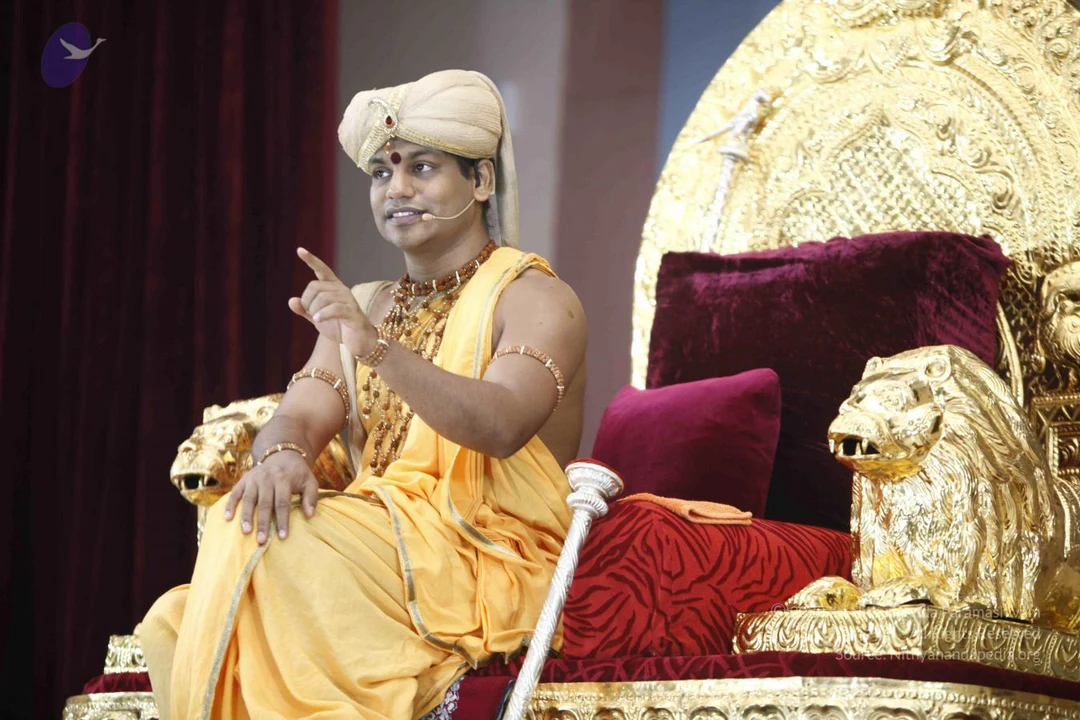
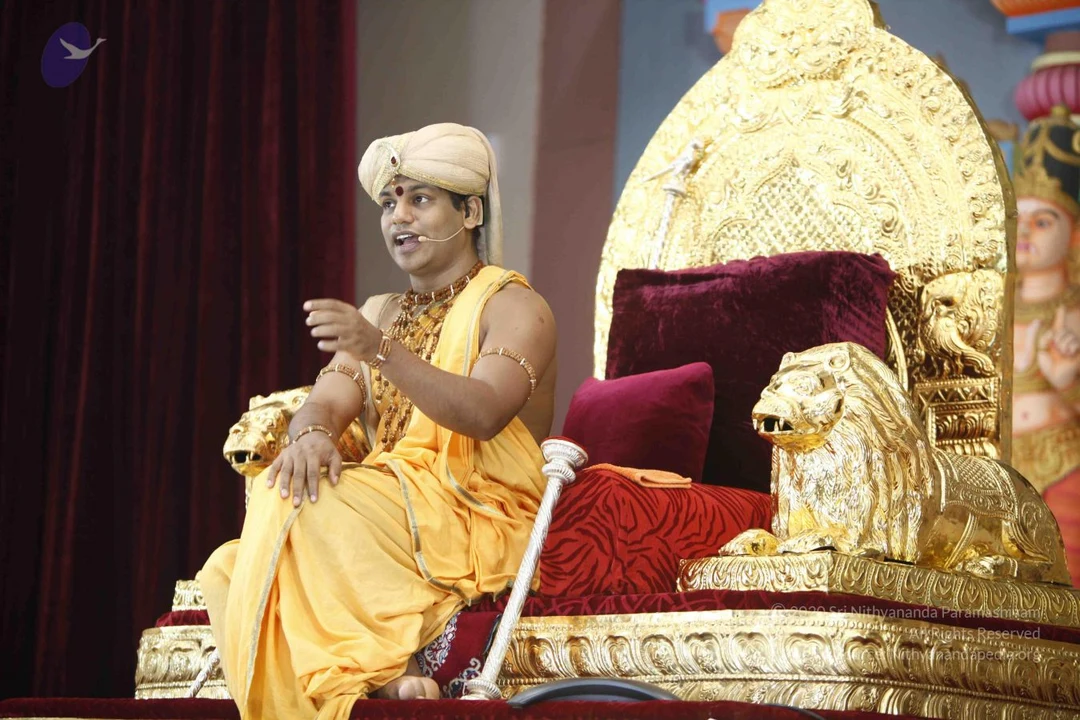
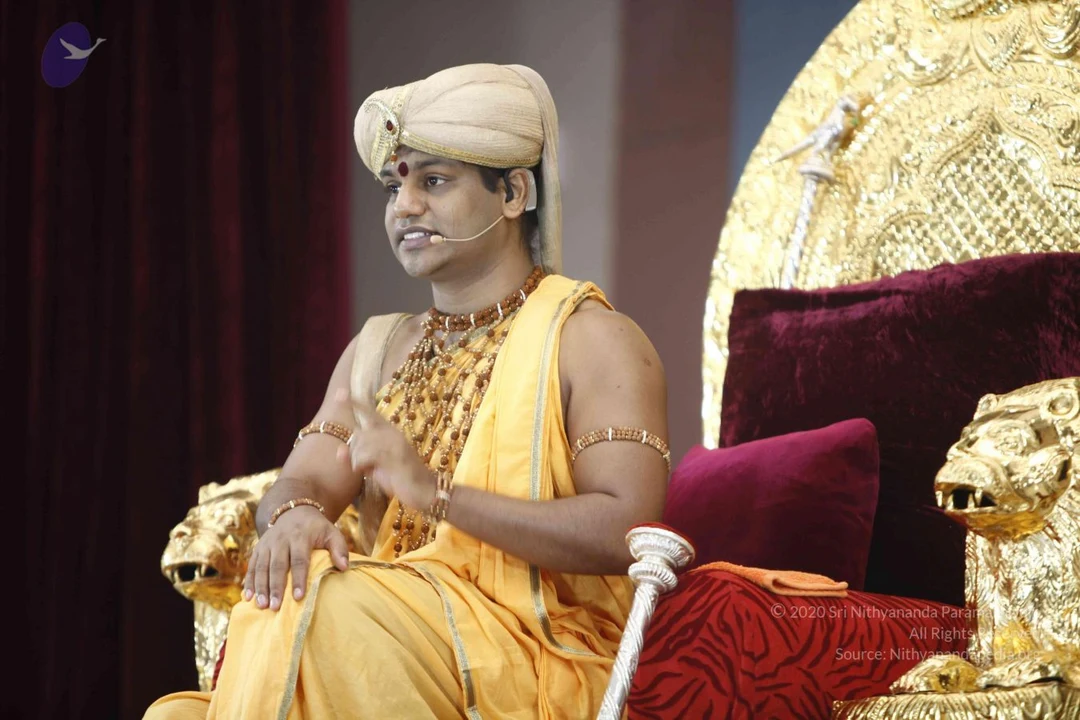
Sarva-Darshan
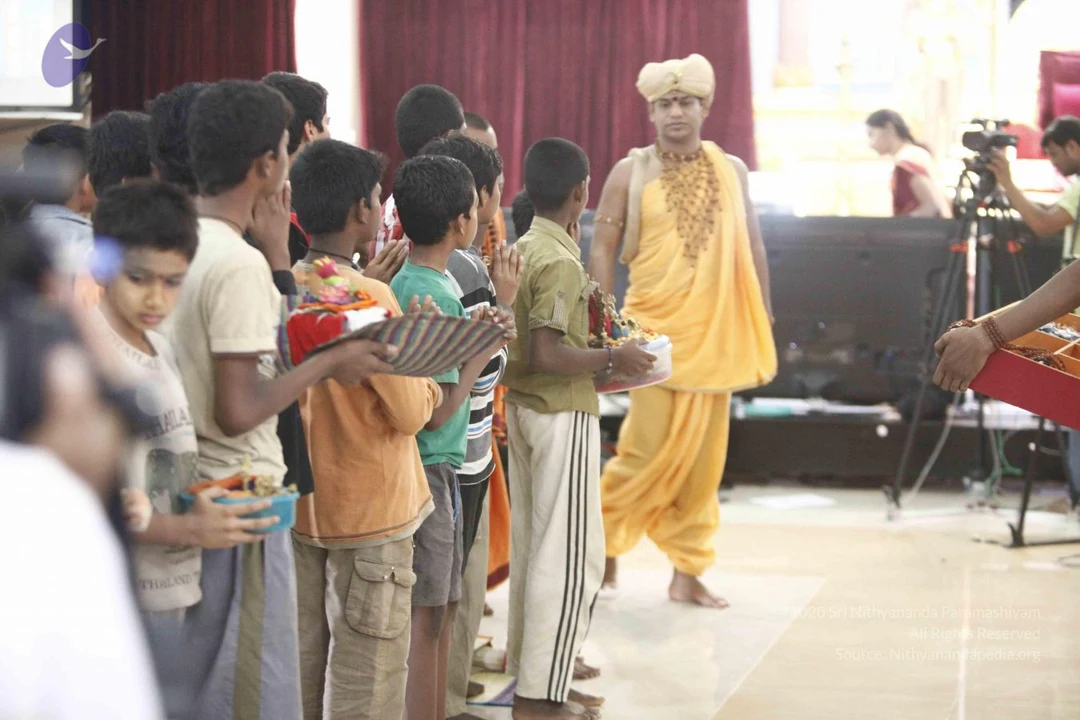
2 photosSource gallery
A photograph in a bright hall where a young man in an orange-saffron dhoti-style wrap with red borders and a cream turban carries a red wooden tray divided into compartments holding rudraksha malas, fruit and small packets. He wears rudraksha beads on his arm and neck and stands with his back partly to the camera, offering items to devotees. Nearby a woman in an orange sari with a red bindi and beaded necklace smiles, and a child in a teal top stands at left. An elderly man in white ritual clothes appears at right. Framed portraits hang on the wall behind. No candidate for a person is clearly identifiable from appearance, so the identity remains uncertain.Photograph of an indoor hall with devotees and a robed man in an ornate cream turban and orange-yellow silk garment with a thick beaded rudraksha-style necklace and gold armbands, gesturing with one hand while speaking warmly to a bespectacled man in white shirt and white dhoti. Around them a woman in white with a green shawl, a man in a blue t-shirt, and people in white clothing stand close; in the lower left a man in a striped shirt bends low to the floor. At right a wooden tray or box is held by a hand. Behind them two framed portraits hang on a cream wall beside red drapes, and a projector screen and speaker are visible. The robed man is a candidate for the page's subject, but his appearance is only partly distinctive, so identity is uncertain.

Press-Meet
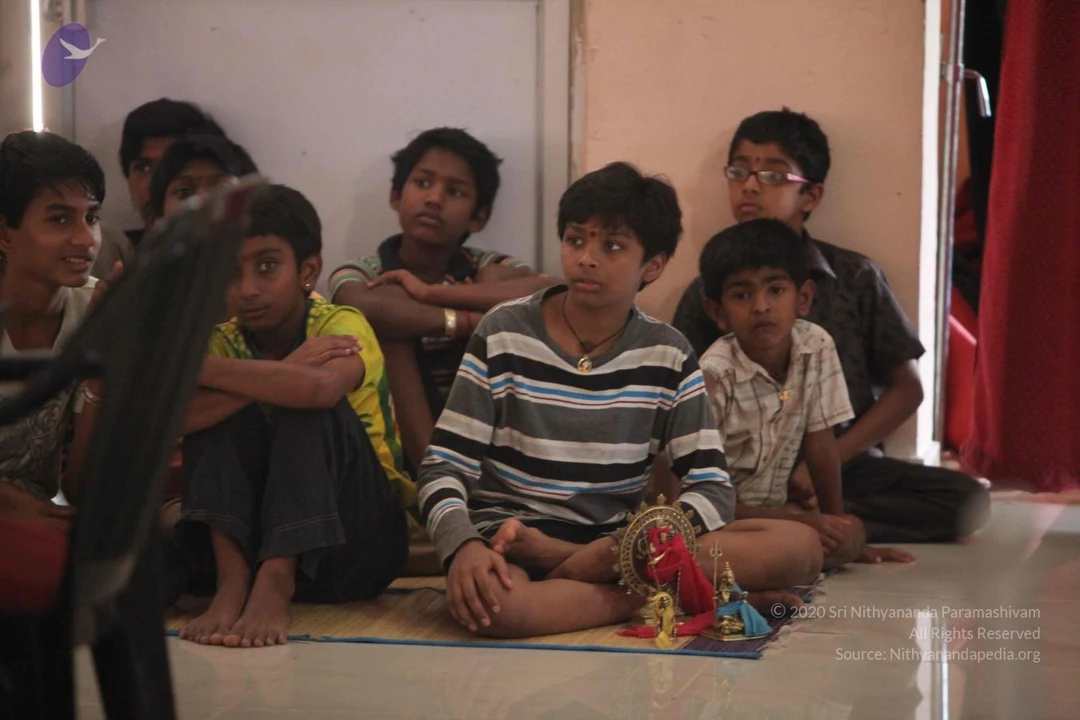
41 photosSource gallery
A seated man in saffron-orange clothing with an orange turban speaks at a talk. He wears long dark hair, a red bindi, a head microphone, and multiple rudraksha malas. He holds white papers and sits barefoot on a gold upholstered throne with carved black armrests and a tiger-striped cushion. A small vase of red flowers sits on a table beside him, with a partly visible person in white at the left edge. The background is a dark curtain and a pale wall.Photograph of video crew working at an event. A young man in a pink and white plaid shirt with a red wristband holds a small handheld camcorder to his eye. Behind him a bespectacled man in a blue striped shirt and dark trousers holds a handheld microphone. On the right a camera operator in a white shirt stands behind a professional HDV video camera on a tripod, and a blue monitor is in the foreground. A white wall and beige wall form the backdrop.Photograph of camera operators filming indoors in a room with white walls and a large pale screen. A young man in a pink and white plaid shirt holds a small handheld camcorder to his eye. Beside him a man in a navy striped shirt and glasses stands watching, and a third person in a white shirt stands behind a tripod-mounted professional video camera with a shotgun microphone. Monitors are visible in the foreground. No swami is visible in the scene.A man seated cross-legged on an ornate yellow upholstered throne with carved black wooden armrests and a tiger-striped cloth draped over the seat, speaking to an unseen audience while raising one hand in a gesture of explanation. He wears an orange turban, an orange sleeveless wrap and dhoti-style drapery, a long rudraksha mala and wooden bead bracelets. A deep red curtain hangs behind, a patterned red-and-blue carpet covers the floor and a water bottle sits on a side table.A photograph of a man seated cross-legged on an ornate yellow upholstered throne-like sofa with black carved wooden armrests, against a dark red curtain. He wears an orange turban with a red bindi, an orange draped robe with yellow borders, a long rudraksha mala, and beaded bracelets on his wrists and upper arms. He gestures with one hand while speaking into a headset microphone. Cushion bolsters and a patterned mat sit beside him.A smiling man in a cream short-sleeved shirt stands behind two professional video cameras on tripods, one held at his shoulder, in a warm-lit hall. In the foreground two computer monitors show documents and a spreadsheet. A microphone boom extends from the second camera. The camera operators appear to be recording an event, and a blurred figure stands at the right edge.
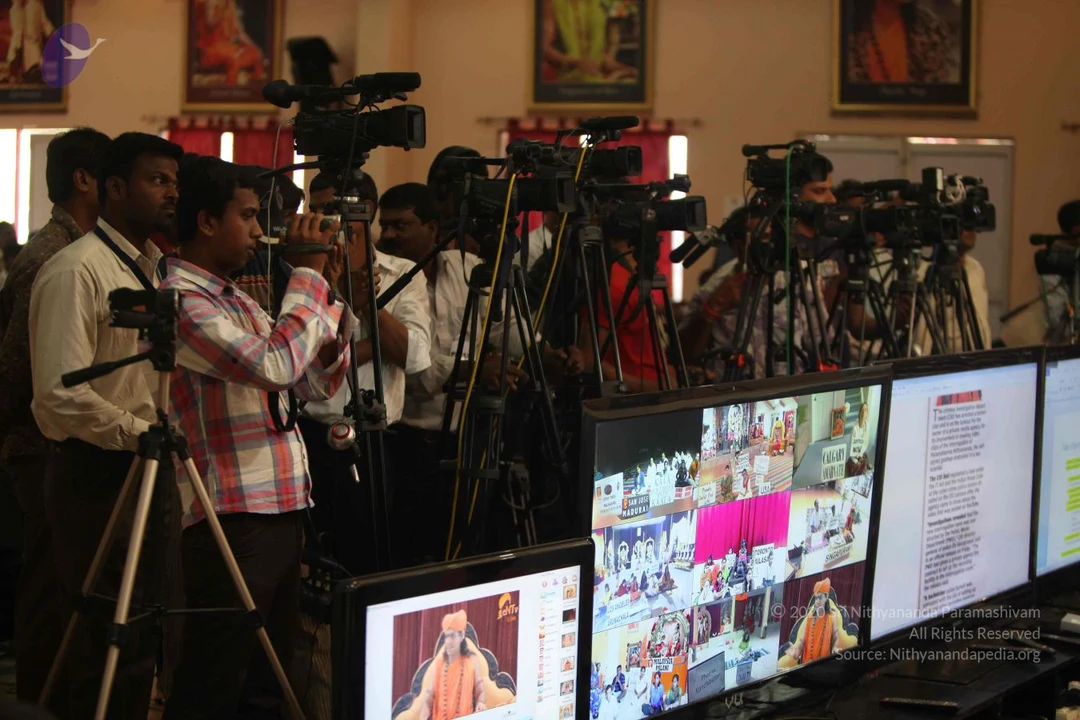
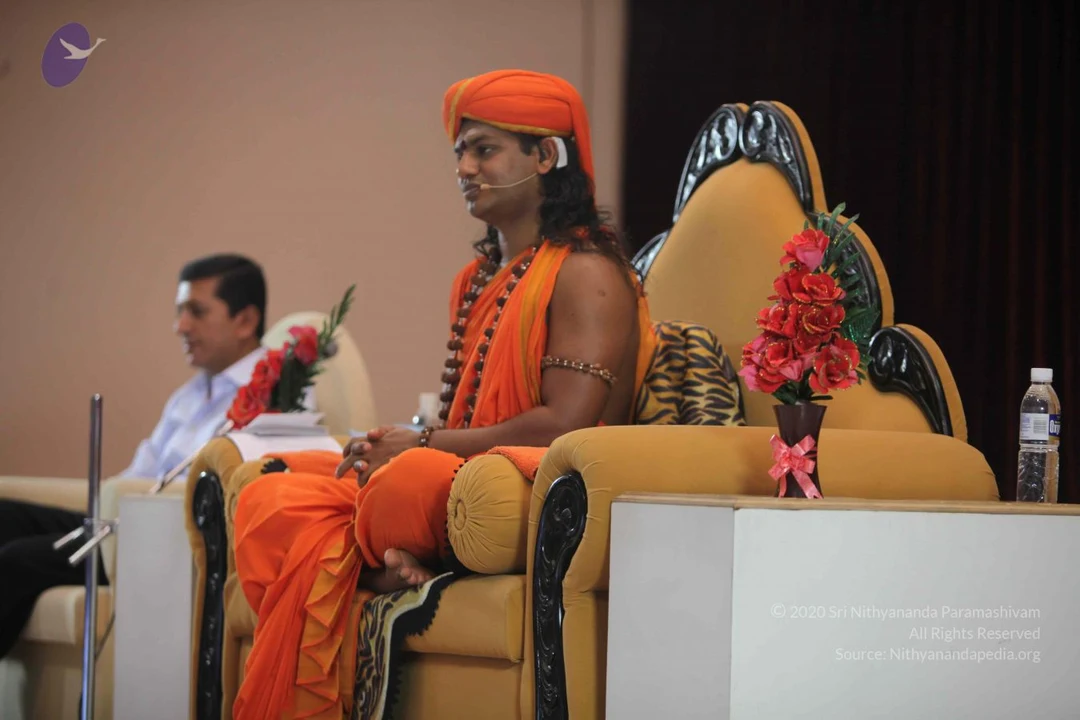
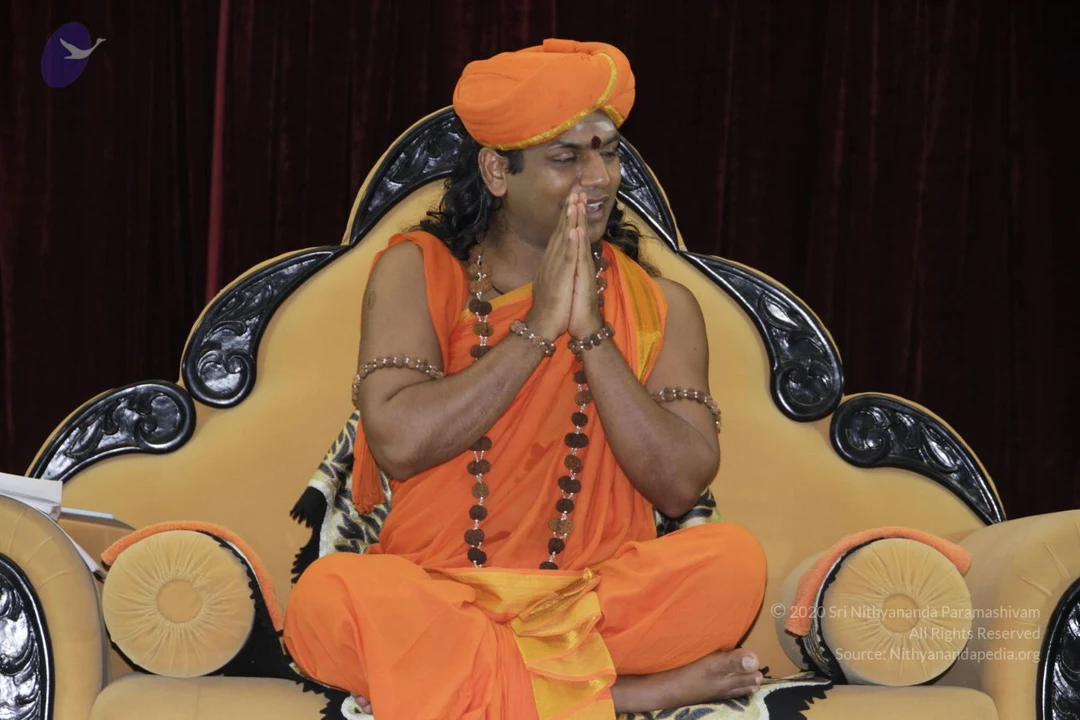
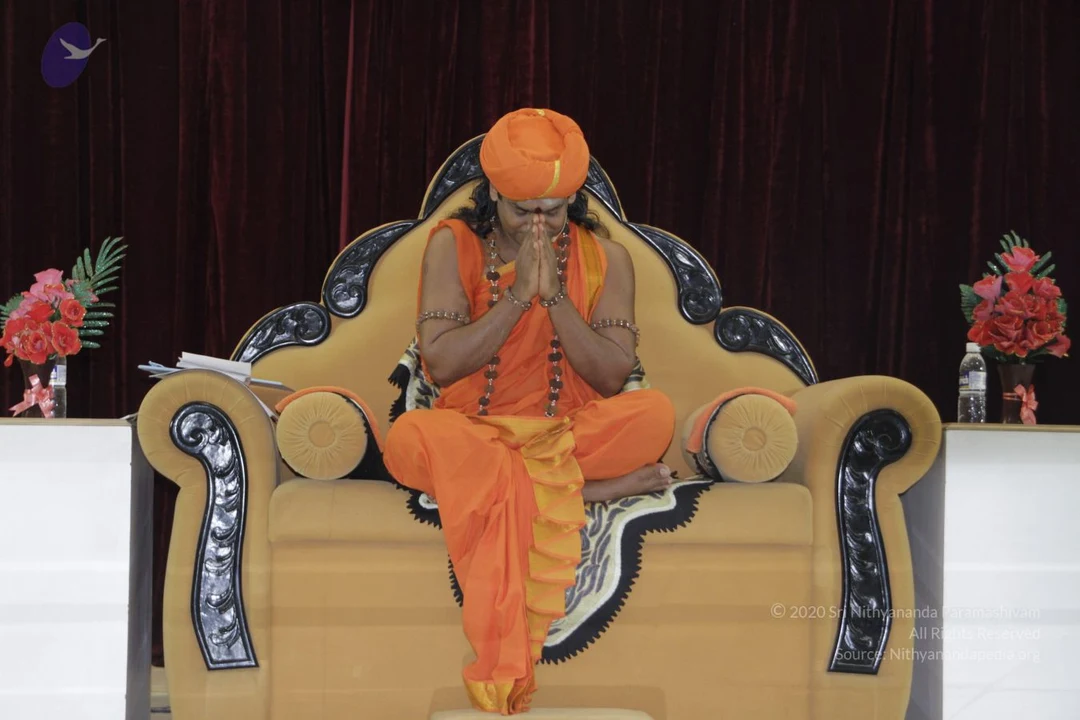
Esoteric-Satsang
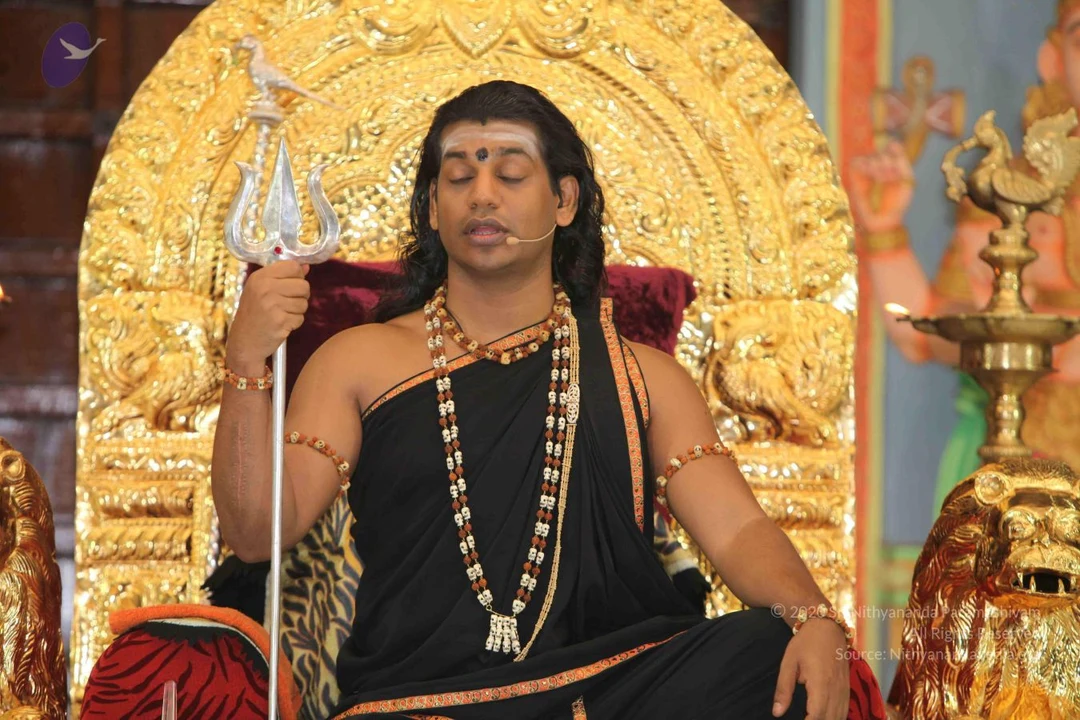
28 photosSource gallery
A seated man holds a silver trident in his right hand while seated on an ornate gold throne with red velvet cushions and a tiger-striped cloth. He wears a black draped garment edged with orange and gold trim, multiple strands of white and rudraksha beads, and rudraksha bracelets on his wrists and upper arms. He has long swept-back dark hair, a white tripundra on his forehead, a dark bindi, and a small microphone clipped near his face, with eyes closed as he speaks. a person, seated in a teaching posture with trident and rudraksha malas, presenting a talk. Carved gold panels and a small bird perched on the trident frame the scene.A man seated on an ornate gold throne with red velvet cushions, holding a silver trident in his raised left hand while his right hand is raised near his face. He wears a black draped garment with orange-and-gold border trim, multiple strands of white and rudraksha beads, a long pendant necklace, and rudraksha bracelets. He has long swept-back dark hair, a white tilak with a central dark bindi, and is bare-footed. A silver staff rests beside the throne. The setting appears to be a formal satsang hall. The man appears to be a probable Swamiji (probable) based on the long swept-back hair, trident, rudraksha malas and saffron-and-black ceremonial dress, seated in the central position as a speaker.A man with long, swept-back dark hair sits on an ornate gold throne with red velvet cushions, smiling and seated with one leg crossed. He wears a black draped garment edged with orange trim, multiple rows of rudraksha and white bead malas, and matching beaded armbands. He holds a silver trident in his left hand and has a white vertical tilak and a dark dot on his forehead. A small microphone is clipped near his face. Swamiji (probable): the long swept-back hair, ornate black-and-orange clothing, rudraksha malas and throne match the cues, so he is labelled as a probable in-person candidate. The background shows gold carved panels and a lion motif.A man seated on an ornate gold throne with a red velvet cushion, holding a silver trident with a red gem, his long dark hair swept back. He wears black draped garments trimmed with orange and gold borders, multiple strands of rudraksha and white bead malas, a gold chain, and rudraksha arm bands. A dark tilak marks his forehead. a person: long swept-back hair, trident, black garments and rudraksha malas match the page's identification, though the appearance is not conclusive. A carved gold lion-patterned backdrop and a wooden staff stand nearby.A man seated on an ornate gilded throne with a golden lion armrest and red velvet cushions, wearing a dark brown draped garment with orange-gold border trim, layered rudraksha and white bead malas, a rudraksha armlet and a small ceremonial pendant. He has long swept-back dark hair, white tripundra marks and a central dot on his forehead, and holds a silver trident in one hand while wearing a head-mounted lapel microphone. Gold-embellished background and a wooden staff rest near the throne.A seated man in a black robe with orange-gold trim holds a silver trident aloft in his right hand. He wears layered rudraksha and white bead necklaces, matching bead bracelets and armlets, and a headset microphone; a dark bindi and white forehead markings are visible. A golden lion figure sits beside him on a red and orange cushion, and a blurred pillar with pink, green and yellow bands stands behind. Swamiji (probable): long swept-back hair, rudraksha malas and a trident held as a ceremonial emblem indicate the speaker, seated at a satsang-style stage.