Skip to content
Tuesday

3 April 2012

THE SUPREME PONTIFF OF HINDUISM HDH BHAGAVAN NITHYANANDA PARAMASHIVAM

Dated photos
343
Source pages
1
Media
1
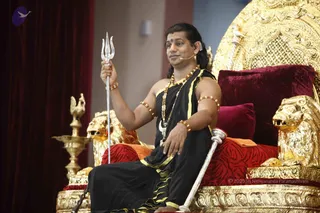
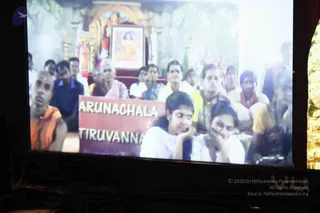
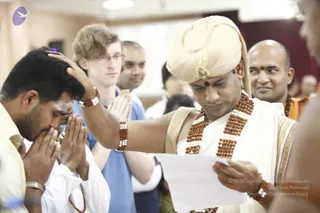
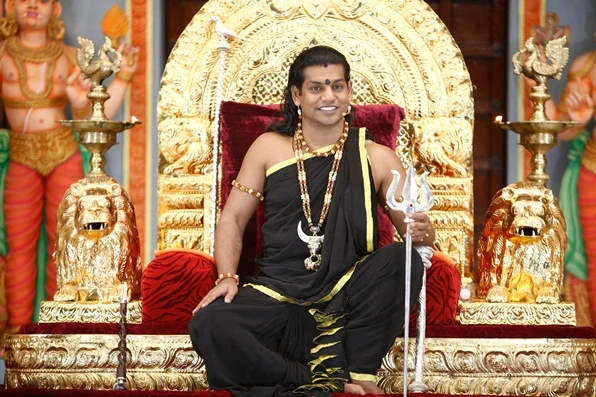
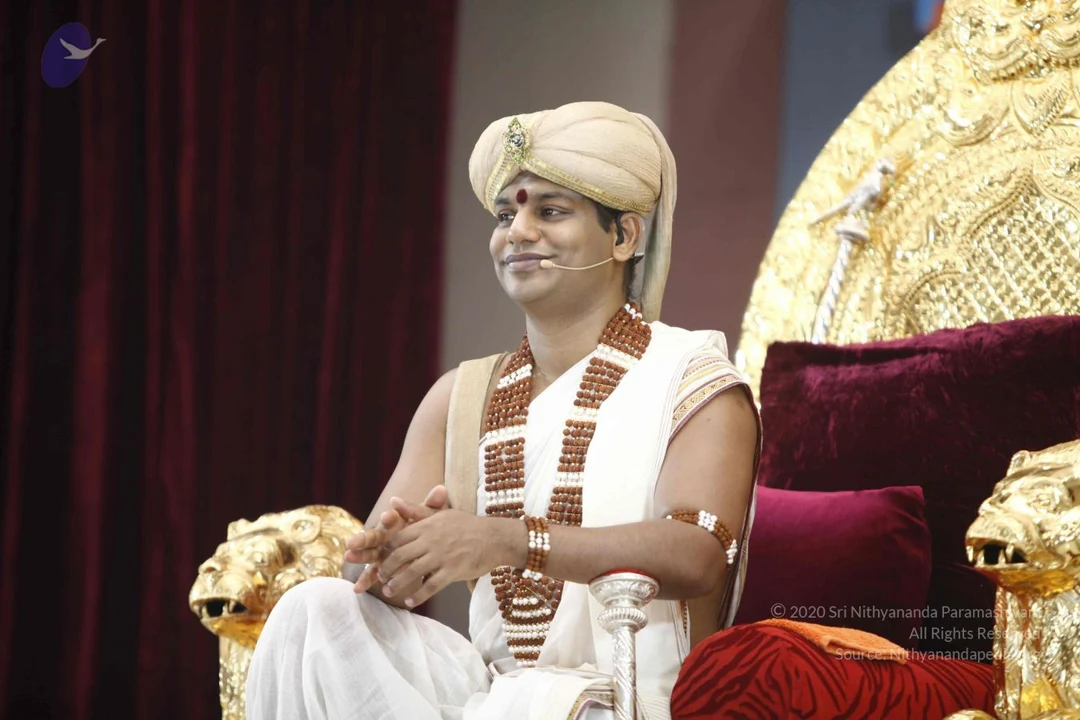
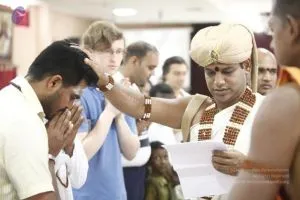
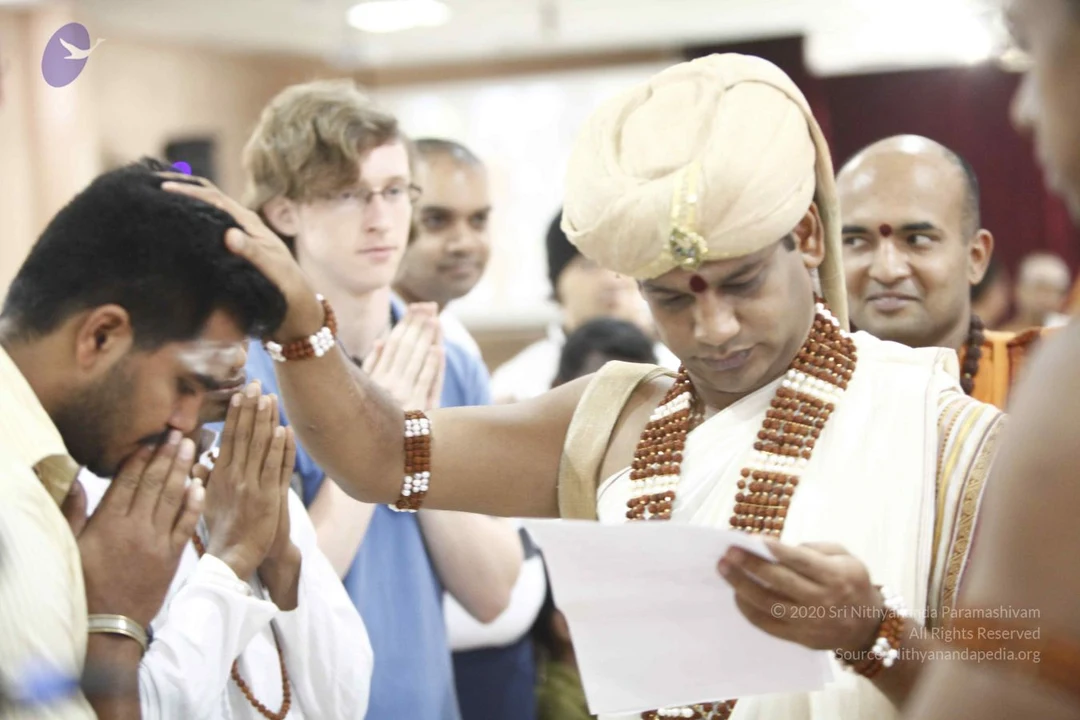
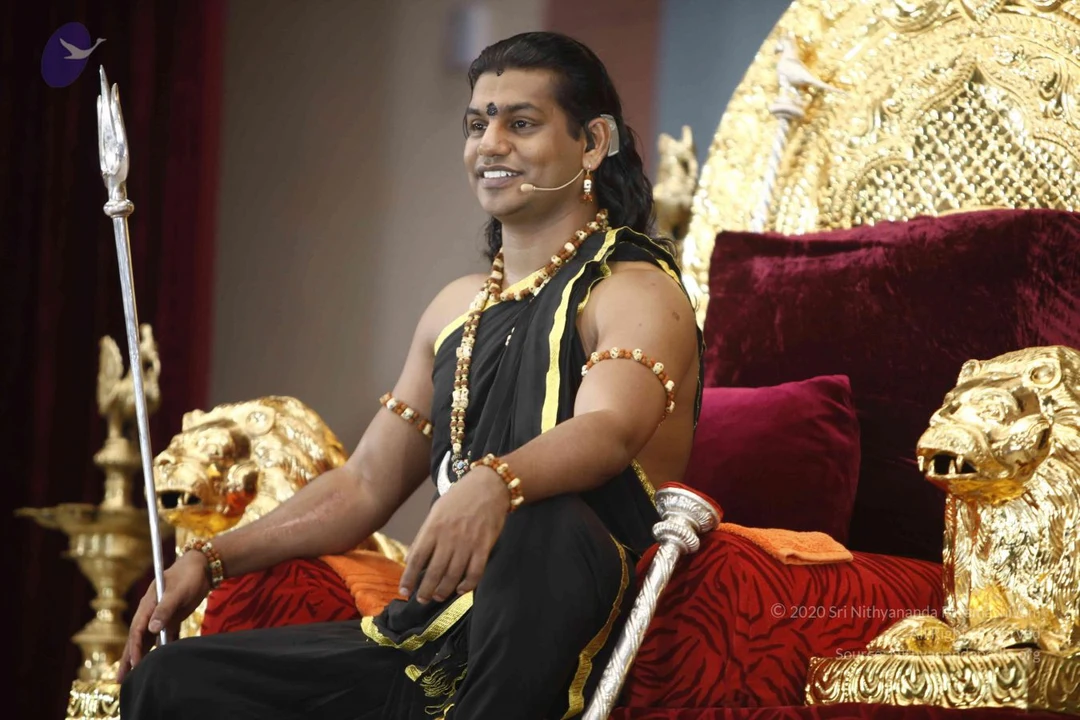
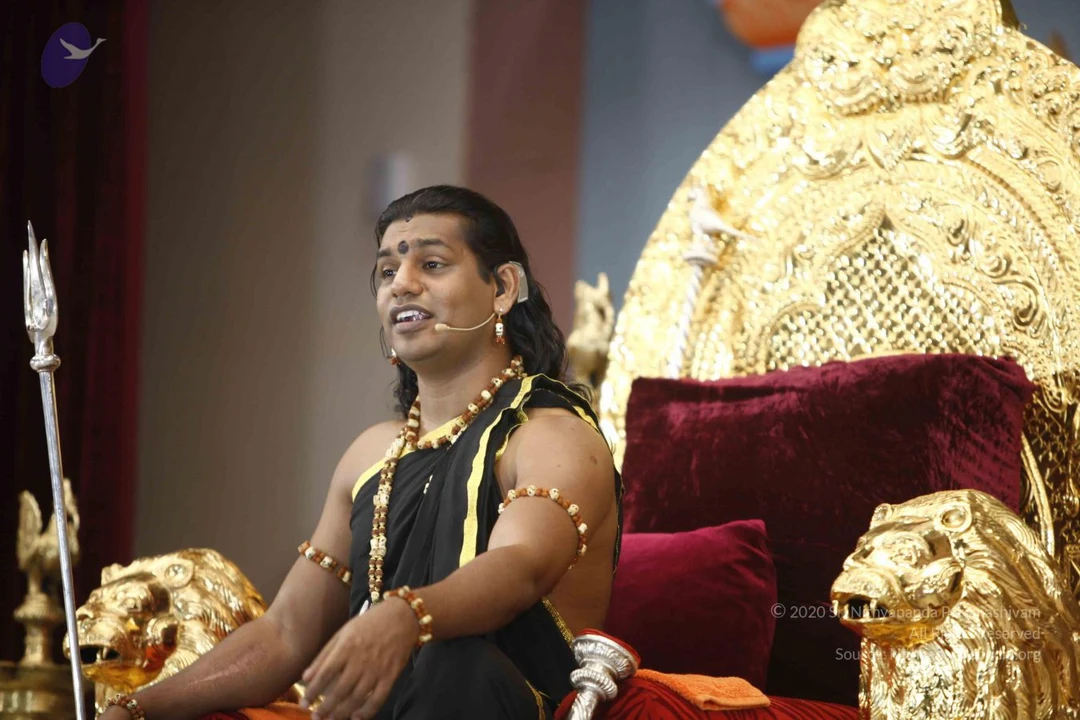
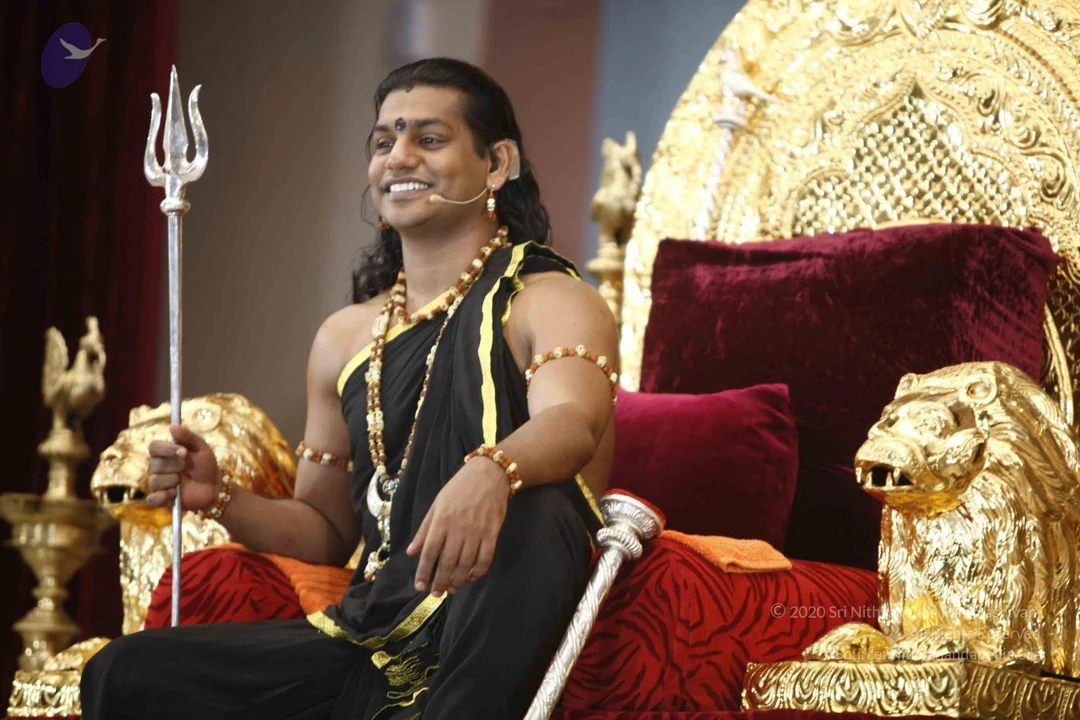
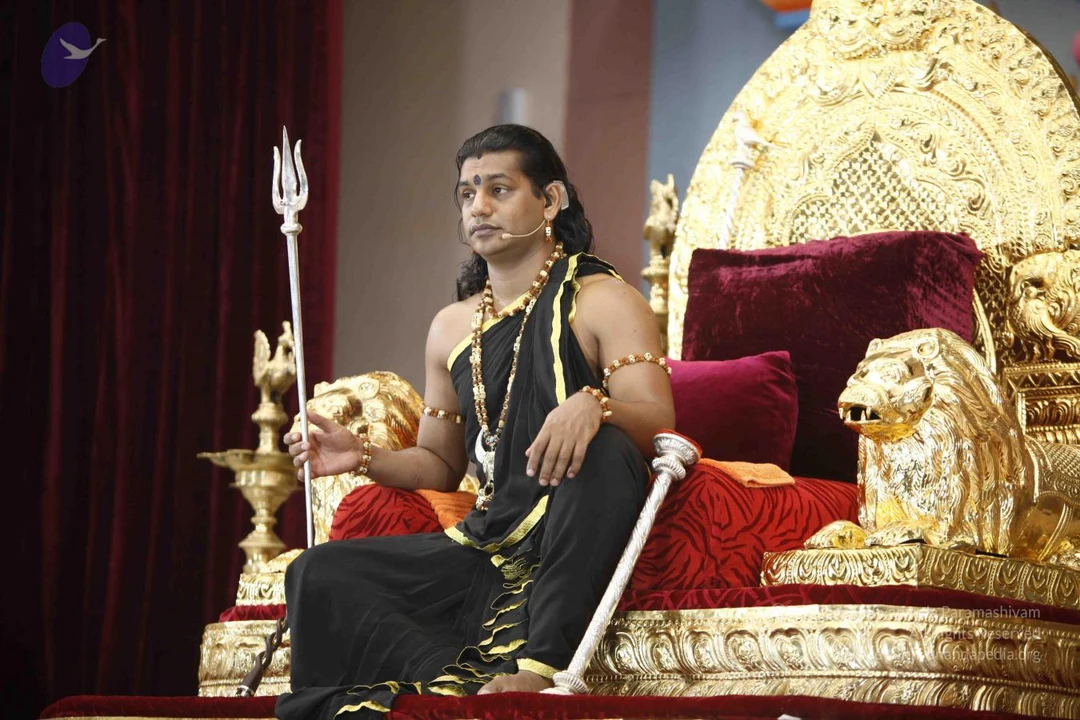
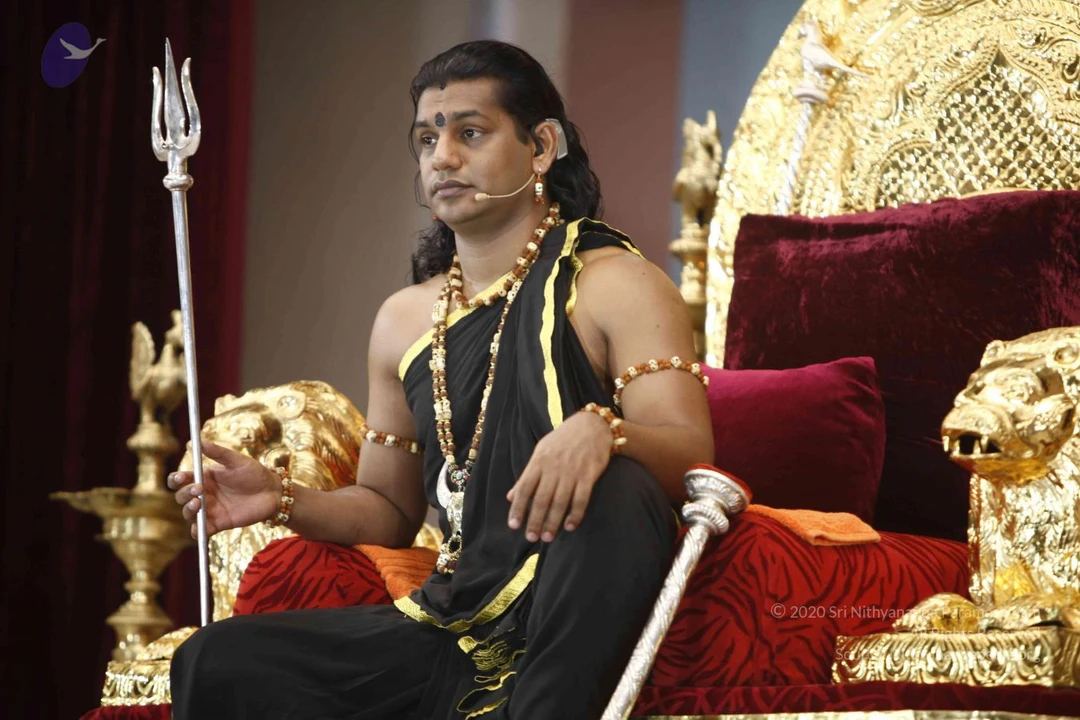
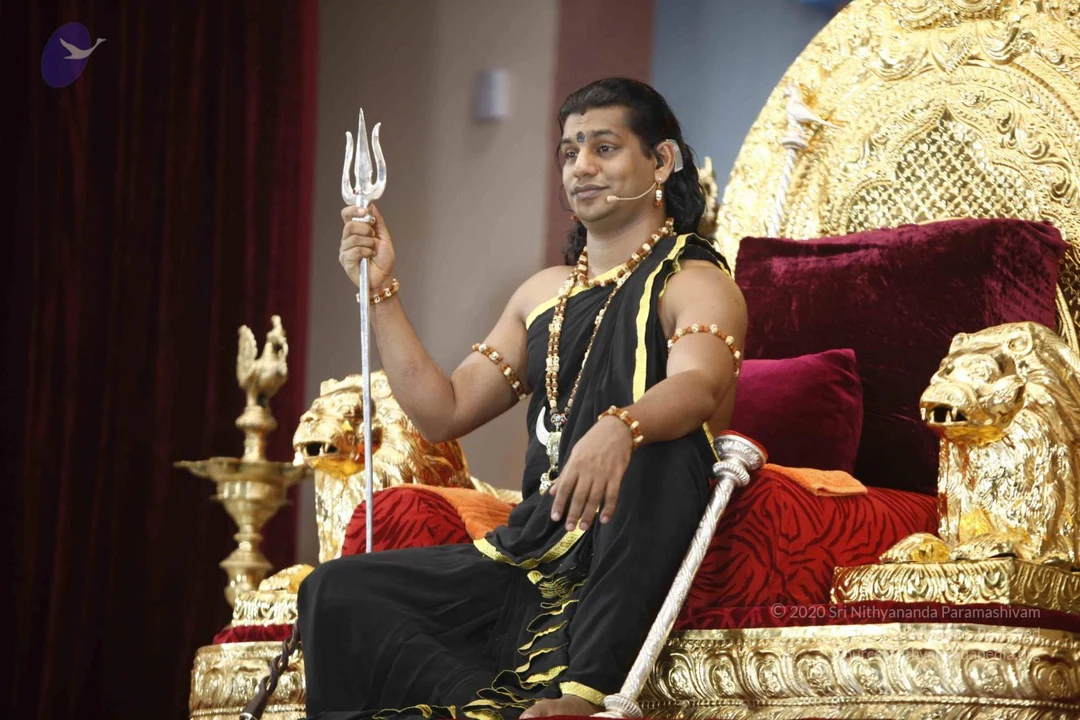
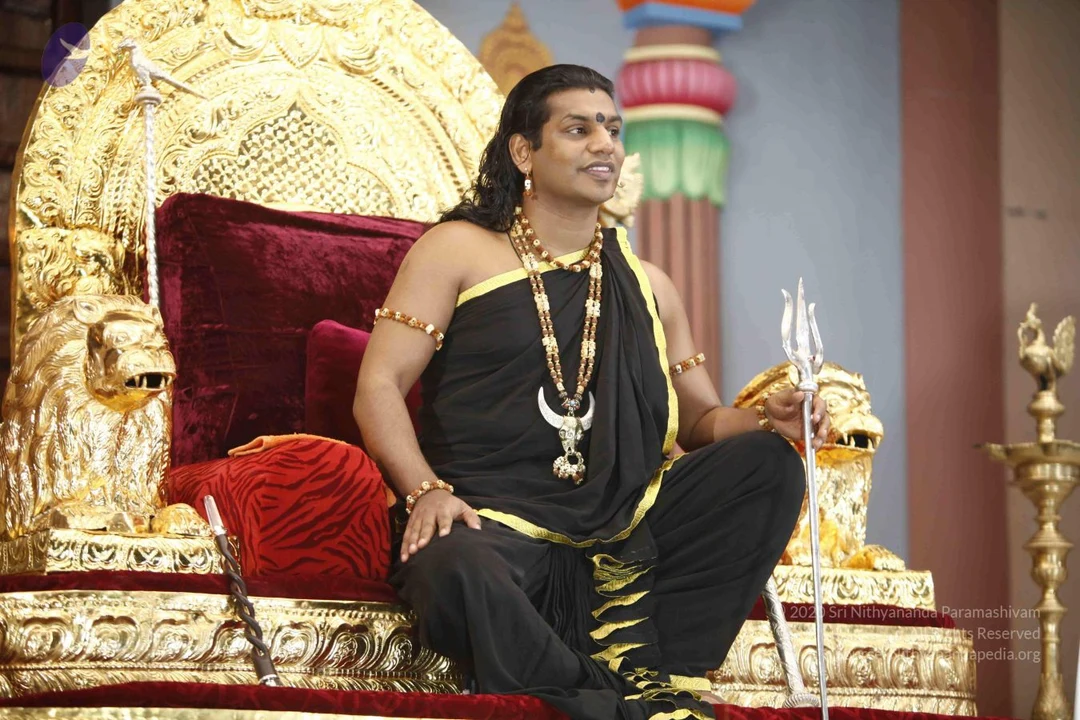
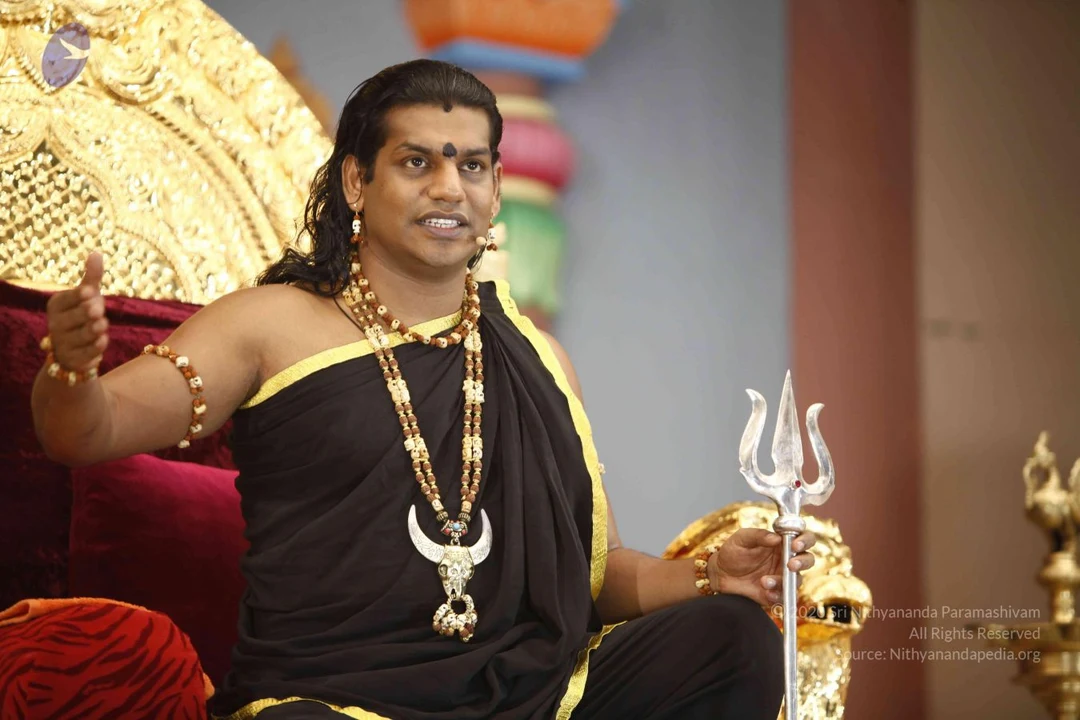
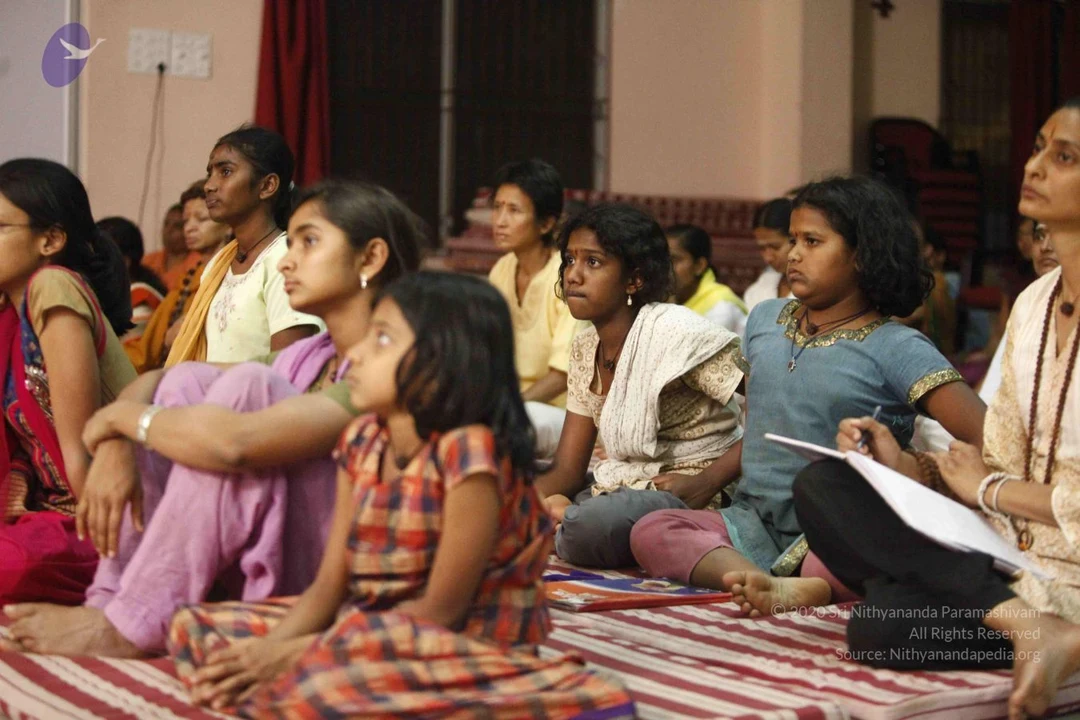
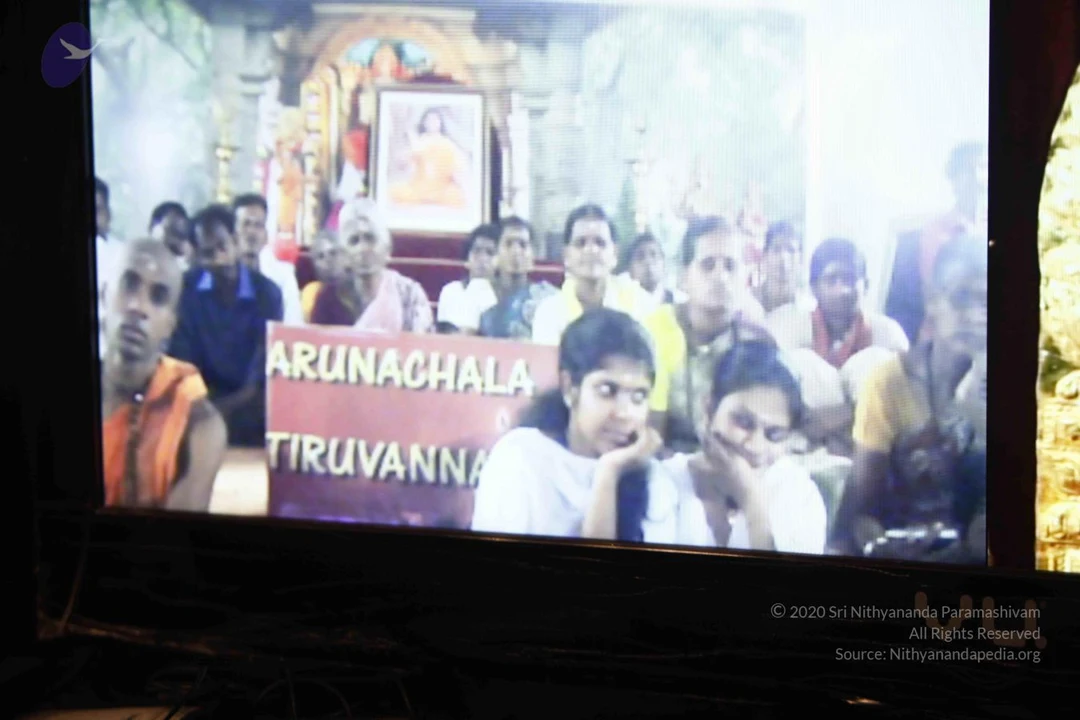
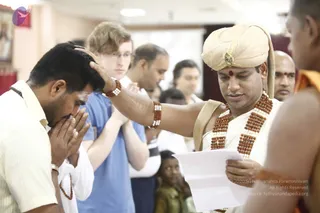
A man seated on an ornate golden throne with lion-head armrests and red velvet cushions, holding a silver trident in his raised right hand. He wears a black and gold-bordered draped garment, multiple rudraksha malas, a crescent-shaped pendant, gold bangles on his arms, and a tilak on his forehead, with a small headset microphone at his ear. A gold oil lamp stands to the left against a dark red curtain. The figure has long swept-back hair and appears to be speaking; this is a person depicted in a seated pose with the trident and throne cues. No other people are visible.A photograph of a projection screen showing a live video feed of a group gathered in a temple shrine room. Foreground: two young women in white clothes rest their chins on their hands, beside a red banner with white lettering reading ARUNACHALA and TIRUVANNA. Behind them, a crowd of devotees sits, including a shaved-headed man in an orange robe at the left, older women in saffron and pink saris, and men in blue, yellow and white shirts. Behind them is a deity murti or framed image of a seated figure in orange under an arched shrine with gold decorations. The screen frame is dark wood in the foreground.A photograph of a ceremony indoors. In the centre, a man in a cream turban with a red bindi and a cream dhoti and shawl wears layered rudraksha malas and holds a sheet of paper while placing his right hand on the head of a kneeling man in a white shirt with his palms pressed together. Beside them a young man in glasses and a blue shirt stands with hands folded, and a bald man in an orange garment with rudraksha beads watches in the background. The scene reads as a blessing given from a paper in the presence of onlookers.

April 03 2012

Original wiki page

Photos from this day

View all 343 photos

Photos From The Day:

1 photoSource gallery
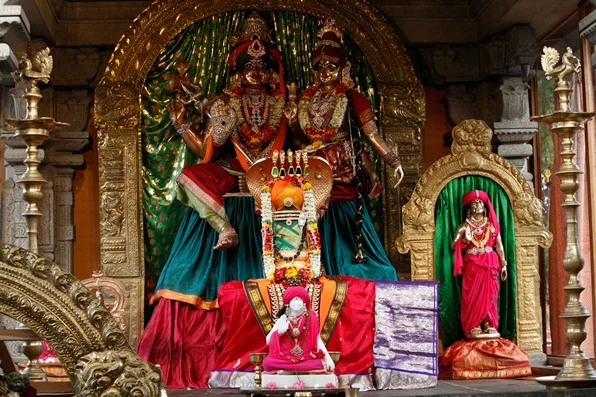
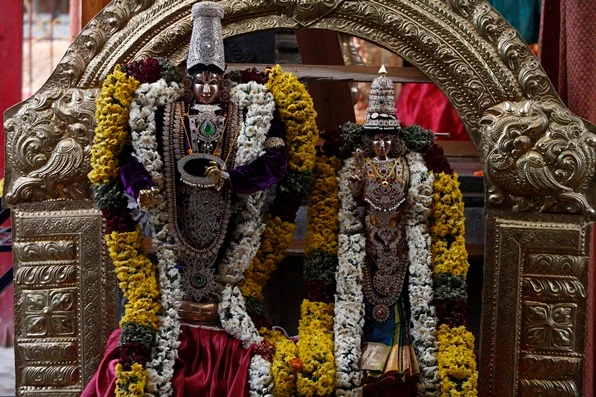
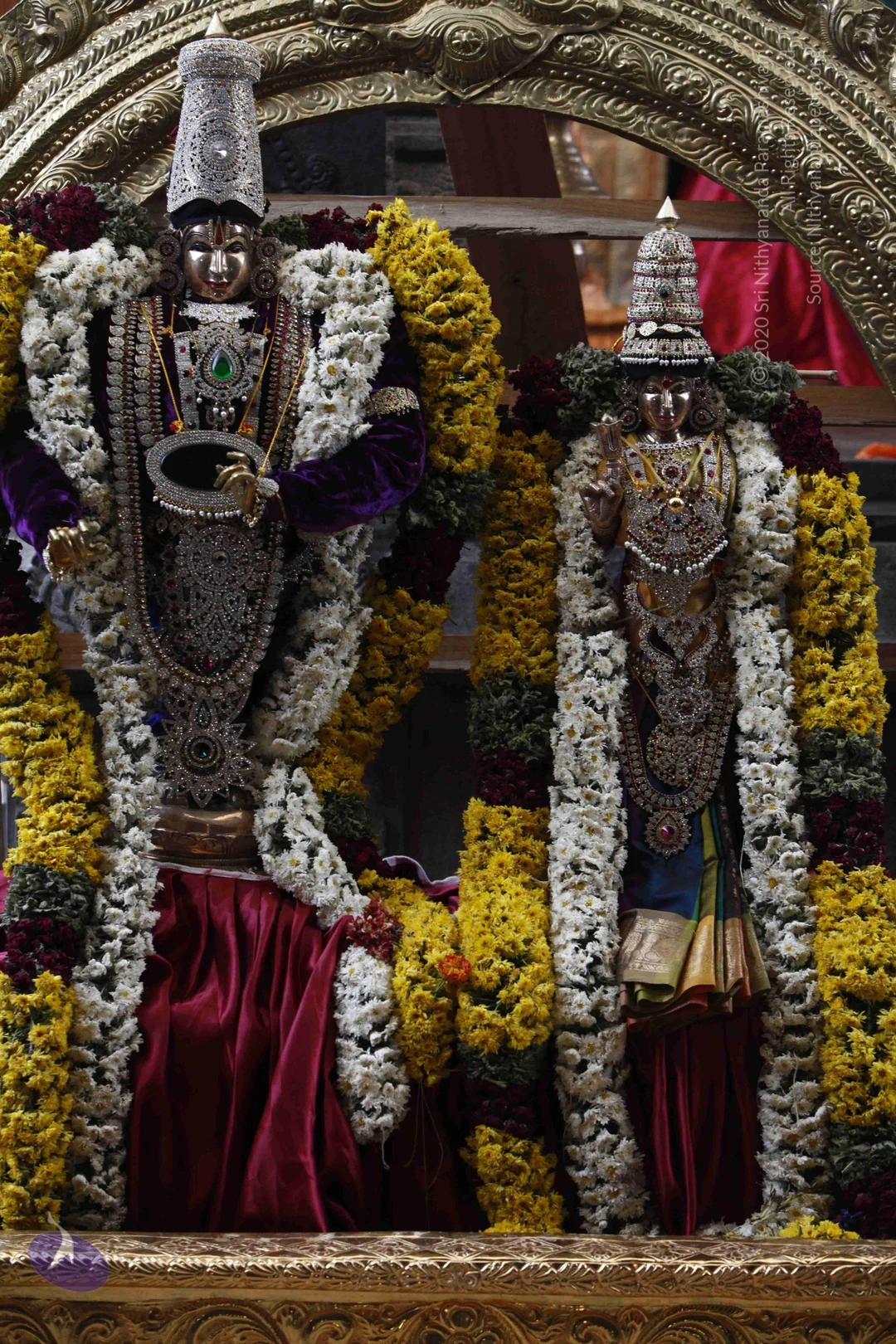
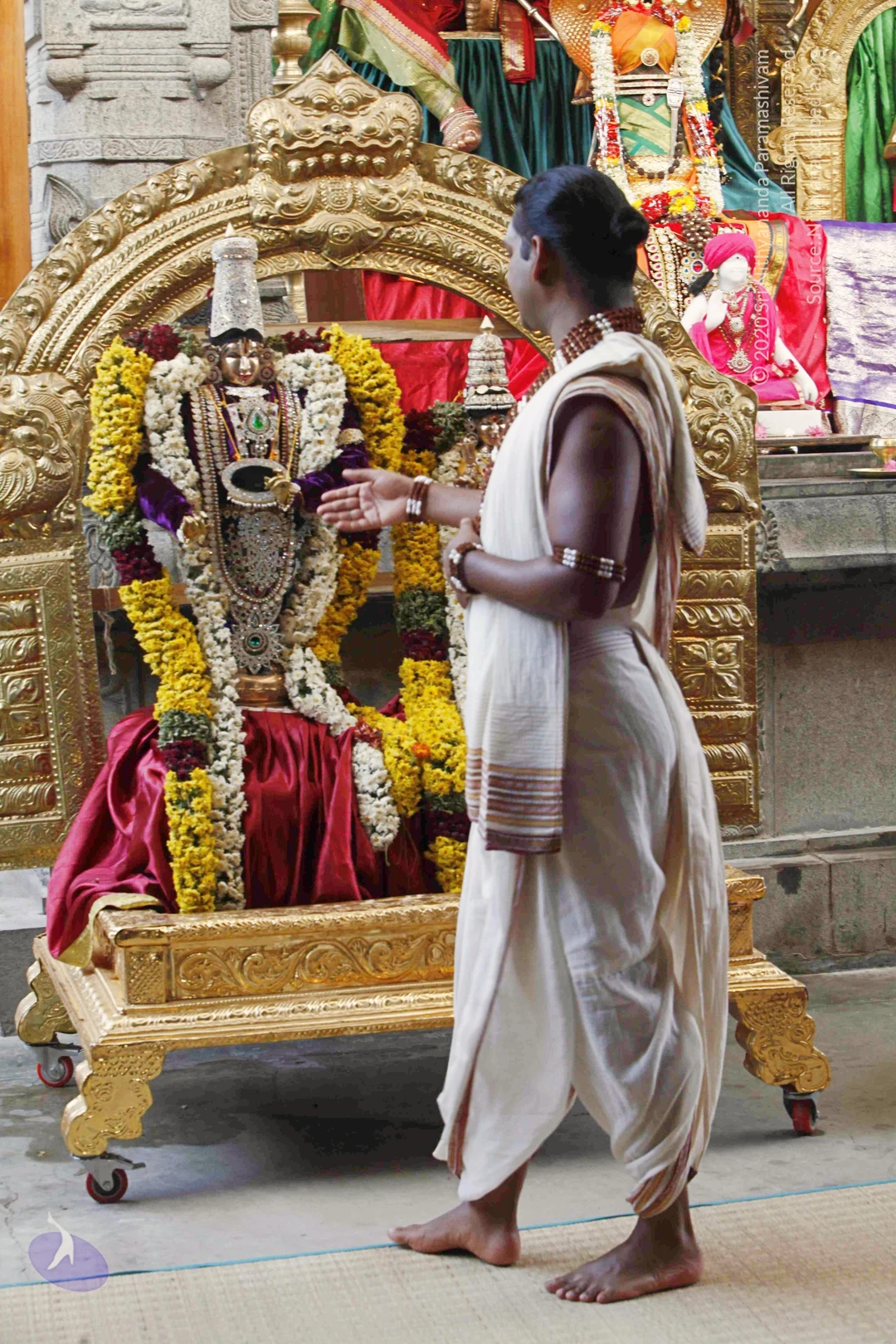
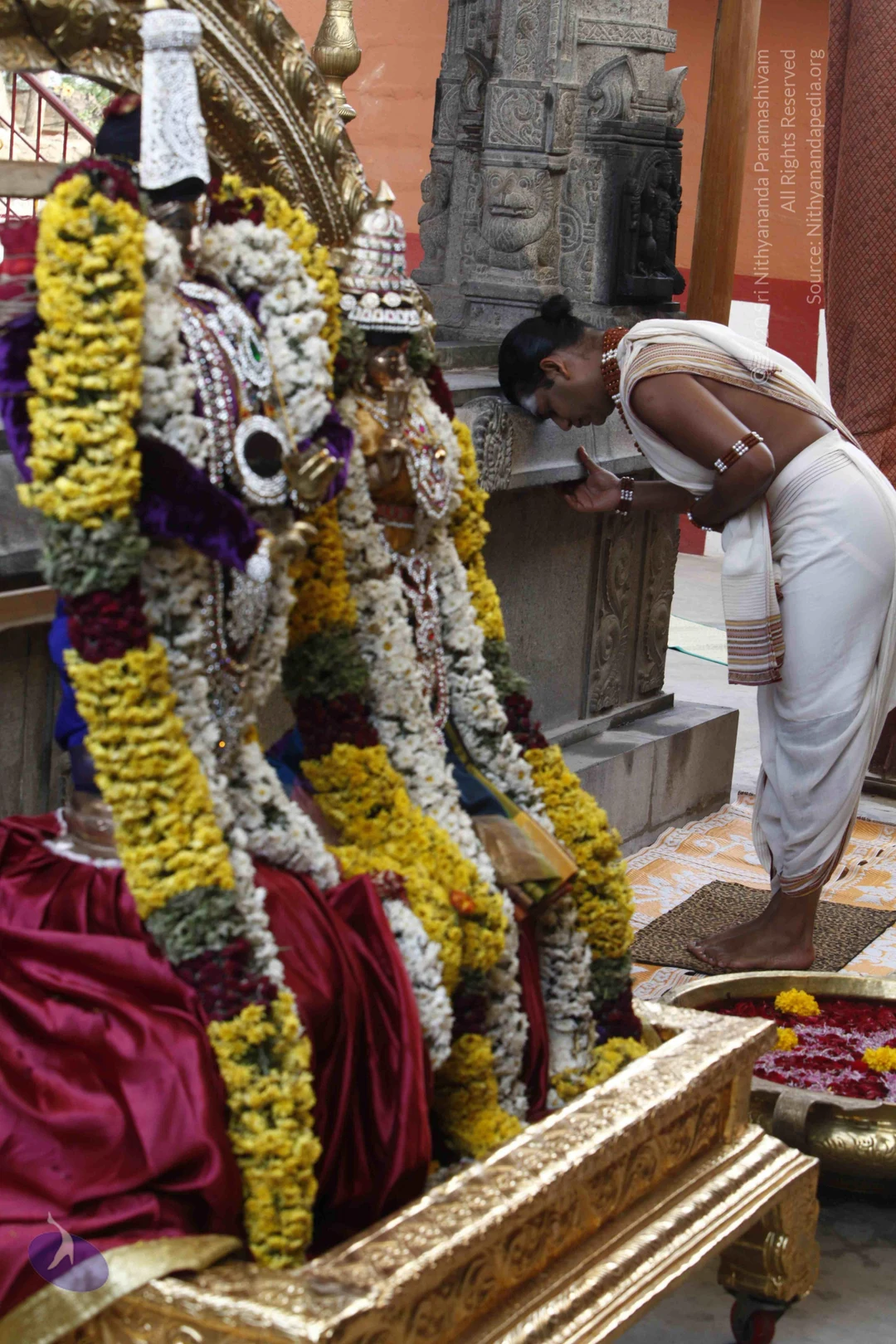
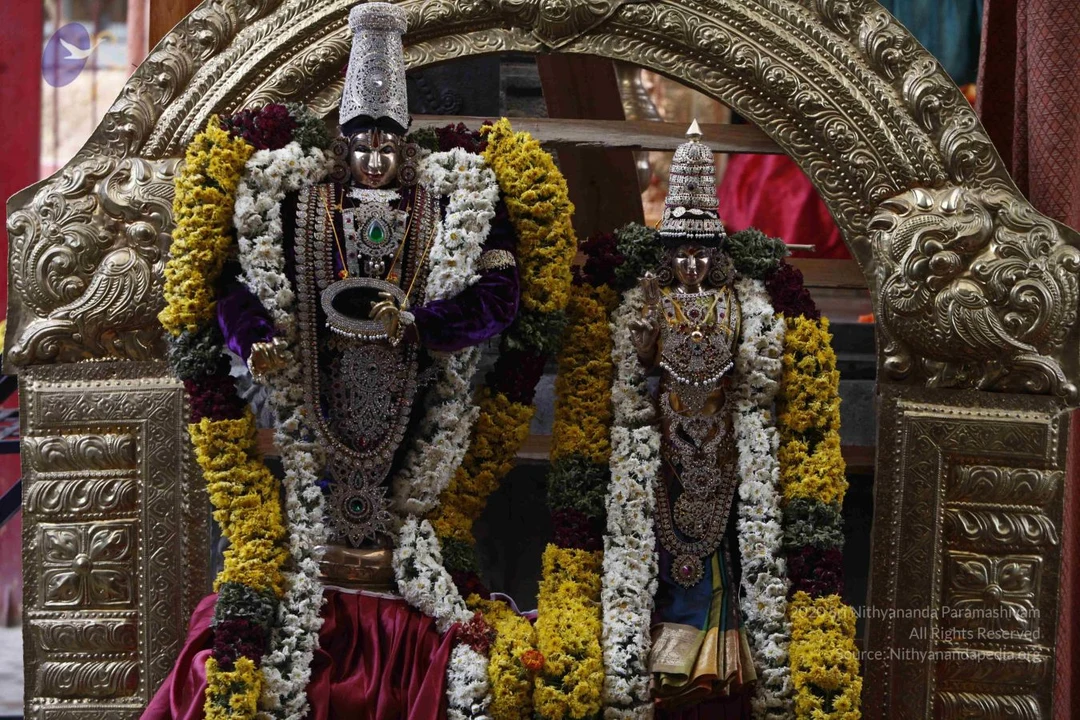
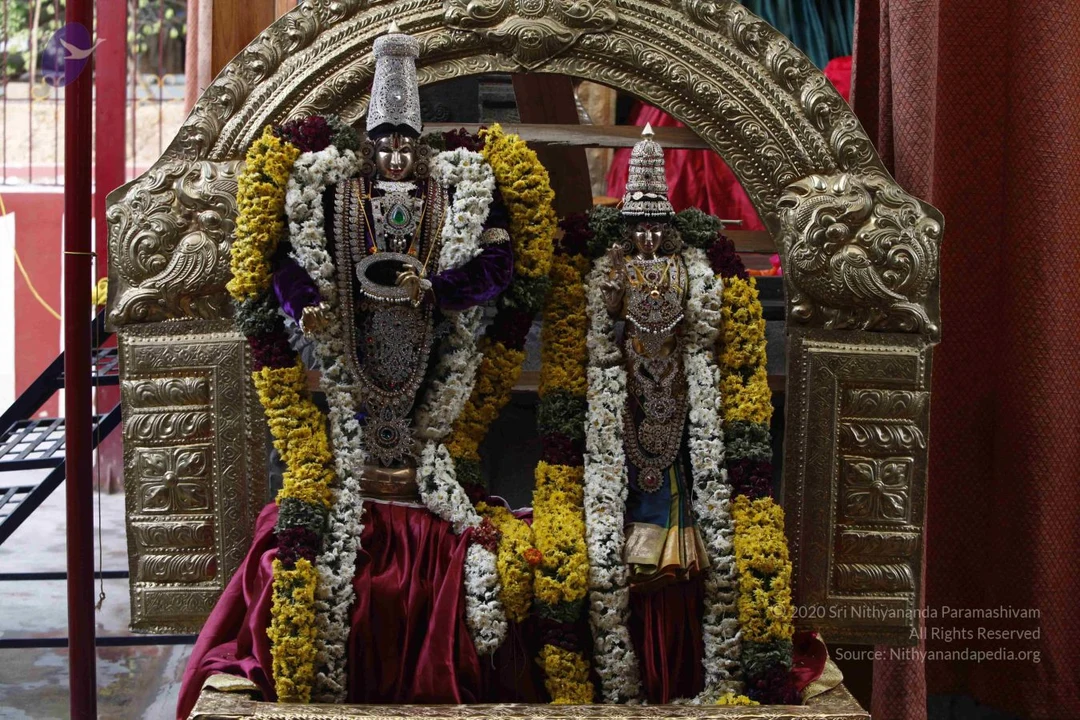
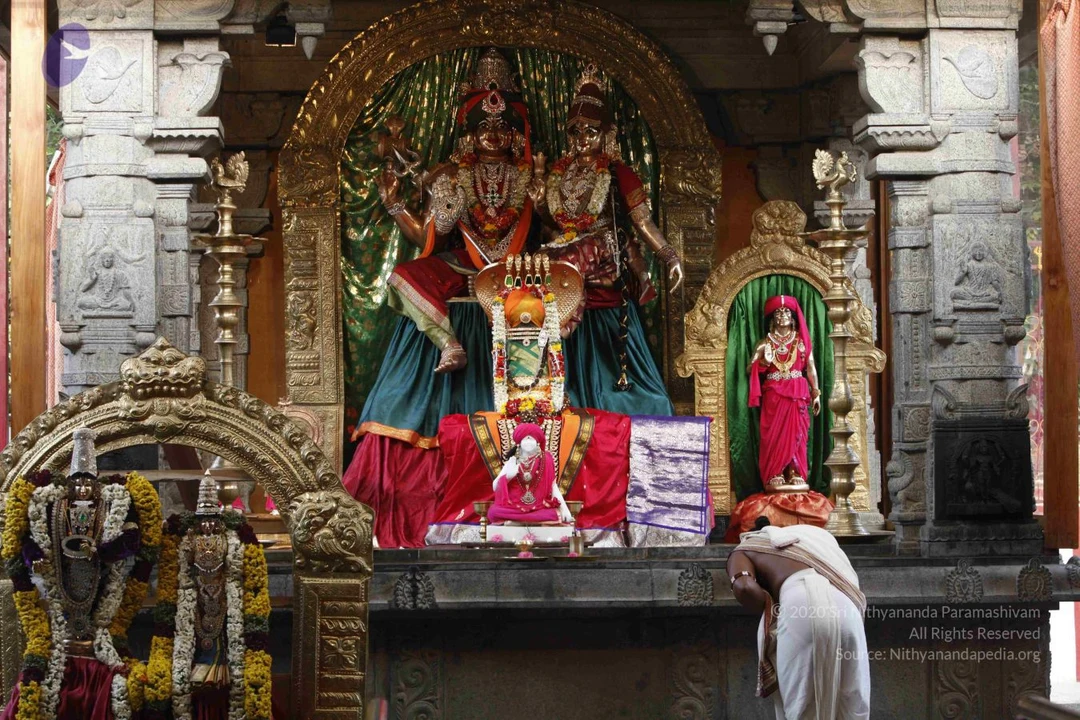
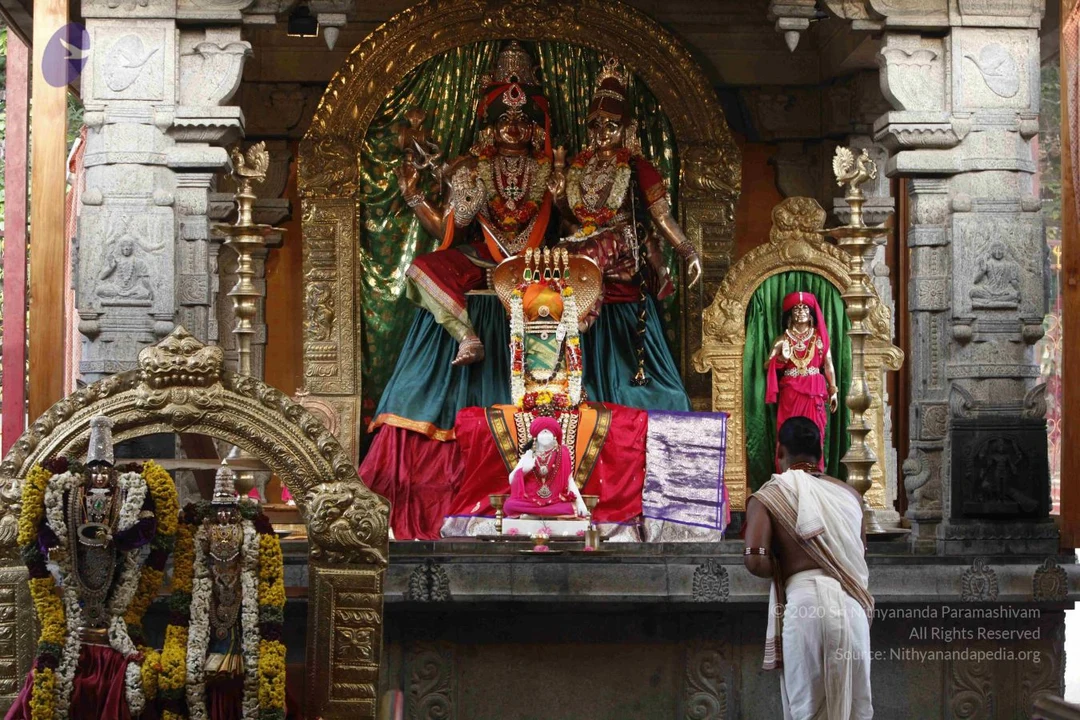
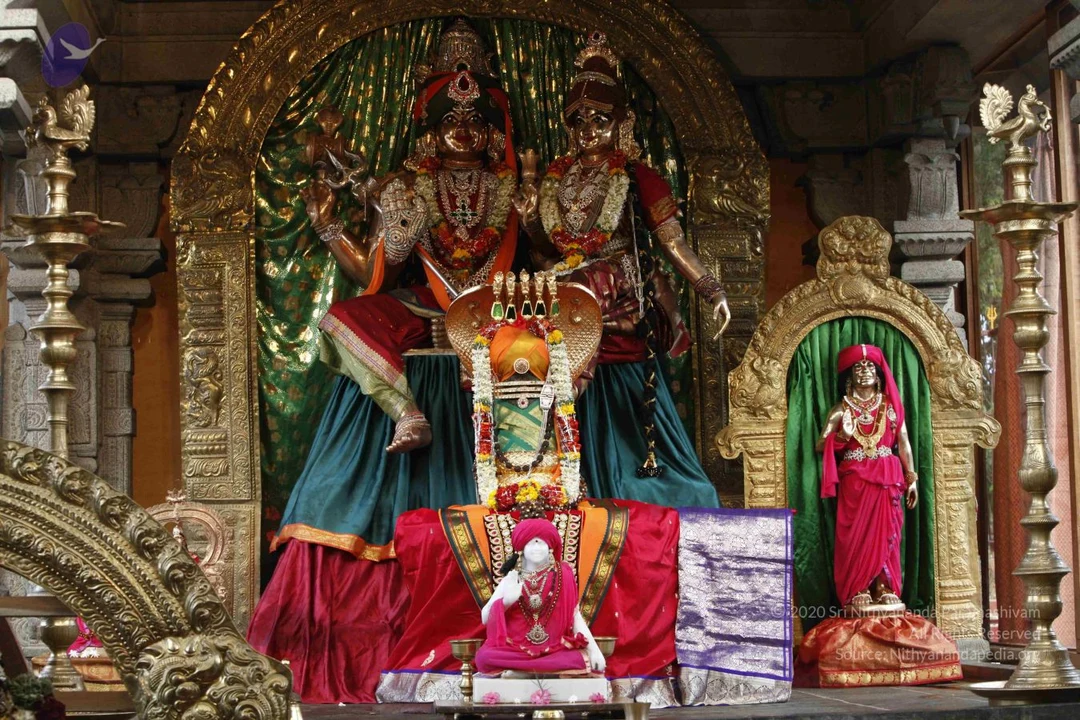
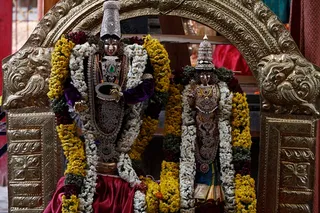
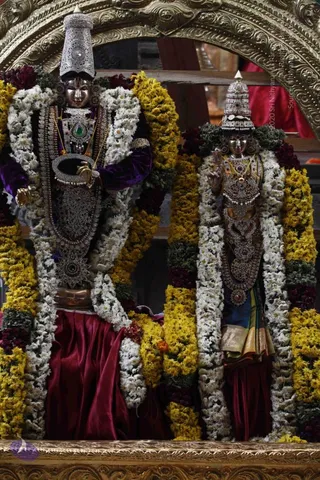
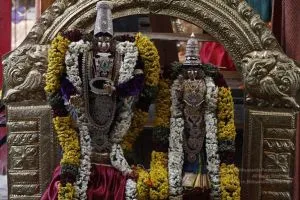
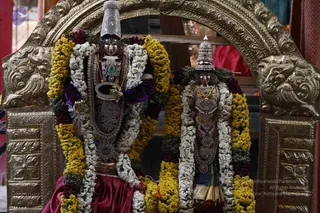
Two metal deity murtis stand side by side inside an ornate gilded arched frame in a temple shrine. Both figures wear silver crowns, jewelled necklaces and rudraksha-style beaded garlands. Thick garlands of yellow marigolds, white jasmine and purple-red flowers drape their shoulders and fall to the base. The figure on the left holds a bowl-like object, and a red cloth covers the platform below. The setting suggests temple worship with decorated metal and floral adornment. No living people are visible.

Temple

30 photosSource gallery
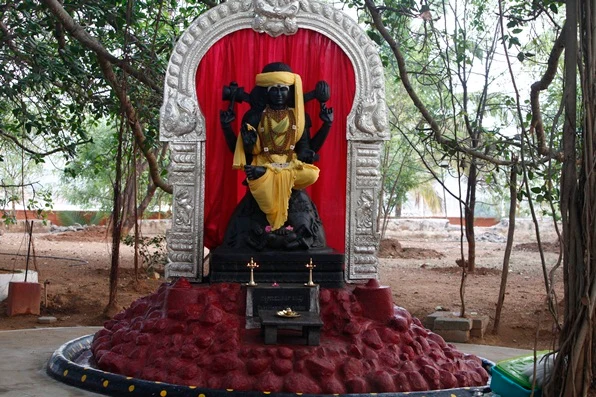
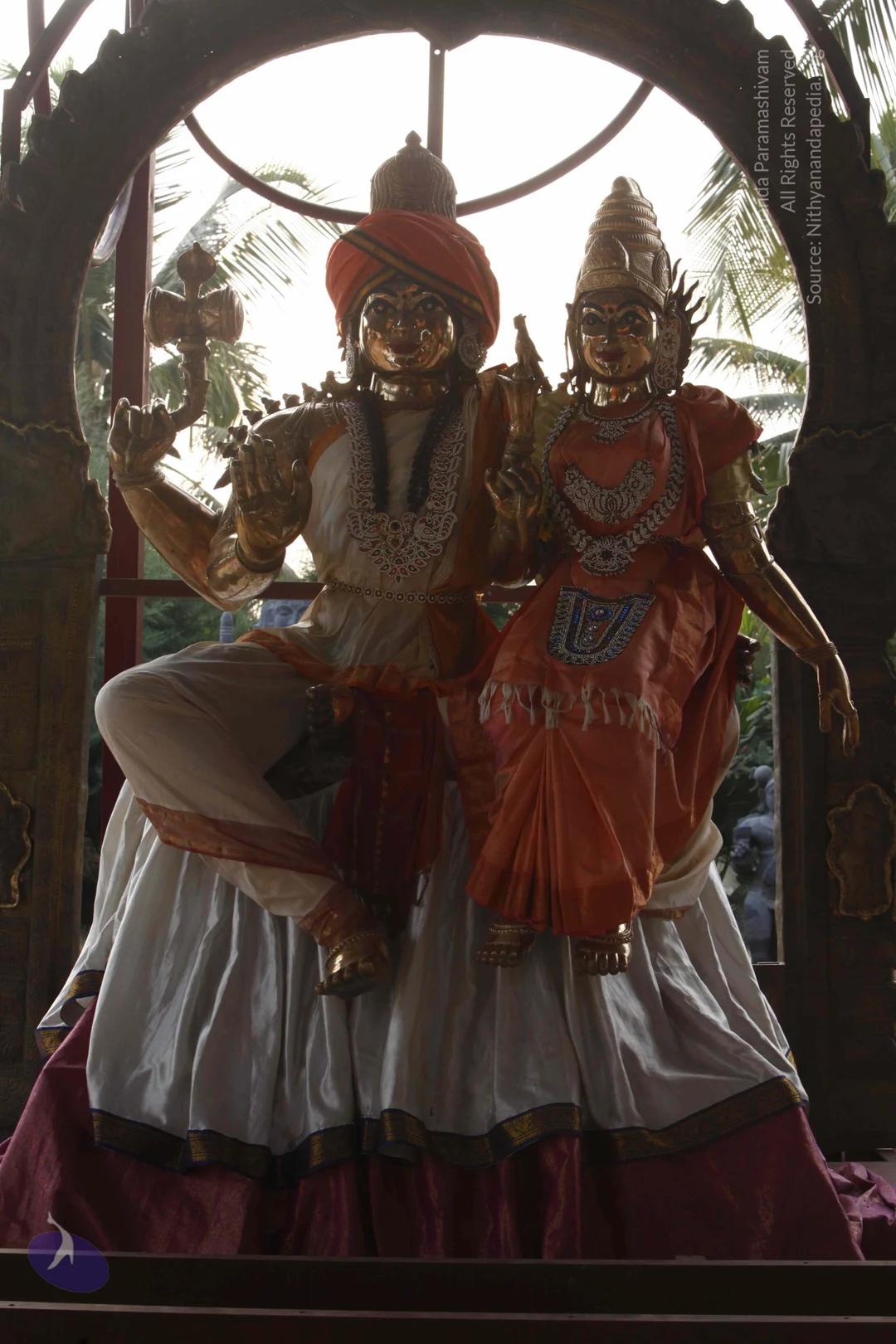
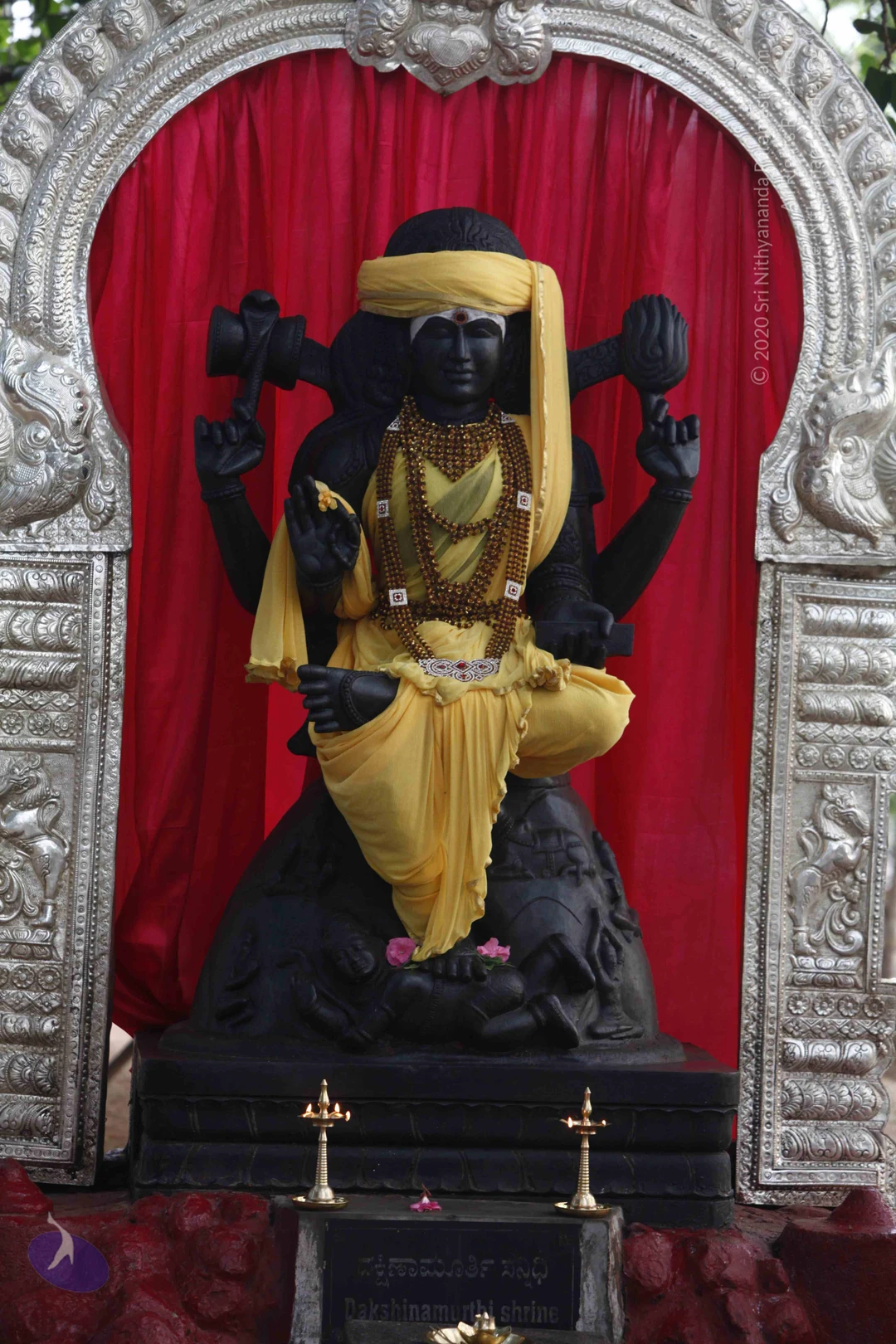
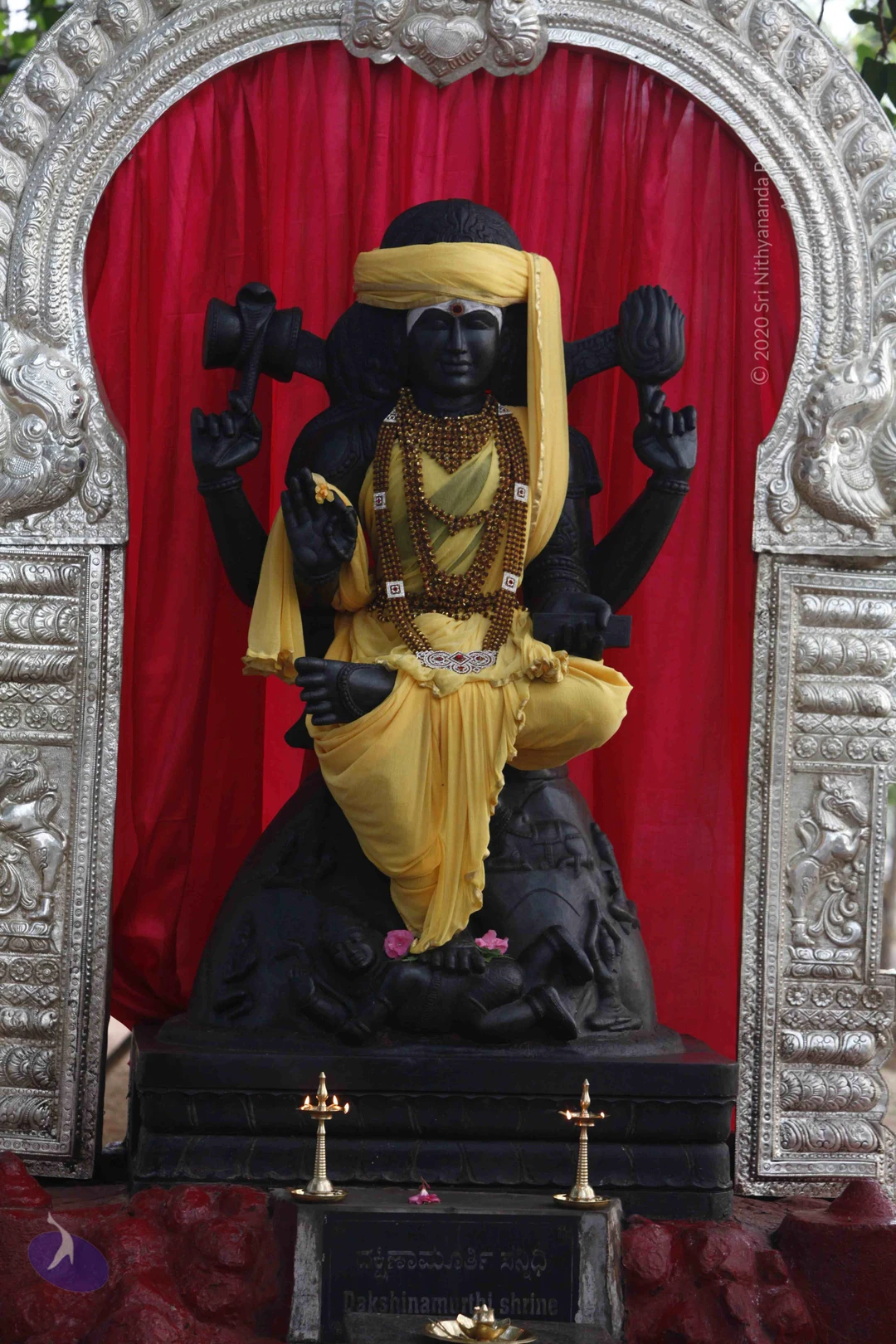
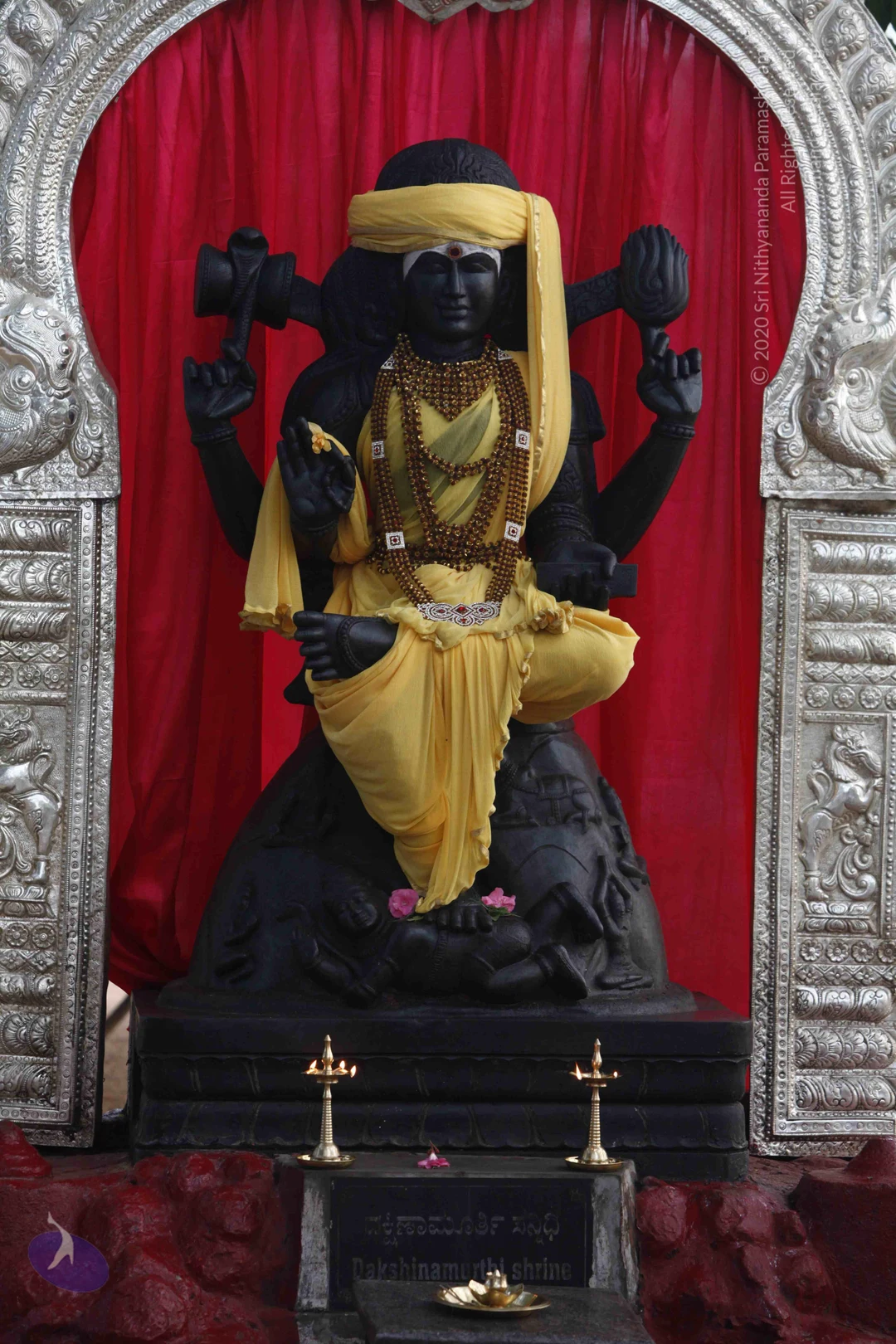
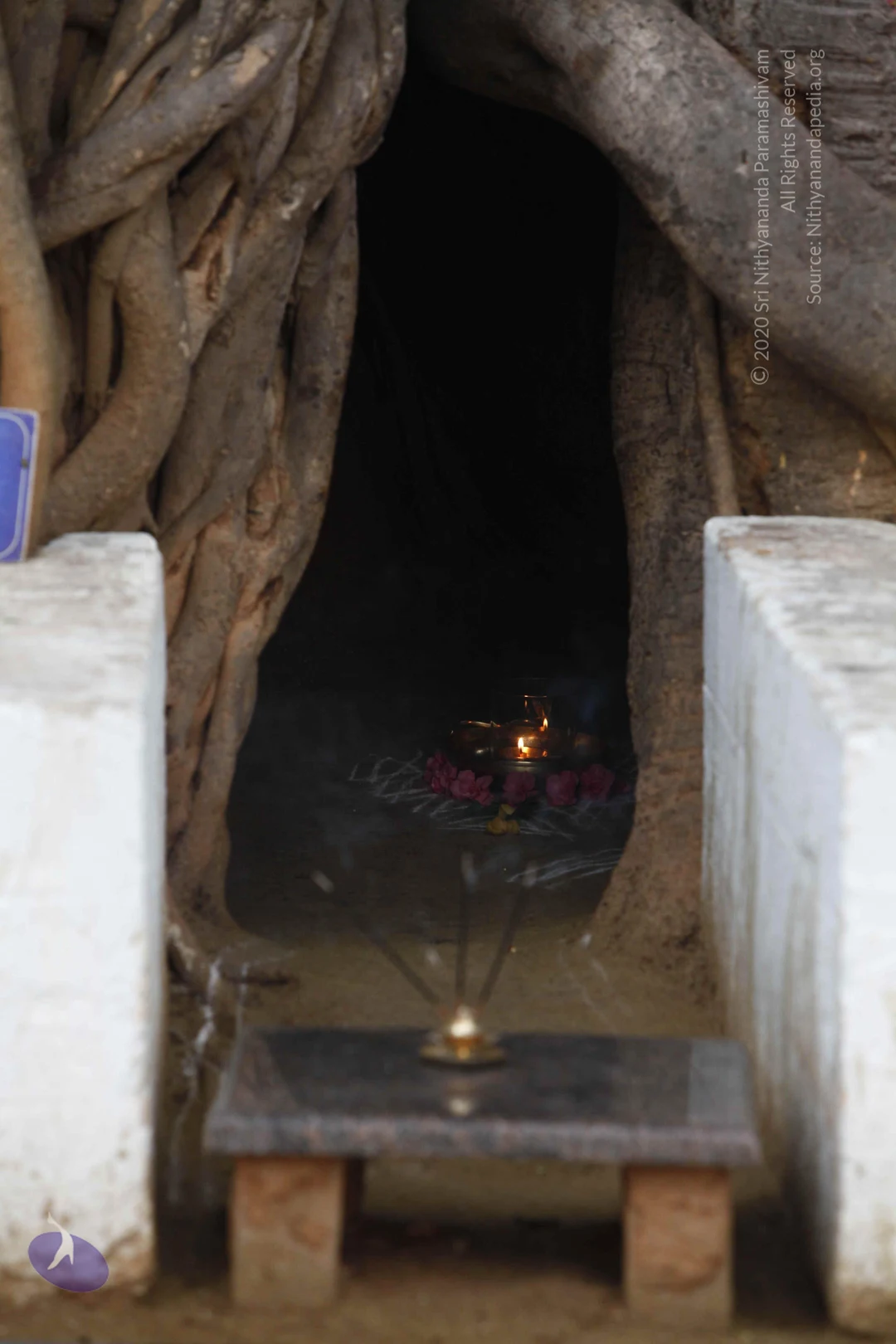
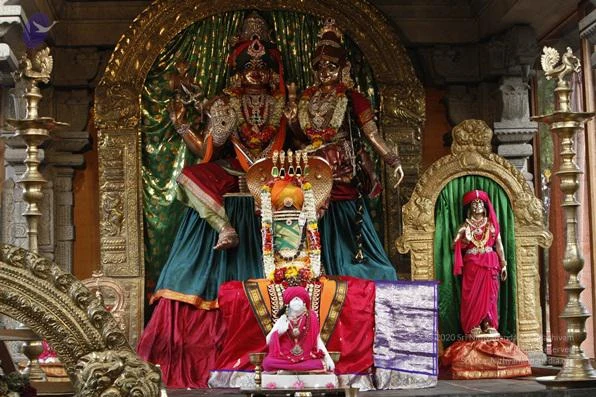
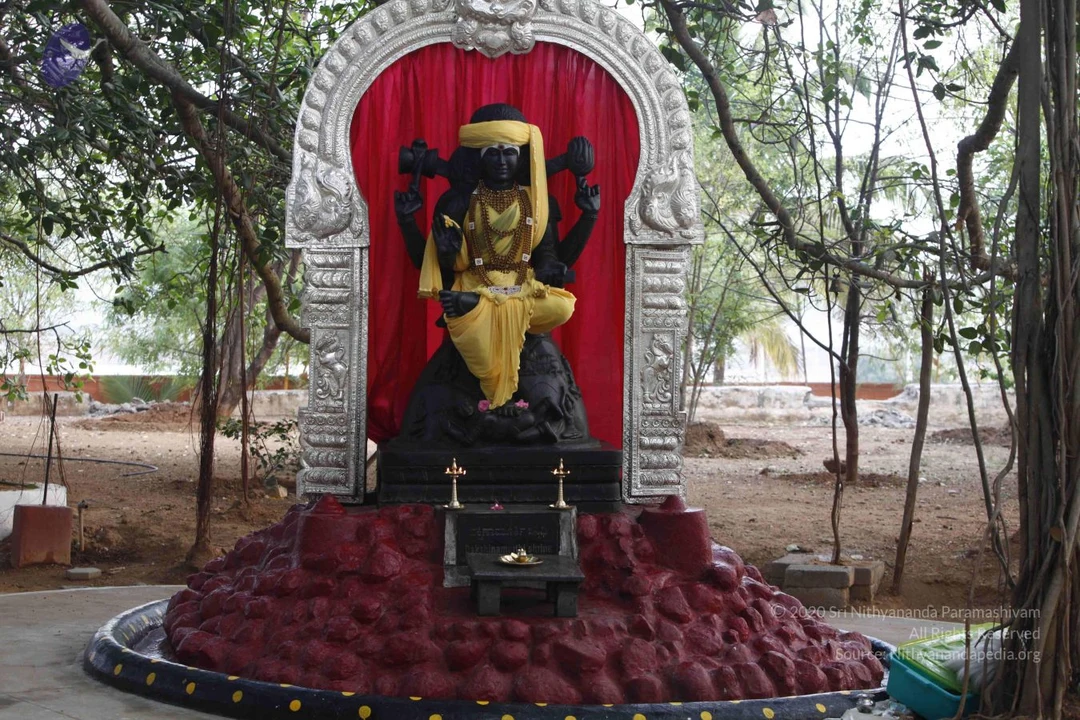
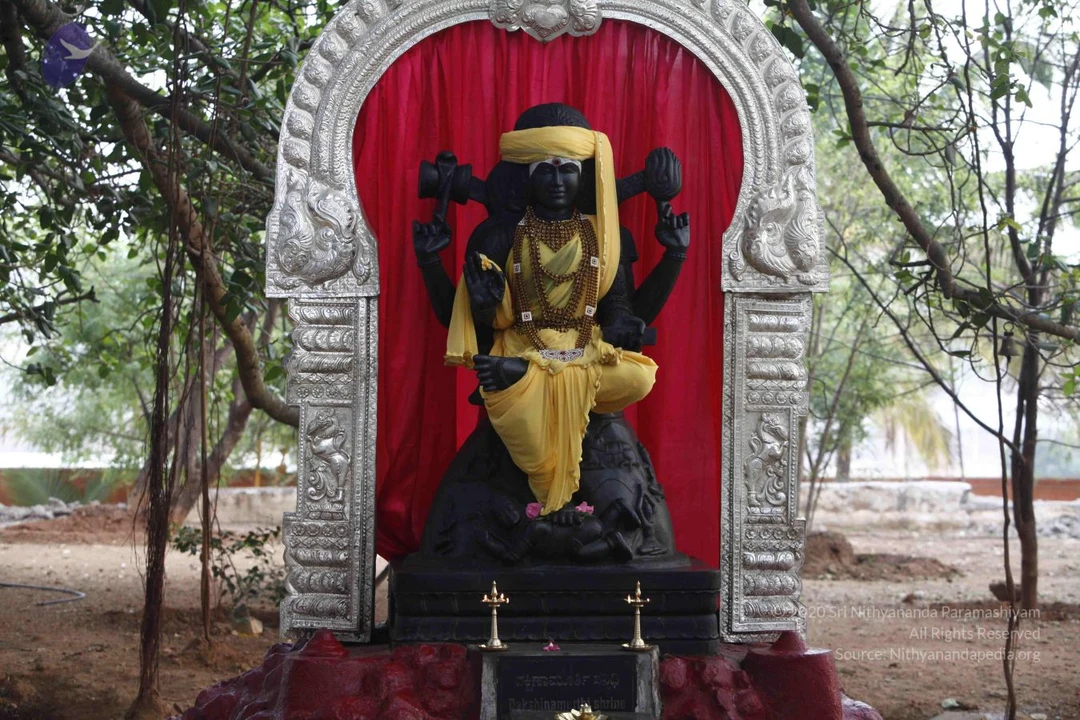
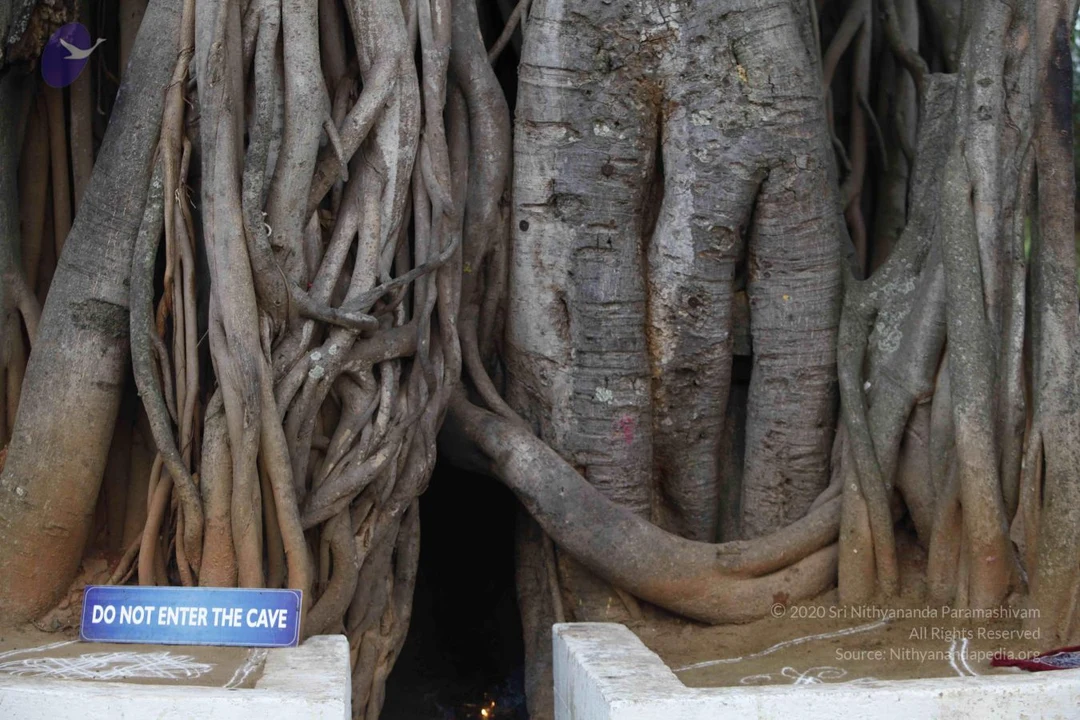
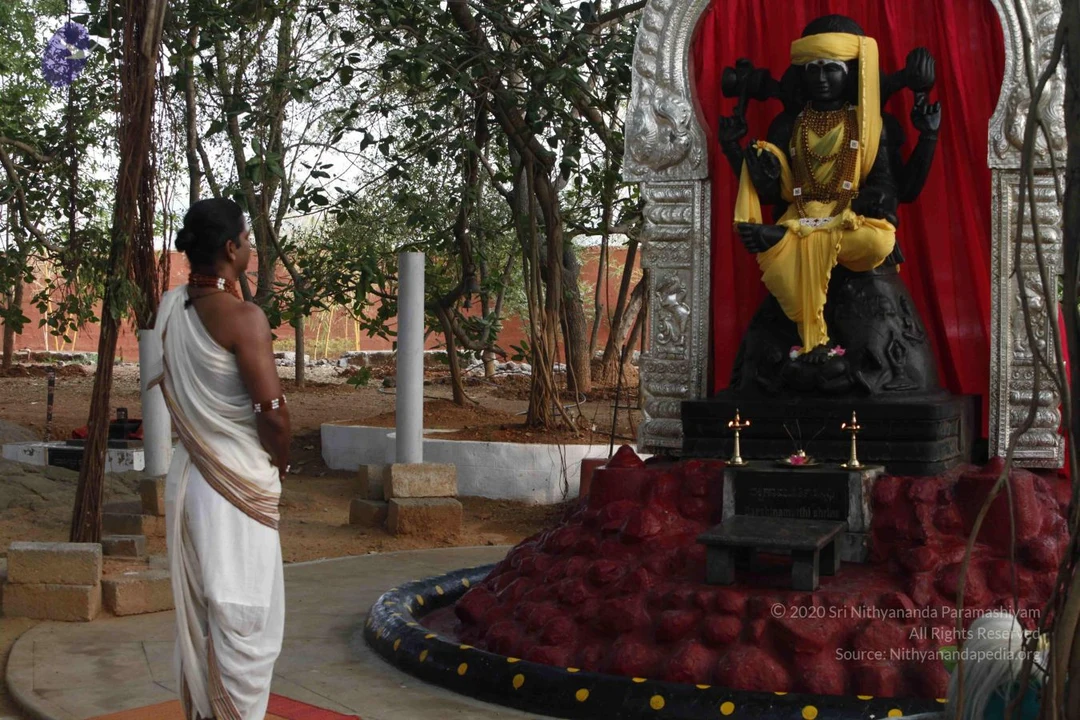
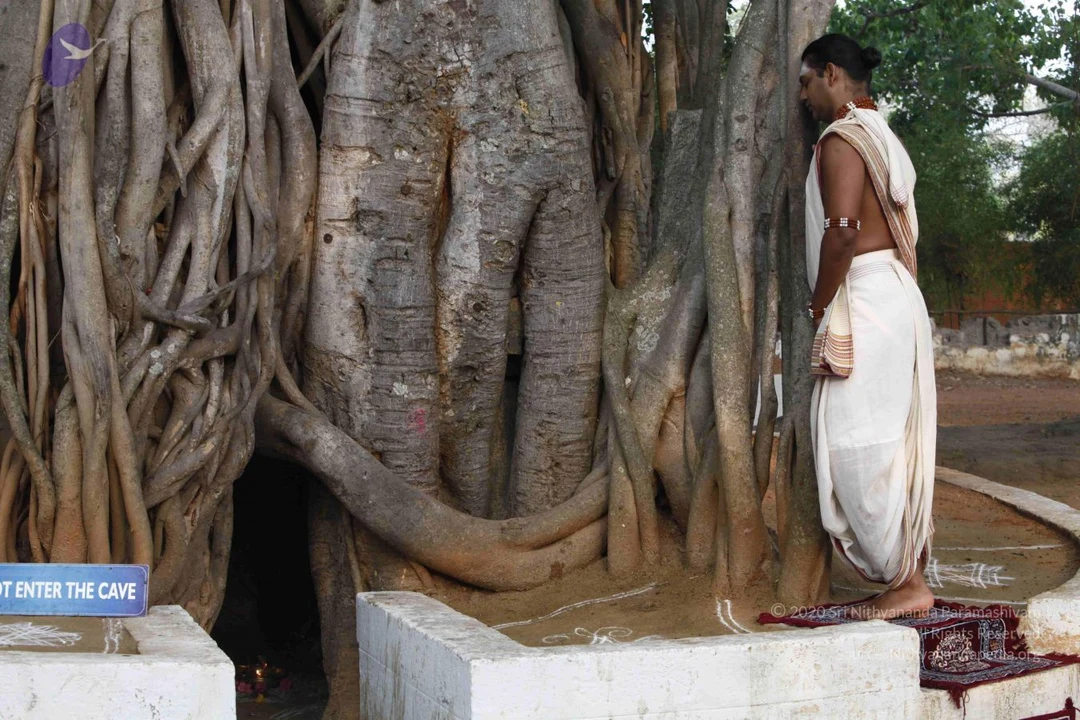
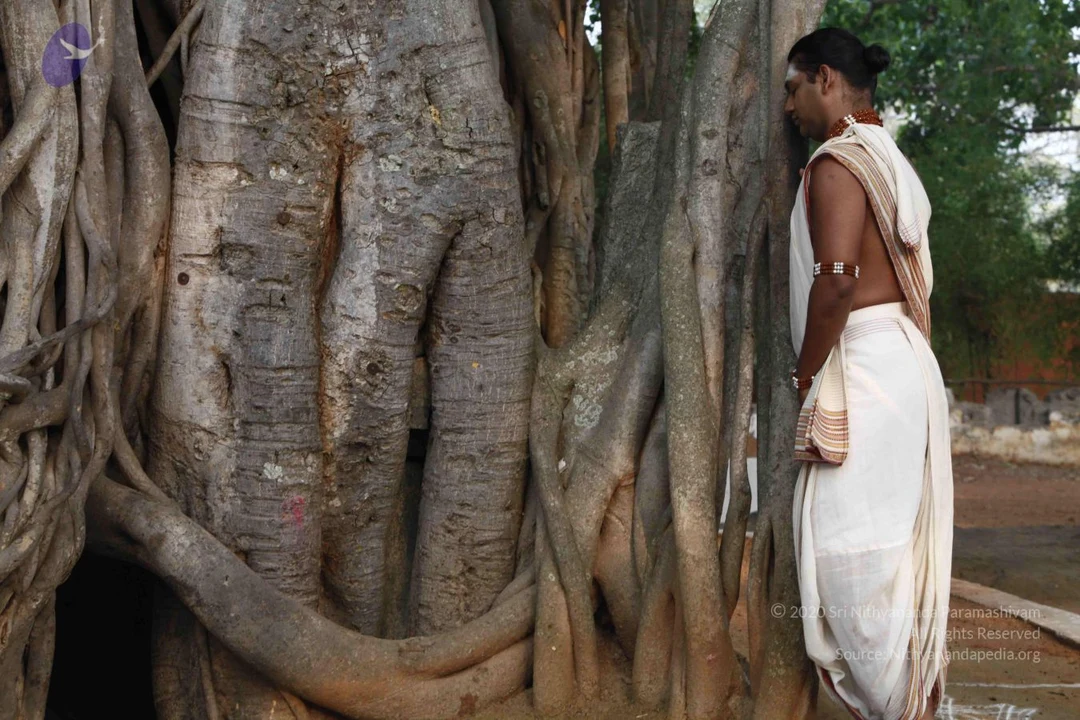
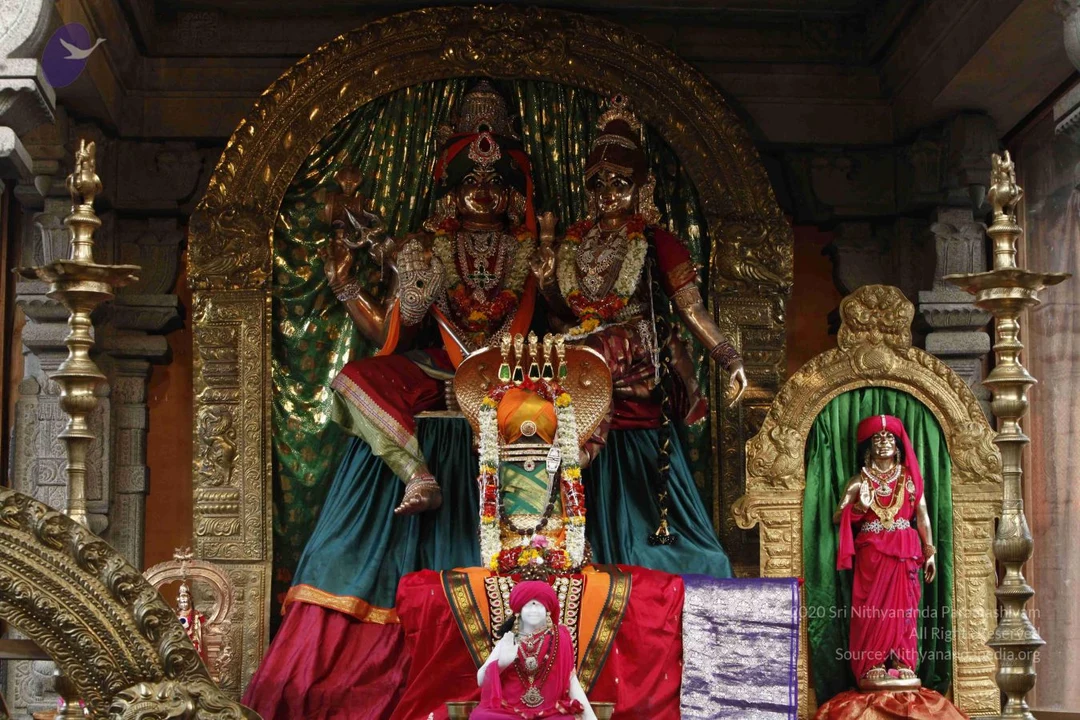
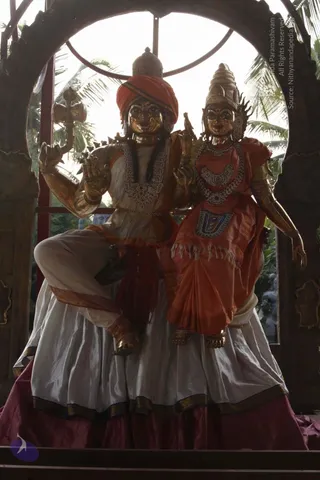
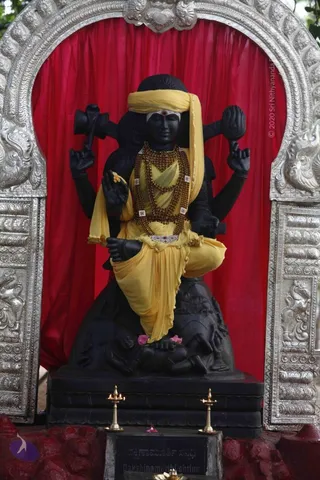
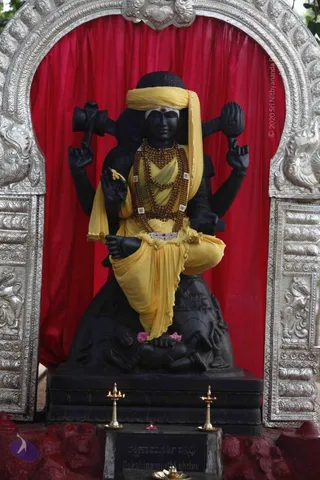
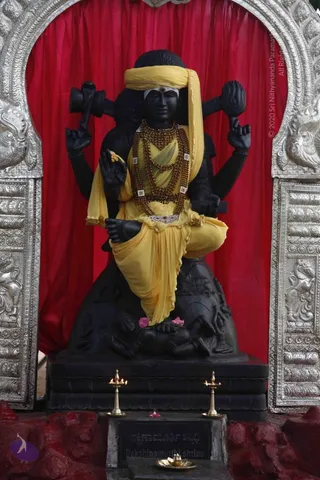
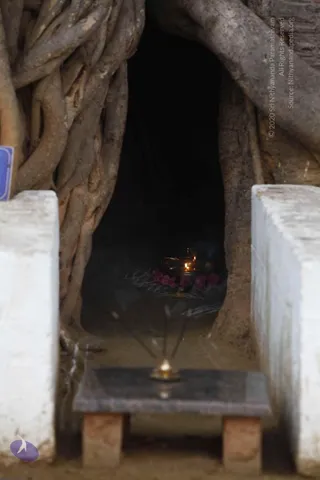
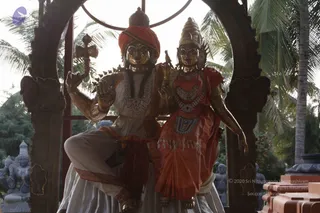
Two large golden deity murti figures stand side by side under a dark wooden arch with a circular frame, with palm fronds visible behind them in backlight. The figure on the left wears an orange-red turban, a white dhoti-style garment with orange sash, a rudraksha-like bead mala, and holds a trident-like staff raised in one hand. The figure on the right wears a gold crown, an orange-red saffron-toned sari with a decorative blue-and-gold panel and layered silver necklaces. Both are adorned with gold armlets and silver jewellery, and both wear white and maroon skirts. The image shows statues only, not living people.Two metal processional murtis of a deity pair stand within a gilded ornate frame, both draped in garlands of white and yellow marigolds with dark red flowers. The figure on the left wears a purple velvet garment, a silver-and-jewelled crown, heavy jewelled necklaces with a green stone, and holds a round vessel. The figure on the right wears a silver jewelled crown, jewelled necklaces and a multicoloured sari, raising one hand in a gesture. Deep red silk drapes the lower bodies. No physical people are visible; the scene is a deity murti display.A black stone murti of a multi-armed deity stands in a silver-framed arched shrine against a red drape. The figure wears a yellow cloth wrapped around the head and body, a layered gold-bead necklace, and a white and red tilak on the forehead. Two hands hold a drum-like object and a flower-tipped staff, while another hand is raised in a mudra. Brass oil lamps flank the base, with pink flowers placed at the pedestal, and a small plaque below reads Dakshinamurthi shrine. No people are visible.A black stone statue of a four-armed deity stands in a silver ornate arched frame against a red draped backdrop. The figure wears a yellow cloth wrap and yellow dhoti, with a yellow head cloth bearing a red tilak, and multiple strands of brown beaded necklaces with white and red accents. Two hands hold a drum-like and a trident-like object while the others are raised in gestures. Two brass oil lamps stand on a black pedestal below, with pink flowers and a small brass lamp in front. A black plaque below reads Dakshinamurthi shrine. Statue only; no physical people are present.A black stone Dakshinamurthi murti stands in a shrine framed by an ornate silver arch against a red drape. The figure wears a yellow cloth wrapped around the head and body, multiple strands of amber-coloured beads, and a white and red forehead mark. It holds a snake in one upper hand, a flame-like object in another, and rests one foot on a small figure at its base. Pink flowers lie at its feet. Two brass oil lamps and a brass plate sit before a black plaque reading Dakshinamurthi shrine.A photograph of a shaded entrance formed by thick, twisted banyan roots framing a dark recess. Inside, a brass oil lamp burns beside a small cluster of red flowers on the ground. In front, a dark stone bench holds a brass incense holder with three lit incense sticks sending up thin smoke. White-painted low walls flank the opening. No people are visible.

Pada-Puja
5 photosSource gallery
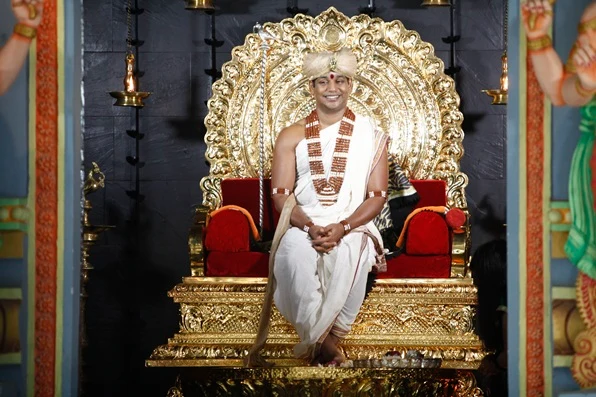
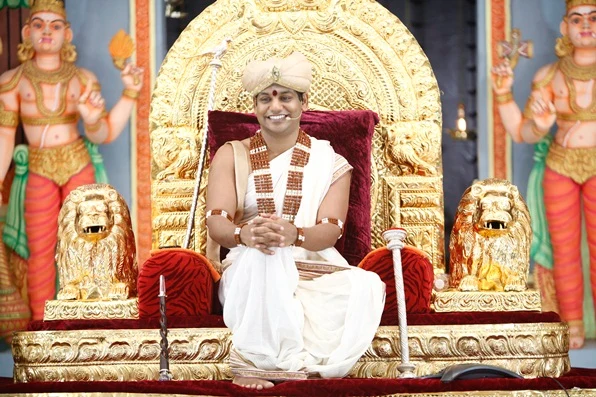
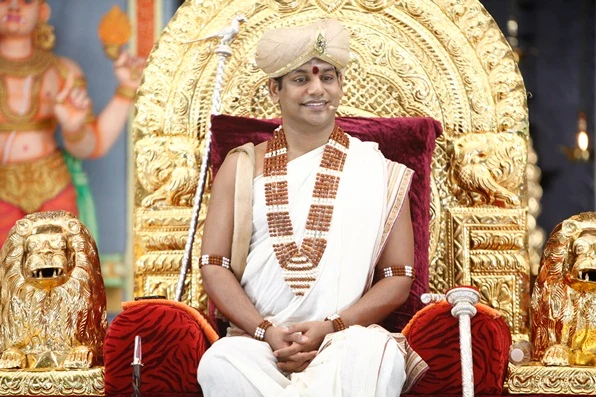
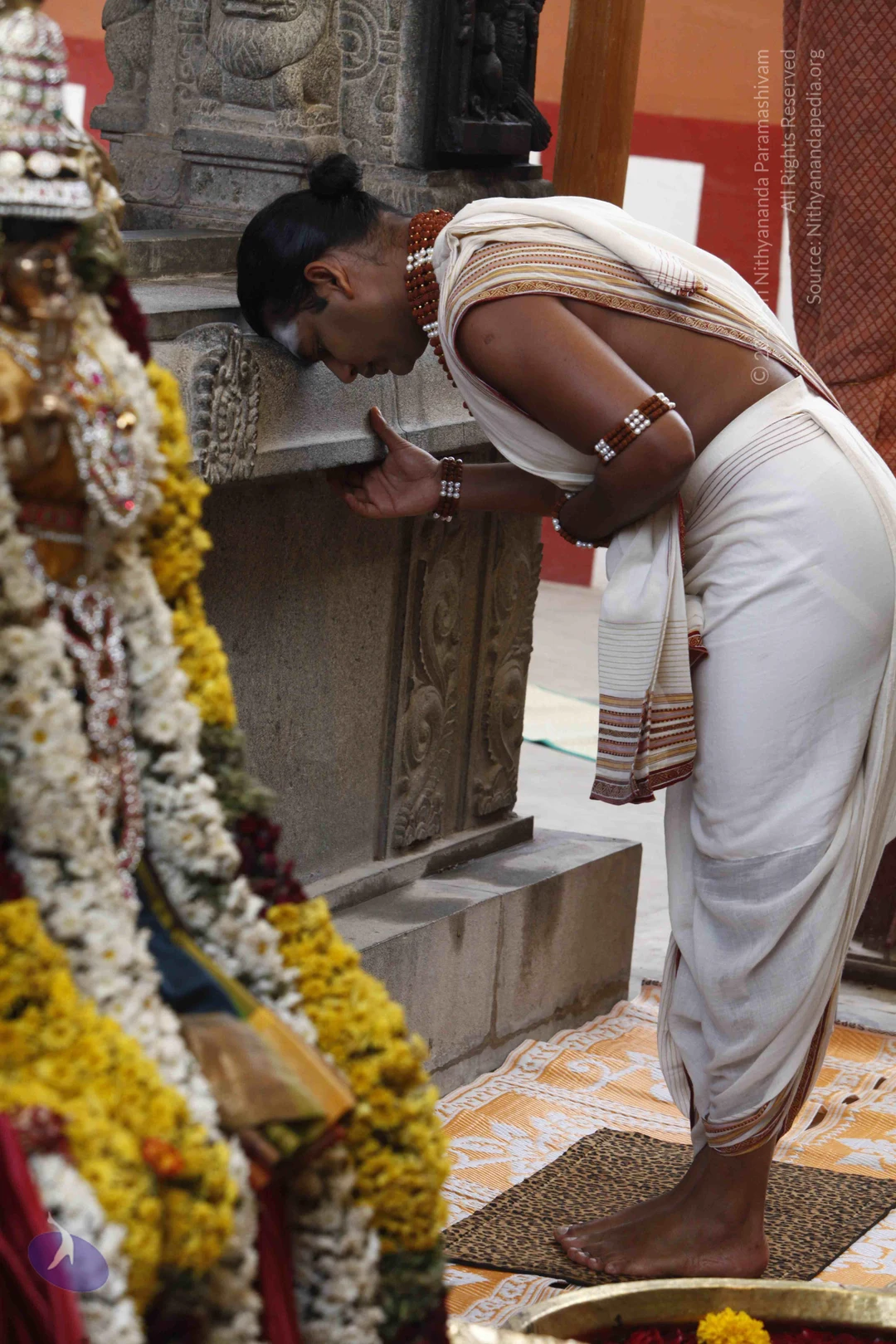
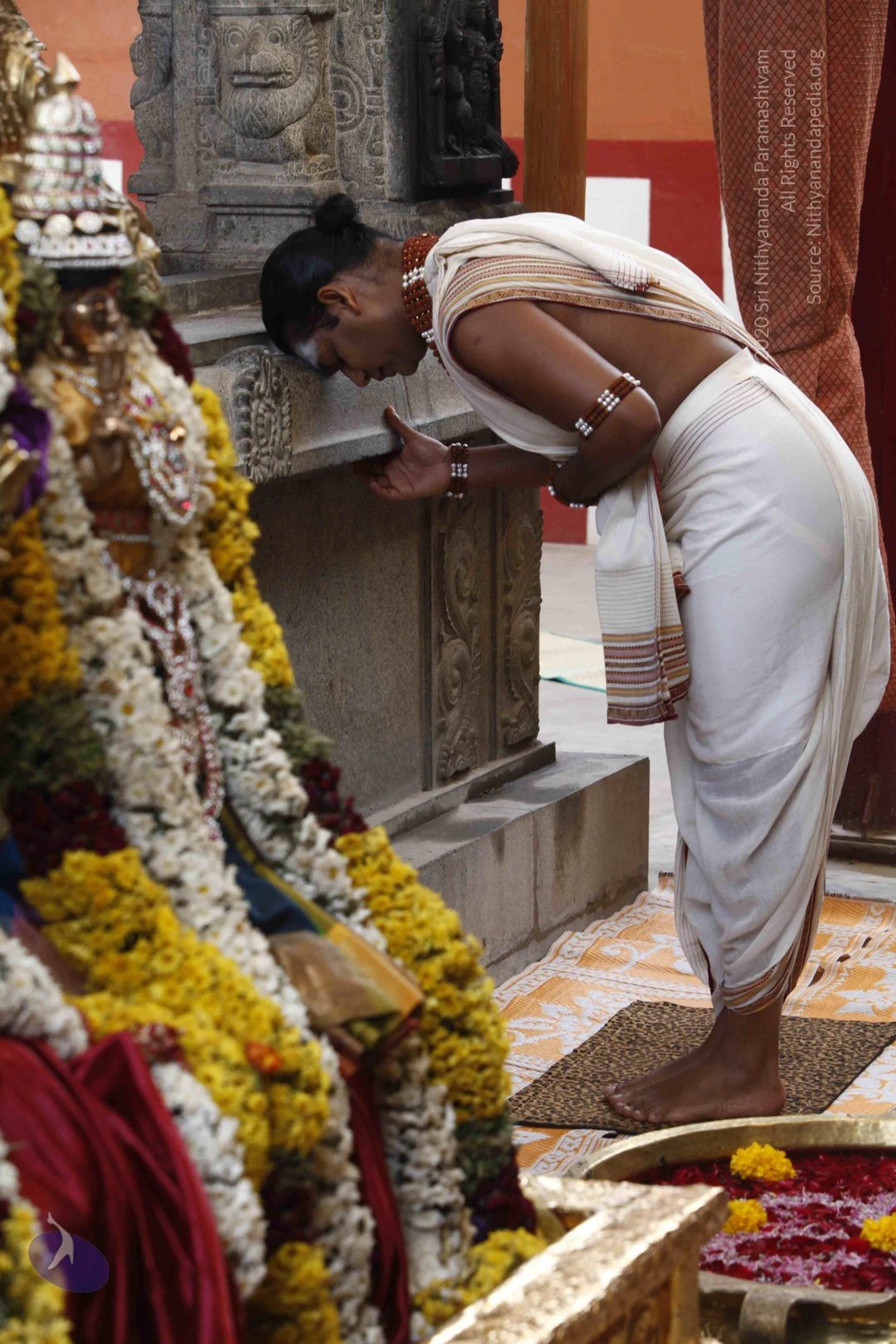
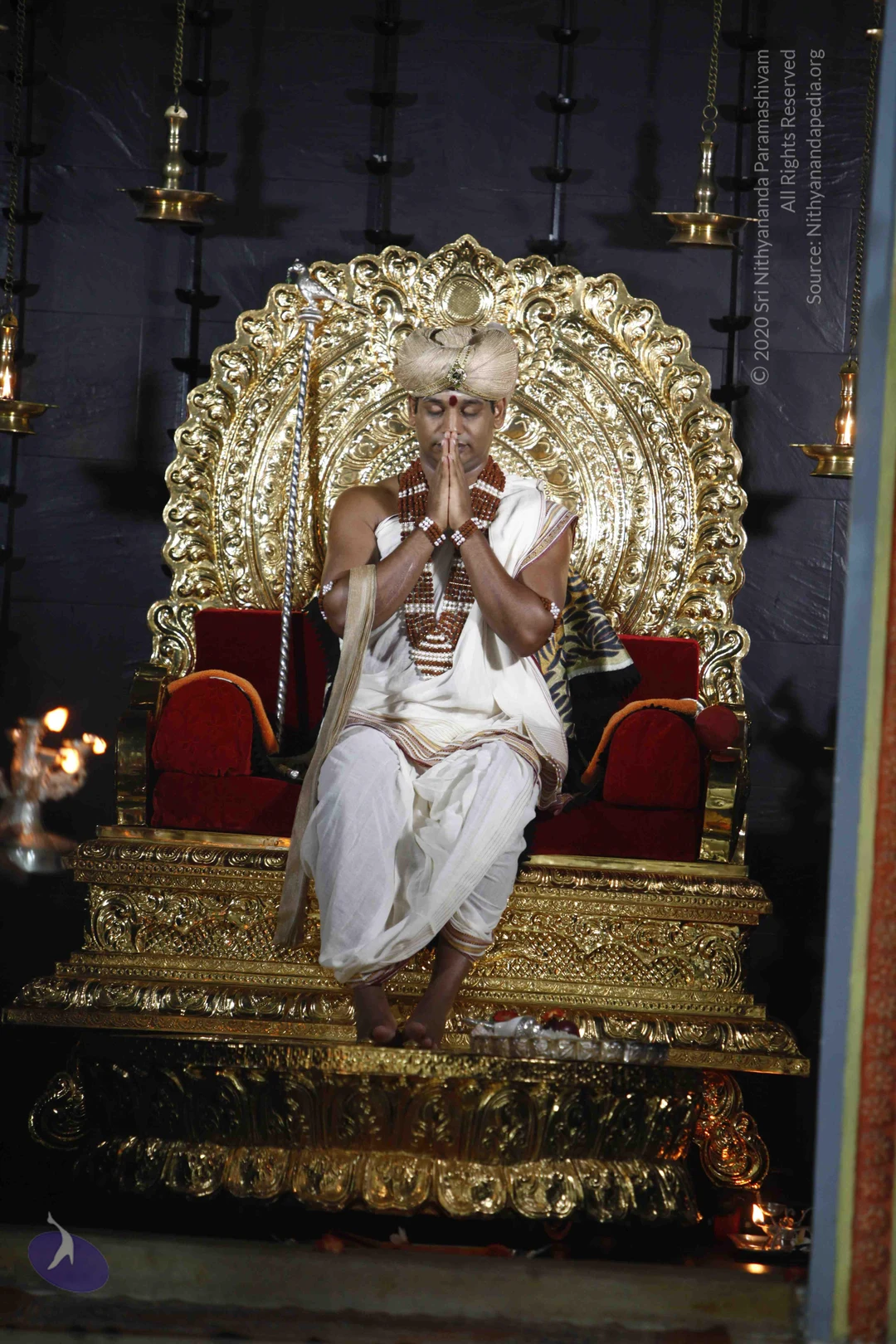
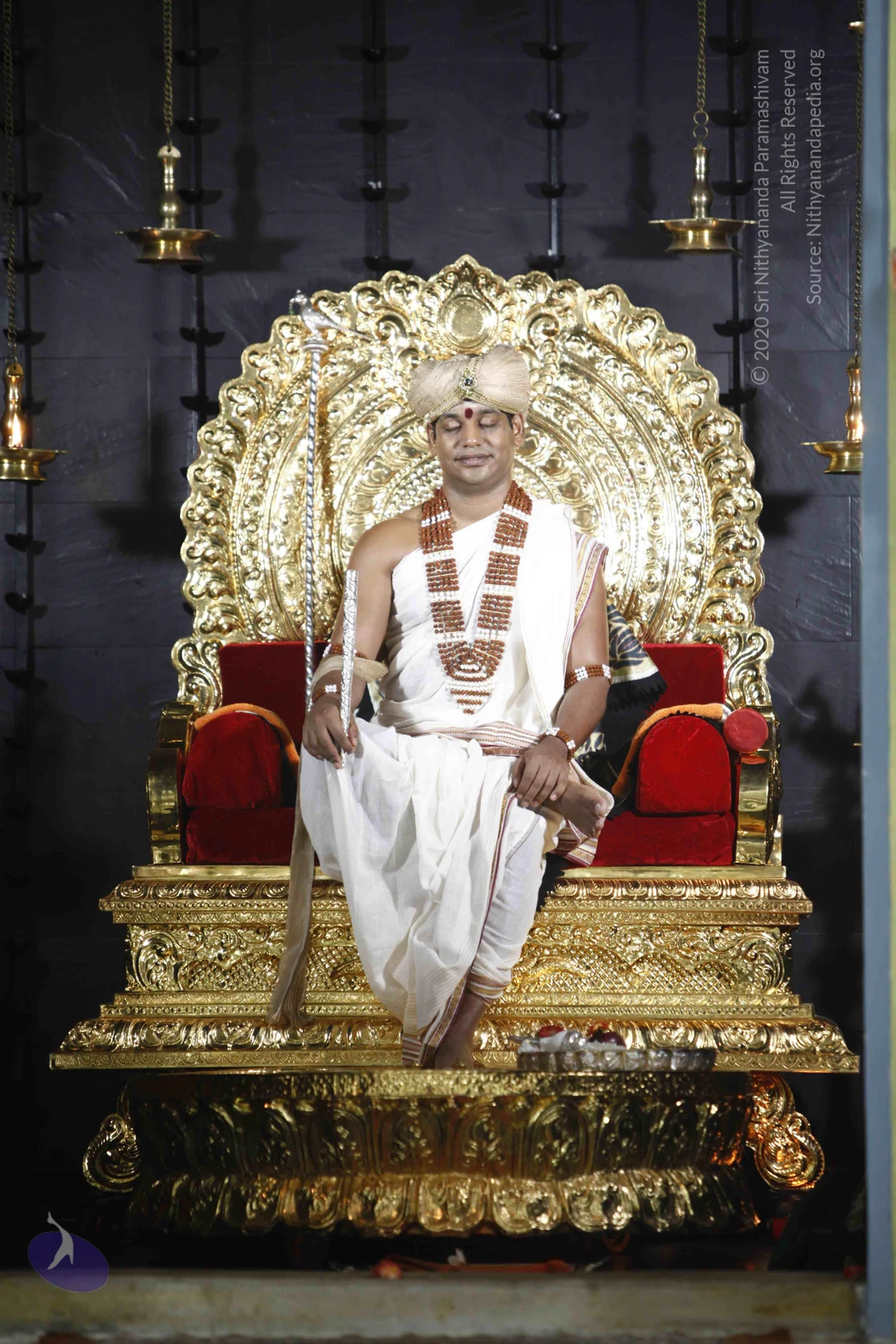
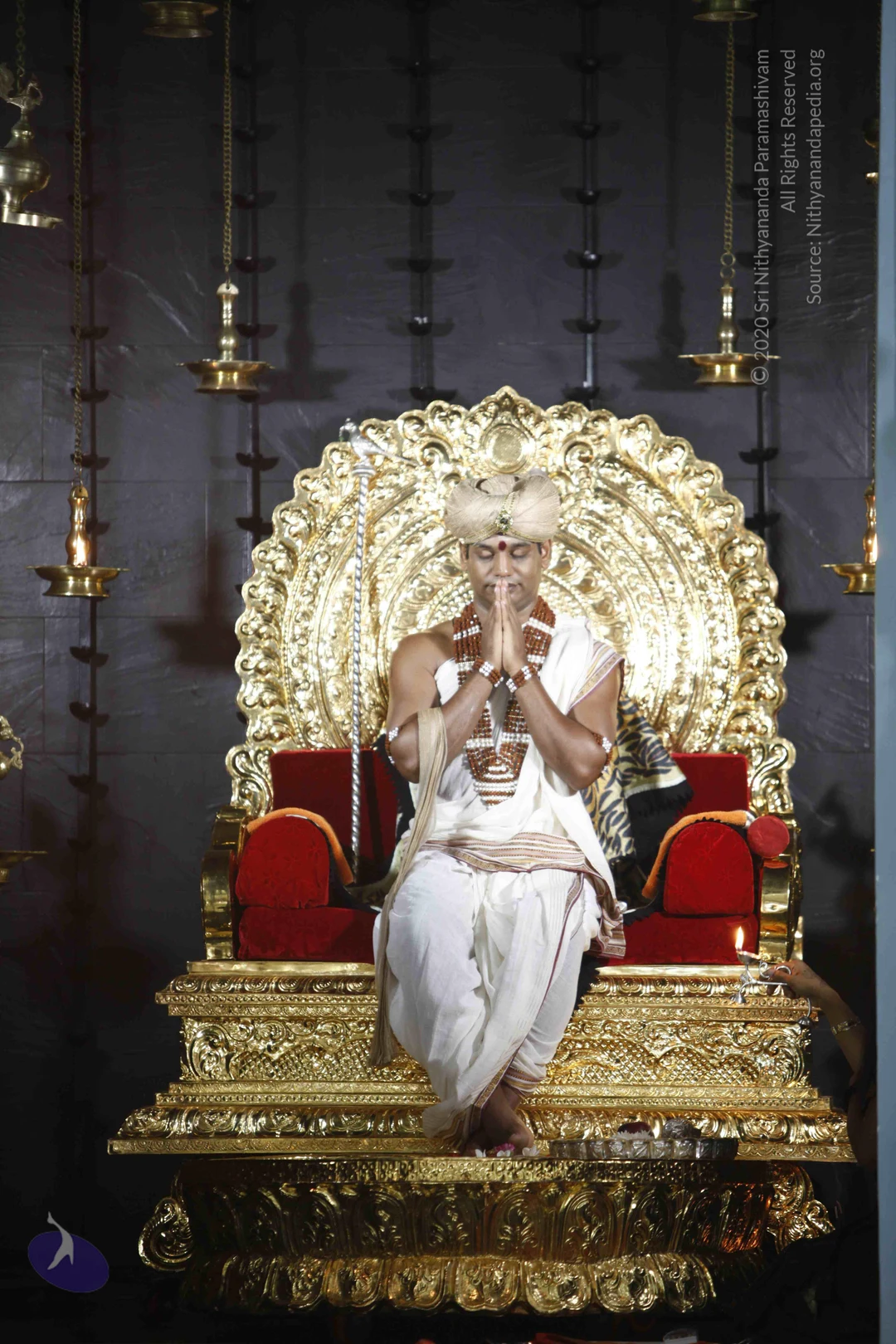
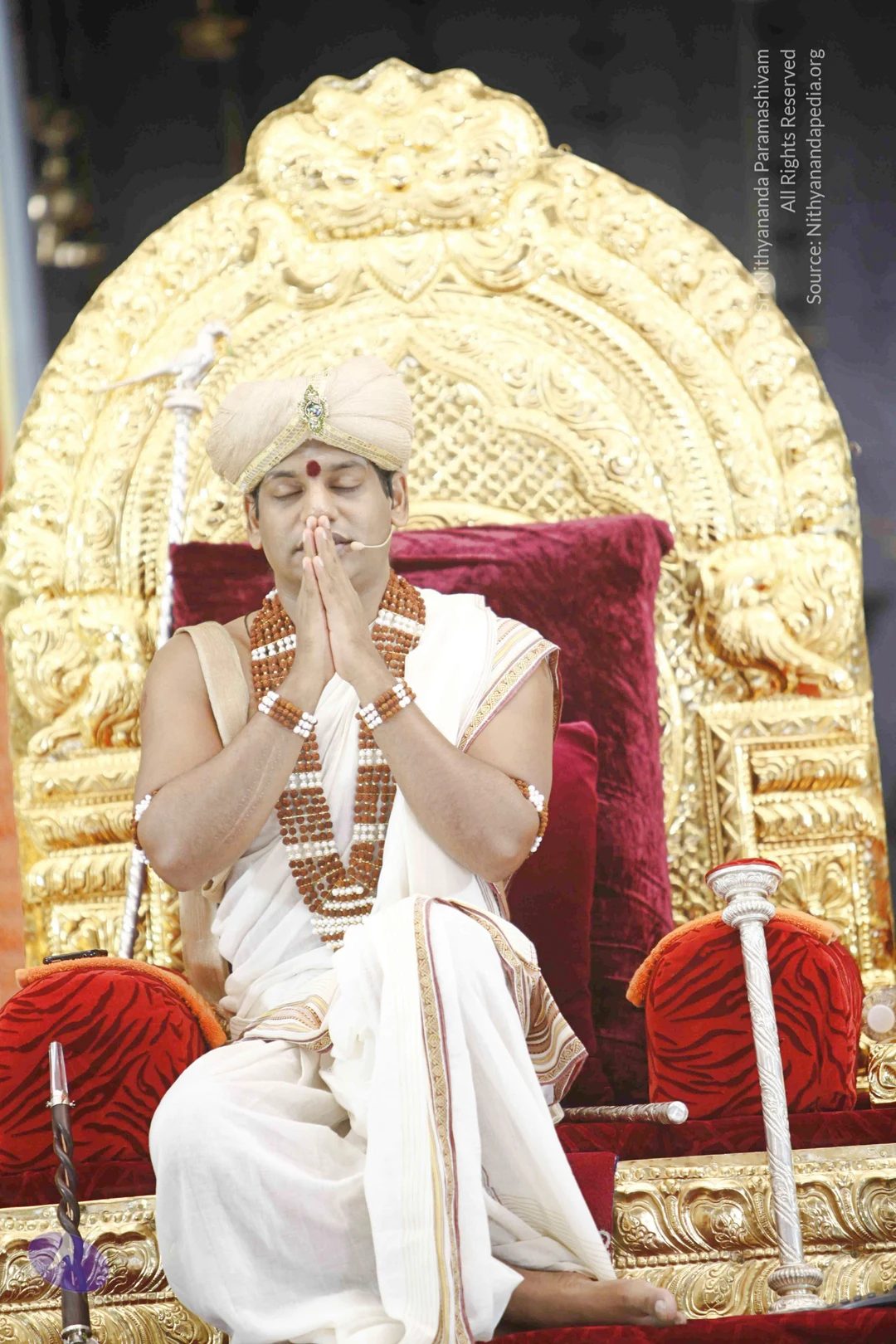
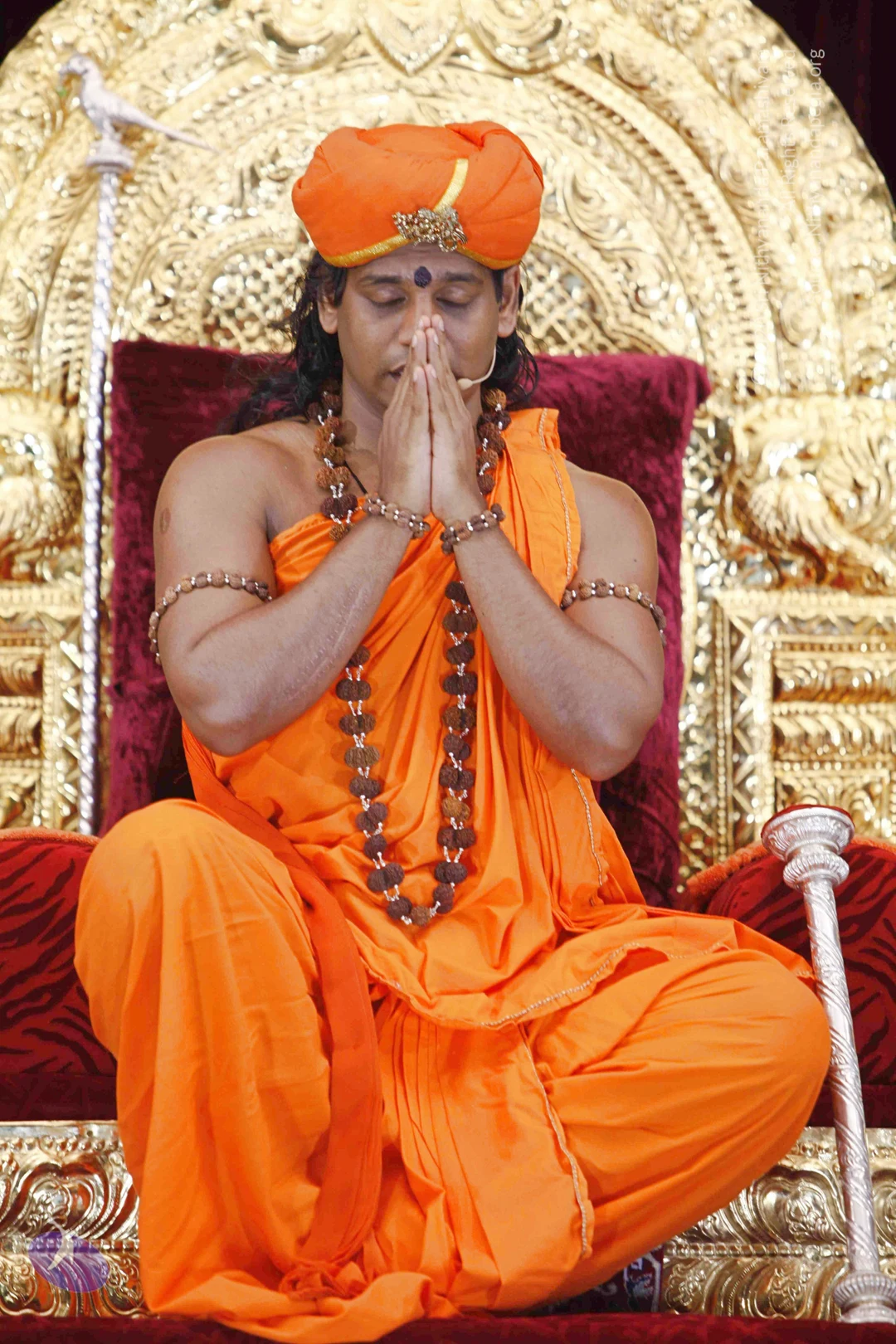
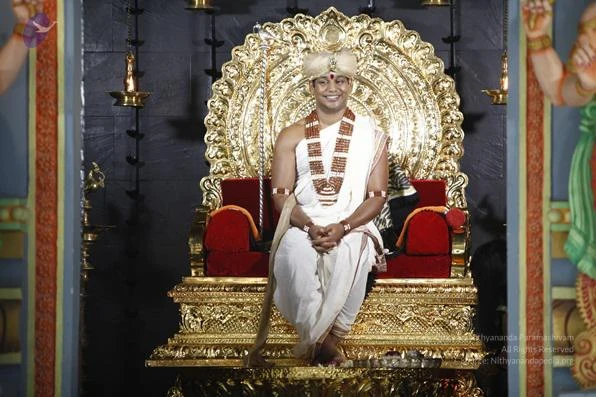
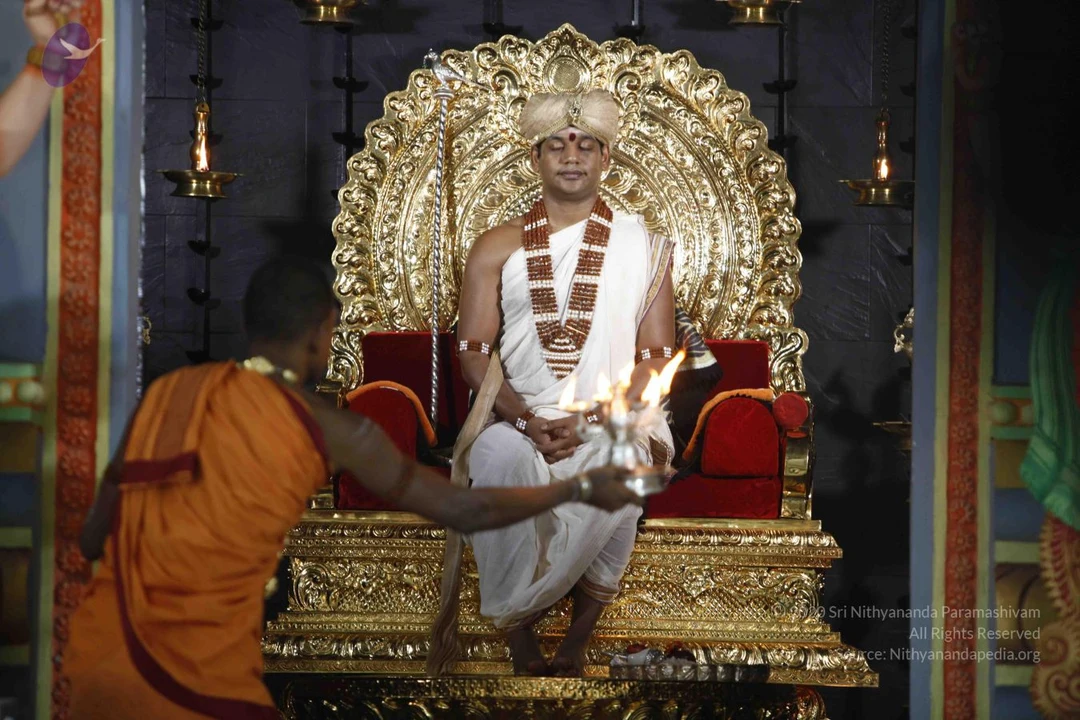
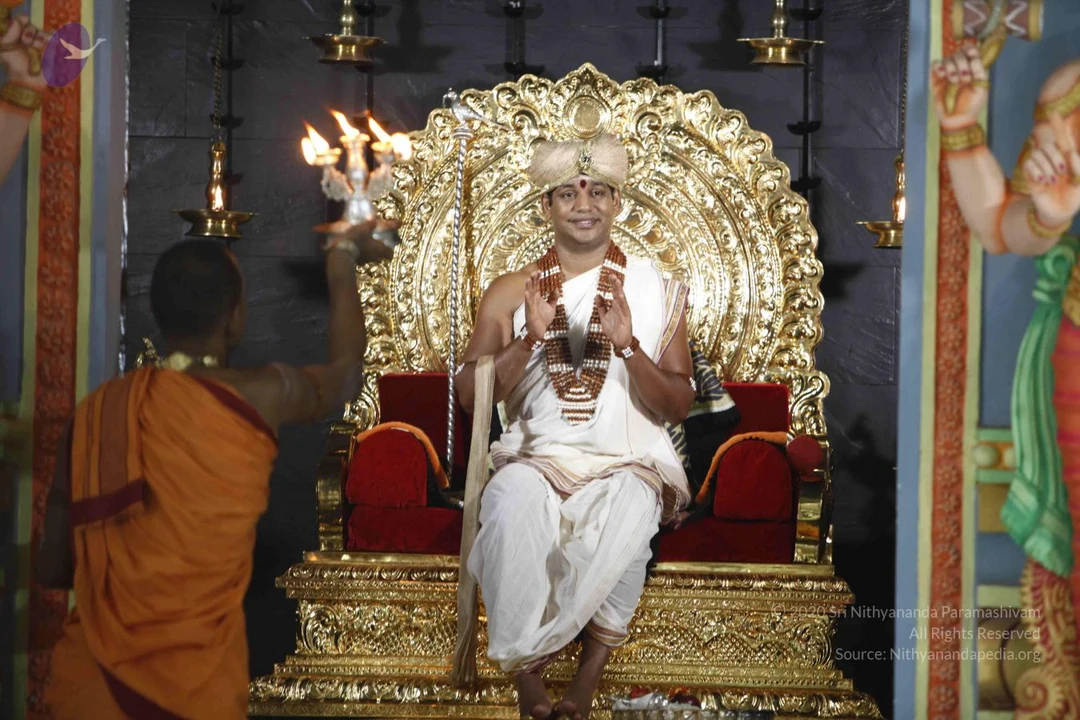
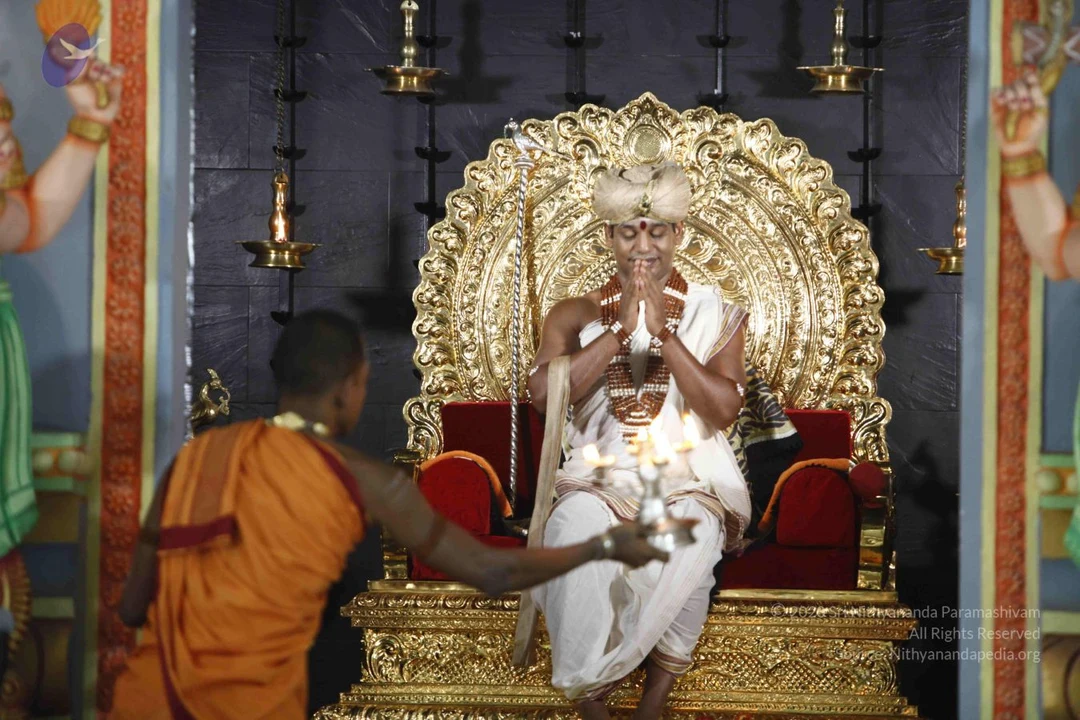
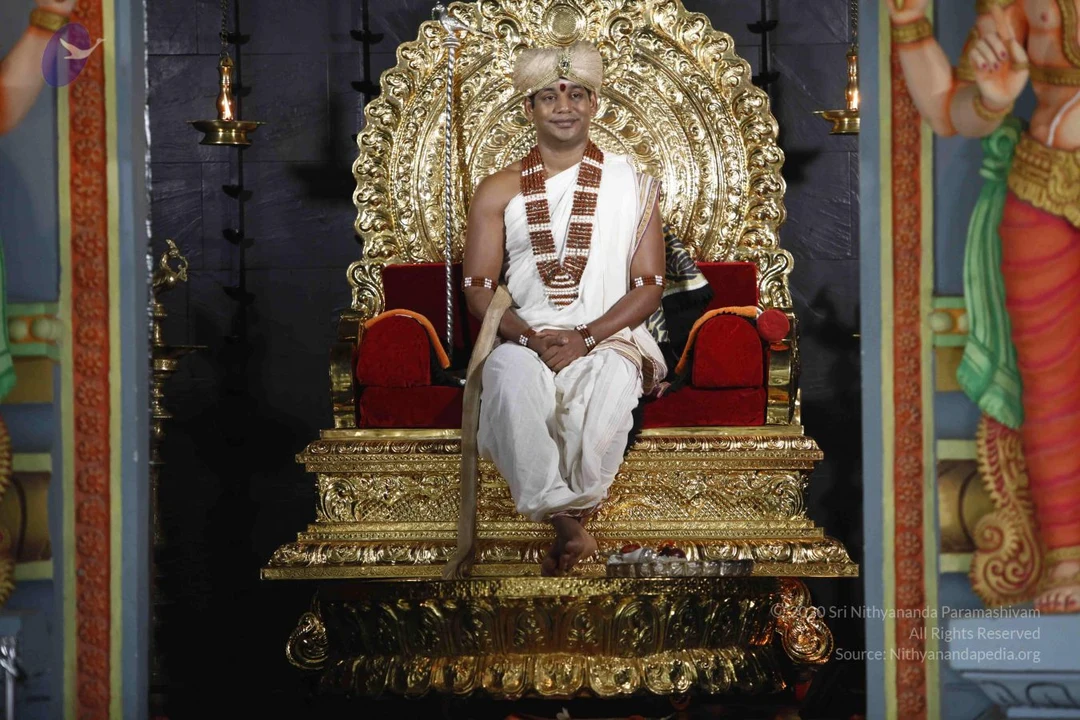
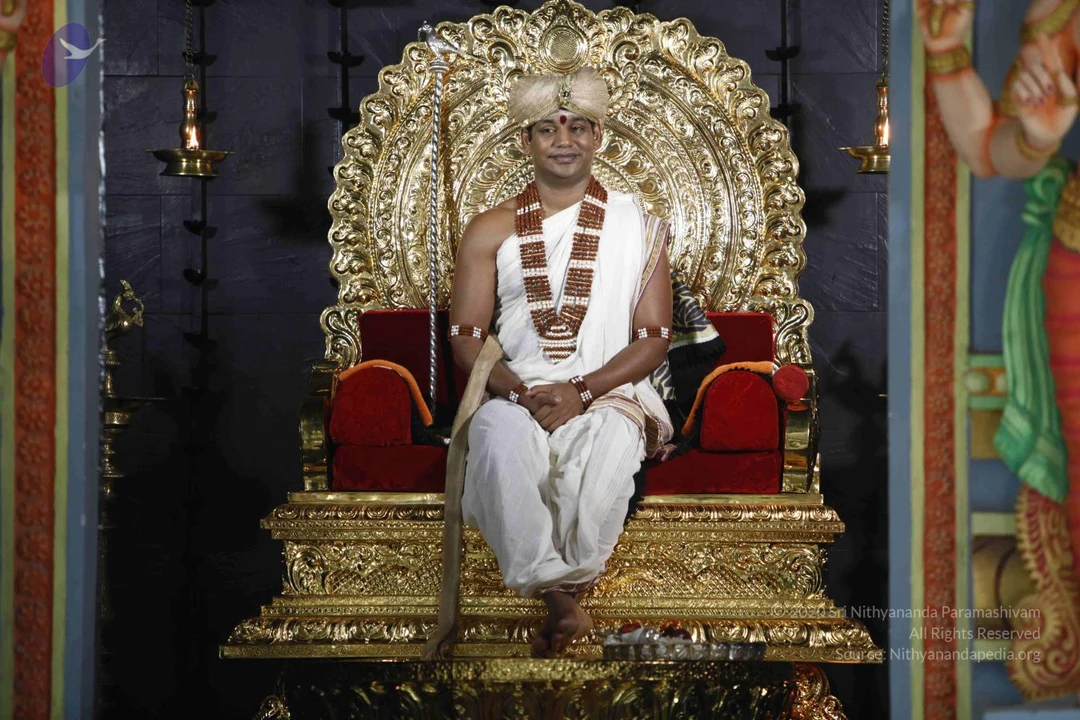
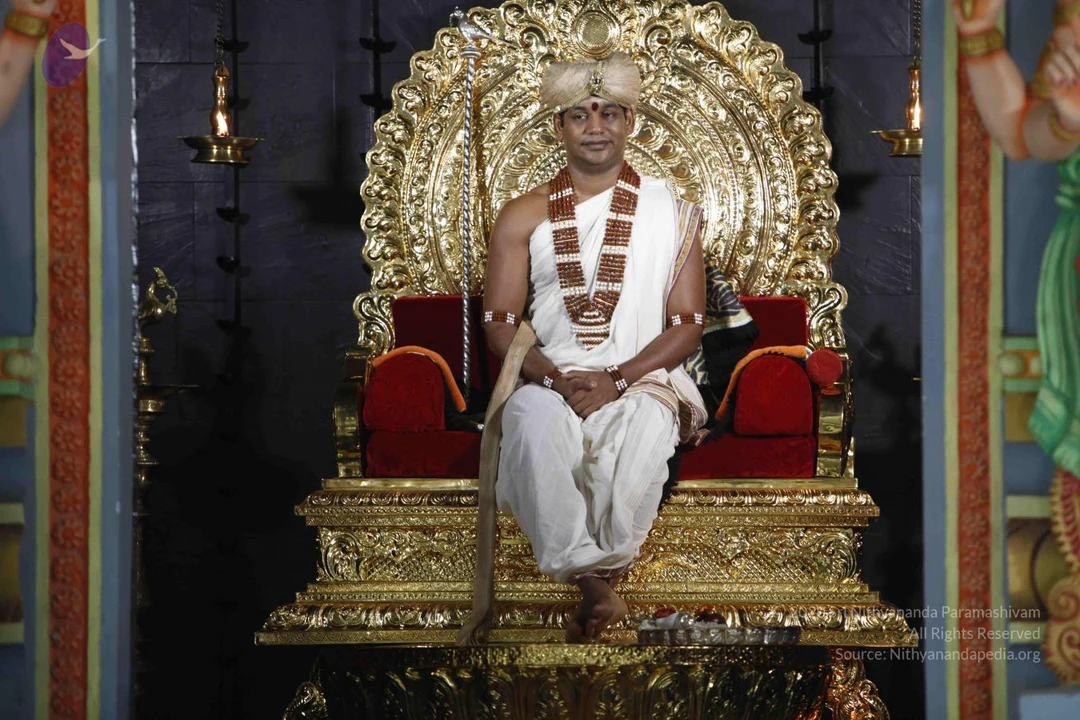
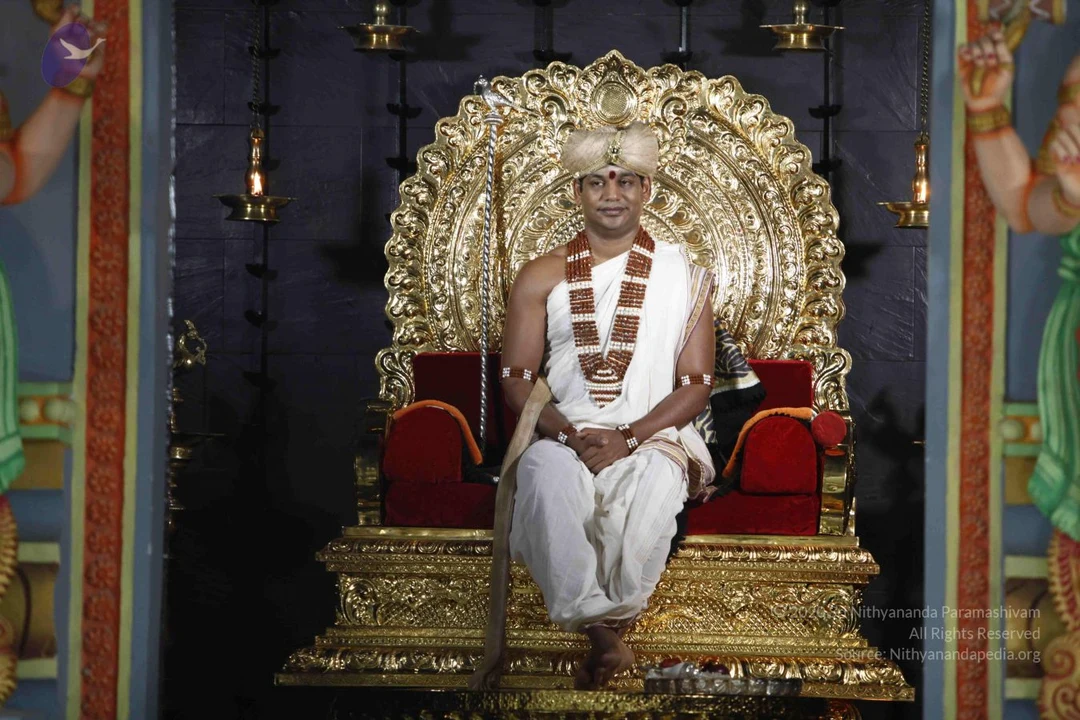
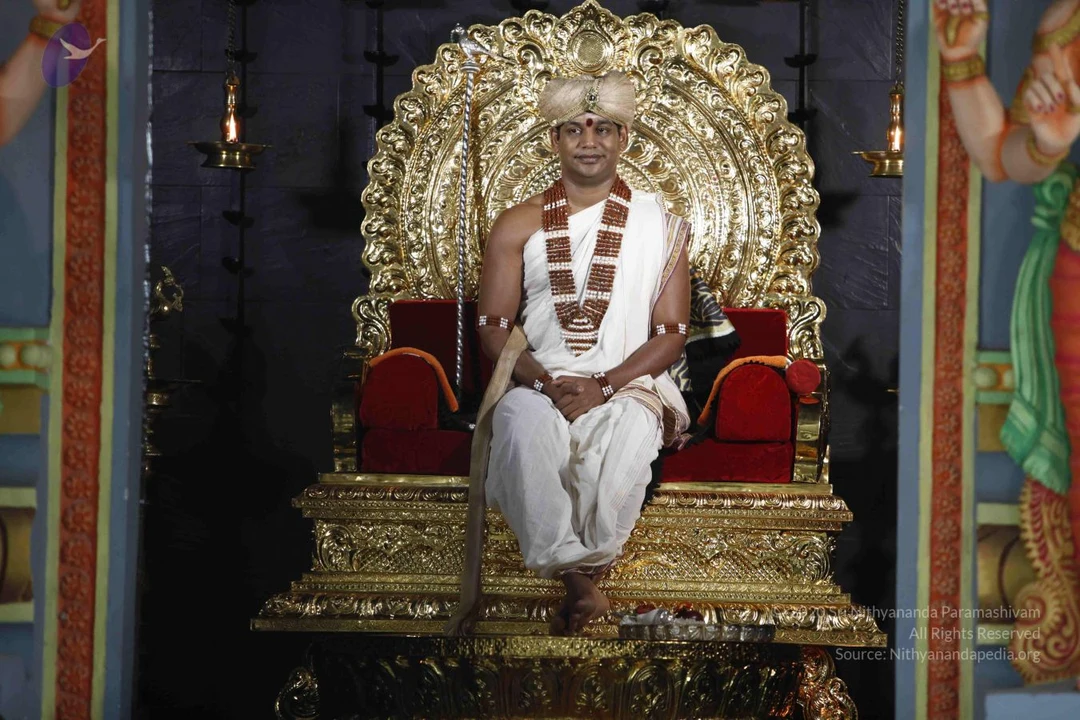
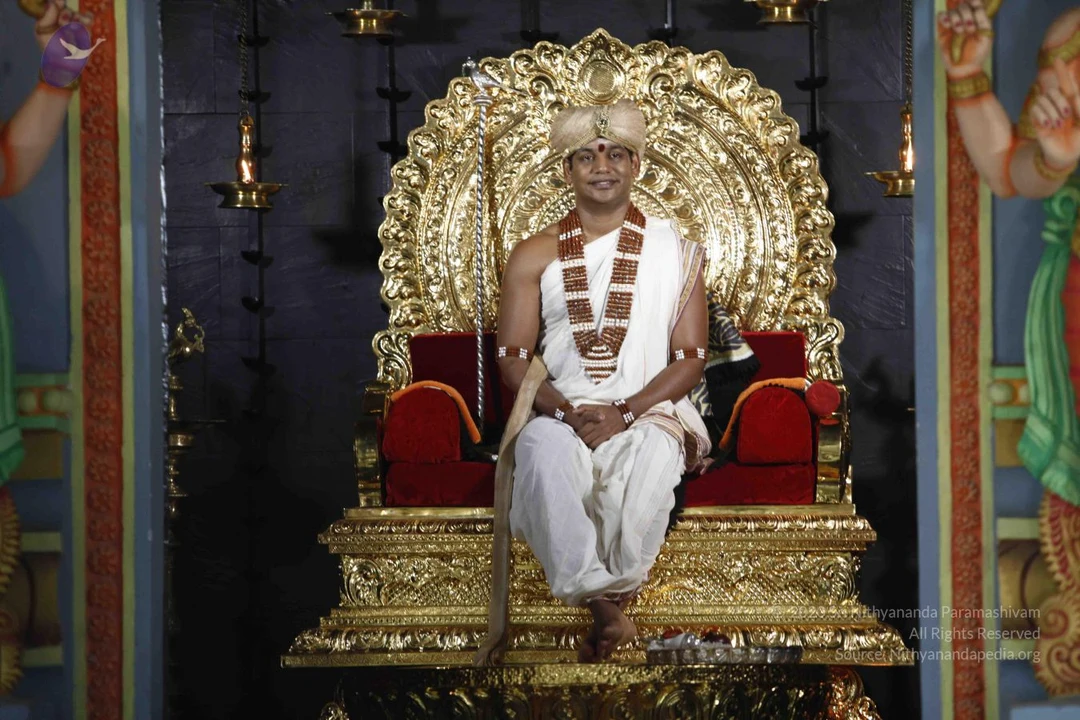
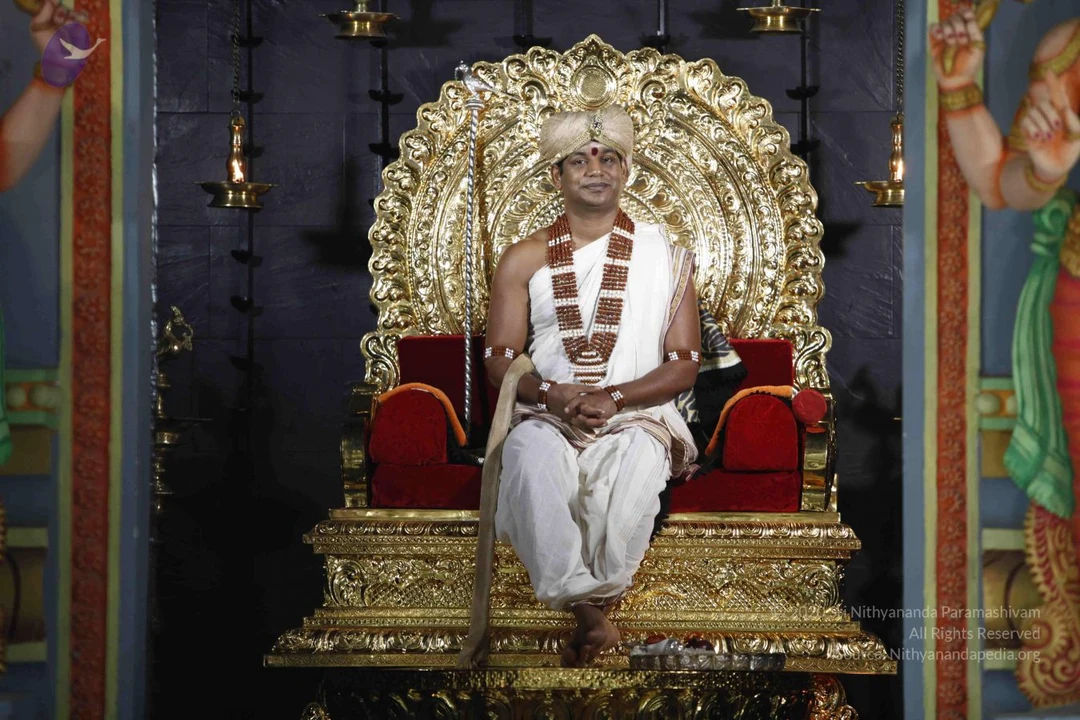
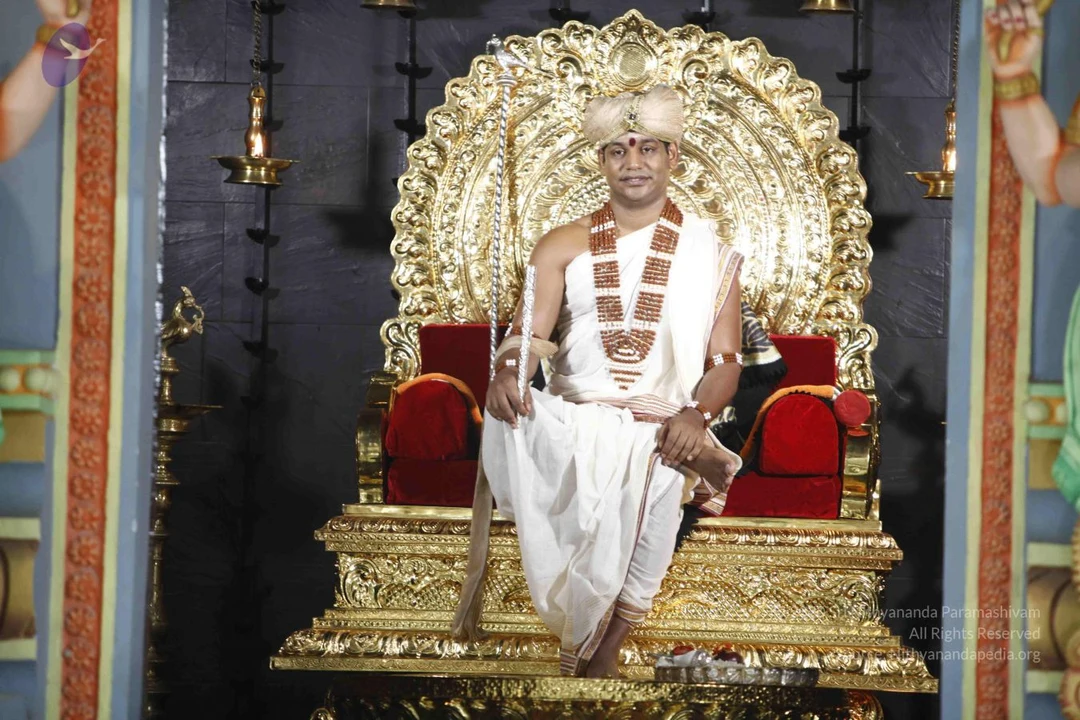
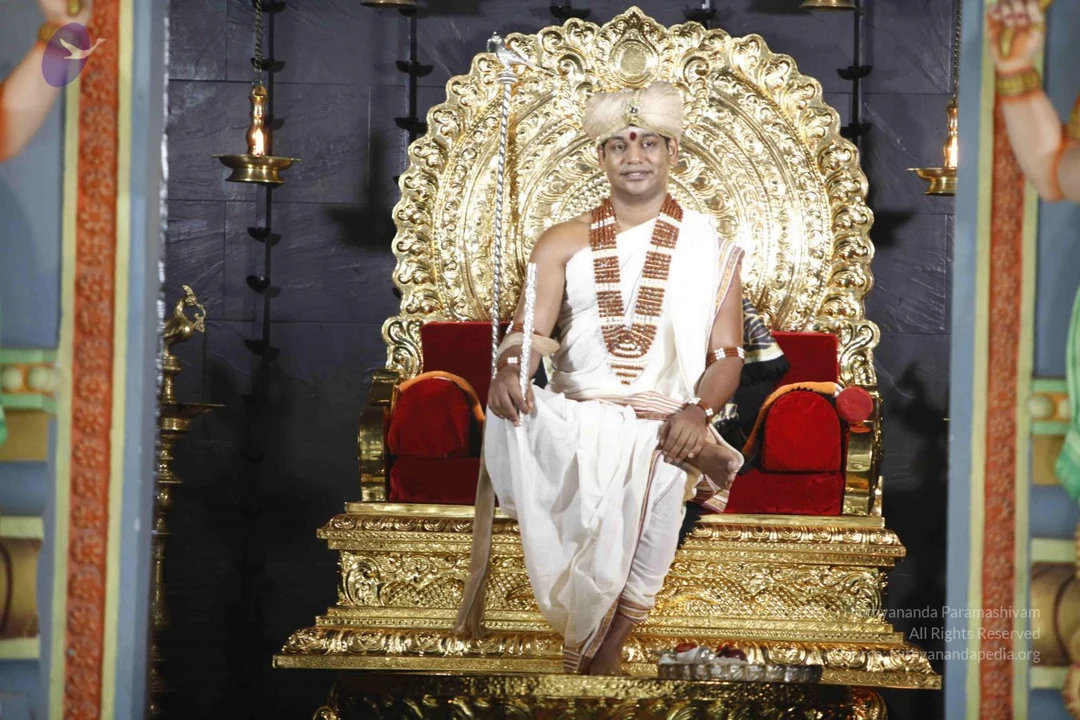
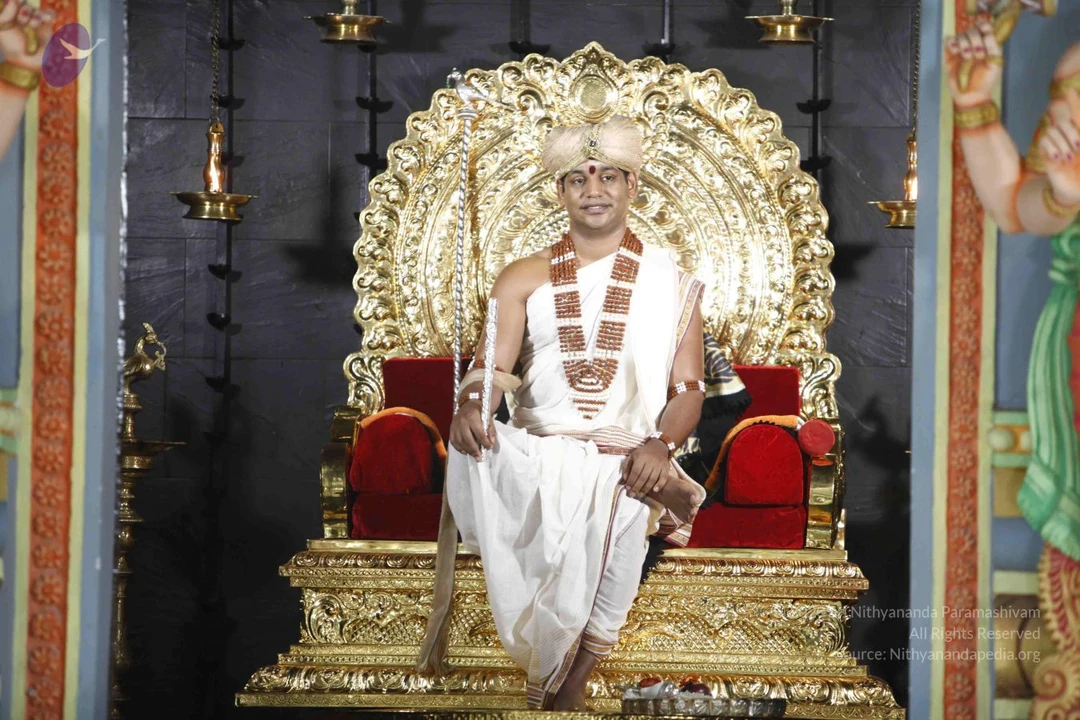
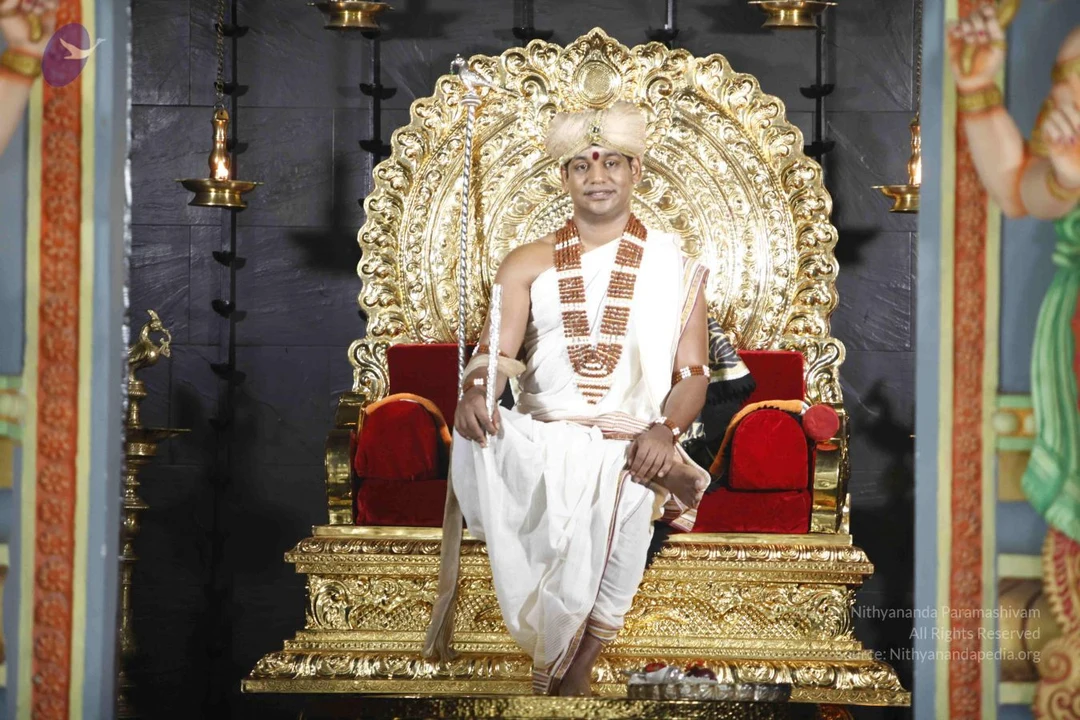
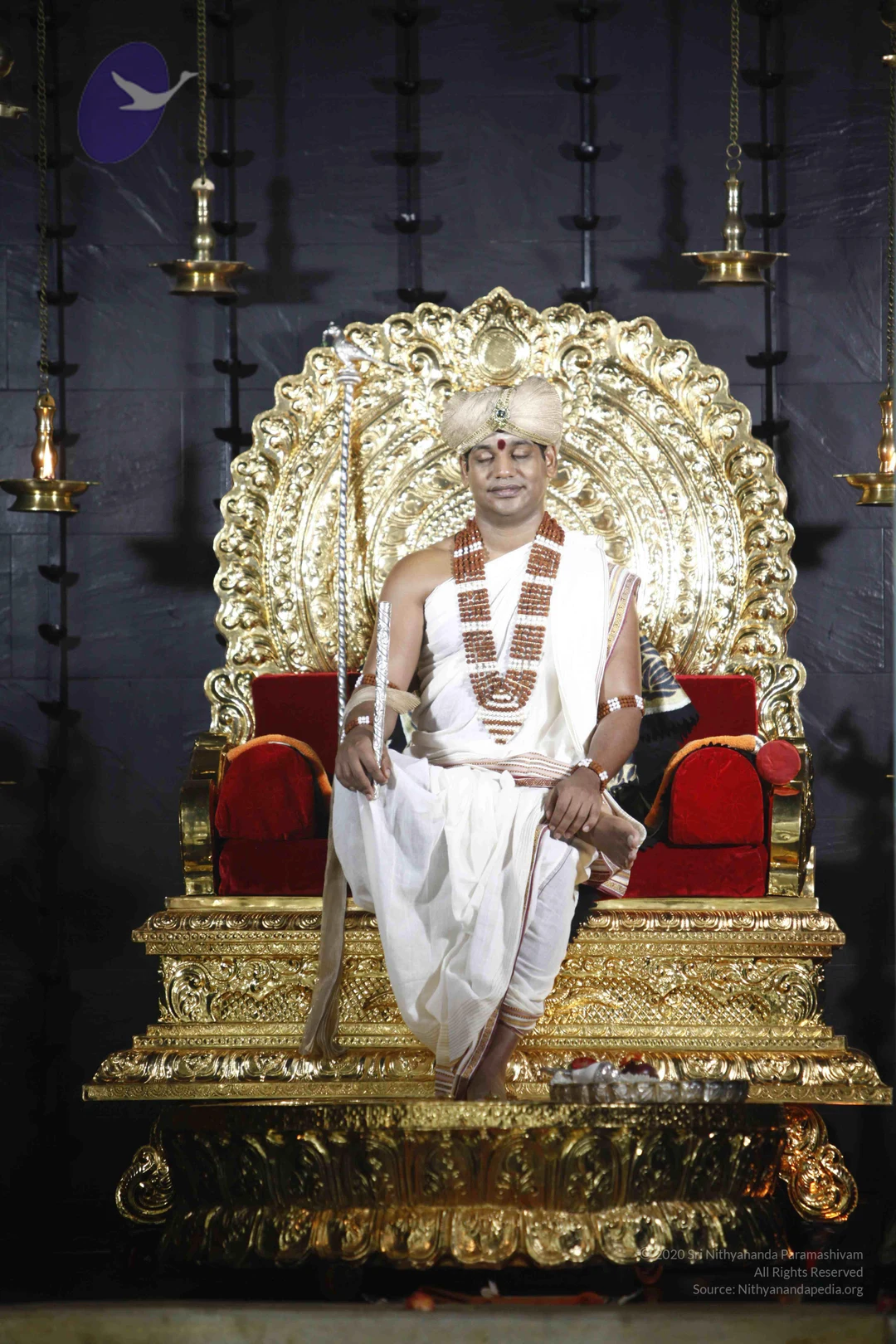
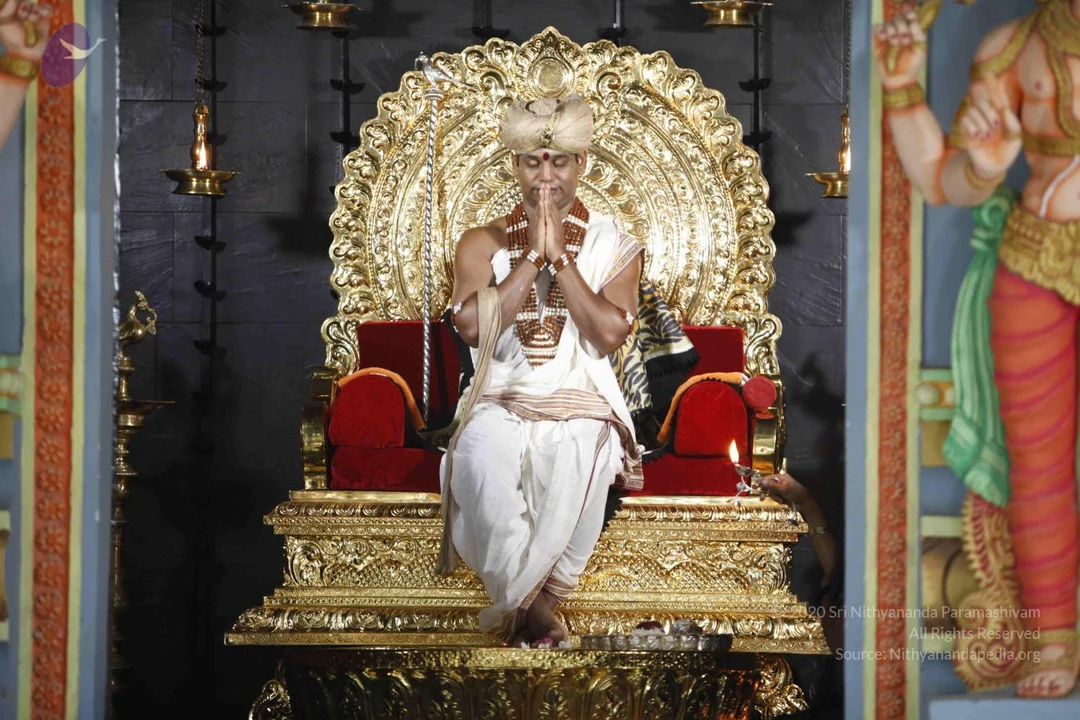
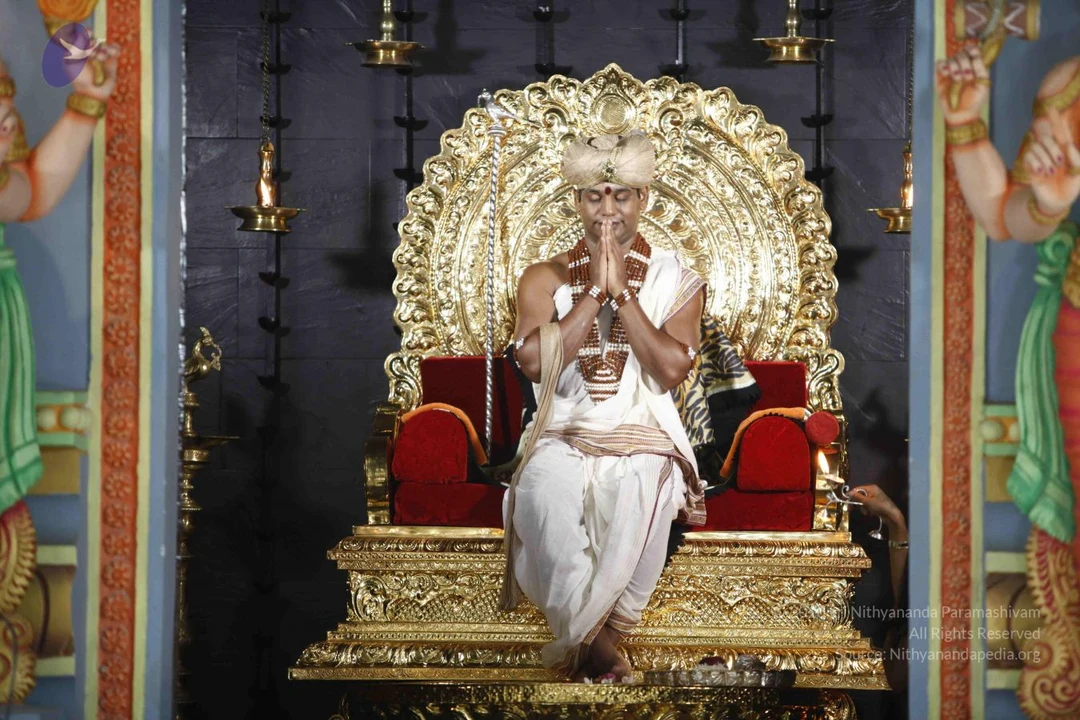
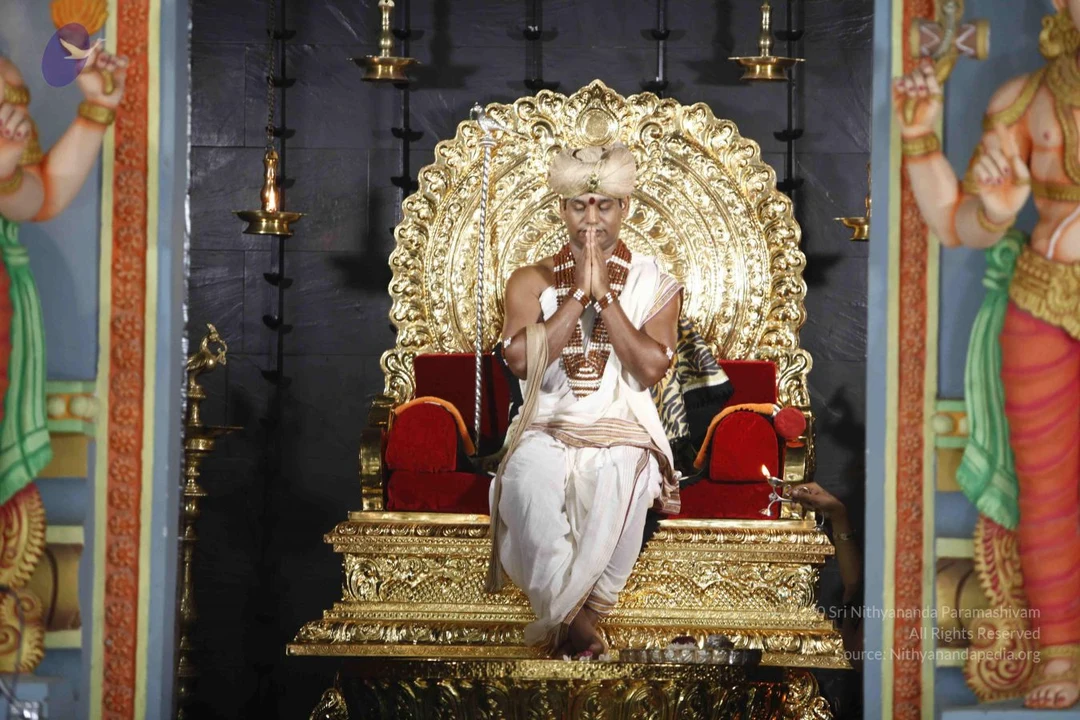
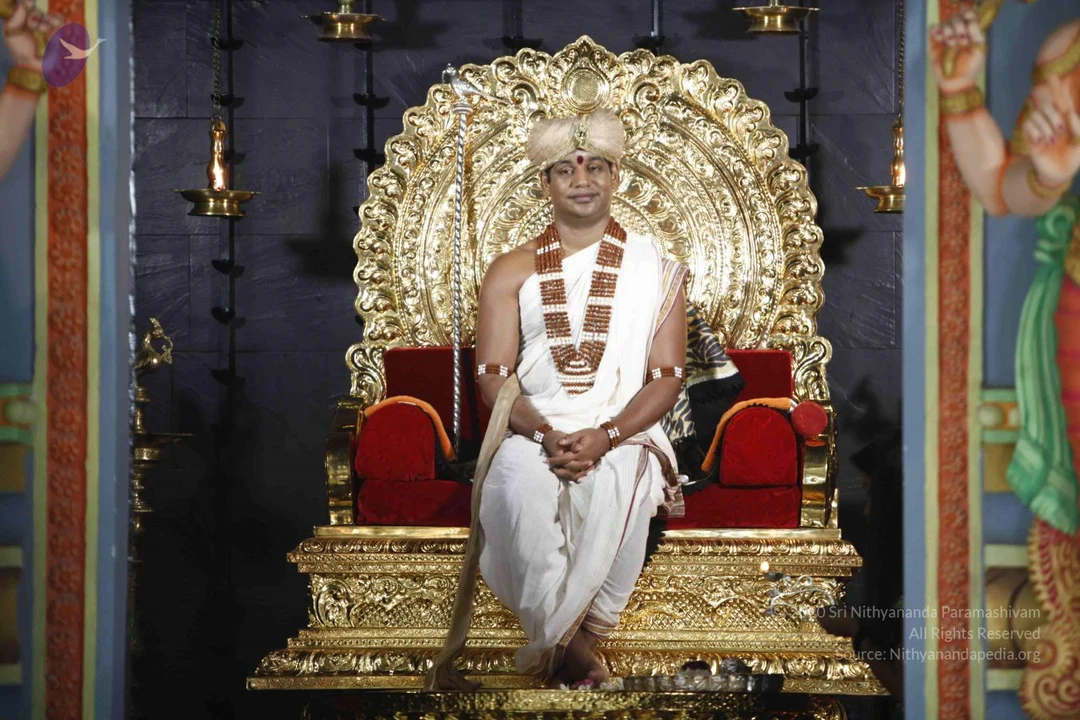
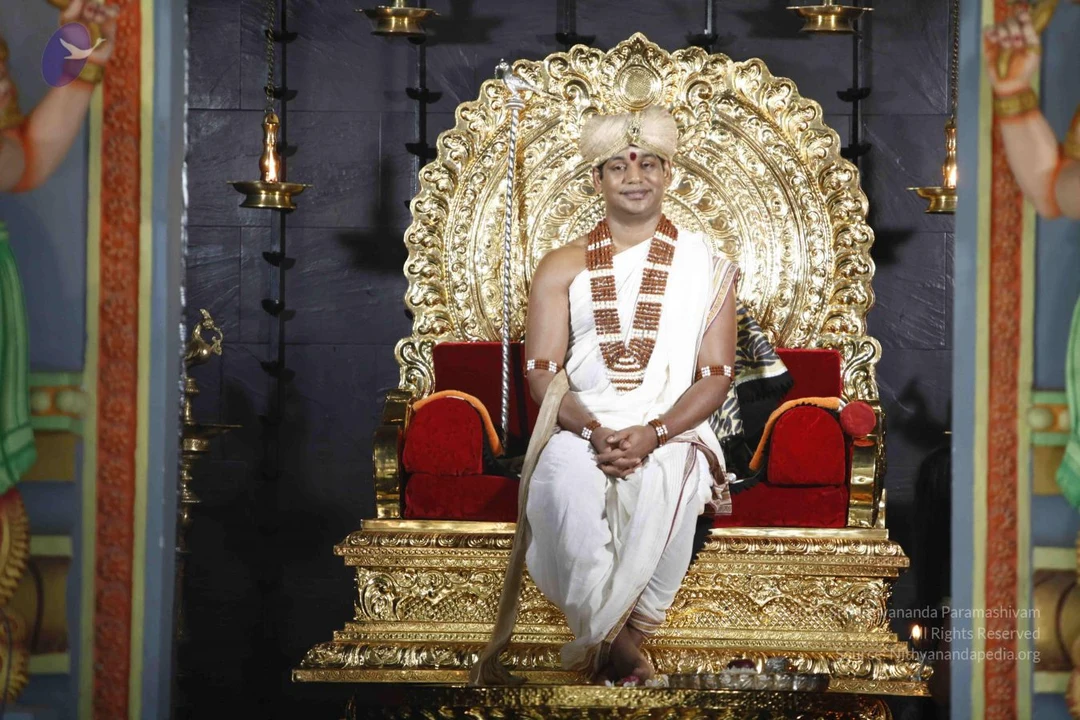
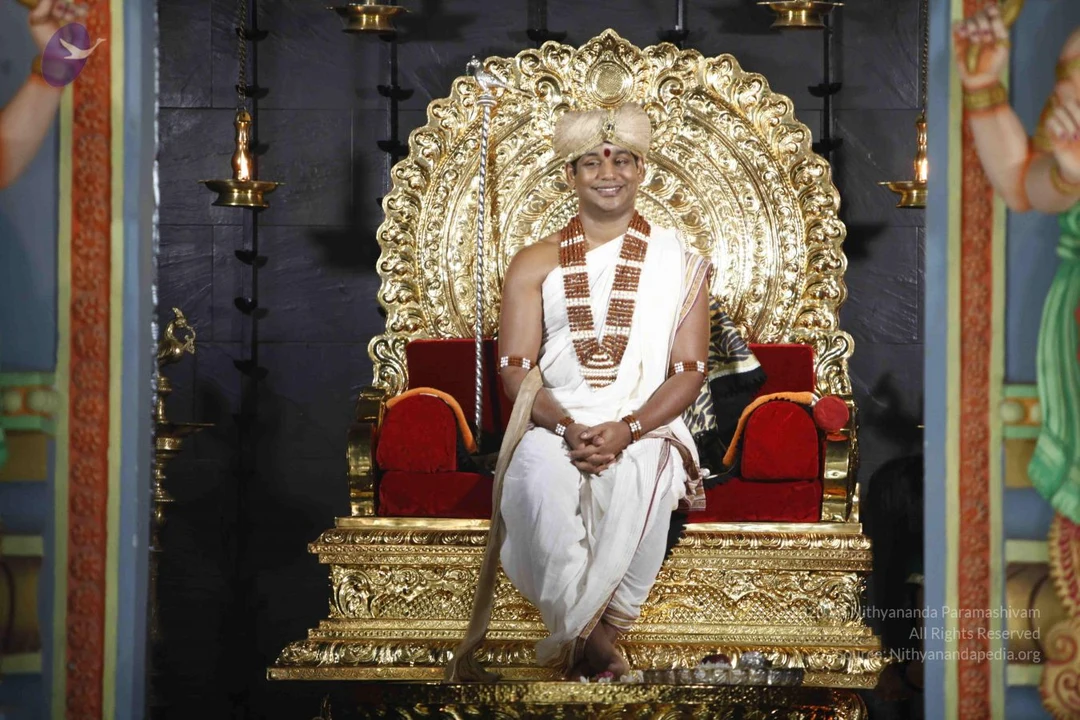
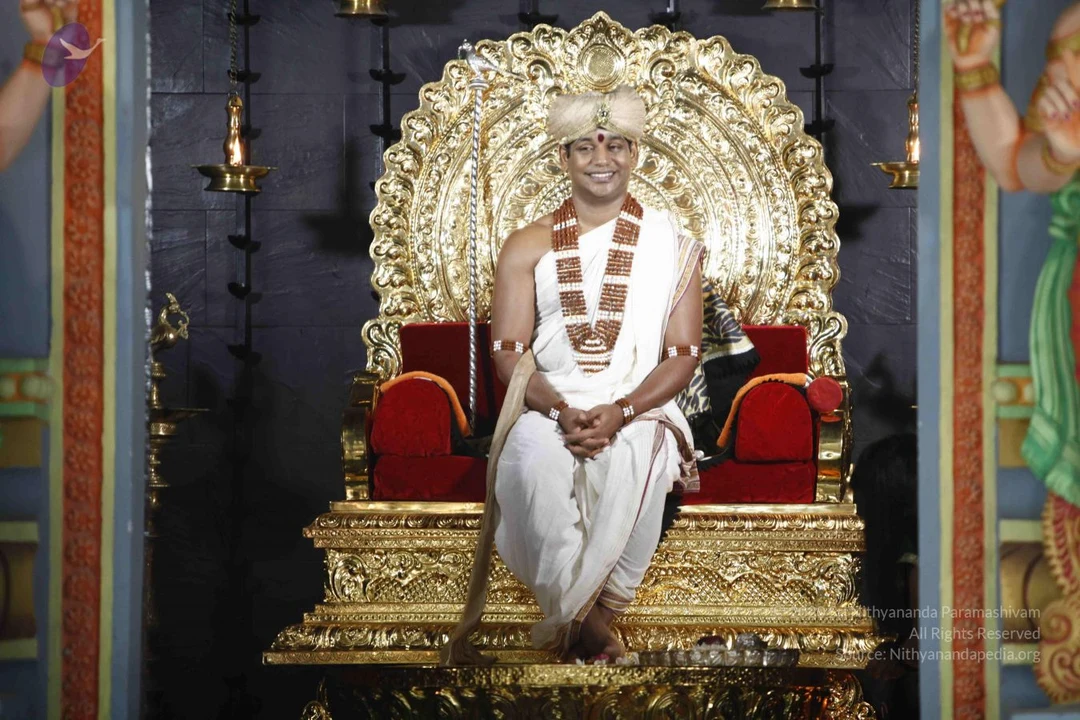
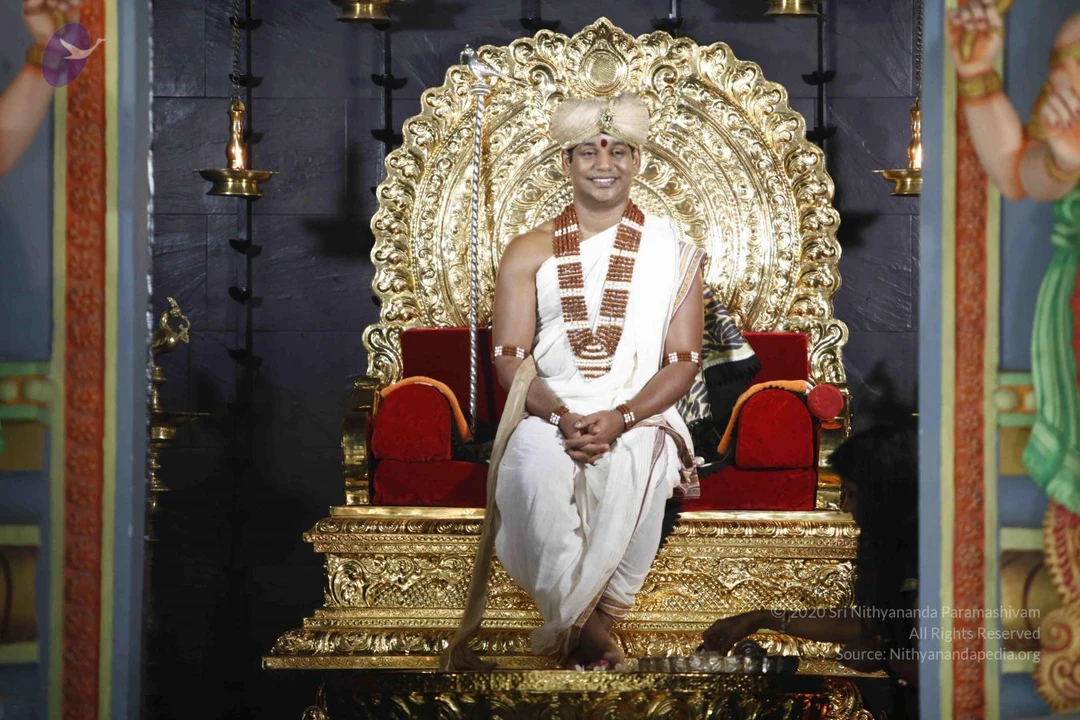
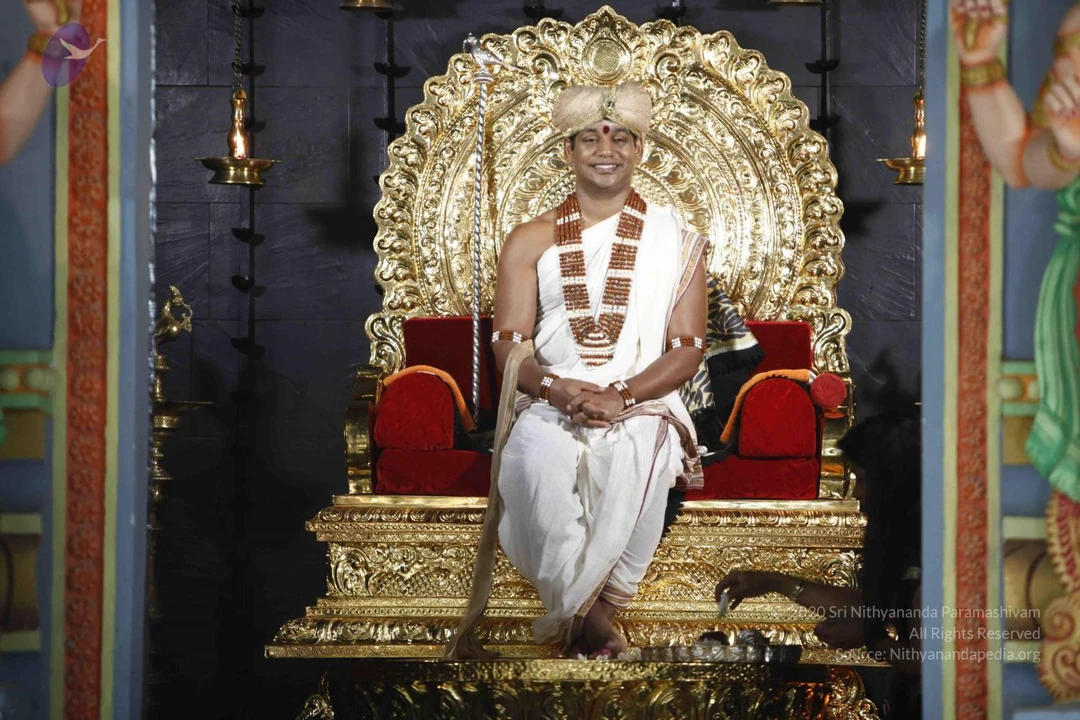
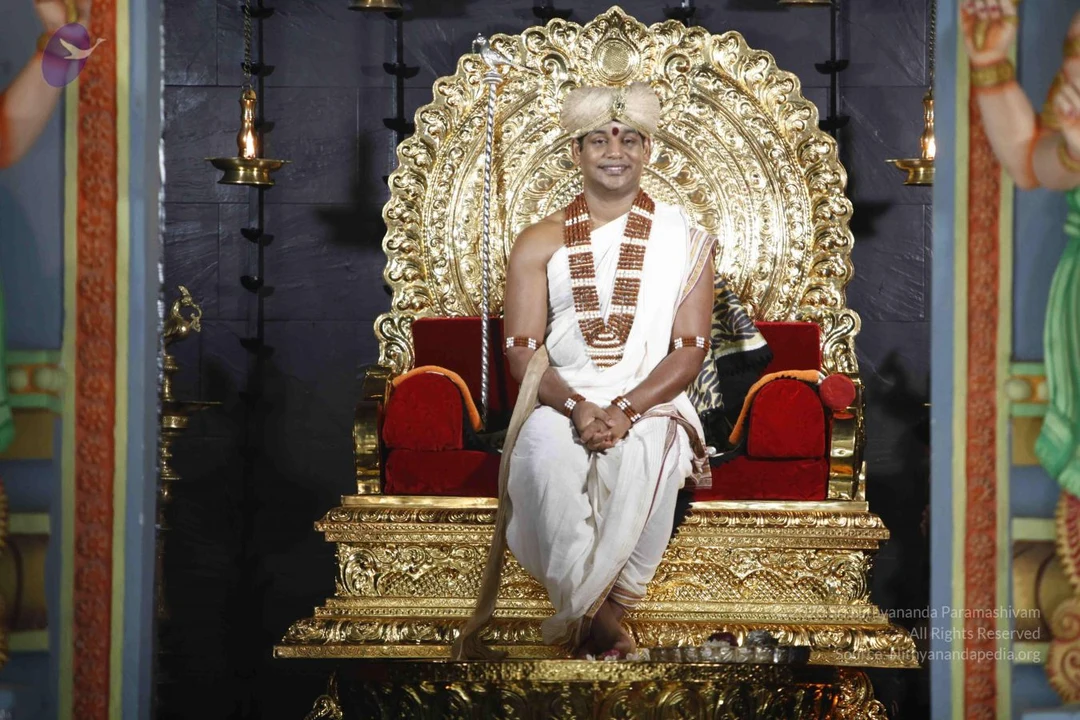
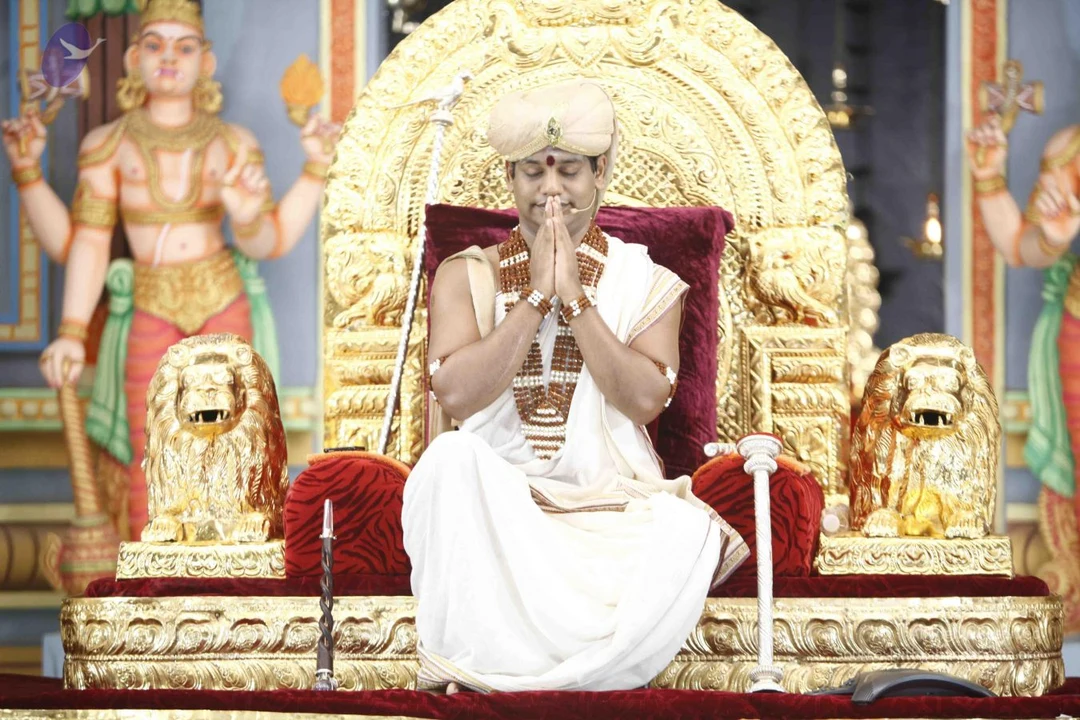
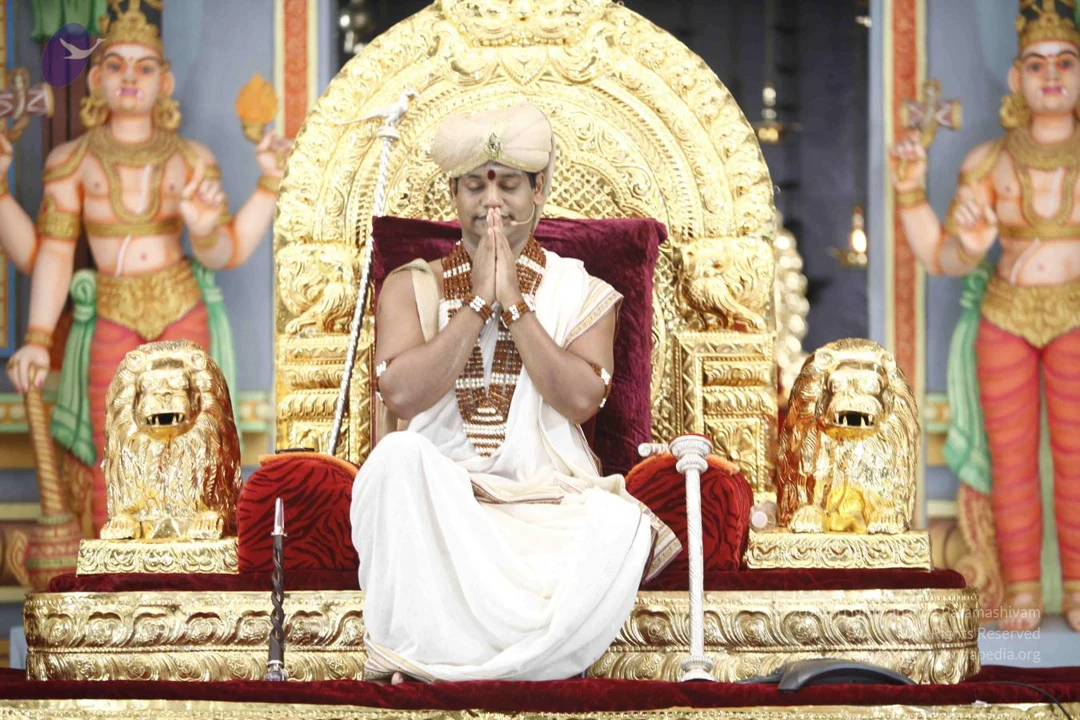
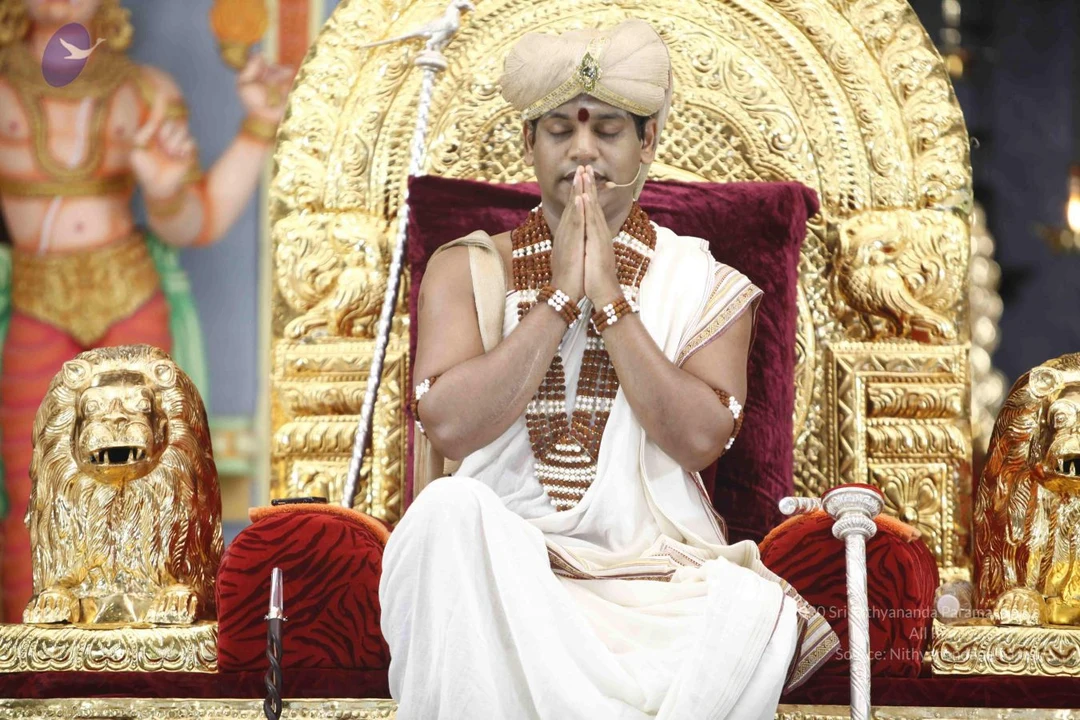
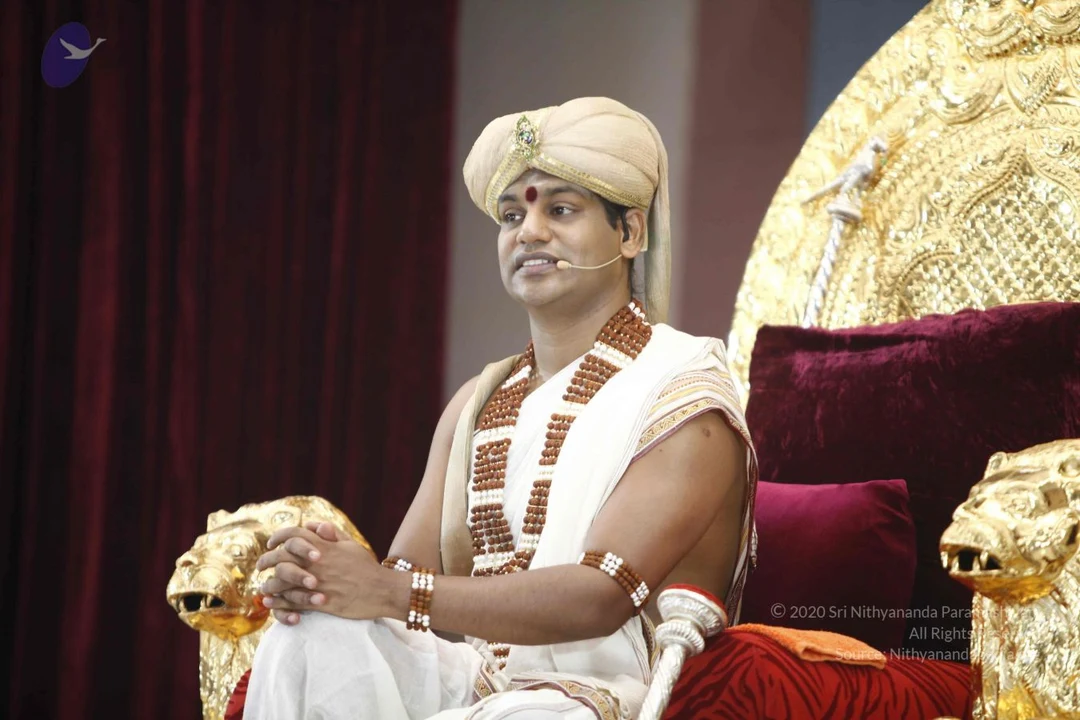
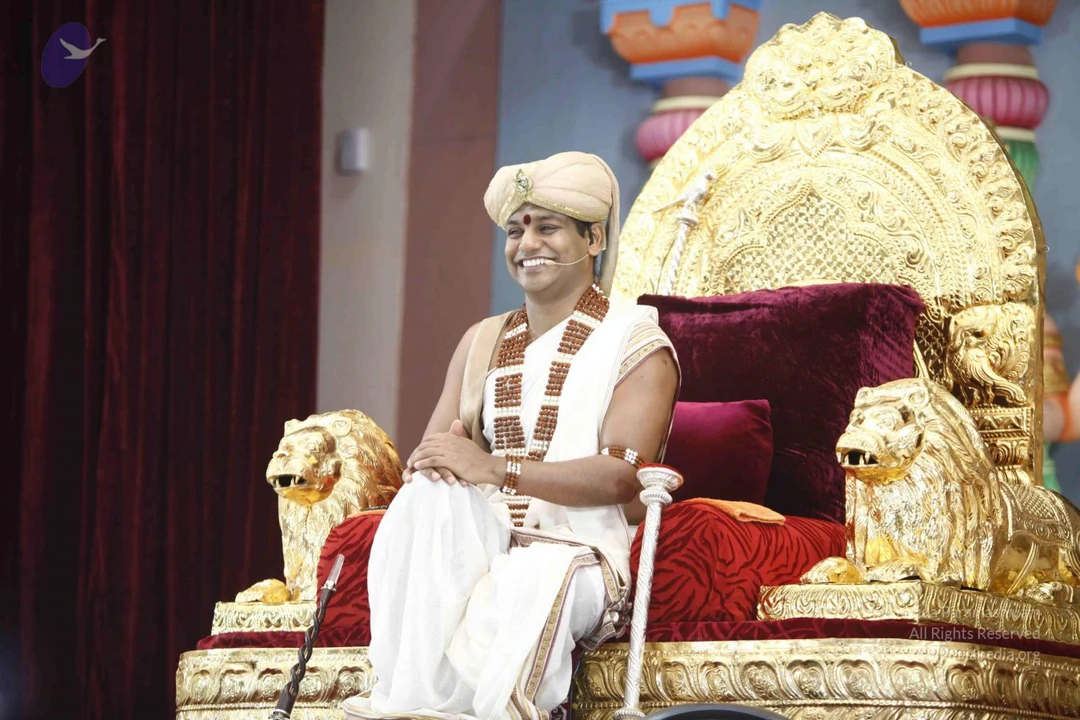
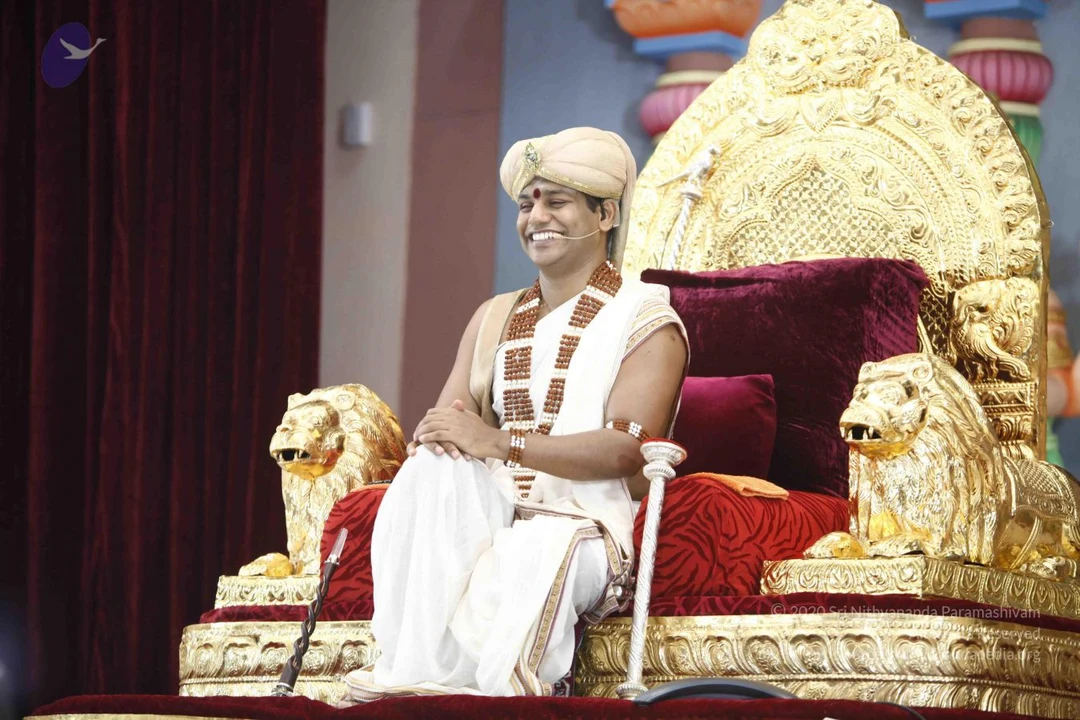
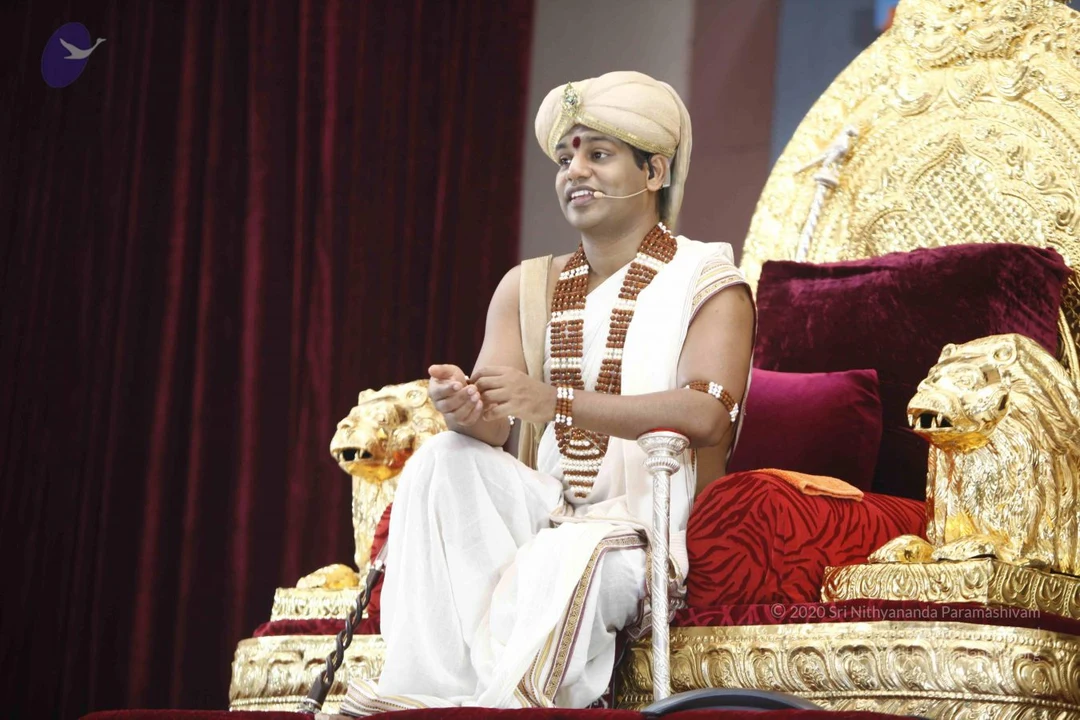
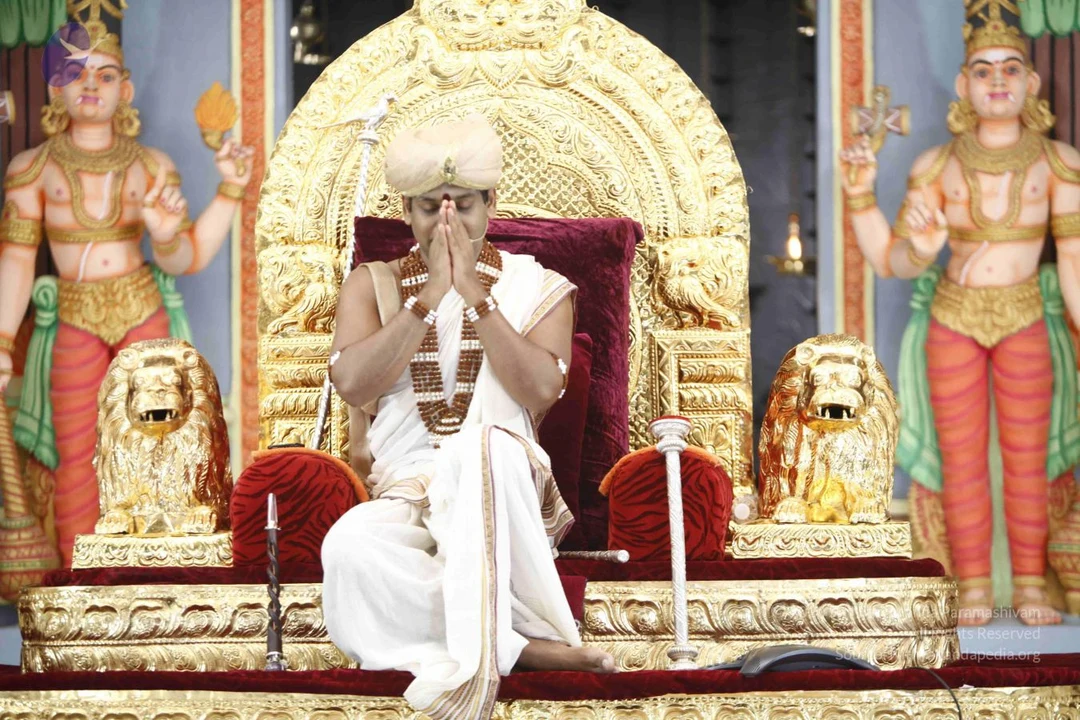
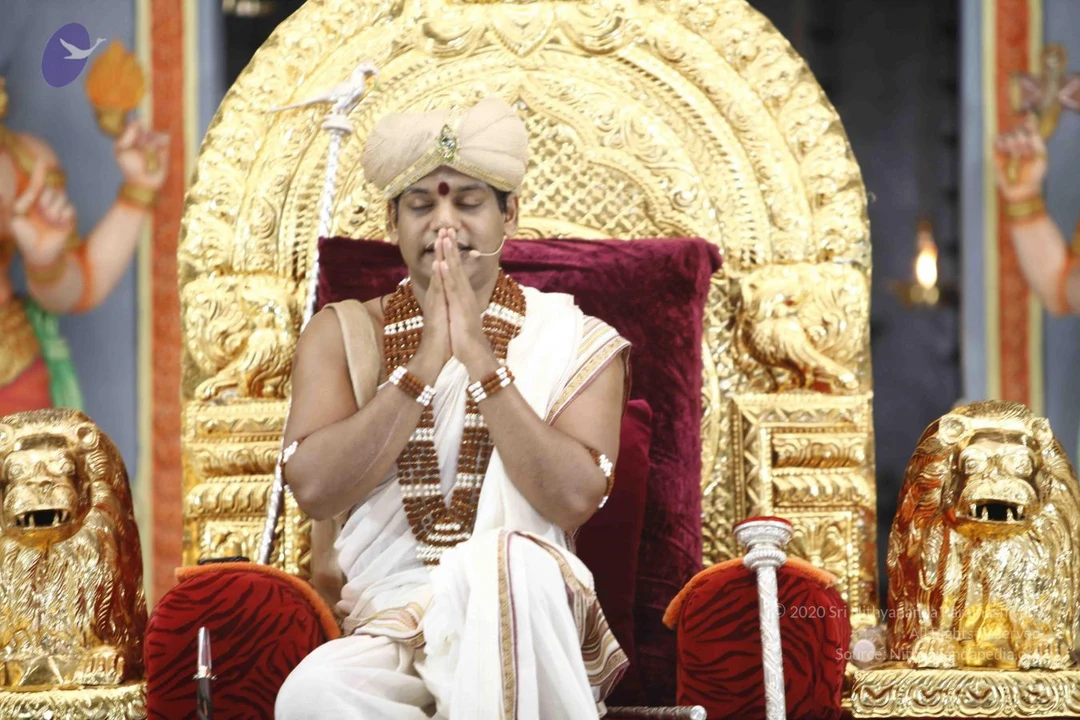
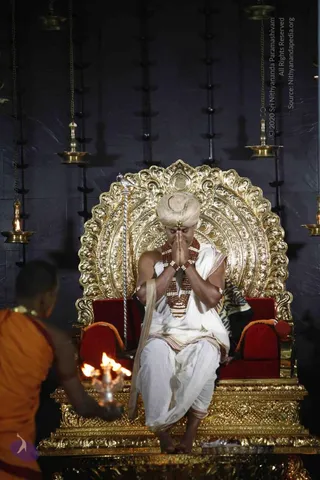
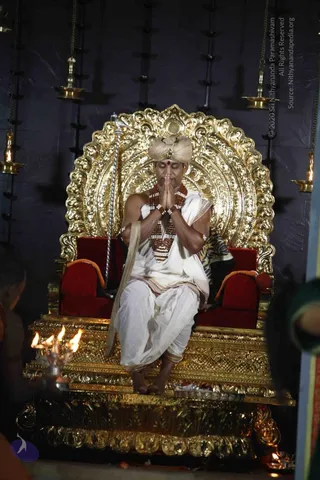
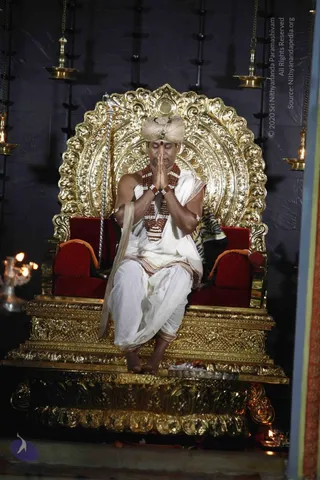
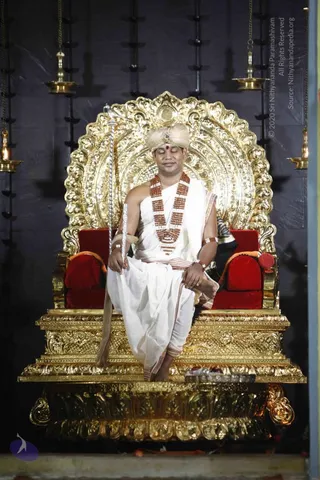
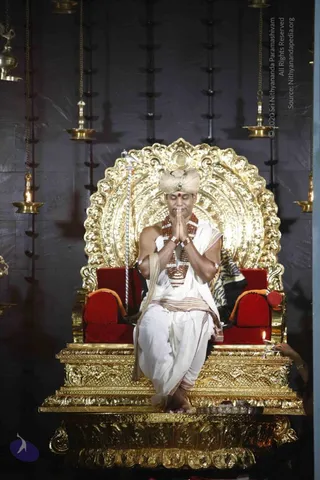
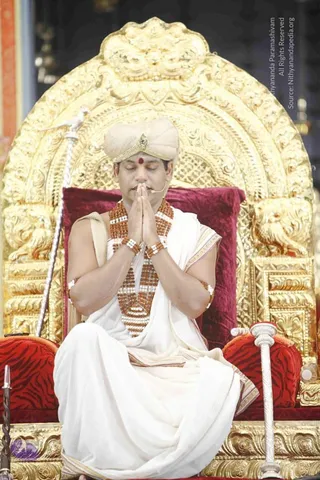
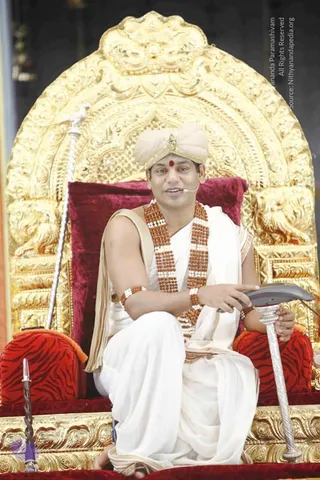
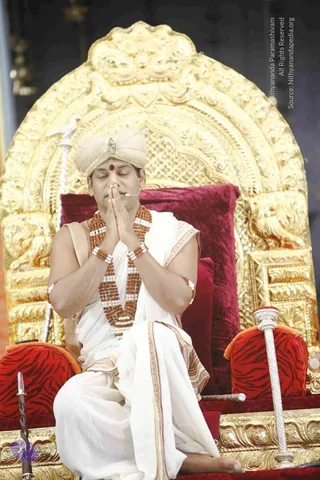
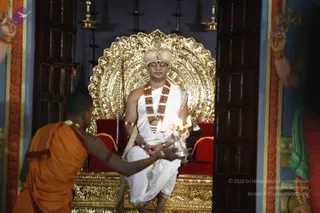
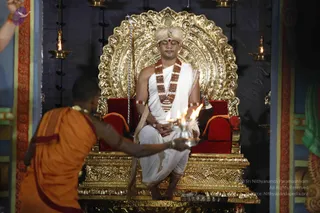
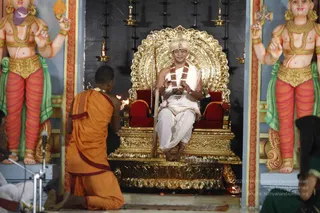
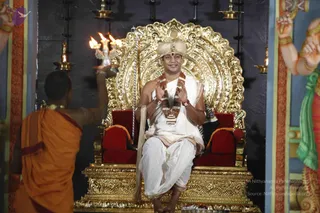
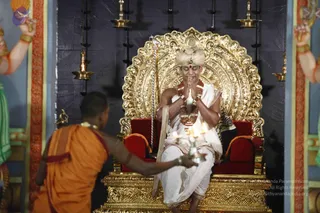
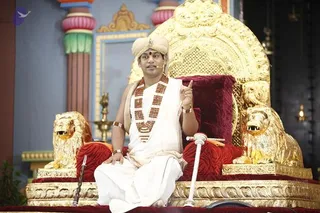
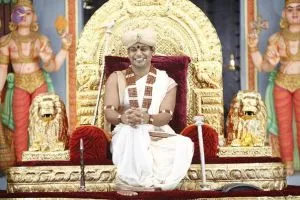
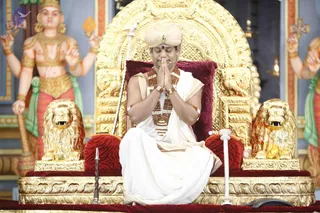
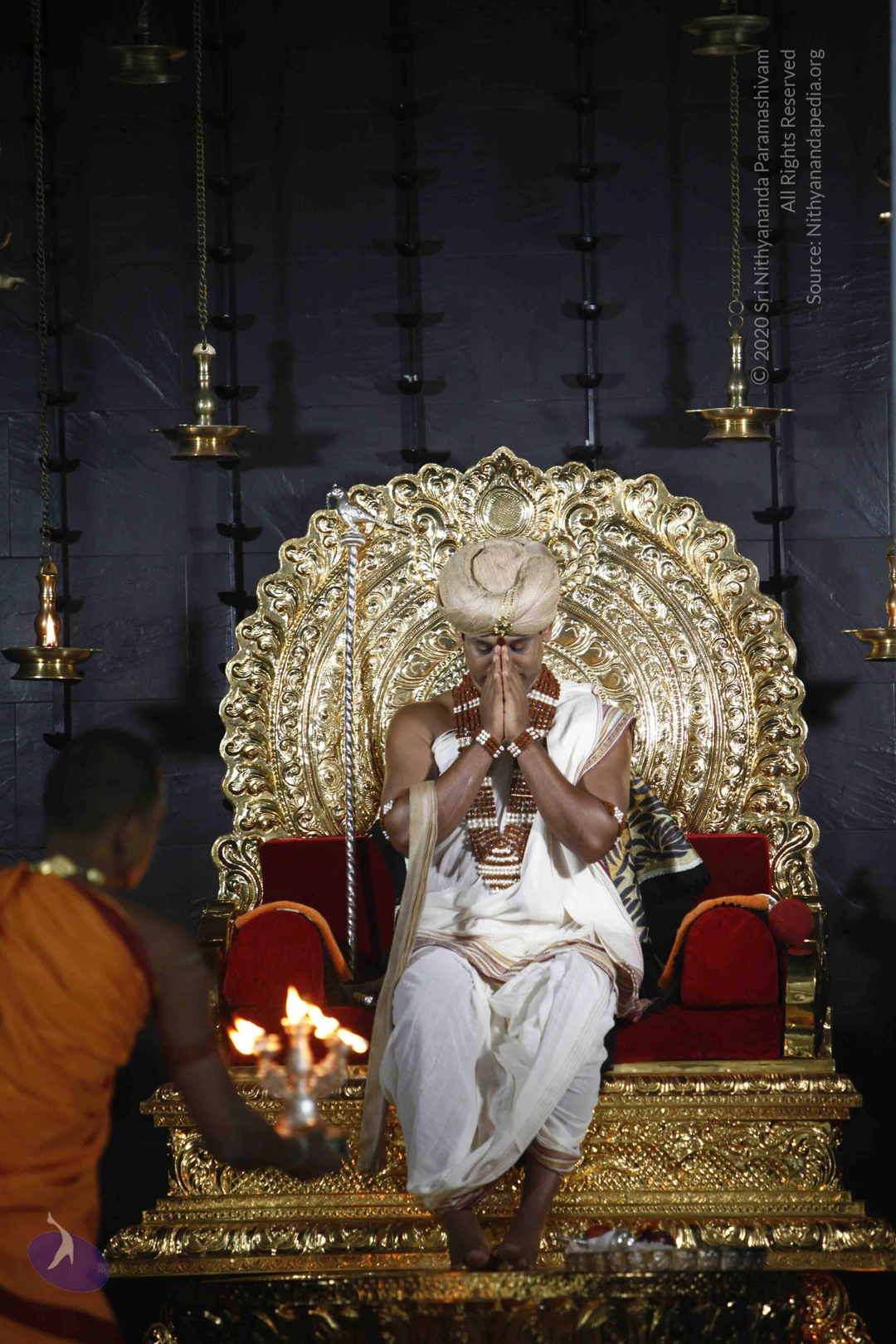
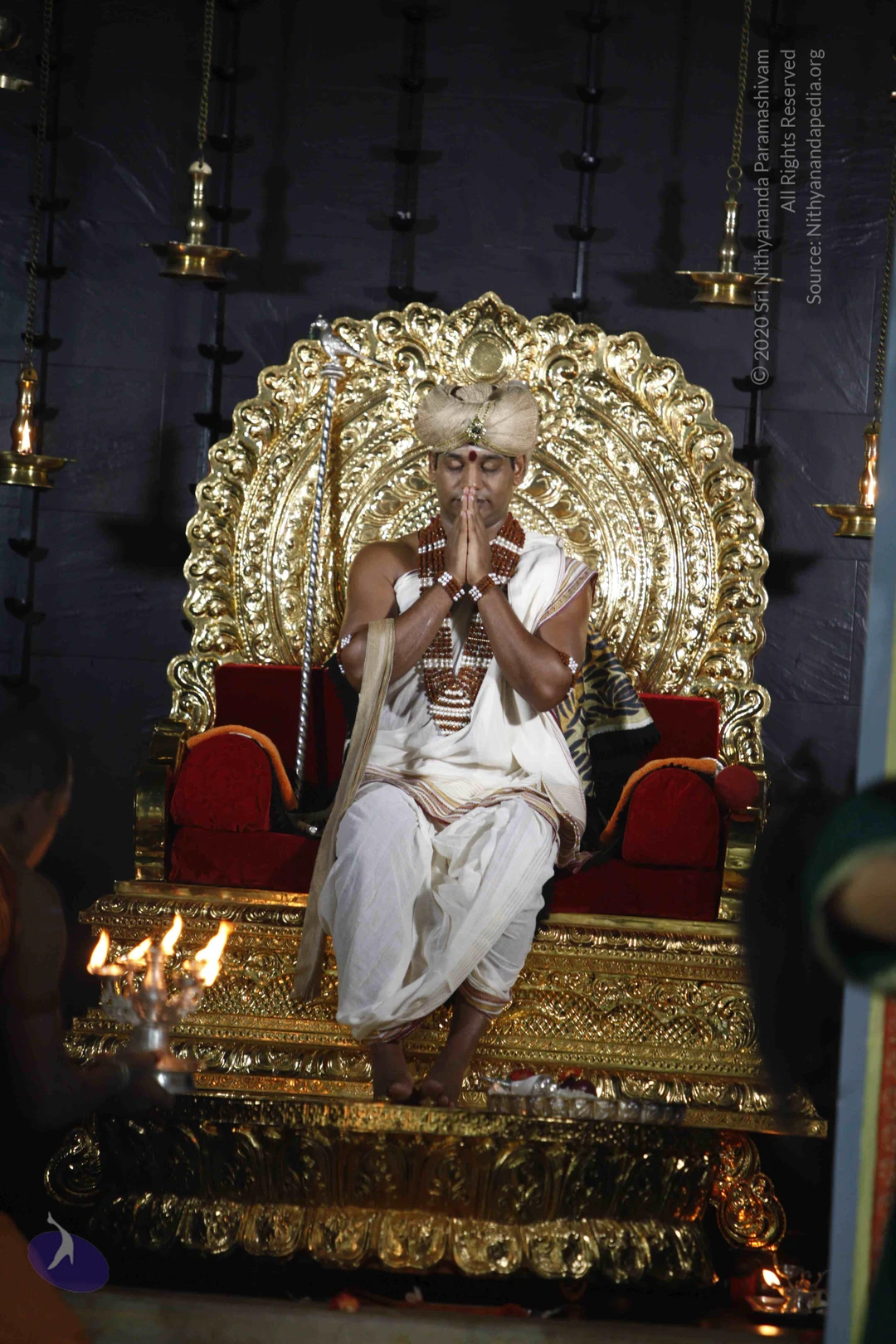
A seated man in a cream turban and white dhoti and shawl sits on an ornate gold throne with red velvet cushions, hands pressed together in namaskar with eyes closed. He wears a red and white beaded necklace and matching bracelets. In the foreground at left, a figure in an orange robe holds a lit oil lamp, a flame on a metal aarti lamp. Dark walls are hung with brass oil lamps on chains and a silver staff stands beside the throne.A man seated on an ornate gold throne with a large gold arched backrest and red velvet cushions, hands pressed together in namaste at chest level with eyes closed. He wears a cream-white turban with a small gold ornament, a red bindi, a multi-strand red and white beaded rudraksha-style mala, white dhoti and shawl draped over the shoulders, and bare feet. Behind him hang brass oil lamps on dark walls. A lit brass lamp stand sits at the lower left and small offerings lie at the base of the throne. Two partially visible people appear at the edges of the frame.A man seated on an ornate gold-leaf throne with a red velvet cushion, palms pressed together in namaste with eyes closed. He wears a pale cream turban with a small red bindi, a white dhoti and shawl, and layered reddish-brown rudraksha malas with white beads. A silver staff leans against the throne, and brass oil lamps hang on dark wall rods. The scene appears to be a temple sanctum; a lit lamp sits at the lower right. Appearance-based cues (turban, rudraksha malas, seated on a throne) are consistent with a person, seated in a worship setting, but the face and presentation are not distinctive enough to confirm identity.A seated man in a cream-coloured turban with a red bindi, wearing white dhoti and shawl, a long rudraksha mala with ceremonial beads across his chest, and silver bangles on his arms. He sits with eyes closed on an ornate gold throne with red velvet cushions and orange-trimmed armrests, holding a silver staff. Brass oil lamps hang on chains in the dark background, and a small tray of offerings sits on the lower dais. The page indicates the event was on 3 April 2012 and that Swamiji attended, and the man's turban, rudraksha mala and ceremonial throne match the appearance cues for Swamiji (probable).A seated man in a cream turban with a red bindi sits with eyes closed and palms pressed together in namaste on an ornate gold throne with red velvet cushions. He wears white dhoti and shawl with a red-bordered cloth and a multi-strand rudraksha mala with white beads. Behind him a large repousse gold arch frames the throne, and brass hanging oil lamps hang on a dark wall. A hand holding a lit oil lamp appears at the right edge, and flower petals lie at the base of the throne. The scene suggests a temple darshan or puja setting.

Q&A-Session

16 photosSource gallery
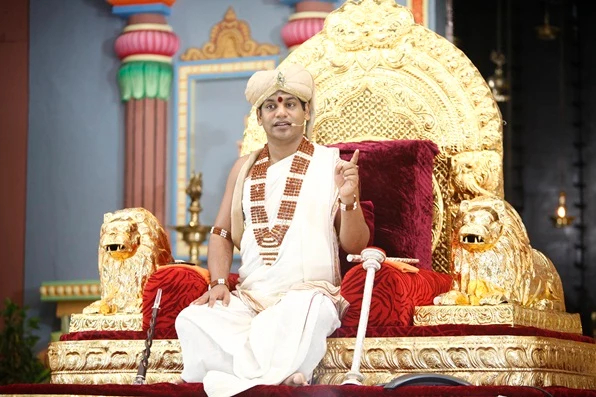
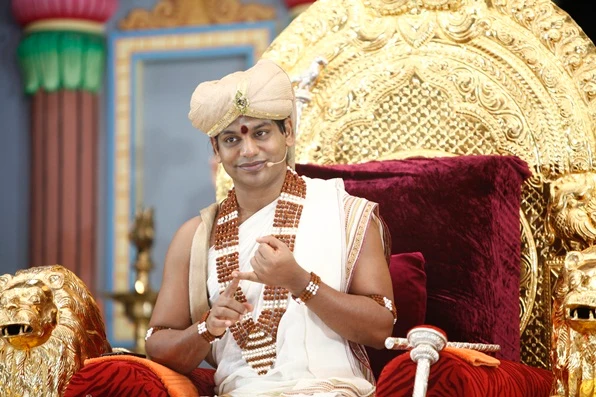
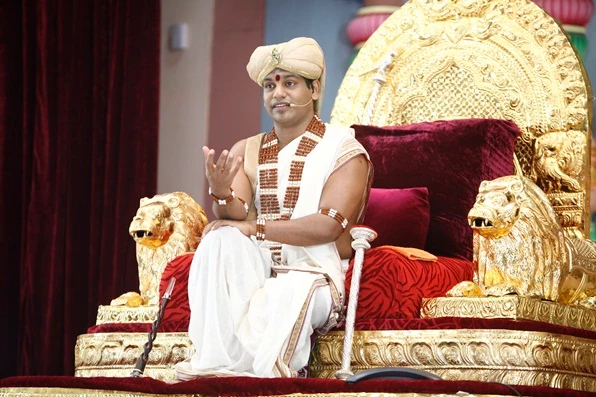
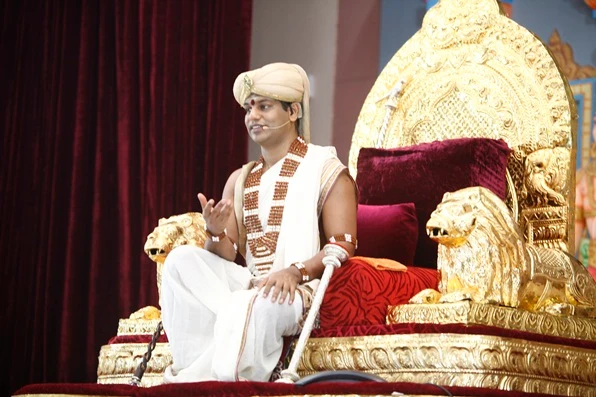
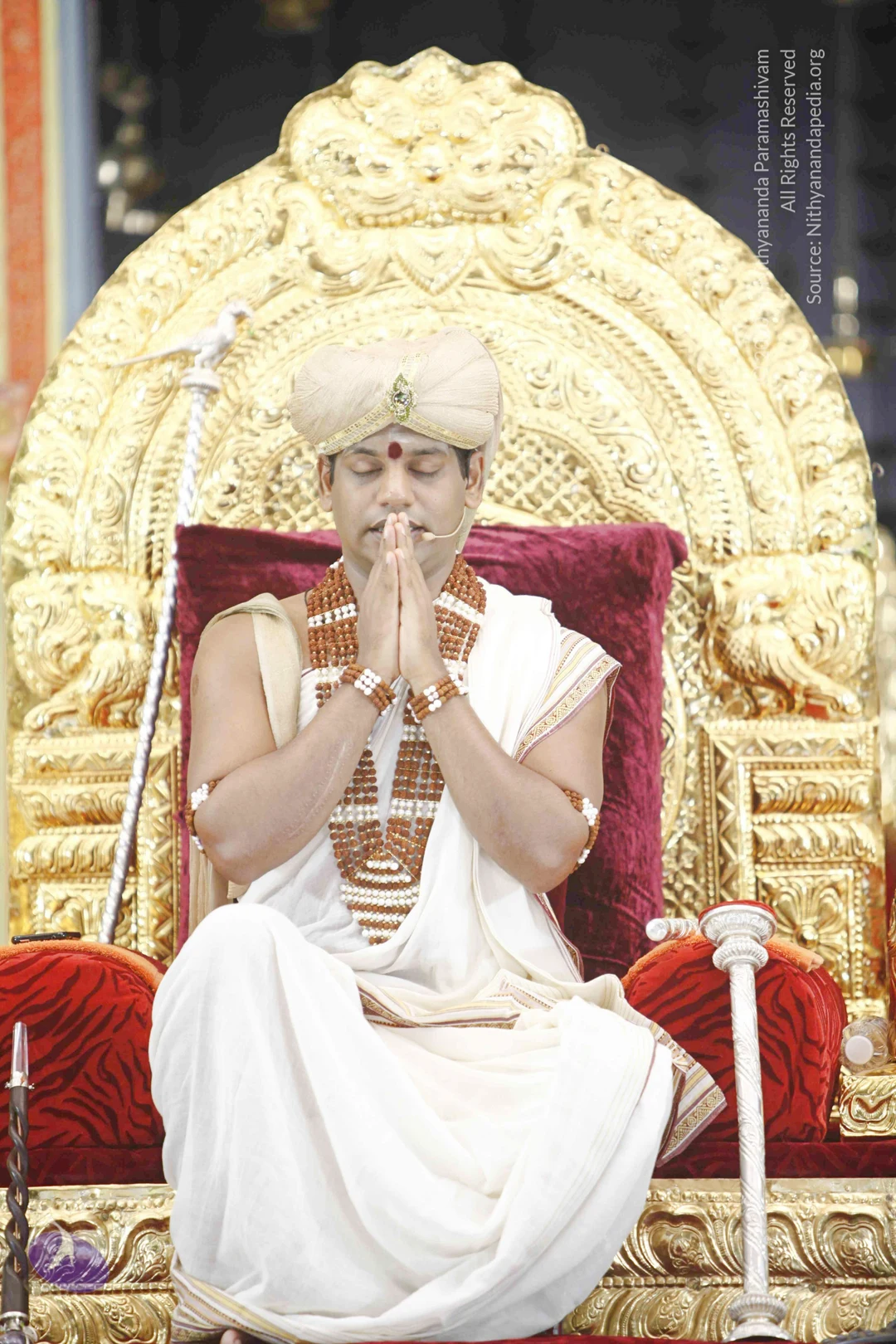
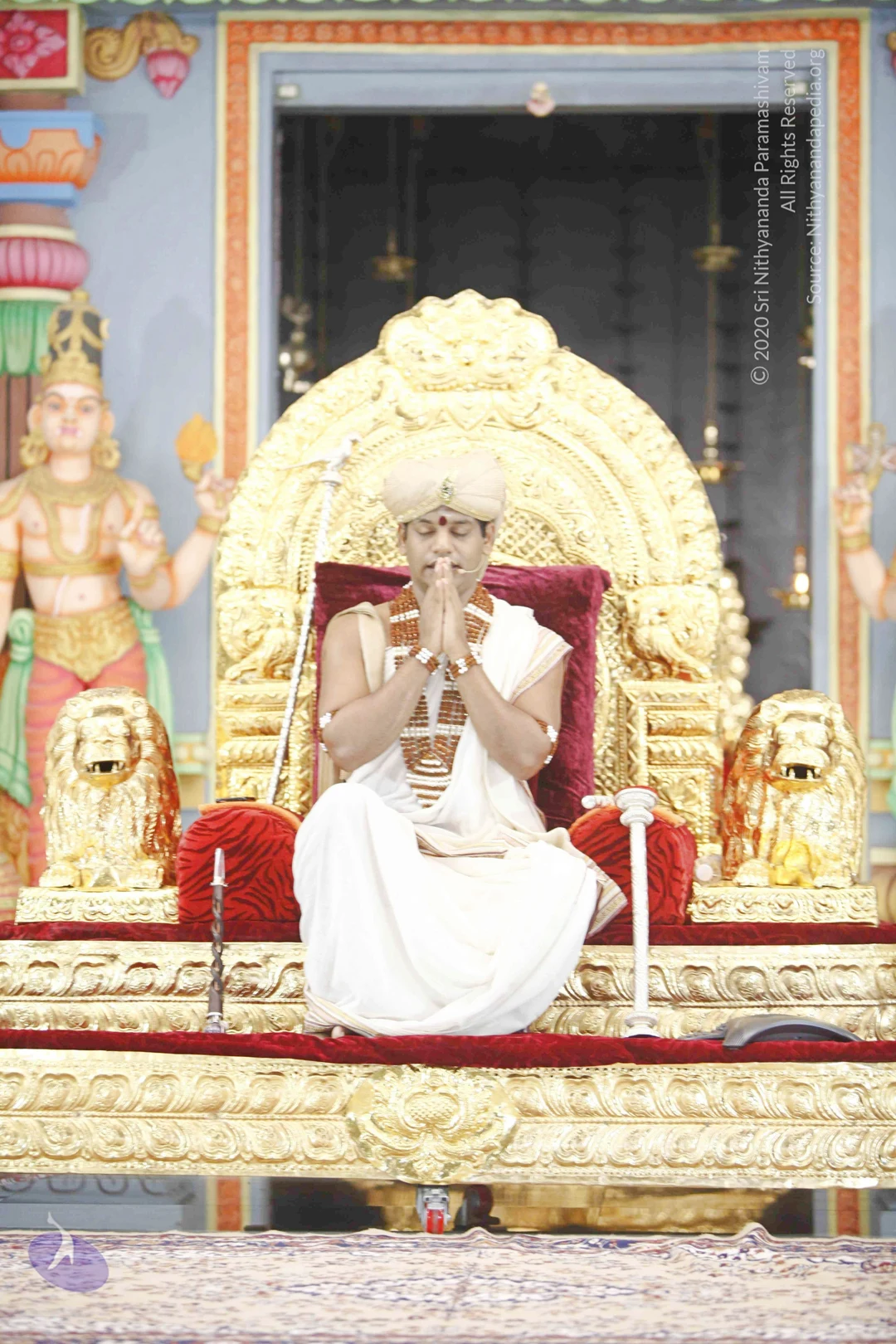
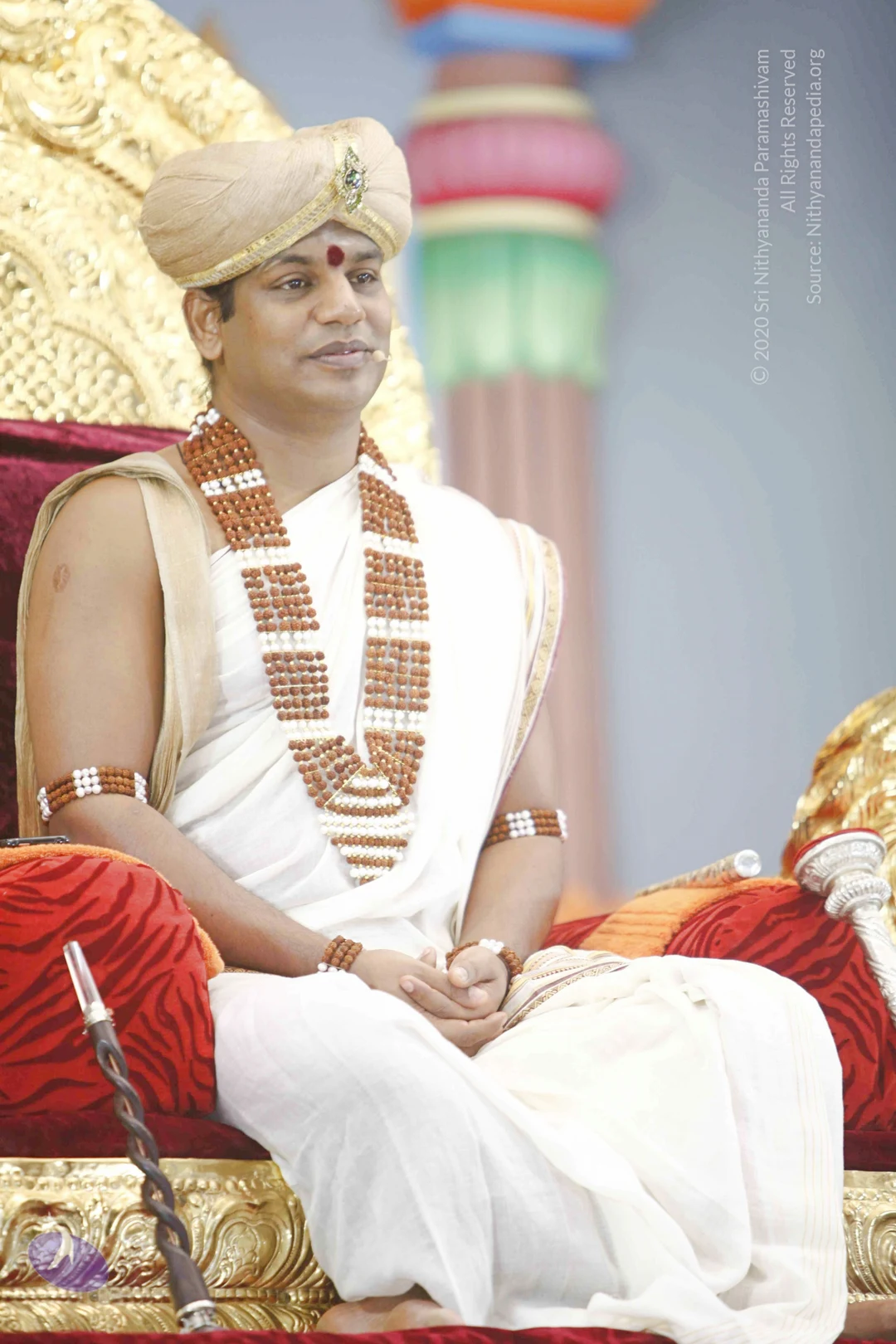
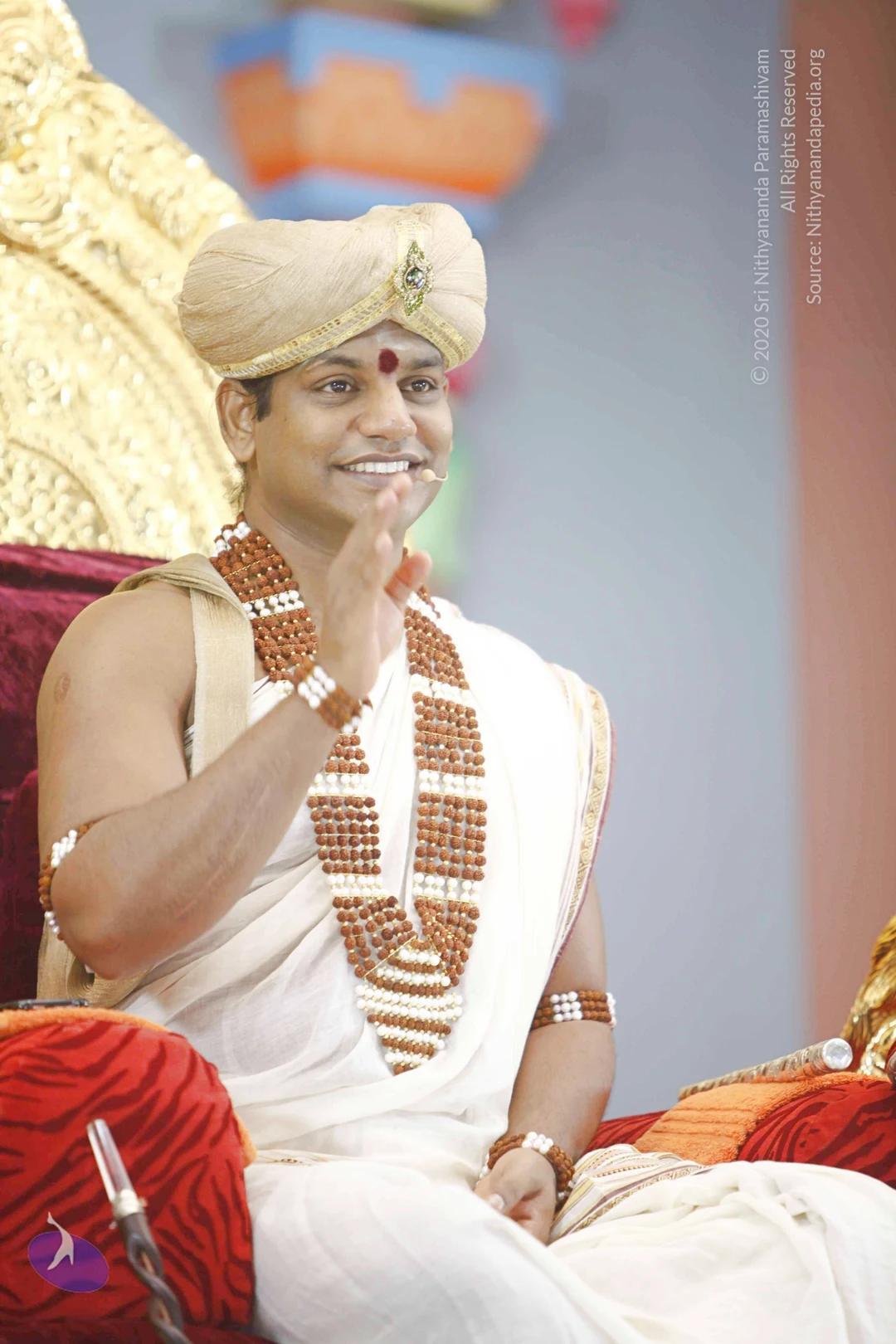
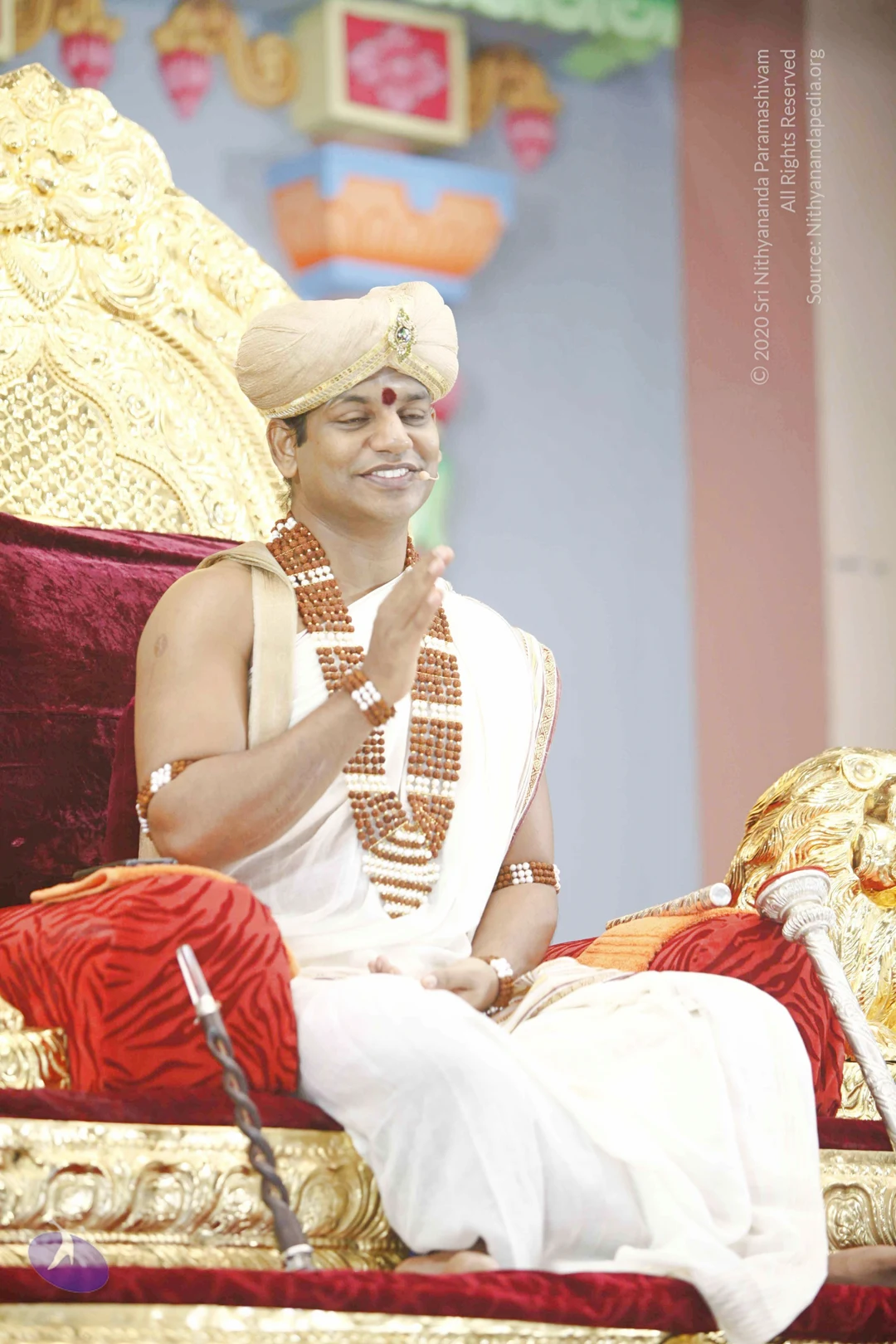
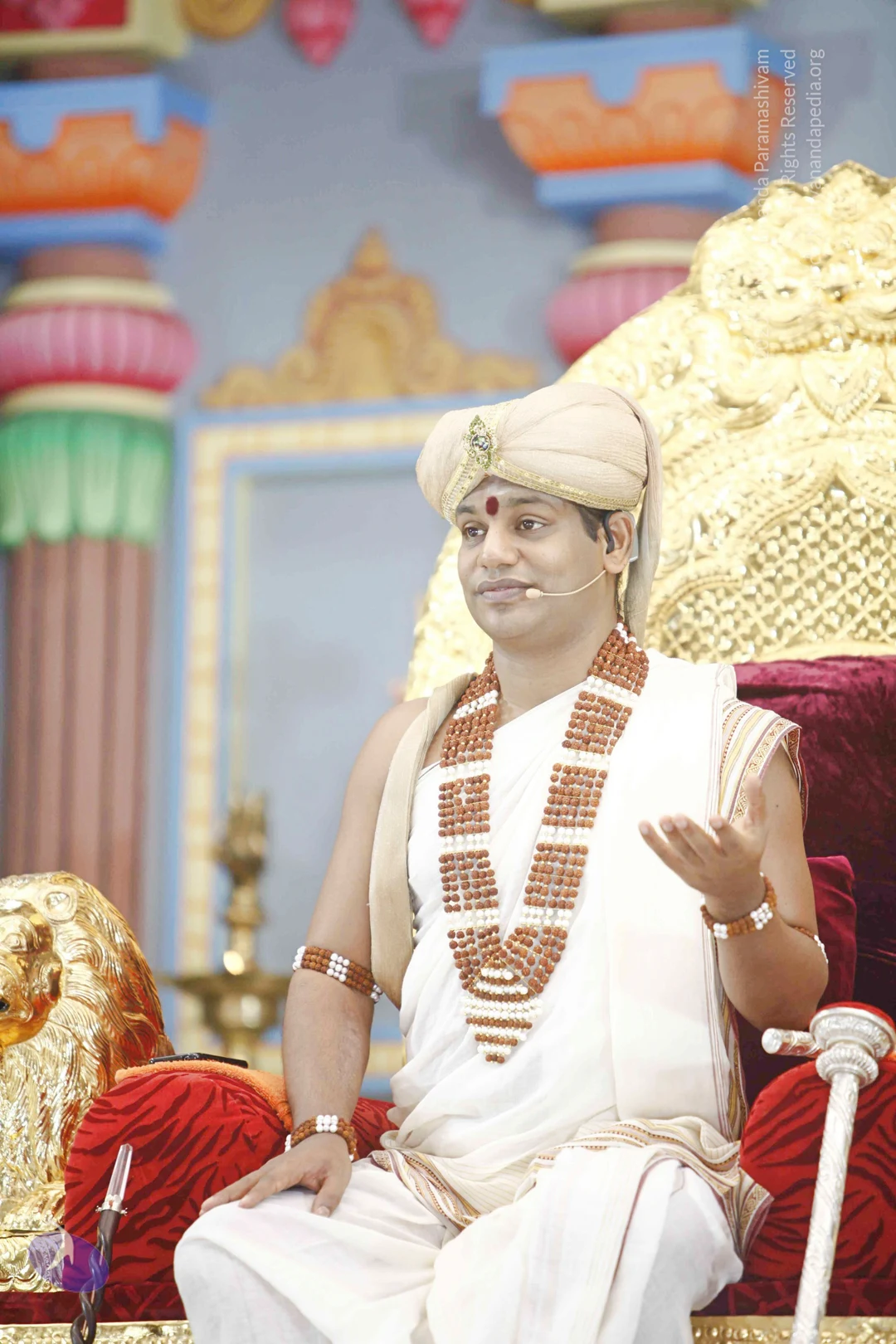
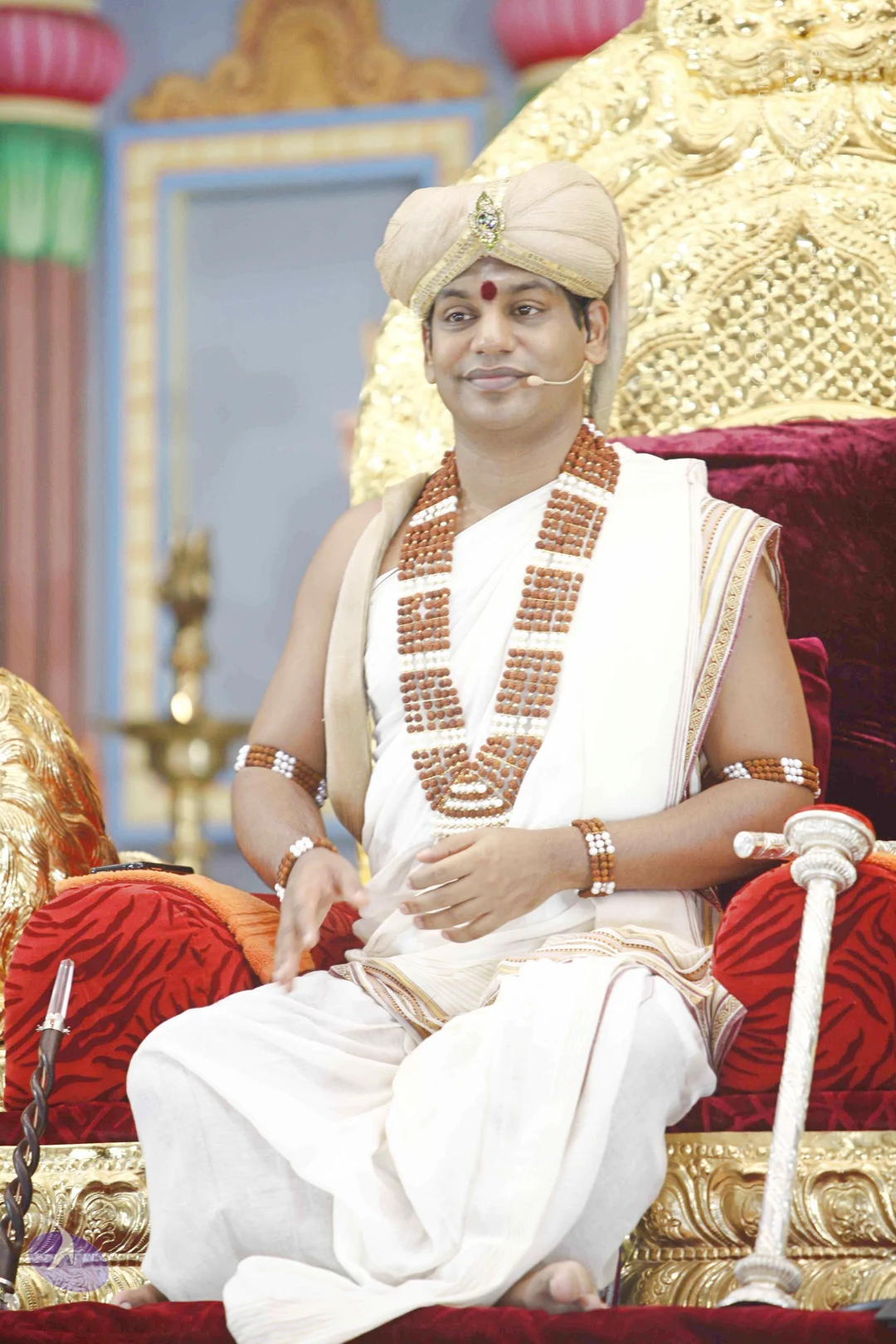
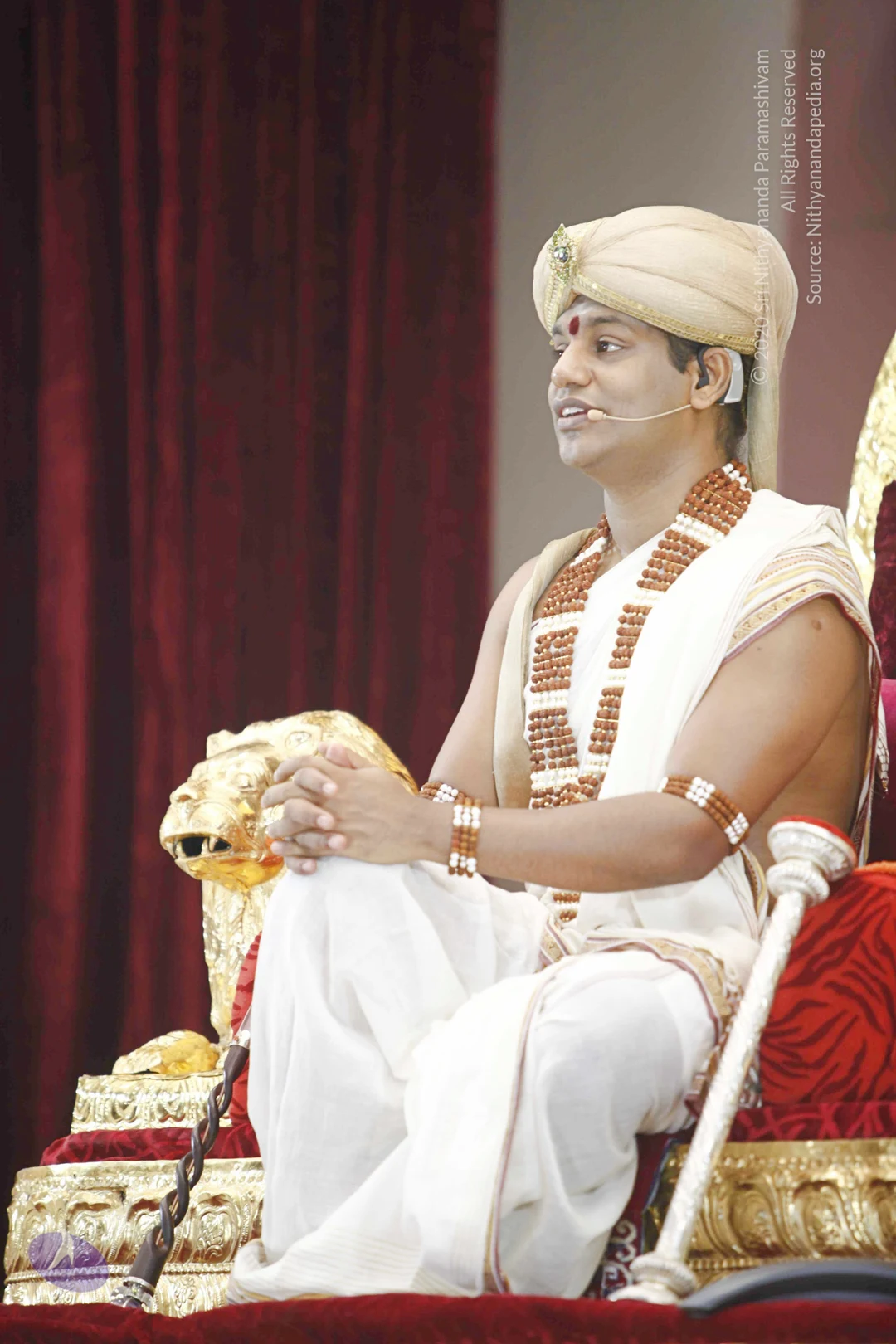
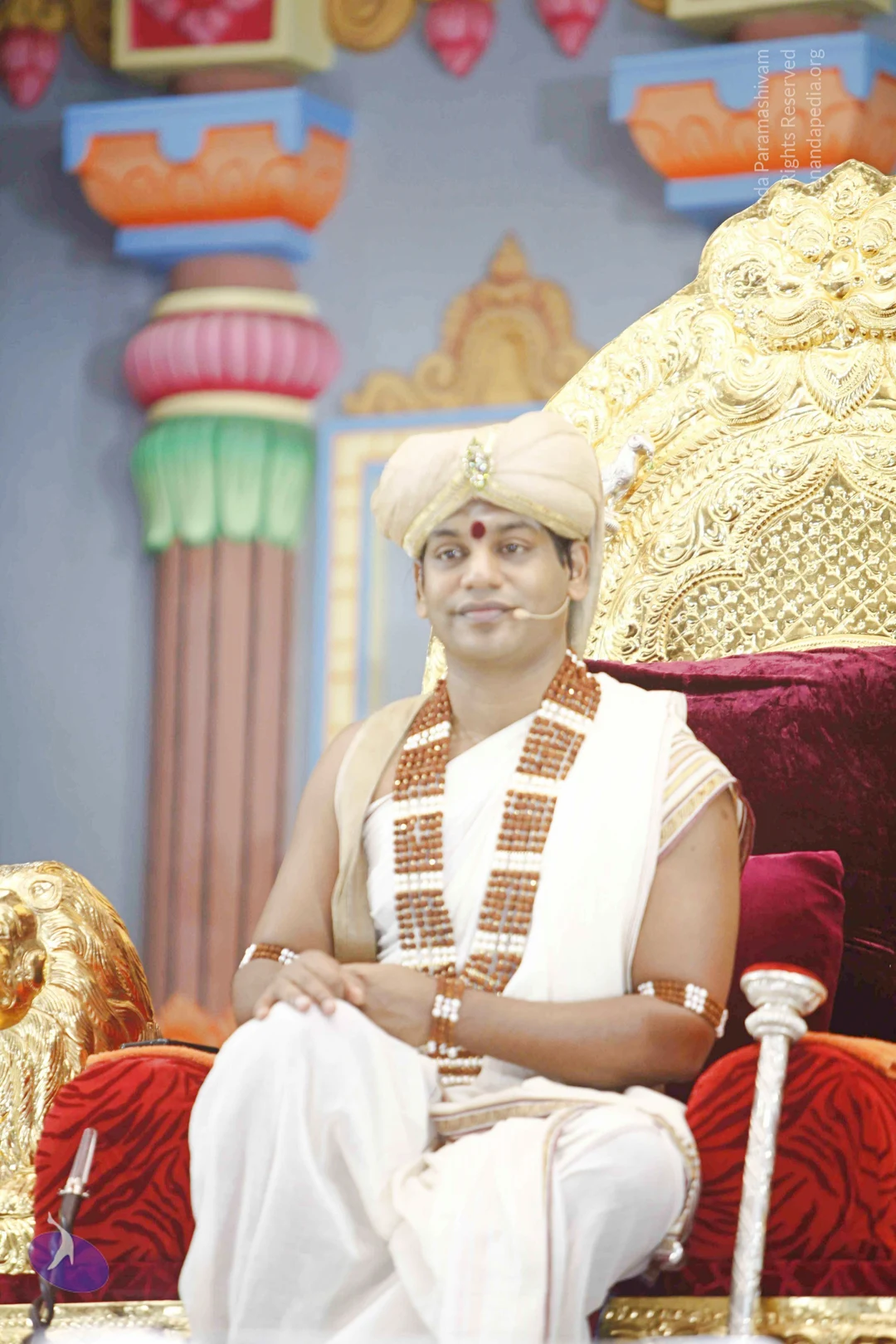
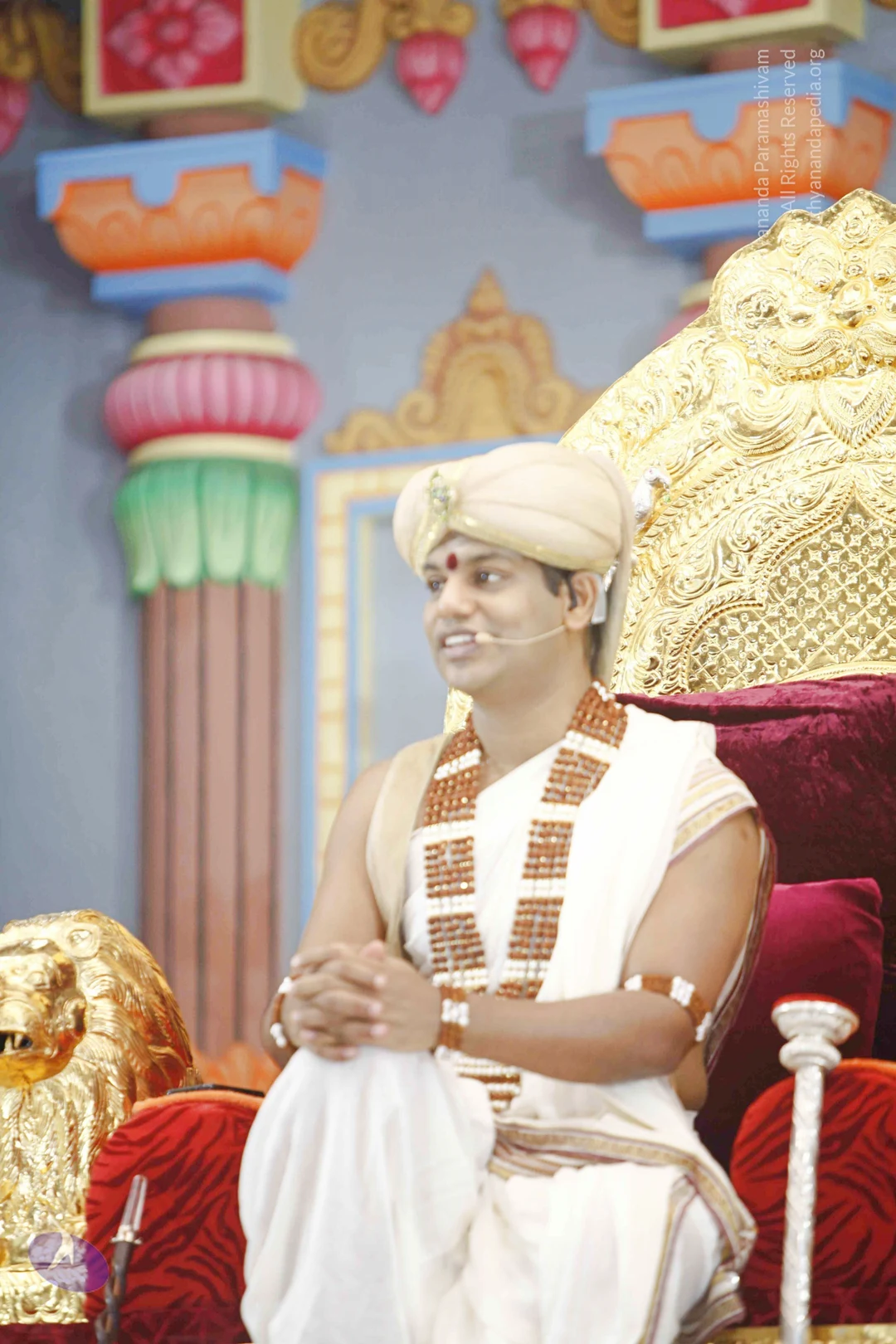
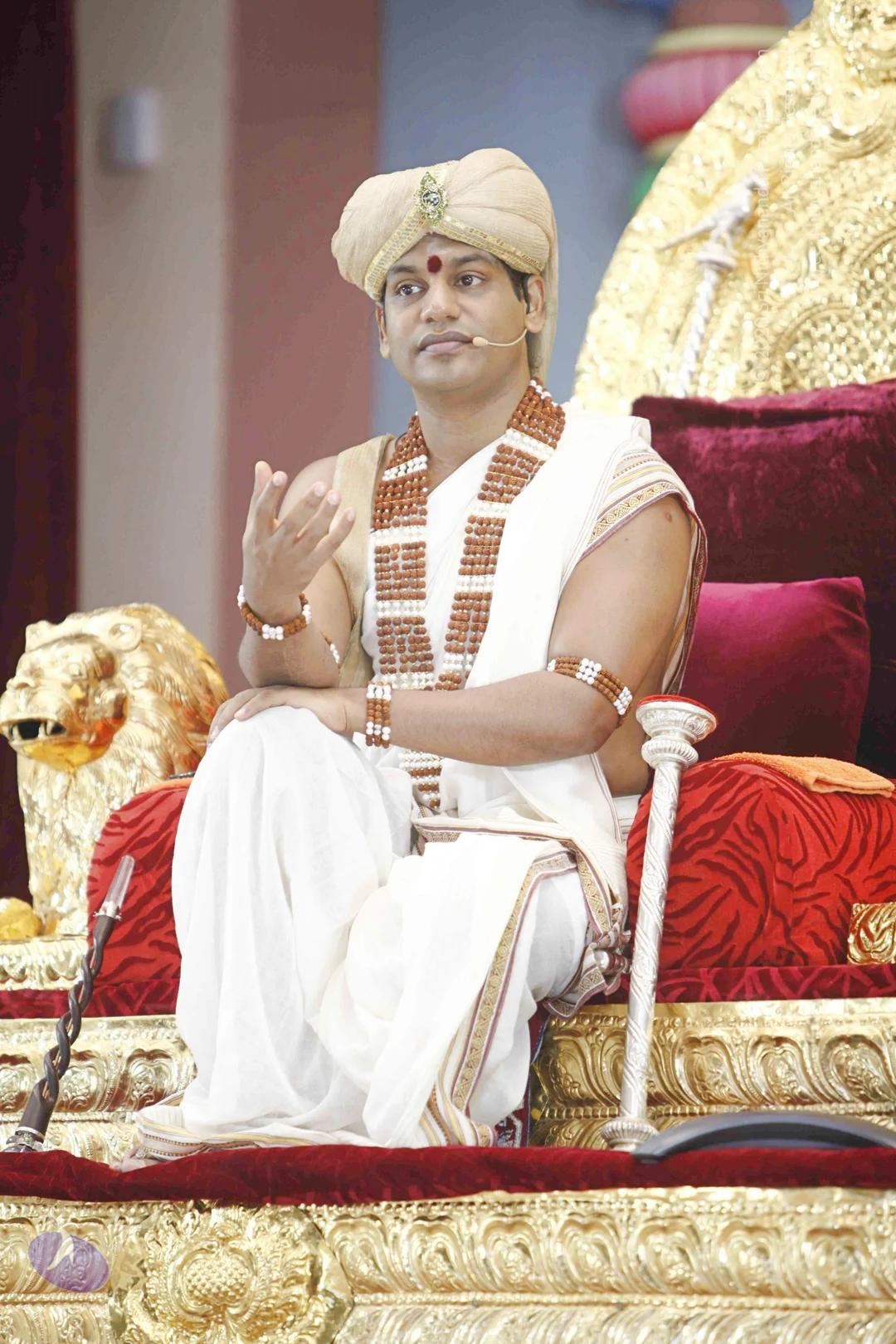
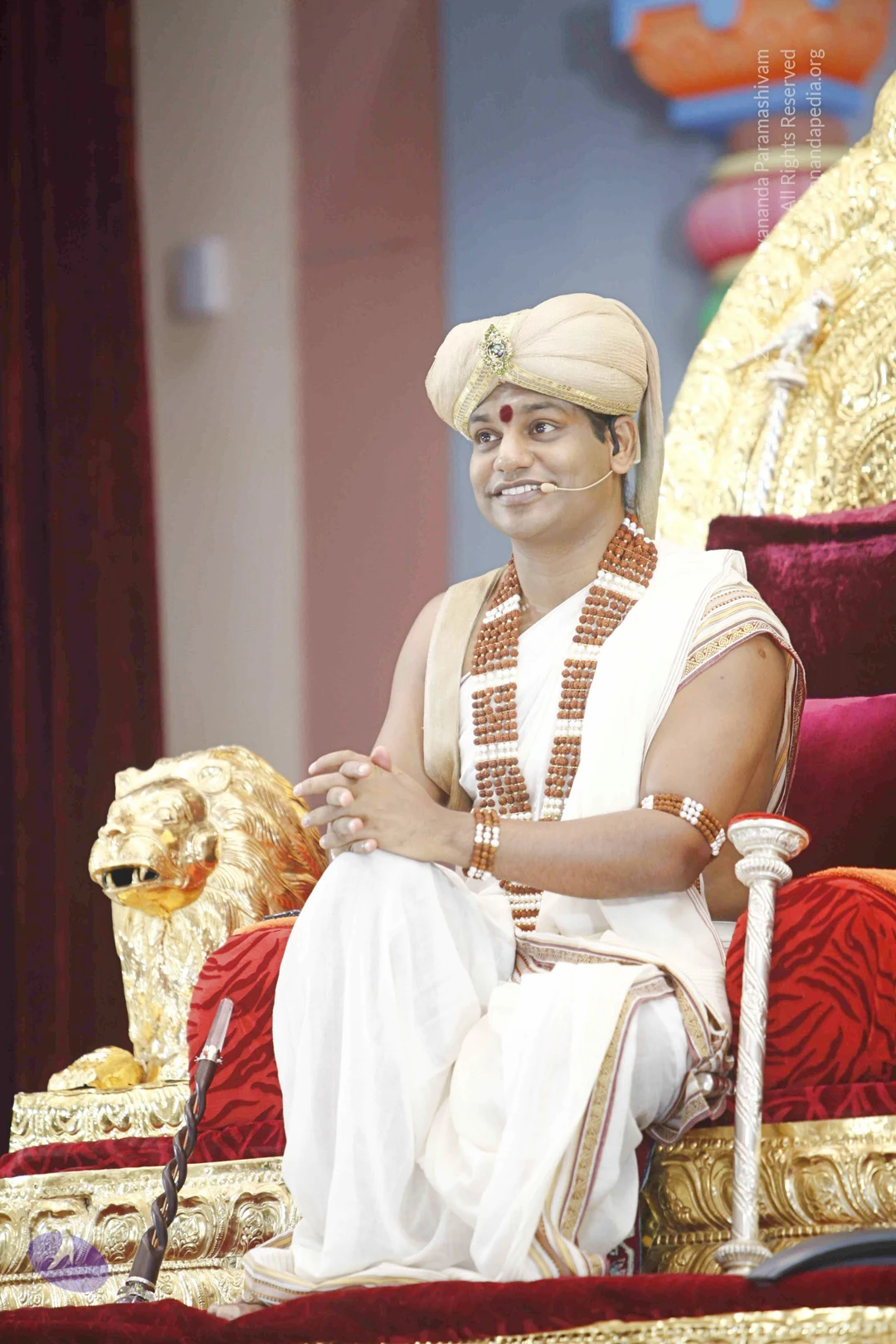
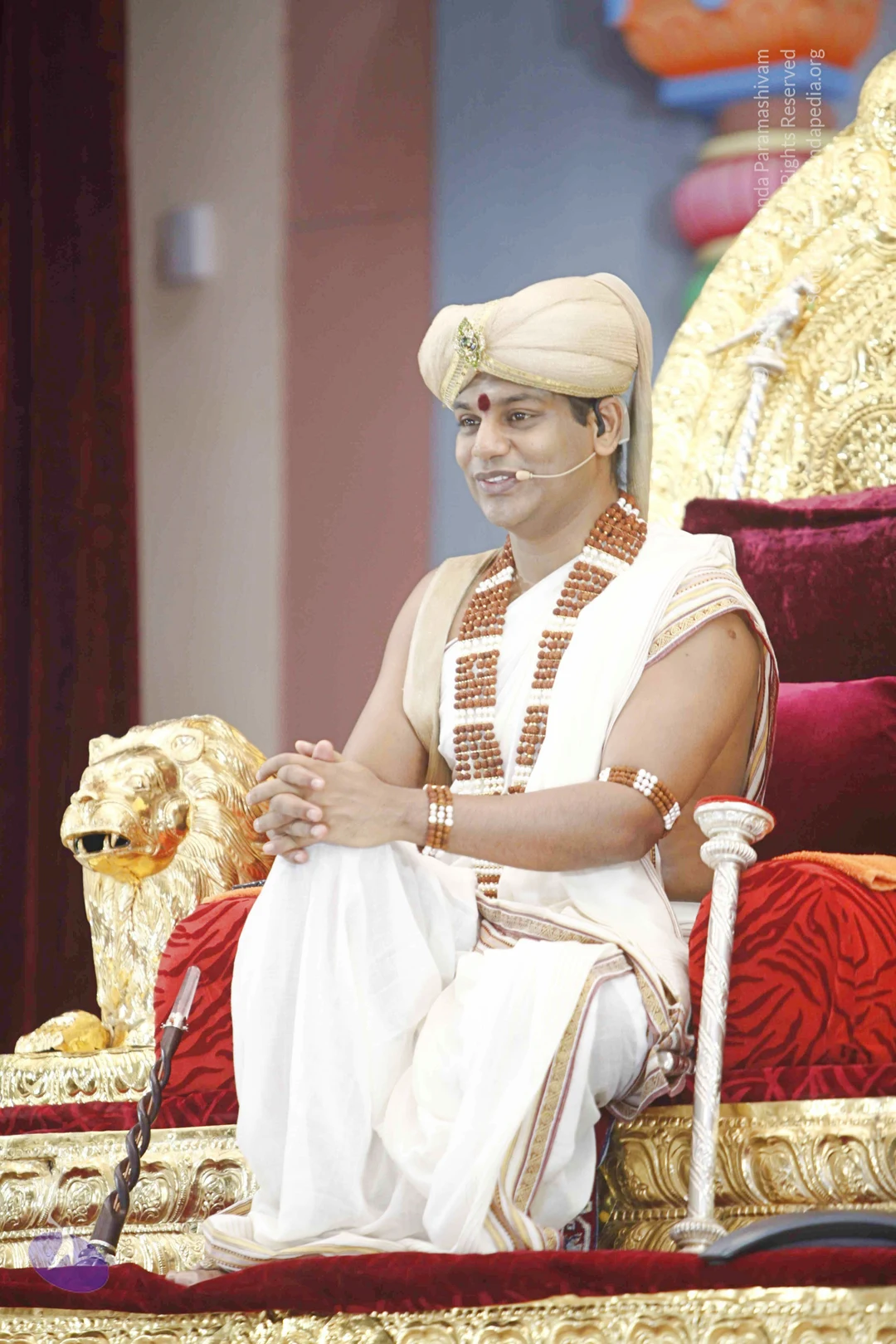
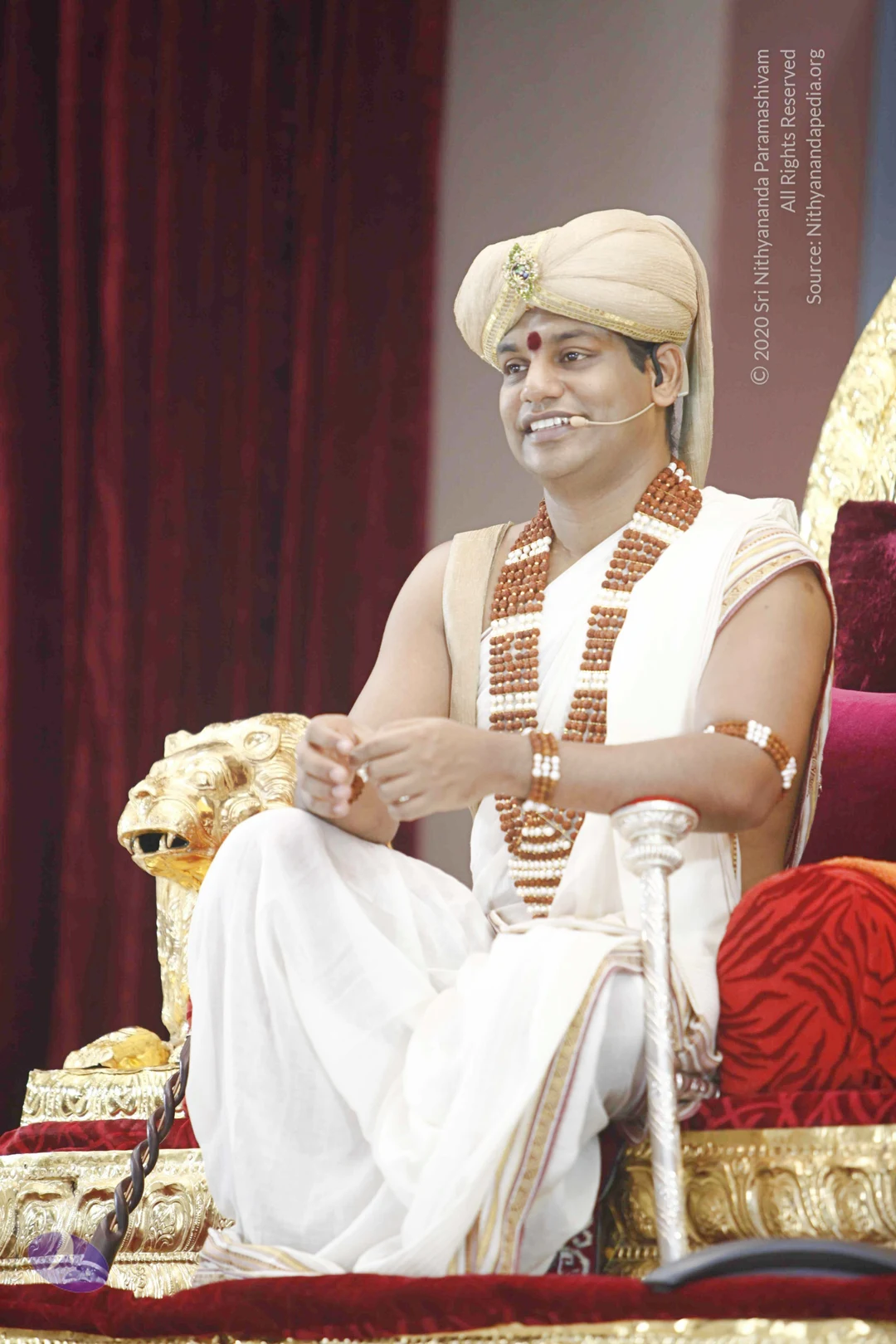
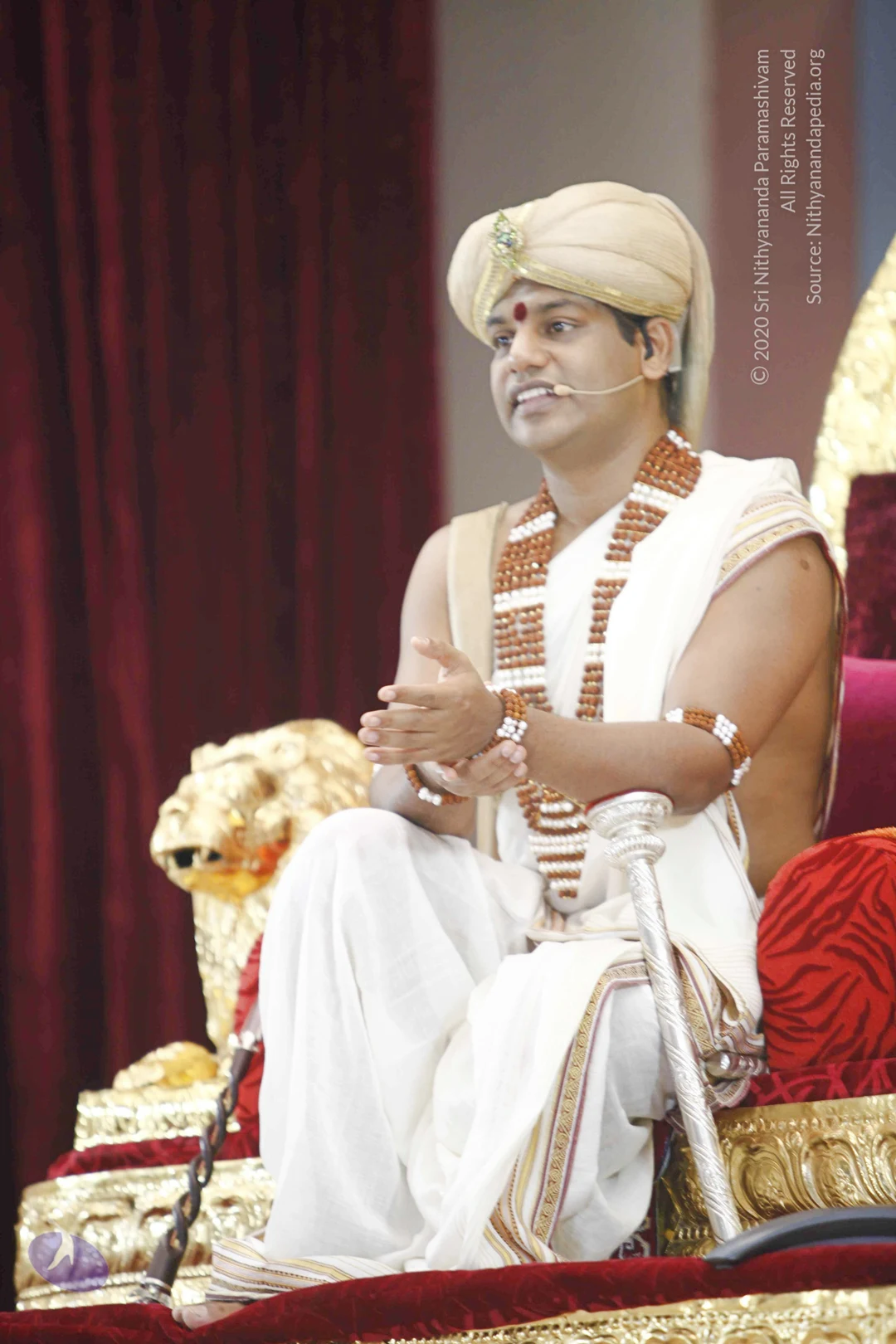
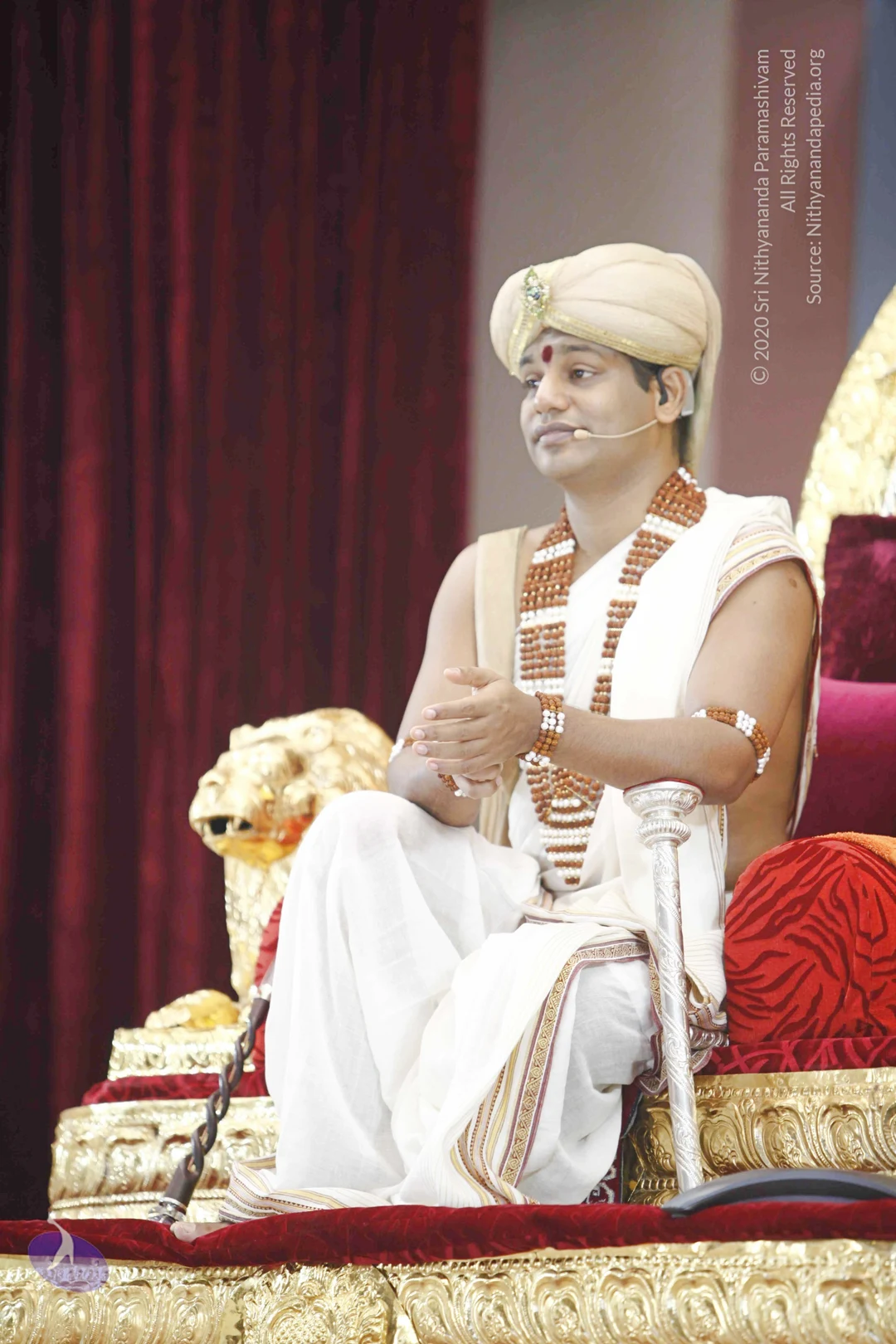
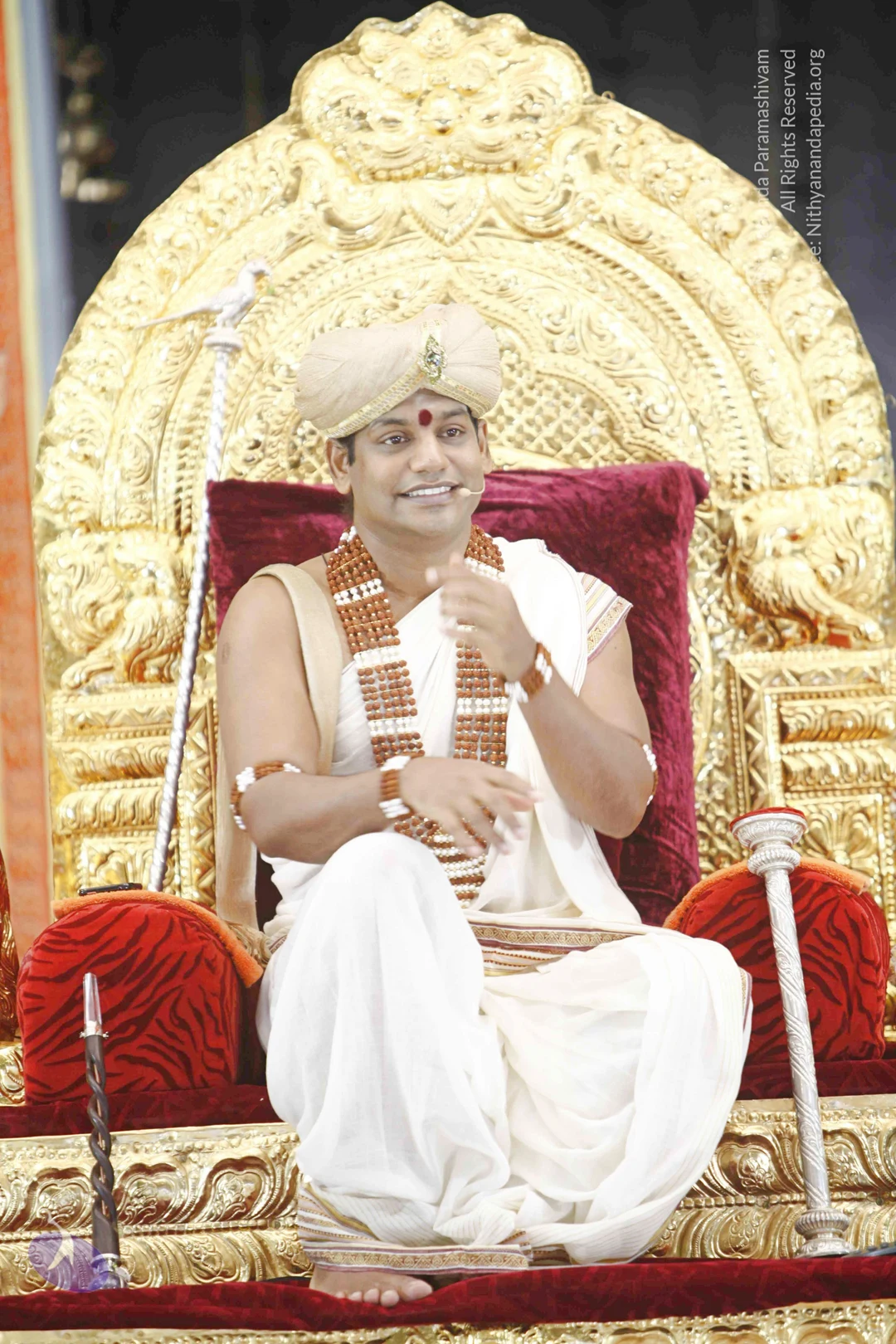
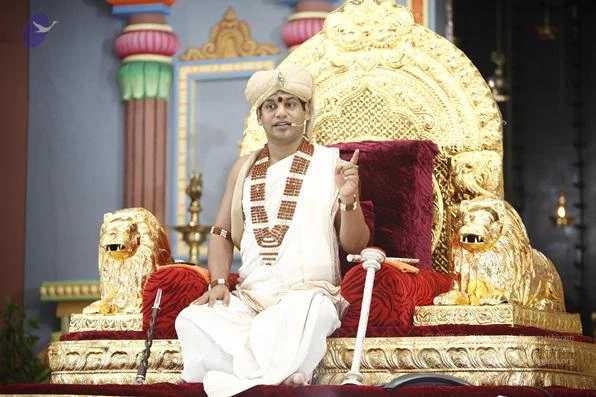
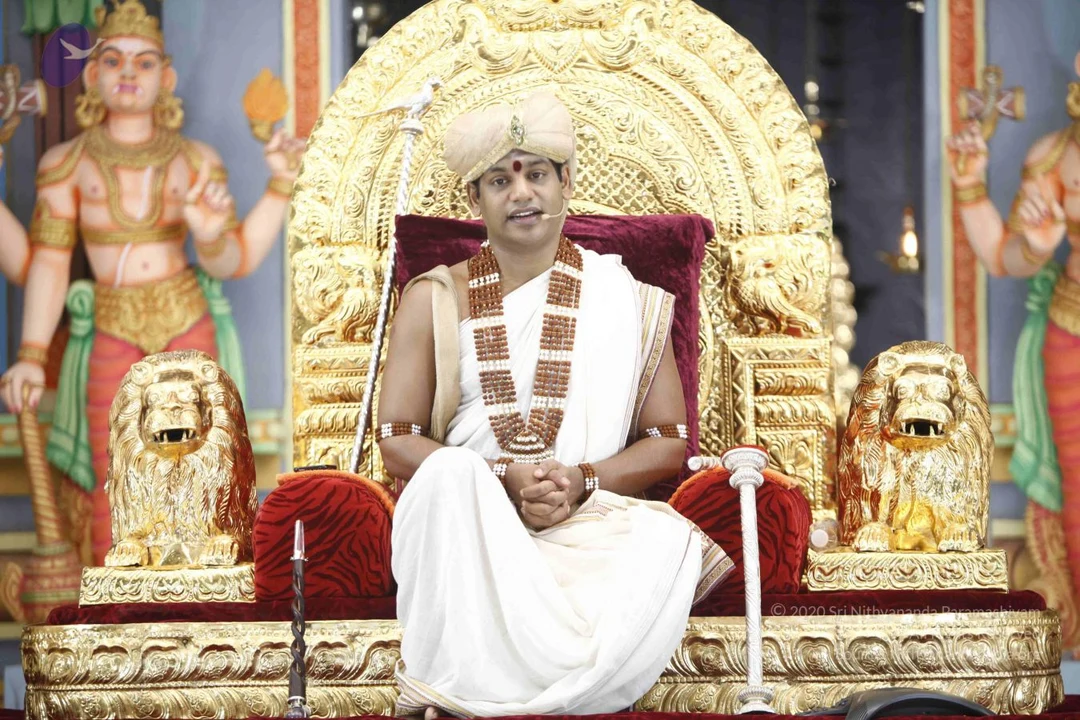
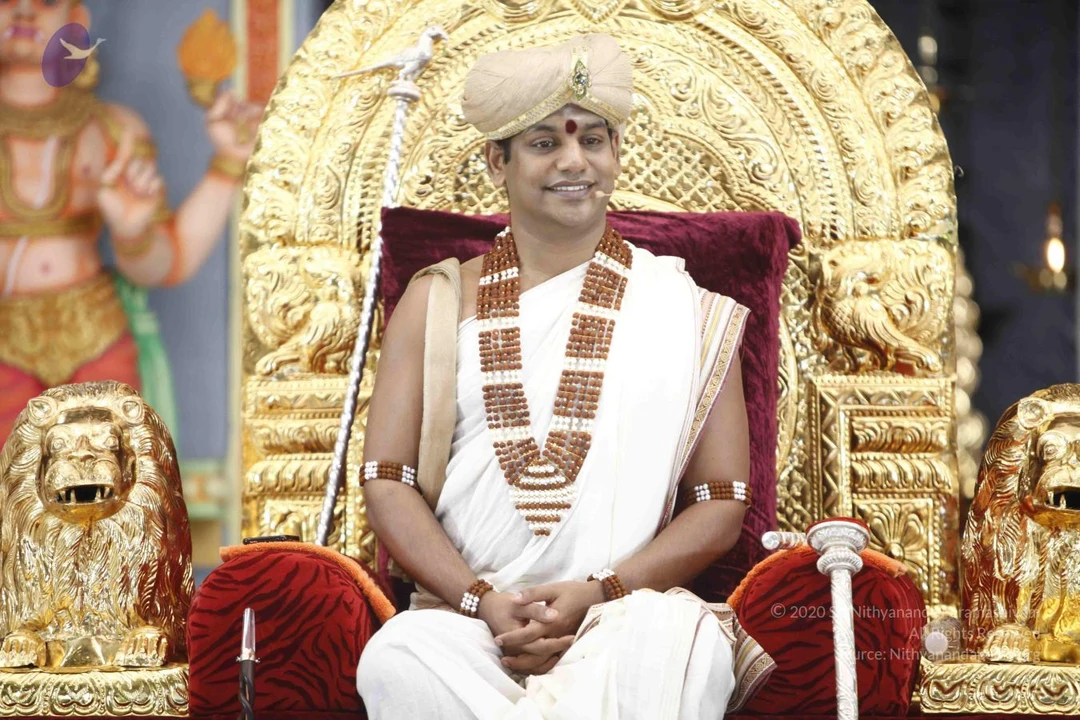
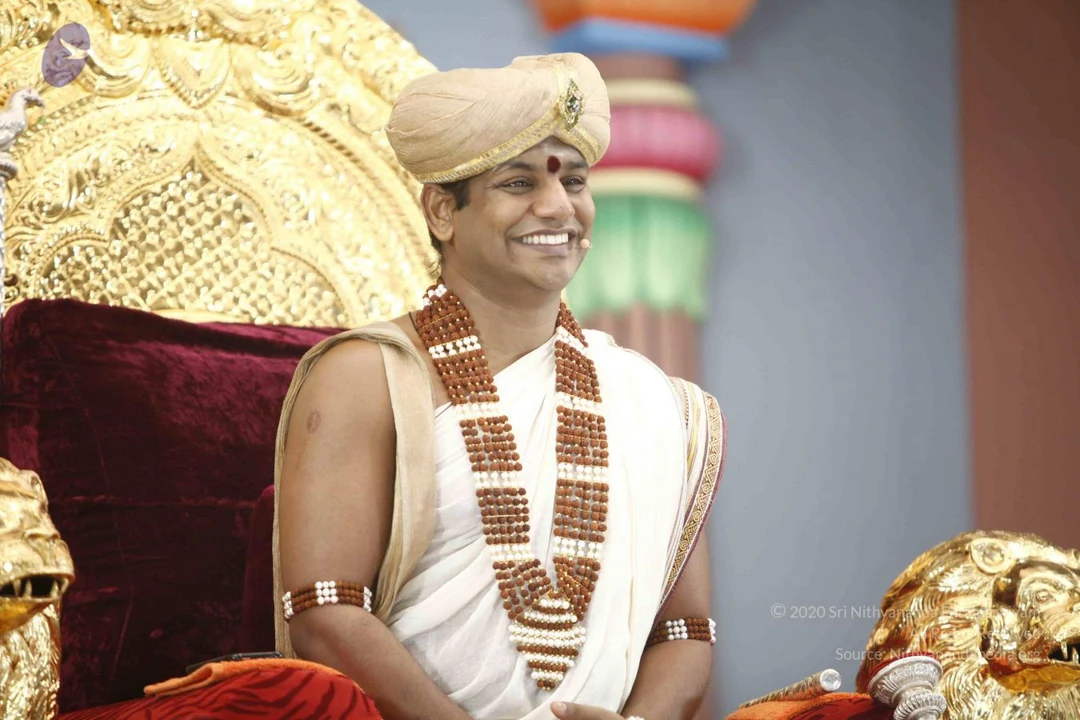
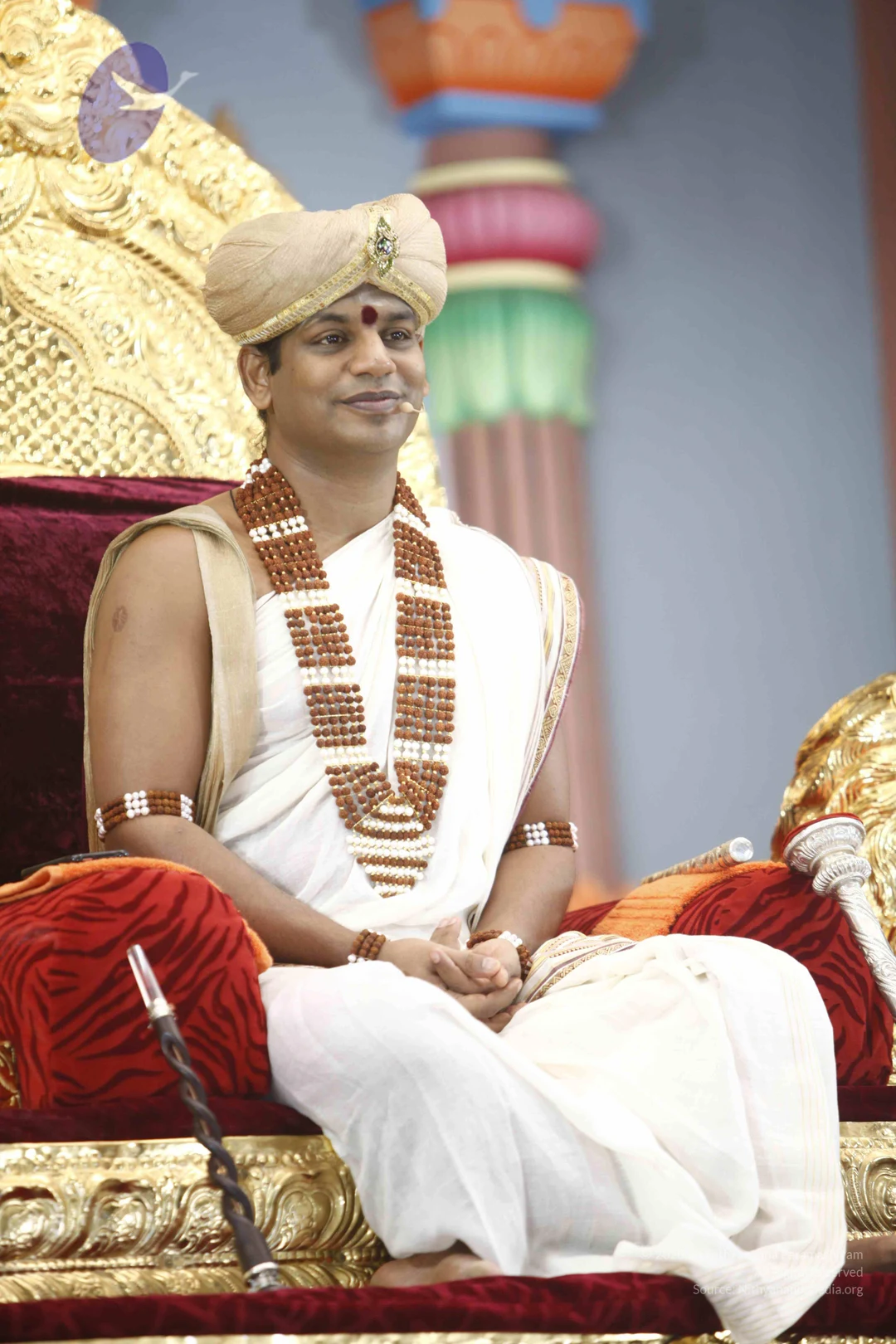
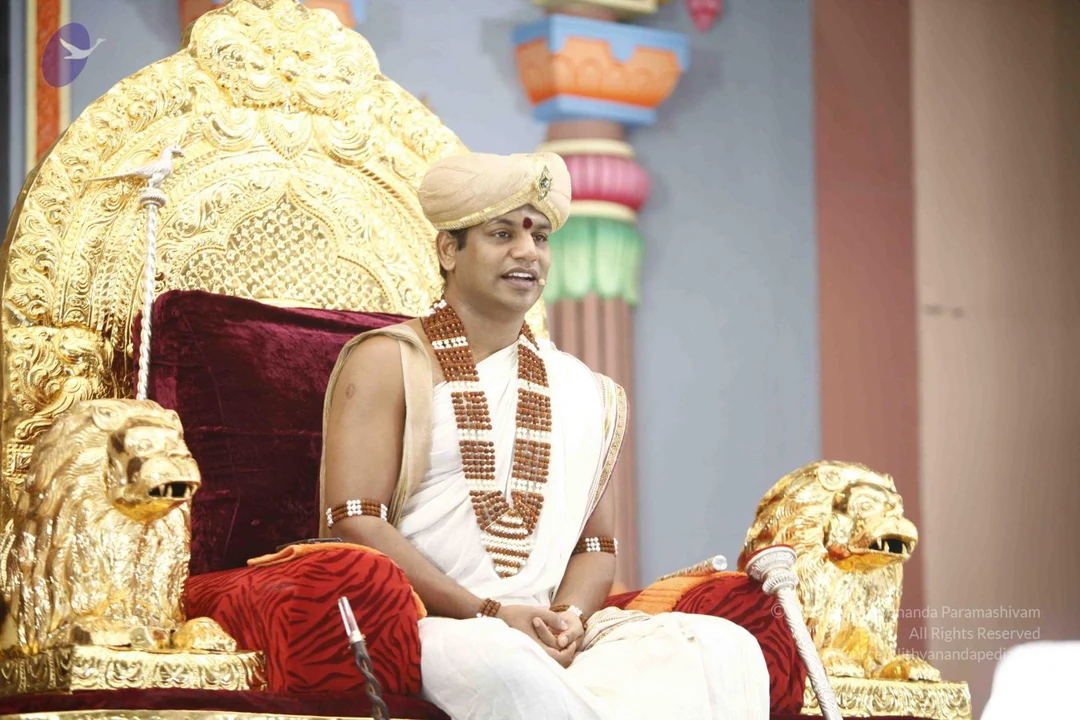
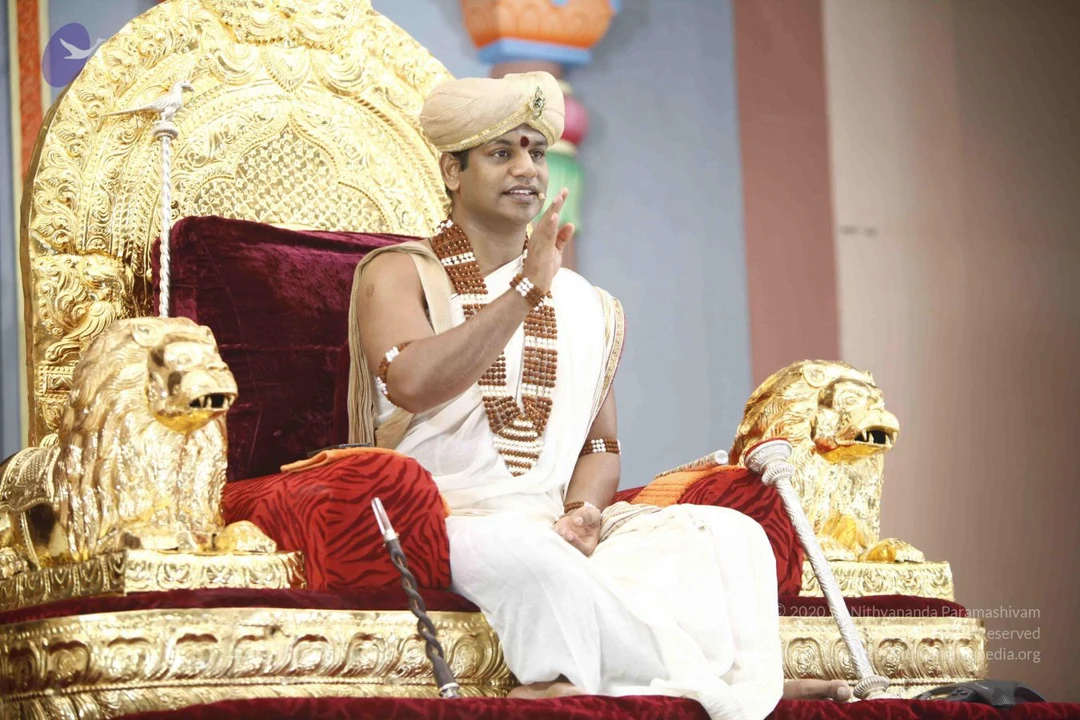
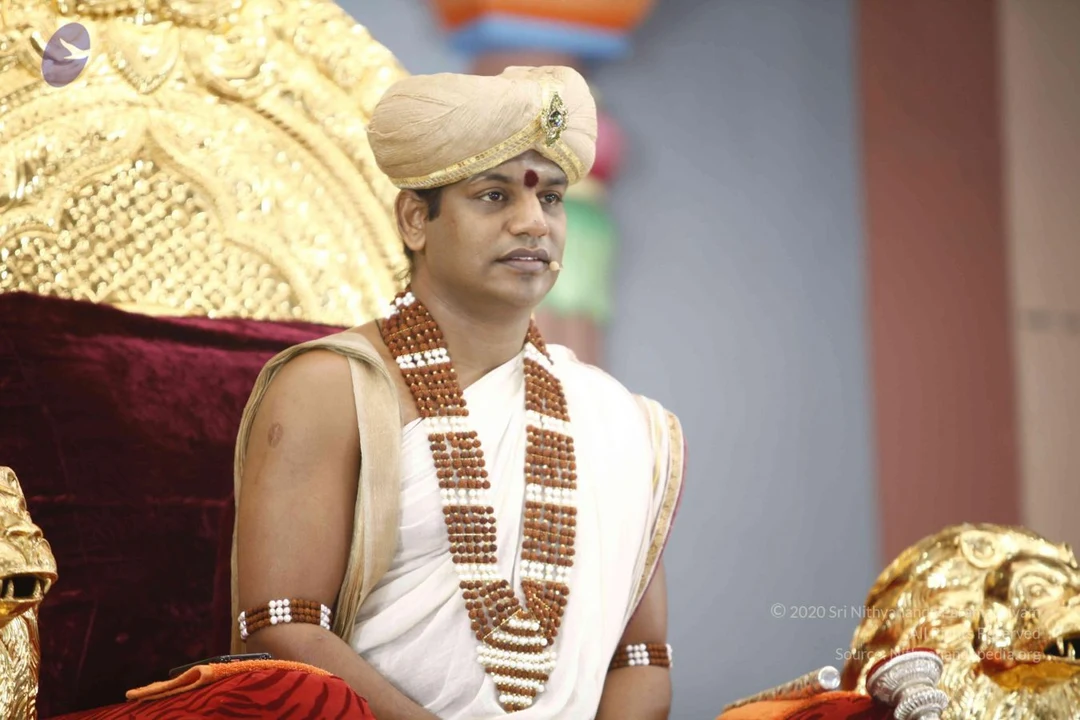
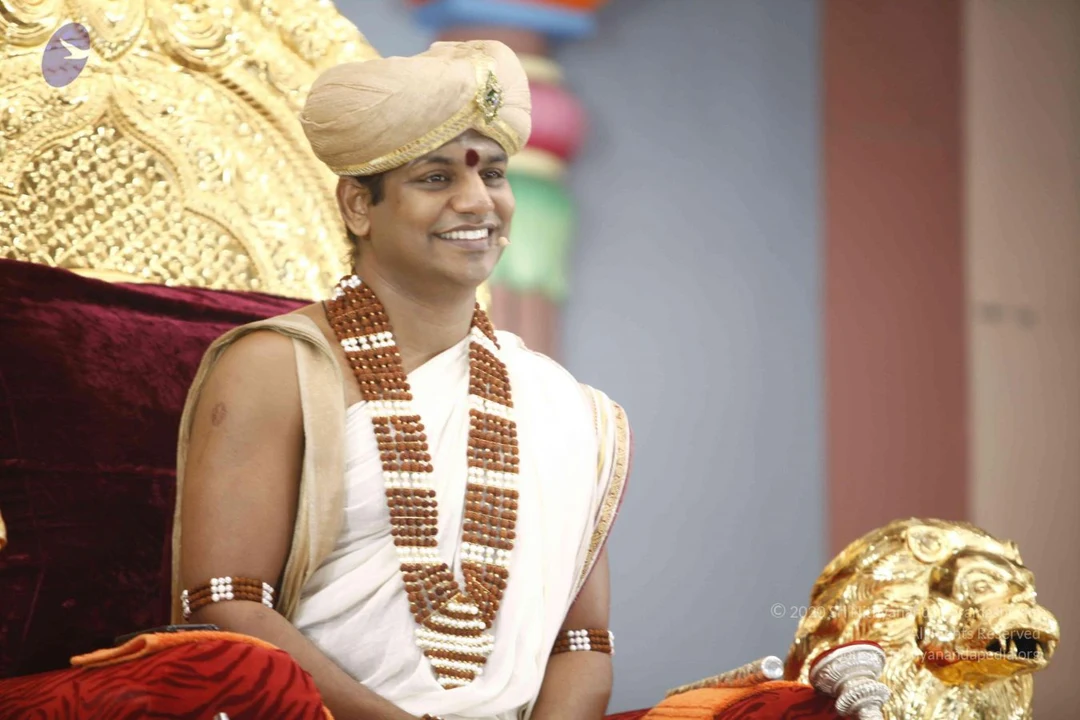
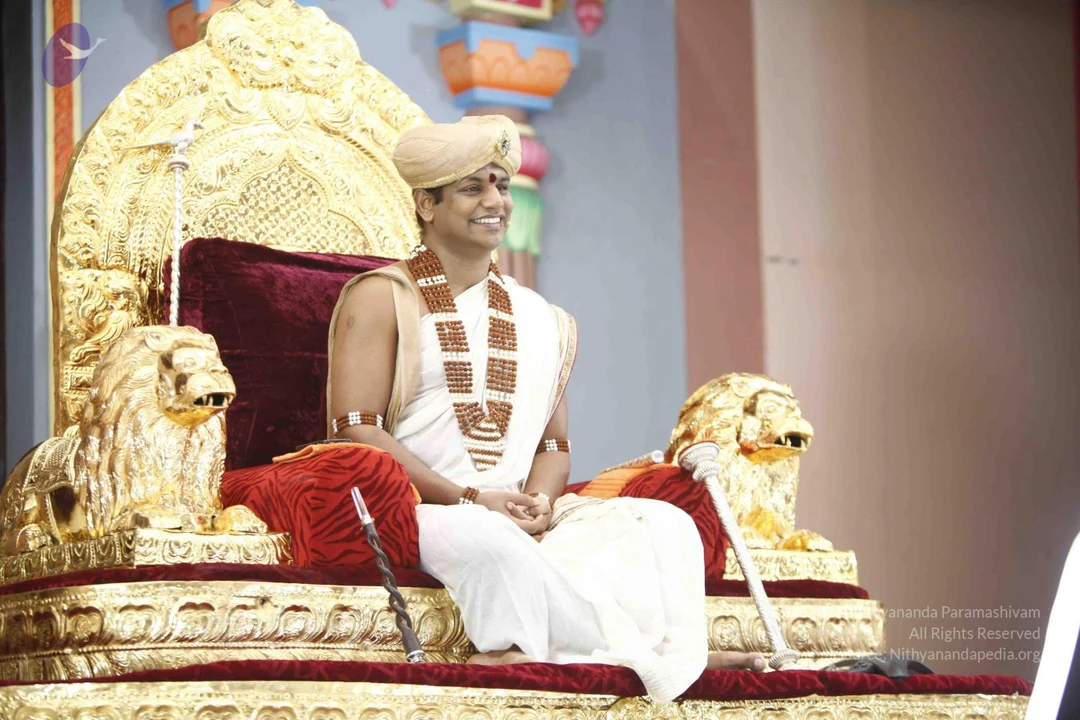
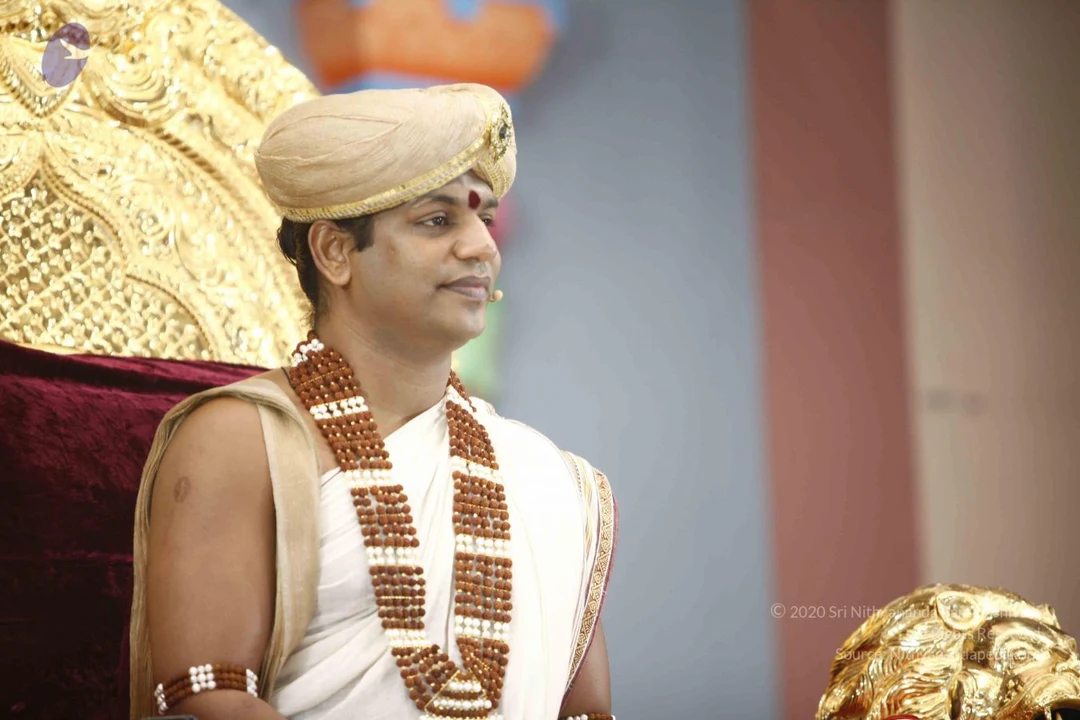
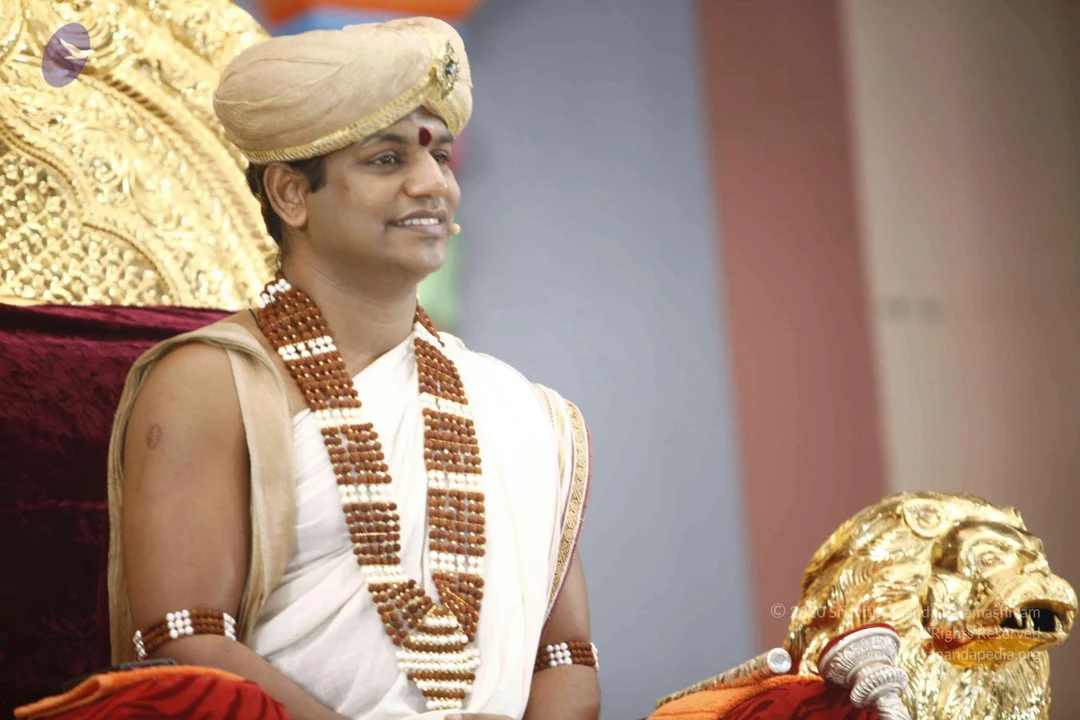
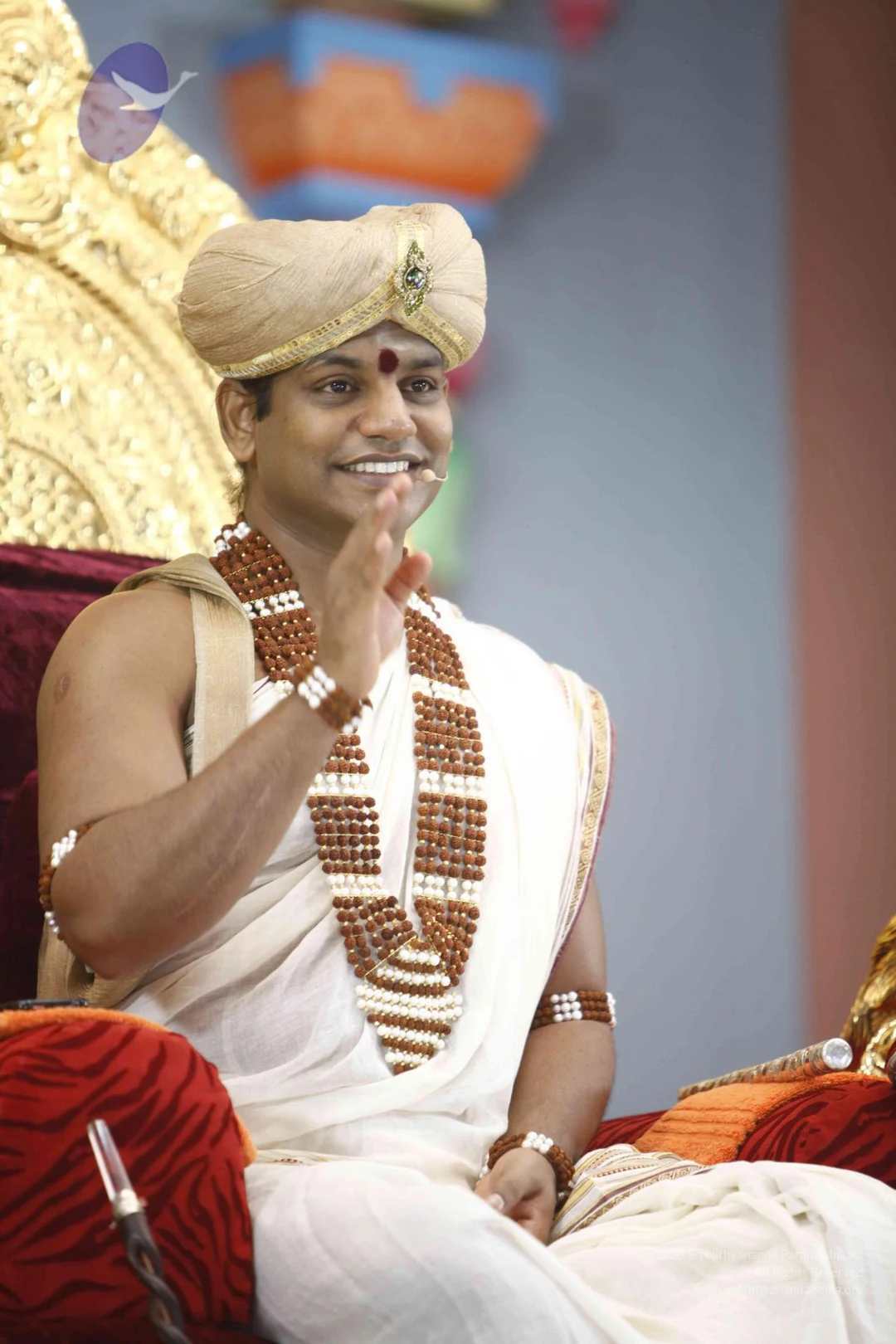
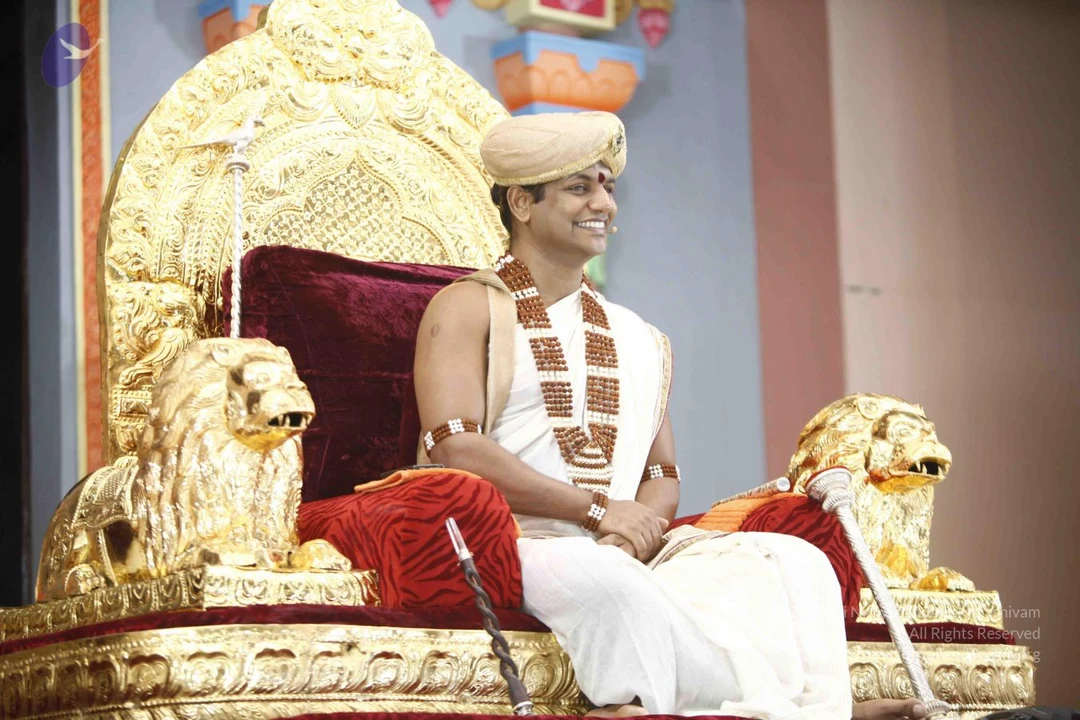
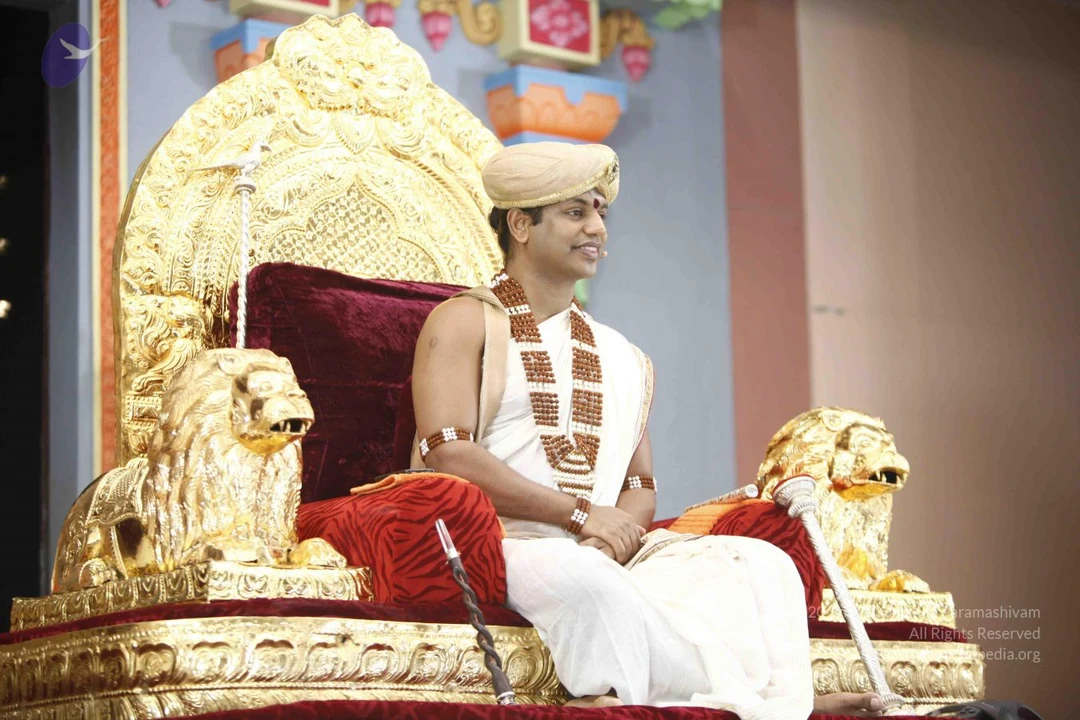
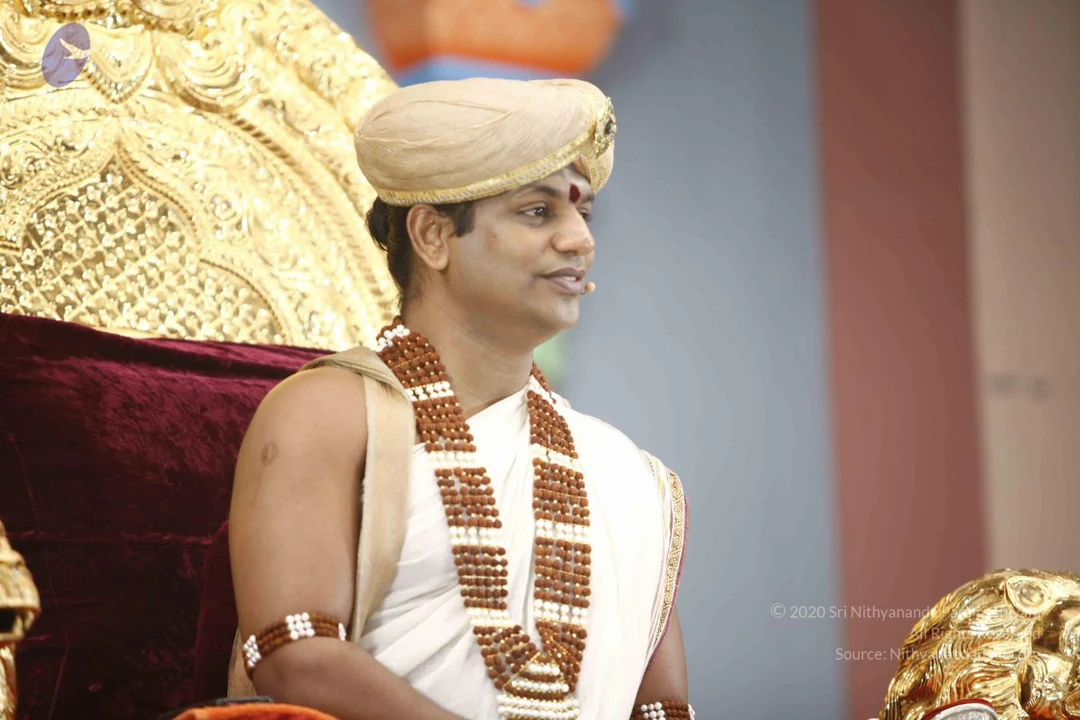
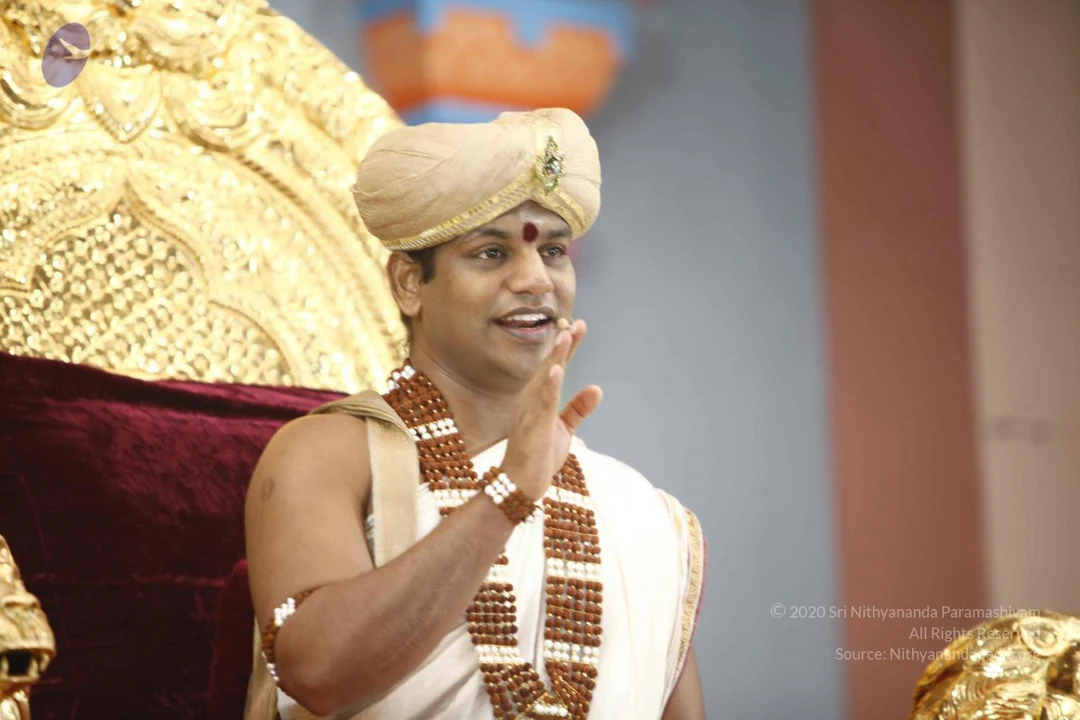
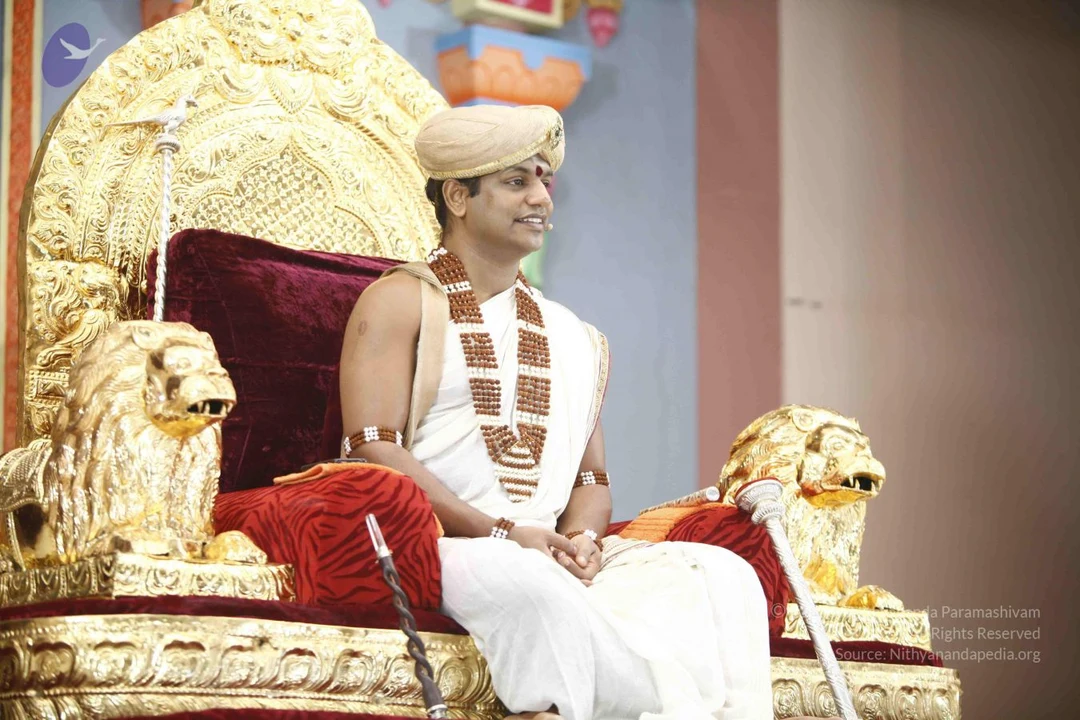
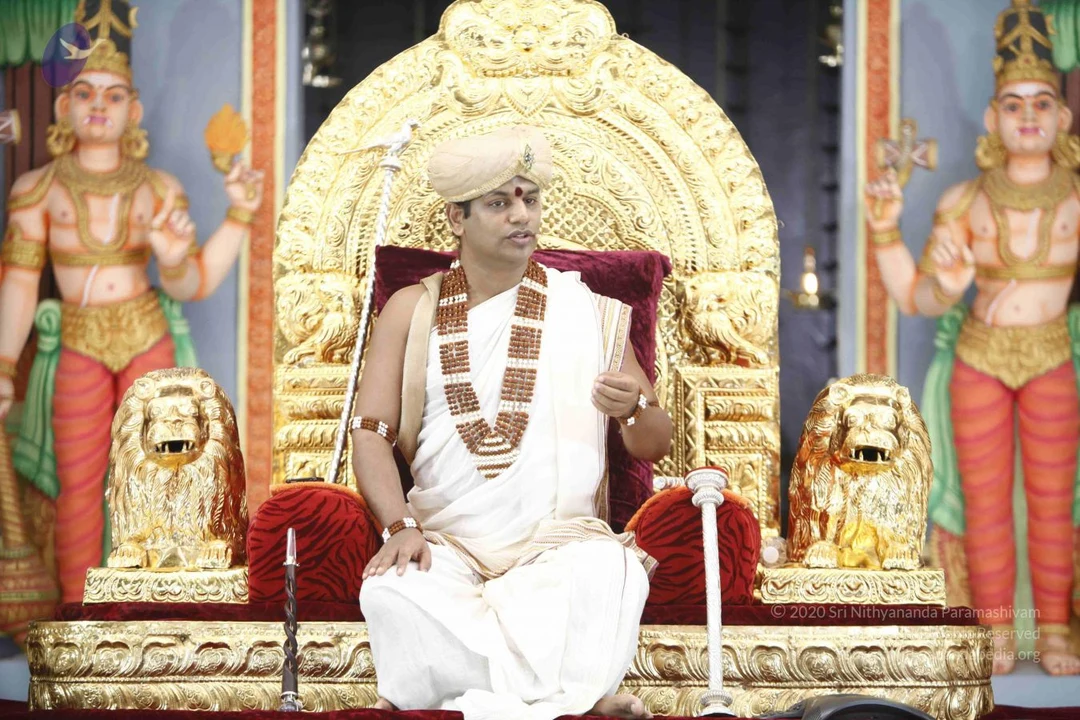
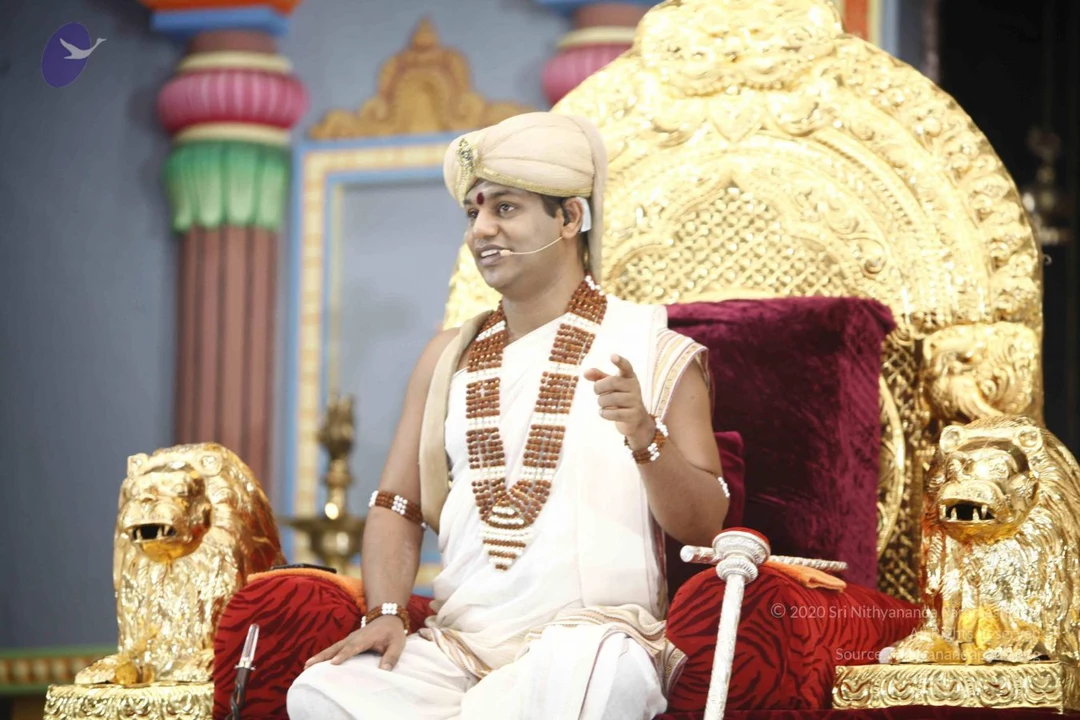
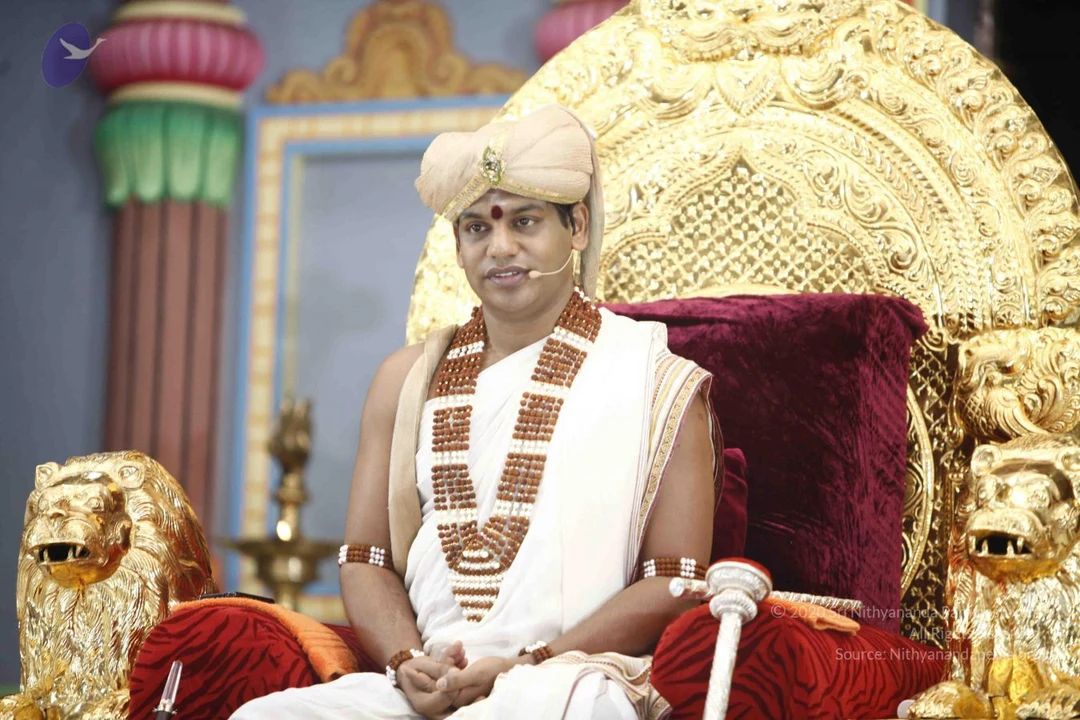
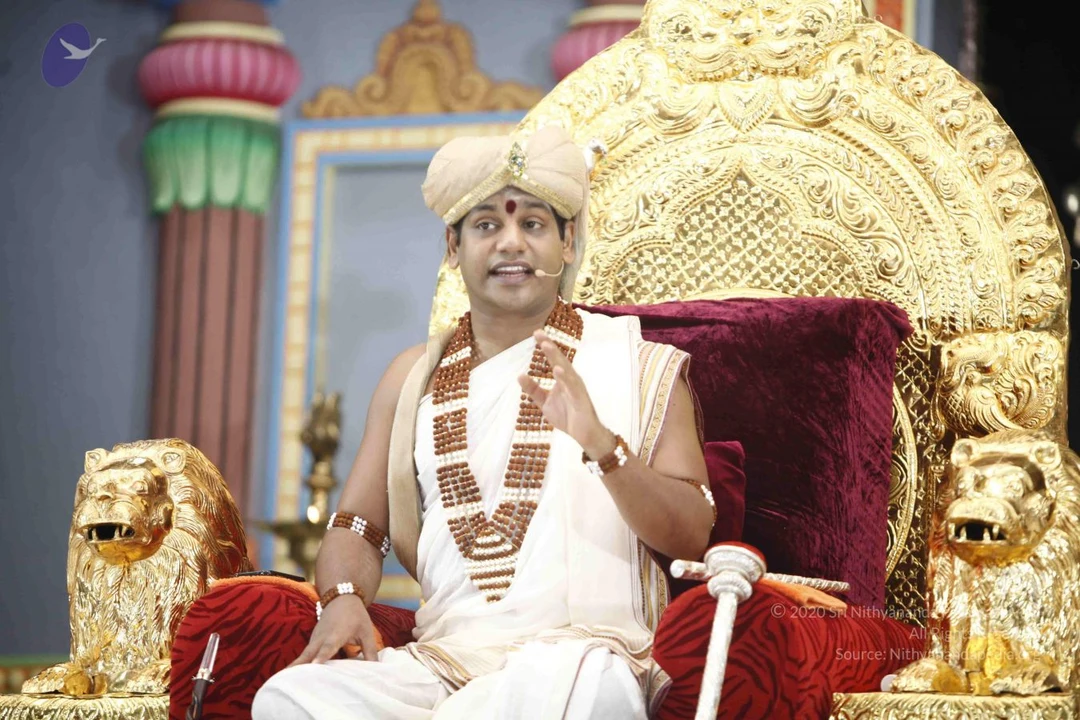
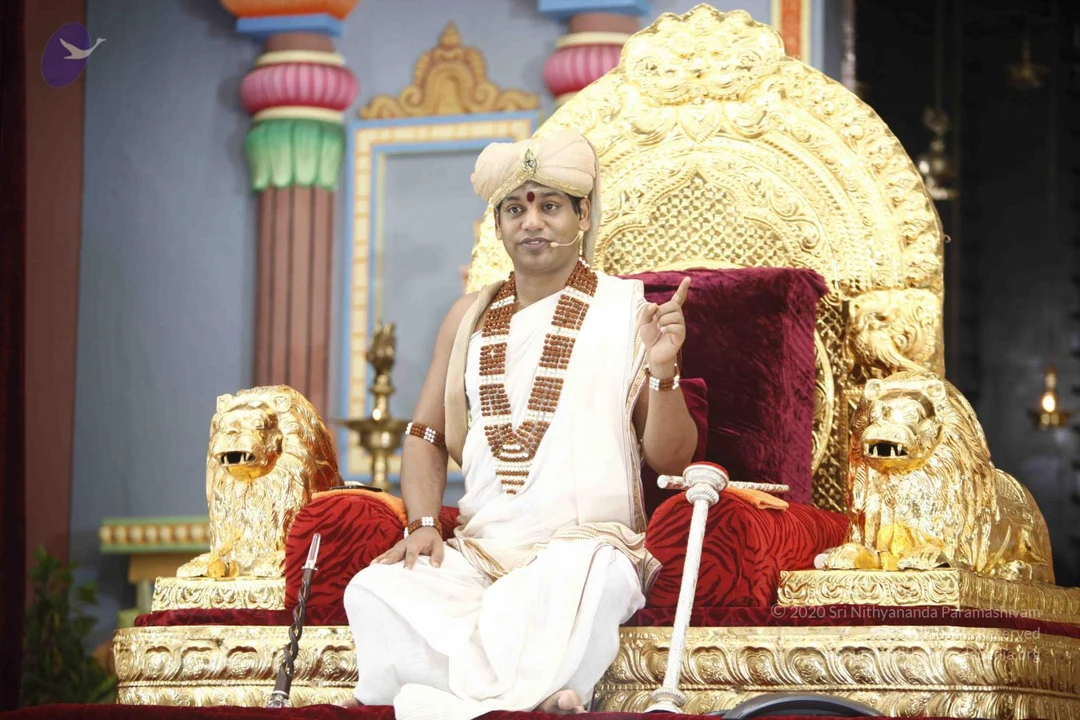
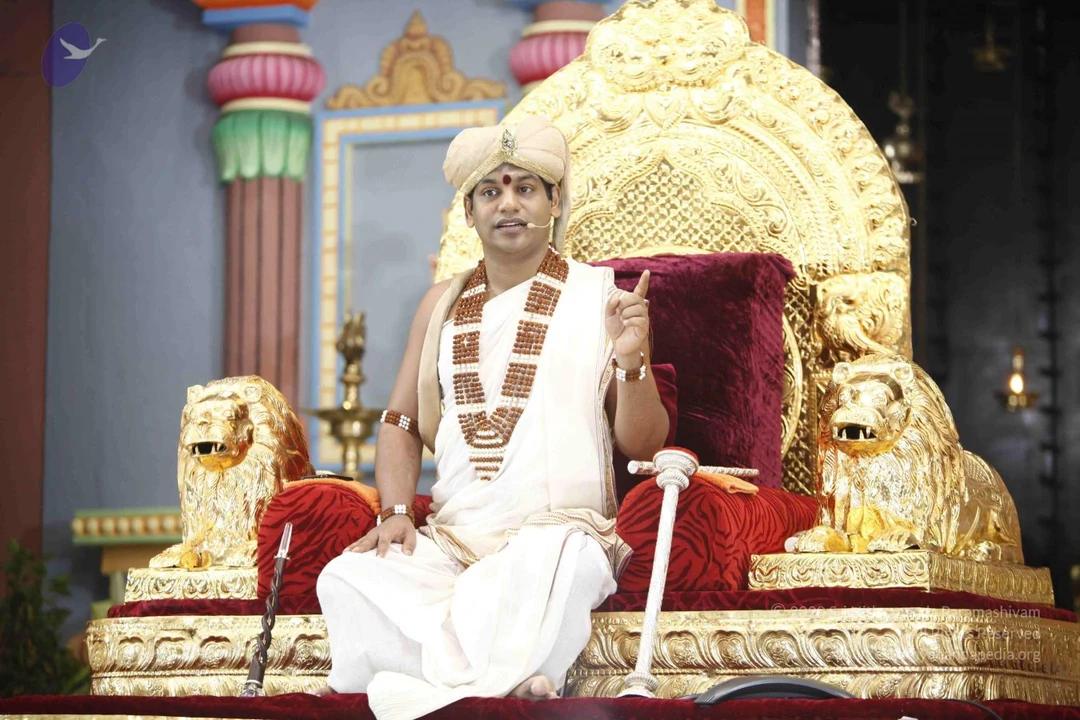
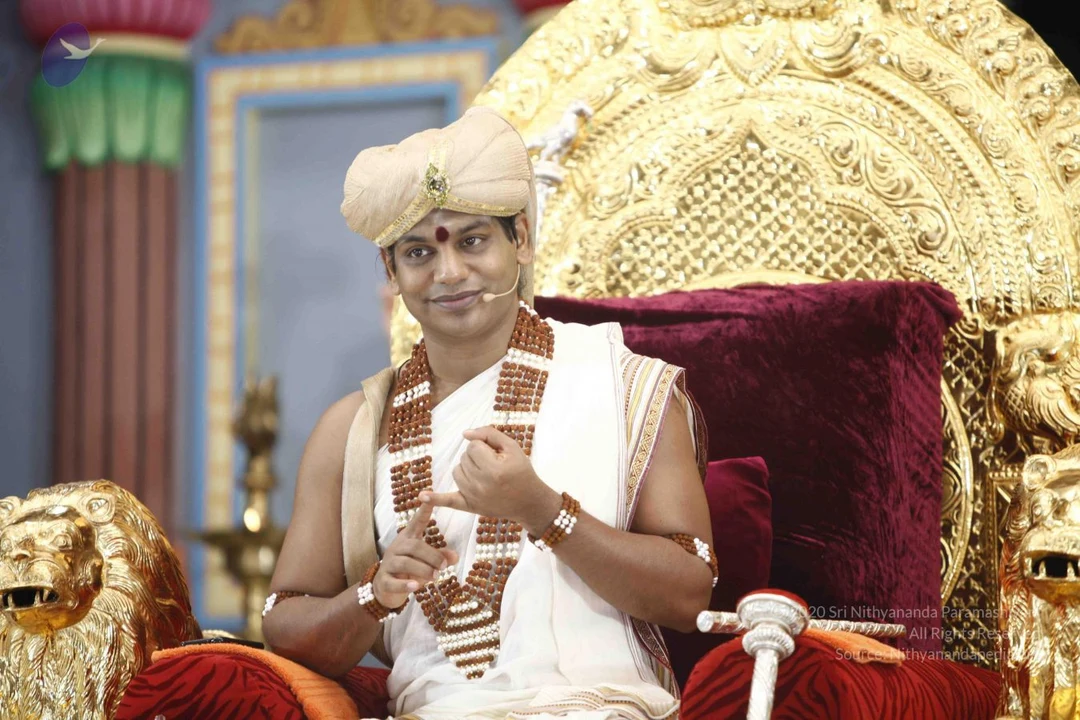
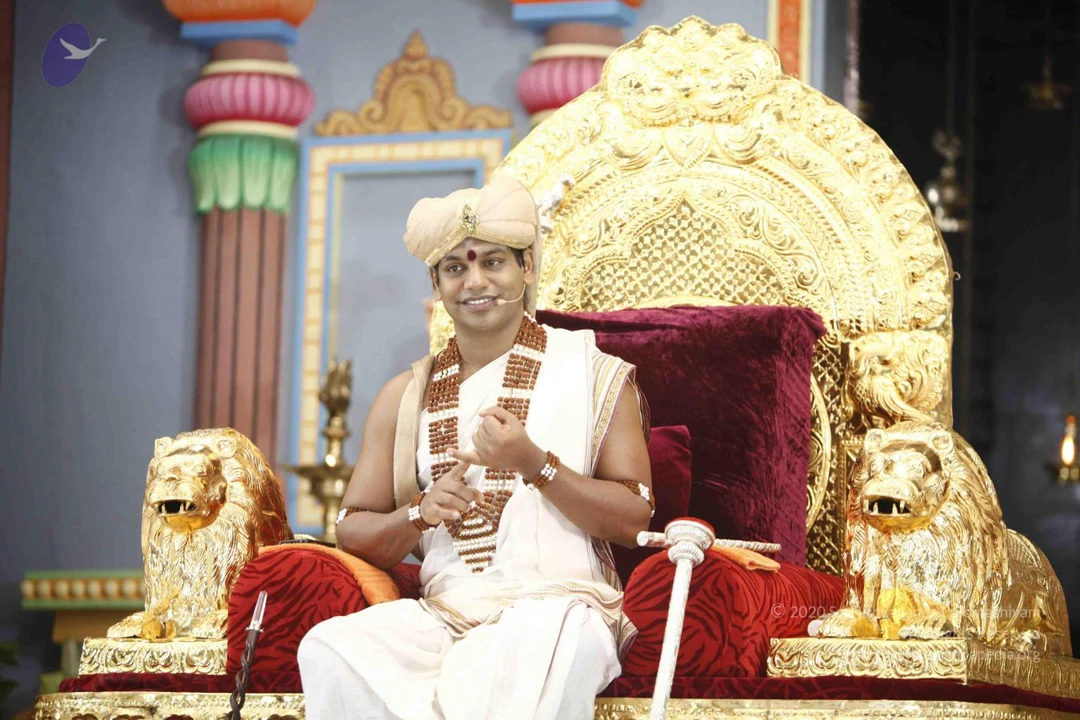
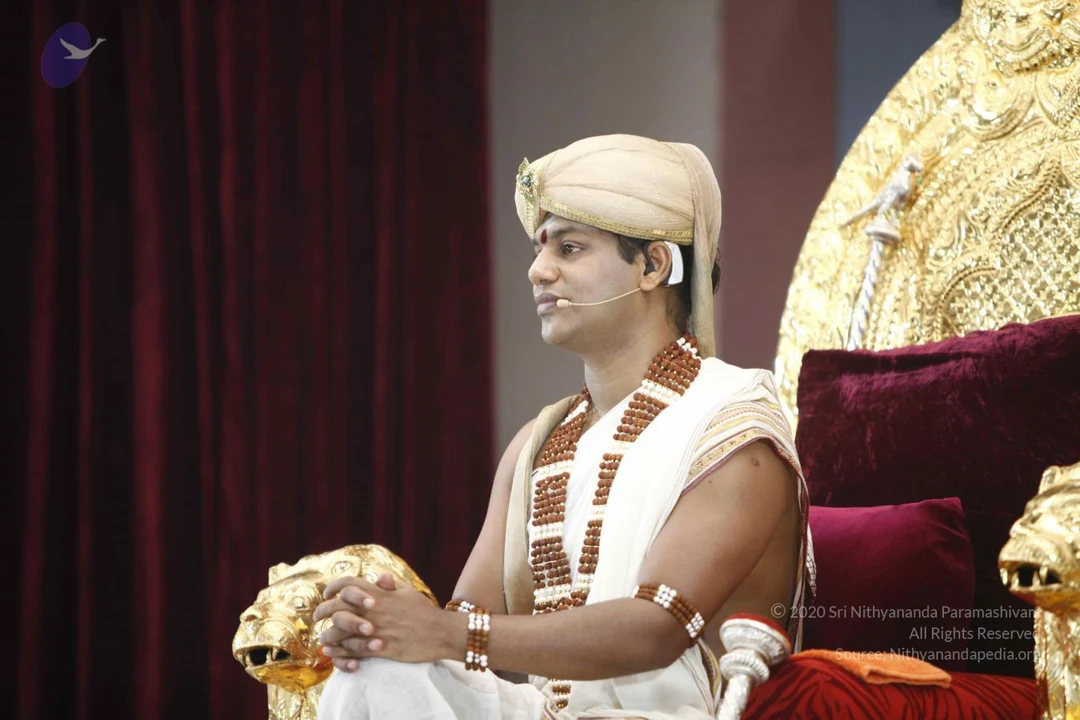
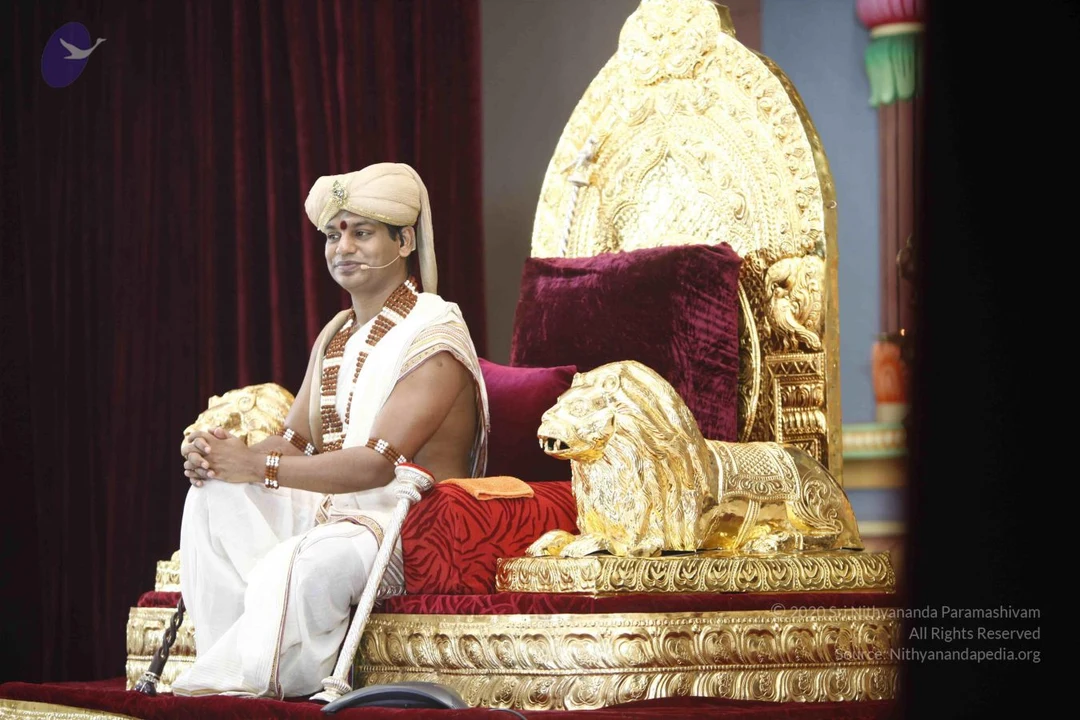
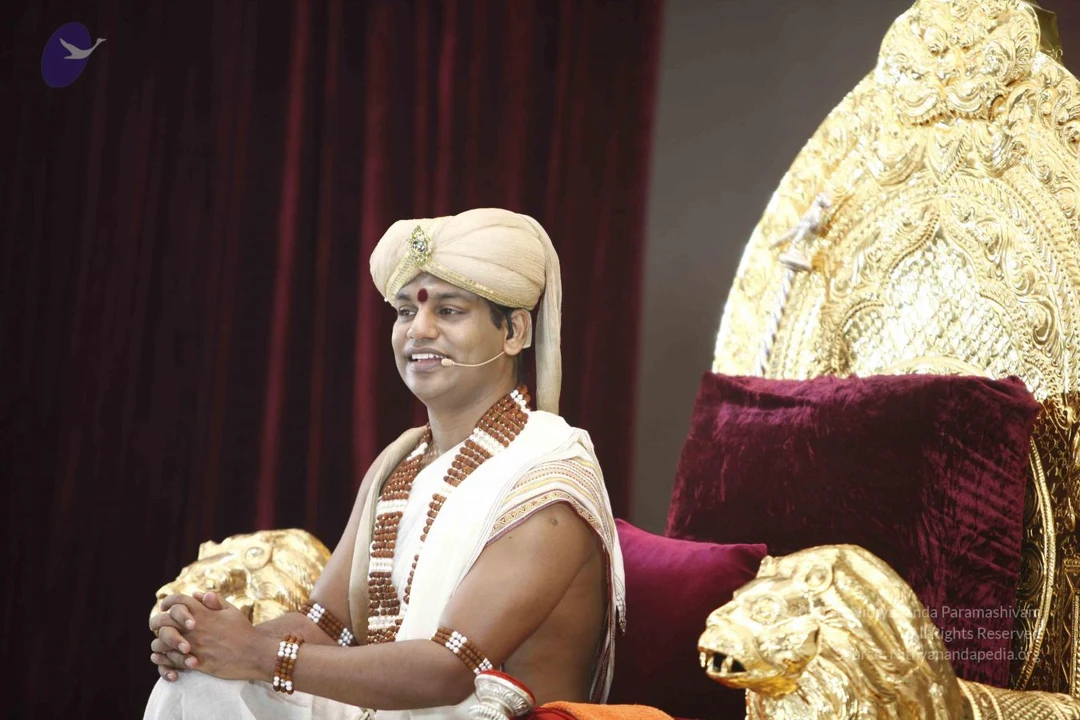
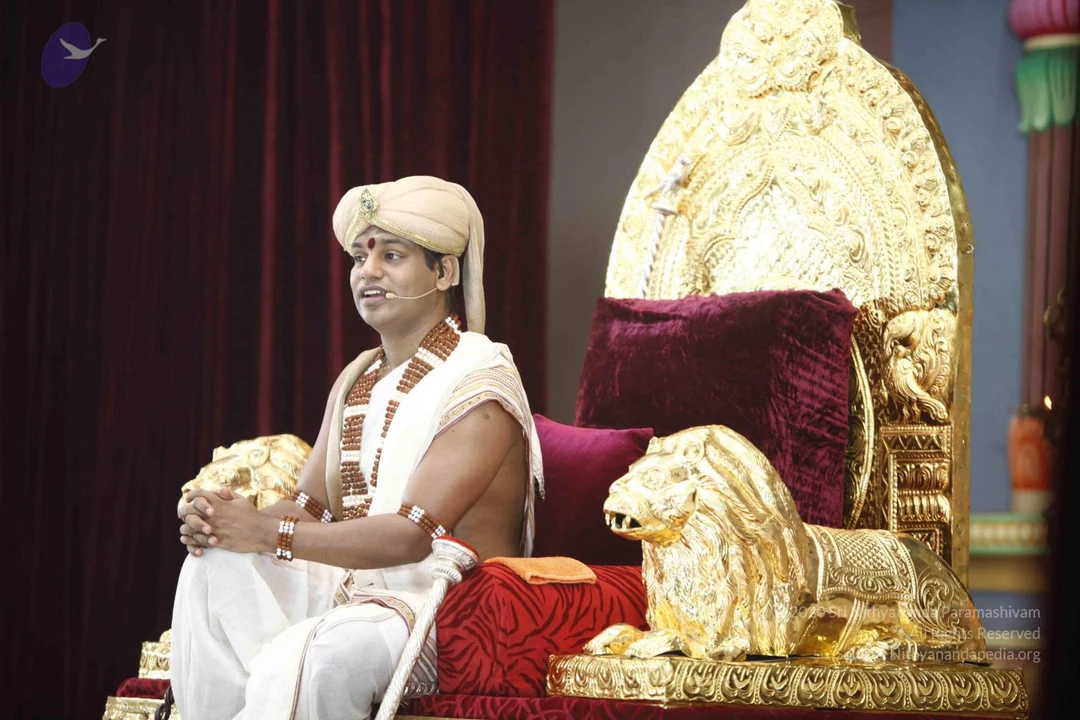
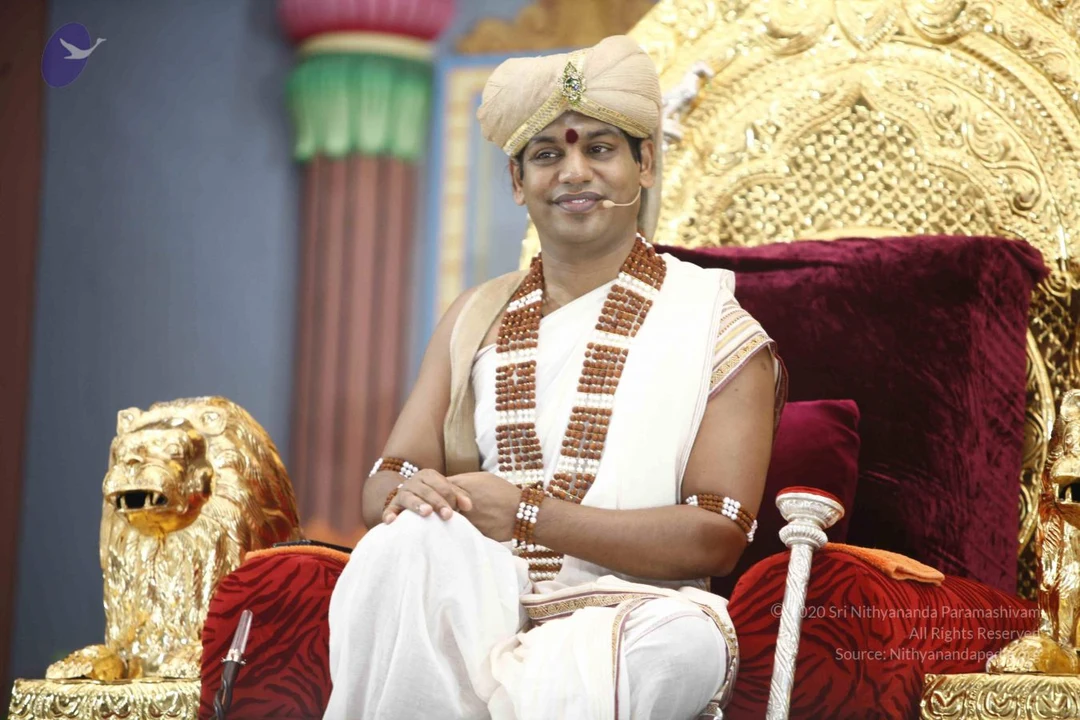
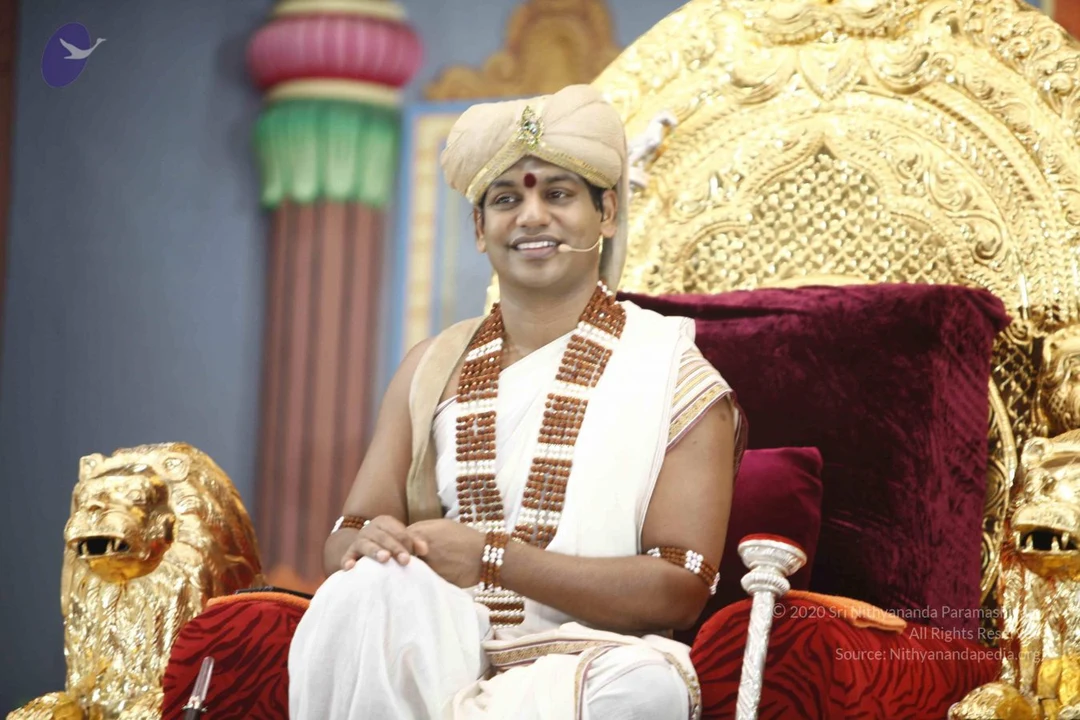
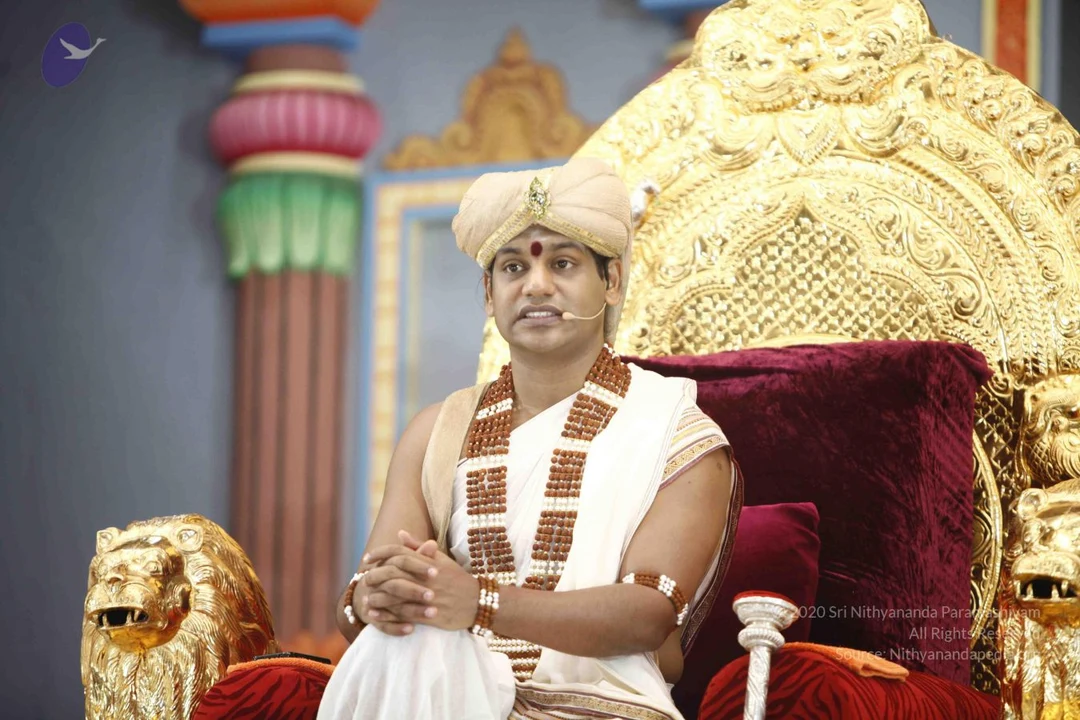
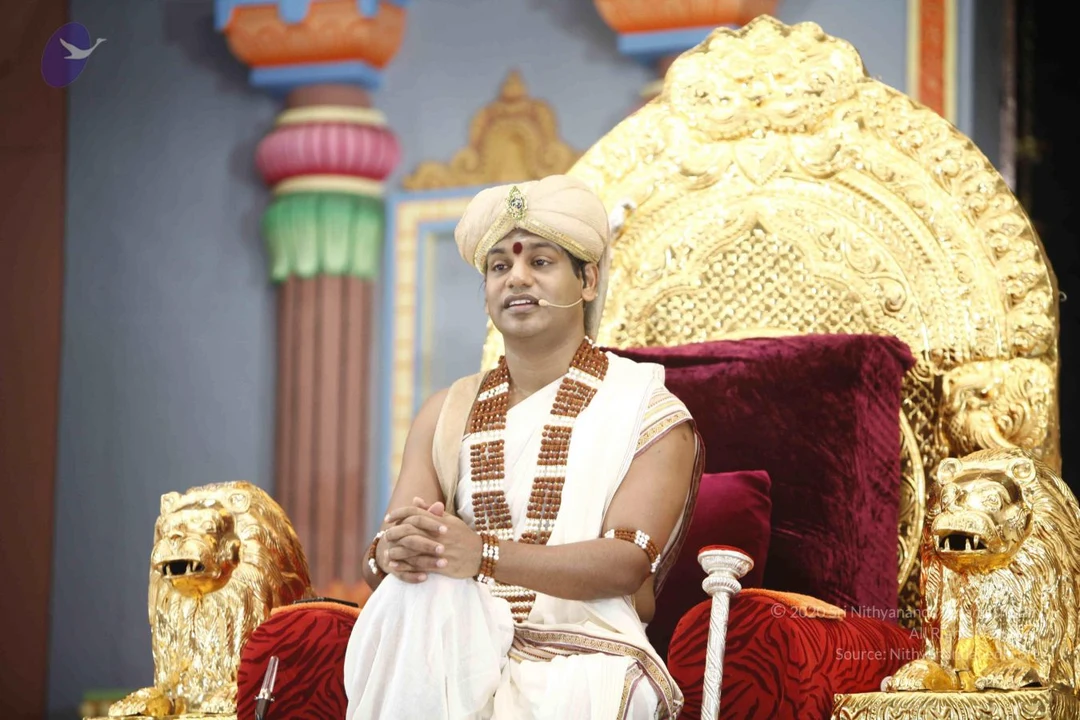
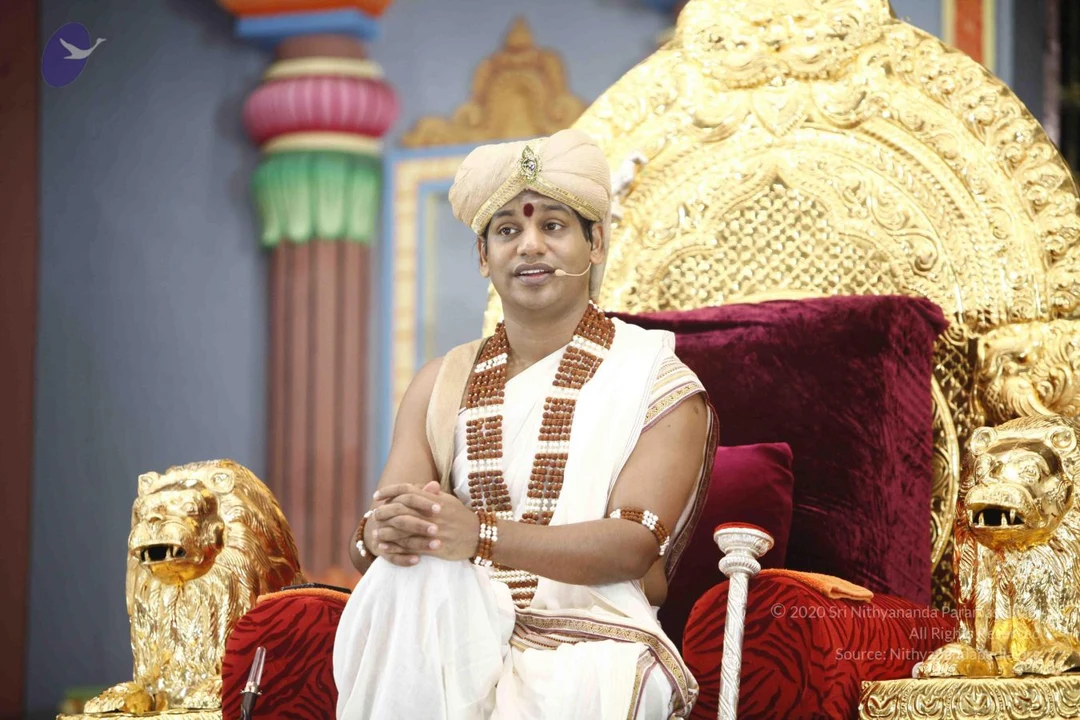
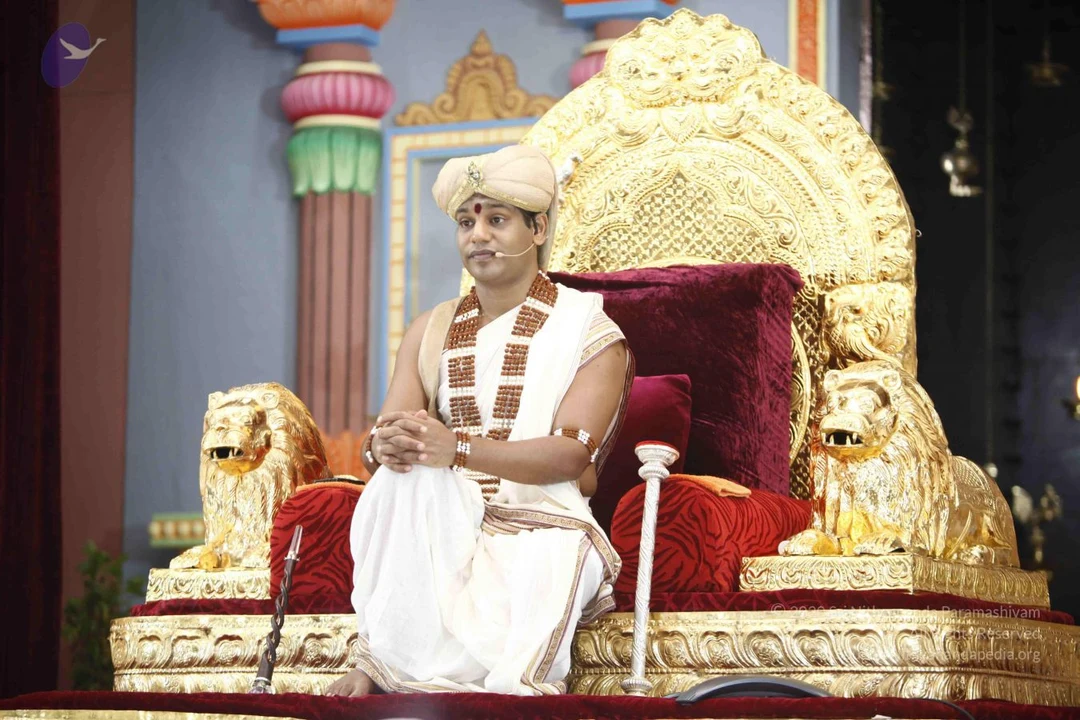
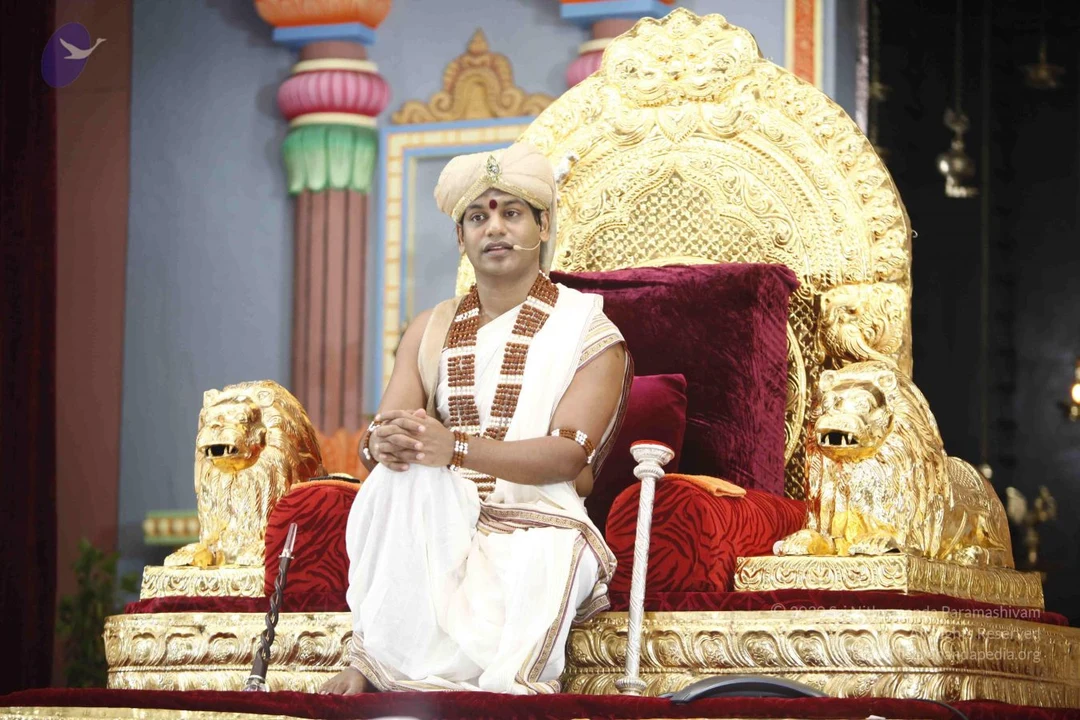
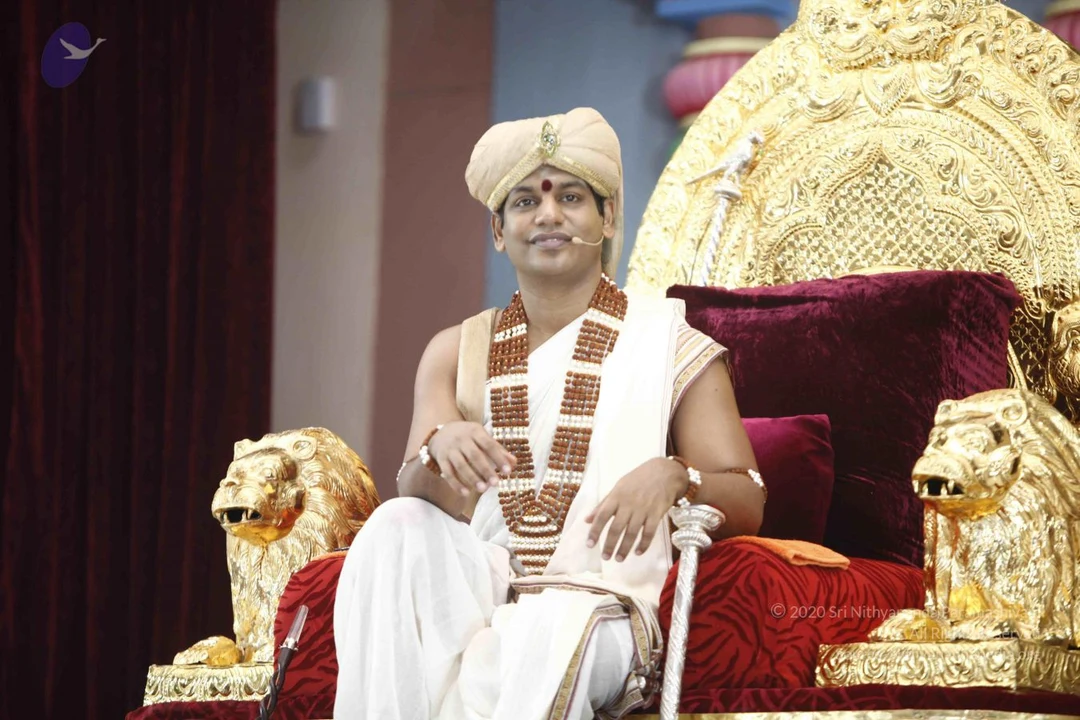
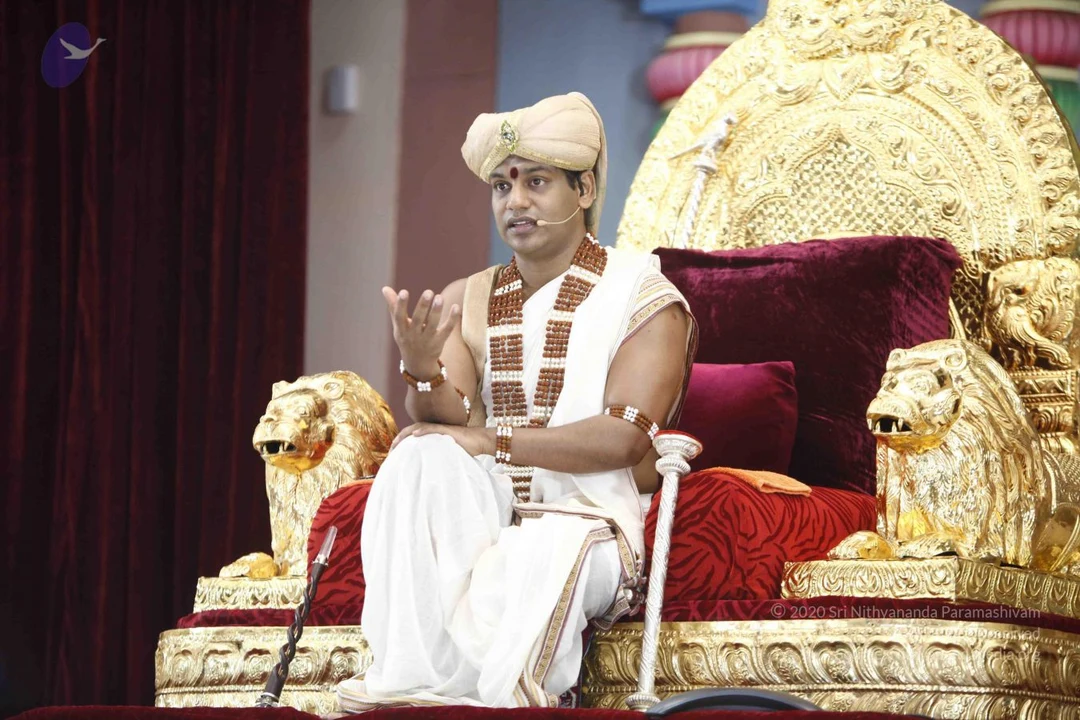
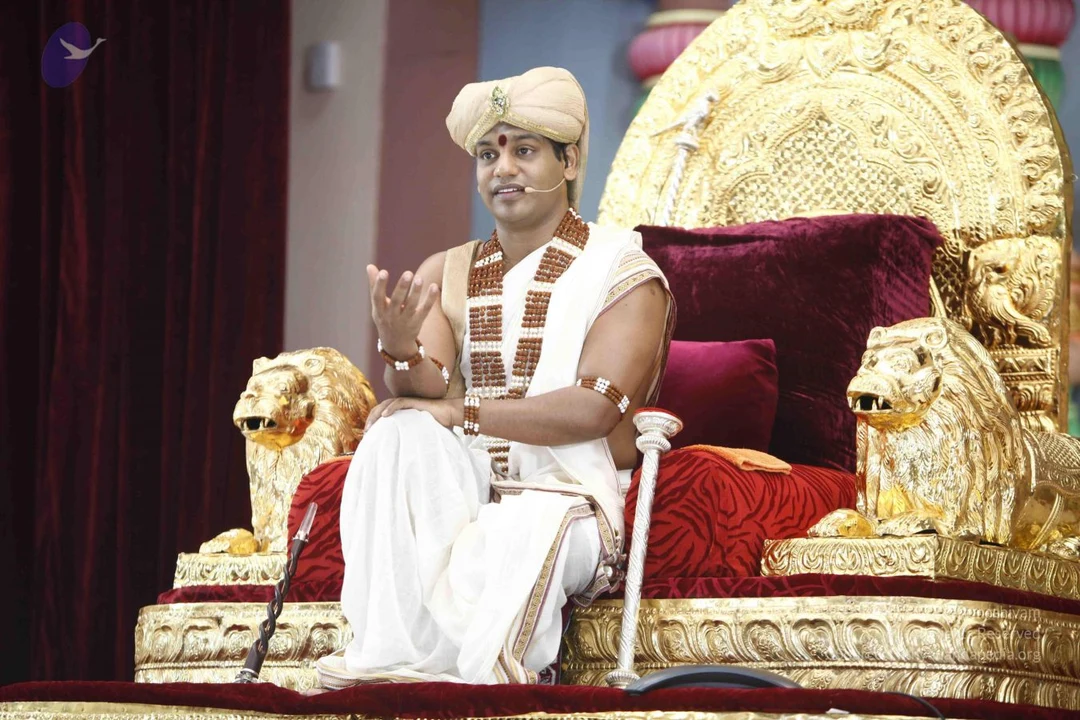
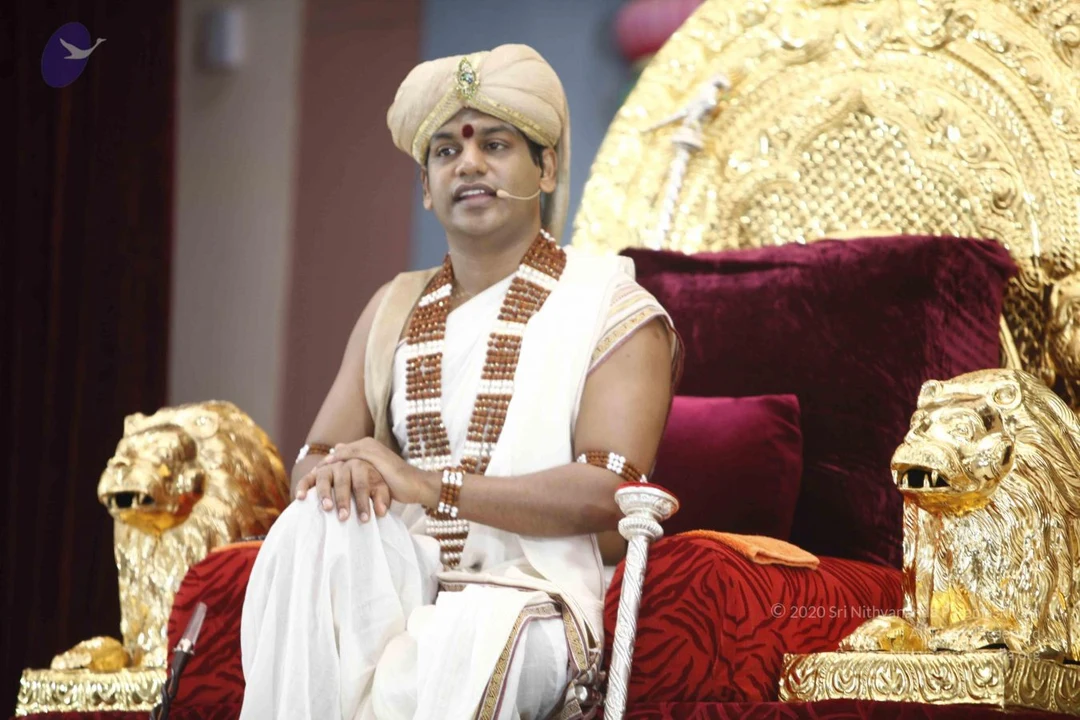
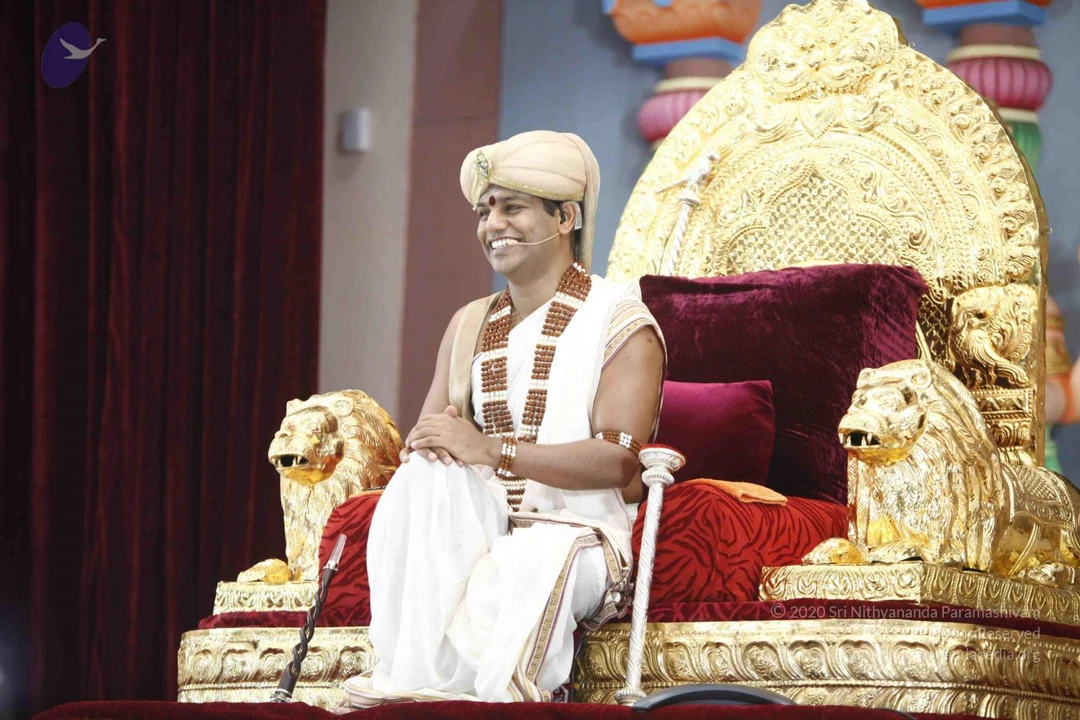
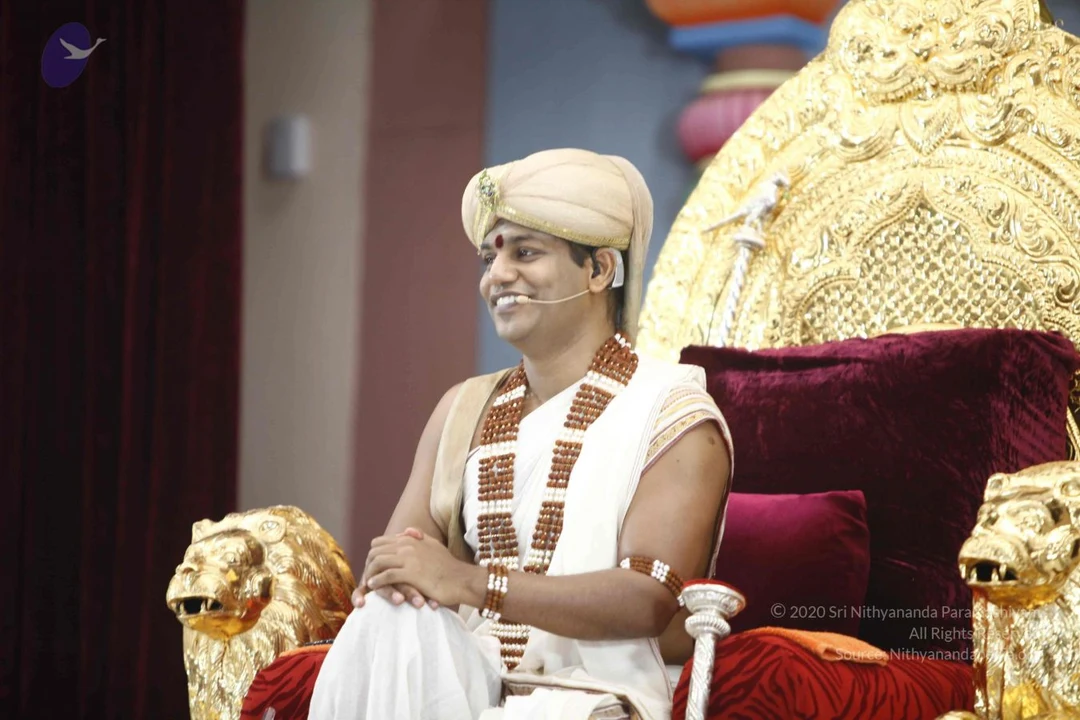
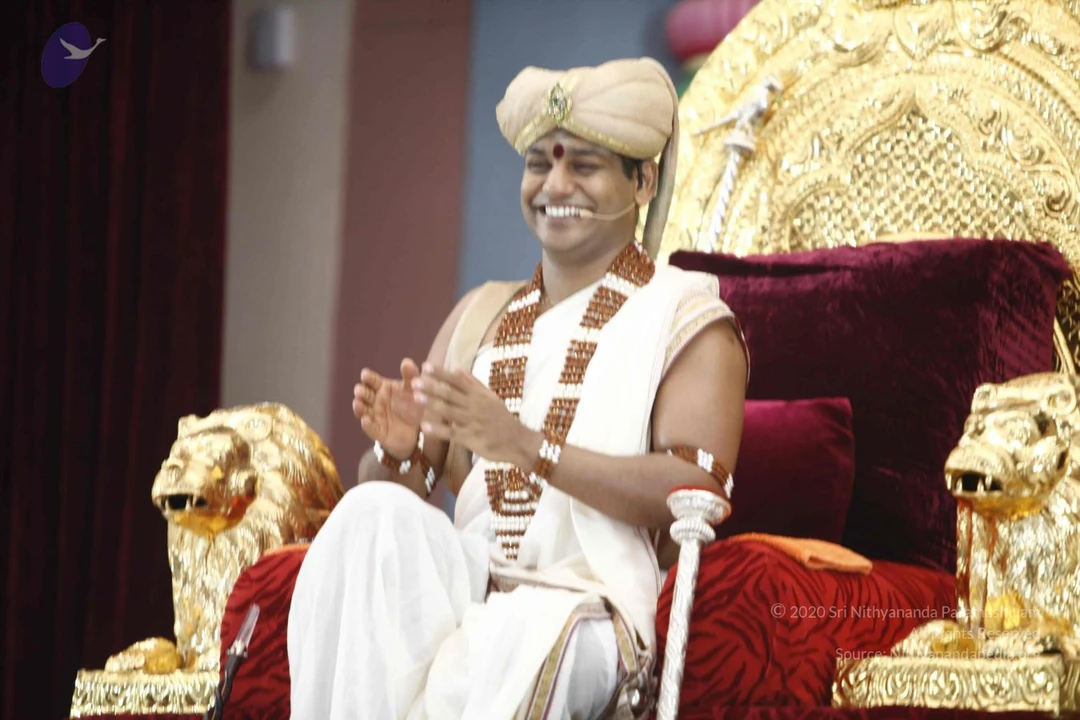
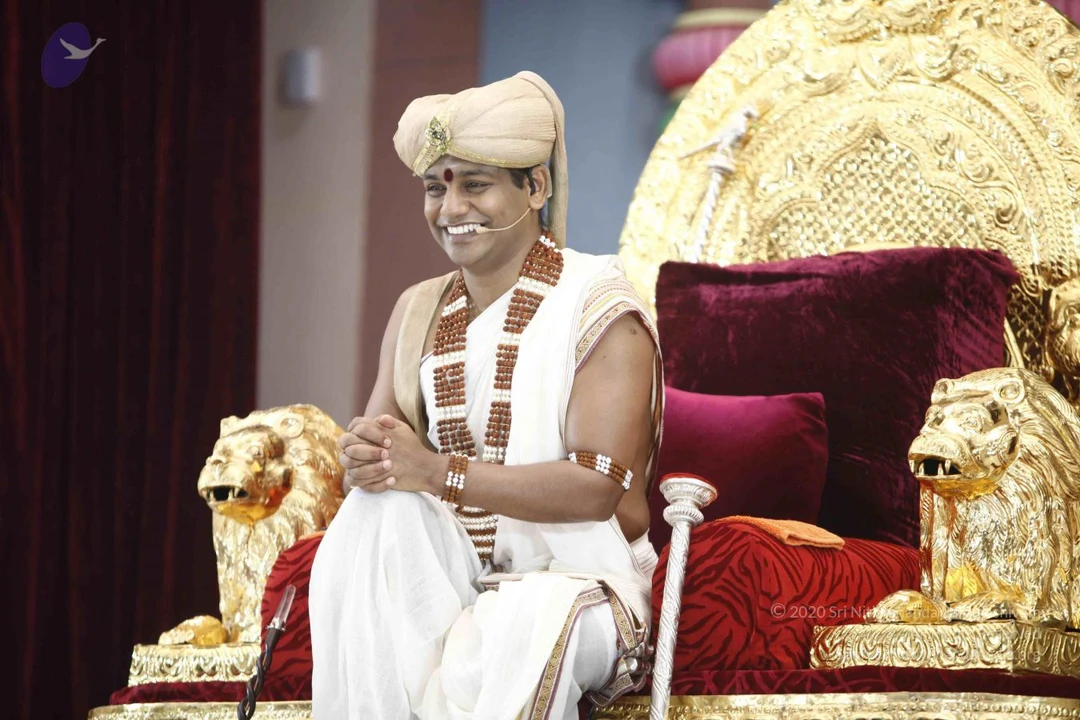
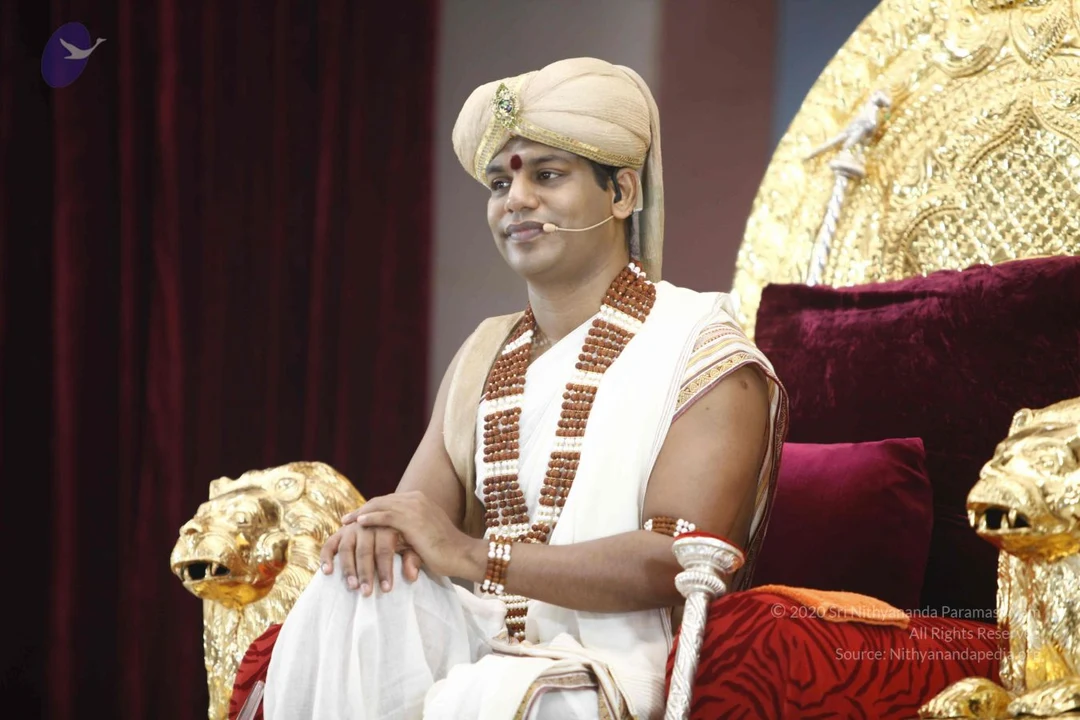
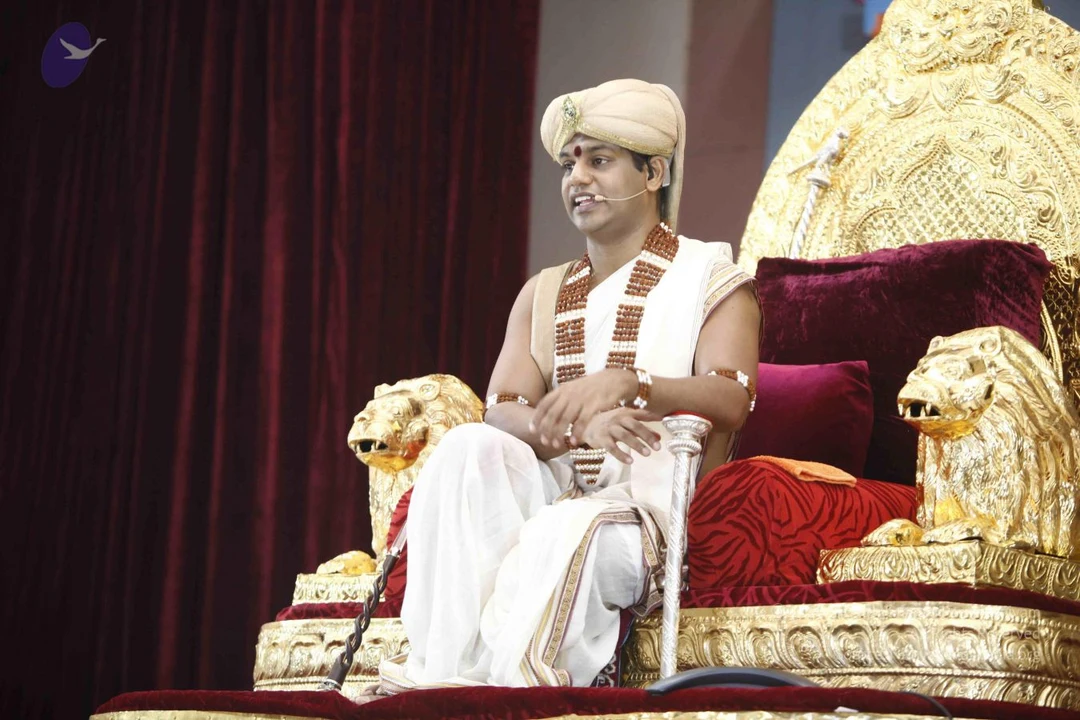
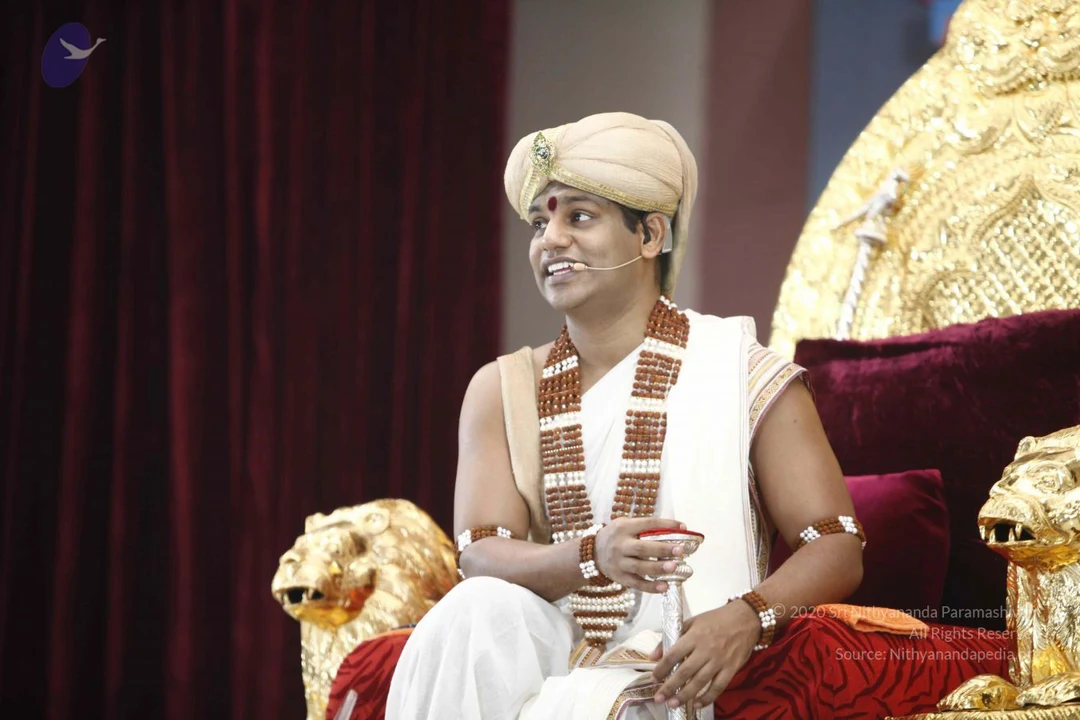
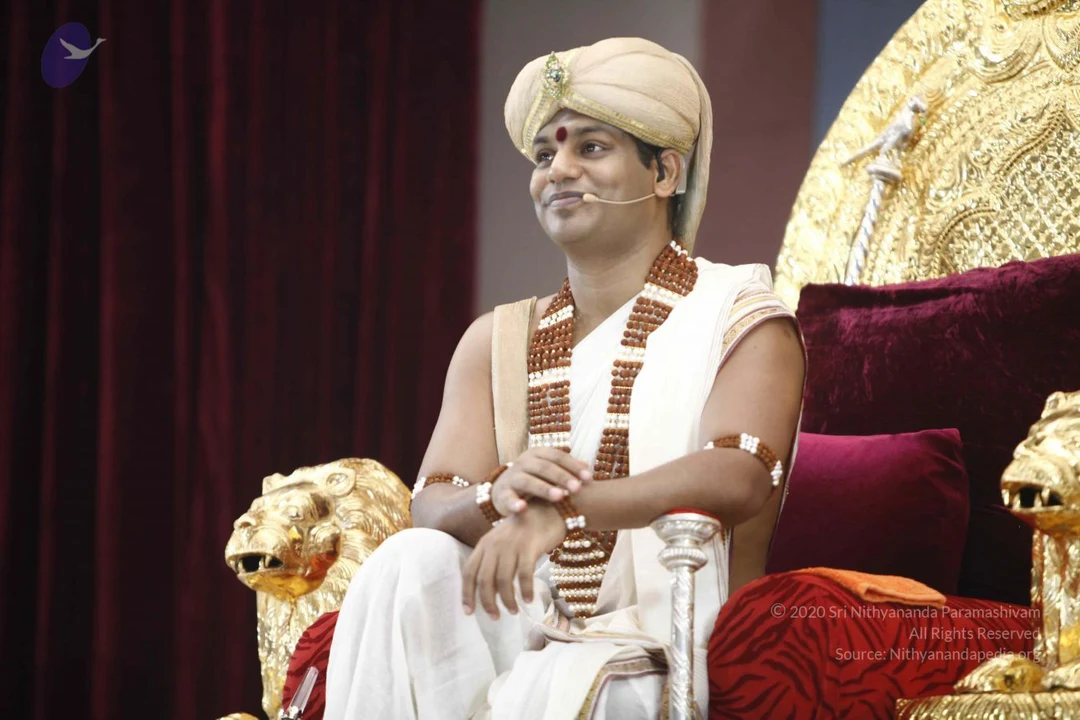
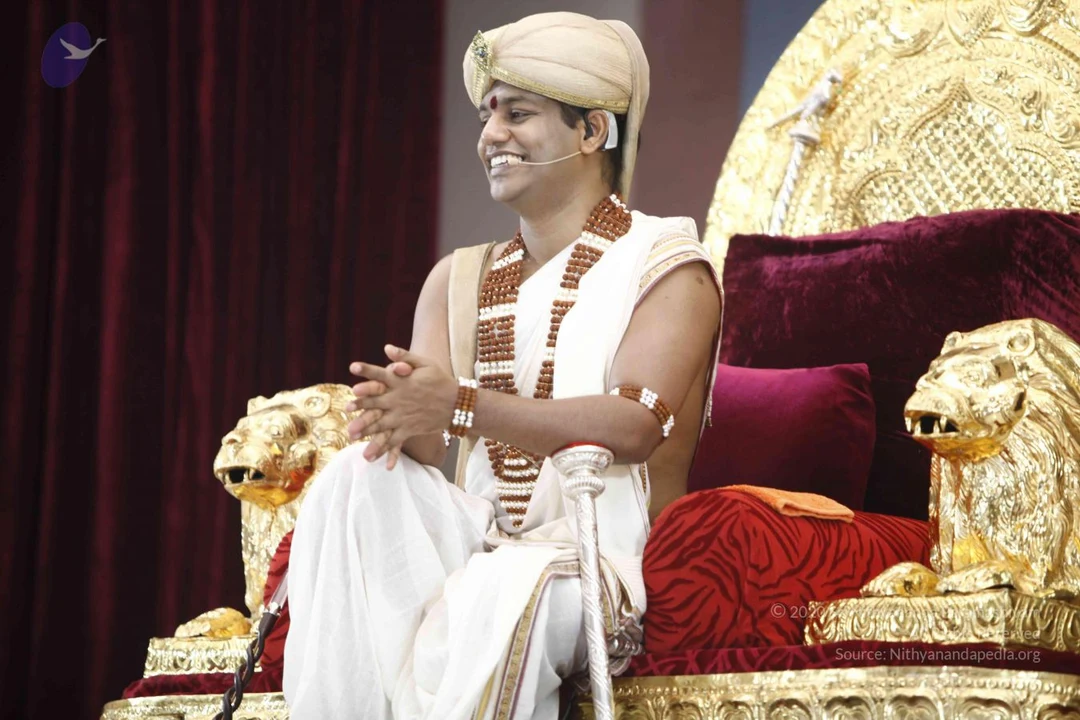
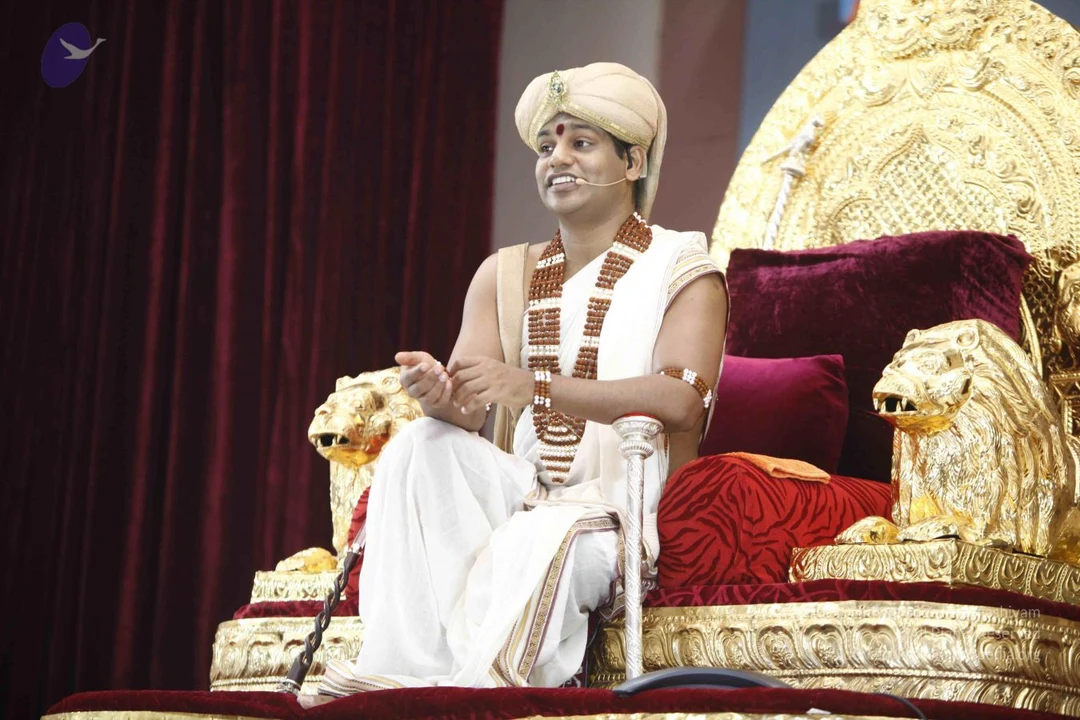
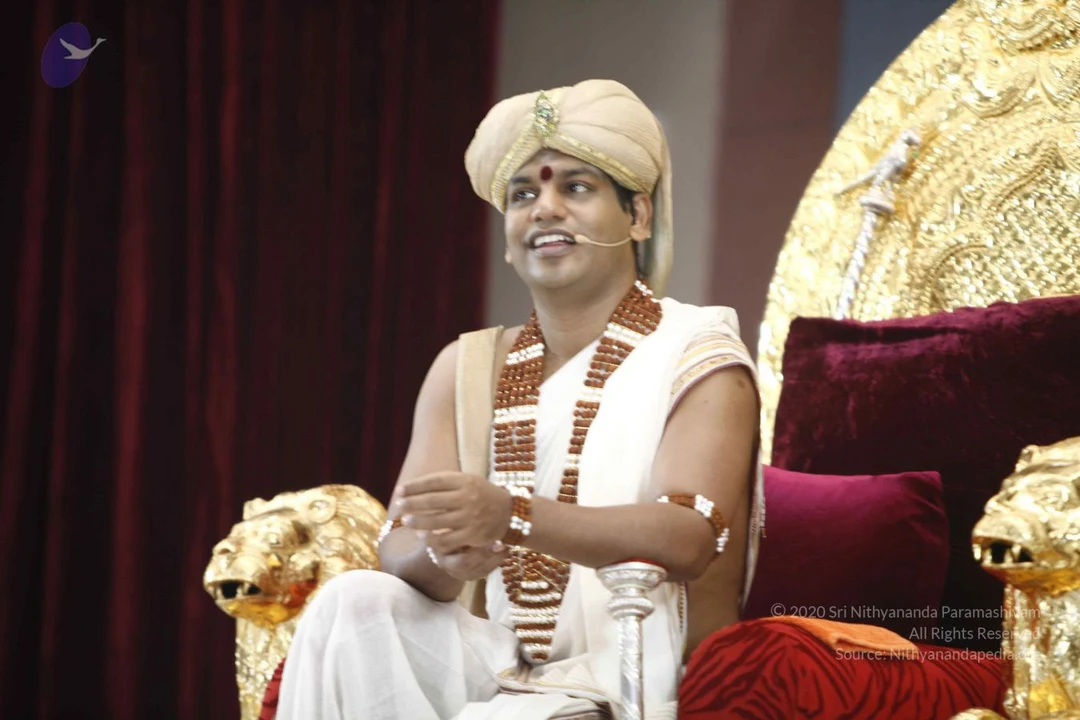
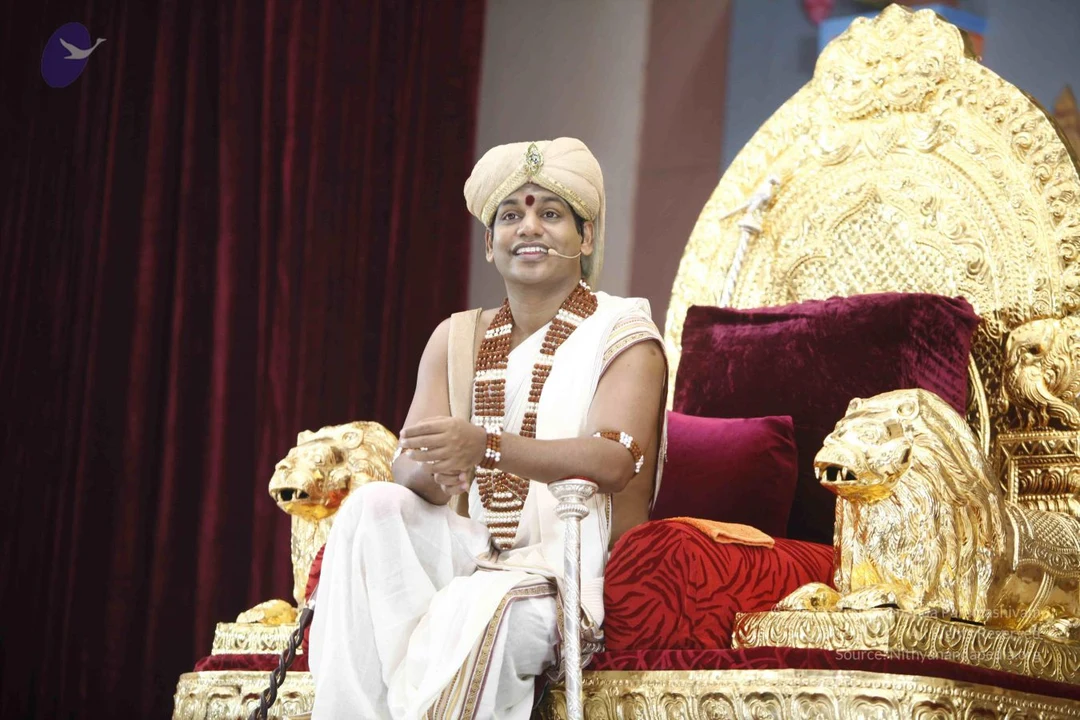
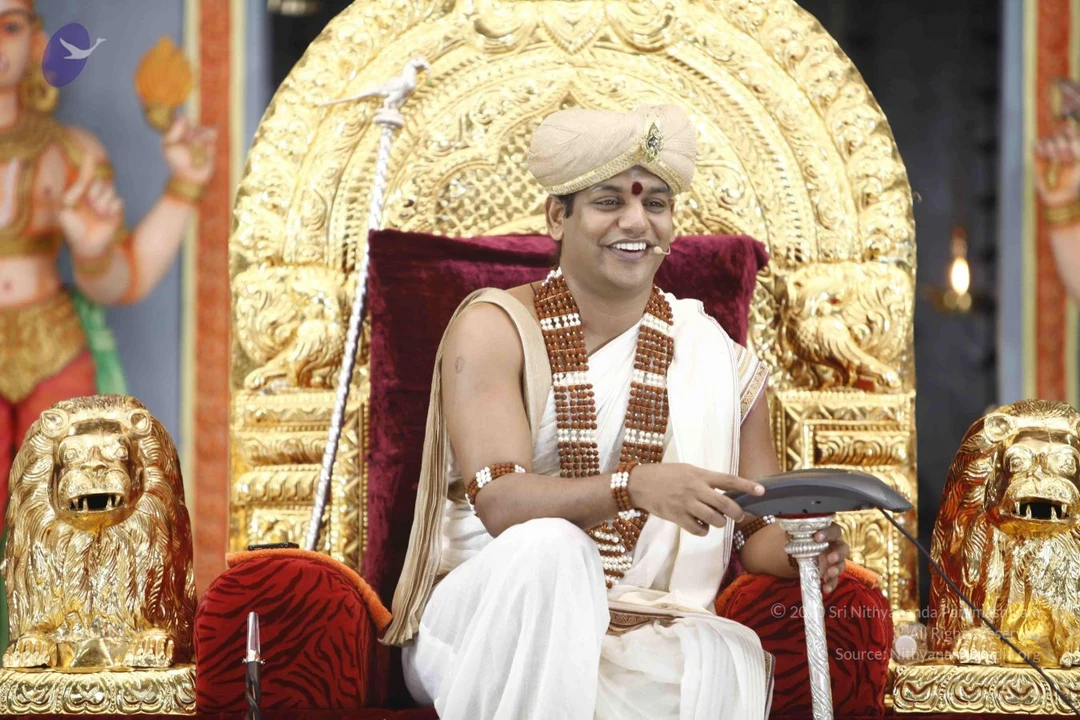
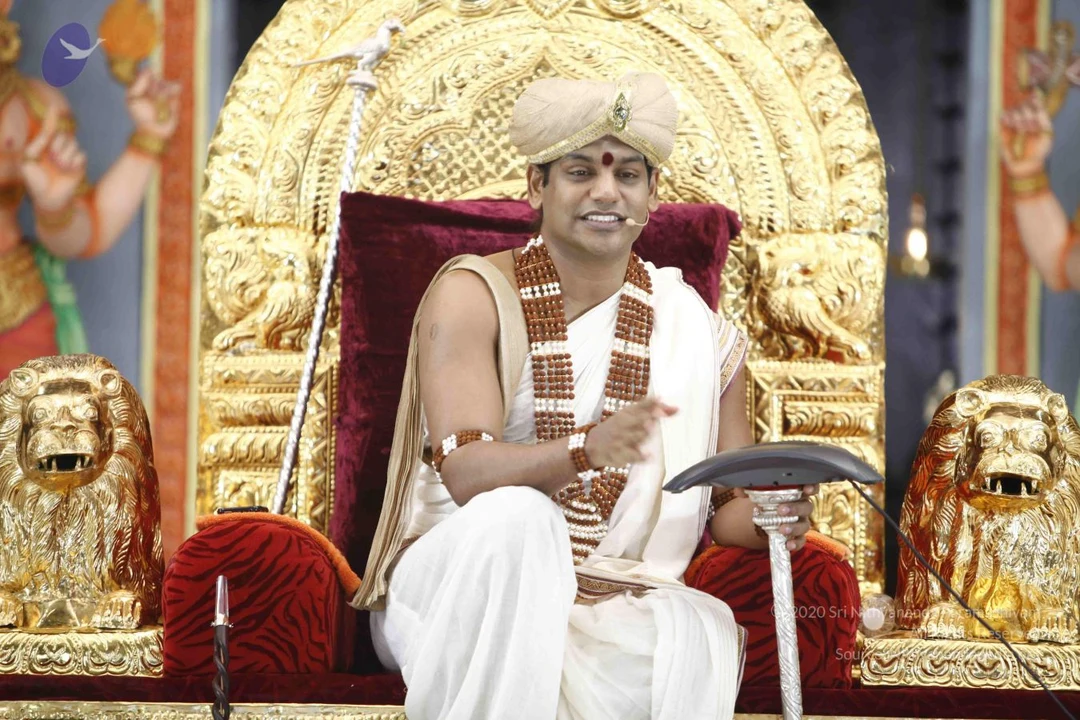
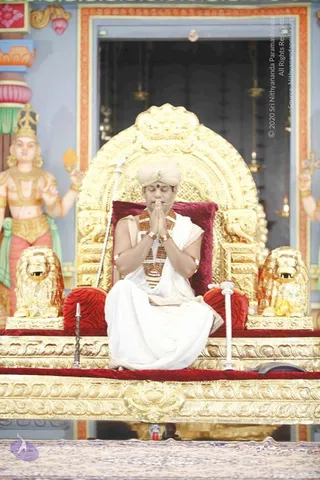
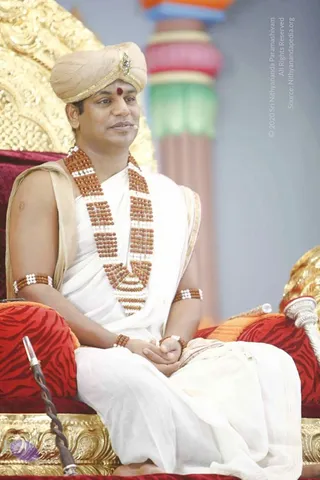
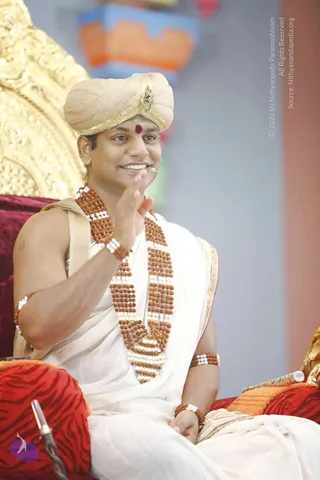
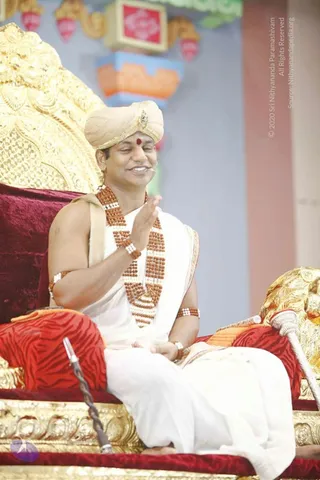
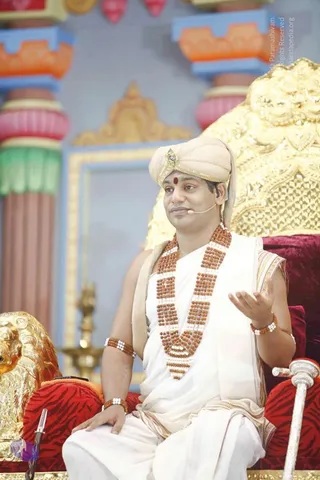
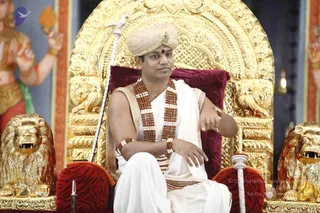
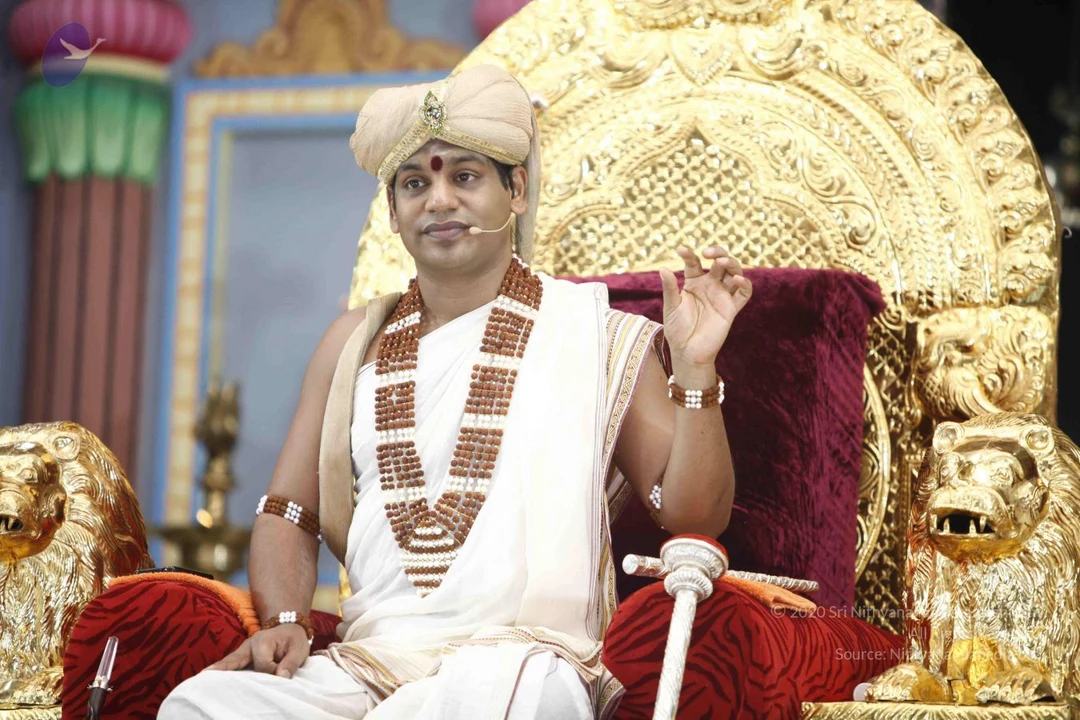
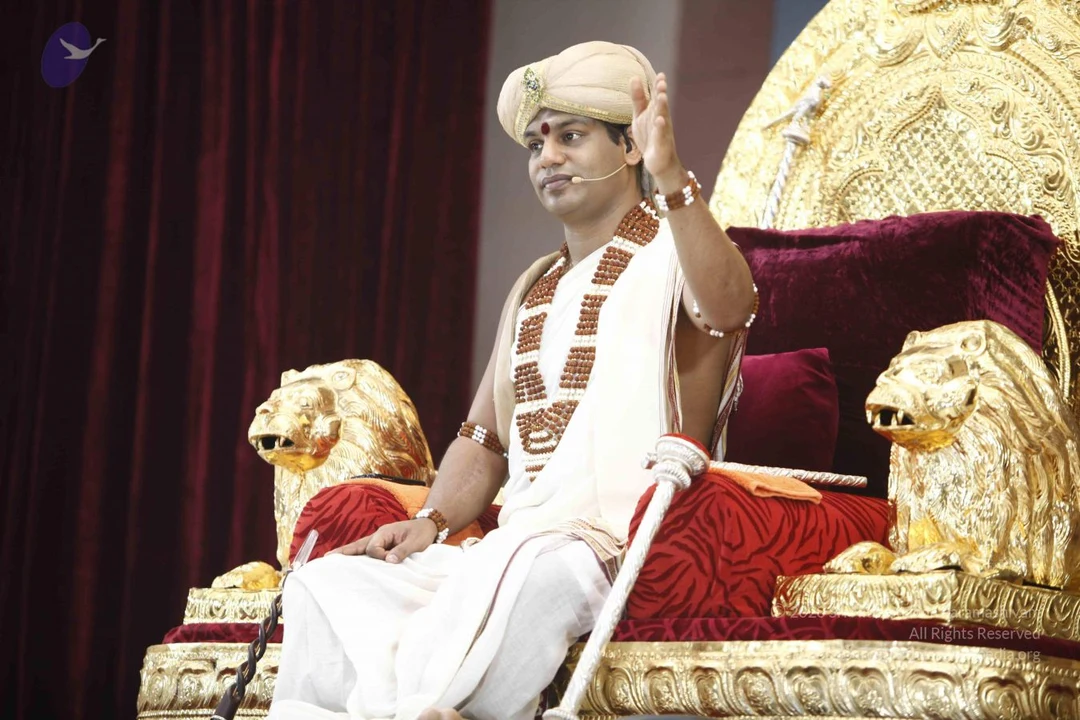
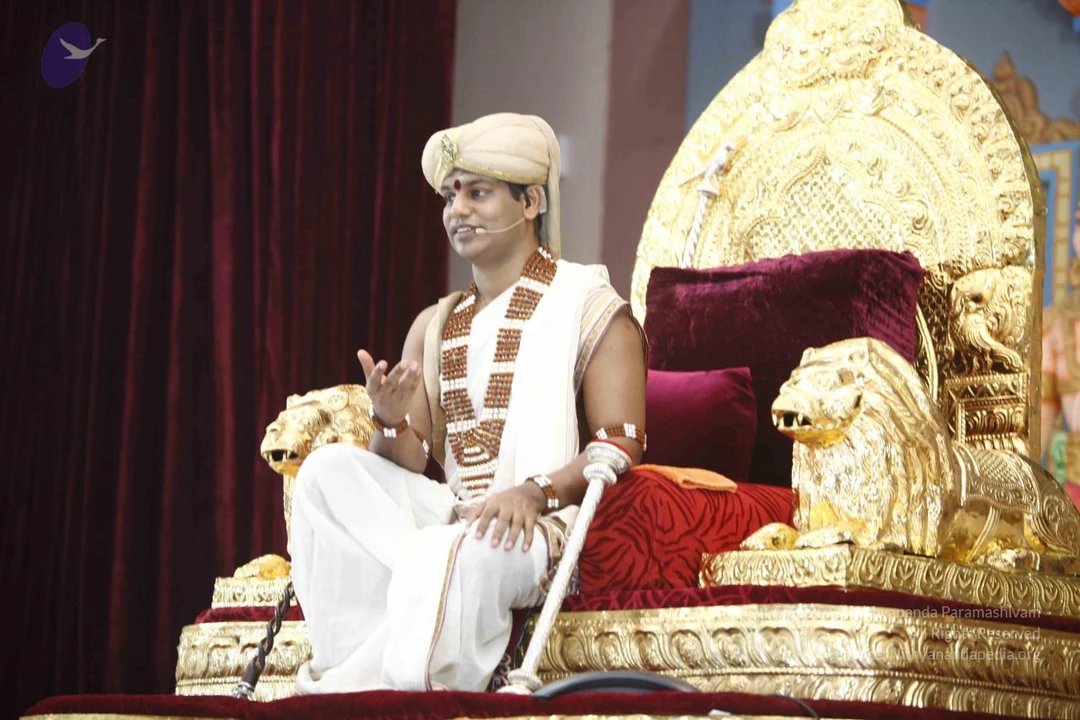
A man seated on an ornate gilded throne with a red velvet cushion, eyes closed and palms pressed together in namaste. He wears a cream turban with a jewelled ornament and a red bindi, a white dhoti-style garment with gold-bordered edges, and multiple strands of rudraksha beads across his chest and arms with white beaded bracelets. A small microphone is attached near his face, and a silver staff stands beside the throne. The gold throne carries lion carvings and a pale bird figure on a stand at the left. The appearance is consistent with the a person, a seated guru receiving devotion in a satsang setting, and the page indicates his presence at this event.A man seated cross-legged on an ornate gold throne with red velvet cushions and gold lion-head armrests, hands pressed together in anjali mudra with eyes closed. He wears a cream turban with a red bindi, a white dhoti-style garment, and a beaded rudraksha-style necklace with bracelets. Flanking the throne are a gilded lion-shaped throne base, a white fly-whisk handle on the left and a white staff on the right. Behind him is a painted four-armed deity murti and a dark doorway with hanging lamps. The figure's appearance with ornate ceremonial clothing, rudraksha-style beads and a turban on a gold throne is consistent with Swamiji (probable) seated for satsang.A man seated on an ornate gold-and-red throne with red velvet cushions, wearing a cream-beige turban with a jewelled brooch and a red bindi, white draped robes with a beige shawl, and multiple strands of rudraksha and white bead malas on his neck and wrists. He sits with hands clasped in his lap, head turned slightly to the side, with a small microphone clipped near his face. A red-and-green pillar and a silver-tipped staff are visible in the background.A man seated on a red velvet throne with gold carved backrest, wearing a beige turban with a jewelled brooch and a red bindi, a white dhoti and shawl, and multi-strand rudraksha and pearl malas with matching bracelets. He smiles and gestures with raised right hand, appearing to speak into a headset microphone during a satsang-style talk. Orange and blue decor is visible in the blurred background. Appearance-based cues (turban, rudraksha malas, white ceremonial dress, throne) are consistent with a person, though the face is not used for identification.A seated man on an ornate gold throne with red velvet cushions and a red-and-orange striped bolster, gesturing with his right hand while smiling. He wears a peach-coloured turban with a jewelled brooch, a red bindi, white draped clothing, a multi-strand rudraksha and white bead necklace, and matching bead bracelets. A small microphone is visible near his face. The background shows colourful decorative panels. a person: the turban, bead malas and throne are distinctive ceremonial cues, so this is a.A man seated on an ornate gold throne with red velvet cushions speaks with his right hand raised, palm open, during a satsang. He wears a cream turban with a jewelled ornament, a red dot on his forehead, a headset microphone, a white dhoti and shawl, and layered rudraksha and white bead malas with matching bracelets. Behind him stand colourful pillars in orange, red and green, a golden lion sits at the left edge, and a silver staff rests on the right.

Dial-The-Avathar

5 photosSource gallery
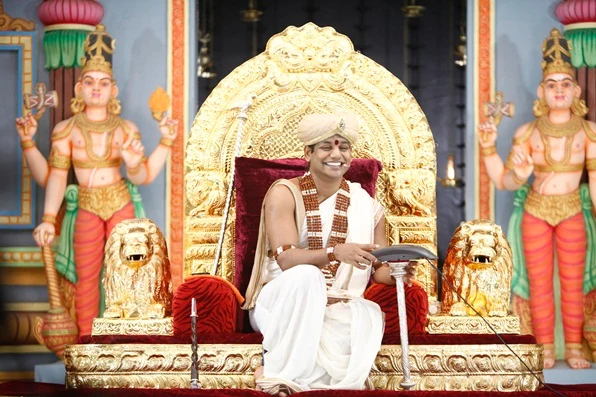
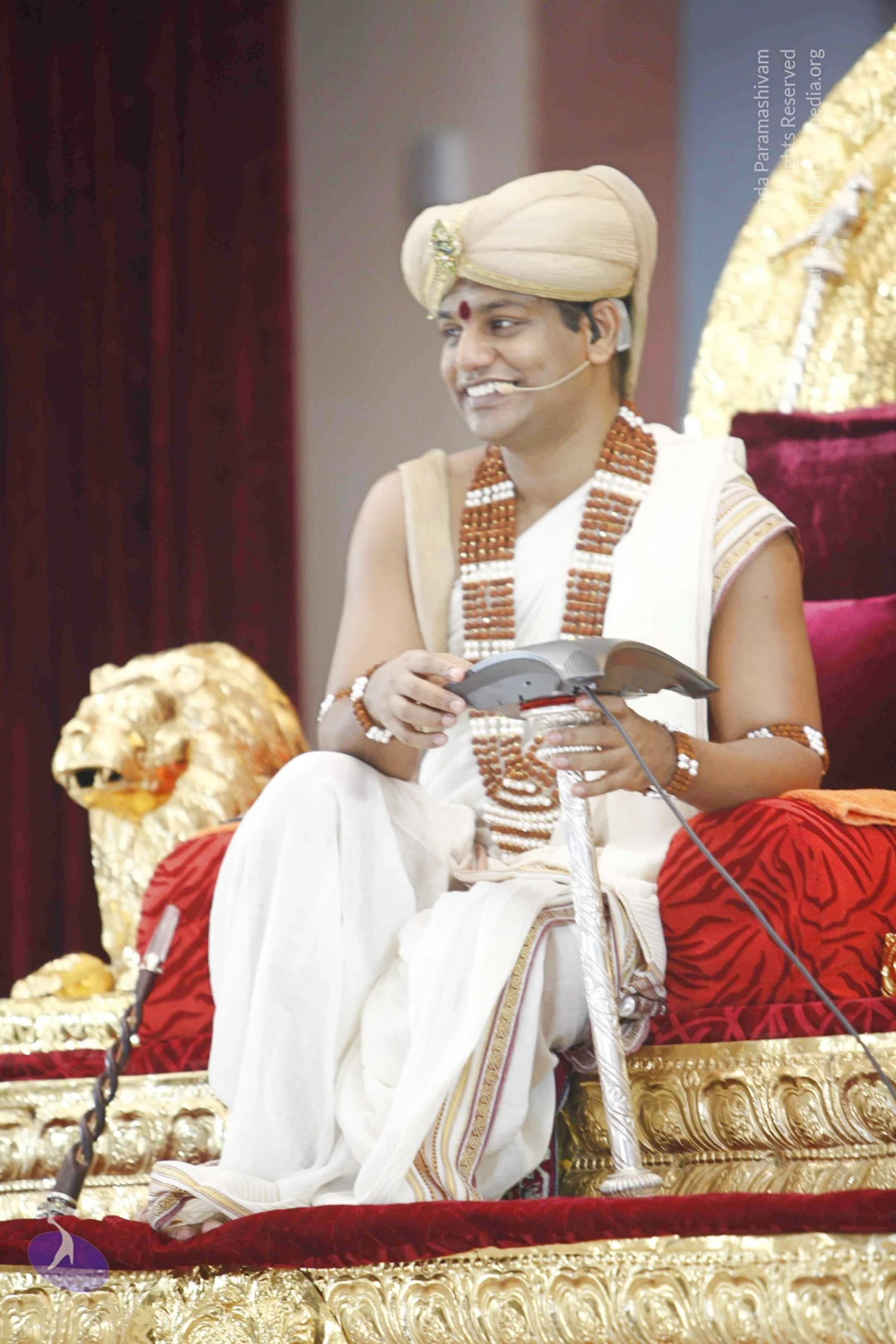
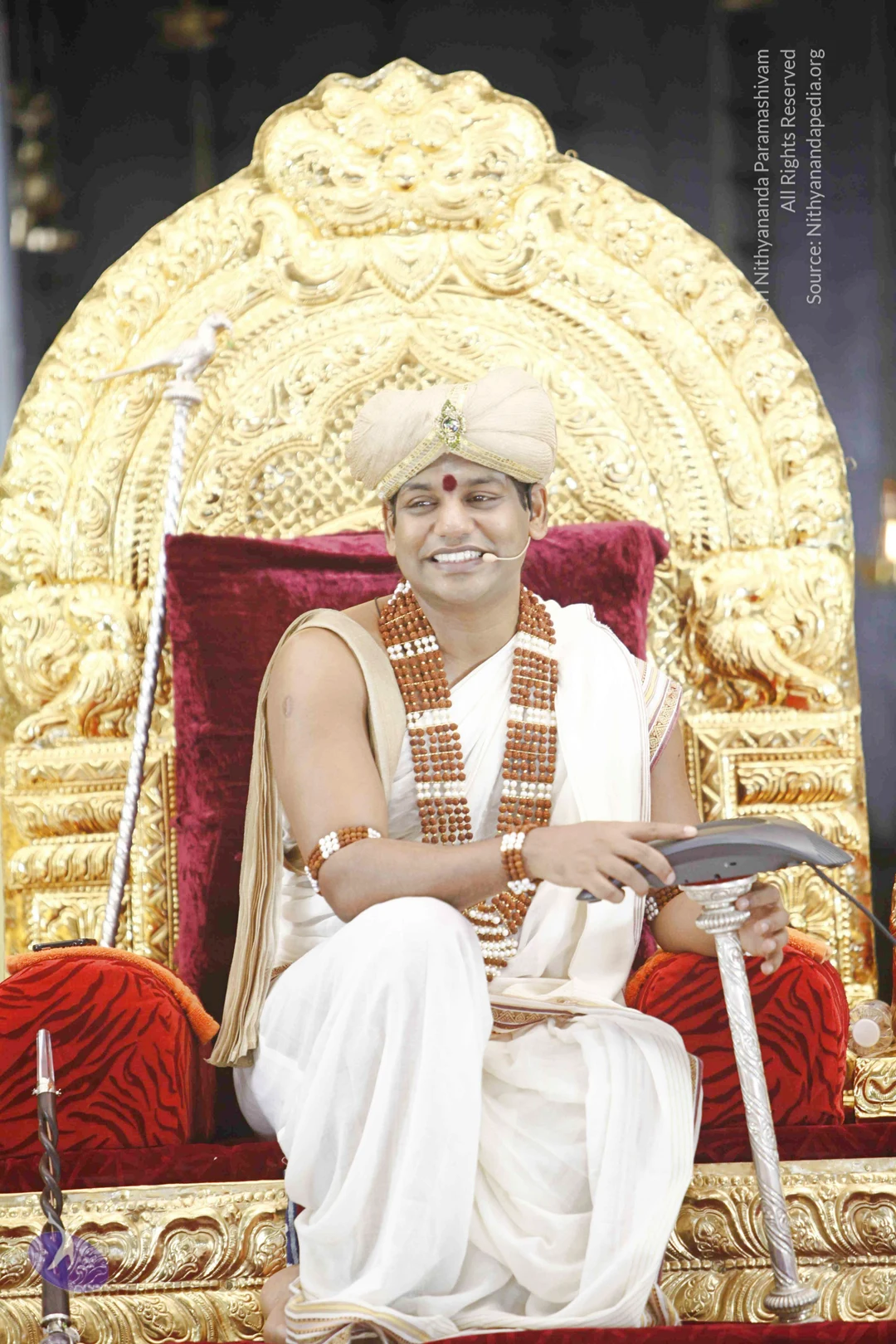
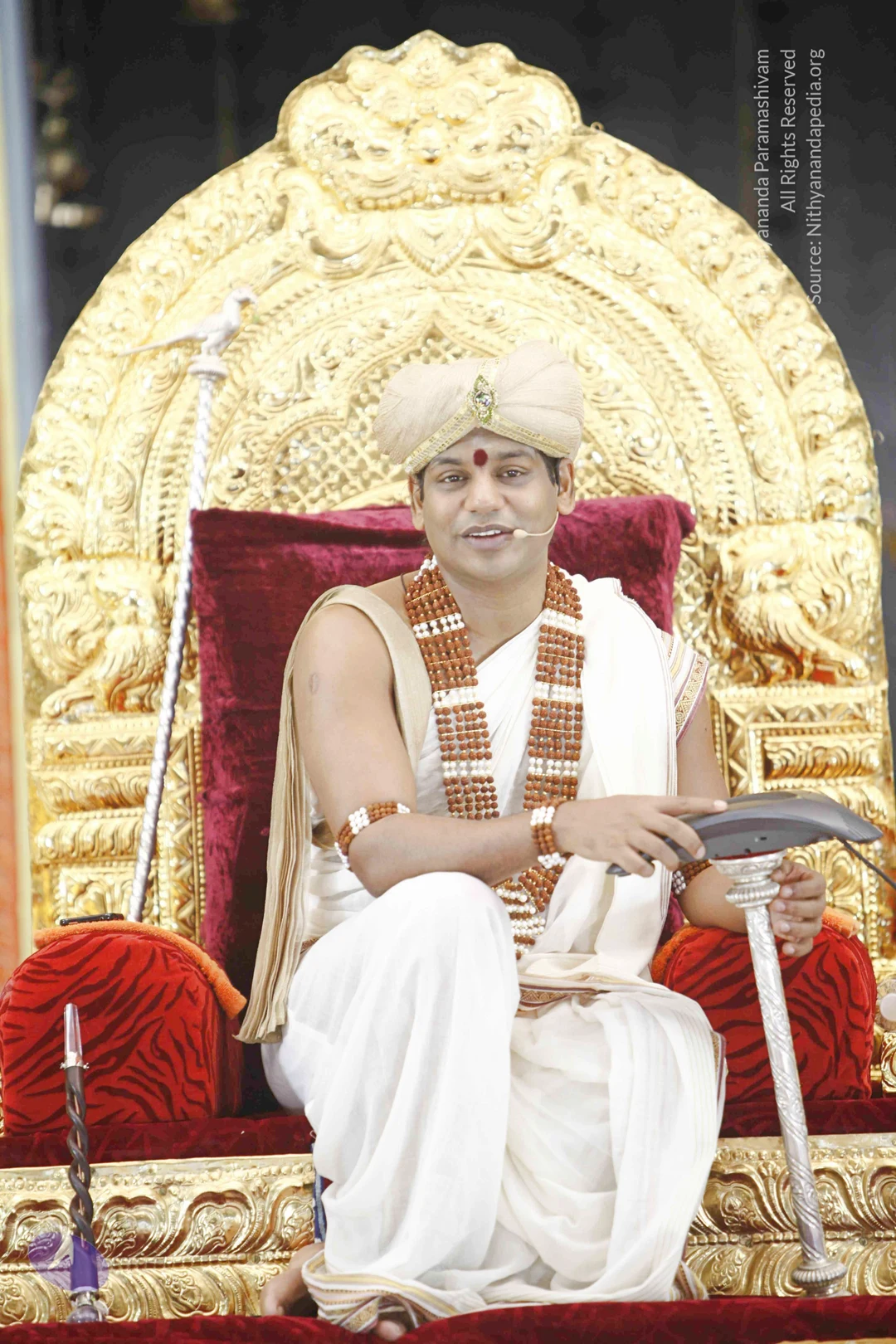
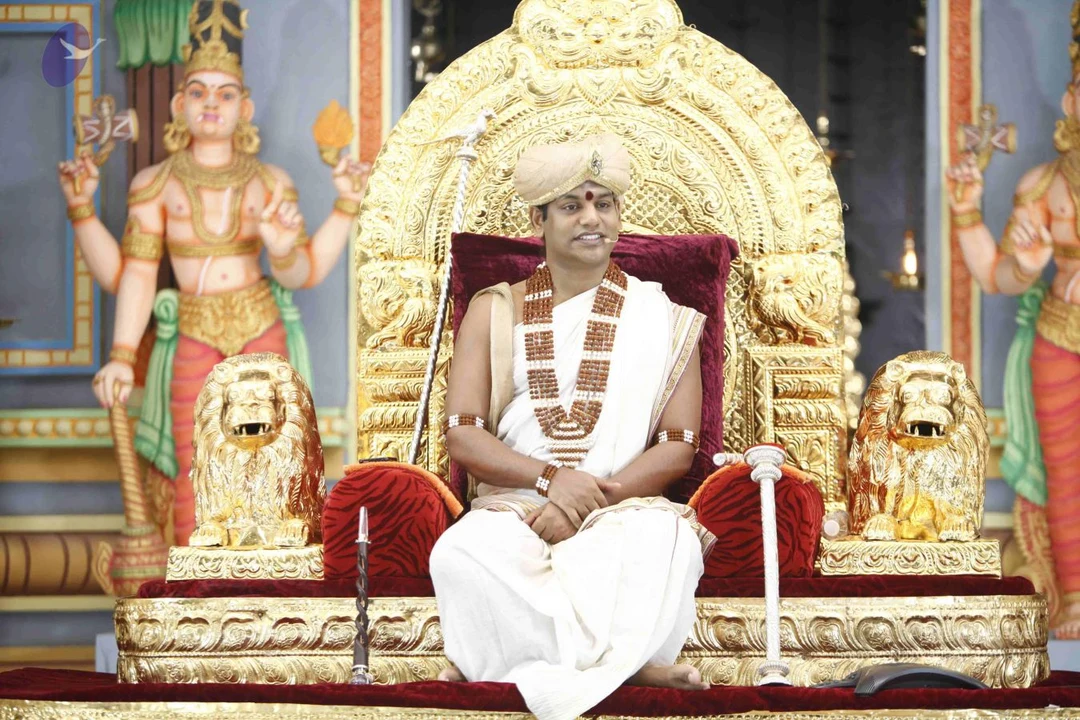
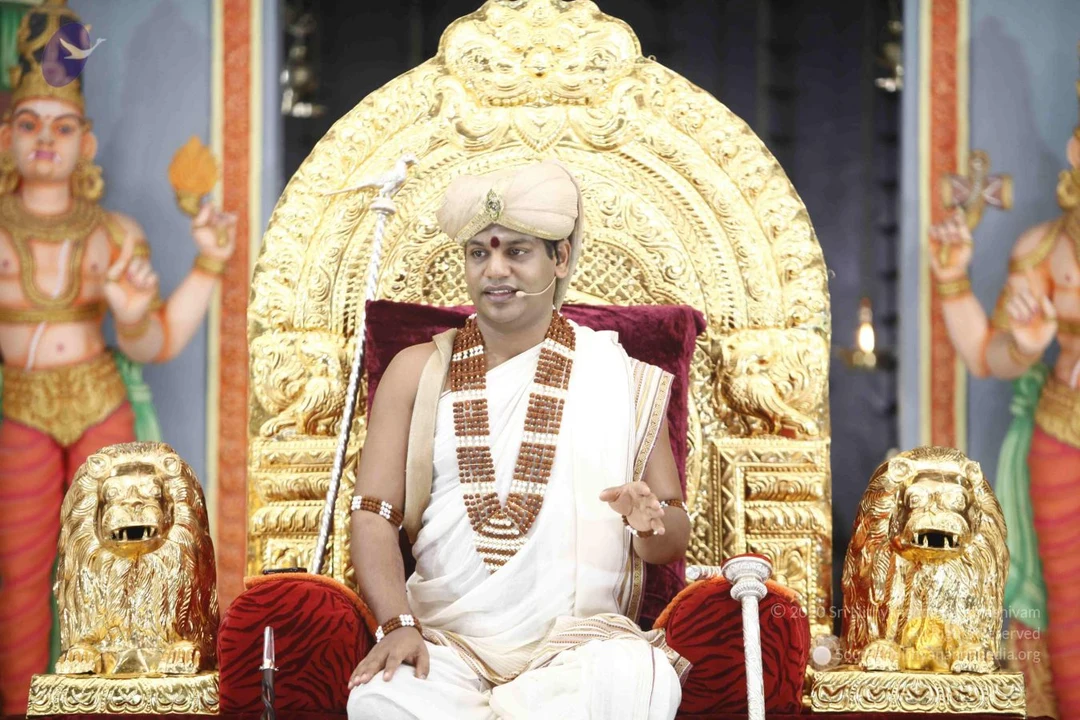
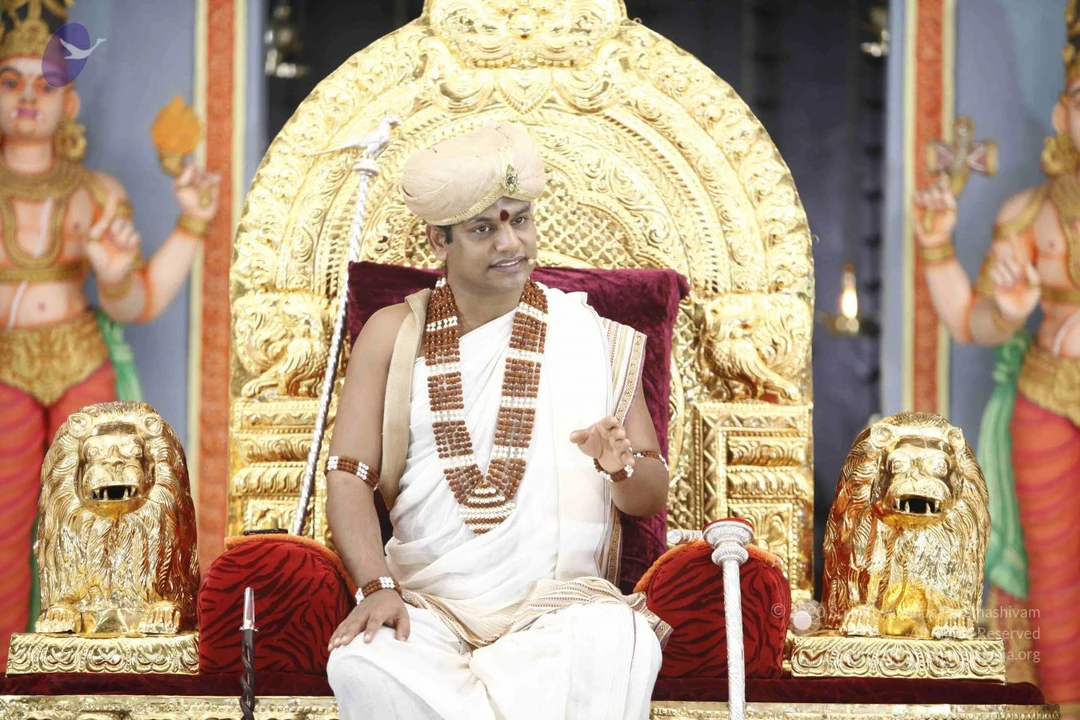
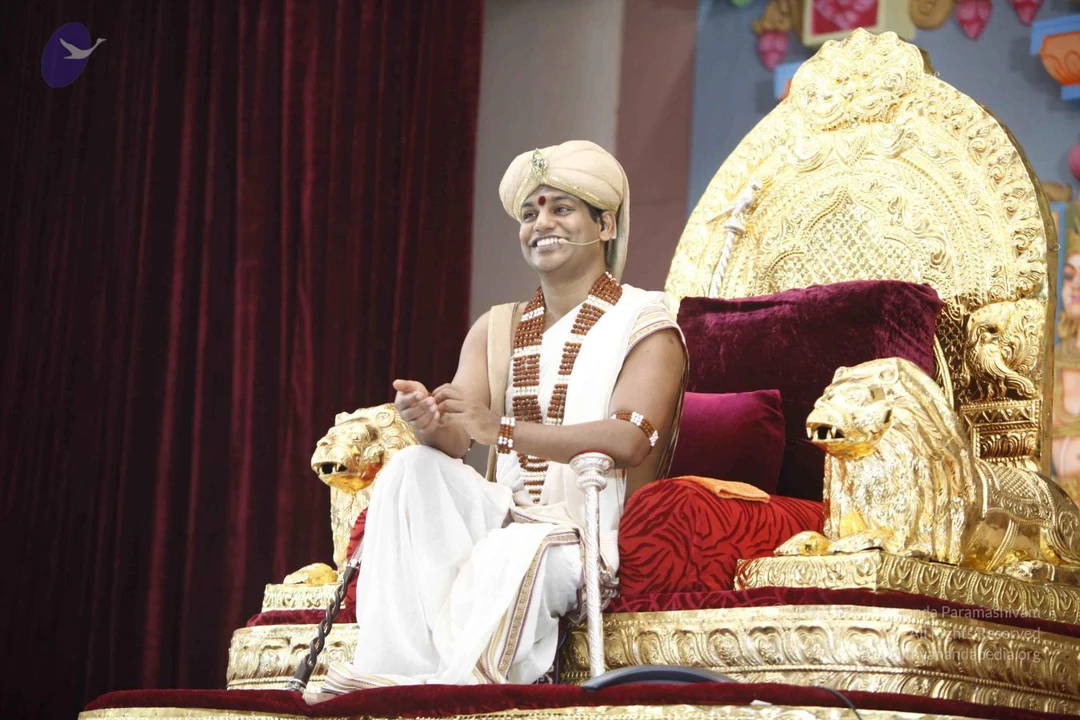
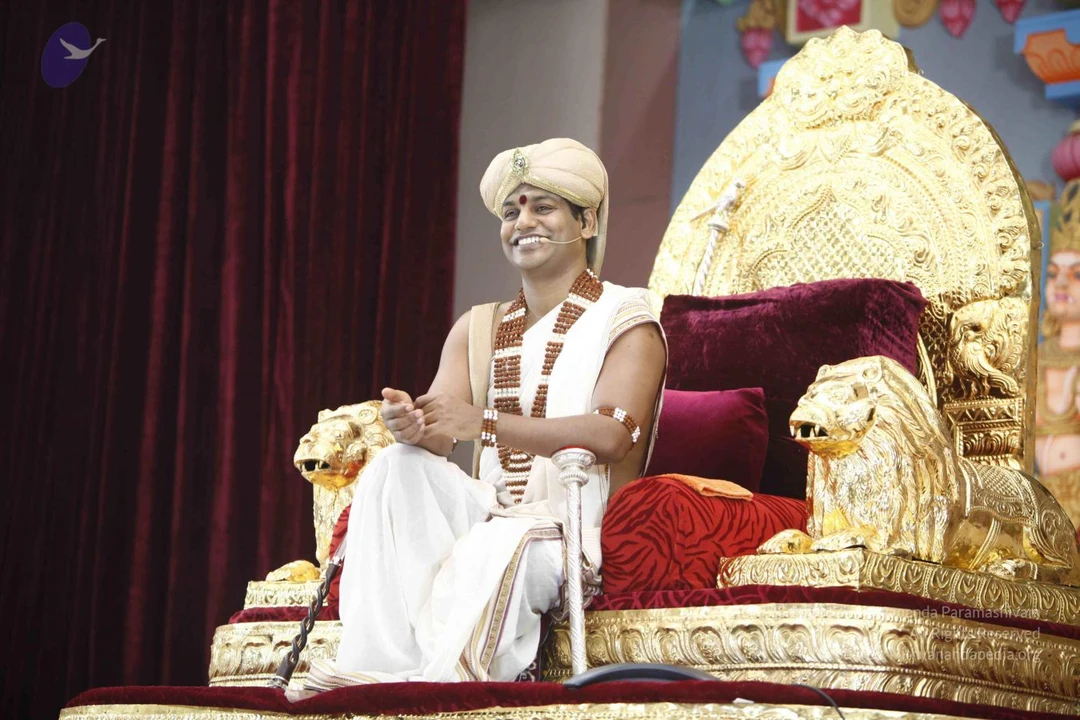
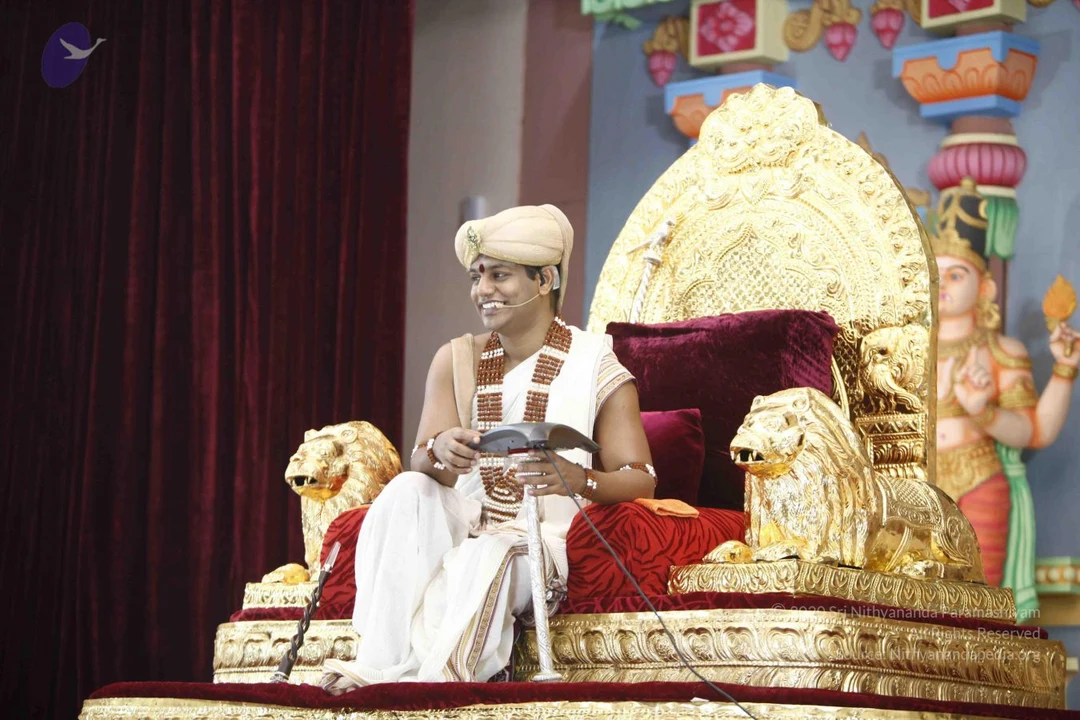
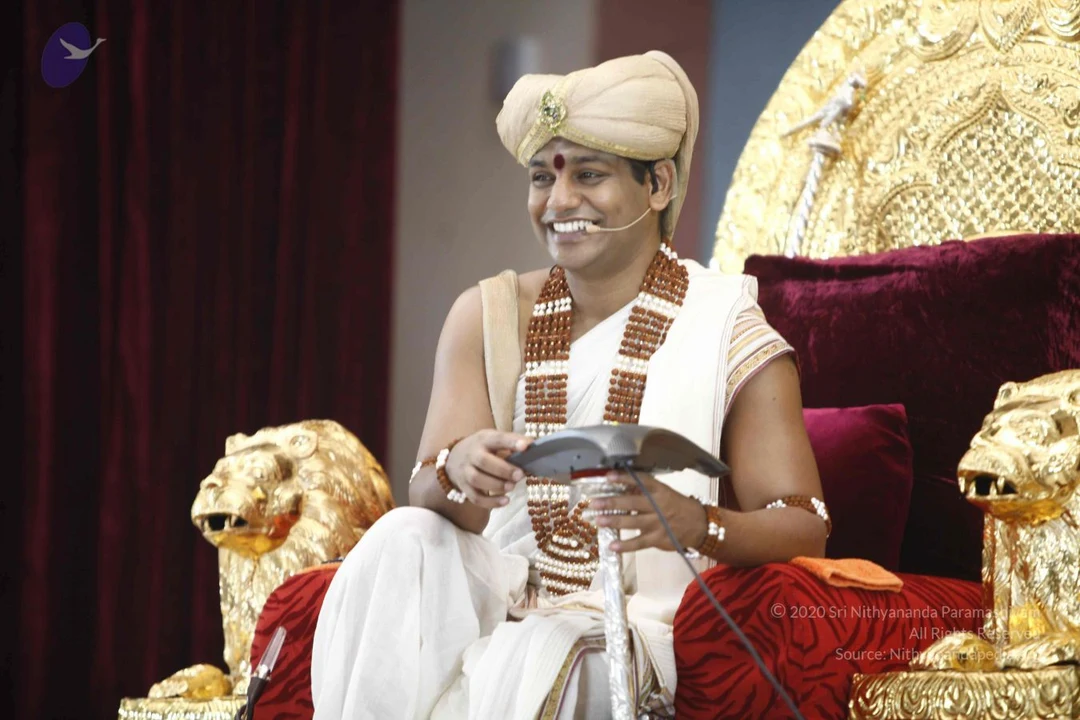
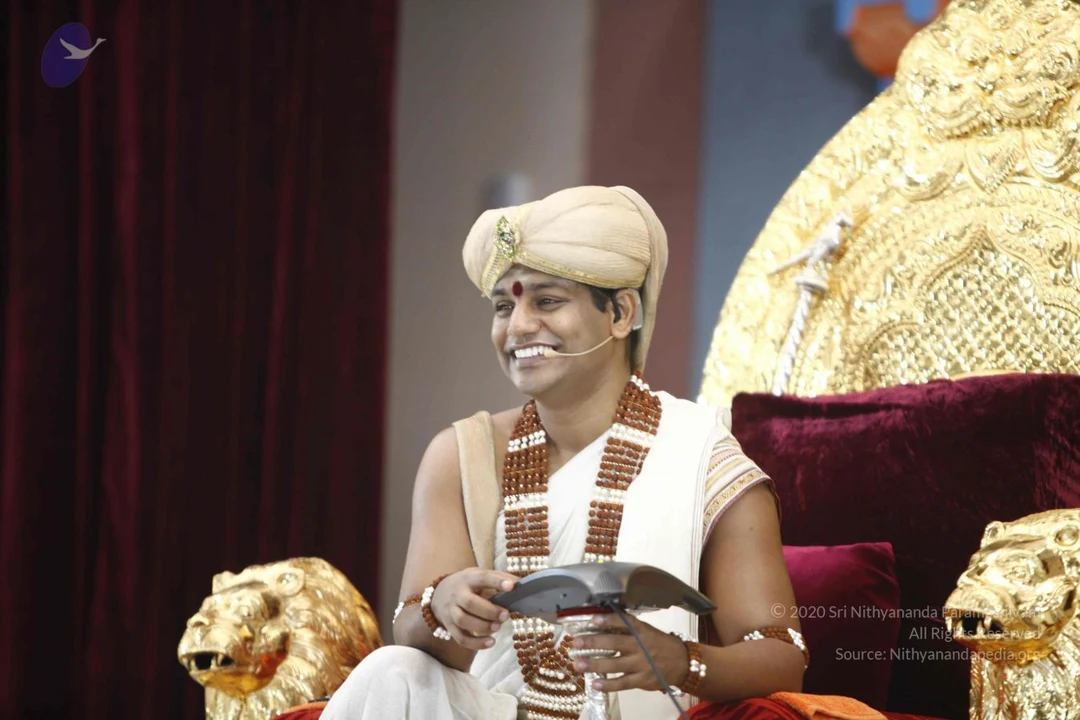
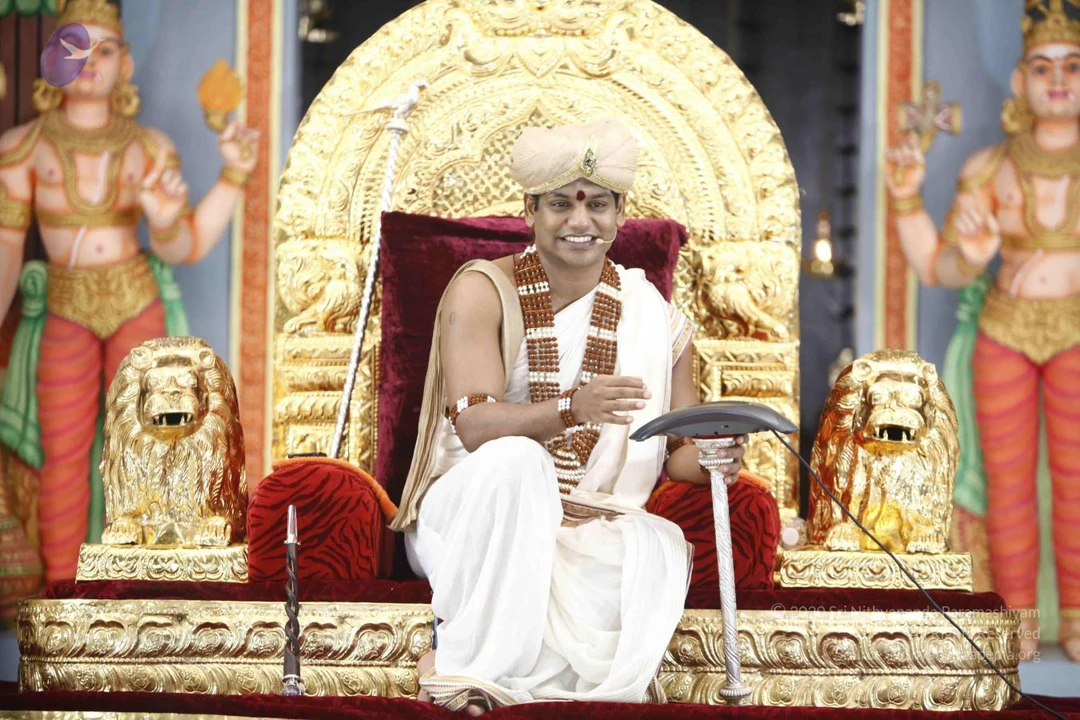
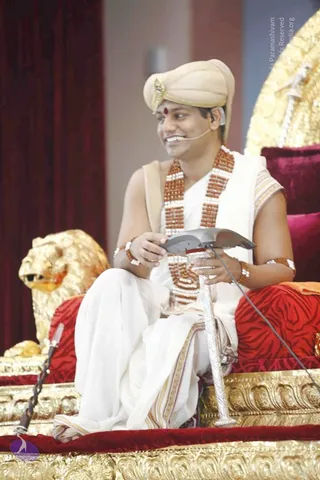
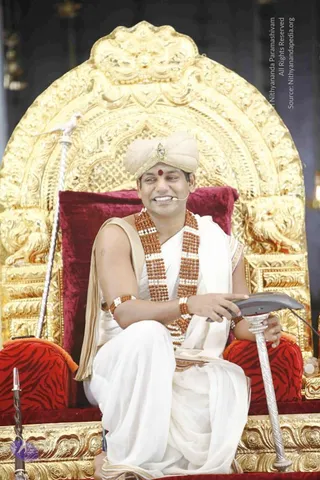
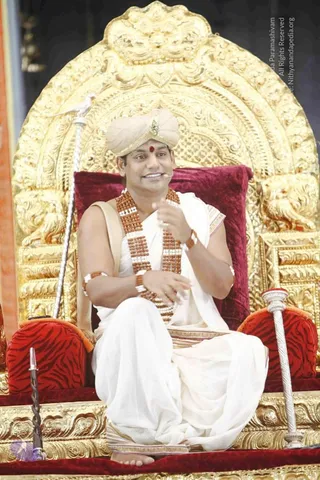
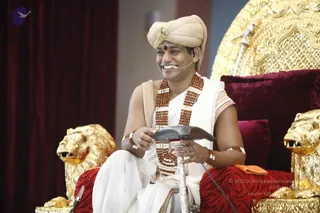
A smiling man sits on an ornate gold-and-red throne with a gold lion armrest, wearing a cream turban with a jewelled brooch and a red tilak on his forehead. He wears a white dhoti and shawl with gold border, multiple strands of rudraksha and pearl beads around his neck and arms, and holds a silver-grey microphone-style device on his lap while a headset mic is attached to his face. Red velvet cushions and a red curtain form the backdrop. Appearance-based candidate: Swamiji (probable), seated on the throne with rudraksha malas, a turban and saffron-white ceremonial dress.A man in a cream-coloured turban with a jewelled ornament and a red bindi sits on an ornate gilded throne with a red velvet cushion and carved lion armrests. He wears white ceremonial dhoti and shawl, a multi-strand rudraksha mala with white beads, and rudraksha bracelets, and holds a silver-tipped staff-like object while smiling, with a headset microphone clipped to his face. A small white bird perches on a silver rod beside the throne. Behind him is a dark backdrop with gold decorative fittings. Swamiji (probable): the seated man has a turban, rudraksha malas and ceremonial white dress on a throne, which are the appearance cues for this label.A seated man in white ritual dress sits on an ornate gold throne with a red velvet cushion and tiger-striped red armrests, speaking into a headset microphone. He wears a cream turban with a jewelled ornament, a red bindi, a long rudraksha and pearl mala, bracelets, and a white dhoti with a beige shawl. He holds a silver staff topped with a bird figure, and a gold-carved arch rises behind him.A man seated on an ornate gilded throne with a plush crimson cushion and red tiger-striped armrests, speaking into a headset microphone with one hand raised in gesture. He wears a beige turban with a jewelled ornament, a red bindi, a white dhoti and shawl, and multiple strands of brown rudraksha beads with white beads. A small white bird figure sits atop a silver-topped staff beside the throne. The throne has elaborate gold carved lion and floral motifs.A seated man with eyes closed and palms pressed together in namaste sits on an ornate gold throne with a red velvet cushion and tiger-striped red armrests. He wears a cream turban with a jewelled ornament, a red bindi, a white dhoti with gold-edged border, and multiple strands of rudraksha and white bead malas. A small headset microphone is visible near his face. A silver staff rests beside the throne and a gold lion figure decorates the throne back.

Sarva-Darshan

5 photosSource gallery
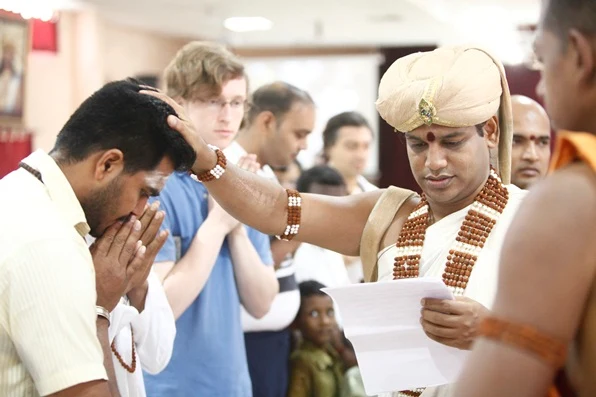
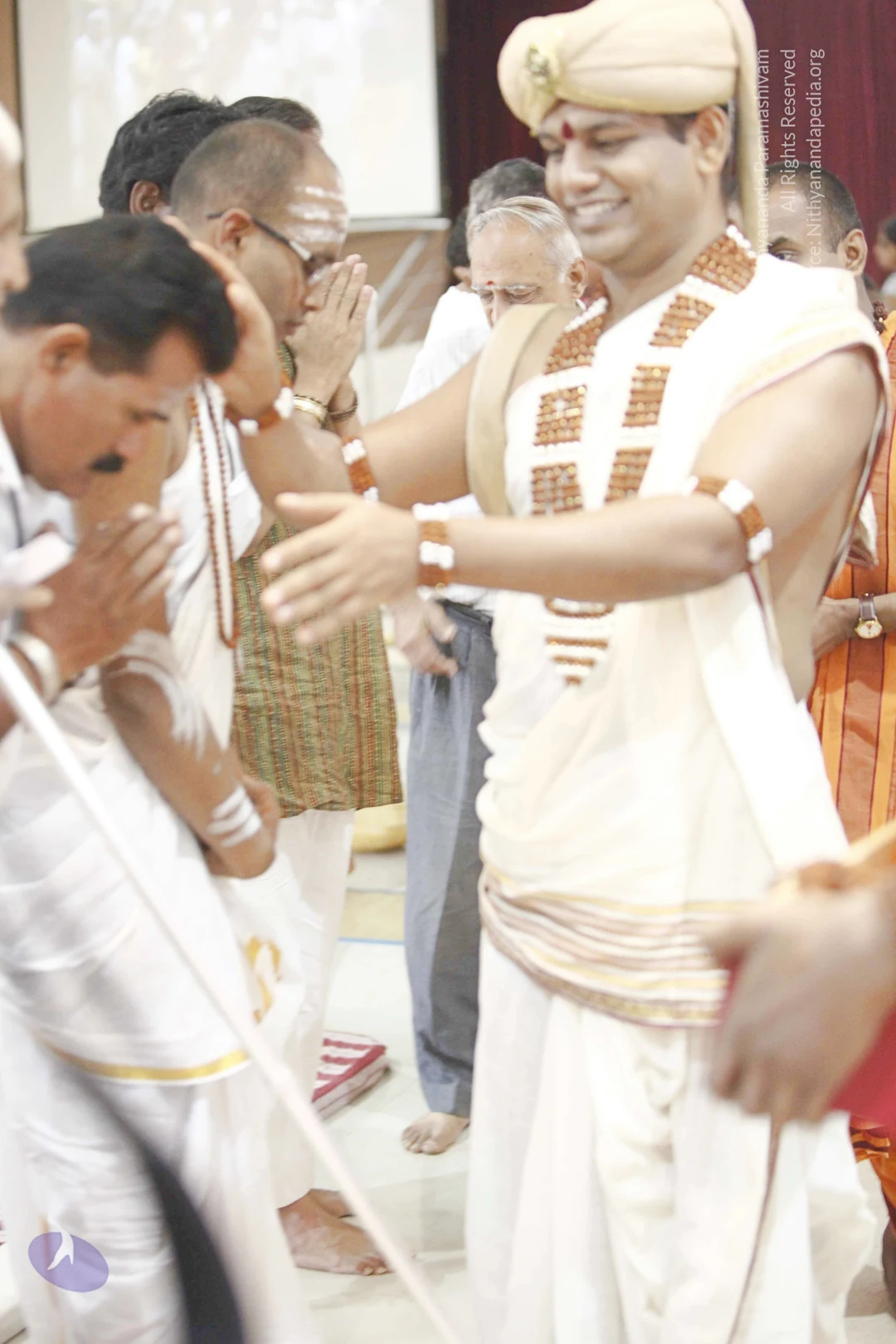
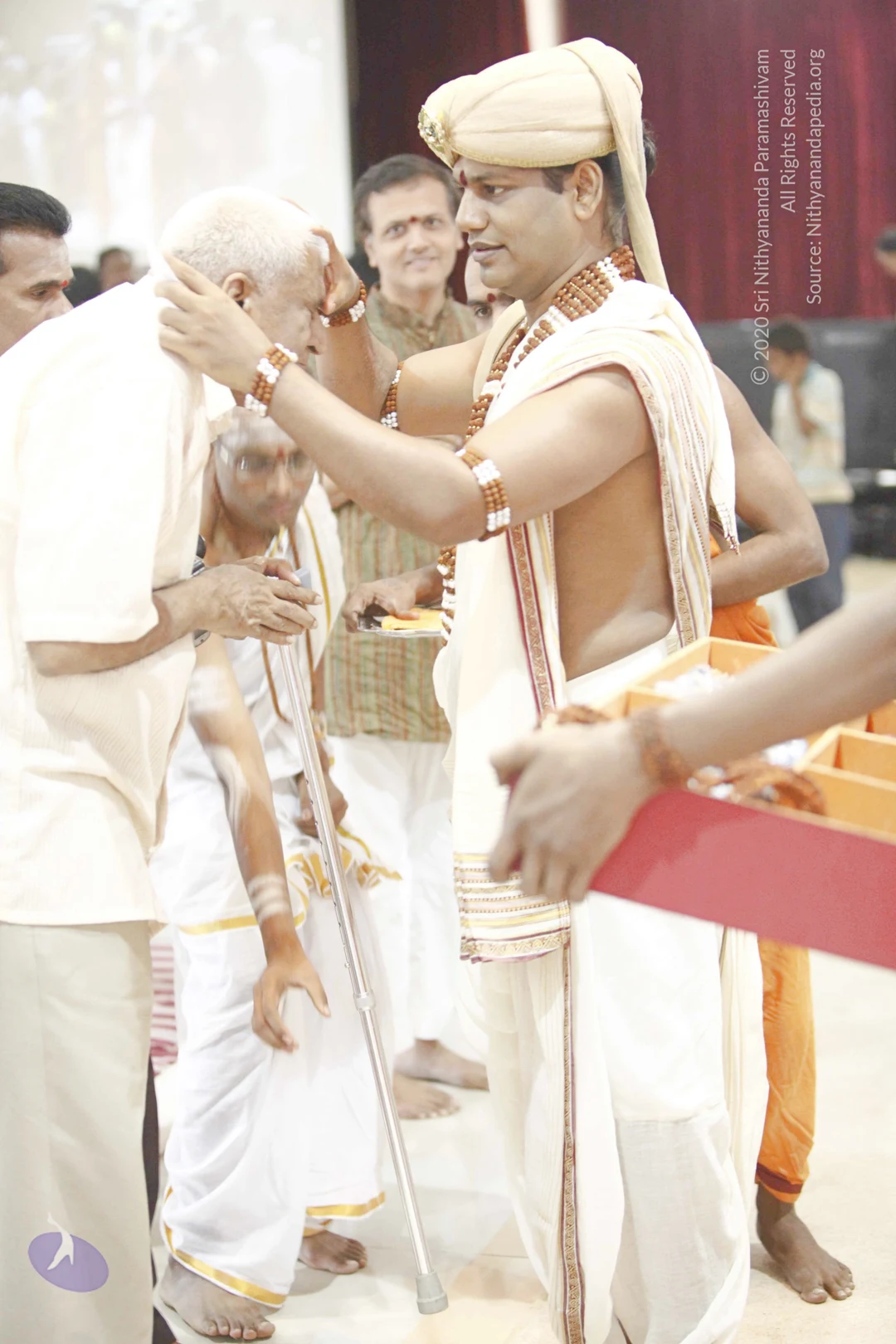
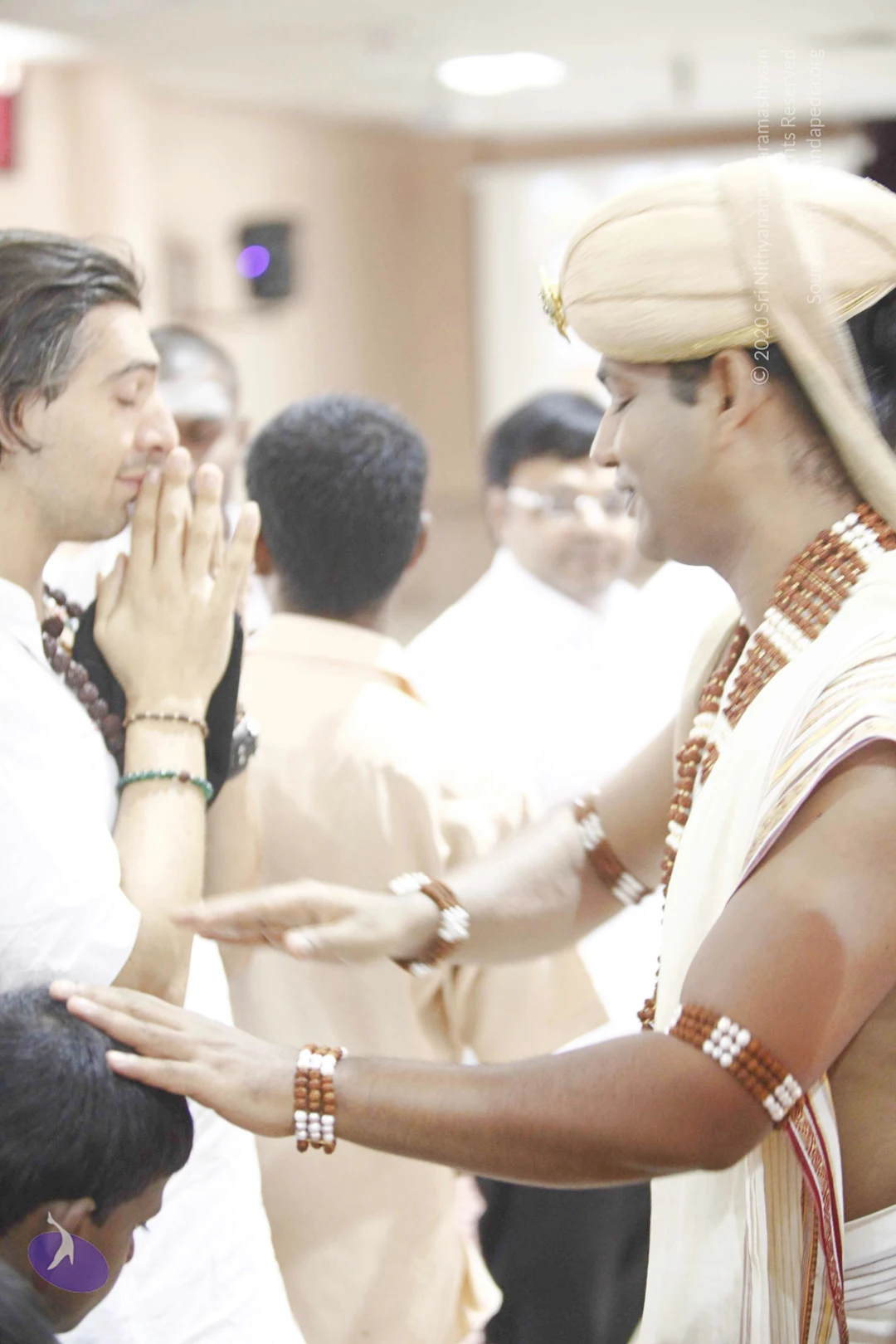
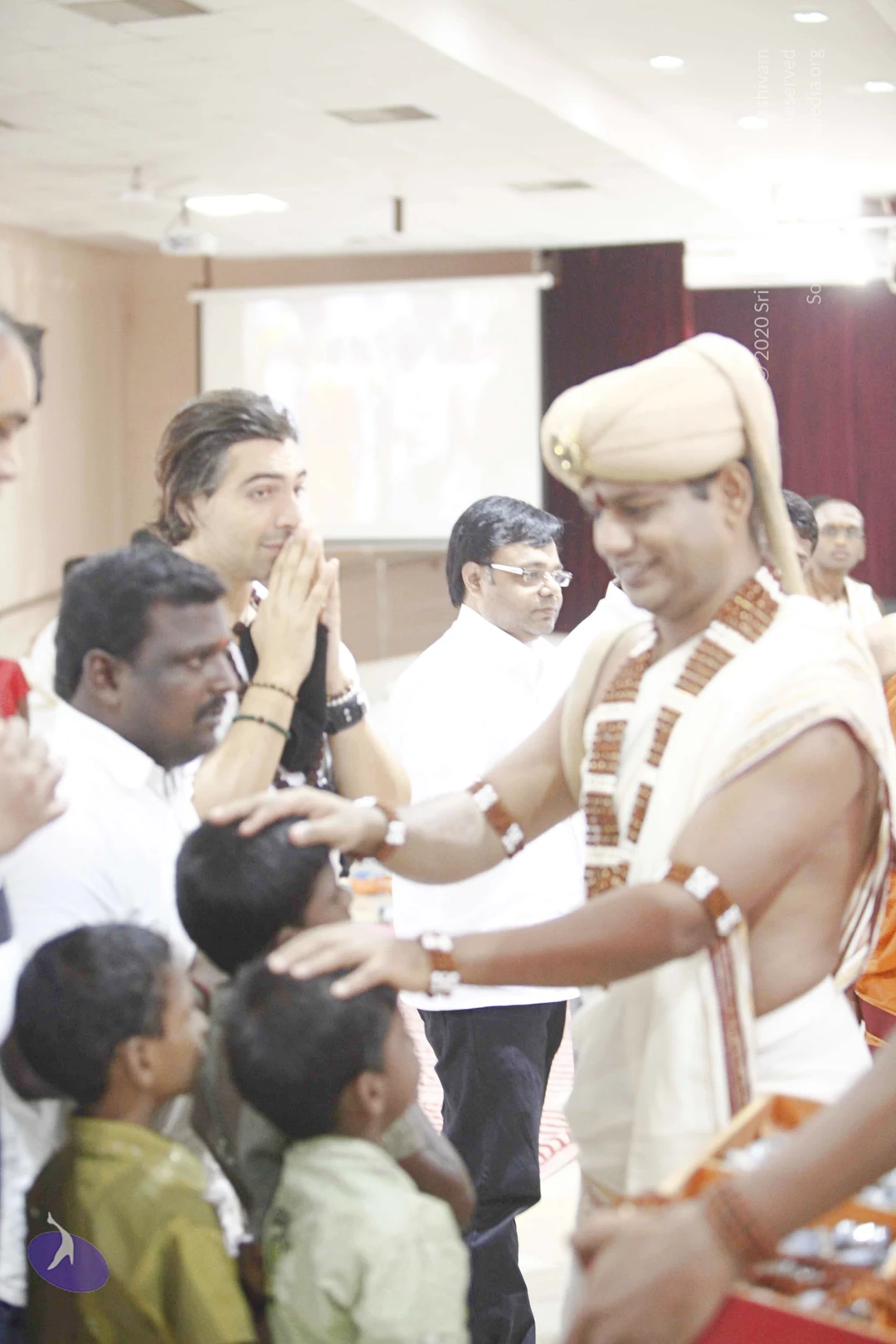
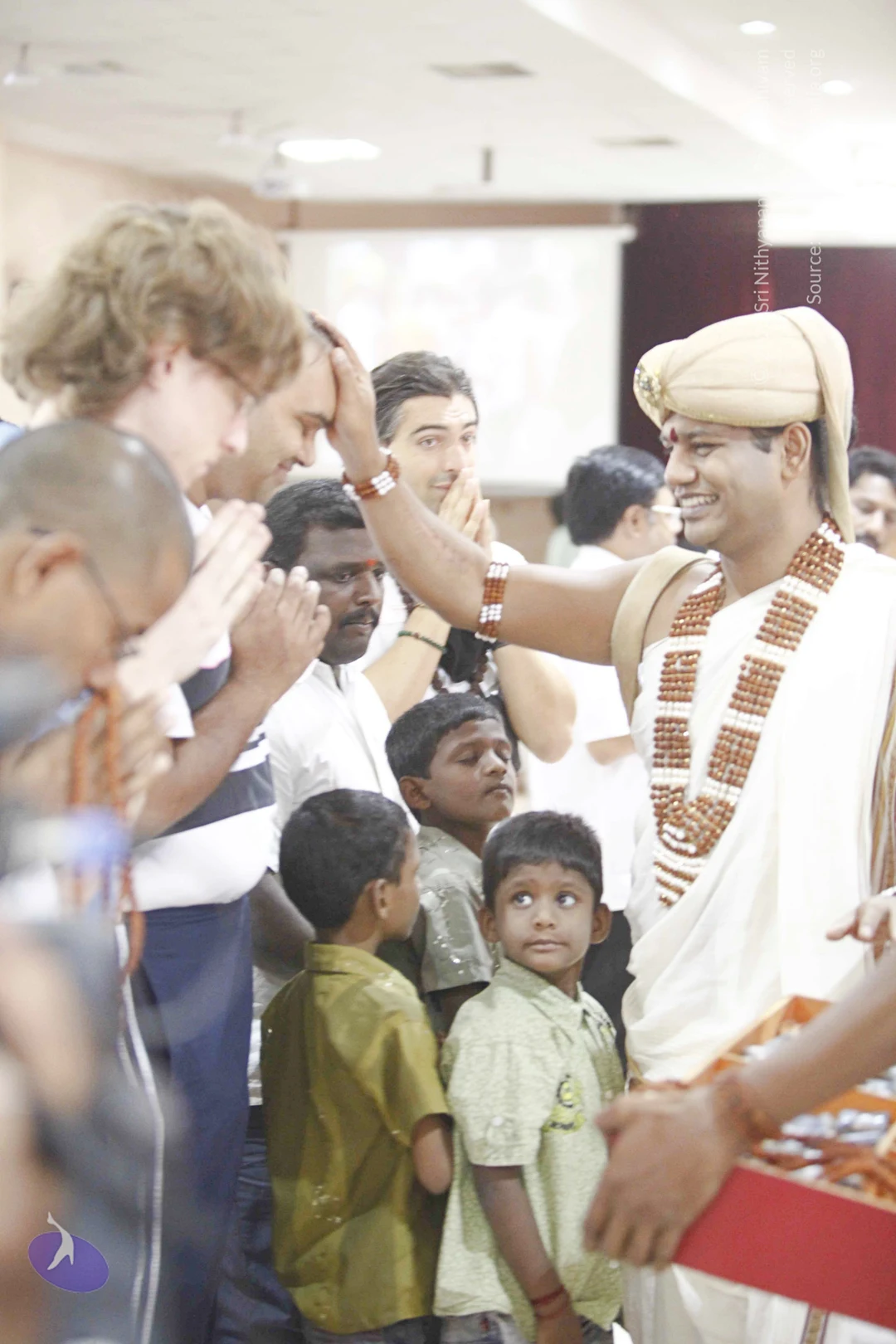
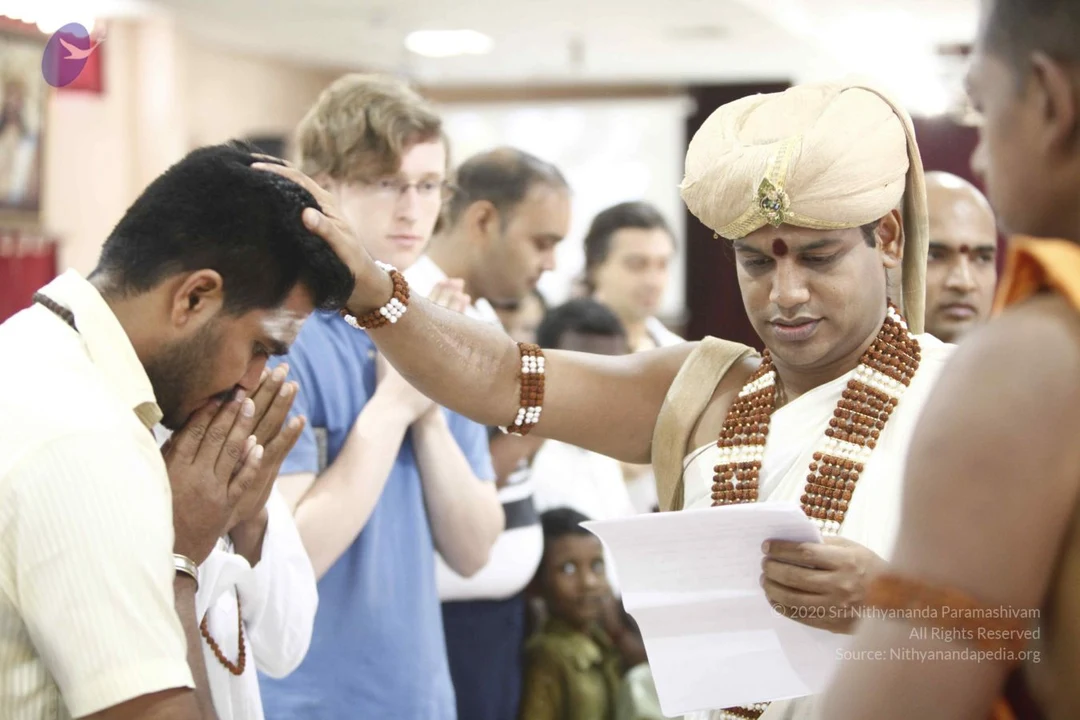
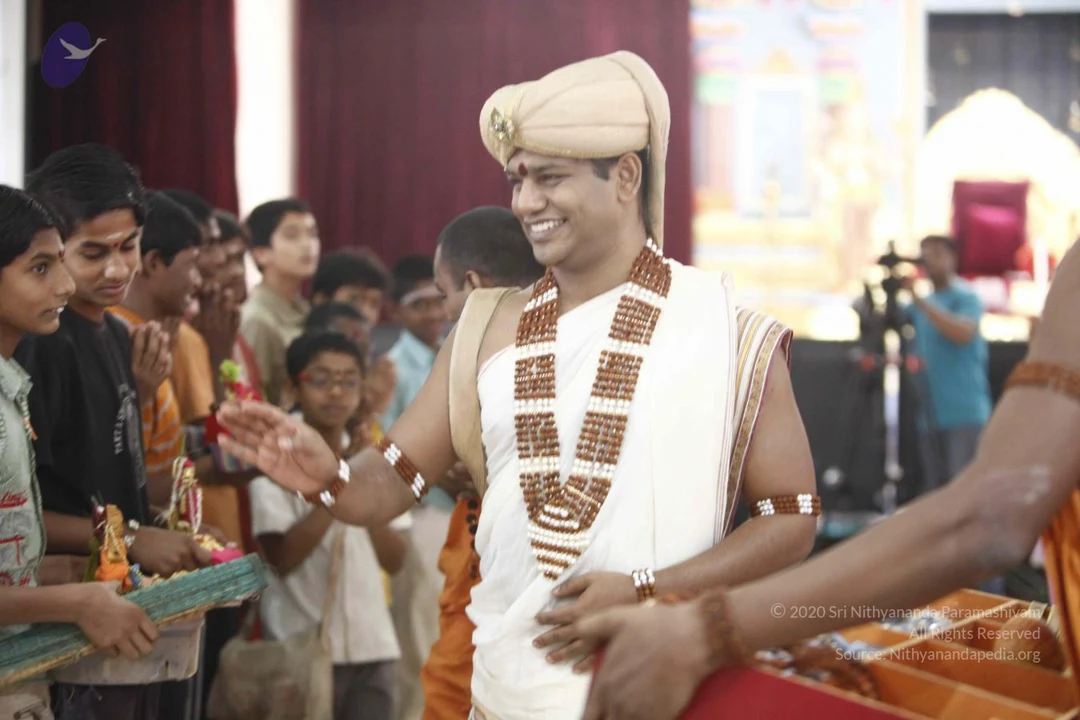
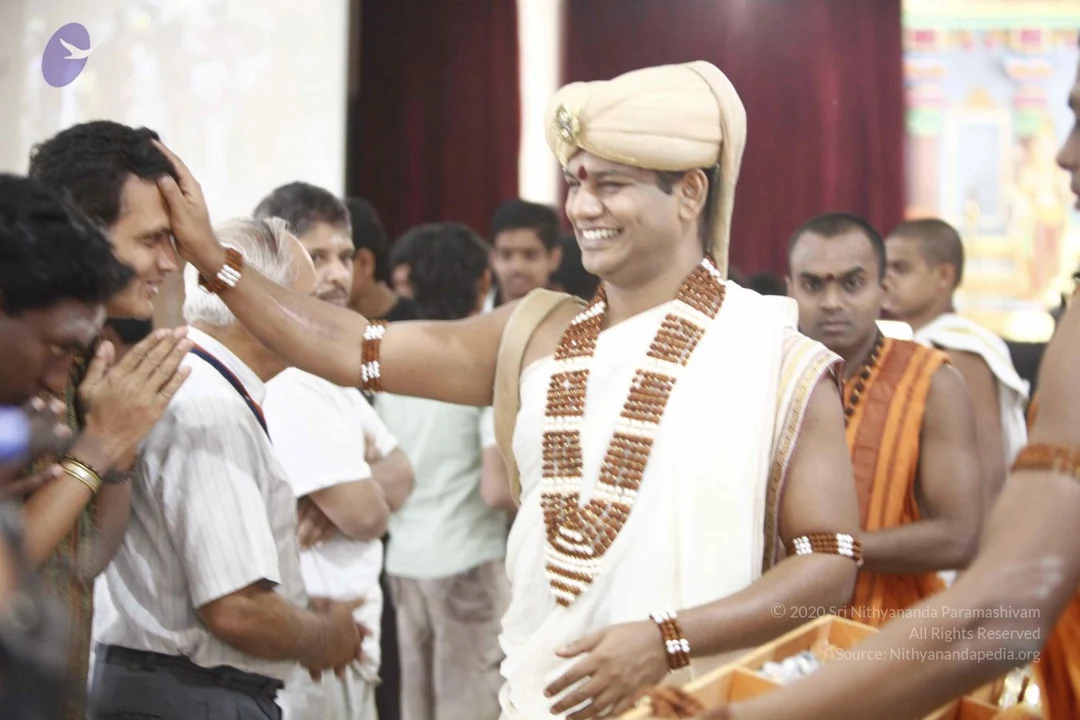
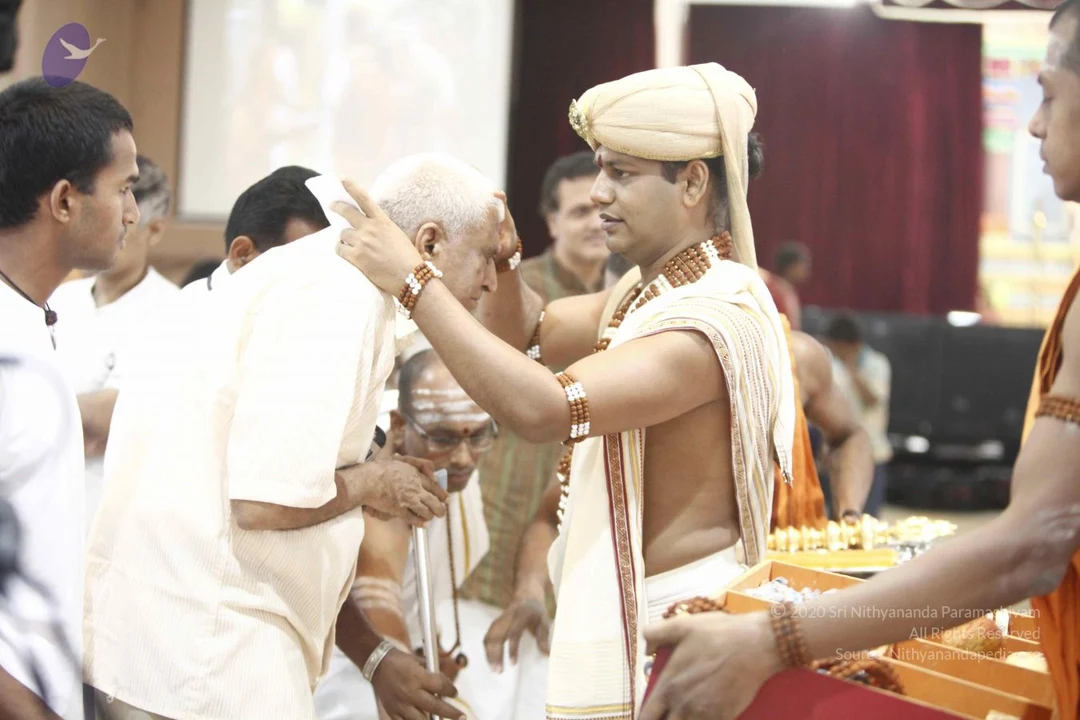
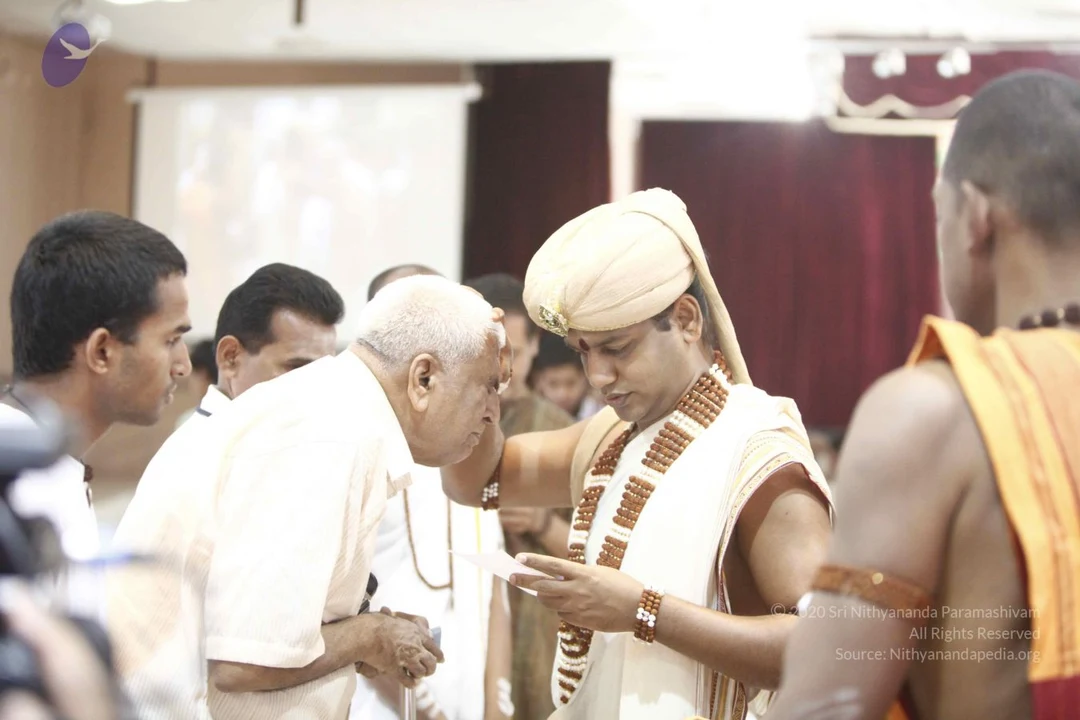
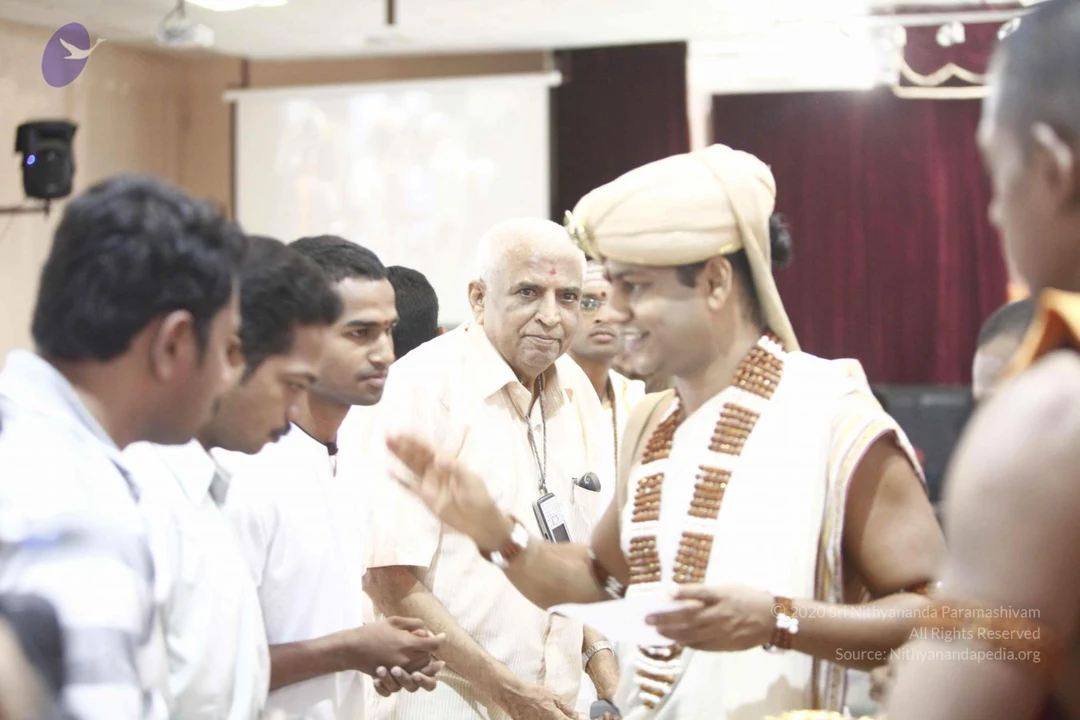
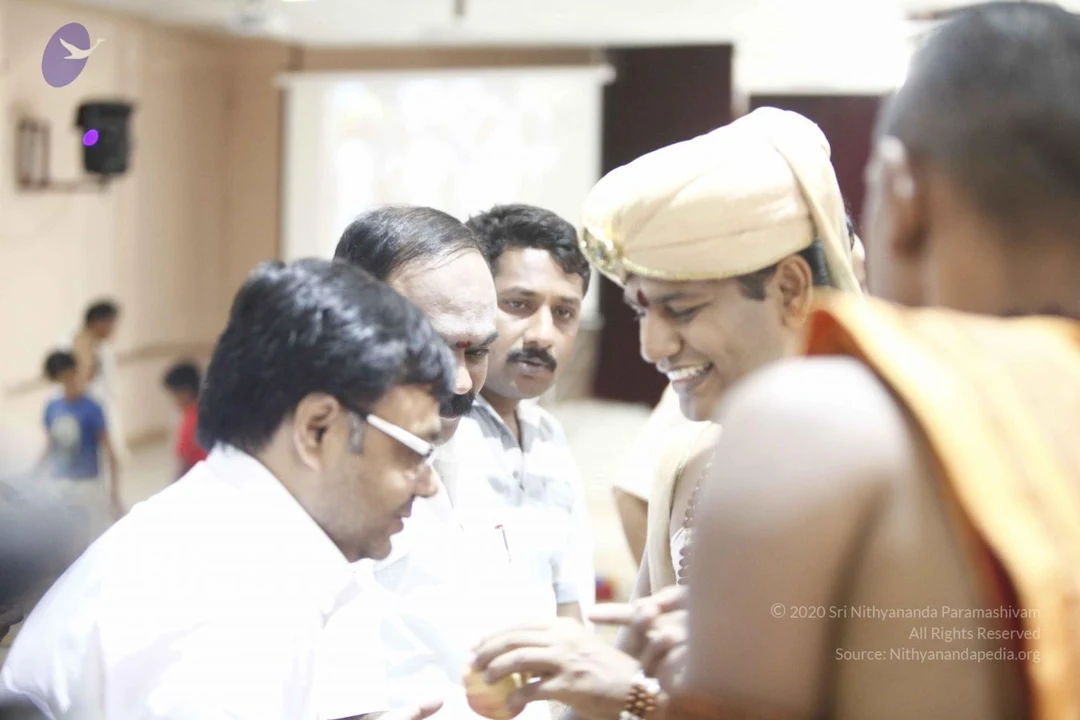
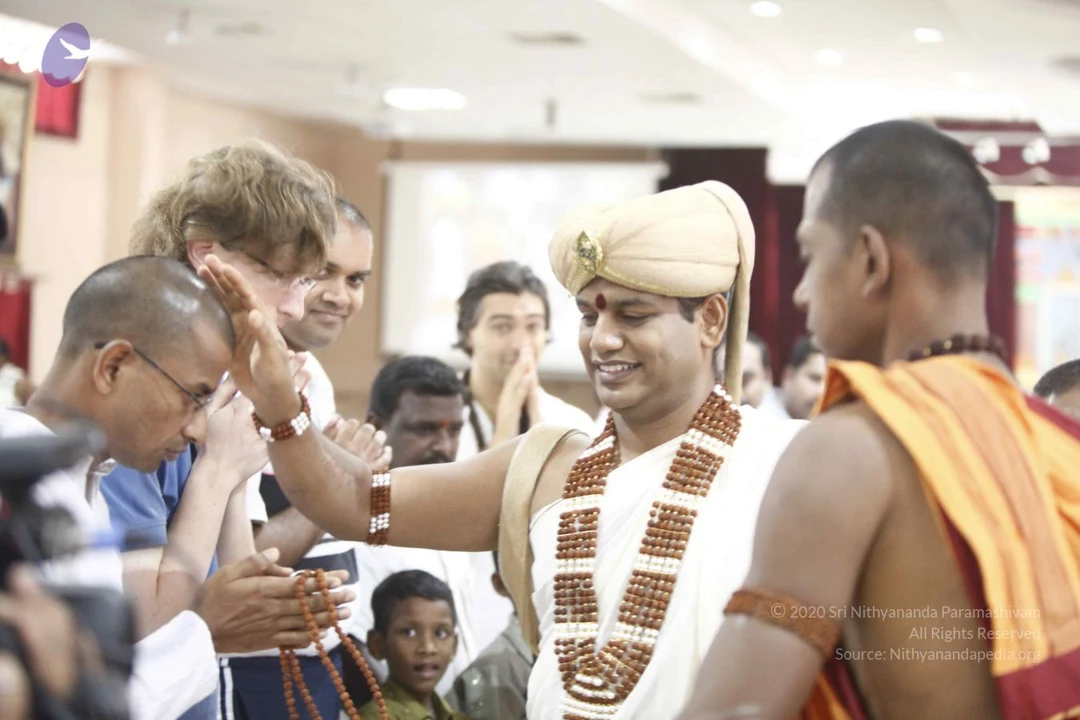
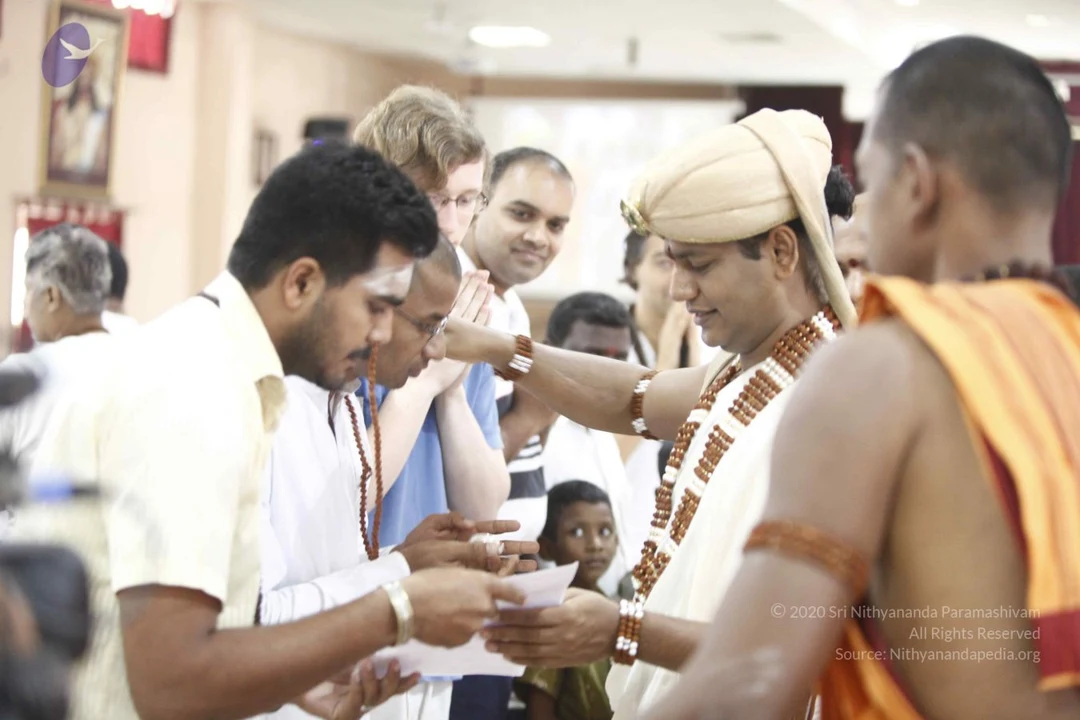
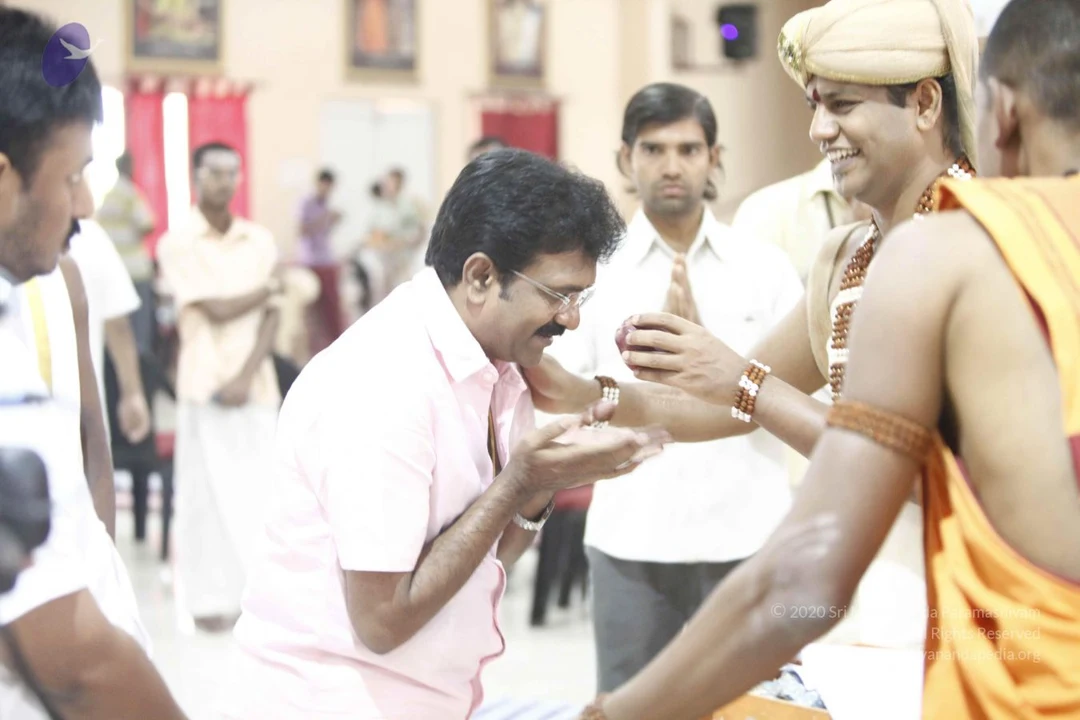
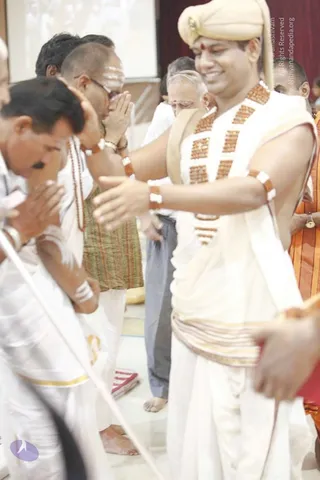
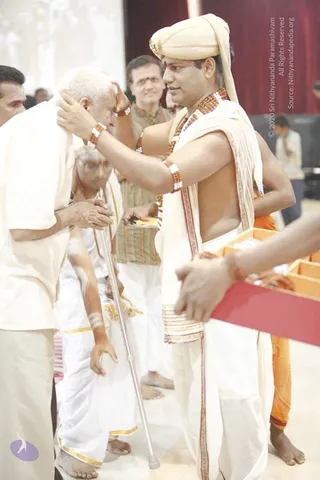
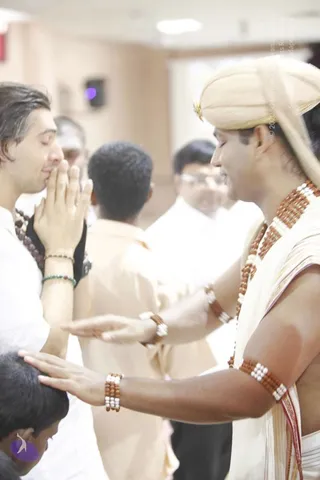
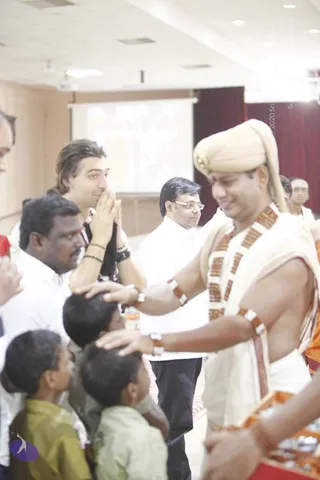
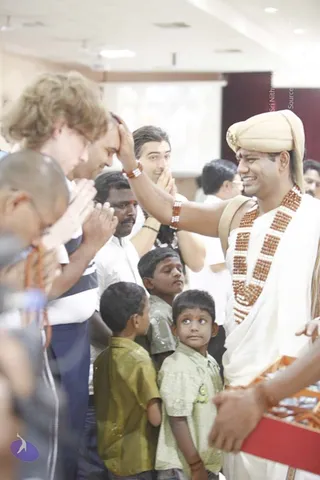
Photograph of a smiling man in a cream turban with a red tilak, wearing a white dhoti and shawl with gold-bordered edges and a thick multi-strand necklace of rudraksha-style beads, with matching beaded bracelets on his wrists, extending his hand in blessing toward devotees. Nearby, a man in white with white sacred markings on his forehead and arm joins his palms in namaste, another devotee bows with hands pressed together, and an older man in white stands behind. Other people in white and saffron clothing appear in a hall with a screen on the wall. The beaded ornamentation and turban match the clothing cues associated with Swamiji (probable) in the central figure.A photograph of a ritual blessing in an indoor hall. A bare-chested man in a cream turban with a red bindi, wearing a multi-strand rudraksha mala and rudraksha bracelets, and a white dhoti with a striped shawl, places his right hand on the head of an older man in a white shirt and cream trousers who bows forward. A man in white dhoti with gold border stands behind, a man in a patterned kurta is nearby, and a red tray with offerings is in the foreground. Red drapes hang behind.Photograph of a blessing moment indoors in a bright hall. A man in a cream turban and cream striped shawl, wearing multiple rudraksha malas and beaded bracelets, places his right hand on the head of a bowing person in the lower left corner, while his left hand extends toward a man in white kurta with rudraksha mala and green beaded bracelet who has his palms pressed together near his face with eyes closed. Background devotees in white and cream clothing stand in soft focus. The turbaned man's appearance is ambiguous and carries no distinctive a person cues beyond the mala and turban, so his identity is not established.A photograph taken indoors in a hall with bright ceiling lights and a projection screen behind. In the foreground, a man in a cream-coloured turban, white dhoti with a brown-and-gold patterned shawl, and bare upper arms beaming and placing his hands on the heads of several young boys who are lined up in front of him. A man with long swept-back hair on the left presses his palms together in greeting, and men in white shirts and glasses stand behind. A tray of items is visible at the lower right.A photograph inside an indoor hall shows a man in a cream turban and white dhoti with layered rudraksha mala necklaces and a red bindi placing his right palm on the head of a devotee with light curly hair who has his hands in anjali. Another man in a white shirt stands behind, a smiling man holds his hands together near his face, and several boys in collared shirts watch nearby. A red tray of items is visible at lower right, and a projection screen hangs on the back wall.

Satsang

11 photosSource gallery
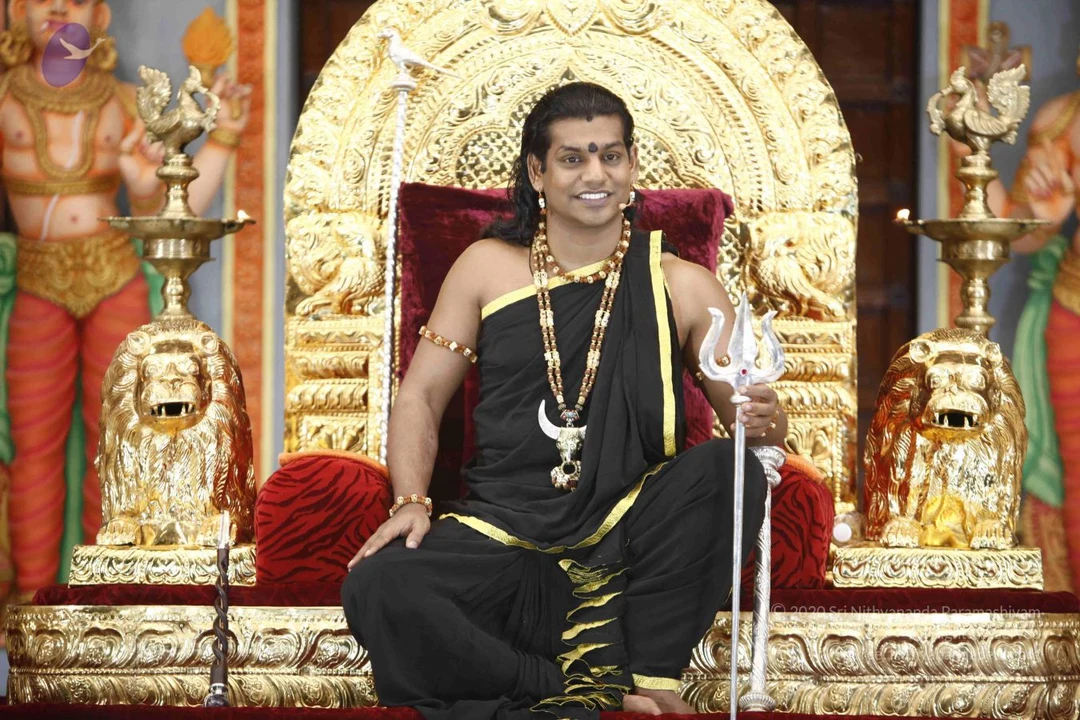
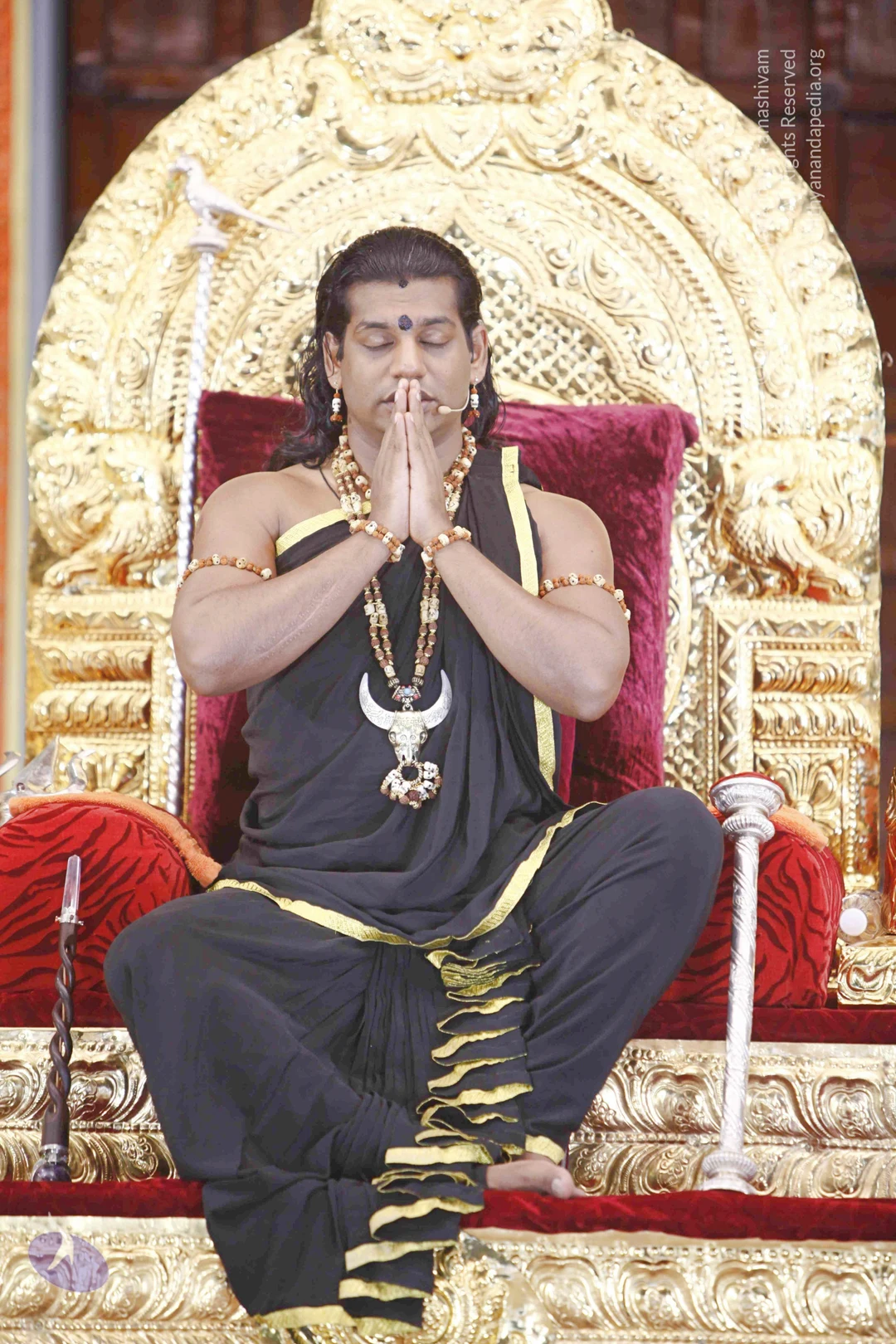
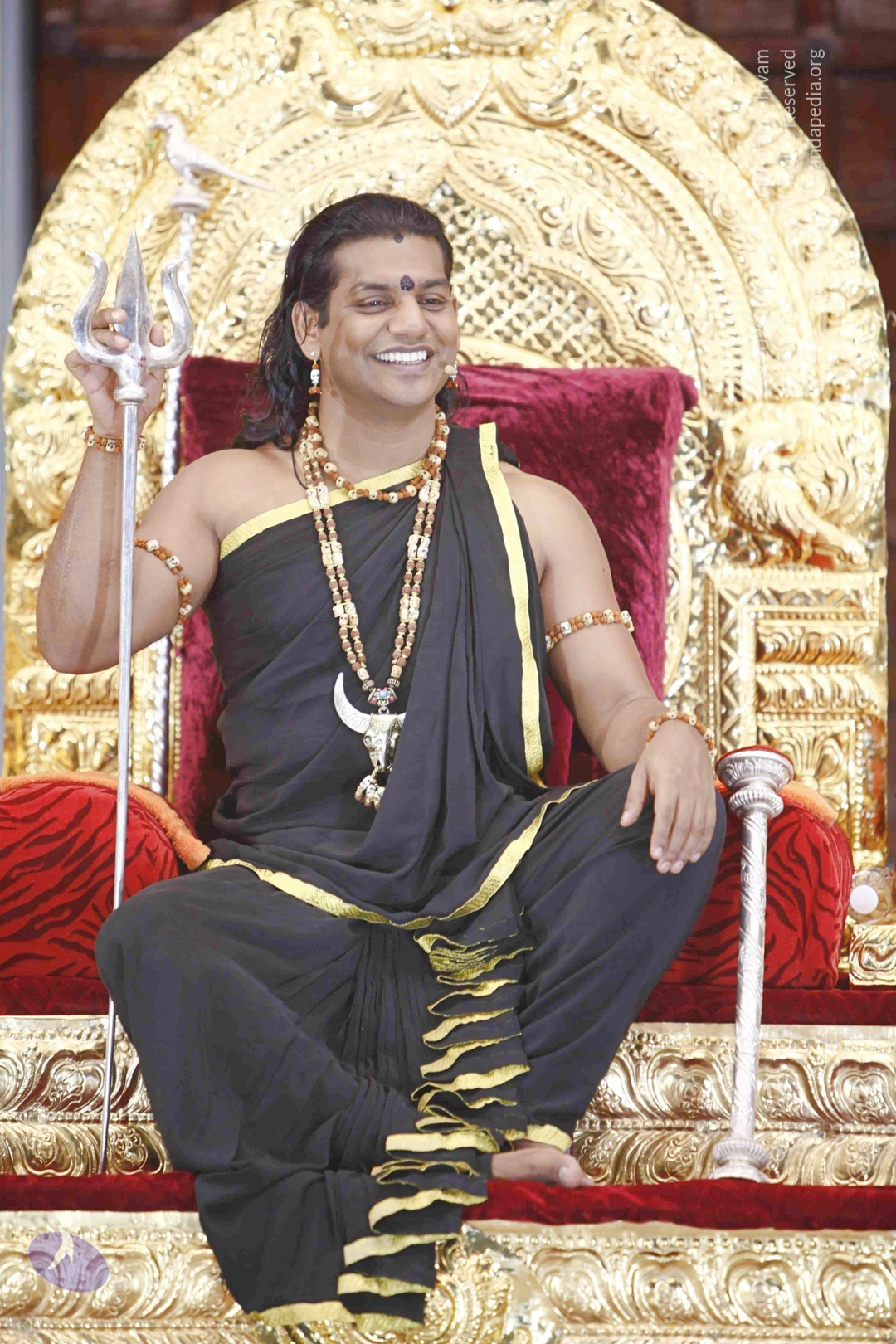
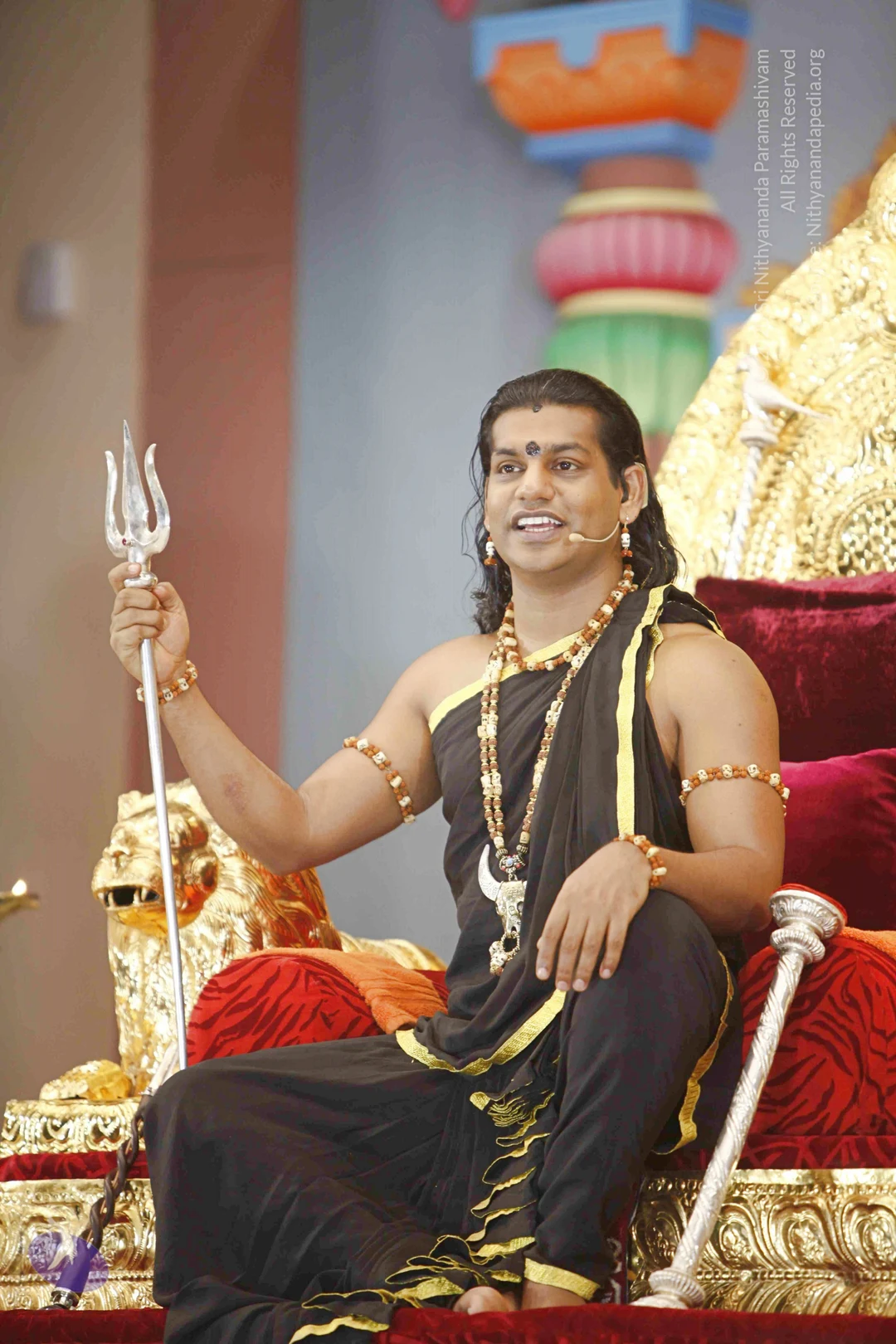
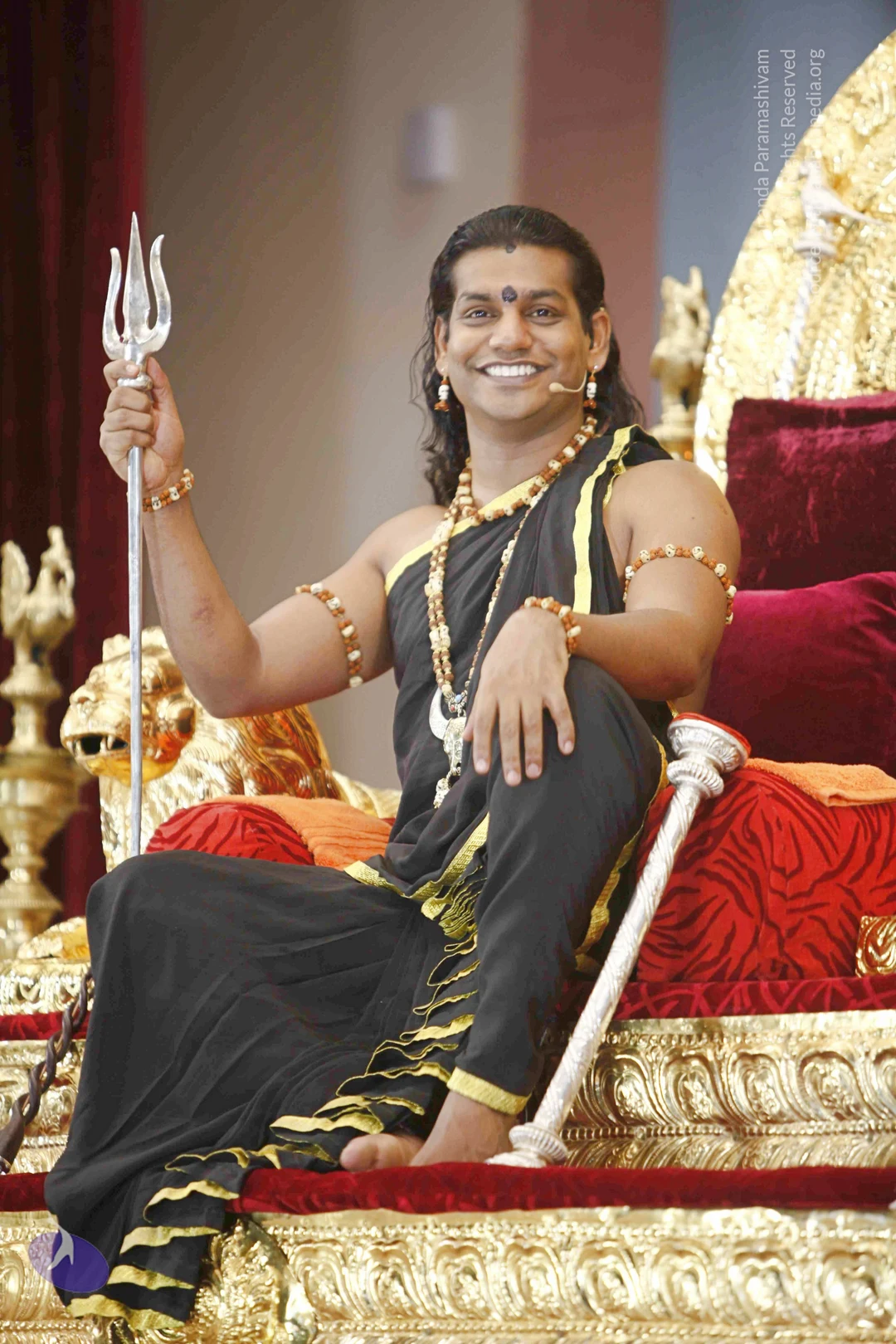
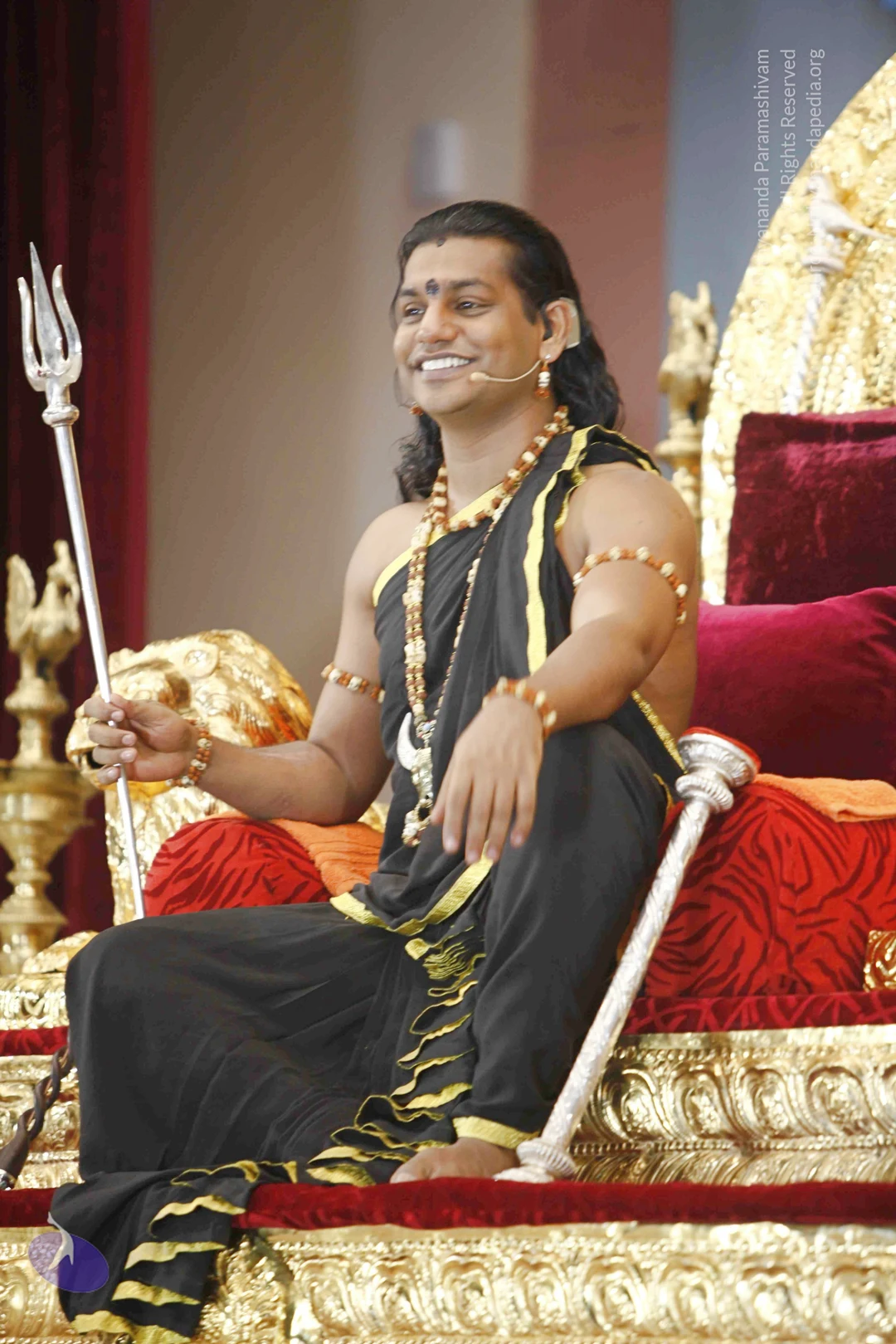
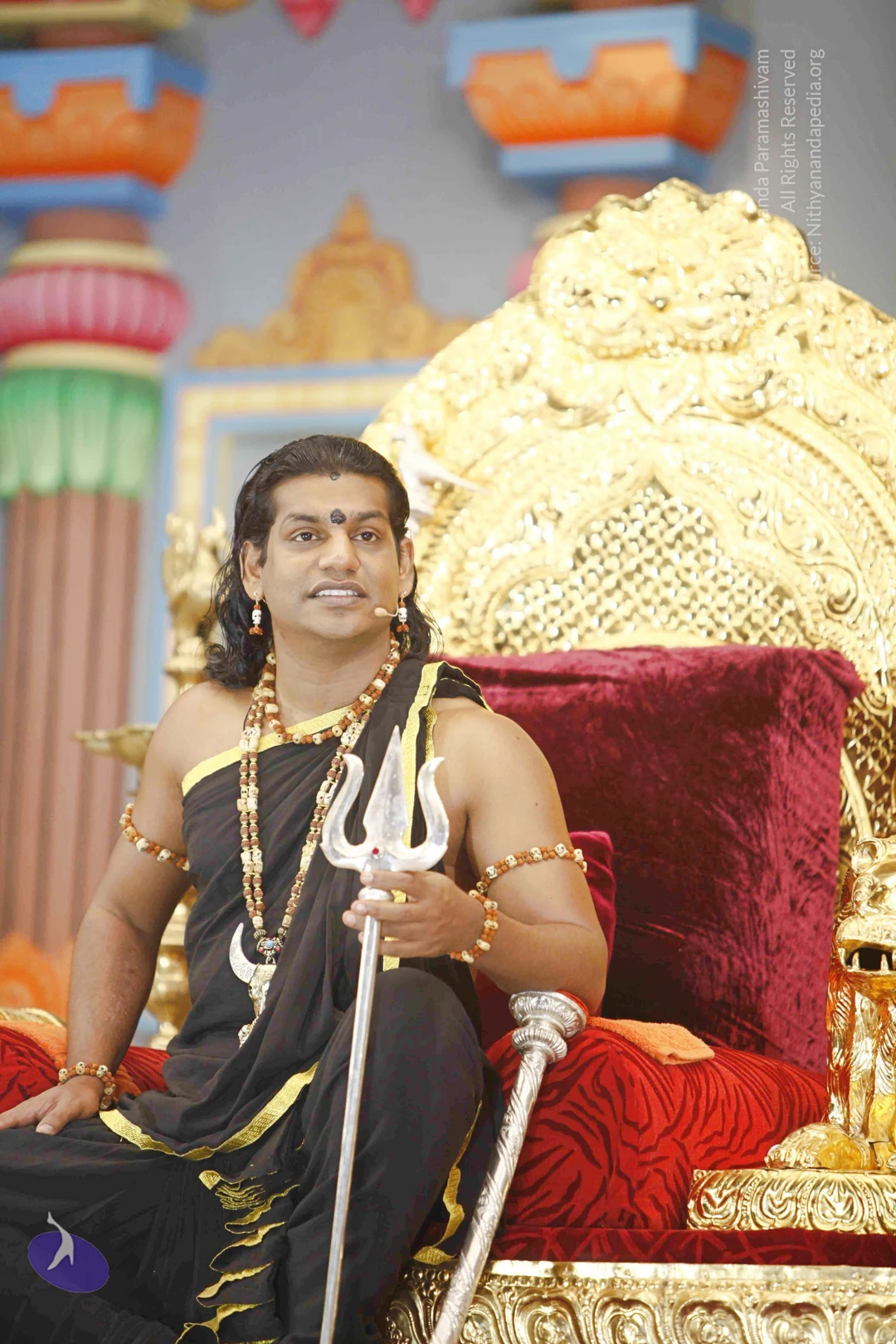
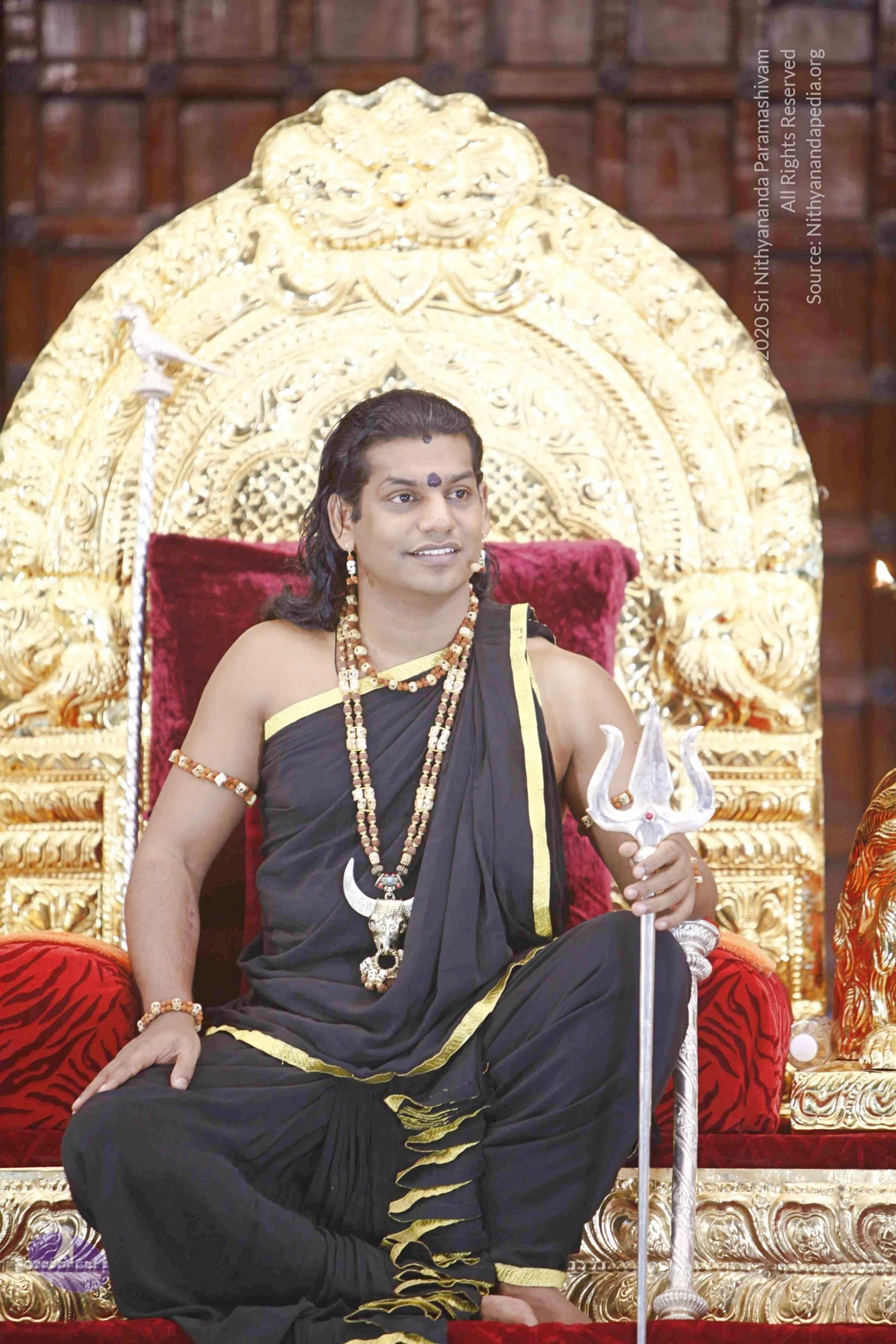
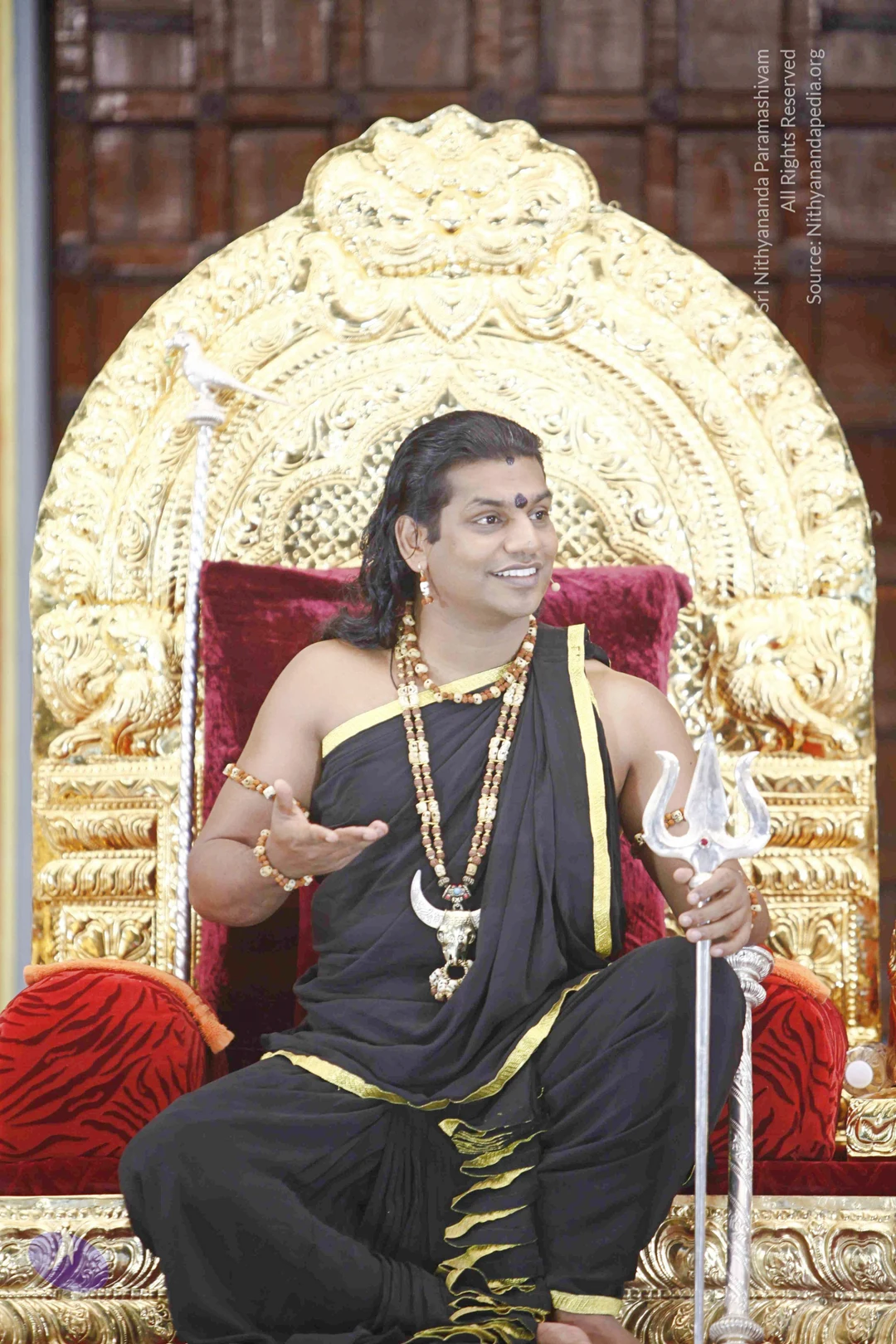
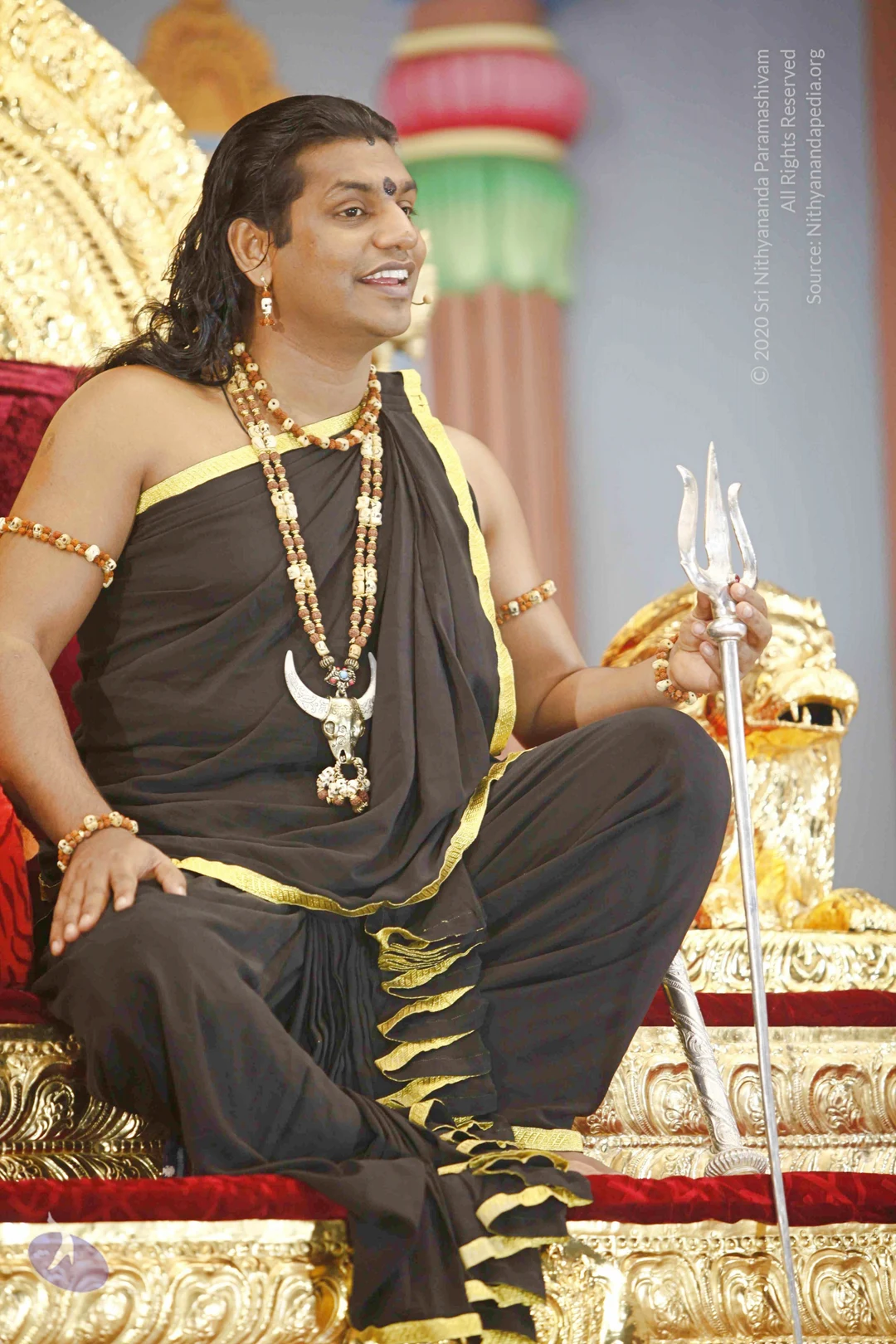
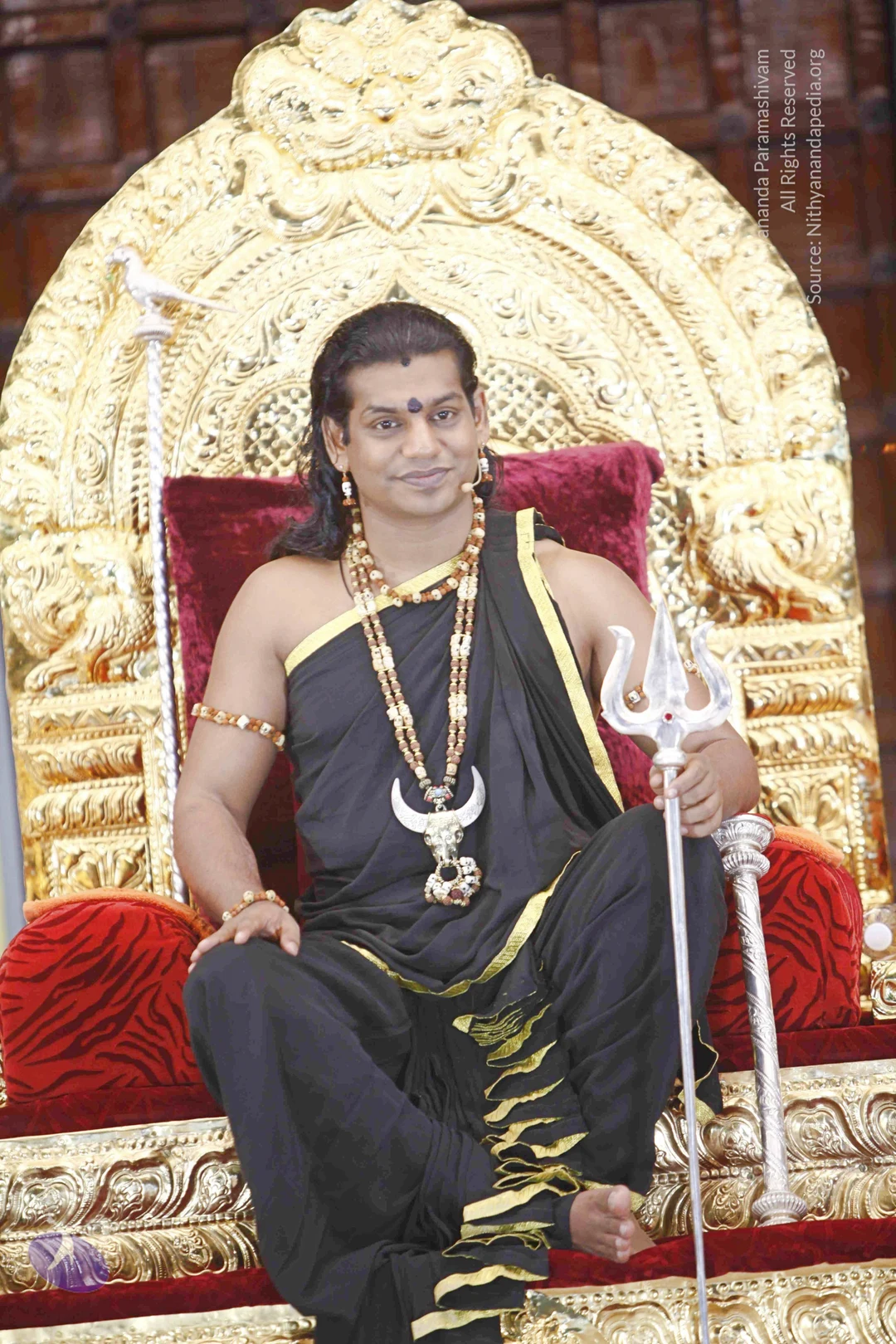
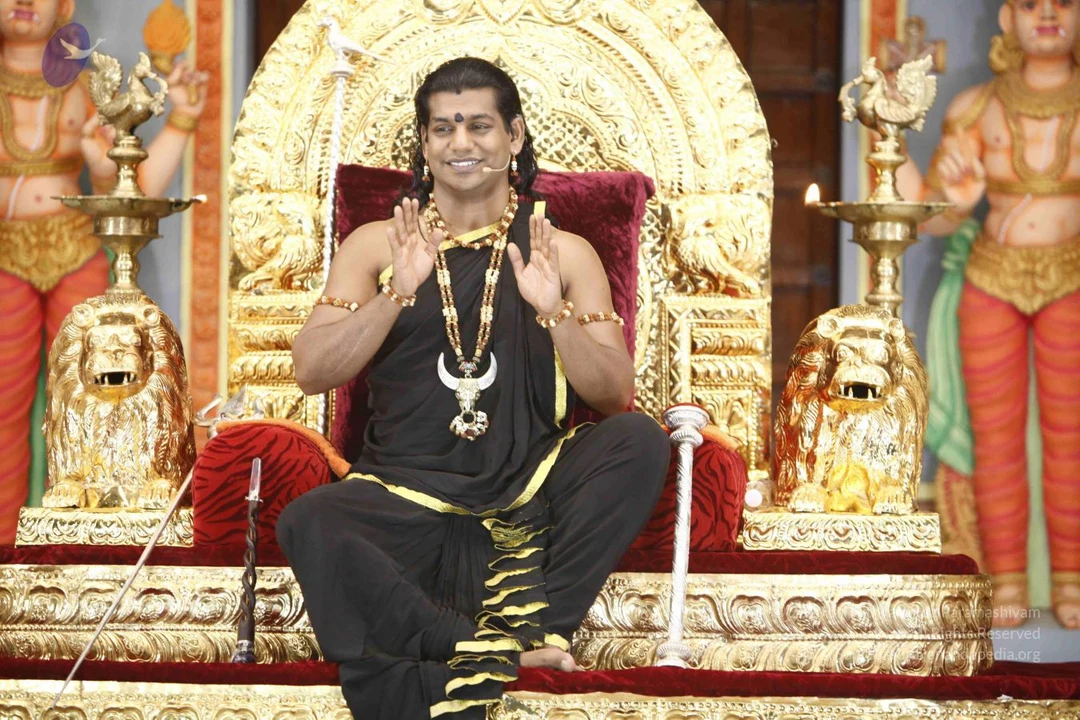
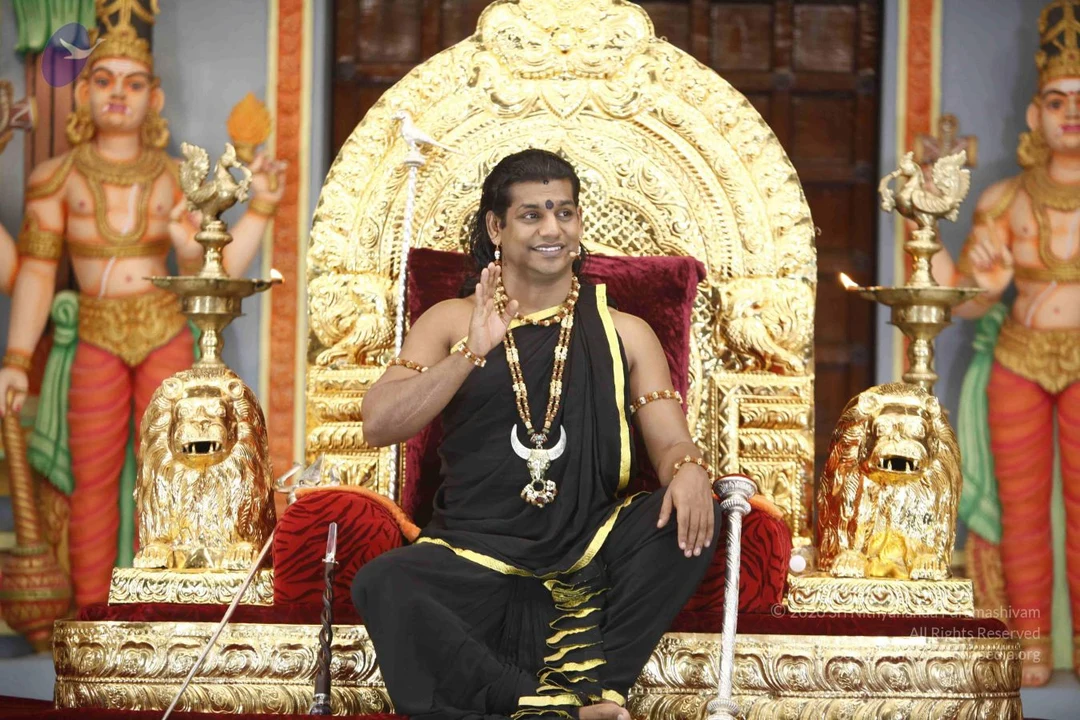
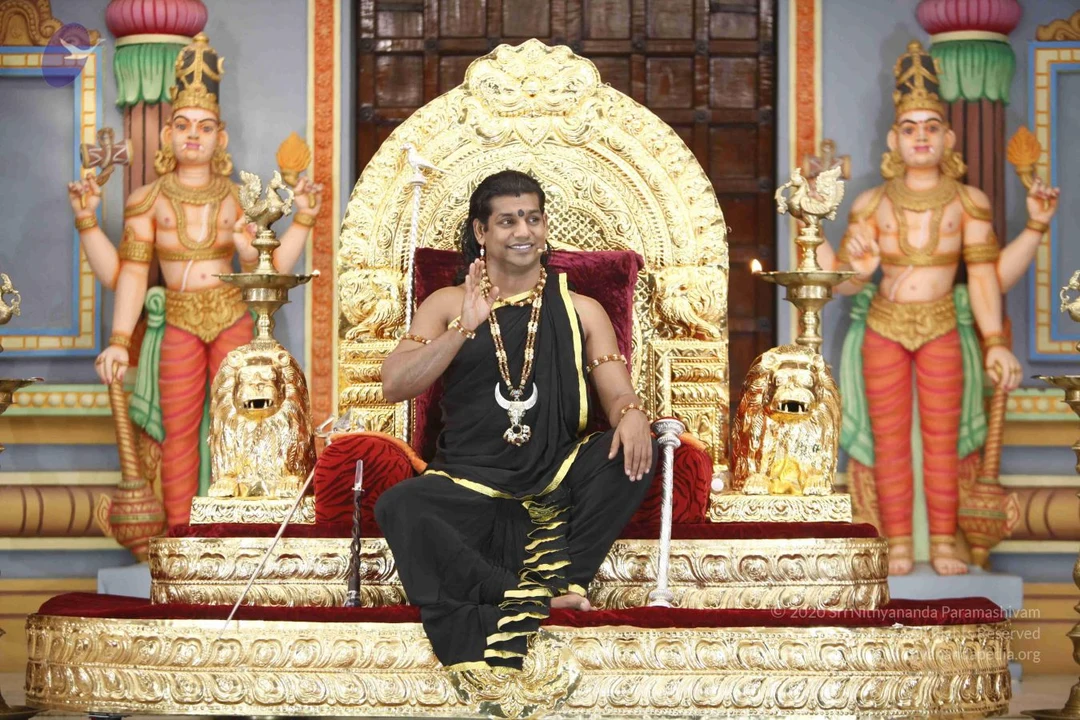
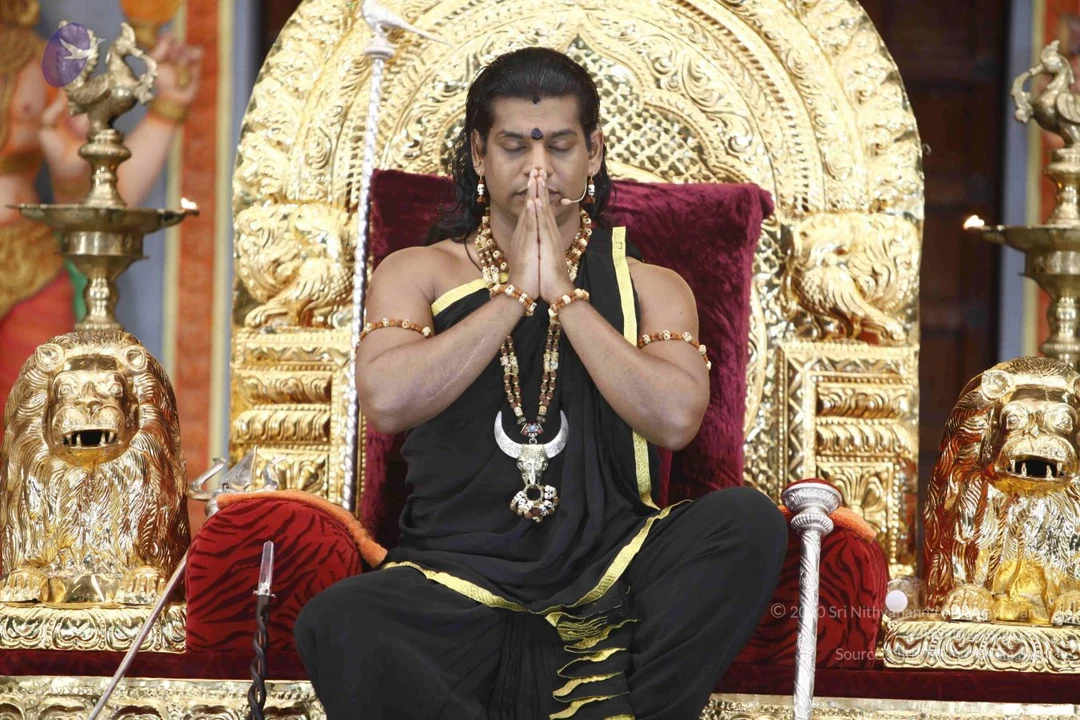
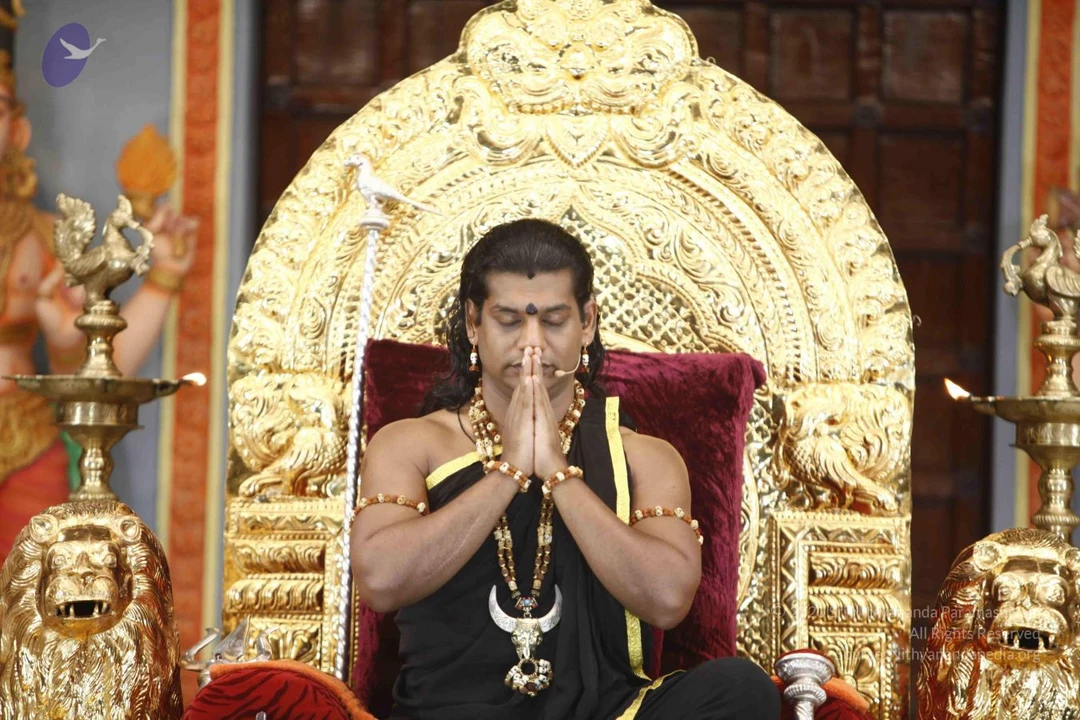
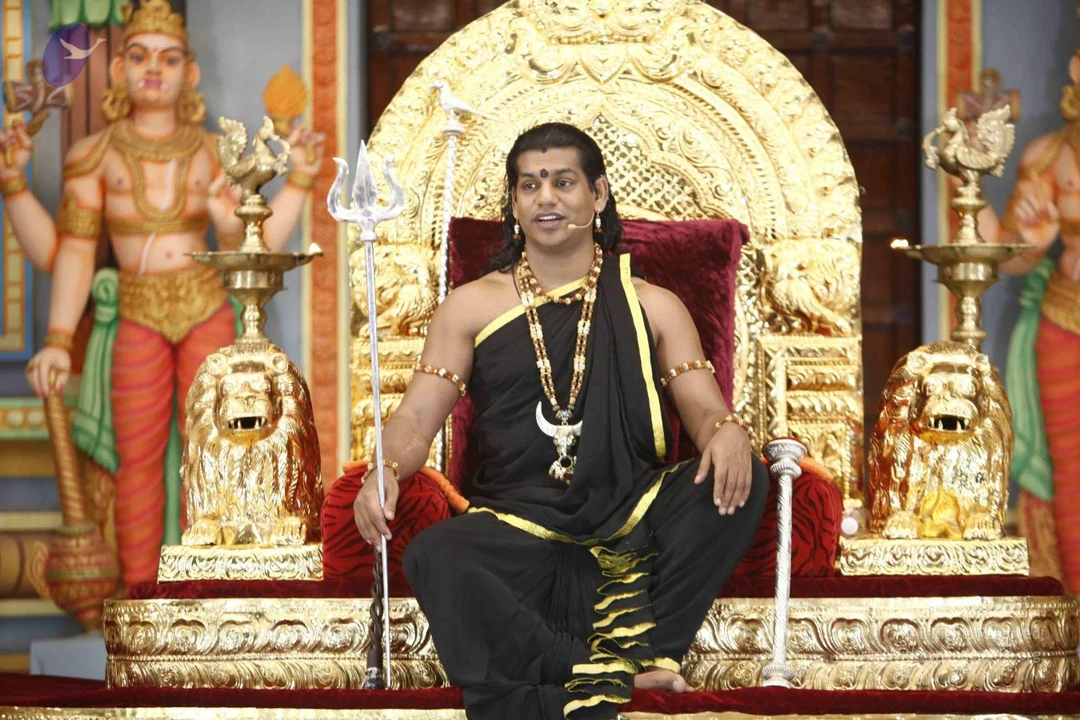
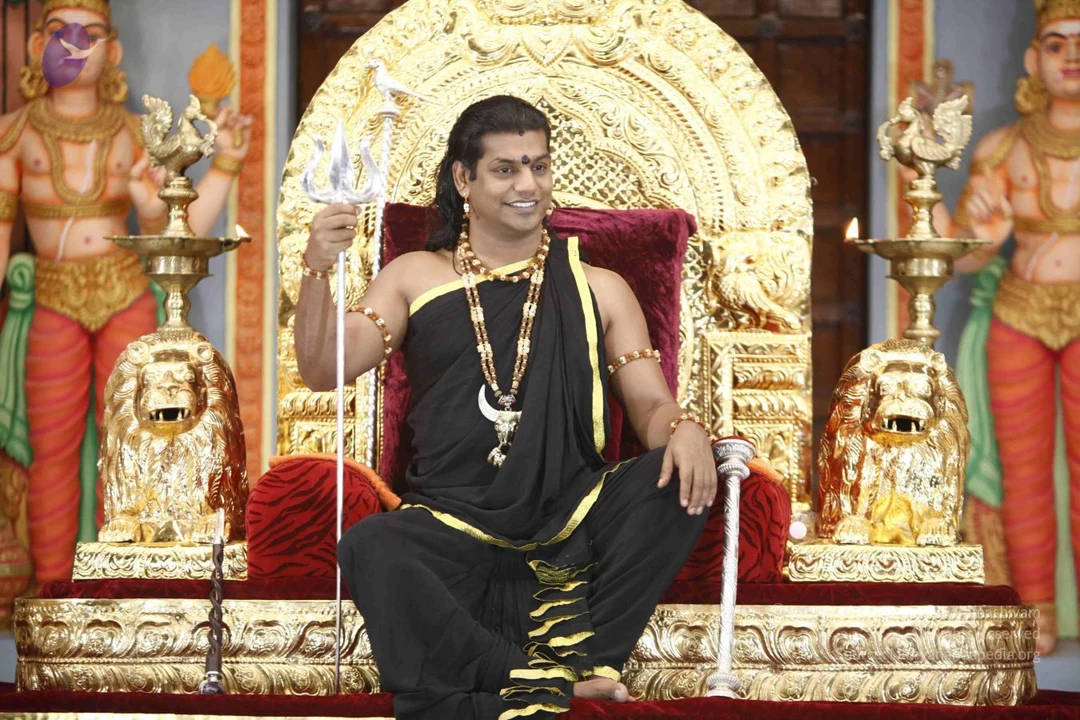
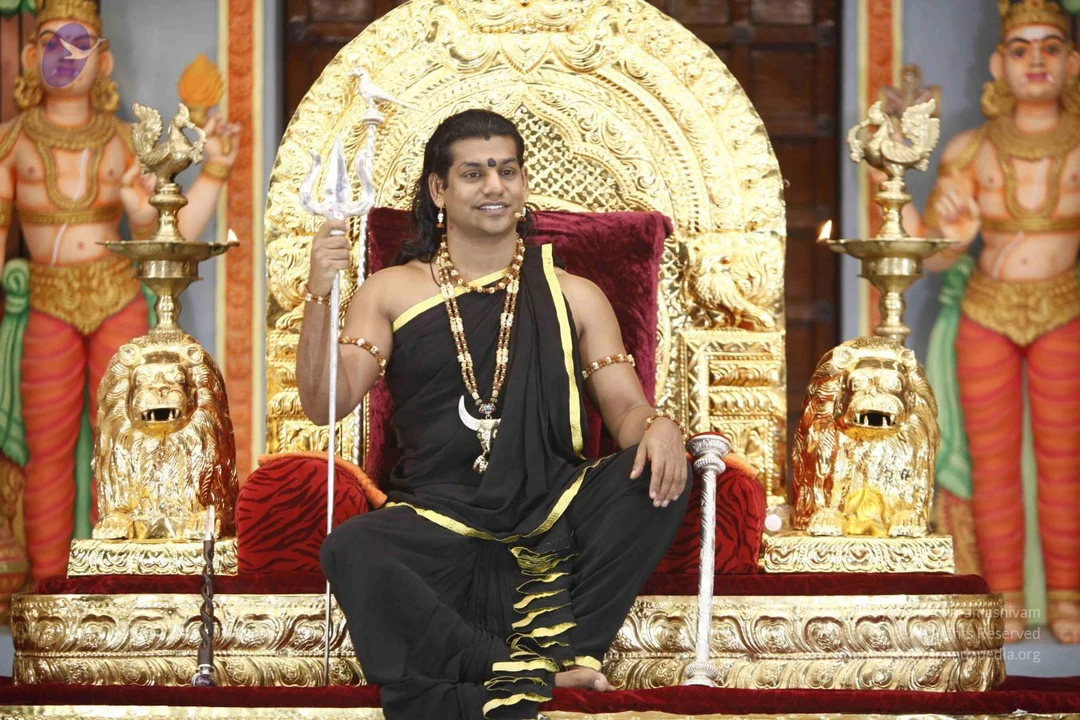
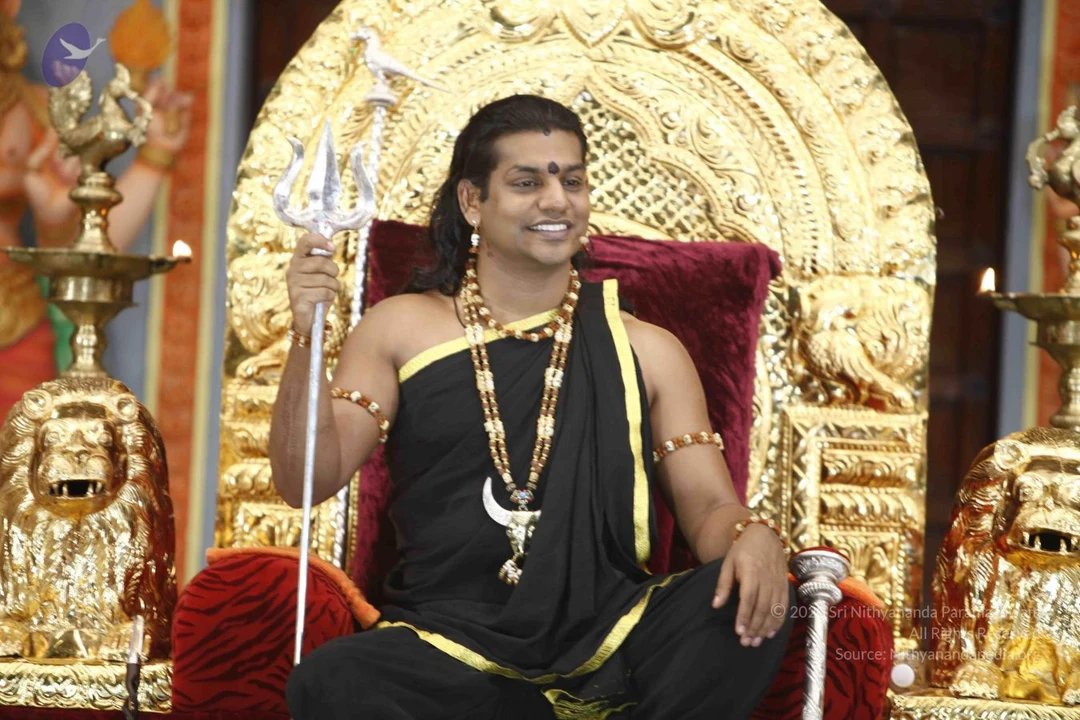
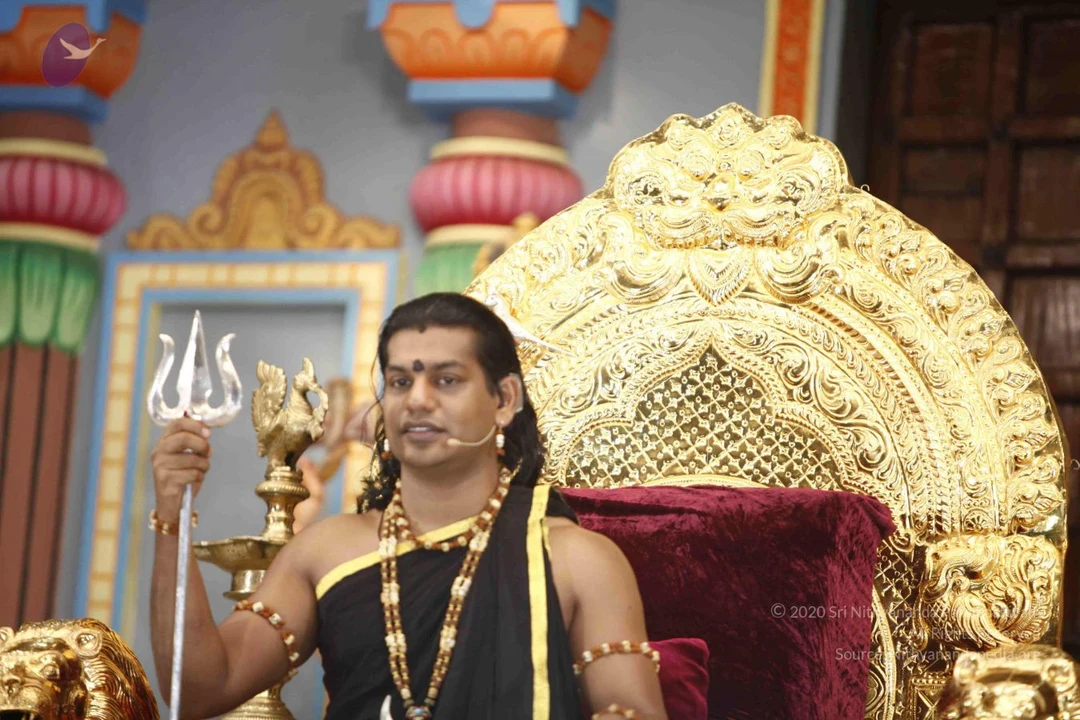
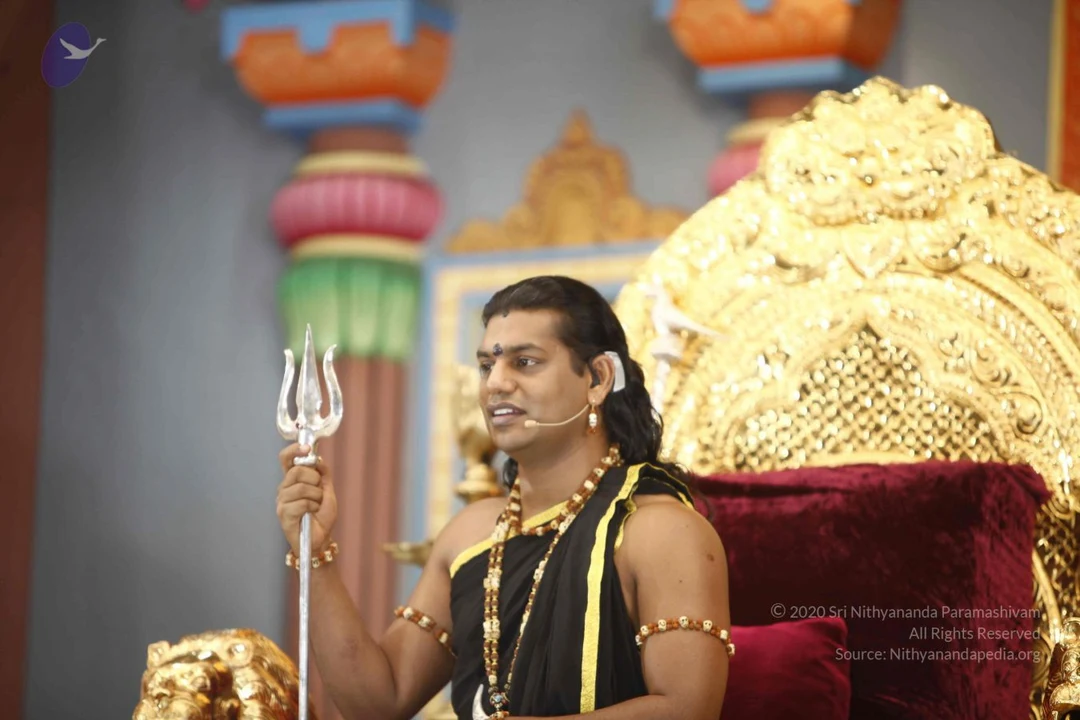
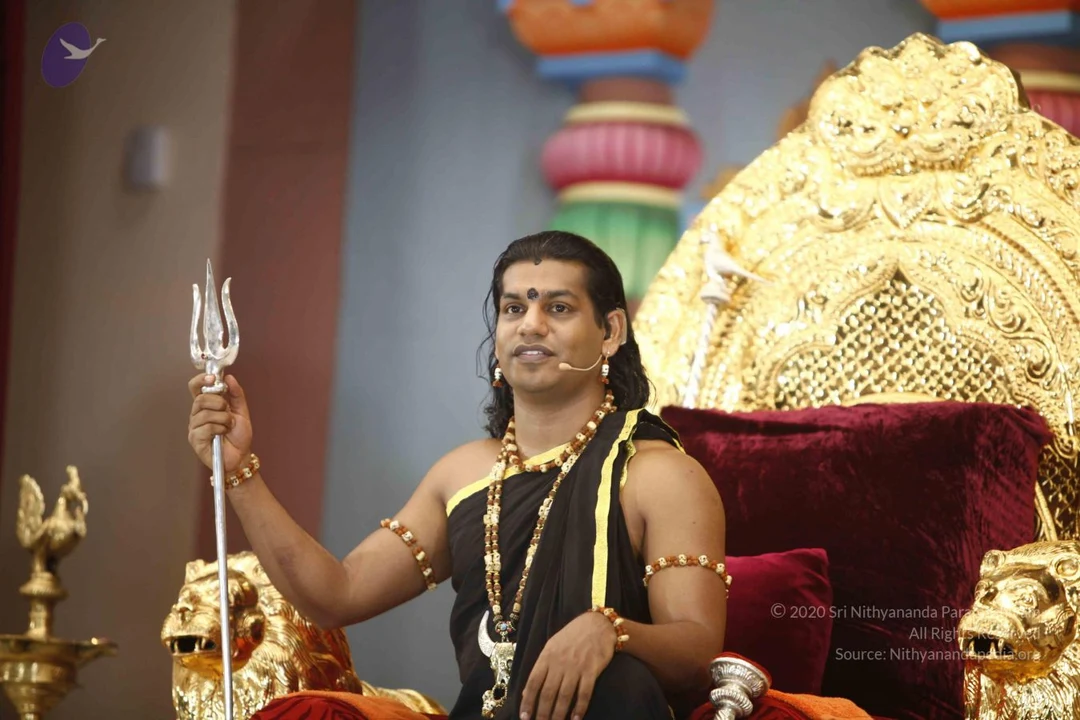
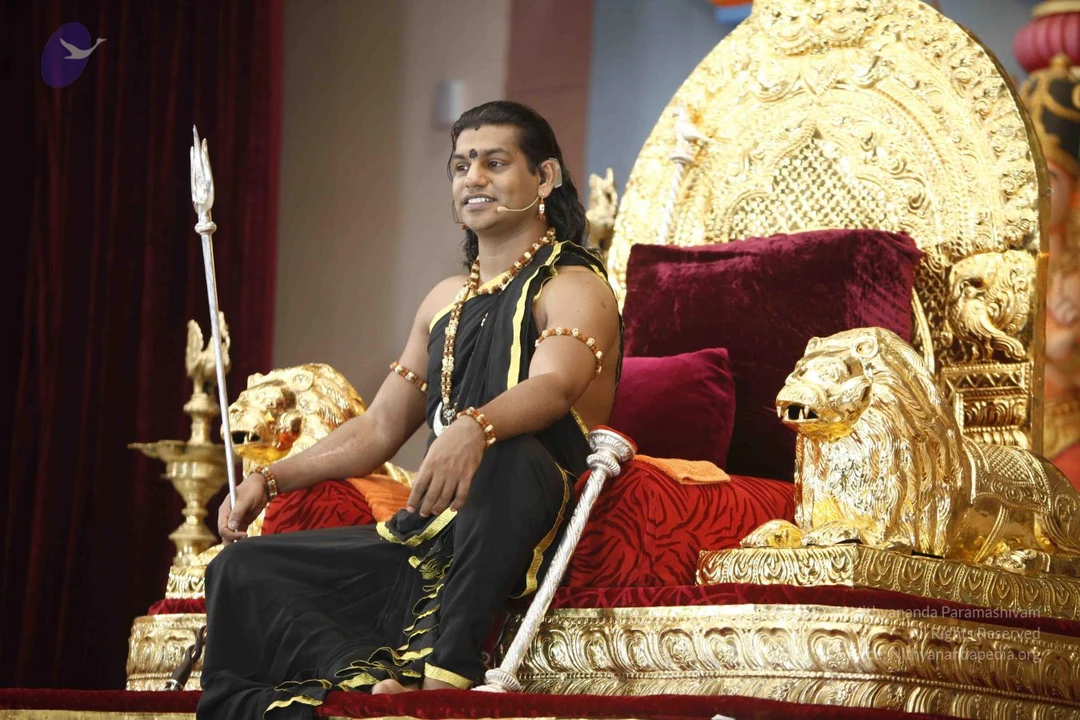
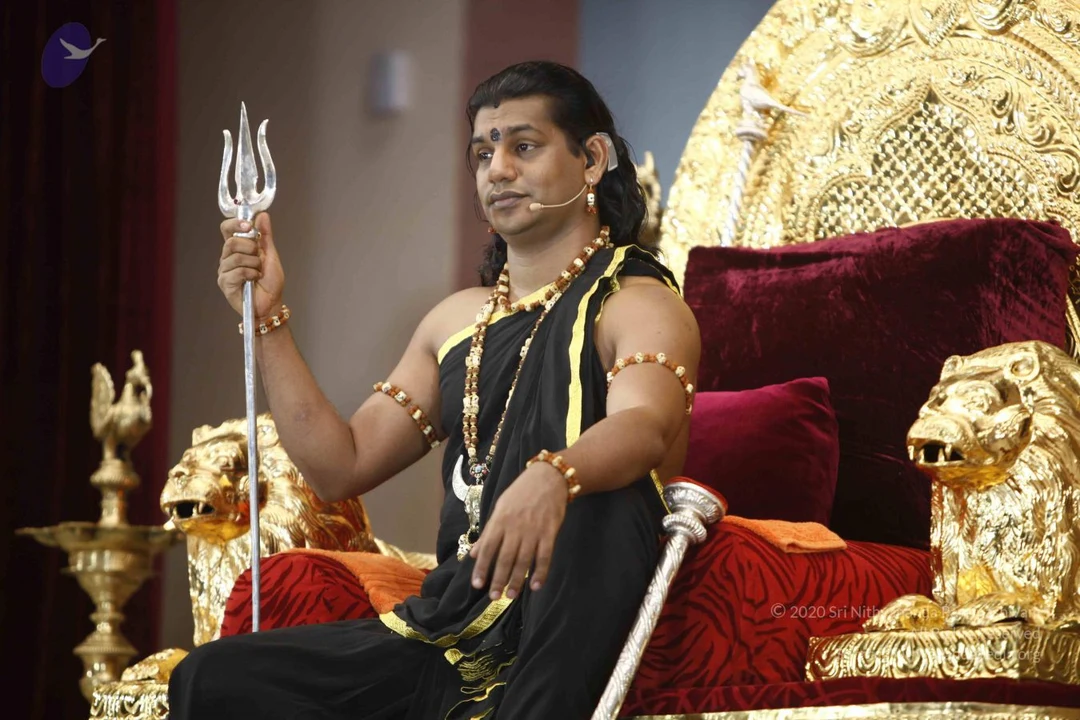
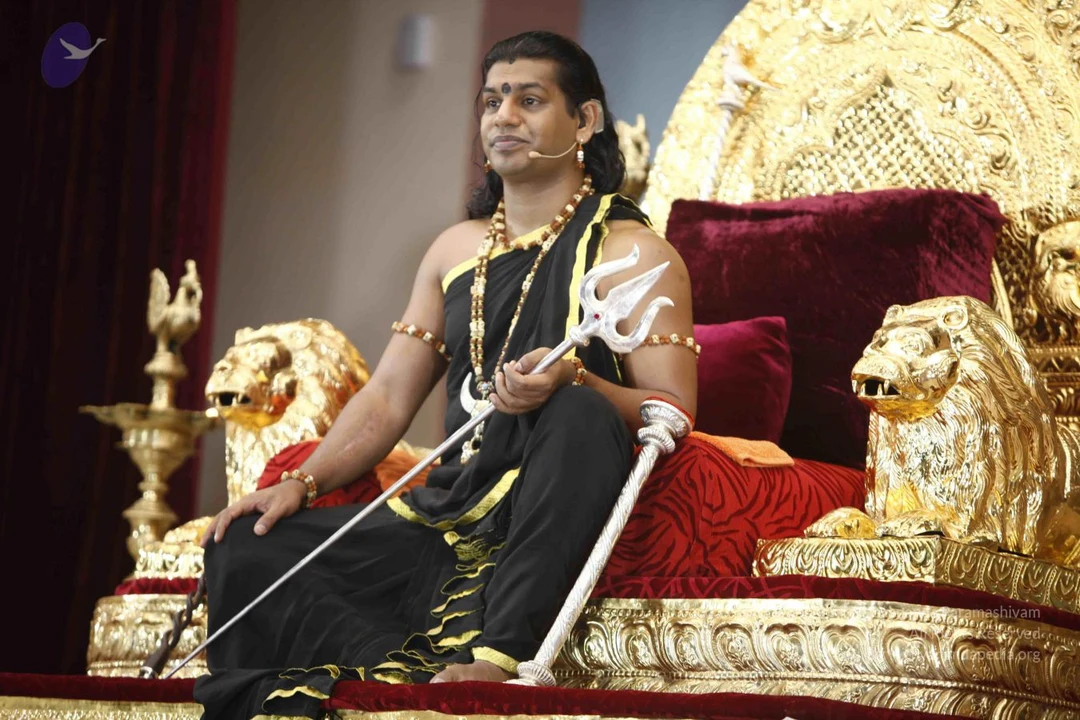
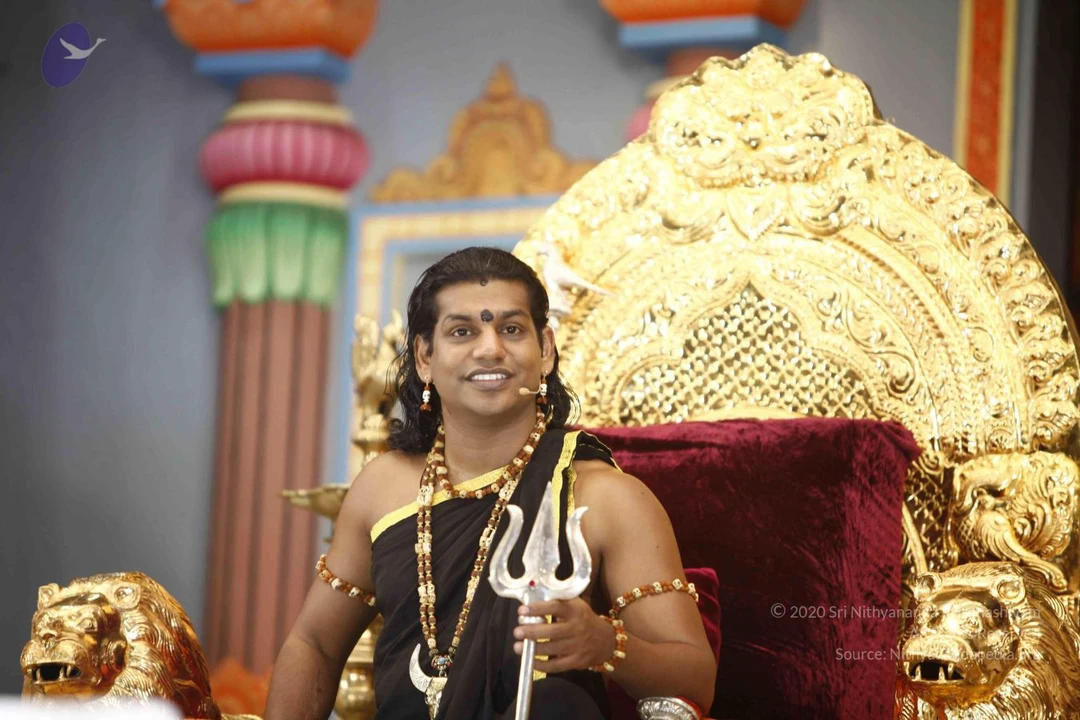
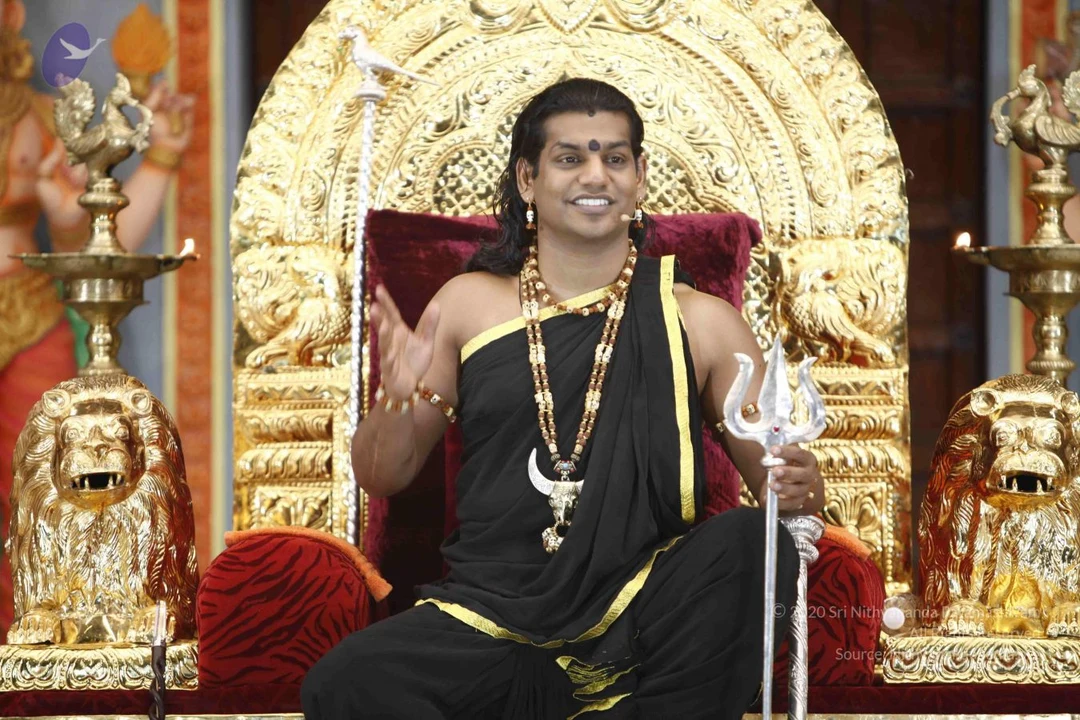
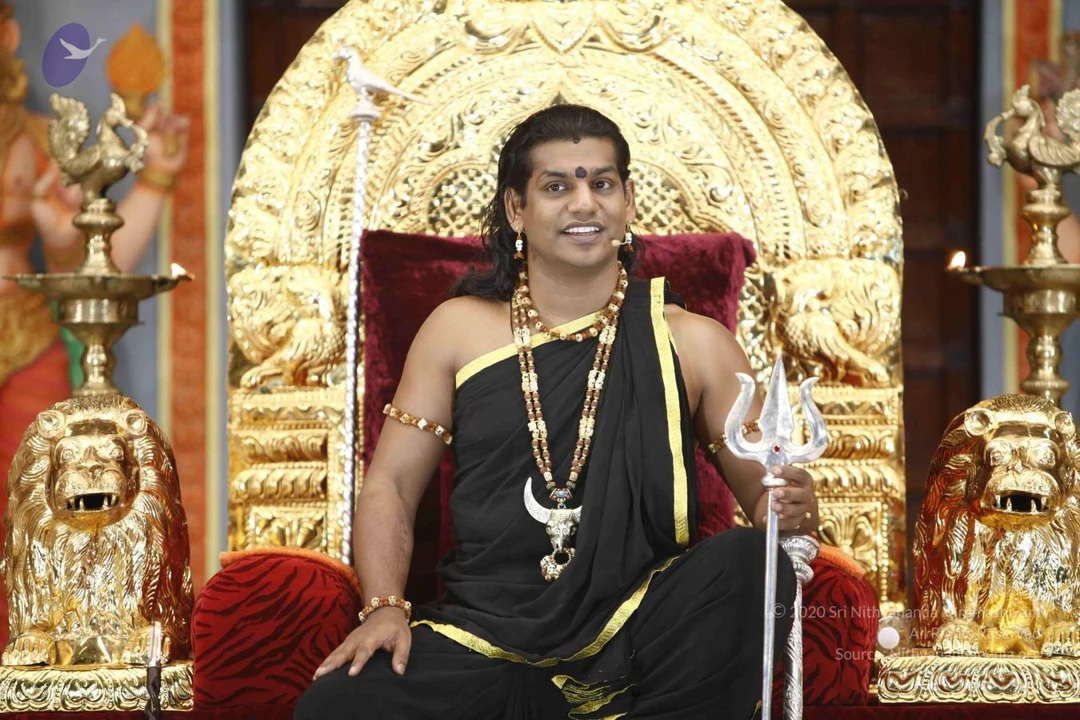
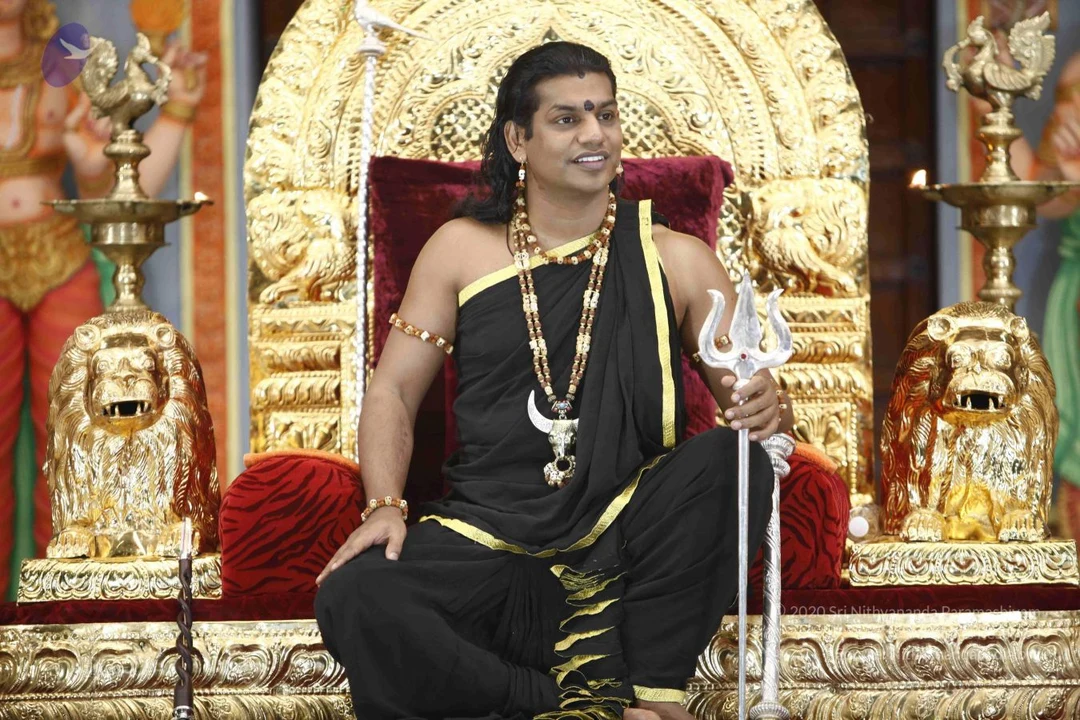
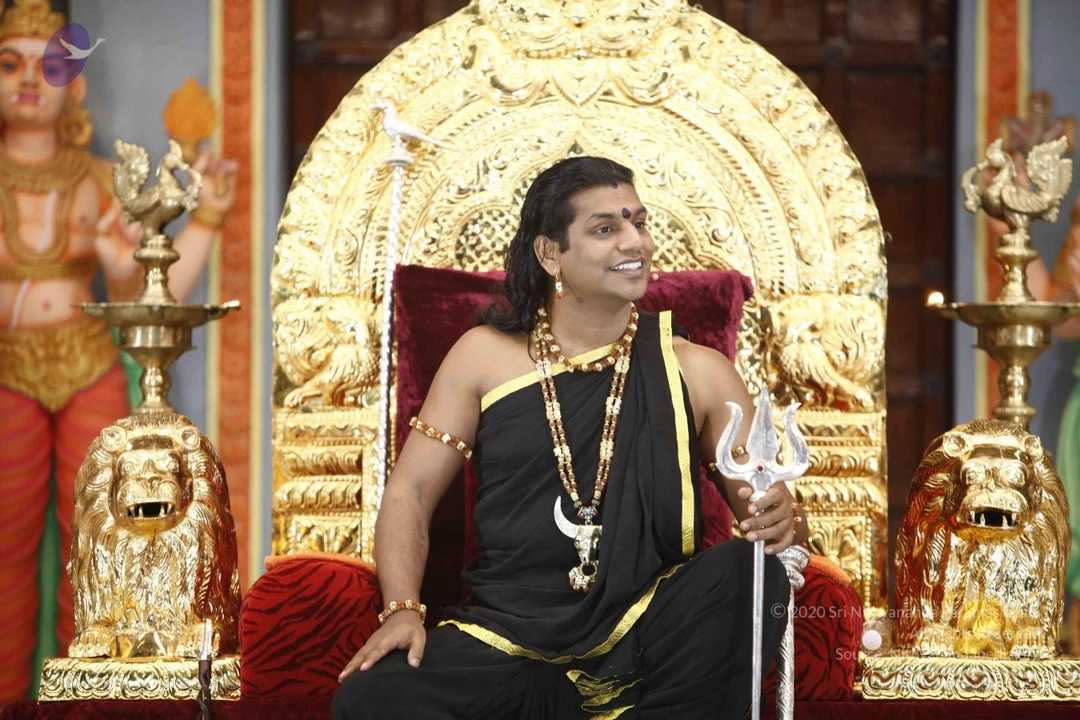
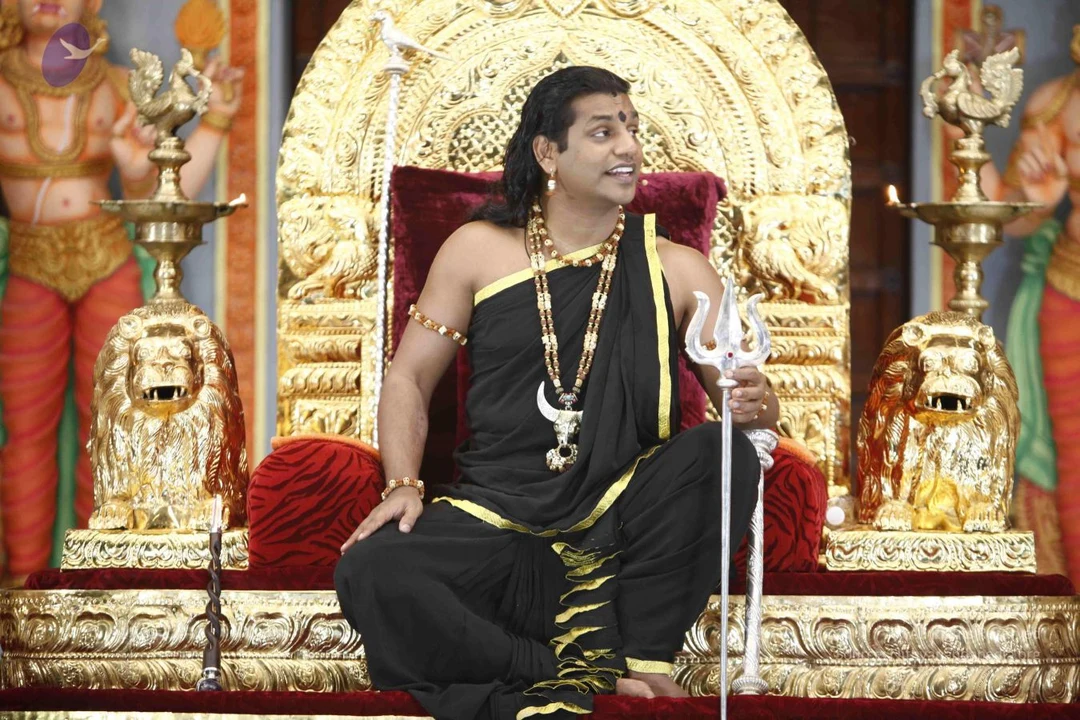
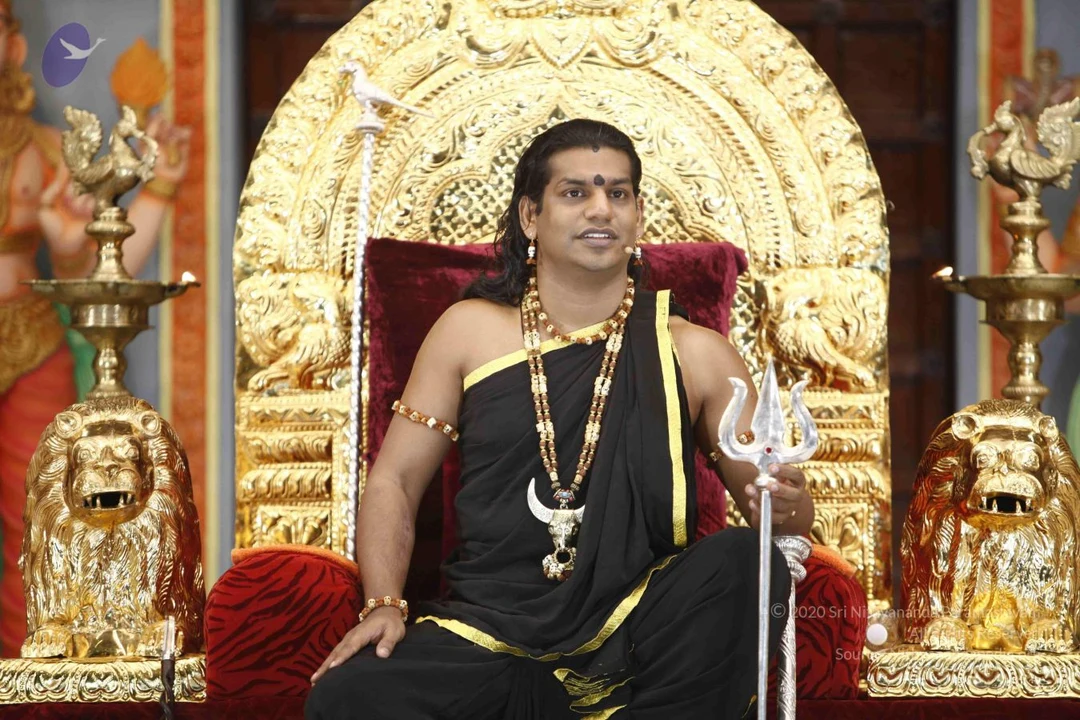
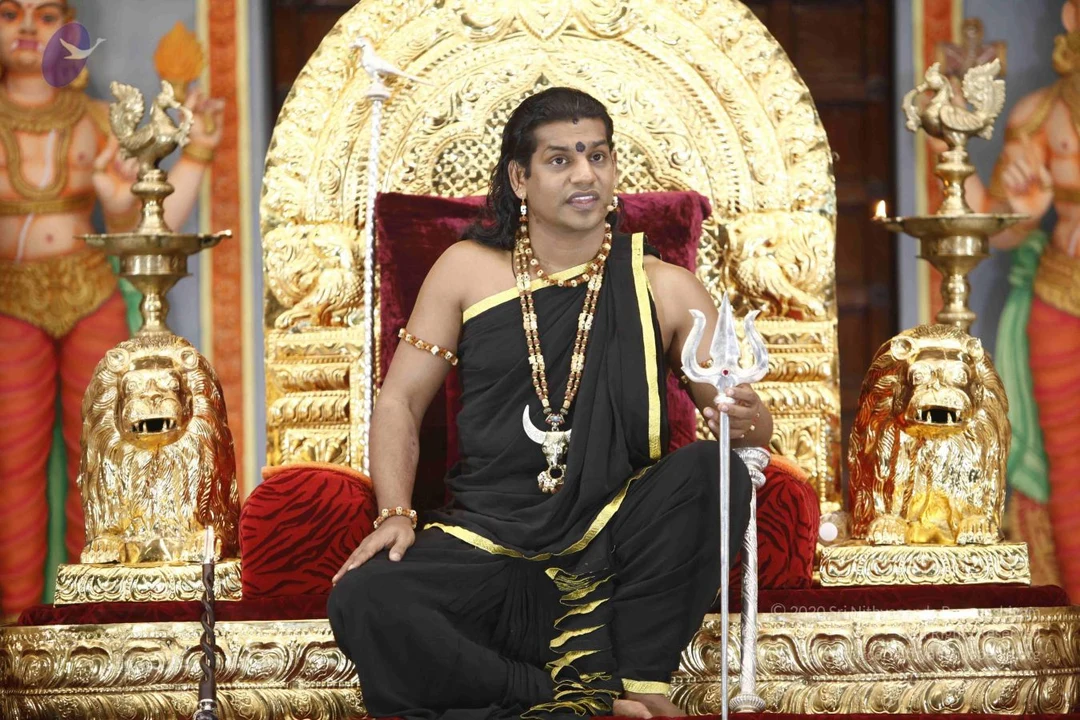
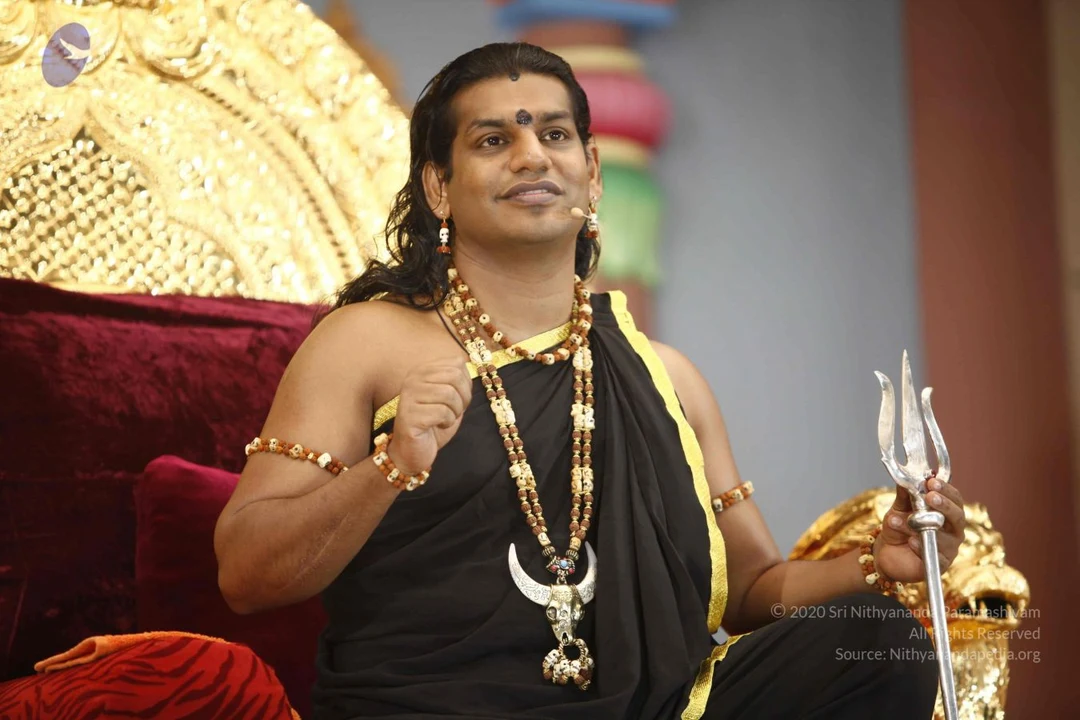
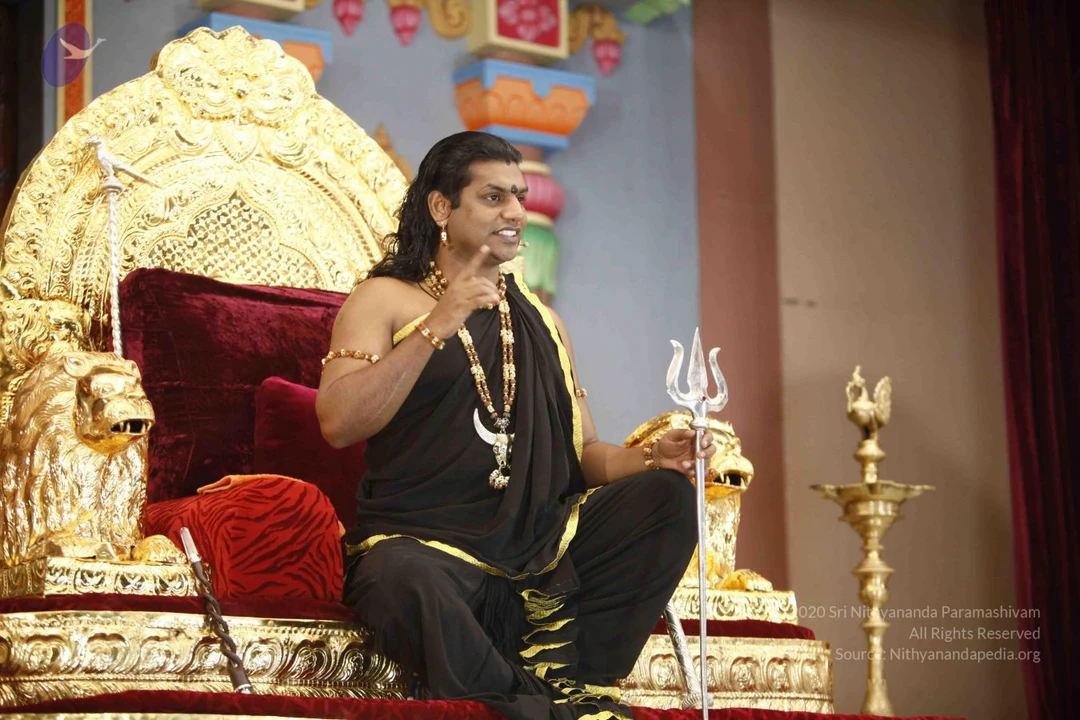
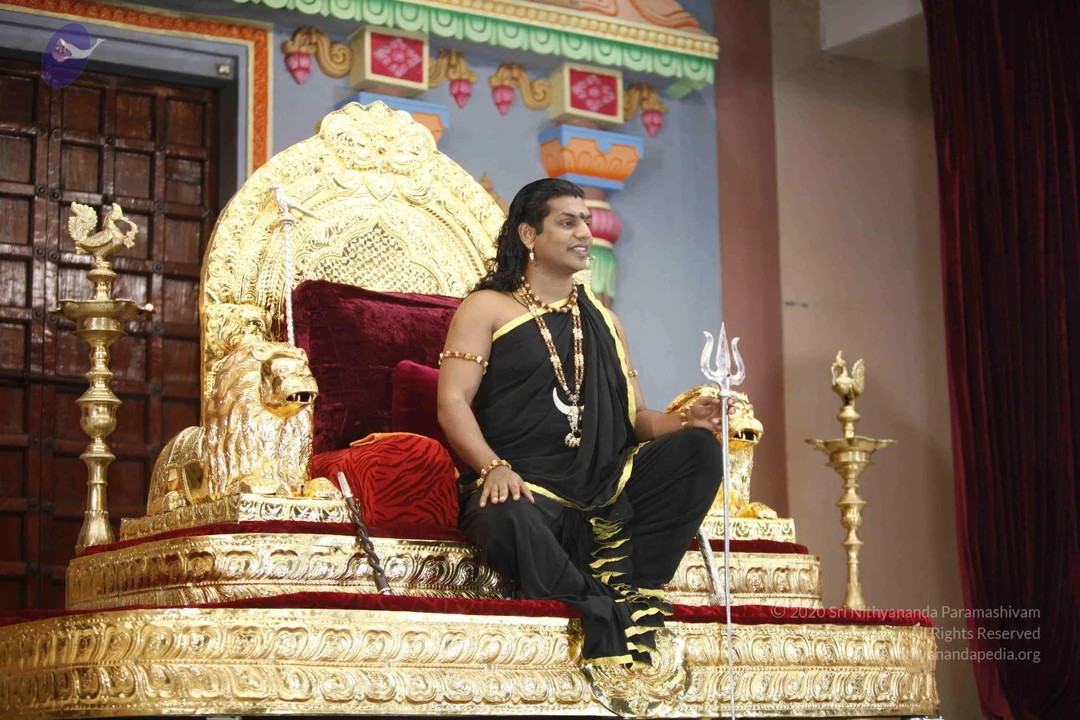
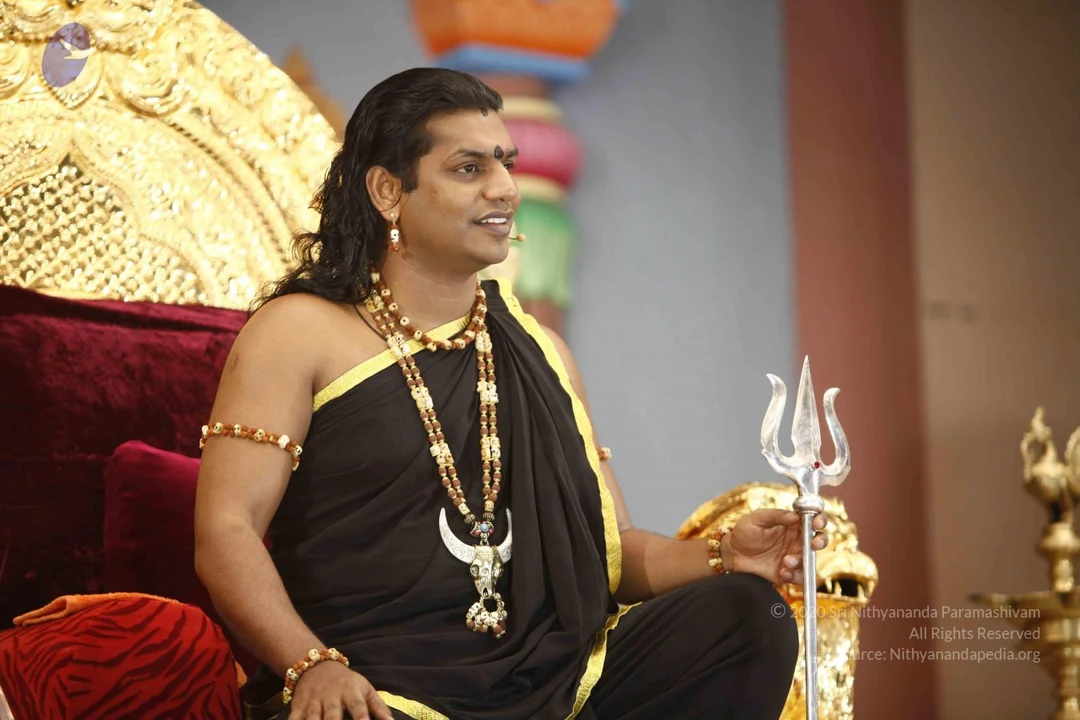
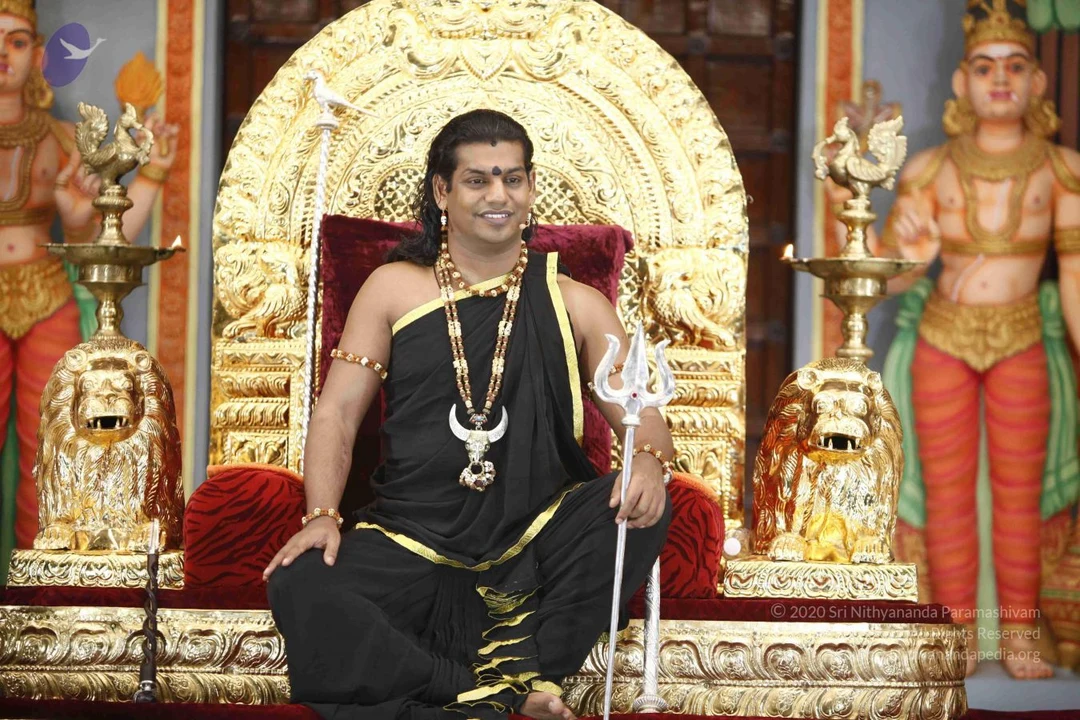
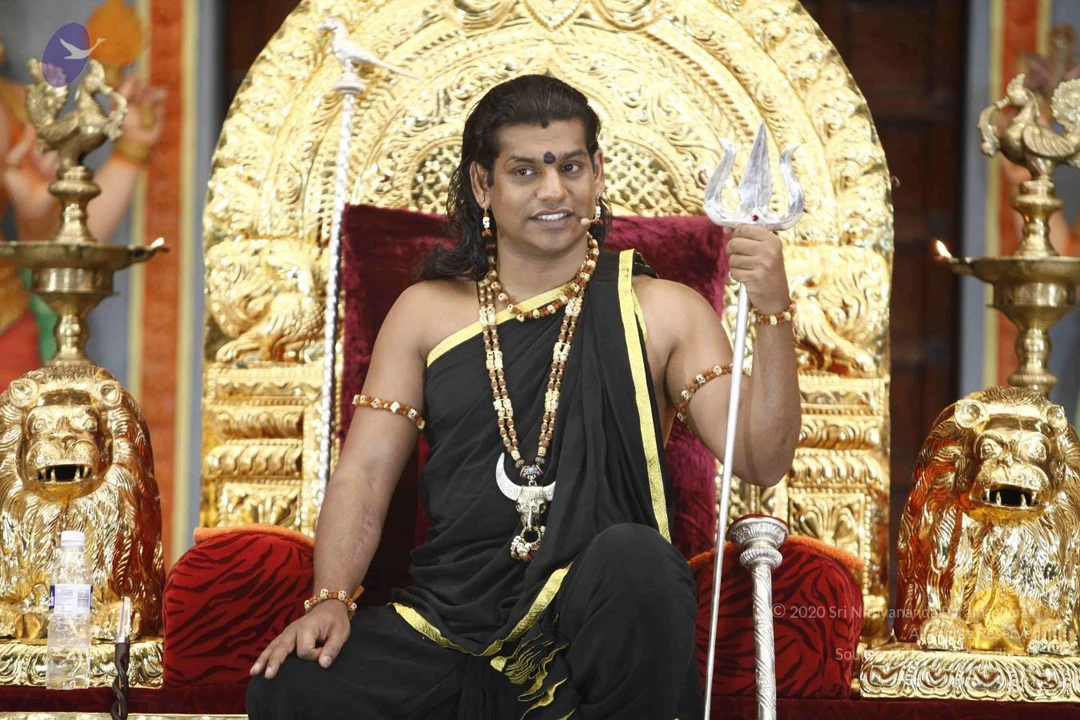
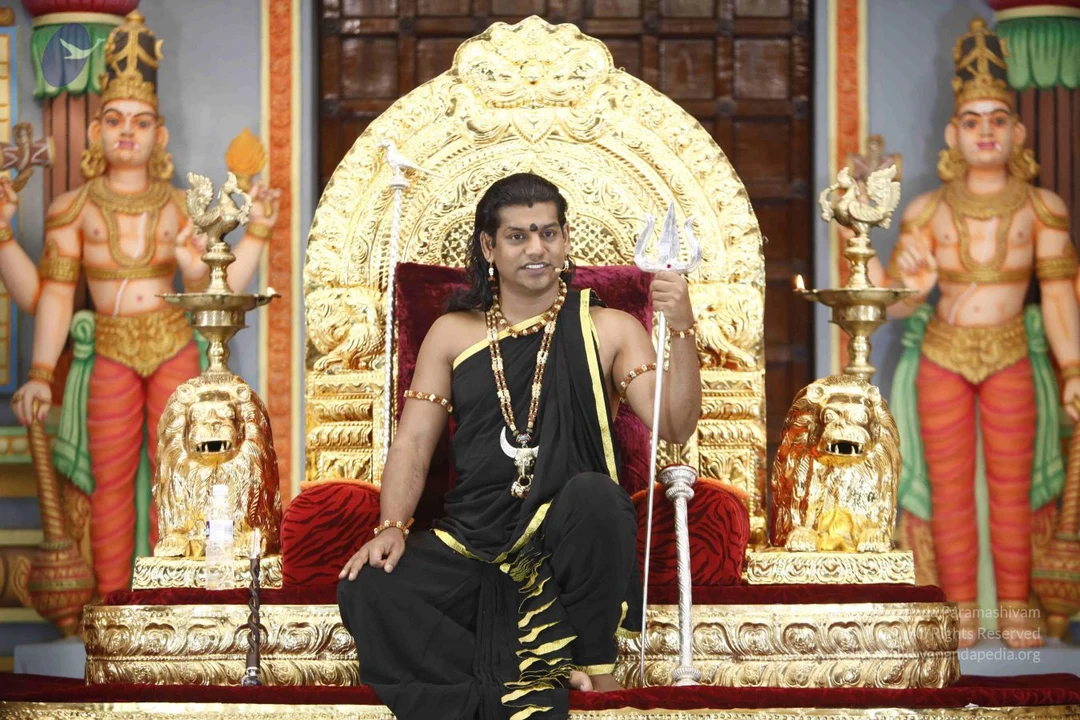
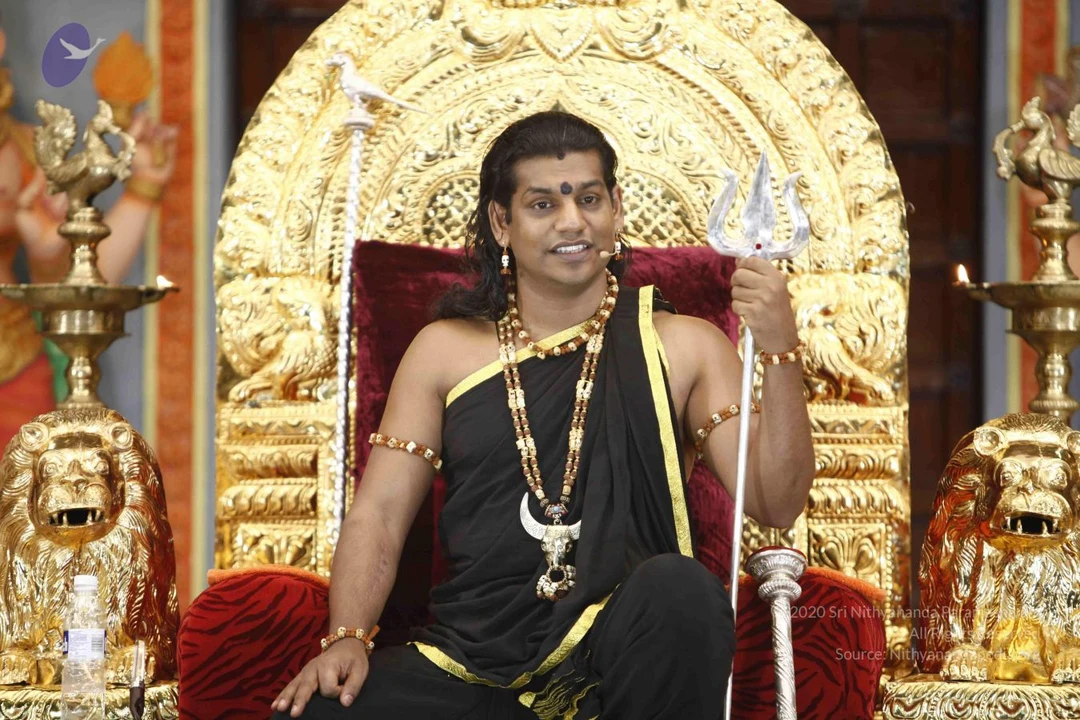
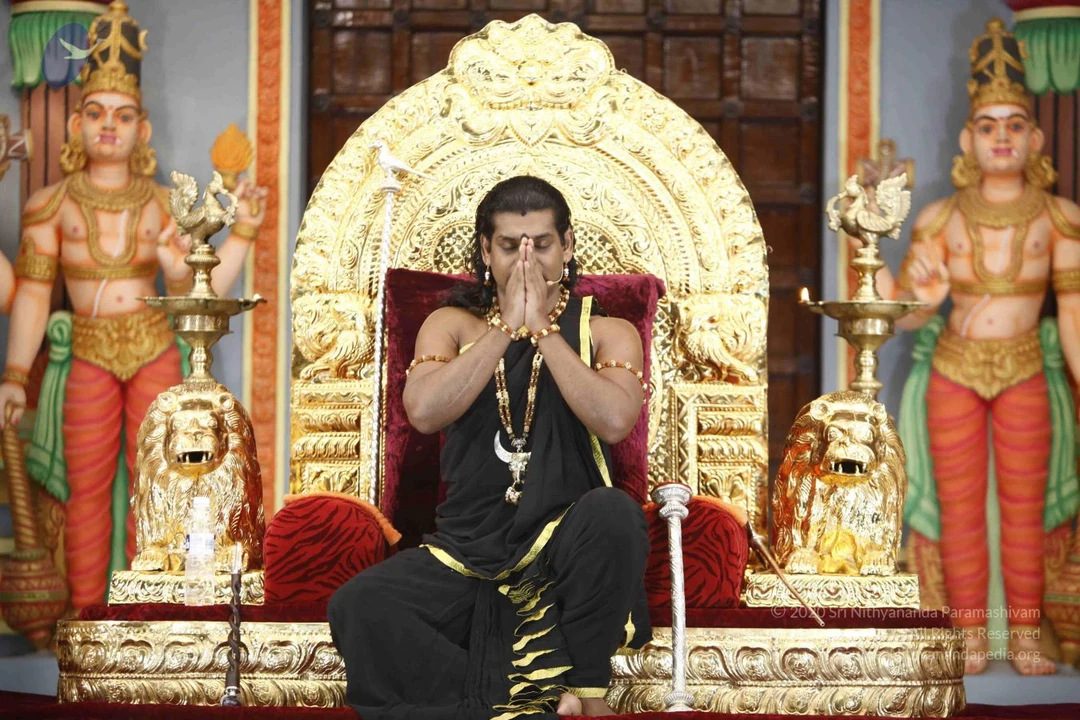
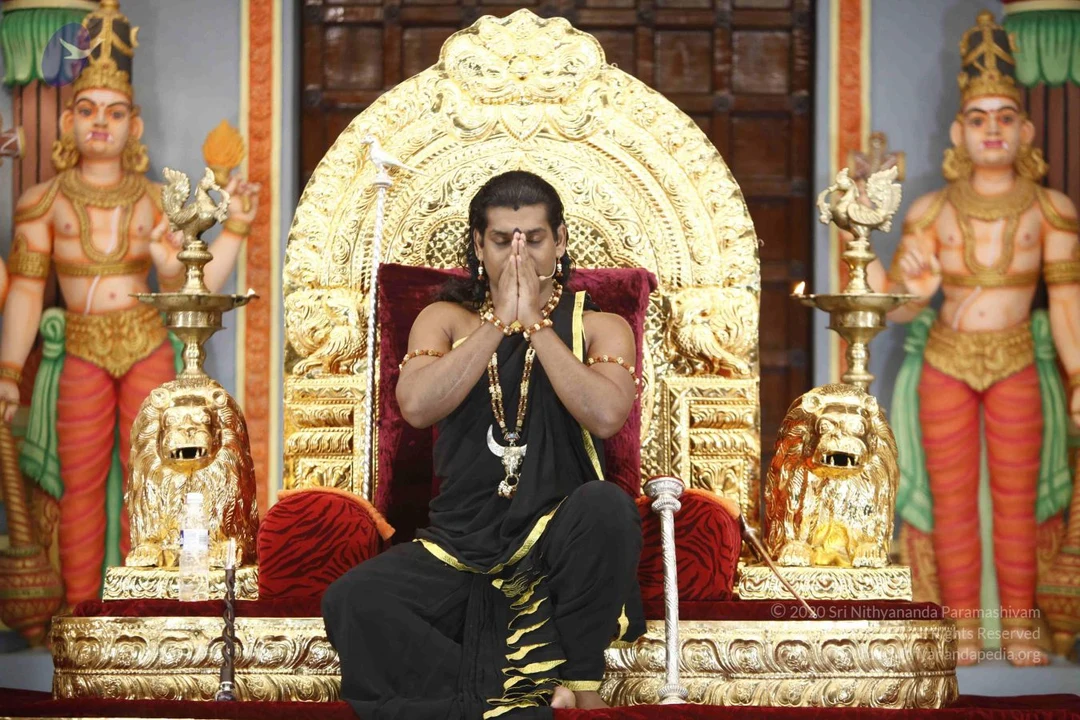
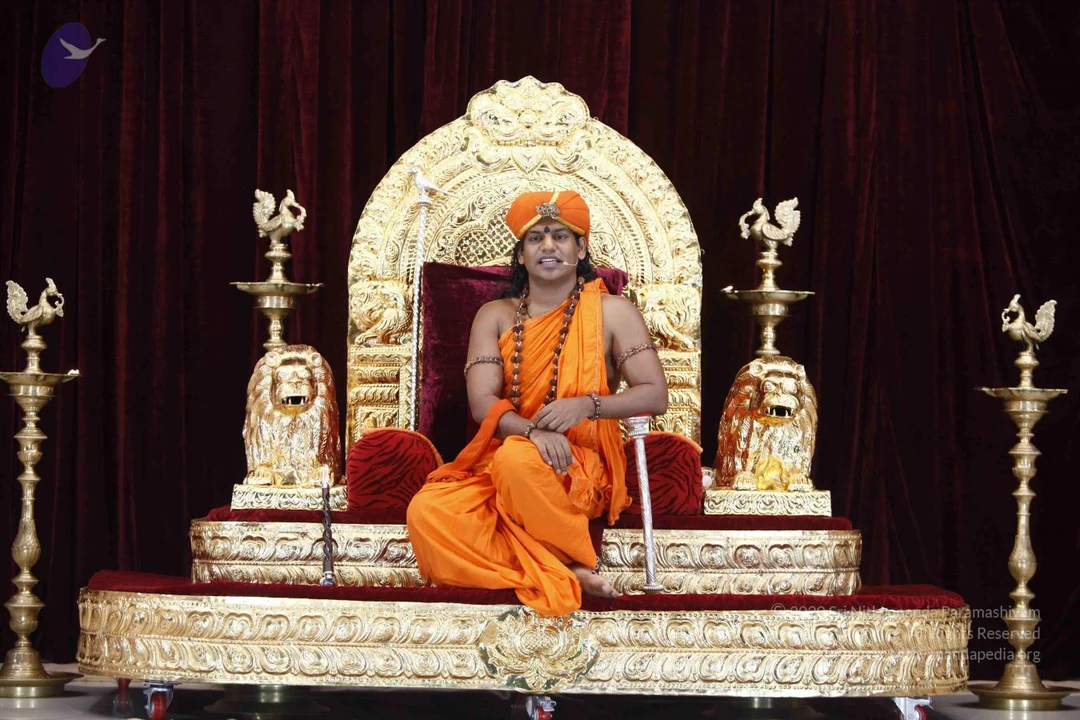
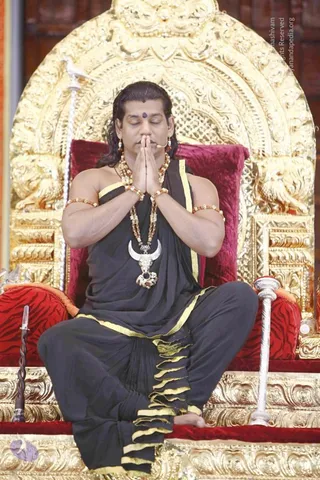
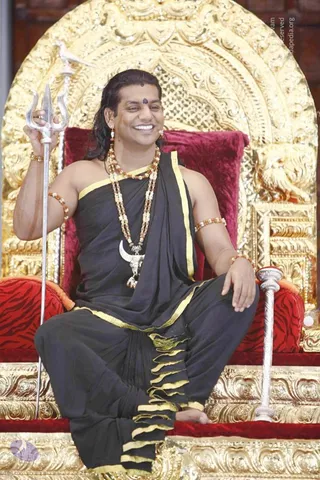
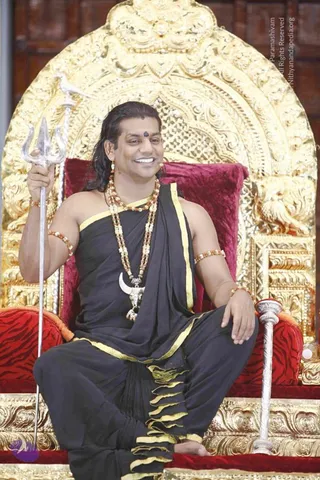
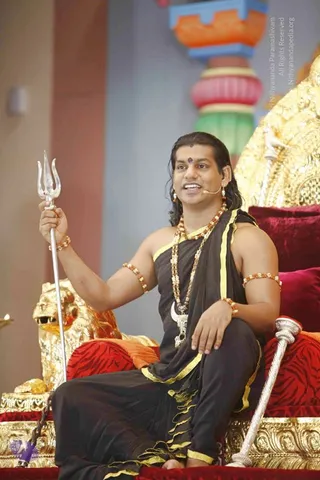
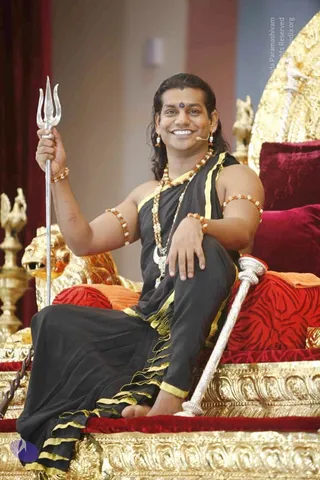
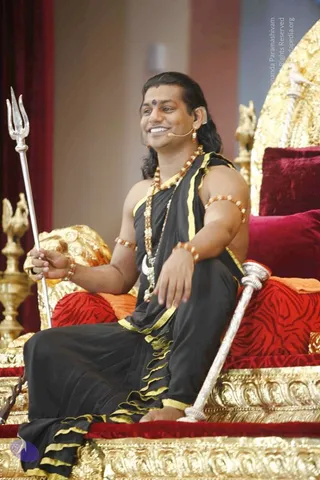
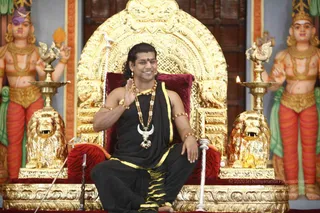
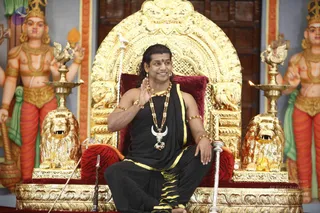
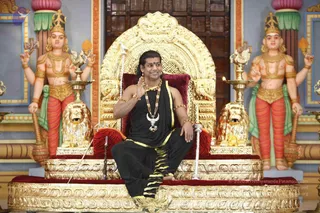
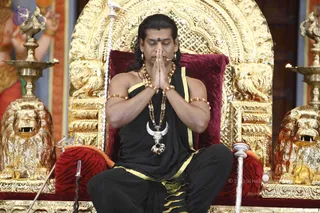
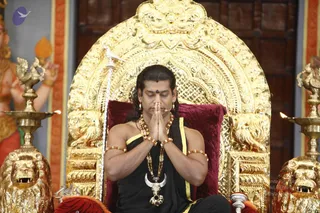
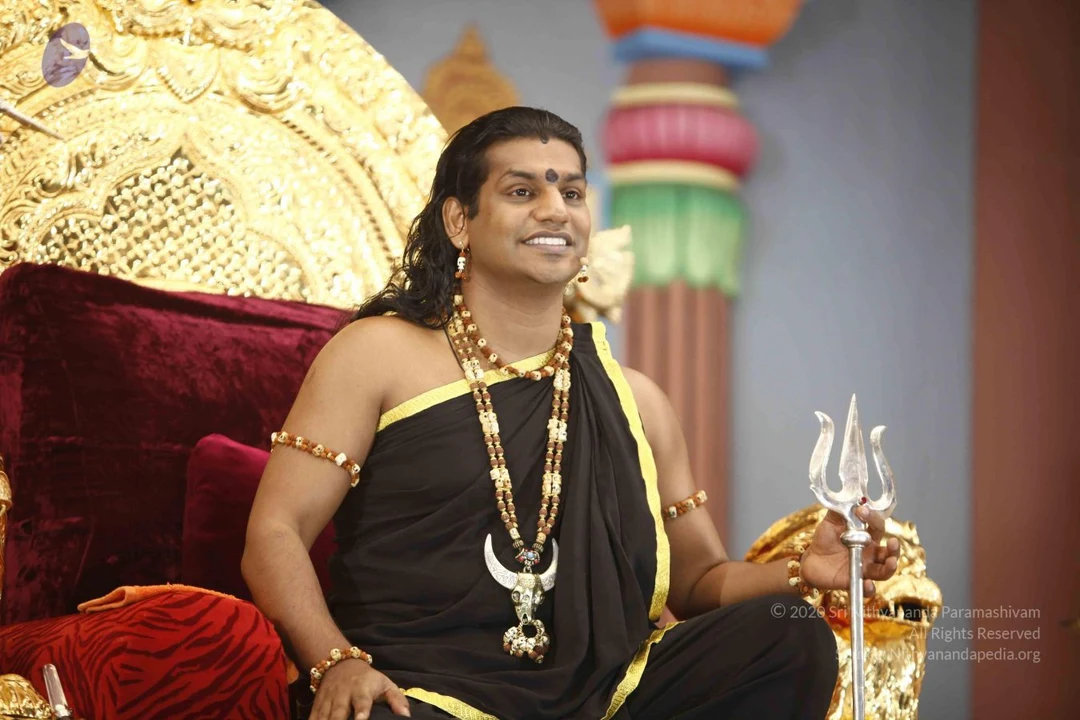
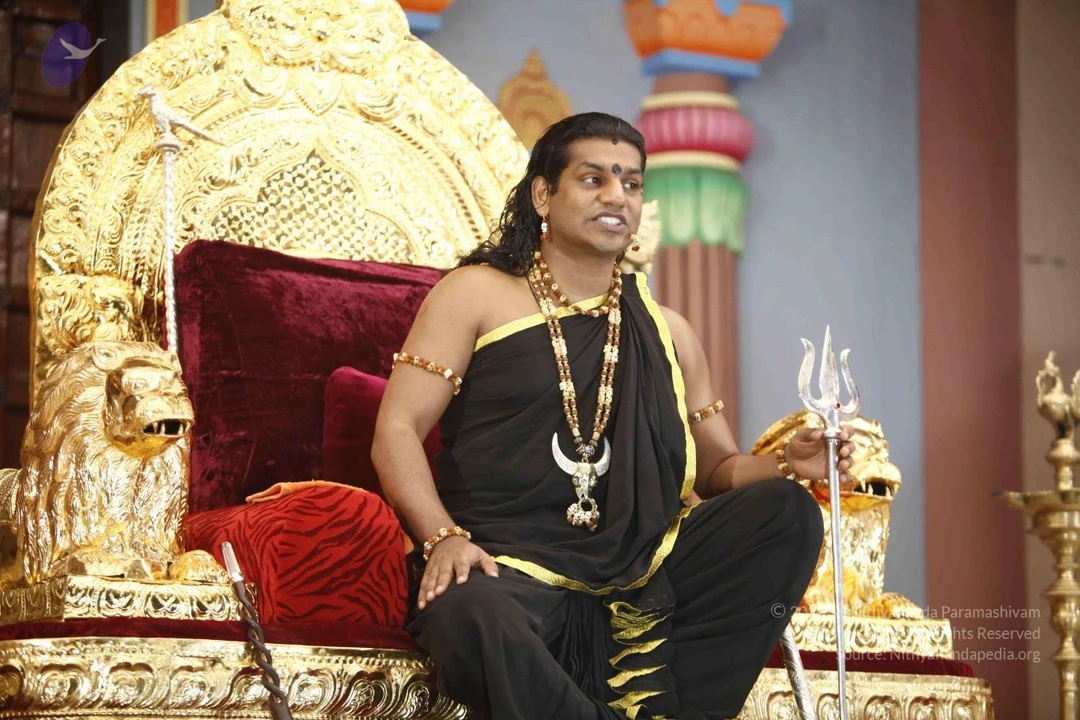
A man seated cross-legged on an ornate gold throne with red velvet cushions, eyes closed, palms pressed together in namaste at chest level. He wears a black sleeveless garment edged with gold trim, layered rudraksha and bead malas, bead bracelets and armlets, a large silver bull-head pendant, and a small dark bindi. A small microphone headset is visible near his face. Gold lion carvings and a silver staff appear beside the throne.A smiling man with long swept-back dark hair sits on an ornate gold and red throne with a red velvet cushion. He wears a black garment trimmed with gold, layered with rudraksha and white bead malas, a silver ox-head pendant, and matching beaded armbands. He holds a silver trident in his raised right hand and has a dark forehead mark. Appearance-based probable Swamiji cues: long swept-back hair, ornate gold throne, rudraksha malas and ceremonial jewelry. The image is a photograph of a seated speaker on a stage.A man seated on an ornate gilded throne with a deep red velvet cushion and red tiger-striped upholstery. He wears a black garment edged with gold trim, draped over one shoulder with the other arm bare, and holds a silver trident in his raised right hand. He has long swept-back dark hair, a dark bindi on his forehead, multiple strands of rudraksha and beaded malas, a silver bull pendant, and beaded armlets. He smiles while seated, one leg folded beneath him. A silver staff with a bird finial stands beside the throne.A man with long swept-back dark hair sits on an ornate golden throne with red velvet cushions and a golden lion at its base. He wears a black garment trimmed with gold, layered rudraksha and white bead malas, rudraksha arm bands, and a headset microphone. He holds a silver trident aloft while speaking. Swamiji (probable): the long hair, ornate gold-and-red throne setting, rudraksha malas and ceremonial attire match the page's stated presence, though identity is appearance-based only. Behind him stand colourful tiered decorations in orange, red, green and blue.A smiling man sits cross-legged on an ornate gold throne with red velvet cushions and gold lion-shaped armrests, holding a silver trident upright in his raised right hand. He wears a black garment trimmed with gold, layered rudraksha and bead malas, a gold-tone pendant, bead armbands and wristbands, orange-red earrings, and a dark tilak on his forehead, with a small headset microphone clipped near his face. A photograph of a throne seating scene with a sign-like caption reading 'Paramashivam' is printed in the upper-right corner. Probable Swamiji (long swept-back hair, rudraksha malas, ceremonial gold ornaments and a trident on a throne) is seated in a seated discourse setting.A smiling man with long dark hair sits on an ornate gold-and-red throne, holding a silver trident in his right hand. He wears a black garment with gold trim and ruffled gold edging, layered rudraksha and bead malas, a crescent-shaped pendant, and beaded bracelets and armlets. A small tilak is on his forehead and a headset microphone is at his face. Behind him stand gold lion-shaped armrests and a gold canopy with a red velvet cushion. Swamiji (probable): the long swept-back hair, rudraksha malas and ceremonial gold ornaments on a throne match the page's claim of Swamiji at this event.

Satsang-with-Srilanka

9 photosSource gallery
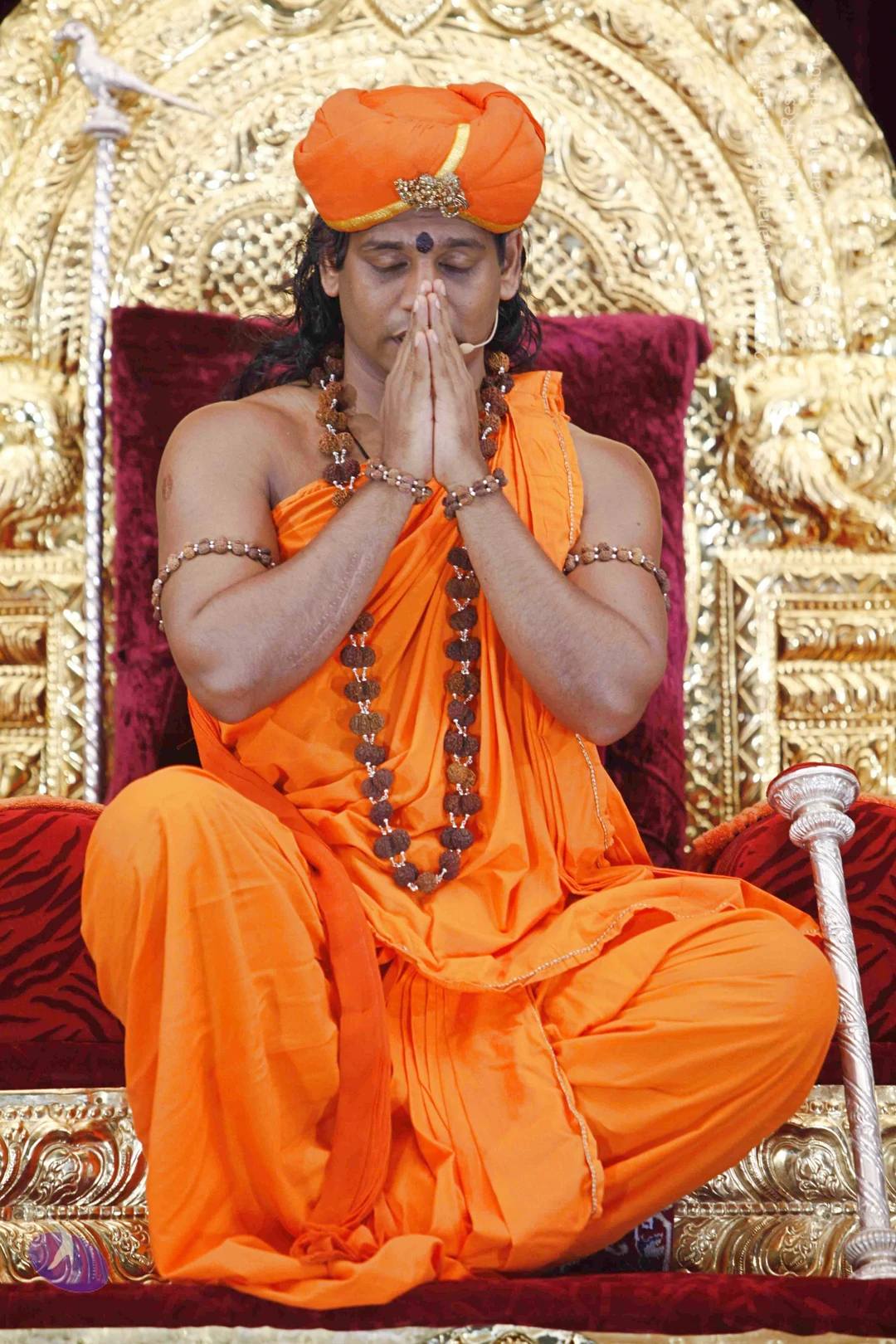
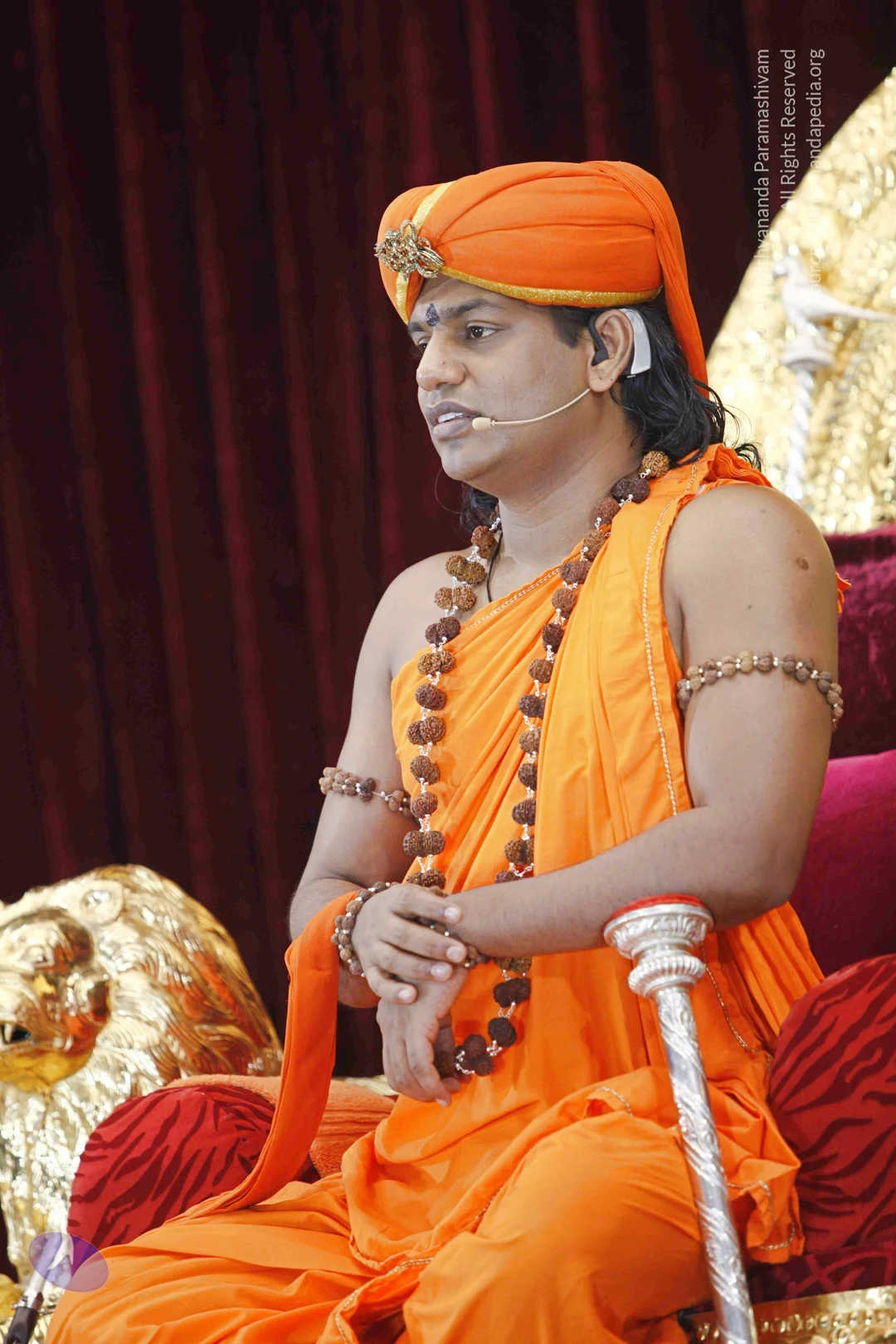
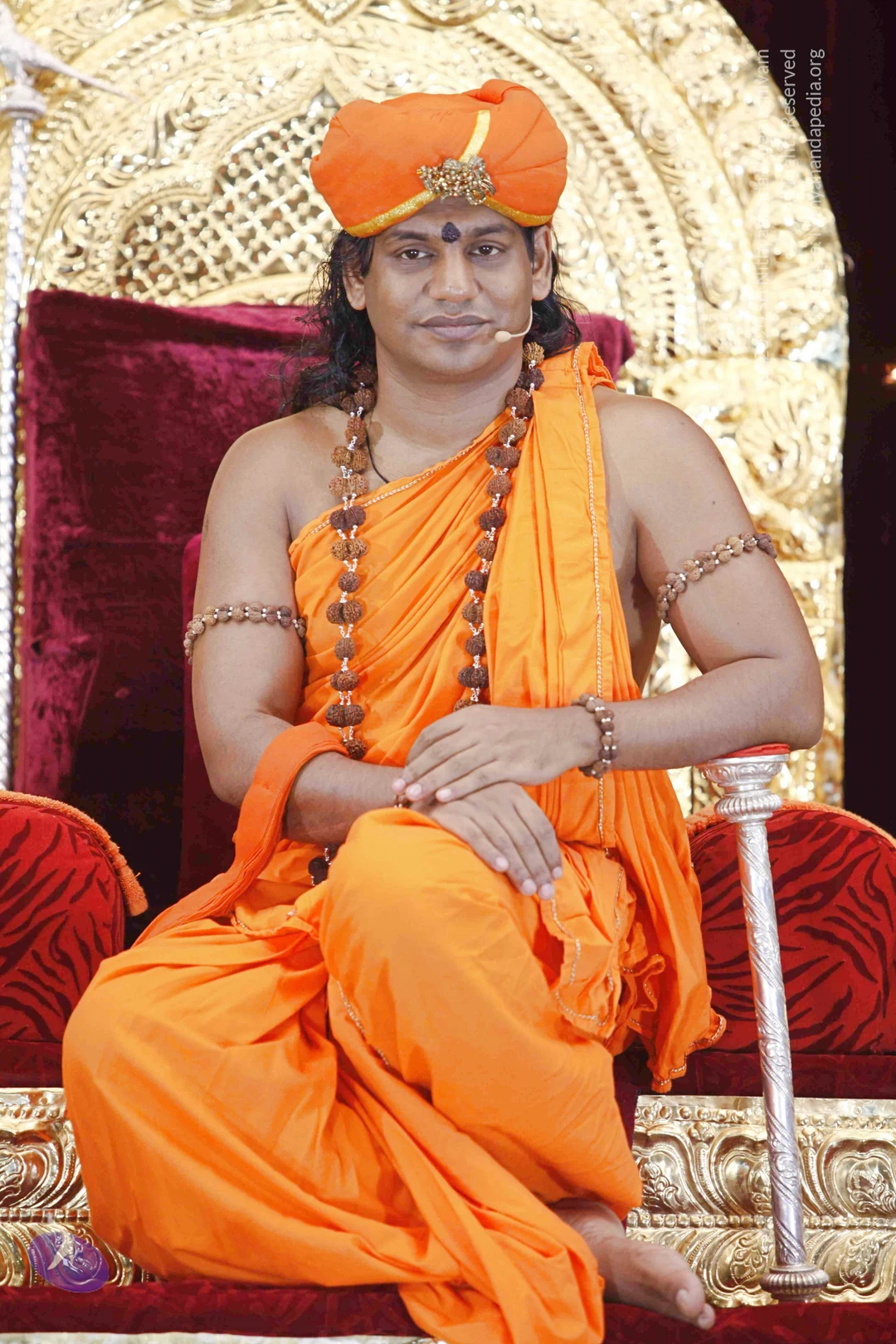
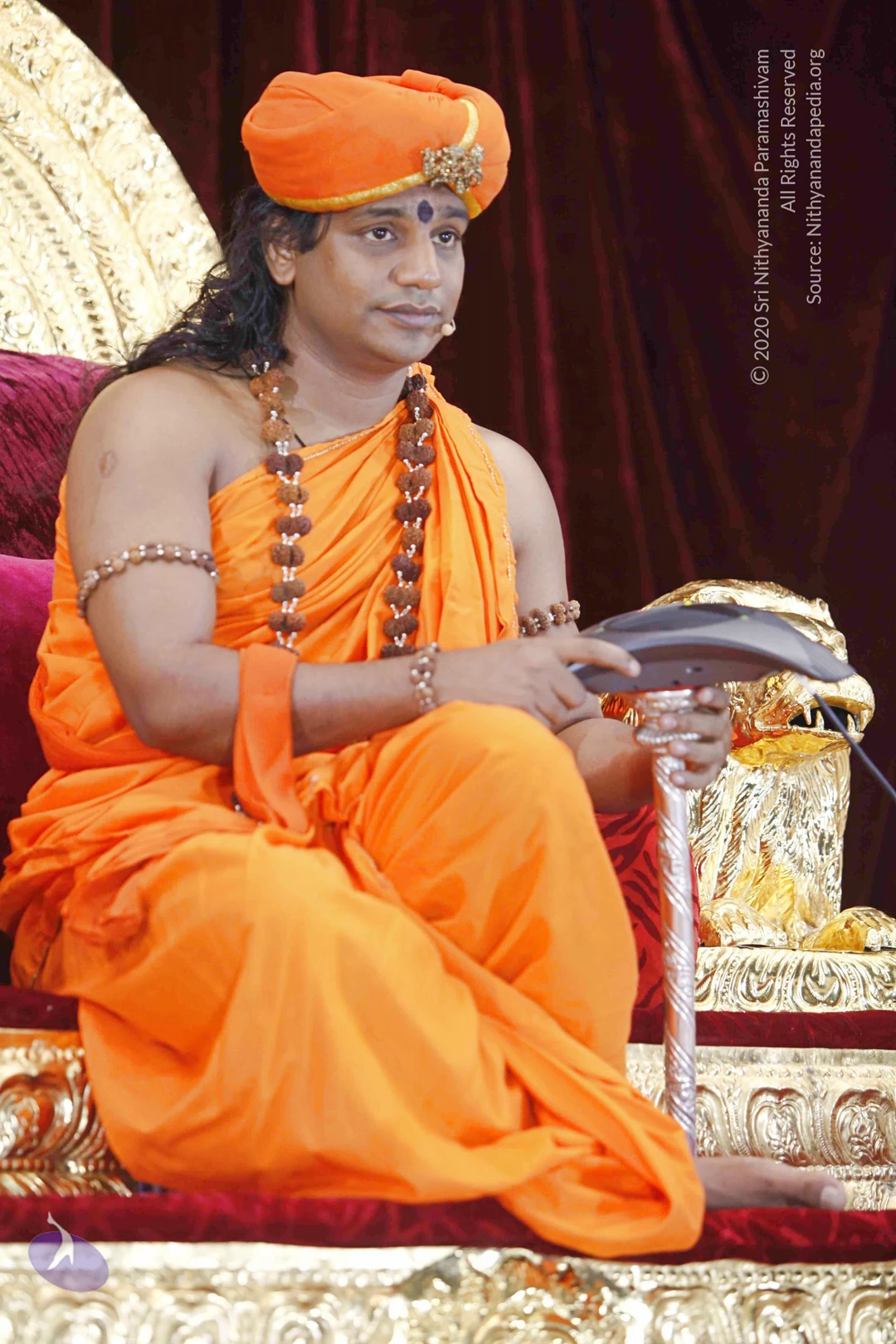
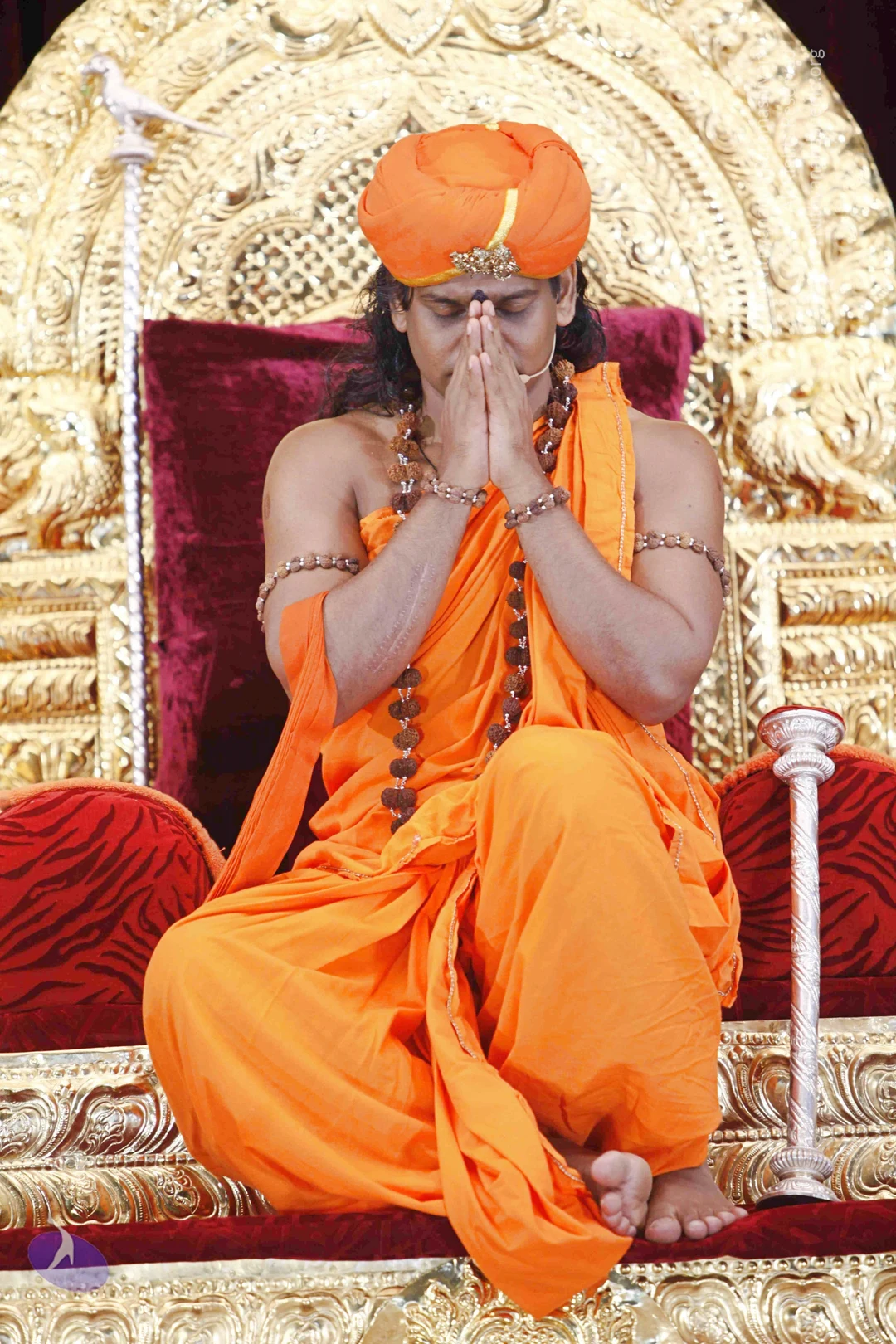
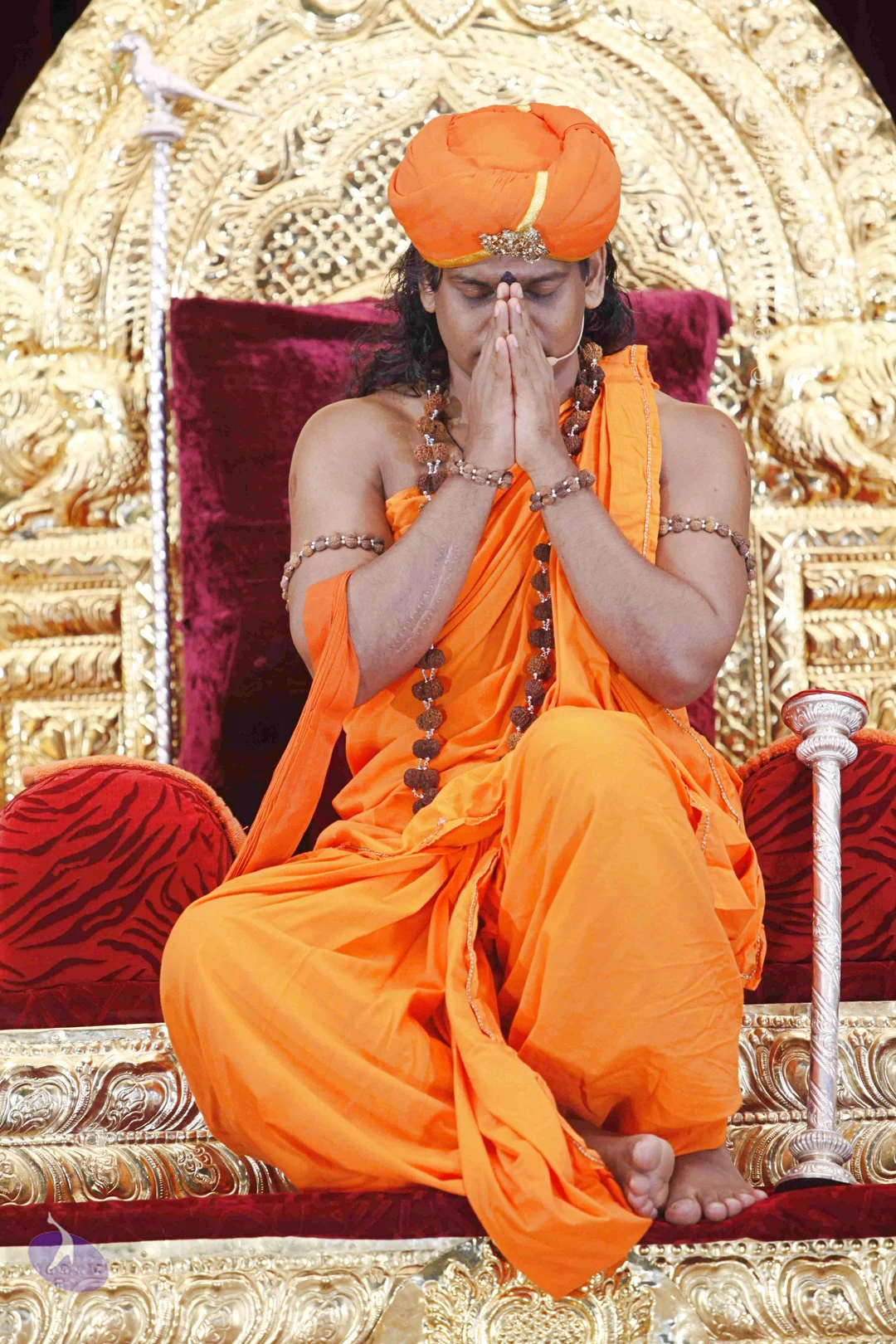
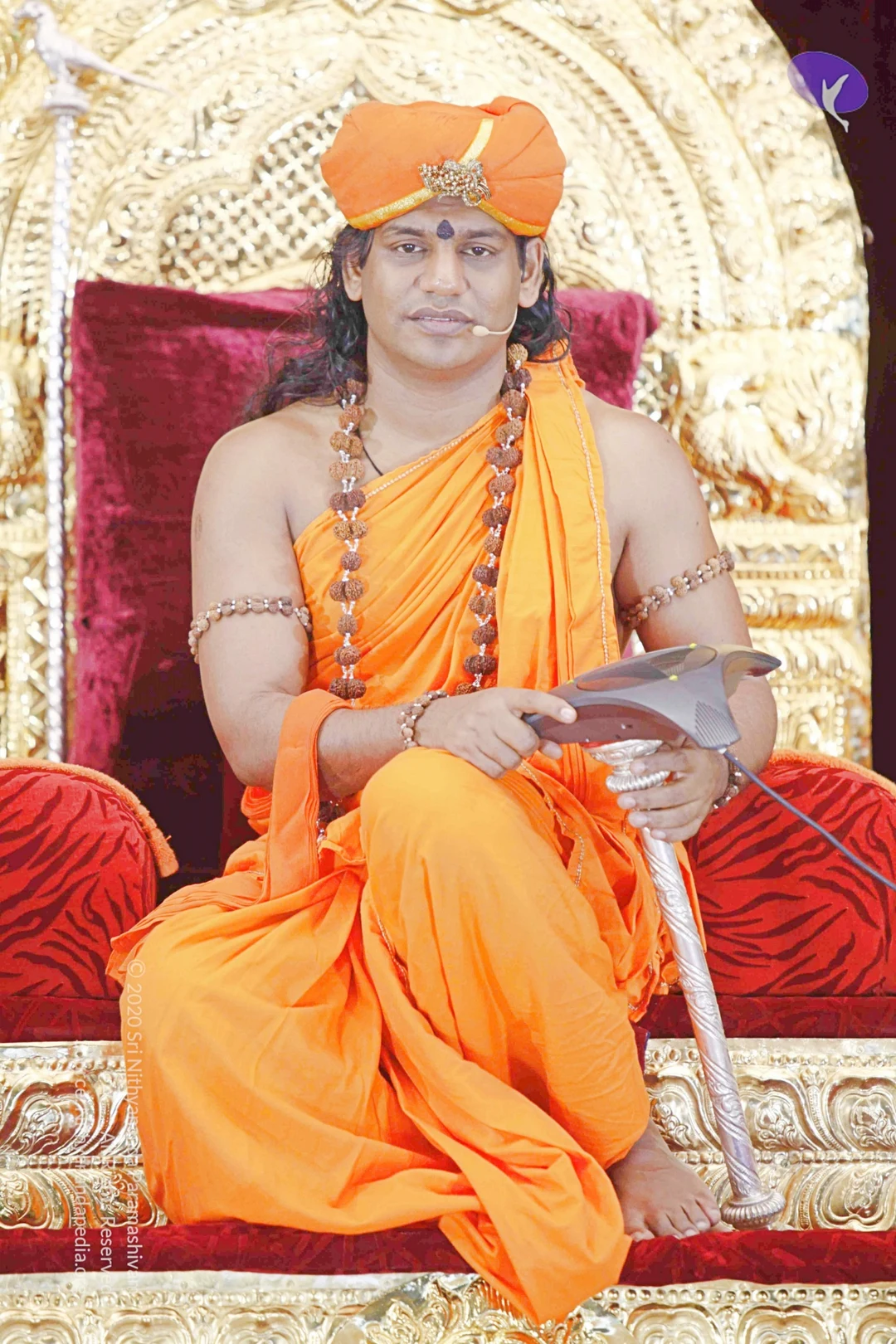
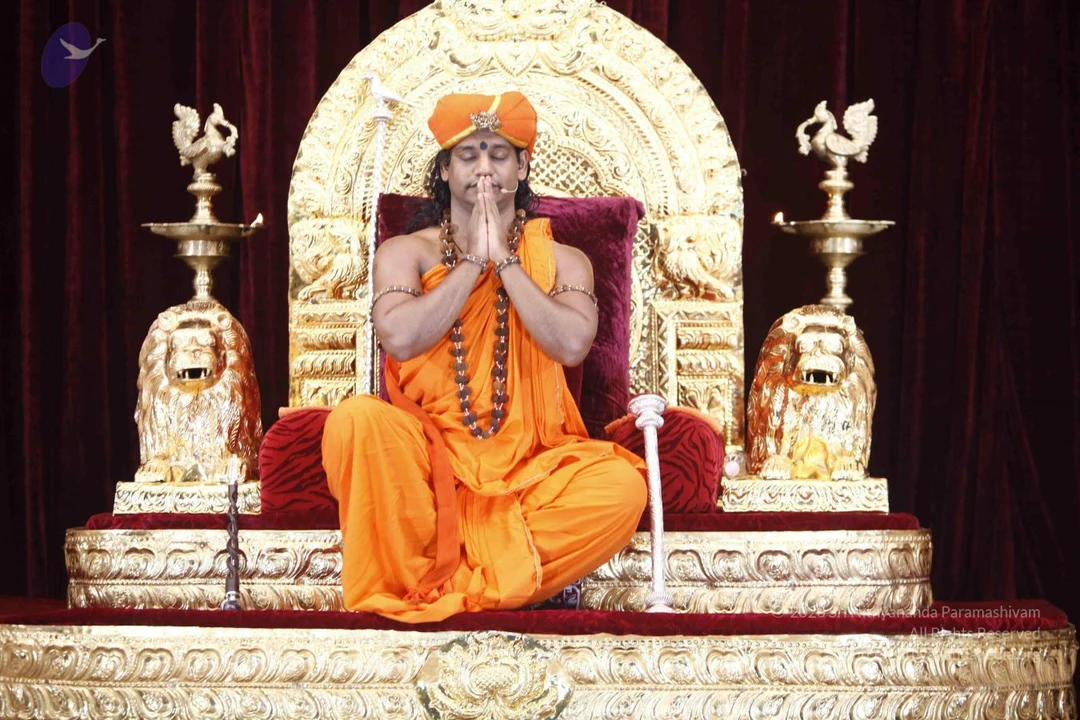
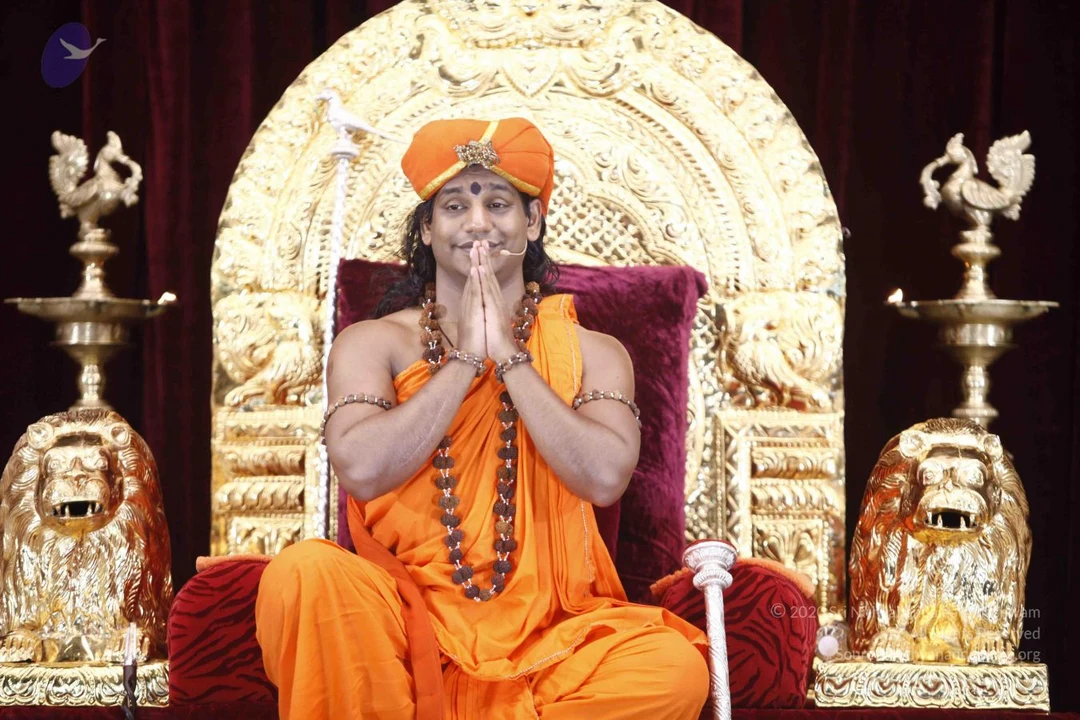
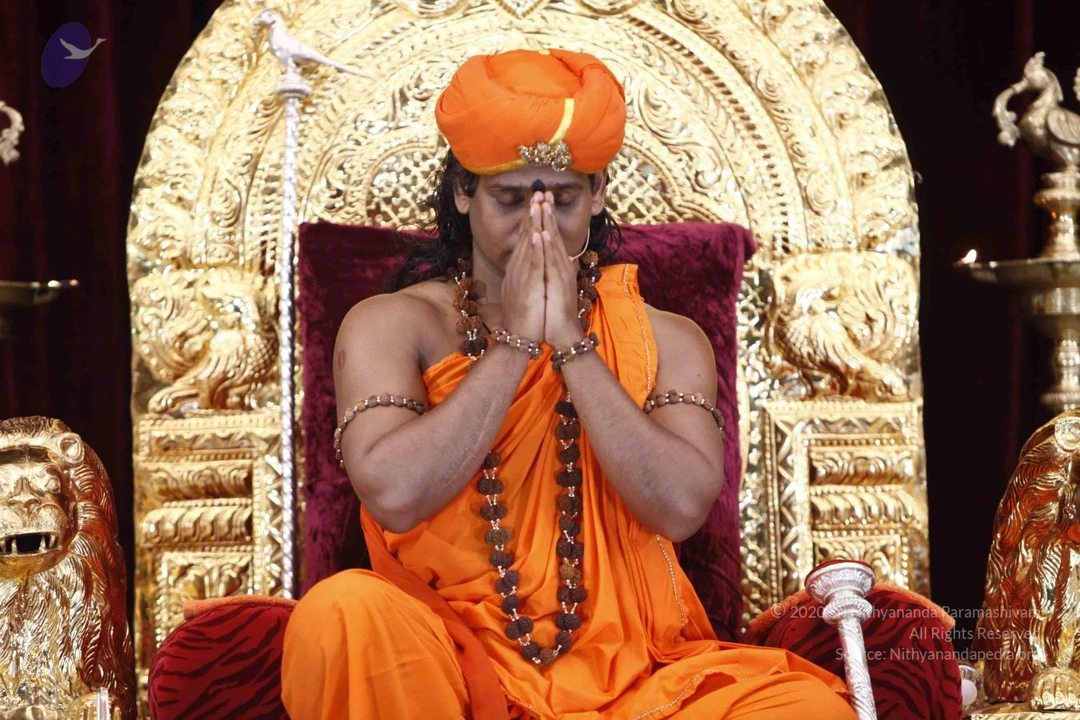
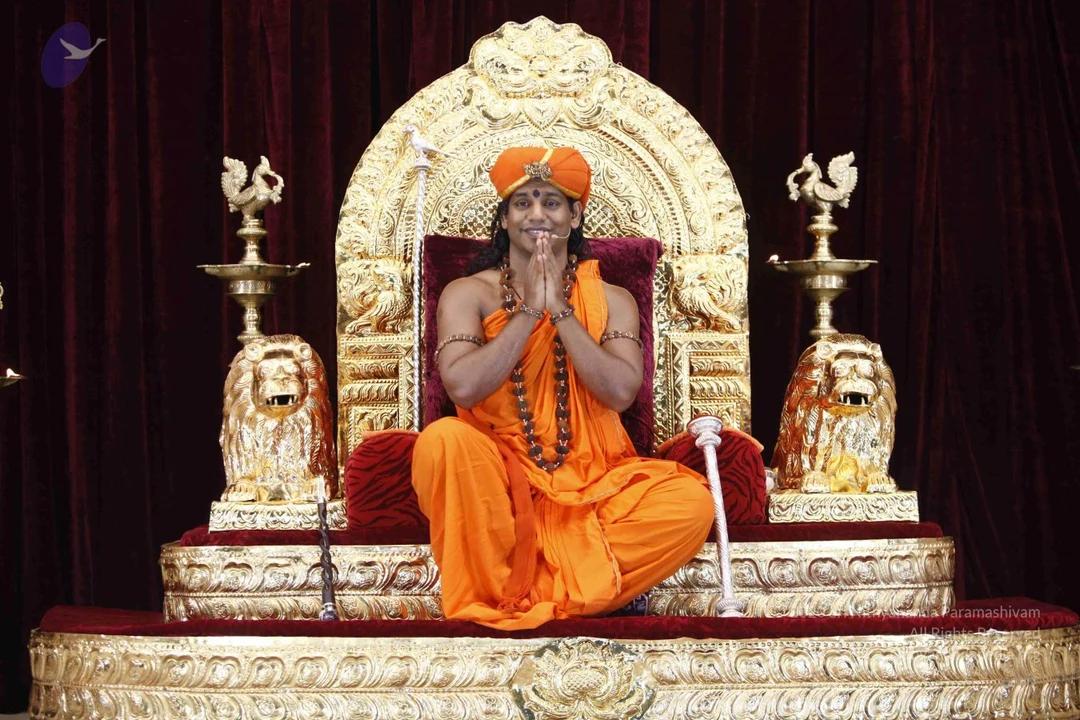
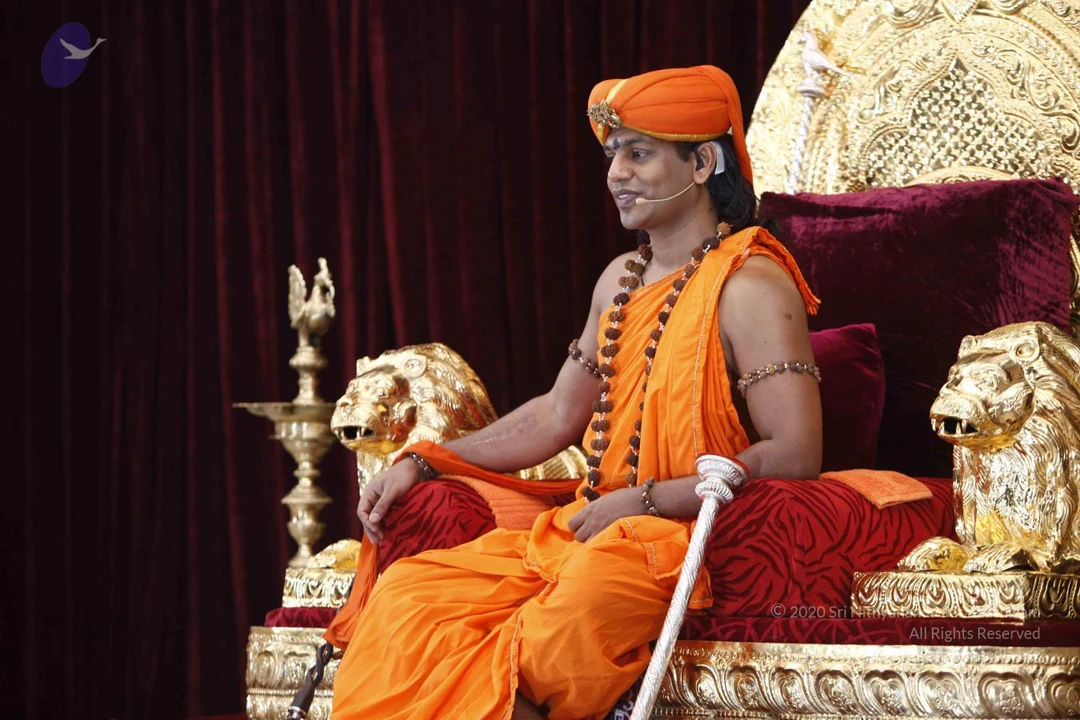
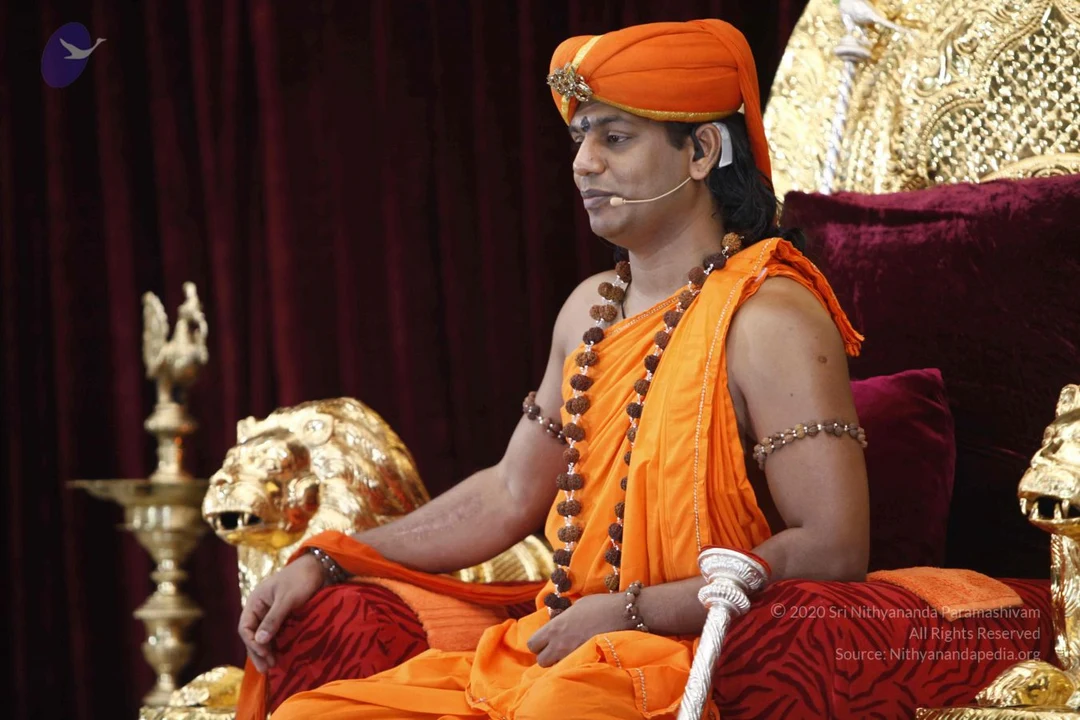
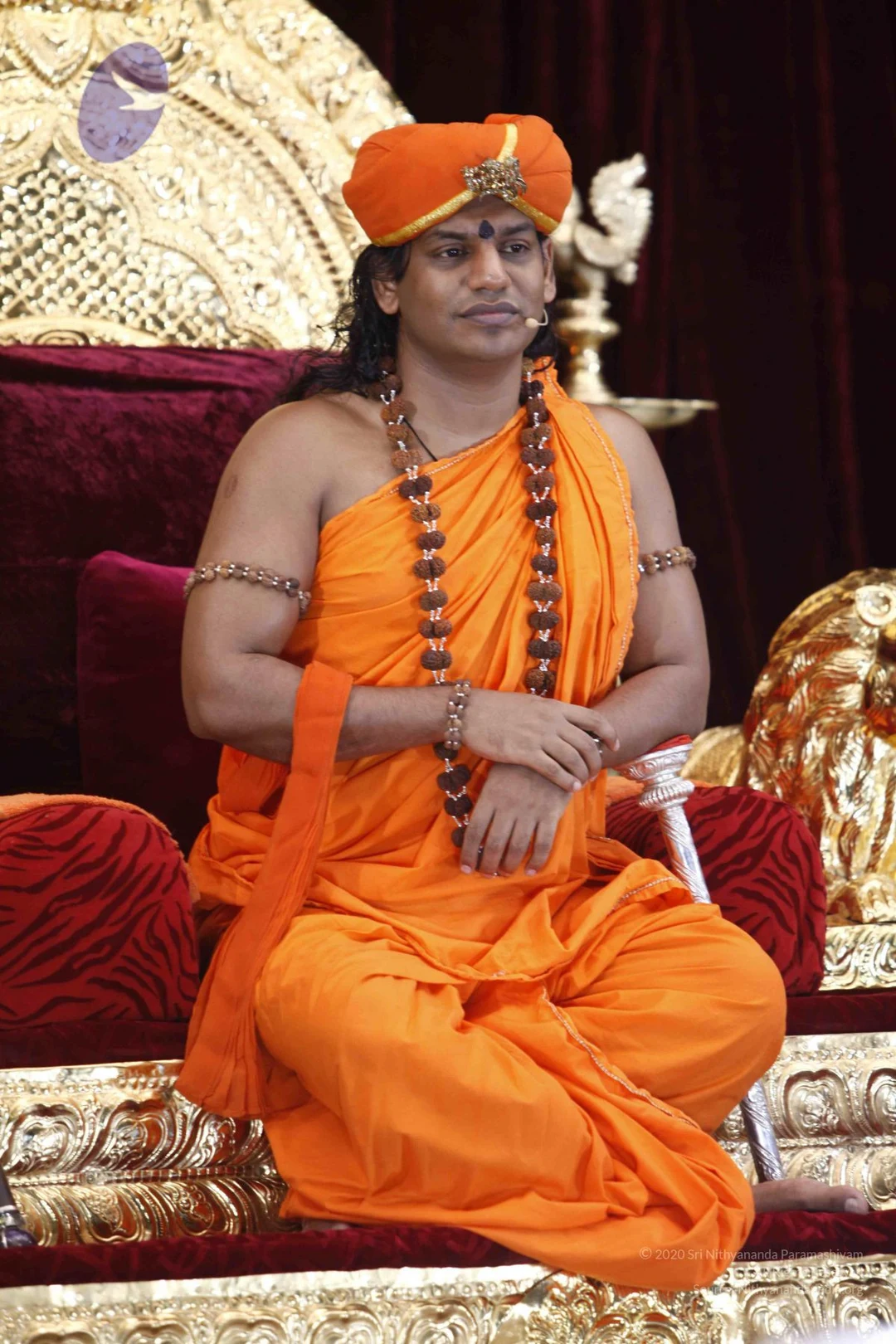
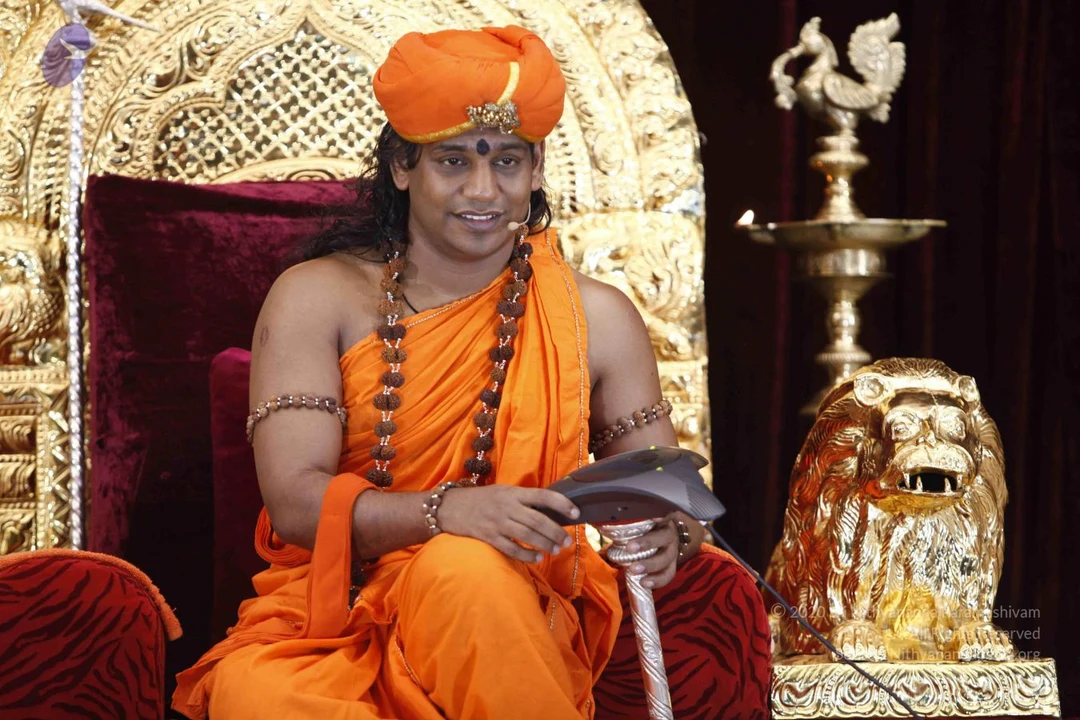
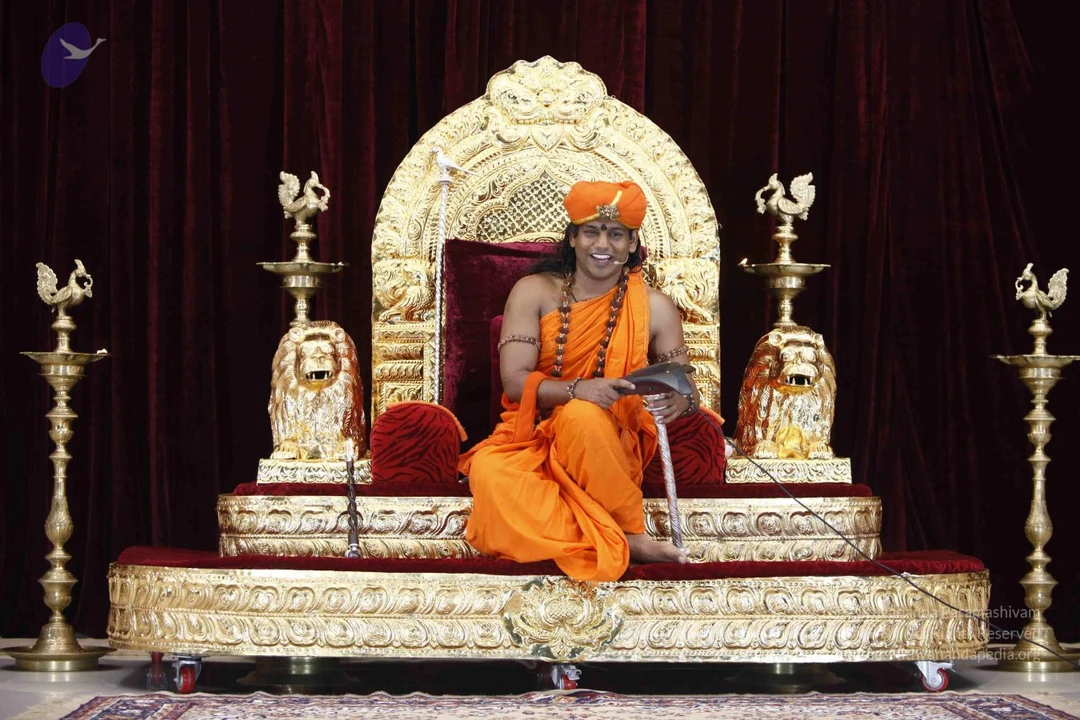
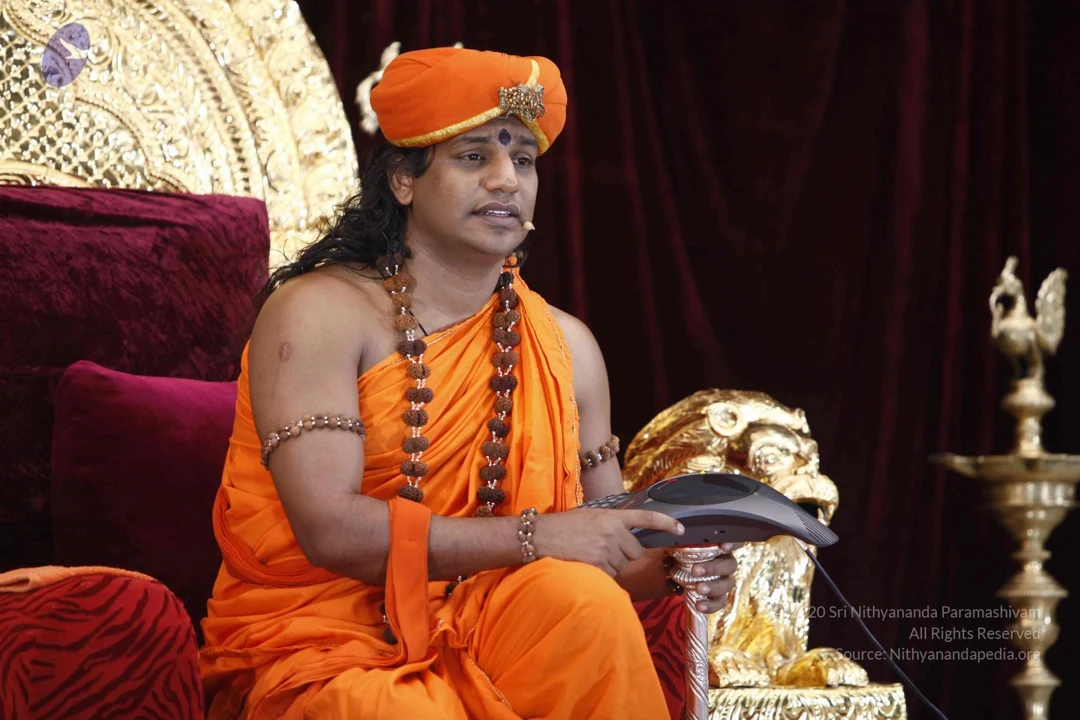
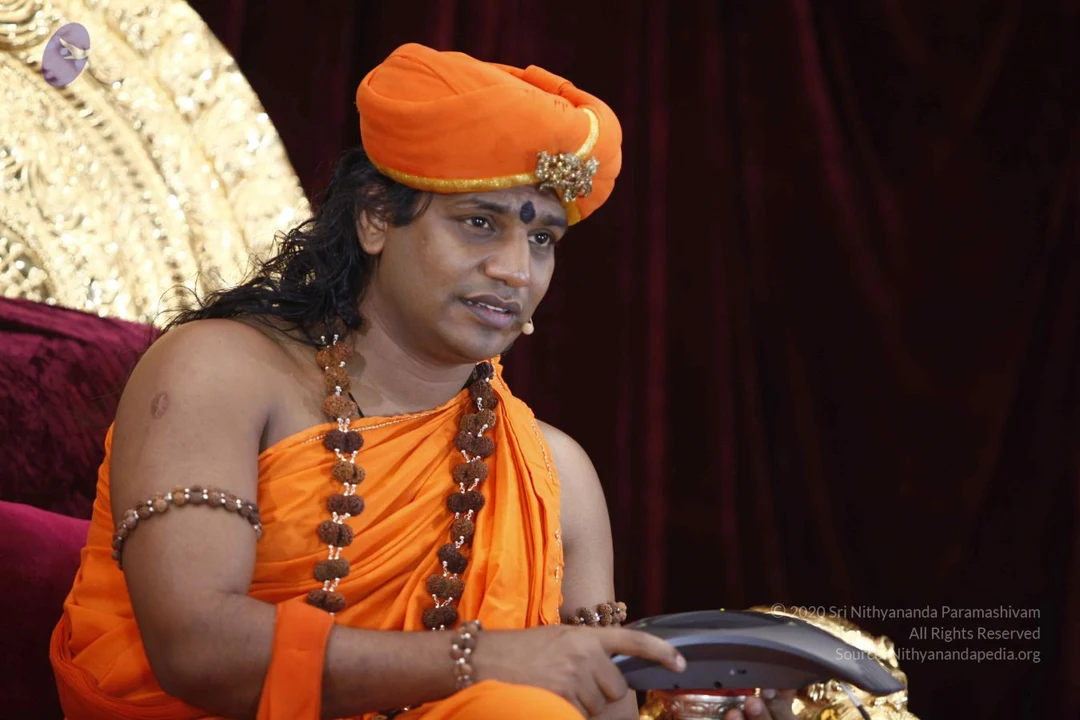
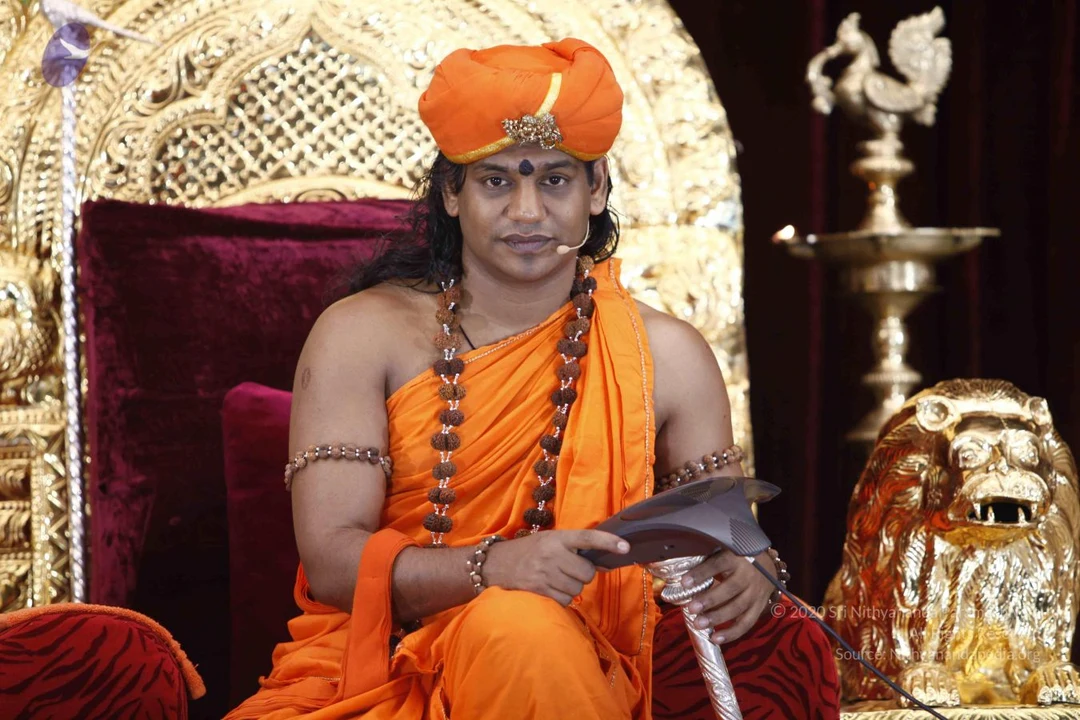
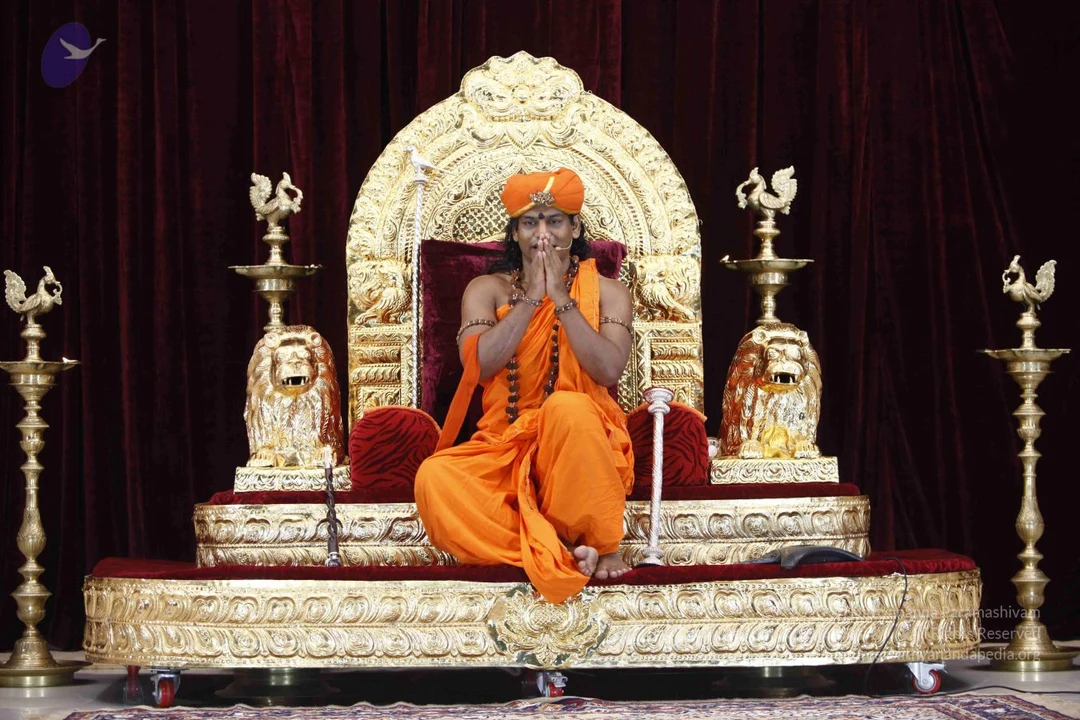
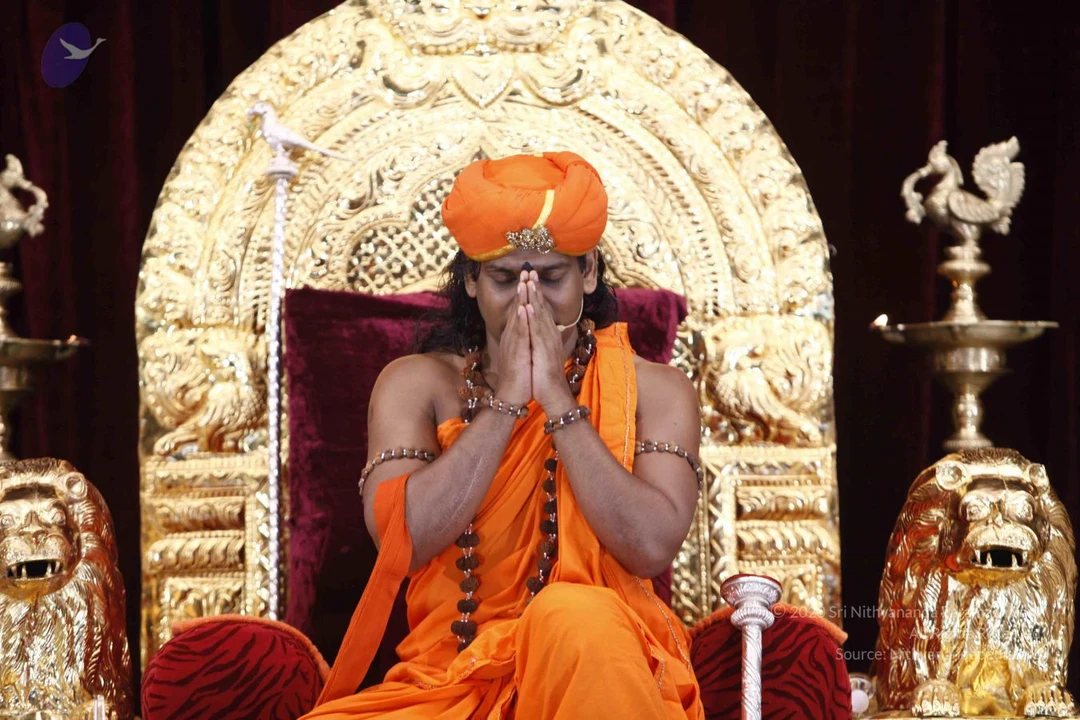
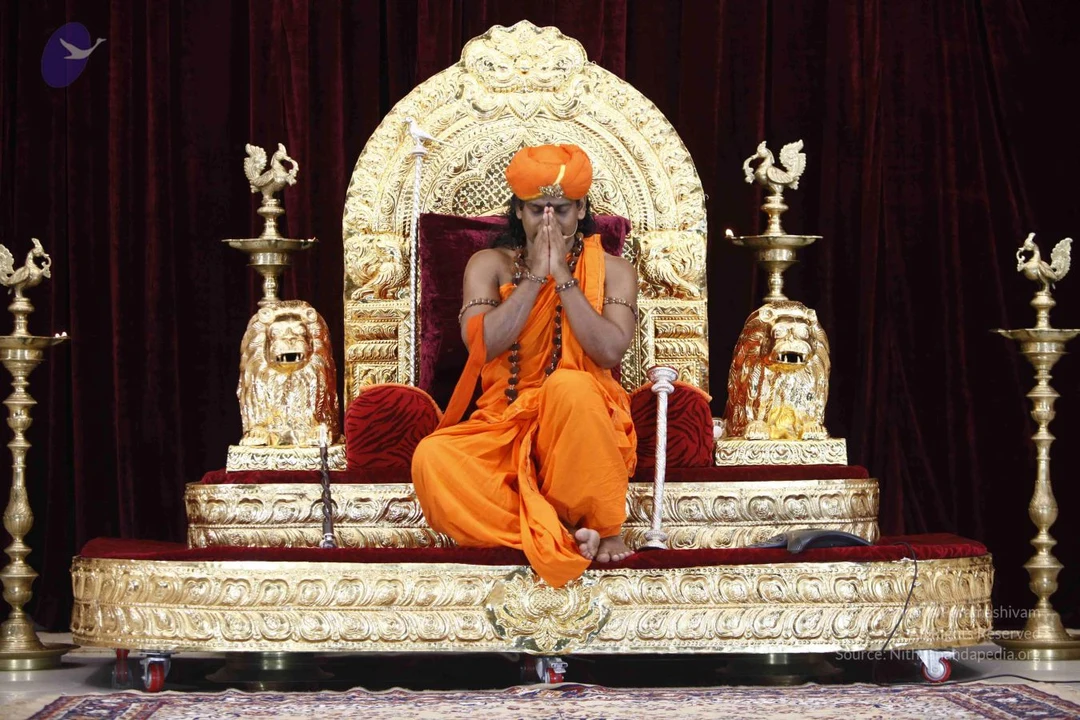
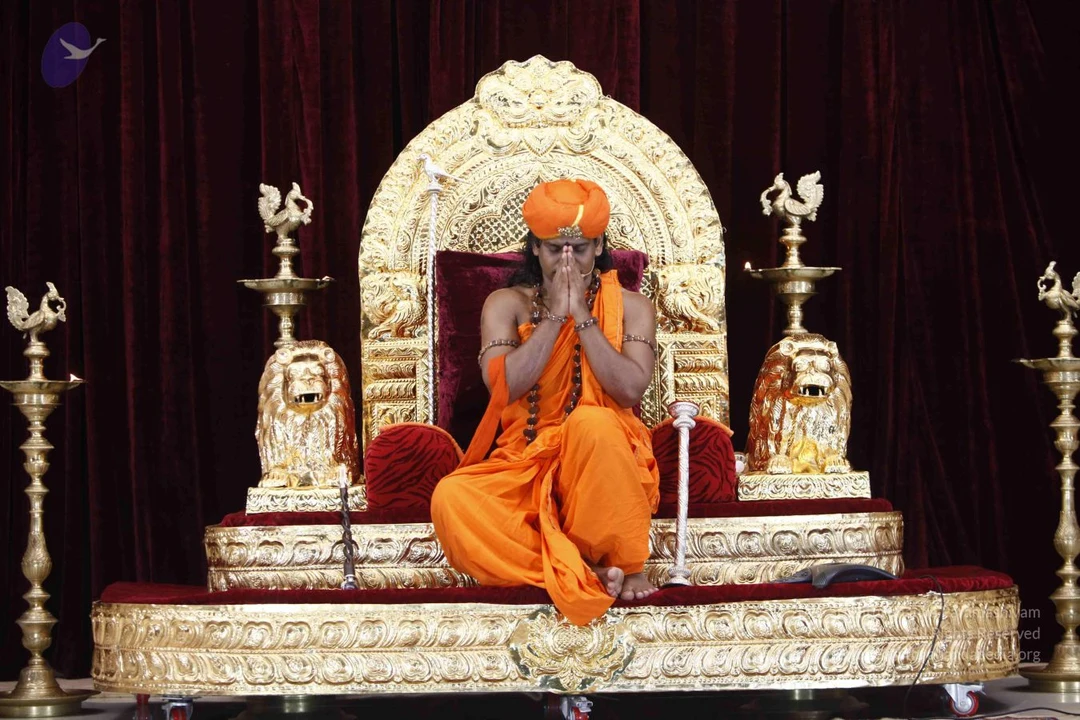
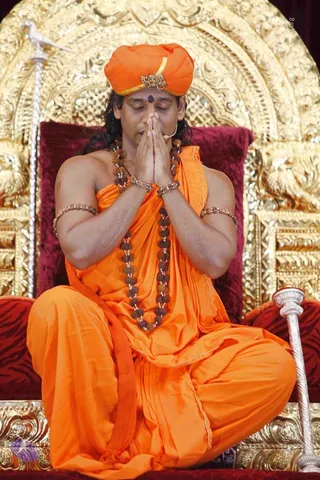
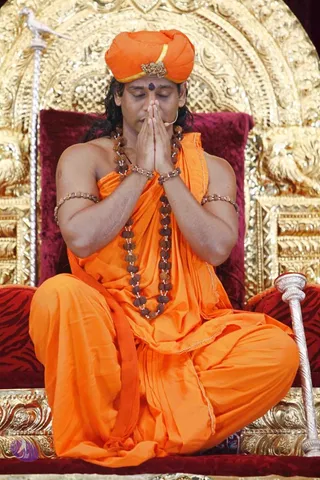
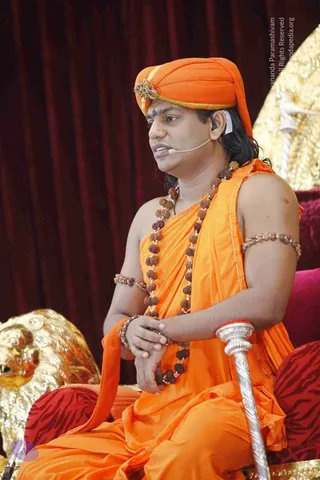
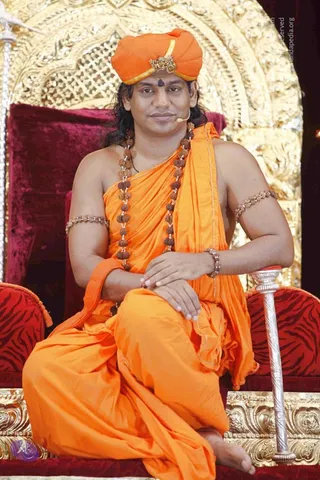
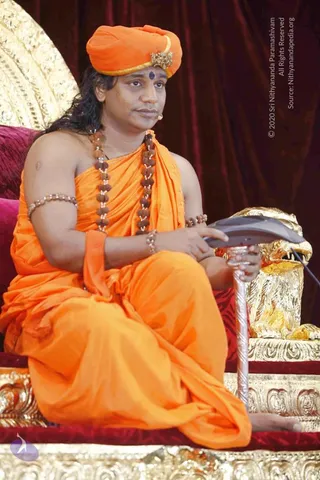
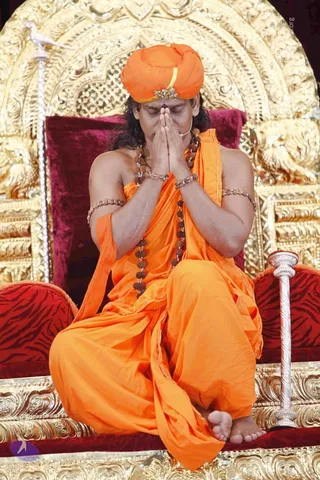
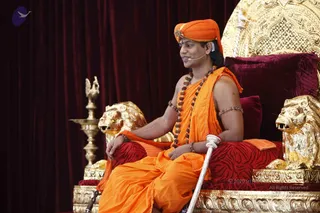
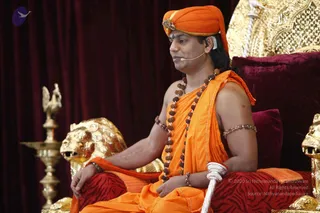
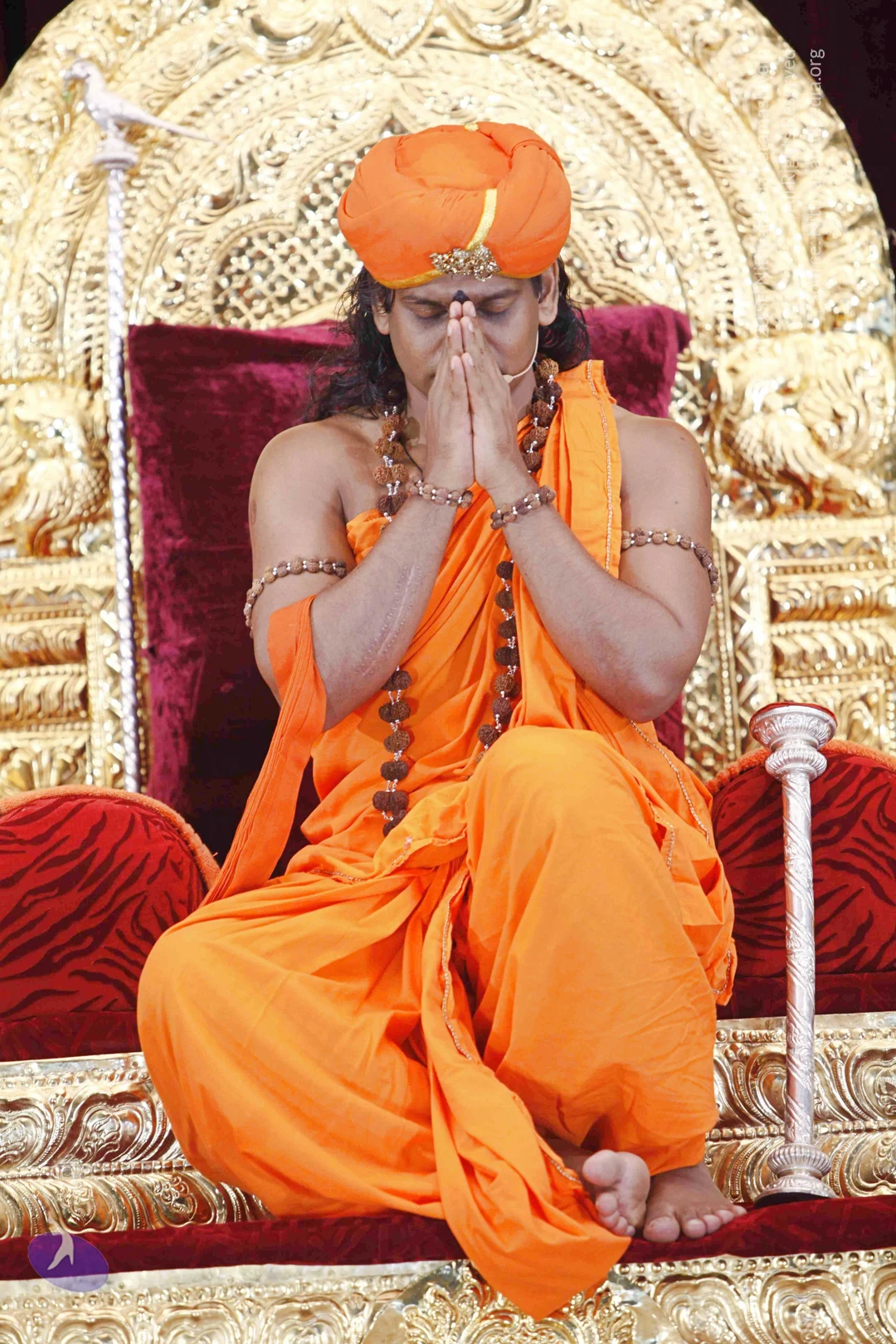
A photograph of a seated man in saffron-orange clothing, with a matching orange turban decorated with a metal brooch and a small dark dot on his forehead, sitting with palms pressed together in anjali mudra and eyes closed. He wears multiple rudraksha malas around his neck and arms, and a small lapel microphone is visible near his jaw. He sits on a deep red velvet cushioned throne framed by ornate gold-toned carved panels and a silver finial. Swamiji (probable): long dark hair, saffron/orange robes, a turban and rudraksha malas match the page's reference to Swamiji at this event, though identity rests on these appearance cues alone.A seated man in saffron-orange robes and an orange turban with a jewelled brooch sits on an ornate gold and crimson throne with a red velvet cushion, eyes closed and palms pressed together in anjali mudra. Multiple rudraksha malas hang around his neck and wrists, a small dark bindi marks his forehead, and a small microphone is clipped near his face. Behind him a richly carved gold arch and a silver staff with a bird finial frame the scene. Swamiji (probable) is shown as the seated central figure, identified by the orange turban, rudraksha malas and saffron robes; he is the only physical person visible.Seated man on a red velvet throne with a golden lion armrest, wearing an orange turban with a gold brooch, orange draped garment, and multiple rudraksha malas on neck and arms, holding a silver staff, with a wired headset microphone and a tilak on his forehead. Swamiji (probable) is seated in an orange turban and saffron robes with rudraksha malas, a headset mic and a silver staff, addressing an audience from the throne.A man seated on an ornate red velvet throne with gold carved backrest, wearing an orange turban with a gold brooch and an orange draped robe, with rudraksha mala necklaces and armlets, a small dark bindi on his forehead, and a small headset microphone. He rests his hands on his knee and holds a silver-finished armrest, sitting calmly with one bare foot visible. The orange clothing and ornate gold-and-red setting dominate the frame. Swamiji (probable): long swept-back hair, orange turban, saffron robe and rudraksha malas suggest the sannyasi presented on the page, with appearance-based identification uncertain.A seated man in an orange turban with a jewelled brooch and a small dark bindi, wearing draped orange robes and multiple rudraksha mala necklaces and beaded bracelets. He sits on a red velvet cushion beside an ornate gold lion-headed throne, holding a silver staff with a dark rounded top, with a small microphone clipped near his face. Behind him hangs deep red velvet drapery.A seated man in orange robes and an orange turban performs anjali mudra with palms pressed together at chest level and eyes closed. He wears multiple rudraksha malas around his neck and arms, and a vibhuti or kumkum mark on his forehead. He sits on an ornate gold throne with red velvet cushions and silver staff-like poles beside him; a small white bird figure sits atop one pole. a person cues: long swept-back hair, orange turban, orange saffron robes and rudraksha malas while seated on a throne in a ritual setting.

Temple

25 photosSource gallery
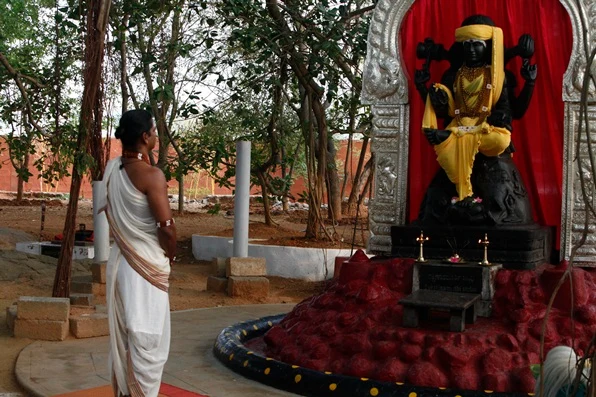
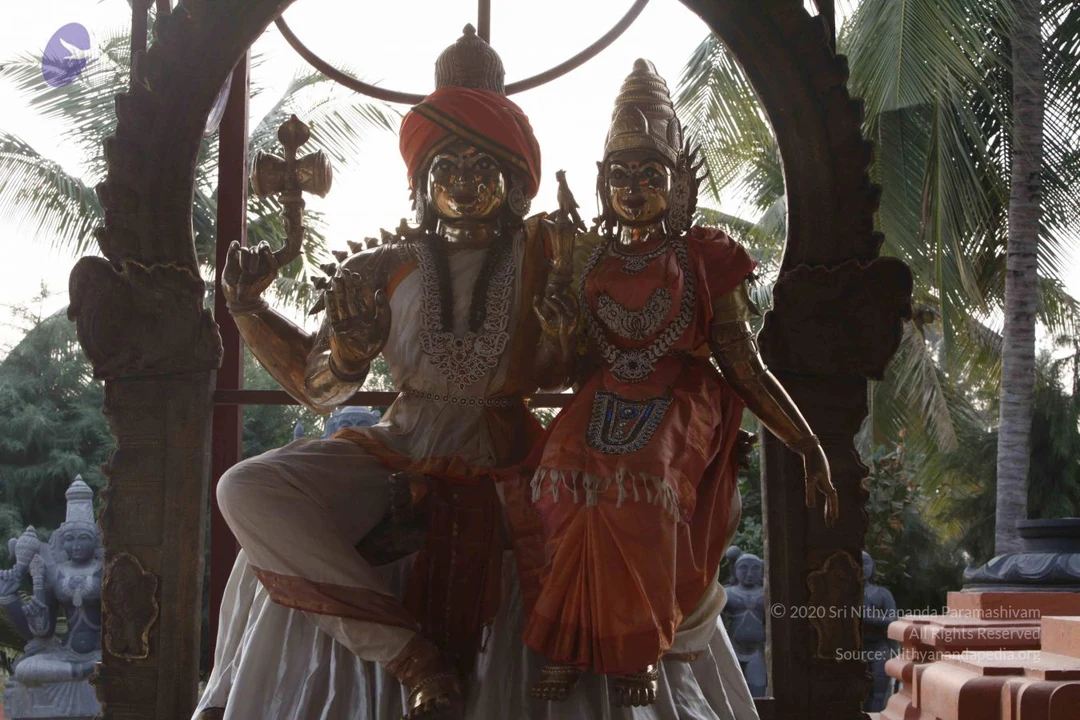
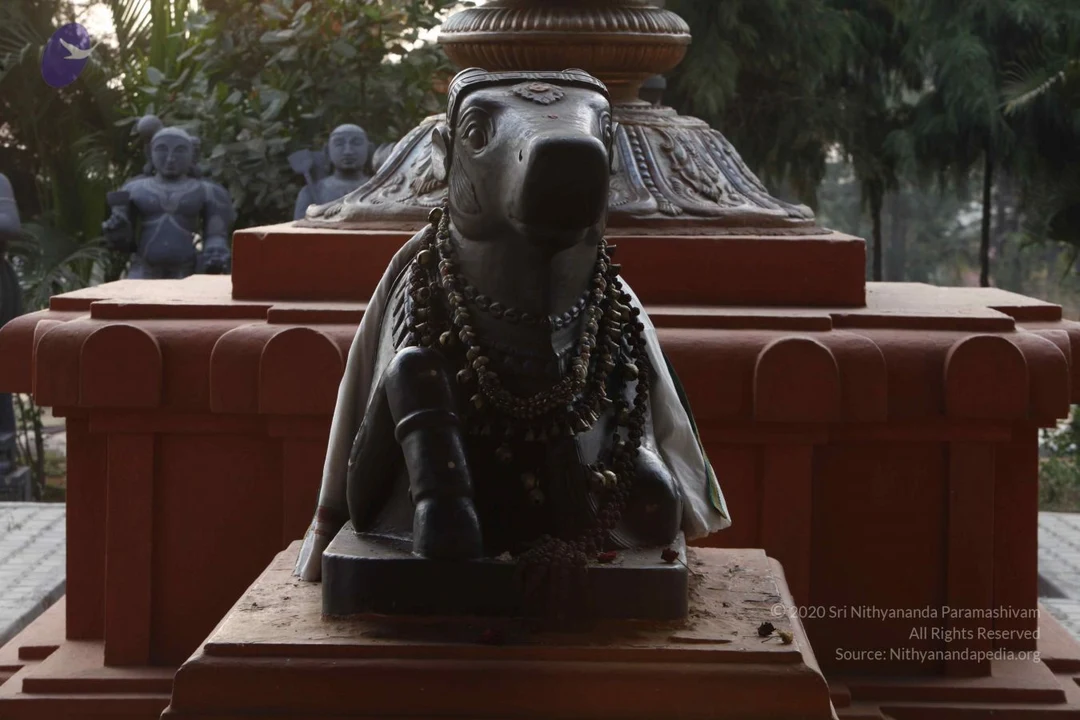
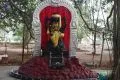
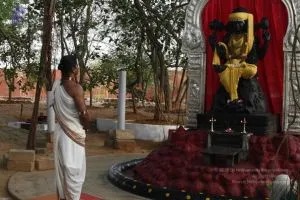
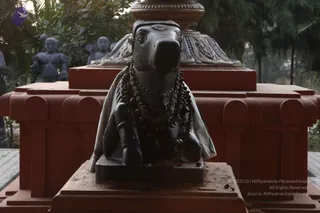
A photograph of an outdoor shrine set among trees. A deity murti sits within a red-draped arched niche on a raised platform, decorated with flower garlands. Red flower petals and offerings are scattered on the ground in front of the shrine. No people are visible in the scene.Two deity murtis stand side by side in a temple shrine framed by an ornate gilded arch carved with lion-like figures. Both murtis are heavily garlanded with long chains of orange-yellow marigolds and white flowers, with dark purple cloth draped beneath. The murti on the left has a tall conical crown and a dark face with a decorated torso; the figure on the right wears a smaller crown and a gold-toned bodice. No physical people are visible.A photograph of an outdoor shrine at a temple courtyard. A shaved-headed man in white dhoti and an upper cloth stands at left with his back to the camera, facing a dark stone figure seated on a yellow-and-black throne in front of a red draped backdrop. Red flower petals and garlands carpet the base, with small oil lamps and pooja items placed before the figure. Green trees and a low white wall surround the open-air shrine. This figure is a statue or murti, not a physically present person, and no a person candidate can be confirmed in the scene.Outdoor view of a pair of golden-faced statues standing together inside a dark wooden arched frame with a circular top, surrounded by palm trees and garden greenery. The male figure wears a red-orange turban, white dhoti-style garments, a layered white beaded necklace and a trident-like staff held in one hand; the female figure wears an orange-red sari with a patterned border, a tall ornate golden crown and multi-strand jewelled necklaces. Grey stone deity sculptures and a lamp-like base appear at the edges of the frame. The figures are statues, not living people.A dark grey stone statue of Nandi, the bull mount of Shiva, sits on a red-painted pedestal in an outdoor garden setting. The bull wears a white cloth draped over its back and multiple strands of rudraksha-style beads and small bells around its neck, with a tilak mark on its forehead. Behind it, a red stepped plinth supports a carved ornamental finial, and further statues of figures stand among green foliage and trees at dusk.Two metal deity murtis stand side by side within an ornate gilded arch framed by carved lion-like motifs. Both figures wear tall silver crowns, heavy jewelled necklaces and ornate ornaments, and are draped in garlands of white flowers, yellow marigolds and dark maroon blooms. The left figure holds a small bowl or cup and wears a purple velvet shawl over its arm; the right figure raises one hand in a blessing gesture and wears a patterned silk garment. A deep red cloth covers the base below. No living people are visible.

Pada-Puja
56 photosSource gallery
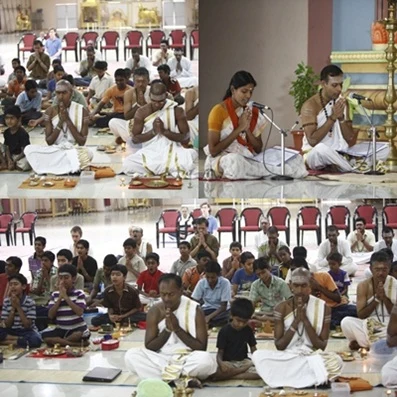
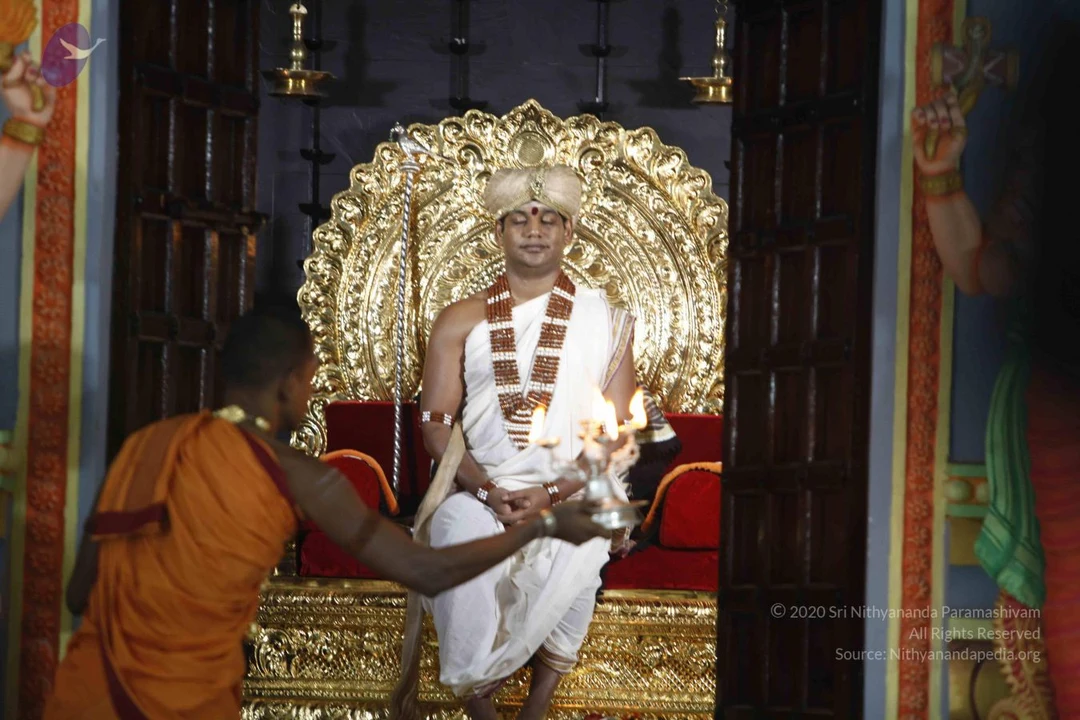
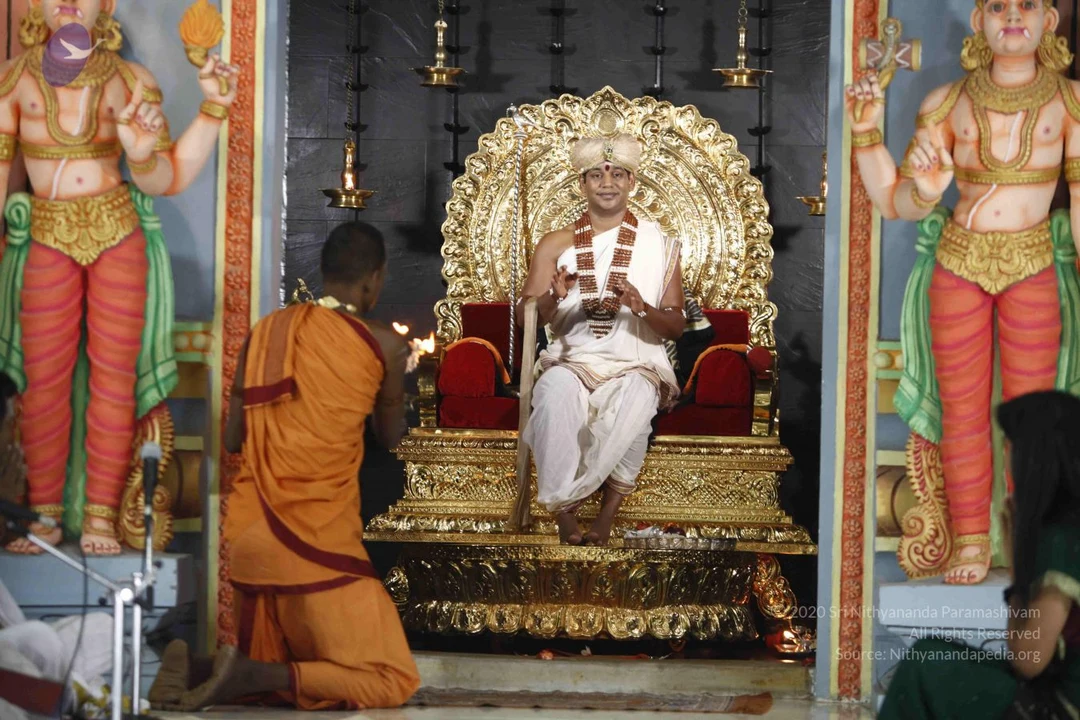
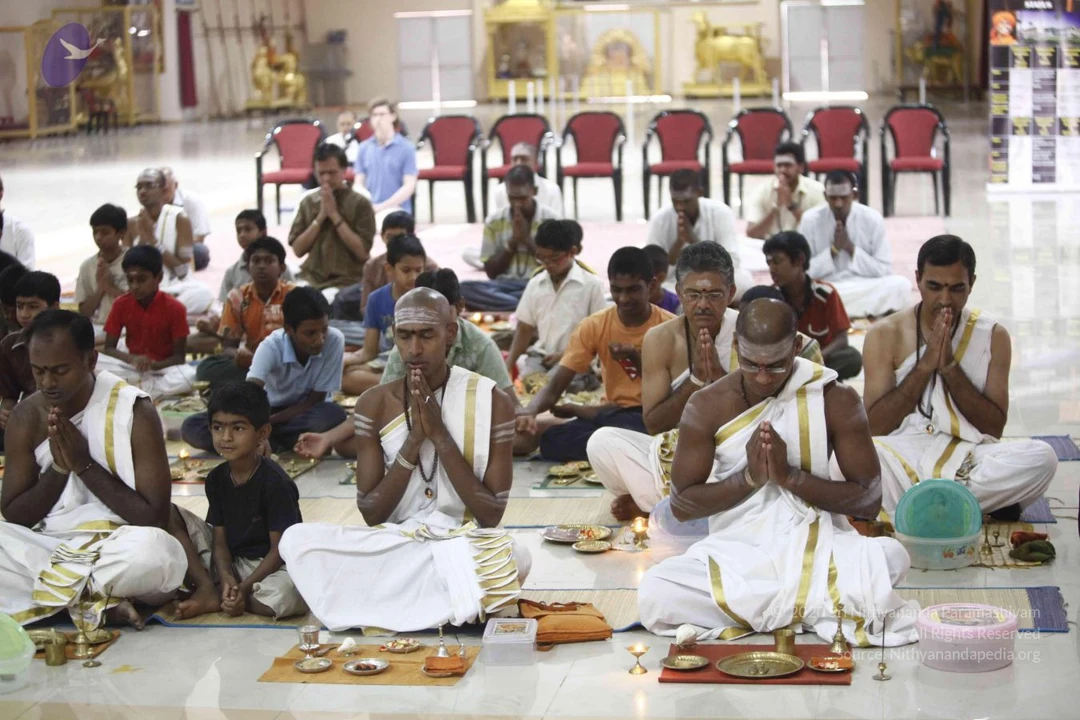
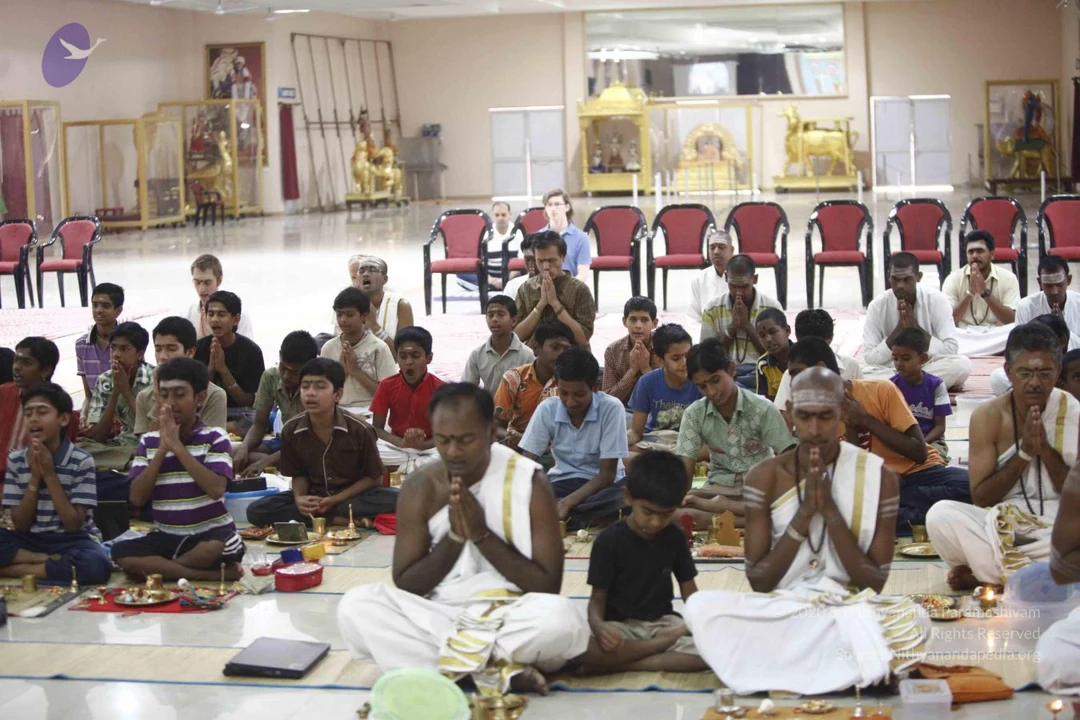
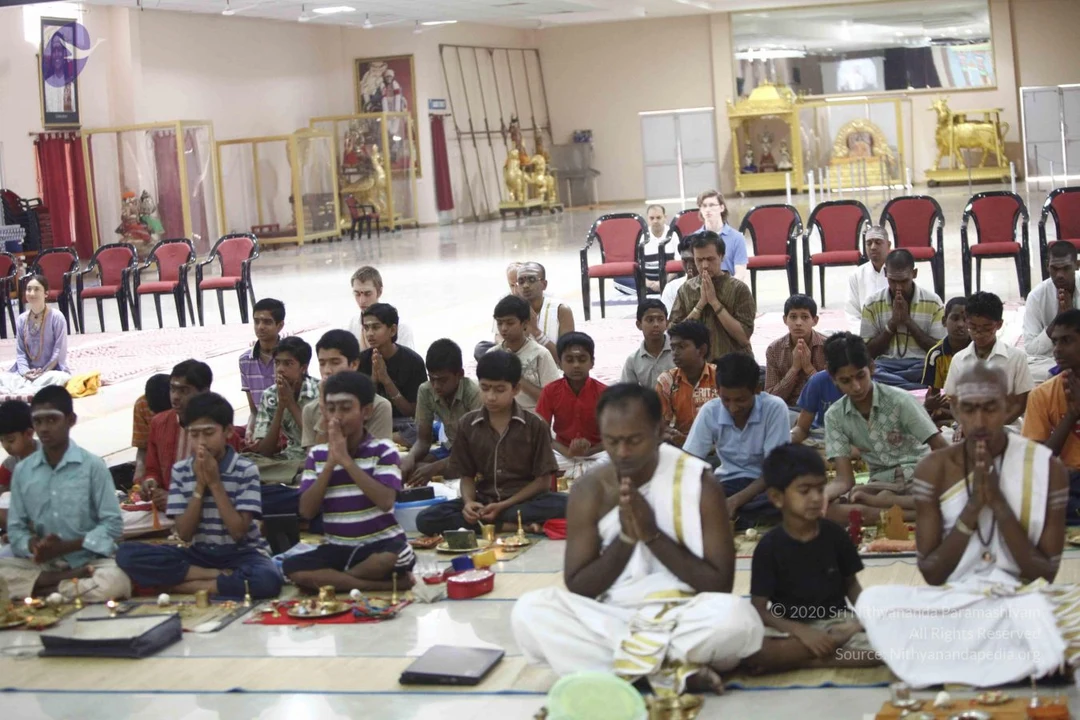
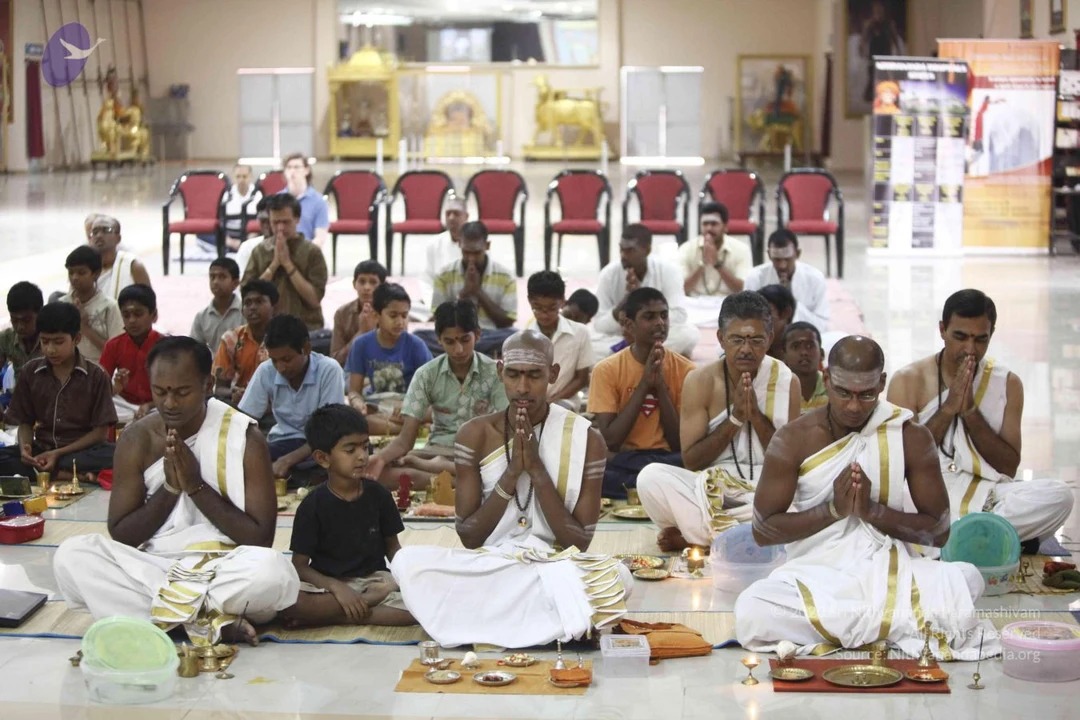
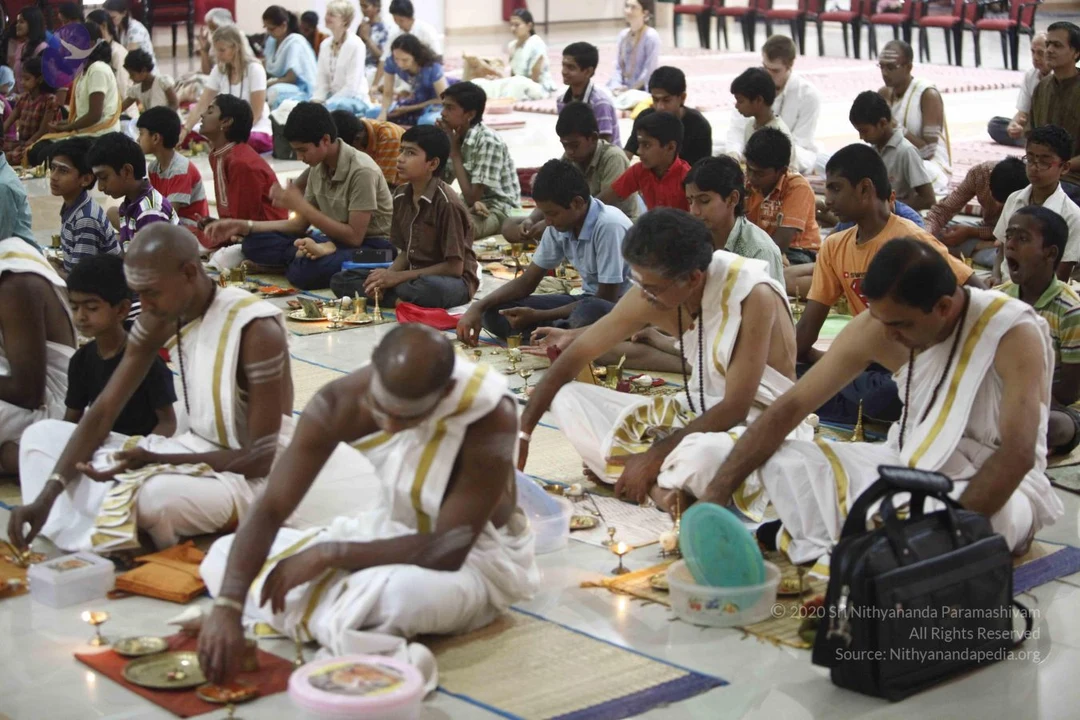
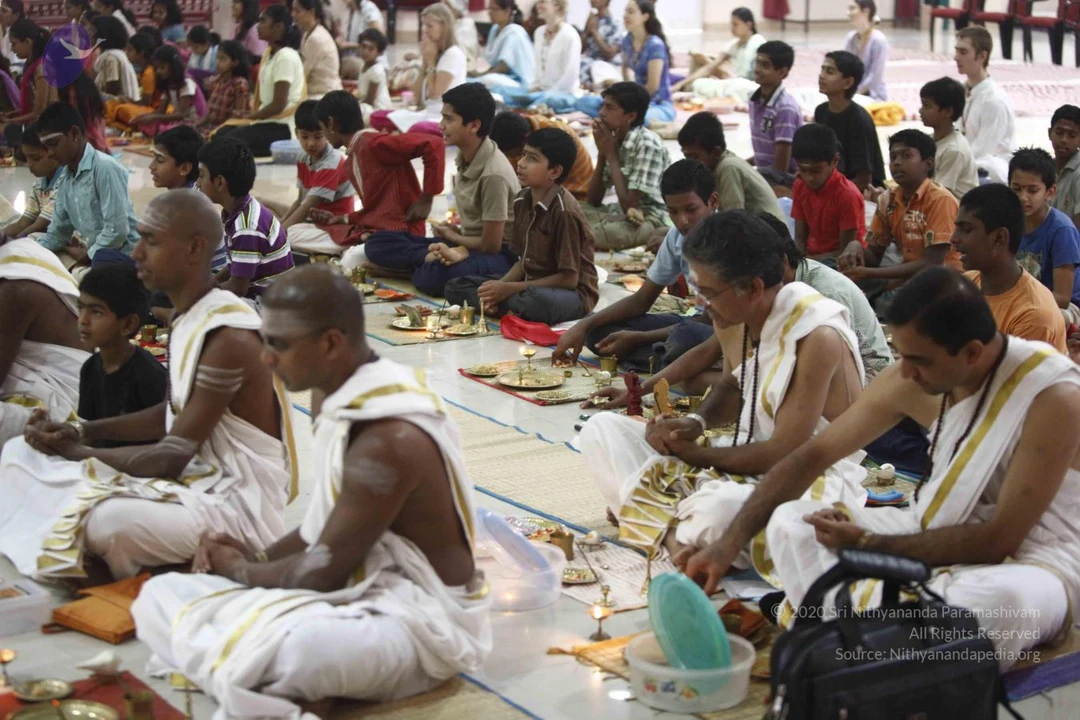
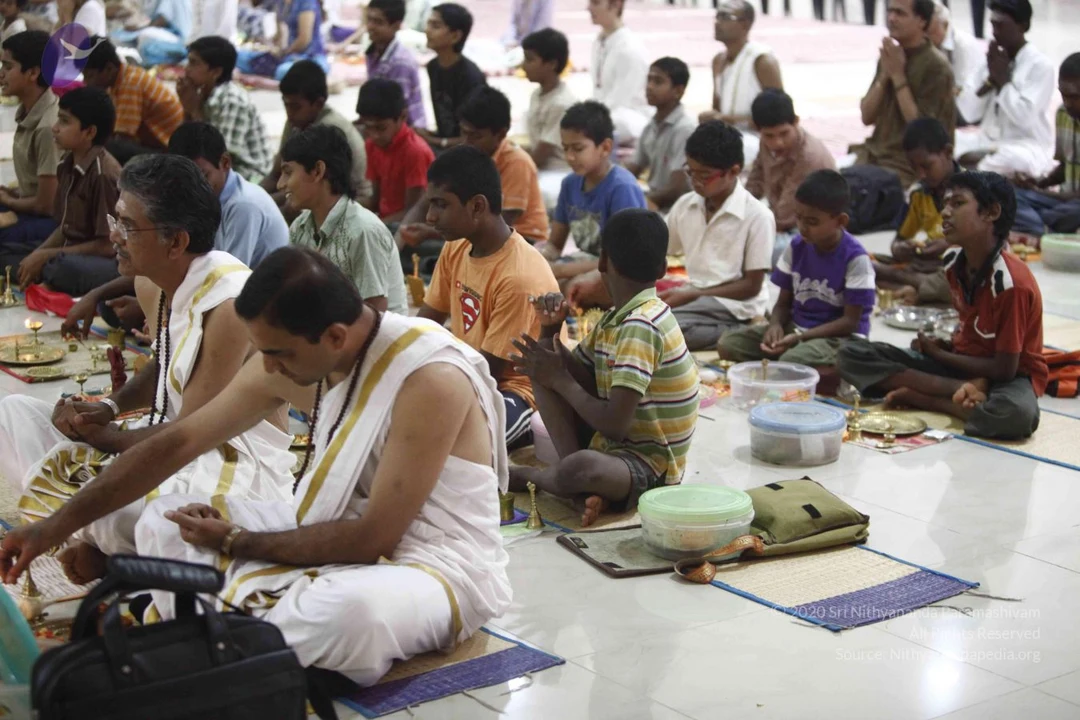
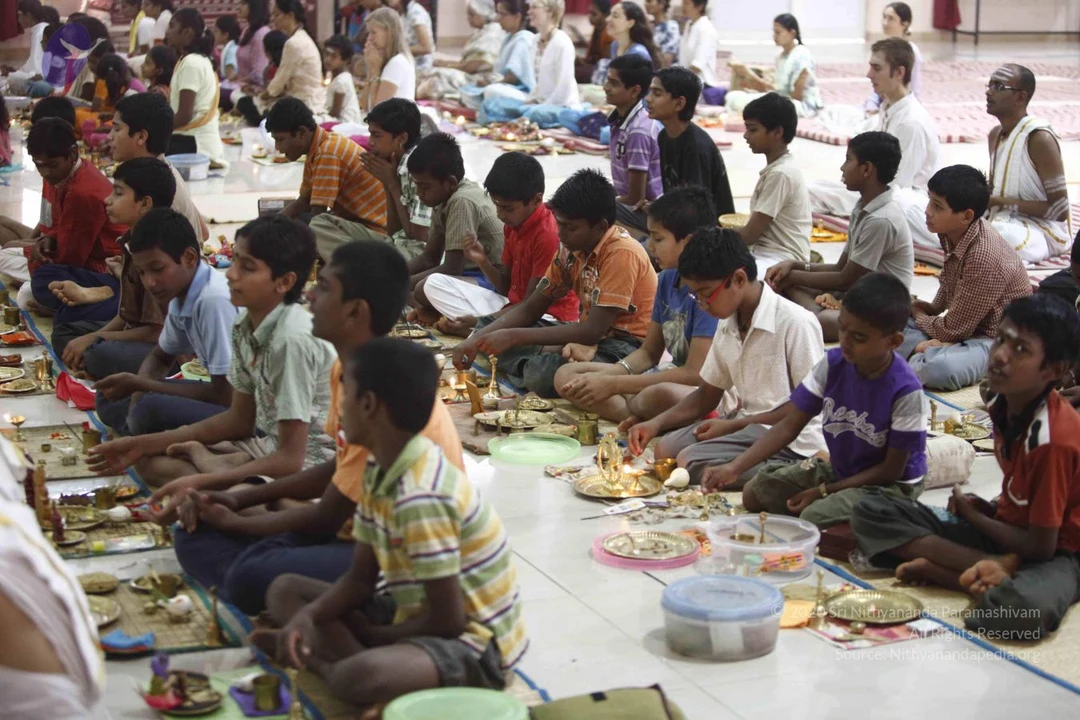
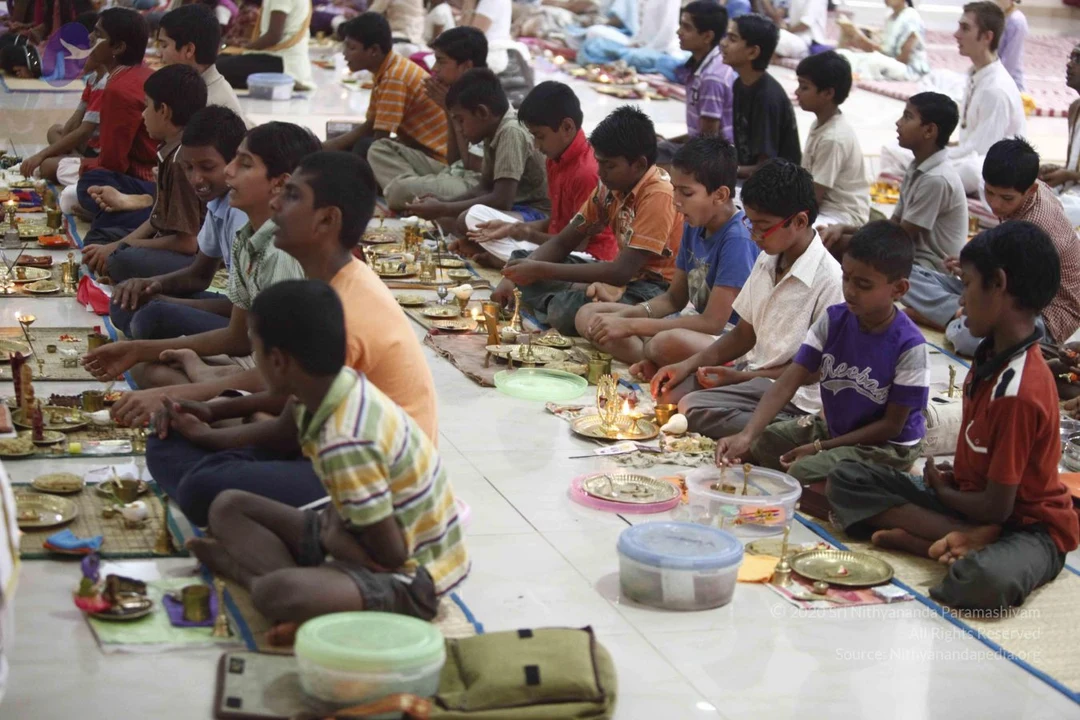
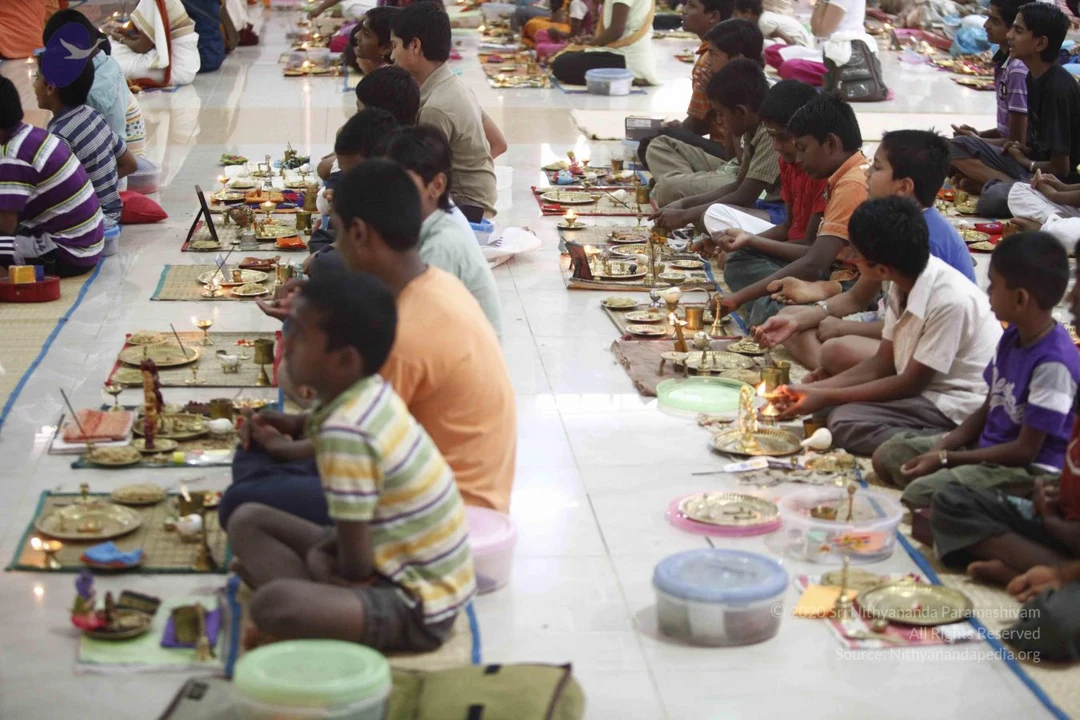
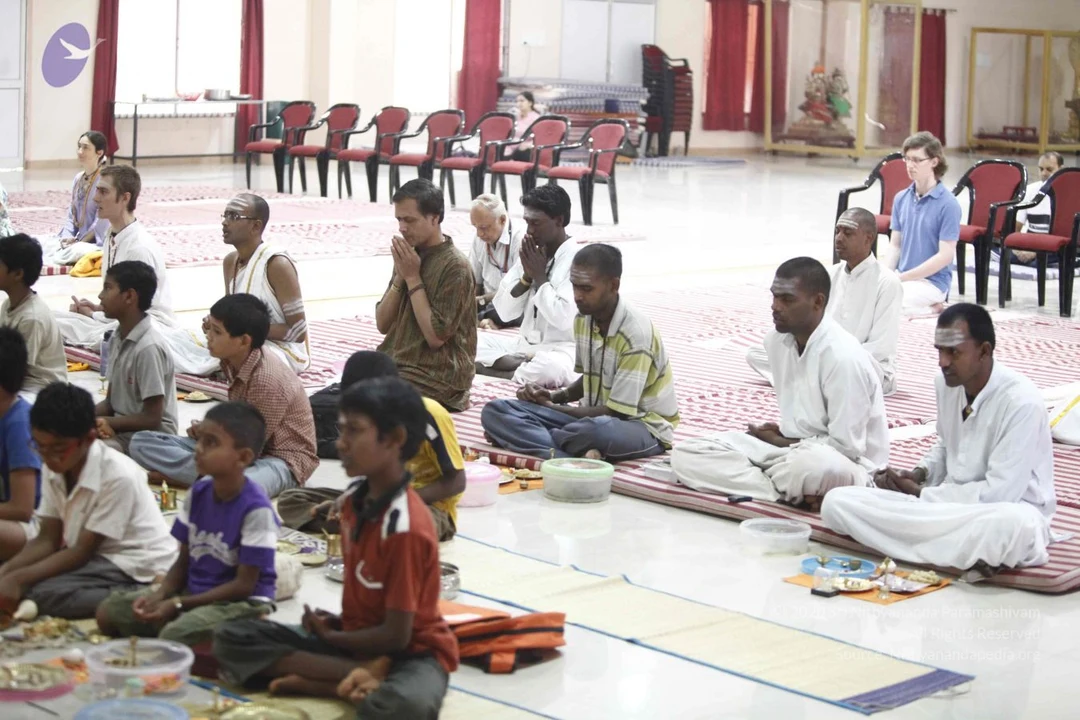
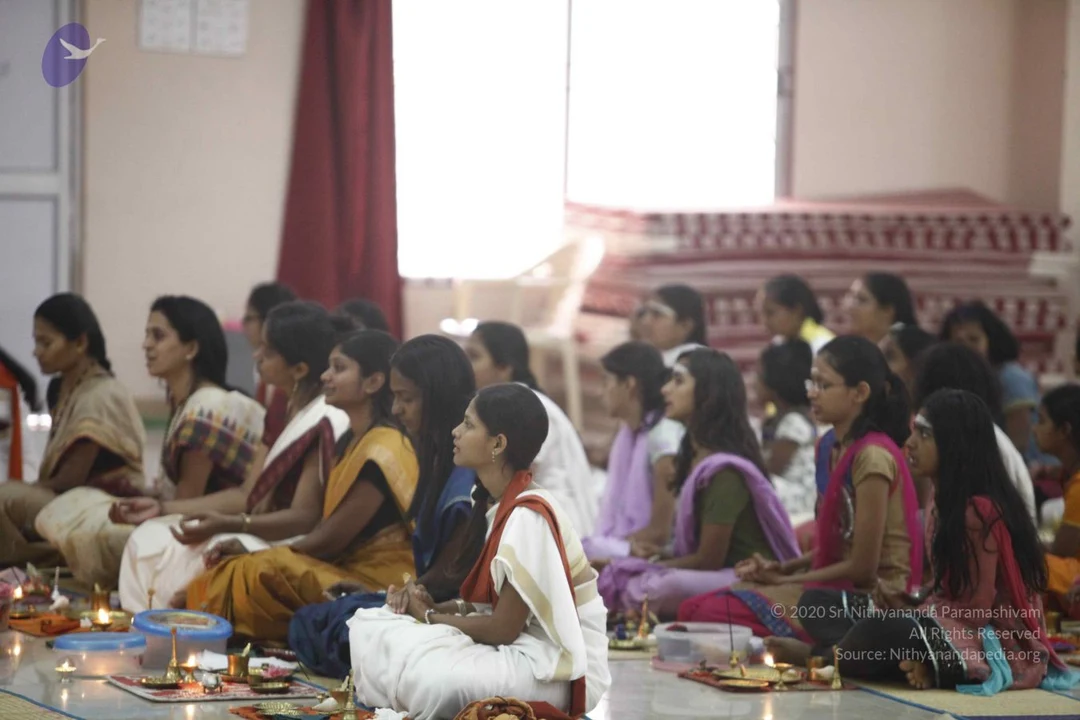
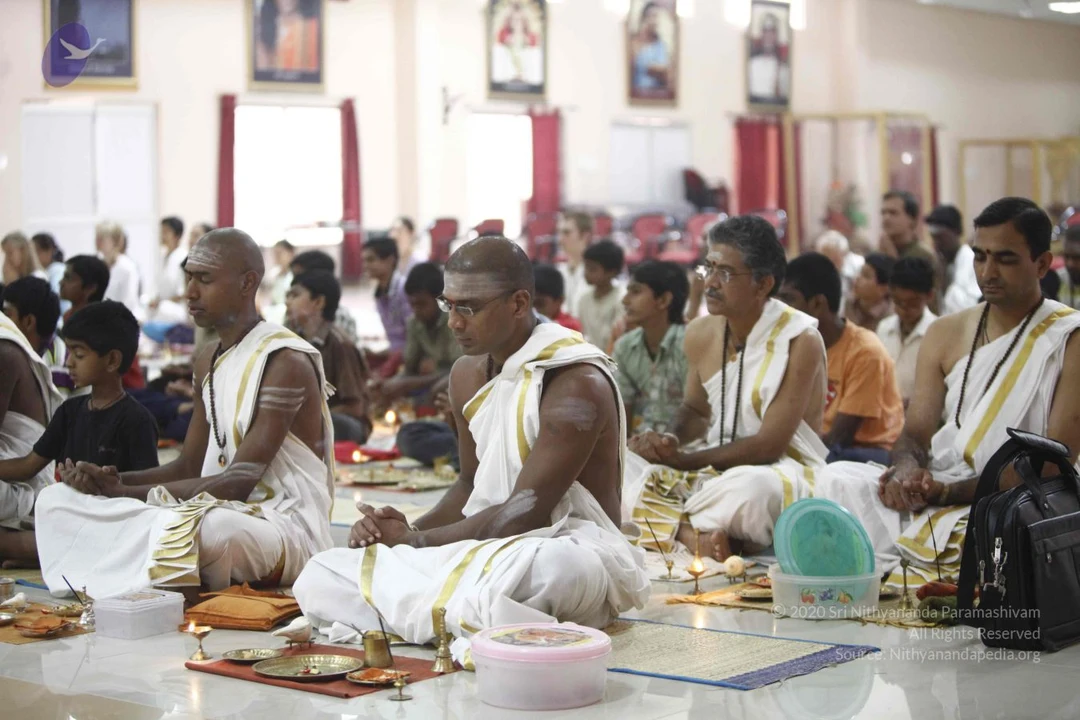
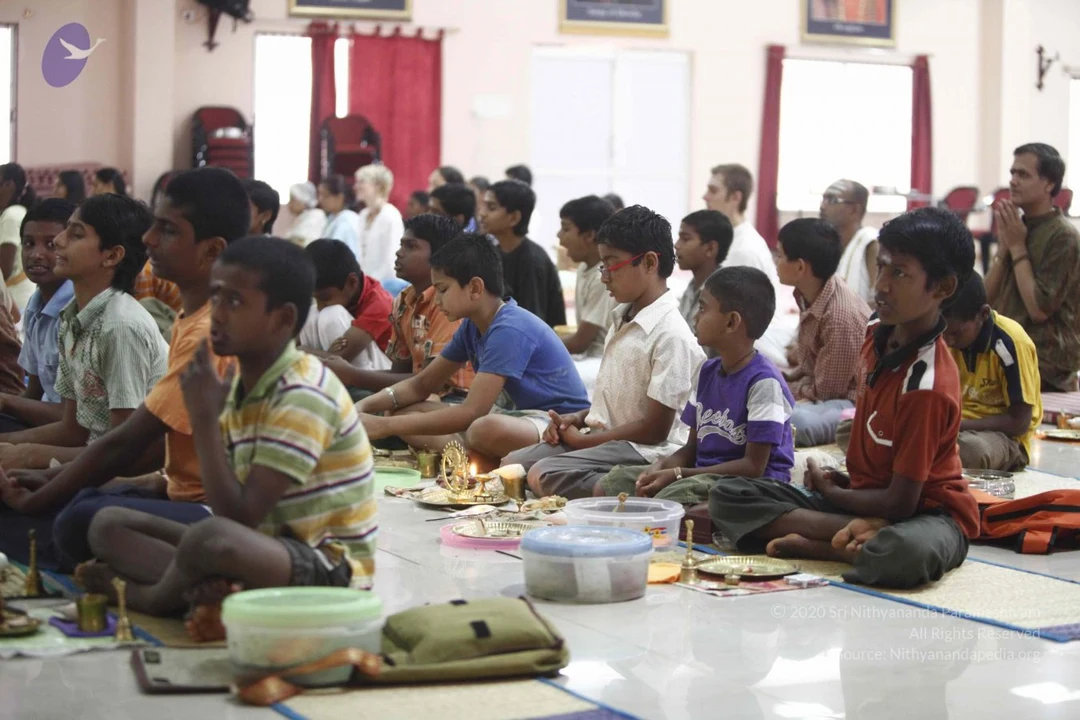
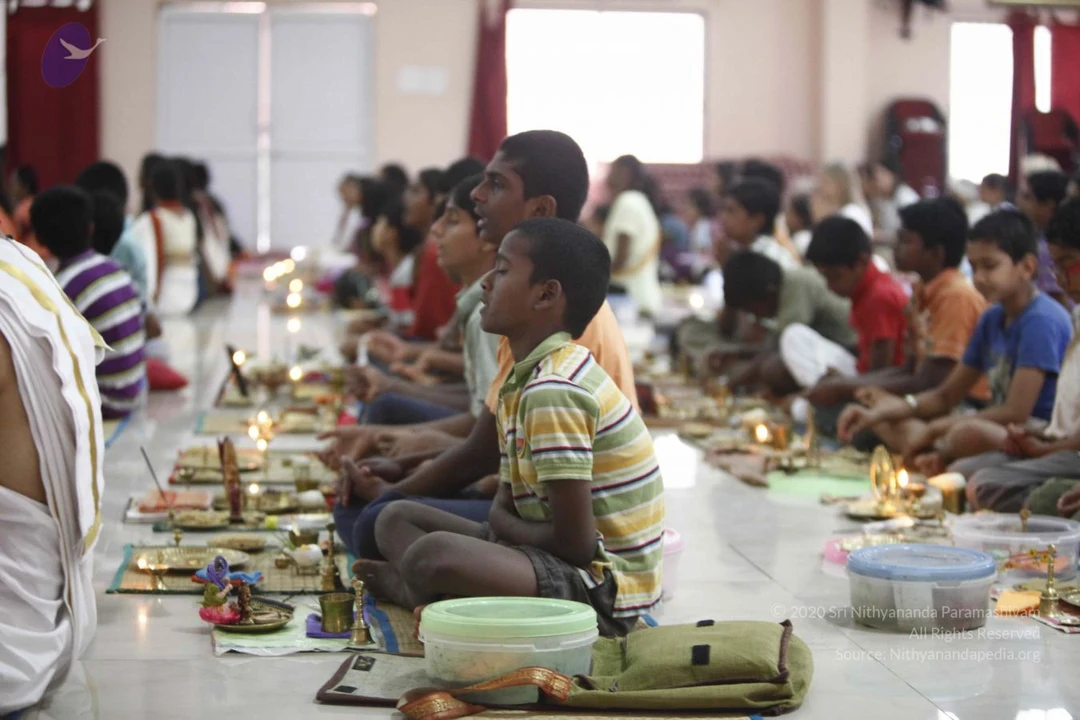
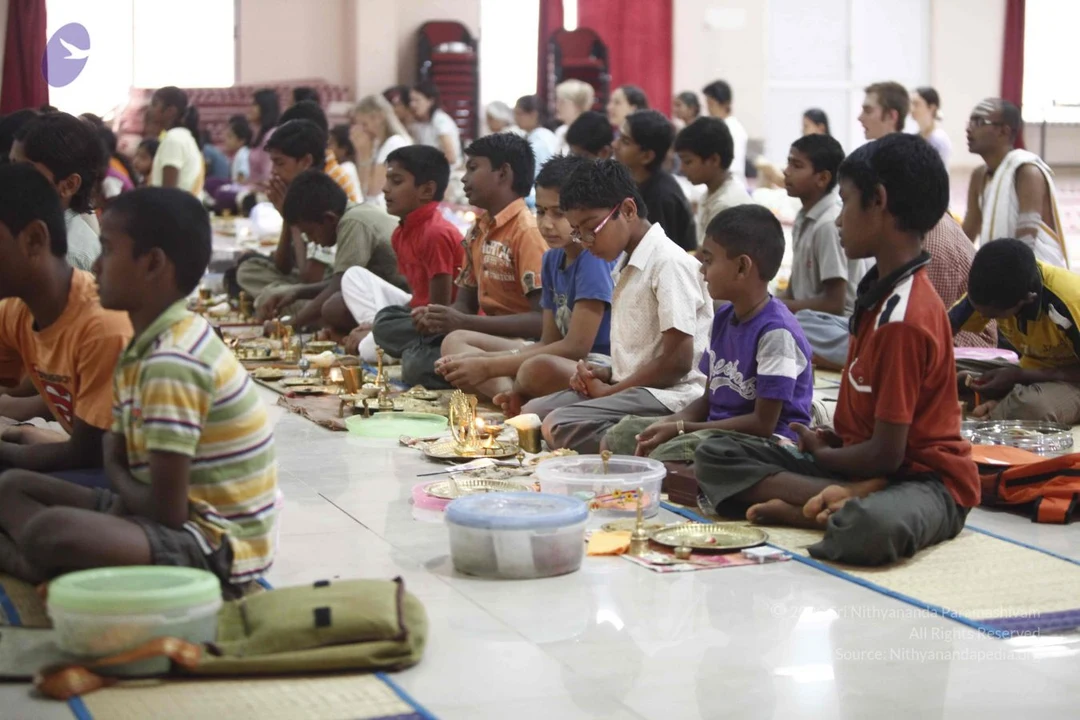
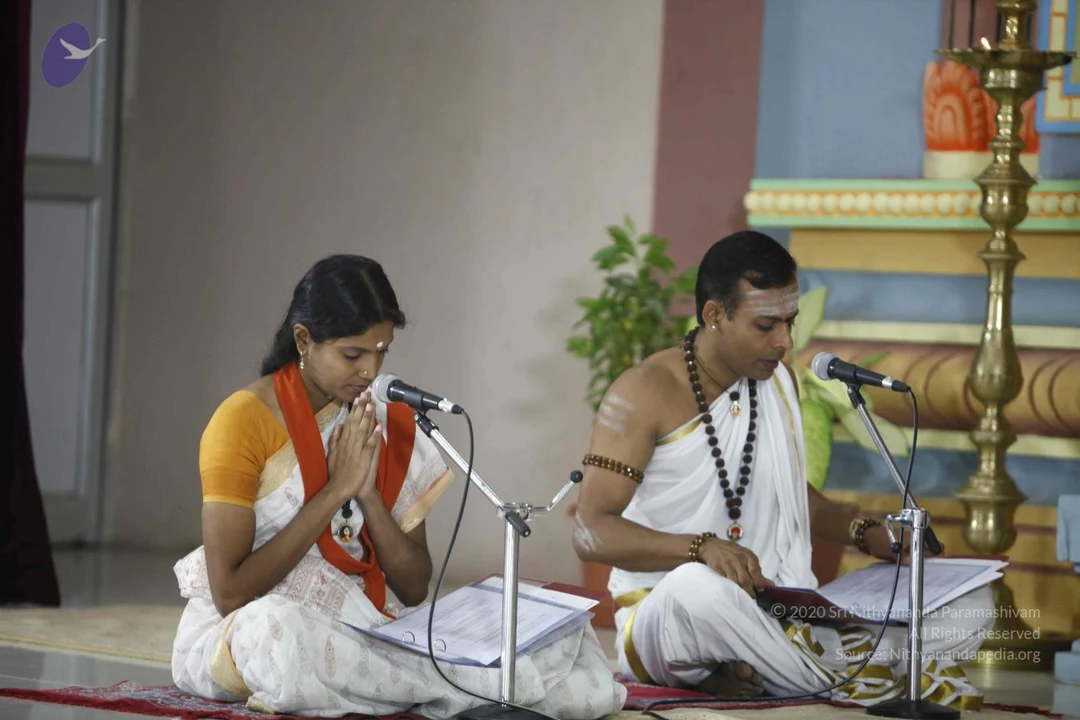
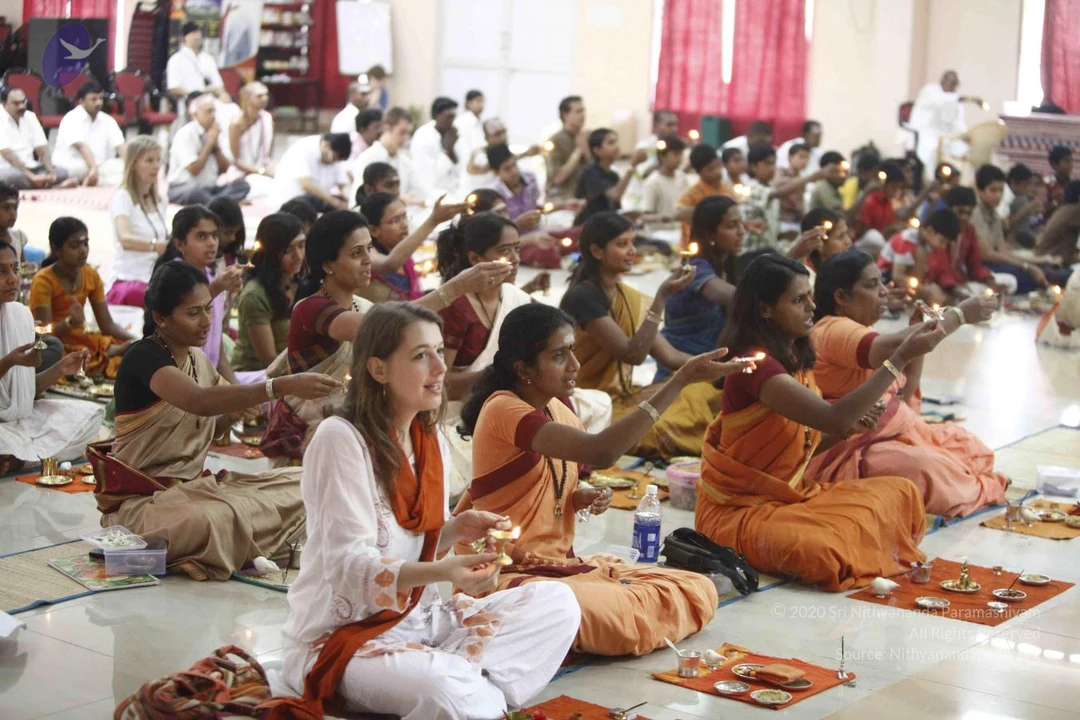
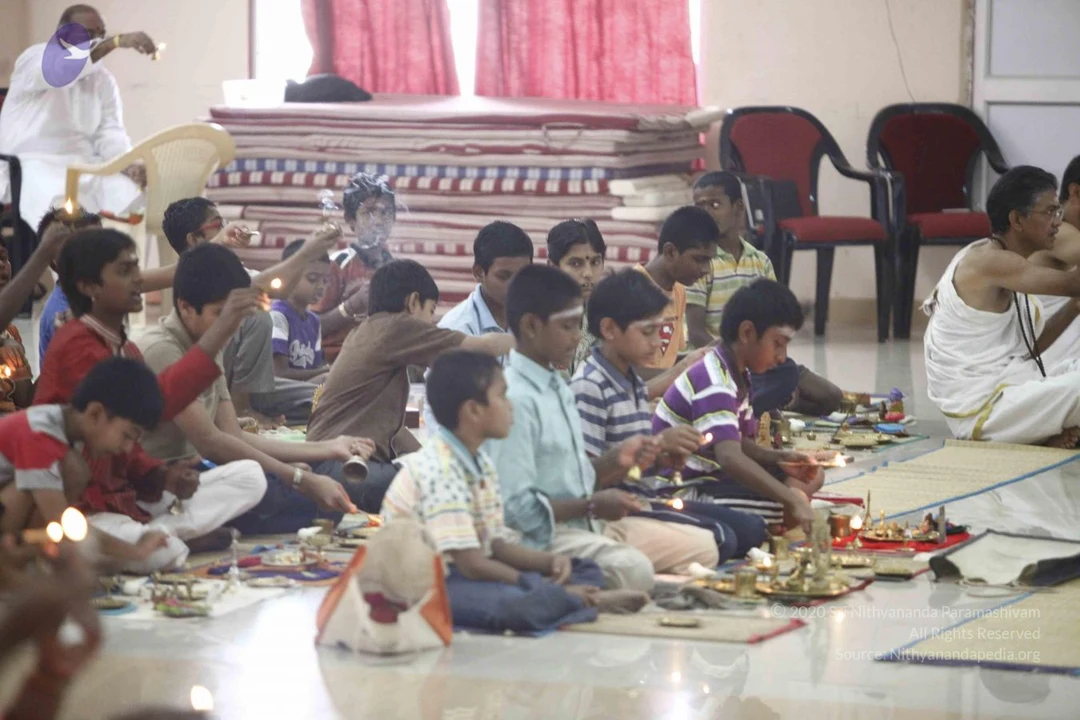
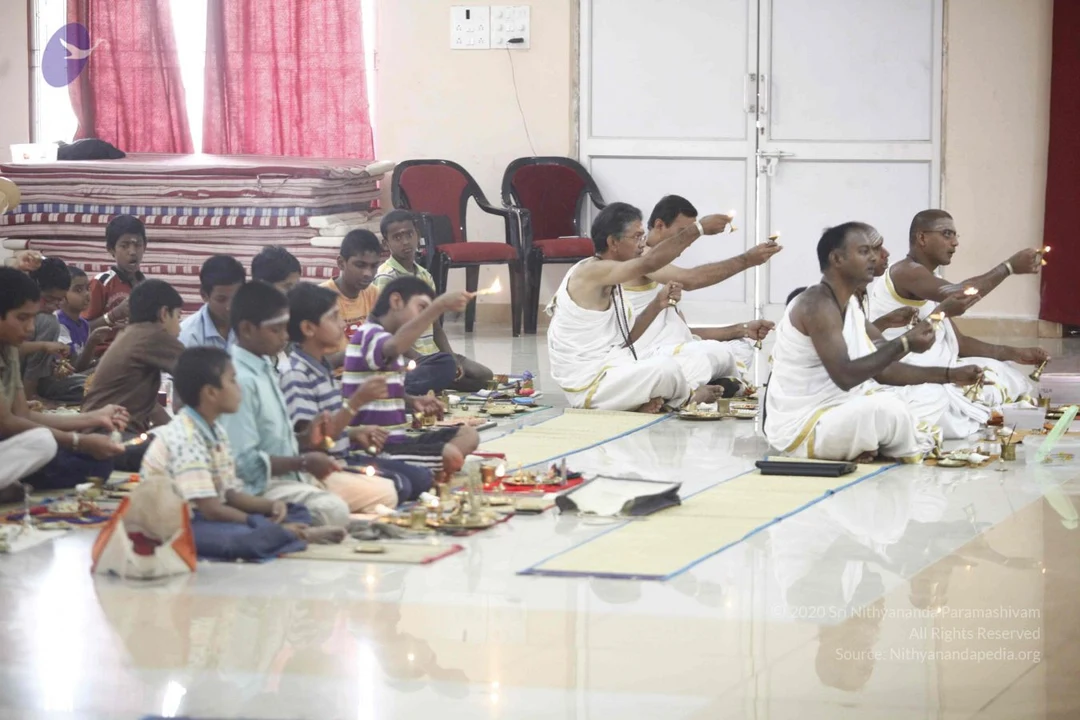
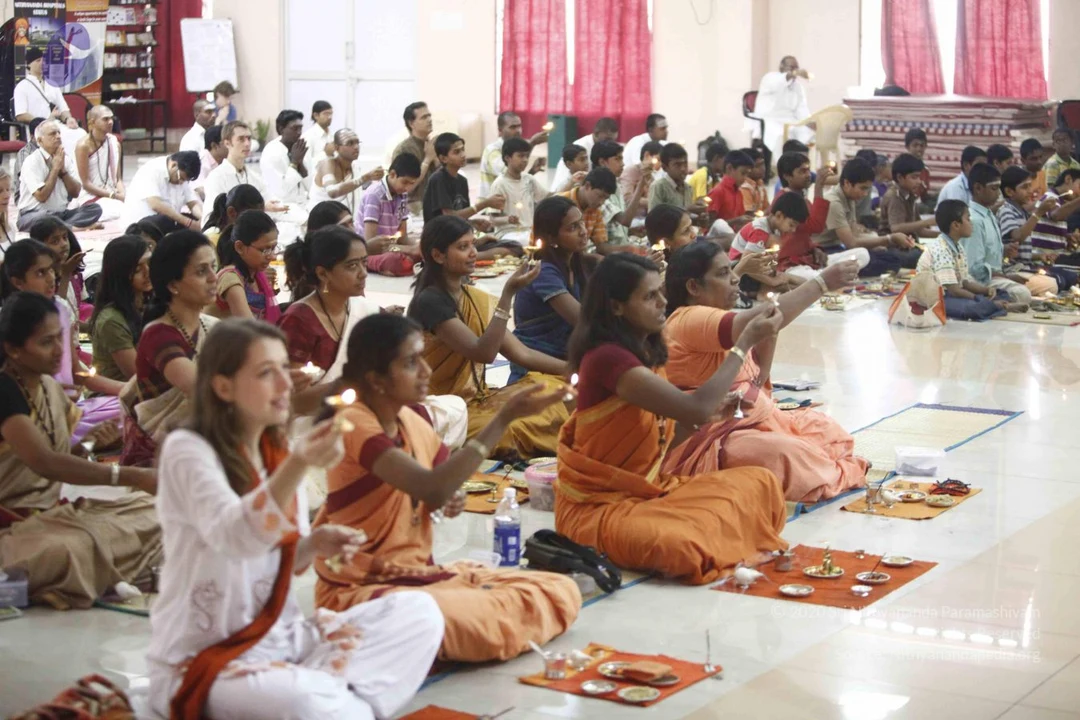
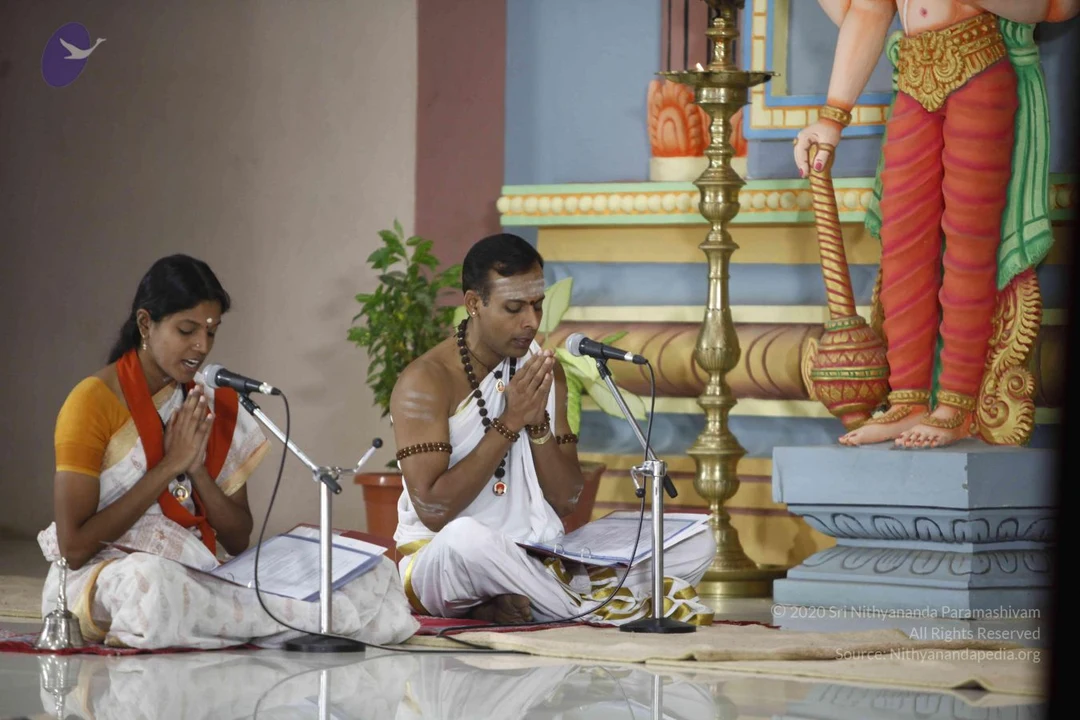
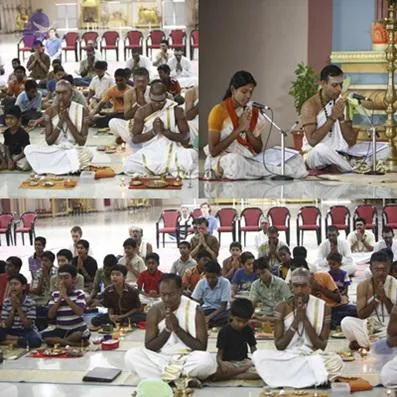
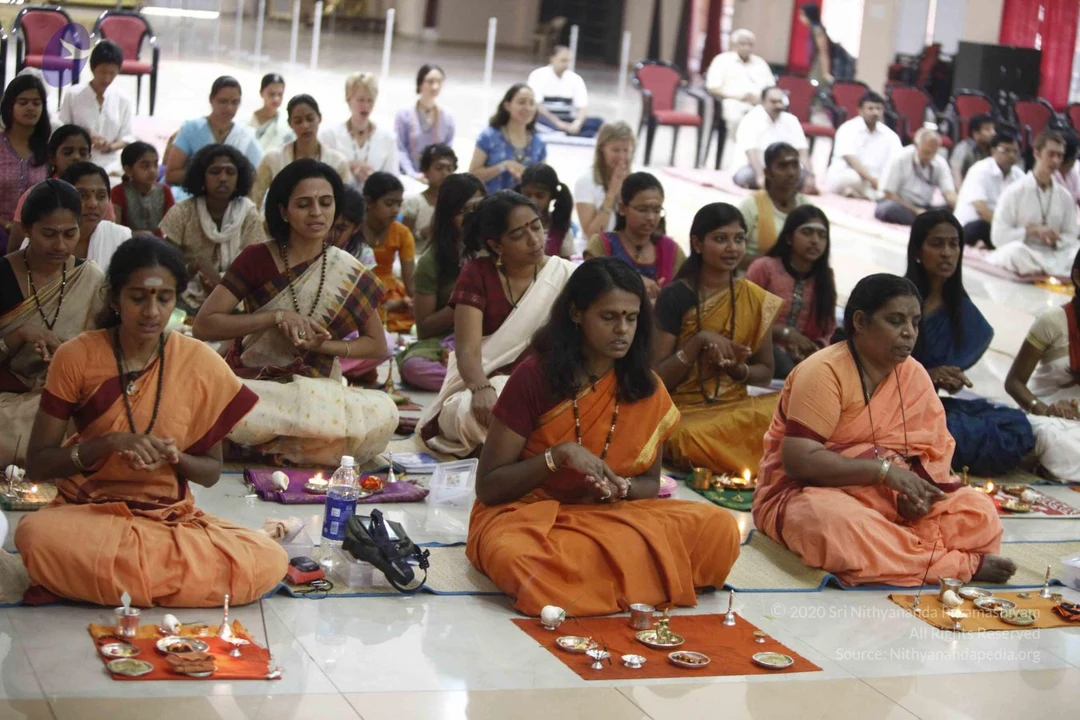
A four-panel collage of photographs from a temple event in a hall with red chairs and pink-walled decor. Top left: rows of seated men in white dhotis with bare upper bodies and white shawls sit on the floor with hands joined in prayer before brass plates of offerings, with boys and men behind them. Top right: a woman in an orange sari and a man in white dhoti and shawl stand at a microphone, hands joined, beside a brass lamp stand and potted plant. Bottom left: boys in mixed casual clothes sit on the floor watching, while a man in white dhoti sits with hands joined. Bottom right: men in white dhotis and shawls sit in prayer with brass plates before them. The collage shows a temple puja and satsang, with no legible text in the image.A seated man in white ceremonial dress sits eyes closed on an ornate gold throne with red cushions, wearing a cream turban with a red tilak, a red-and-white beaded mala, and armbands. A priest in saffron-orange robes and gold necklace leans in from the left, offering a lit oil lamp with flames toward him. Brass lamps hang on the dark wooden doorway and gold-and-red painted pillars frame the scene. The temple setting suggests a puja offering in progress.A seated man in white ritual dress sits on an ornate gold throne with red velvet cushions, eyes closed and hands folded, wearing a cream turban with a red tilak, rudraksha mala necklace and rudraksha bracelets. A standing attendant in saffron-orange robes with a sacred thread faces him from the left, holding a brass lamp with a bright flame toward him in a puja offering. Oil lamps hang on the dark wall behind the throne, and a red-and-orange decorated pillar frames the right side of the scene.A seated man on an ornate gold throne with red cushions is centre frame, wearing a white turban-style headwear, a white dhoti-like garment with a shawl, and a long rudraksha mala with a ceremonial gold ornament; his hands are raised in a gesture of blessing. a person, given a golden throne, rudraksha mala and white ceremonial clothing, is seated as the central figure. In front and to the left, a kneeling priest in orange saffron robes holds a flame toward the throne. Behind the throne stand large painted deity murti figures with multiple arms, and brass oil lamps hang from the dark backdrop. A woman in green is partly visible at the right edge, with microphone stands at lower left.A seated man in white ceremonial dress sits on an ornate gilded throne with red cushions, a white turban with a red tilak on his forehead, and a multi-strand rudraksha mala around his neck. He has his palms pressed together in greeting. A priest in orange robes stands at left, holding a silver aarti lamp with lit flames toward him. Oil lamps hang on the dark walls and painted deity figures with green and red garments flank the scene. Swamiji (probable): the seated man has a turban, rudraksha mala and a gilded throne, cues that match the page's Swamiji attribution, so this is an appearance-based label only. The seated figure is a person, not a depiction, and the other person is the orange-robed priest performing aarti.A seated man on an ornate gold throne with red cushions, hands pressed together in namaste, eyes closed. He wears a cream turban, a white dhoti and shawl, and multiple rows of red rudraksha beads around his neck. In the foreground a kneeling person in an orange robe with a red border holds out a brass oil lamp with lit flames toward the seated figure. Behind the throne are brass lamp stands and painted deity figures on the side panels with a dark stone wall.

Q&A-Session

70 photosSource gallery
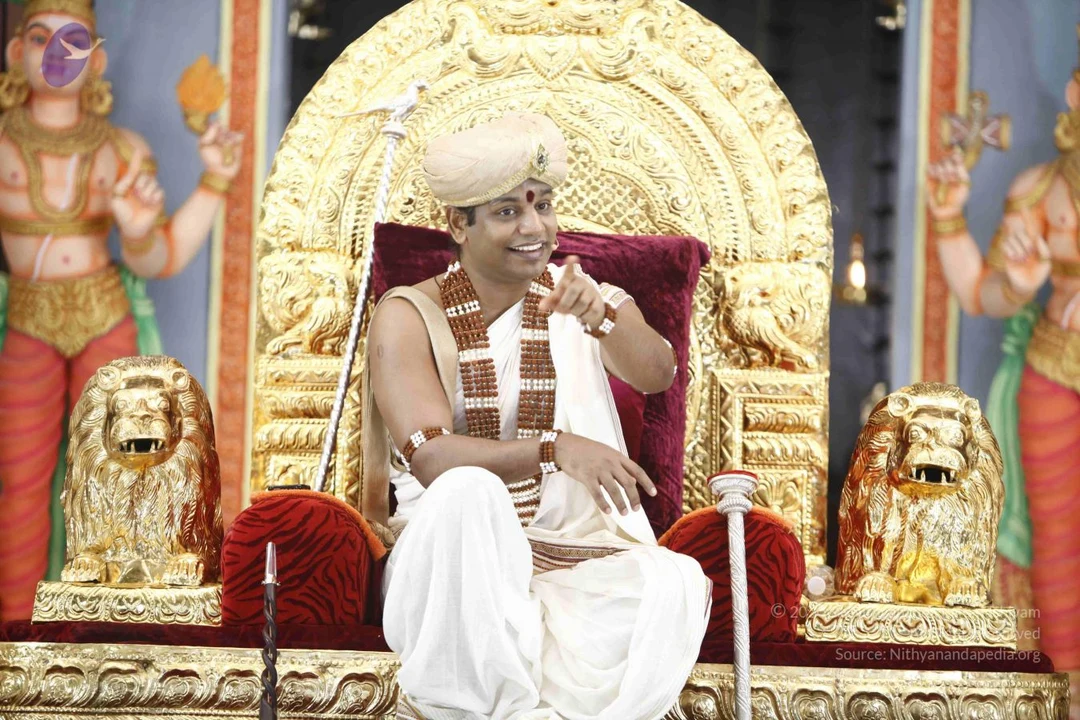
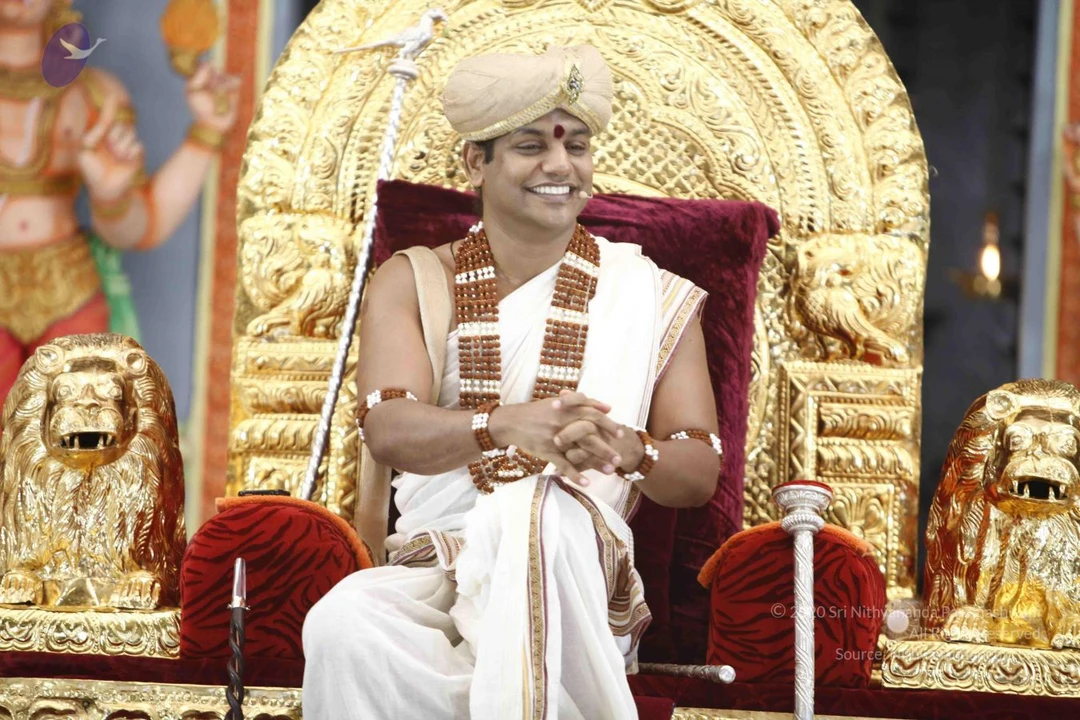
A man seated on an ornate golden throne with red velvet cushions and two golden lion figures at its base, hands pressed together in namaste with eyes closed. He wears a cream turban with a small gold emblem and a red bindi, a white dhoti-style garment with a cream shawl, and a multi-strand rudraksha-style beaded necklace and matching bead bracelets. A microphone is clipped near his face. Behind him stand large painted deity statues with multiple arms holding ritual objects, in a richly decorated temple hall. A wooden staff leans against the throne. Only one physical person is visible in the scene.

Dial-The-Avathar

8 photosSource gallery
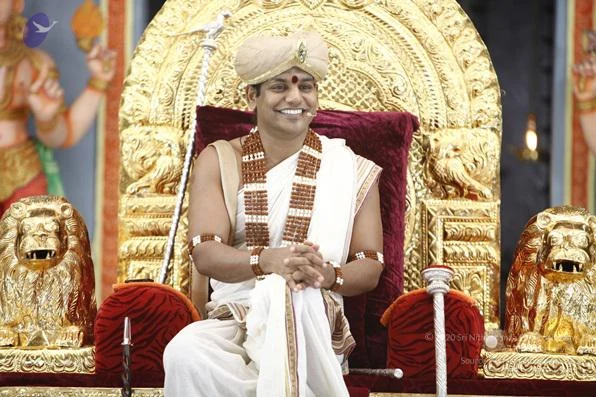
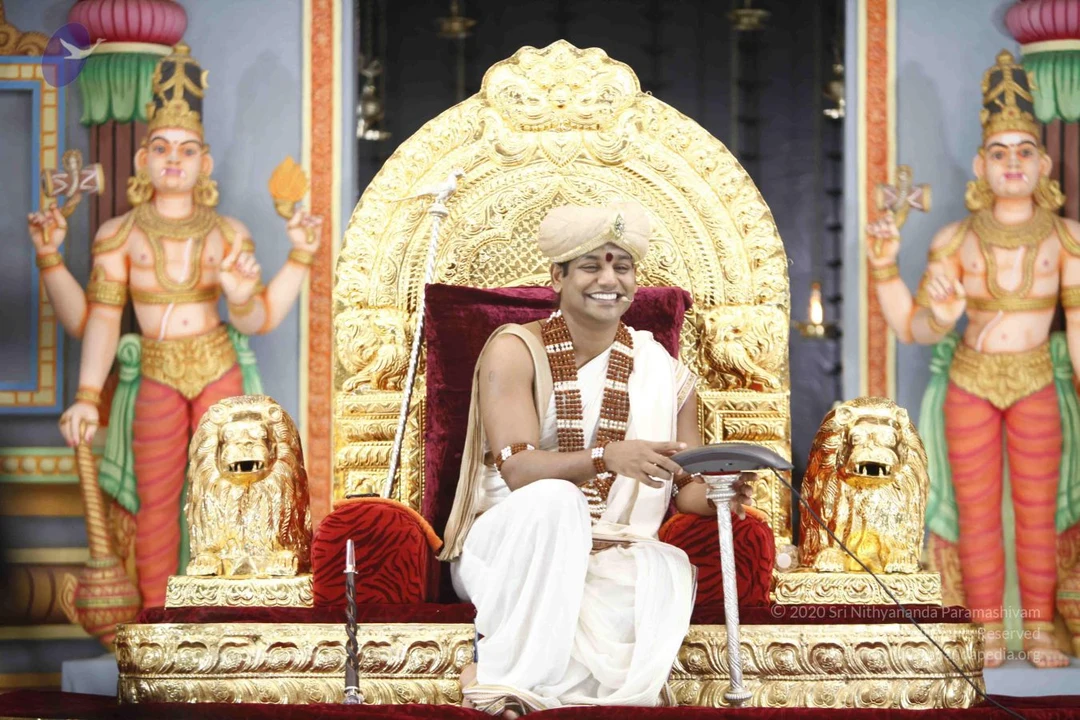
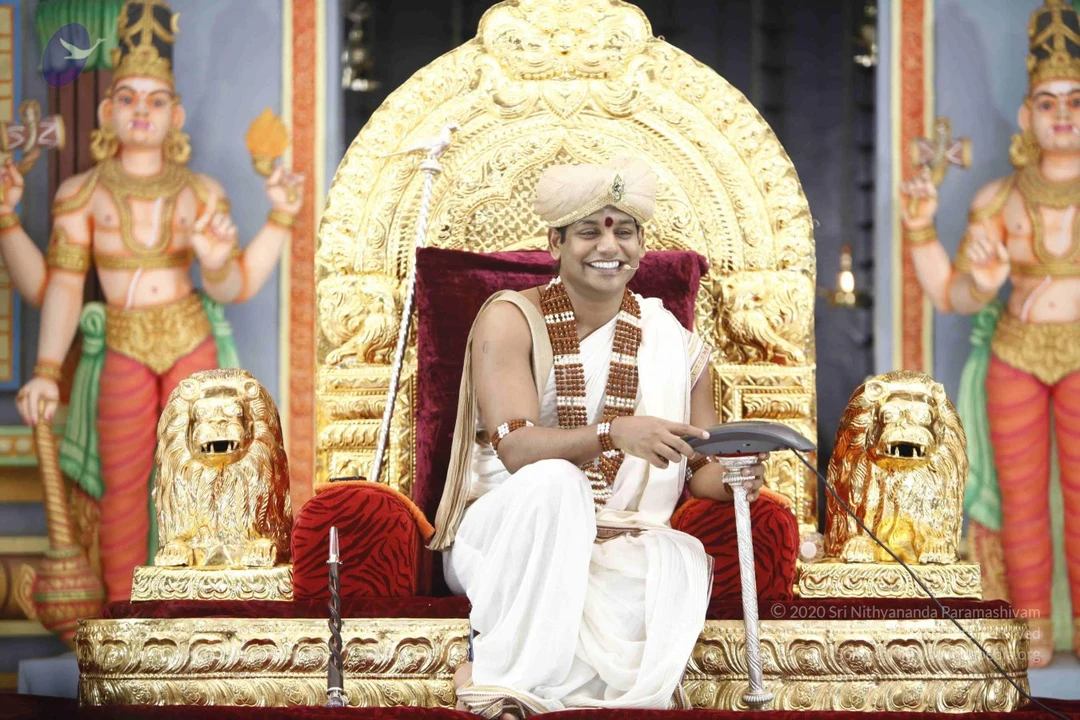
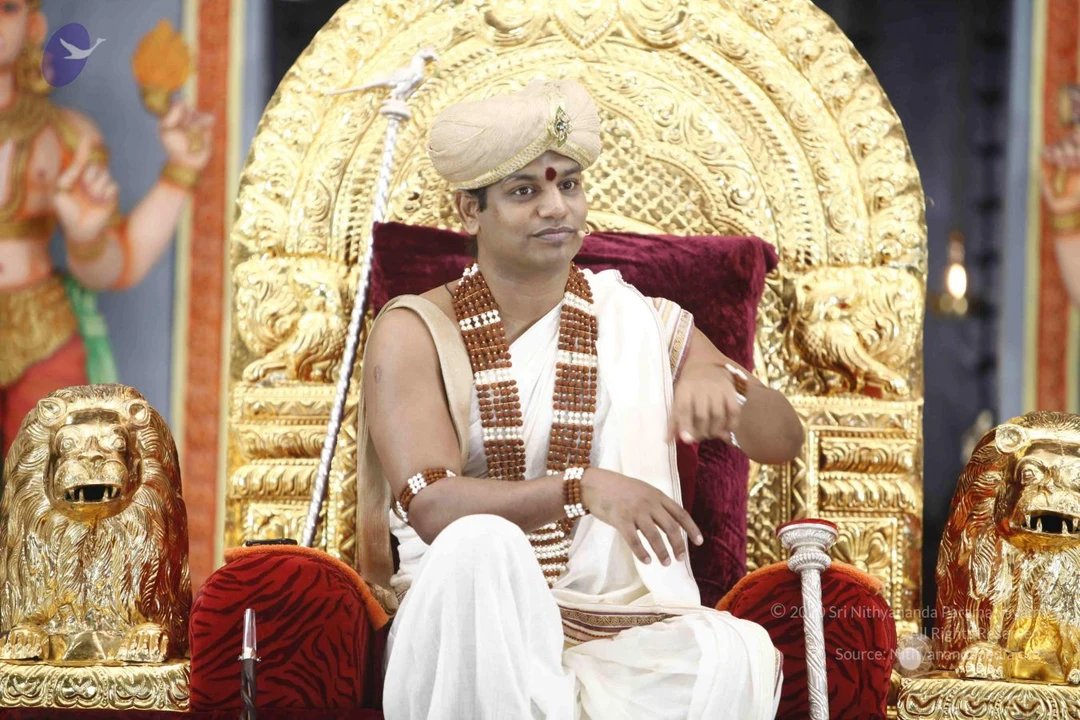
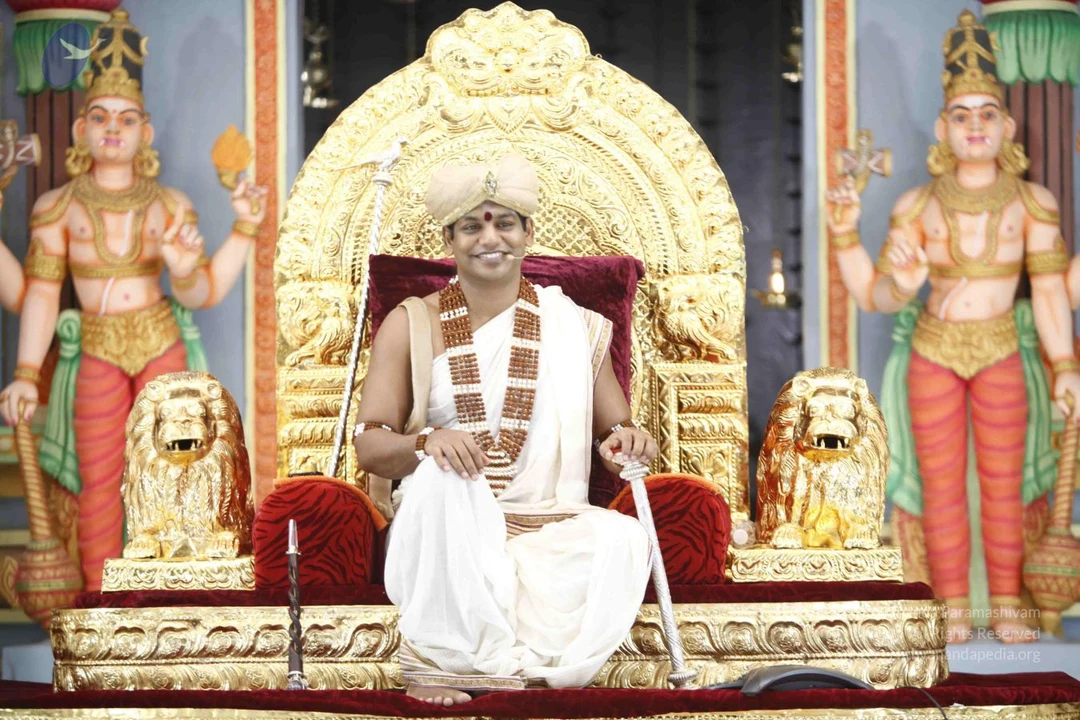
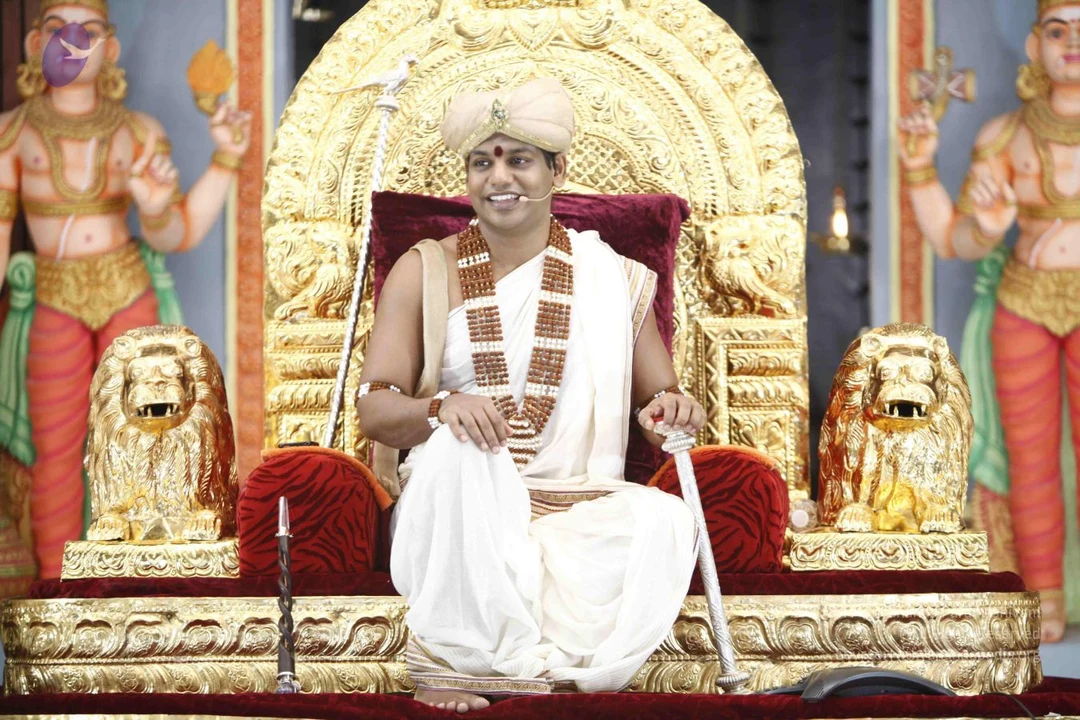
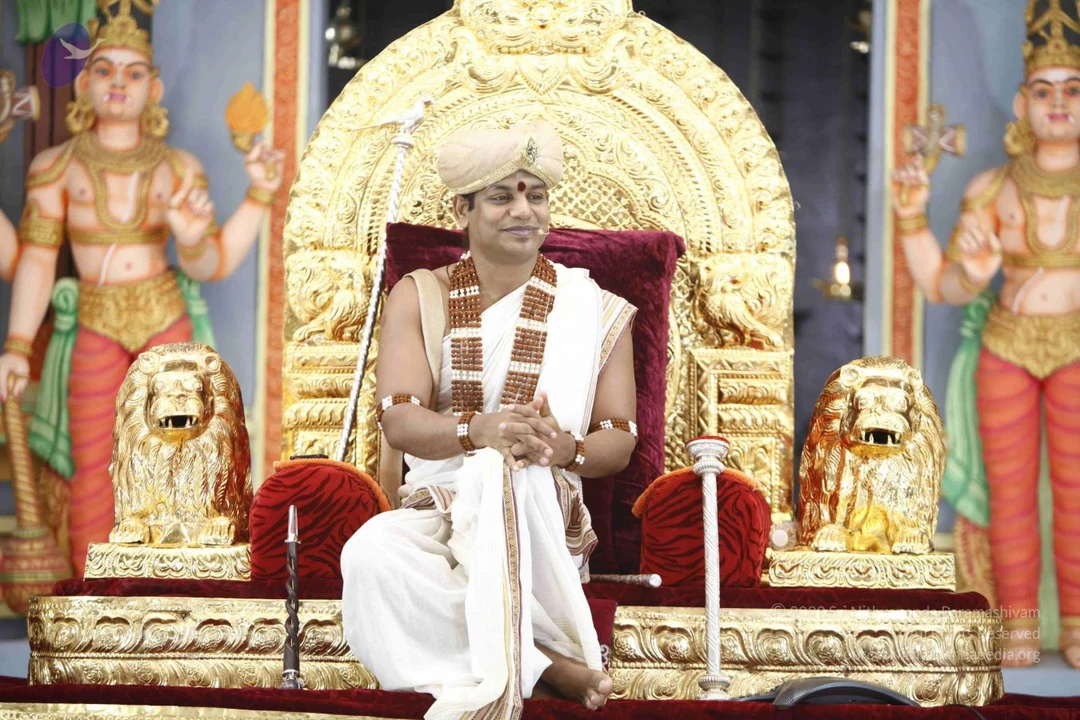
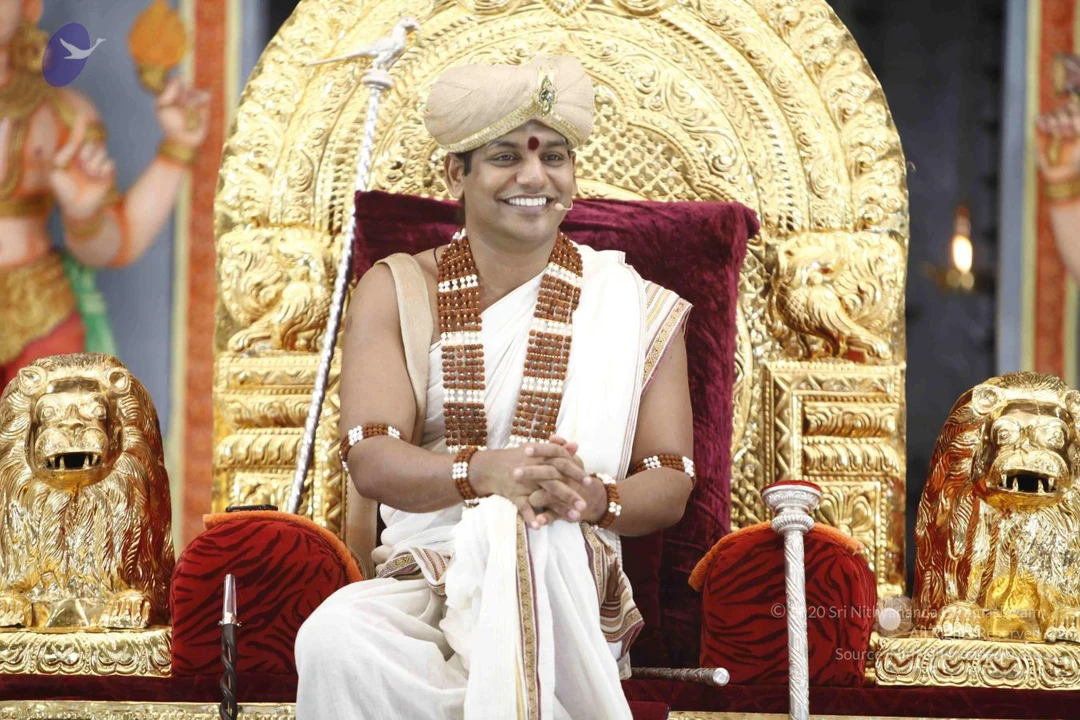
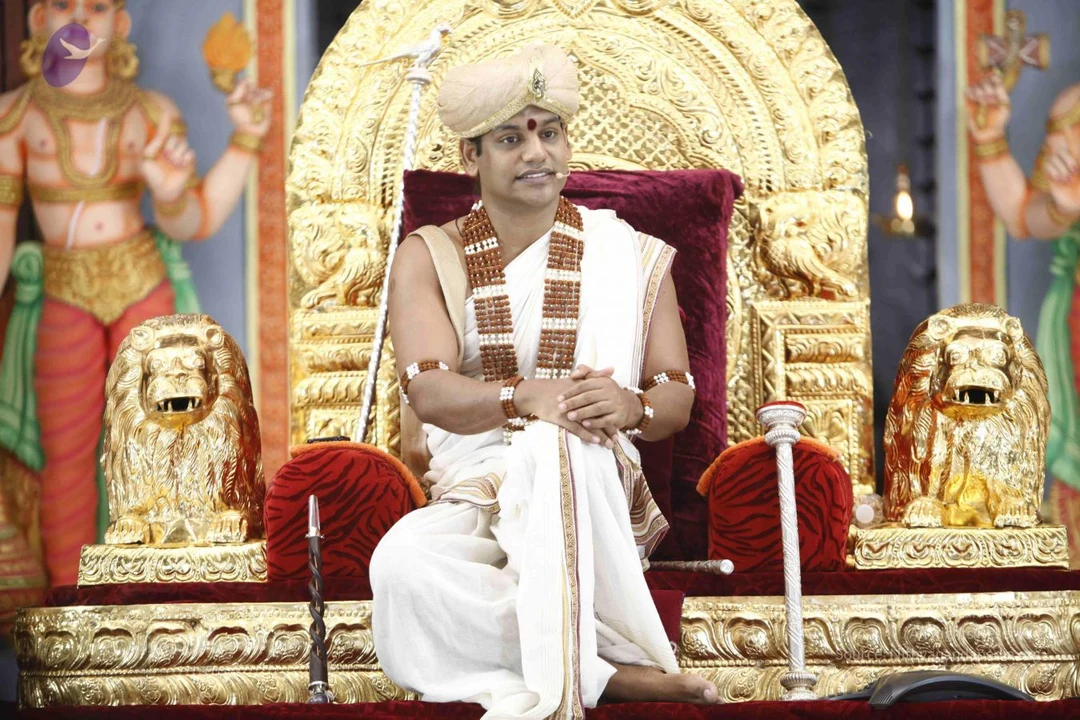
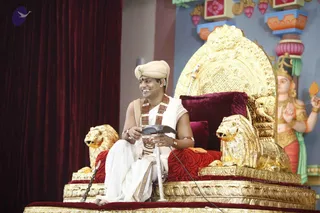
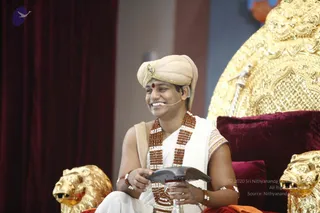
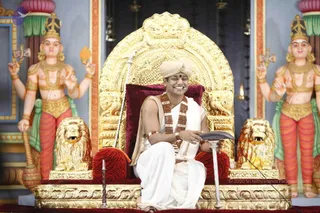
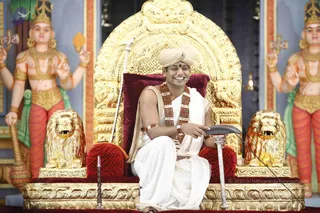
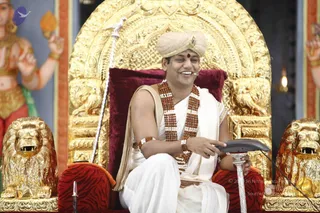
A man seated on an ornate golden throne with lion-form armrests and red velvet cushions on a stage. He wears a cream turban, cream dhoti and sash, and multiple rudraksha-style beaded malas across his chest, and smiles while holding a small ceremonial staff. Behind him stands a painted deity figure with a raised hand holding a lamp, in front of a red velvet curtain and a decorative painted backdrop. A small microphone is visible. Appearance cues of the seated man: turban, rudraksha malas and throne are present, but the face and overall presentation are not sufficiently distinctive to confirm an identity, so he is described by role as a seated speaker on the throne.A smiling man seated on an ornate gilded throne with golden lion-head armrests and red velvet cushions, wearing a cream turban with a jeweled brooch, a red bindi, white draped garments with a patterned border, multiple strands of large brown and white beaded necklaces, and bangles. He holds a silver ceremonial staff with a crescent-shaped top and wears a headset microphone. Behind him hang deep red drapes.A smiling man sits on an ornate golden throne with carved lion-head armrests and a crimson velvet cushion, against a dark red curtain. He wears a cream-coloured turban with a jewelled brooch and a red bindi, a white dhoti-style garment with a striped border, and long necklaces of rudraksha beads with white beads. He has a small headset microphone and holds a metal bowl or vessel in his hands. The large gold carved backdrop behind the throne adds to the regal setting. Swamiji (probable): the figure wears a turban, rudraksha malas and ceremonial dress on a throne, with a visible microphone indicating a discourse setting.A smiling man seated on an ornate gilded throne with a deep red velvet cushion and two golden lion figures at its base. He wears a cream-coloured turban, a white dhoti with a cream shawl draped over one shoulder, and a long rudraksha mala with ceremonial gold necklace. A silver ceremonial staff rests beside the throne. Two large painted deity statues stand on either side, each with multiple arms, gold jewellery, orange dhotis and green sashes, holding ritual objects. Appearance is clear enough to label as probable in person.A smiling man seated on an ornate golden throne with a red velvet cushion and carved lion-head armrests, centre-stage in a temple-like hall. He wears a cream-white dhoti and a matching cream turban with a red bindi, a rudraksha mala necklace, and a gold armband, and holds a silver-handled fan or ceremonial implement in his right hand. Two painted deity statues with multiple arms stand on either side, and a red-and-gold backdrop frames the scene. Visible photographic copyright text sits in the lower right corner.A smiling man in white ritual dress sits on an ornate golden throne with red velvet cushions, flanked by two golden lion sculptures. He wears a light beige turban with a small emblem, multiple rudraksha mala garlands, an armband and a red bindi, and holds a ceremonial staff with a silver top. A lit lamp and a painted deity mural with raised arms appear at the sides. Swamiji (probable): the man is seated on the throne in a central position, wearing a turban, rudraksha malas and white robes, a presentation consistent with the page's Swamiji reference.

Sarva-Darshan

25 photosSource gallery
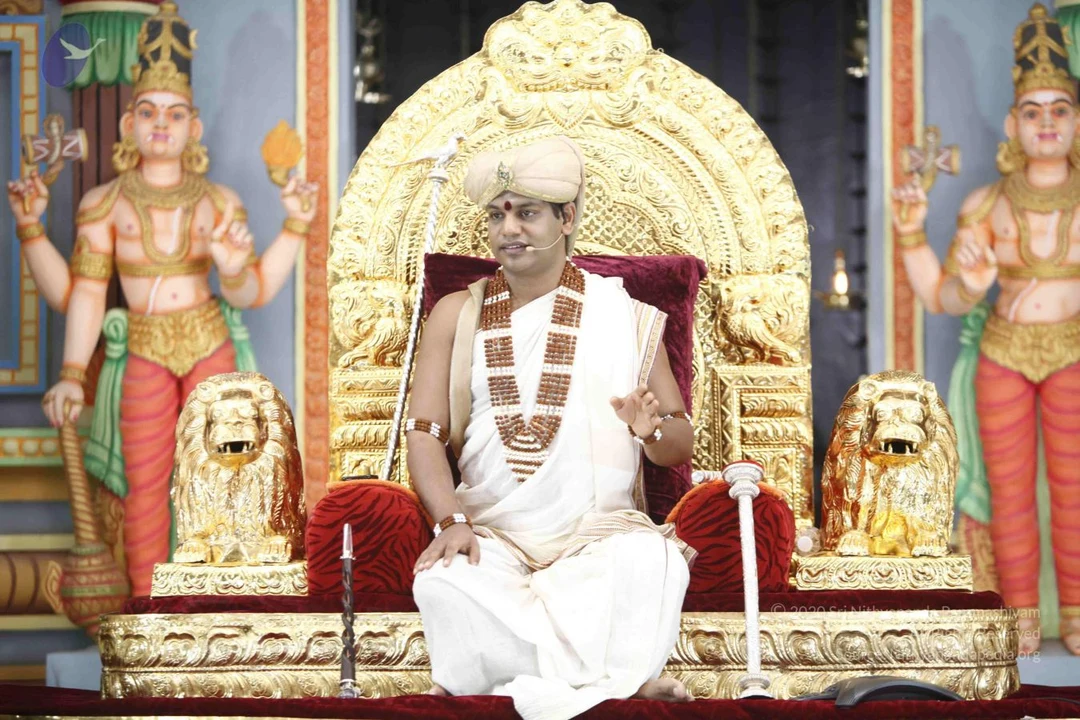
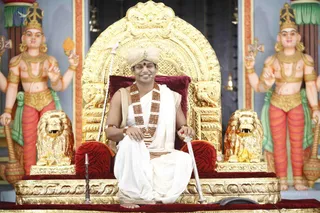
A man in a white dhoti and light shirt bows with palms pressed together while a robed figure in a cream turban places a hand on his head. The turbaned figure wears long rudraksha mala necklaces, a red bindi, a bracelet of rudraksha beads, and white robes with a sash, and reads from a sheet of white paper. Behind them stand several onlookers, including a young man in a blue shirt with hands folded, a bald man in white, and a small child in olive clothing. Indoors, with a white wall and a framed picture at left.A seated man smiles broadly on an ornate gilded throne with a red velvet cushion, flanked by two golden lion sculptures at its base. He wears a cream turban with a small gem, a cream shawl and white dhoti-style garment, and rudraksha mala beads with gold accents on his neck and arms. His hands are pressed together in a gesture of greeting. A small microphone is visible near his face. Two painted standing deity figures with gold jewellery stand on either side of the throne, and a fly-whisk-like staff rests beside the seat. a person is seated in a ceremonial role on the peetha.A smiling man sits on an ornate gold throne with carved lion armrests and a deep red velvet cushion. He wears a cream turban with a jewelled centre ornament, a white dhoti-style cloth, long rudraksha mala necklaces with white beads, and matching beaded armbands. His hands are folded in his lap and he has a small red bindi on his forehead. A microphone is attached near his face. Behind him stands a painted deity figure with multiple arms, and a golden lamp is visible on the right. Two golden lion statues flank the throne, and a silver staff with a bird finial leans beside it. Visible cues include a turban, rudraksha malas and ceremonial jewellery, consistent with the page's reference to a person, though his face is not used for identification.A seated man on a large gilded throne with carved lion armrests and a deep red velvet cushion, pointing with his right index finger and smiling. He wears a pale peach turban with a small gold emblem, a red bindi, a multi-strand rudraksha-style mala with white beads, and white ceremonial dhoti-style clothing with a golden-beige shawl over one shoulder. Gold lion statues flank the throne, a silver staff rests against it, and painted deity figures with multiple arms stand on either side in a temple-like setting. Appearance-based candidate: a person, seated in the central role on the throne with turban, mala and ceremonial white attire.A man sits on an ornate gilded throne with carved lion-head armrests and a deep red velvet cushion, in a temple-style hall. He wears a cream turban with a small gem brooch, a red tilak on his forehead, a white dhoti and shawl, and long rudraksha mala necklaces with white beads, plus beaded bracelets. His right hand rests lightly on the armrest. Beside the throne stands a white staff topped with a bird figure. Behind him a painted deity figure holds ritual objects. Gold lion statues flank the lower corners. A probable Swamiji is seated, with the turban, rudraksha malas and ceremonial dress as cues.A seated man on an ornate gilded throne with lion-head armrests and a deep red cushion is the main subject. He wears a cream turban, white dhoti and shawl, a long rudraksha mala with brown beads, bangles and a red bindi, and holds a silver staff. Two large painted statues of deity guardians with multiple arms, gold jewellery and orange-red dhotis stand on either side of the throne, and gold lion sculptures sit at its base. The setting is a temple-like stage with a red cloth draped below.

Satsang

54 photosSource gallery
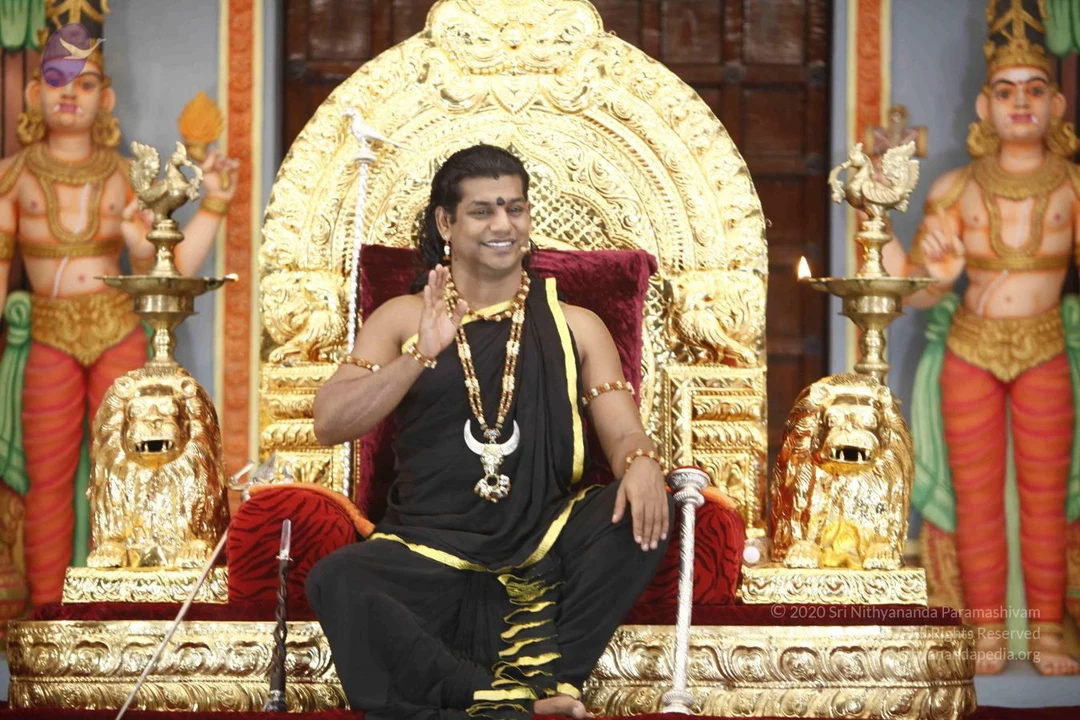
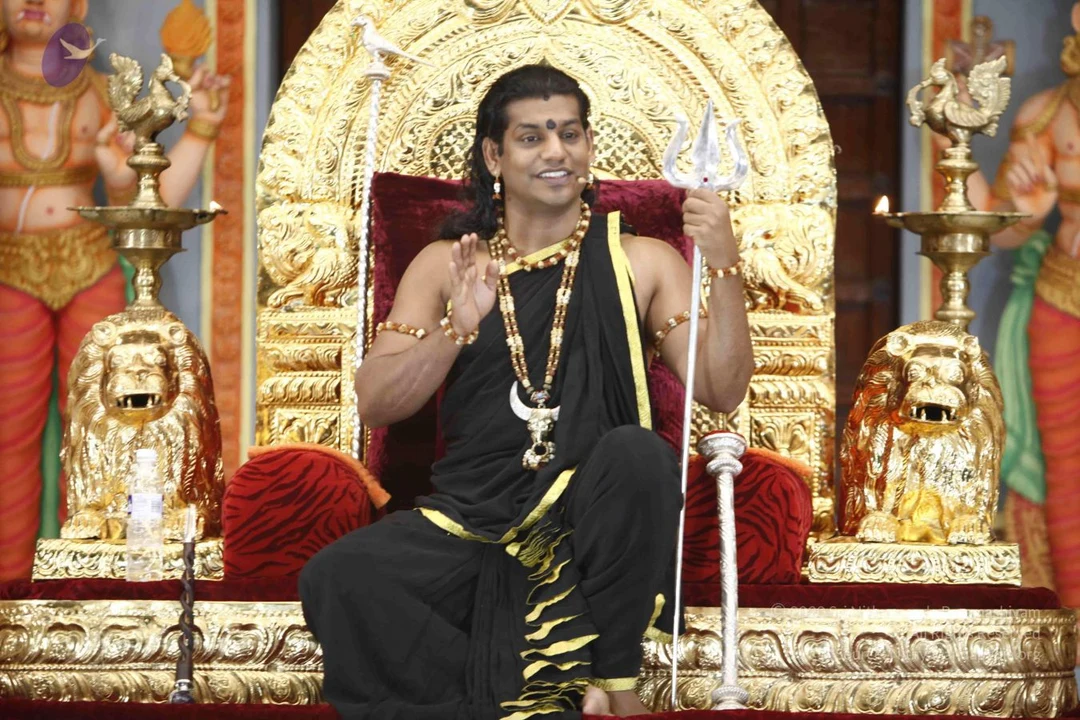
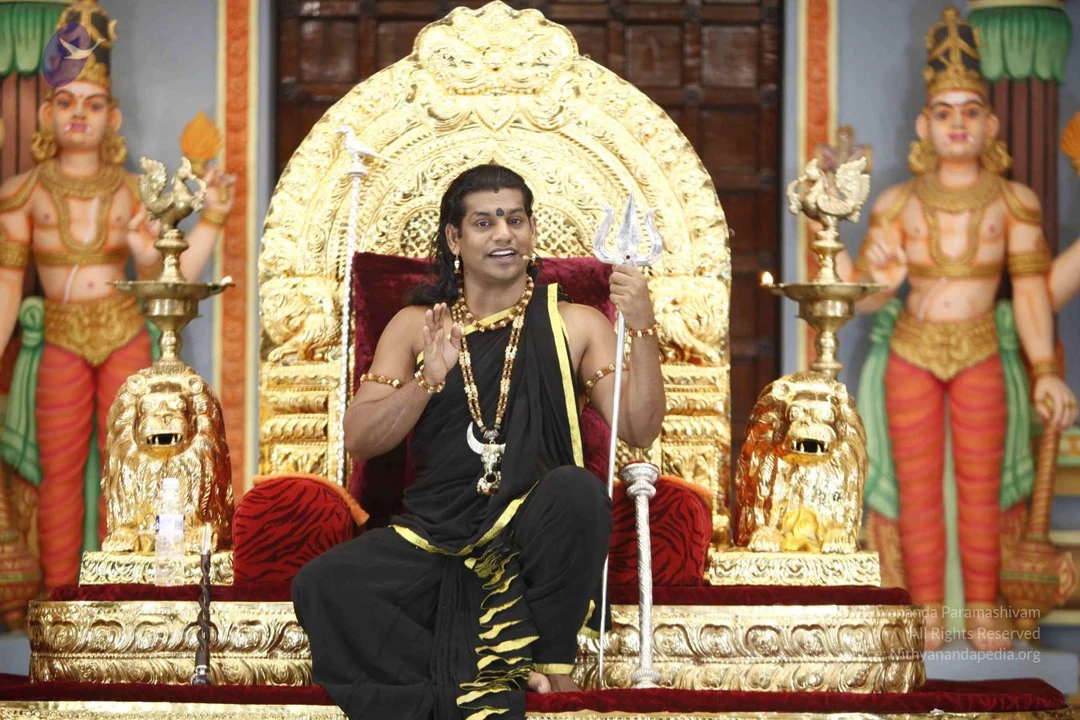
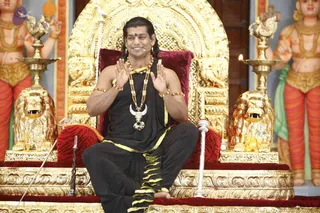
A man seated cross-legged on an ornate gold throne with red velvet cushions and gold lion-shaped armrests, flanked by gold lamps and painted deity statues. He wears black robes with yellow trim, a crescent-shaped silver pendant on a rudraksha mala, gold and beaded bracelets, and a head microphone, and raises both palms in a gesture while speaking.A man with long, swept-back dark hair sits cross-legged on an ornate gold throne with red velvet cushions, smiling and raising one hand in greeting. He wears a black garment with yellow trim, a rudraksha mala, a large ceremonial gold pendant with a crescent and bird motif, and beaded bracelets. Golden lion figures flank the throne, and brass oil lamps with bird finials stand on either side. Two gold-adorned attendant figures in orange-red dhotis and crowns stand behind.A seated man on an ornate gold throne with red velvet cushions, flanked by two golden lion-head pedestals holding oil lamps. He wears black robes with yellow borders, a long rudraksha mala, a large silver crescent pendant, and an orange-red bindi. He raises one hand in a gesture while smiling, with a microphone stand at his side. Behind him stand painted deity statues in orange-red dhotis and gold jewellery, and a wooden door is visible. The Swamiji (probable) cues are long swept-back hair, rudraksha mala and ceremonial ornaments, with the throne and discourse setting indicating satsang.A seated man on an ornate gold throne with red velvet cushions, raising one hand in greeting, smiling. He wears a black dhoti-style garment with gold borders, a rudraksha mala, a large silver pendant, and gold bangles. Two gilded lion figures flank the throne, and two painted guardian statues with four arms and crowns stand on either side, one holding a staff. Brass lamps with flames rest near the throne, and a wooden door and decorated pillars form the backdrop. Swamiji (probable) is seated, based on the rudraksha mala, long swept-back hair, black ceremonial clothing and throne setting. One physical person is present.A man seated on an ornate golden throne with lion-carved armrests and a red cushioned seat, his palms pressed together in namaste with eyes closed. He wears a black sleeveless garment with yellow trim, black trousers, a rudraksha mala, a large silver crescent pendant, bangles and a bindi. Brass oil lamps flank the throne and a silver staff stands beside it, with a golden deity figure partly visible at left. Appearance-based label: a person, seated in person as the central figure, with cues of the black and gold attire, rudraksha mala and ceremonial pendant.A seated man in black and yellow-bordered clothing sits on an ornate gold throne with a red velvet cushion, hands pressed together in namaskar with eyes closed. He wears rudraksha bracelets, a multi-strand rudraksha mala, a silver crescent-and-pendant necklace, and a small red bindi. Flanking the throne are gold lion sculptures and brass oil lamps with lit wicks, and a white bird figure perches on a staff beside him. Behind the throne a golden deity figure with raised hands is partly visible. a person seated in meditative prayer posture on the throne, wearing rudraksha malas and a black-and-gold garment, during a temple or satsang setting.

Satsang-with-Srilanka
22 photosSource gallery
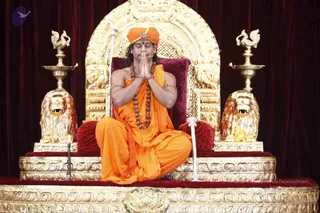
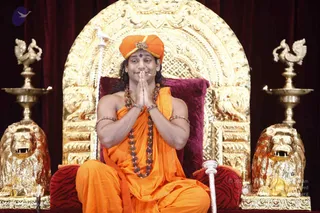
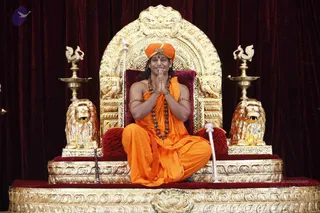
A seated man in saffron-orange robes sits cross-legged on an ornate gold throne with a deep red cushion, hands pressed together in namaskar with eyes closed. He wears an orange turban with a jewelled ornament, a long rudraksha mala, and gold armbands. Flanking the throne are two gold lion sculptures and gold oil lamps with bird finials, in front of dark red drapery. Swamiji (probable): the seated figure has long swept-back hair, an orange turban, rudraksha mala and saffron robes, consistent with Paramahamsa Nithyananda. A white staff leans against the throne.A man seated on an ornate gold throne with a deep red velvet cushion and carved golden arch behind him, flanked by two golden lion sculptures and two golden oil lamps. He wears a saffron-orange turban with a brooch, saffron-orange robes draped over his shoulders and arms, a red bindi, long hair, and multiple rudraksha malas. He sits with palms pressed together in namaste and smiles at the audience. A cream microphone is visible at his cheek. The lighting is warm and the background is dark red drapery. The Swamiji (probable) label applies: long swept-back hair, saffron turban and robes, and rudraksha malas are visible, and he sits on the throne as a teacher addressing devotees.A seated man in saffron-orange robes and an orange turban with a gold ornament sits on an ornate gold throne carved with lions and peacock-like birds, hands pressed together in namaste with eyes closed. He wears multiple rudraksha malas around his neck and arms and a gold earring. A red velvet cushion sits on the seat, with gold lion figures at the sides, a silver staff with a bird finial, and a lit oil lamp at right. Swamiji (probable): the qualifying cues are the orange turban, rudraksha malas and saffron robes, shown on a seated figure taking a namaste posture on a golden throne during a satsang-style gathering. The face is not used for identification.A seated man in an orange-saffron dhoti and shawl sits on an ornate golden throne with lion figures and a red velvet cushion, against deep maroon velvet drapery. He holds his hands in anjali mudra at his chest, wears an orange turban with a small central ornament, a long rudraksha mala and ceremonial gold armlets. Golden kalasha-topped lamps stand on either side of the throne. Swamiji (probable) is shown with orange turban, saffron clothing, rudraksha mala and gold armlets, seated on the throne, presenting a greeting.A seated man in saffron-orange robes sits on an ornate gold throne with carved lion-head armrests and red velvet cushions, speaking into a head-mounted microphone. He wears an orange turban with a small gold ornament, a long multi-strand rudraksha mala, and a white-and-gold wrapped staff rests across his lap. Behind him are a dark red velvet curtain and a gold brass oil lamp on a stand.A photograph of a man seated on an ornate golden throne with lion-head armrests and a red velvet cushion, in front of a deep red curtain. He wears an orange turban with a gold brooch, an orange shawl over bare shoulders, and multiple rudraksha mala necklaces and armlets. A small headset microphone is attached near his mouth, and his hands rest on his lap. A brass oil lamp stands to the left. Swamiji (probable): the seated figure has long swept-back hair, an orange turban and rudraksha malas.
More photos

1 photoView all