Skip to content
Wednesday

3 April 2013

Dated photos
335
Source pages
1
Media
2
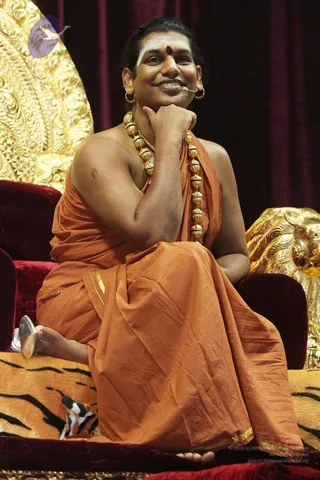
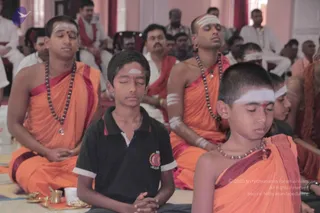
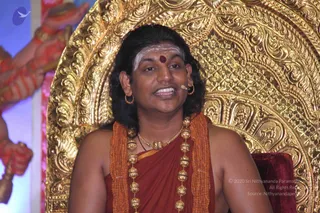
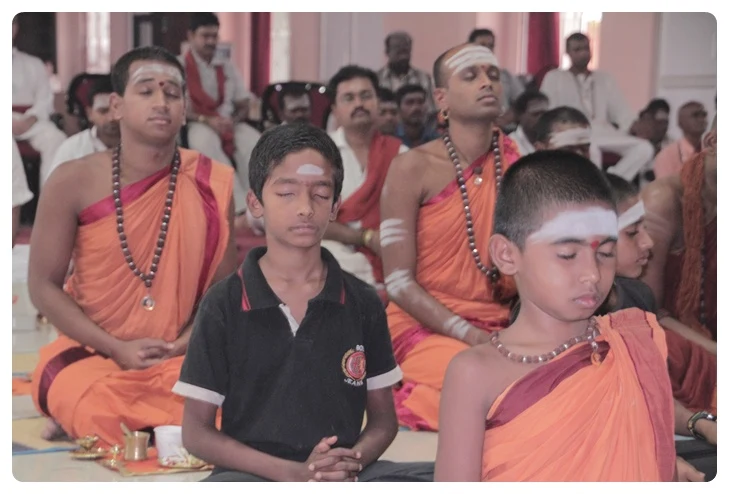
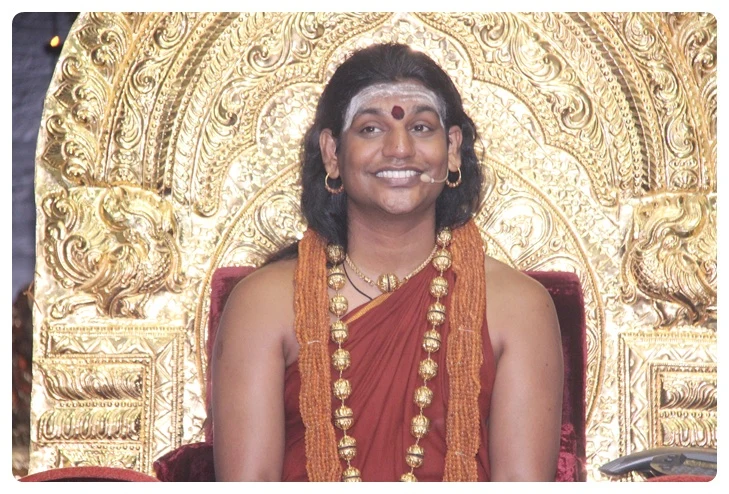
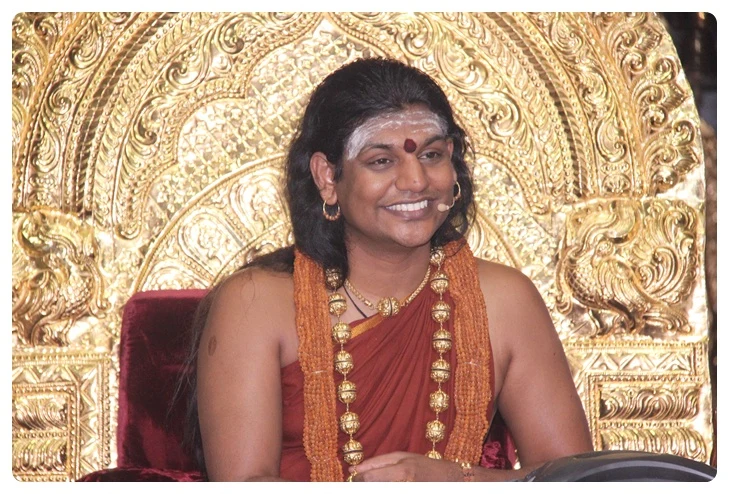
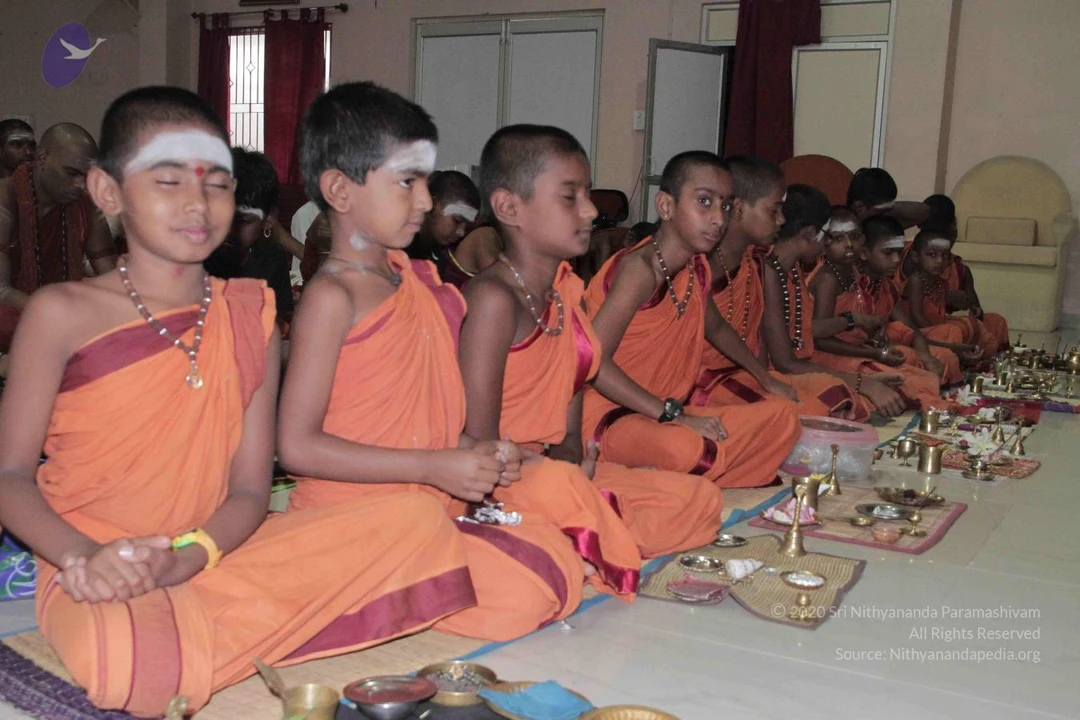
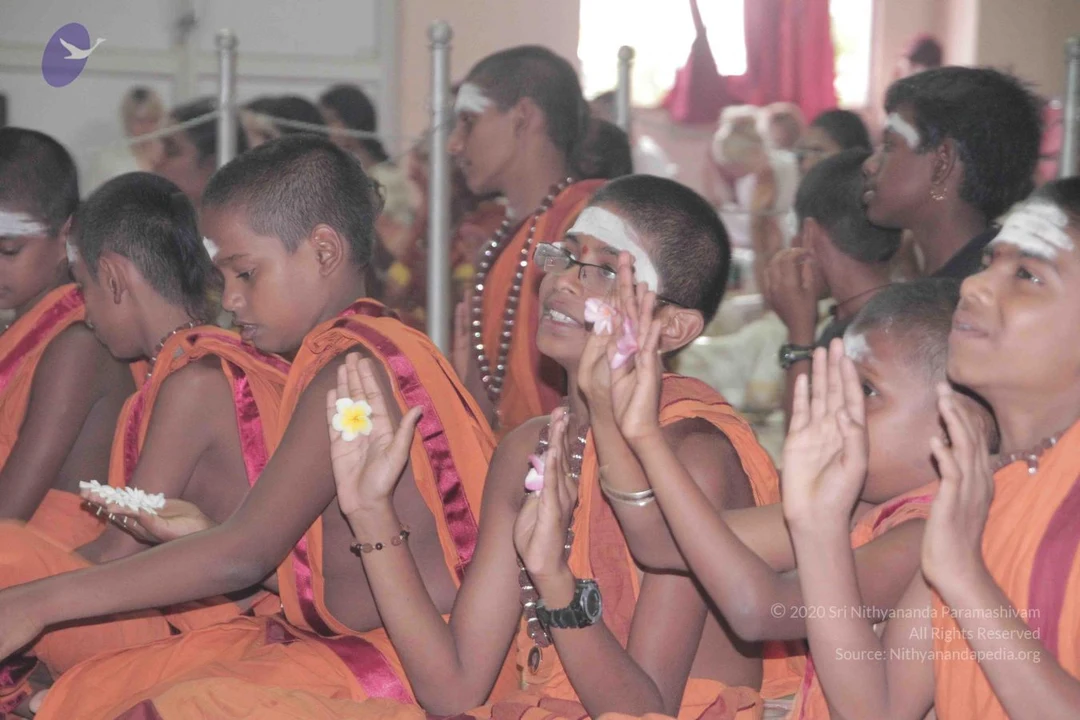
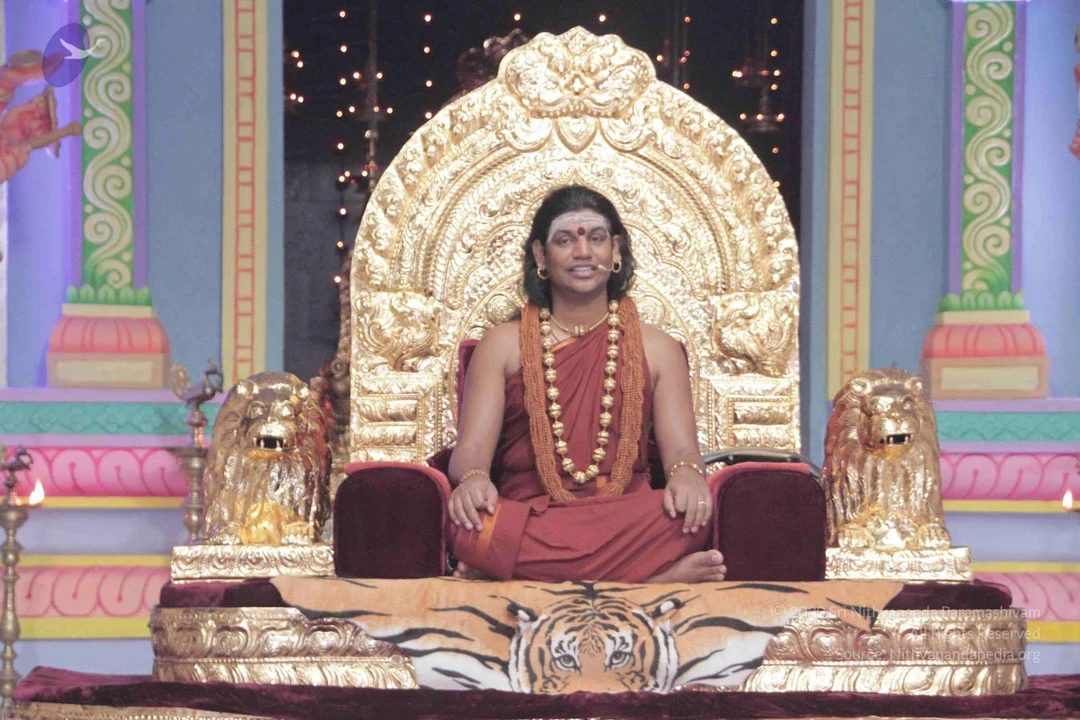
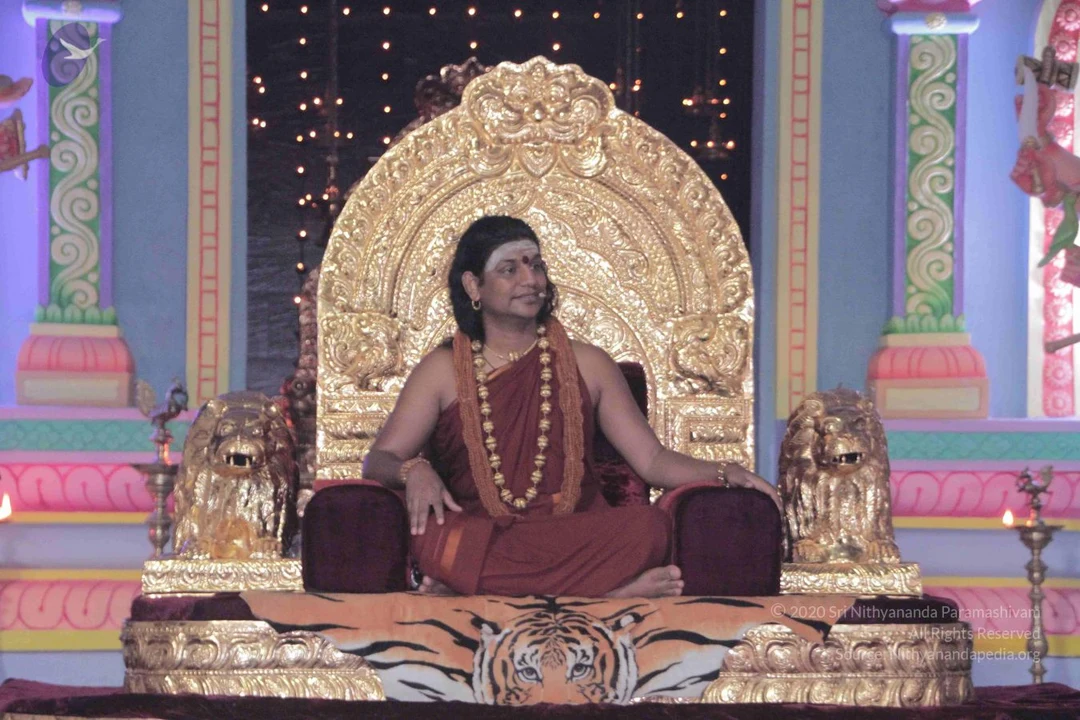
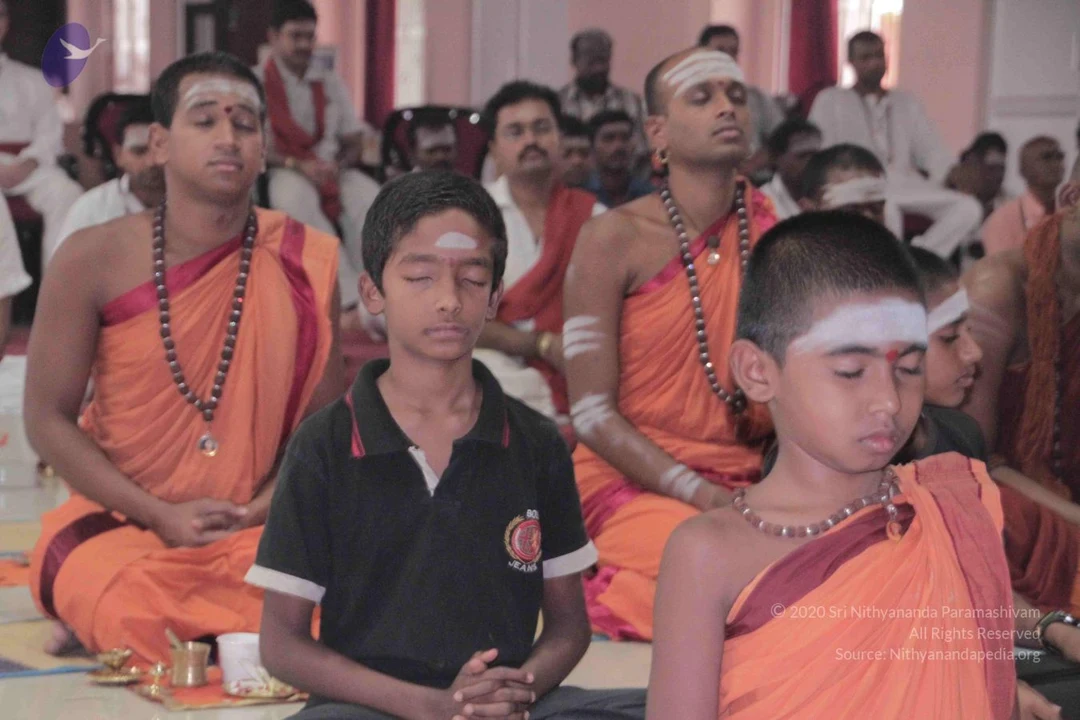
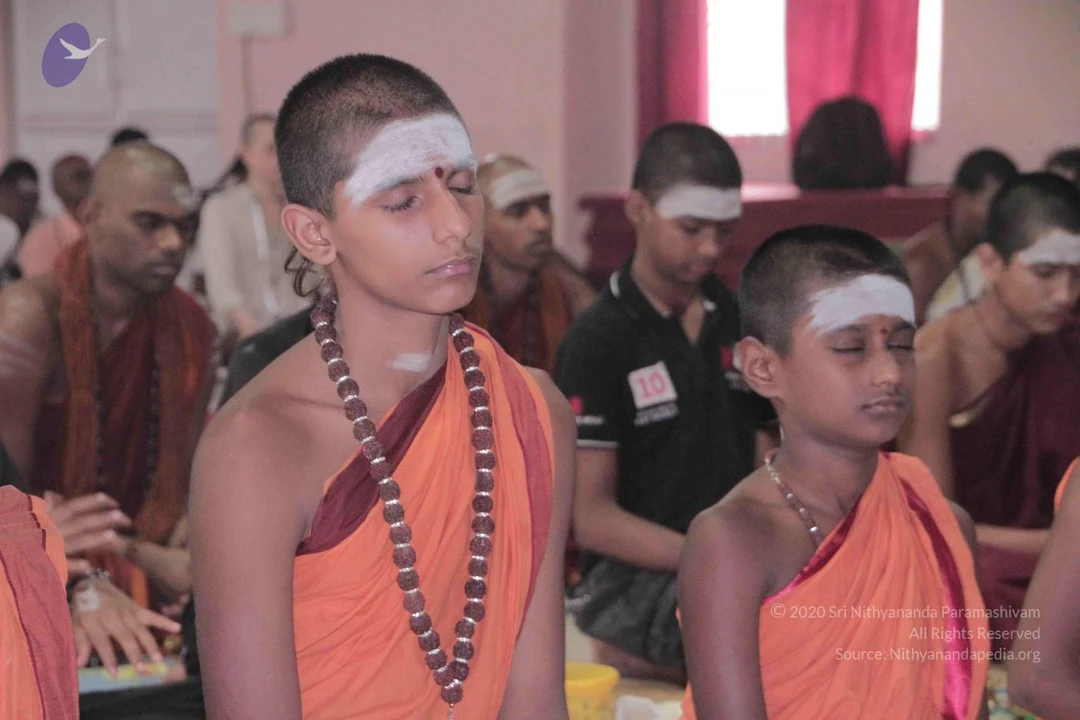
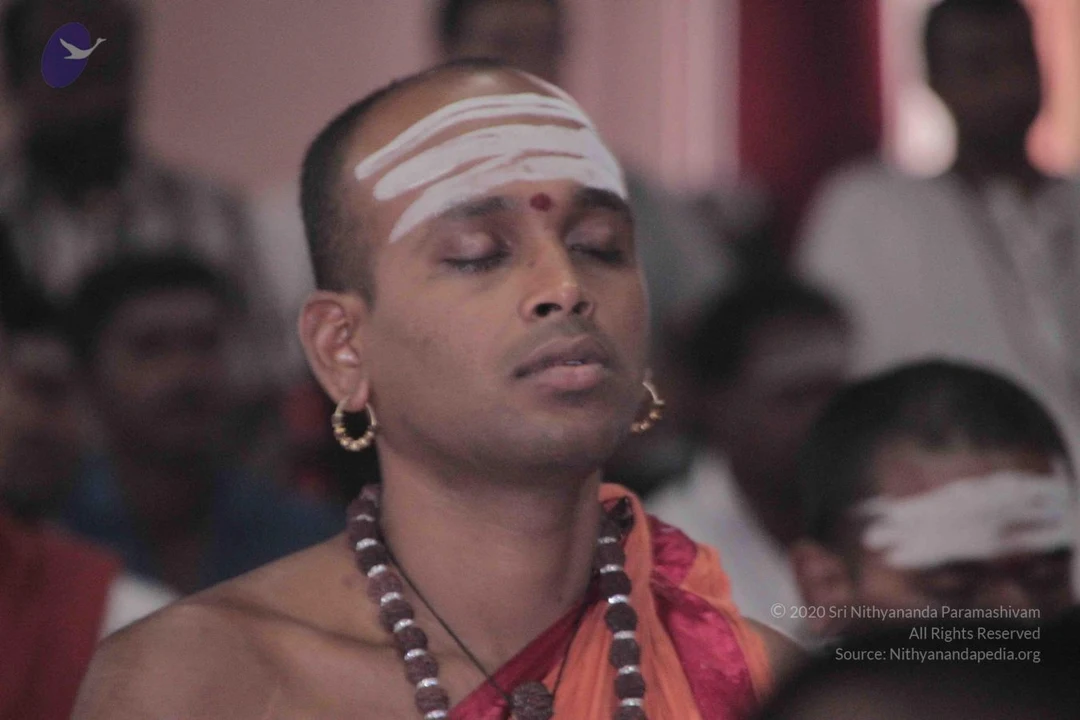
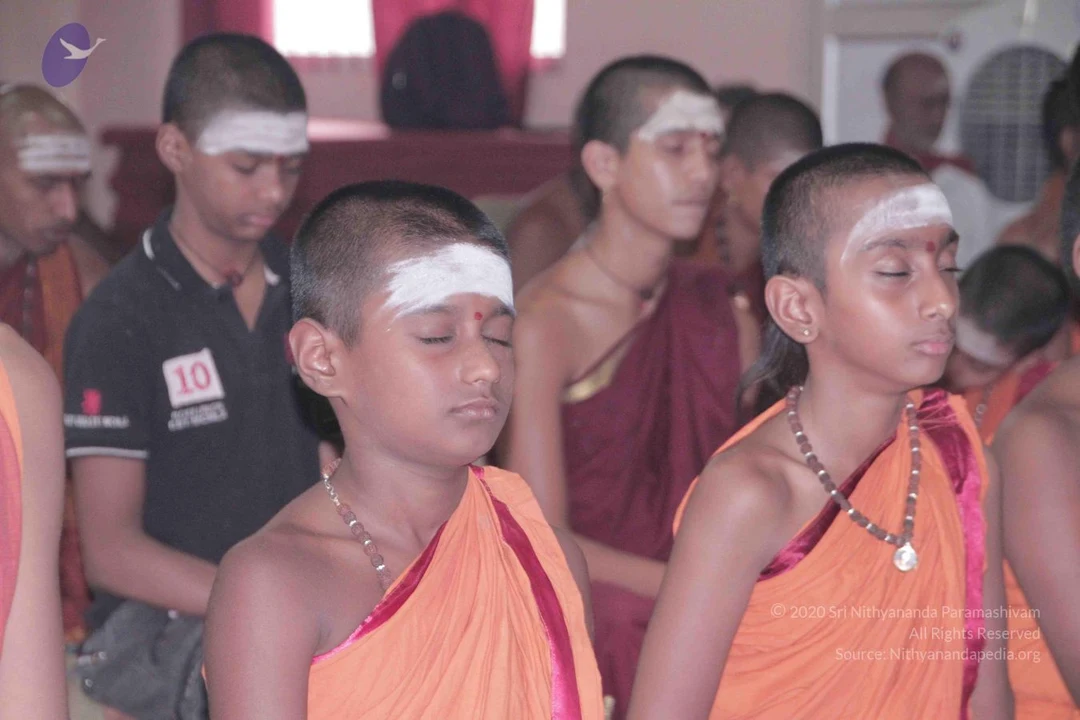
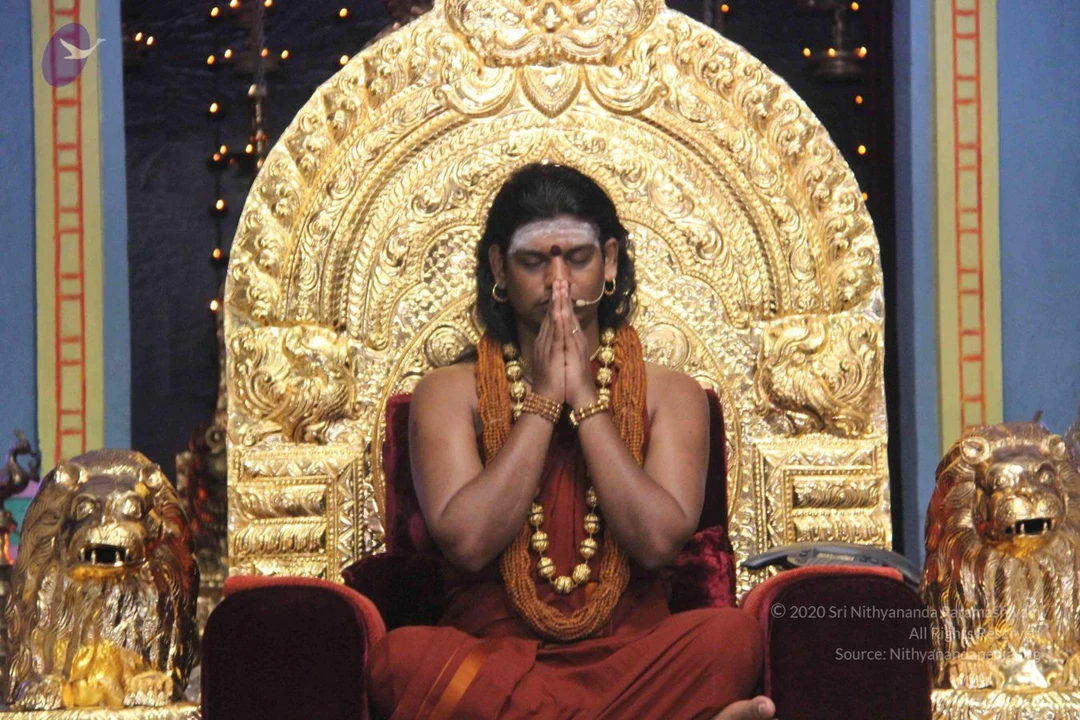
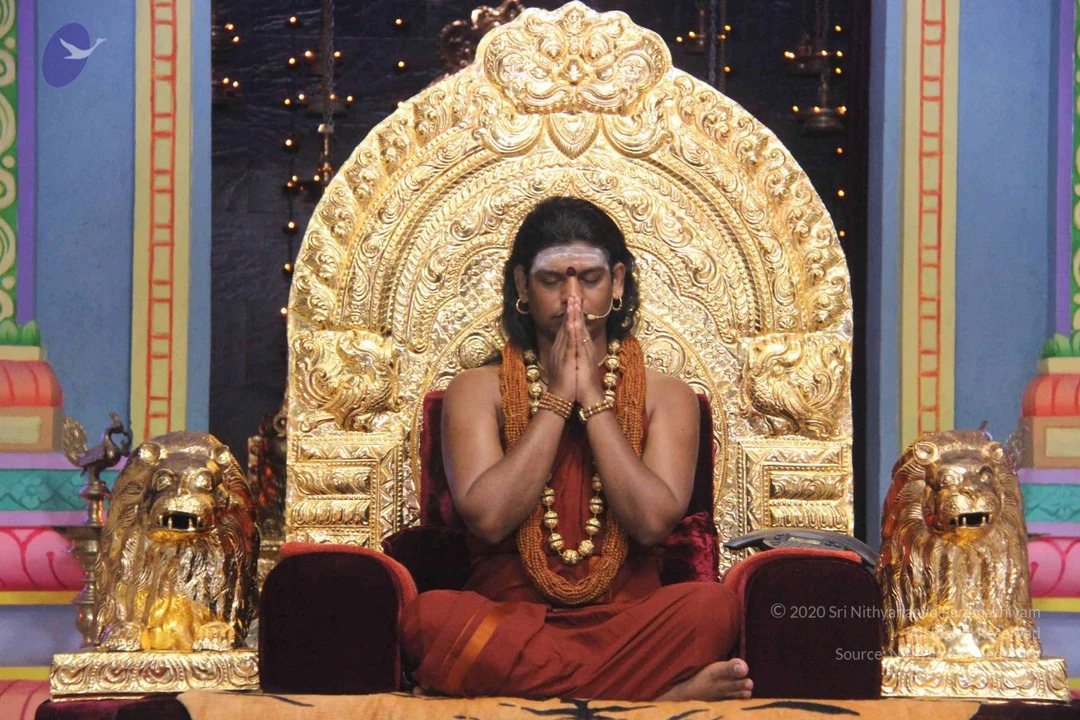
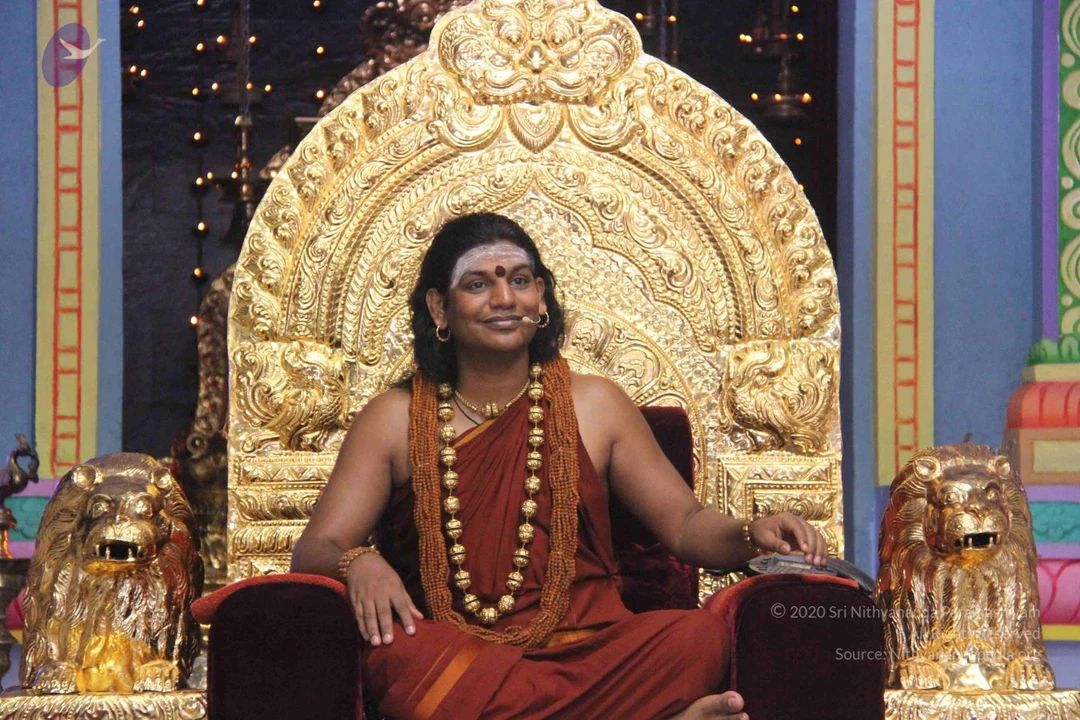
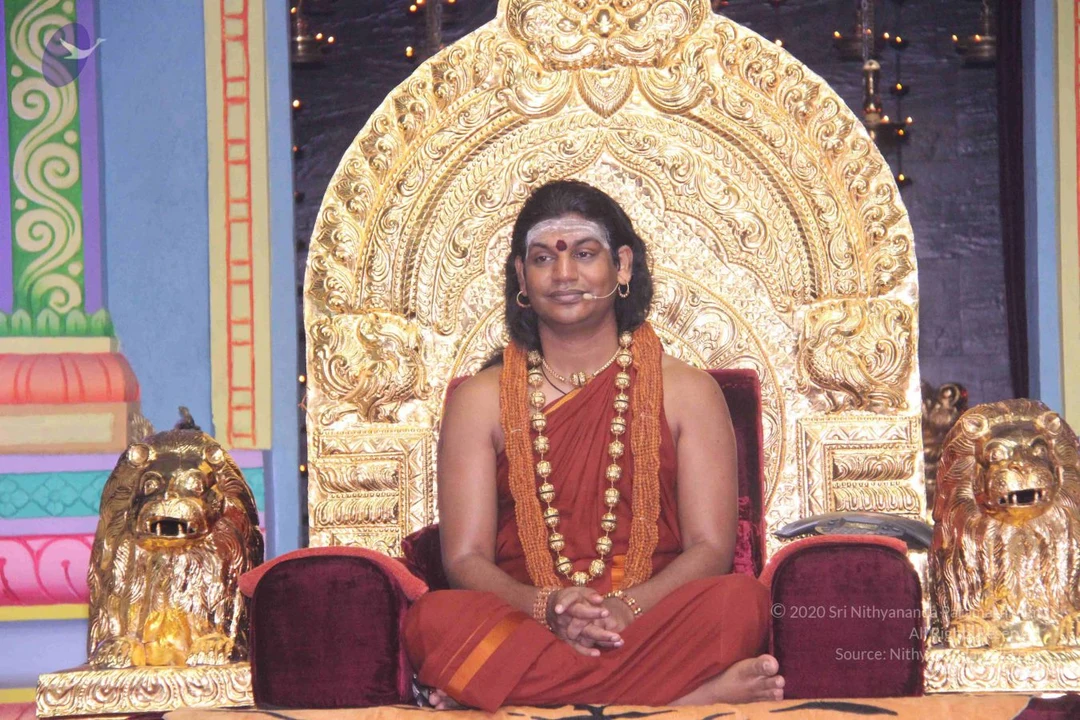
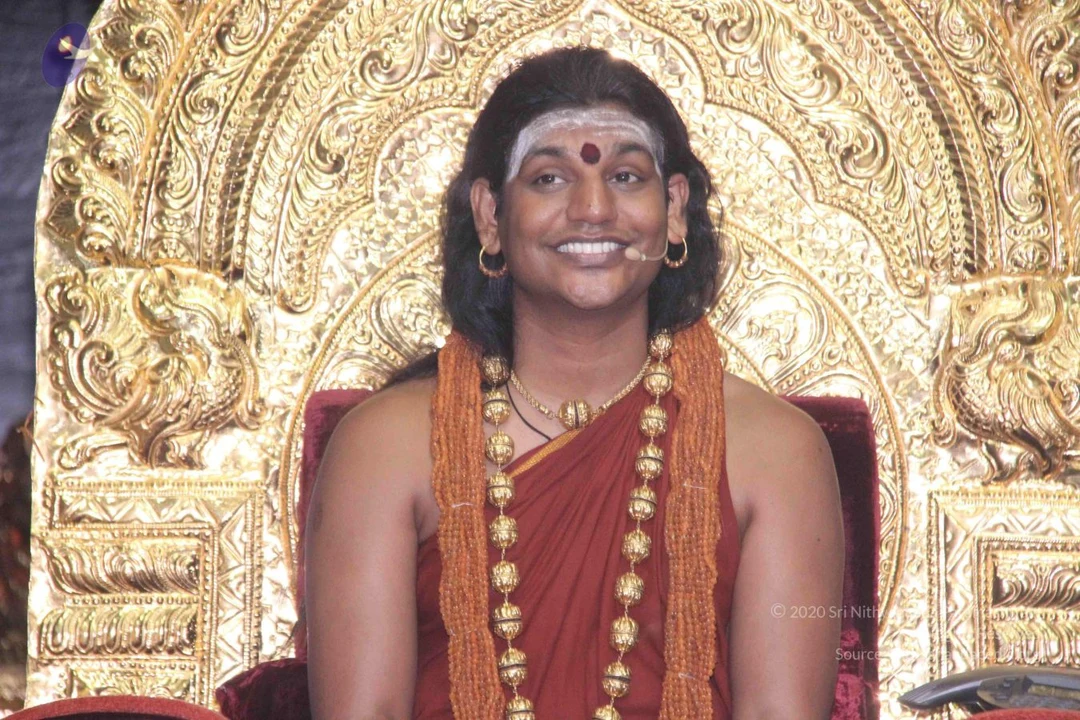
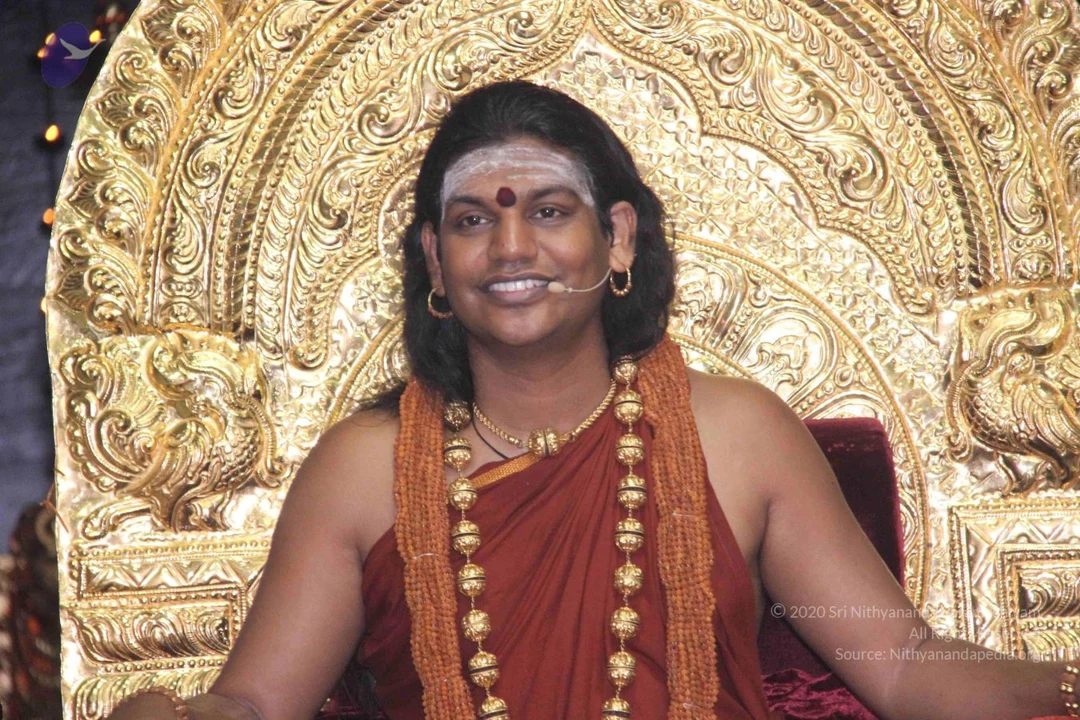
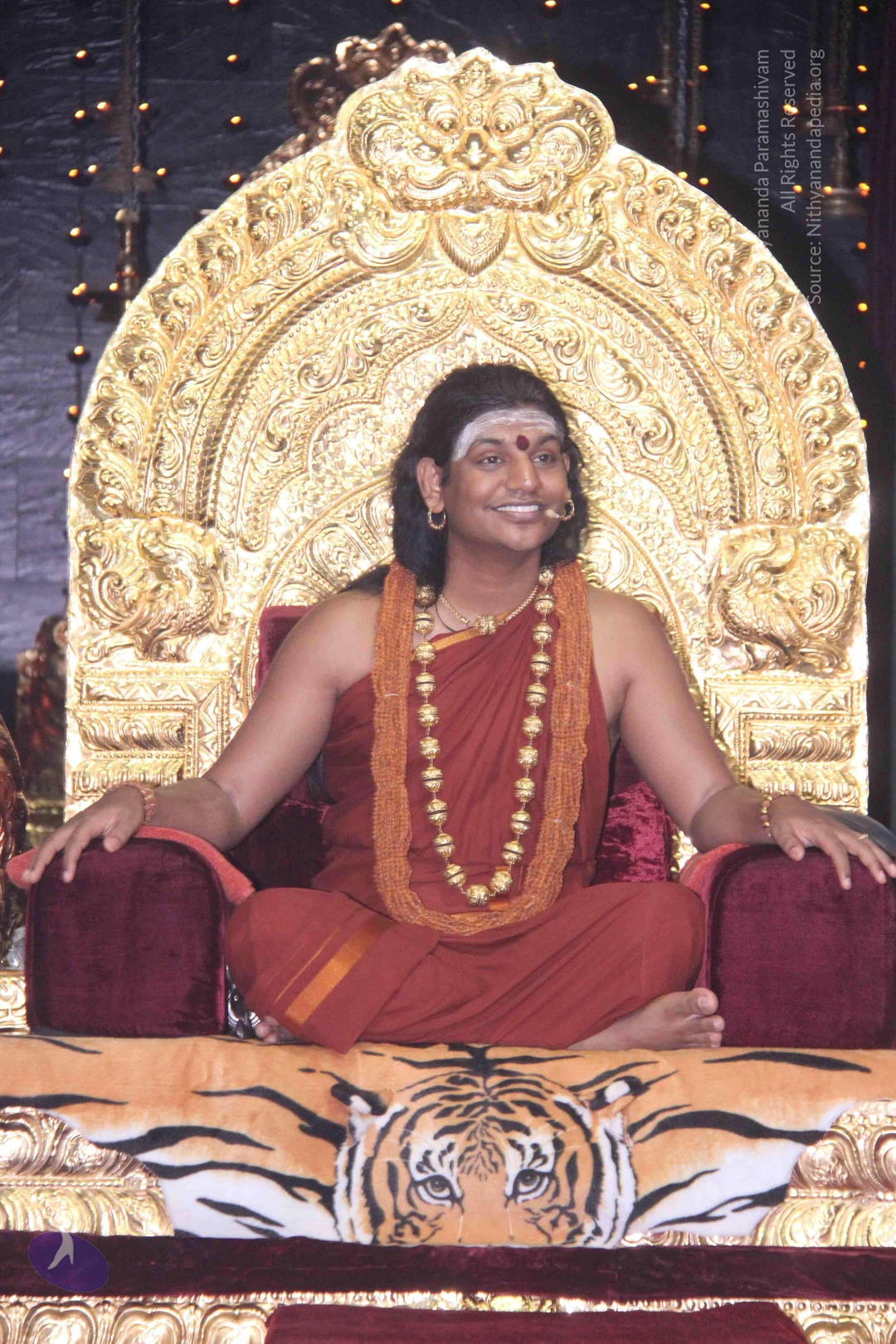
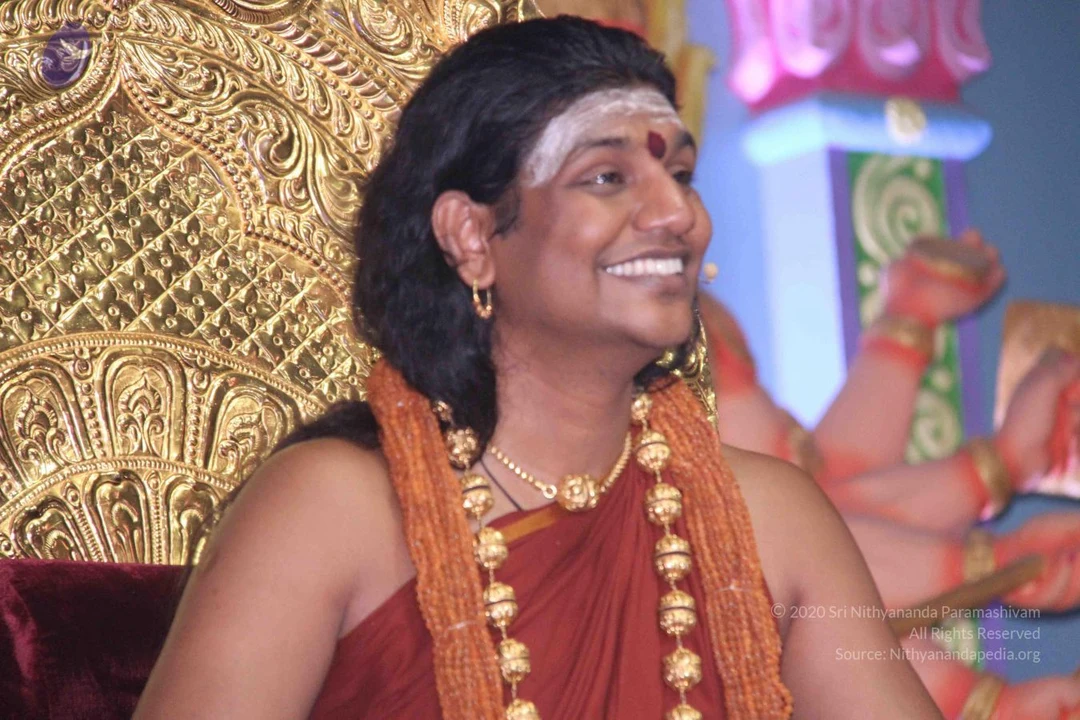
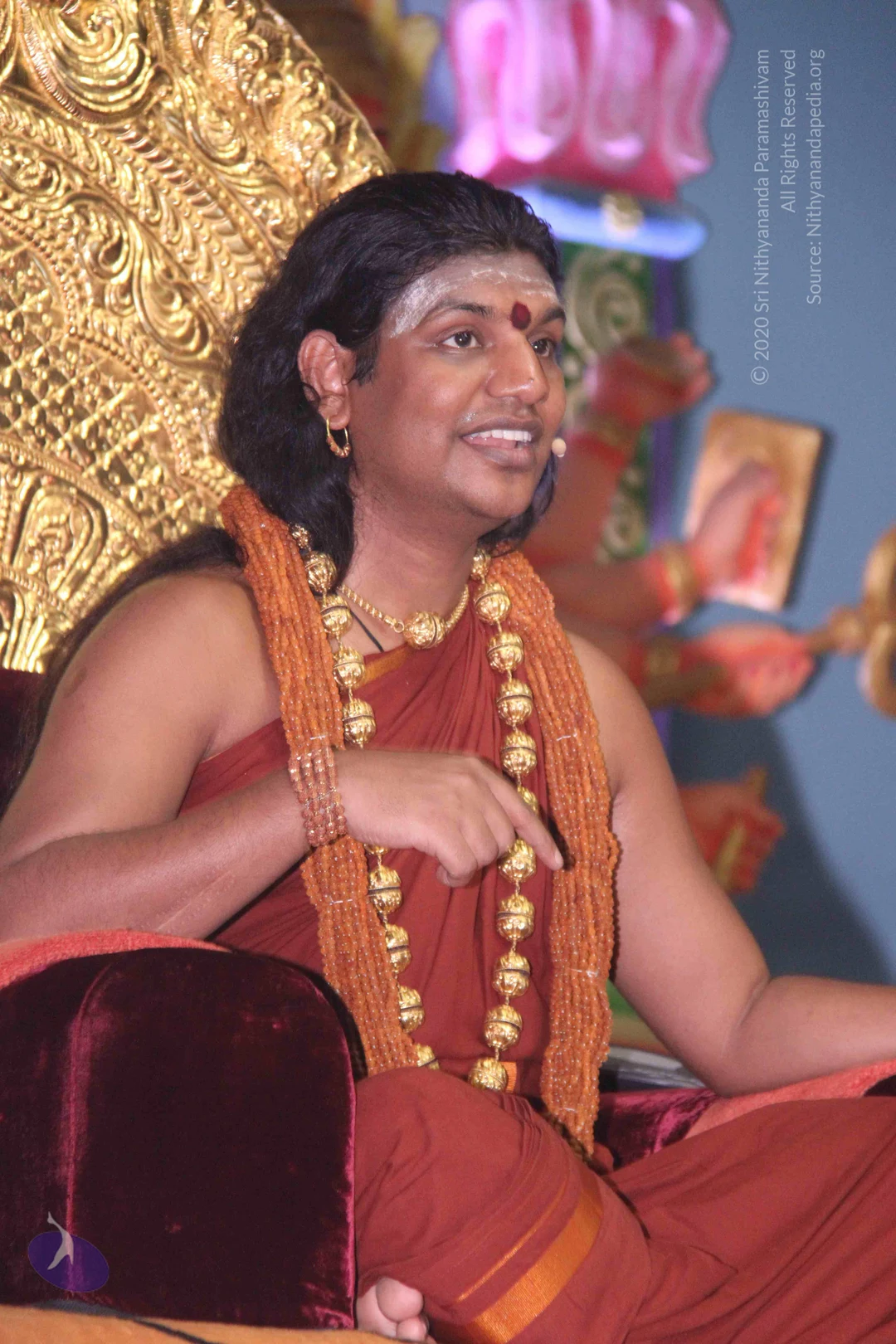
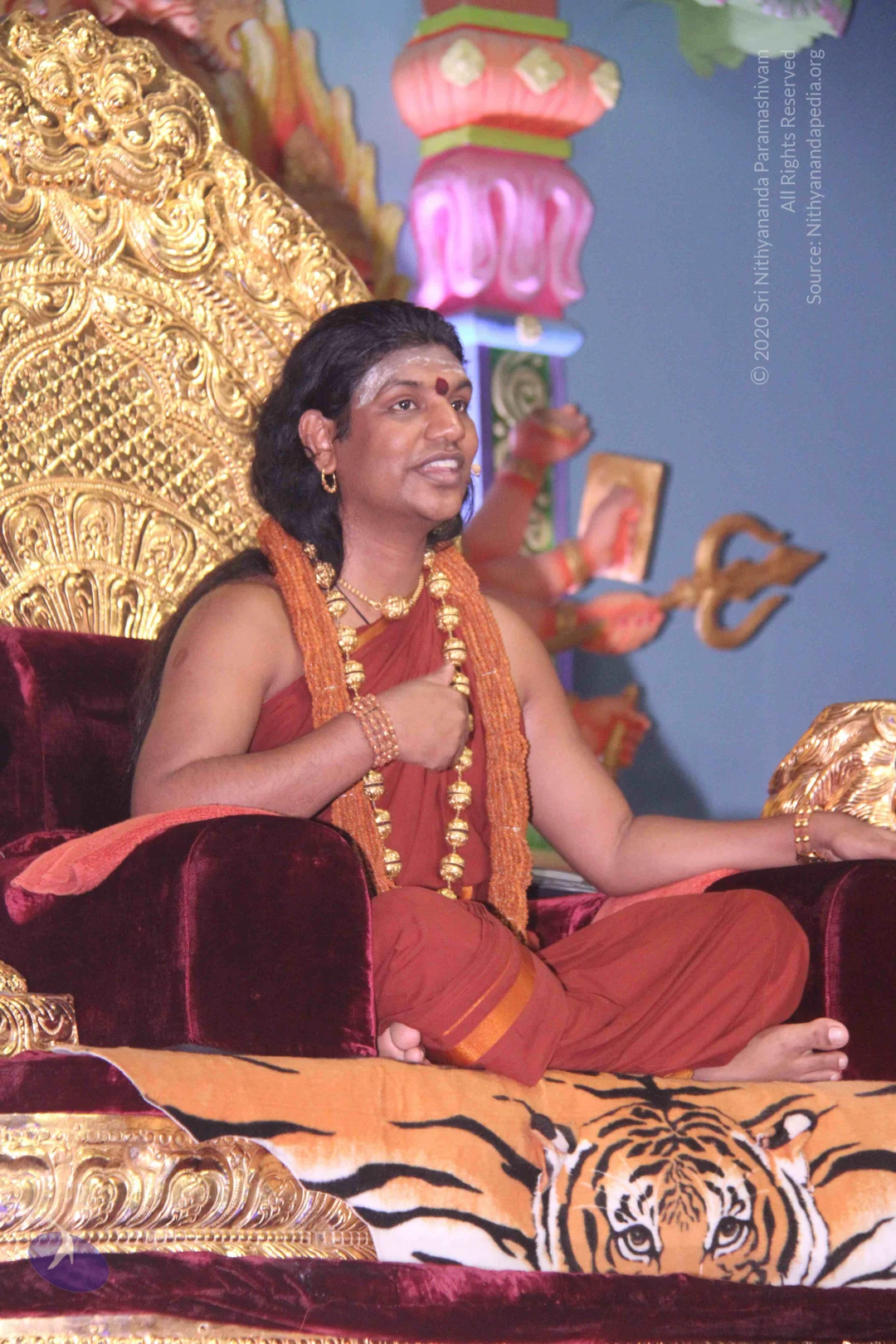
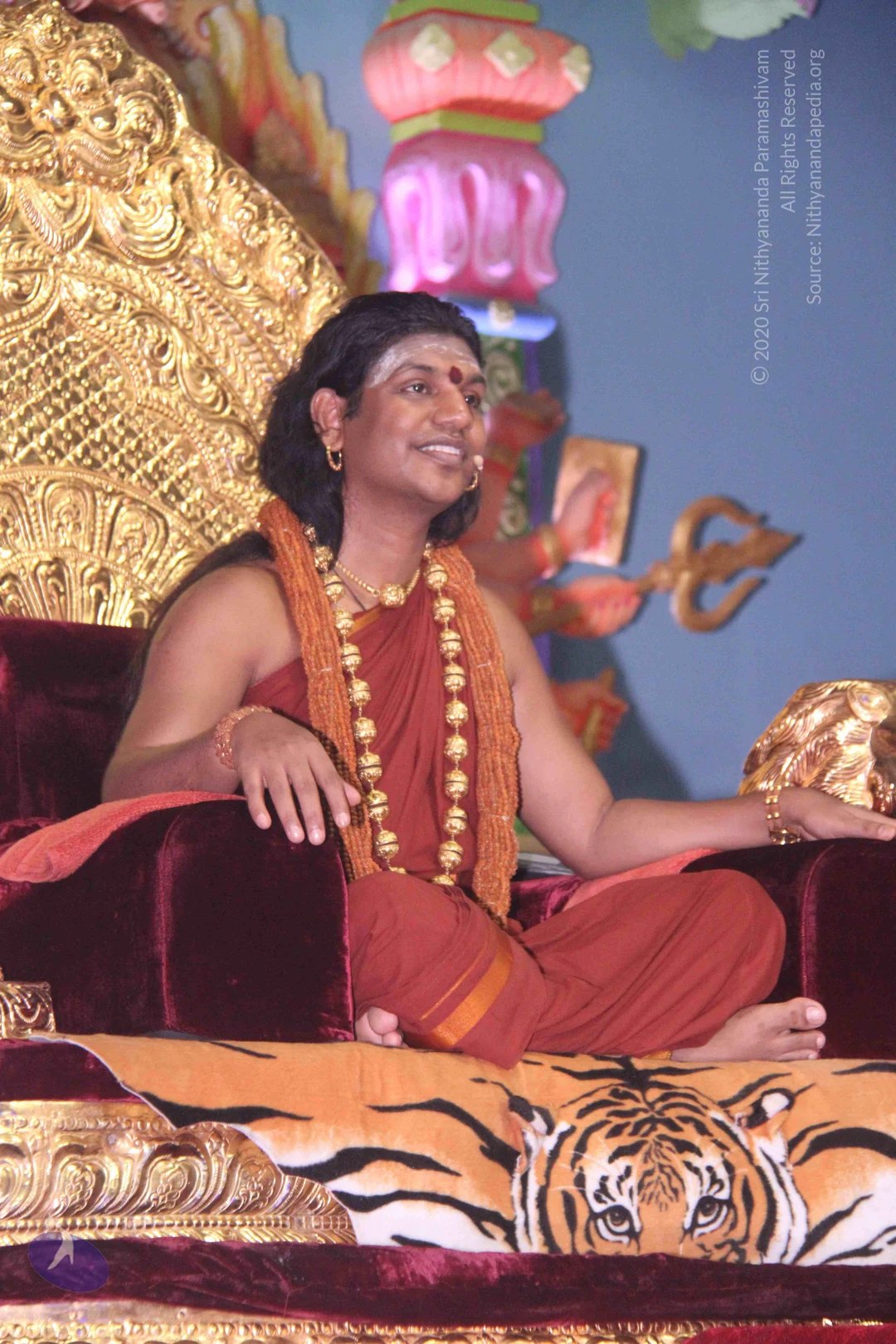
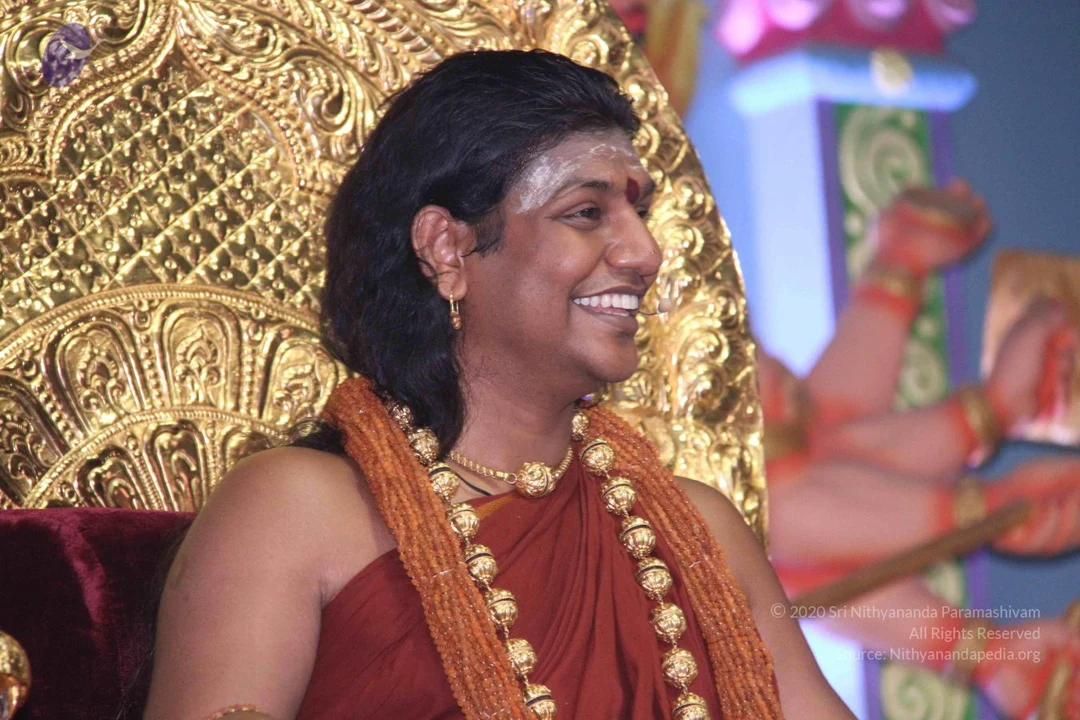
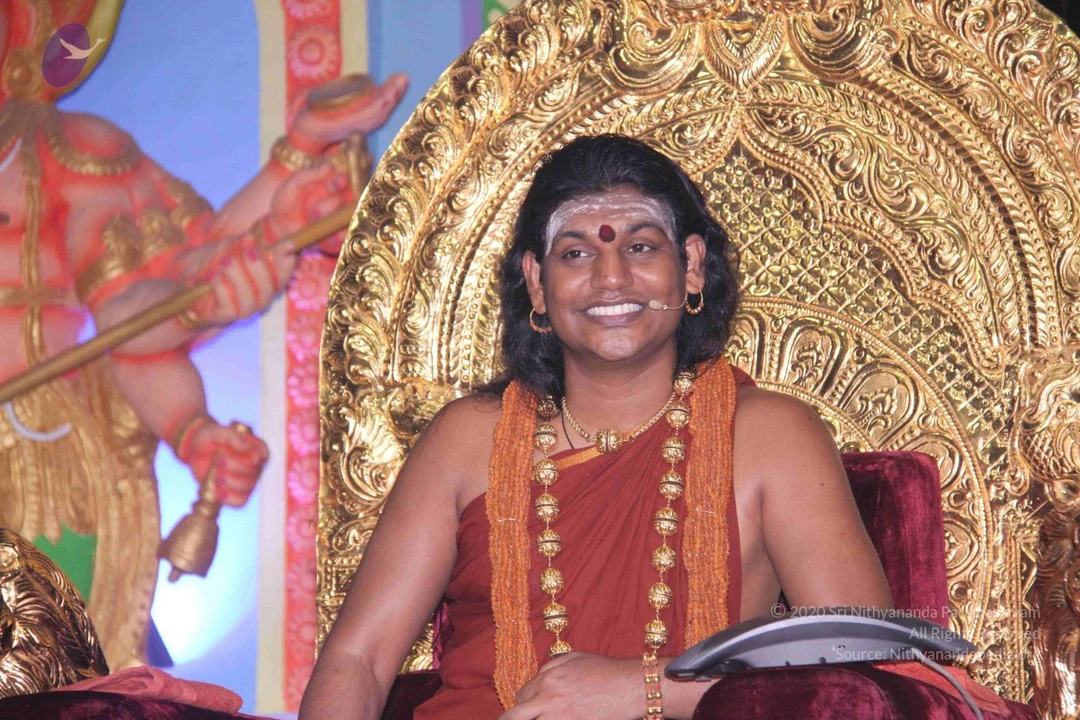
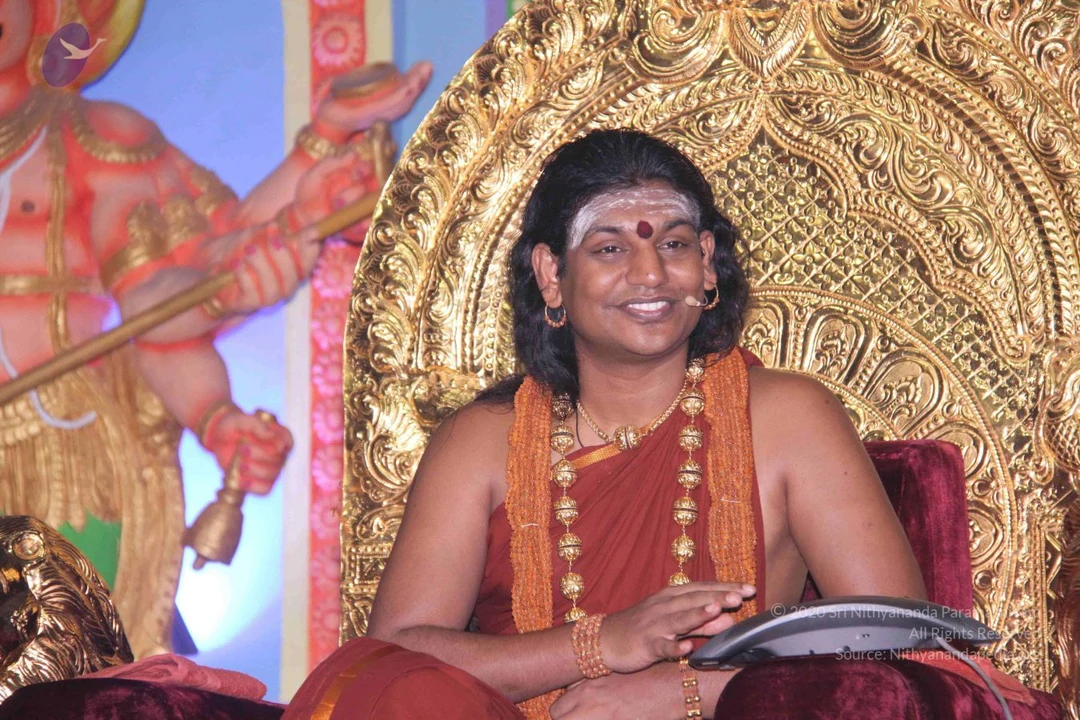
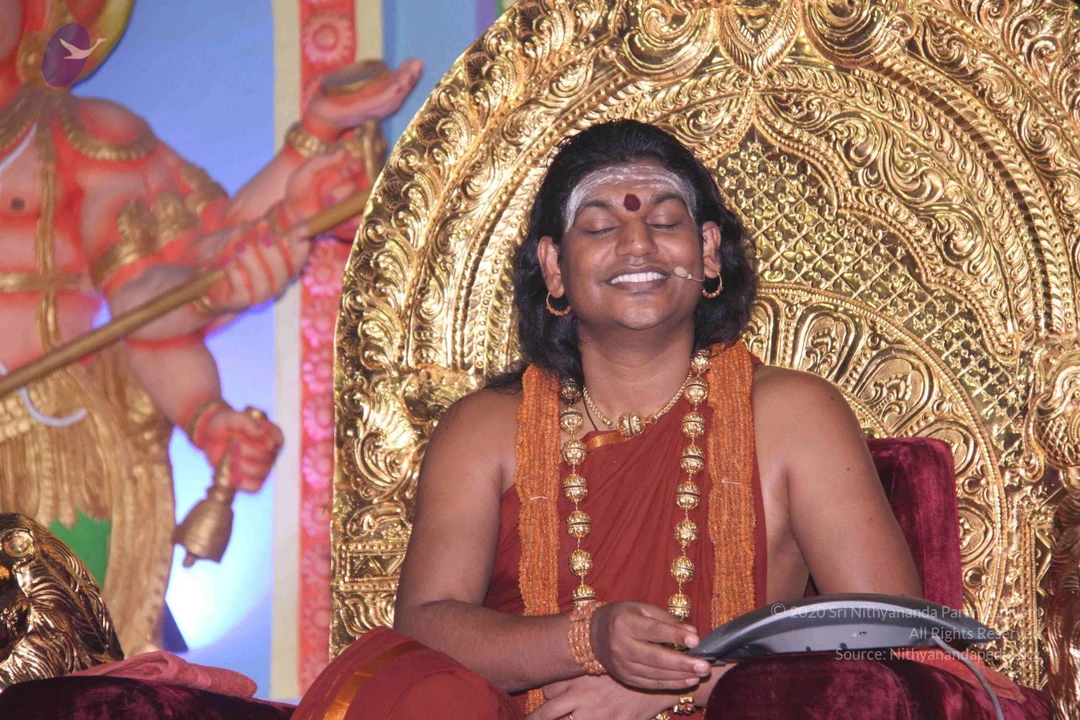
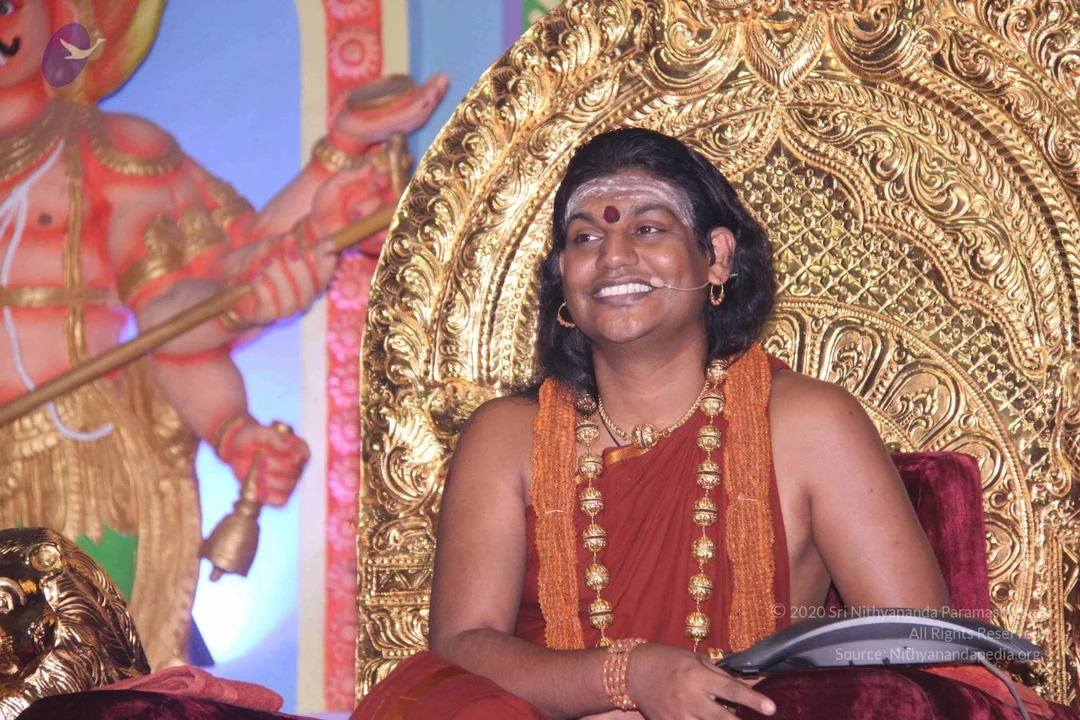
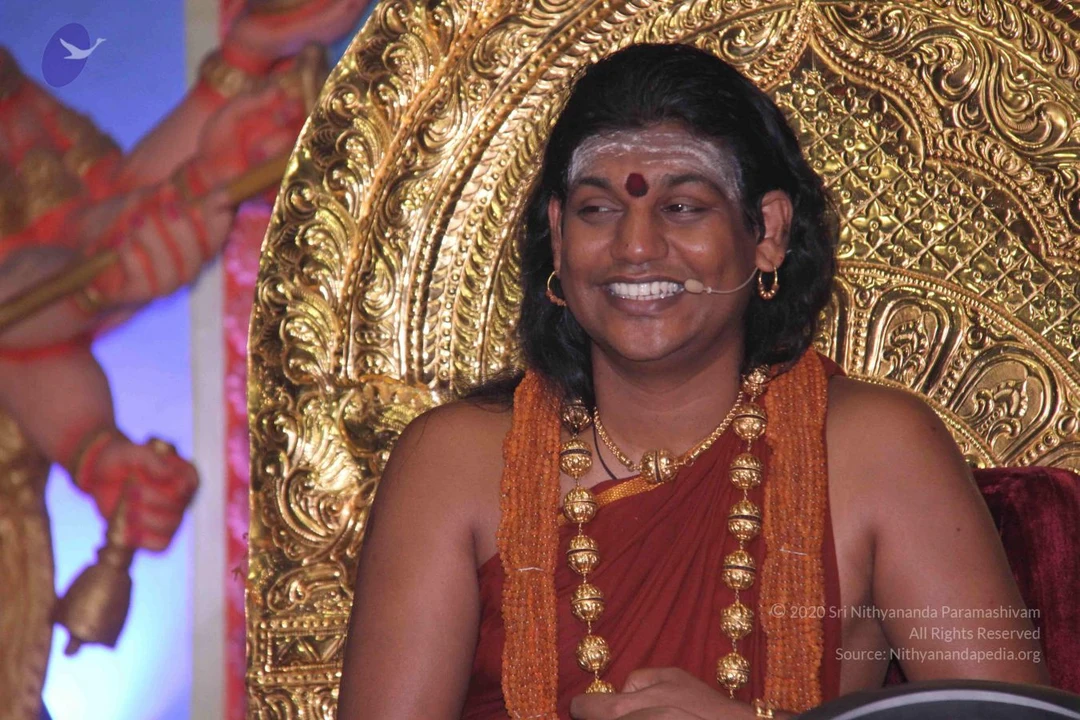
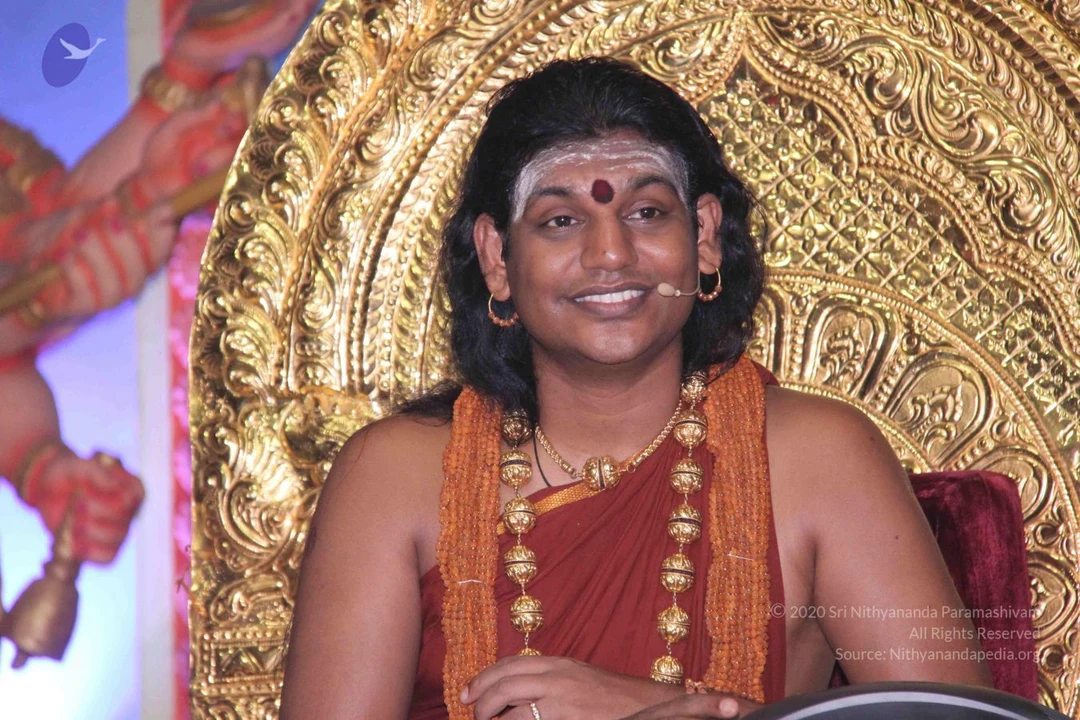
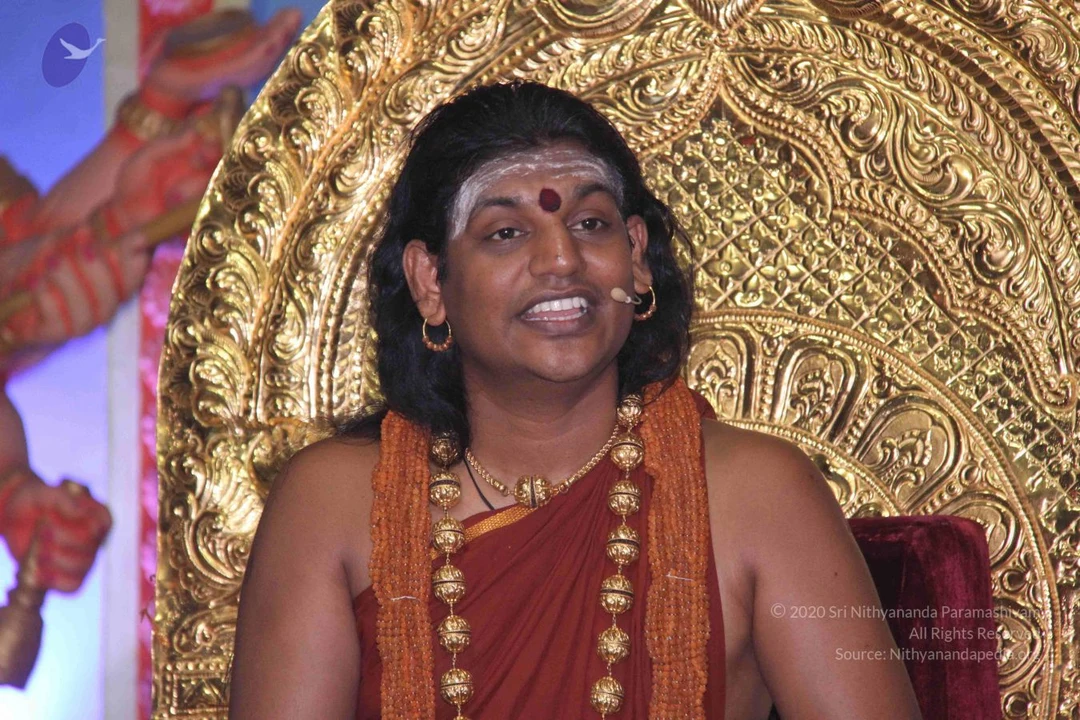
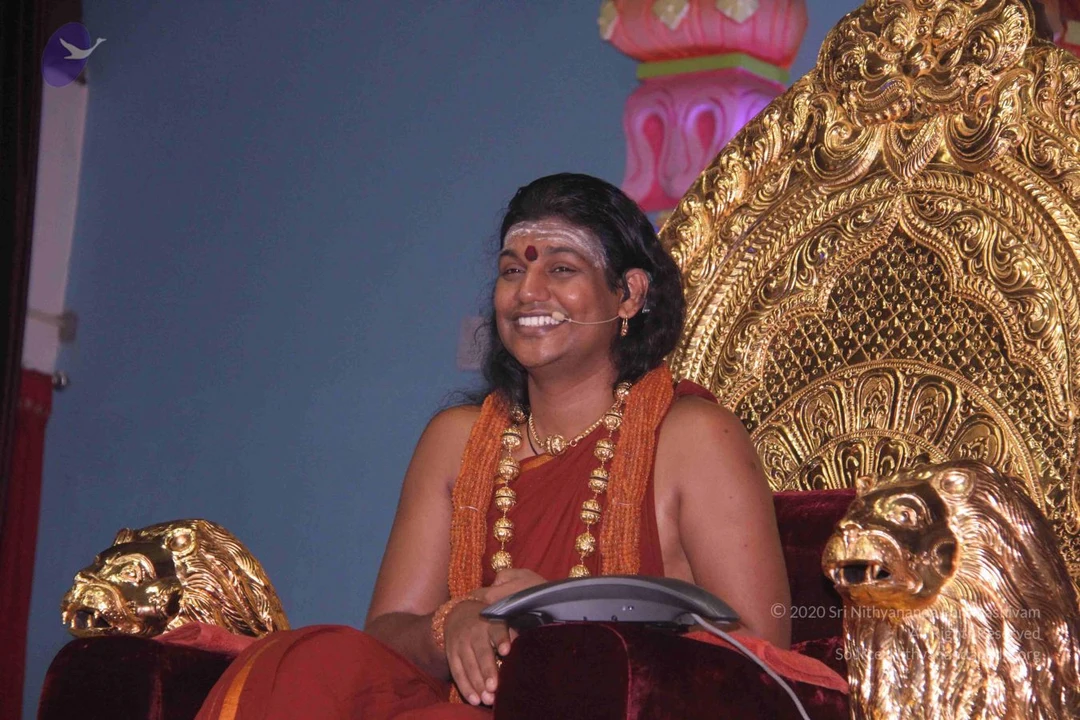
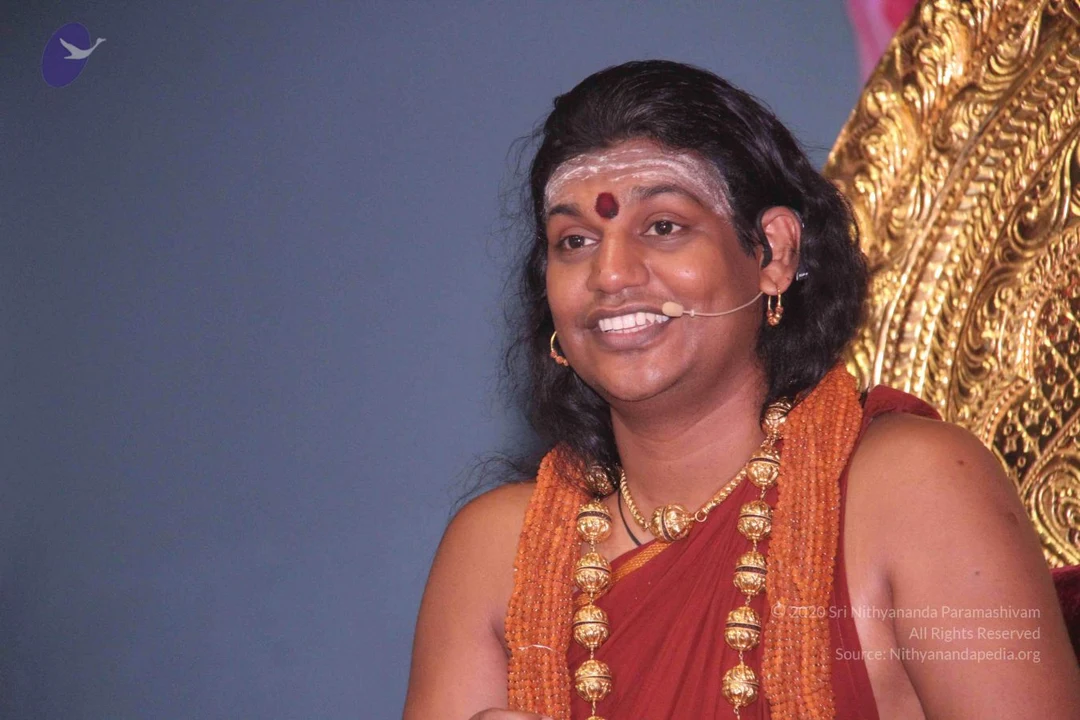
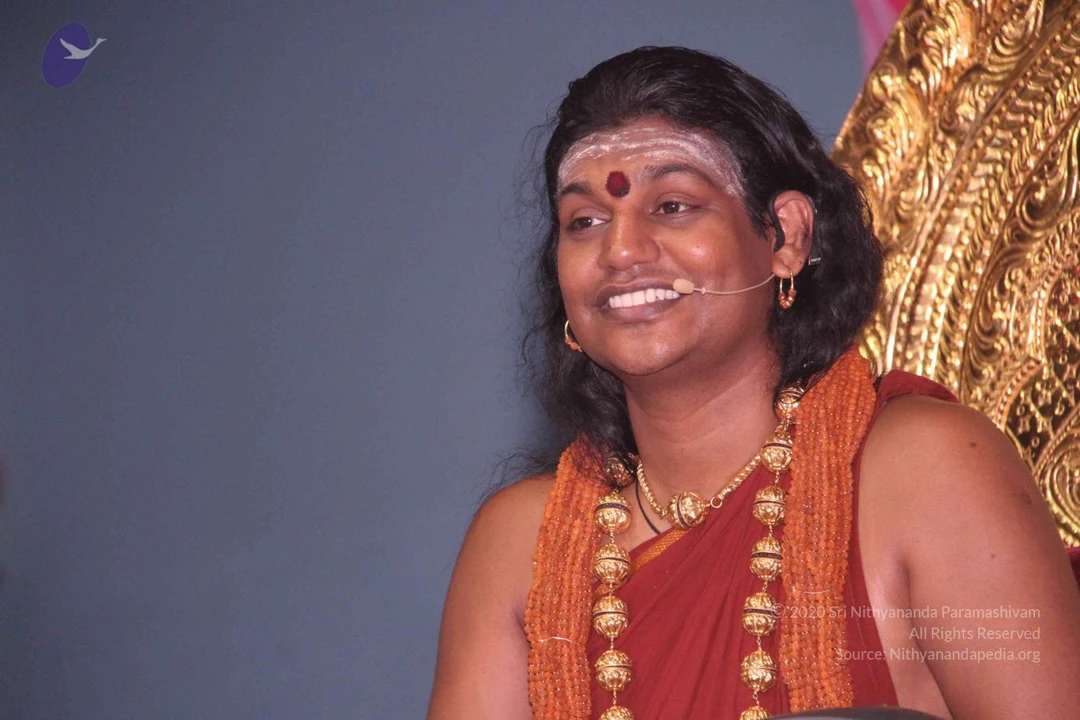
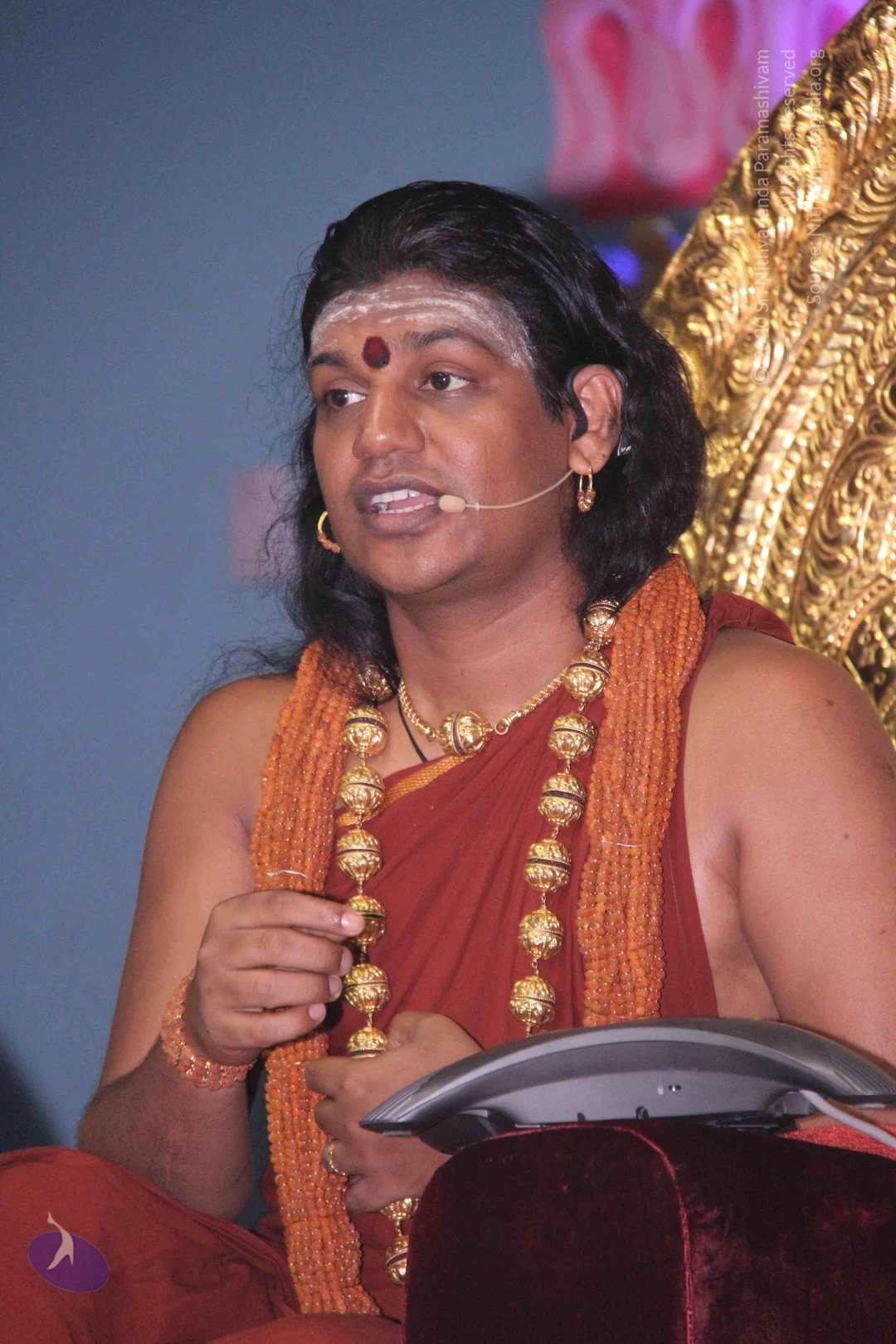
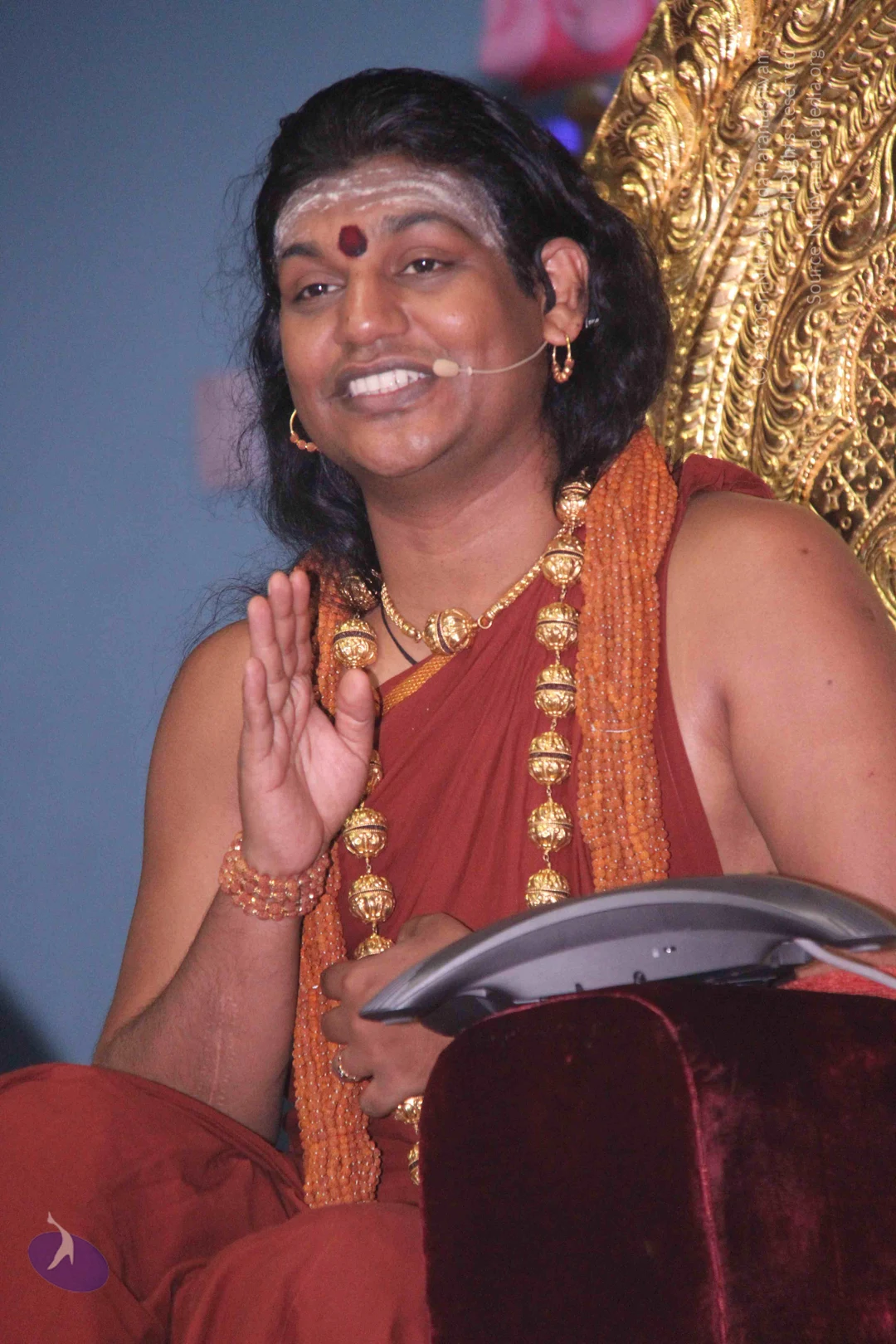
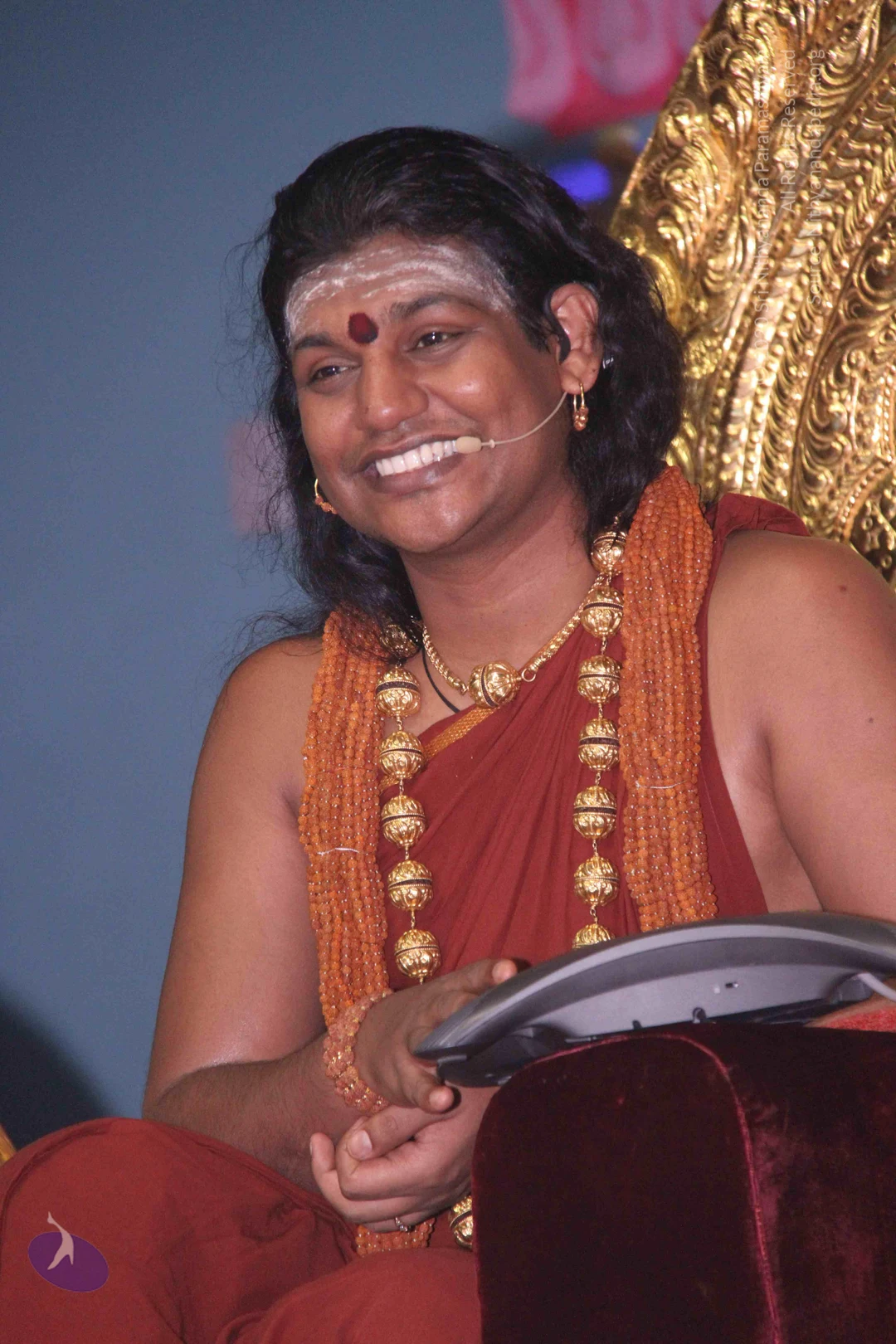
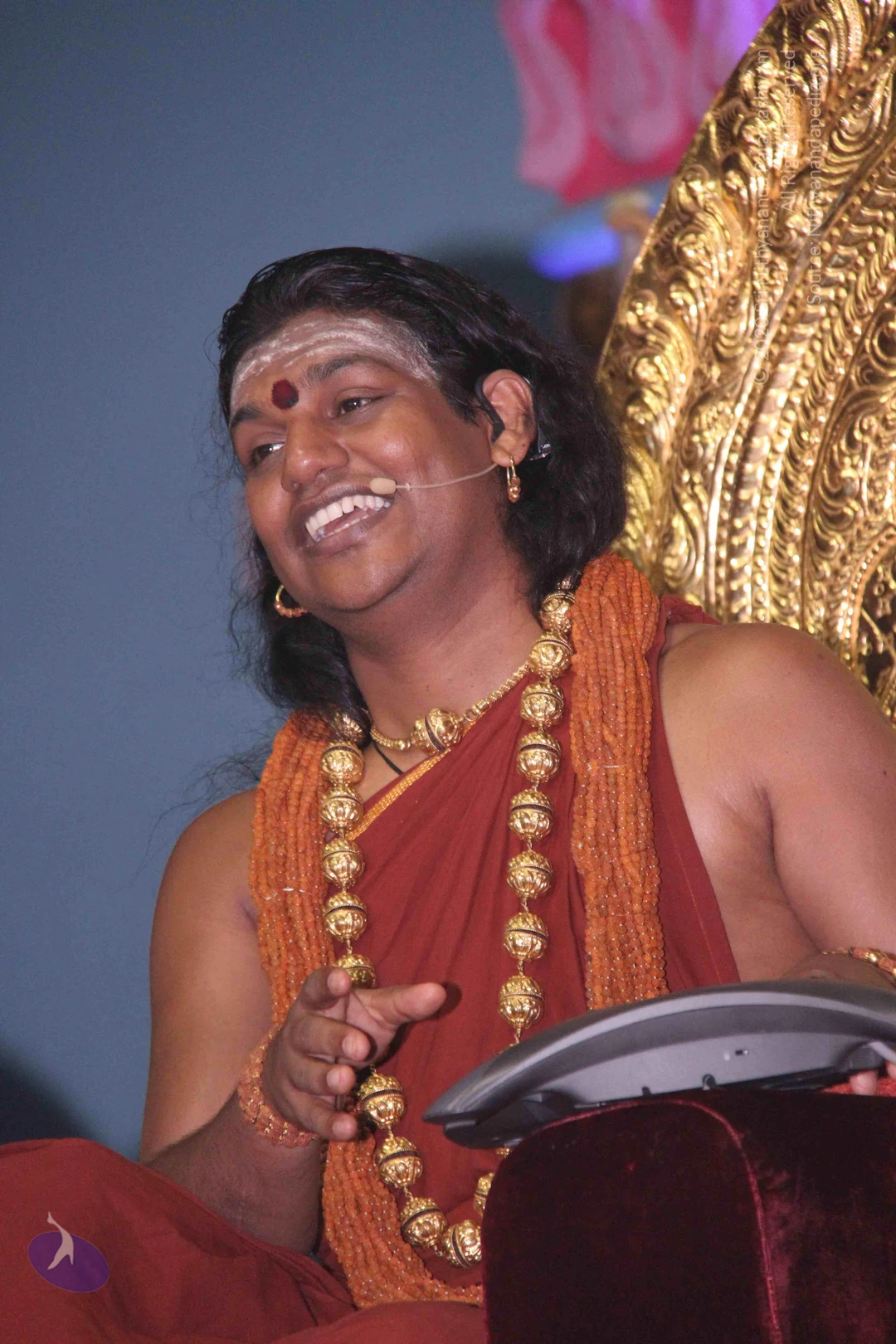
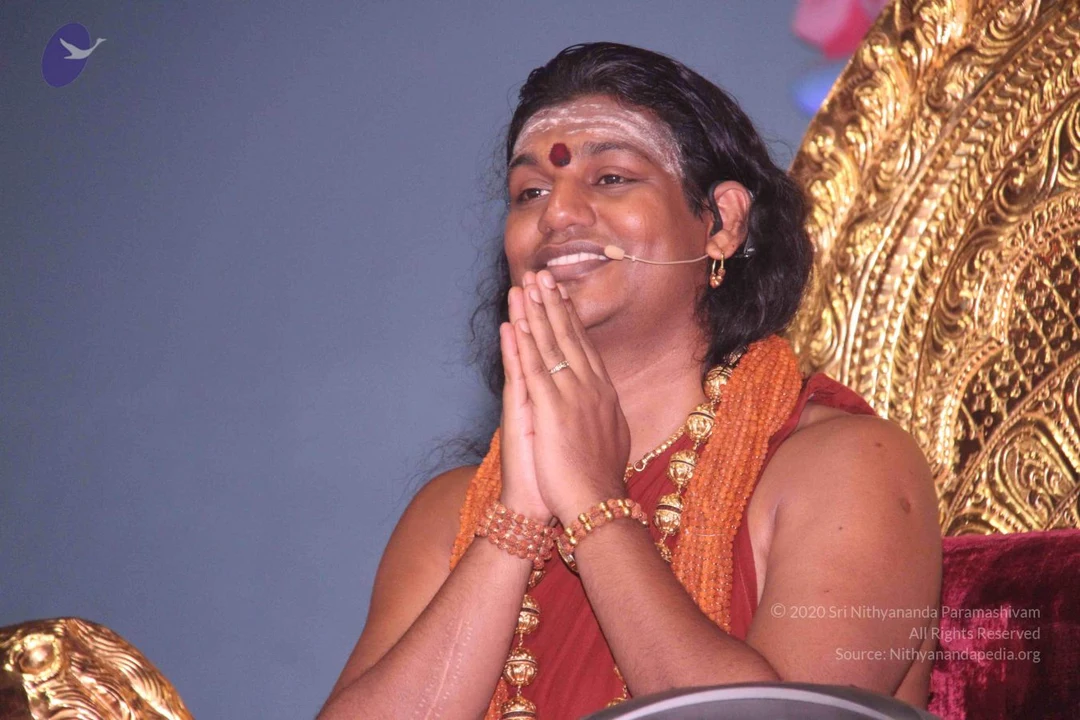
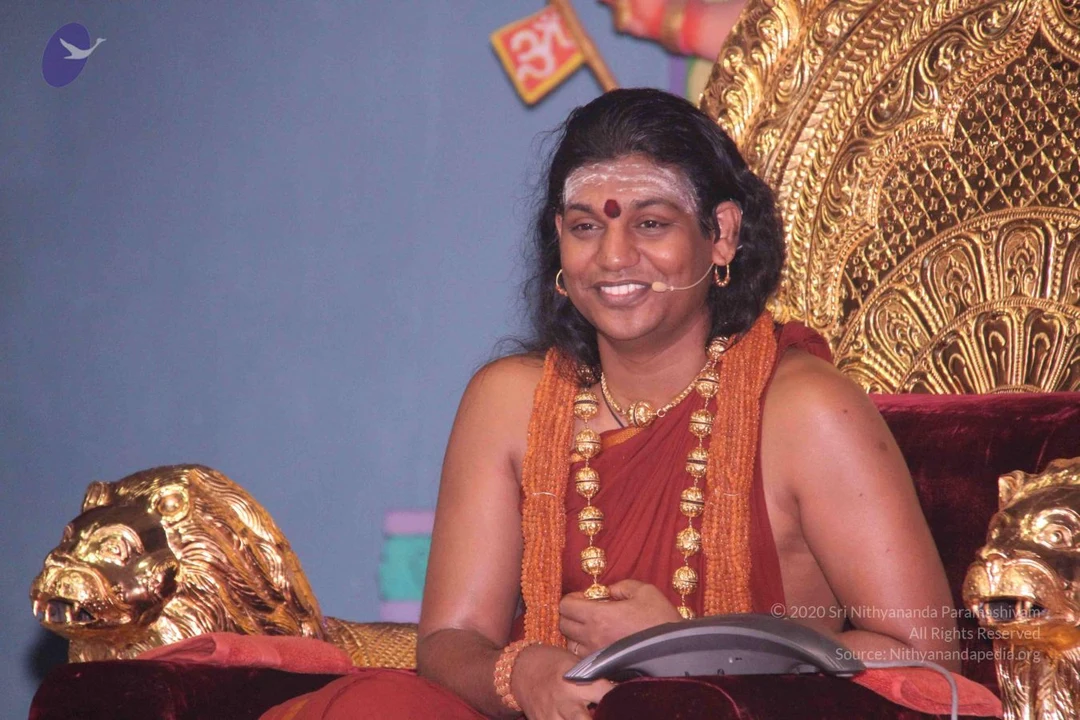
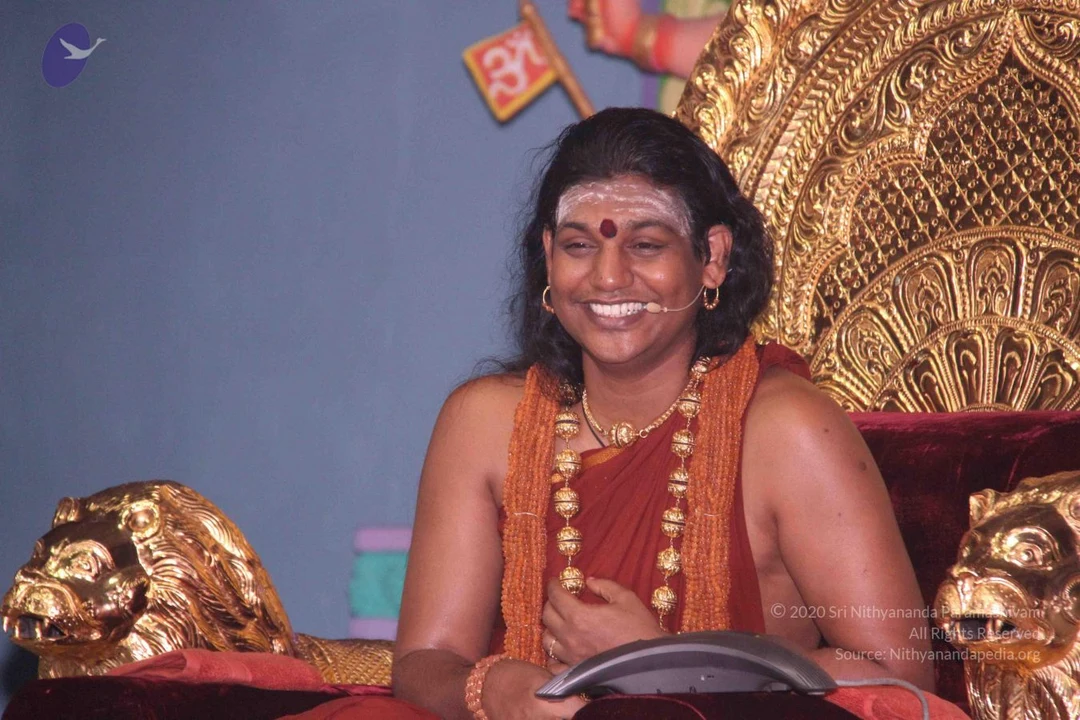
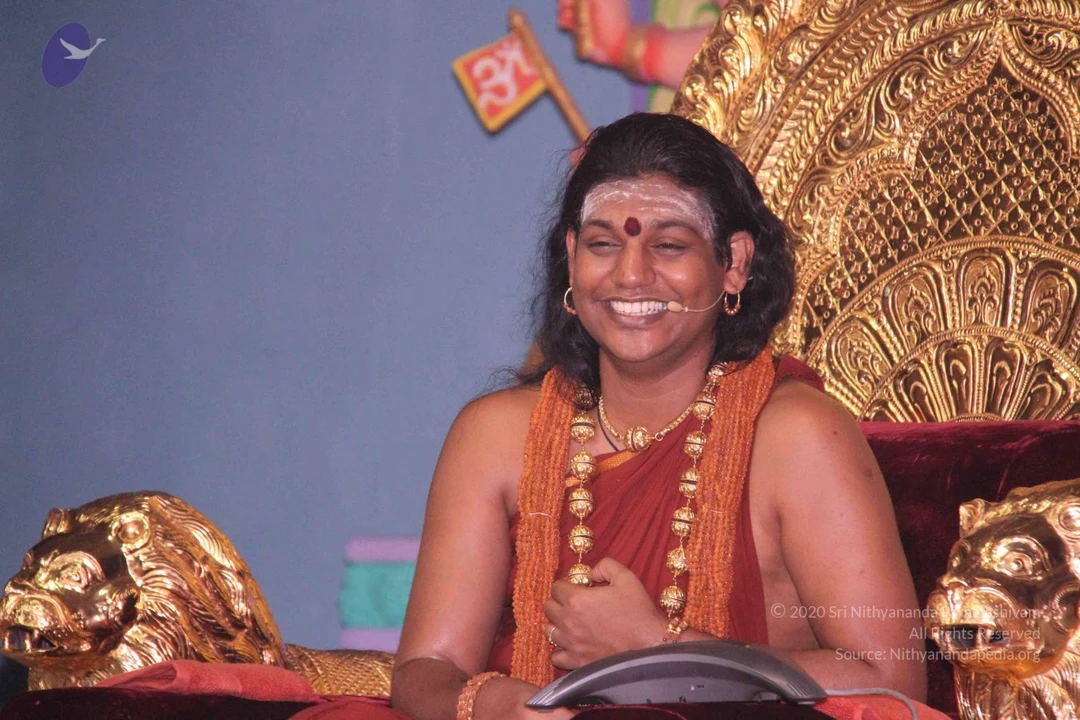
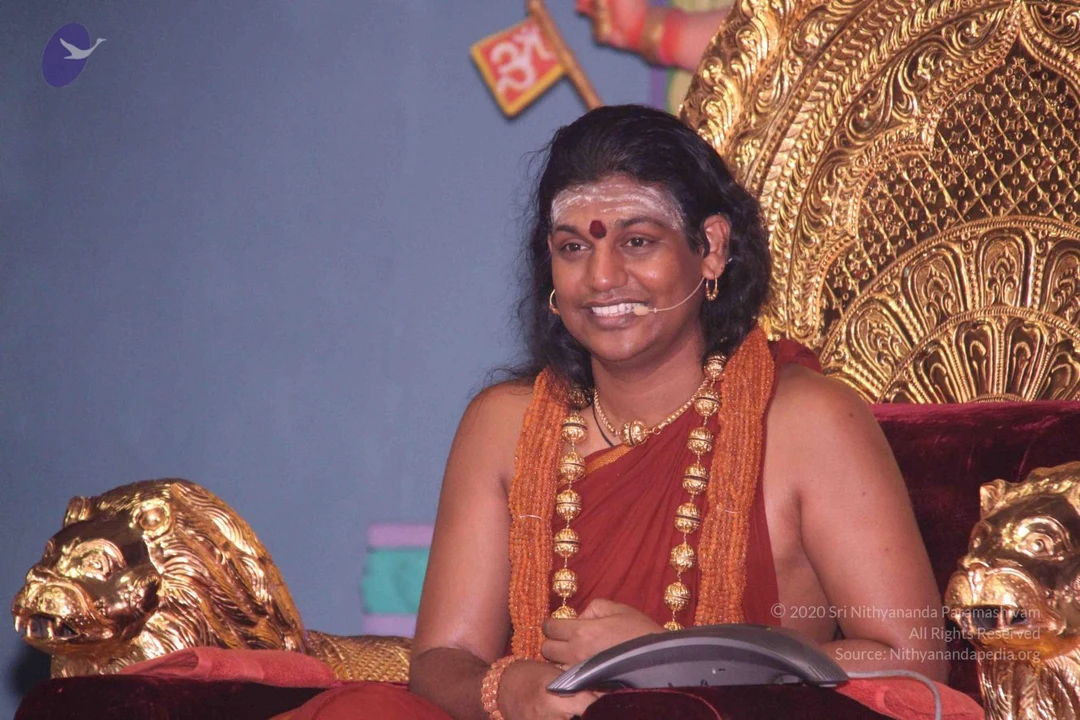
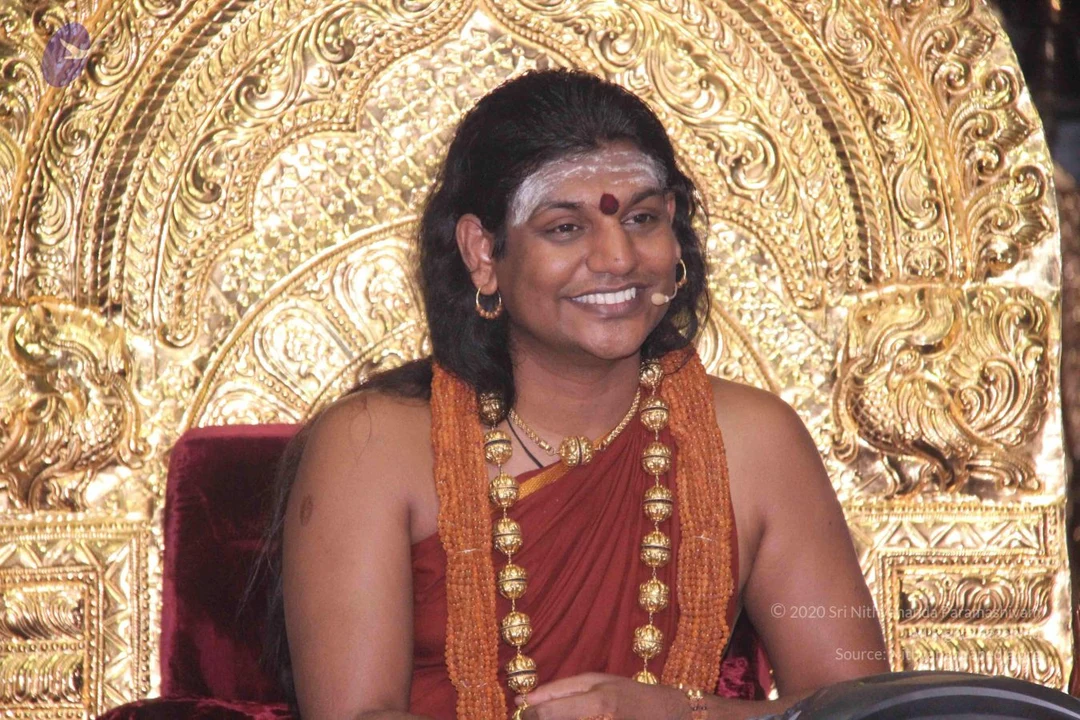
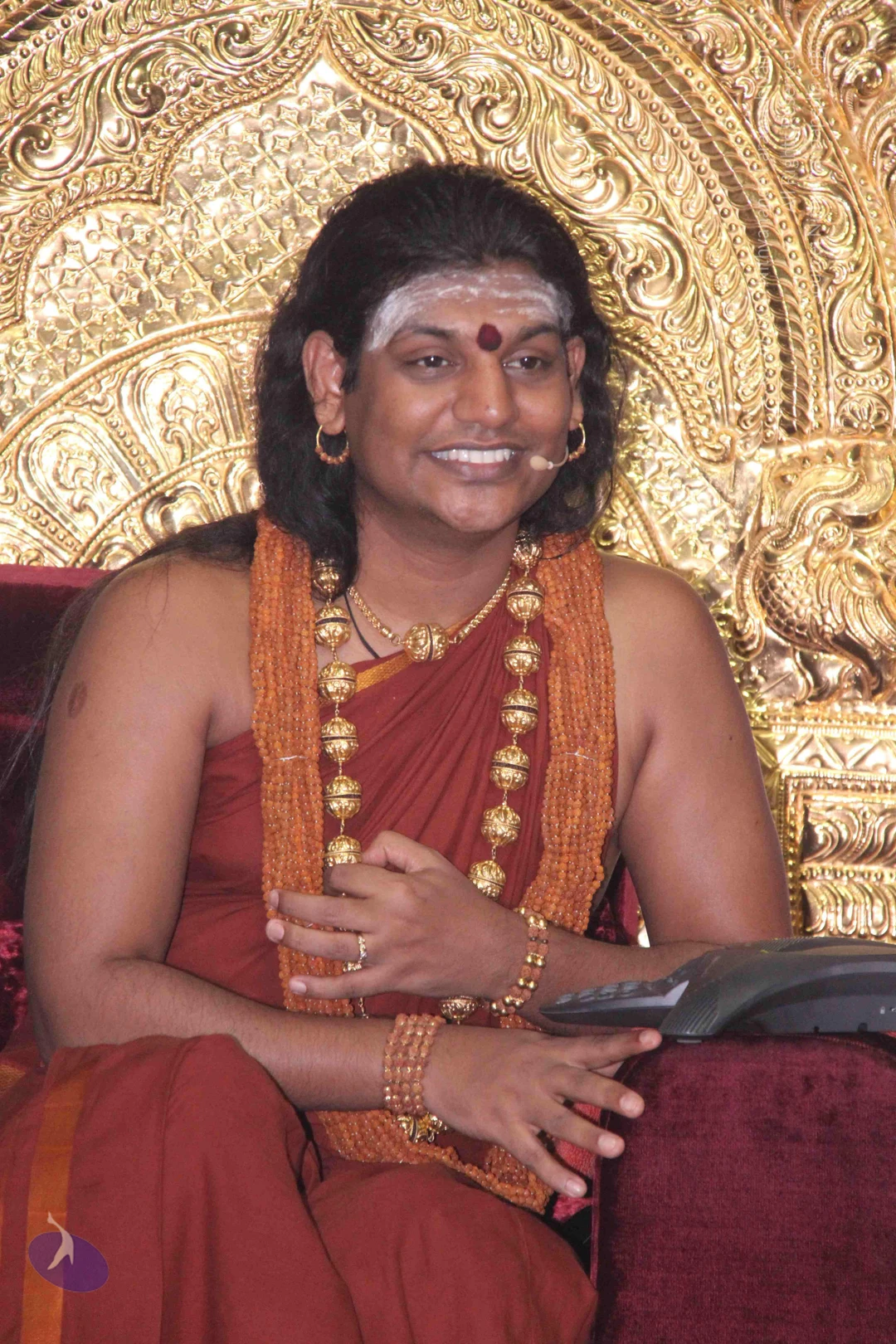
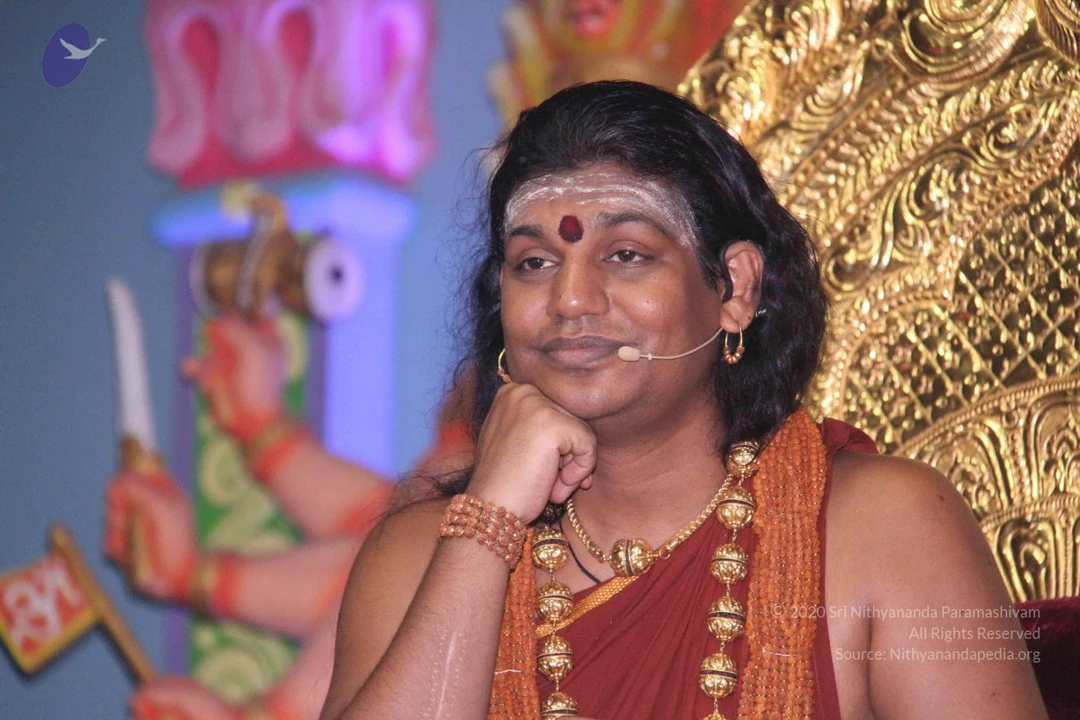
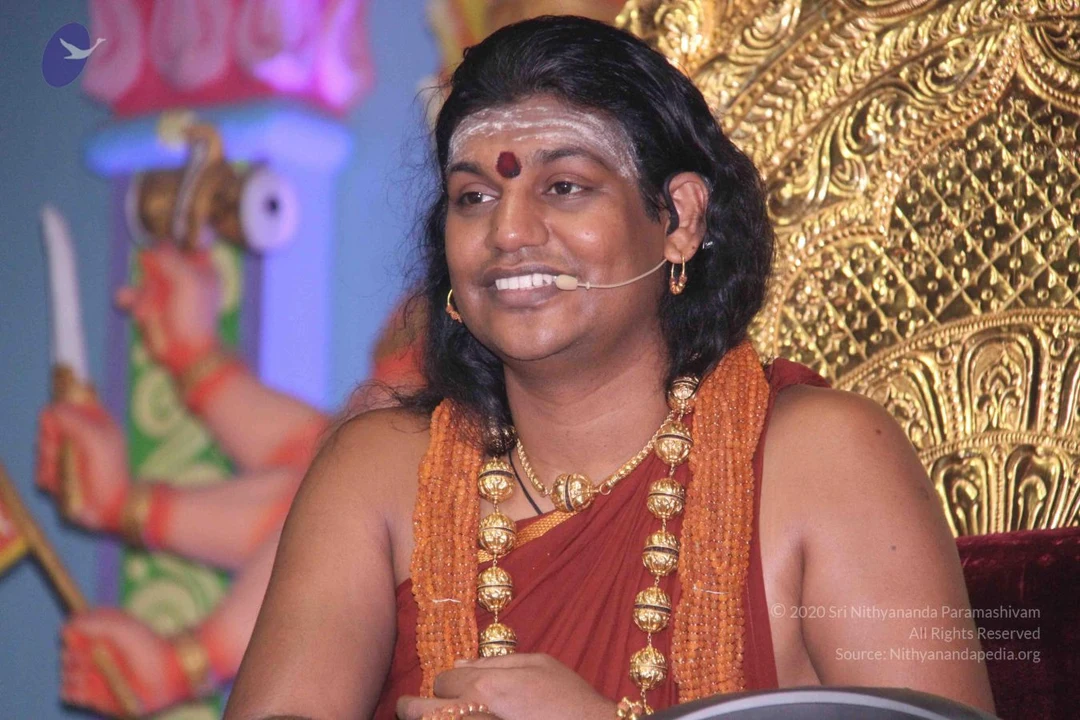
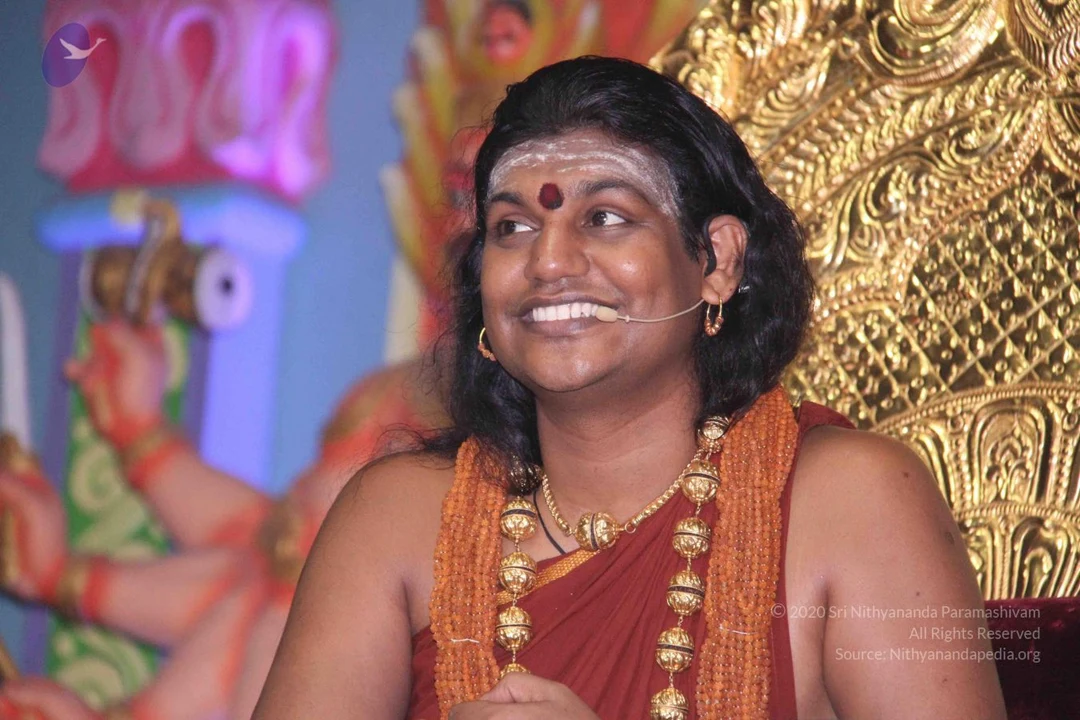
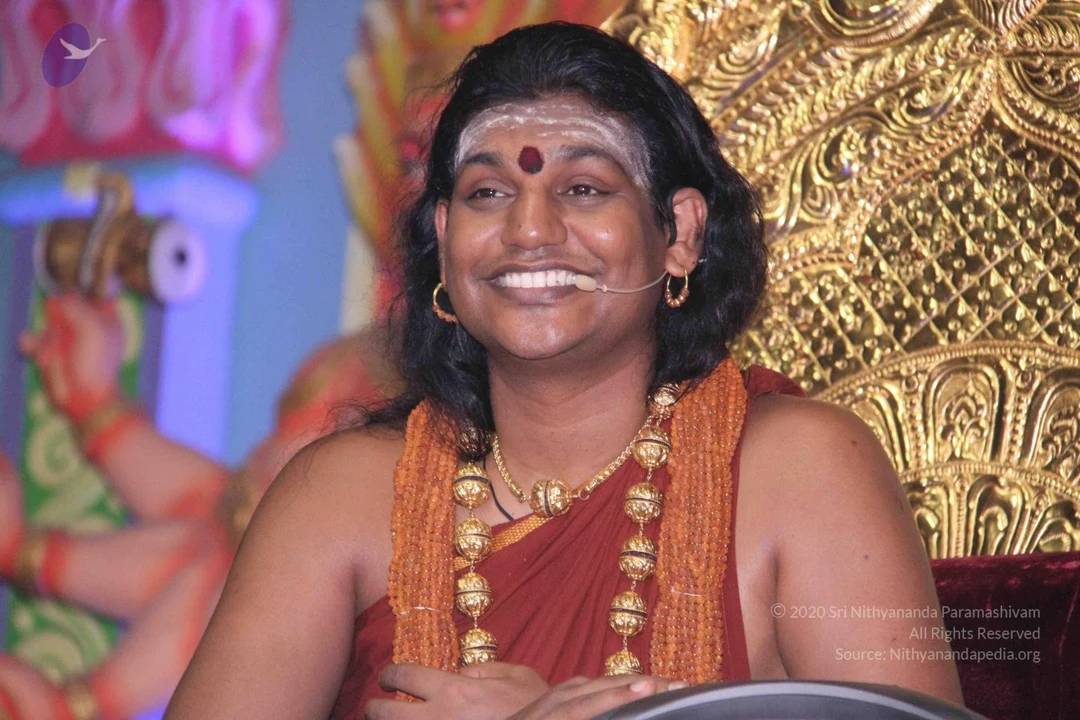
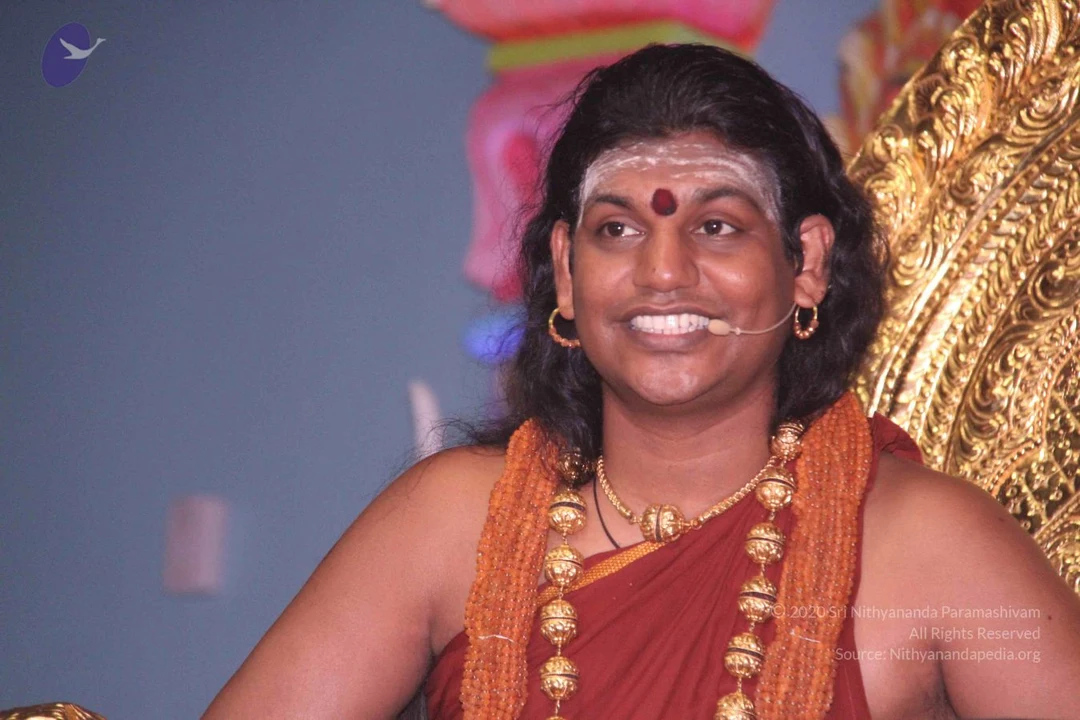
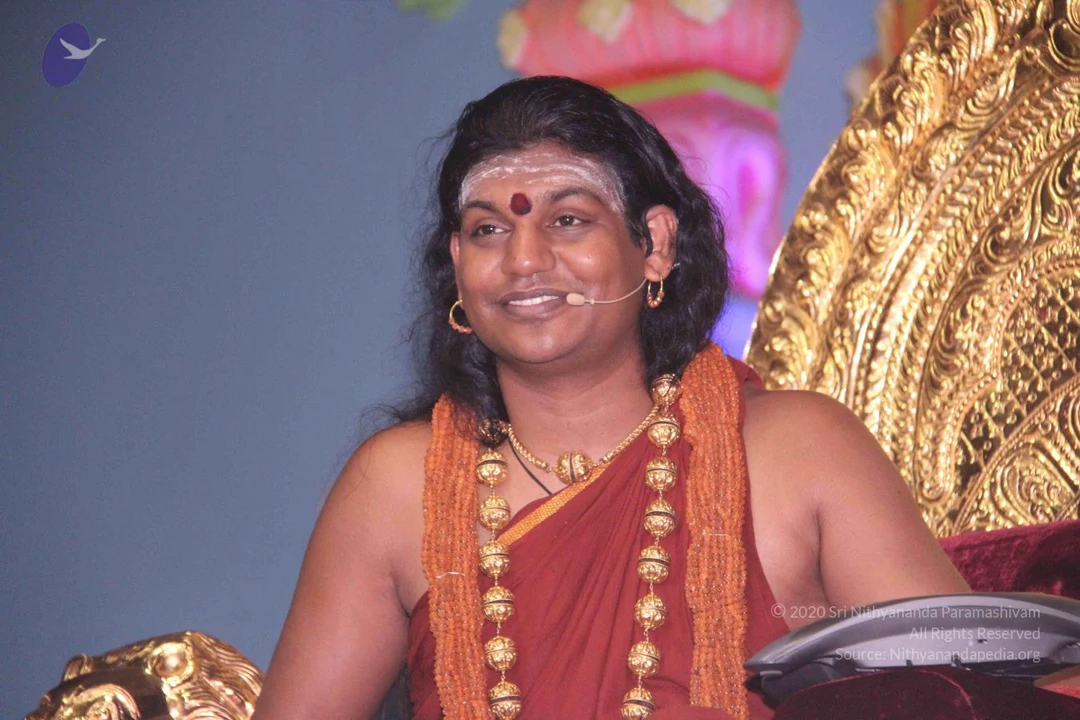
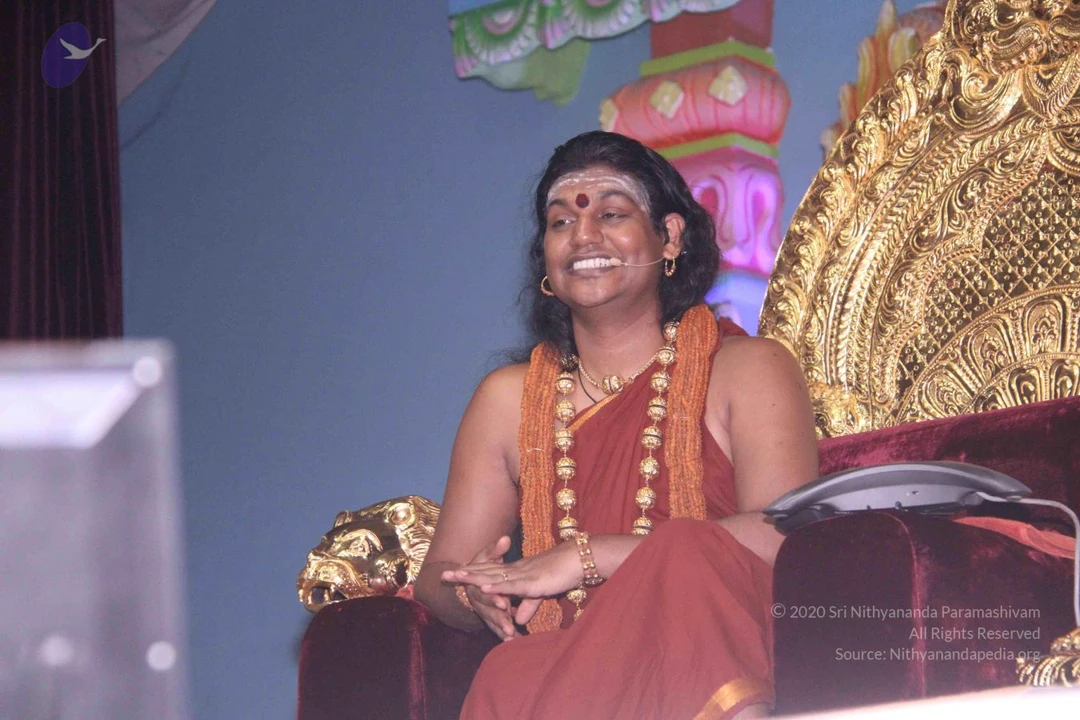
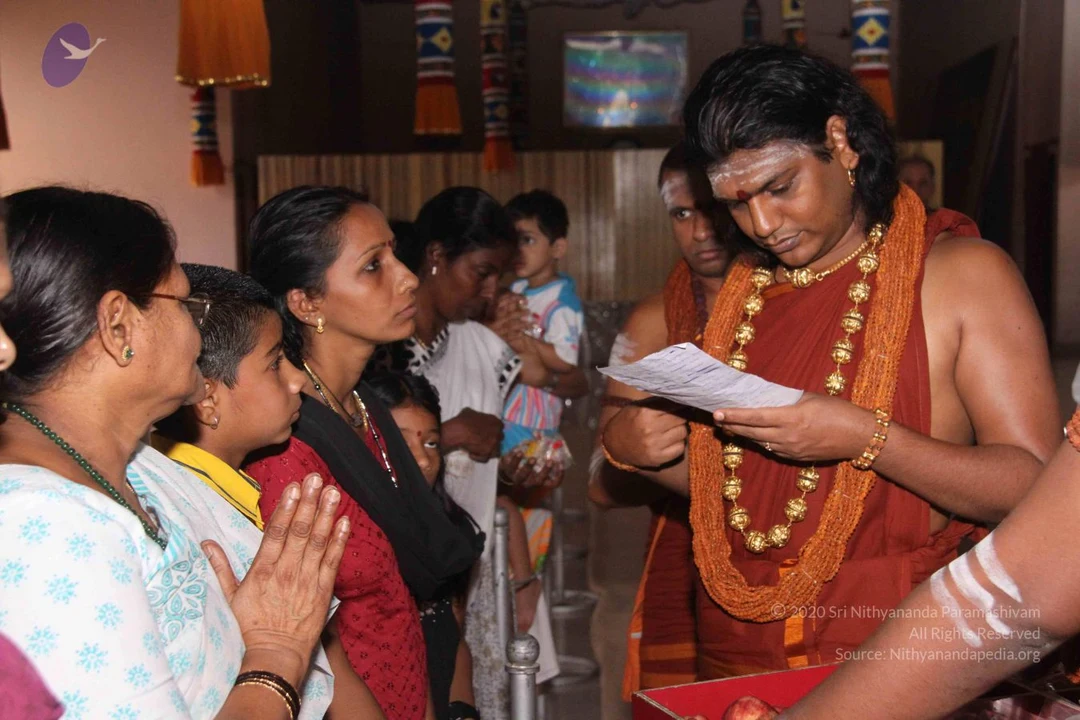
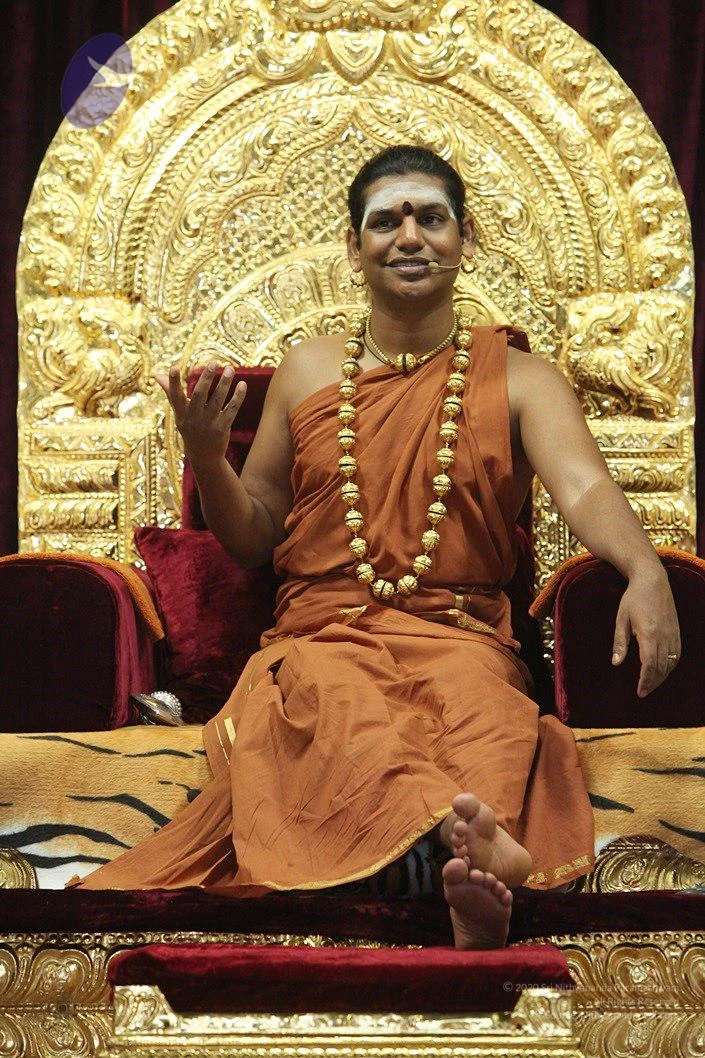
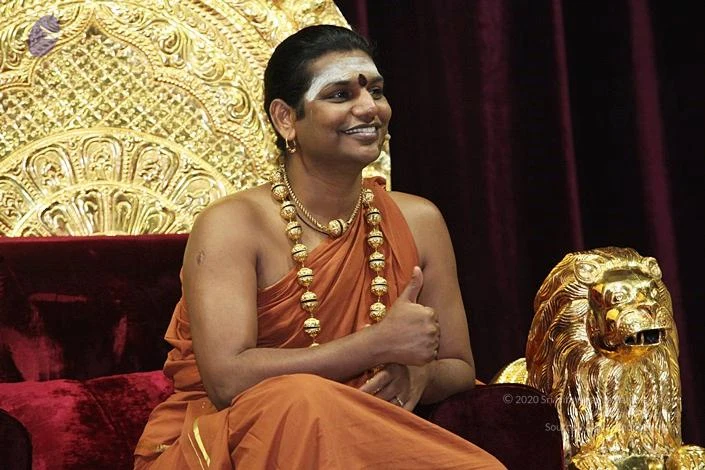
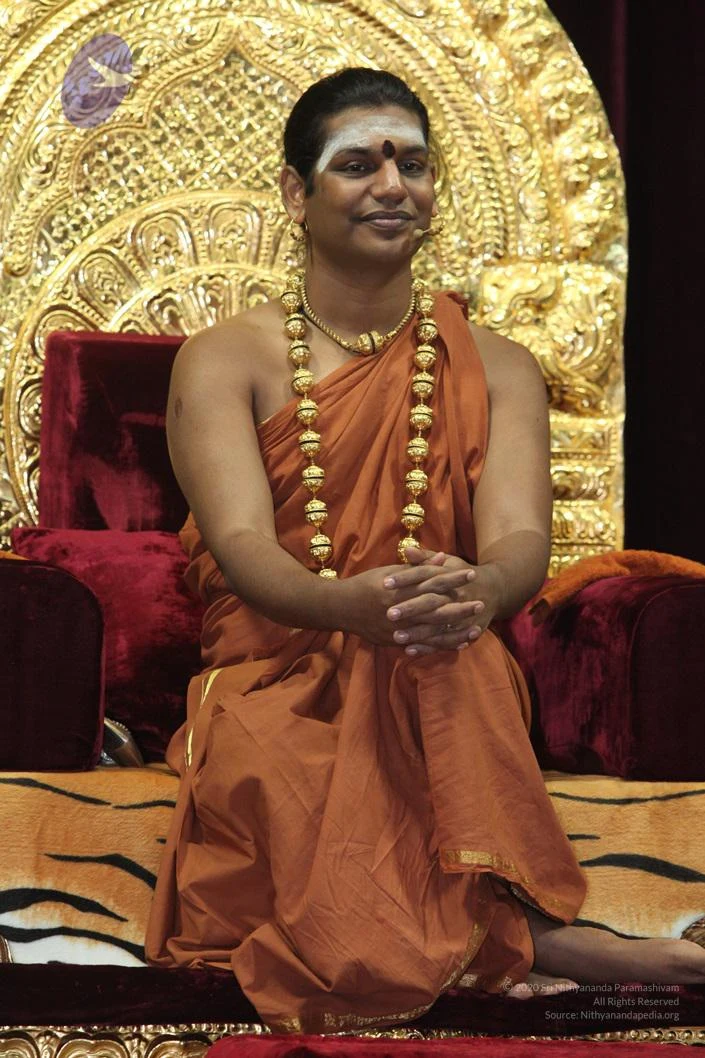
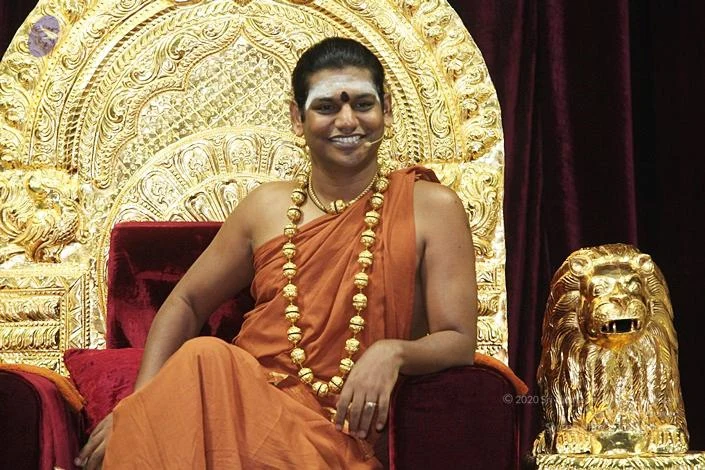
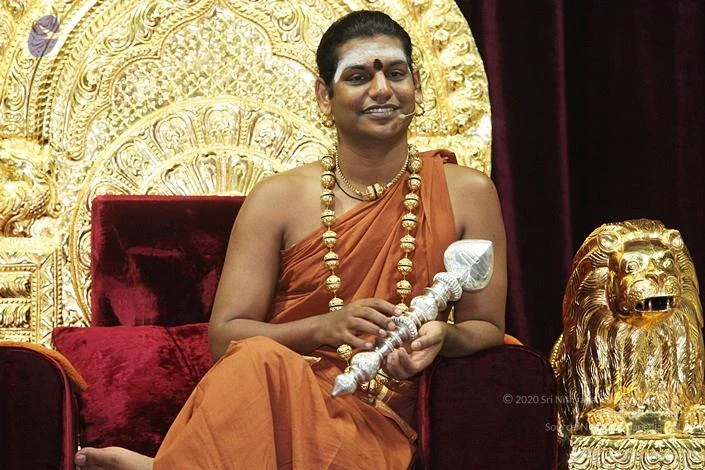
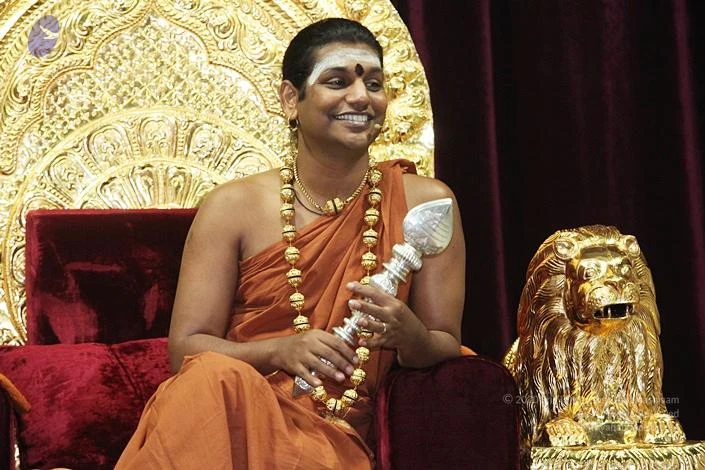
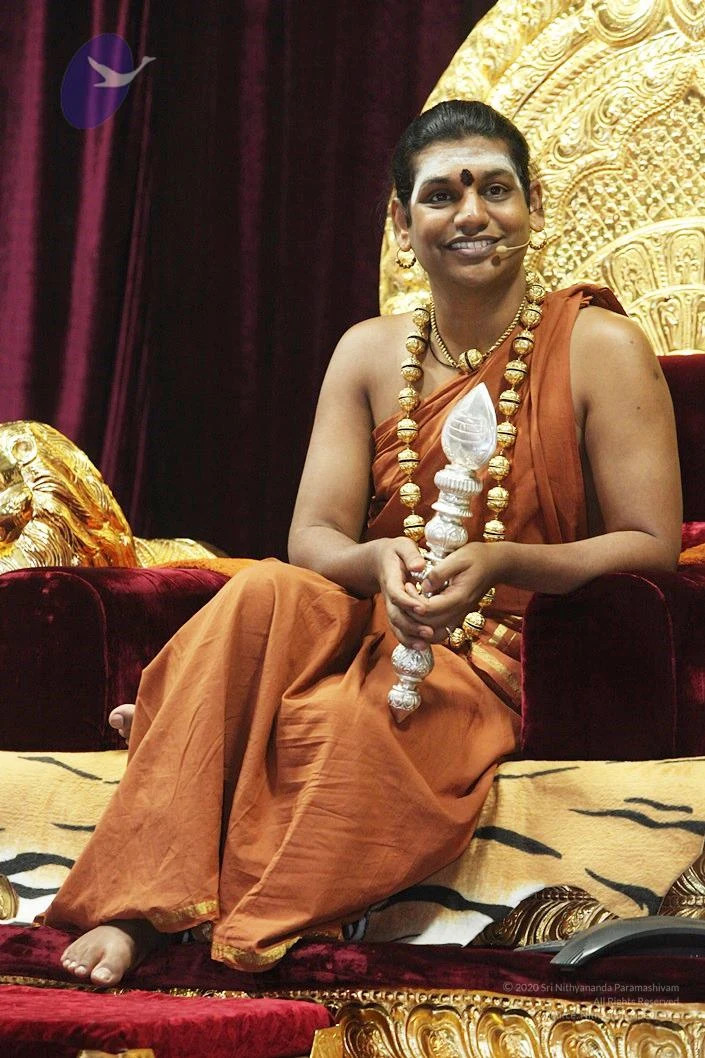
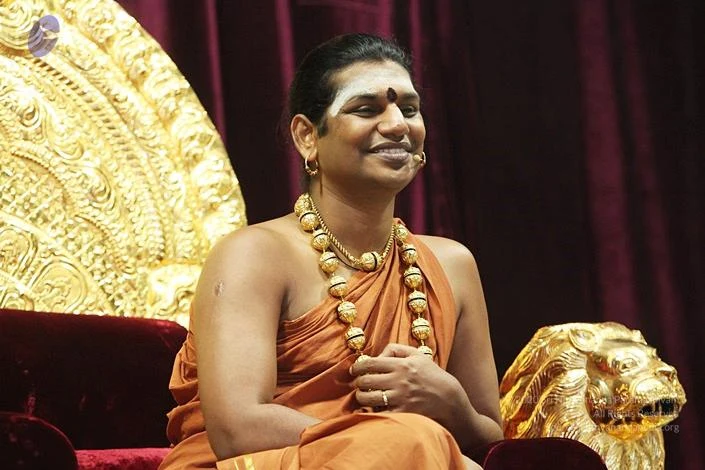
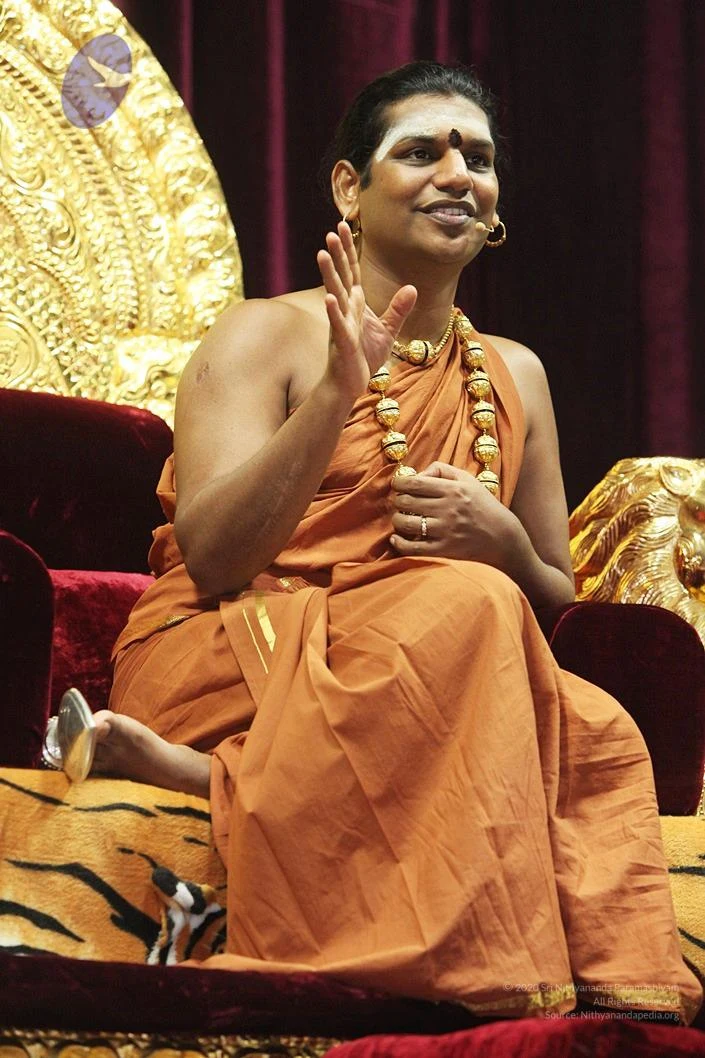
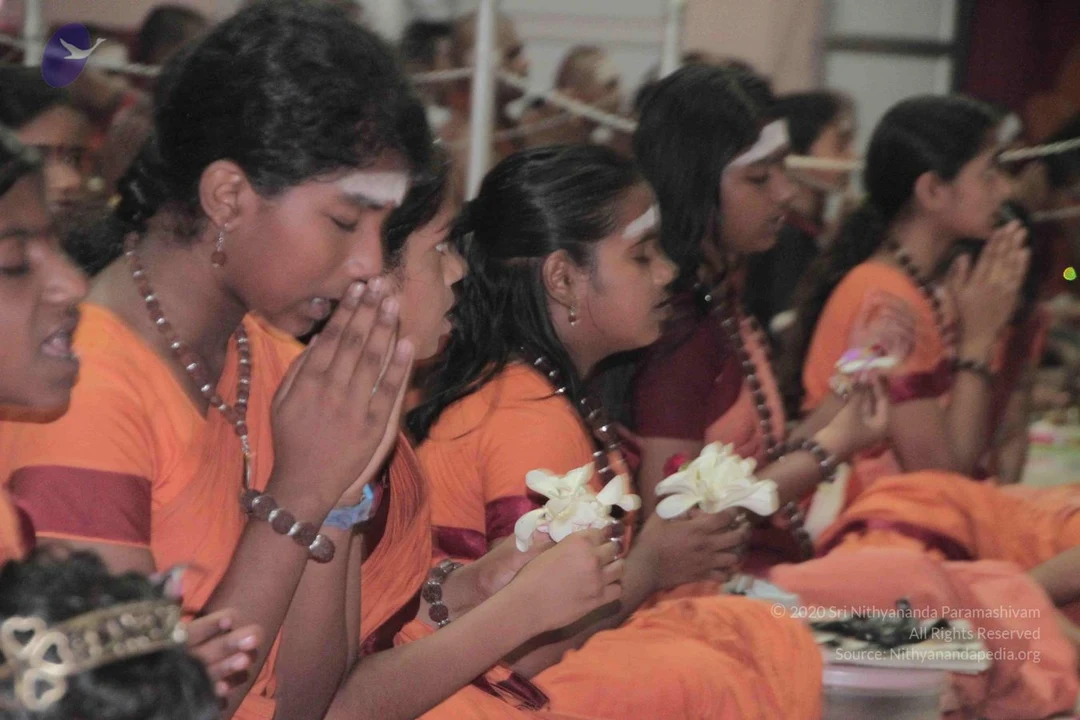
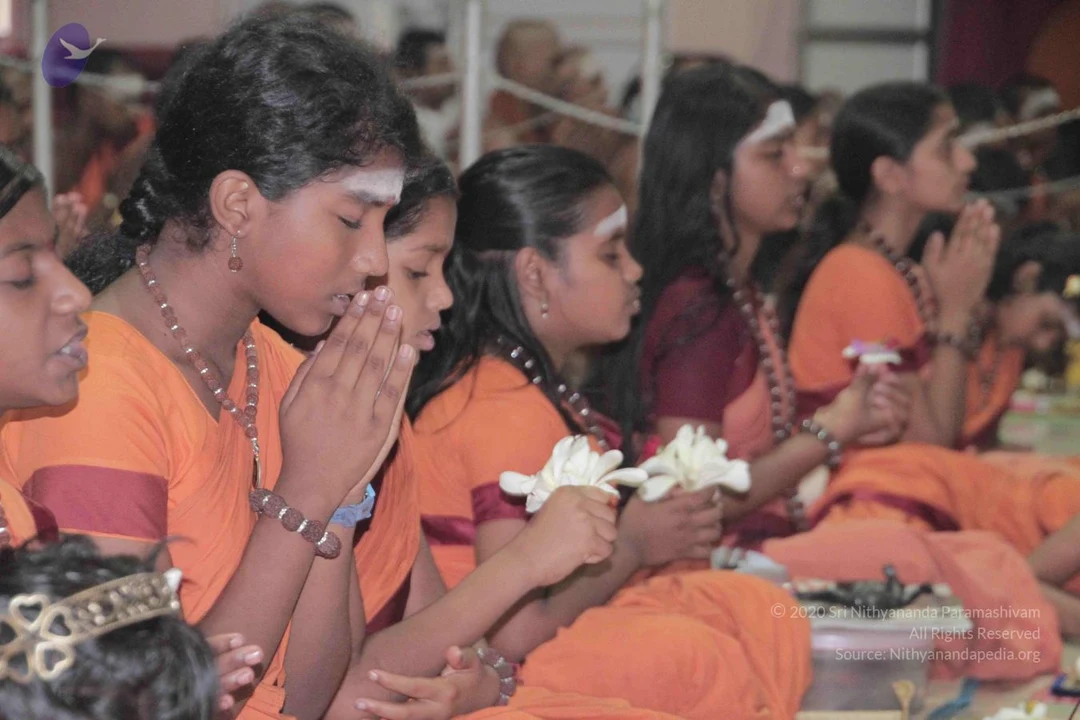
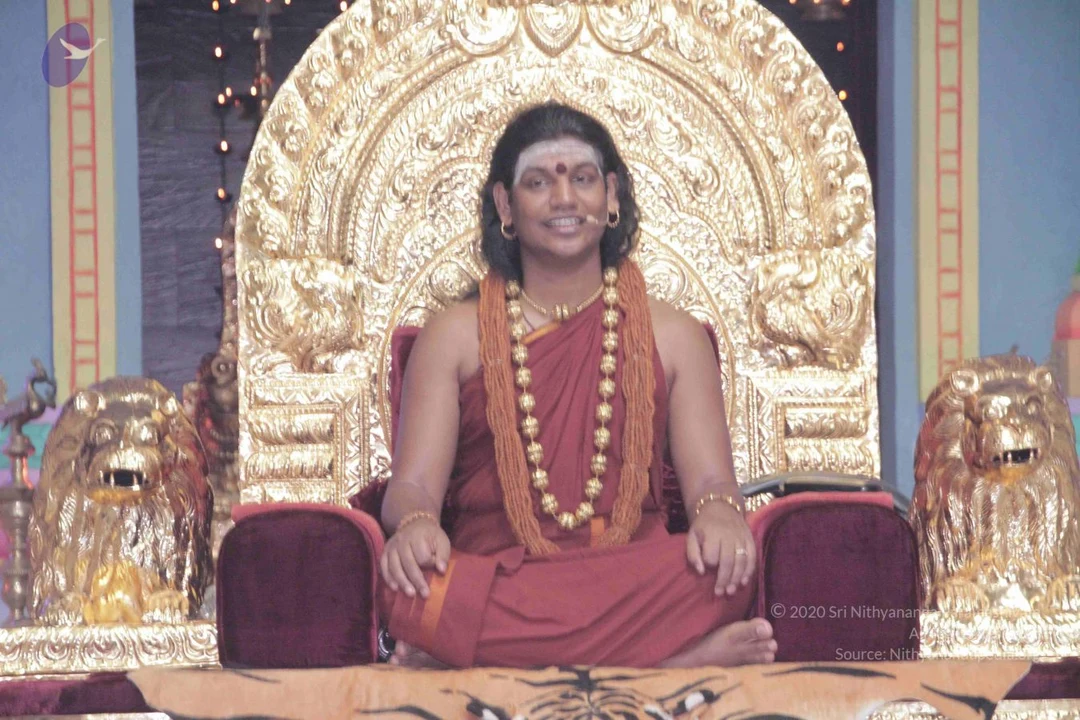
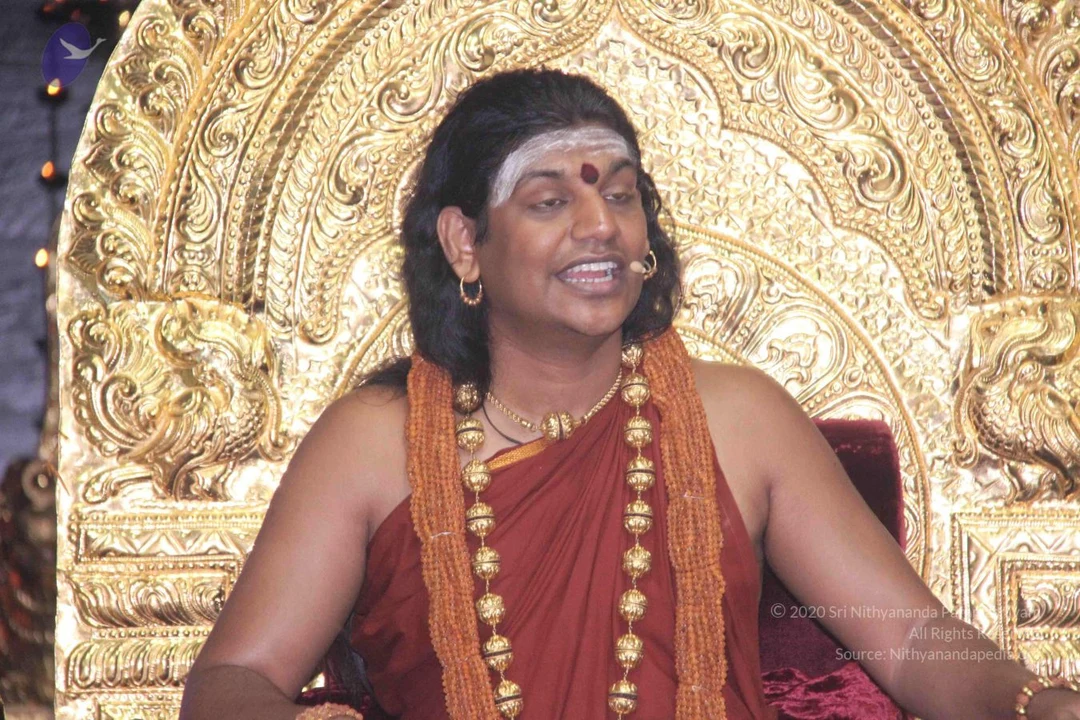
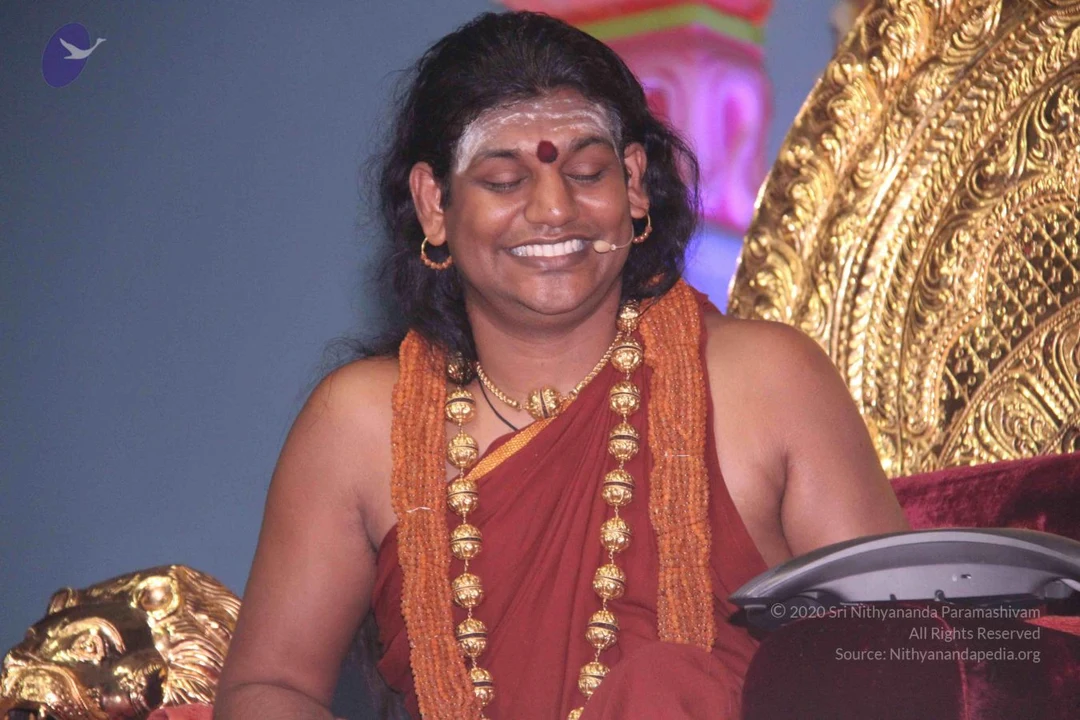
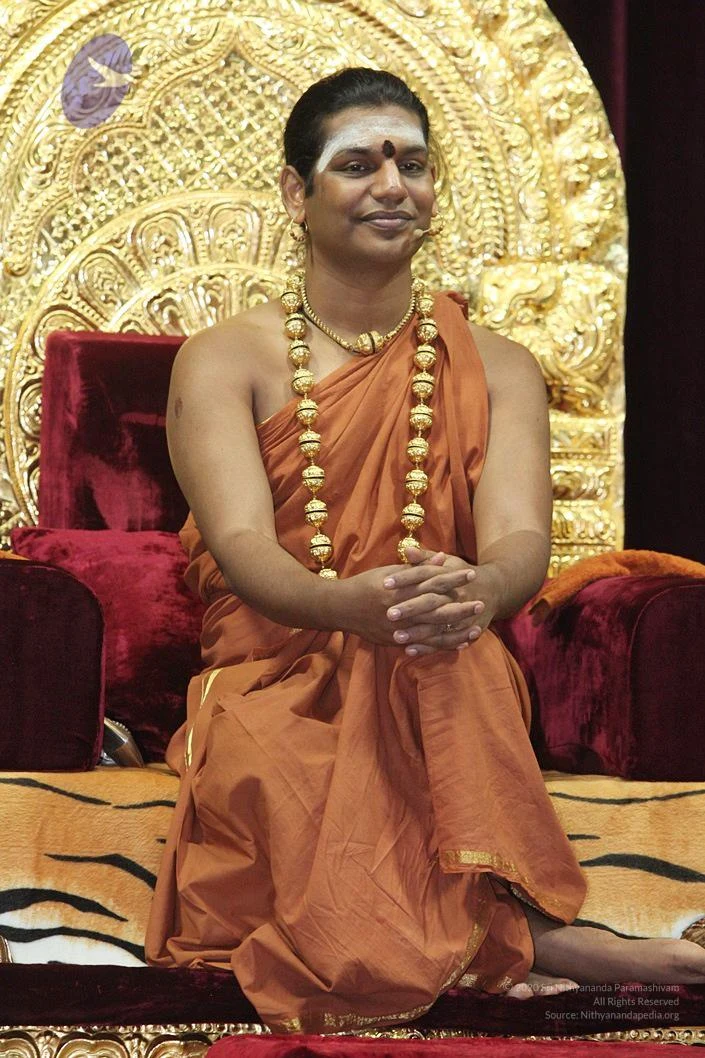
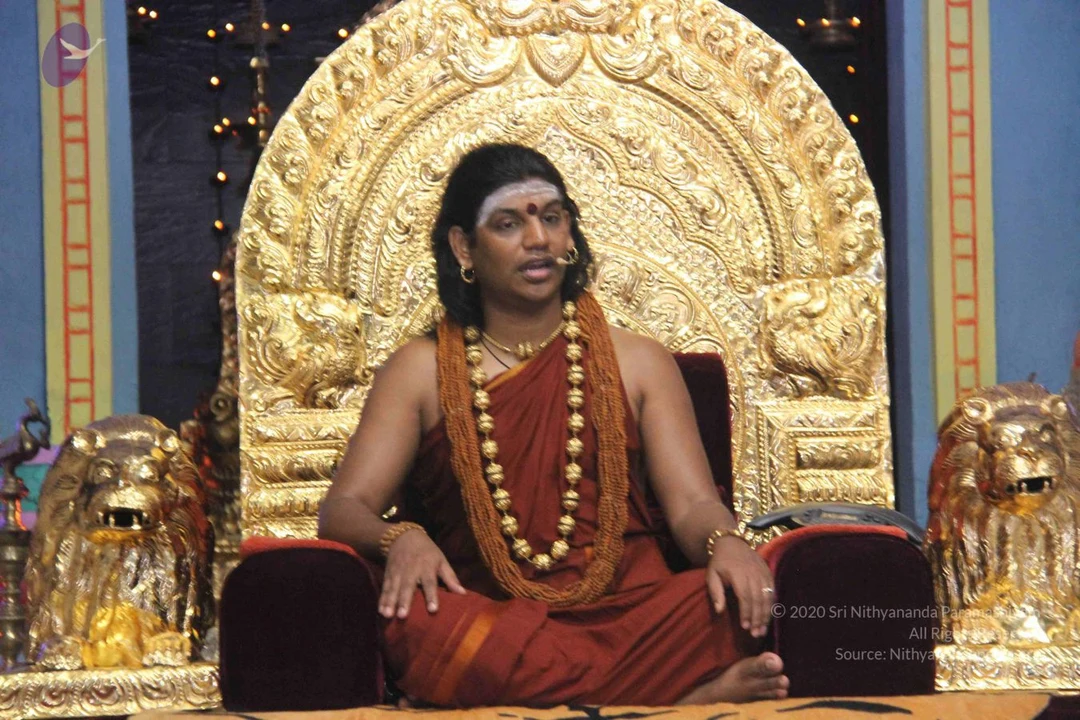
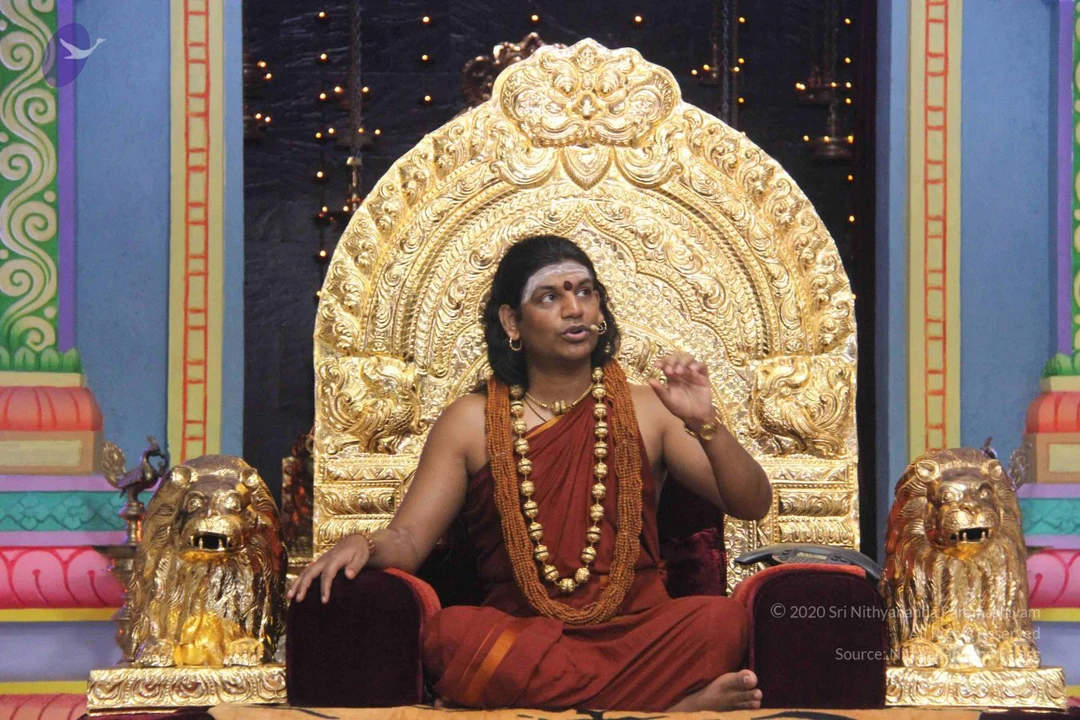
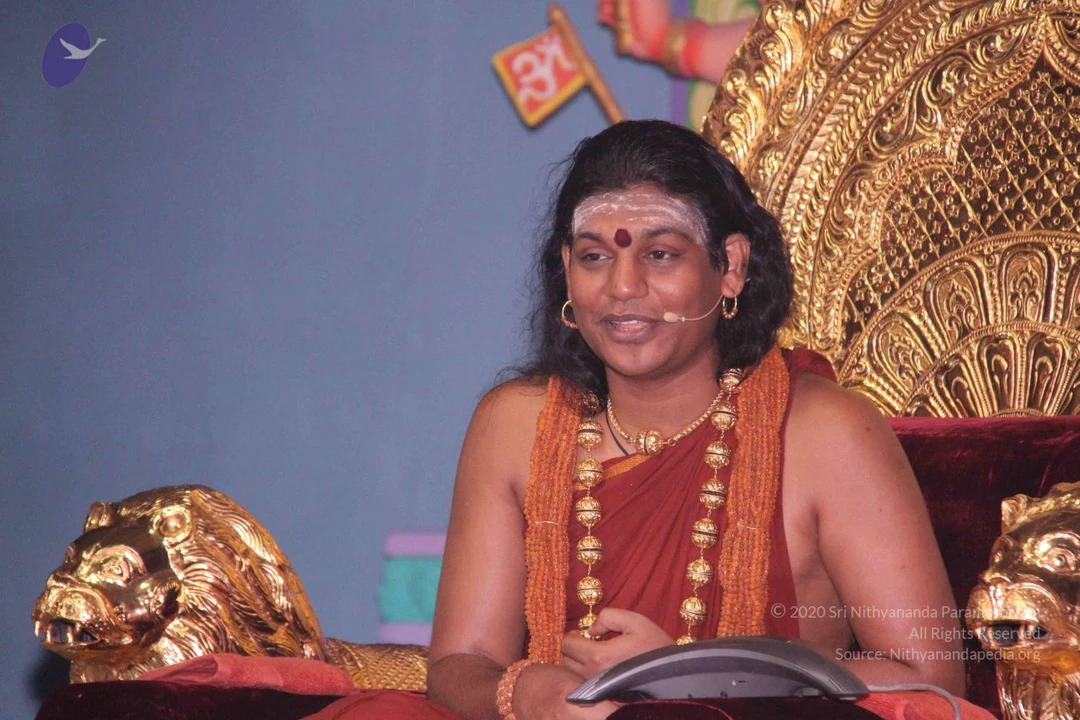
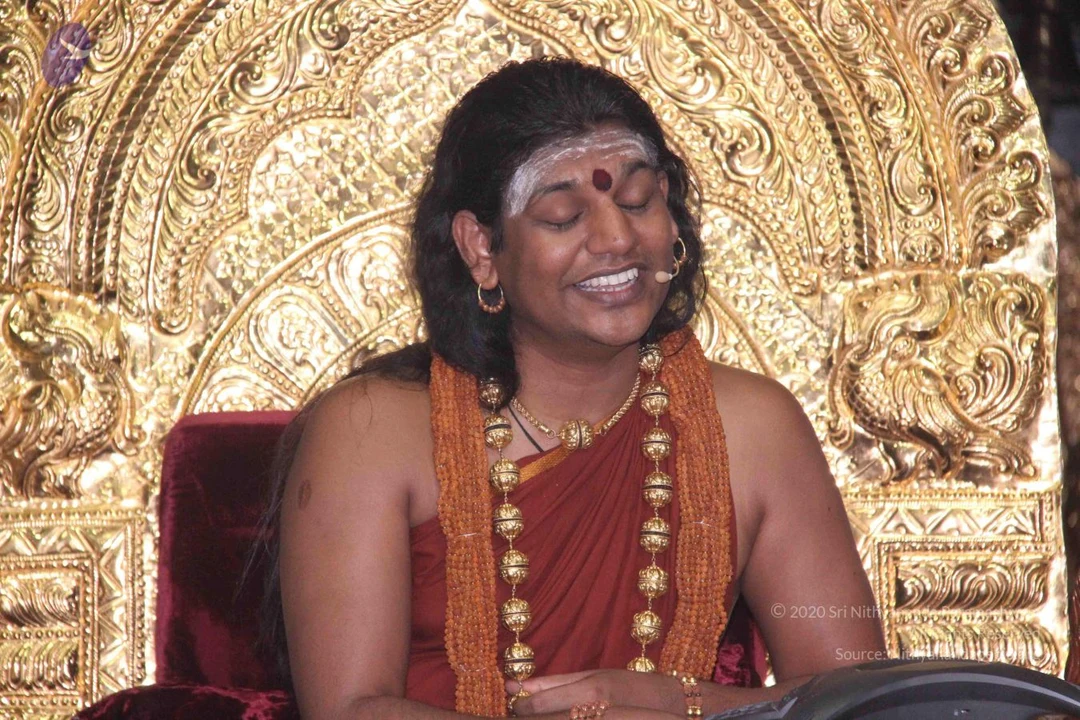
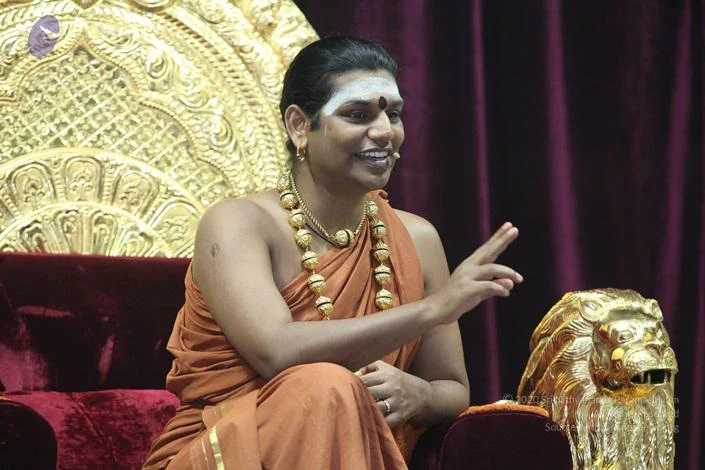
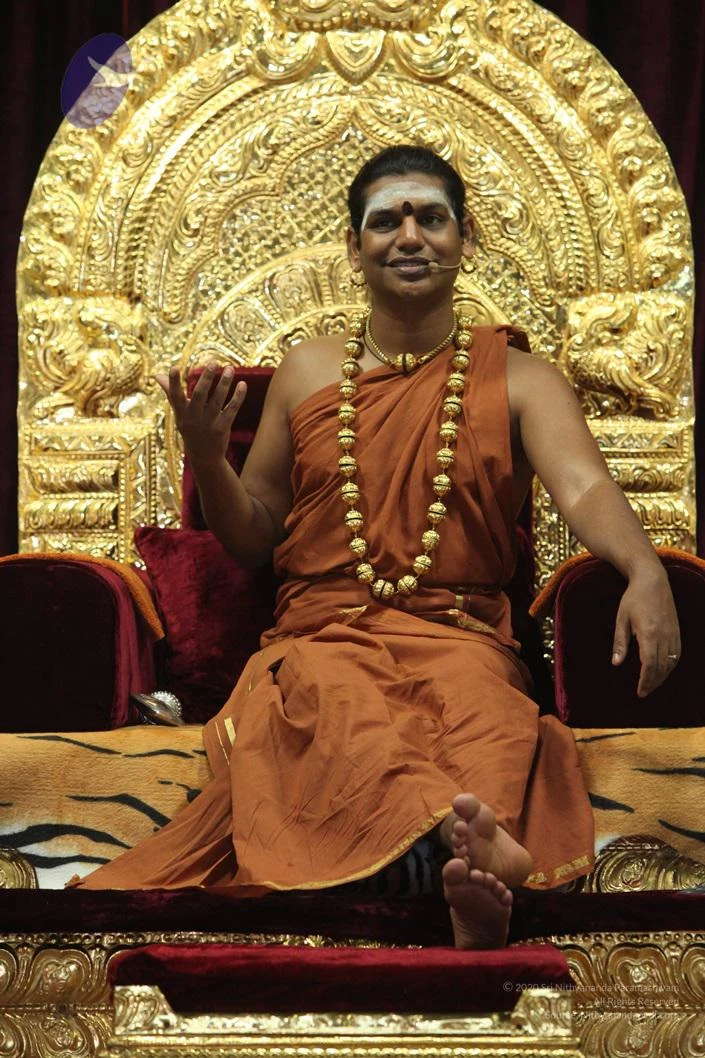
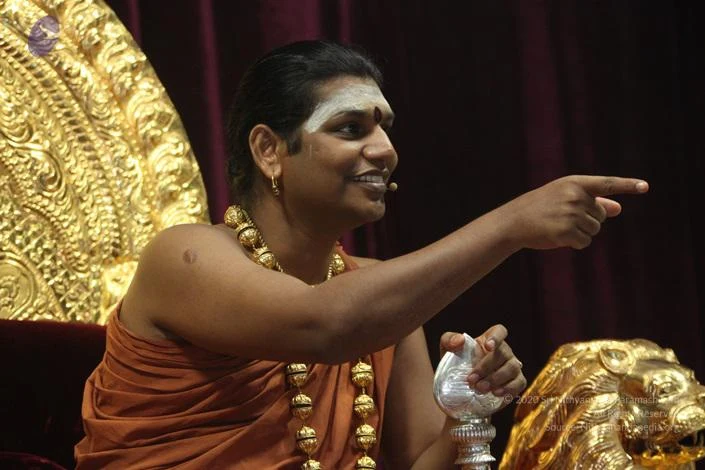
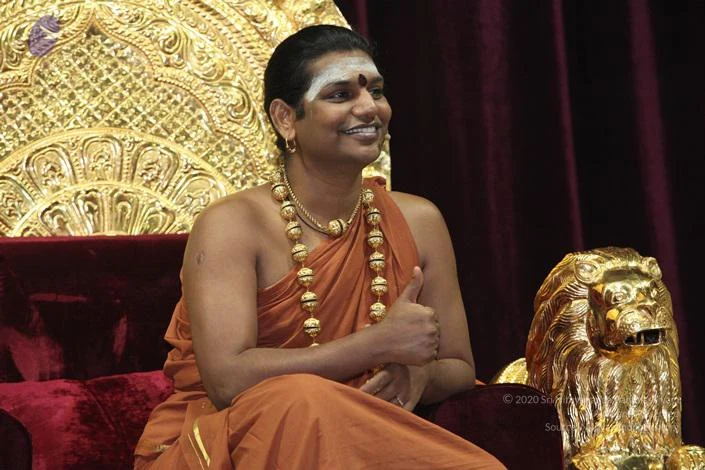
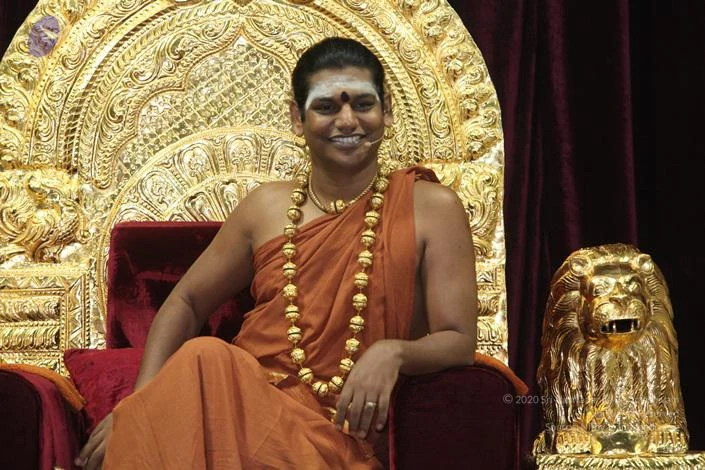
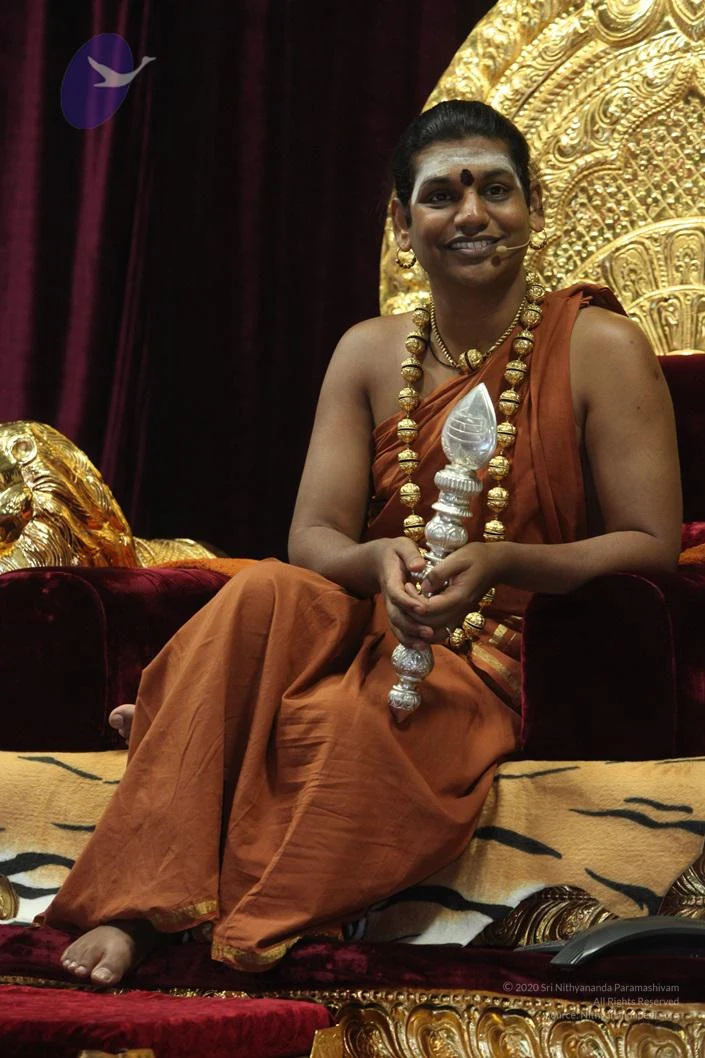
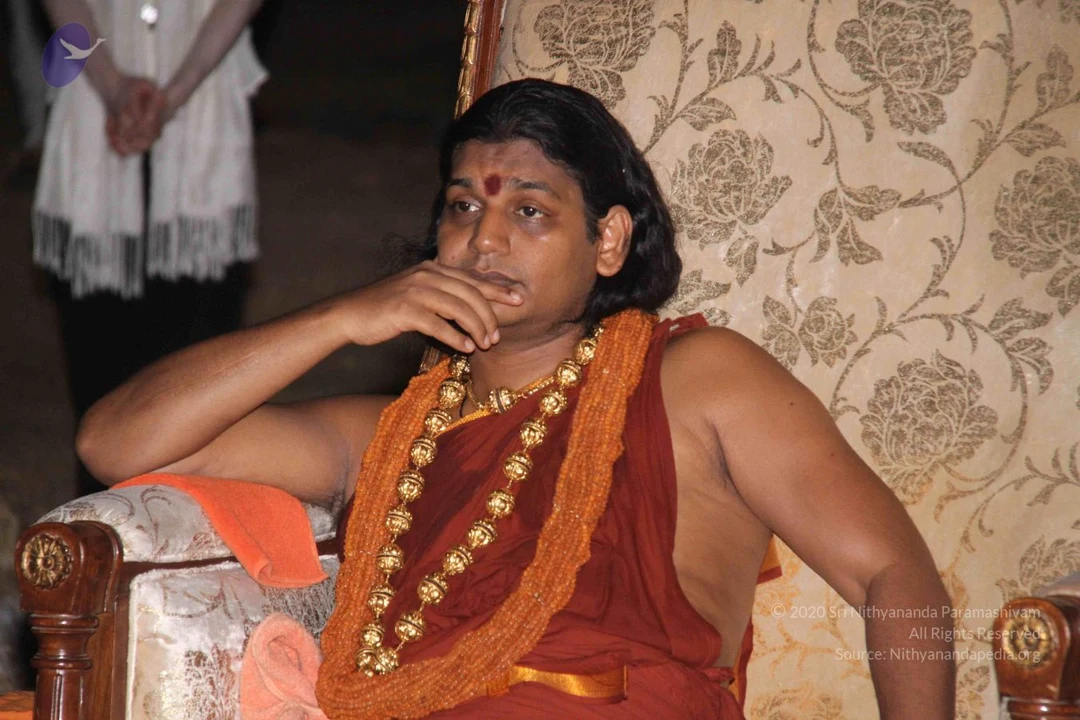
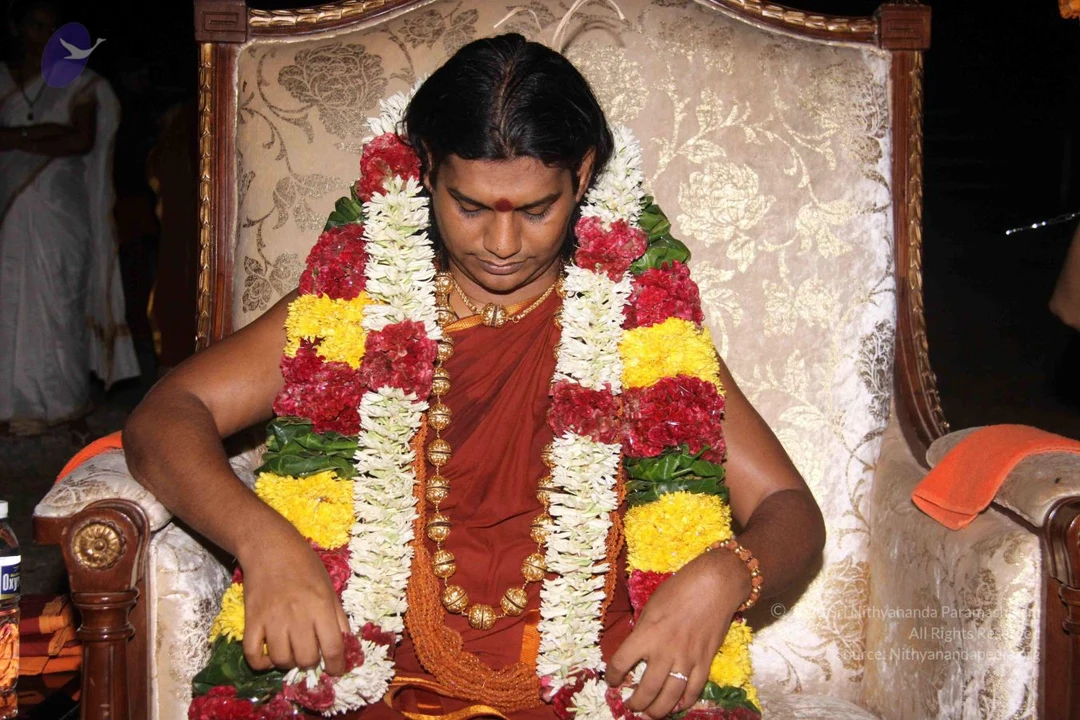
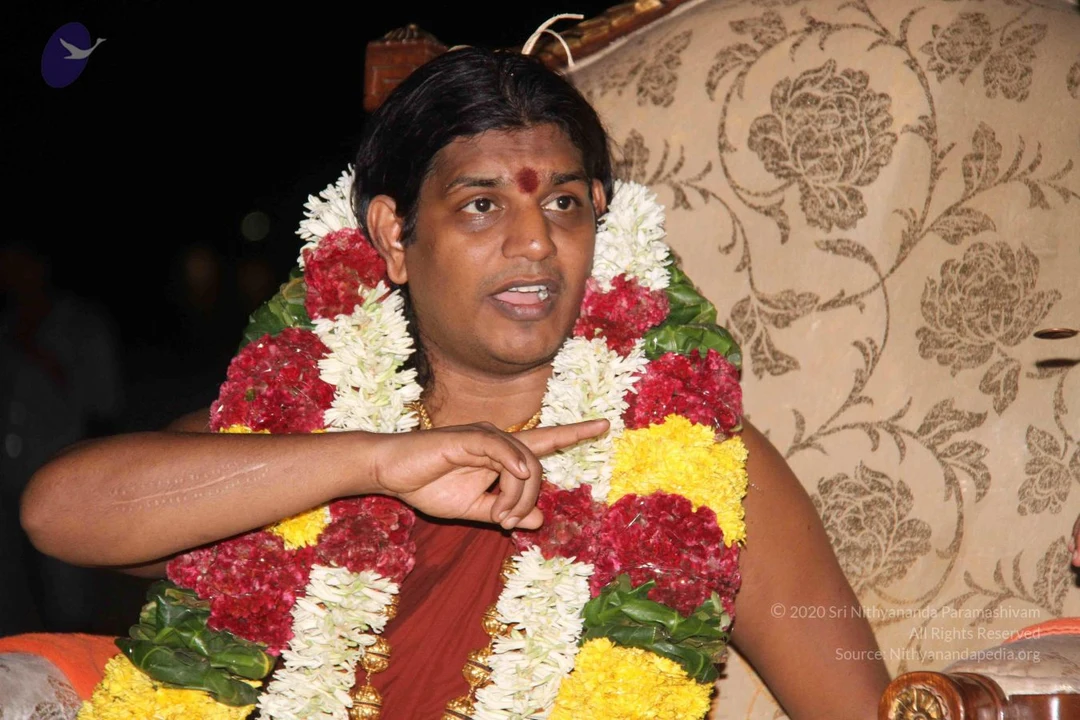
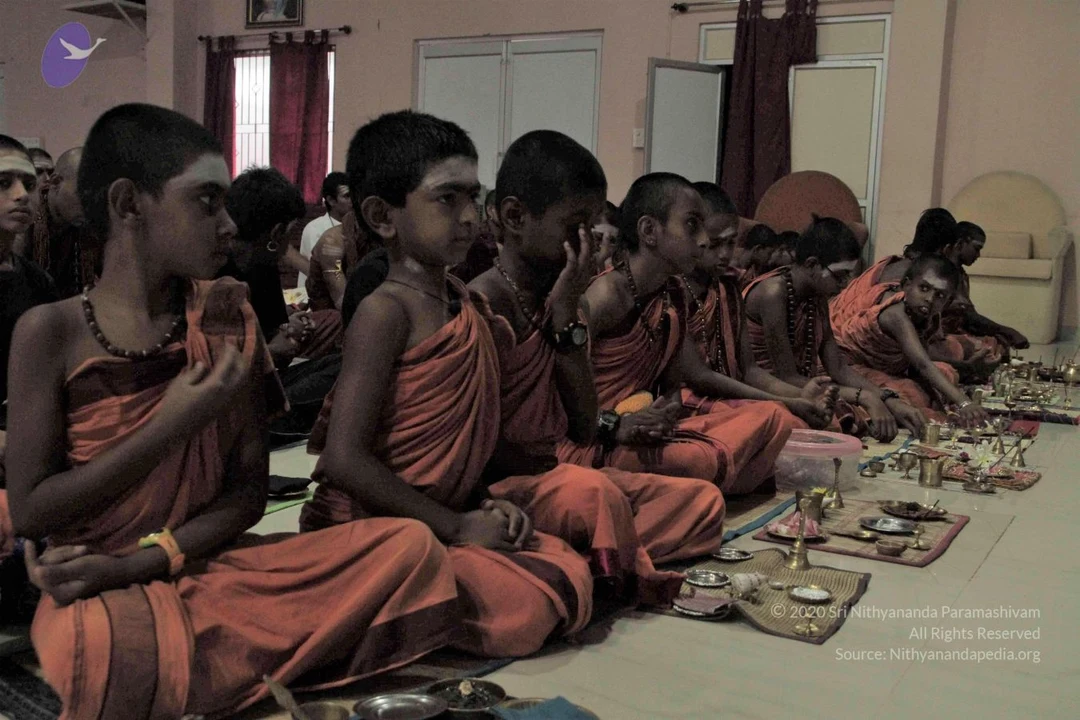
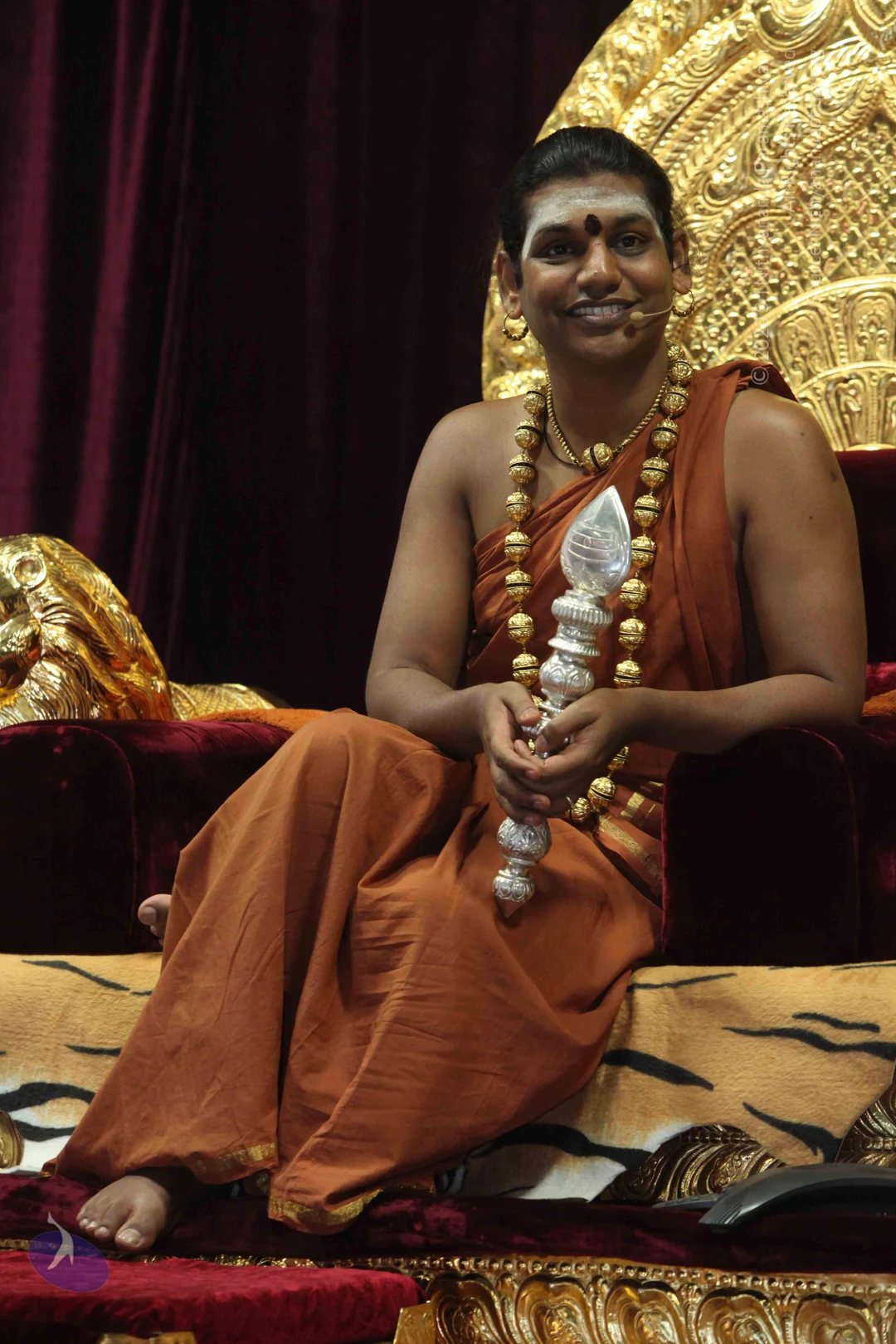
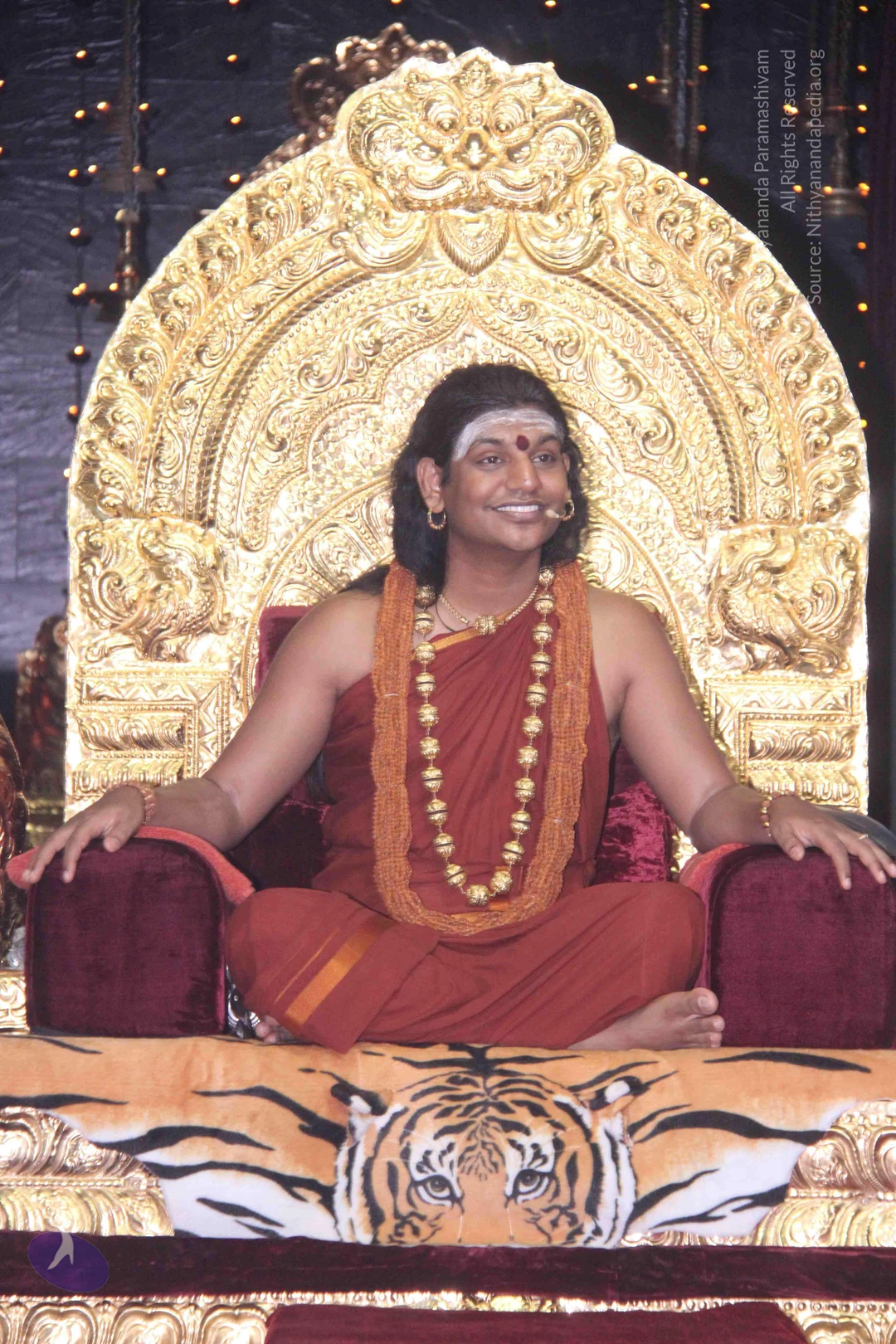
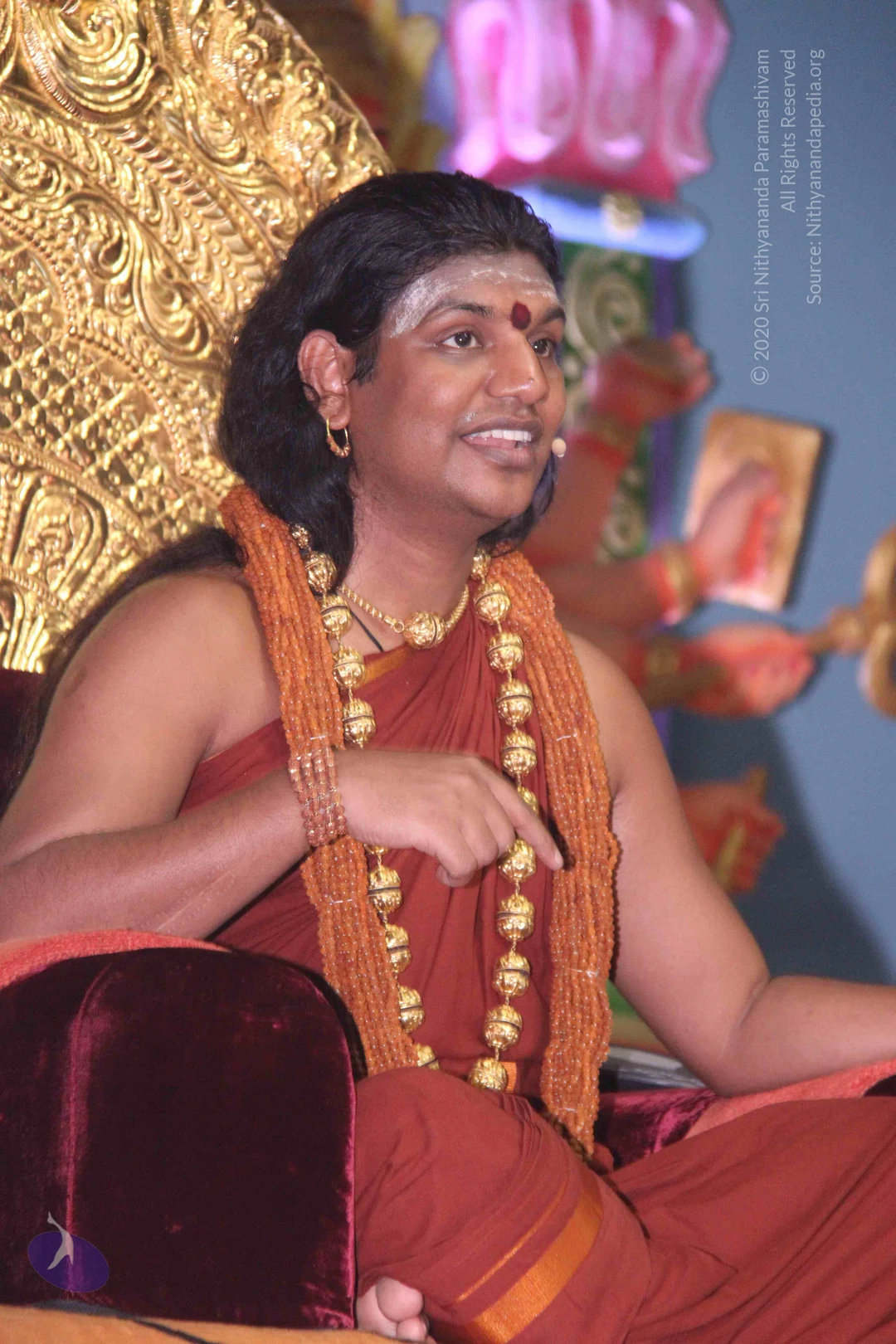
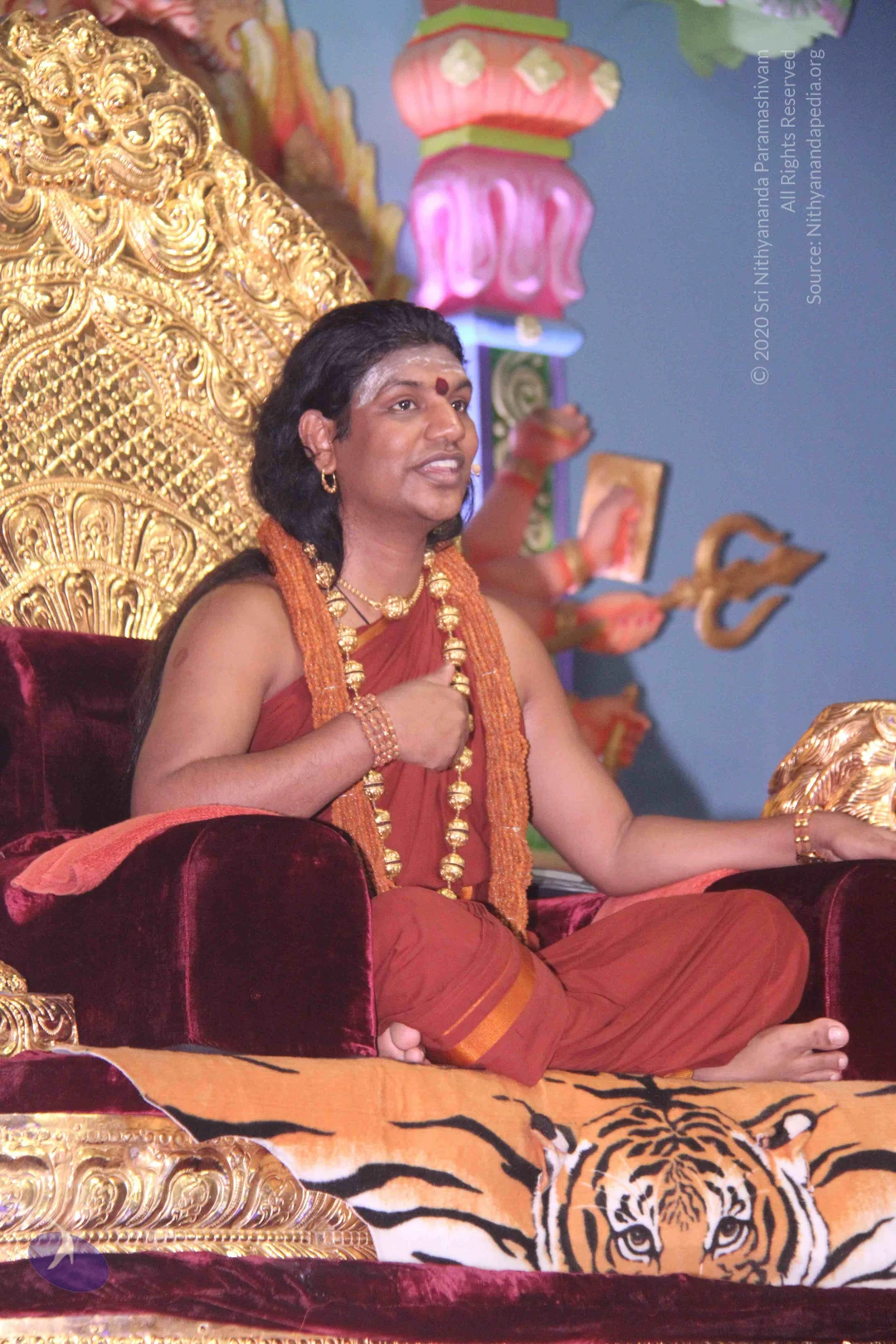
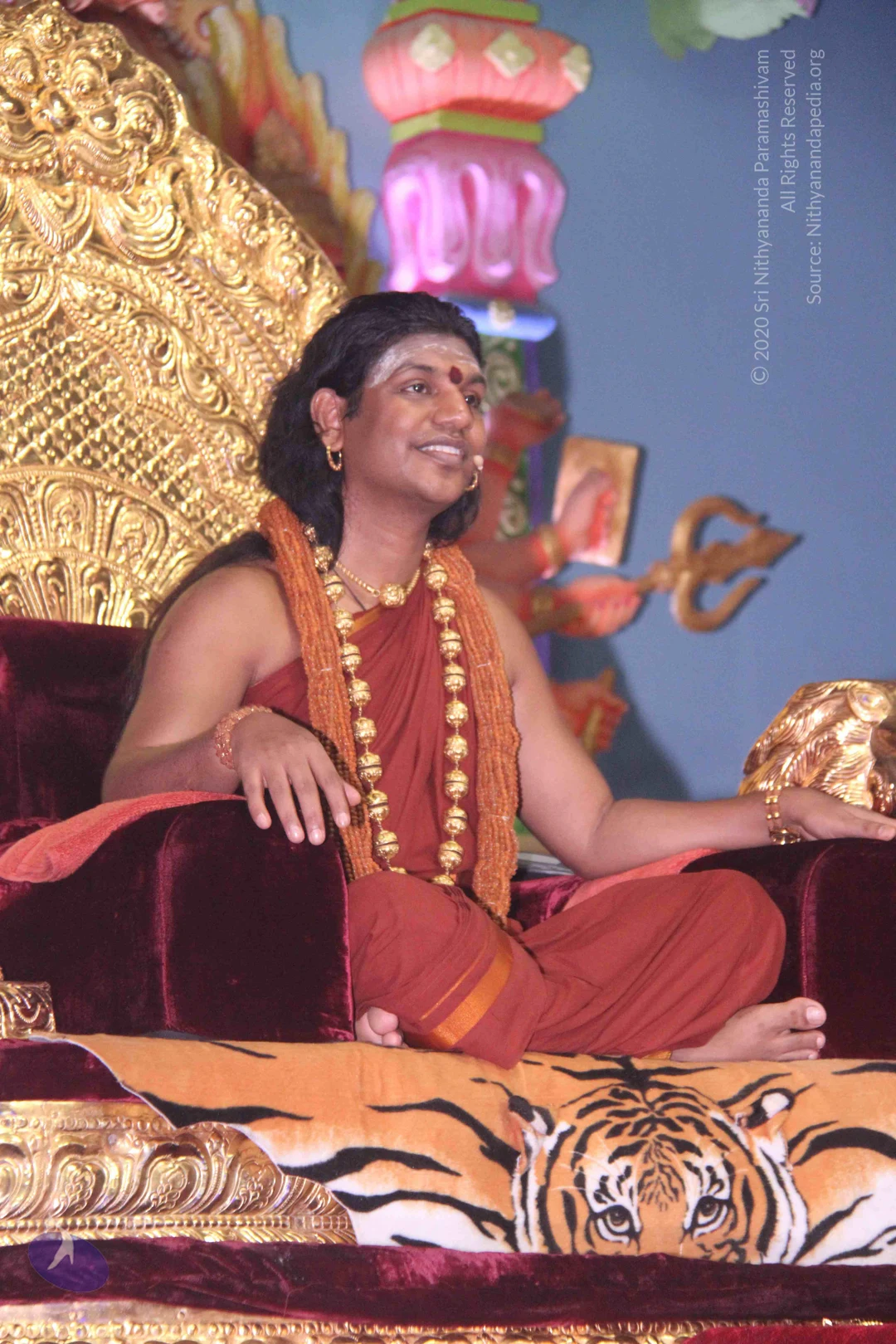
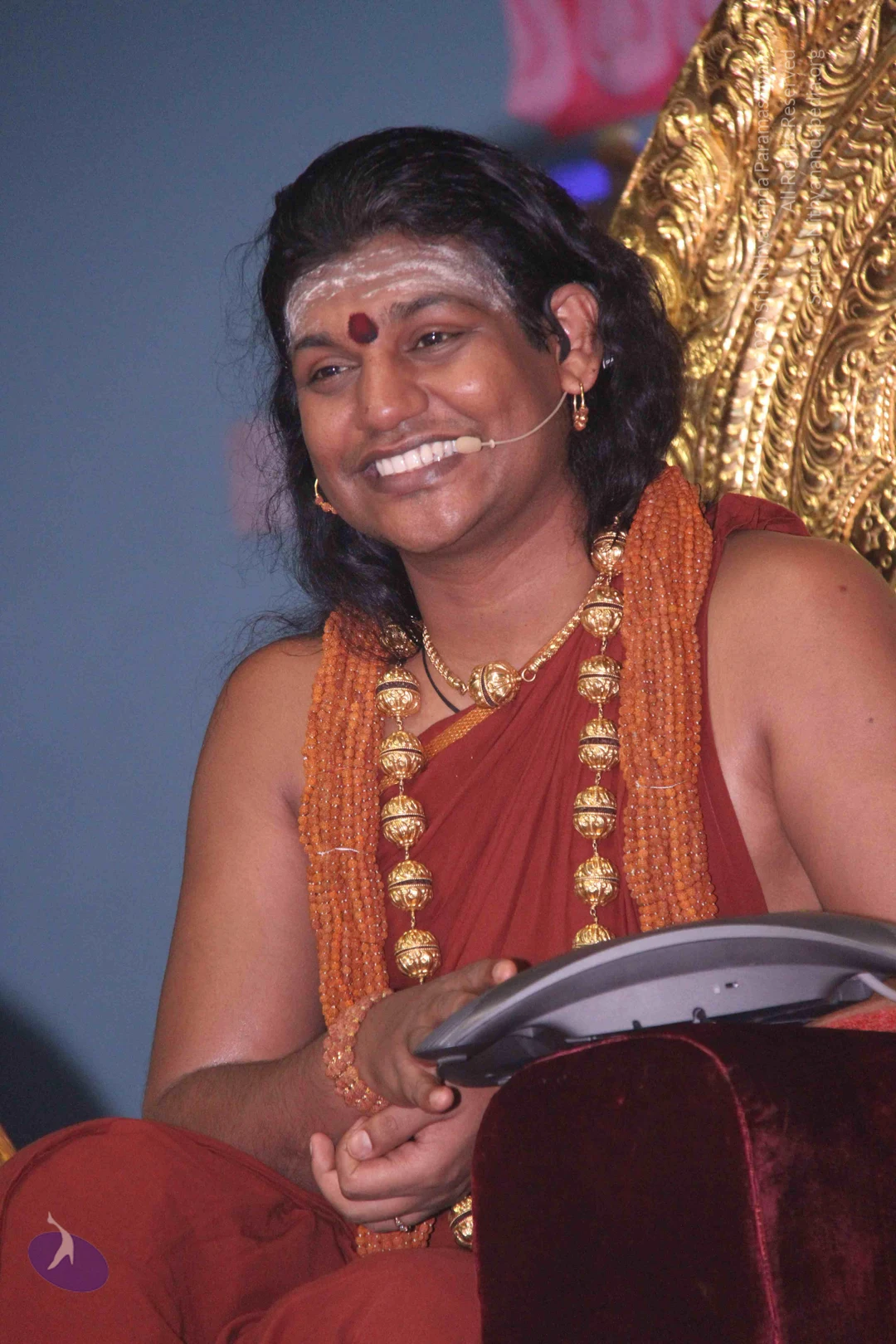
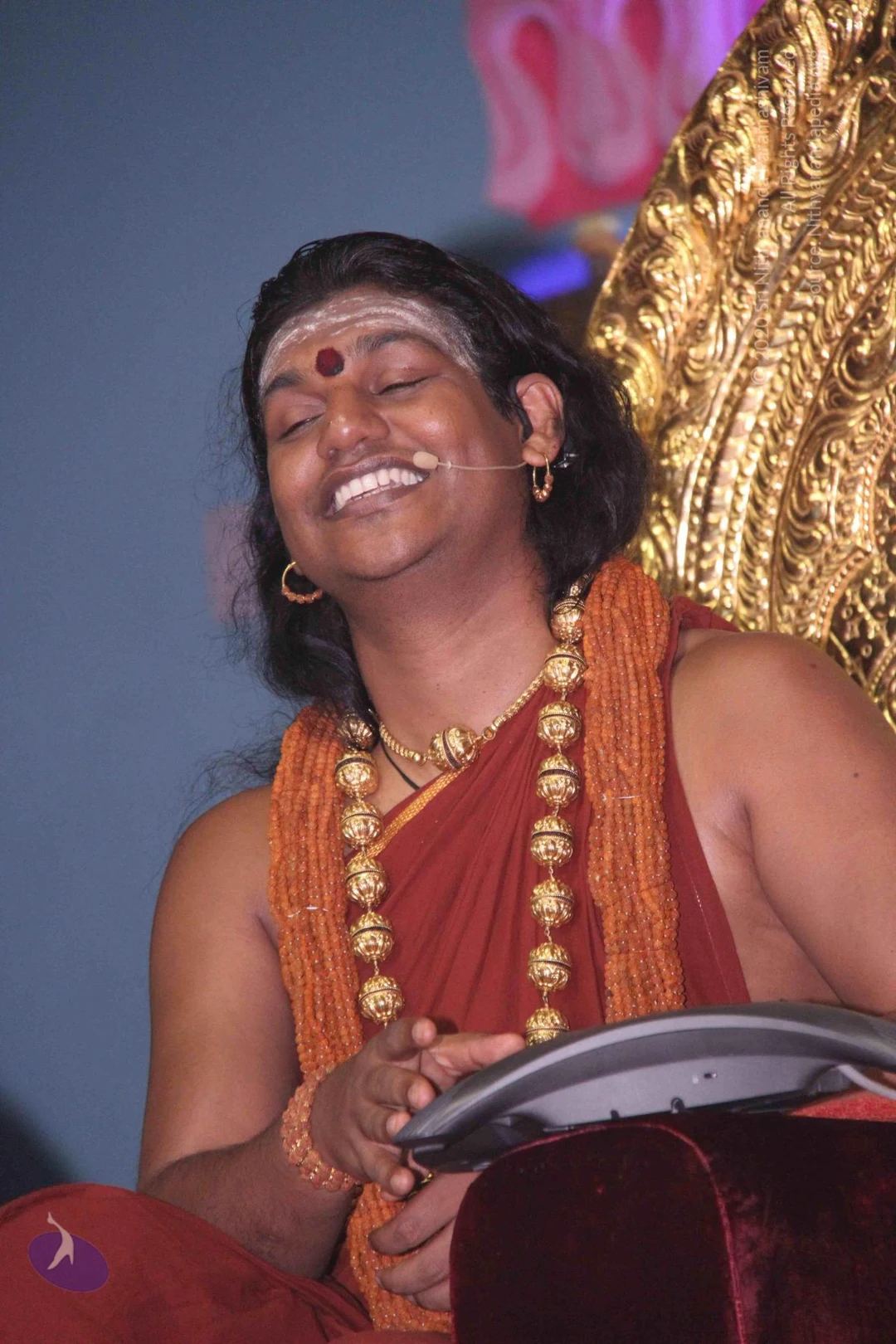
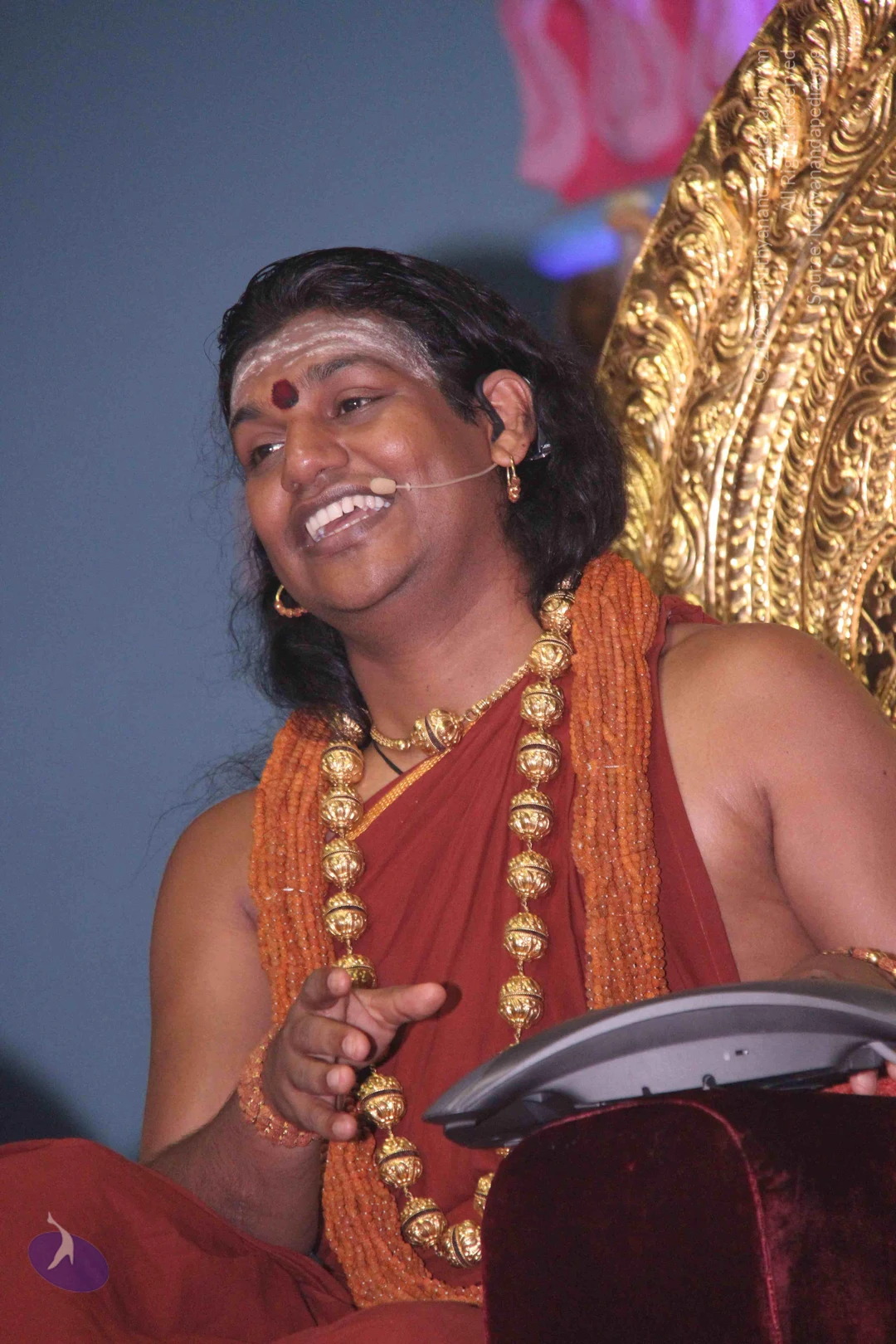
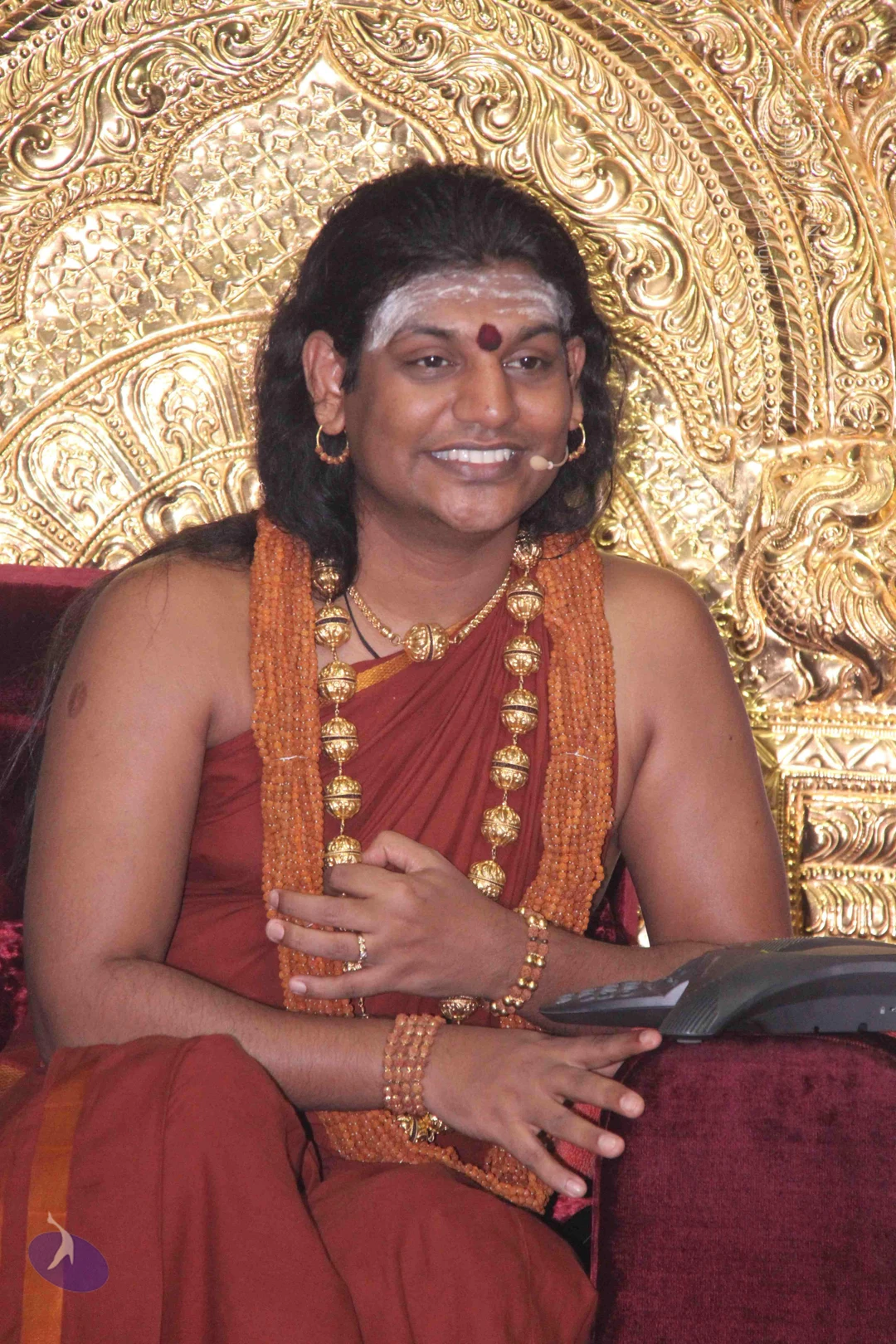
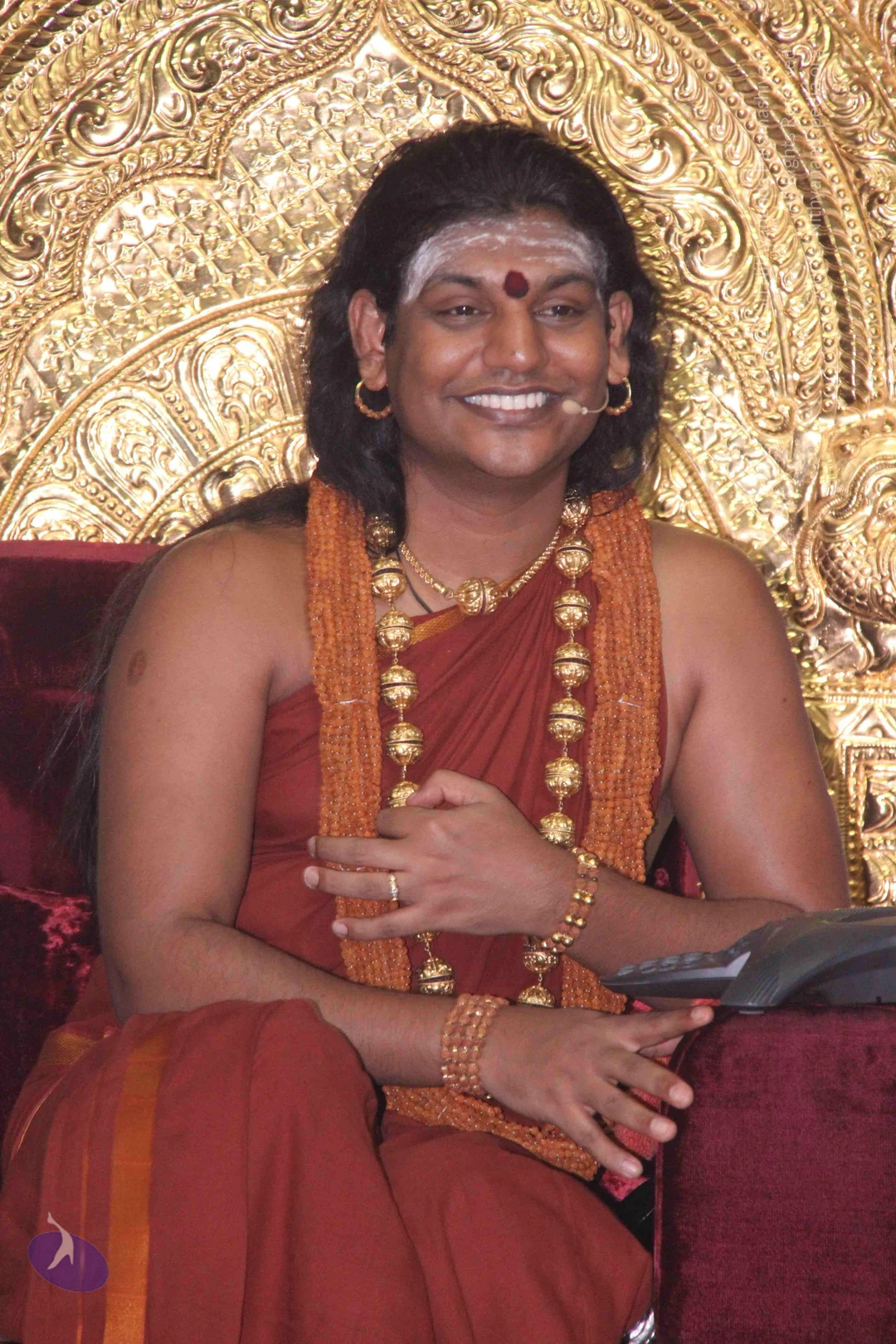
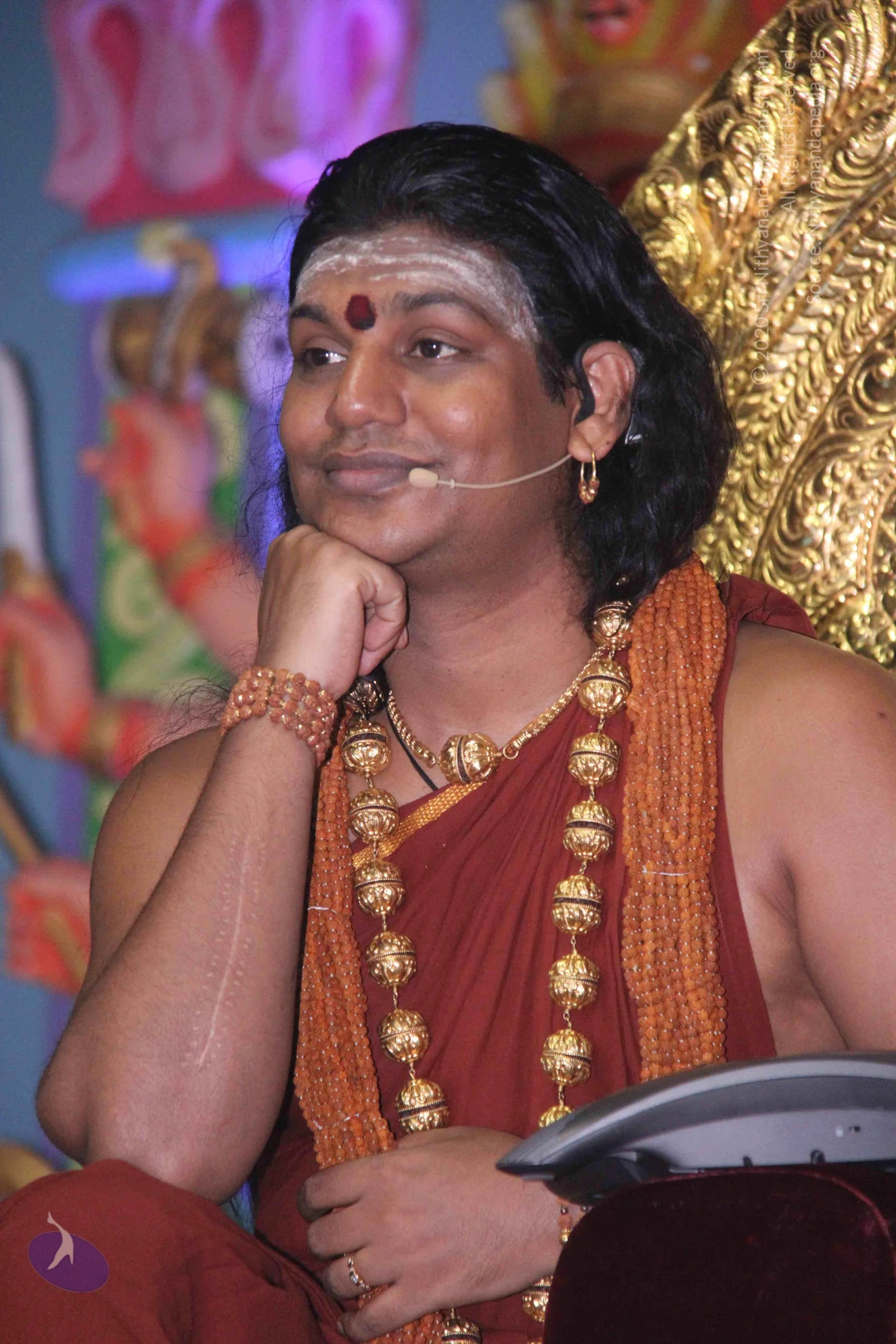
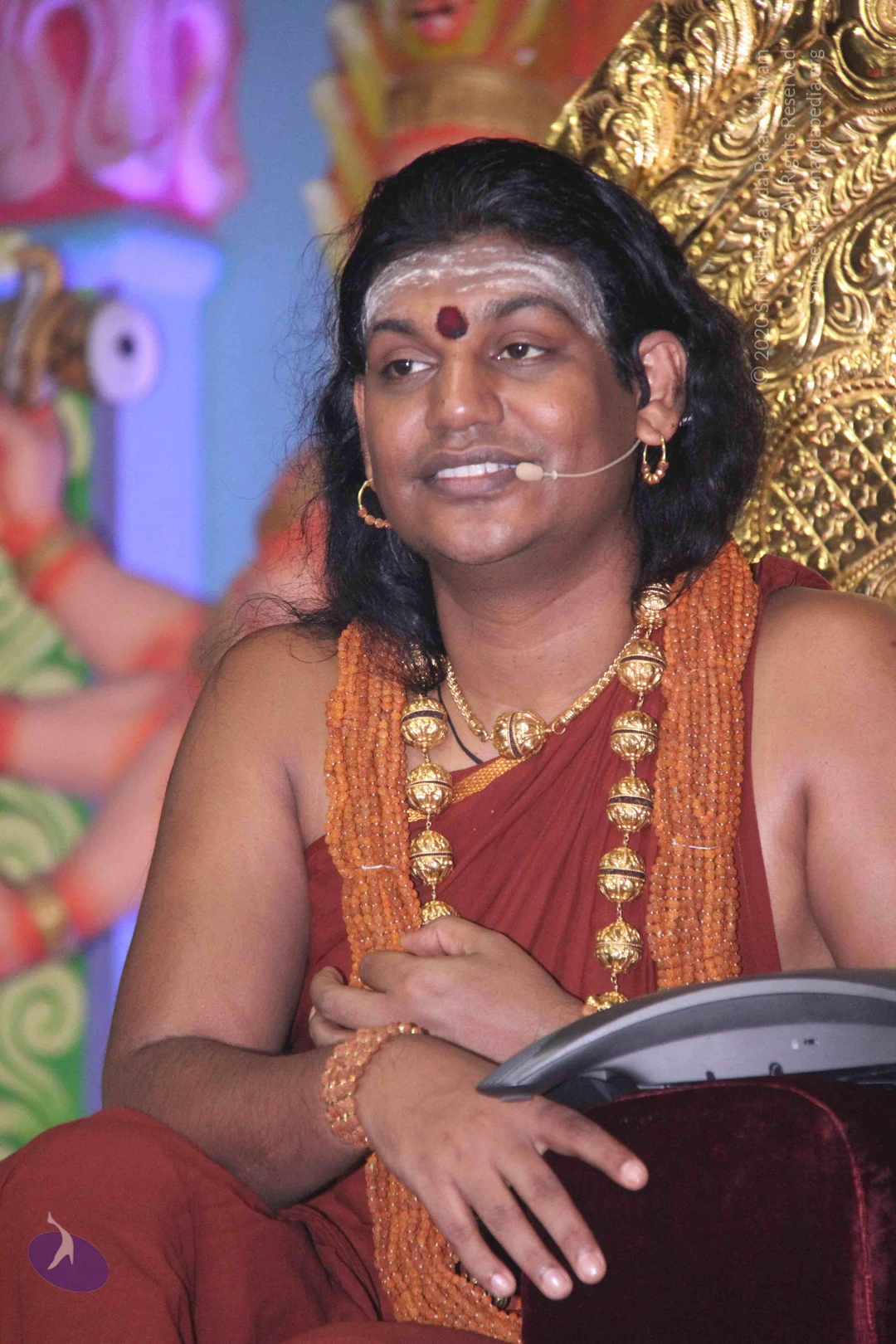
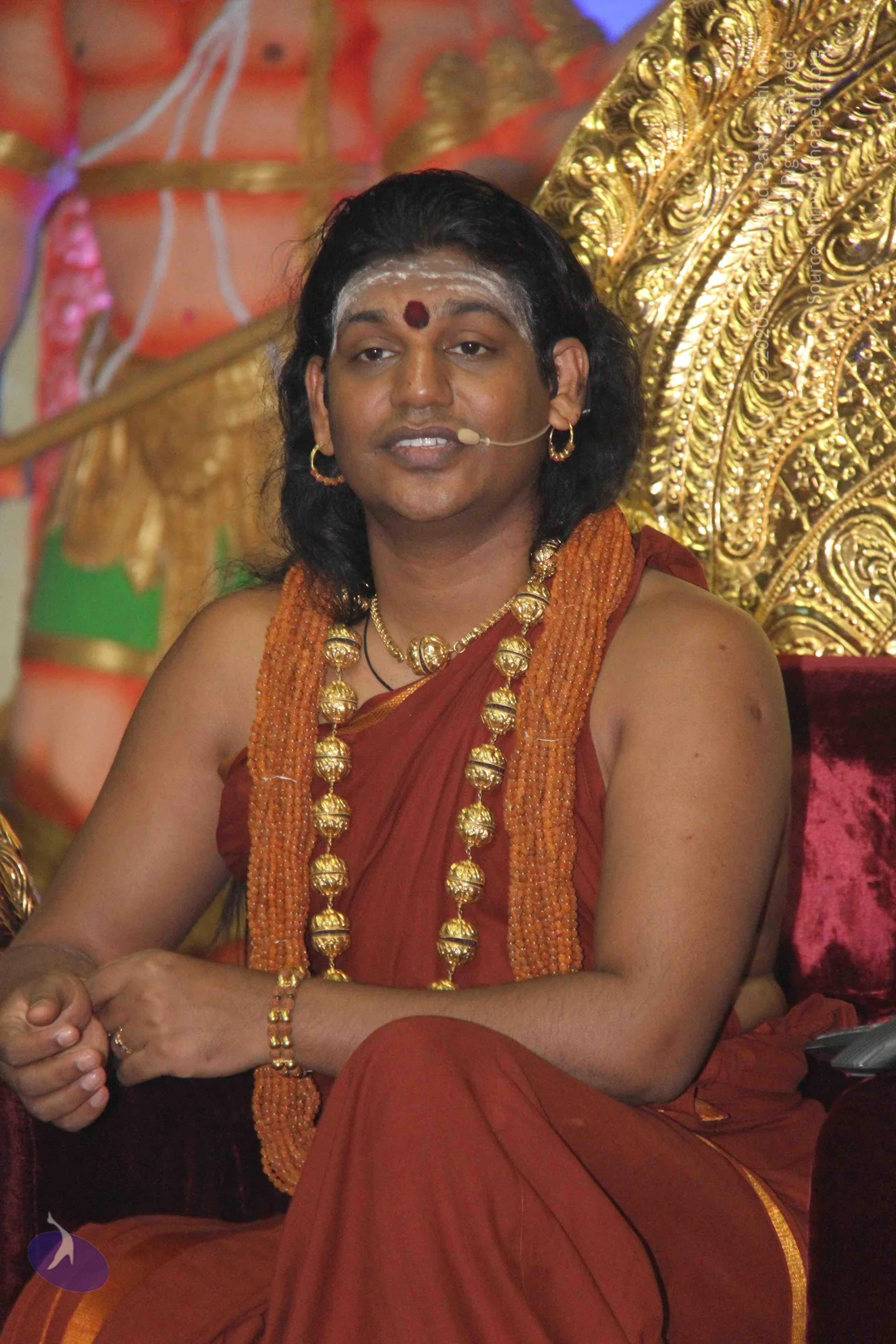
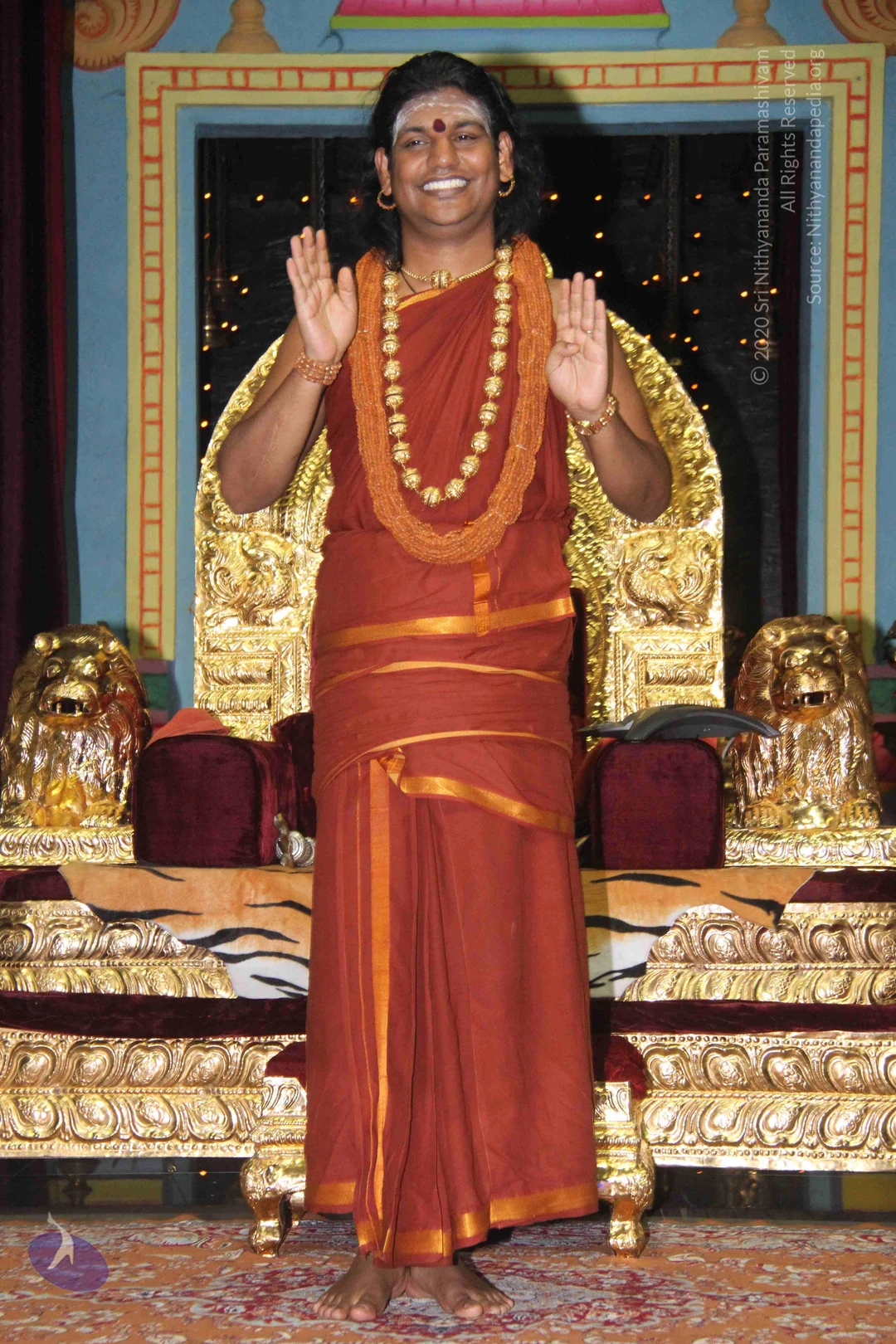
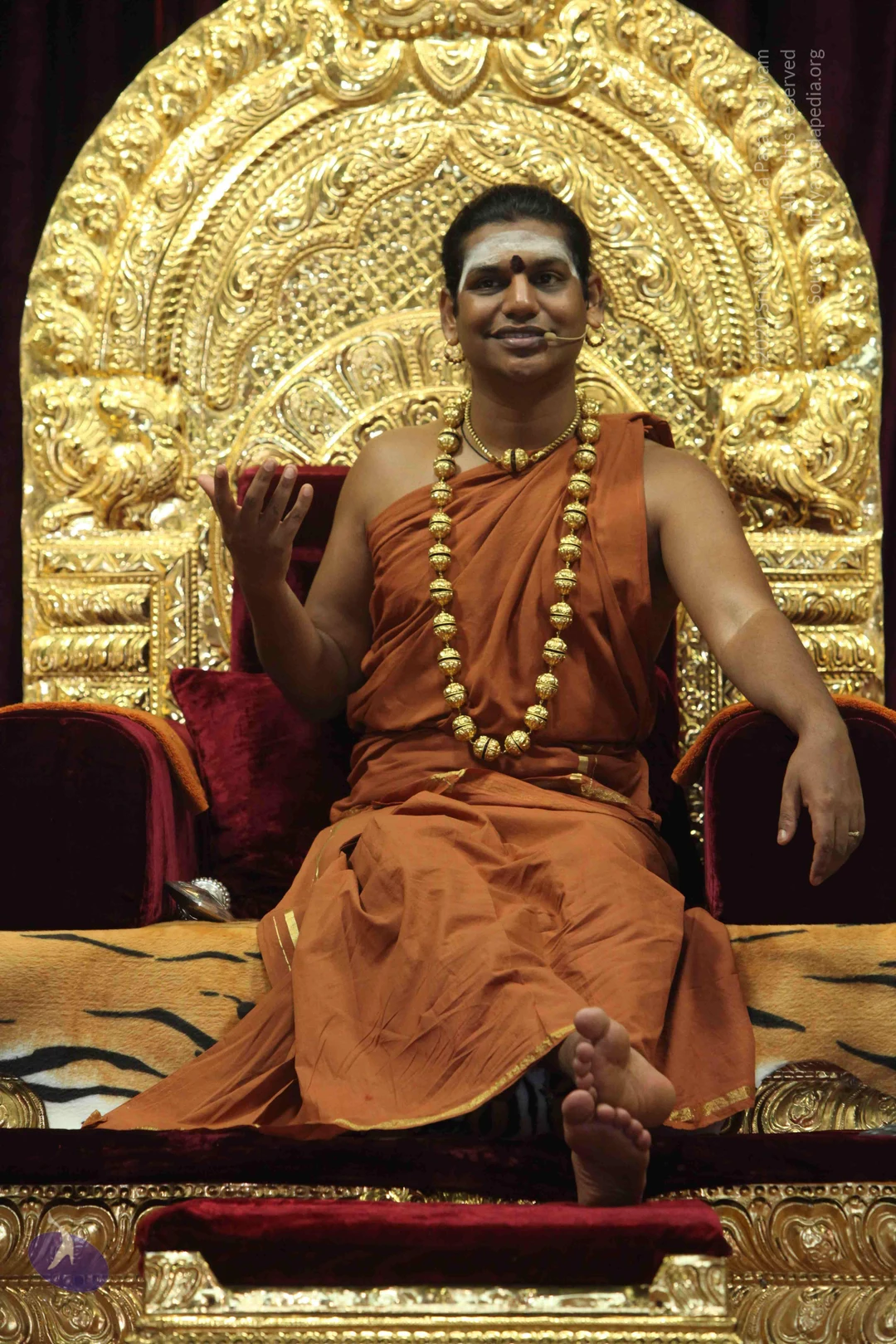
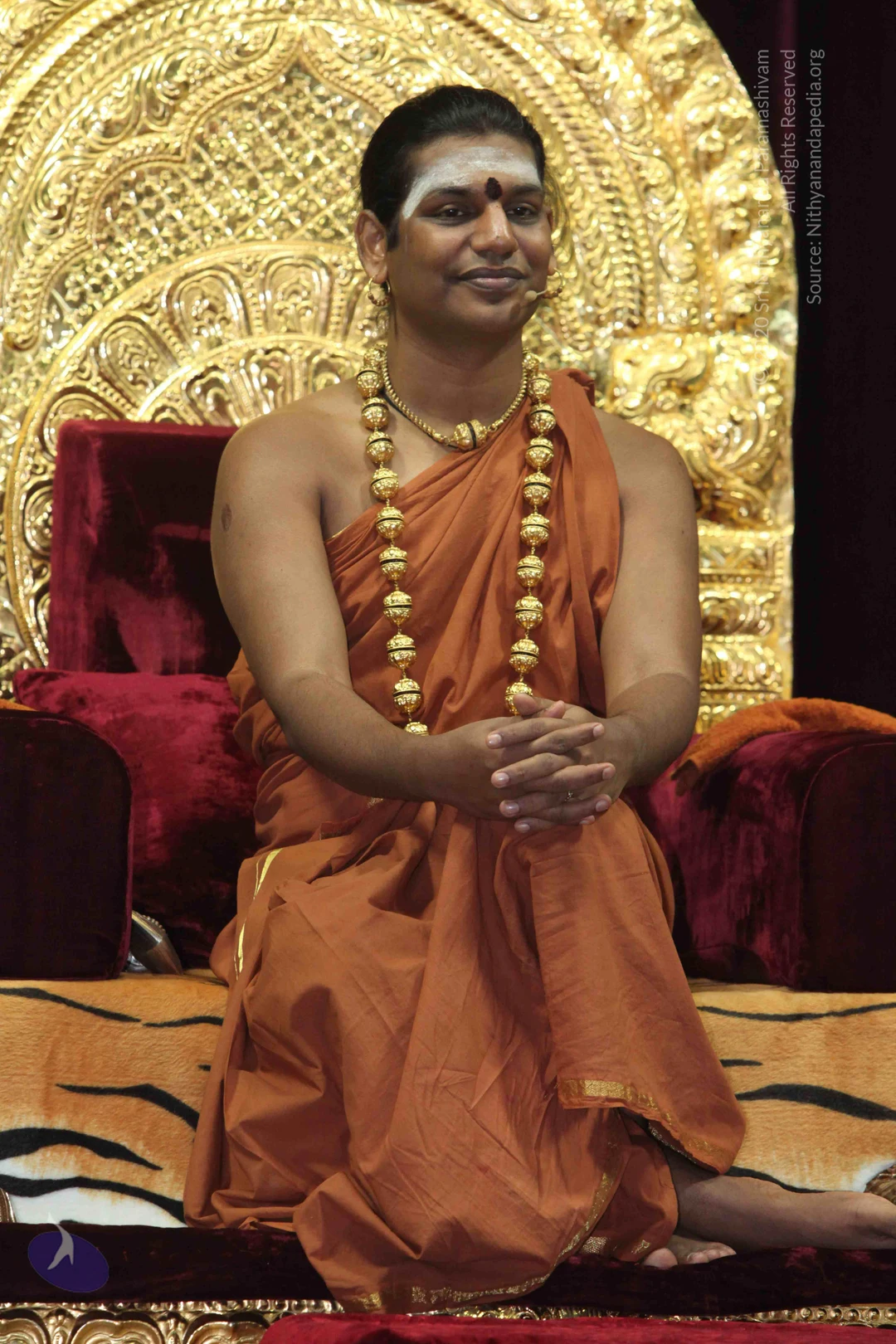
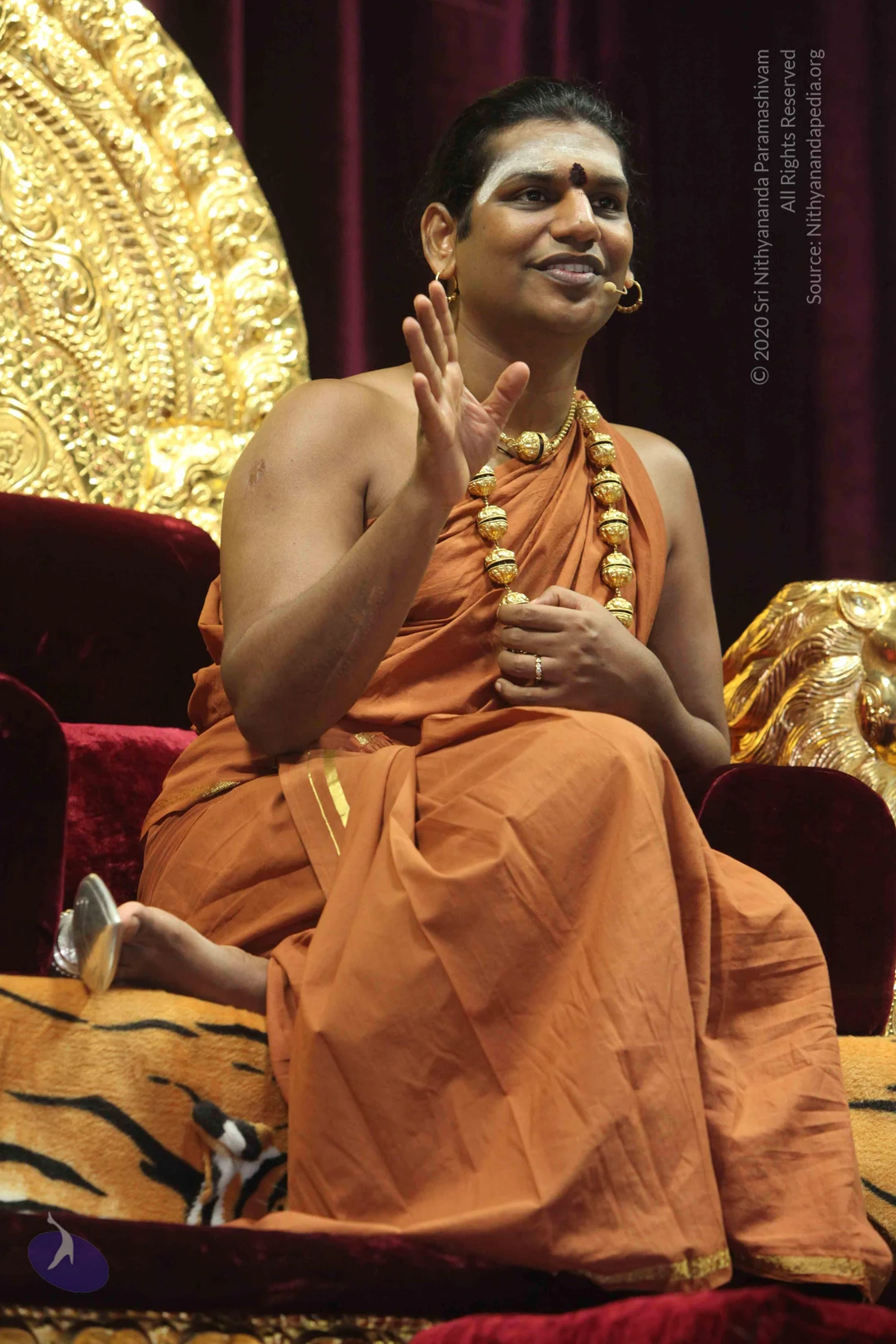
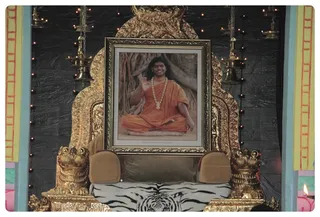
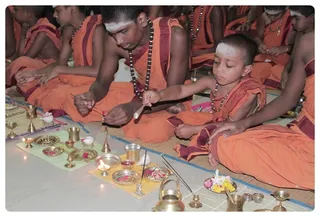
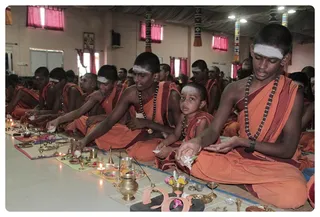
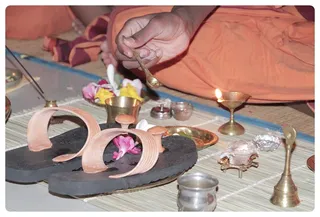
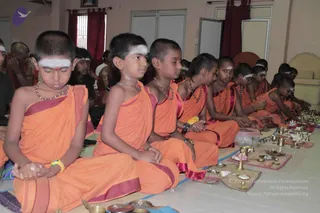
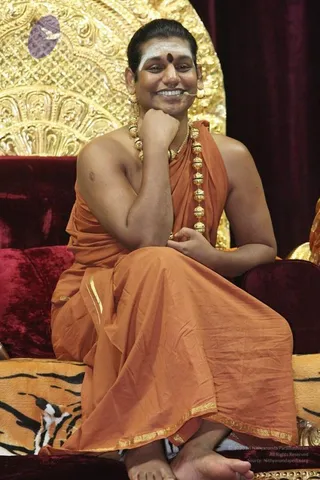
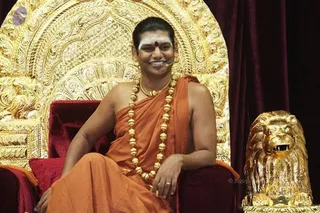
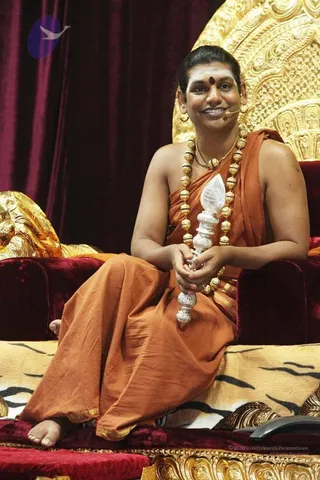
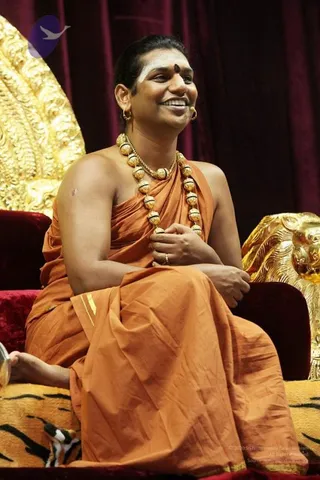
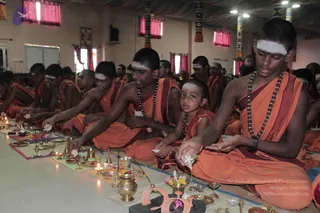
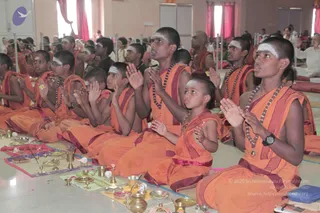
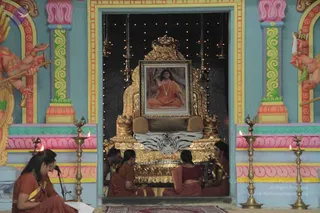
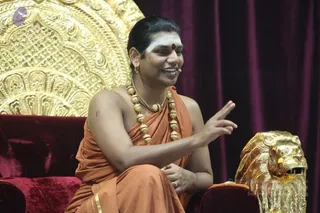
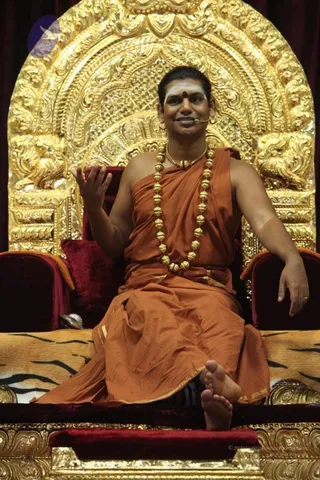
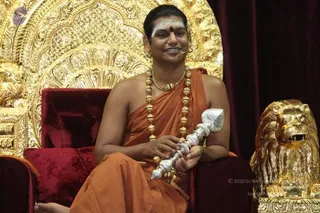
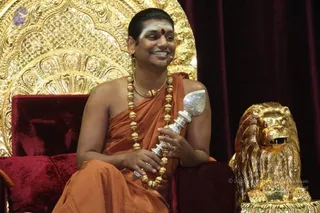
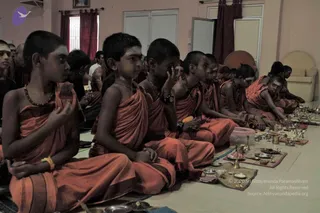
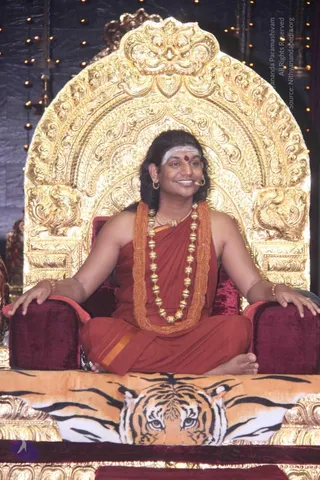
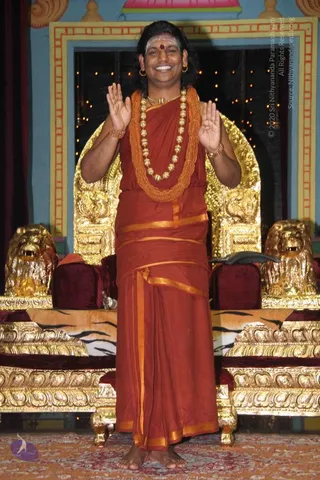
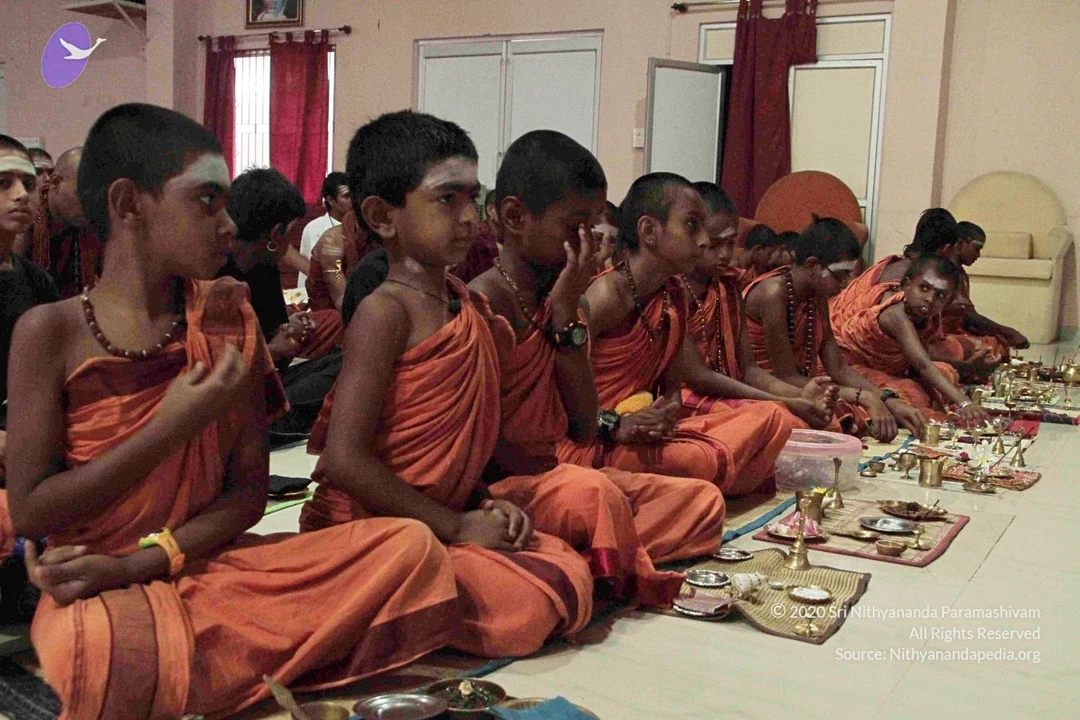
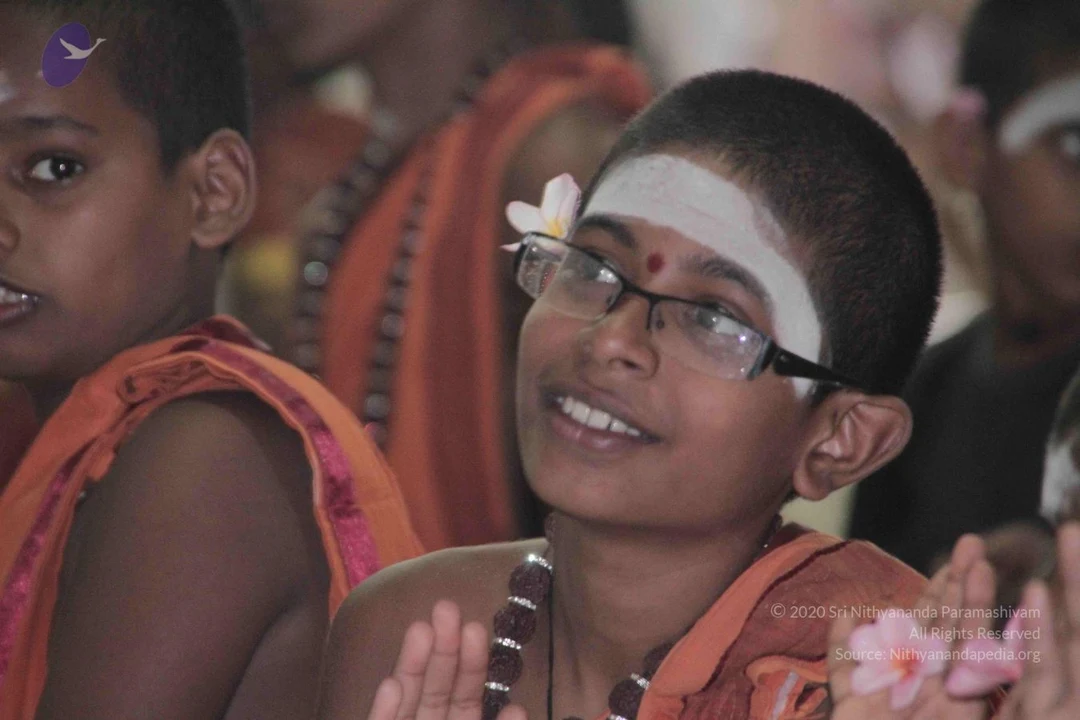
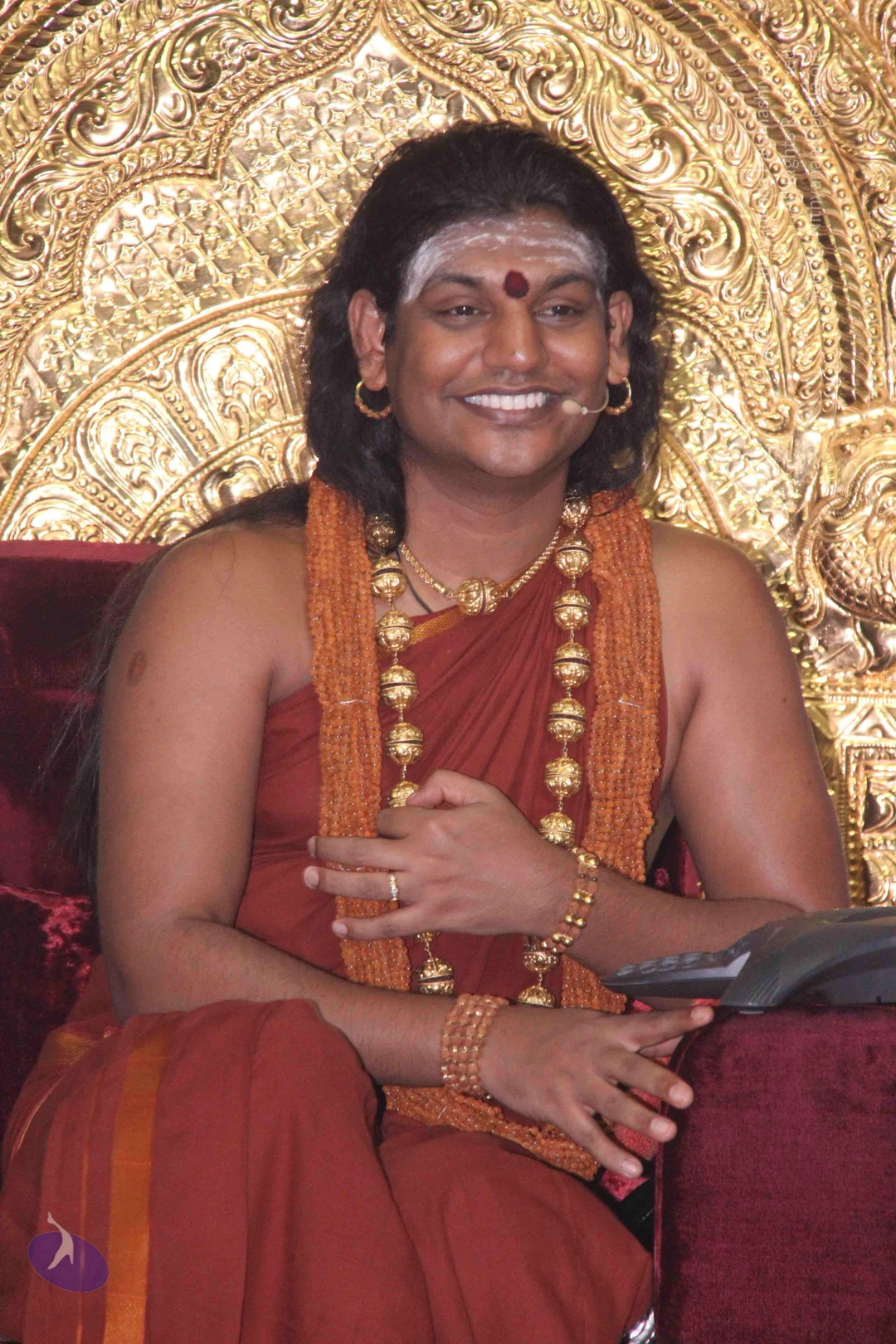
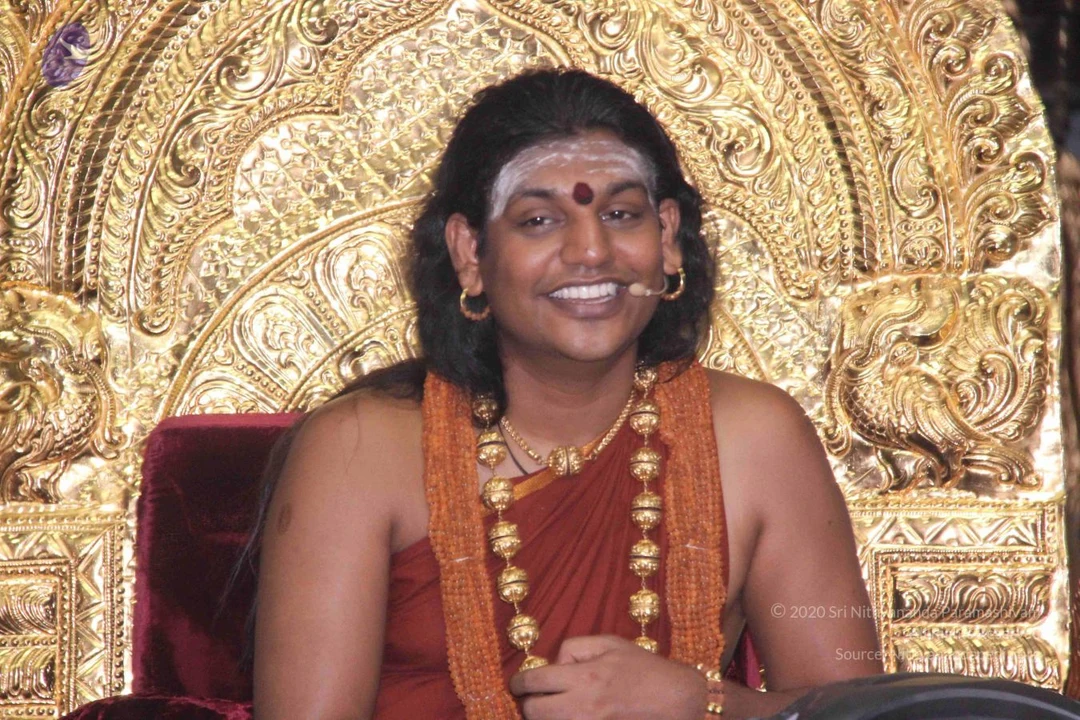
A seated group meditates with eyes closed in a hall with pink walls and red curtains. In the foreground a young boy in a black polo shirt with a small crest sits with hands folded, next to a boy in an orange-and-maroon sannyasi-style wrap with a rudraksha mala. Behind them, young men in orange and maroon robes wear white forehead markings and rudraksha malas, sitting in meditation. Brass and copper vessels sit on a mat in the lower left. Older devotees in white and red shawls sit in the background. The scene reads as satsang or group meditation.A man with long swept-back dark hair sits on a red velvet chair in front of an ornate gold repoussé backdrop, speaking into a headset microphone. He wears a rust-red garment draped over bare shoulders, a long orange rudraksha-style mala with gold bead spacers, a gold chain, gold hoop earrings, a white tripundra with a red bindi on the forehead. Swamiji (probable): the long hair, orange and ornate ceremonial clothing, rudraksha mala and gold necklace are distinctive visible cues for a discourse speaker. A partly visible painted deity figure with red arms and a club stands at the left edge.

April 03 2013

Original wiki page
Contents

Title

Your Idea of You Creates Your Reality

Description:

In today’s morning satsang, Paramahamsa Nithyananda describes the effect Authenticity has upon our mamakara – our self-image. When we become authentic – developing our inner space to its peak capacity – we constantly expand what we expect of ourselves. Others perceive us differently as well, and our experience of reality opens up to exciting new horizons. This self-building process keeps us alive; if ever we decide we are not able to change, we have died spiritually, even if the body is still moving.

VideoAudio

Transcript:

(0:19)

Iss samay hamare saath upastith sabhi darshakon aur bhakton ka main prem evam aashirvad sahith swagath kartha hoon. Aaj main jeevan ka doosra tattva shraddha aur aapke jeevan ke vaastaviktha in dono ke beech mein jo anokha samikaran hai uske baare mein baat karunga. Today I will speak on the unique equation that exists between authenticity and the reality of your life. When you expand what you think as you, directly you expand what you project as you and you also expand and fulfill what others expect from you. Just like a film kept in front of the projector light is seen as a reality in the screen, mamakara kept in front of the consciousness is seen as a reality in the life. Authenticity expands the mamakara. Authenticity transforms the slide kept in front of the projector. So, naturally that transforms. Aaj mein jeevan ka doosra tattva shraddha aur aapke jeevan ki vaastaviktha in dono ke beech mein jo anokha samikaran hai uske baare mein baat karunga. When you start working on authenticity constantly every day you are reminded of expanding your mamakara - what you perceive as you, what you experience as you, what you feel as you. When you expand continuously what you feel as you, what you perceive as you; when you are working on what you perceive as you, I tell you so much miraculous changes will happen the way you experience your reality. Life will change; how the life responds to you will change, how you perceive the life will change, everything will change!

(3:27)

Jab aap swayam ke baare apni soch ko vistaarith karte hain tab aap doosron ke saamne swayam ke baare mein jo pradarshith karthe hain, aur doosre jo aapse upeksha rakhthe hain in dono mein bhi visthaaran hoga. Jab aap swayam ke baare apni soch ko vistaarith , vistaartith karte hain tab aap doosron ke saamne swayam ke baare mein jo pradarshith karthe hain aur doosre jo aapse apeksha rakhthe hain, in dono mein bhi visthaaran hoga. shraddha aapke mamakaar ko vistaarith kartha hain, shraddha aapke uss slide ko parivartit karta hai jo aapke projector ke samne rakha hua hai. isliye aapke jeevan ki vaastaviktha parivartith ho jaati hain. With authenticity every day you have to work on your inner image. I tell you, working on your inner image is excitement. Thinking you cannot change your inner image anymore is boredom. As long as you are interested in developing your inner image you continue to have life even if your body drops. The day you decide you can't develop your inner image anymore you are dead even your body is functioning.

(5:32)

So developing the inner image, Yesterday I received the essence of all the calls we receive from devotees all over the world who was watching the satsang morning in Sadhna TV and the website, internet, through sadhana TV. I was getting the call register, what people are saying about… when they call, what they are asking and all that. I was surprised almost ninety percent of the calls are just to thank, just to thank. And not one, many people ‘Swamiji I saw you in the TV and sat, forgot whatever I kept on the oven got burnt; in the furnace, in the oven, sorry, in the kitchen is burnt; and, hundreds of calls saying that we found a new leaf of life. Listen, when you start developing your inner identity and that brings result in the outer world you'll be excited to grow spiritually.

(7:31)

What is spirituality? Seeing the transformation you do in the inner world is seen as a result in the outer world is spirituality. The joy and the excitement you feel is because the moment you start the transformation in the inner world the outer world is changing. Some were writing that the moment I saw you I forgot everything and every day morning I'm waiting for morning 8:15. When you work on the inner identity, life is exciting. When you decide you can't transform your inner world anymore, it is death. When you give up on you, even if you are having the body, you're dead. When you don't give up on you, even if your body drops, you continue to live. Shraddha ke dwara lagaathar apni aantarik chavi ko parivartith ki jiye. Jab aap shraddha se apne aantarik astitva ko samruddh karenge tab aap apni bahar ke vastavikta ka roopantar kar sakte hain. Aap ki antarik vyaktitva par kaam karna uttejna hain. Ye sochna ki aap apni antarik vyaktitva ko nahi parivartit kar sakte hain hi boriyath hai. Jis din aapko yeh lagta hai ki aap apni antarik vyaktitva ka vikas nahi kar sakte hain uss din aap ki mrityu ho gayi hai; keval aapka shareer jeevith hai, keval aapka shareer jeevith hai

(10:04)

Don't give up on you. Go on developing your inner image. Listen, if you consider your life as an industry, your inner image is the product, how you project you to the outer world is marketing, what others expect from you is feedback from customers. Constantly bring the feedback and develop the product. That is the only way you will be alive in the market. If you are working with humanity, this is the Law of Life. Constantly work on the mamakara, don't give up on you, don't give up on you, work on mamakara. The moment you stop bringing the feedback from the customers and develop the product, when you stop it, you are dead— just the tomb needs to be built on you; that’s all, the coffin needs to be closed. However big maybe your brand is, however big you may be, listen, even if you are a big established brand, if you, when you stop receiving the feedback from customers and developing your inner identity, society will start rejecting you. People sometime ask me, "Why the big, big traditional mutts and organizations, even many of those mutts and organizations have become irrelevant to humanity, irrelevant to human beings? I know there are some of the adheenams in the center of the city; when the peethadheeshwar does puja even 10 people will not be there to receive vibhooti…. Here I am sitting in the forest everyday morning 100s if not 1000s gather to listen. The reason is when you think you are a big established brand and you don’t need to get anymore the customer feedback and develop the product, customers start rejecting you. They don’t accept you because you are a big brand. They try you if you are a big brand but only if they see the product is worthy they continuously consume it. Otherwise after trying they dump it. If you don't take the customer feedback, the customers will be giving their feedback to others, which is very dangerous.

(13:26)

Dhyan se suniye, listen, if you don't take the customer feedback, others will be getting the feedback; it is very dangerous. Without even you knowing your brand is destroyed, without even you knowing you have already collapsed. That's a most unfortunate thing. If you want your life to be successful, constantly receive, constantly get the feedback from the customers - means others expectation about you - who are all involved in your life, their expectations about you. We all ask the question, "Why should I fulfill others expectation about me. World is so much of selfishness. Why should I bother what others want about me? Why? " Listen; when you always want others should live as you want, others should fulfill your expectation, is it not others’ right to expect from you? Who will fulfill their expectation? At least whoever is involved in your life and how many lives you are involved - decide, decide! Life is fulfilled, Listen, life is fulfilled only when you fulfill others’ expectation; with whoever you have expectation at least. You don't need to fulfill the expectation of a person, somebody in the street with whom you have no expectation. But you have to fulfill the expectations of the people with whom you have expectations. If you have expectation with that person the person has a right to have expectation about you.

(16:01) Agar aapko har pal ek uttejana bhari jeevan ko anubhav karna hain toh lagaatar aapke jeevan mein sammilith anya log hain, unke aapse jo apeksha hain uske baare mein jaanne ki prayaas ki jiye aur usse poorN karne ki abhyas ki jiye. Aapki chetna ke saamne rakha huva mamakar vaastavikta ke roop mein jeevan mein prastuth hotha hain. Lagathaar apne mamakaar par kaam ki jiye, apne mamakar ko vikasith ki jiye. Apneaap par vishwas na kho di jiye. Jeevan tabhi poorN hotha hain jab aap doosron ki apeksha ko paripoorna karthe hain. Listen with whoever you have expectation, they have a right to have expectation over you. Now I feel My responsibility has increased especially with the satsang starting live in Sadhana channel. Because now millions are feeling My Presence in their house! So many 100s of calls just asking I want to accept you as guru what should I do for it. Tell me! That’s all…. It means what? Now I have to take the responsibility of so many disciples. Now I have to fulfill all of them. Of course, I am taking the responsibility. There are some people saying that the moment I sit in front of your satsang I feel Kundalini Awakening; I can experience your Presence; your living Presence through the live telecast. I am experiencing Kundalini Awakening, my body is levitating; my prayers are getting answered, my questions are getting answered. 100s of calls - you are exactly talking to the doubts I am having —my doubts are getting cleared…. Now I have to be responsible for millions of disciples happening.

(19:02)

Agar aapko har pal ek uttejna bhari jeevan ko anubhav karna hain toh lagaathaar aapke jeevan mein sammilith anya logon ki apeksha jo aapse hain uske baare mein janne ki prayas ki jiye aur use poorN karne ki abhyas ki jiye. Kaii log mujhe poochthe hain main doosron ki apeksha ko kyon poorna karoon. Jin logon se aap apeksha rakhthe hain un logon ki apeksha ko bhi aapko poorna karni hogi tabhi aap apne jeevan mein apna mann chaaha vastaviktha ka srujan evam anubhav kar sakthe hain. Jin se aapko jeevan mein koi apeksha hain unko aapse apeksha rakhne ka adhikaar hai. Agar aap maanavta ke saath kaam kar rahe hain iss jeevan ka yeh niyam hai, dhyan se suniye, lagatar apne mamakar par kaam karthe rahiye yahaa tak ki yadi aap ek bade brand hai, aur yadi aap pratikriya prapth karna bandh karthe hain, toh aap aprasaankik ho jaate hai. Constantly, expanding your inner identity, expanding the identity you project yourself as you to others and taking responsibility to fulfill what others expect from you is AUTHENTICITY. I tell you When you take responsibility to fulfill what others expect from you, cosmos expresses through you, the whole Brahmaand expresses through you, you will have extraordinary powers because it is directly seva, service to others. Whenever you serve others with a responsible feeling without having any other motive, cosmos celebrates your existence! It just celebrates your existence! Cosmos just celebrates your existence!

(22:21)

lagaathaar aapni aantarik vyaktitva ko vistaaran karna, jo aap anya logon ke saamne pradarshith karthe hain uss vyaktitva ka vistaaran karna, evam anya log jo aapse apeksha rakhthe hain, uss vyaktitva ka vistaaran karna, yahi prayaas aapko shraddha mein stapith kar sakthi hain. lagatar apne vyaktitva ka vistaaran ki jiye. Continuously, when you decide to expand your identity… the way you project you to others and take responsibility to fulfill it—suddenly your reality starts changing, your reality becomes better and better. What is your reality? Your perception about you, your perception about what you feel as you and what you project yourself to others and what others are expecting about you. When you practice authenticity naturally you have to develop what you feel as you continuously. How to develop? The only way to develop your inner identity about you is integrity. With more and more and more integrity you will be purifying your inner image more and more. When you take the responsibility to fulfill others’ expectation about you more and more, you become more and more responsible. Understand, when you start practicing authenticity, your integrity and responsibility automatically starts happening and you can’t give up on you, you have to continuously enrich you. So enriching automatically happens. You can’t give up on others, you have to enrich them. Enriching others automatically happens.

(25:09)

Jab aap lagathaar apne vyaktitva ko vistaaran karne ki nirnay lethe hain tab aap ki vastavikta mein roopanthar hogi aur vah adhik aur adhik behathar bantha jaayega, bantha jaayega. jab aap doosron ki apeksha ko poorna karne ka uttardaayitva uthate hai toh Brahmaand aapke dwaara vyakth kartha hain, aapke paas asaadhaaran shaktiya aa jaayengi kyonki aap doosron ki seva kar rahe hain. jab aap kisi swarthi uddeshya ki bina doosron ki seva karte hain toh brahmaand aapke astitva ko maantha hain, manaatha hain. Listen, I tell you, every day, continuously by developing your integrity improve the identity you carry about you. Many teachers tell you how much ever you listen unless you practice it won’t help you. I tell you how much ever you try to practice, unless you listen, it won't help you. IMPROVE YOUR LISTENING! That is why I am talking very slowly. Unless you put your authentic listening, you won’t be able to listen; you will miss. Only authentic listeners can listen what I am talking. Every day by sitting in the satsang morning, this one and a half hours, improve your listening, authentically listen! Only if you listen, practicing is possible.

(28:10)

Aapki sunne ki shakti ko badhaayiye shraddha ke saath suniye. Tabhi aap in satyon ka abhyas kar sakte hain. Kayi adhyaapak kehthe hain sunne se kuch nahi hoga keval karne se hi kuch ho sakta hai. Main kehtha hoon karne se nahi kinthu sunne se aap apne jeevan mein ek nayi vaastaviktha ka nirman kar sakthe hain. Isliye pehle suniye, keval suniye, suniye, suniye, shraddha ke saath suniye. Keval sunne se hi abhyas sambhav hai. Authenticity starts with listening, continues with listening, continues with listening. Human beings miss life when they miss listening. J. Krishnamurti says -Listening is God. Buddha's first teaching is Right listening. In Vedantha the first principle is shravana - Listen. Second principle manana - Intranalize Third principle nididhyasana - Radiate it! Live it! Radiate it! Shraddha sunne se aarambh hothi hain aur sunne se hi aage badthi hain. Maanav jeevan ko hi gavaa dethe hain jab ve sunthe nahi hain. Shraddha sunne se aarambh hothi hain aur sunne se hi aage badthi hai. maanav jeevan ko hi gavaa dethe hain jab ve sunthe nahi hain. I request all the satsangis all over the world; even if you are watching through Sadhana you are a satsangi - take this as your life every day morning, this one and a half hours. Sit with authenticity and listen, listen! You will see miraculous transformations happening in your body and mind.

(31:23)

Gautam Buddha ka pehla siddhant hain sahi tareeke se sunna, sunna. Vedanth ka pratham siddhant bhi shravana arthaath sunna hain. Har dharm ka pratham siddhant yahi hain suniye, suniye, suniye. J Krishnamurthiji ne kaha hai sunna Bhagavan hain. Bhagavan Buddha ki pehli shiksha sunna hain. Listening is God! Just by listening you experience God! Vedaanth mein pehla kadam shravana hain yaani sunna Constantly expanding your possibility for you and your possibility for others is Authenticity; your possibility for you and your possibilities for others – expanding it. If you are volunteering in our sangha, associating with our sangha, you will understand, this whole sangha is a training ground for making you experience Authenticity. Authenticity, making you experience Authenticity. Let the authenticity become your muscle-memory and bio-memory. Let you continuously enrich you. Jab aap lagaathaar swayam ko vistarit karthe hain aur bina kisi bhi anya uddeshya ke anya log ke vistarit hone ki zimmedaari lena hi shraddha hain. Bina kisi bhi anya uddeshya ke anya log ke vistarit hone ki zimmedaari lena hi shraddha hain. Expanding your possibility for you and your possibility for others is authenticity.

(34:30)

Lagatar apne aap ke liye apni sambhaavana ka vistaar karna evam doosron ke liye apni sambhaavana ka vistaar karna yahi shraddha hain. Mera poora sangha ek prashikshan kendra hain aapko jeevan mein shraddha ka anubhav karaane ke liya. Mera poora sangha ek prashikshan kendra hain aapko jeevan mein shraddha ka anubhav karaane ke liya. I want everywhere, in every village; people gather and start practicing these four principles - Integrity, Authenticity, Responsibility and Enriching. This is the best way for human resource development. Hope Indian government takes these principles of life and gives training to the youth - Integrity, Authenticity, Responsibility and Enriching. When you teach Integrity Authenticity Responsibility and Enriching and practice it in your life, the amount of joy you feel and the expansion you feel and the experience you feel is unimaginable. So much can be brought out from your being. See even now the only one idea which does not allow you to experience your maximum potential is "why should I do so much when others don't do for me?" Fool! If others don’t do, they are the losers. If you do, you are the winner. What society did to Me for Me to continuously work and give it to society? Nothing! Society has not responded to My authenticity back; but I don’t care! I continue to radiate My authenticity and going to expand My possibility for others and My possibility for Myself. Naturally society will, has to respond authentically for Me. No other way, no other way!

(37:52)

Jab aap sampoorthi shraddha uttardaayitva uthana evam labhaanvith karne ki yeh chaar tattvon ka apni jeevan mein laathe hain tab aapke kalpana se pare ek anirvachaneeya vaastaviktha ka aanand aap anubhav kar sakthe hai. Main chahta hoon har gaon mein log ikattha hokar ke chaar siddhant ko abhyaas karna aarambh kare sampoorthi shraddha zimmedaari aur samruddh karna ye manav sansadhan ke vikas ka sabse uttam tareeka hain. All the youth who are watching the satsang now, I request all of you start the group in your villages to teach these four principle and develop the human life! Mujhe asha hai ki Bharatiya sarkaar in chaar tattvon ka mahatva samjhe aur Bharath ke yuvaon ko yeh tattva sikhaye. Jab aap in chaar tattvon ko sikhate hain aur unka swayam abhyas karthe hain toh jo aanand, visthaar anubhav jo aap paathe hain voh akalpaniya hain, akalpaniya hain. Tabhi aap jeevan ka asli aanand ko anubhav karsakthe hain. Every village centers practicing this dharma should be created; goshalas should be created; temples should be created.

(40:17)

Tabhi aap jeevan ka asli aanand ko anubhav kar sakthe hain. Everywhere people should start living these principles: satsang centers, teaching centers, ashrams, monasteries should be created: hundreds of thousands of sadhus who are living these principles should be created, hundreds and thousands of…. volunteers who are teaching these principles should be created. Hamare desh ke har gaon mein goshaala evam mandiron ka nirmaan honi chahiye aur logon ko in chaar tattva jeena chahiye. Aaj satsang ka saransh hain, aaj ki satsang ki saaransh hain - lagaathaar apne jeevan mein sunne ki shakthi laayiye. Uske baad swayam ke prati aap ki antarik chavi ko, anya logon ke samne jo chavi aap prastut karte hain us chhavi ko, evam anya log aapse jo apeksha rakhthe hain us chhavi ko, in teeno chaviyon ko lagatar vistarith karte rahiye. tabhi aap shraddha mein stith hokar apne mann chaahe koi bhi vaastaviktha ka srujan evam anubhav kar sakthe hain. Tabhi aap shraddha mein stith hokar apne mann chaaha koi bhi vaastaviktha ka srujan evam anubhav kar sakthe hain.

(42:48)

Photos
Morning Message
Satsang

Selected Pics-2012-Apr-03

morningmessage

nithya-sathsang

Ashramitecommitments

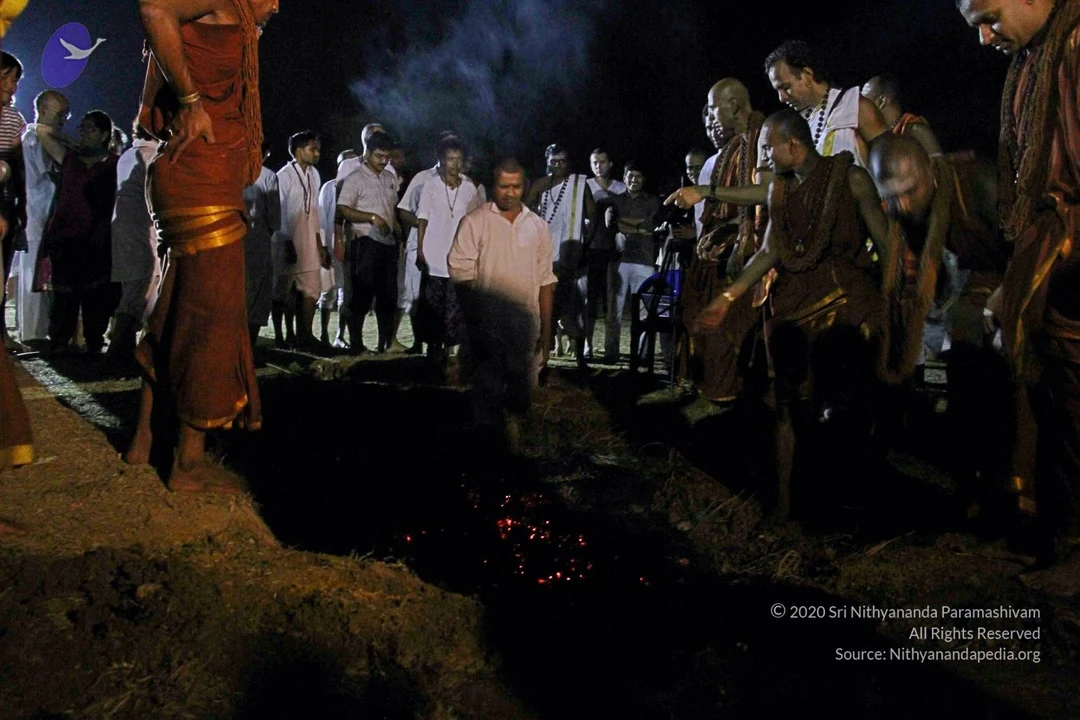
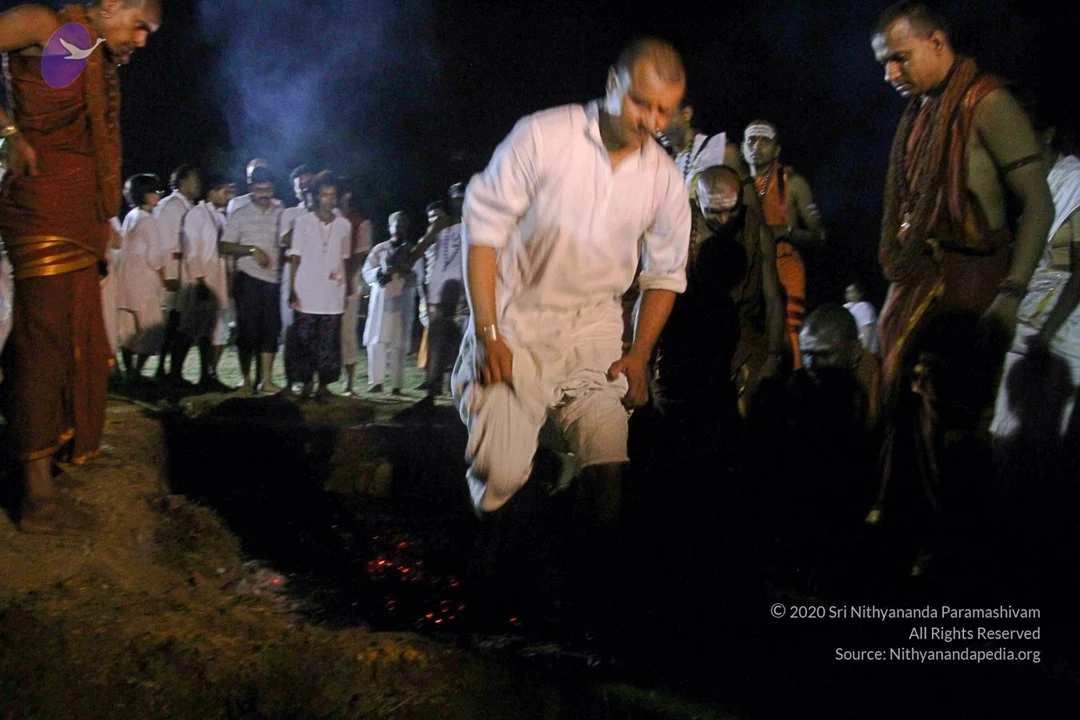
firewalking

Link to Facebook

https://www.facebook.com/srinithyananda.swami/posts/172459782909029 https://www.facebook.com/srinithyananda.swami/posts/172459802909027

Photos Of The Day:

Ananda-Bhairava

Adhi-Kailash

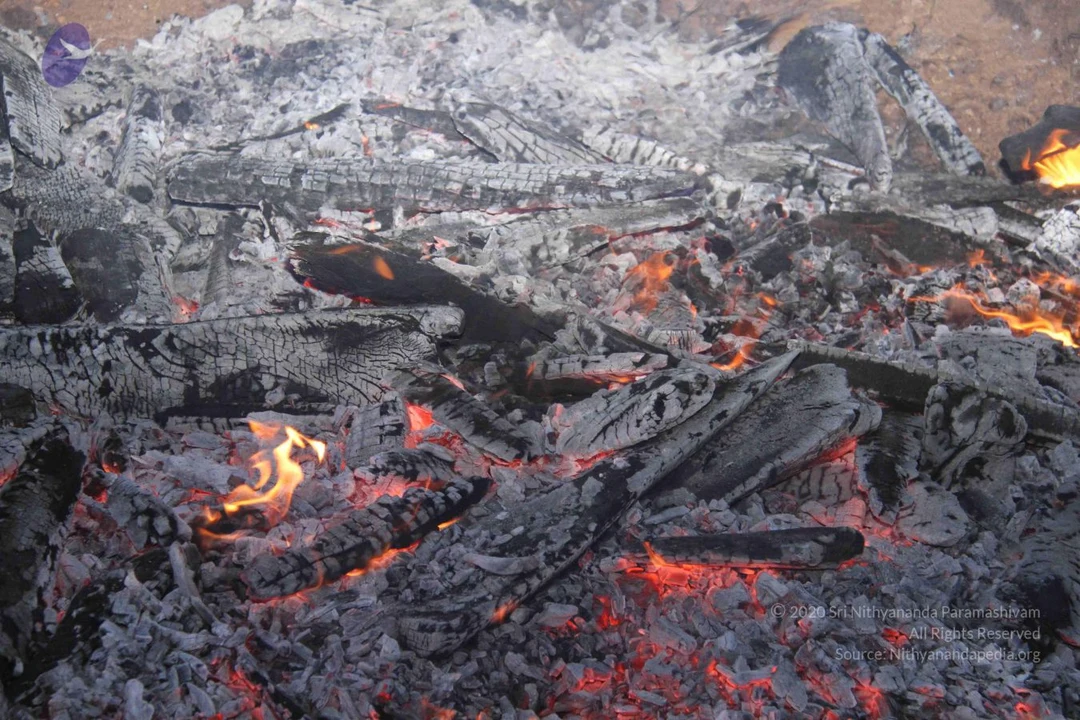
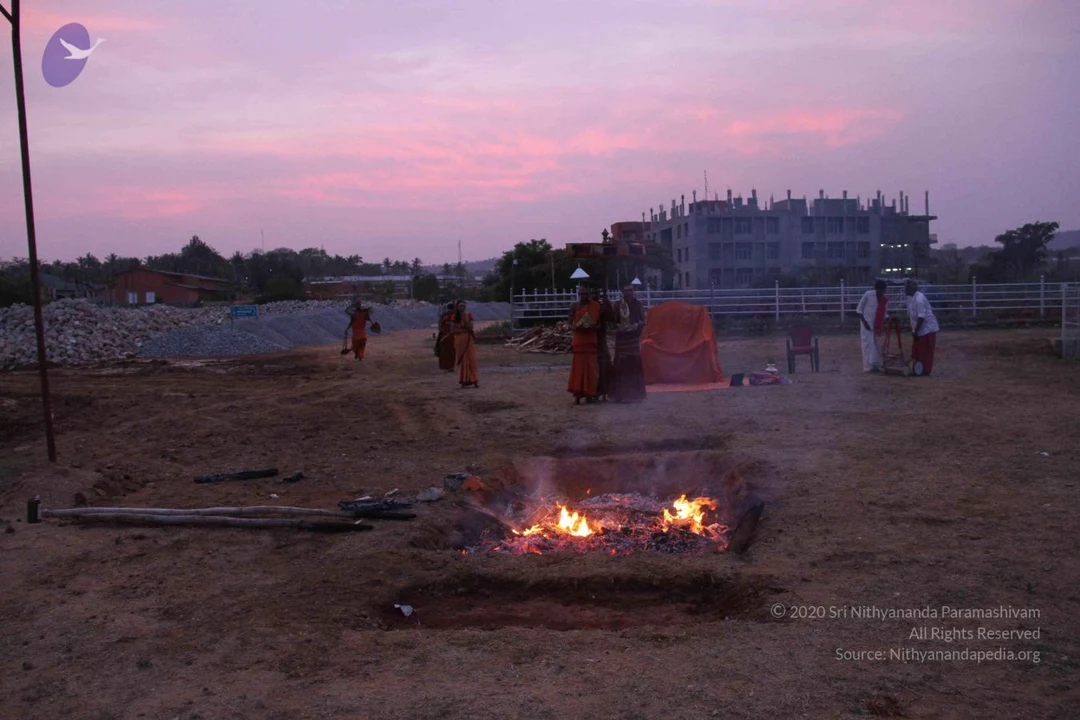
Fire-walking

Photos Of The Day:

Morning-Message

Satsang

Fire-Walk-03-Apr-2013

Photos Of The Day:

Session-with-SPH

Aadheenam-Rounds

Fire-Walking

Photos Of The Day:

Morning-Message

Satsang

Fire-Walk

Photos from this day

View all 335 photos

Photos

16 photosSource gallery
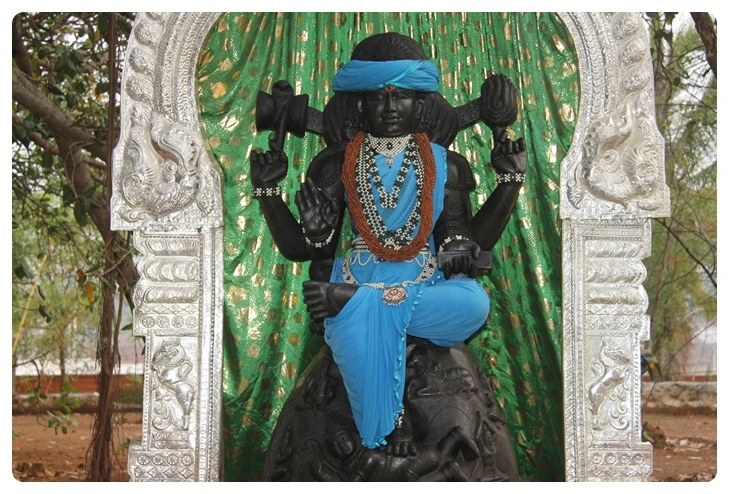
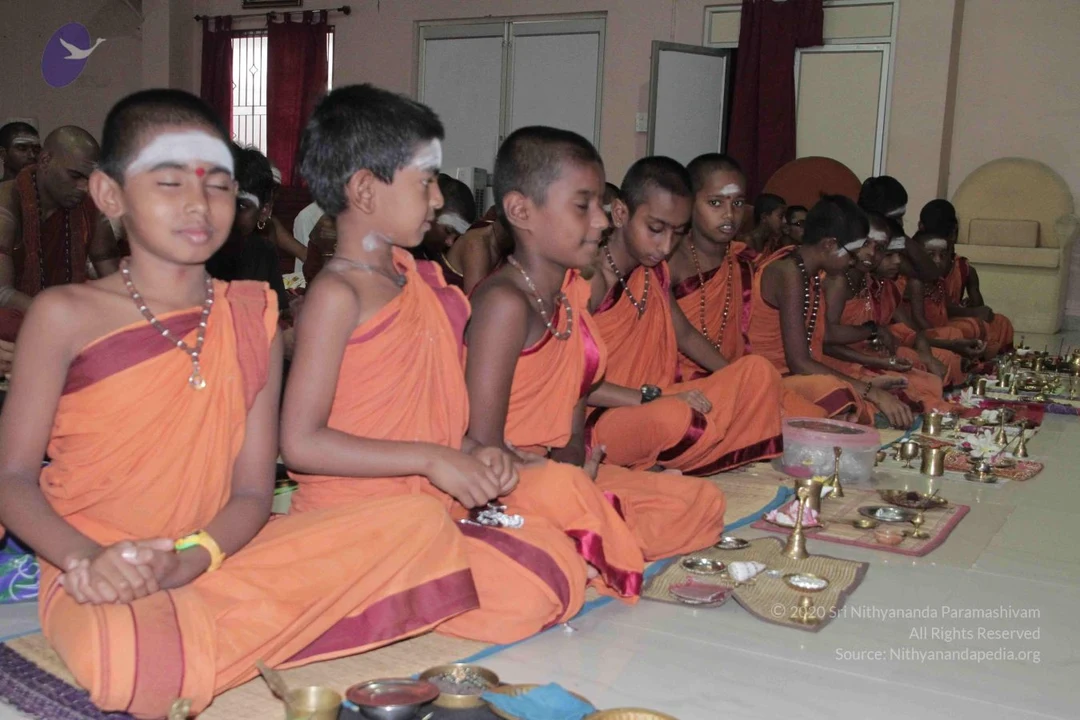
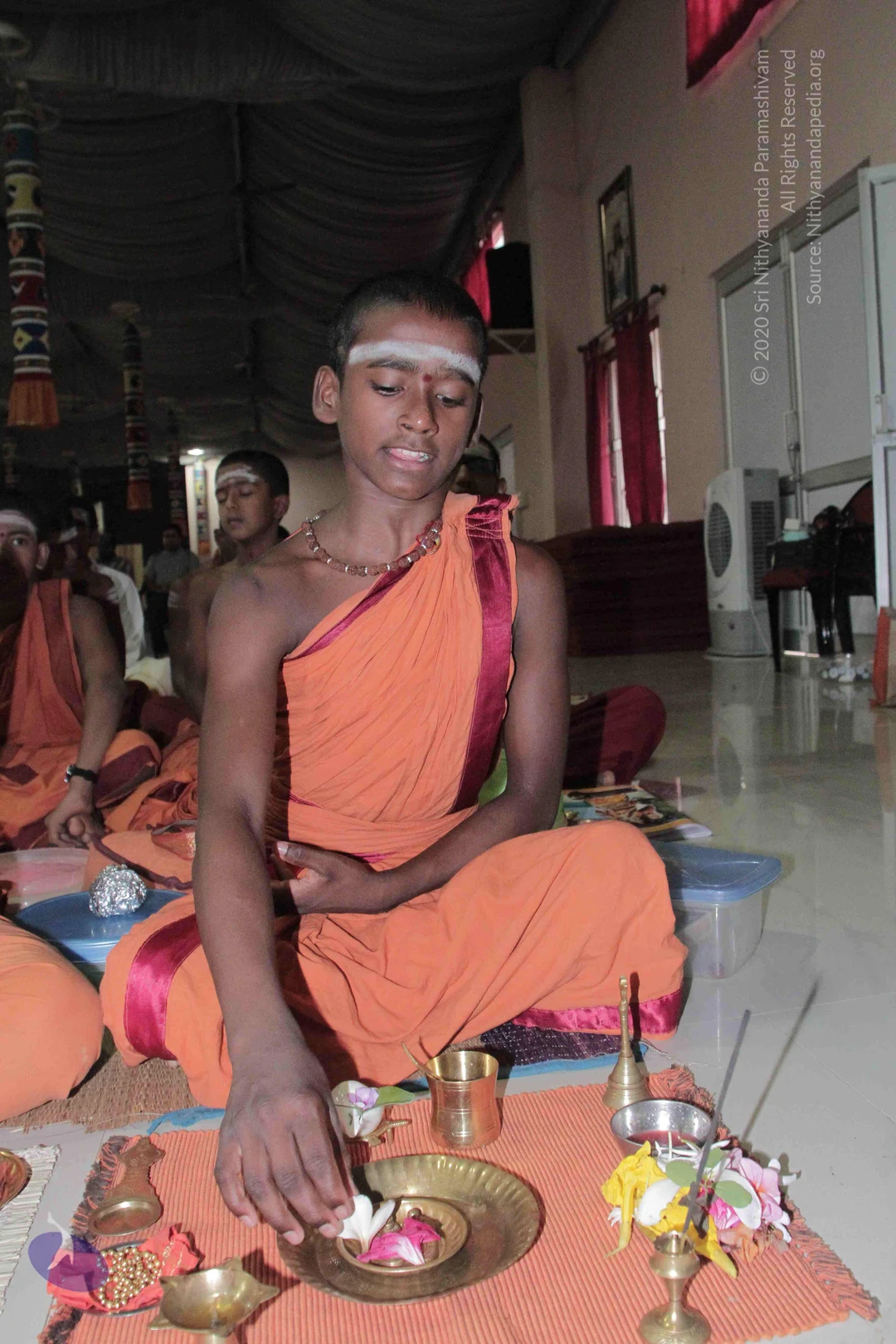
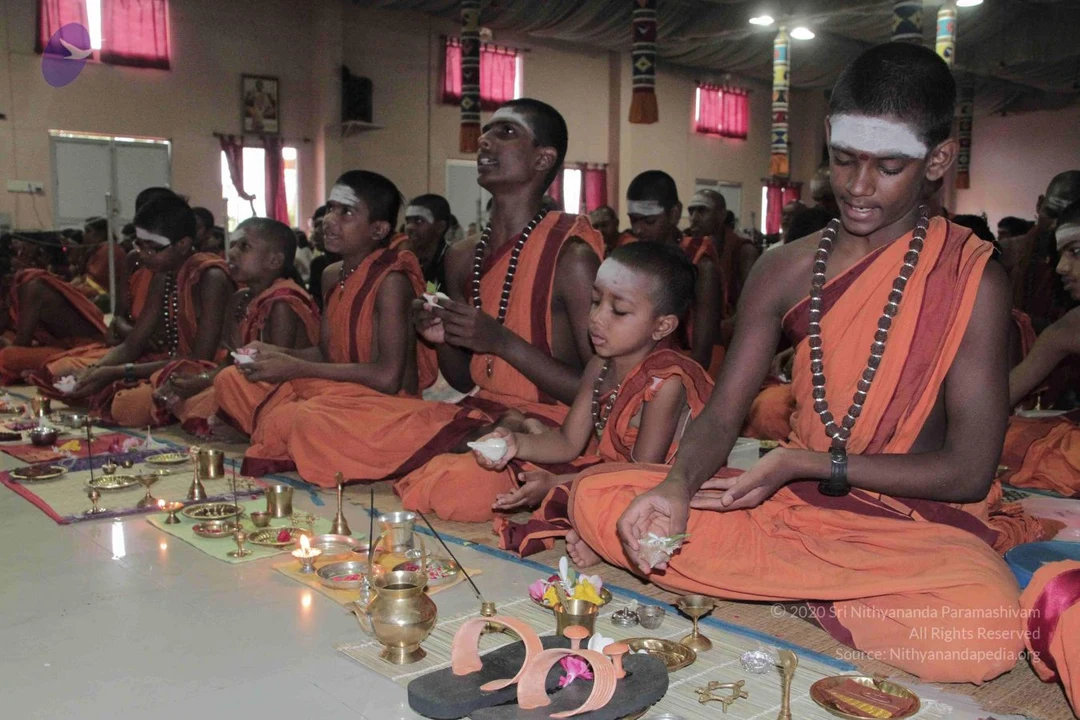
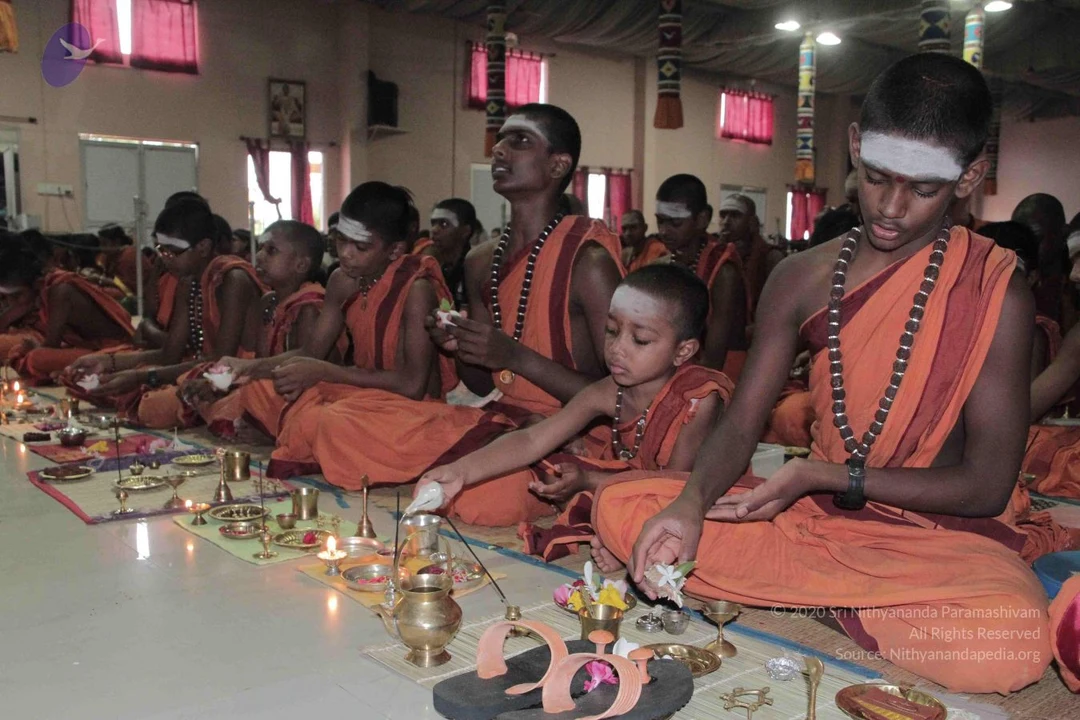
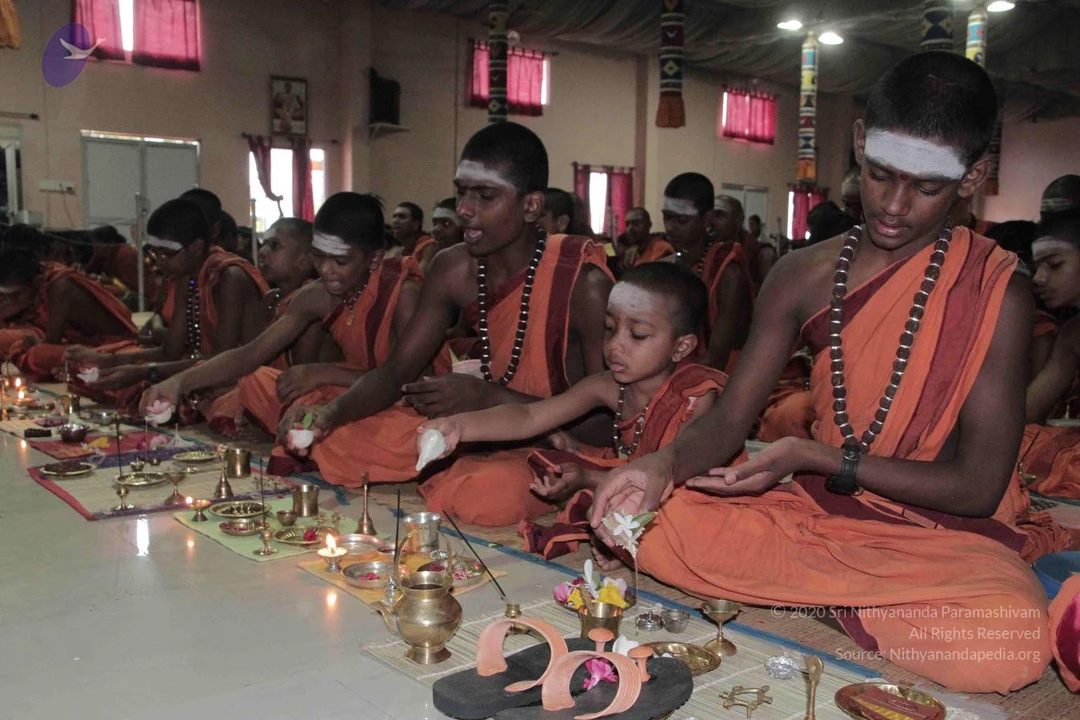
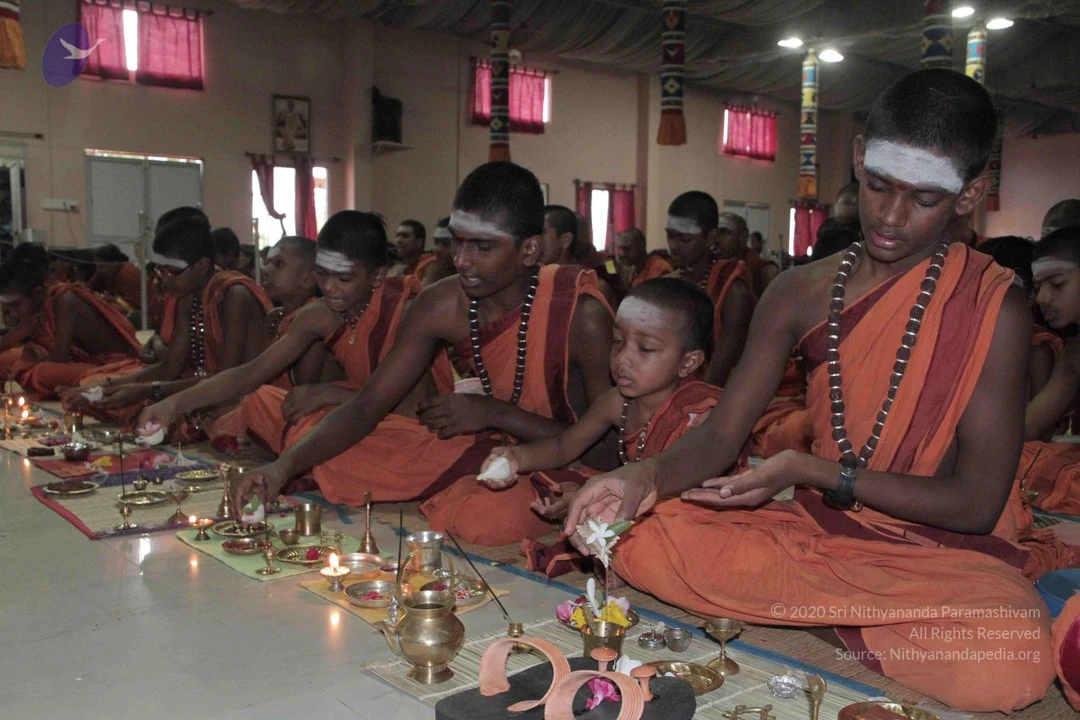
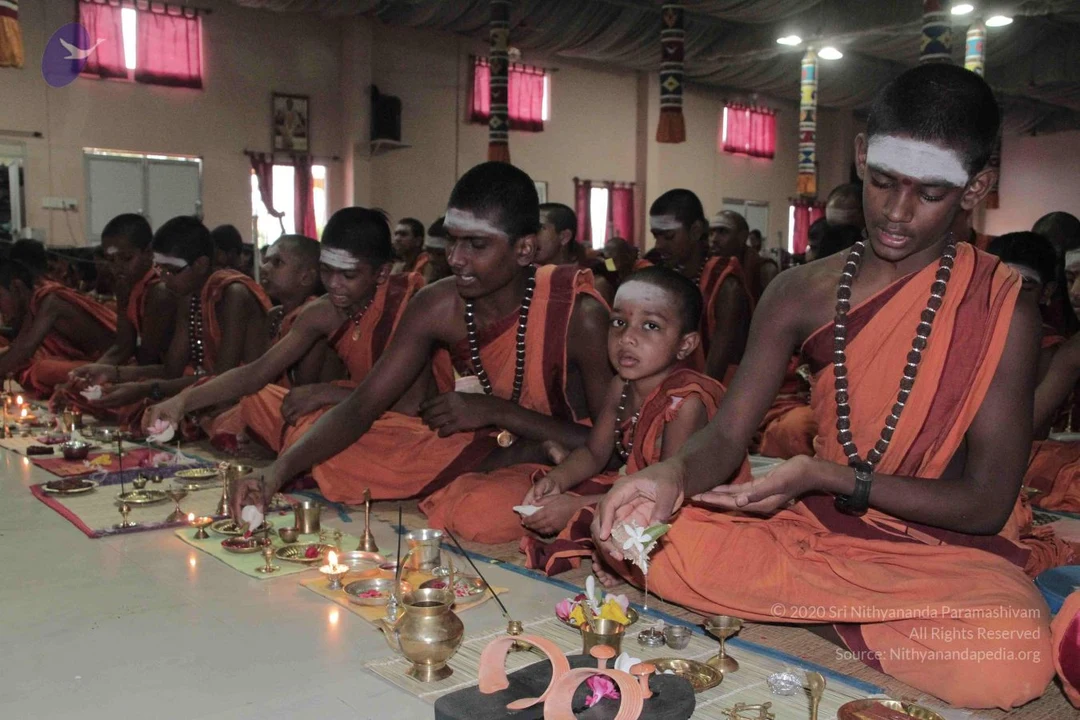
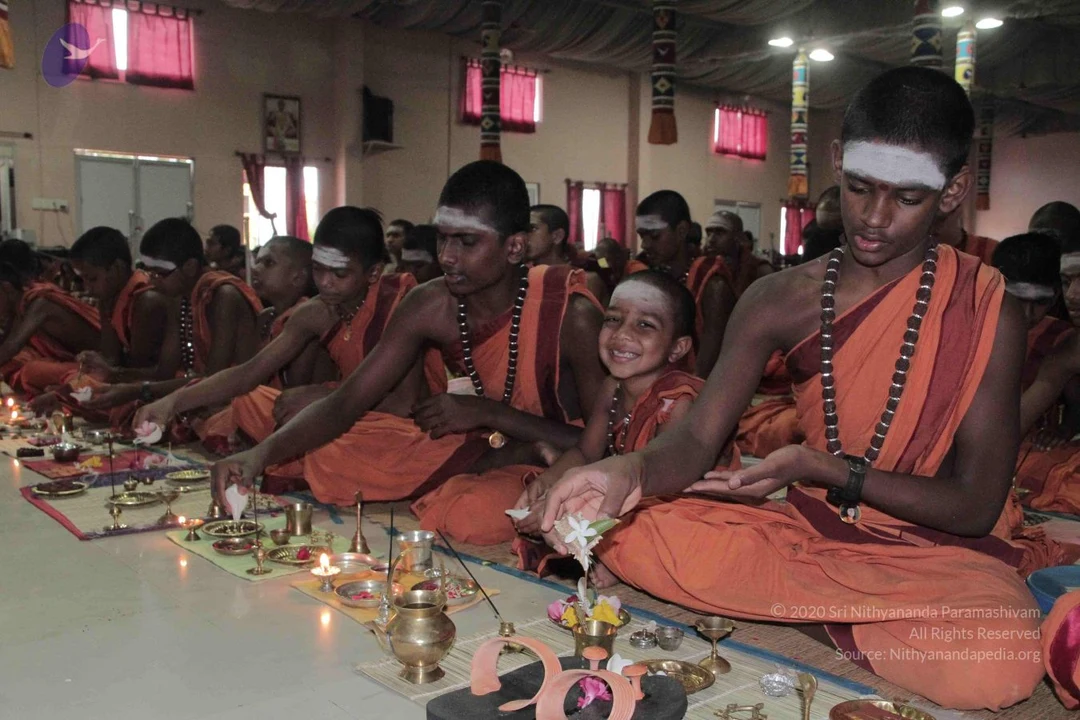
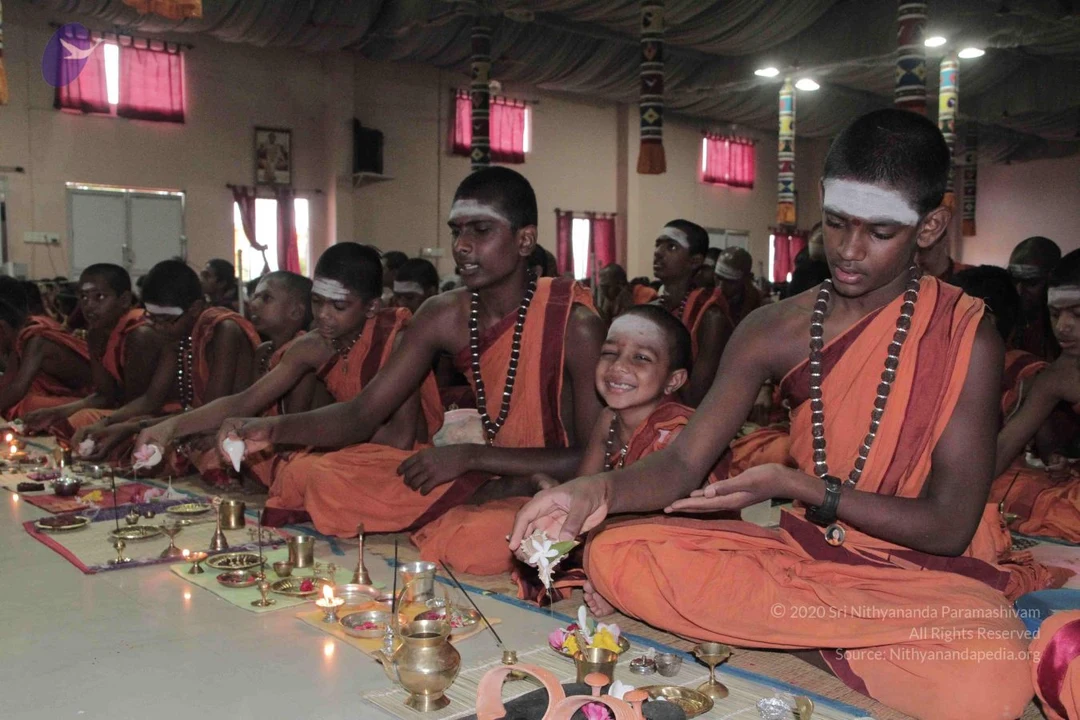
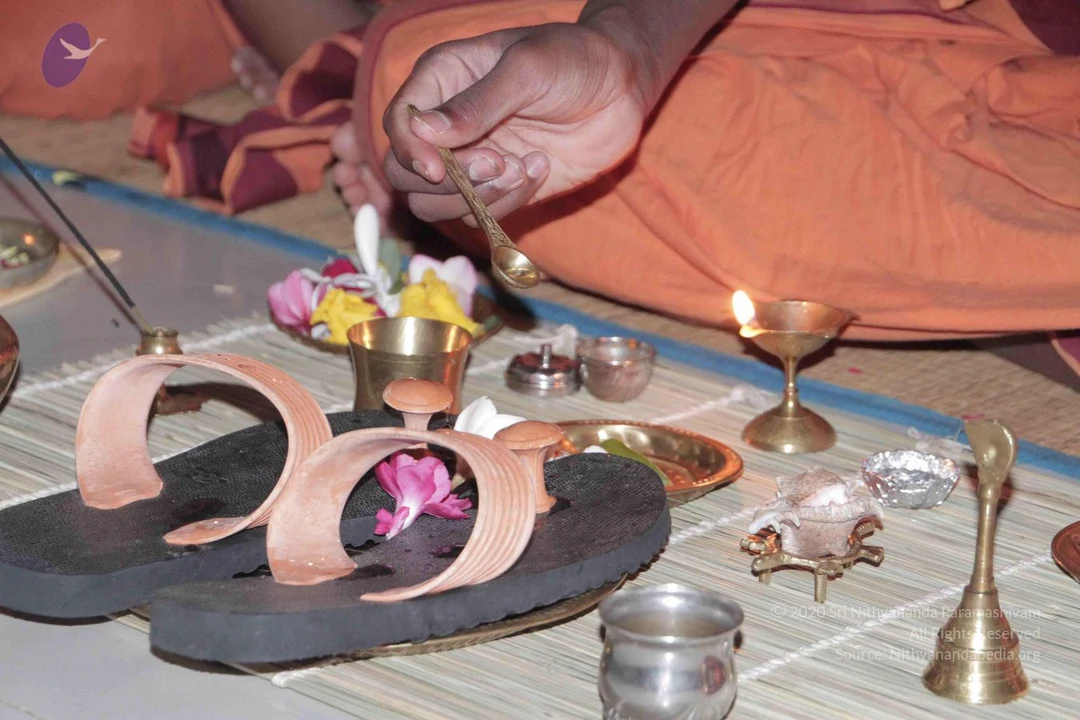
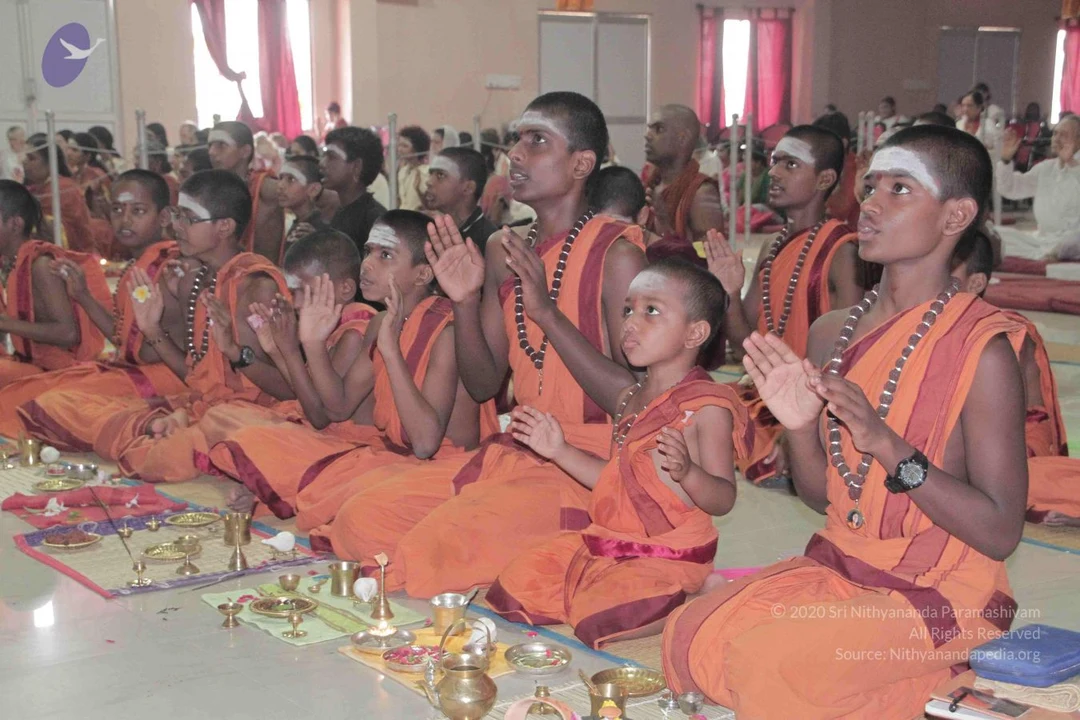
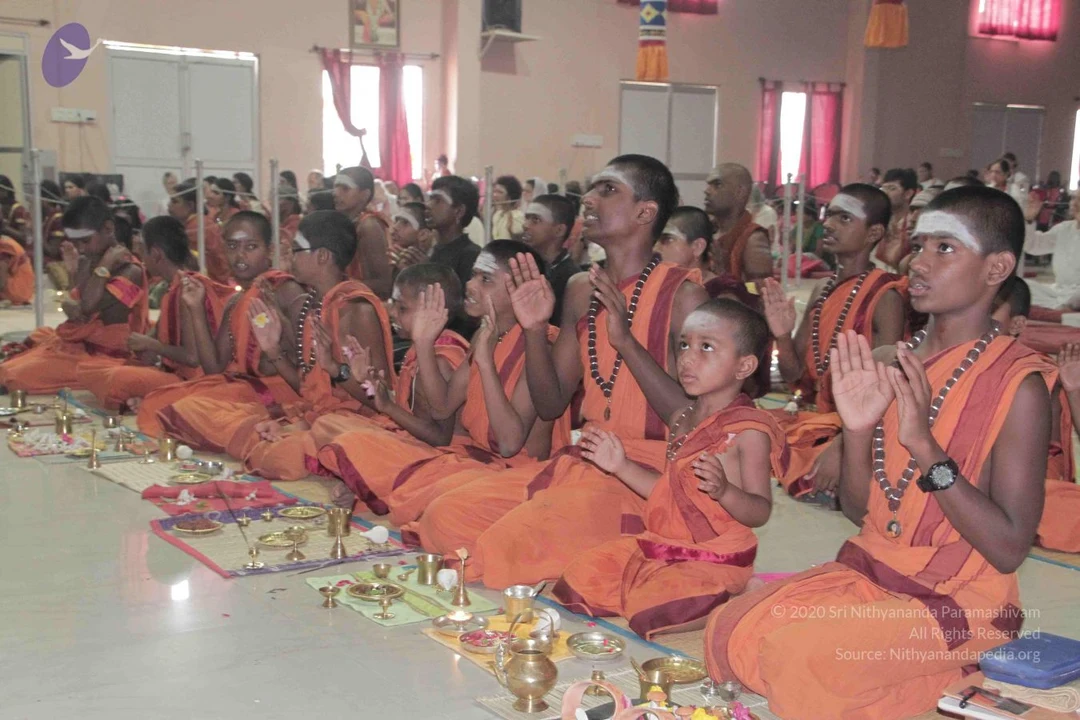
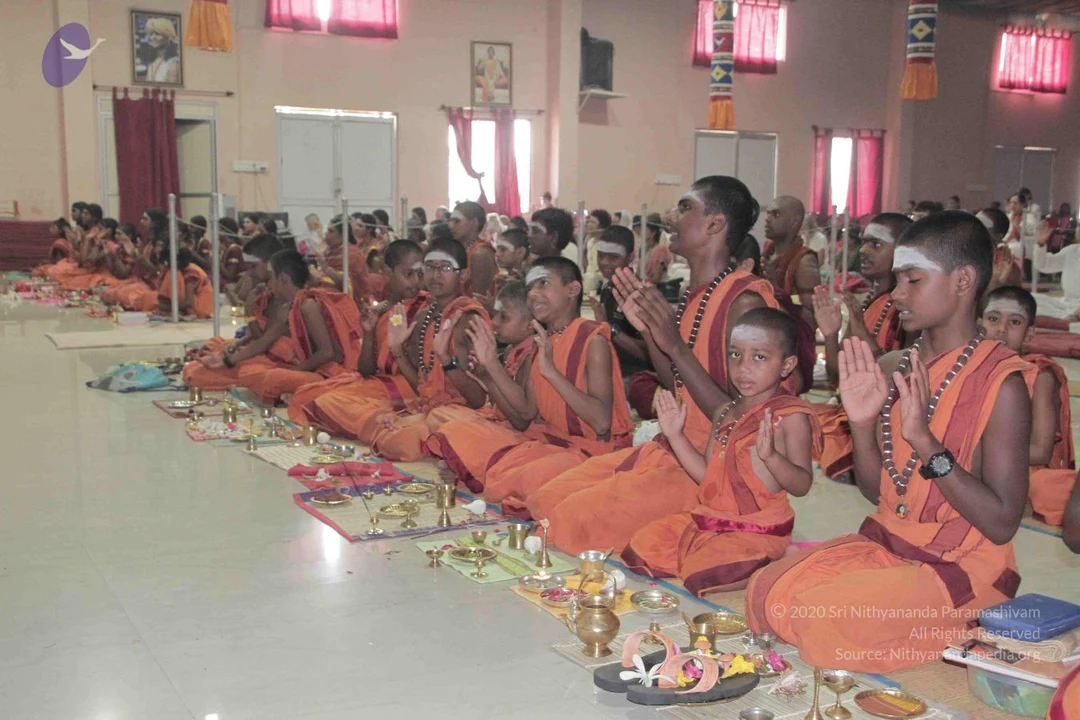
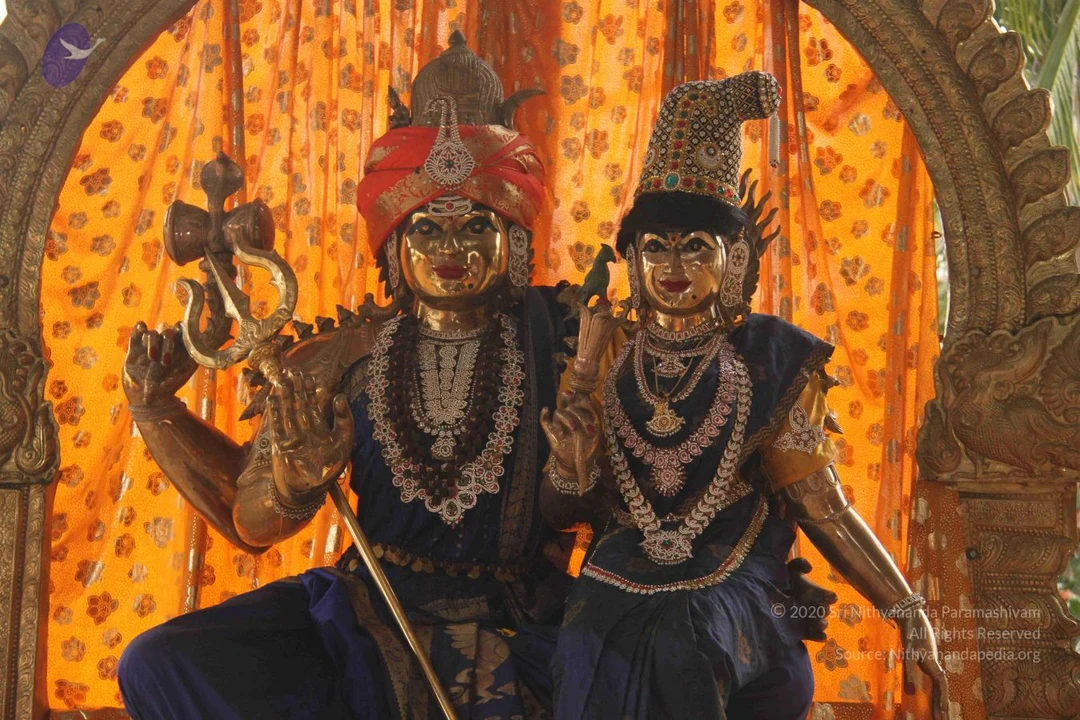
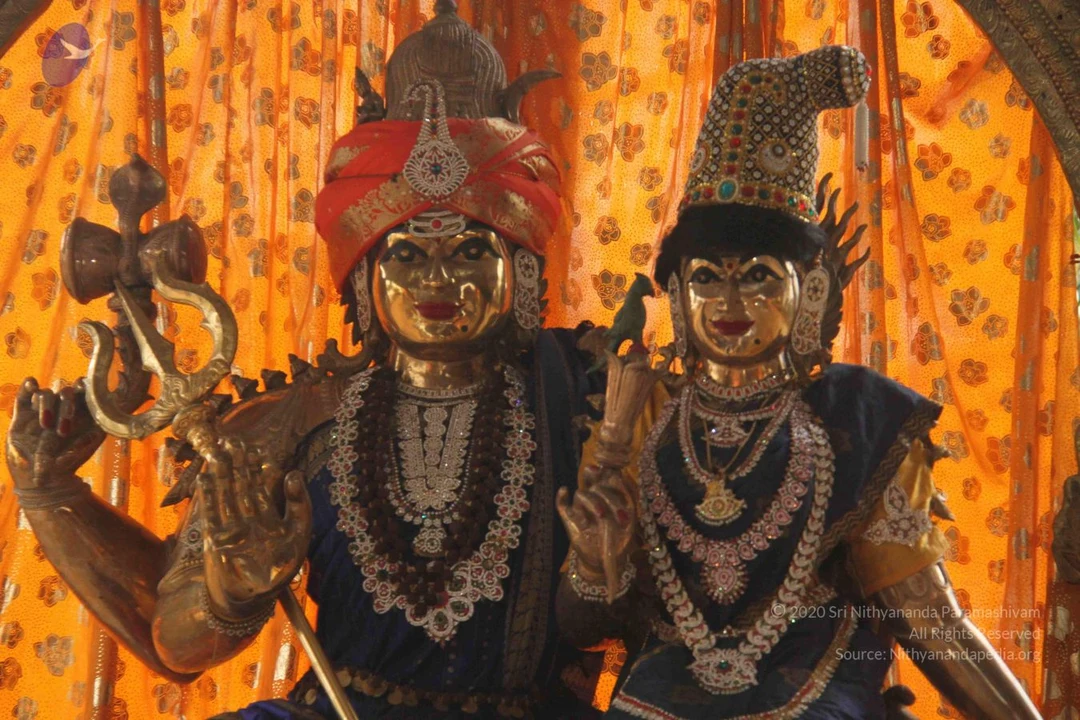
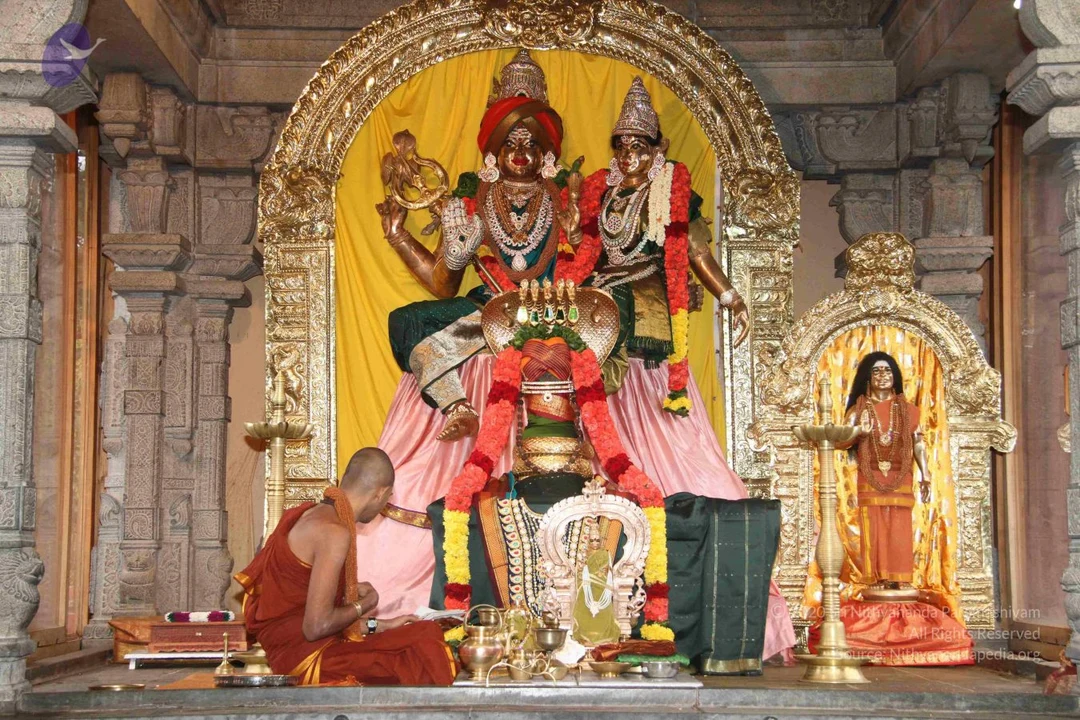
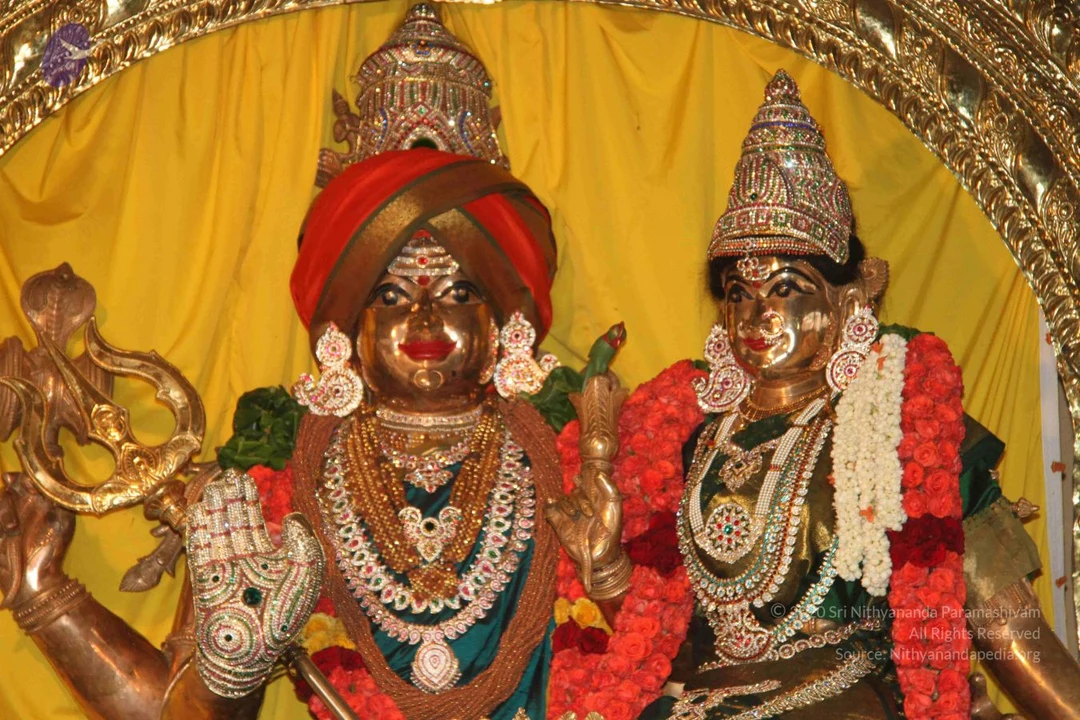
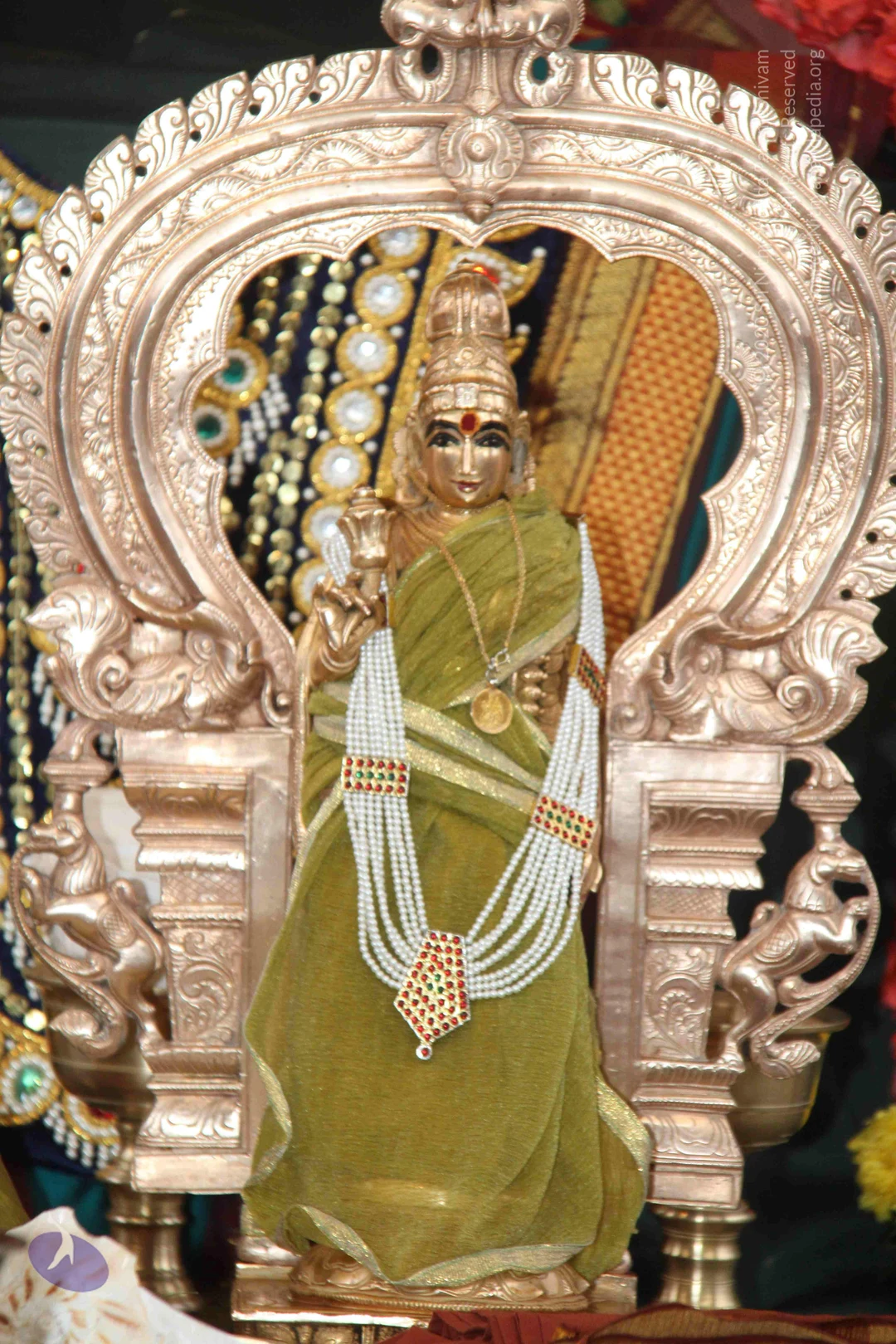
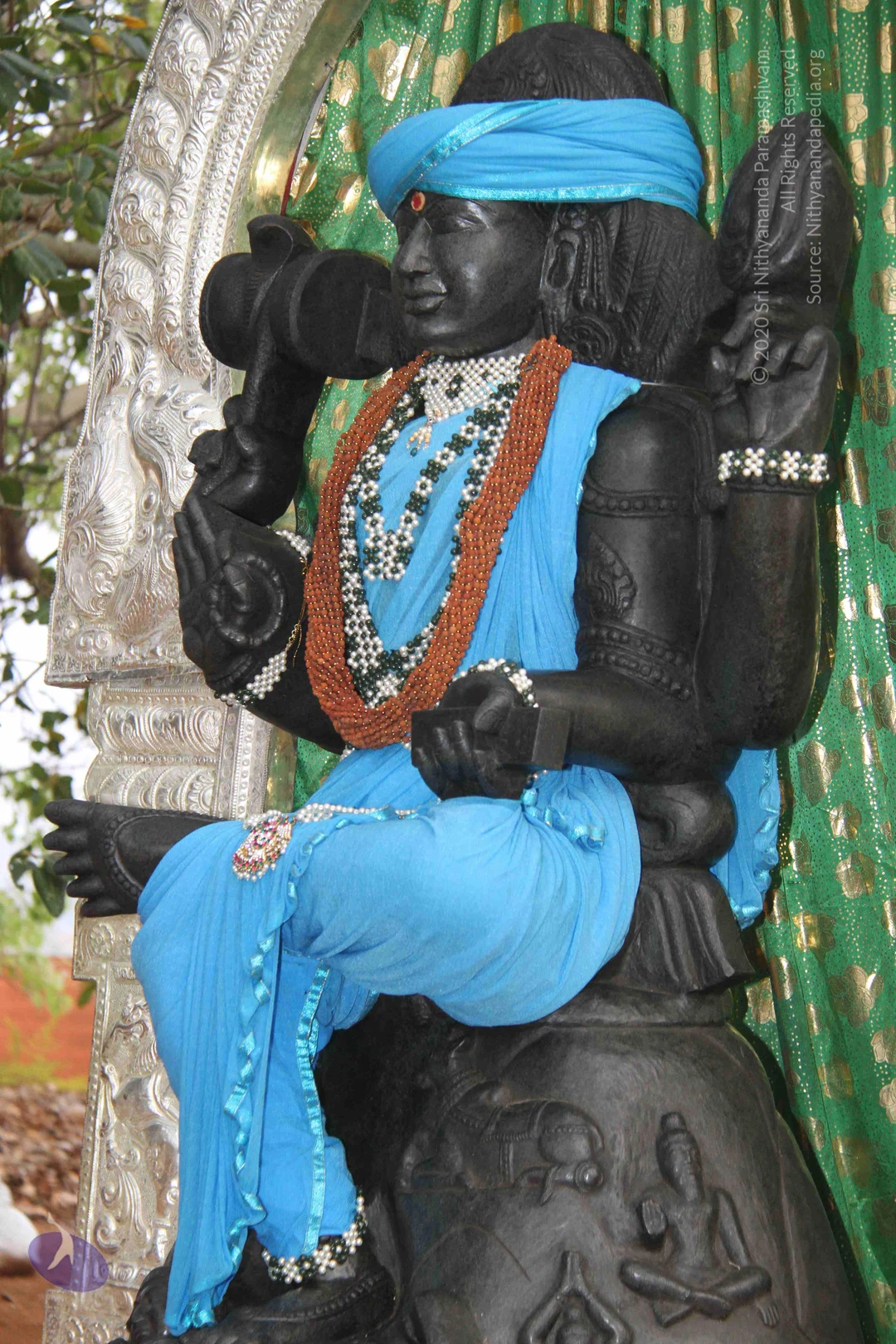
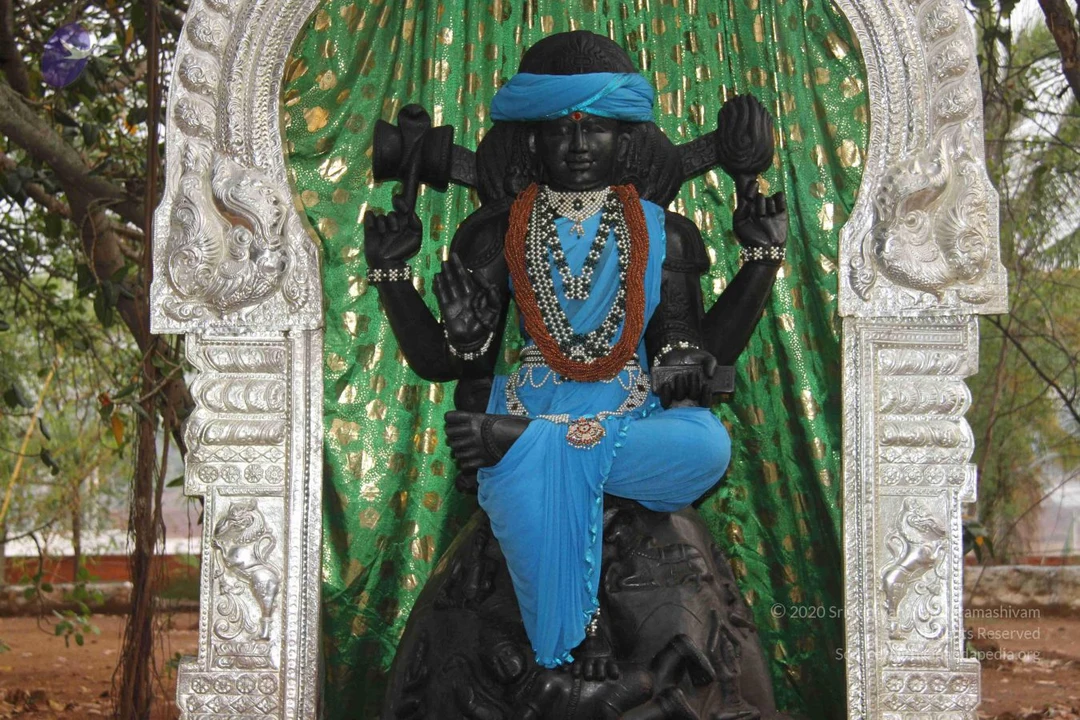
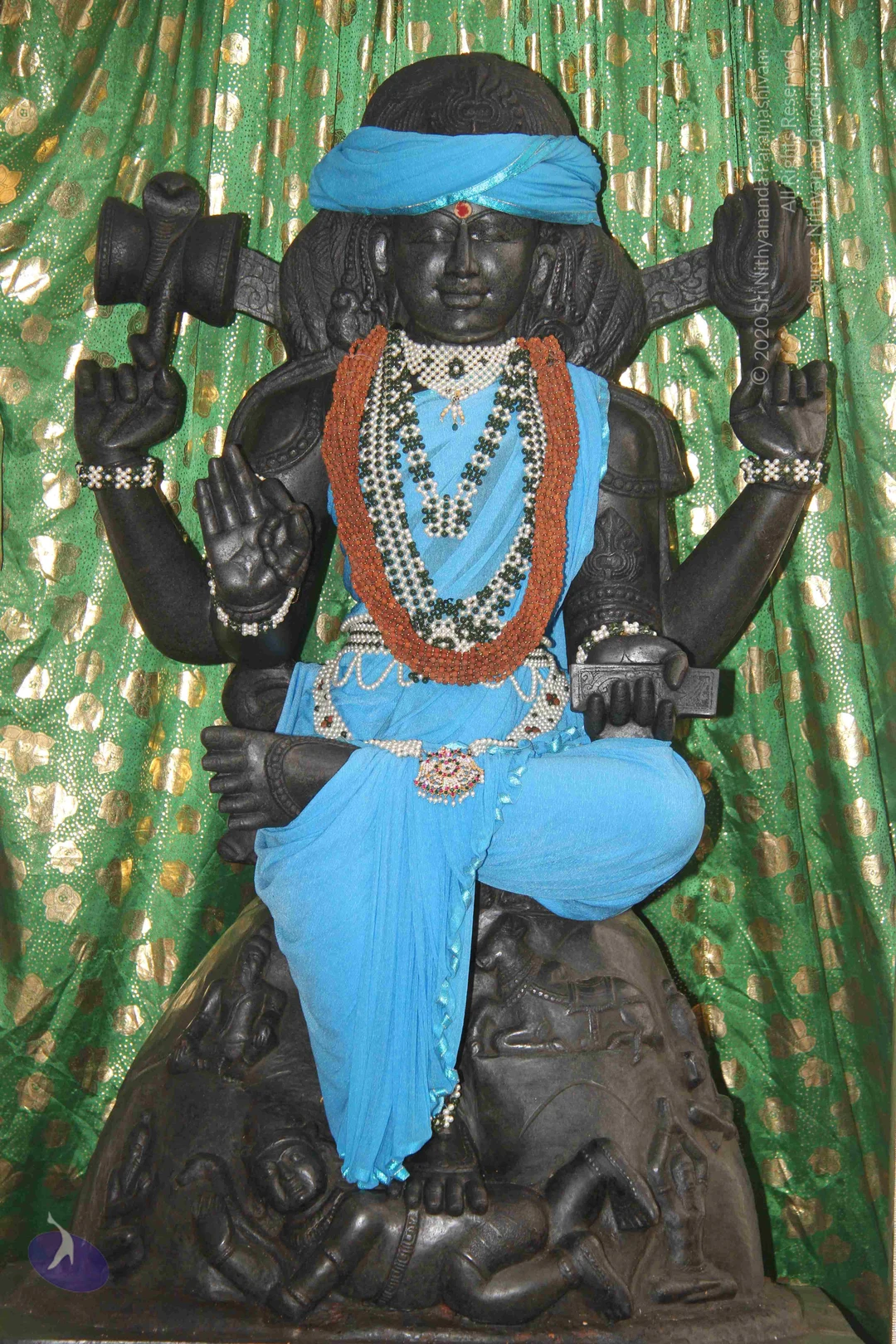
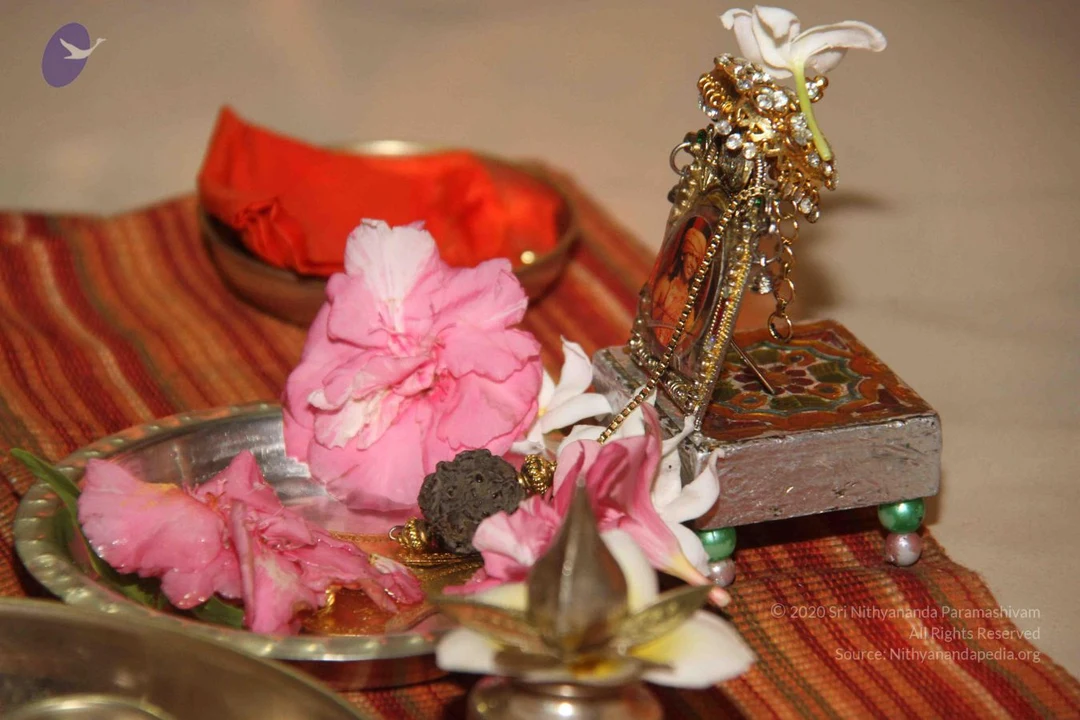
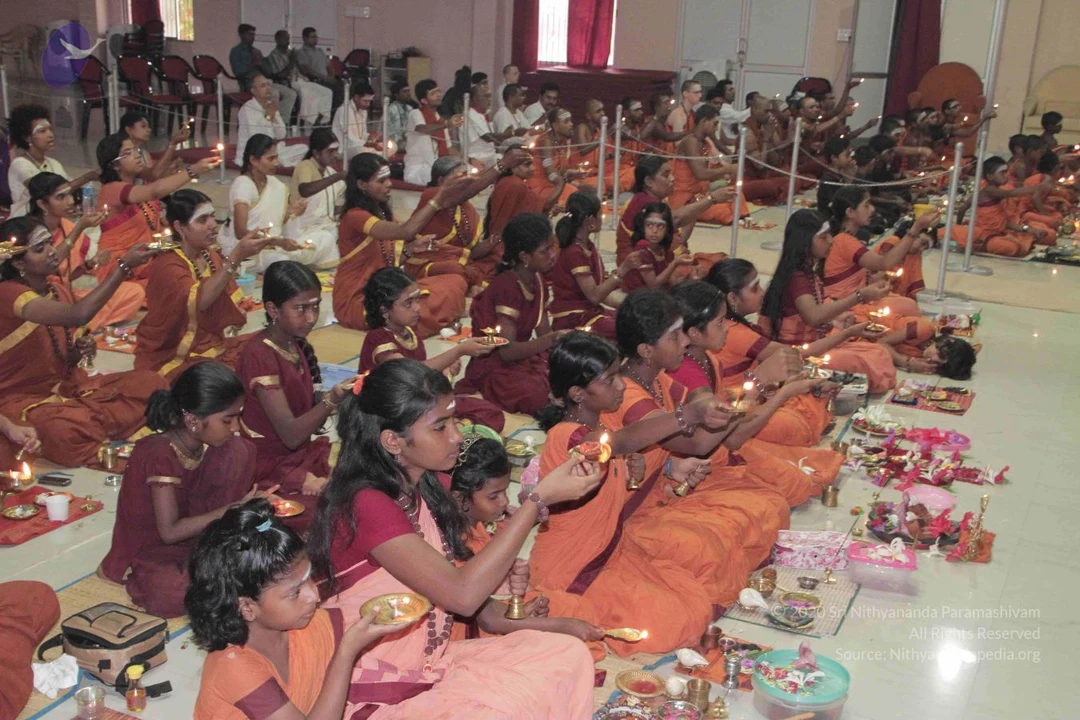
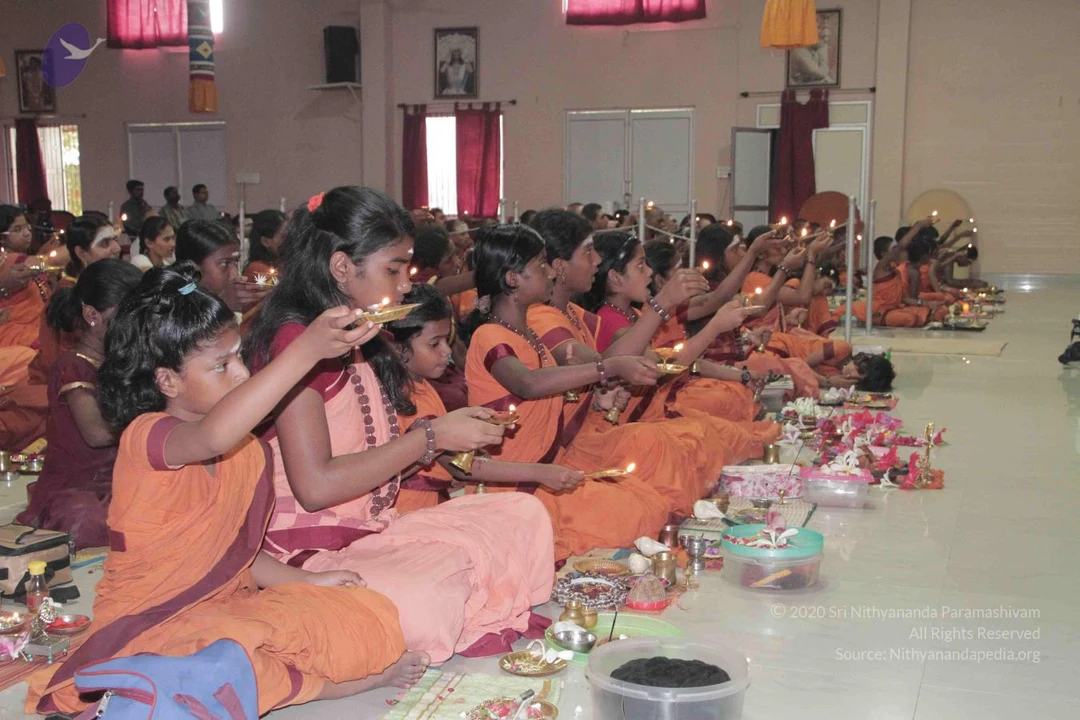
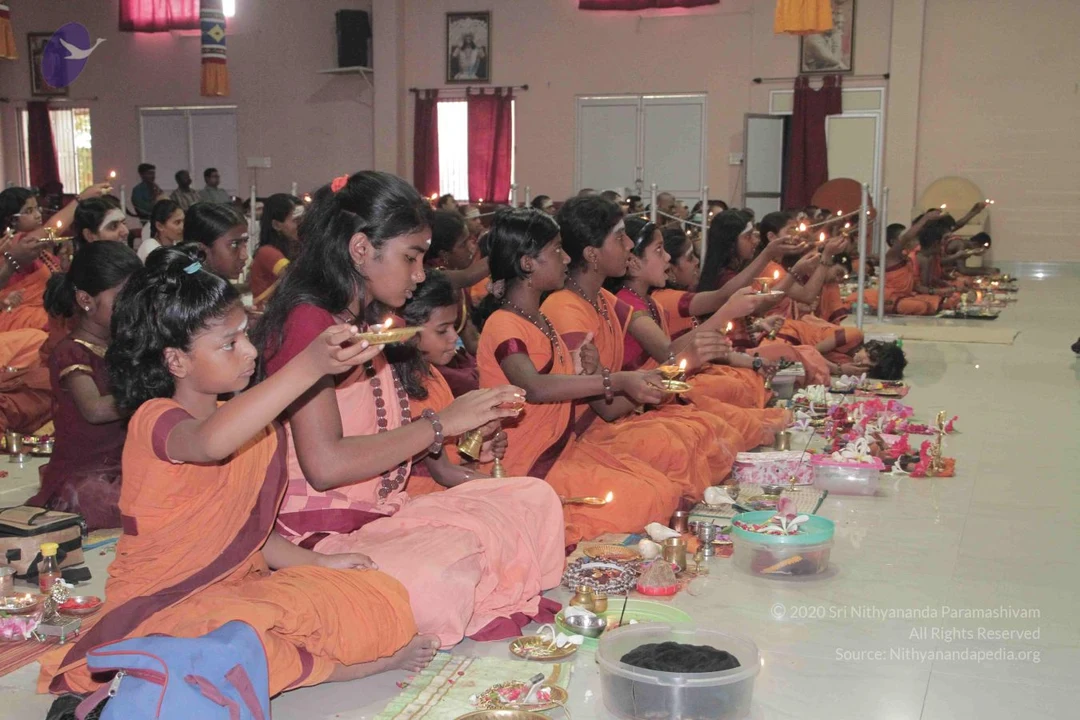
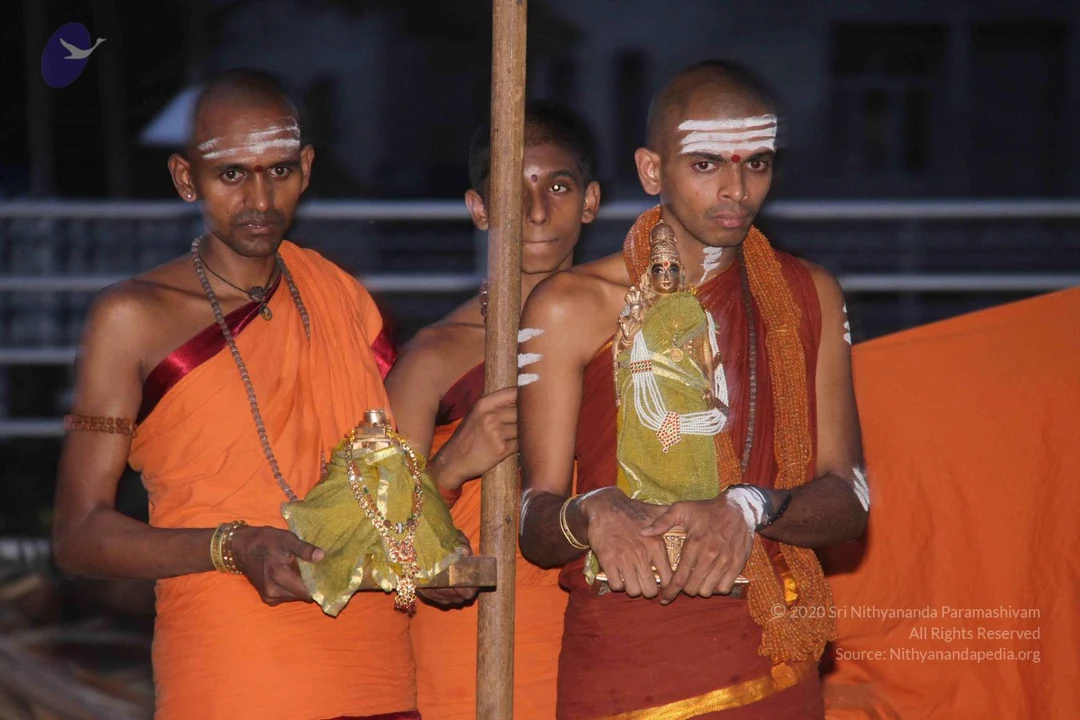
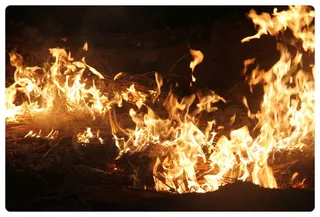
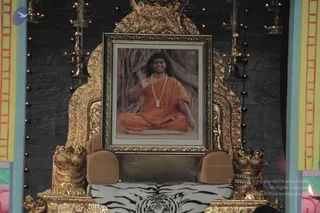
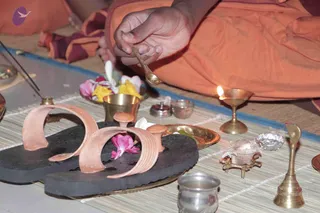
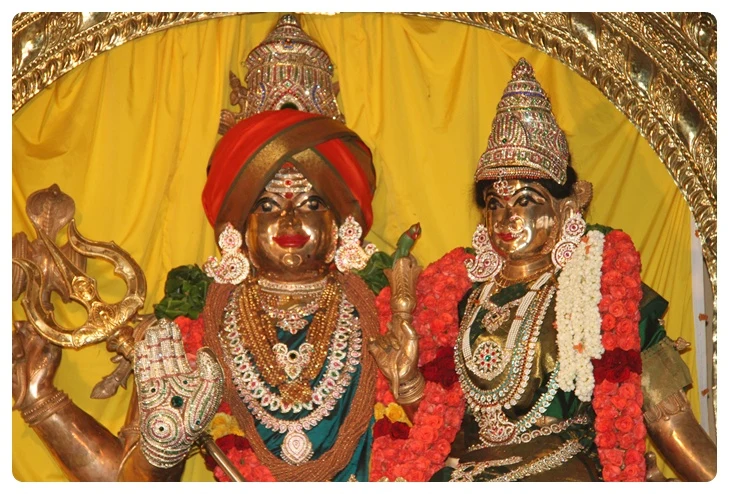
Two gilded metal murti statues of a deity couple stand side by side against a yellow cloth backdrop framed by an ornate gold arch. The figure on the left wears a red and gold turban, a green garment, a heavy gold necklace and red-and-white earrings, holds a trident in one hand and a small object in the other. The figure on the right wears a tall ornate crown, a green and gold sari, layered pearl and gemstone necklaces and a long white flower garland, while red marigold garlands drape both figures. The statues are decorated with bindi markings and jewelled ornaments. No living people are visible.A black stone murti of a multi-armed deity seated on a dark stone base in an outdoor setting. The figure wears a bright blue turban and blue dhoti-style cloth, a red rudraksha-style bead necklace, a long white bead mala, and a silver waist ornament. It holds ritual objects in its raised hands. Behind it hangs a green fabric with gold patterns, framed by an ornate silver arch decorated with carved figures. Trees and dry ground appear in the background. No physical people are visible.An empty ornate golden throne with carved lion-head armrests and a tiger-striped cushion stands against a dark textured wall. Above it hangs a framed portrait labelled "Paramahamsa Nithyananda" showing a man with long dark hair in orange robes, a rudraksha-style bead mala and white flower garland, seated in lotus pose with one hand raised in blessing before a banyan tree. Brass hanging oil lamps and bells decorate the upper area, and a lit oil lamp glows at the lower right edge. Printed portrait on a throne, not a live person.Young boys and teenagers in orange-saffron robes sit cross-legged on mats in a ritual setting, wearing rudraksha malas and white tilak marks on their foreheads. A younger boy in the foreground, wearing an orange robe and a red-trimmed cloth, reaches toward a brass cup and a small spoon. Brass puja vessels, a kalasha-style pot, brass lamps, small plates of flowers and red petals, and lit oil lamps sit on a green mat and a yellow cloth. The setting suggests a puja or yagna arranged for devotees.A seated group of young saffron-robed sannyasi students performs a puja in a hall with pink curtains and wooden columns. Foreground boys wear orange cloth, rudraksha malas and white vertical tilak stripes on their foreheads, and hold flowers and offerings over brass plates. Brass lamps, a kalasha-style vessel and small oil lamps line the floor mat in front of them. A small child in orange sits among them, also holding a flower. Other seated devotees stretch back along the room.A close photograph of a puja being performed on a woven mat. A person in orange robes holds a small brass spoon above the items laid out before them. In the foreground are a pair of black sandal-shaped bases with terracotta-coloured curved pieces, pink and yellow flowers, a brass bell with a handle, a small brass oil lamp with a lit flame, a brass plate, a brass cup and small silver containers. An incense stick is at the left edge. Only the hand, forearm and orange-clad lap of the officiant are visible.

Photos

7 photosSource gallery
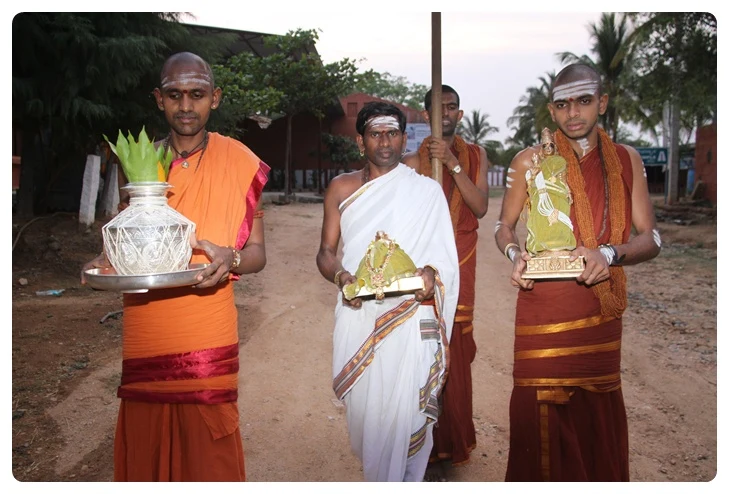
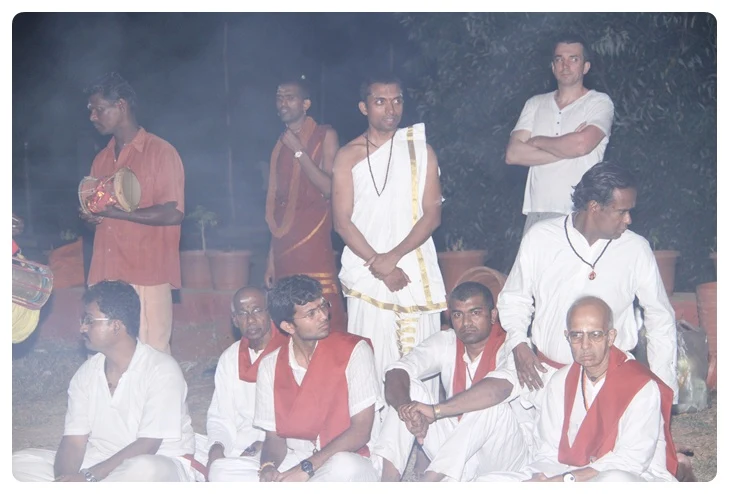
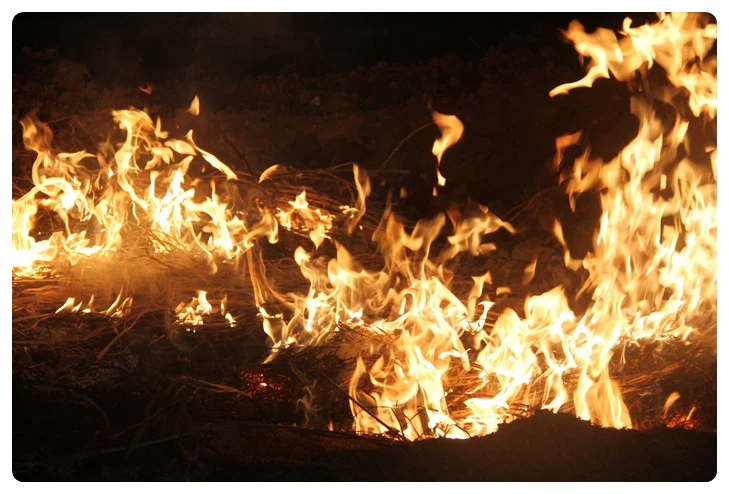
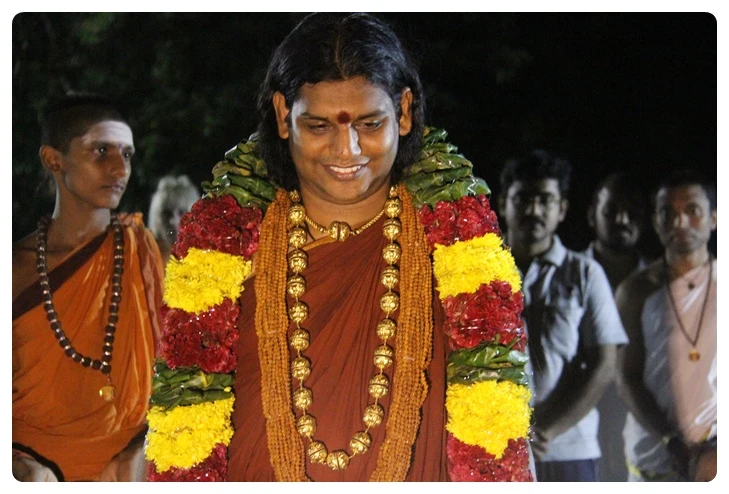
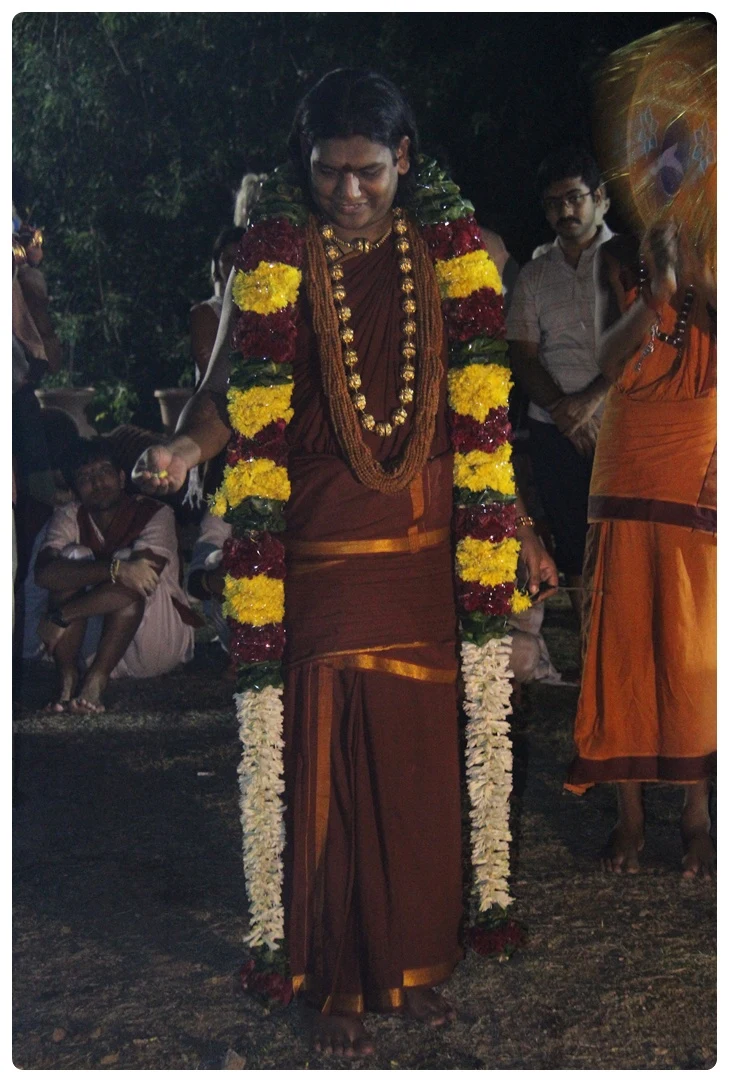
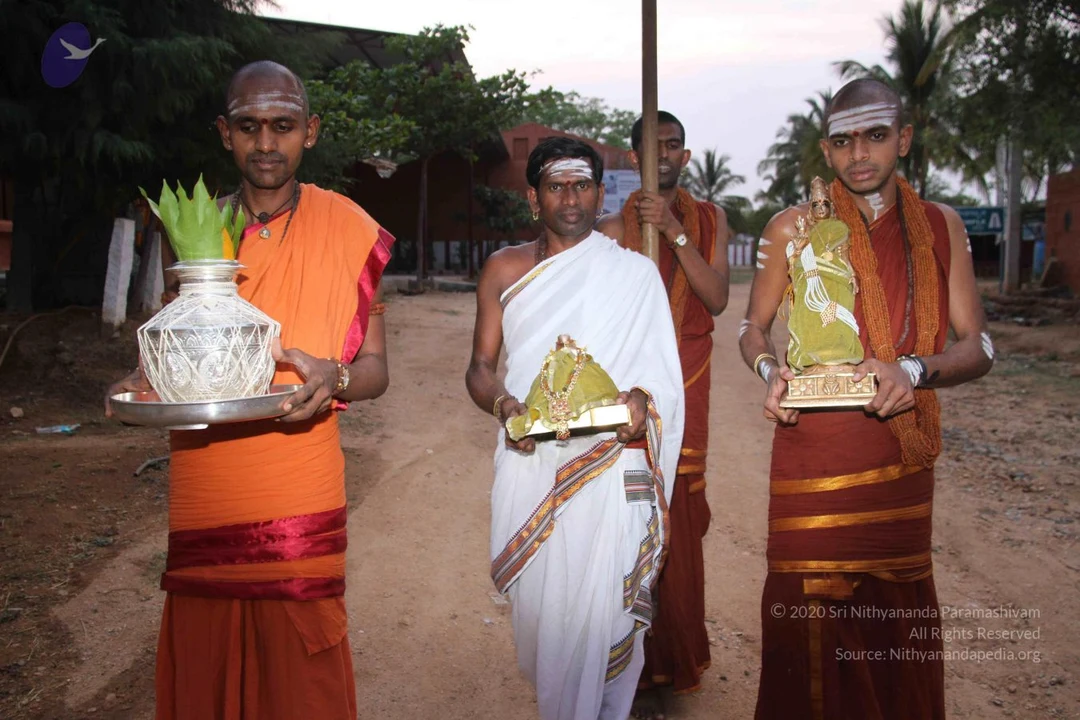
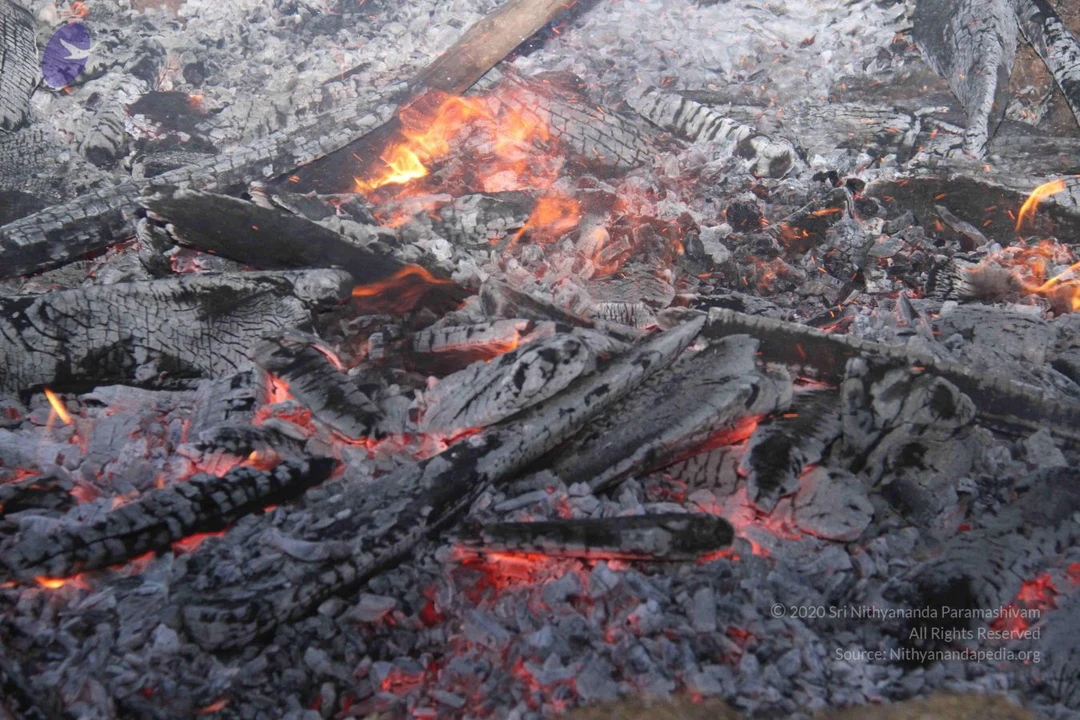
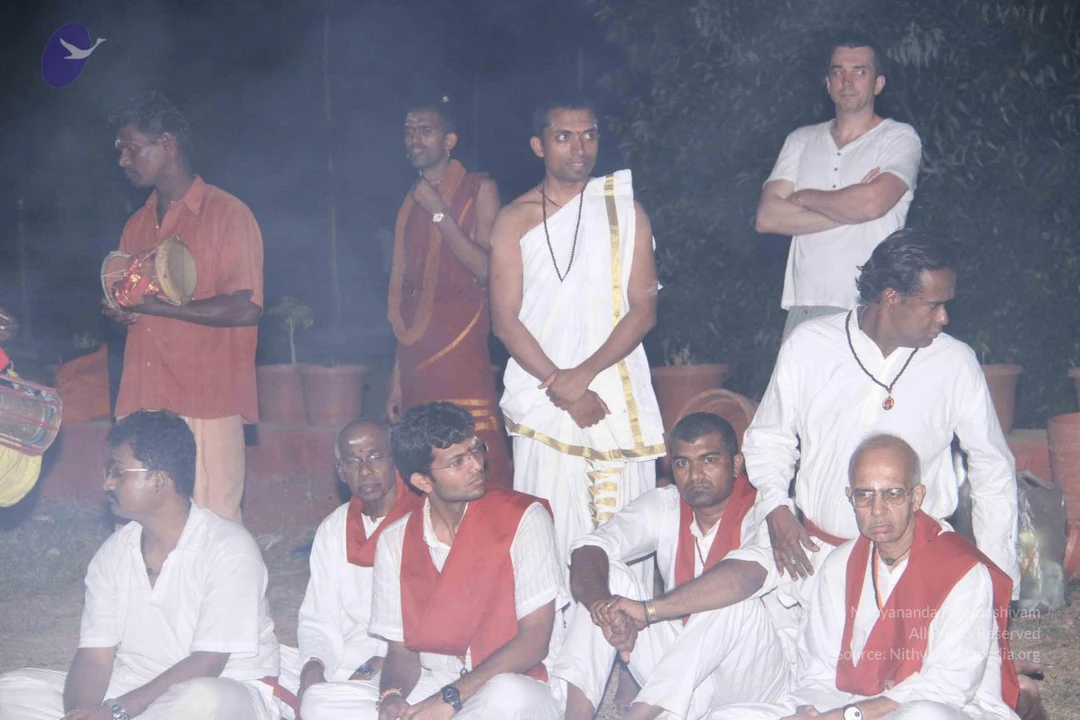
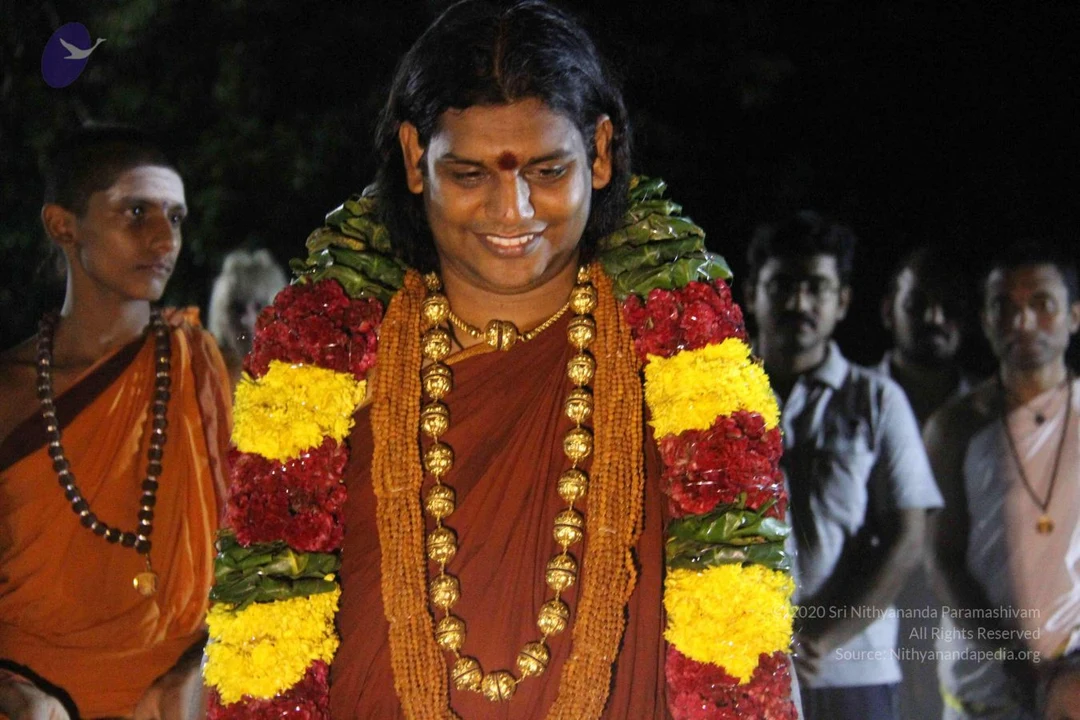
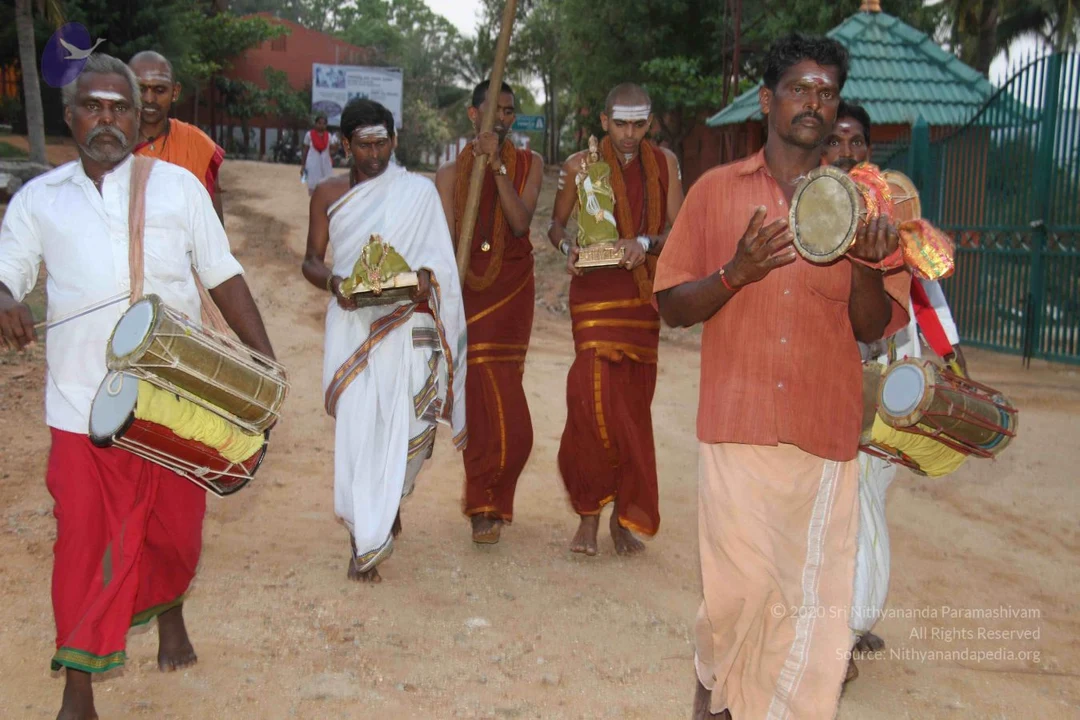
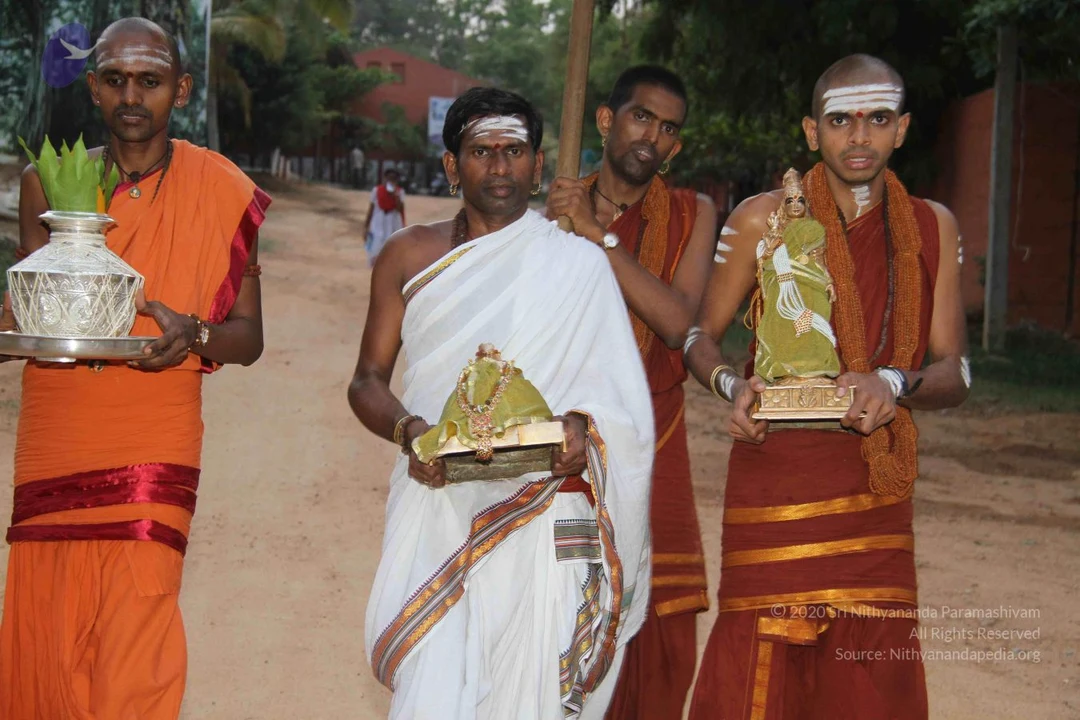
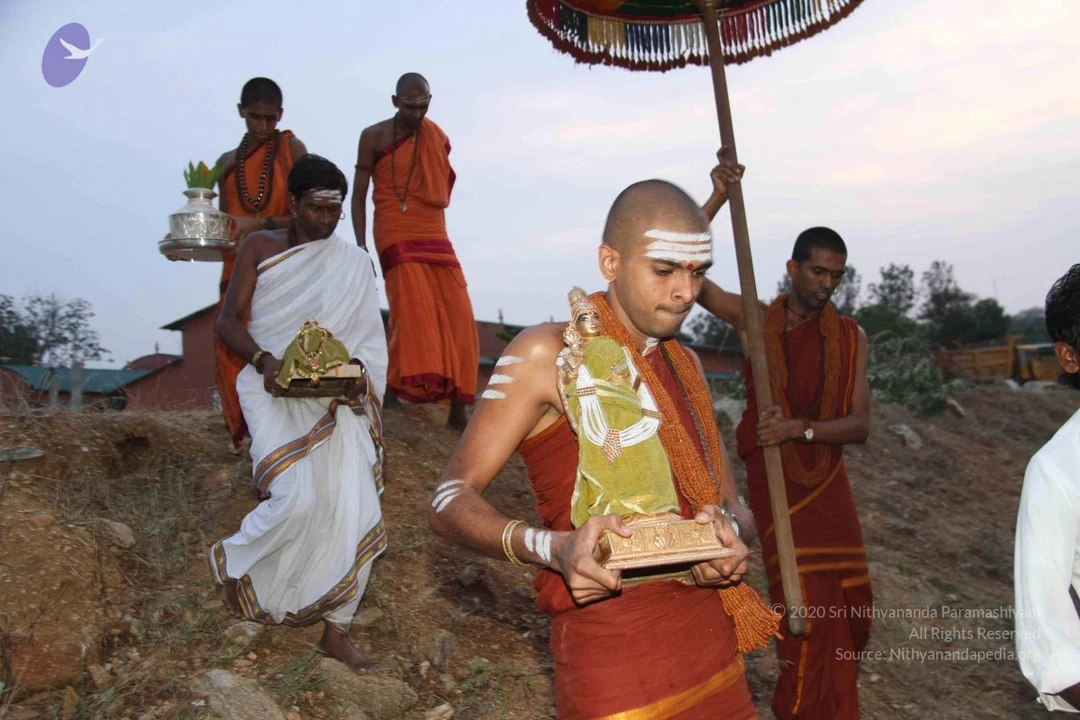
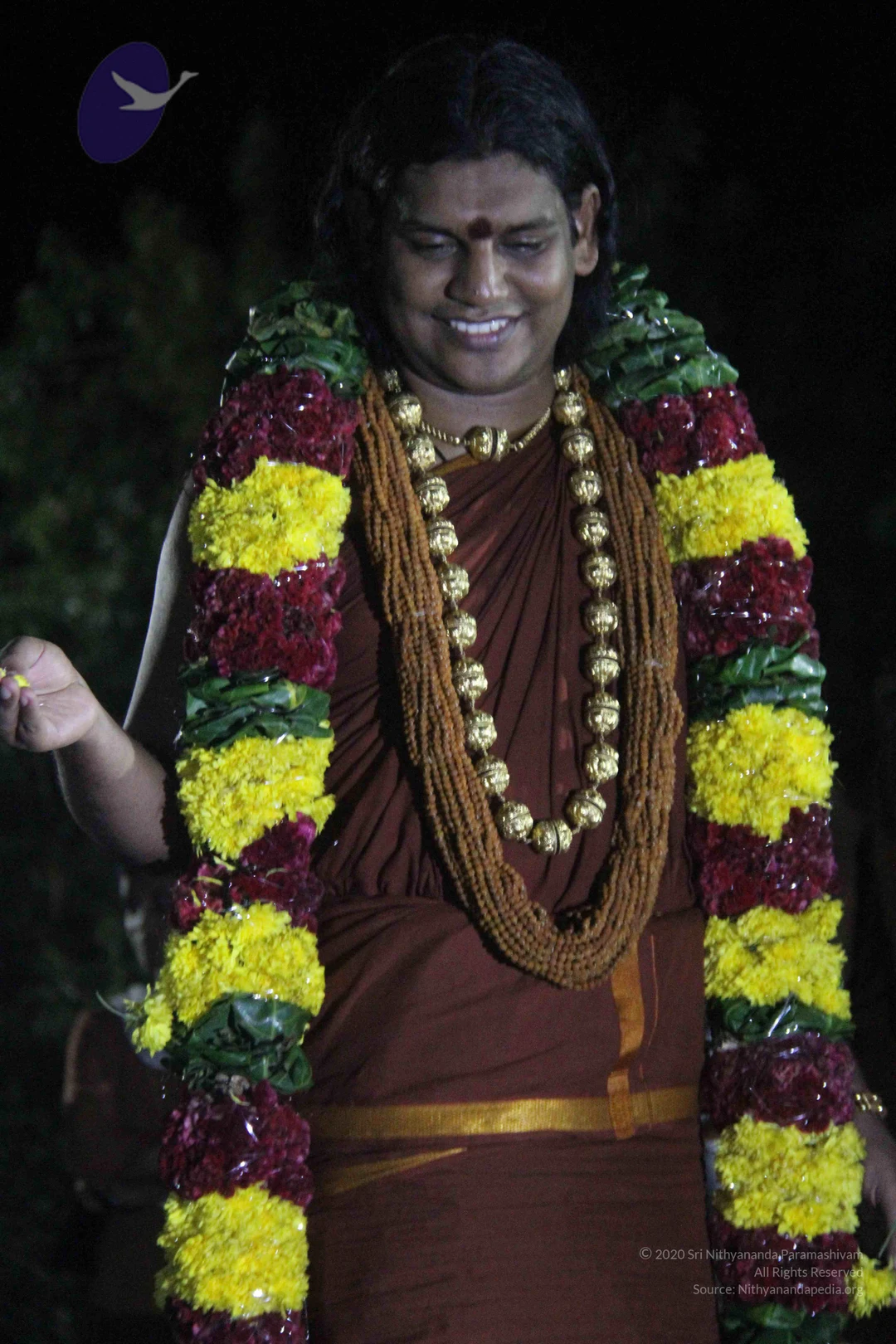
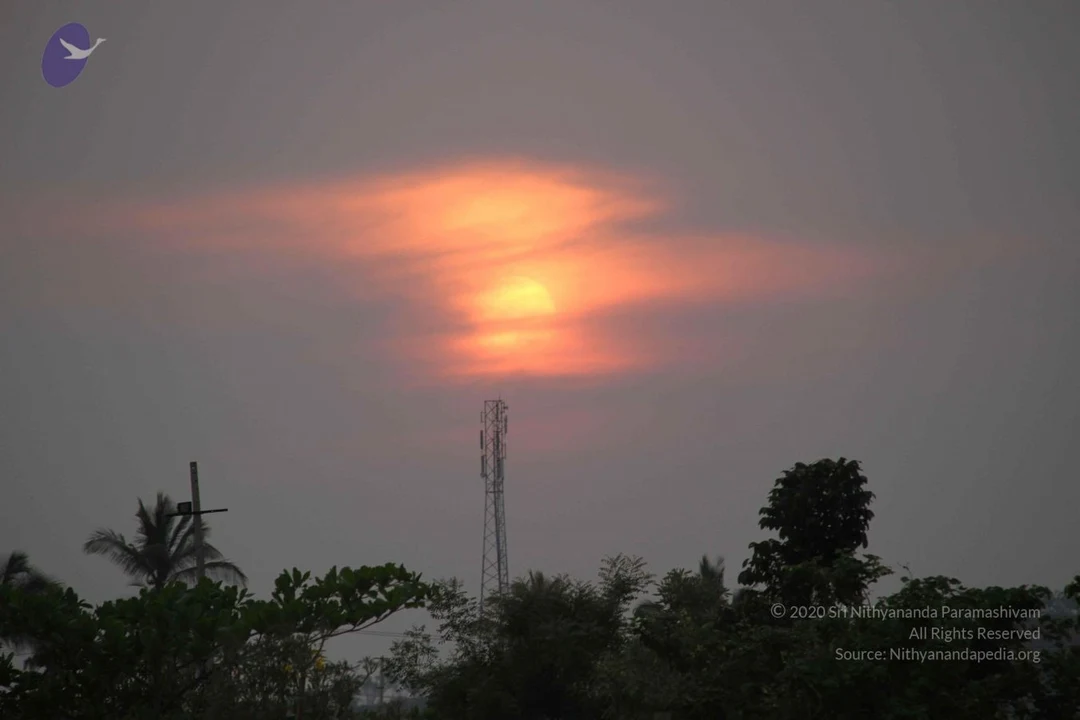
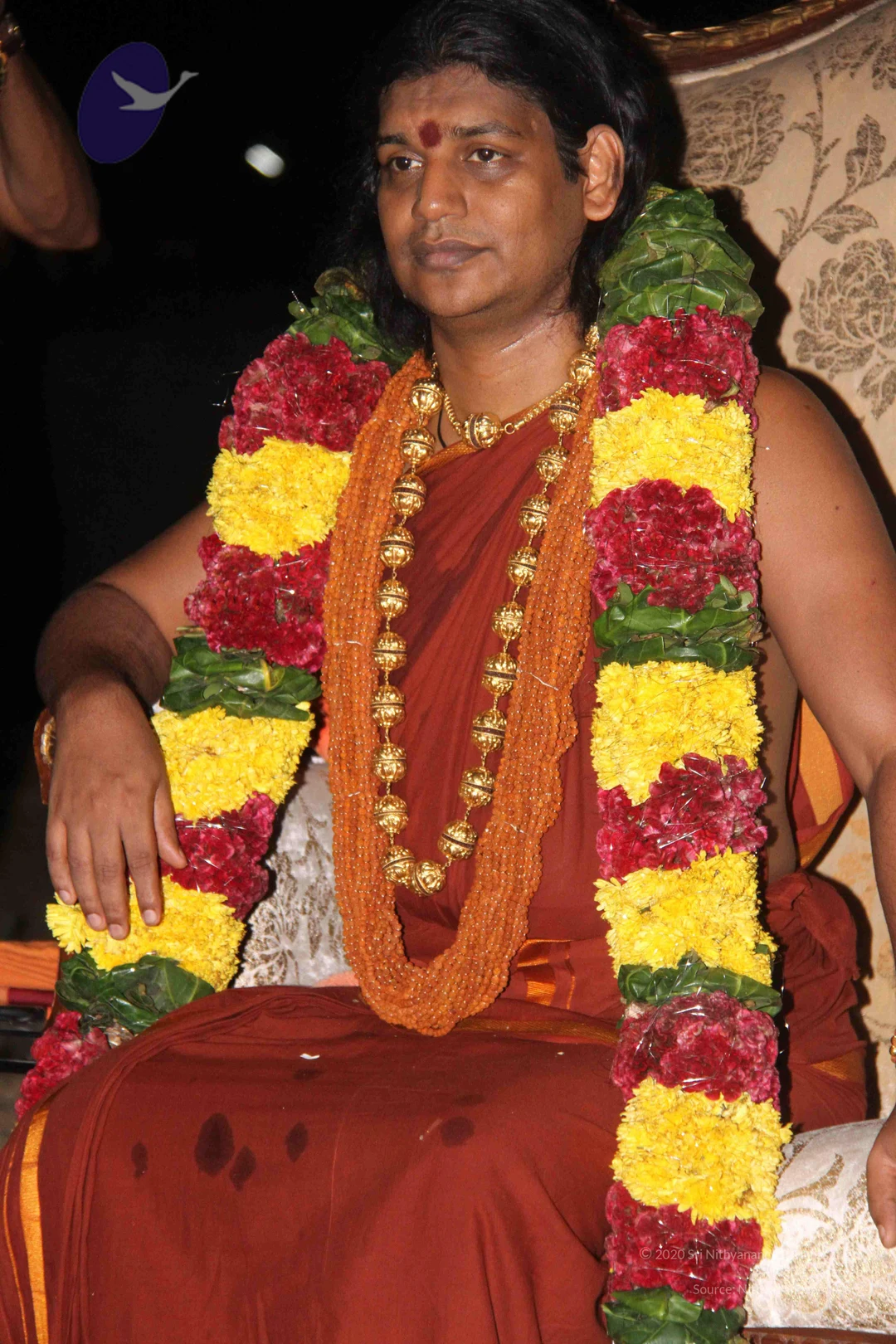
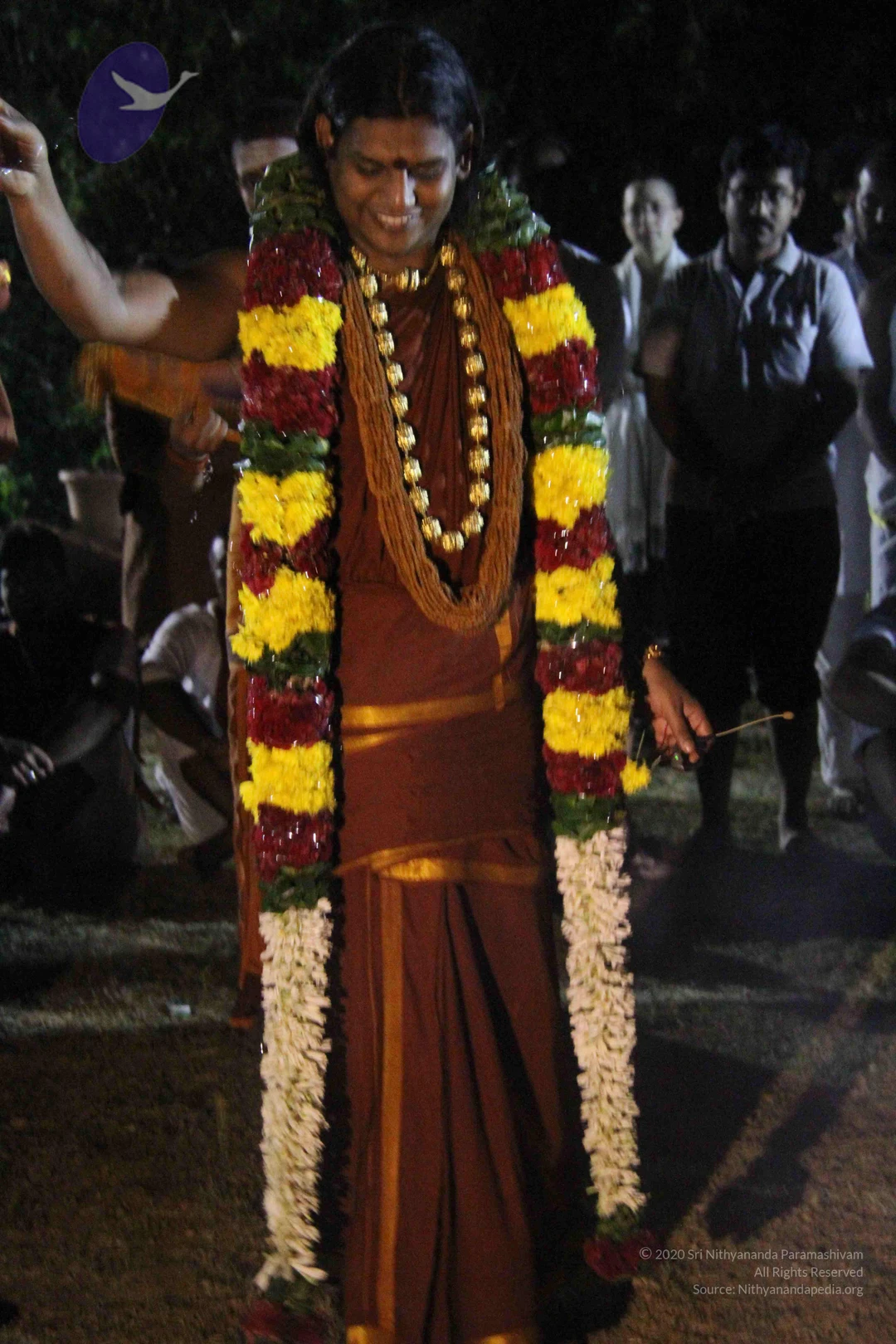
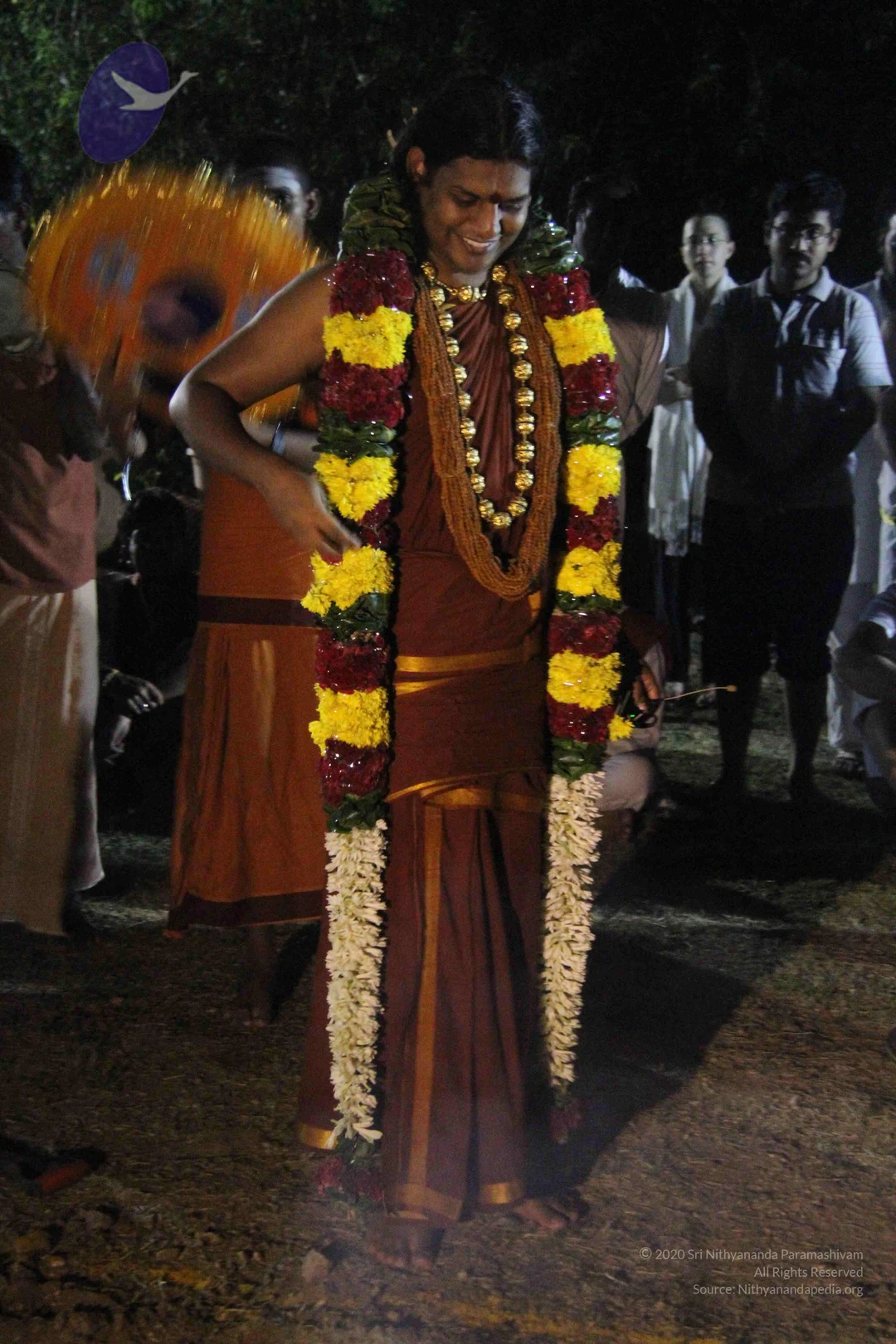
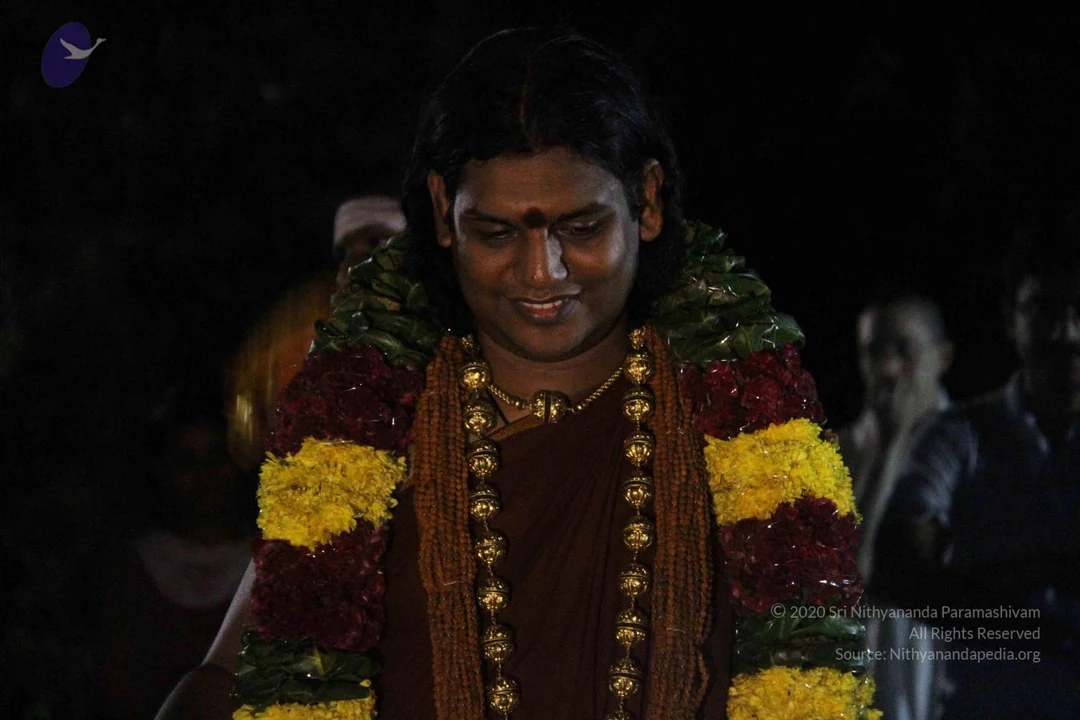
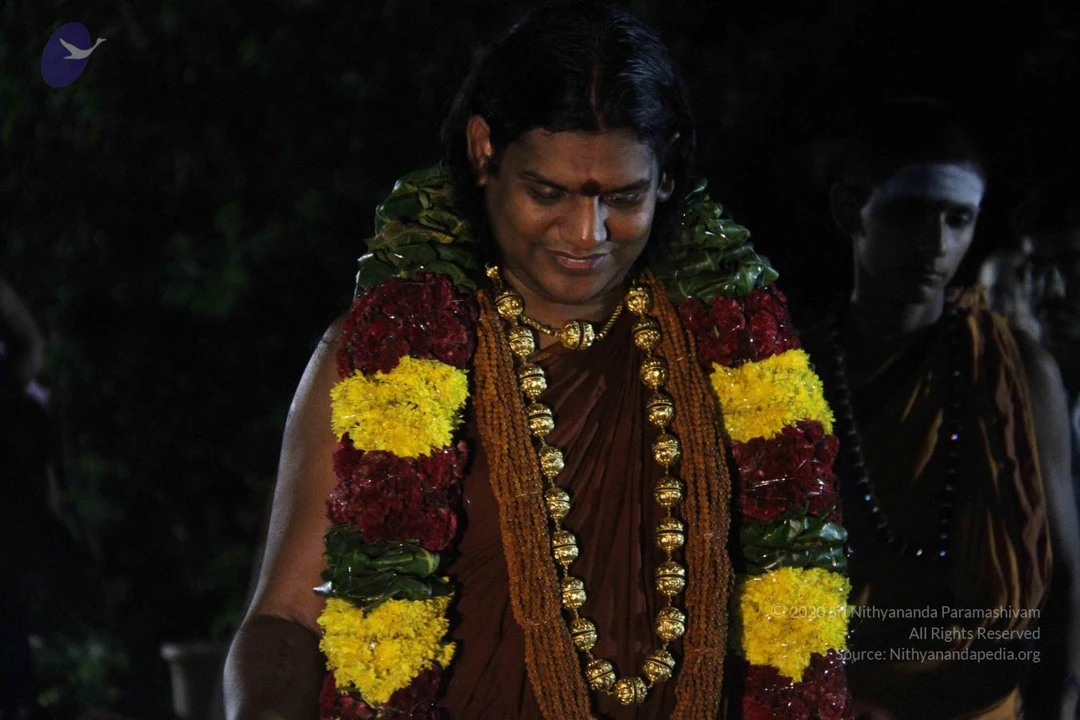
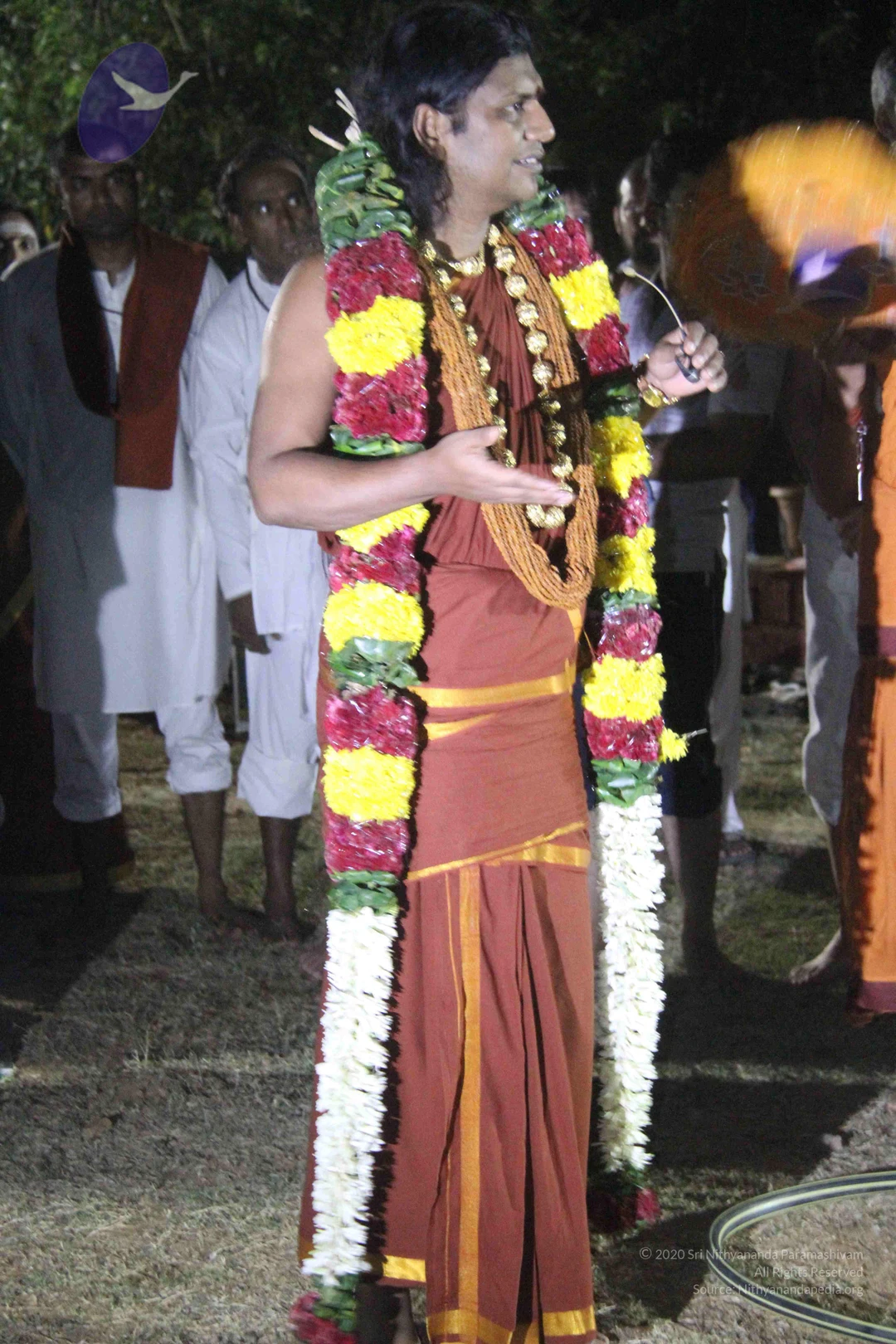
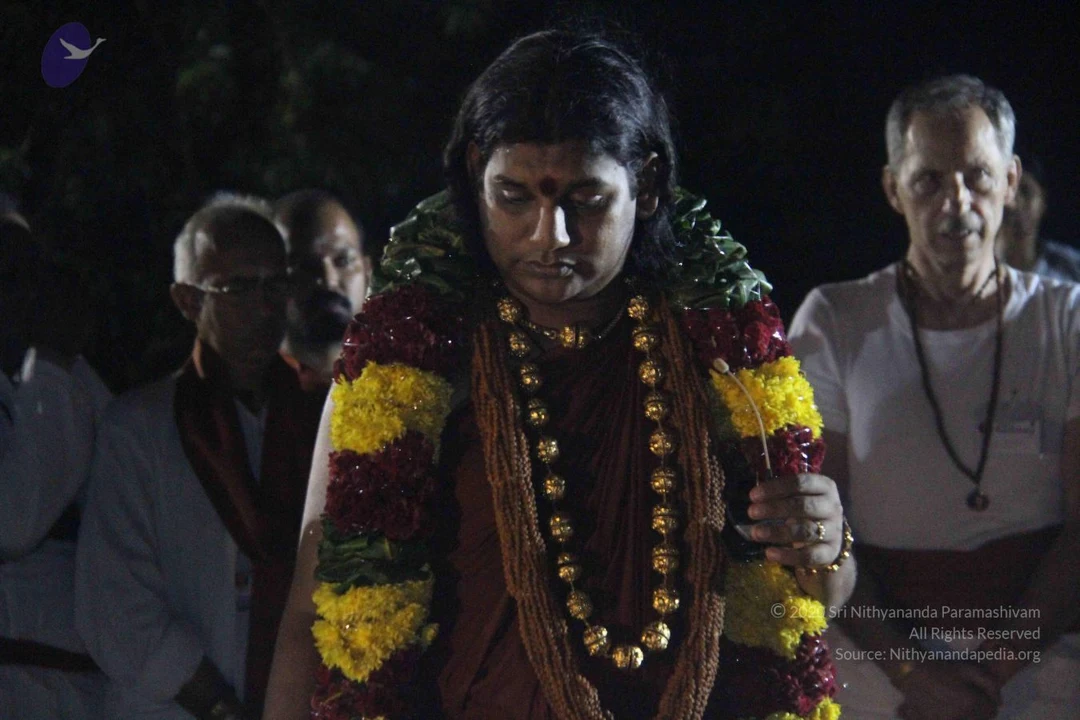
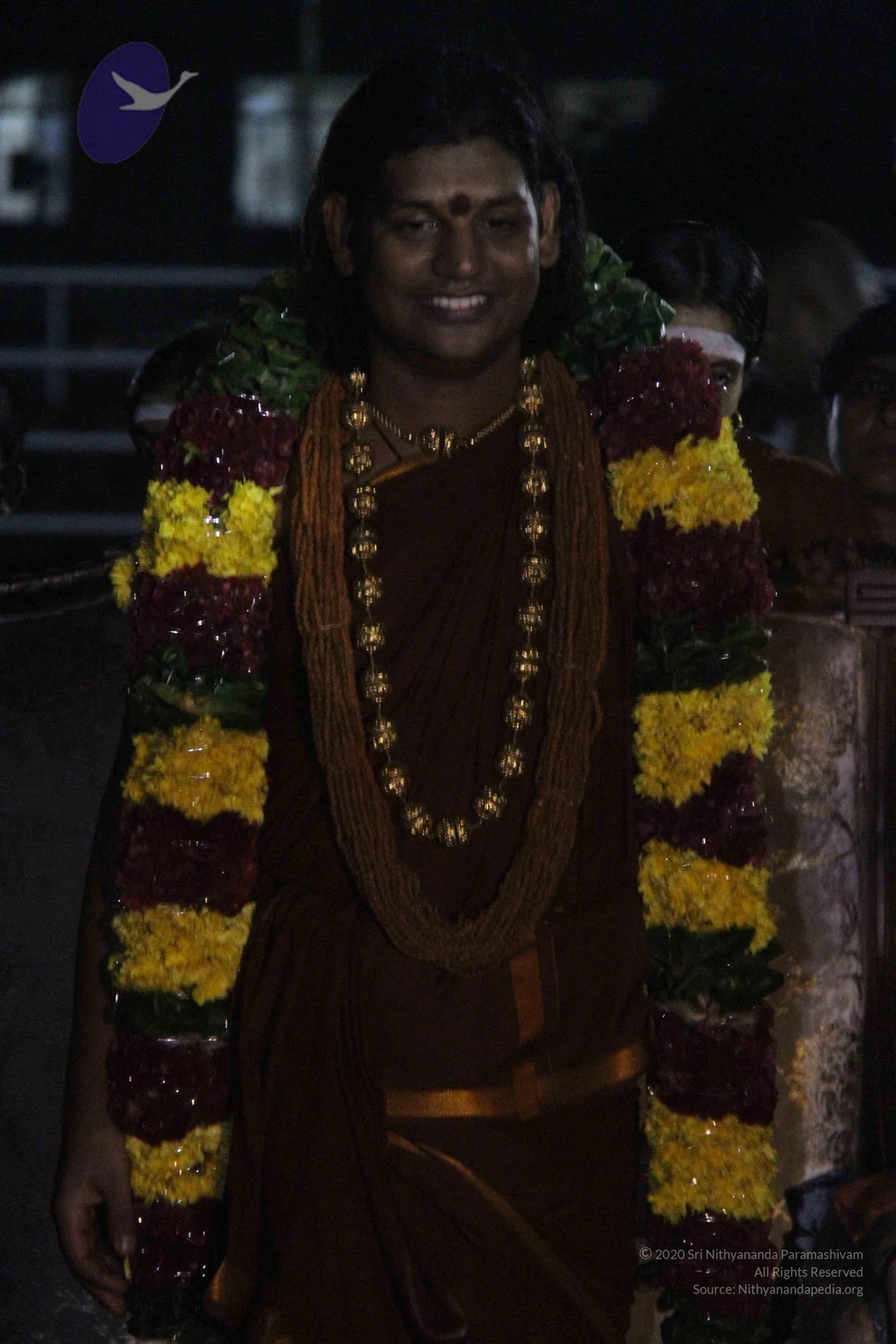
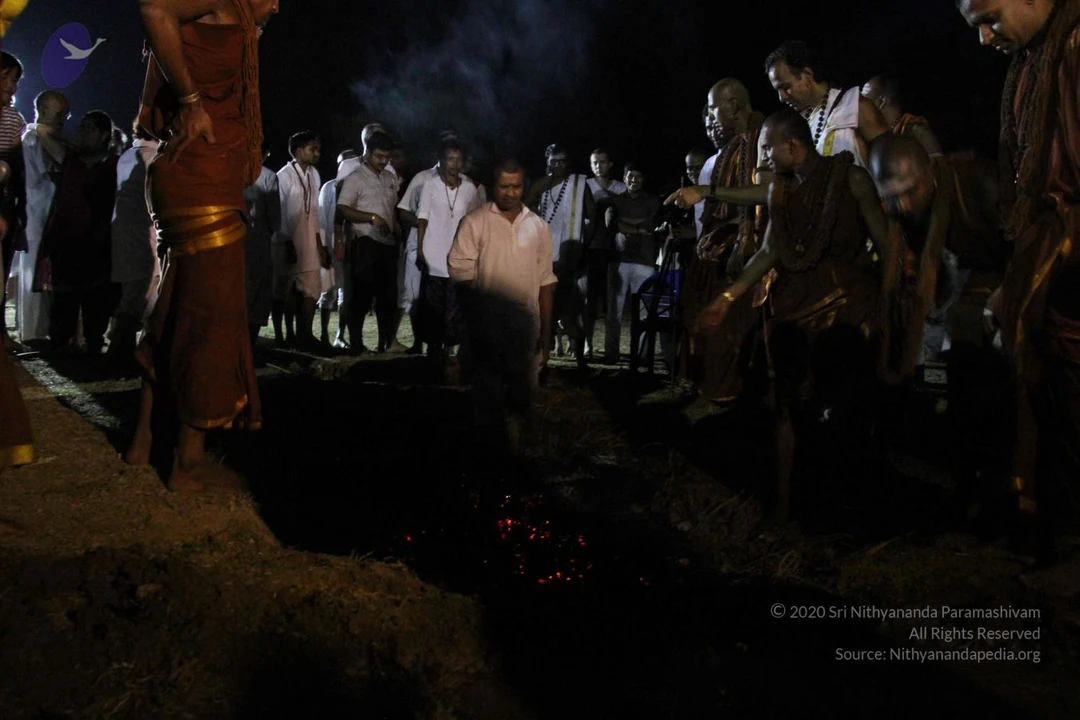
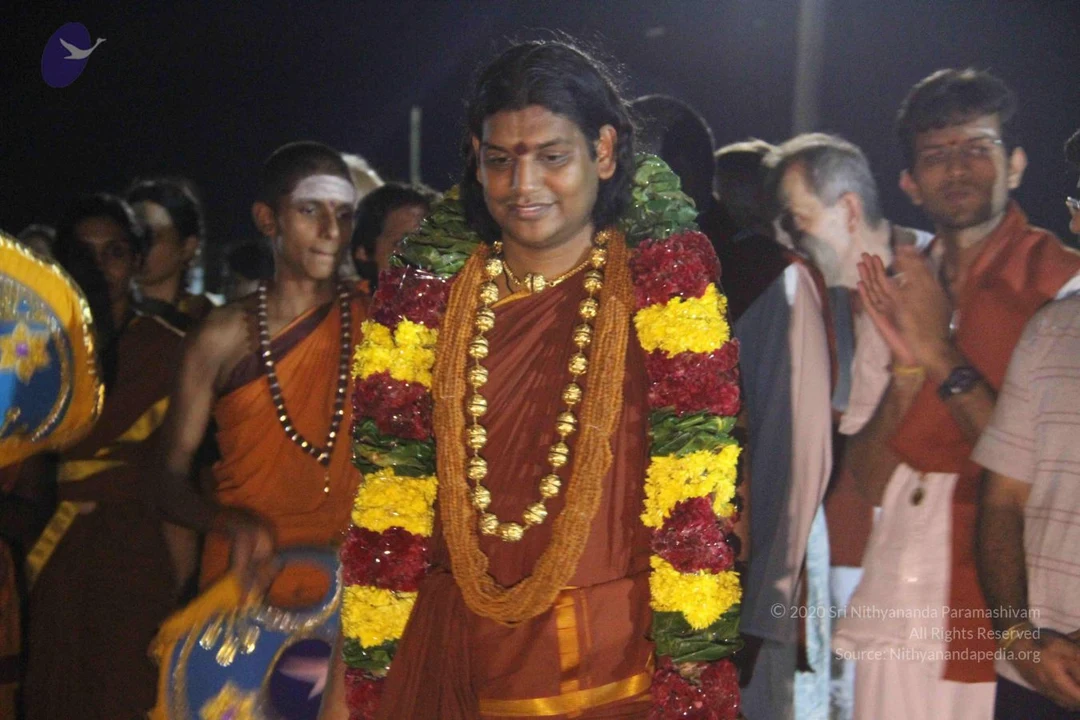
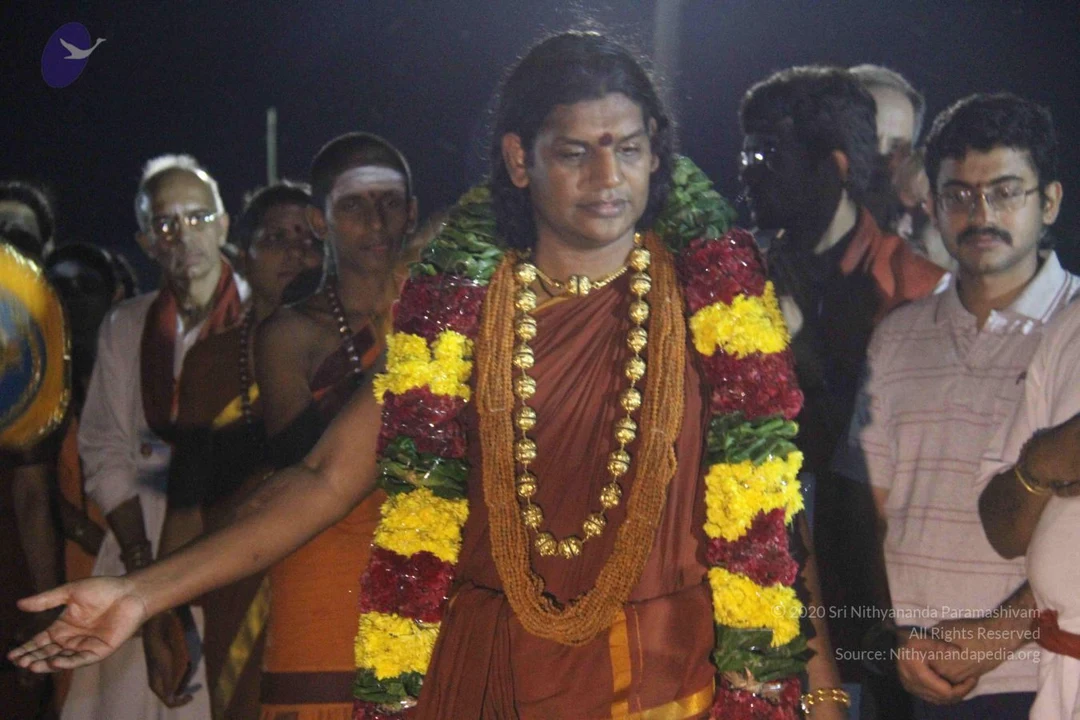
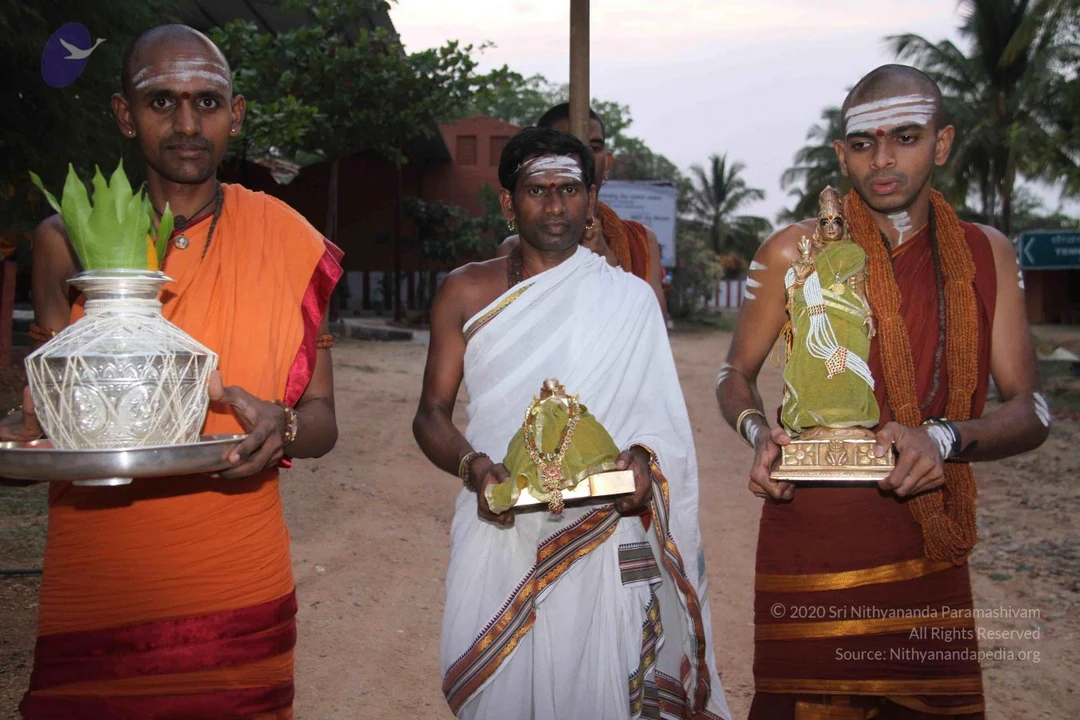
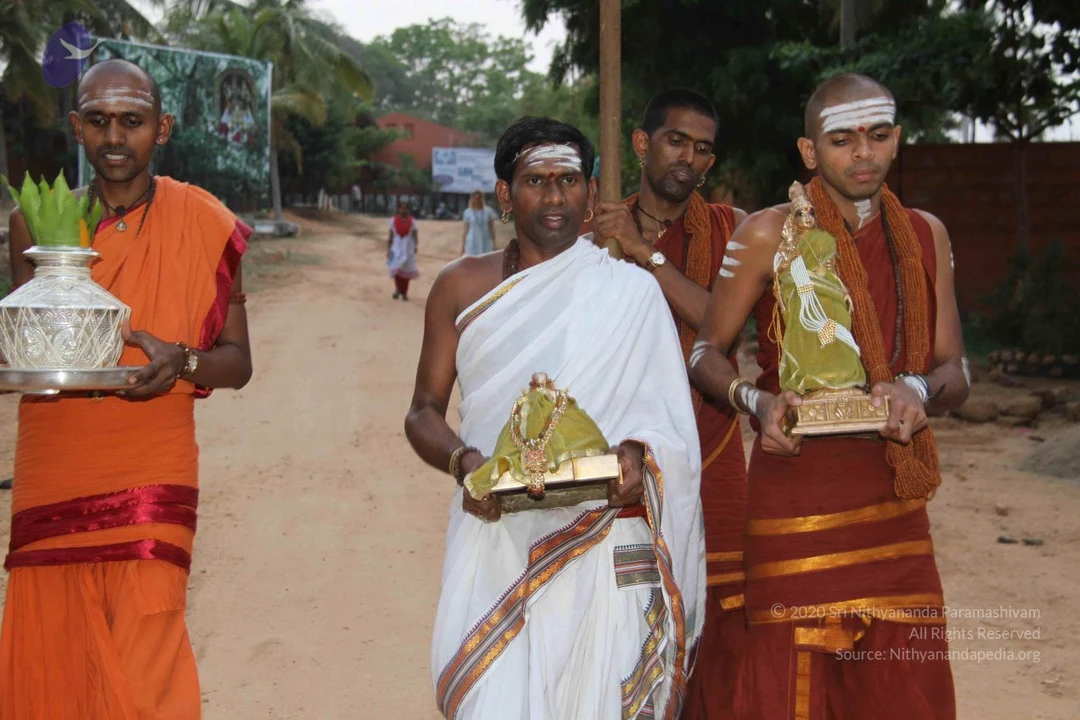
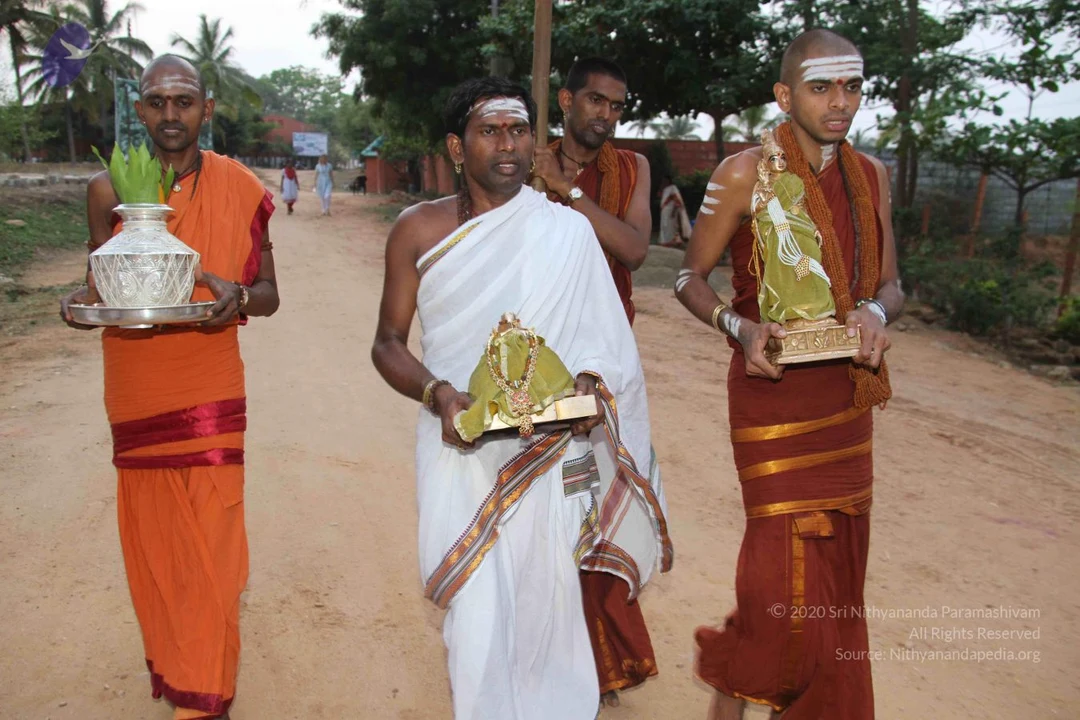
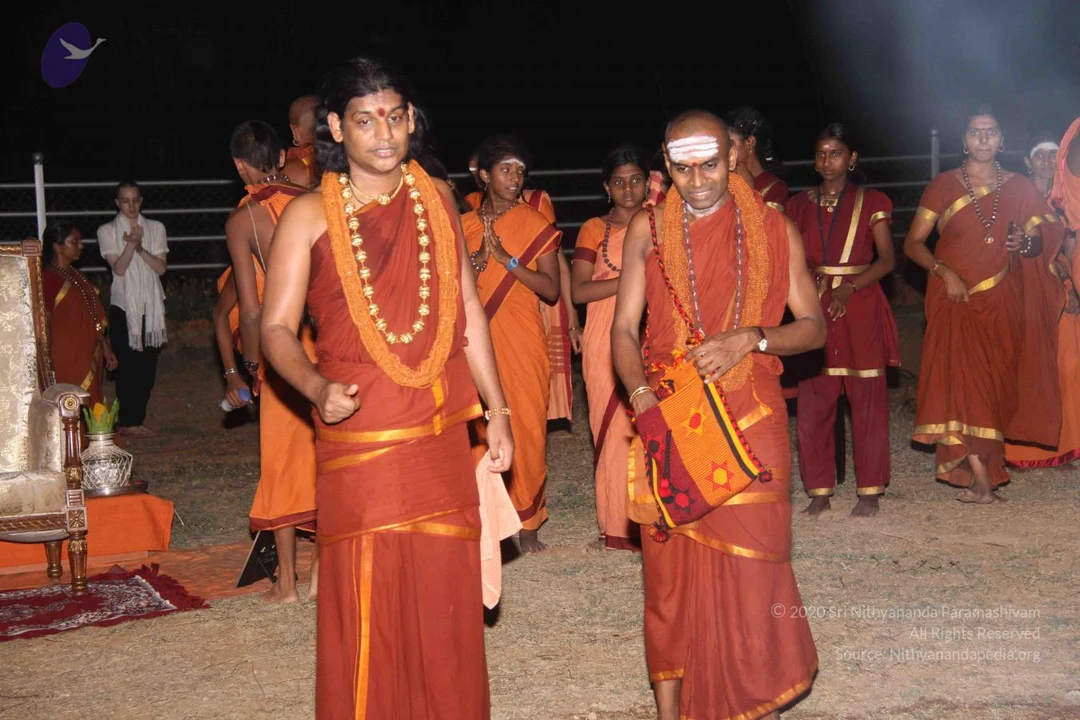
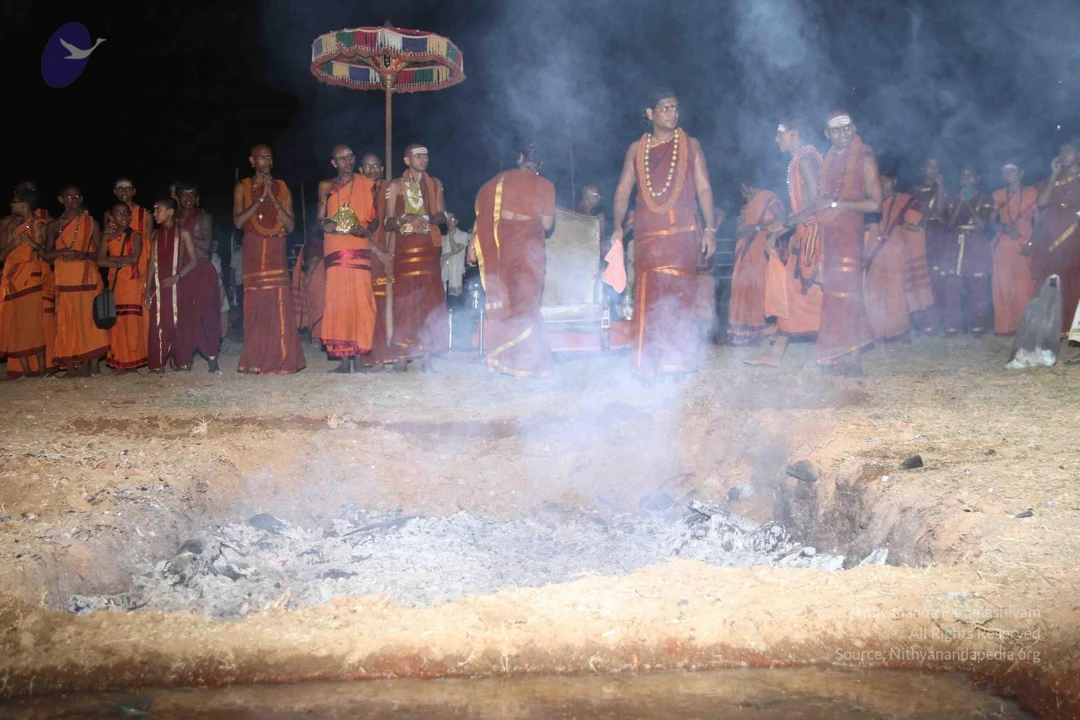
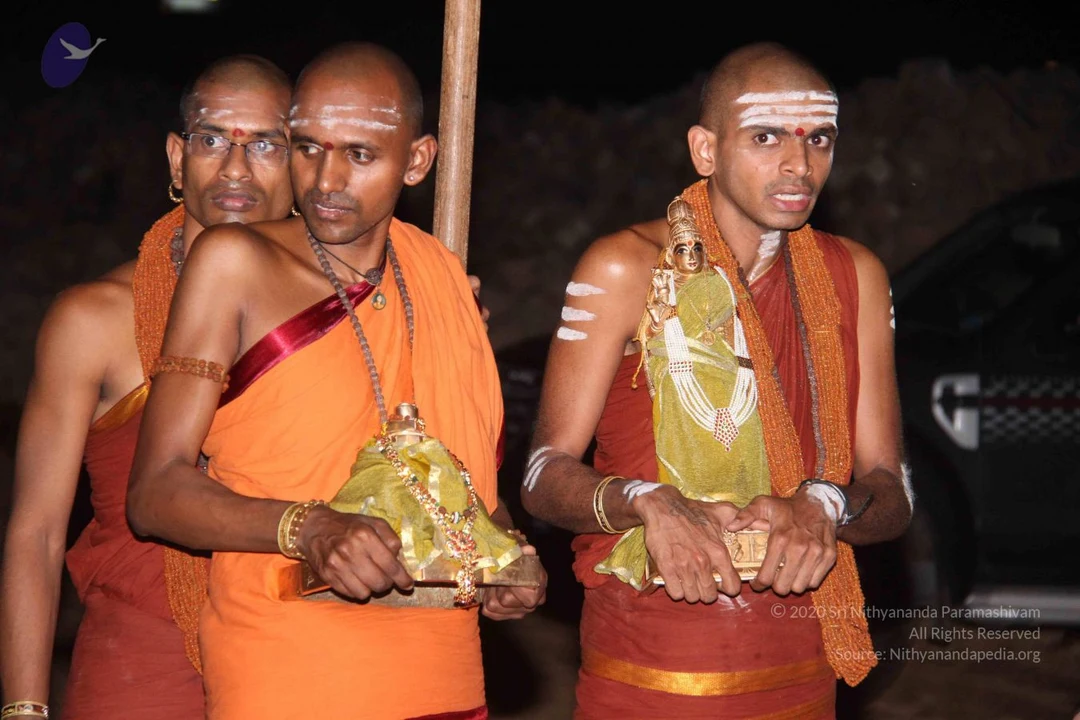
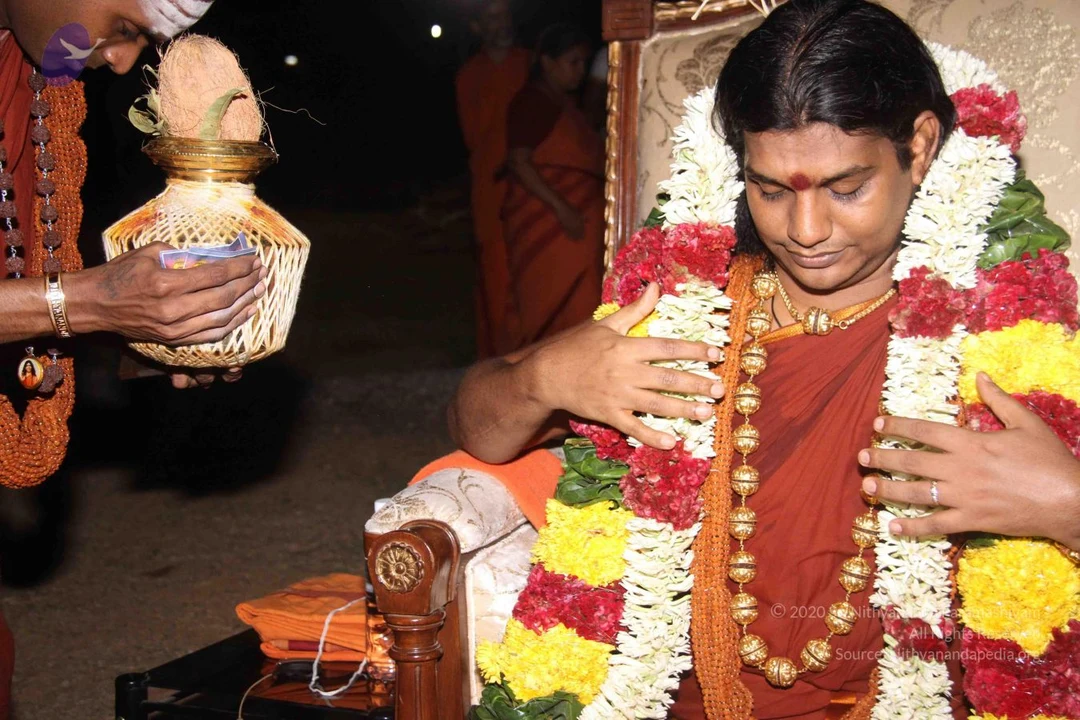
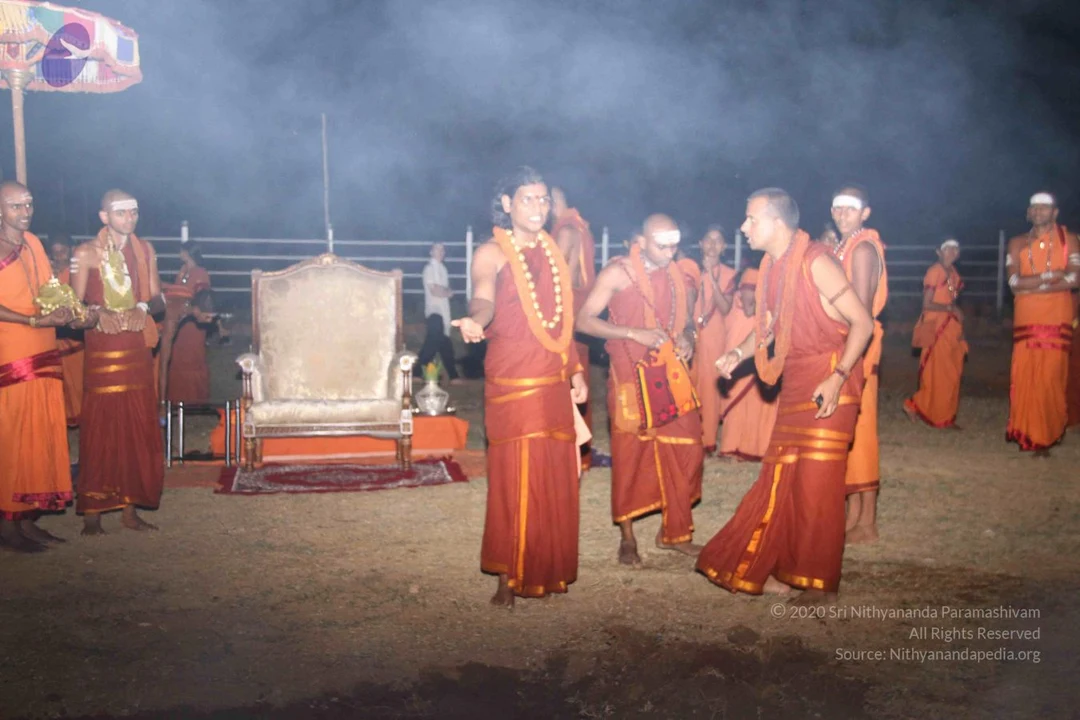
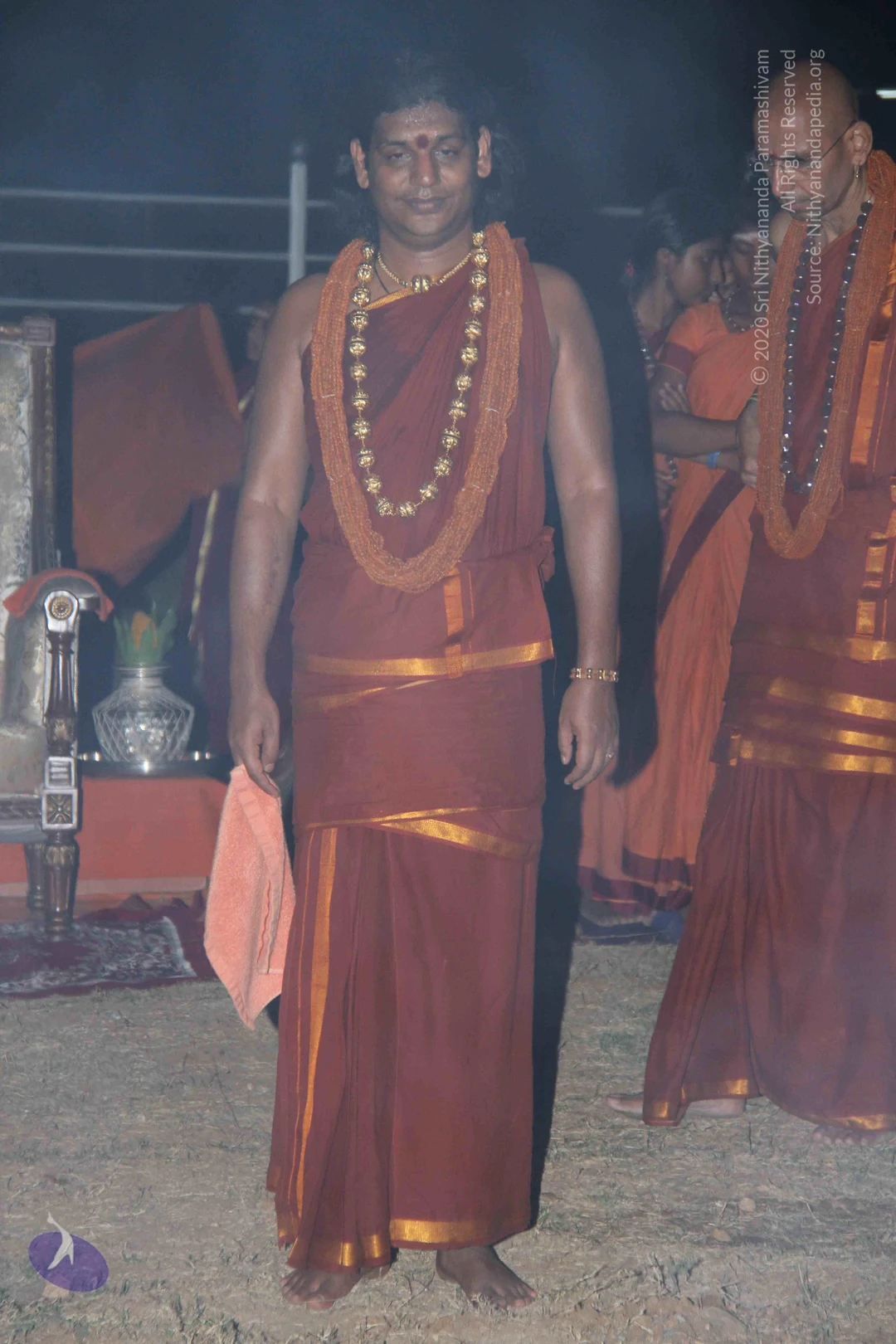
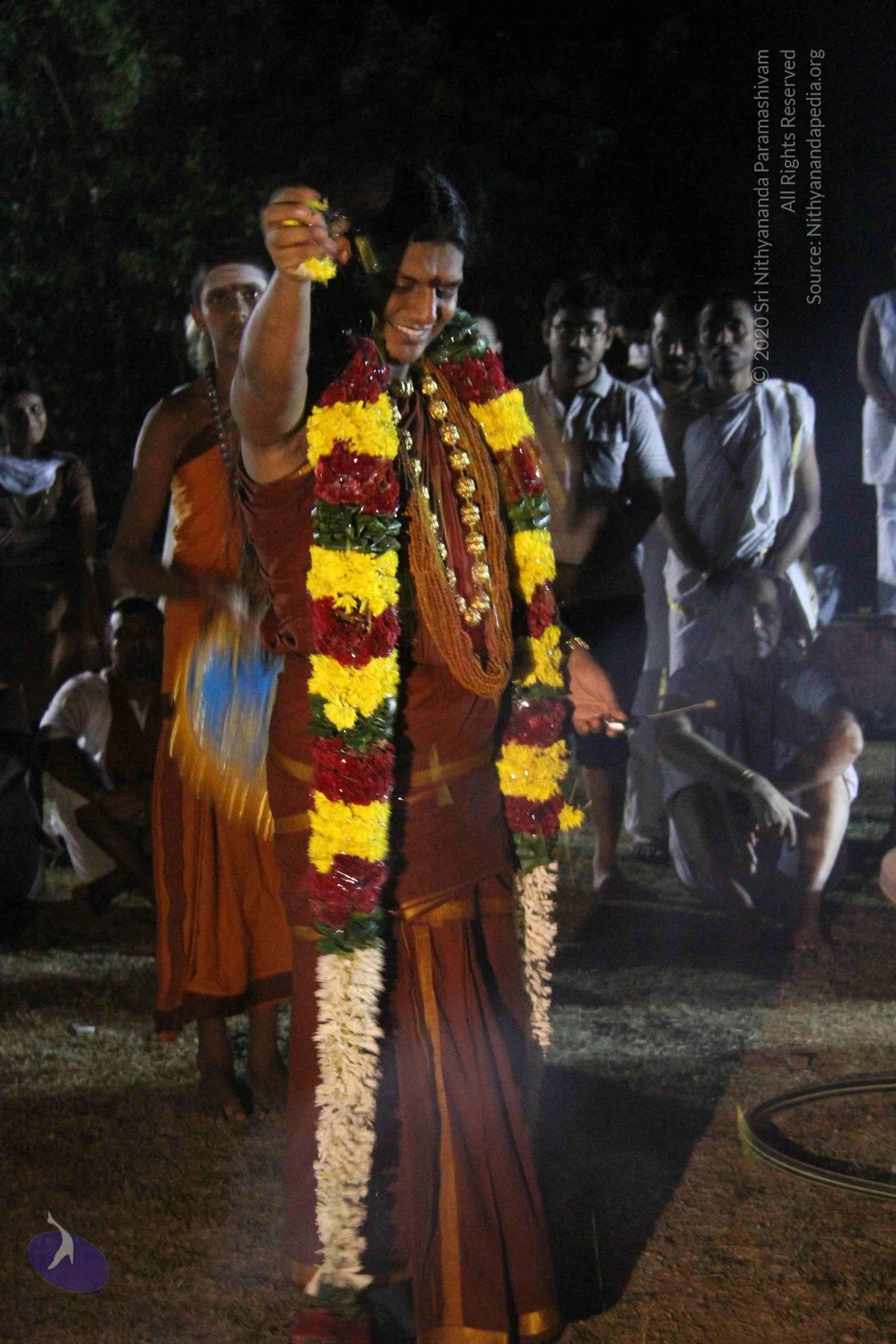
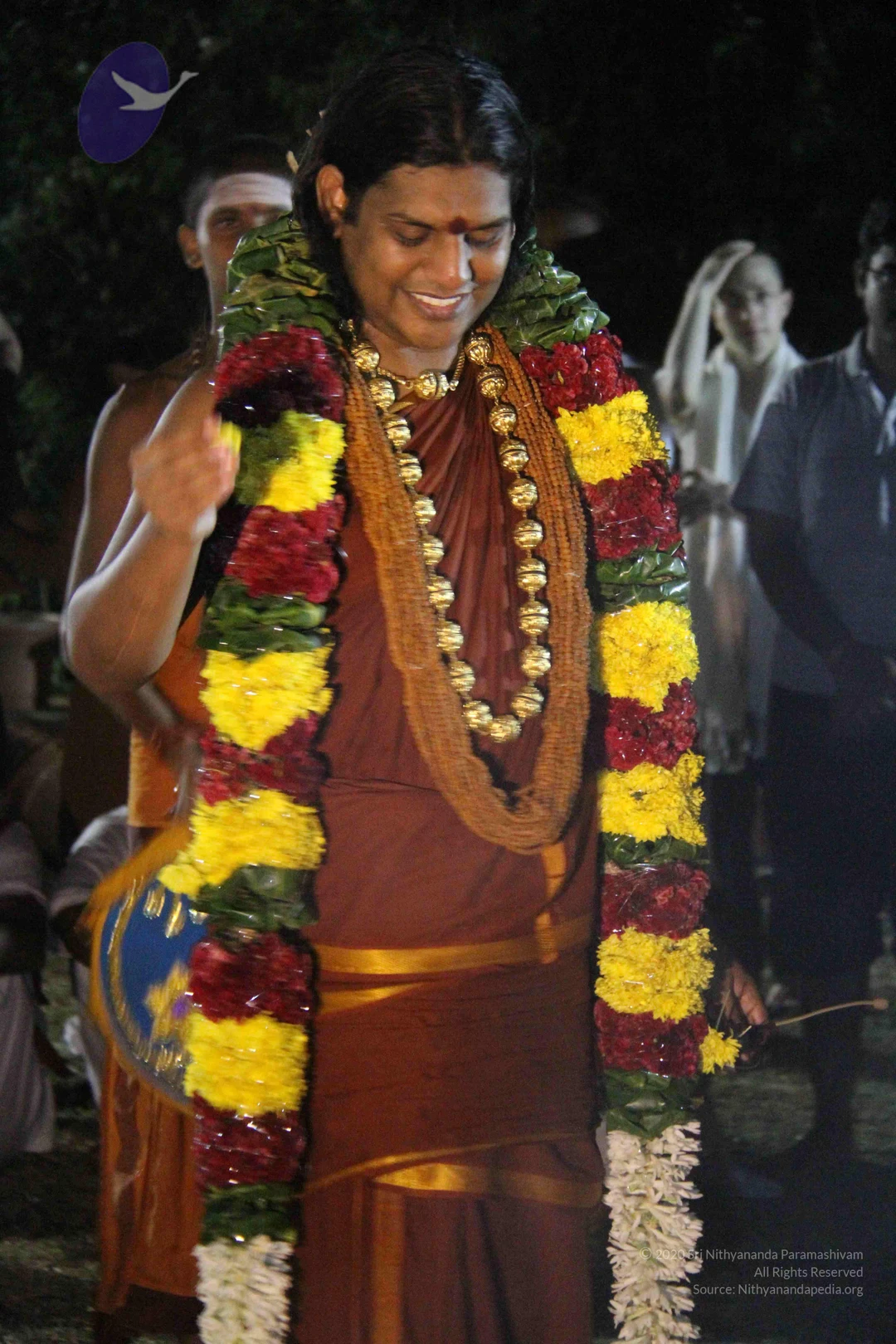
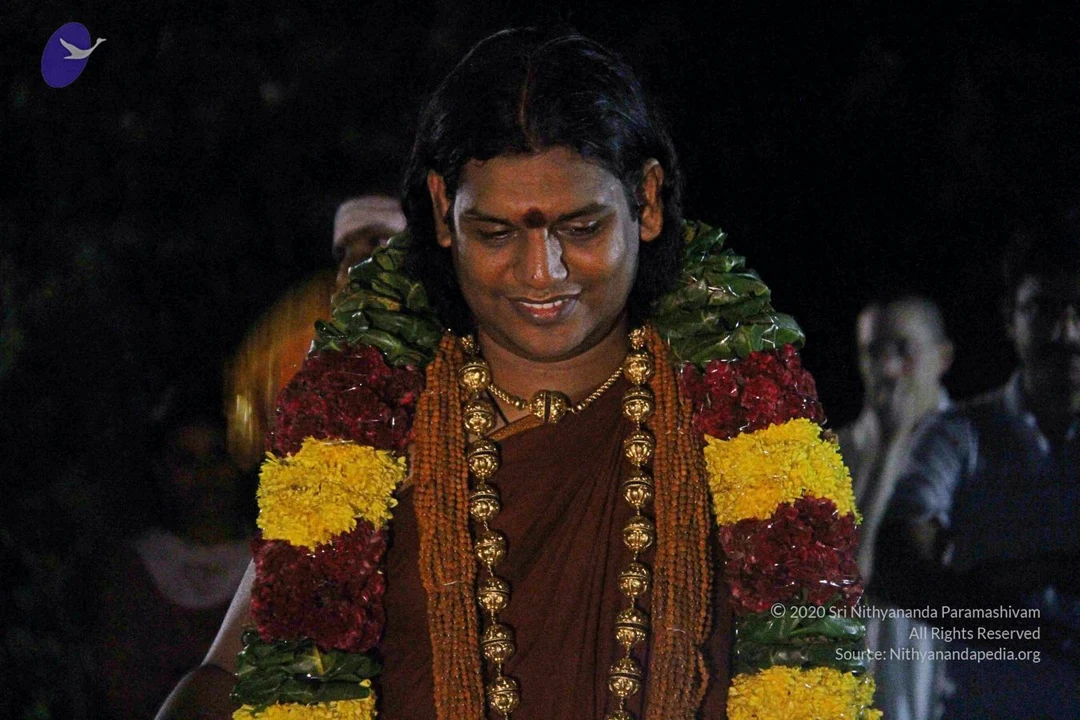
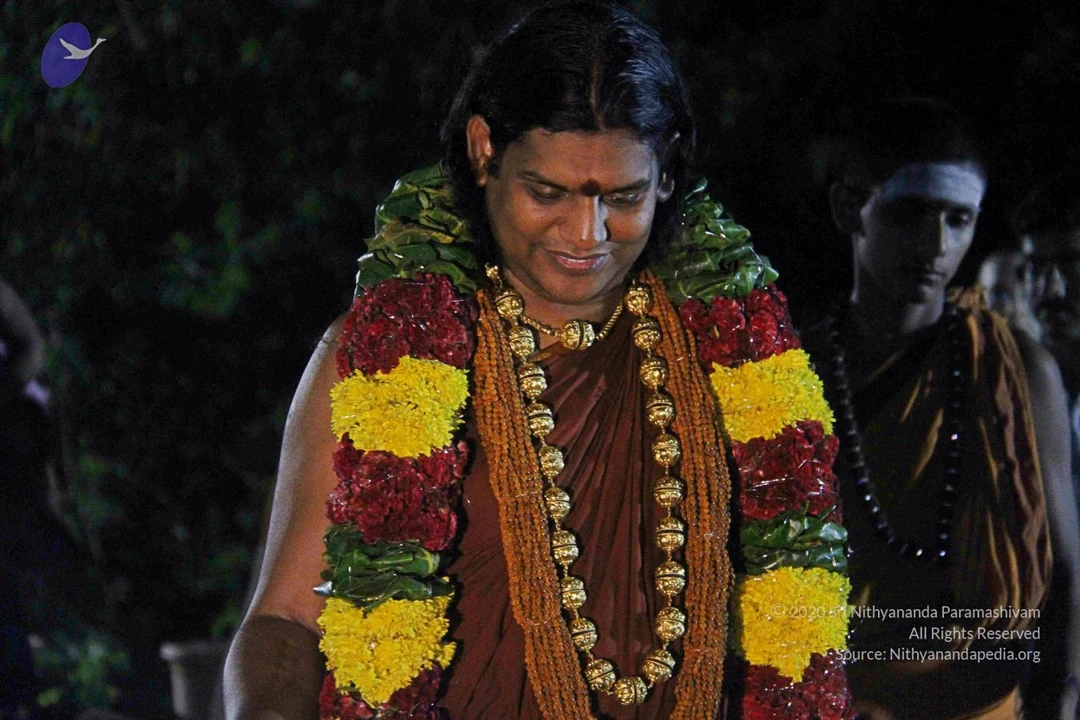
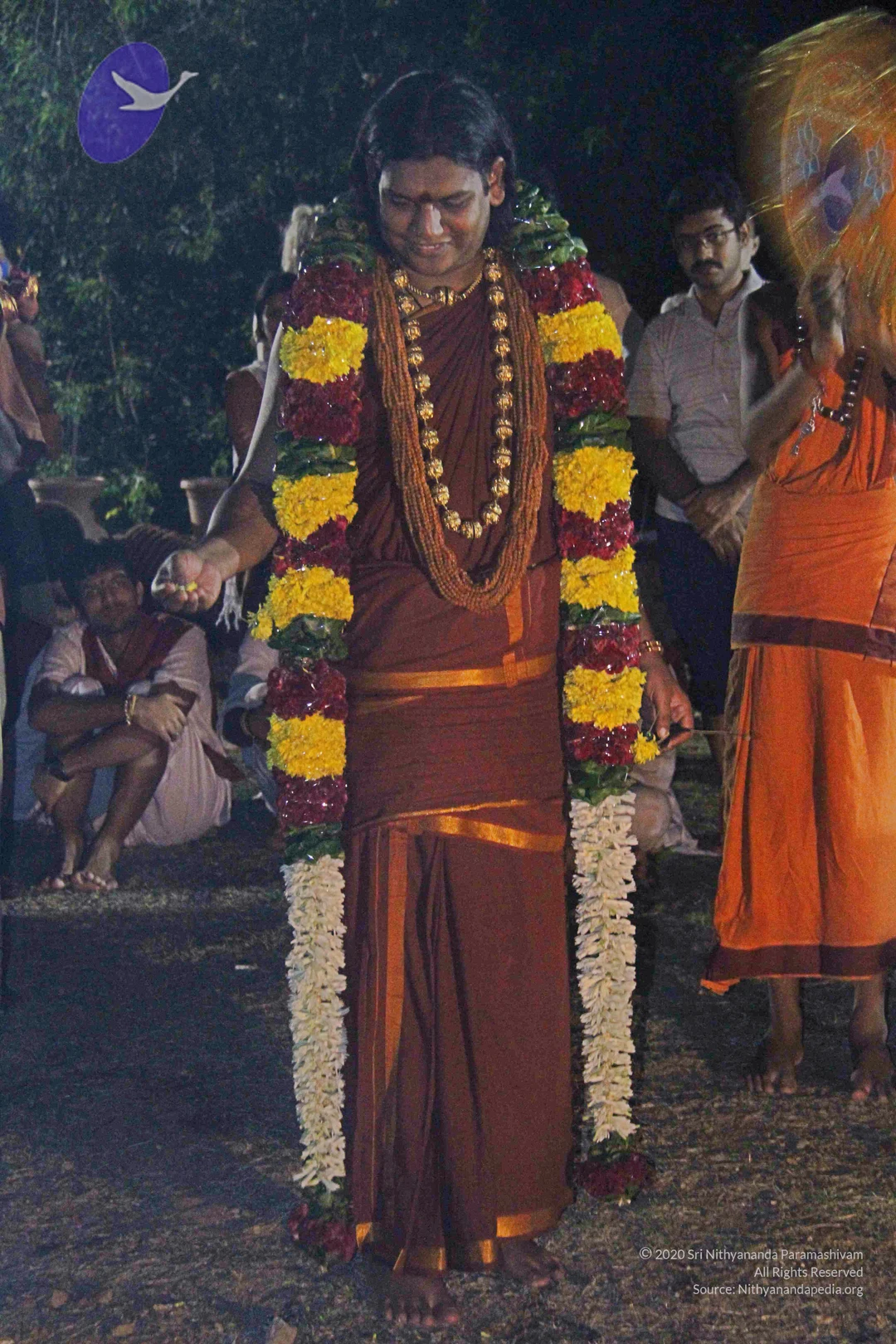
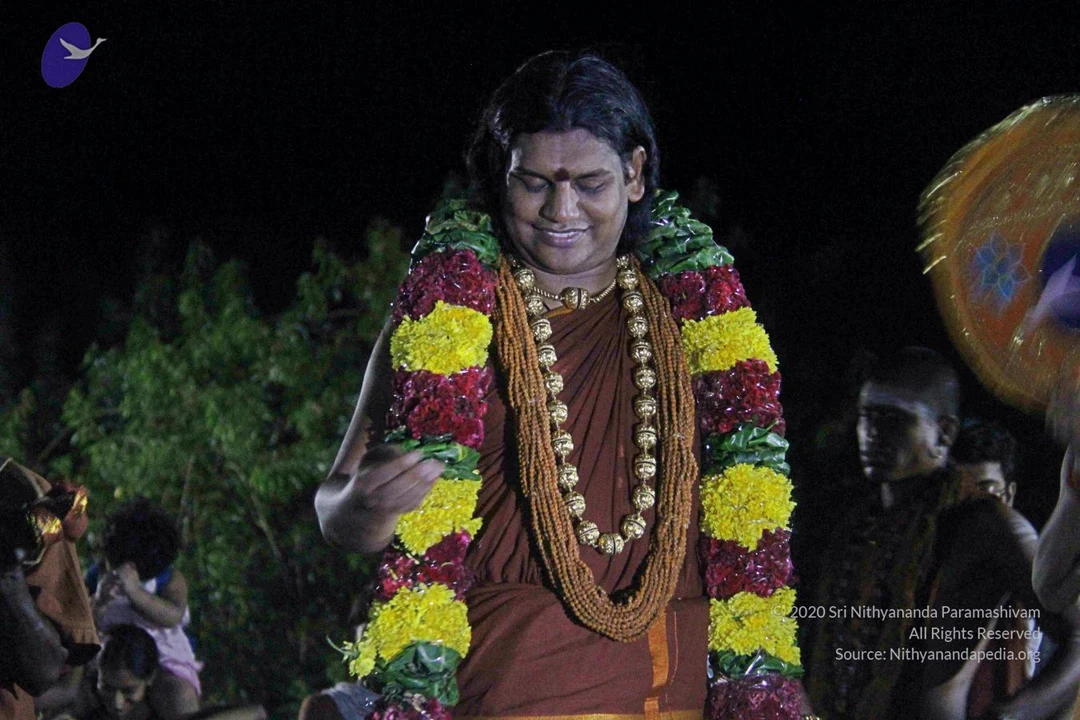
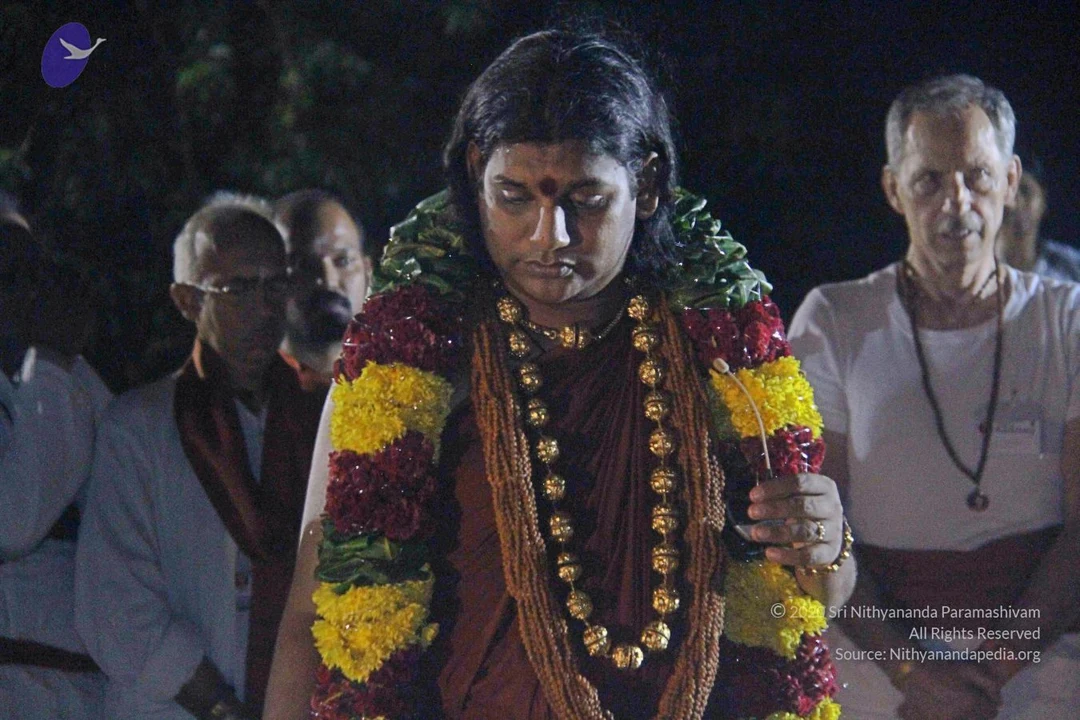
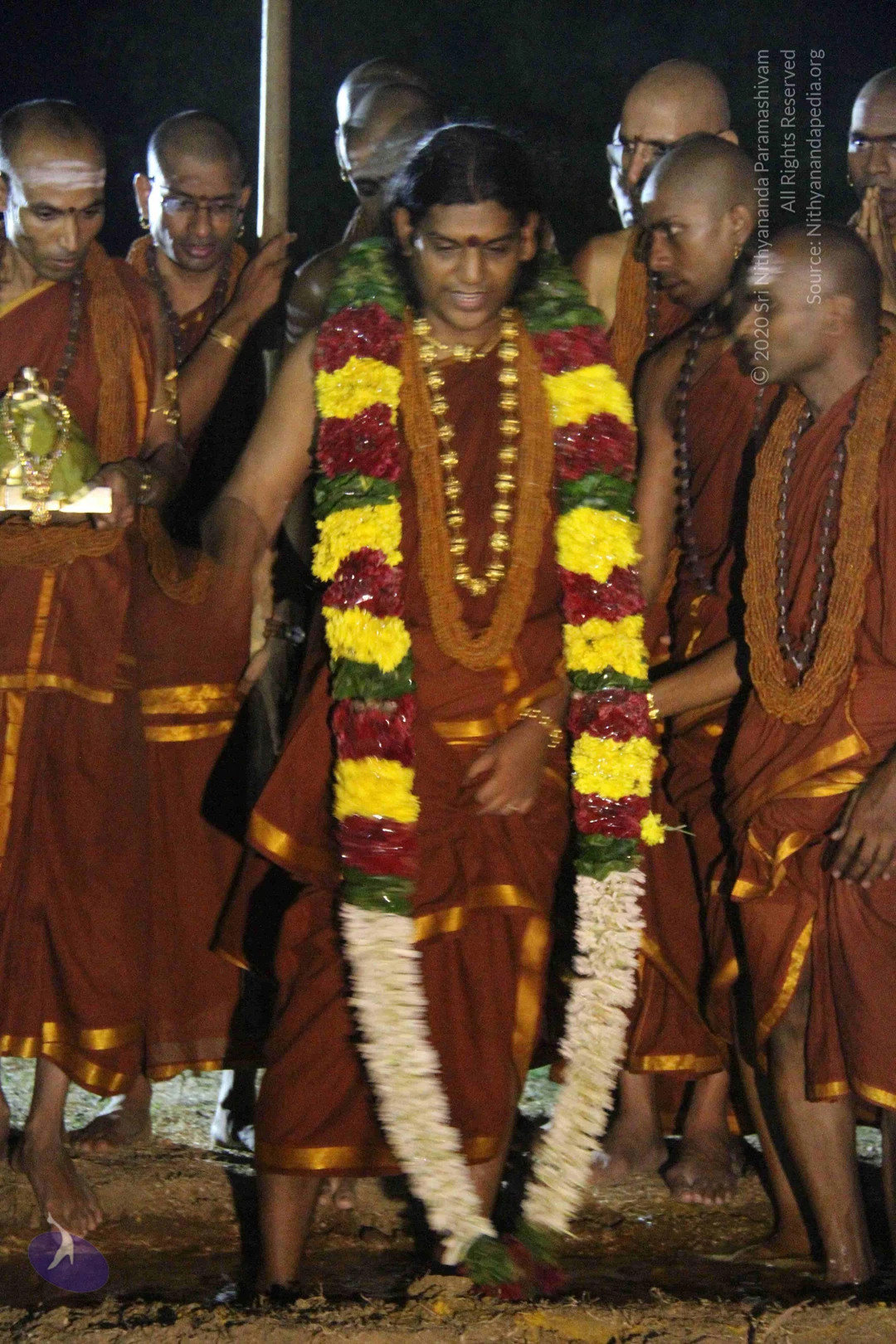
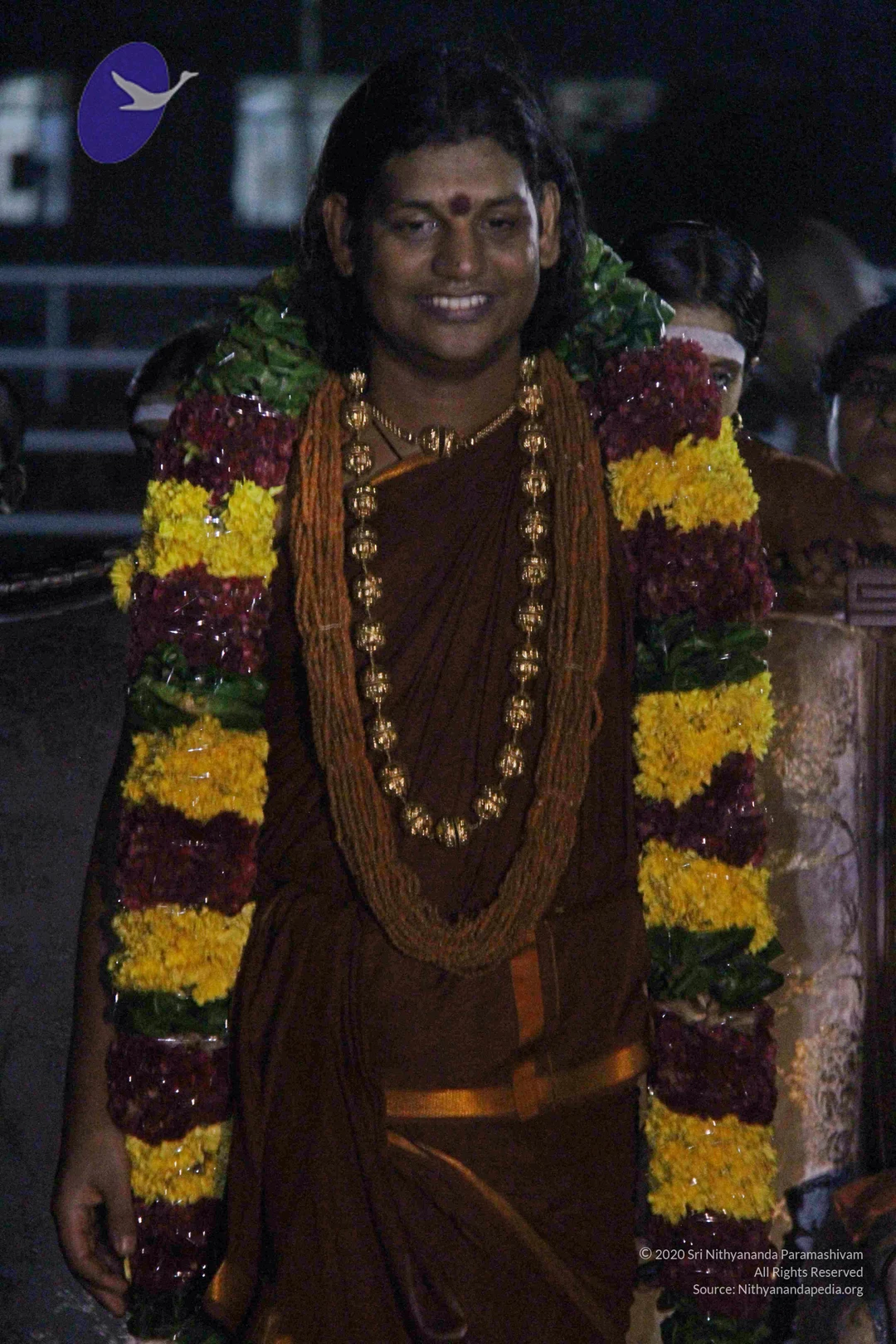
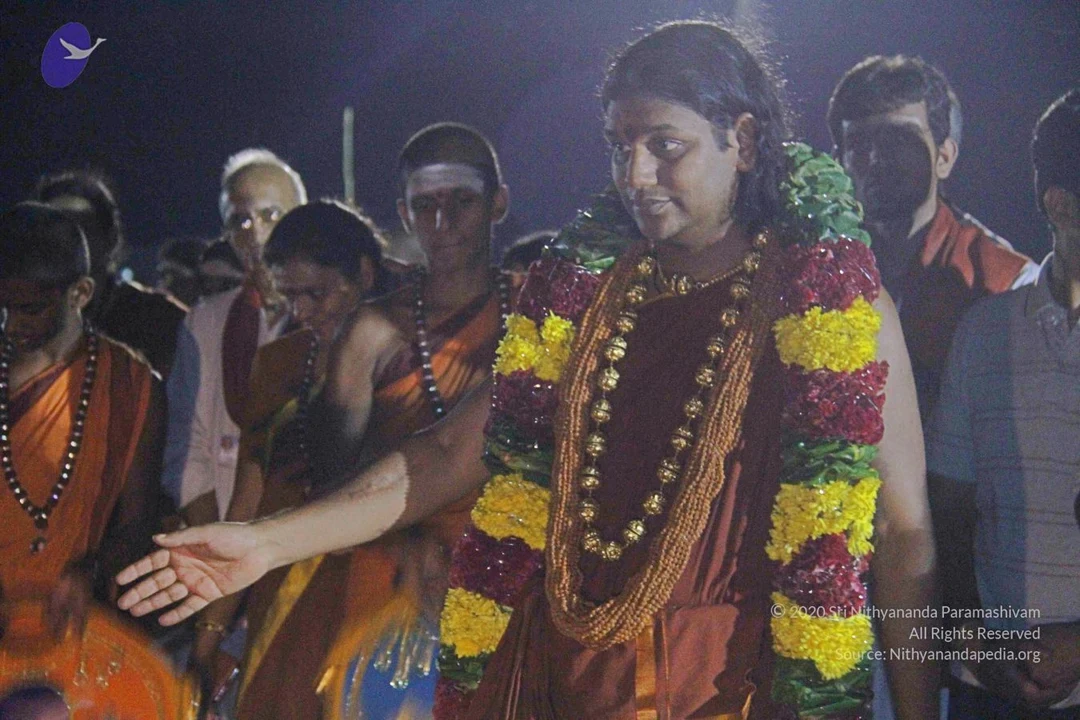
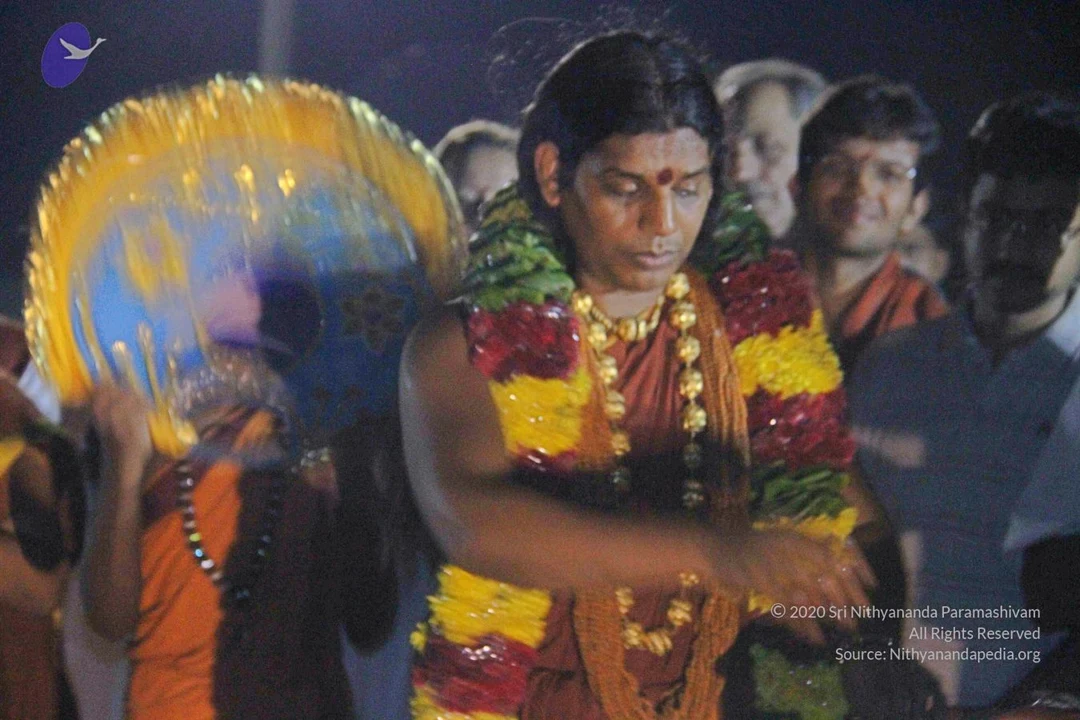
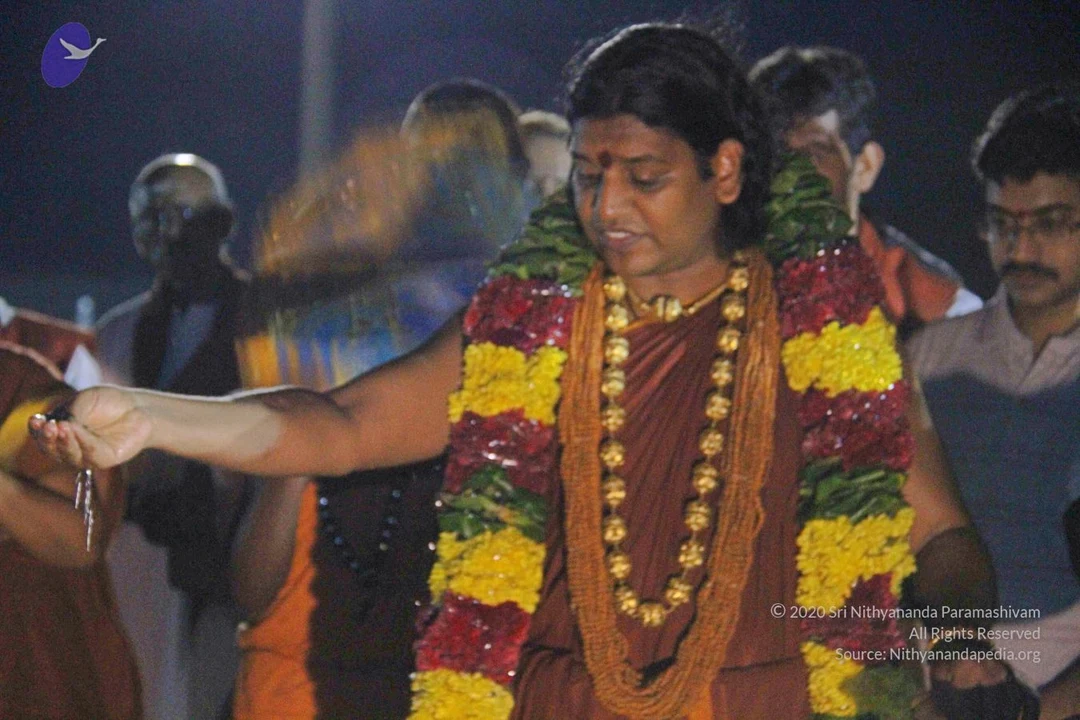
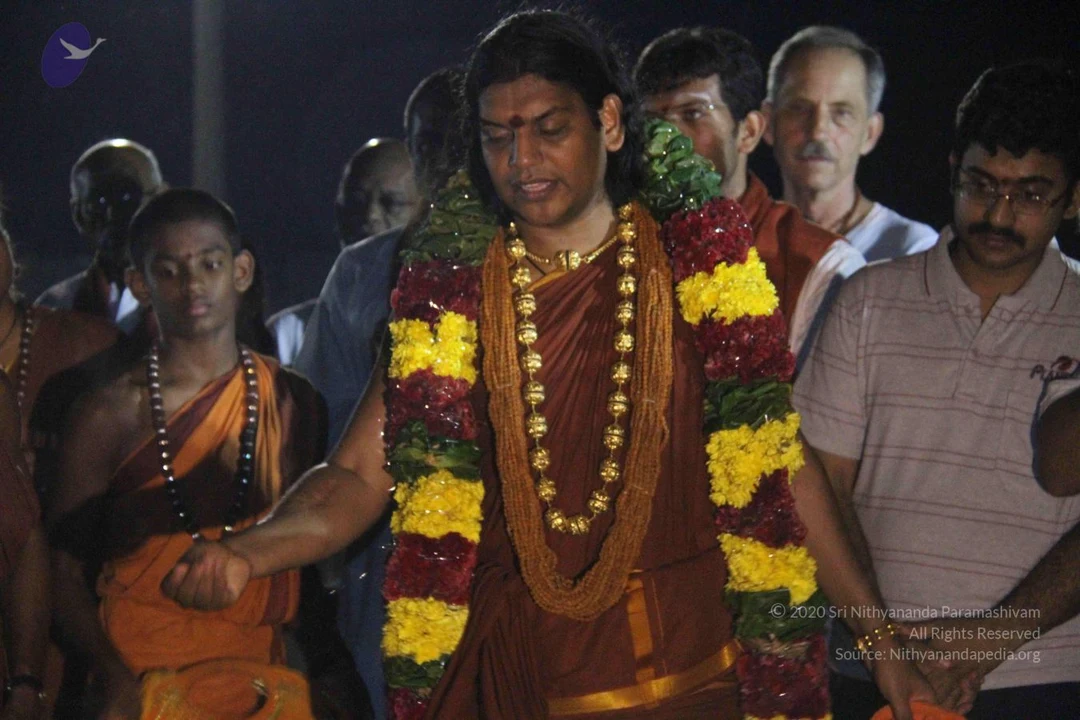
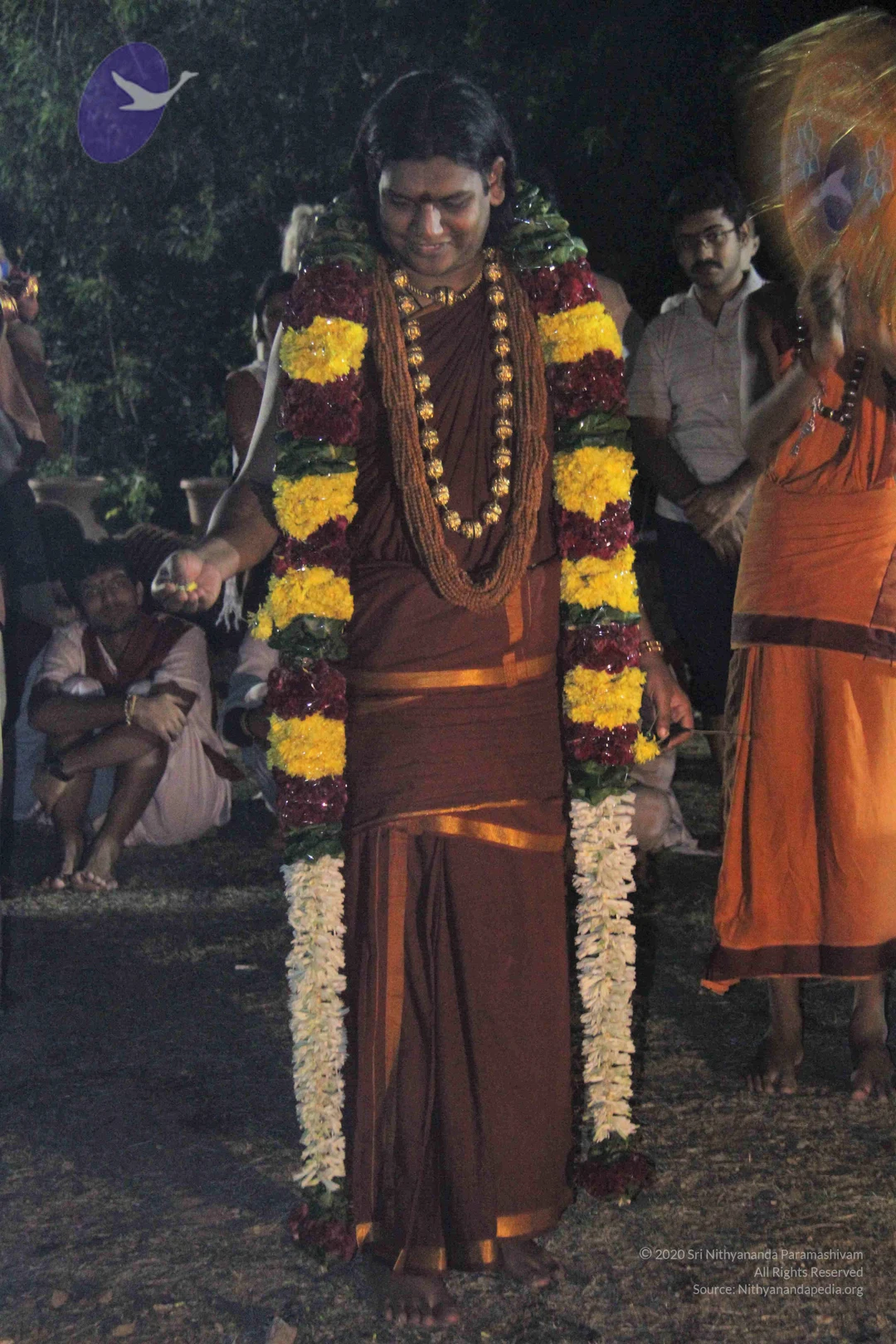
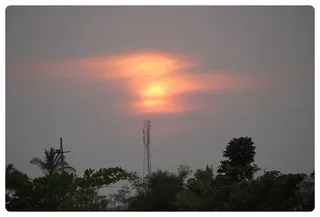
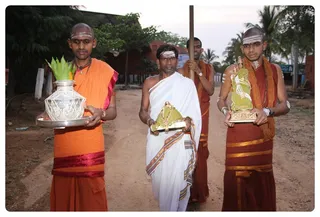
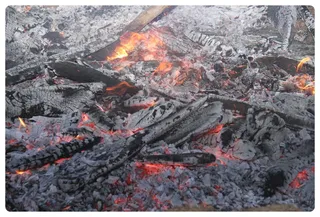
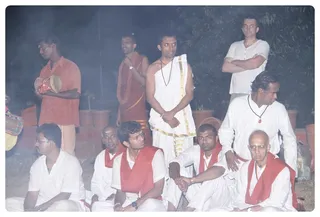
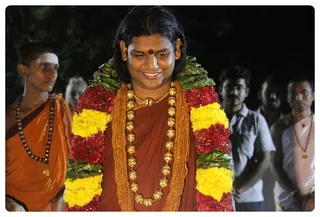
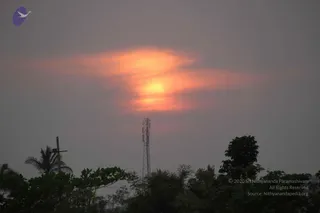
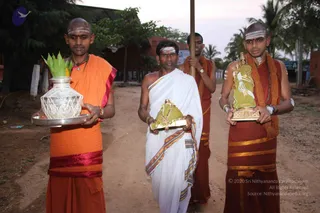
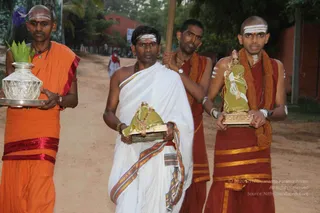
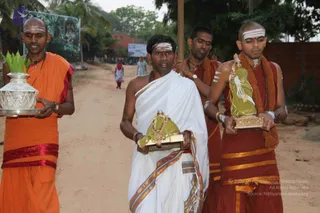
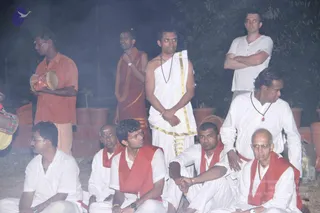
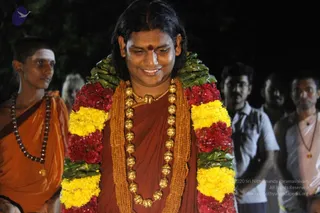
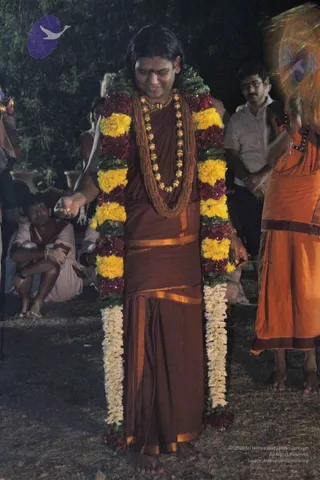
A hazy, pale grey dusk sky glows with a diffuse orange sun partly veiled by thin clouds. A tall white and red lattice telecommunications tower stands at centre against the sky, flanked by dark silhouettes of tropical trees and a palm on the left. A utility pole with crossarm is visible at left. No people are visible in the scene.A photograph of four men walking along a dirt path outdoors, with palm trees and a low building behind them. The man on the left wears an orange dhoti and shawl with a red border and holds a clear glass kalasha topped with green leaves on a silver tray. The man in the centre wears a white dhoti with a striped border and white shawl, holding a gold-coloured ornate ritual object. The man on the right wears red-brown and gold-bordered clothes with an orange shawl and holds a gold figure or altar piece in both hands. A fourth man behind them carries a long wooden pole and wears an orange dhoti. All wear white tripundra marks on their foreheads.Close-up photograph of a fire pit with glowing red embers and partially burned logs. Grey and white ash covers the blackened wood, with small flames flickering among the charred pieces. No people, statues, or ritual objects are visible in the frame.Night outdoor photo of a group of men in white ritual clothing at an open-air gathering, with smoke drifting through the scene. A drummer in an orange-red shirt and cream dhoti plays a drum at left, while a man in orange-red robes stands behind him. A standing man in a white dhoti with gold border and a rudraksha-style bead necklace stands centre with hands folded. A man in a white shirt with arms crossed stands at upper right, and a bare-headed man in white with a red pendant necklace stands beside him. Seated in front are several men in white clothes and red shawls, one with a shaved head, and another in white with glasses. Potted plants and dark foliage fill the background.A photograph of a large, bright open fire at night, with tall orange flames rising from a bed of dry straw and sticks spread across dark ground. Glowing embers sit at the base, and the background is almost black. No people, figures, ritual vessels or altar are visible.Outdoor night photo of a smiling man with long dark hair and a red bindi, wearing a rust-red saffron-toned robe and a long ornate garland of rudraksha-like beads and gold-coloured bead strands. He is draped in a large floral garland with red, yellow and green flowers and leaves. Beside him on the left, a young shaven-headed man in orange robes wears a dark rudraksha mala. Behind, several men in light shirts and a figure in pink stand watching in the dark. The appearance of the central man with long hair, ornate gold-bead necklace and ceremonial garland is a probable Swamiji (probable) candidate in this honoured, garlanded setting.

Photos

2 photosSource gallery
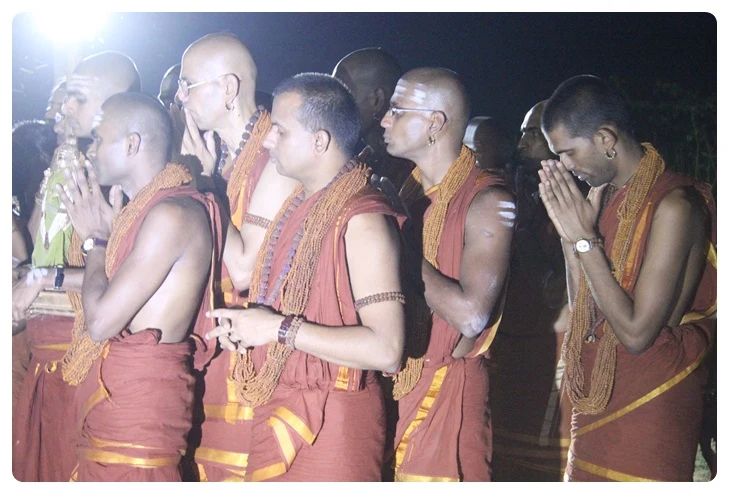
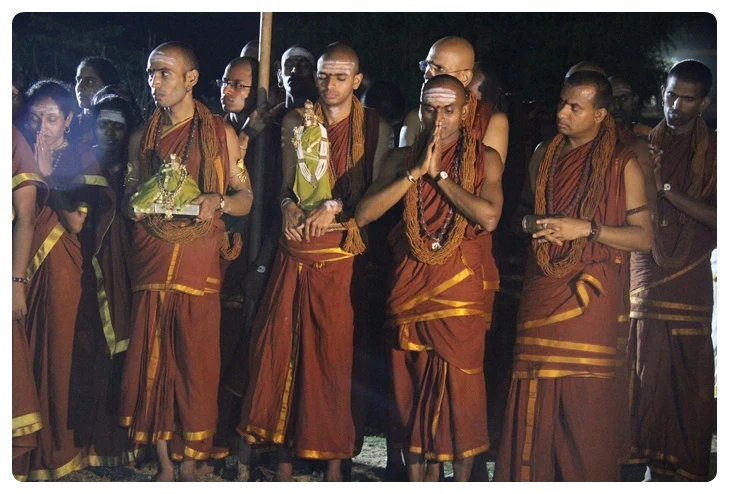
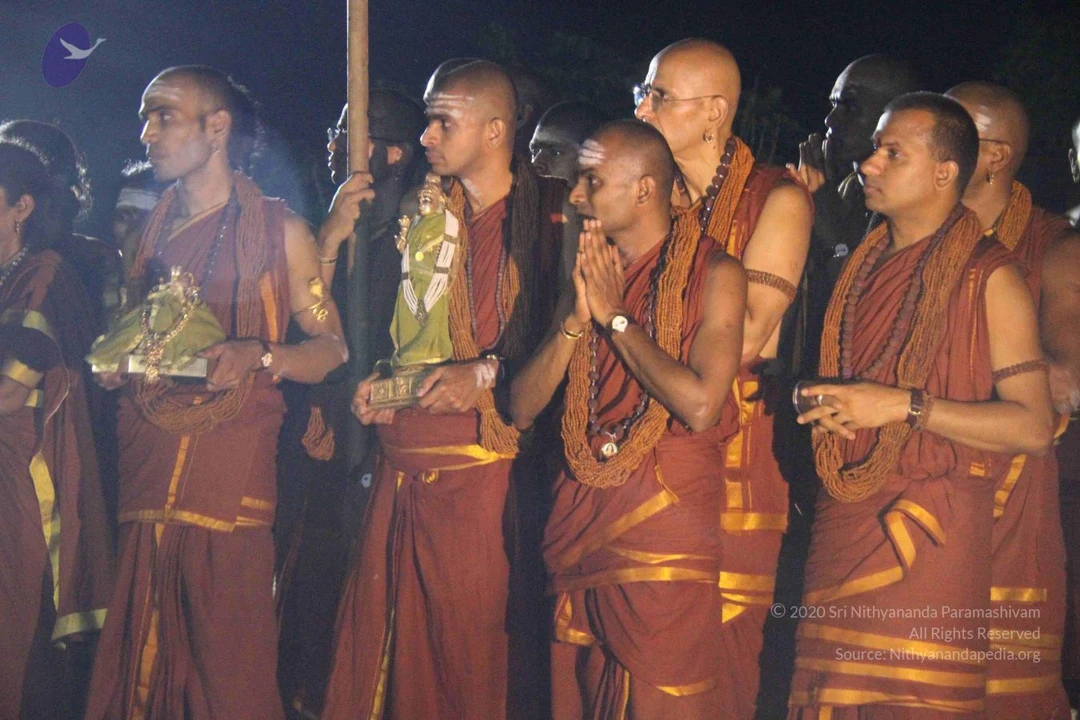
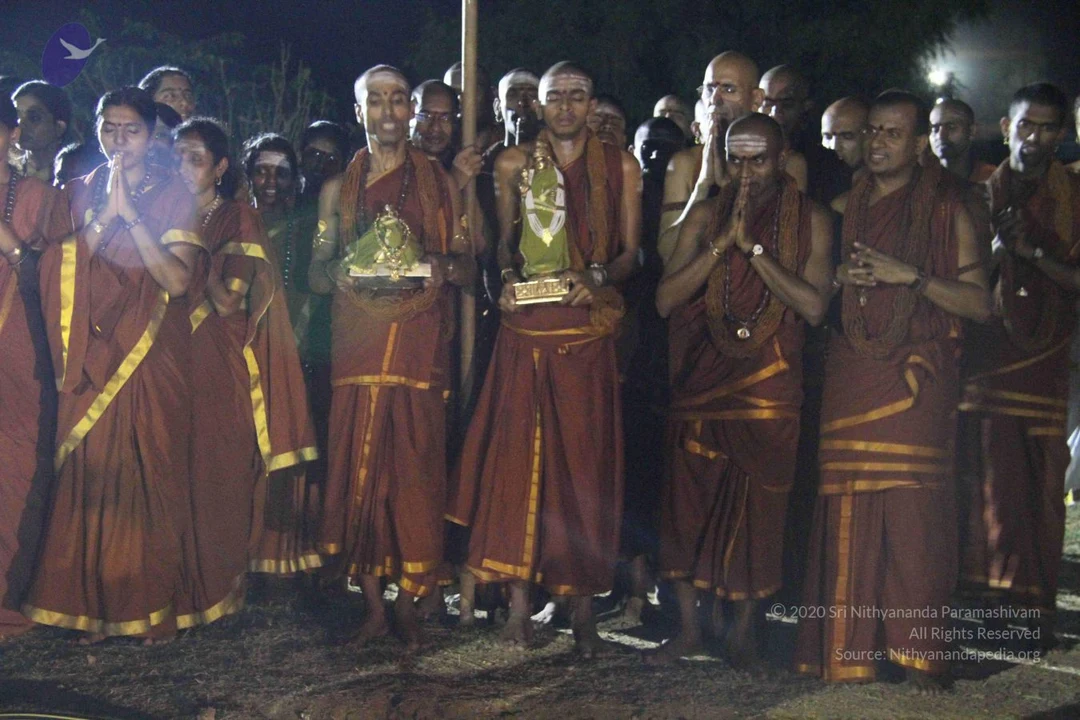
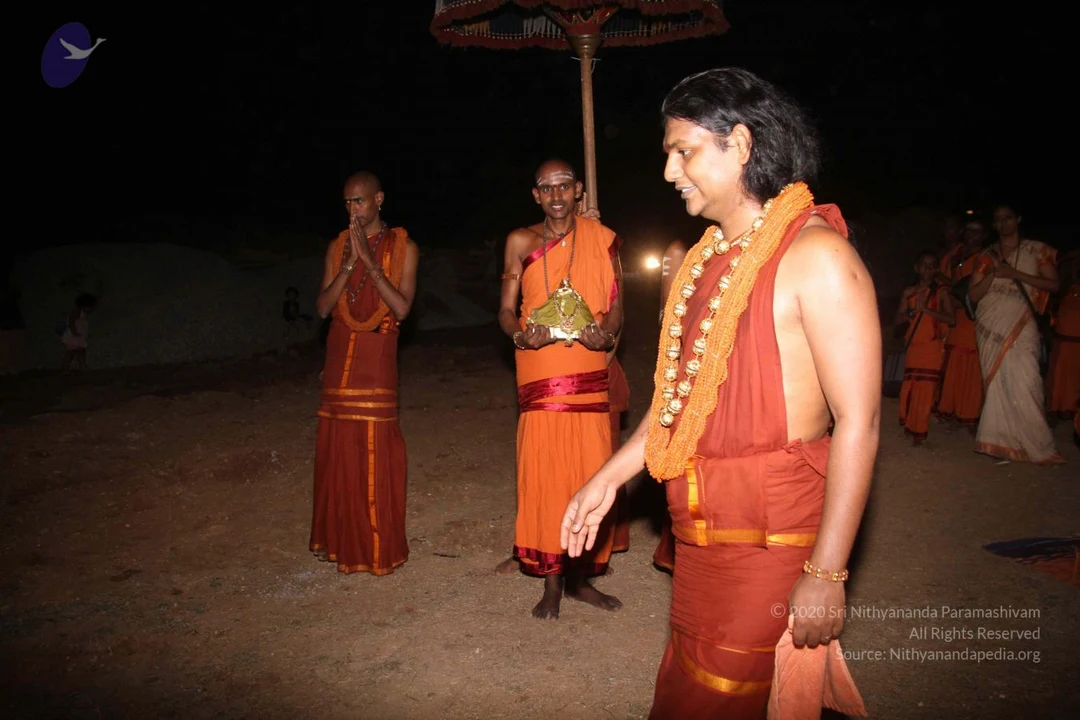
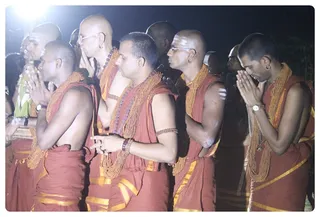
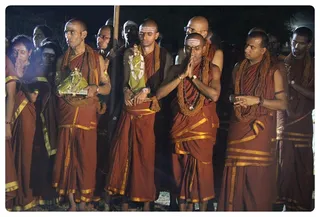
Night photograph of a row of shaven-headed men in saffron-orange dhotis and matching orange-gold beaded necklaces, standing with palms pressed together in anjali mudra. Several wear white vibhuti or tilak marks on their foreheads and arms, and one wears glasses. Some men hold rudraksha malas, and wristwatches are visible. Bright artificial lights illuminate them from the upper left against a dark background, with a few other figures partly visible at the edges. No individual can be confidently identified from appearance alone.Night photo of a group of saffron-robed men standing outdoors, most with shaved heads, rudraksha malas and forehead tilak marks. Several wear rust-red dhotis with gold-edged borders and draped shawls. The foreground figure at left carries a small green-gold shrine or box, while the central man stands with palms pressed together in namaste. Other devotees, including women in red and gold saris, stand behind them in the dark, with a wooden pole visible above the crowd.

Morning Message
101 photosSource gallery
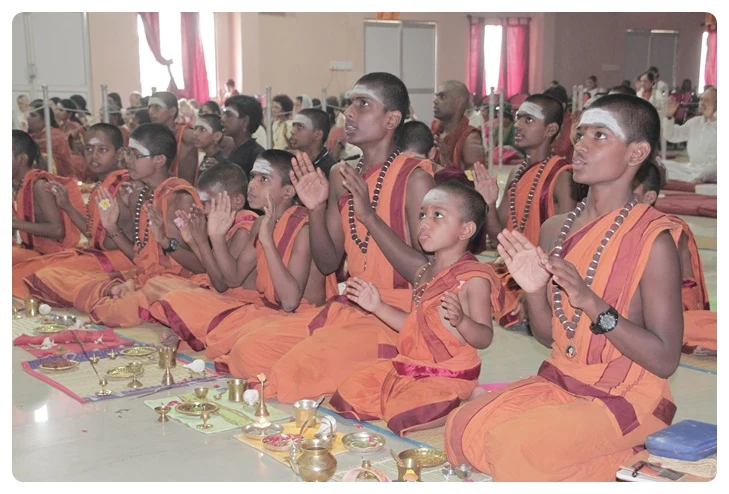
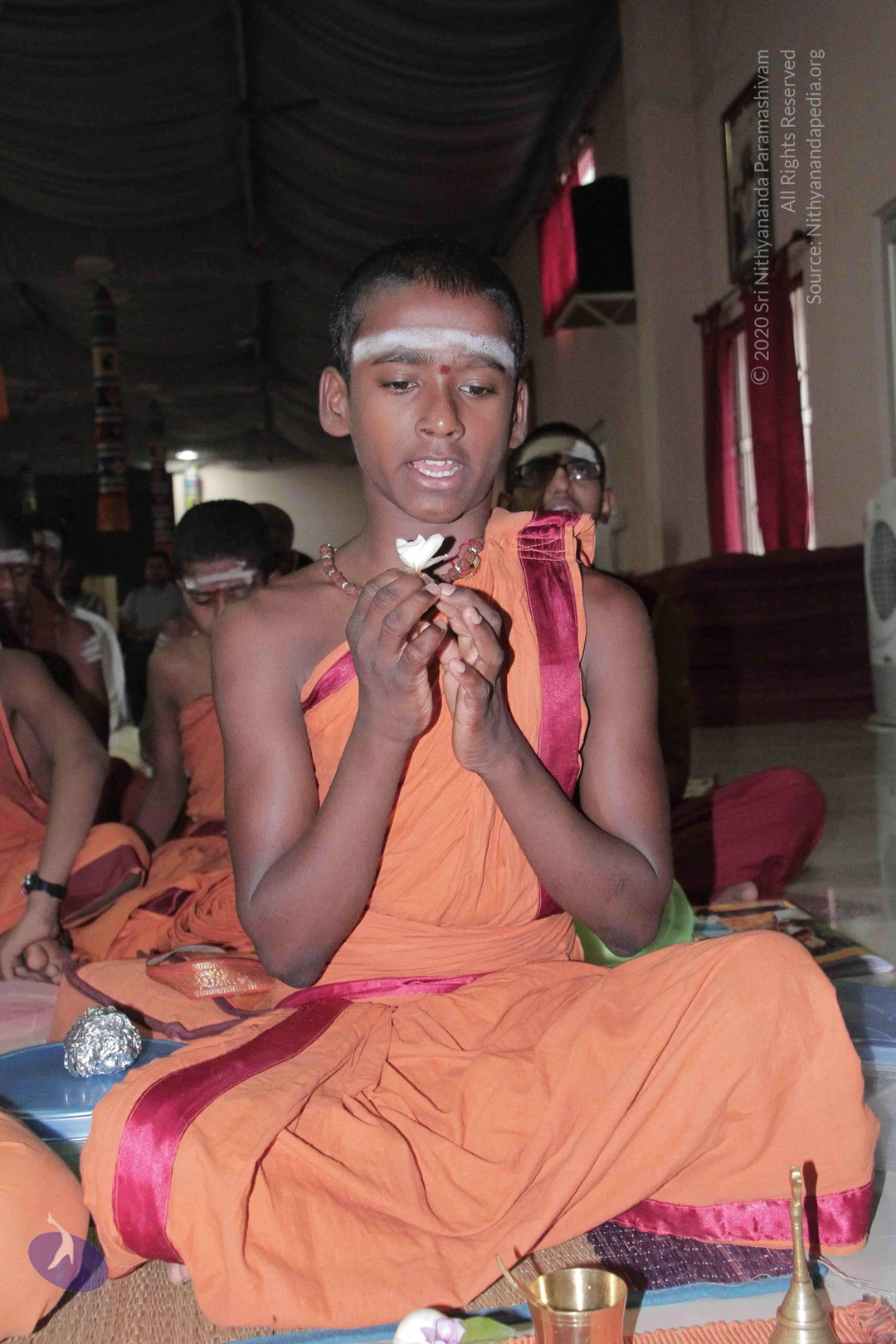
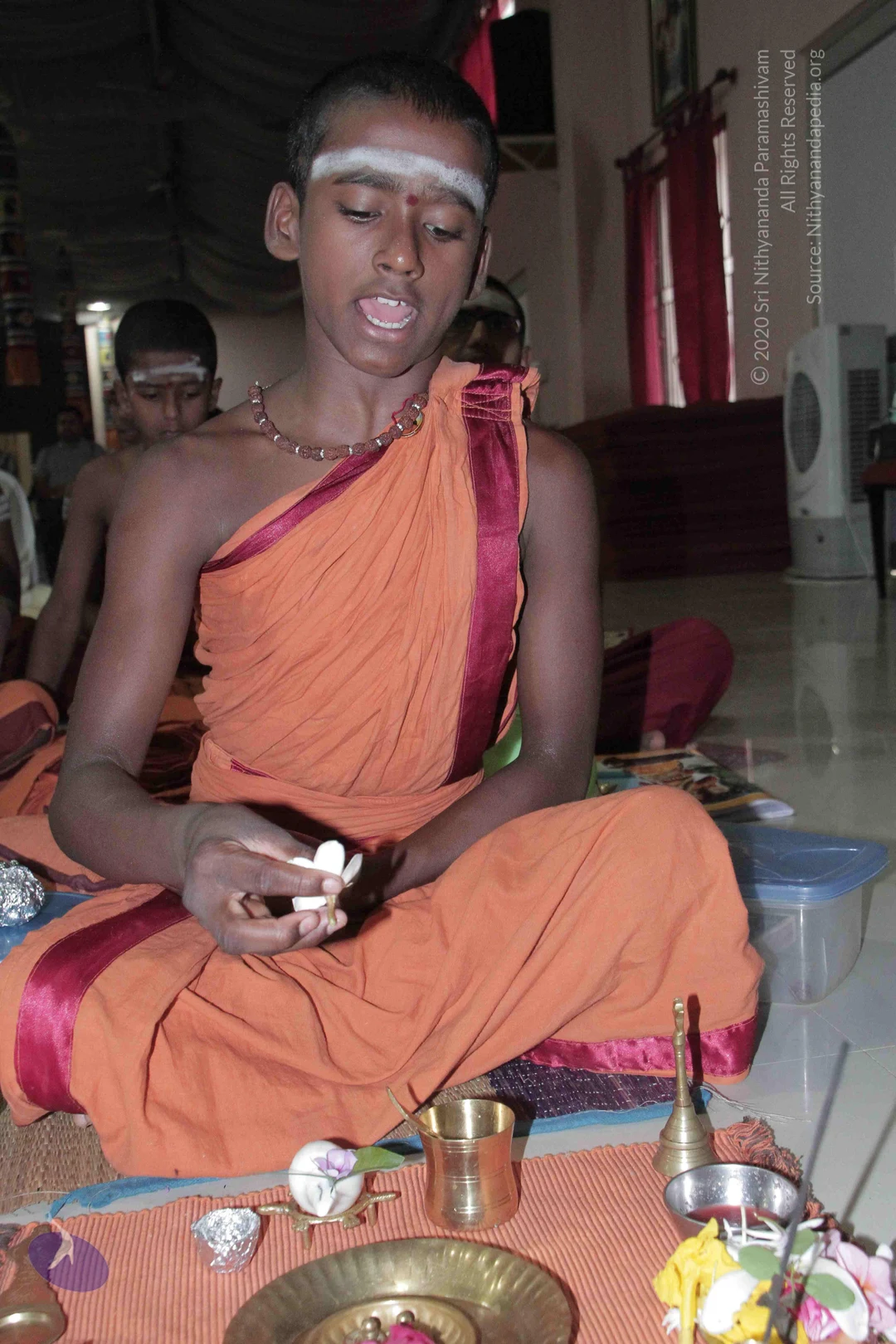
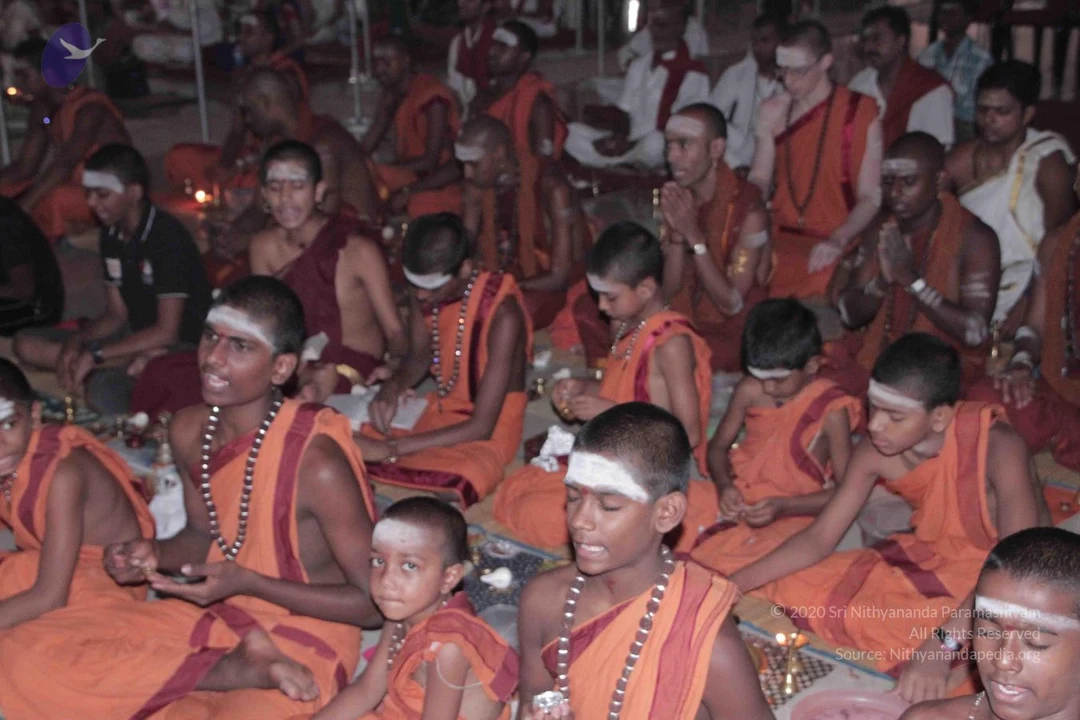
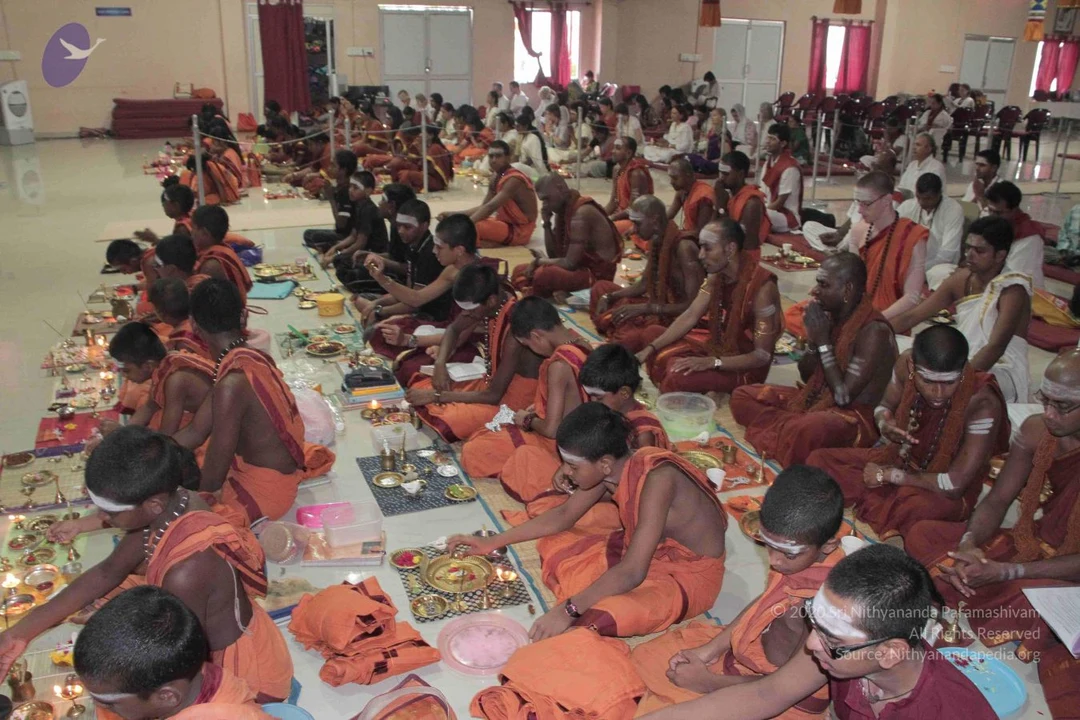
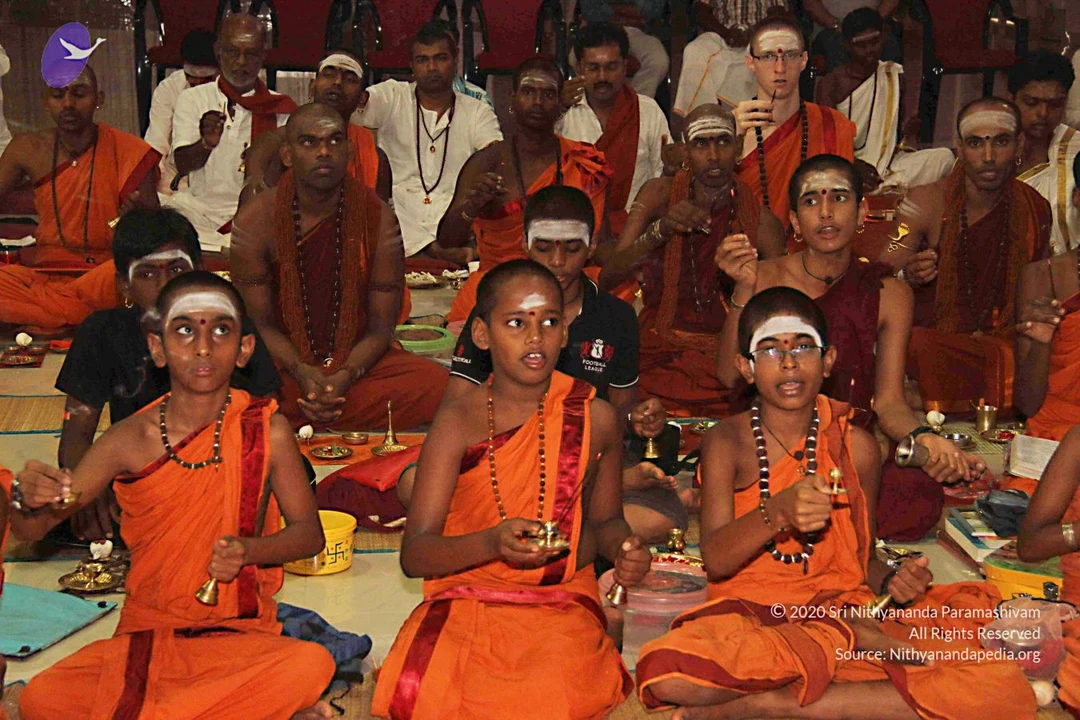
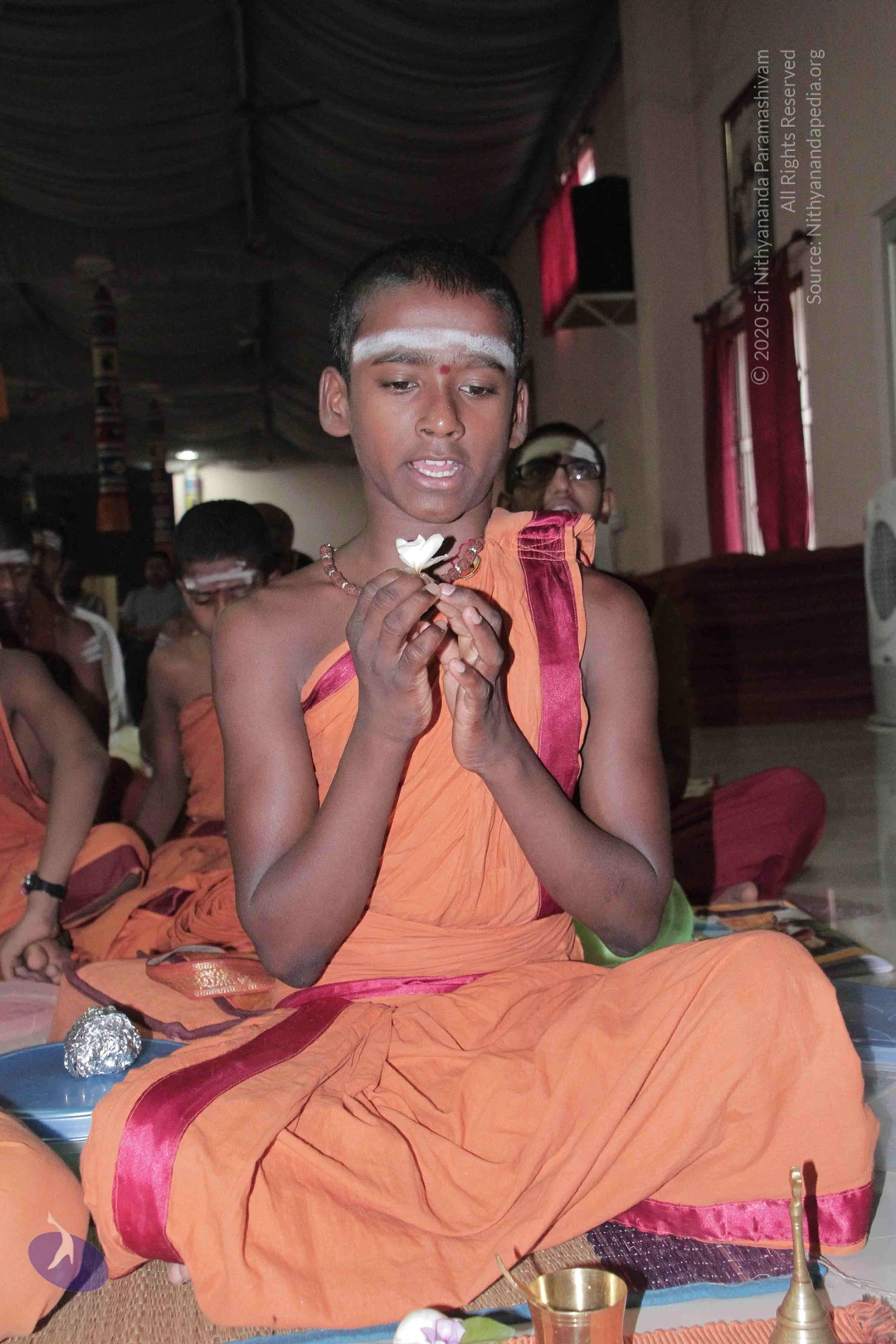
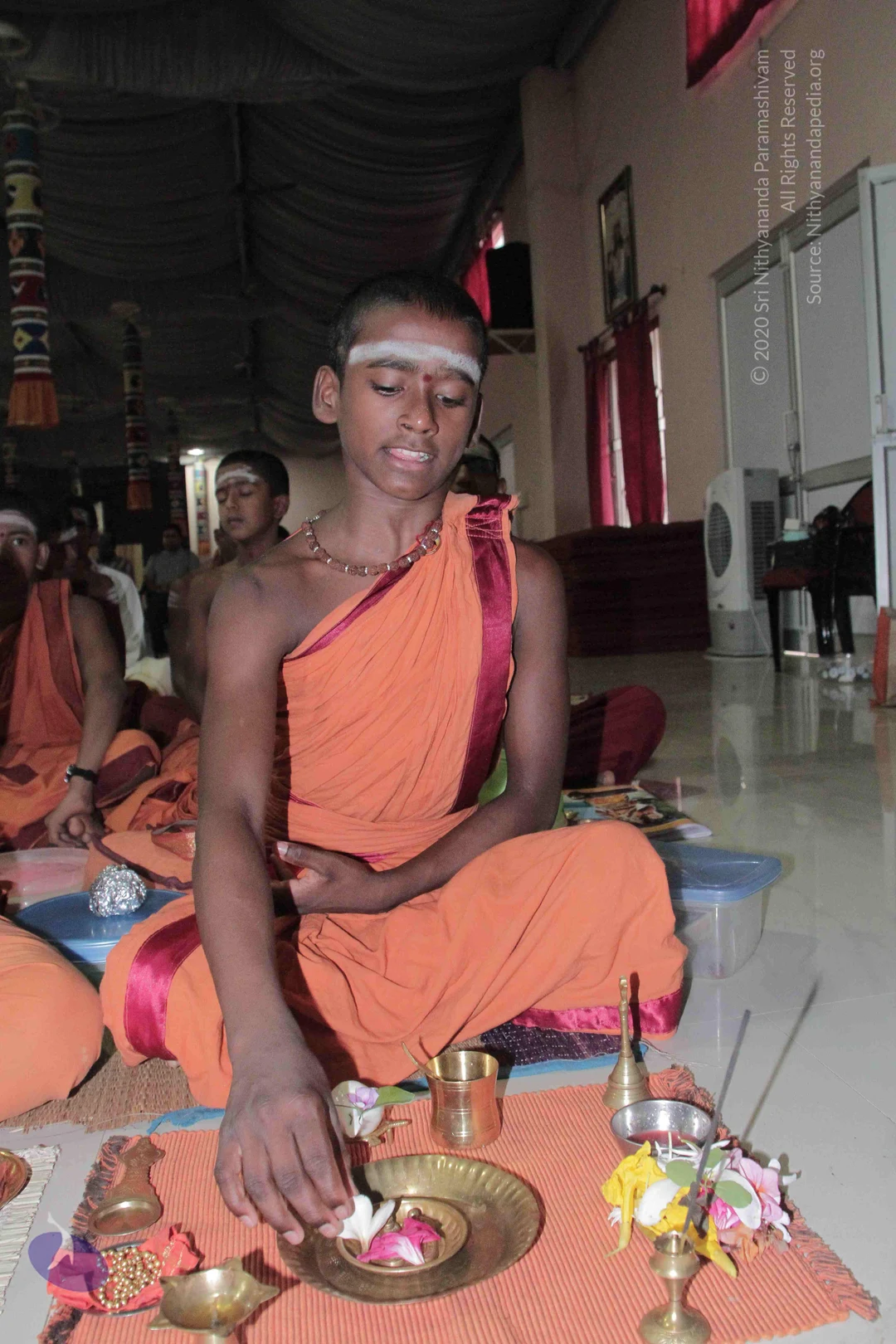
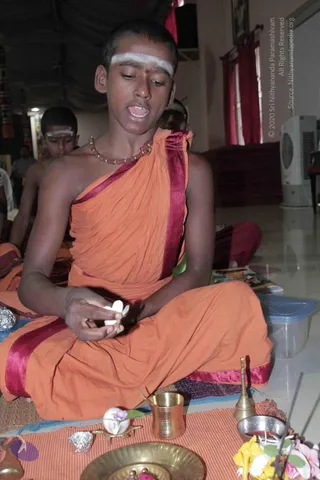
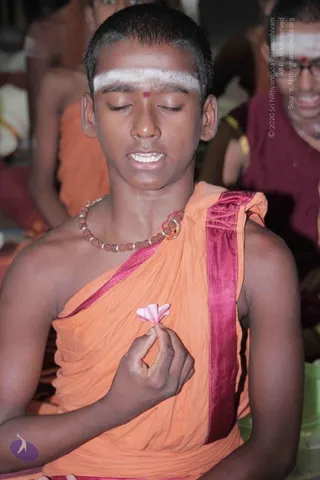
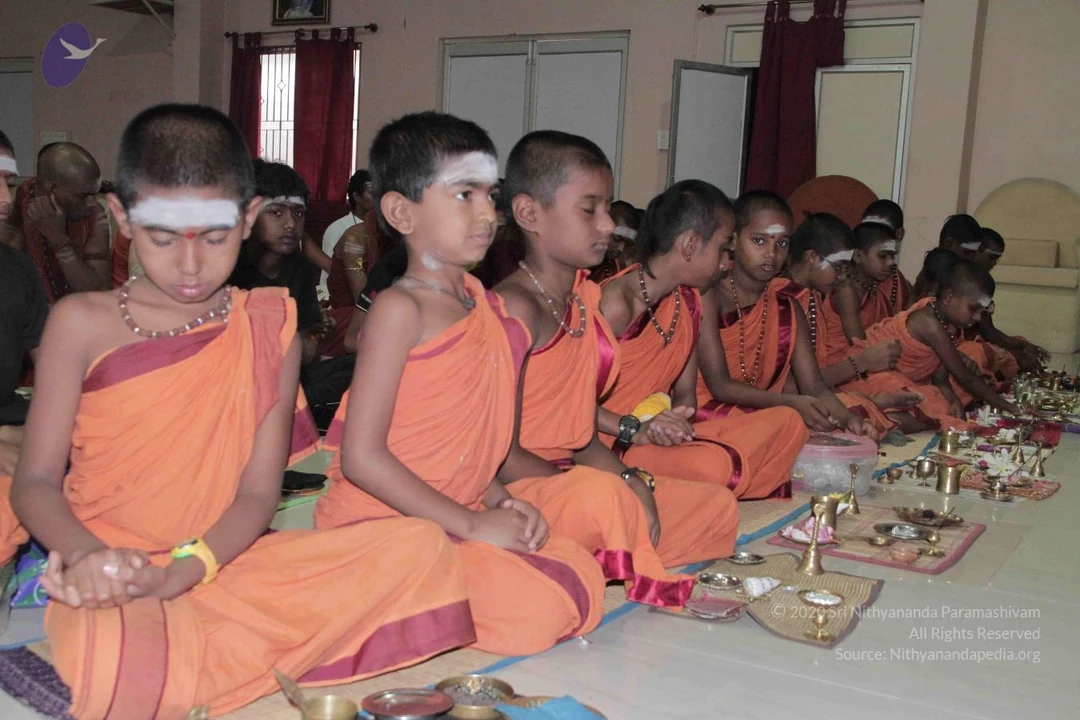
A group of young boys, most with shaved heads, sit cross-legged on a white floor in rows wearing saffron-orange robes with maroon borders. Several have white sandalwood paste marks on their foreheads and rudraksha malas around their necks. Brass puja vessels, small bowls and plates with offerings sit on pink cloths in front of them, and a few have bangles on their wrists. Behind them an older man with a shaved head and orange robe sits with his hands together, and a pale wall with maroon curtains and a framed picture is visible behind.A row of young boys seated cross-legged on a white floor, dressed in saffron-orange robes with maroon borders, each with a white tilak on the forehead and rudraksha malas. Several have eyes closed in meditation and hands folded in lap. In front of them on mats are brass puja vessels, bells, a conch shell and small offering plates. At the far right an empty ornate chair stands near the wall. Behind them other seated figures in orange are partly visible.Photograph of a row of young boys seated cross-legged on a white floor in an indoor hall, wearing orange-saffron dhoti-style garments with maroon borders, rudraksha malas, and white sacred ash (vibhuti) marks on their foreheads. Brass puja vessels, small bowls and a kalasha-style brass lamp set sit on pink and brown mats in front of them, with flower petals and offerings. Several boys have eyes closed in meditation with hands folded. An adult in orange robes is partly visible at the left edge, and a cream cushioned chair sits at right.A photograph of a row of young boys seated cross-legged on a white floor in a plain hall. They wear saffron-orange cloth with maroon borders and rudraksha malas, and have white vertical tilak marks on their foreheads. Several have eyes closed in meditation with hands folded or resting on laps. In front of them on mats are brass puja vessels, small bowls, a brass lamp and conch-like shells. Behind them, other seated figures in orange and white are partly visible, and a cushioned chair stands at right.A golden ornate throne with carved lion-head armrests sits on a tiger-skin cushion before a dark stone wall flanked by brass hanging oil lamps. Centered on the throne back is a framed portrait labelled "Paramahamsa Nithyananda" showing a smiling man in orange robes and a white bead necklace, seated cross-legged before a banyan tree with his right hand raised in blessing. Yellow and pink painted panels frame the sides and a lit lamp glows at the lower right edge. No physical people are visible; the only figure is the printed portrait on the throne, which is a depiction.A young boy with a shaved head and white vertical tilak on his forehead, wearing an orange robe with magenta borders, sits cross-legged on an orange mat while holding a small white flower and chanting with mouth open. A brass kalasha-style cup, brass bell, small silver foil packet, white flower garland, and a brass plate with offerings lie in front of him. Another boy in similar orange robes sits behind him, with a red curtain and an air cooler in the background. A rudraksha mala hangs around his neck. Person is a young ritual participant; no appearance-based a person candidate is present.

Satsang

5 photosSource gallery
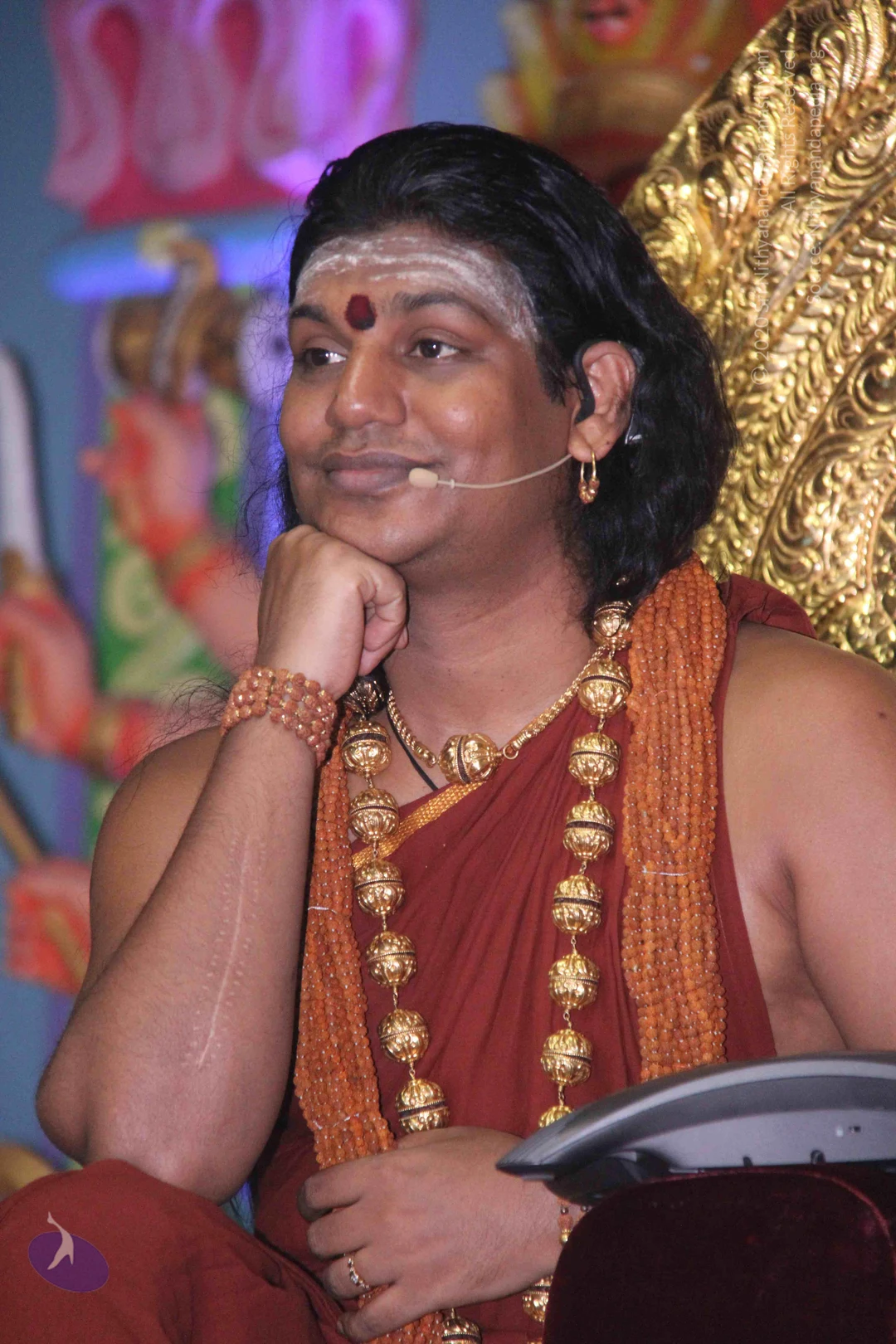
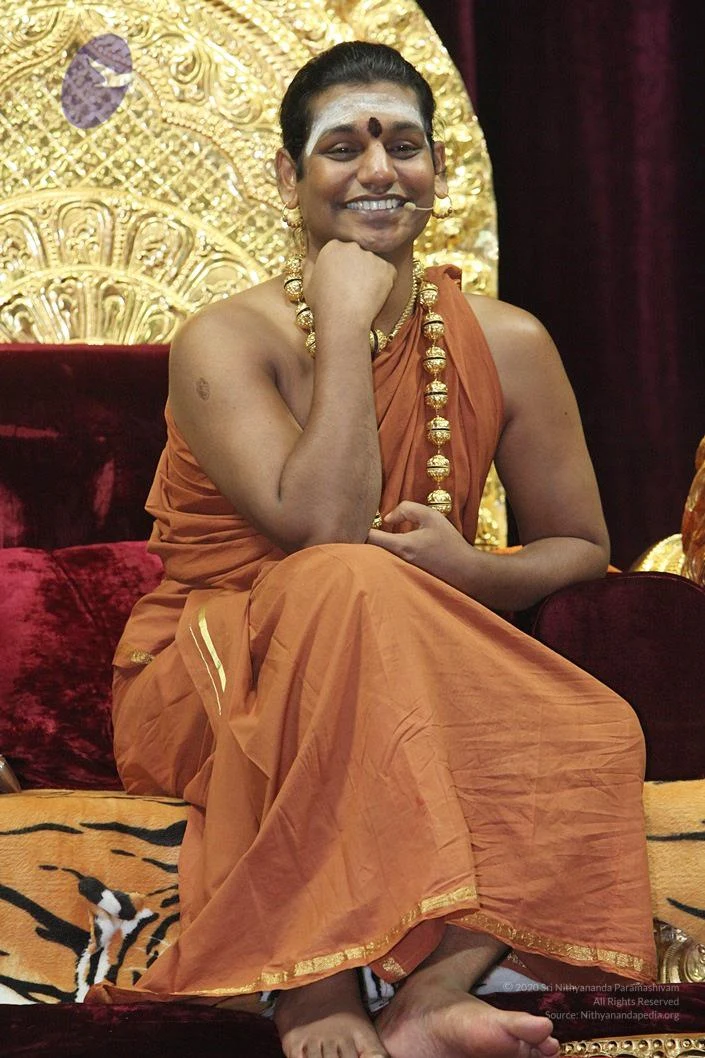
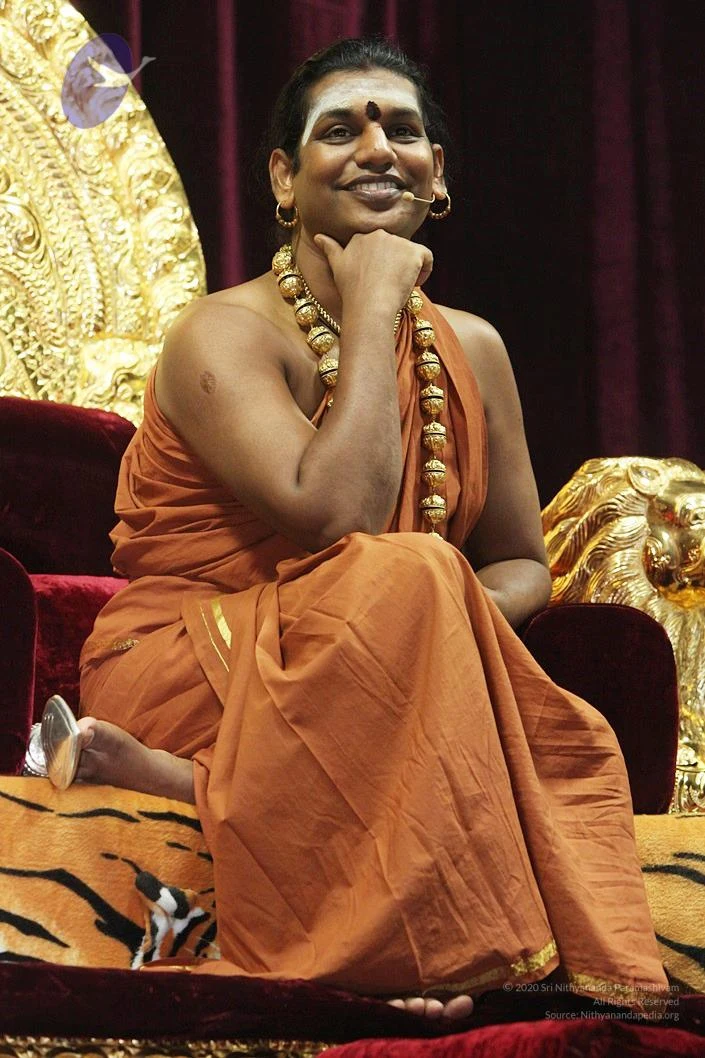
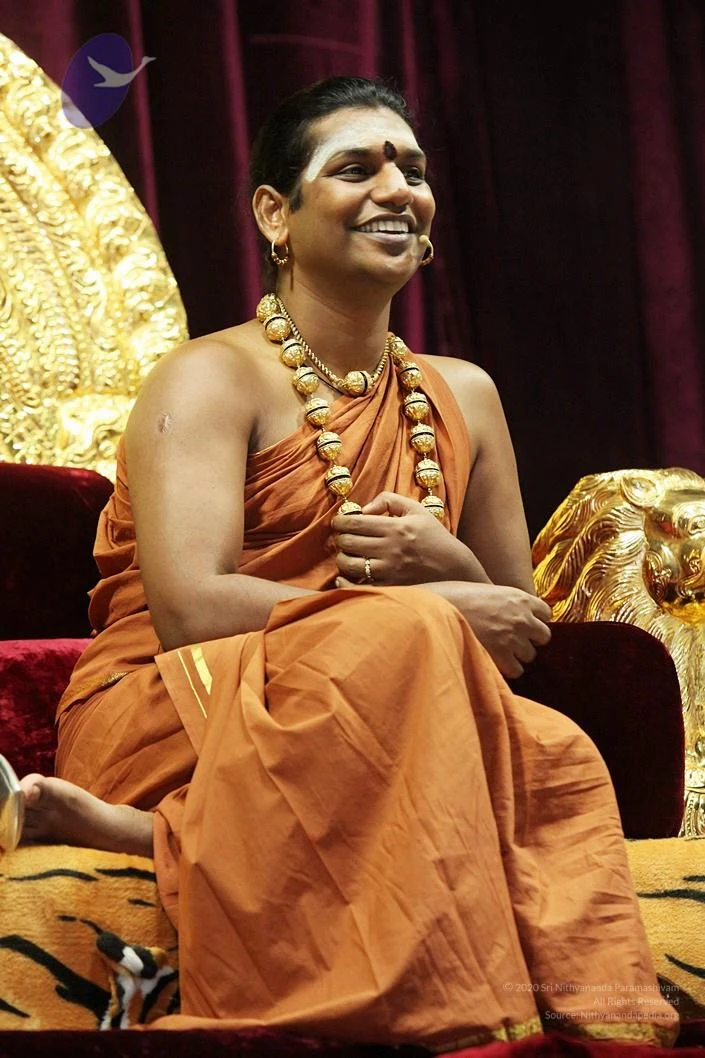
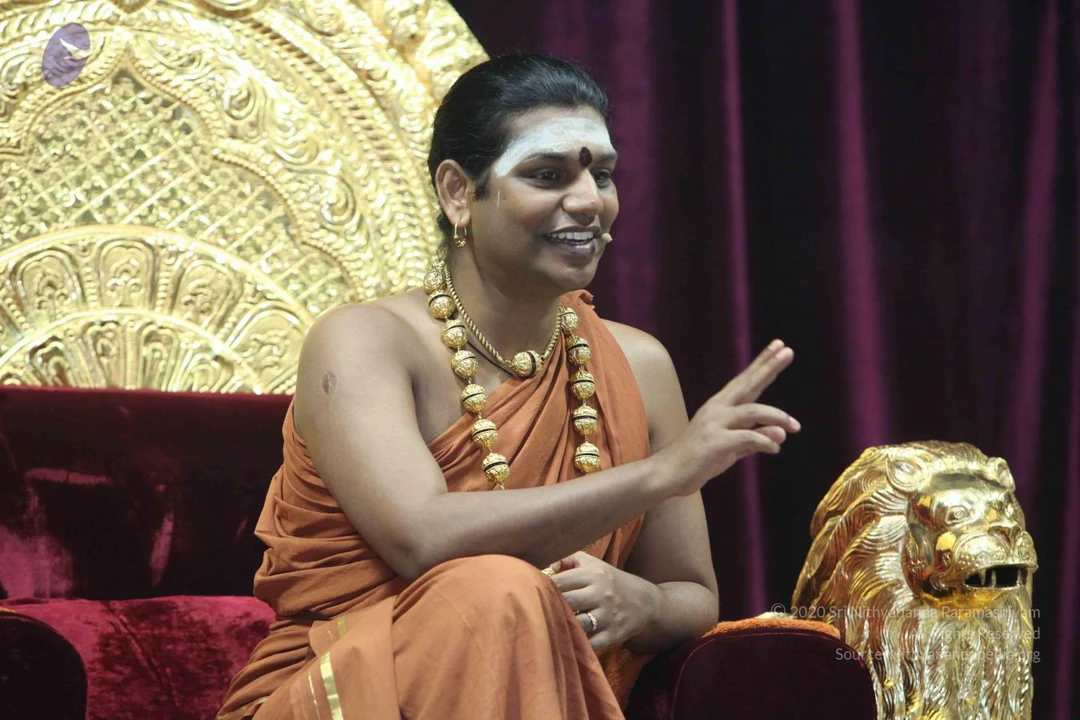
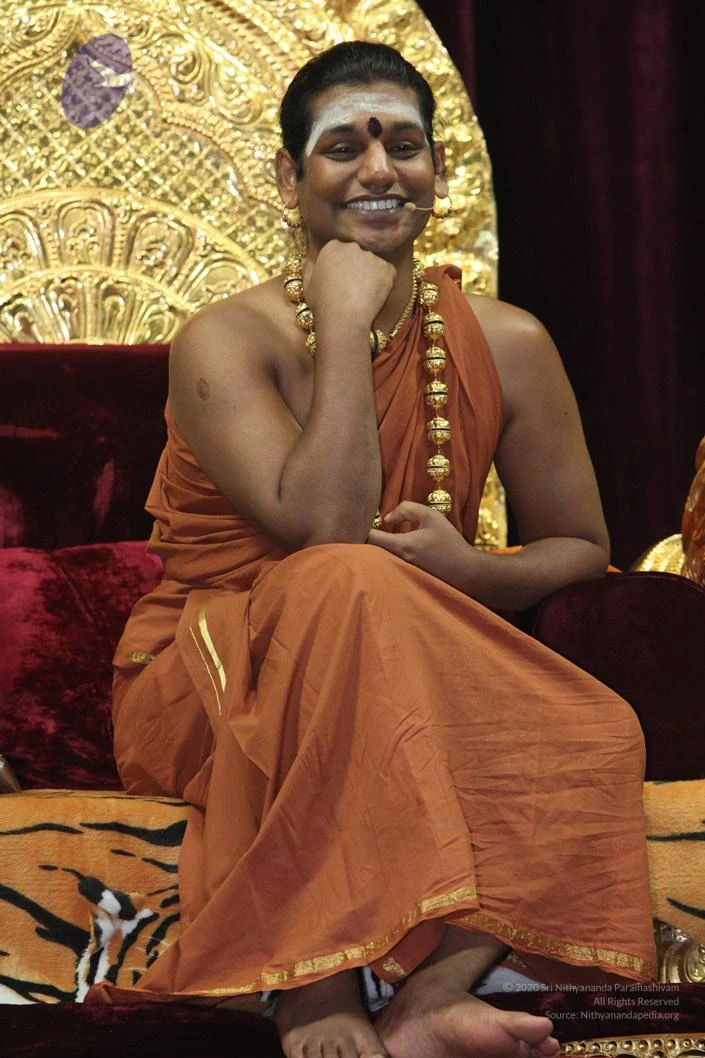
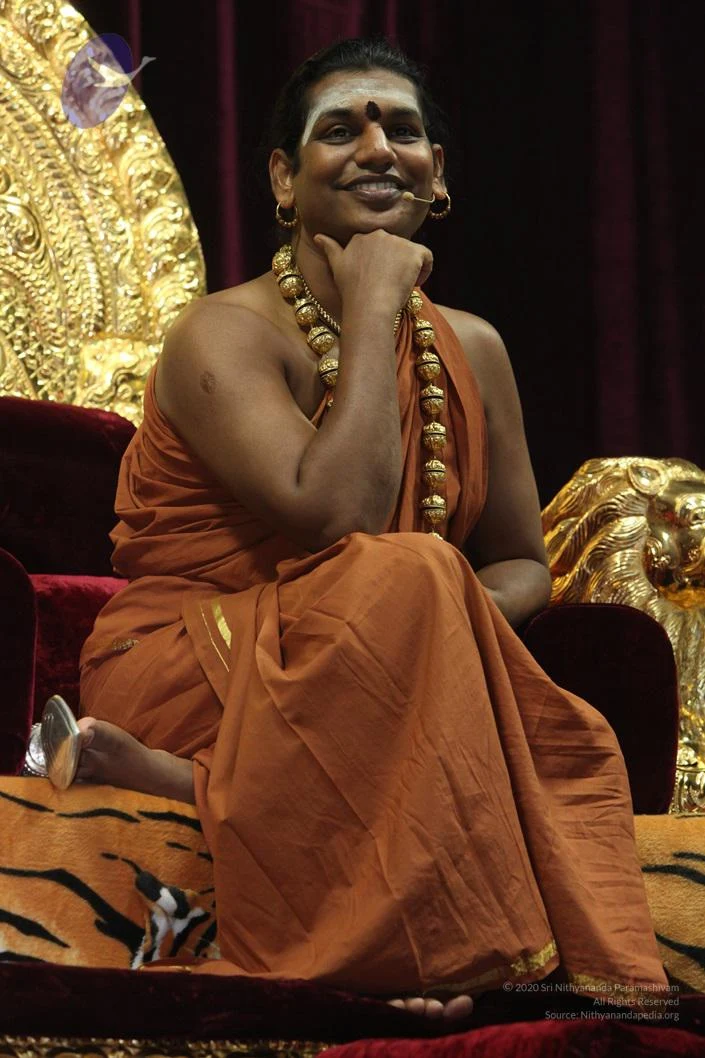
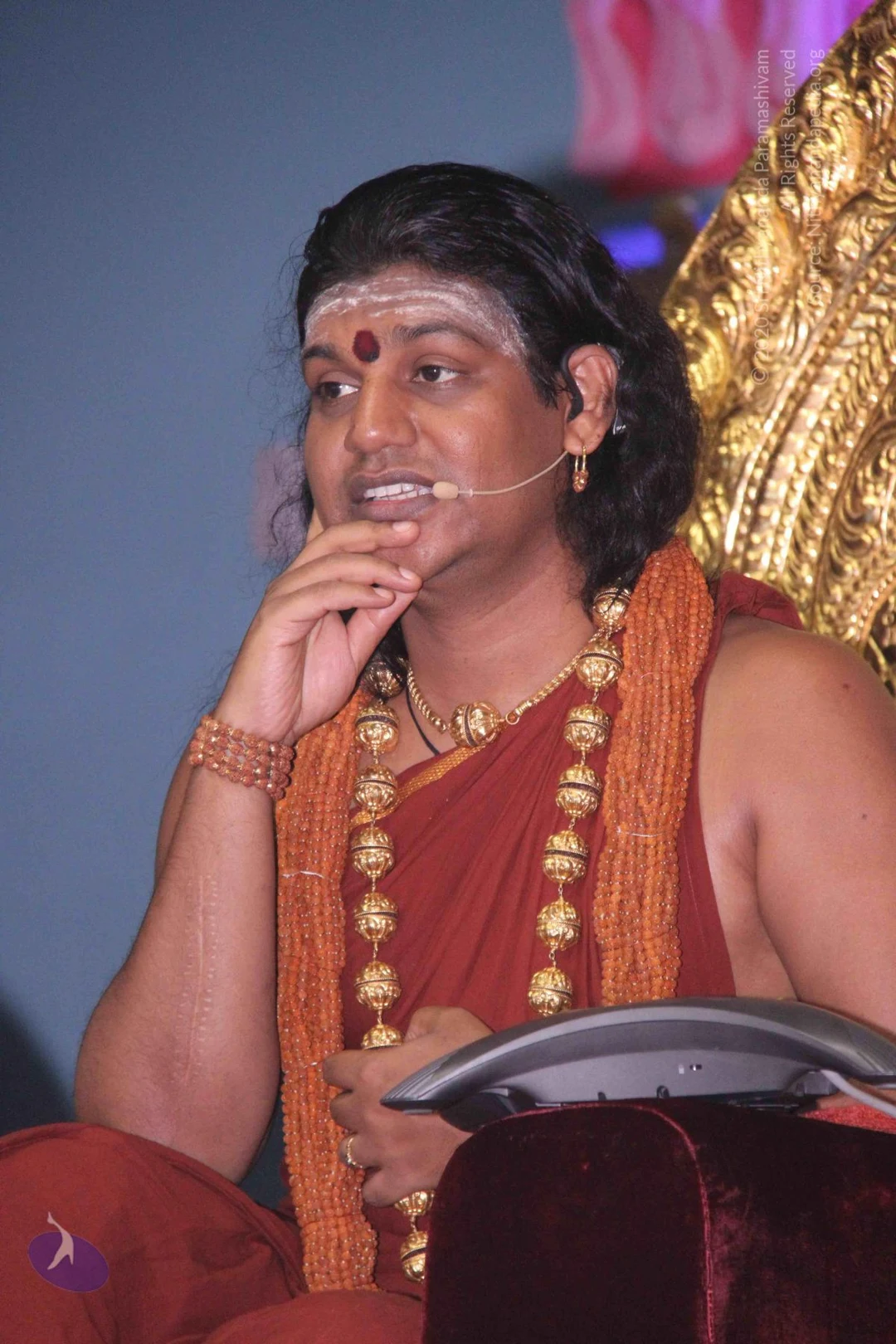
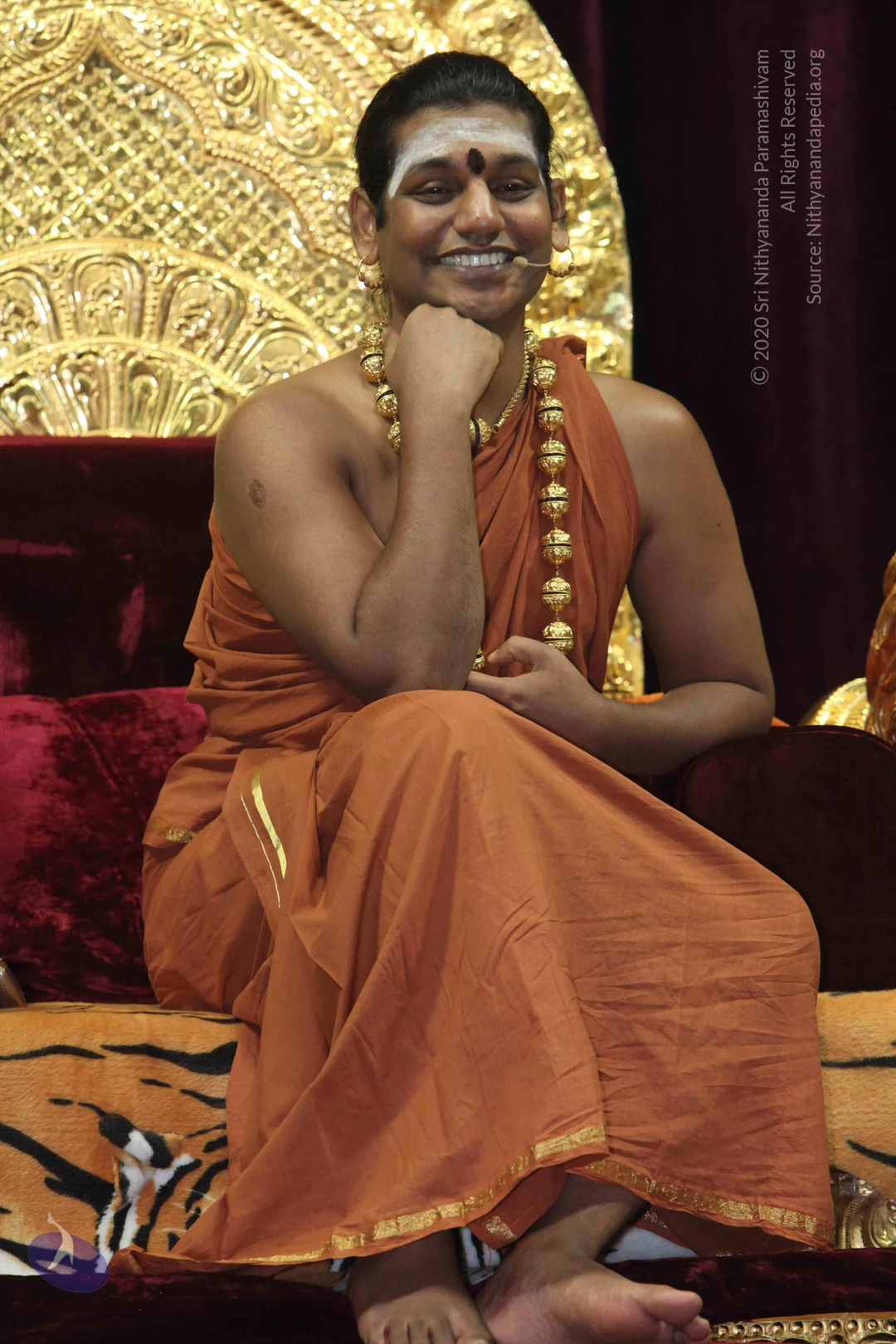
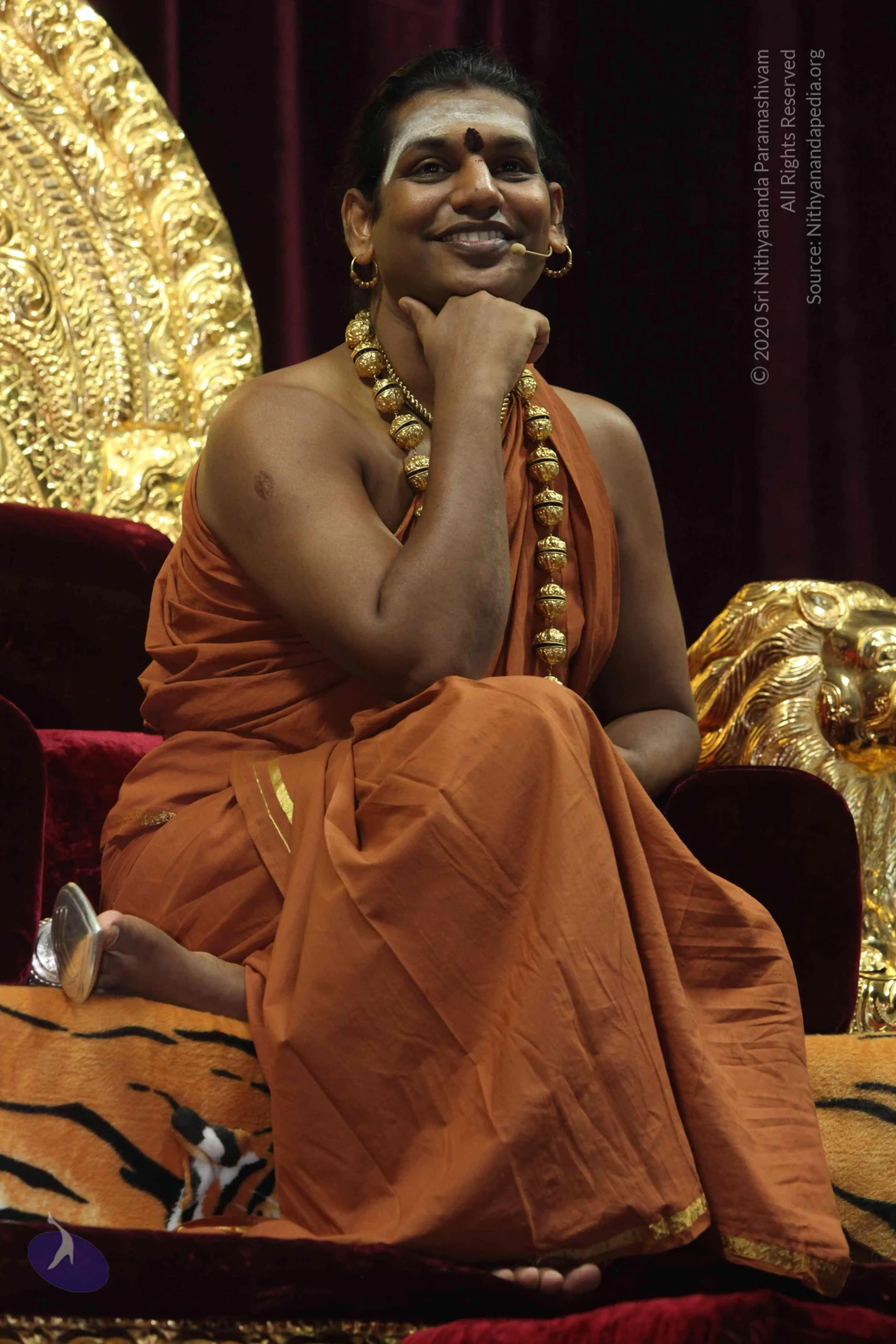
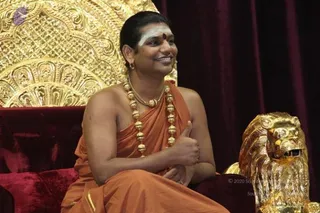
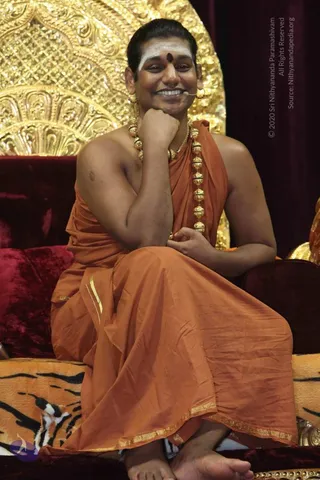
A smiling man sits on a red velvet couch draped with a tiger-striped cloth, one hand resting under his chin. He wears an orange-saffron unstitched garment with a gold-bordered edge, a gold necklace, a long rudraksha-style gold bead mala draped over one shoulder, gold earrings, white vibhuti lines and a red bindi on his forehead. A lapel microphone is clipped near his face. Behind him stands an ornate gold throne with a carved fan-shaped backrest and a deep red curtain. Probable Swamiji by appearance: long swept-back hair, saffron clothing, gold ornaments and a rudraksha-bead mala, seated as the speaker at a satsang.

Selected Pics-2012-Apr-03

24 photosSource gallery
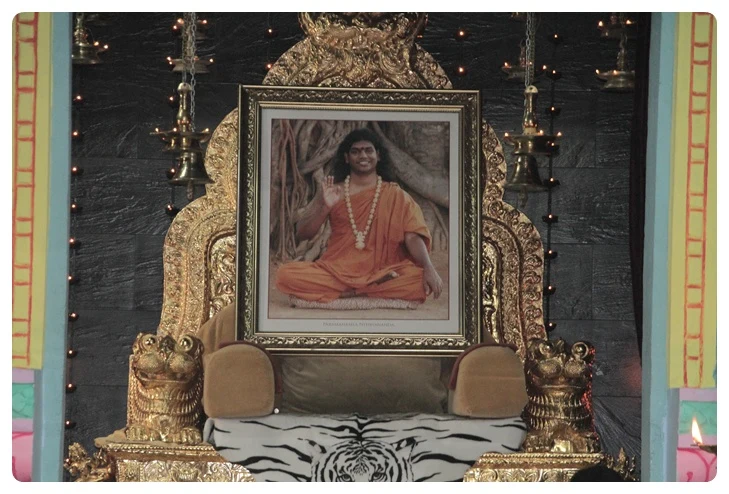
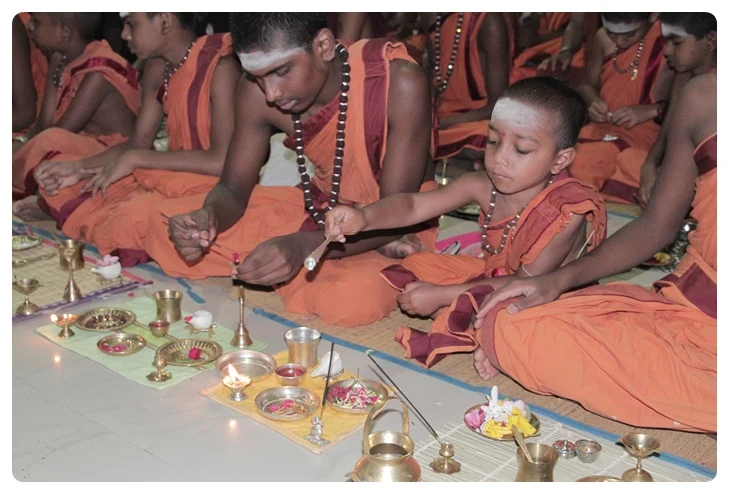
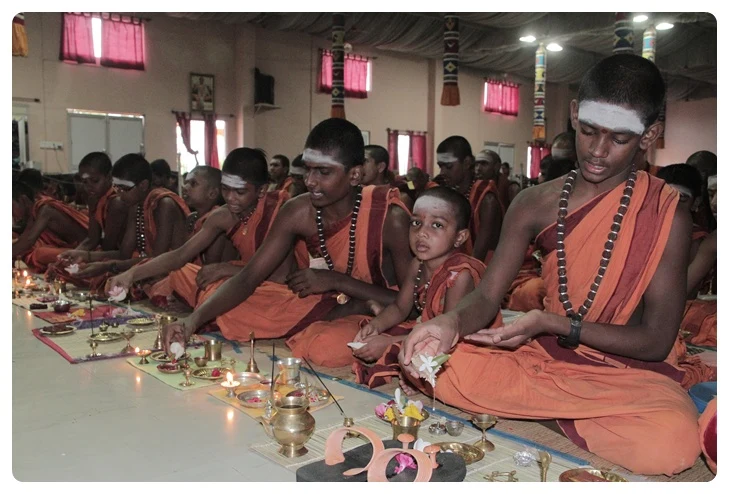
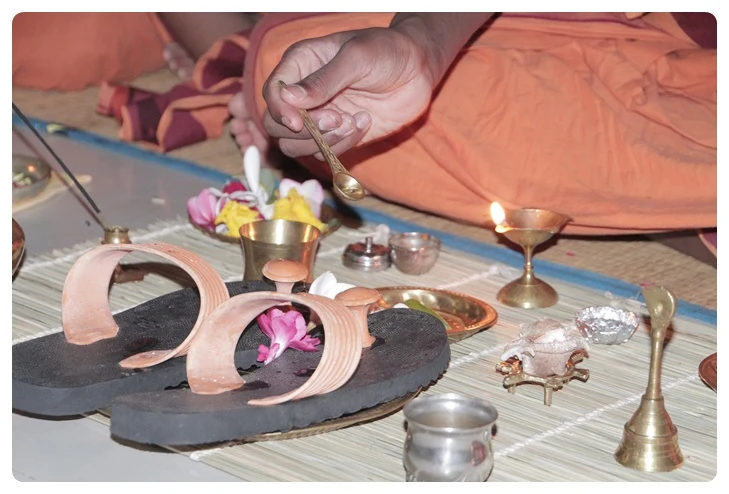
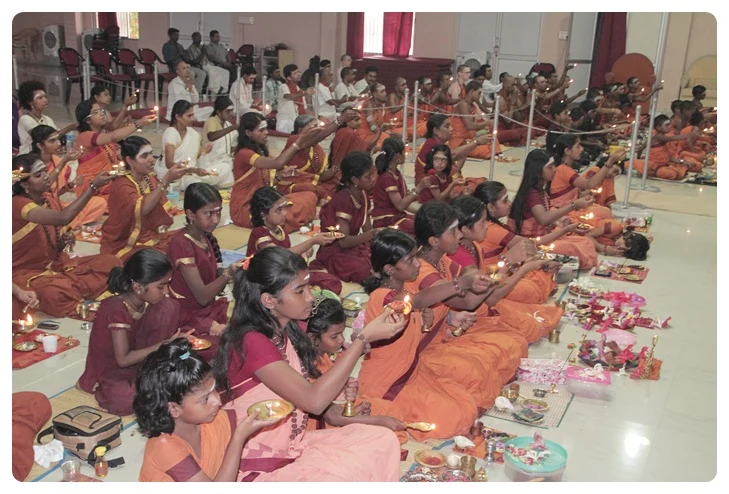
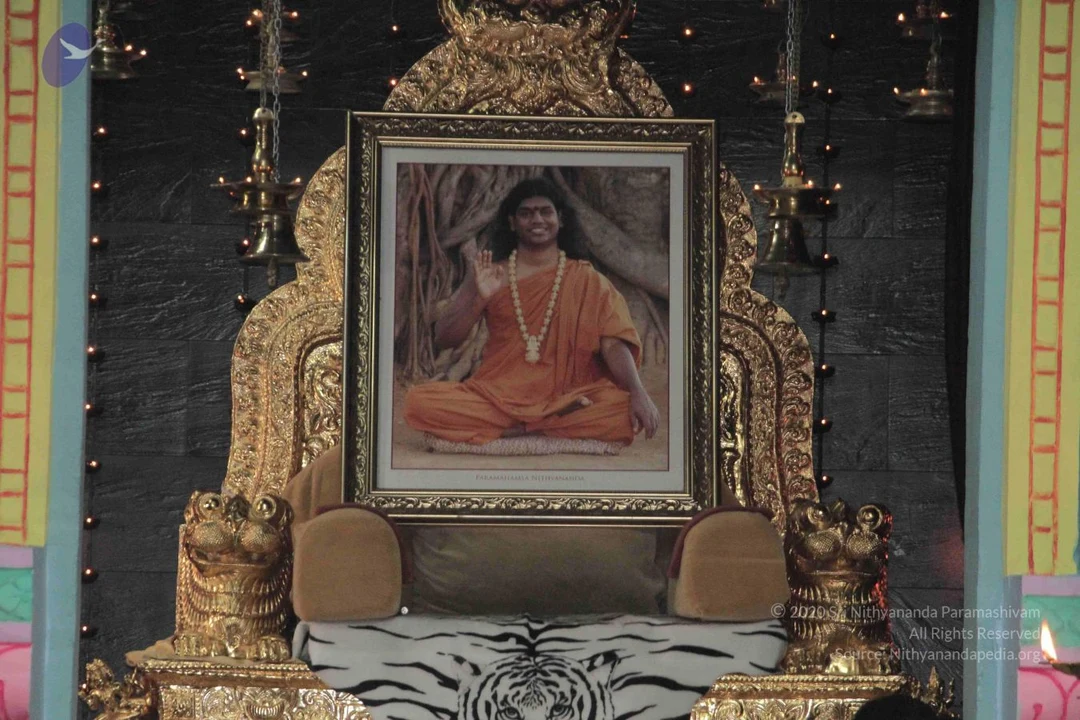
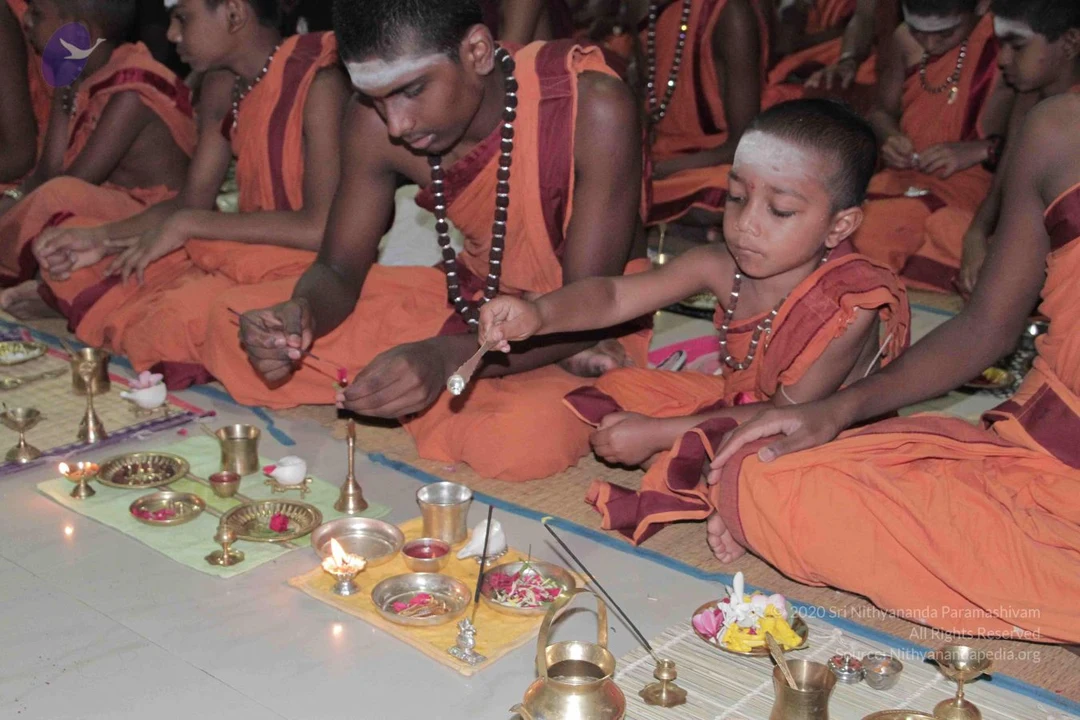
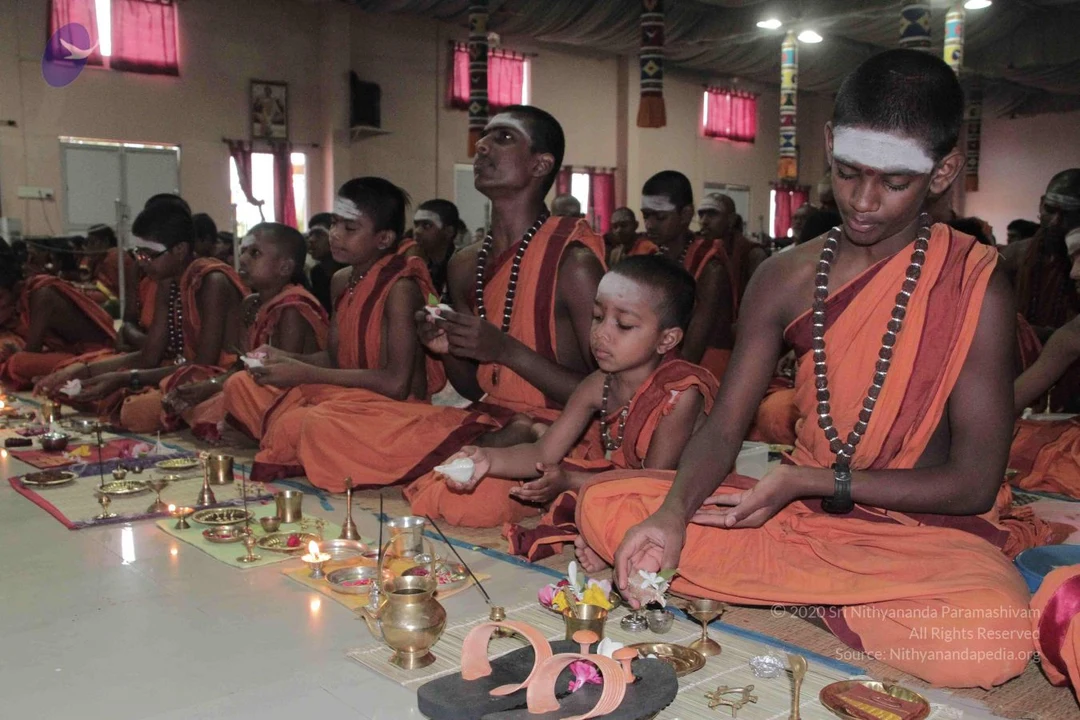
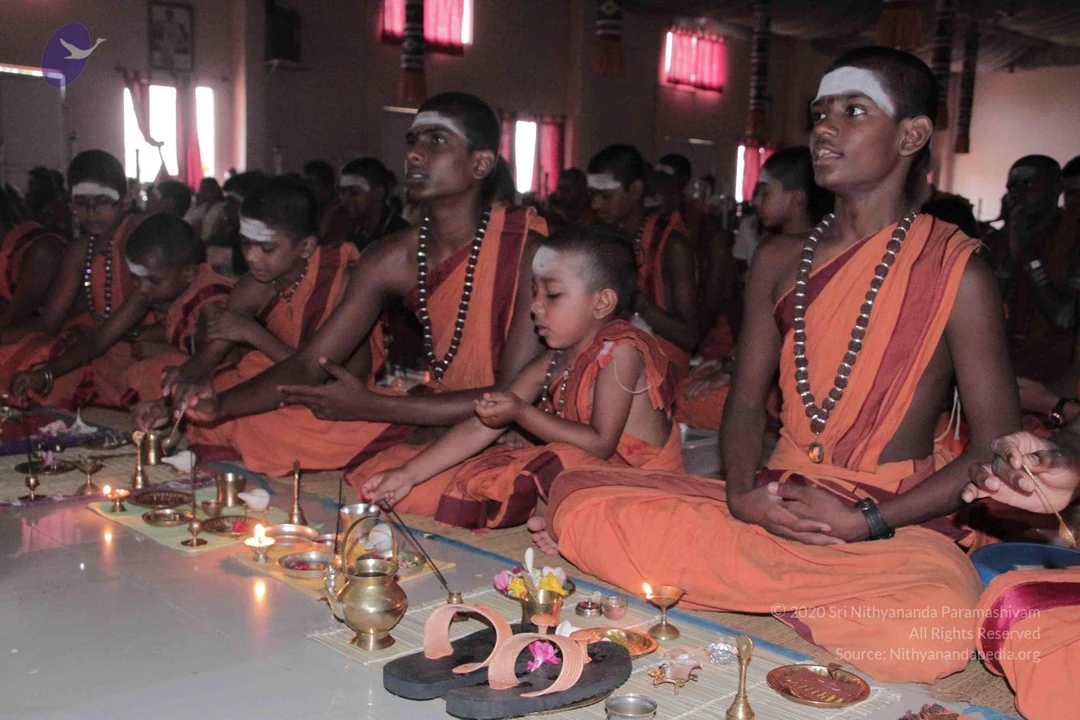
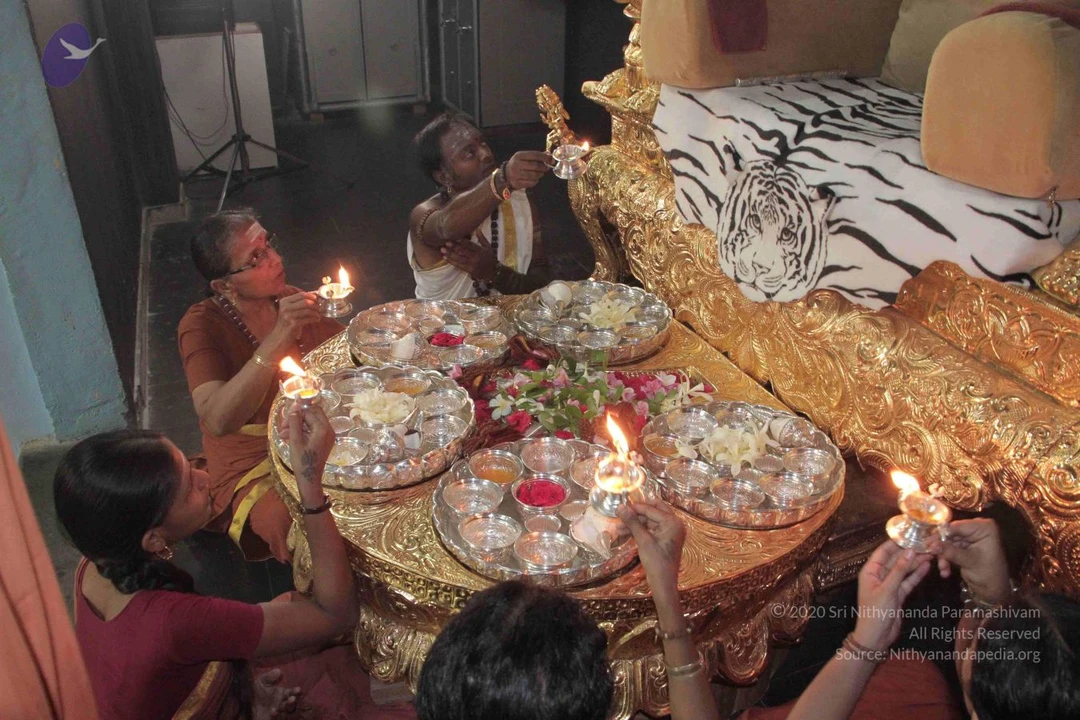
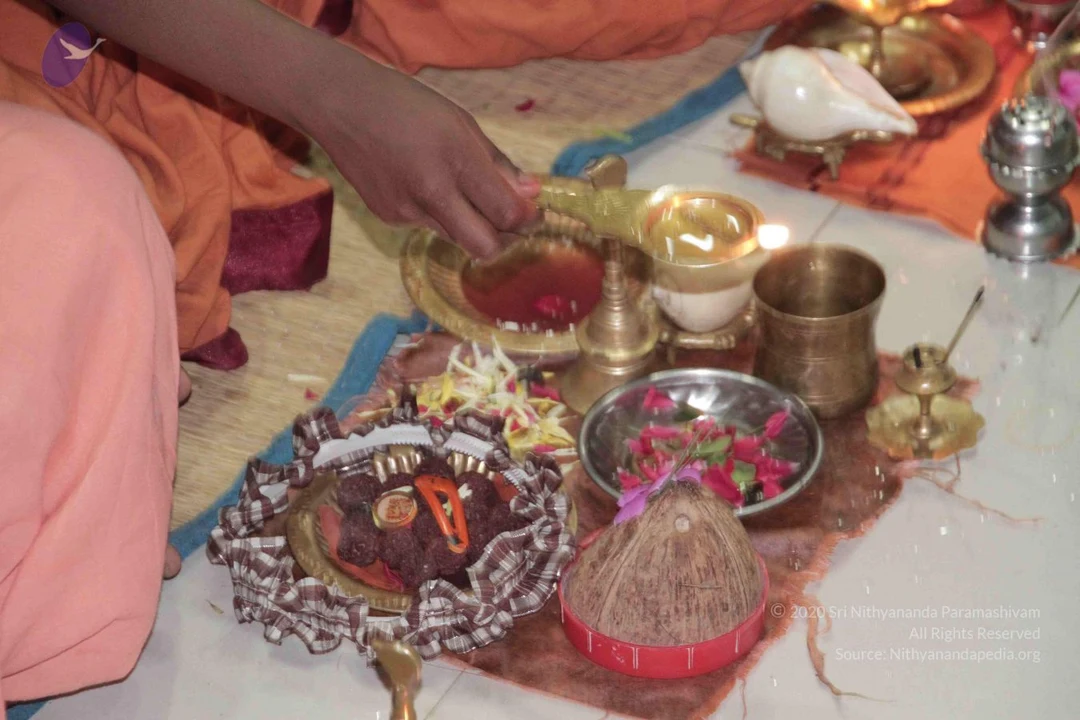
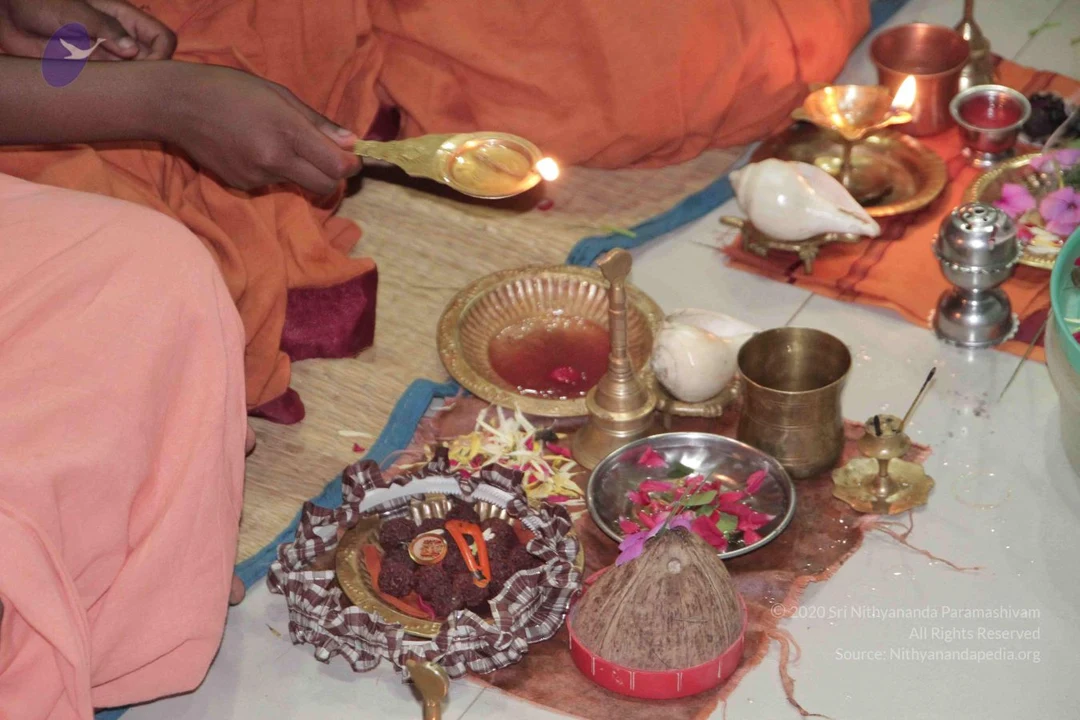
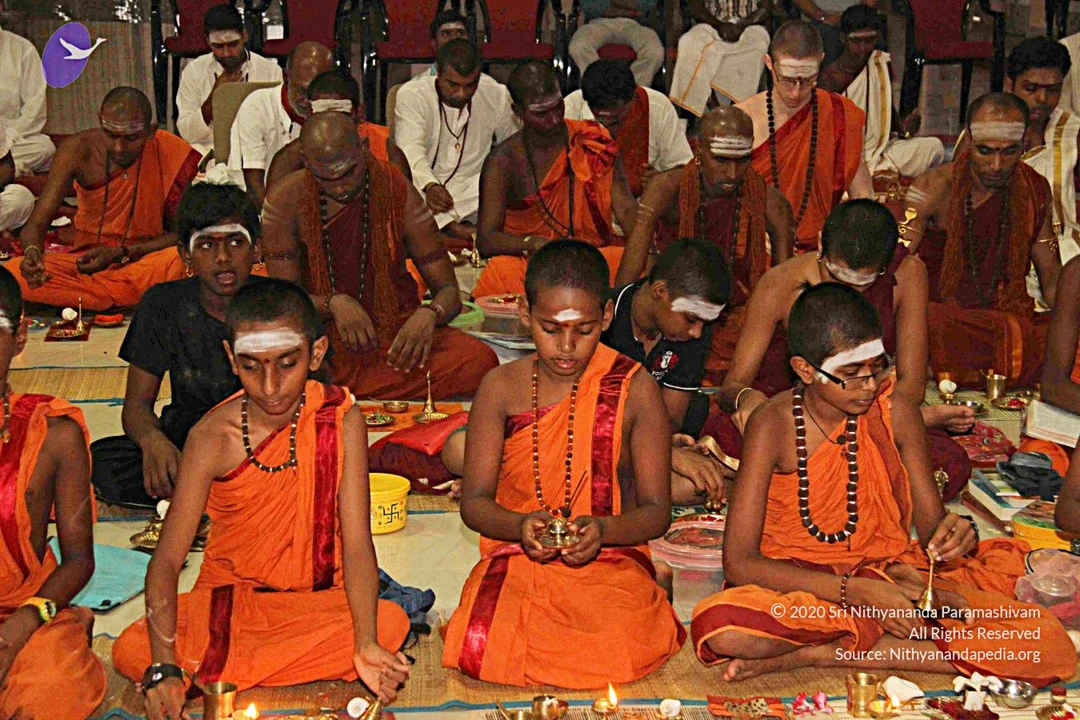
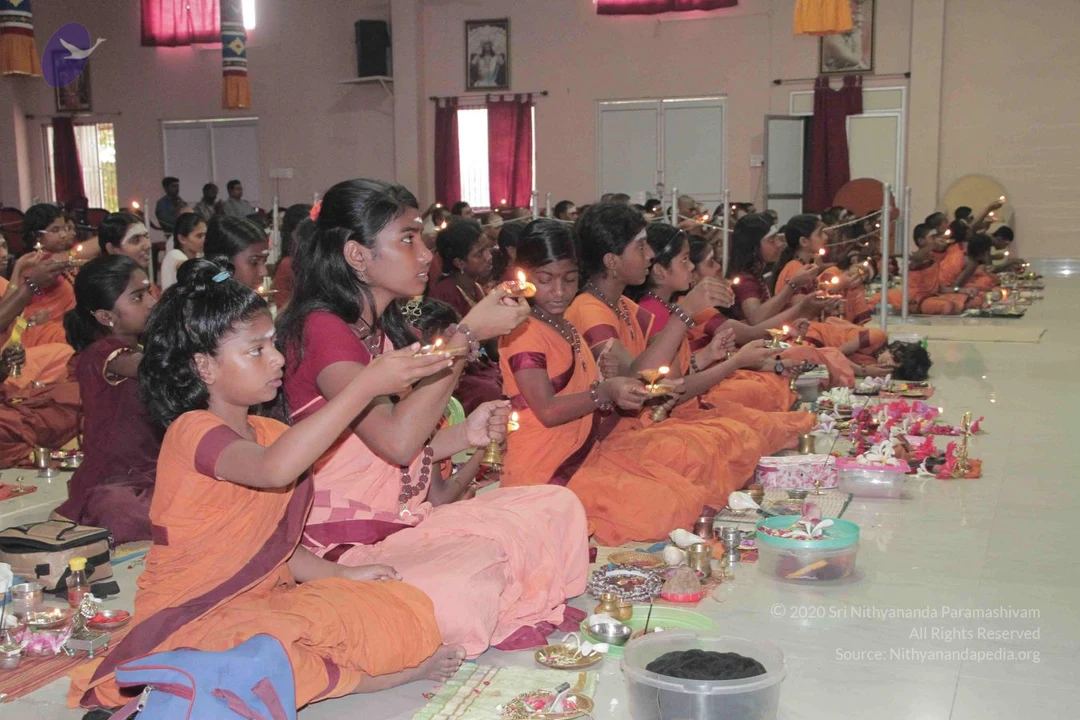
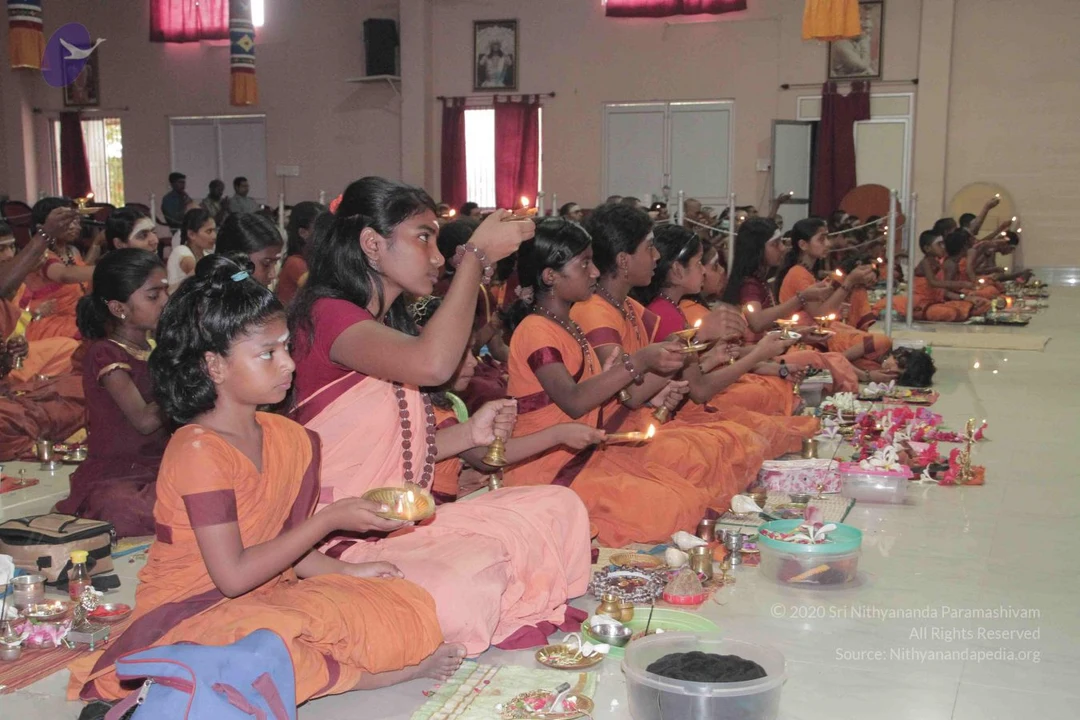
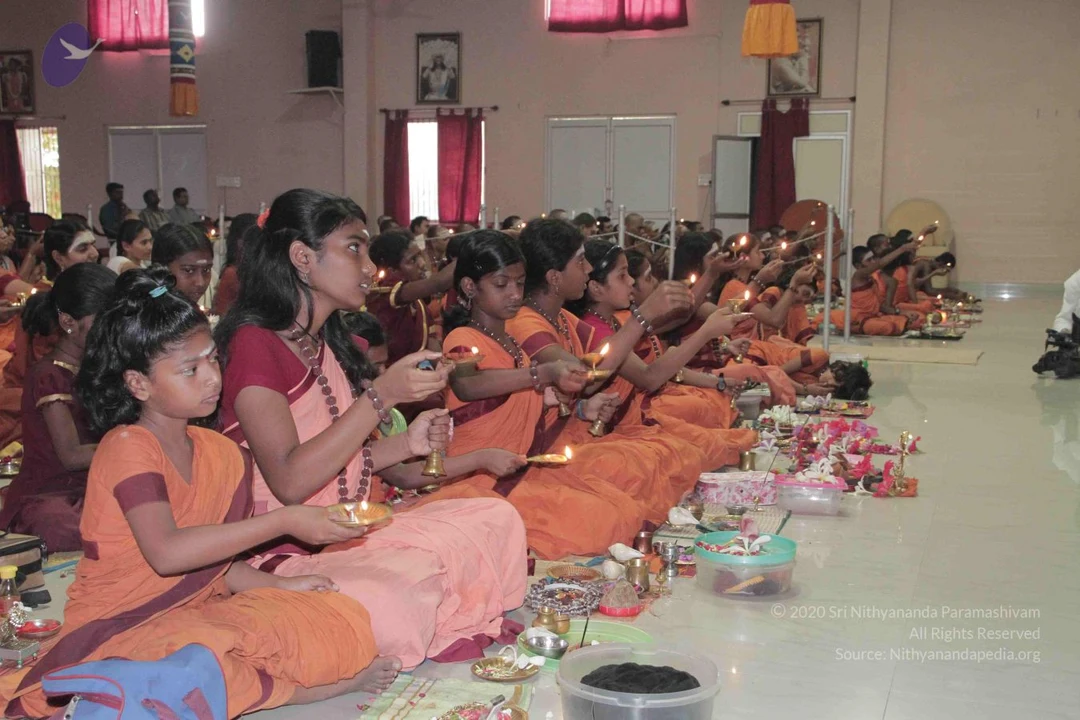
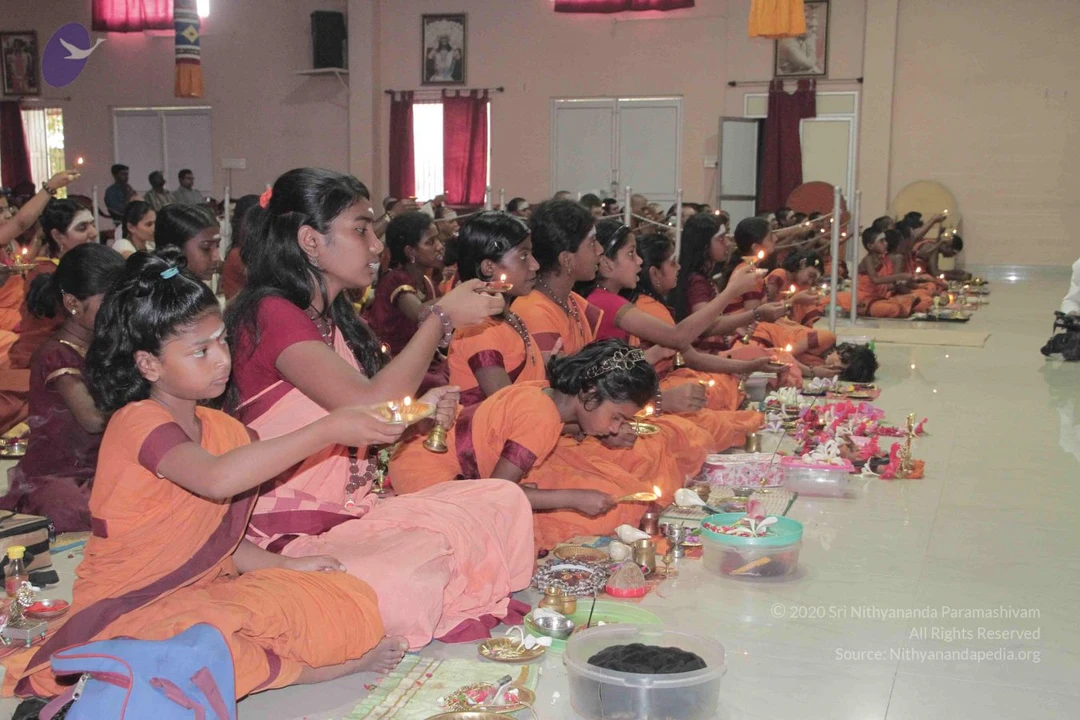
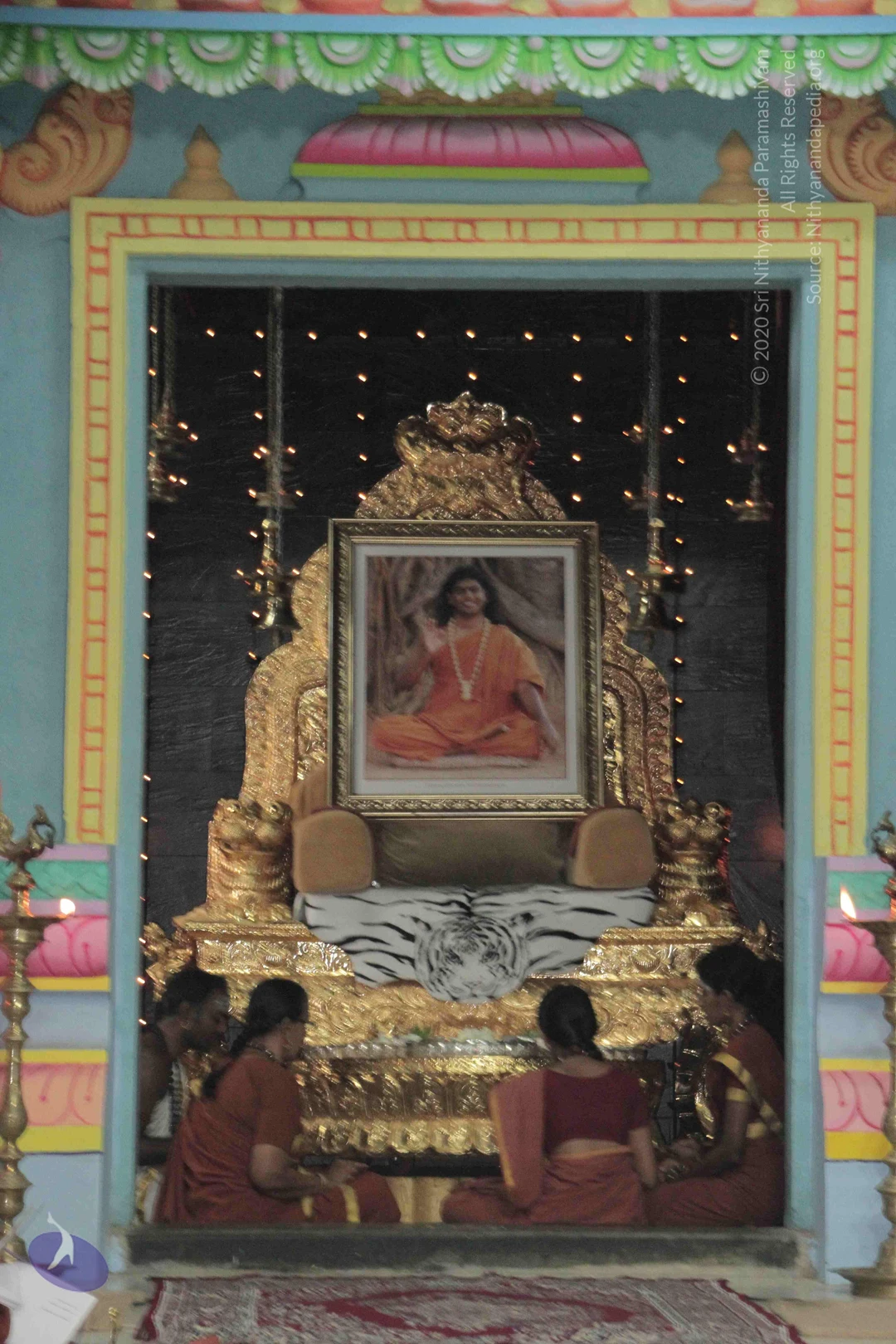
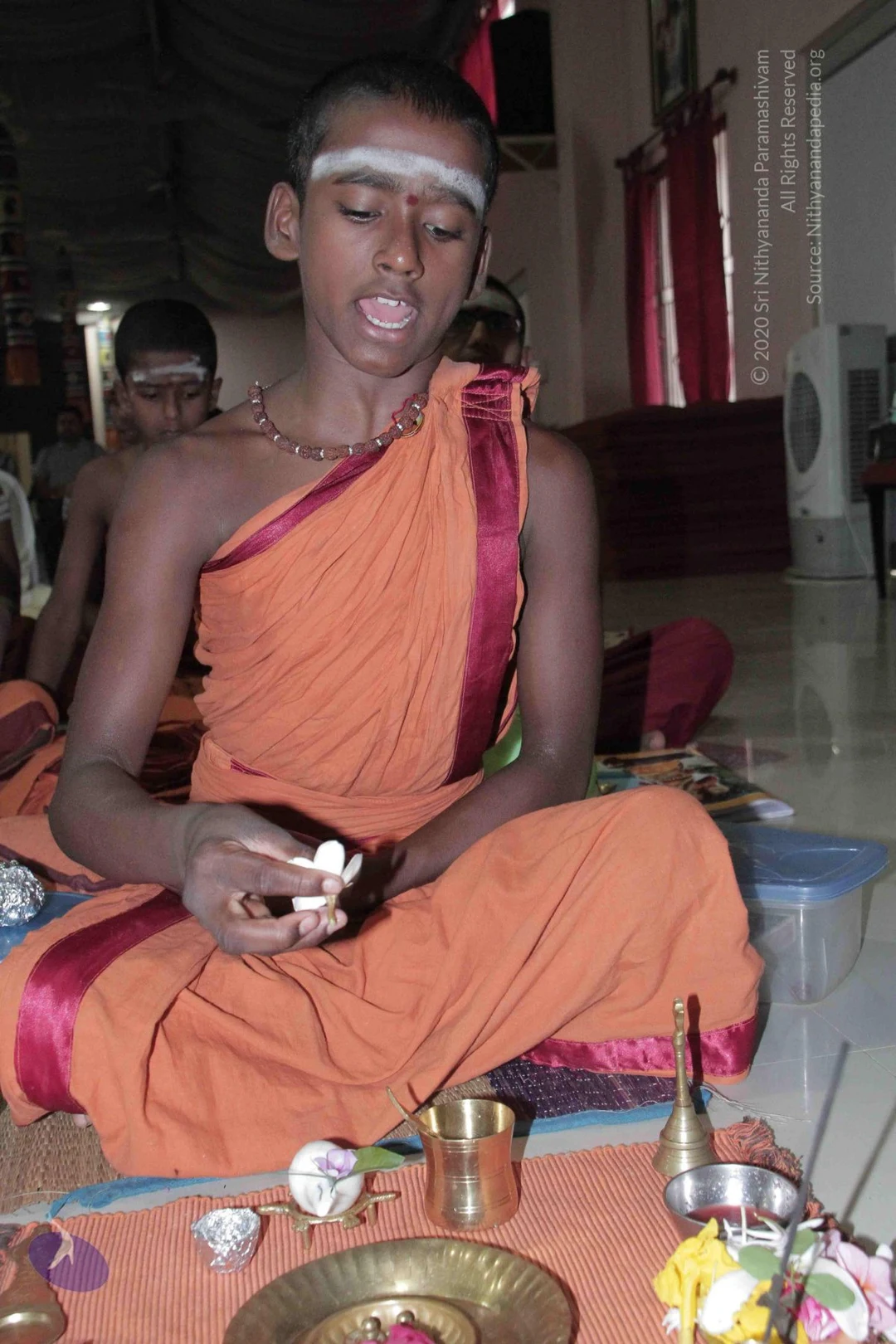
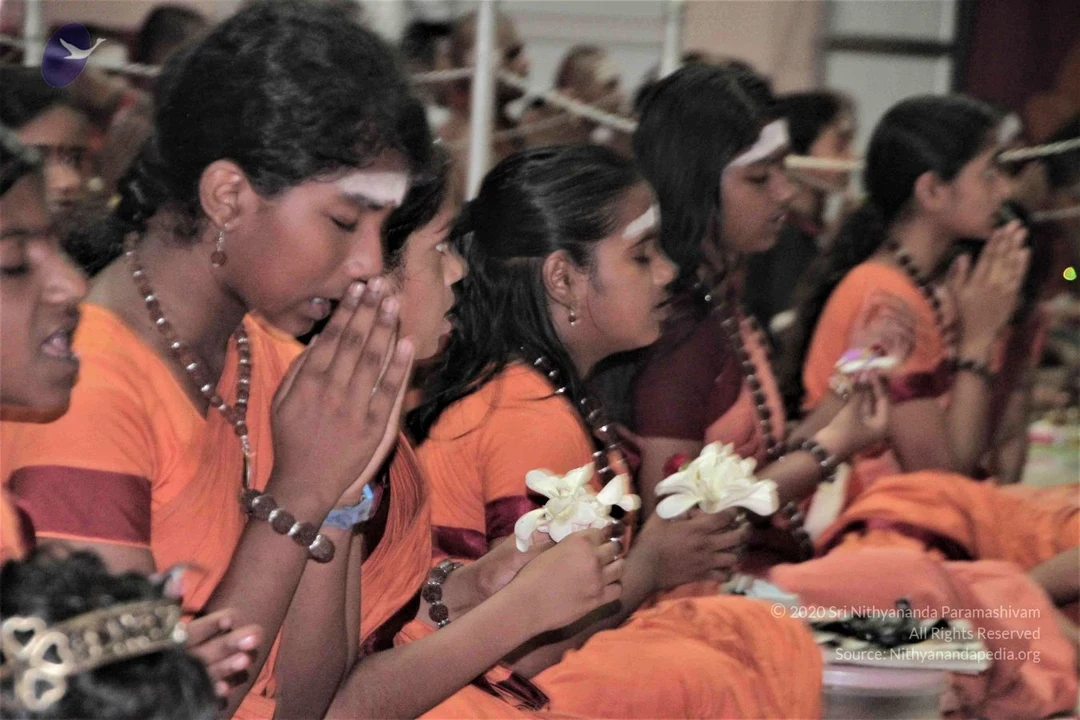
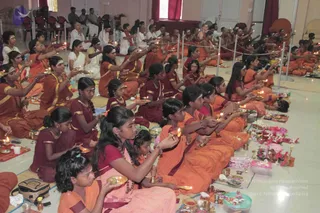
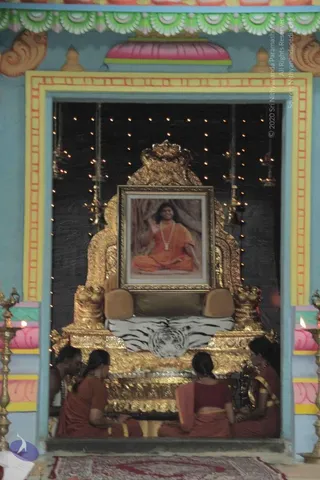
A golden ornate throne with carved lion-head armrests sits on a tiger-skin cushion before a dark stone wall flanked by brass hanging oil lamps. Centered on the throne back is a framed portrait labelled "Paramahamsa Nithyananda" showing a smiling man in orange robes and a white bead necklace, seated cross-legged before a banyan tree with his right hand raised in blessing. Yellow and pink painted panels frame the sides and a lit lamp glows at the lower right edge. No physical people are visible; the only figure is the printed portrait on the throne, which is a depiction.Photograph of young boys in orange and maroon robes seated on mats performing a ritual puja on the floor. Brass lamps, a small oil lamp with a flame, brass bowls, plates of flowers and petals, a brass kettle and incense sticks surround them. The boys wear grey-white vertical tilak marks on their foreheads and rudraksha mala necklaces. A boy in the foreground holds a small brass spoon near a flame while a taller boy behind him holds a stick of incense. Other seated boys in orange robes are visible at the edges. No identifiable figure of a person is present.A photograph of a long row of young sannyasi-style men seated cross-legged on mats in an airy hall, wearing saffron-orange robes, rudraksha malas and white tilak marks across their foreheads. Brass lamps with burning wicks, small brass kalashas, bowls, flower petals and white and pink blossoms are arranged on cloth along the floor before them, as in a puja or abhishekam. A younger child in orange cloth sits among them, and pink curtains and a painted pillar frame the room. A mark on the lower right reads a copyright notice.Close-up photo of a puja setup on a woven mat: a pair of black-and-tan leather sandals with flowers placed on them, a brass lamp with a lit flame, a brass cup, a brass plate, a bowl of pink and yellow flowers, a small brass bell and an incense stick. A person in orange robes sits at the top right, holding a small brass spoon over the offerings; only hands and lap are visible. Page-flag-based identity is not visible in this frame.A hall with rows of seated young women and girls in orange and maroon traditional clothing performing a ritual with lit oil lamps held in brass dishes. Many wear sandalwood or kumkum marks on their foreheads and necklaces; small brass vessels and flower-decorated trays are arranged on the floor before them. Behind them men in white and saffron sit in the background near pillars and red curtains.A seated group of young renunciate disciples in orange saffron robes with maroon borders and rudraksha malas sits on a mat in a hall, palms pressed together in prayer, some with white vibhuti marks on their foreheads. A small child in orange robes sits among them with hands folded. In front, brass puja vessels, lamps, bowls and flower offerings are arranged on a cloth. Other devotees sit in the background, with pink curtains and white walls behind.

morningmessage

99 photosSource gallery
A group of young boys, most with shaved heads, sit cross-legged on a white floor in rows wearing saffron-orange robes with maroon borders. Several have white sandalwood paste marks on their foreheads and rudraksha malas around their necks. Brass puja vessels, small bowls and plates with offerings sit on pink cloths in front of them, and a few have bangles on their wrists. Behind them an older man with a shaved head and orange robe sits with his hands together, and a pale wall with maroon curtains and a framed picture is visible behind.A row of young boys seated cross-legged on a white floor, dressed in saffron-orange robes with maroon borders, each with a white tilak on the forehead and rudraksha malas. Several have eyes closed in meditation and hands folded in lap. In front of them on mats are brass puja vessels, bells, a conch shell and small offering plates. At the far right an empty ornate chair stands near the wall. Behind them other seated figures in orange are partly visible.Photograph of a row of young boys seated cross-legged on a white floor in an indoor hall, wearing orange-saffron dhoti-style garments with maroon borders, rudraksha malas, and white sacred ash (vibhuti) marks on their foreheads. Brass puja vessels, small bowls and a kalasha-style brass lamp set sit on pink and brown mats in front of them, with flower petals and offerings. Several boys have eyes closed in meditation with hands folded. An adult in orange robes is partly visible at the left edge, and a cream cushioned chair sits at right.A photograph of a row of young boys seated cross-legged on a white floor in a plain hall. They wear saffron-orange cloth with maroon borders and rudraksha malas, and have white vertical tilak marks on their foreheads. Several have eyes closed in meditation with hands folded or resting on laps. In front of them on mats are brass puja vessels, small bowls, a brass lamp and conch-like shells. Behind them, other seated figures in orange and white are partly visible, and a cushioned chair stands at right.A golden ornate throne with carved lion-head armrests sits on a tiger-skin cushion before a dark stone wall flanked by brass hanging oil lamps. Centered on the throne back is a framed portrait labelled "Paramahamsa Nithyananda" showing a smiling man in orange robes and a white bead necklace, seated cross-legged before a banyan tree with his right hand raised in blessing. Yellow and pink painted panels frame the sides and a lit lamp glows at the lower right edge. No physical people are visible; the only figure is the printed portrait on the throne, which is a depiction.A photograph of a shrine-like altar inside a brightly painted hall with pink, green and yellow decorative columns and dwarapalaka-style painted guardian figures at the sides. A large gilded throne with a tiger-skin cushion sits at the centre, holding a framed portrait of a man in orange robes with a rudraksha mala, seated with one hand raised, labelled as a portrait. Brass oil lamps stand on either side, and dangling brass lamps hang above. Three women in orange saris sit cross-legged before the throne, one on the left at a microphone reading from papers, two on the right seated at the offering tray. The portrait is printed, not a physical person in the scene.

nithya-sathsang

8 photosSource gallery
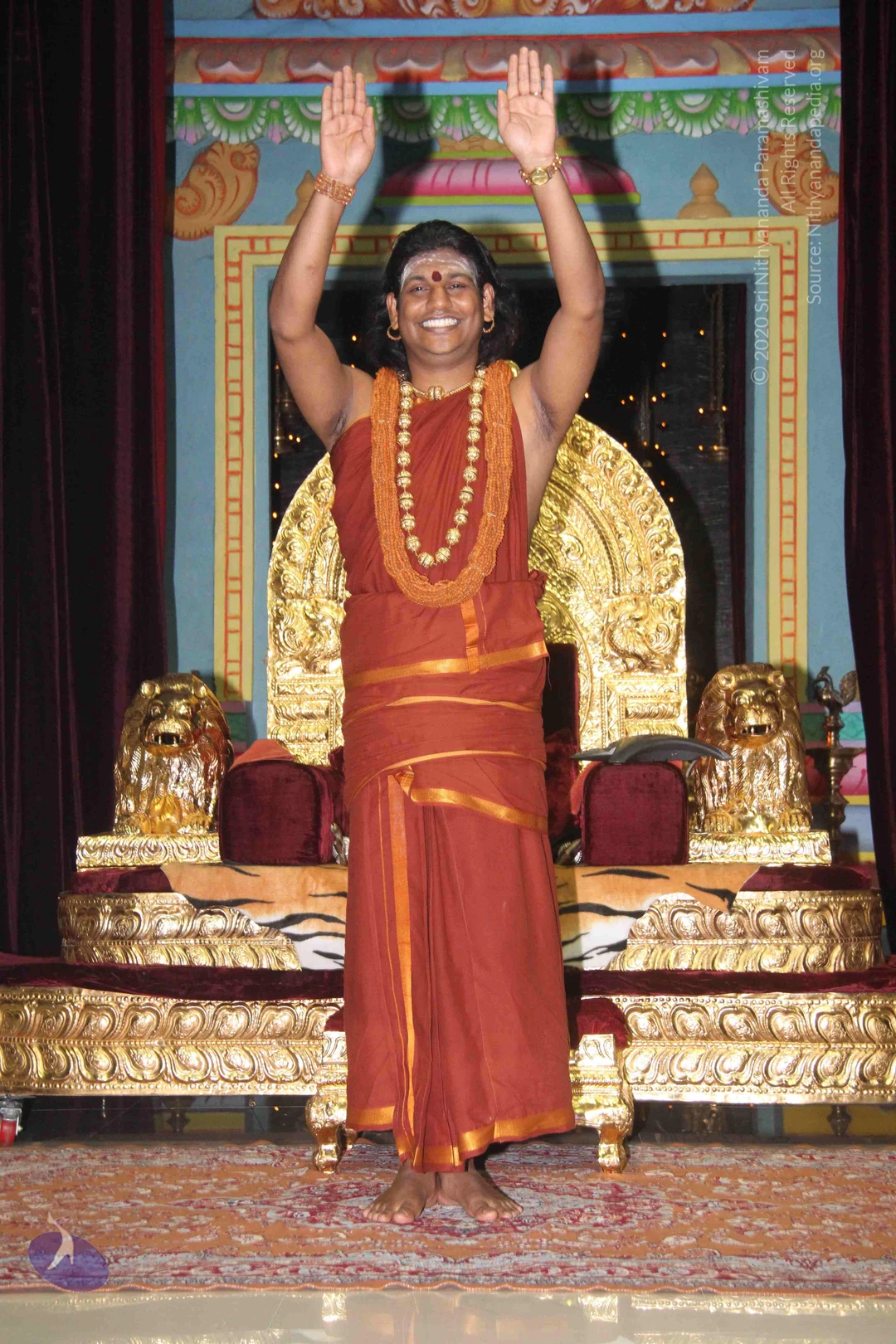
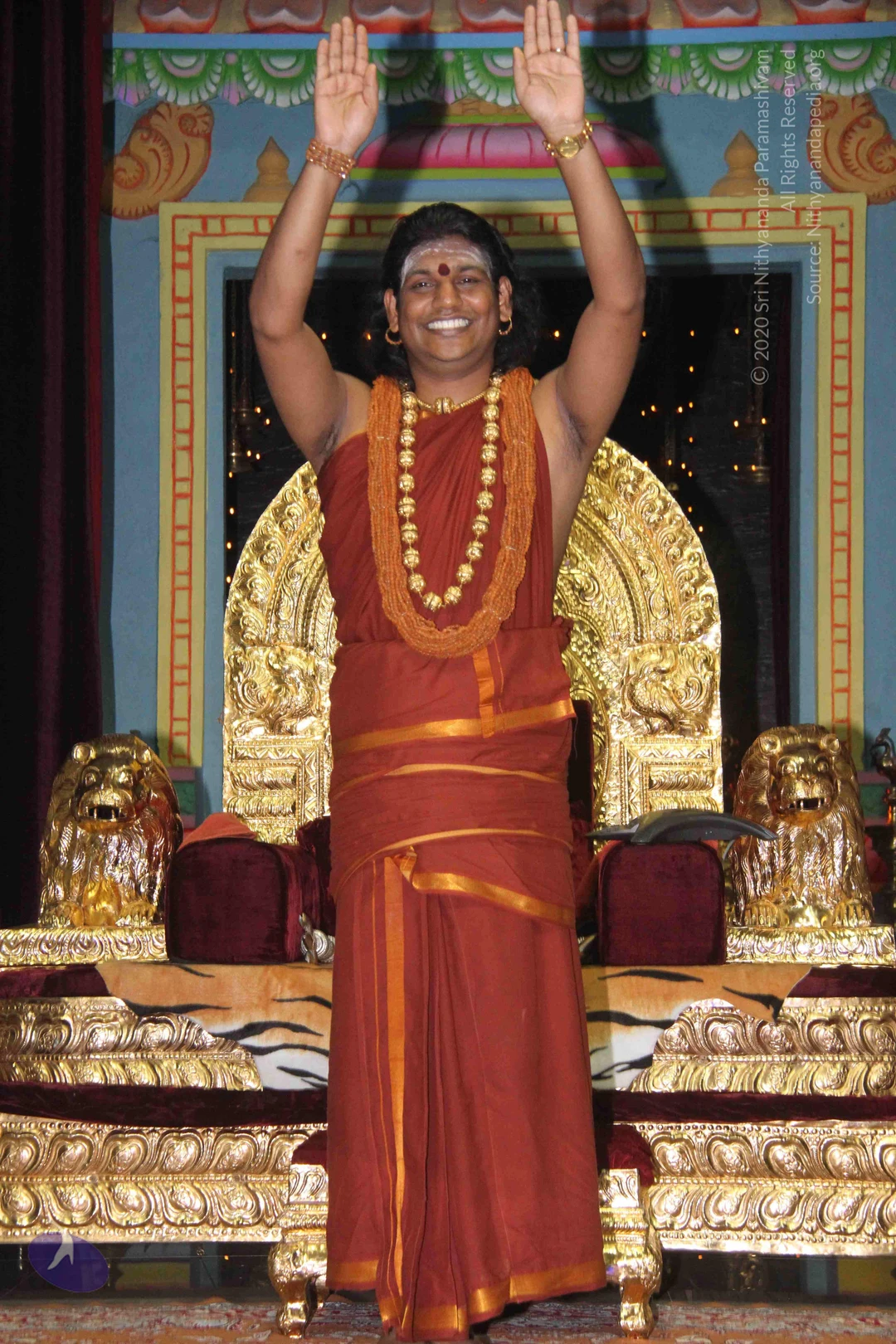
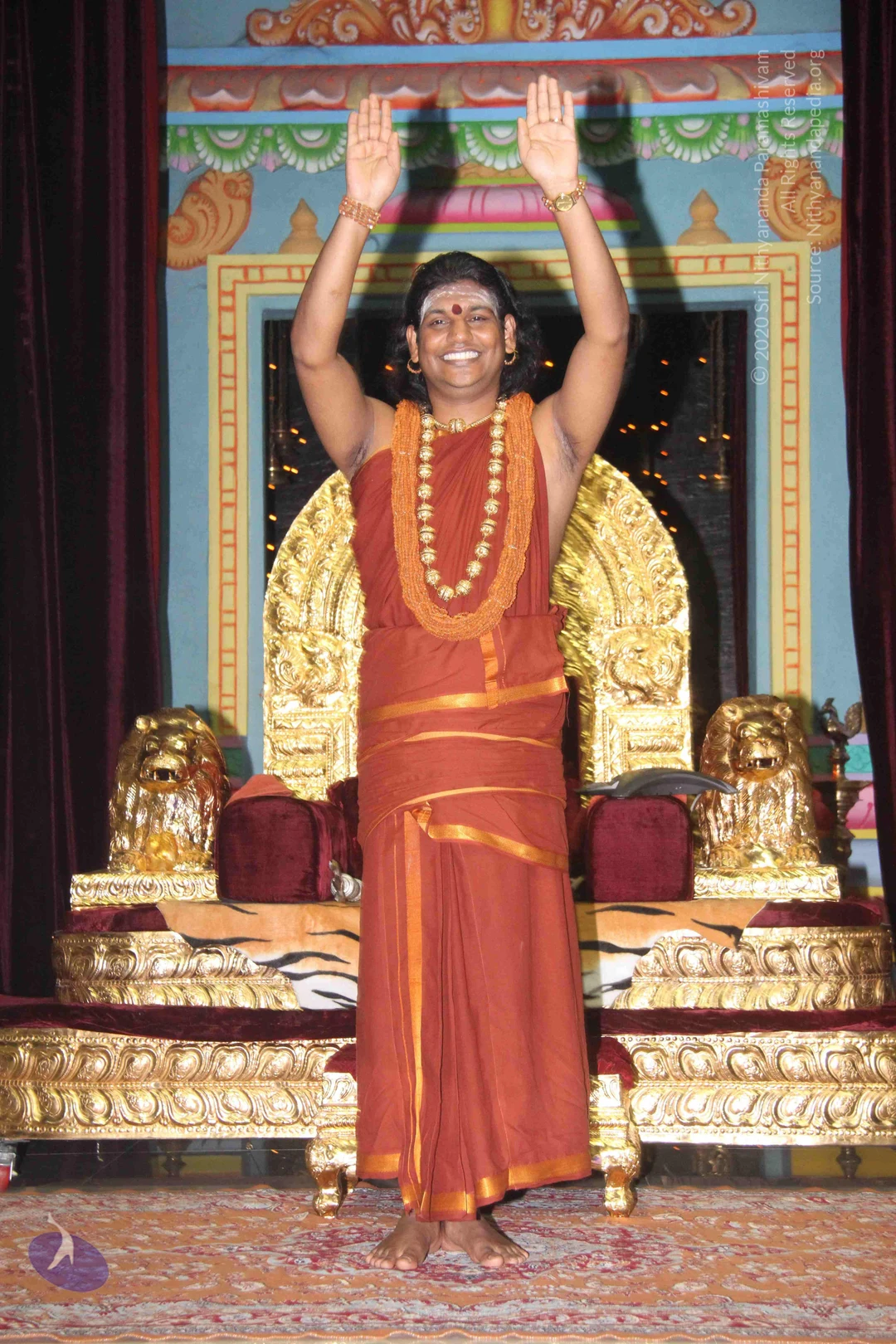
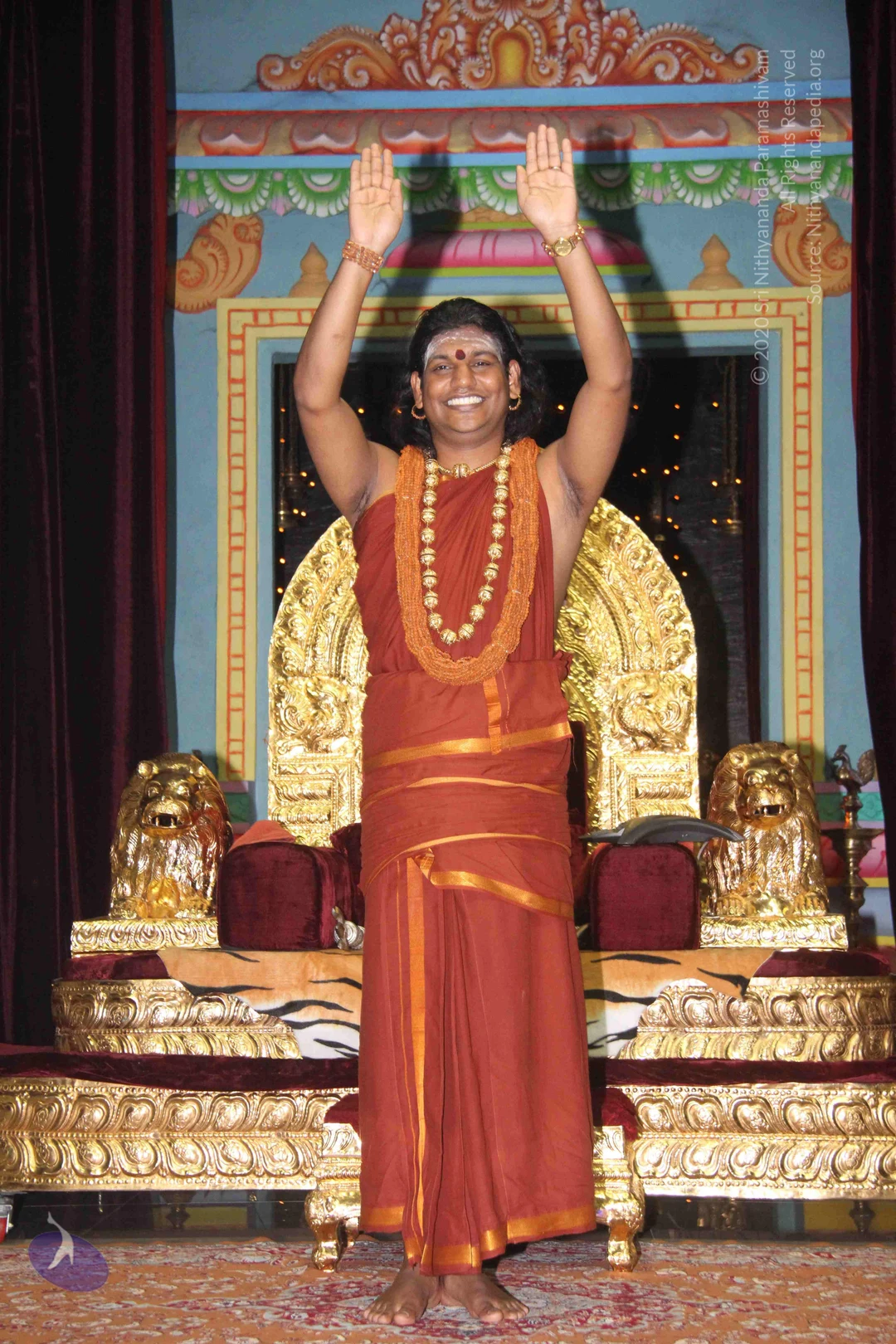
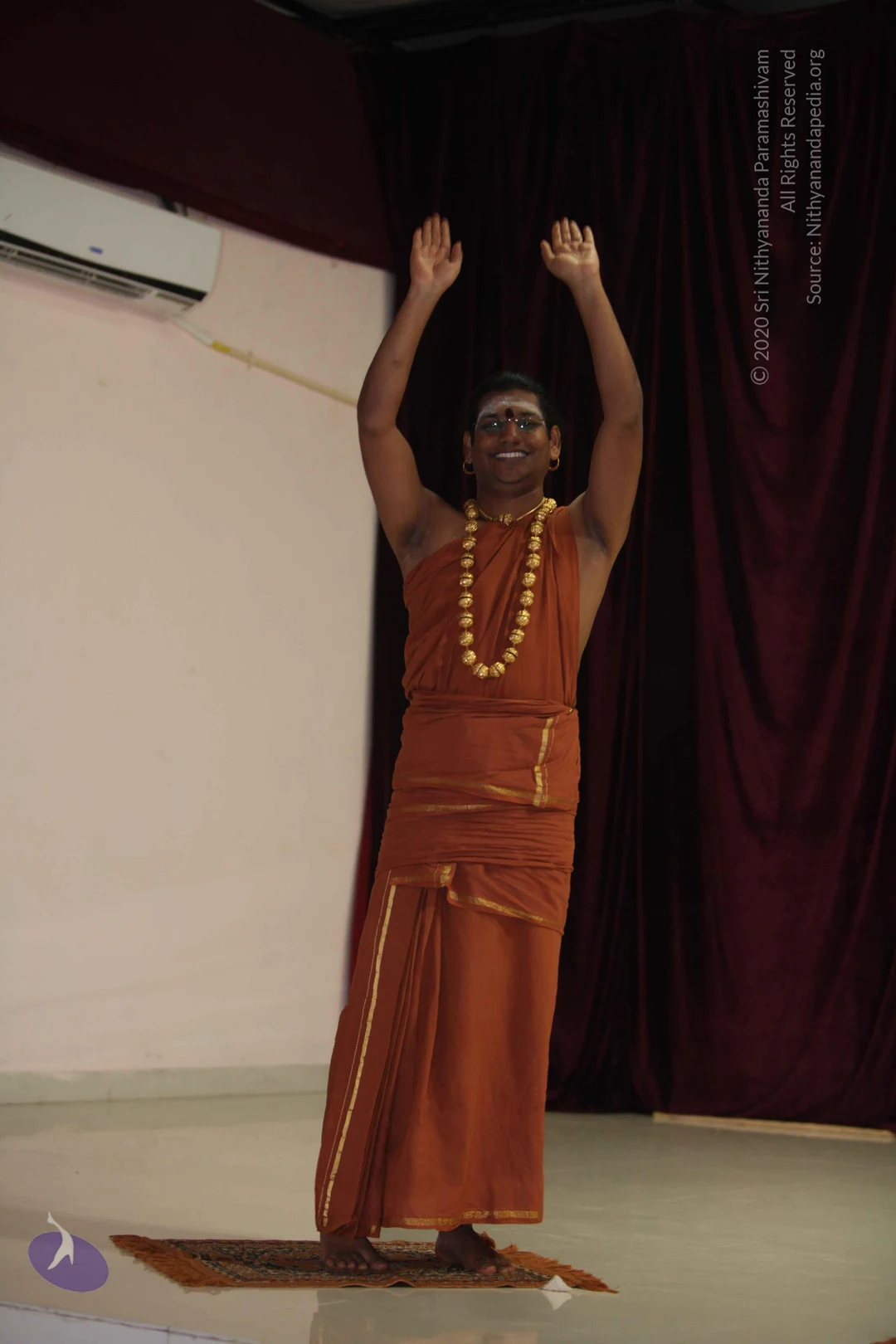
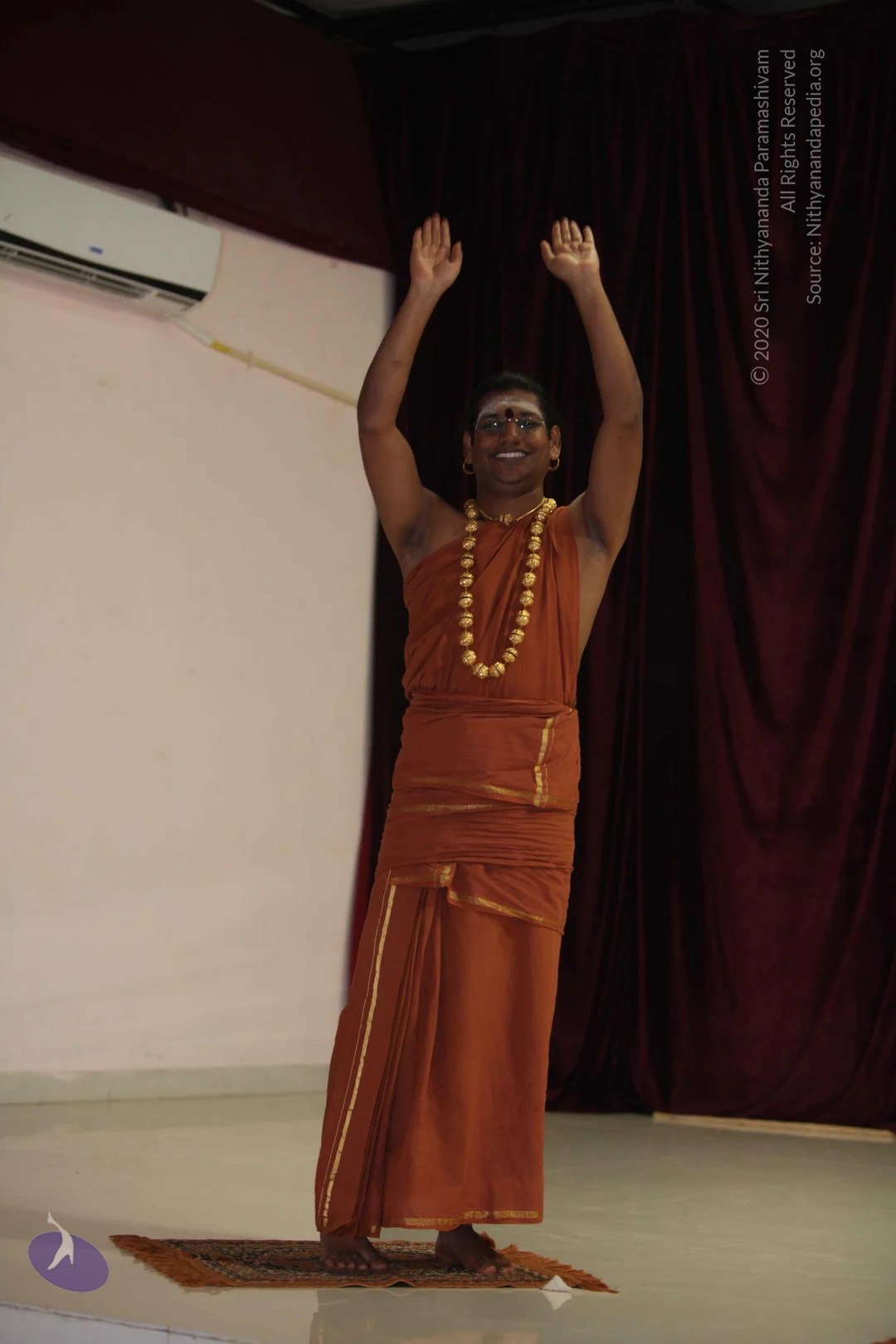
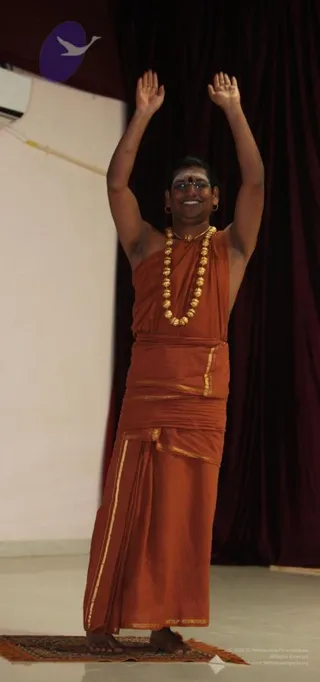
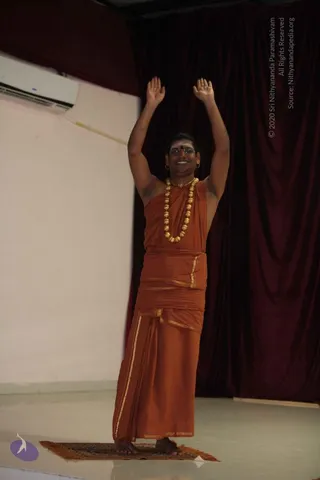
A smiling man sits on a red velvet couch draped with a tiger-striped cloth, one hand resting under his chin. He wears an orange-saffron unstitched garment with a gold-bordered edge, a gold necklace, a long rudraksha-style gold bead mala draped over one shoulder, gold earrings, white vibhuti lines and a red bindi on his forehead. A lapel microphone is clipped near his face. Behind him stands an ornate gold throne with a carved fan-shaped backrest and a deep red curtain. Probable Swamiji by appearance: long swept-back hair, saffron clothing, gold ornaments and a rudraksha-bead mala, seated as the speaker at a satsang.A standing man on a patterned rug before a dark maroon curtain, arms raised high with palms open in an expansive gesture. He wears a saffron-orange unstitched robe with gold-bordered drape over the shoulders and waist, a large gold bead mala around his neck, a red-and-white tilak on his forehead, gold hoop earrings and rimmed glasses. He smiles broadly. A white wall and air conditioner sit at left, and a purple bird logo appears at top left. a person in saffron robe and gold mala, performing an arms-raised gesture on stage during a satsang setting.

Ashramitecommitments

34 photosSource gallery
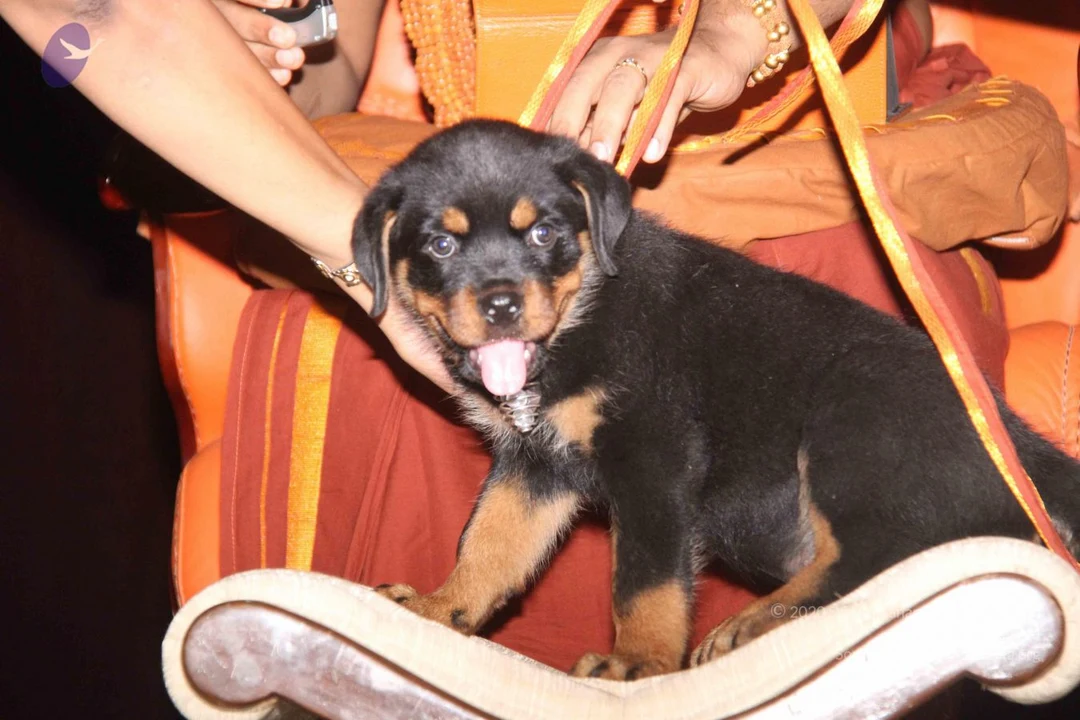
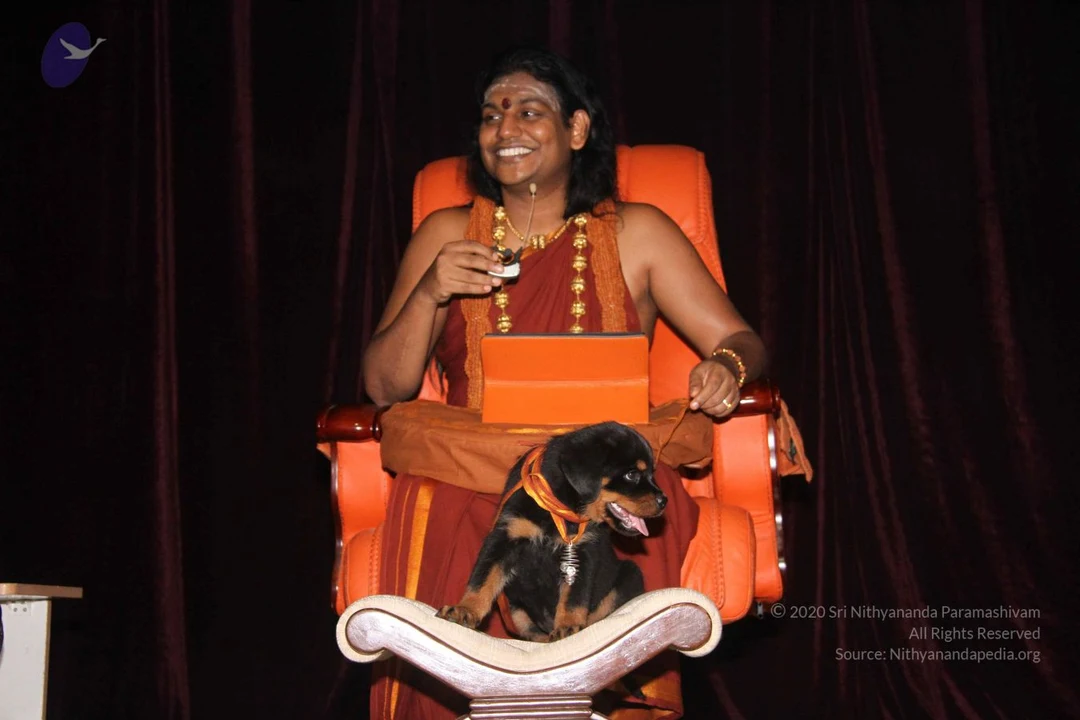
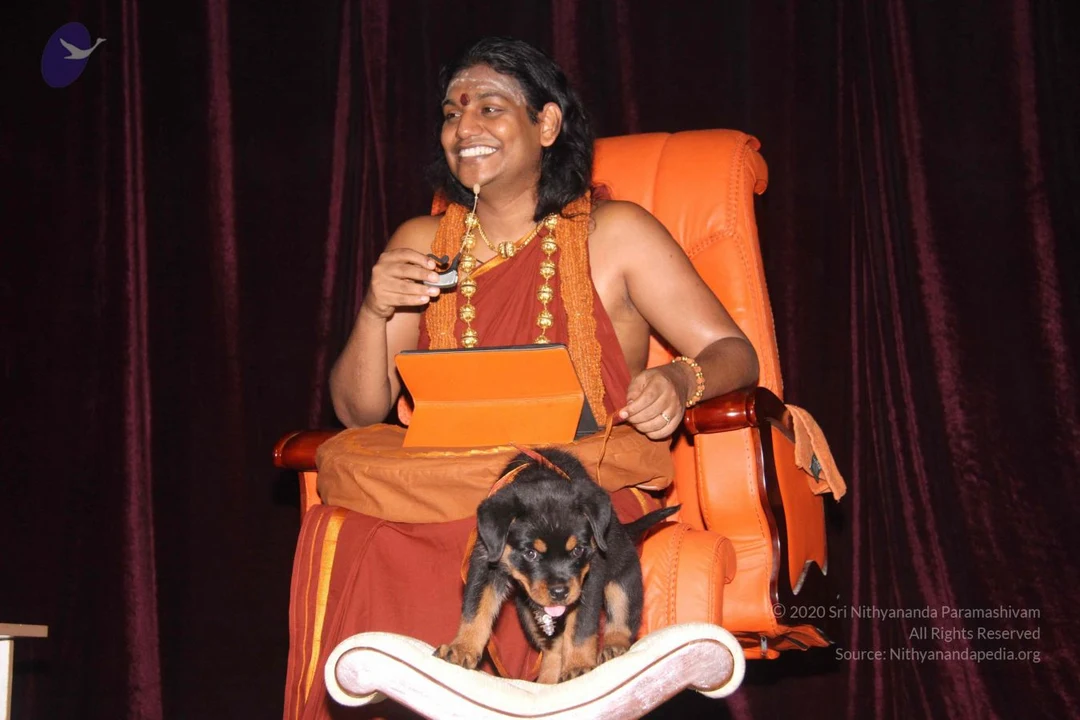
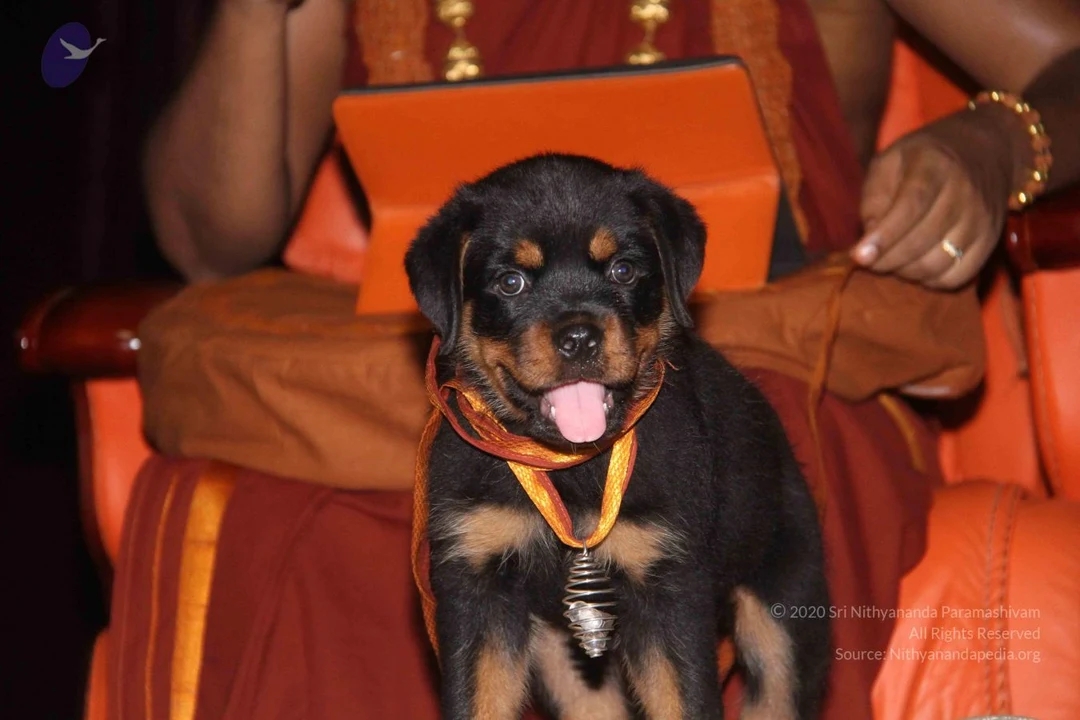
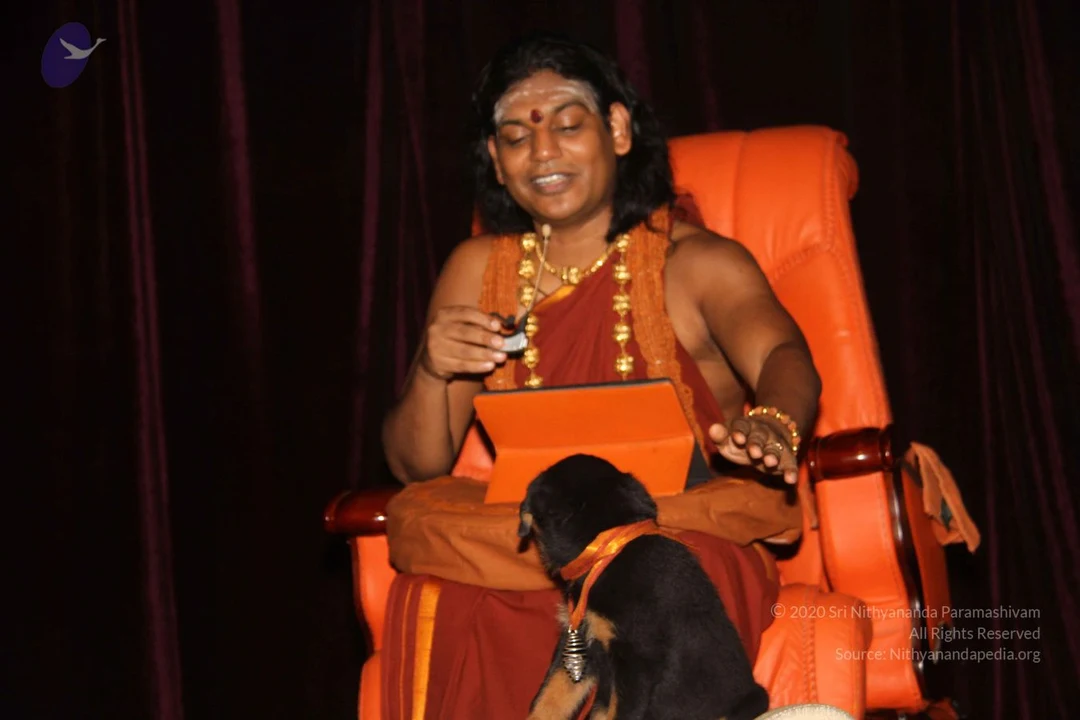
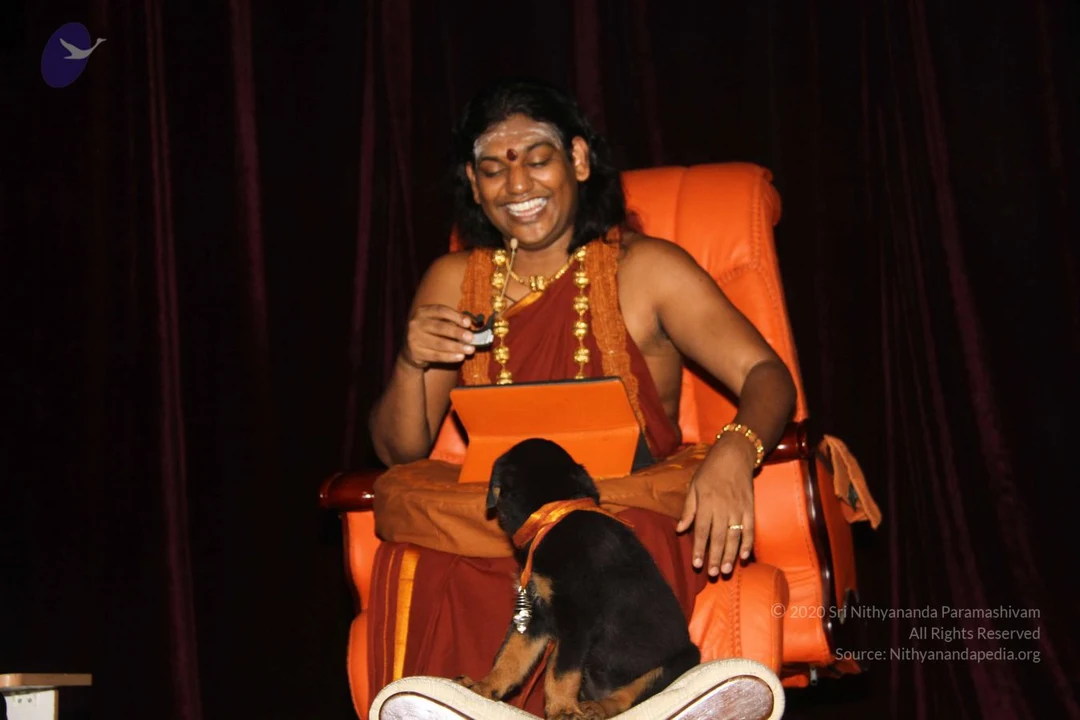
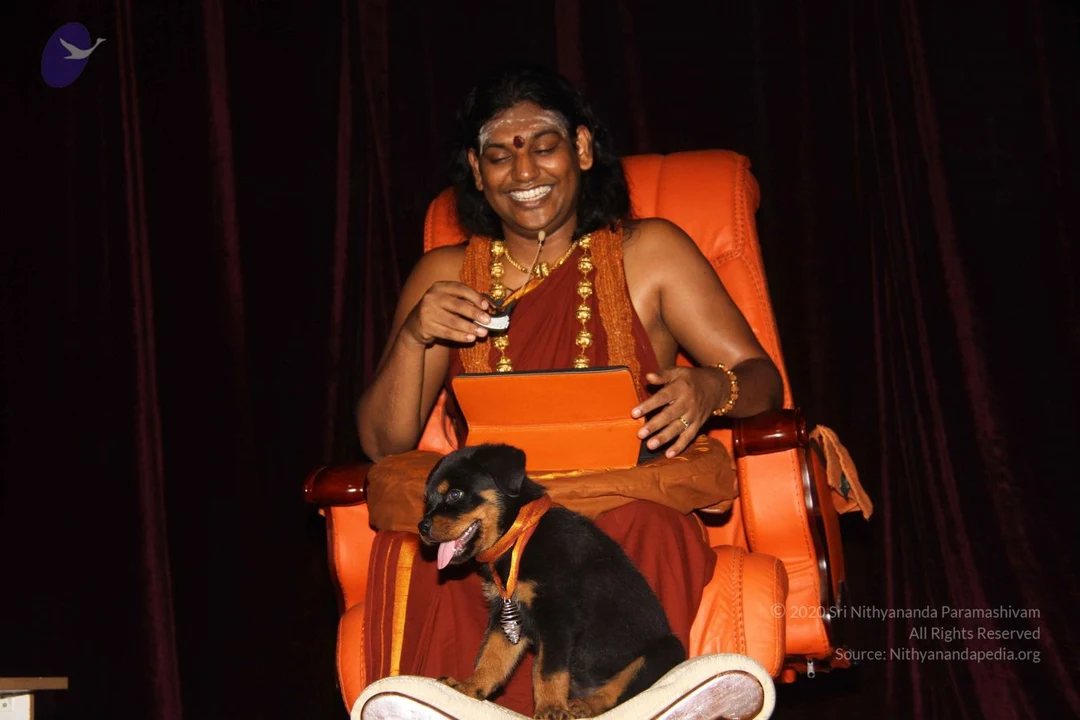
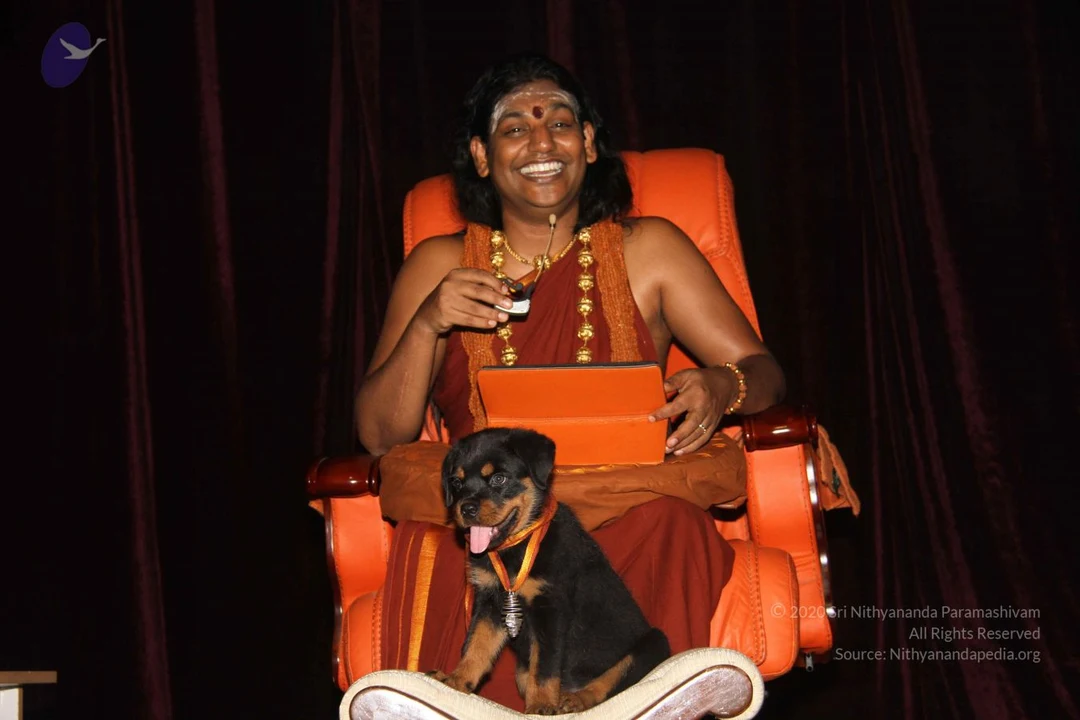
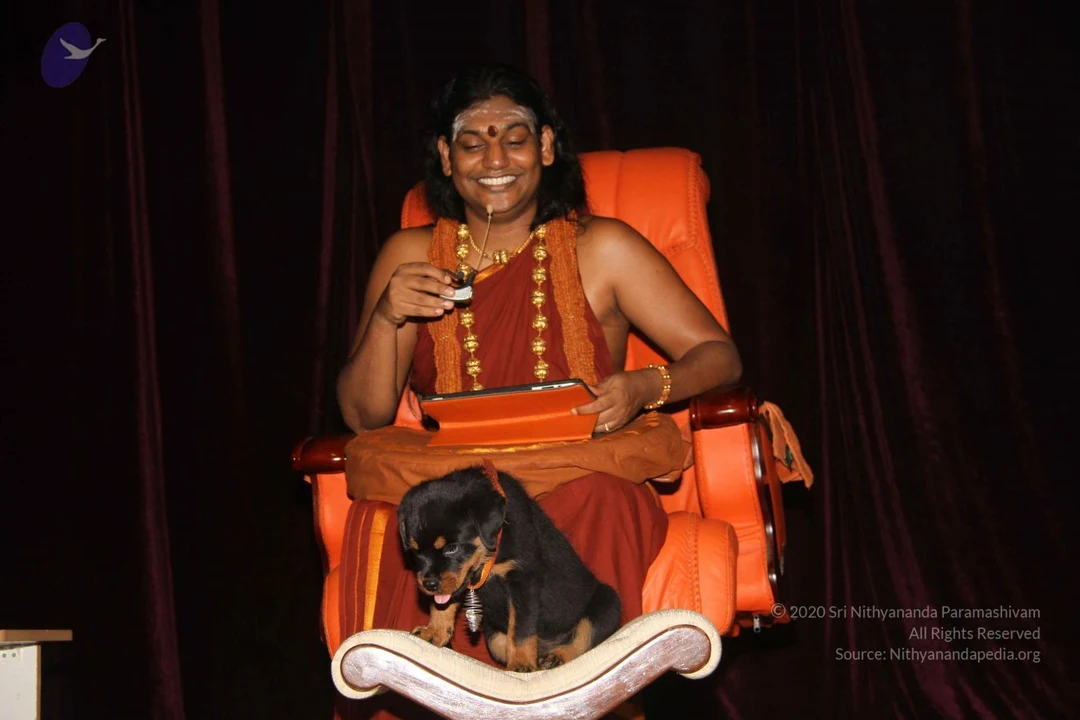
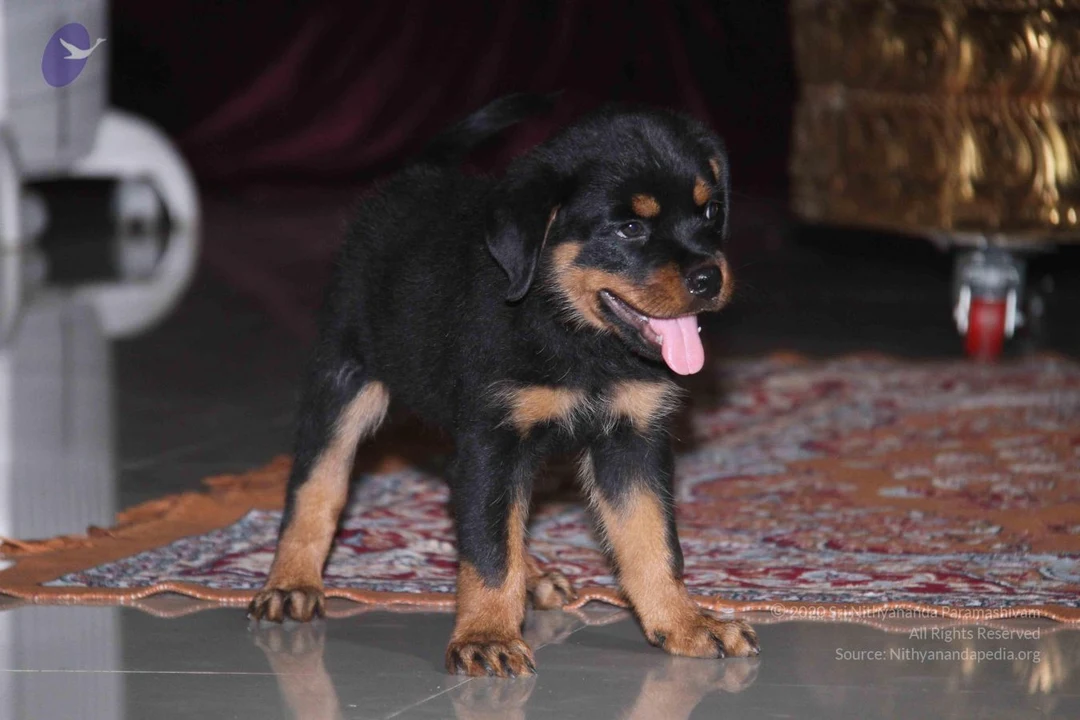
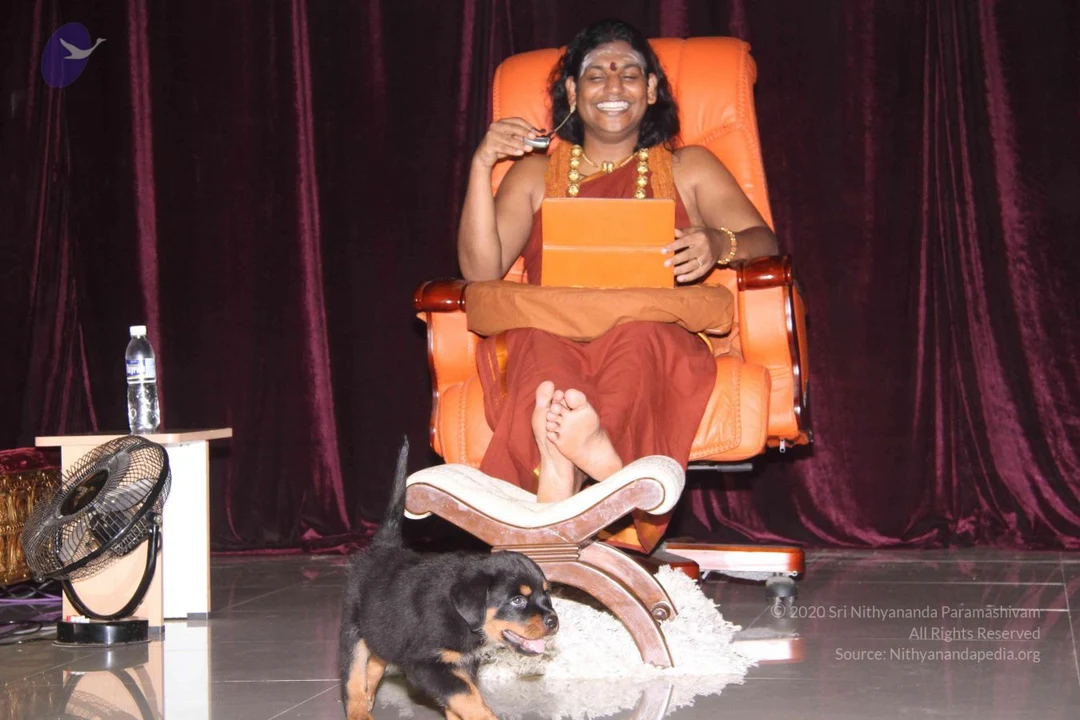
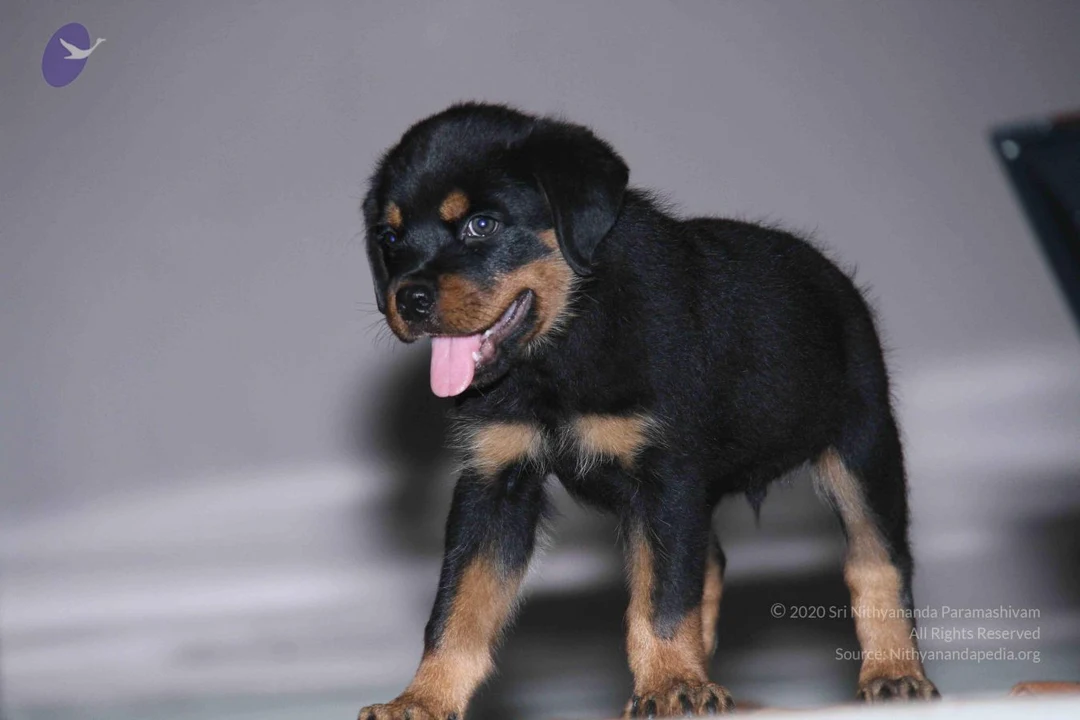
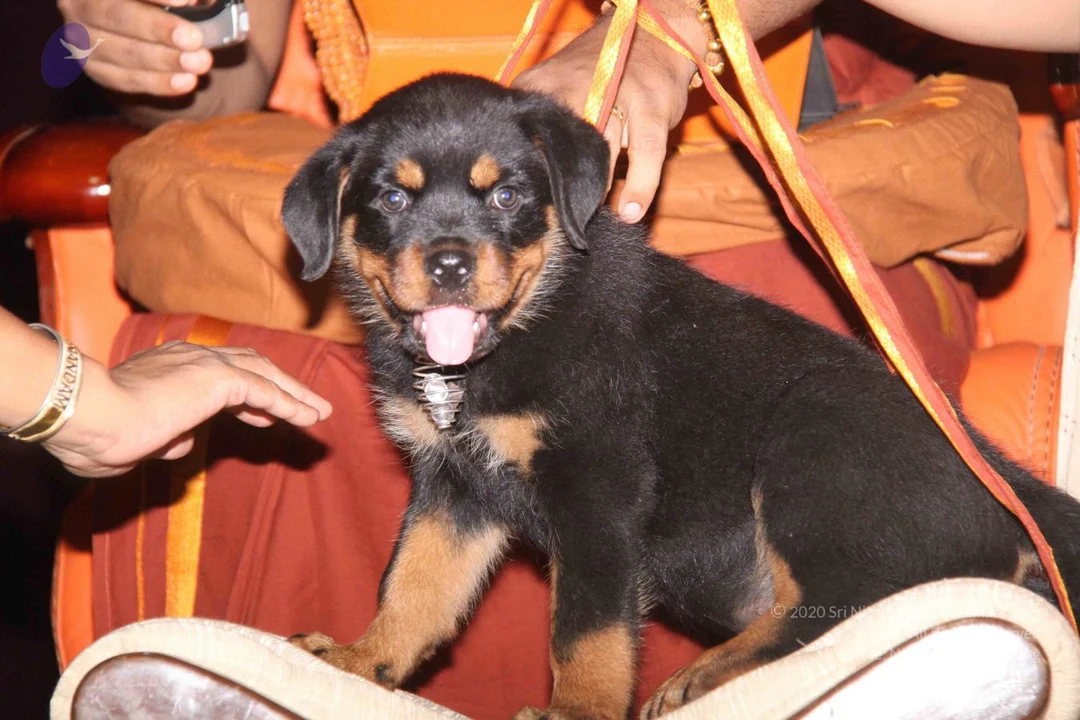
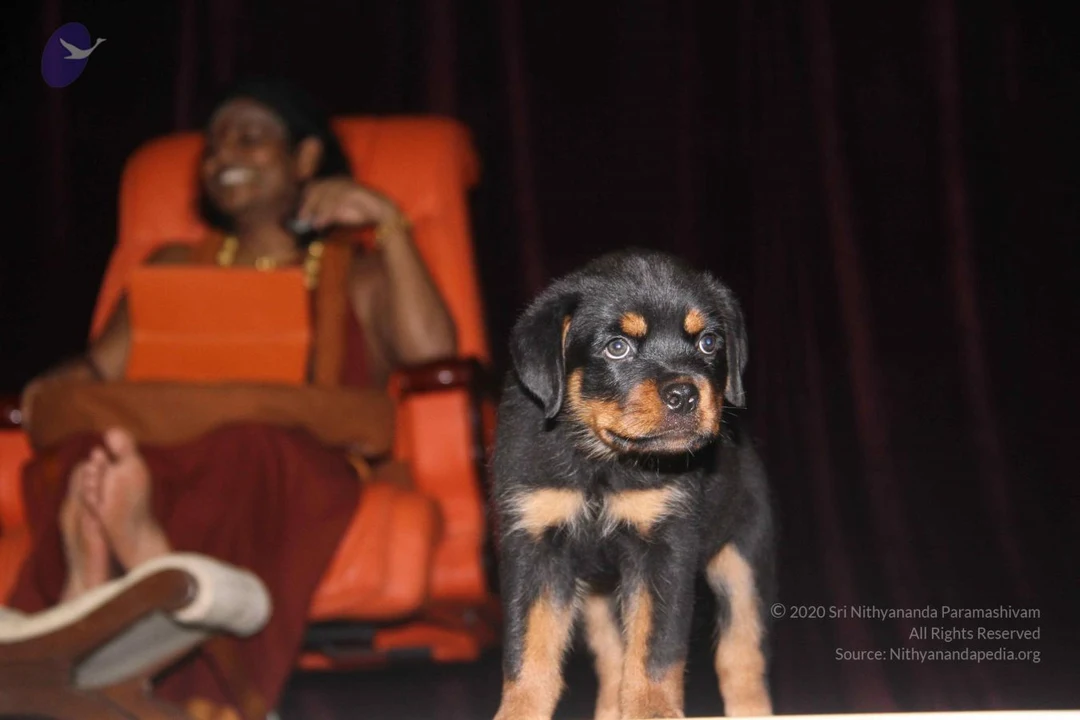
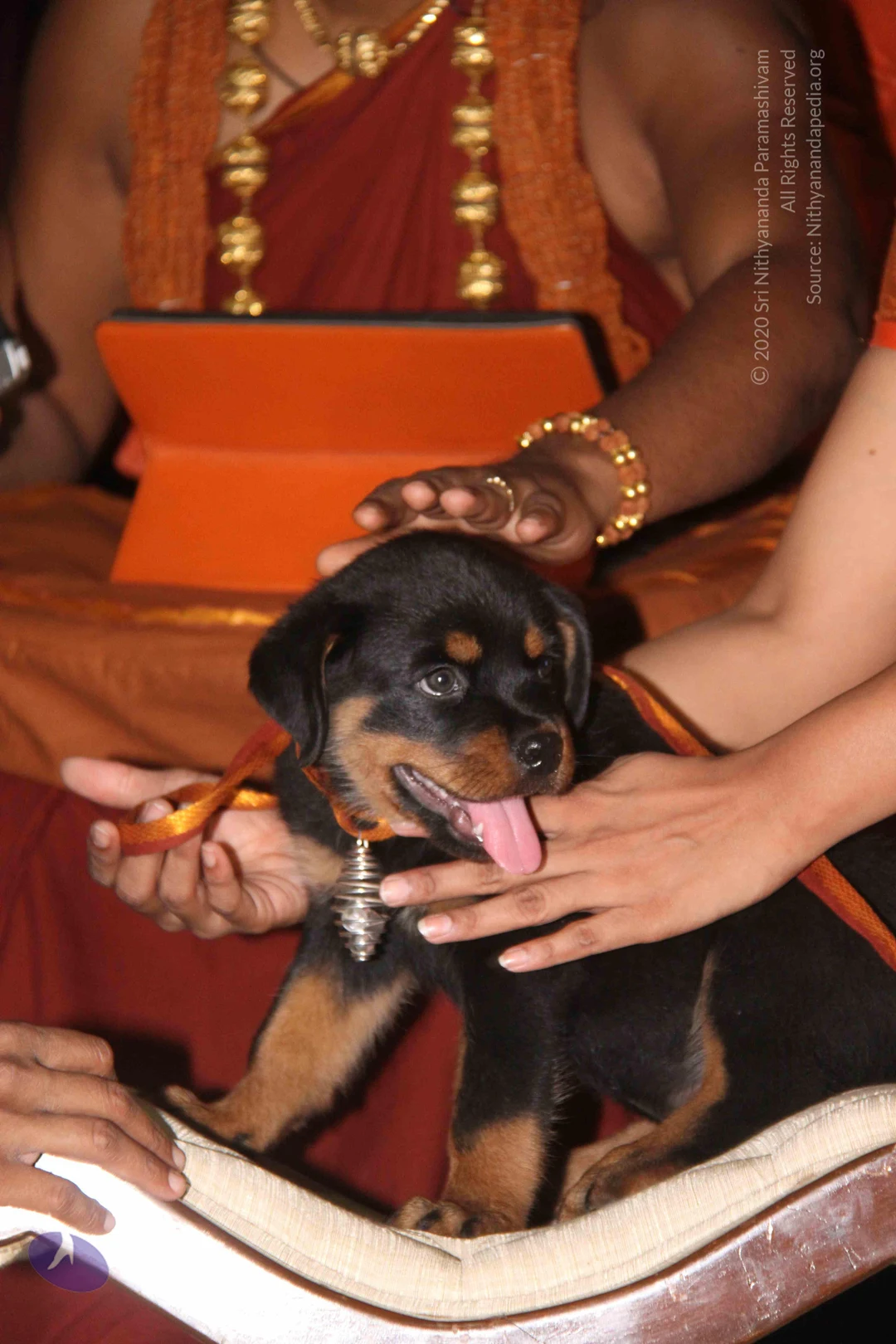
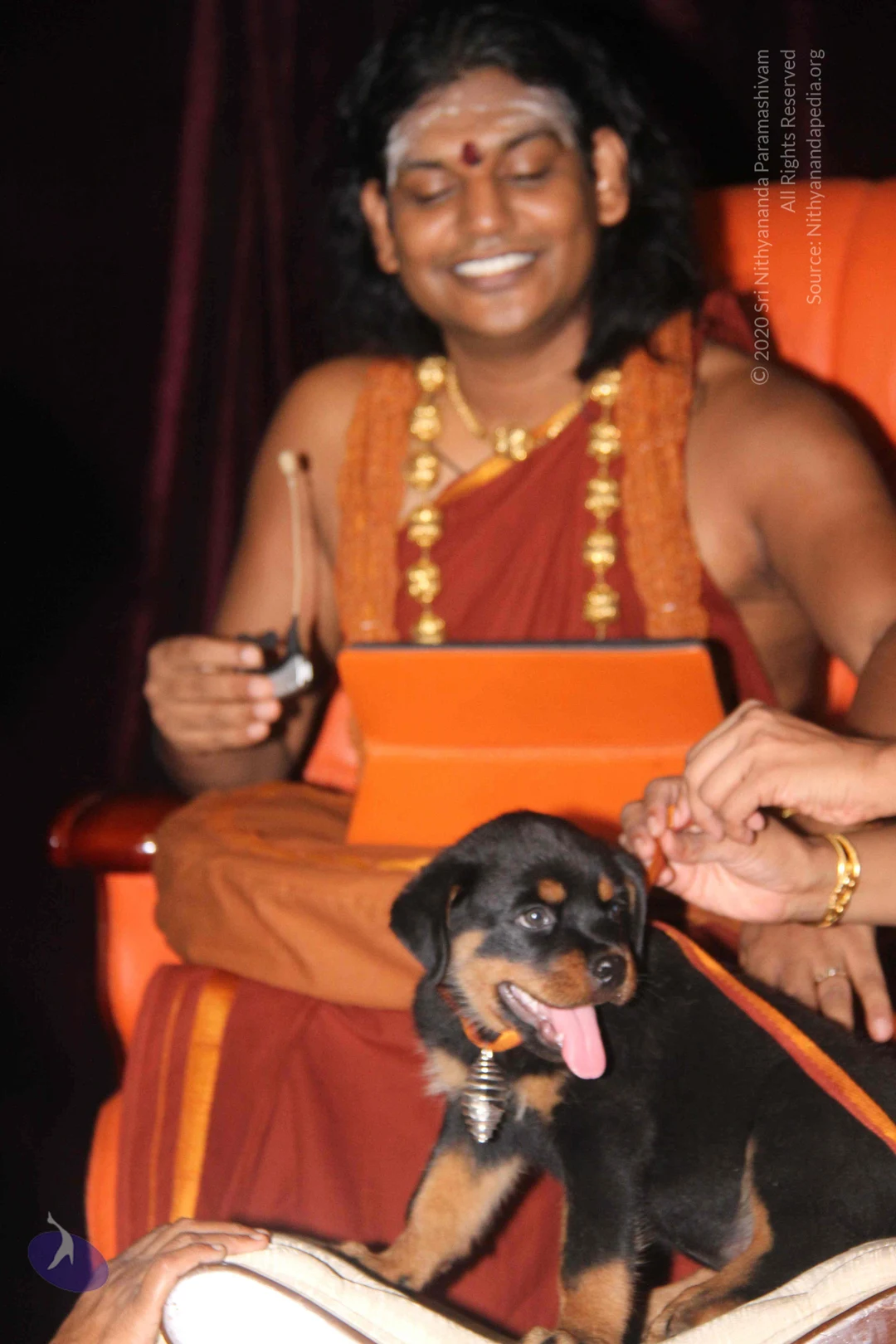
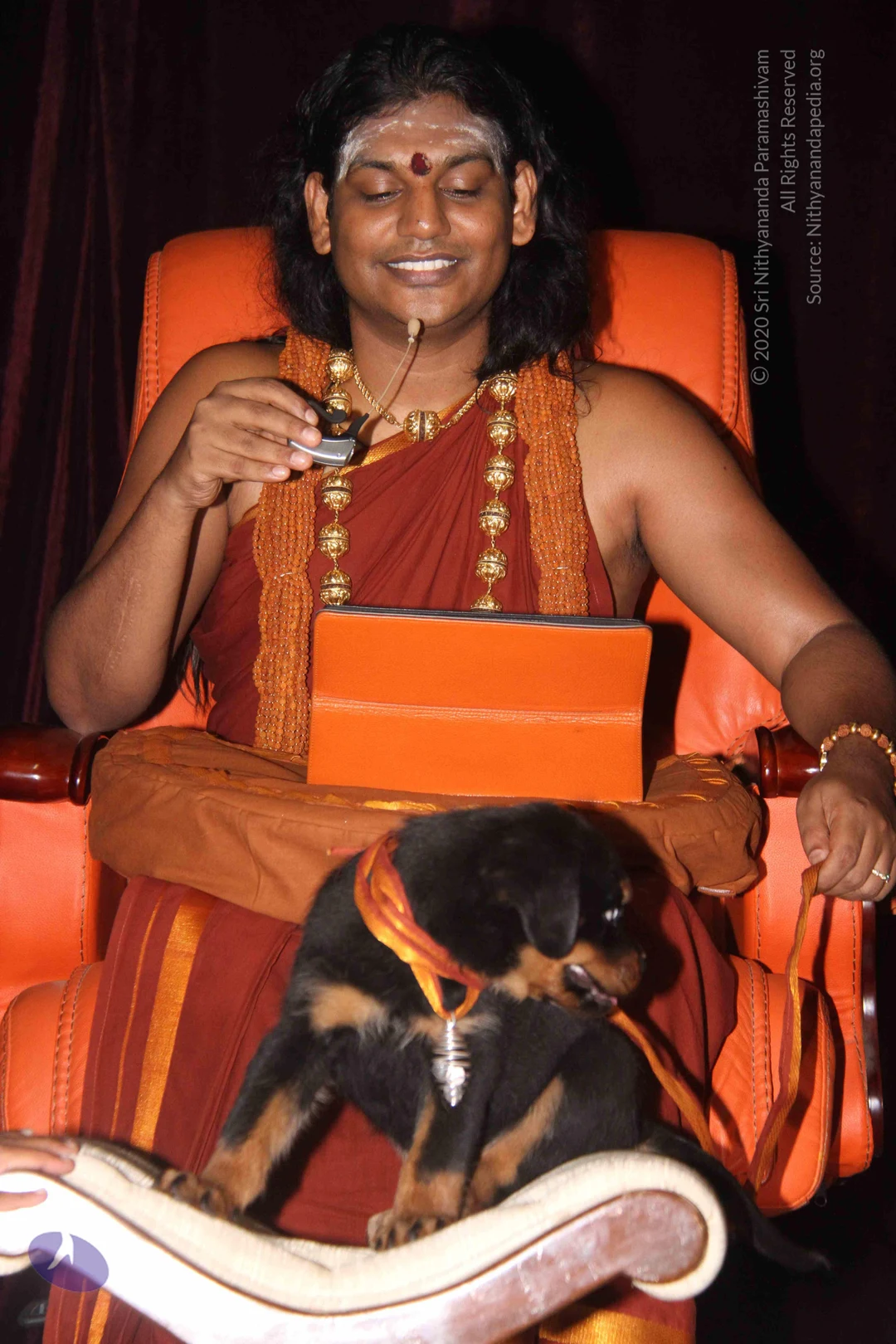
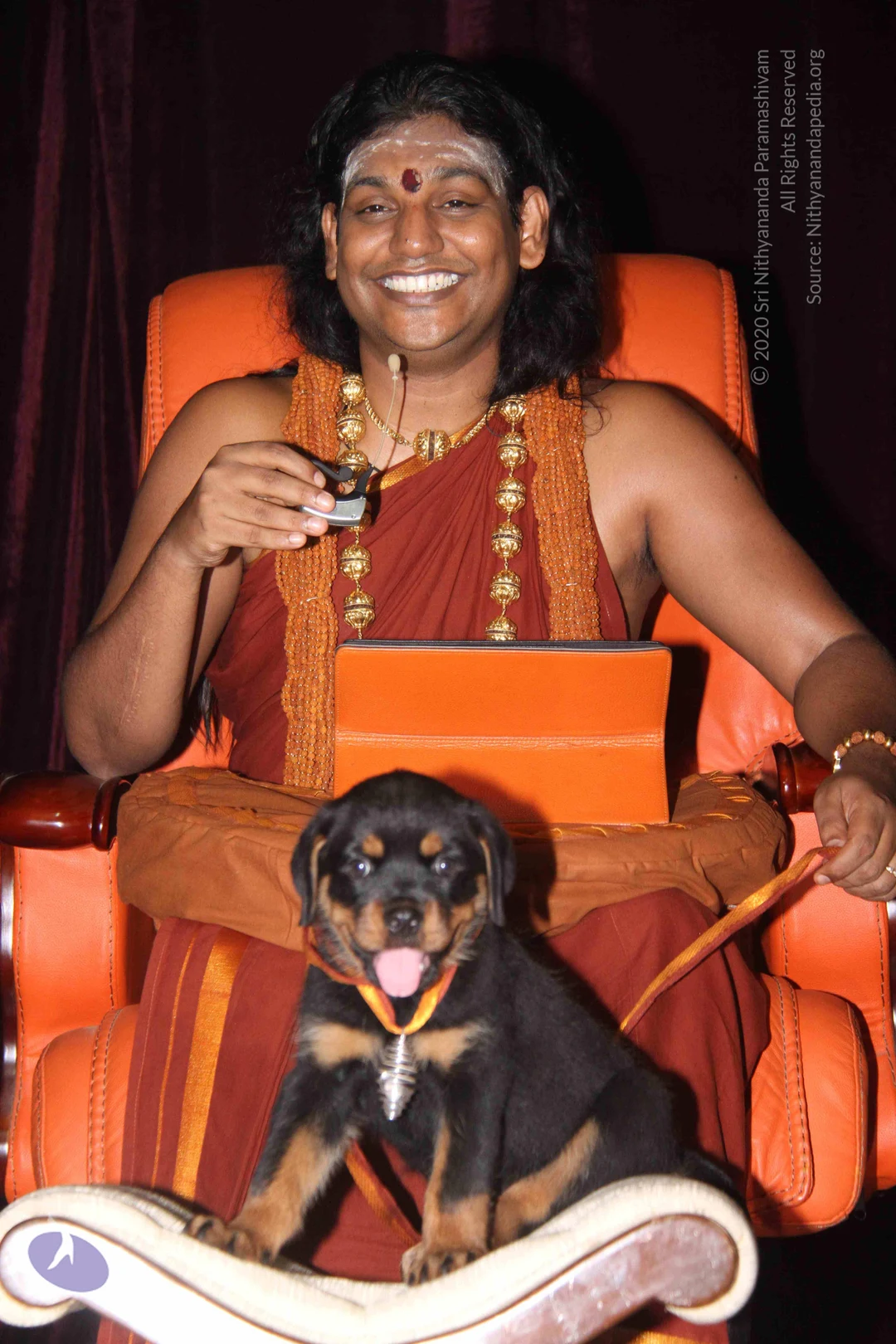
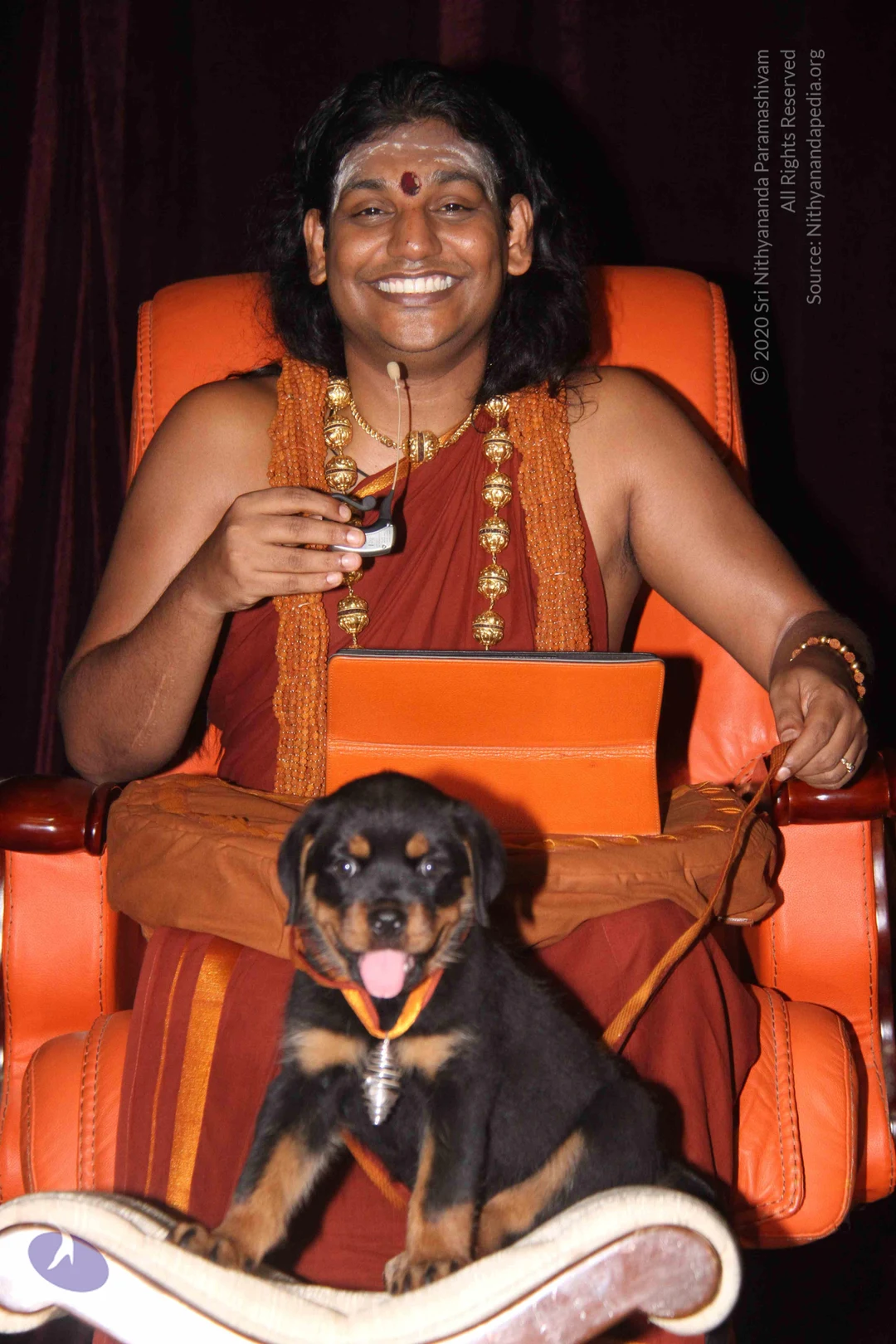
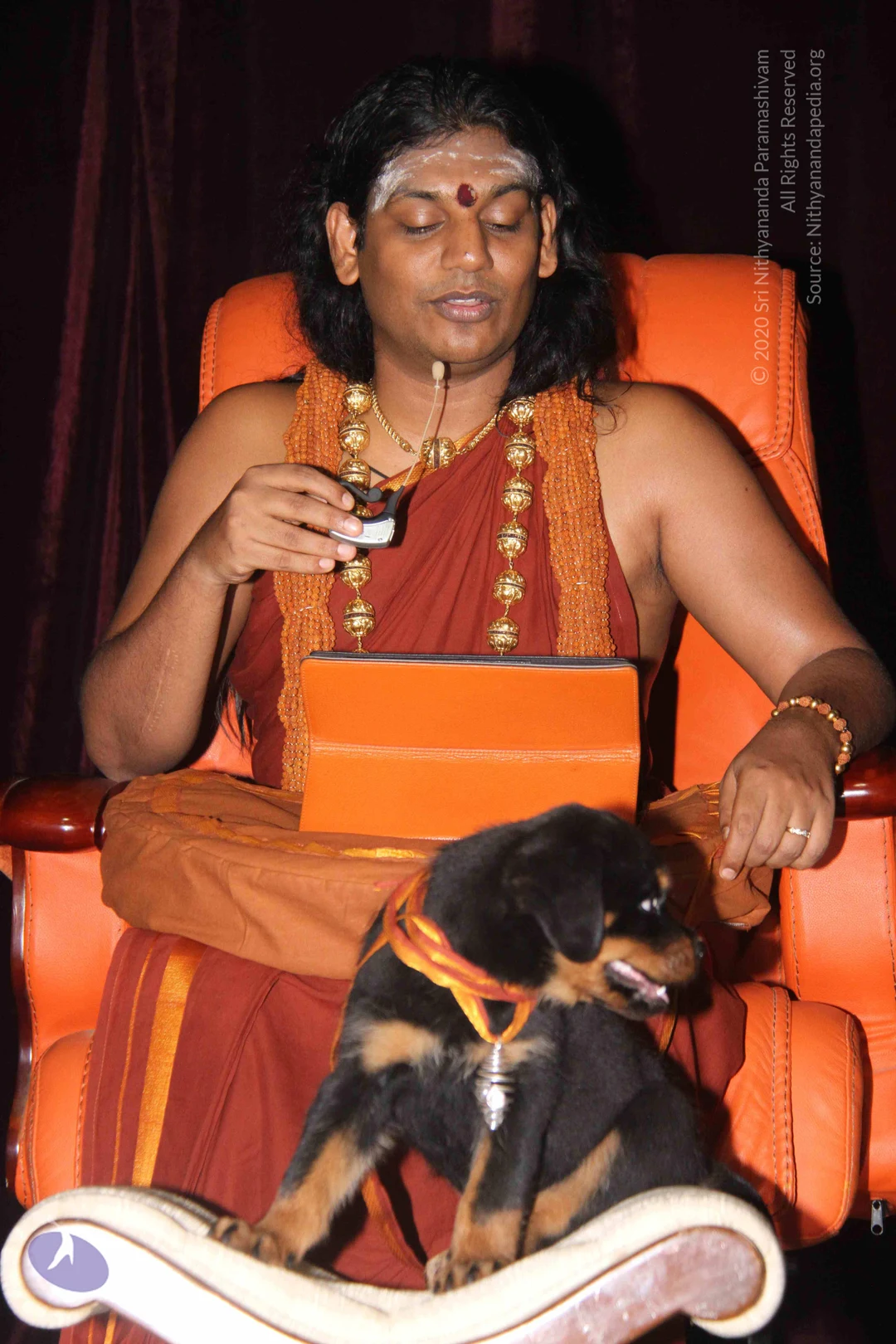
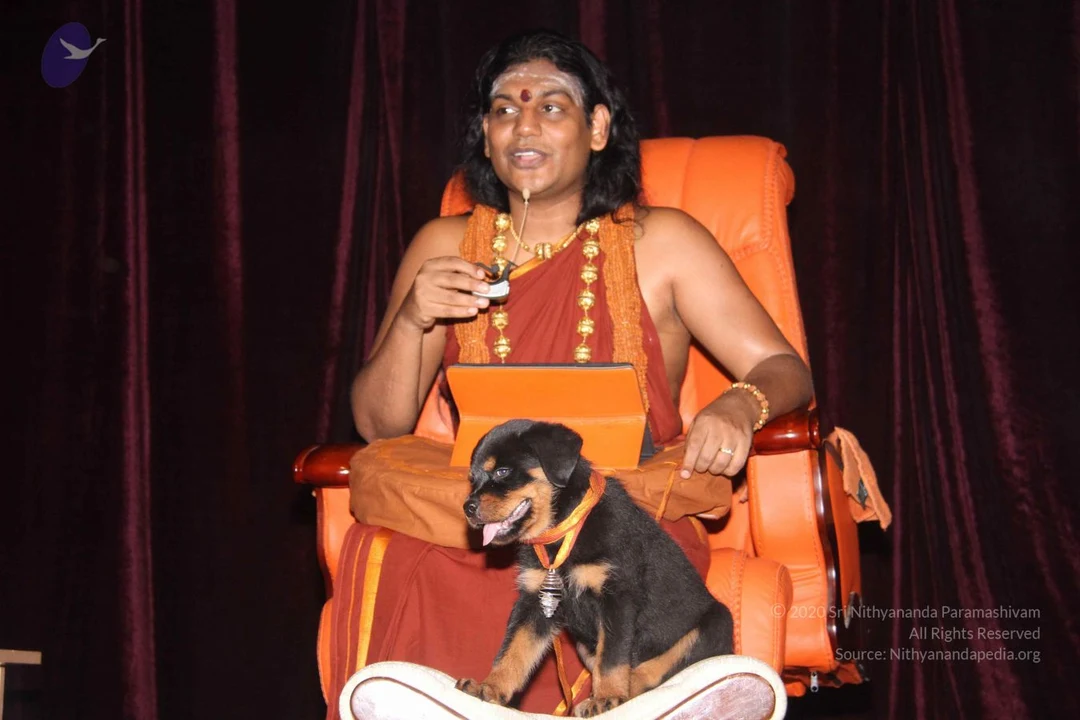
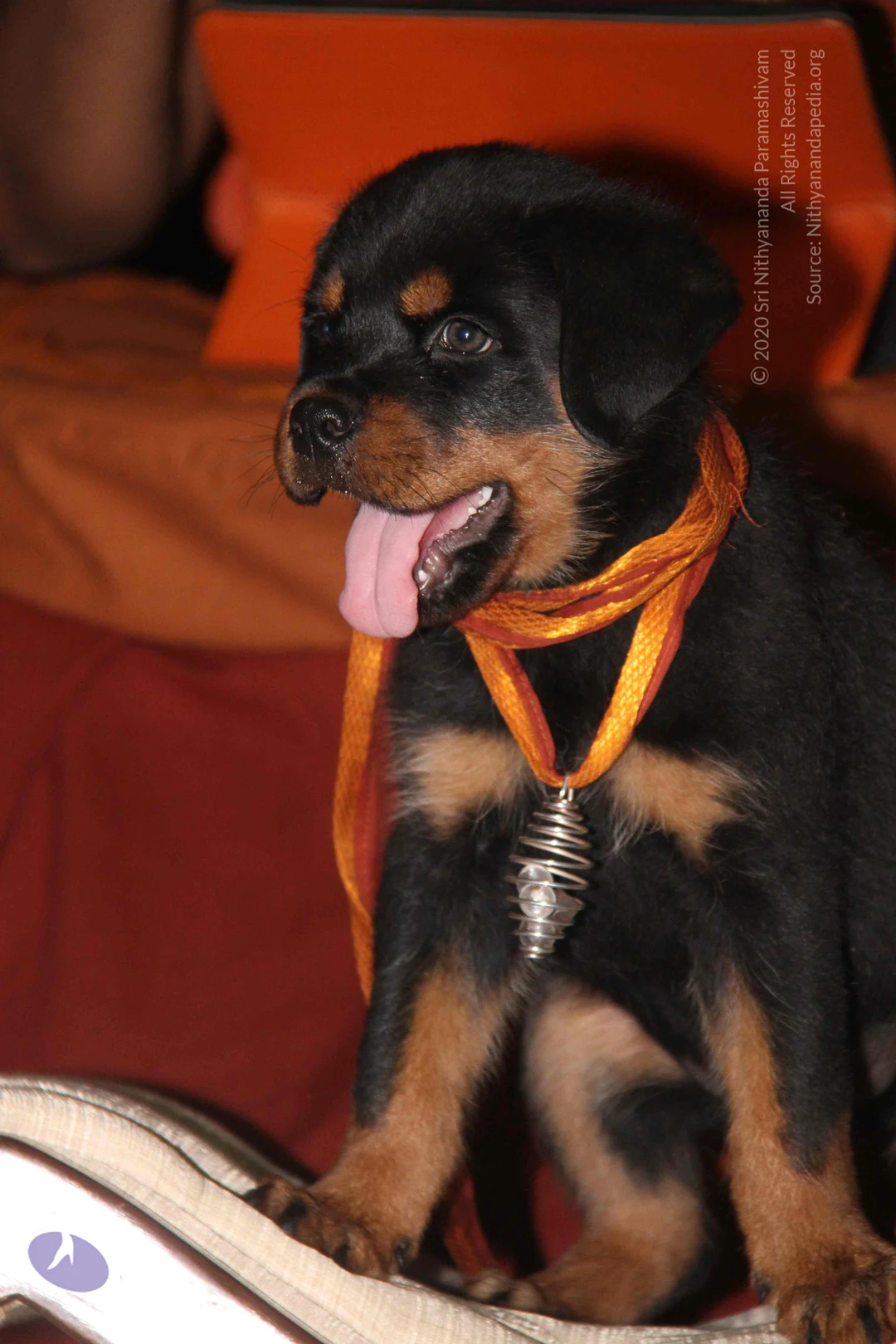
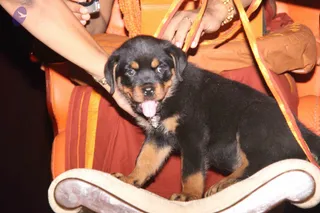
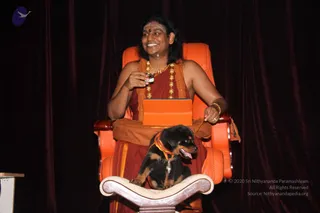
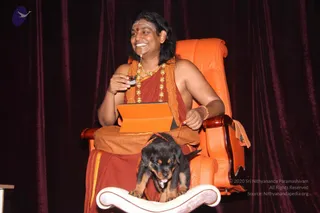
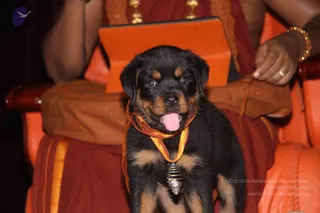
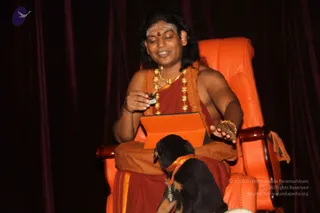
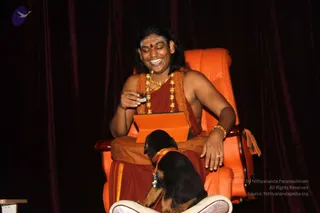
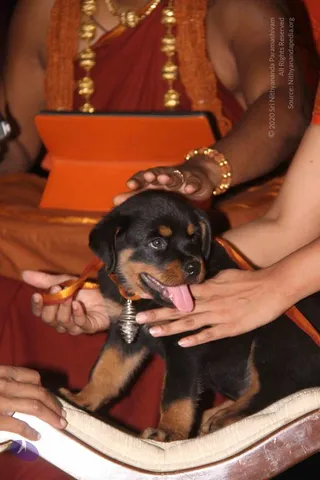
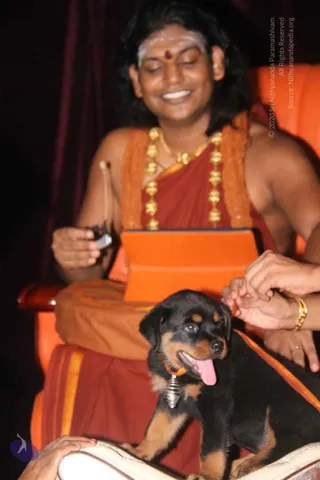
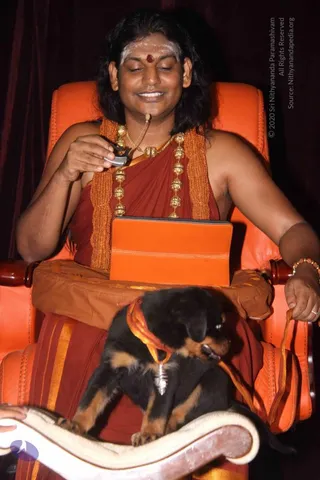
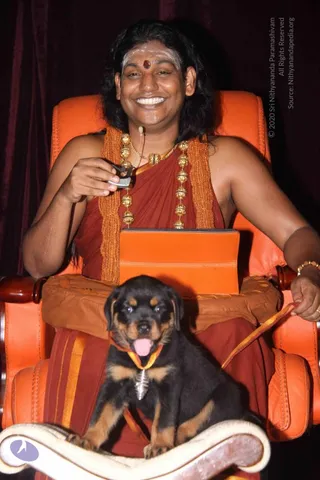
A black and tan Rottweiler puppy sits on a lap draped in saffron-orange and red cloth with gold border stripes. The puppy has a pink tongue out and a small metal collar, with a leash running across the orange fabric. Behind it, a person's arm and hands wearing gold bangles and a wristwatch rest on the fabric, and an orange cushioned chair with a cream-colored carved armrest frames the scene.A man seated on an orange leather throne-style chair against dark maroon draped curtains, smiling and gazing to one side while holding a small object in his right hand. He wears a rust-red robe, a gold necklace, a gold chain of beads across his chest, a red-and-white forehead mark, and a gold bangle on his wrist. A black and tan Rottweiler puppy with an orange collar sits on his lap, resting on an orange cushion. A small wooden lectern is visible at the left edge. Swamiji (probable) appears as the seated speaker with long hair, rudraksha-style beads and ceremonial gold ornaments, seated on a throne at a satsang setting.A smiling man with long dark hair and a red tilak on his forehead sits in a large orange leather armchair against dark maroon velvet drapery. He wears a rust-red garment with an orange-gold shawl and a long gold bead necklace, and he holds a pair of spectacles in one hand. An orange tablet rests on his lap, and a black and tan Rottweiler puppy with a red harness stands on a cream cushioned footstool in front of him.A black and tan Rottweiler puppy stands front and centre, tongue out, wearing a red and orange ribbon collar with a silver spiral pendant. Behind it, a seated figure in orange-brown robes rests a hand with a gold ring and beaded bracelet on an orange cushioned armchair beside an orange book or tablet. Only the puppy and the robed person's arm and lap are visible; no face is shown. The orange and brown tones dominate the scene.A photograph of a man seated in an orange leather armchair against dark maroon drapes, speaking and smiling while holding a small object in one hand and resting the other hand on an orange cushion. He wears a saffron-orange wrap over bare shoulders, a long gold-bead necklace, a rudraksha-style pendant and a bangle, with white sacred ash markings and a red bindi on his forehead. A black puppy with an orange collar and small pendant sits at his side on the armrest area. Swamiji (probable): the long swept-back hair, ornate gold necklaces, saffron-orange clothing and sacred markings on this seated speaker match the page's Swamiji reference, so the appearance is a probable match. The setting resembles a stage or hall during a satsang discourse.A seated man in a maroon and orange robe smiles broadly in an orange leather armchair against dark maroon drapes. He wears a gold-beaded necklace and a long gold chain, a bracelet, a ring, and a white forehead marking with a red dot. He holds a small object in one hand and rests the other on the armrest, with an orange tablet on his lap. A black and tan puppy with an orange collar sits at his feet on a stage.

firewalking

41 photosSource gallery
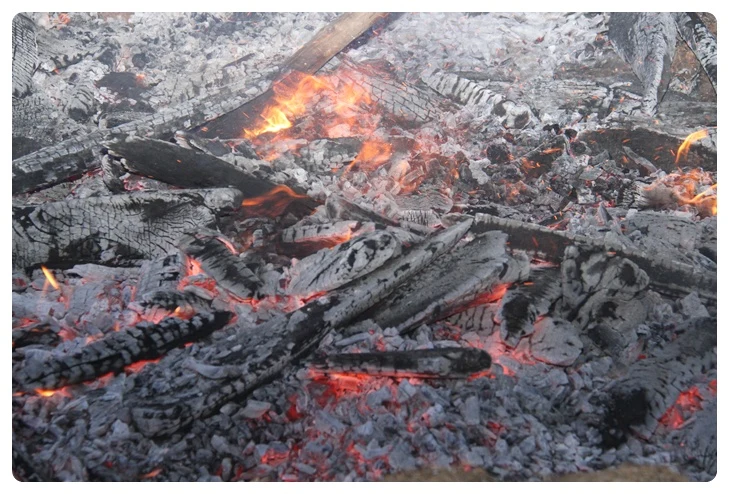
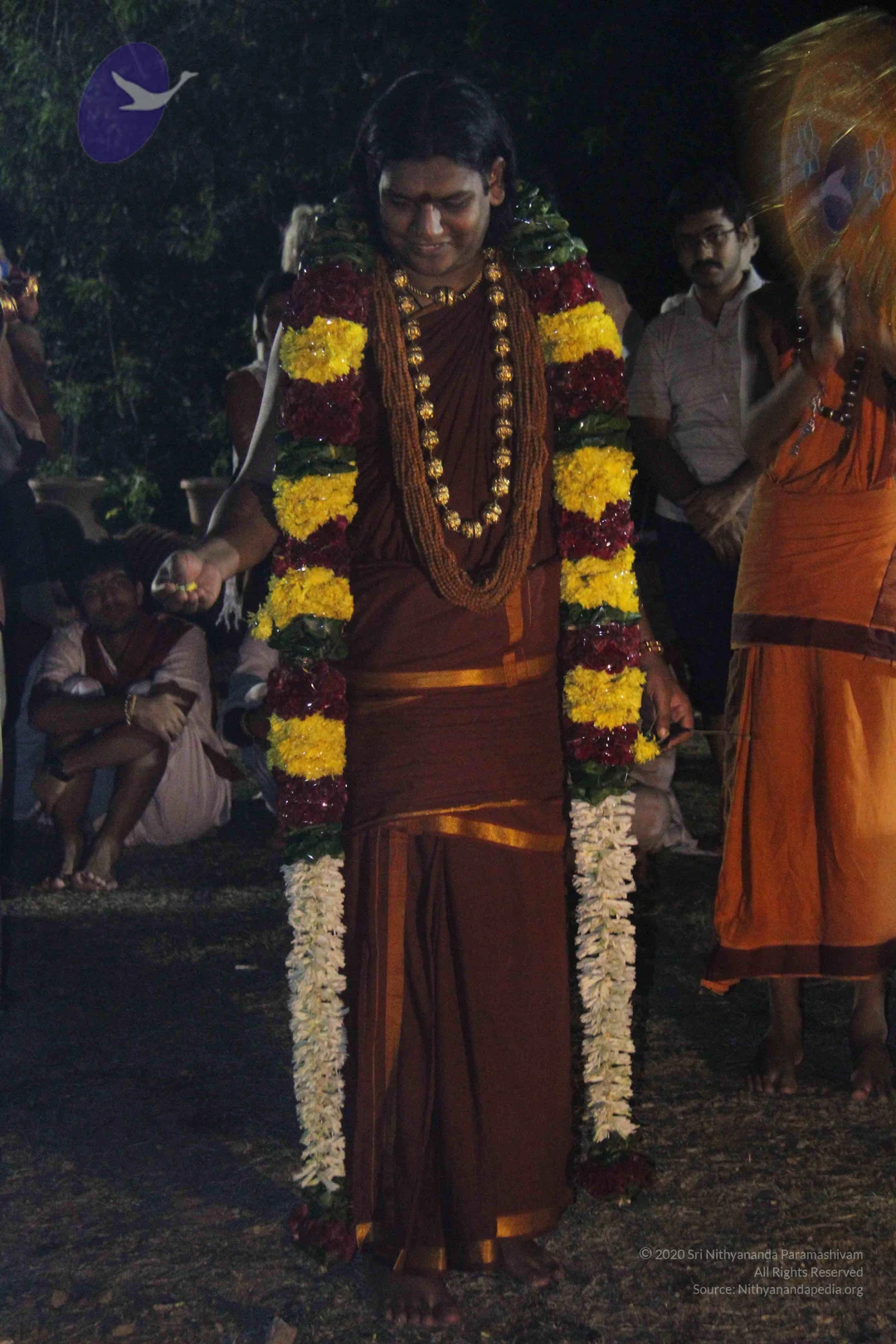
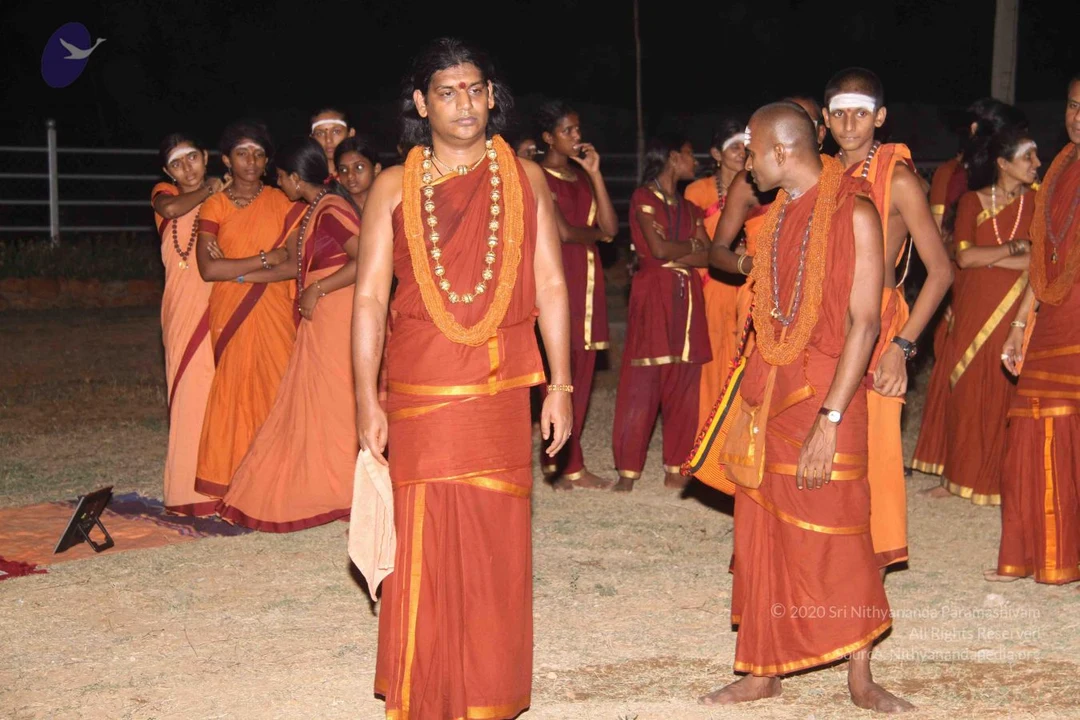
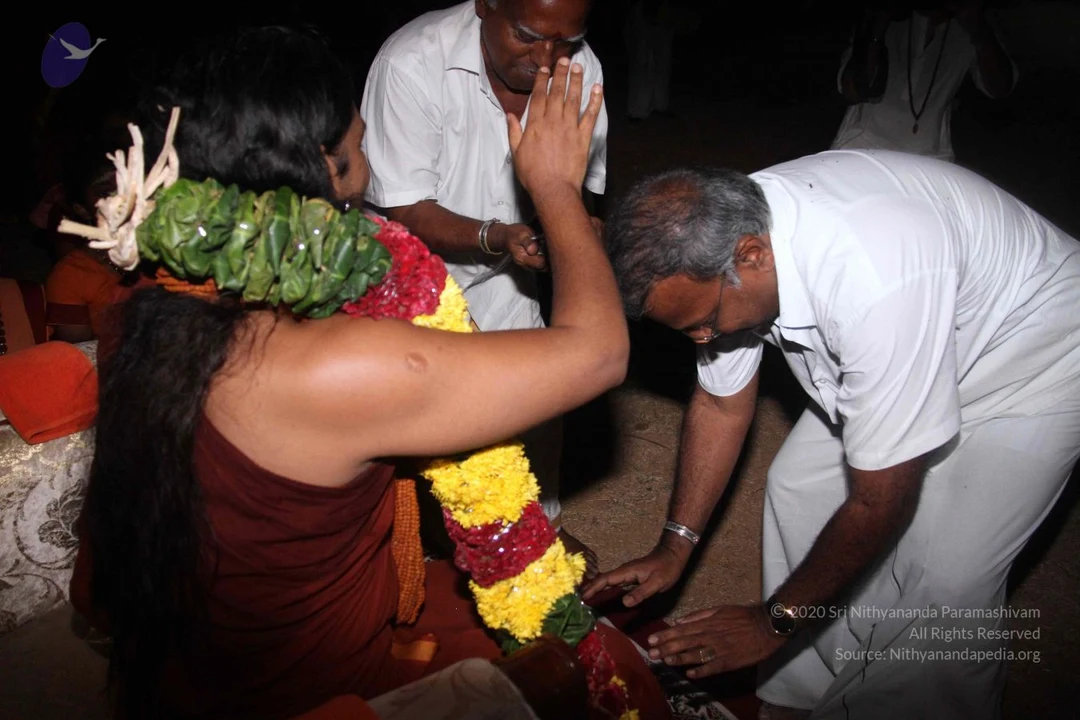
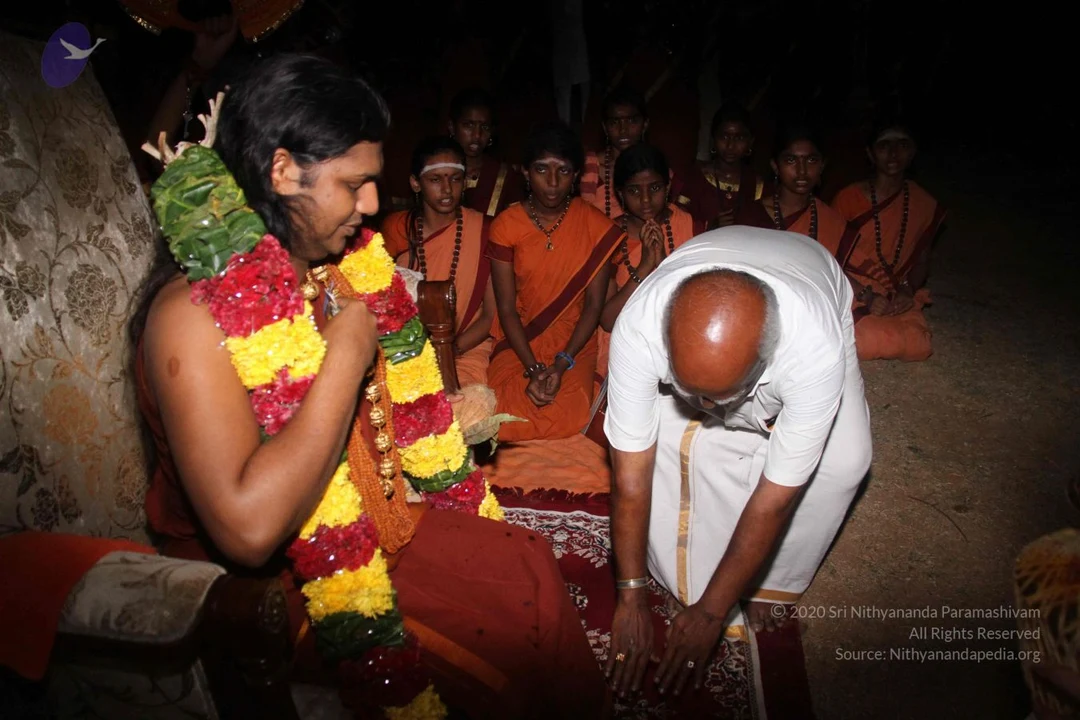
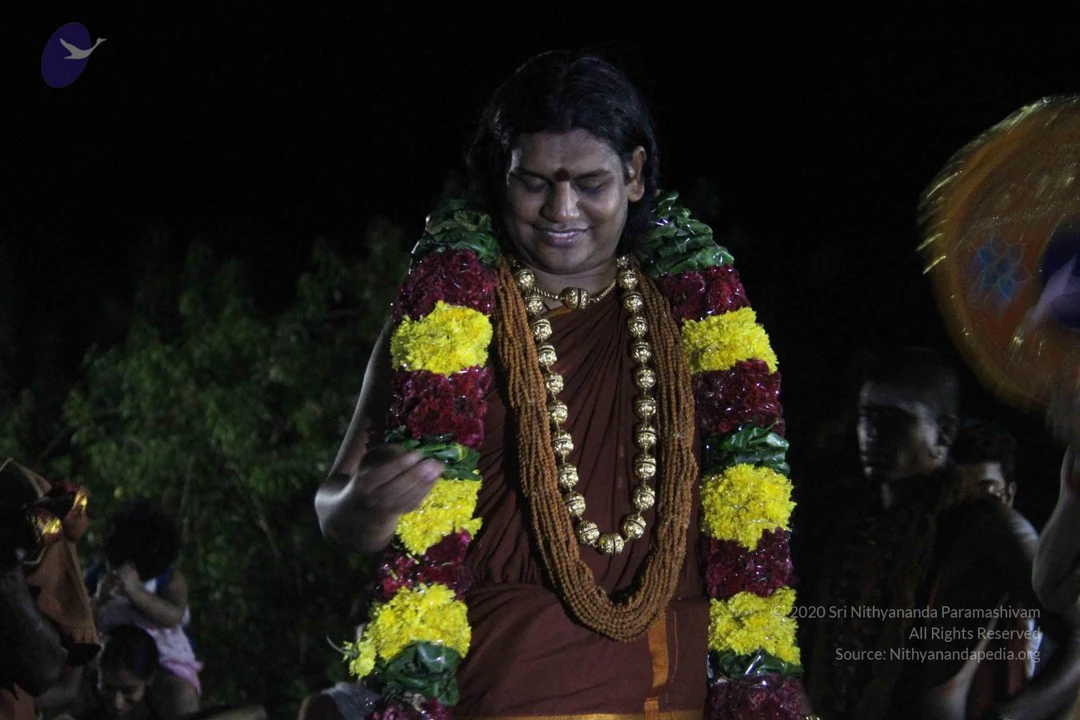
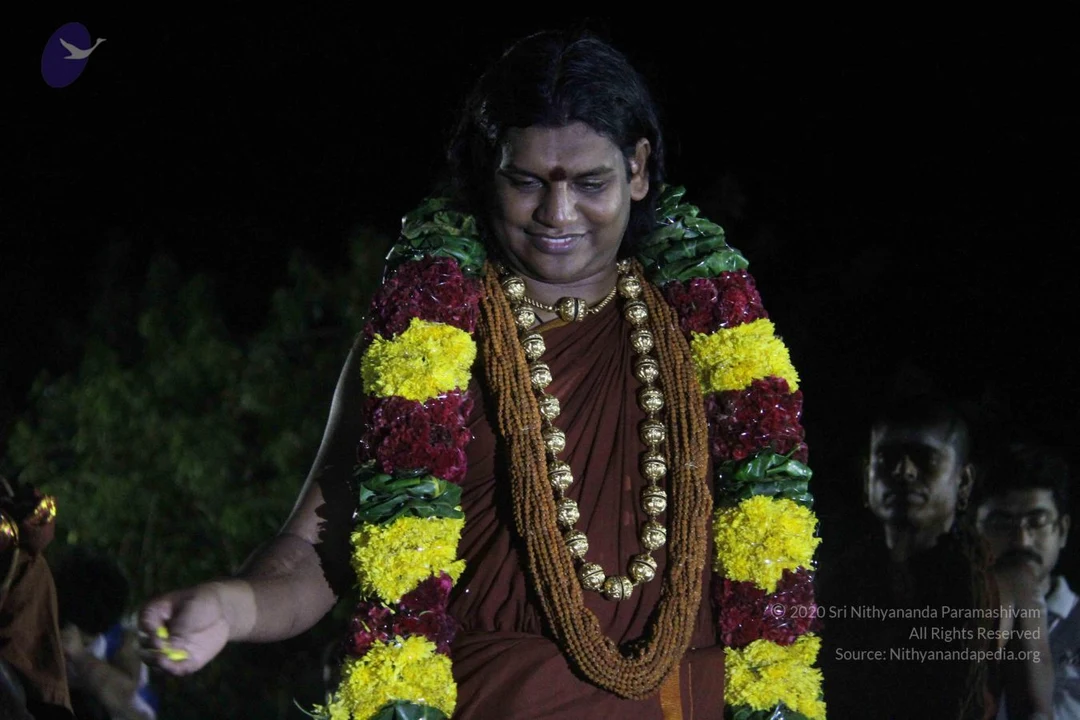
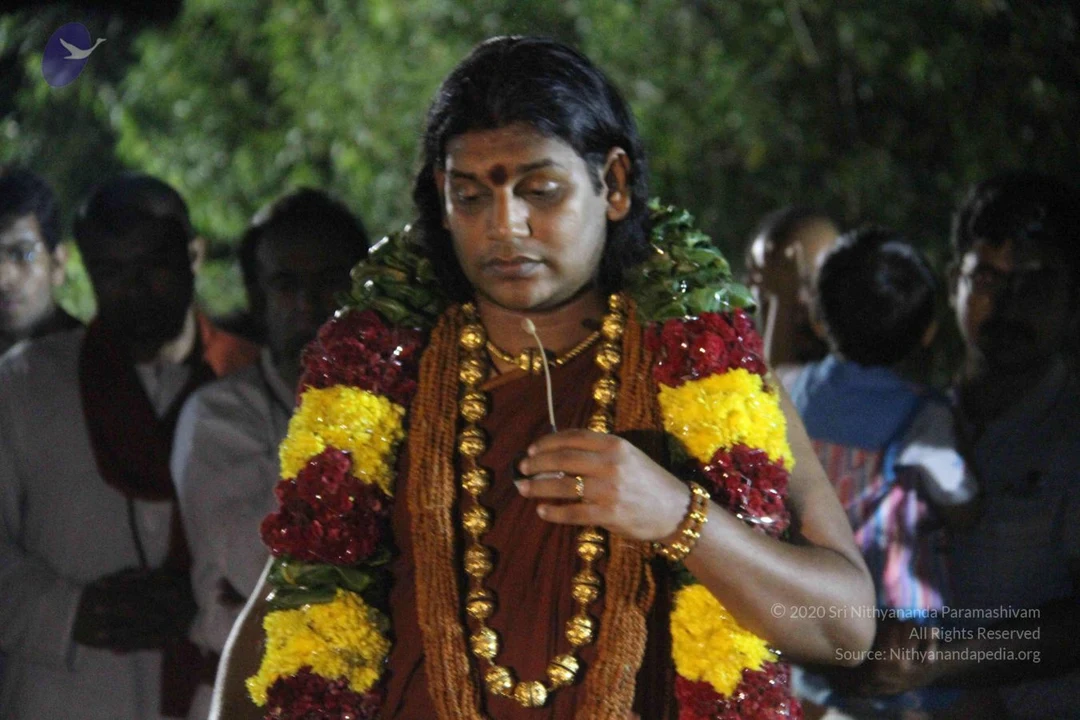
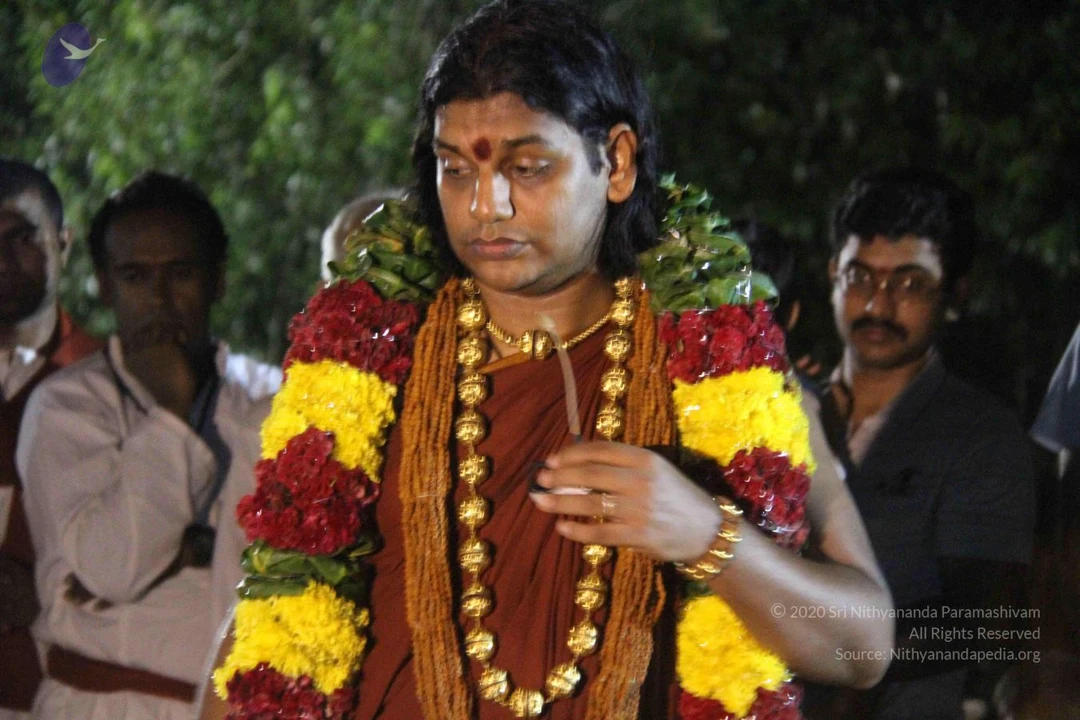
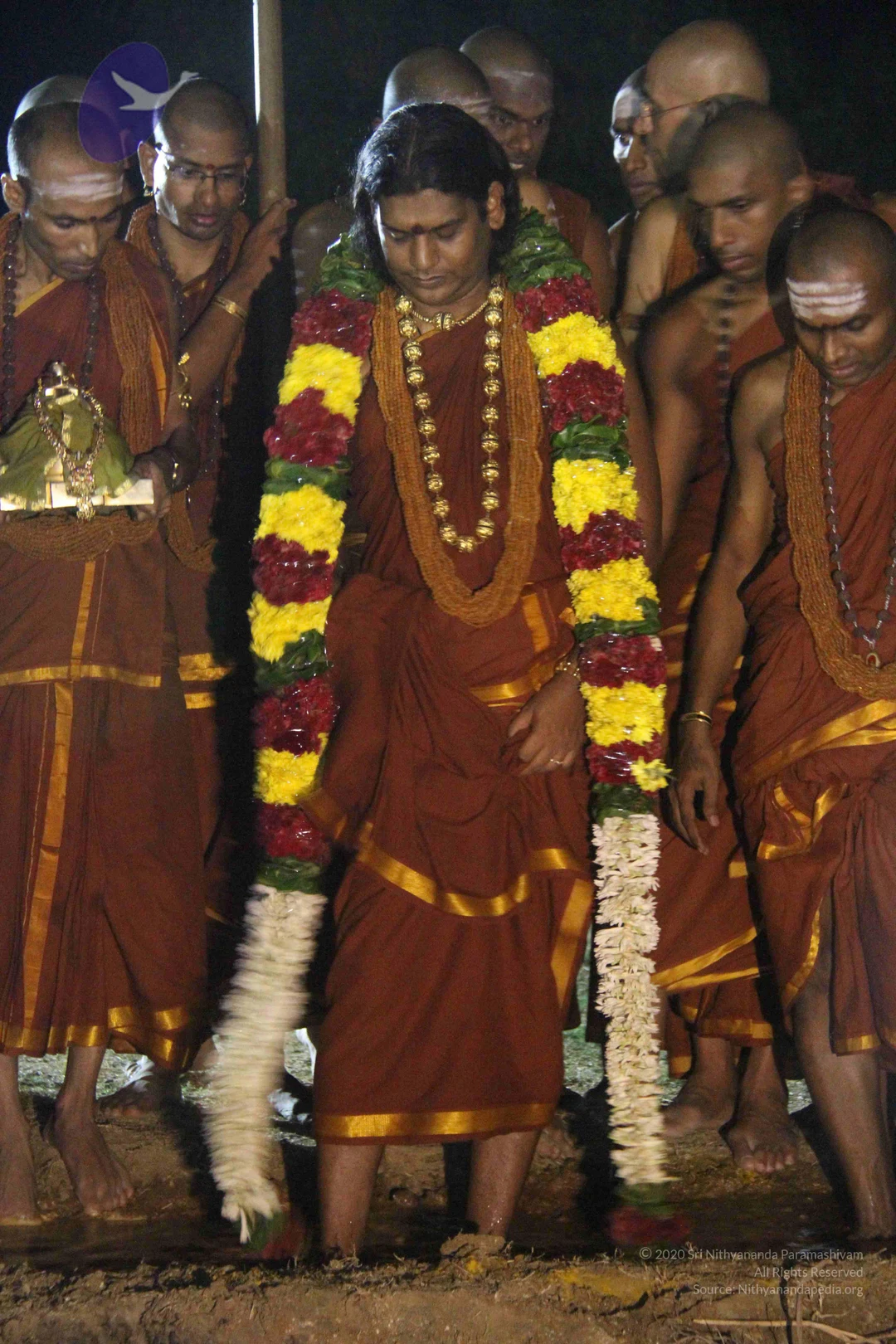
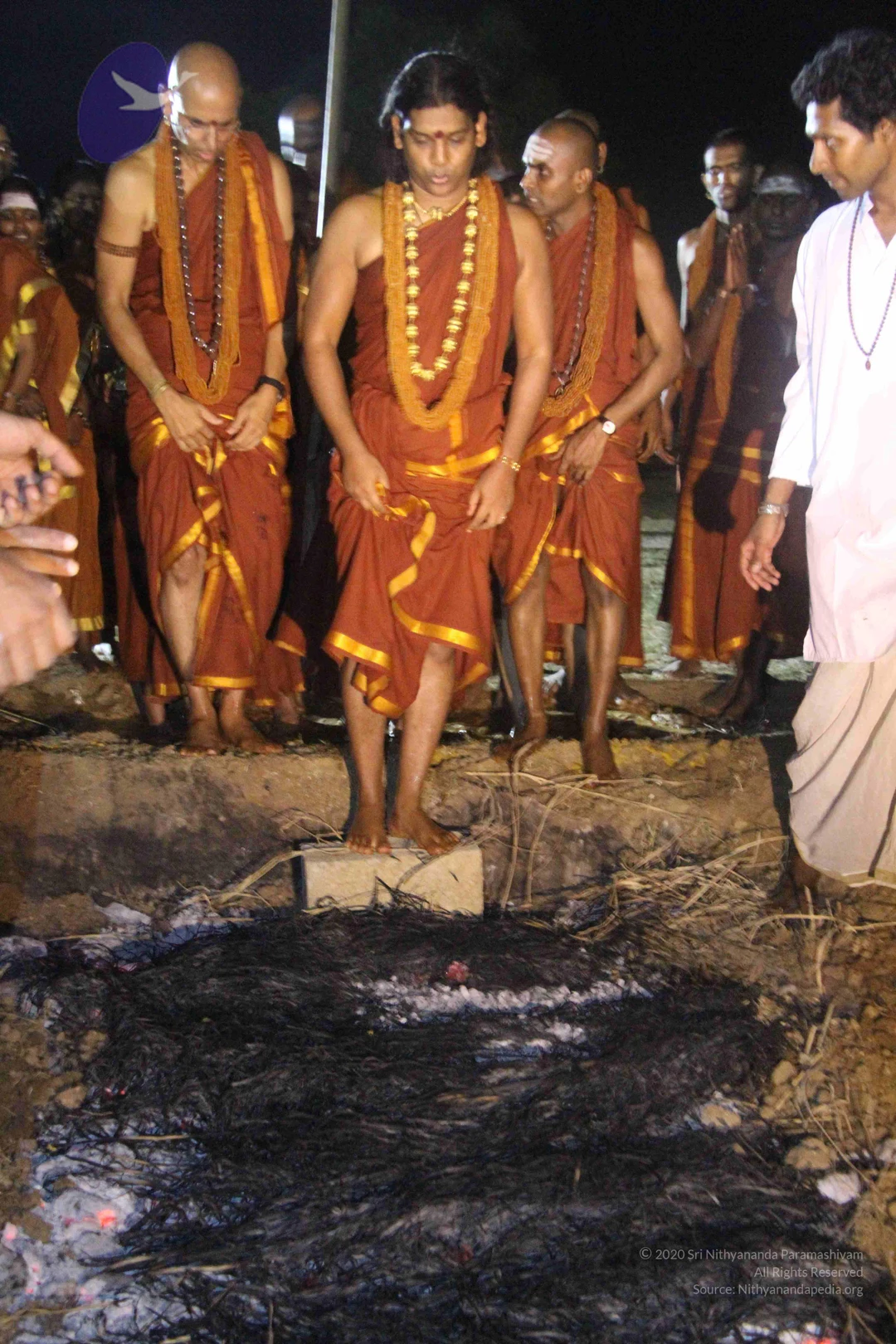
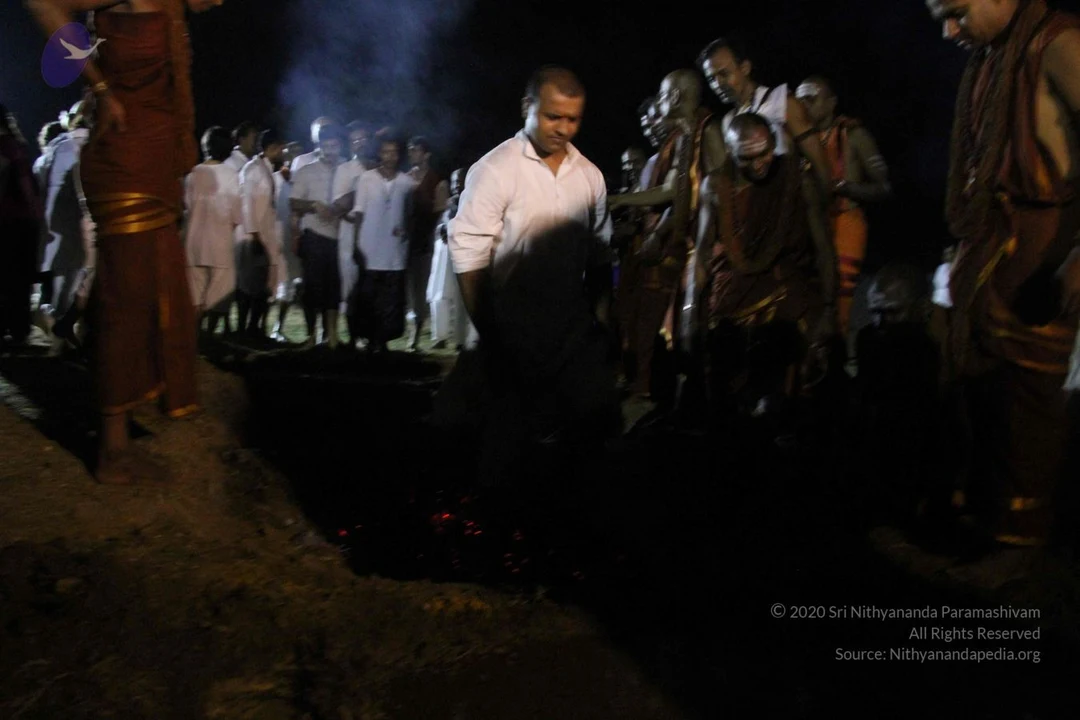
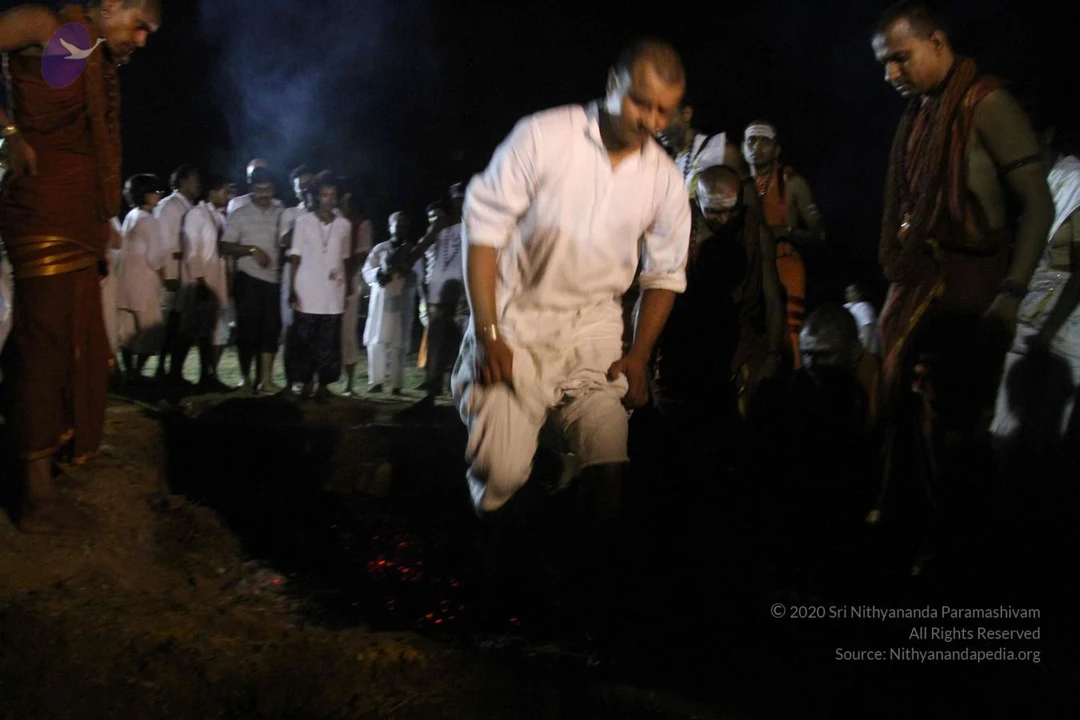
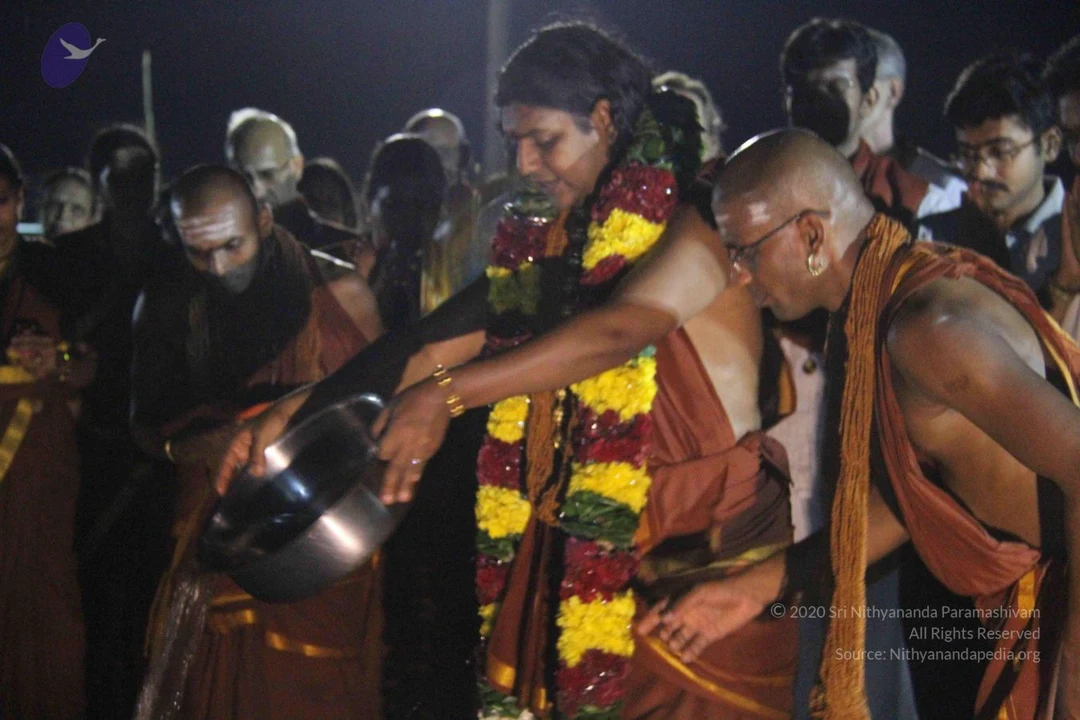
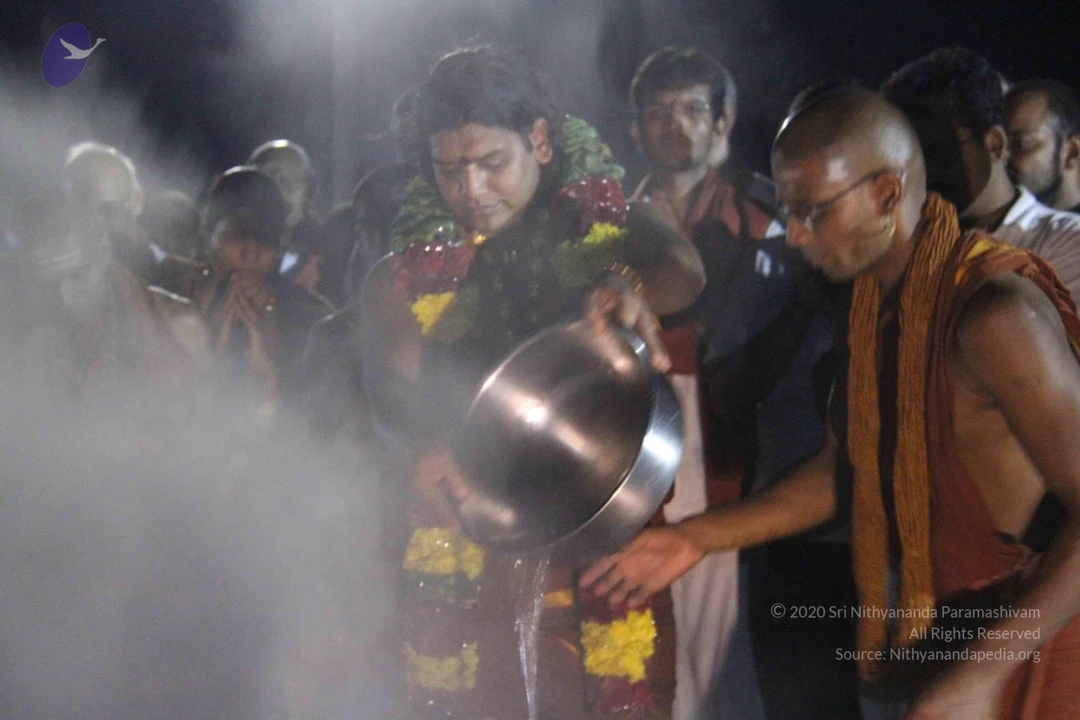
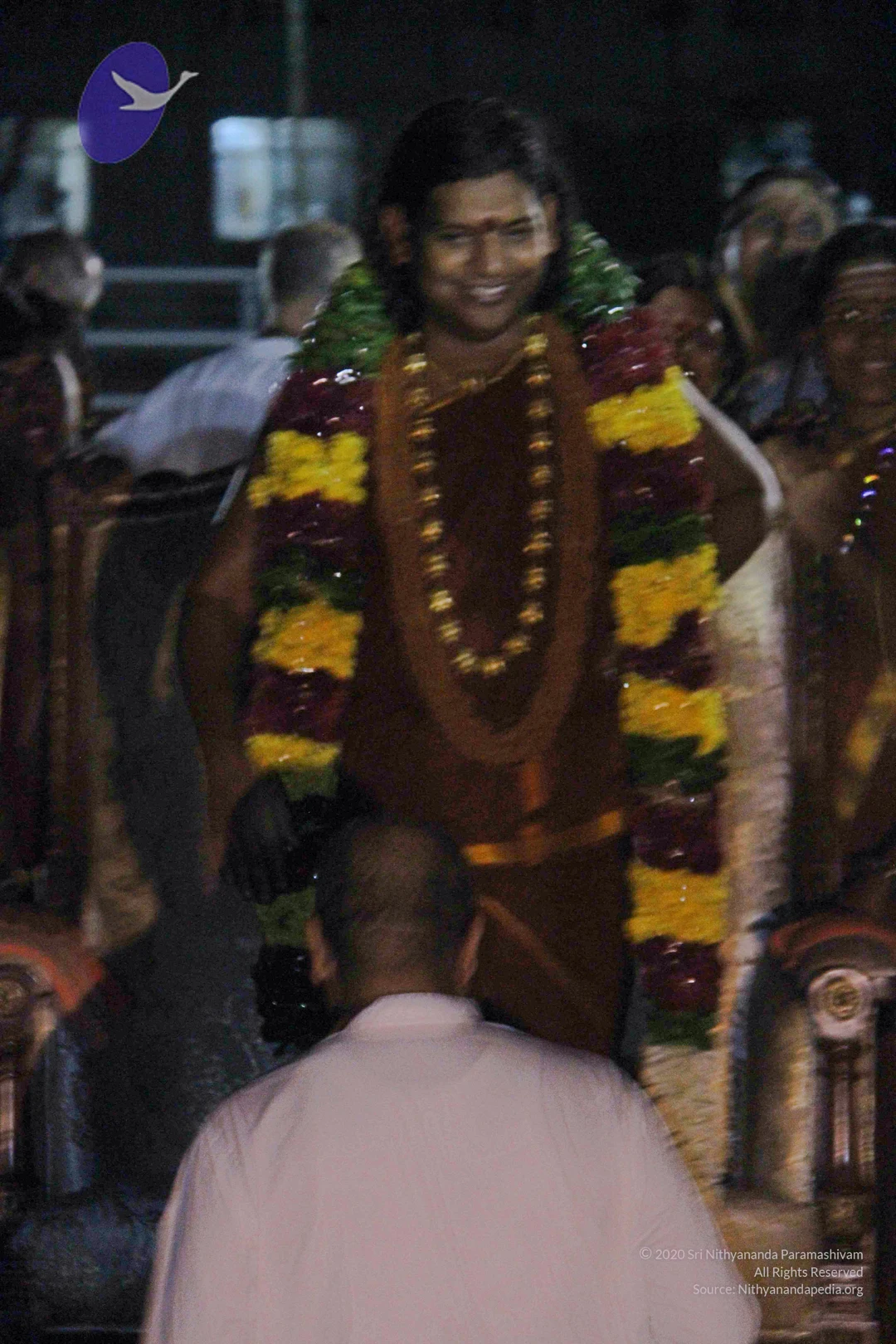
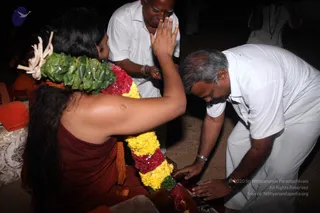
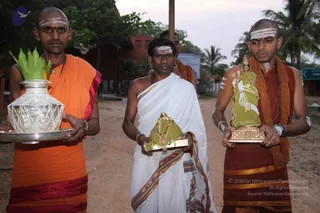
A hazy dusk sky glows orange behind a thin band of cloud, with the sun partly visible through the mist. A tall lattice telecom tower and a slender utility pole stand against the sky, flanked by dark silhouetted trees and palms in the foreground. No people are visible.A photograph of four men walking along a dirt path lined with palm trees, a red-roofed building and a green tree behind them, at dusk. The man on the far left in an orange dhoti and shawl with a red border carries a silver tray holding a clear glass kalasha topped with green leaves. The central man in white dhoti and shawl with white-and-gold border has a horizontal tilak and carries a gold-coloured ornamented object draped in green cloth. The man behind him in red-brown dress and an orange shawl holds a tall wooden pole. The man on the right in red-brown dhoti with gold borders and a rudraksha mala carries a small gold ornamental object draped in green cloth on a gold tray, possibly a deity or sacred item. Four people are visible.Close-up photograph of a fire pit filled with glowing red embers and partly burnt charred logs, with grey ash spread across the surface and flames rising in a few places. No people are visible in the frame. The scene suggests a sacred fire ritual such as a homa or yagna, though no ceremony participants are shown.A dark night photograph of glowing red-orange embers scattered across a black field, with a small bright flame flickering at the upper centre. No people are visible. The image shows only the fire and its embers against the darkness.A night photograph dominated by black darkness and glowing red-orange embers spread across the lower frame. Near the top centre, a small bright flame or flare rises and a faint figure is barely visible beside it, too dark and indistinct to describe clothing or features. No readable faces are visible. The scene appears to be an outdoor fire ritual or homa at night, though the figure is too small and dim to confirm any role.Night-time photograph of a devotee's blessing. A figure with long dark hair, seen from behind, wears a maroon-brown robe and a thick garland of yellow marigold, red rose and green leaf strands; the figure raises a hand toward the head of a man in a white shirt who bows and touches the ground at their feet. Another man in a white shirt and cream trousers, with a wristwatch, stands beside them, one hand pressed to the floor. Orange cloth and a white patterned cloth are visible at the left edge. Three people are visible in the scene.

Ananda-Bhairava

15 photosSource gallery
A black and tan Rottweiler puppy sits on a lap draped in saffron-orange and red cloth with gold border stripes. The puppy has a pink tongue out and a small metal collar, with a leash running across the orange fabric. Behind it, a person's arm and hands wearing gold bangles and a wristwatch rest on the fabric, and an orange cushioned chair with a cream-colored carved armrest frames the scene.A black and tan Rottweiler puppy sits on a person's lap, wearing a silver collar, tongue out, held on a gold-and-orange lead. Behind it, a saffron-orange cloth and a person in reddish-orange robes are visible on a cushioned seat, and a hand rests near the puppy.A man seated on an orange leather throne-style chair against dark maroon draped curtains, smiling and gazing to one side while holding a small object in his right hand. He wears a rust-red robe, a gold necklace, a gold chain of beads across his chest, a red-and-white forehead mark, and a gold bangle on his wrist. A black and tan Rottweiler puppy with an orange collar sits on his lap, resting on an orange cushion. A small wooden lectern is visible at the left edge. Swamiji (probable) appears as the seated speaker with long hair, rudraksha-style beads and ceremonial gold ornaments, seated on a throne at a satsang setting.A smiling man with long dark hair and a red tilak on his forehead sits in a large orange leather armchair against dark maroon velvet drapery. He wears a rust-red garment with an orange-gold shawl and a long gold bead necklace, and he holds a pair of spectacles in one hand. An orange tablet rests on his lap, and a black and tan Rottweiler puppy with a red harness stands on a cream cushioned footstool in front of him.A black and tan Rottweiler puppy stands front and centre, tongue out, wearing a red and orange ribbon collar with a silver spiral pendant. Behind it, a seated figure in orange-brown robes rests a hand with a gold ring and beaded bracelet on an orange cushioned armchair beside an orange book or tablet. Only the puppy and the robed person's arm and lap are visible; no face is shown. The orange and brown tones dominate the scene.A seated man in a maroon and orange robe smiles broadly in an orange leather armchair against dark maroon drapes. He wears a gold-beaded necklace and a long gold chain, a bracelet, a ring, and a white forehead marking with a red dot. He holds a small object in one hand and rests the other on the armrest, with an orange tablet on his lap. A black and tan puppy with an orange collar sits at his feet on a stage.

Adhi-Kailash

12 photosSource gallery
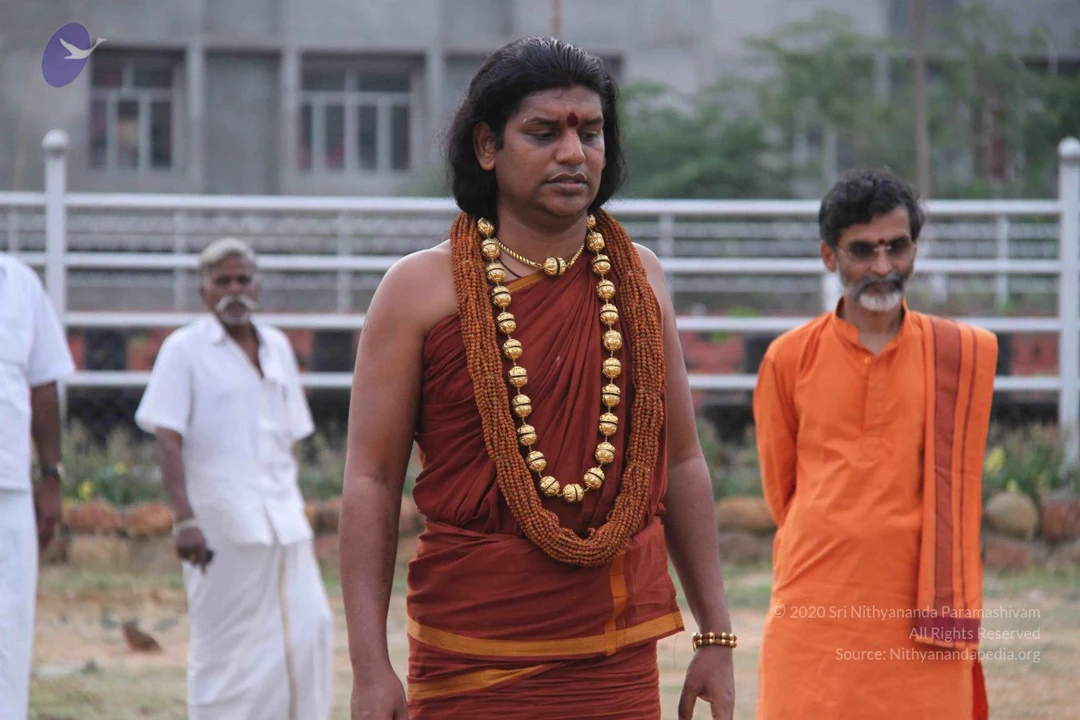
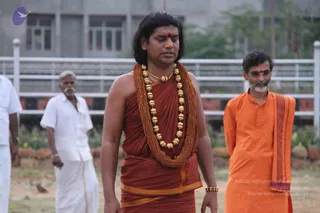
A hazy sunset or sunrise photograph of a pale orange sun glowing through thin layers of grey and mauve clouds, with soft streaks of cloud spreading across a warm sky. No people, figures, objects or ritual activity are visible. A small purple logo with a white bird appears in the upper left corner, and faint copyright text sits in the lower right.Outdoor photograph on a dry grassy ground with a white metal railing and a concrete building behind. A bare-shouldered man with long swept-back dark hair wears a rust-red cloth wrap, a thick rudraksha mala with large gold beads, a gold chain, a red bindi, and a gold-bordered dhoti, standing with arms relaxed. To the right, an older man with a grey beard and sunglasses wears an orange kurta and matching shawl. Two men in white dhotis and shirts stand at left.A hazy dusk sky glows orange behind a thin band of cloud, with the sun partly visible through the mist. A tall lattice telecom tower and a slender utility pole stand against the sky, flanked by dark silhouetted trees and palms in the foreground. No people are visible.A hazy dusk or dawn sky with a diffuse orange-red sun partly veiled by thin clouds. Silhouetted tree canopies and a palm frond sit in the foreground, with a tall lattice telecommunications tower and a utility pole rising among them. No people are visible. A small purple-and-white bird logo appears in the upper left corner.A photograph of an outdoor construction site at dusk with a pink and lavender sky. Large piles of grey gravel and stacked flat stone slabs lie on reddish-brown earth in front of a low red brick wall. A few tall eucalyptus trees and a utility pole stand behind the wall. No people, deities or ritual activity are visible.A photograph of a large outdoor yard stacked with many flat, rectangular pinkish-beige stone slabs arranged in irregular piles and rows, with grey gravel heaped at the left and back. A red brick boundary wall runs across the background beneath a pale dusk sky, with a few trees and a small red gate structure visible. No people are present. The scene appears to be a stone storage or construction site rather than a ritual or satsang setting.

Fire-walking

55 photosSource gallery
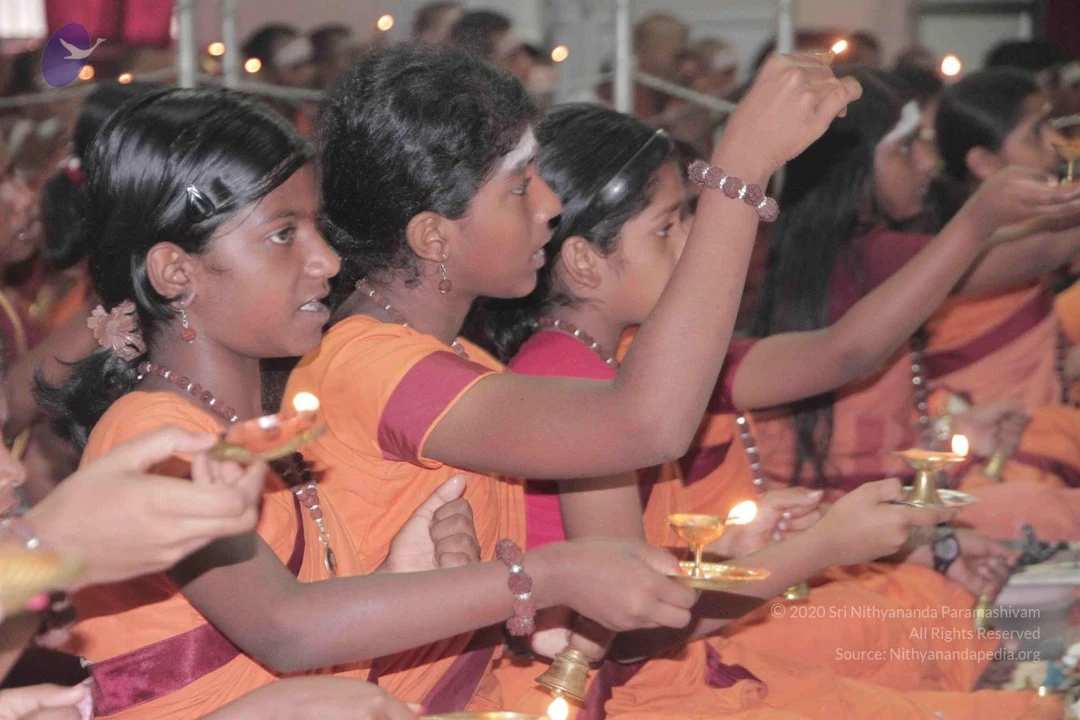
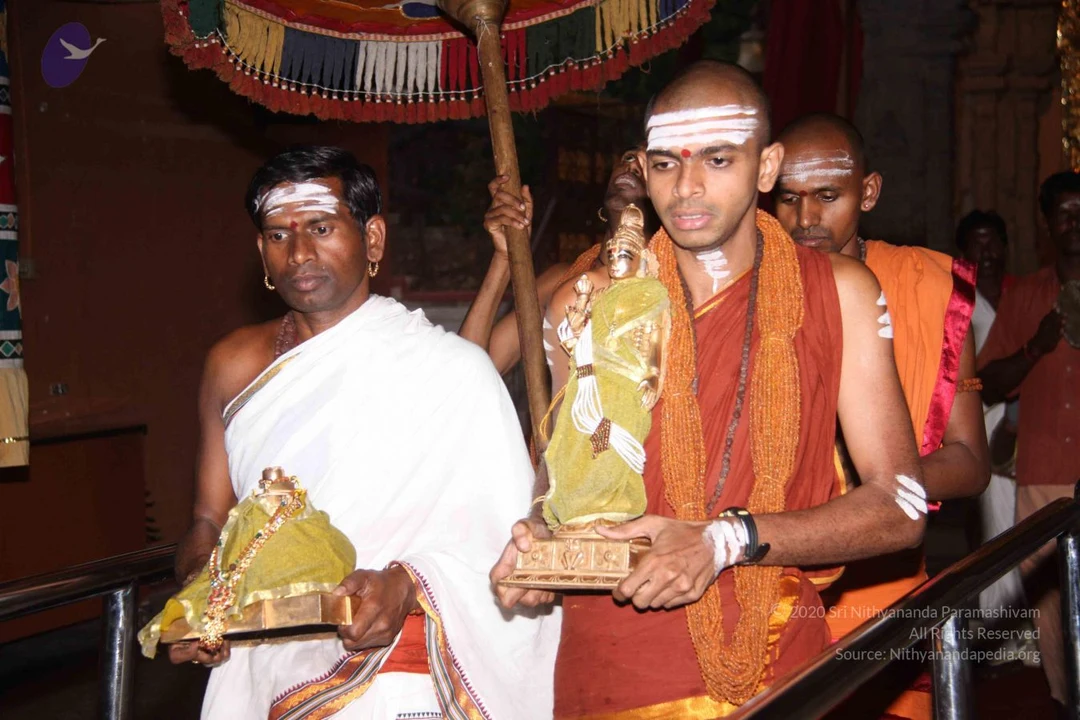
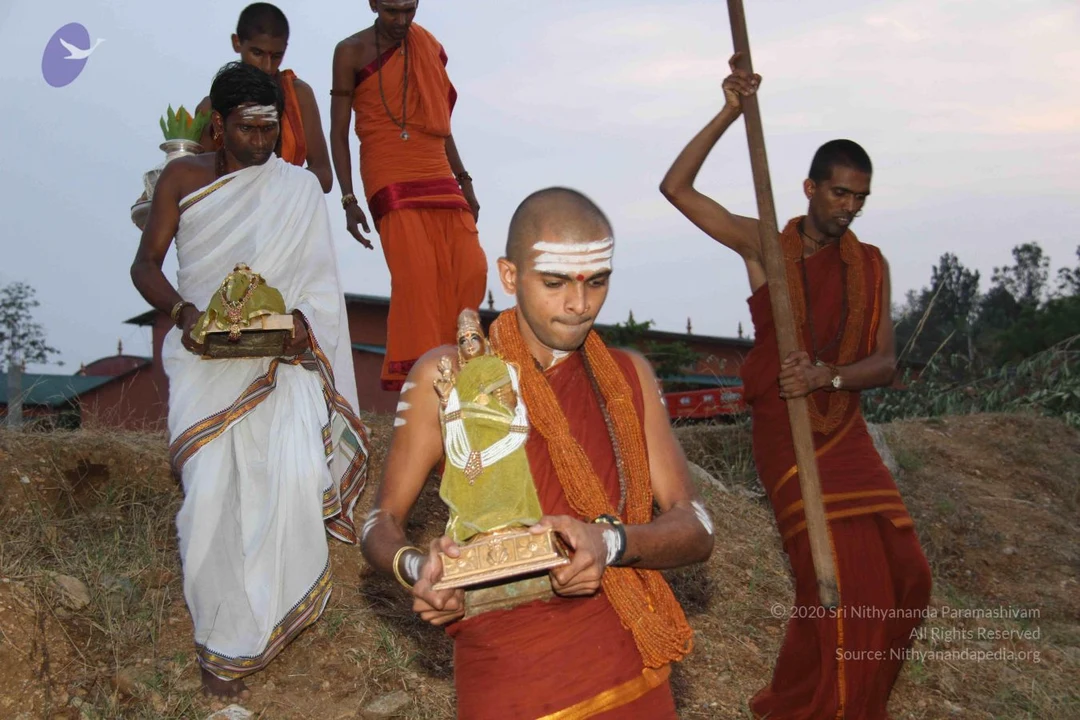
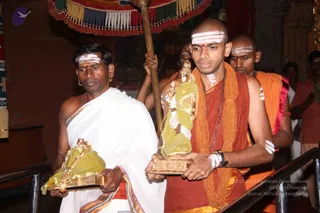
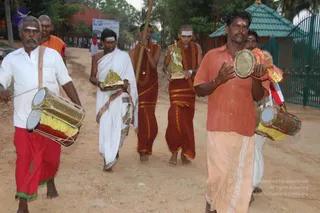
A nighttime temple procession on stone steps. In the foreground, a man in a white dhoti and shawl with white vertical tilak on his forehead carries a small gold-framed deity murti draped in green cloth and gold jewelry. Beside him, a man with a shaved head and white tripundra markings wears an orange-red robe, a long orange beaded rudraksha-style mala and a wristwatch, and holds a gold-framed deity murti draped in green silk. Behind them, an attendant holds a long wooden pole supporting a red, blue and gold fringed umbrella canopy, and other devotees in orange and white clothes follow. Lamps and temple walls with pillars are visible in the background. a person appearance is uncertain, so the central robed figure is identified only by role as a sannyasi-style devotee carrying a murti.Three men walk forward on a dirt path outdoors beneath palm trees, carrying ritual items for a procession. The man on the left wears an orange dhoti and shawl and holds a silver kalasha topped with green leaves on a silver tray. The man in the centre wears a plain white dhoti and bare upper body, with white and red tilak on his forehead, and holds a small golden peetha-like stand with a green cloth and a gold necklace. The man on the right wears a maroon dhoti and a rudraksha mala, with white tilak markings, and holds a golden deity murti dressed in green cloth. Behind them stands another robed man in orange, with a red-brick building and a sign in the background.A photograph of four men walking along a dirt path lined with palm trees, a red-roofed building and a green tree behind them, at dusk. The man on the far left in an orange dhoti and shawl with a red border carries a silver tray holding a clear glass kalasha topped with green leaves. The central man in white dhoti and shawl with white-and-gold border has a horizontal tilak and carries a gold-coloured ornamented object draped in green cloth. The man behind him in red-brown dress and an orange shawl holds a tall wooden pole. The man on the right in red-brown dhoti with gold borders and a rudraksha mala carries a small gold ornamental object draped in green cloth on a gold tray, possibly a deity or sacred item. Four people are visible.A procession on a dirt road in front of a green-roofed shrine and a green metal gate. In the foreground, a man in an orange-pink shirt and cream dhoti plays a hand drum, and beside him a man in a white shirt and red lungi plays a drum with a yellow-fringed head. Behind them, three men walk in white and red-orange ritual clothing; one carries a small golden palanquin-style deity murti, another holds a small gold-coloured shrine, and another carries a long wooden staff. Men with white sacred ash marks on their foreheads lead the procession, and a palm tree and a red building are visible in the background.Four male devotees walk along a dirt path in a procession. The man on the far left wears an orange cloth and holds a silver tray with a silver pot topped by green leaves. Next to him, a bald man in a white dhoti and shawl with a white tilak carries a small gold-and-green deity murti on a wooden plank. Behind them, a man in red-brown dhoti and orange shawl holds a long wooden pole. On the right, a shaved-headed man in red-brown dhoti and shawl carries a green-clad deity murti on a gold base. Red brick buildings and trees stand in the background. The scene shows a temple-style procession with ritual vessels and deity figures.Four men walk down a dirt road in a procession carrying ritual objects. On the left, a man in an orange dhoti and orange shawl with a red border holds a silver tray with a silver pot topped with green leaves. In the centre, a bare-chested man in a white dhoti with a coloured border carries a small gold-trimmed box with green cloth and a gold necklace. Behind him, a man in red-brown dress with a gold-bordered cloth holds a long pole, and at right another man in red-brown dress with a gold waistband carries a similar green-draped gold box. All wear white sacred ash lines on their foreheads. Palm trees, a banner, and a few distant figures in white appear in the background.

Morning-Message
109 photosSource gallery
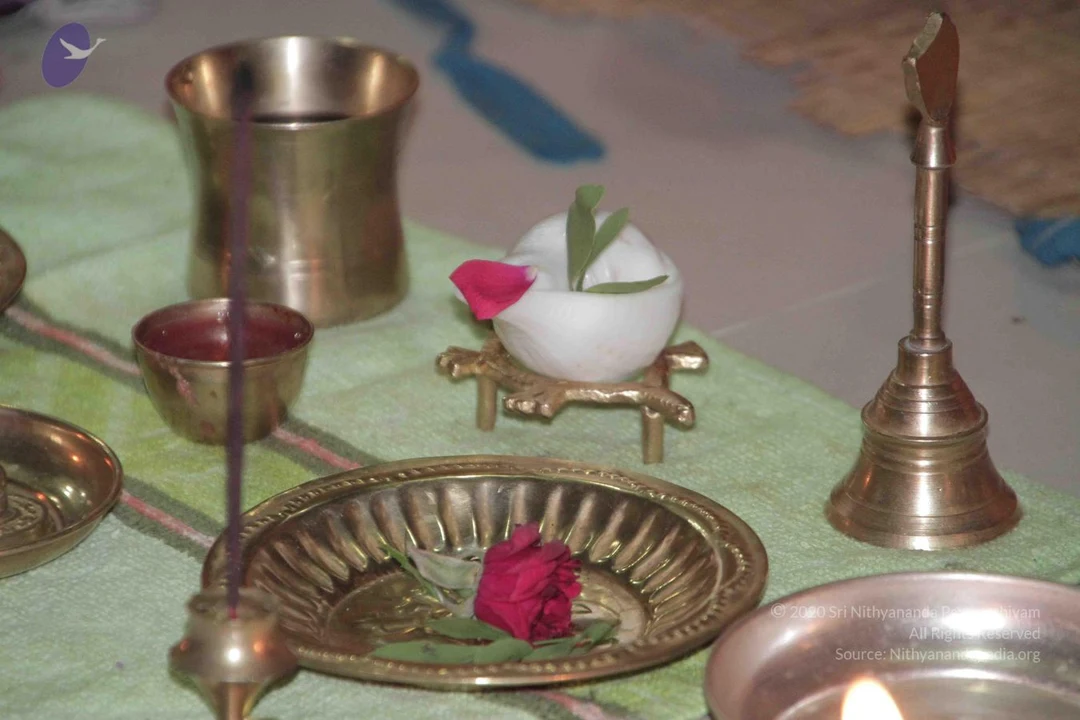
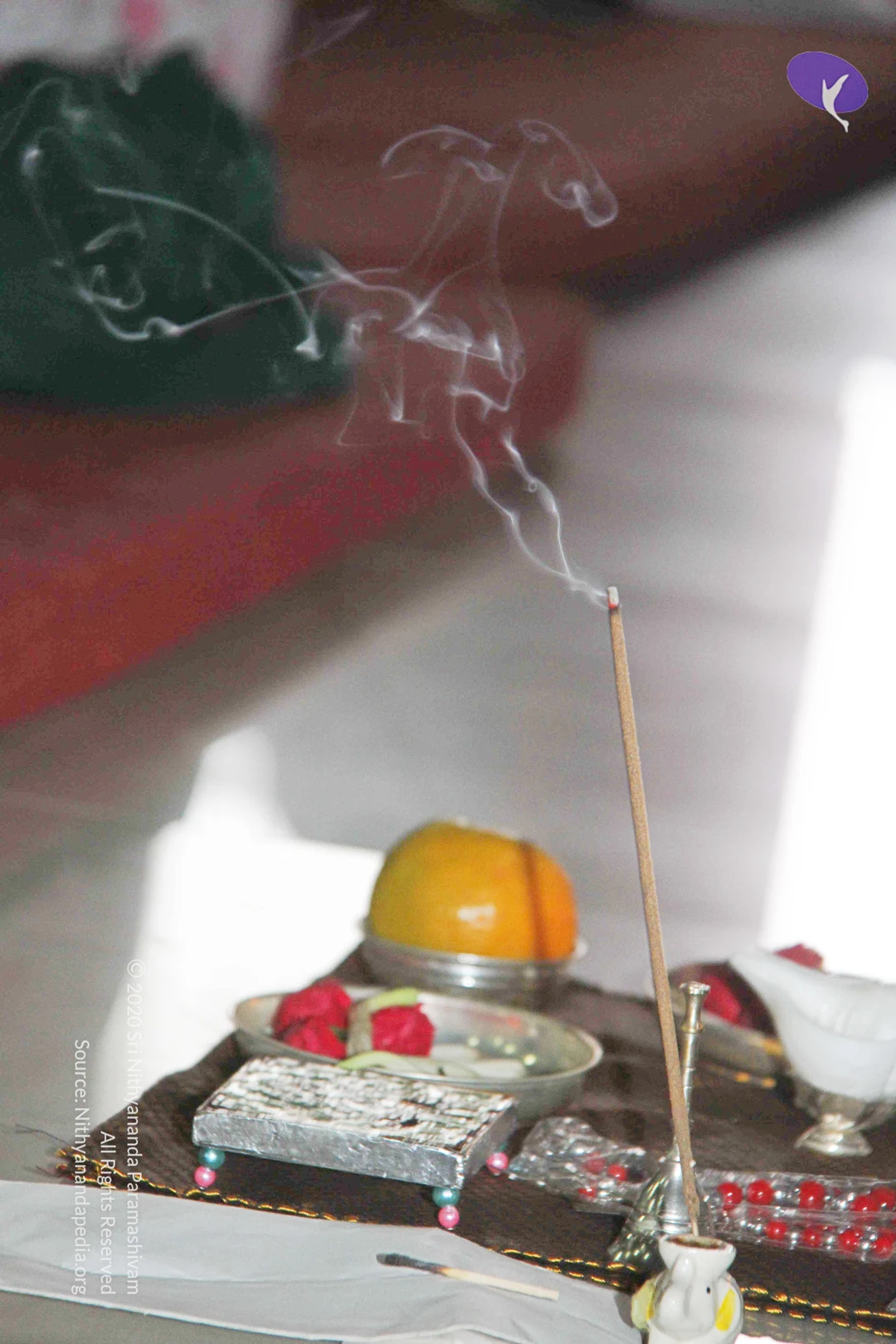
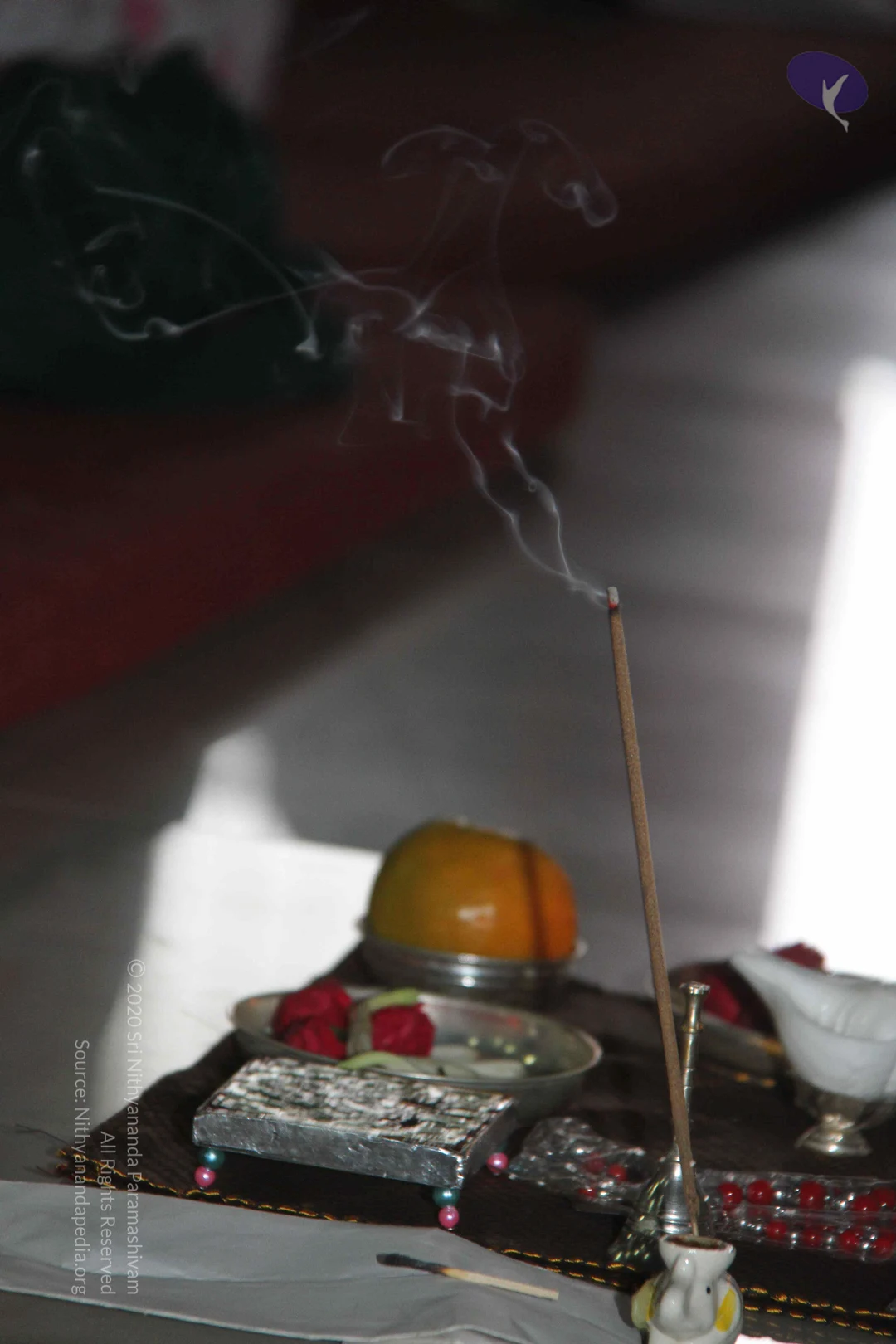
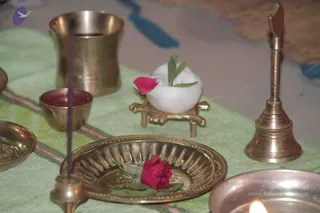
Photograph of a row of young boys seated cross-legged on a white floor in an indoor hall, wearing orange-saffron dhoti-style garments with maroon borders, rudraksha malas, and white sacred ash (vibhuti) marks on their foreheads. Brass puja vessels, small bowls and a kalasha-style brass lamp set sit on pink and brown mats in front of them, with flower petals and offerings. Several boys have eyes closed in meditation with hands folded. An adult in orange robes is partly visible at the left edge, and a cream cushioned chair sits at right.A photograph of a row of young boys seated cross-legged on a white floor in a plain hall. They wear saffron-orange cloth with maroon borders and rudraksha malas, and have white vertical tilak marks on their foreheads. Several have eyes closed in meditation with hands folded or resting on laps. In front of them on mats are brass puja vessels, small bowls, a brass lamp and conch-like shells. Behind them, other seated figures in orange and white are partly visible, and a cushioned chair stands at right.A golden ornate throne with carved lion-head armrests sits on a tiger-skin cushion before a dark stone wall flanked by brass hanging oil lamps. Centered on the throne back is a framed portrait labelled "Paramahamsa Nithyananda" showing a smiling man in orange robes and a white bead necklace, seated cross-legged before a banyan tree with his right hand raised in blessing. Yellow and pink painted panels frame the sides and a lit lamp glows at the lower right edge. No physical people are visible; the only figure is the printed portrait on the throne, which is a depiction.A photograph of a shrine-like altar inside a brightly painted hall with pink, green and yellow decorative columns and dwarapalaka-style painted guardian figures at the sides. A large gilded throne with a tiger-skin cushion sits at the centre, holding a framed portrait of a man in orange robes with a rudraksha mala, seated with one hand raised, labelled as a portrait. Brass oil lamps stand on either side, and dangling brass lamps hang above. Three women in orange saris sit cross-legged before the throne, one on the left at a microphone reading from papers, two on the right seated at the offering tray. The portrait is printed, not a physical person in the scene.A close-up photograph of a puja tray set on a light green cloth with pale stripes. Brass items include a bell with a tall handle, a small brass cup, a lamp, and a shallow fluted brass plate holding a red rose and green leaves. A white ceramic bowl on a brass stand holds green leaves and a pink petal. A lit incense stick stands upright in the foreground, and a small oil lamp burns at lower right. No people are visible.Photograph of young boys in orange and maroon robes seated on mats performing a ritual puja on the floor. Brass lamps, a small oil lamp with a flame, brass bowls, plates of flowers and petals, a brass kettle and incense sticks surround them. The boys wear grey-white vertical tilak marks on their foreheads and rudraksha mala necklaces. A boy in the foreground holds a small brass spoon near a flame while a taller boy behind him holds a stick of incense. Other seated boys in orange robes are visible at the edges. No identifiable figure of a person is present.

Satsang

11 photosSource gallery

Fire-Walk-03-Apr-2013

8 photosSource gallery
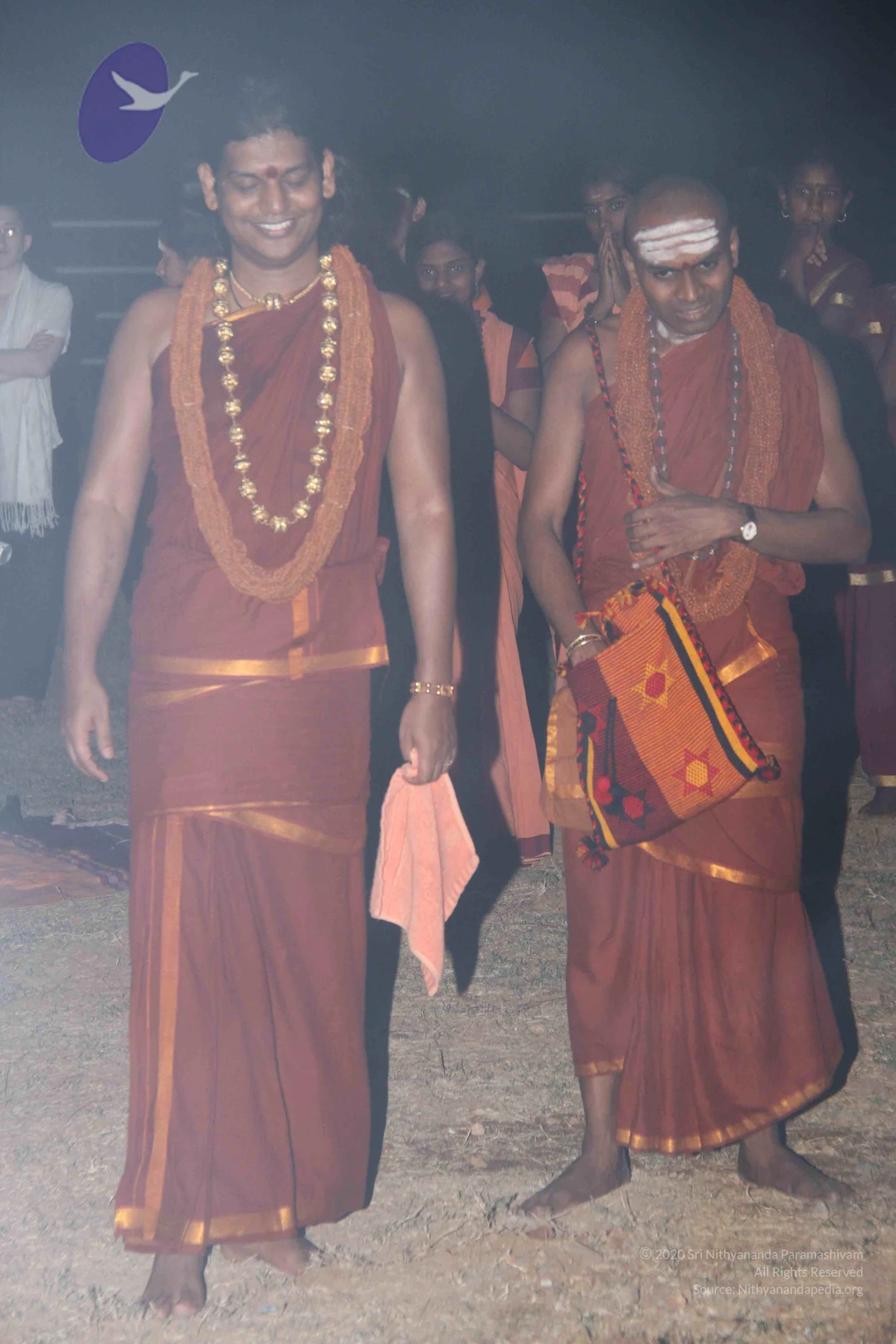
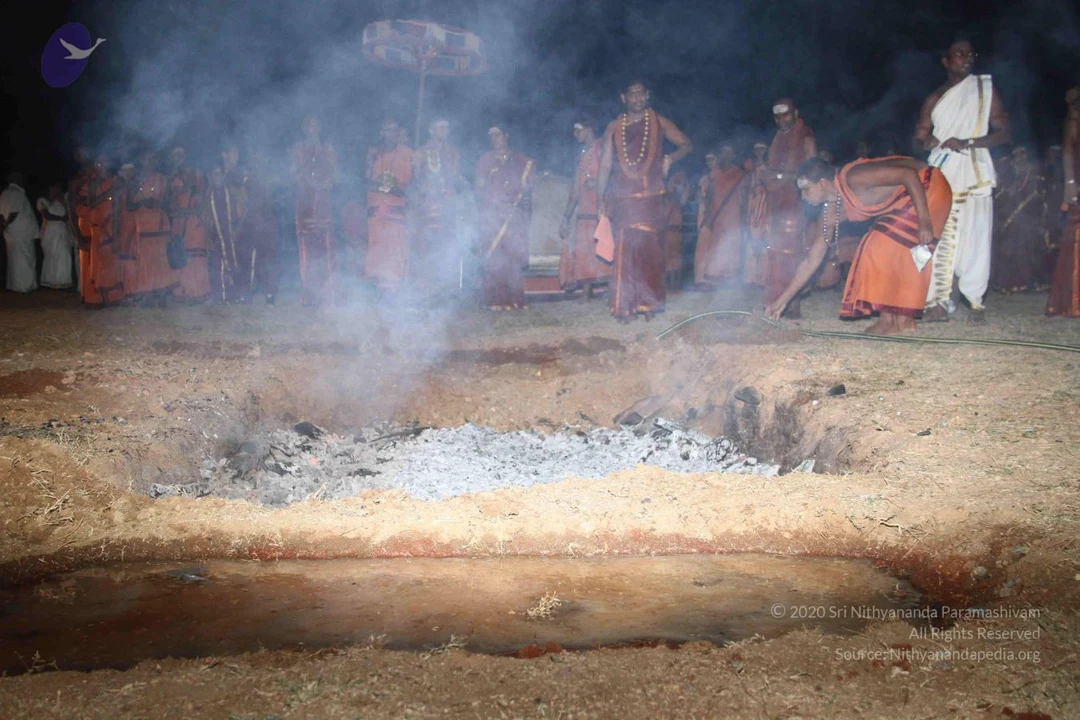
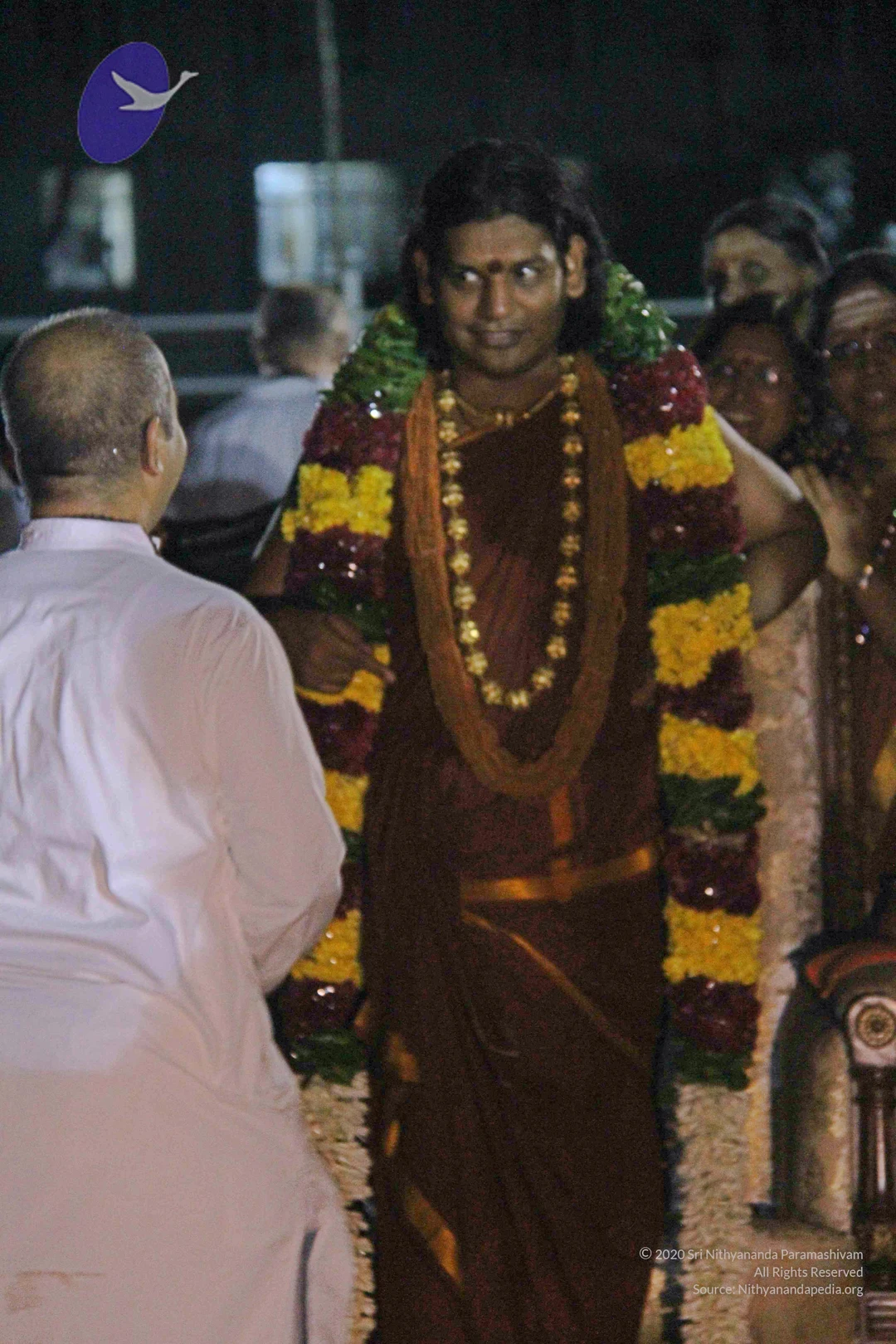
A hazy dusk sky glows orange behind a thin band of cloud, with the sun partly visible through the mist. A tall lattice telecom tower and a slender utility pole stand against the sky, flanked by dark silhouetted trees and palms in the foreground. No people are visible.A photograph of four men walking along a dirt path lined with palm trees, a red-roofed building and a green tree behind them, at dusk. The man on the far left in an orange dhoti and shawl with a red border carries a silver tray holding a clear glass kalasha topped with green leaves. The central man in white dhoti and shawl with white-and-gold border has a horizontal tilak and carries a gold-coloured ornamented object draped in green cloth. The man behind him in red-brown dress and an orange shawl holds a tall wooden pole. The man on the right in red-brown dhoti with gold borders and a rudraksha mala carries a small gold ornamental object draped in green cloth on a gold tray, possibly a deity or sacred item. Four people are visible.Close-up photograph of a fire pit filled with glowing red embers and partly burnt charred logs, with grey ash spread across the surface and flames rising in a few places. No people are visible in the frame. The scene suggests a sacred fire ritual such as a homa or yagna, though no ceremony participants are shown.Night outdoor gathering at an ashram-like garden with potted plants and smoky haze. A standing man in white dhoti with gold border and bare chest, wearing a beaded rudraksha-style mala, stands centrally with hands folded; a man in saffron-orange cloth and a drummer in orange shirt are behind him. Seated men in white with red shawls sit in front, and a man in a white shirt stands at back with arms crossed. A seated man in white sits at lower right with a red shawl and rudraksha mala. a person appearance is uncertain: the central standing figure has a mala and white dhoti but a candidate match is not clear enough to confirm.A night photograph of a large open fire burning dry sticks and twigs on dark ground. Bright orange and yellow flames rise in tongues, with glowing embers at the base. No people or ritual vessels are visible; the scene is a close view of the fire against a black background.A smiling man with long swept-back dark hair and a red bindi walks at night, wearing a rust-brown robe and a thick garland of red, yellow and green flowers and leaves. He has layered gold-bead and rudraksha necklaces and a sandalwood-marked forehead. Beside him on the left, a young man in saffron-orange robes wears a rudraksha mala. Several people in light shirts stand in the dark background, and a tree silhouette fills the top. The man's distinctive long hair, ornate gold necklaces and garland match the Swamiji (probable) appearance cues, presented as a walking figure receiving a garland in a satsang-related setting.

Session-with-SPH

23 photosSource gallery
A black and tan Rottweiler puppy sits on a lap draped in saffron-orange and red cloth with gold border stripes. The puppy has a pink tongue out and a small metal collar, with a leash running across the orange fabric. Behind it, a person's arm and hands wearing gold bangles and a wristwatch rest on the fabric, and an orange cushioned chair with a cream-colored carved armrest frames the scene.A black and tan Rottweiler puppy sits on a person's lap, wearing a silver collar, tongue out, held on a gold-and-orange lead. Behind it, a saffron-orange cloth and a person in reddish-orange robes are visible on a cushioned seat, and a hand rests near the puppy.A black and tan Rottweiler puppy with an orange ribbon collar and a silver spiral pendant sits on a light cushioned seat, its tongue out. A man in a rust-red and orange garment with a gold-bead necklace and beaded bracelet rests his hand on the puppy's head, while another person's hands hold the puppy. An orange book stand is visible behind. A printed caption reads 'Sri Nithyananda Paramashivam' and ''A photograph of a smiling man with long dark hair and a white vertical forehead mark with a red dot, seated on an orange throne-like chair. He wears a red-orange garment, ornate gold necklaces and orange beaded strands, and holds a small microphone clipped near his hand. Beside him sits a black-and-tan Rottweiler puppy with a silver collar and orange ribbon, tongue out, being petted by a hand with gold bangles. An orange book stand is behind them against dark drapes. Swamiji (probable): long swept-back hair, saffron/orange garments and gold ceremonial necklaces, seated on an orange throne.A photograph of a long-haired man seated on an orange leather armchair, smiling and looking down. He wears a rust-red garment draped over his chest and shoulders, a brown-orange shawl, and a saffron-orange beaded mala with ornate gold bead necklaces. A small red tilak and white vertical marks are on his forehead, and a small lapel microphone is clipped near his chin. He holds a small silver object in one hand, and an orange leather folder rests on his lap. In front of him a black-and-tan puppy with an orange collar and leash sits on a cream cushioned armrest. Dark curtains form the background. Probable Swamiji in an in-person satsang setting, with cues including long hair, saffron-orange clothing, rudraksha mala and gold necklaces.Photograph of a smiling man with long dark hair, white vertical tilaka and a red dot on his forehead, seated on an orange leather armchair. He wears a rust-red wrap, a rudraksha mala and ornate gold-bead necklace, and a small microphone clipped near his mouth. He holds a silver object in one hand and a dark-haired black-and-tan Rottweiler puppy with an orange collar sits in his lap, tongue out. An orange leather bag rests on his lap and a cream-and-wood footstool is in the foreground. a person-type presence is seated; the page names a person at this event. Appearance cues: long hair, rudraksha mala and gold necklace, rust-red clothing.

Aadheenam-Rounds

13 photosSource gallery
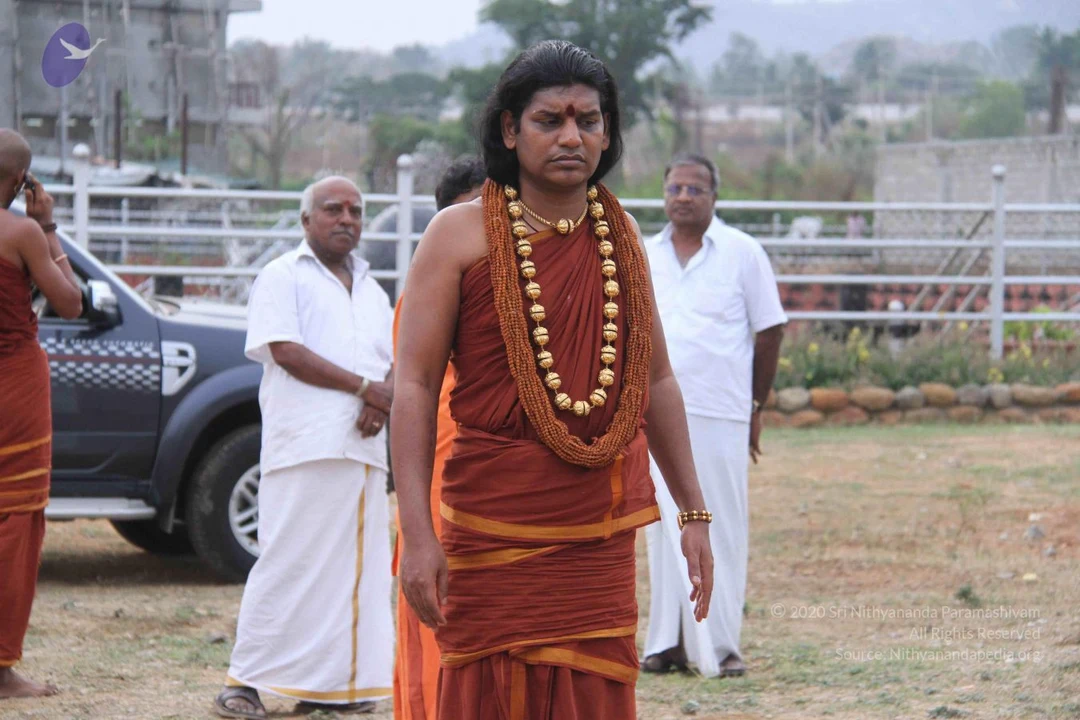
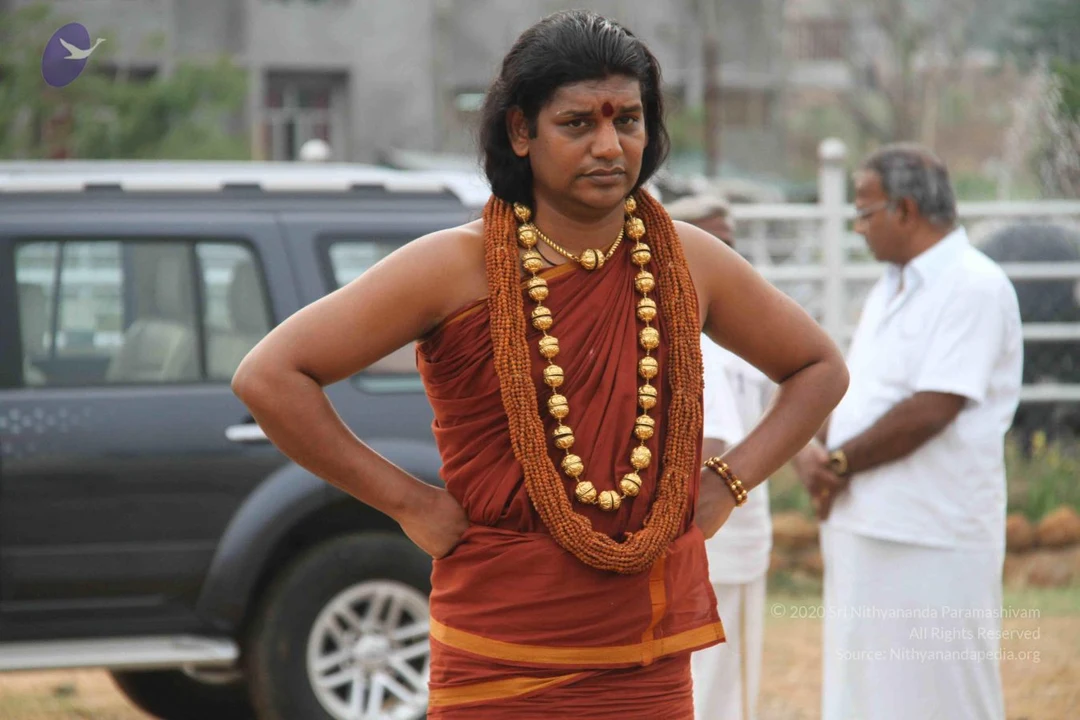
A hazy sunset or sunrise photograph of a pale orange sun glowing through thin layers of grey and mauve clouds, with soft streaks of cloud spreading across a warm sky. No people, figures, objects or ritual activity are visible. A small purple logo with a white bird appears in the upper left corner, and faint copyright text sits in the lower right.Outdoor photograph on a dry grassy ground with a white metal railing and a concrete building behind. A bare-shouldered man with long swept-back dark hair wears a rust-red cloth wrap, a thick rudraksha mala with large gold beads, a gold chain, a red bindi, and a gold-bordered dhoti, standing with arms relaxed. To the right, an older man with a grey beard and sunglasses wears an orange kurta and matching shawl. Two men in white dhotis and shirts stand at left.Outdoor photograph on bare dry ground in front of a white metal railing, with a dark grey SUV and a concrete building behind. A man with long dark hair and a red tilak on his forehead stands centre-frame wearing a rust-orange sleeveless wrap and matching lower cloth, with a long strand of golden-brown rudraksha beads and a larger gold bead necklace, plus a gold bracelet. Two men in white dhoti and shirt stand nearby, and a figure in orange robes is partly visible at the left edge. The central man appears to be a person by his long hair, rudraksha mala and gold necklace; the attribution is appearance-based only. Other people are a sannyasi in orange at left and two elderly devotees in white.Outdoor photo of a man with long swept-back dark hair and a red bindi, standing with hands on hips. He wears a rust-orange shawl-like wrap draped over bare shoulders, a rudraksha mala of brown beads, and a heavy ceremonial necklace of large gold beads. Behind him is a dark SUV and a second man in white shirt and white dhoti at right. Swamiji (probable): long swept-back hair, rudraksha mala, saffron-orange wrap and ceremonial gold necklace.A hazy dusk sky glows orange behind a thin band of cloud, with the sun partly visible through the mist. A tall lattice telecom tower and a slender utility pole stand against the sky, flanked by dark silhouetted trees and palms in the foreground. No people are visible.A hazy dusk or dawn sky with a diffuse orange-red sun partly veiled by thin clouds. Silhouetted tree canopies and a palm frond sit in the foreground, with a tall lattice telecommunications tower and a utility pole rising among them. No people are visible. A small purple-and-white bird logo appears in the upper left corner.

Fire-Walking

82 photosSource gallery
A nighttime temple procession on stone steps. In the foreground, a man in a white dhoti and shawl with white vertical tilak on his forehead carries a small gold-framed deity murti draped in green cloth and gold jewelry. Beside him, a man with a shaved head and white tripundra markings wears an orange-red robe, a long orange beaded rudraksha-style mala and a wristwatch, and holds a gold-framed deity murti draped in green silk. Behind them, an attendant holds a long wooden pole supporting a red, blue and gold fringed umbrella canopy, and other devotees in orange and white clothes follow. Lamps and temple walls with pillars are visible in the background. a person appearance is uncertain, so the central robed figure is identified only by role as a sannyasi-style devotee carrying a murti.Three men walk forward on a dirt path outdoors beneath palm trees, carrying ritual items for a procession. The man on the left wears an orange dhoti and shawl and holds a silver kalasha topped with green leaves on a silver tray. The man in the centre wears a plain white dhoti and bare upper body, with white and red tilak on his forehead, and holds a small golden peetha-like stand with a green cloth and a gold necklace. The man on the right wears a maroon dhoti and a rudraksha mala, with white tilak markings, and holds a golden deity murti dressed in green cloth. Behind them stands another robed man in orange, with a red-brick building and a sign in the background.A photograph of four men walking along a dirt path lined with palm trees, a red-roofed building and a green tree behind them, at dusk. The man on the far left in an orange dhoti and shawl with a red border carries a silver tray holding a clear glass kalasha topped with green leaves. The central man in white dhoti and shawl with white-and-gold border has a horizontal tilak and carries a gold-coloured ornamented object draped in green cloth. The man behind him in red-brown dress and an orange shawl holds a tall wooden pole. The man on the right in red-brown dhoti with gold borders and a rudraksha mala carries a small gold ornamental object draped in green cloth on a gold tray, possibly a deity or sacred item. Four people are visible.A procession on a dirt road in front of a green-roofed shrine and a green metal gate. In the foreground, a man in an orange-pink shirt and cream dhoti plays a hand drum, and beside him a man in a white shirt and red lungi plays a drum with a yellow-fringed head. Behind them, three men walk in white and red-orange ritual clothing; one carries a small golden palanquin-style deity murti, another holds a small gold-coloured shrine, and another carries a long wooden staff. Men with white sacred ash marks on their foreheads lead the procession, and a palm tree and a red building are visible in the background.Four male devotees walk along a dirt path in a procession. The man on the far left wears an orange cloth and holds a silver tray with a silver pot topped by green leaves. Next to him, a bald man in a white dhoti and shawl with a white tilak carries a small gold-and-green deity murti on a wooden plank. Behind them, a man in red-brown dhoti and orange shawl holds a long wooden pole. On the right, a shaved-headed man in red-brown dhoti and shawl carries a green-clad deity murti on a gold base. Red brick buildings and trees stand in the background. The scene shows a temple-style procession with ritual vessels and deity figures.Four men walk down a dirt road in a procession carrying ritual objects. On the left, a man in an orange dhoti and orange shawl with a red border holds a silver tray with a silver pot topped with green leaves. In the centre, a bare-chested man in a white dhoti with a coloured border carries a small gold-trimmed box with green cloth and a gold necklace. Behind him, a man in red-brown dress with a gold-bordered cloth holds a long pole, and at right another man in red-brown dress with a gold waistband carries a similar green-draped gold box. All wear white sacred ash lines on their foreheads. Palm trees, a banner, and a few distant figures in white appear in the background.

Morning-Message
34 photosSource gallery
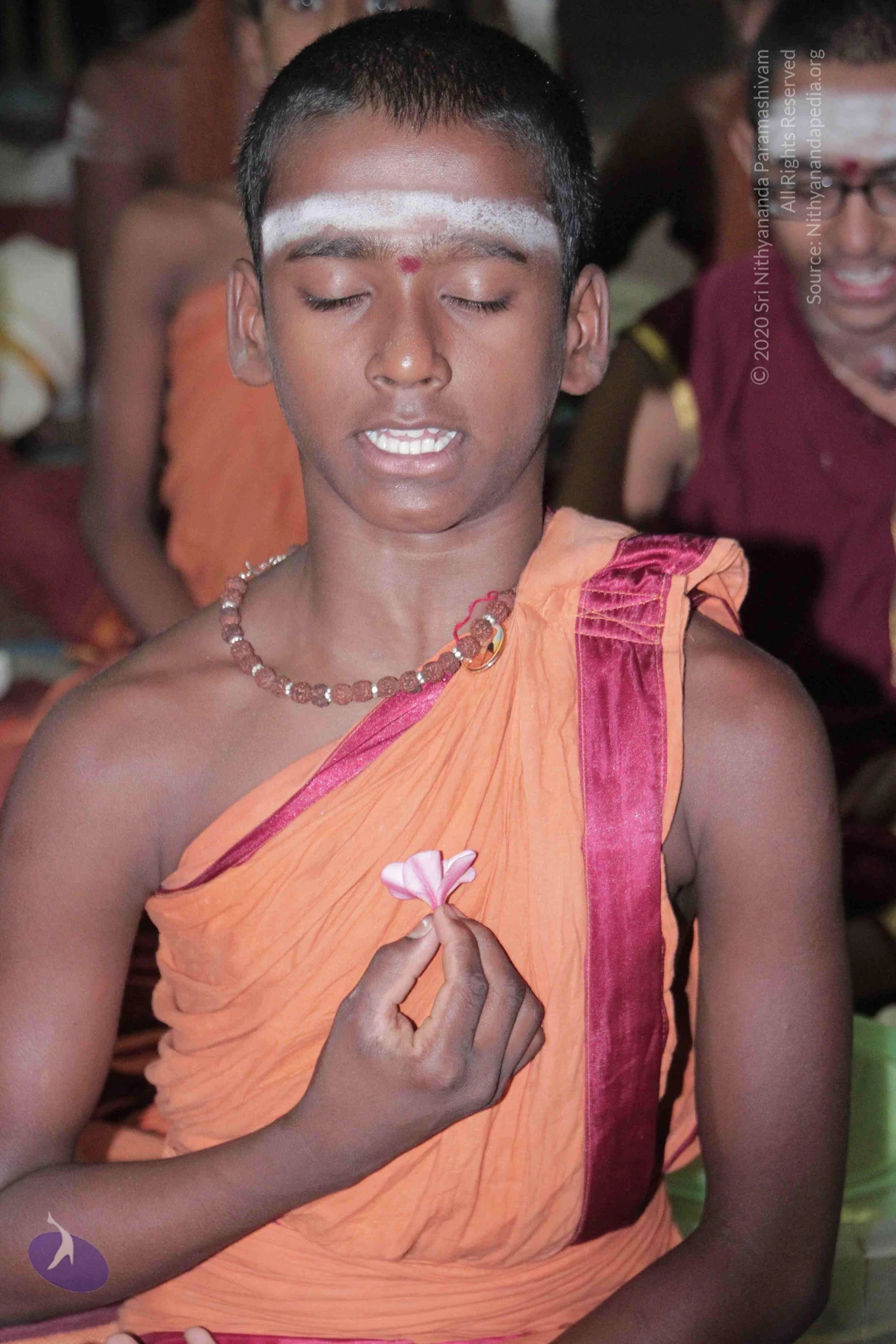
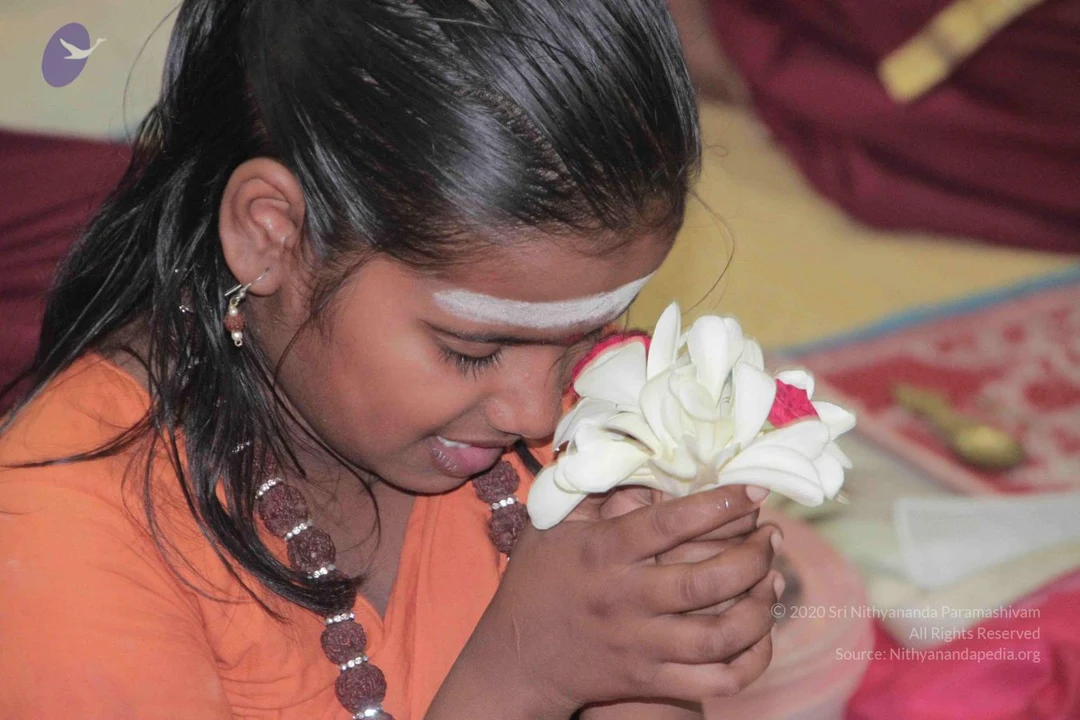
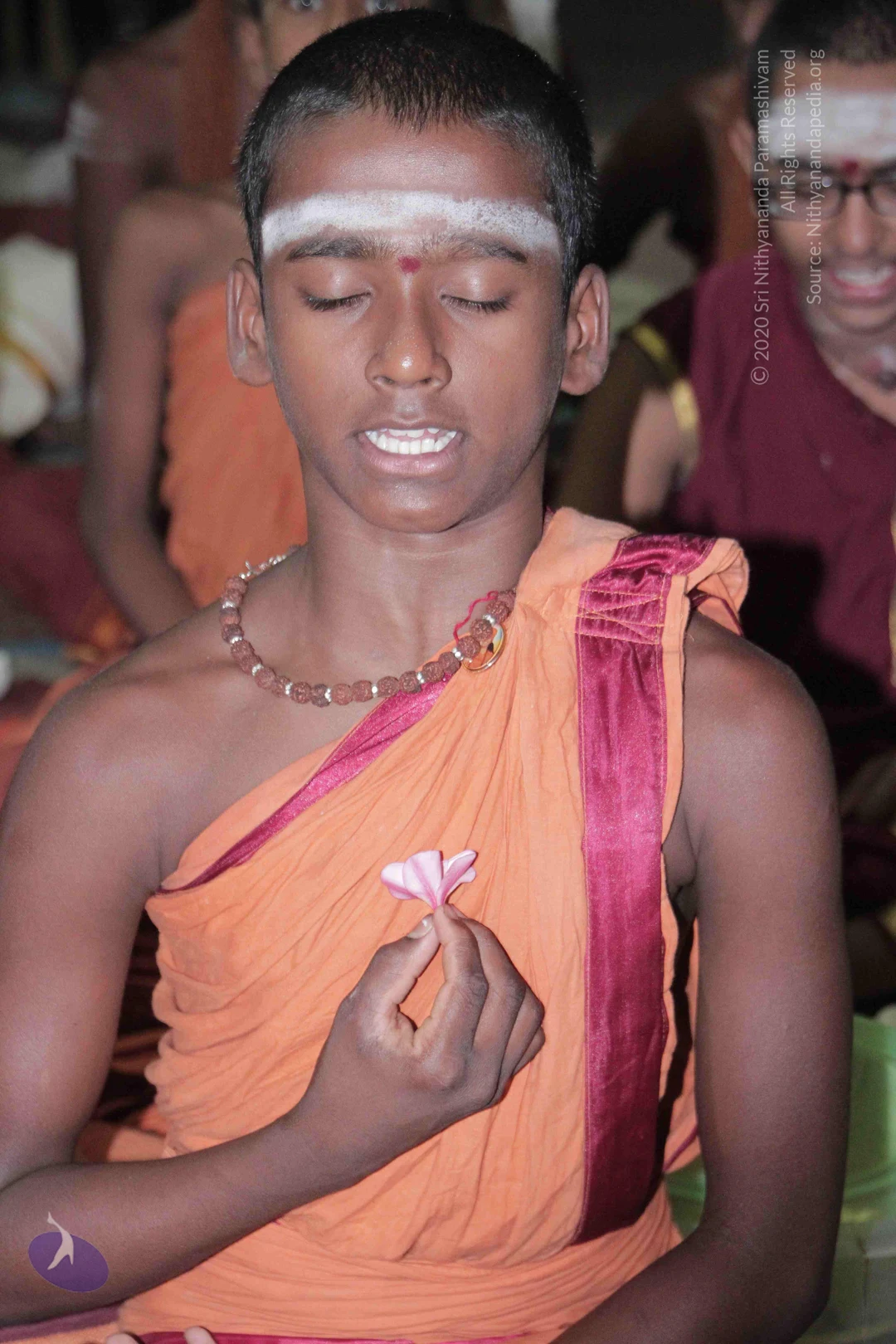
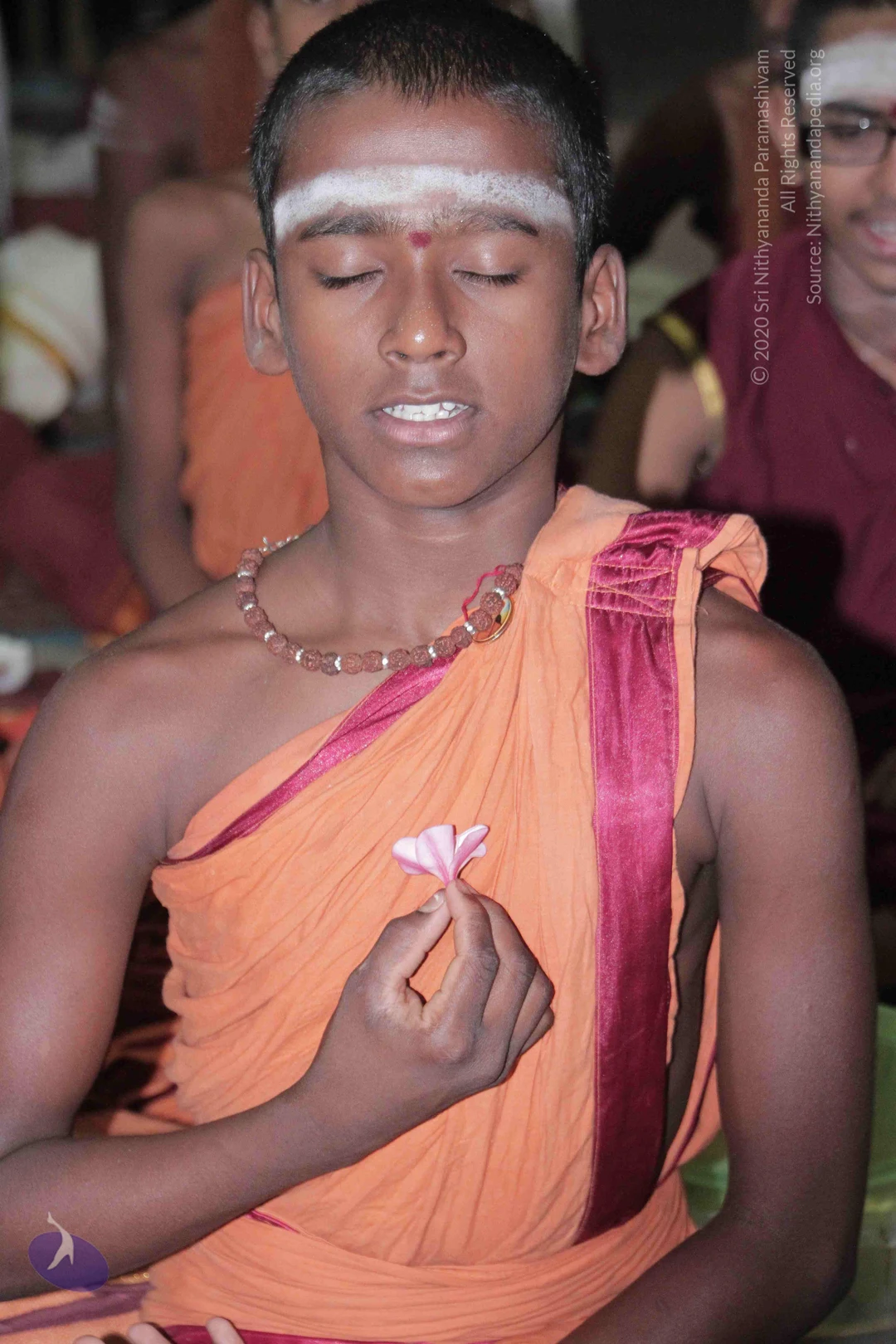
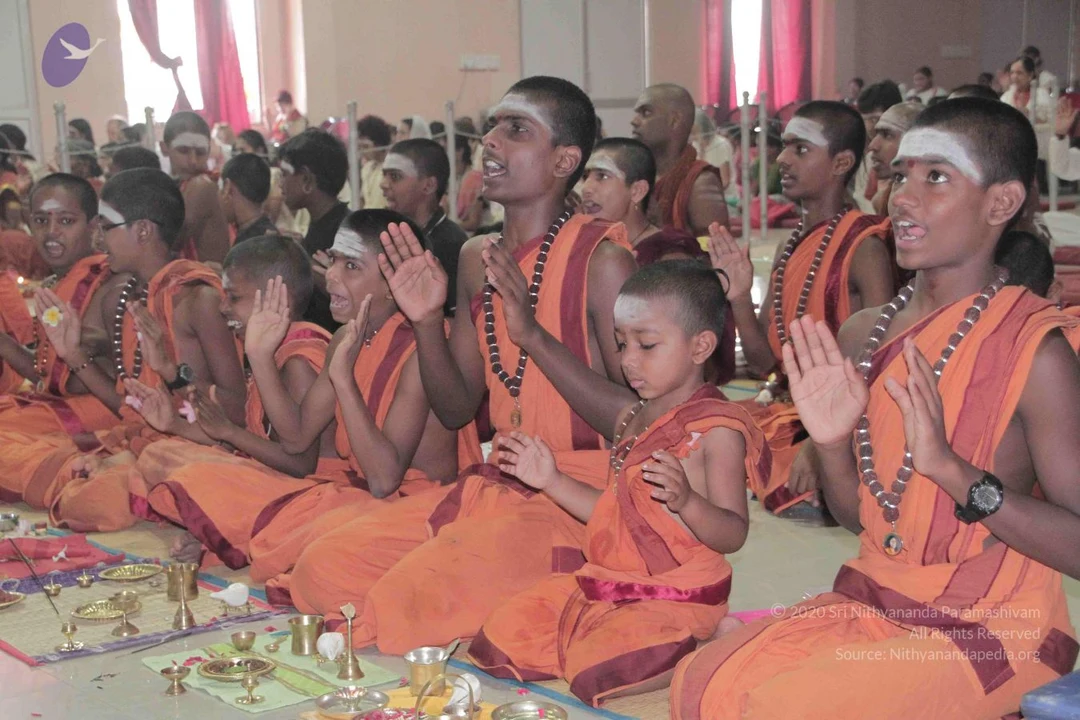
A photograph of a group of young boys seated cross-legged on a tiled floor in an ashram hall, wearing saffron-orange robes draped over their shoulders and rudraksha beads around their necks. Several boys have shaved heads and hold their hands in mudra or folded positions. In front of them on mats are brass plates, bowls, lamps and small metal vessels. Pink walls, maroon curtains and a framed picture on the wall form the background. No central figure is clearly identifiable in the frame.A group of young boys, most with shaved heads, sit cross-legged on a white floor in rows wearing saffron-orange robes with maroon borders. Several have white sandalwood paste marks on their foreheads and rudraksha malas around their necks. Brass puja vessels, small bowls and plates with offerings sit on pink cloths in front of them, and a few have bangles on their wrists. Behind them an older man with a shaved head and orange robe sits with his hands together, and a pale wall with maroon curtains and a framed picture is visible behind.A row of young boys seated cross-legged on a white floor, dressed in saffron-orange robes with maroon borders, each with a white tilak on the forehead and rudraksha malas. Several have eyes closed in meditation and hands folded in lap. In front of them on mats are brass puja vessels, bells, a conch shell and small offering plates. At the far right an empty ornate chair stands near the wall. Behind them other seated figures in orange are partly visible.Inside a decorated shrine room, a gilded ornate throne stands before a framed portrait of a long-haired figure in saffron-orange robes with a white bead necklace, seated and gesturing with one hand, labelled as a portrait with the printed caption shown in the frame. The throne is draped with a tiger-skin patterned cloth and two tan cushions, and many small oil lamps line the dark backdrop above. Three women in rust-red saris and a man in dark clothing sit at the base of the throne tending to offerings. Brass lamp stands flank the doorway, and a red carpet covers the floor.A young boy in an orange robe with magenta borders sits cross-legged on a mat, holding a white flower petal to his chest with both hands and looking down at it. He has white vertical tilak on his forehead with a red dot, and a red-and-bead necklace. Behind him, other seated boys and men in orange robes, one wearing glasses, sit in a hall with a dark draped ceiling and red curtains. In front, a brass bell, a small brass cup and a silver foil-wrapped item rest on a blue tray and mat.A close portrait of a young boy with a shaved head and a white horizontal tilak with a red dot on his forehead, eyes closed and mouth slightly open as if chanting. He wears an orange unstitched cloth over his shoulder with a maroon border, a rudraksha mala around his neck, and holds a small pink flower against his chest. Behind him, a partially visible older man in a maroon garment with a white forehead mark sits in a crowd of seated devotees at what appears to be a satsang gathering. No identifiable a person candidate is clearly visible, so the a person field is none.
Satsang
2 photosSource gallery
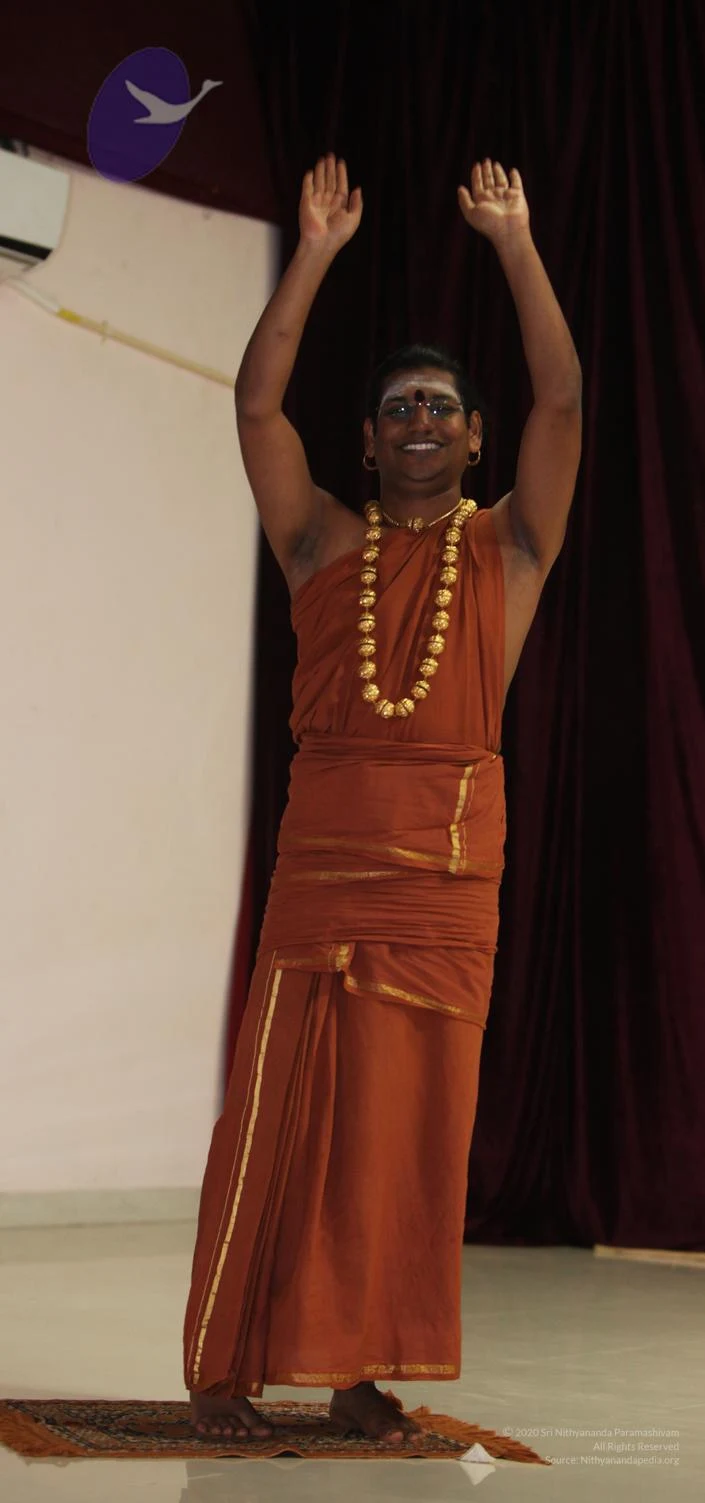
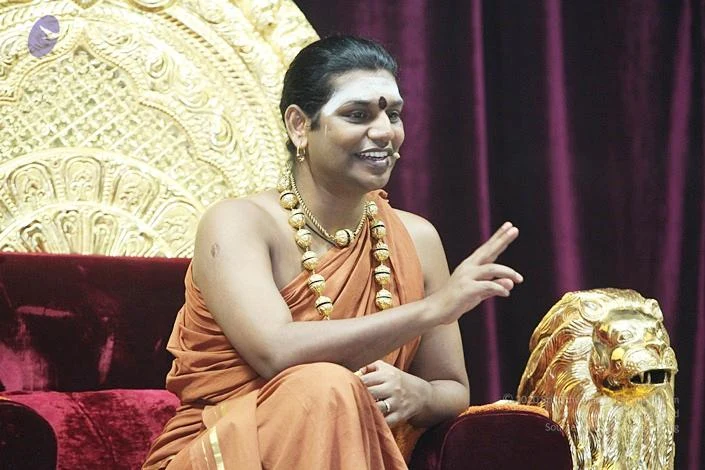
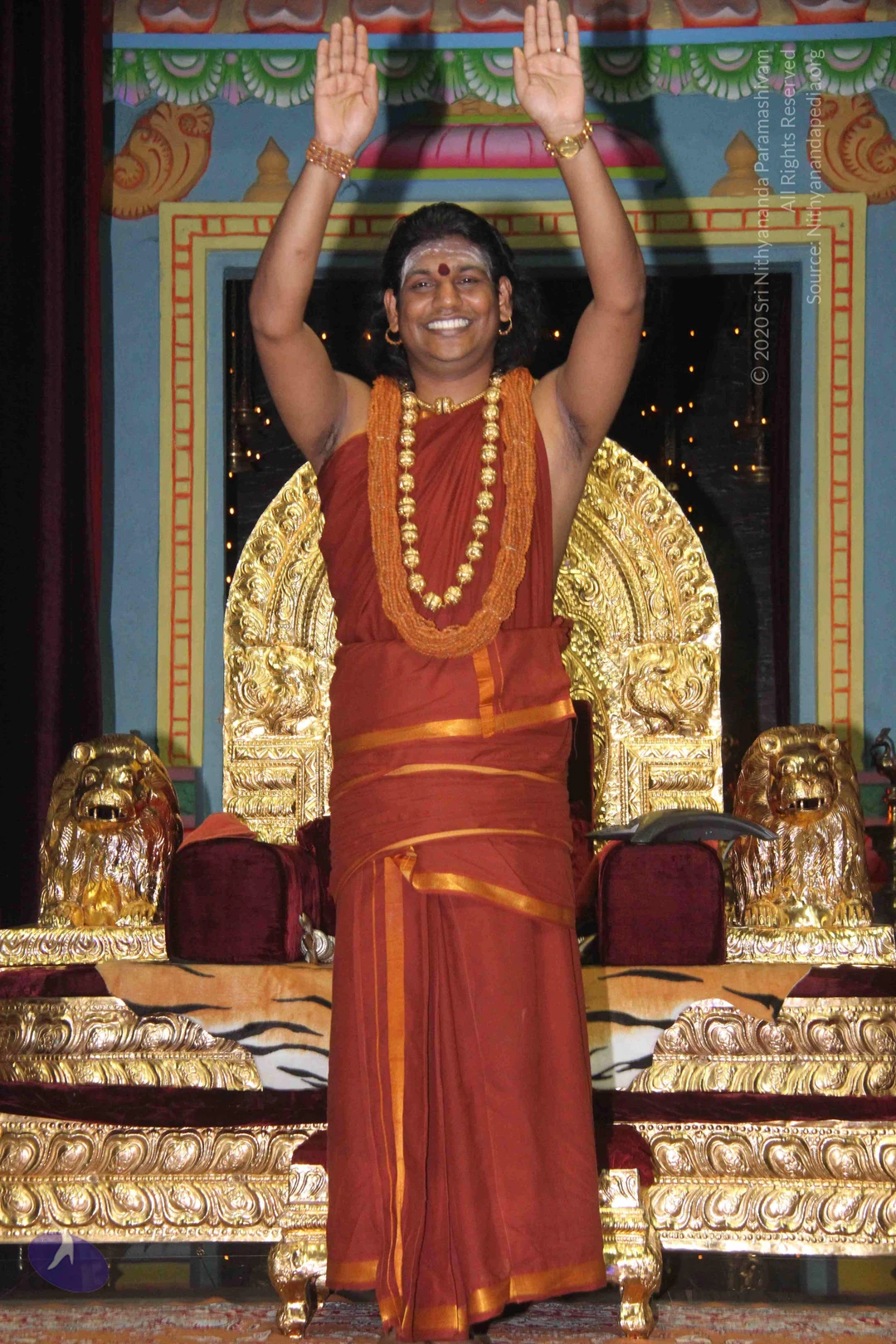
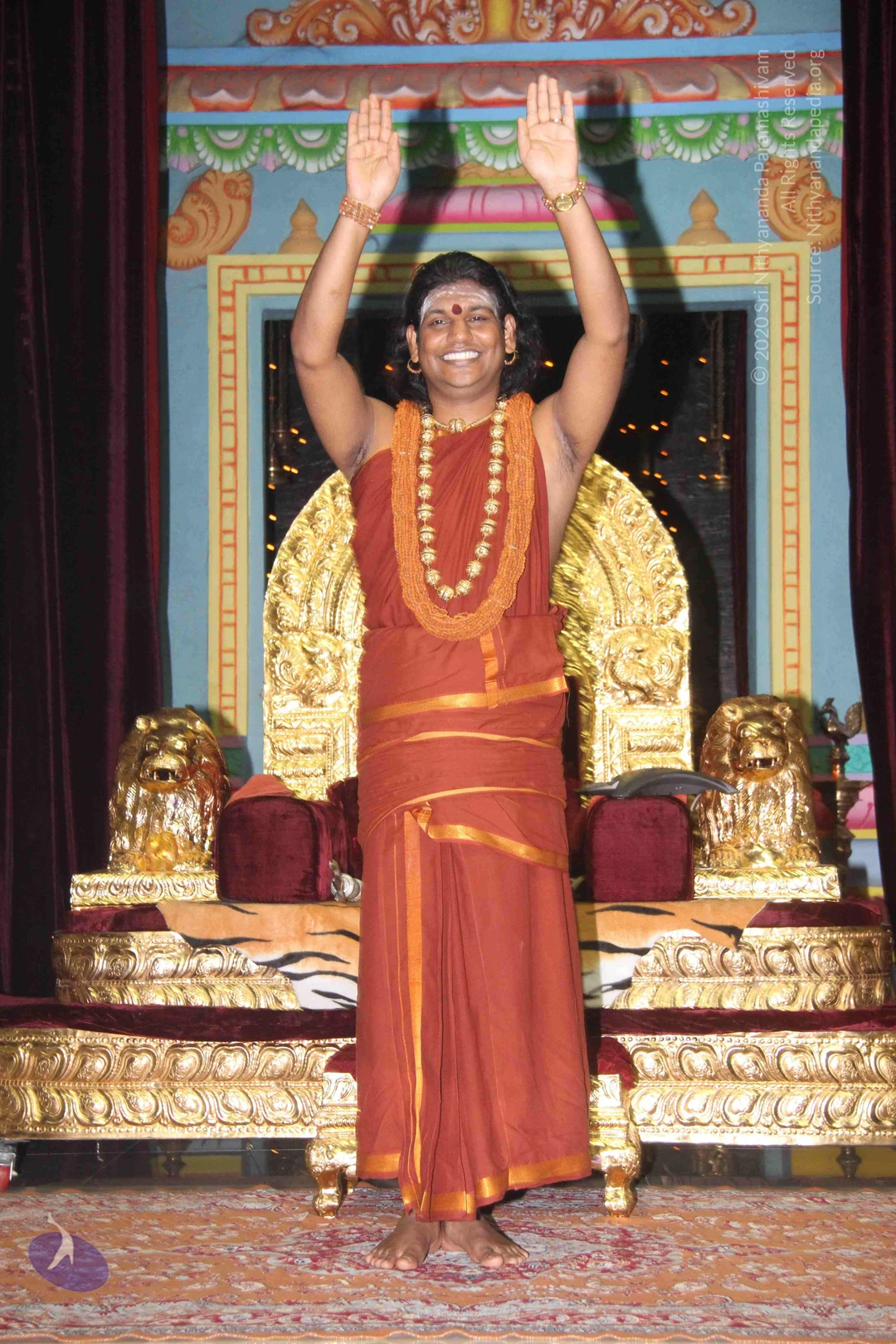
A barefoot man in a saffron-orange sannyasi-style garment with gold-edged border stands on a small patterned rug on a light stage, arms raised overhead with palms open. He wears a gold bead necklace, a red tilak on his forehead, and small earrings, and smiles while facing the camera. Behind him are deep maroon drapes and a wall-mounted air conditioner. Only one person is visible. Identity is not established from appearance.
Fire-Walk

6 photosSource gallery
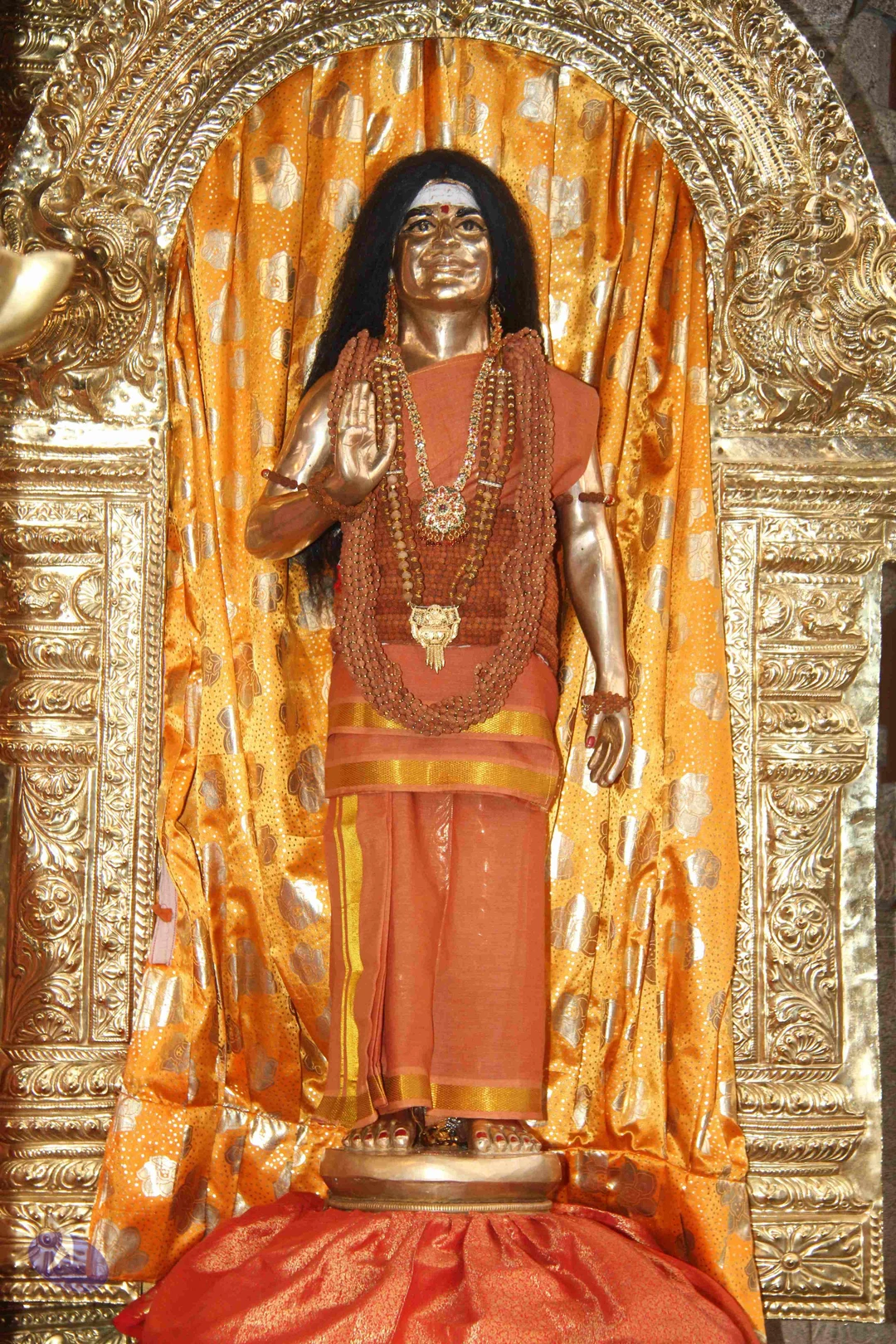
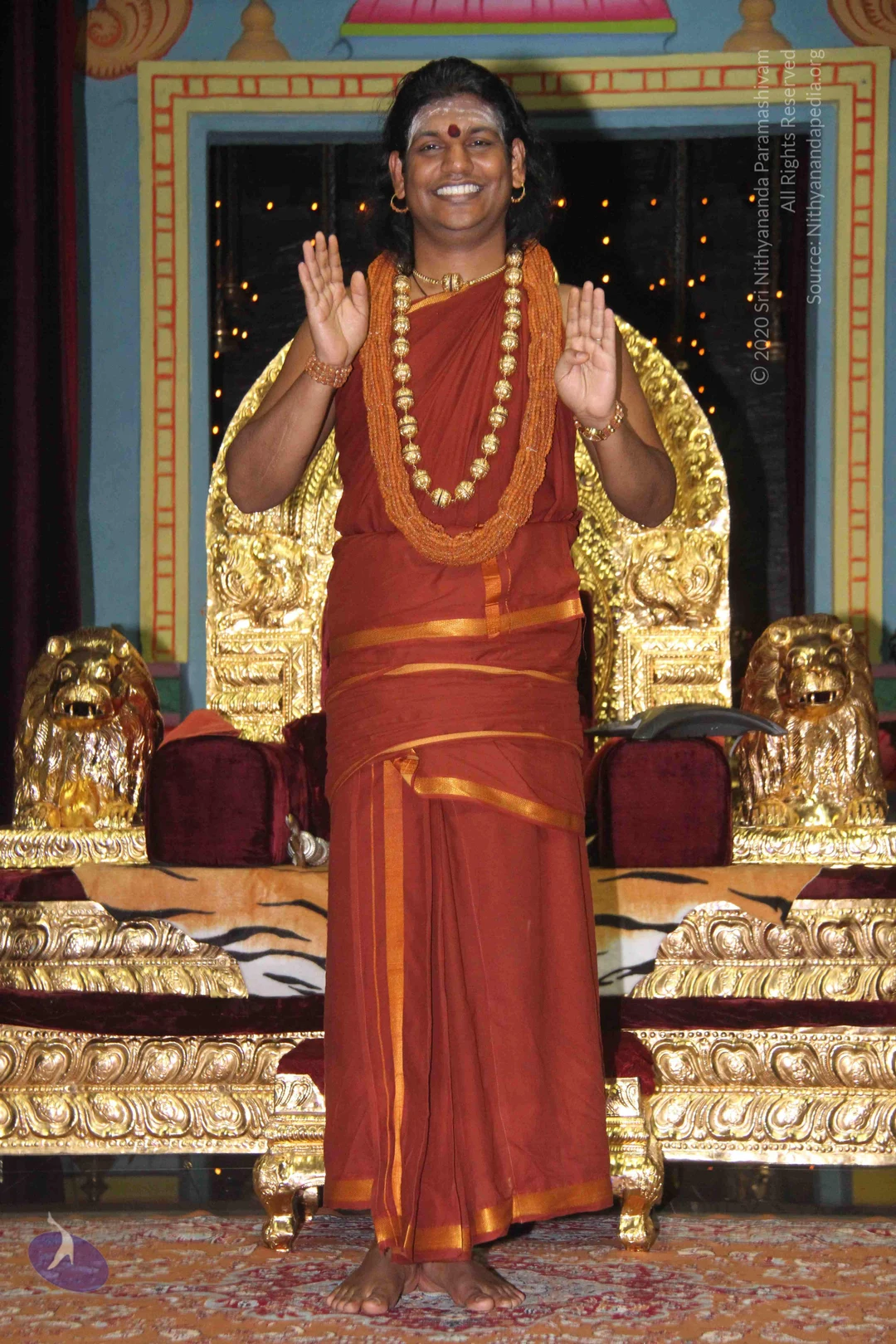
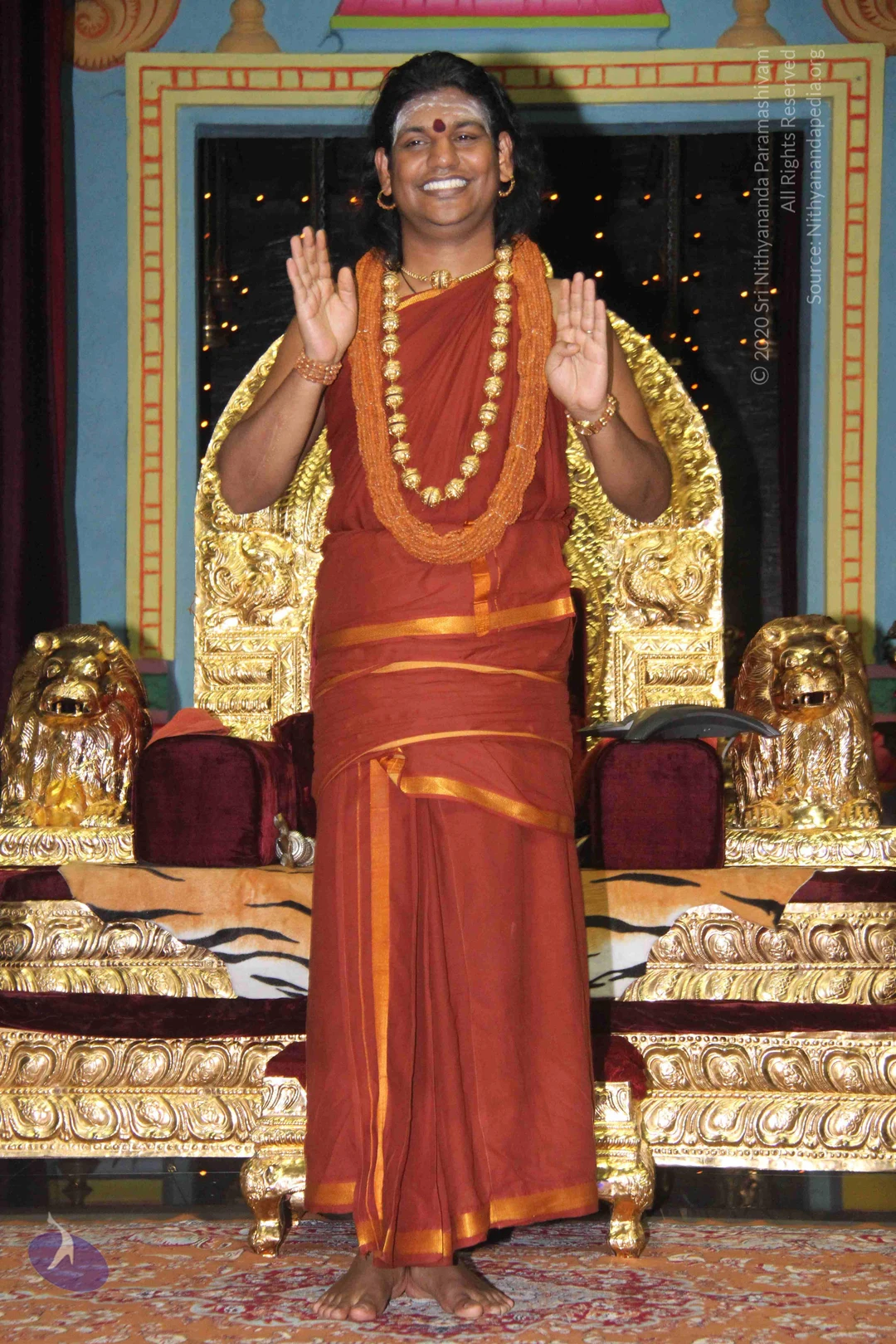
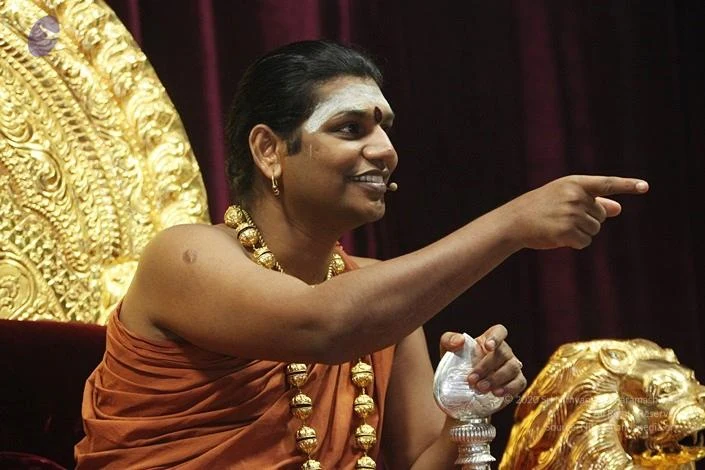
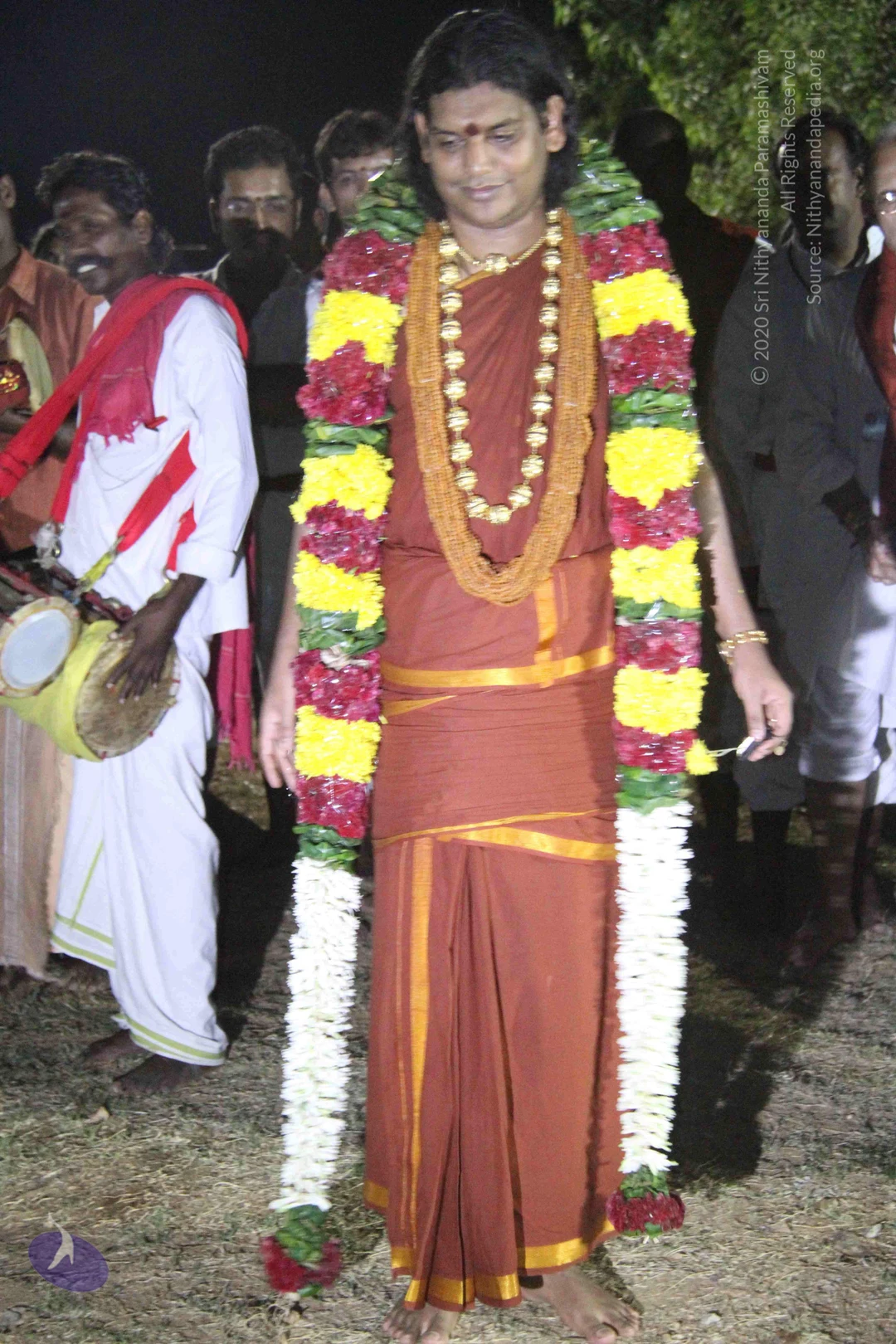
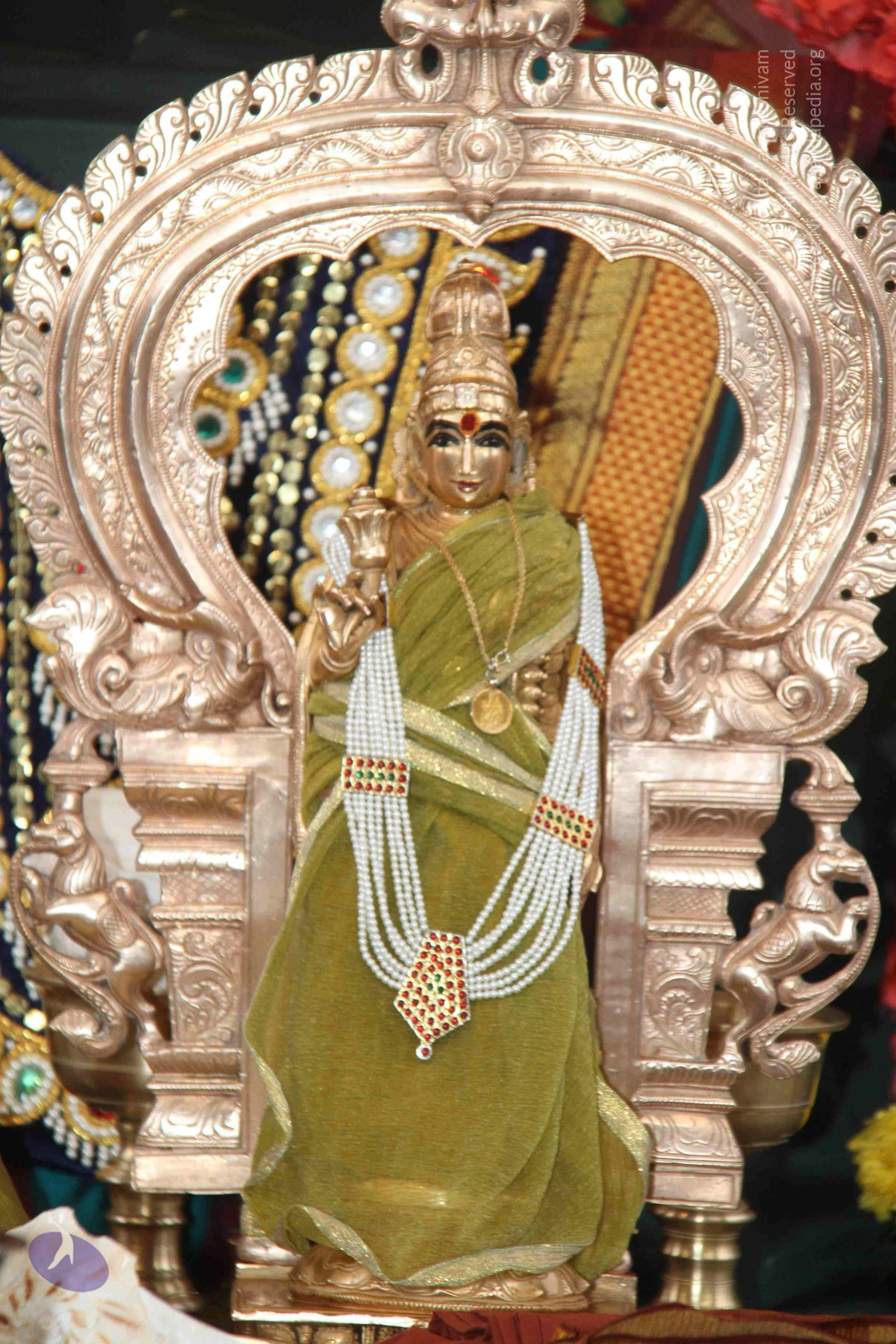
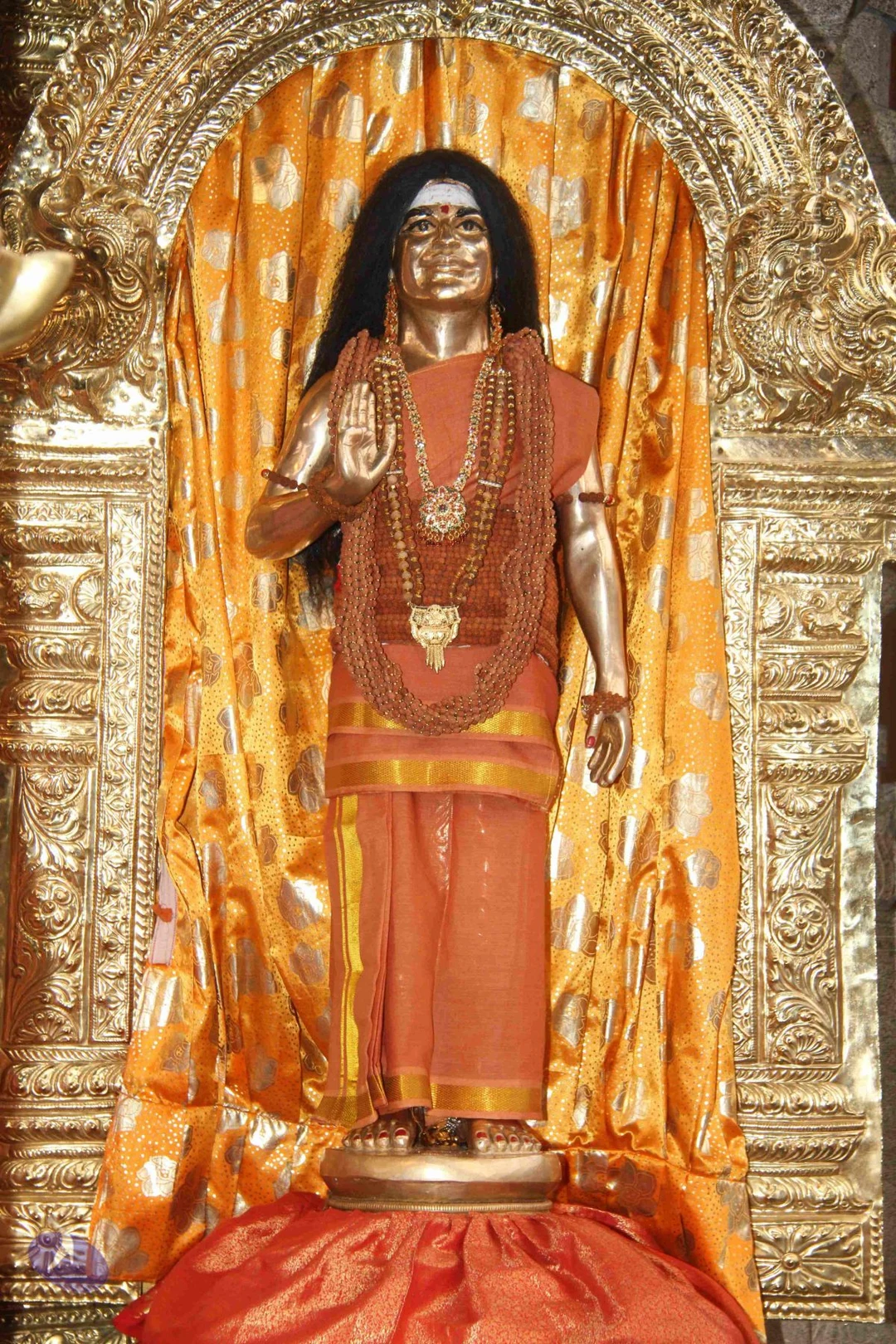
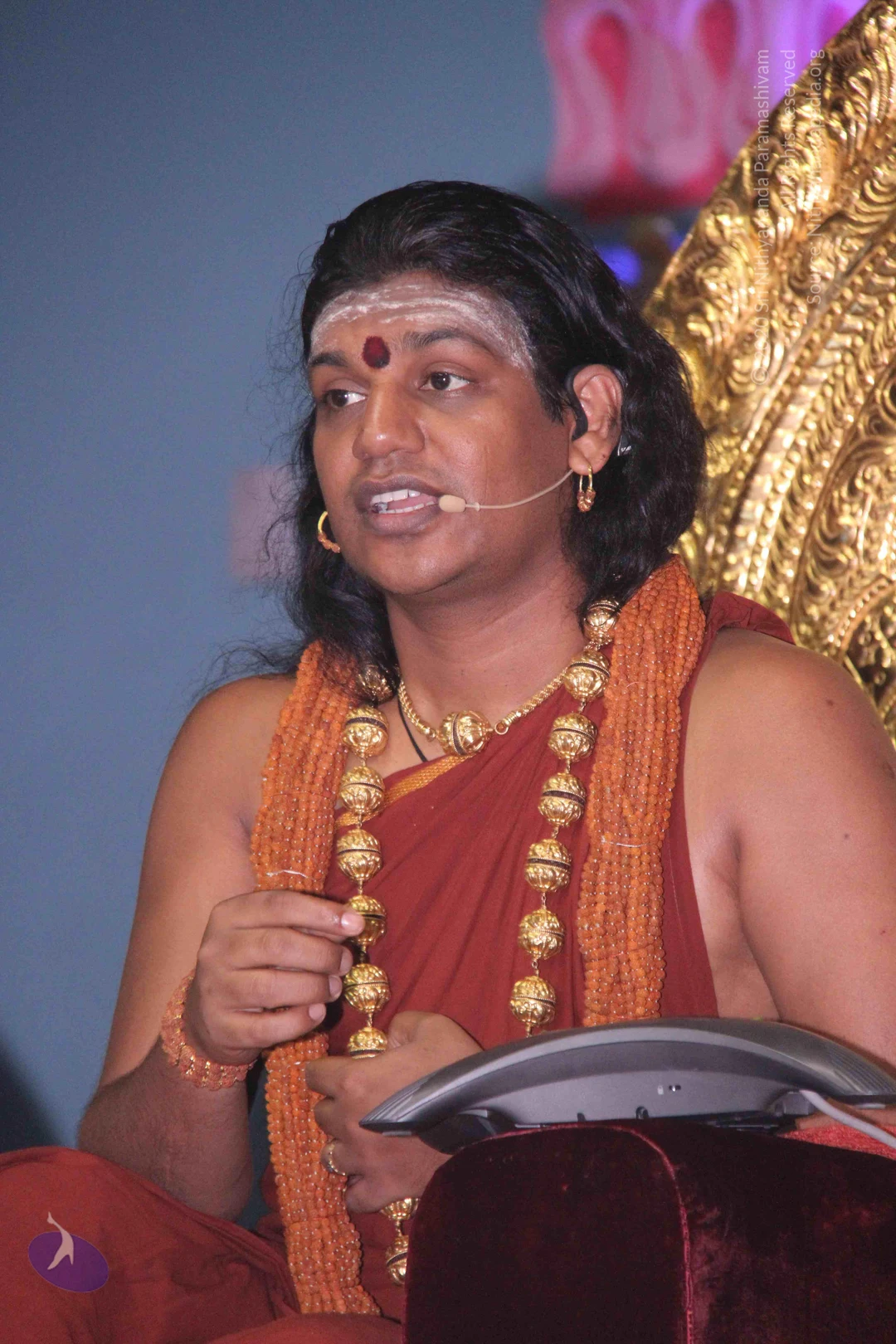
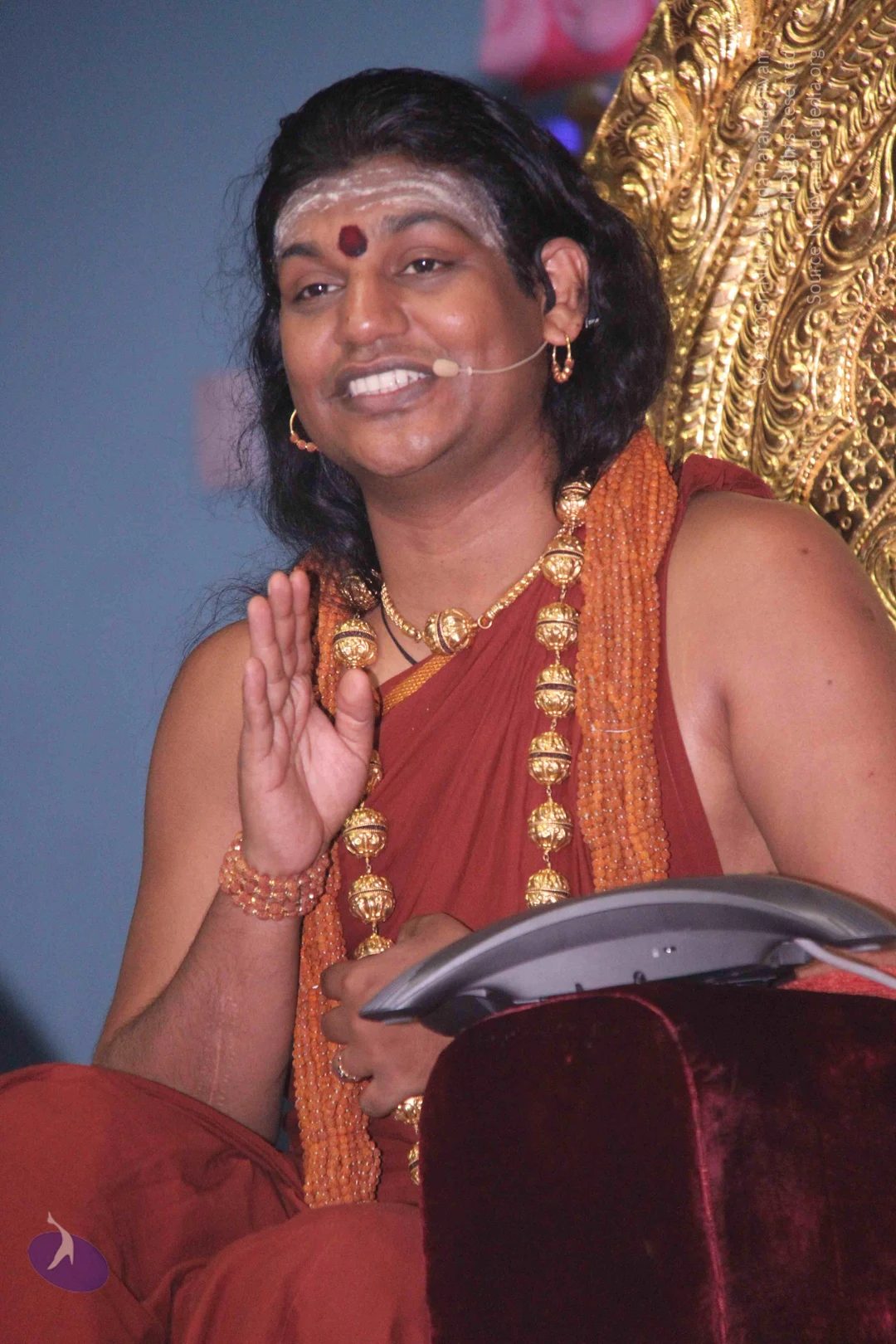
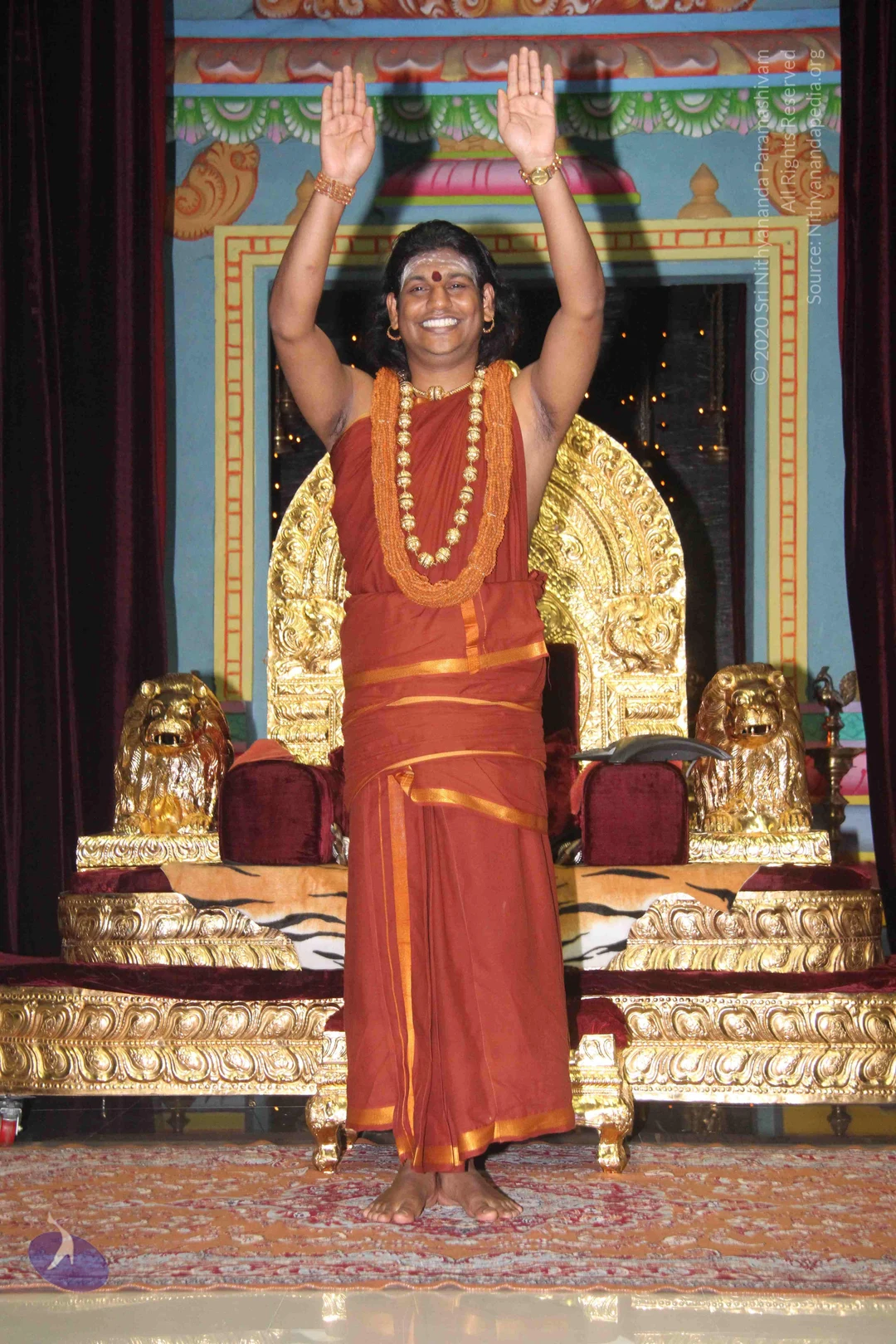
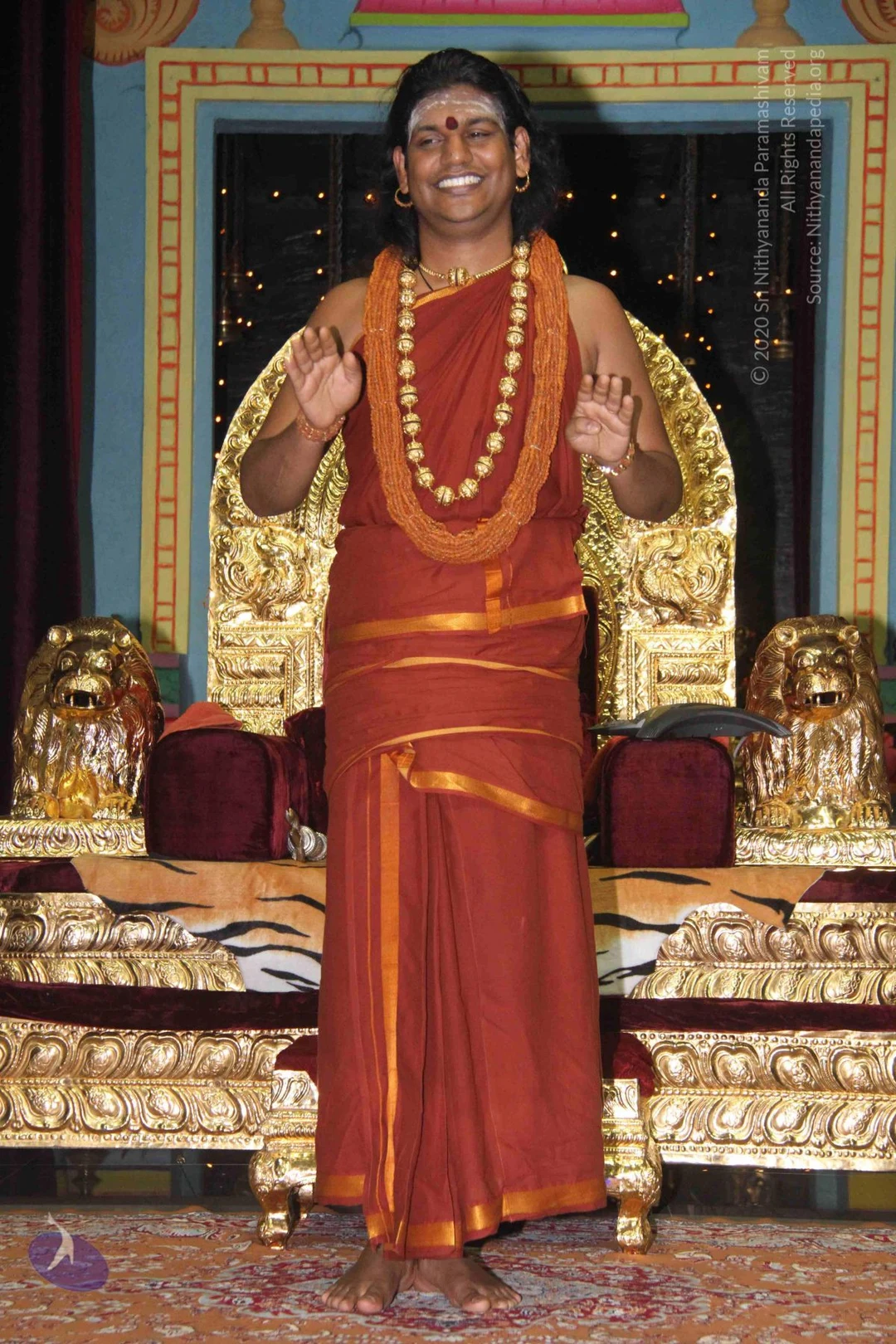
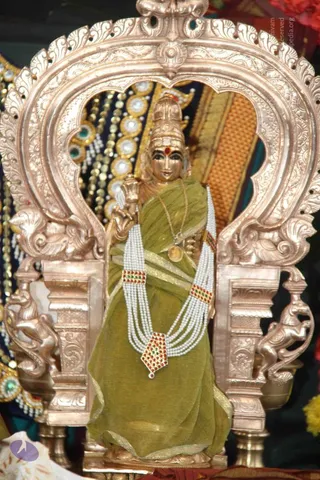
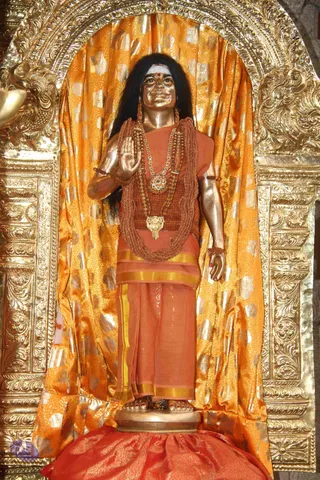
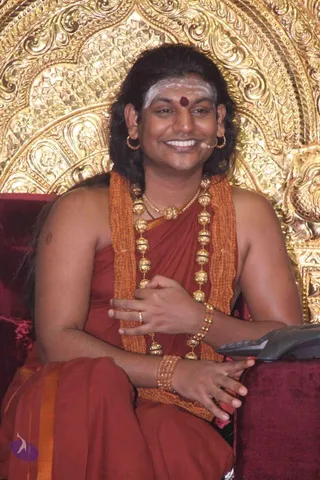
A golden metal deity murti stands within an ornate silver-toned arched frame carved with floral scrolls and mythical animal supports. The figure wears a green sari edged with gold thread, a multi-strand white pearl necklace with red and green stone pendants, a gold coin pendant on a chain, and a red bindi on the forehead. It holds a small kalasha-like vessel in one hand. Behind it hang beaded and mirrored decorations, and marigold-yellow flowers appear at the right edge. No people are visible.A gilded statue of a standing male figure in a golden arched niche framed by ornate gold relief carving and an orange-gold brocade backdrop. The figure has long black hair, a white forehead band with a red dot, and is dressed in an ochre-orange robe with gold borders over a long saffron-orange dhoti. Multiple rudraksha mala strands and a gold pendant hang at the chest, and the right hand is raised in blessing (abhaya mudra). The figure stands on a gold base above a red-orange cloth. Being a statue, it is not a physical person.A seated man in a red-orange robe and orange rudraksha mala sits cross-legged on an ornate gilded throne with a large arched backrest carved with floral and scroll motifs. A tiger-striped orange and black cloth covers the dais in front of him, and a dark-red velvet armrest frames his arms. He has long dark hair swept back, a white vibhuti line and red bindi on his forehead, a headset microphone, gold earrings and a gold beaded necklace, and he smiles while gazing to his left. Small lamps glow in the dark background. Swamiji (probable): long swept-back hair, saffron-orange robes and rudraksha mala cues appear on this seated teacher giving a satsang.A seated man in a red-orange robe and orange rudraksha mala with gold bead ornaments and a gold chain smiles while speaking, a small microphone at his cheek. He has long dark hair, a white vertical forehead mark and a red bindi, and wears gold hoop earrings and a gold bracelet. Behind him is an ornate gold repoussé backdrop, and he sits on a plush red velvet throne-like seat with a dark phone on the armrest. The appearance matches the a person label: long swept hair, saffron-orange robe, rudraksha mala and ceremonial gold ornaments, seated in a satsang setting.A smiling man stands barefoot on a patterned carpet in front of an ornate gold throne flanked by golden lion figures and a tiger-striped cushion, with a lit backdrop behind. He wears a rust-red dhoti and shawl with gold borders, an orange rudraksha mala, a heavy gold bead necklace, gold earrings, a red bindi and white forehead markings, and raises both palms outward in a greeting gesture. a person: long swept-back hair, ceremonial gold necklace and rudraksha mala, ornate throne setting, and a saffron-toned garment with gold border cues appear consistent with the page's reference to him, though the appearance is not conclusive.A standing man in a brown dhoti and shawl with gold borders, wearing a long multi-colour garland of yellow, red and white flowers and a rudraksha mala with gold beads. He has a vertical tilak on his forehead, long hair, and walks barefoot on a dirt ground at night, reaching a hand forward. Behind him, a man in a white shirt watches, and a seated man in white clothes sits on the left. On the right, a person in orange robes holds a round orange decorative item. Trees and a dark background complete the outdoor scene. Swamiji (probable) appears in the centre, identified by his distinctive long hair, rudraksha mala, ceremonial gold necklace and garland.