Skip to content
Friday

3 April 2015

Dated photos
53
Source pages
1
Media
4
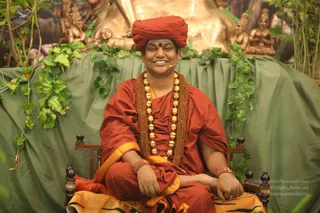
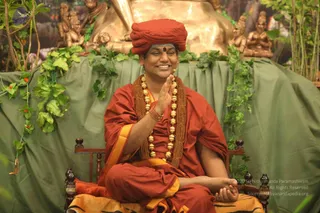
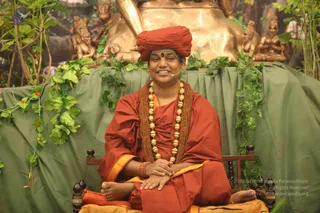
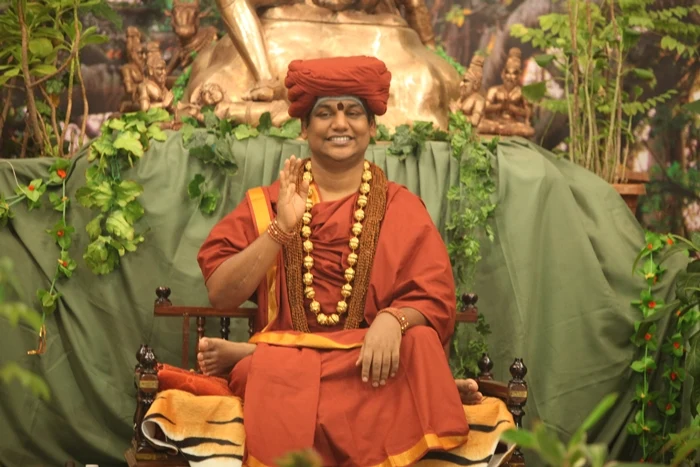
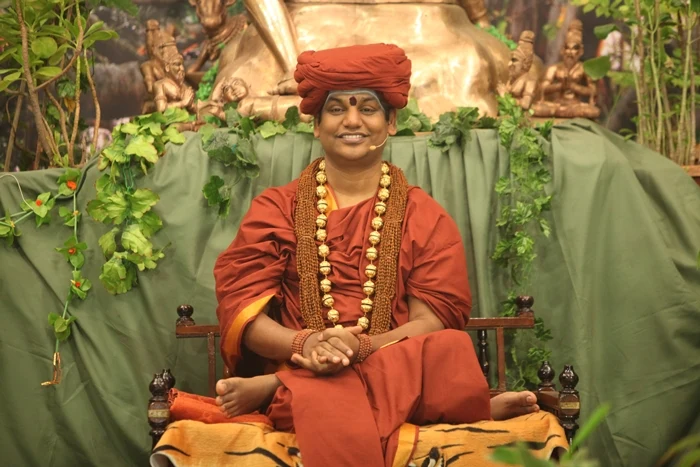
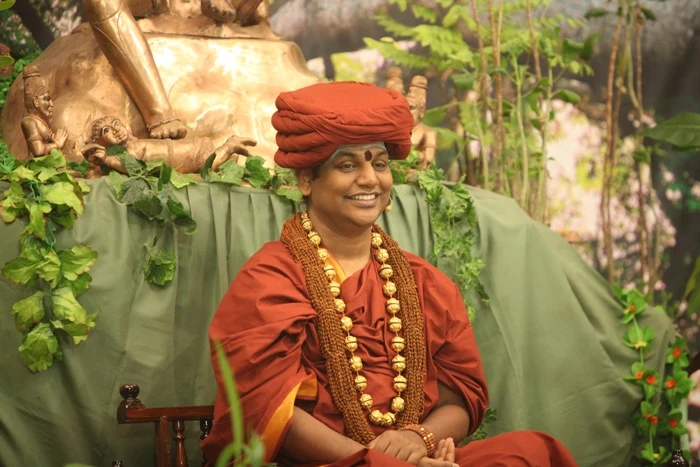
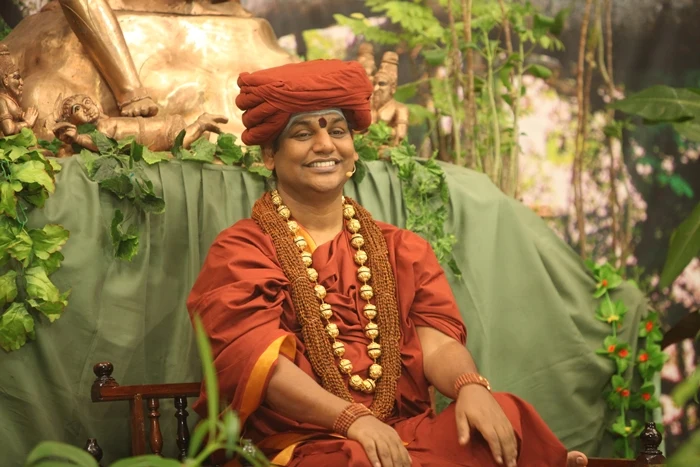
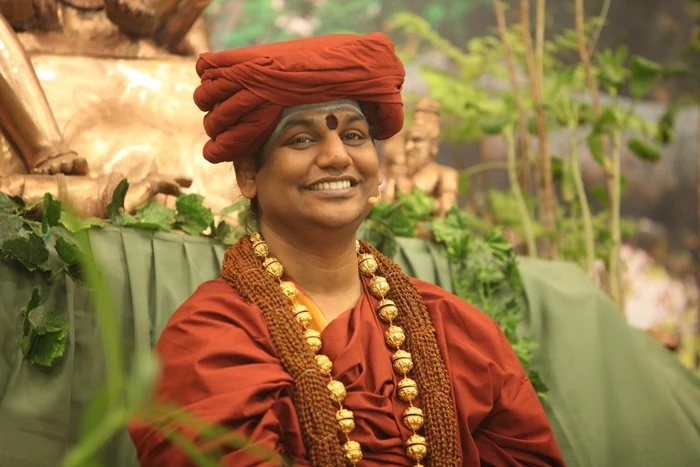
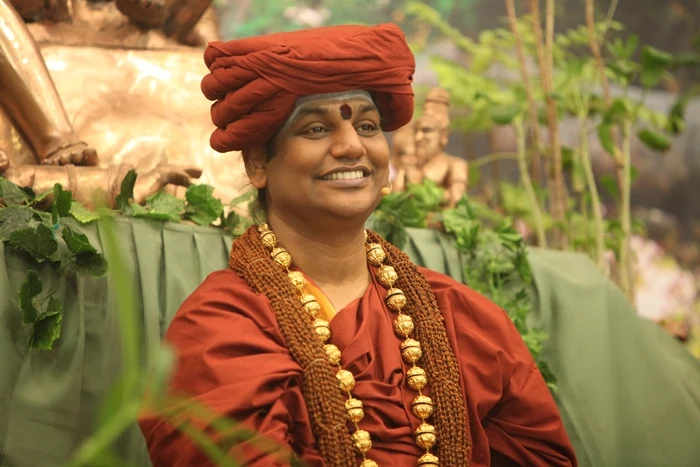
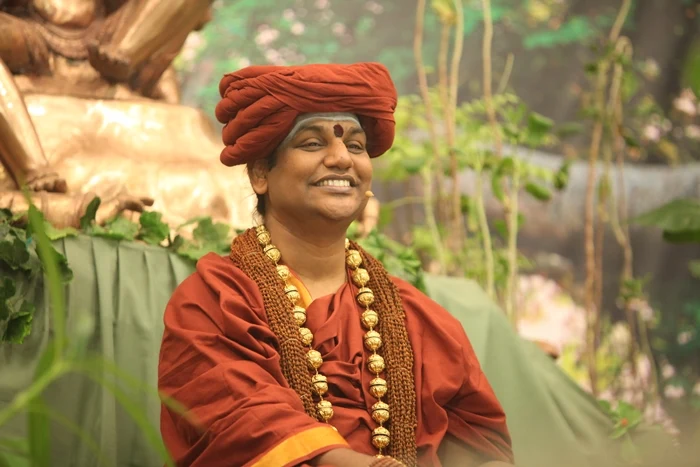
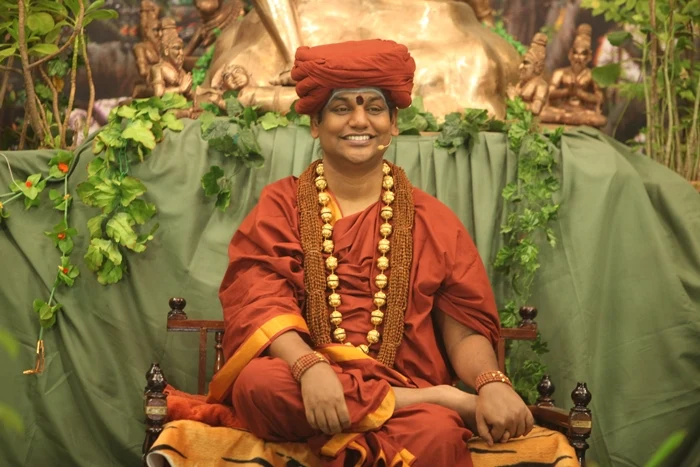
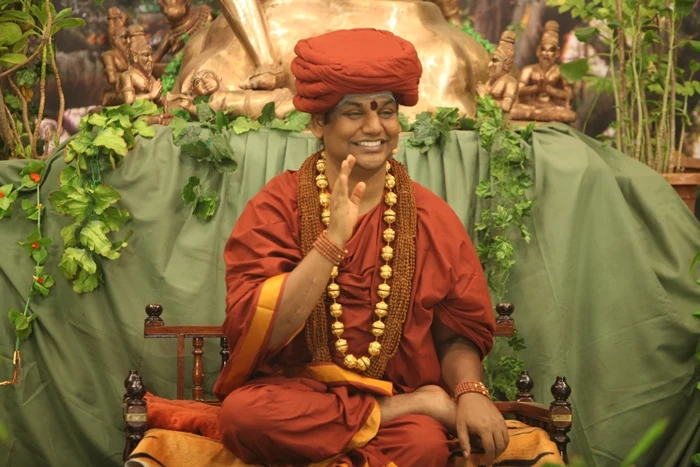
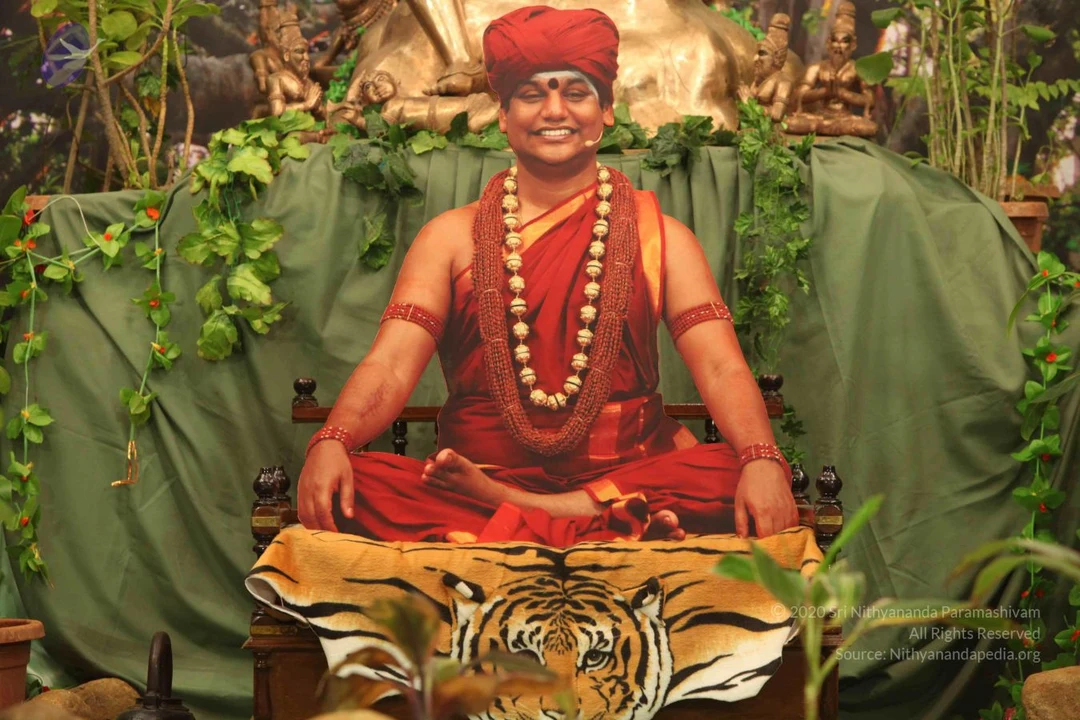
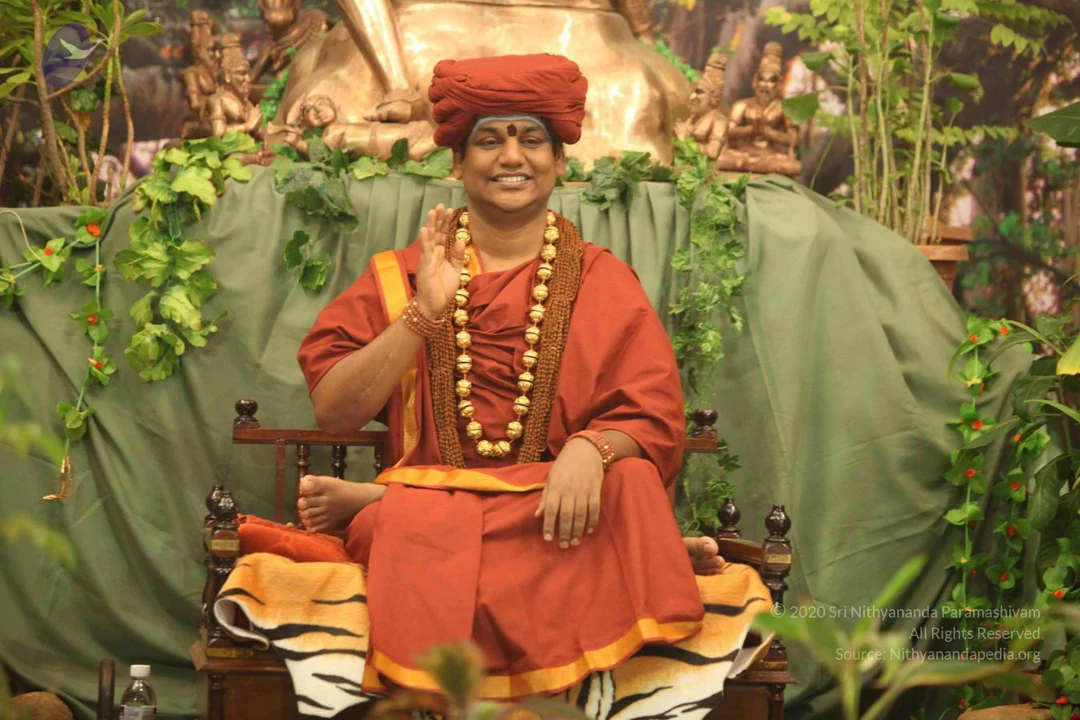
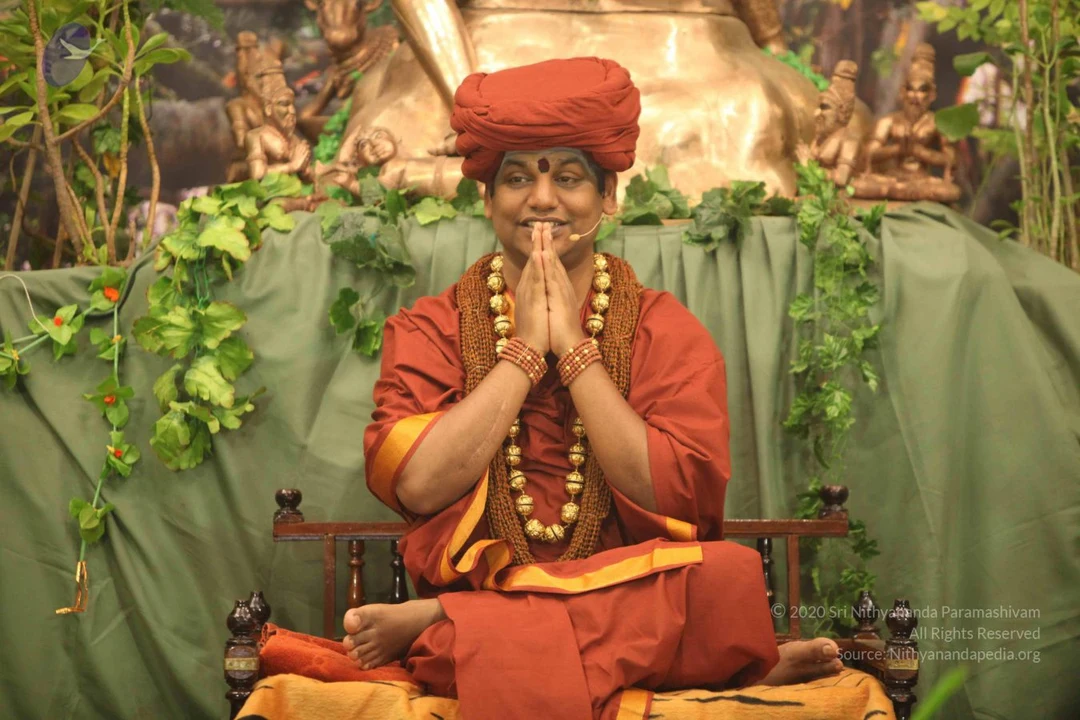
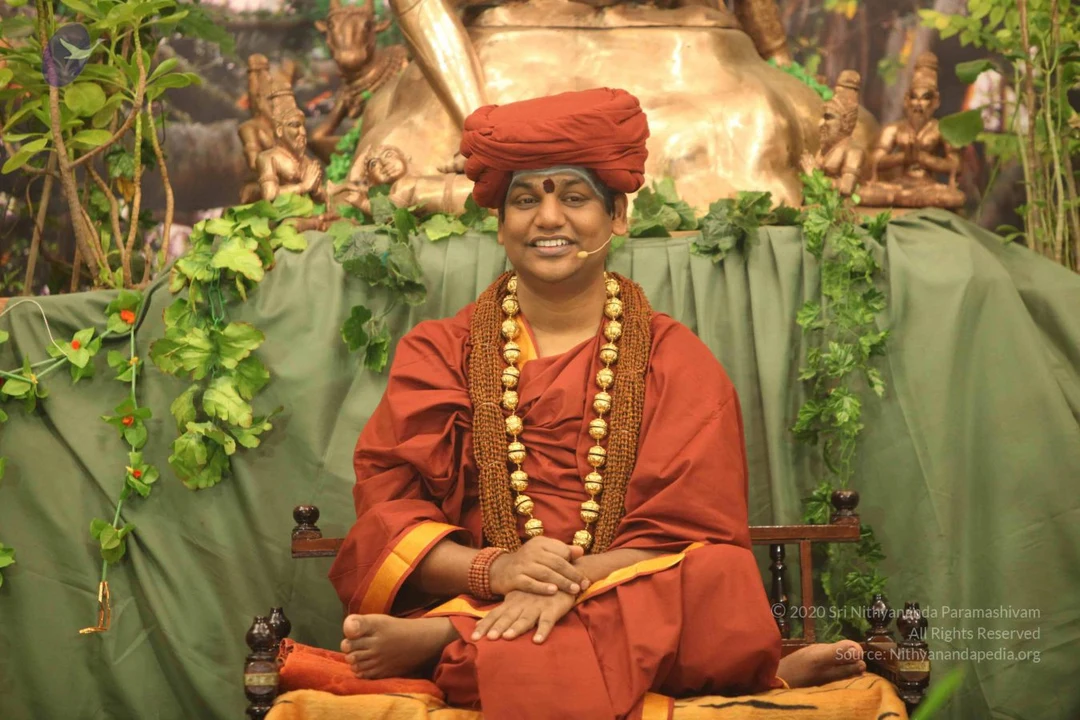
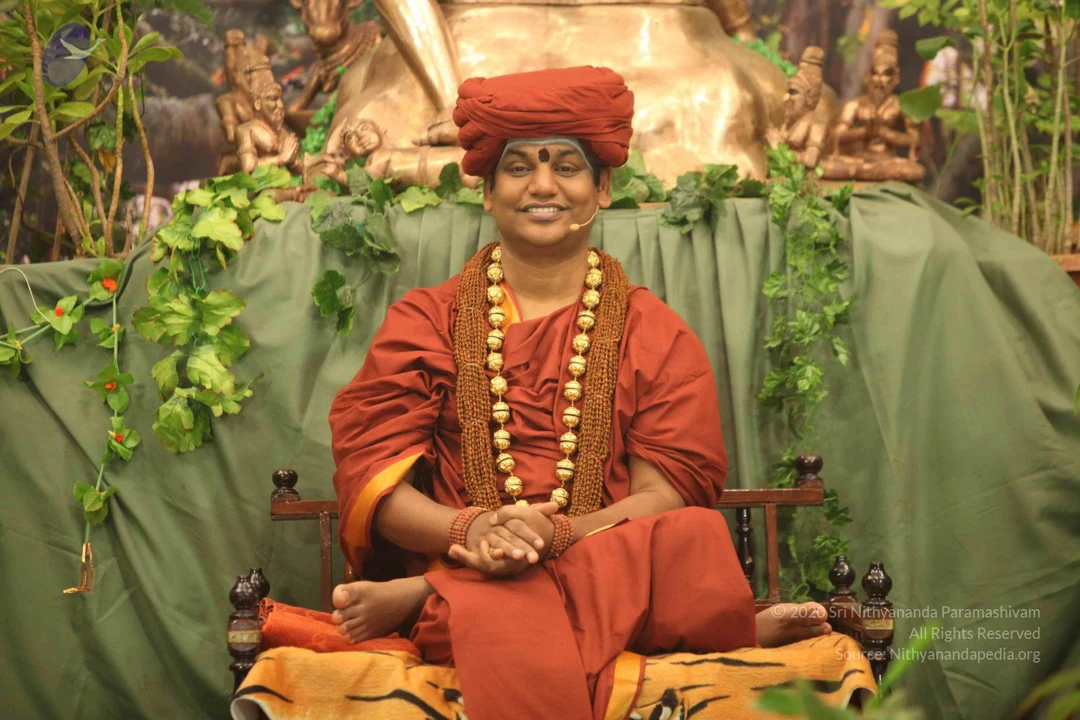
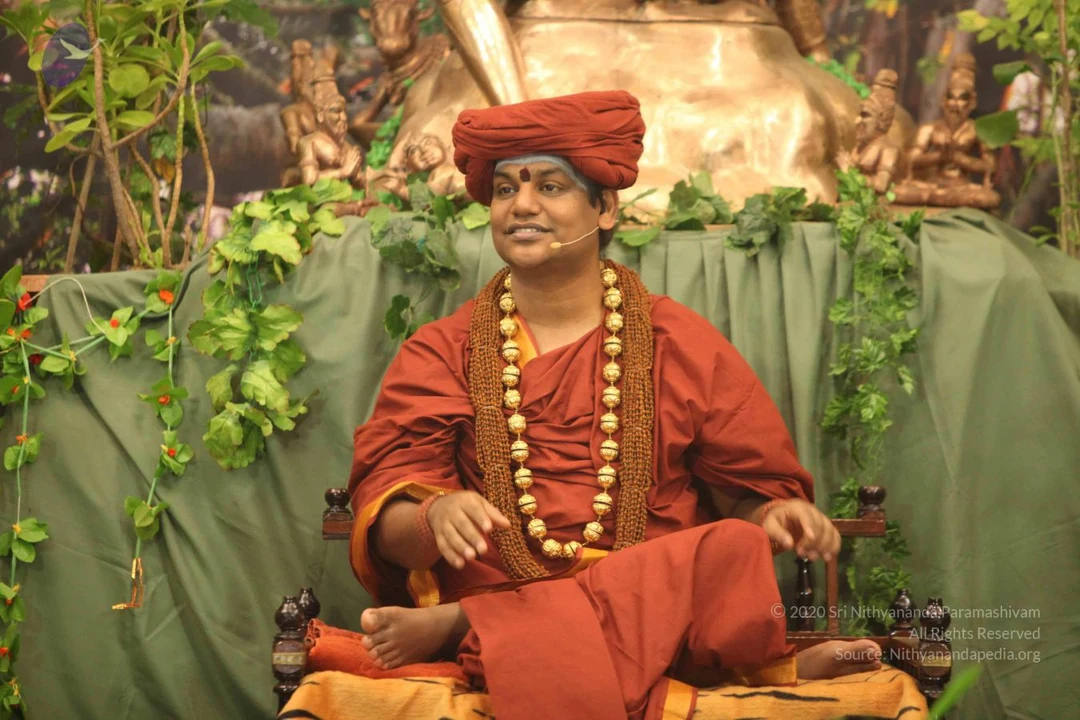
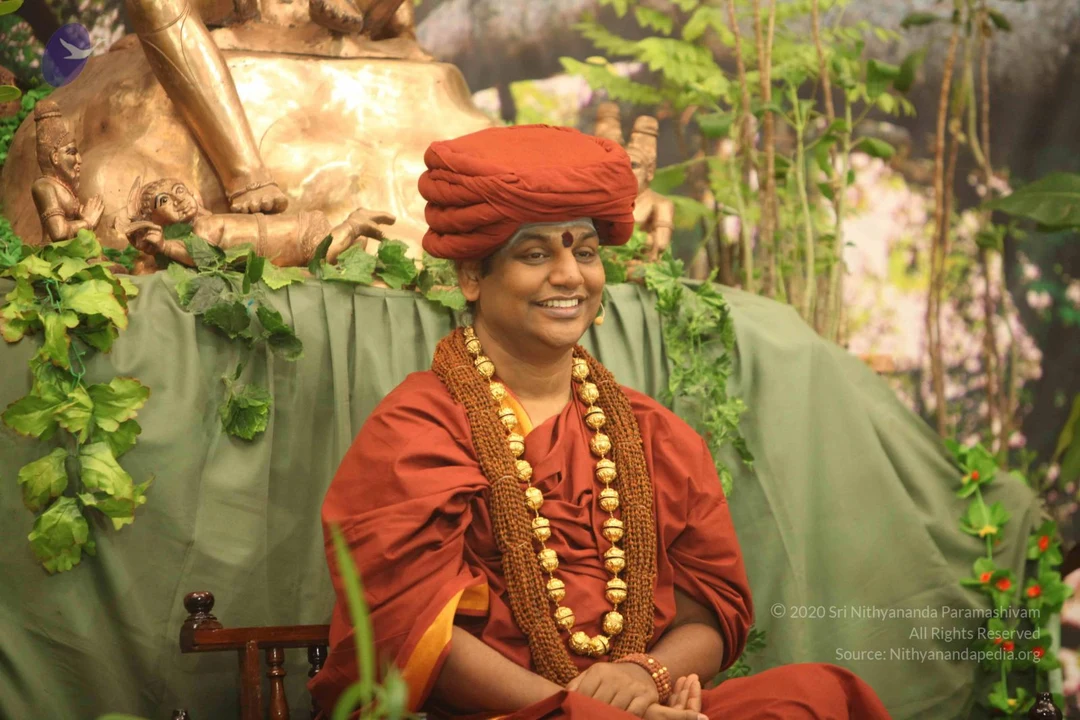
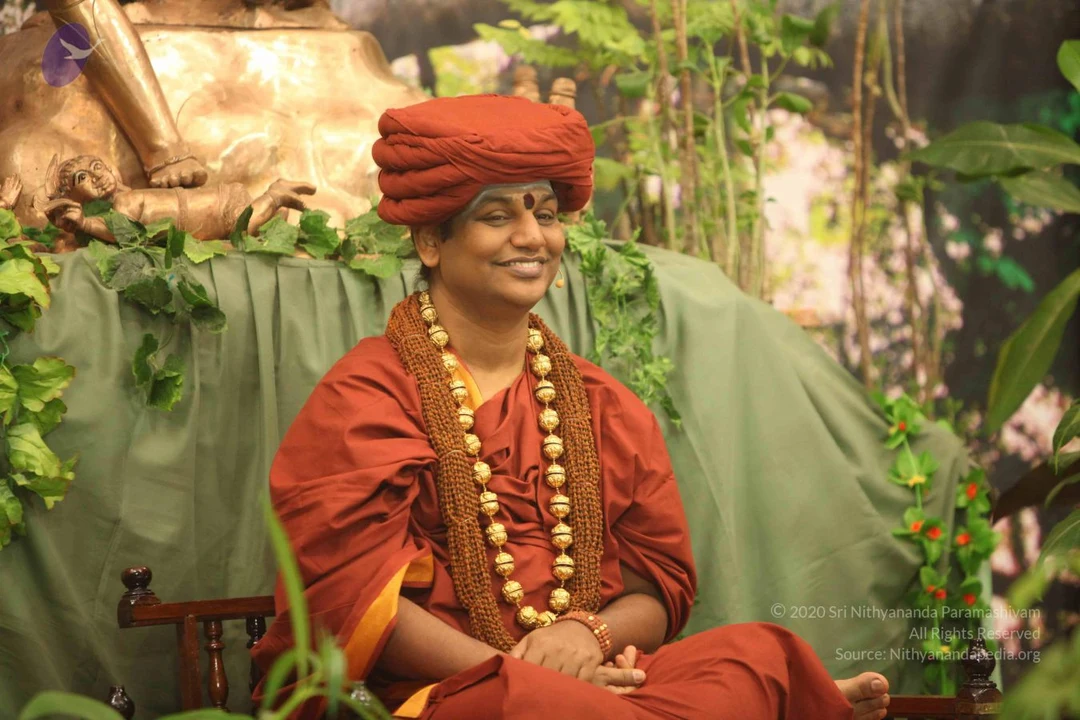
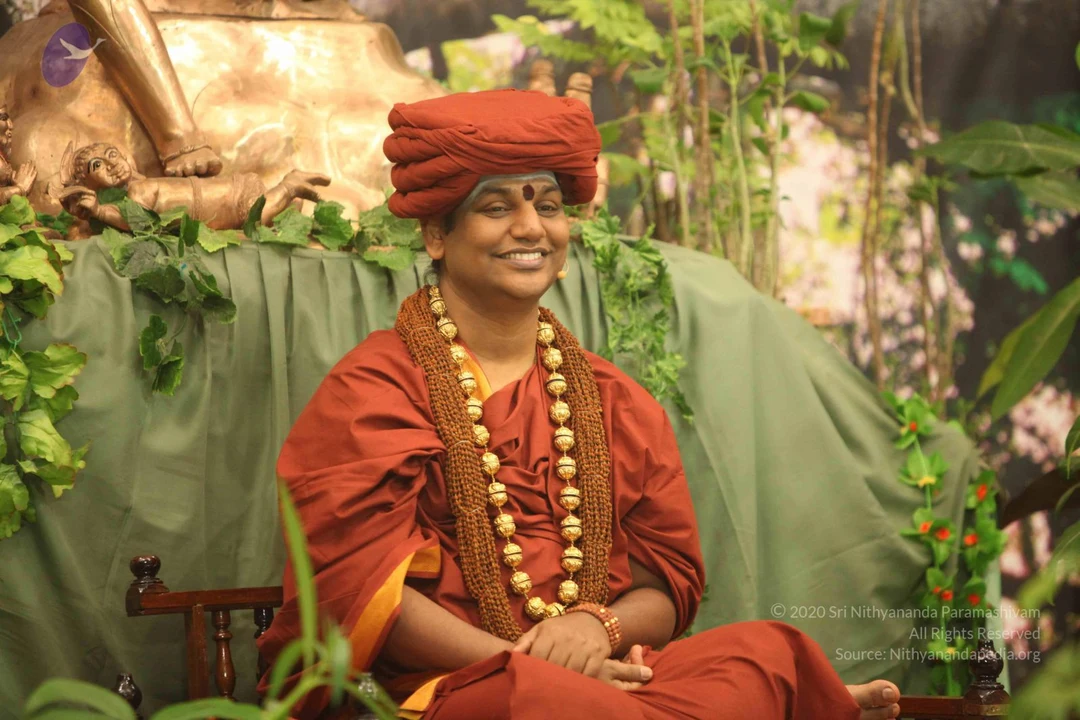
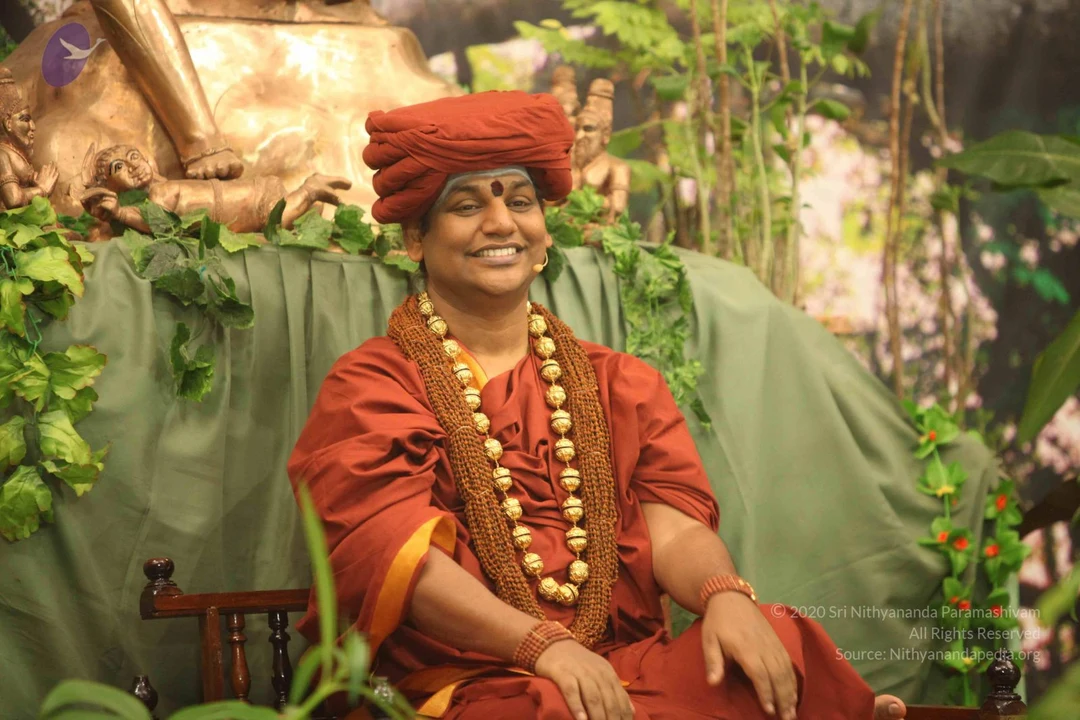
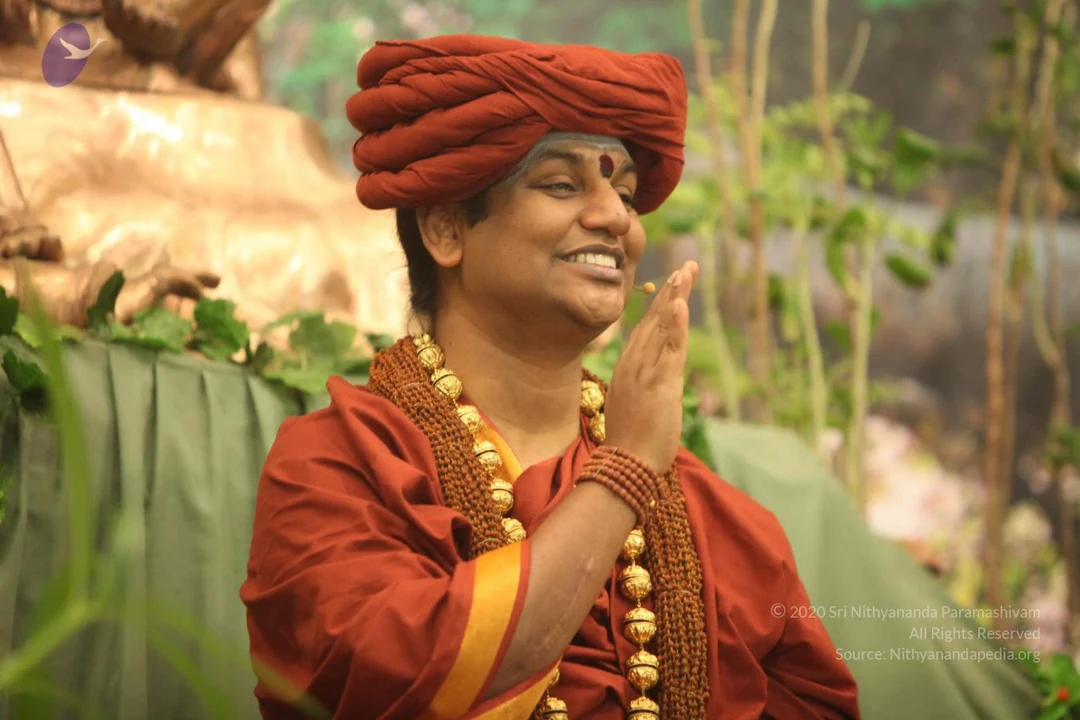
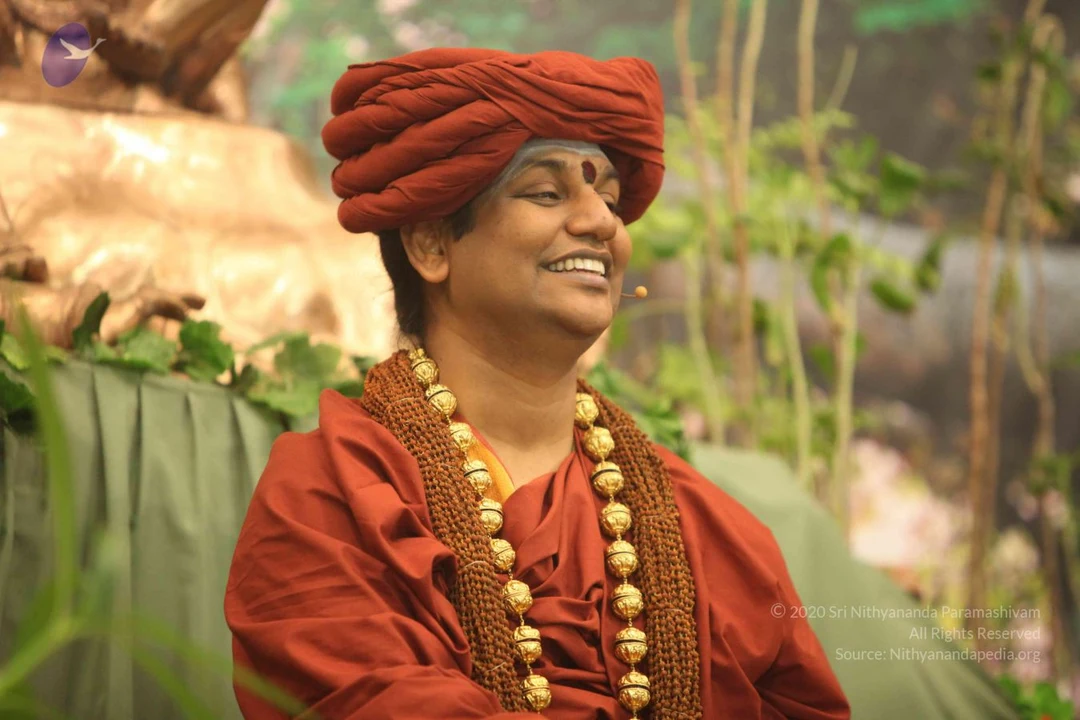
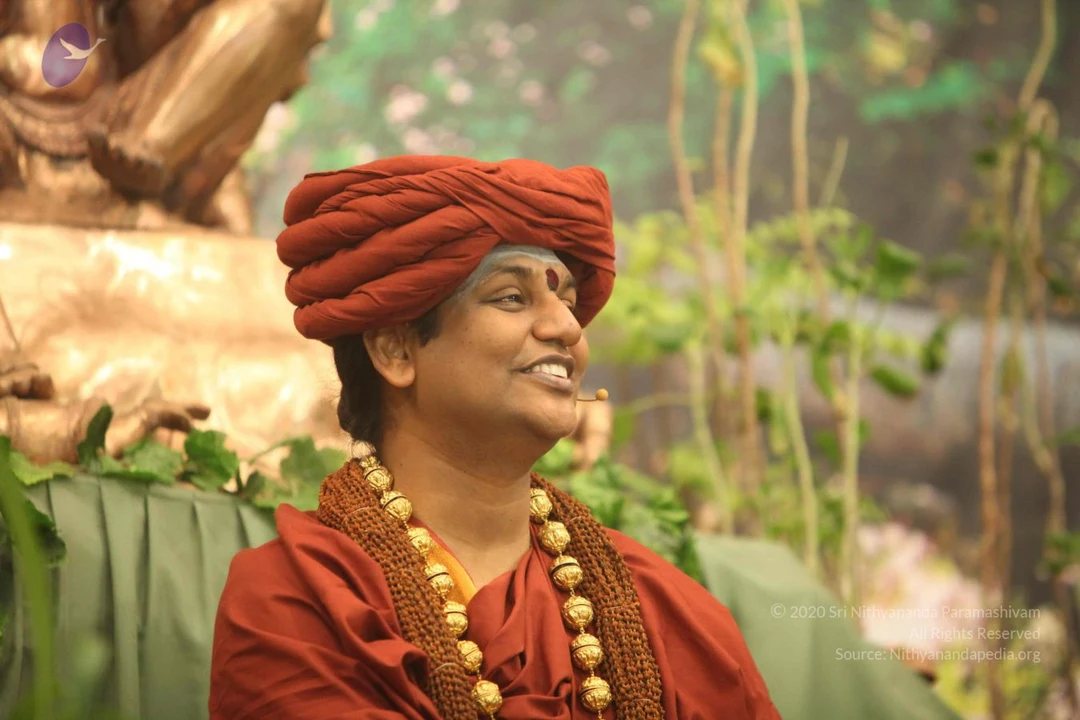
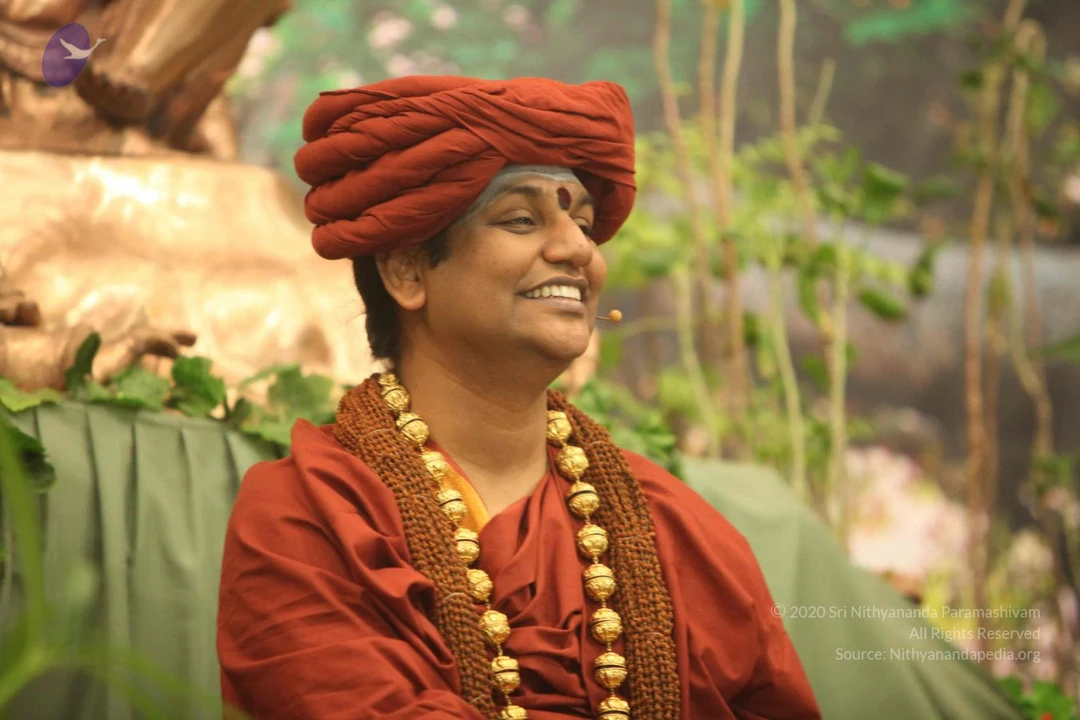
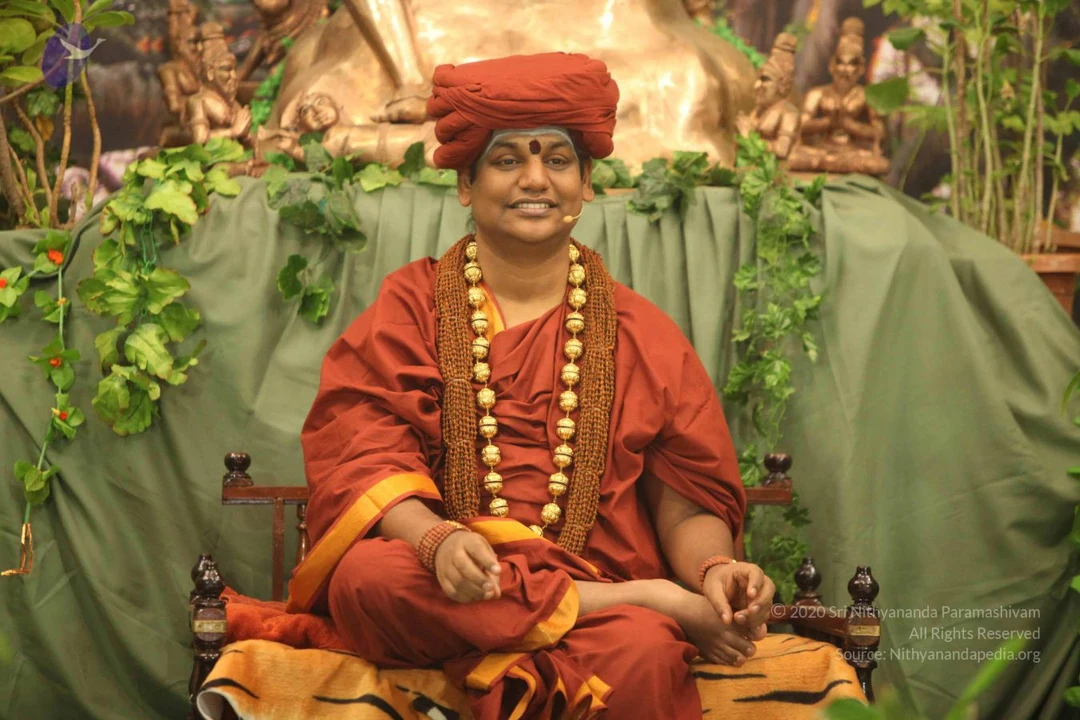
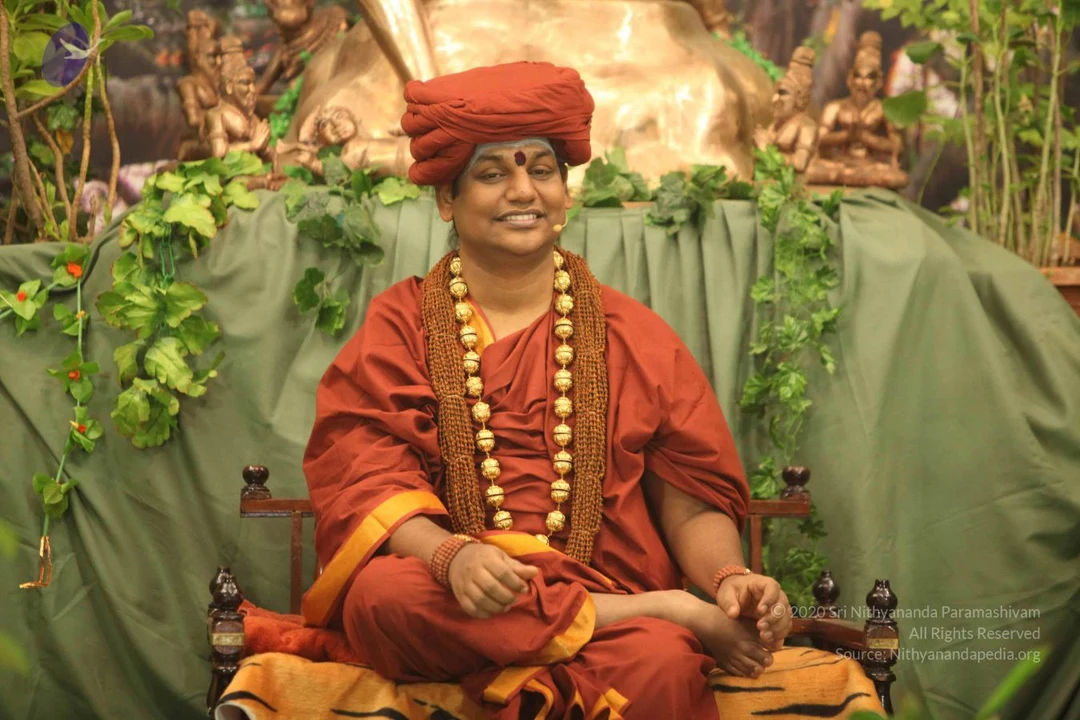
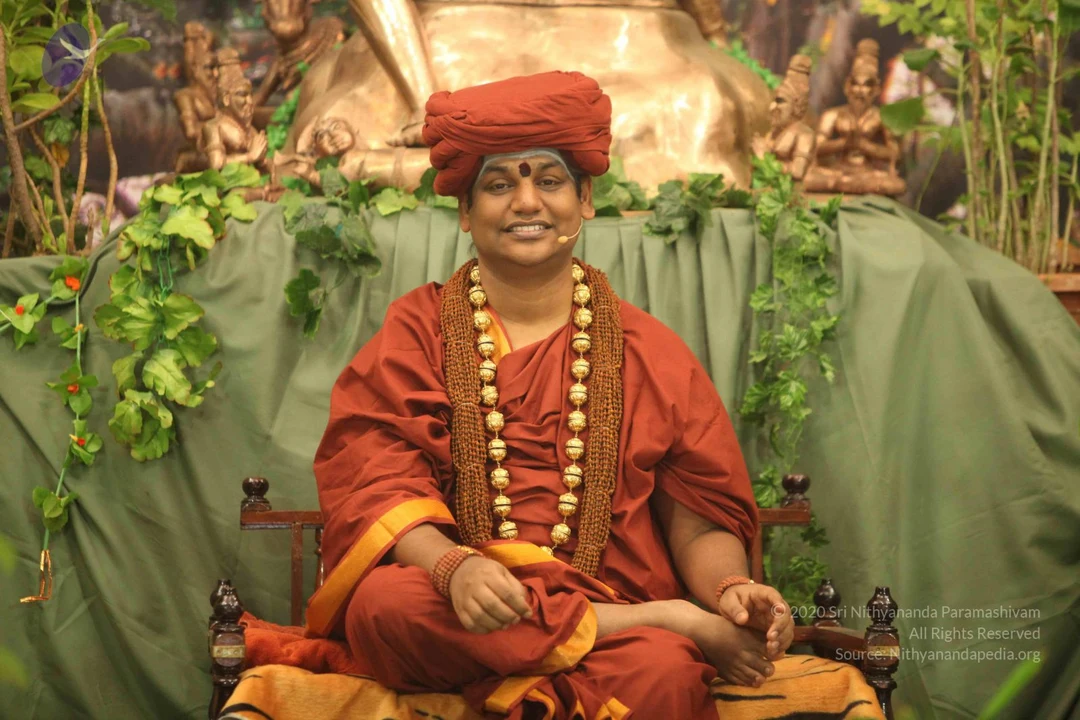
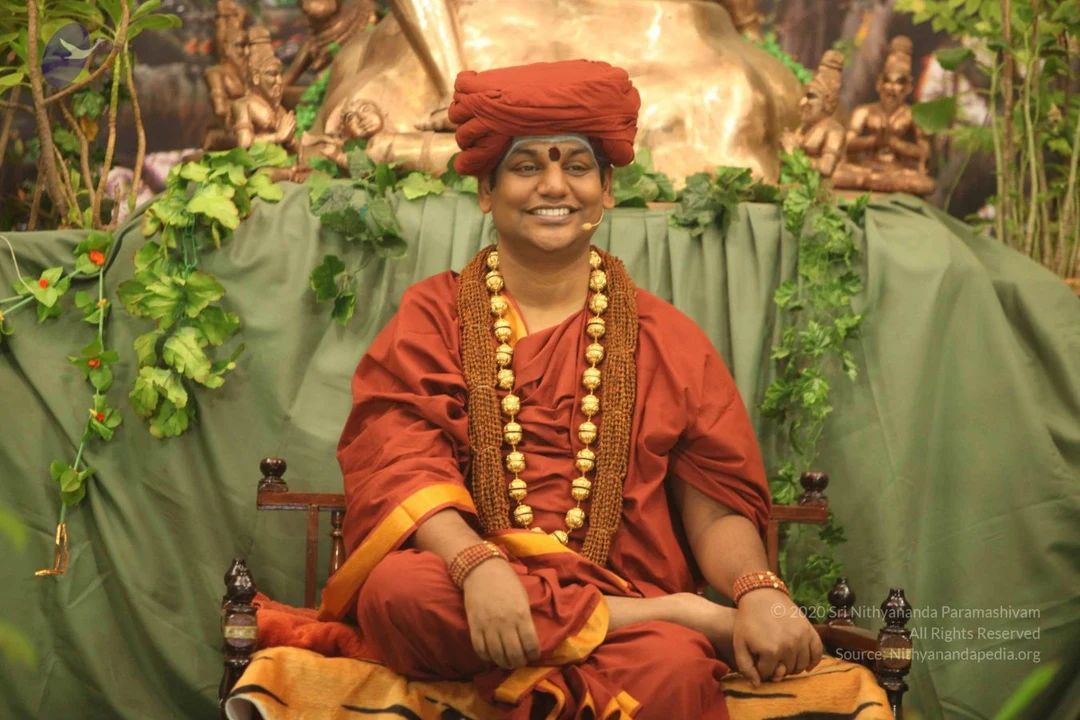
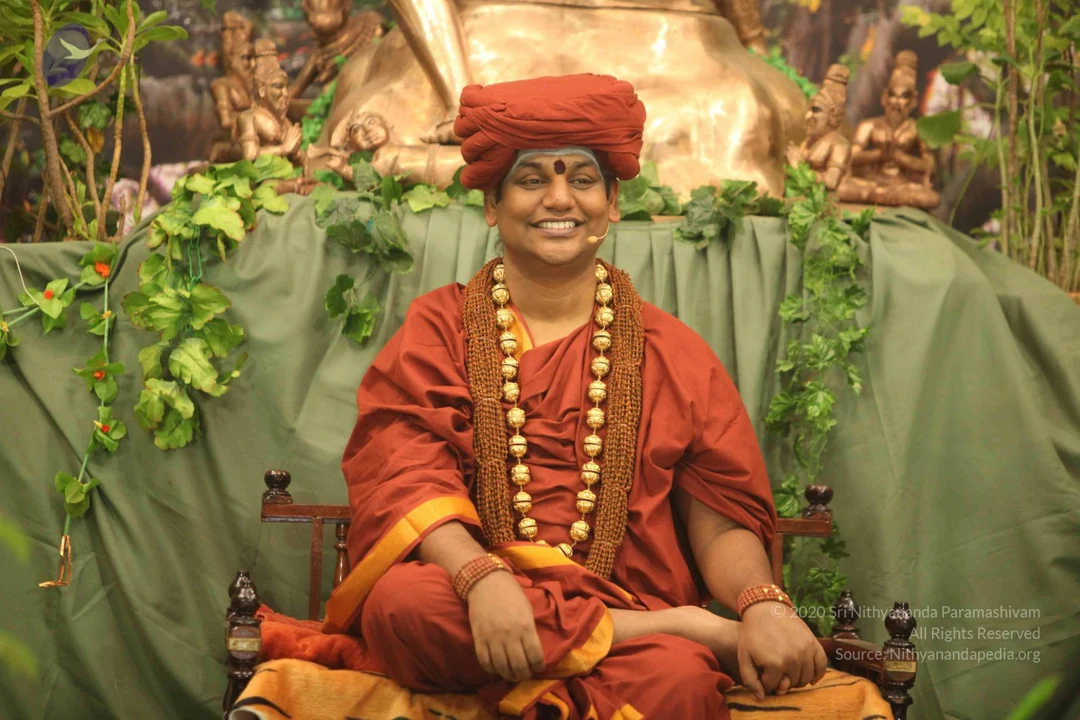
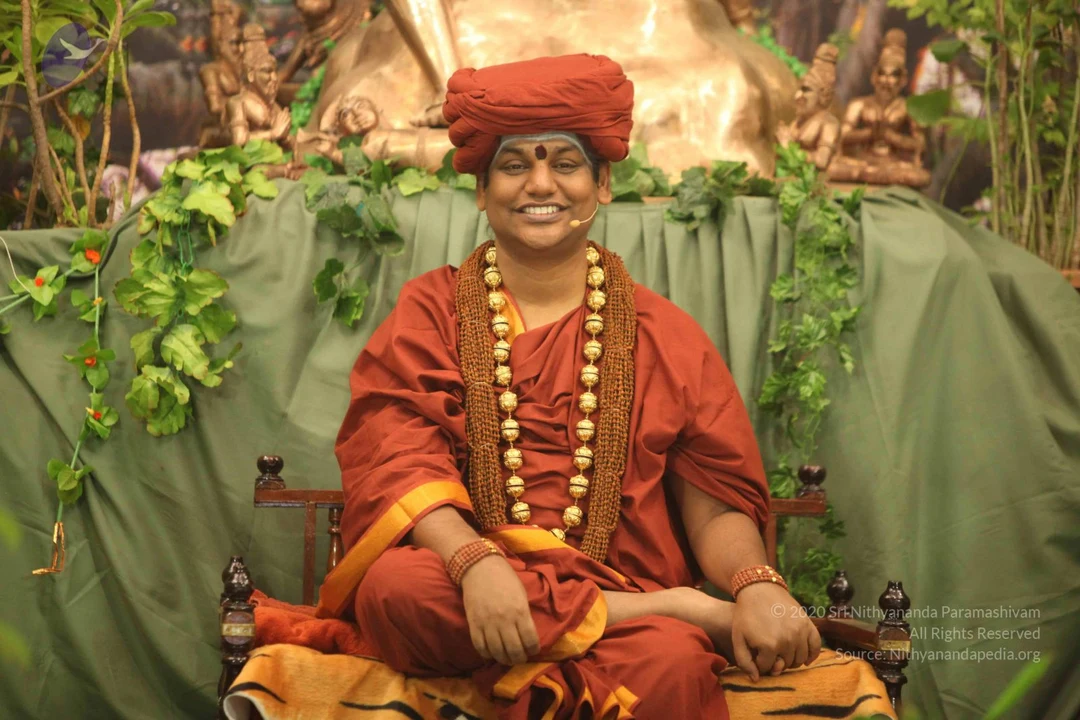
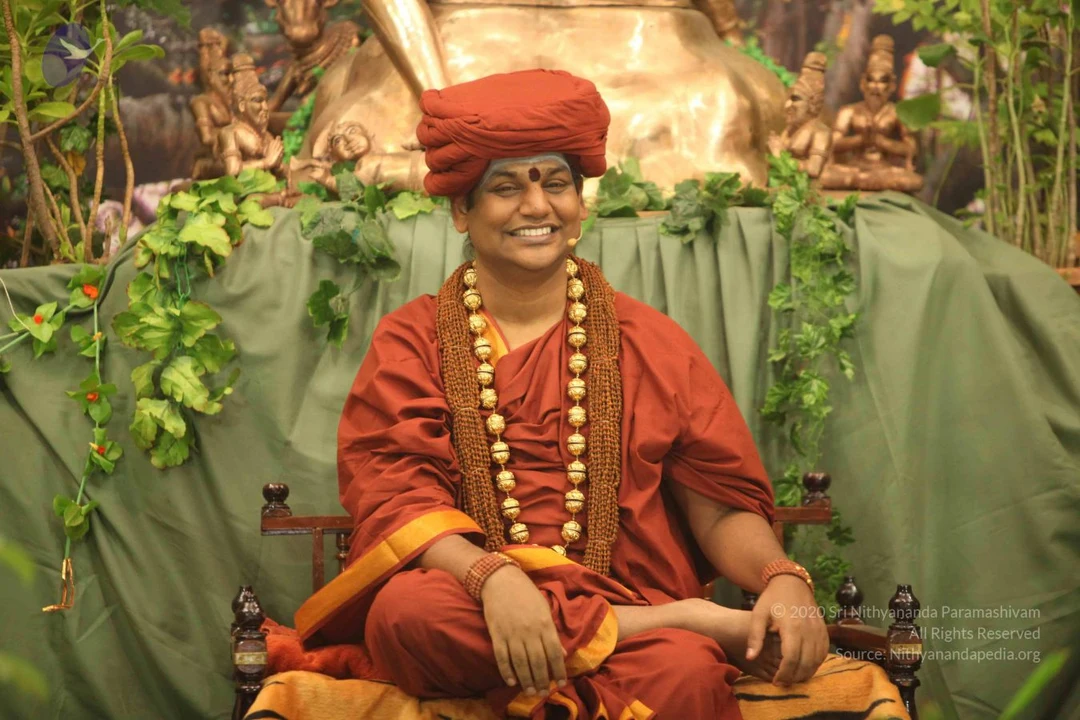
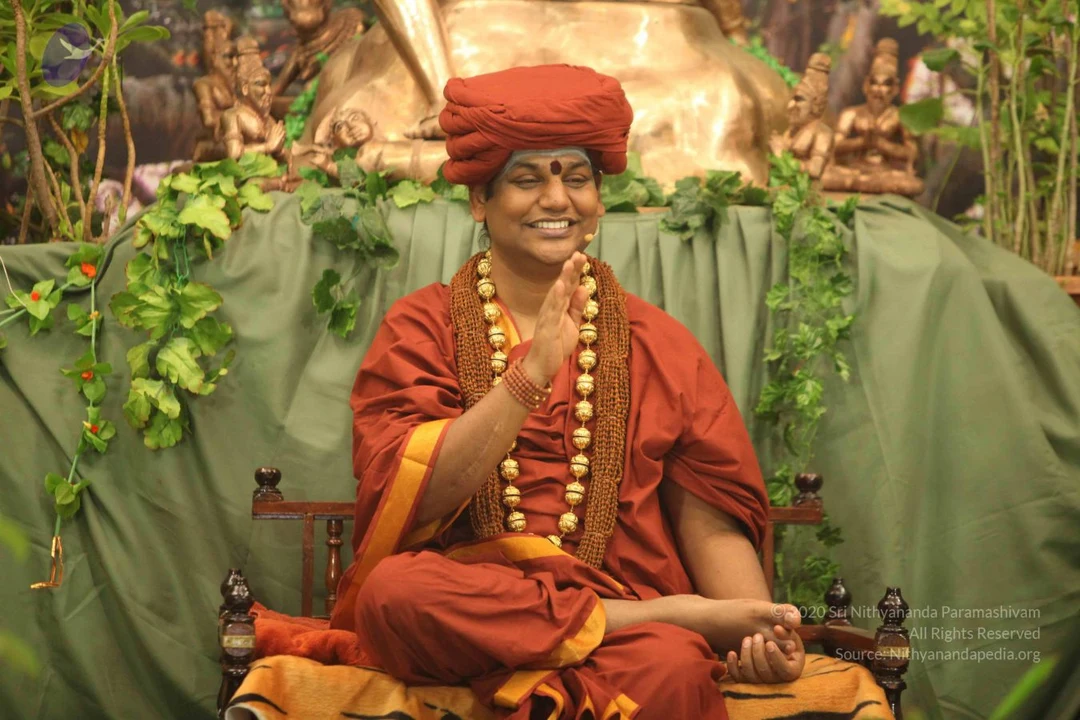
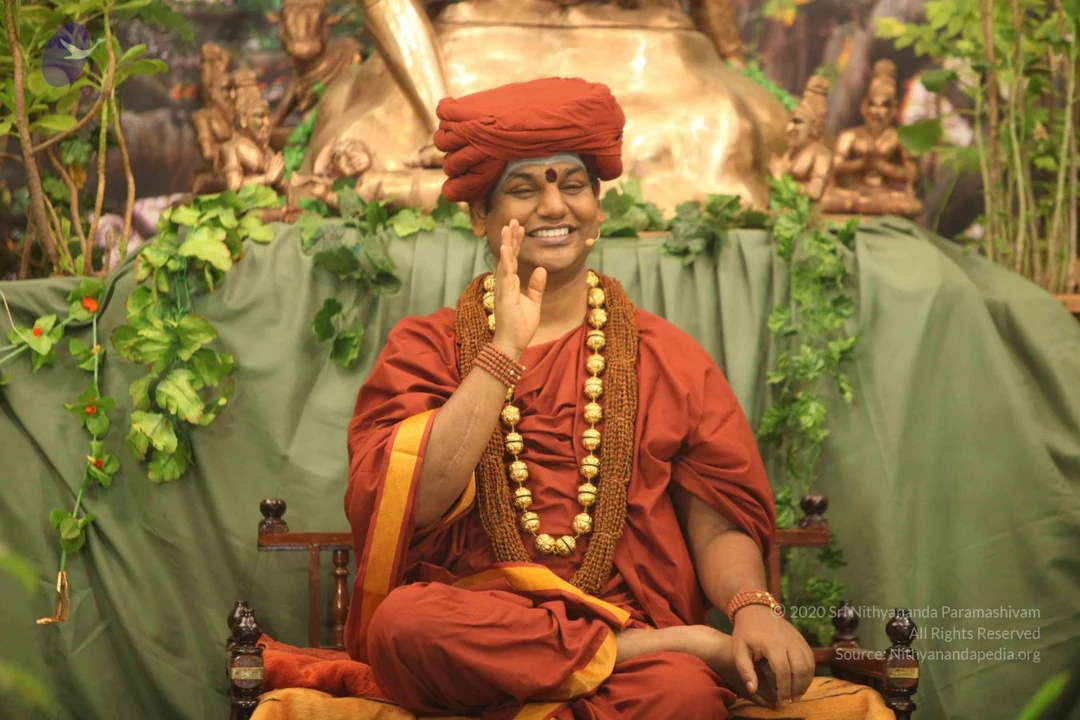
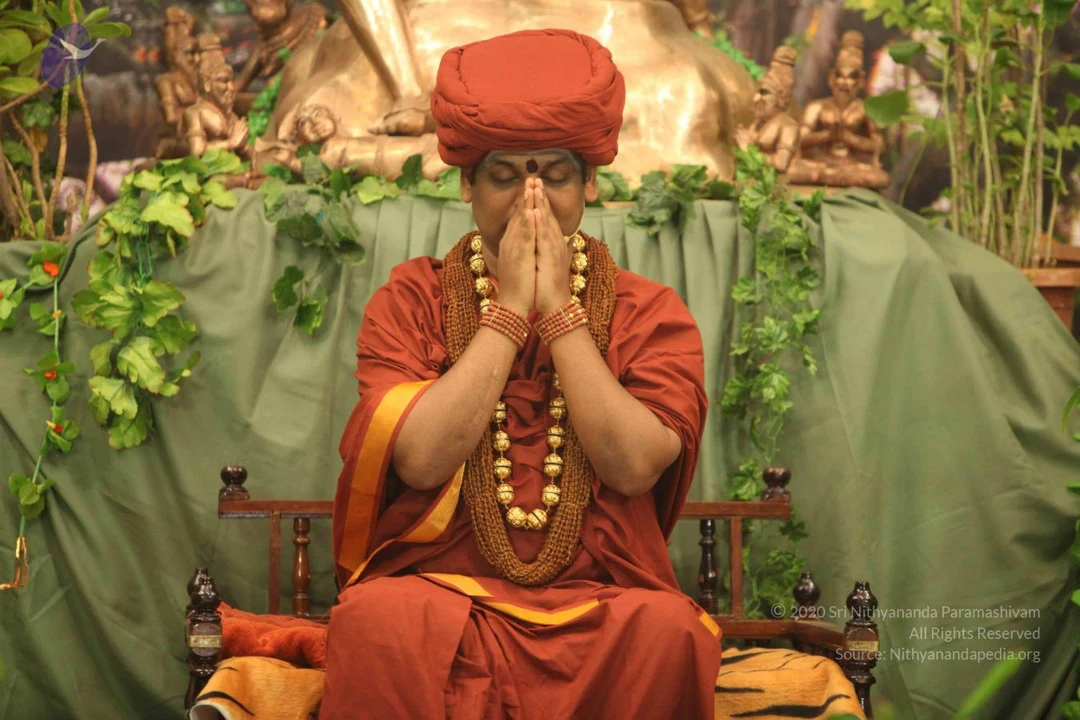
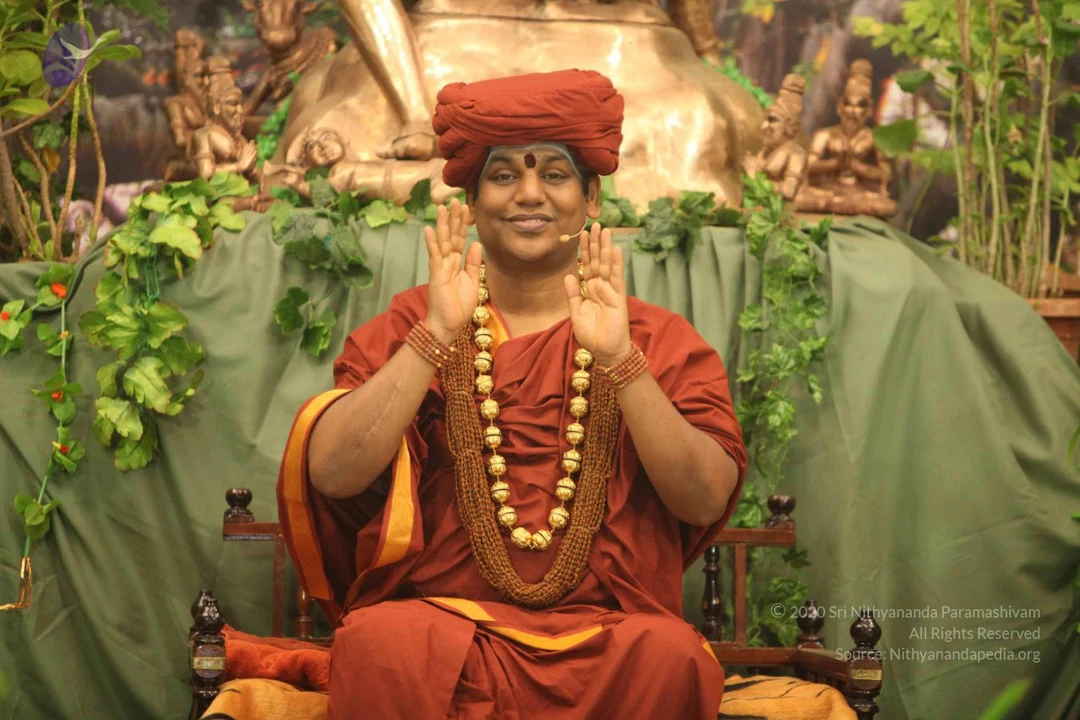
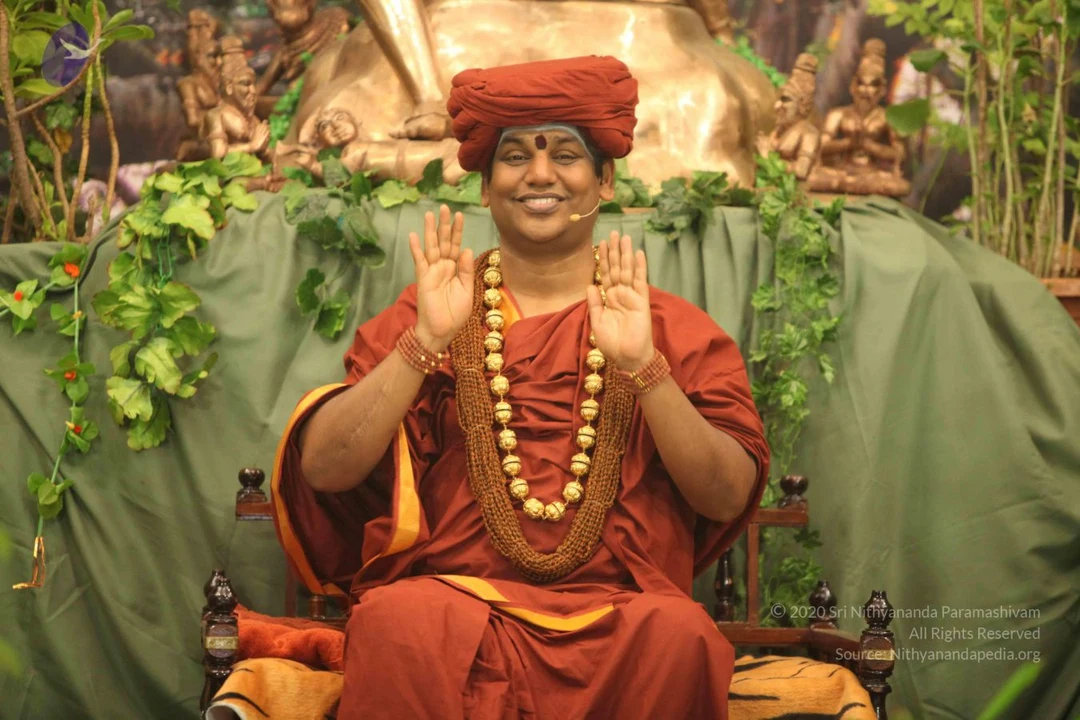
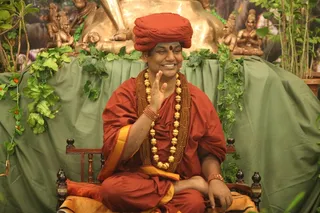
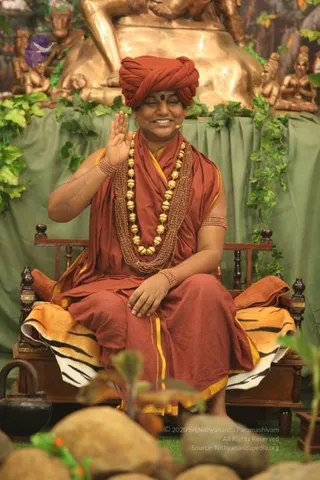
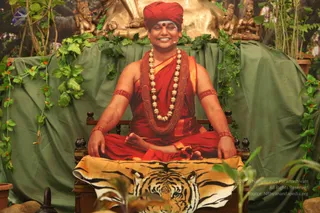
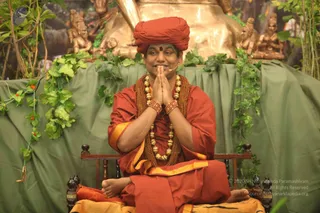
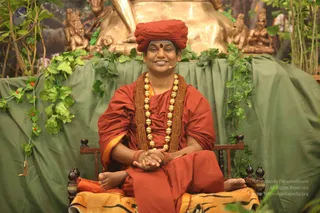
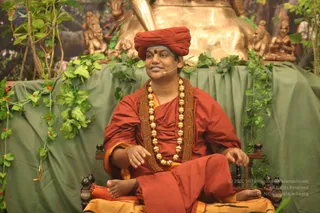
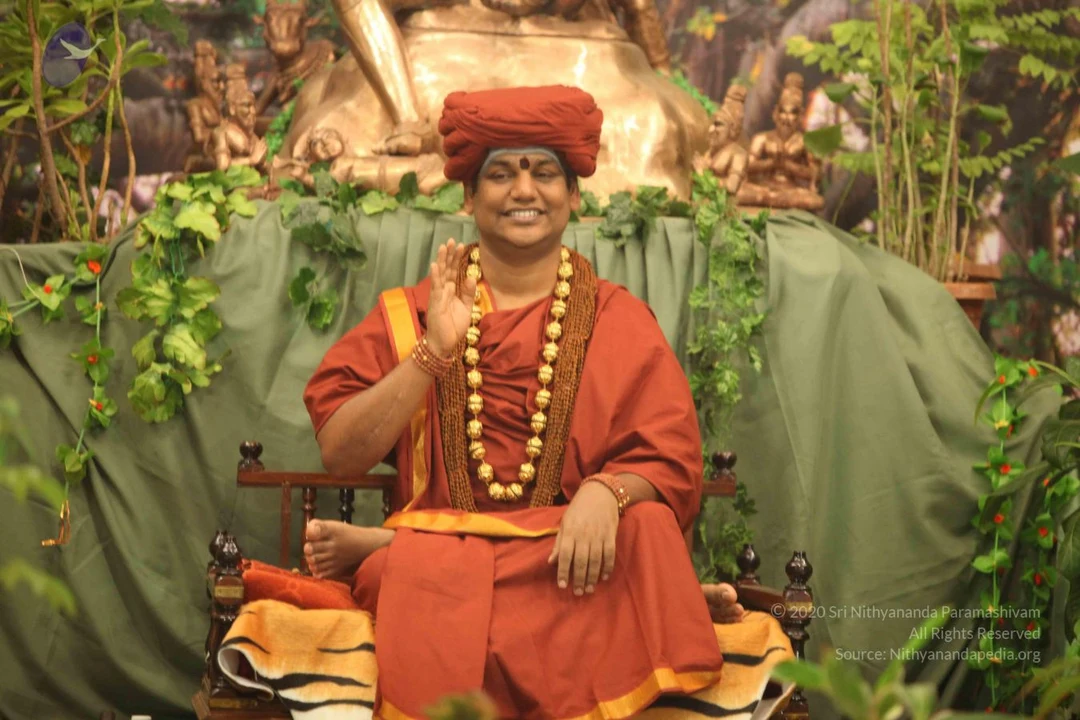
A smiling man sits cross-legged on a wooden chair with a tiger-striped cloth draped over the seat, in front of a green backdrop with ivy and a golden statue behind him. He wears a saffron-red turban with a red bindi, a saffron-red robe with yellow-orange borders, a rudraksha mala with gold beads, and red-beaded bracelets, and a small microphone is clipped near his face. Potted foliage and golden deity murtis frame the stage.A smiling man sits cross-legged on a dark wooden chair draped with a striped gold-and-orange cloth, raising his right hand in a blessing gesture. He wears a rust-orange turban with a red bindi on his forehead, an orange robe with a gold border, and layered gold-beaded rudraksha-style malas around his neck. Behind him stands a large golden statue and two smaller golden figures with hands folded in prayer, all set against a green draped backdrop with trailing green vines. Swamiji (probable): the robed figure with orange turban, saffron clothing and ornate beaded necklaces, seated on a throne, is the appearance-based candidate for Swamiji.A man seated cross-legged on a wooden chair with a yellow cushion, barefoot, dressed in a saffron-orange robe with yellow trim and a matching red-orange turban with a red tilak on the forehead. He wears a long multi-strand rudraksha mala and a ceremonial gold bead necklace, a small wrist mala, and a headset microphone, smiling with hands folded in his lap. Behind him is a green draped backdrop decorated with leafy green vines and small red flowers, with golden statues of seated figures and a large golden bull sculpture above. Swamiji (probable): the seated figure with turban, saffron robe, rudraksha mala and gold necklace matches the page's Swamiji reference, shown in person.

April 03 2015

Original wiki page
Contents

Title of the Page

Let Consciousness Be Your Driving Force

Description:

Today’s (3rd April, 2015) Nithya Satsang on Ishavasya Upanishad in Living Advaita Series. Paramahamsa Nithyananda intercepts into the first part of verse 8, in which Upanishads are giving tremendous strength by introducing ‘you’ to YOU, with the declaration–‘Pure Consciousness is all-pervasive, beyond the coming and going, that is you.’ The concept you have about ‘you’, is the context you have for your Life, which is the driving force for life. Life is going to touch your Consciousness not your body and mind. If we start feeling that we are Consciousness, then whatever we do for us or for the world is Living Enlightenment. He gives us the great news that all we need to start feeling – ‘You Are Consciousness” – is our simple willingness, our decision to think, act, plan, do everything from this Truth. Isha Upanishad – Verse 8 sa paryagāc-chukram akāyam avraṇam asnāviram śuddham apāpa-viddham | kavir manīṣī paribhūḥ svayambhūr yathātathyato-arthān vyadadhāc-chāśvatībhyaḥ samābhyaḥ || 8 || Today’s Vākyārtha Sadas, topic for spiritual explorations on truth is – “Pure Consciousness is all-pervasive beyond the coming and going, absolute radiant and self-effulgent – sa paryagāc-chukram” How can we realize that? I wanted everyone to internalize this one Truth – what are we feeling about us and how can we catch the truth about us as introduced by Upaniṣads. So, Vākyārtha Sadas is all about what is the concept we carry about us and how can we understand about us the way Upanishads introduce ‘us’ to us.

VideoAudio

Transcript:

(00:22)

Nithyānandeśvara samārambhām Nithyānandeśvari madhyamām | asmat āchārya paryantām vande guru paramparām ||

(00:40)

I welcome all the devotees, disciples, samajis, satsangis, SriMahants, Mahants, Thanedars, Kotharis, visitors, viewers sitting with us through Nithyananda TV, Sandhana TV, Arra TV and two-way video conferencing having Nayana Deeksha. Cities sitting with us in two-way video-conferencing having Nayana Deeksha: Woodlands-North Houston, Trinidad-Tobago, Hyderabad-Gupta Kashi, Ponca City-Oklahoma, Indrani-NewJersey, China, Hyderabad-Gupta Kashi, and Trinidad-Tobago, Singapore-Singapuram, Ohio Temple, Vancouver- Bhuvaneshwar, Houston-Texas, Warrington-UK, Dubai-Vaidyanatham, Hosur, North Austin-Texas, Bangalore North, Rajapalayam, Charlotte-Srisailam, Madurai, Hyderabad Adheenam, Seattle-Chidambaram, Los Angeles, New York, Melbourne, Toronto, San Jose, Doncaster, London, Oman, Pondicherry, Chennai, and lot more cities are joining.

(02:21)

I welcome all of you with My love and blessings. I will continue to expand on the 8th verse of the Īśāvāsya Upaniṣad. Please recite along with Me: sa paryagāc-chukram akāyam avraṇam .. alright it become too big wait, wait. I will utter word by word. sa paryagāc-chukram akāyam avraṇam asnāviram śuddham apāpa-viddham | kavir manīṣī paribhūḥ svayambhūr yathātathyato-arthān vyadadhāc-chāśvatībhyaḥ samābhyaḥ || 8 || Listen. First I wanted to explain this one Truth…. Listen, first I wanted to explain this one Truth to all of you. Please internalize. Internalize this one Truth. Listen carefully. How you function, how you perceive, what you did, you are doing, you are going to do, how you thought, thinking, going to think, everything is dependent on one axis, that is your concept about you. Please listen. What you think as you, if you just look inside, what you think as you - a bunch of worries, or a bunch of failures, or a bunch of failures and successes put together, or a kind of a confusion. What is that you perceive as you?

(05:23)

Listen. What you perceive as you, that decides whether you are going to perceive the world as good or bad, right or wrong. Once I asked My Guru, My Gurumātā Vibhūtānanda Puri, I asked her, “Why such hard tapas is required? Why so much of tapas is required – means so much of austerity, facing difficulties, why all this required?” She laughed and said, “When You go through the tapas, the kind of understanding you will develop about you, even small things comes from society, you will feel that is a blessing. A small comfort from the world, you will feel that is a great blessing.” So, to set a standard of what you feel as you or what you are qualified from the world, so that forever you live in contentment. Mahādeva describes contentment as one of the important Yama. Understand, Patañjali missed it. When he described Yama, he missed that; he put that in Niyama. Mahādeva puts that in Yama itself. And soon you can expect Me redefining Yama, Niyama, everything as per Mahādeva’s instruction, direct instruction in Kāmikā Āgama. See the contentment, I tell you, from My experience – the tapas (austerity) sets a standard about you such a way that forever you are contented, you are content. Anything comes in your life you say, “Oh, I was like that, this is too much.”

(08:00)

I am giving you this one example. Listen. You need to understand this. It is one benefit of tapas I explained. But having a right idea, developing the right idea, about you is very important, because it is based on that idea you are going to function. Please understand if you think you are body, you will be spending your whole Life in making everything for your body comfortable, the sensory pleasures. If you think you are mind, you will make everything needed for your mental pleasure. What is mental pleasure? Somebody praise you, awards, rewards; you being recognized as one of the greatest persons in your field. These are the mental pleasures. Nobel Prize. These are all the mental pleasures. When you think mental pleasure, your mind, mental pleasures are more important, you won’t bother about your body, mental pleasure becomes the first priority. You will do everything.

(09:35)

If you think body is you, you won’t care about what others say, name and fame, this and that. You will just do everything just for the sake of the pleasure of your body. Please understand if somehow, you start feeling – you are the Consciousness, then whatever you do for you and for others and to the world, everything is Enlightenment, Living Enlightenment. When you feel you are Consciousness, whatever you do to you is tapas, even if you apply sandal paste on your body and take bath in the bādām milk (almond milk) and drink soma rasa (heavenly nectarine drink) and lie down on the best available comforts and luxuries of the heaven, you are doing tapas. The moment you know – You Are Consciousness – whatever you do to your body is tapas, whatever you do to others is service; even if you are beating somebody. Please understand I am not encouraging beating. But Mahādeva has liberated many people by beating. And there are many Nayanmārs, Śiva Yogis, who killed people, who cut the trunk of the elephant, who cut the tongue of people who abused Śiva and Śaivism. I cannot hide the history, whether I want or not, I have to tell the truth. They have done all this. But, they are revered, respected, worshiped, and surely, they have reached the space of Śivoham and they are One with Mahādeva. How, how can that be?

(12:20)

Understand the concept you have about you is the context you have for your Life. Concept you have about you is the context you have for Life. The concept you have about you is the context you have for Life. Listen. The concept you have about you is the context you set for Life. Good news is, what you think about you can be diagnosed immediately, you can find it out immediately. The great news is, it can be changed just by your will. Willingness is ALL you need. In Āgamas, Mahādeva describes willingness as the only qualification for all initiations – Samaya, Viśeṣa, Nirvāṇa Dīkśas and Ācārya abhiśekam, for everything He describes only willingness. And first time ever, first time ever, as per Māhadeva’s instruction, the initiation, two initiation, Samaya and Viśeṣa Dīkśas are going to be given to all participants of Varanasi Inner Awakening.

(14:23)

Understand. First time the initiation is going to be as per His instruction, recorded, followed instruction. Of course, whatever I am doing and I did also is His instruction, but instruction revealed only to Me, but now, we are going to do as per the instructions revealed to one and all. Because instructions revealed only to Me and revealed to one and all, both matches, completely both matches. Context is same, it’s only instruction revealed to Me as whatever kamaṇḍalu (sacred water pot) available. Instruction revealed to all was – have a copper kamaṇḍalu, that’s all. Those kind of things only. So now we are capable of procuring everything as per instruction revealed to all. So we will have the initiations as per the instructions revealed to all.

(15:49)

Listen. The concept you have about you, look in, if you are not clear about the concept you carry about you, be very clear, you are carrying confusion as you. You don’t have to doubt about that. The moment you have a doubt about the doubt you are carrying confusion as you. Then whatever you do to you, you do to others, you do to world, everything is utter confusion. People around you are in chaos and confusion, don’t know what you are, what you mean, what you want, how they have to be with you, how you will be with them. No! Chaos! Utter confusion. Utter confusion. The concept you carry about you can be changed just by simple willingness. Nothing else is required. Your decision, with that willingness, listen. Upanishads are introducing you to ‘you.’ Upanishads are declaring here who you are. Listen. Pure Consciousness is all-pervasive, beyond coming and going. That is you. That is YOU.

(18:12)

Don’t think somebody else. Don’t say after I realize that, I’ll become that. You are playing with the mud, you come and sit in the center of the house, your mother tells, “Hey, what happened to your skin? Everywhere it is all mud?” If you say, “Oh, once I realize I am the skin, I am the body then I’ll understand, till then I am only mud.” If you talk like that you are stupid. Same way, if you say, “When I realize I am Consciousness I am Consciousness, till then I am only body and mind.” You are stupid. Whether you realize or not mud is a mud is a mud. Body is the body is the body. Knife is going to hurt your body, not the mud. Life is going to touch your Consciousness, not your body and mind. Listen. Upaniṣads are talking to You! It’s introducing you to ‘you.’ Decide from now, “All my thinking, action, planning about me, life, everything is from this one Truth — I am Pure Consciousness, which is all pervasive, beyond the coming and going.”

(20:01)

First thing will happen is your death fear will collapse. Absolute radiant and self effulgent, your fear and anxiety about your ignorance will collapse. This fear of anxiety…. Listen, fear of anxiety means fear you will be caught in fear in future at some point and anxiety about your ignorance. Listen, I am using different words: fear of anxiety, anxiety of your ignorance. Fear of anxiety means: feeling, “At some day I will be caught in the fear, I don’t know how I will handle myself. I may go mad. I will lose my mind,” as if you have one now. And anxiety of ignorance, “Oh, I am so ignorant. I don’t know what I will do in my life. I don’t know what I will be able to do,” the anxiety about your ignorance, both will collapse the moment you accept your introduction which is done to you by Upaniṣhads.

(21:37)

Tremendous strength in your perception, strength in your cognition, strength in your thinking! Listen. Strength in your perception. Strength in your cognition. Strength in your thinking…. strength in your thinking is the basic need of Life. Yesterday I made a statement – whether you are Gṛihasta, Brahmacāri, Sannyāsi, Kothari, Thanedar, Mahant, all that is not defining your spiritual growth, only the most subtlest concept of Consciousness you can grasp defines your spiritual growth. Immediately many hypocritical fellows on the facebook are uploading, “Thank You Swamiji for clarifying it.” I tell you but, don’t ever think without becoming any one of these – Brahmacāri or Sannyāsi, or Kothari or Mahant, you will be able to catch the most subtlest concept of Consciousness. I am not fooling people here, people are not fooling Me here by becoming Brahmacāris, Sannyāsis, Kotharis or Mahants. If you do it, by becoming anyone of this – Brahmacāri or Sannyāsi, or Kothari or Mahant – I will do it for you, or you do it on your own, understand.

(23:42)

In course of time you will realize, “We should have taken Swamiji’s help, which would have been much better.” The difference between Me doing it and you doing it on your own; Me doing it for you and you doing it for your own if you want to see the difference, please come and see My Gurukul kids. I have powerful, official witnesses, evidences. One day you will realize, “It would have been much better if we had outsourced it to Swamiji.” I am not costly economically, but I am costly consciously, because I am the luxury in the field of Consciousness, understand. I am the luxury in the field of Consciousness. I am not luxurious. I am a luxury for others, in the field of consciousness, understand.

(25:20)

The concept you carry about you is the driving force for your Life. That decides when you wake up, why you wake up, how you wake up, when you think, what you think, how you think, why you think what you are thinking. Why you behave the way you behave, why you react the way you react, why you respond the way you respond, why you move the way you move. Why you are who you are! Why you are who you are. That is why I am insisting on pure conscious cognition about You! Today’s Vākyārtha Sadas, I wanted everyone to internalize this one truth: what are we feeling about us, and how can we catch the Truth about ‘us’ as introduced by Upaniṣads. Pure Consciousness is all pervasive, beyond the coming and going, Absolute radiant and Self-effulgent. How can we realize that?

(27:12)

Yesterday’s Vākyārtha Sadas, still I have not got a single explanation by anybody which everyone appreciates as at least one group of disciples appreciate as the best understanding about the Consciousness, so still I have not decided who is going to receive the turban. So let’s continue today also, maybe by the end of today we will realize who will receive the turban. The head which grasps – It is Pure Consciousness and All-pervasive, beyond the coming and going, Absolute radiant and self effulgent – is worthy of turban…. Let’s see who is going to receive. So today’s Vākyārtha Sadas is all about what is the concept we carry about us, and how can we understand about us the way Upanishads introduced us to ‘us’, in this 8th verse. First things first, that is why Īsāvāsya Upaniṣad insists on right understanding about you. With this I will move to the next segment of the morning satsang dial the avatar. I am available for your phone calls, questions, prayers and Vākyārtha Sadas. I bless you all. Let you all radiate with integrity, authenticity, responsibility, enriching, causing Living Advaita, the Eternal Bliss, Nithyananda. Thank you. Be Blissful.

(29:52)

Photos From The Day:

Nithya Satsang
Nithyananda Times - 03rd April, 2015

VideoAudio

Link to Facebook Page

https://www.facebook.com/ParamahamsaNithyananda/photos/a.321615927926264/814532431967942/?type=3

Living Enlightenment

Photos Of The Day:

FB-Photos-of-the-Day
Photos Of The Day:

Nithya-Puja

Nithya-Kirtan

Nithya-Satsang

Photos Of The Day:

Nithya-Puja
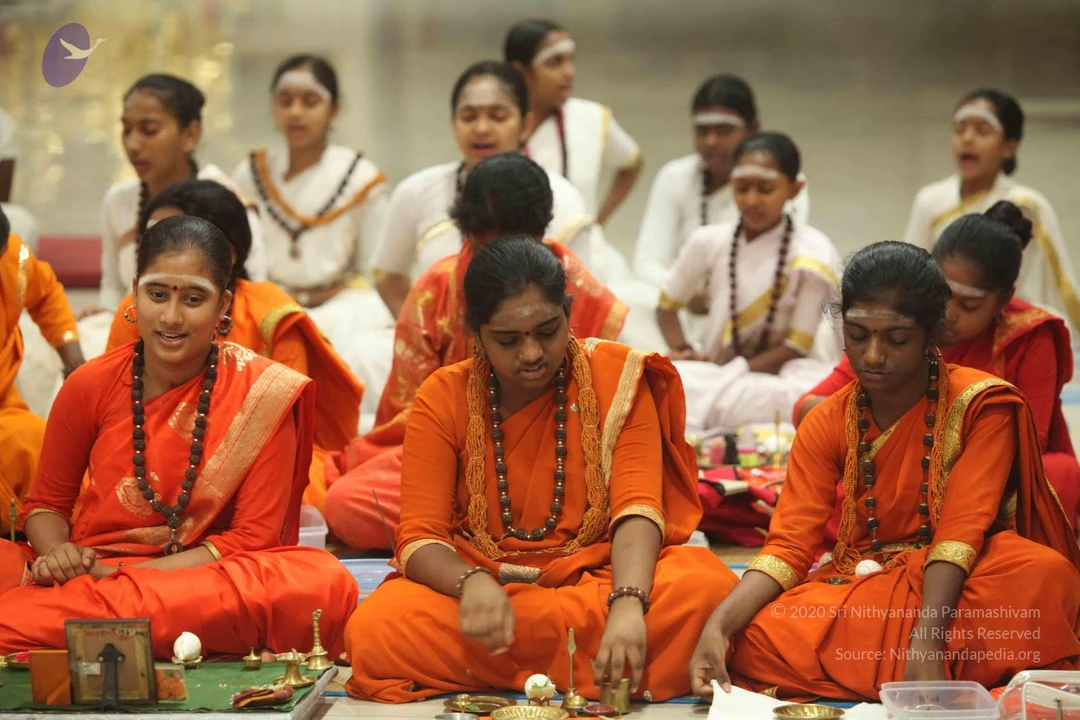
Nithya-Kirtan
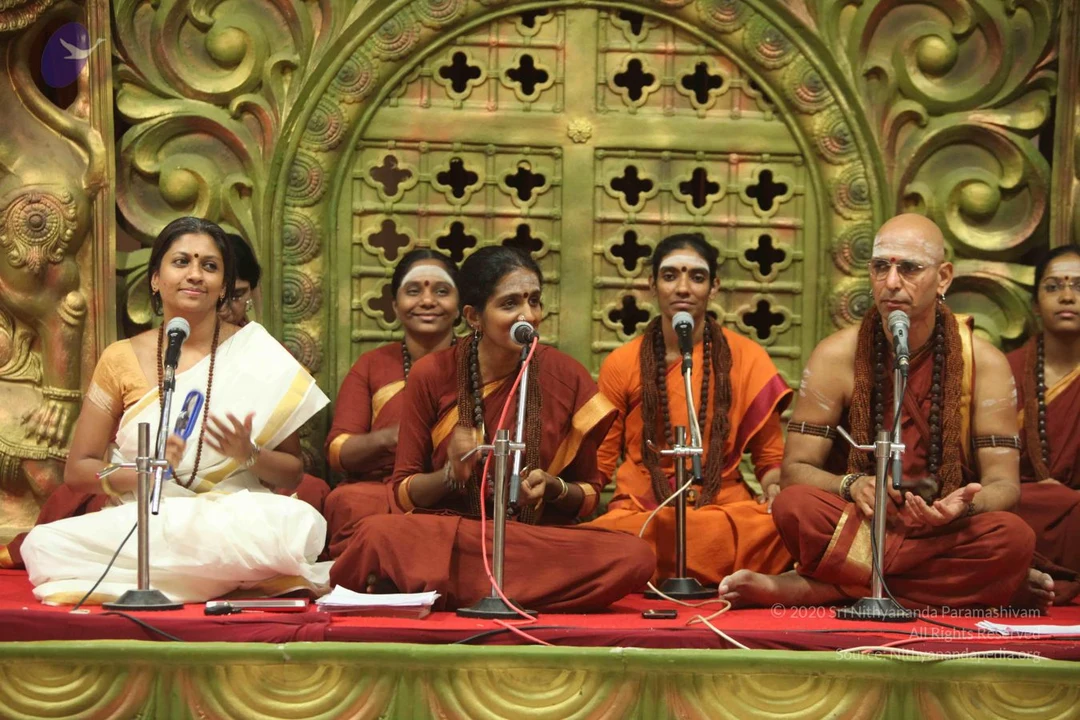
Nithya-Satsang
Photos from this day

View all 53 photos

Nithya Satsang

6 photosSource gallery
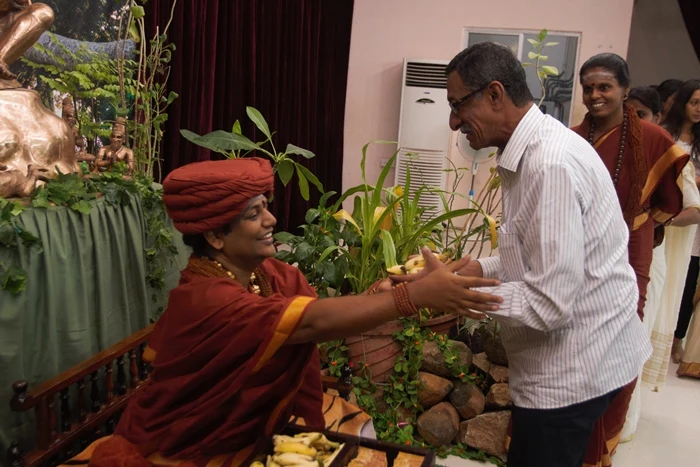
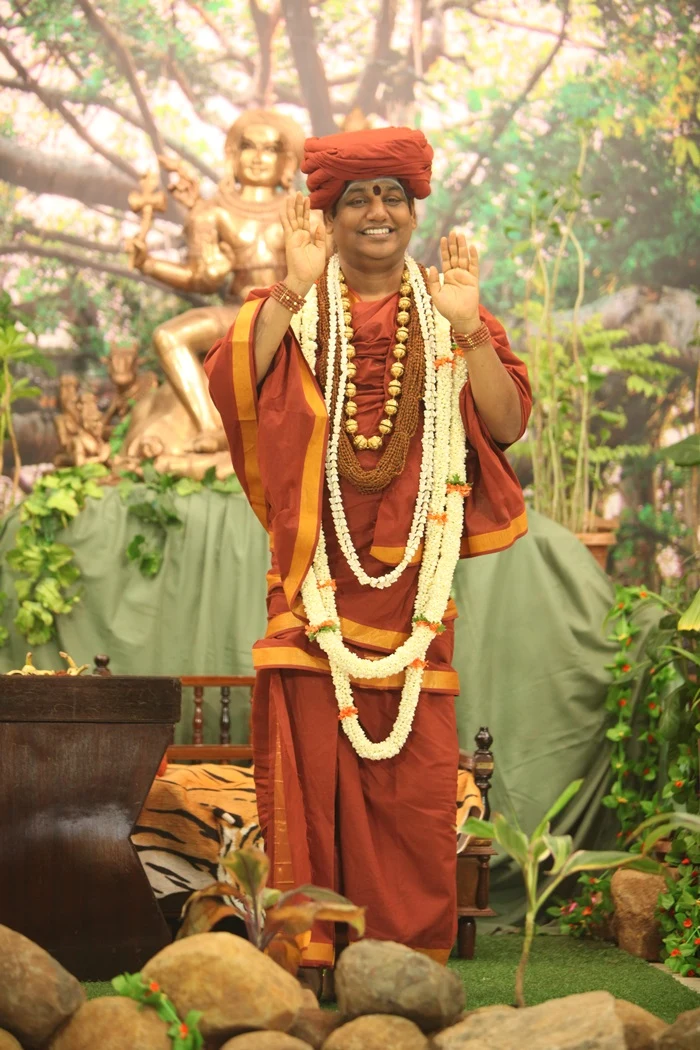
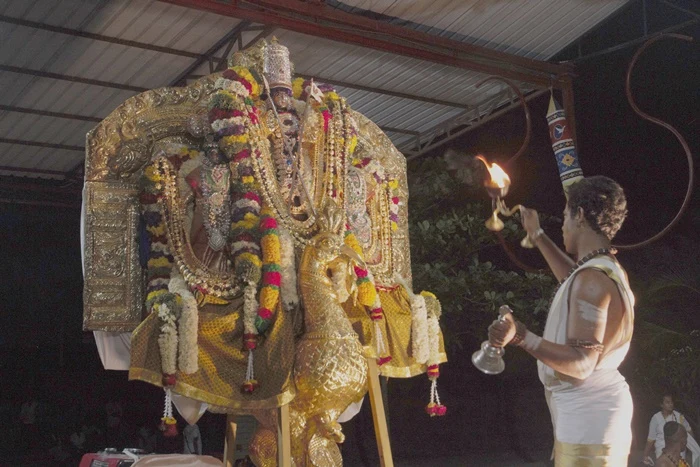
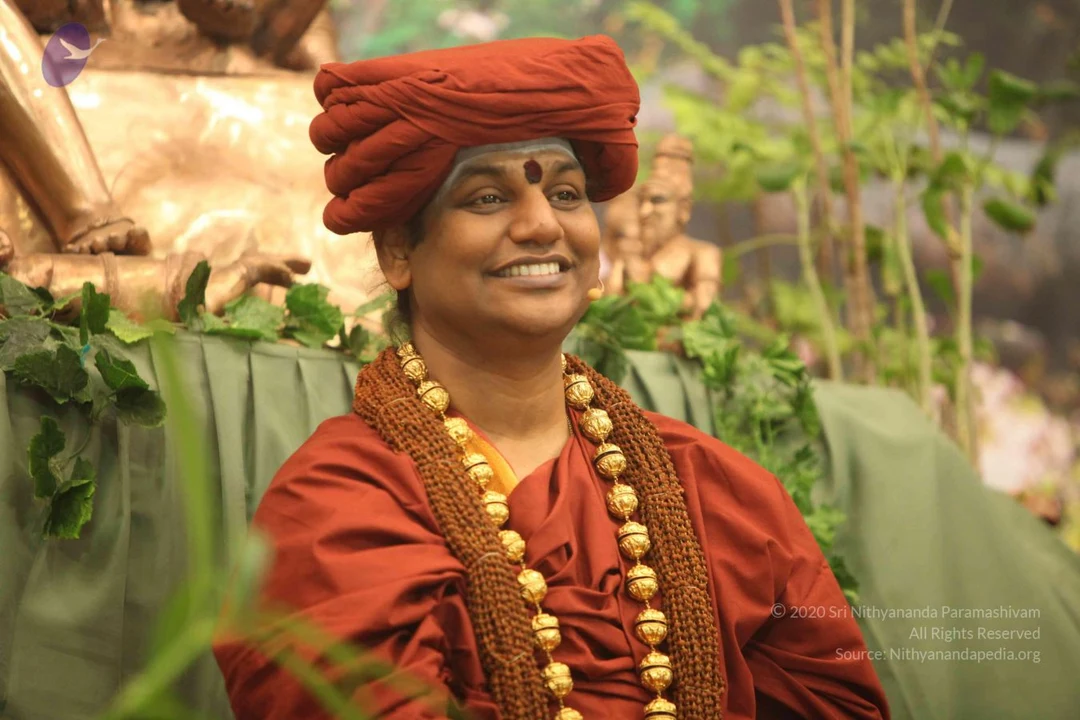
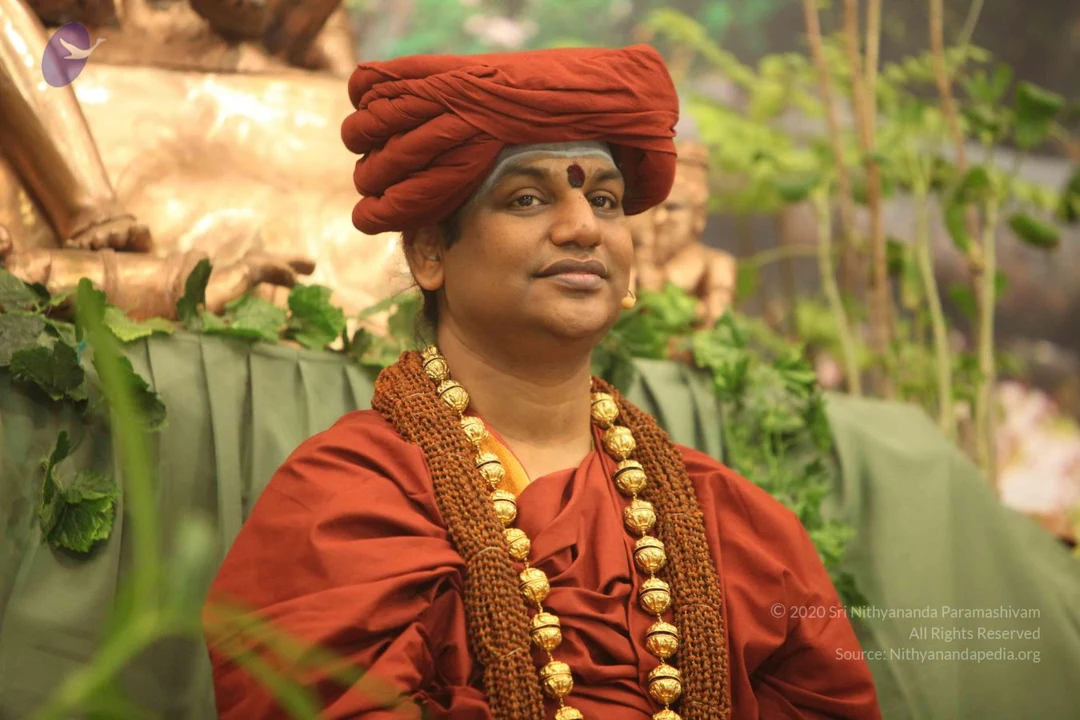
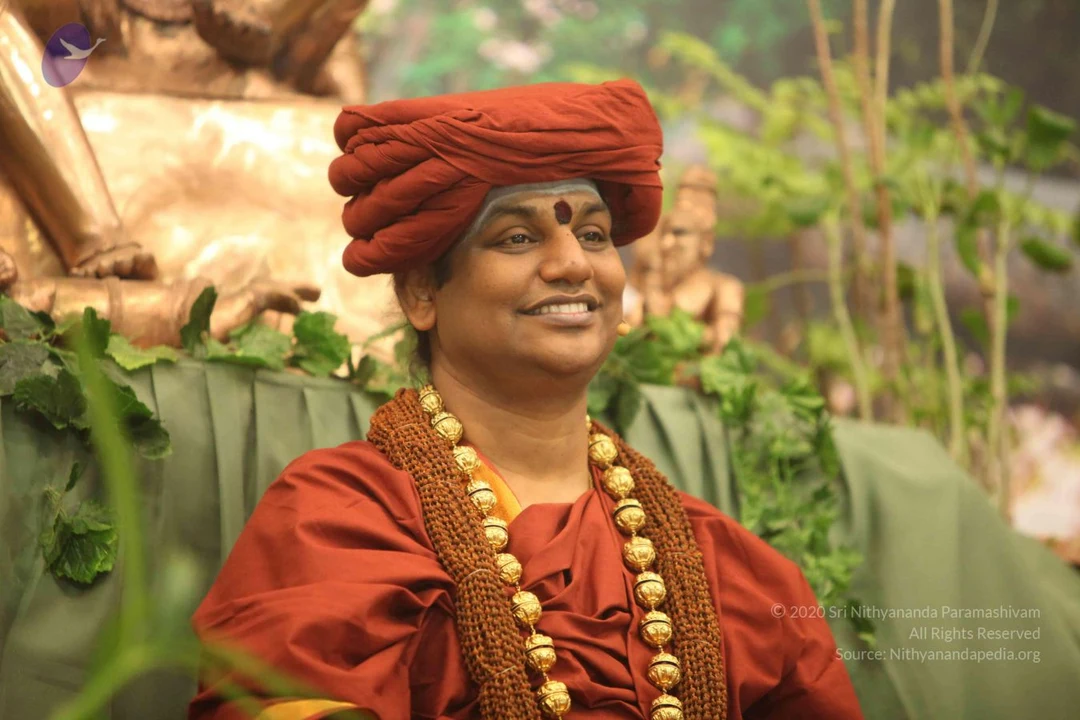
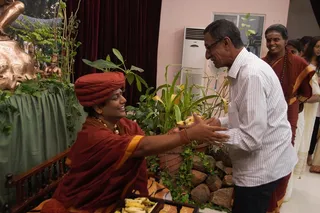
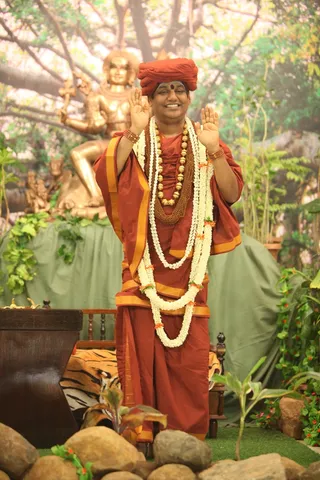
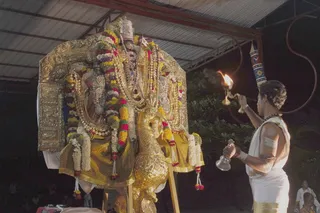
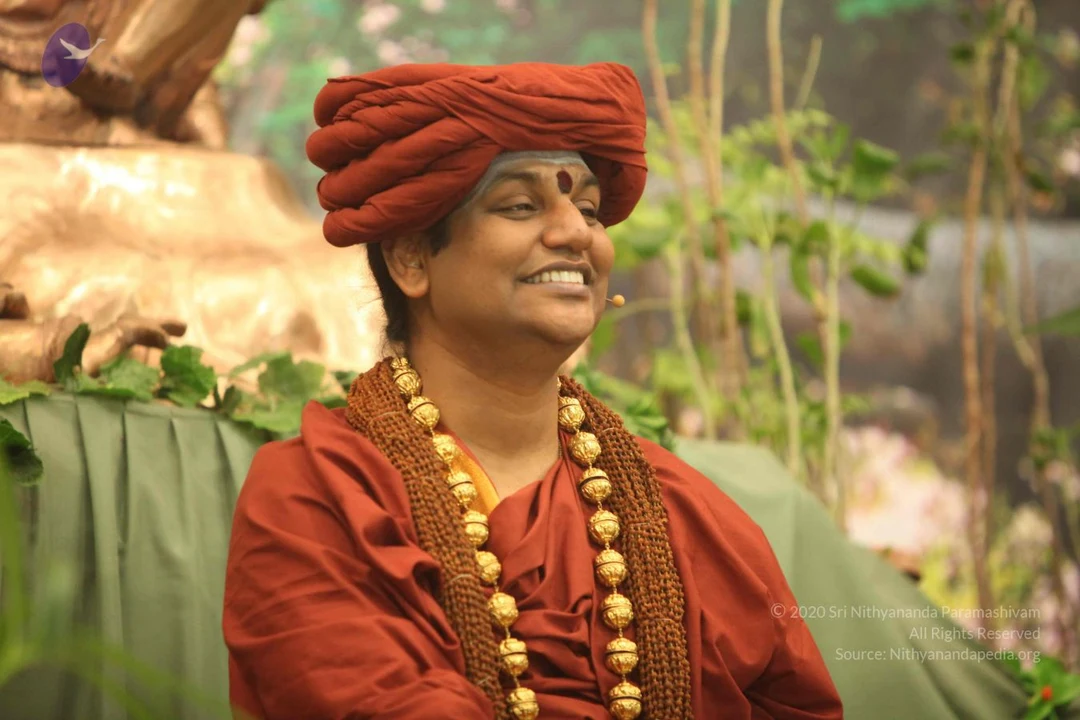
Close-up photograph of a smiling man wearing a red-orange turban with a small red bindi, and a matching orange-red robe. He has a grey-white marking on his forehead and wears a long necklace of brown rudraksha beads alternating with large gold-coloured beads, draped over the shoulders. Behind him, a golden seated figure and green foliage with greenery draped across a green fabric backdrop suggest a stage or ceremonial setting. The man is seated and turned slightly toward the camera.Swamiji (probable) sits smiling on a green cushioned seat before a leafy, flowered backdrop, with a large golden sculpture edge visible at upper left. He wears a red-orange turban, orange-red robes and a sandalwood-style tilak on the forehead, with a rudraksha mala and ceremonial gold beaded necklace draped over his shoulders. The setting suggests a satsang discourse. Only one person is visible.A smiling man seated cross-legged on a wooden chair with carved legs, raising his right hand in a blessing gesture. He wears a rust-red turban and matching red-orange robes with a yellow border, a long multi-strand necklace of large golden beads and a rudraksha-style mala, and a red bead bracelet. Behind him stands a green draped backdrop with leafy vines and golden deity murti figures and a golden reclining figure. Swamiji (probable): the figure has a red turban, saffron robes, ornate gold beaded necklaces and rudraksha malas, consistent with the page's satsang context on the Ishavasya Upanishad.A photograph at an indoor satsang. A seated figure in a maroon-red robe with gold-edged trim and a red turban, wearing a beaded necklace, leans forward with a smile and extends both hands toward a man in a white striped button-up shirt and dark-framed glasses, who bends slightly forward with hands reaching out. Behind them, a second woman in a maroon robe with a gold border stands smiling. In the background are a golden statue, green potted plants, a green draped table with bananas and fruit on a tray, rocks and an air conditioning unit. Two people are visible in the scene, both as the central figures; the seated figure's appearance is consistent with a robe-and-turban presentation but is not distinctive enough to confirm identity.Photograph of a smiling man standing before a lush painted forest backdrop with a golden statue of a seated deity and tiger-skin-draped seat behind him. He wears a red-orange turban and a red-orange robe edged with gold trim, with a long white flower garland and a brown rudraksha mala around his neck, and bangles on his wrists. He raises both palms outward in a blessing gesture. Green foliage and large stones frame the foreground. a person, a central figure in saffron and red ceremonial dress with rudraksha and garland adornments, appears in person.Night photograph of a golden processional deity murti on an ornate palanquin-style platform, decorated with multicoloured flower garlands and a gold lion or mythical animal figure at its base. A priest in white dhoti and shawl with rudraksha-style beaded necklace performs aarti with a lit oil lamp in one hand and a handbell in the other. Smoke rises from the flame. Background shows a corrugated roof and a few indistinct onlookers at the edges, and a person may be partly visible at right.

FB-Photos-of-the-Day

1 photoSource gallery

Nithya-Puja

7 photosSource gallery
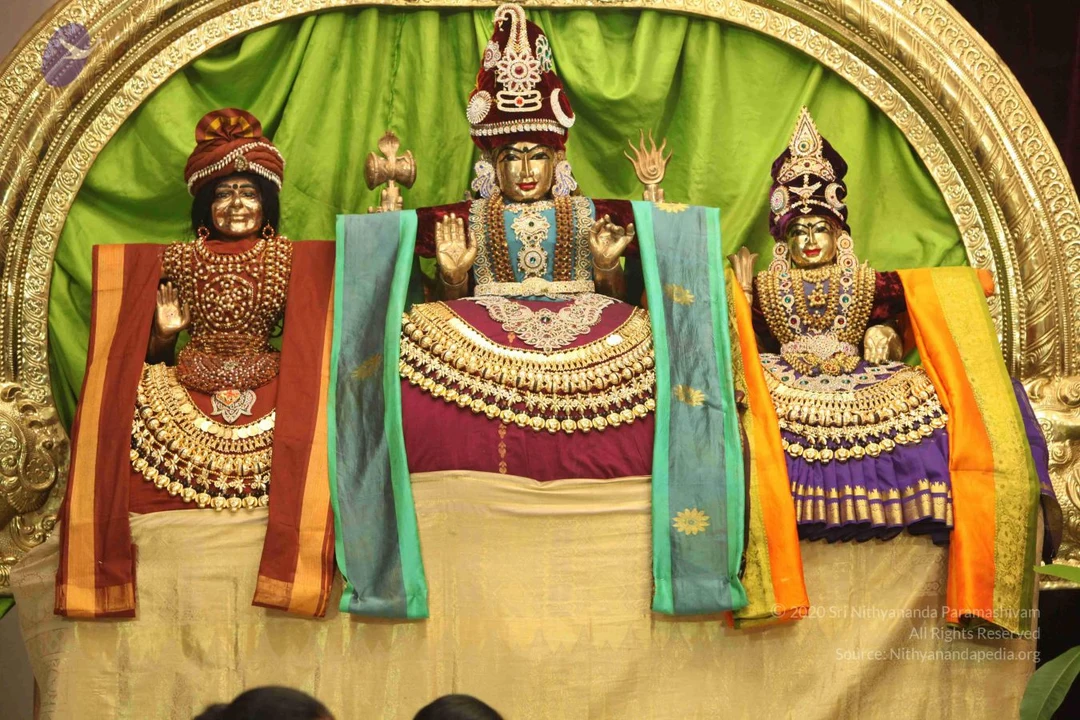
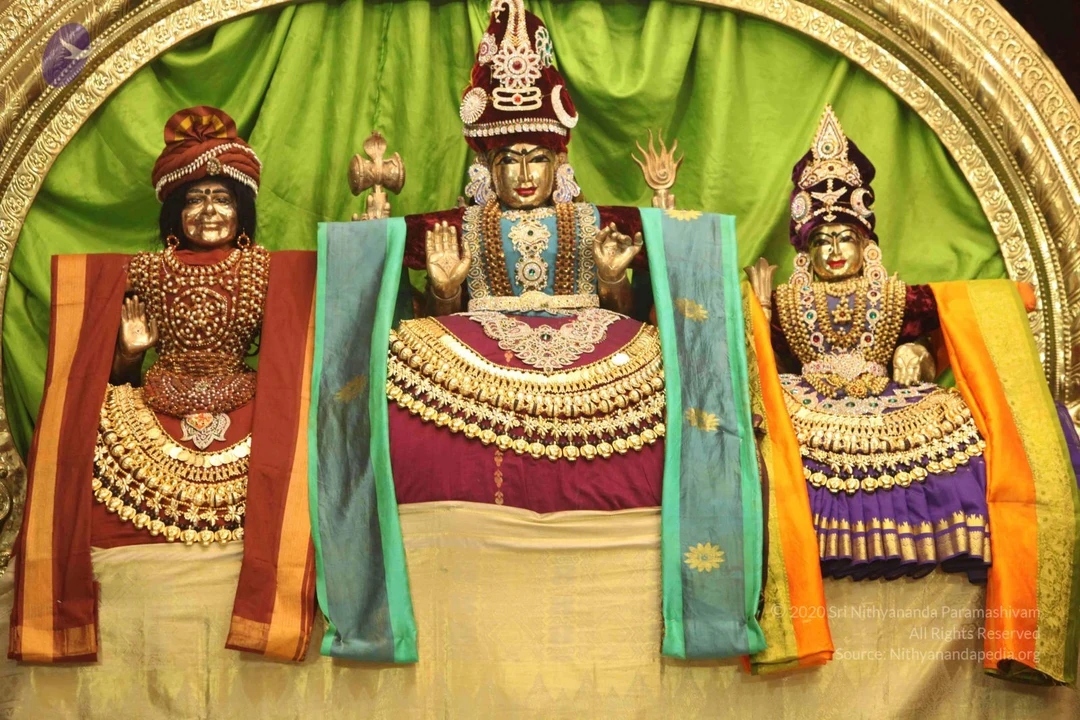
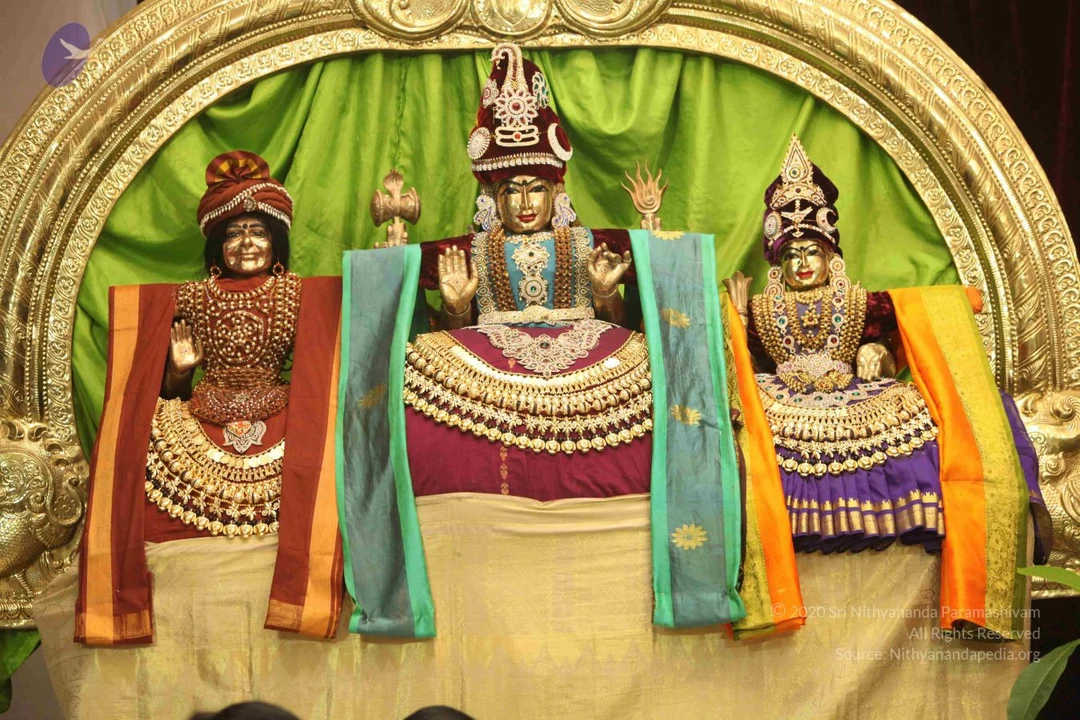
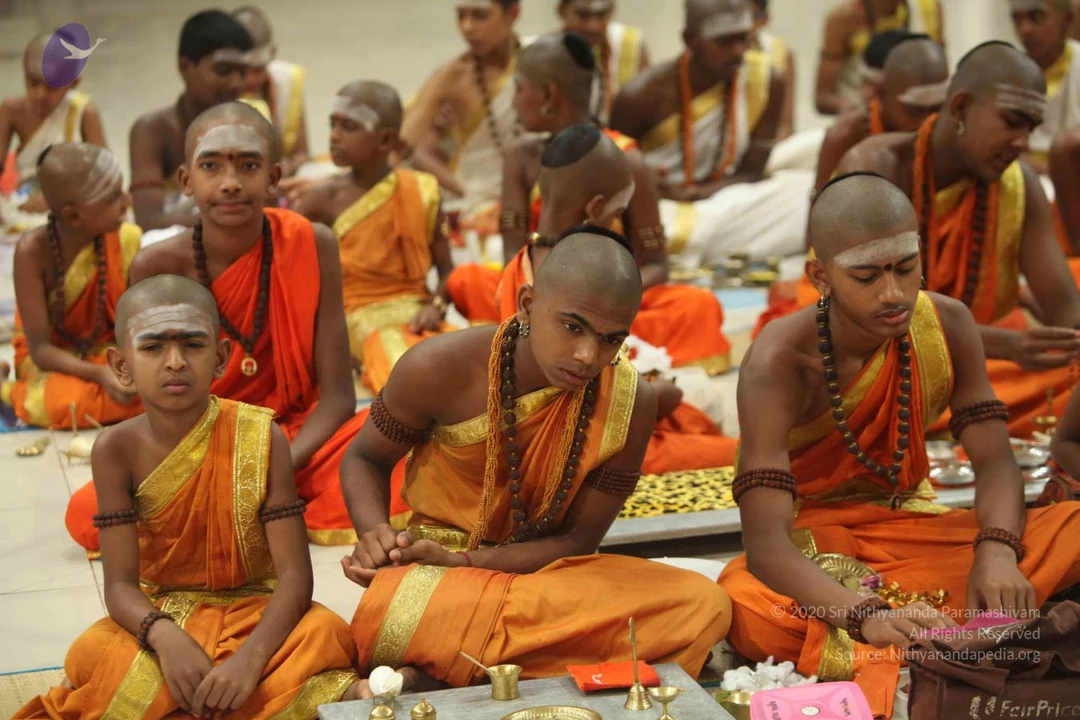
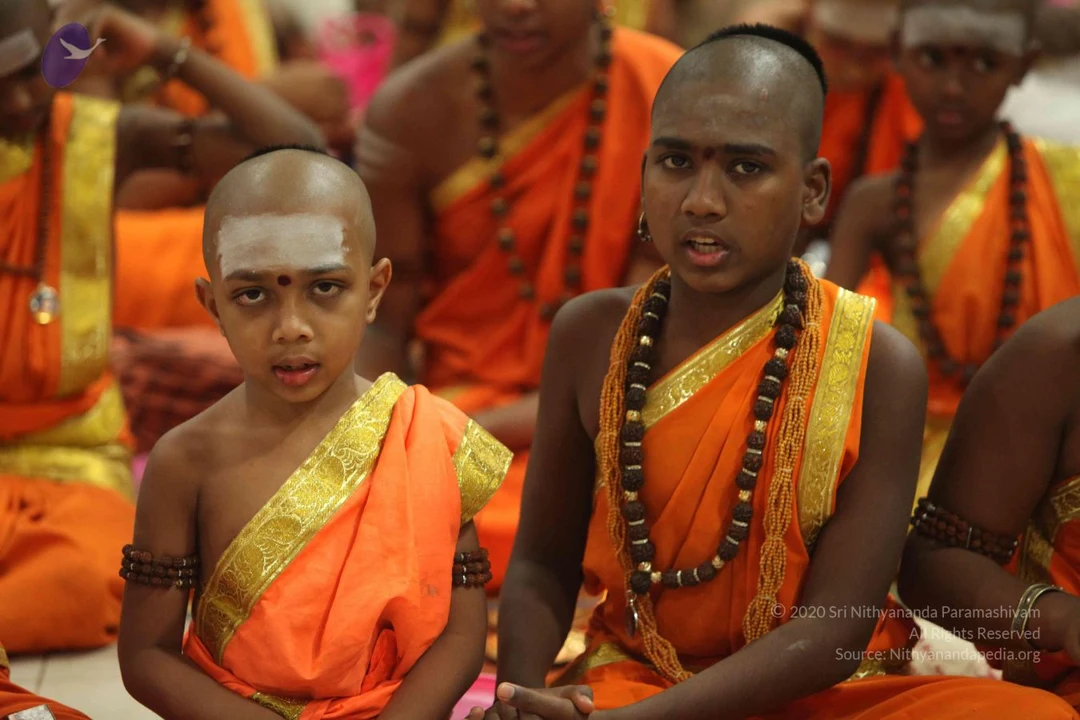
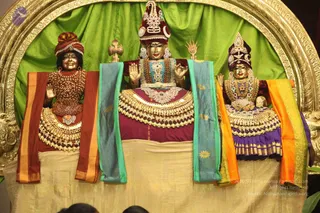
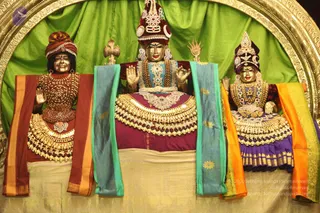
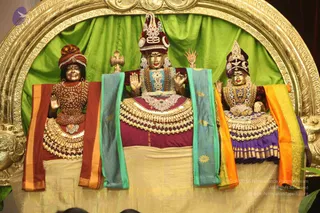
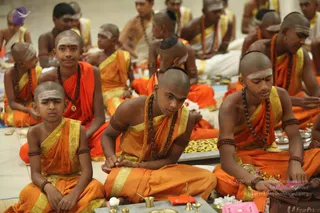
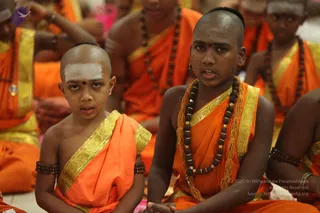
Three ornately dressed golden murti figures sit side by side on a raised golden-draped platform before a green curtain framed by an ornate gold arch. The central figure wears a tall maroon crown with white and gold ornaments, a teal and maroon sash, heavy gold and beaded necklaces, and raises one hand in abhaya mudra. Figures on either side wear rust-red and purple-blue garments with orange and green shawls, layered gold necklaces and jewelled headwear. Partial heads of audience members appear at the bottom edge. The three figures are statues, not physical people.Three gold-faced deity murti are seated in a row before a green draped backdrop framed by an ornate gold arch. The central figure wears a tall red and gold crown, a blue and turquoise bodice with gold ornaments, a long rudraksha-style bead necklace, and a deep magenta skirt with tiered gold-bead jewellery; a teal shawl hangs at either side. The figure on the left wears a red-brown turban, a red choli with gold beading and a red-and-gold sari border, and the figure on the right wears a tall purple and gold crown, a purple skirt with gold bands, and an orange and gold shawl. Both flank figures raise their hands in blessing gestures, and a trident-like staff and ornament appear behind the central figure. No living people are visible.Three golden deity murtis seated side by side on a raised platform before a green draped backdrop and an ornate gold arch. The central figure wears a tall crown with a crescent and pale blue-and-gold shawl, holds one hand in abhaya gesture and carries a small trident-like staff; the figures on either side wear crowns and jewelled necklaces, one in red and gold, the other in purple with orange-and-gold drapes. Gold jewellery, garlands and layered gold waist ornaments adorn all three, and the lower area is covered with cream silk. Lower corners show dark silhouettes of people, not clearly identifiable. This is a photograph of deity statues rather than living people.A smiling man with a red turban and a red bindi sits cross-legged on a wooden throne draped with a striped tiger-skin cloth, in a set decorated with green drapery, trailing green vines with red flowers, and potted plants. He wears red-orange robes with a yellow sash, a long rudraksha mala with large gold-toned beads, and red beaded armbands. Behind him stands a golden figure flanked by carved wooden deity figures. The scene resembles a satsang stage setup.A seated group of young boys and adolescent men in saffron-orange robes with gold borders sits on a white floor during a ritual gathering. Most have shaved heads and white sacred ash lines on their foreheads, and several wear rudraksha mala necklaces and wrist bands. In the foreground, small brass cups, a brass lamp and a small burning incense stick sit on a low table, with white flowers and a pink envelope nearby. The seated participants appear attentive and some have hands folded or resting on laps.Close photo of young shaved-headed boys in saffron-orange robes with gold borders, seated in a hall during a satsang. The foreground boy on the left wears a white vertical tilak and a red bindi and has bare arms with wooden bead bands. The boy on the right wears a long orange-and-gold shawl, a multi-strand rudraksha mala and a gold-coloured cord, and has his hands folded. Several more seated boys in orange are visible behind them.

Nithya-Kirtan

8 photosSource gallery
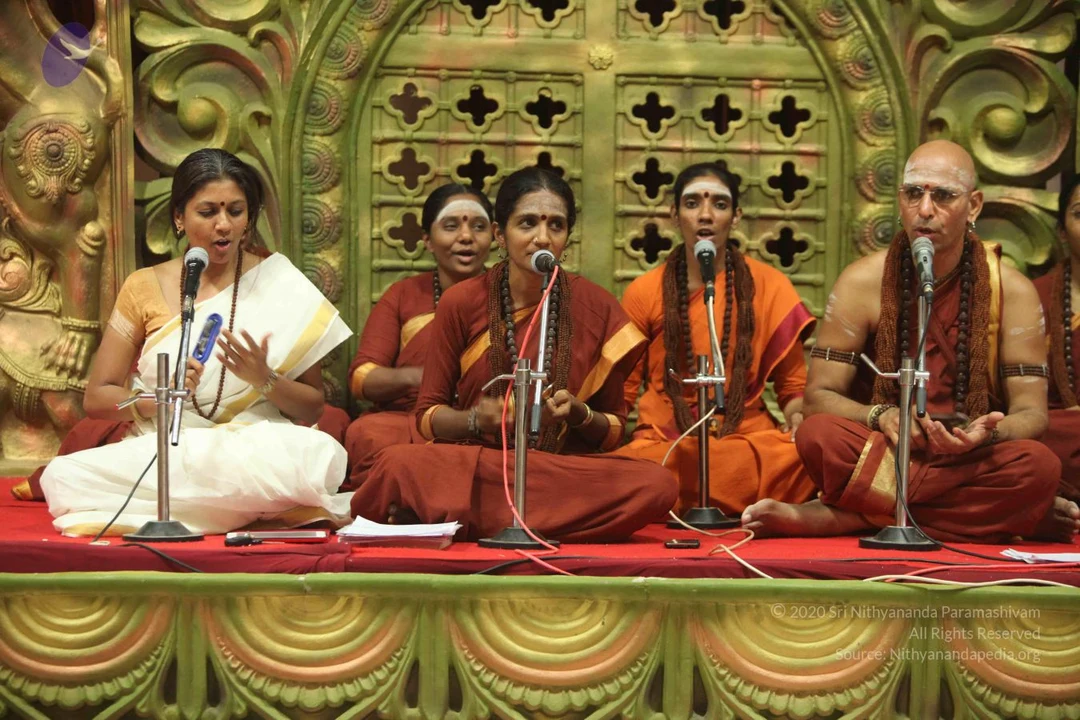
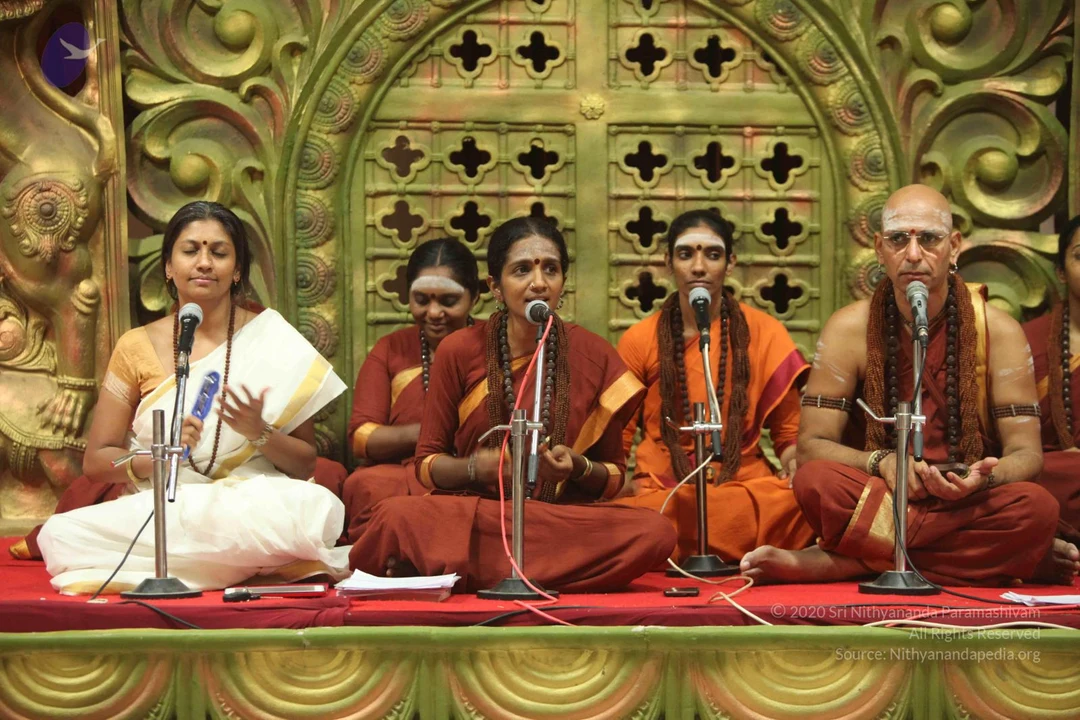
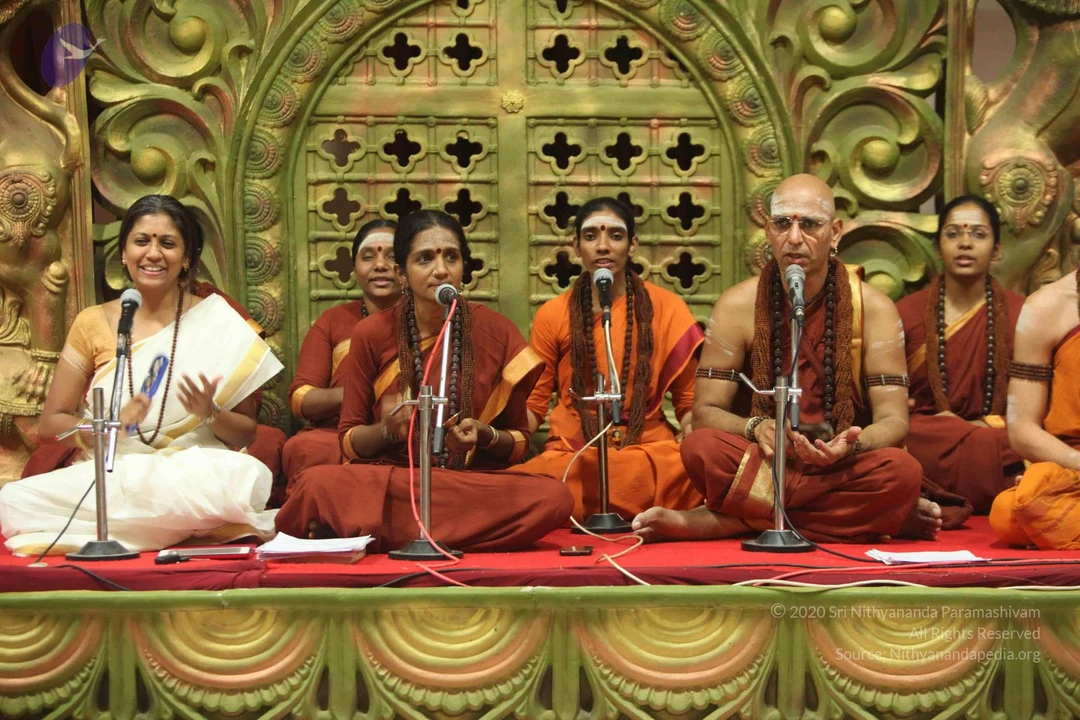
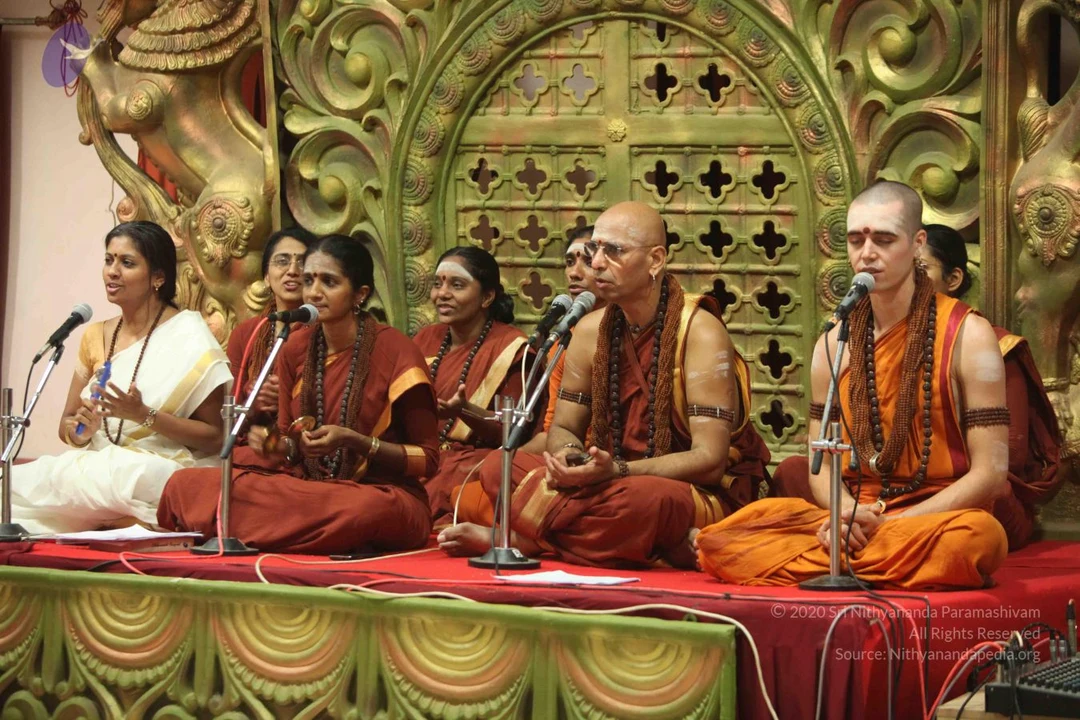
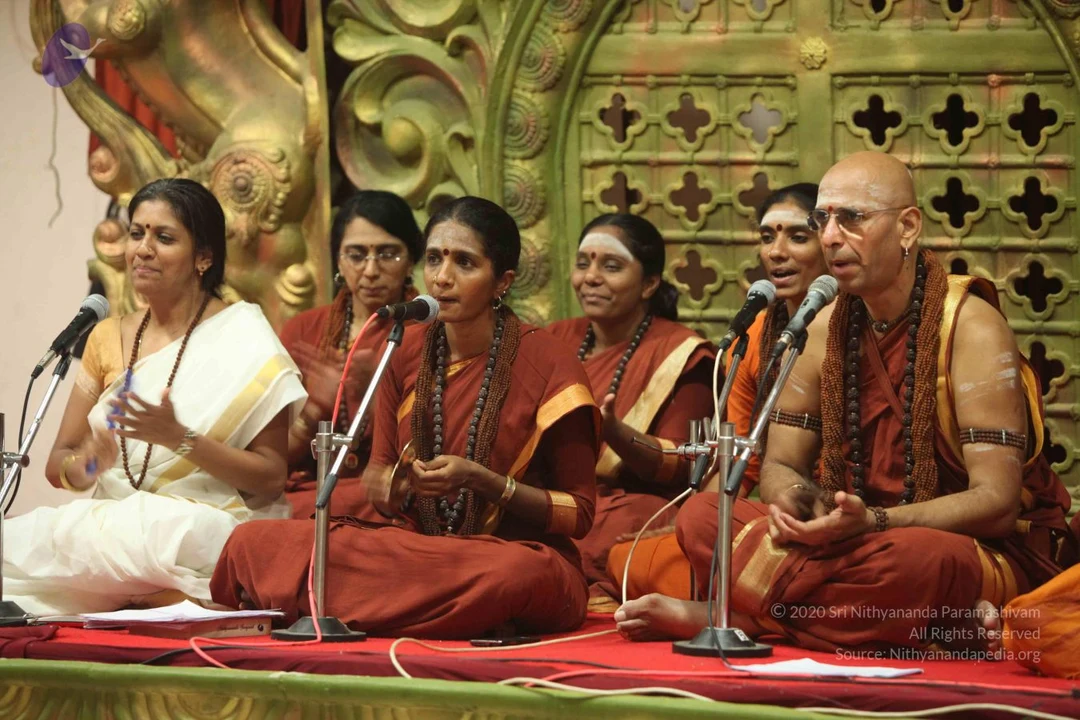
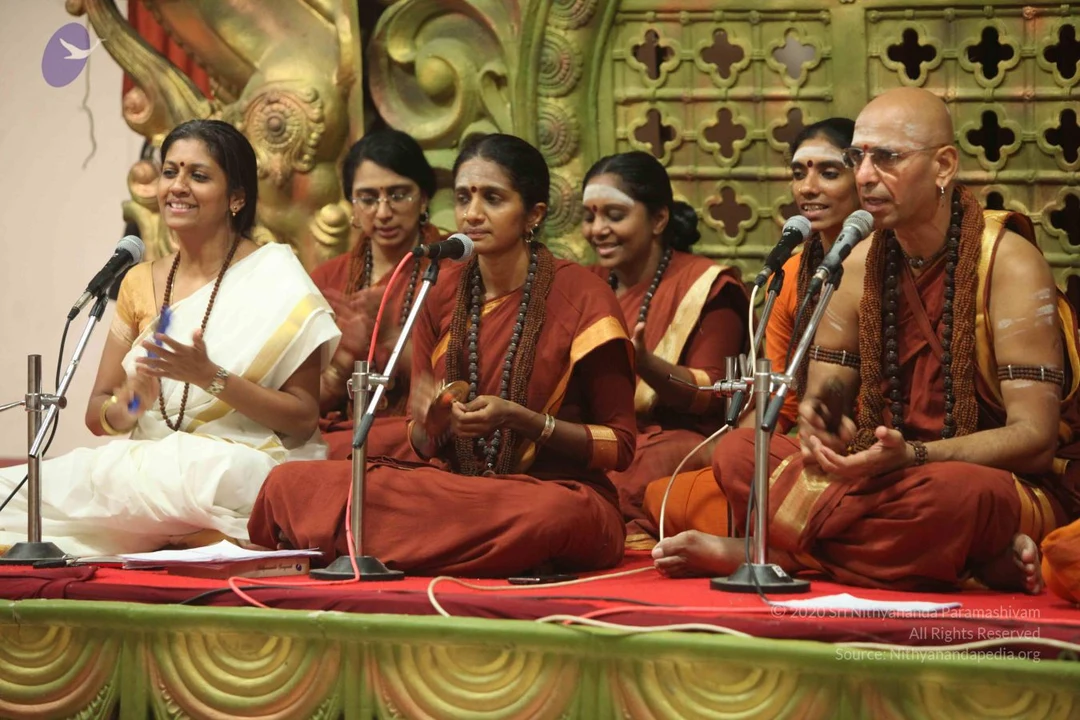
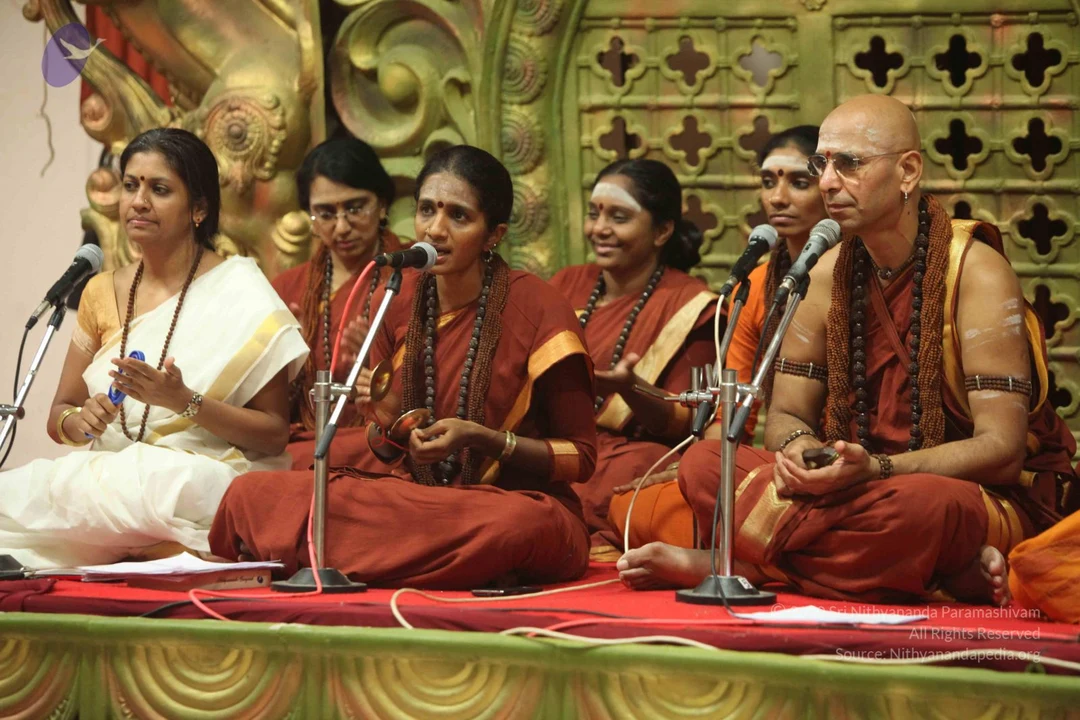
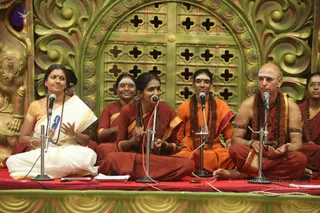
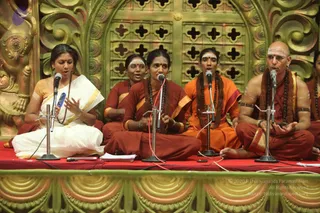
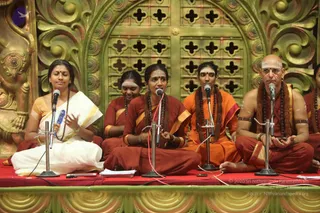
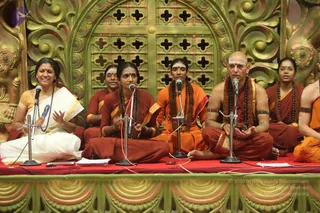
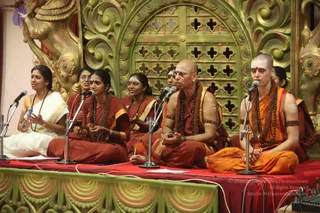
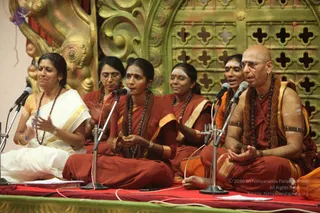
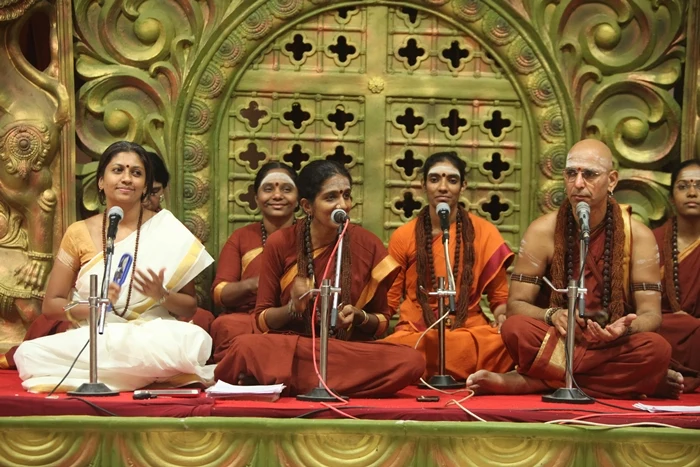
A photograph of a seated discourse on a stage with an ornate green-and-gold carved backdrop featuring a latticed gate. Six people sit on a red-draped platform before microphones. On the far left a woman in a white and gold-bordered dress with a rudraksha mala and a blue-handled object in her hand speaks gesturing with one hand. Next to her a woman in maroon with a white forehead mark sits, followed by a woman in maroon with a kumkum bindi and a long rudraksha mala who speaks into a microphone. A young person in saffron-orange robes with a white forehead mark and long rudraksha beads sits beside a bald man in maroon-red dhoti and shawl with arm bands, rudraksha mala and spectacles, his palms open. A woman in maroon and a woman in white sit at the right edge. Papers lie on the stage.A photograph of a seated group of women and a bald man chanting at microphones on a red-draped stage in front of an ornate golden carved wooden screen with lattice panels. On the left, a woman in a white and gold-bordered sari sings with her hands moving, a rudraksha mala around her neck. Beside her, women in red and orange saris with white forehead markings sit close together, one in orange holding a mala. On the right, a bald man wearing glasses, a rudraksha mala and a red-and-gold garment sits cross-legged with open palms. Papers lie on the stage and a red cable runs across it. Five people are visible.Five people sit on a red-draped stage before an ornate green and gold carved wooden backdrop with lattice panels, each seated behind a microphone stand. On the left a woman in a white and gold-bordered dress holds a small blue object and gestures with her hand. Beside her a woman in red and gold, a rudraksha mala around her neck, sits with eyes closed. At centre a woman in a red sari with gold border sings or recites into a microphone, hands near her chest. Next to her a figure in orange robes and long swept-back hair, with white markings on the forehead and arms, sits with a rudraksha mala. At far right a bald man in red-and-gold ceremonial dress, with white markings on his body, rudraksha malas and glasses, sits cross-legged with hands joined. Papers and a small device lie on the red cloth. The scene is a satsang recitation session.A photograph of a seated panel on a red stage before an ornate green and gold carved wooden doorway with lattice panels. Seven people sit in a row at microphones. On the far left a smiling woman in a white and gold-bordered saree gestures with one hand. Next to her a woman in rust-red clothing sits with hands clasped, and beside her a woman in rust-red and orange with long braided hair and rudraksha malas holds her hands in front of her chest. At centre a young person with long braided hair wears an orange robe and white forehead markings. To the right a bald man with white facial markings wears rudraksha malas and a rust-red dhoti, gesturing with open palms. Further right a woman with white forehead markings wears a rudraksha mala, and at the far right edge another person in orange sits partly visible. Papers and a small device lie on the stage in front.A satsang on a red-draped stage before an ornate gold-and-green carved wooden arch with lattice panels. Seven people sit cross-legged on the stage in front of standing microphones. On the far right, a shaved-headed young man in saffron-orange robes, rudraksha malas and white forehead and arm markings sits with eyes closed and hands folded, singing into a microphone. Beside him, a balding older man in saffron robes, glasses and rudraksha malas sits with hands in his lap. Women in maroon and red-orange saris with rudraksha malas and kumkum on their foreheads sit in the middle, several singing or playing small hand percussion, while a woman in a white and gold-bordered sari sits at far left, gesturing as she speaks.A group of people sits cross-legged on a red stage for a chanting session, each at a microphone stand. On the far right, a bald man wearing glasses, a rudraksha mala and an orange-and-gold shawl over a rust-coloured garment speaks into a mic with his palms together. Beside him, women in rust and orange saris with rudraksha malas chant with white tilak marks on their foreheads. On the left, a woman in a white and gold-bordered sari with a red-beaded necklace gestures with her hands. Behind them, an ornate green and gold carved wooden screen stands. Printed text reads Sri Nithyananda Paramashivam

Nithya-Satsang
31 photosSource gallery
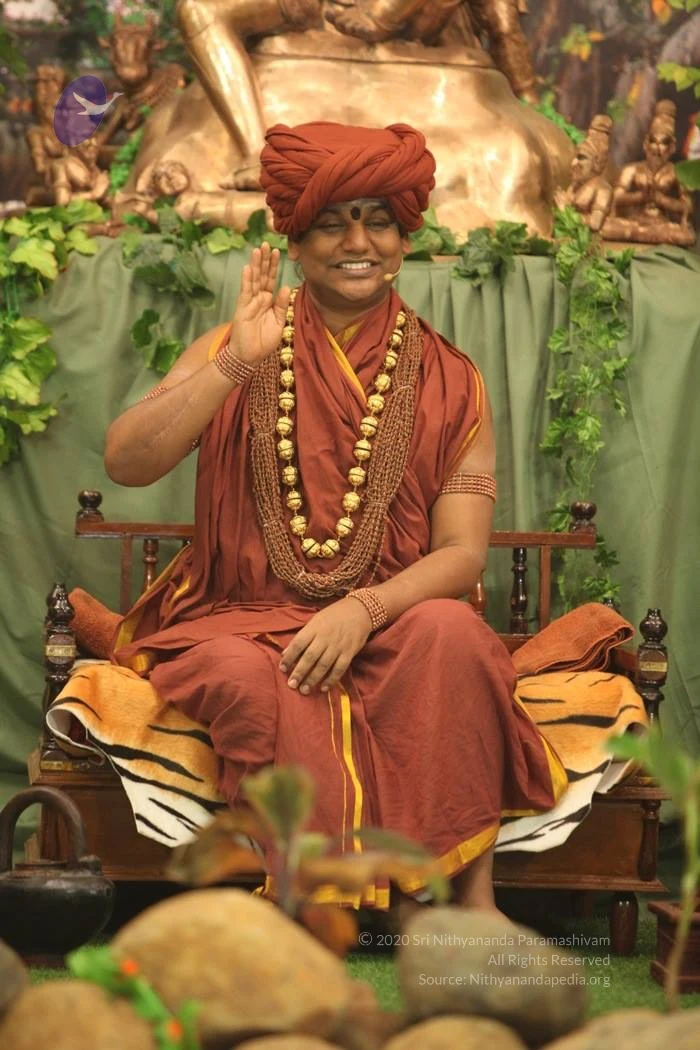
A photograph of a seated man in a saffron-orange turban and matching saffron robes with a gold-yellow border, wearing a long multi-strand gold bead necklace over a rudraksha mala and gold bangles. He sits on a wooden throne-like chair with a tiger-striped cloth draped over the seat, raising his right hand in a blessing gesture and smiling. Behind him are a gold statue of a seated deity and smaller golden figures, with green draped fabric, leafy vines and orange flowers framing the stage.A seated man in a saffron-orange robe with a matching orange turban and a long necklace of gold beads and rudraksha malas raises his right hand in greeting while smiling. He sits on a dark wooden throne with carved finials and a tiger-striped cloth draped over the seat, his bare feet visible. Behind him a gold-coloured figure and small gold deity murtis stand among green foliage and a green drape with trailing red-flowered vines. A water bottle sits at lower left. Visible evidence shows a seated figure in ornate saffron robes and rudraksha malas on a throne, matching the page's a person flag, so this is a person depiction in person.A seated man in saffron-orange robes and a matching orange turban with a red tilak on his forehead sits with palms pressed together in namaste, smiling. He wears a long rudraksha mala with large gold beads and red wrist beads, and a small headset microphone is visible near his face. He sits on a wooden chair with a yellow and orange cloth draped over it. Behind him is a green draped backdrop decorated with green leaves and vines, and golden deity statues and a golden bull figure are visible above.A man seated cross-legged on a wooden chair with a yellow cushion, barefoot, dressed in a saffron-orange robe with yellow trim and a matching red-orange turban with a red tilak on the forehead. He wears a long multi-strand rudraksha mala and a ceremonial gold bead necklace, a small wrist mala, and a headset microphone, smiling with hands folded in his lap. Behind him is a green draped backdrop decorated with leafy green vines and small red flowers, with golden statues of seated figures and a large golden bull sculpture above. Swamiji (probable): the seated figure with turban, saffron robe, rudraksha mala and gold necklace matches the page's Swamiji reference, shown in person.A smiling man in saffron-orange robes sits cross-legged on a wooden chair draped with a tiger-striped yellow cloth, hands clasped in his lap, with bare feet. He wears a red-orange turban with a red tilak on his forehead, a headset microphone, and a long rudraksha mala with ornate gold beads. Behind him is a green draped backdrop decorated with green leaves and vines, a large golden statue, and small seated deity murtis on both sides. Swamiji (probable): the saffron robes, turban, rudraksha mala and gold necklace match the appearance cues for the figure. Scene resembles a satsang seating.A man seated cross-legged on a wooden throne-style chair speaks into a headset microphone during a satsang. He wears a red-orange turban, a red-orange robe with an orange and gold sash, and a large gold-beaded rudraksha mala. A tilak marks his forehead. Behind him are golden statues of seated figures and a golden form, green draped fabric, and green vines with small red flowers. Probable Swamiji (saffron turban and robes, rudraksha mala and gold necklace) is teaching as the speaker of the satsang.

Nithya-Puja

7 photosSource gallery
Three ornately dressed golden murti figures sit side by side on a raised golden-draped platform before a green curtain framed by an ornate gold arch. The central figure wears a tall maroon crown with white and gold ornaments, a teal and maroon sash, heavy gold and beaded necklaces, and raises one hand in abhaya mudra. Figures on either side wear rust-red and purple-blue garments with orange and green shawls, layered gold necklaces and jewelled headwear. Partial heads of audience members appear at the bottom edge. The three figures are statues, not physical people.Three gold-faced deity murti are seated in a row before a green draped backdrop framed by an ornate gold arch. The central figure wears a tall red and gold crown, a blue and turquoise bodice with gold ornaments, a long rudraksha-style bead necklace, and a deep magenta skirt with tiered gold-bead jewellery; a teal shawl hangs at either side. The figure on the left wears a red-brown turban, a red choli with gold beading and a red-and-gold sari border, and the figure on the right wears a tall purple and gold crown, a purple skirt with gold bands, and an orange and gold shawl. Both flank figures raise their hands in blessing gestures, and a trident-like staff and ornament appear behind the central figure. No living people are visible.Three golden deity murtis seated side by side on a raised platform before a green draped backdrop and an ornate gold arch. The central figure wears a tall crown with a crescent and pale blue-and-gold shawl, holds one hand in abhaya gesture and carries a small trident-like staff; the figures on either side wear crowns and jewelled necklaces, one in red and gold, the other in purple with orange-and-gold drapes. Gold jewellery, garlands and layered gold waist ornaments adorn all three, and the lower area is covered with cream silk. Lower corners show dark silhouettes of people, not clearly identifiable. This is a photograph of deity statues rather than living people.A smiling man with a red turban and a red bindi sits cross-legged on a wooden throne draped with a striped tiger-skin cloth, in a set decorated with green drapery, trailing green vines with red flowers, and potted plants. He wears red-orange robes with a yellow sash, a long rudraksha mala with large gold-toned beads, and red beaded armbands. Behind him stands a golden figure flanked by carved wooden deity figures. The scene resembles a satsang stage setup.A seated group of young boys and adolescent men in saffron-orange robes with gold borders sits on a white floor during a ritual gathering. Most have shaved heads and white sacred ash lines on their foreheads, and several wear rudraksha mala necklaces and wrist bands. In the foreground, small brass cups, a brass lamp and a small burning incense stick sit on a low table, with white flowers and a pink envelope nearby. The seated participants appear attentive and some have hands folded or resting on laps.Close photo of young shaved-headed boys in saffron-orange robes with gold borders, seated in a hall during a satsang. The foreground boy on the left wears a white vertical tilak and a red bindi and has bare arms with wooden bead bands. The boy on the right wears a long orange-and-gold shawl, a multi-strand rudraksha mala and a gold-coloured cord, and has his hands folded. Several more seated boys in orange are visible behind them.

Nithya-Kirtan

8 photosSource gallery
A photograph of a seated discourse on a stage with an ornate green-and-gold carved backdrop featuring a latticed gate. Six people sit on a red-draped platform before microphones. On the far left a woman in a white and gold-bordered dress with a rudraksha mala and a blue-handled object in her hand speaks gesturing with one hand. Next to her a woman in maroon with a white forehead mark sits, followed by a woman in maroon with a kumkum bindi and a long rudraksha mala who speaks into a microphone. A young person in saffron-orange robes with a white forehead mark and long rudraksha beads sits beside a bald man in maroon-red dhoti and shawl with arm bands, rudraksha mala and spectacles, his palms open. A woman in maroon and a woman in white sit at the right edge. Papers lie on the stage.A photograph of a seated group of women and a bald man chanting at microphones on a red-draped stage in front of an ornate golden carved wooden screen with lattice panels. On the left, a woman in a white and gold-bordered sari sings with her hands moving, a rudraksha mala around her neck. Beside her, women in red and orange saris with white forehead markings sit close together, one in orange holding a mala. On the right, a bald man wearing glasses, a rudraksha mala and a red-and-gold garment sits cross-legged with open palms. Papers lie on the stage and a red cable runs across it. Five people are visible.Five people sit on a red-draped stage before an ornate green and gold carved wooden backdrop with lattice panels, each seated behind a microphone stand. On the left a woman in a white and gold-bordered dress holds a small blue object and gestures with her hand. Beside her a woman in red and gold, a rudraksha mala around her neck, sits with eyes closed. At centre a woman in a red sari with gold border sings or recites into a microphone, hands near her chest. Next to her a figure in orange robes and long swept-back hair, with white markings on the forehead and arms, sits with a rudraksha mala. At far right a bald man in red-and-gold ceremonial dress, with white markings on his body, rudraksha malas and glasses, sits cross-legged with hands joined. Papers and a small device lie on the red cloth. The scene is a satsang recitation session.A photograph of a seated panel on a red stage before an ornate green and gold carved wooden doorway with lattice panels. Seven people sit in a row at microphones. On the far left a smiling woman in a white and gold-bordered saree gestures with one hand. Next to her a woman in rust-red clothing sits with hands clasped, and beside her a woman in rust-red and orange with long braided hair and rudraksha malas holds her hands in front of her chest. At centre a young person with long braided hair wears an orange robe and white forehead markings. To the right a bald man with white facial markings wears rudraksha malas and a rust-red dhoti, gesturing with open palms. Further right a woman with white forehead markings wears a rudraksha mala, and at the far right edge another person in orange sits partly visible. Papers and a small device lie on the stage in front.A satsang on a red-draped stage before an ornate gold-and-green carved wooden arch with lattice panels. Seven people sit cross-legged on the stage in front of standing microphones. On the far right, a shaved-headed young man in saffron-orange robes, rudraksha malas and white forehead and arm markings sits with eyes closed and hands folded, singing into a microphone. Beside him, a balding older man in saffron robes, glasses and rudraksha malas sits with hands in his lap. Women in maroon and red-orange saris with rudraksha malas and kumkum on their foreheads sit in the middle, several singing or playing small hand percussion, while a woman in a white and gold-bordered sari sits at far left, gesturing as she speaks.A group of people sits cross-legged on a red stage for a chanting session, each at a microphone stand. On the far right, a bald man wearing glasses, a rudraksha mala and an orange-and-gold shawl over a rust-coloured garment speaks into a mic with his palms together. Beside him, women in rust and orange saris with rudraksha malas chant with white tilak marks on their foreheads. On the left, a woman in a white and gold-bordered sari with a red-beaded necklace gestures with her hands. Behind them, an ornate green and gold carved wooden screen stands. Printed text reads Sri Nithyananda Paramashivam

Nithya-Satsang
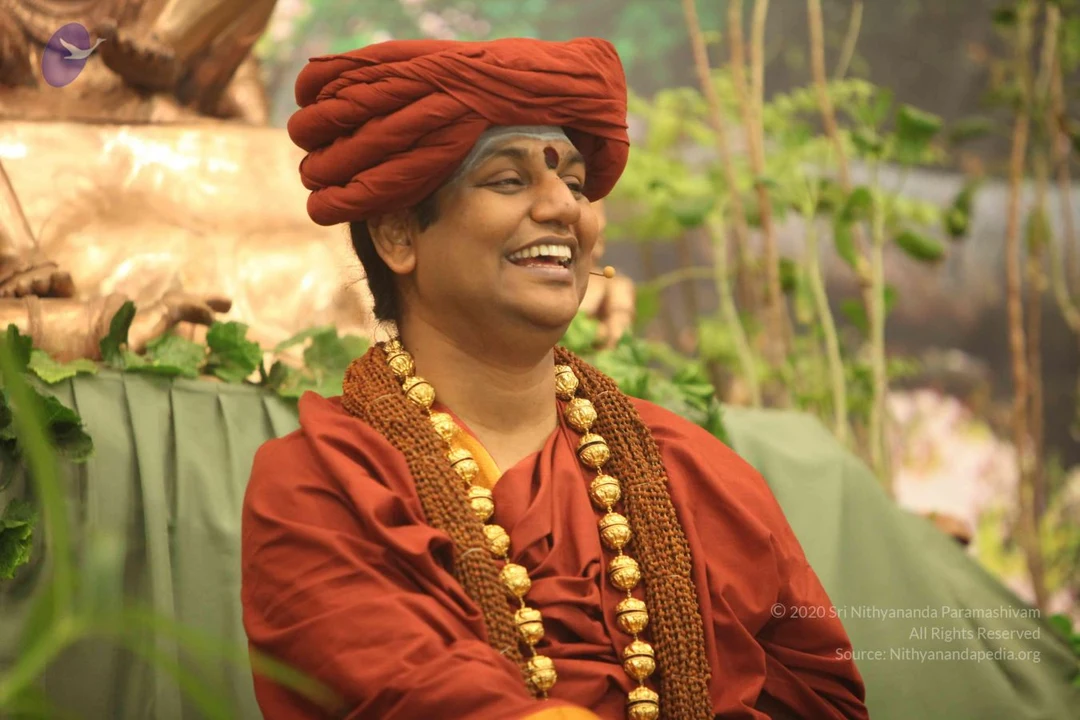
31 photosSource gallery
A photograph of a seated man in a saffron-orange turban and matching saffron robes with a gold-yellow border, wearing a long multi-strand gold bead necklace over a rudraksha mala and gold bangles. He sits on a wooden throne-like chair with a tiger-striped cloth draped over the seat, raising his right hand in a blessing gesture and smiling. Behind him are a gold statue of a seated deity and smaller golden figures, with green draped fabric, leafy vines and orange flowers framing the stage.A seated man in a saffron-orange robe with a matching orange turban and a long necklace of gold beads and rudraksha malas raises his right hand in greeting while smiling. He sits on a dark wooden throne with carved finials and a tiger-striped cloth draped over the seat, his bare feet visible. Behind him a gold-coloured figure and small gold deity murtis stand among green foliage and a green drape with trailing red-flowered vines. A water bottle sits at lower left. Visible evidence shows a seated figure in ornate saffron robes and rudraksha malas on a throne, matching the page's a person flag, so this is a person depiction in person.A seated man in saffron-orange robes and a matching orange turban with a red tilak on his forehead sits with palms pressed together in namaste, smiling. He wears a long rudraksha mala with large gold beads and red wrist beads, and a small headset microphone is visible near his face. He sits on a wooden chair with a yellow and orange cloth draped over it. Behind him is a green draped backdrop decorated with green leaves and vines, and golden deity statues and a golden bull figure are visible above.A man seated cross-legged on a wooden chair with a yellow cushion, barefoot, dressed in a saffron-orange robe with yellow trim and a matching red-orange turban with a red tilak on the forehead. He wears a long multi-strand rudraksha mala and a ceremonial gold bead necklace, a small wrist mala, and a headset microphone, smiling with hands folded in his lap. Behind him is a green draped backdrop decorated with leafy green vines and small red flowers, with golden statues of seated figures and a large golden bull sculpture above. Swamiji (probable): the seated figure with turban, saffron robe, rudraksha mala and gold necklace matches the page's Swamiji reference, shown in person.A smiling man in saffron-orange robes sits cross-legged on a wooden chair draped with a tiger-striped yellow cloth, hands clasped in his lap, with bare feet. He wears a red-orange turban with a red tilak on his forehead, a headset microphone, and a long rudraksha mala with ornate gold beads. Behind him is a green draped backdrop decorated with green leaves and vines, a large golden statue, and small seated deity murtis on both sides. Swamiji (probable): the saffron robes, turban, rudraksha mala and gold necklace match the appearance cues for the figure. Scene resembles a satsang seating.A man seated cross-legged on a wooden throne-style chair speaks into a headset microphone during a satsang. He wears a red-orange turban, a red-orange robe with an orange and gold sash, and a large gold-beaded rudraksha mala. A tilak marks his forehead. Behind him are golden statues of seated figures and a golden form, green draped fabric, and green vines with small red flowers. Probable Swamiji (saffron turban and robes, rudraksha mala and gold necklace) is teaching as the speaker of the satsang.