Skip to content
Saturday

4 April 2015

THE SUPREME PONTIFF OF HINDUISM HDH BHAGAVAN NITHYANANDA PARAMASHIVAM

Dated photos
60
Source pages
1
Media
2
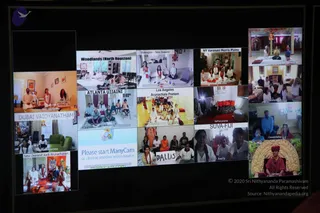
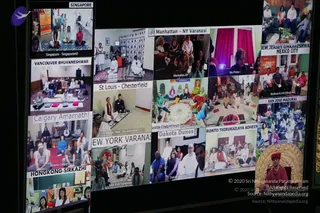
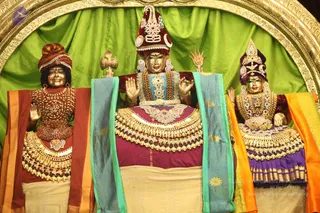
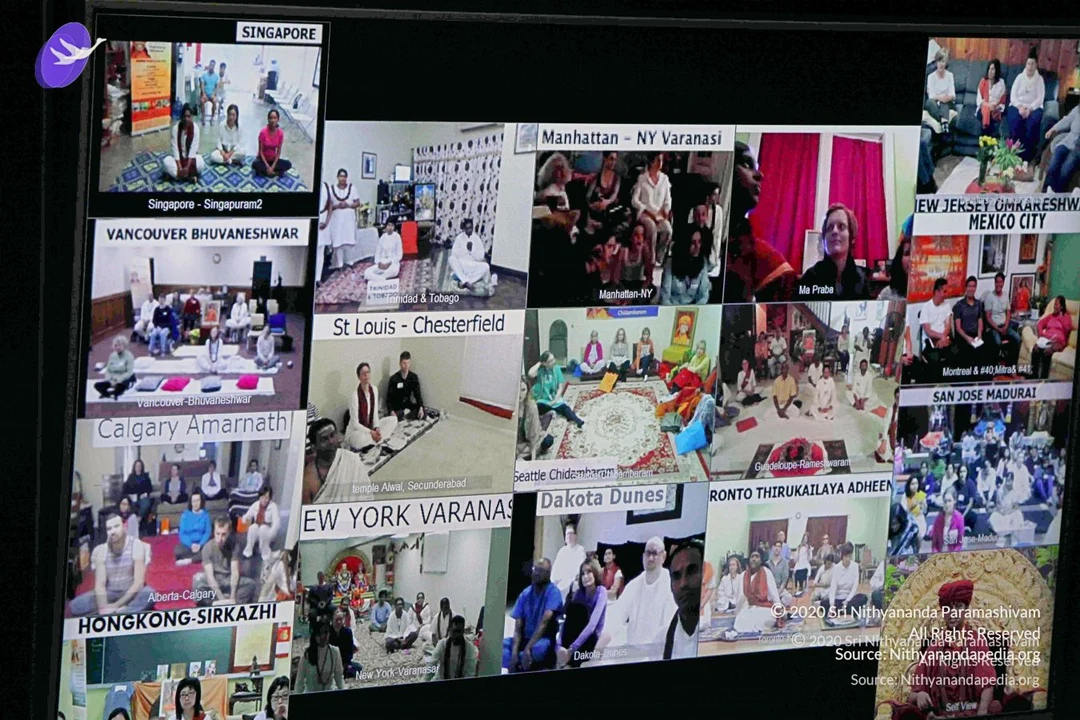
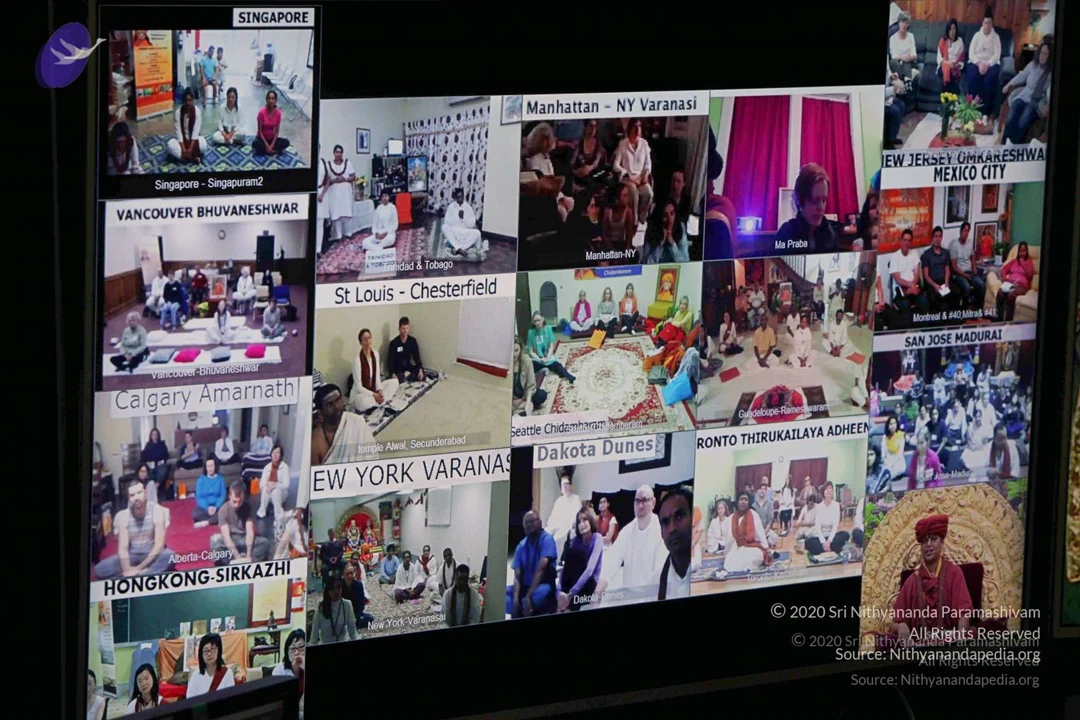
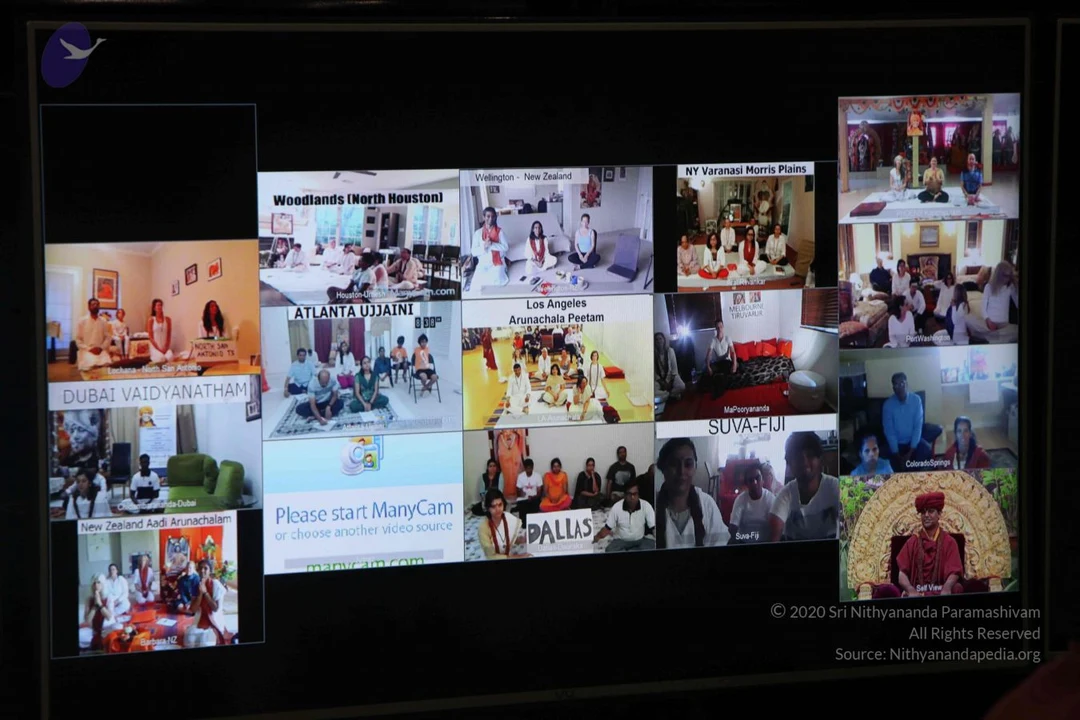
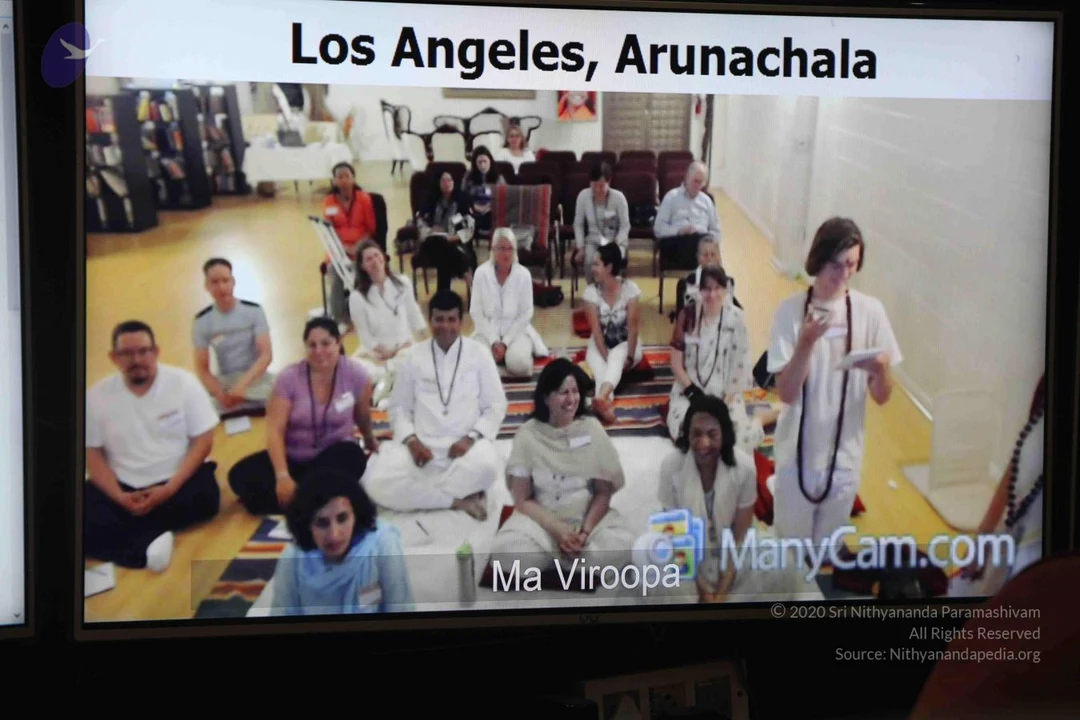
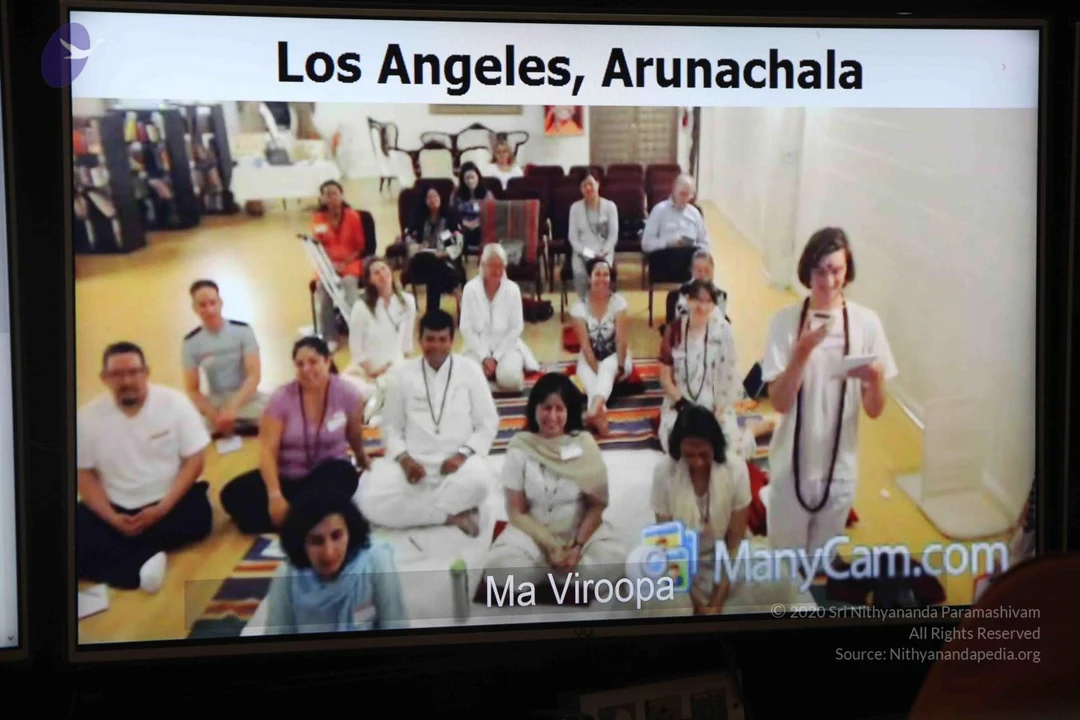
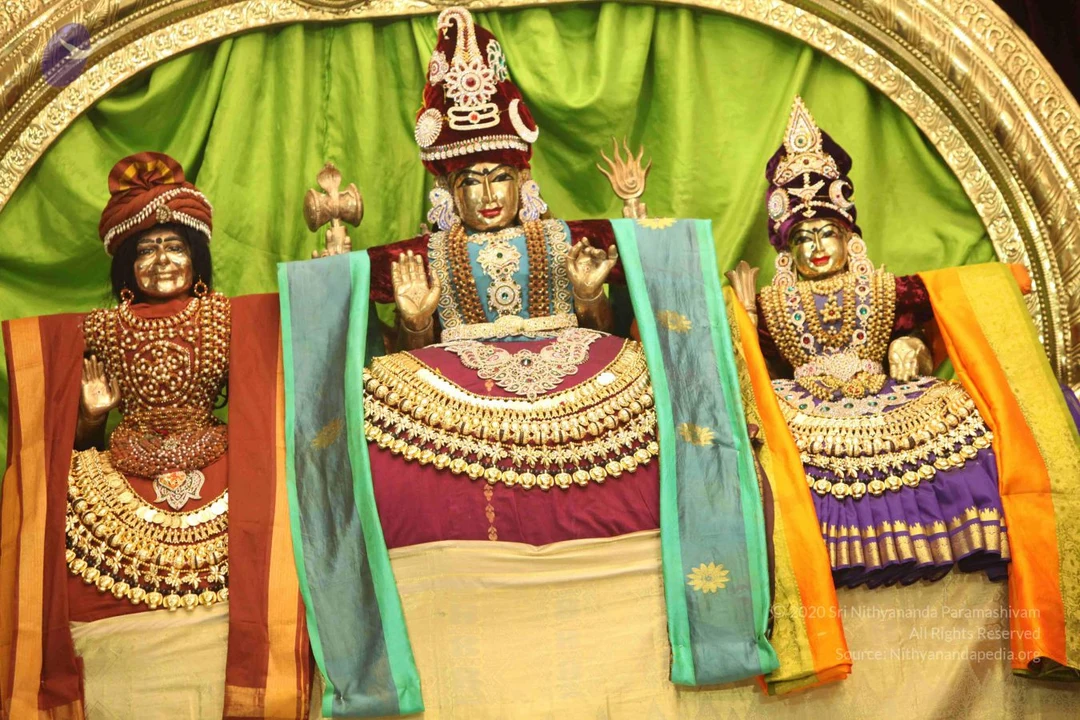
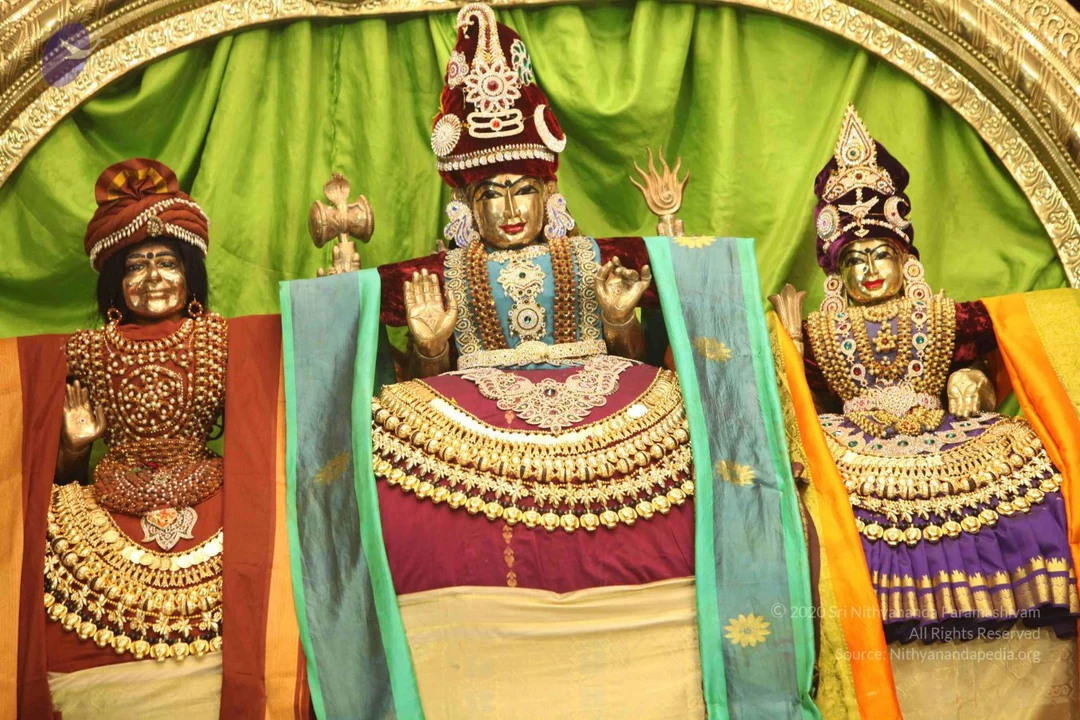
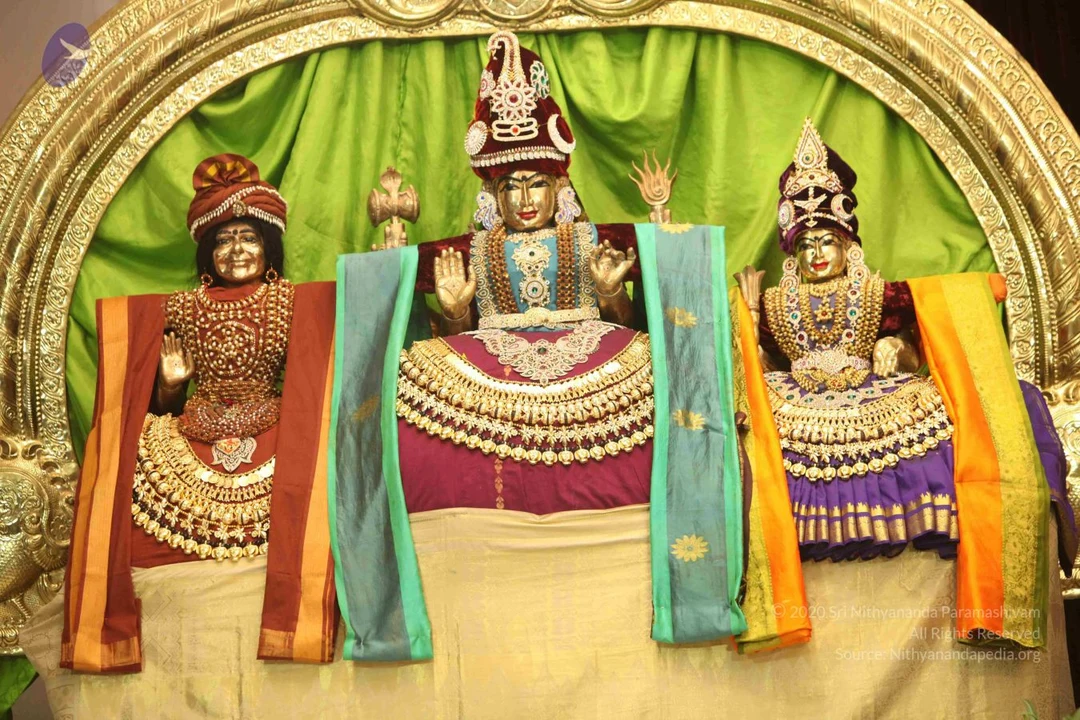
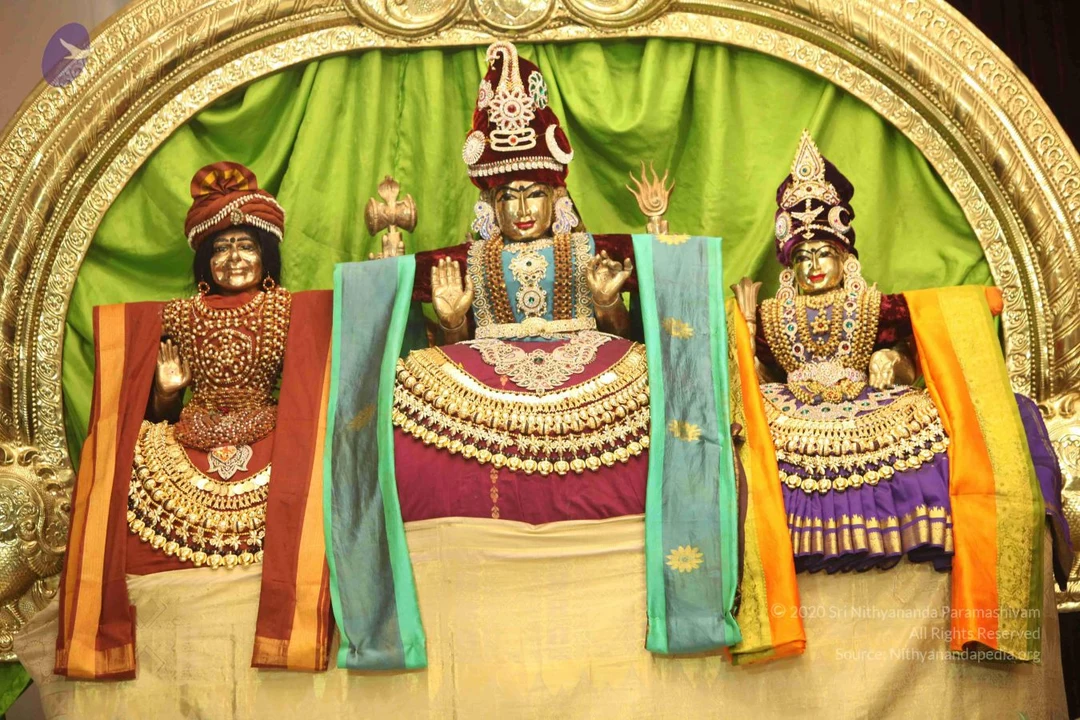
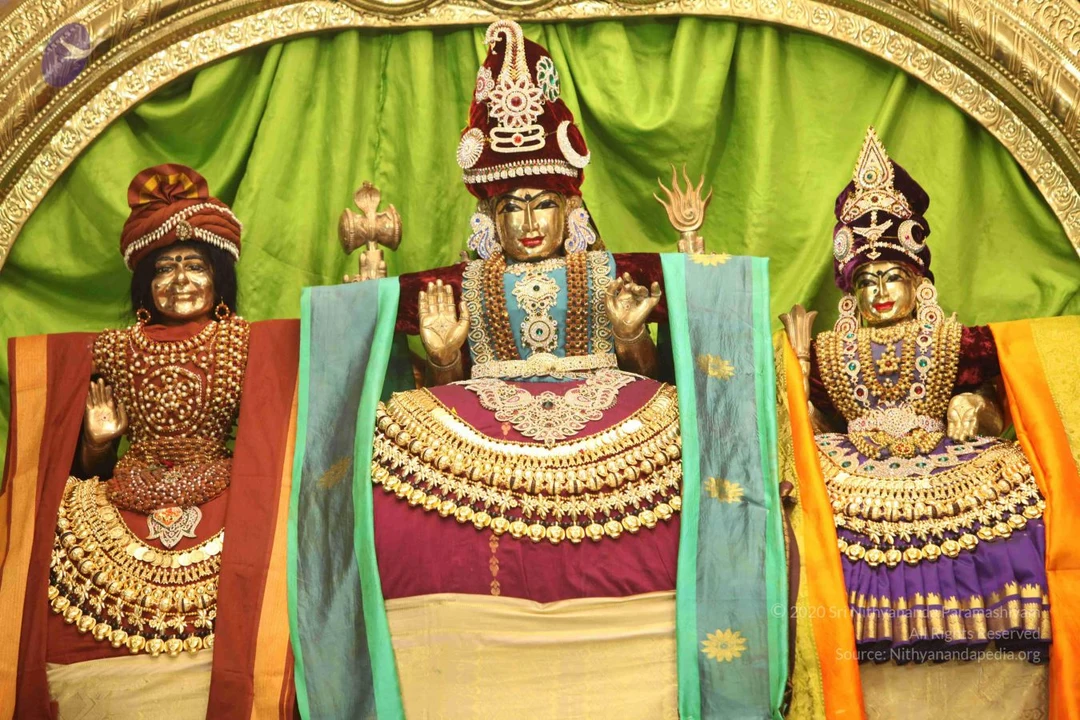
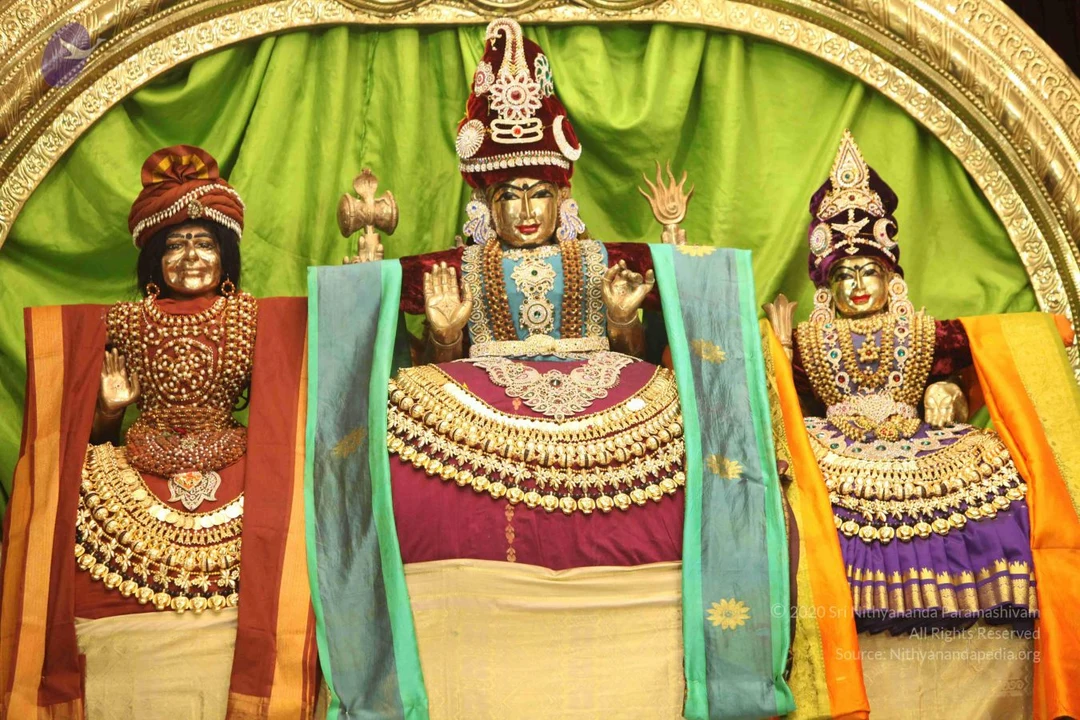
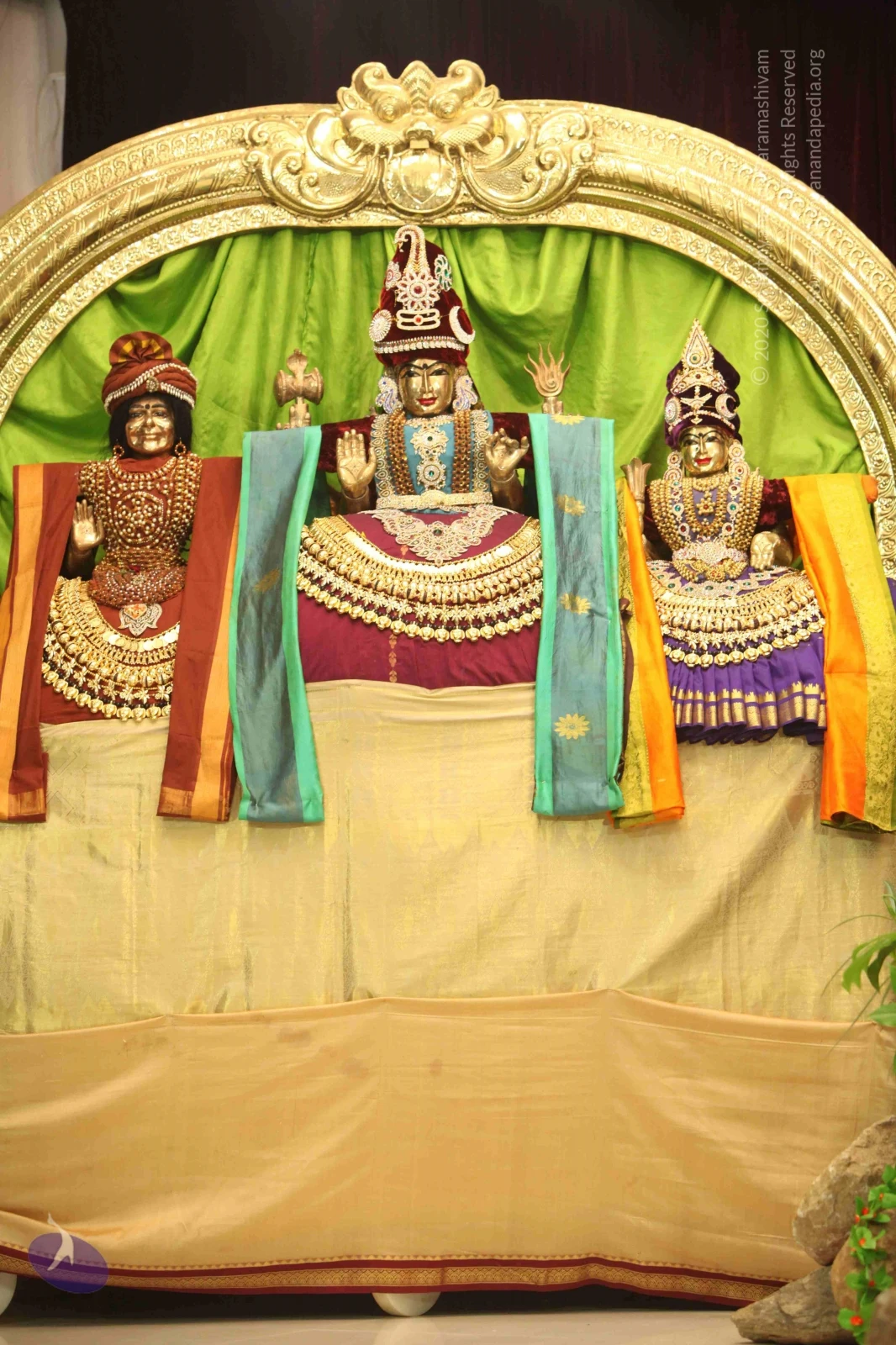
A photograph of a large display screen showing a multi-window video conference grid of many participant feeds from different locations. Tiles show groups seated on floors and chairs in rooms with labels such as Woodlands (North Houston), Wellington - New Zealand, NY Varanasi Morris Plains, ATLANTA UJJAINI, Los Angeles Arunachala Peetam, SUVA-FIJI, PALLAS, Dubai Vaidyanatham, New Zealand Aadi Arunachalam, and ColoradoSprings. A bottom-right tile shows a figure in a red turban and red robe seated on an ornate golden throne-like chair, labelled Self View. Other tiles show participants in white and saffron clothing in shrines and living rooms. The screen bezel and surrounding dark room are visible at the edges.Photograph of a large video-conference screen showing a grid of many live feeds from different centres, each labelled with a place name such as Singapore, Vancouver Bhuvaneshwar, Manhattan NY Varanasi, St Louis Chesterfield, Calgary Amarnath, Hongkong Sirkazhi, Dakota Dunes, Ronto Thirukalaya Adheen and San Jose Madurai. Inside the feeds, groups of people sit cross-legged on mats and carpets in meditation or satsang, many dressed in white, with some in saffron. In the lower right feed a figure in an orange-red turban and ornate robes sits on a gold-decorated seat in front of an ornate golden backdrop. Bright white text reads Sri Nithyananda Paramashivam pedia credit appears across the lower rightThree golden murti statues are seated side by side on a raised platform before a green draped backdrop framed by an ornate gold arch. The central figure wears a tall red and gold crown, a red and gold blouse, a long rudraksha-style bead necklace, and a wide maroon skirt heavy with gold ornaments, holding a trident-like staff on the left and a flame-shaped object on the right, with open palms raised. The figure on the left wears a red-brown turban and a maroon and gold outfit with layered gold necklaces; the figure on the right wears a tall crown with gold ornaments, a purple skirt with gold borders, and layered gold necklaces. Turquoise and orange drapes hang over the seated figures. These are statues, not living people.

April 04 2015

Original wiki page
Contents

Title:

THE SUPREME PONTIFF OF HINDUISM HDH BHAGAVAN NITHYANANDA PARAMASHIVAM

Description

Nithyananda Times - 04th April, 2015

VideoAudio

Photos Of The Day:
E-KALPATARU

NDY

Photos from this day

View all 60 photos

Photos Of The Day:
41 photosSource gallery
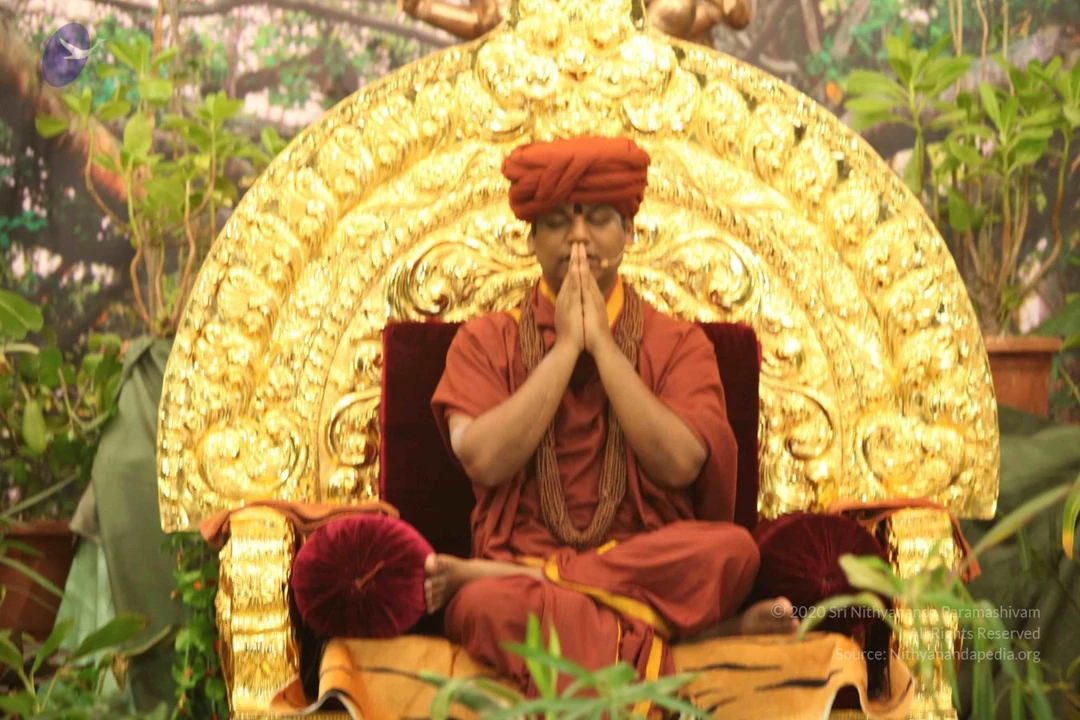
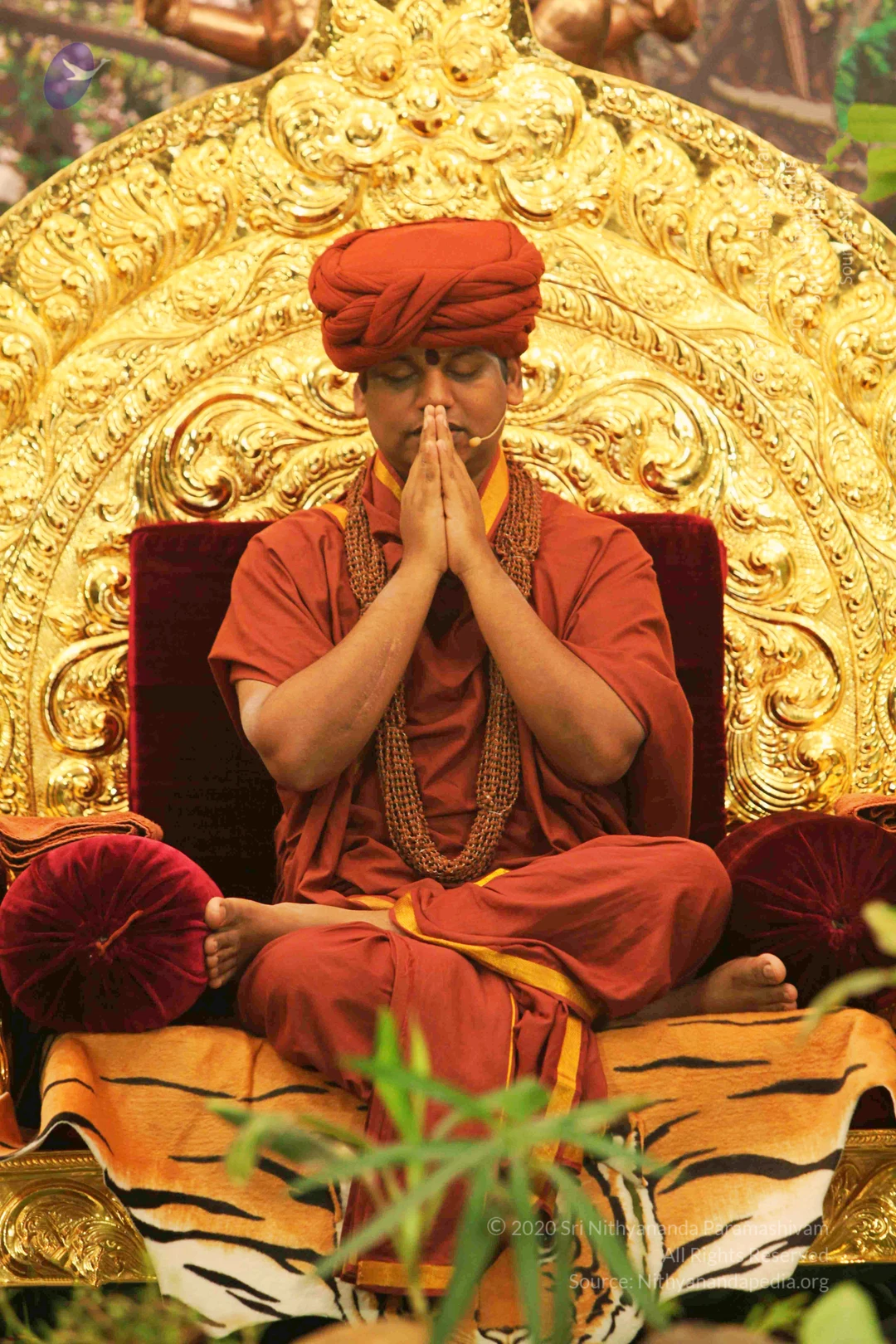
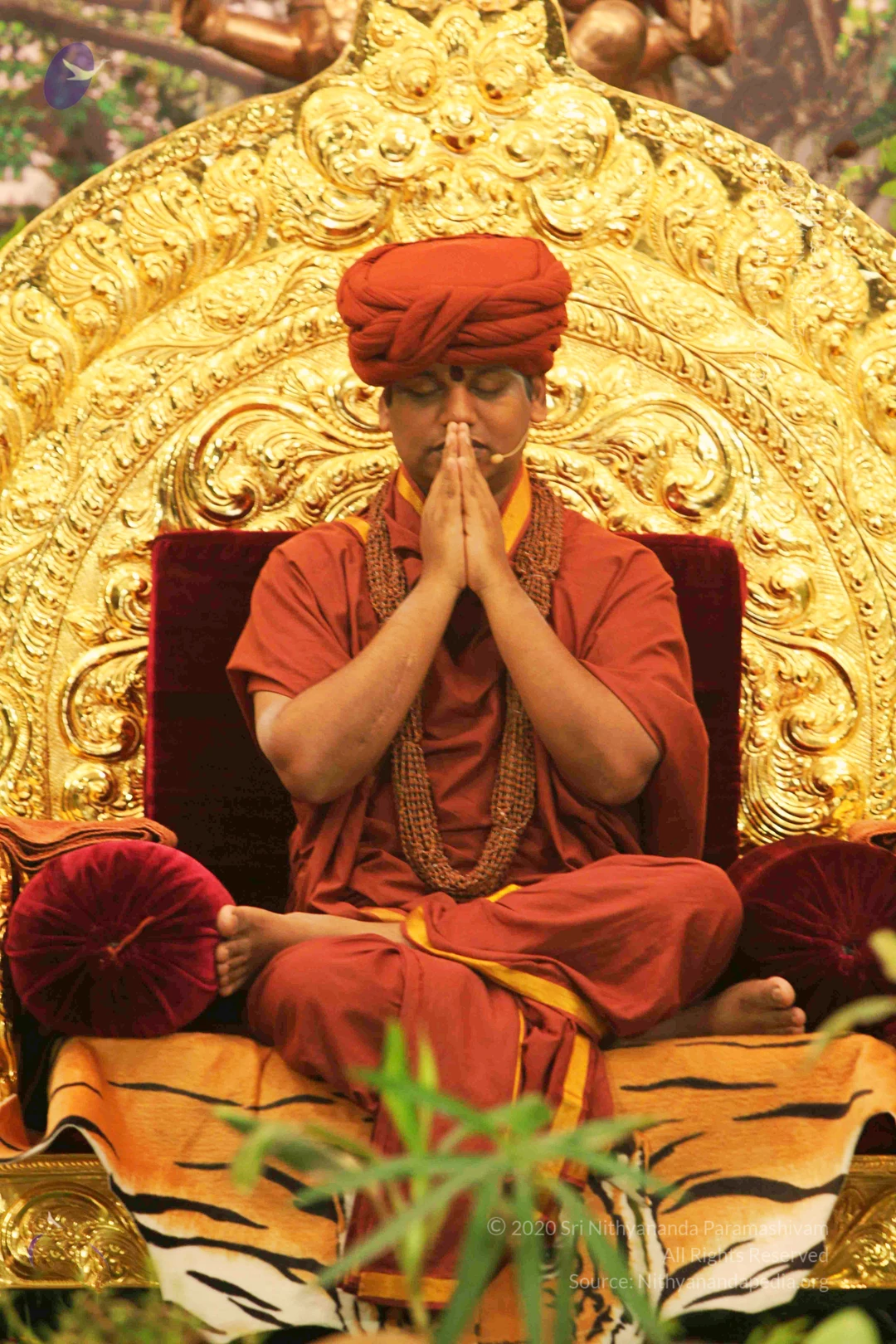
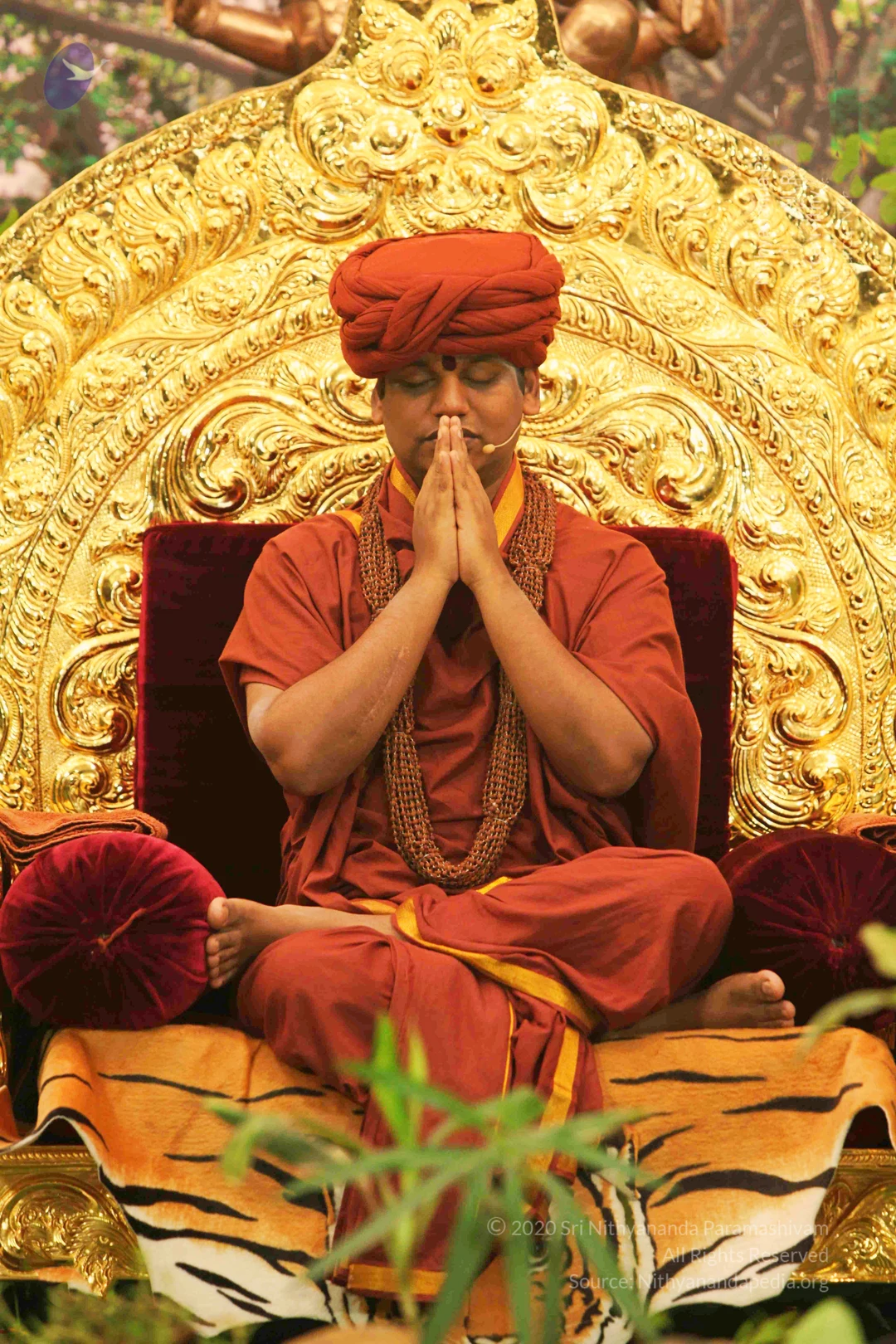
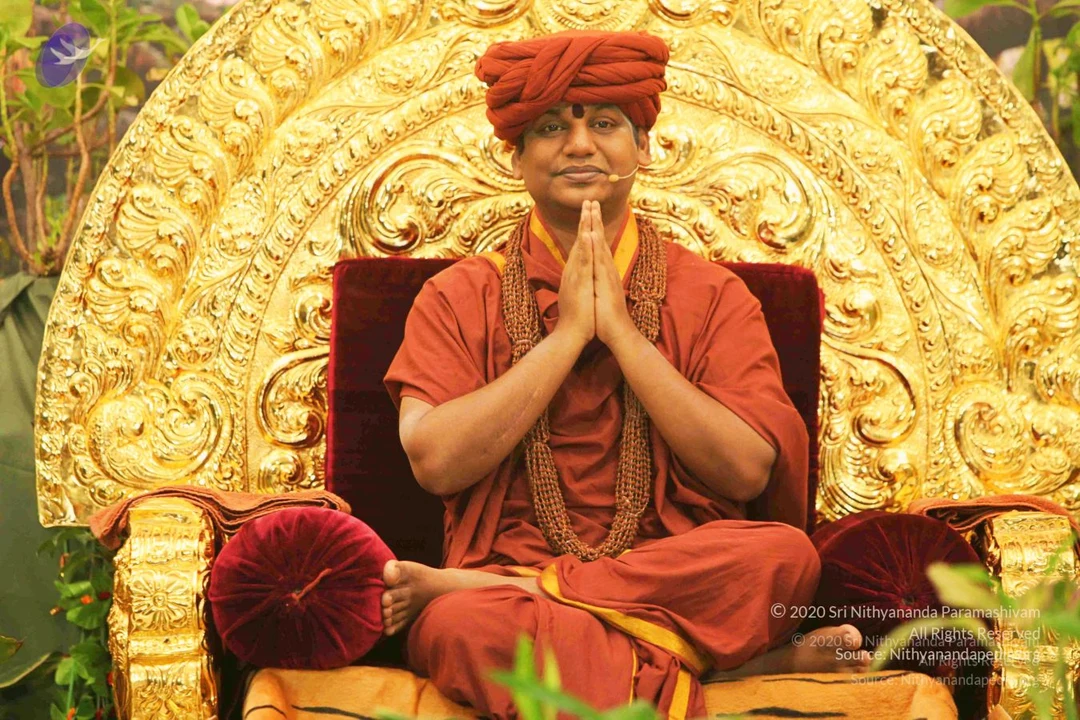
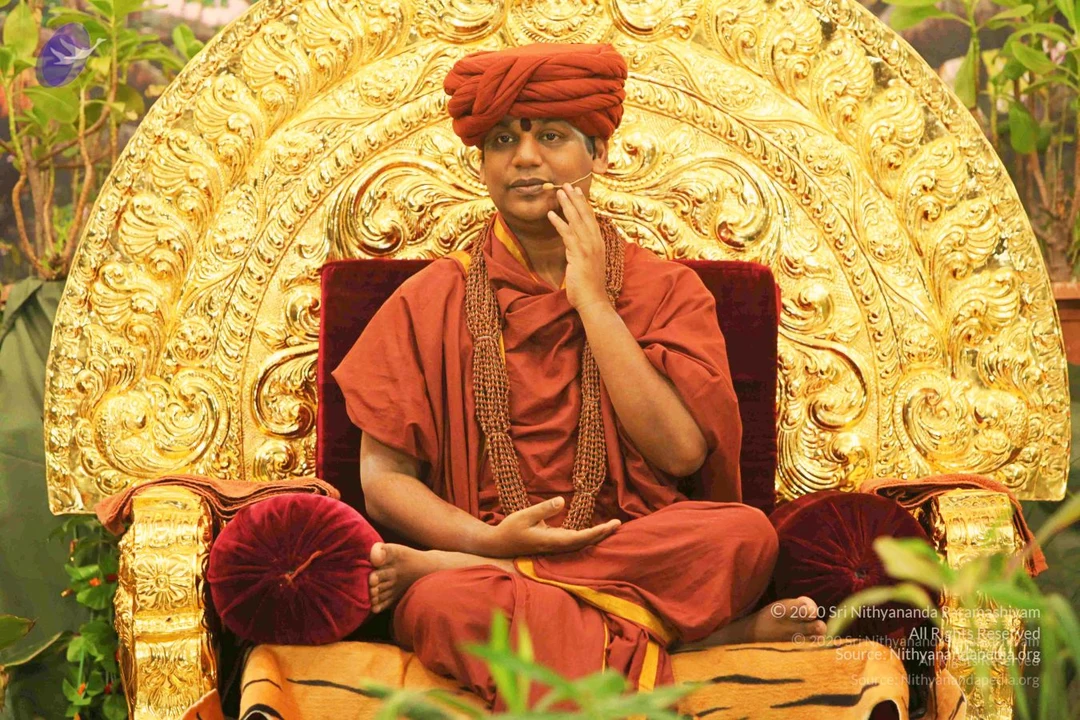
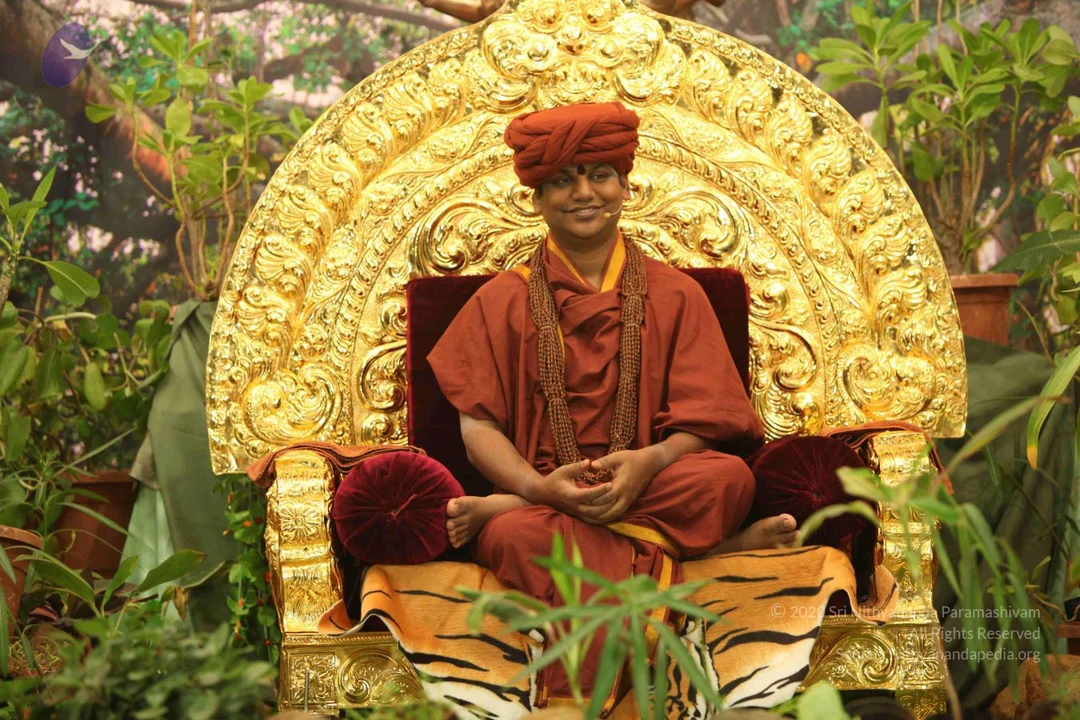
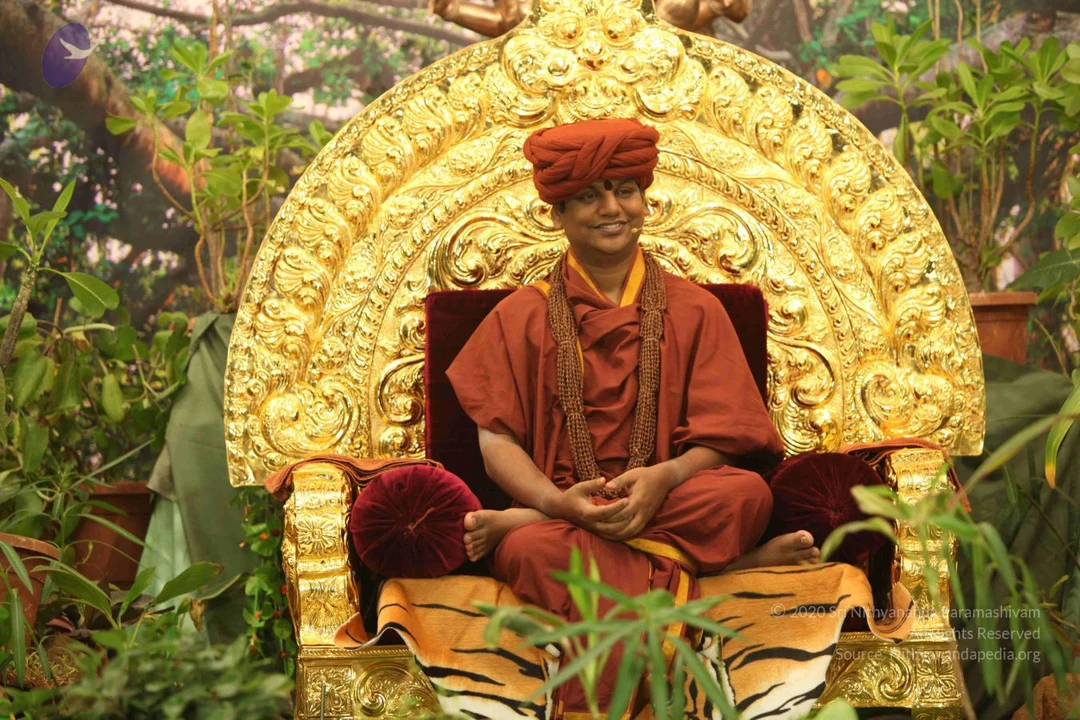
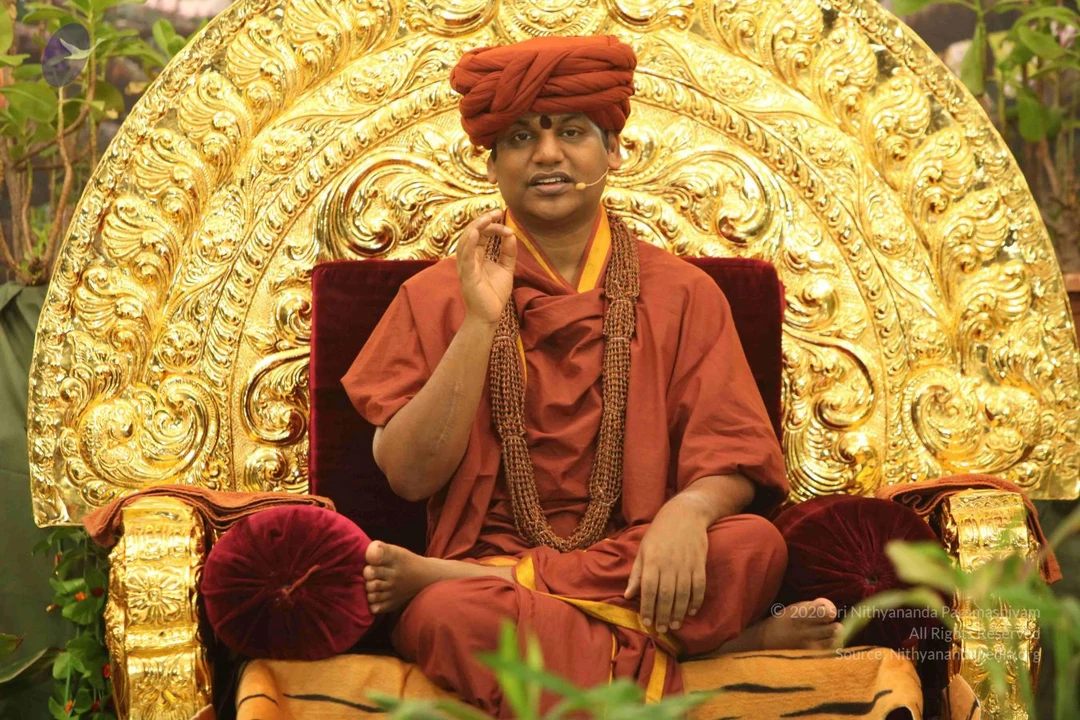
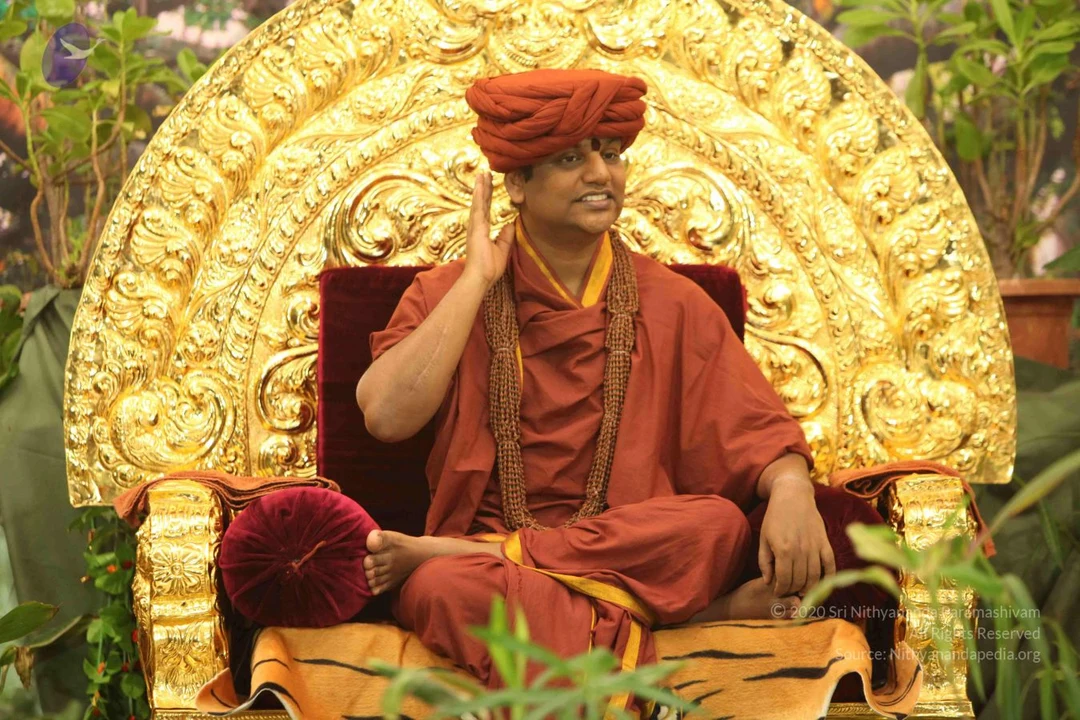
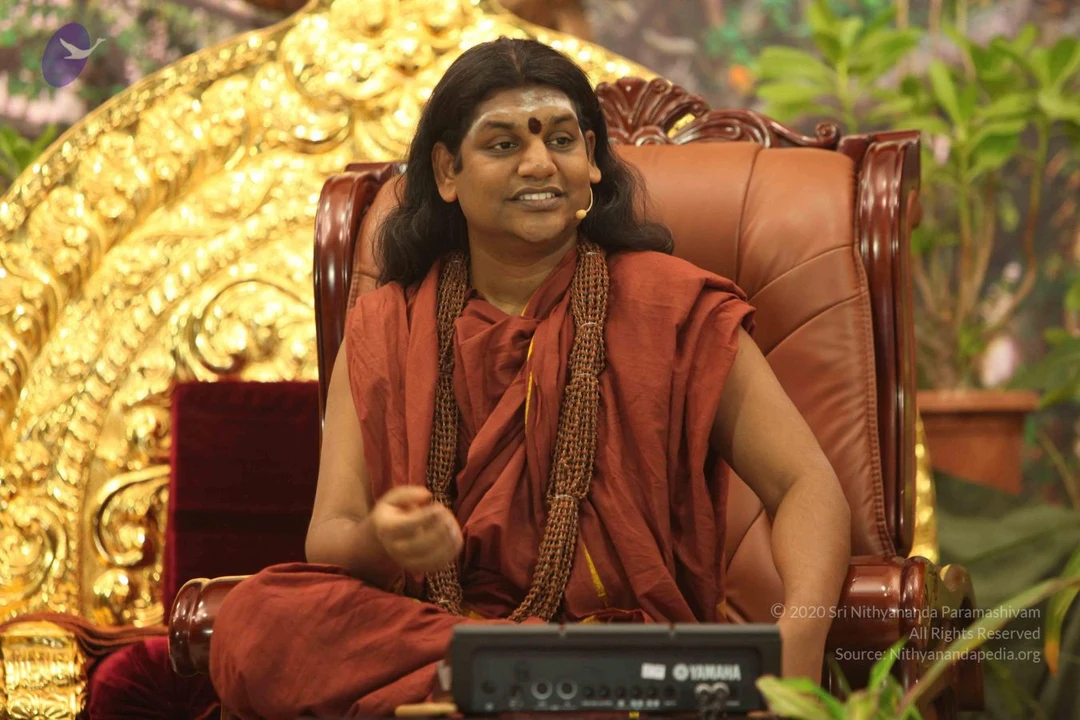
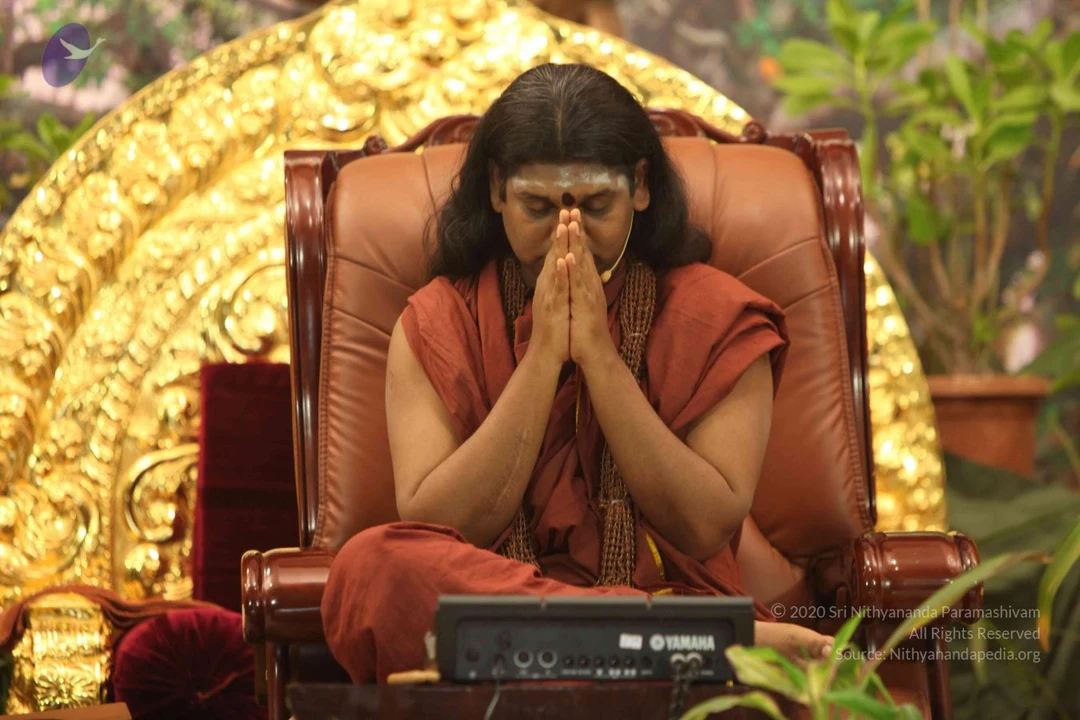
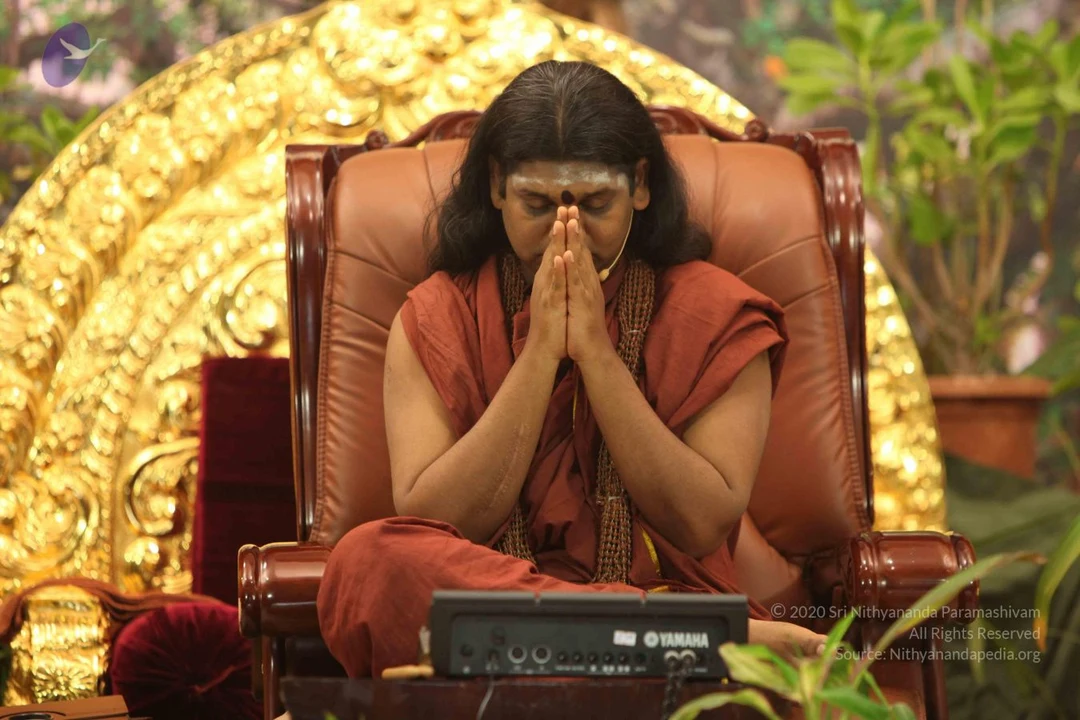
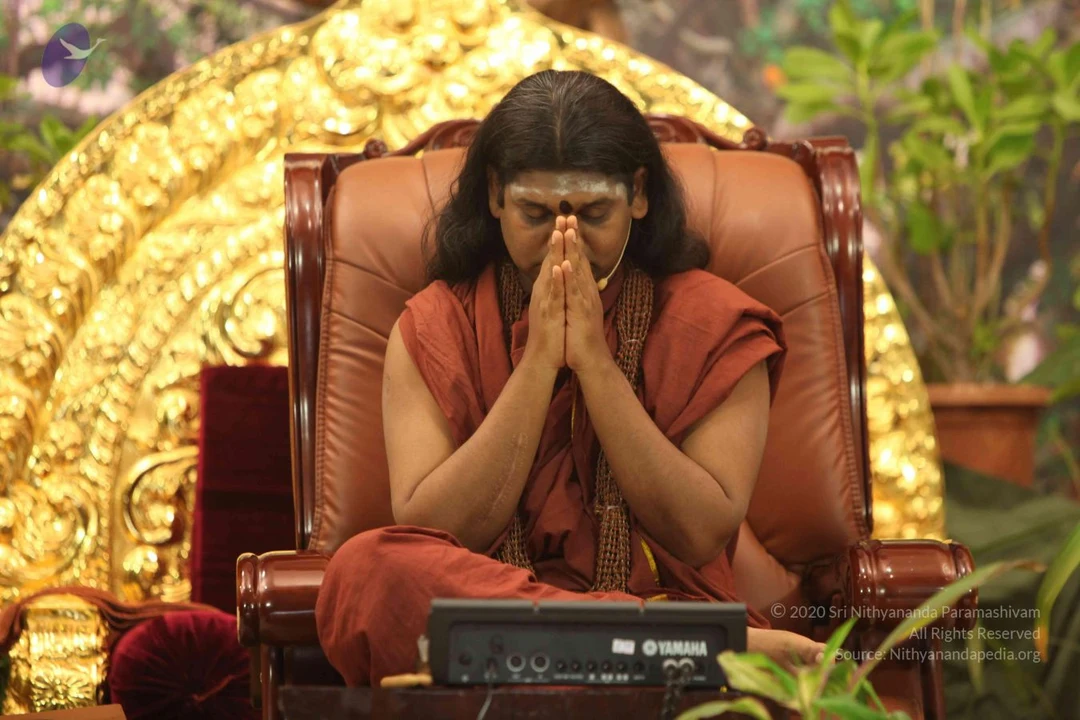
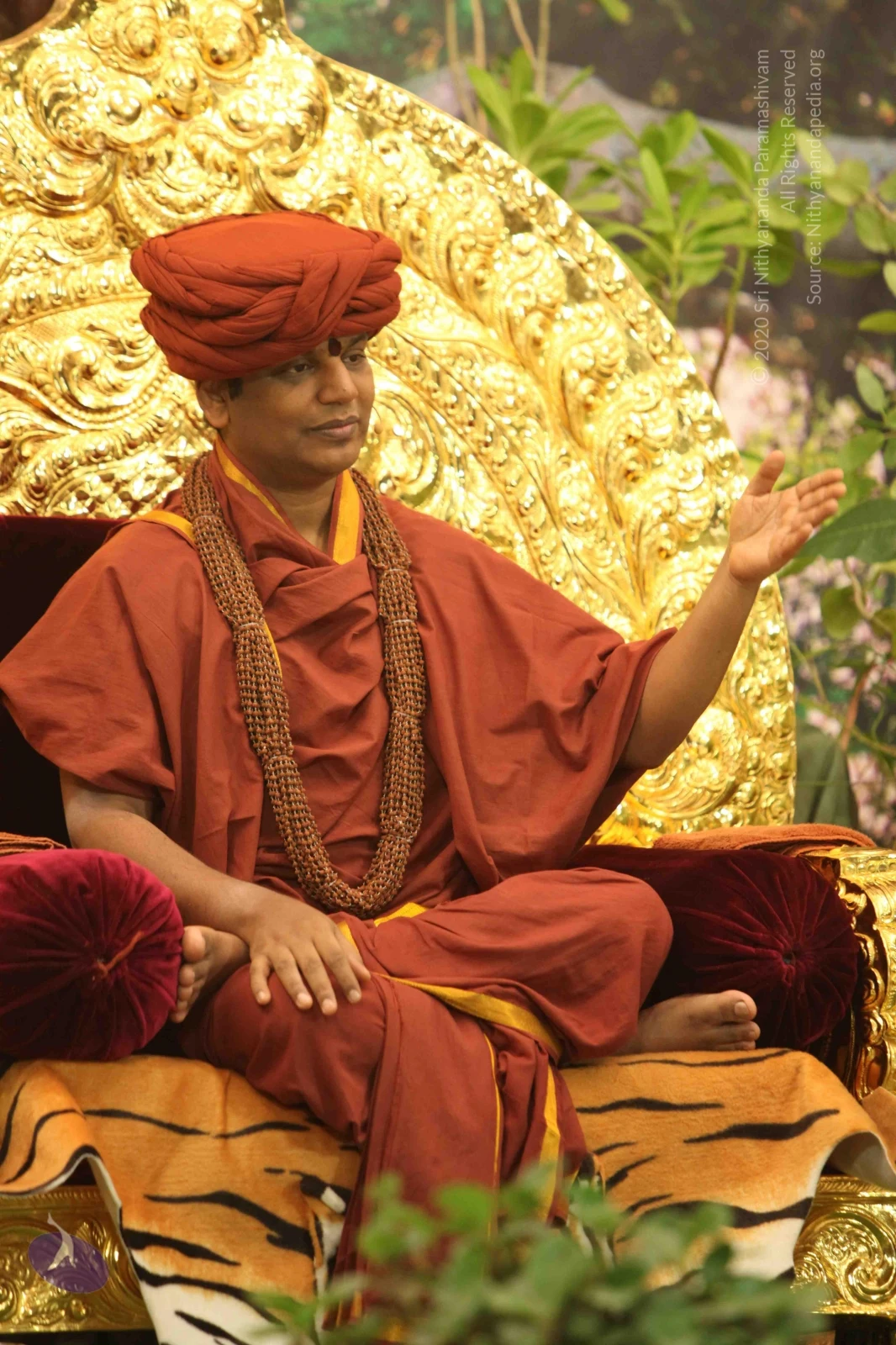
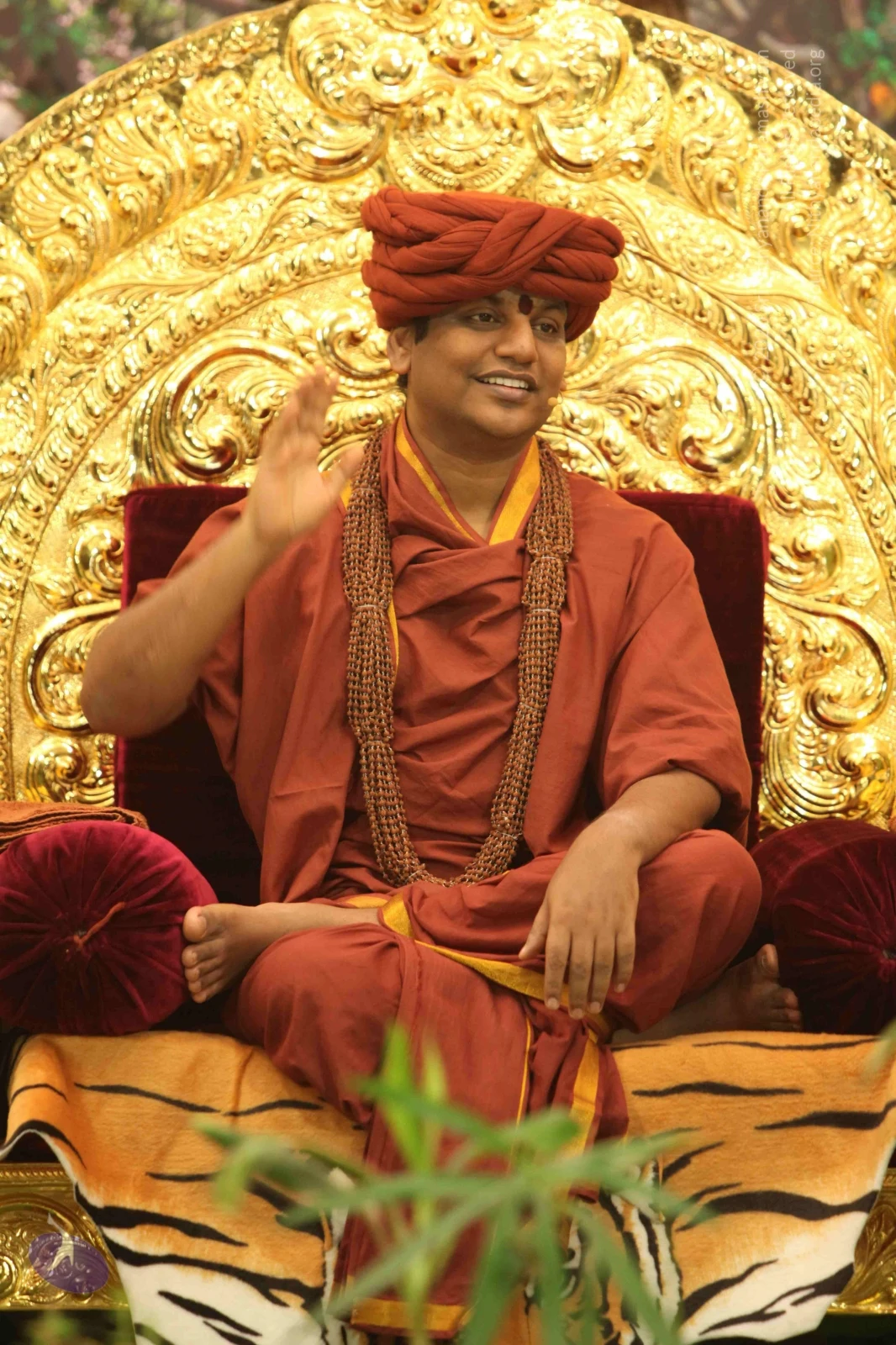
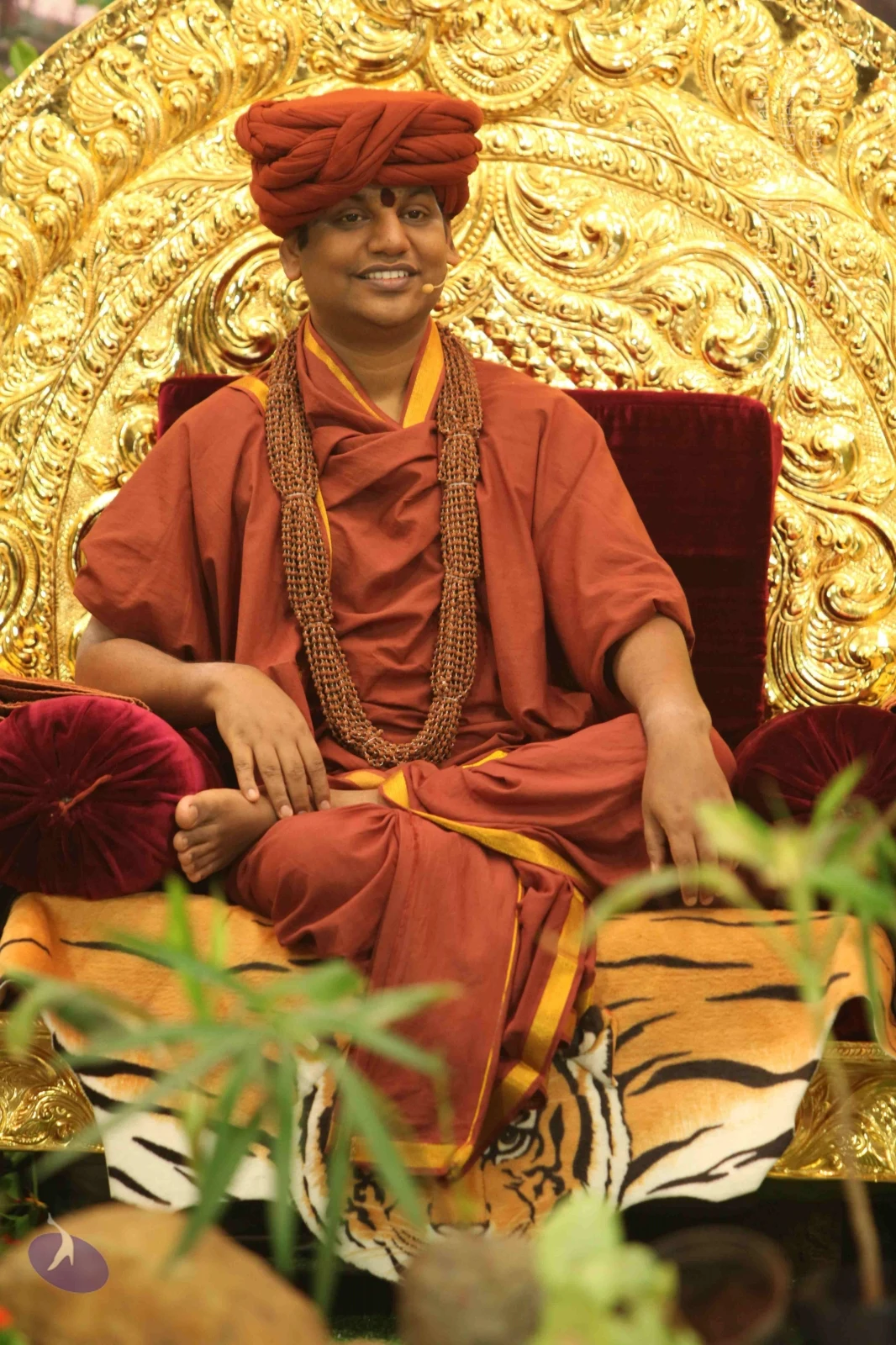
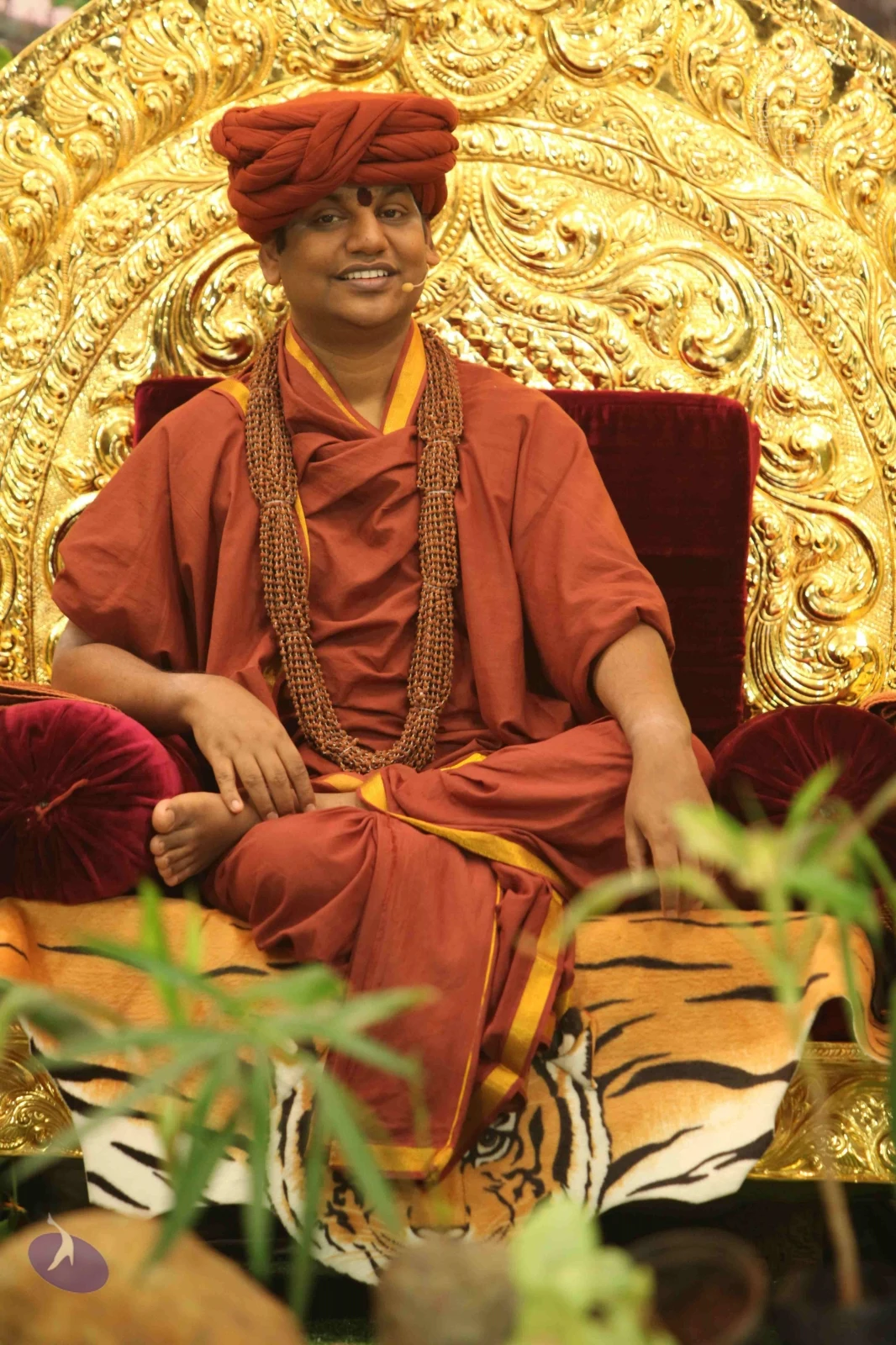
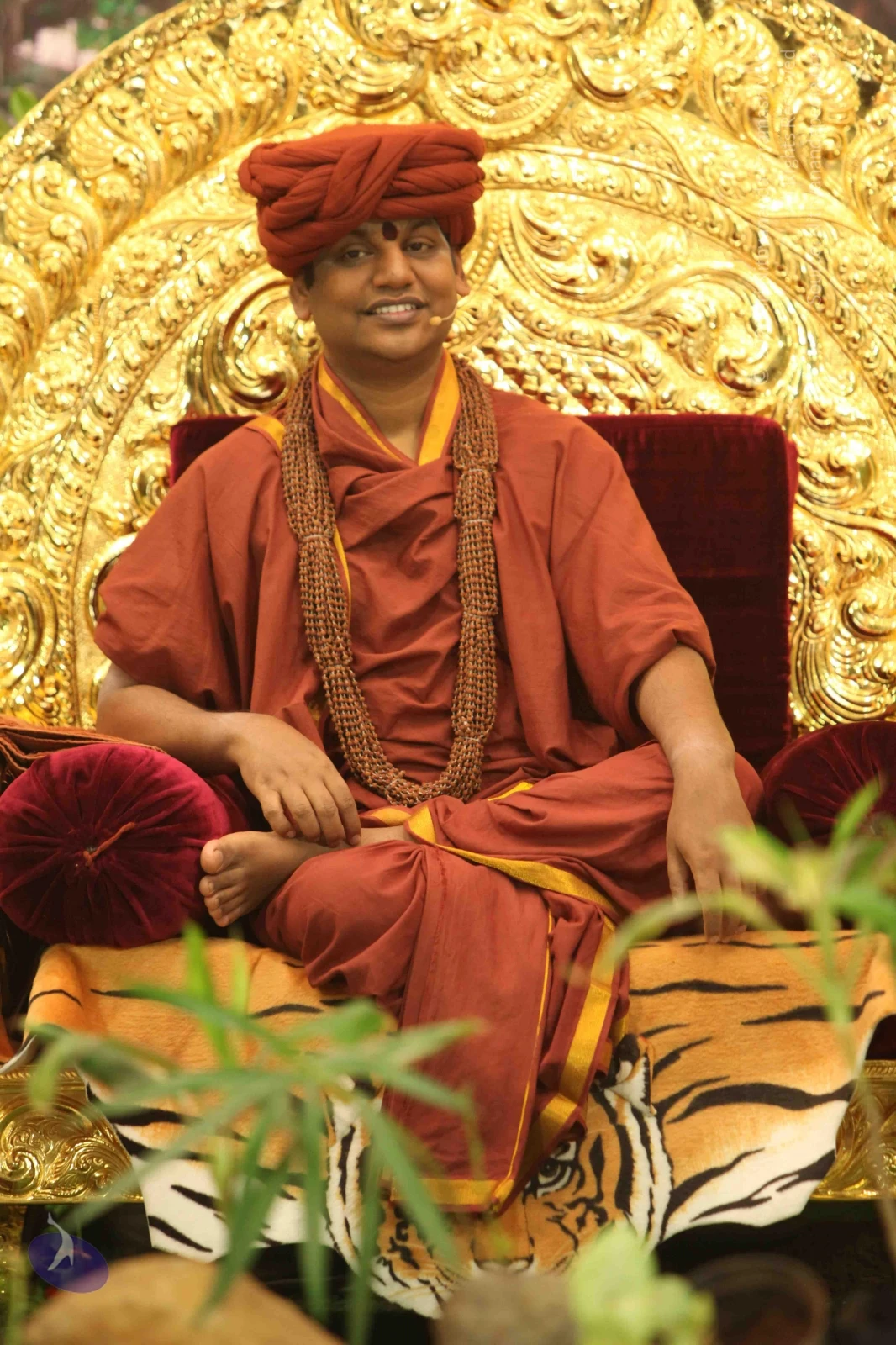
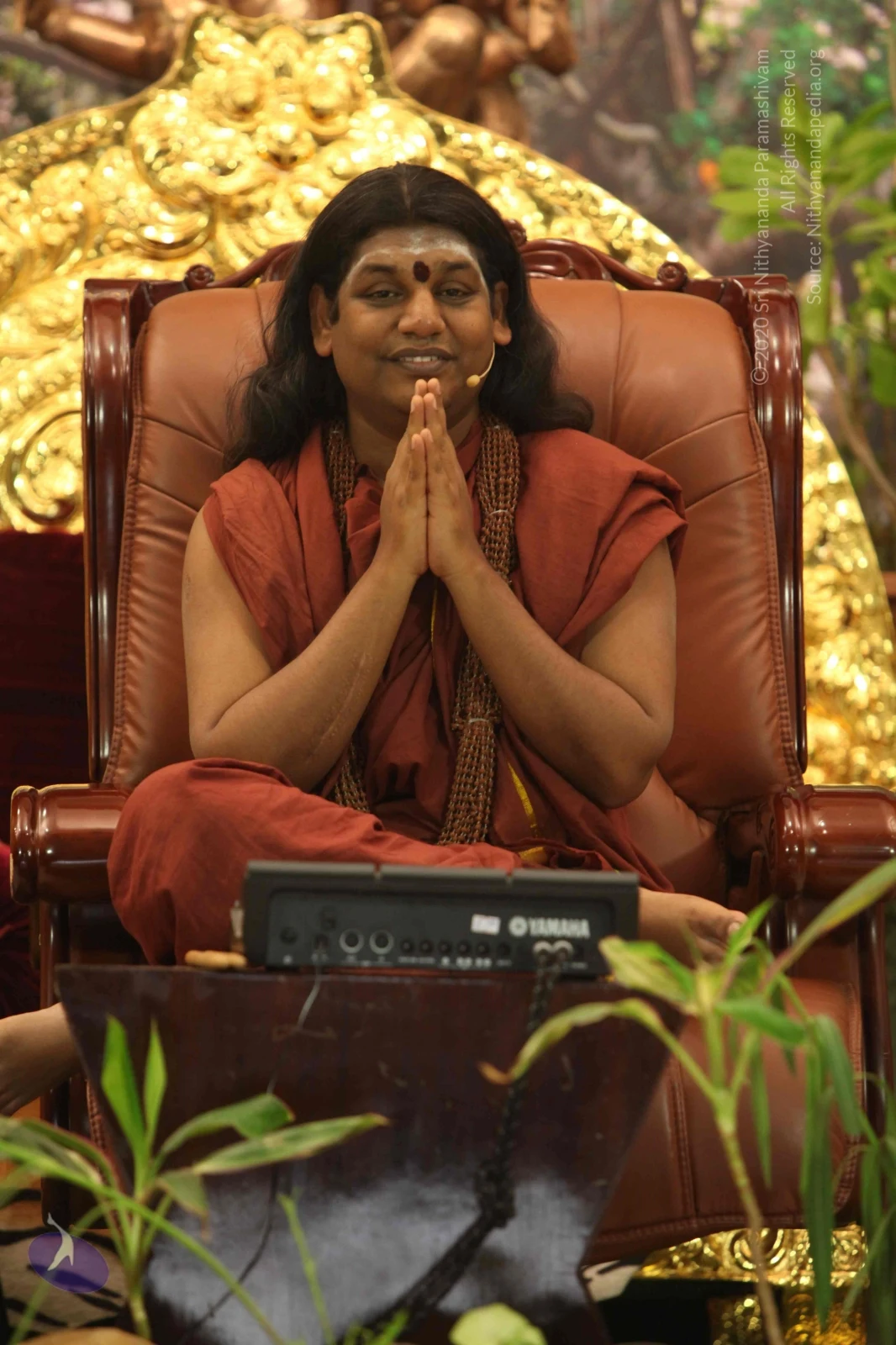
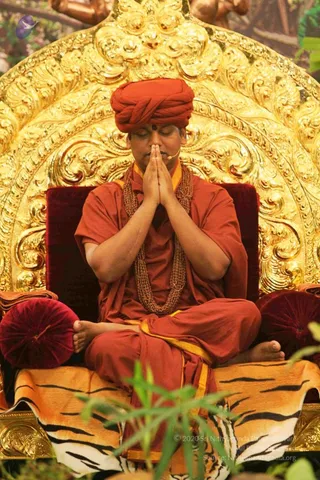
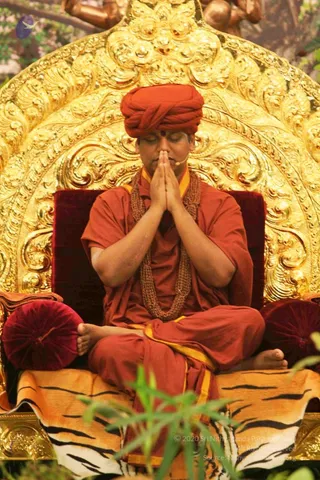
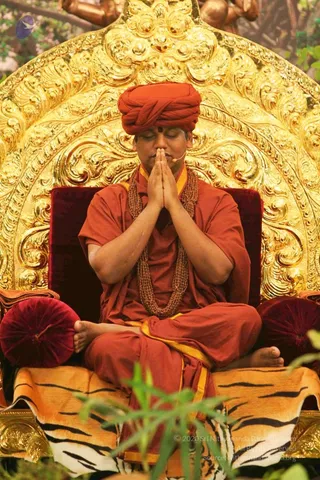
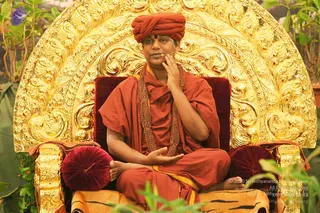
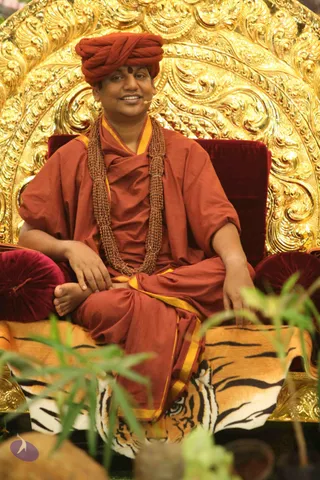
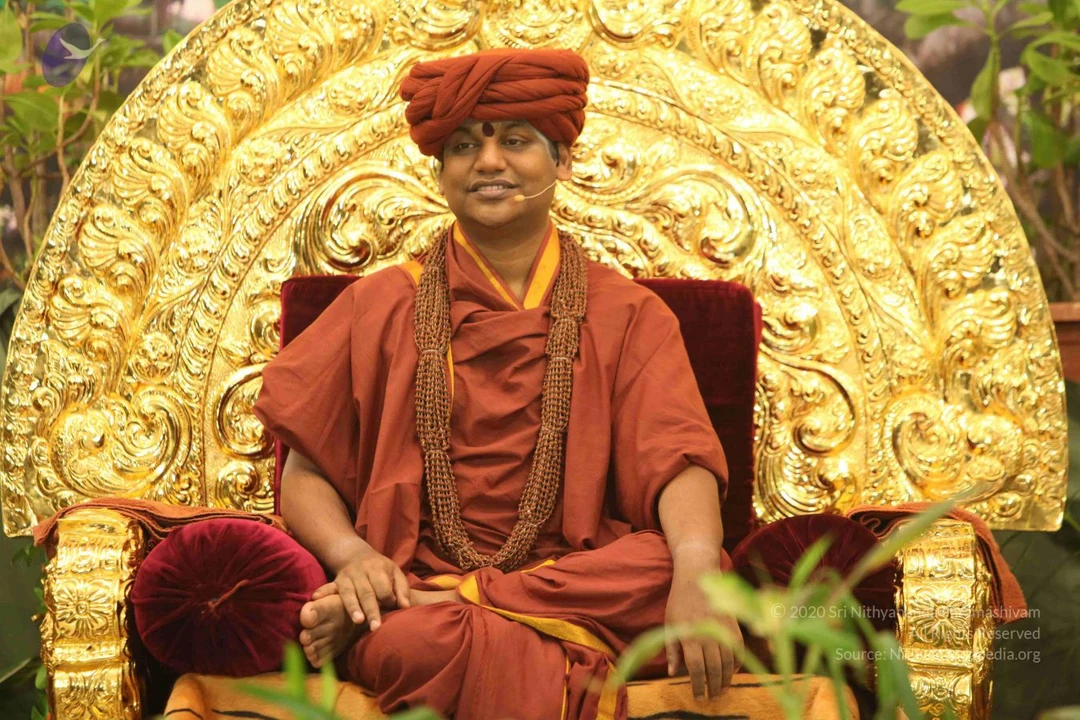
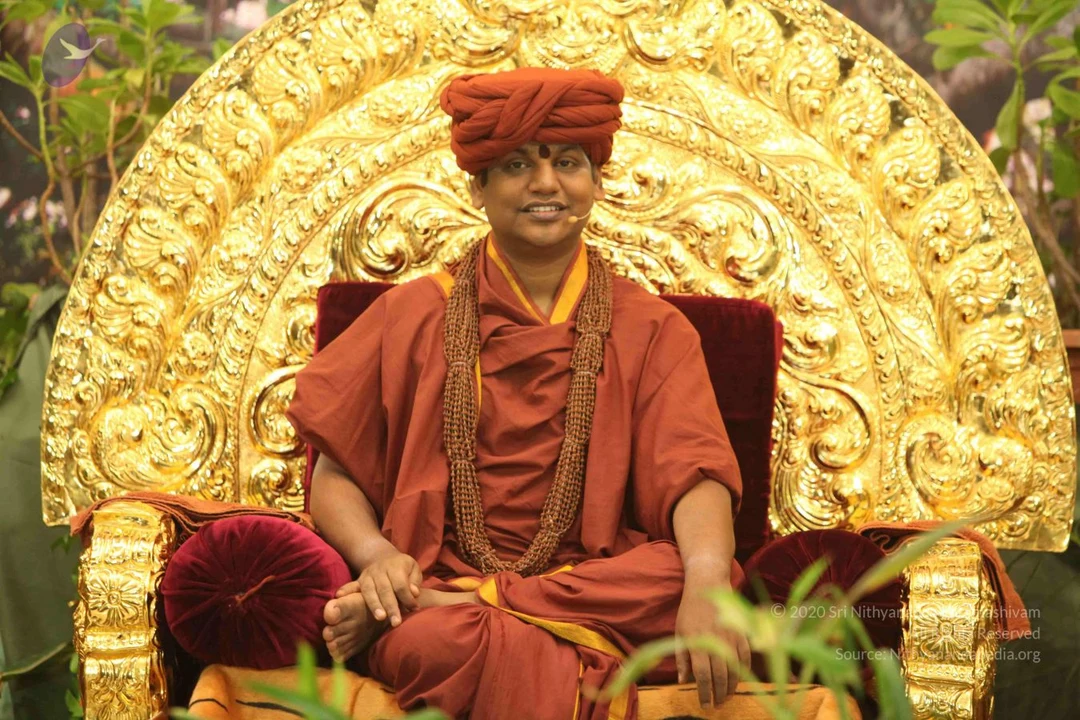
A seated figure in saffron-orange robes and a matching saffron turban sits in lotus-style posture on an ornate gold throne with a richly carved arched back. The figure has hands pressed together in namaste at chest level, eyes closed, with a multi-strand rudraksha mala around the neck. The throne rests on a tiger-striped cloth with maroon cushions at each side, set against a painted forest backdrop with green plants and potted greenery.A seated man in a red-orange turban and matching orange-red robes sits cross-legged on an ornate gilded throne with a large repoussé golden backrest and red velvet cushions. He has his eyes closed and palms pressed together in namaste, wears a chain-link metal necklace and a small red bindi, and has a small clip microphone on his face. He sits on a tiger-striped fabric draped over the throne, with green leaves in the foreground and golden figures carved at the top of the backdrop.A seated man in a rust-orange turban and matching orange robes sits cross-legged on an ornate gold throne with carved scrollwork and a large gold arch behind him. He presses his palms together in anjali mudra with eyes closed, wearing a brown beaded rudraksha-style mala and a small red bindi on his forehead, with a small microphone clipped near his face. A tiger-striped orange cloth covers the throne seat, and red velvet cushions rest on either side. Green leaves in the foreground frame the scene.A seated man in a red-orange turban and matching orange-red robes sits in lotus-style cross-legged posture on an ornate gold throne with a deep red velvet backrest and red round cushions. He holds his palms pressed together in anjali mudra with eyes closed, wears a red-orange bindi, a long rust-brown beaded mala and a small headset microphone. The throne sits on a tiger-striped fabric draped over its seat, with green foliage in the foreground and a golden floral backdrop behind. Swamiji (probable) is the person on the throne, identified by a red turban, saffron-toned robes, a long rudraksha-style mala and a ceremonial throne setting.A man seated cross-legged on an ornate golden throne with a deep red velvet cushion and gilded carved backrest, hands pressed together in anjali namaskar. He wears a red-orange turban with a vertical tilak mark on the forehead, a saffron-red robe with a yellow edge, and a wooden-bead mala draped at his chest, and a small headset microphone is visible near his face. Green leaves and foliage frame the background, and a small wall of fabric lies to the left. Whether this is a person cannot be confirmed from appearance alone, so the identity is unsure.A seated man in an orange-red turban and orange-red robes sits cross-legged on an ornate golden throne with a red velvet seat and a tiger-striped cushion beneath. He wears a long rudraksha-style mala around his neck, a red bindi on his forehead, and holds a slender stick or pen near his cheek with one hand while the other rests on his knee. Green potted plants frame the golden backrest.

E-KALPATARU

2 photosSource gallery
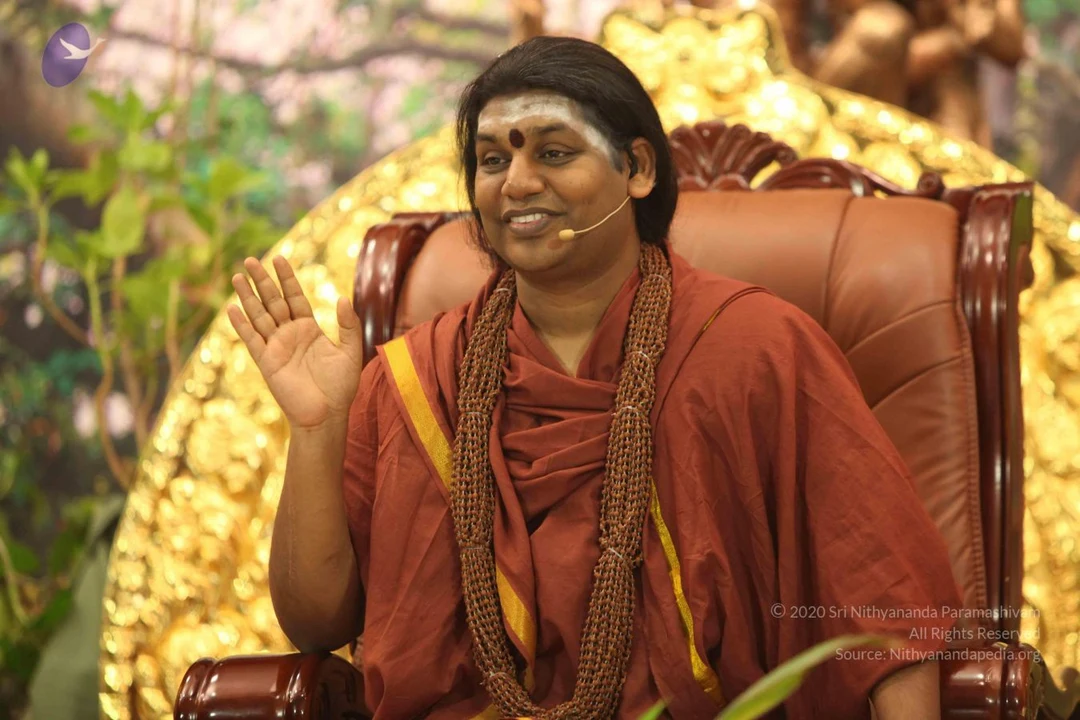
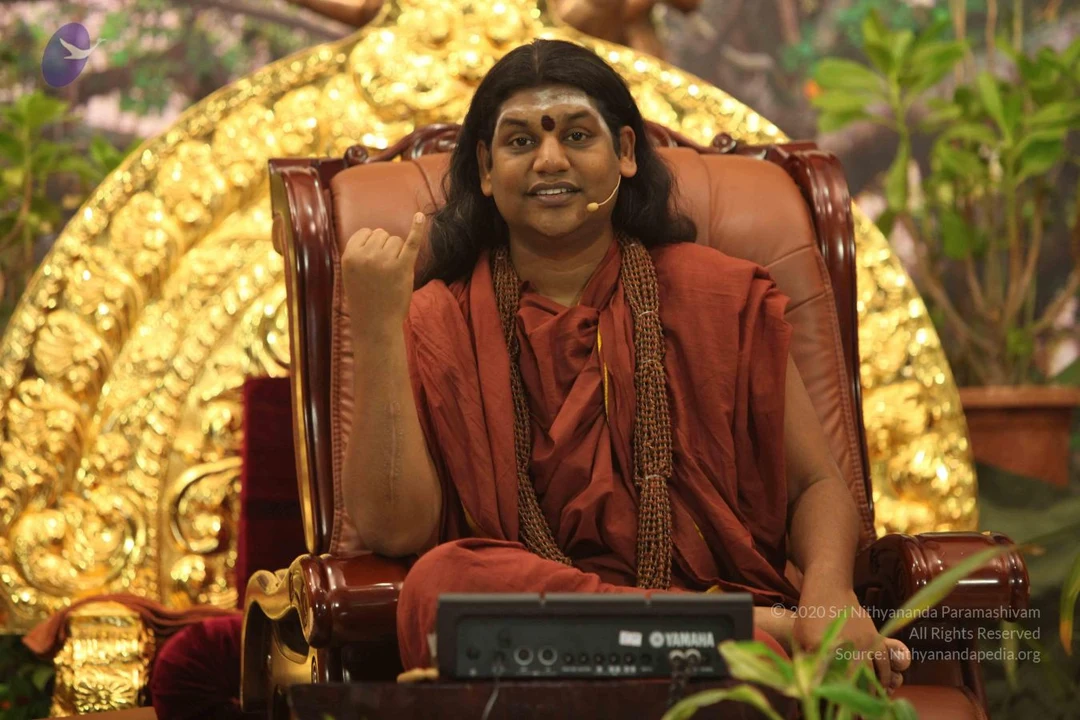
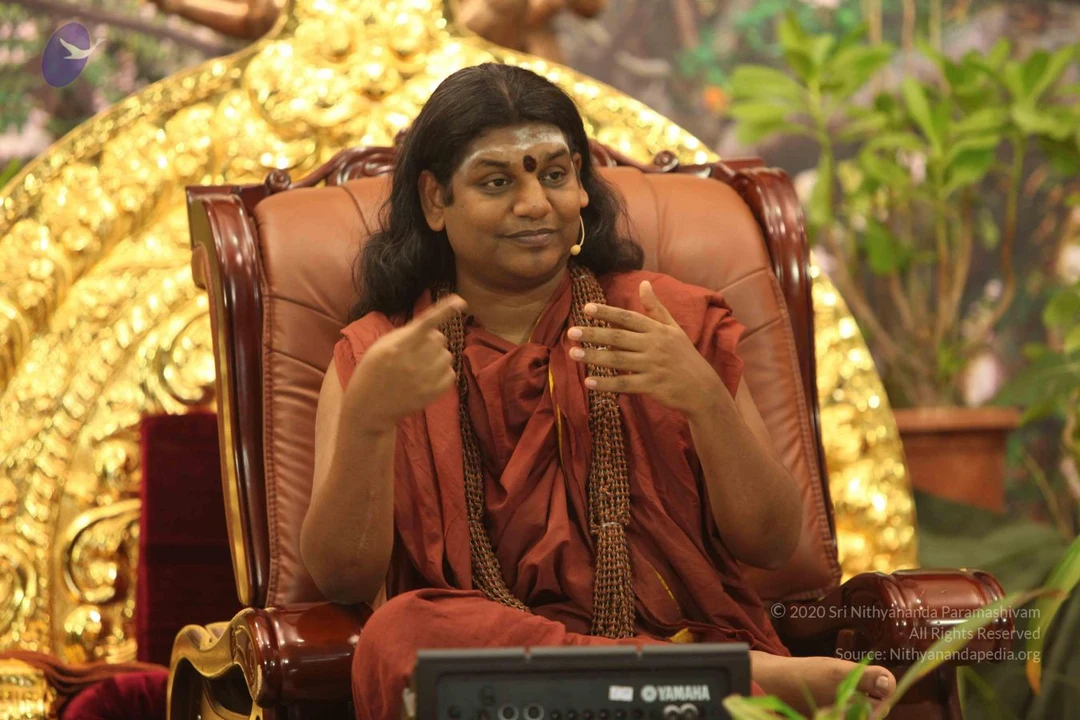
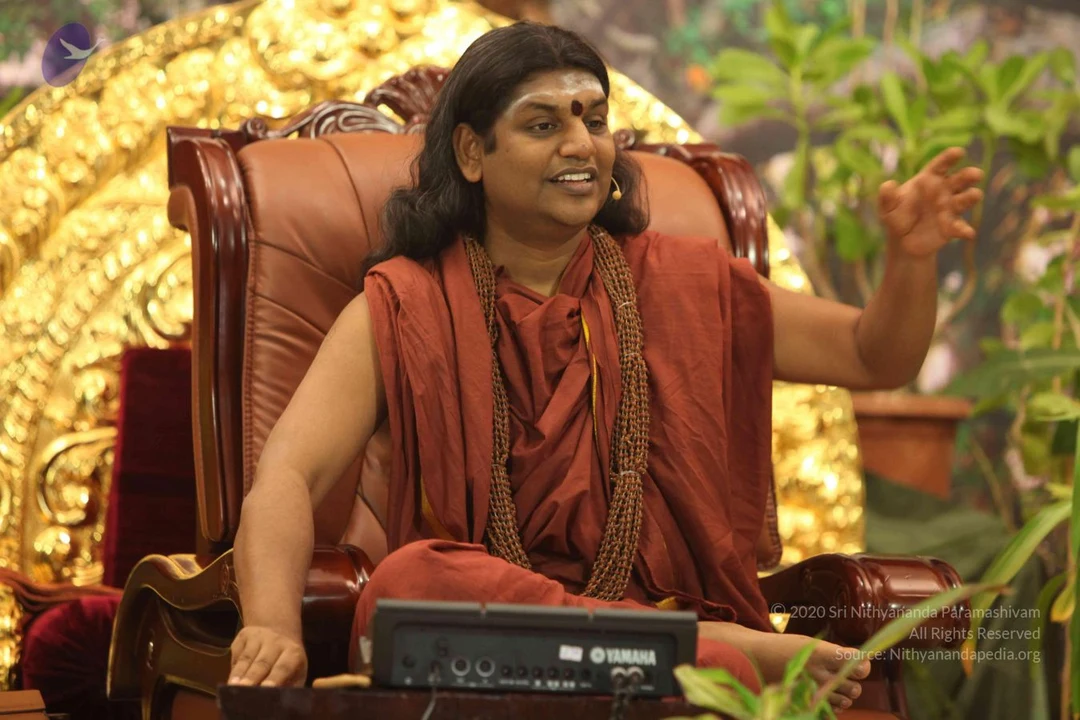
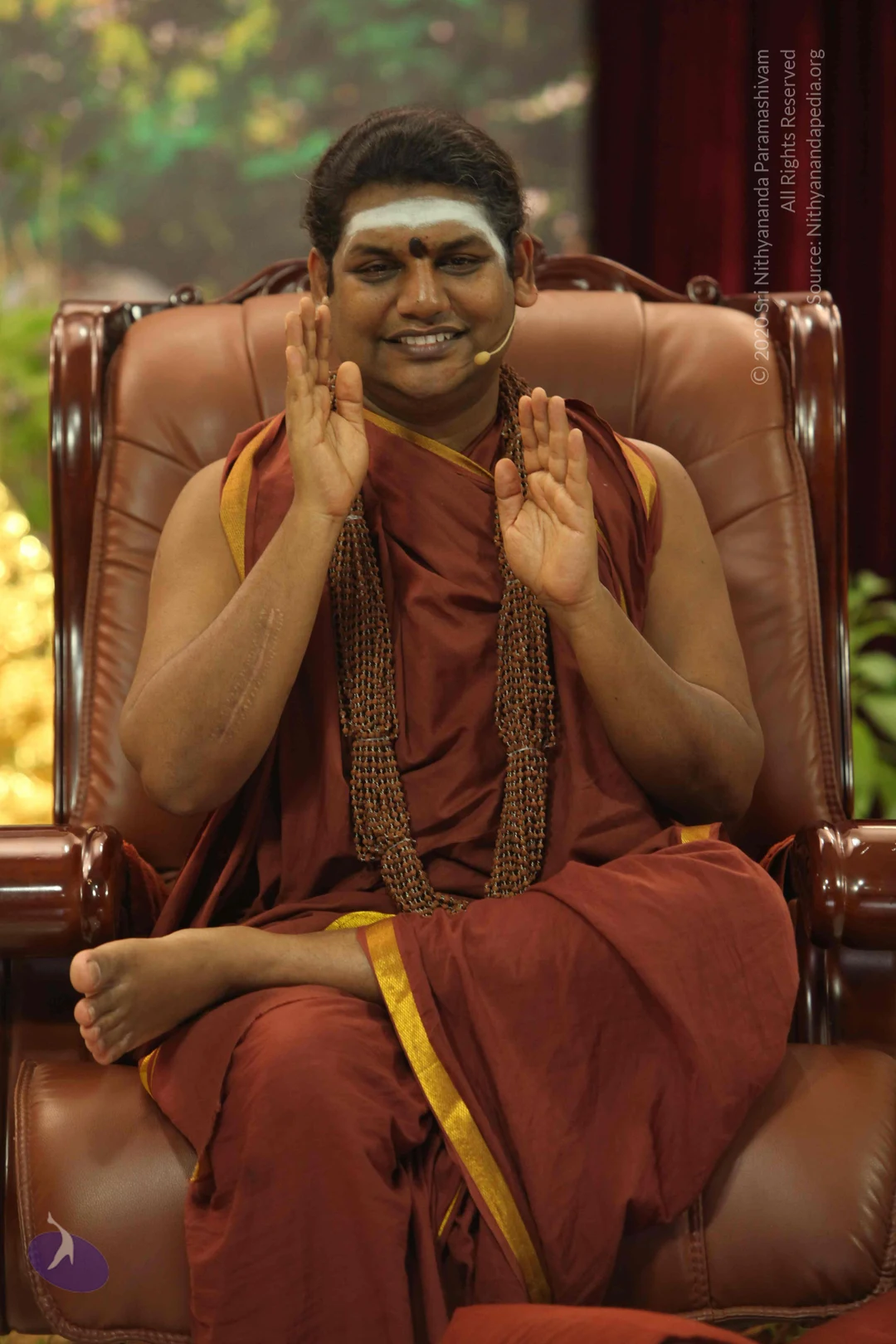
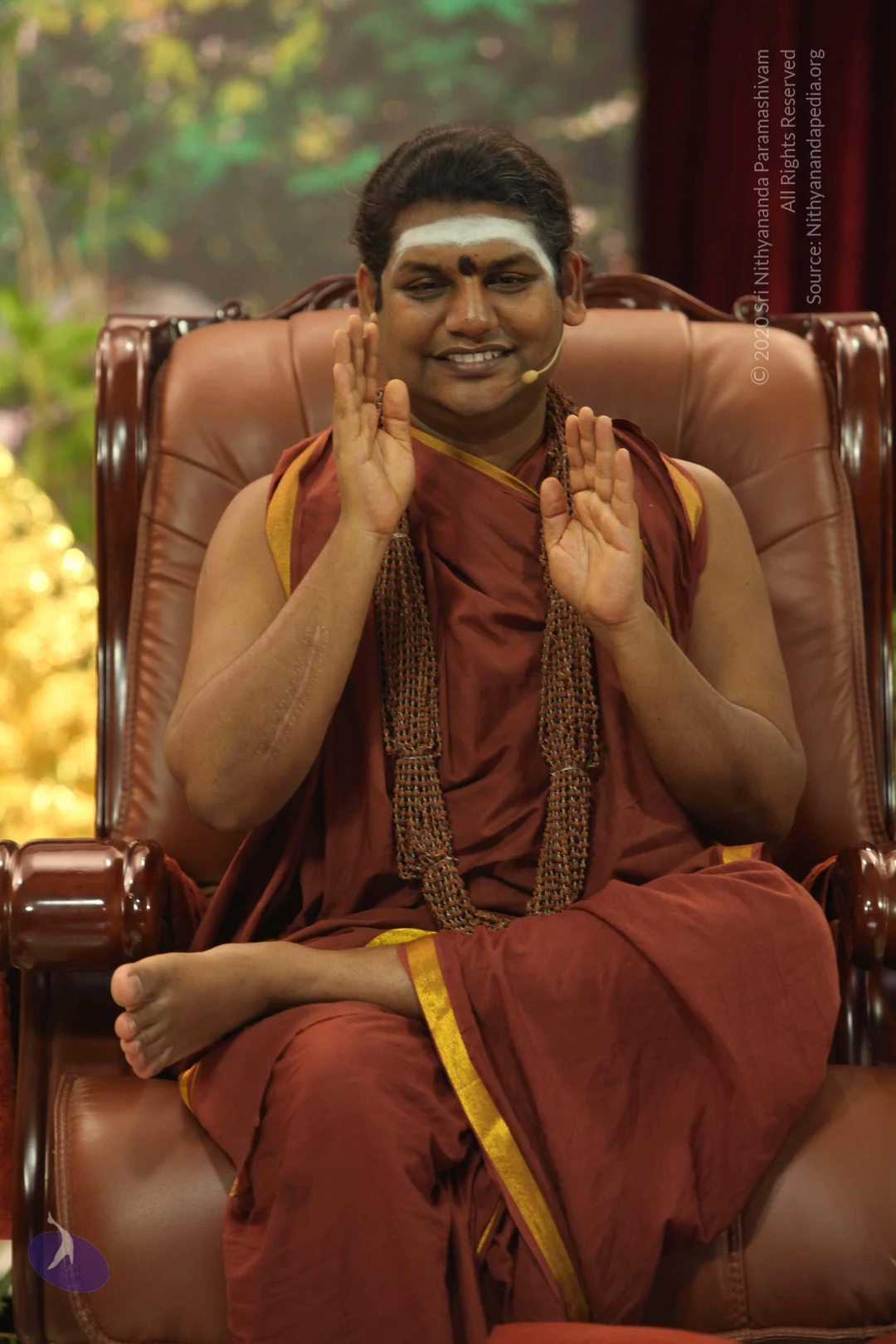
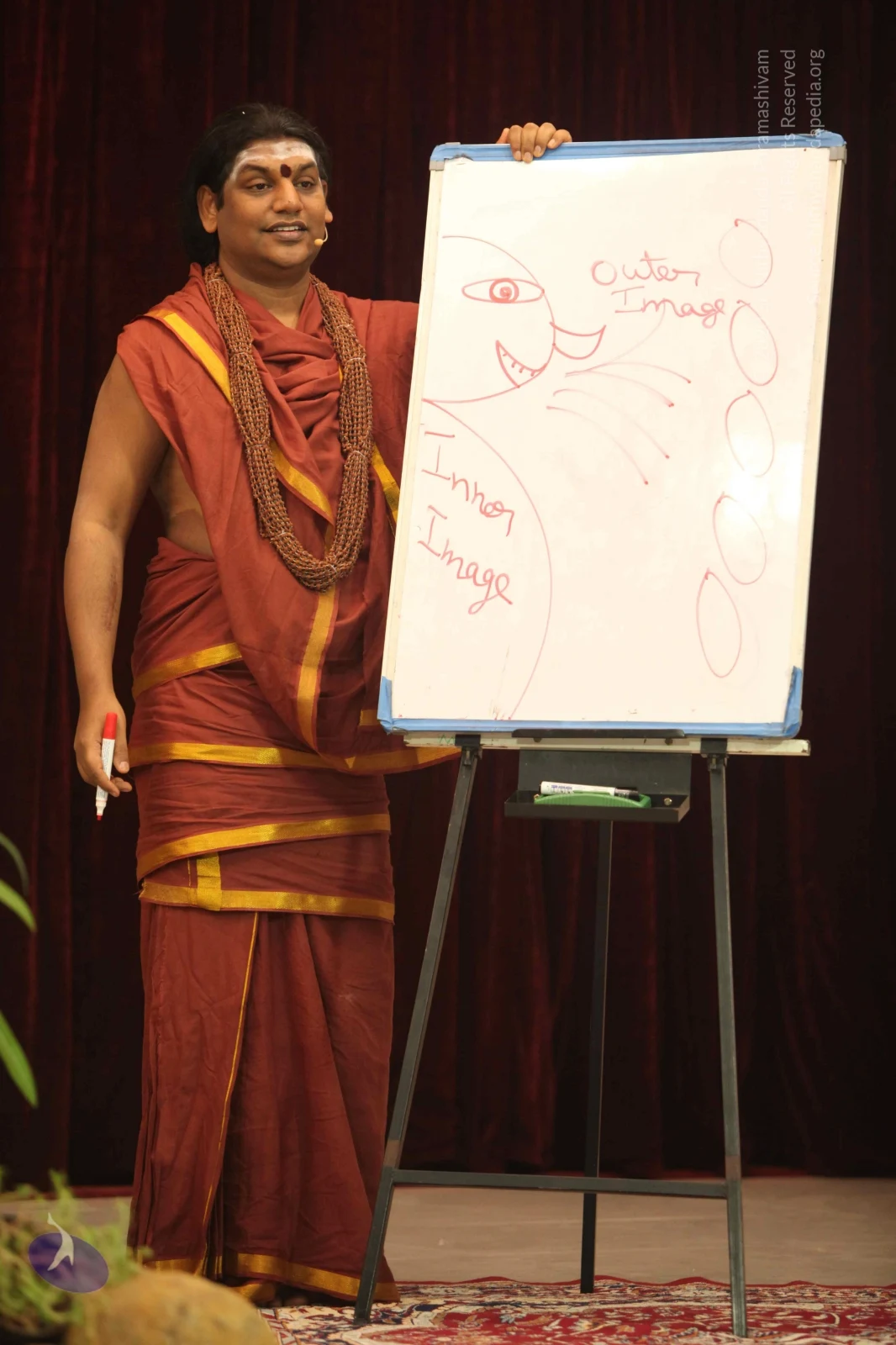
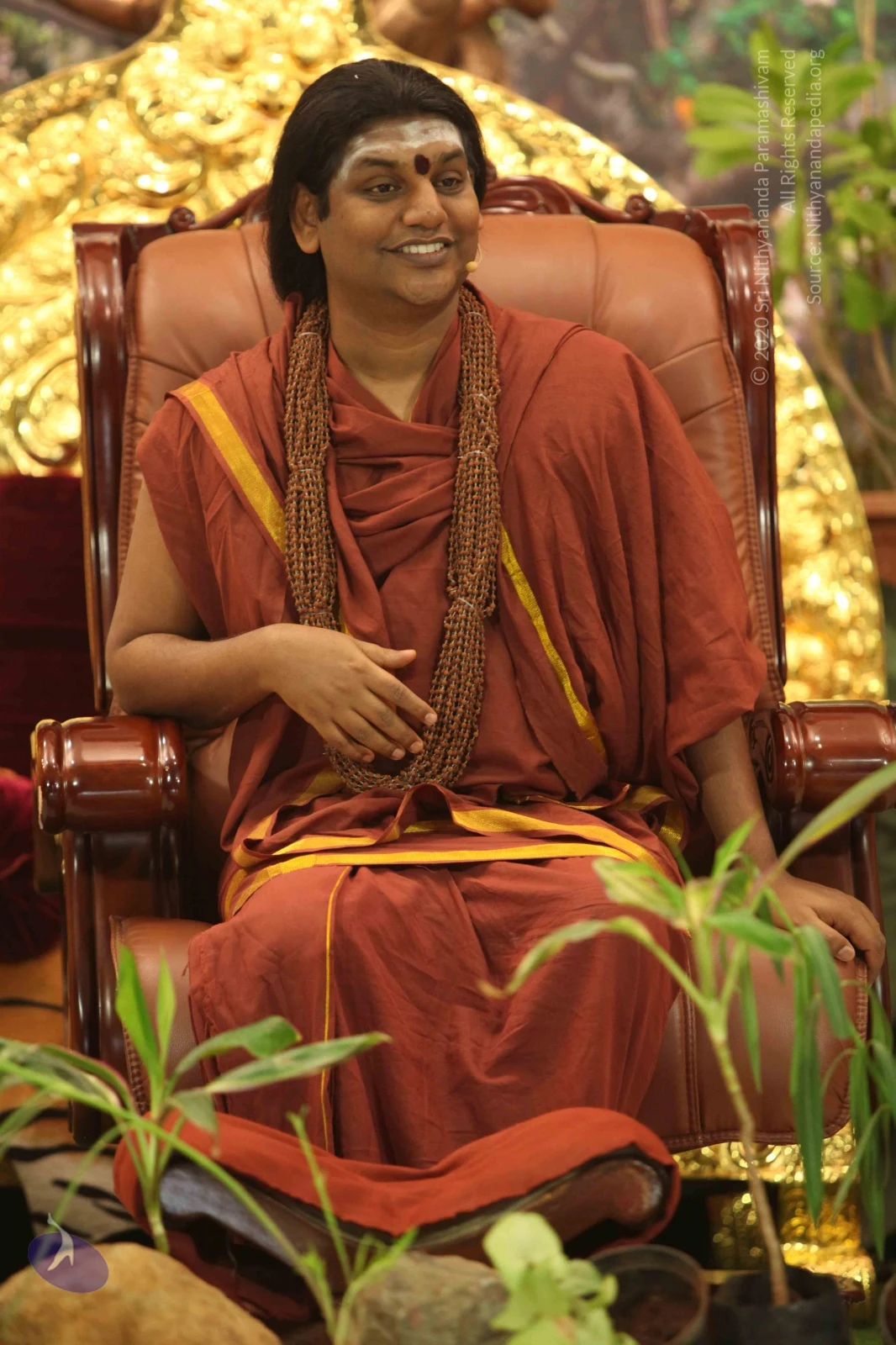
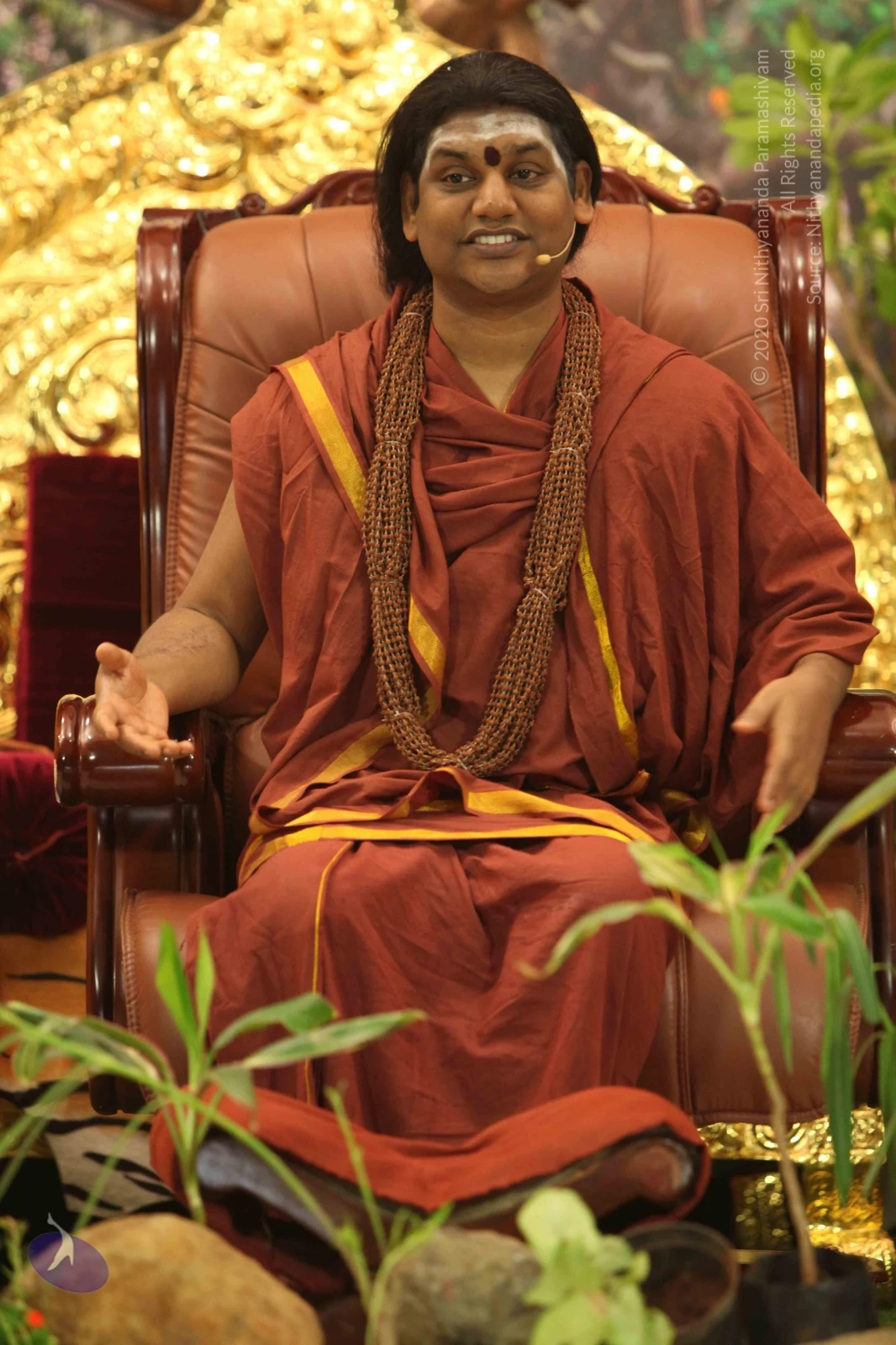
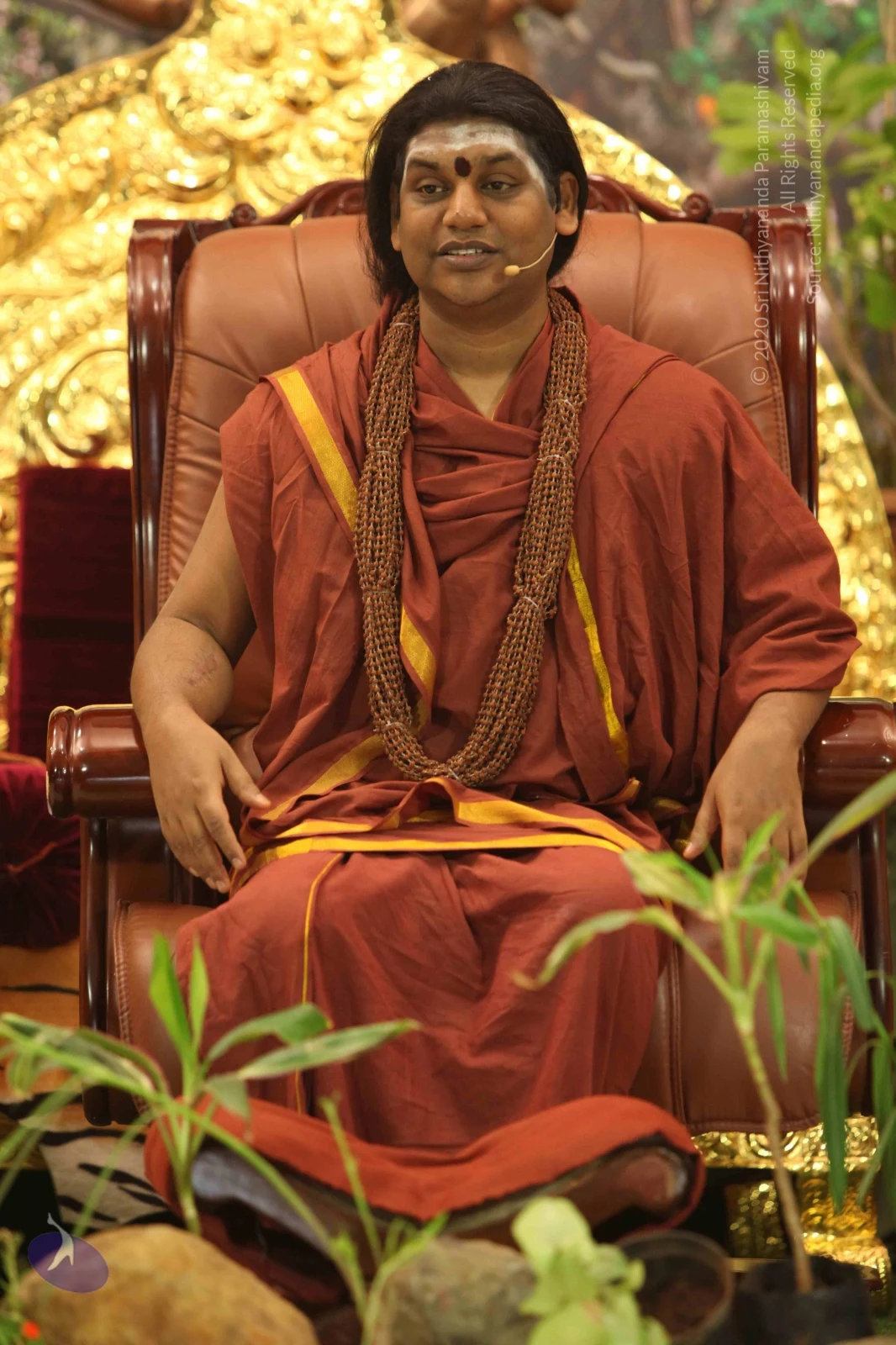
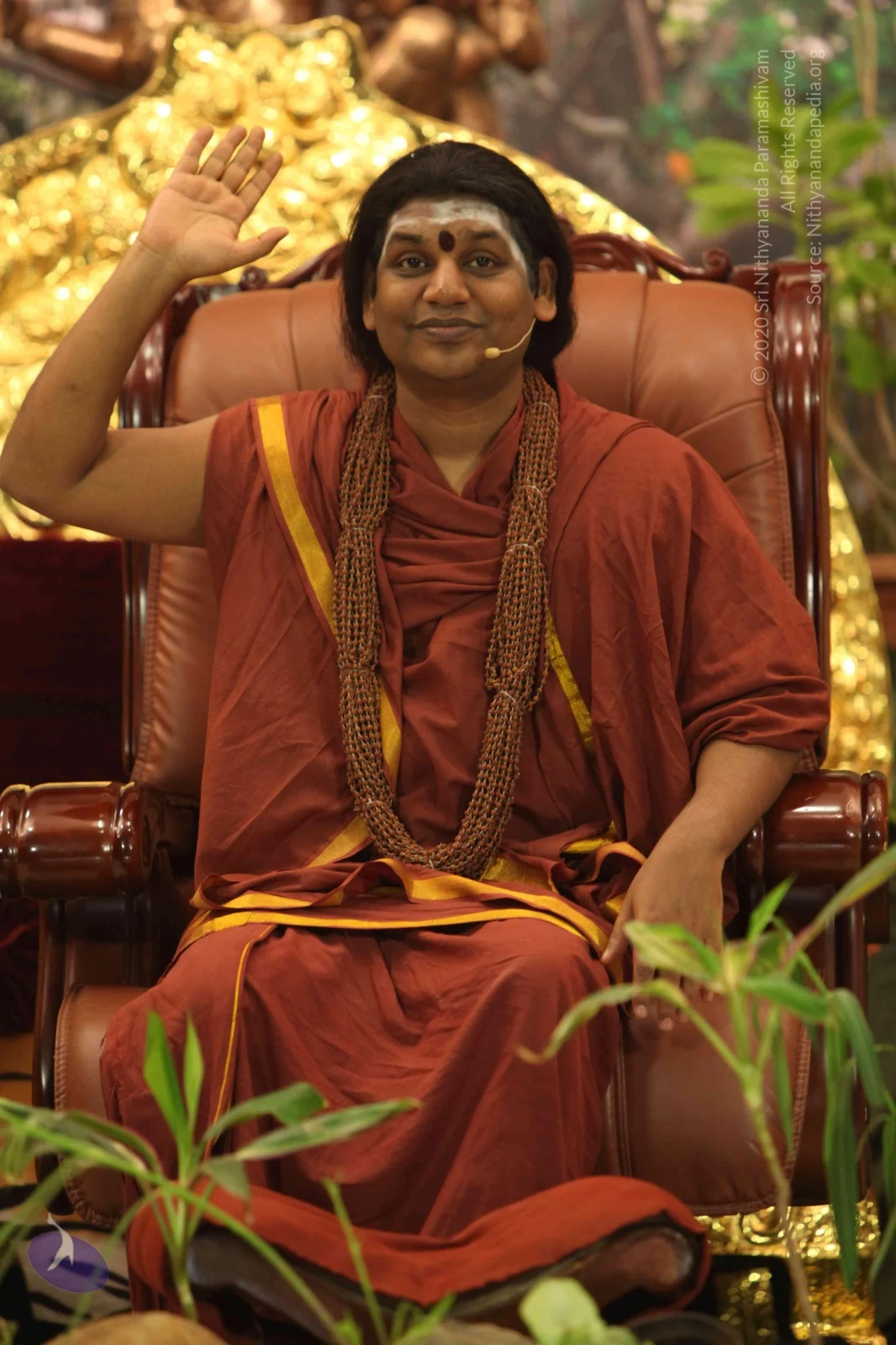
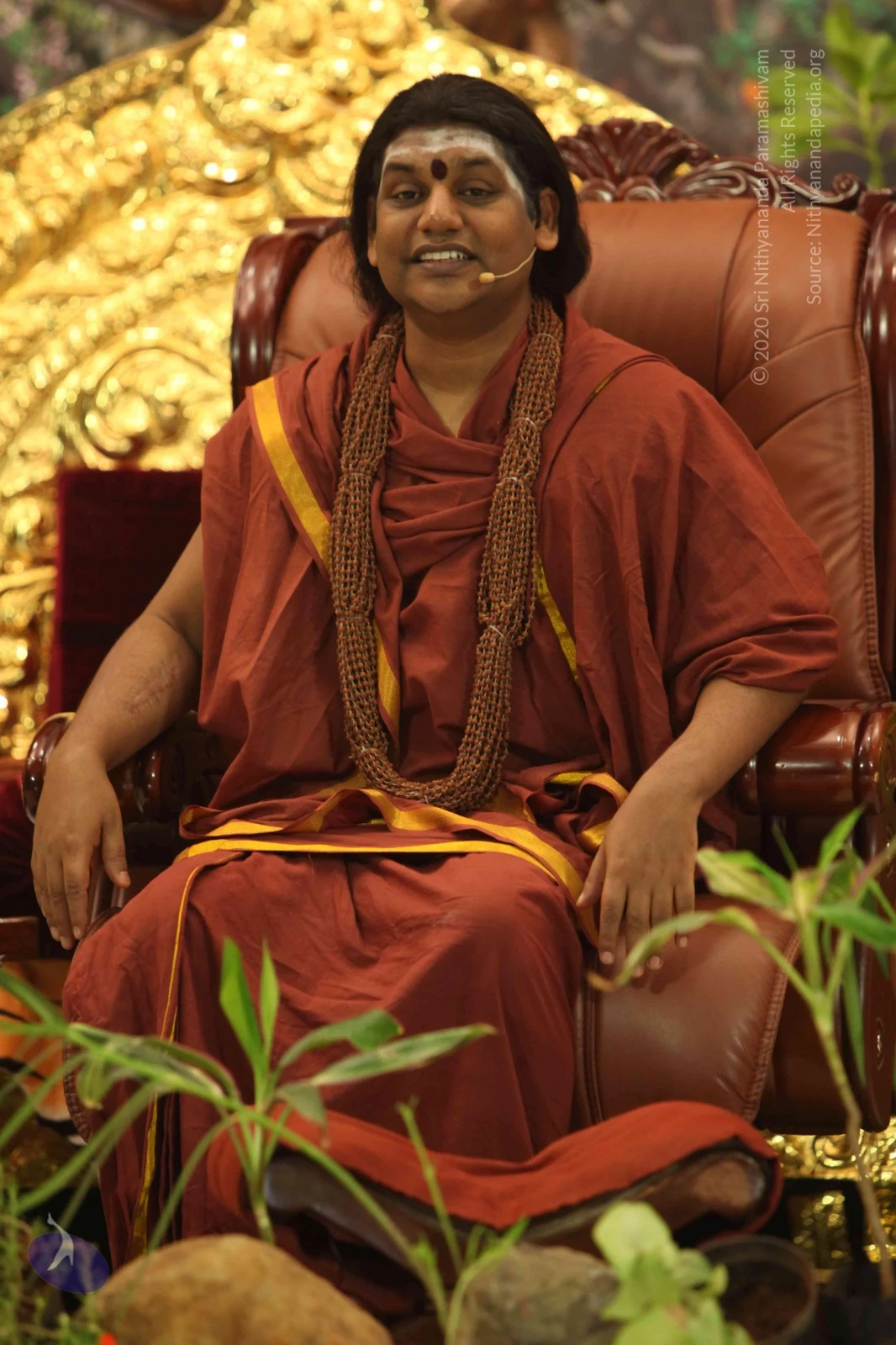
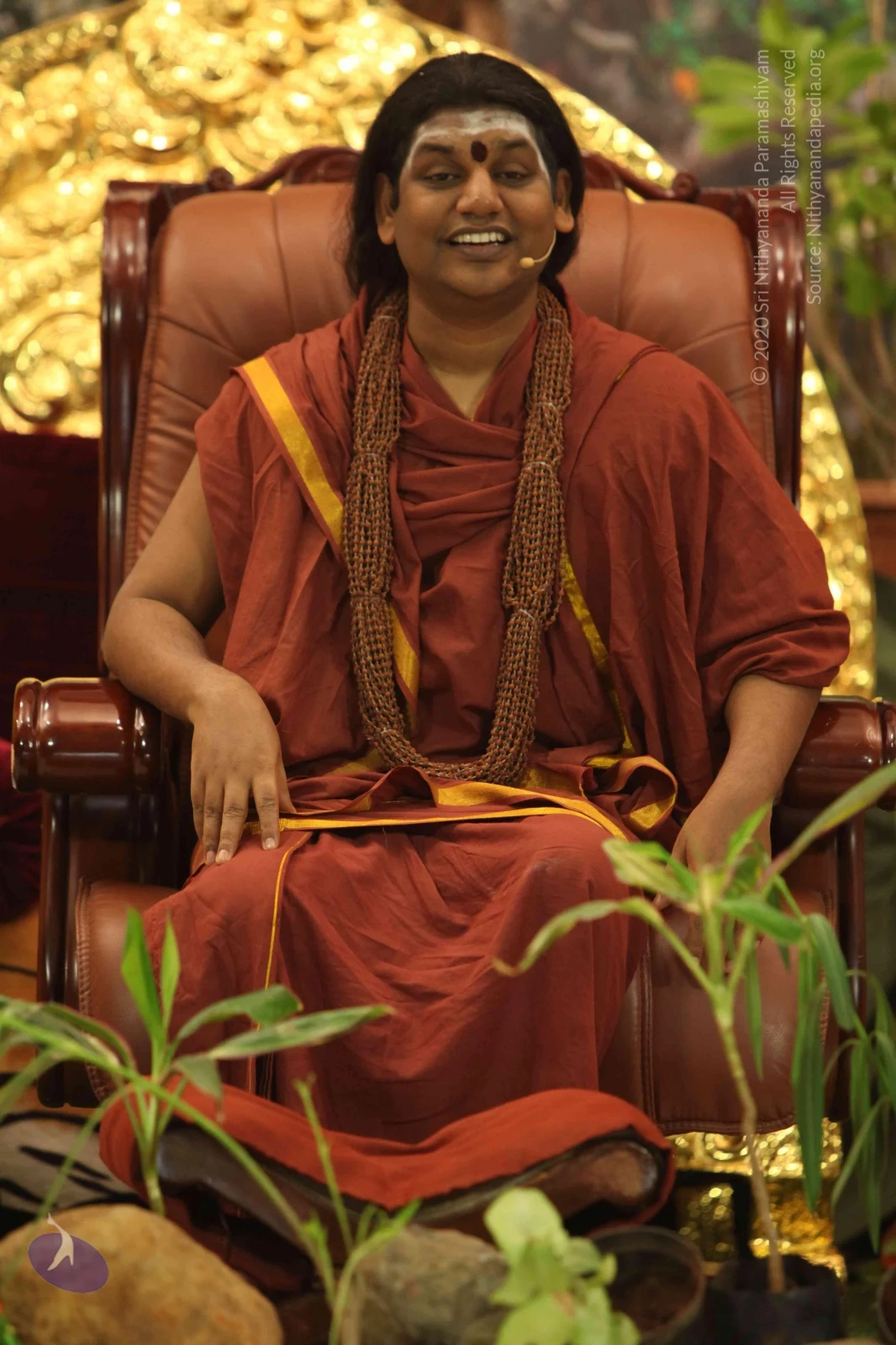
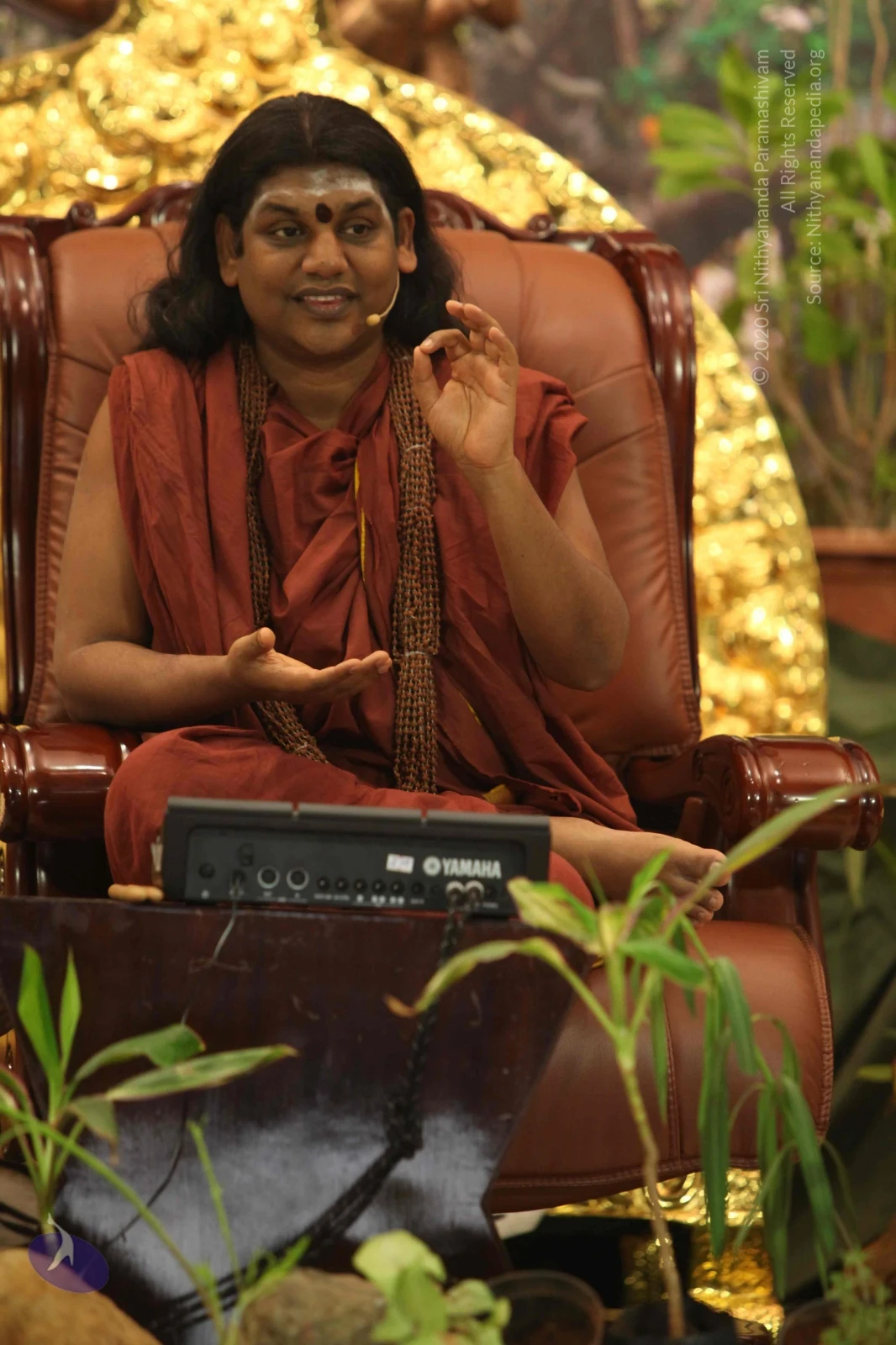
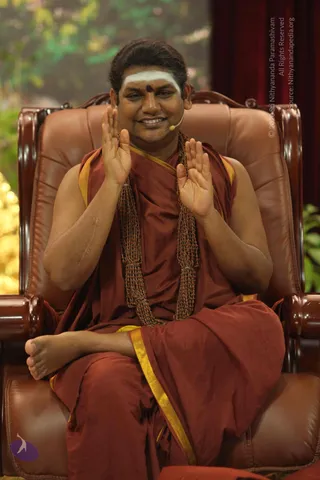
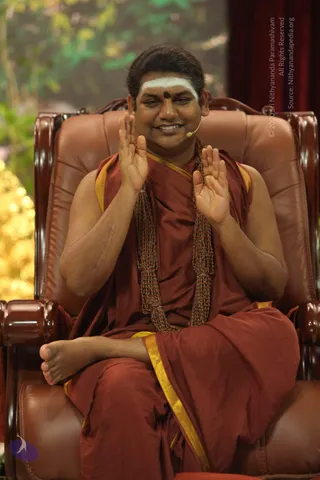
A photograph of a smiling man seated in a large brown leather armchair with carved wooden armrests, raising both palms outward in a blessing or teaching gesture. He wears a maroon-red dhoti and shawl with gold borders, a long beaded rudraksha-style mala of dark brown beads around his neck, a white tripundra with a red bindi on his forehead, and a small headset microphone. He is barefoot with one leg crossed. Behind him are blurred green foliage and a deep red curtain.A man seated on a large brown leather throne-style armchair with carved wooden arms, smiling and raising both palms outward in a blessing or teaching gesture. He wears a rust-red saffron-toned robe with gold borders over one shoulder, a long brown rudraksha-style mala around his neck, and a white horizontal tilak with a red dot on his forehead. A small microphone clip is visible near his face. He sits with one bare foot crossed over the other knee. Behind him is a blurred green foliage backdrop with a dark red curtain and golden decorative elements to the left.

NDY

17 photosSource gallery
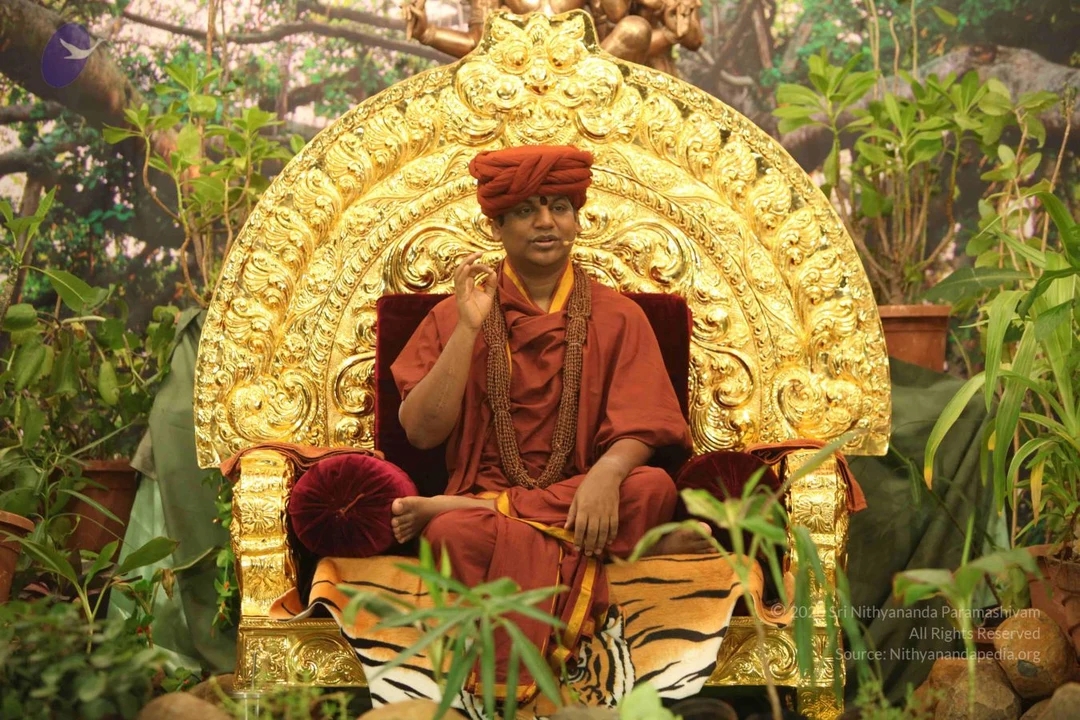
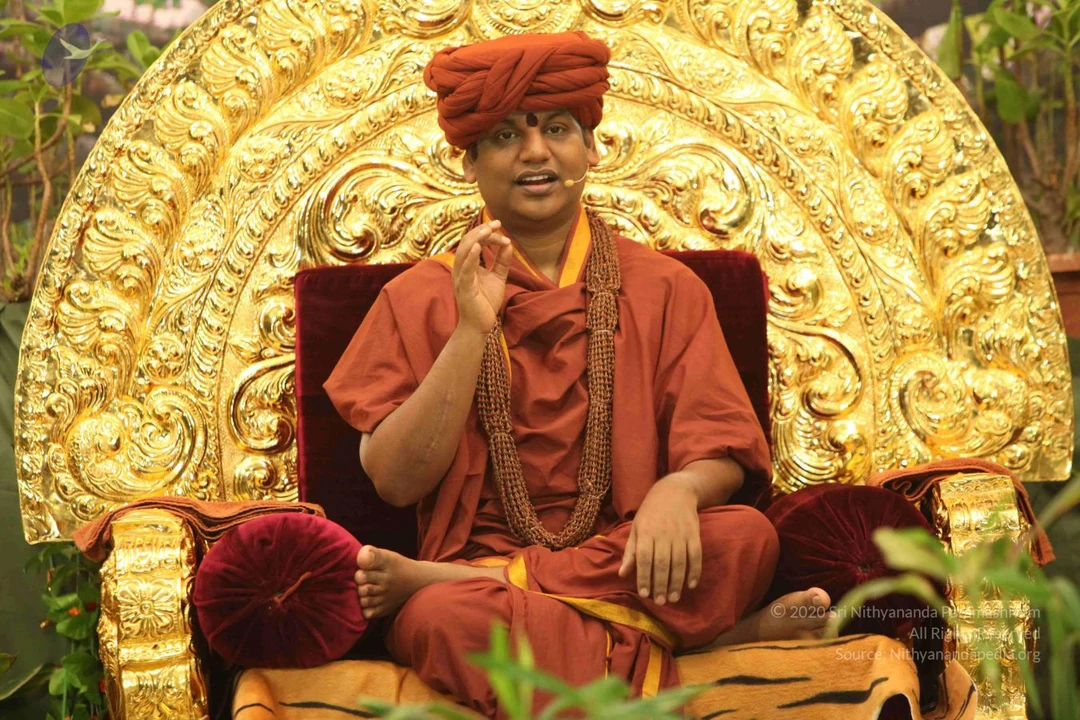
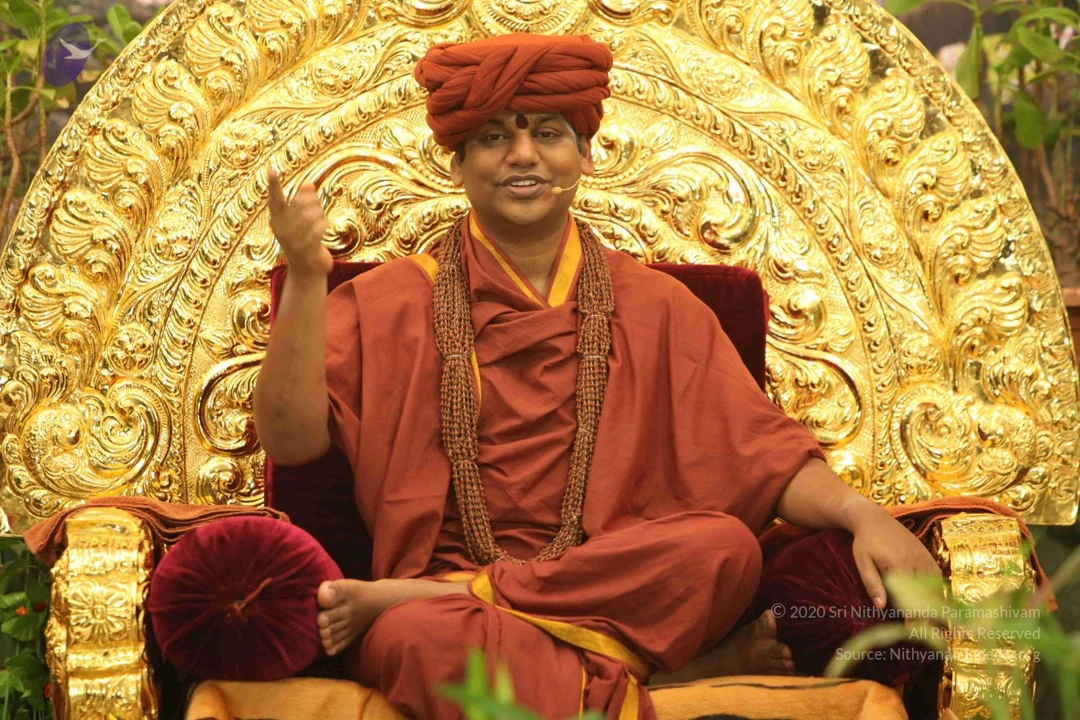
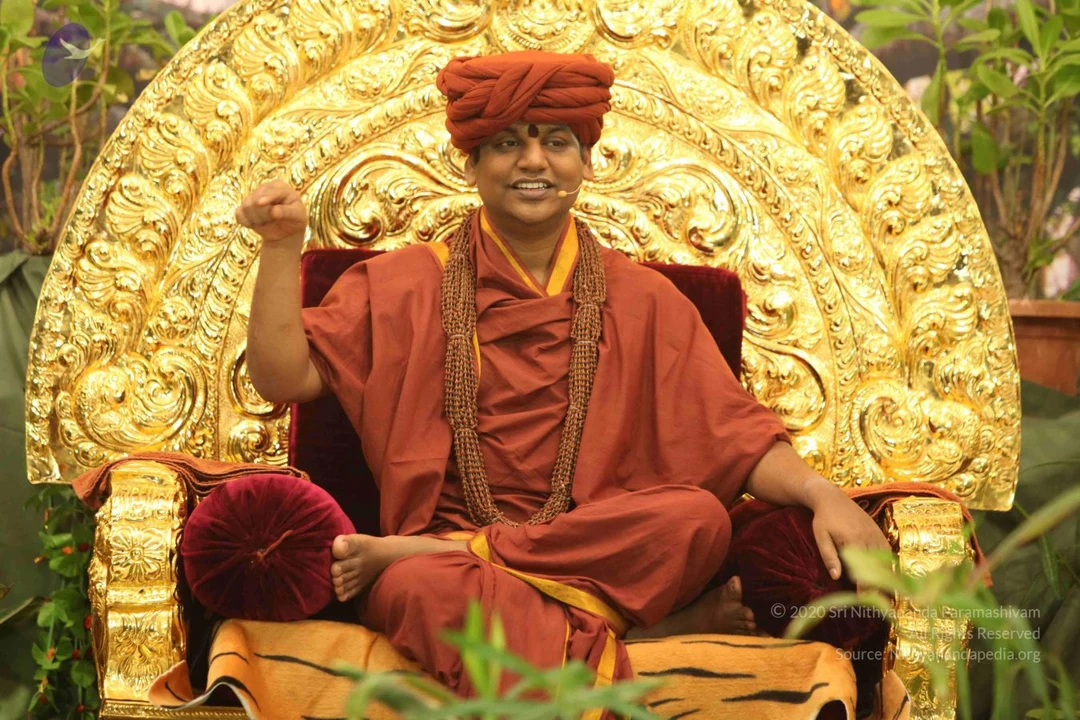
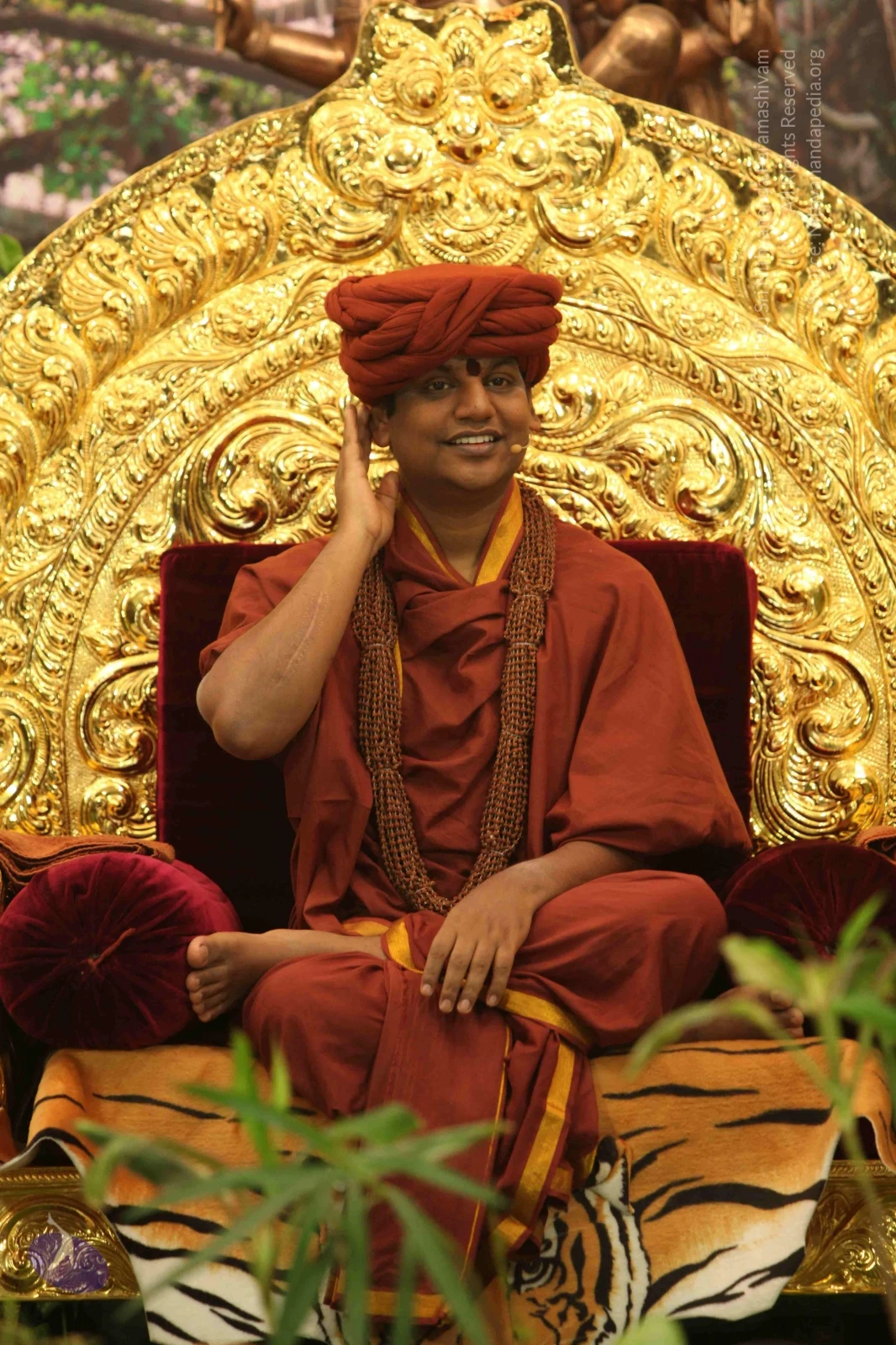
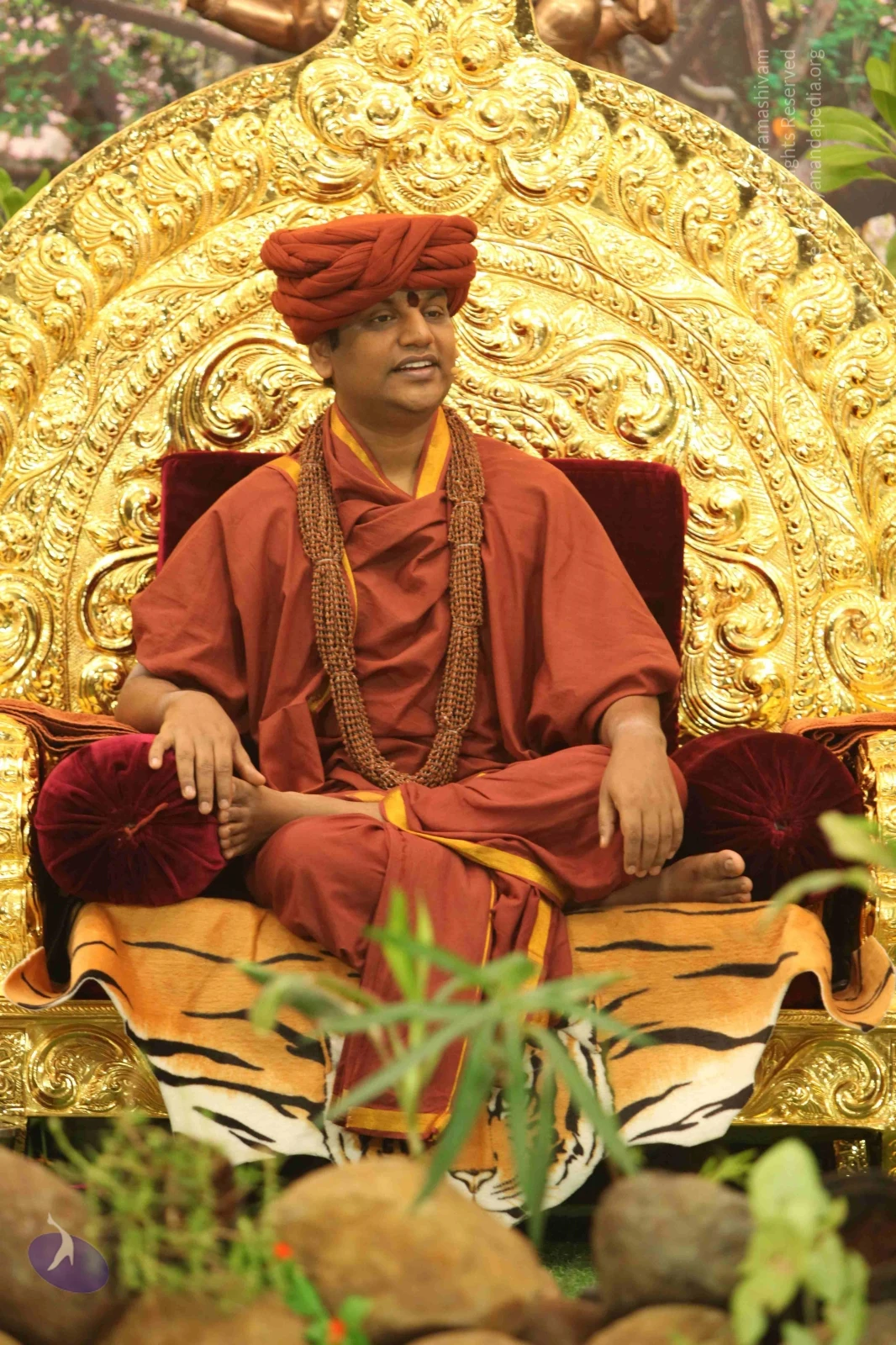
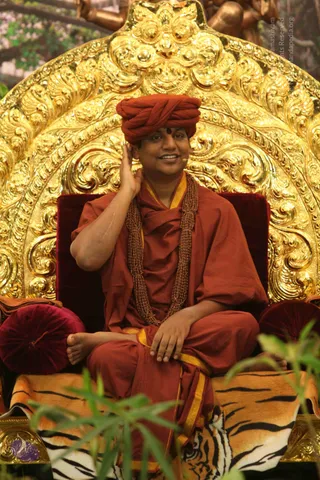
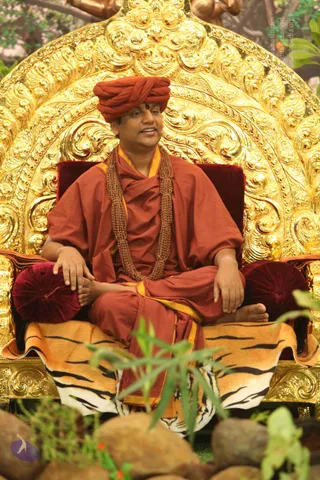
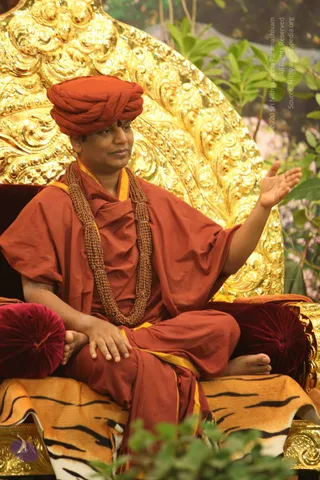
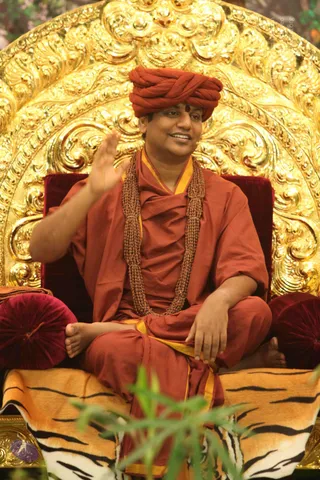
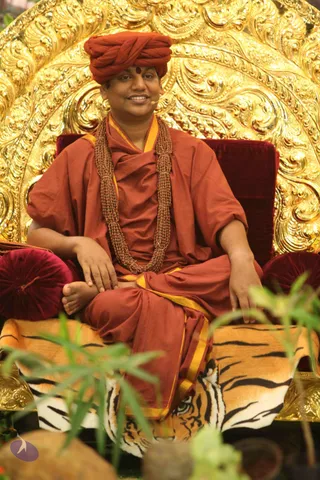
A man seated cross-legged on an ornate throne with a gilded, heavily carved golden backrest and a red velvet seat cushion, draped over a tiger-striped cloth. He wears a deep red turban with a small red bindi, a red-orange robe with yellow-gold borders, and a long beaded rudraksha-style necklace. He rests one hand against the side of his head and smiles toward the audience, with a small headset microphone visible near his face. Green foliage blurs in the foreground and a golden carved relief panel is behind the throne. A single seated person is visible in the scene.A seated man in a rust-orange turban and matching orange-red robes sits cross-legged on an ornate gold throne with carved floral scrollwork and deep red velvet cushions. He wears a long brown rudraksha mala across his chest, with a small red mark on his forehead, and rests his hands on his knees. A tiger-striped cloth covers the seat, and green leaves and stones are in the foreground. Appearance cues include the orange turban, orange robes and rudraksha mala, so this is a probable Swamiji seated in a satsang setting. Only one physical person is visible.A photo of a seated man in rust-orange robes and a matching orange turban with a small red bindi, sitting cross-legged on an ornate gold throne with a tiger-striped fabric covering and red velvet cushions. He wears a long rudraksha-style mala necklace and gestures with his right hand raised, while green foliage surrounds the scene. Swamiji (probable): the seated figure wears a saffron-orange turban and robes with a rudraksha mala and sits on a gold throne, matching the page's Swamiji reference. A tiger-striped cloth covers the seat in the foreground.A photograph of a seated man in saffron-orange robes and a matching orange turban with a red bindi, raising one hand while speaking and smiling. He sits cross-legged on an ornate gold throne with carved scrollwork and red velvet cushions, on a tiger-stripe cloth, with a green plant blurred in the foreground. He wears a long beaded mala-style necklace. a person by appearance cues: saffron robes, orange turban and a long necklace, while seated on a gold throne, indicating a discourse or darshan setting.A seated man in a rust-orange turban with a red bindi and a rust-orange robe with gold borders sits cross-legged on an ornate gold throne with red velvet cushions. He wears a long brown-beaded rudraksha mala draped over his chest and smiles toward the camera, with a small microphone visible near his face. His seat is covered by a tiger-skin rug, and green plants blur in the foreground. Swamiji (probable): the appearance cues here are a rust-orange turban, rudraksha mala and saffron-toned robe, with the page stating he is present at this event; the identity is appearance-based only.A photograph of a smiling man seated on an ornate gold-leaf throne with a red velvet cushion, a tiger-striped cloth draped over the seat and green plant foliage in the foreground. He wears a rust-orange turban with a red dot on the forehead, rust-orange robes with gold borders, and a long multi-strand rudraksha-style mala around his neck, with a small microphone clipped near his face.