Skip to content
Friday

4 April 2014

Harmony Leads to the Space of Advaita

Dated photos
323
Source pages
1
Media
2
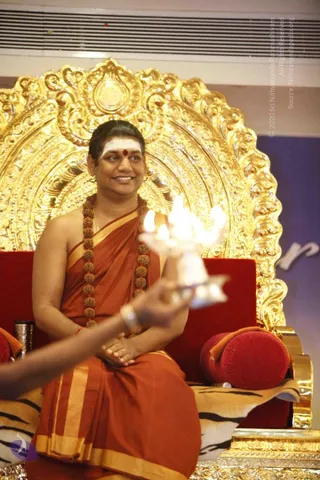
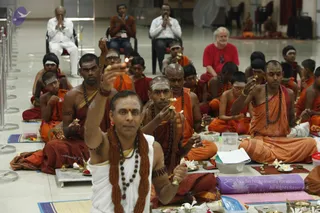
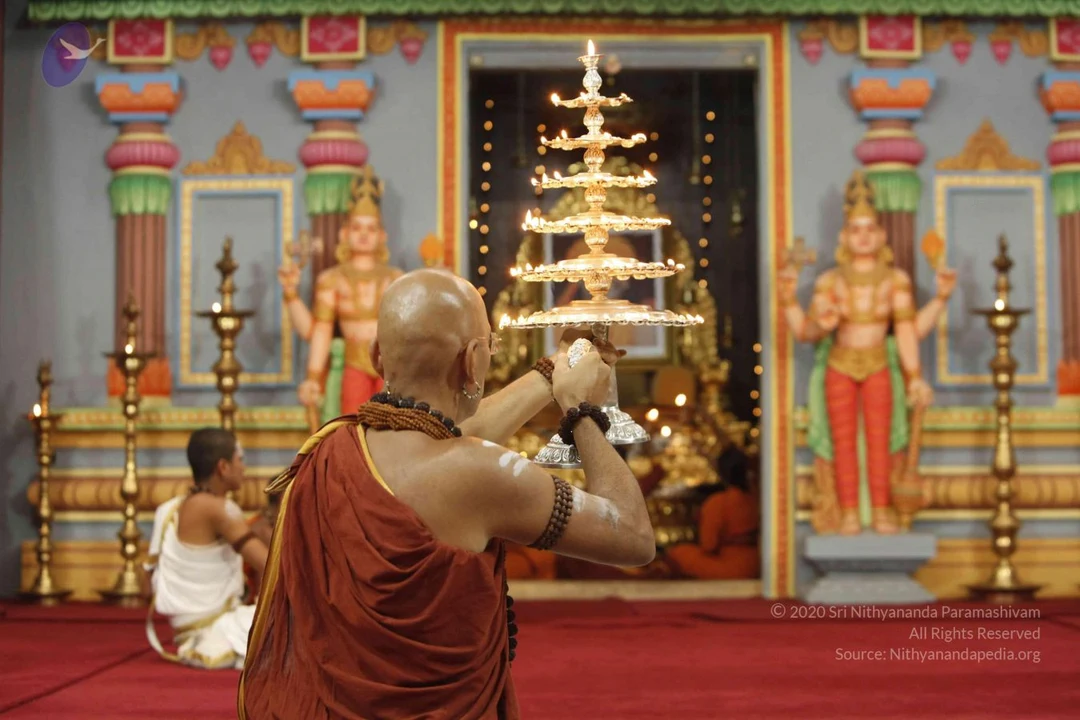
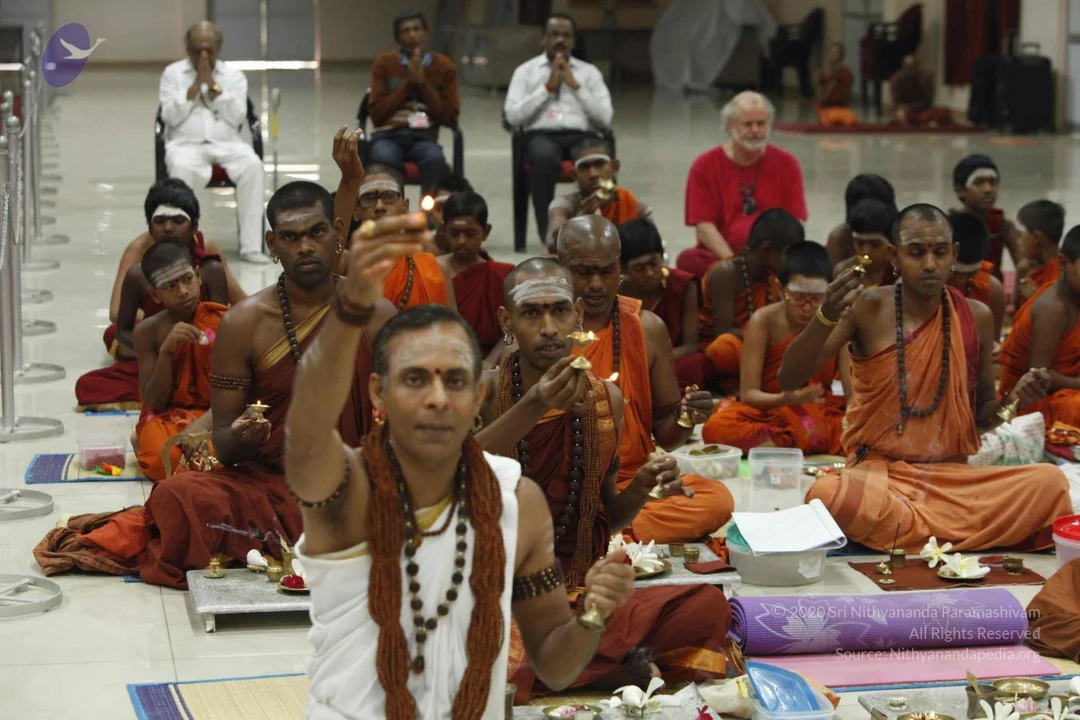
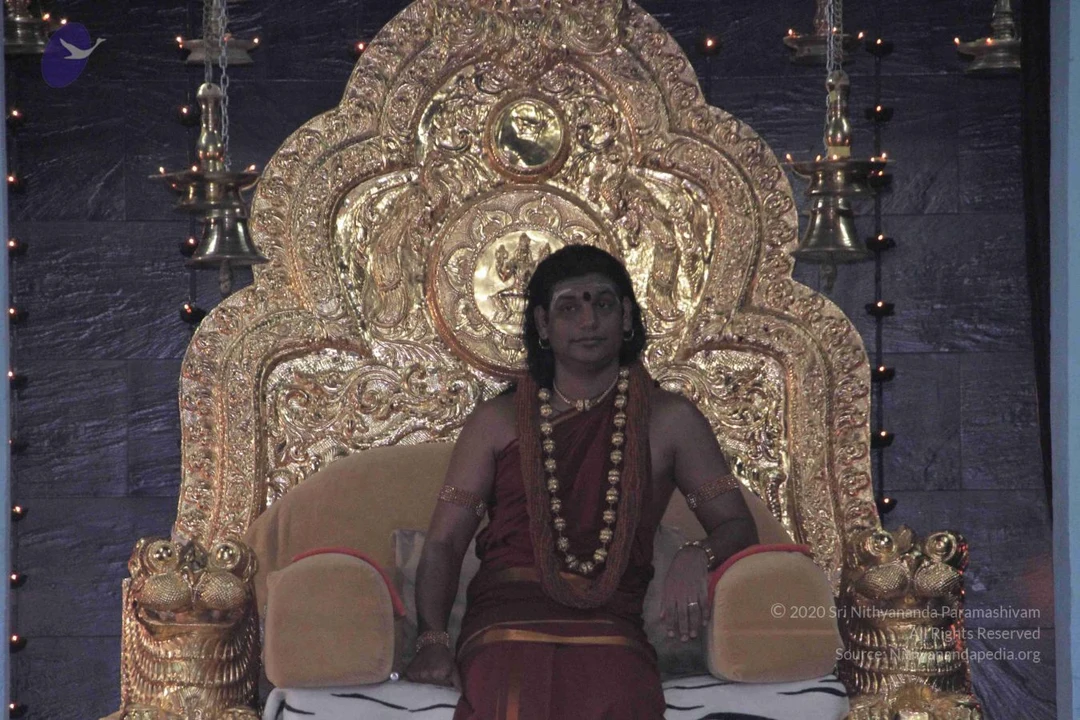
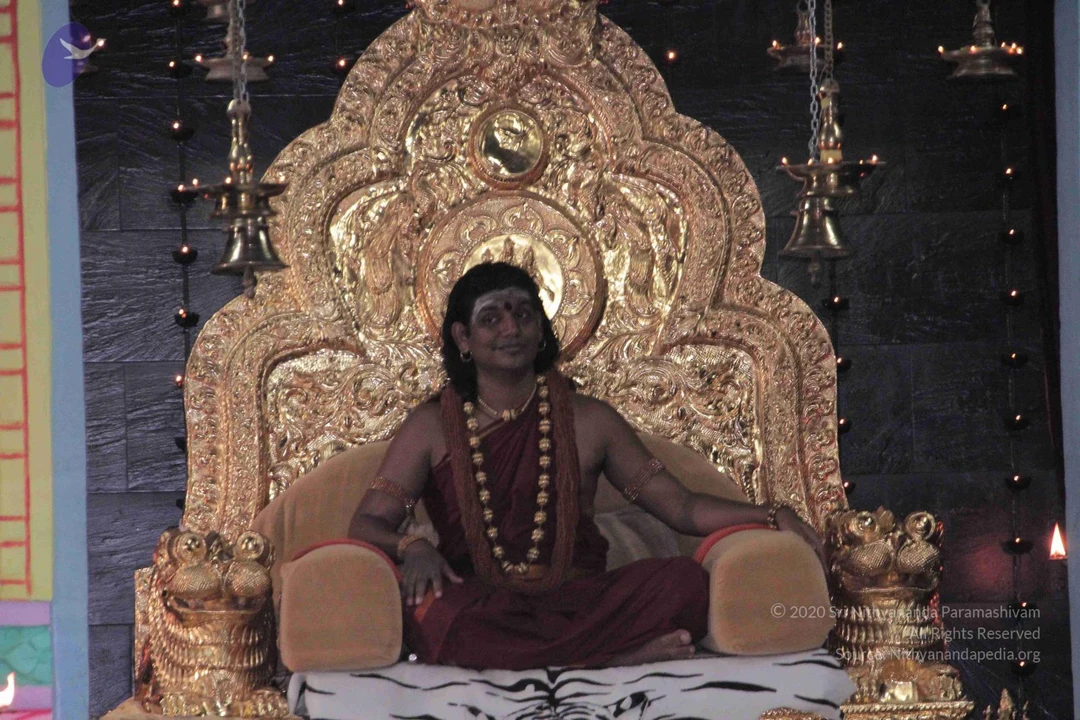
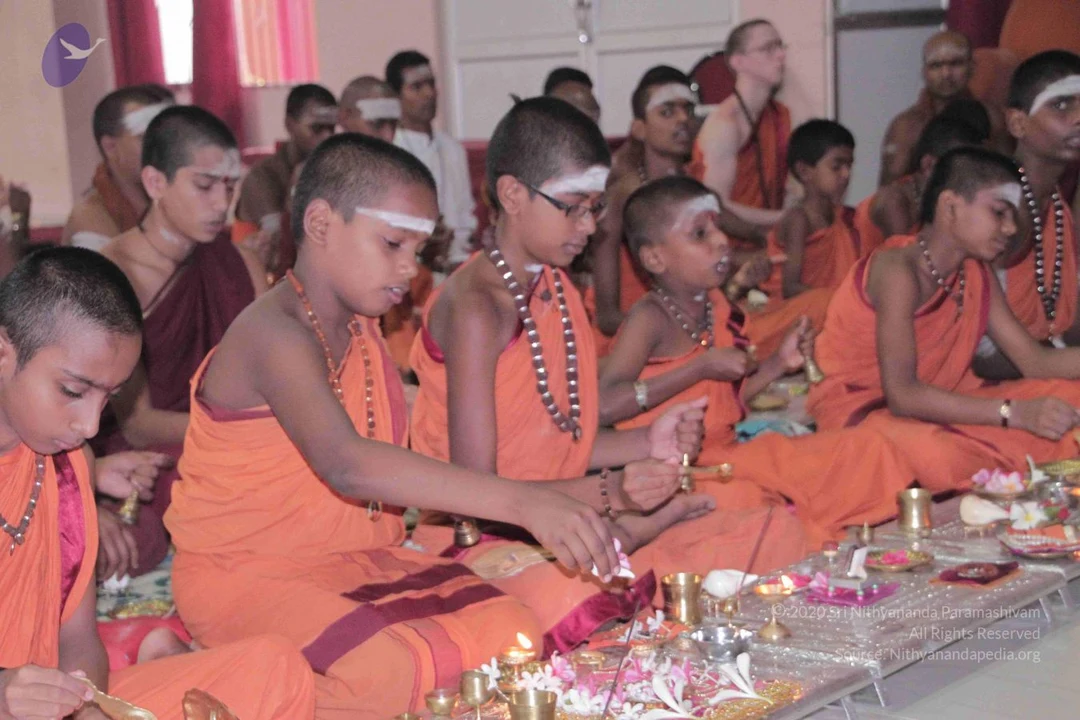
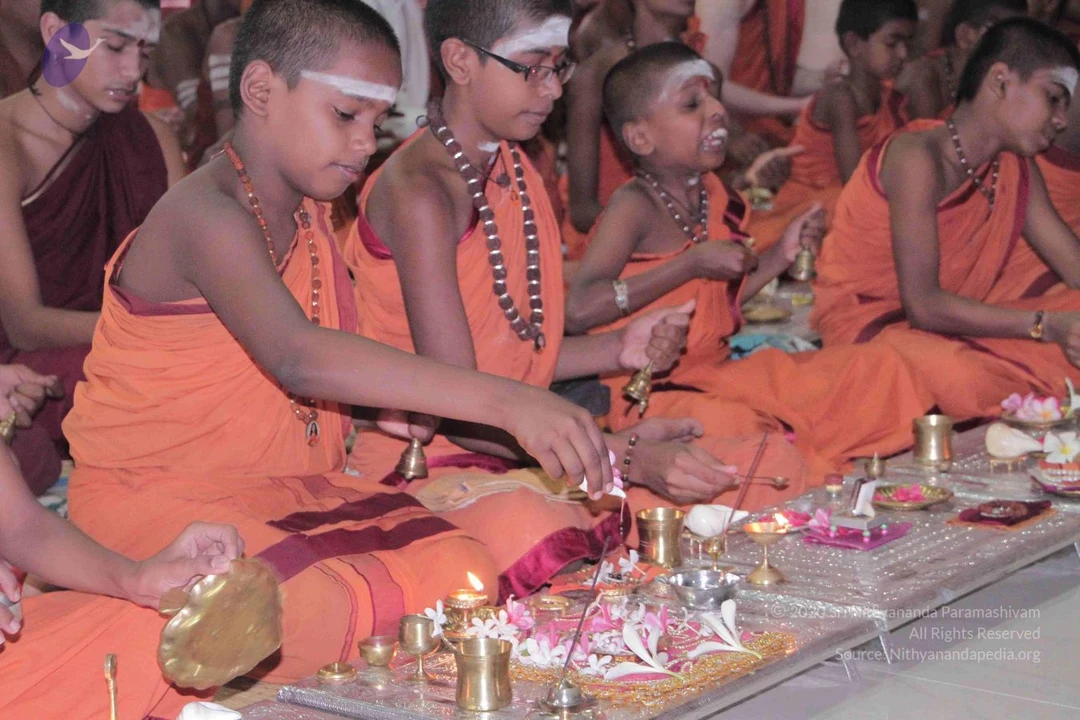
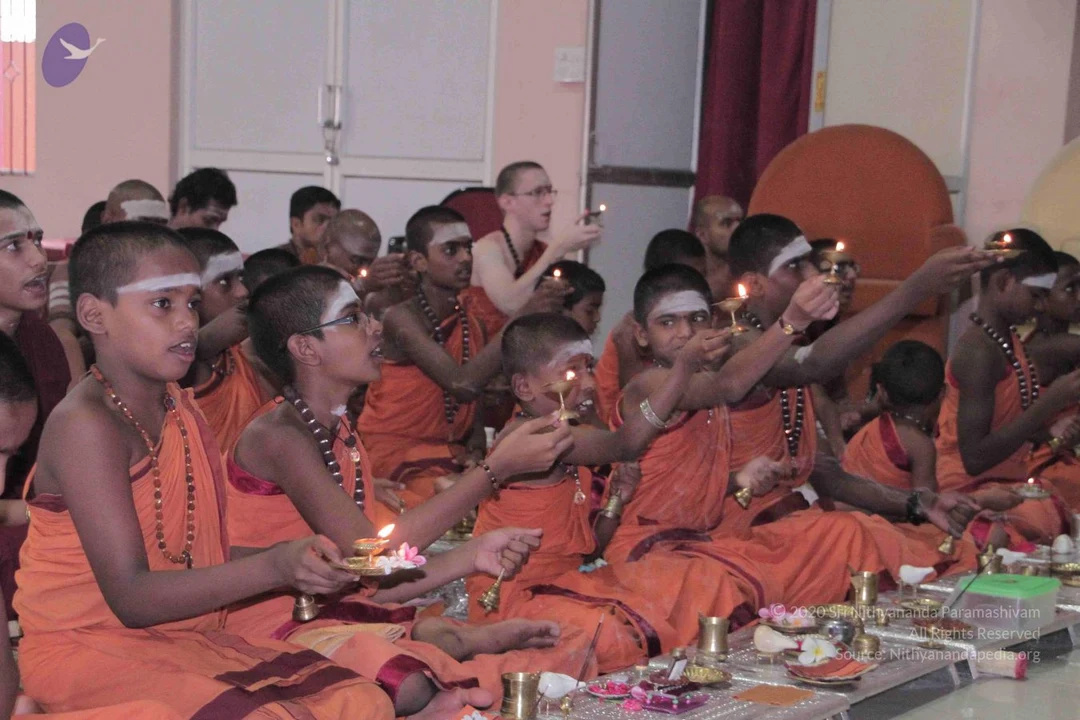
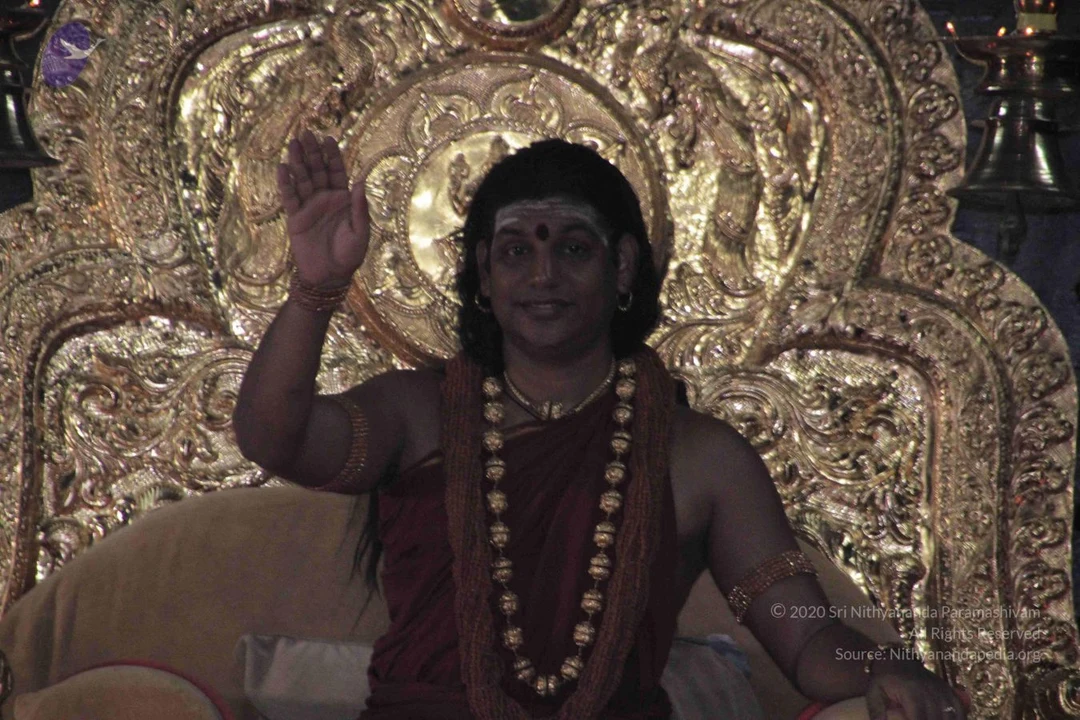
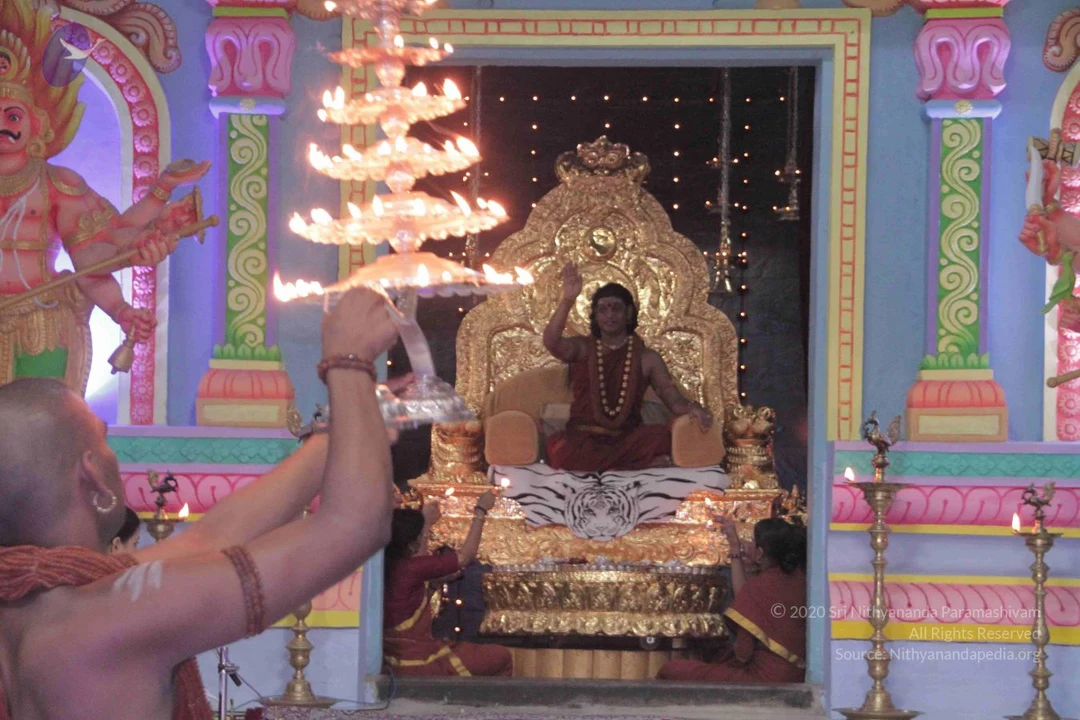
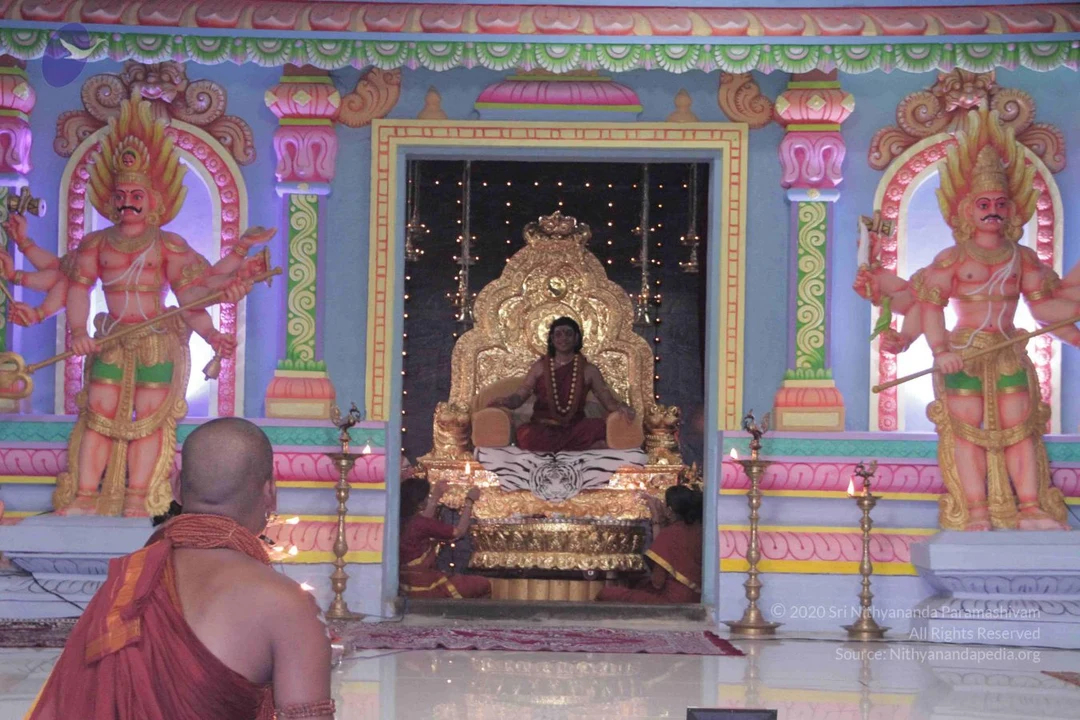
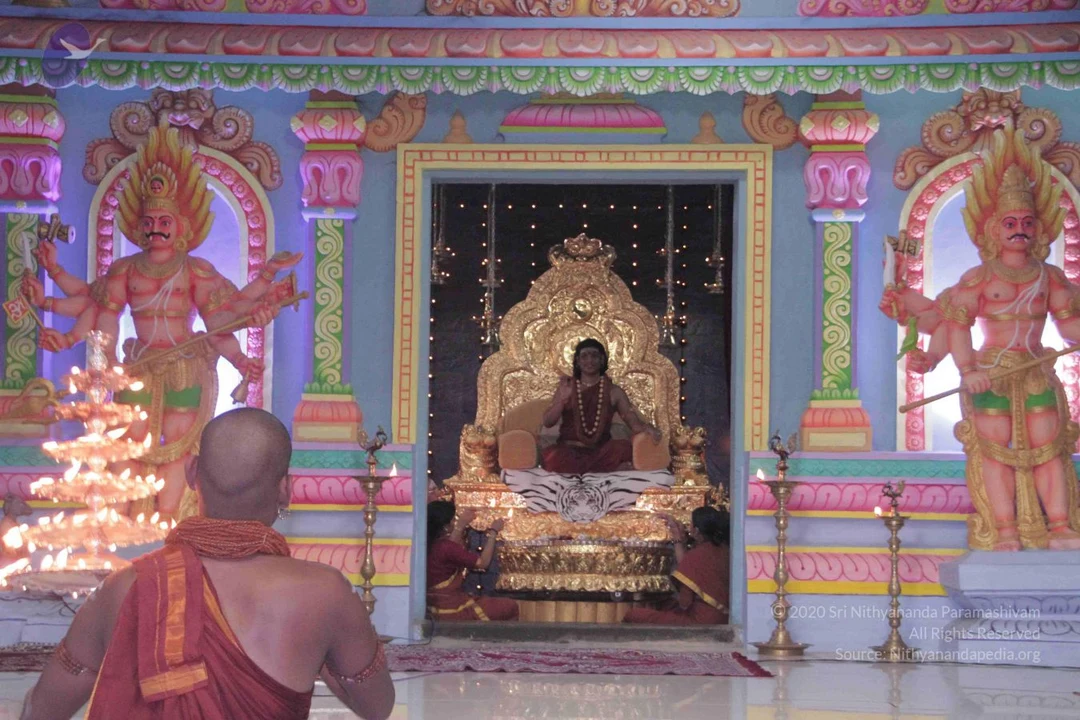
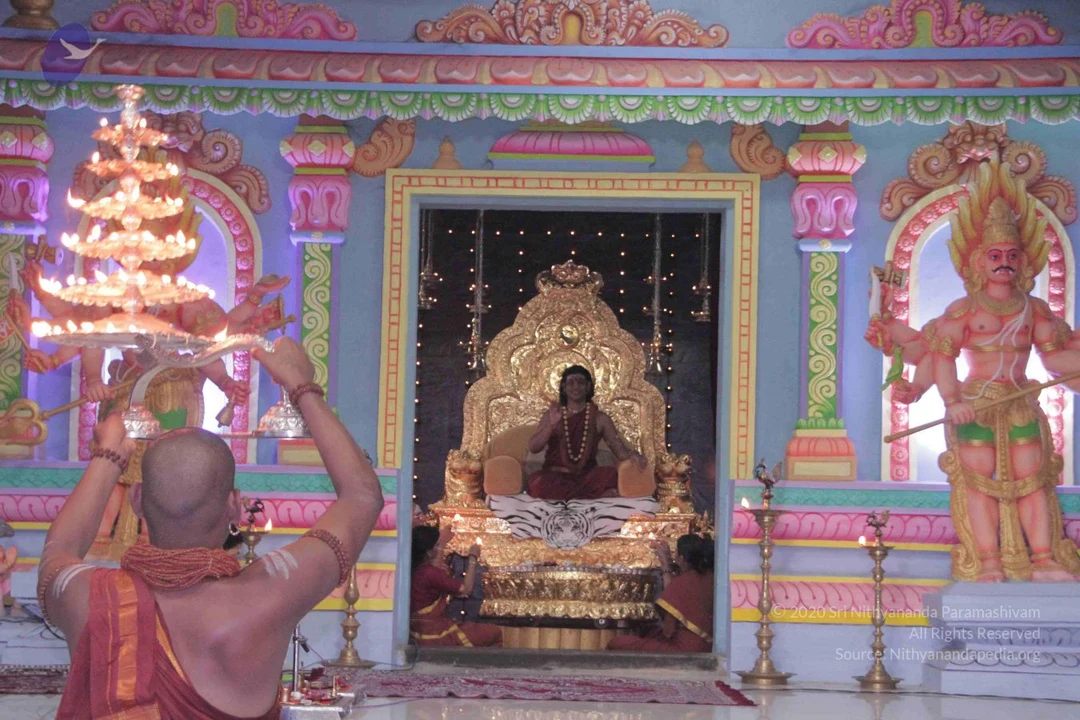
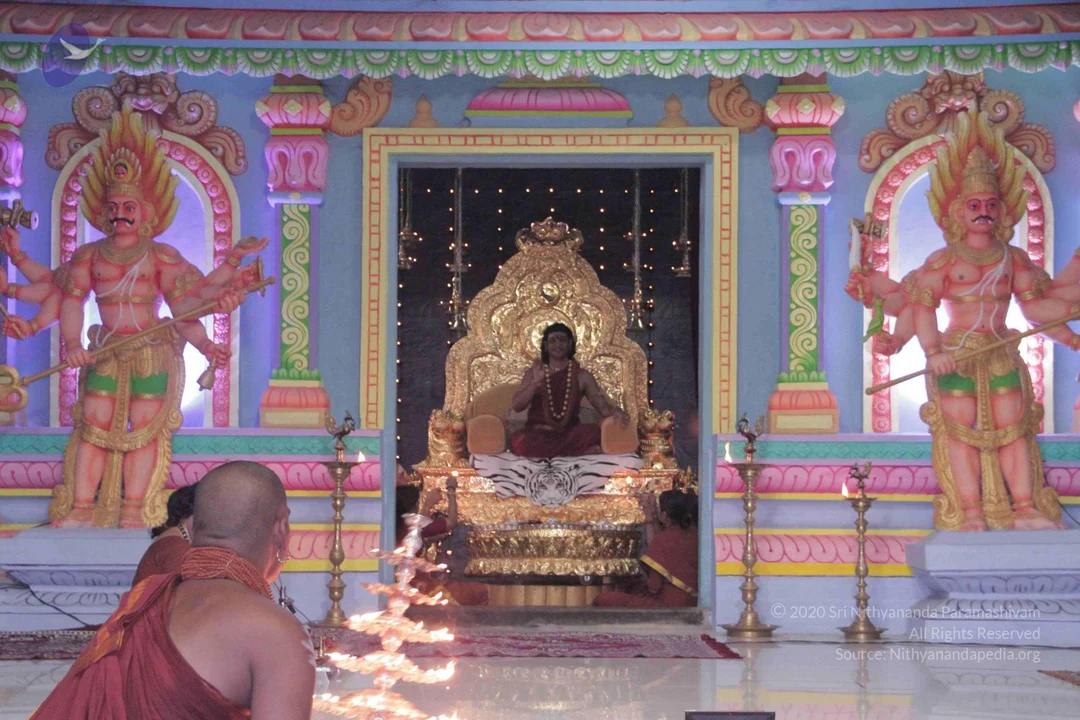
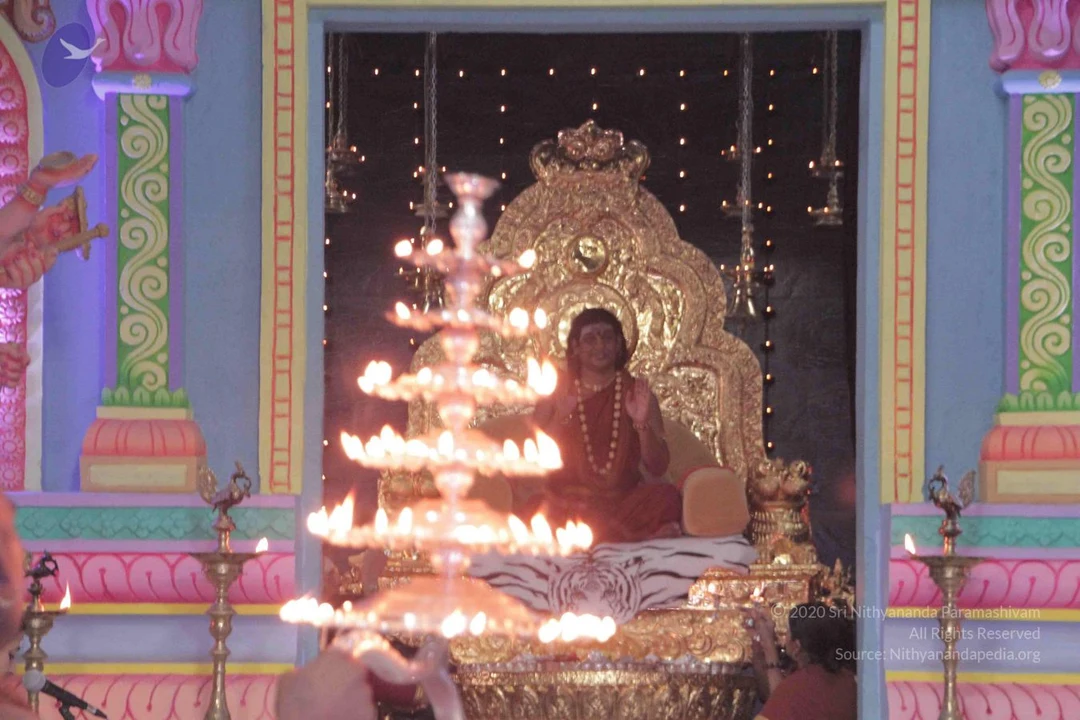
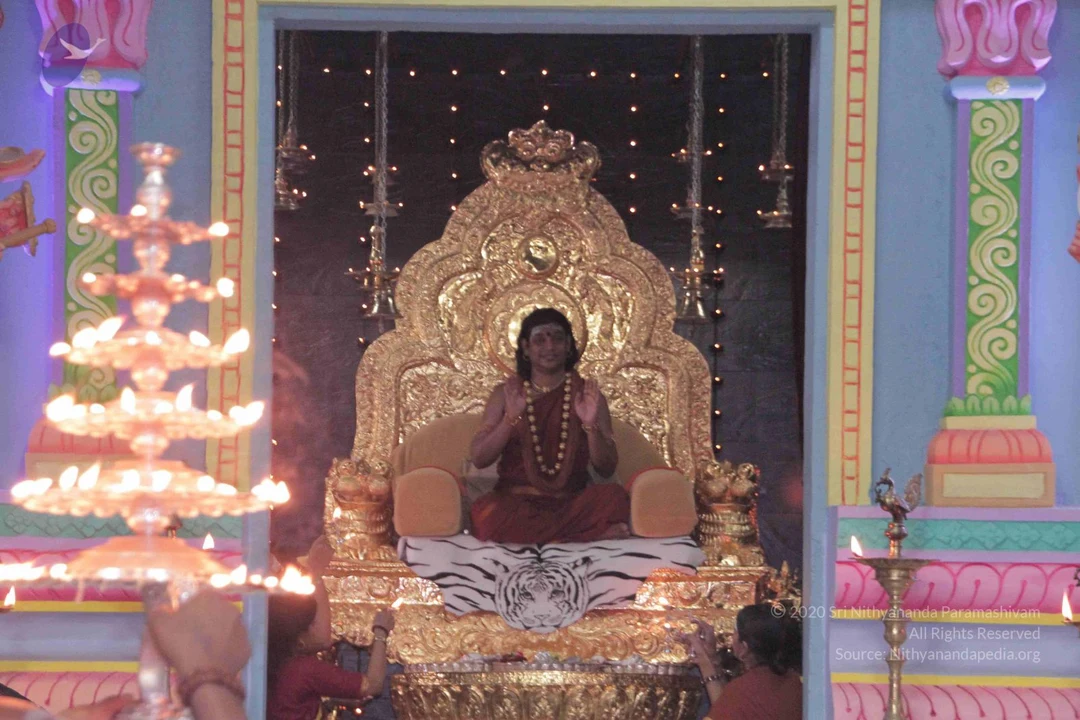
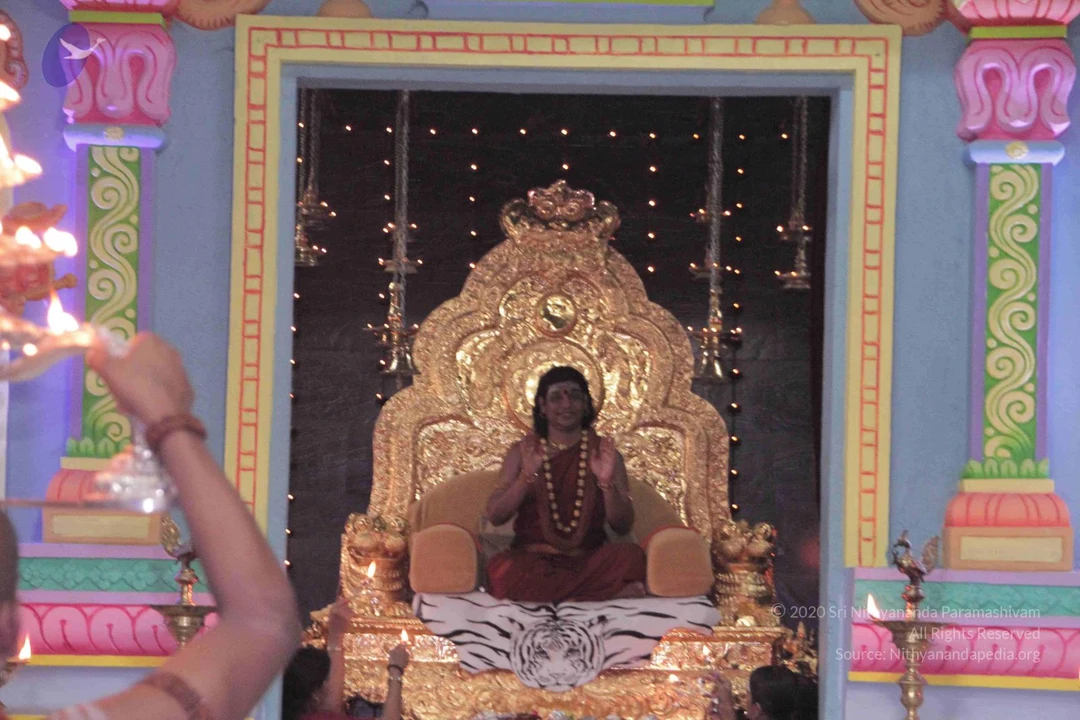
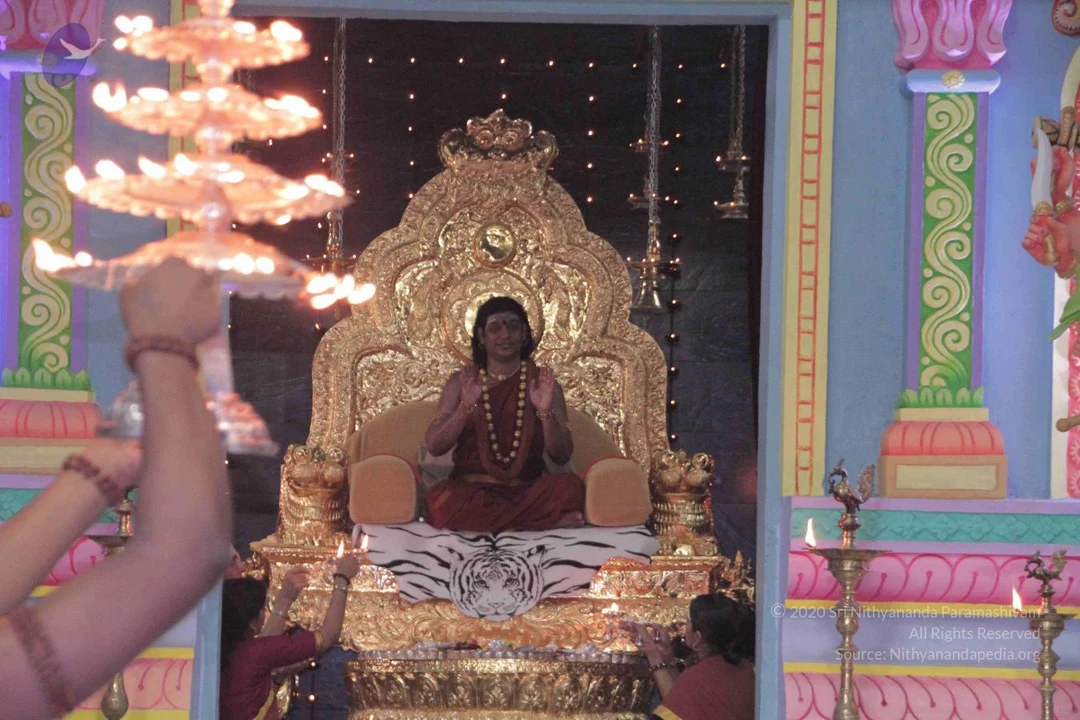
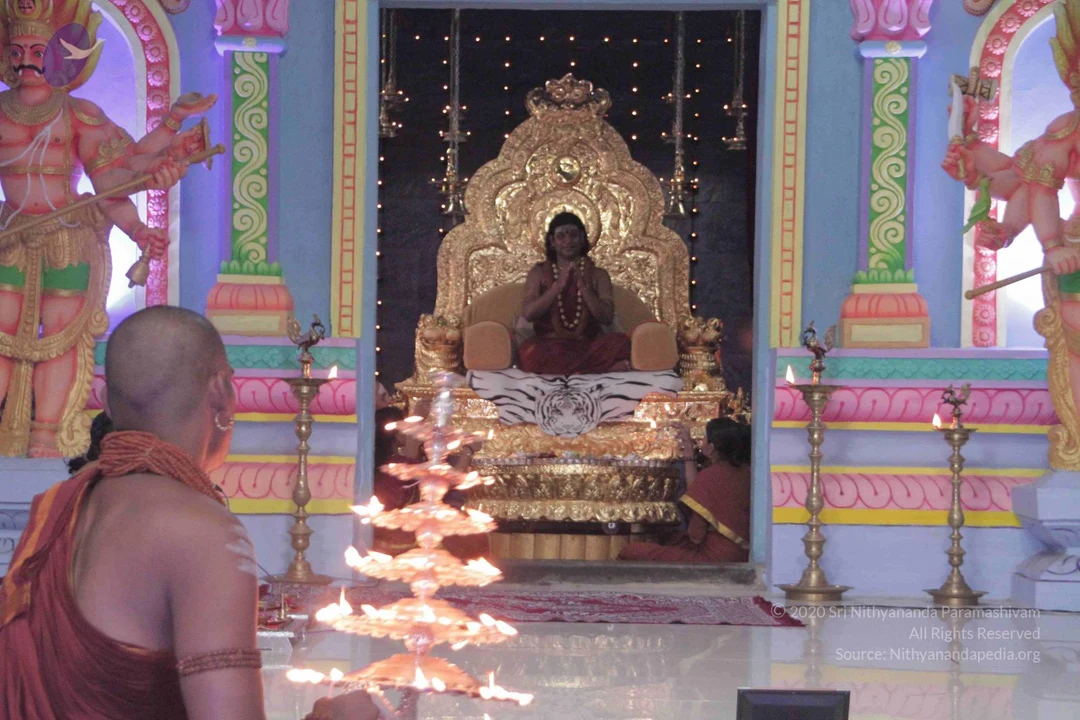
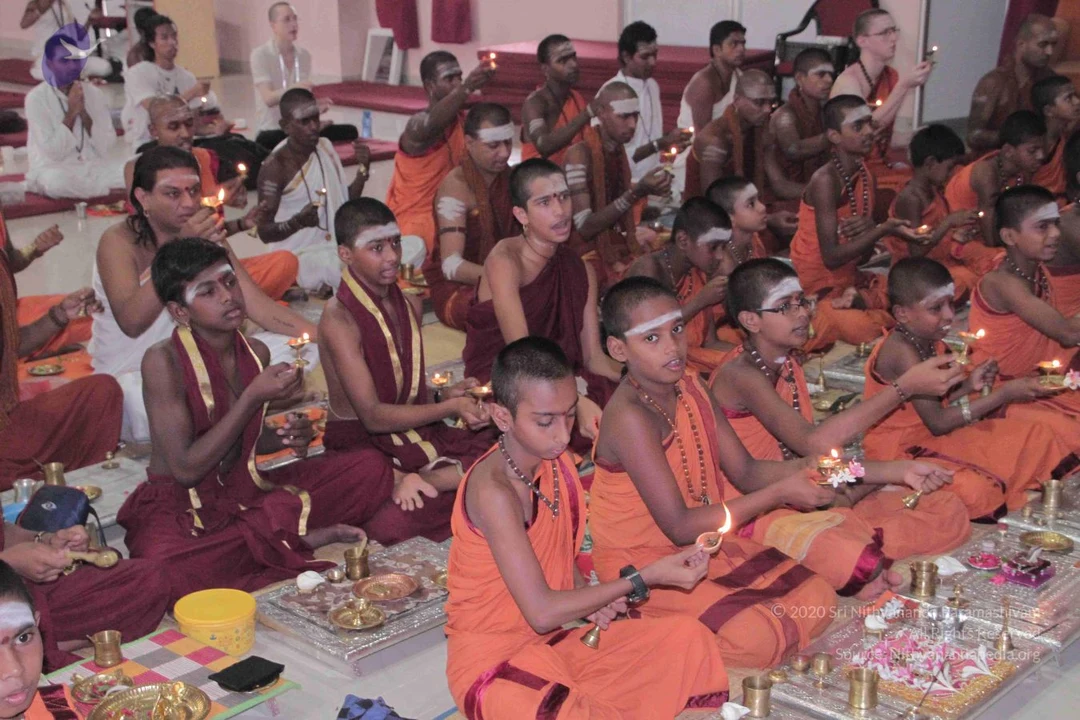
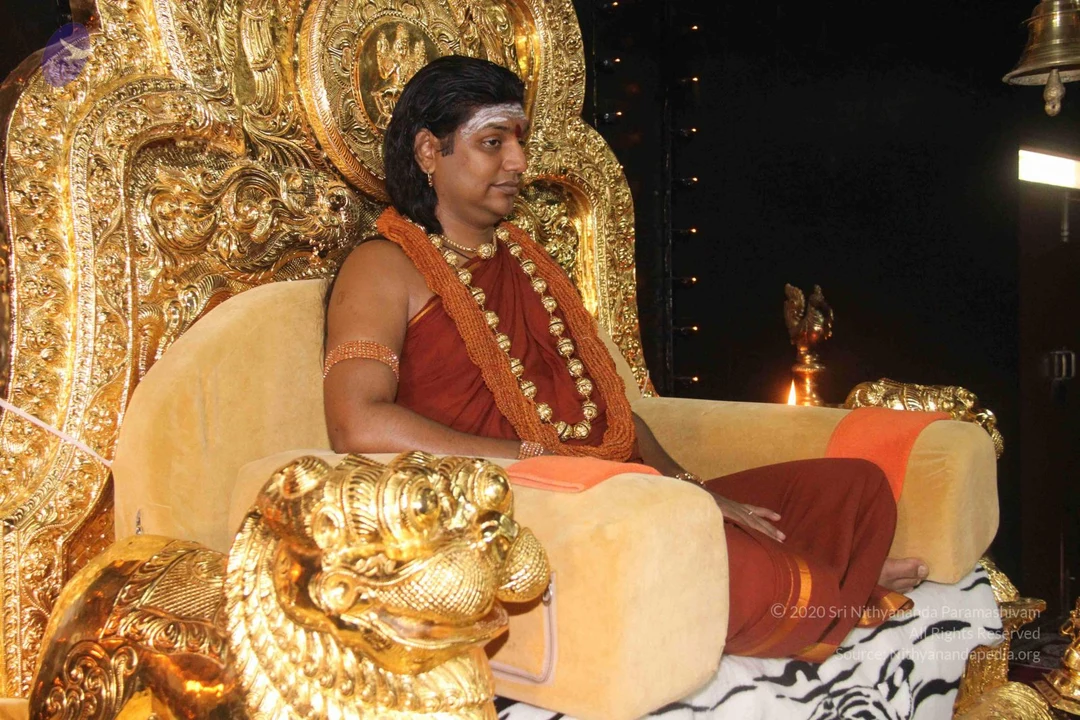
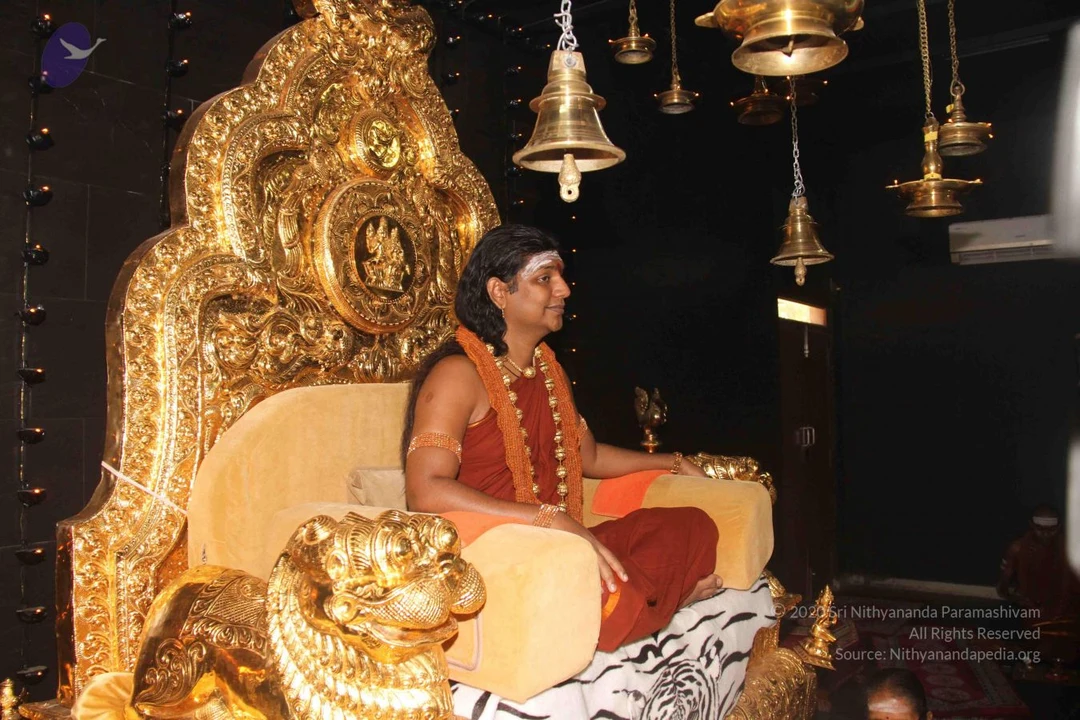
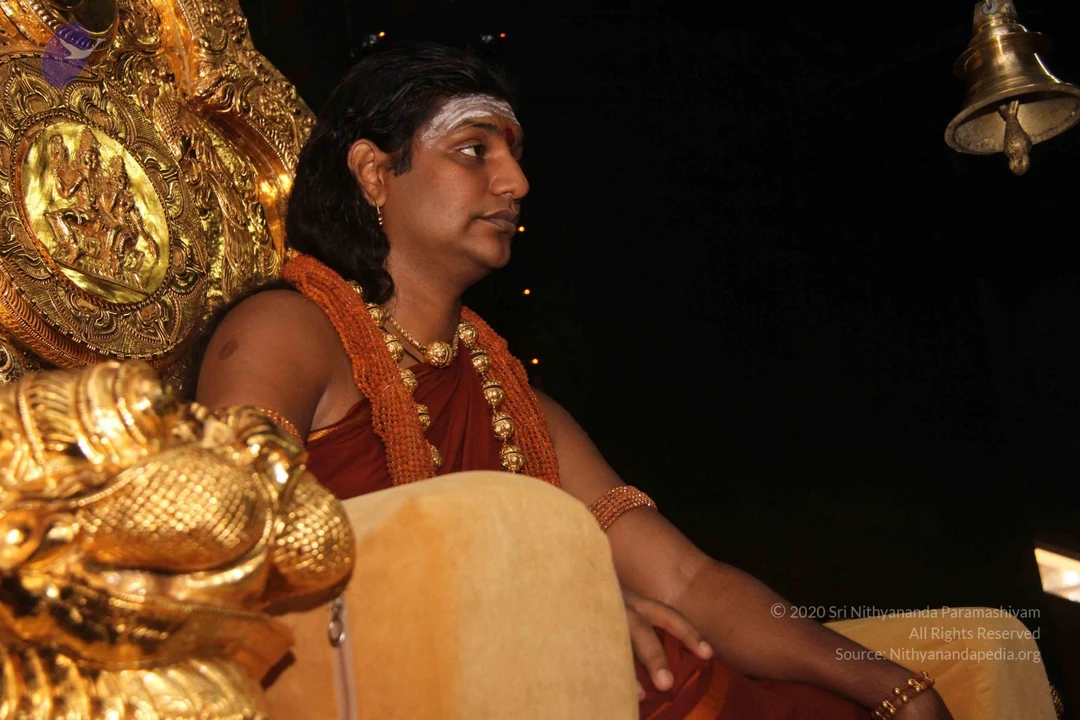
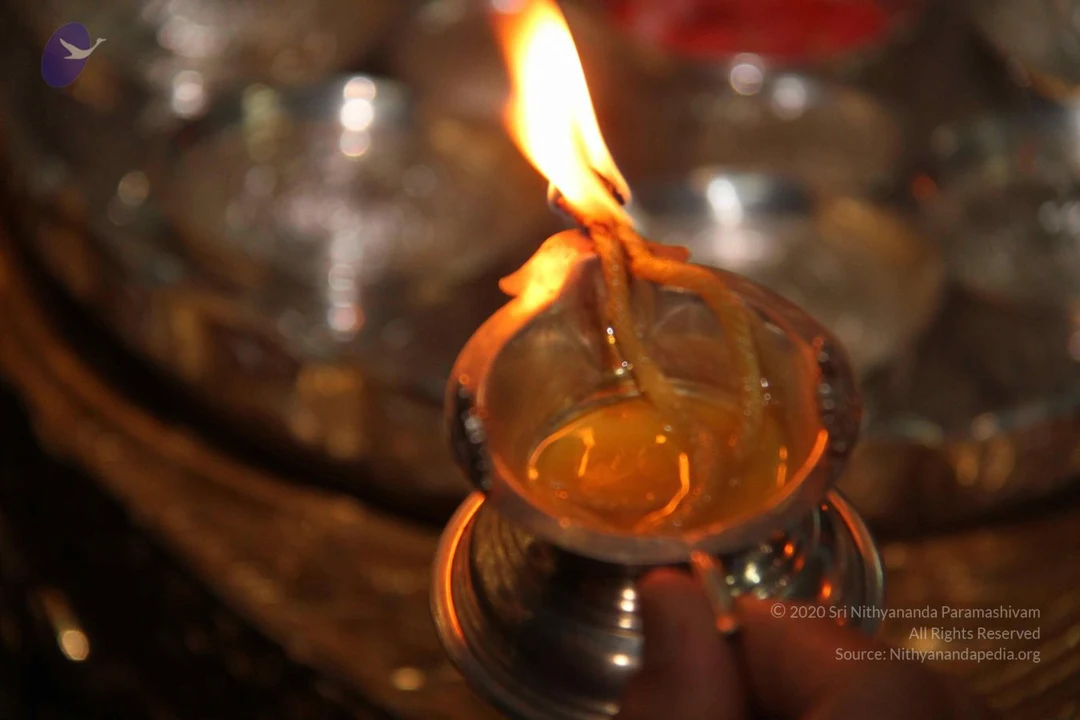
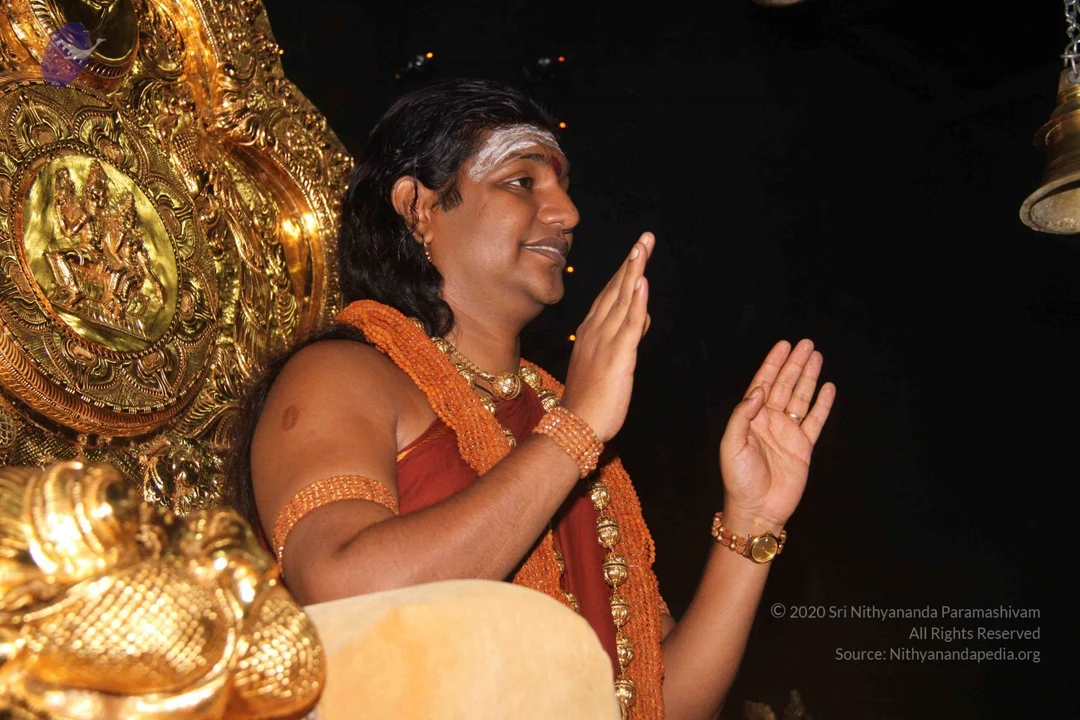
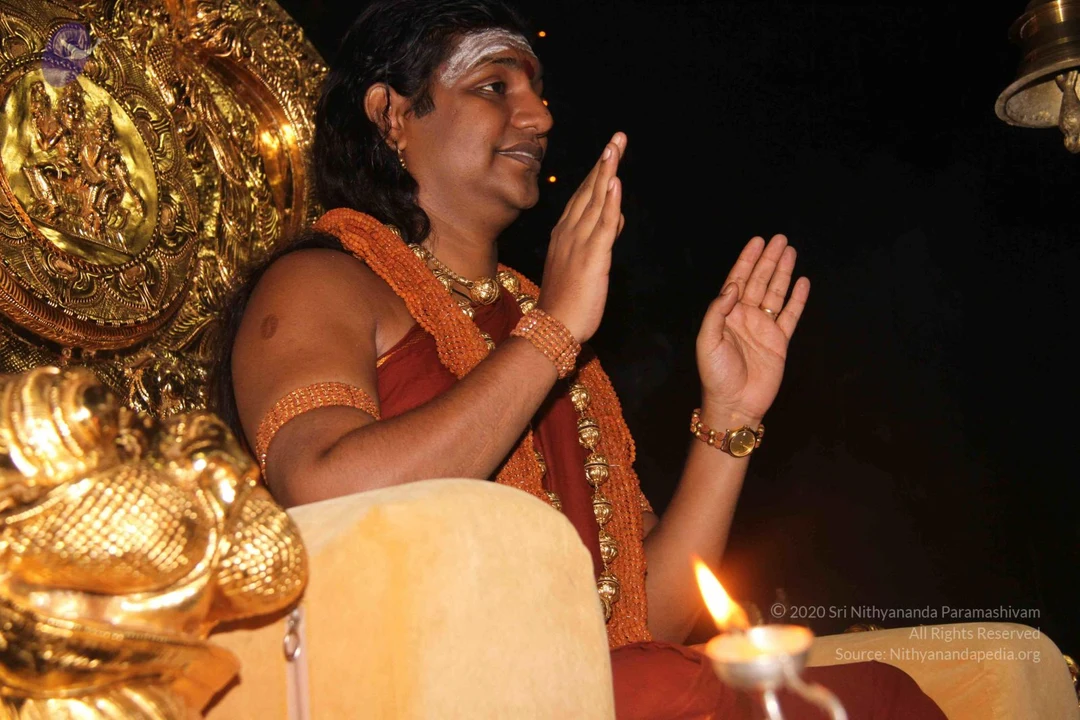
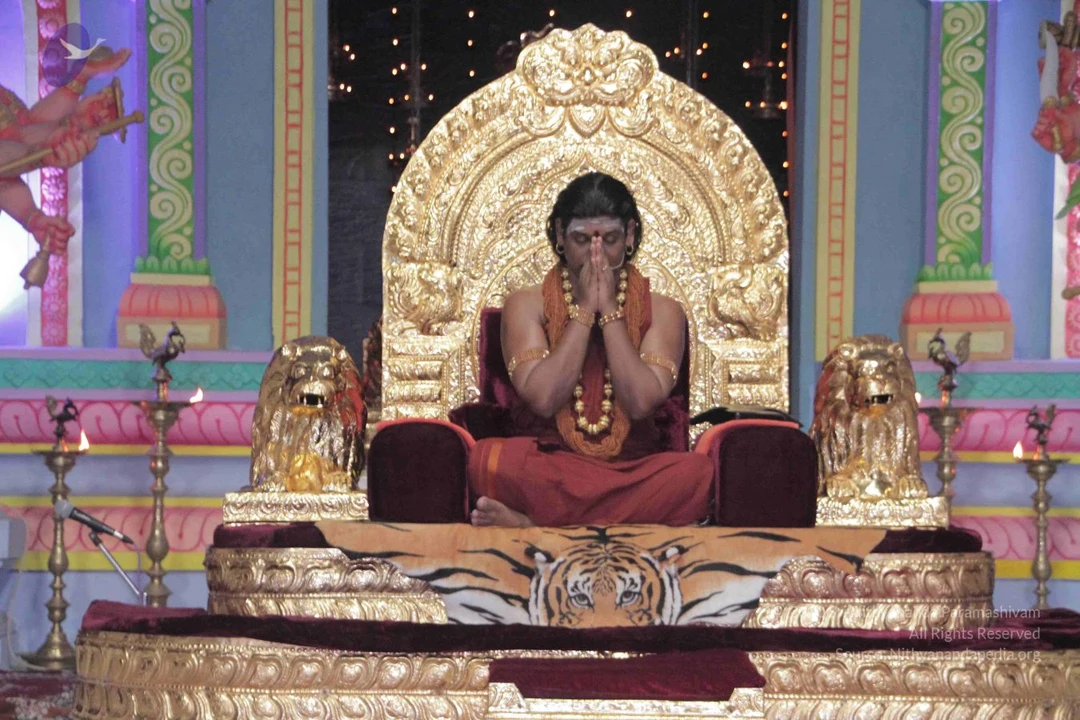
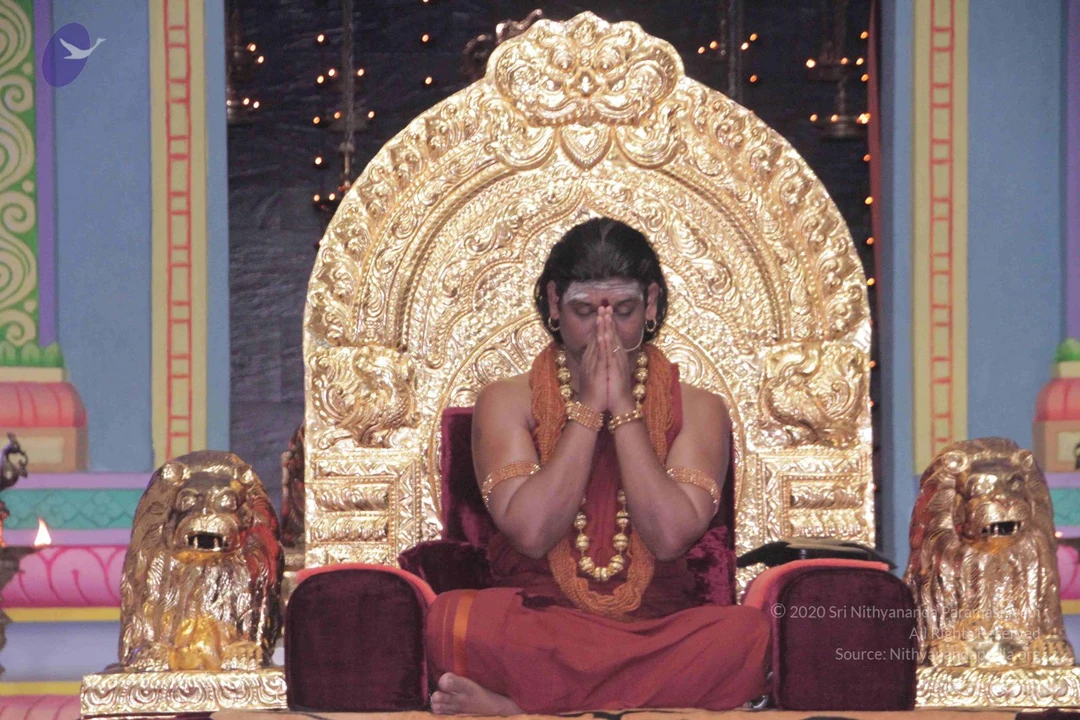
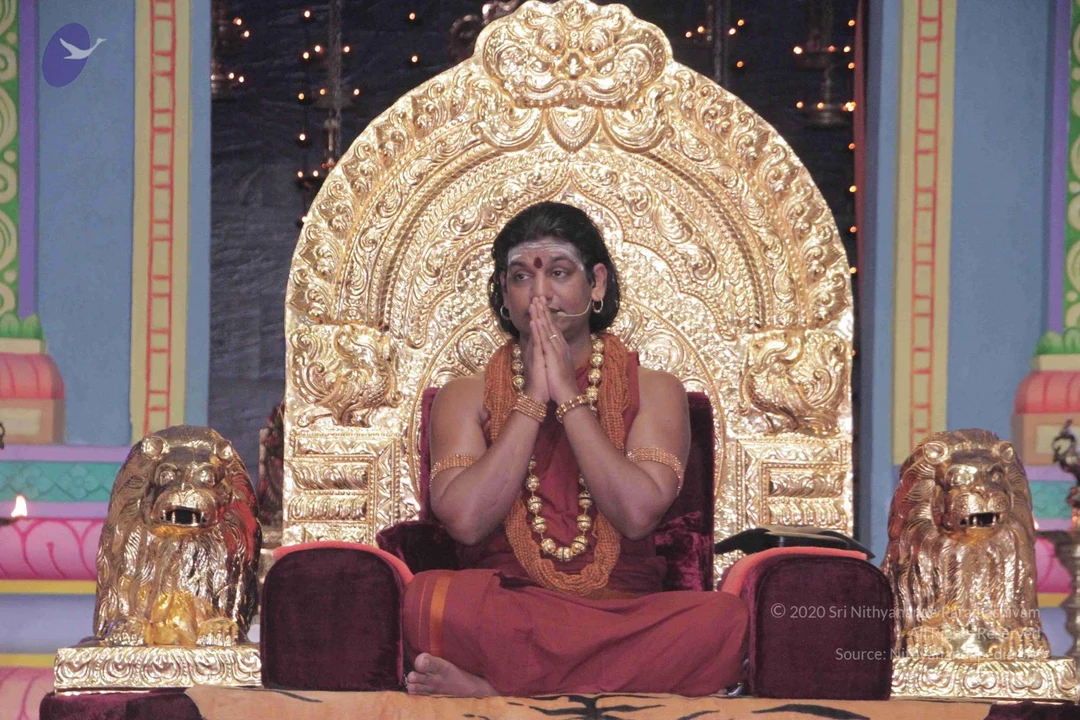
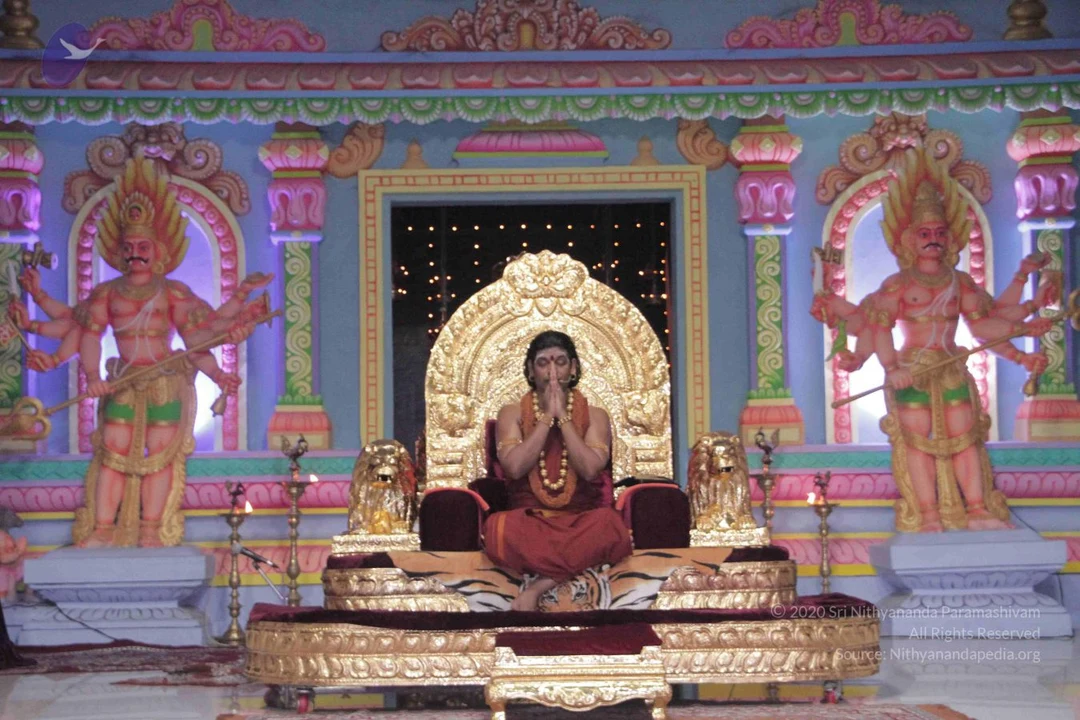
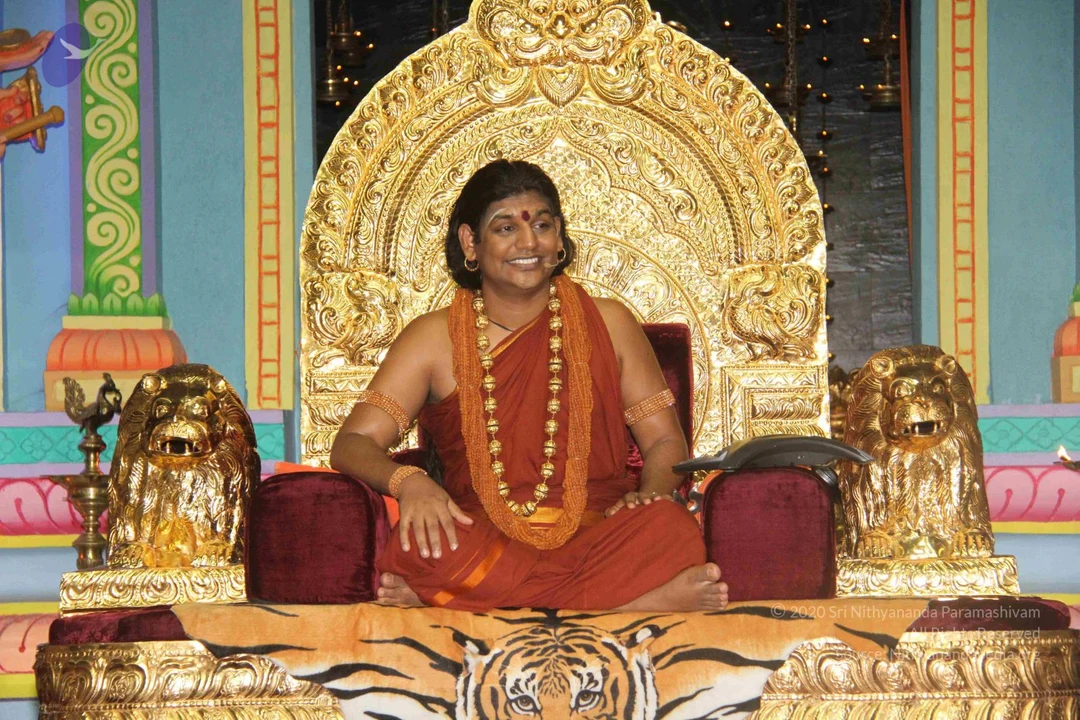
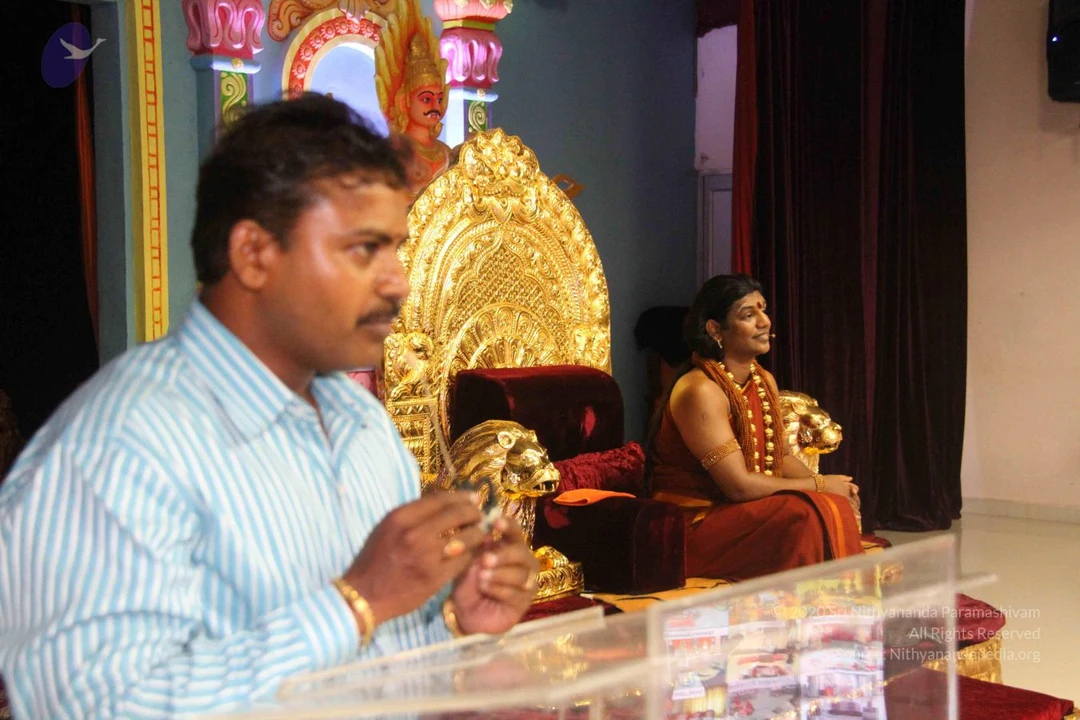
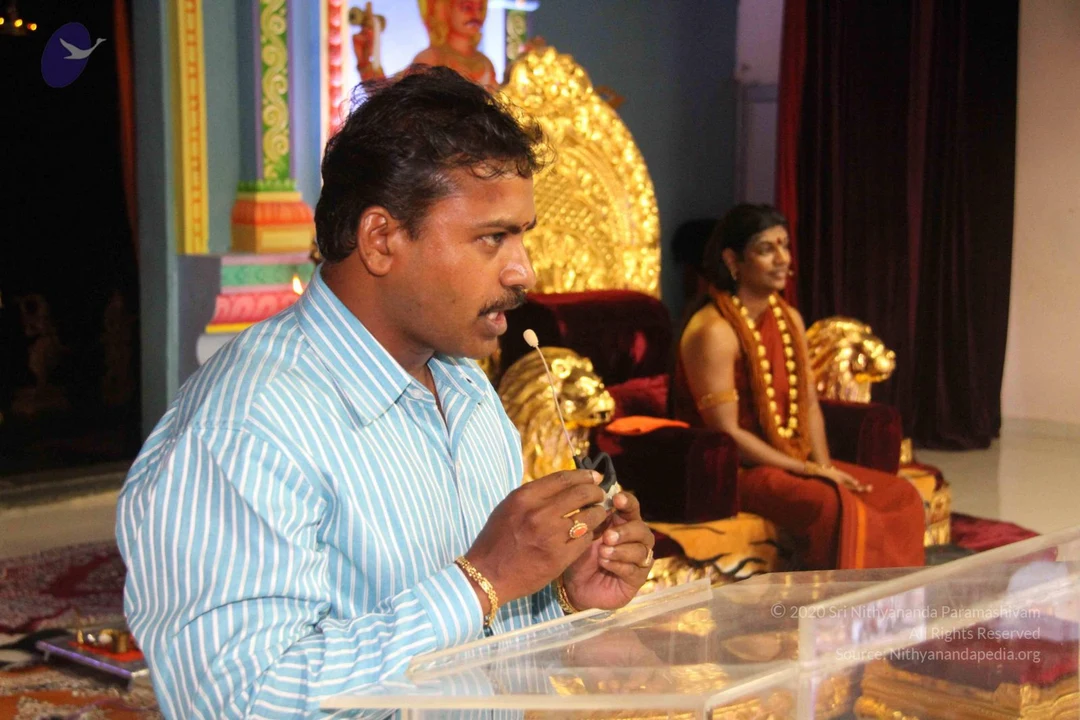
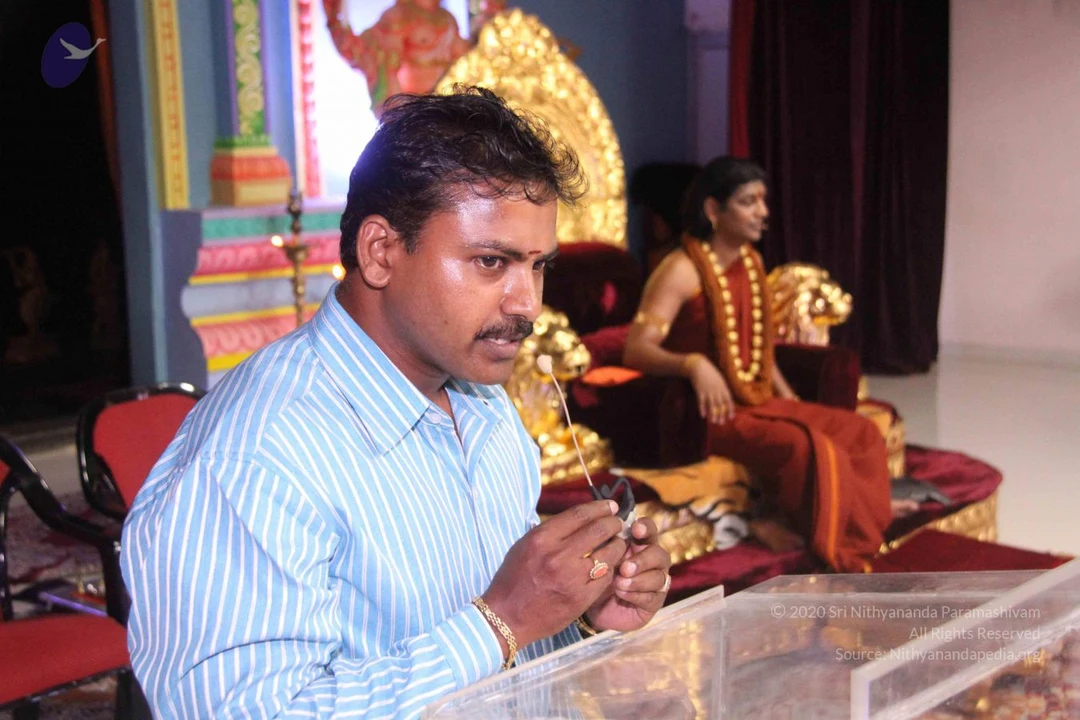
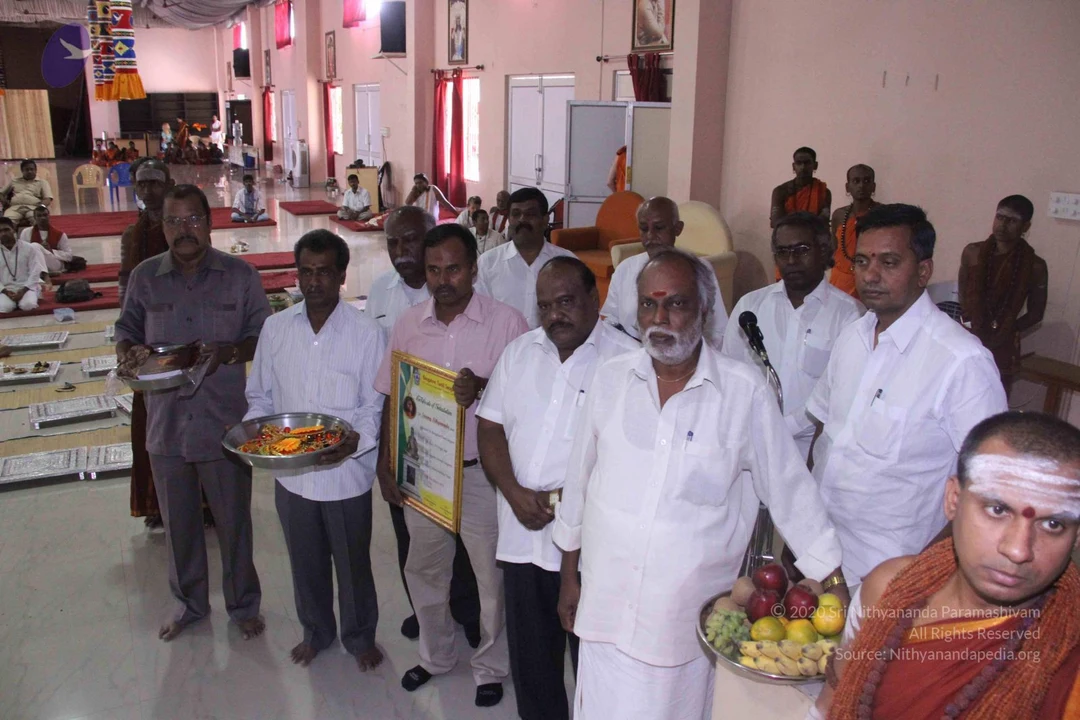
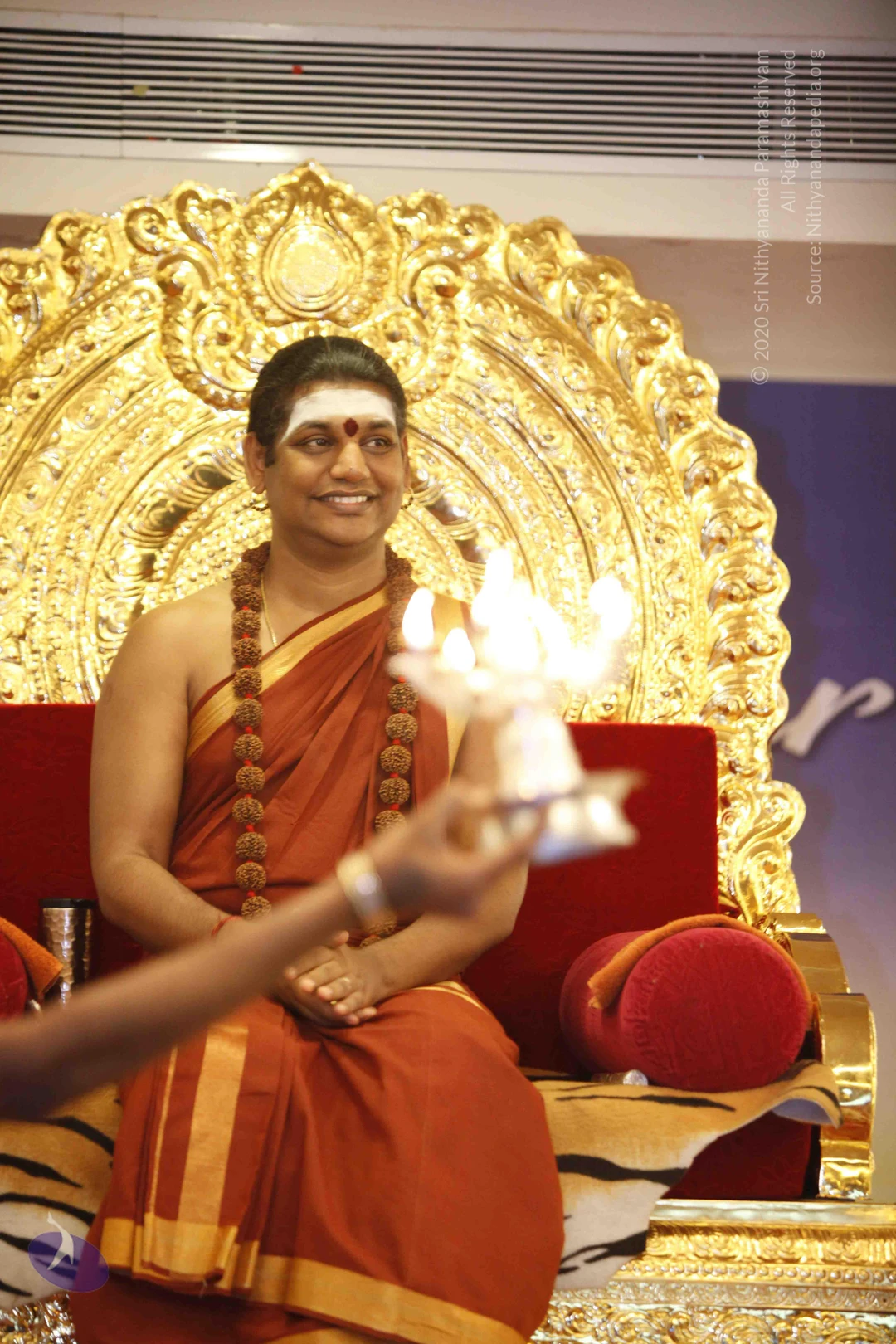
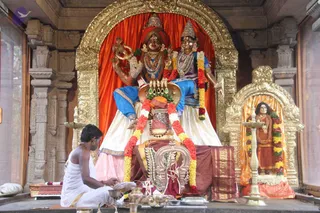
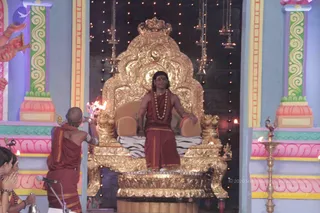
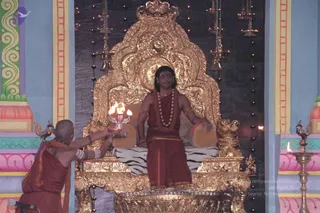
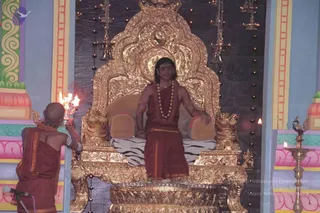
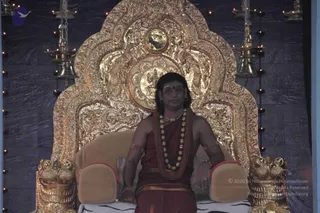
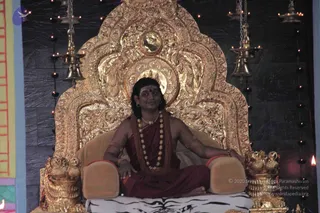
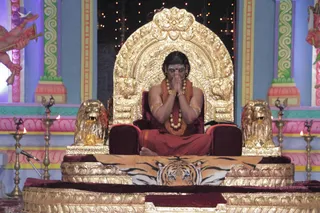
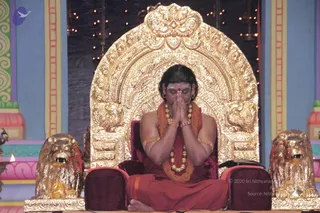
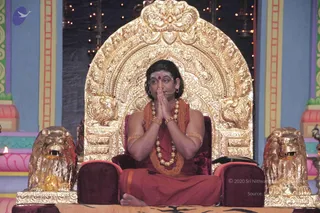
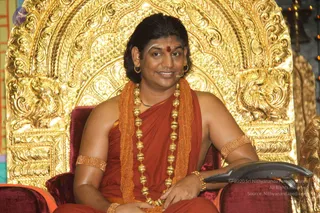
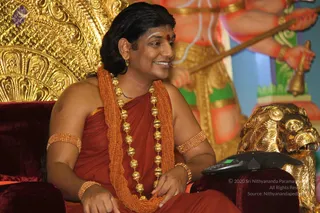
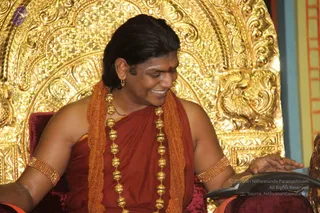
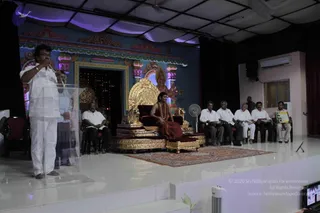
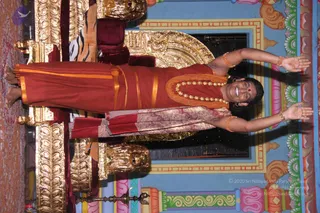
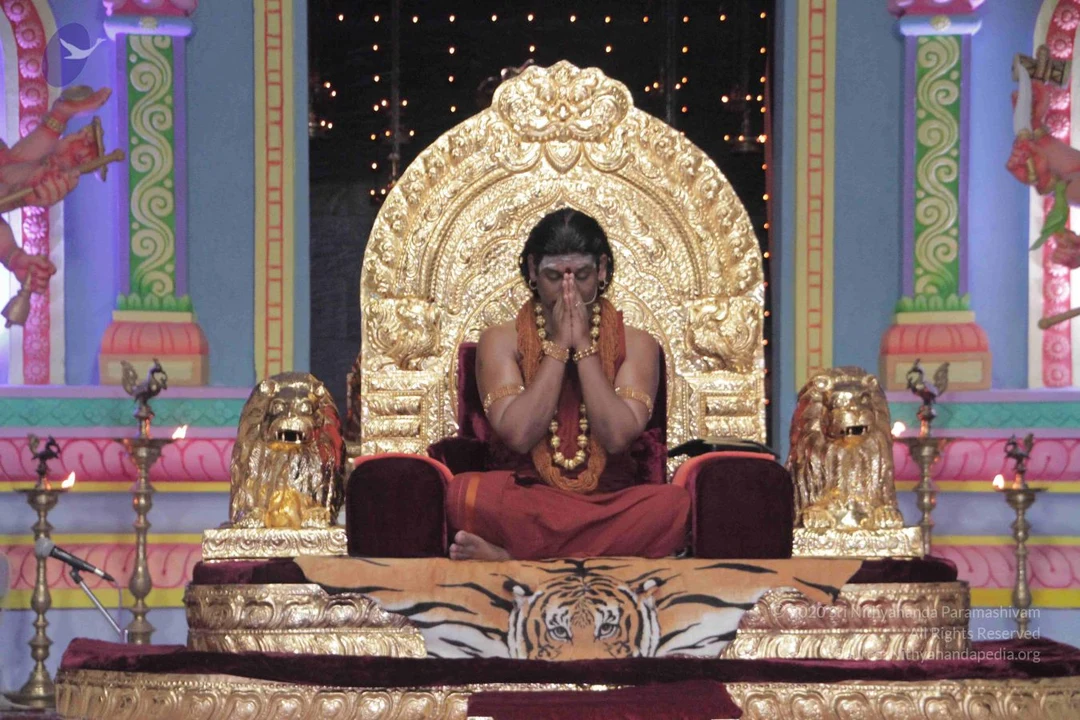
A seated man in saffron-orange robes with a gold border sits on an ornate golden throne with red cushions and a tiger-striped cloth. He wears multiple rudraksha malas, a white forehead band with a red dot, and small gold earrings. He smiles with hands folded, while a blurred arm in the foreground extends a lit oil lamp toward him. a person is seated in the throne with saffron robes and rudraksha malas as the honoured presence in the scene.A seated figure in saffron-orange robes sits on an ornate gold throne with a crown-shaped top, draped with a white-and-black tiger-striped cloth. The figure wears a rudraksha mala and a gold necklace, with a tilak on the forehead, and raises both hands in a blessing gesture. Multi-tiered brass oil lamps with lit wicks stand at left, and hanging lamps are suspended behind the throne against a dark backdrop with small lights. Two attendants in red and maroon clothing kneel or sit at the lower edges of the frame. The surrounding pillars are painted in pink, green, yellow and purple. a person: the figure matches the expected presentation with saffron robes, rudraksha mala and ceremonial gold necklace, seated on a throne.A group ritual in a bright hall with tiled floor and a row of metal crowd barriers at left. In the foreground a man in white dhoti and shawl with a long reddish-brown rudraksha-style cord and beaded necklaces holds up a lit oil lamp and a brass item. Behind him, several young men and boys in saffron and orange robes with white forehead markings sit cross-legged on mats, some holding lamps or brass vessels, with flowers, small brass lamps and plates of offerings before them. Seated on chairs at the back are men in white and a man in a red t-shirt, their hands folded in greeting. The scene suggests a puja or aarti with oil lamps and flowers.

April 04 2014

Original wiki page
Contents

Title

Harmony Leads to the Space of Advaita

Description:

In today’s morning Satsang, Paramahamsa Nithyananda shares an interesting fact about Advaita –our hormones are programmed to experience non-duality. Biologically, we experience Advaita during the ‘milestones’ of our life such as moving from childhood to adulthood and during death. But when we work directly with an enlightened Master, he can move us to experience Advaita, in the psychological and consciousness space, to enjoy in our lives now. Living in harmony with others is the first step we can practice today, remembering that everyone is part of us.

VideoAudio

Transcript:

(00:15)

Nithyānandeśvara samārambhām Nithyānandeśvari madhyamām| asmad āchārya paryantām vande guru paramparām ||

(00:35)

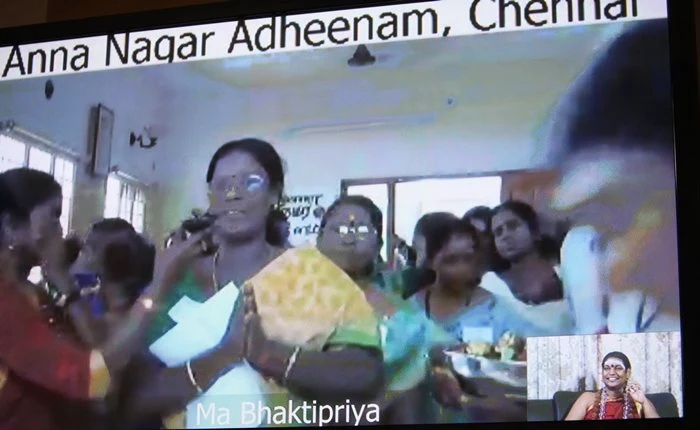
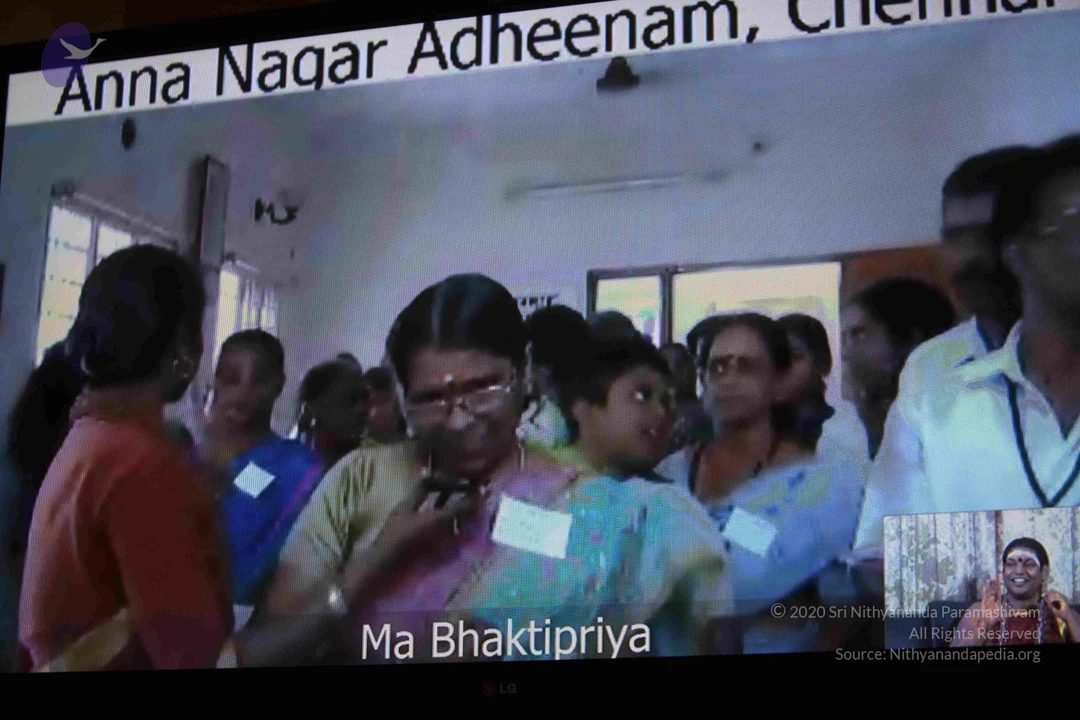
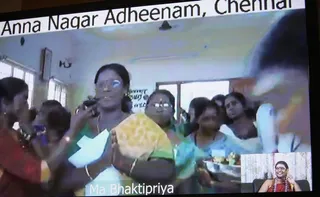
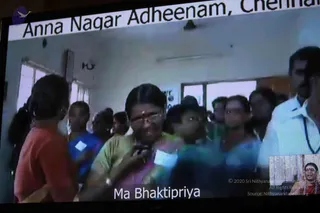
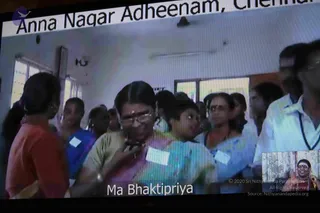
I welcome you all with My love and respects. I welcome all the devotees, disciples, samajis, satsangis, Shrimahants, Mahants, Kotharis, Thanedaars sitting with us all over the world through Nithyananda TV, Lotus TV, Sadhna TV, Janashree TV, Eshwar TV, and two-way video-conferencing, with My overwhelming love and blessings. I am literally overwhelming with My full heart overflowing!.... I welcome all of you with My love and blessings! Cities sitting with us in two-way video-conferencing having Nayana Deeksha: Ohio-Prayag, Seattle-Chidambaram, Bidadi… Nithyananda Nagara-Bidadi, Singapore-Singapuram, Toronto-Kailasam, Haridwar, Oklahoma-Somanatham, San Jose- Madurai, Redondo Beach-California, Annanagar Adheenam-Chennai, Los Angeles-Arunachalam, Warrington-UK, High Point-North Carolina, Kulim-Tiruttani, Dakota Dunes, Santa Fe-New Mexico, Toon Moon-Hong Kong, Grasse-France, Houston- Kalahasti, Nithyananda University-Paris, Dubai-Vaidyanatham, Adi Nithyananda Dhyanapeetam-Avathipalayam, Bangalore North, Indrani-New Jersey, Nithyananda University-Paris, Huston-Kalahasti, Hyderabad-Gupta Kashi, Dhyanapeetam-Hosur, Grasse-France, Santa Fe-New Mexico, Tune Moon-Hong Kong, Dakota Dunes, Huston-Kalahasti, Kulim-Tiruttani, High Point-North Carolina, Warrington-UK, Dubai-Vaithyanatham. I welcome all of you with My love and blessings. So, I welcome all of you with My love and blessings.

(03:01)

I just want to tell you all guys, I am overflowing with the kind of response you all did, and doing, still continue to do in Facebook about this living in Advaitic space. Please understand I commit with you guys, I will take up this as a project, sincerely dedicating My time, energy, intelligence, spiritual powers and everything, work with this whole team. And keeping Kalabhairava as witness, with the grace of Vishwanatha and Annapoorni, I commit with you all, I will make the space of Advaita happen in all of us…. It was so beautiful, overwhelming. And from today I will give you guys everyday step-by-step process. And there are some more deeper level truths on creating the space of Advaita. See, when you all have shown so much of interest, intensity, sincerity, Kalabhairava also reveals the deeper truths in a beautiful way. So, Kalabhairava is a great Advaiti. Even in the Kalabhairava Stotra, we sing ‘Kalabhairava is the God who gives the Advaitha Anubhava.’

(05:10)

So, first thing, I wanted to thank all the disciples who sent their teamily names and made the resolution. Second, I am blessing all of you let everyone of us – I am not even saying “everyone of YOU”; I am using the word “everyone of US” – let everyone of us experience the highest Advaita, highest non-duality in all levels; not only experiential level, expressing it in the very day-to-day practical level, in all levels. I am just overwhelmed to see the intensity, sincerity! I tell you guys, not with pride, not out of arrogance, keeping Kalabhairava as a witness, I can tell you guys, we are the most sincere spiritual group, most sincere, largest spiritual group in the Planet Earth. I tell you guys, we are the salt of the universe, we are the essence of the universe!

(06:38)

See, if you announce in the TV: ‘If you buy this soft drink and scratch the bottle cover and go for some winning lottery, you will get one night dinner with some celebrity actor-actress’, or ‘If you buy this cell-phone, they will choose you in the lottery, and if you win you will have dinner photograph with this actor-actress celebrity...’, all these kind of advertisements when it is done, people run, this is the age people run behind those celebrities. Here I just announced that you will be the twenty-one persons who will be around Me doing so much of work. Every one of you know that living around Me as My Sachala Moorthy team is not a joke; it needs so much of hard work. All of you are aware almost twenty hours a day I work. My day is twenty hours. All of you know if you come in the as part of the Sachala Moorthy team, if you get chosen for that team, YOU may also have to work at least twenty hours and ten minutes extra....because you will be able to retire for the day only after I retire. You will have to wake up at least a few minutes before I wake up. So, knowing that there is going to be such a hard-working lifestyle, so much of competition. And what is the way to complete?

(08:40)

You have to complete with all your incompletions. I tell you guys, when you are in the space of Advaita with eleven people, whatever you call as your identity will be dissolved into the Cosmos. The root patterns you cherish, vested interest you have about life, hidden pay-offs, hidden costs, your vaasanas – I can go on adding words. Everything, everything will be washed away! You will be in such a pure space – “Nirmala, Niranjana, Niraakaara, Niraamaya, Niraabhaasa, Nirdvandva, Nirdosha, Nithyananda!” You will just be established in that space. I tell you guys, I bless you all and wish you all, all of us will experience the Advaita. Even if you don’t practice, even if you don’t see the end of this process, I bless you guys with My full heart, keeping Kalabhairava as a witness, with all My sincerity, just for your seeking and the effort, your Conscious Resolution, let you all achieve Advaita space before you leave the body…. If you take up this process and do, you will have it even now, in the next few days, while in the body you will enjoy it, you will enjoy Advaitic space as a driving license for your strategy planning. Or I commit with you, even if you don’t do that, I give you that as a retirement insurance Plan! I guarantee you guys - the space of Advaita.

(10:51)

I am just so overwhelmed. First of all, people competing for hard work, not a smooth lifestyle. And everyone of you know it is not going to be all the time smiling, smiling around Me! But, so many people sincerely wanting it and ready to go through the transformation for it. See, when I saw the list, people were so sincere, and all the questions I had is so sincere. I wanted to answer many of your questions. Please, first of all understand. The first question I will answer: It does not need to be only eleven people; but it has to be MINIMUM eleven people. Why eleven you know? Your root pattern does not have the power to manage itself if you are in the space of Advaita with eleven people. Even when you start experiencing Completion with one person, you are overwhelmed with so much of joy, your root pattern loses its power. It is like a building standing on a land where a tremendous earthquake has happened....10 in the Richter Scale, 10 an earthquake has happened. Can any building stand rooted? No....it is shaken! Same way, when you feel Advaita, non-duality, even with one person, all your root patterns are shaken.

(12:51)

Please understand your hormones are programmed such a way that before you enter the life, you experience oneness at least with one person in your life beyond your mind’s preparation. That is what is “puppy love”. The puppy love of a human-being is, just by the programming of the physiology, experiencing the space of Advaita, whether your psychology is prepared or not. If you can prepare your psychology also, reclaim that space of puppy love, you will see clearly it was a pure Advaitic space. You may not have understood all those words. I tell you, it is only now I understand what happened to Me at the age of ten with Arunagiri Yogishwara, what happened to Me at the age of twelve with Arunachala, as a Savikalpa Samadhi and Nirvikalpa Samadhi. At that time I did not know all these words but, I went through that experience just because of My biological programming. When I programmed My body, biologically I programmed it in such a way. That is what I had at the age of ten and twelve.

(14:25)

Please understand, all of us are programmed to experience Advaita as our puppy love. Forget about with whom you fell in love; it may be some of your classmate, sometimes your school teacher whoever it may be, that is not the question. But, at that time what you go through and experience, is the biological programming of Advaita. So, please understand and I also wanted to give a very clear disclaimer, I am not reducing Advaita to the hormonal flow of your body; I am indicating at that moment, as a child, your puppy love where you have not calculated the plus and minus of life, where the logic of your calculating the plus and minus has not entered in your life, where you don’t date based on the pocket’s weight, you don’t date based on the person’s social background, or you don’t plan to fall in love based on the personality of the other person, where your biological programming is pushing you to the next level.

(16:05)

Please understand in life, in any field, whether you are moving from Graduation of Engineering to Post-Graduation of Engineering, you are moving from M.B.B.S. to M.S., you are moving from M.Phil. to Ph.D., any movement of your life can happen only with the triggering of Advaita in your life. Please understand anything you achieve in your life, at some point of your life you have to feel oneness with it, non-dual with it. I am so excited; that is why I am speaking too many important truths in one satsang. Please don’t be overwhelmed. I am overwhelmed. Maybe, if you find it's all going over your head, listen to this satsang after today, 2-3 times. Listen to replay, listen 2-3 times. Then you will understand every idea I am trying to explain, I am trying to express.

(17:17)

When your biology moves itself from a child to adult, it has to give a experience of non-dual to itself. Only then it can take the next jump. A child becoming adult is one of the very big jumps in human life. In the milestone. See, one of the biggest milestones in life is a child becoming adult; that stone. Next, the adult getting retired means your hormones are completely nullified in your body. And then, the last is leaving the body. So, every milestone you have to experience, you will be experiencing Advaita biologically. Now all I am trying to tell you is the biological experience of Advaita does not last long if your psychology is not prepared to live in that space. Now, I am going to prepare your psychology and super-consciousness. You don’t need to bother about the biology. You don’t need to fall again in puppy love; don’t worry. You don’t need puppy love. You neither need puppy nor you need love. Now, when your psychology and the consciousness is awakened to the space of Advaita, I tell you, please listen you can be permanently established in Advaita. Beyond your body, mind, your consciousness can just become embodiment of Advaita.

(19:37)

Listen! When you experience the non-dualistic oneness with one person, all of you would have experienced as puppy love. You can see when that puppy love happens, all your fear pattern loses power over you. You will forget all your fears. Suddenly, the whole world will look so bright, alive. Now you have grown up, you don’t need the help of the hormone to experience that oneness. The help of the harmoniousness is enough to experience that oneness. You don’t need the help of the hormone. Let us use the help of the harmony. You neither need honey nor money; harmony is enough now. You neither need honey nor need money. Sometimes, as long as you have money, life is honey. And sometimes, when honey gives money, money gives honey. And you don’t need to get confused between this honey and money. Forget about honey and money both. Just by the harmony, we can bring ourselves to the space of Advaita.

(21:22)

I will guide you all step-by-step every day by giving different homeworks. Today’s homework, first thing I wanted to clarify the doubt: It does not need to be restricted to eleven. But it has to be minimum eleven; because, by the time you experience Completion with eleven people, your root pattern will completely lose power over you, your vaasanas will completely lose power over you, your ignorance will completely lose power over you; you will get experientially experience of non-dual consciousness - Advaita Sathya. So, that is the first step. Second, understand, please listen. Today you sit and pen down all the incompletions you have with your teamily members, belongs to the past or present, whatever you remember; and fears of the future also can continue to remain as an incompletion. See, you may not have directly an incompletion with that person itself. For example, Person A, you may not have any incompletion with Person A, but you may have the fear that Person A may behave with you in future and cause incompletion with you, because you have seen him shouting at somebody in the past. You saw A was screaming at B. You already start getting the fear that he may scream at me in the future. So, that is called future incompletions. Understand not only we have past incompletions and present incompletions, we have future incompletions also. Before even it comes, we give incompletion color to it.

(23:43)

Future, in English there is something na. Continuous Future tense or Future continuous tense, I don’t know. I know only one tense. The teacher asked the student, “India will become corrupt-free. India will become free from corruption. What is the tense it is?” The student says, “Sir, it is ‘future impossible’ tense, Sir!” 😃 Anyhow...! Now please understand even about the future you have incompletion. Whatever incompletions you have about the past, present, future with your teamily, pen down elaborately today. And tomorrow start the Completion with them. Why I am saying tomorrow, you know? Tomorrow – I give you guys time till tomorrow. Try to bring as many of them as possible to two-way Nayana Deeksha. I will bless them. I will bless you also, with the space of My Completion. Tomorrow try to bring as many of your teamily members to Nayana Deeksha. I will bless all you guys, and the Completion will start. I just want to see tomorrow.

(25:15)

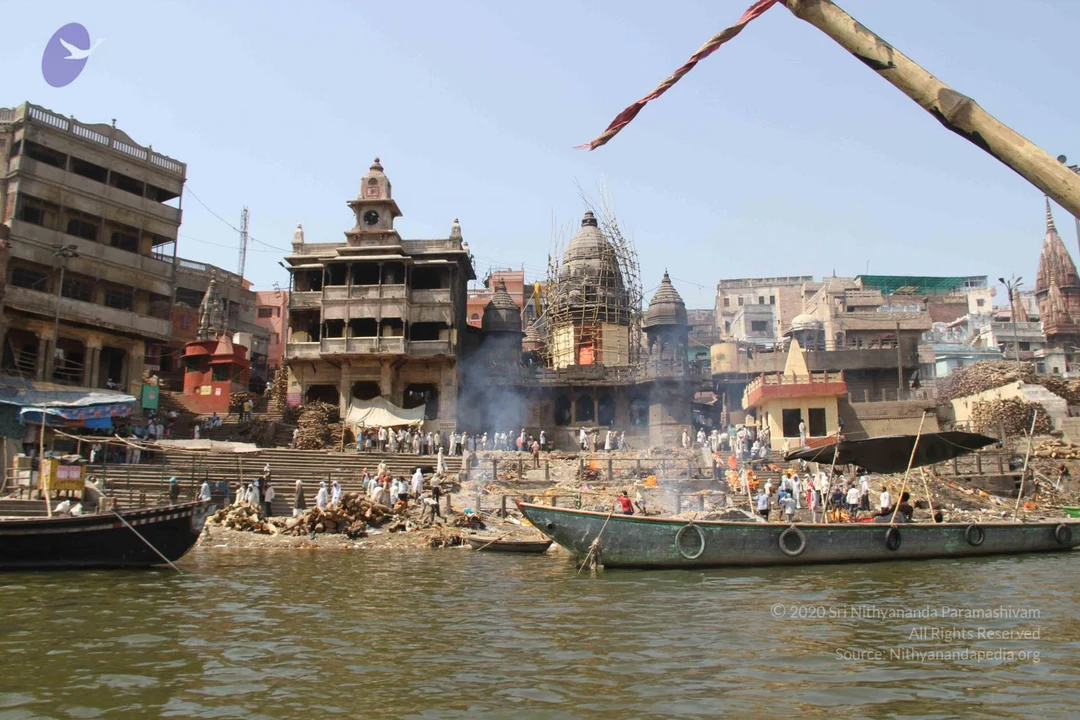
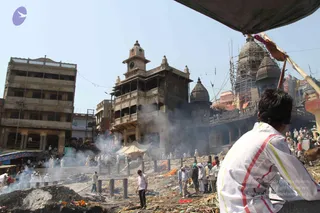
Tomorrow we have a… we have also one more important program. The Head of the Annapurna Temple, Head of the world’s..... Please understand the world’s largest visited temples are two temples. Please don’t presume it is Tirupati Venkateswara. The first Vishwanatha; second Annapoorni; third only is Tirupathi. The richest is Tirupathi. Because the world’s largest floating population city is Varanasi. Almost, average three lakh people (300,000) come inside, and three-hundred people less than three lakh people go out (300,000 minus 300), because three-hundred dead bodies are burnt every day in the Varanasi average. So, three lakh people enter, and three-hundred less three lakh go outside. So, tomorrow the Mahant of the Annapurna Temple will be here in the morning satsang to bless all of us for a few minutes. So, tomorrow, I may not have full satsang; but I wanted to bless all you guys. Whoever is your teamily member with whom you want to complete, all of you gather in the nearest two-way video-conferencing Nayana-Deeksha center.

(26:58)

Today, the homework for all of you is: Sit, pen down all the past, present, future incompletions. Pen down. Don’t start the Completion today. Don’t be in a hurry. Tomorrow bring as many of your teamily members as possible to the two-way video-conferencing. If you talk to, if you send a mail to [email protected], you may even be able to get Skype two-way also. As many as possible your teamily members, get them. Tomorrow I will bless. Then start the Completion. I will guide you step-by-step. Now I have taken this up as a very sincere project, understand. I am not going to waste My morning satsang time just telling you guys some stories, entertaining you. I am going to use even this time to move you guys into the space of Advaita.

(28:14)

See, when Mahadeva Himself came for begging, Annapurni gives food. And, all of you need to know, Annapurni is the queen of Varanasi. I tell you, Annapoorni is worshiped as “Nithyanandakari” – who gives Nithyananda. Understand keeping Annapoorni as a witness, by her grace, you will all receive Nithyananda. I will take this up as a sincere project. Whoever committed, sent a Conscious Resolution.... If you want to send, even today you can send. Your teamily name and Conscious Resolution, even today you can send in Facebook. But don’t inbox Me. Put it in My Face wall itself....main wall. Your Teamily and the conscious resolution. You are going to experience Advaita with your teamily. Till tomorrow evening you can send Me your Conscious Resolutions. If you want to update and upgrade it, if you want to add, delete, align, you can do all that. And I have decided I am going to answer many of your doubts, clarify many of your questions, step-by-step lead you guys into the space of Advaita in a very practical way, the most practical way. So, tomorrow, I will see you all guys with your teamily and bless you all for the Advaitic experience.

(30:35)

As I said, the Annapurna Temple belongs to Mahanirvani Akhada. The Mahant of the temple, Rameshwar Puri ji Maharaj, and the Chief Priest of the temple, both of them are coming tomorrow to satsang. I invited them. They will be in the satsang. He is a very elderly sadhu. I am very happy to have him here.... highly respected sadhu. Not only he is the Mahant of the Annapurna Temple, he also runs lot of charitable activities in and around Varanasi. So, I would like to have him here. And… So, today’s homework, the essence of today’s satsang: Today, sit and pen down all your past, present, future incompletions you carry with your teamily. As I said, teamily does not need to be restricted to eleven, but it has to be minimum eleven. I will personally recommend, keep it as eleven, if you make it too big, or don’t make it more than twenty-one. Because if you make it too big, you may get diverted, you may not be able to put all your sincerity and make it happen. So, I will sincerely recommend something like a keep it between eleven to twenty-one, somewhere between that. If you move beyond twenty-one, you may lose the attention. So, list out your teamily. Pen down all your incompletions past, present, future you have with your teamily members. Come back tomorrow with as many teamily members as possible to the two-way video-conferencing. You will have the blessings. I bless you all! Let you all radiate with Integrity, Authenticity, Responsibility, Enriching and Causing Eternal Bliss, Nithyananda! Thank you!

(33:13)

Photos
Photos Of The Day:

Rudrabhishekam-padukpuja-Satsang-Kalpataru
Photos Of The Day:

GangaGhat

Photos Of The Day:

PadaPuja

Satsang-and-Kalpaturu

DrKrishnas-Friend-Visits

Photos Of The Day:

TempleTour

PadaPuja

Satsang

Dial-the-Avatar

RajTV-Felicitation-NirgunaLessPadukaMandir

SarvaDarshan

Construction

Photos Of The Day:

PadaPuja-To-be-edited

Satsang-and-Kalpaturu-To-be-edited

01-Sarva-Darshan

02-Morning-Session

03-Pada-Puja

_MG_0772_CMP_WM

Photos from this day

View all 323 photos

Photos

5 photosSource gallery
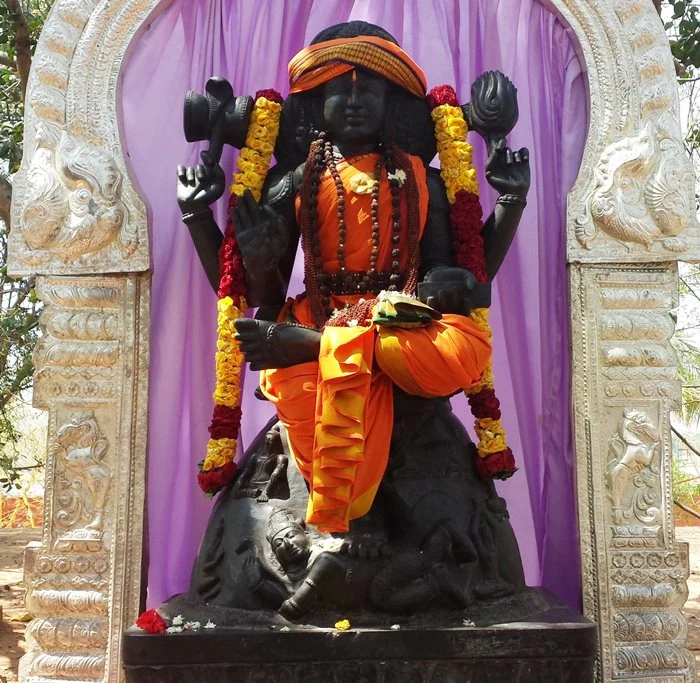
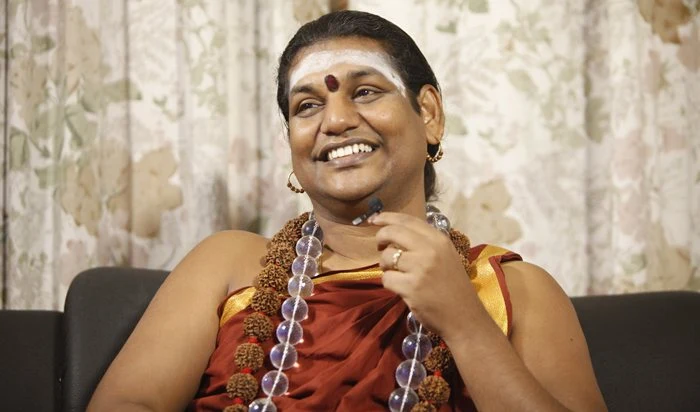
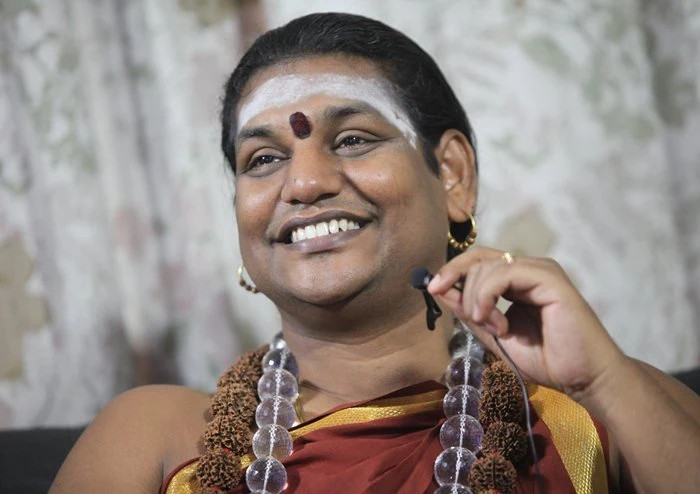
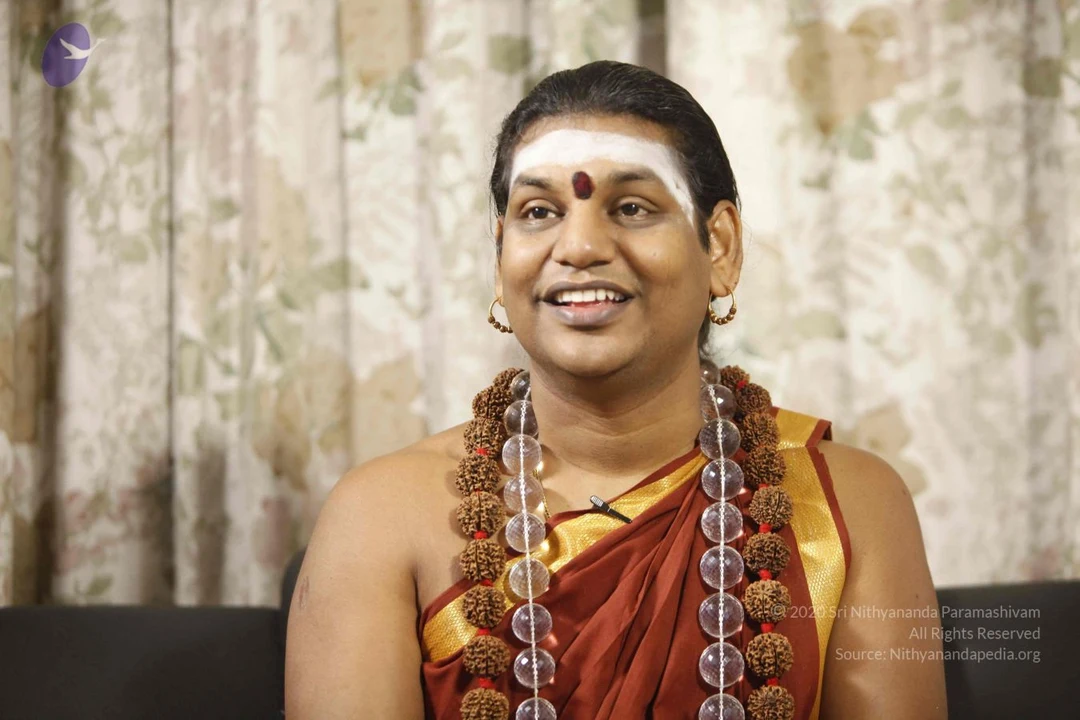
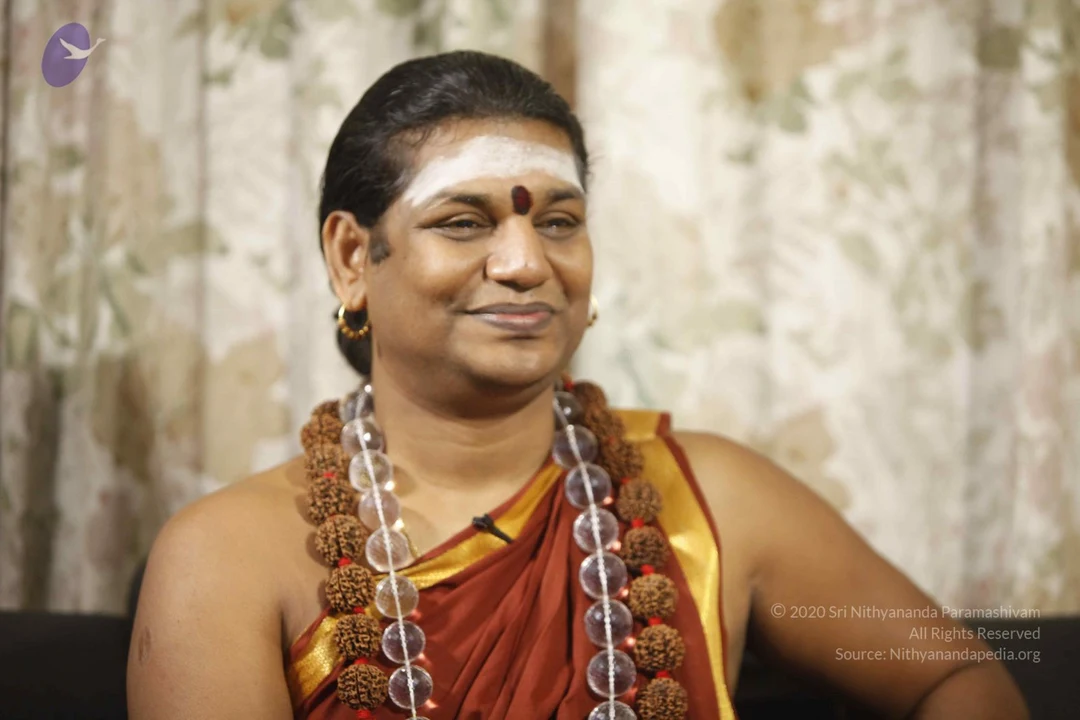
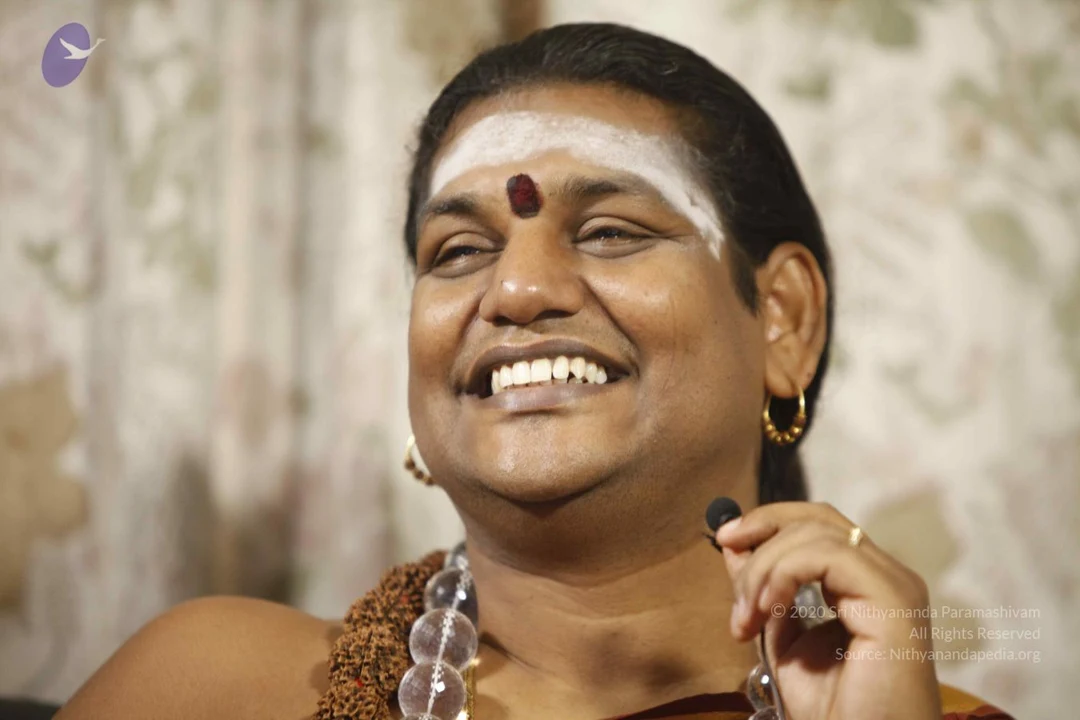
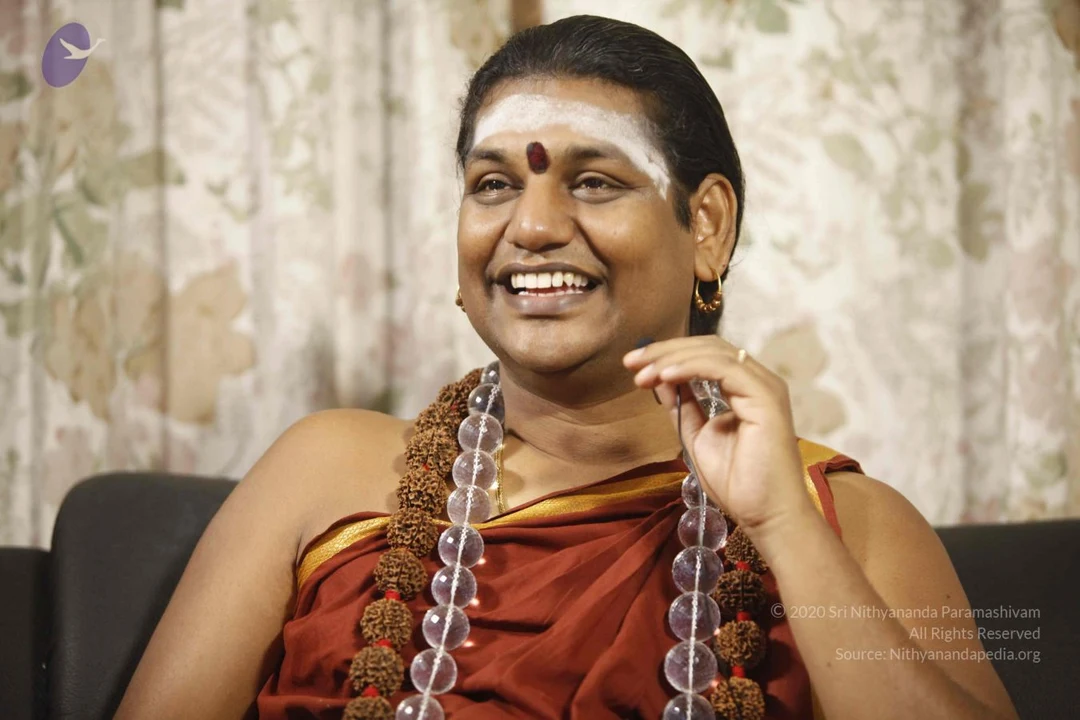
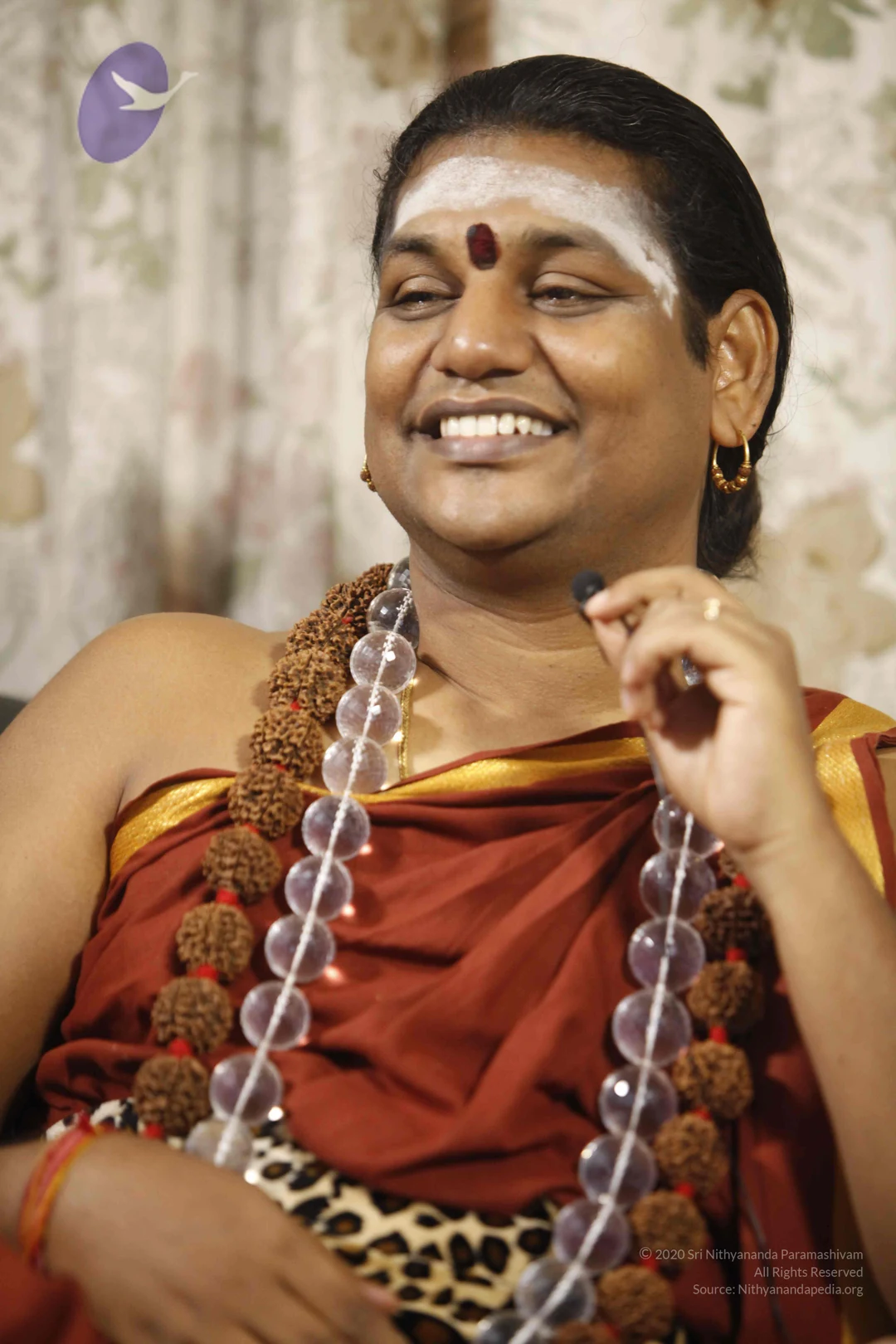
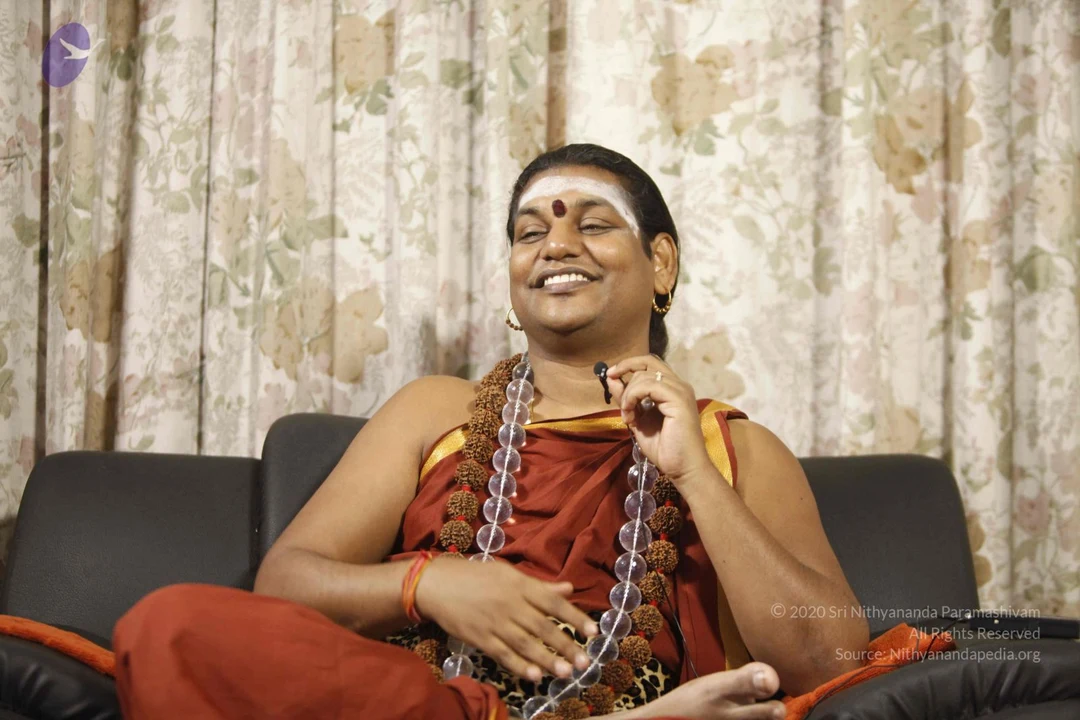
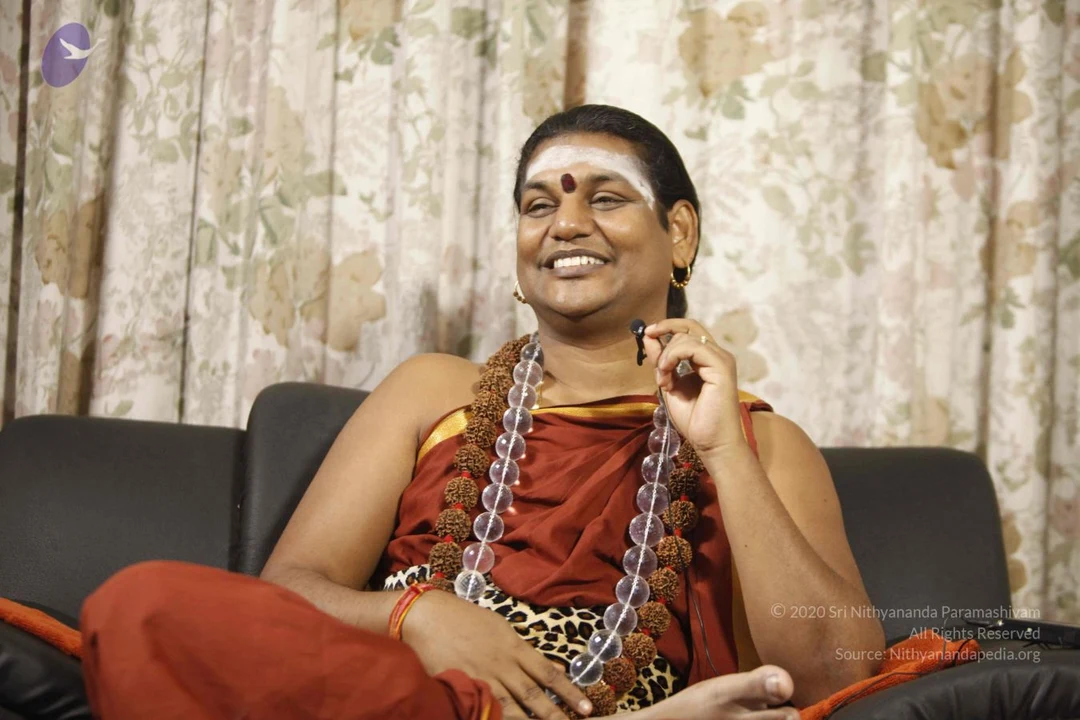
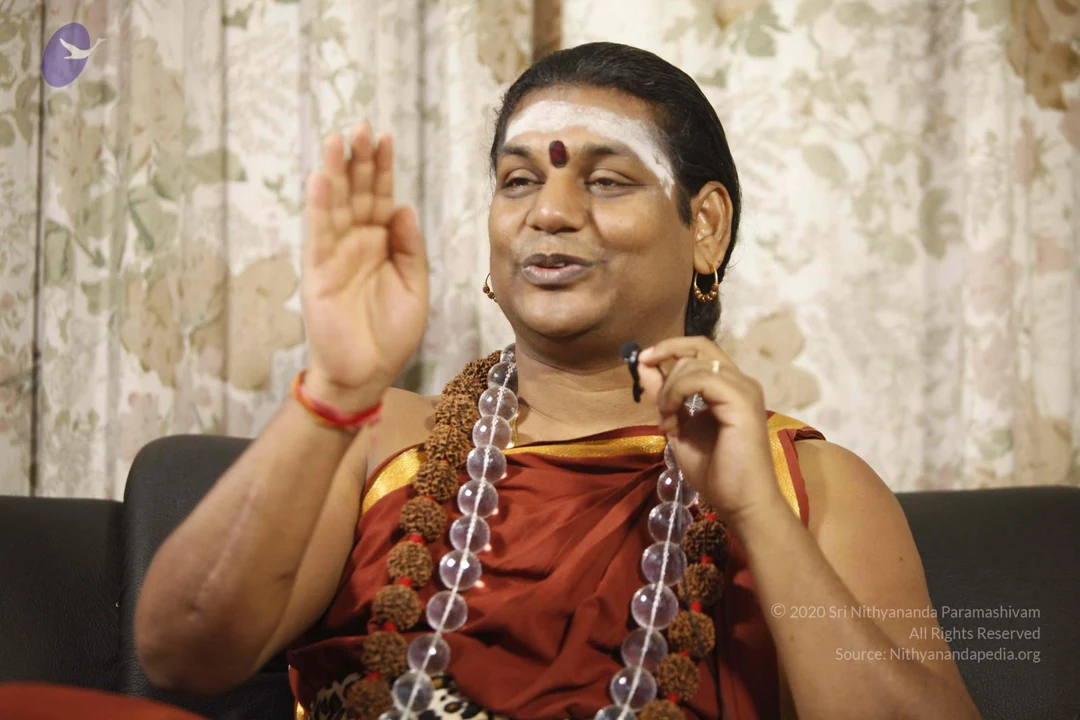
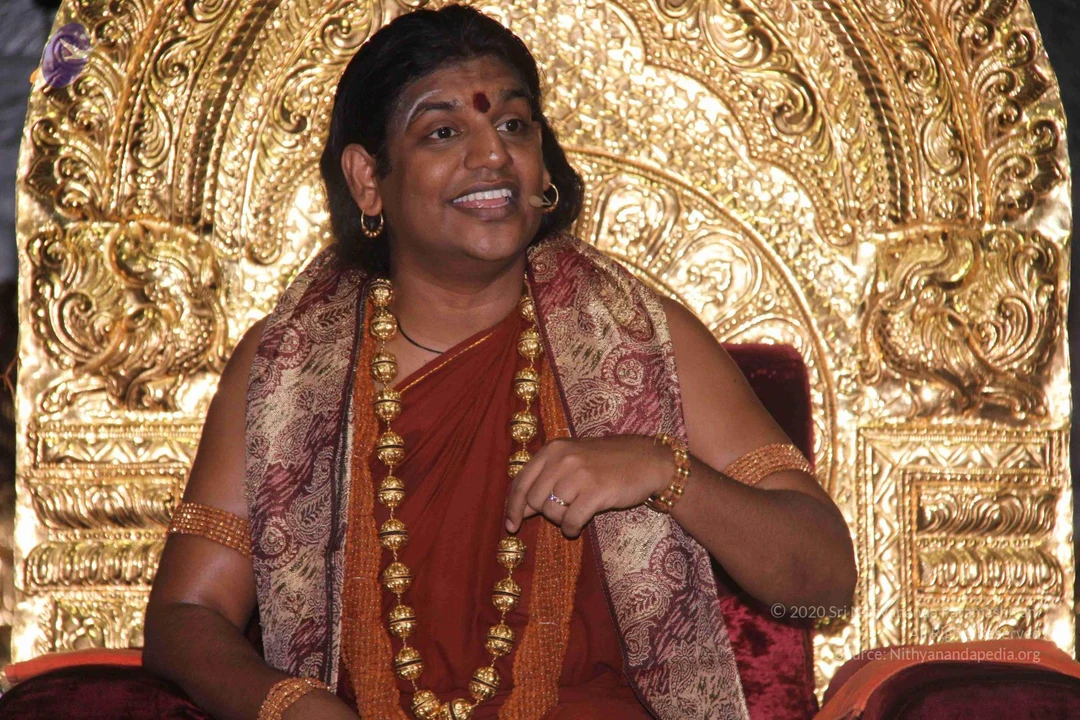
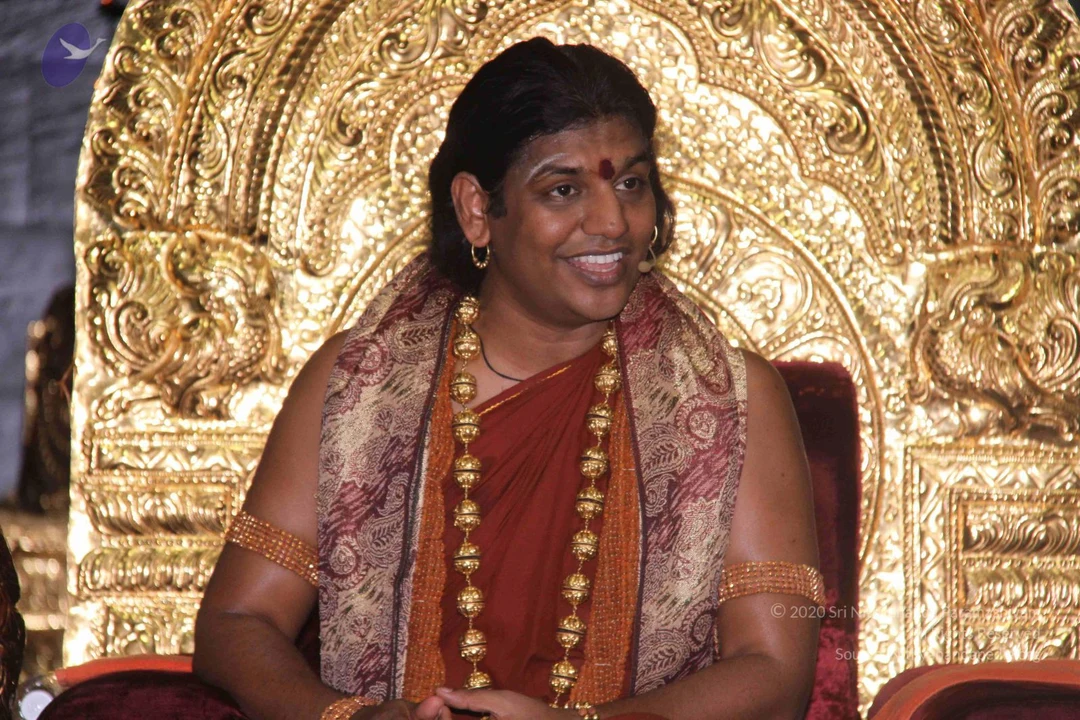
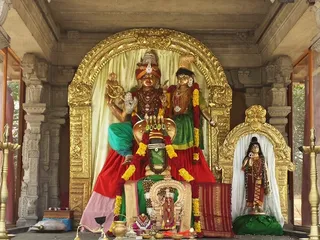
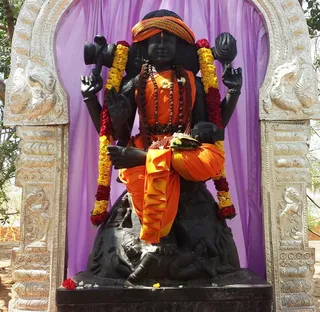
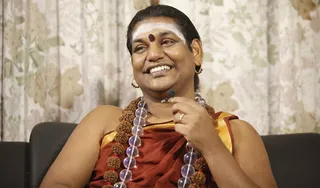
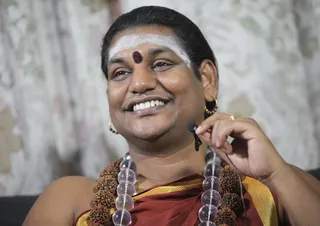
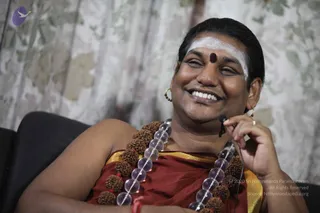
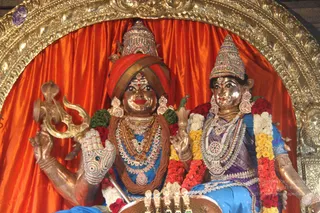
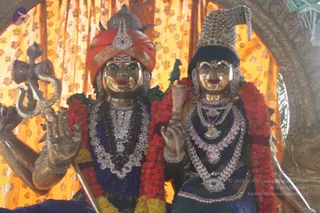
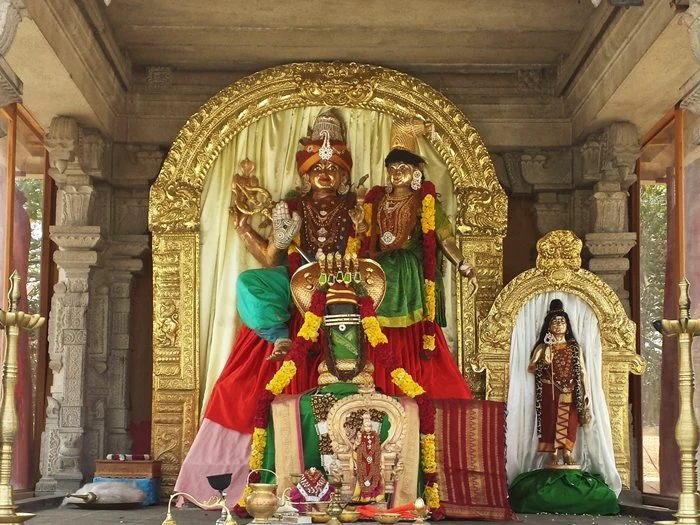
Photograph of a temple shrine with two large painted statues seated side by side under a gilded arch. The left figure wears an orange turban, gold necklaces and a green and red lower garment; the right figure wears a green and gold blouse and a red skirt, with earrings. Both are garlanded with red and yellow flower strands and hold ceremonial objects. A shivalinga stands in front between them, with brass kalasha pots, oil lamps and offering plates below. A smaller statue of a figure with a crown stands in a niche to the right, and a seated deity murti sits in a small shrine at the base. Lamps stand on either side.A dark stone statue of a four-armed deity seated on a black pedestal under a purple cloth canopy, framed by ornate white carved arches with mythical animal motifs. The murti wears an orange and saffron dhoti and shawl, a saffron headband, a rudraksha mala, and necklaces. Its hands hold a drum, a snake-like object, and a small vessel, with a book resting on one lap. Garlands of yellow and red marigolds drape its shoulders and arms, and a small figure lies beneath the seat. Fresh flower petals are scattered on the base, and green foliage appears in the background.a person seated on a dark grey sofa in front of a floral patterned curtain, smiling broadly and looking to the side. He wears a red-brown saffron-toned shawl with a gold-coloured border, multiple rudraksha malas and clear crystal beads around his neck, and a gold earring. A white sacred ash marking and a red bindi decorate his forehead, and he holds a few beads in his right hand.A photograph of a large screen during a video-conference satsang, showing a live feed from Anna Nagar Adheenam, Chennai, labelled in the top banner. In the feed, a woman in a green and yellow sari with a red bindi holds a microphone and speaks while a crowd of women in saris and salwar surrounds her, some holding plates and papers. A caption reads "Ma Bhaktipriya". In the bottom-right inset, a smiling woman in red and gold attire appears on a second video feed. The people on the screen are depicted, not physically present in the photographed room. No a person candidate is visible.Close-up photograph of a smiling man seated indoors against a pale floral curtain. He wears a white vertical tilak with a red dot on his forehead, gold hoop earrings, and a red-and-gold garment over his shoulder. Around his neck hang large rudraksha beads alternating with clear crystal beads. He holds a small clip-on microphone near his chest with one hand, looking off to the side. a person by appearance cues including rudraksha malas, ceremonial beads and saffron-toned clothing, shown in person at a satsang-style setting.

Rudrabhishekam-padukpuja-Satsang-Kalpataru
62 photosSource gallery
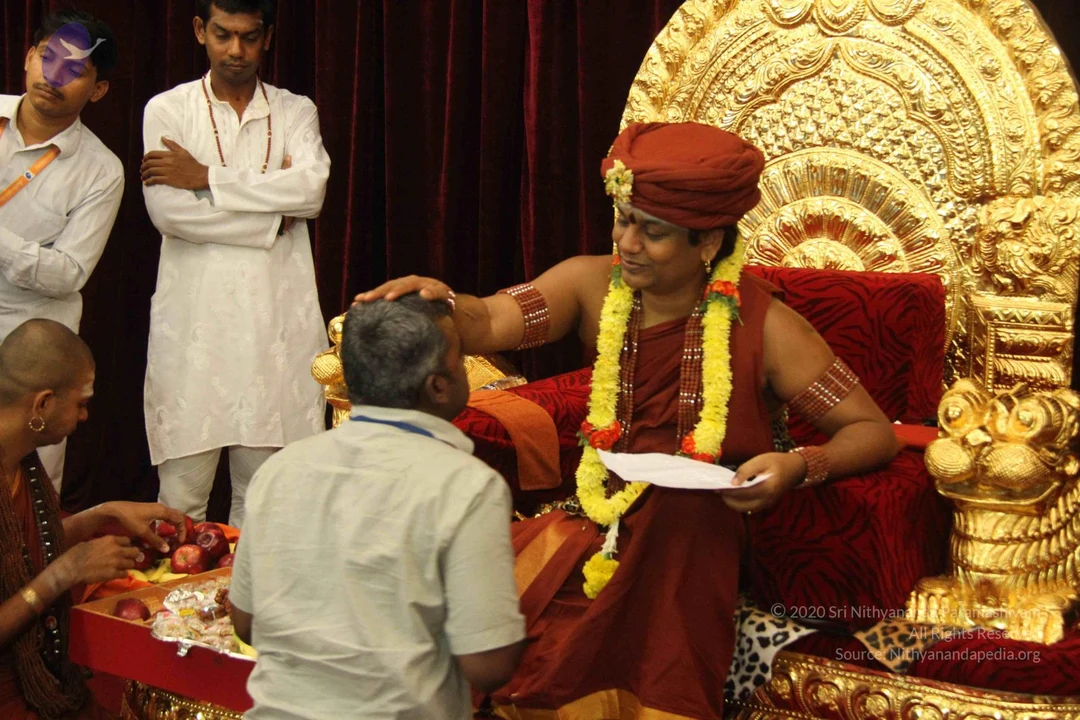
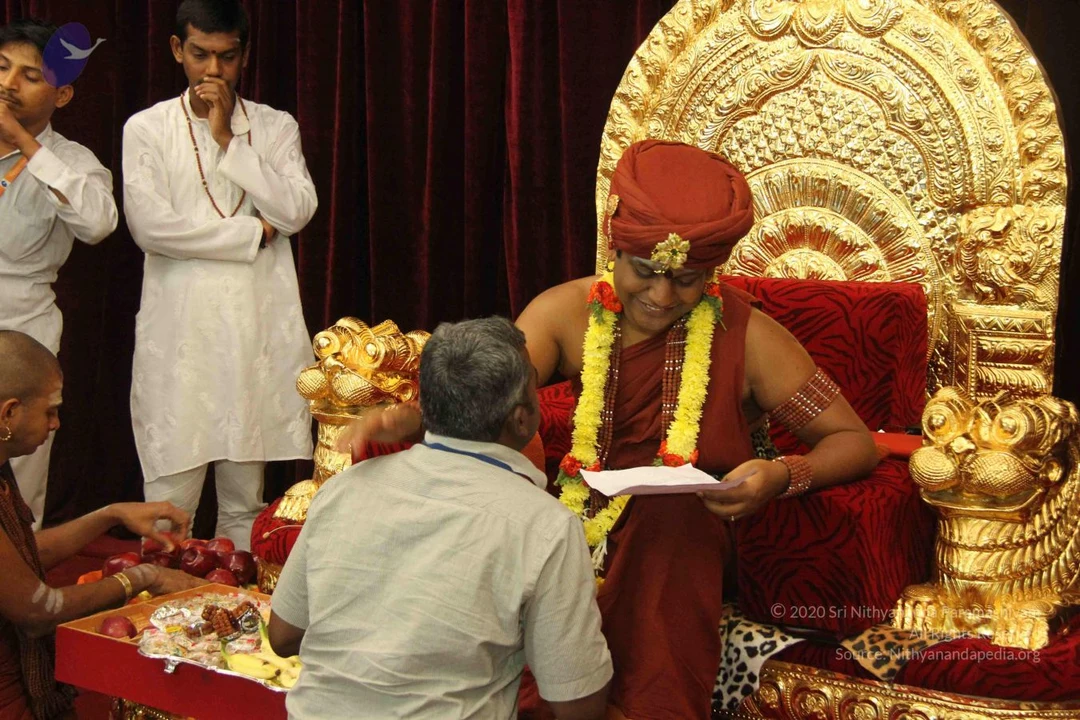
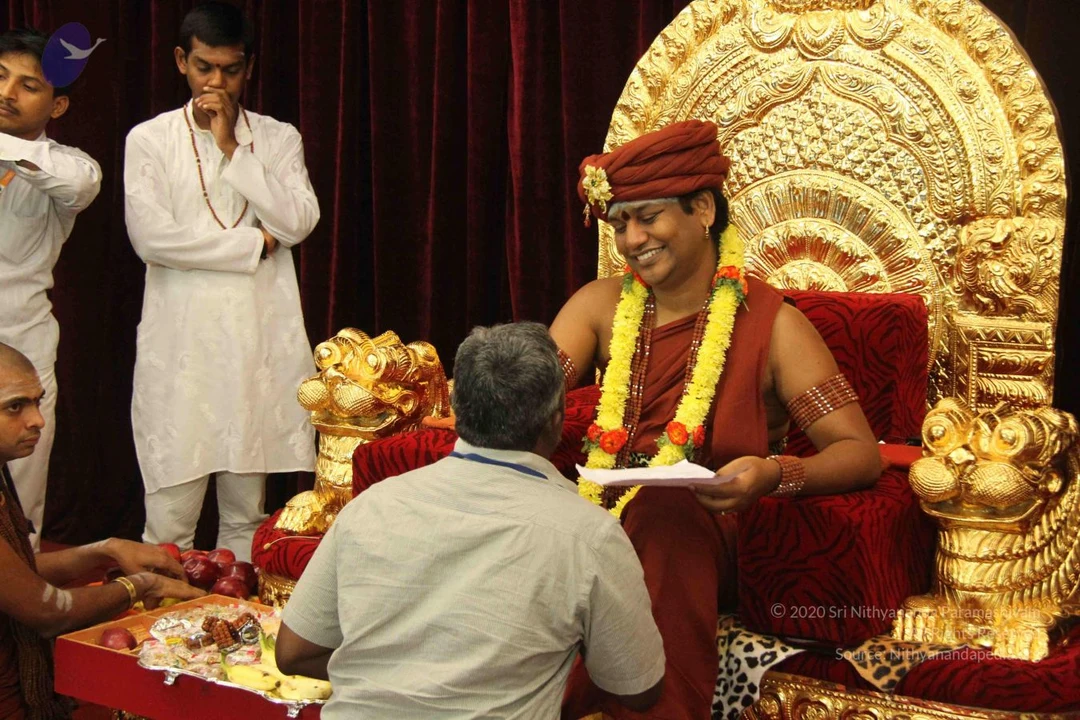
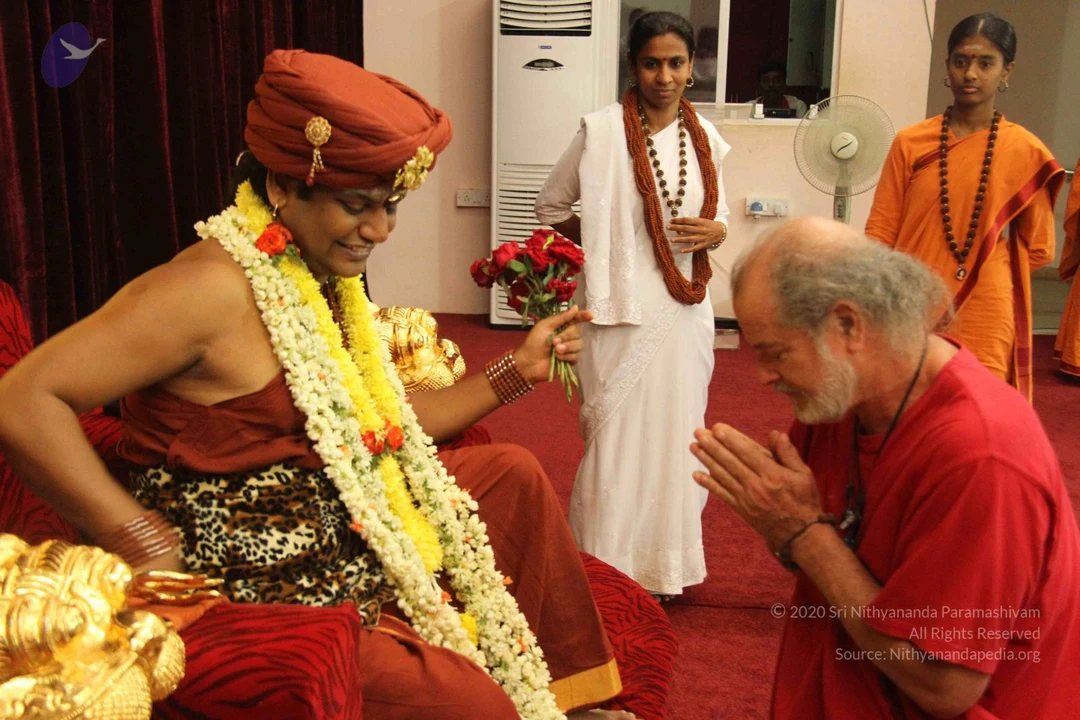
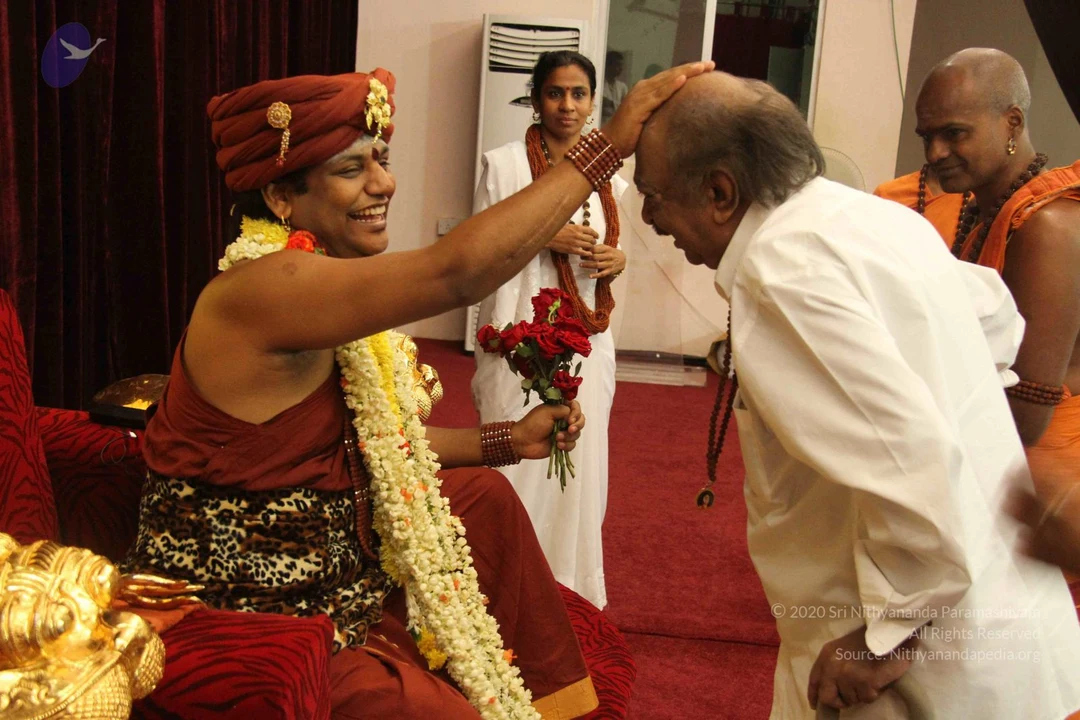
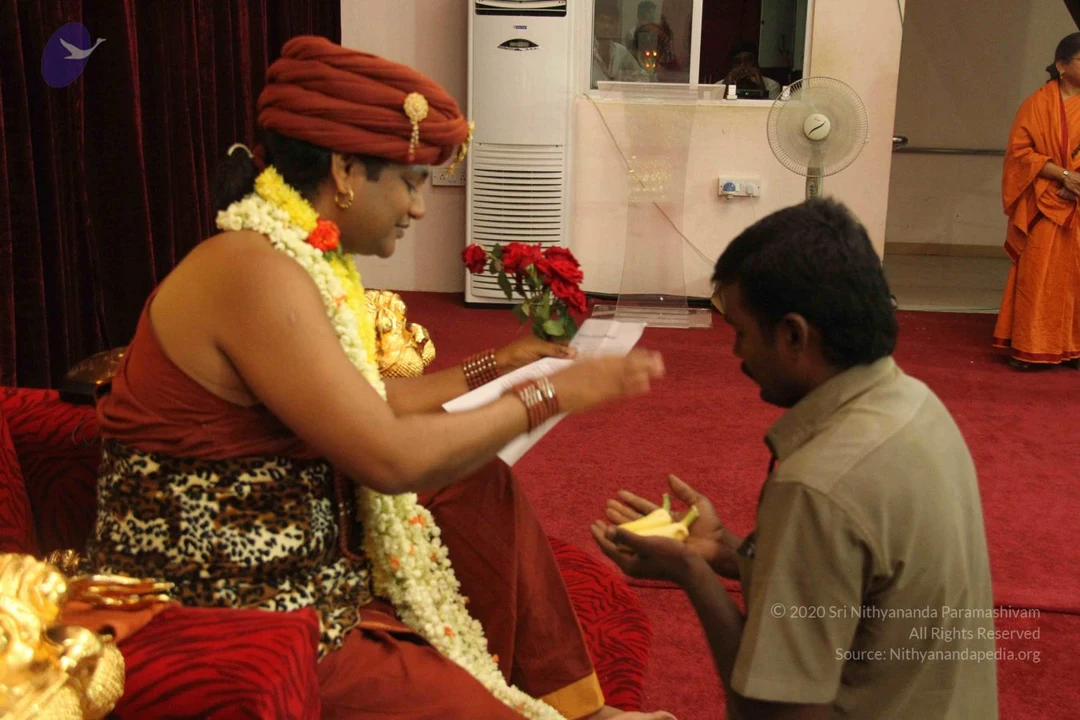
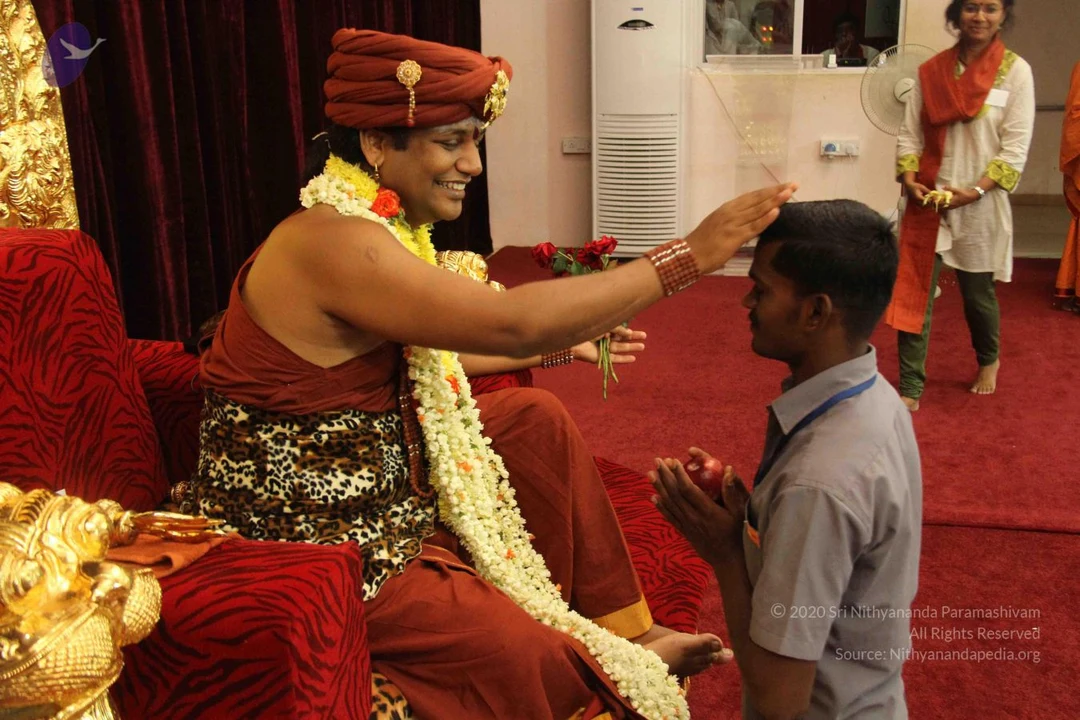
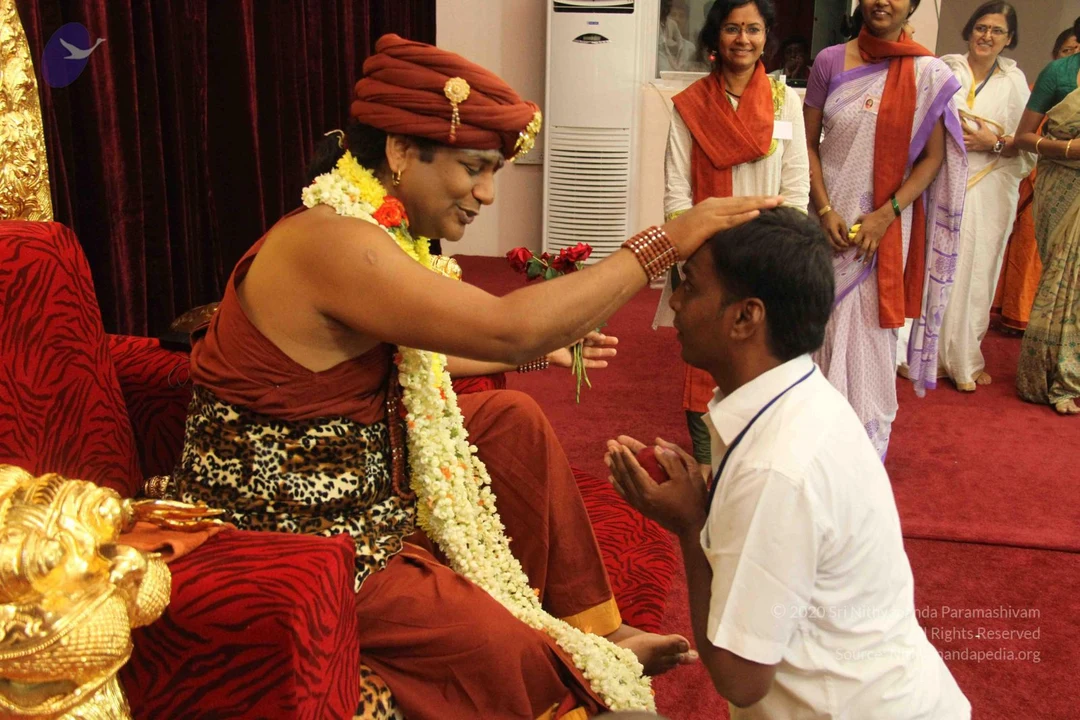
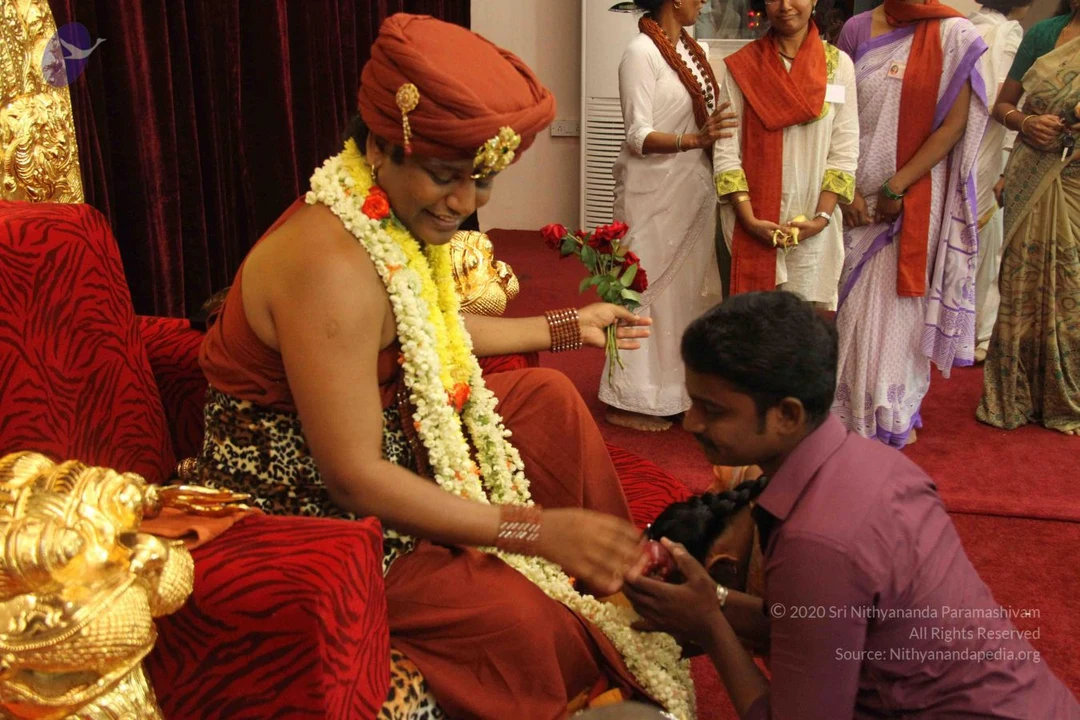
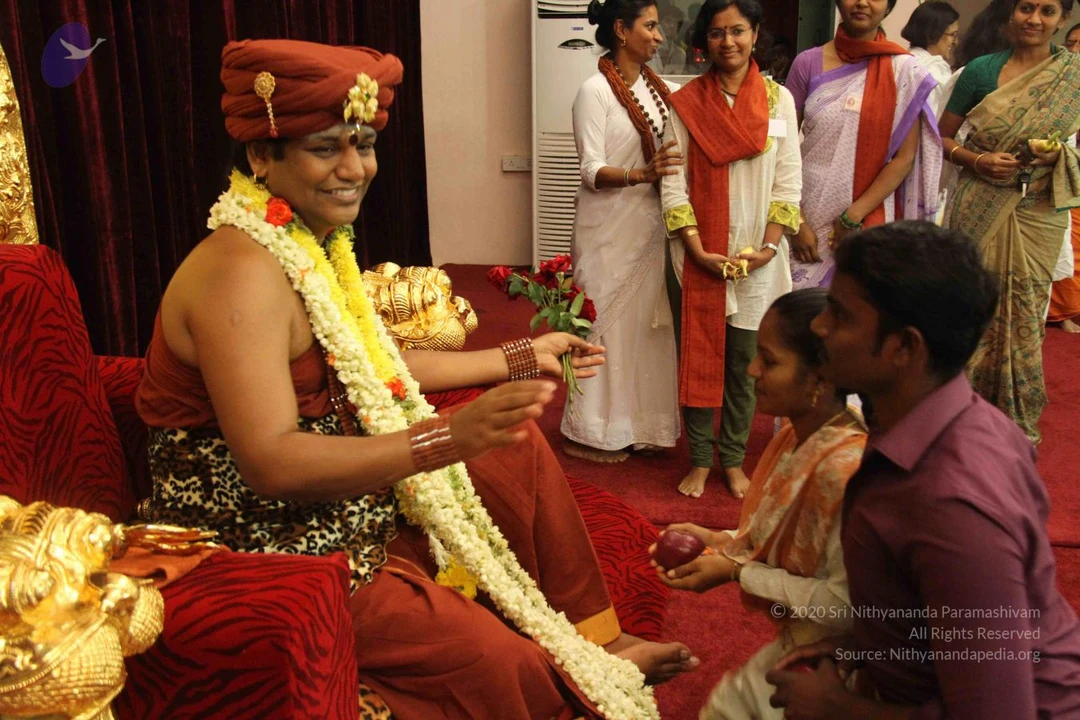
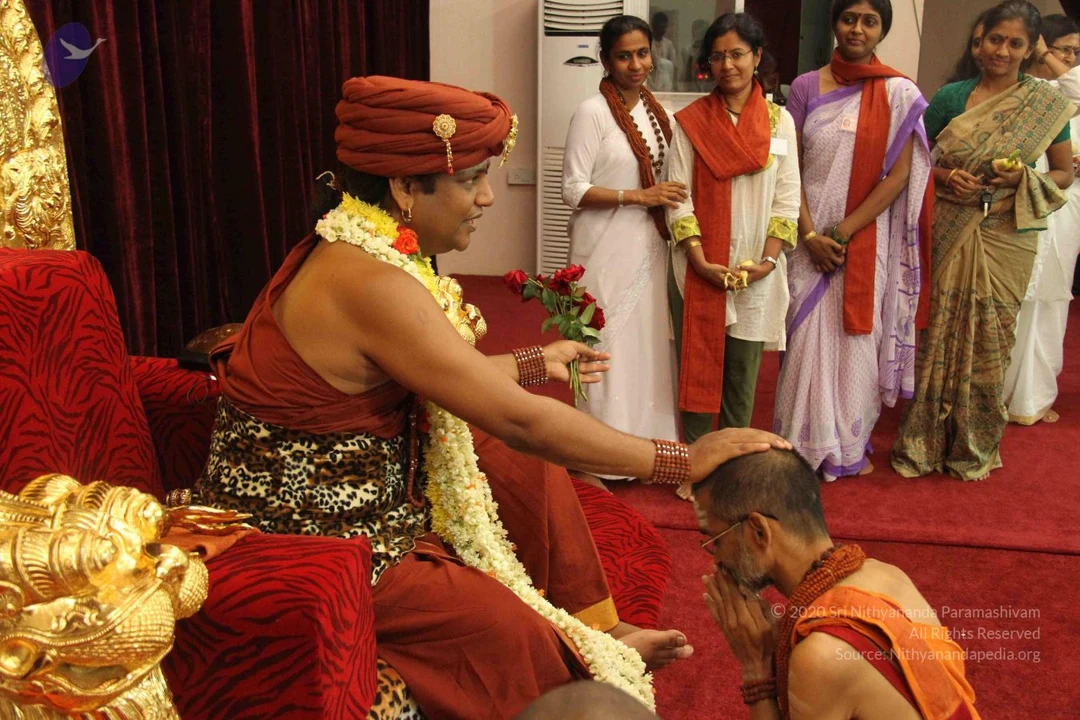
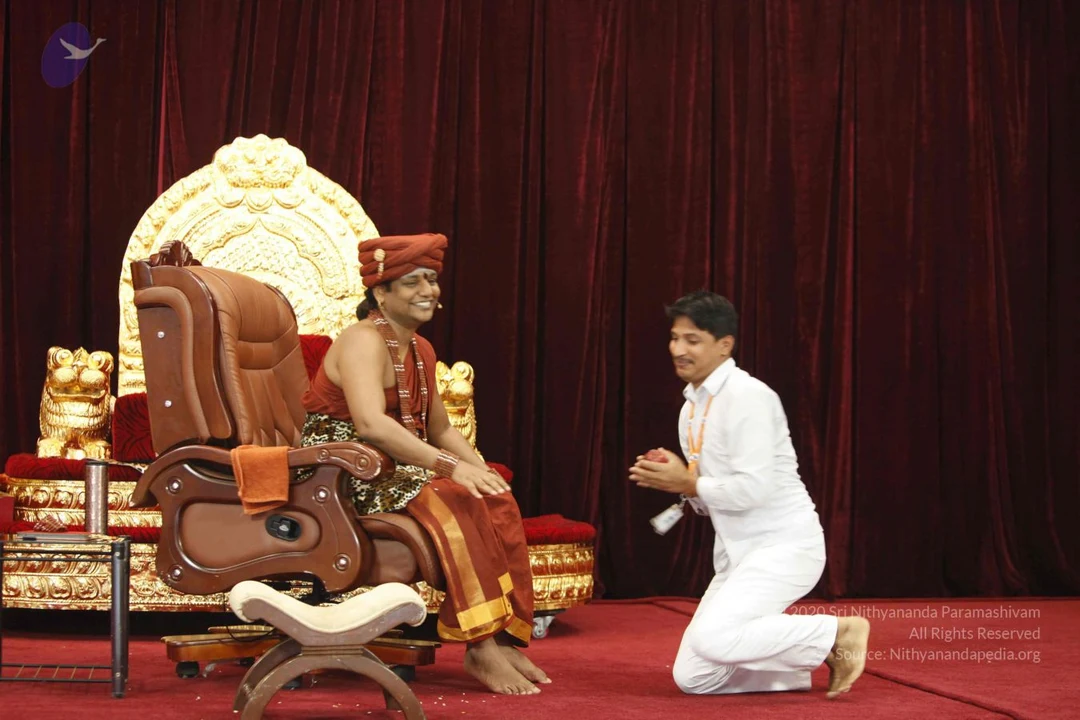
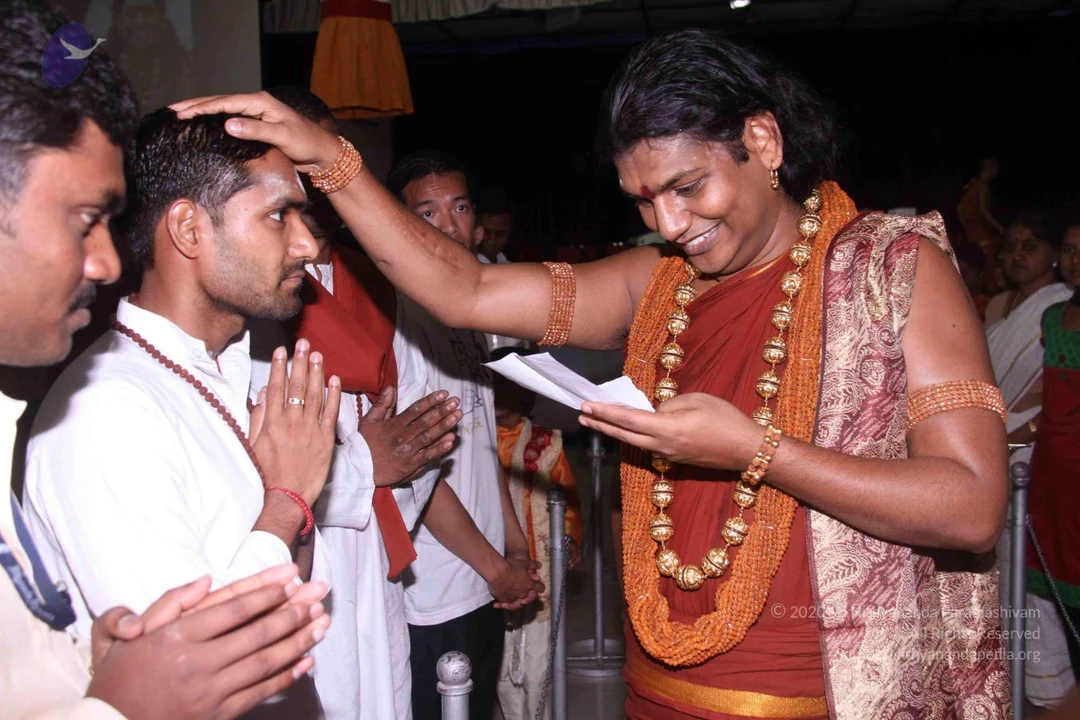
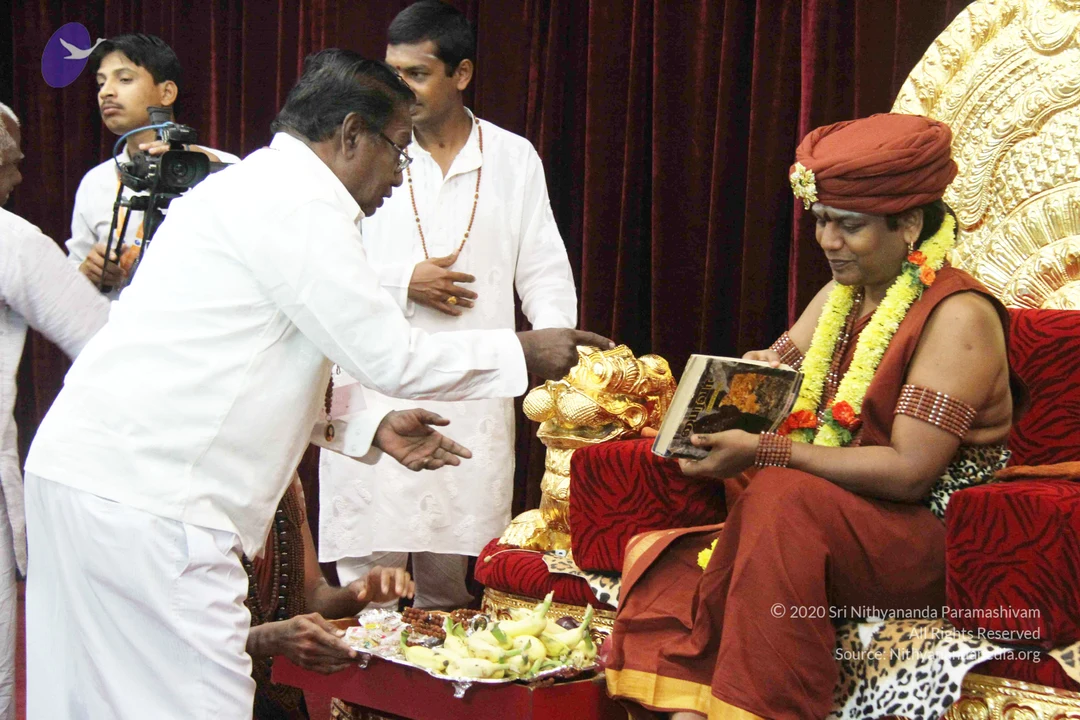
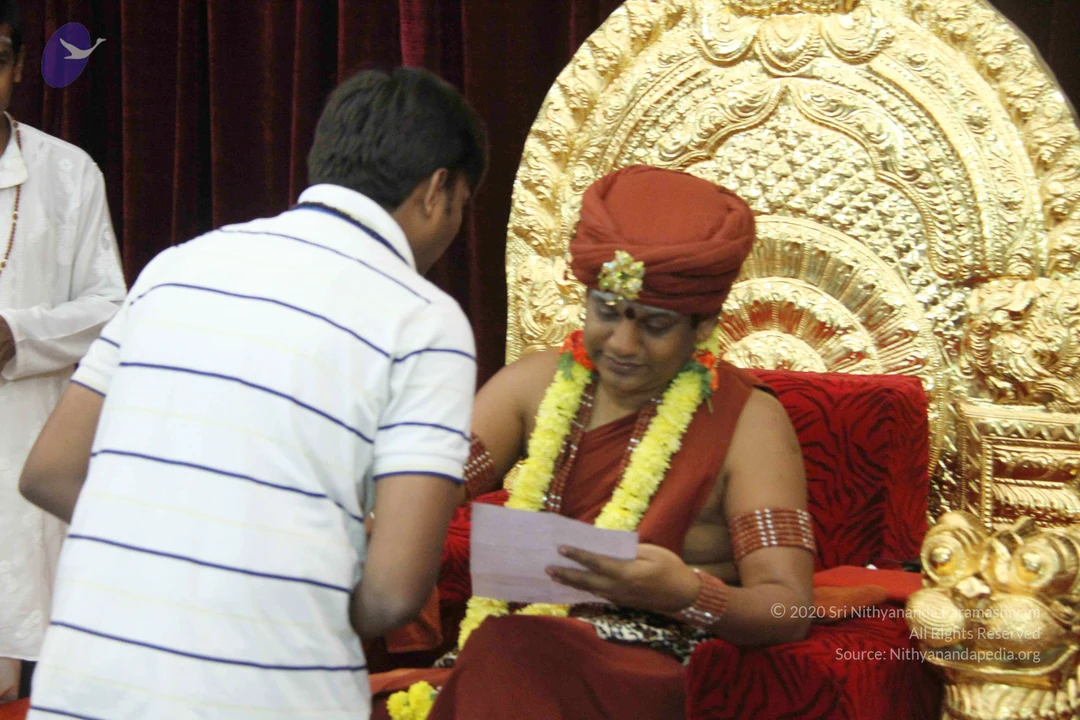
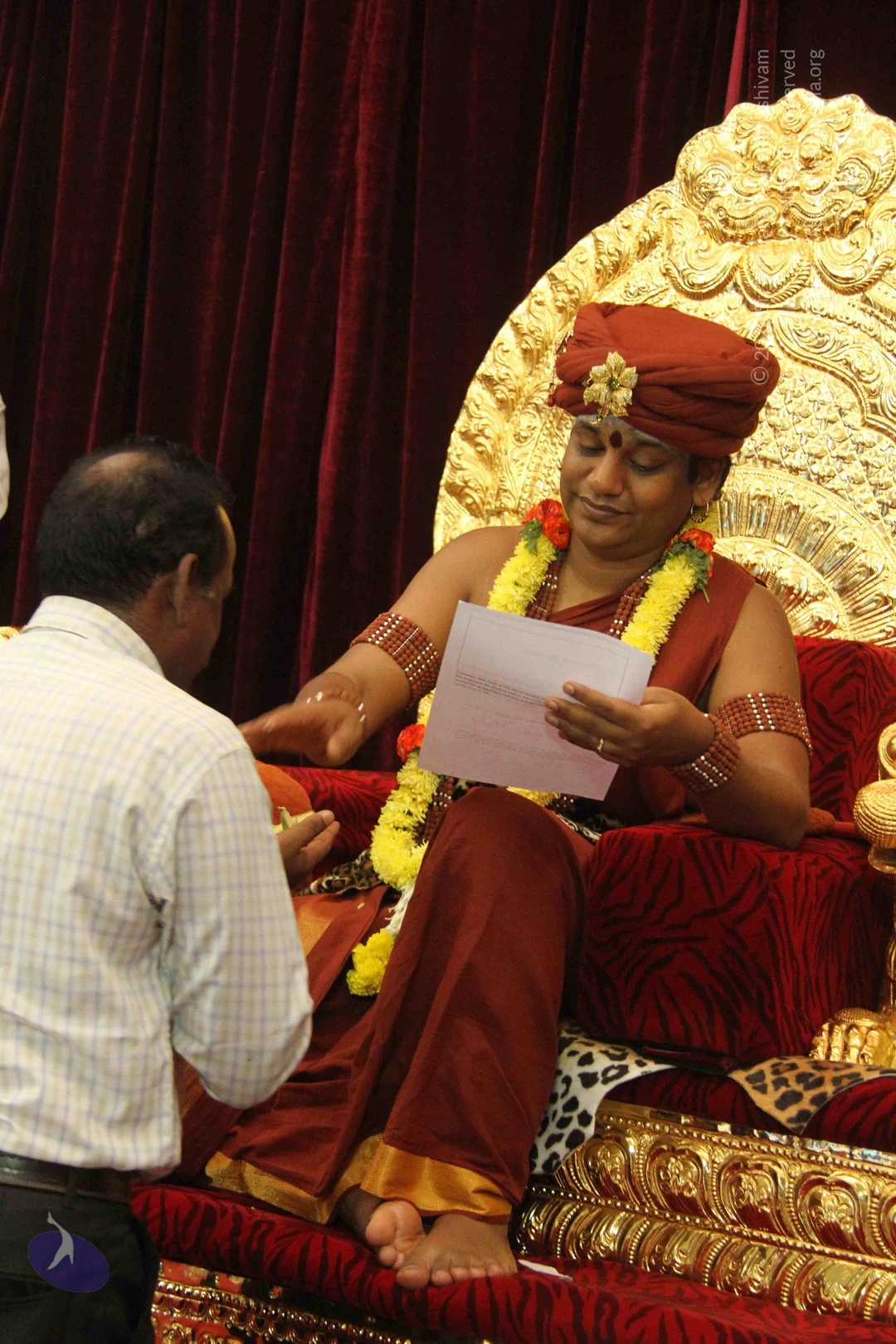
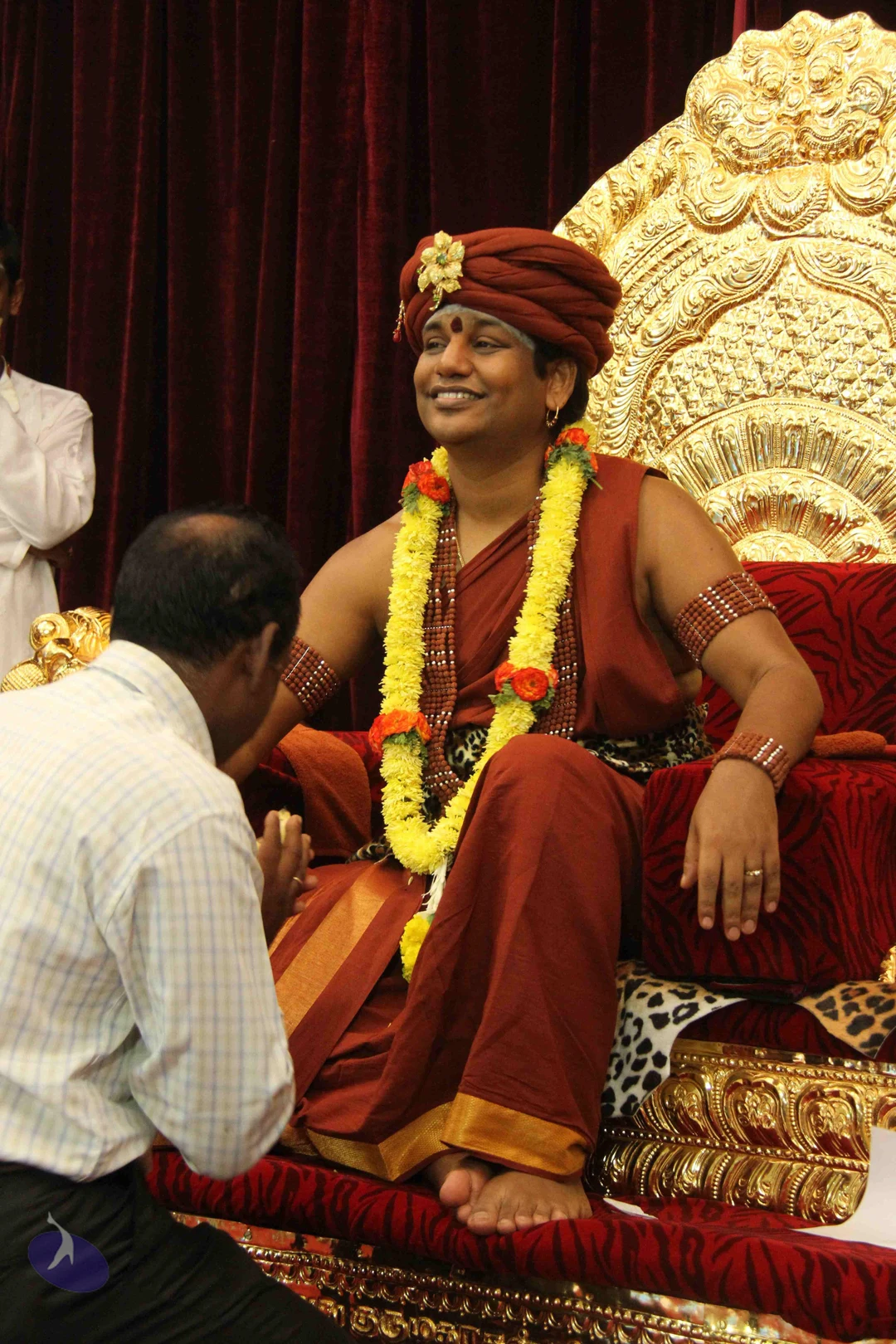
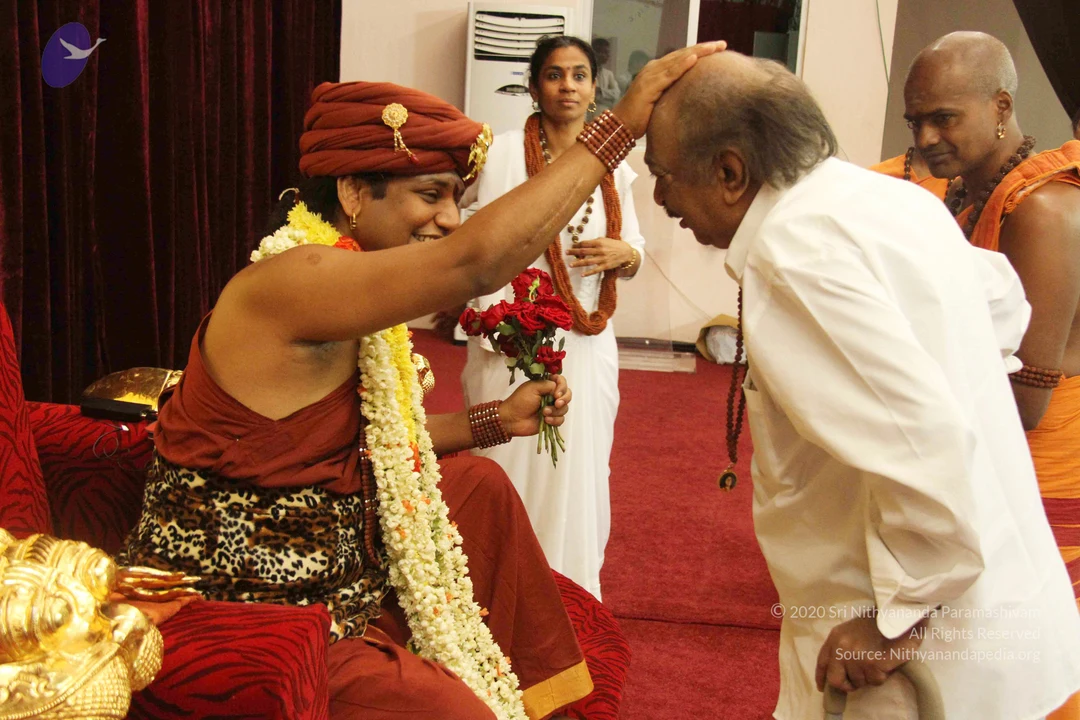
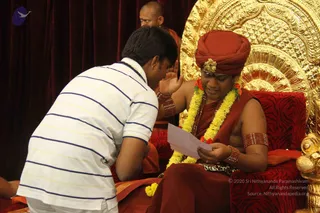
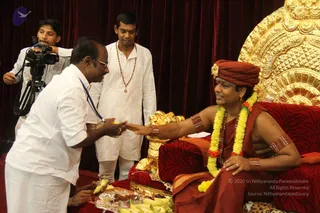
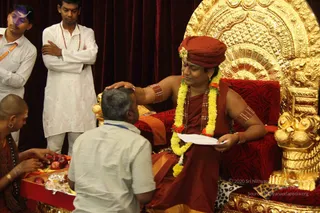
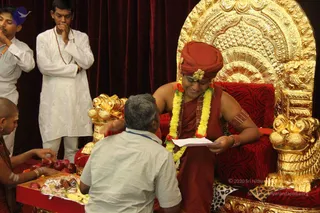
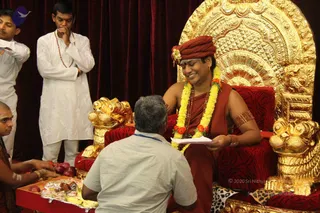
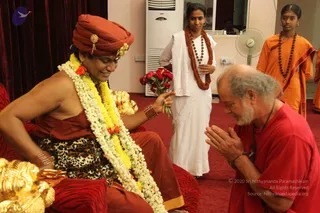
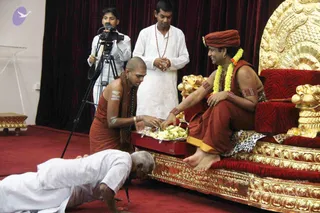
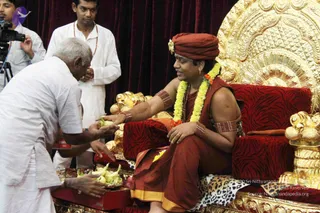
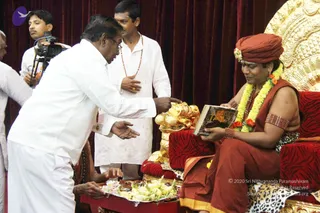
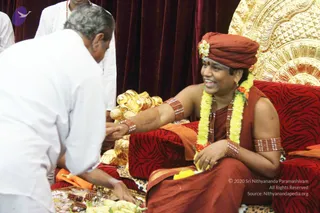
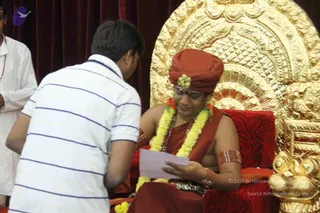
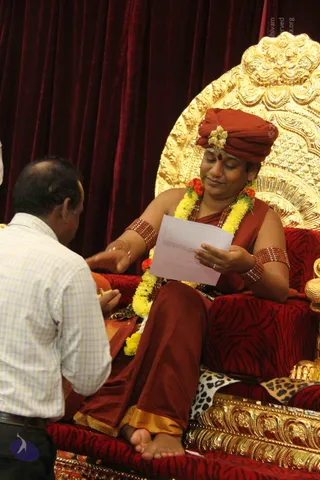
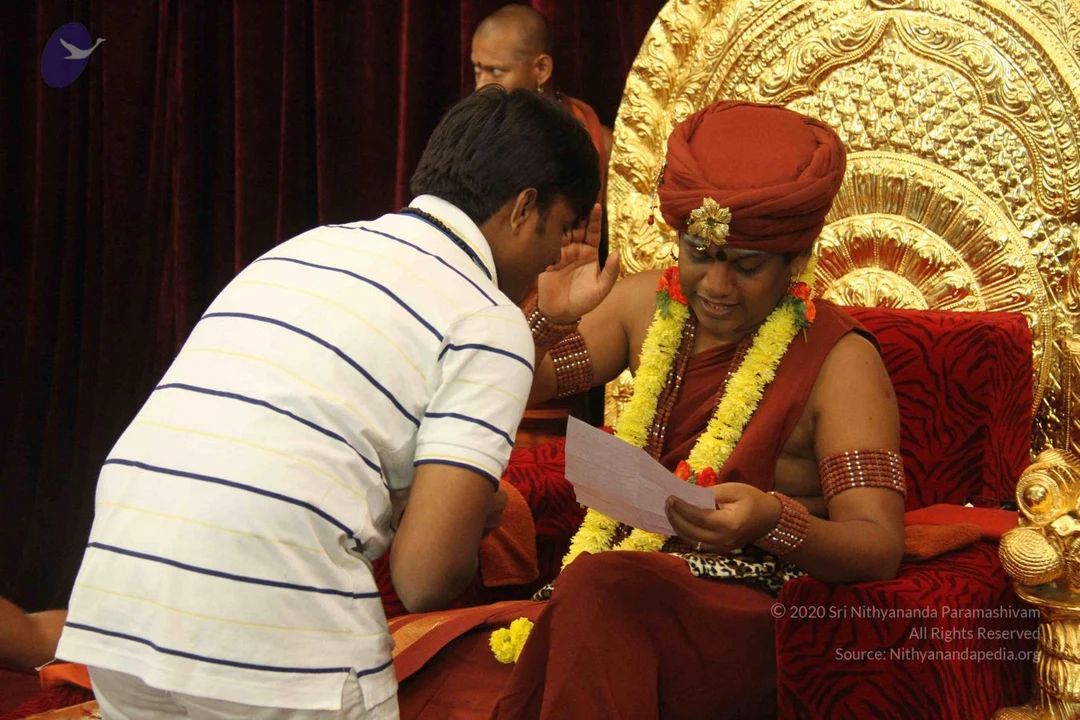
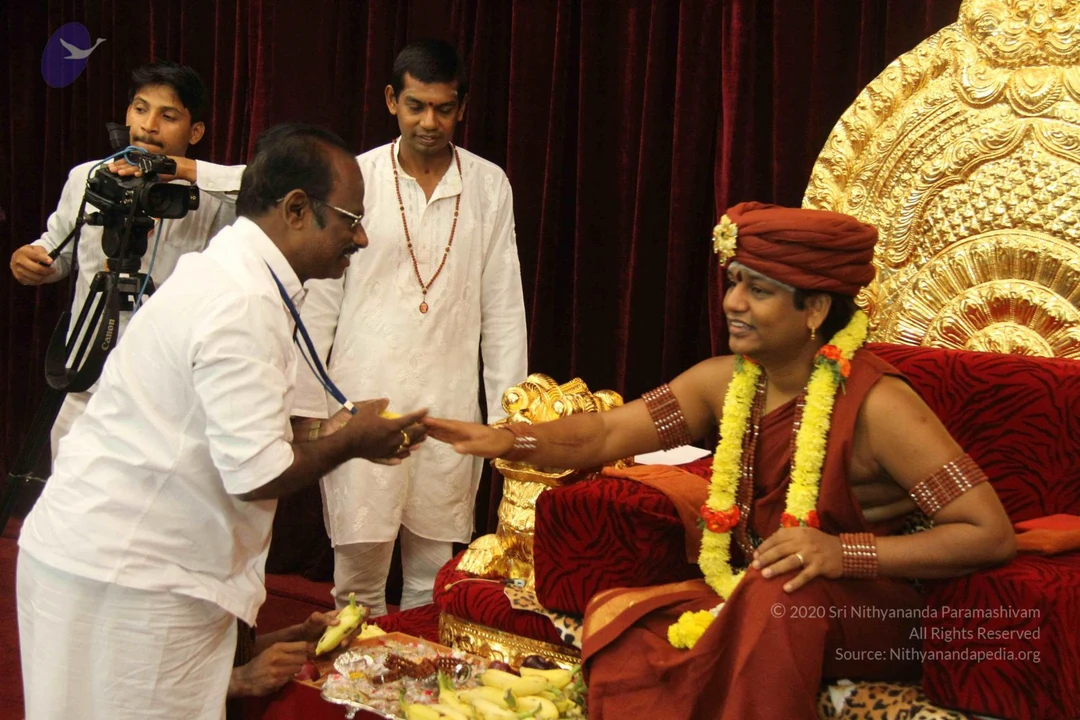
A seated figure in a red-orange turban and matching saffron robe sits on an ornate gold throne with red upholstery, wearing yellow and orange flower garlands, red bangles and a gold ornament on the turban. A younger man in a white striped shirt bends forward with one hand raised and gestures toward the seated figure, who holds a folded white paper. A shaved-headed person in orange robes stands in the background beside a dark red curtain.A photograph of a satsang-style event with a seated figure on an ornate red-cushioned throne backed by a large gold carved panel and red velvet drapes. The seated figure wears an orange-red turban with a small white flower, a yellow and orange marigold garland, rudraksha-style beads, bangles and an orange-red shawl. A man in a white shirt and white dhoti, with a blue lanyard, bends forward to offer a hand gesture toward the seated figure, and a plate of bananas and fruit with offerings sits in front. Behind them a man in white kurta with a rudraksha mala stands next to a cameraman operating a camera on a tripod. The scene shows devotees offering fruit to a seated guru.A seated figure in a gold-and-red ornate throne with a red velvet cushion receives a devotee who kneels before him with bowed head. The seated figure wears a rust-red turban with a small white flower, a red-orange robe, a yellow and red flower garland, rudraksha beads and red bangles on the upper arms, and places a hand on the kneeling man's head. A white sheet of paper is held in his other hand. The kneeling man wears a white short-sleeved shirt and grey hair. To the left, a shaven-headed attendant in orange clothes and rudraksha mala arranges a red tray of apples and fruit. Two standing men in white kurtas watch, one on the left with a purple face-painted mask. Background is dark red velvet drapery. a person, seated on the throne, is shown blessing the devotee.A seated figure on an ornate gold throne with a carved gold lion-form armrest and red velvet cushion wears a maroon turban with a gold ornament, a red-brown robe, a rudraksha mala, a yellow and orange garland, and bangles. He holds a sheet of paper and smiles while a man in a light grey shirt kneels and bows before him beside a red tray with fruit, flowers and offerings. Two men in white kurta-style clothes stand behind, and a shaven-headed priest in ochre sits at the left edge near the offering tray. Crimson draped backdrop.A photograph of a seated man on an ornate gold-and-red throne with carved lion-head arms, smiling and holding a sheet of paper. He wears a rust-red turban, a red-orange ochre robe draped over one shoulder, a yellow and orange flower garland and a rudraksha mala, with red bangles on his arms. Before him, a devotee in a light grey shirt and blue lanyard kneels with his back to the camera. At left, a man in ochre and white holds a tray of fruit, bananas, red apples and offerings, and two men in white kurta-style clothes stand behind. Red velvet drapes form the backdrop. Probable Swamiji is the seated figure, matching the turban, ochre robe, garlands and mala on the throne.A photograph of an indoor satsang setting with a red carpet and maroon curtain. A person seated on a red cushioned throne wears a rust-red turban with gold ornaments, a white-and-yellow marigold and jasmine garland, and a leopard-print lower cloth, while holding a bunch of red roses toward a kneeling man in a red shirt with palms pressed together in greeting. Behind them a woman in a white sari with a rudraksha necklace stands, and a young woman in an orange sari with a rudraksha mala watches. A gold-coloured lion-shaped throne armrest and a white floor fan are visible. The seated figure has long swept-back hair and ceremonial gold jewellery, matching appearance cues for Swamiji (probable), seated in a position of honour and receiving the greeting.

GangaGhat

14 photosSource gallery
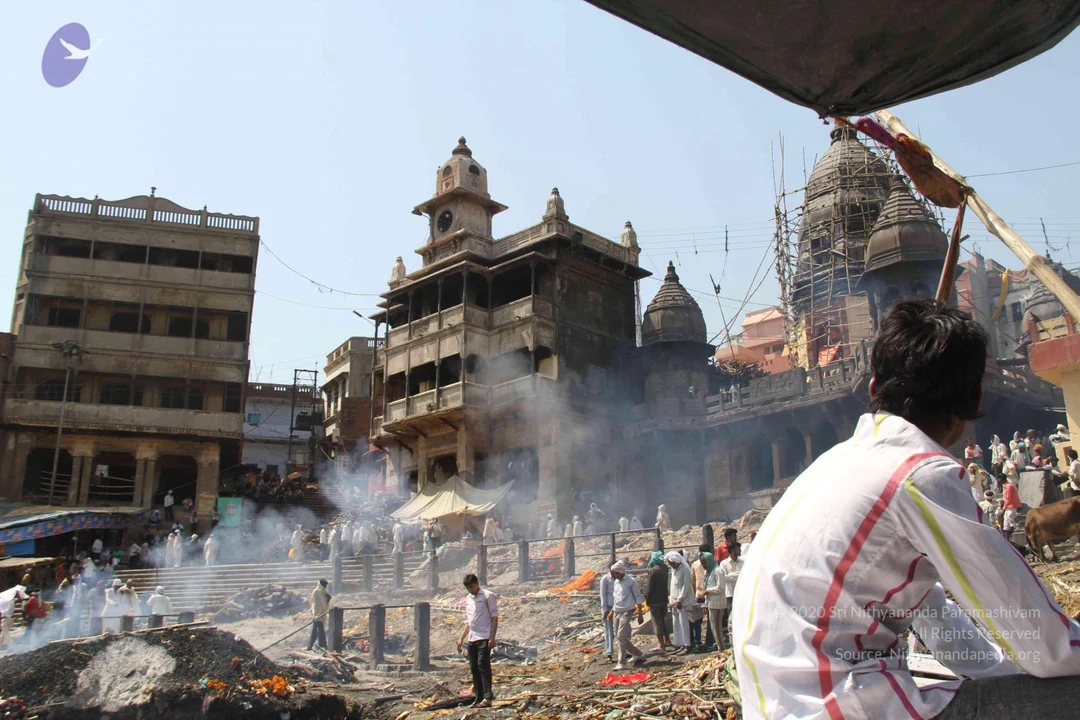
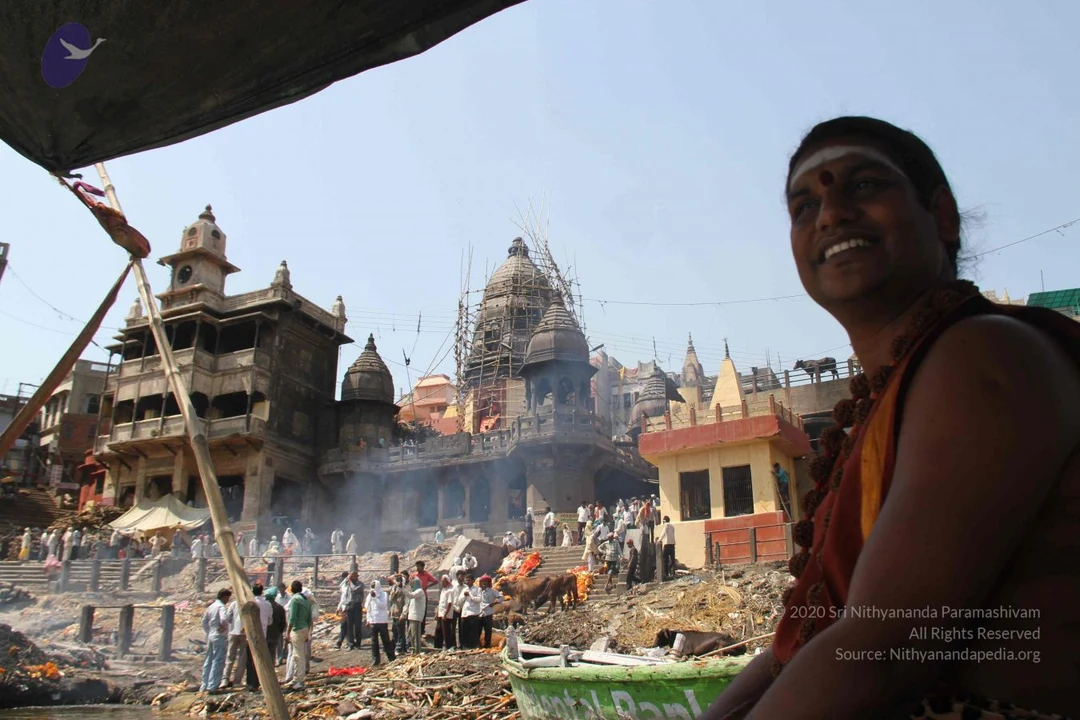
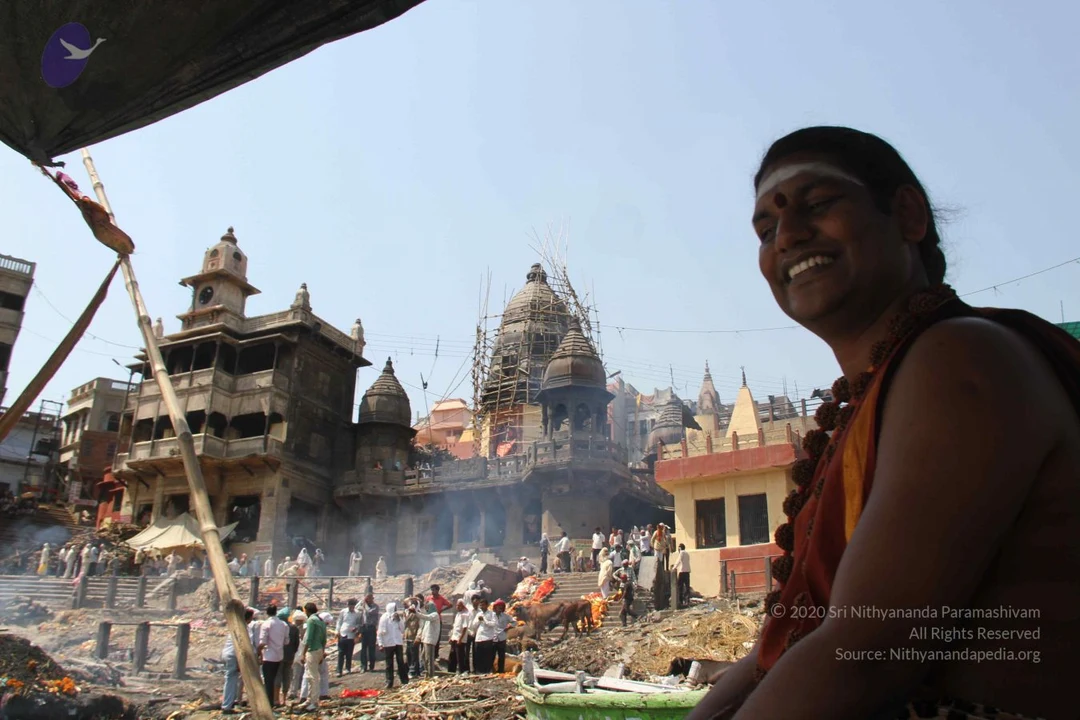
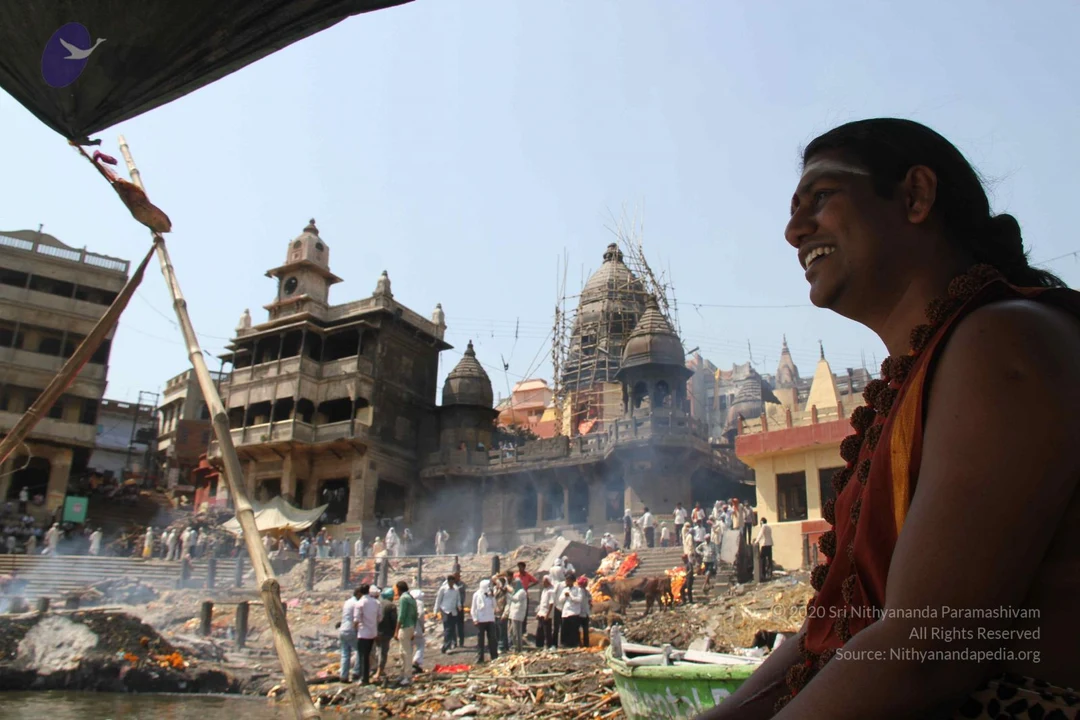
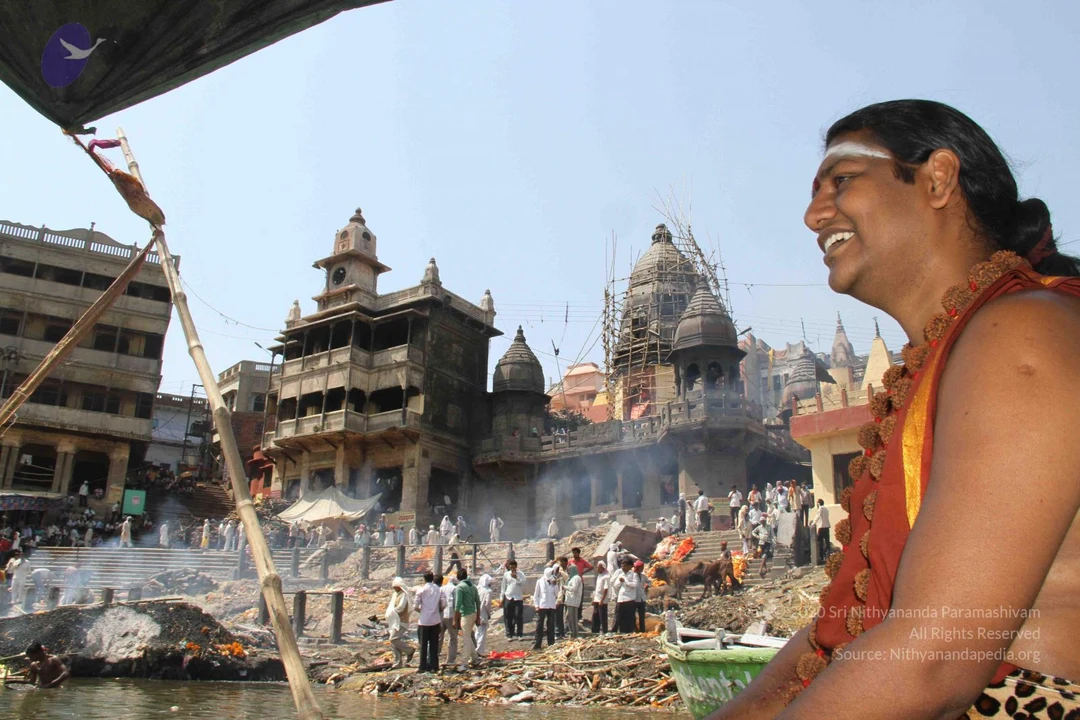
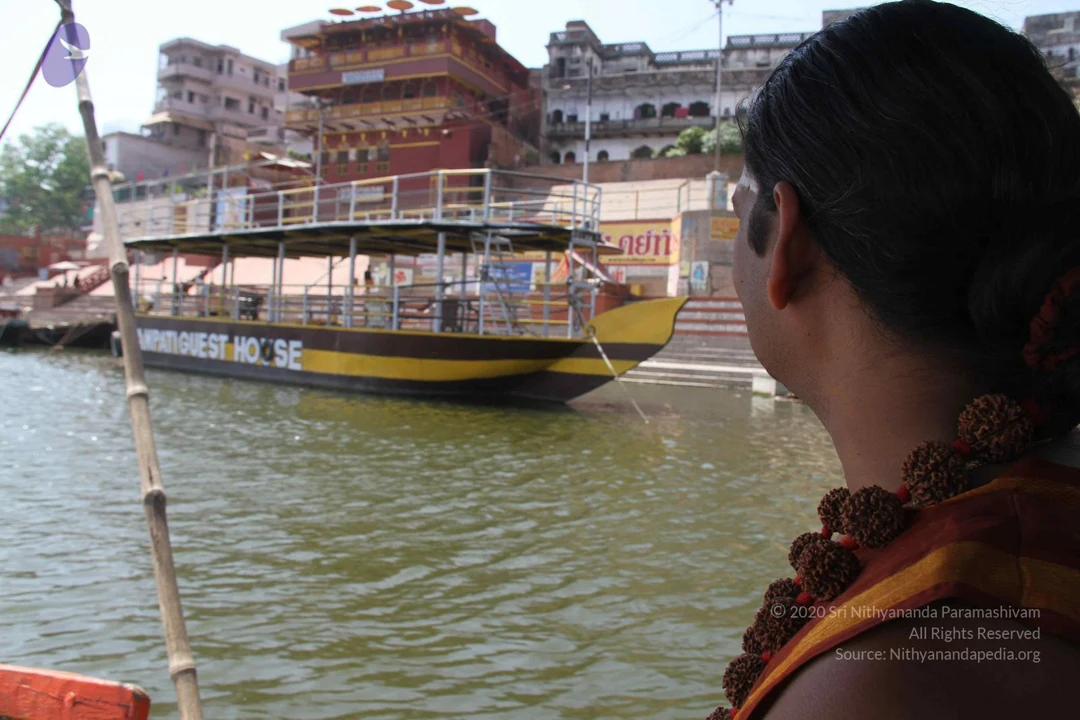
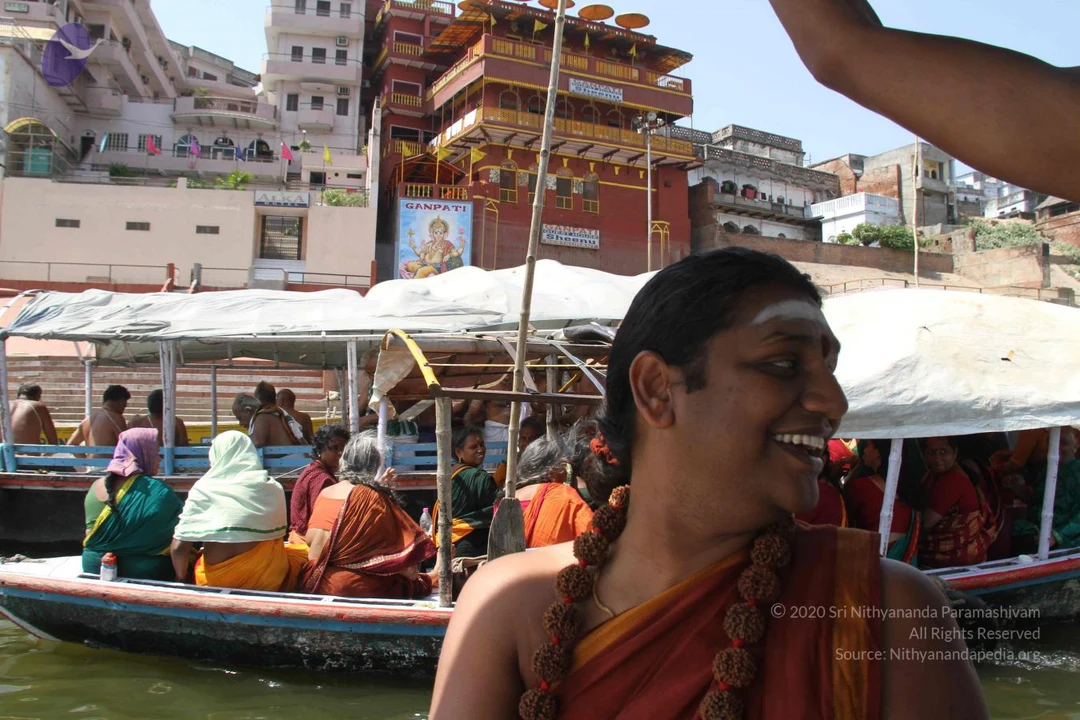
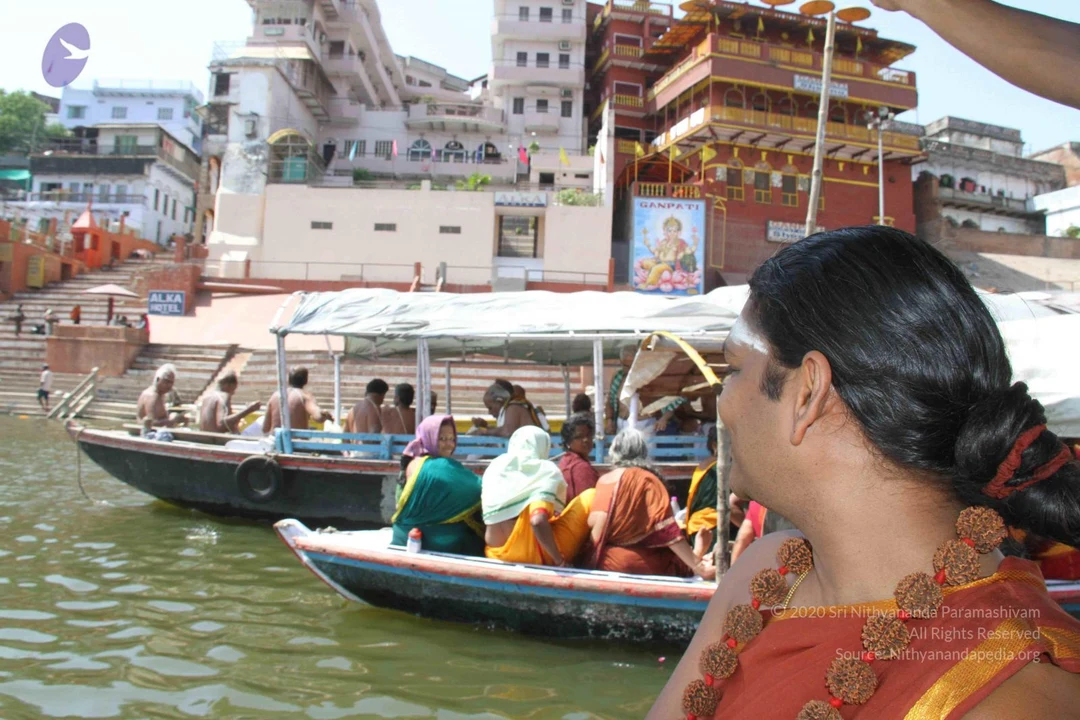
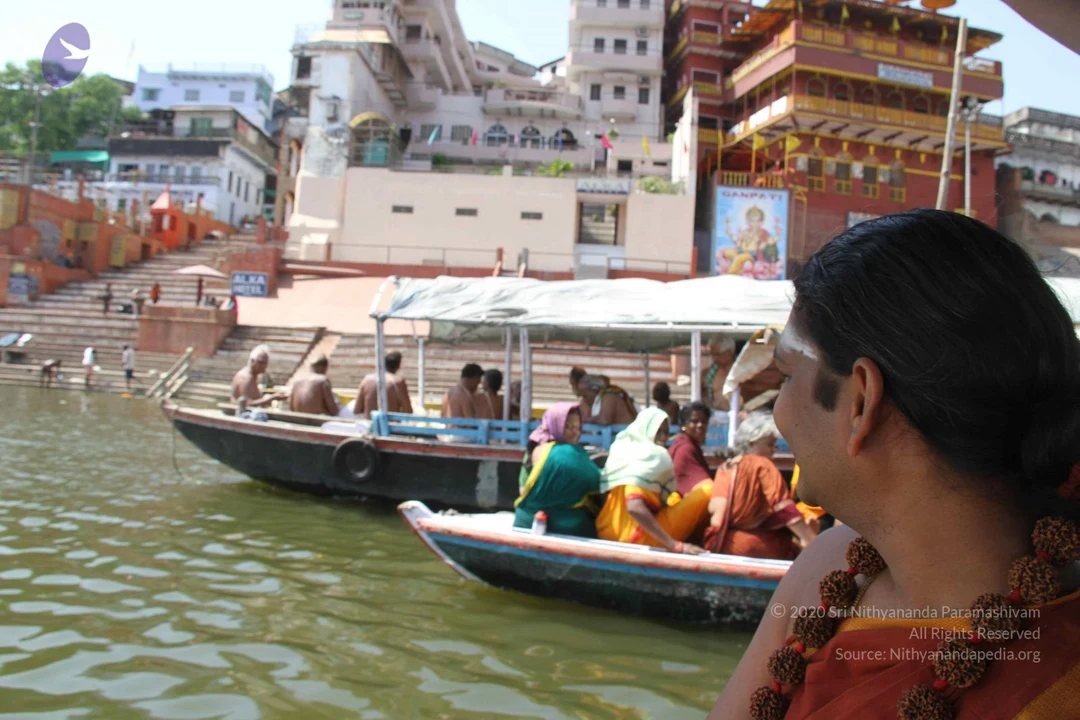
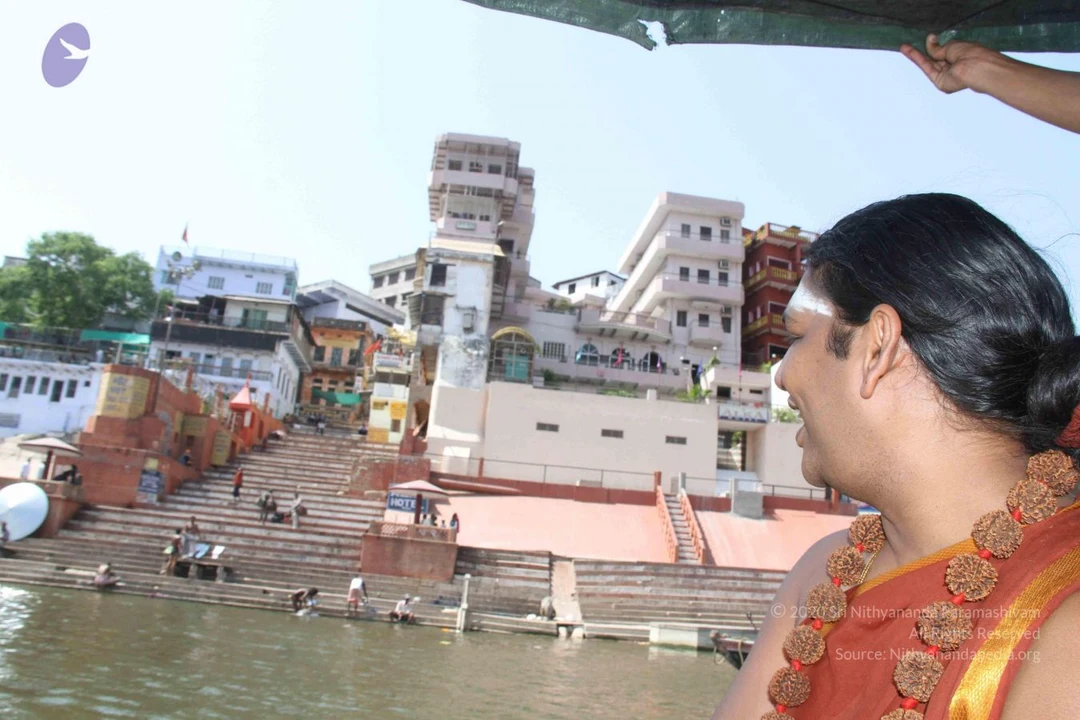
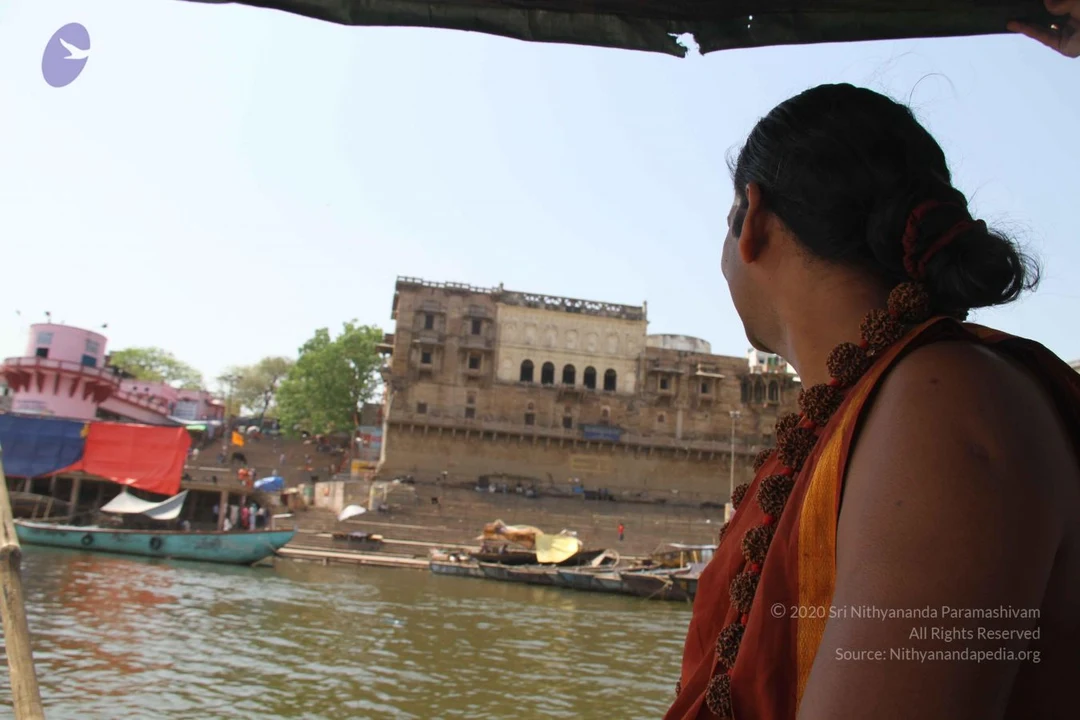
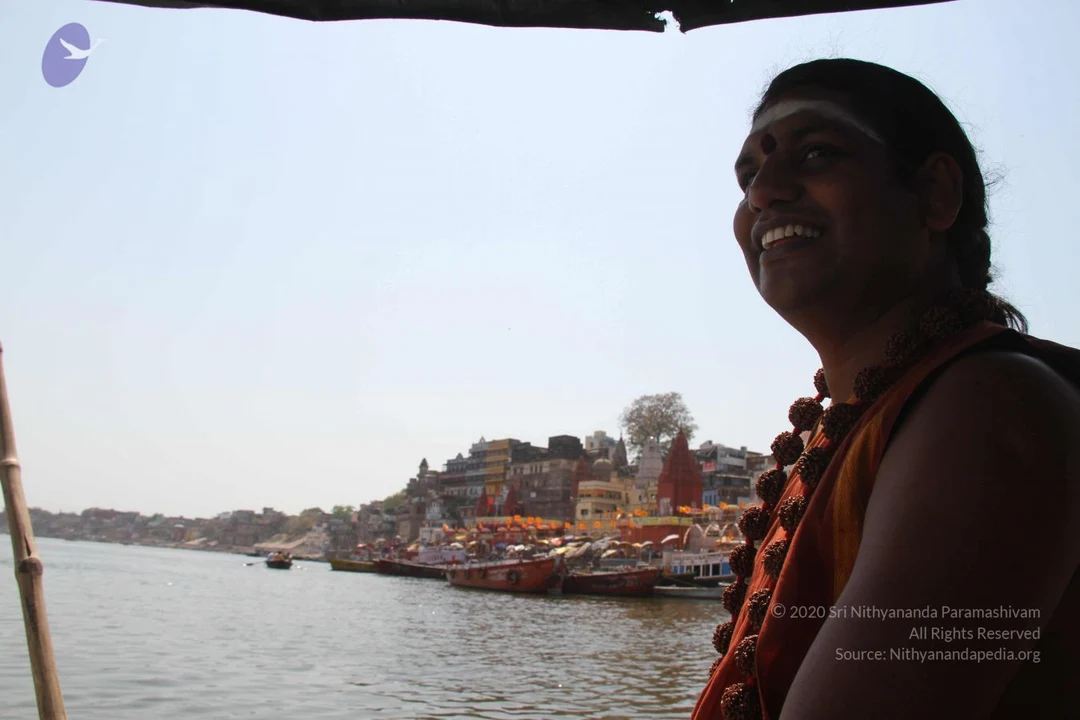
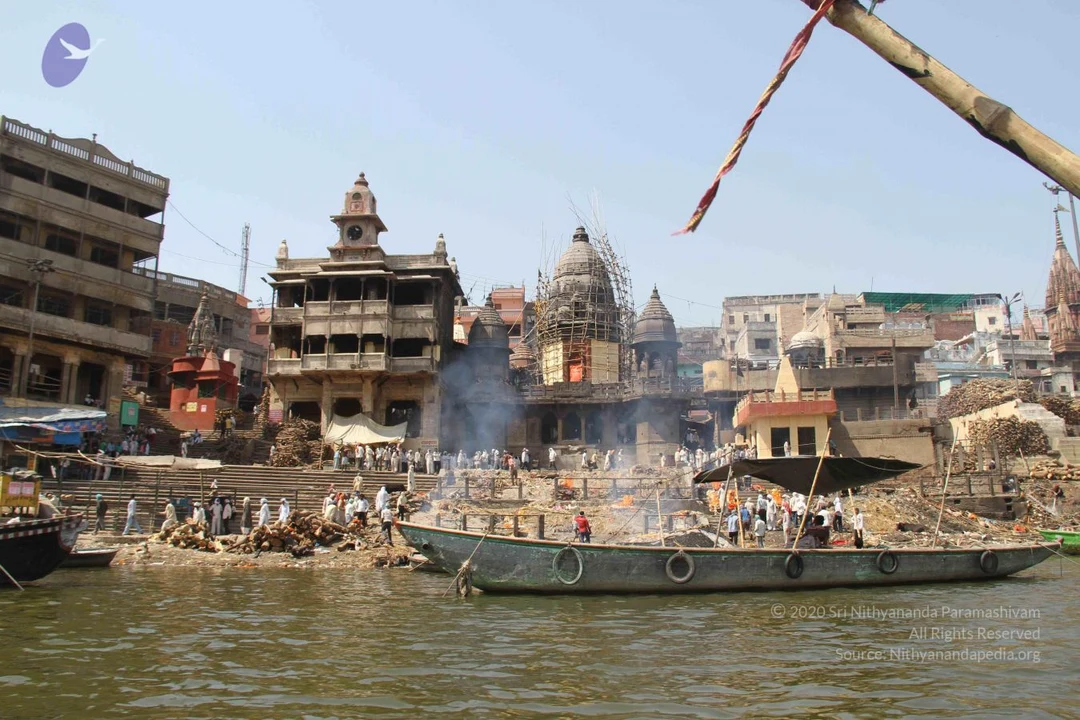
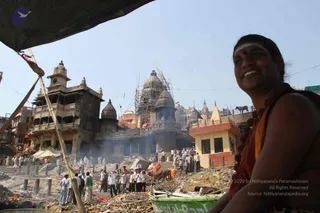
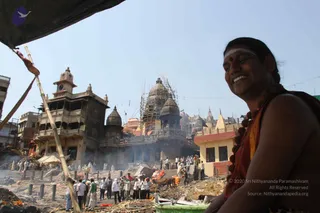
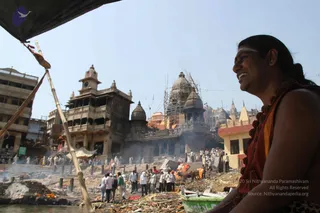
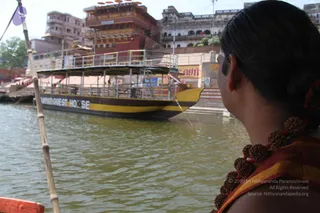
Outdoor photograph of a riverside cremation ghat in Varanasi with smoke rising from several funeral pyres on the steps and ground. Ornate old stone buildings with a clock tower and temple spires stand behind, one spire wrapped in scaffolding. In the foreground, a man in a white shirt with red and yellow stripes sits with his back to the camera, watching. Several men in white and light clothing walk among the pyres, and a few people stand near the stairs leading down to the water. A cow appears at the right edge, and a dark canopy cloth hangs over the upper right corner.A photograph at a riverside ghat with stone temple buildings, scaffolding on a dome, smoke rising, and many people gathered on the steps near orange marigold offerings and a grazing cow. In the right foreground, a smiling man with a white tilak and red bindi on his forehead, wearing an orange-red shawl over bare shoulders and a rudraksha mala, sits beside a green boat under a dark tarpaulin. a person by visible saffron-toned wrap and rudraksha mala cues. Several dozen people are visible across the ghat.Outdoor photograph at a riverside ghat with stepped stone embankments, smoke and scattered flower offerings on the ground. A man in the right foreground, bare-chested with an orange-red shawl and a reddish-brown wrap, a dark mala of beads around his neck, and a white horizontal forehead mark with a red dot, smiles broadly. Behind him, a tall temple spire wrapped in bamboo scaffolding and multi-tiered stone buildings rise under hazy sky. Several people in white and light clothing stand and walk on the steps, and a cow appears near the water. A blue-and-white corner logo is visible at top left. The man's appearance suggests a person with a crown-free but distinctive rudraksha mala and orange shawl; he is seated and smiling beside the banner-covered awning.A photograph taken from a boat on a river ghat with stone temples and crowded steps behind. On the right, a bare-chested man with long dark hair tied back smiles, wearing a saffron-orange shawl and a dark rudraksha-style bead mala around his neck. A wooden pole and dark cloth canopy frame the left edge. Many people in white and light clothing stand along the steps and shoreline, and smoke rises from cremation fires near the water. The scene suggests a riverside ghat with a cremation area. Swamiji (probable) is visible in the foreground with long hair, orange shawl and bead mala.Outdoor photo at a riverside ghat with stone steps, multi-tiered temple-style buildings with domed chhatris, scaffolding on a tower, and smoke rising from cremation pyres along the bank. In the right foreground a smiling man with long dark hair, a white tilak across his forehead and a red-orange shawl with a beaded rudraksha-style garland stands beside a green boat, looking toward the ghat. A bamboo pole with a small red-and-white flag and a dark canopy edge appears at upper left. Several dozen people in white dhotis and kurtas gather on the steps and stone platform, with a few cattle and marigold offerings scattered on the ground. Swamiji (probable): a long-haired figure in orange shawl and beaded garland with white forehead tilak, matching the event page.A photograph taken from a boat on a murky green river, looking toward a riverfront with a multi-storey red and yellow building and a yellow-and-black guest house boat moored at the steps. In the right foreground, a person seen from behind with short dark hair tied back wears a rudraksha mala of large brown beads and a saffron-orange wrap with yellow borders, and holds a light-coloured rope or pole. Ghats and stone steps line the bank under a hazy sky.

PadaPuja

1 photoSource gallery
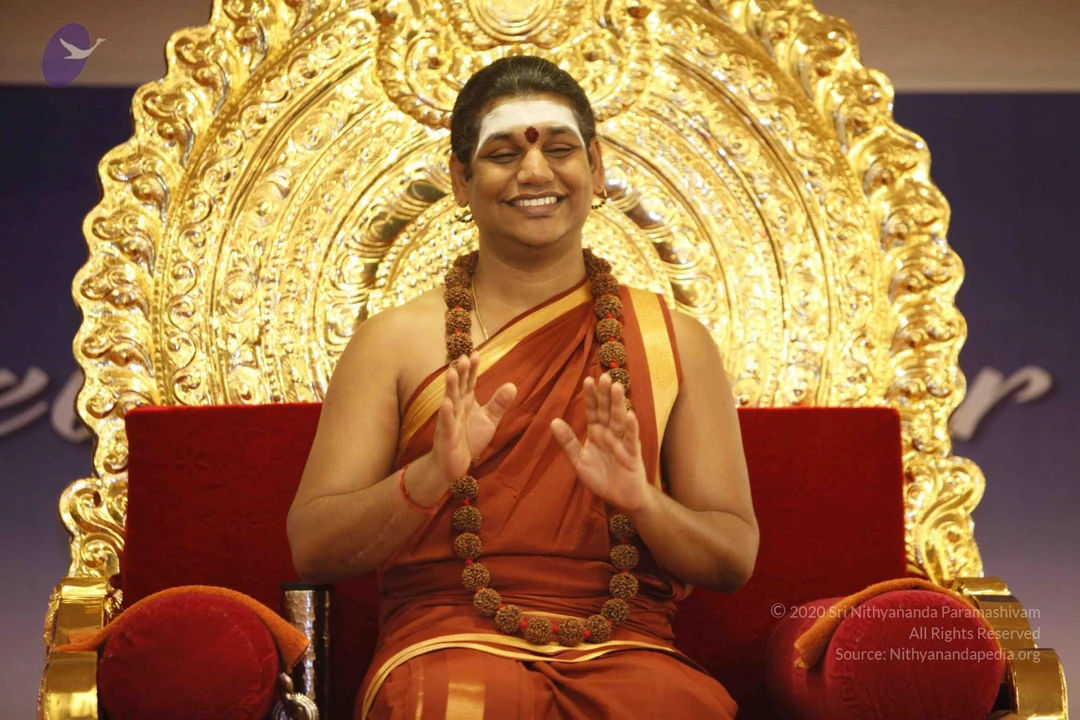
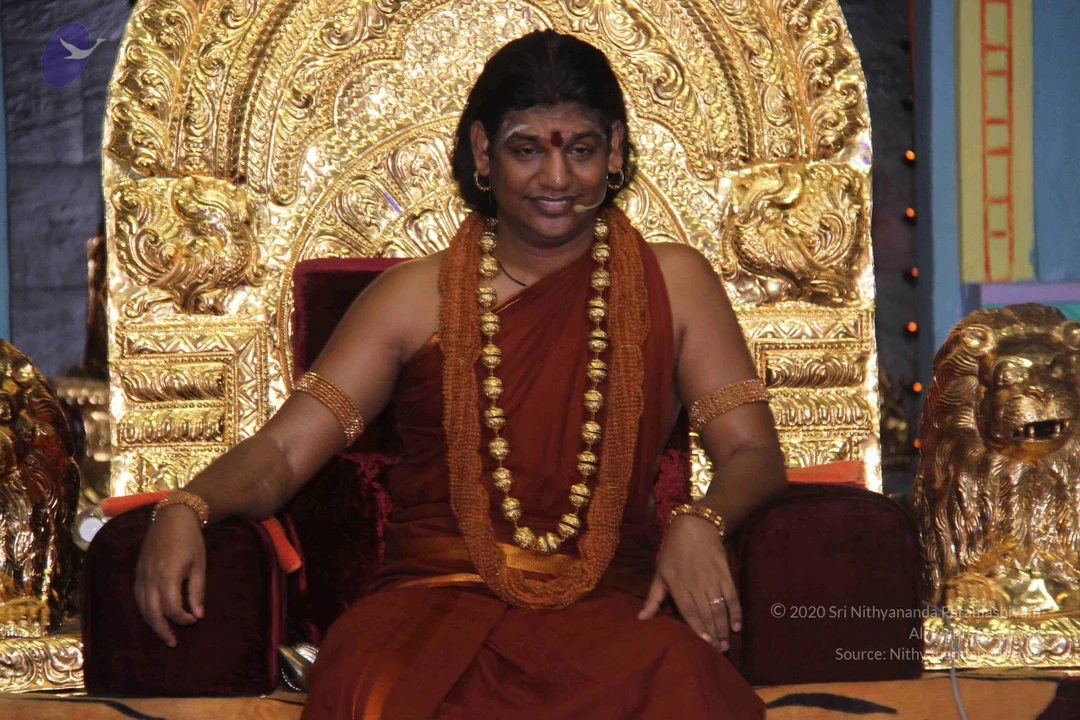
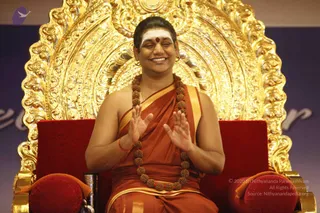
A photograph of a smiling man seated on an ornate gold throne with a red cushioned seat and red armrest cushions. He wears an orange-saffron garment draped over his shoulders, a long rudraksha mala with multiple beads, a gold necklace, and a white vertical tilak with a red dot on his forehead. His palms are raised together in a gesture of greeting or blessing. Behind him a blue backdrop is visible with partial lettering. a person seated in the satsang setting, identified by saffron clothing, rudraksha mala and gold ornaments.

Satsang-and-Kalpaturu
24 photosSource gallery
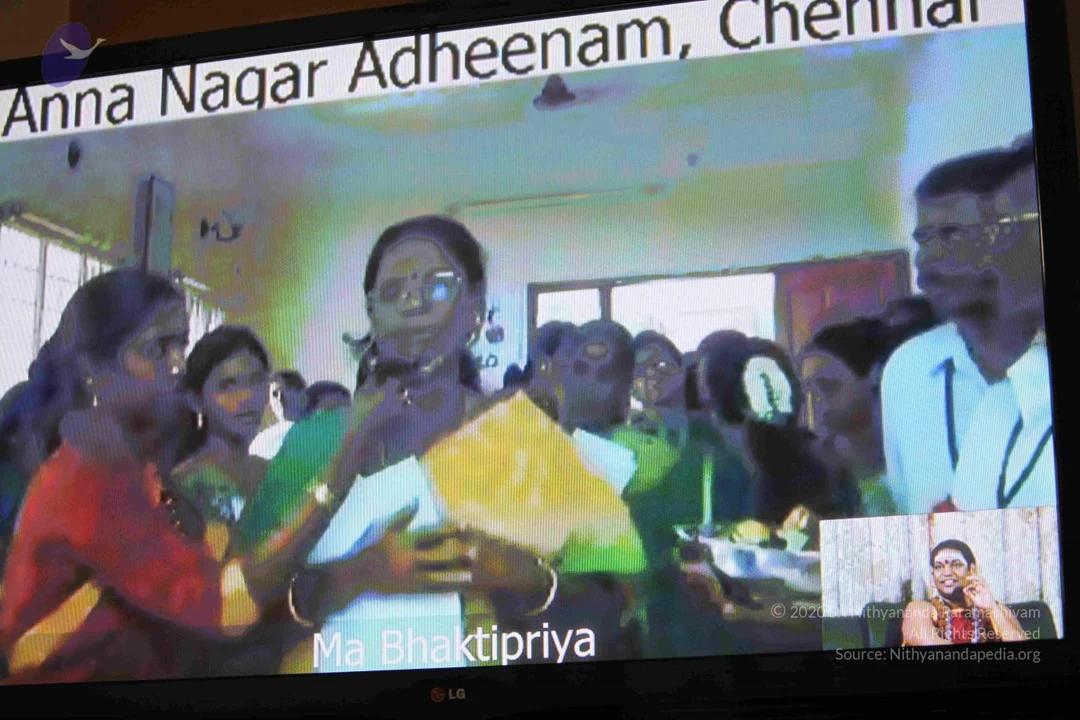
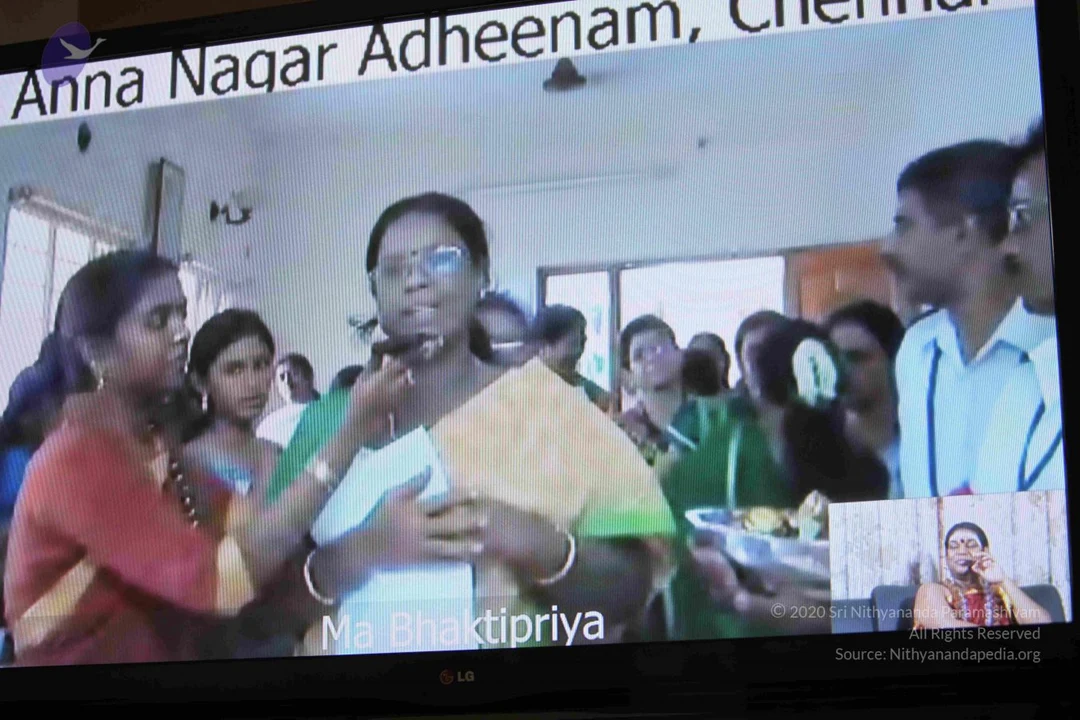
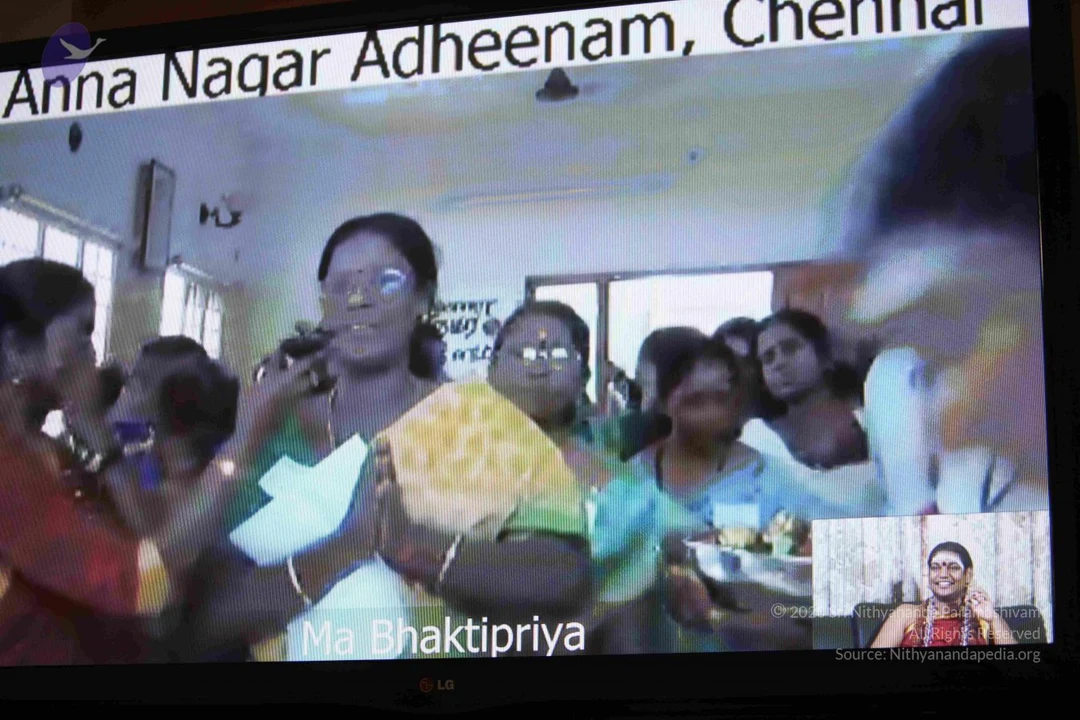
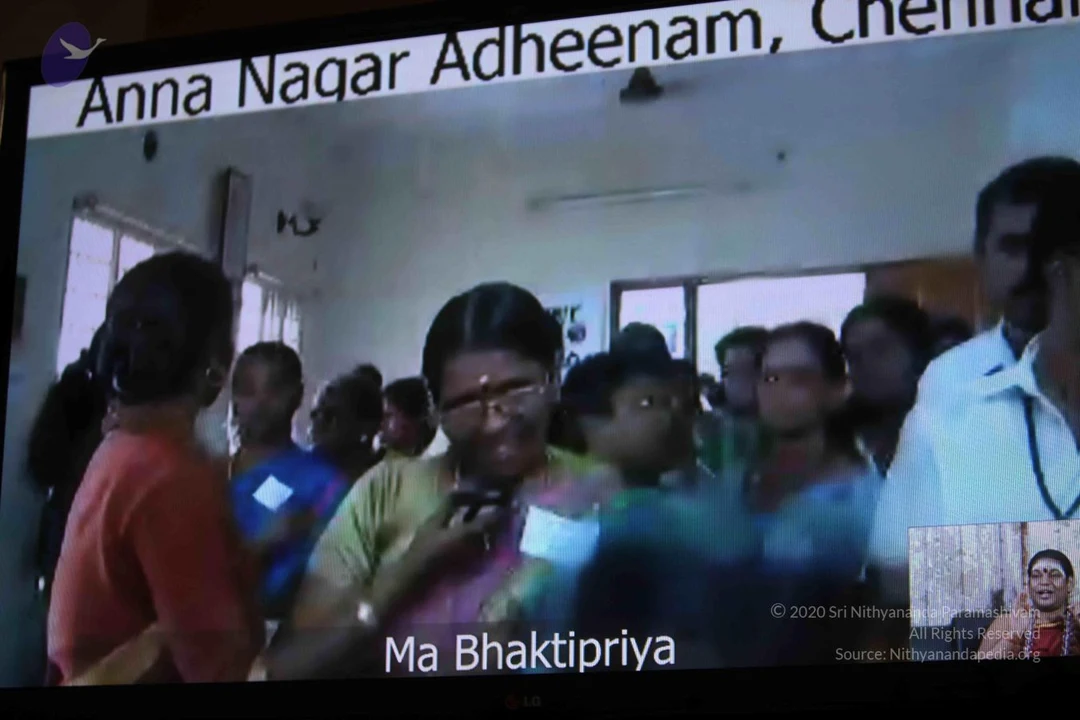
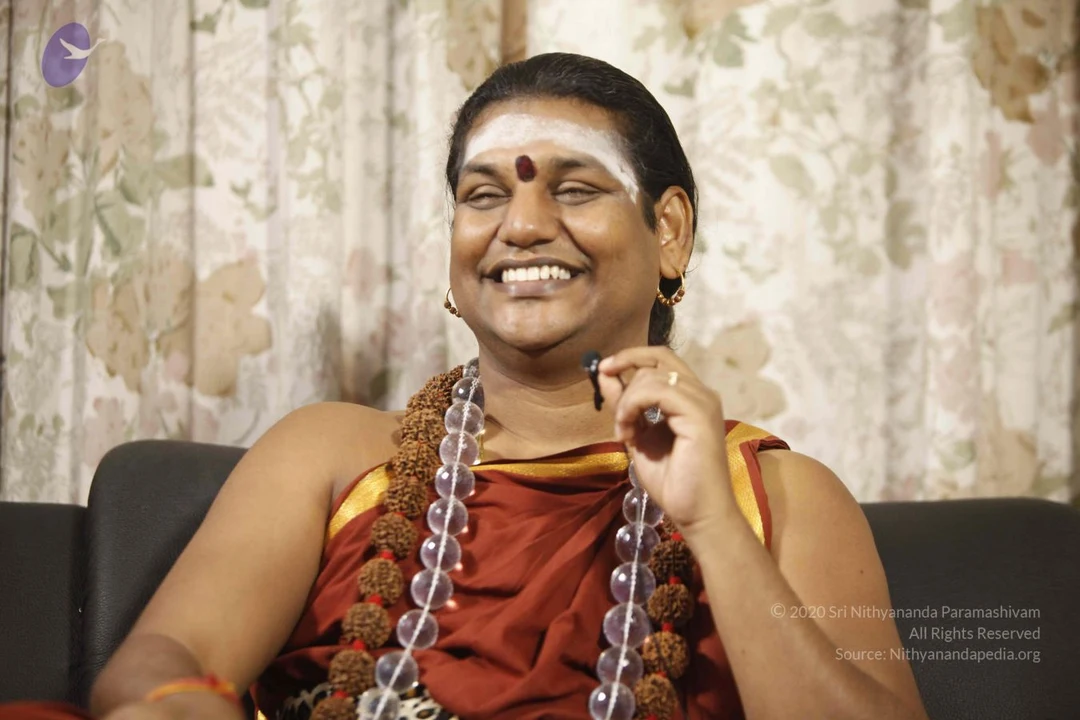
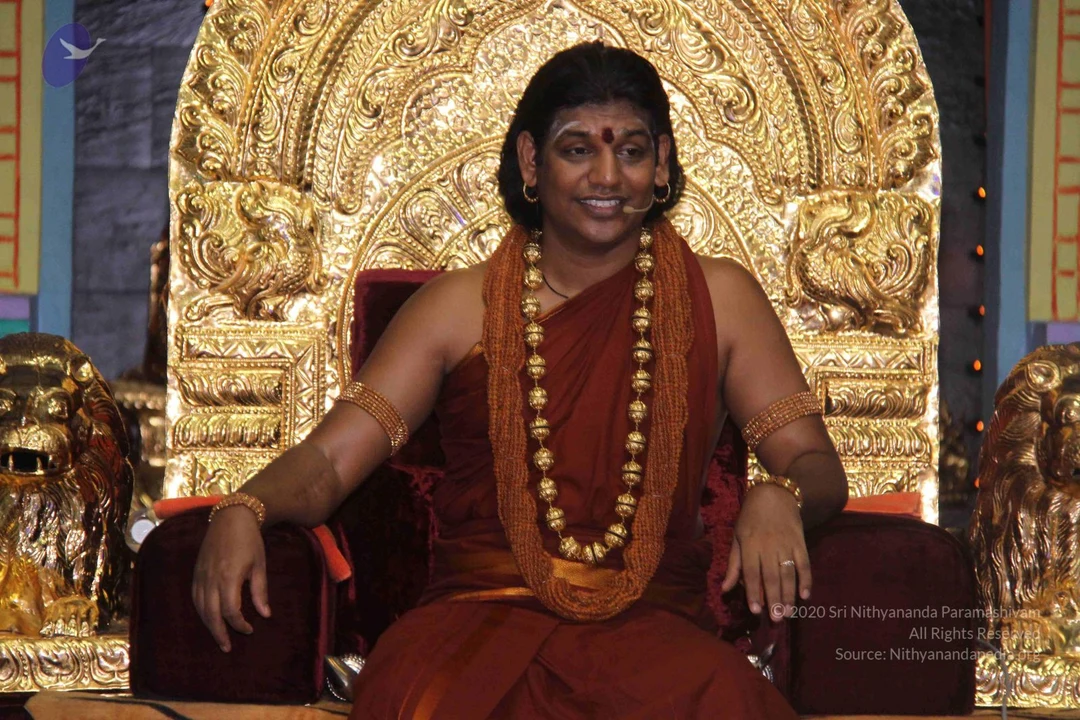
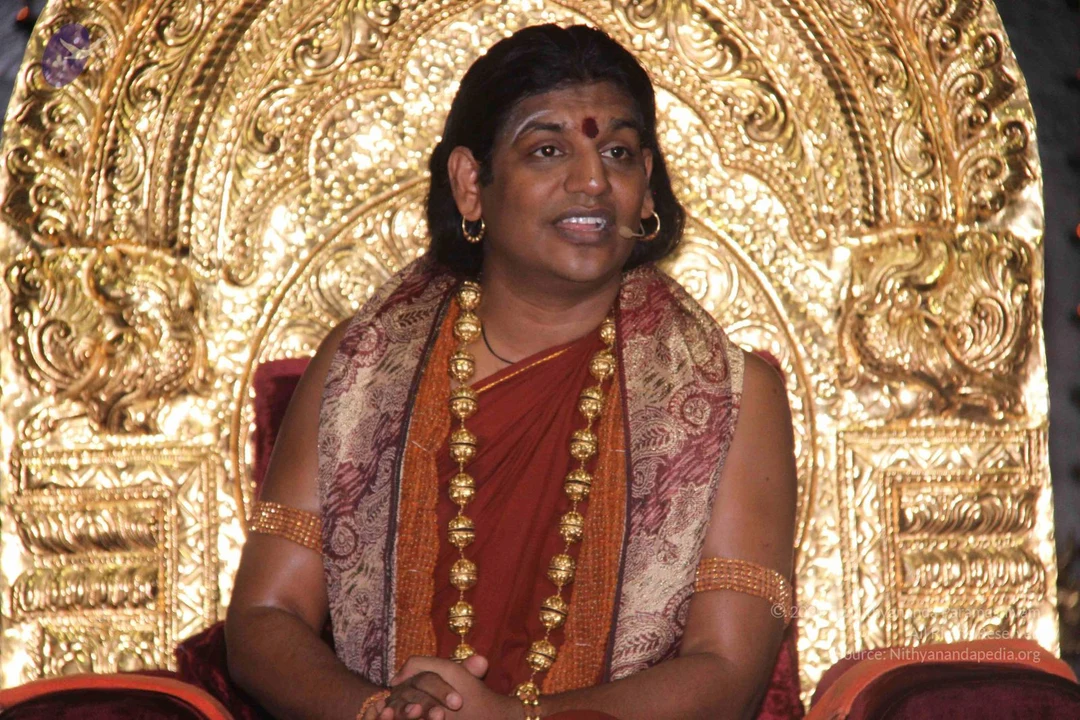
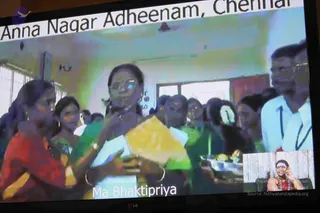
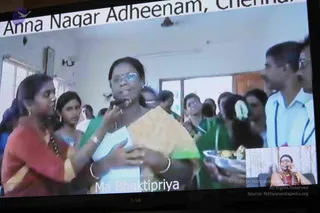
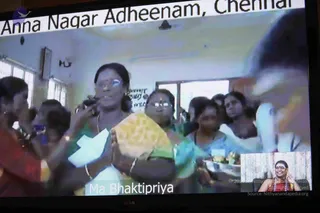
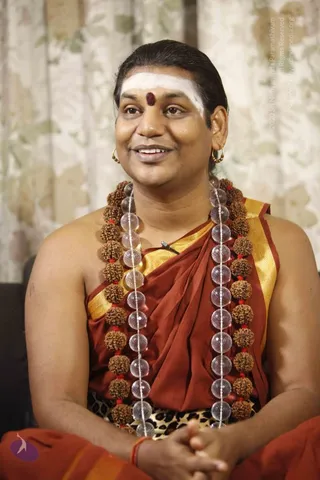
Photograph of a large flat-screen display showing a video-conference feed from Anna Nagar Adheenam, Chennai, with a caption reading "Anna Nagar Adheenam, Chennai" across the top. Several women and a man in white shirt and glasses stand in a crowded room; a woman in a yellow garment and red blouse with gold bangles holds a white cloth bundle, while a caption near her reads "Ma Bhaktipriya". A small inset in the lower right shows a smiling woman in a room.A photograph of a large screen showing a live video link. The top banner reads "Anna Nagar Adheenam, Chennai" and a caption at the bottom reads "Ma Bhaktipriya". On screen, a woman in a yellow saree with green border and glasses stands at center holding a white cloth, with a woman in a red blouse at left and a crowd of devotees in saris and shirts behind them, some holding a tray of offerings. In the inset at lower right, a woman with a red bindi and jewellery sits before a dark background, and the room appears to be a person satsang hall. The screen itself is an LG monitor.A photograph of a large display screen showing a live video link. The on-screen feed is labelled "Anna Nagar Adheenam, Chennai" and captioned "Ma Bhaktipriya". A woman in a yellow and green sari with a bindi and spectacles stands with palms pressed together in namaste, while other women in saris and salwar stand behind her; one holds a steel plate of offerings. A small inset in the lower right shows a smiling woman in red and gold seated before a dark backdrop. The screen bezel and a tuft of a person's hair are visible in the frame.A photograph of a television screen showing a live video link. A banner at the top reads "Anna Nagar Adheenam, Chennai". The inset shows a crowded room of people, mostly standing, with a woman in the centre wearing a green and pink sari, glasses and a vibhuti mark on her forehead, holding a microphone. A caption at the bottom reads "Ma Bhaktipriya". A smaller inset in the lower right shows a woman in an orange sari. Several people in white shirts and blue and orange clothing stand around her. No a person candidate is visible in the scene.A photograph of a large projection screen showing a live video feed of a crowded indoor hall with white walls and windows. A banner overlay reads Anna Nagar Adheenam, Chennai. In the foreground, a woman in a yellow-and-pink sari with glasses and a dark bindi stands among people in colourful saris and white shirts, one woman in an orange sari at left. A caption at lower centre reads Ma Bhaktipriya. In the small inset at lower right, a smiling woman with a tilak and white garment appears in a separate video window. The screen shows a and the sourceA smiling man sits on a black leather armchair against a floral patterned curtain. He has a white vertical tilak on his forehead with a red dot in the centre, small gold hoop earrings, and a dark red garment with a gold border. Around his neck hang rudraksha beads alternating with clear crystal beads. He holds a small dark object near his chin and looks off to the side with a broad smile. Appearance-based label: a person cues are limited to the rudraksha mala and tilak, so identity is uncertain.

DrKrishnas-Friend-Visits
8 photosSource gallery
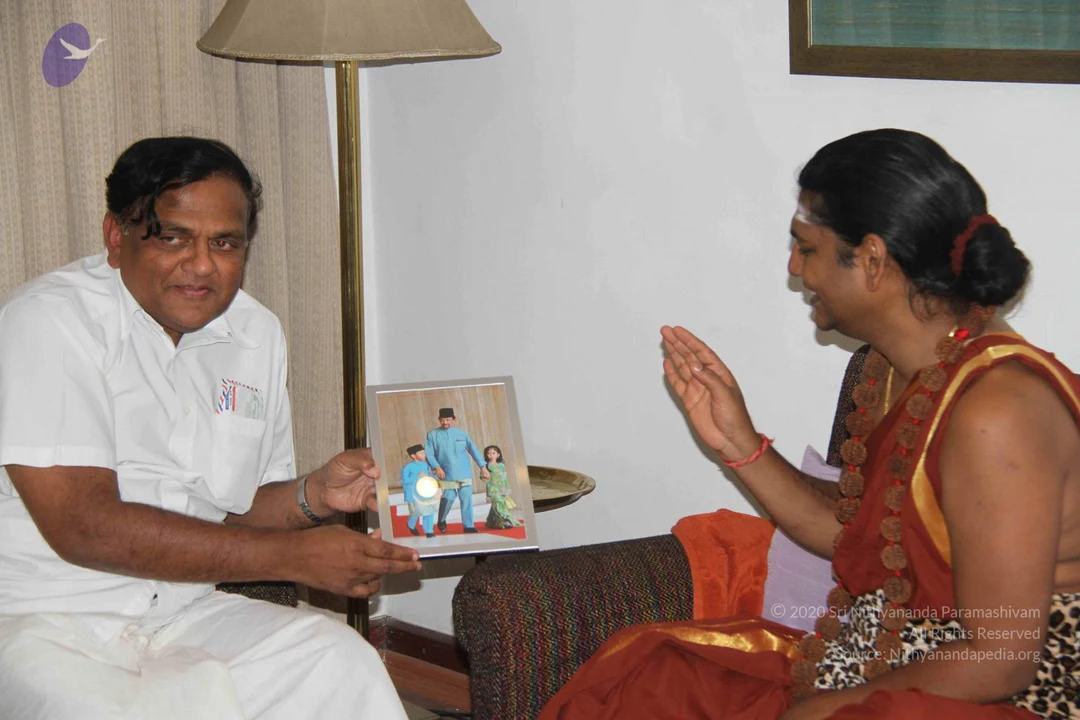
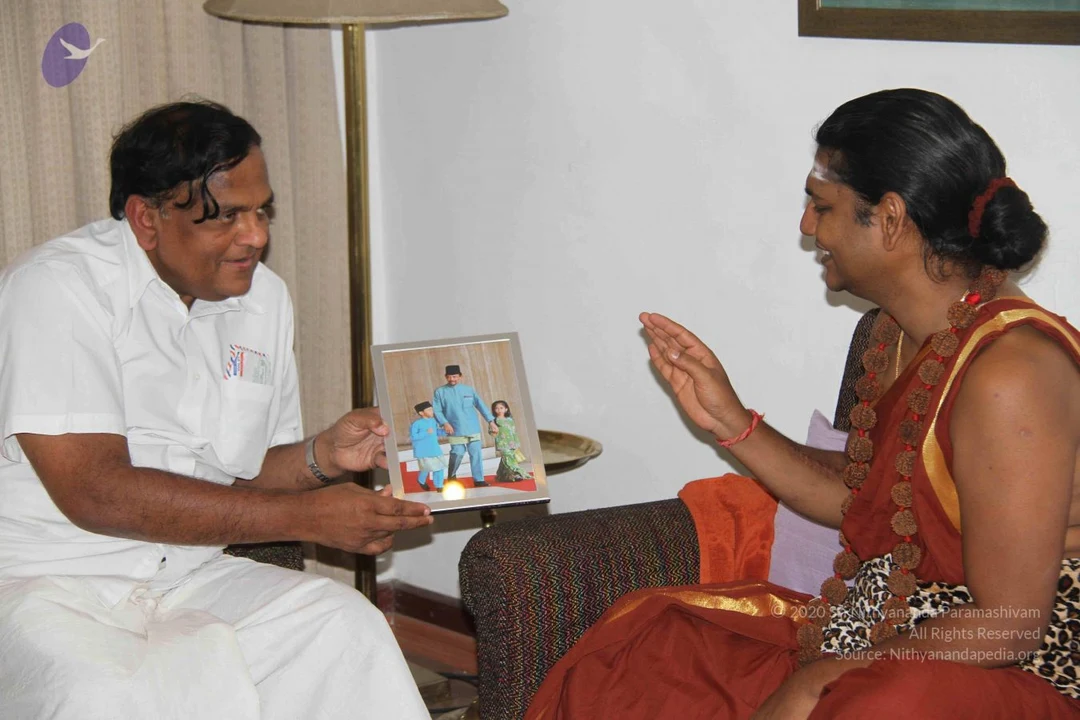
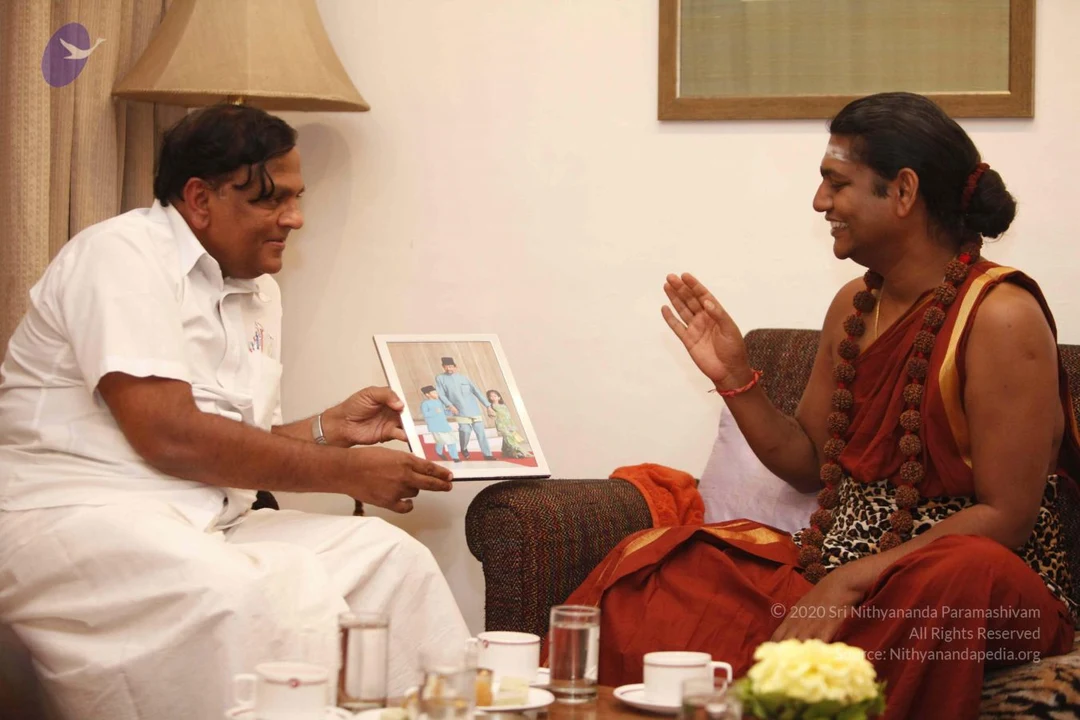
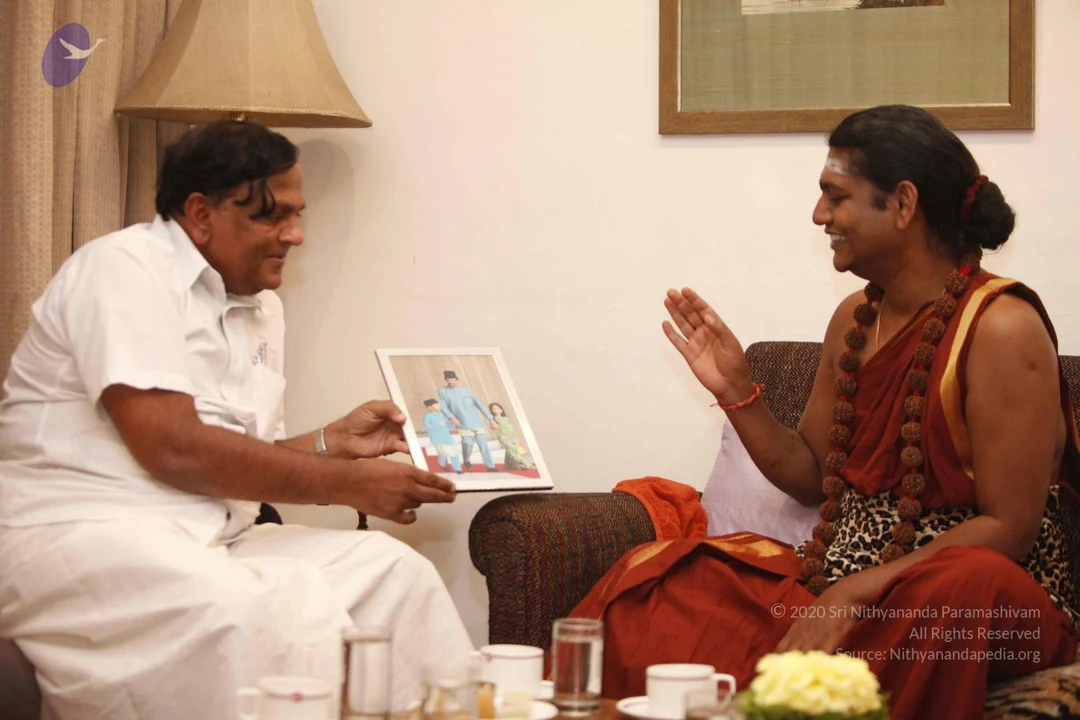
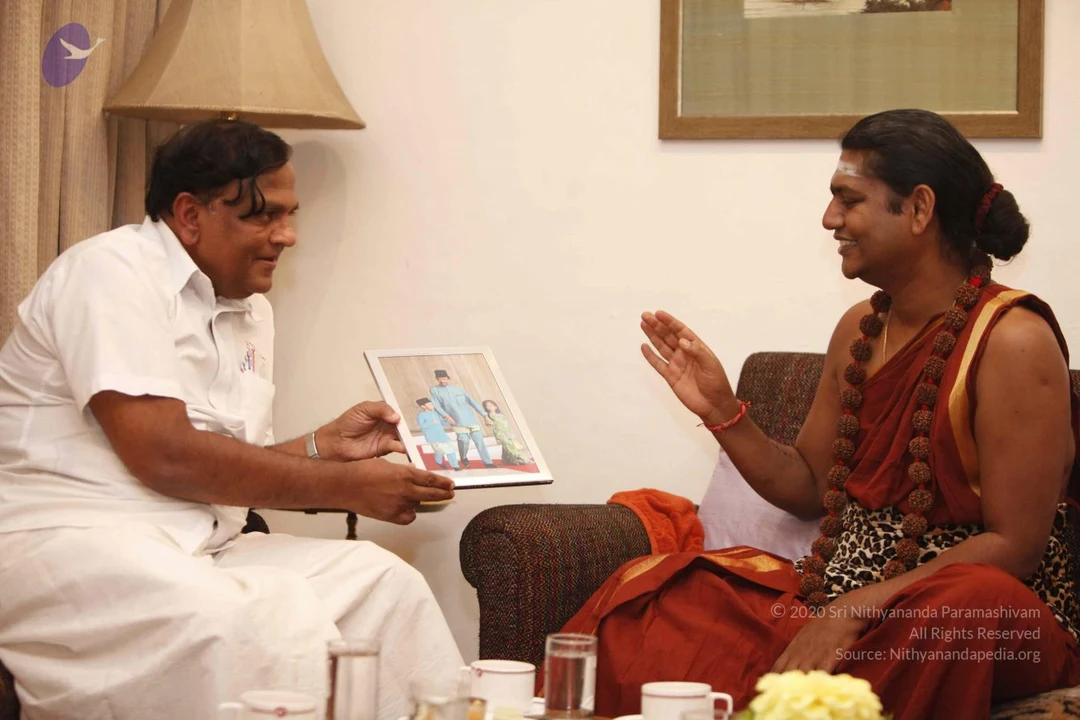
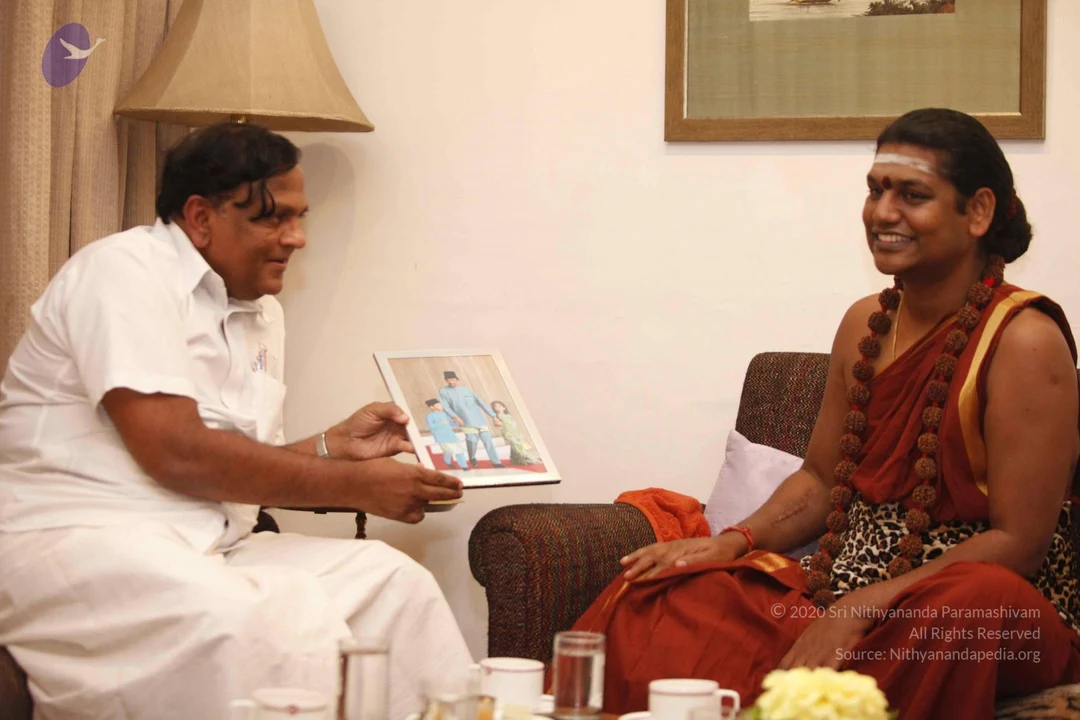
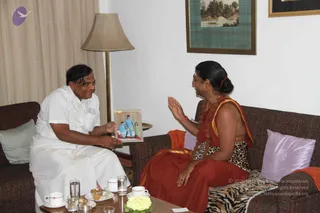
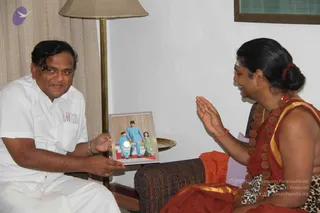
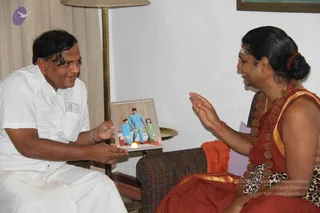
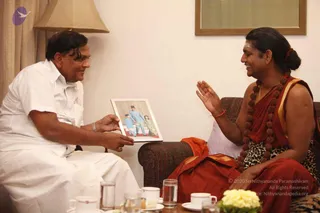
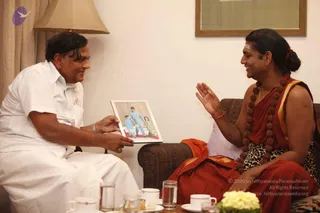
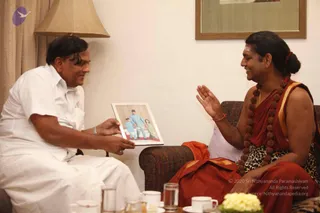
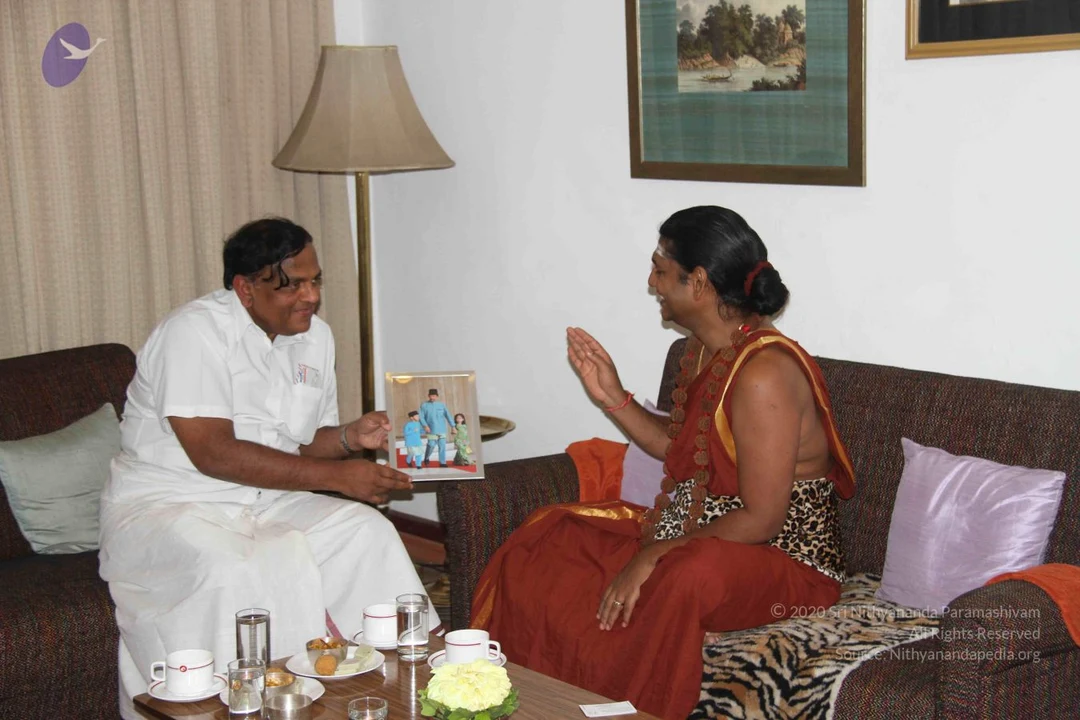
A seated conversation in a living room with brown sofas, a floor lamp, and a framed landscape painting on the wall. A man in white ritual clothes, with short dark hair, sits on the left holding a framed photograph of a family of three in front of him. Across the coffee table, a woman in an orange-red sari with a patterned black-and-gold blouse, a dark bun with a red hair accessory, and a beaded necklace gestures mid-conversation. The table holds teacups, saucers, a glass of water, a plate of snacks, and a yellow flower arrangement. A leopard-print cloth is draped over the sofa arm.Indoor photo of two people seated in a room with a brass-trimmed floor lamp and a side table. On the left, a man in a white short-sleeved shirt and white dhoti holds up a framed photograph showing a man in a blue outfit and cap with two children. On the right, a person with hair in a bun, wearing a rust-red and gold saree, rudraksha mala necklaces and a red bangle, gestures with an open hand toward the framed photo. Two people are visible in the scene. The framed photo itself is a depiction within the photo and is not counted.Indoor photograph of two people seated in a living room with a lamp and cream wall behind them. On the left, a man in a white shirt and white dhoti holds a framed photograph of a family standing together in blue traditional clothes; a small oil lamp burns in front of the frame. On the right, a person in a rust-orange and gold-bordered sari with a rudraksha mala and a leopard-print wrap smiles and gestures with an open hand toward the picture.Indoor sitting-room scene with two men seated on a brown patterned sofa facing each other. On the left, a man in a white half-sleeved shirt and white dhoti holds out a framed photograph of a family to the man on the right. On the right, a man with a shaved head, tilak marks and a swept-up topknot wears a red-orange ochre robe, a long rudraksha mala and a red wrist thread; he gestures with one raised hand and smiles. A tea table in front holds cups, saucers, glasses and a yellow flower arrangement, and a lamp and framed picture stand behind. Several people are not visually identified here; the scene shows two visible people. a person: the seated man in ochre robes and rudraksha mala is a candidate, with the mala and ochre robe as cues, identified only by appearance.A seated meeting in a room with a patterned sofa and table set with teacups, glasses and a yellow flower arrangement. On the right, a long-haired man in saffron-orange robes with a gold-bordered wrap and a thick rudraksha mala gestures with an open hand while smiling; this is a probable Swamiji (probable) appearing in person, with long swept-back hair and a rudraksha mala as distinguishing cues. On the left, a man in an all-white shirt and dhoti holds a framed photograph of a family in formal blue attire.A photograph of two men seated in a warmly lit room with a floor lamp and framed artwork on the wall. On the left, a man in an all-white shirt and white dhoti holds up a framed photograph of a family standing together. On the right, a smiling man with a swept-back bun, rudraksha mala, and an orange-and-maroon wrap over a leopard-print garment raises one hand in conversation. Tea cups, glasses, and a yellow flower sit on a low table in front of them. The right-hand figure is an appearance-based a person candidate, based on the long swept-back hair, rudraksha mala and saffron wrap, seated in conversation as the honoured guest.

TempleTour

5 photosSource gallery
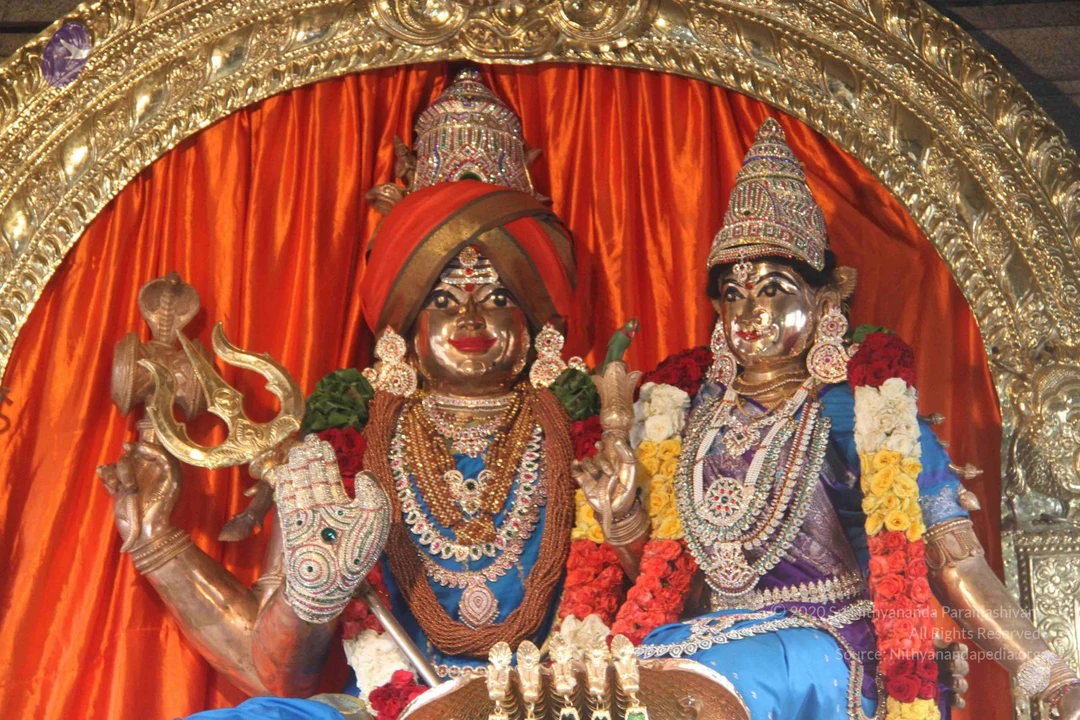
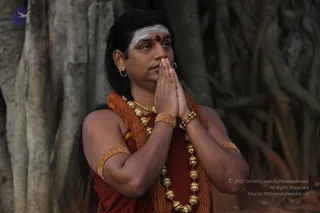
Photograph of a man with long swept-back dark hair and a white vertical tilaka with a red dot on his forehead, standing with palms pressed together in namaste before a large banyan tree with aerial roots. He wears a saffron-orange shawl over a rust-red garment, multiple strands of gold beaded rudraksha-style necklaces, gold hoop earrings, and gold-tone bangles and armlets. Swamiji (probable): long swept-back hair, ornate gold beaded necklaces and orange shawl support the appearance-based candidate identification.Two gilded metal murti figures of a deity couple are seated side by side against a yellow and orange floral backdrop. The figure on the left wears a red and gold turban, a white tilak, a dark blue garment and a dark rudraksha-style mala with a white garland. Its raised hand holds a trident. The figure on the right wears an ornate jewelled crown, pink and white necklaces, and a dark blue garment. Both are draped with red and yellow flower garlands, and a small green bird perches among the flowers. Ornate carved gold metal frames the scene at the edges. No living people are visible.

PadaPuja
51 photosSource gallery
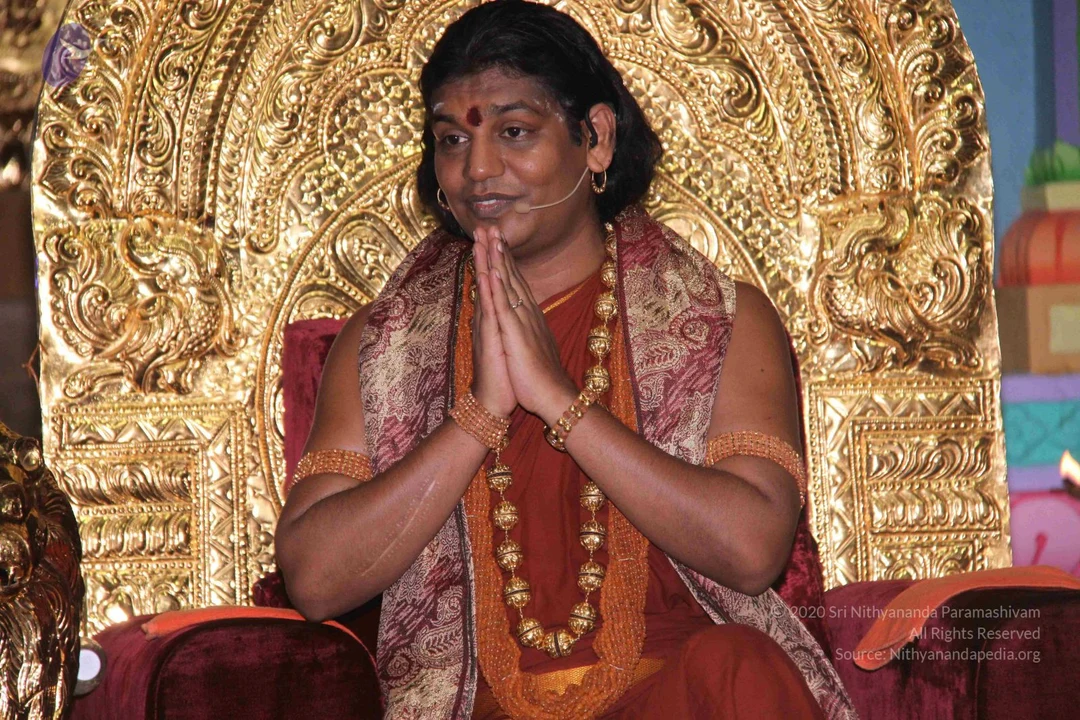
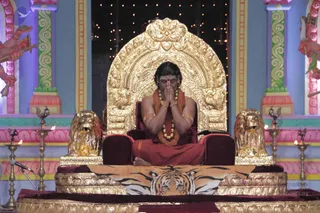
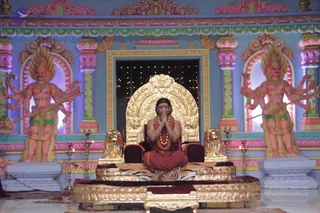
Photograph of a ceremony in a decorated hall with pink and green painted pillars and hanging brass lamps. A man seated on an ornate gold throne with a tiger-skin cushion wears a maroon robe, a rudraksha mala and a red-painted forehead mark, with a crown above him. A shaven-headed priest in maroon robes stands at left holding a flaming lamp toward him, and a microphone stands in front. Two women with folded hands sit at the lower left, and brass oil lamps are visible on the right.A seated figure sits on an ornate gold throne with carved lion-like arm supports and a gold backrest, draped with a white and black striped cloth. He wears a rust-red dhoti and shawl, multiple beaded malas, and a red tilak mark. To the left, a shaved-headed attendant in rust-orange robes holds a lit flame aloft toward him. Brass oil lamps with flames stand nearby, and a microphone is in the foreground against painted pink, green and blue walls.A seated man on an ornate gold throne with carved lion-shaped armrests and a striped cloth cushion sits centre-frame, wearing a rust-red dhoti and shawl, a long beaded necklace and a red forehead mark. A bald priest in rust-orange robes on the left holds a lit flame or aarti lamp toward him. Brass oil lamps hang above, and an oil lamp stands on the right against pink and green painted pillars. Swamiji (probable): the seated figure has long swept-back hair, a ceremonial beaded necklace and a rust-red shawl over the throne, a probable match for the page's Nithyananda Paramashivam context, while the priest performs aarti.A seated man in a dark red robe sits on an ornate gold throne with a large carved backrest, lion-head armrests and a central circular medallion. He wears a rudraksha mala with a gold necklace, a red bindi and a red-and-gold sash, with bangles on his arms. The setting is a satsang hall with a single person visible.A seated man sits cross-legged on an ornate gold throne with an elaborately carved golden backrest and a golden arch. He wears a maroon cloth draped over his shoulders, a long rudraksha mala with ceremonial gold ornaments, gold bangles and a tilak on his forehead. Oil lamps hang above him against a dark stone wall, and a lit lamp stands at the right edge. The image shows a satsang-style setting. Swamiji (probable) is seated here, identified by long swept-back hair, a rudraksha mala and ceremonial gold necklace alongside the throne setting. The seated figure is physically present in the scene.
Satsang
24 photosSource gallery
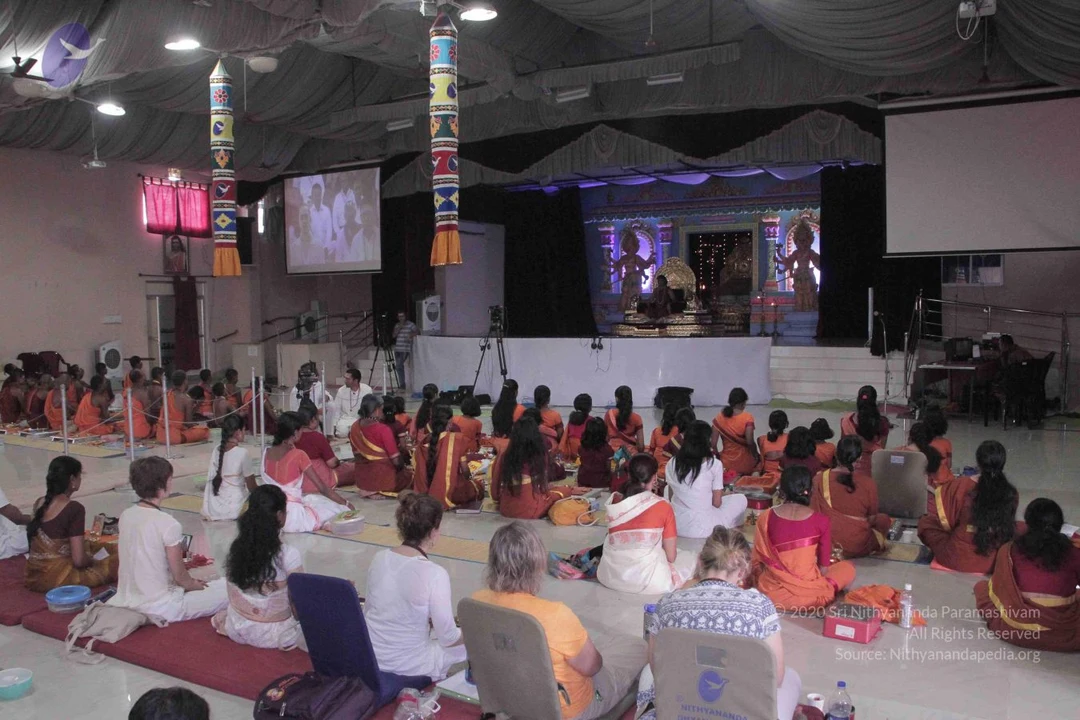
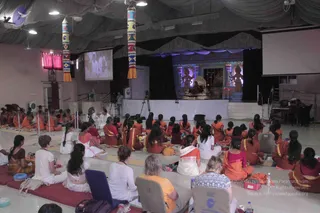
A seated satsang audience fills a hall with rows of devotees on mats and chairs, mostly women in orange, red, pink and white saris, and some in white kurtas. Foreground participants sit near blue and yellow patterned hanging banners. On a raised stage at the back, an ornate painted backdrop shows large standing deity murtis flanking a central seat, with a small figure seated on the platform. A projection screen on the left shows a group photograph, and a man in white stands near the left side with a camera tripod beside him. Devotees sit on mats with bags and water bottles, and a blue Nithyananda Dhyanapeetam logo is visible on a chair.

Dial-the-Avatar
9 photosSource gallery

RajTV-Felicitation-NirgunaLessPadukaMandir
65 photosSource gallery
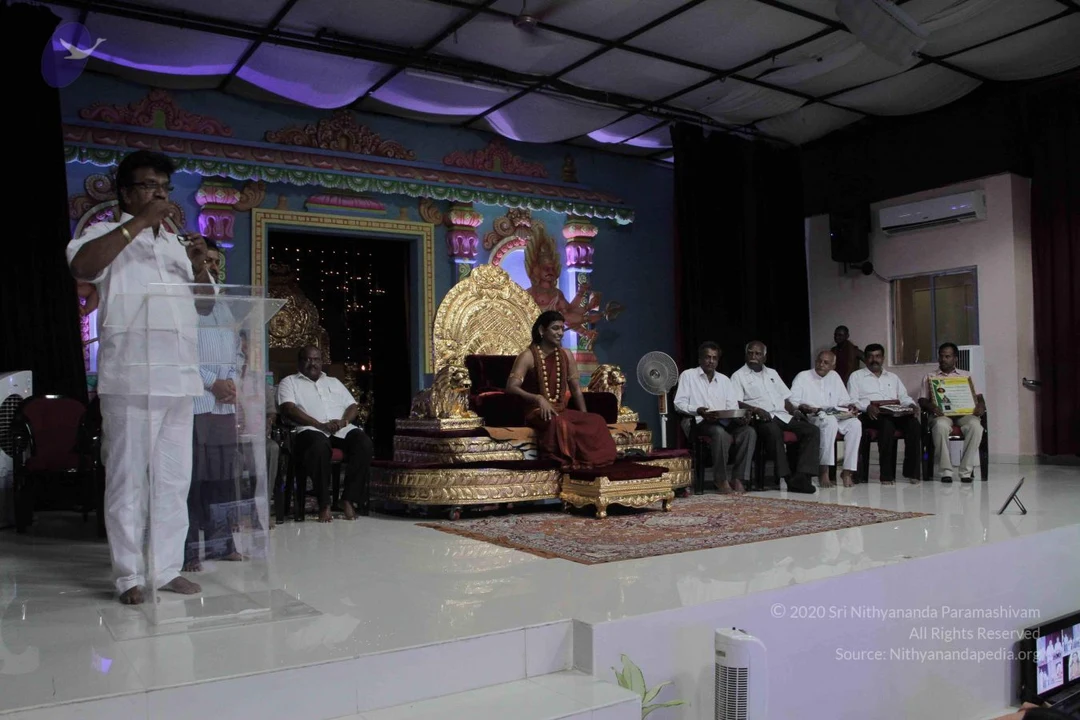
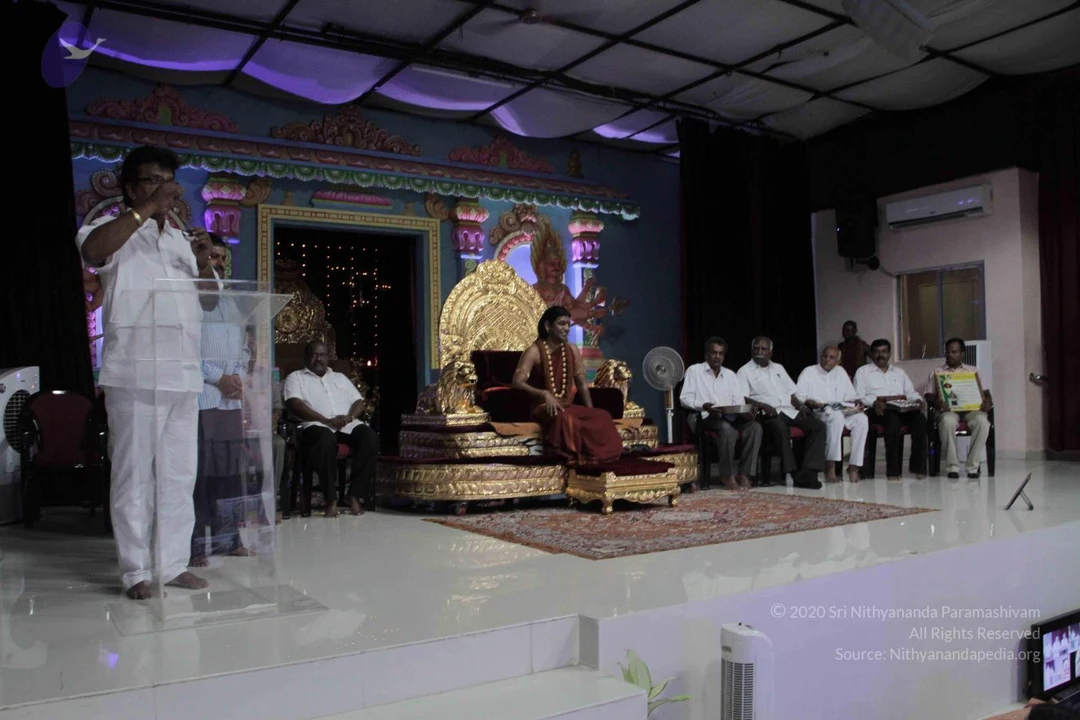
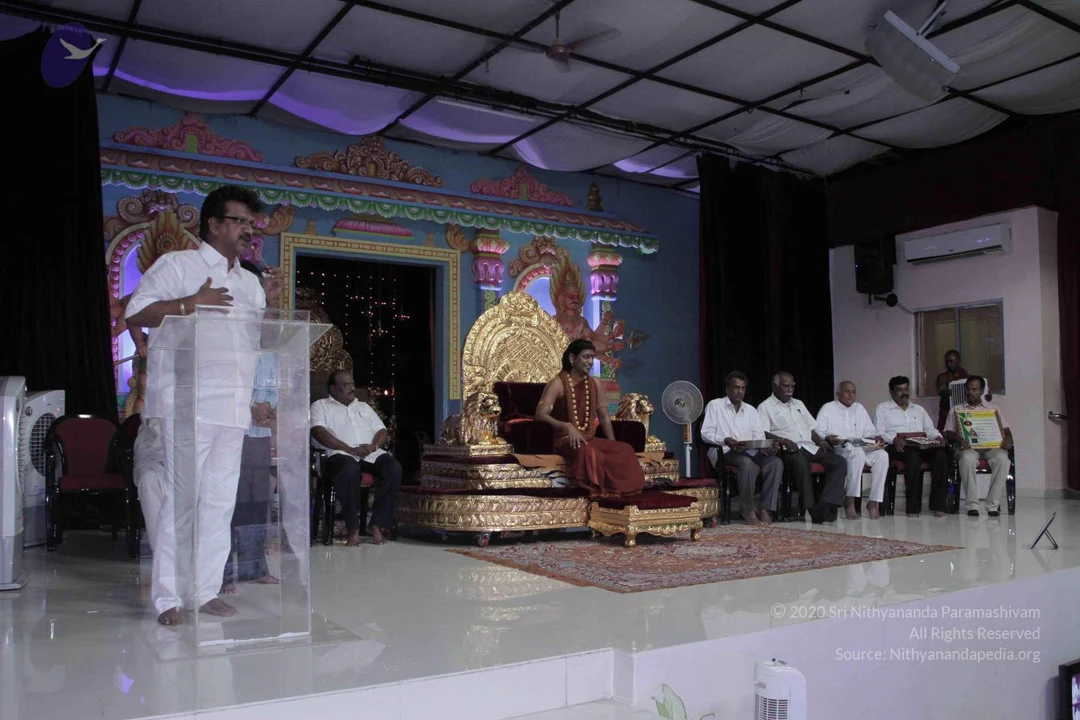
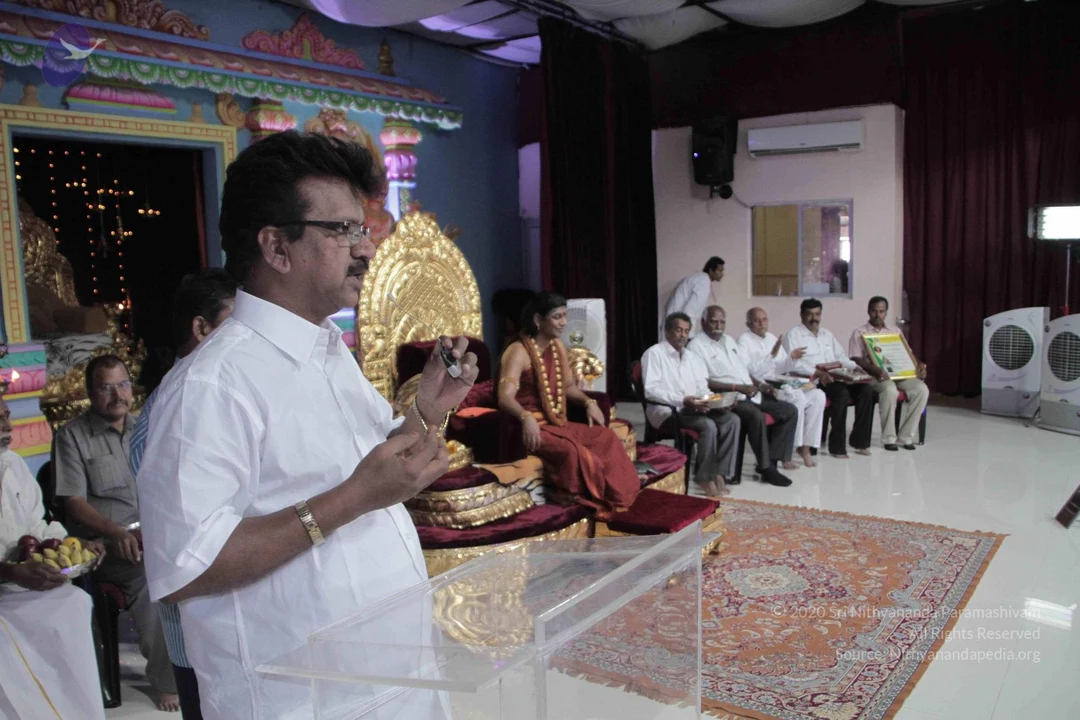
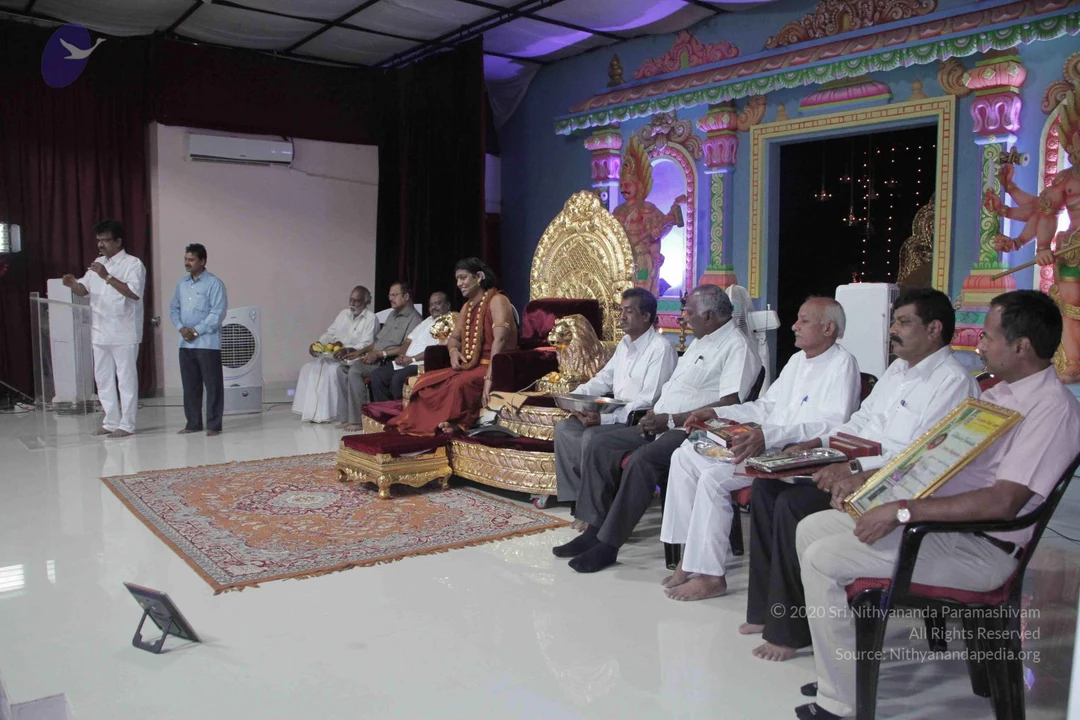
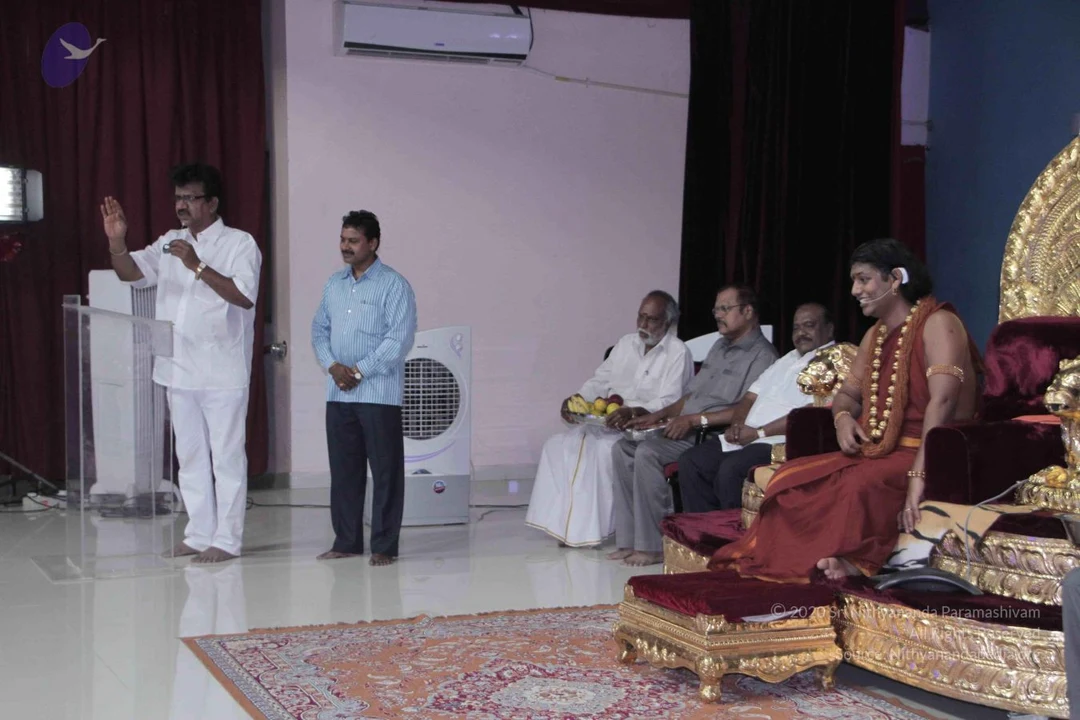
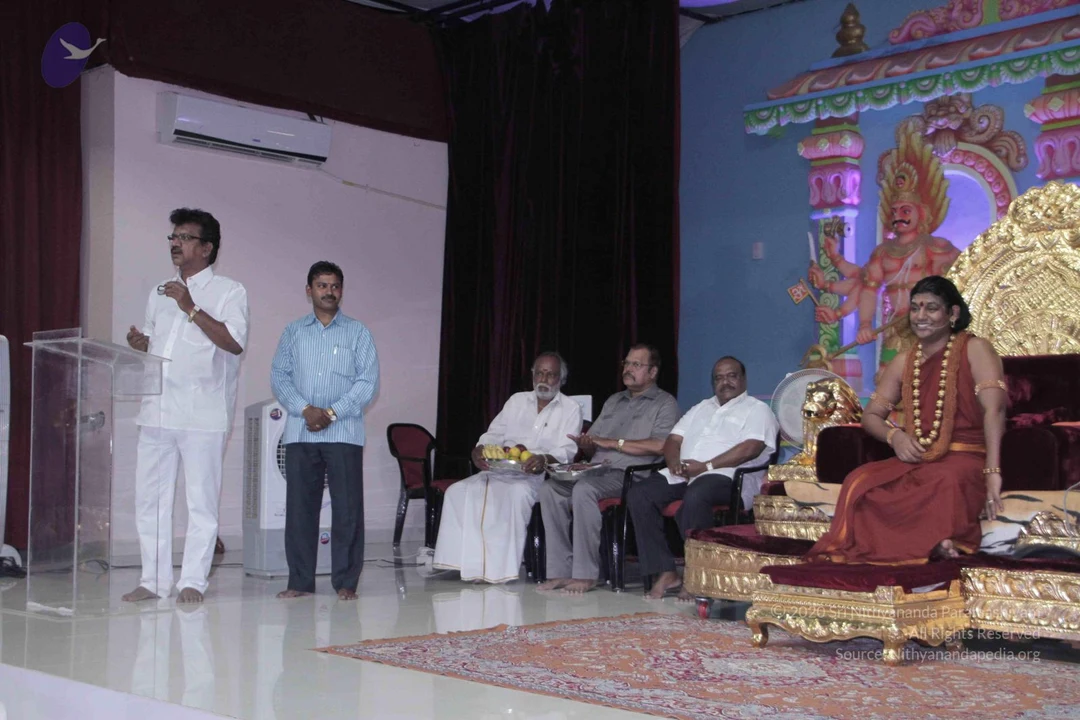
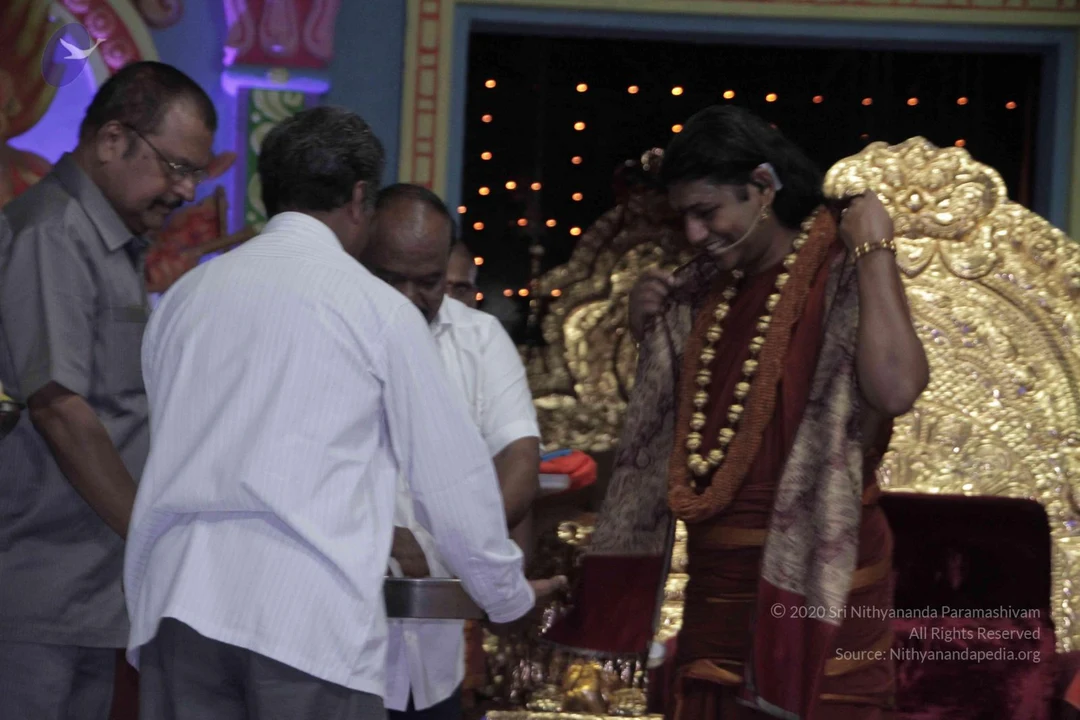
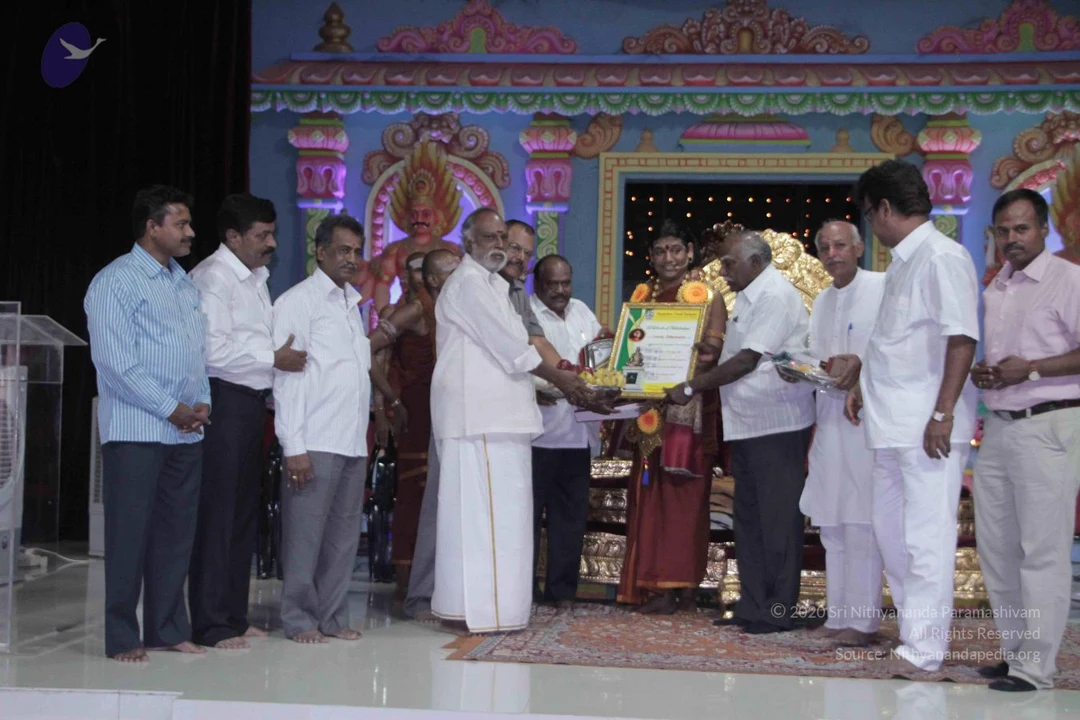
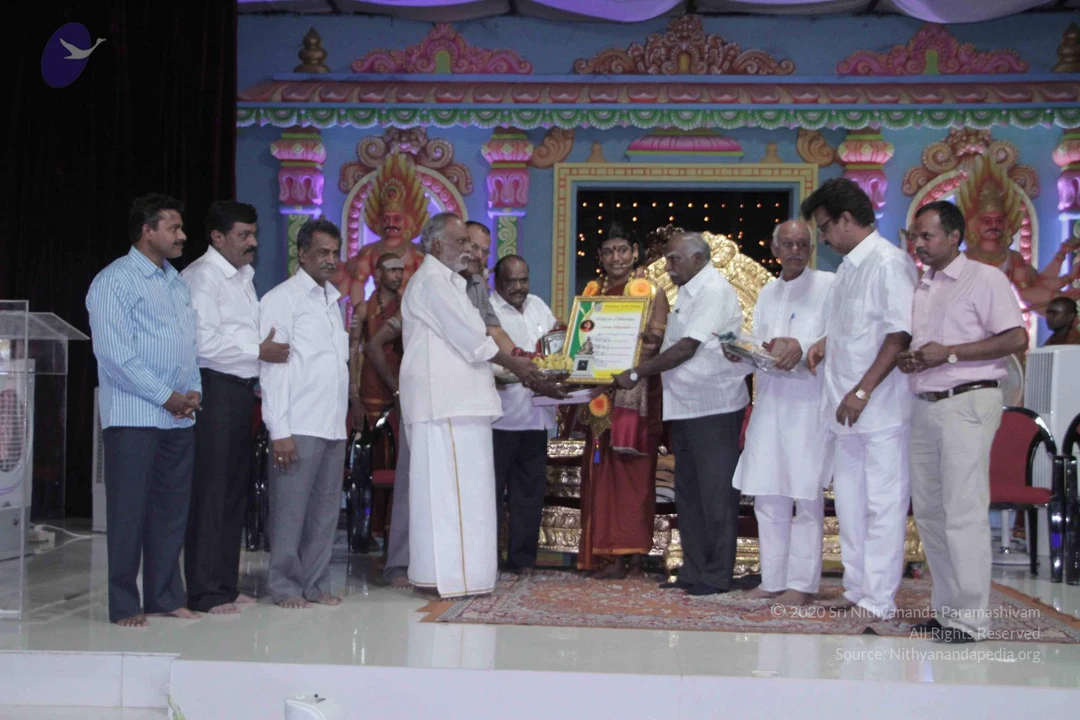
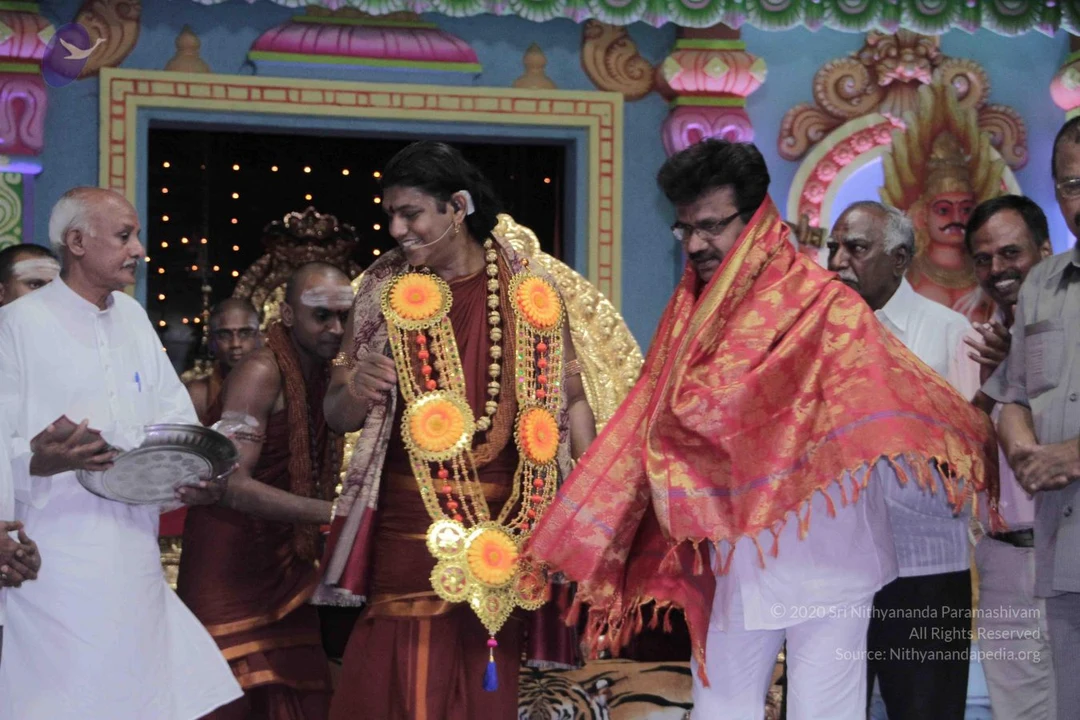
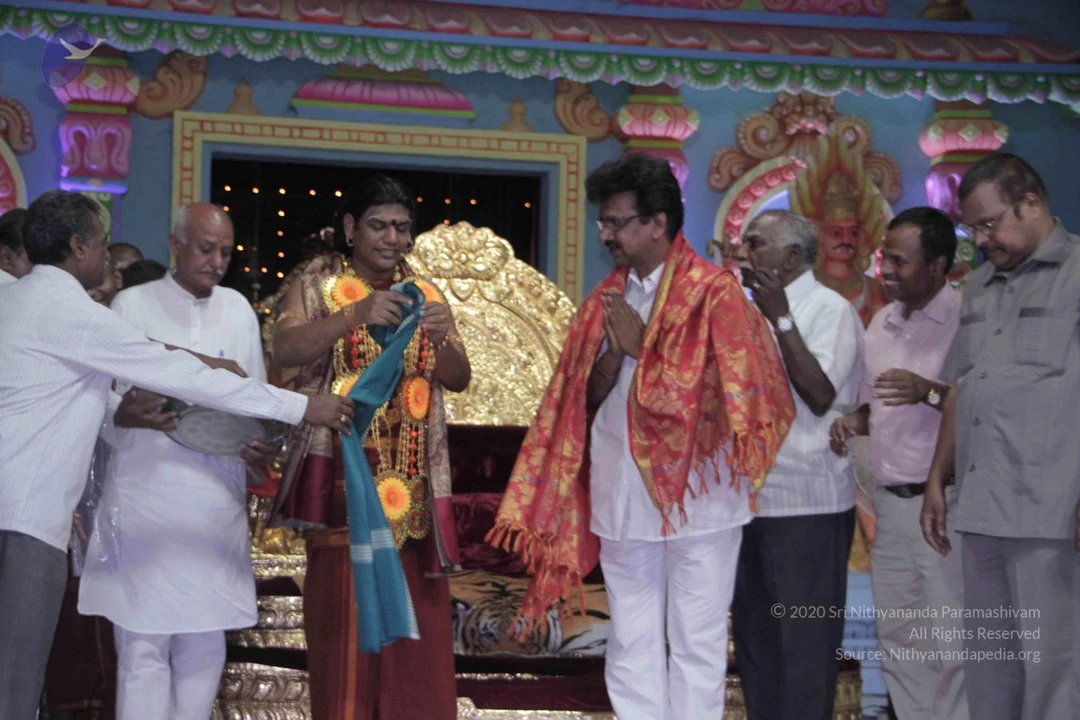
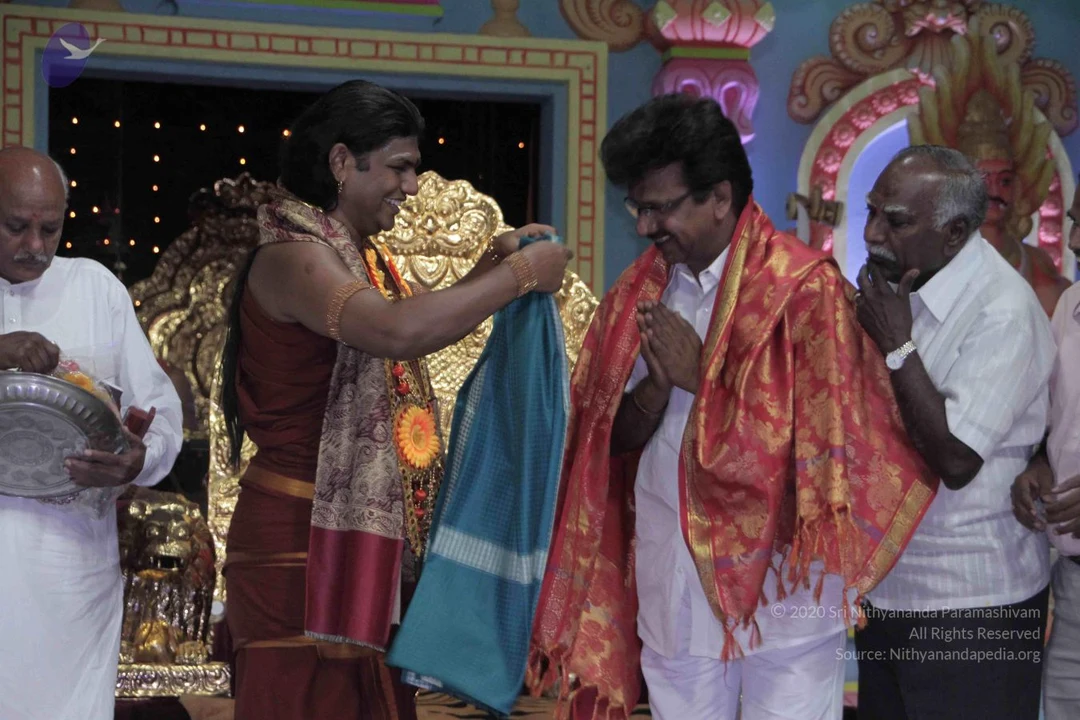
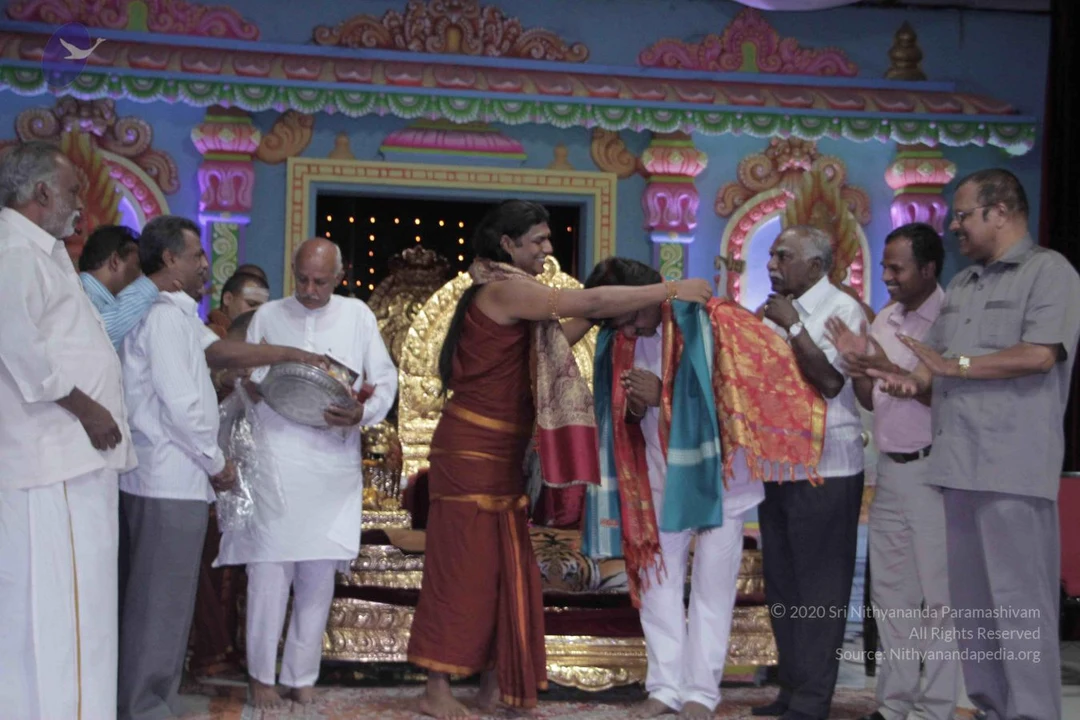
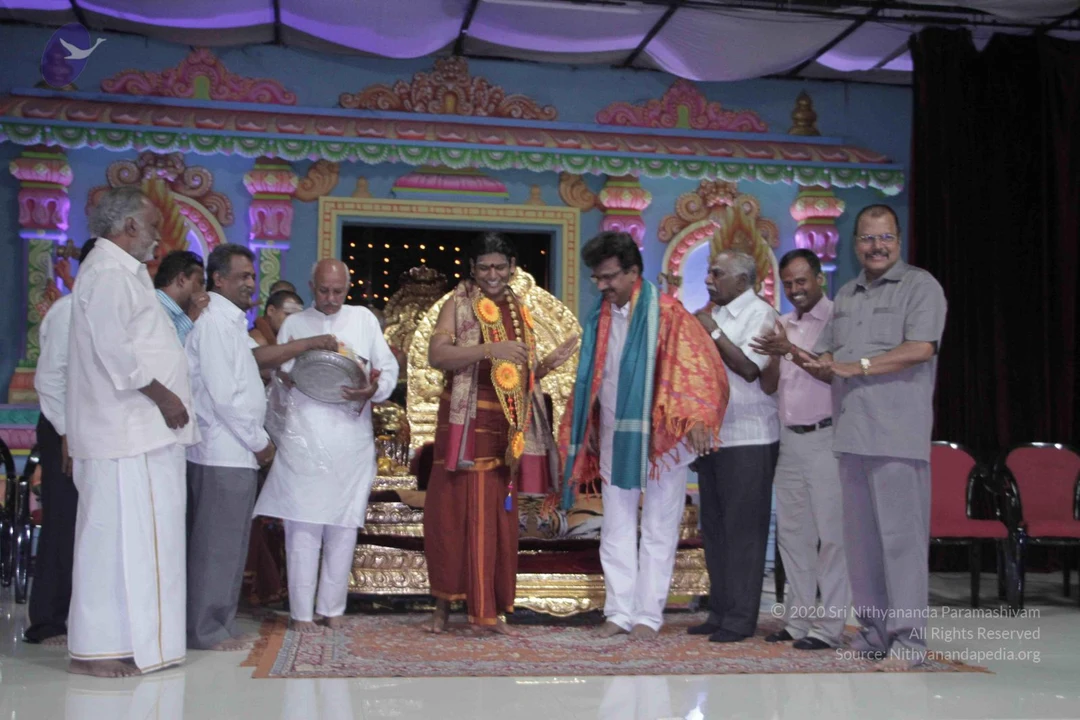
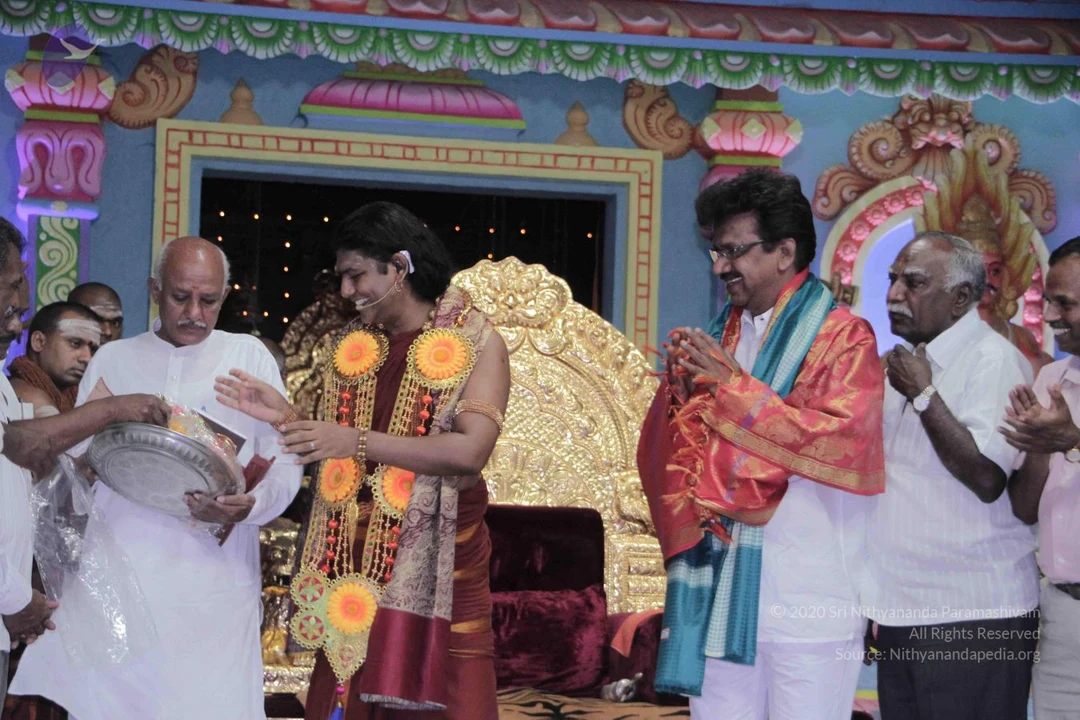
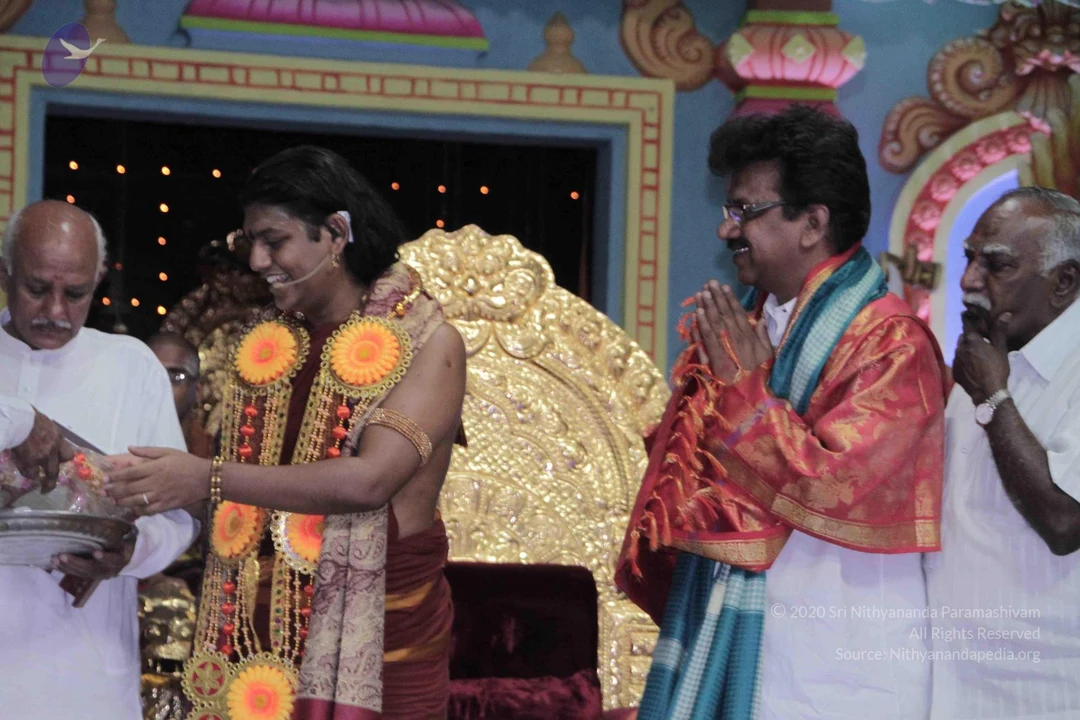
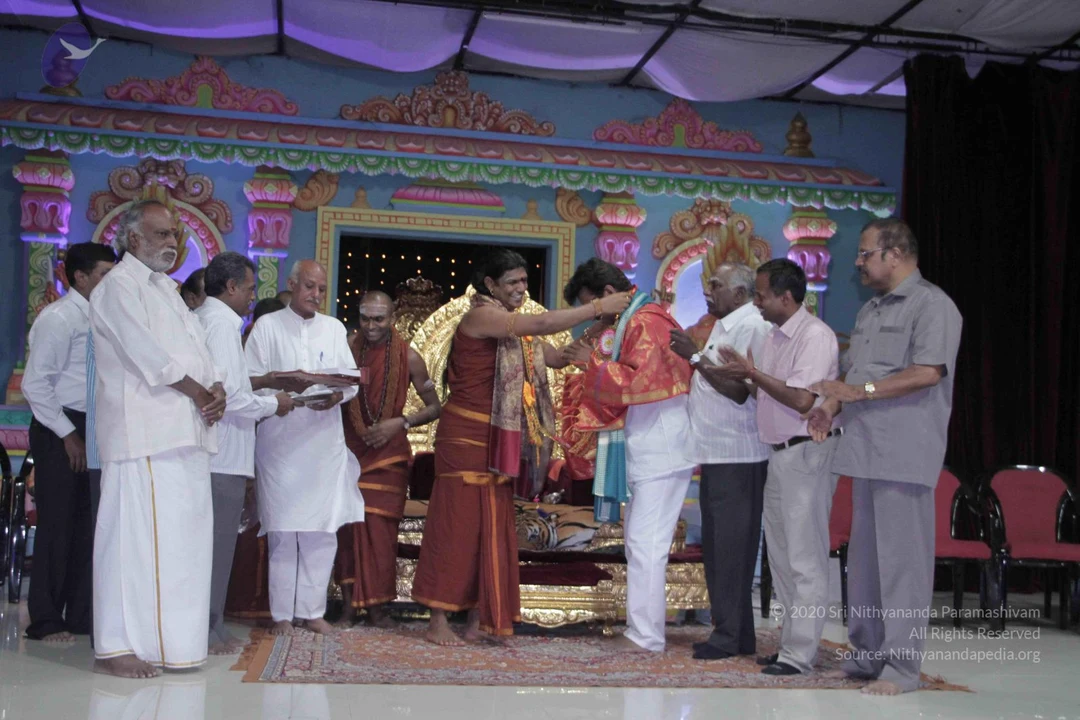
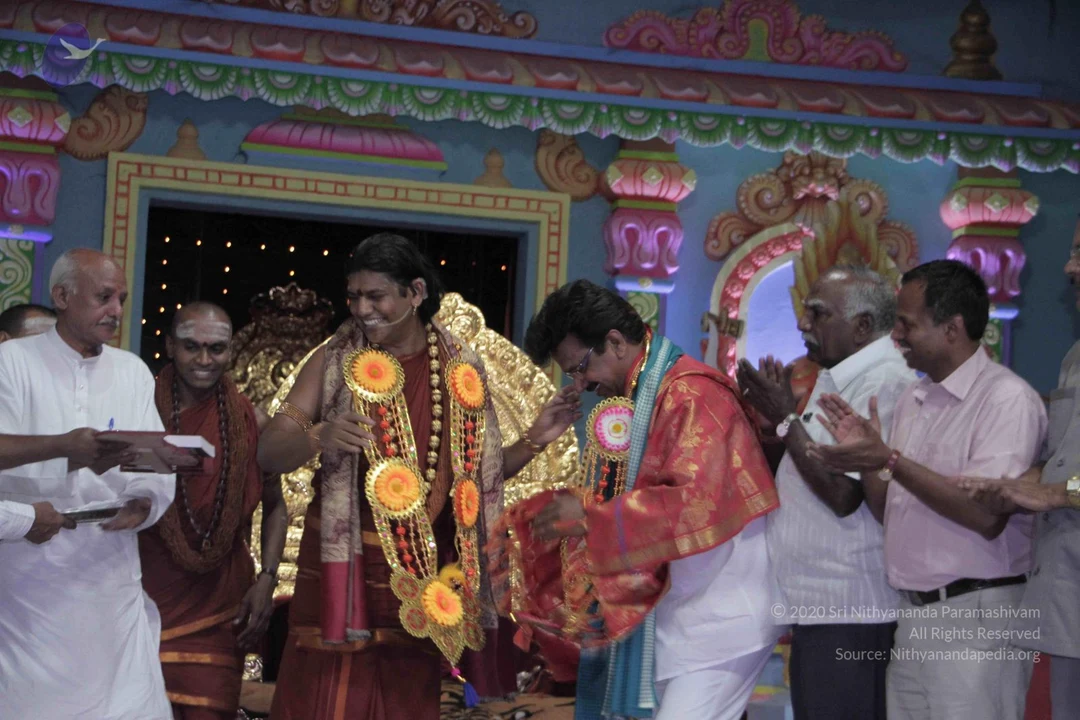
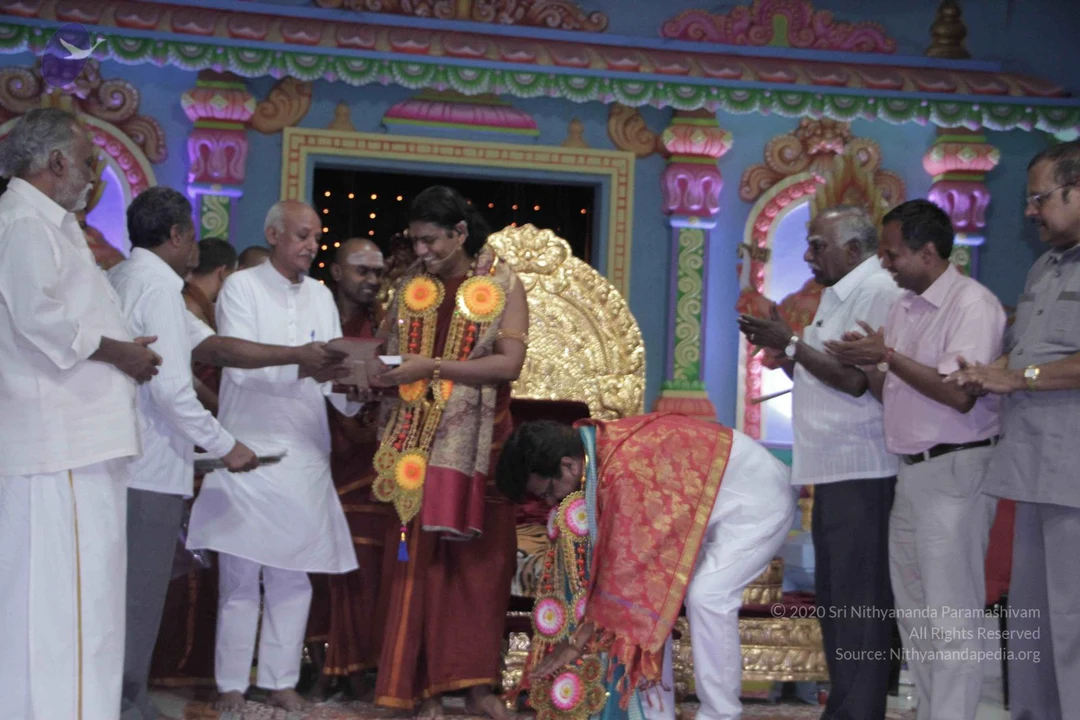
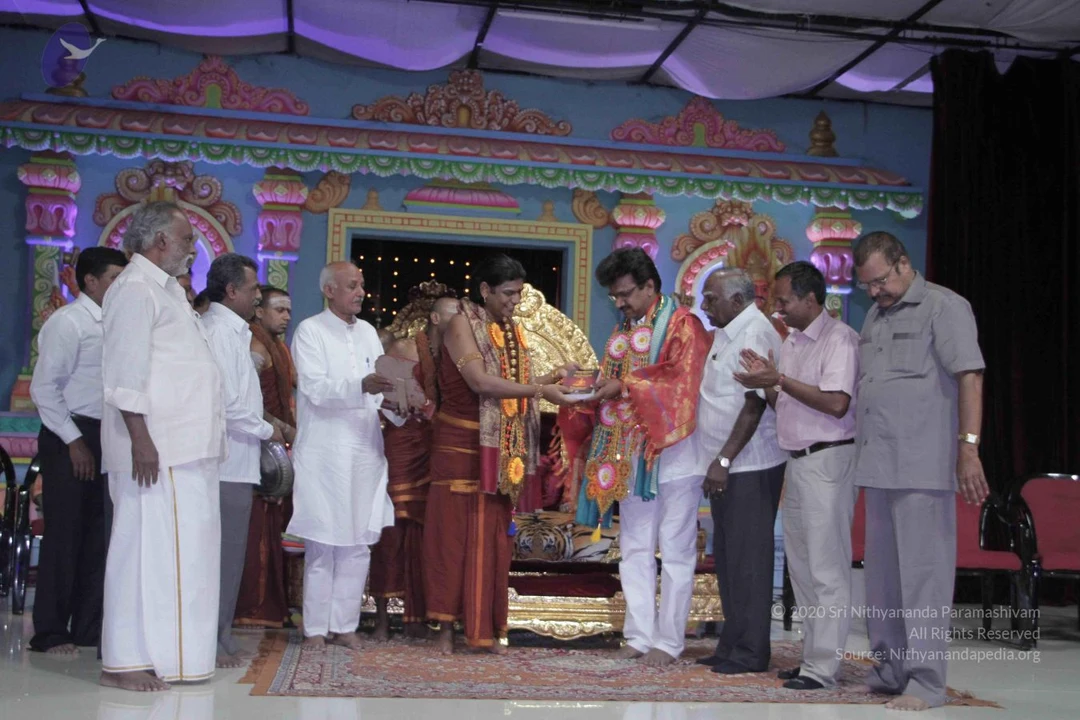
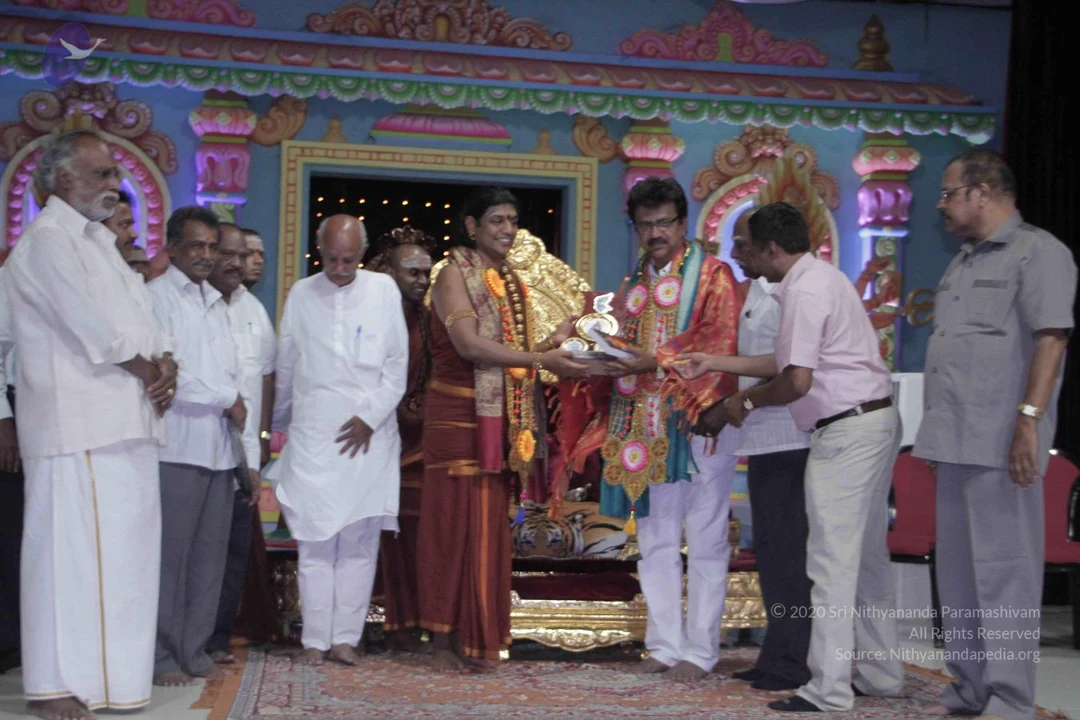
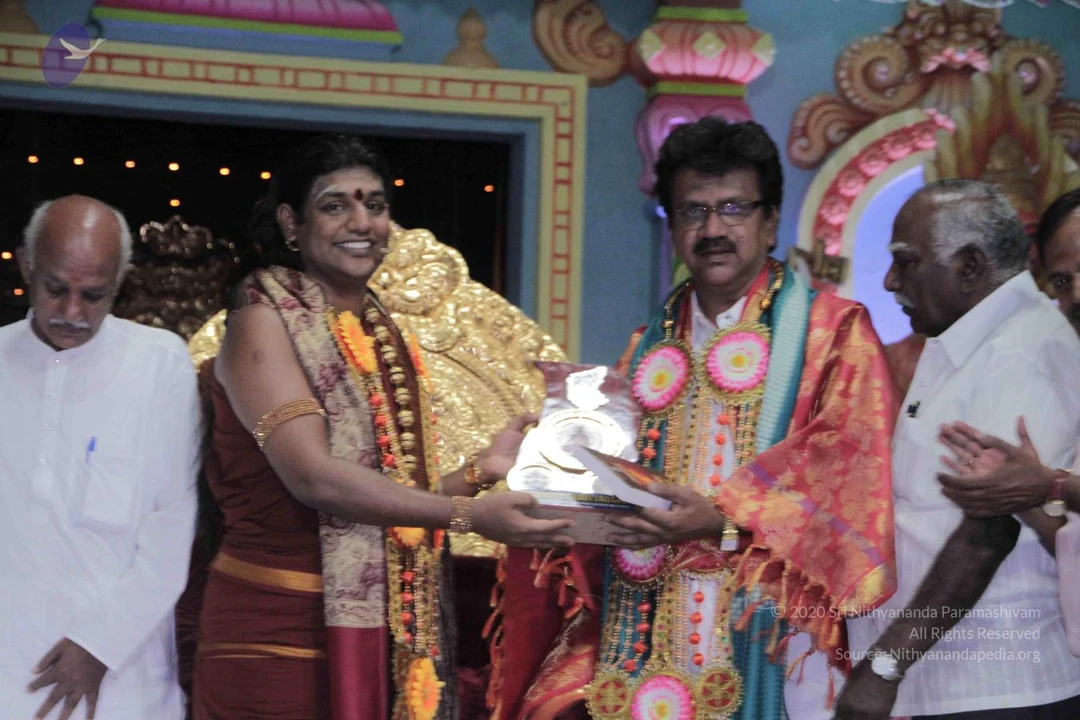
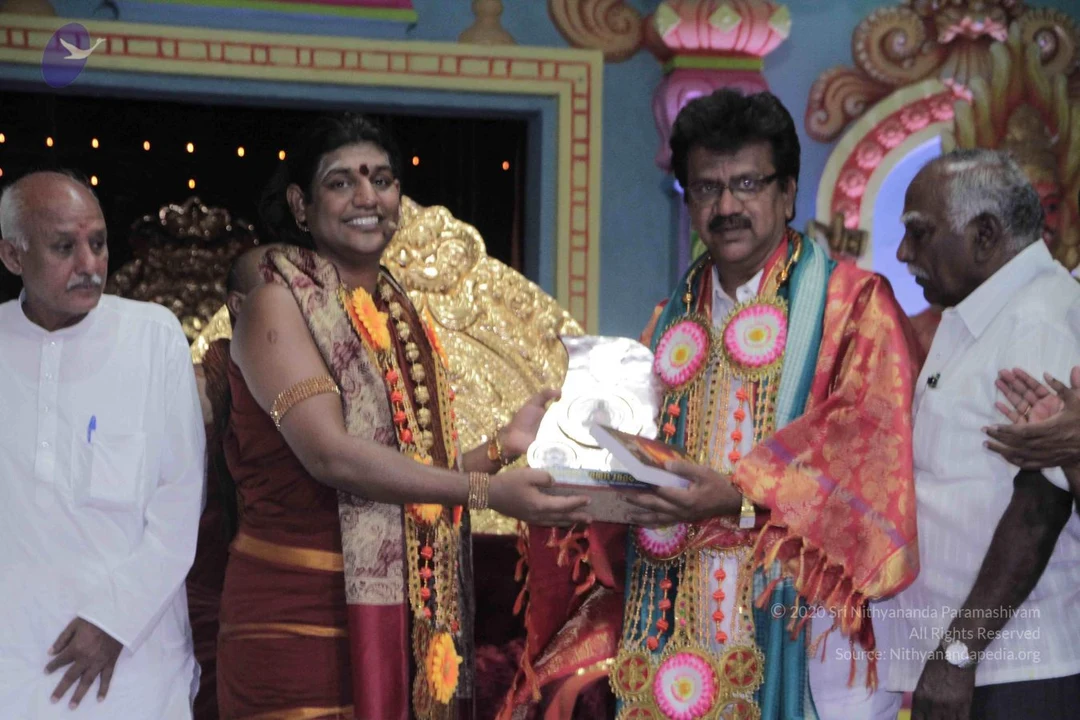
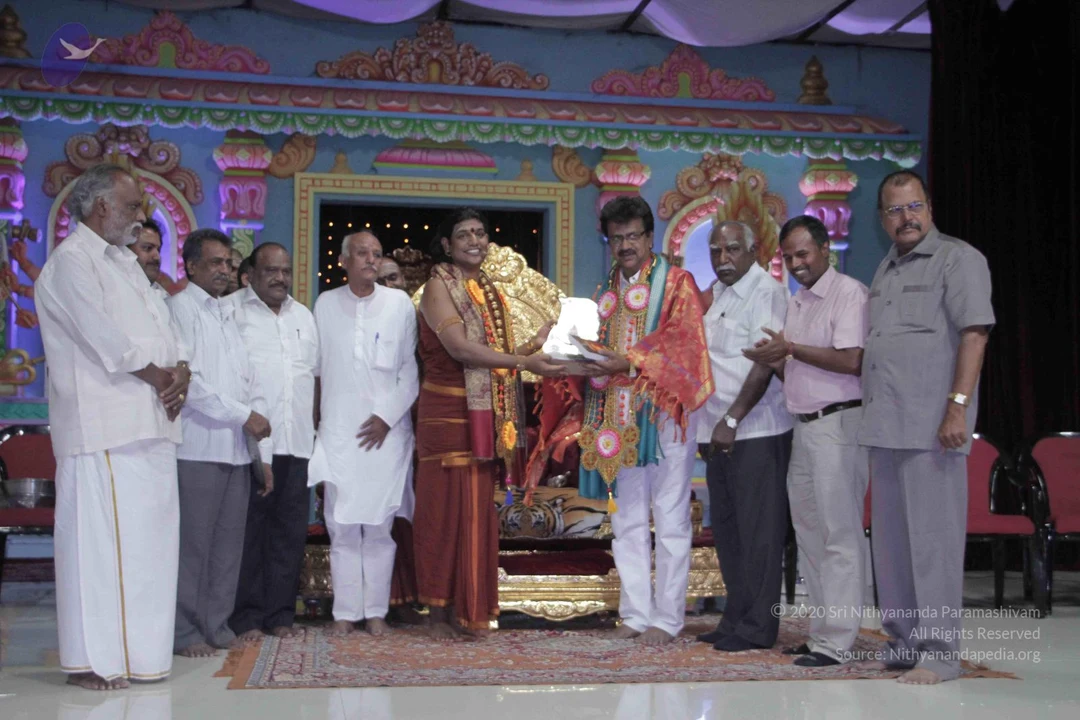
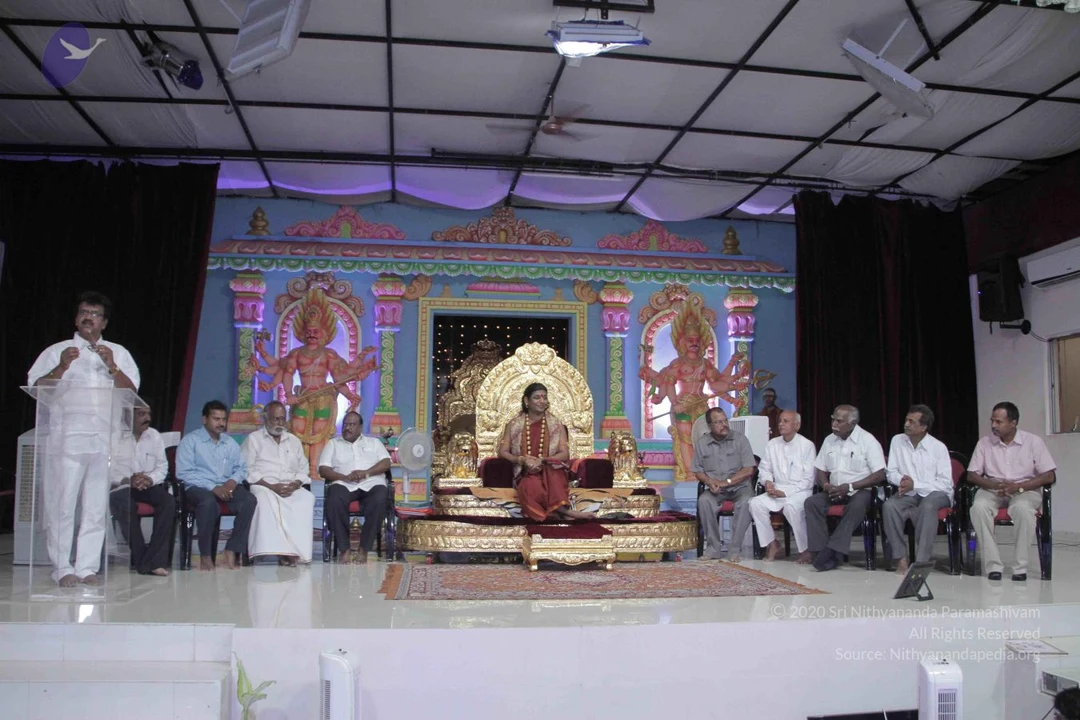
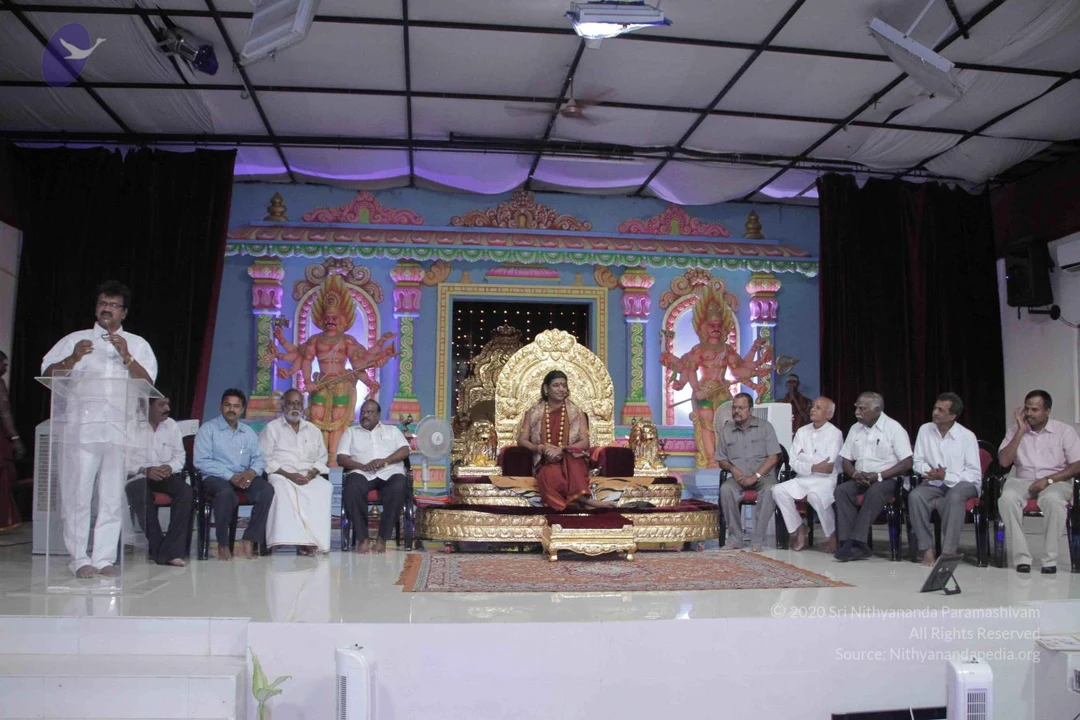
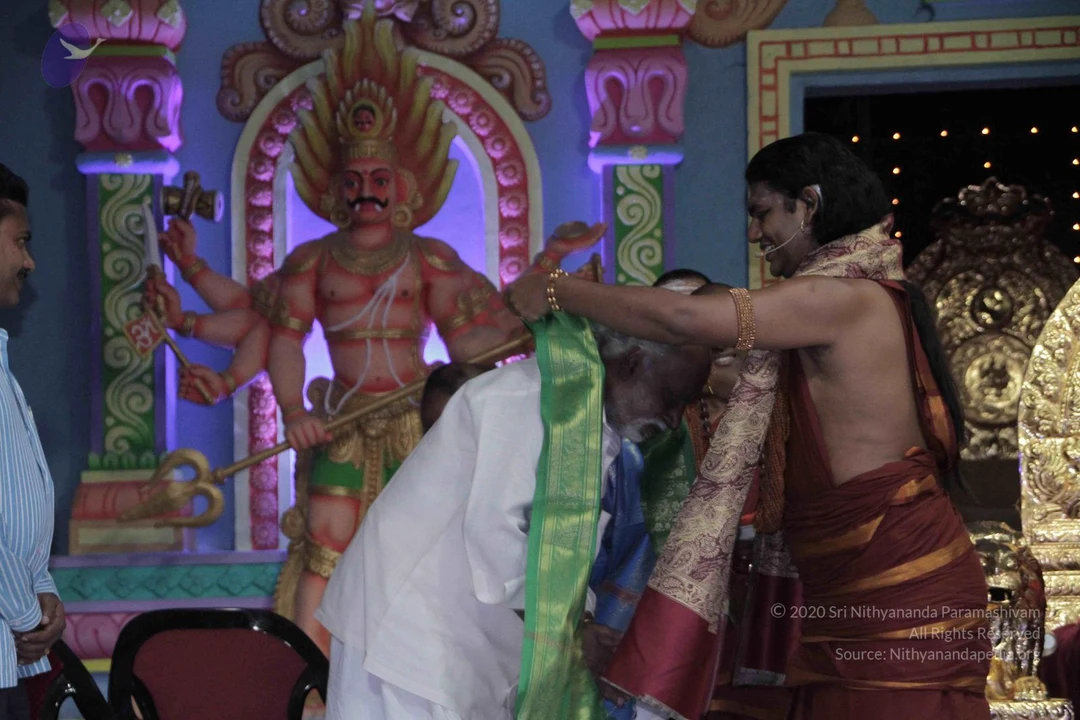
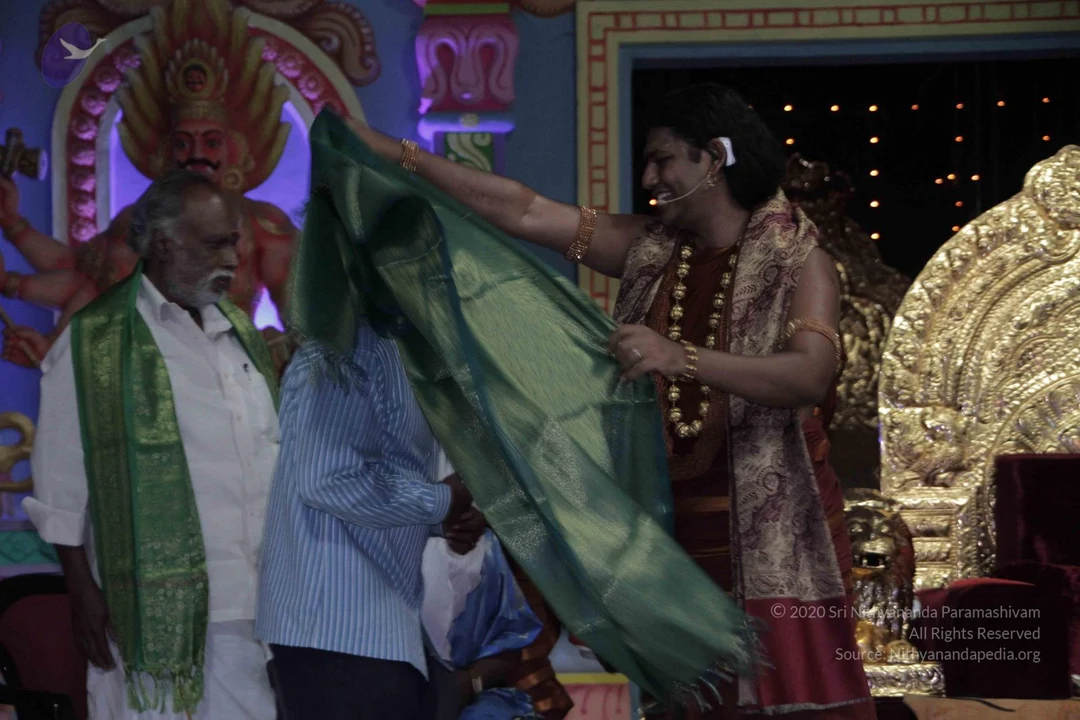
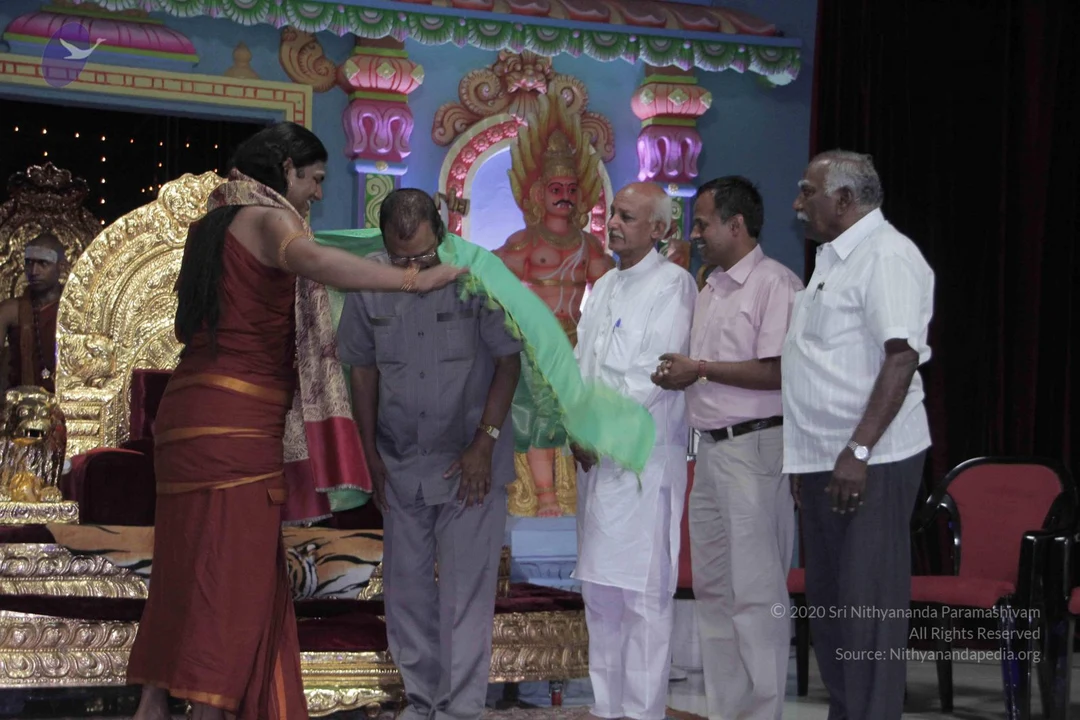
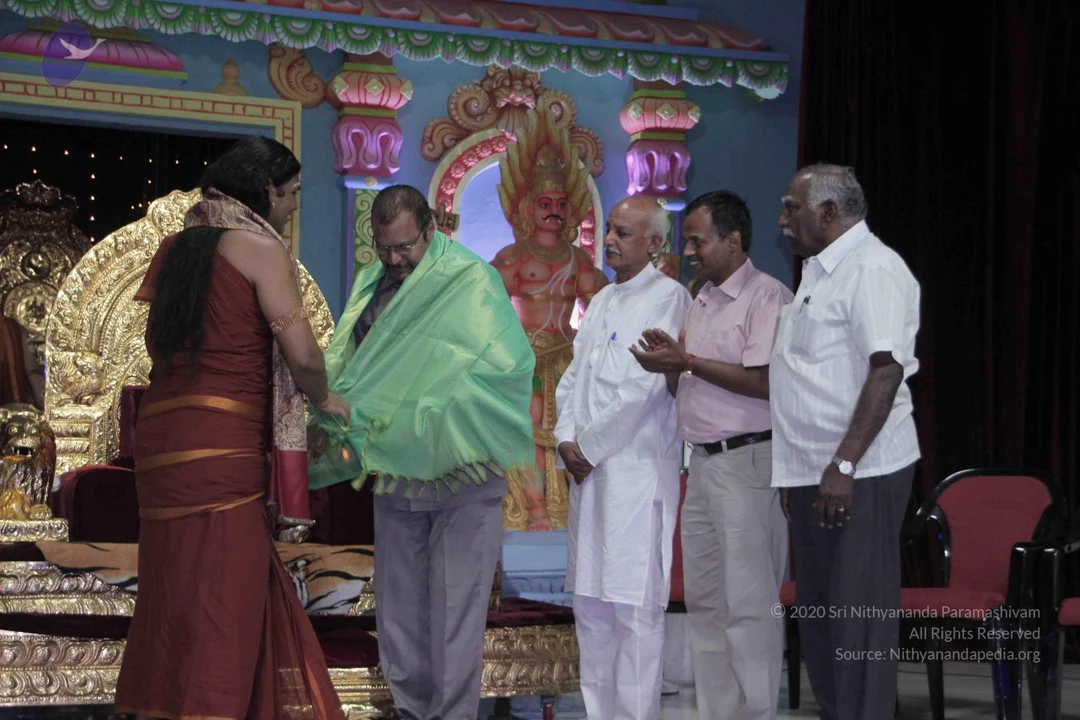
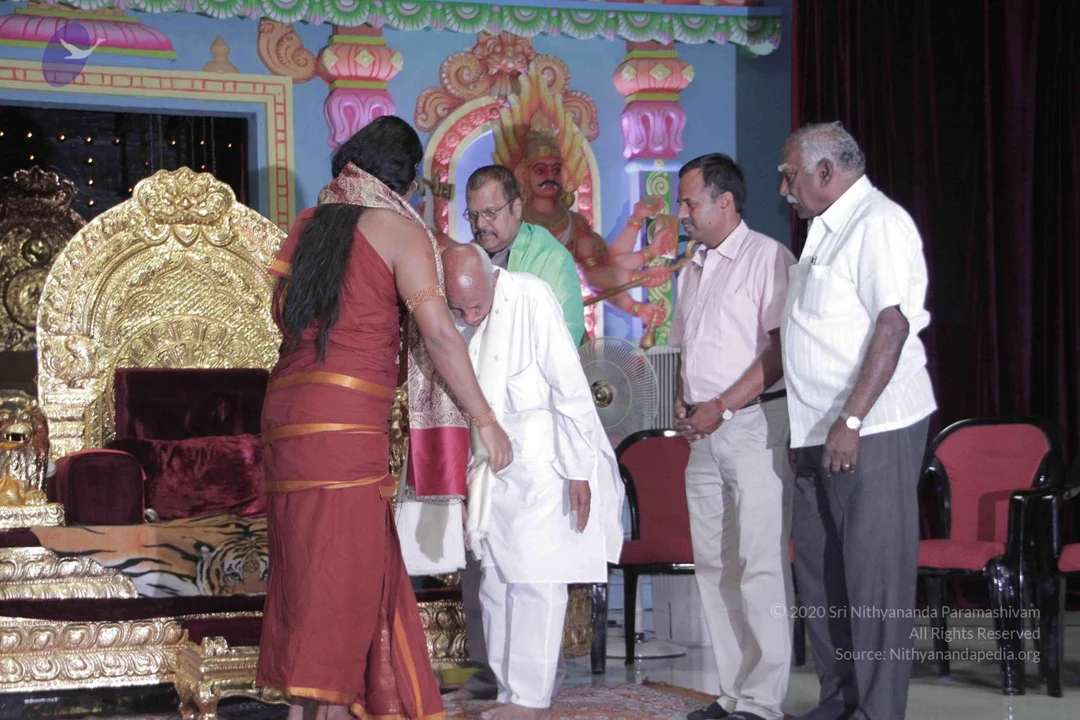
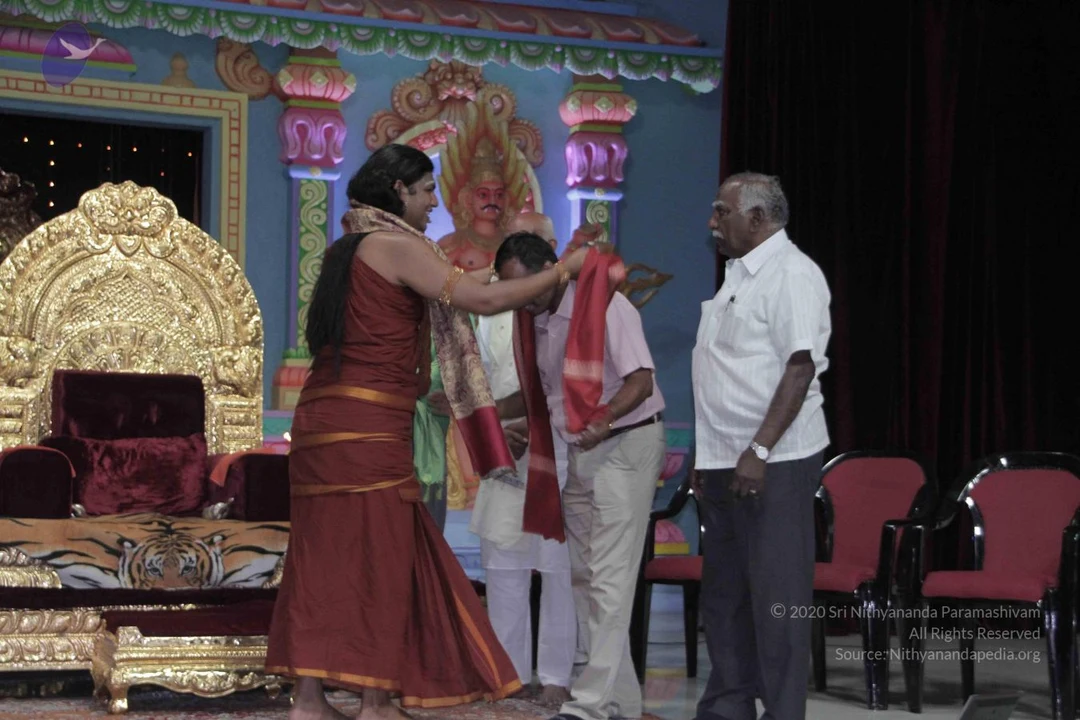
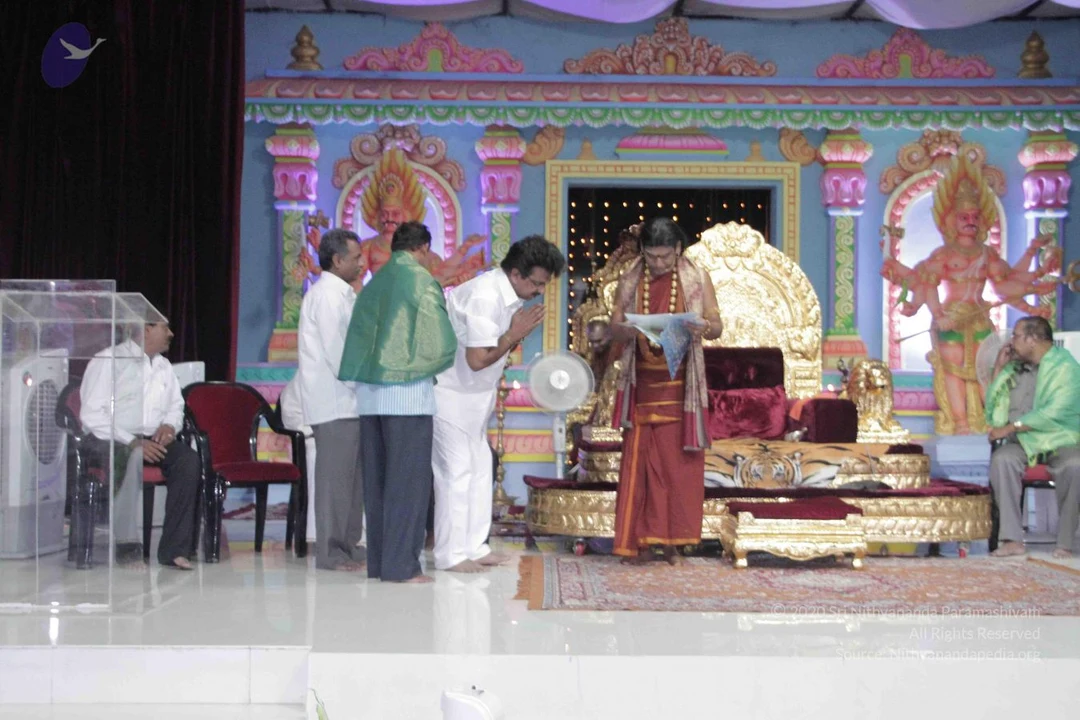
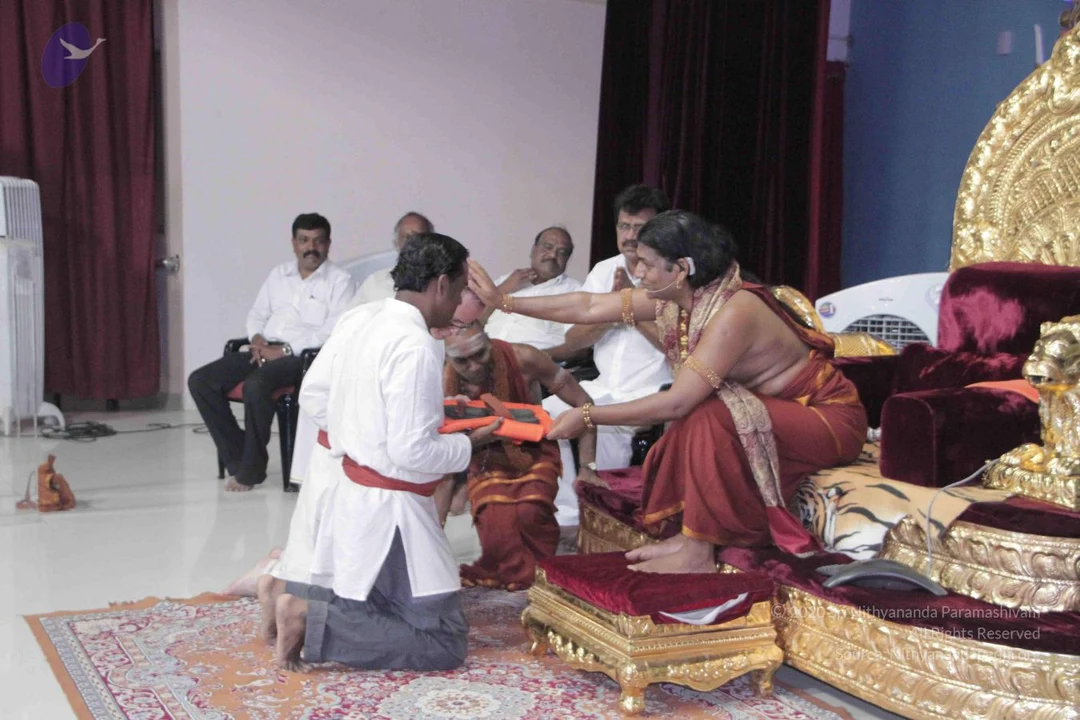
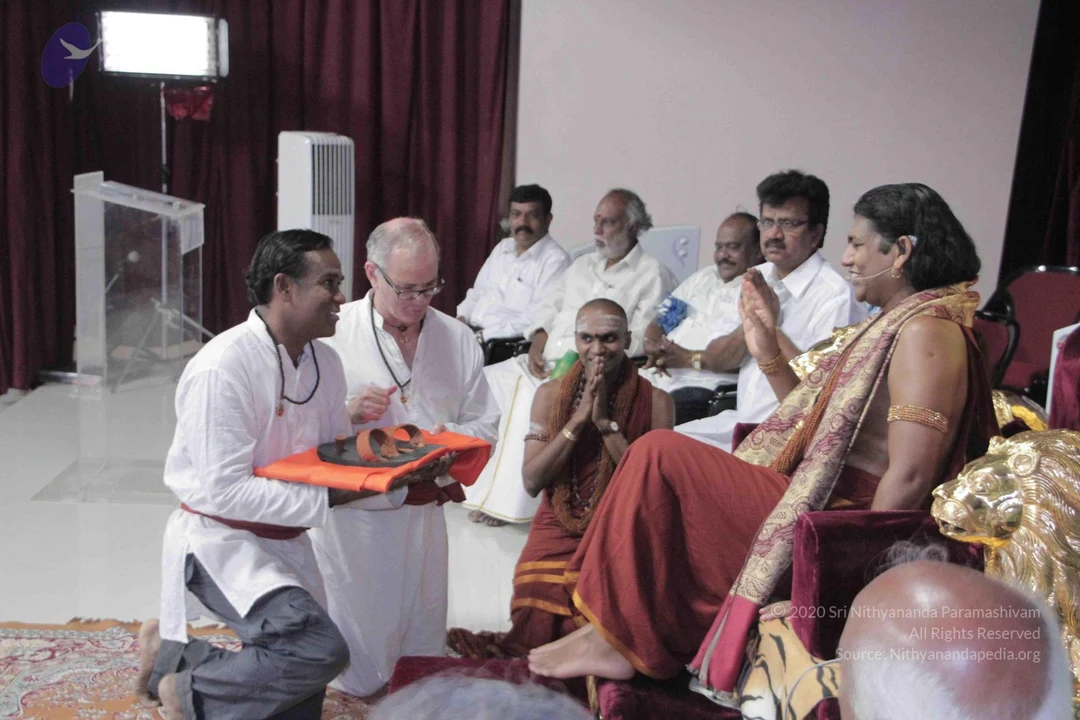
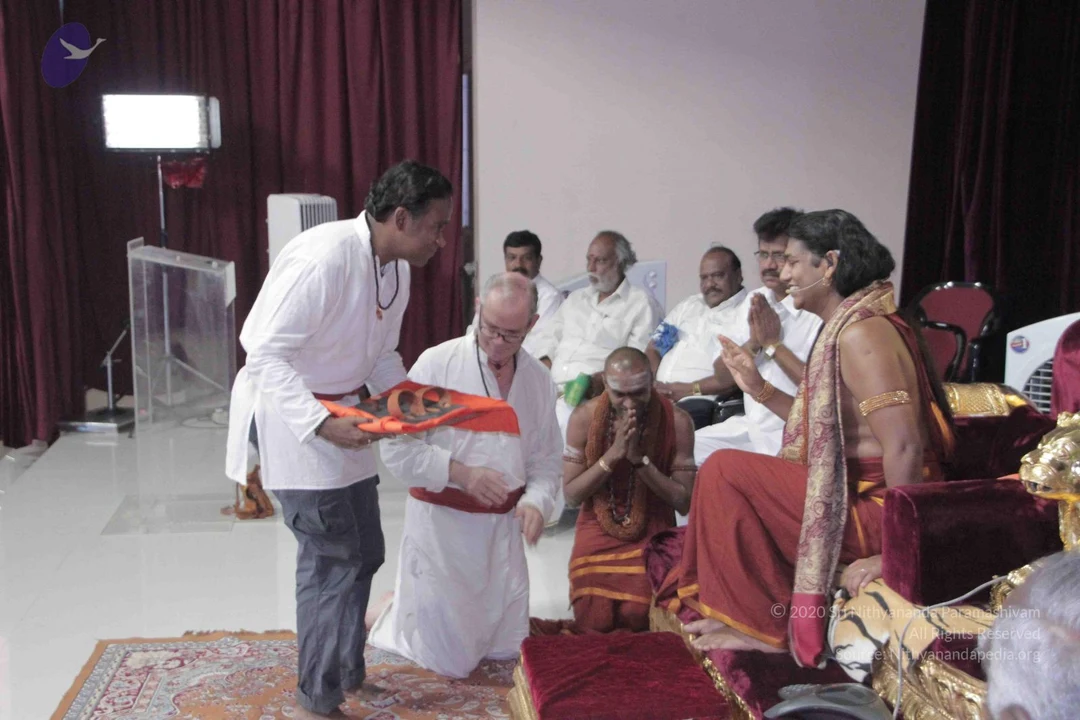
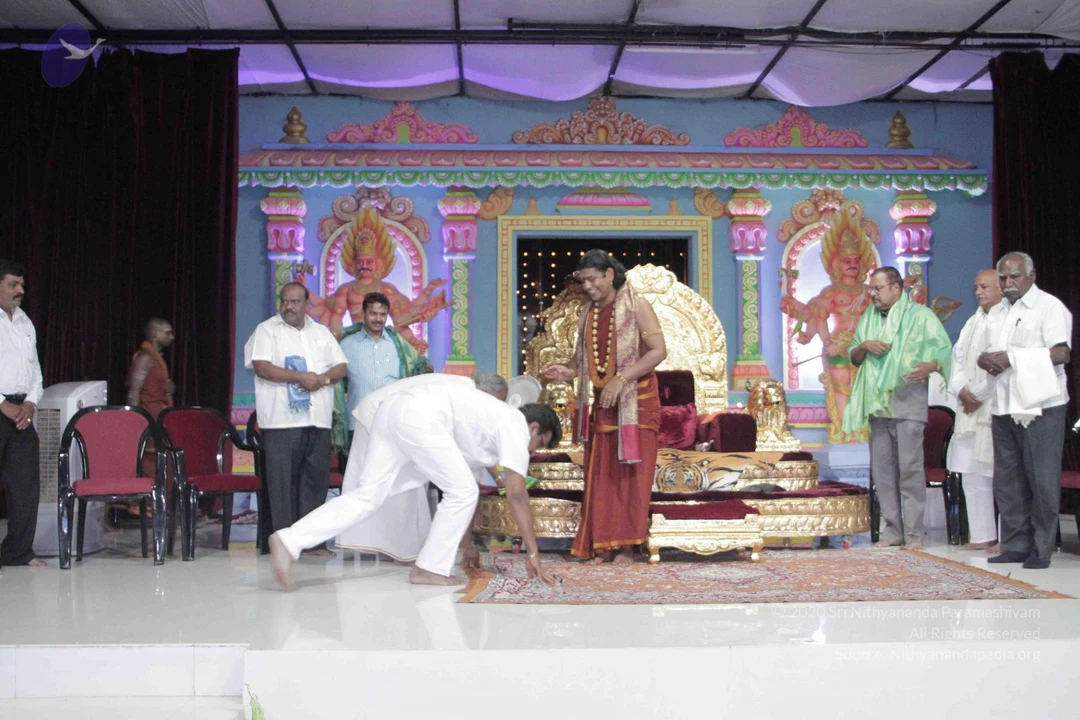
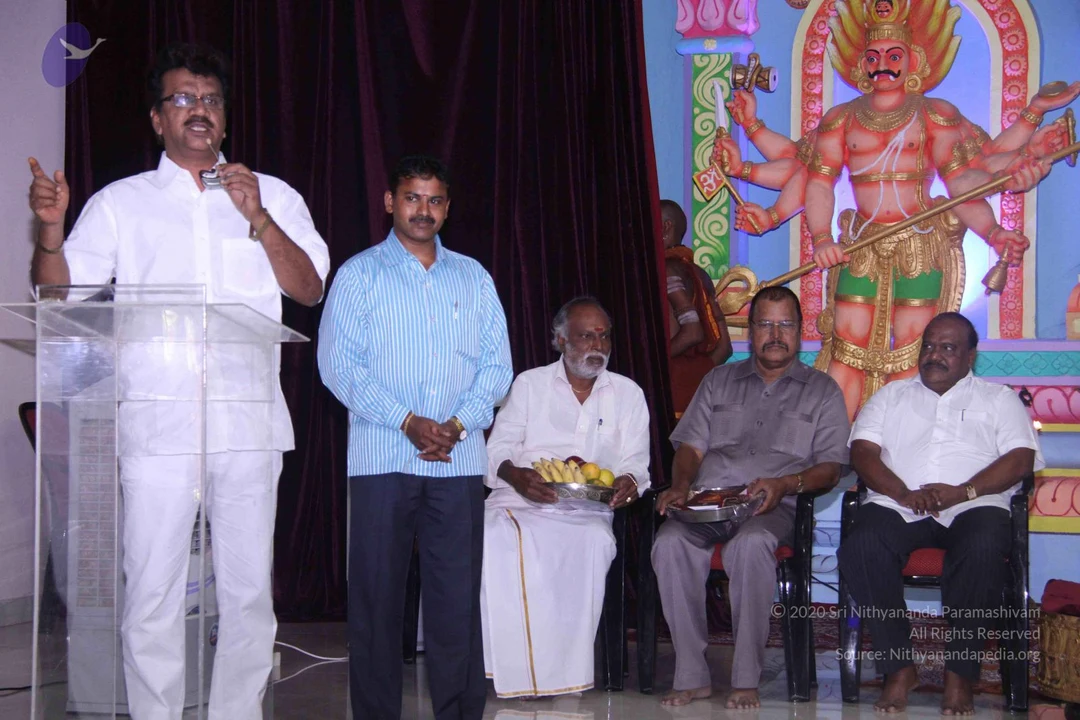
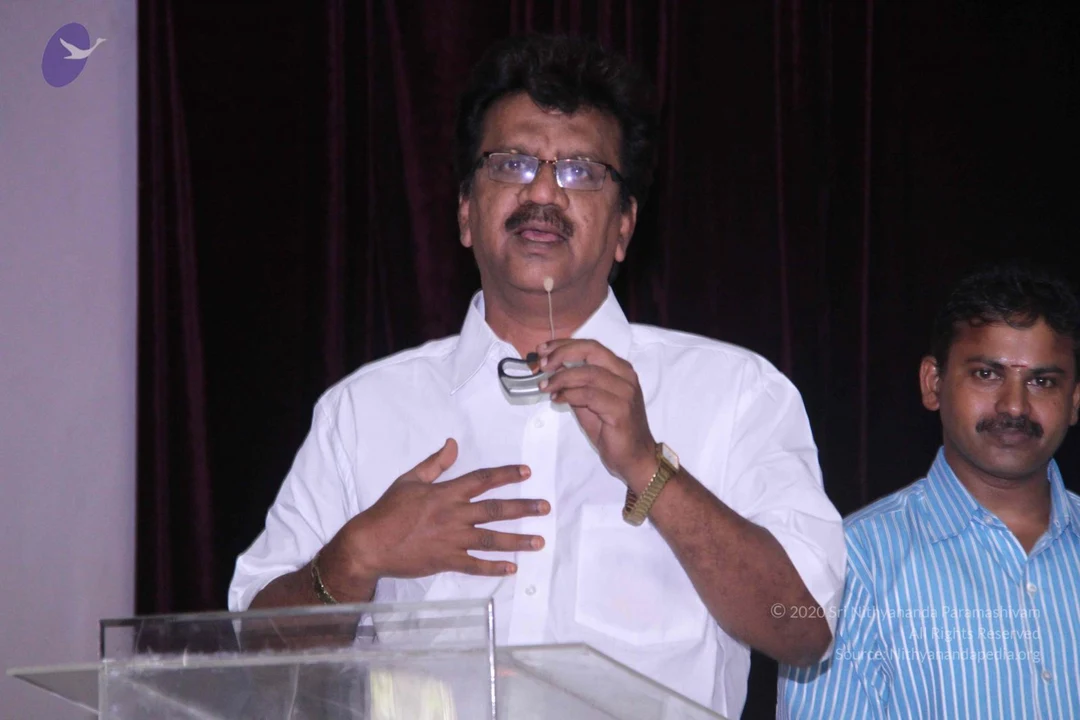
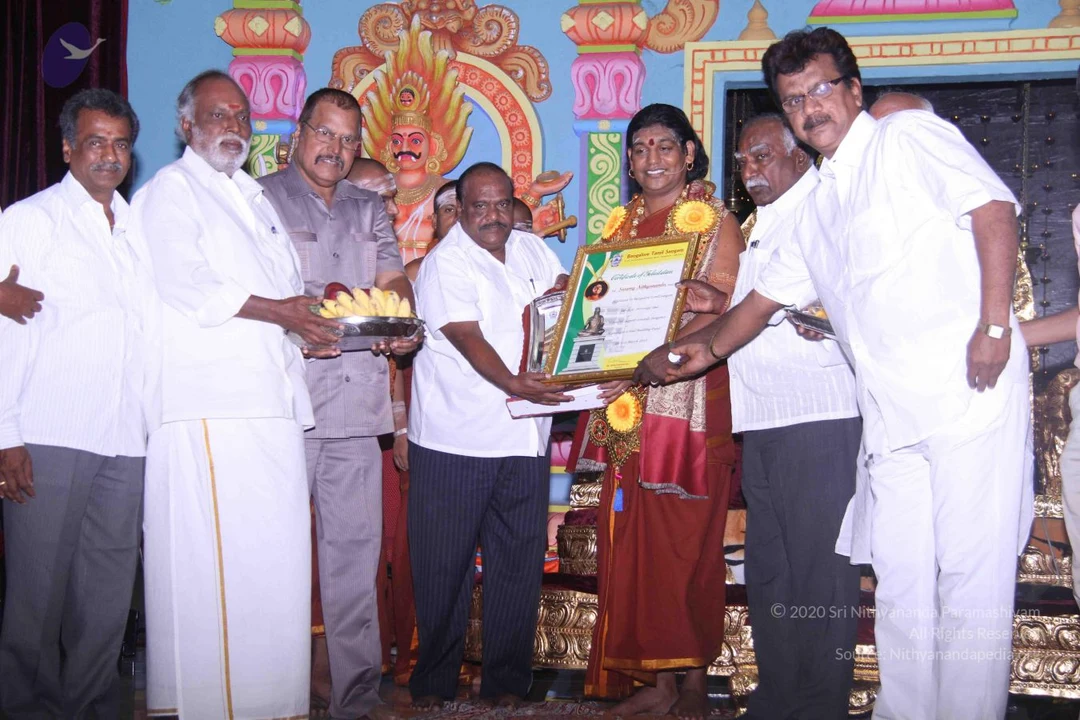
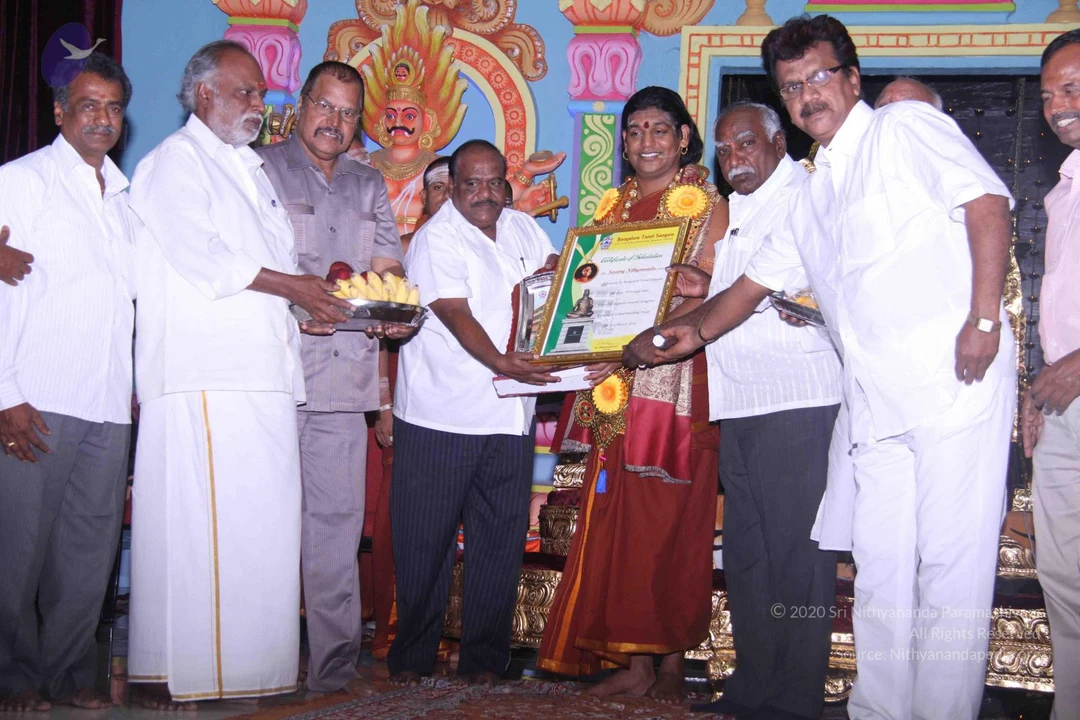
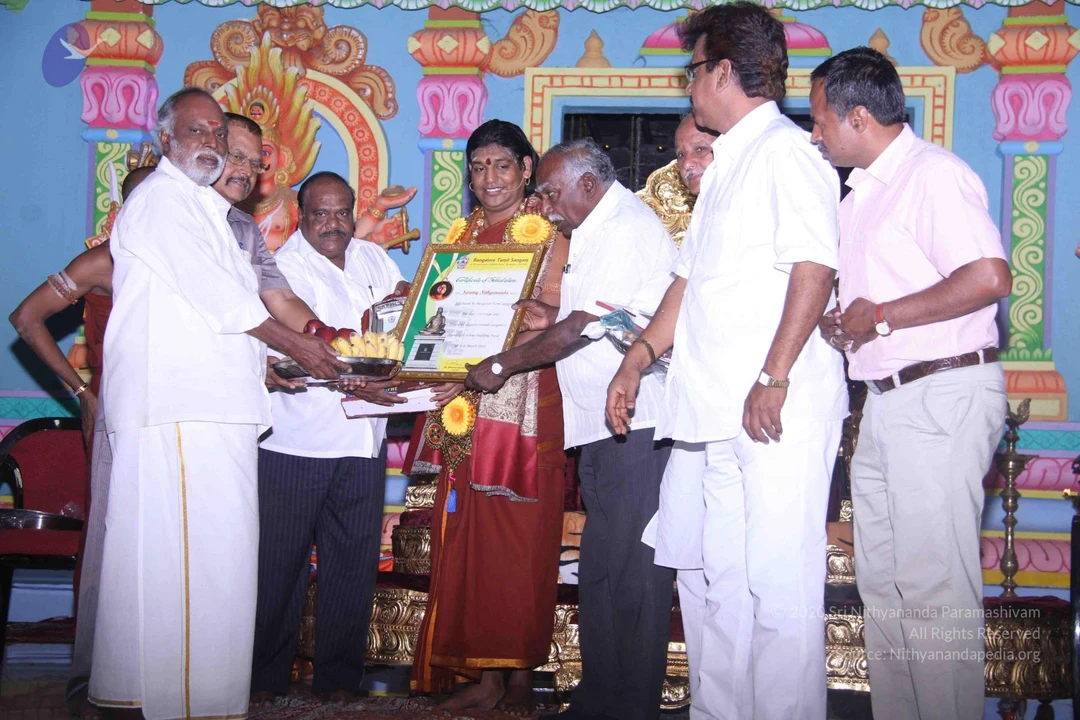
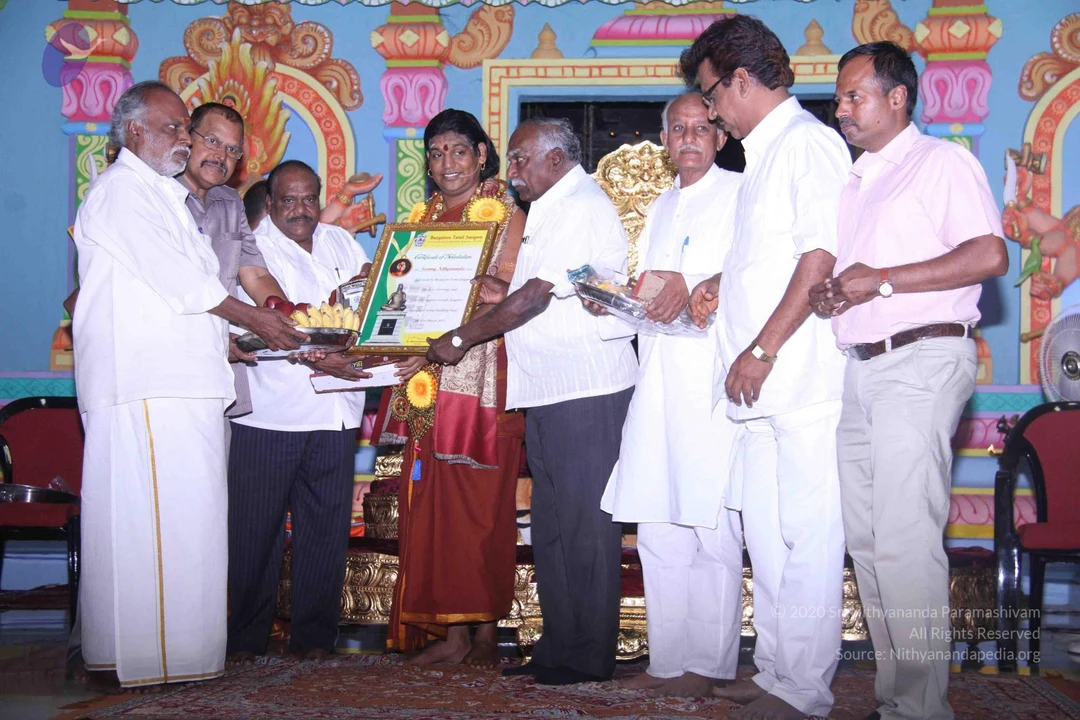
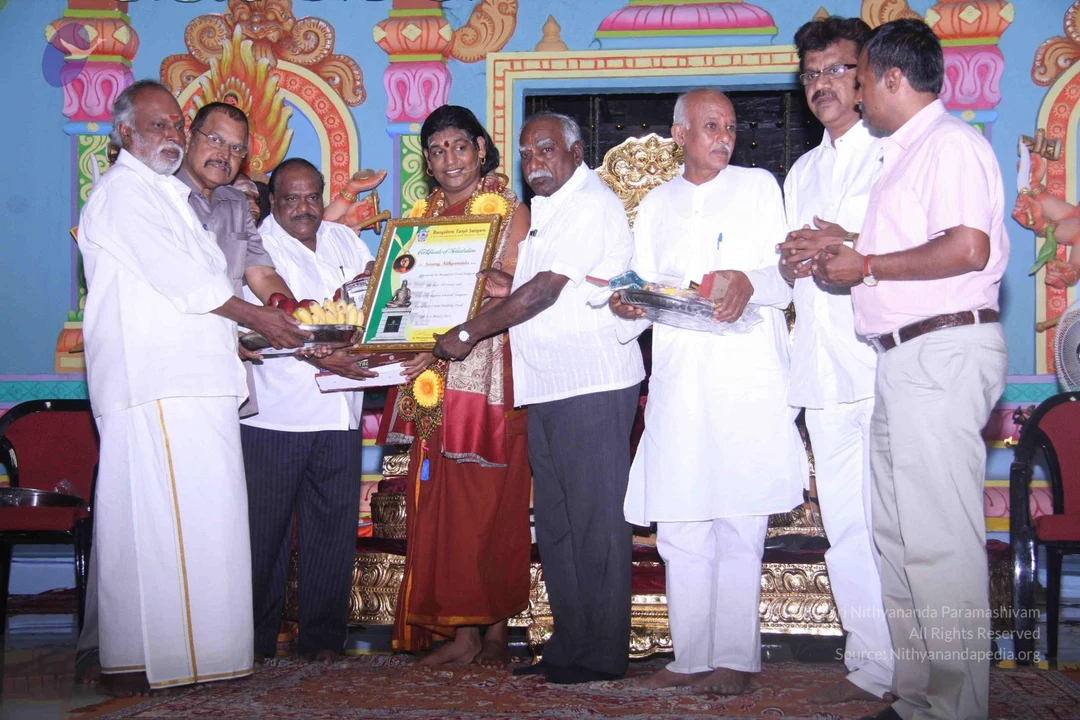
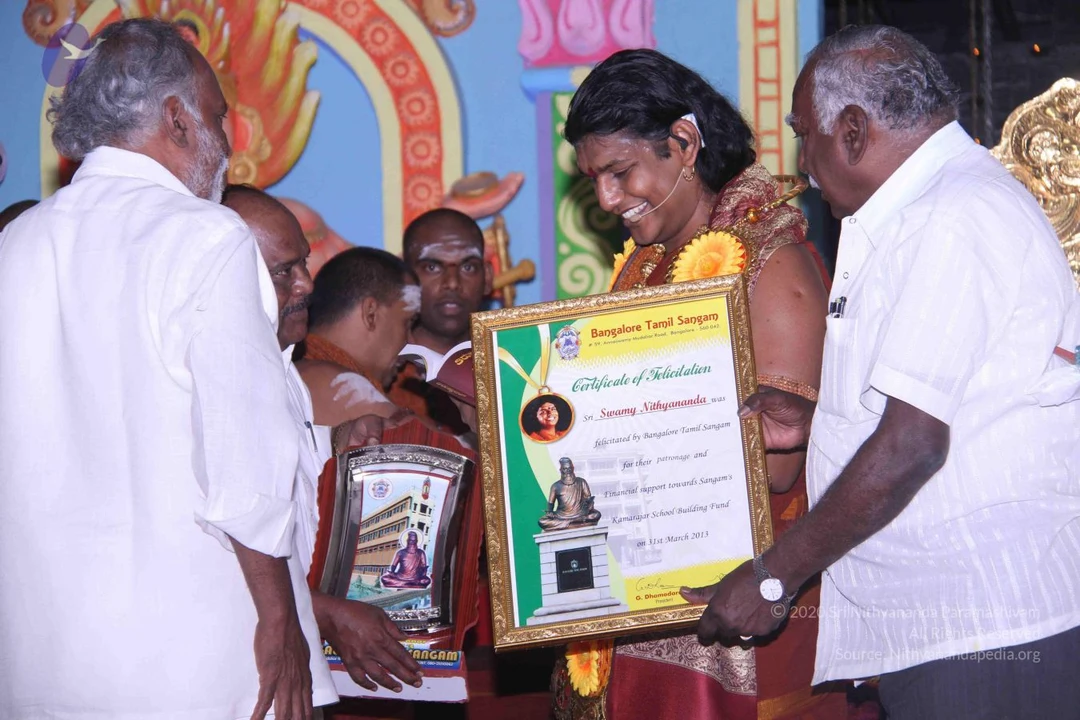
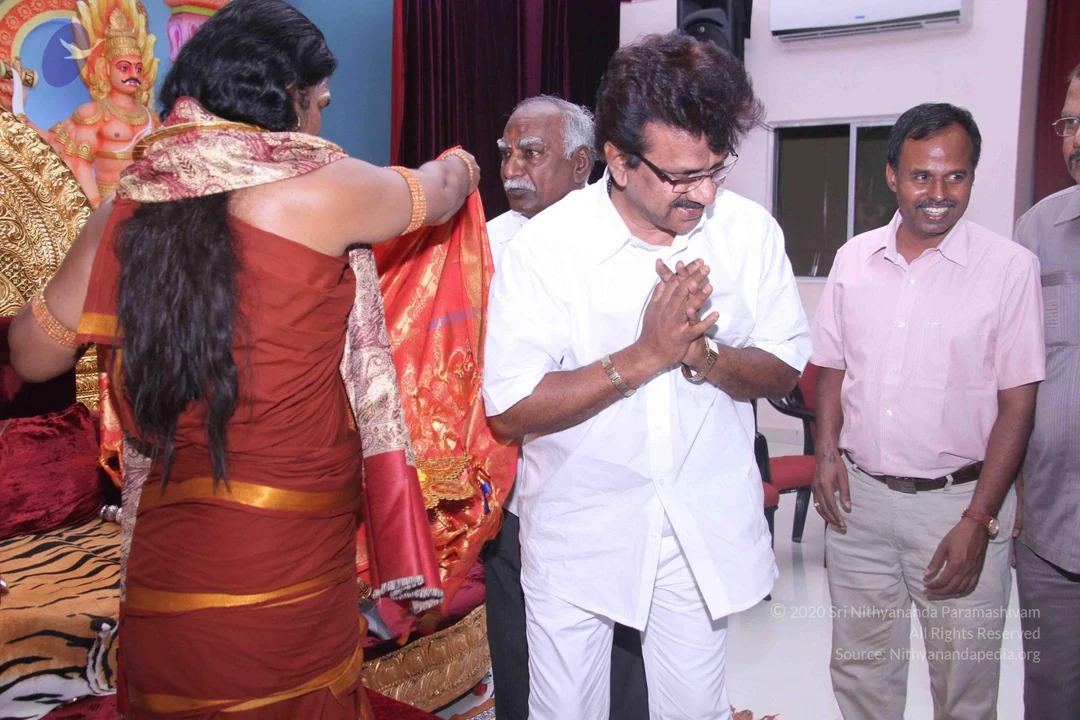
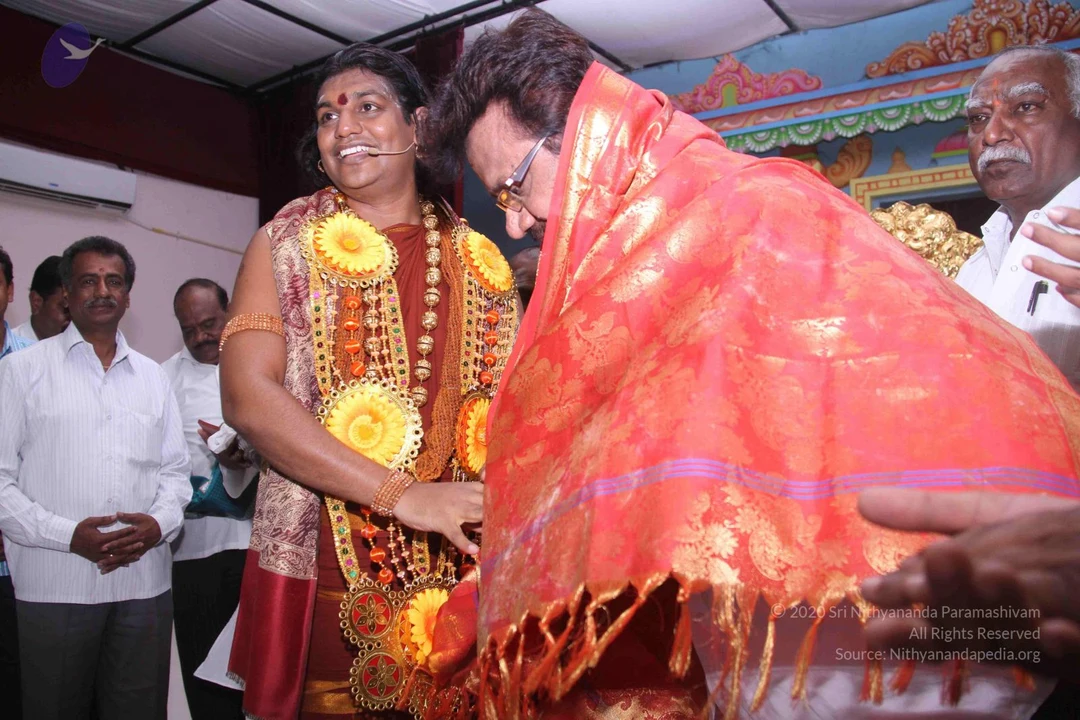
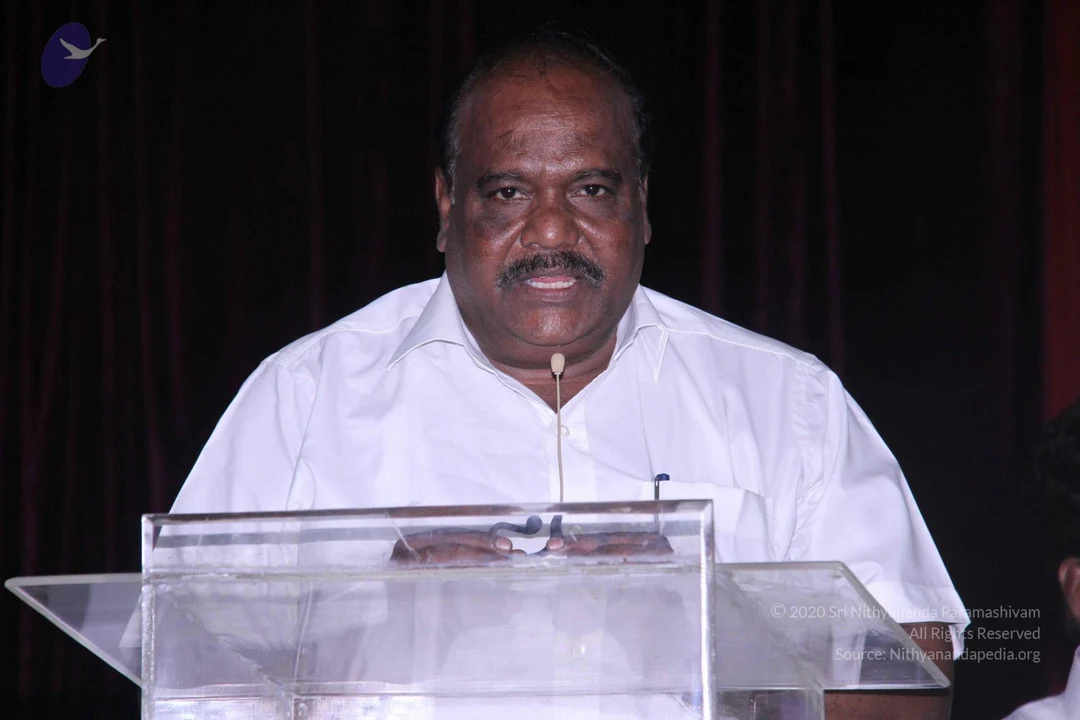
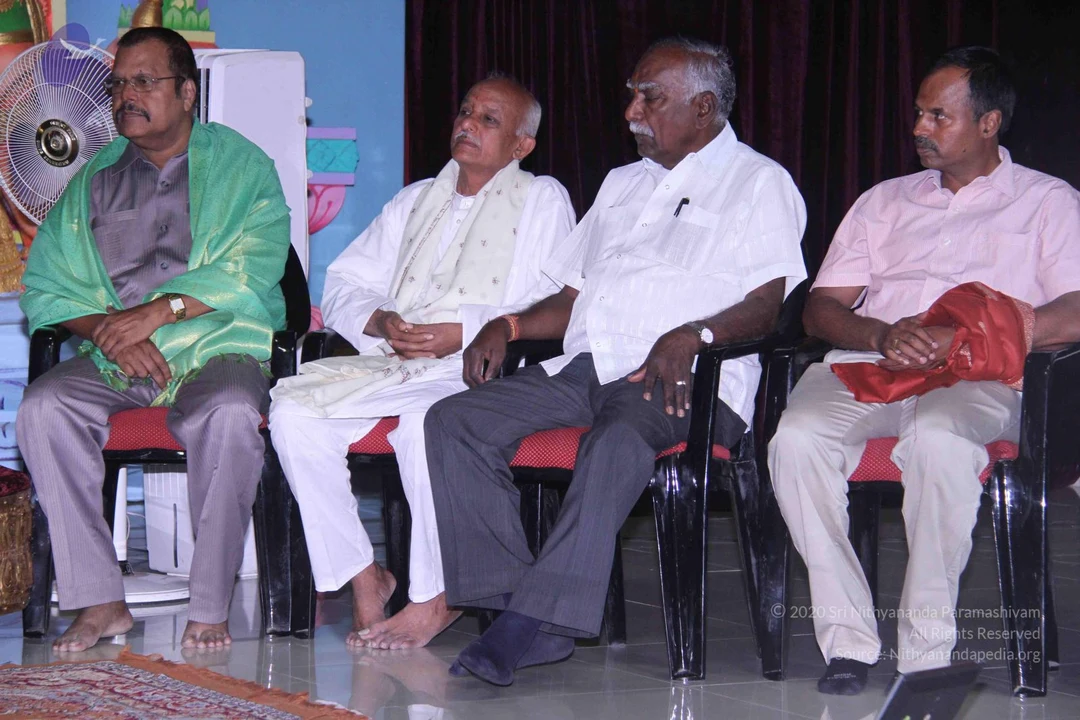
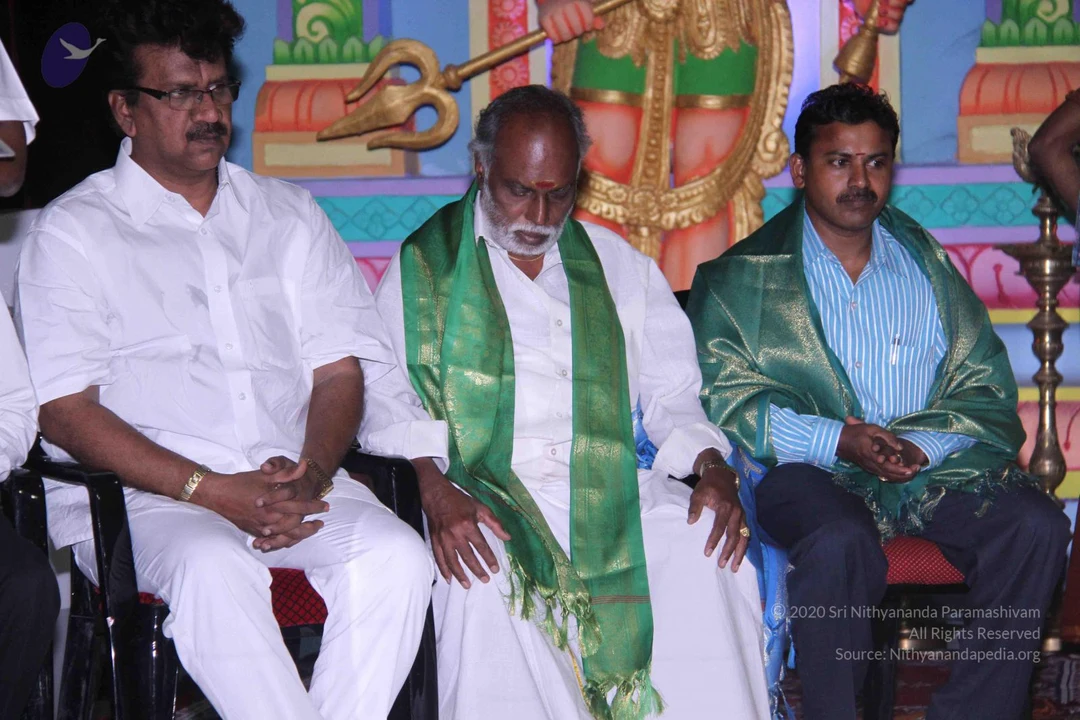
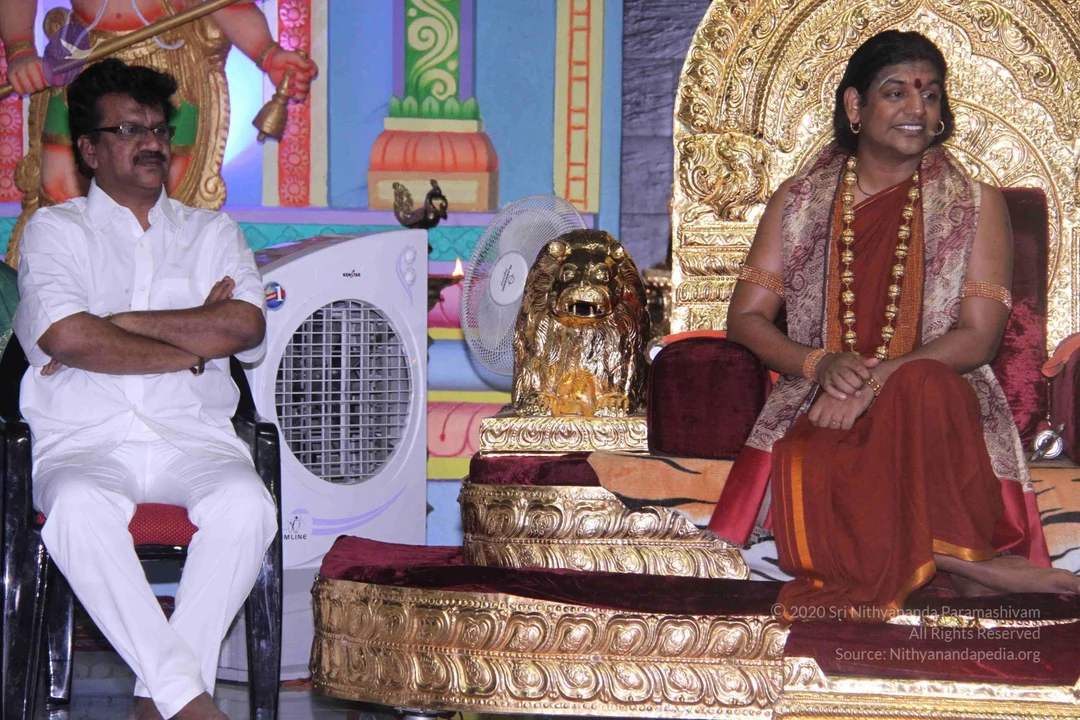
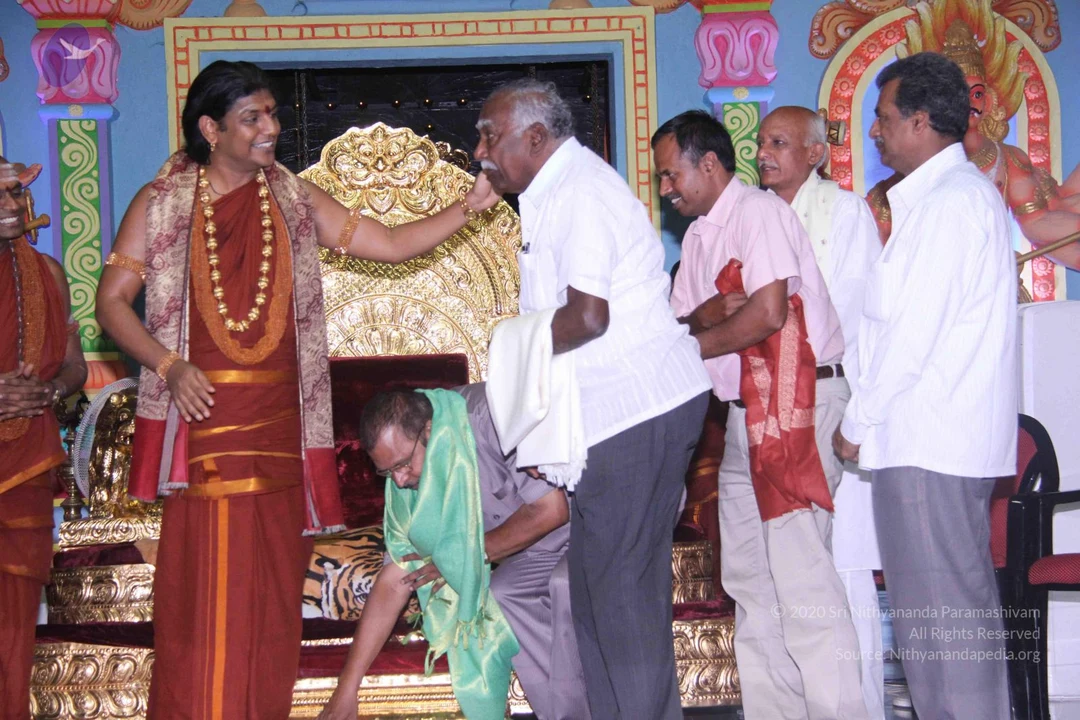
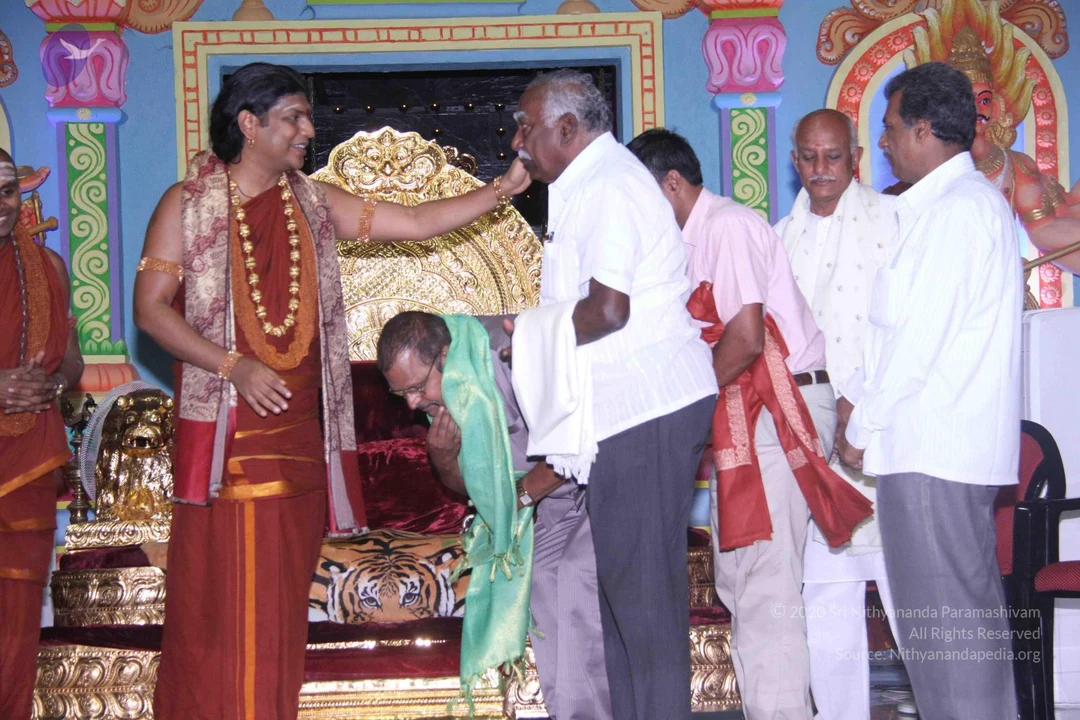
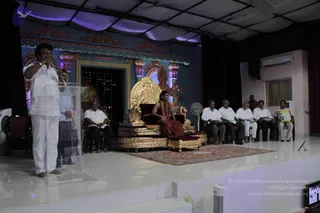
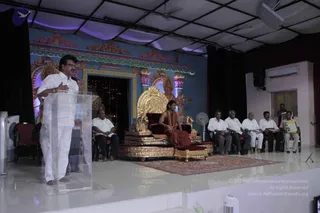
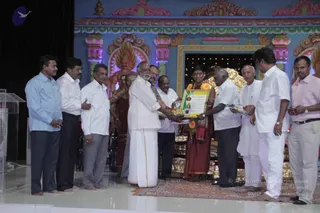
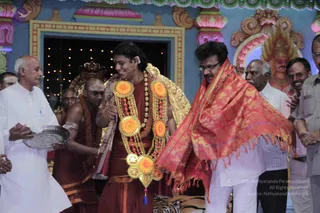
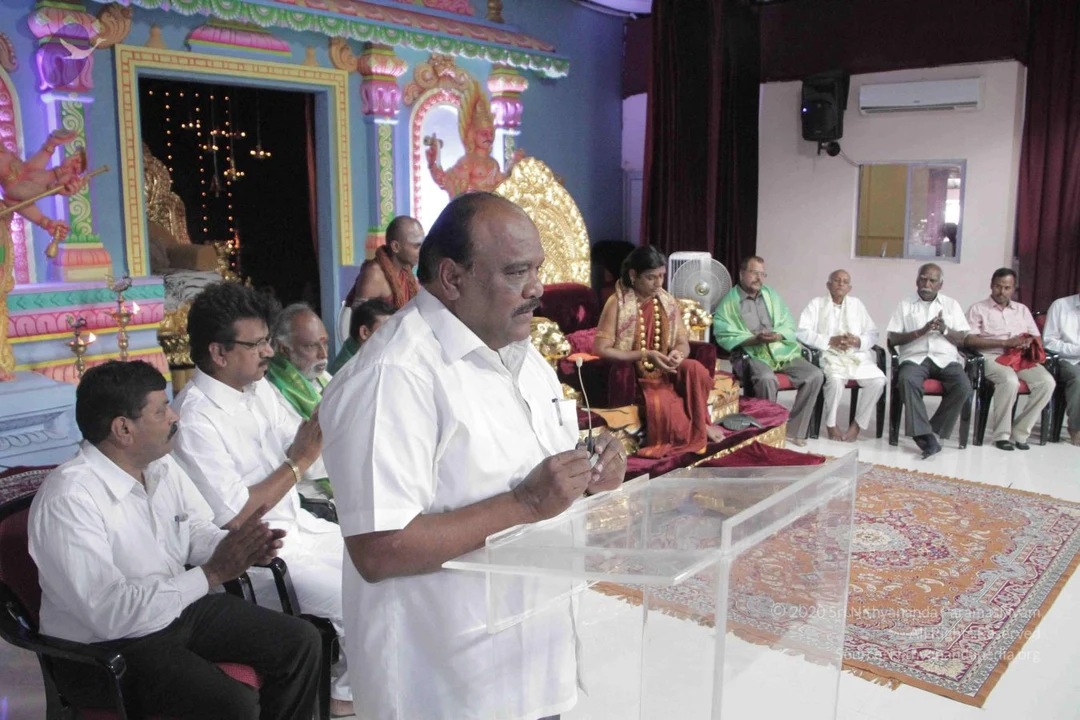
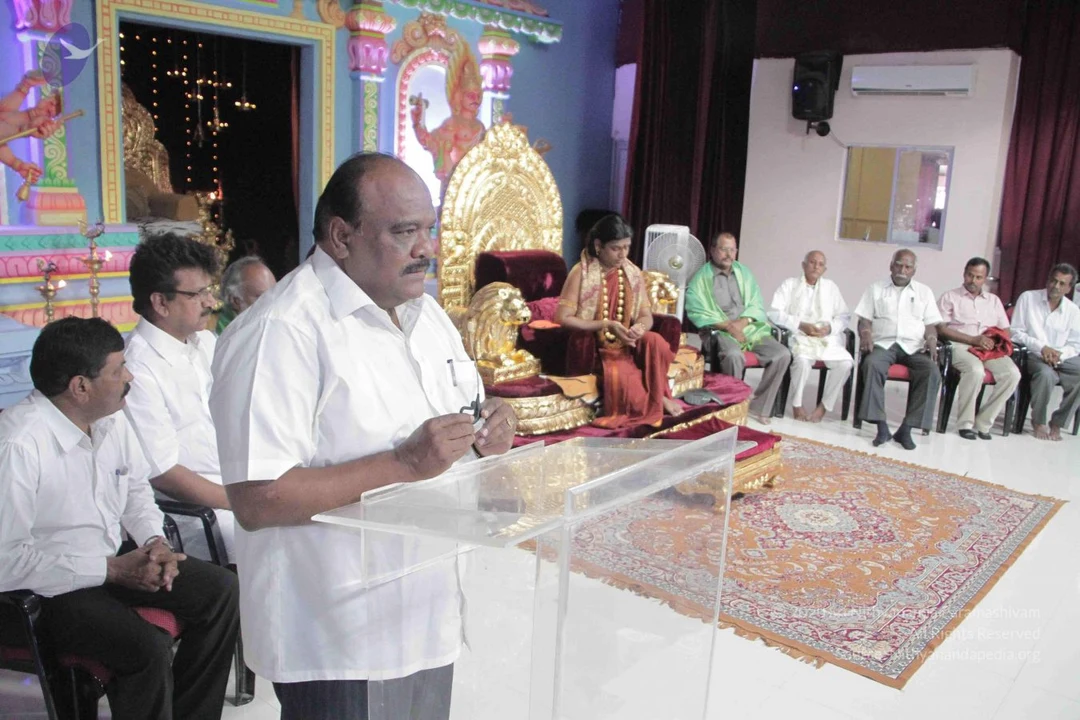
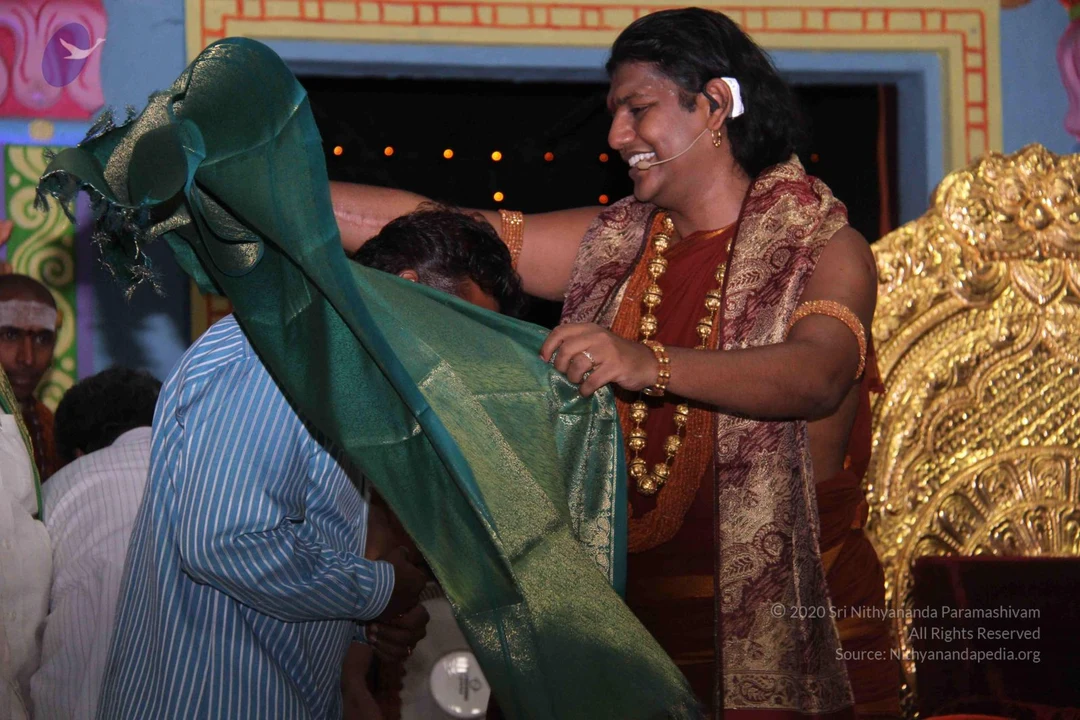
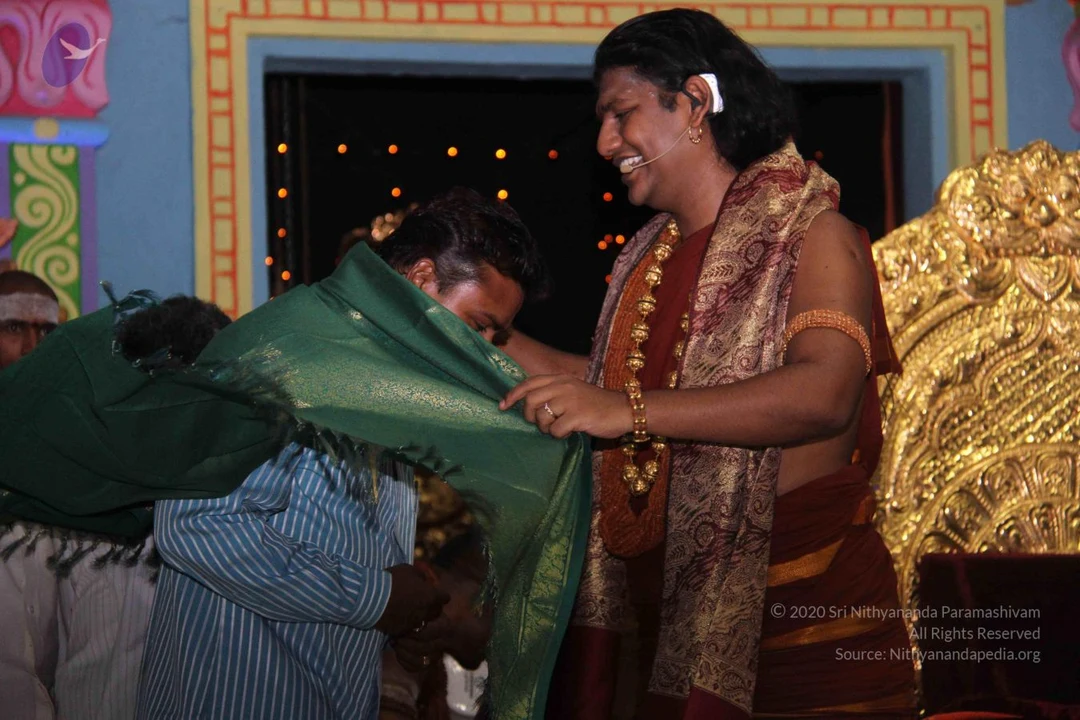
A photograph of an indoor stage event with a standing speaker at a clear acrylic podium on the left, wearing a white shirt and white dhoti and holding a microphone. Centre stage, a seated figure in an orange-red robe with a rudraksha mala sits on an ornate golden throne with lion-carved armrests and red cushions, with a footstool in front. Behind them a blue backdrop with decorative temple-style arches and deity murti reliefs. Along the right, about six seated men in white clothes hold papers, and a man in the far right corner wears white with a yellow printed sheet. Fans and a wall air conditioner are visible.A photograph of a stage event in a temple-style hall with painted pink and blue pillars and a painted deity figure on the wall. A man with a white beard and white dhoti and shirt stands centre, holding a framed certificate with a gold border. Beside him a woman in a red and maroon sari with orange flower garland accepts the framed award, while a man in white shirt and trousers reaches to help. Several men in white and pastel shirts stand in a row on the left and right, barefoot on the polished stage. A red carpet covers the platform and a gold-decorated seat is visible on the right. Visible people: about nine.A photograph of a ceremony on an ornate stage with pink and blue painted pillars and a decorated deity mural at upper right. A central figure with long swept-back dark hair wears a dark red-maroon garment, a large layered garland of yellow-orange flowers with gold medallions, a rudraksha-style bead necklace, and a saffron-and-white shawl draped over the shoulders. Behind him a golden throne-like seat with a tiger-skin cover is visible. Beside him, an older man in white dhoti and shirt holds a silver tray, while another man in a red-and-gold silk shawl and glasses receives the honour nearby. Several other men in white and grey shirts stand around, and a shaved-headed priest in maroon robes with white tilak marks stands at left.A photograph of an ornate stage at a temple-style event. A central figure with long dark hair wears a red-and-maroon garment, a multi-strand rudraksha-style mala with large orange flower garlands, and gold ornaments; he holds a blue cloth that a man in white is presenting. Behind him is a gold throne draped with a tiger-skin cloth, flanked by a painted deity murti with a crown and a painted arch with pink and green decorations. To the right, a man in a red-and-gold shawl and white dhoti holds his hands together in namaskar, while older men in white shirts and grey clothing stand nearby. Several people are visible, and some are only partly in frame.
SarvaDarshan
5 photosSource gallery
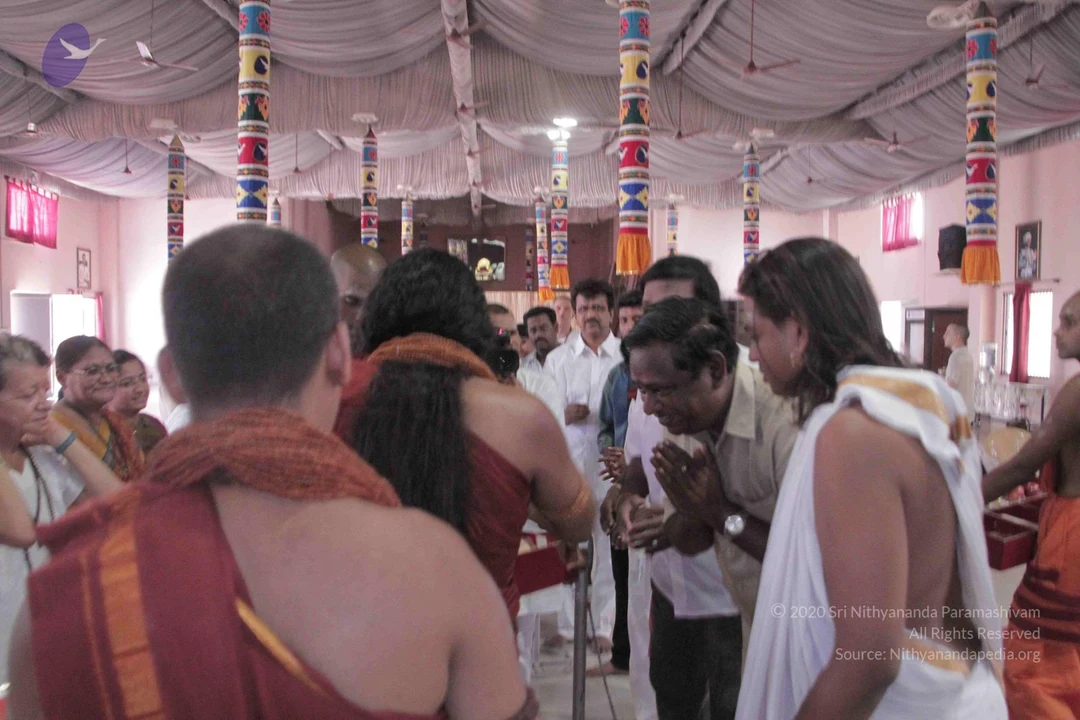
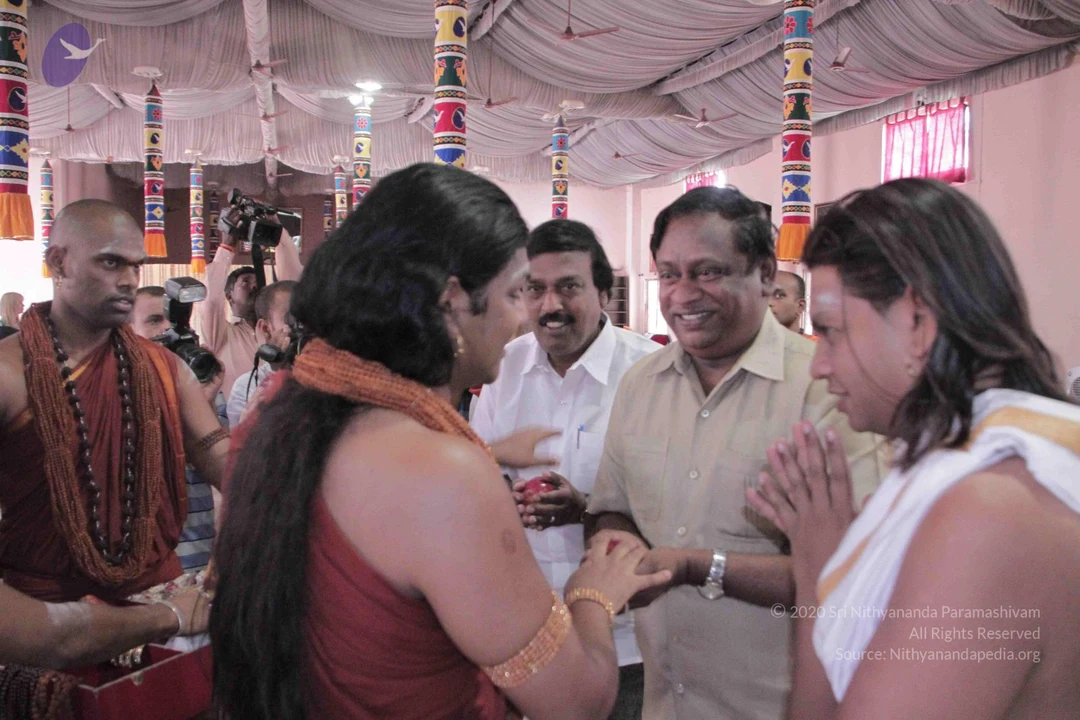
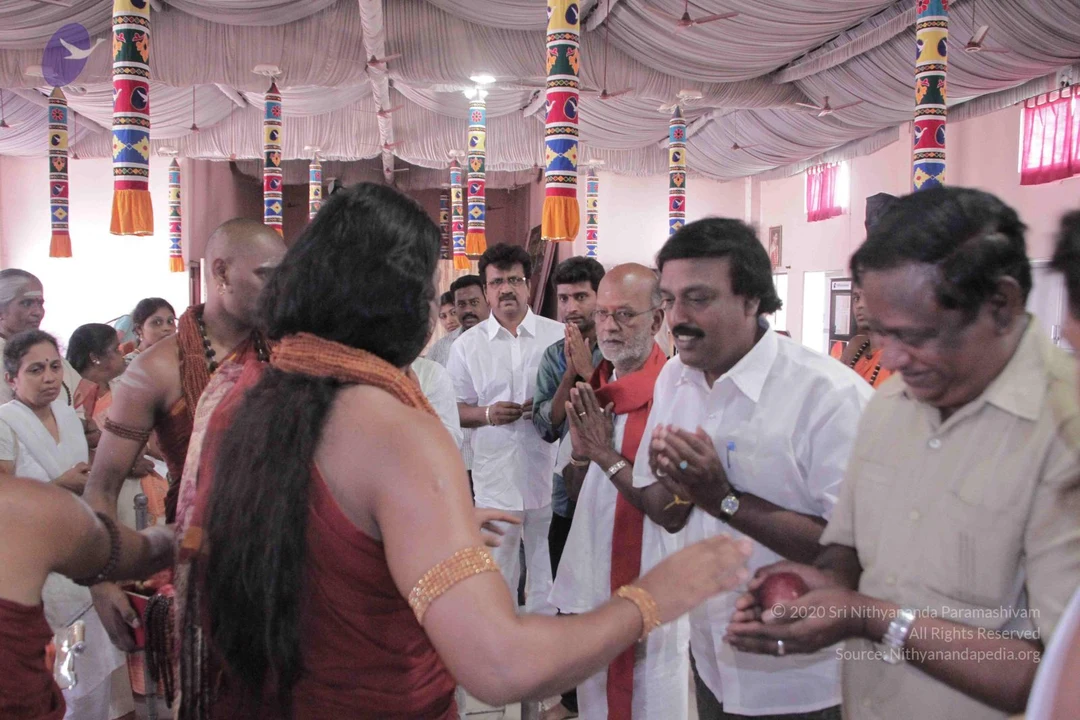
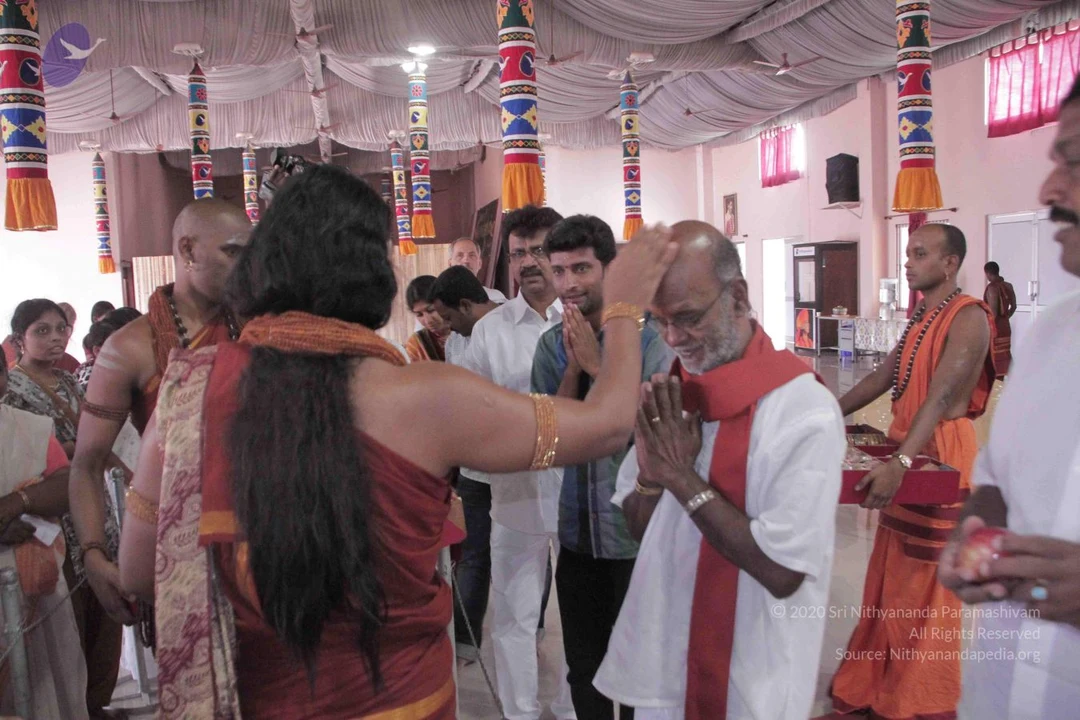
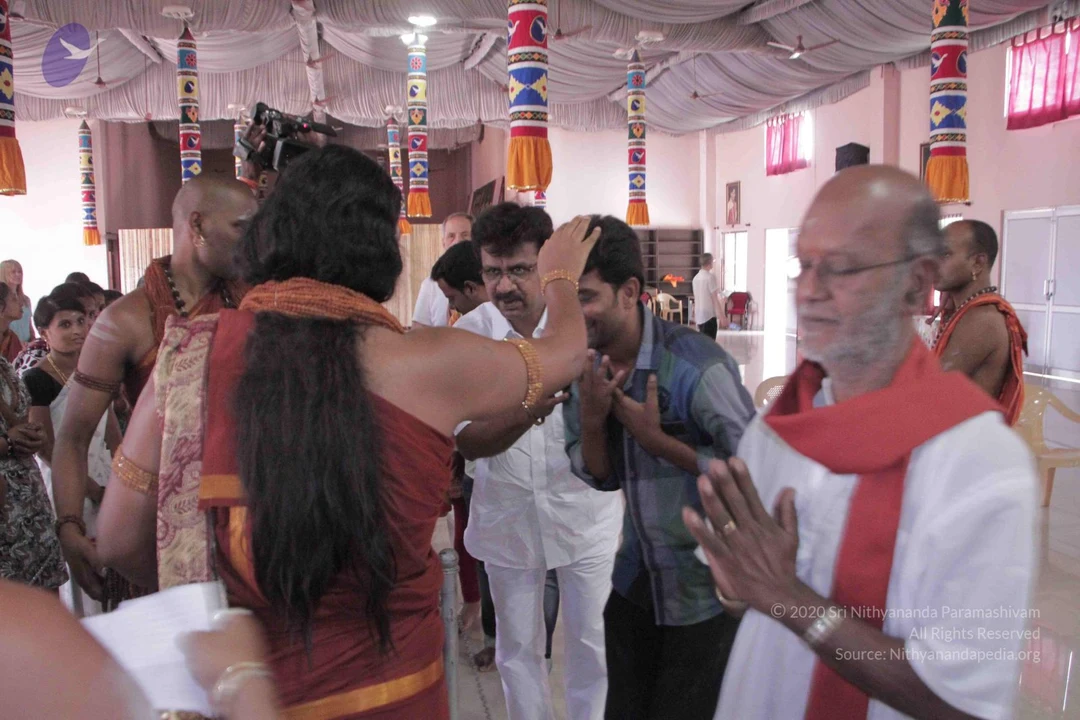
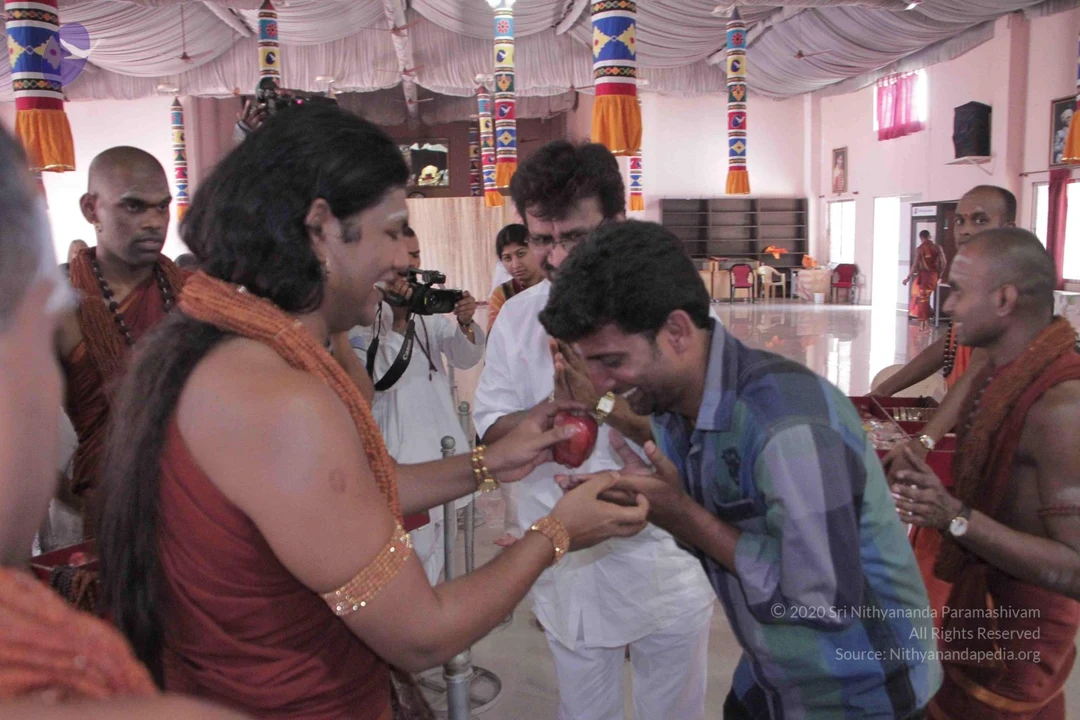
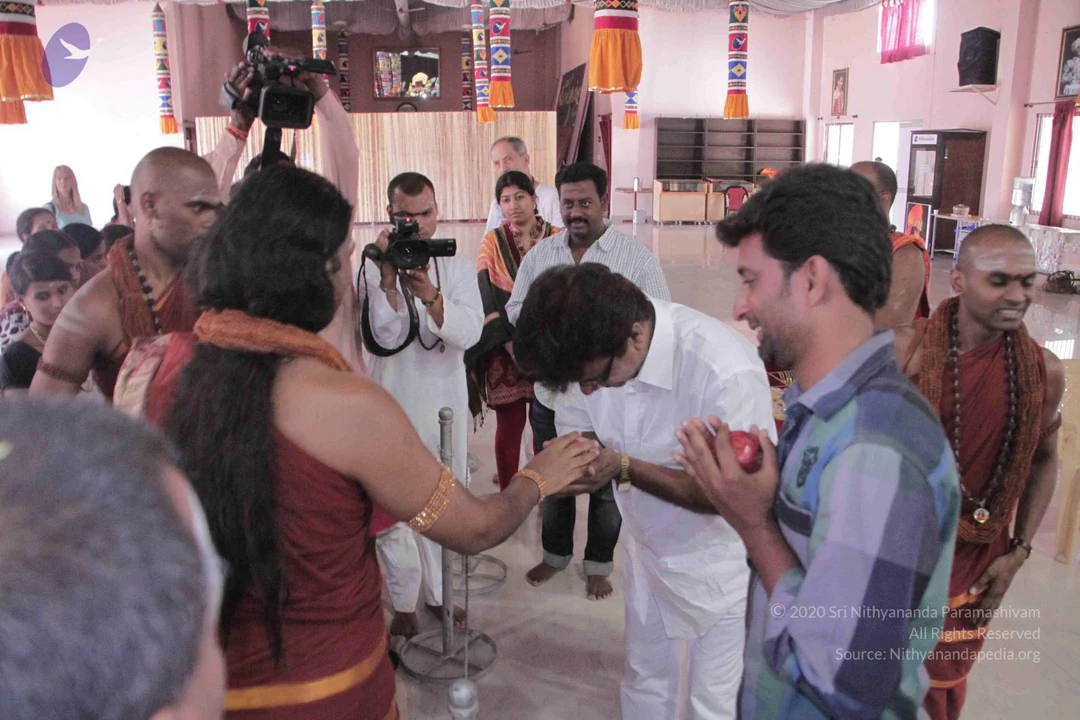
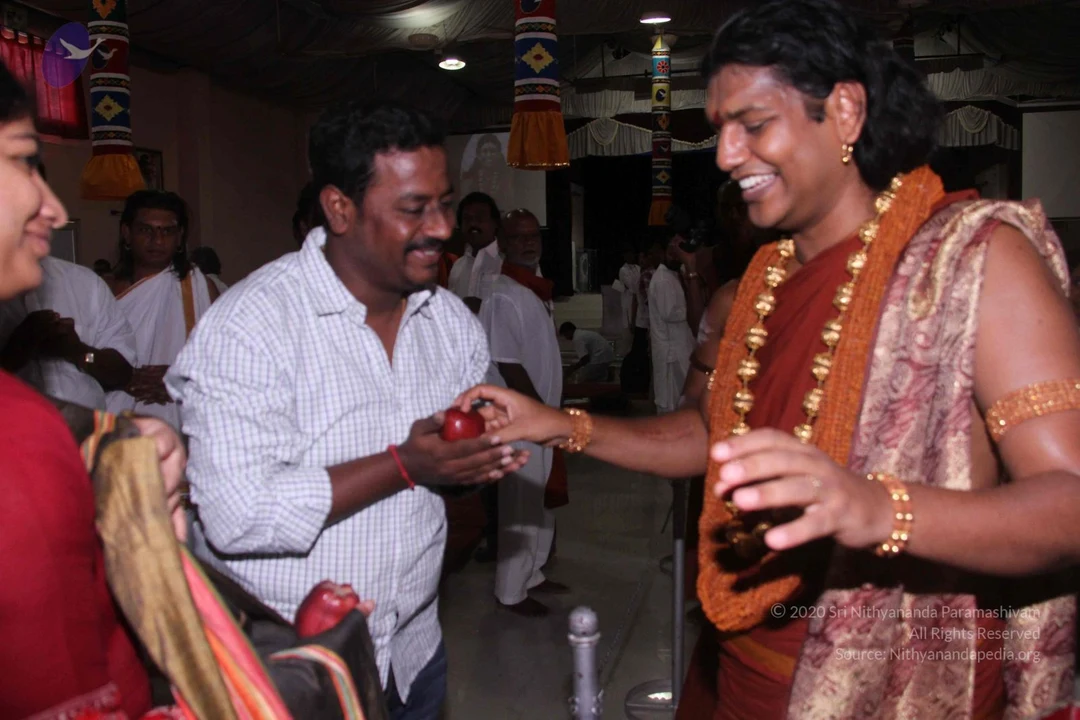
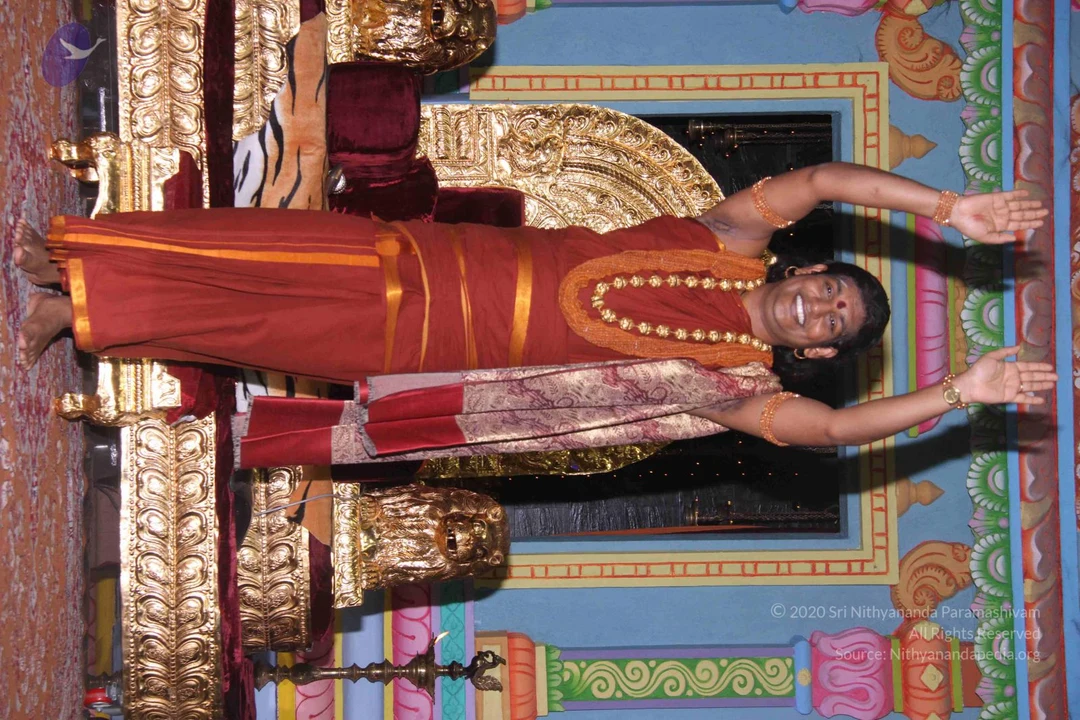
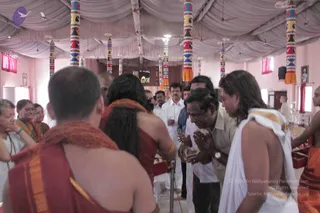
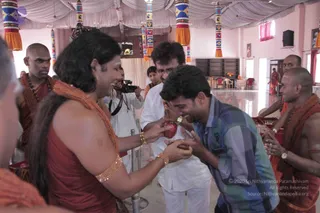
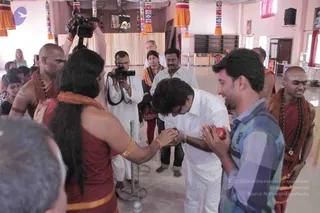
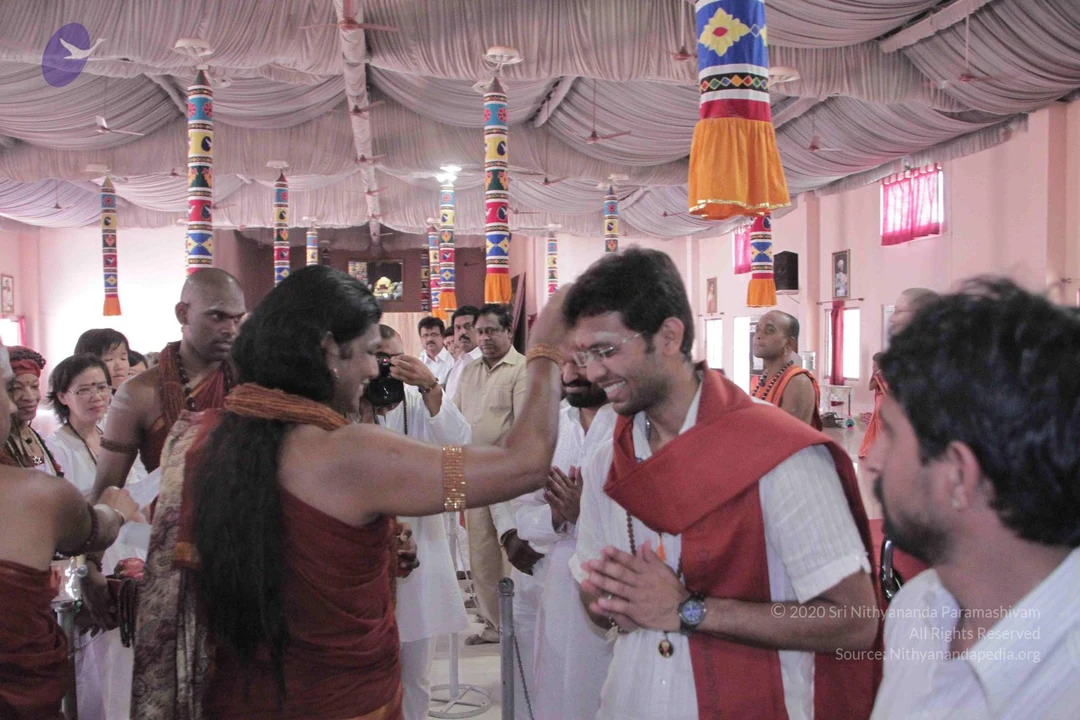
Photograph inside a pink-walled hall with a white draped ceiling and tall striped decorative pillars in red, yellow, blue and white. Foreground: a shaved-headed man in a red-orange shawl with his back to the camera, next to a woman in a red garment with a long dark braid and orange shawl. On the right, a man with long hair in a white dhoti with orange border and a white shawl stands with hands folded in namaste, beside a man in khaki shirt and white dhoti greeting with folded hands. Behind them, a man in white kurta and dhoti stands among a group. Elderly women watch at left wearing glasses and orange-bordered saris. A figure in orange robe is visible at right, and framed pictures hang on the walls. a person identity is not established from appearance.A long-haired figure in a saffron-orange garment with a matching orange shawl and gold bangles stands at left, extending a red apple or fruit toward a smiling man in a blue-green checked shirt who leans forward with hands cupped to receive it. Behind them a man in a white kurta and glasses watches while a photographer with a camera stands at the centre. Several shaved-headed men in orange-red robes with rudraksha malas stand around the hall. Behind them are colourful tasselled pillars, a white draped canopy ceiling, and a pink-walled hall with chairs and framed pictures. a person: the long-haired figure wears a saffron shawl, gold bangles and an ornate chest adornment, a candidate for the page-indicated teacher. Robed attendants wear orange and rudraksha malas.A photograph of a single person standing with arms outstretched on a raised platform in front of an ornate golden throne with lion-head armrests and a red velvet backrest. The person wears a deep red robe with orange border stripes, a pinkish-patterned wrap over the shoulder, a gold-beaded necklace, bangles and a red bindi, smiling broadly. Behind is a painted panel with blue, green and pink floral and geometric borders. a person appearance cues include the saffron-toned ceremonial clothing and gold necklace; the person is seated-area presenter in a ceremonial setting during satsang.

Construction
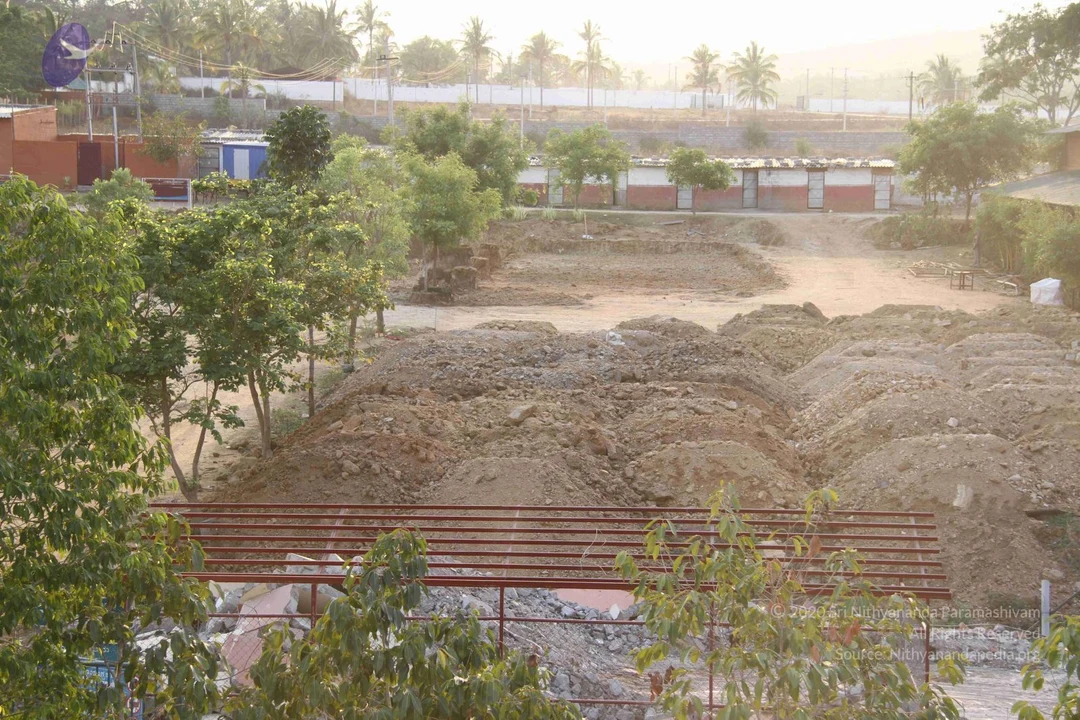
23 photosSource gallery
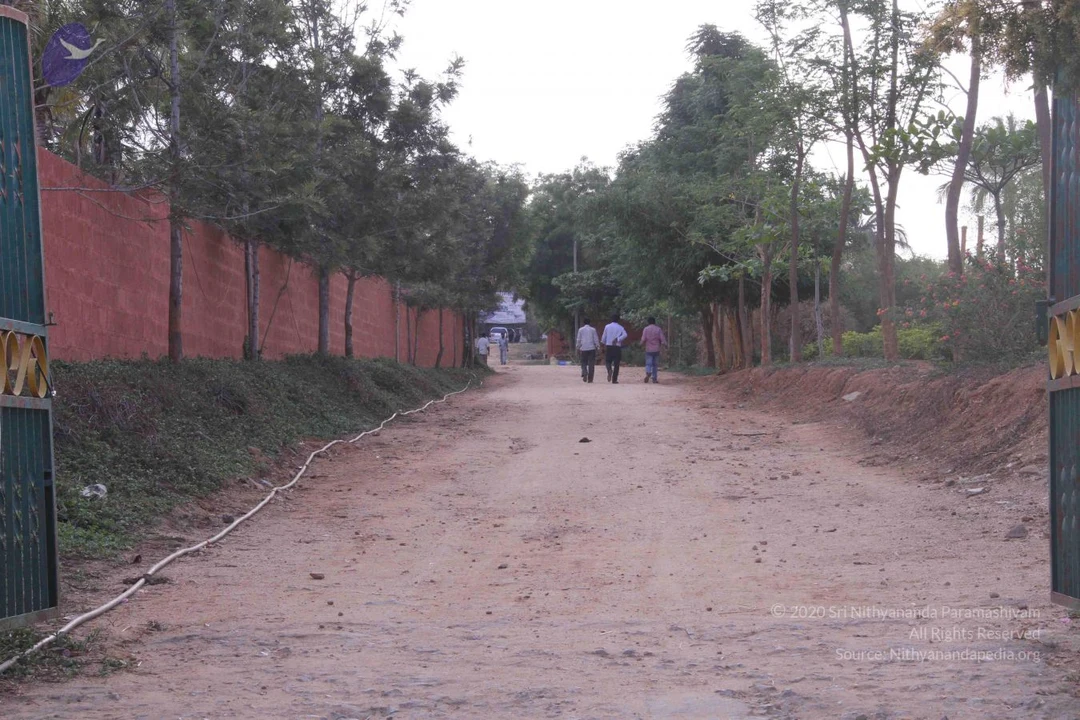
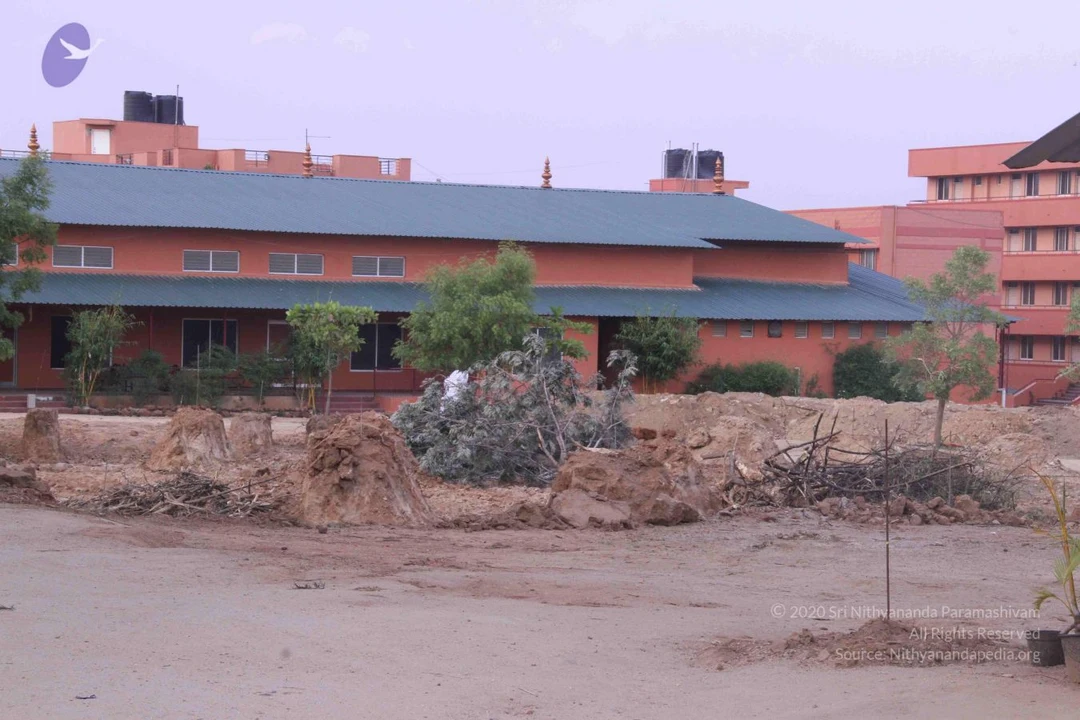
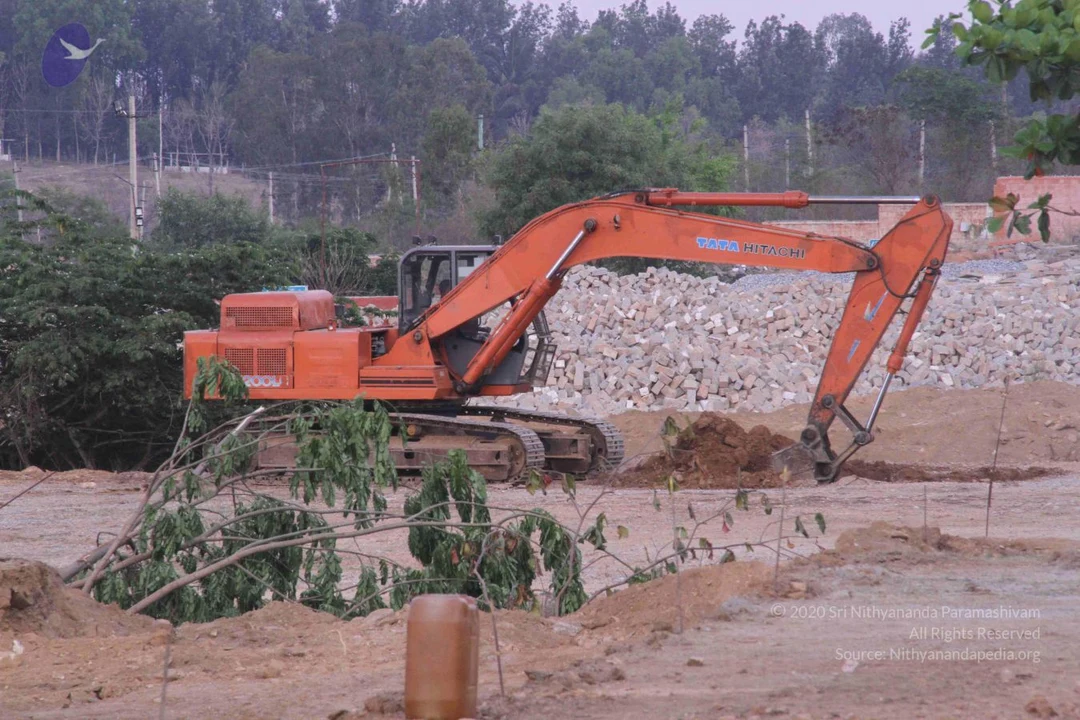
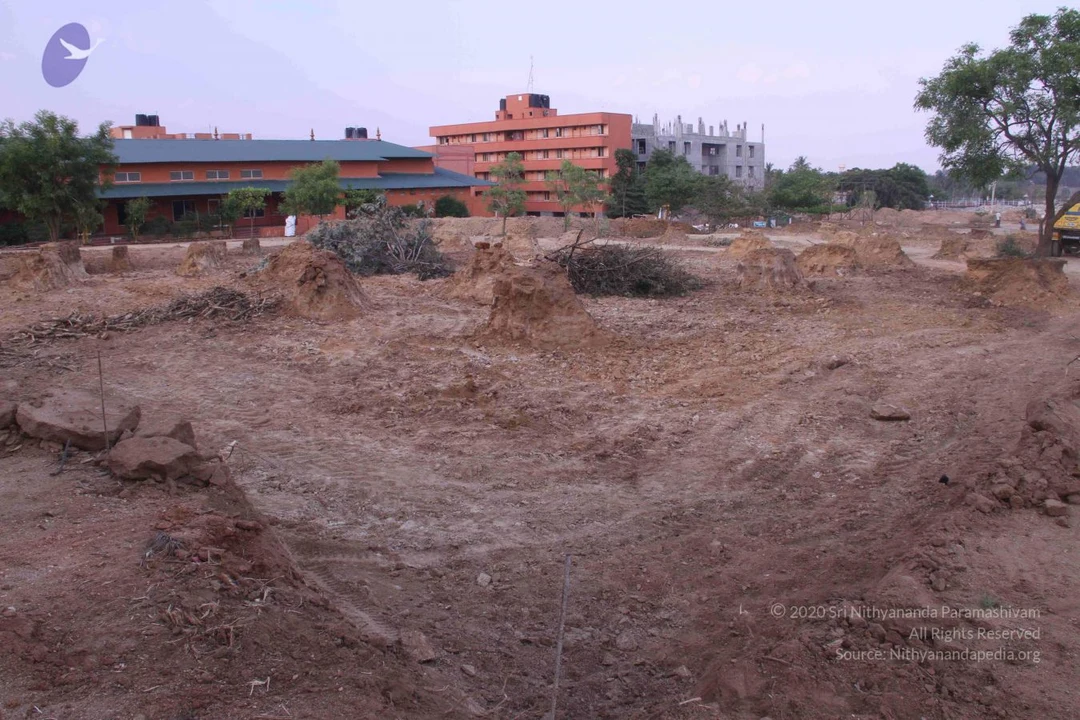
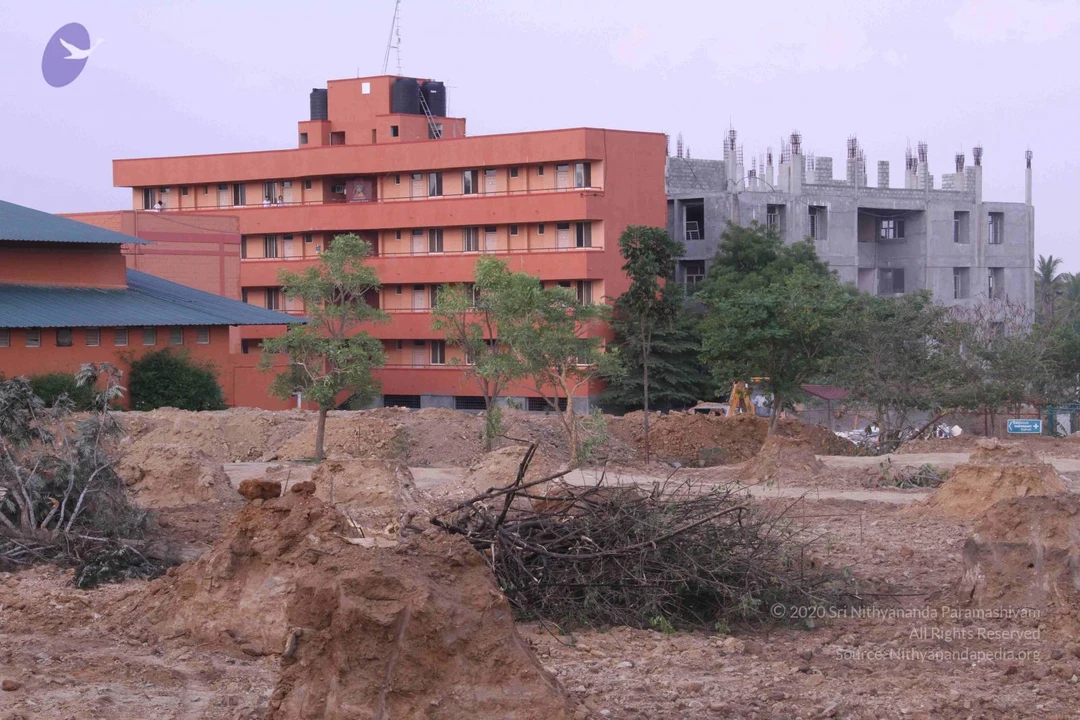
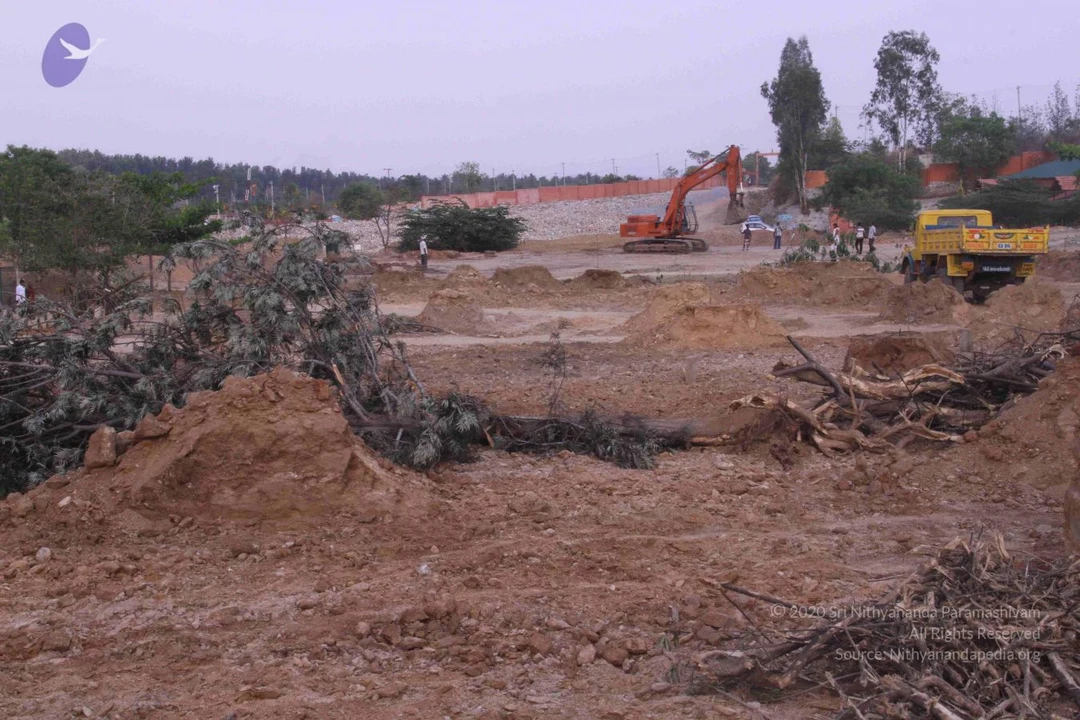
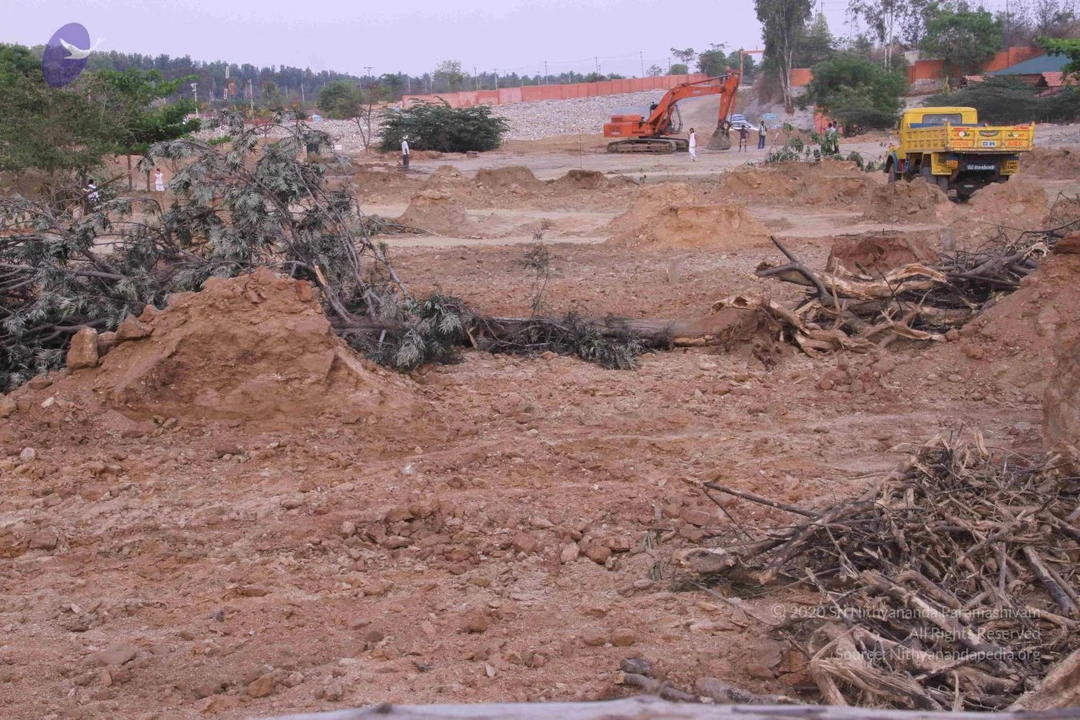
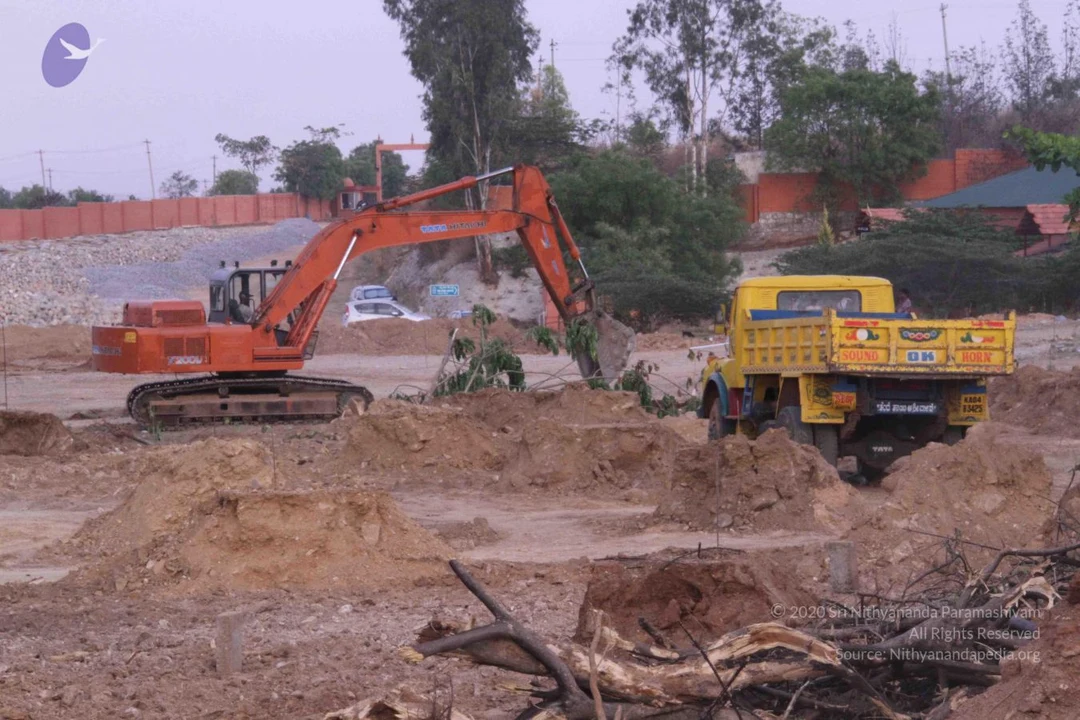
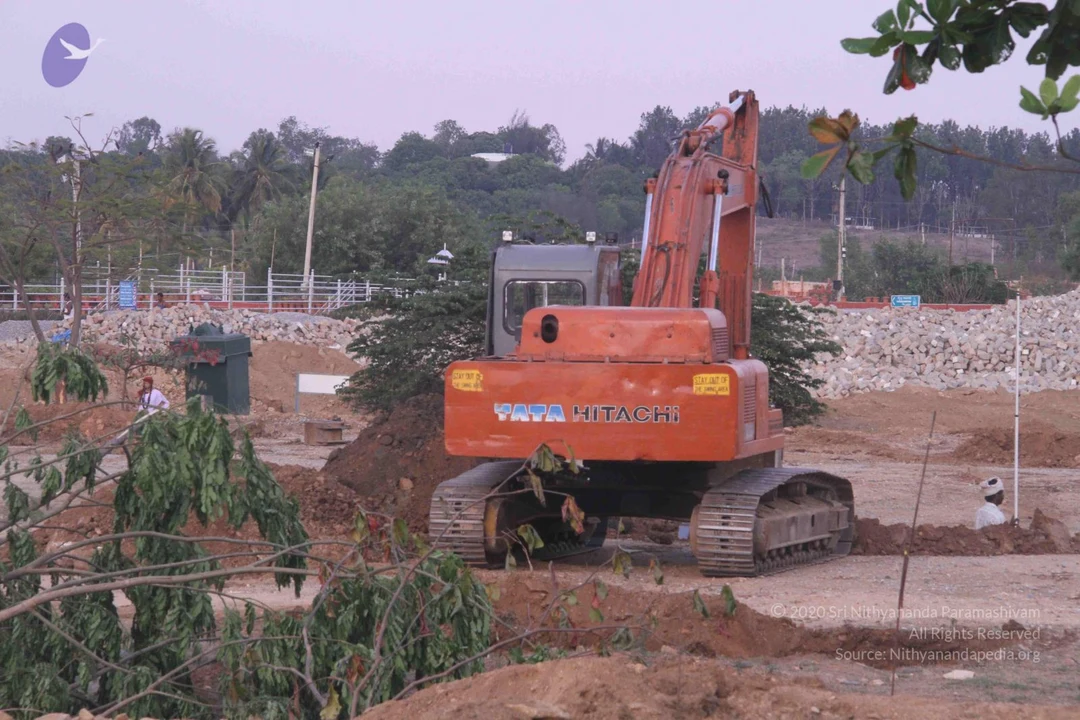
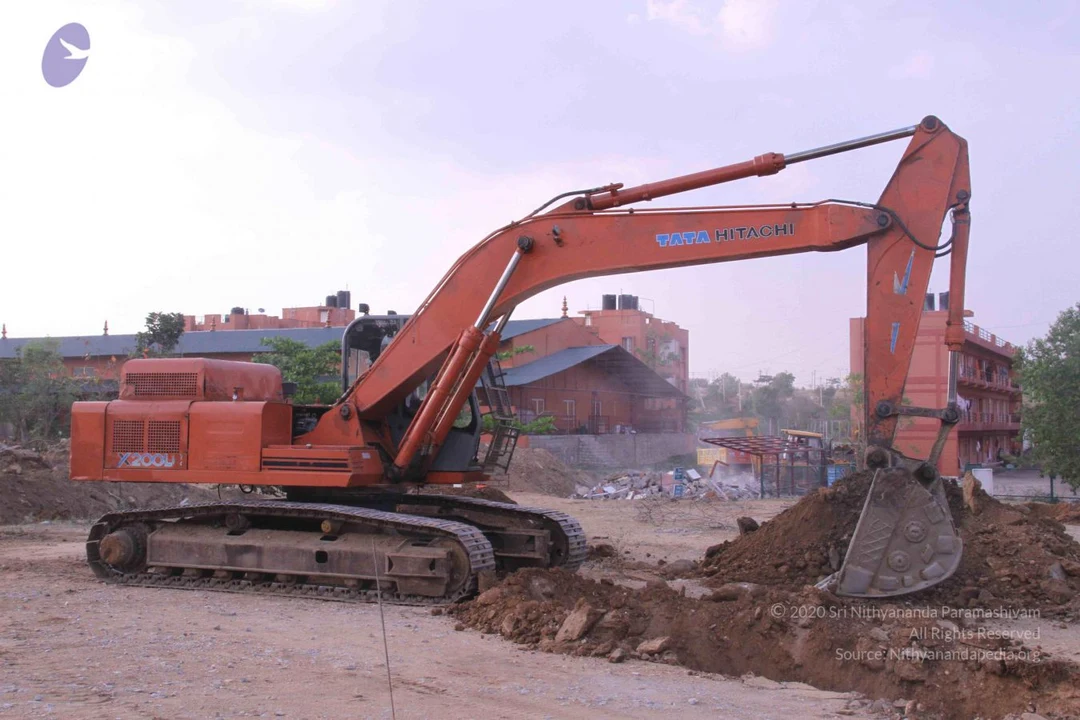
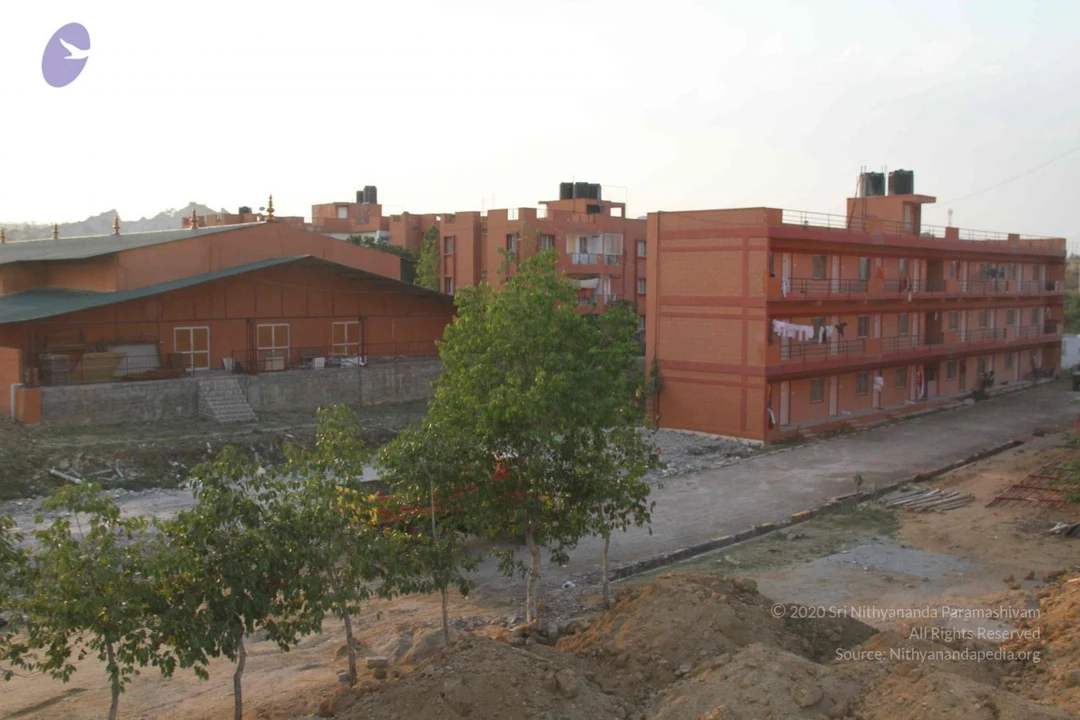
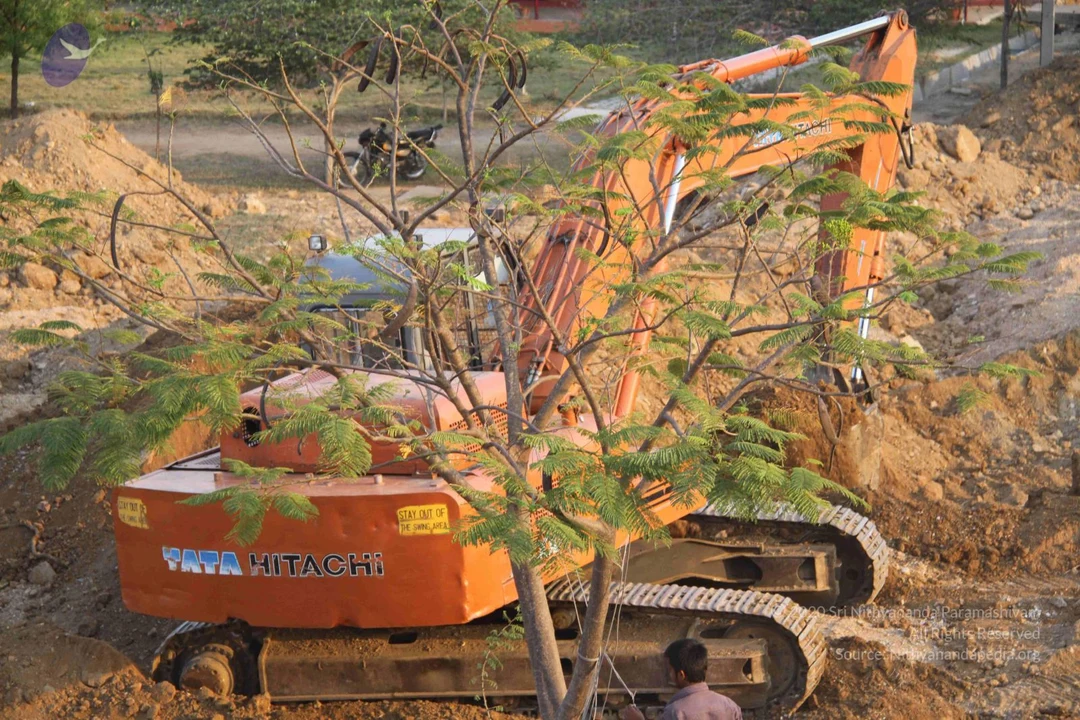
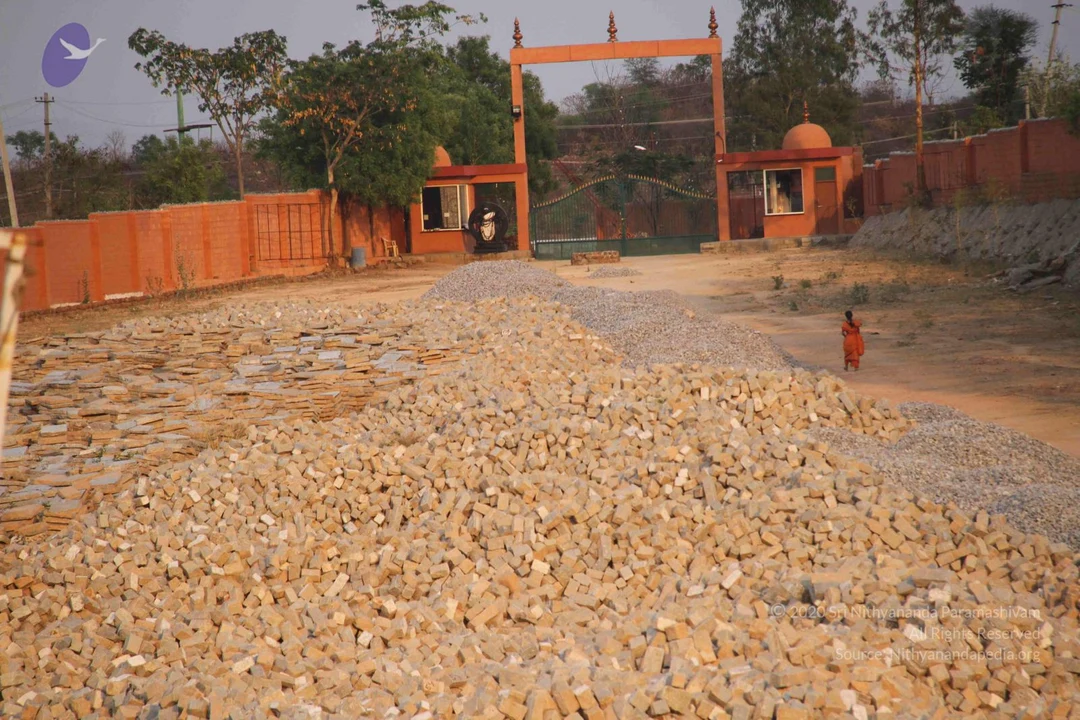
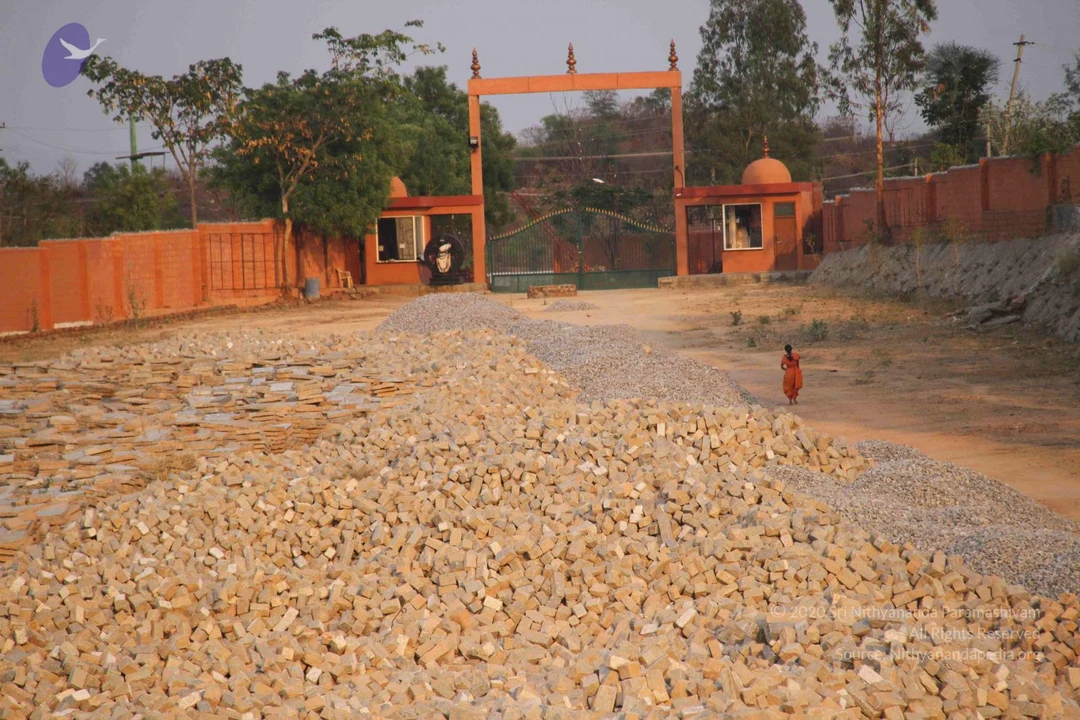
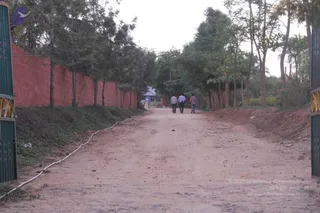
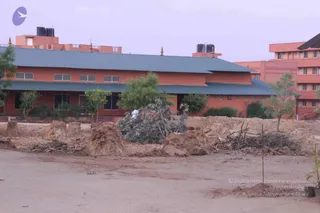
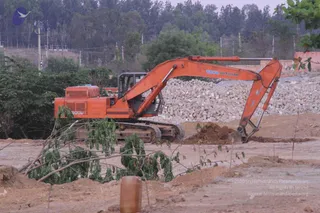
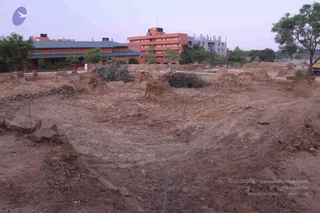
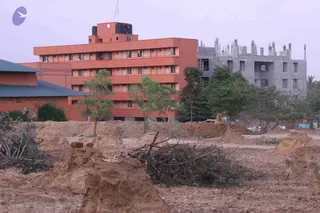
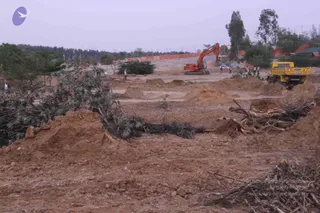
A dirt road runs between a tall red brick compound wall on the left and tree-lined grounds on the right, leading toward a distant structure. Three men walk away from the camera down the middle of the road: the one on the left wears a white shirt and dark trousers, the centre man a white shirt and dark trousers, and the one on the right a pink shirt. A green metal gate with gold ornamental panels frames the foreground on both sides, and a white hose lies along the left edge of the road. Pink flowering shrubs grow on the right.A photograph of an ashram site showing a long terracotta-coloured single-storey building with a dark green-grey metal roof and small finials along its ridge. Behind it rise taller orange-pink multi-storey blocks with water tanks on the roofs. In the foreground, cleared dusty ground holds tree stumps, piles of cut branches and dug earth, with a few saplings and a small potted plant at the right edge. A faint figure in white stands near the centre of the brush pile. No person is clearly identifiable, and there is no visible ritual or event.A photograph of an orange Tata Hitachi excavator working on a dirt site. The excavator's boom and bucket are extended over churned brown earth, and a stack of pale grey paving bricks sits behind it. Scrubby trees and a utility pole line the background, and a rusty orange barrel lies in the foreground beside a bare sapling. No people are visible in the scene.A photograph of a cleared, excavated red-earth plot at an ashram site. Scattered dirt mounds, piled dry brush and cut stumps fill the open ground, with tyre tracks through the soil. Behind it stand orange multi-storey buildings with dark roofs, a half-built concrete structure and tall green trees under a pale evening sky. A small white-clad figure is visible near the left edge of the building row, and a few distant figures appear on the right. No ceremony is visible.A photograph of a cleared construction site of reddish-brown earth with heaps of excavated soil and piled tree branches and felled foliage in the foreground. An orange tracked excavator digs in the middle distance, and a yellow dump truck stands at right. A few small figures in light clothing stand near the excavator, and an orange boundary wall and trees line the background under a pale sky.

PadaPuja-To-be-edited

1 photoSource gallery
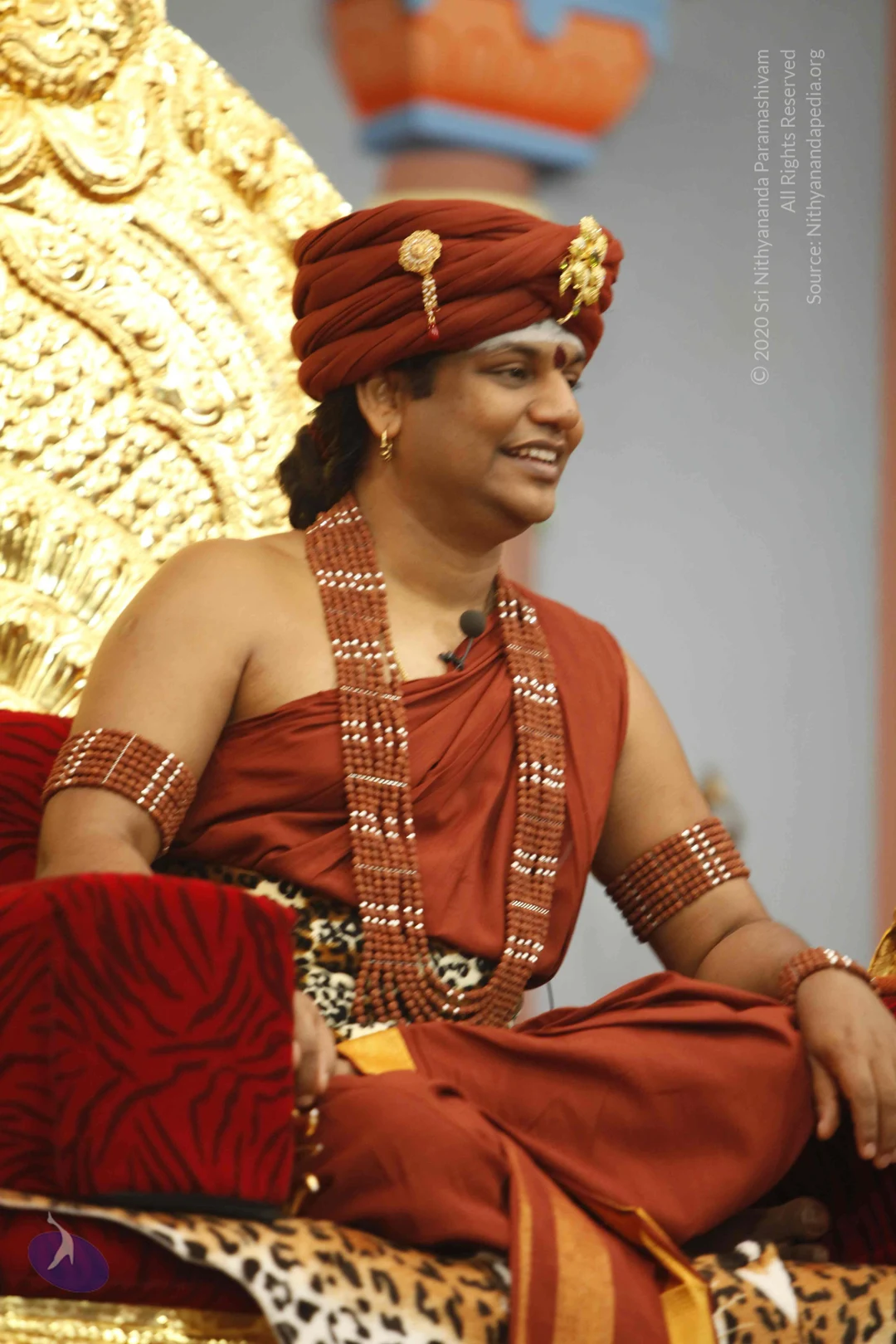
A seated man in saffron-orange robes with a gold border sits on an ornate golden throne with red cushions and a tiger-striped cloth. He wears multiple rudraksha malas, a white forehead band with a red dot, and small gold earrings. He smiles with hands folded, while a blurred arm in the foreground extends a lit oil lamp toward him. a person is seated in the throne with saffron robes and rudraksha malas as the honoured presence in the scene.

Satsang-and-Kalpaturu-To-be-edited

3 photosSource gallery
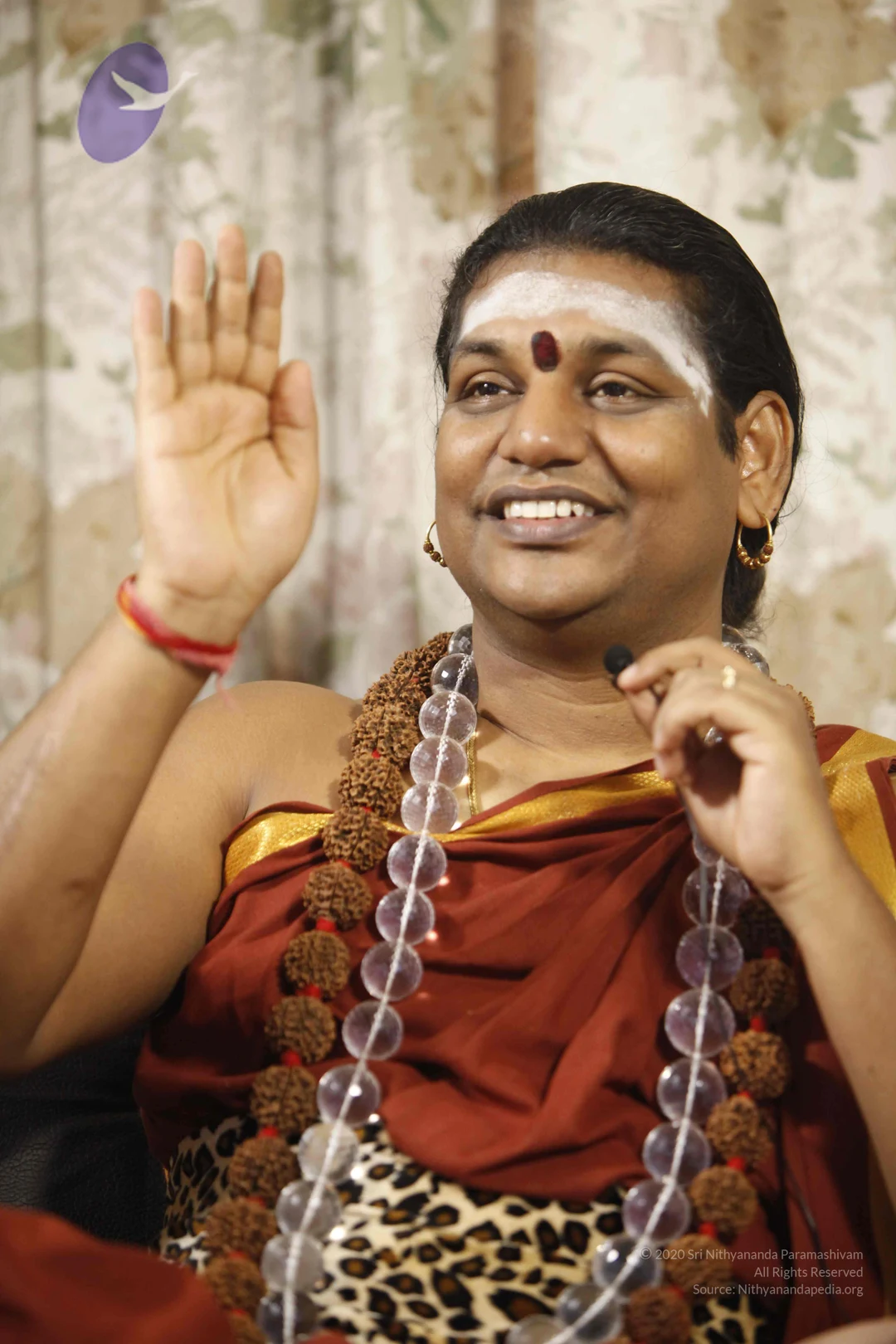
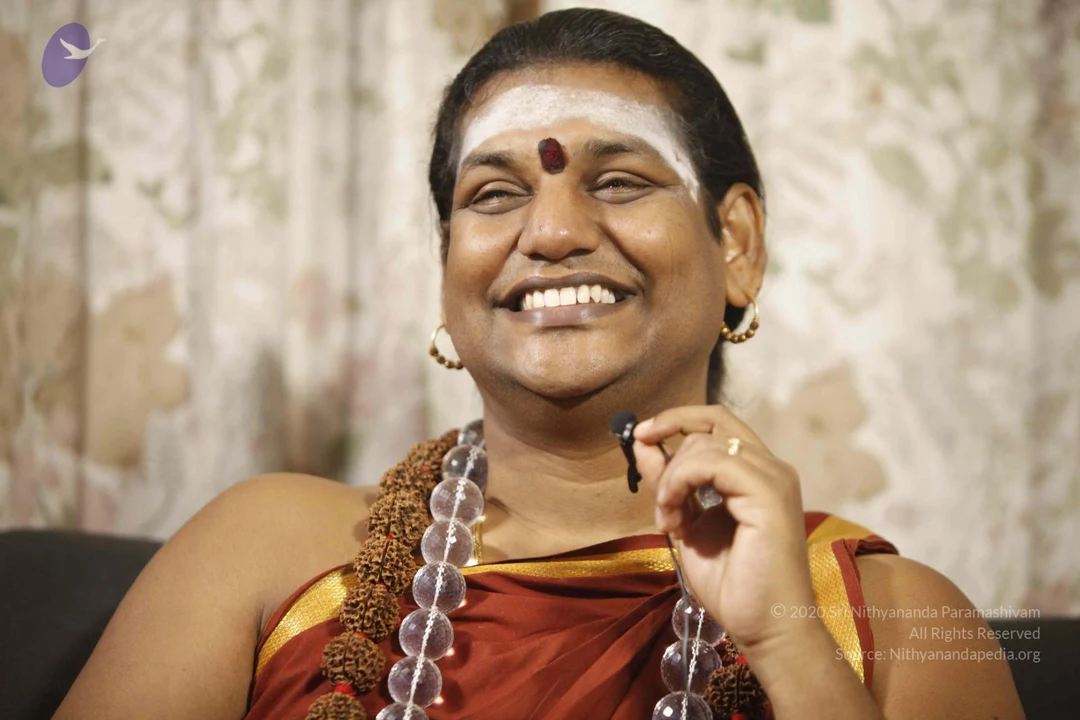
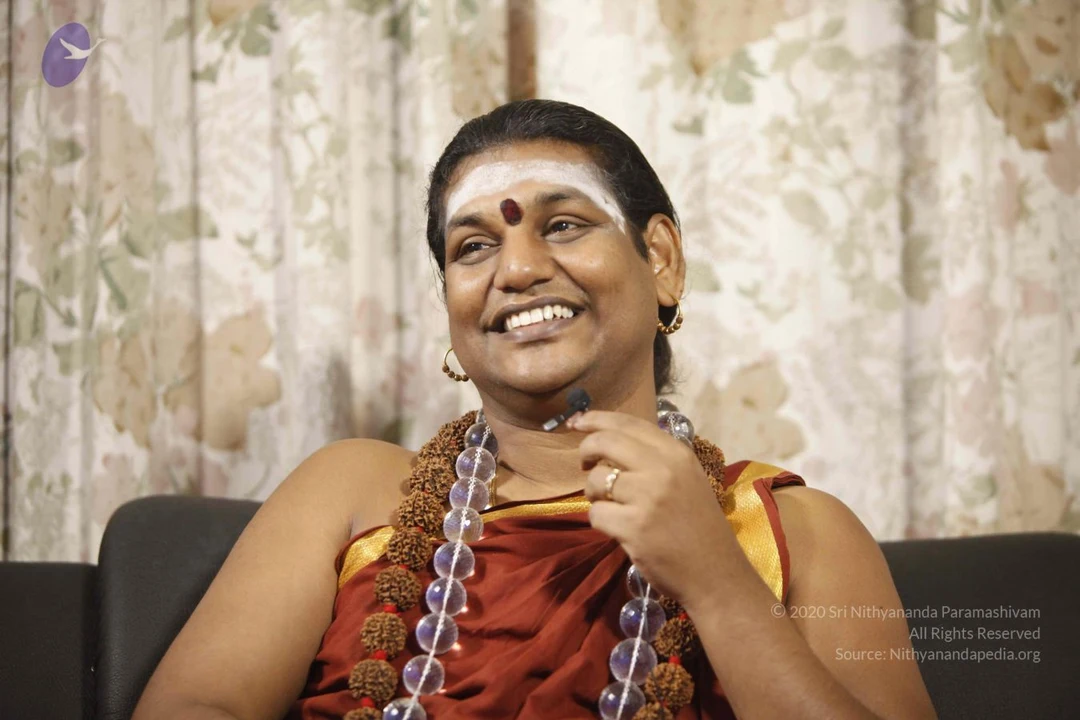
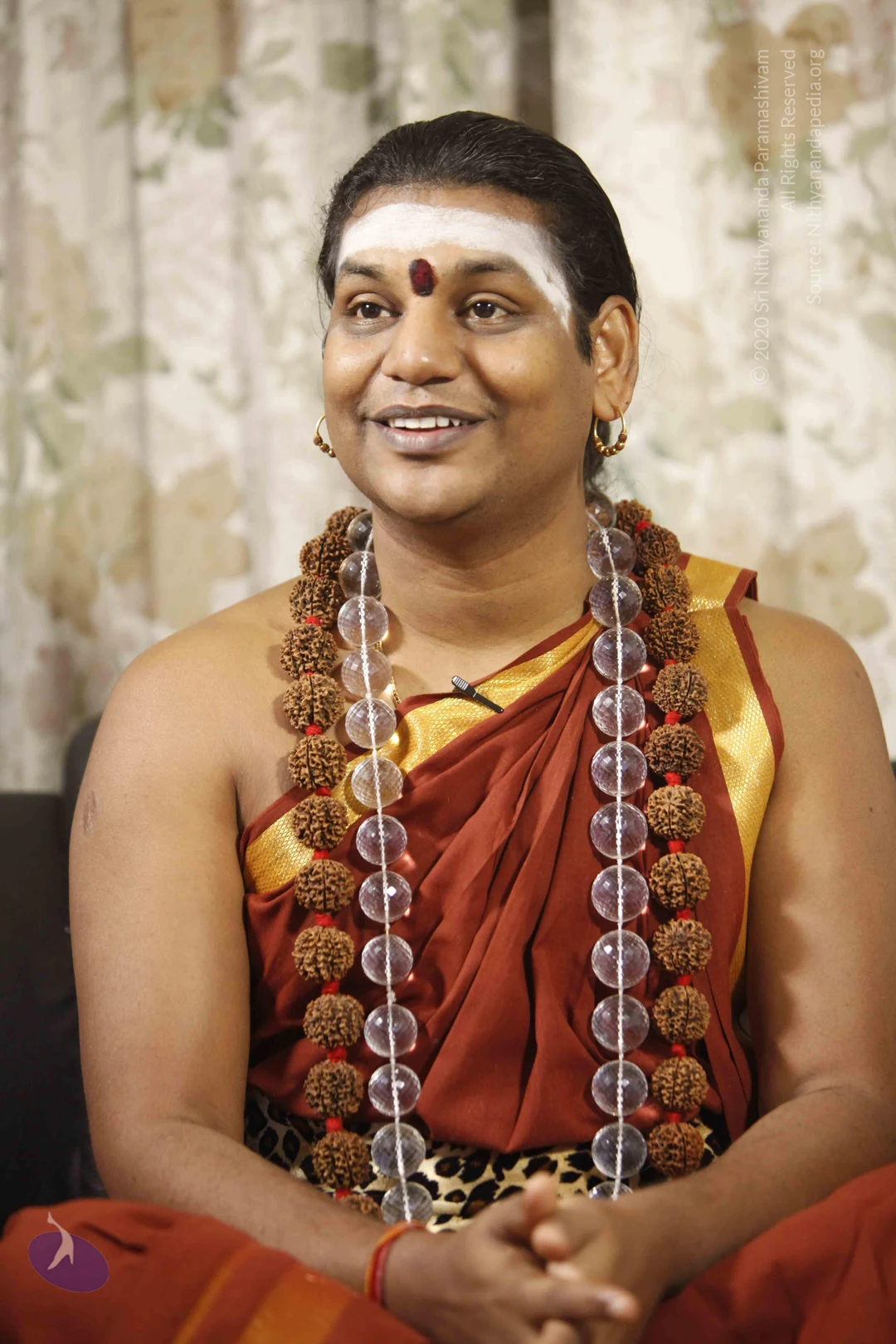
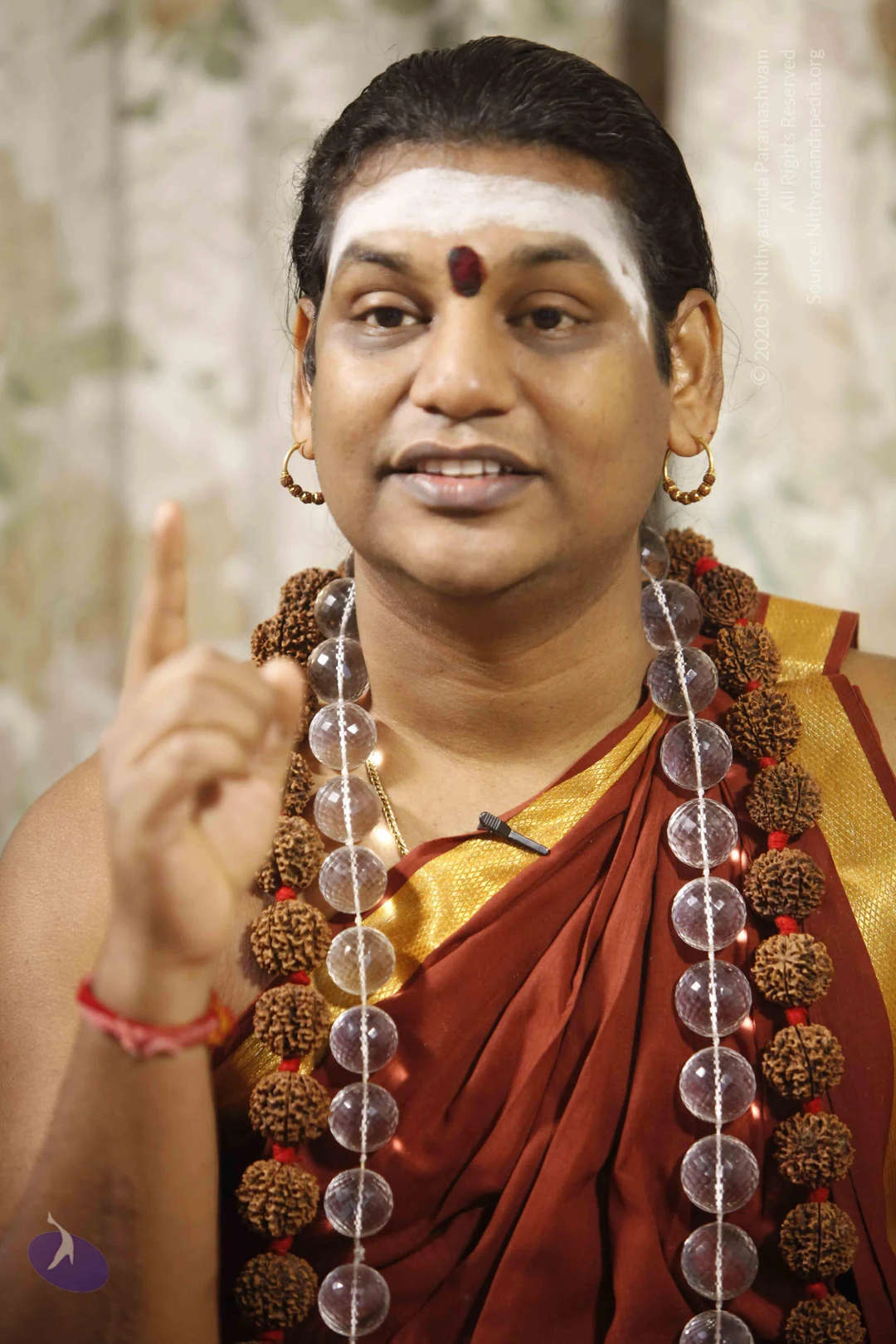
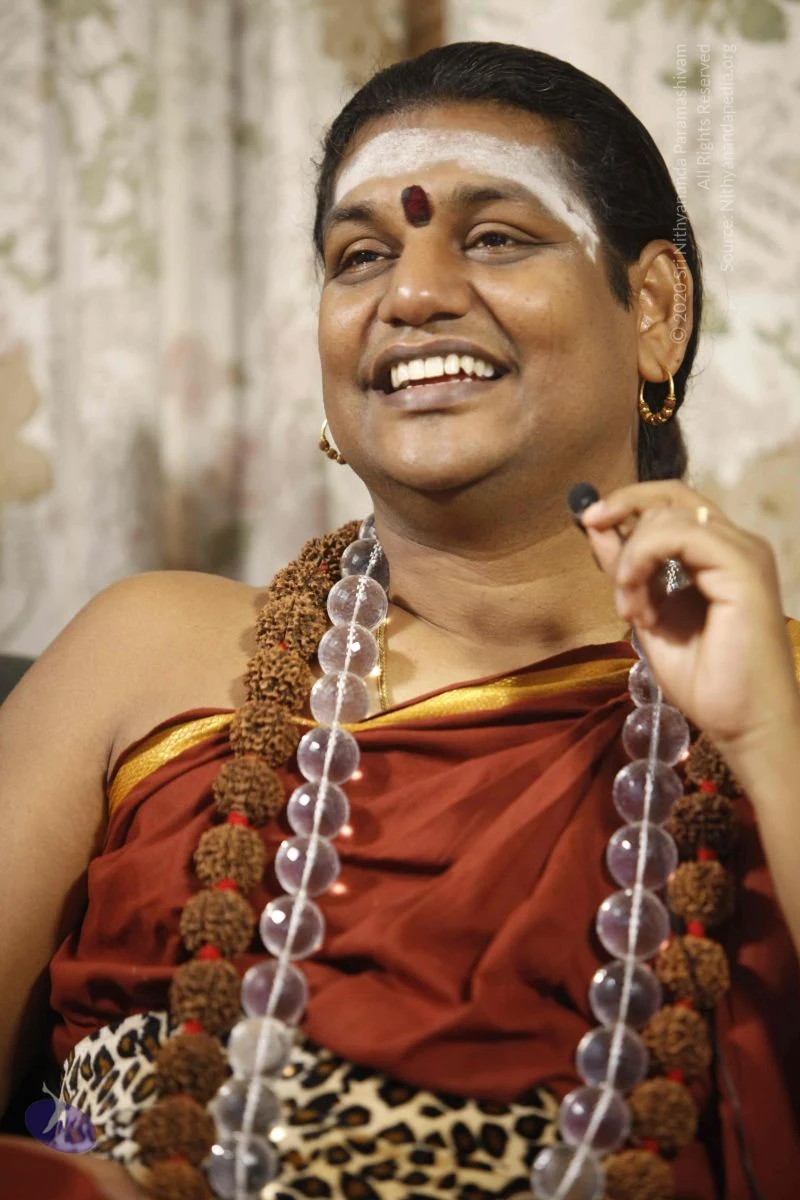
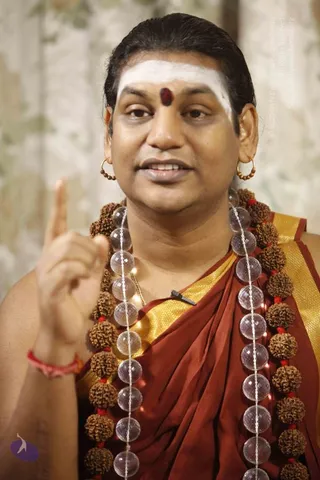
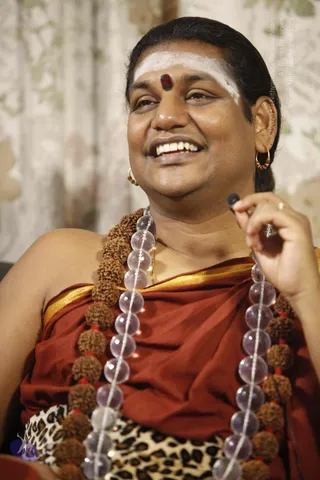
Photograph of a smiling man seated indoors in front of a floral patterned curtain. He wears a red-brown robe with a gold border, draped over one shoulder, and a long necklace of rudraksha beads alternating with large faceted clear crystal beads. He has a white horizontal tilak with a red dot on his forehead, a plain gold hoop earring, and his hands are clasped in his lap. a person on the basis of the saffron-red robe, rudraksha mala and ceremonial beaded necklace, with the page noting a person at the event.Close-up photo of a man speaking and raising his right index finger as if making a point. He wears a rust-red shawl with a gold border over his shoulders, a long necklace of large brown rudraksha beads alternating with clear faceted crystal beads, gold hoop earrings, and a red-cord bracelet. His forehead bears a white horizontal band with a red dot at the centre, and his hair is swept back. A soft floral-patterned backdrop fills the background, and a small clip-on microphone is visible at his chest.Close-up photo of a smiling person seated indoors in front of floral curtains. They wear a rust-red garment with a gold border, a leopard-print cloth at the waist, and layered rudraksha beads alongside clear crystal beads on a long mala. White ash marks the forehead with a red kumkum dot, and gold hoop earrings are visible. One hand holds a dark bead near the mala. Printed in the corner is a '. Given the page's reference to a satsang, this appears to be a person in a seated, discourse-like setting, based on rudraksha malas, saffron-red clothing and forehead markings

01-Sarva-Darshan

13 photosSource gallery
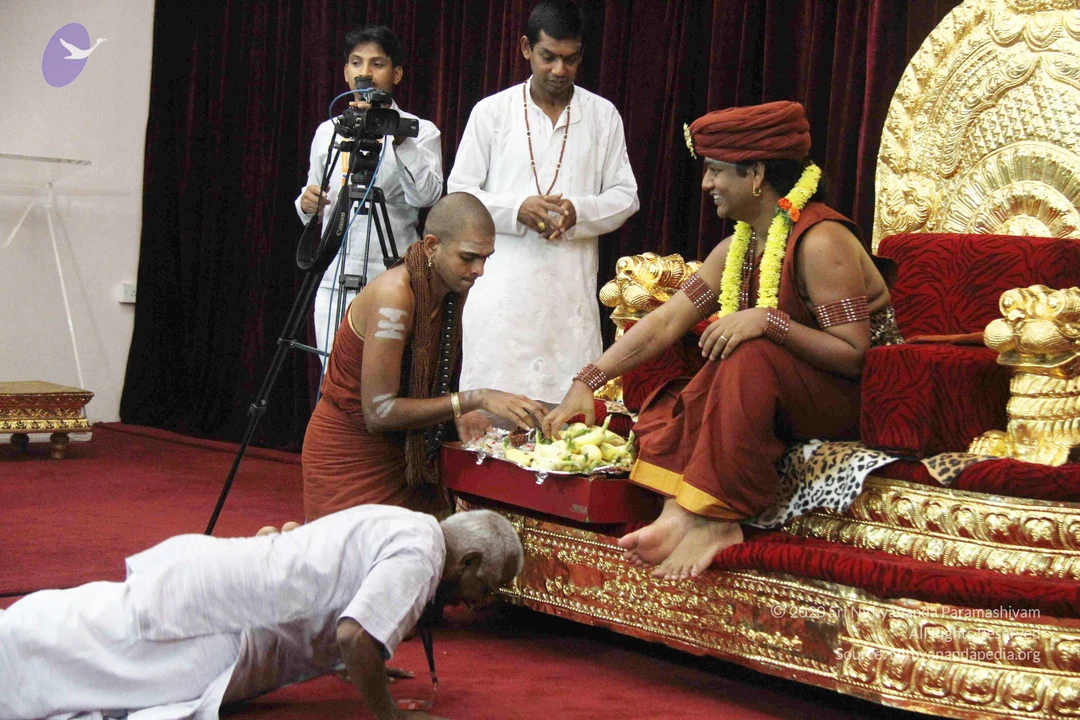
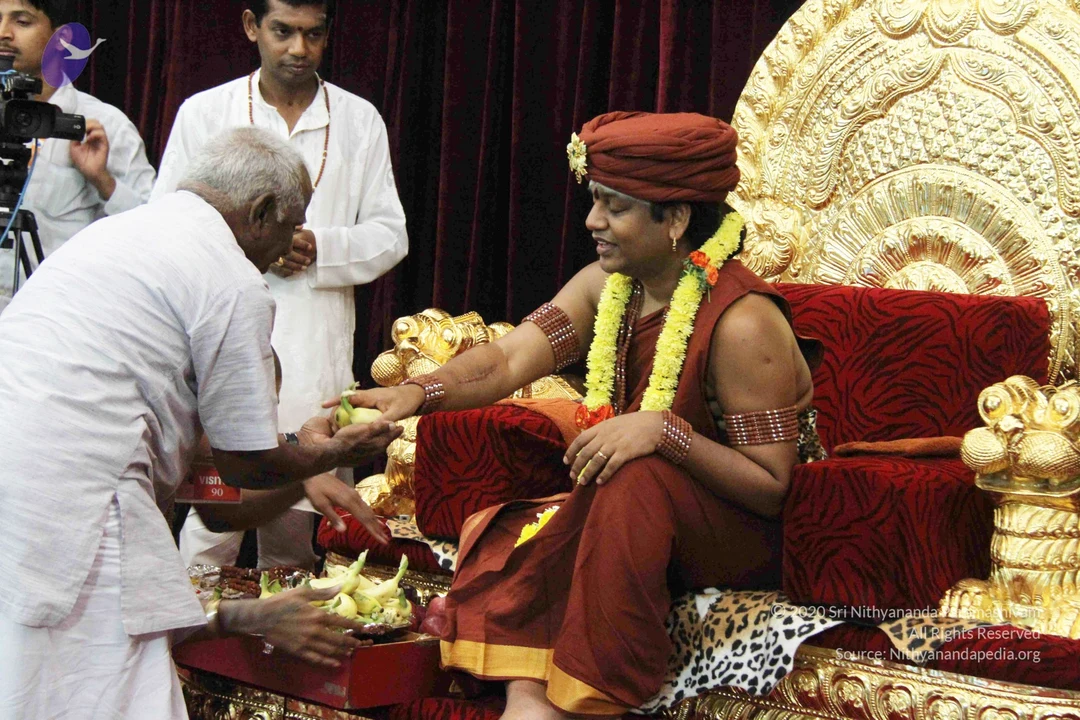
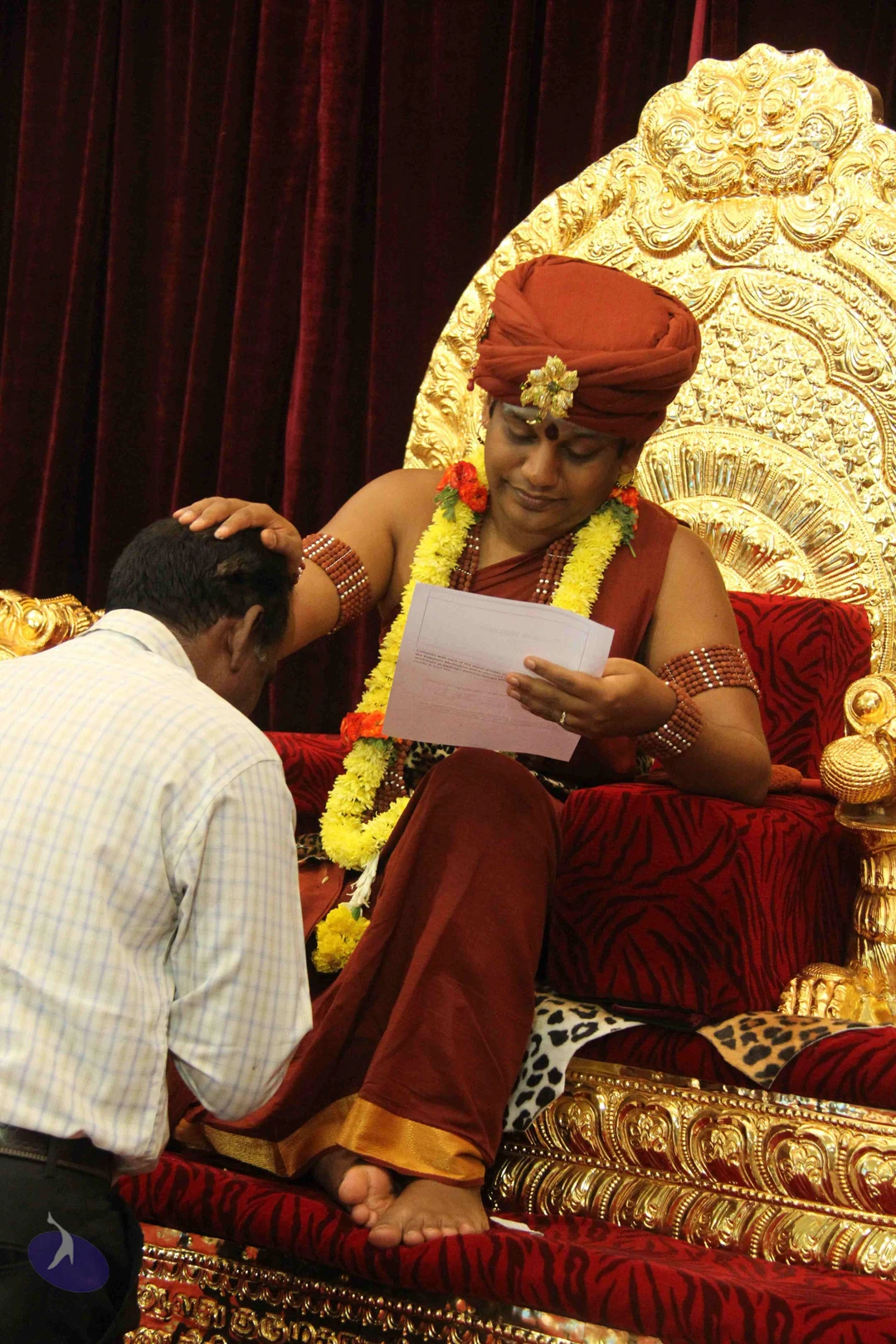
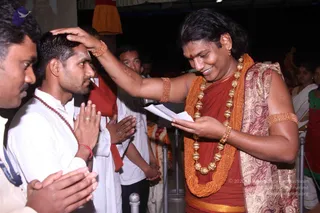
A photograph of a ceremonial moment on a red-carpeted stage before a dark red curtain. A seated figure on an ornate gold-and-red throne wears an orange-red turban, a yellow and white flower garland and bangles, and an orange-red cloth; a leopard-print cloth lies on the seat. Two people stand by: one in a white kurta with a rudraksha mala holds a tray of fruit, and an ash-smeared figure in orange kneels offering it. In the foreground a bald man in white kneels prostrate on the carpet. A cameraman with a tripod-mounted camera stands at left. The seated figure's identity is uncertain from appearance alone.A photograph of a seated figure on an ornate golden throne with red cushions and a leopard-print cloth. The seated man wears a rust-red turban with a small white flower, a saffron-orange robe, yellow and white flower garlands, and wide beaded bangles on his upper arms. An older man in white dhoti and shirt leans forward, offering green coconuts or fruit from a tray. A man in white kurta stands behind with a rudraksha mala, and a camera on a tripod is visible at left. Swamiji (probable): the seated man's turban, saffron-orange clothing, garlands and bangles match the page's cues.A seated figure in an orange-red turban, orange-red robe and a yellow-and-white garland sits on an ornate gold throne with red velvet cushions and a leopard-print seat cover, holding an open book. A man in a white shirt and white dhoti bends forward to offer a tray of bananas and sweets placed on a red cloth. Behind them a younger man in white with a rudraksha mala stands beside a videographer holding a camera on a tripod. Red curtains hang in the background. The throne figure has a visible orange-red turban, rudraksha-style accessories and a flower in the turban, consistent with a person presentation.A seated figure in a rust-red turban and matching red-orange robe sits on a red tiger-striped cushioned seat in front of an ornate gold throne backdrop with a deep maroon velvet curtain. He wears a long yellow-and-orange marigold garland, a rudraksha mala, beaded bangles on both upper arms and wrists, and a red bindi. He is smiling broadly and extending his right arm toward a man in a white shirt and white dhoti who leans in from the left, reaching toward a brass tray of offerings holding fruit, bananas, betel-leaf bundles and packets. Another white-clad person stands behind at the top left. A gold ceremonial figure sits on the floor near the seat. A purple logo appears at the upper left corner.A seated saffron-robed figure on an ornate gilded throne with a carved golden back and red cushions receives a paper from a young man in a white and navy striped polo shirt who leans in from the left. The seated figure wears a red-orange turban with a small floral ornament, a yellow and orange garland, rudraksha beads, bangles and an armband, and holds the paper with both hands. A second person in white ritual clothing stands at the left edge, and a deep red curtain forms the backdrop. a person: the seated figure has a shaved-looking, turban-covered head with no visible long hair, and the appearance cues are not distinctive enough to confirm identity.A seated figure on an ornate gold-and-red throne with a red-zebra-print cushion and gold-carved armrest, in front of deep red velvet drapes. The figure wears a rust-red turban with a gold floral brooch, a rust-red garment, red and white beaded rudraksha-style bracelets on the upper arms, and a garland of yellow and orange marigolds over a red-brown bead mala. Barefoot, the figure holds a sheet of paper and reads it. A man in a white checked shirt and dark trousers kneels or bends at the left edge, reaching toward the figure. a person by appearance cues: ornate rust-red turban, bead malas and ceremonial throne seating.

02-Morning-Session
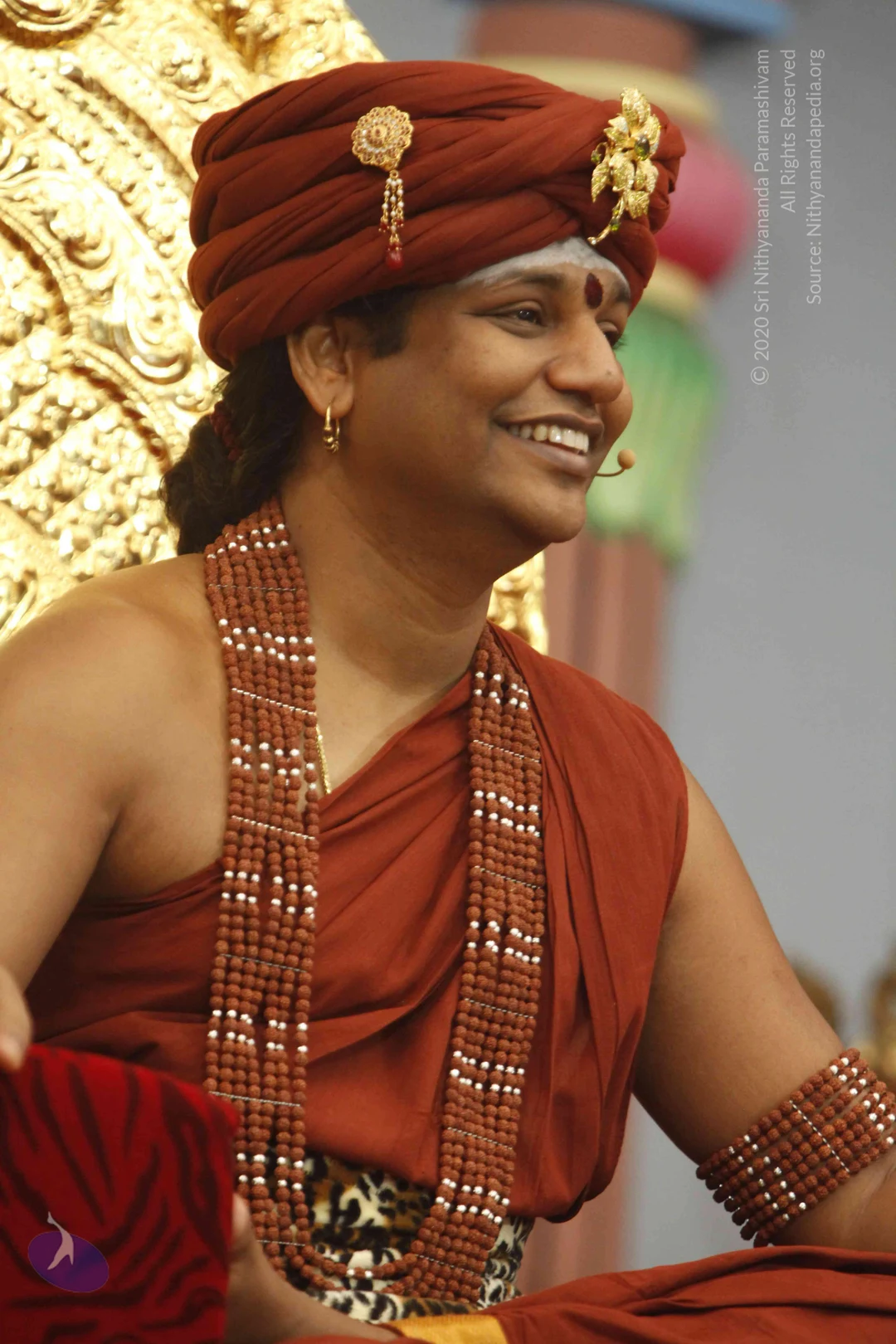
9 photosSource gallery
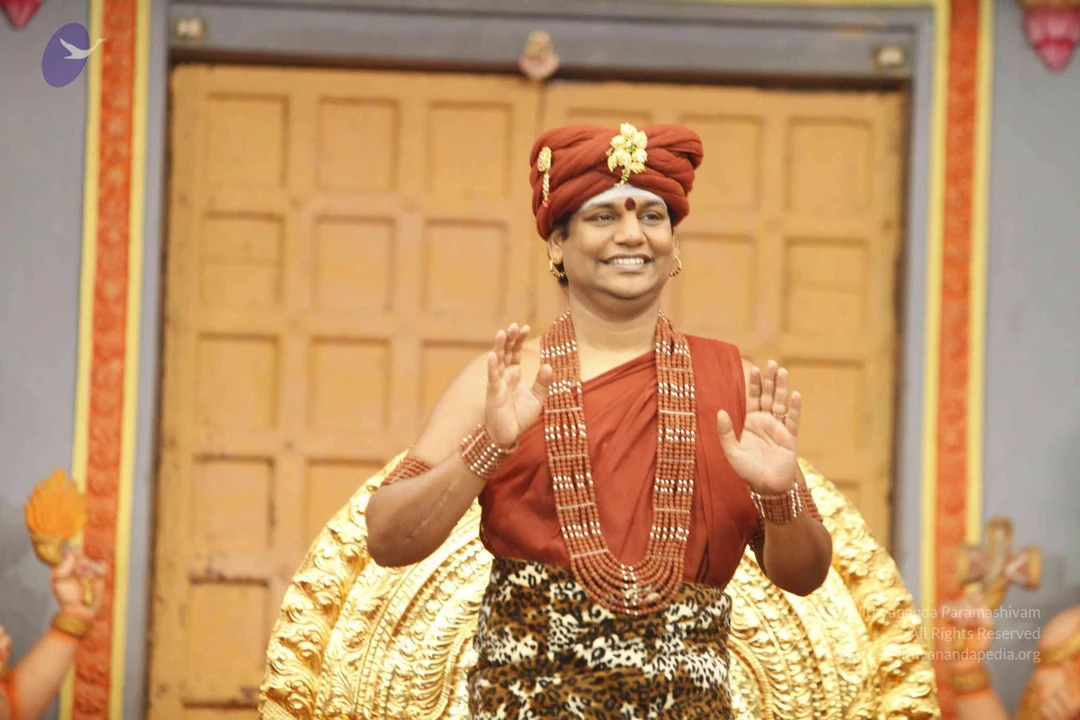
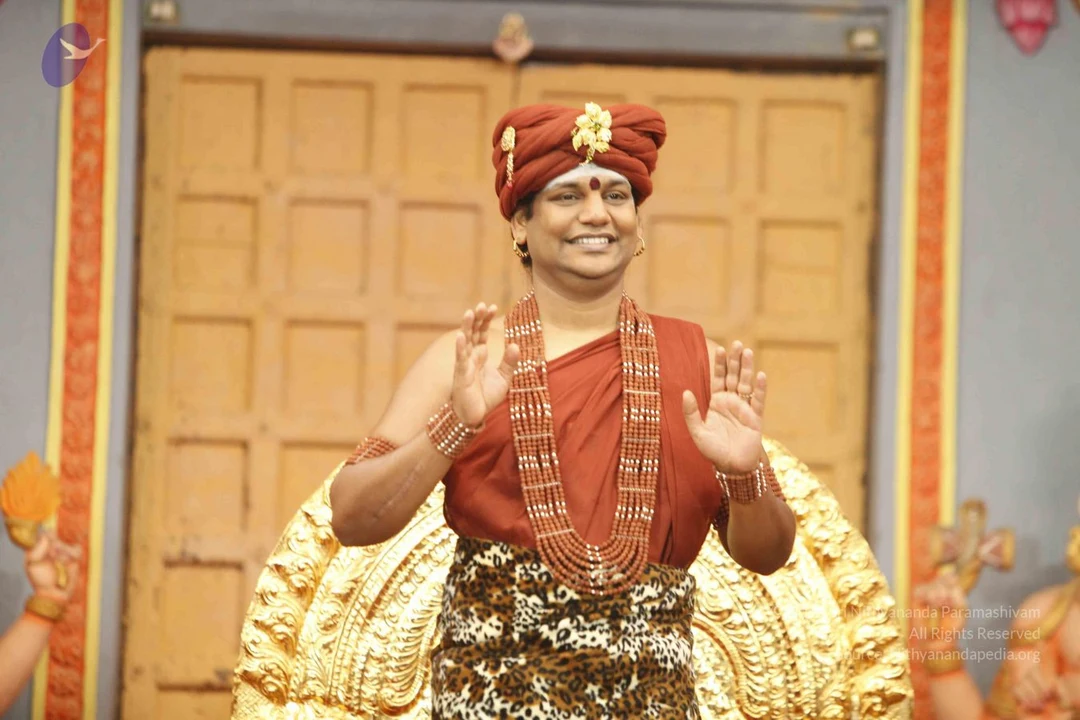
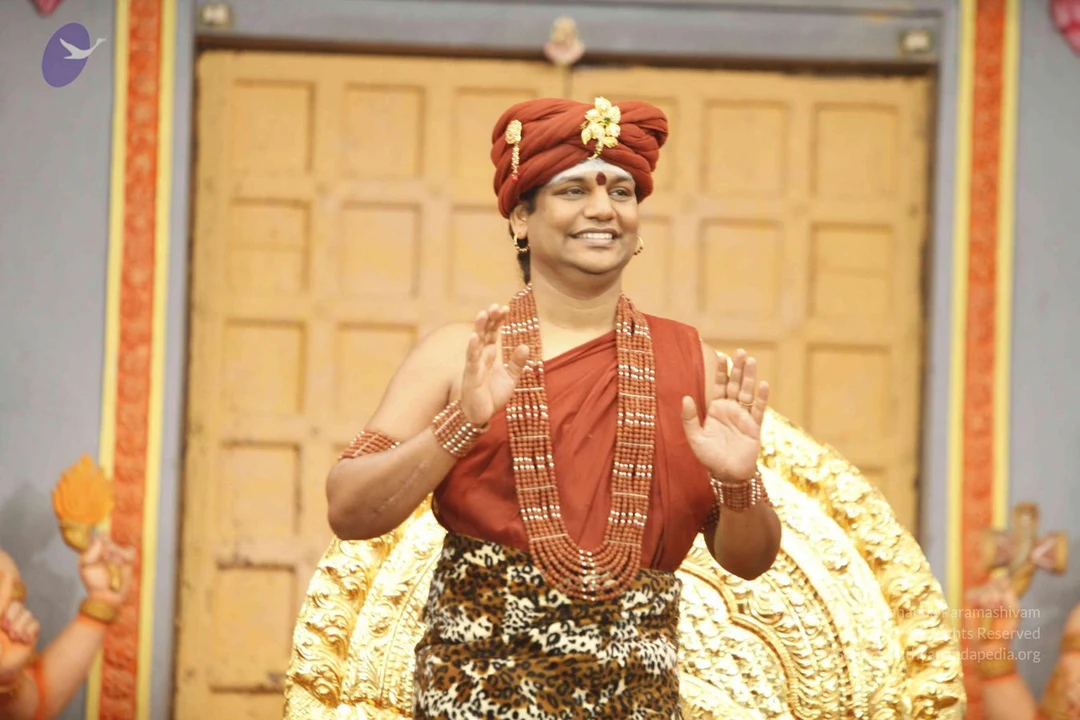
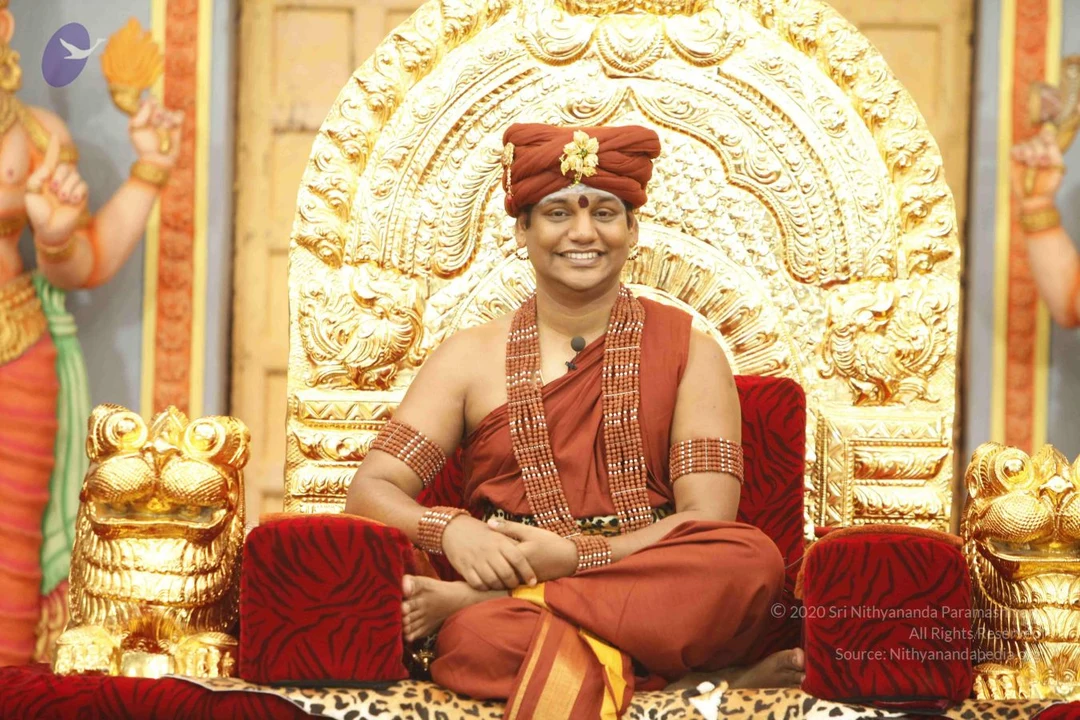
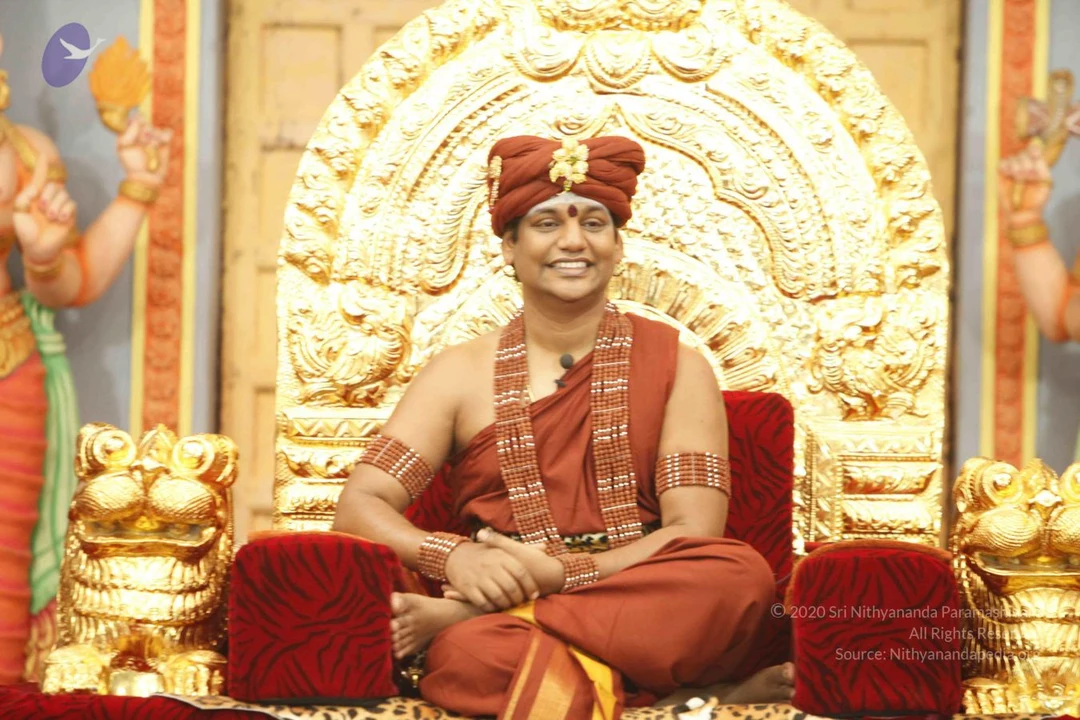
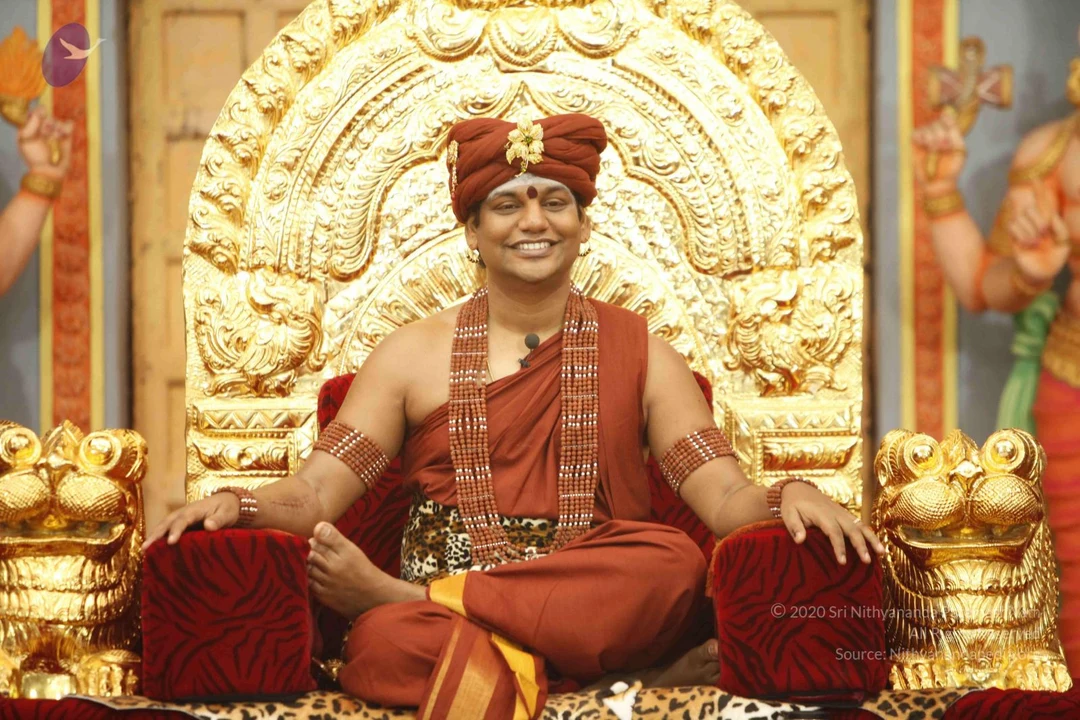
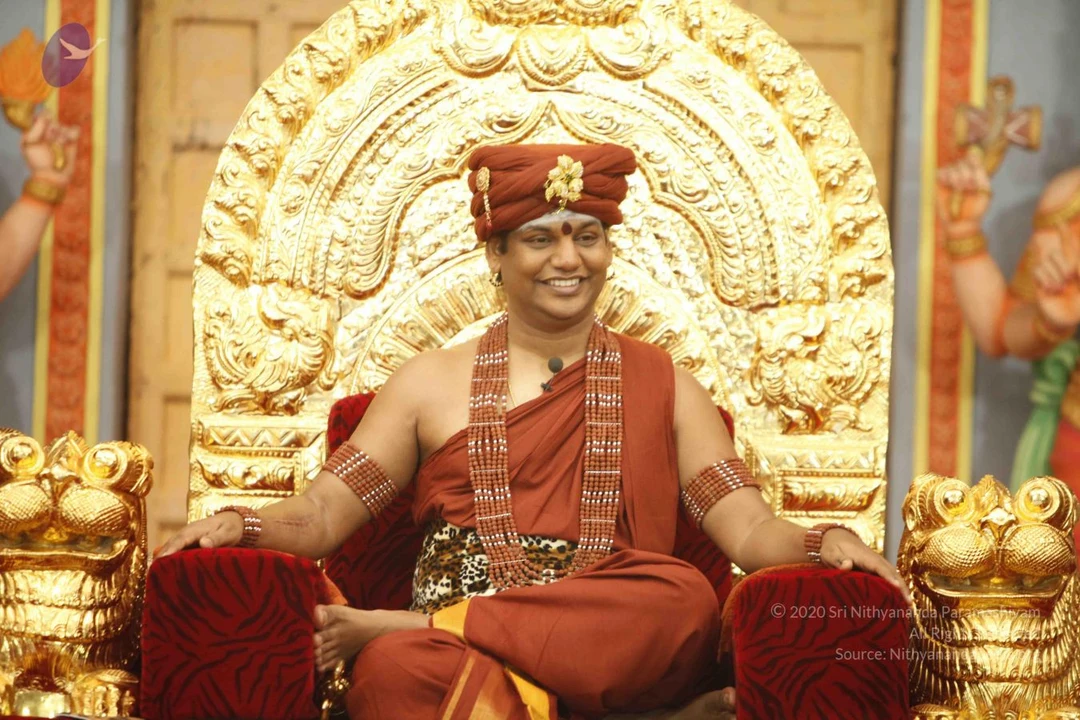
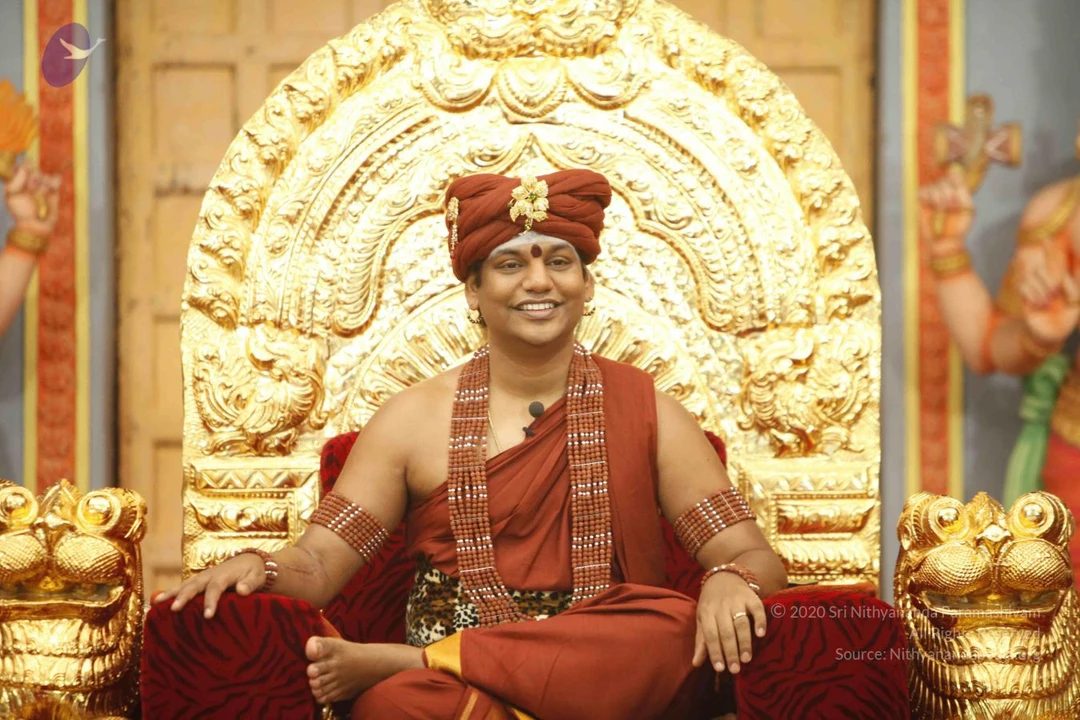
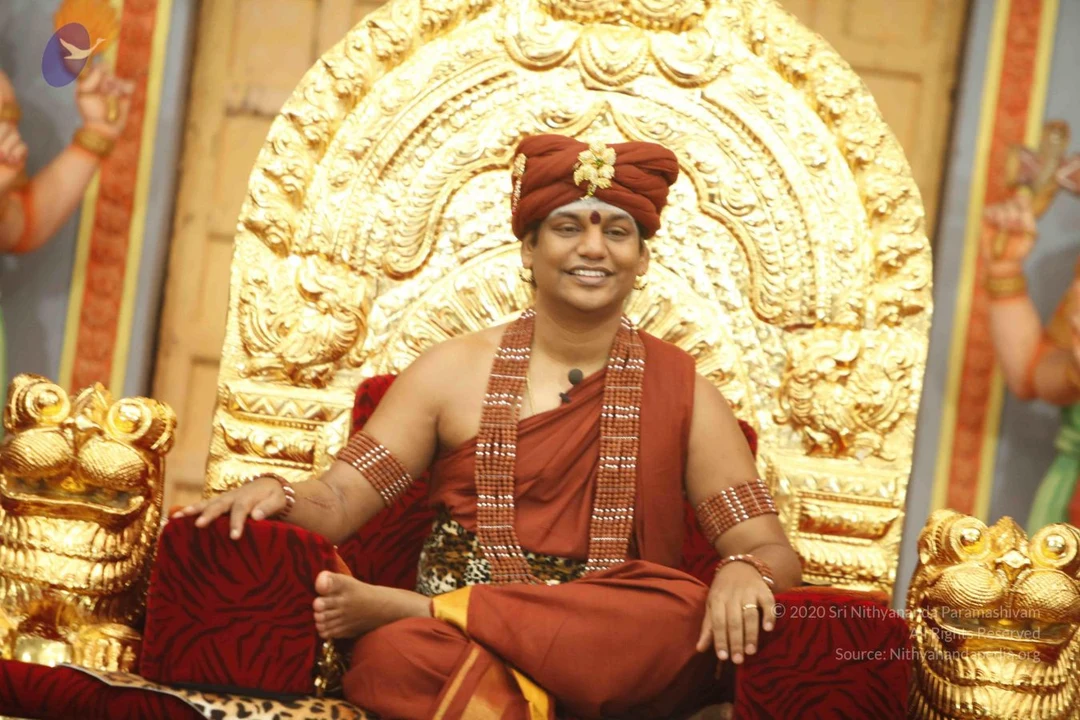
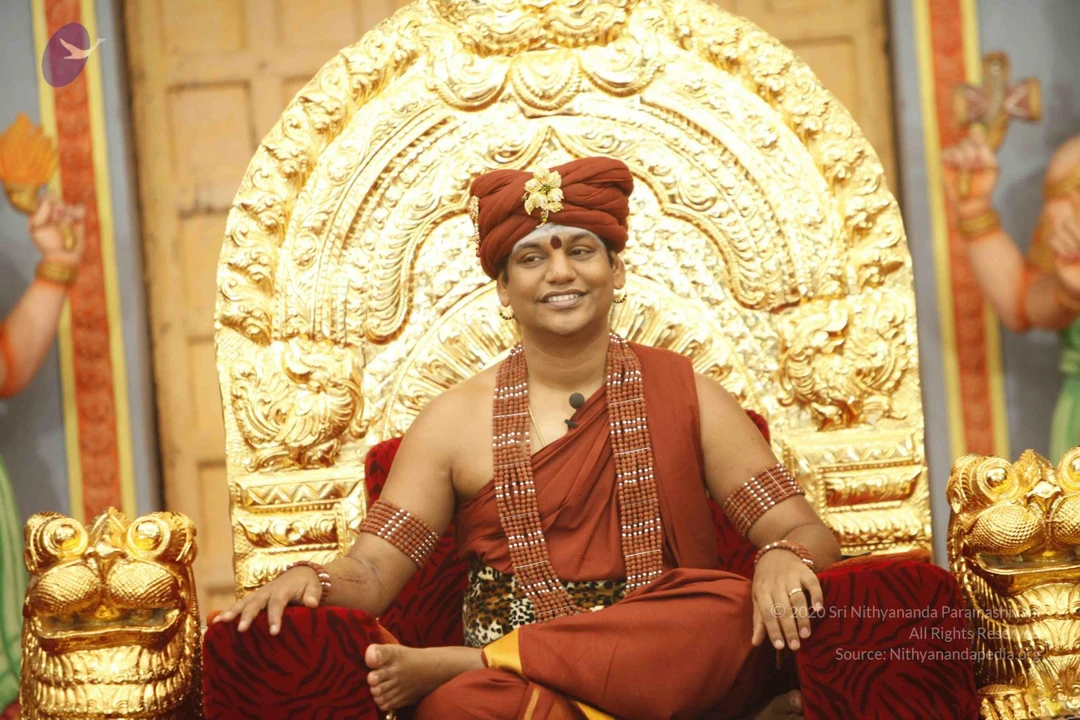
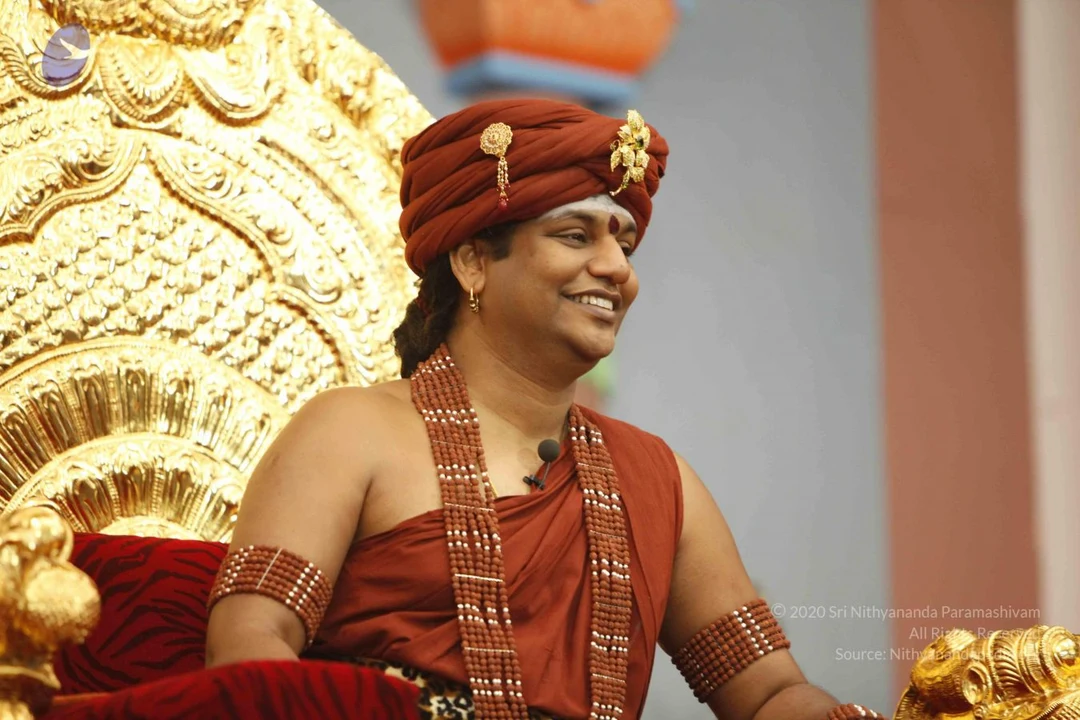
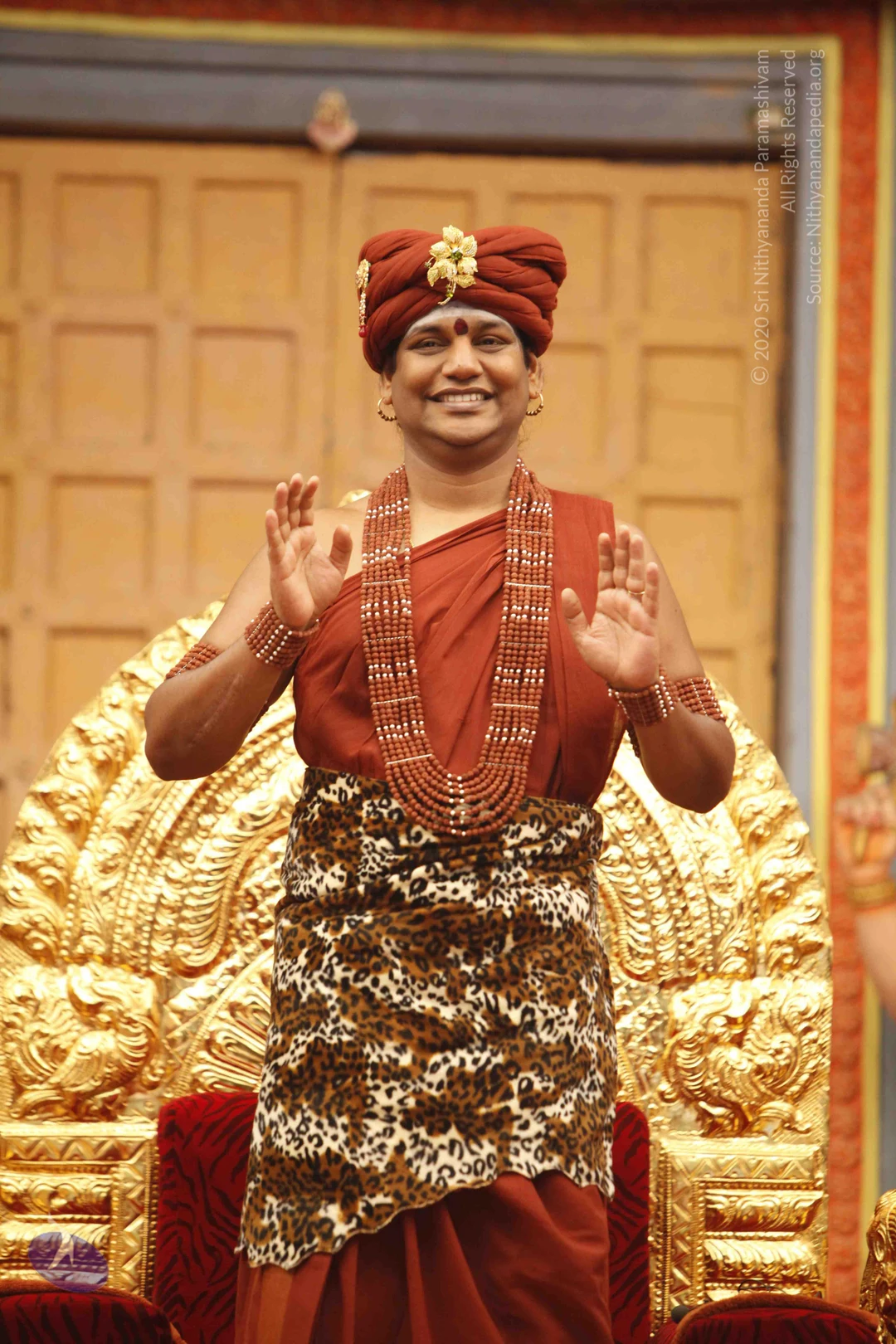
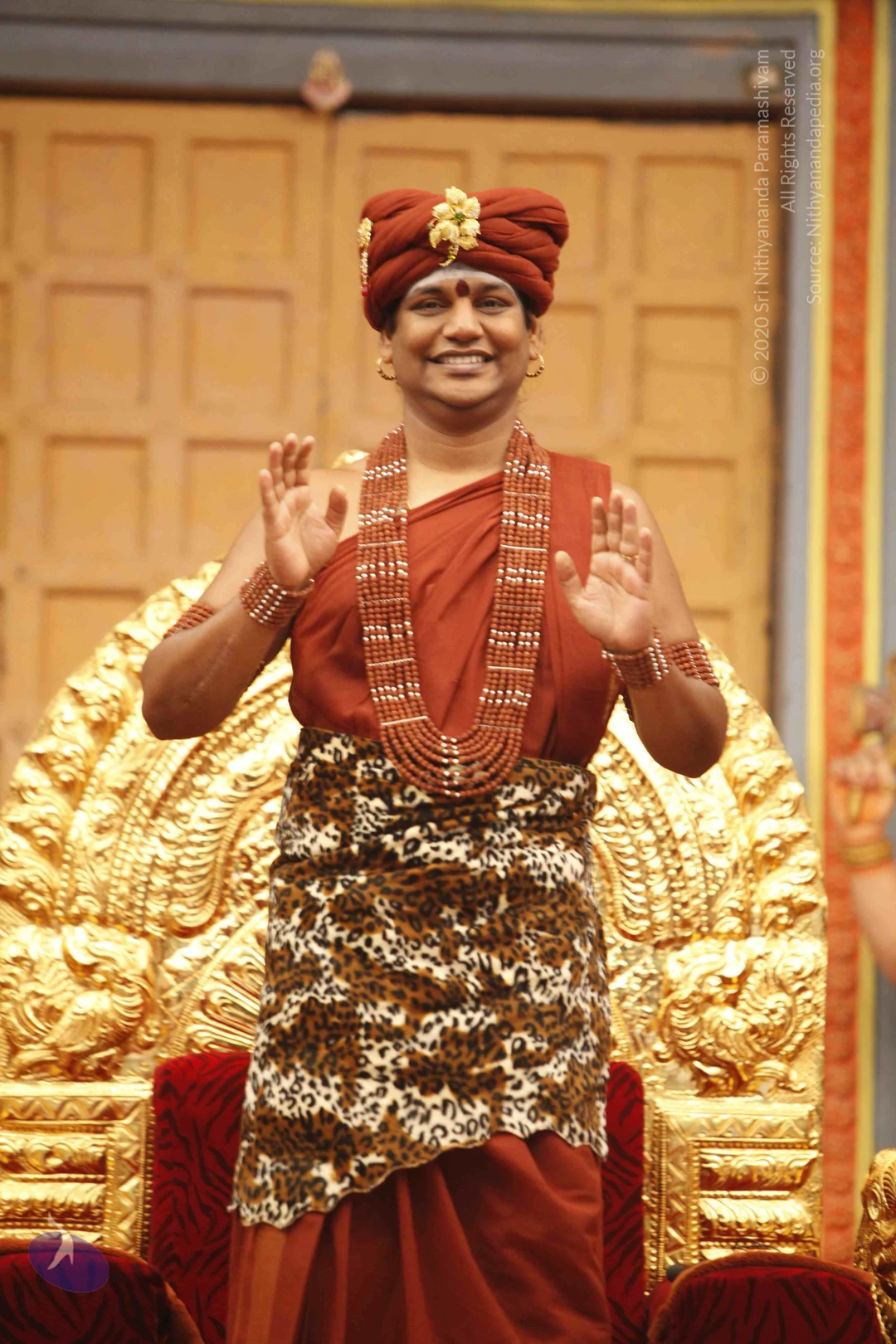
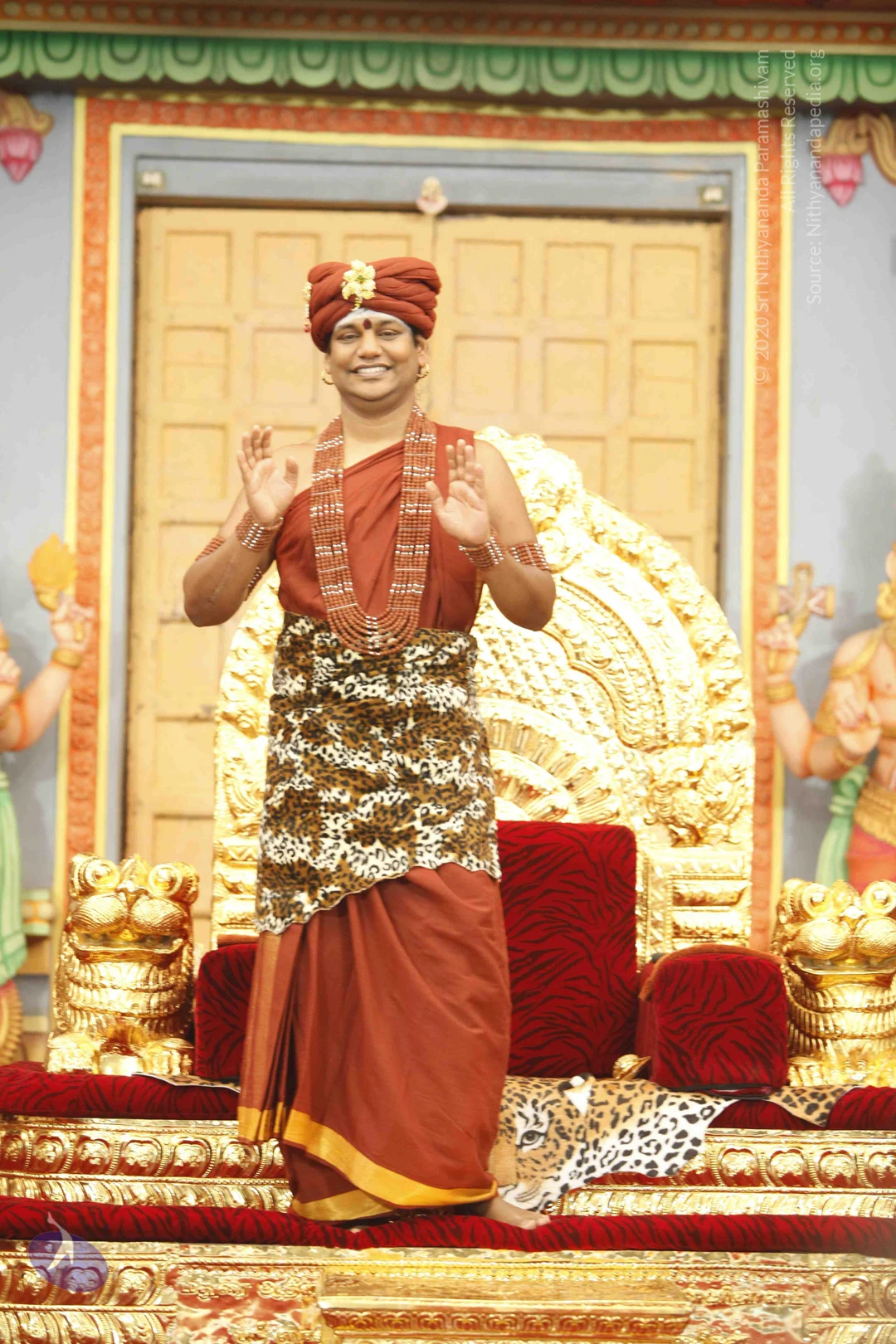
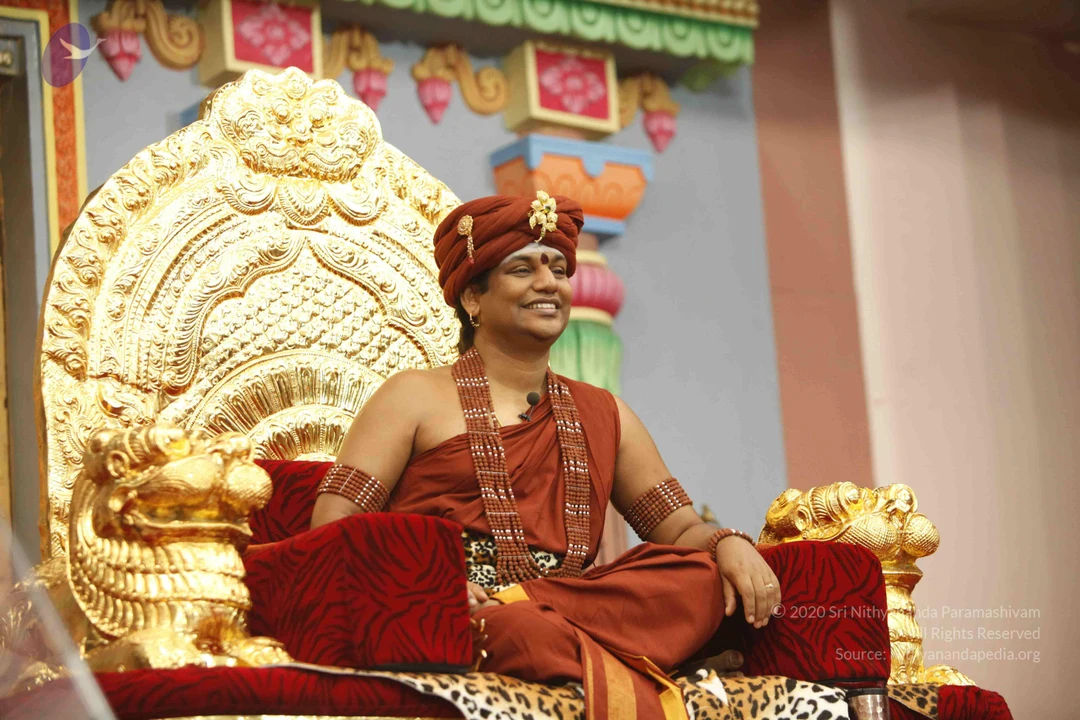
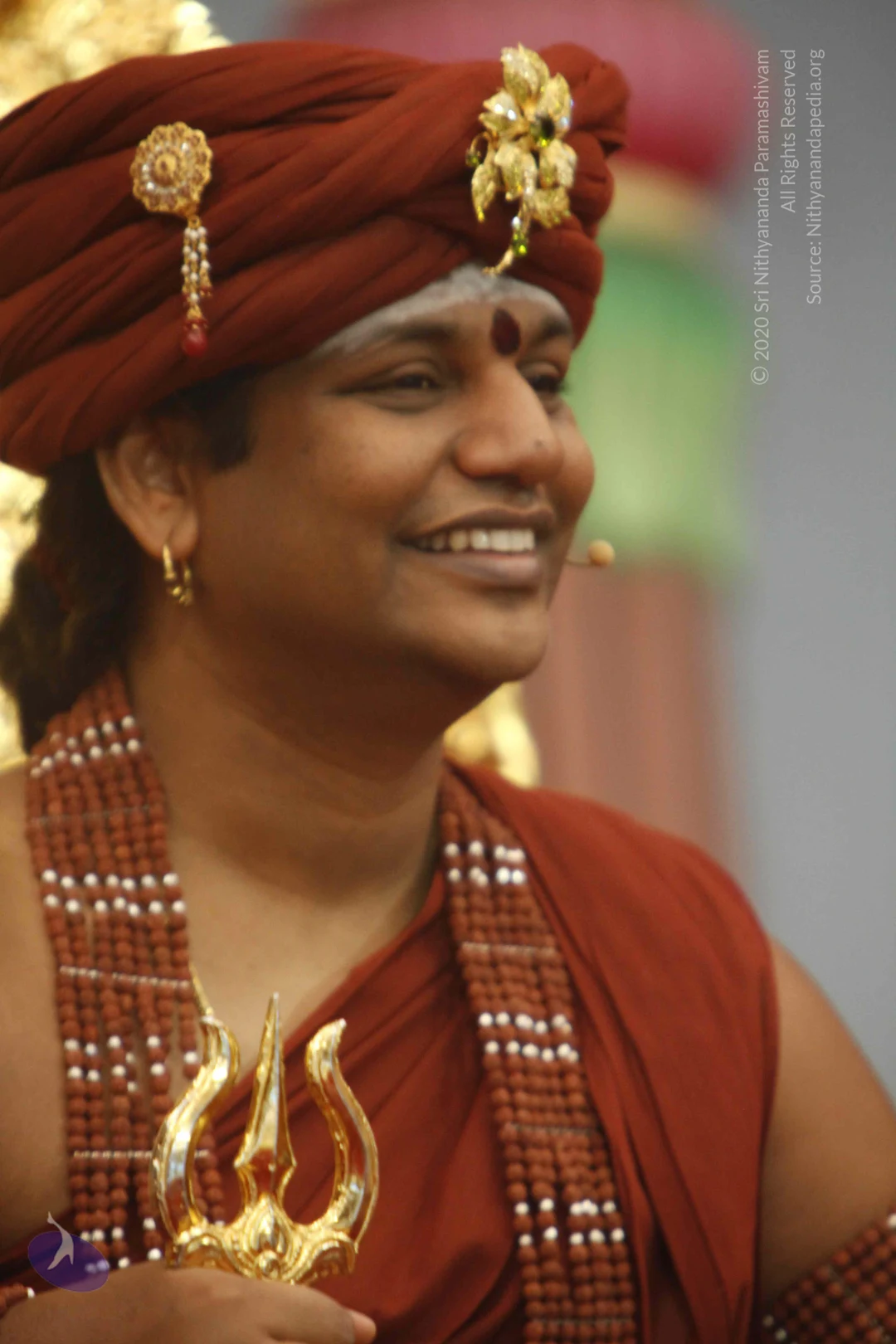
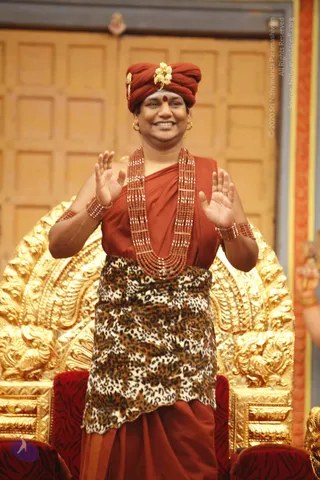
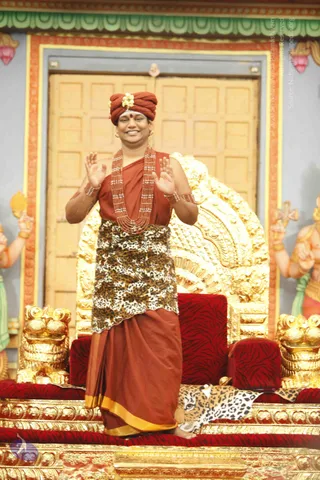
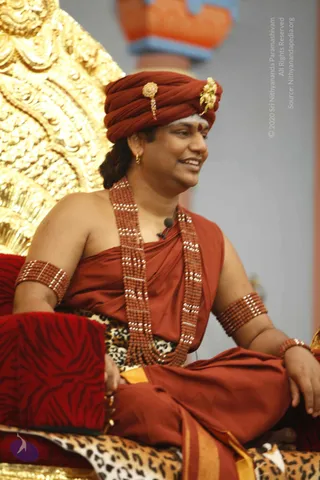
A man stands before an ornate golden throne with carved gilded floral and scrollwork, in front of a wooden panelled door. He wears a red-orange turban with a gold floral brooch, a red-orange wrap over the upper body, a leopard-print cloth wrapped at the waist, and multiple strands of red-orange beaded necklace with white accents, plus matching beaded bracelets. He has a red bindi on his forehead and smiles while raising both palms outward in a welcoming gesture.A smiling person seated on an ornate gilded throne with carved lion-like finials and red velvet cushions, raising both open palms in greeting. They wear a deep red-orange turban decorated with a gold flower ornament, a red-orange robe, a leopard-print shawl draped at the waist, multiple strands of red-orange beaded mala necklaces with white bead accents, beaded bracelets, and gold earrings, with a red bindi on the forehead. Behind them are carved wooden panels in warm gold tones. The person appears to be a probable Swamiji based on the saffron turban, layered rudraksha-style malas and ornate ceremonial styling, seated in a teaching setting.A smiling man in a red-orange turban with a gold floral ornament stands before an ornate gold throne with red velvet seating and a carved wooden door behind him. He wears a red-orange shawl draped over his shoulder, a leopard-print cloth wrapped at the waist, multi-strand red and white beaded necklaces, beaded bracelets, and gold earrings. A red bindi marks his forehead. He raises both palms outward in a gesture of greeting or blessing. A partially visible hand appears at the right edge.A smiling man stands before an ornate gilded throne with carved lion-like motifs and a red velvet seat, raising both hands palms-outward in a blessing gesture. He wears a rust-red turban with a gold floral ornament, a red tilak on his forehead, gold earrings, multi-strand red and white rudraksha malas, and a red-orange robe with a leopard-print wrap around the waist. Wooden panelled doors form the backdrop. Swamiji (probable): a man in a red turban, rudraksha malas and saffron-toned robes with a leopard-print wrap, seated or standing before a gilded throne during a satsang-style gathering. Only one physical person is visible, though a partial hand appears at the right edge.A smiling person stands on a red and gold throne stage, raising both hands in blessing. They wear a rust-red turban with a small gold floral ornament, a rust-red garment with a leopard-print wrap, a long multi-strand red-and-white beaded mala, and bangles on the arms. A golden throne back with lion-head armrests, red velvet cushions and a leopard-skin rug sits behind them. Golden deity statues with multiple arms flank the stage at the edges, and a wooden double door stands in the background. a person, appearance-based, standing before the throne with a rudraksha-style mala and saffron-red clothing.A seated man in a rust-red turban with gold ornaments and a rust-red dhoti-style drape sits on an ornate gold throne with a red and leopard-print cushion. He wears a multi-strand rudraksha mala with white bead accents and matching rudraksha armlets, and a small lavalier microphone clipped to his chest. He smiles and looks to the side. Behind him a blurred orange and blue structure is visible. Probable Swamiji by appearance cues (turban, ornate gold throne, rudraksha malas, rust-red robes) seated in a satsang setting.

April 04 2014

1 photoView all
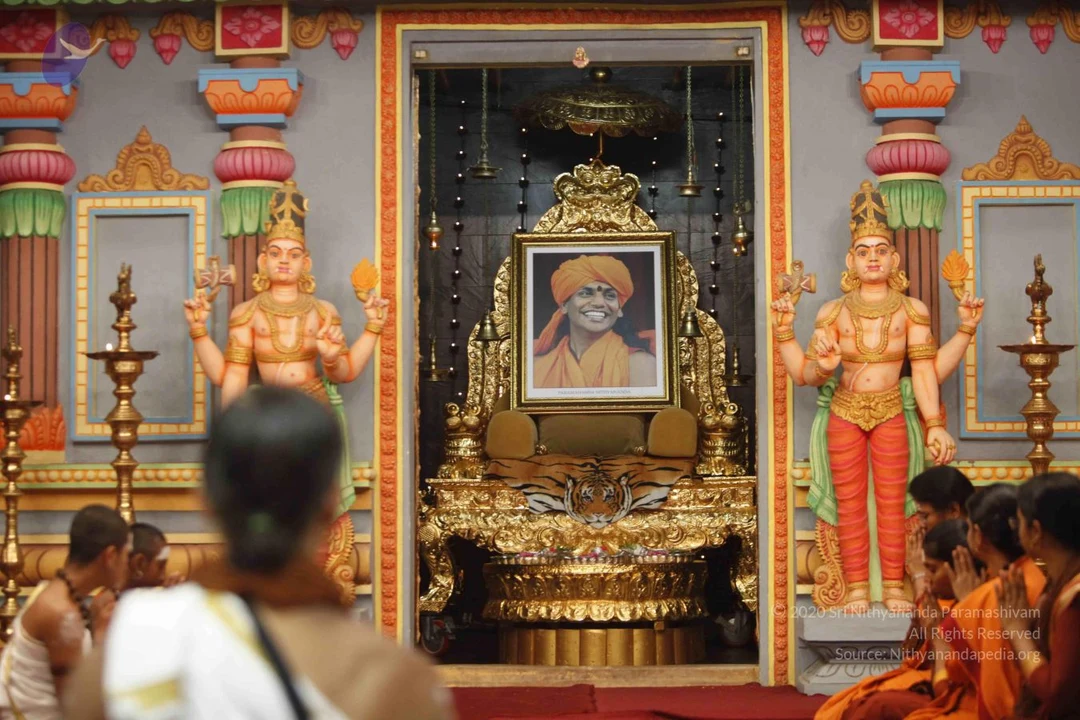
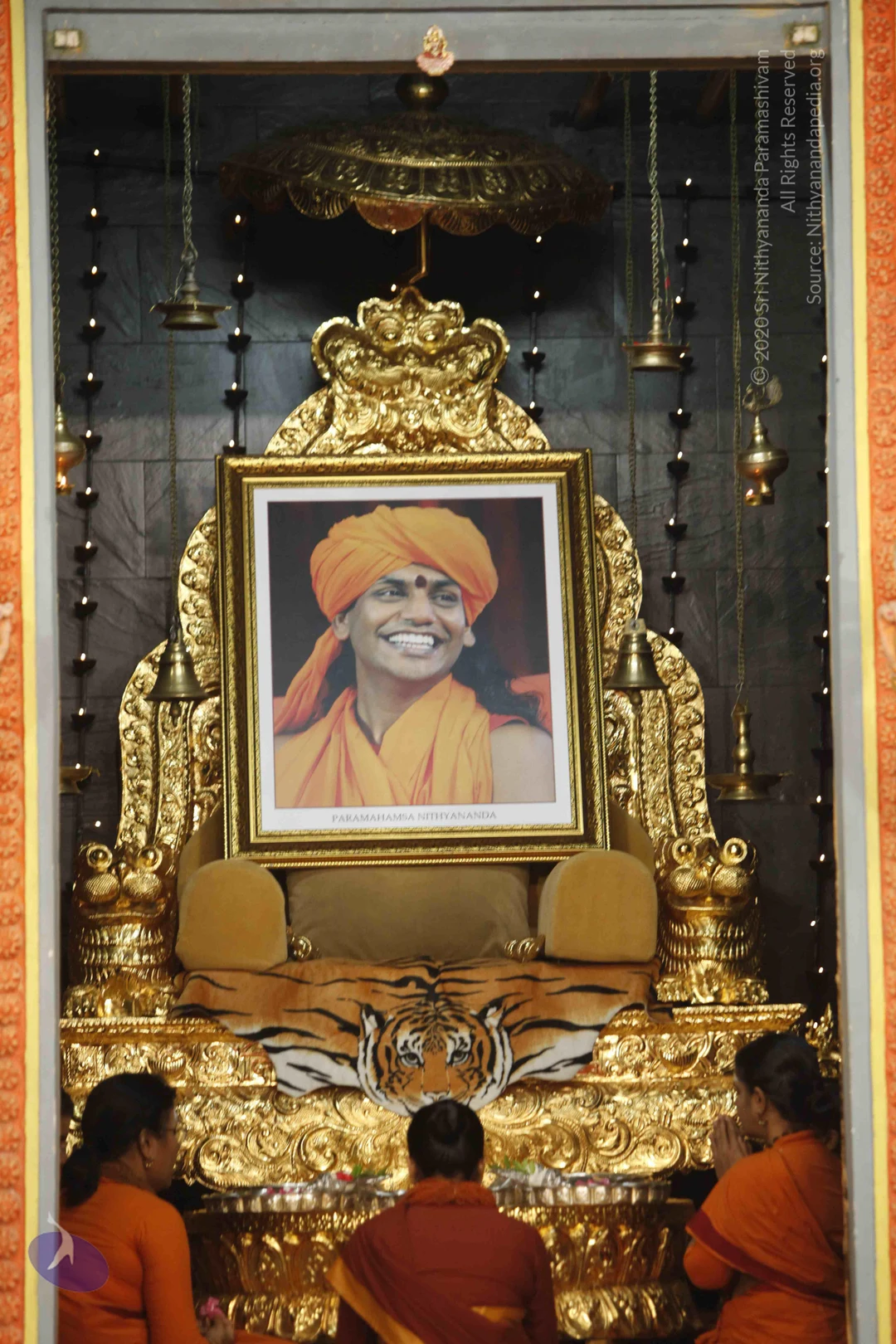
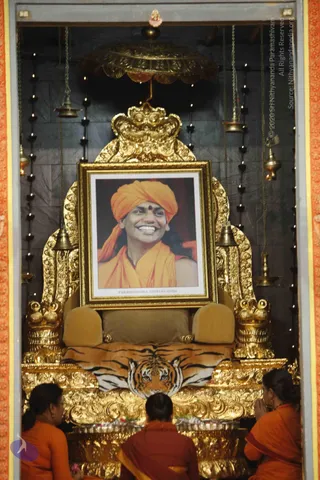
A framed portrait labelled "PARAMAHAMSA NITHYANANDA" sits on an ornate gold throne with a tiger-skin cloth and a gilded umbrella overhead, inside a dark stone shrine lined with hanging brass lamps and beaded strings. The portrait shows a smiling man in a saffron turban and orange robe with a red bindi. Three women in orange clothing kneel at the bottom of the frame before the throne, with trays of offerings and hands joined in namaskar. The pictured man is a printed portrait, not a physical person.