Skip to content
Friday

26 February 2016

Supreme Pontiff of Hinduism HDH Bhagavan Sri Nithyananda Paramashivam invitation for Kumbh Mela 2016

Dated photos
120
Source pages
1
Media
2
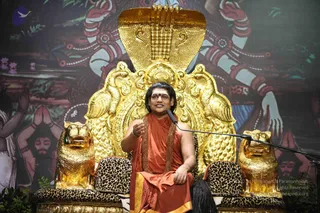
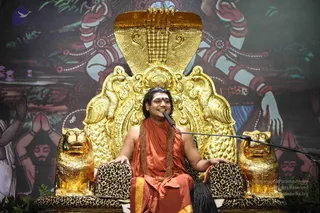
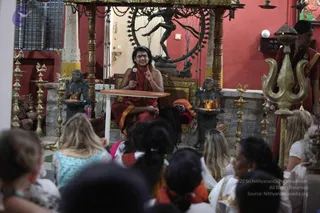
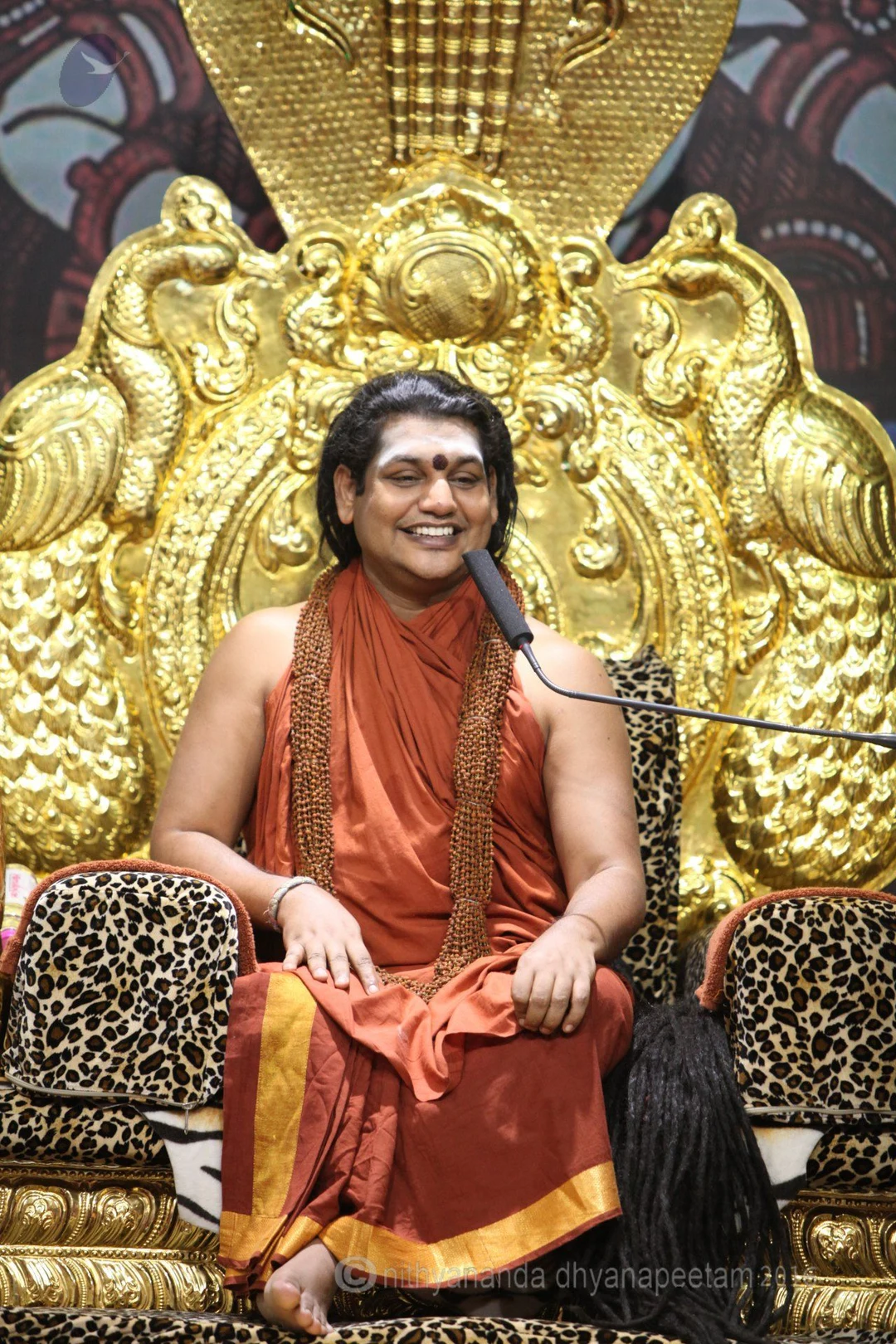
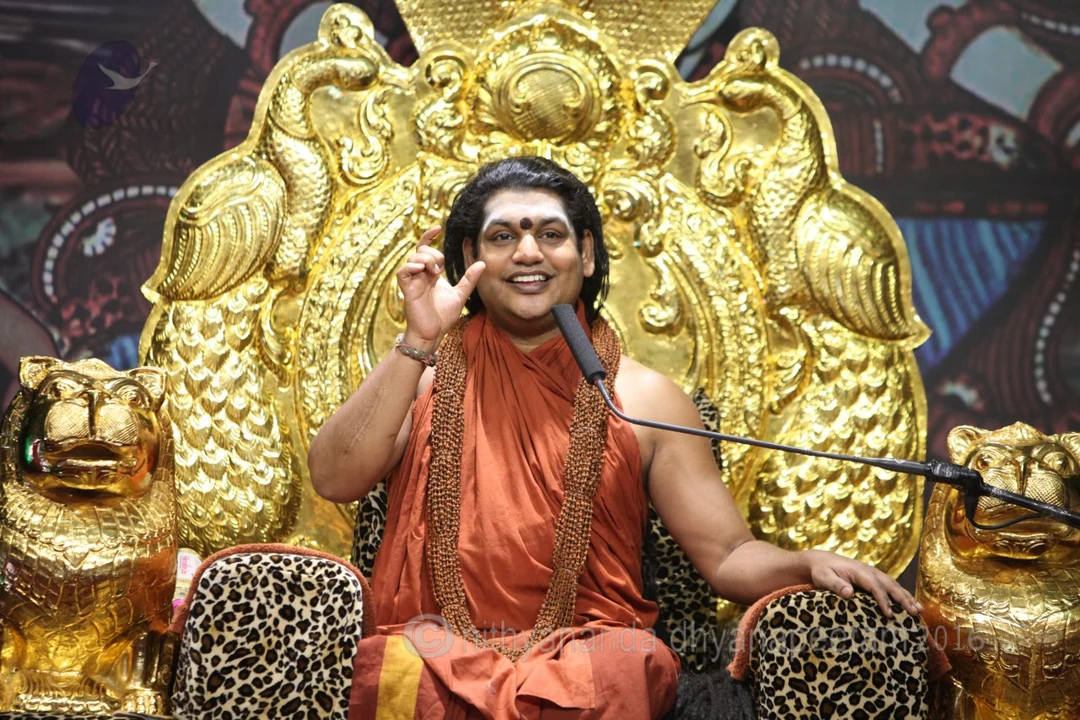
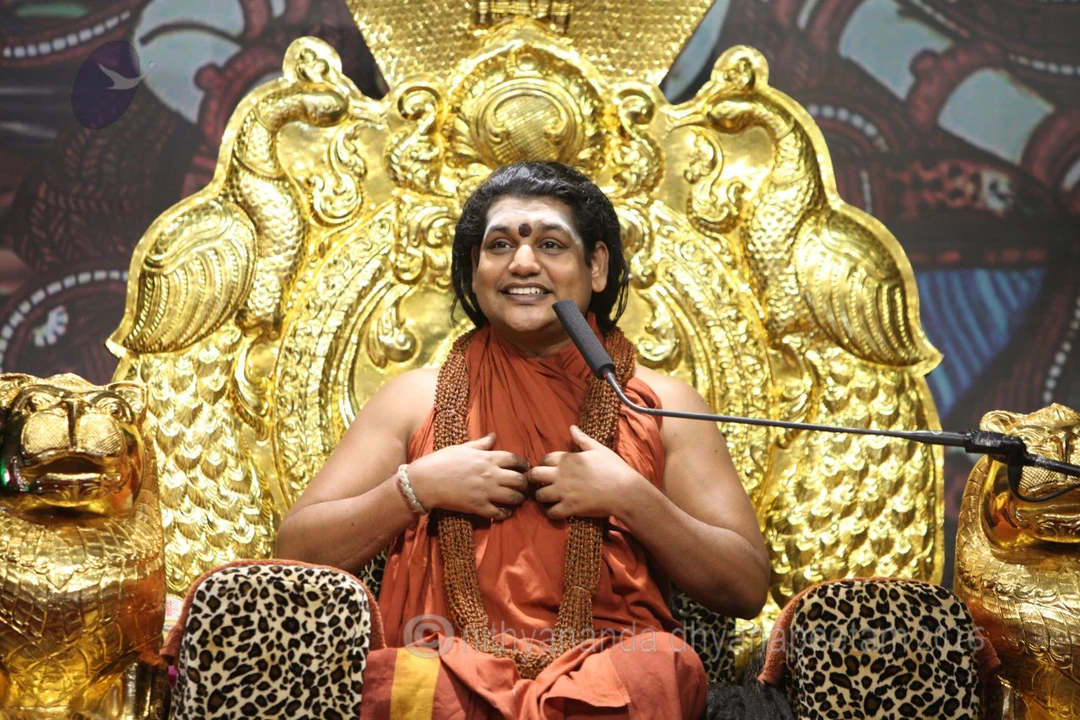
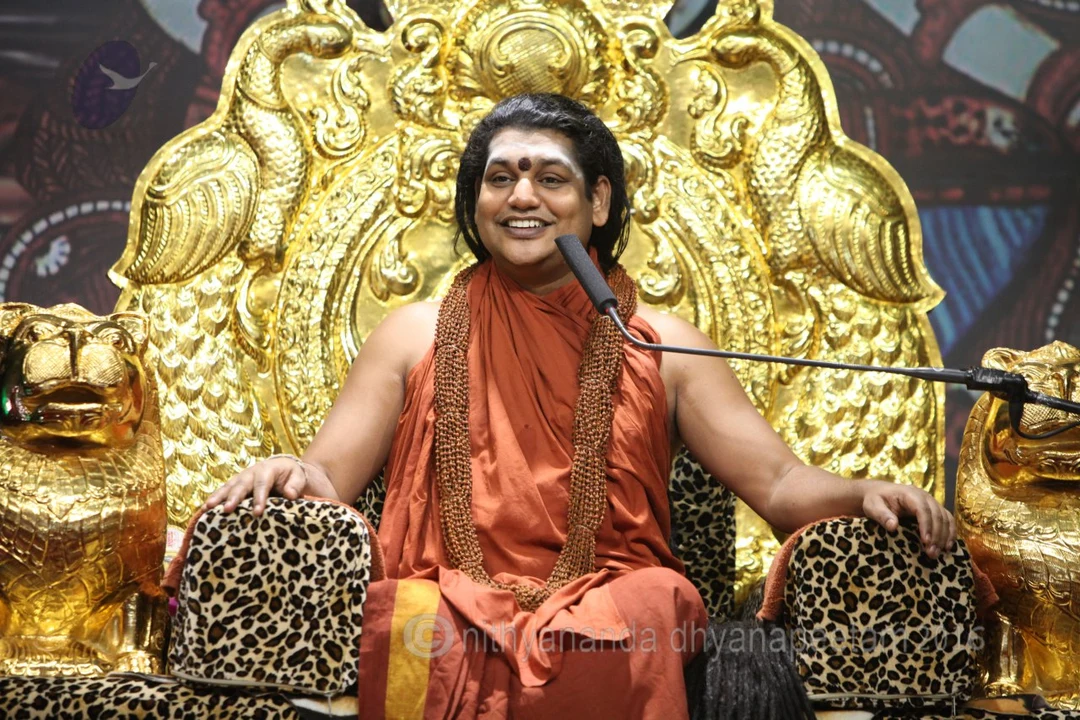
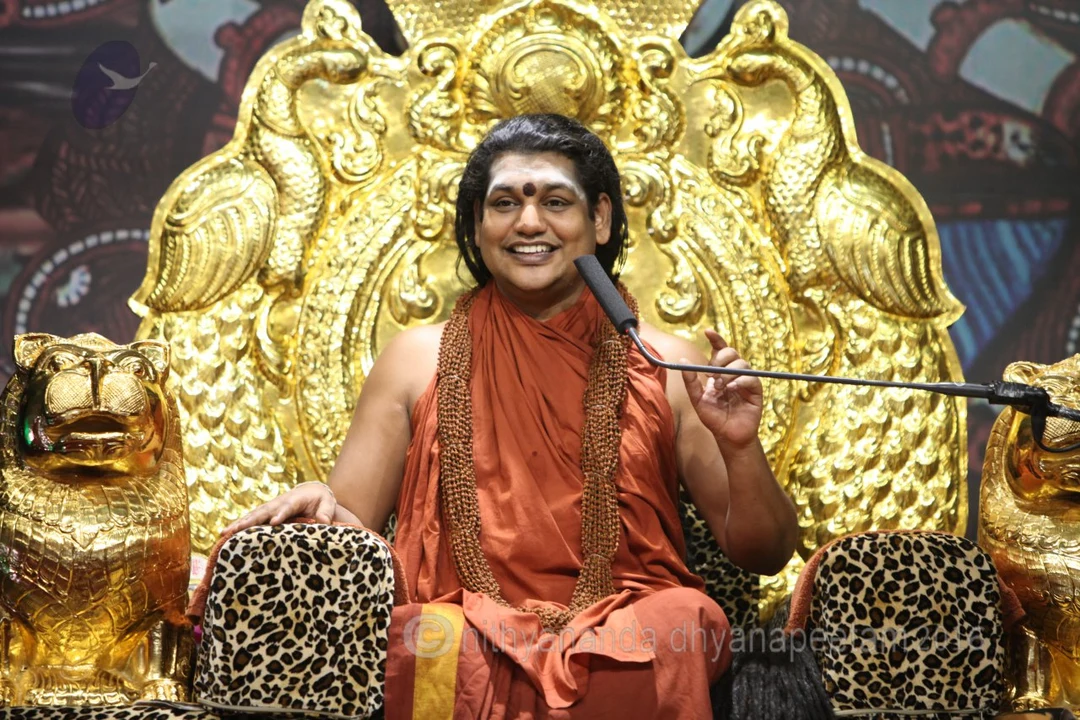
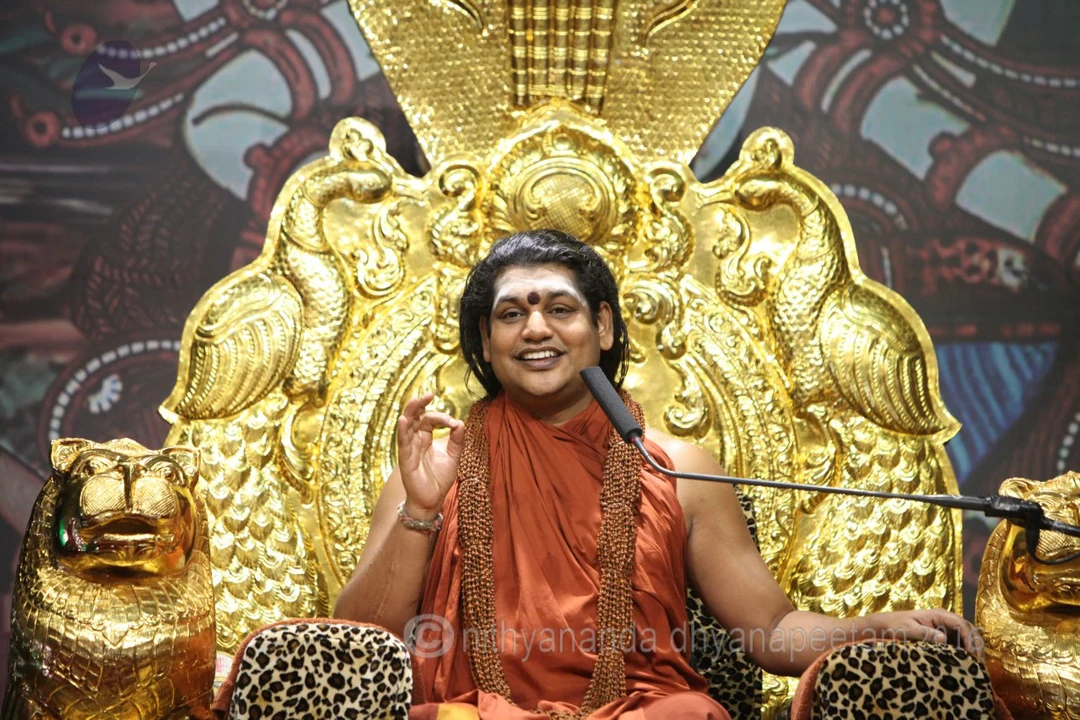
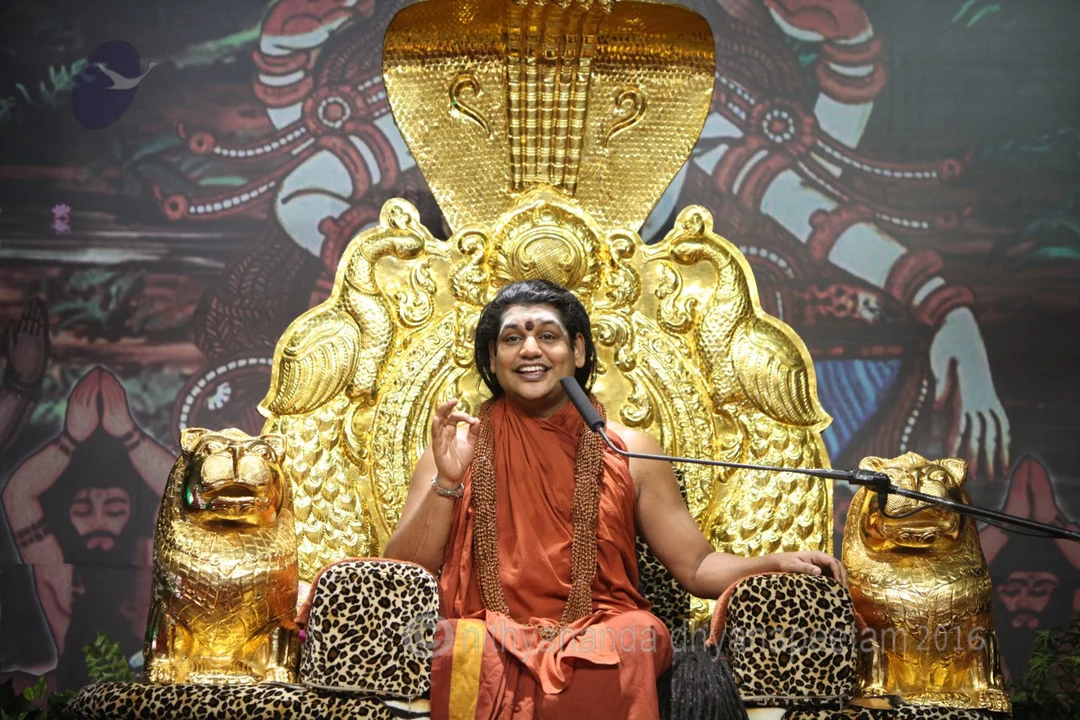
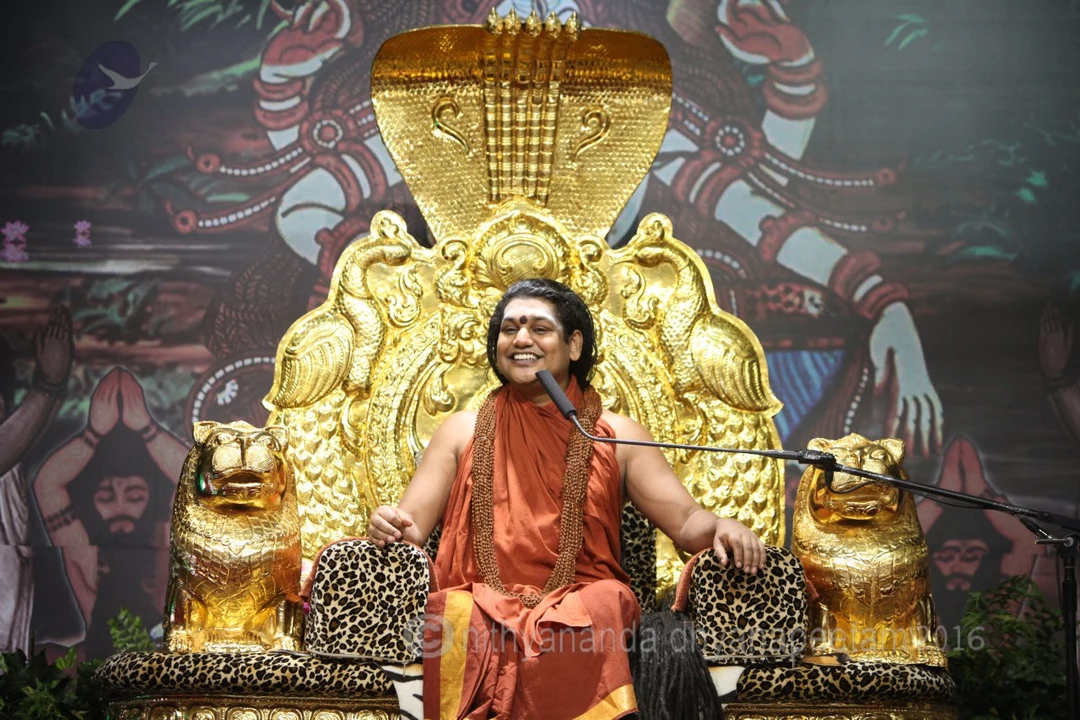
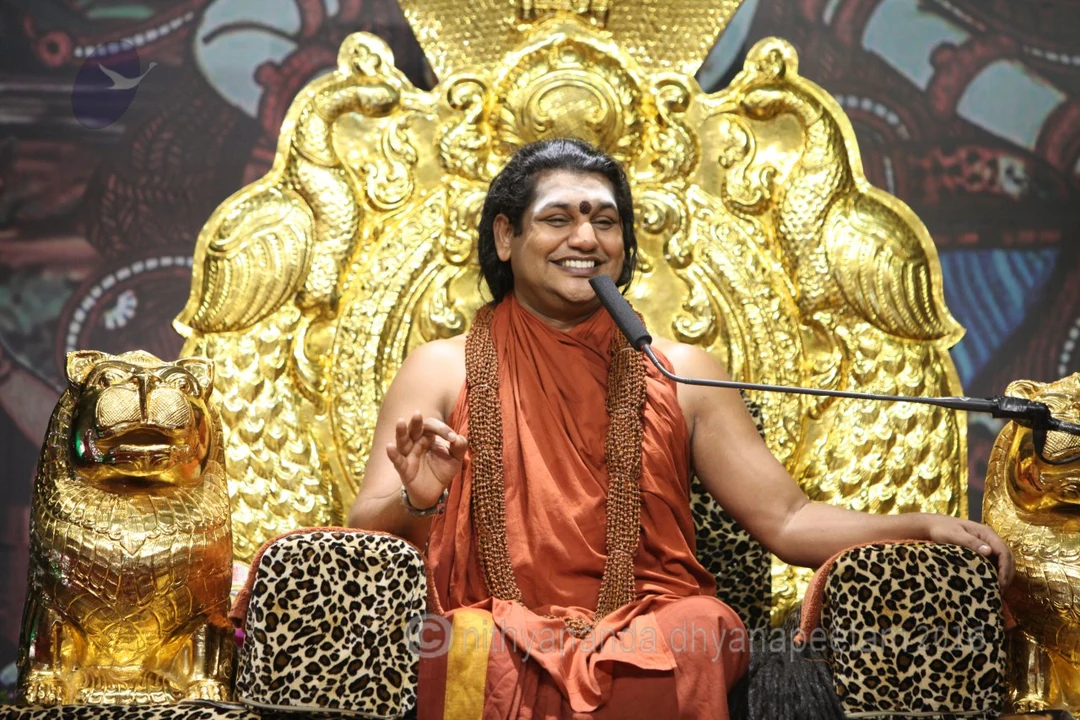
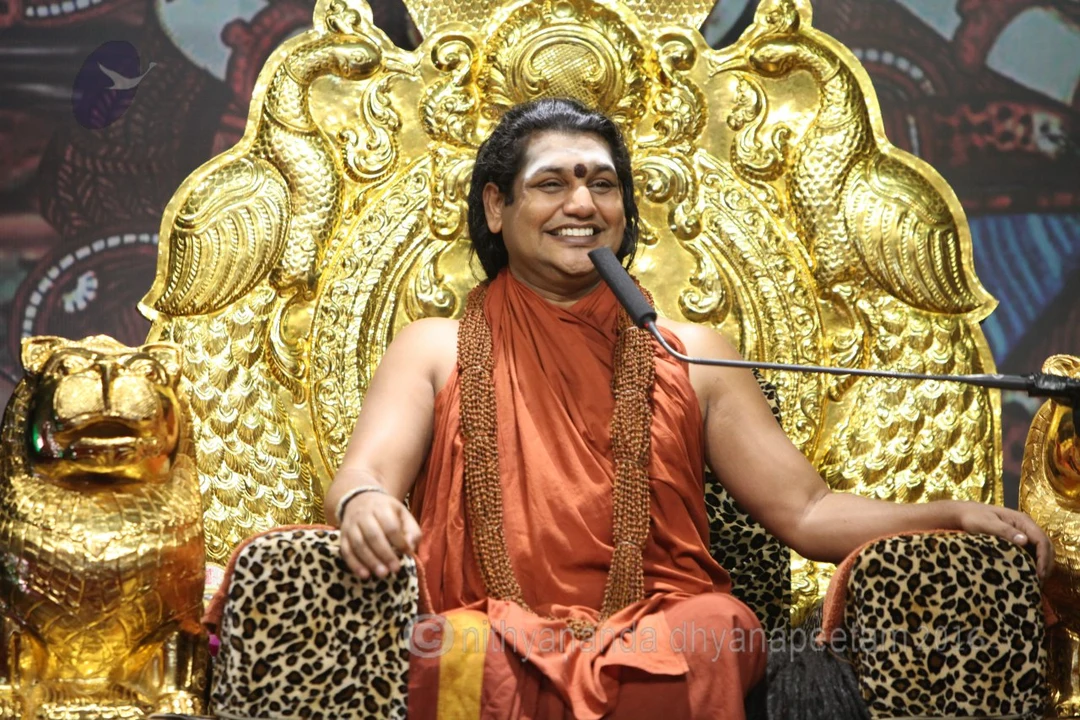
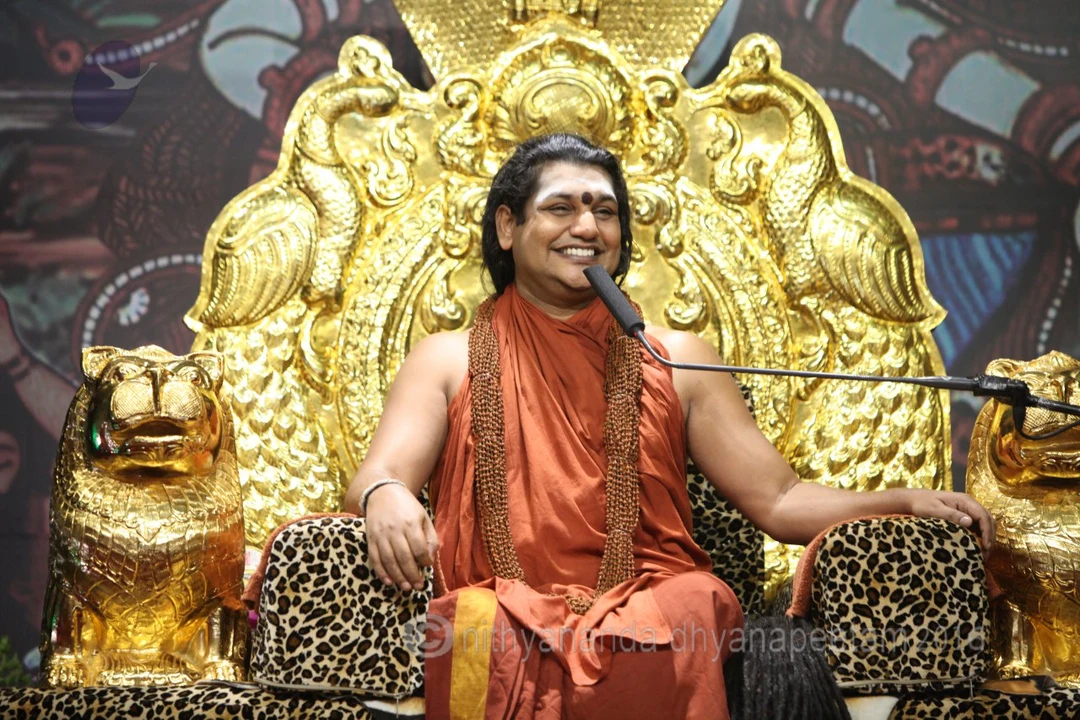
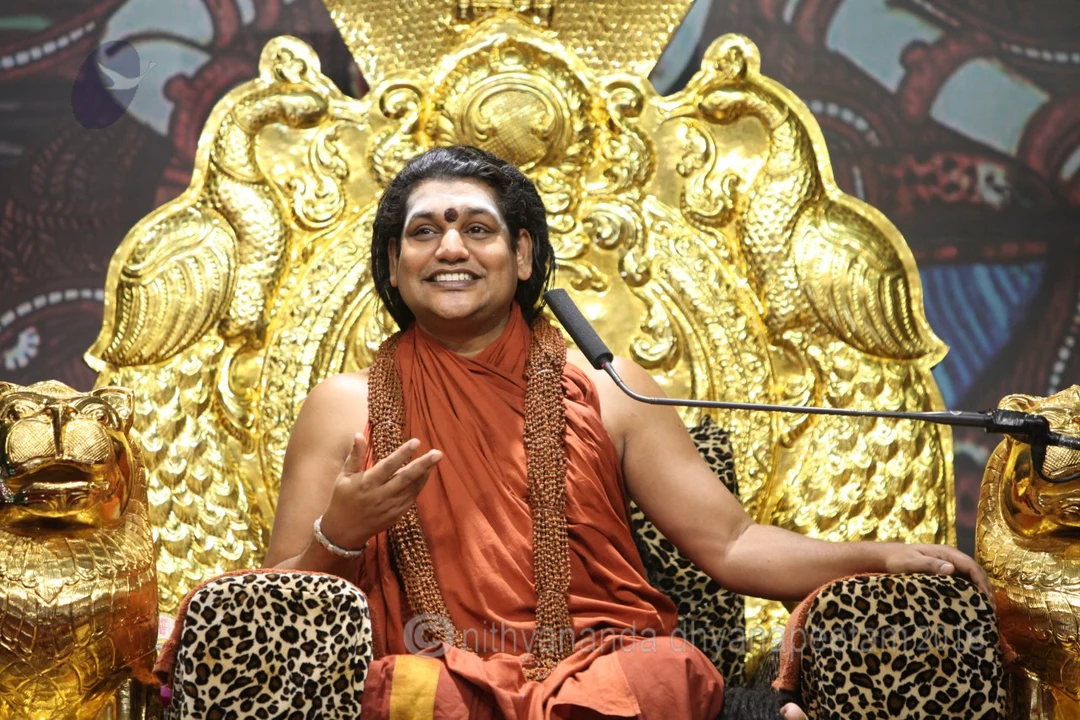
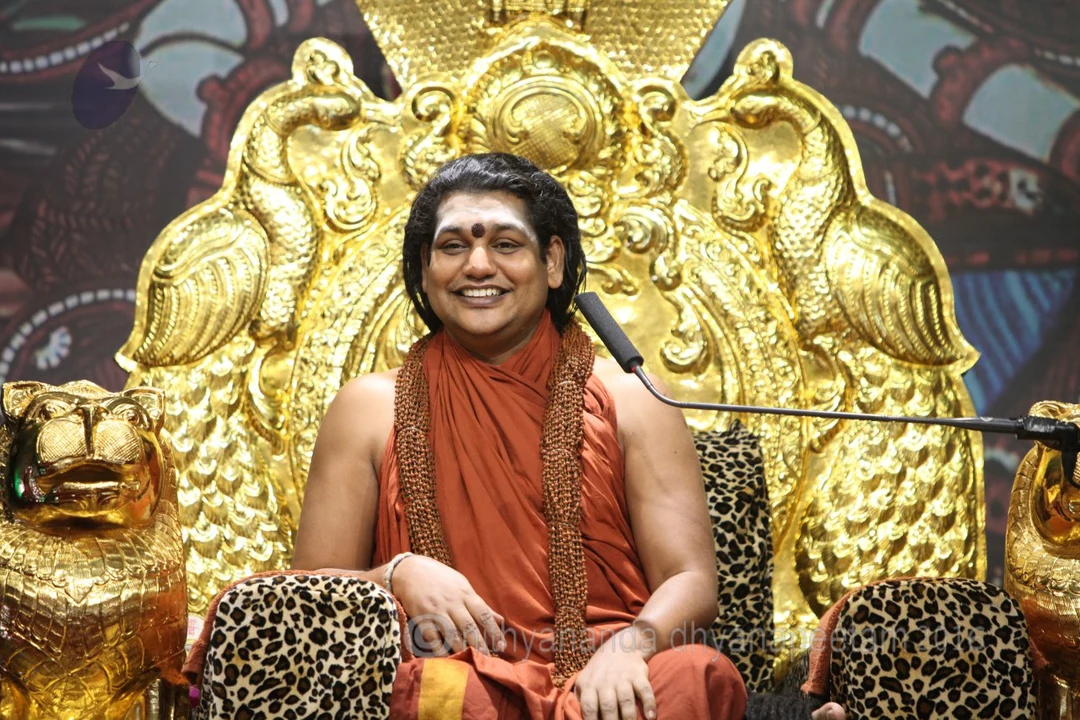
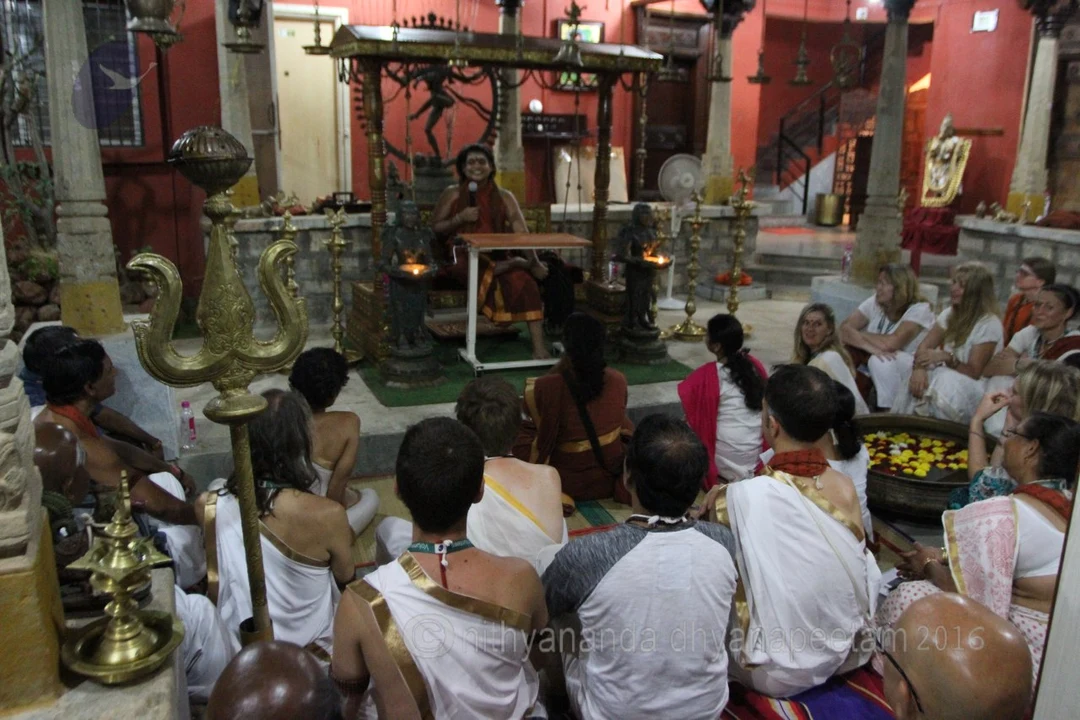
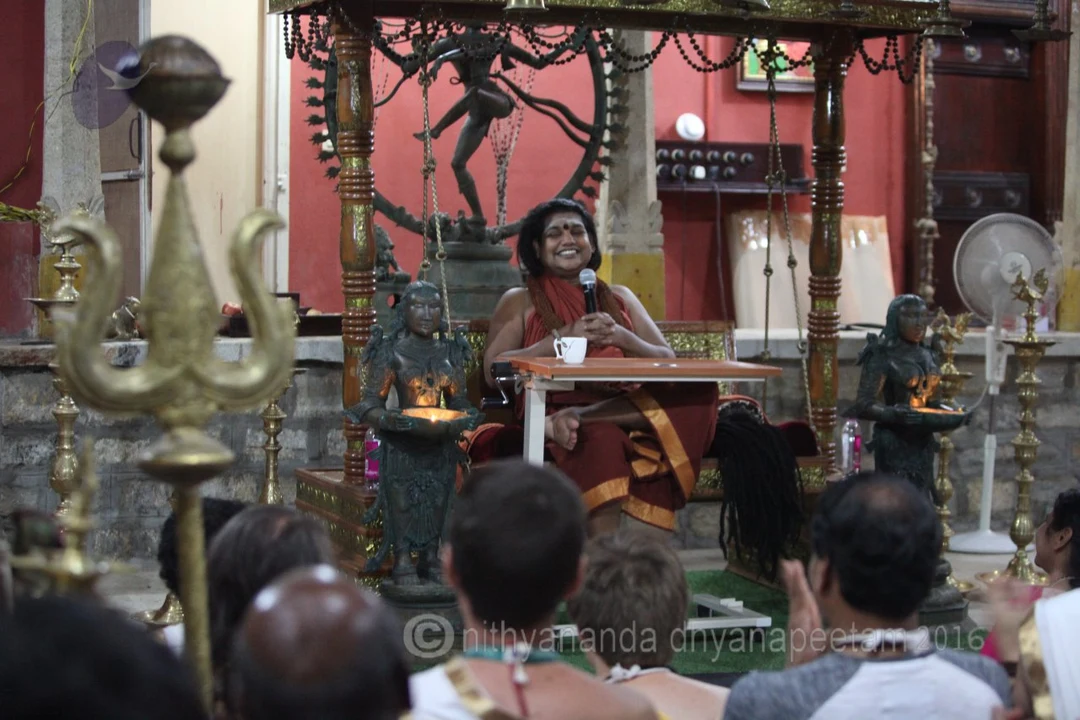
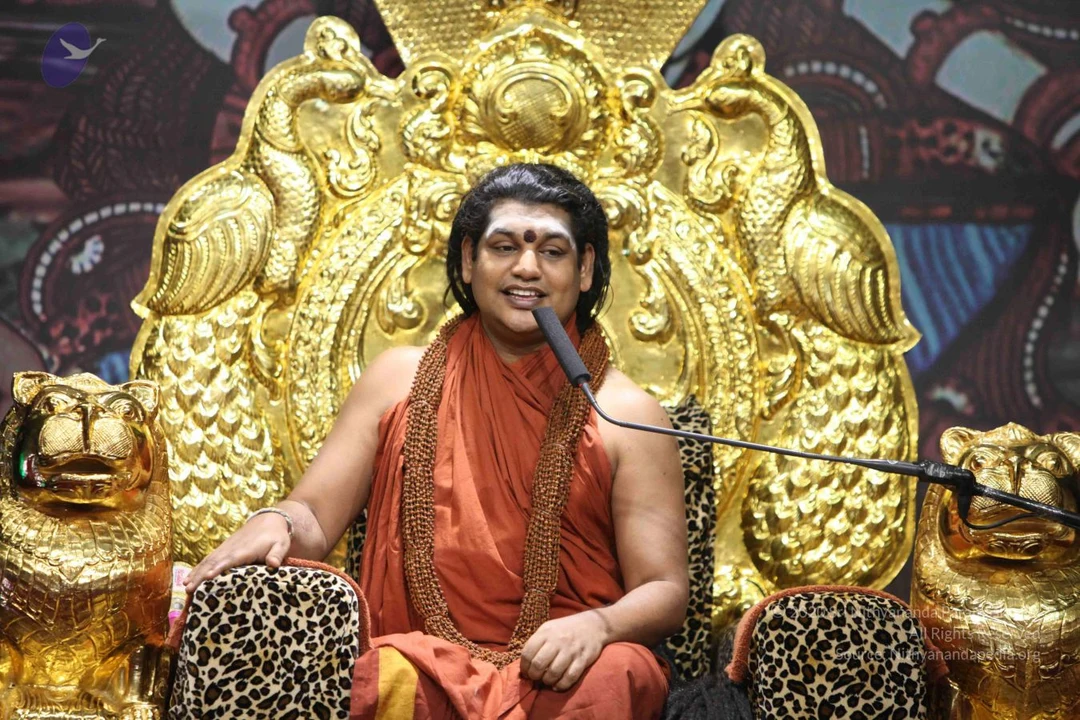
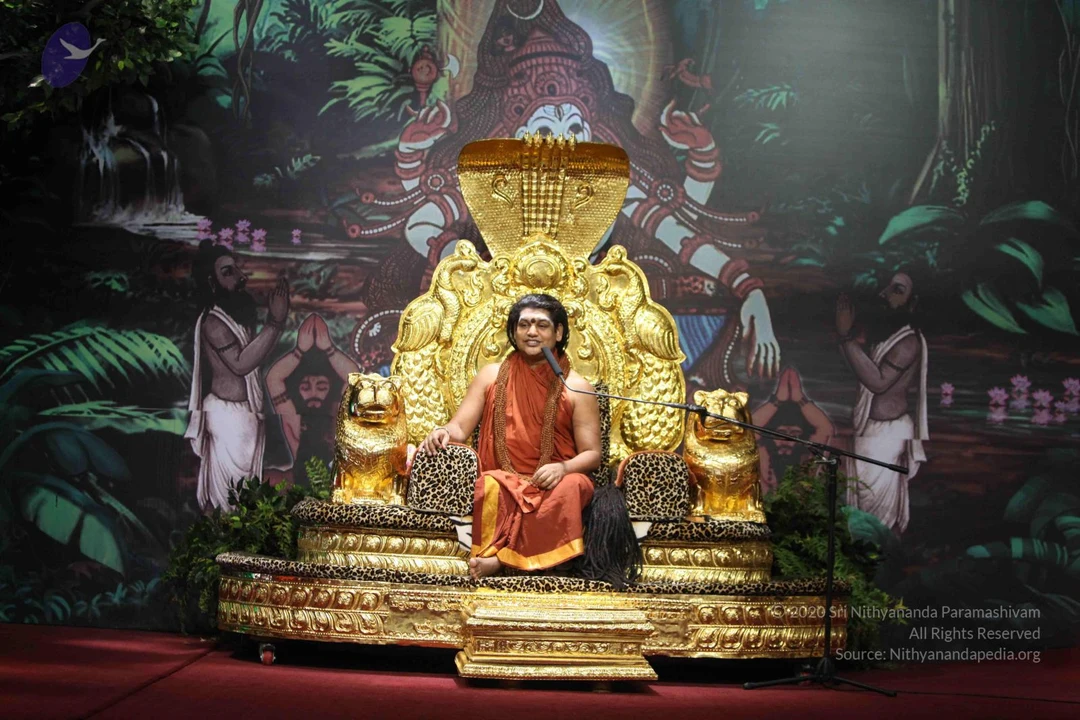
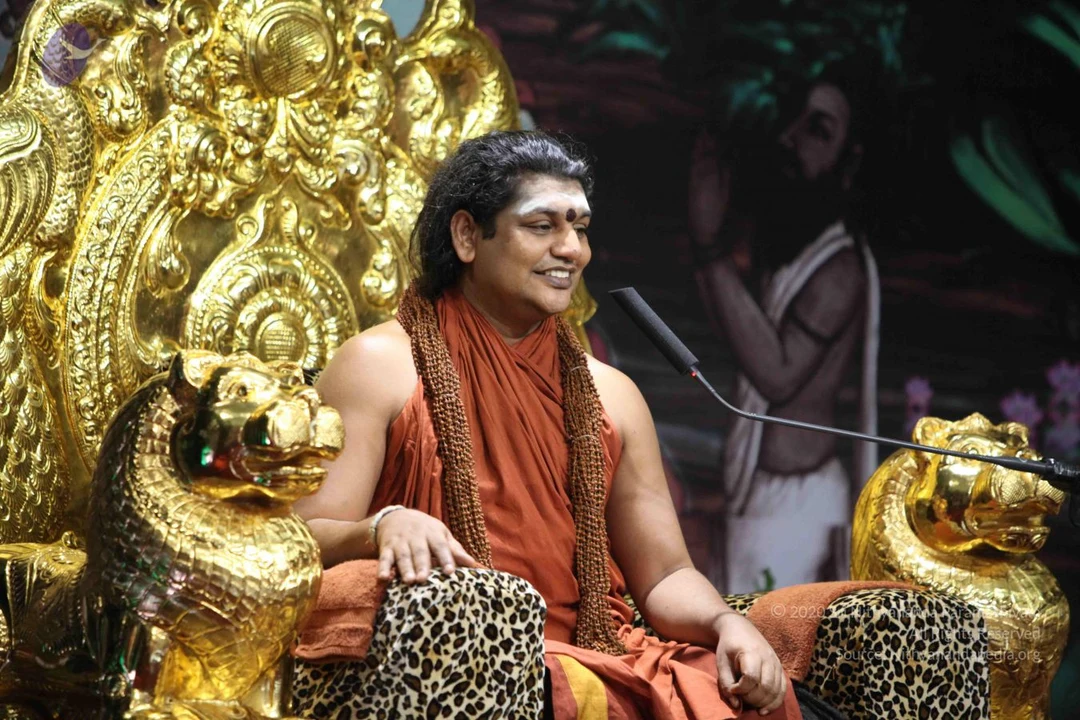
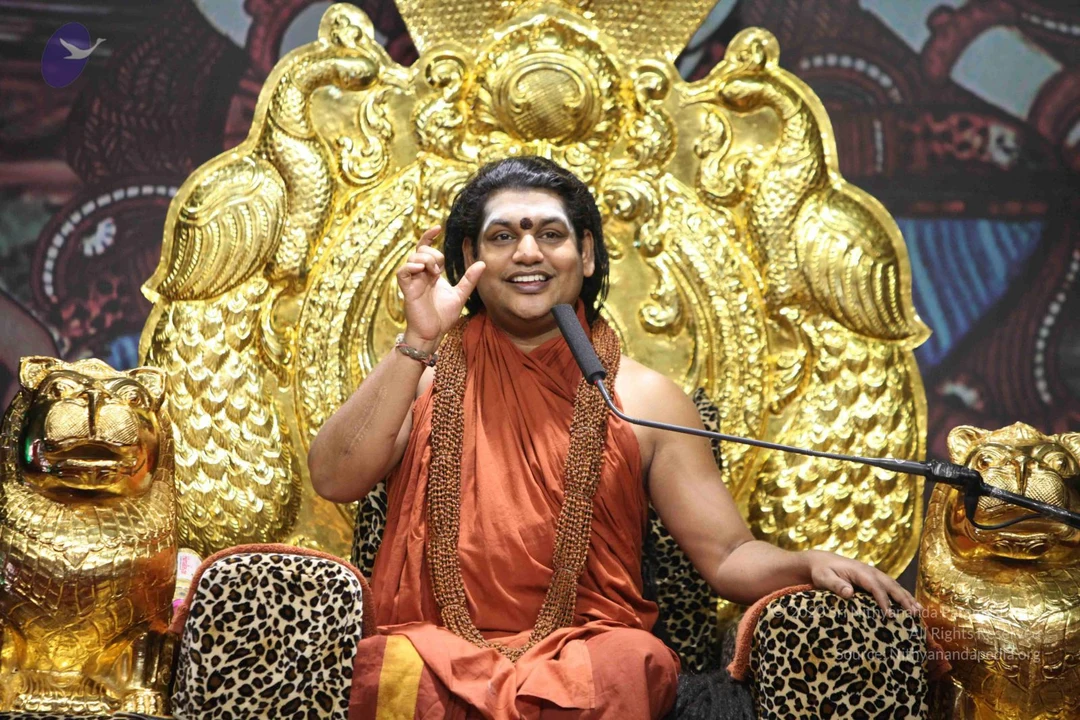
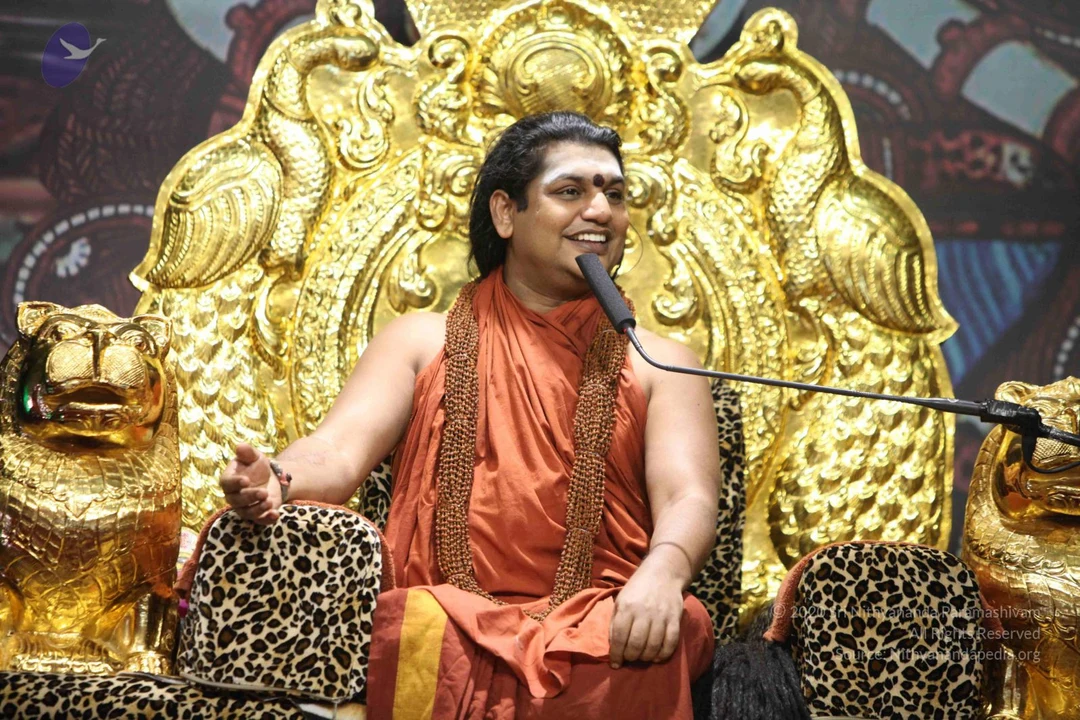
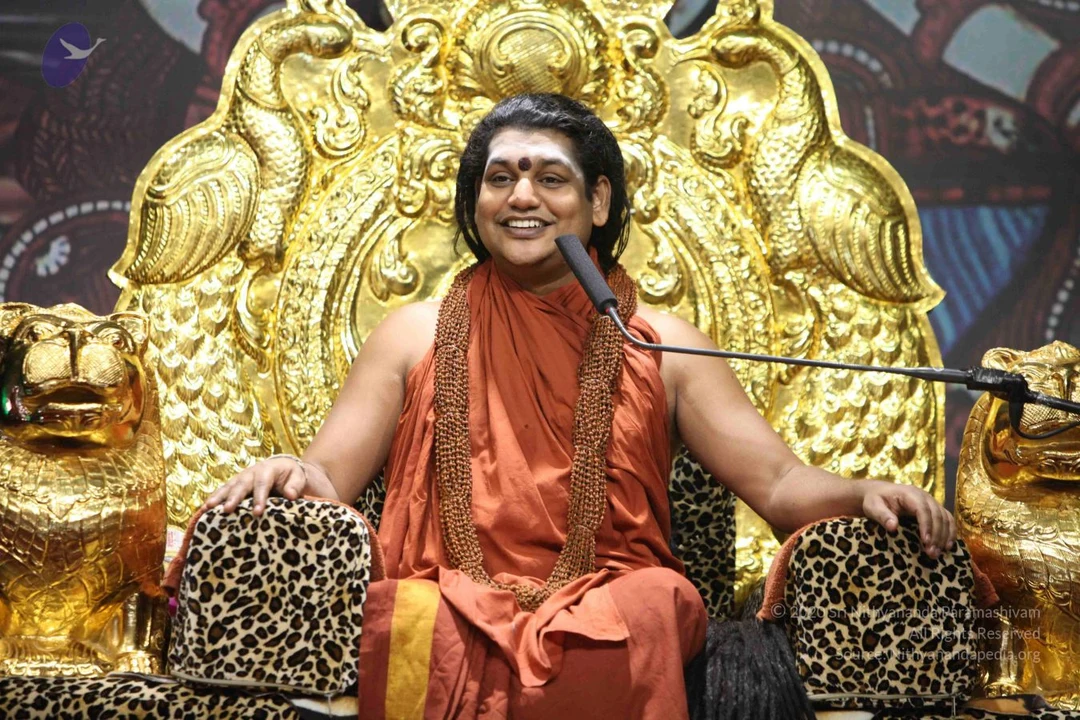
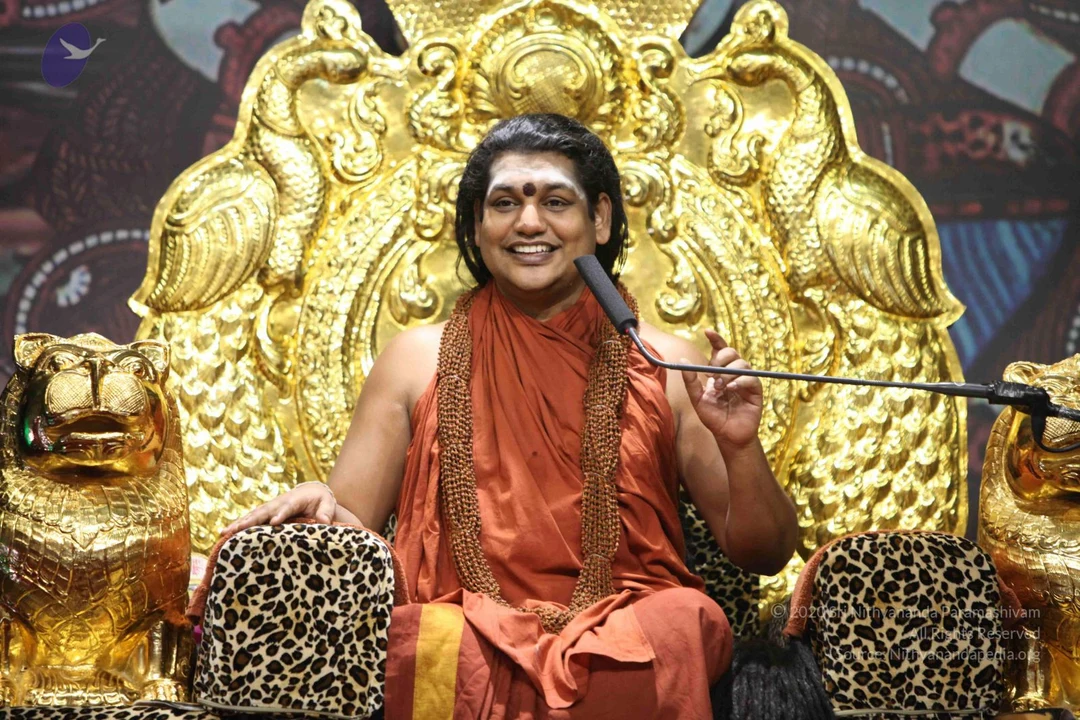
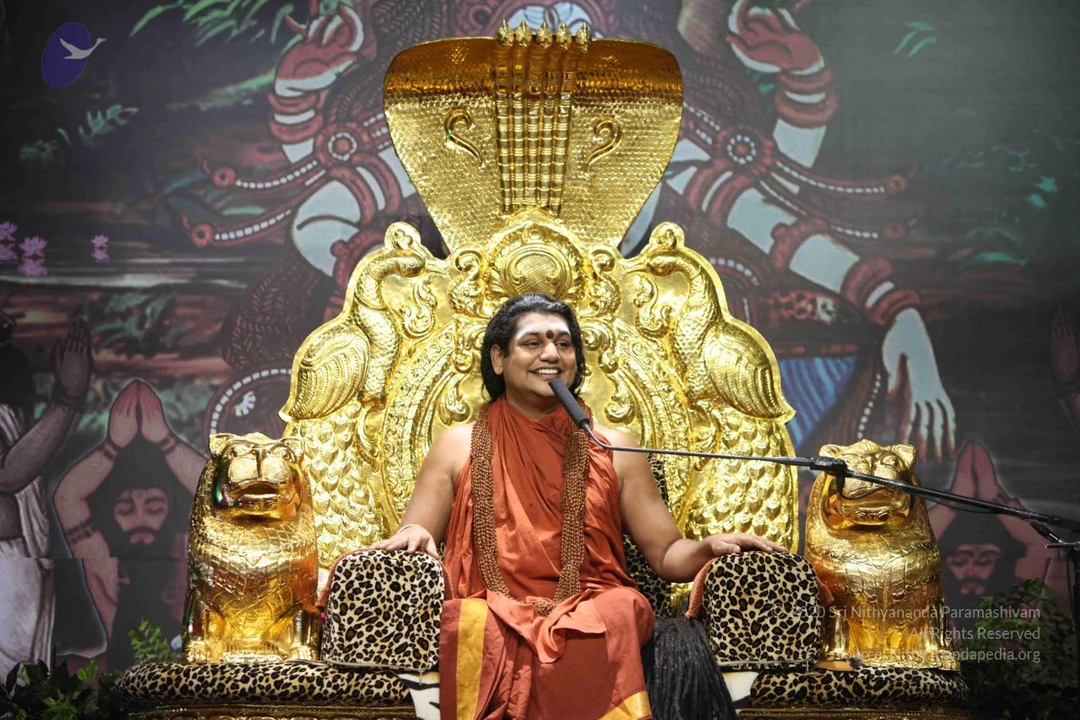
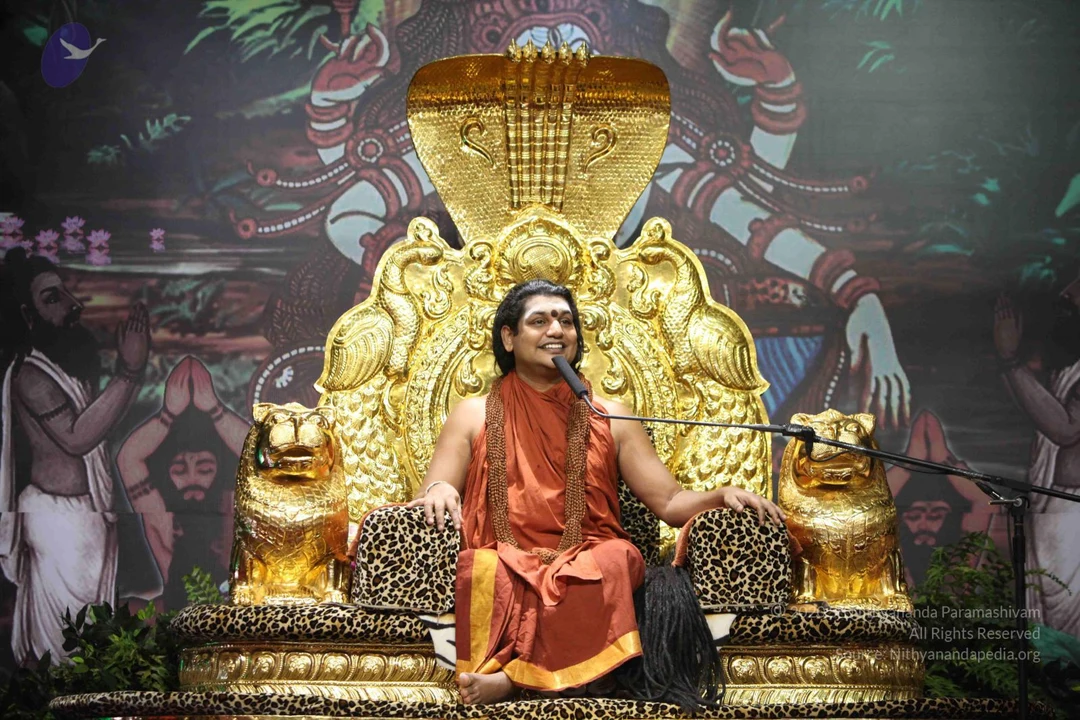
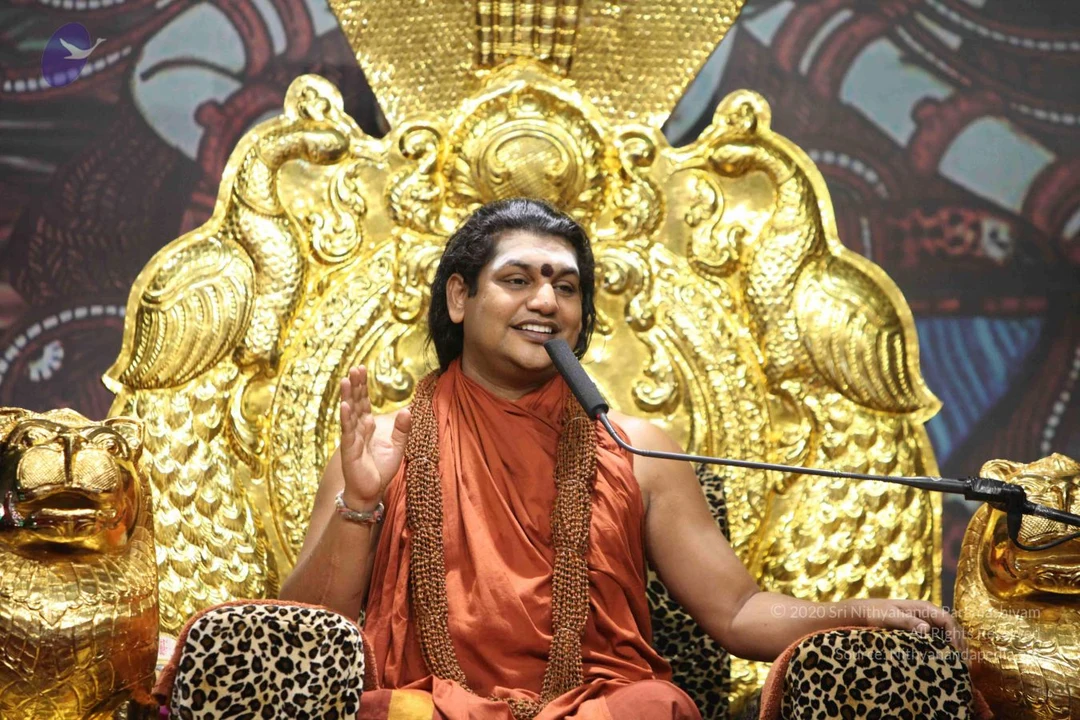
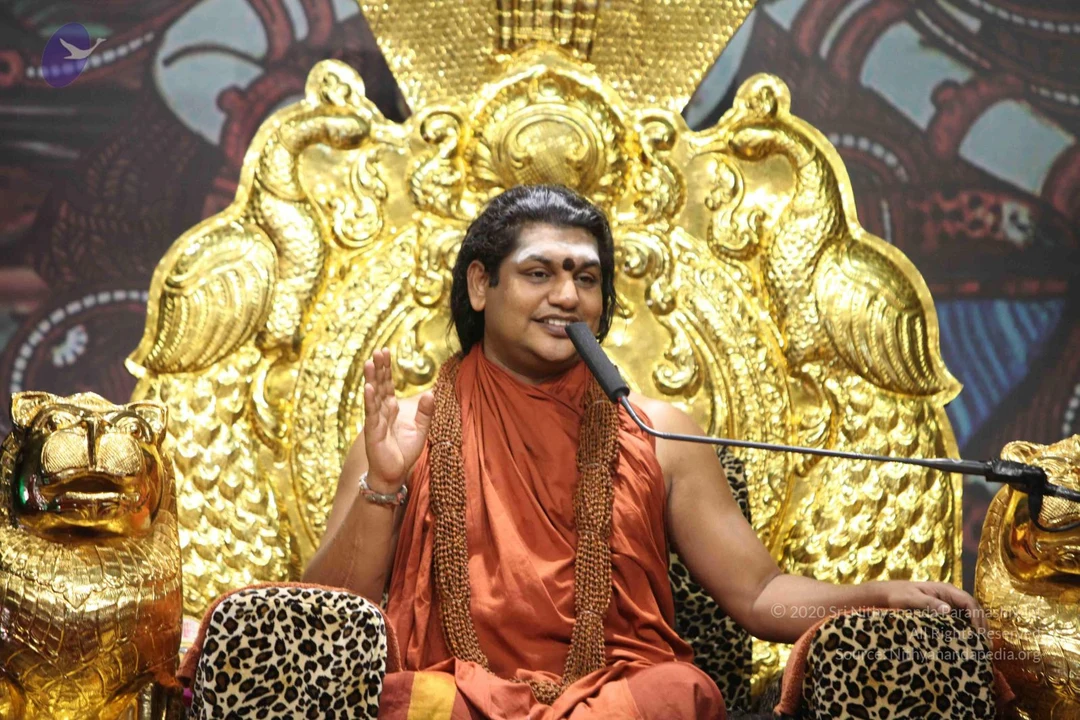
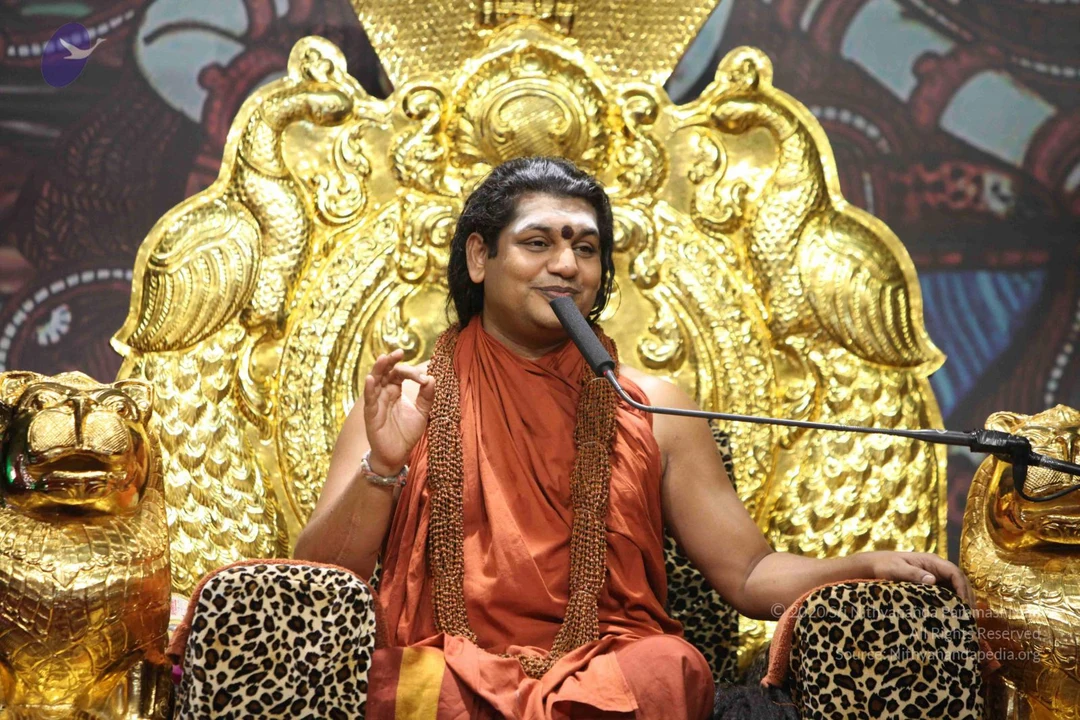
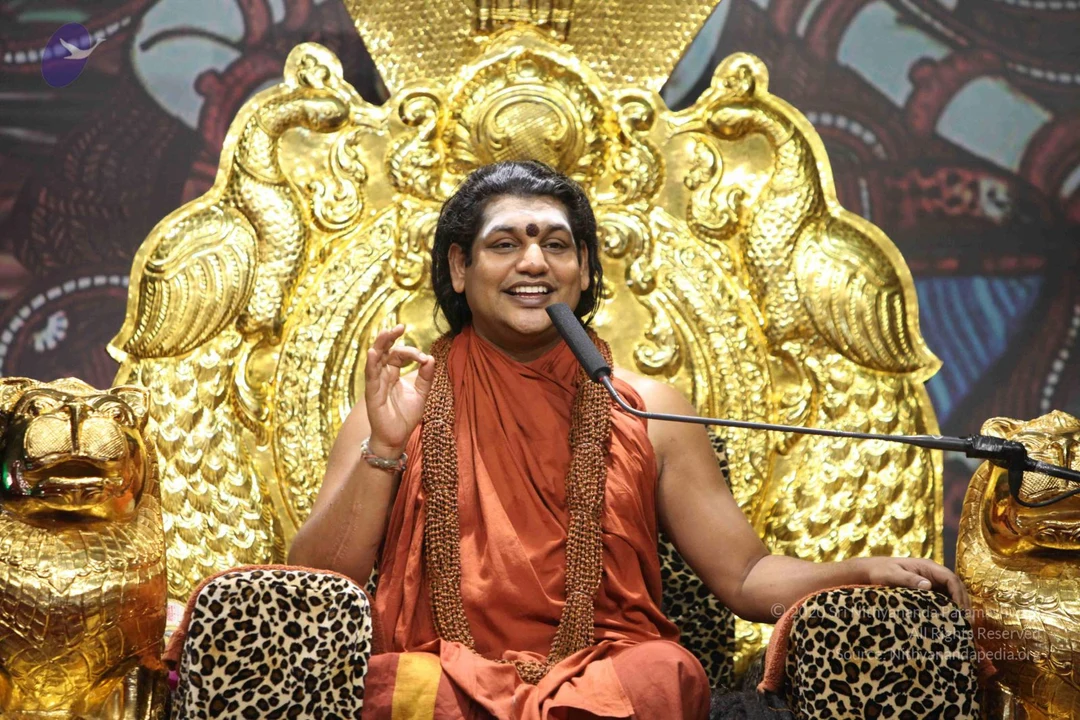
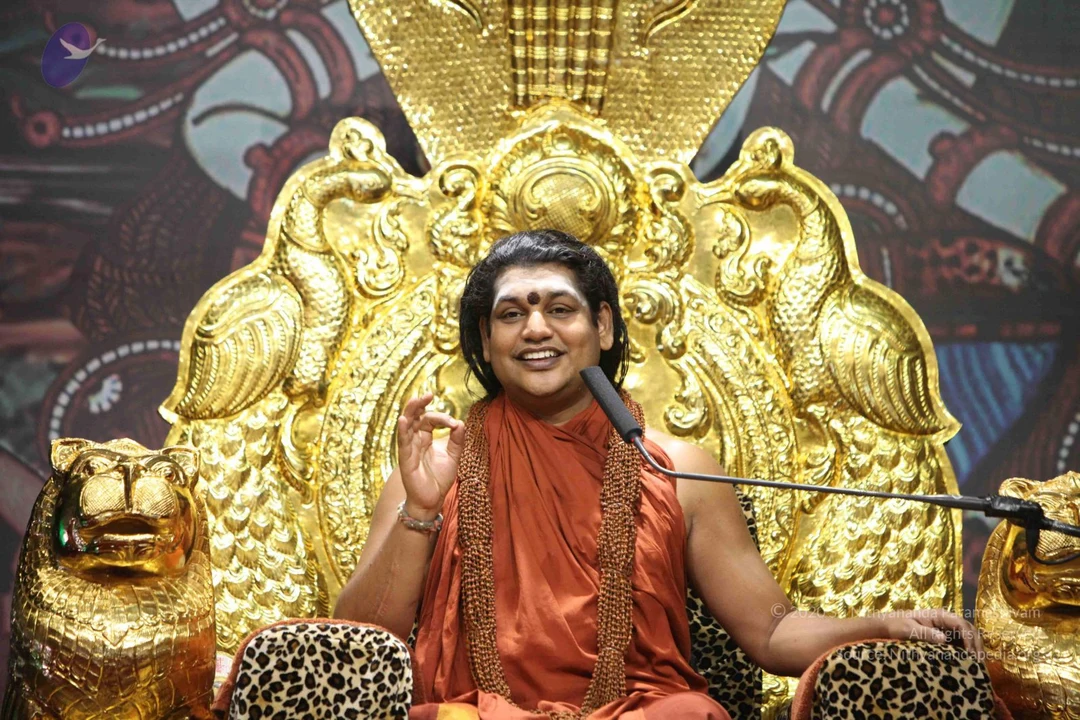
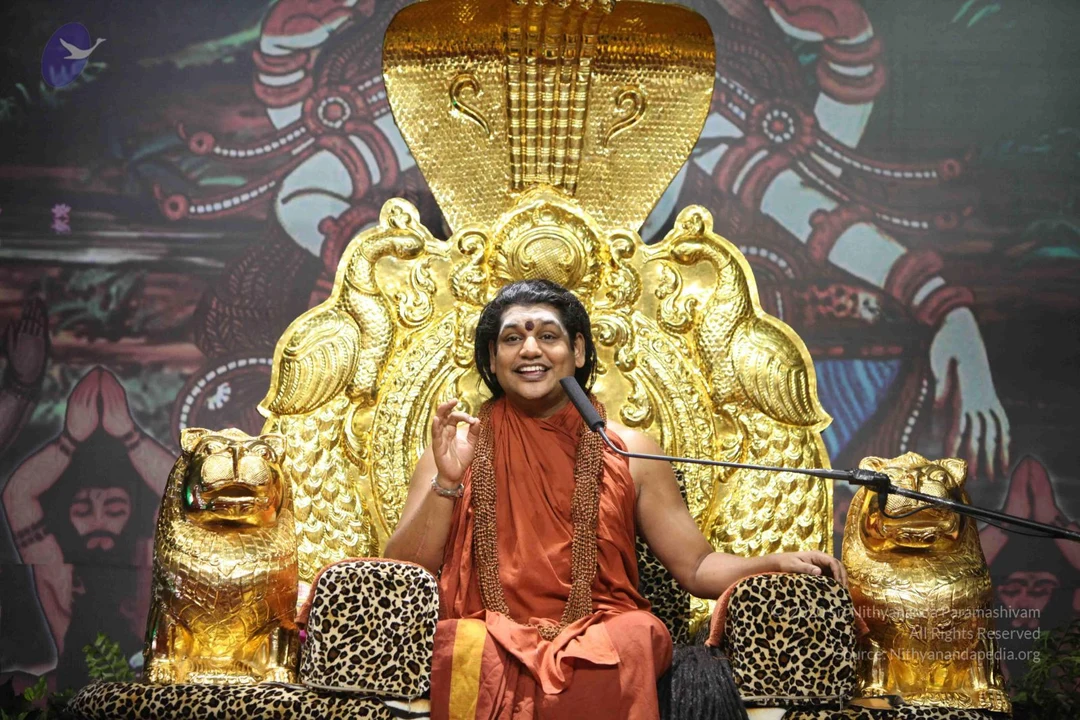
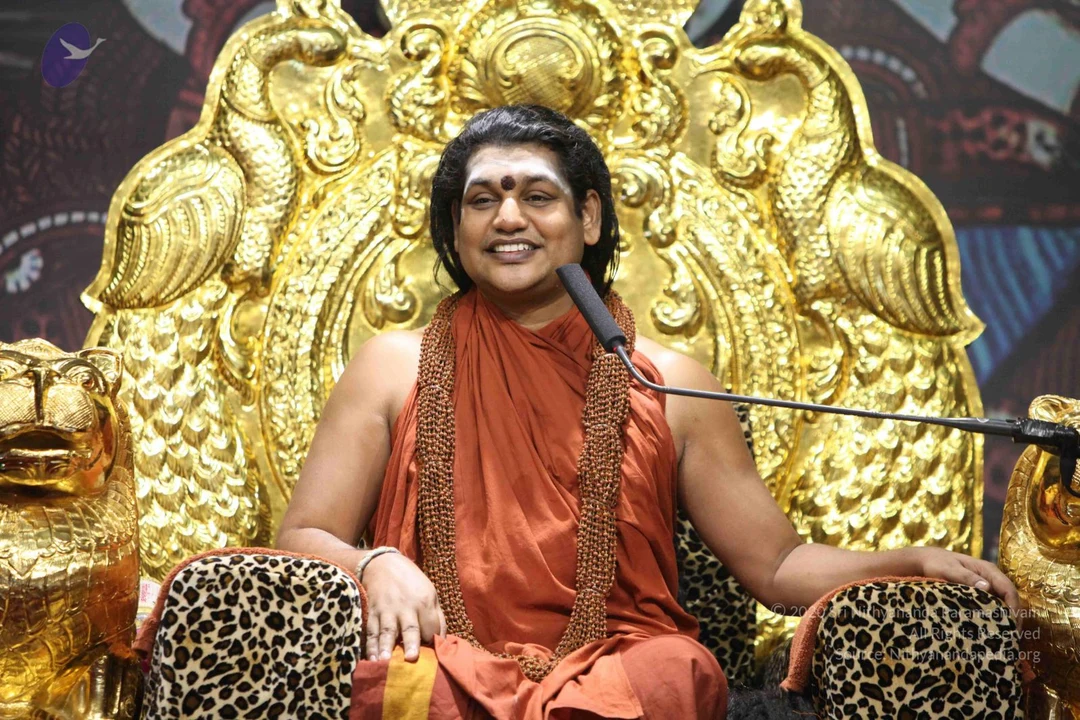
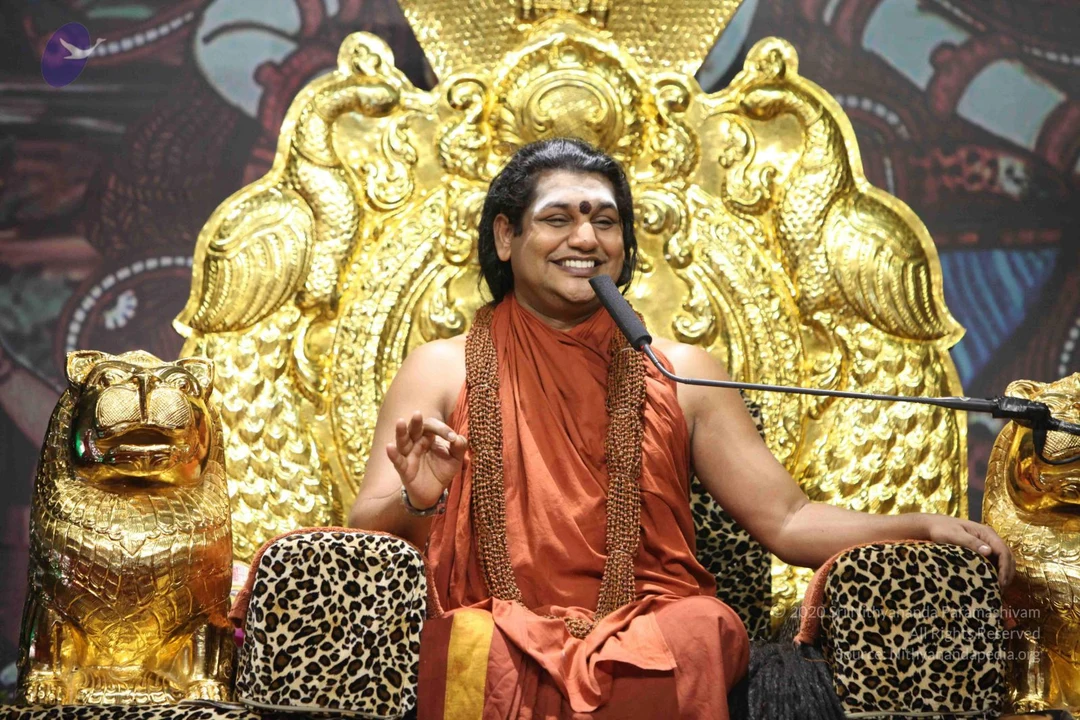
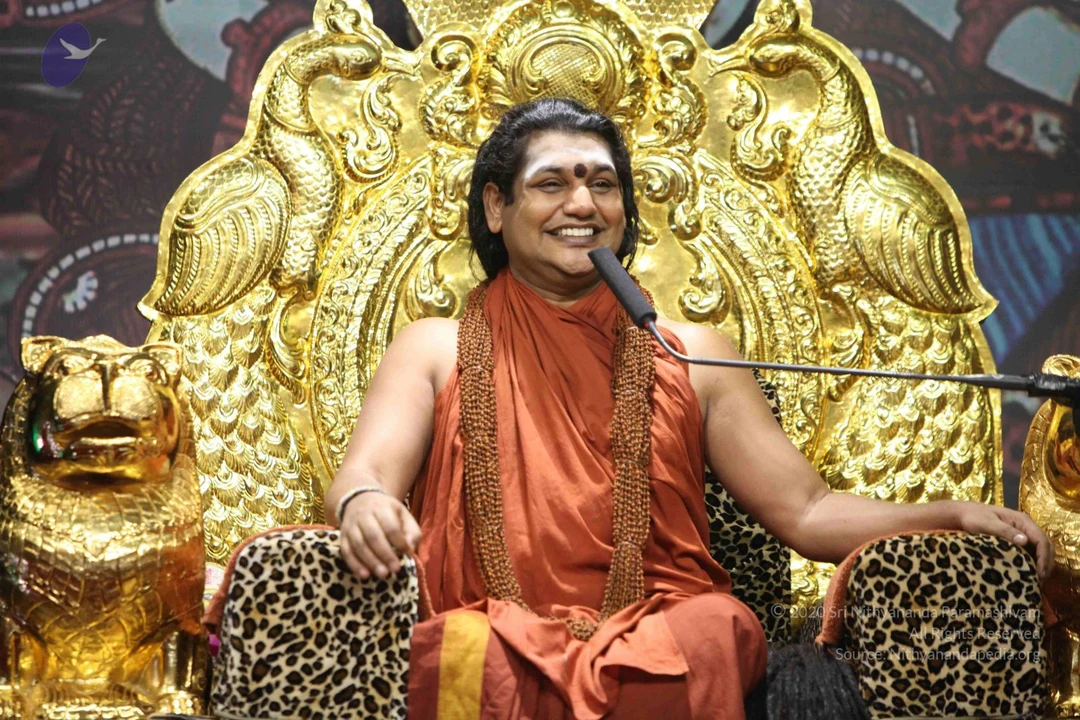
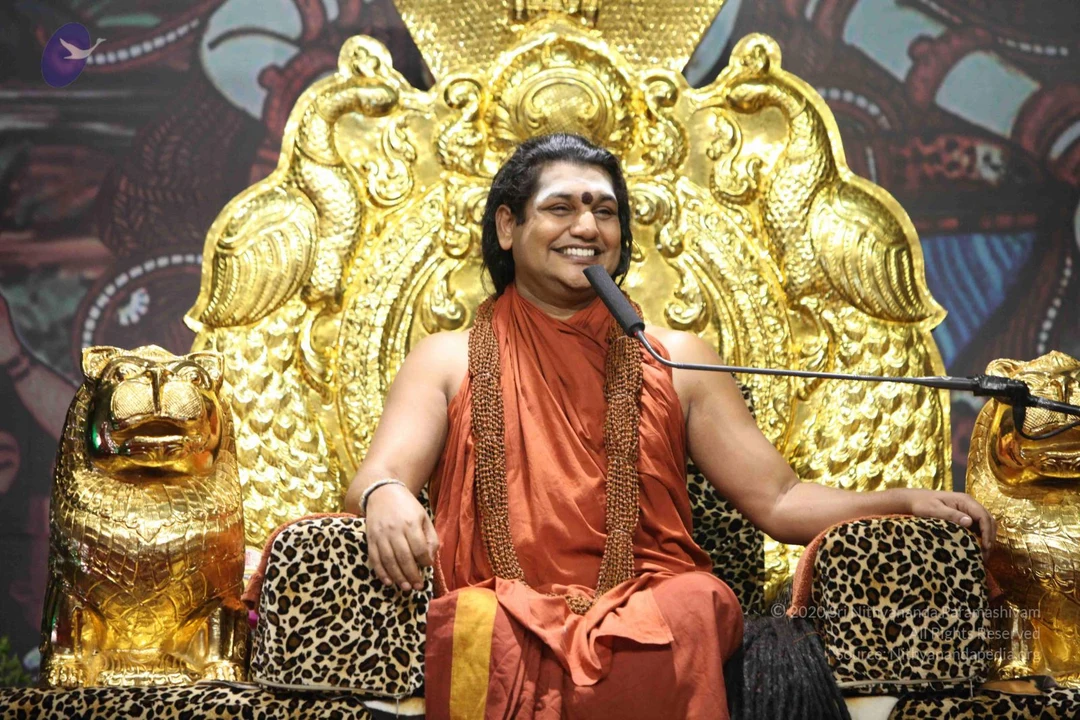
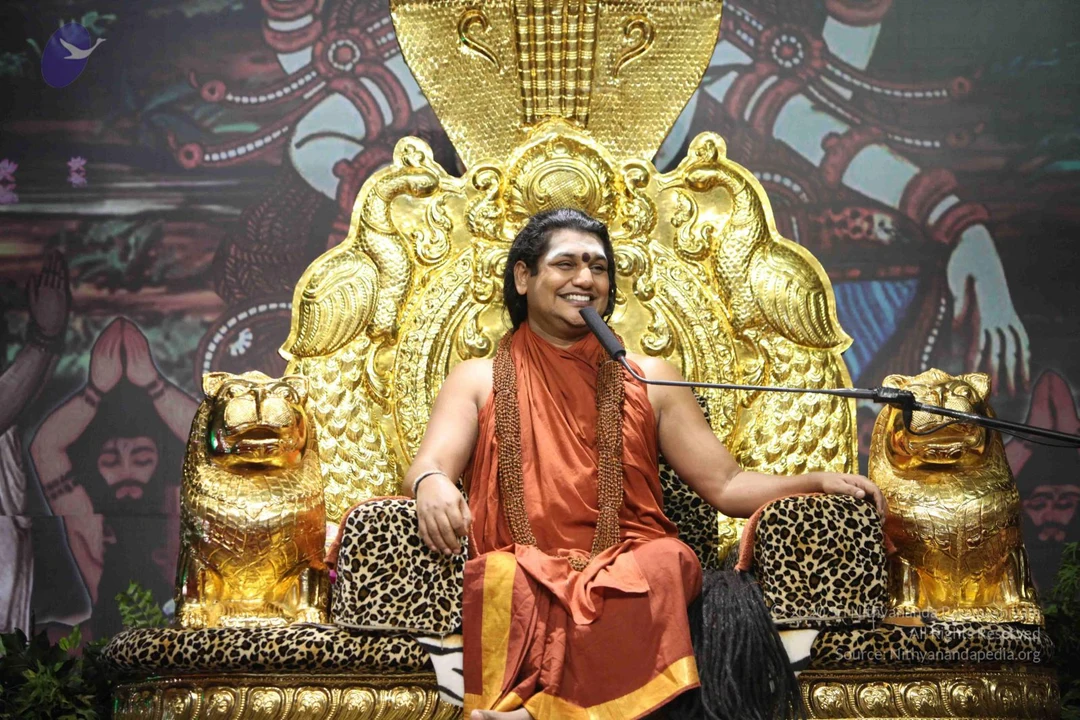
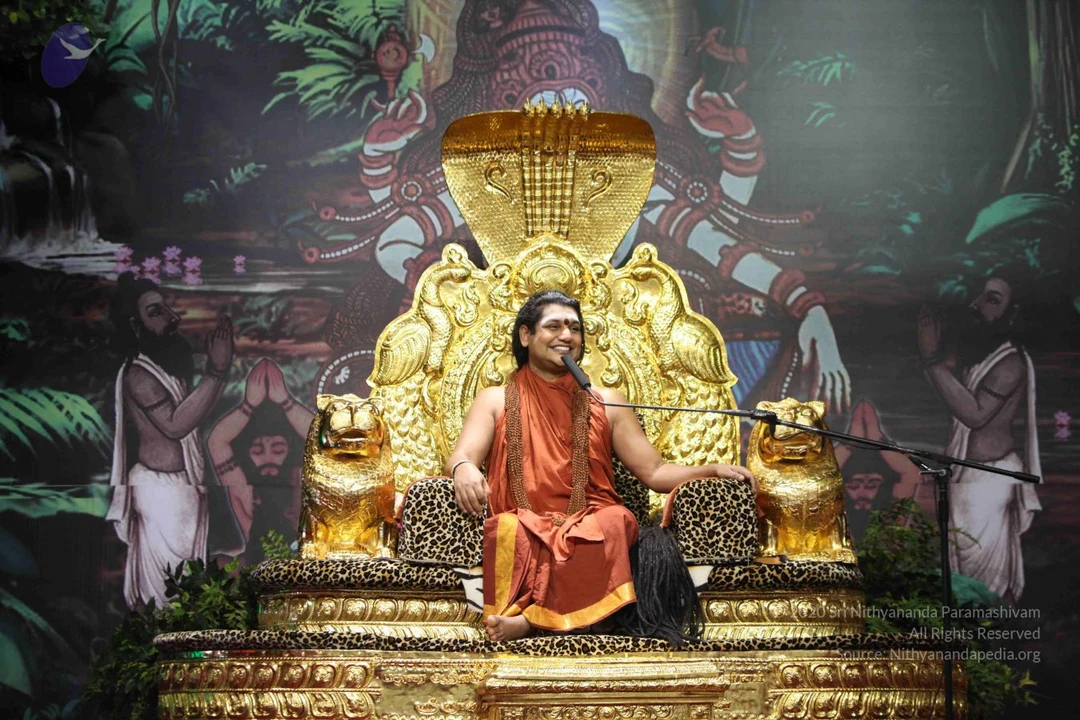
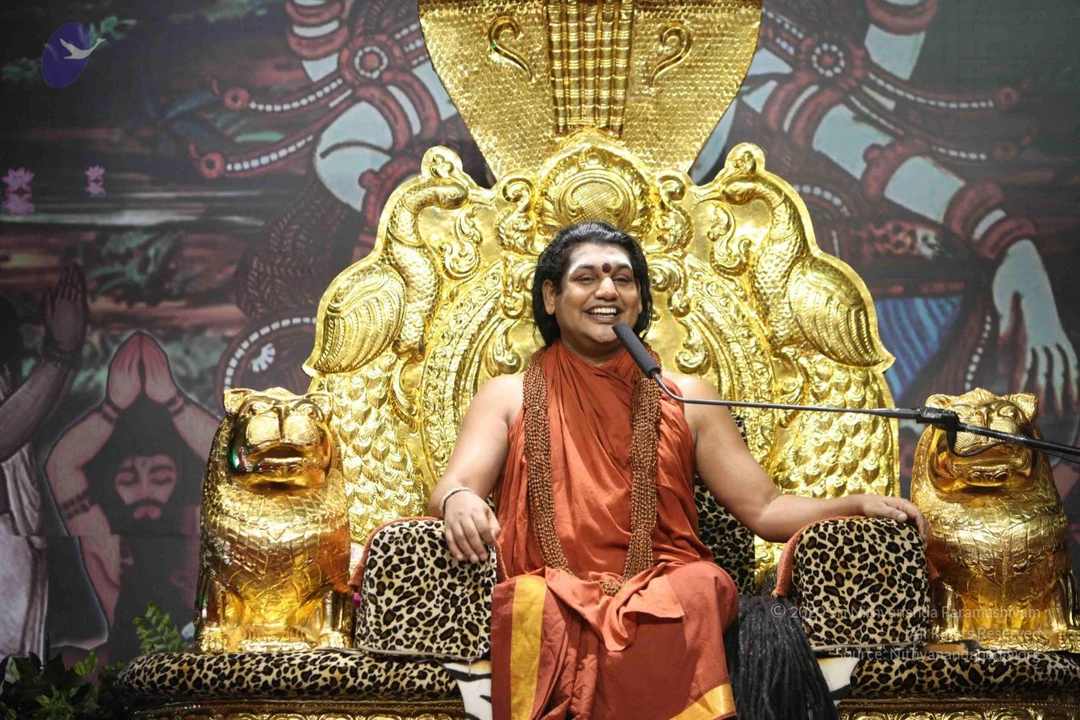
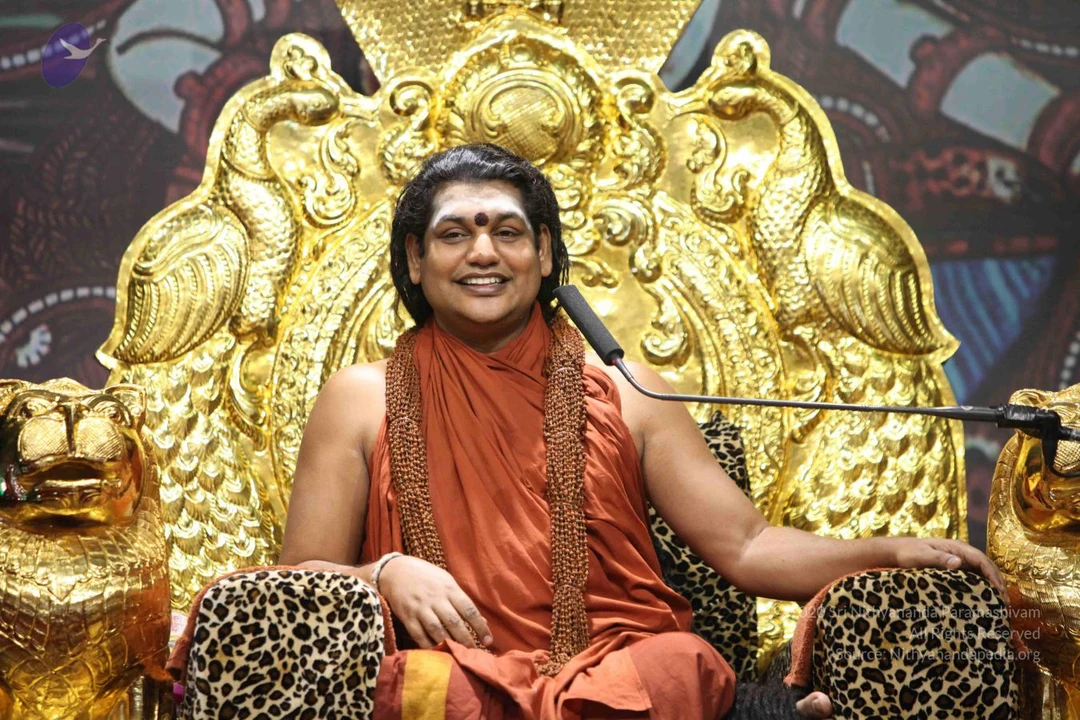
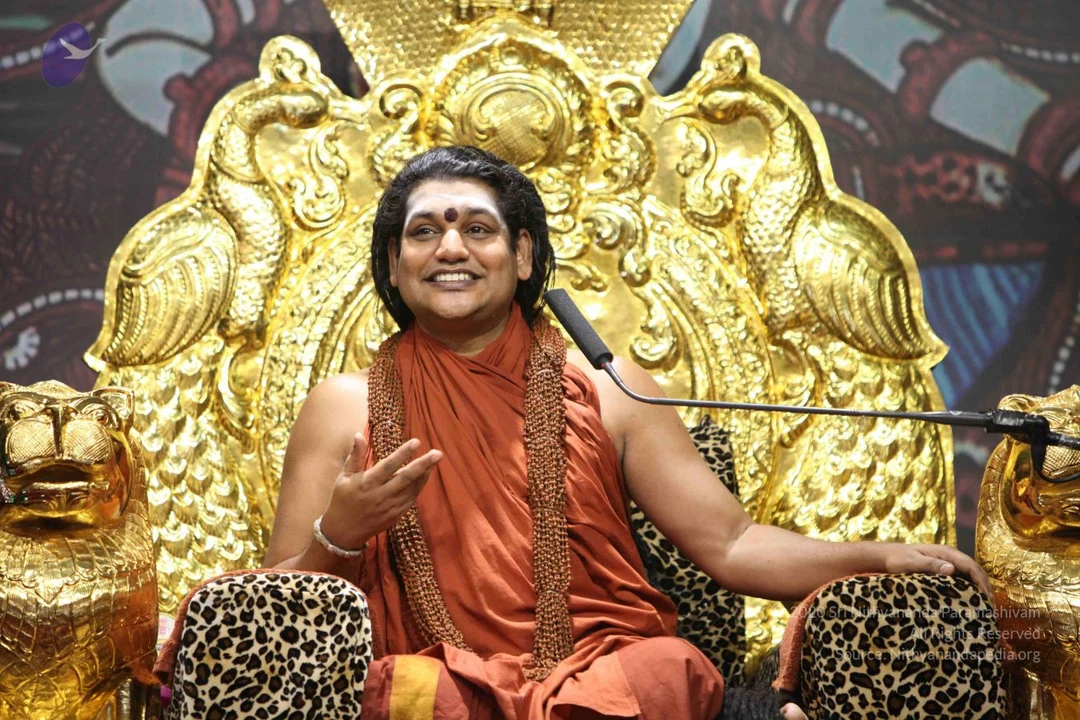
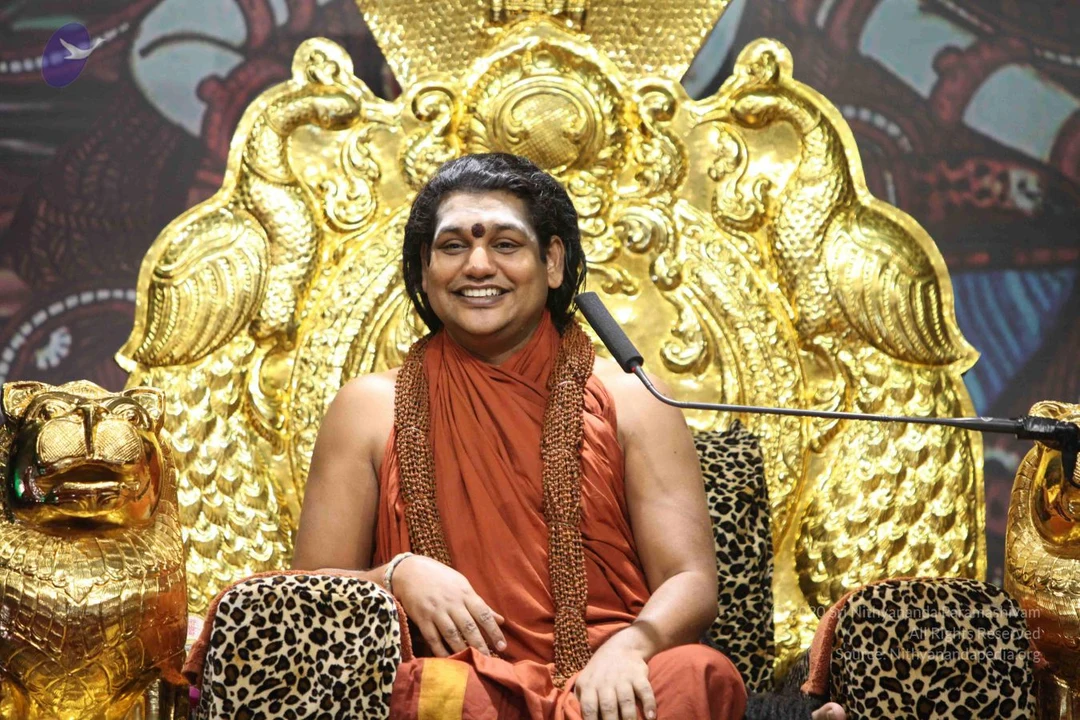
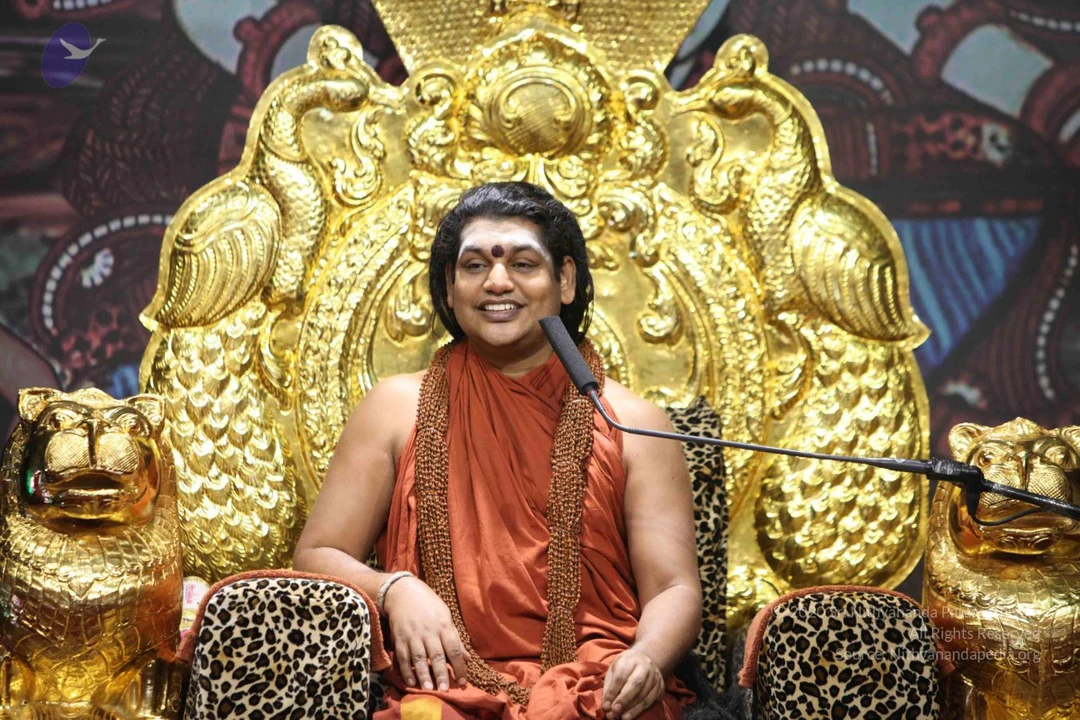
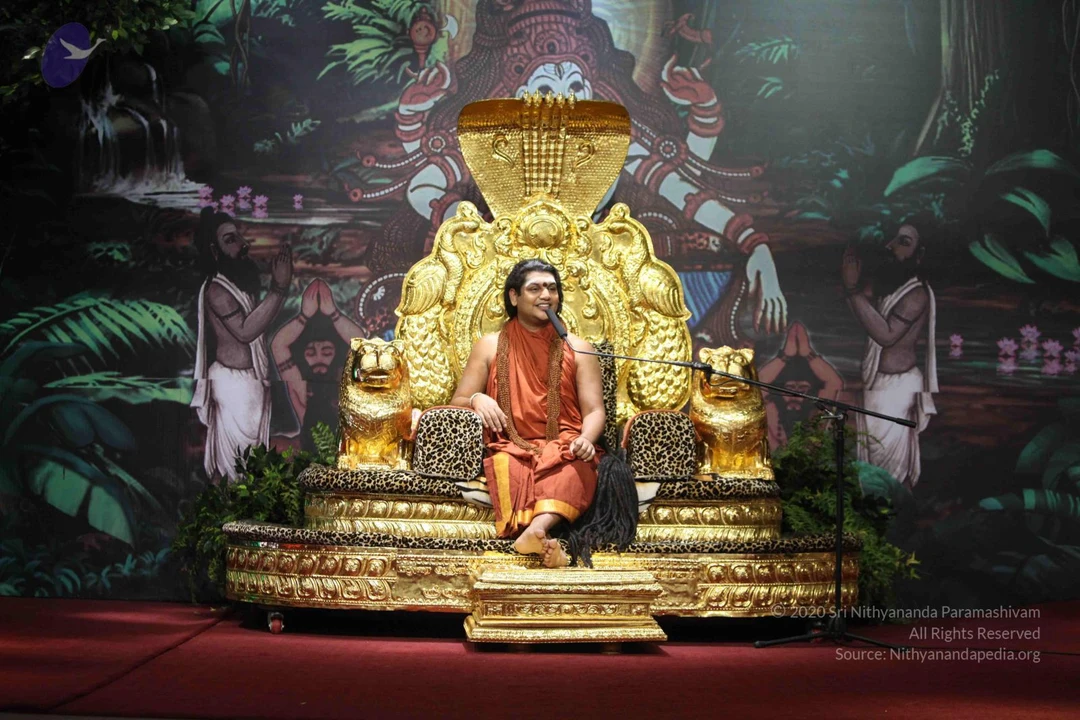
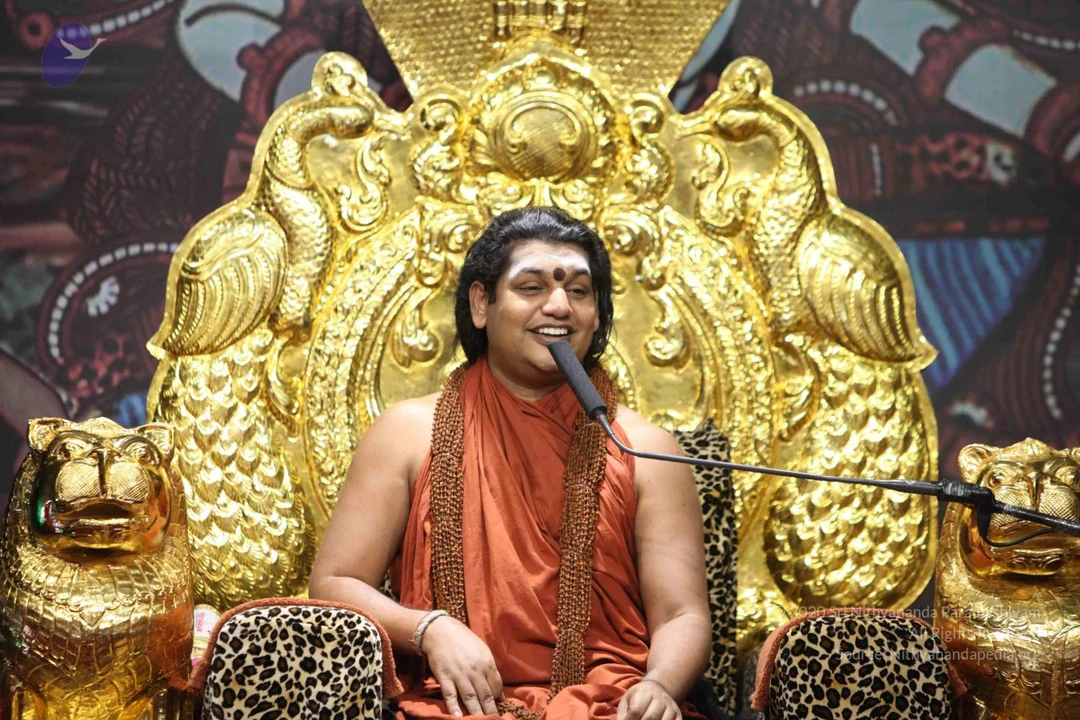
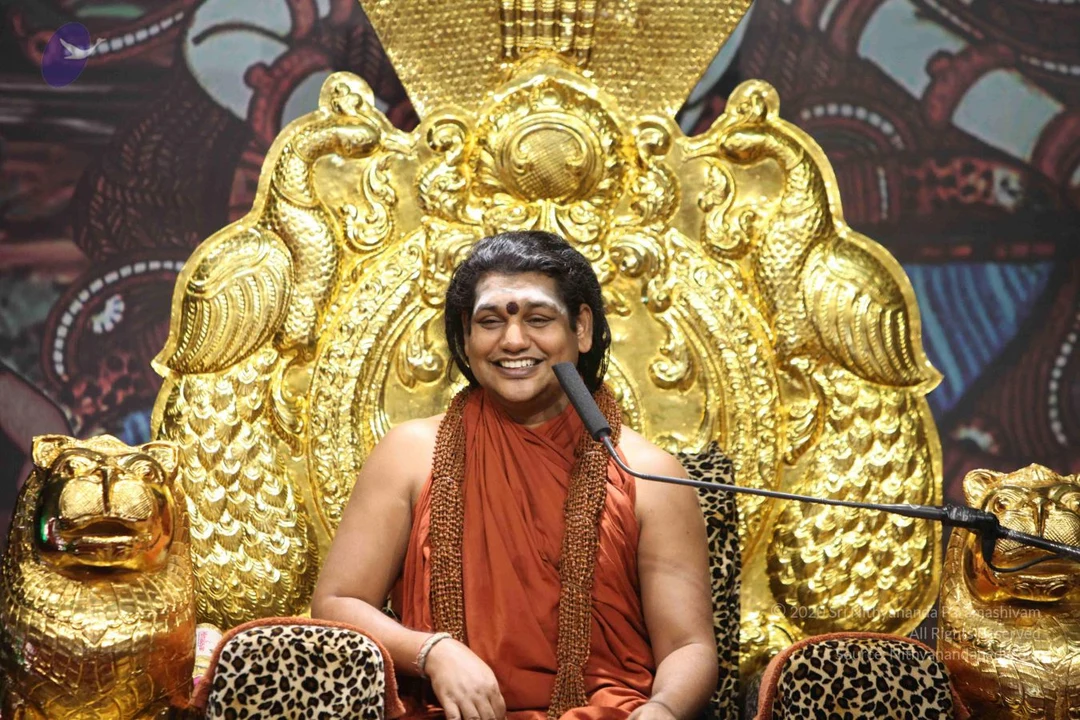
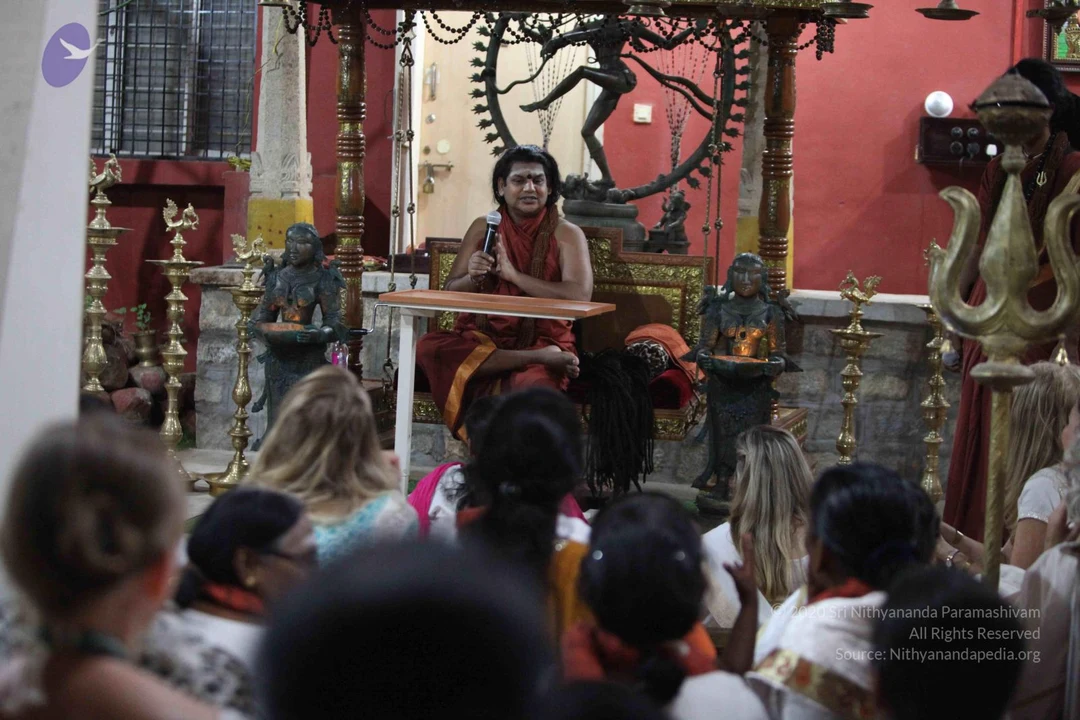
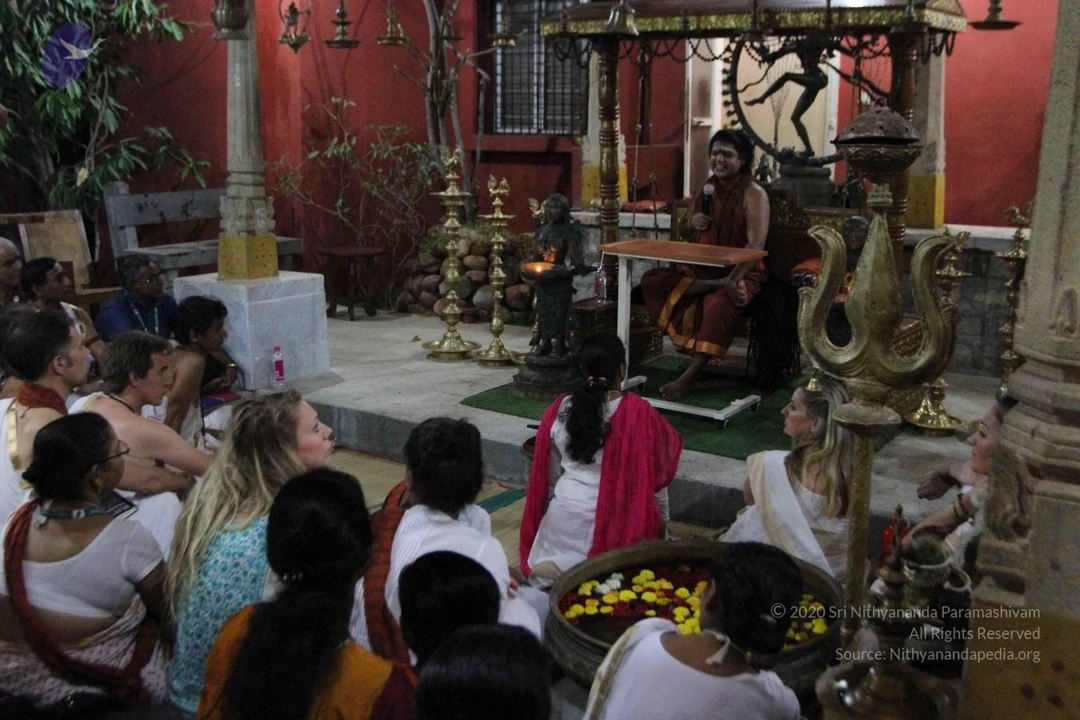
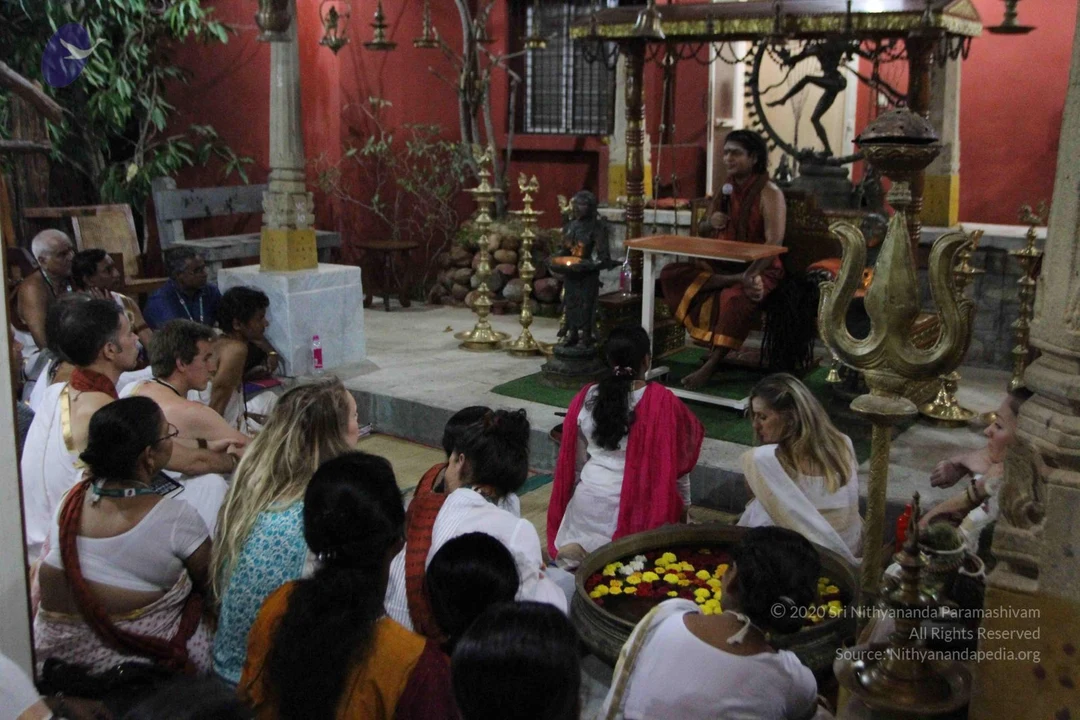
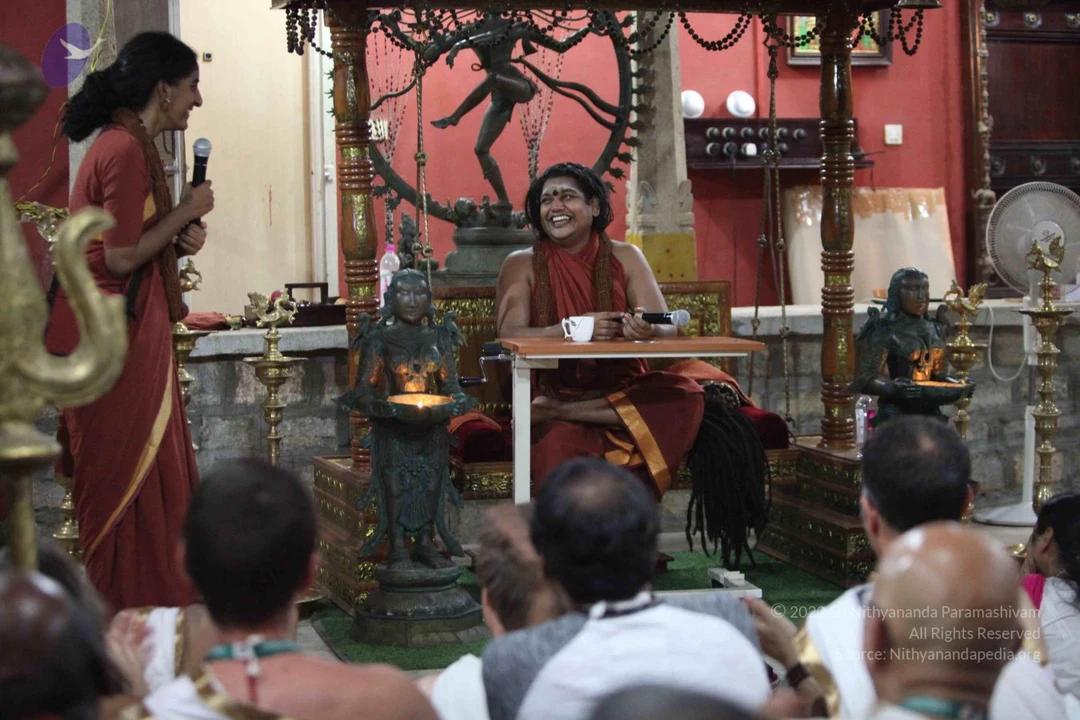
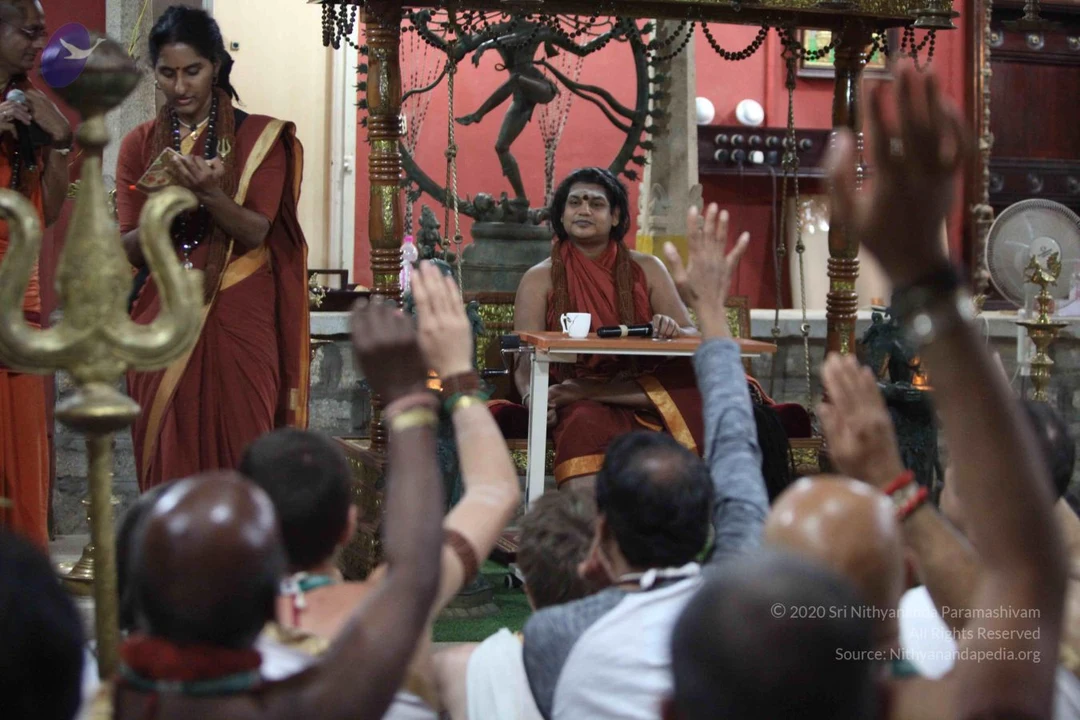
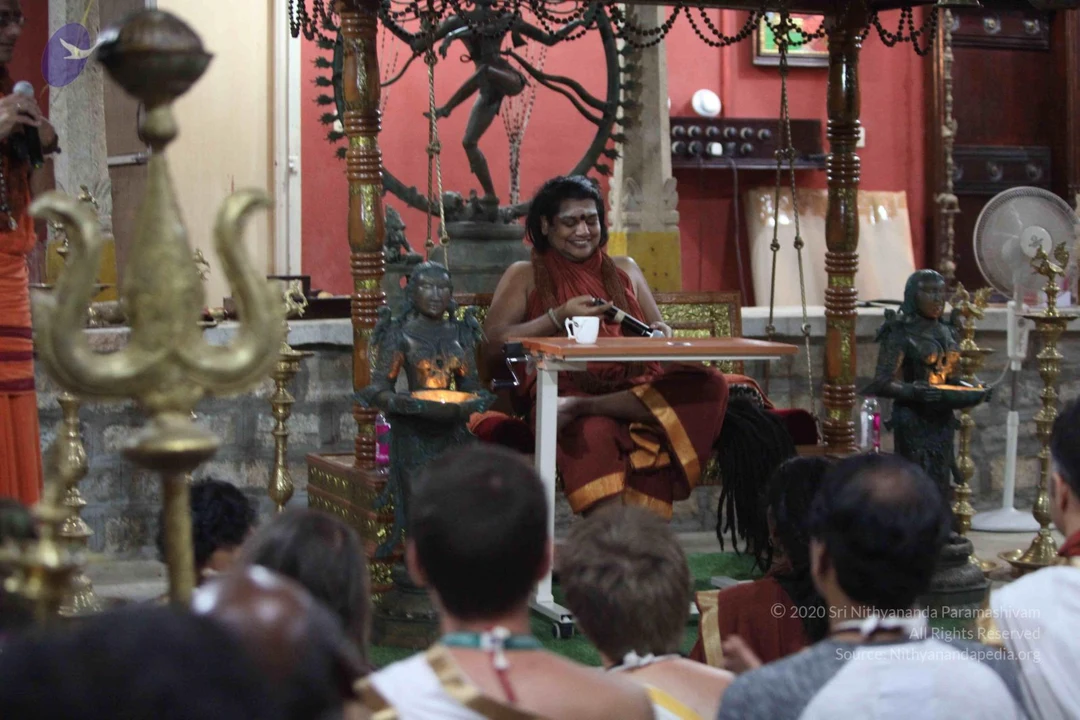
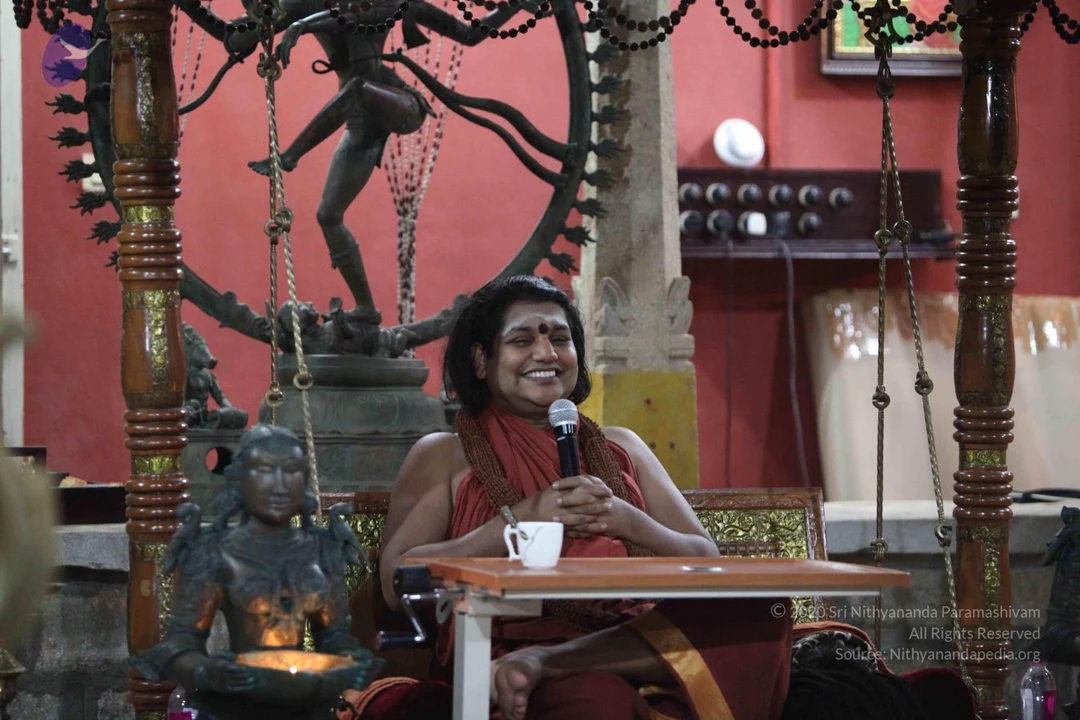
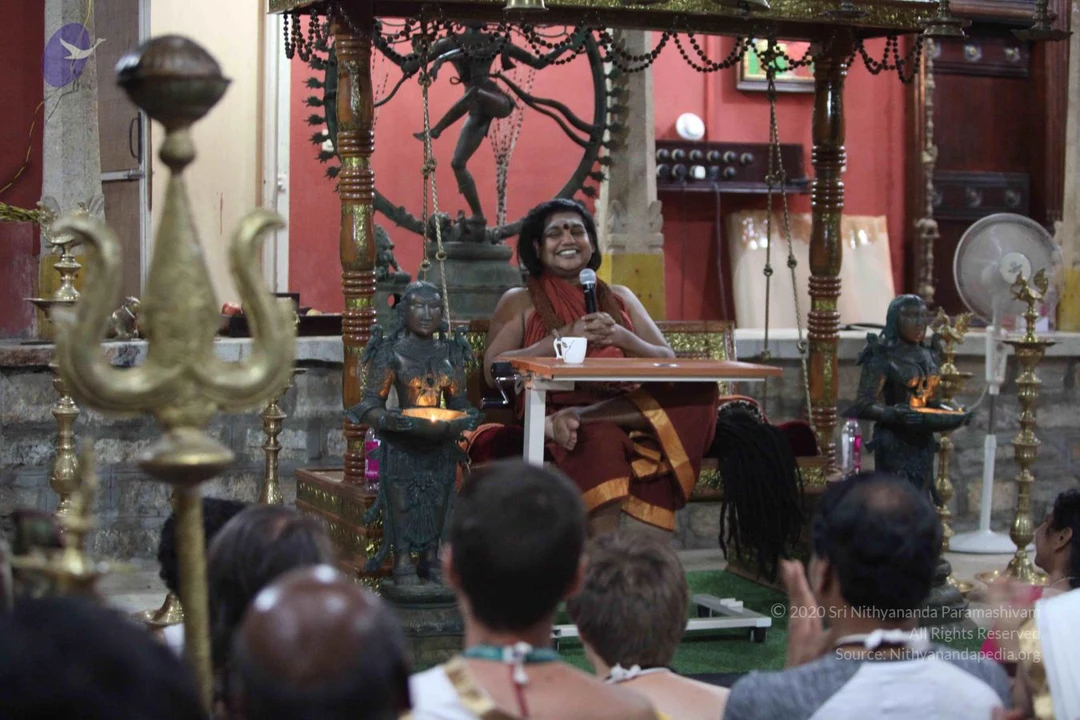
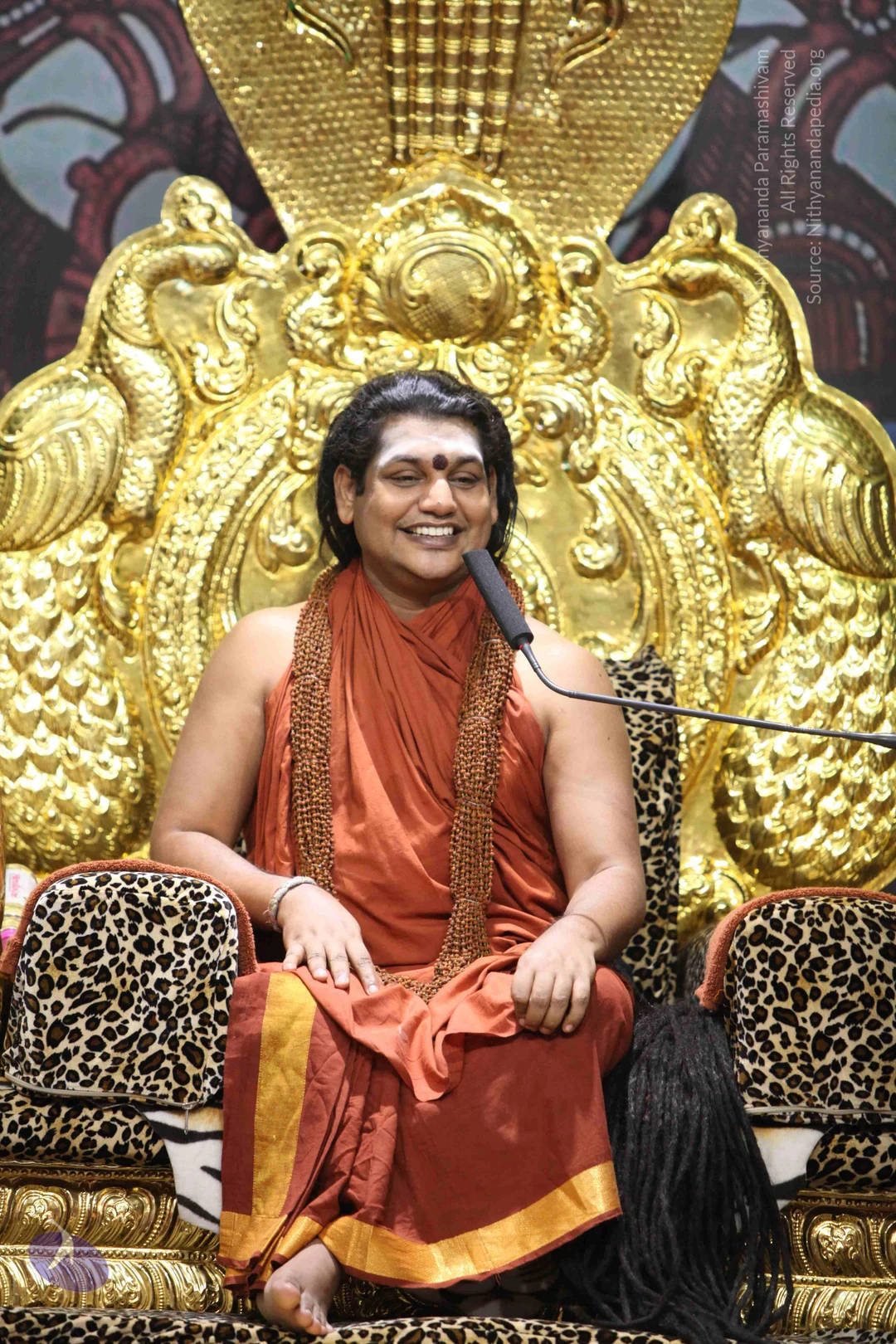
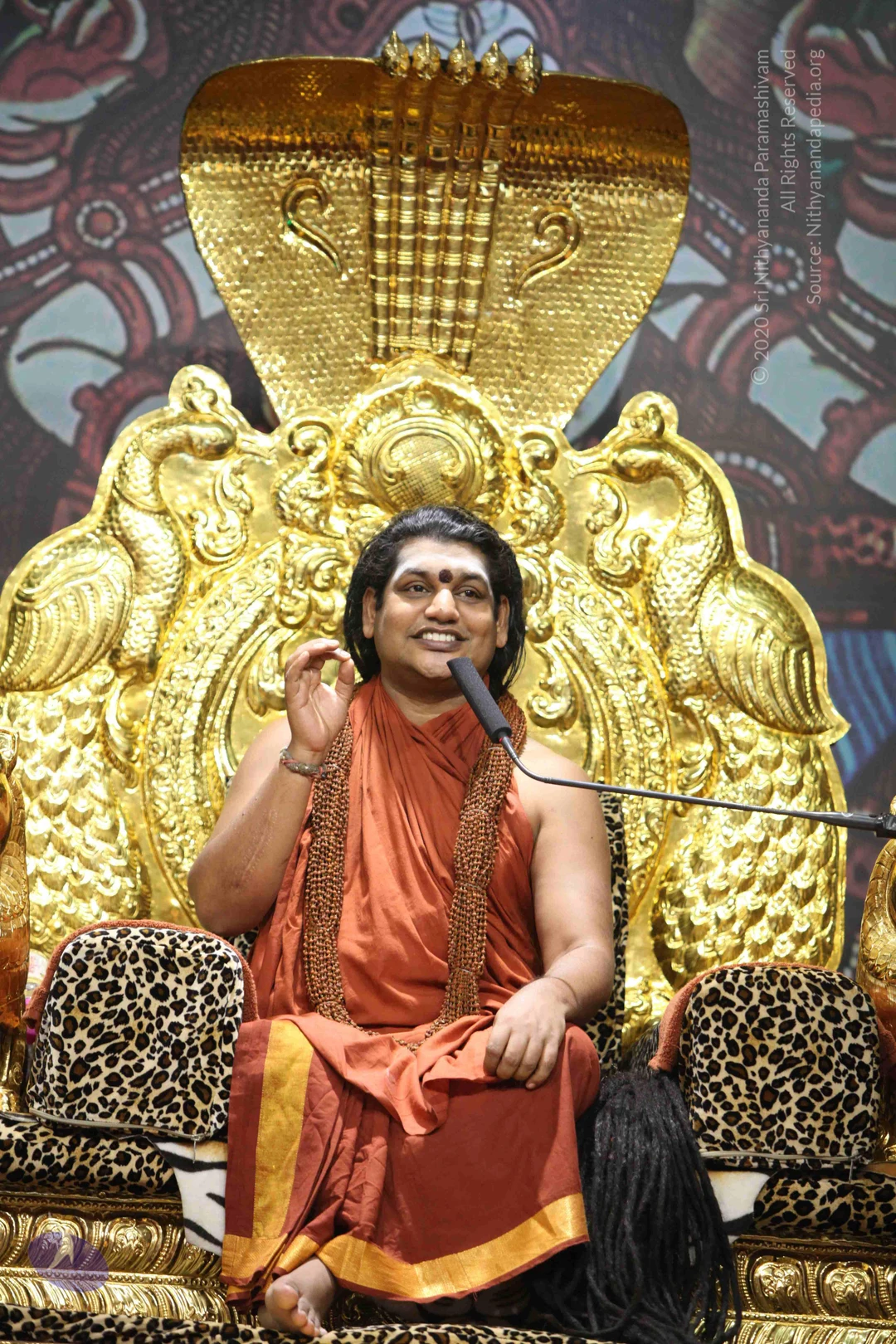
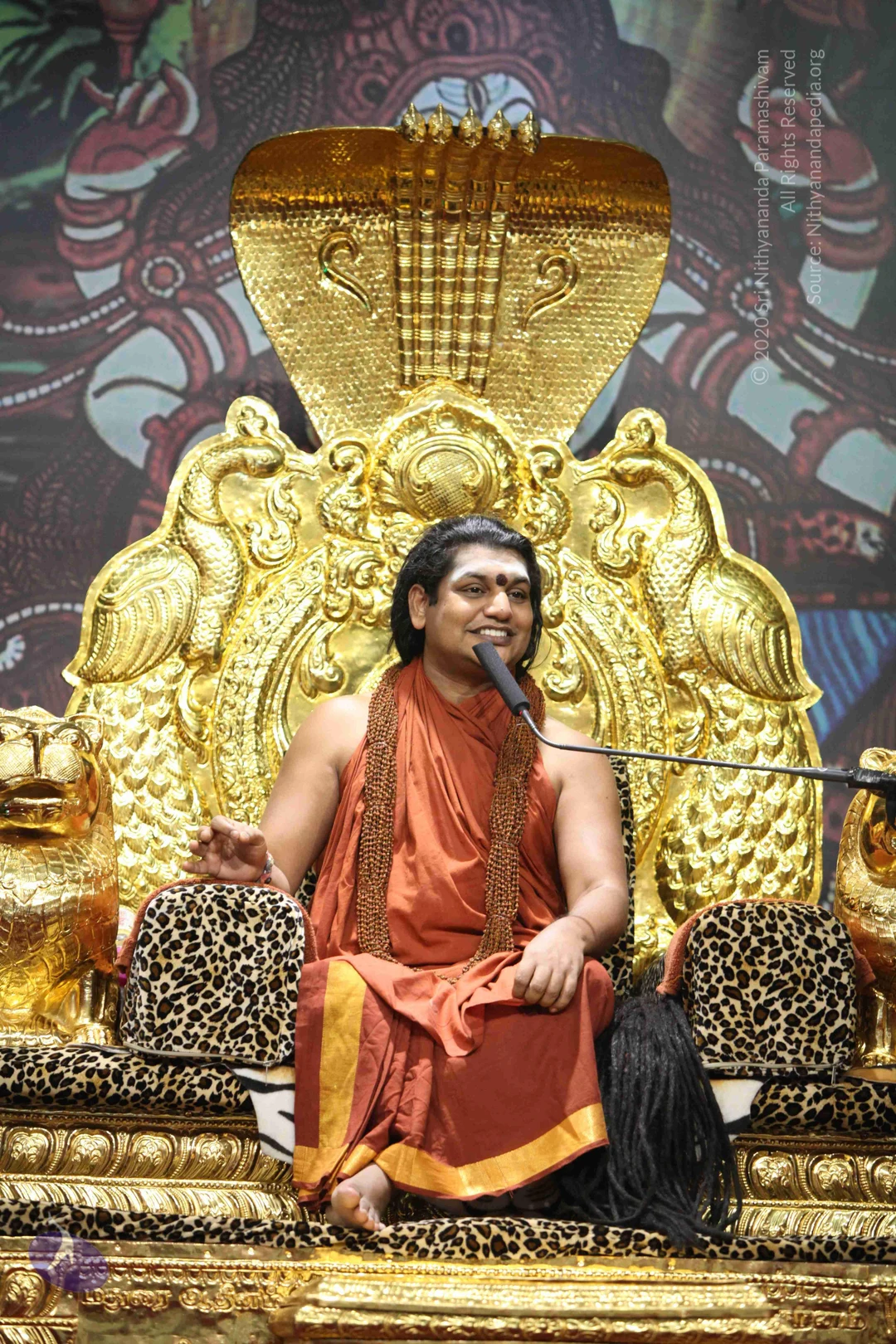
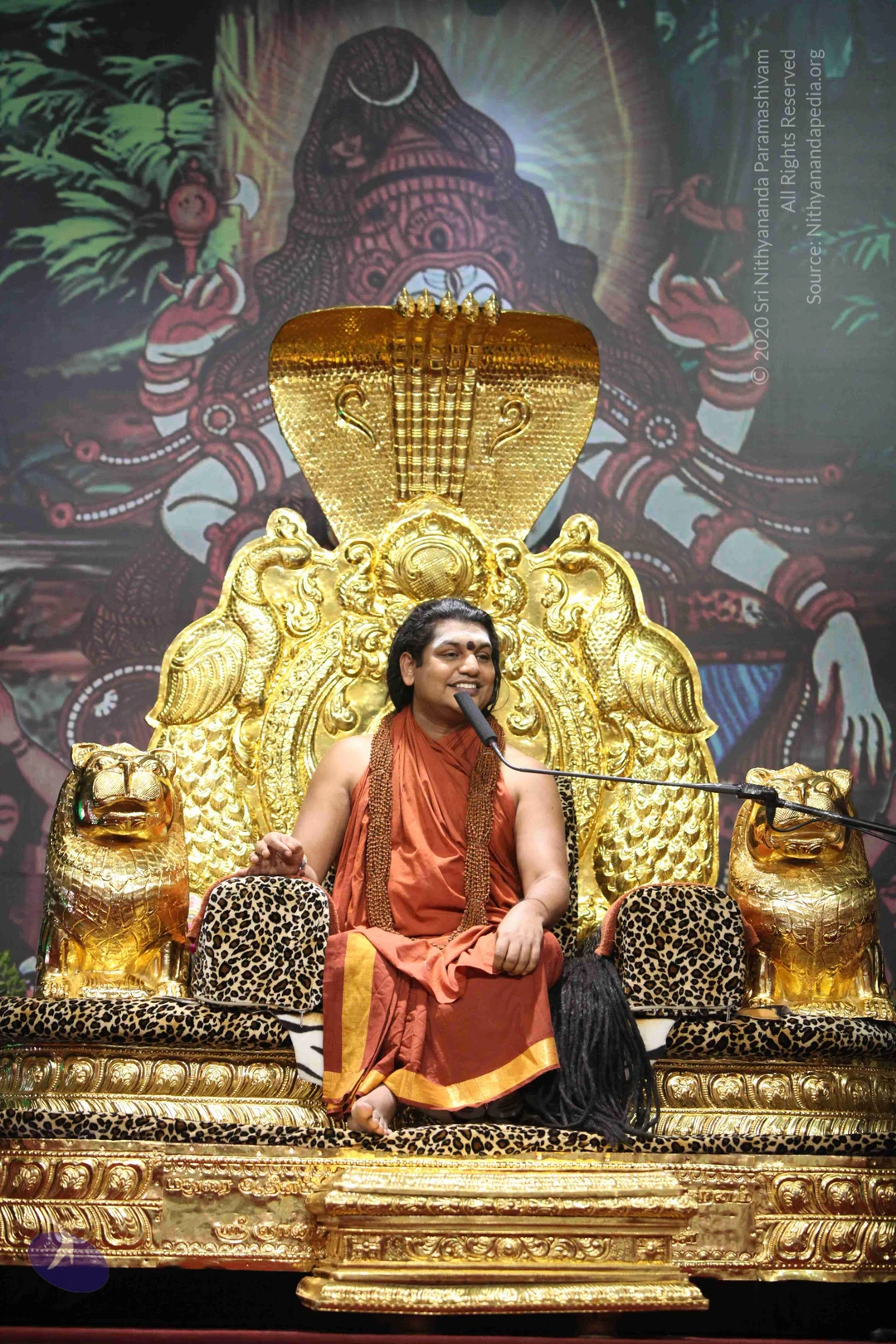
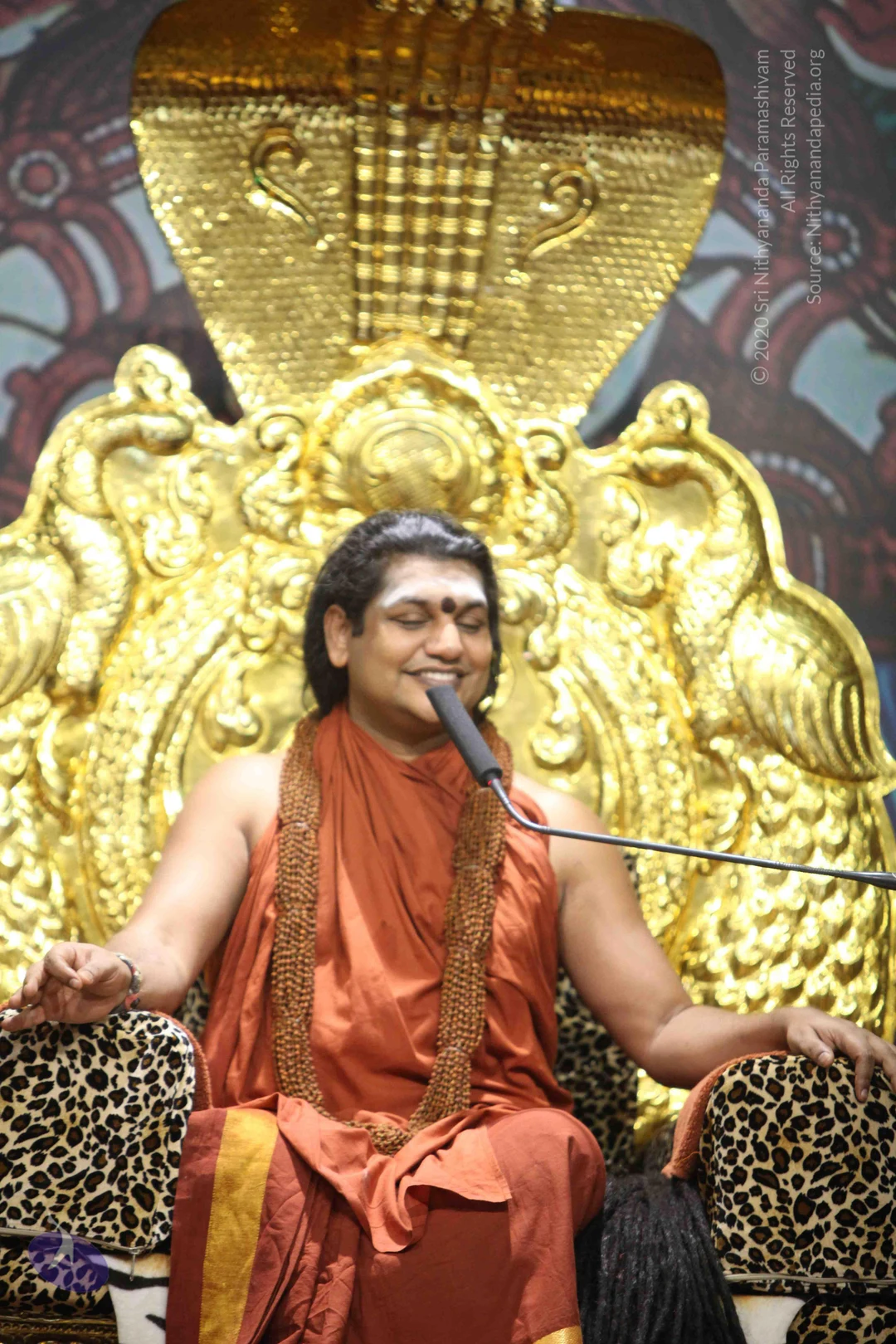
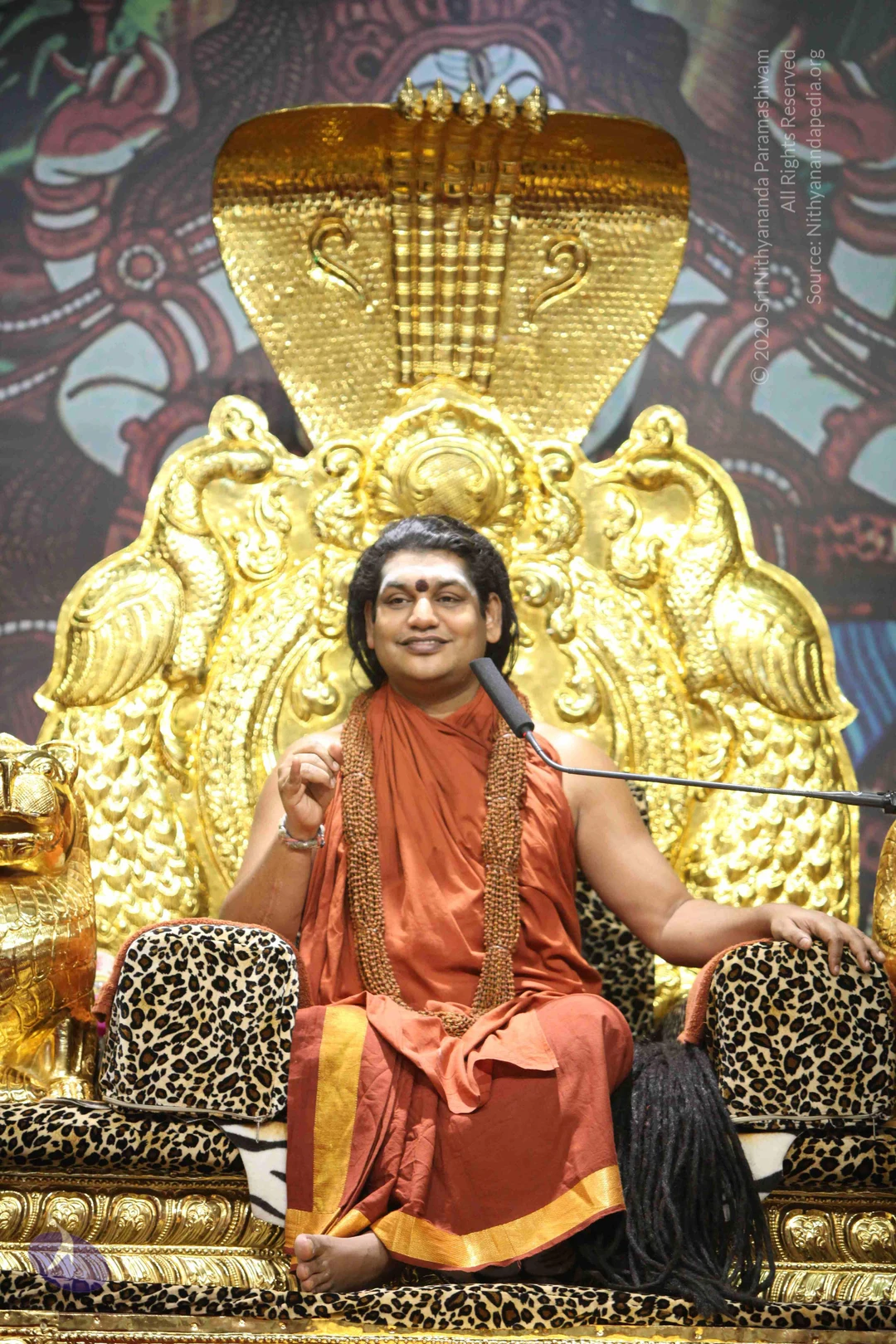
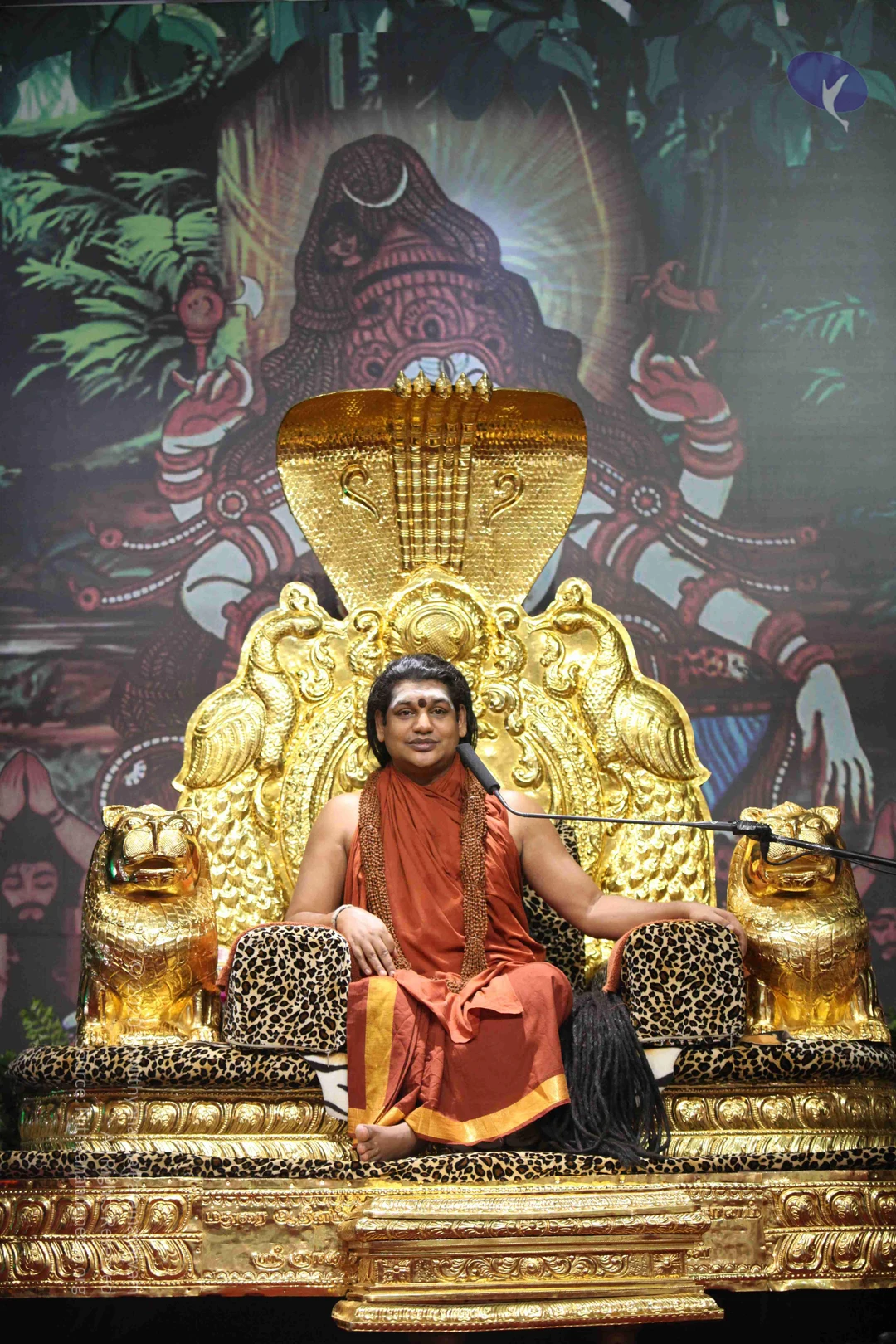
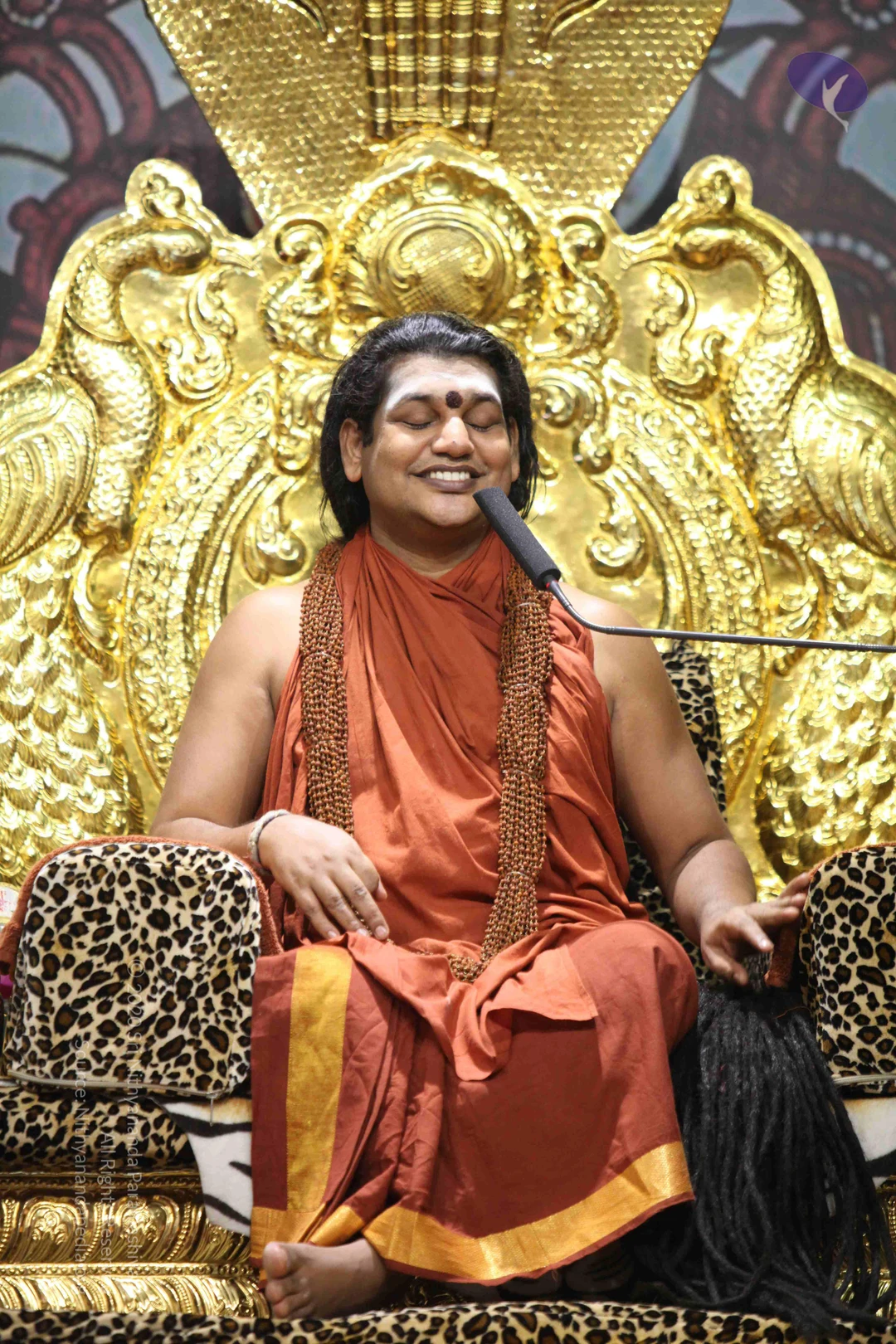
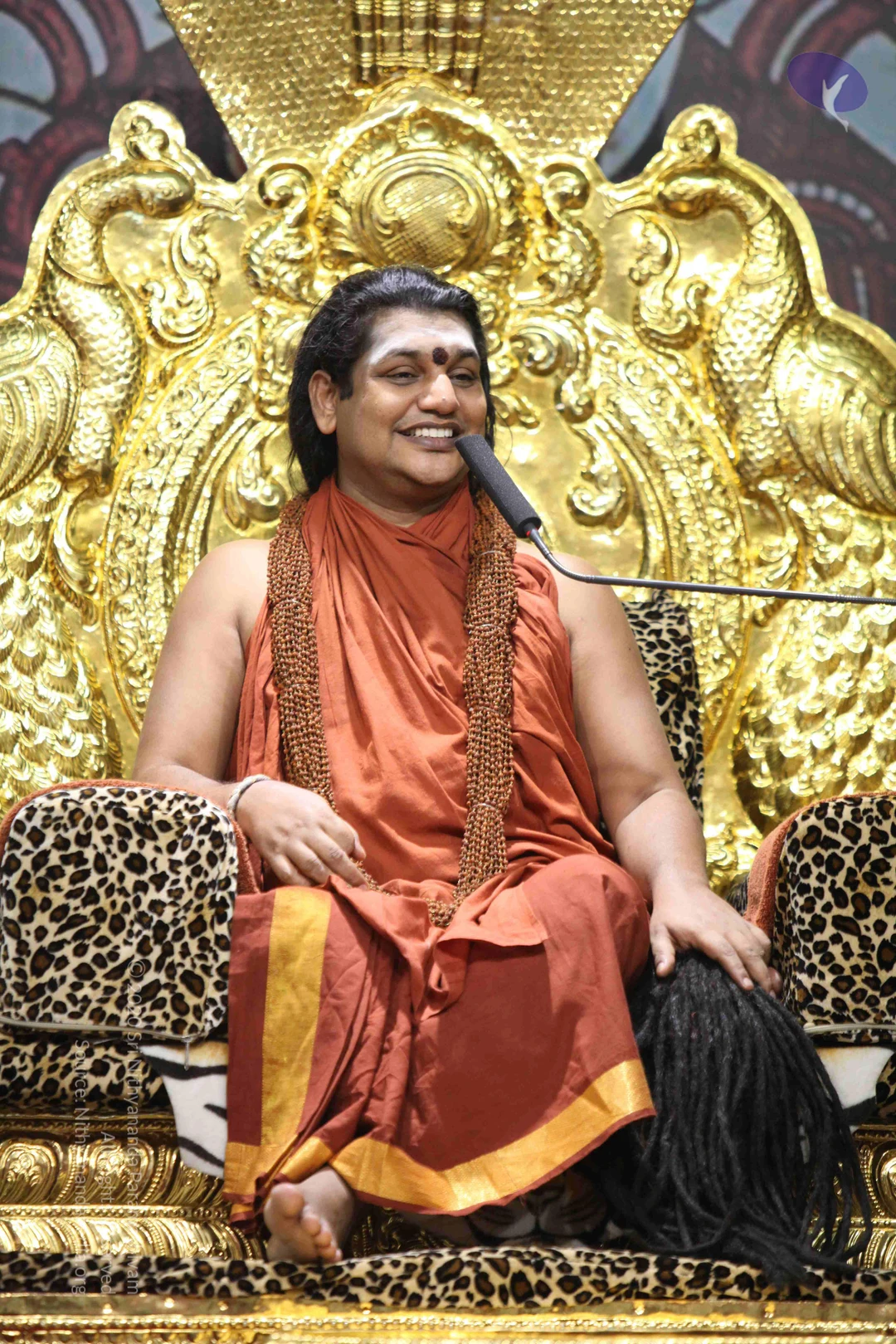
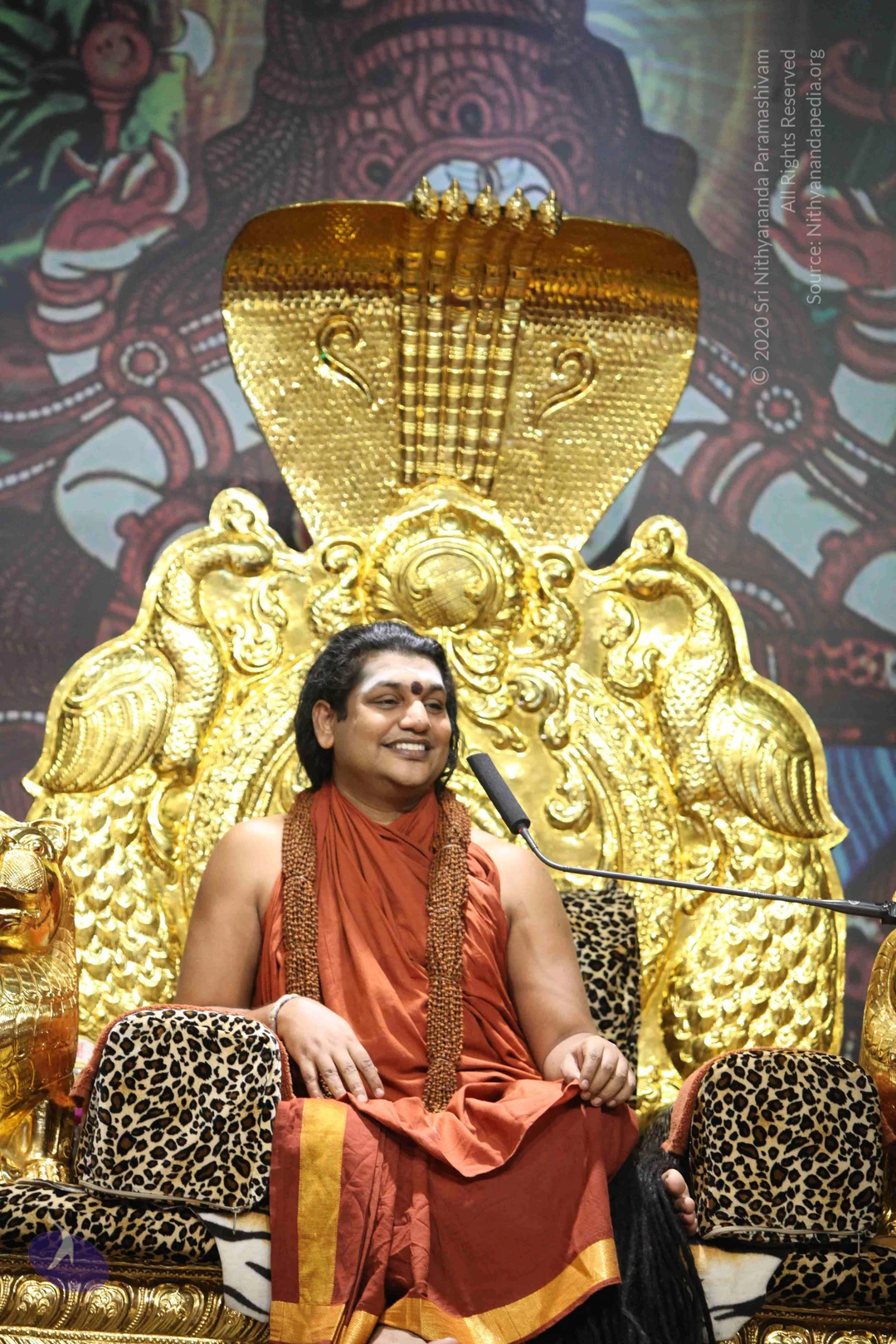
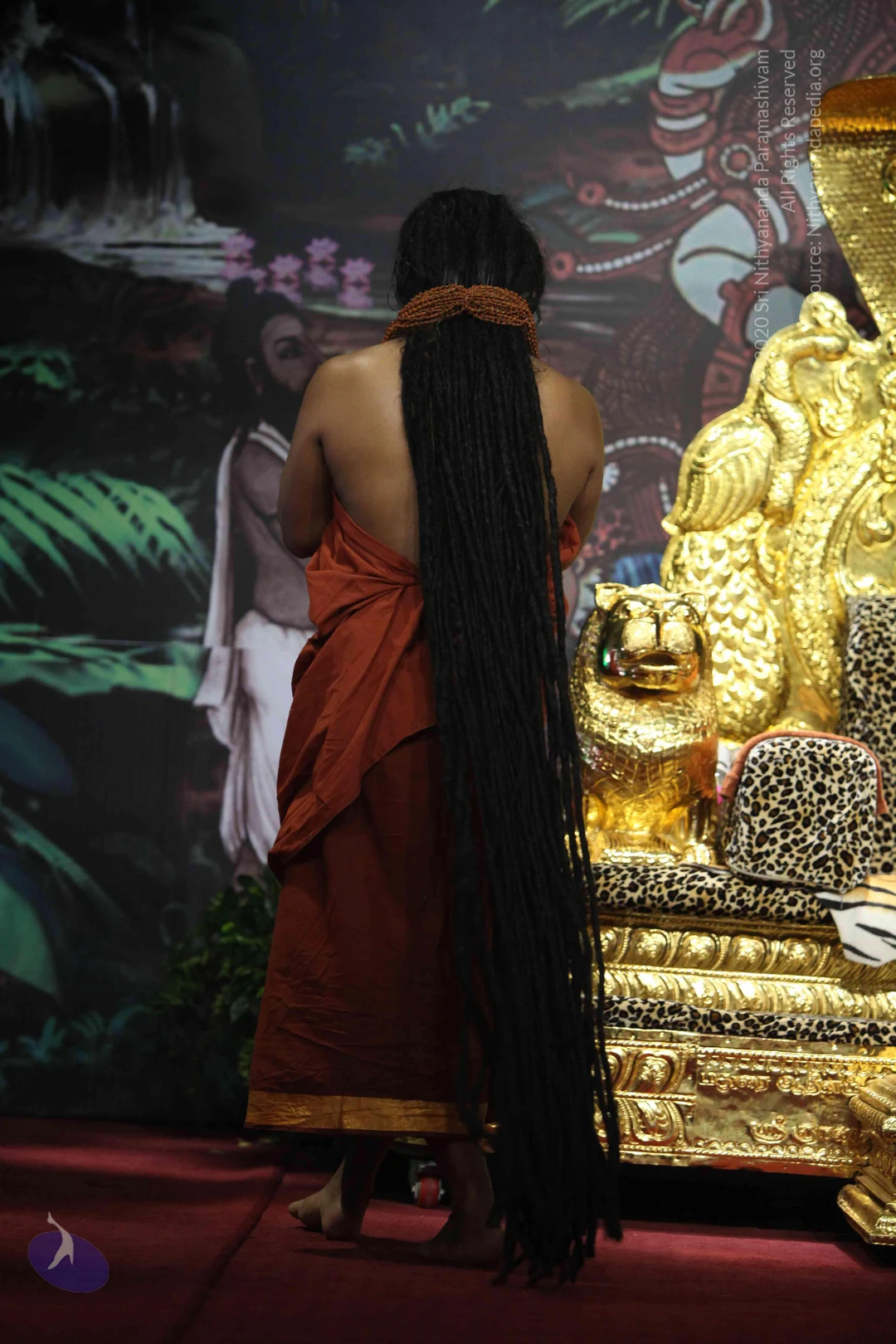
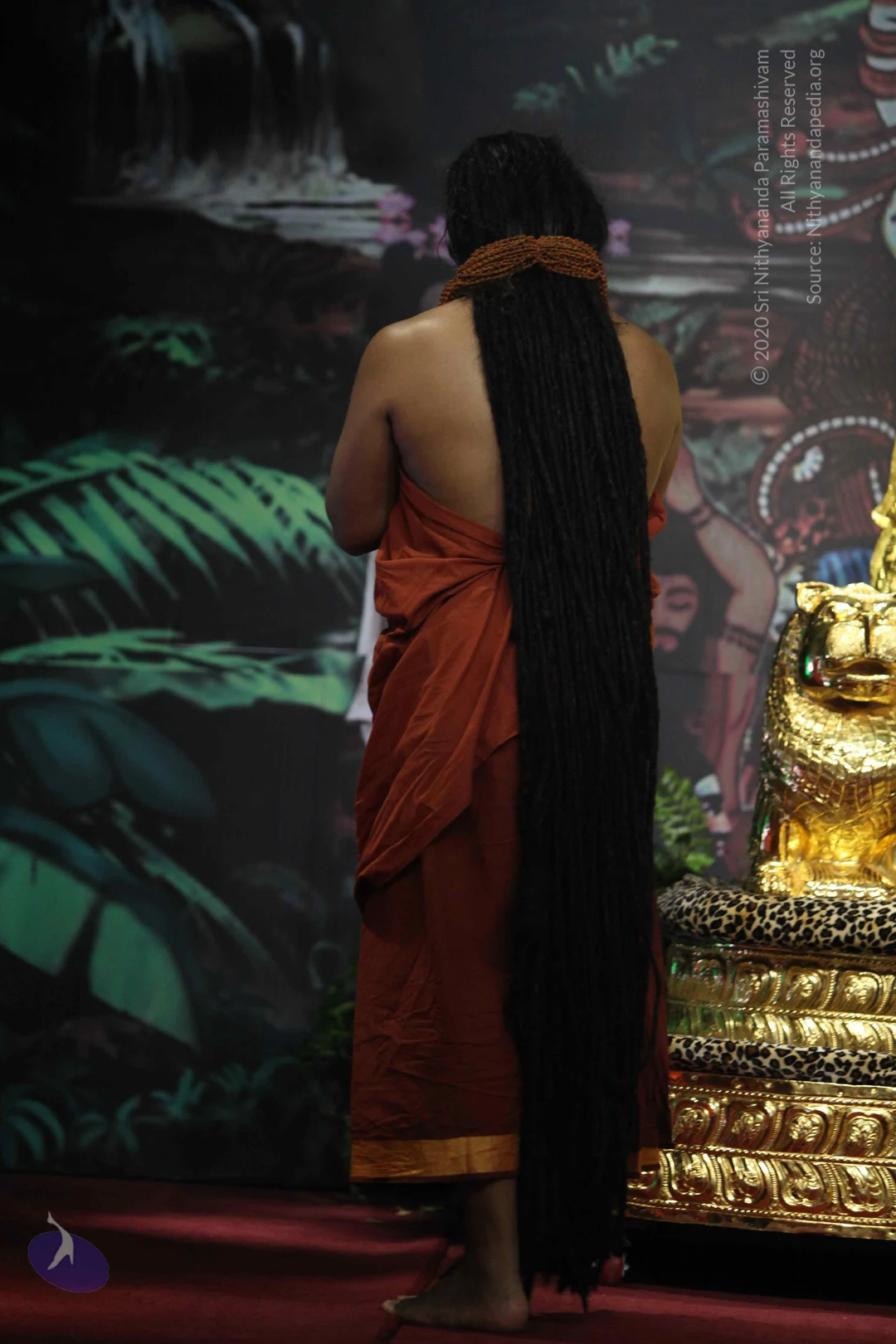
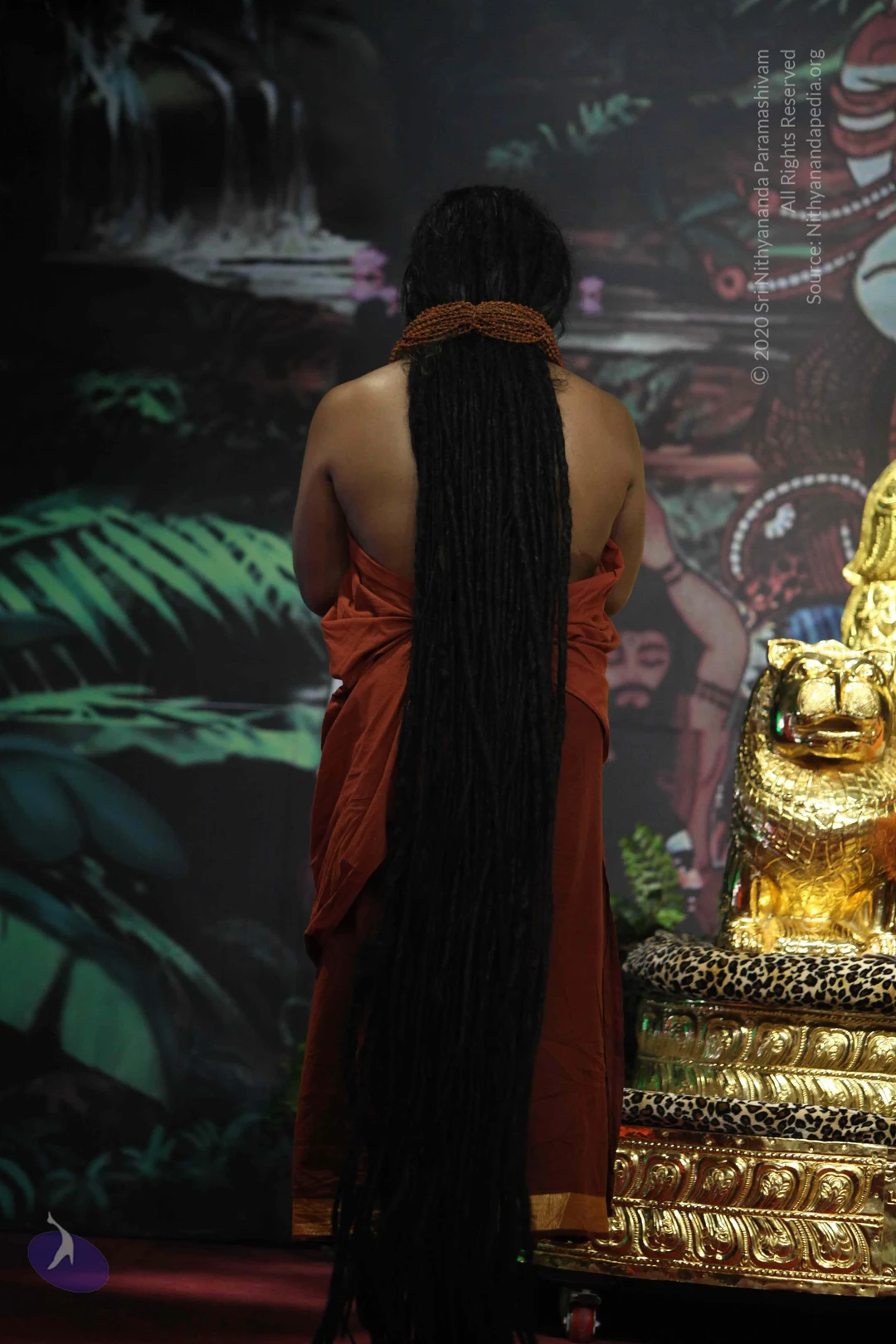
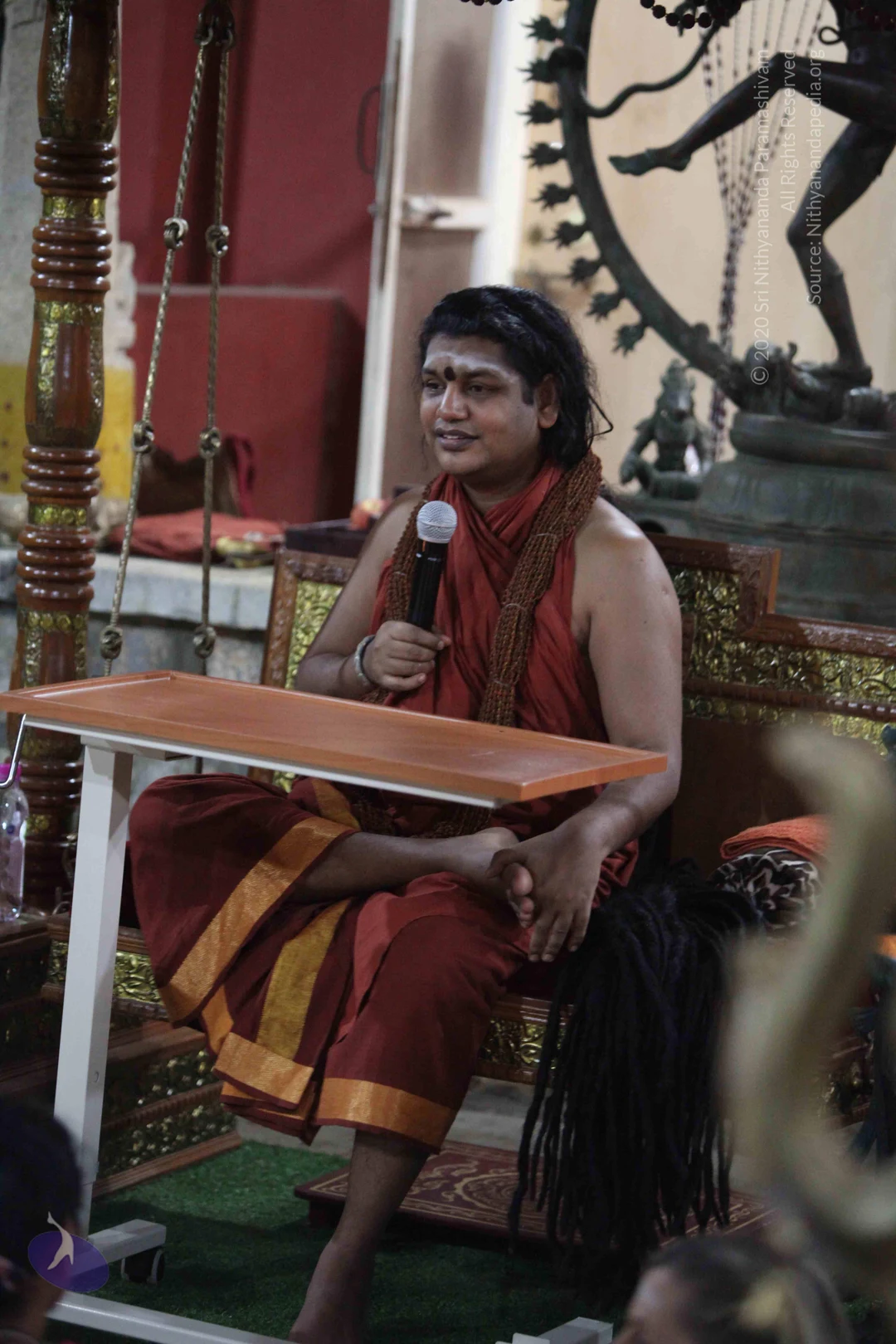
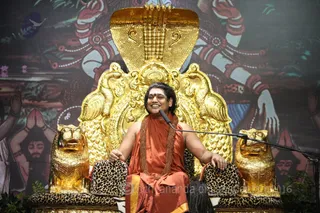
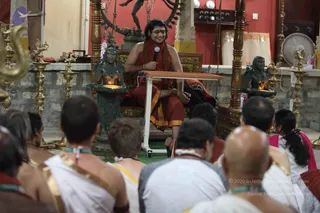
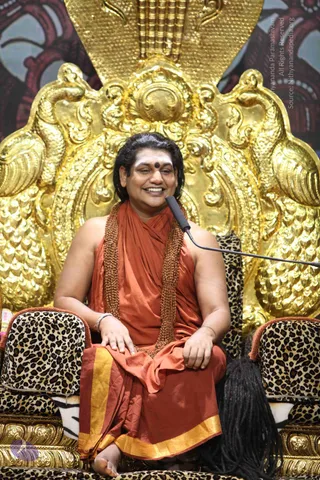
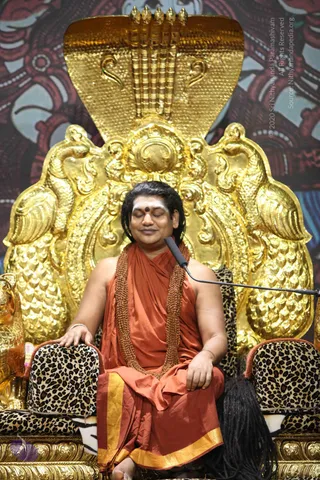
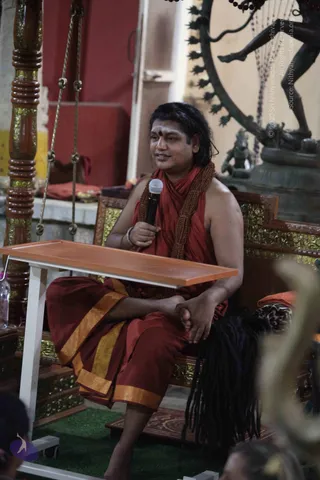
A seated man in an orange-saffron robe with a rudraksha mala and a gold-coloured necklace sits on an ornate gold throne with a cobra hood canopy and two gold lion heads flanking him, one hand raised in a teaching gesture, speaking into a microphone on a stand. Behind him is a painted backdrop of multi-armed deity figures and devotees with folded hands. Leopard-print cushions and green foliage are at the bottom.A seated man in saffron-orange robes speaks into a microphone while smiling, seated on an ornate gold throne carved with a multi-headed cobra hood and mythical birds, flanked by golden lion heads and leopard-print cushions. He wears a rudraksha mala and a white forehead marking with a red dot. A painted backdrop of deities and devotees with raised hands frames the stage. Swamiji (probable): long swept-back hair, saffron robes and a rudraksha mala, seated on the throne as the speaker at a satsang discourse.A photo of an indoor satsang with a seated speaker in red-orange robes and an orange shawl holding a microphone and gesturing with one hand, seated on a gold-trimmed throne-like chair before a low white lectern. Behind him stands a large bronze Nataraja dancing Shiva within an arch of flames, with red walls and gold pillars. Two bronze female figures holding oil lamps flank the throne, and brass lamps and a large gold trishula stand nearby. The audience of devotees, mostly seen from behind, includes women with light and dark hair, and a woman in a red sari with a gold-toned necklace stands at the right edge.

February 26 2016

Original wiki page
Contents

Title:

Supreme Pontiff of Hinduism HDH Bhagavan Sri Nithyananda Paramashivam invitation for Kumbh Mela 2016

Description:

In today's Nithya Satsang (26 Febuary 2016), Paramahamsa Nithyananda speaks on the upcoming Kumbh Mela 2016, Simbha Hasta to be held at Ujjain, India. Kumbh is the celebration of the richest Vedic traditions. At the Kumbh Mela, we will experience POSSIBILITY in its highest form. The auspicious planetary configuration of Simhasta Kumbh charges the whole atmosphere with divine cosmic energy, radiating it intensely, giving everyone present there, the possibility for Enlightenment! The Harvard Review says that the Kumbh Mela of 2013 at Allahabad was better organized than the FIFA World Cup. Why? Because, no matter how disorganized we are in other aspects of life, Hindus are highly organized when it comes to their religion and festivals. So, He urges us to - Drop ourselves at the Kumbh Mela. Watch, Share and Subscribe to our channel to be notified of the next upload click http://www.youtube.com/subscription_center?add_user=lifeblissfoundation to subscribe. visit: http://www.nithyananda.org http://www.nithyananda.tv http://www.innerawakening.org https://www.youtube.com/user/LifeBlissFoundation https://twitter.com/SriNithyananda https://www.facebook.com/ParamahamsaNithyananda https://plus.google.com/104086565286265959836/posts

Link to Video:

VideoAudio

Transcript:

(00:14)

nithyānandeśvara samārambhām nithyānandeśvari madhyamām | asmat āchārya paryantām vande guru paramparām ||

निथ्यनन्देश्वर समरम्भम् निथ्यनन्देश्वरी मध्यमं अस्मत् आचार्य पर्यन्तं वन्दे गुरु परमपरं

(00:33)

I welcome you all with My love and respects. I welcome all the devotees, disciples, Inner Awakening Teamily and everyone sitting with us through two-way video conferencing, having Nayana Deeksha and through Nithyananda TV. Today I came to satsang mainly to speak about Kumbh Mela…. This time in Kumbh Mela, first time we are going to have a unique program – Shuddhadvaitam. Please understand. Mahadeva, after delivering 28 Agamas, 64 Tantras, and the Upagamas - like Guru Gita, all these books, He concludes by saying, “Let this science which I revealed to the world be called as Shuddhadvaitam.” So, this word is given directly by Mahadeva. By this program, through this program I will give you the essence of what Mahadeva shares with the world through the 28 Agama and 64 Tantra and Upagamas. The essence Mahadeva gives in four words – CHARYA, KRIYA, YOGA, JNANA.

(02:27)

Charya means lifestyle - like vegetarian food, applying vibhuti, hairstyle, Shiva Jatta, rudraksha, the lifestyle. Kriya means the spiritual processes - homas, prana pratishta of Deity, pujas, all the auspicious acts you need to do to achieve the spiritual experience, or spiritual powers. Yoga means the whole science of yoga - starting from asana, pranayama, pratyahara, dharana, dhyana, samadhi, the science of yoga. And Jnana, the science of Enlightenment.

All these four is the essence of the Shuddhadvaitam. I will give you the essence of Shuddhadvaitam in 21 days; with 70 different initiations for 70 different powers. I don’t know about all of you, I Am excited! I Am excited! And from Me the excitement has already gone to the first circle, they are all excited.

(04:06)

The amount of arrangement going on, unimaginable, scale arrangements. I Am looking at five thousand people attending 21 day Shuddhadvaitam Program. I Am already seeing it happening. For all the Inner Awakening Grads; it is My gift, you are My guest. Not only will we provide you best food as per Agama and accommodation, all the items that religious, spiritual items needed for initiation and to practice the initiations like a you are going to have Vishesha Deeksha, the whole puja vessels, I think 18 or 19 vessels need to be provided to you to conduct the Atmalinga Puja, Atma Puja, Atmartha Puja, you will be provided all that material. Like this every initiation, whatever needed to be procured, all that will be My personal gift to you.

(05:43)

You will be gifted and I Am personally inviting all of you, come experience Shuddhadvaitam in… listen carefully, as per the Agamas in Ujjaini, Mahadeva revealed Agamas to Sapta Rishis…. In Ujjaini Mahadeva revealed, read Shiva Purana you will see, that is why in Ujjaini, Mahadeva is called, addressed as Dakshinamurti. Ujjaini was Dadhichi’s place, Dadhichi’s ashram and that is where Mahadeva revealed Agamas to Sapta Rishis. See in Kailasa, He revealed for Devi, in Ujjaini He revealed for Sapta Rishis. Understand, the place where Mahadeva revealed Agamas, it will be revealed once more again to all of us. I Am personally inviting, come and receive the Agamas – essence of Agamas, Shuddhadvaitam. It’s My personal initiation. So, essence of whatever I said now, today’s satsang: kidnap yourself by yourself from all of your negative thought current and drop yourself at the Nithyananda Peetham Camp in Ujjaini, in Ujjaini.

(08:03)

Please go ahead and register yourself before 29th of February. If you register yourself, RSVP before 29th, automatically it is confirmed. Please go ahead and book your tickets and make the arrangements. All IA grads before 29th of February if you register, you can take it as a confirmation, go ahead. After the 29th you may have to pay and enroll, because by 29th we will have to make decision to make infrastructure, which we already started. Anything, addition we will have to get it extra separately. So, before 29th if you confirm, we will be able to provide everything free of cost, and I Am happy to host you all as My personal guest. Please come, experience, enjoy, radiate Shuddhadvaitam.

And if you register before 29th, after receiving confirmation, please do not cancel because the infrastructure we create for you should not go waste. It’s lot of your money, it is actually devotee’s money is being spent to create the infrastructure. So, let it not go waste, that is My request. See we have, you guys have provided Me enough to share for the spiritual needs, we don’t have a single penny to waste…. That is what I always tell – We have enough to share with the whole world, but we don’t have a single penny to waste. I also want to prepare all of you for this Shuddhadvaitam Program. First time I Am going to give some spiritual practices, which you will practice, prepare yourself and come for the program so that straight away I can transmit the powers, you are ready to receive.

(10:45)

In next few days I will guide you into some of the processes and practices to prepare you into Shuddhadvaitam. Radiating inner space and powers of Mahadeva, radiating the space and powers of Mahadeva. Get ready for one of the greatest blasts, spiritual blasts, Shuddhadvaitam. Don’t give any reason, just be ferocious with yourself, kidnap yourself by yourself and drop yourself straight in the Nithyananda Peetham Camp in Ujjaini. Unless you are kidnapped by devil, demon, Satan, Maya all put together, don’t miss this. Shuddhadvaitam is the best thing you can do for yourself. Understand other than the few departments, which cannot be closed, I Am emptying the whole ashram and taking. Then understand the importance of the whole Shuddhadvaitam Program. Anybody who wants to volunteer, preparation for Shuddhadvaitam Program, process, you are welcome to come to Bangalore to start the preparation work here.

(12:34)

You can come anytime from today and stay until the Shuddhadvaitam Program. Any number of people welcome, you can come and start being part, because we need to move a large amount of things, almost like fifty truckload. Ujjaini, and the preparations have already started; we need a lot of hands to make the Shuddhadvaitam Program process successful. The spiritual process I will take care, but providing all the basic needs like a food, and stay and all the other needs, for that we need a lot of volunteer hands. Let’s make it happen, let’s make it happen. The excitement need to be experienced, that’s it. Plan to kidnap yourself by yourself to Ujjaini to live Shuddhadvaitam.

My blessings. Let’s all radiate with integrity, authenticity, responsibility, enriching, causing Living Shuddhadvaita Shaivam, the Eternal Bliss. Nithyananda. Thank you. Be Blissful.

(14:14)

Photos From The Day:

Nithya Satsang
EVENING SATSANG
VOLUNTEER MEET

Tags:

Paramahamsa Nithyananda, Nithyananda, Kumbh Mela, Ujjain, Kumbh Mela 2016, Simbha Hasta, Enlightenment, Naga Sadhus

Photos Of The Day:

1-EVENING-SATSANG

2-KUMBHAMELA-VOLUNTEER-MEET

2-KUMBHAMELA-VOLUNTEER-MEET_Photo_1000_IMG_7459_CMP_WM

Photos from this day

View all 120 photos

Nithya Satsang

2 photosSource gallery
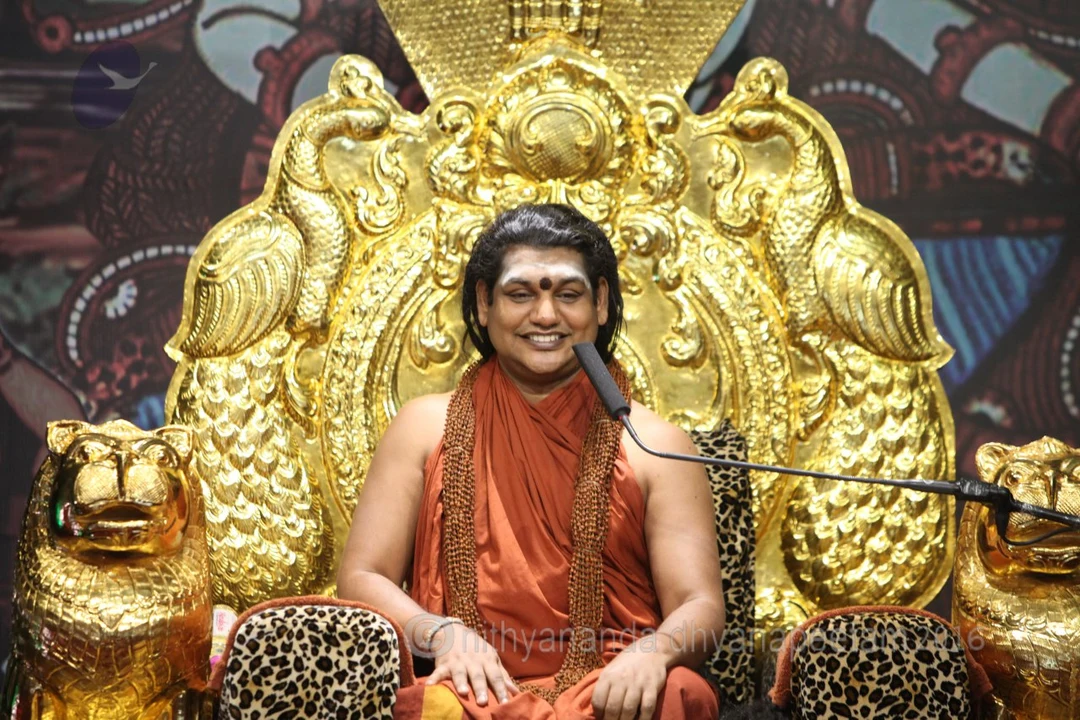
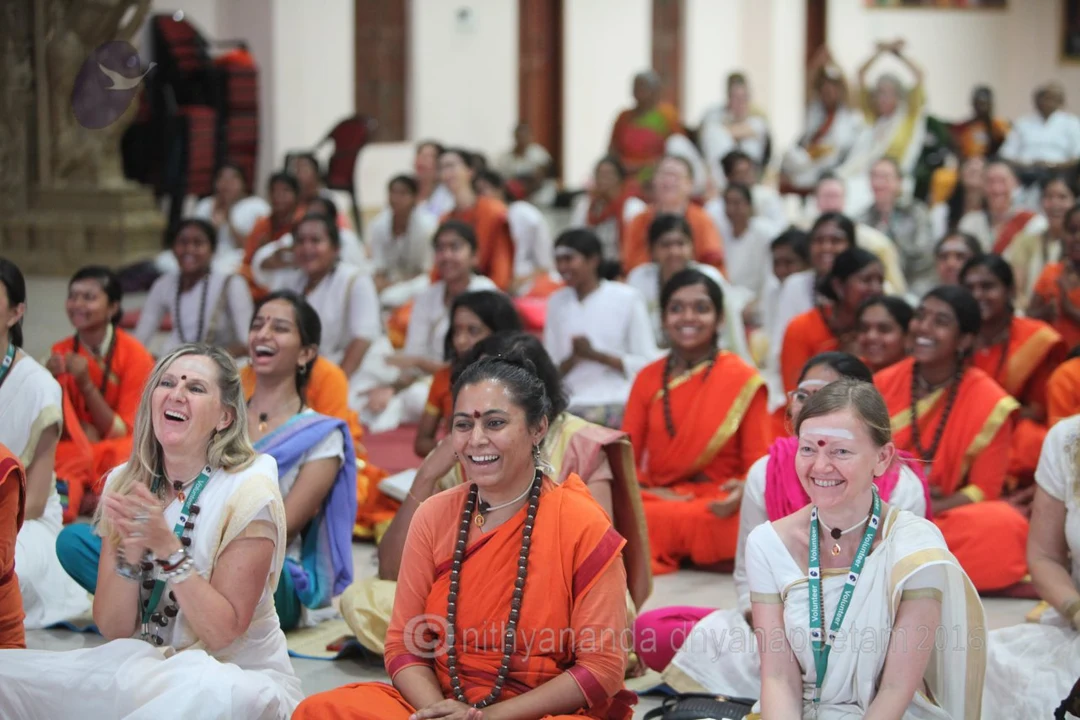
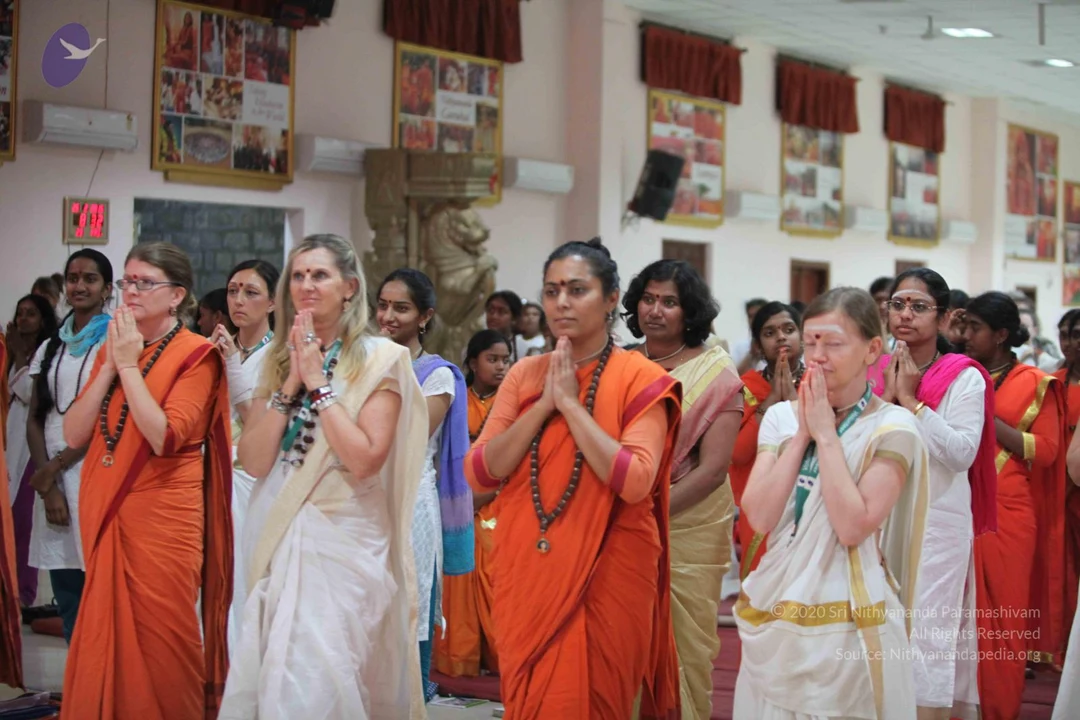
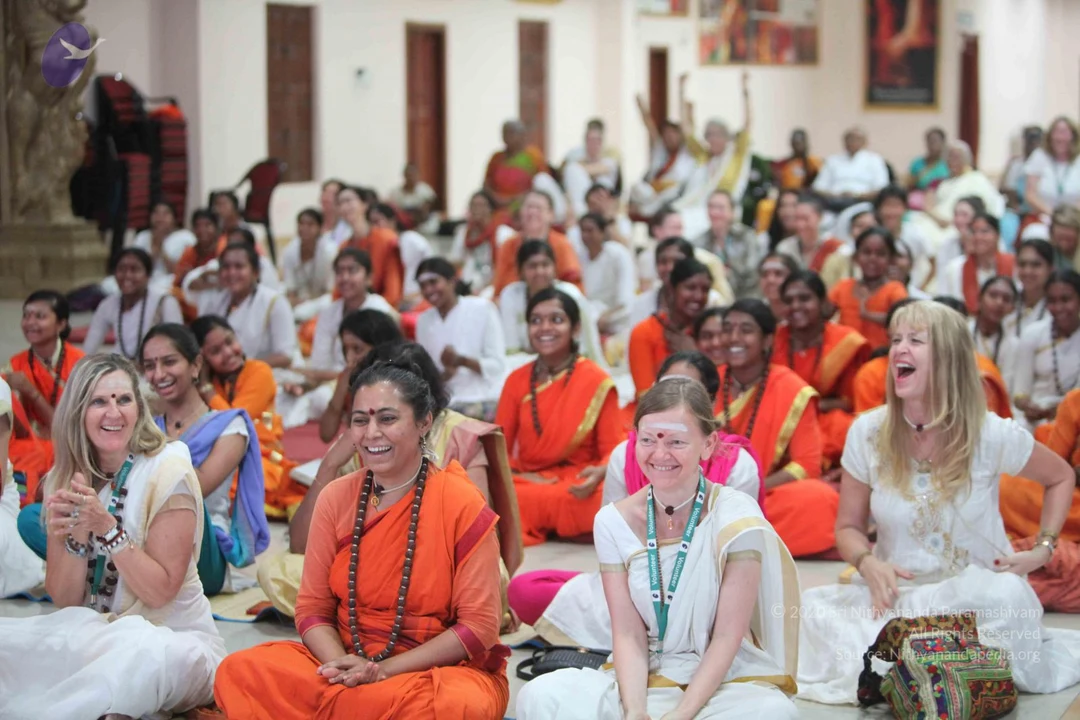
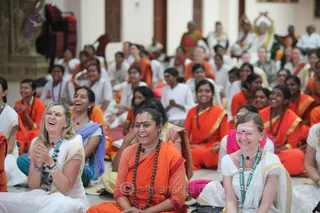
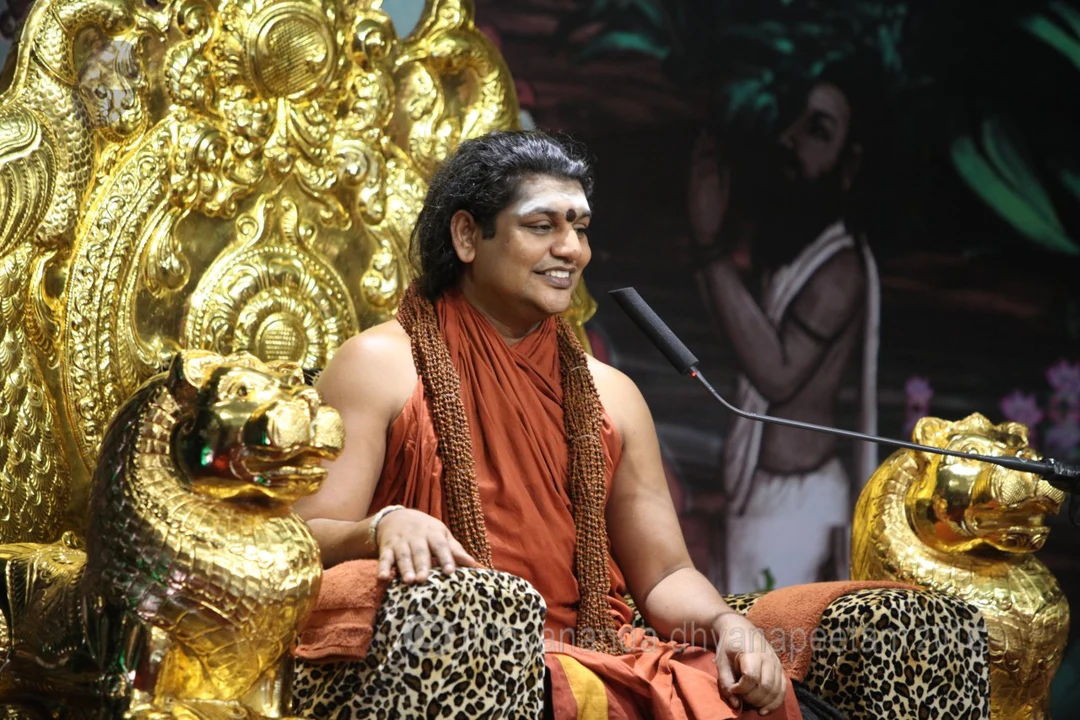
A photograph of a seated man in saffron-orange robes with a rudraksha mala and a red-and-white tilak on his forehead, smiling while speaking into a microphone on a stand. He sits on an ornate gold throne carved with cobra hoods and flanked by two gold lion sculptures, with leopard-print cushions. Behind him is a large painted backdrop of multi-armed deity figures and devotees with hands in anjali. Swamiji (probable): the seated figure has long dark hair swept back, a saffron robe with gold border and a rudraksha mala, matching the satsang setting on the page. Behind the central figure, painted devotees in prayer pose appear on the backdrop.A photograph of a large satsang hall where many devotees sit cross-legged on the floor, mostly women dressed in saffron-orange and white saris and kurtas. In the foreground, a woman with blonde hair in a white dress and a woman in an orange sari with a rudraksha mala laugh and clap, while a woman in white with a tilak mark and green lanyard smiles. Behind them, rows of attendees in orange and white fill the room, with pillars and a wooden panel on the left wall.

EVENING SATSANG
54 photosSource gallery
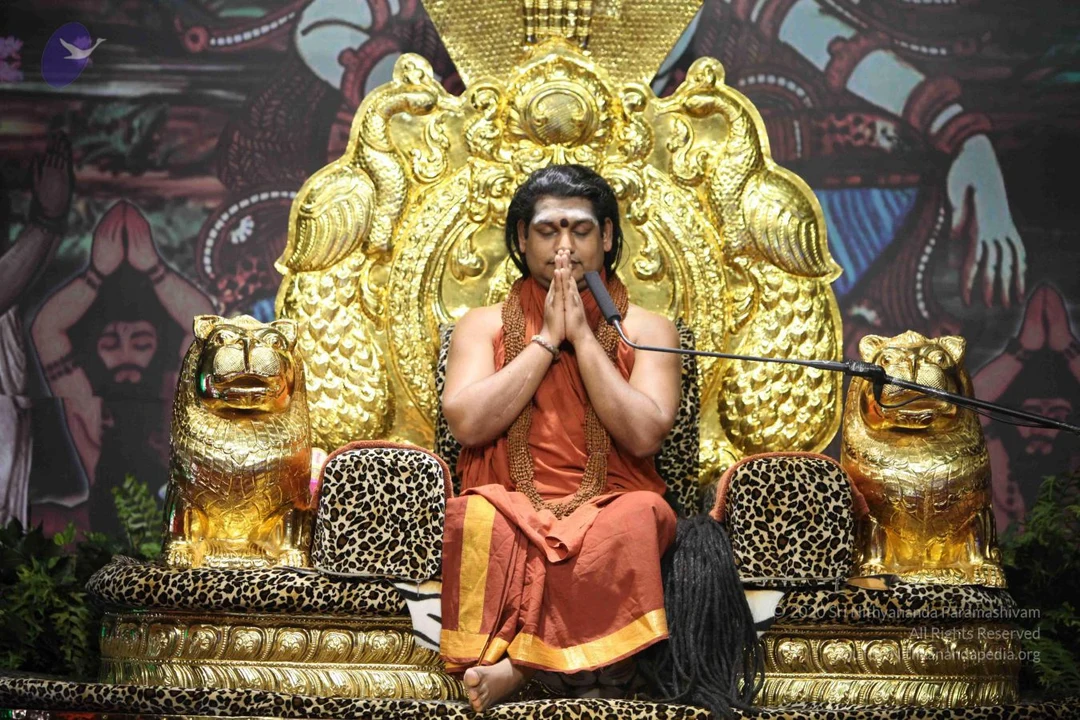
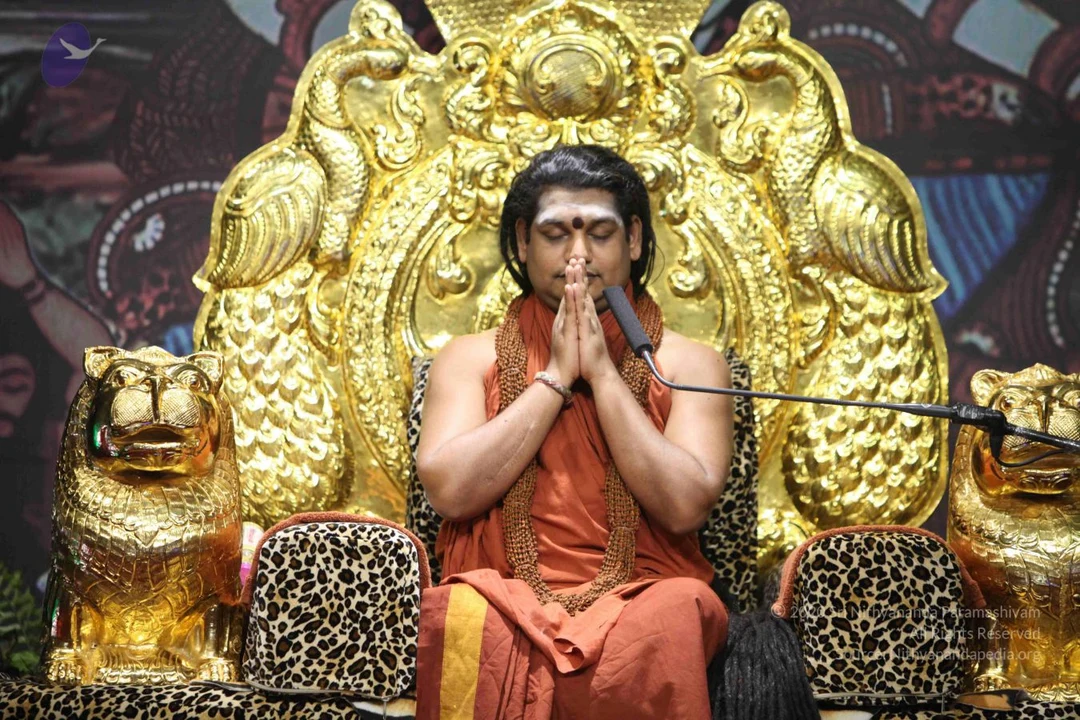
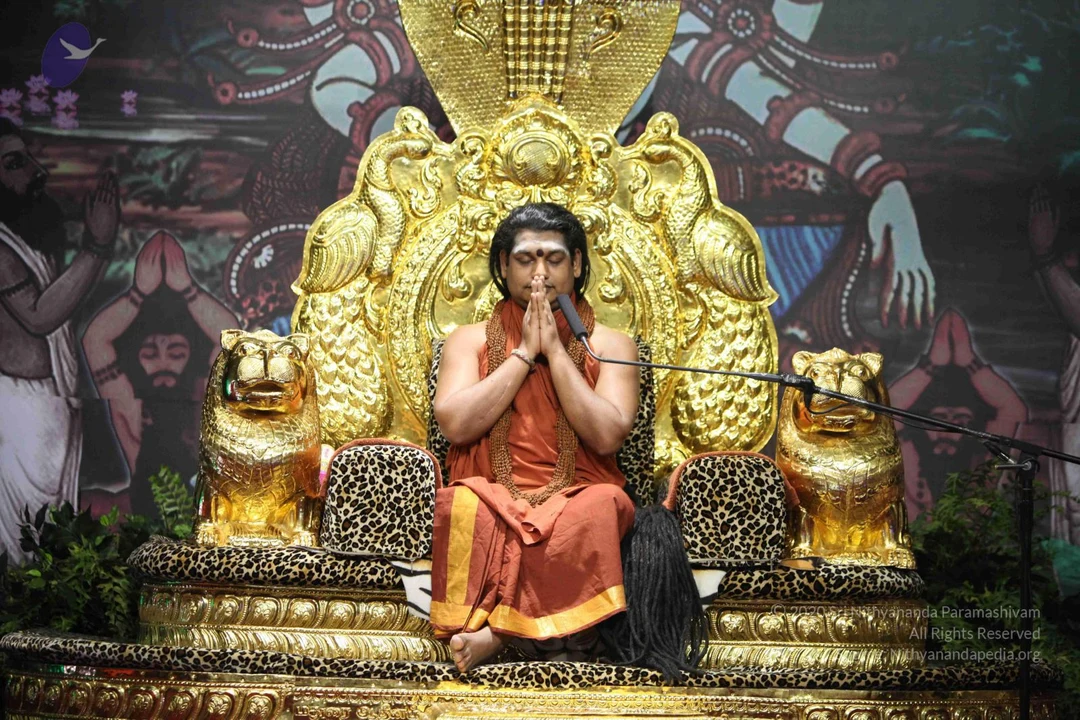
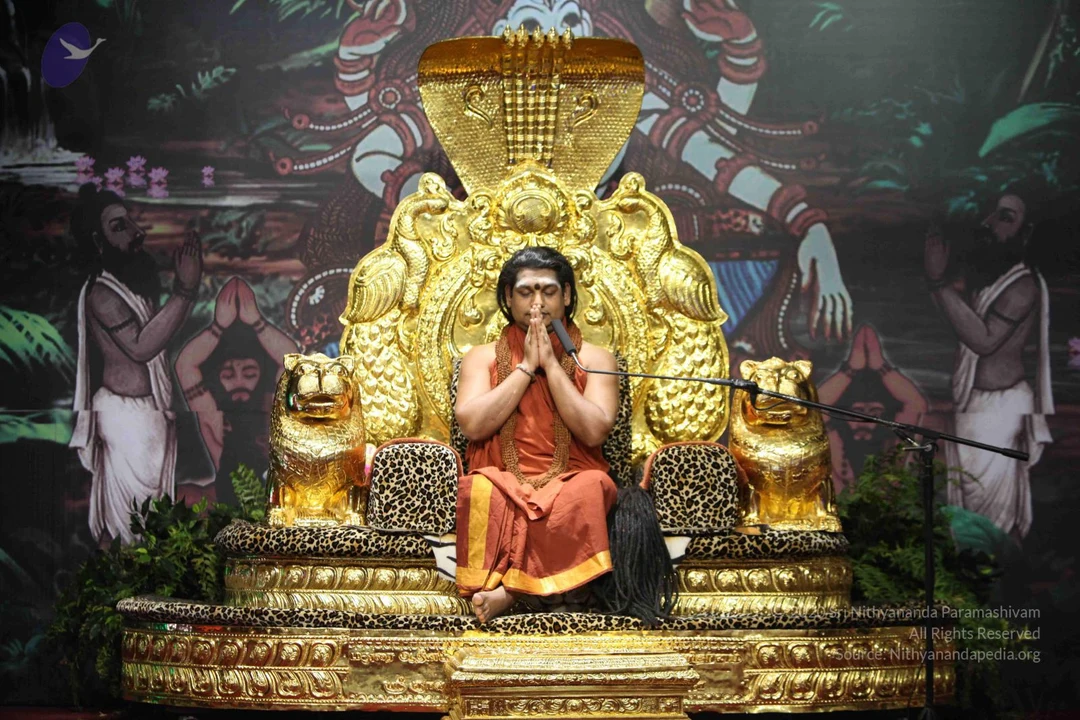
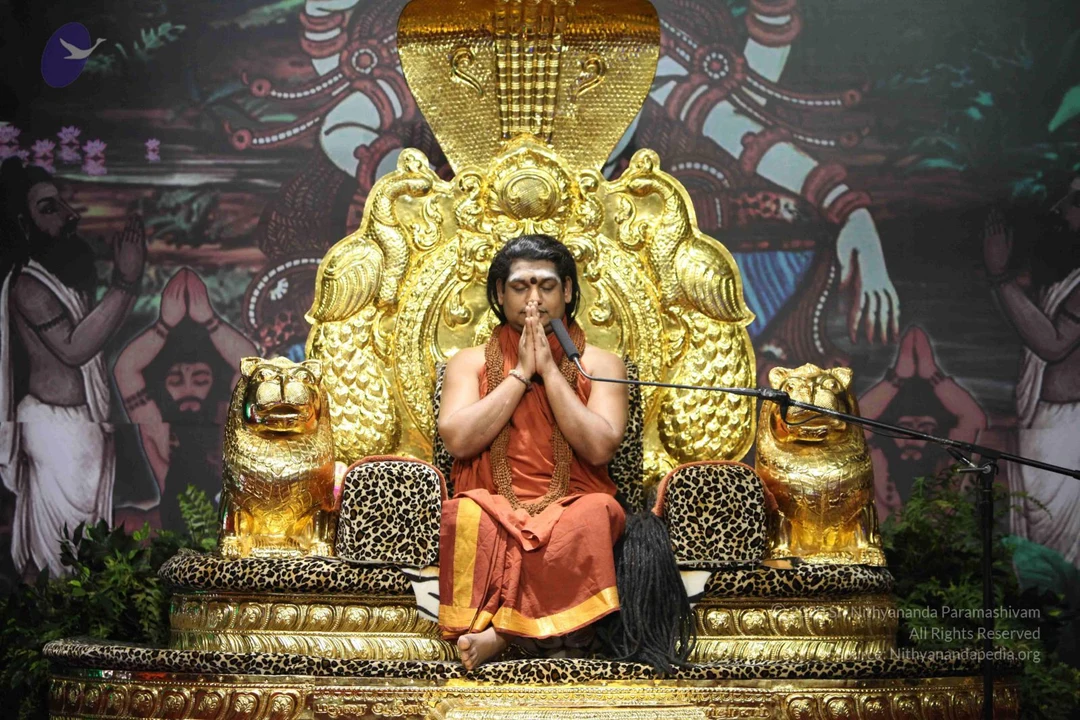
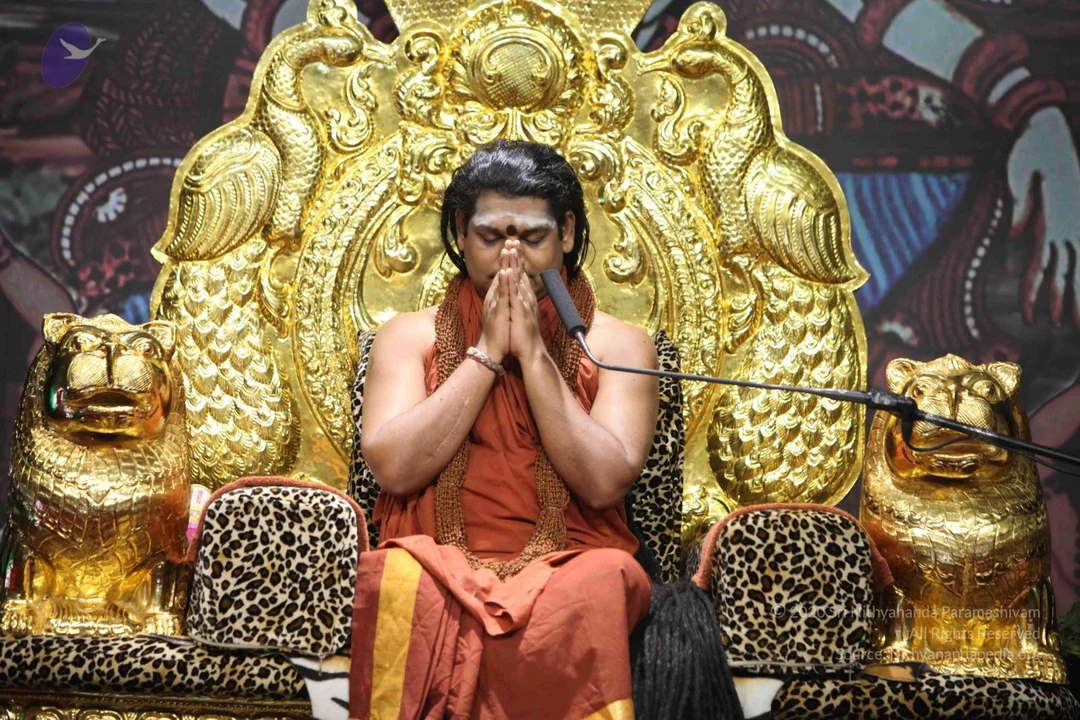
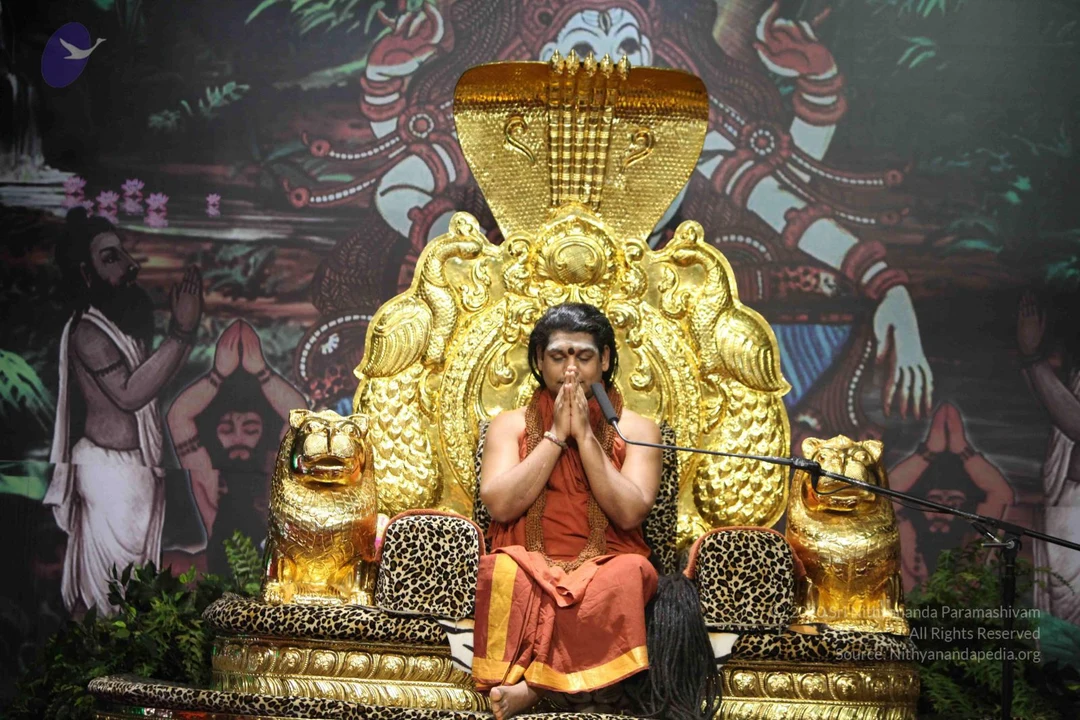
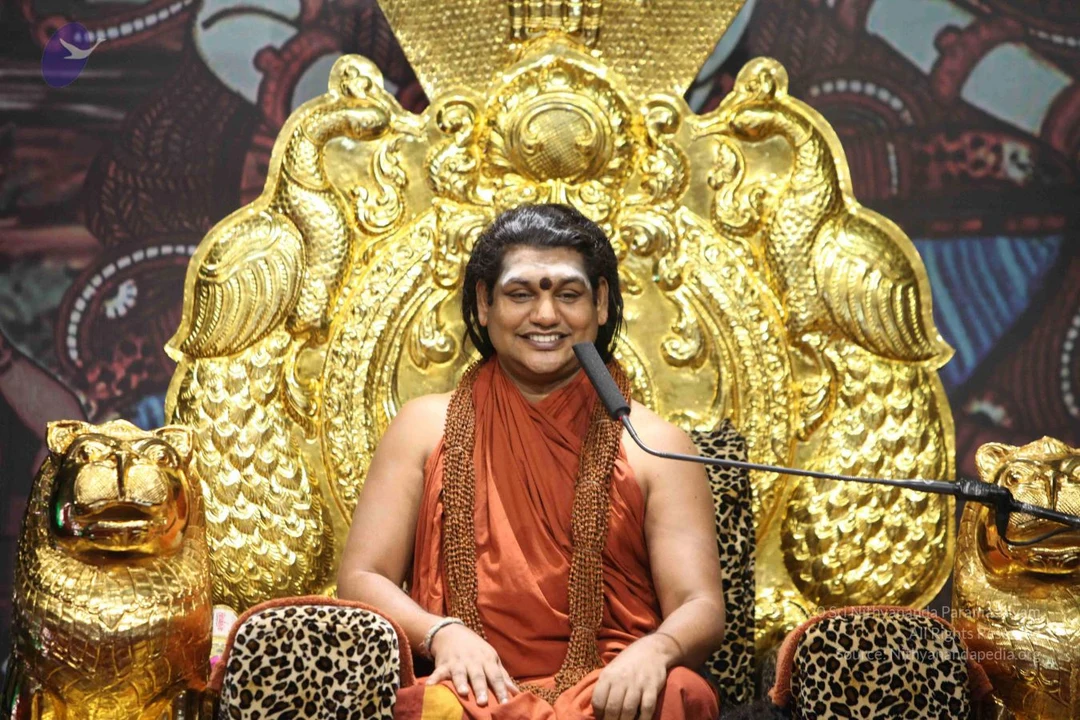
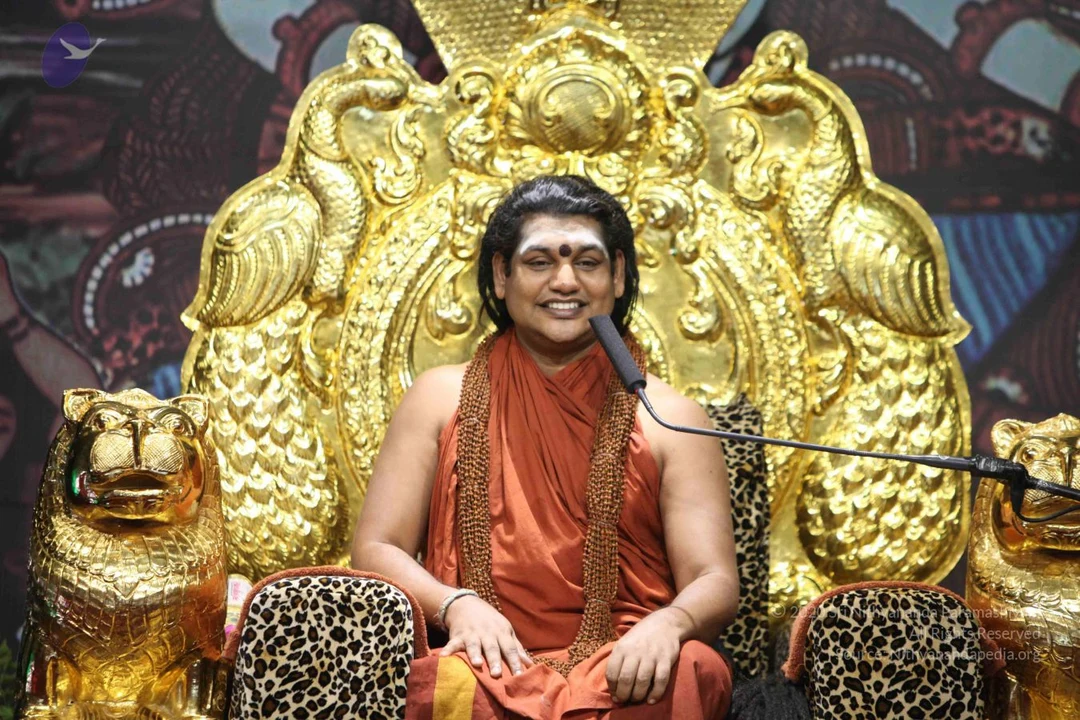
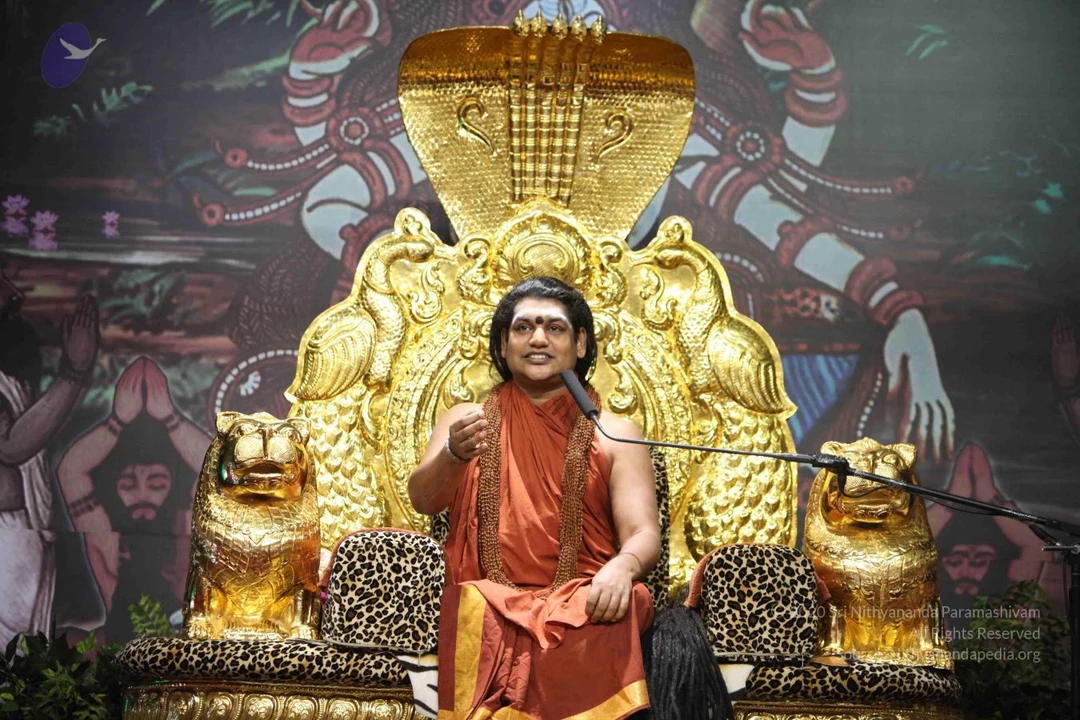
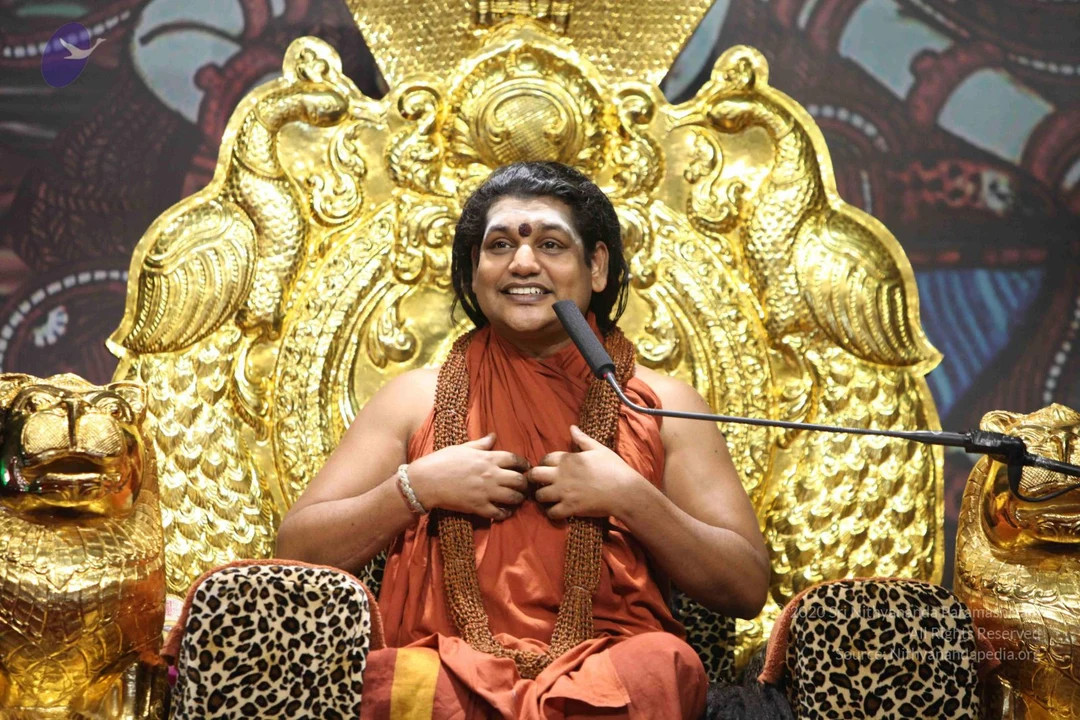
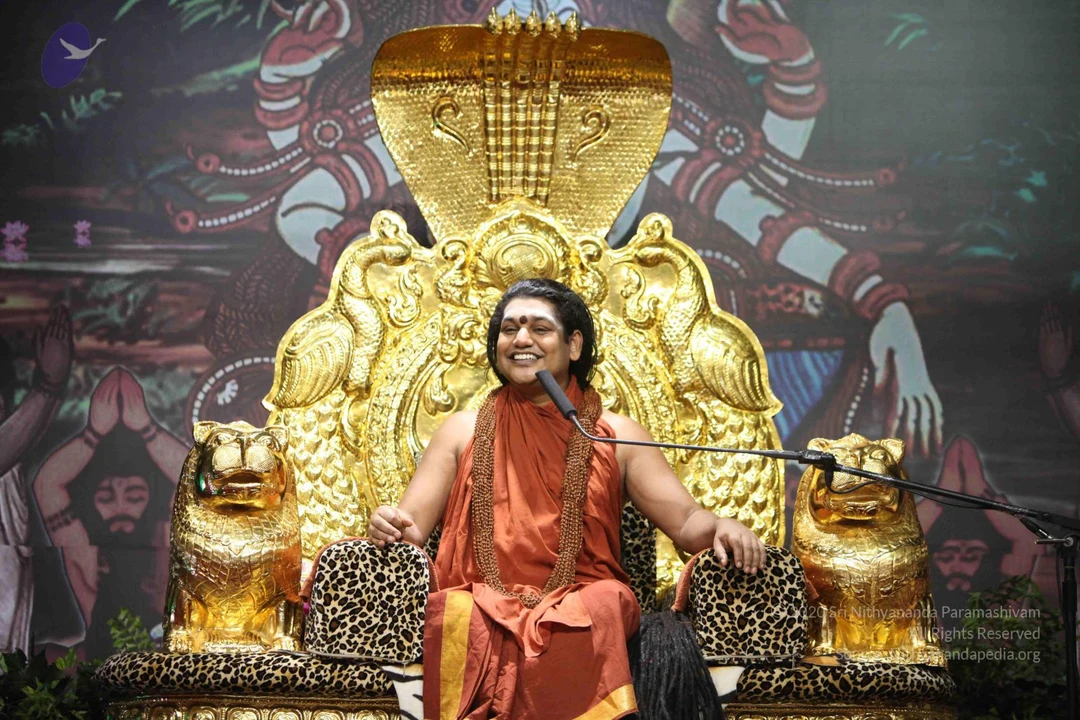
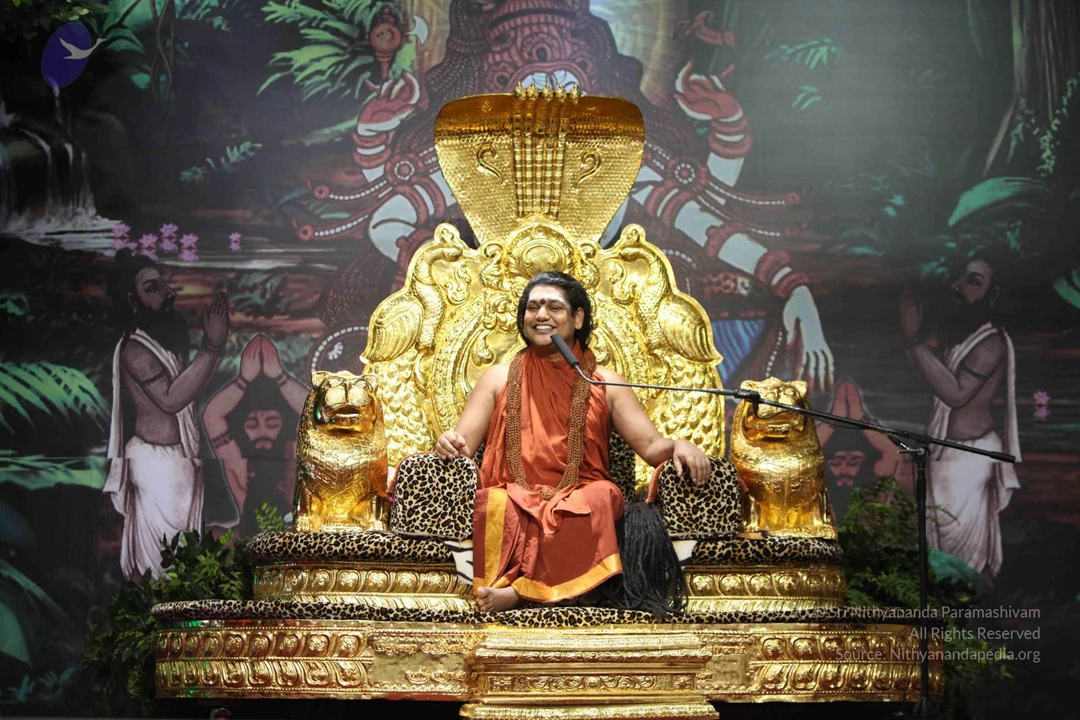
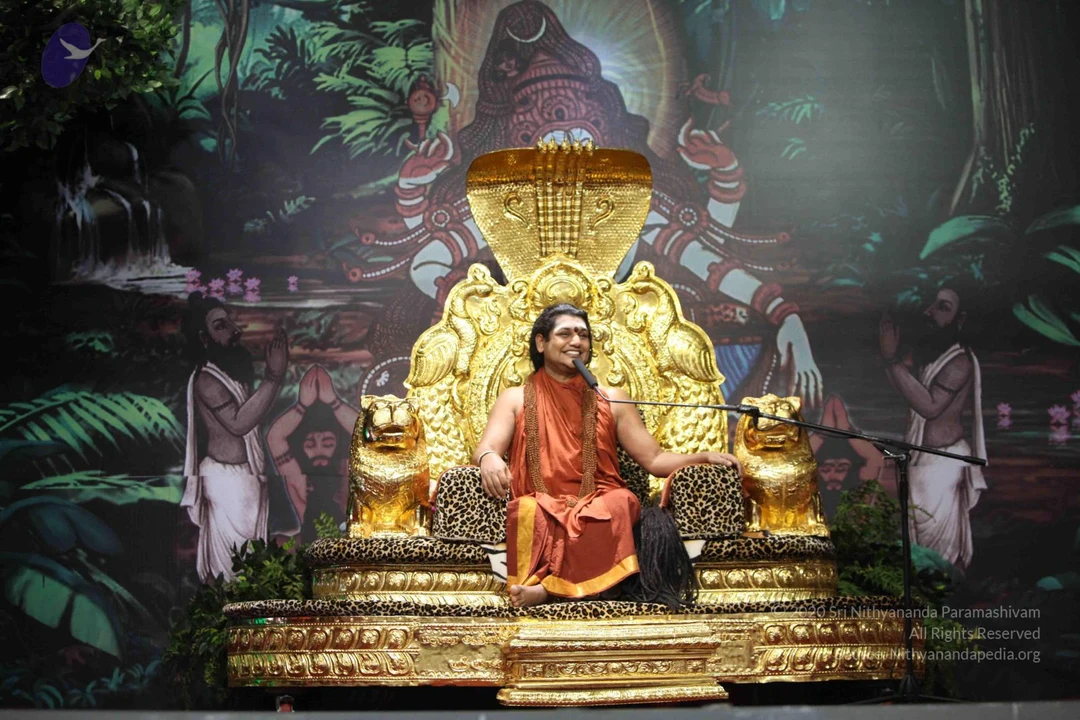
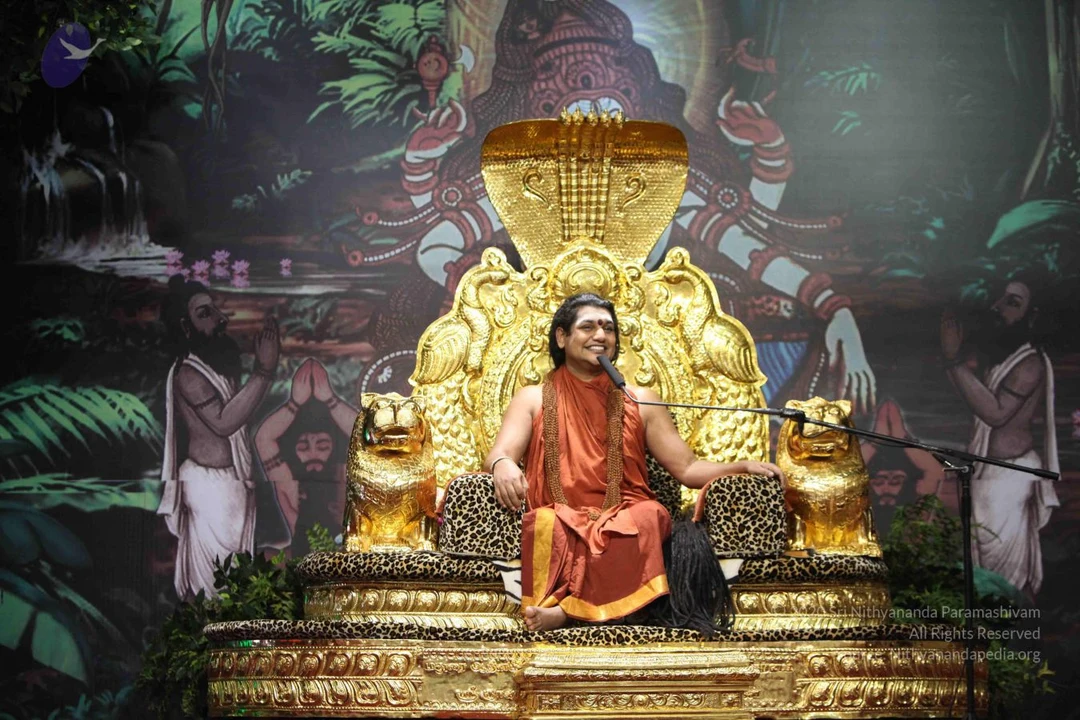
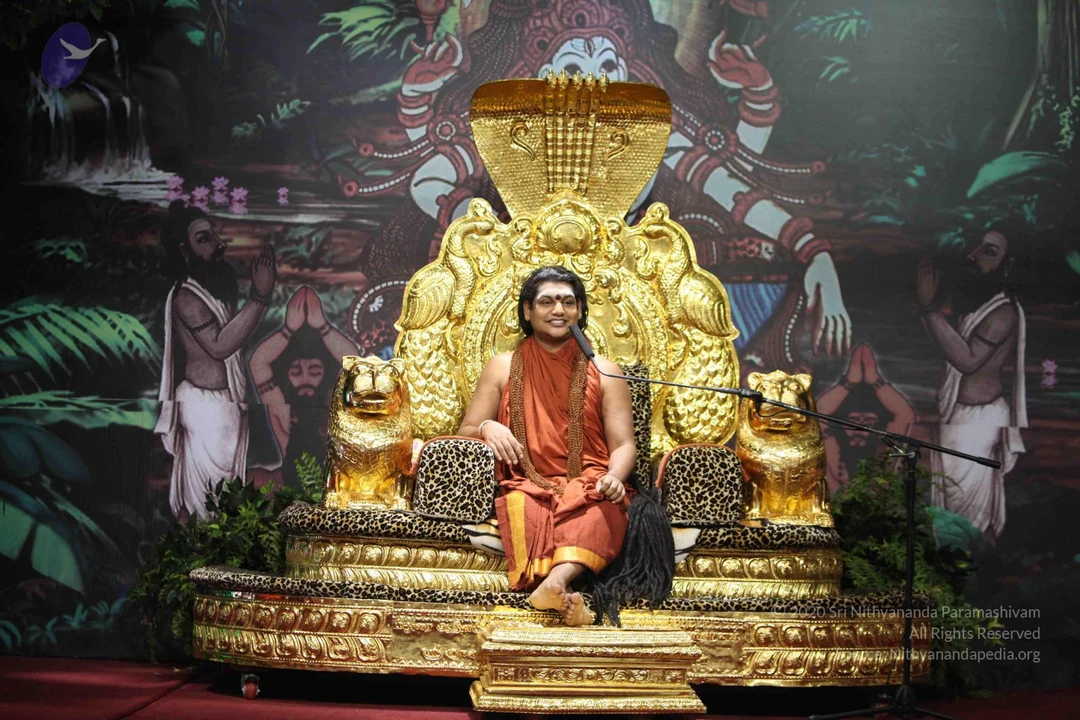
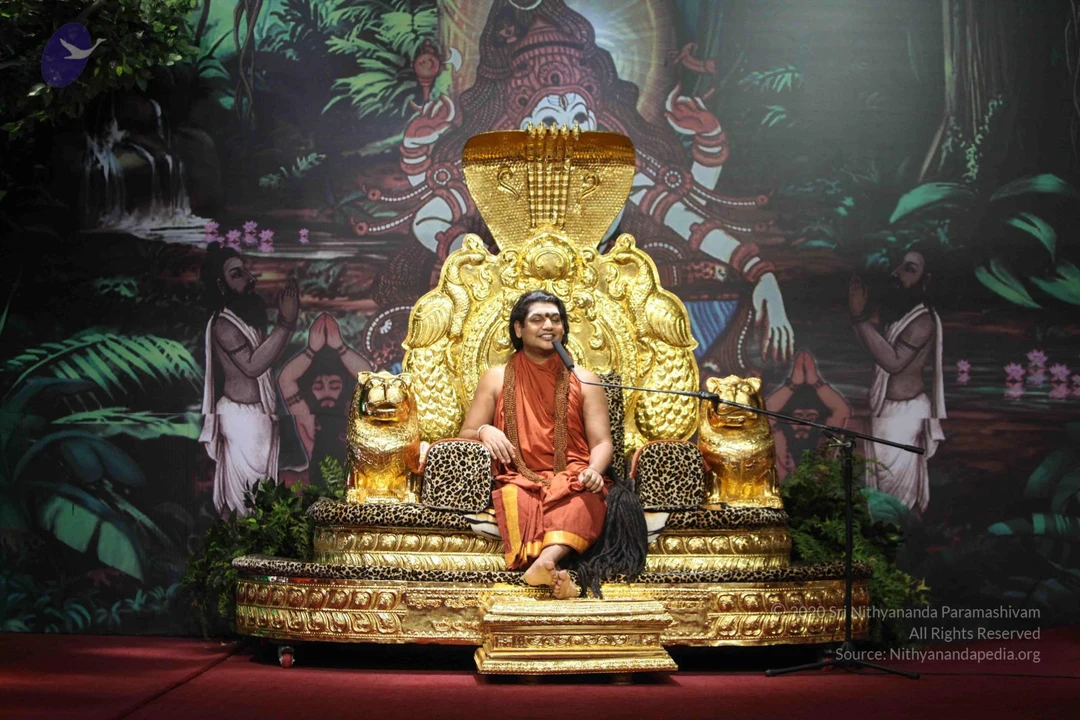
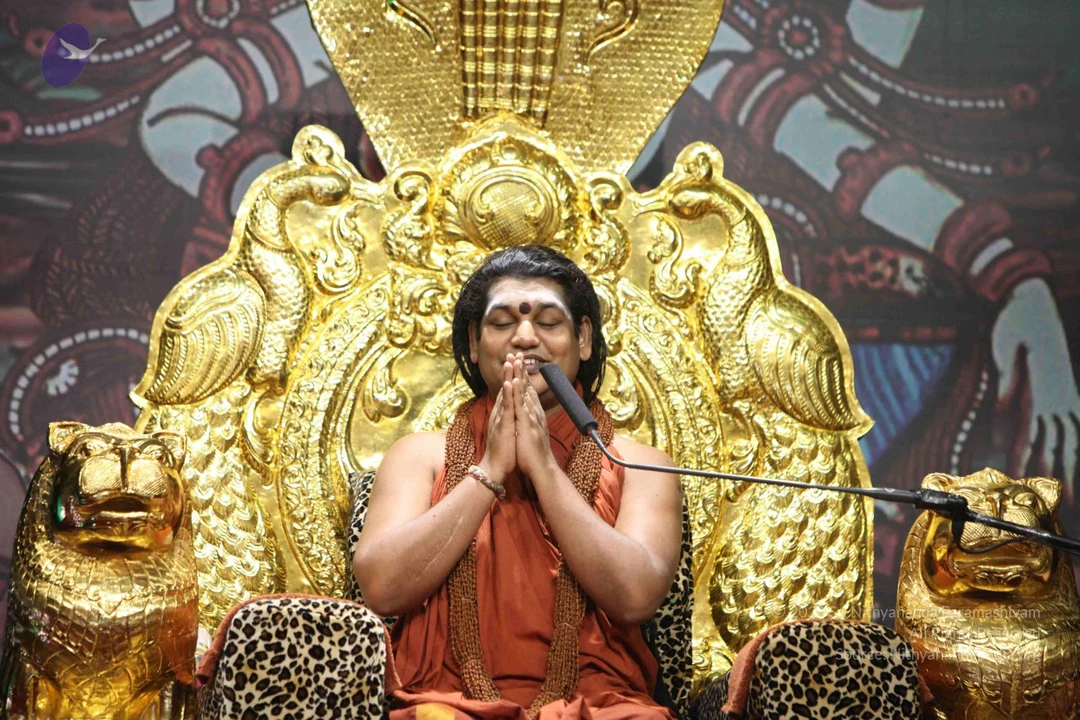
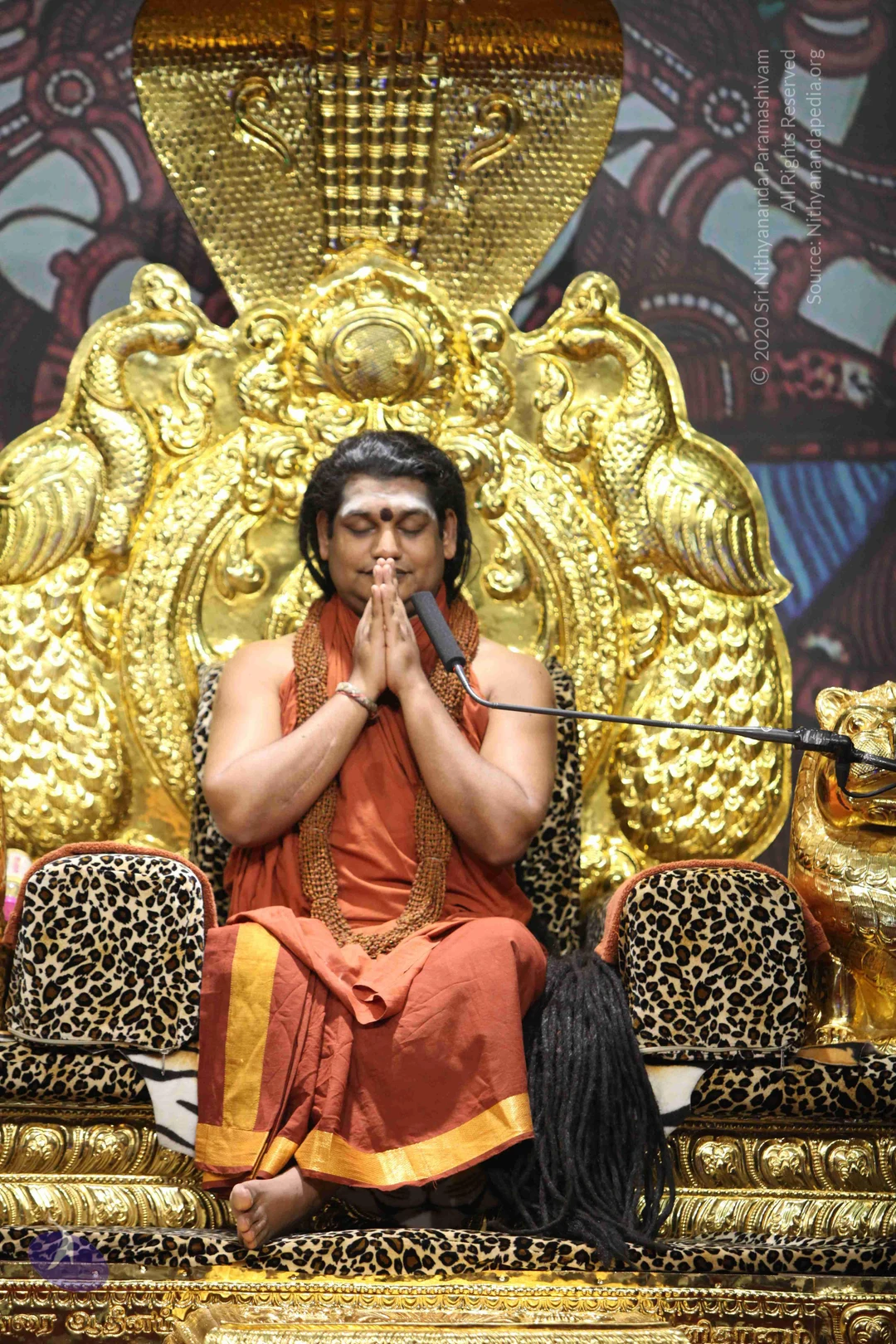
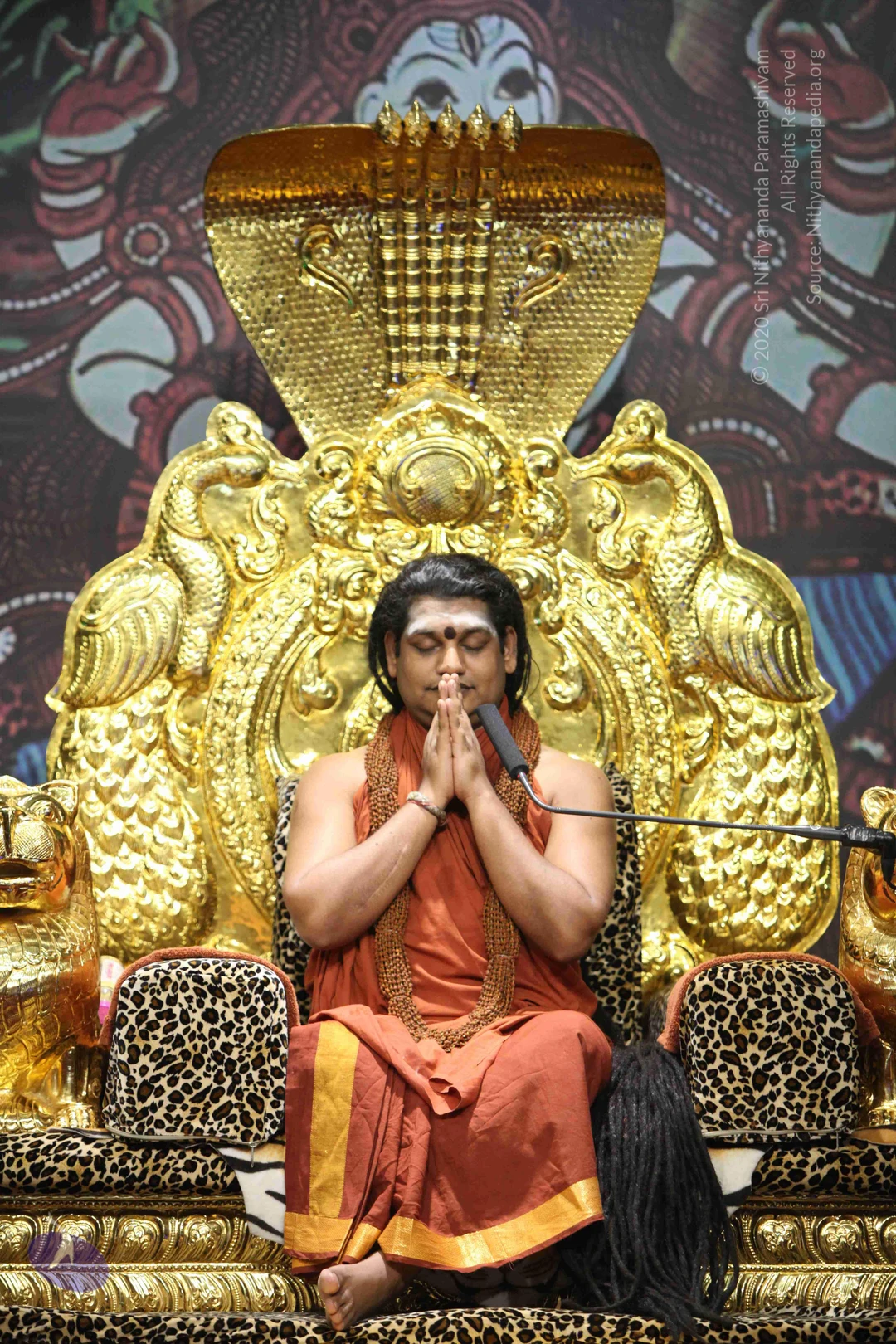
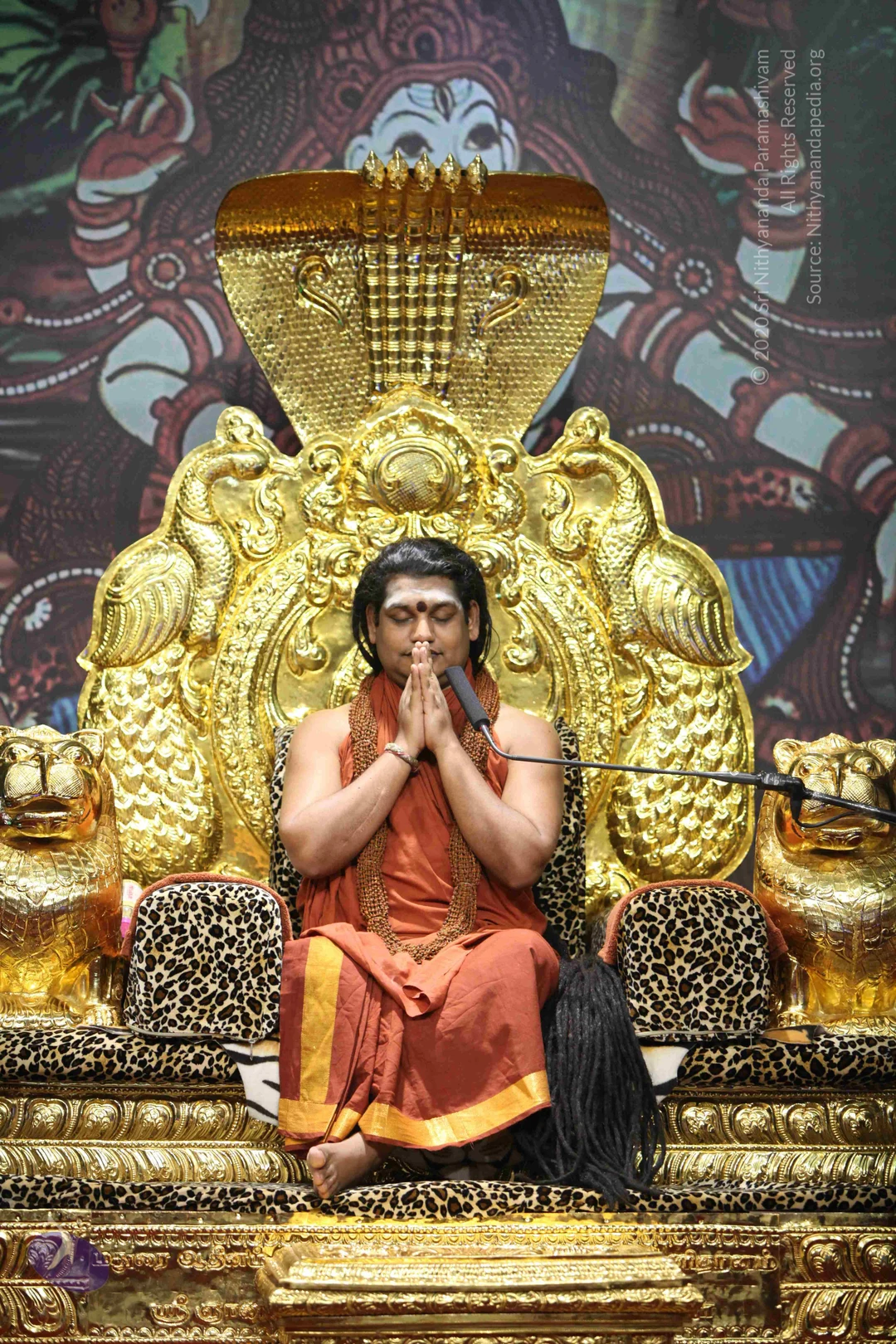
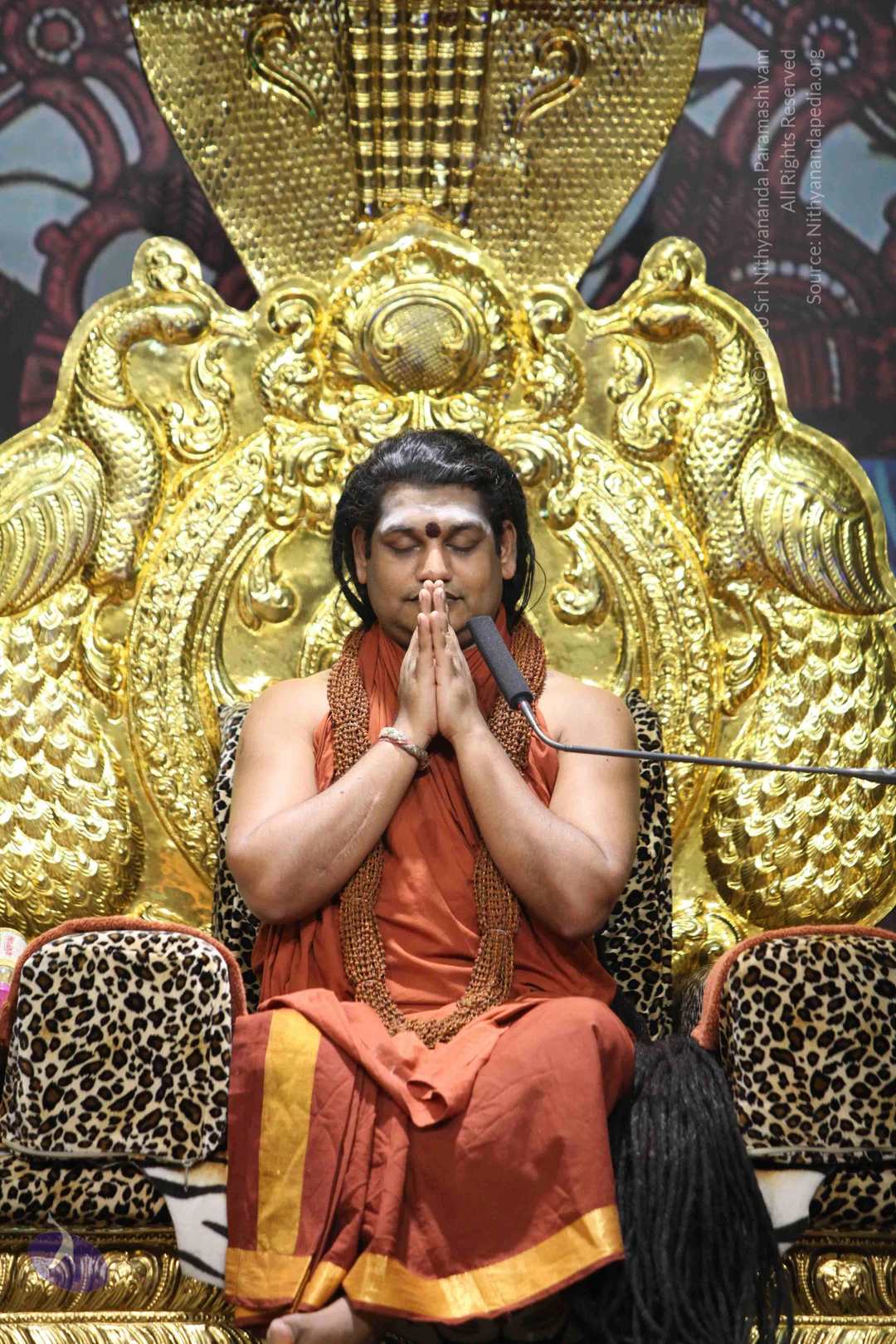
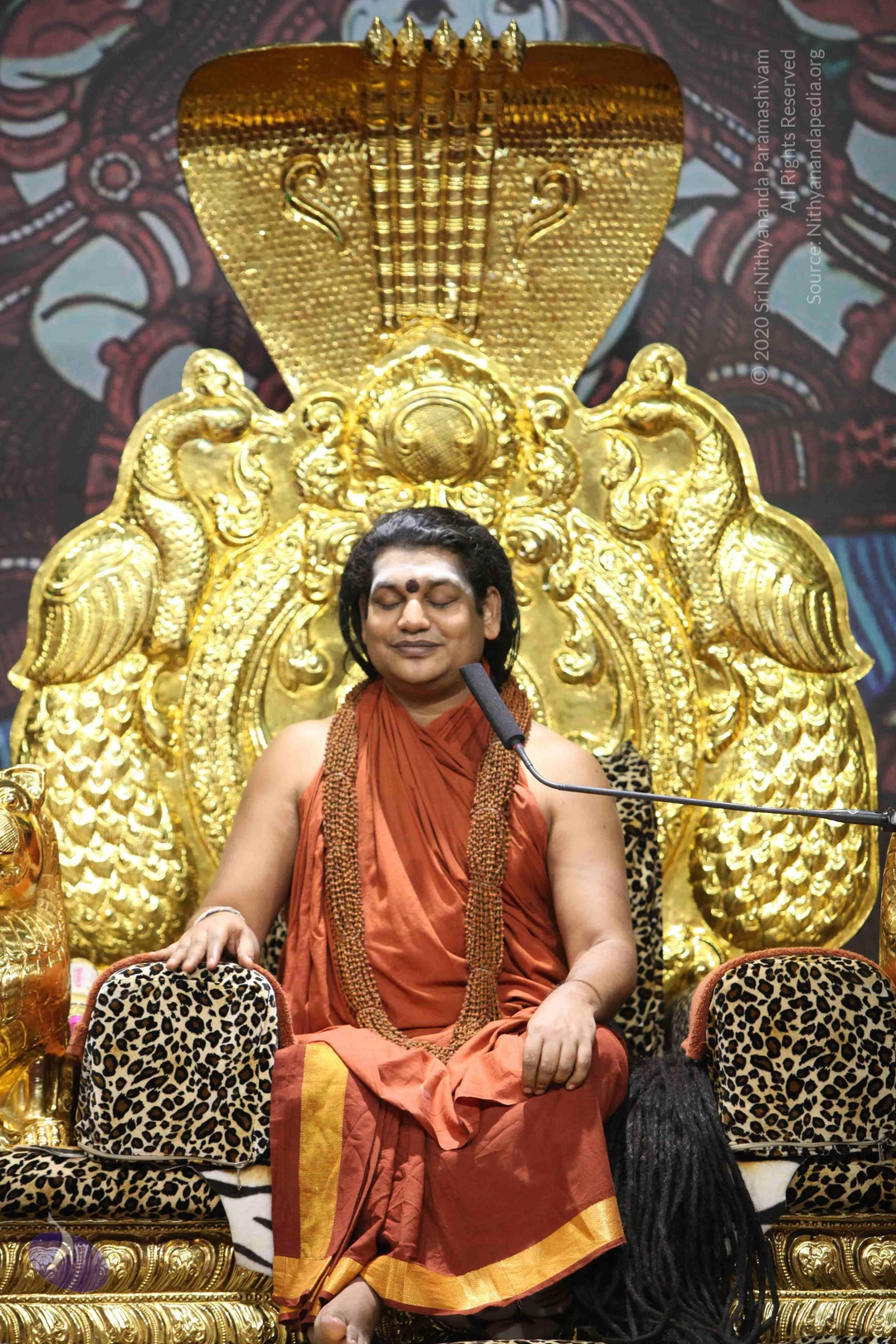
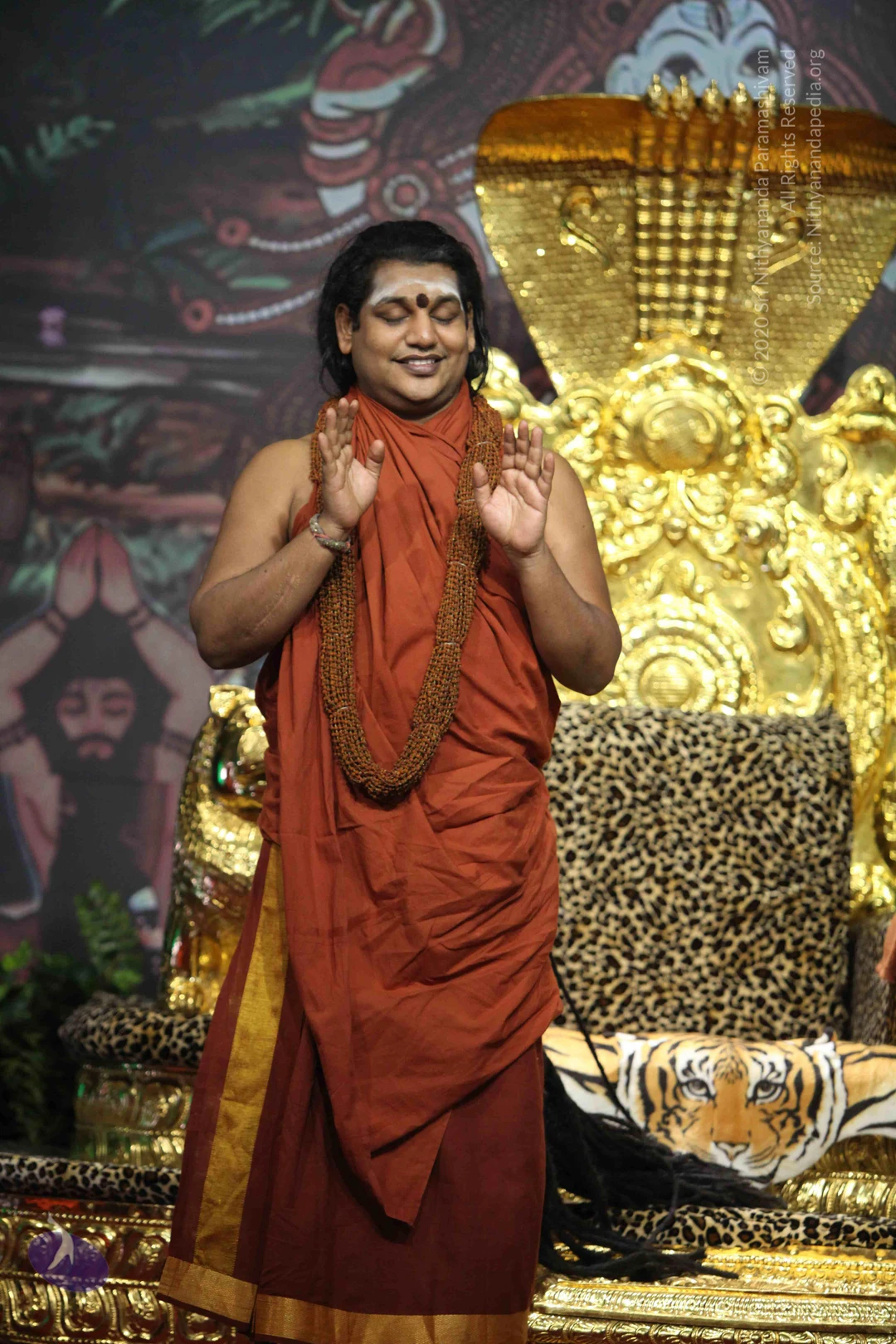
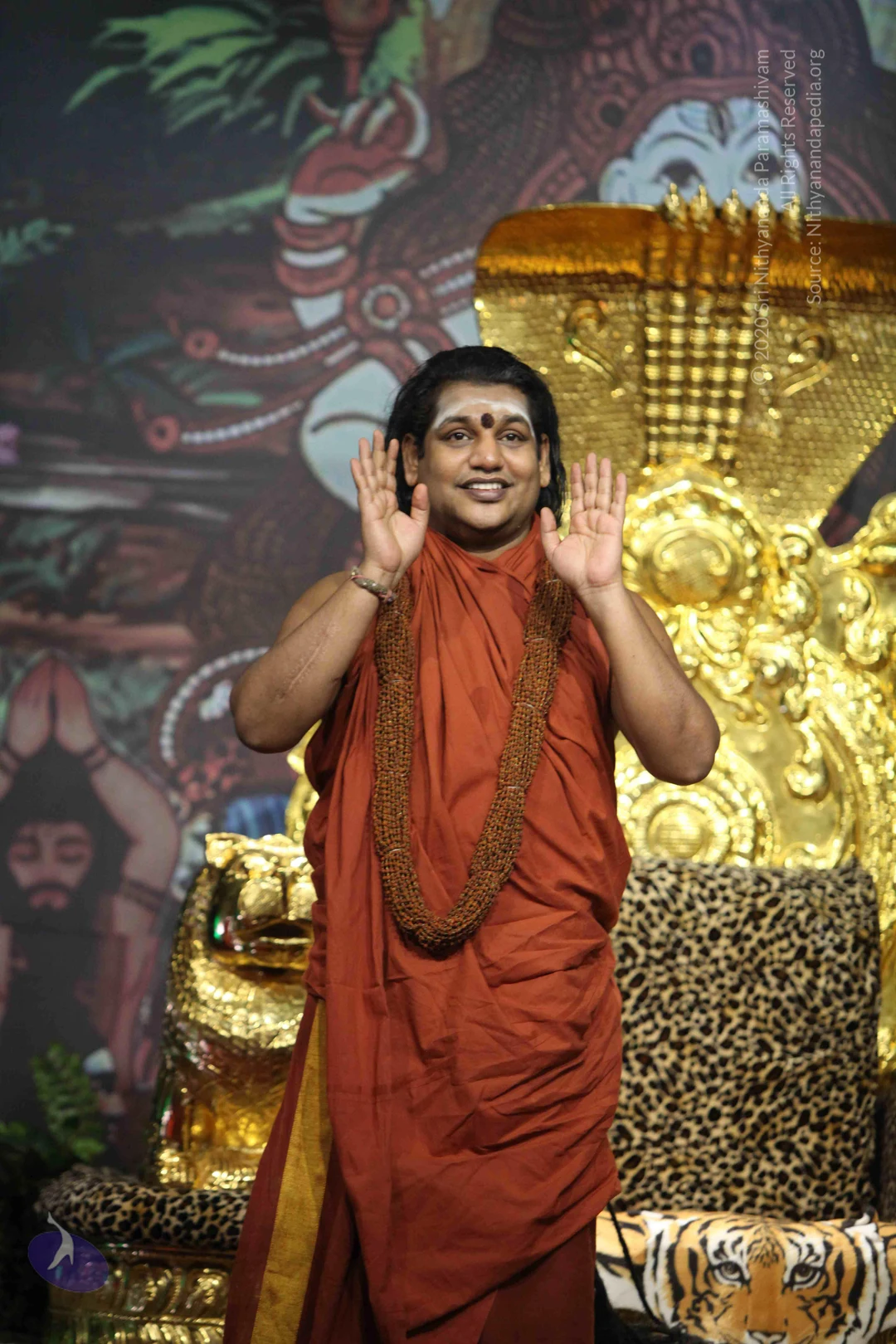
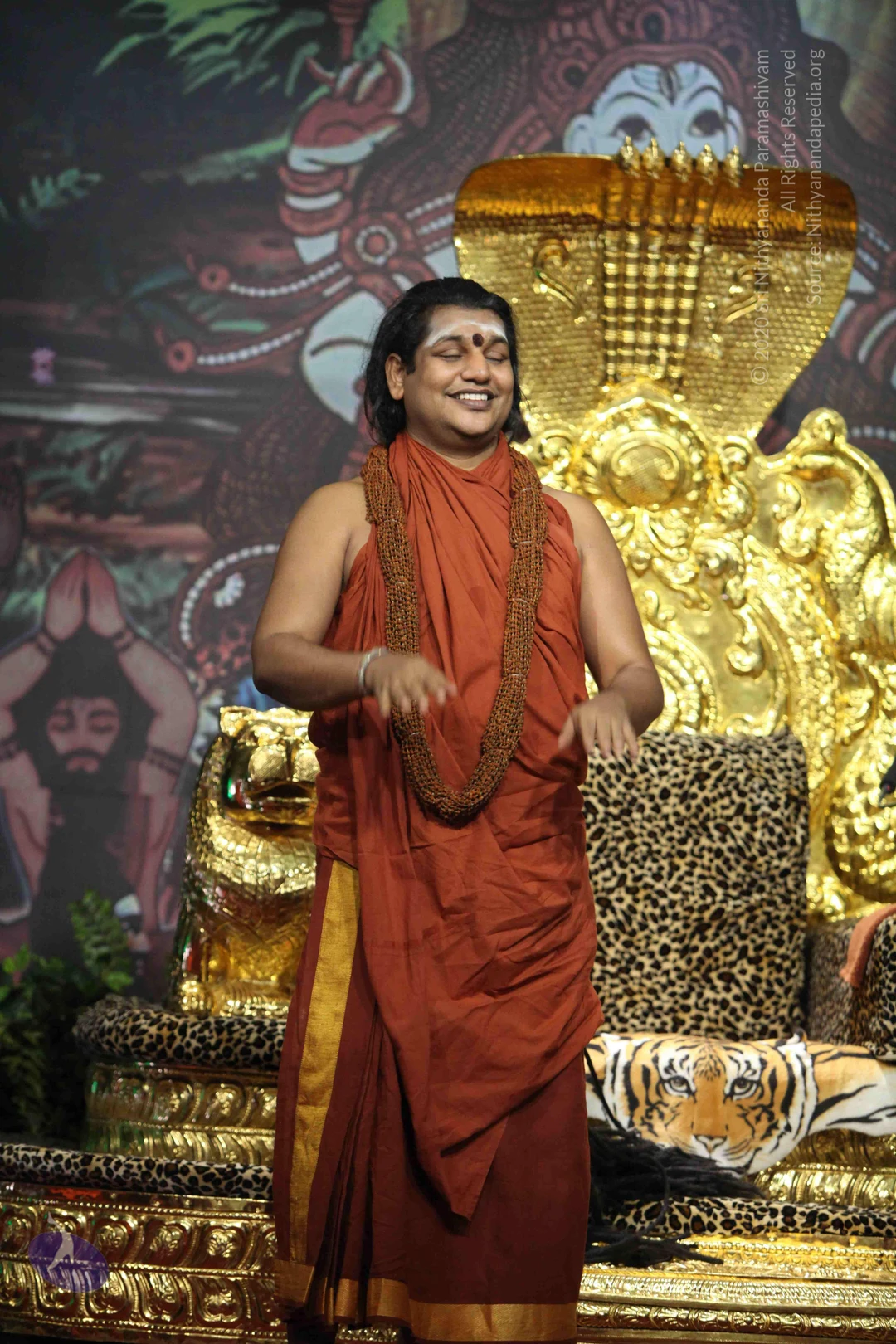
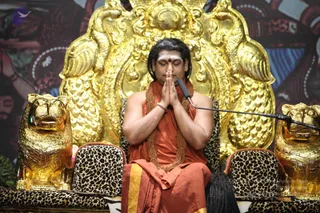
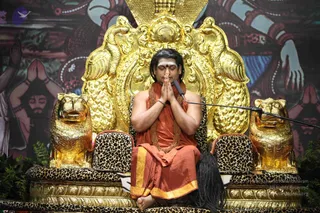
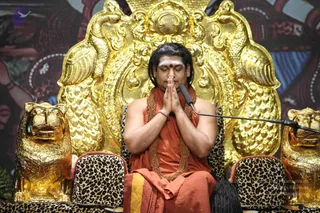
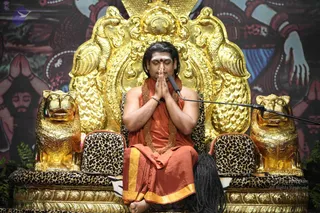
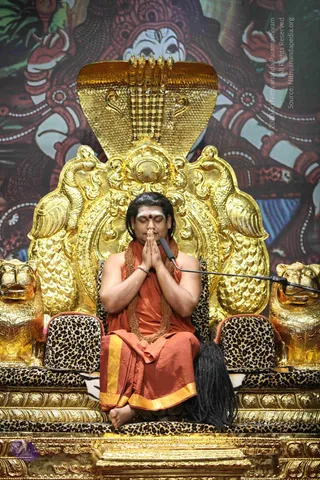
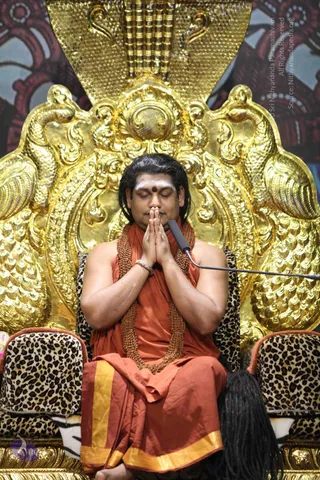
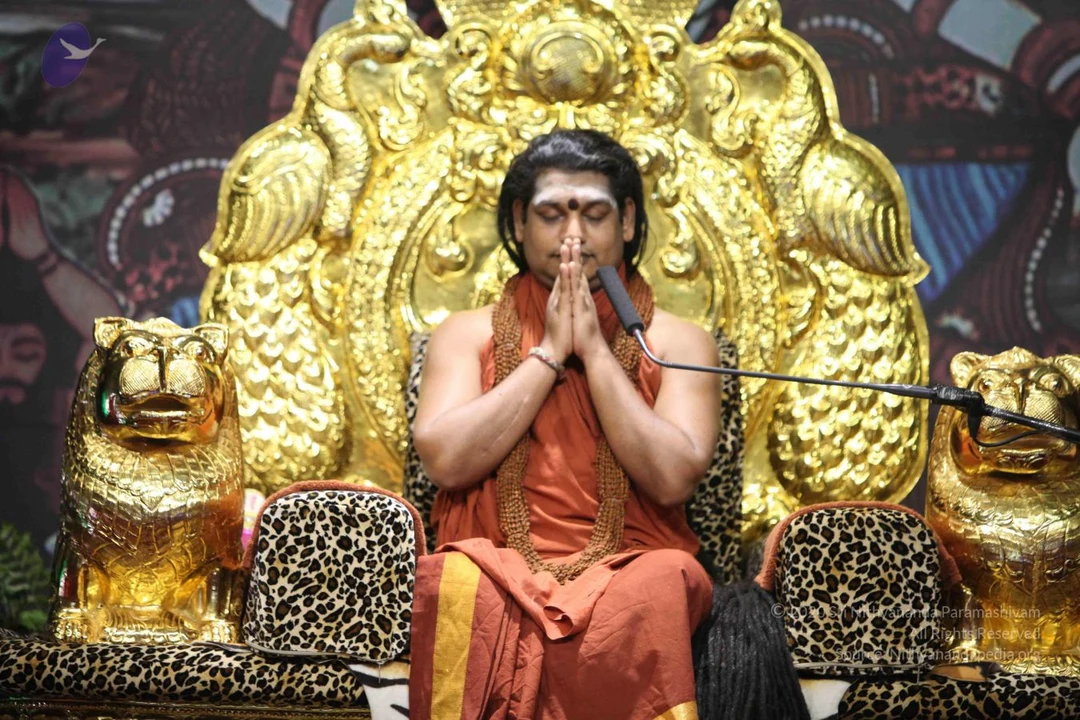
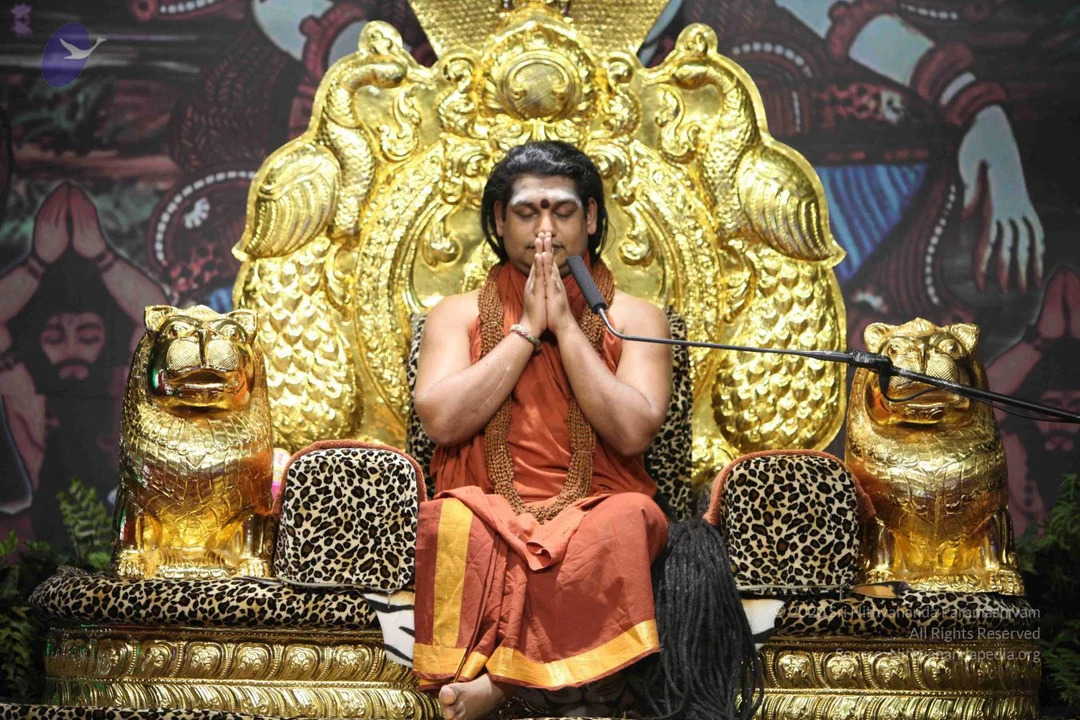
A seated man in an orange-saffron robe and rudraksha mala necklace sits with palms pressed together in namaskar and eyes closed, with a white forehead mark and red bindi. He sits on a leopard-print cushioned seat in front of an ornate gold throne carved with scrollwork and flanked by two gold lion statues. A microphone stand is at right, and a colourful painted backdrop with figures is behind. Swamiji (probable): long swept-back hair, saffron robe and rudraksha mala, in a satsang-style seated address.A seated man in an ornate golden throne with carved lion figures at either side sits with palms pressed together in namaste, eyes closed, in front of a microphone on a stand. He wears a rust-orange shawl over his shoulder, an orange dhoti with gold border, and a long rudraksha mala around his neck, with a vertical tilak on his forehead. Long dark hair falls to his back. Behind the throne is a gilded arched backdrop and a painted mural with figures and hands in devotional poses. Potted green foliage flanks the stage. Swamiji (probable) is described by his saffron clothing, rudraksha mala, long hair and ornate throne.A man seated in a gilded throne with ornate golden carvings of makara-like scrolls, flanked by two gold lion statues on leopard-print cushions. He sits with palms pressed together in namaste, eyes closed, wearing an orange-saffron dhoti and shawl, a rudraksha mala necklace, a red bindi and a bracelet, with long swept-back hair. A microphone stand is at his side. Behind him is a colourful painted backdrop. Appearance-based candidate: a person, seated in person at the satsang.A seated man with closed eyes and palms pressed together in namaskar sits on an ornate gold throne with carved scrollwork and two golden lion figures flanking him, upholstered in leopard-print cushions. He wears an orange-red ochre robe with a yellow border, a rudraksha mala necklace, and a small red tilak on his forehead, and a microphone stands beside him. The backdrop shows painted figures with raised hands. A printed caption on the lower right reads 'Paramahamsa Nithyananda' with a copyright line. Swamiji (probable): the seated man has long swept-back hair, ochre robes, a rudraksha mala and an ornate golden throne, cues consistent with the page's reference to a satsang speaker.A seated figure in orange-saffron robes with a gold-bordered dhoti sits in namaste on an ornate golden throne carved with a cobra hood and flanking golden lion heads, on leopard-print cushions. A rudraksha mala and gold necklace hang on his chest, with a white vibhuti mark on his forehead and long dark hair swept back. A microphone stands at his side, and green foliage surrounds the dais. Behind him, painted murals show standing and seated devotees with hands folded in prayer. Swamiji (probable) appears in person, identified by the saffron robes, rudraksha mala, swept-back hair and throne, while the page indicates he spoke at this event.A man in saffron-orange robes and a gold-coloured ceremonial necklace sits cross-legged on an ornate gold throne with a cobra-hood backrest and two golden lion-shaped armrests, upholstered in leopard-print cushions. He holds his palms pressed together in anjali and speaks into a microphone on a stand, eyes closed, with a rudraksha-style mala visible around his neck. Behind him a painted backdrop shows a large deity figure and two bearded sages in white dhotis with palms joined, amid lush green foliage and pink flowers. The throne and lions are gold-gilded, and the seated figure is the central focus of a satsang-style setting.

VOLUNTEER MEET

39 photosSource gallery
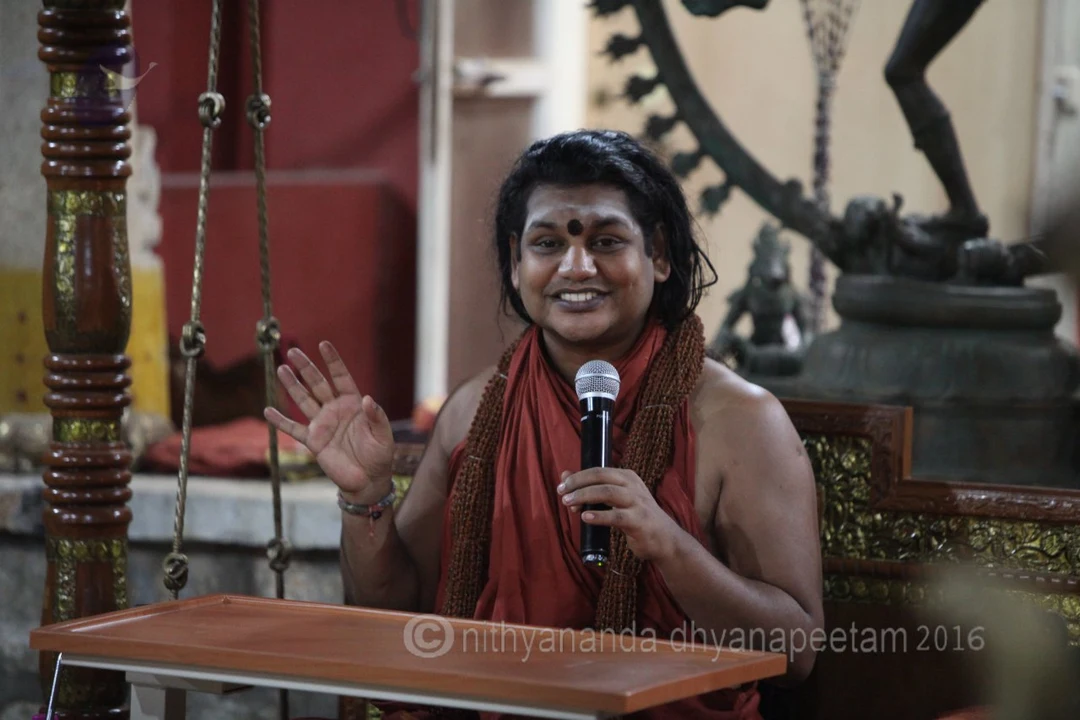
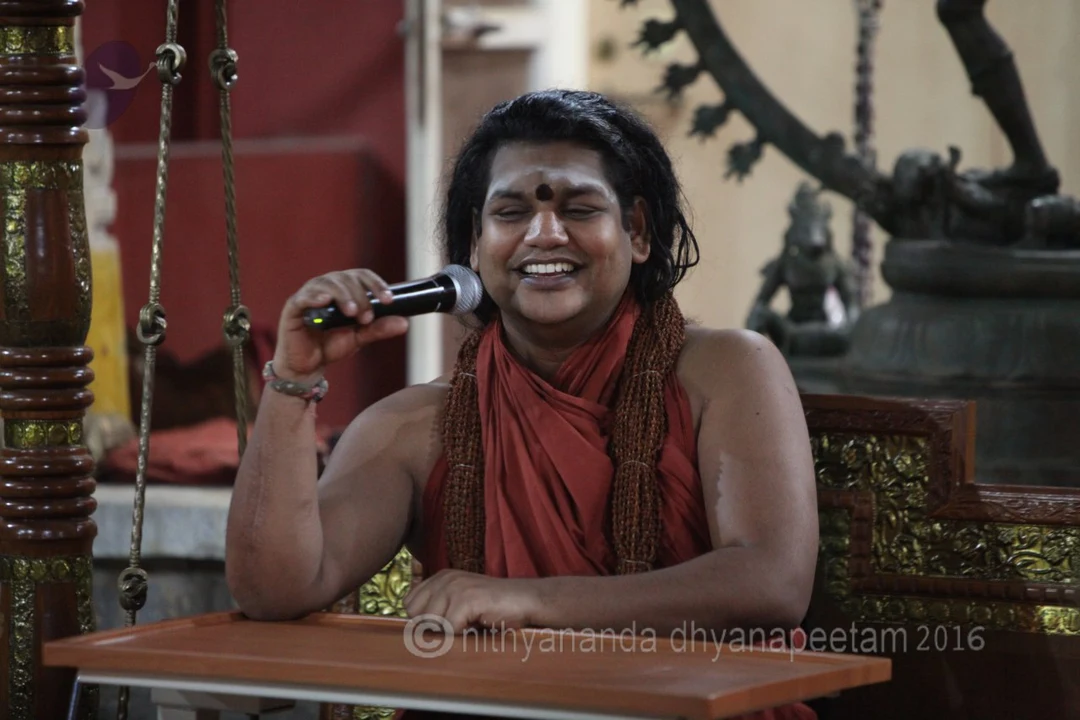
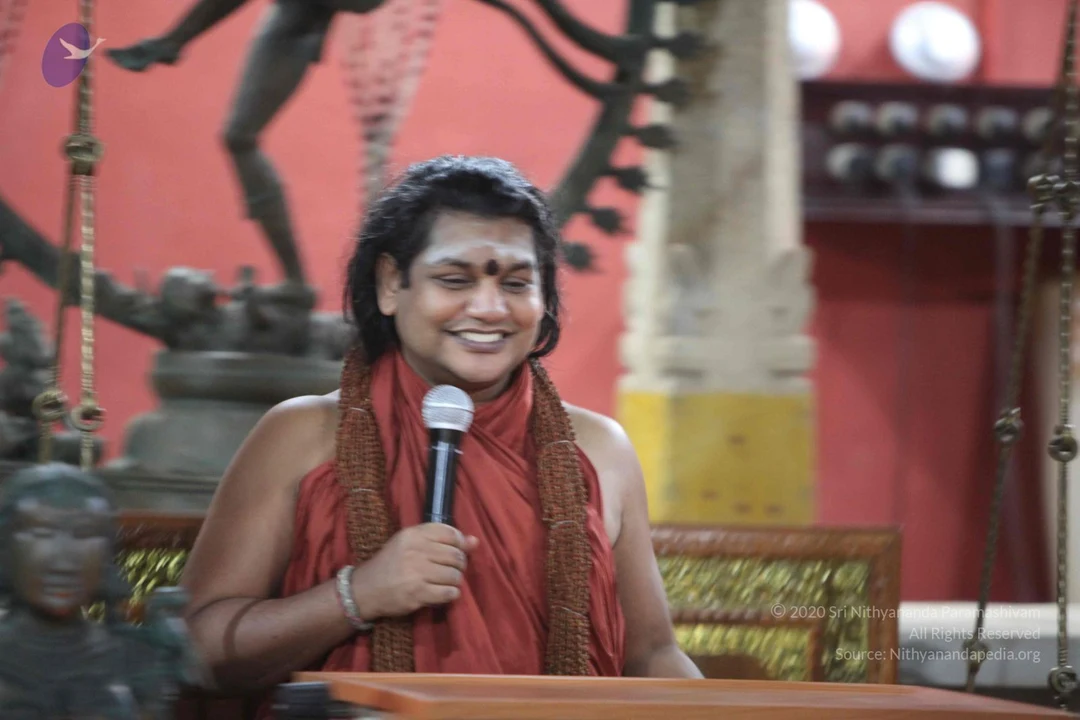
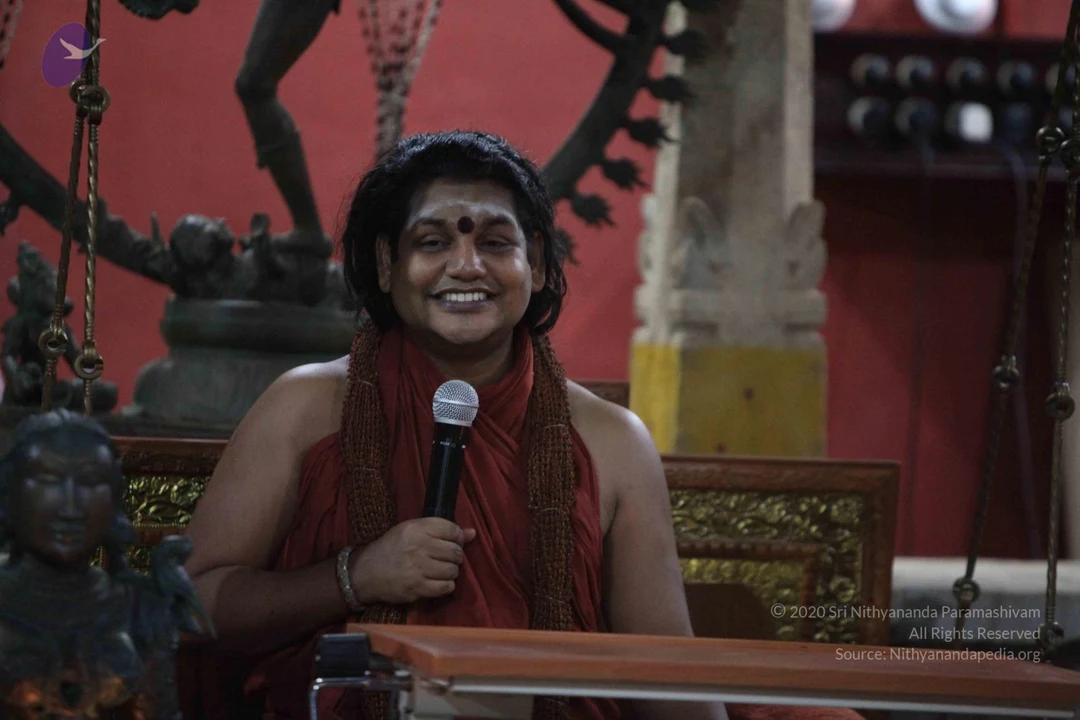
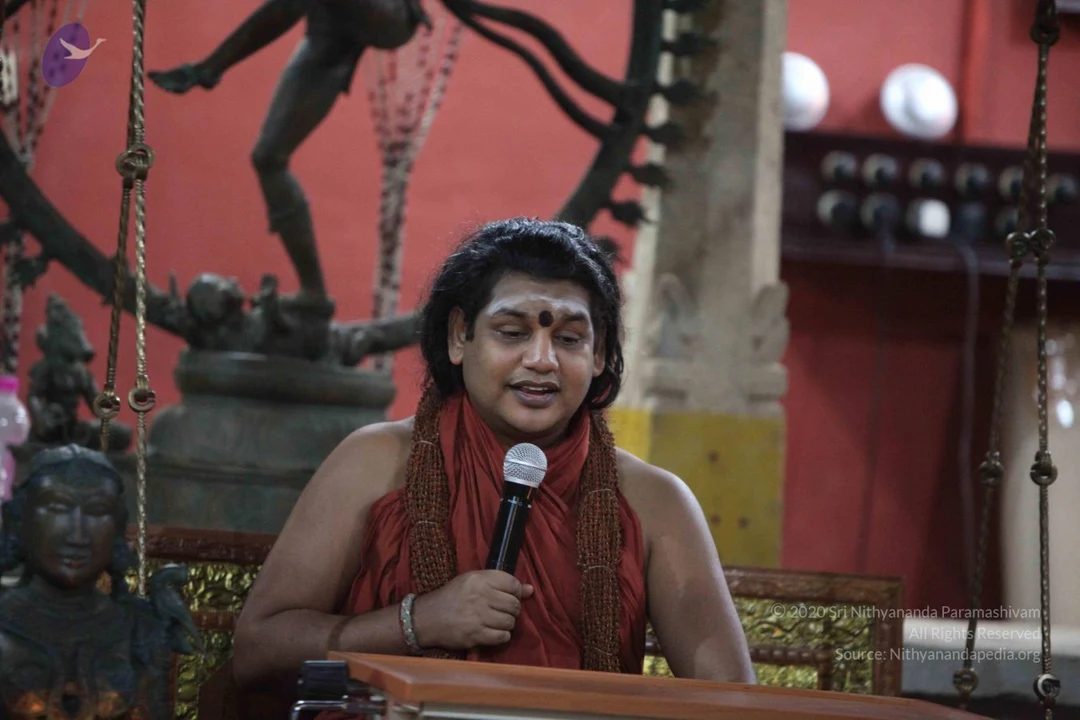
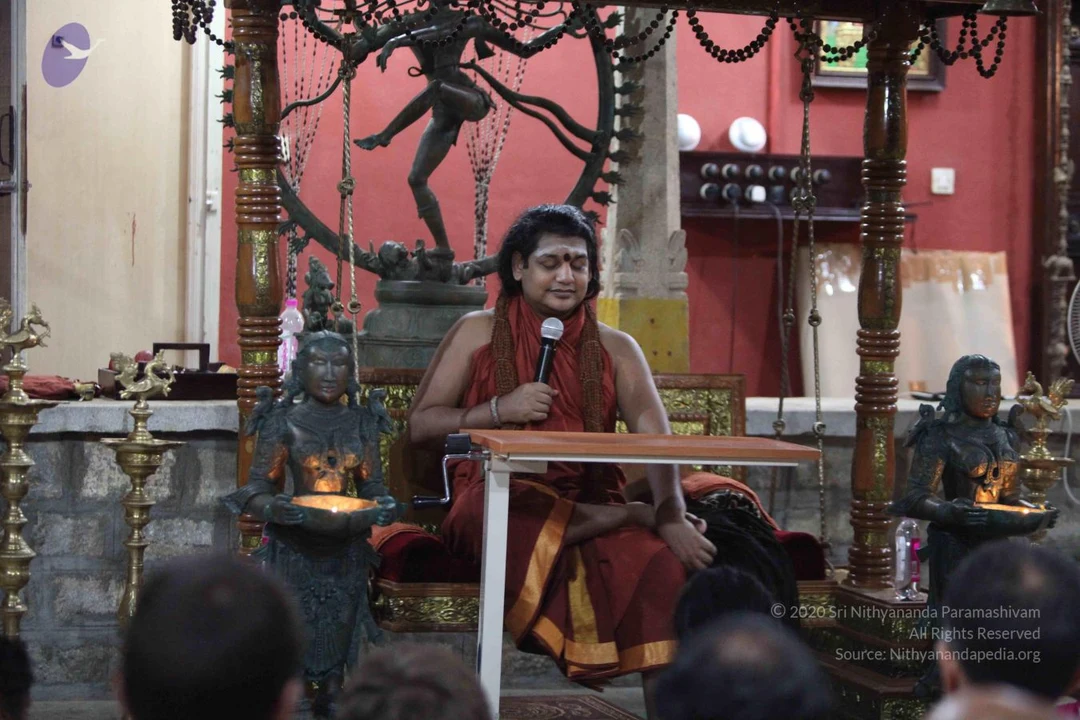
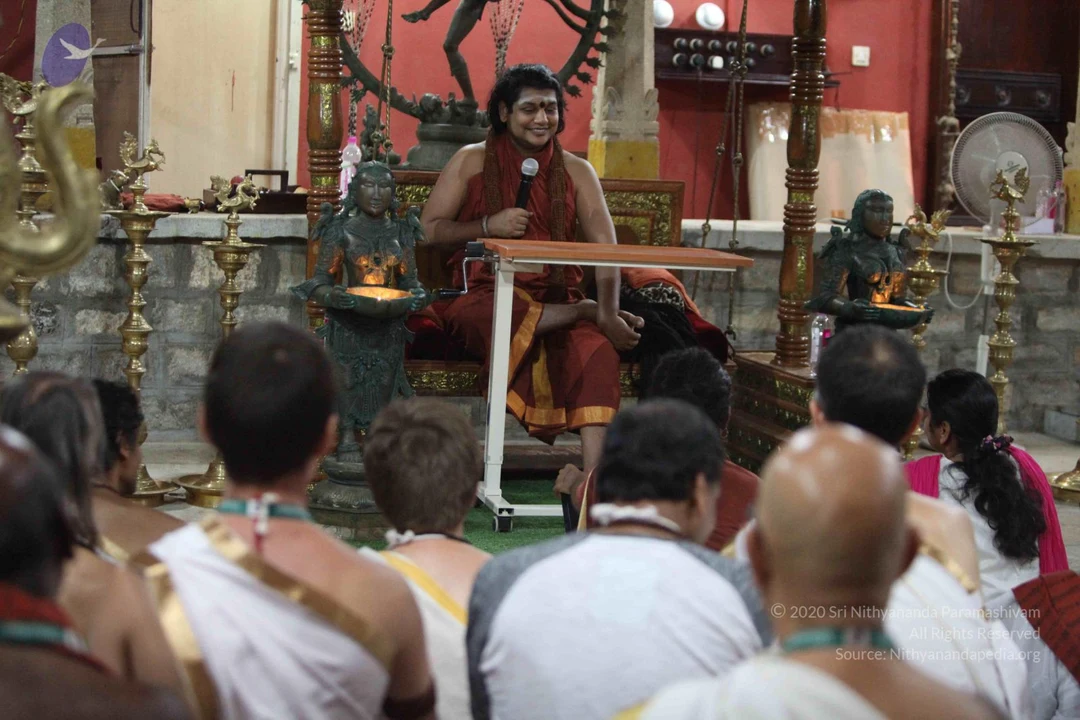
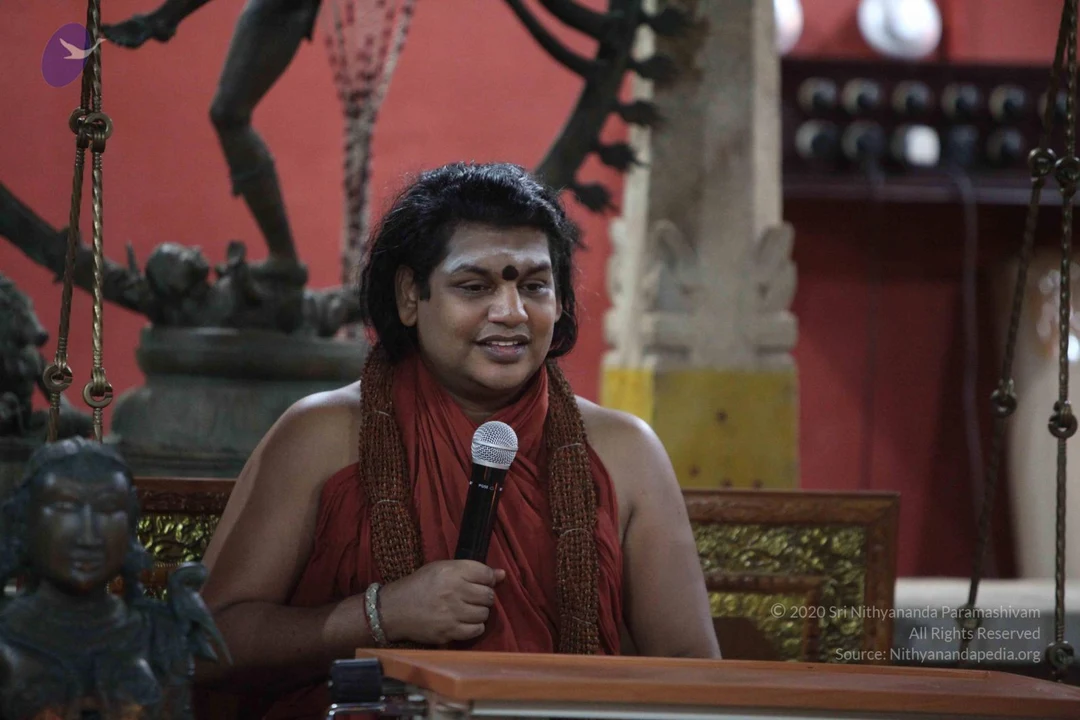
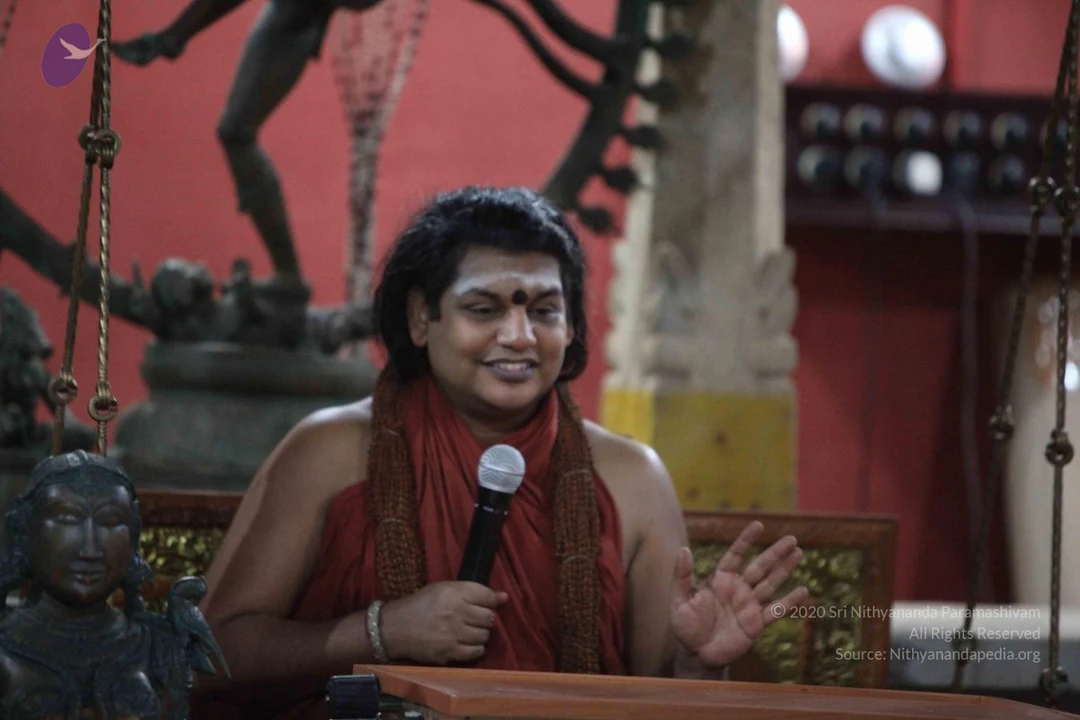
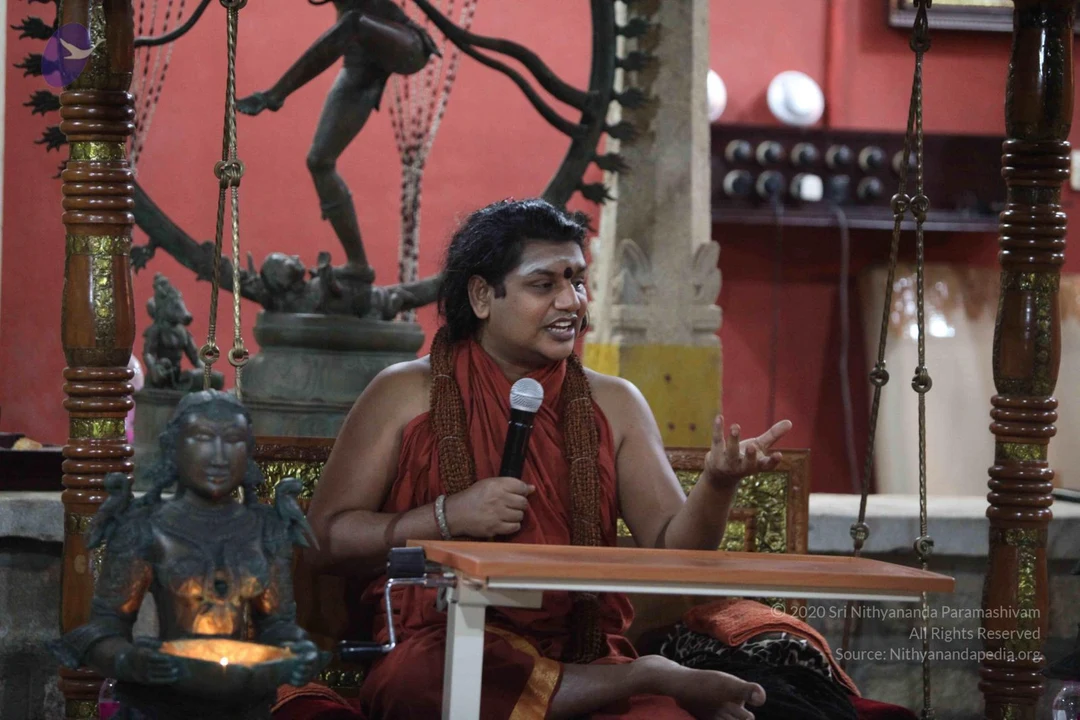
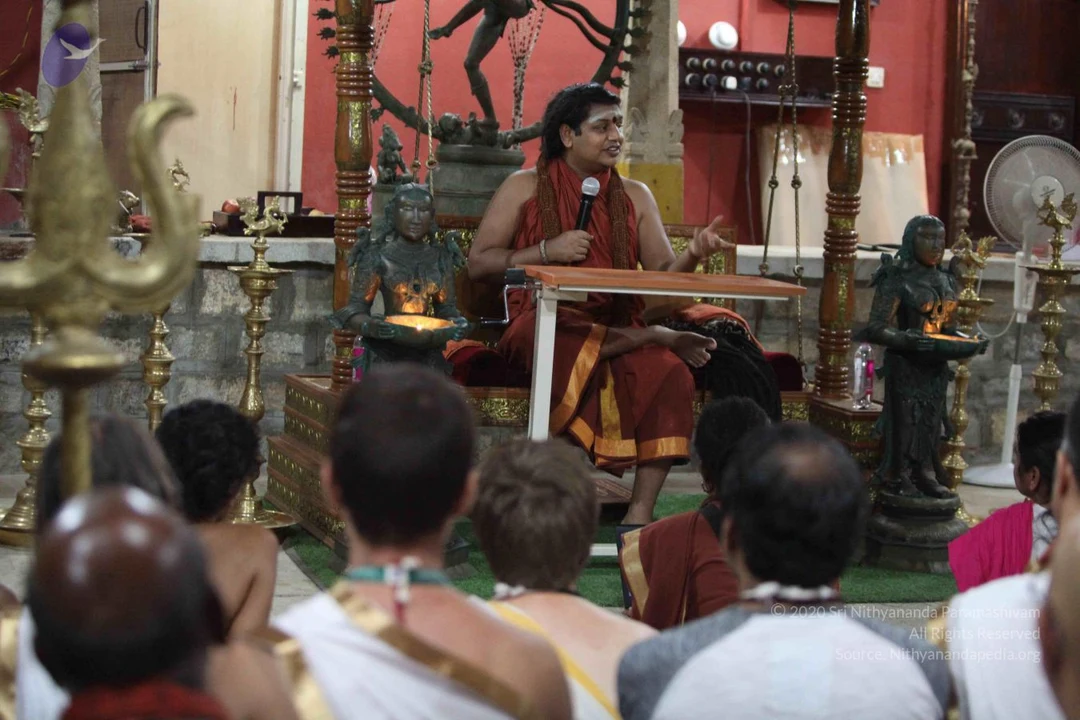
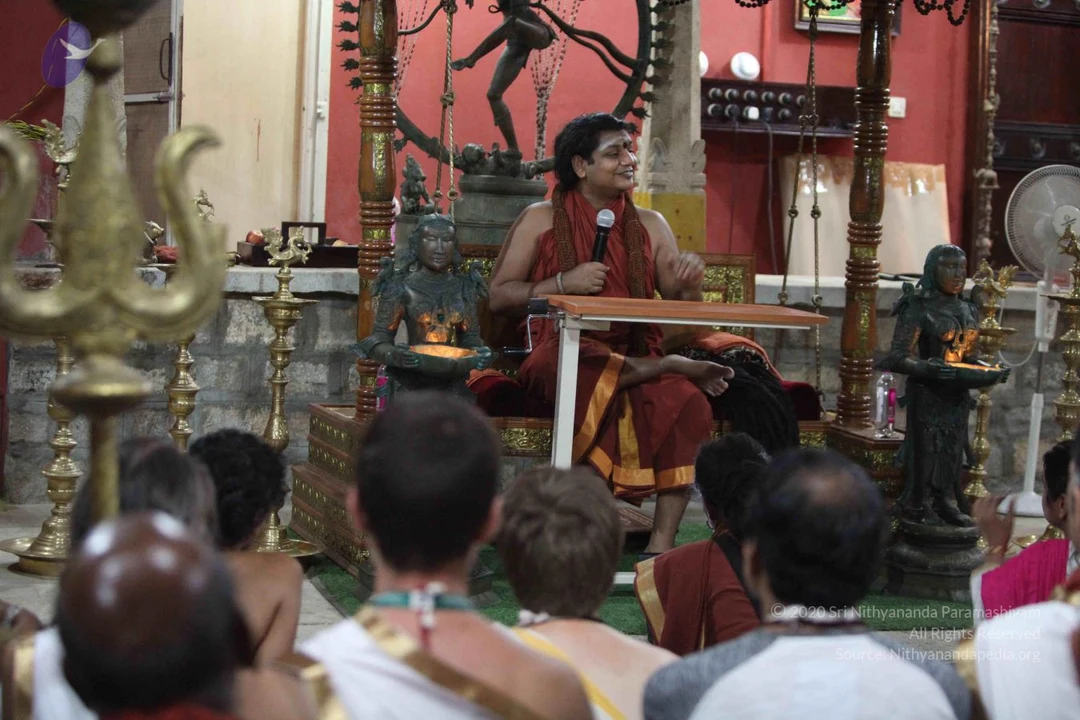
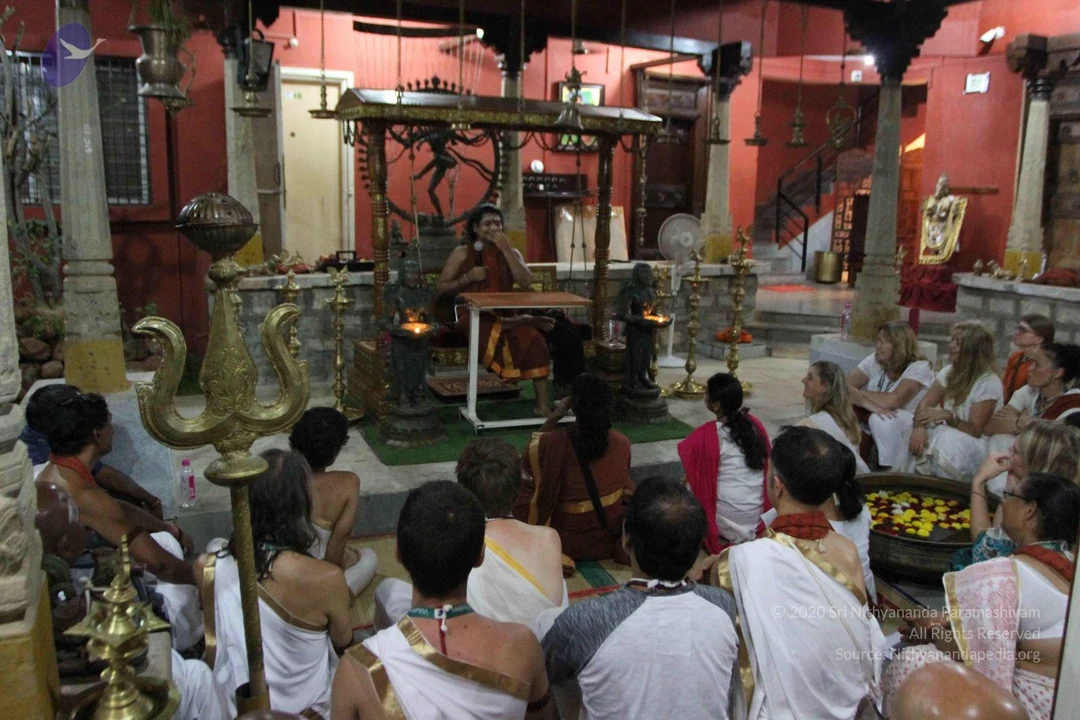
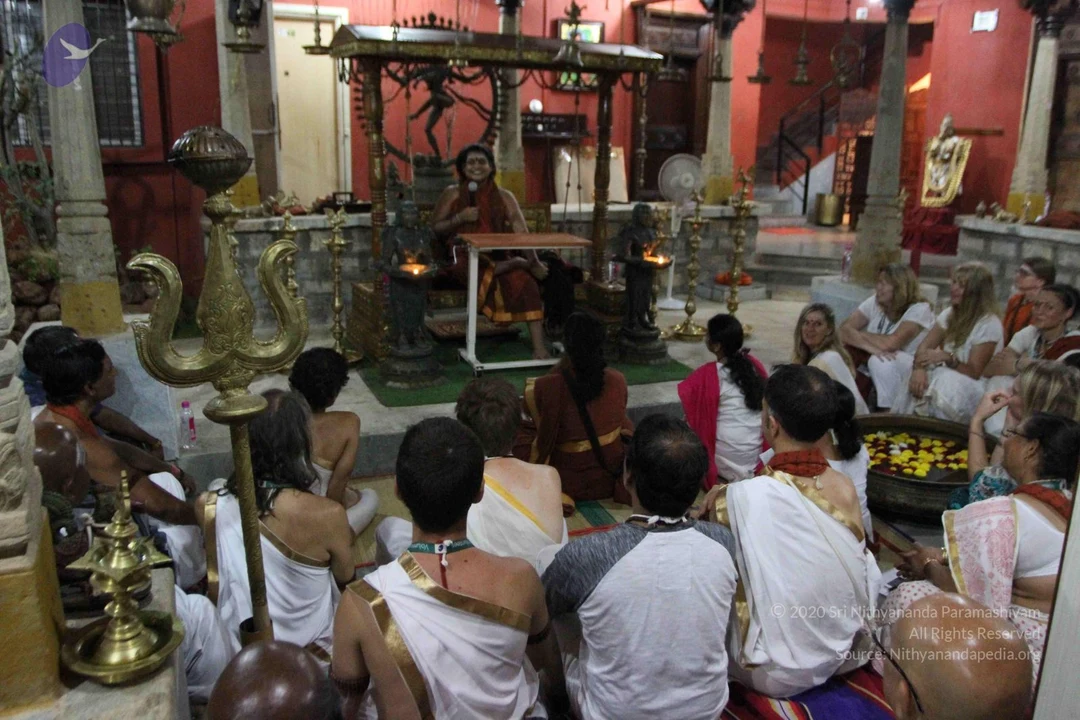
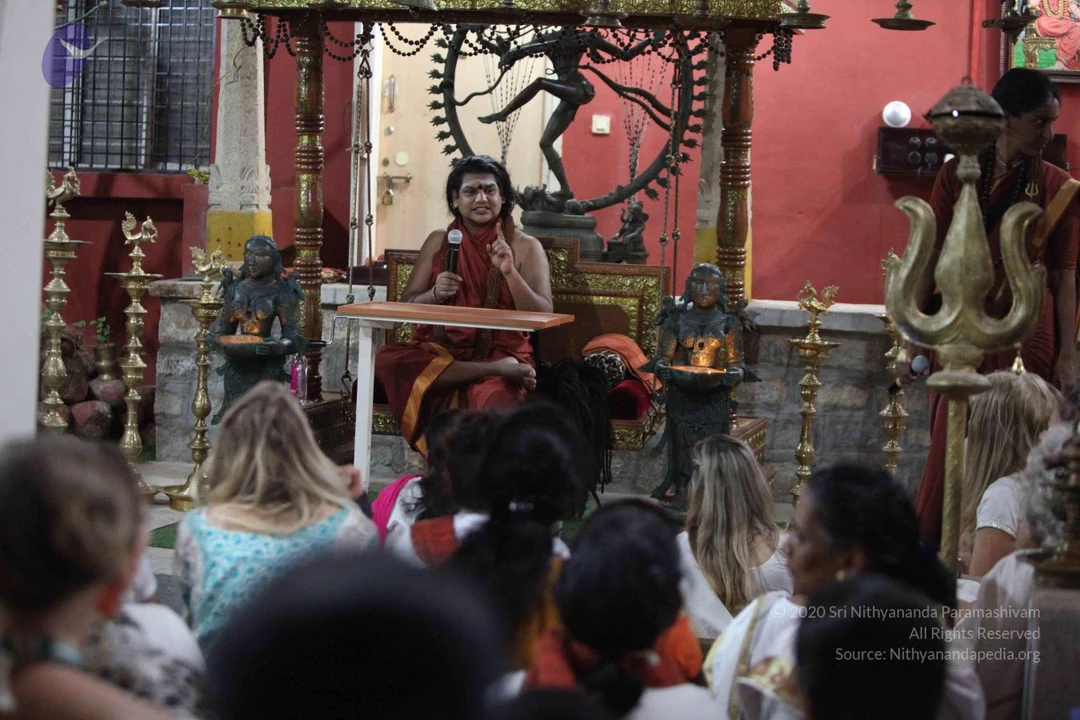
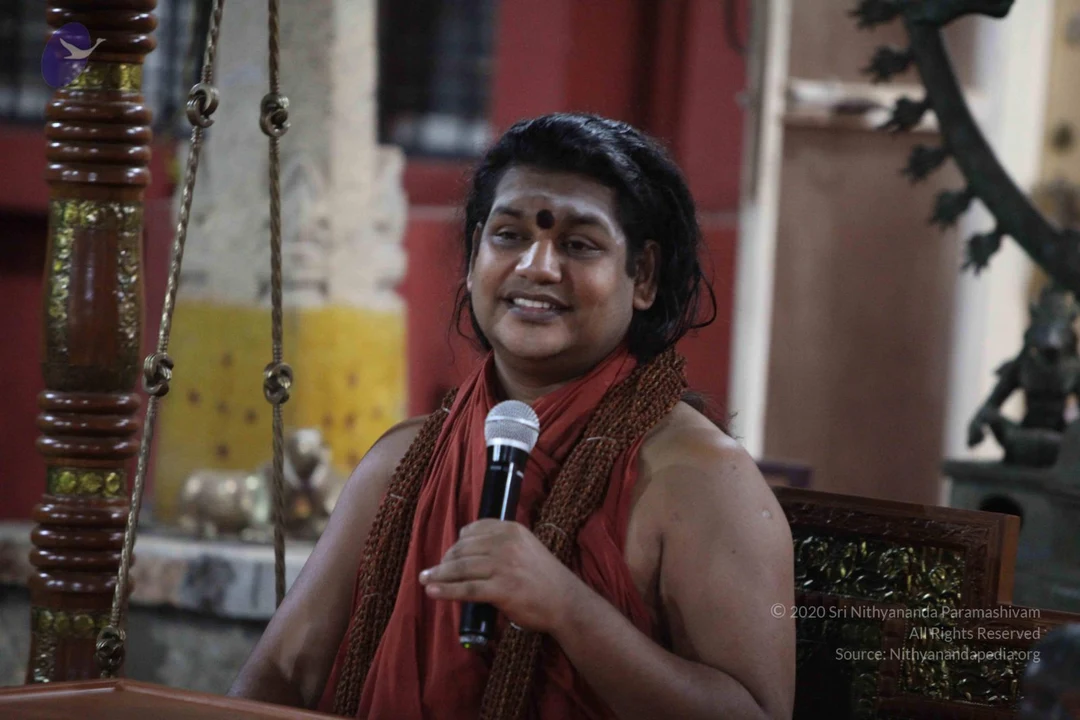
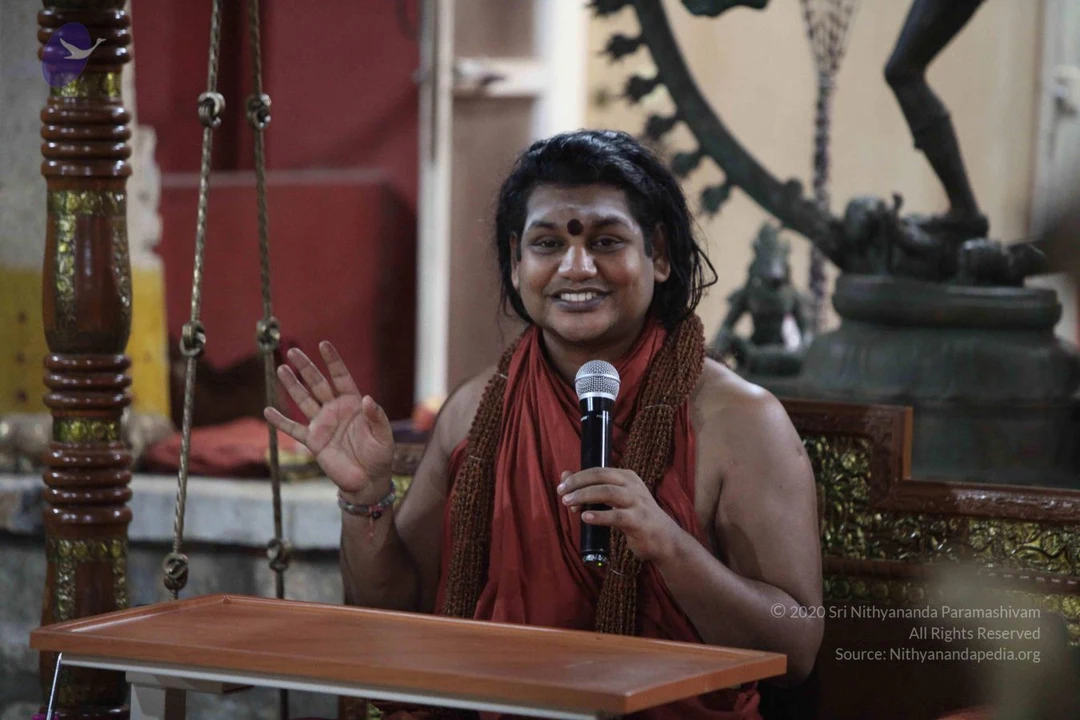
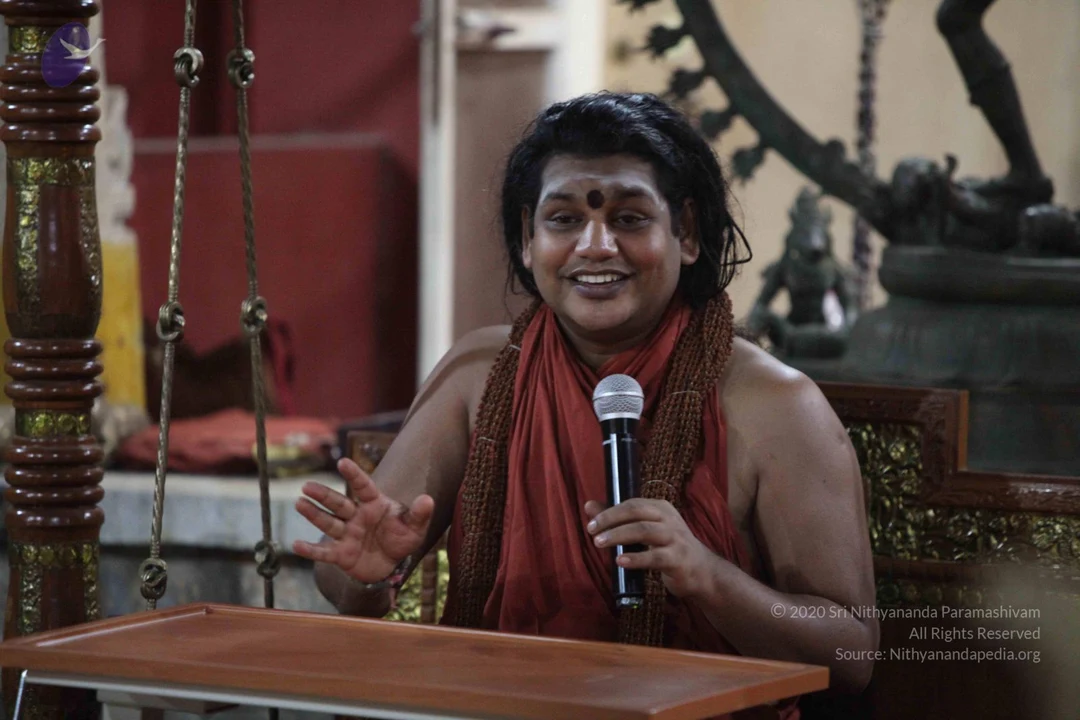
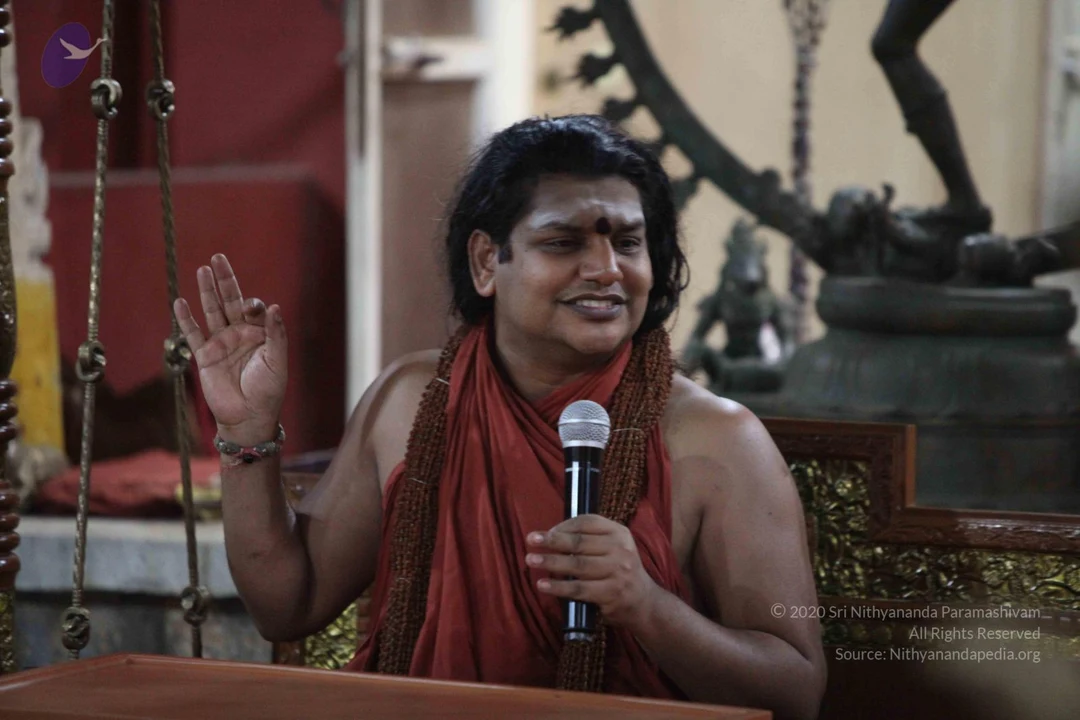
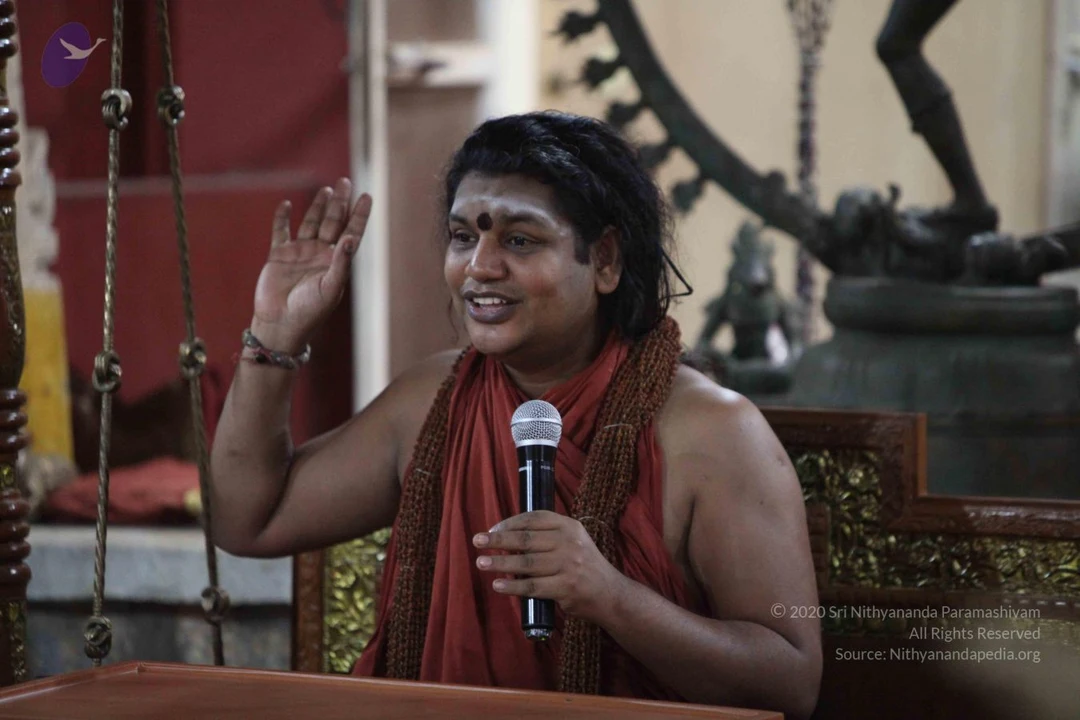
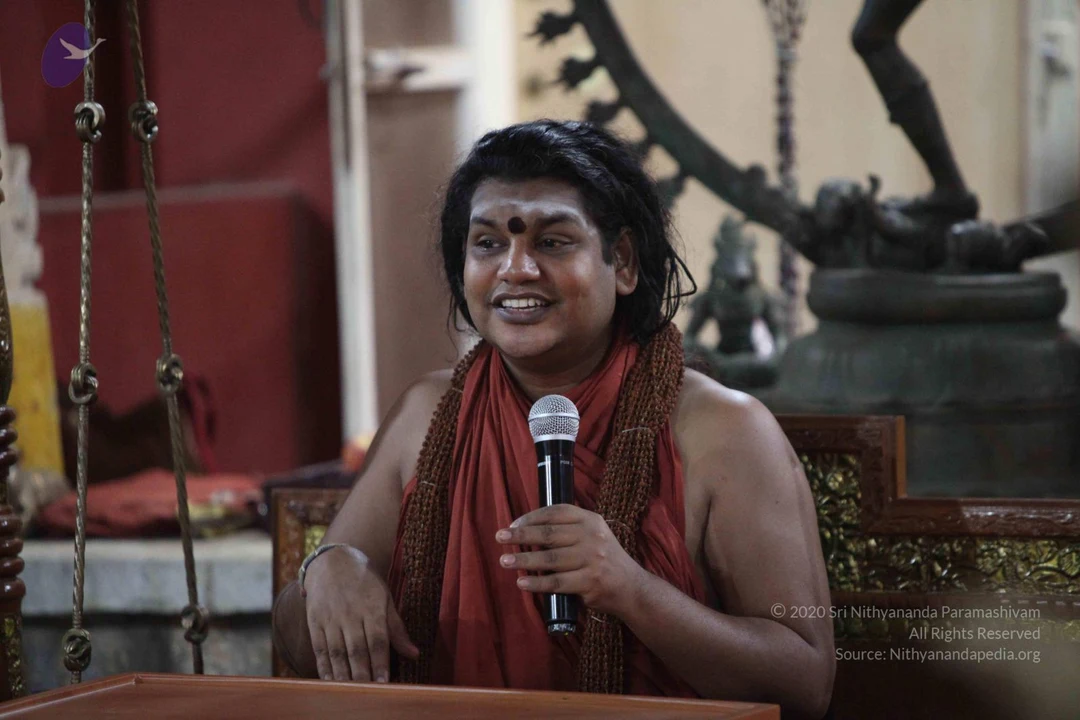
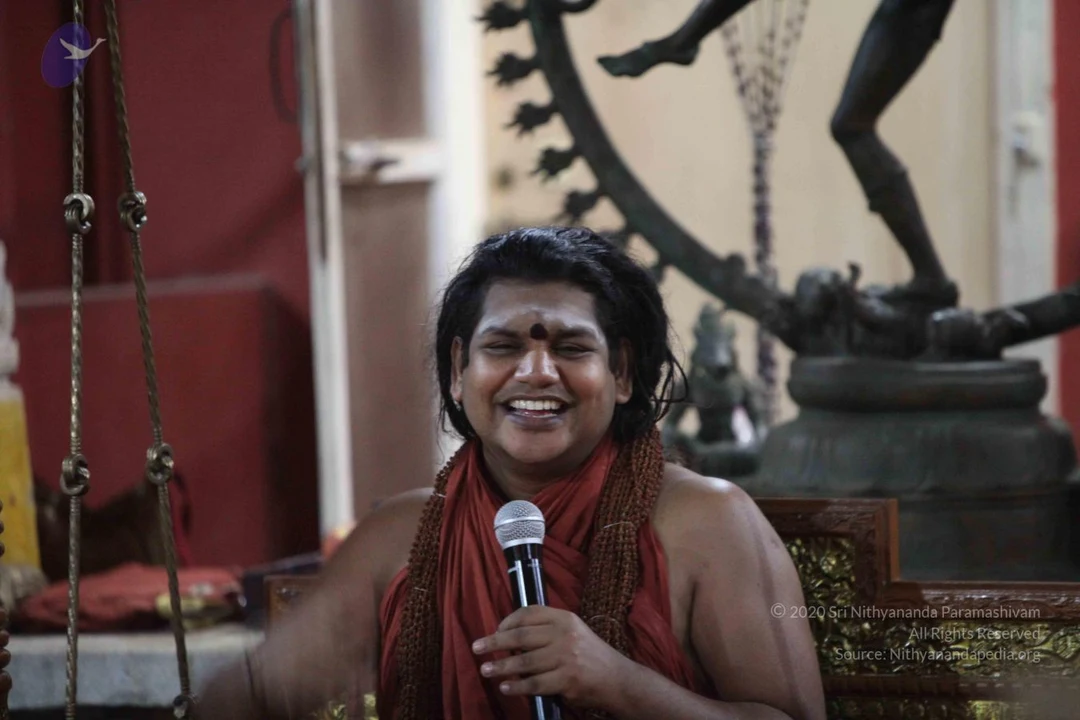
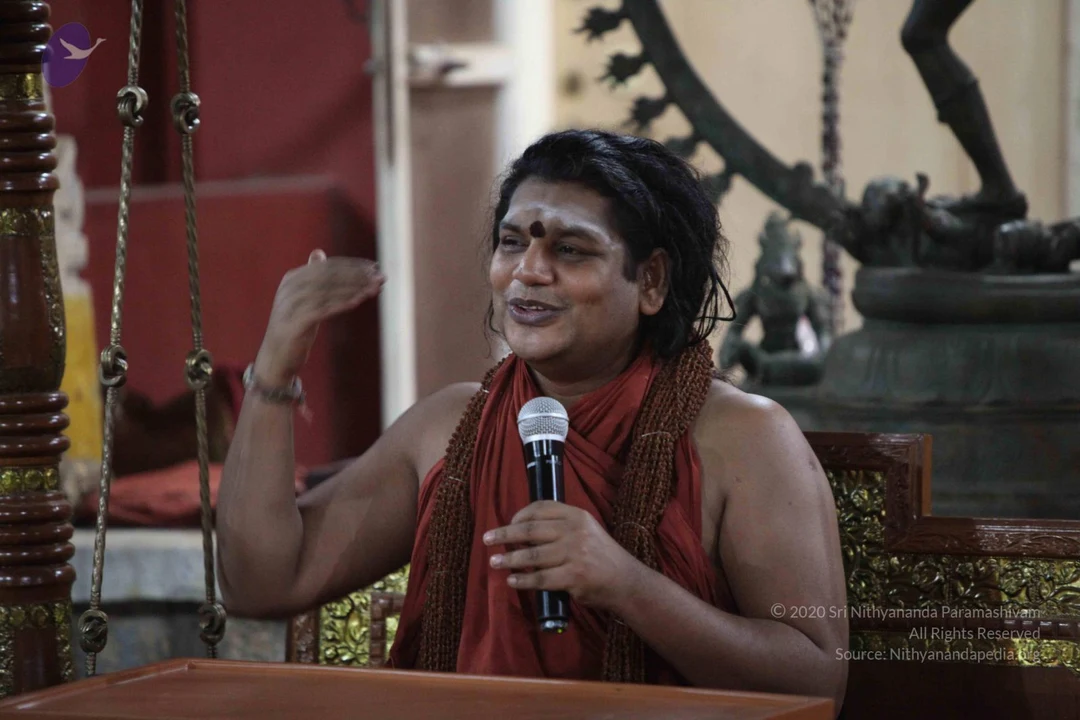
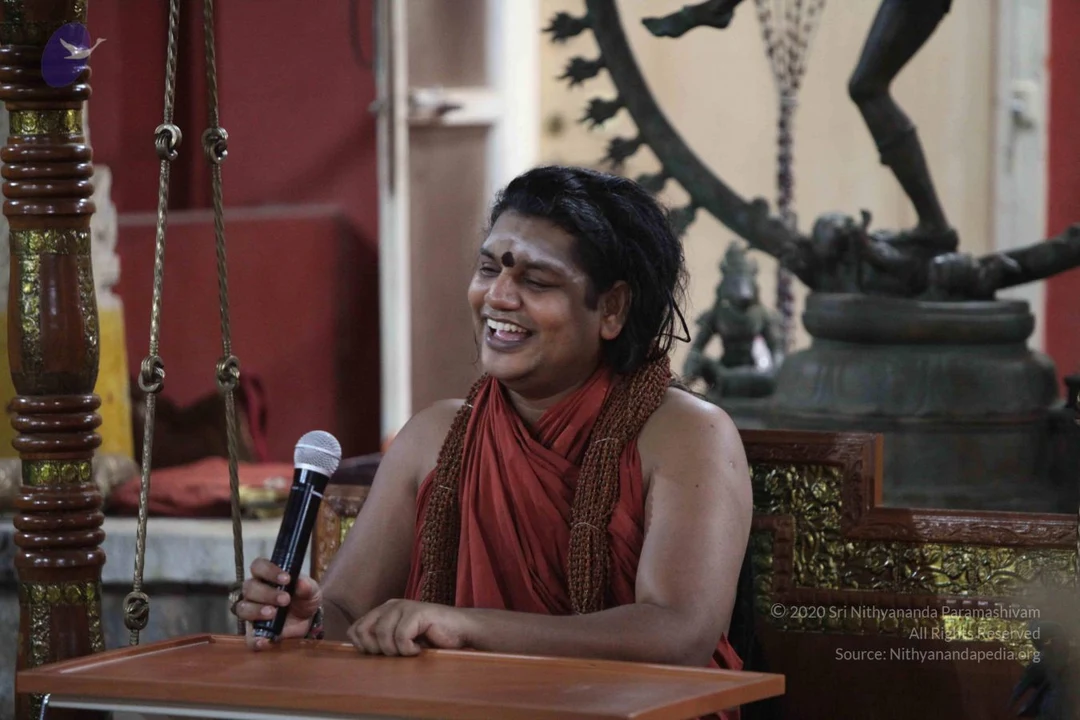
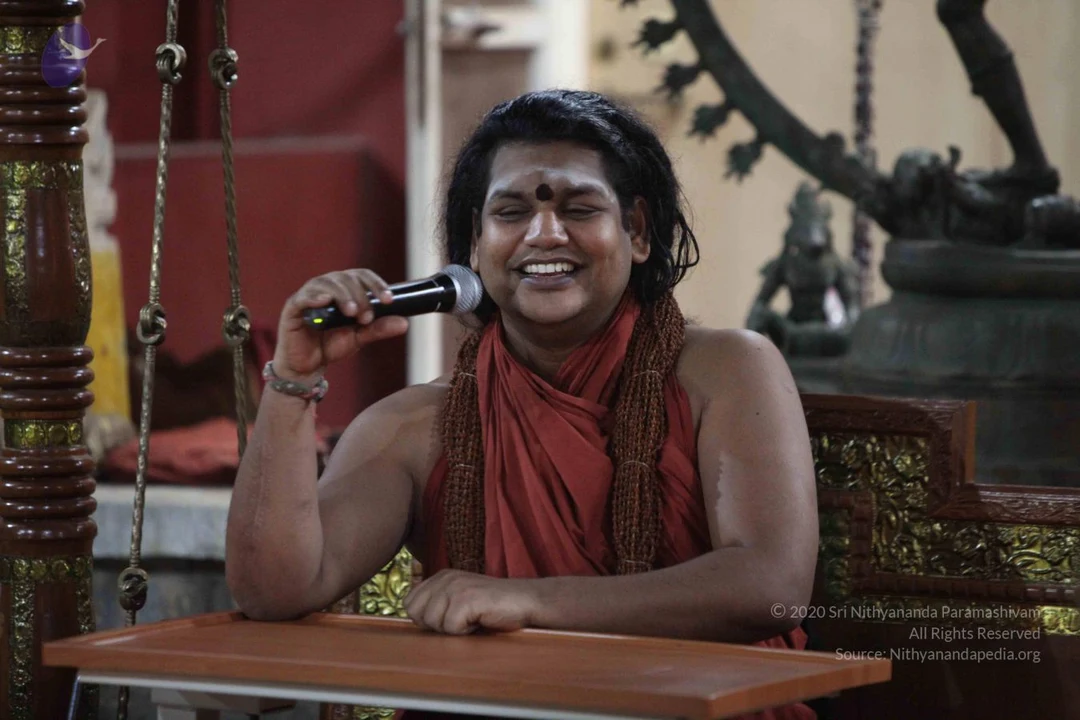
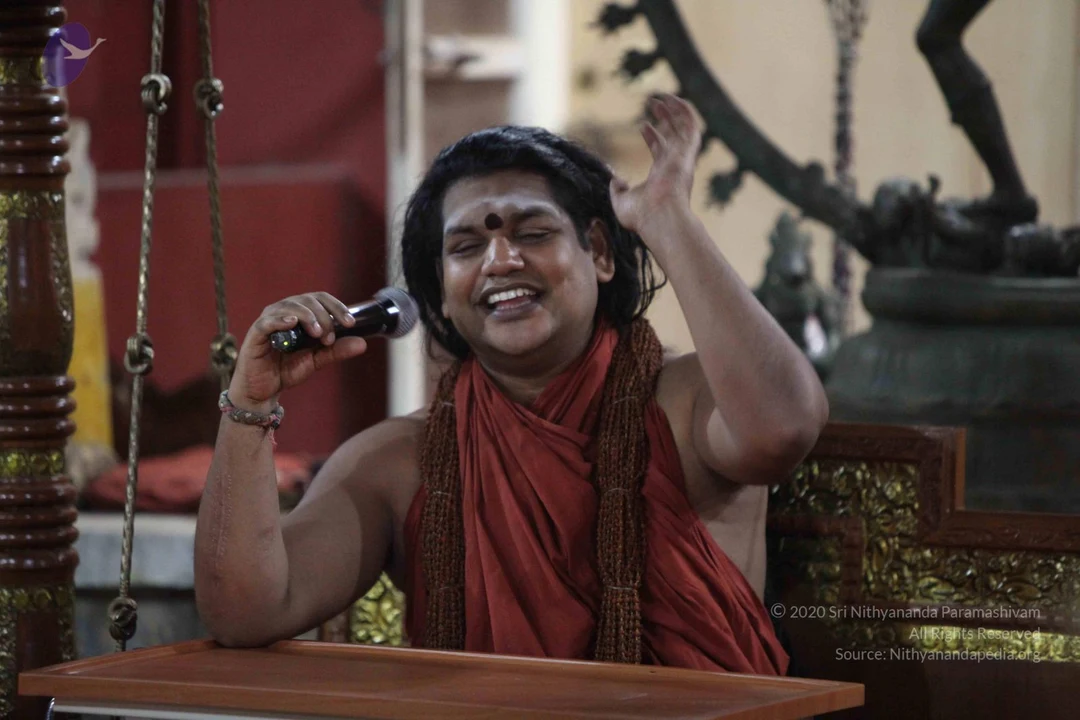
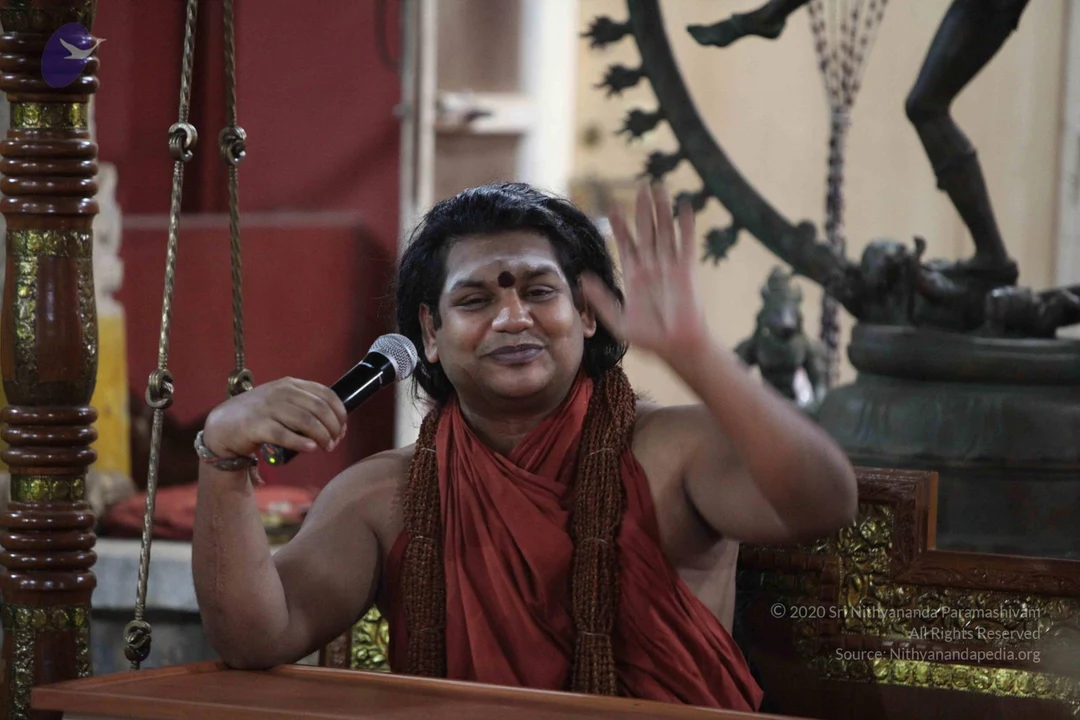
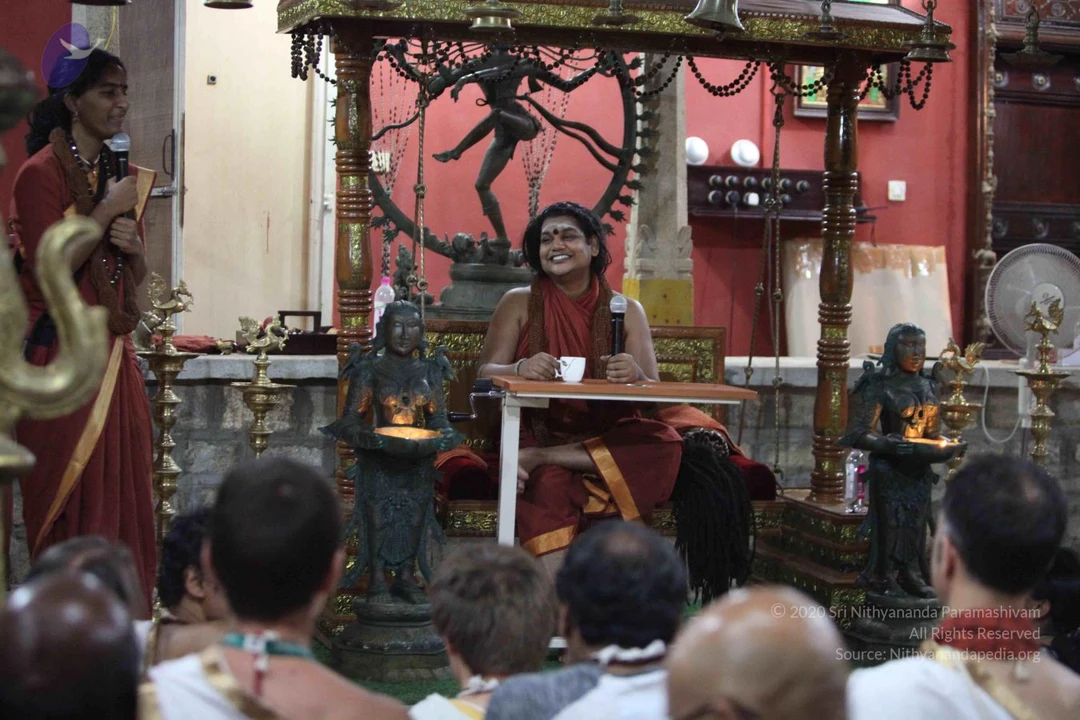
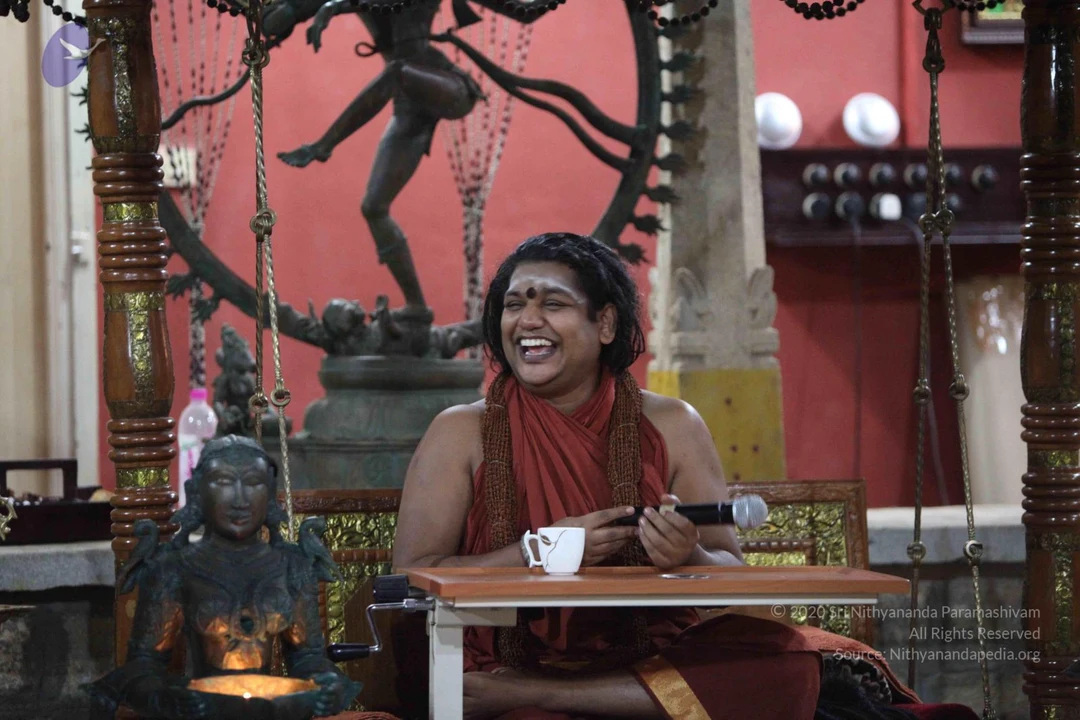
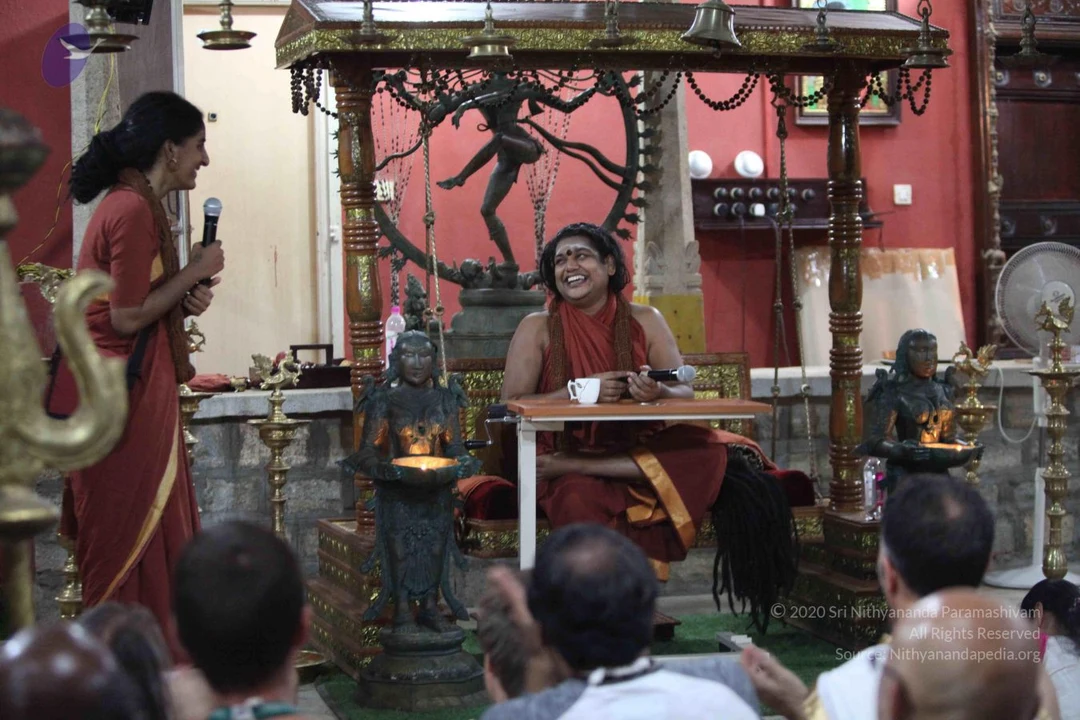
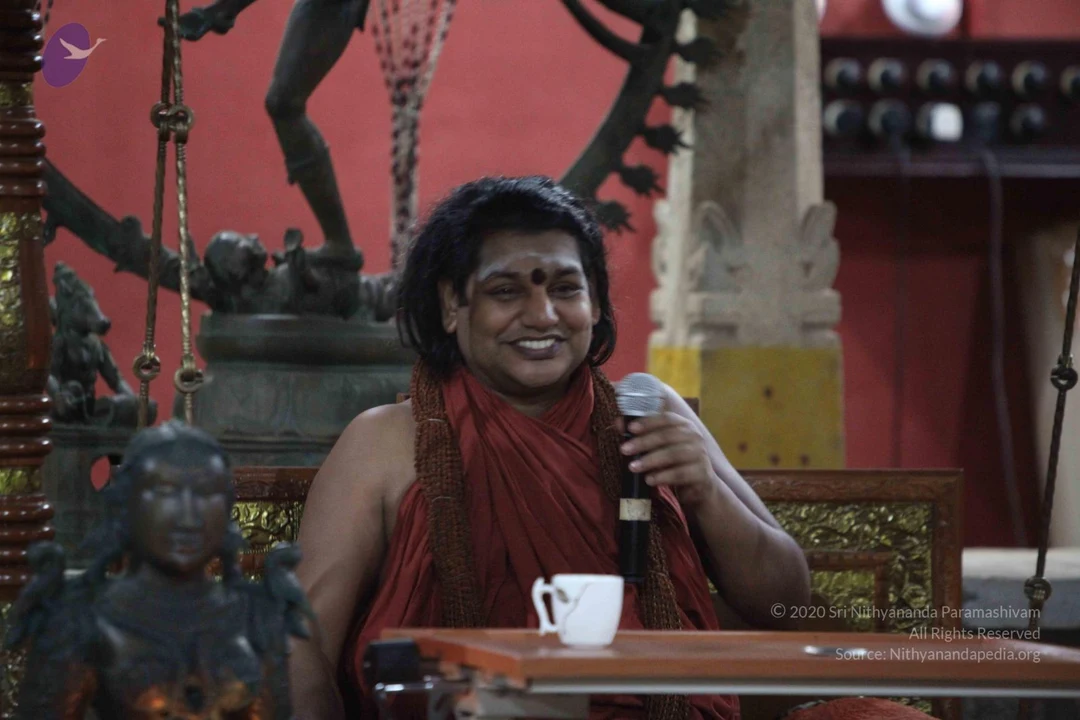
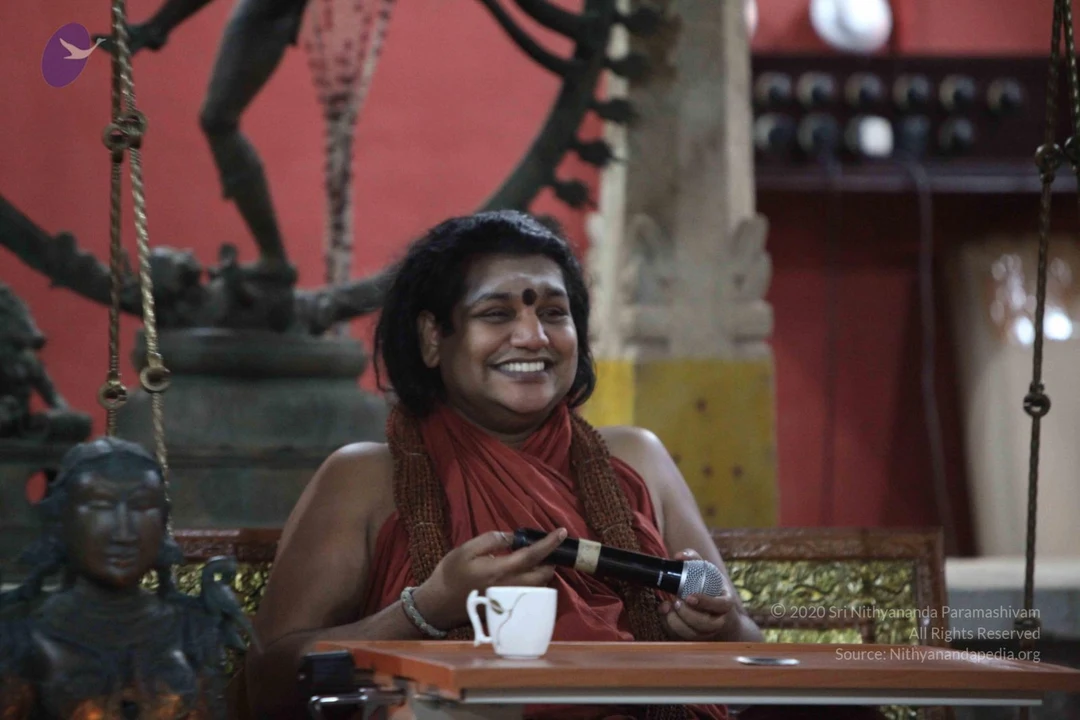
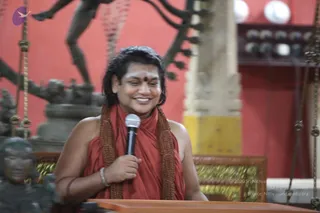
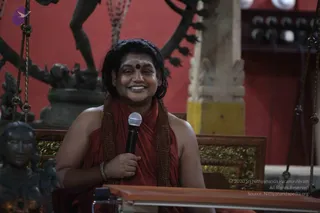
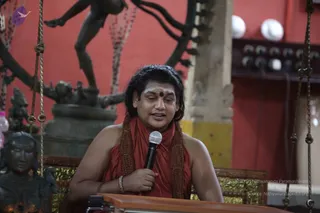
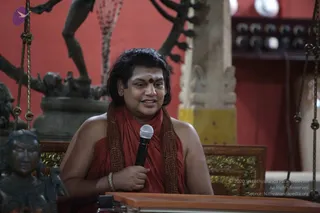
A smiling man in a red-orange cloth wrap, bare-shouldered, with long swept-back dark hair, a white forehead marking and a red bindi, speaks into a handheld microphone at a wooden lectern. He wears a rudraksha mala draped over his shoulders. Behind him stand a bronze Nataraja dancing Shiva figure and a bronze deity murti on a pedestal, against a red wall with hanging chains and a yellow pillar. Probable Swamiji cues: long swept-back hair, saffron-orange clothing and rudraksha mala, speaking at a satsang setting.A smiling man seated on a gilded wooden chair holds a black handheld microphone in his right hand while speaking at a satsang. He wears a red-orange shawl draped over bare shoulders and a long rudraksha mala with brown beads hanging to his chest, and a red bindi marks his forehead. His dark hair is long and swept back. Behind him stands a dark bronze statue of a dancing deity with raised arms, and a red wall with a pillar. A wooden lectern edge with an orange top sits in front of him, and a small bronze deity bust is at the left edge. The appearance-based label is Swamiji (probable), based on the long hair, red-orange shawl and rudraksha mala.A man seated at a wooden podium speaks into a handheld microphone during a satsang. He wears a red-orange shawl draped over bare shoulders, with rudraksha malas hanging at his chest and a red bindi with vibhuti on his forehead; his dark hair falls to his shoulders. Behind him stands a bronze Nataraja statue with a dancing figure within a flame arch, flanked by swinging ropes and a red wall. A small bronze deity murti sits at the lower left, and a gilded throne-style chair is visible. The description matches the page's Nithya Satsang context, and the figure resembles the a person candidate with distinctive hair, rudraksha and orange shawl cues.A seated man in long swept-back dark hair wearing a saffron-red robe with gold border and a red-and-gold shawl draped over his shoulders speaks into a handheld microphone at a wooden lectern during a satsang discourse. A bronze Nataraja statue dancing within a ring of flame stands behind him against a red wall, flanked by two bronze female lamp-bearer figures holding lit oil lamps. Brass oil lamps stand at the left edge, and a small audience of heads and shoulders sits in the foreground. Probable Swamiji, identified by long swept-back hair and saffron-red clothing with a shawl, seated as the discourse speaker.A seated man in a saffron-red robe with a gold-bordered shawl holds a handheld microphone and speaks to a seated audience in a temple hall. He sits on an ornate wooden seat beside a small wooden lectern on wheels. Two bronze lamp-holding figures with lit oil lamps flank him, and brass lamp stands line the foreground. Behind him a red wall displays a dancing deity form in a bronze relief. Audience members in the foreground wear white dhotis and sacred threads, one with a light shawl, and some have shaved heads. A woman in a pink top sits at the right edge. The scene resembles a satsang discourse.A man seated at a wooden lectern speaks into a handheld microphone during a satsang. He wears a red-orange shawl draped over bare shoulders and a long rudraksha mala around his neck, with a red bindi on his forehead and long dark hair. Behind him stands a dark bronze statue of a dancing deity with multiple arms against a red wall, and a bronze figure sits at the left edge. A brass-framed lectern and hanging rope decorations complete the scene.

1-EVENING-SATSANG
24 photosSource gallery
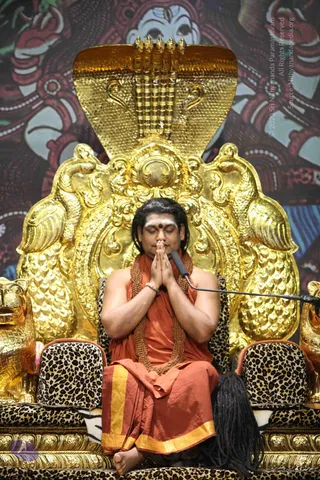
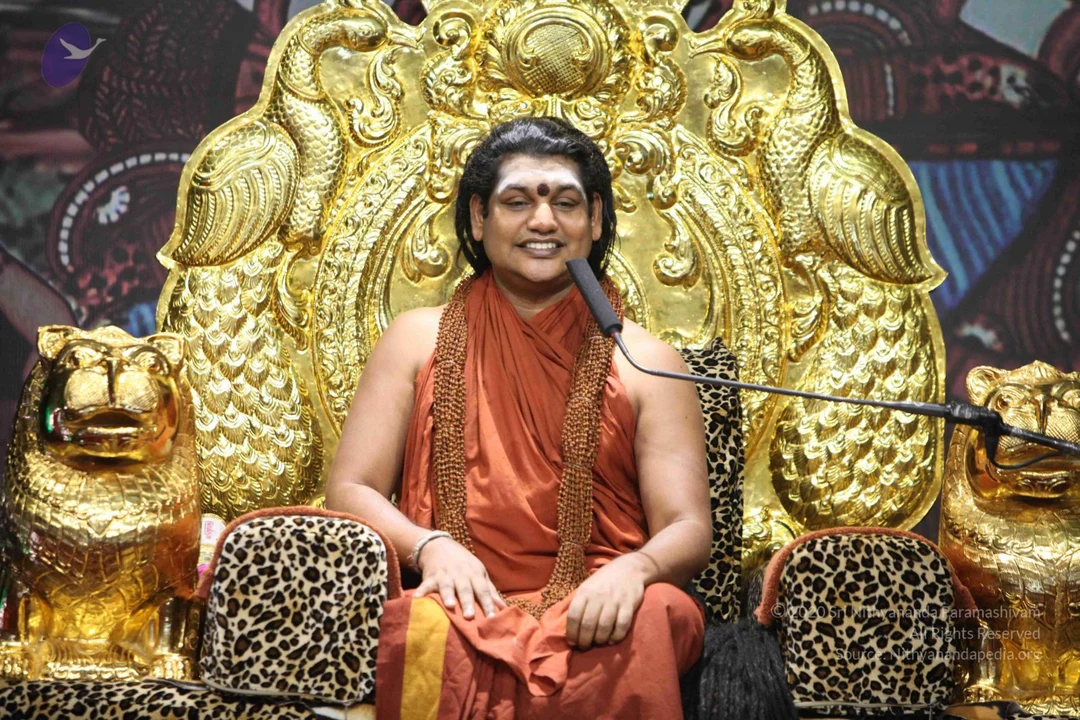
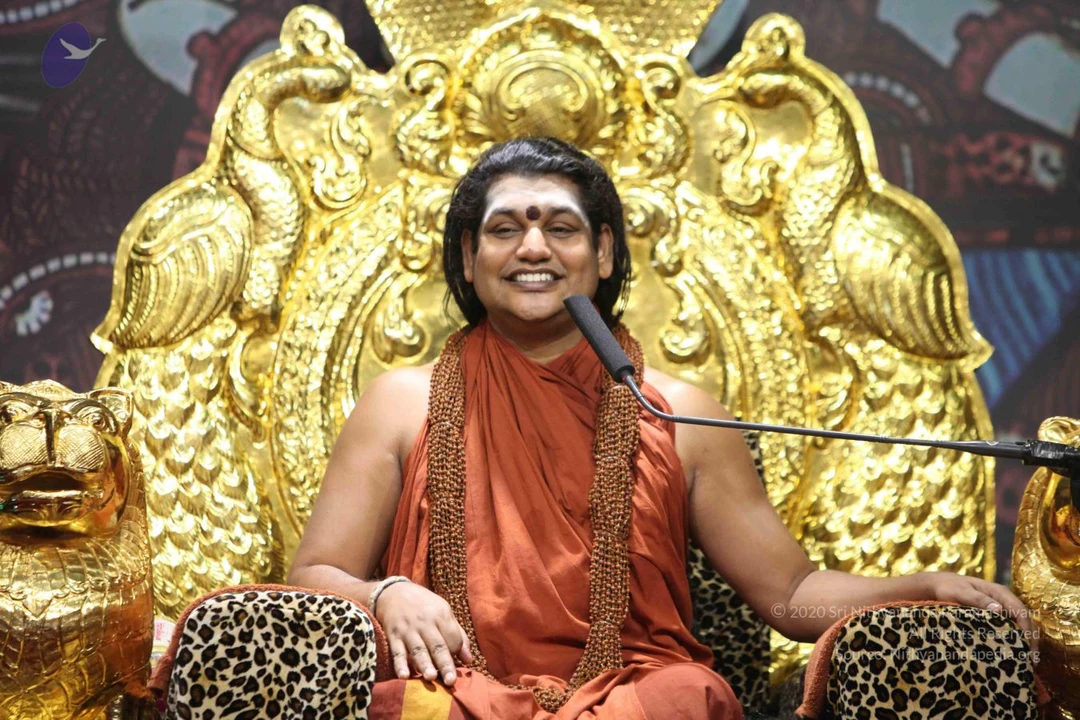
A seated man with long dark hair, white forehead markings and a red bindi sits with eyes closed and palms pressed together in anjali mudra. He wears a rust-orange robe with gold borders and a long rudraksha mala around his neck and a beaded bracelet on his wrist. He sits on an ornate gold throne with a carved cobra hood above his head and a leopard-print cushion, with a gold lion figure and a microphone stand beside him. A painted red and blue backdrop fills the background. Swamiji (probable): the long swept-back hair, saffron robe, rudraksha mala and ornate gold throne are the qualifying cues for the presiding teacher.A man seated cross-legged on an ornate gilded throne with a cobra-hood canopy and leopard-print cushions, palms pressed together in namaste with eyes closed. He wears an orange-red saffron-style cloth with a gold border, a rudraksha mala necklace, a bangle on his wrist, and a white vibhuti marking with a red bindu on his forehead. Long dark hair falls past his shoulders. A microphone stands beside him, and a painted mural of deities with red and gold tones fills the background. Probable Swamiji seated in satsang, with appearance cues of long hair, rudraksha mala and saffron clothing. Golden lion figures flank the throne.A seated man in an orange-red robe with a gold border sits cross-legged on a golden throne with a cobra-hood canopy and gold lion armrests, backed by a leopard-print cushion. He wears a long rudraksha mala, a white forehead mark with a red dot, and a bracelet, with hands pressed together in namaskar and eyes closed. A microphone stands before him, and a painted deity mural fills the background. a person: the long dark hair, saffron-orange robe and rudraksha mala match the presentation, but the image has no caption confirming identity, so classification is uncertain.A seated man with long dark hair, white vibhuti marks and a red bindi, eyes closed, palms pressed together in namaste. He wears an orange-saffron cloth draped over his torso and lower body with a gold border, and multiple strands of rudraksha mala around his neck. He sits on an ornate gold throne carved with peacock-like motifs, upholstered with leopard-print cushions, with a microphone stand beside him. Swamiji (probable): the long swept-back hair, saffron clothing and rudraksha malas suggest the Nithyananda Paramashivam candidate, seated in a discourse setting.A seated man in an orange-red saffron robe with a gold-bordered lower wrap sits on an ornate gold throne carved with peacock-like motifs and a cobra hood, with a leopard-print cushioned armchair at his sides. He wears a long rudraksha mala around his neck, a white forehead marking with a red bindi, and holds a microphone on a stand while smiling and speaking at a satsang. Swamiji (probable): long swept-back dark hair, saffron robes, rudraksha mala and ornate gold throne fit the candidate's presentation. One physical person is visible.A man seated on a gilded throne with a large golden cobra-hood backrest and leopard-print cushions, eyes closed in a serene expression, wearing a rust-orange robe with a gold-bordered edge and a long rudraksha mala draped over his shoulders. He has a white forehead marking with a red bindi, and a microphone stand is positioned beside him. Behind the throne is a painted red and blue mural with ornate motifs.

February 26 2016

1 photoView all
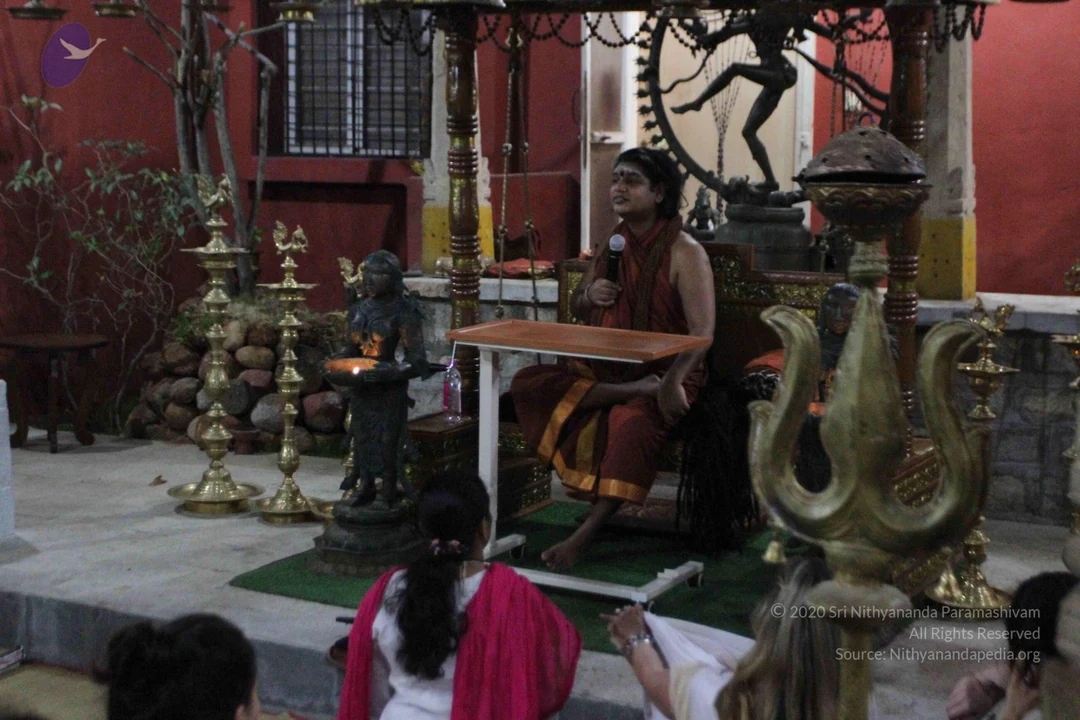
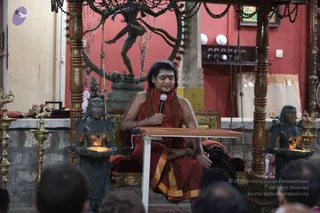
A man sits cross-legged on a carved wooden throne with gold-patterned panels, holding a black microphone in his right hand while speaking to an unseen audience. He has long dark hair swept back, a red bindi on his forehead, and wears a red-orange garment wrapped over one shoulder with a gold-bordered red dhoti, plus a dark rudraksha mala draped over his shoulder. A small wooden side table with a lamp-like object sits beside him. Behind him stands a large bronze Nataraja statue dancing within a flame arch, and a red wall and wooden pillar frame the room. The green mat underfoot and a few people's heads at the lower edge suggest a seated satsang setting. a person is shown in person, delivering a discourse.