Skip to content
Friday

15 January 2016

Dated photos
672
Source pages
1
Media
3
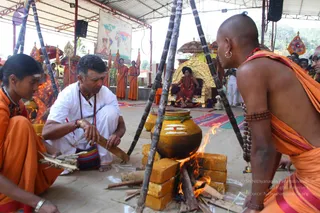
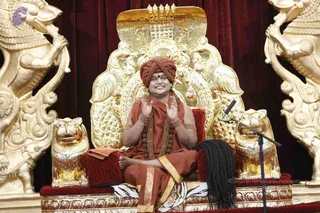
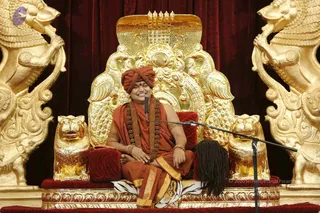
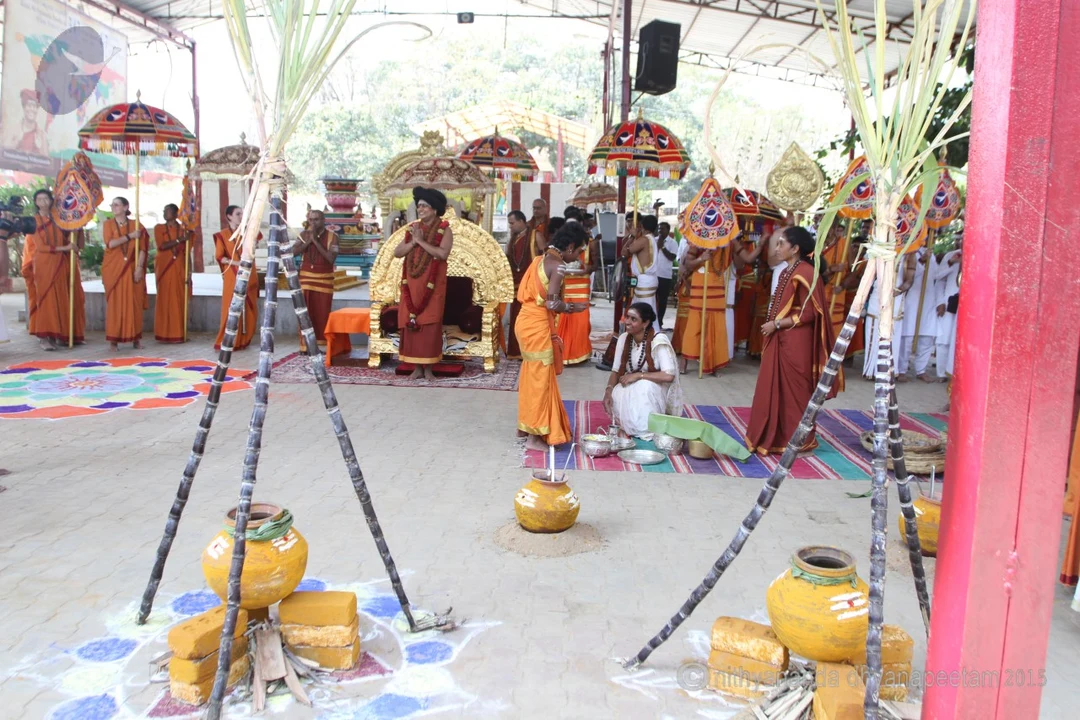
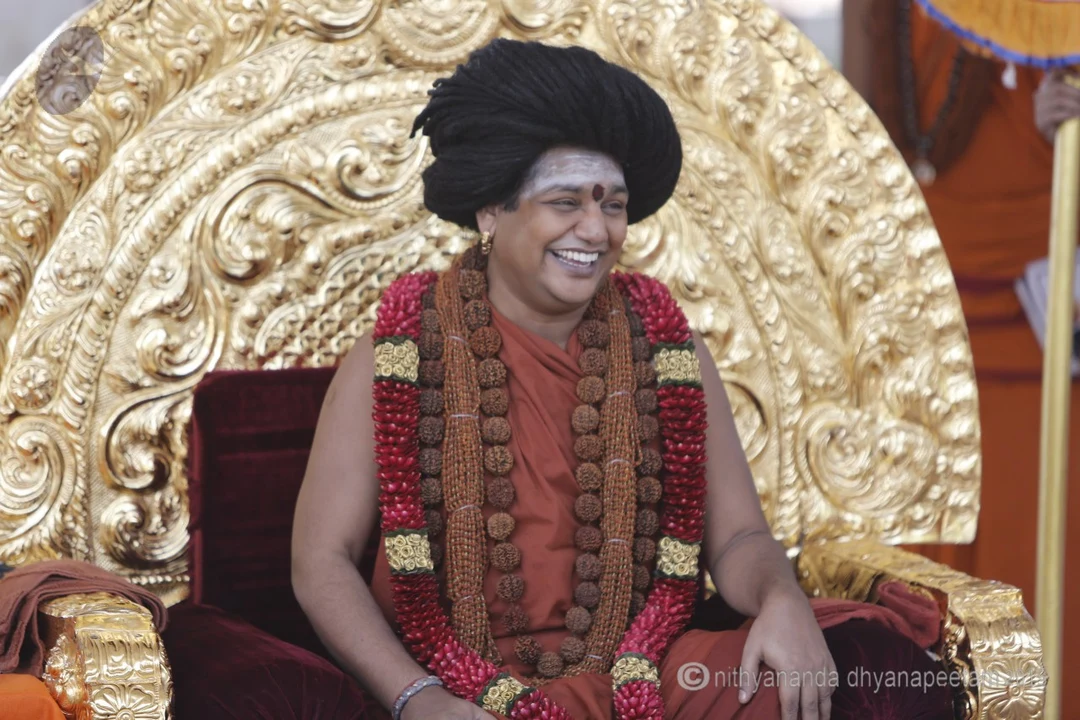
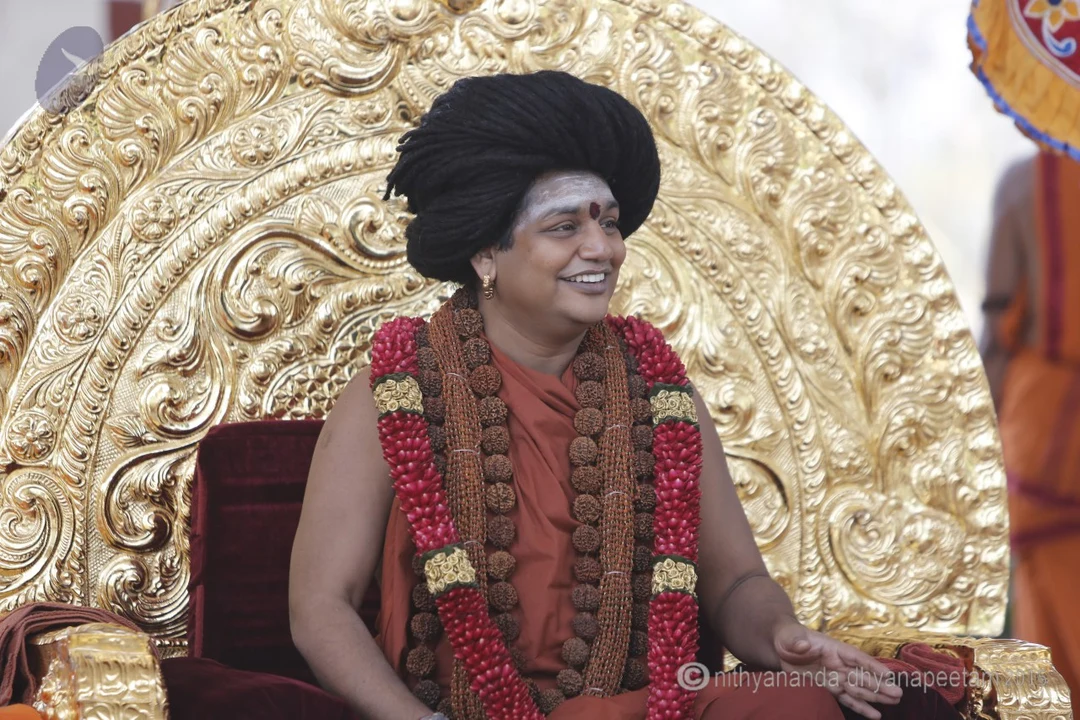
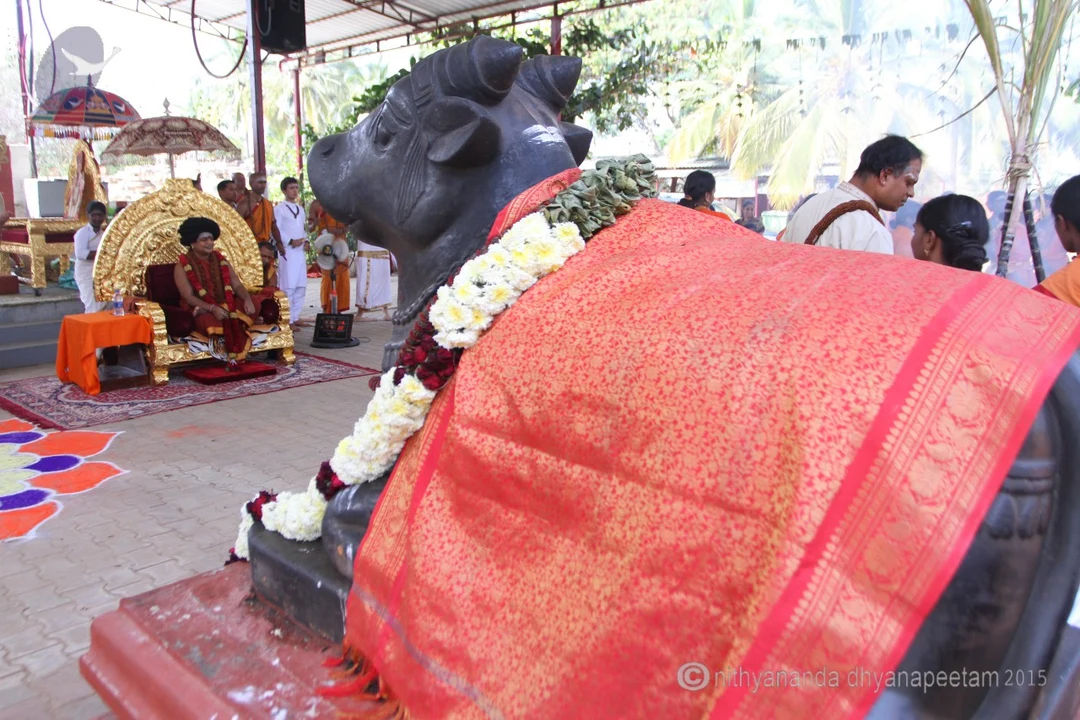
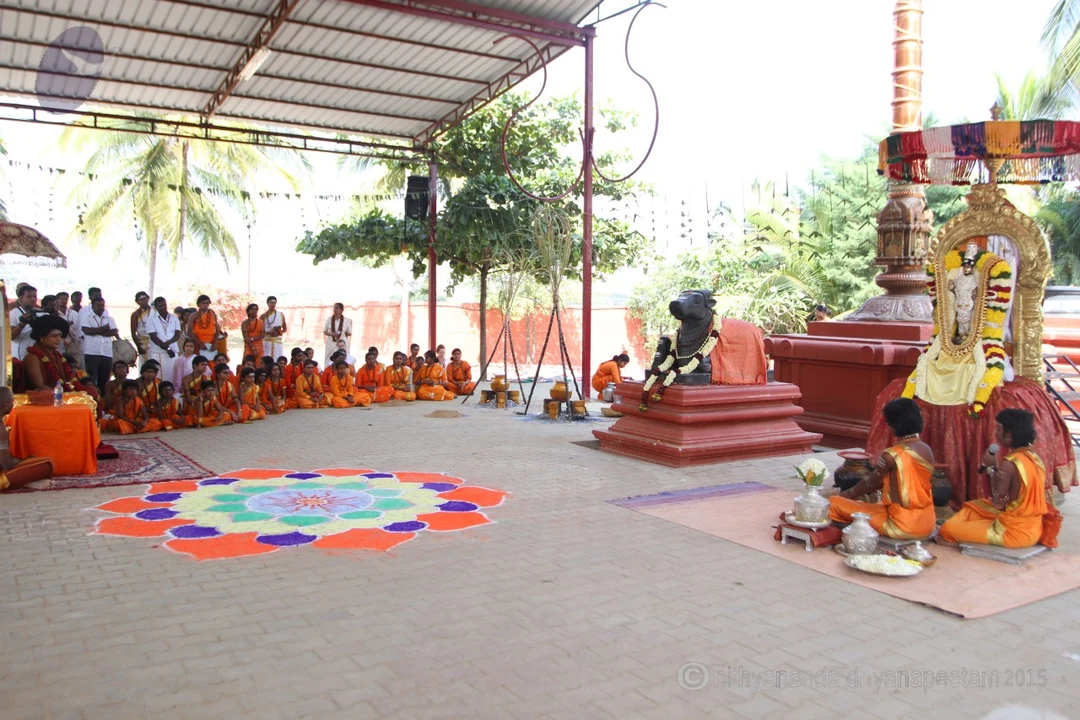
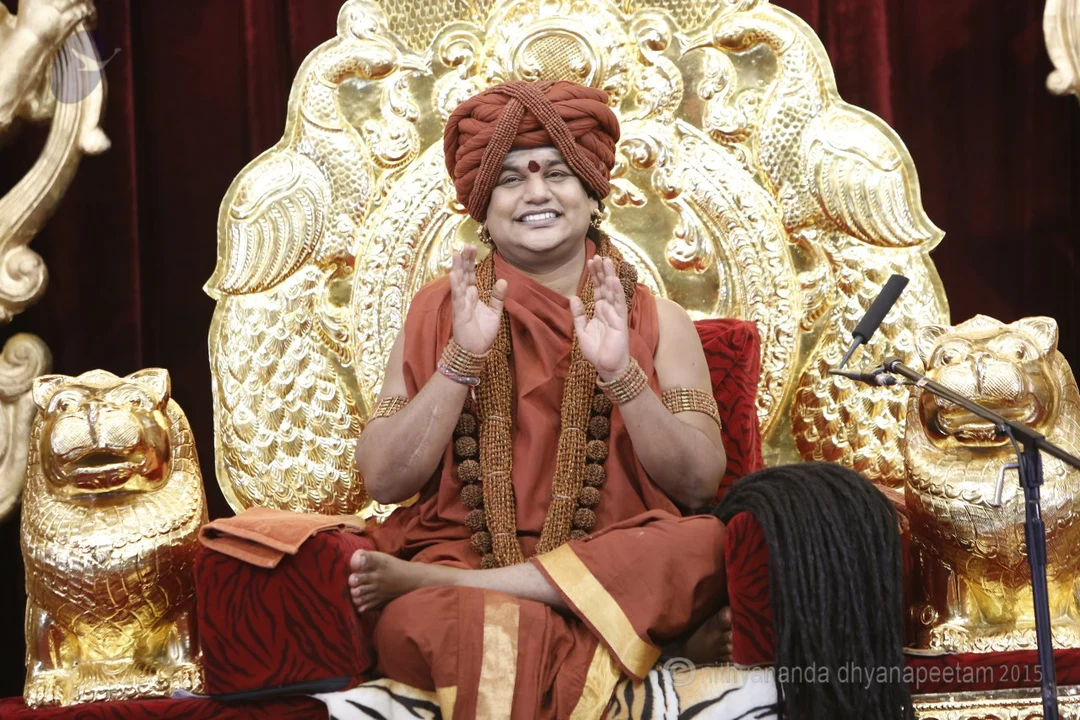
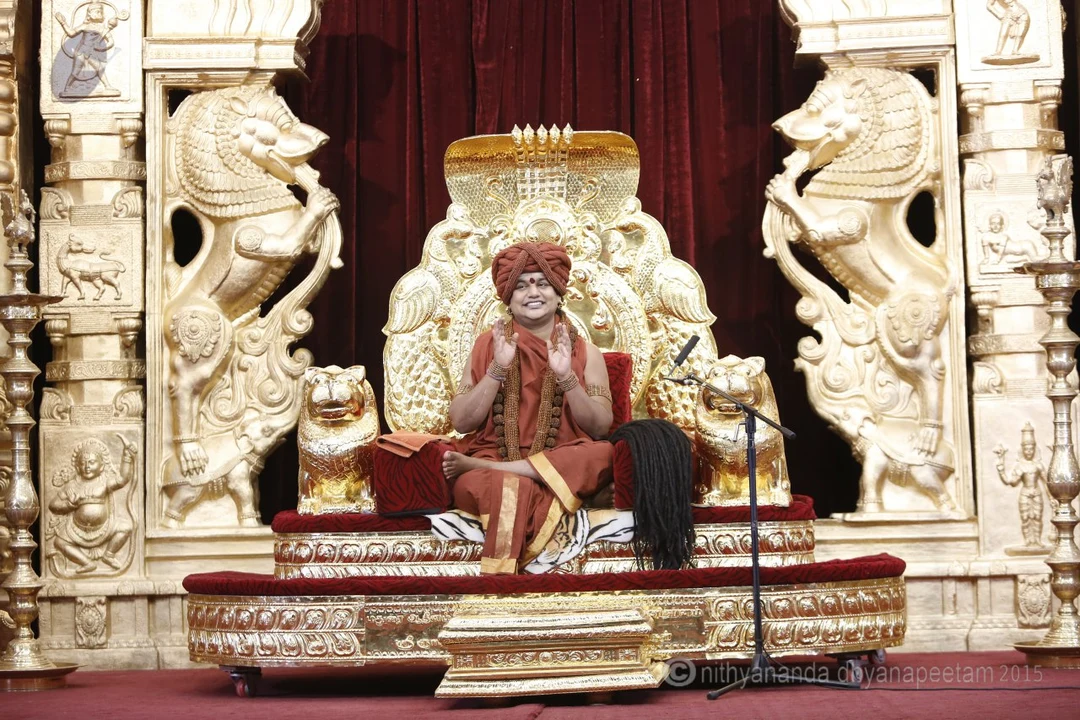
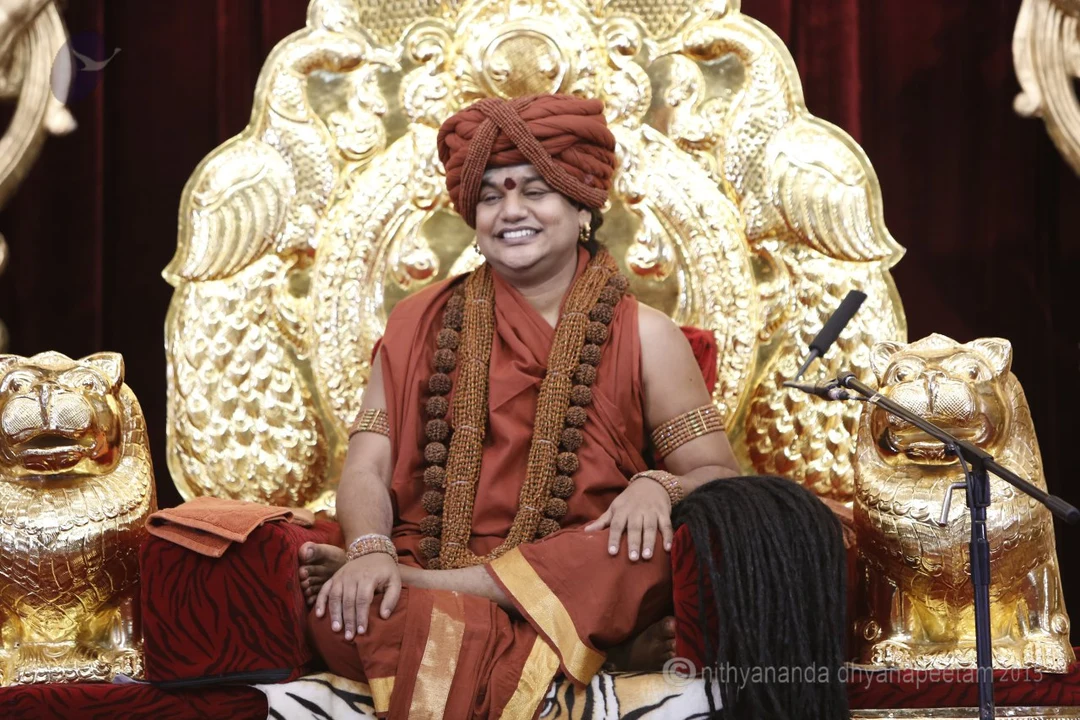
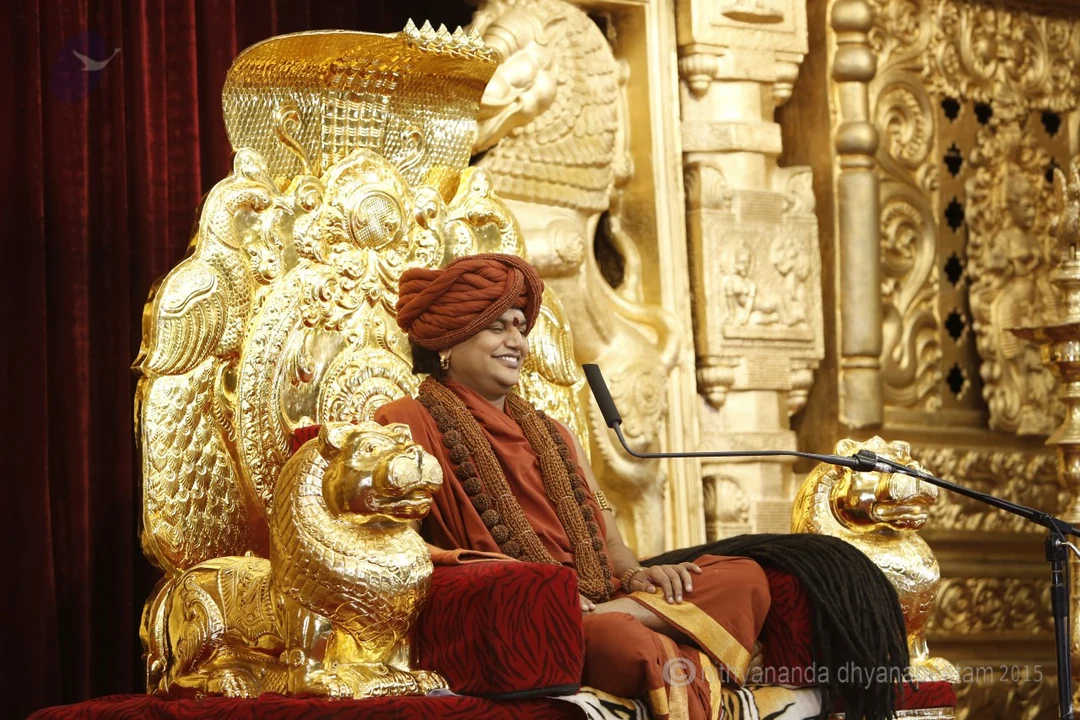
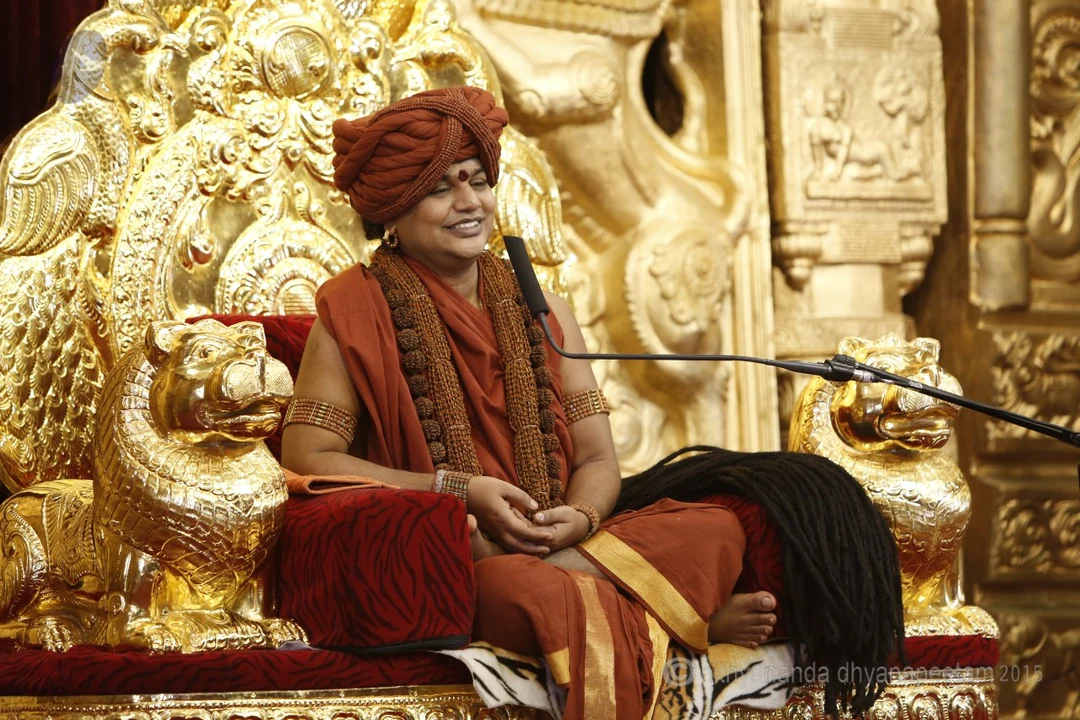
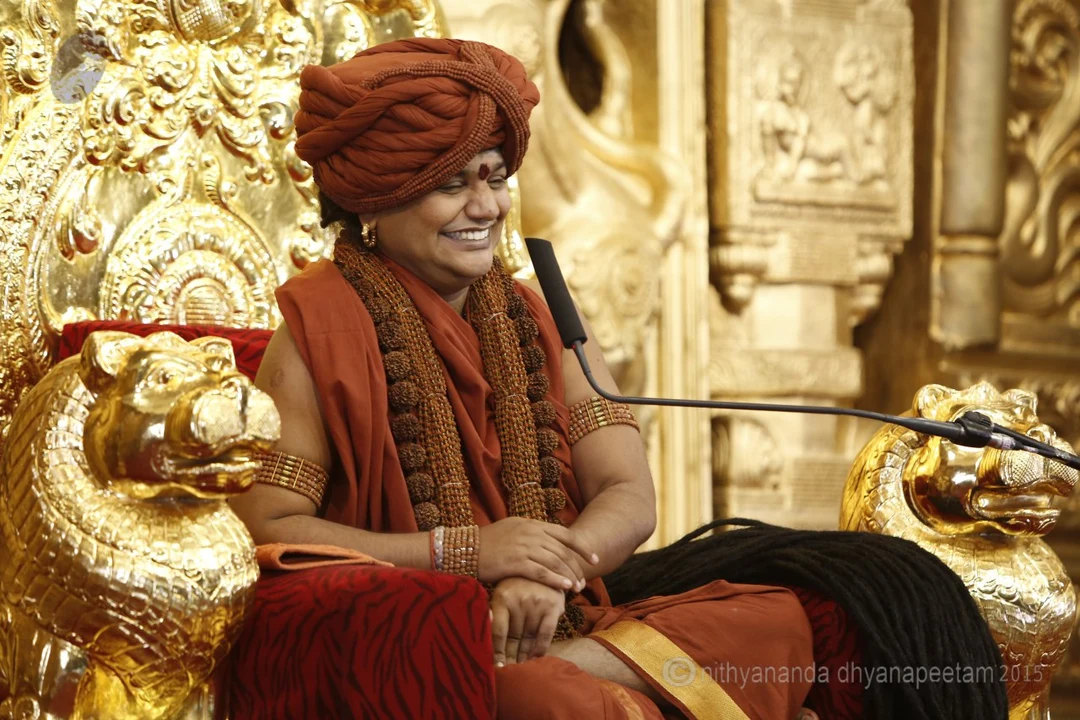
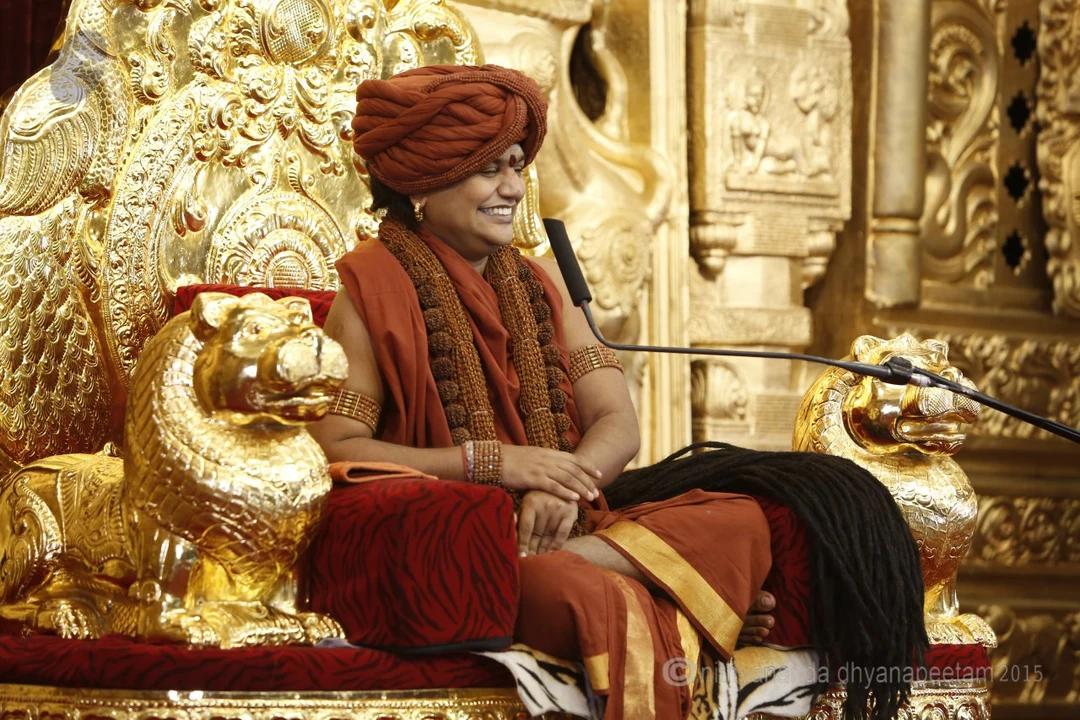
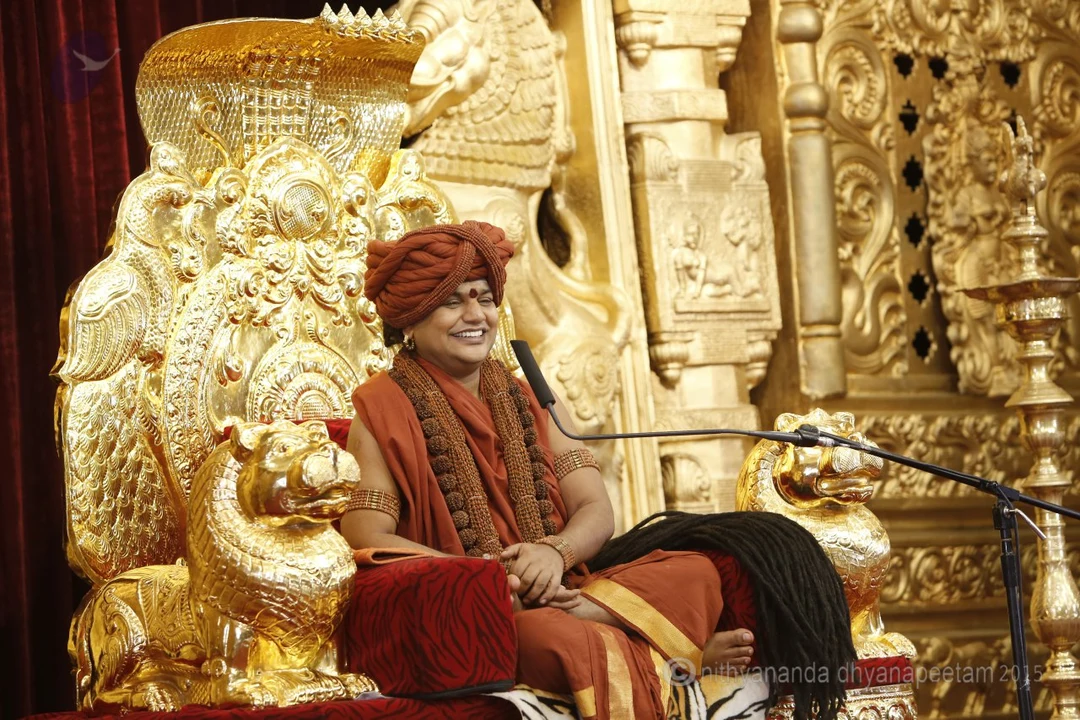
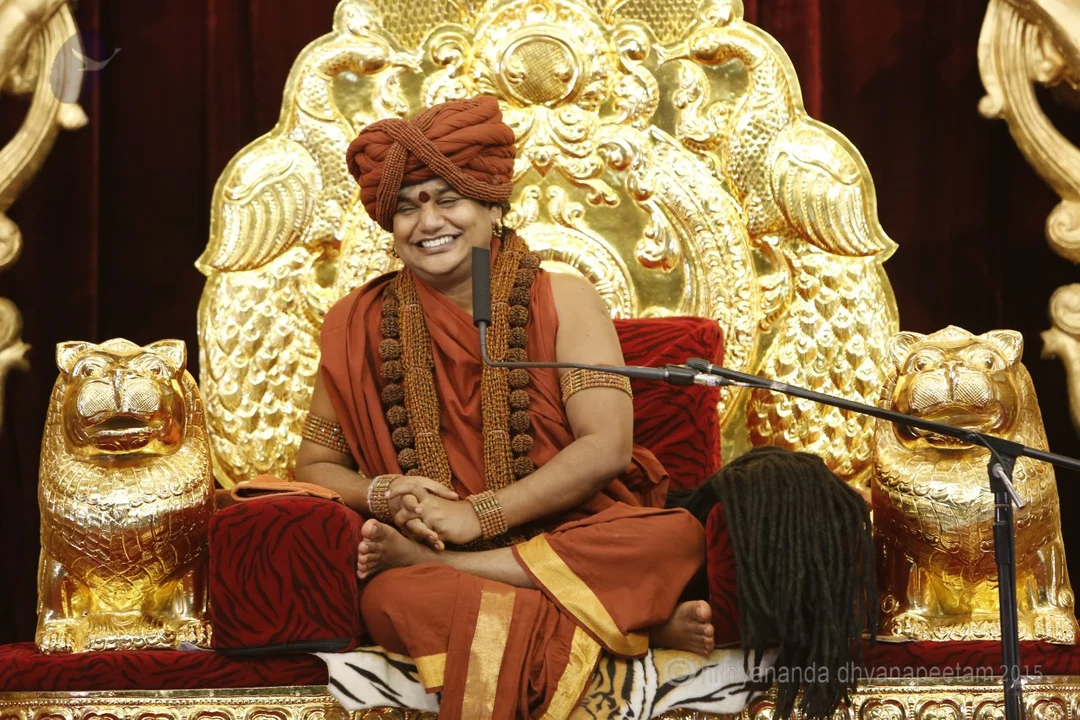
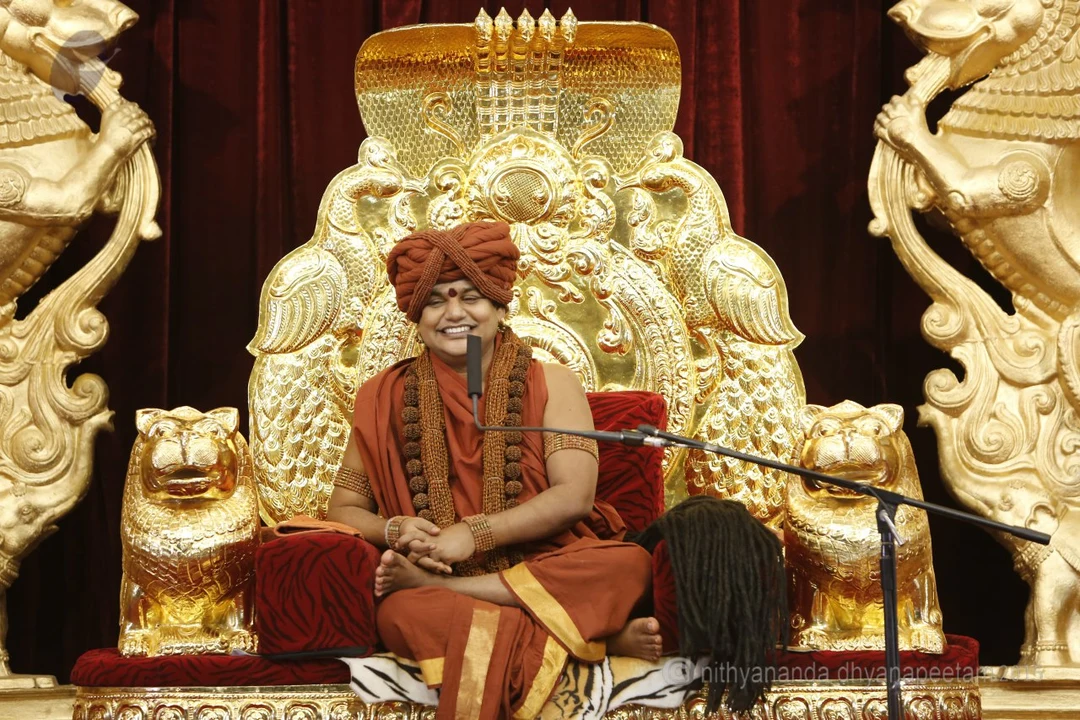
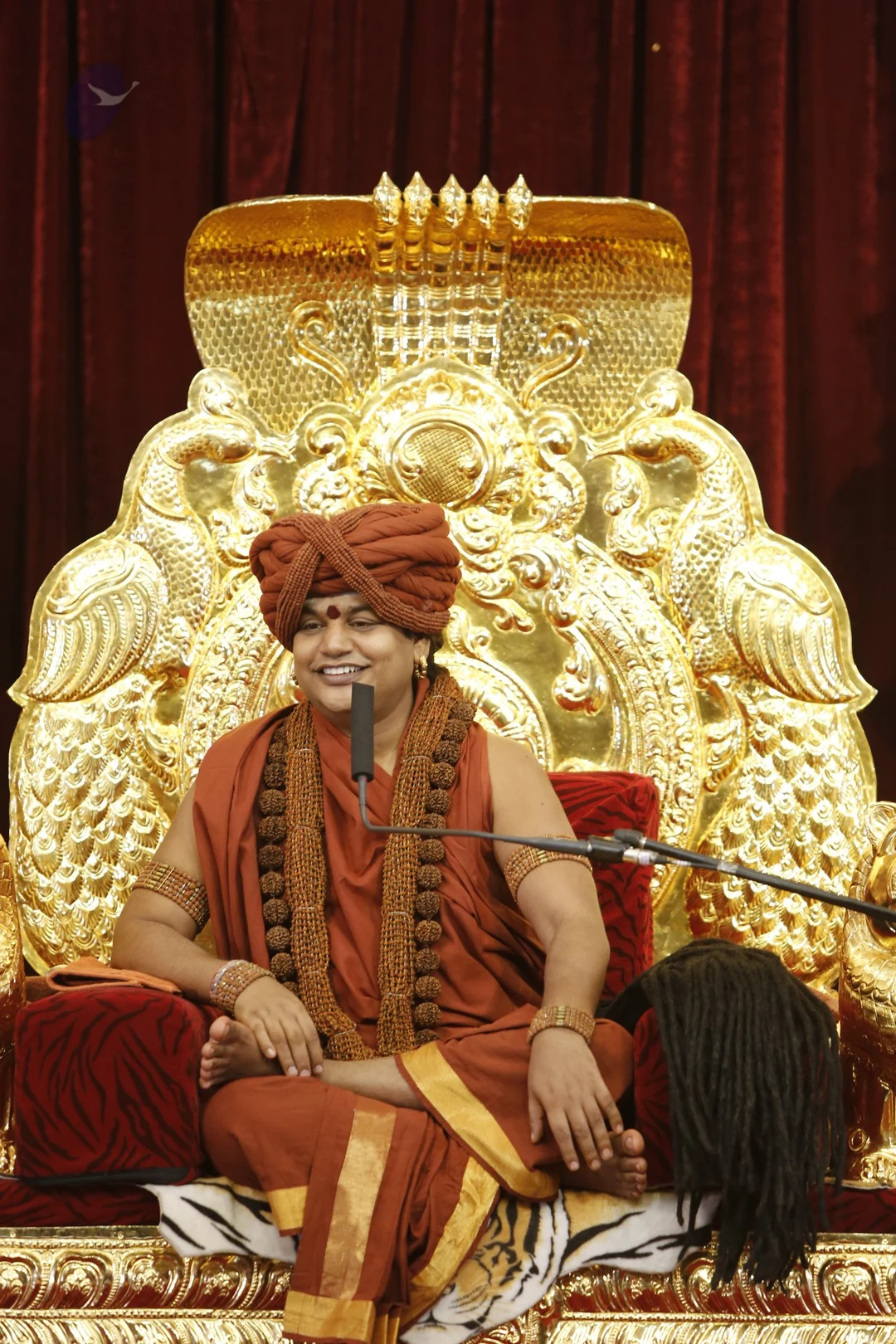
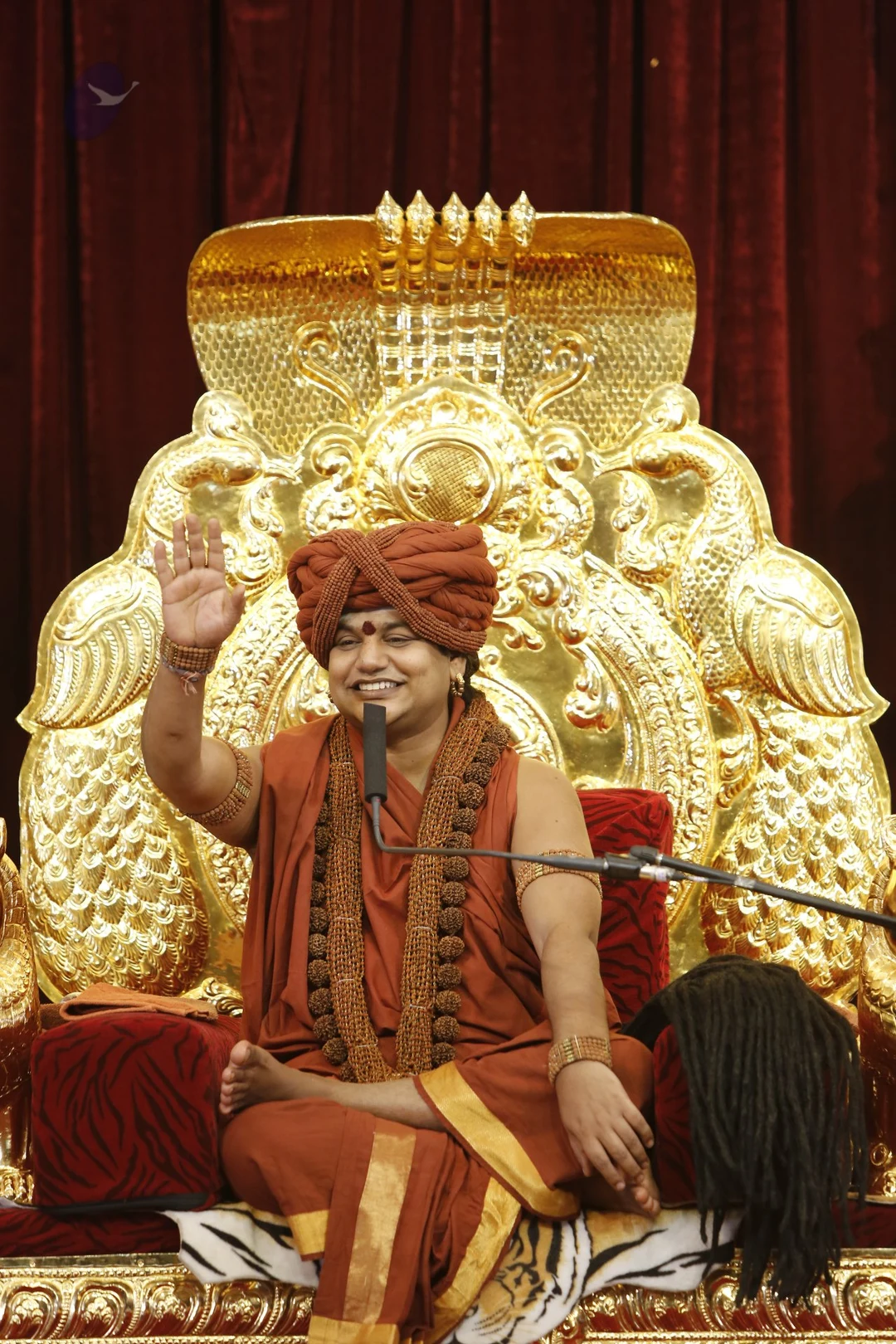
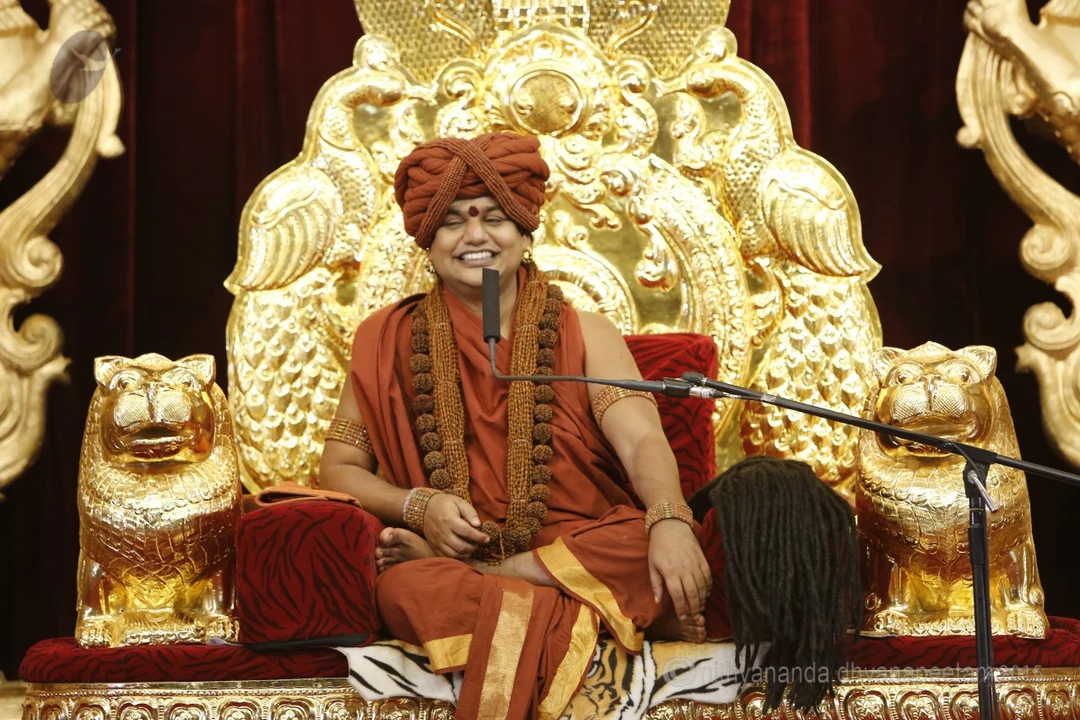
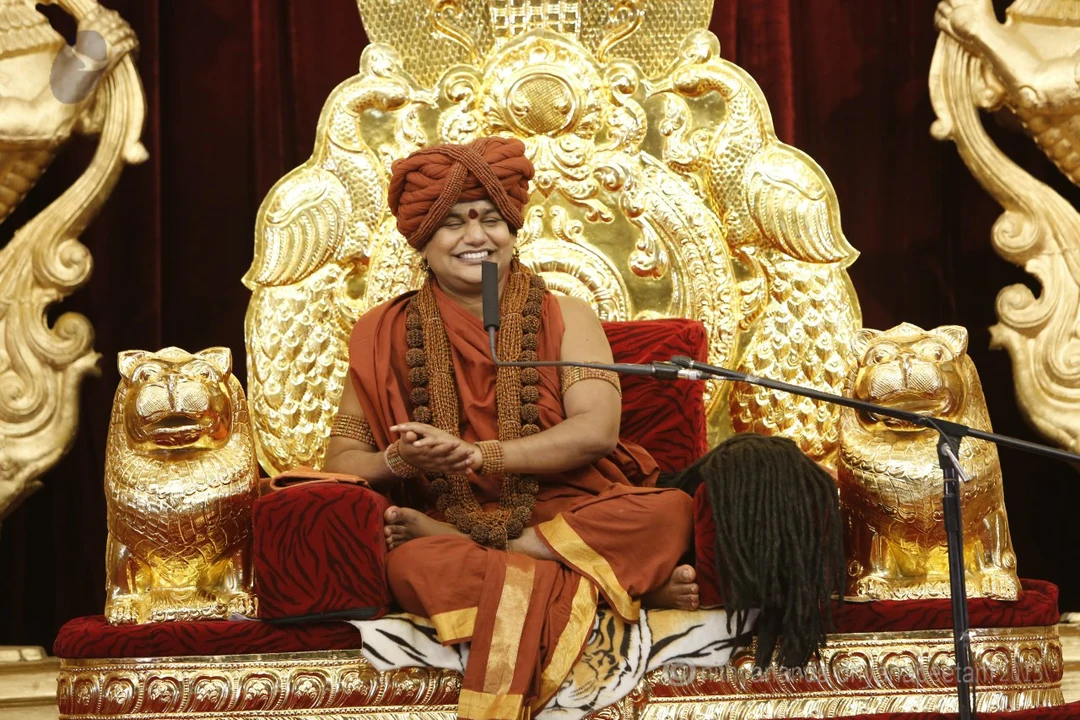
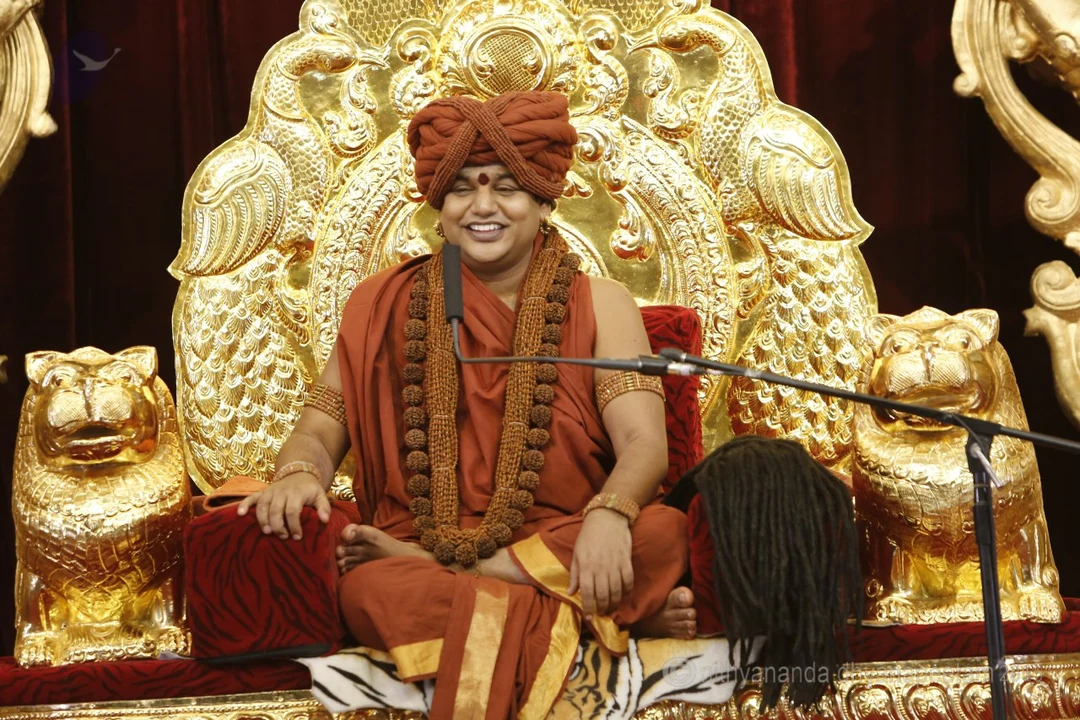
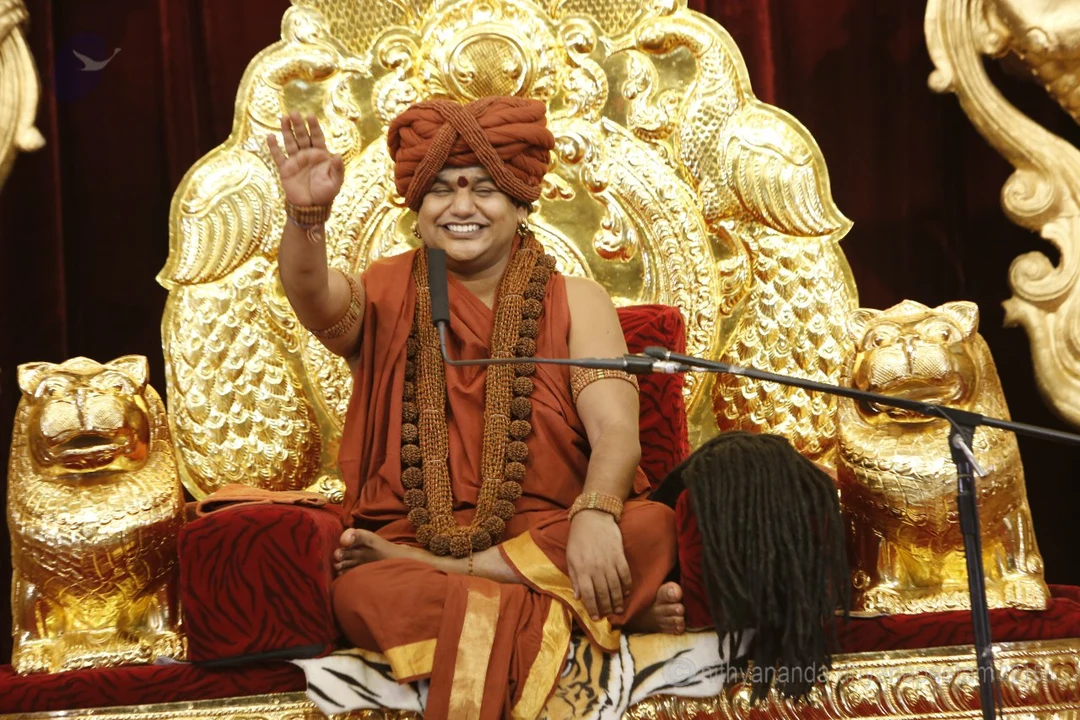
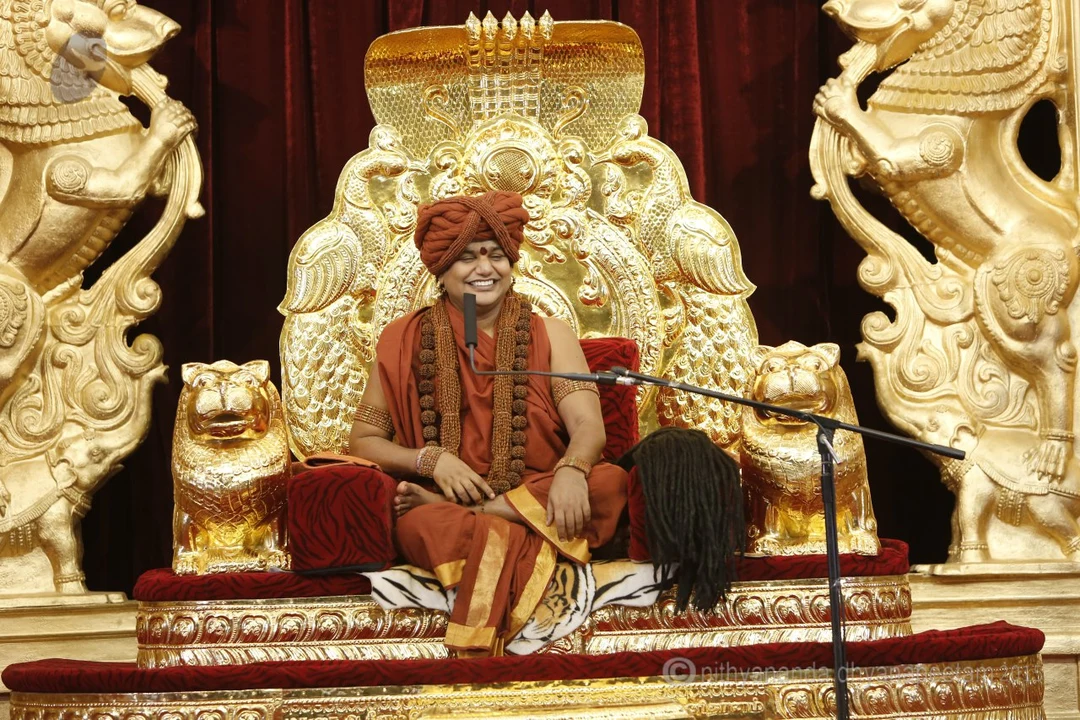
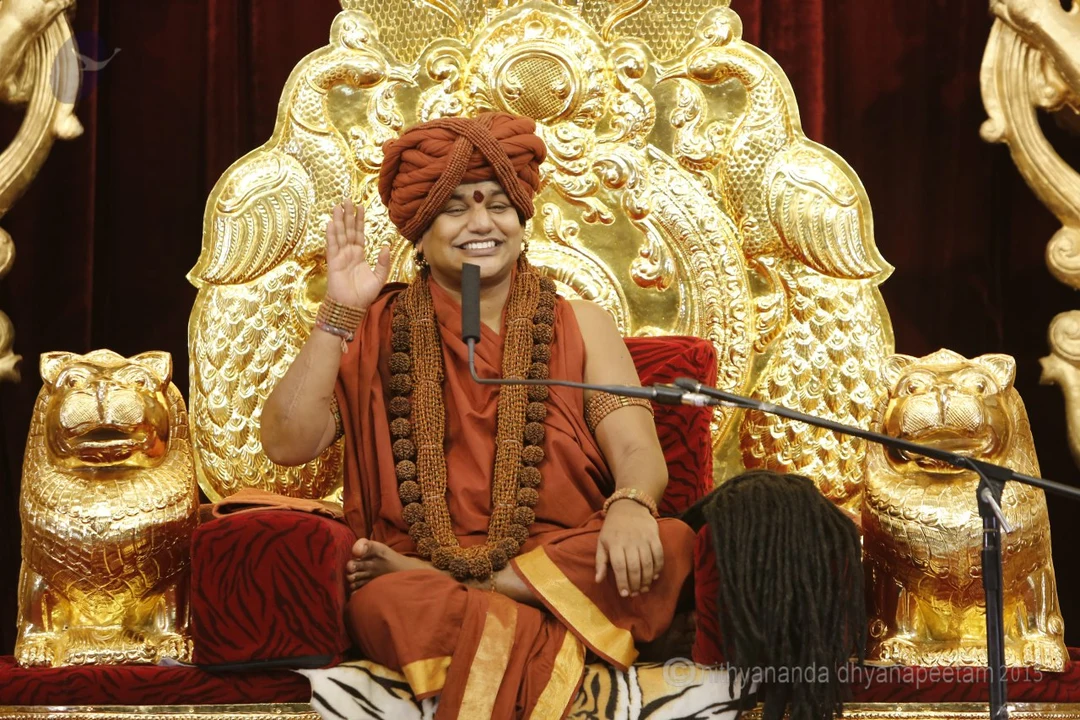
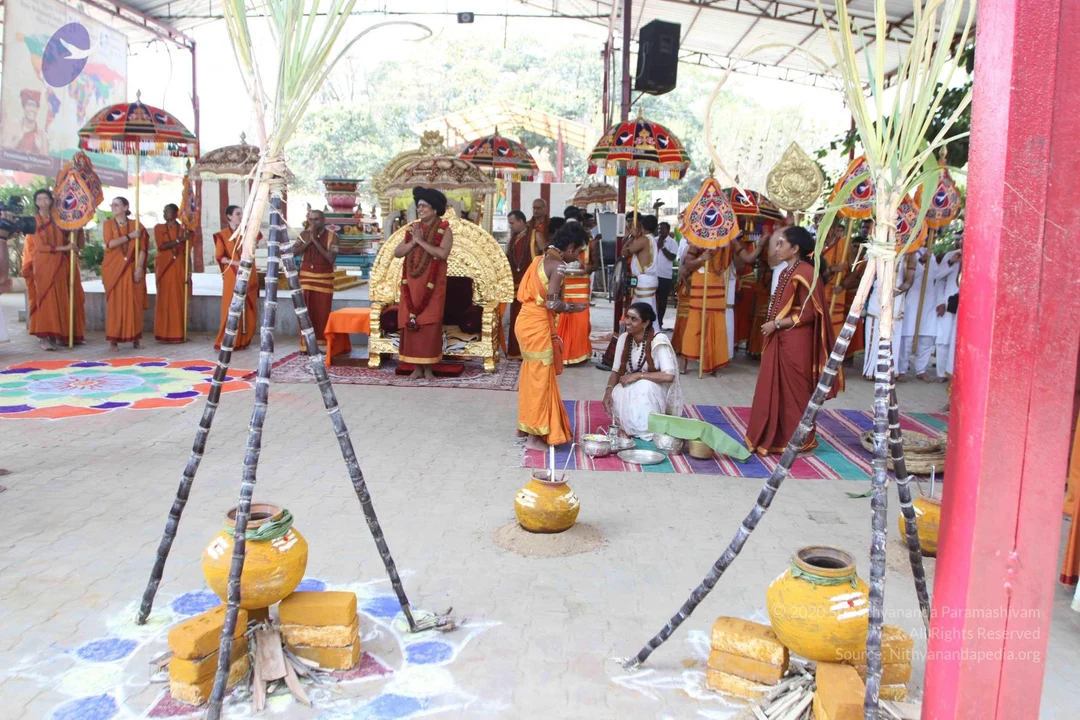
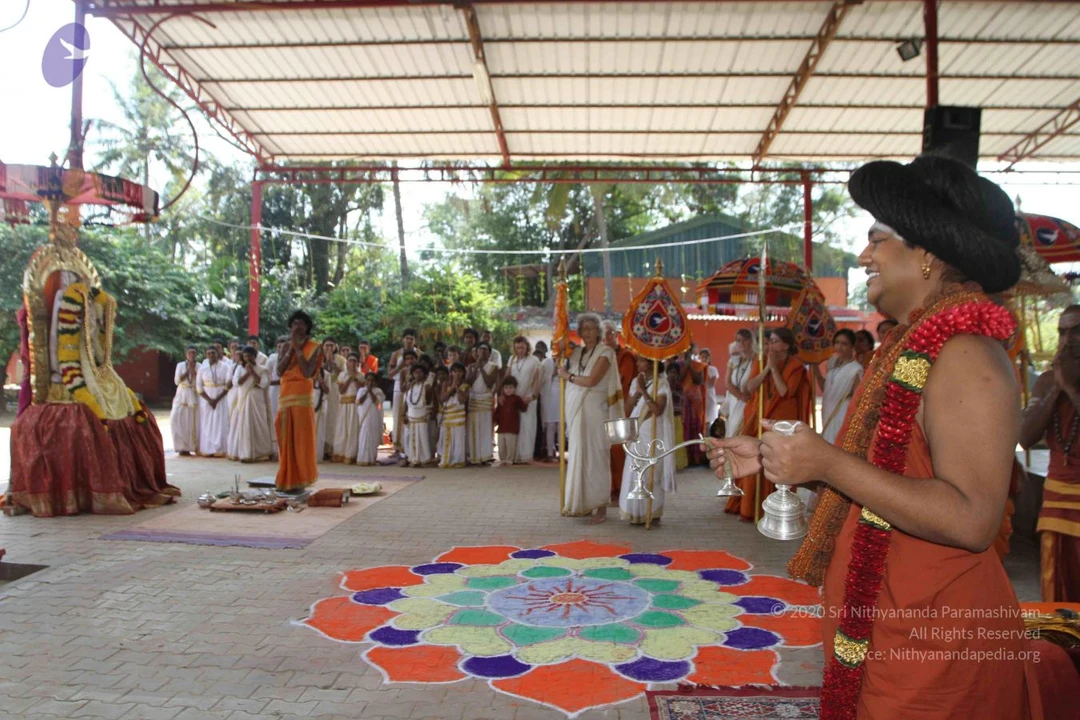
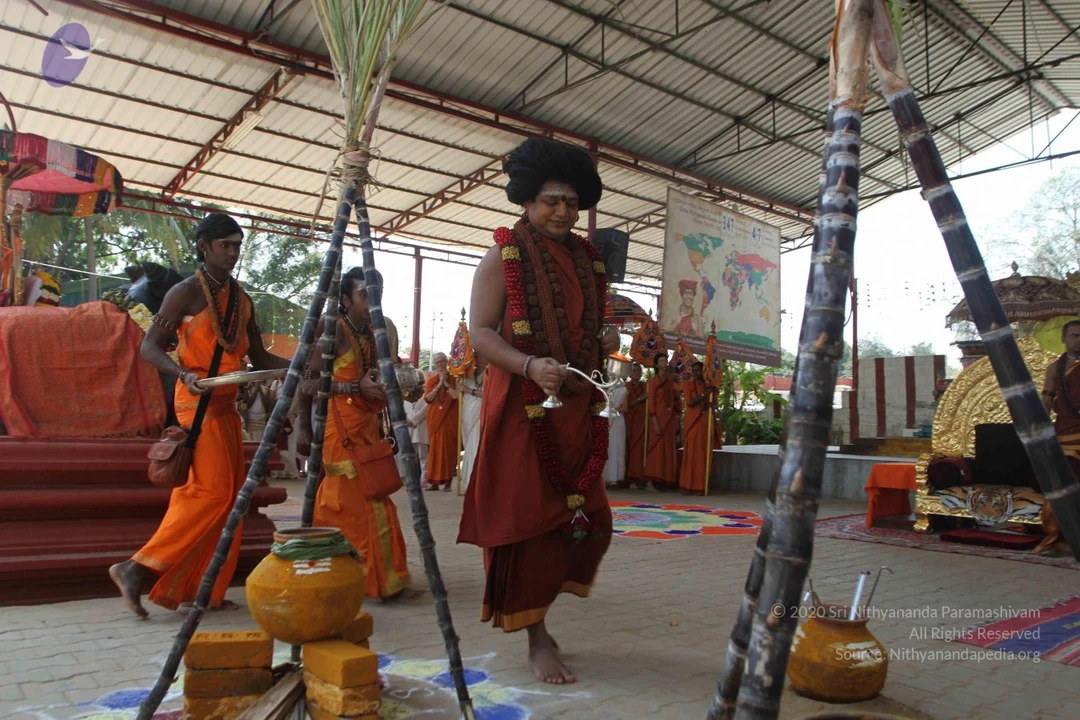
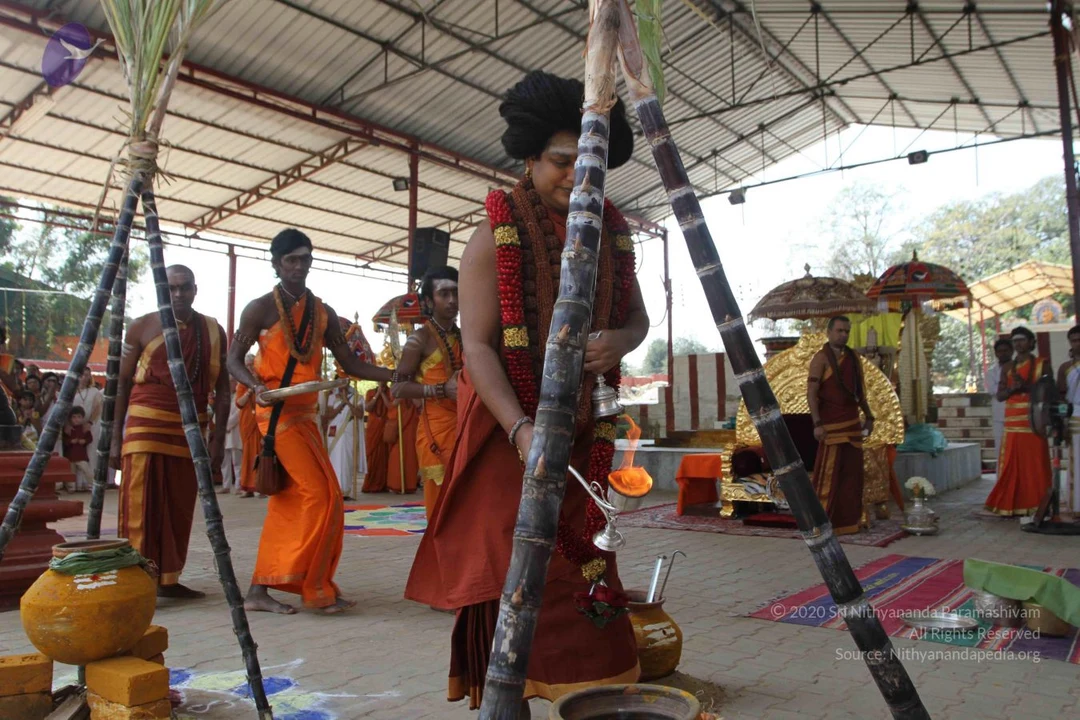
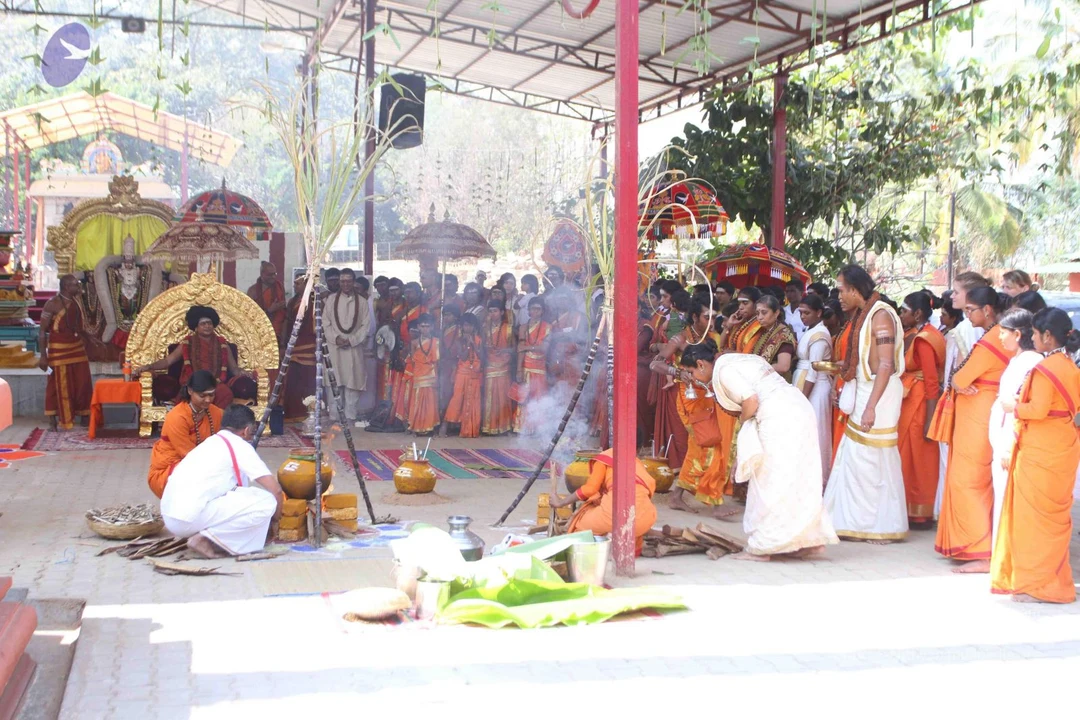
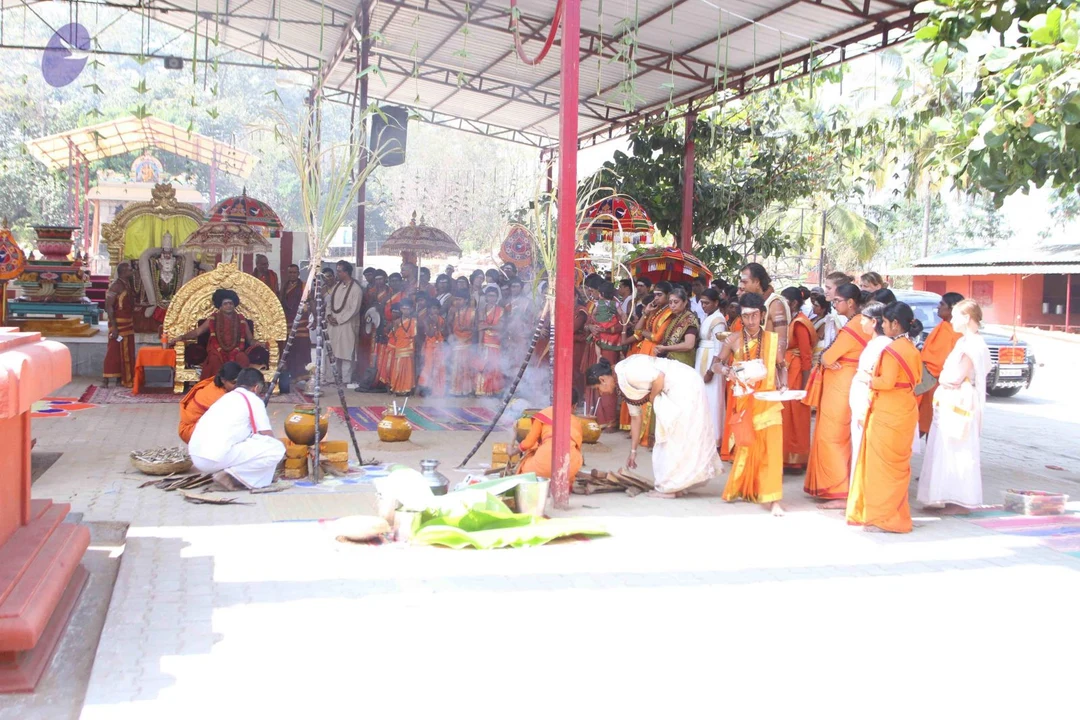
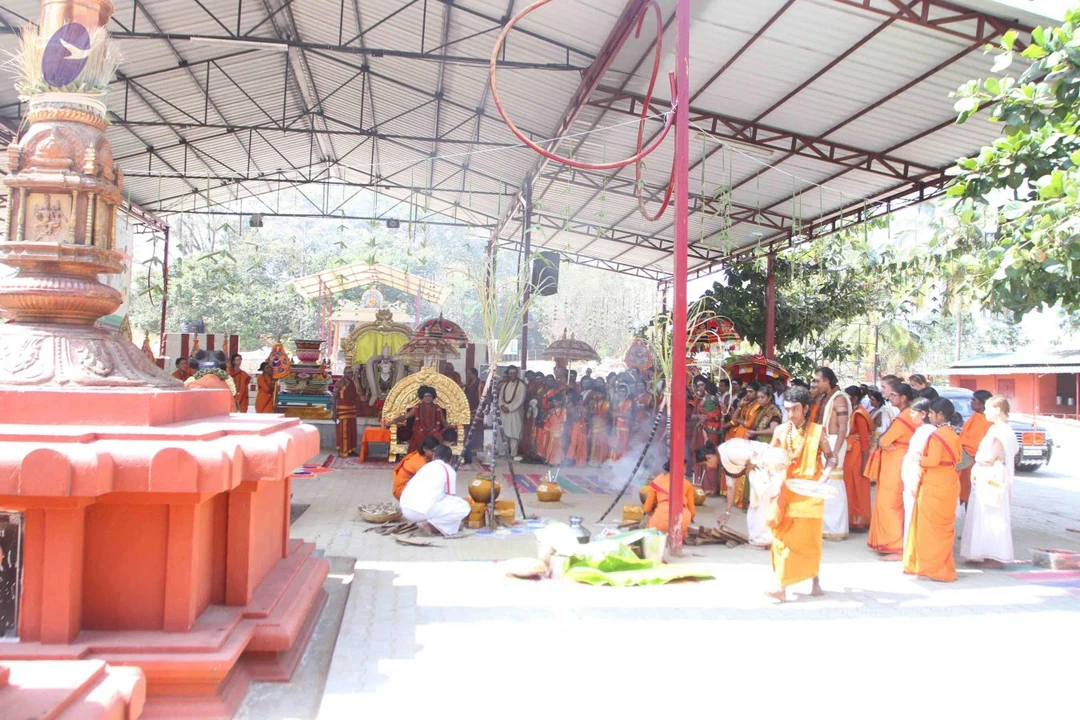
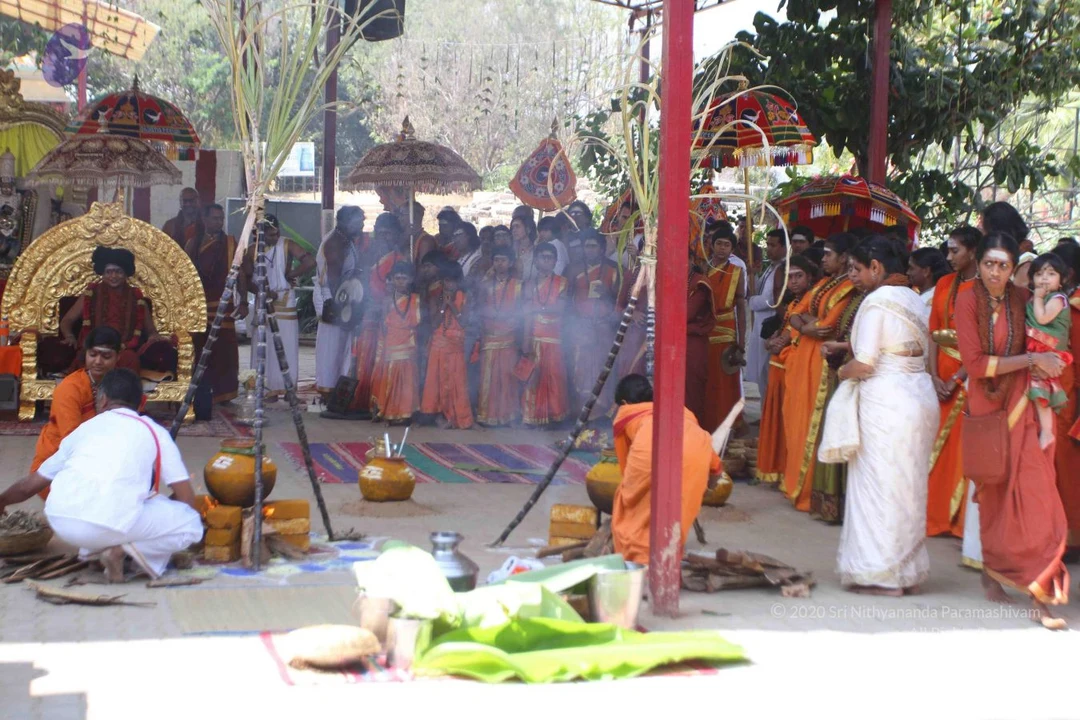
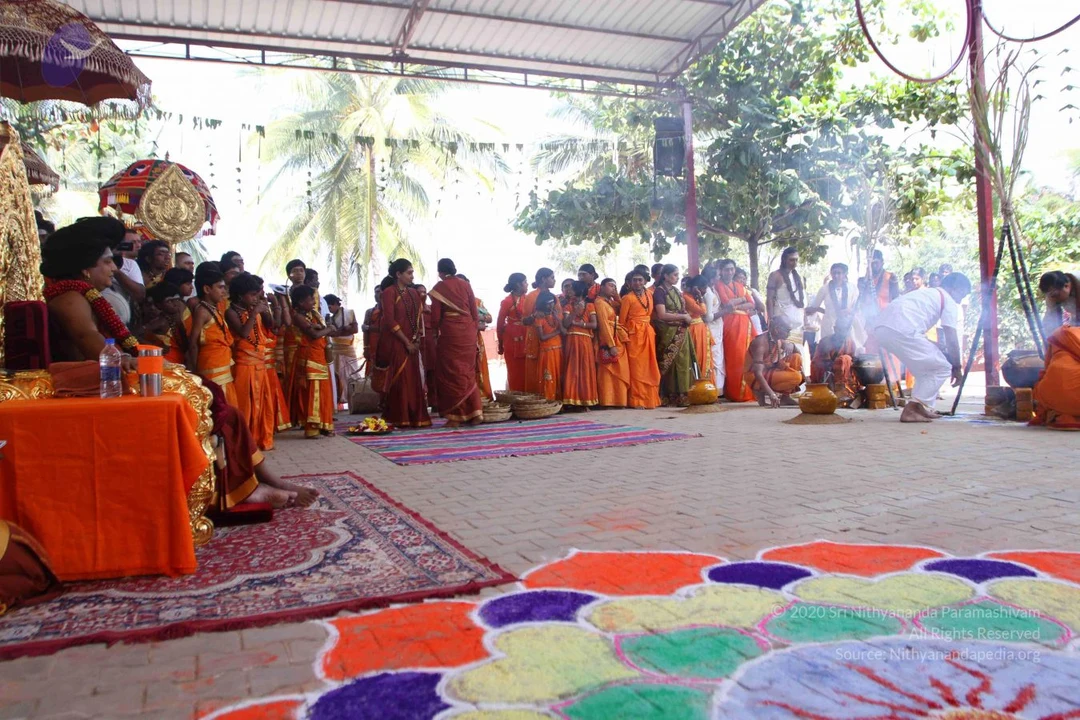
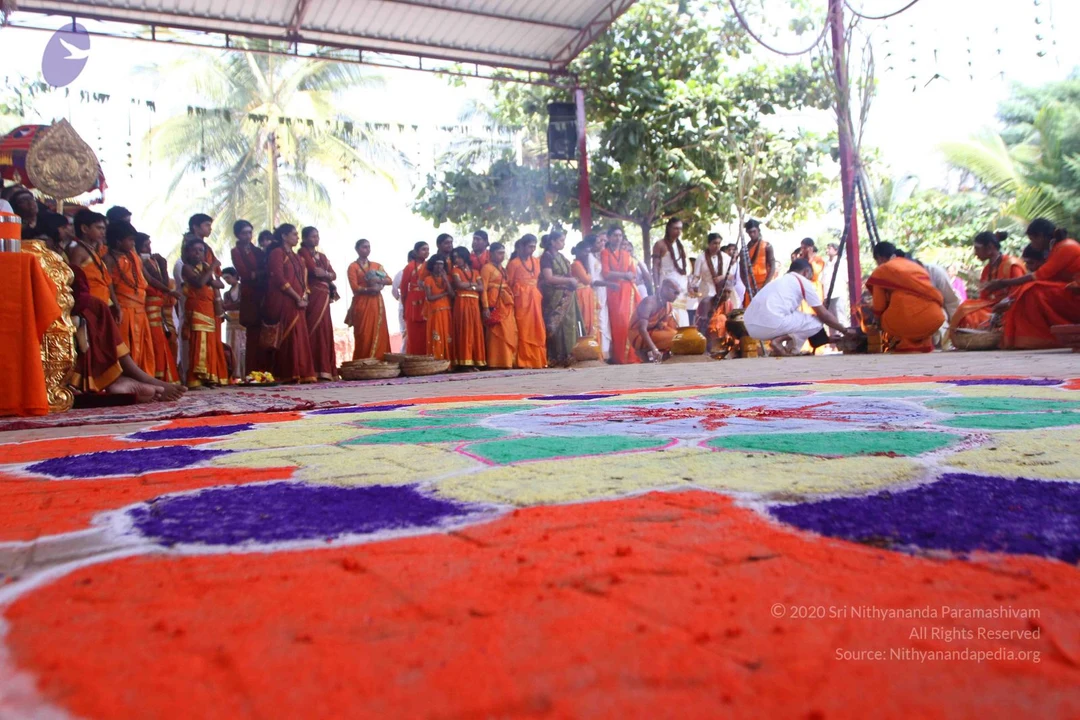
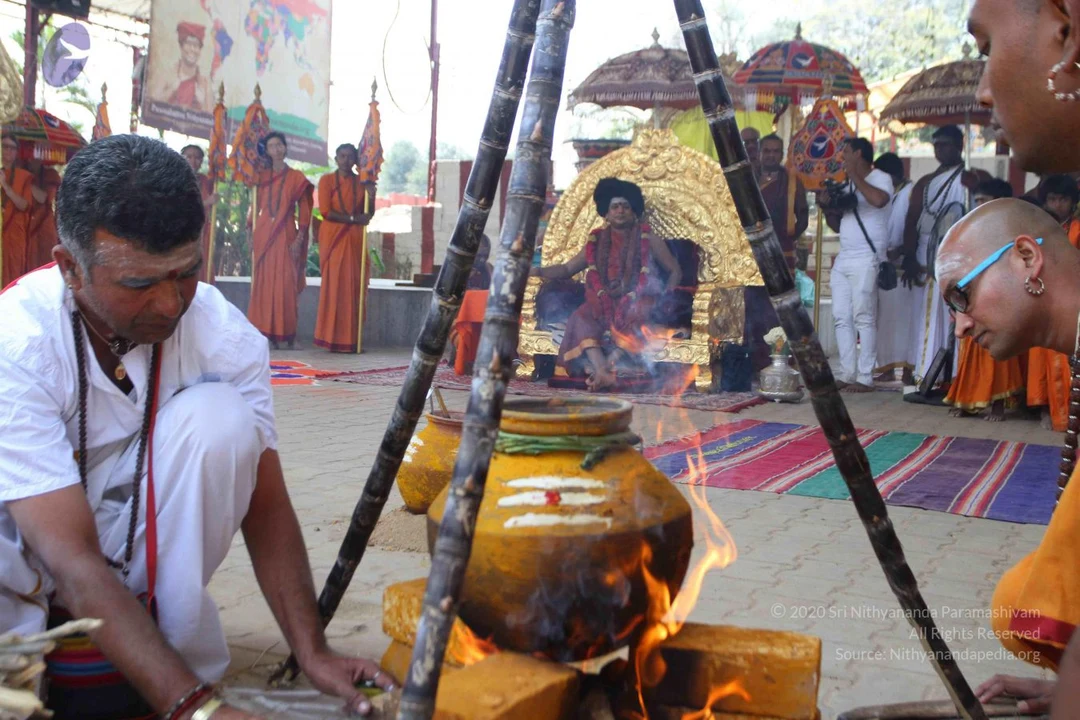
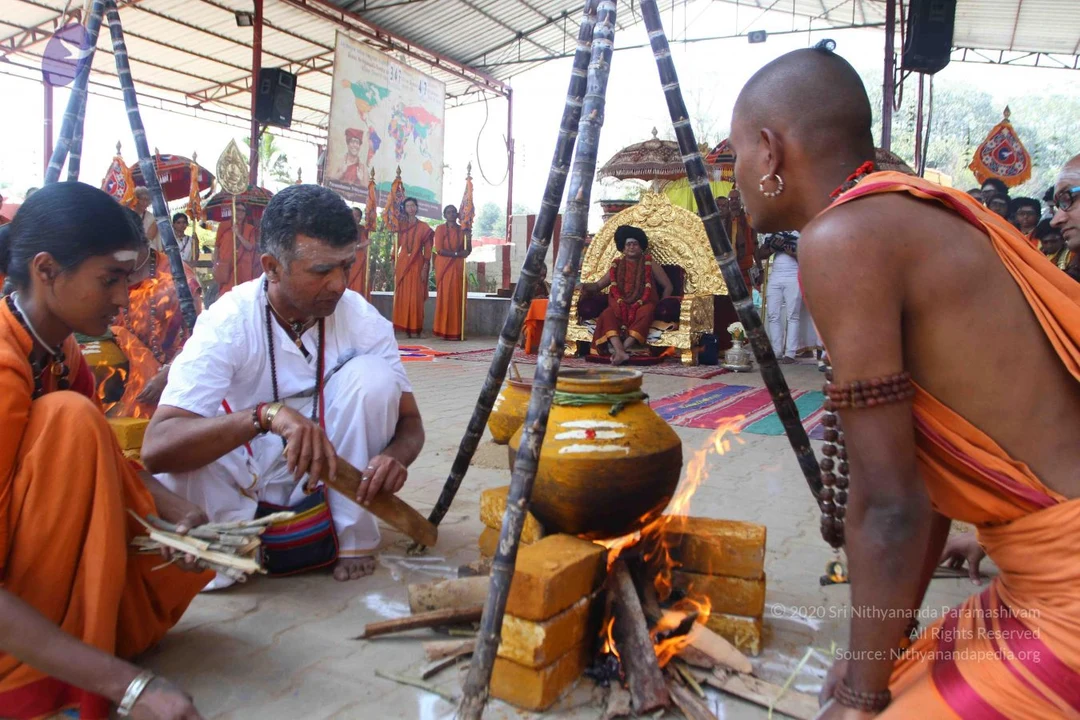
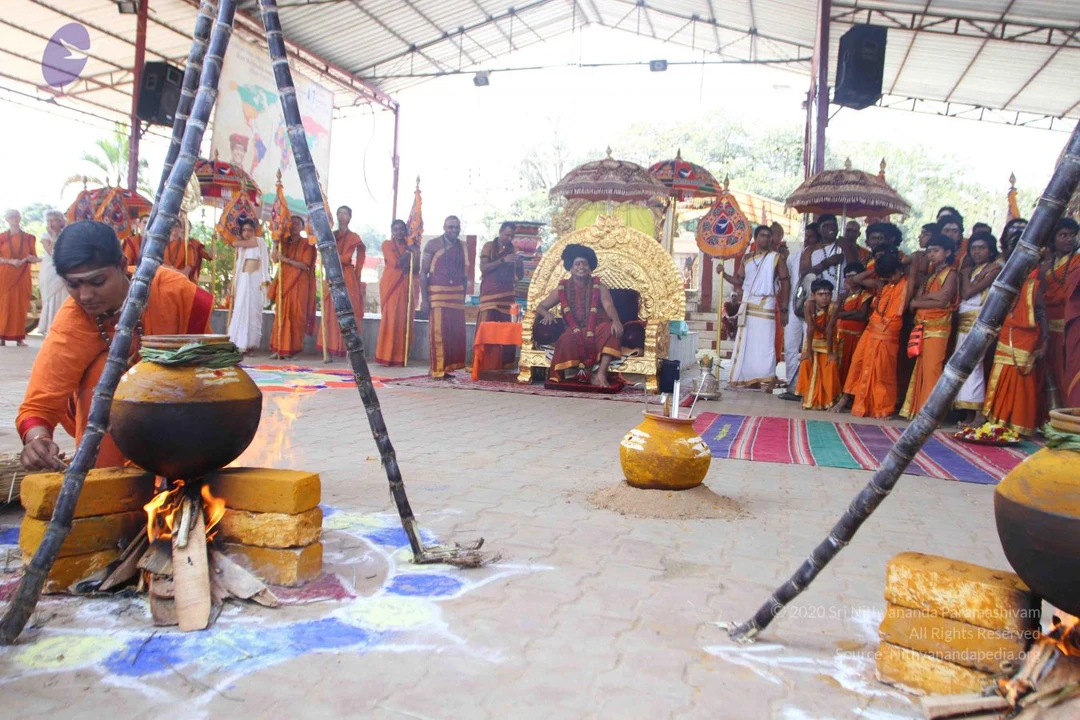
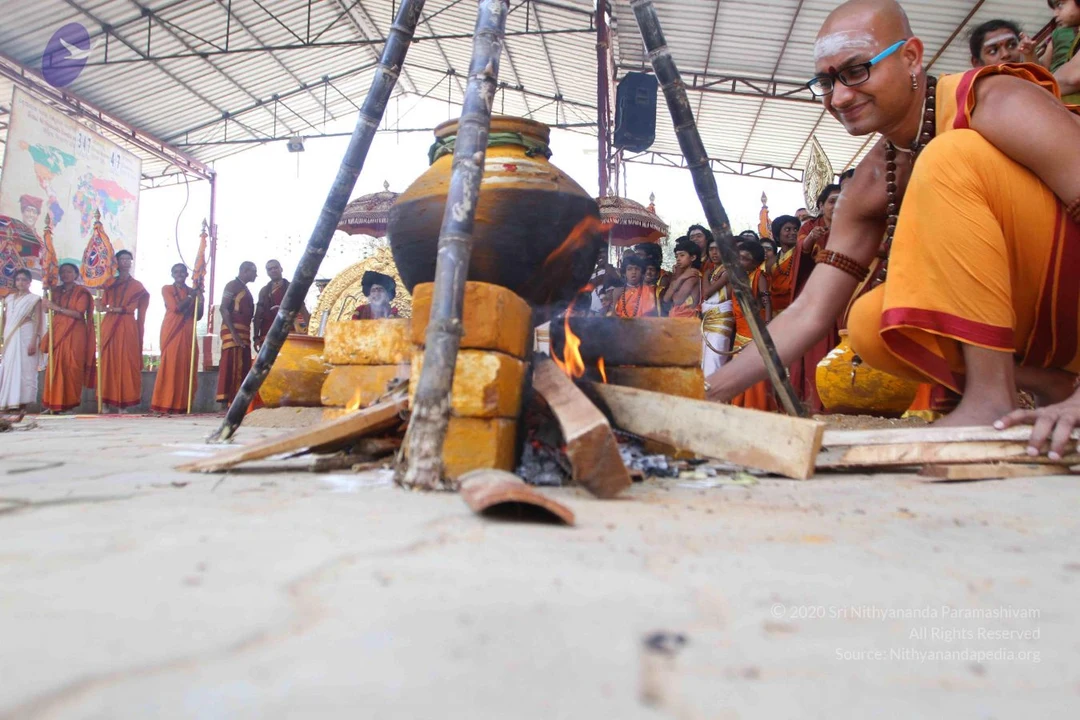
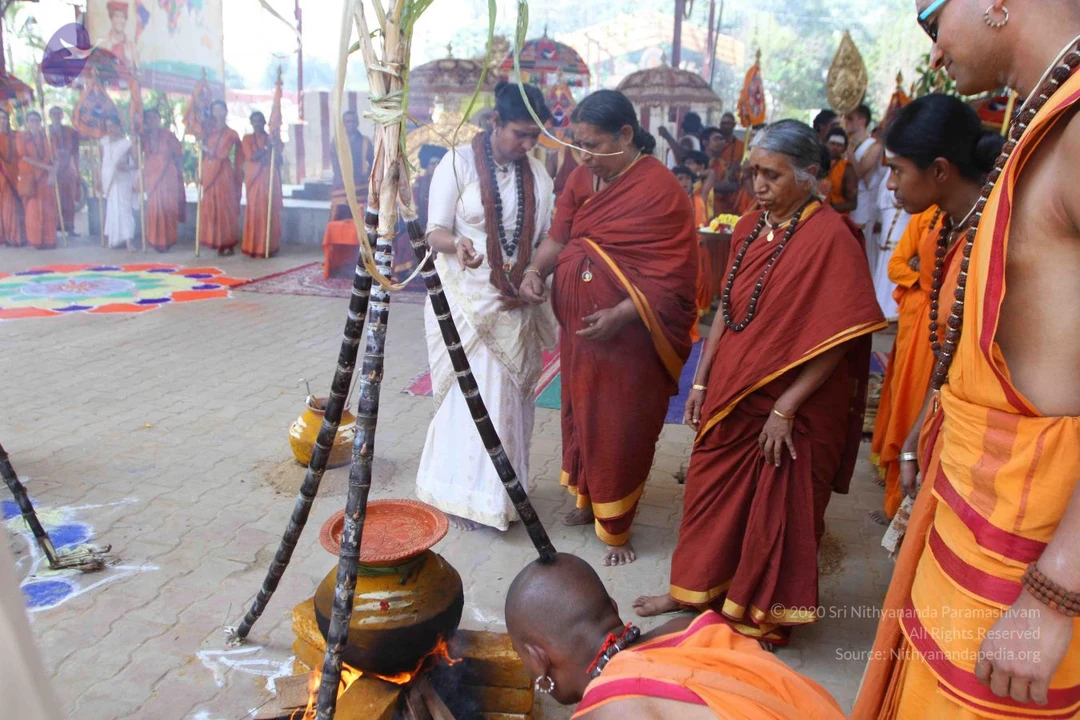
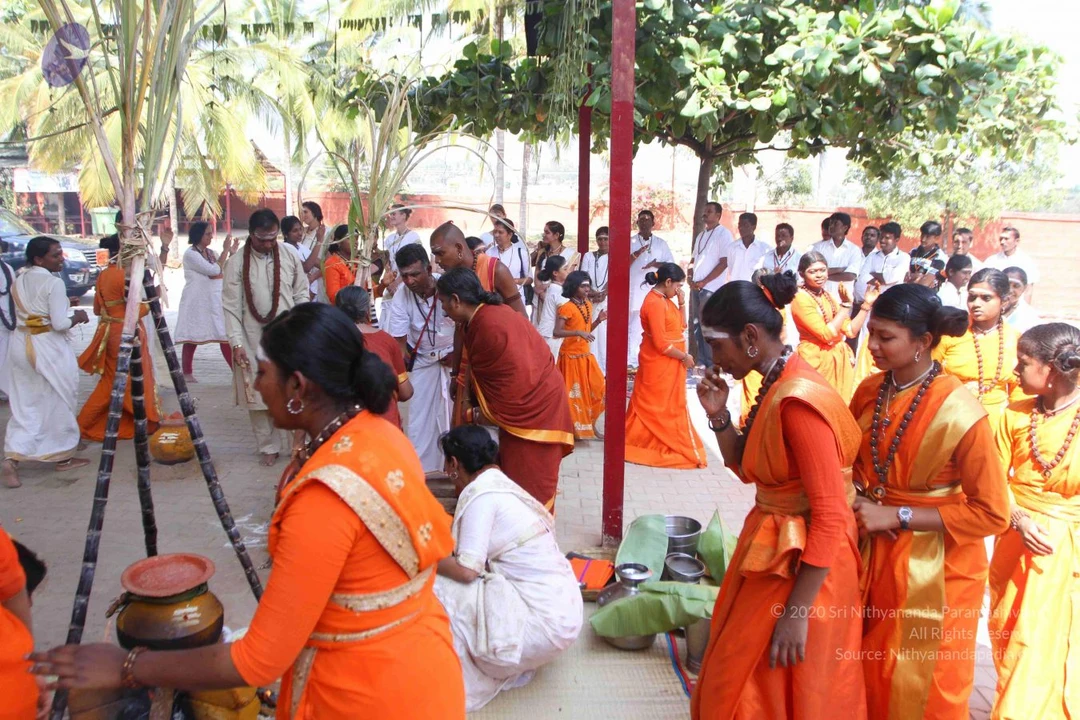
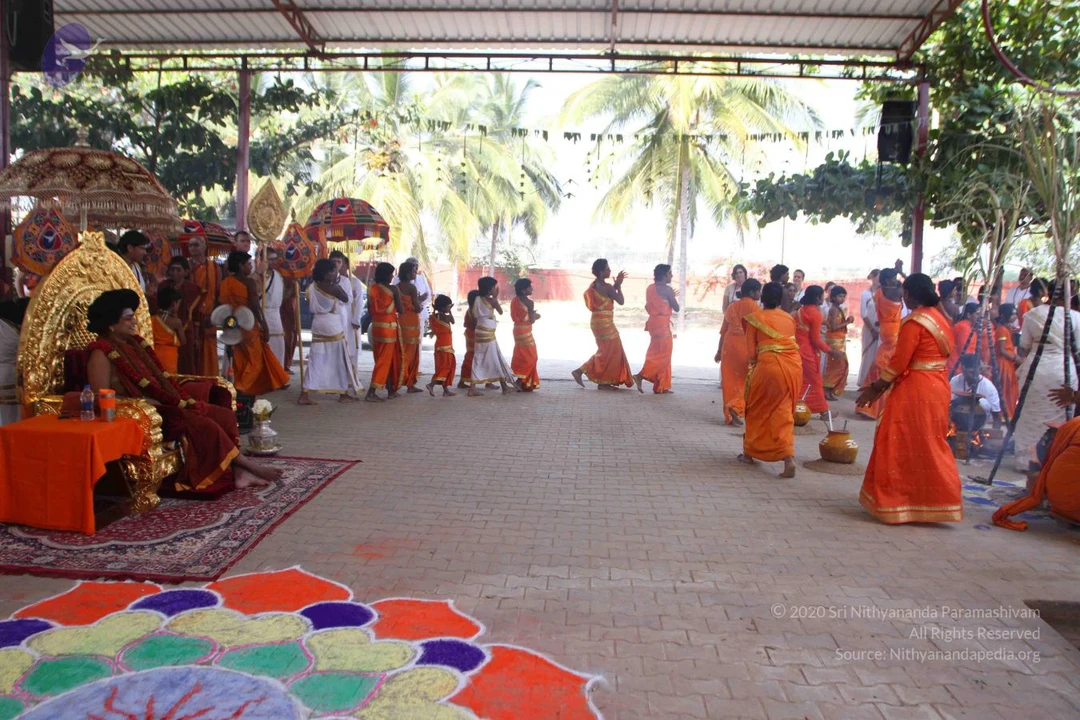
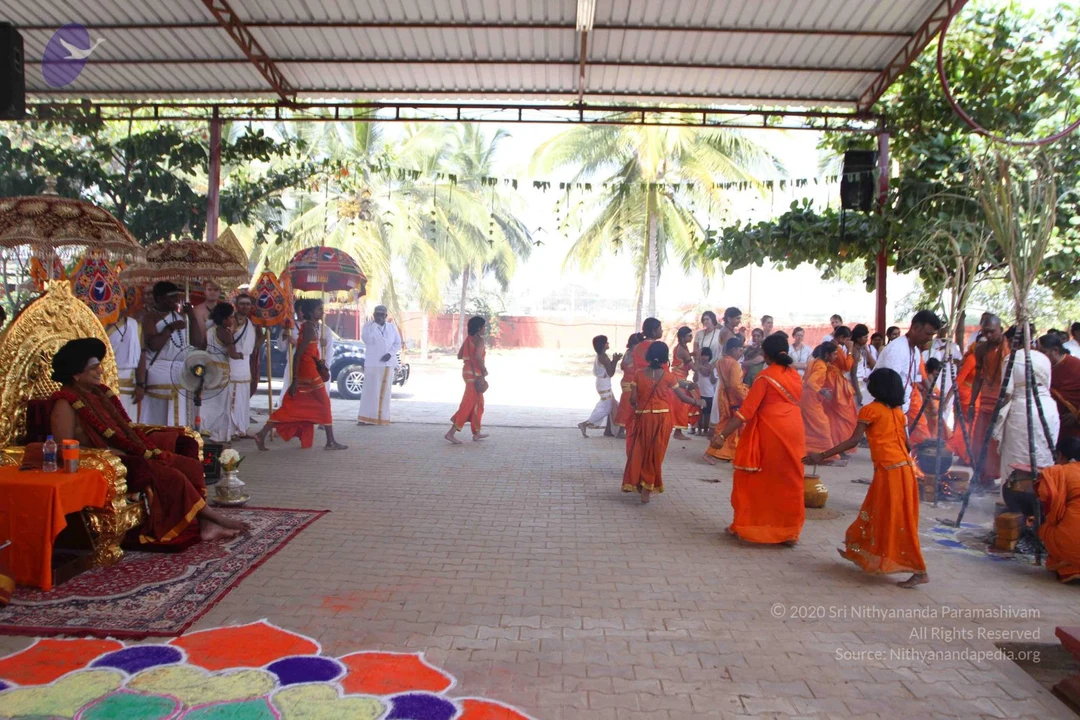
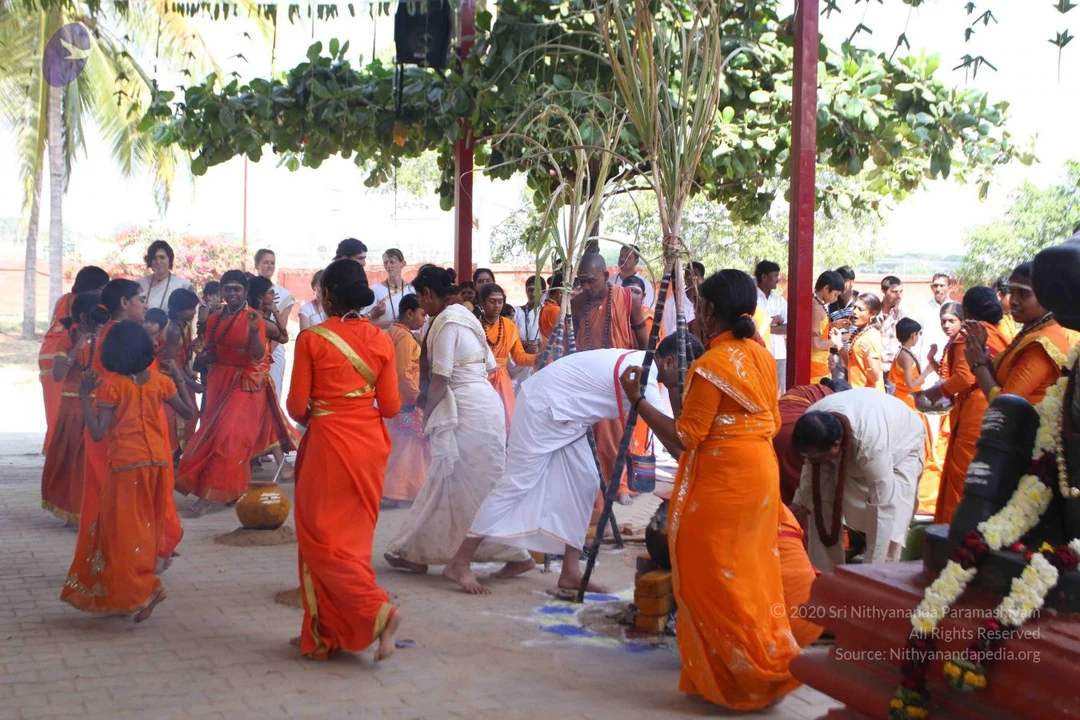
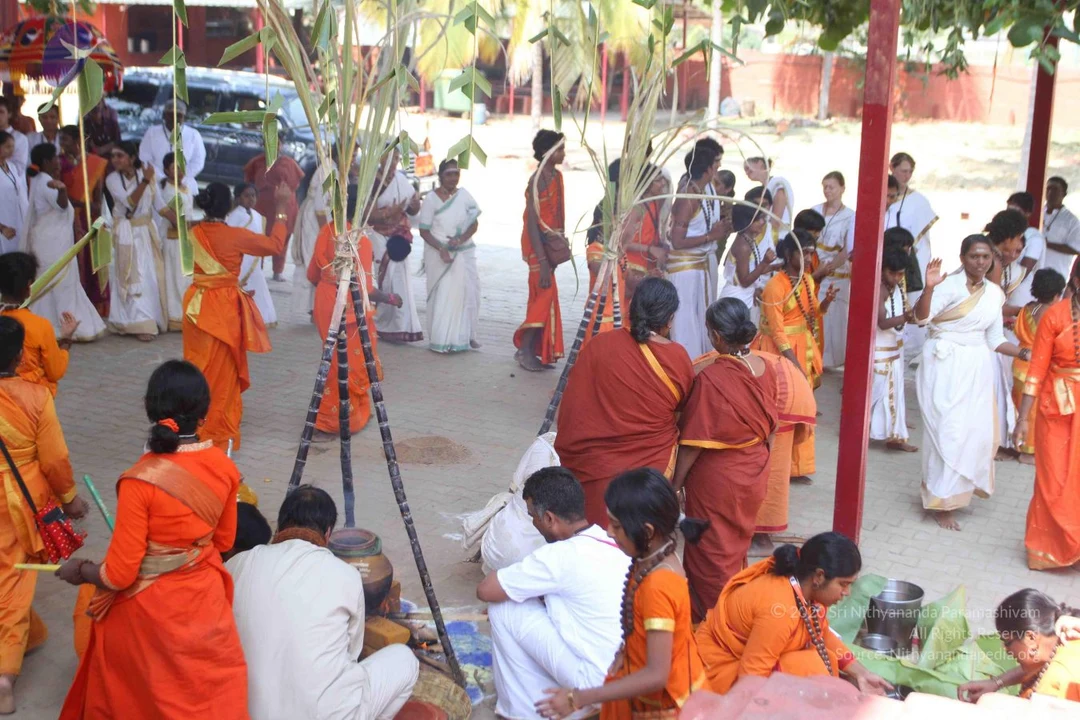
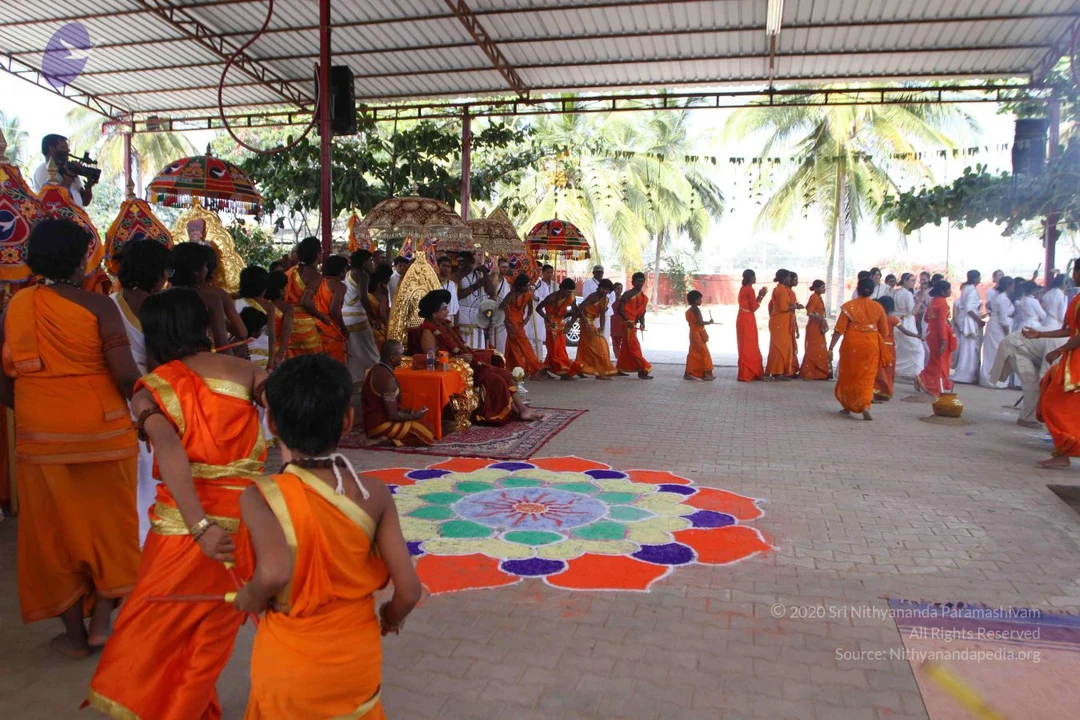
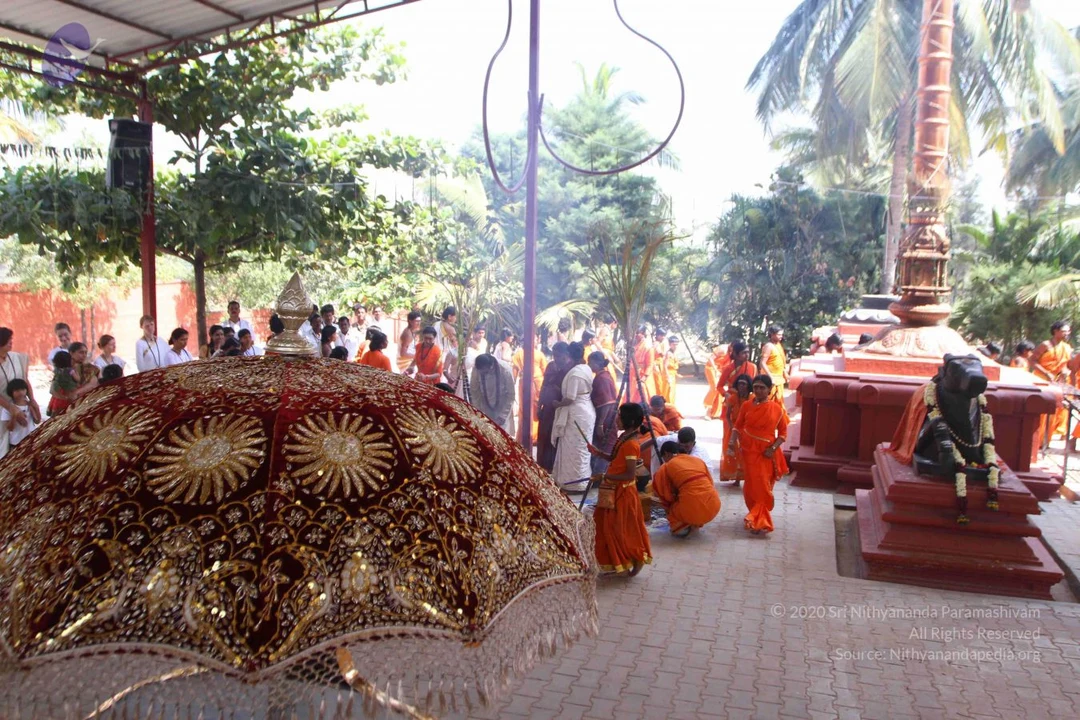
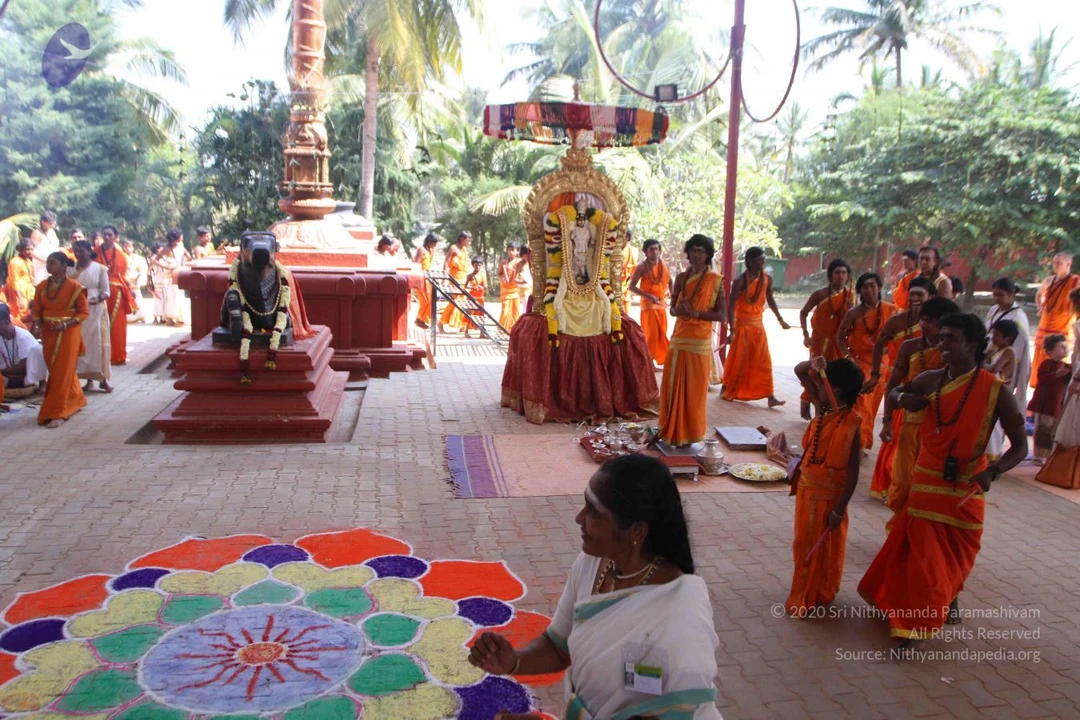
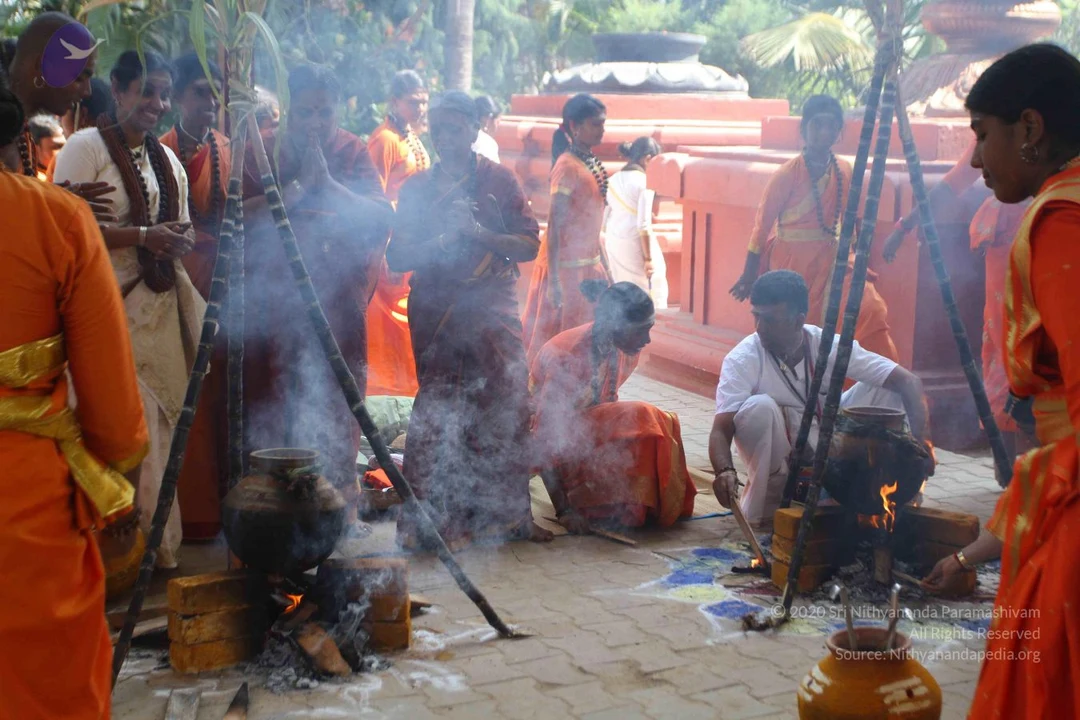
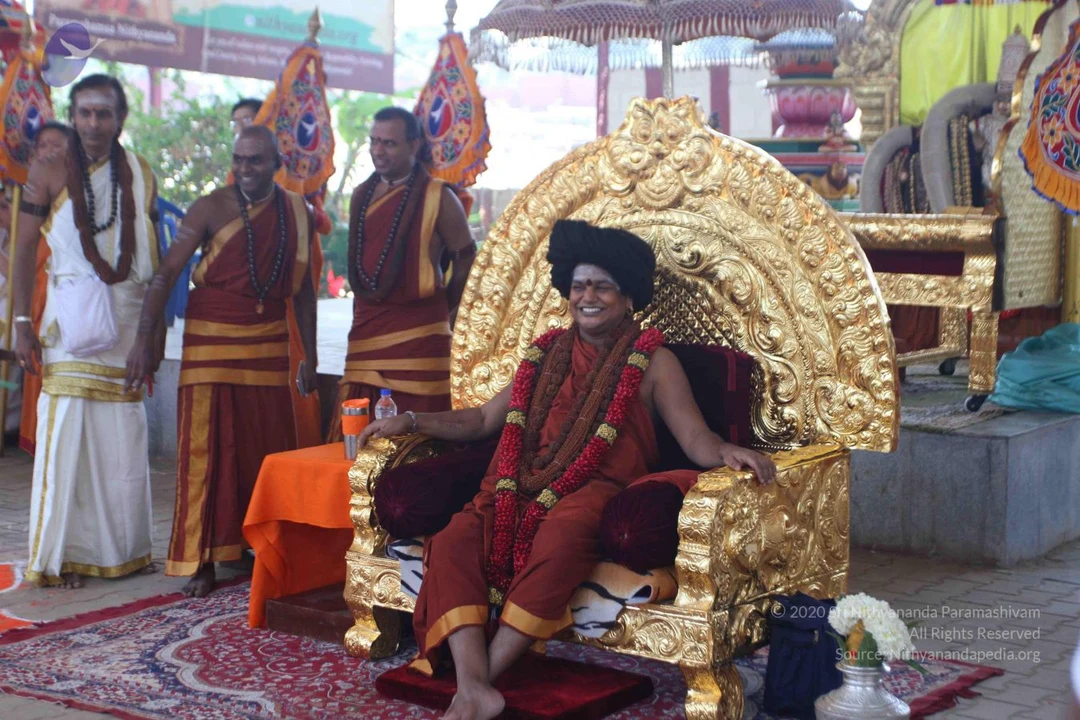
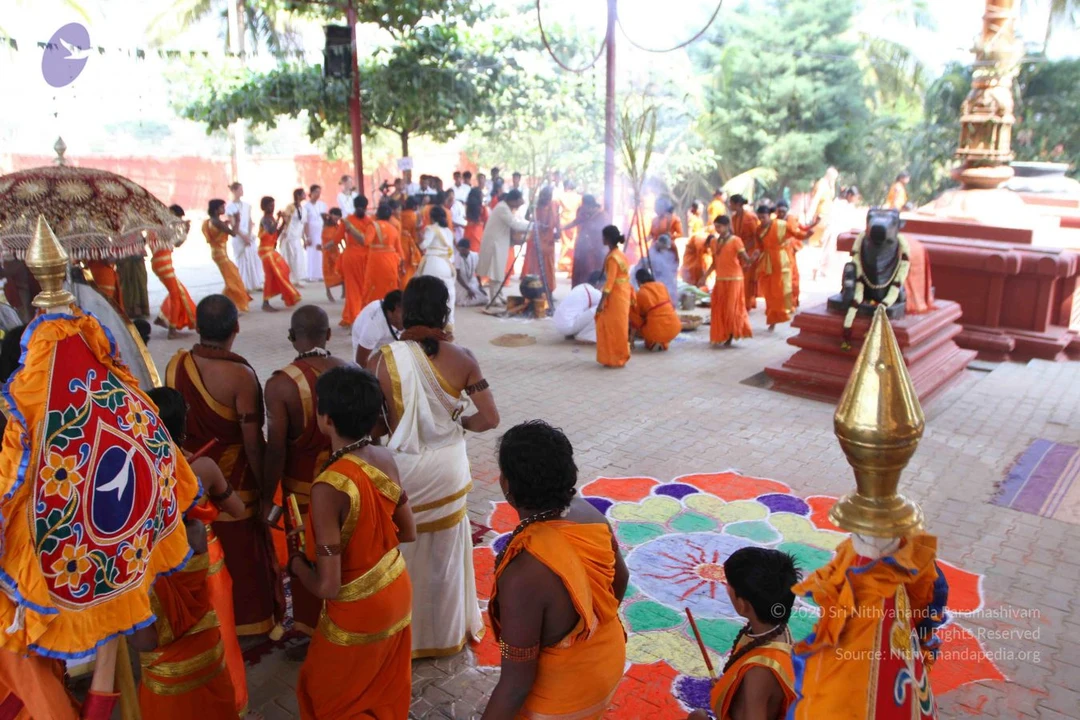
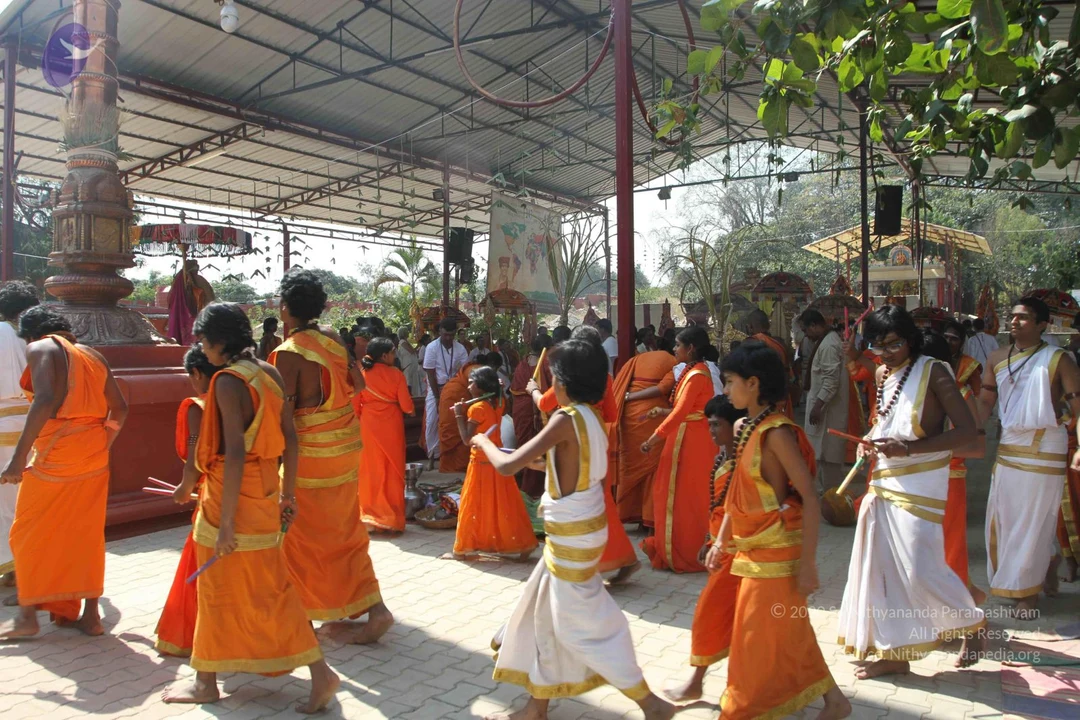
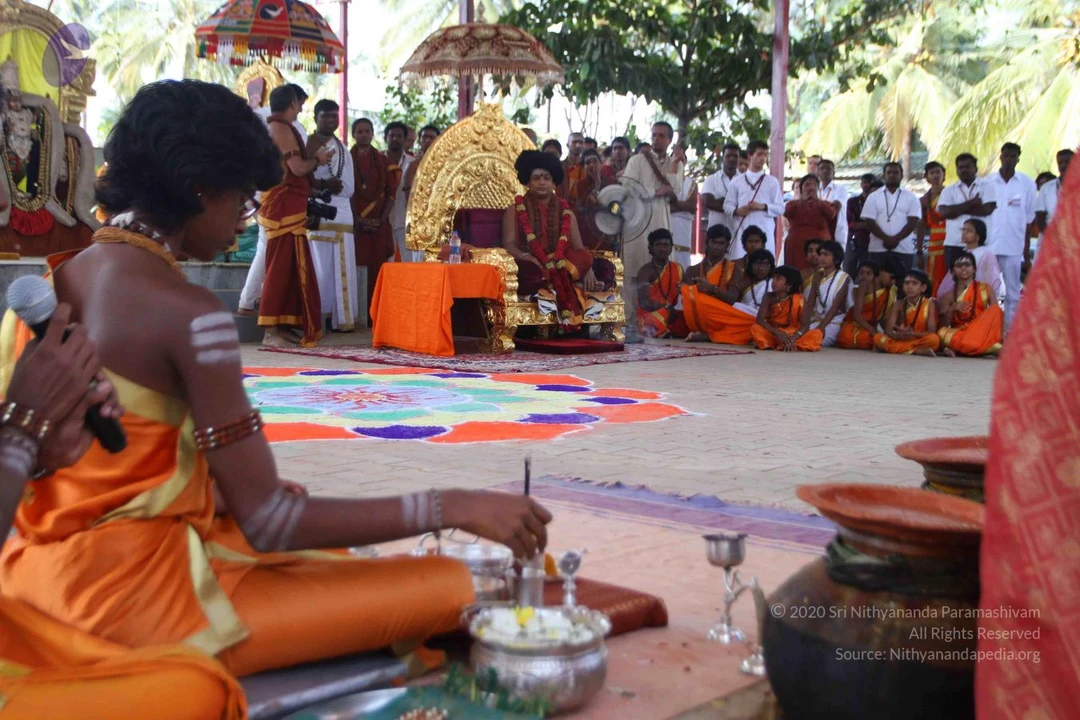
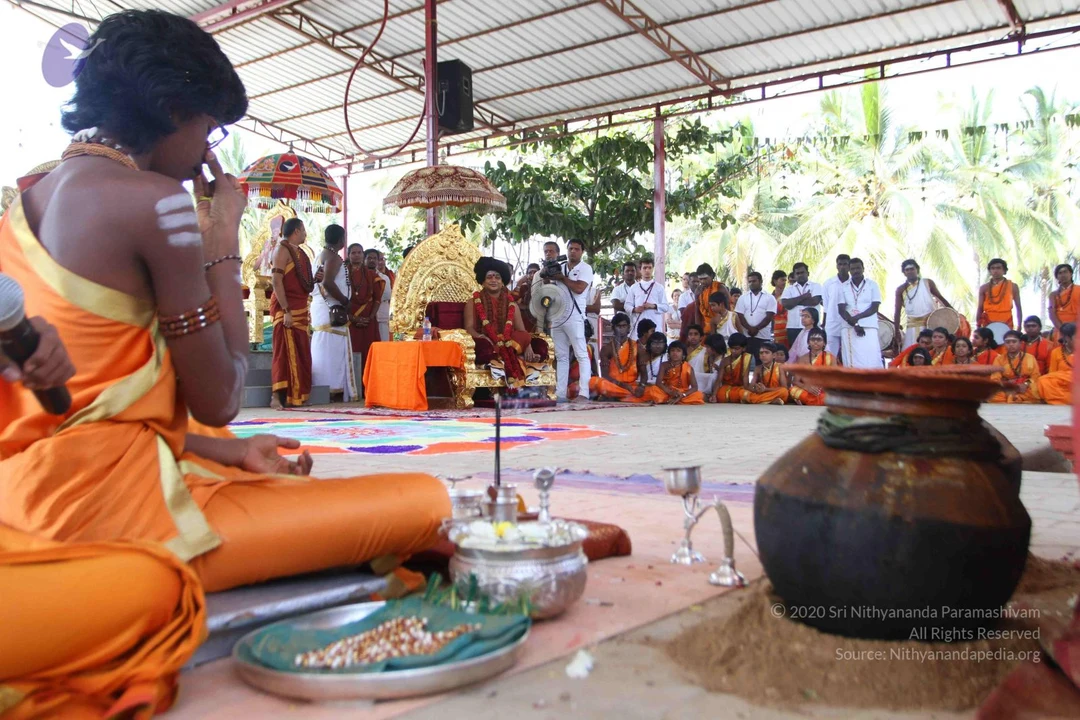
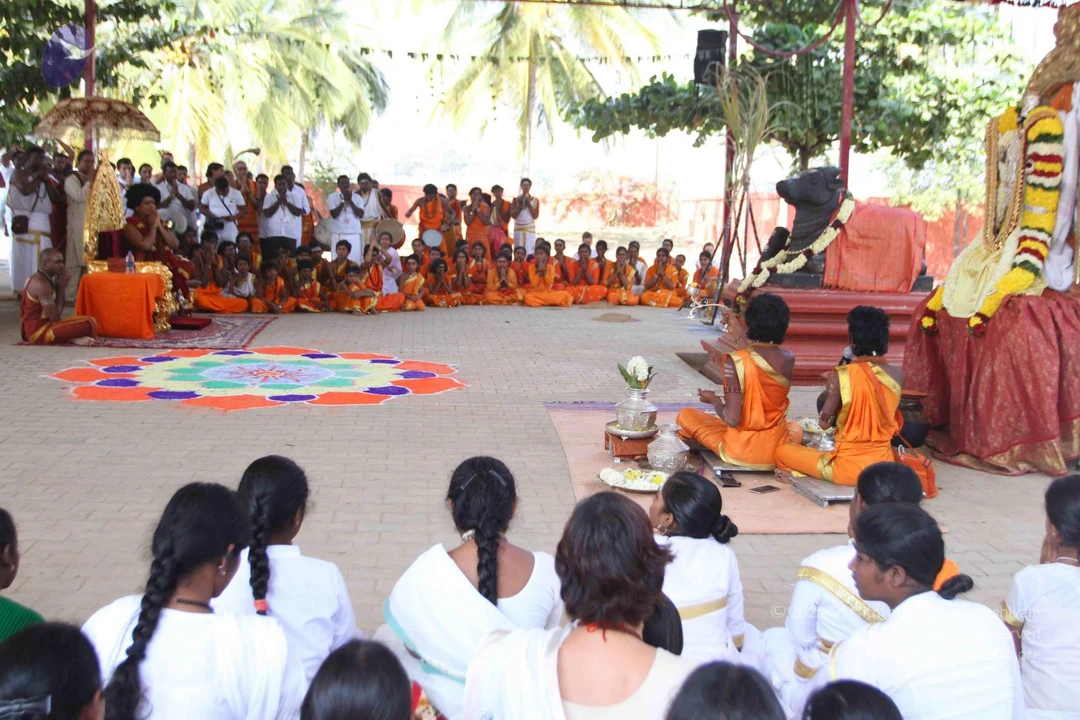
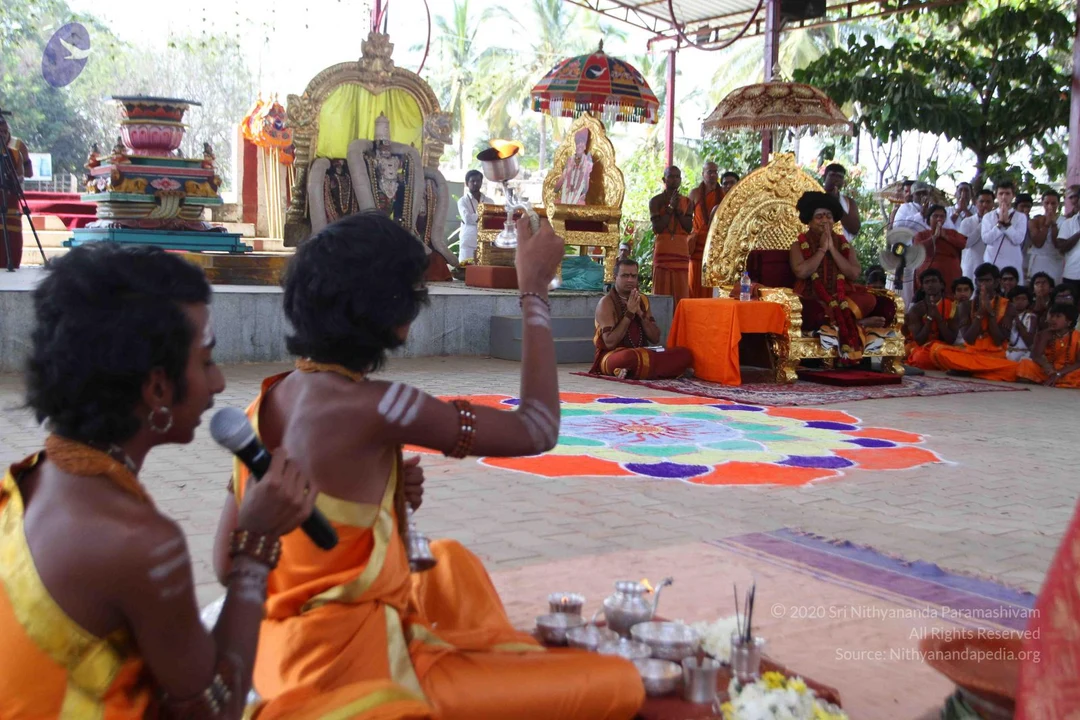
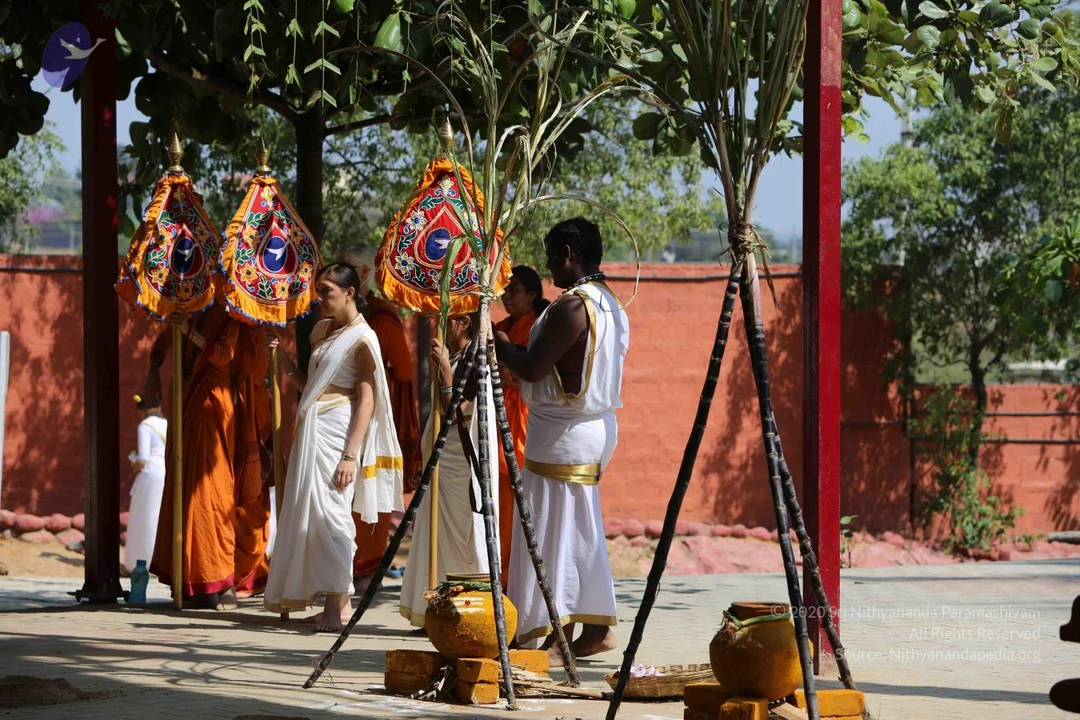
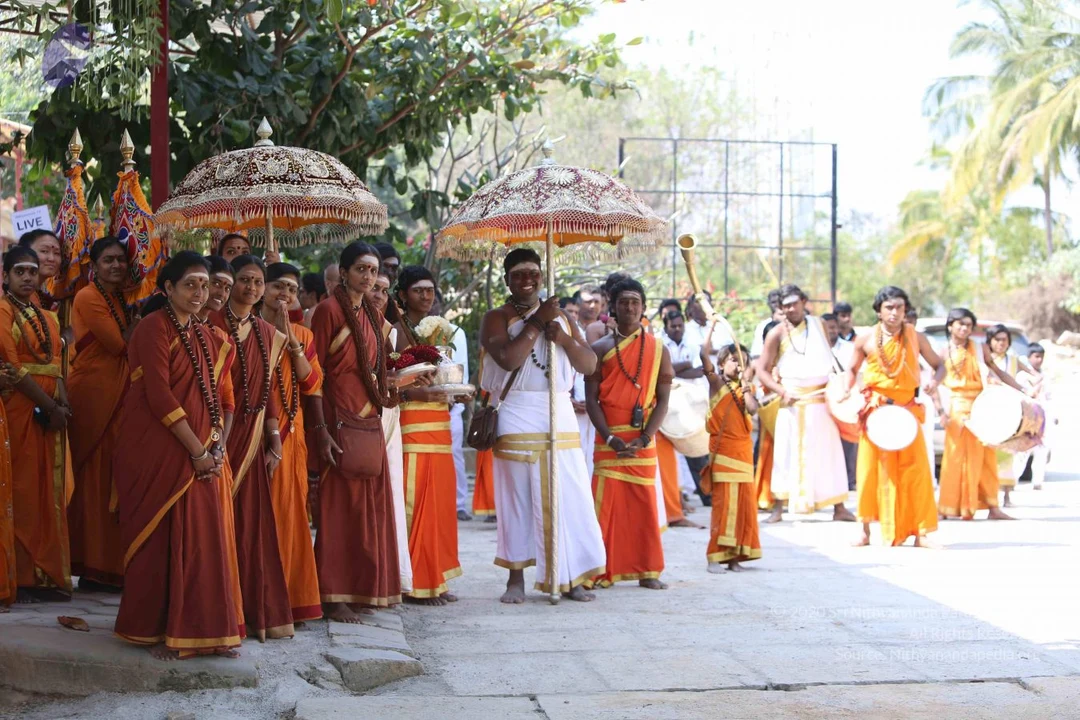
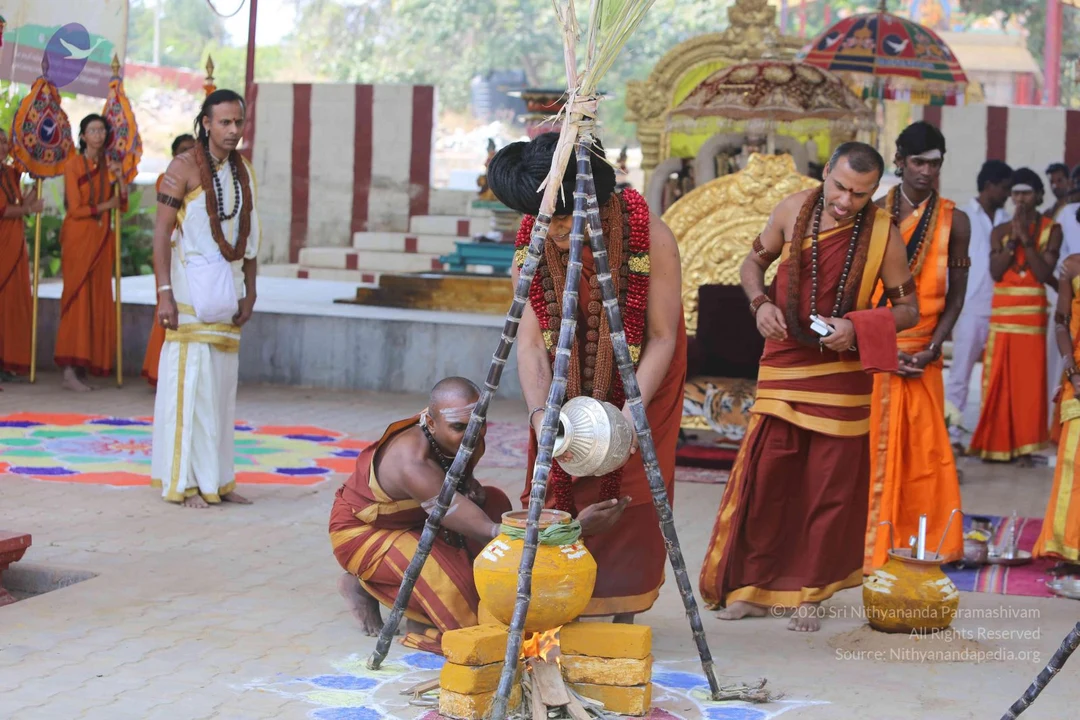
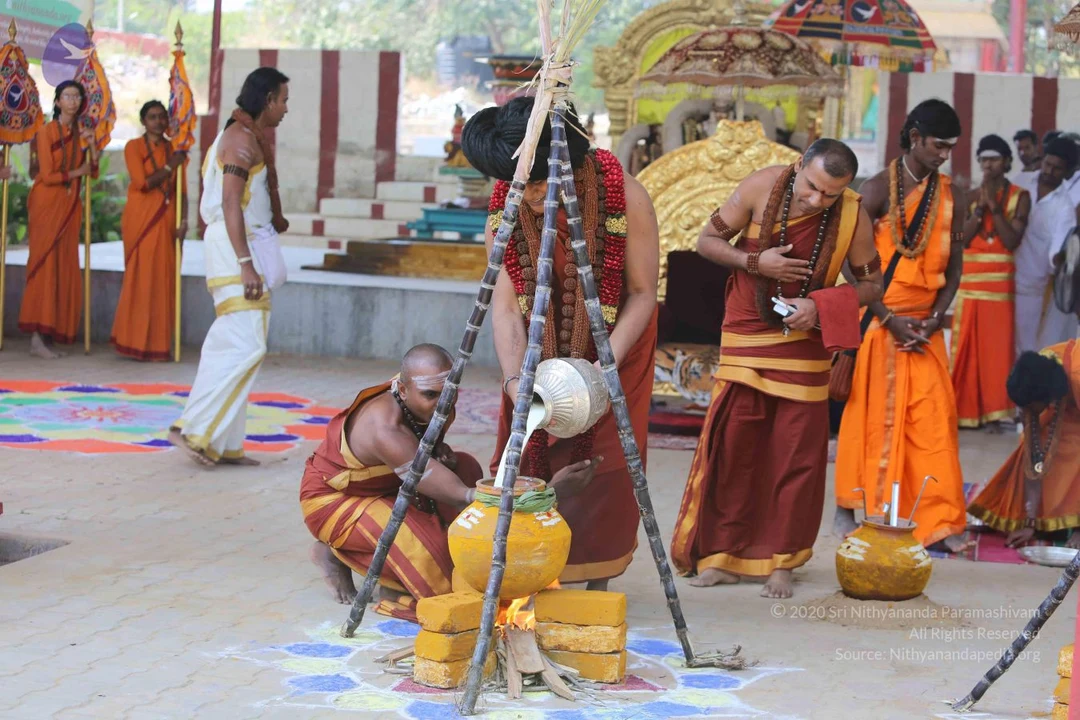
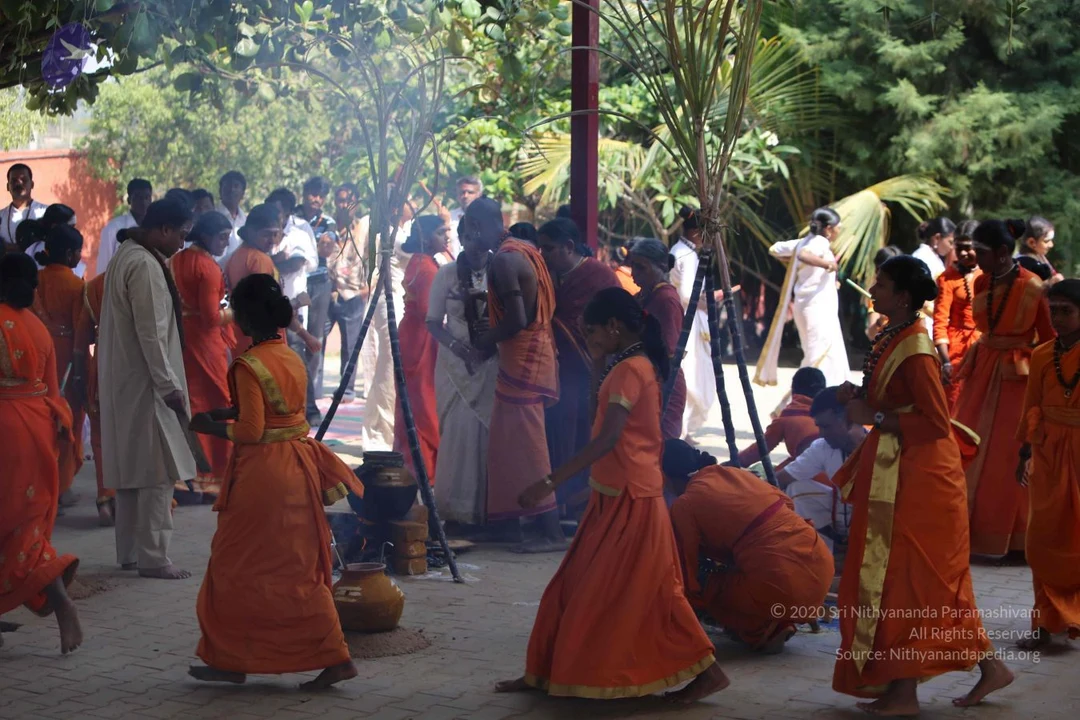
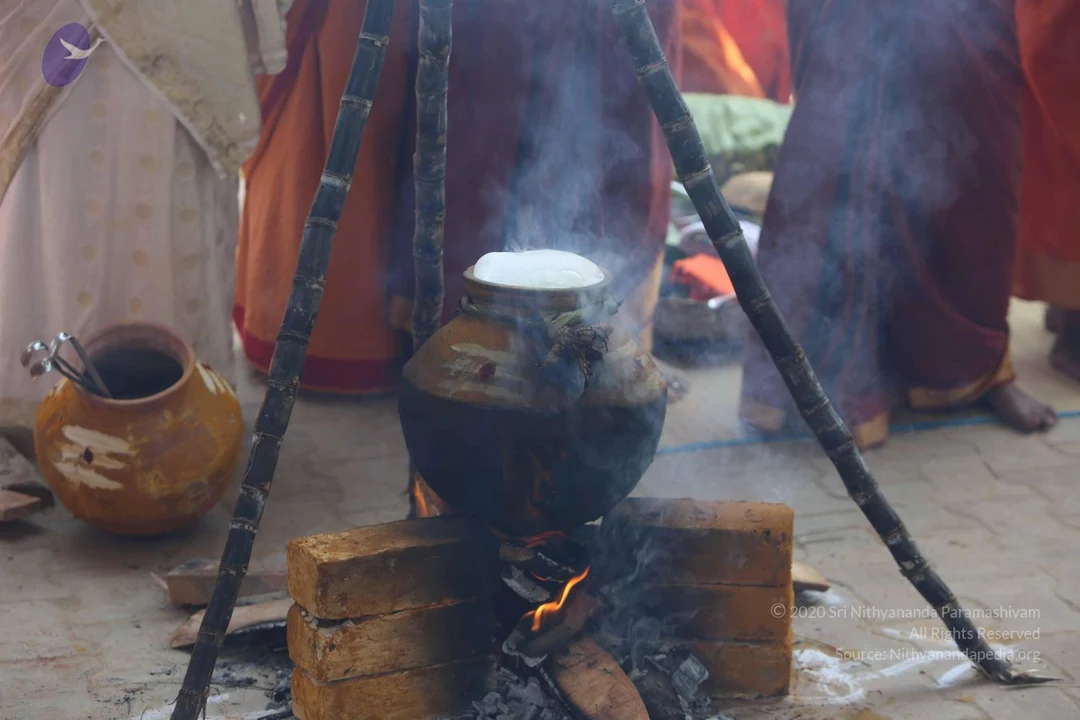
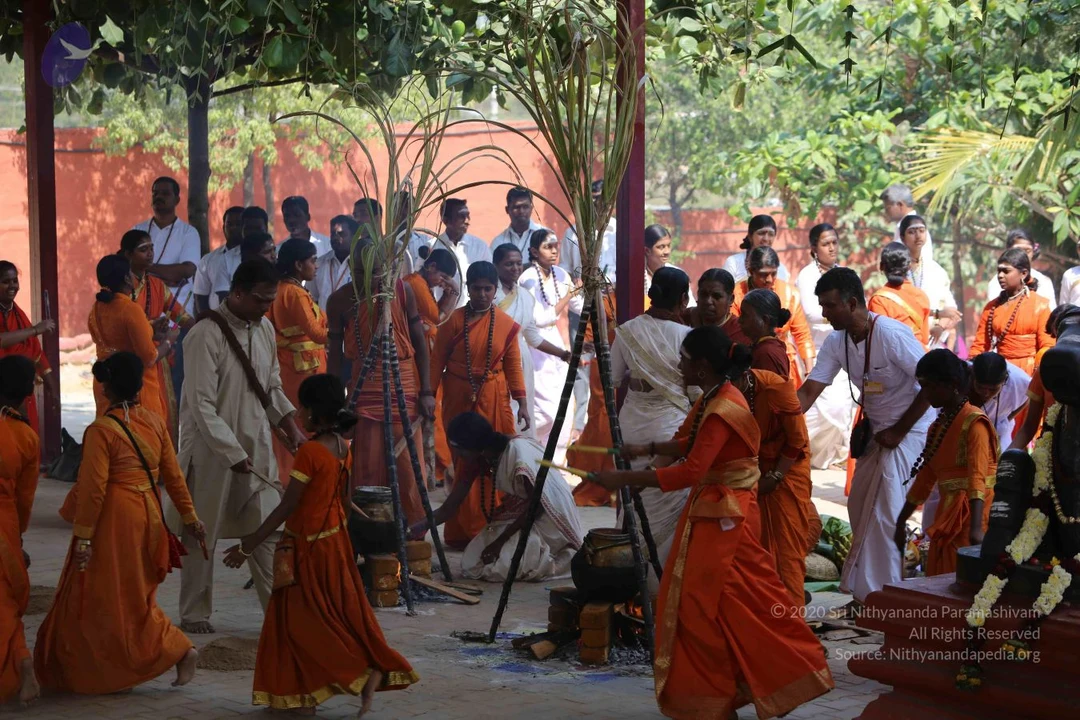
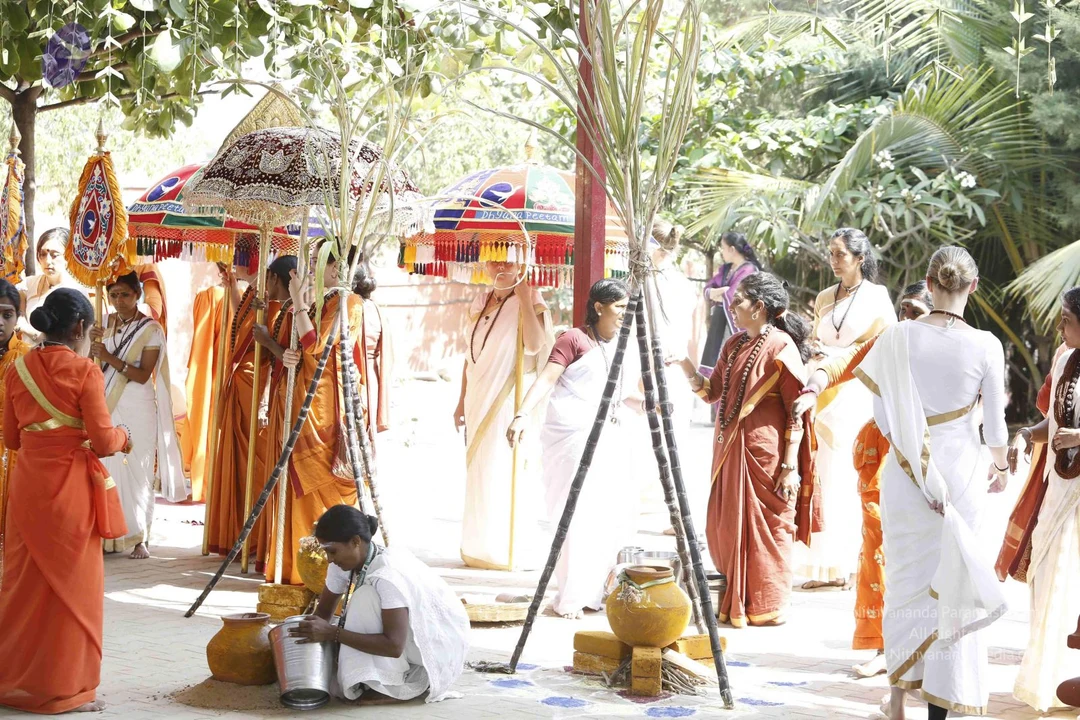
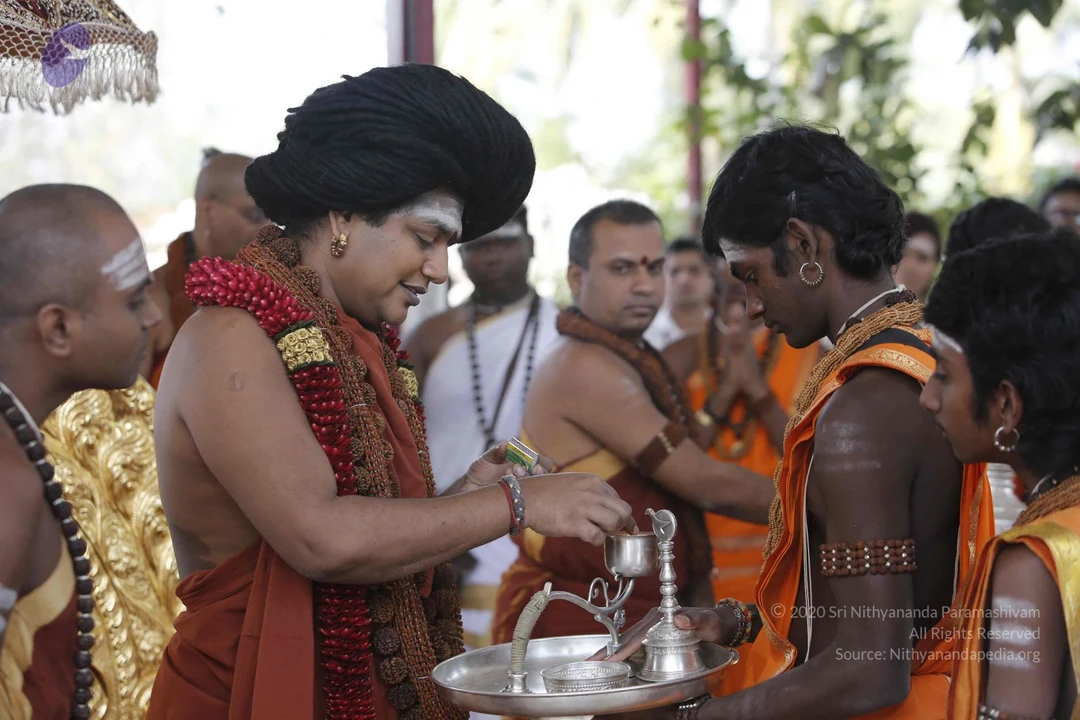
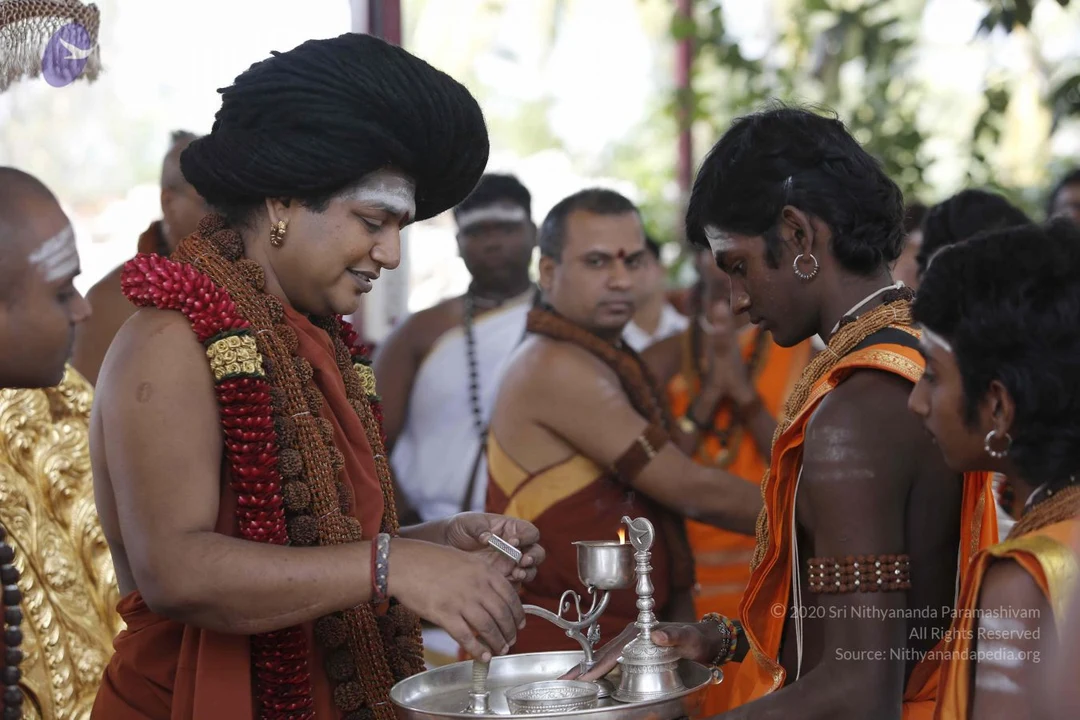
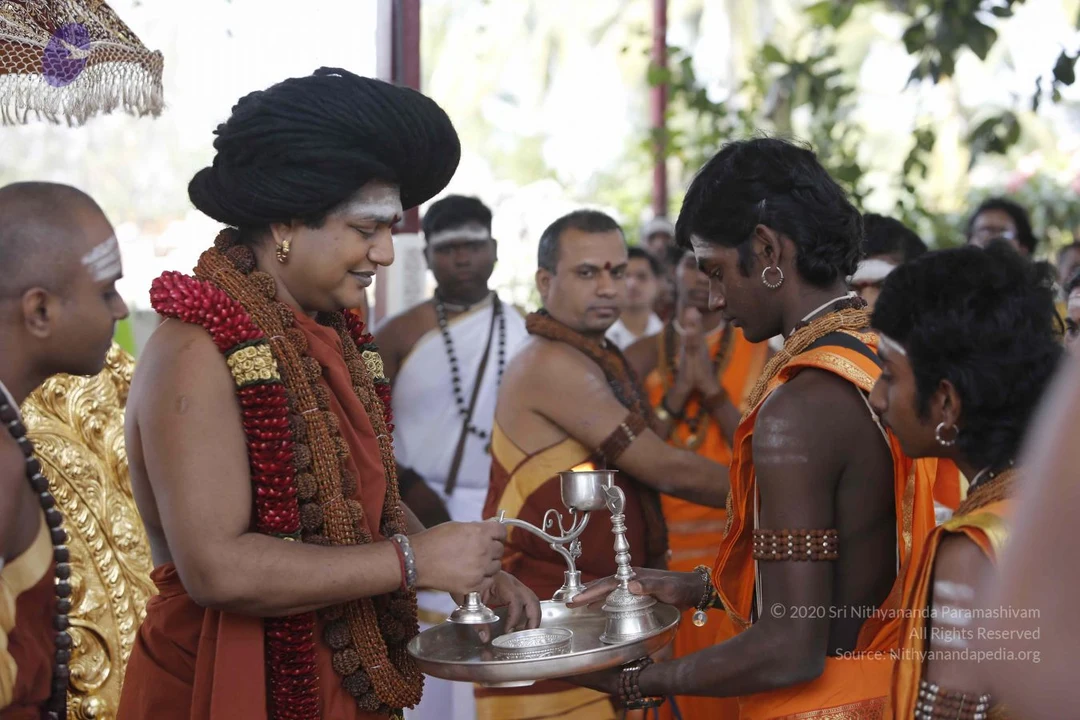
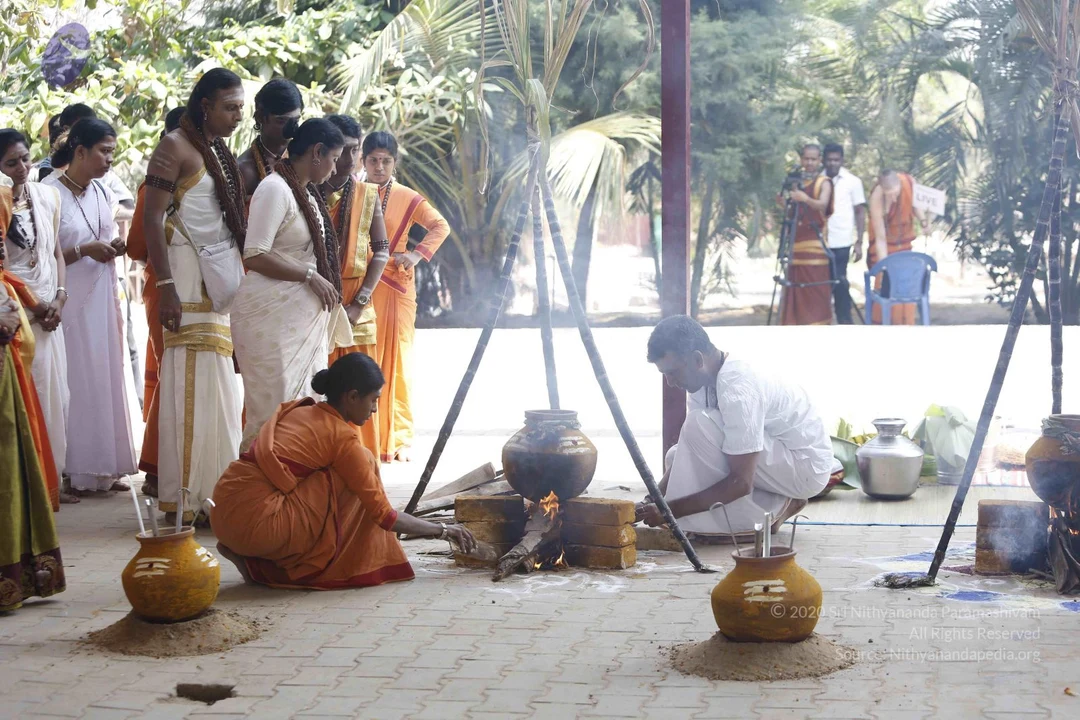
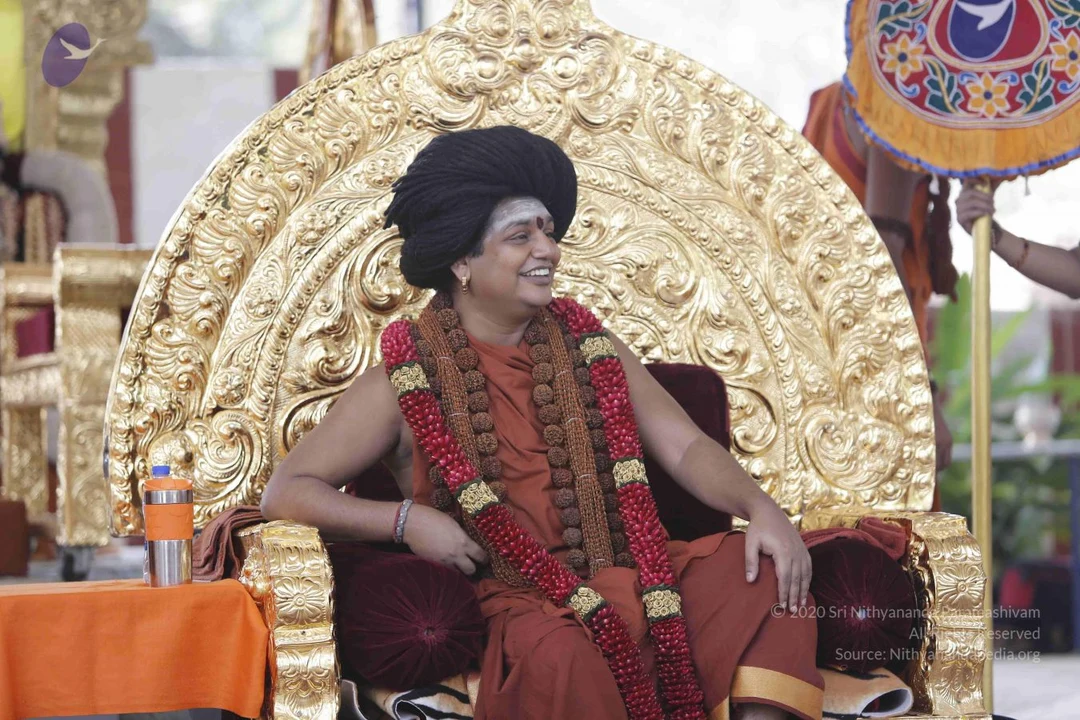
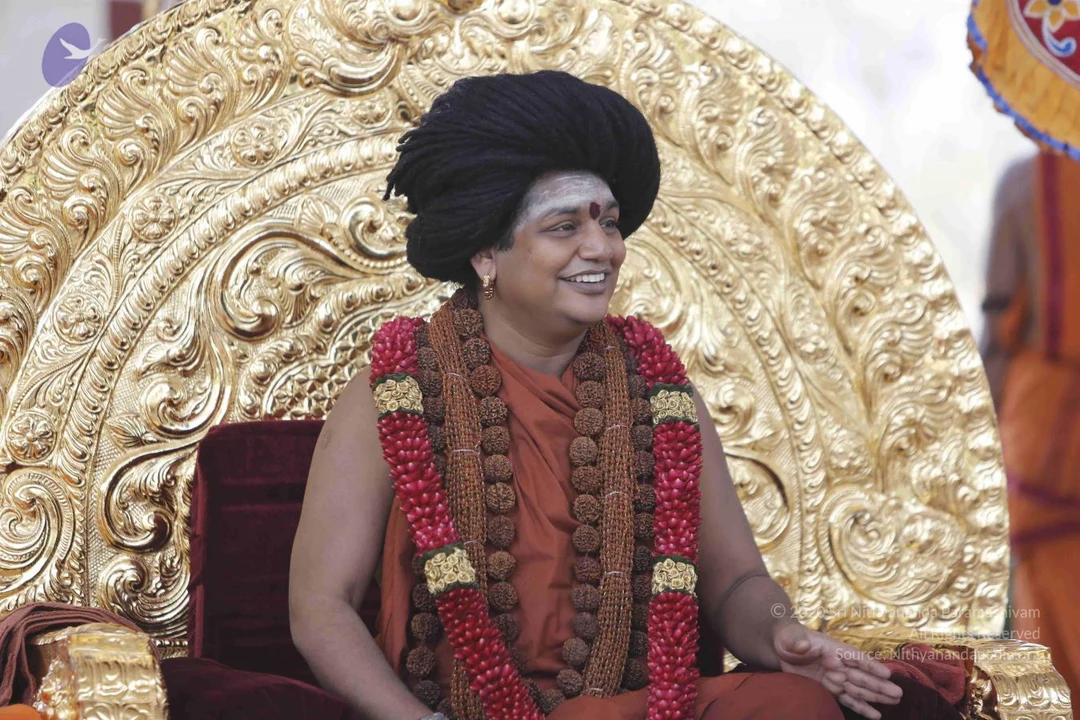
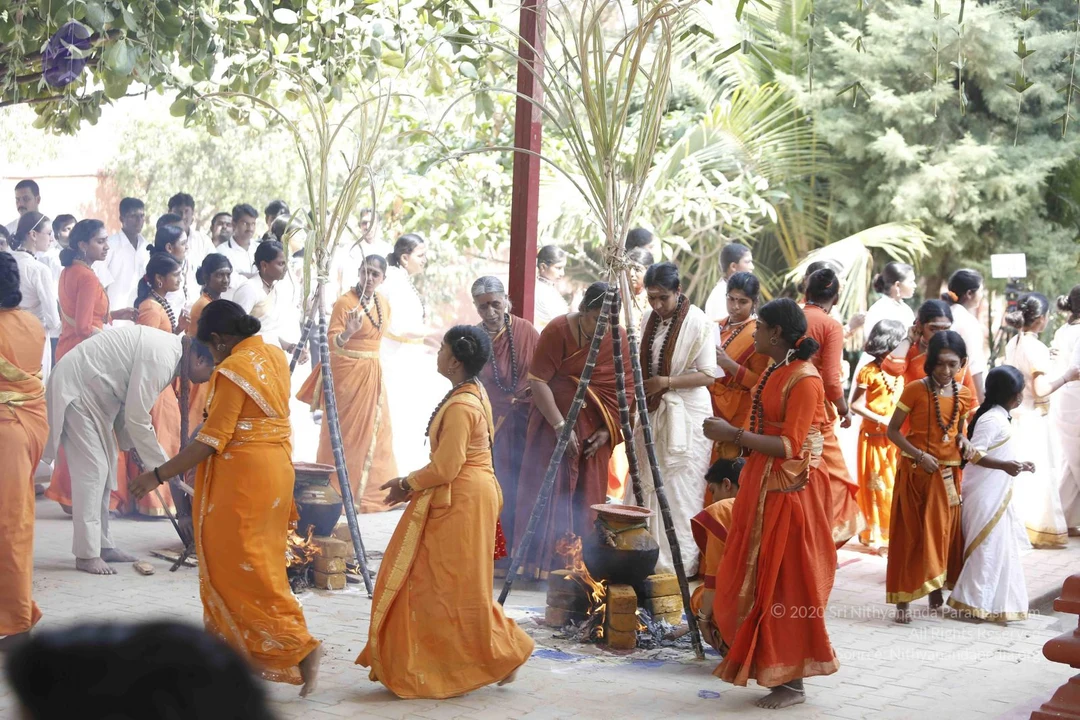
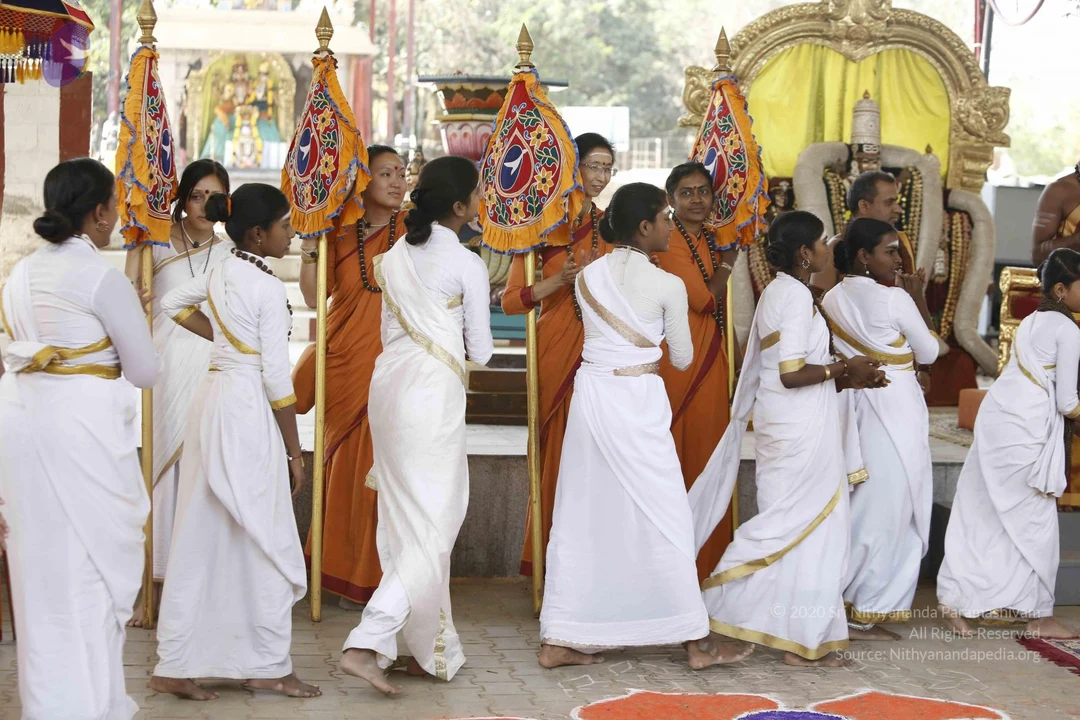
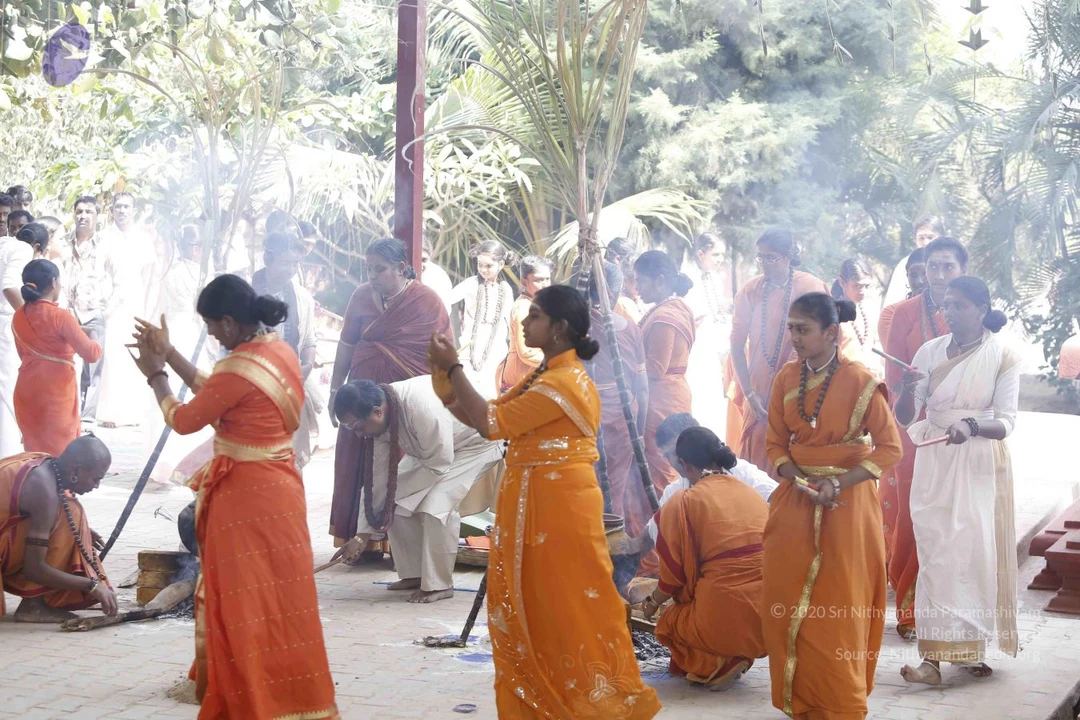
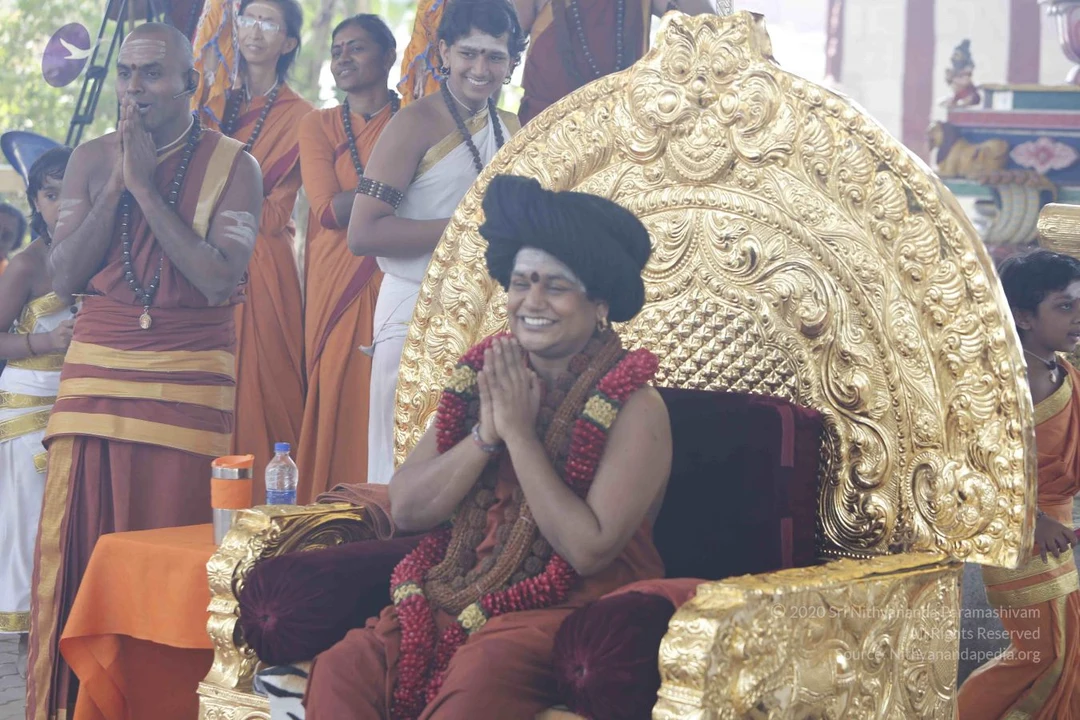
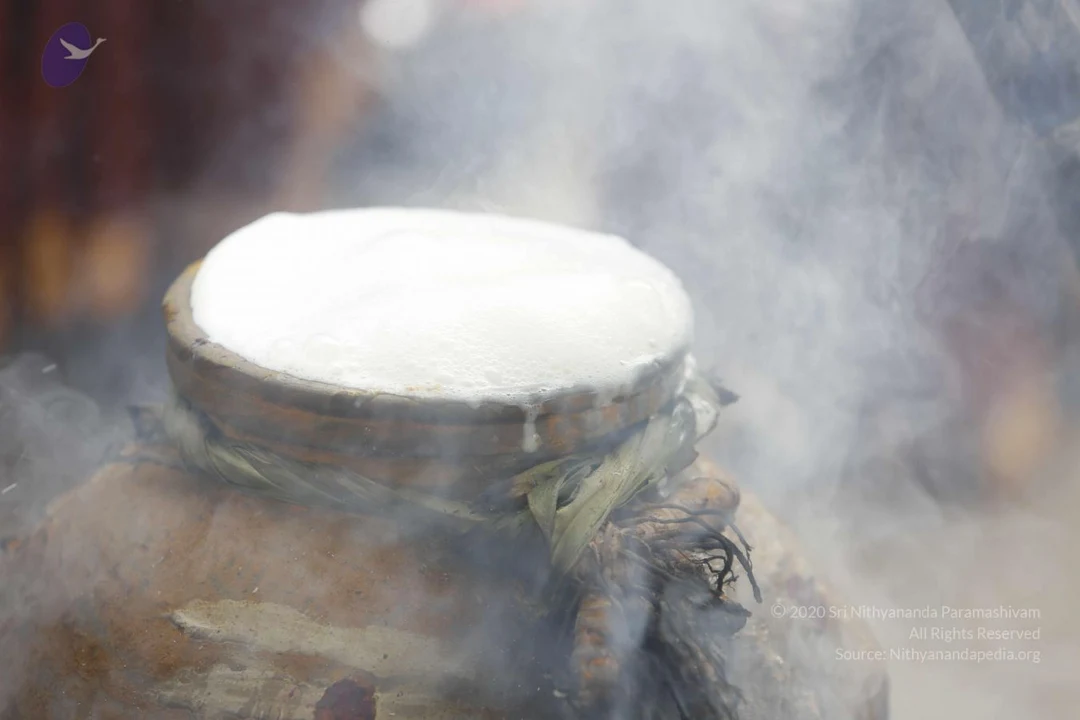
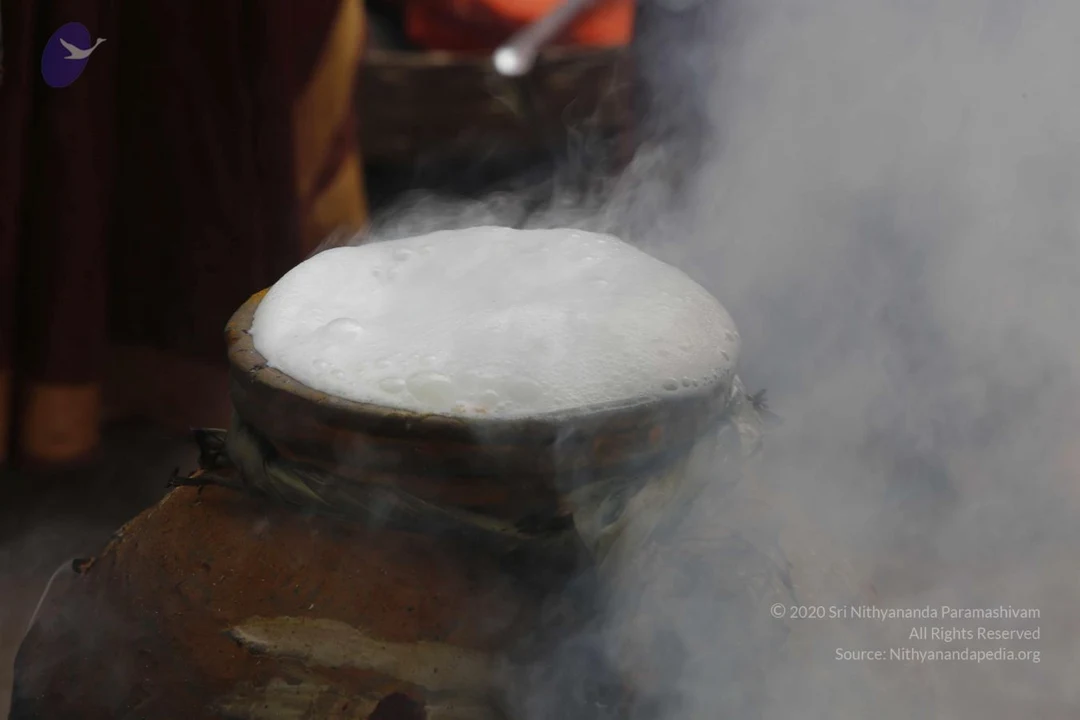
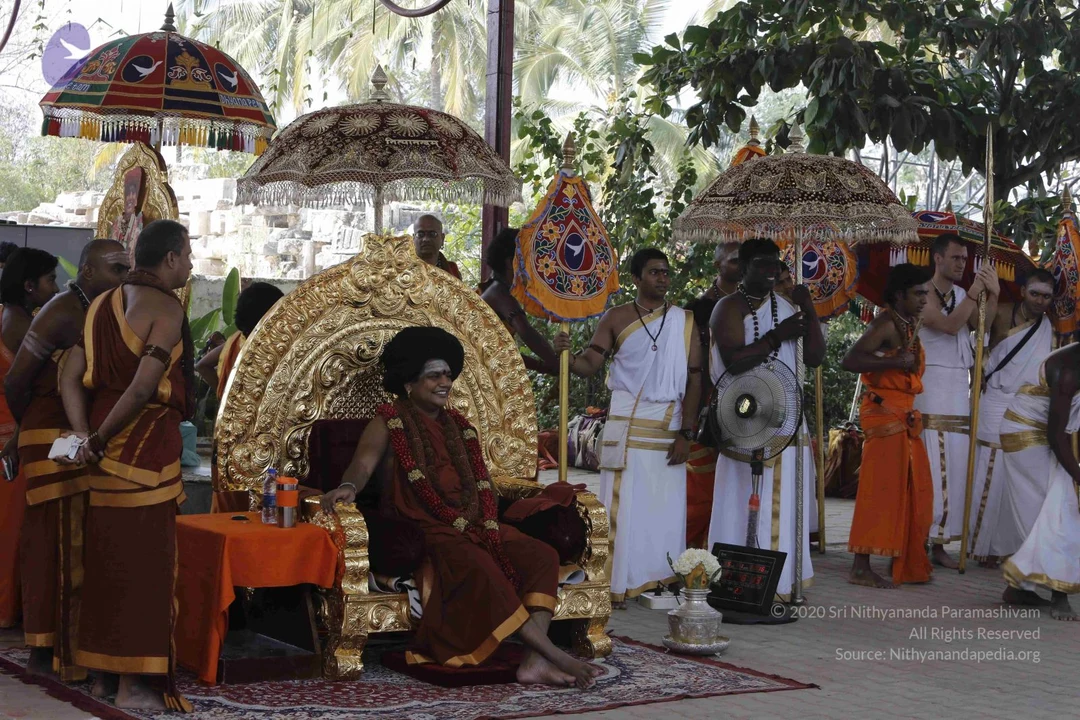
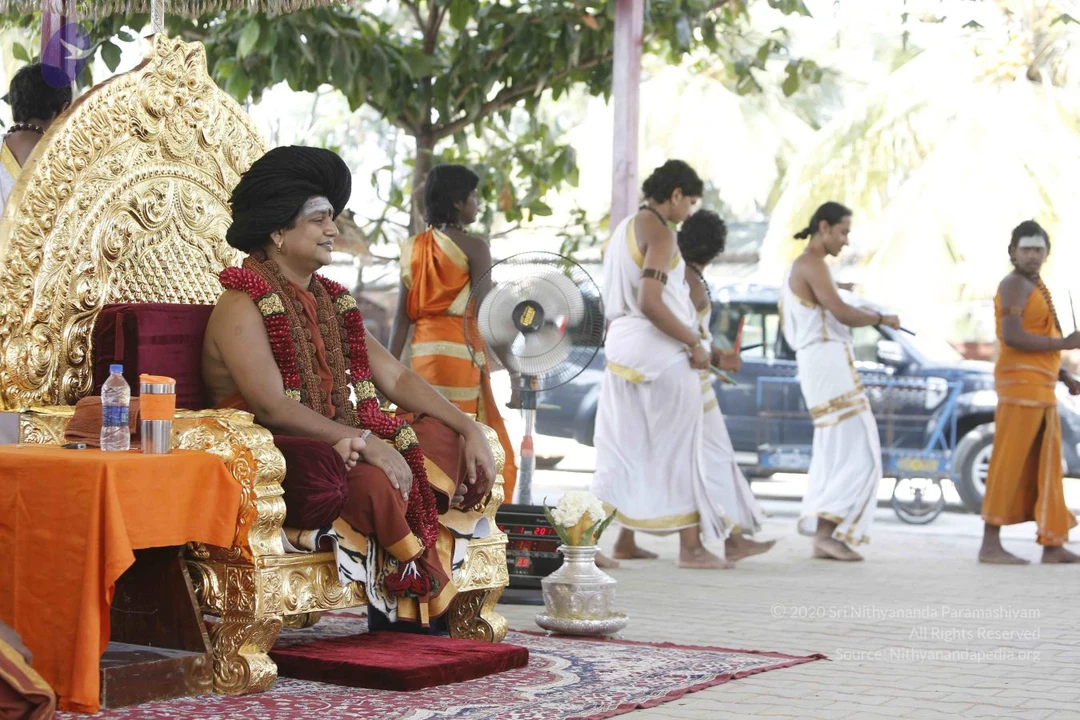
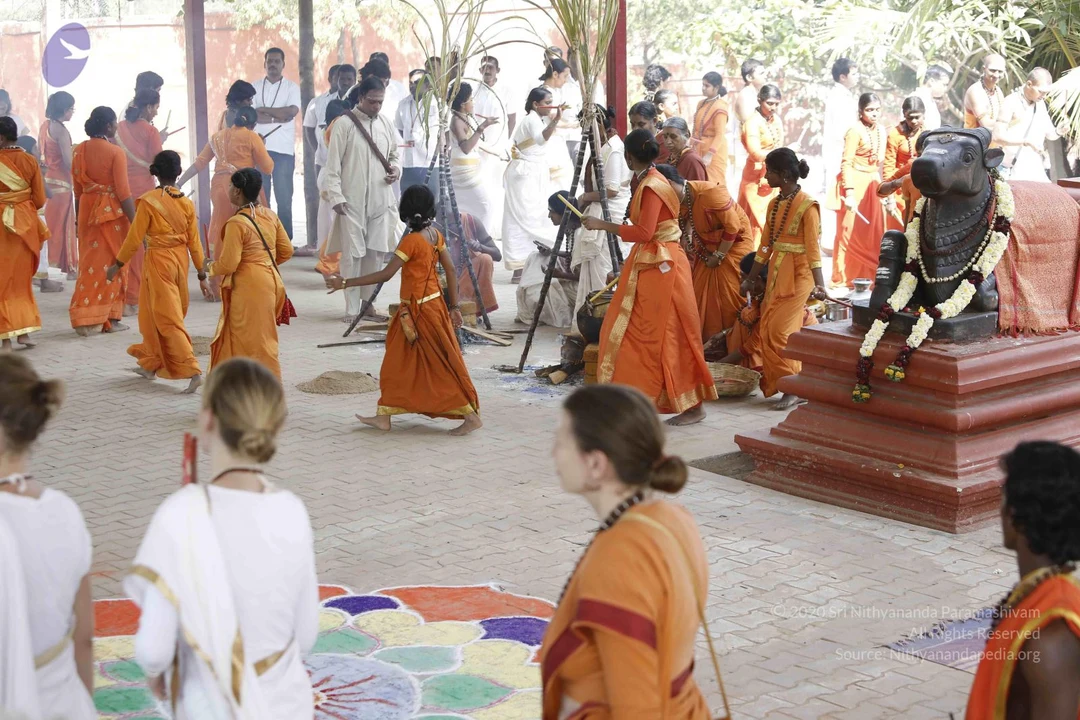
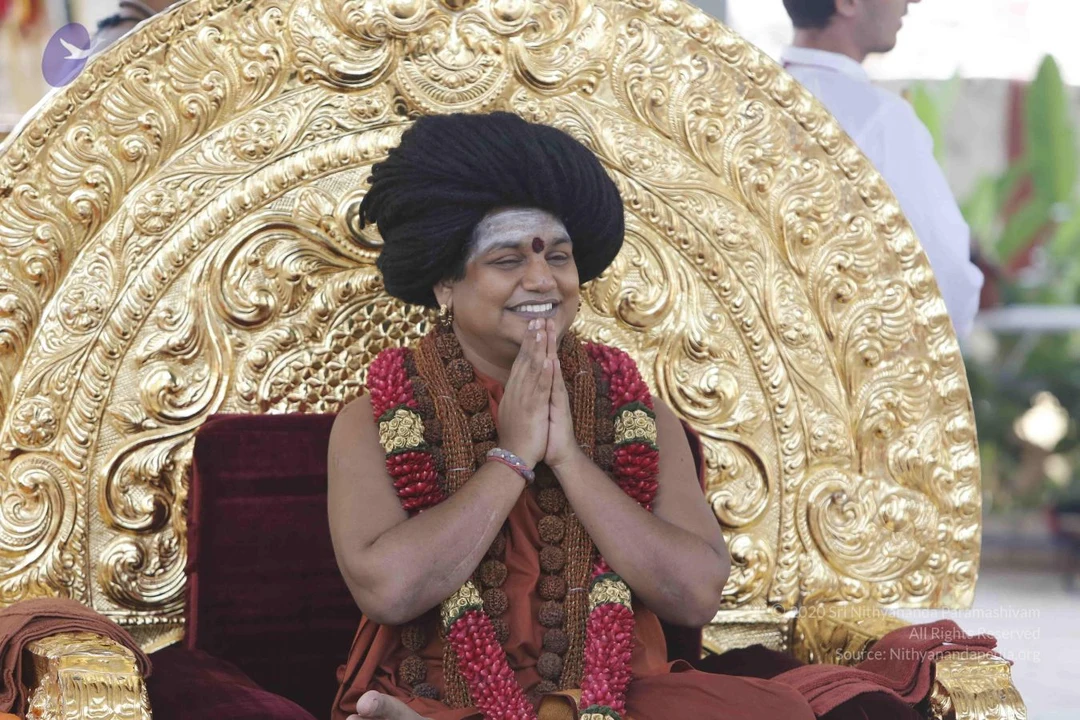
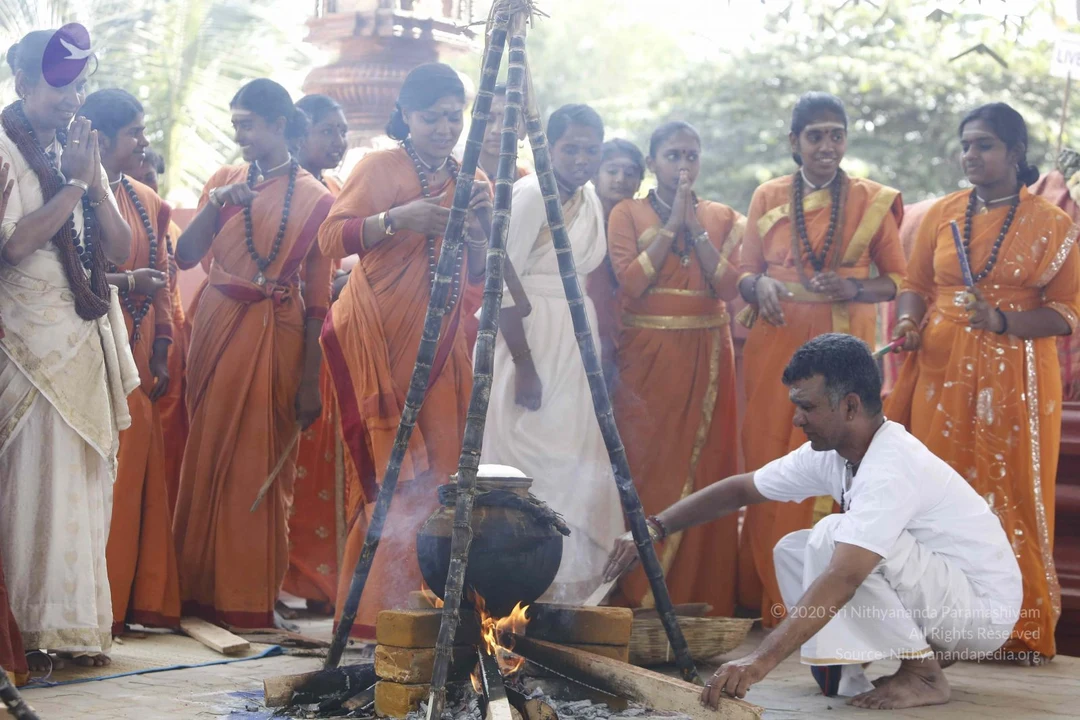
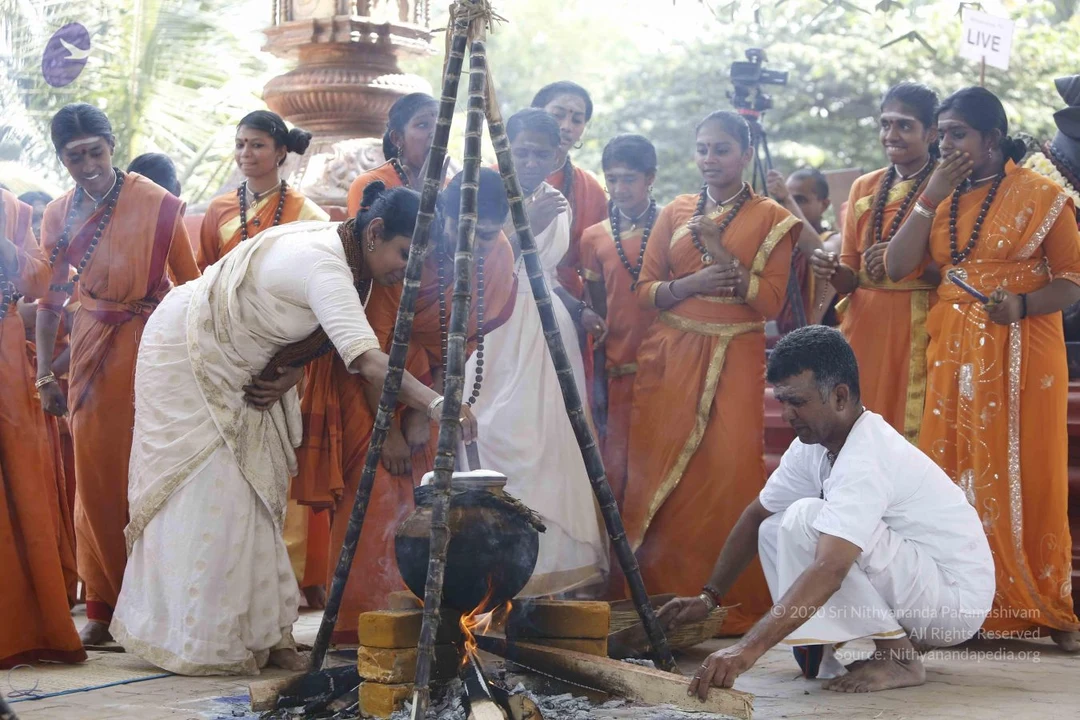
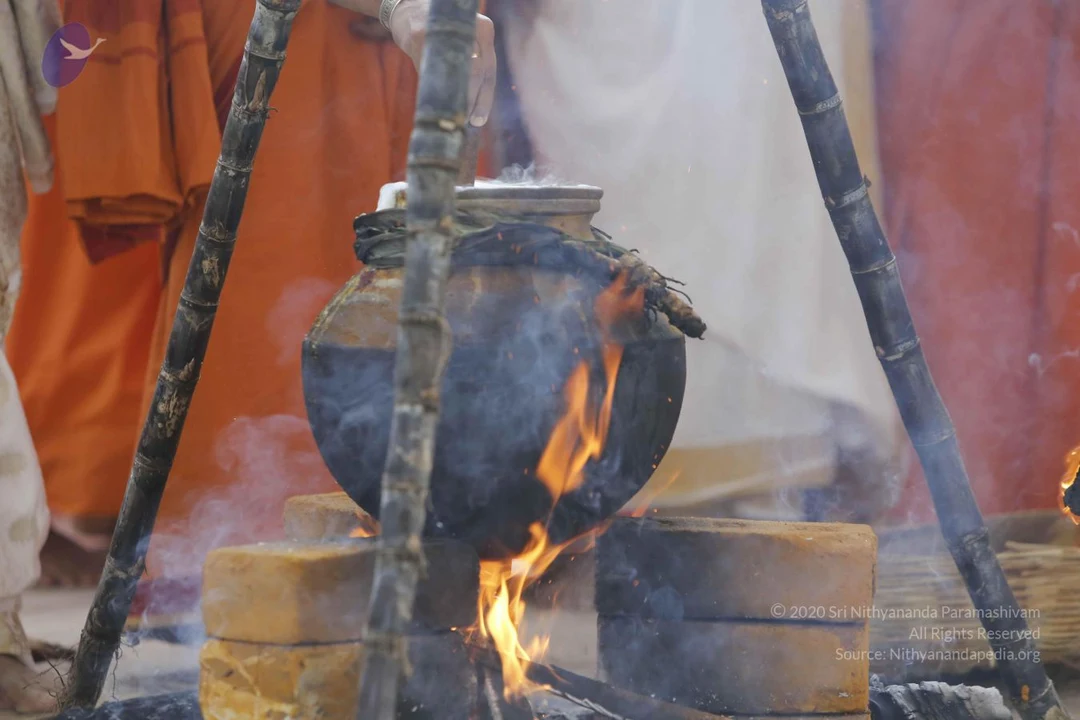
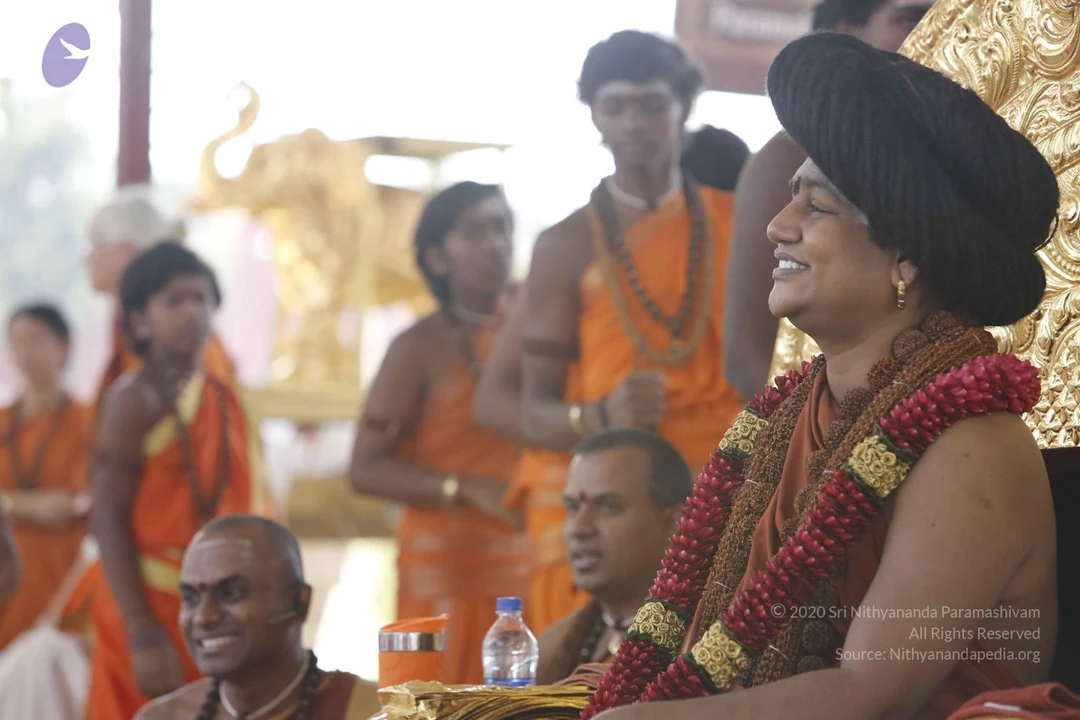
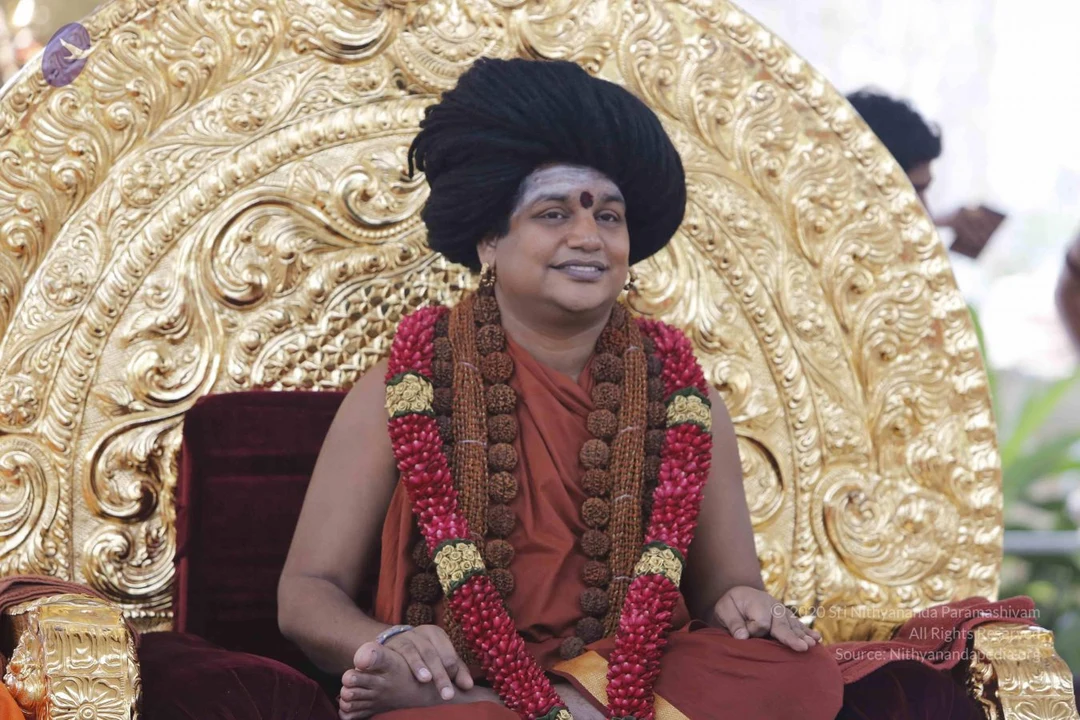
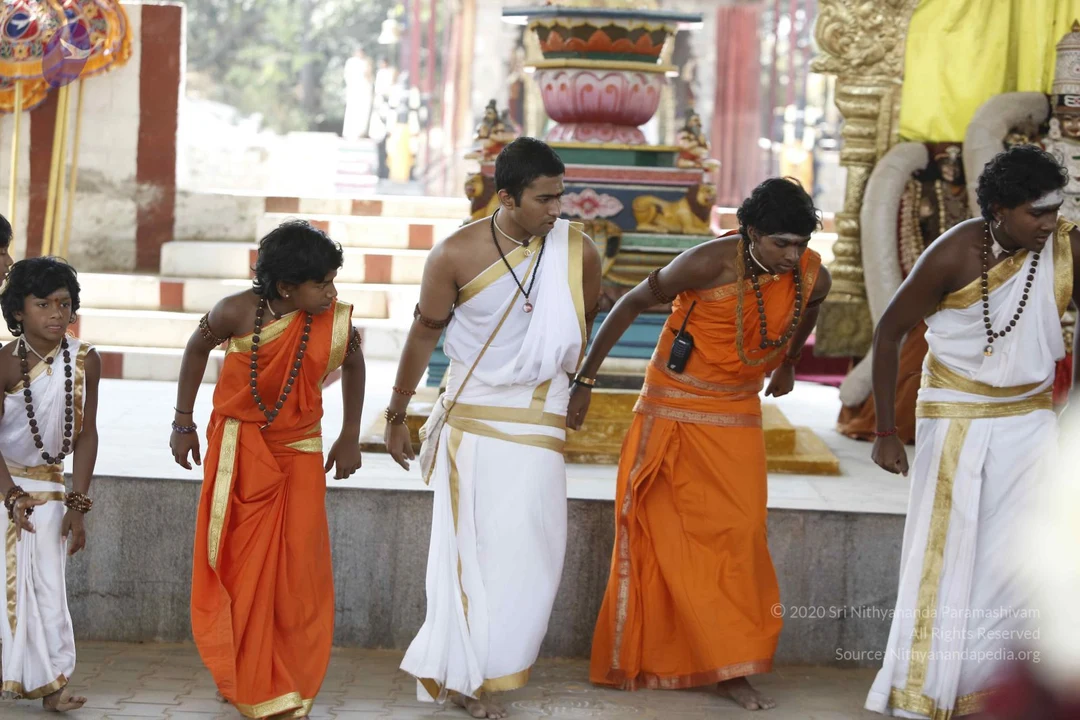
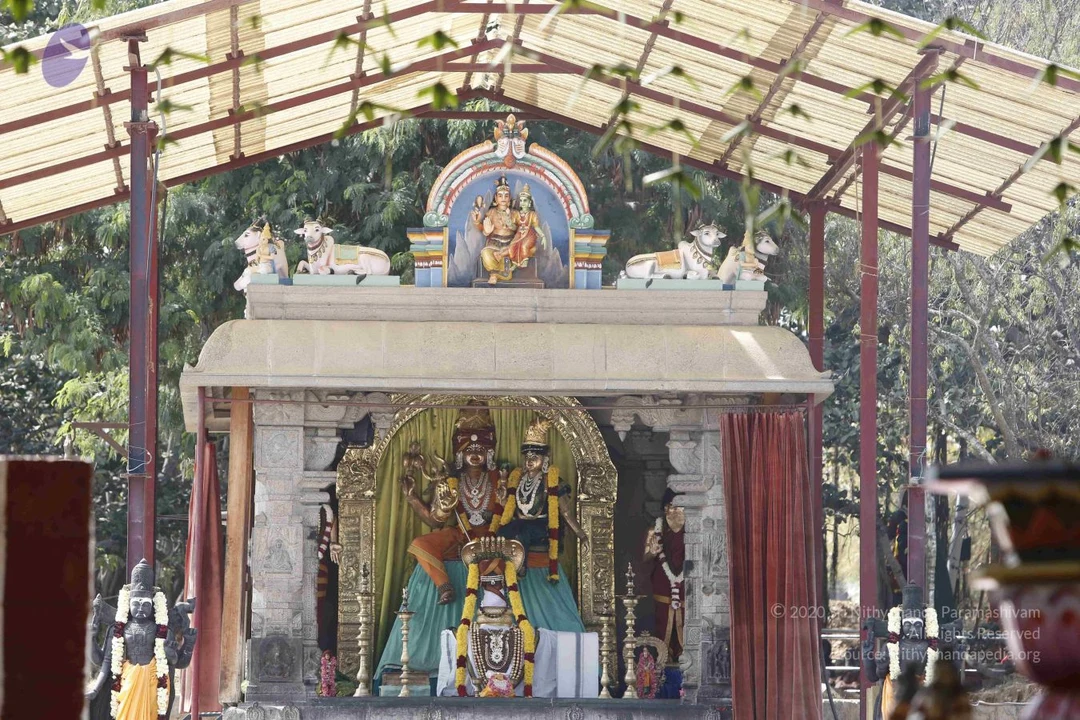
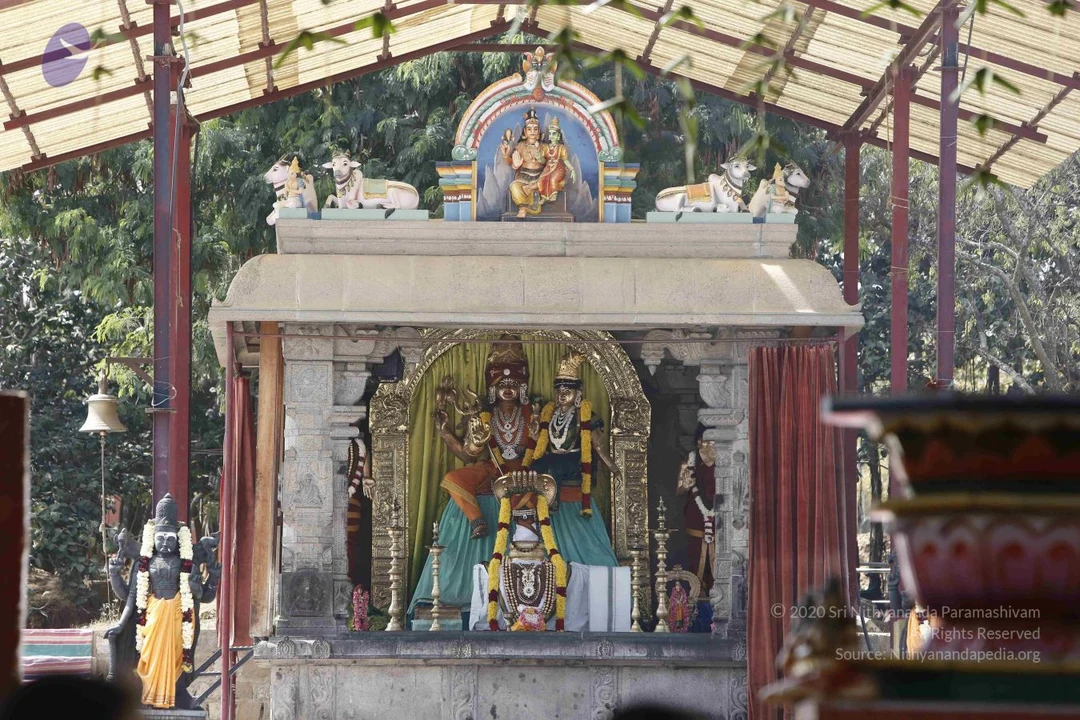
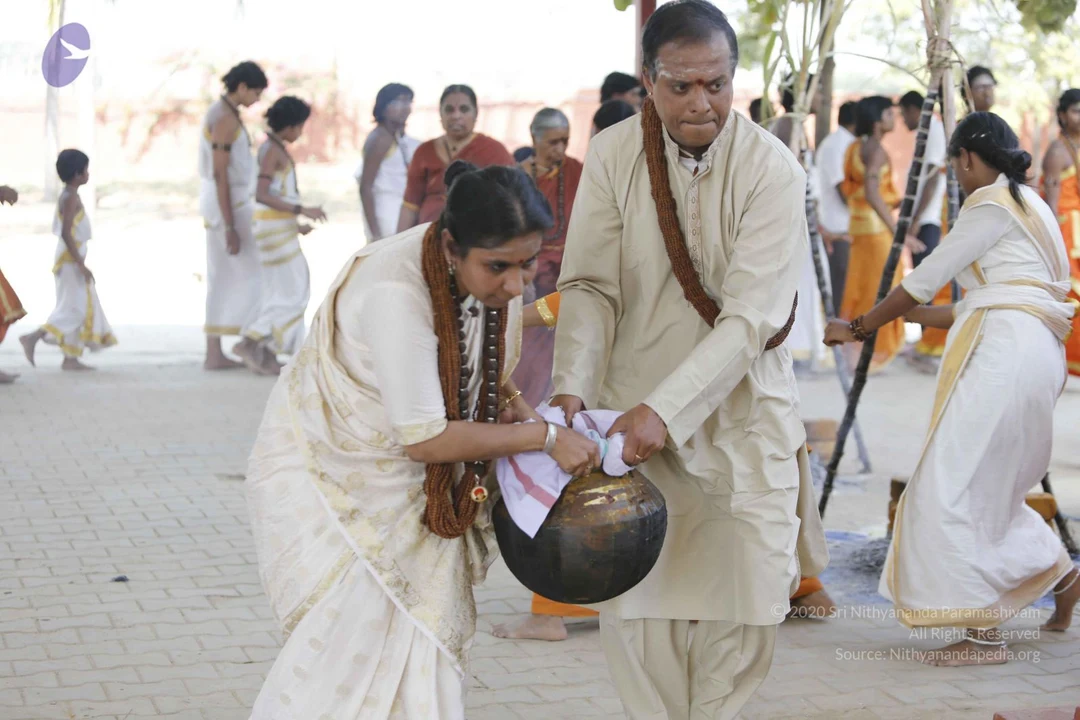
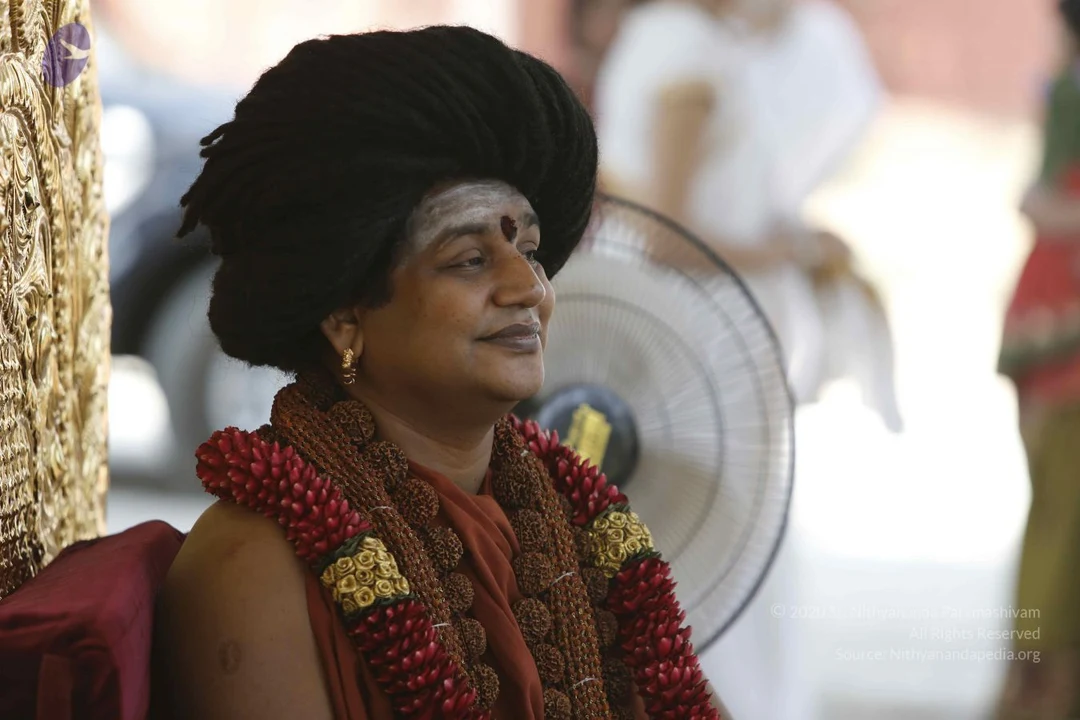
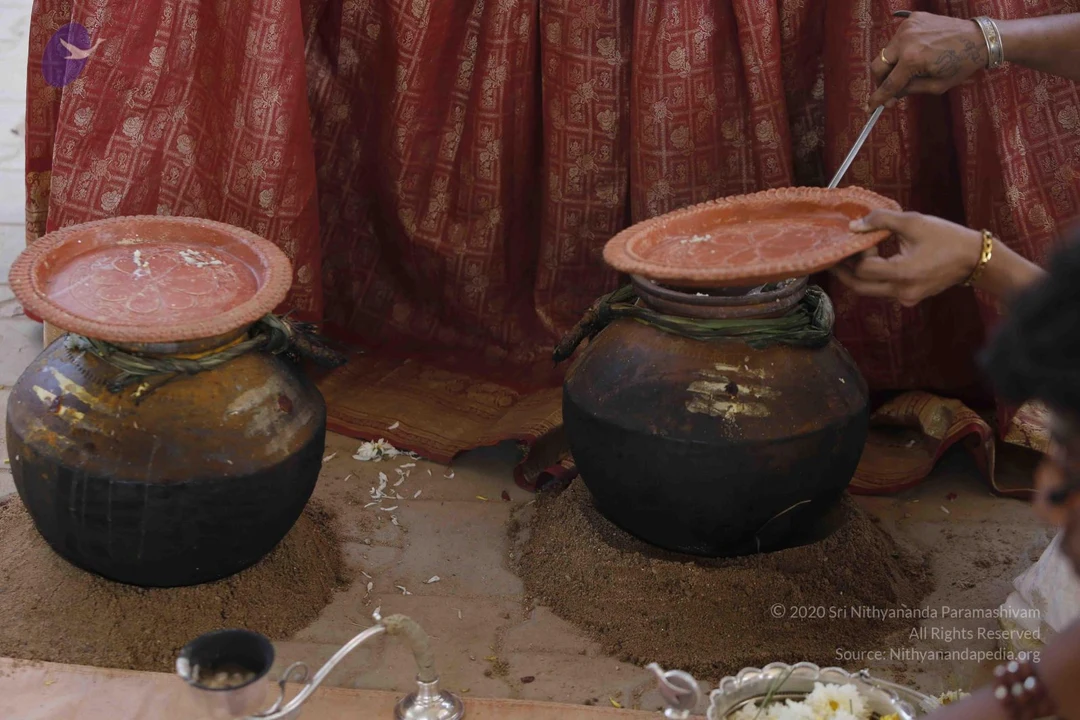
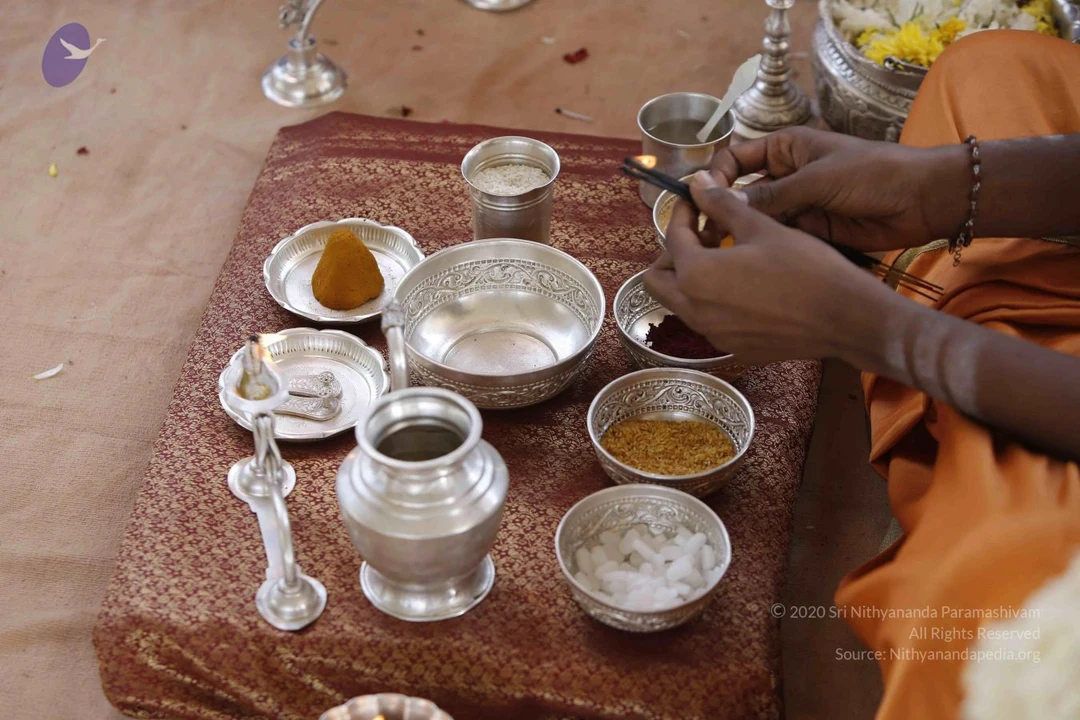
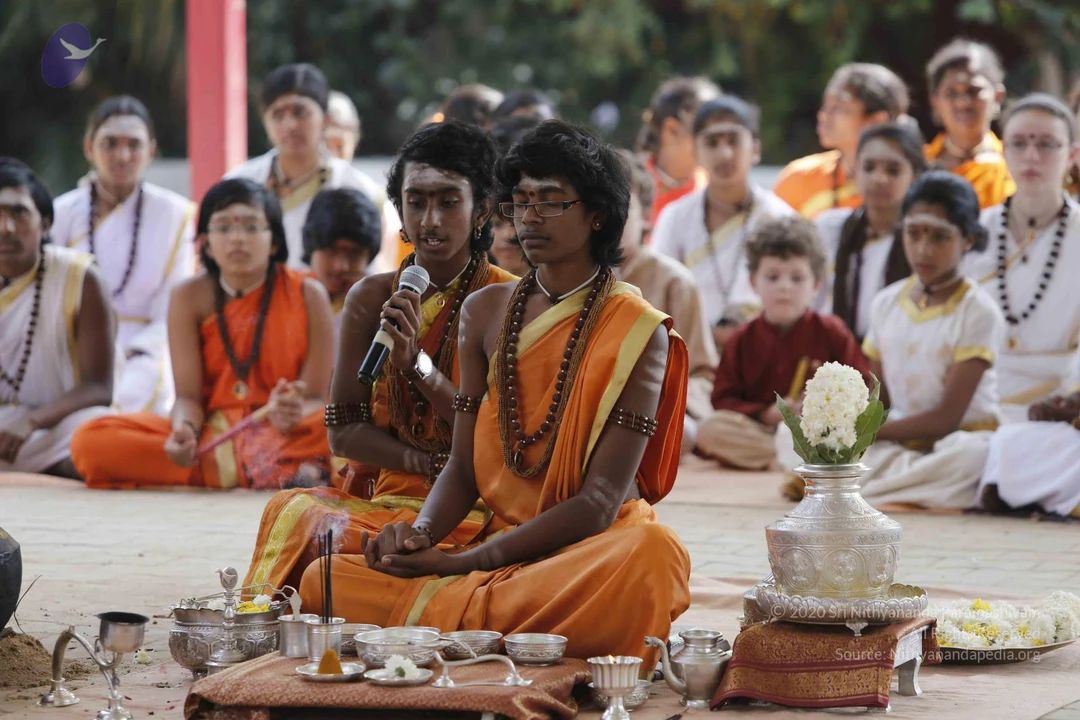
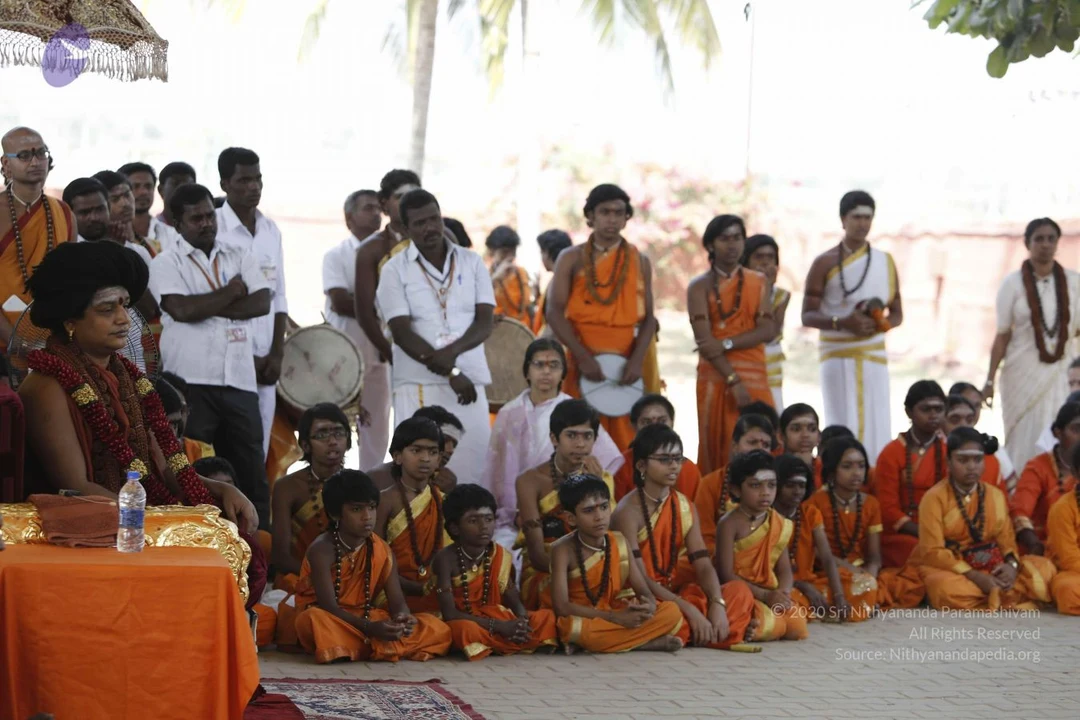
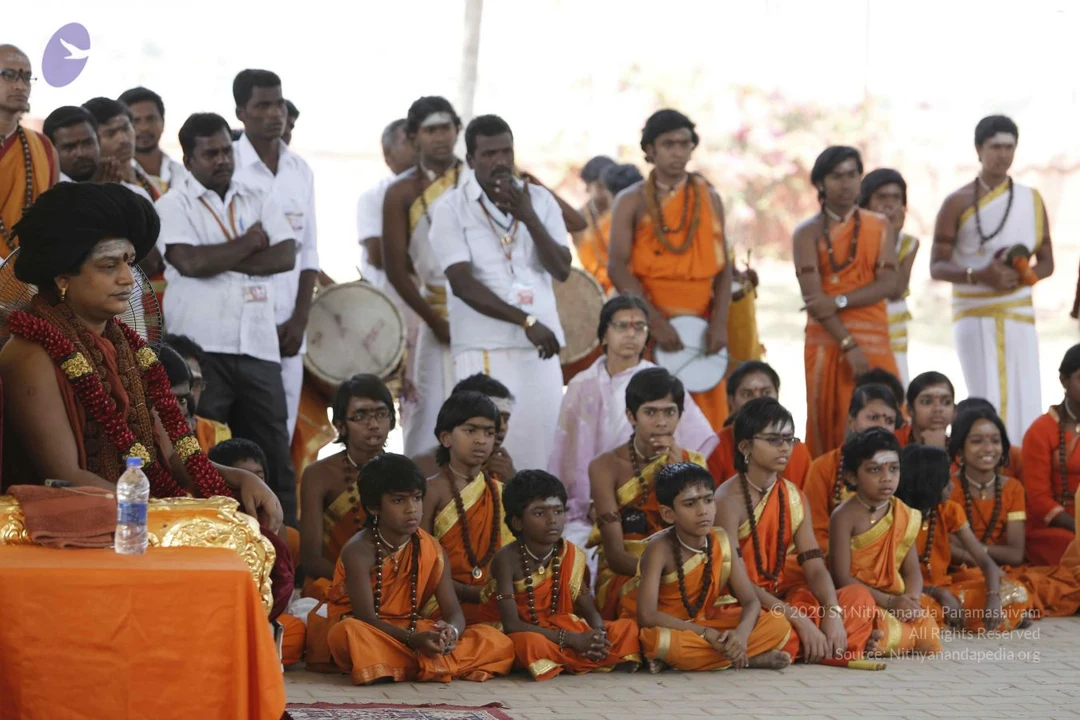
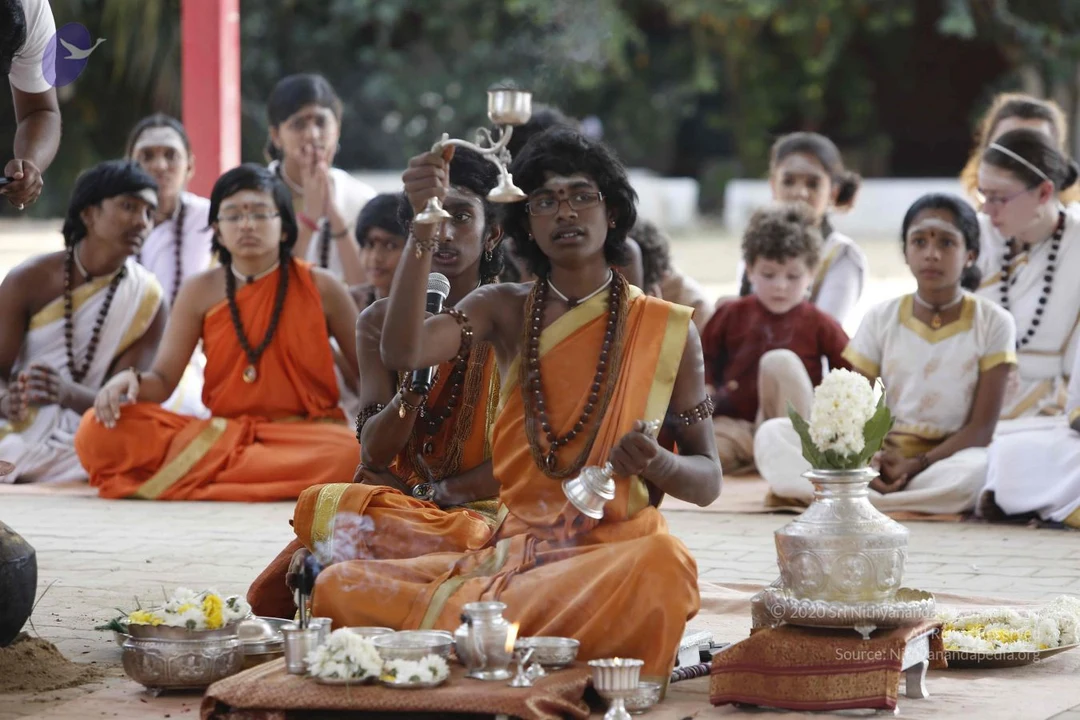
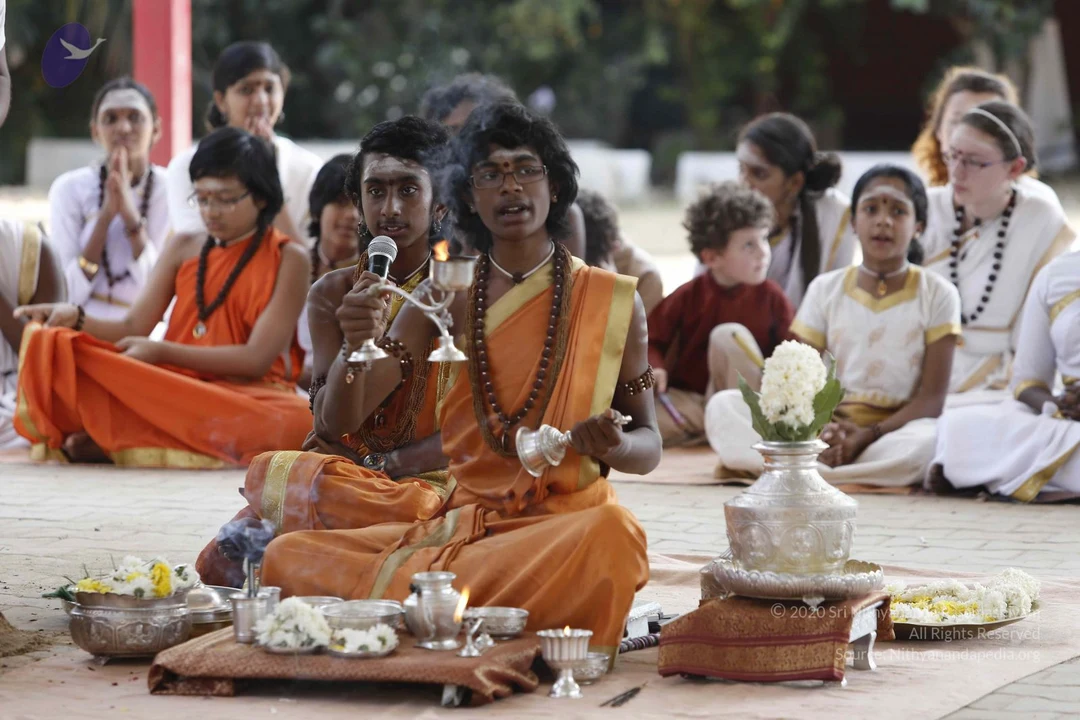
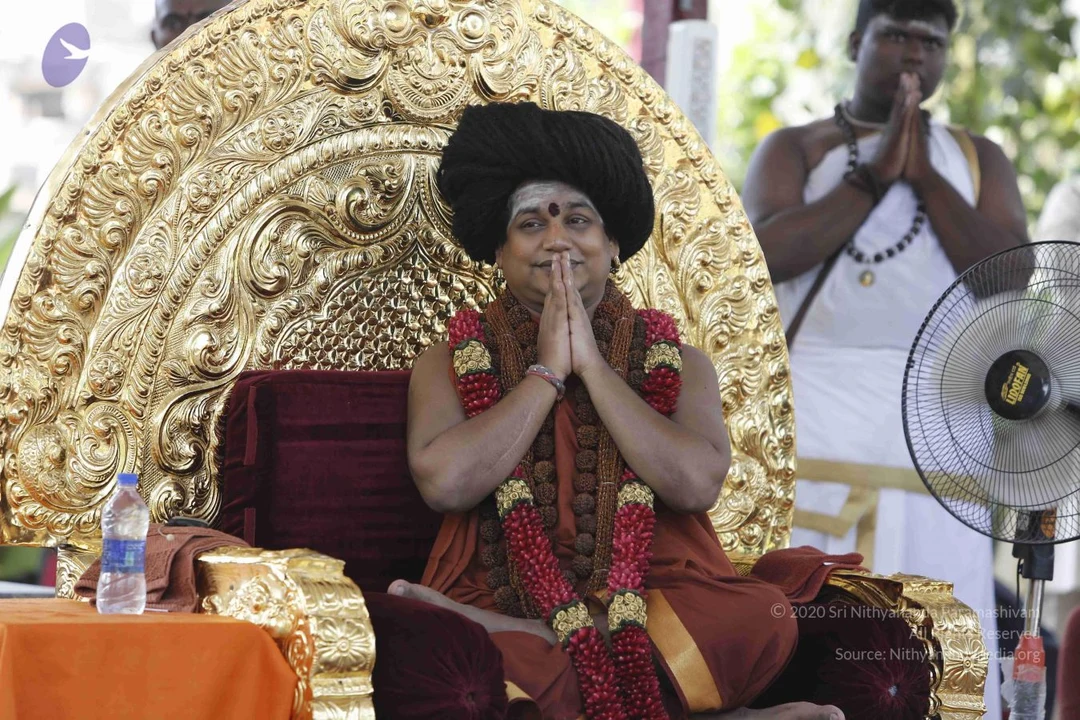
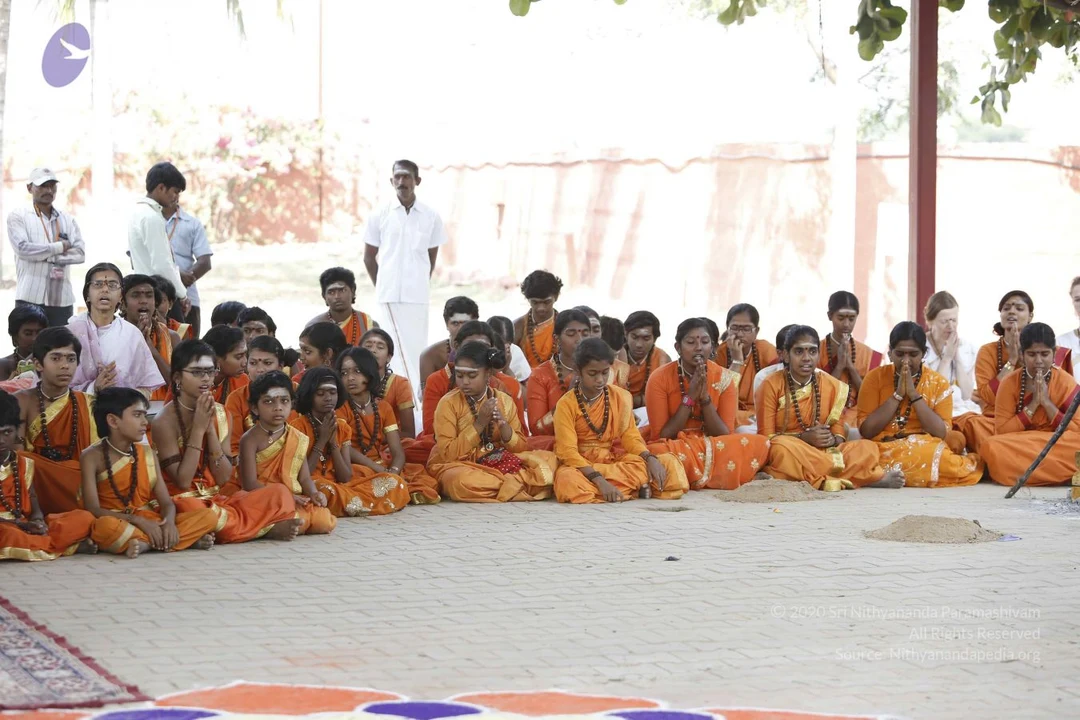
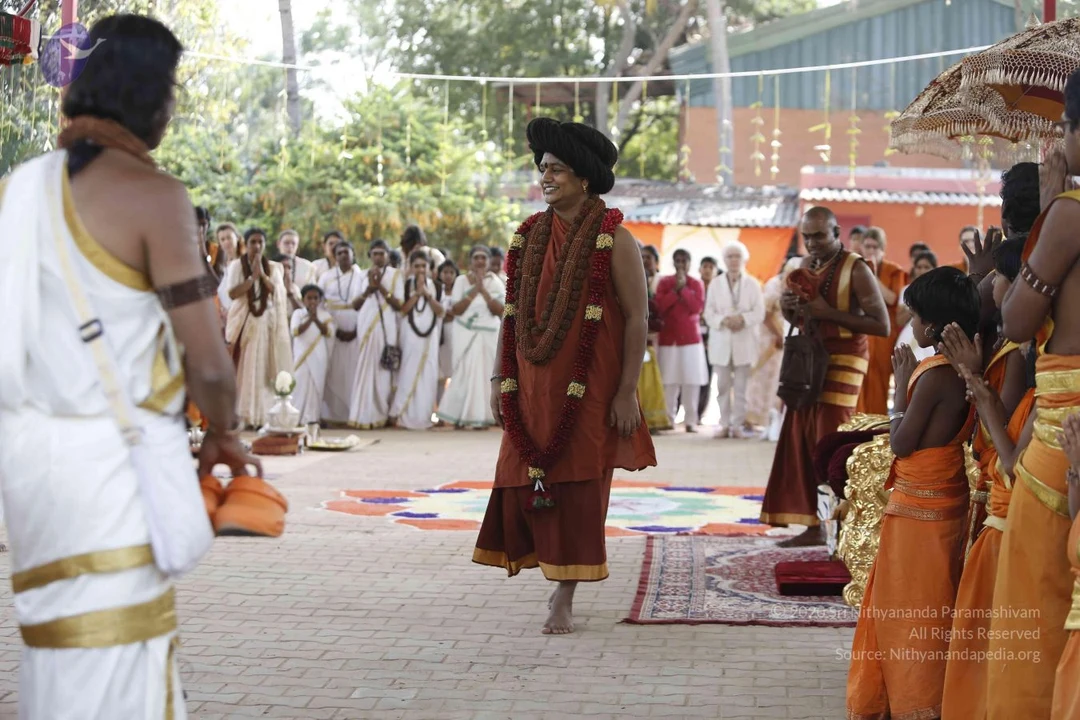
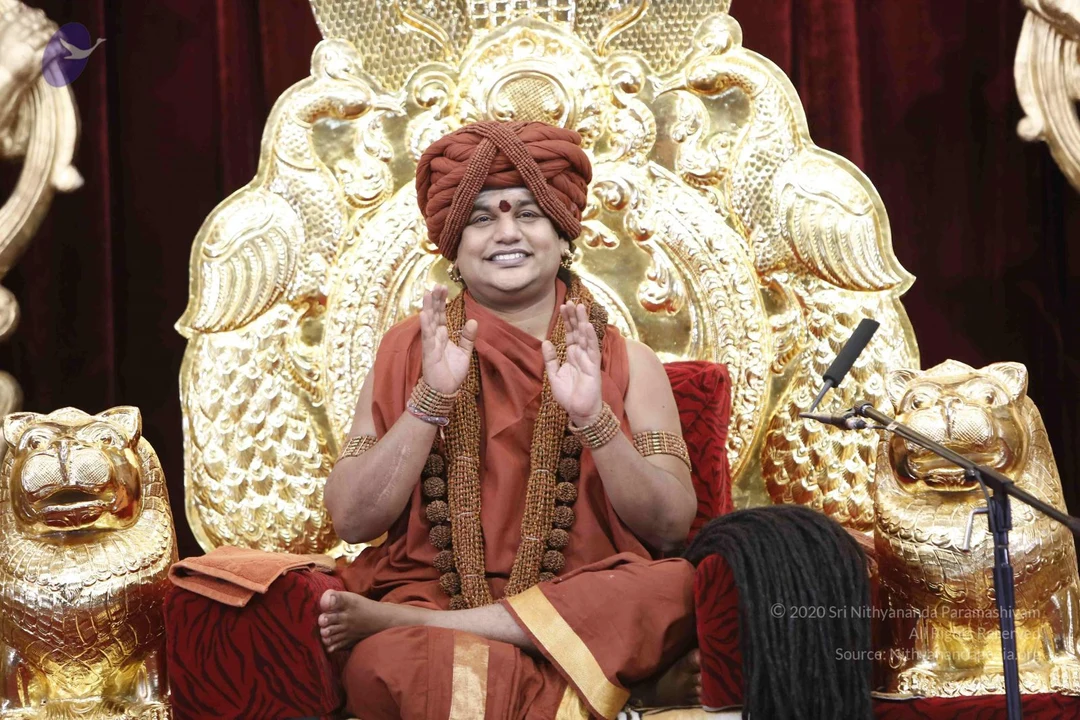
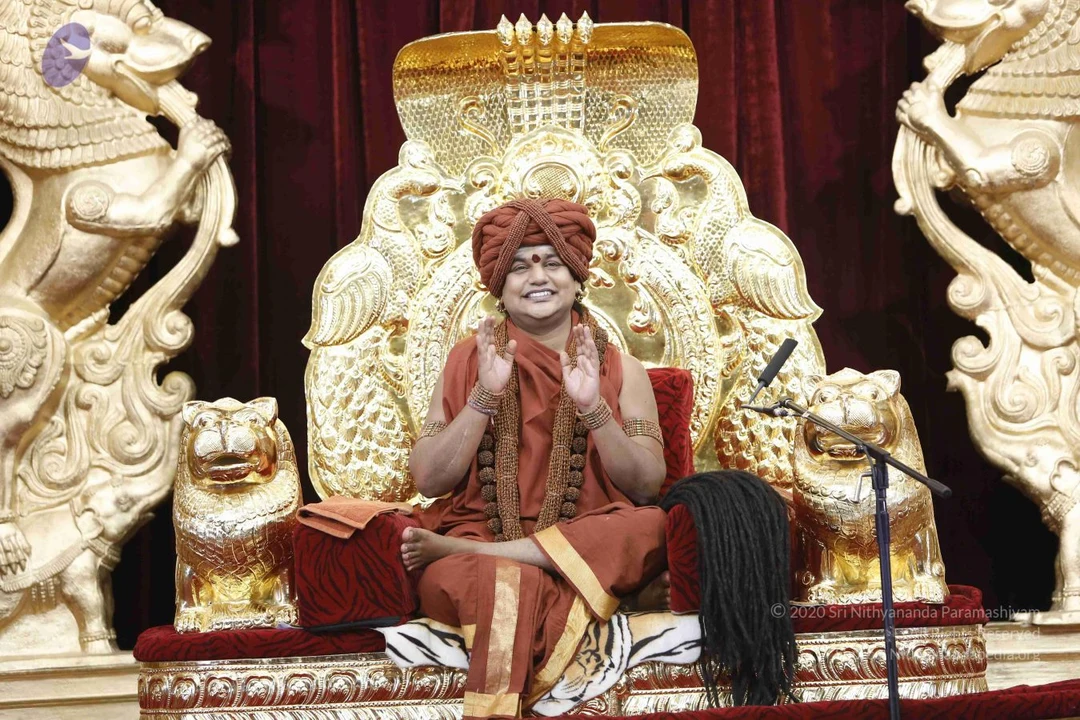
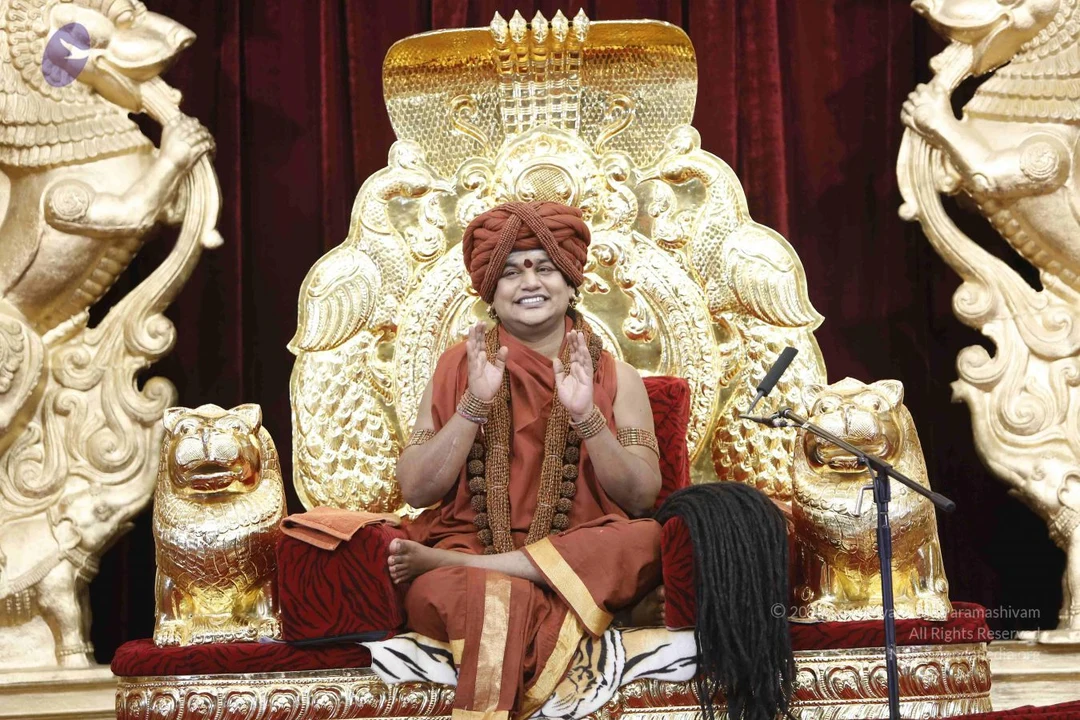
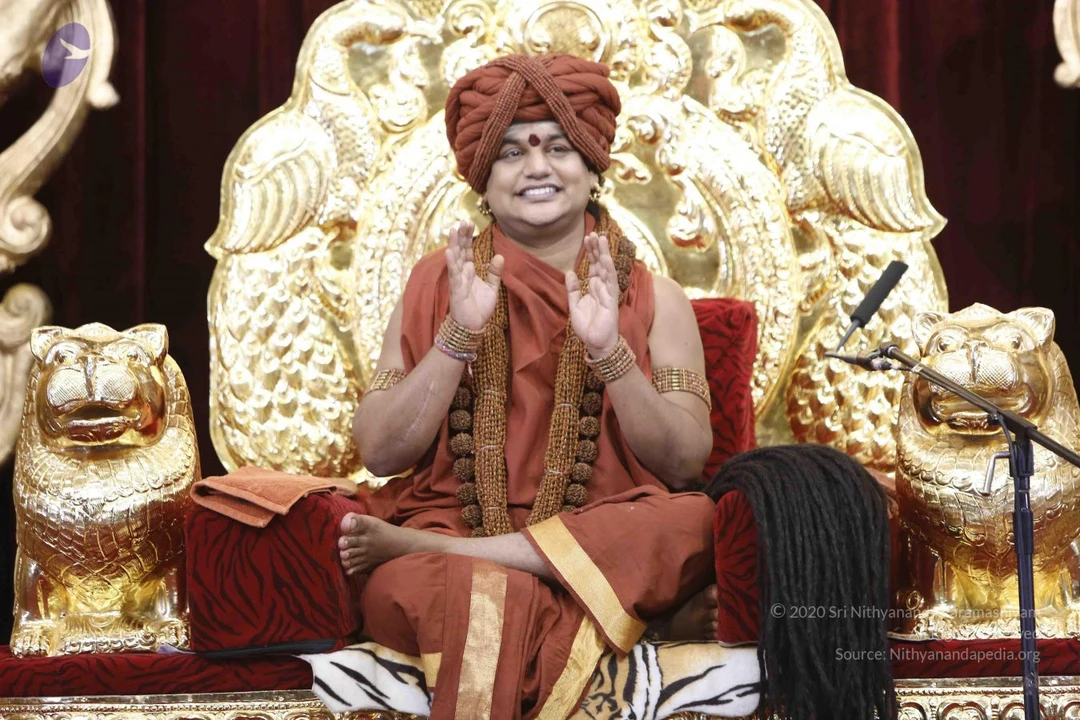
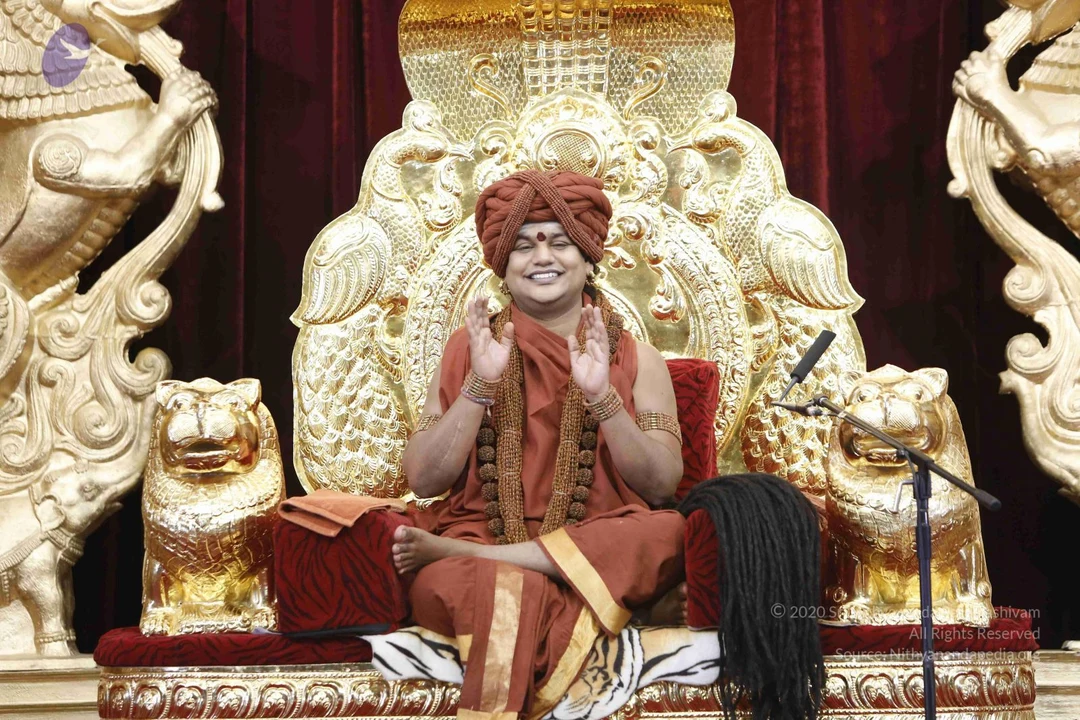
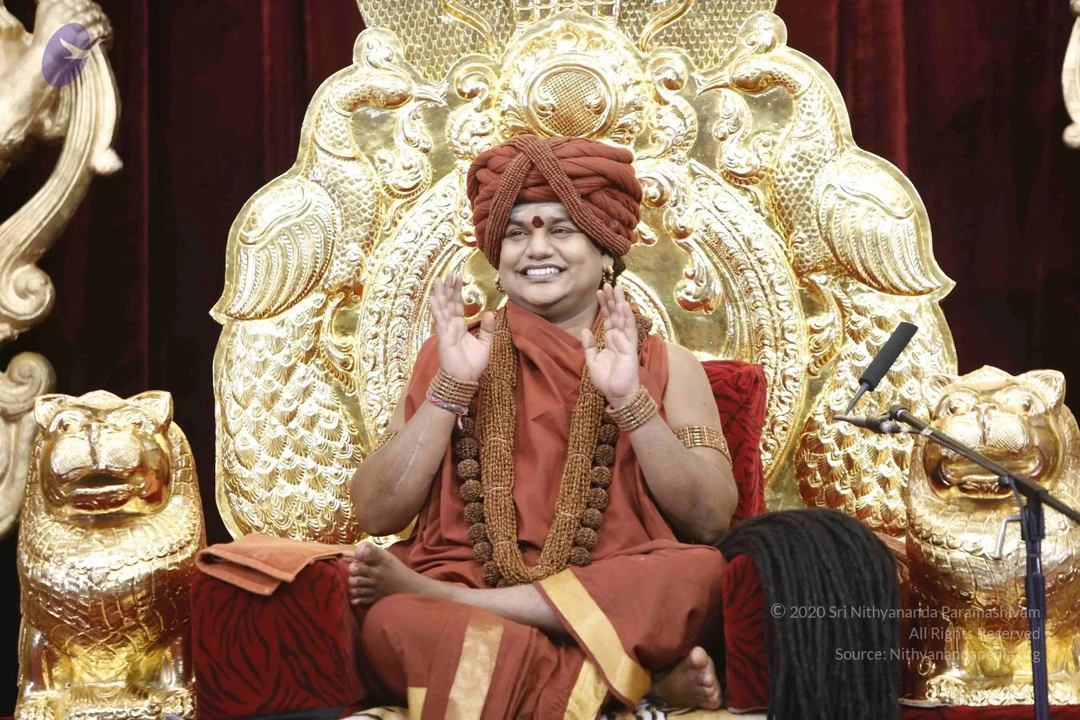
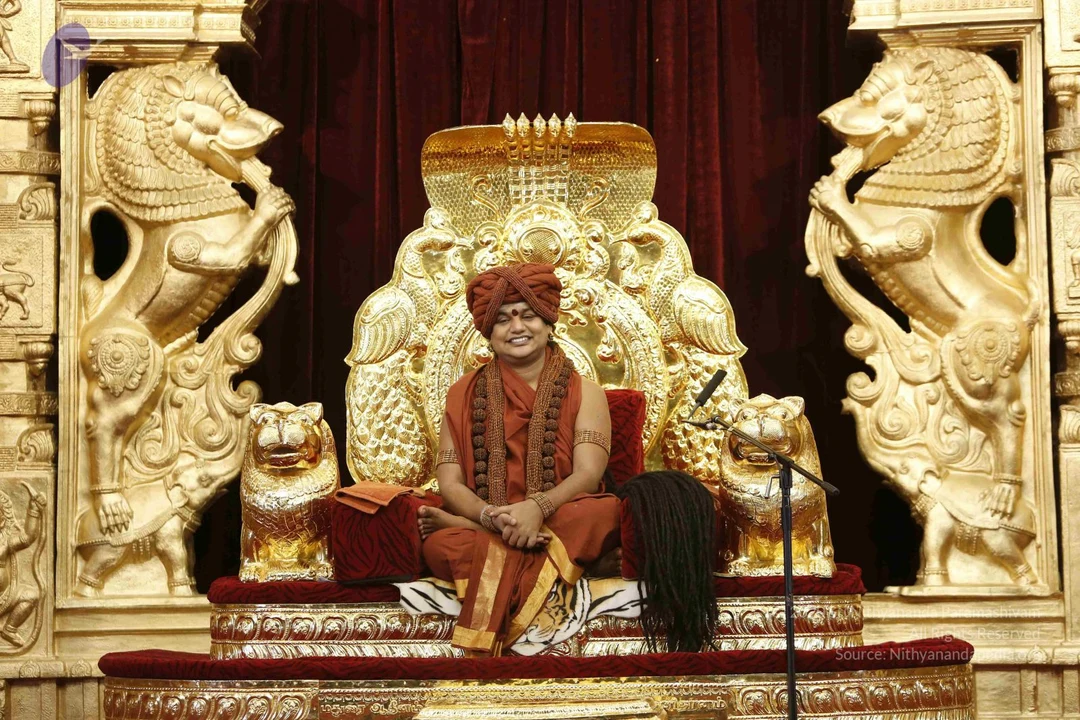
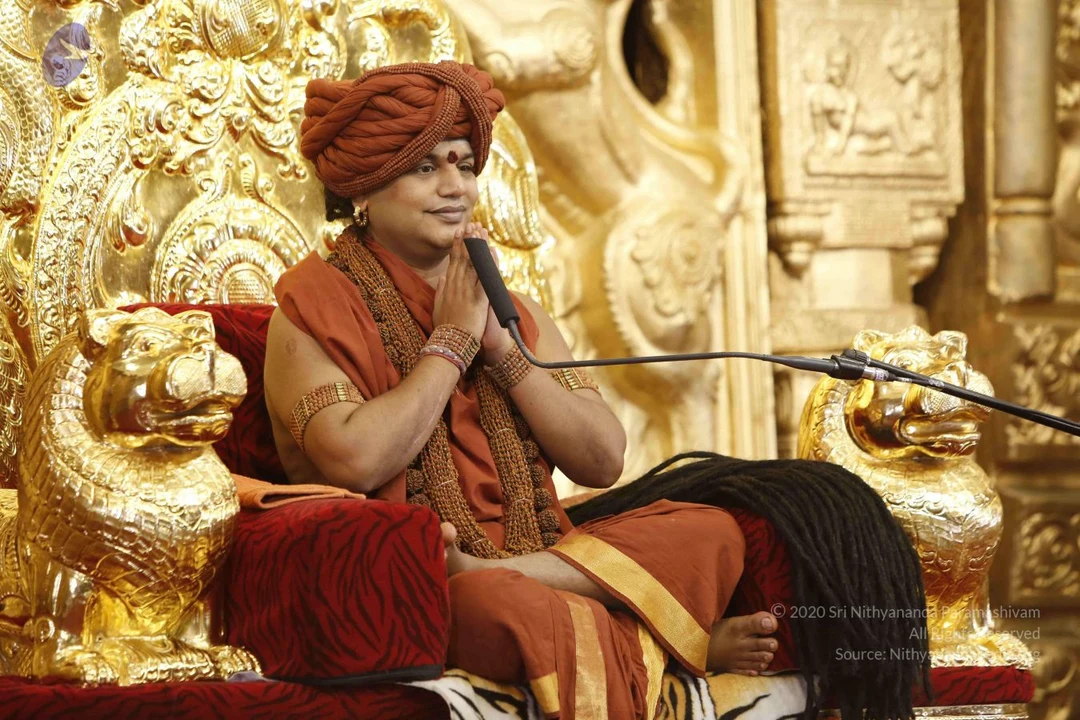
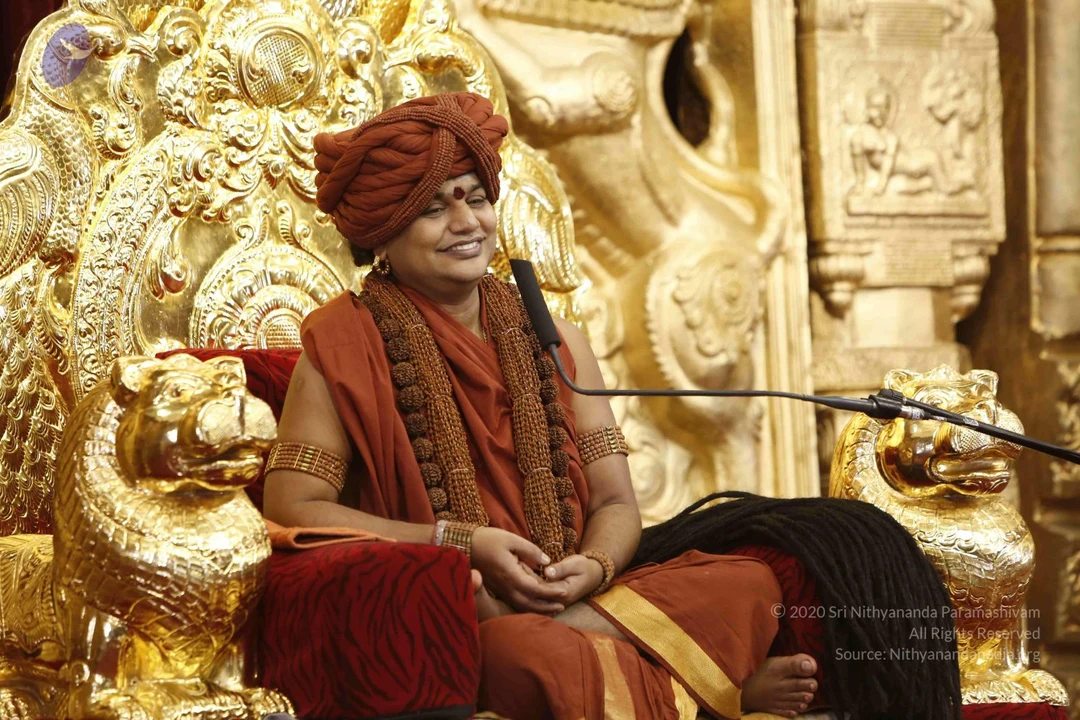
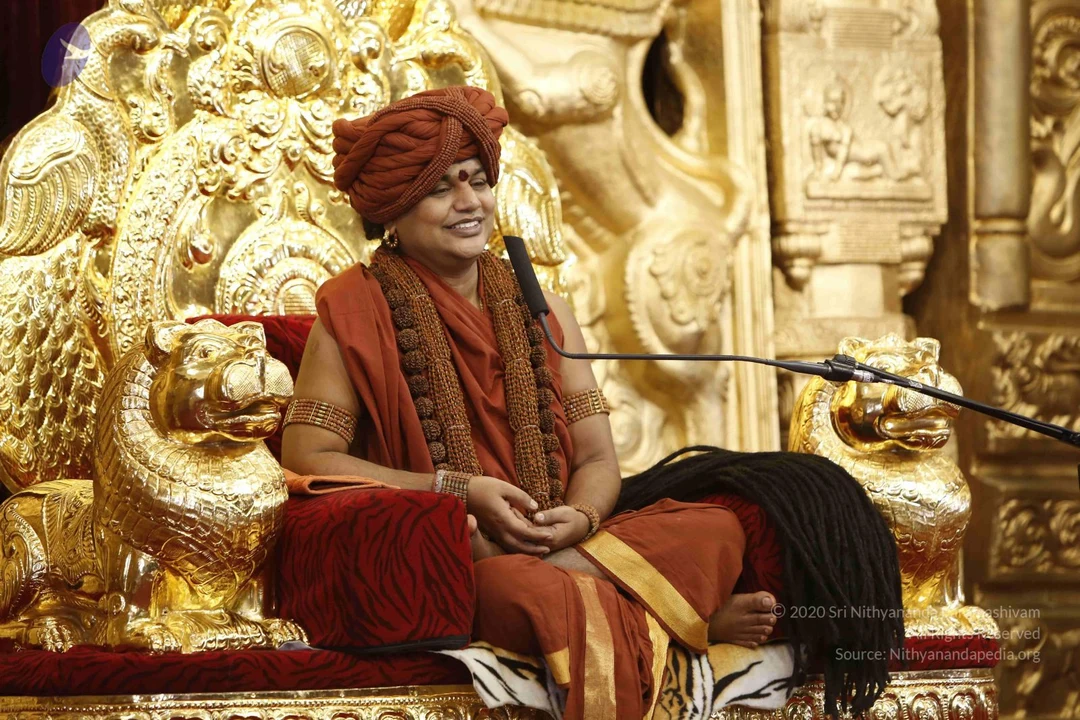
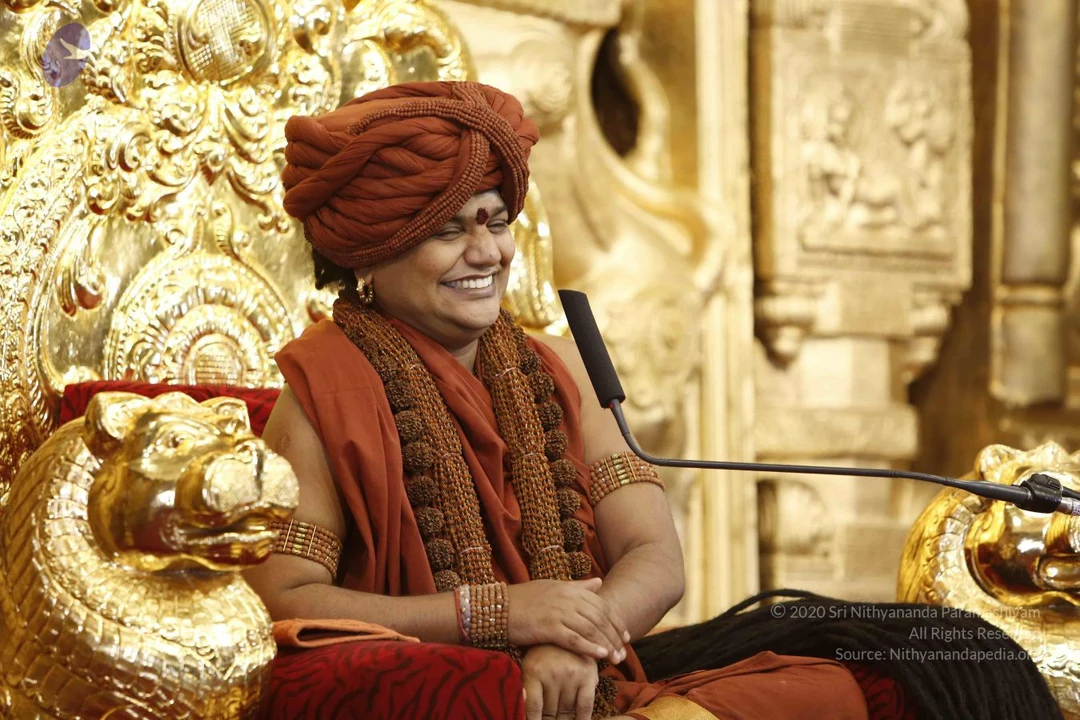
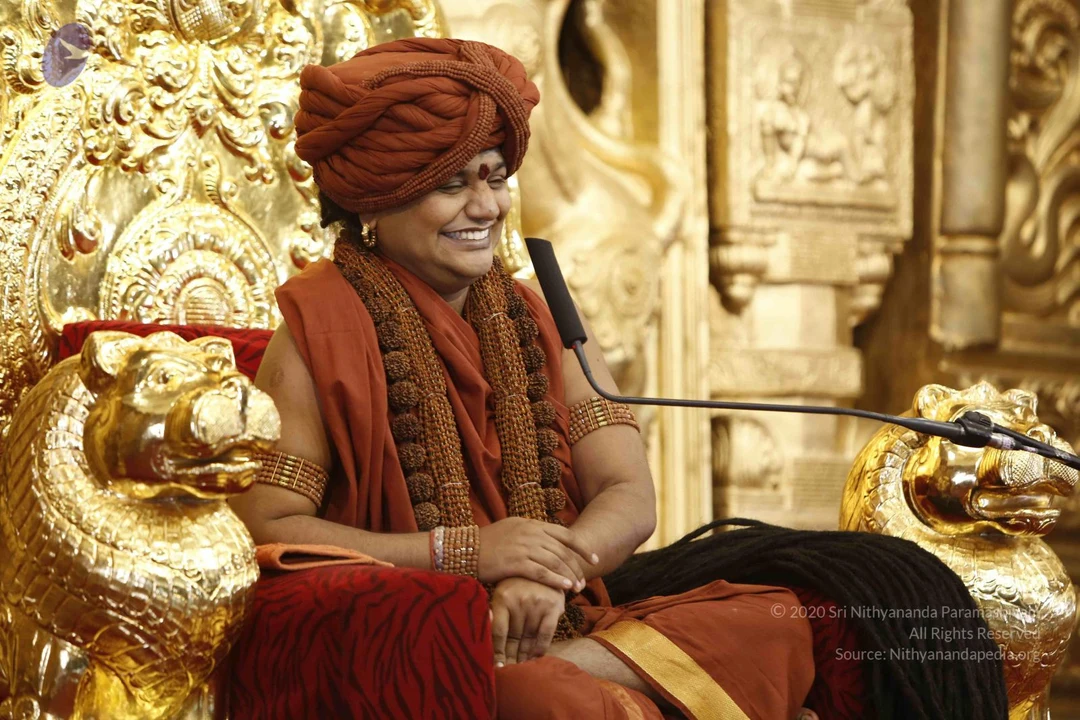
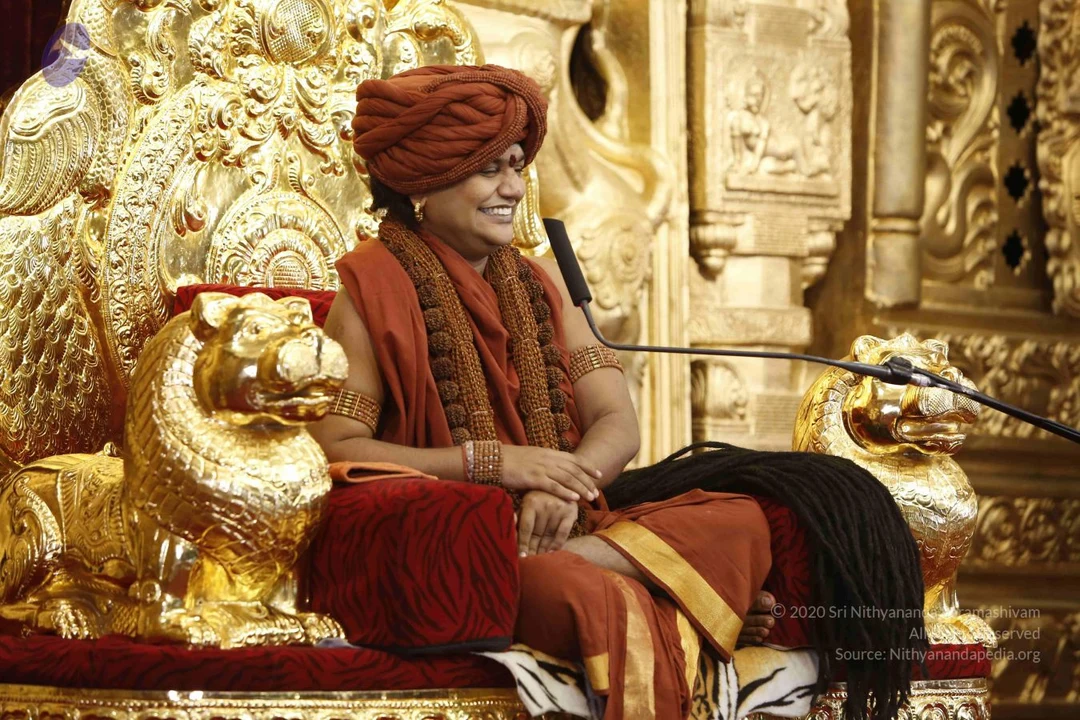
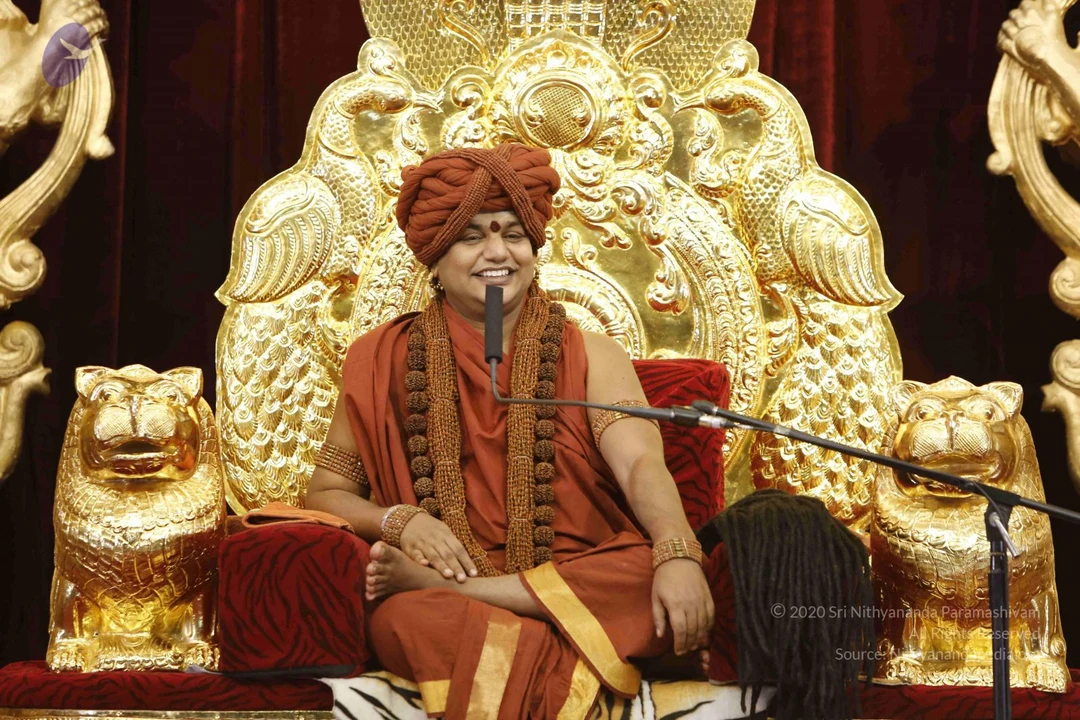
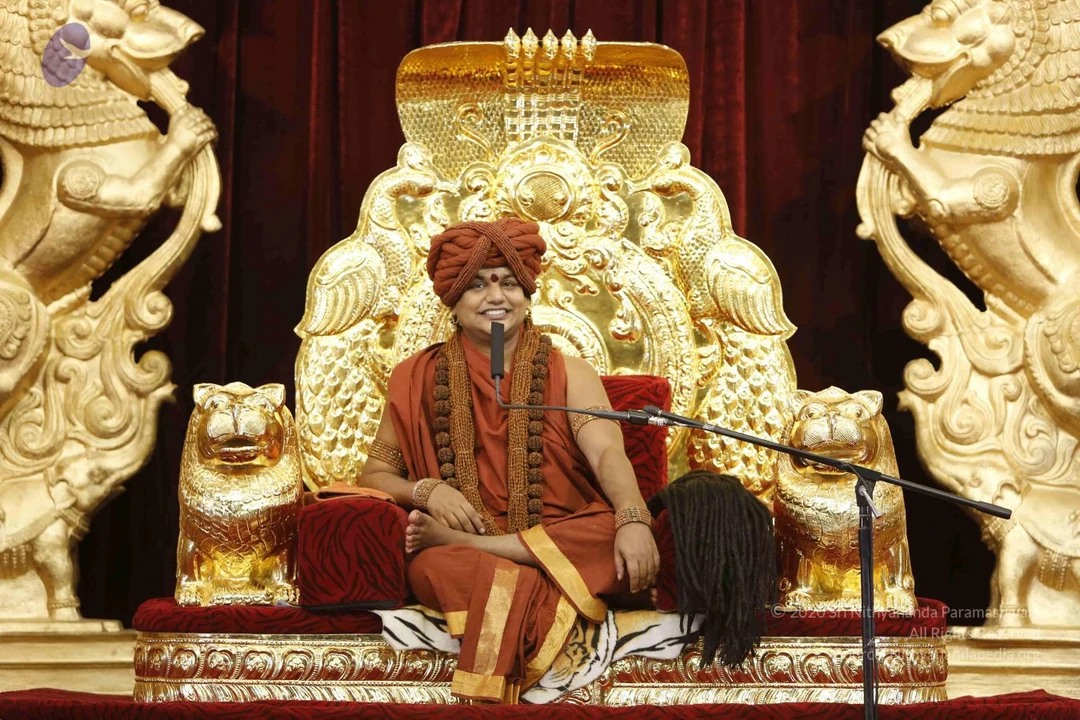
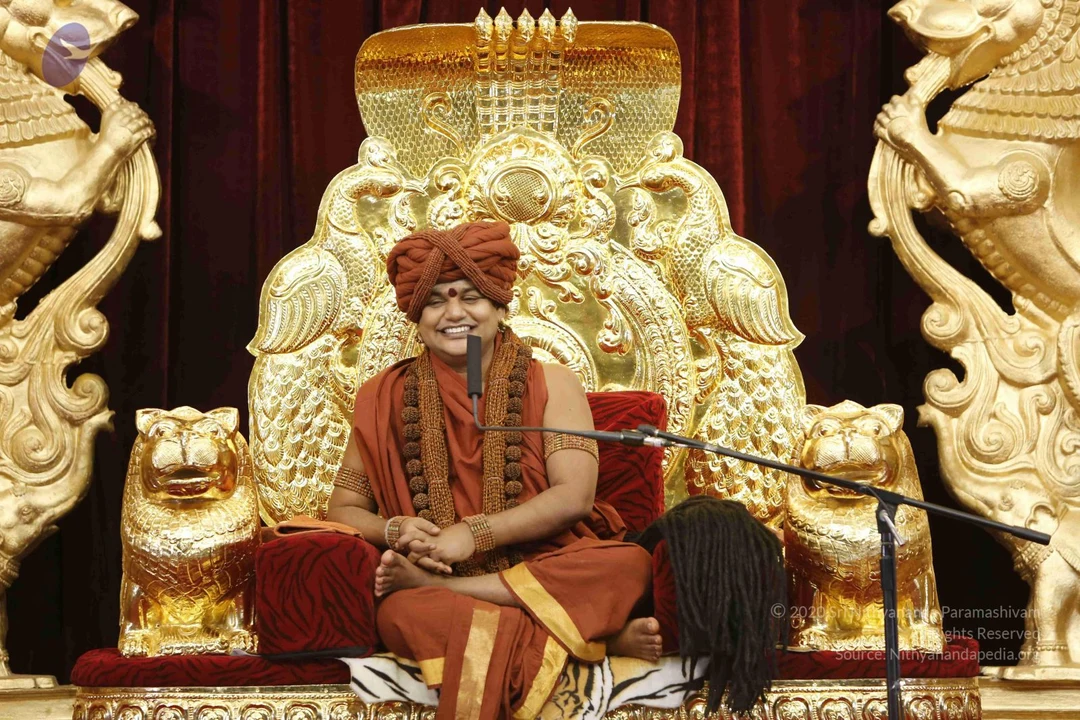
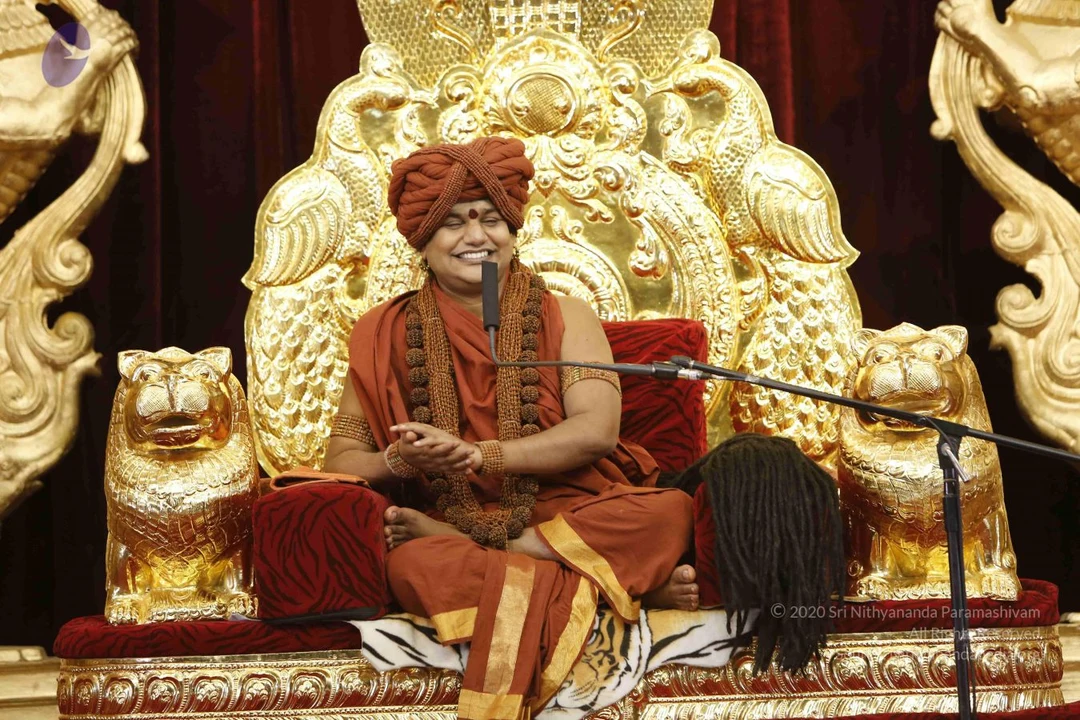
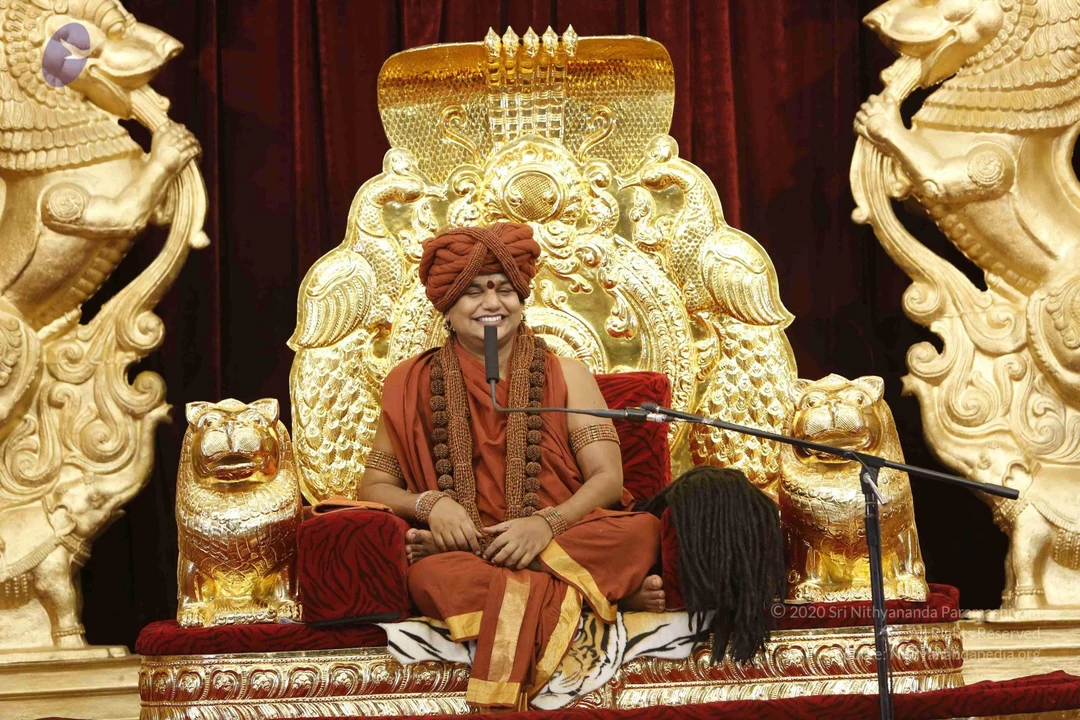
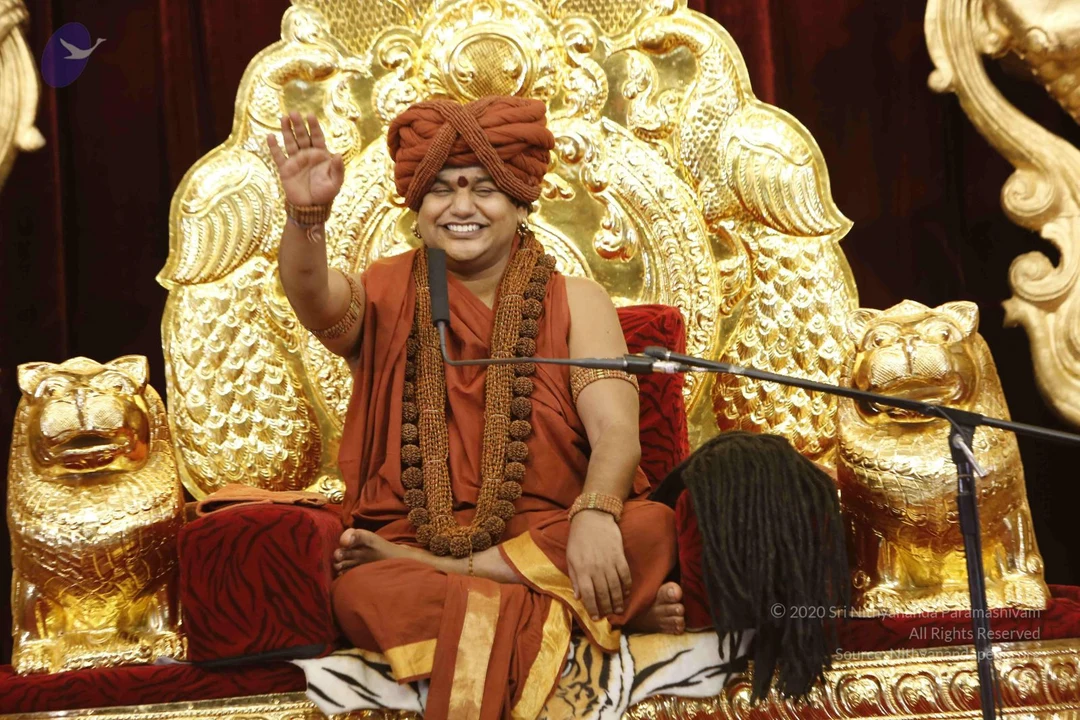
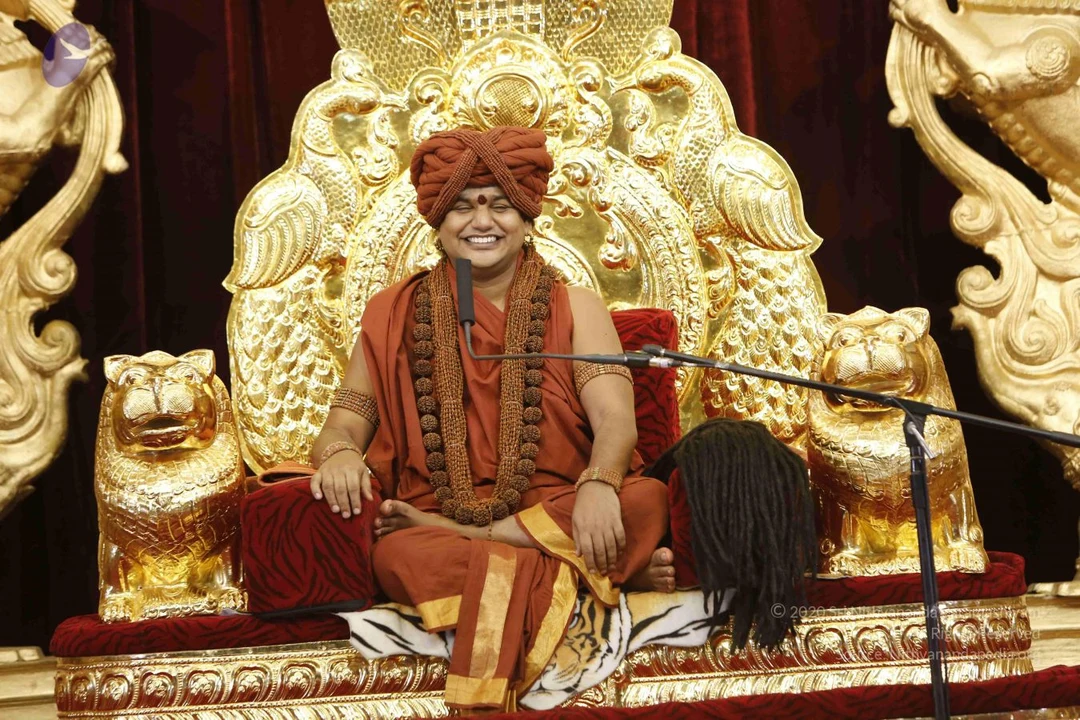
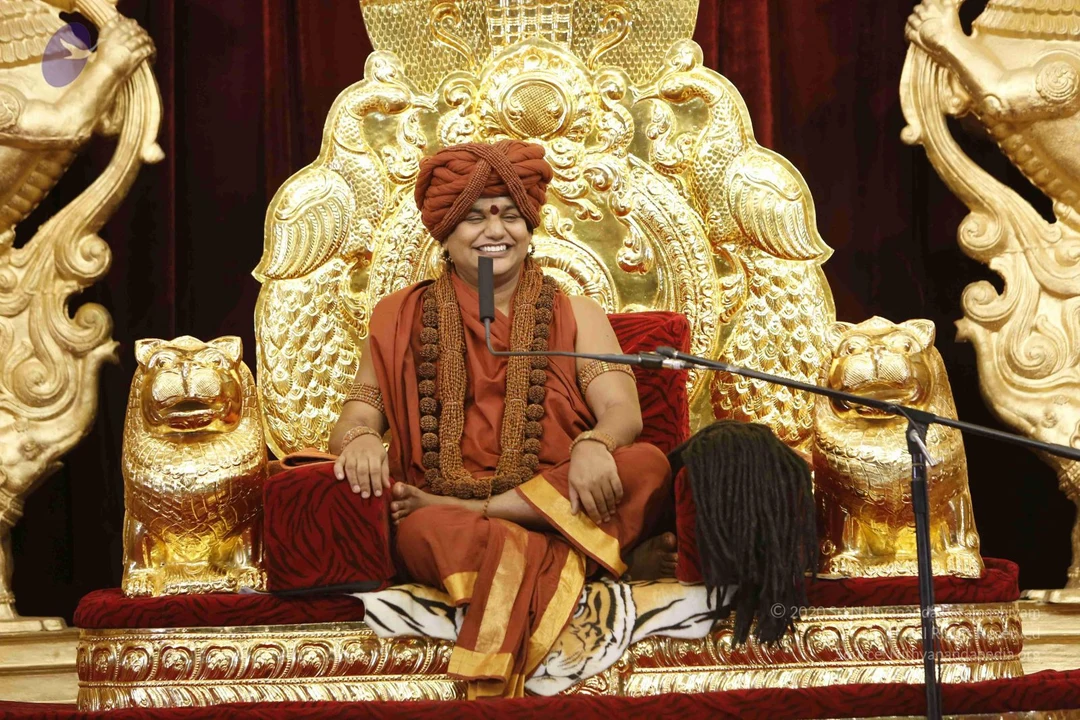
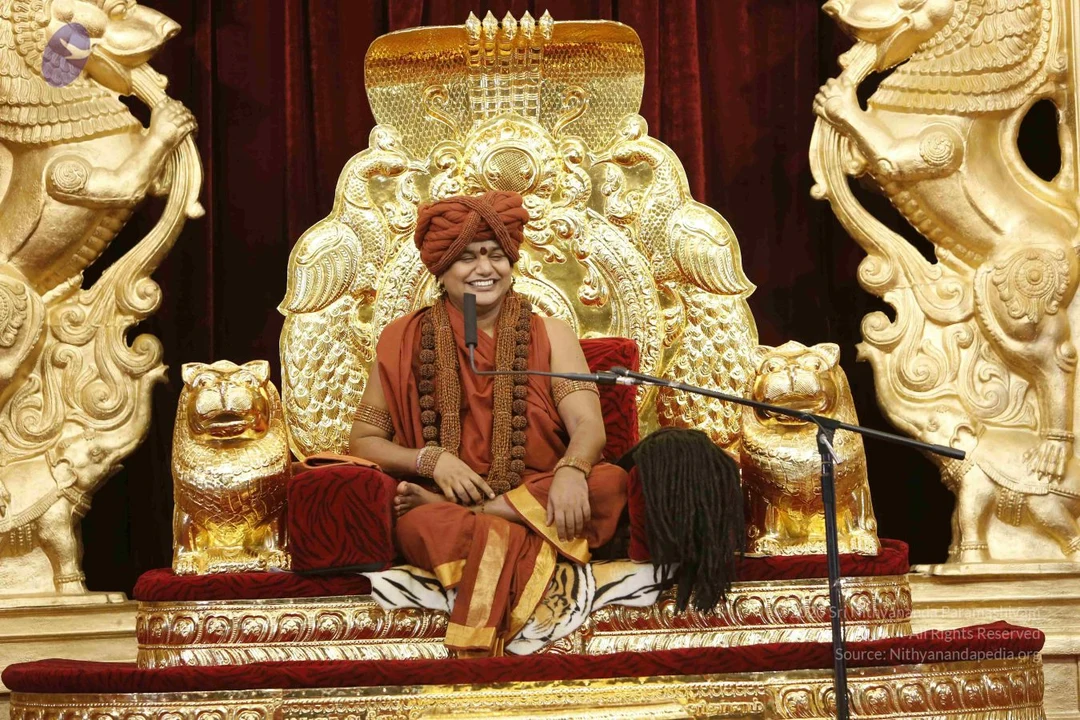
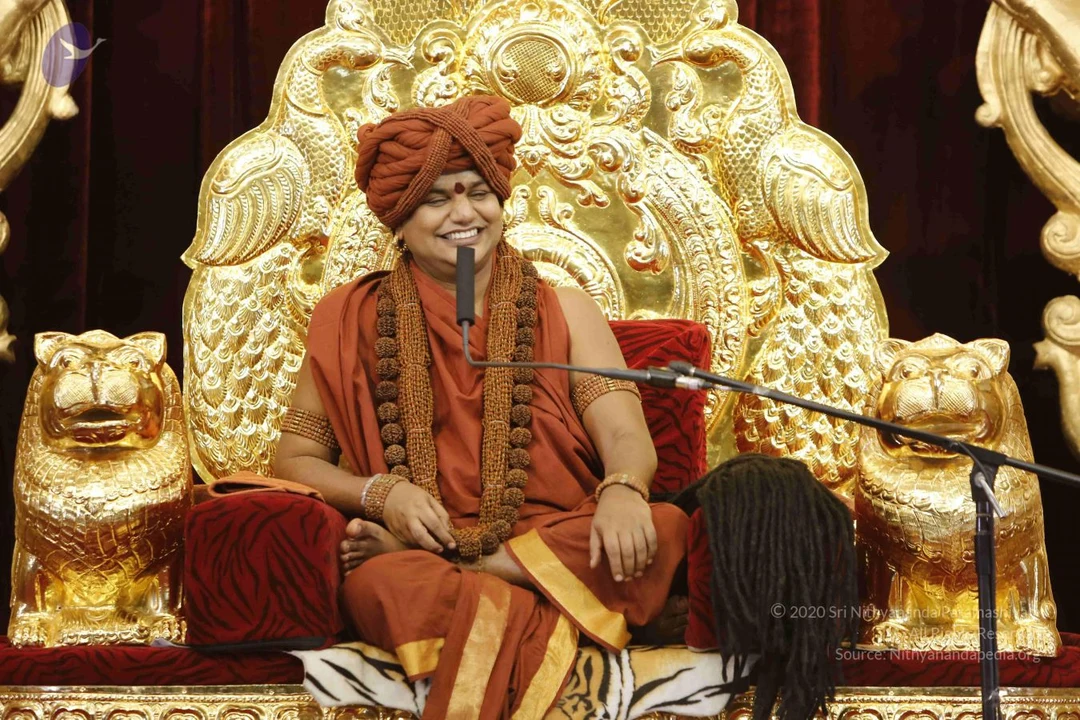
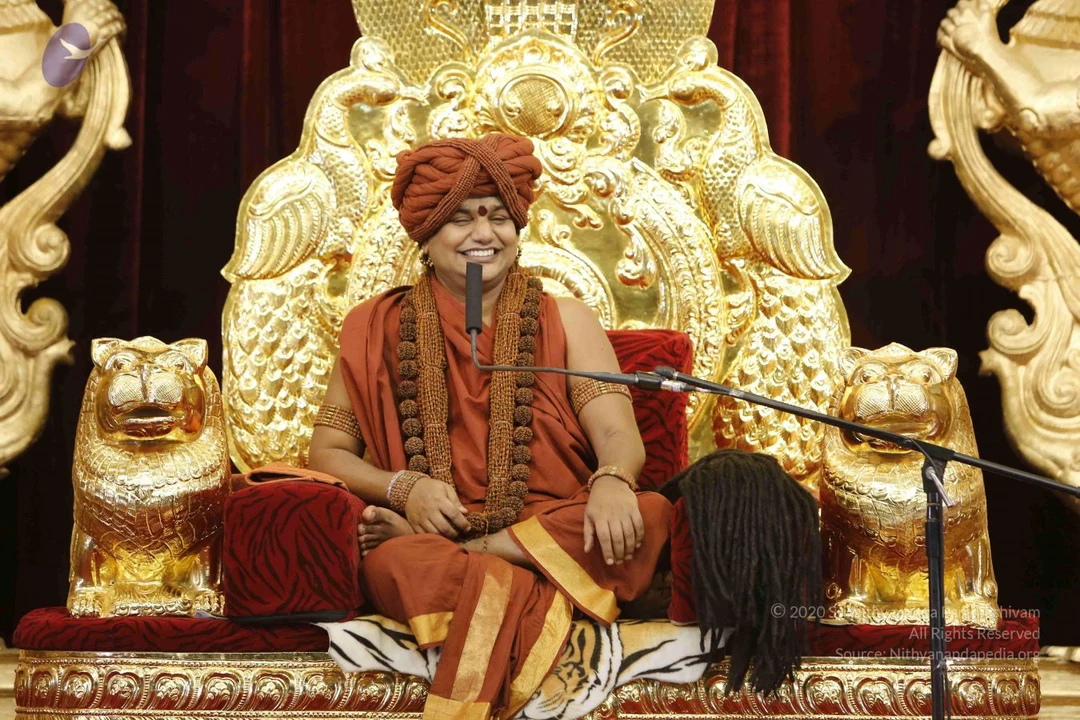
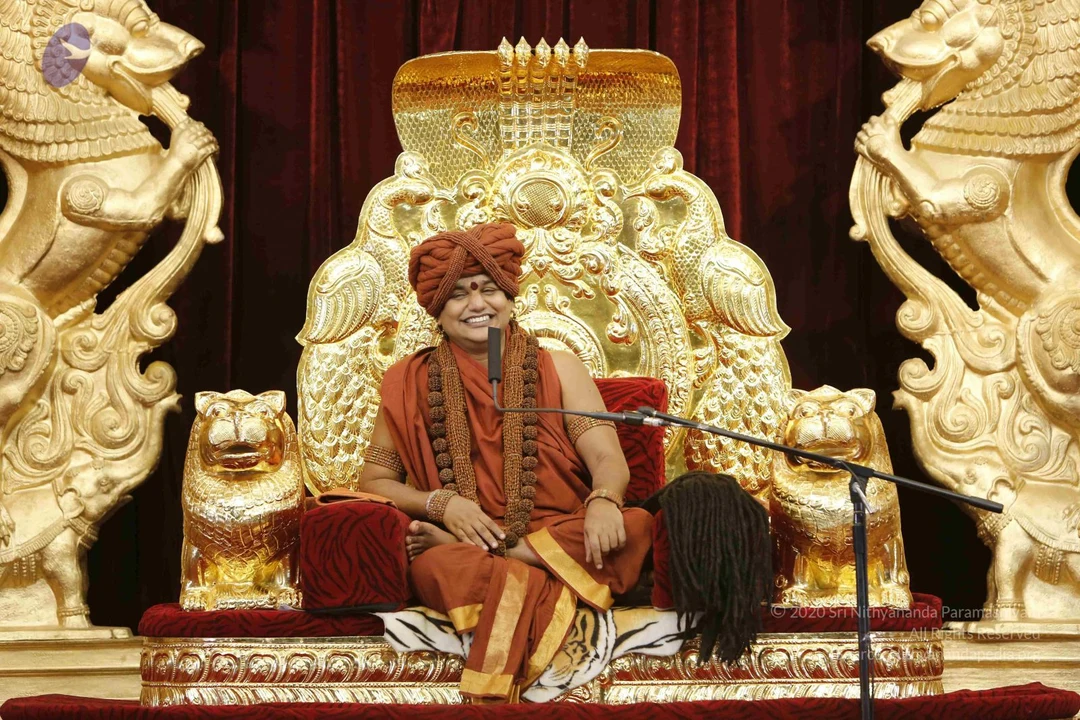
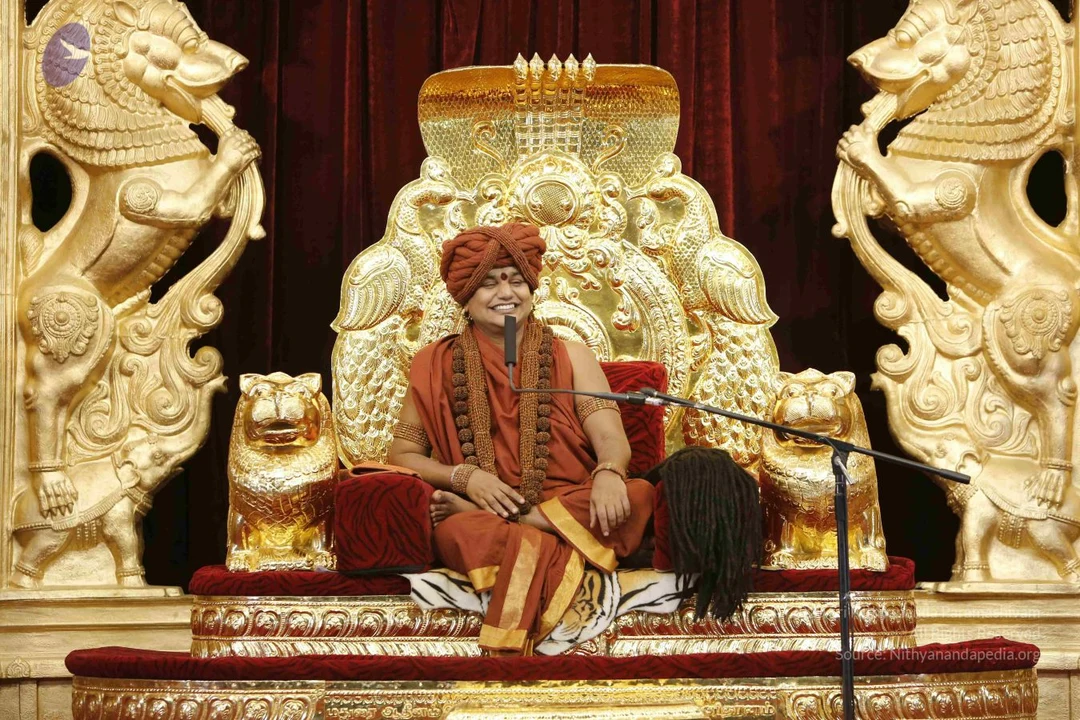
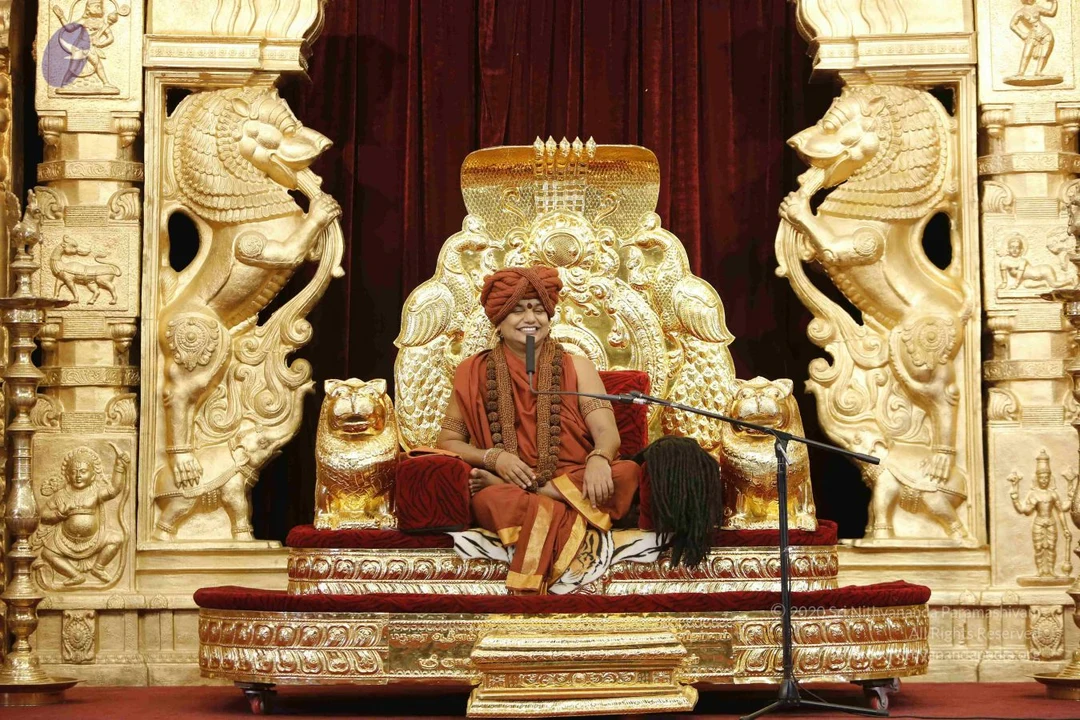
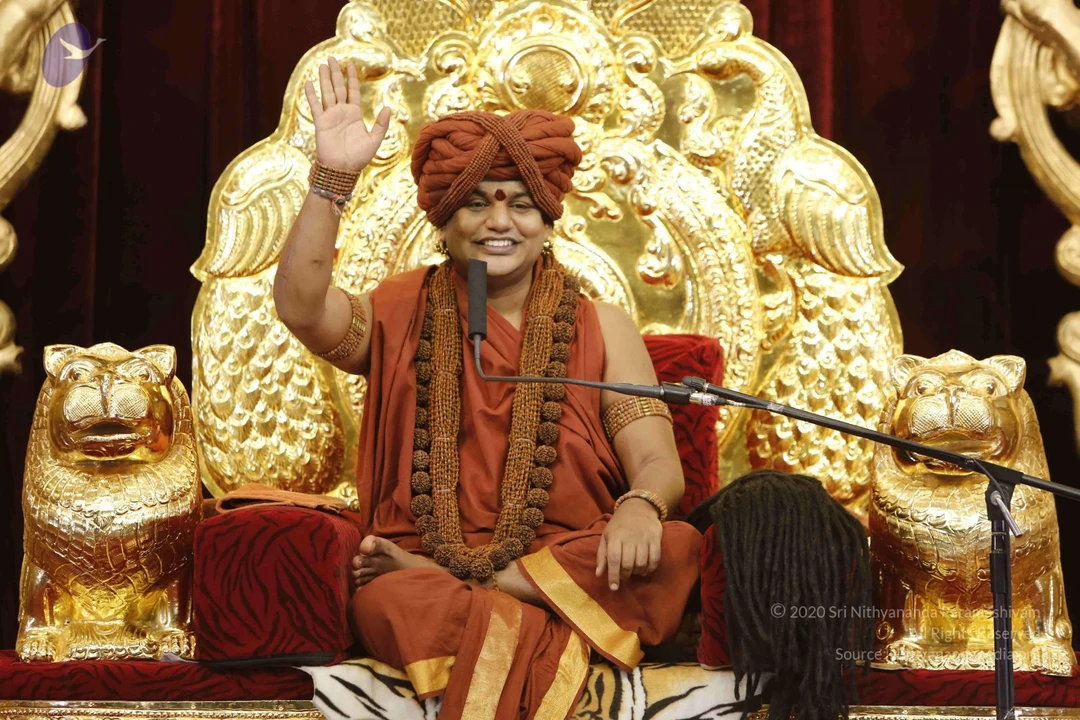
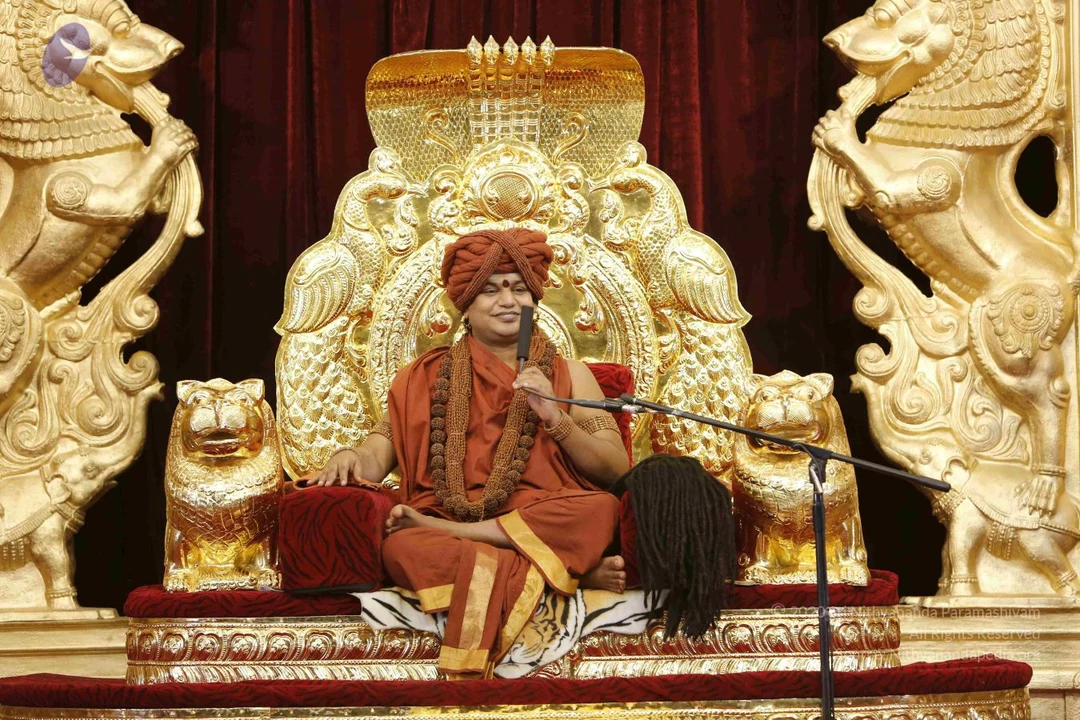
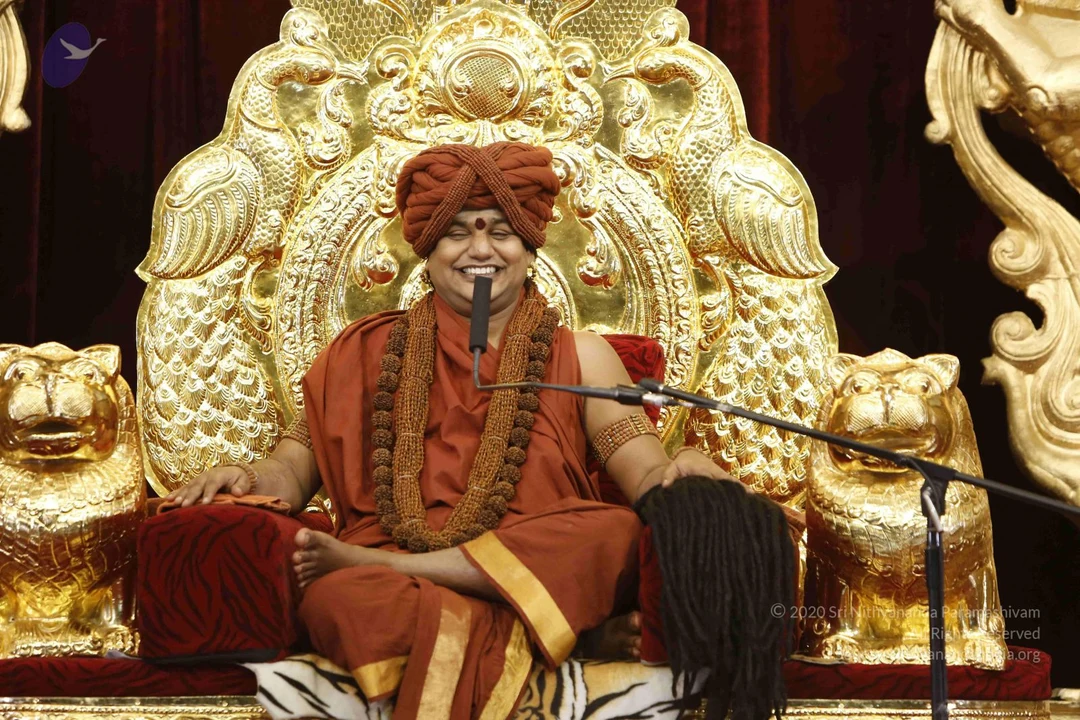
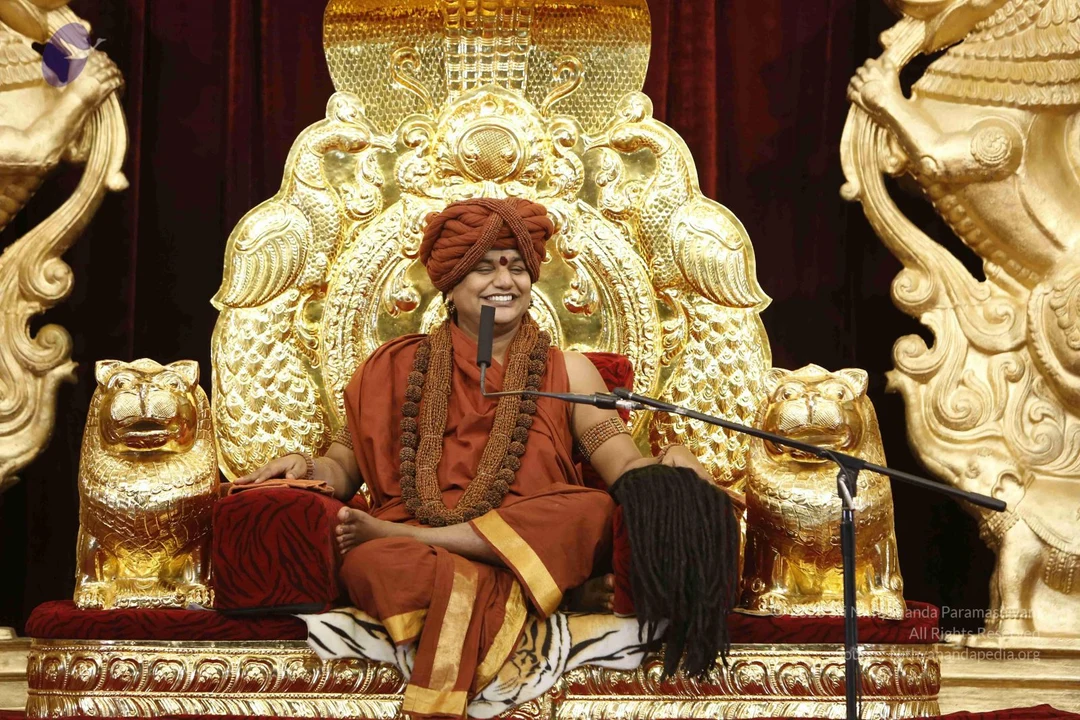
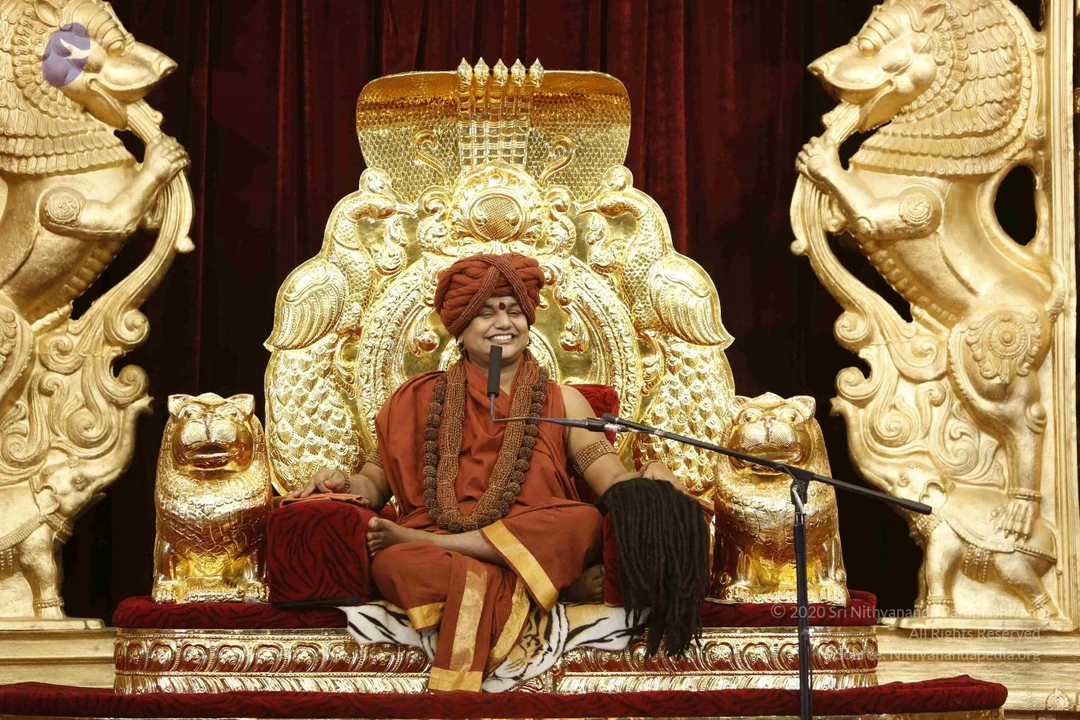
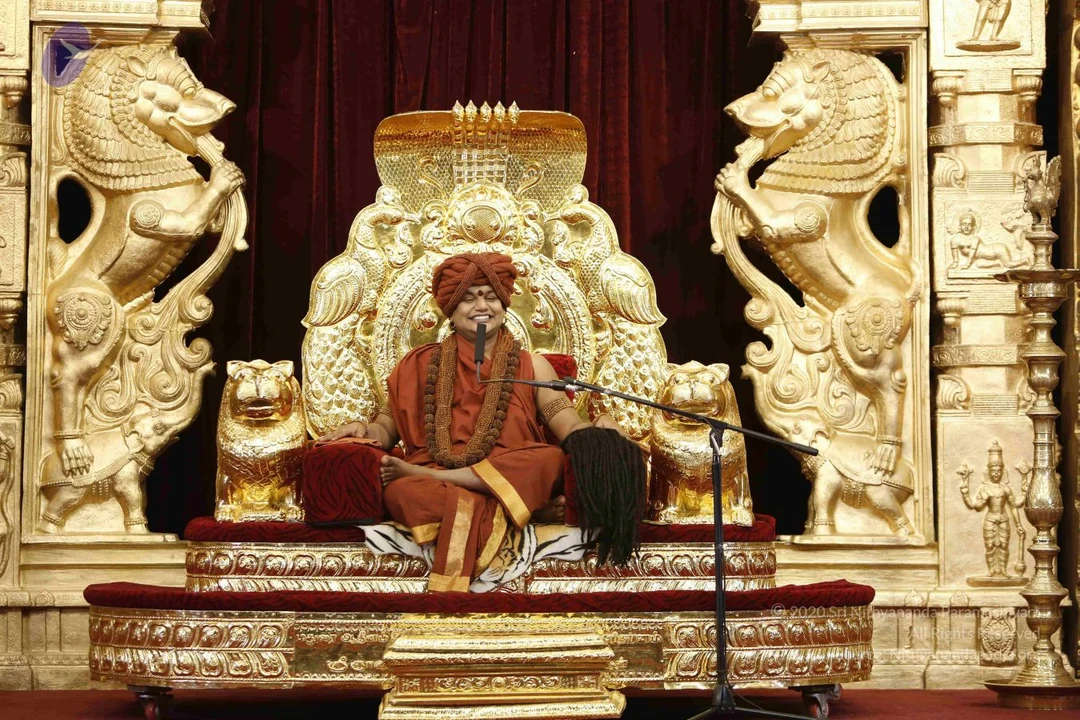
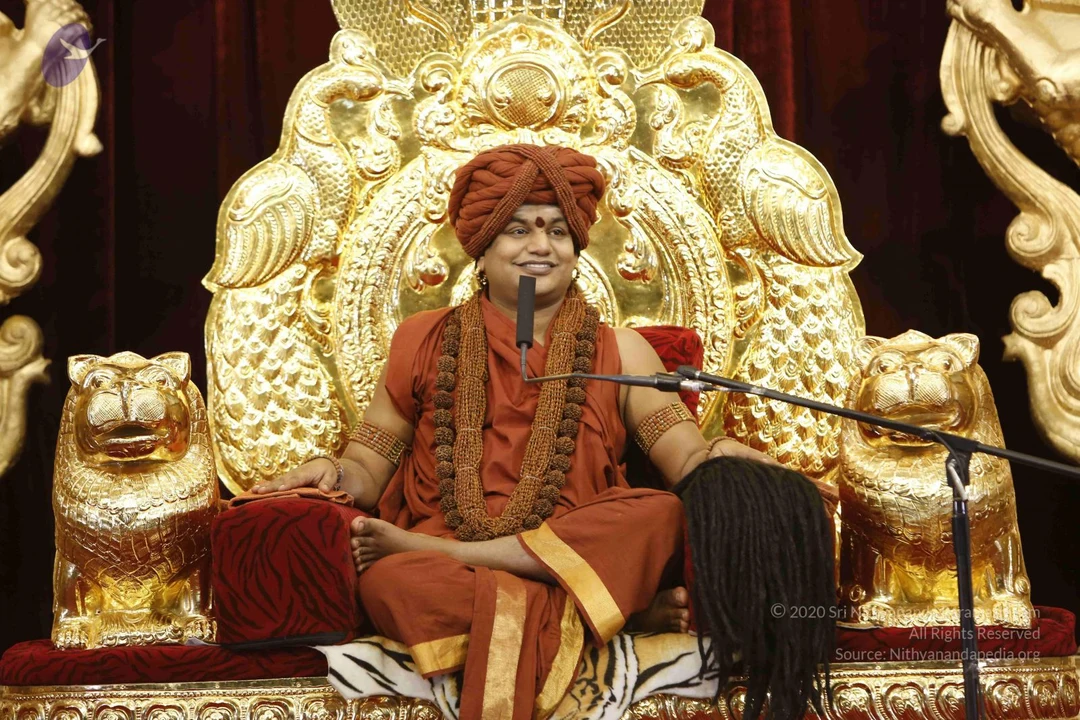
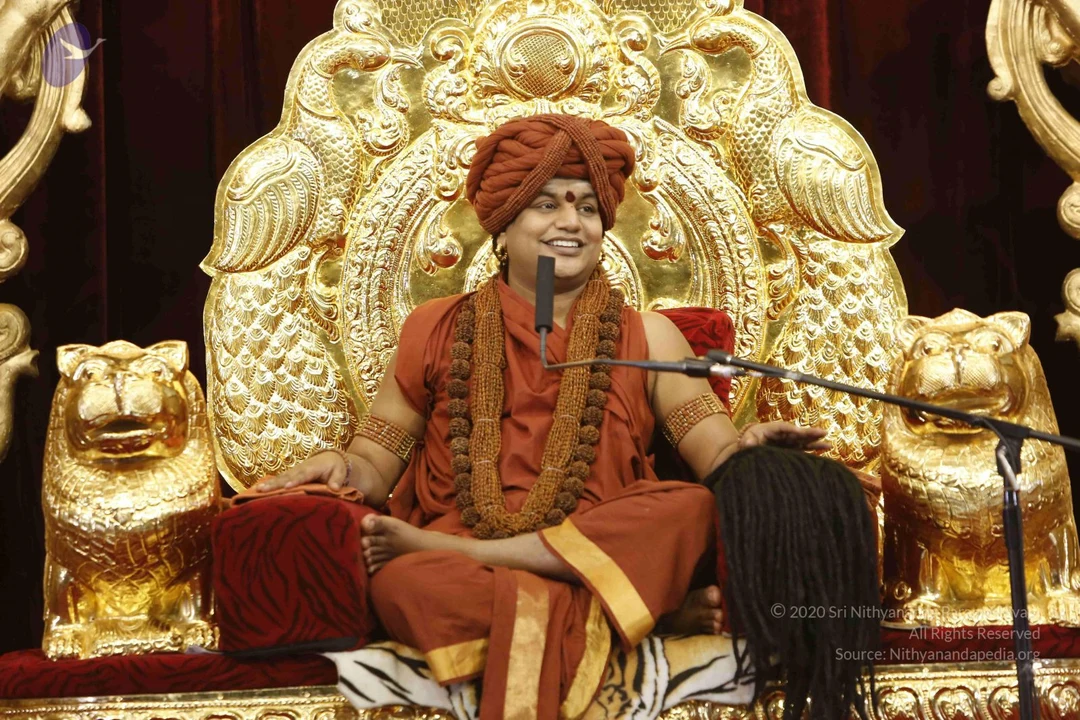
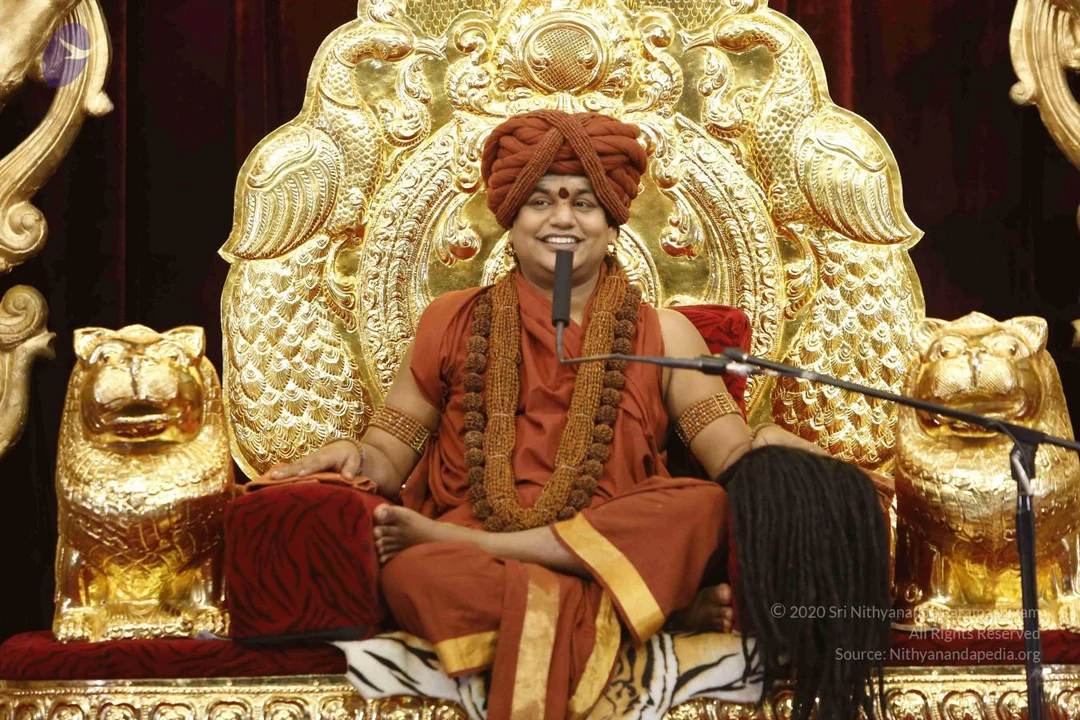
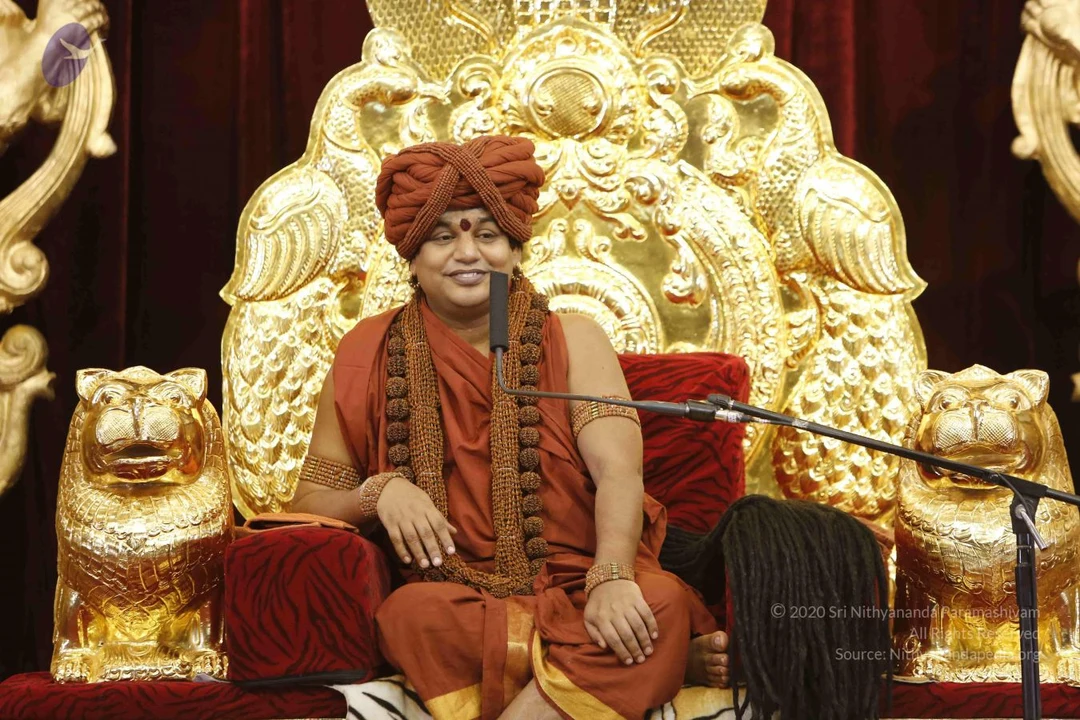
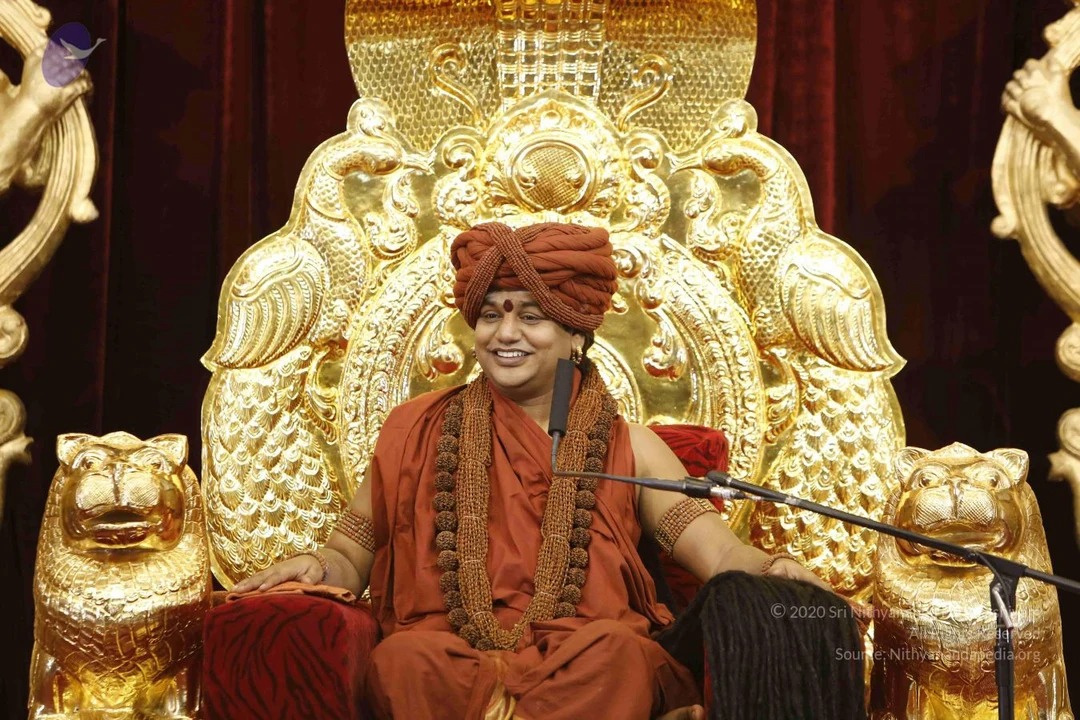
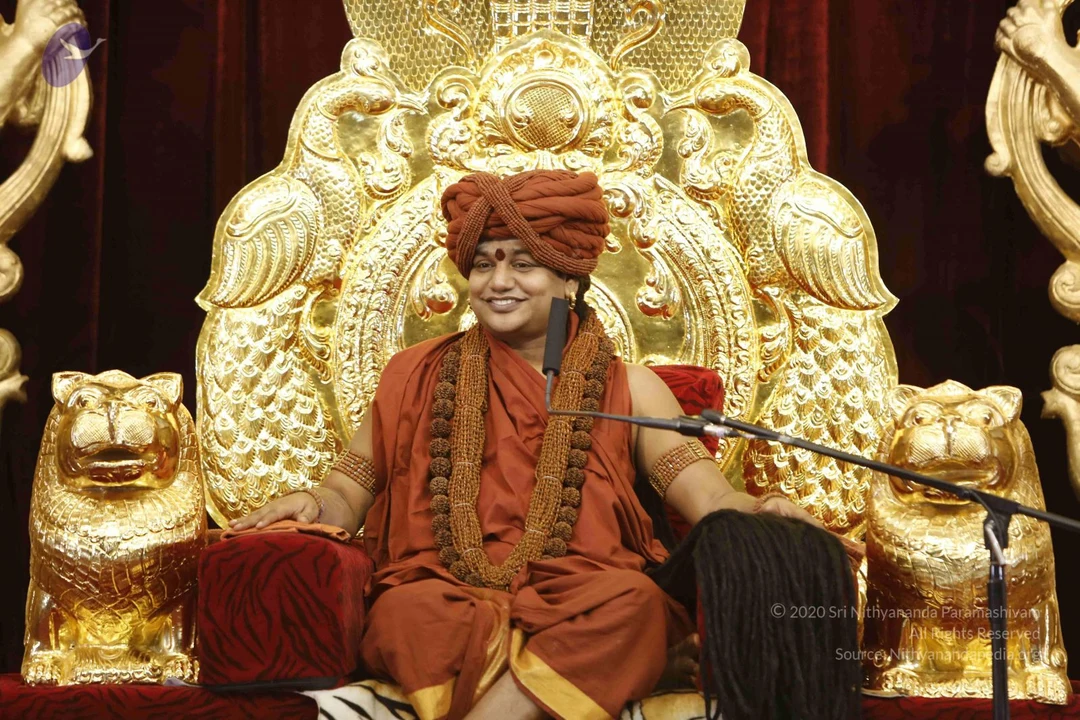
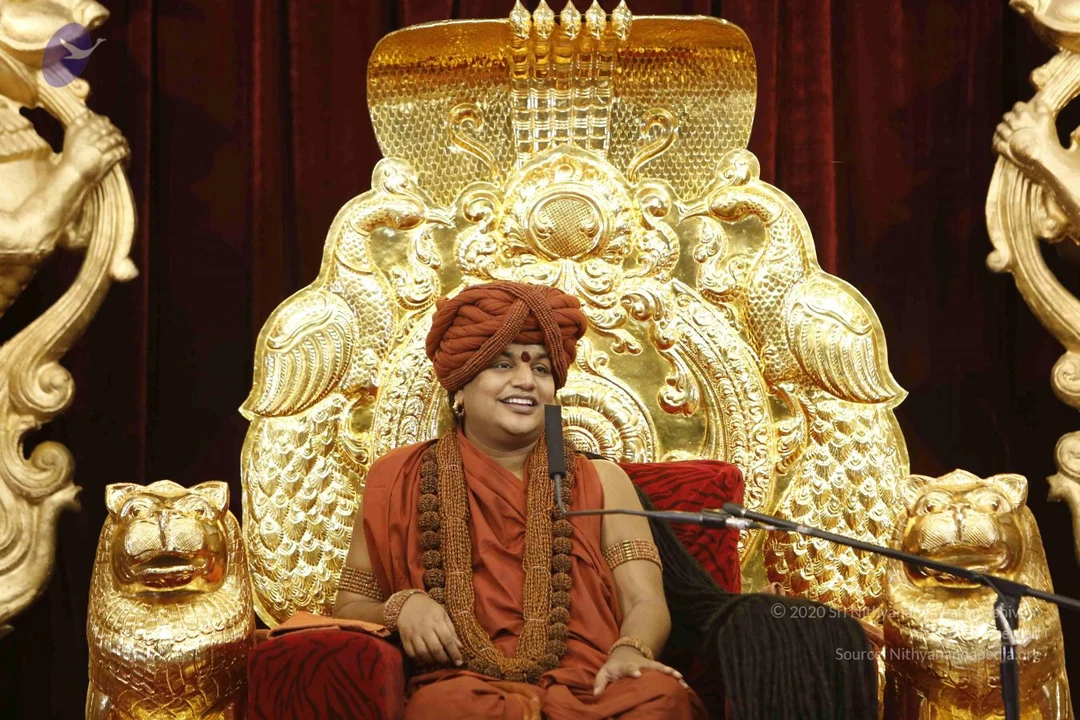
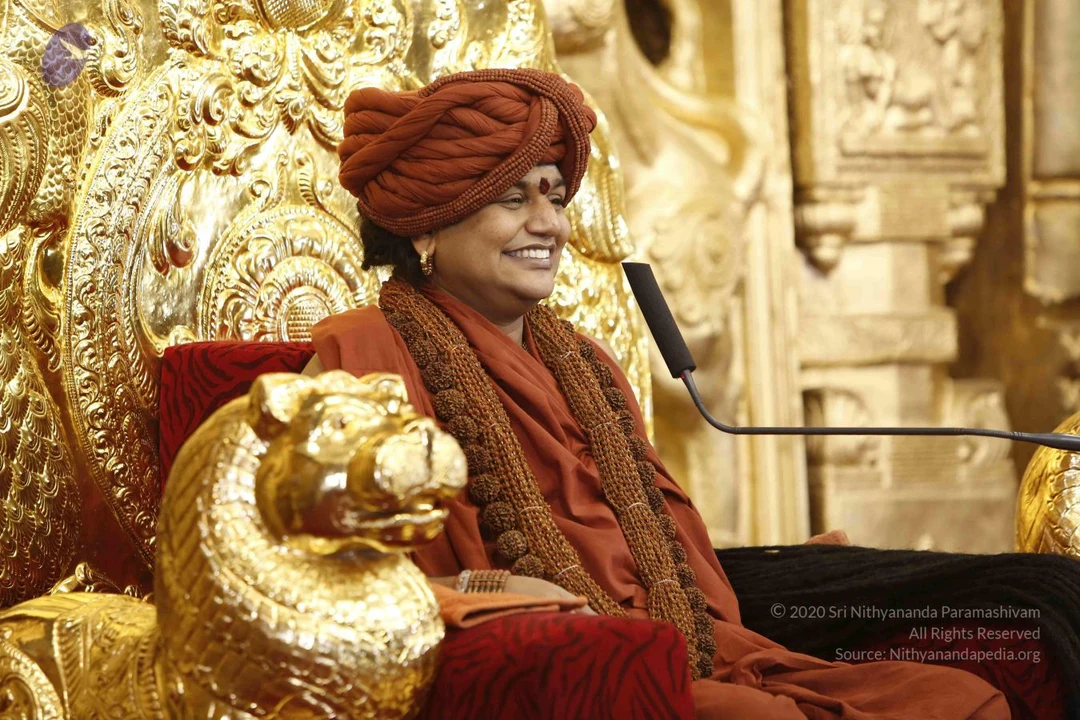
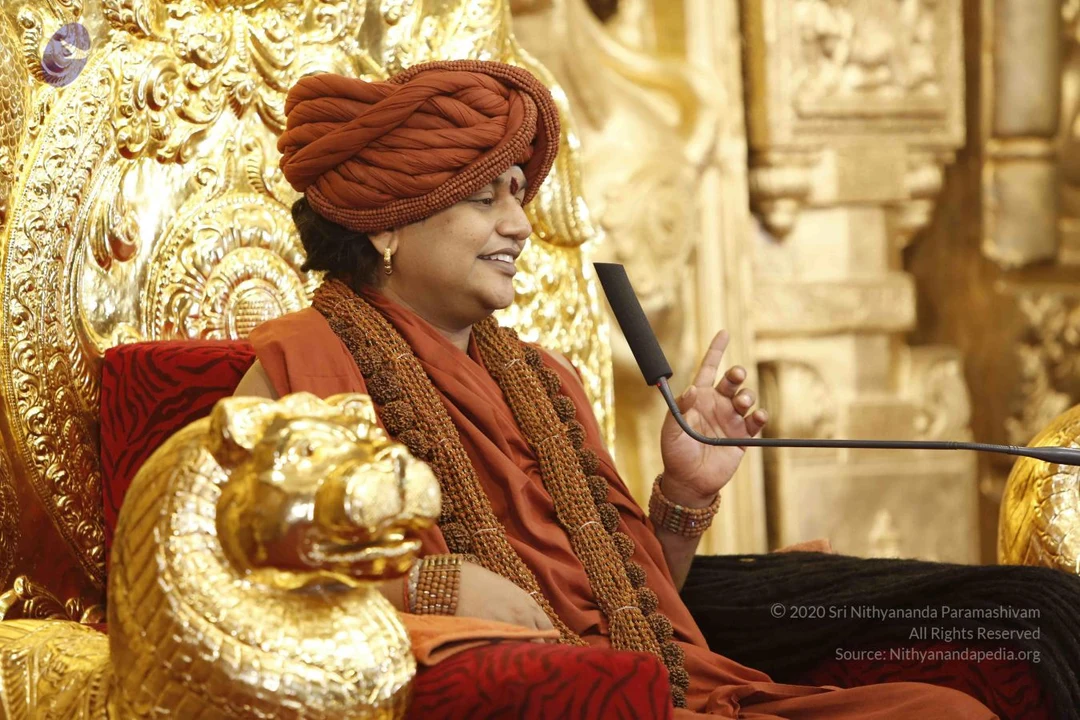
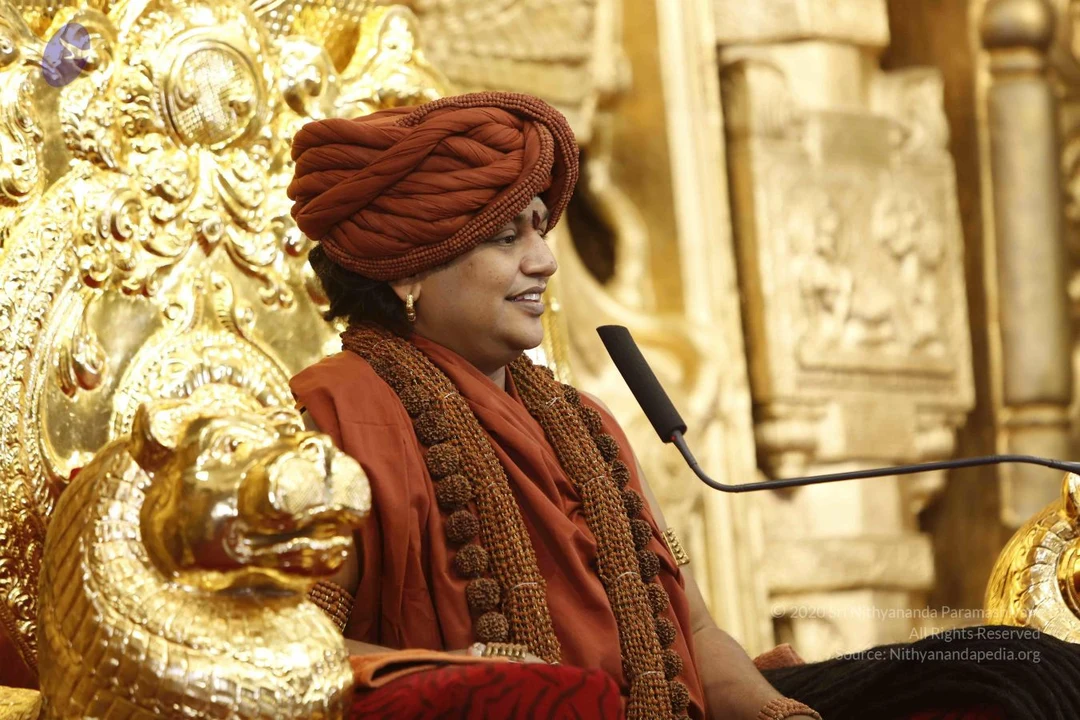
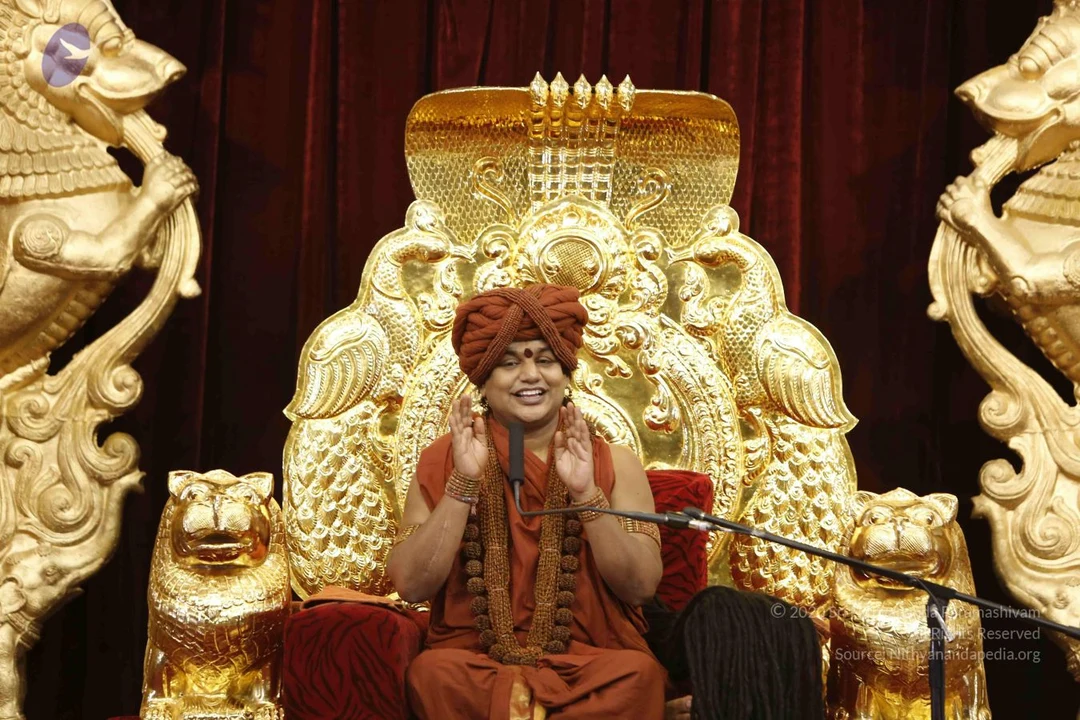
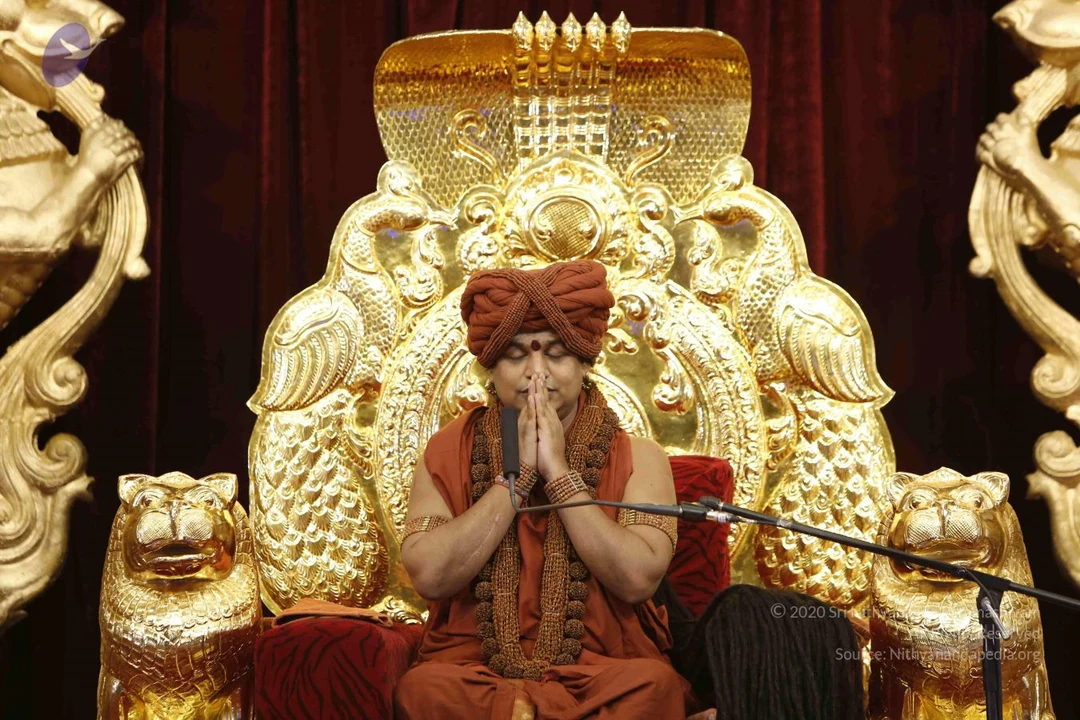
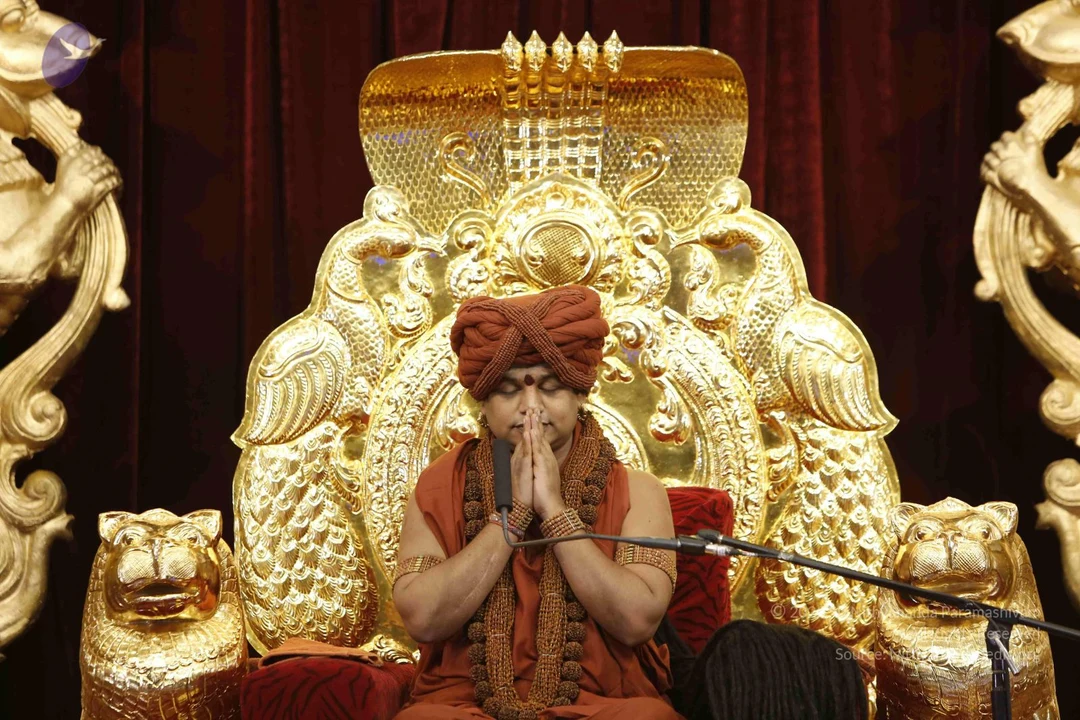
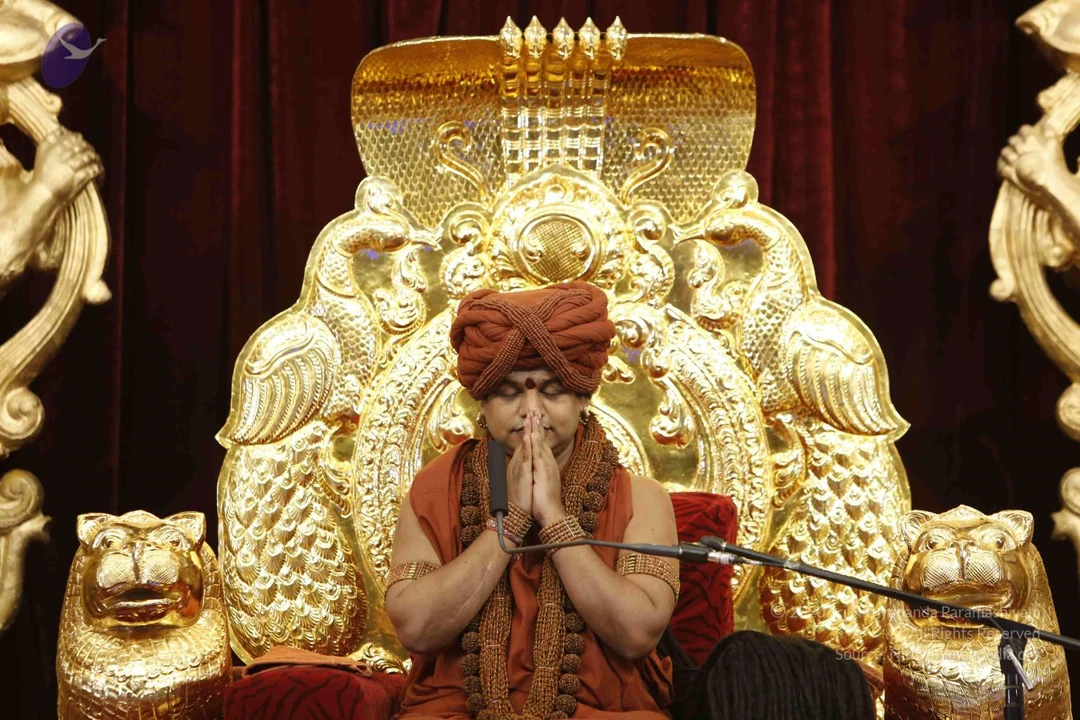
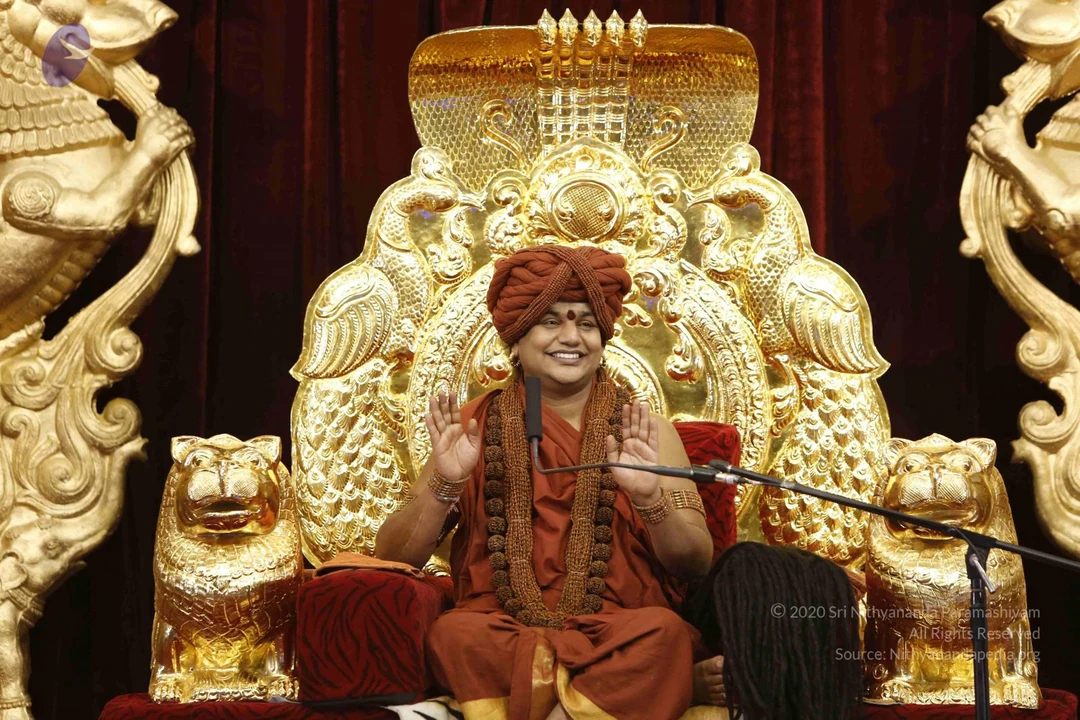
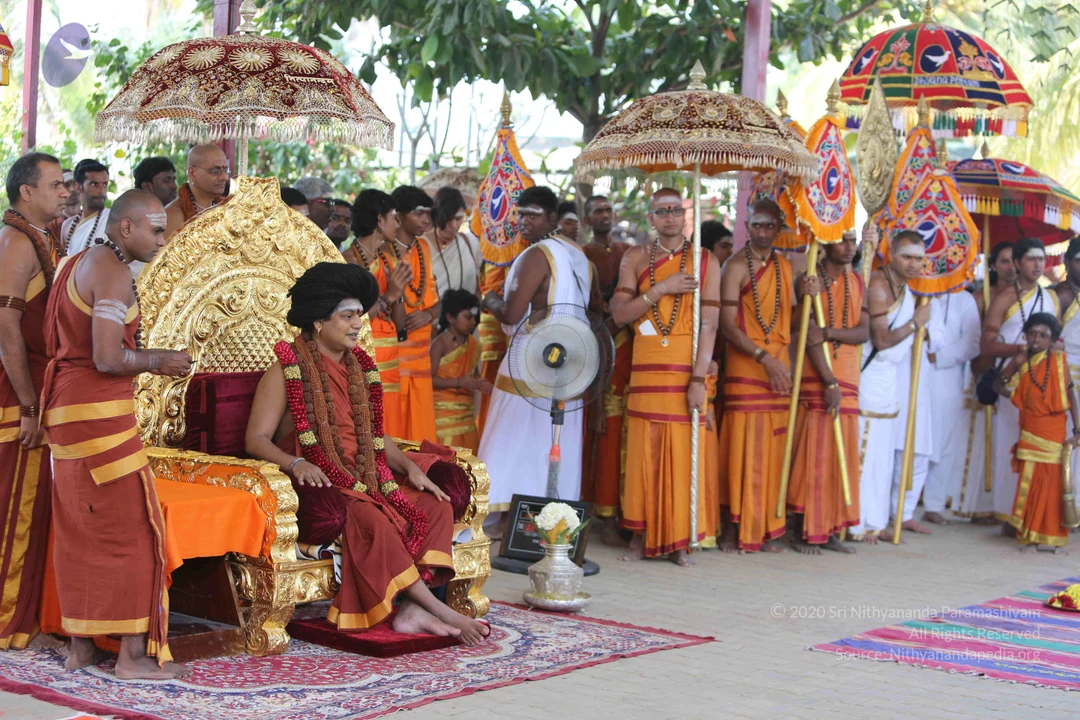
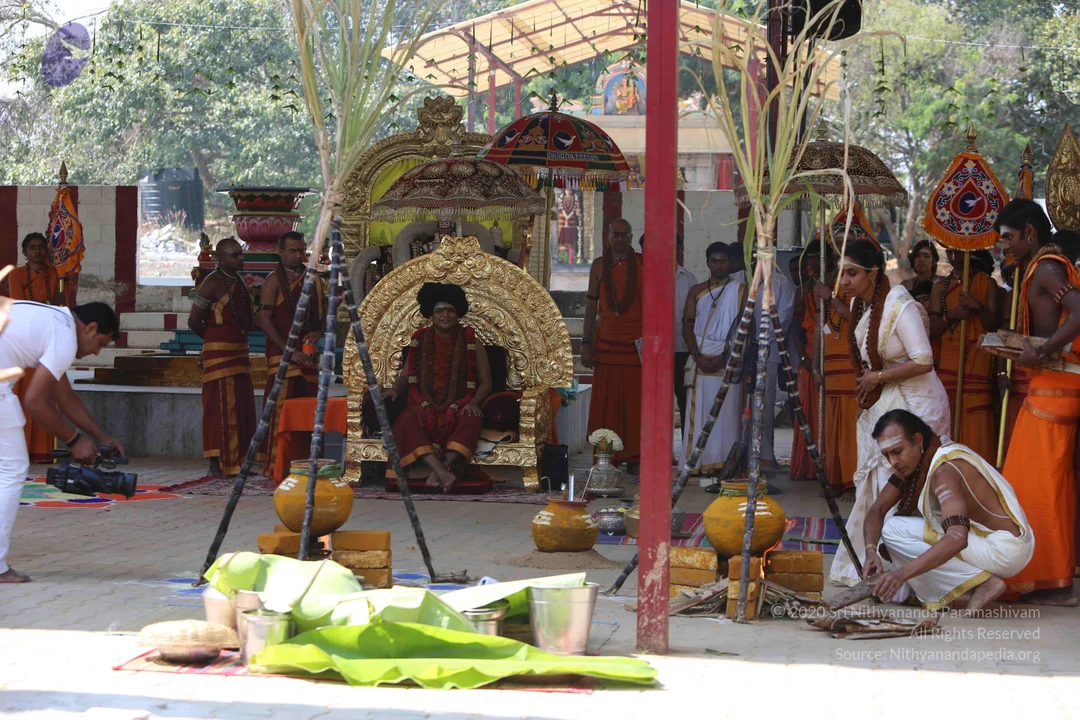
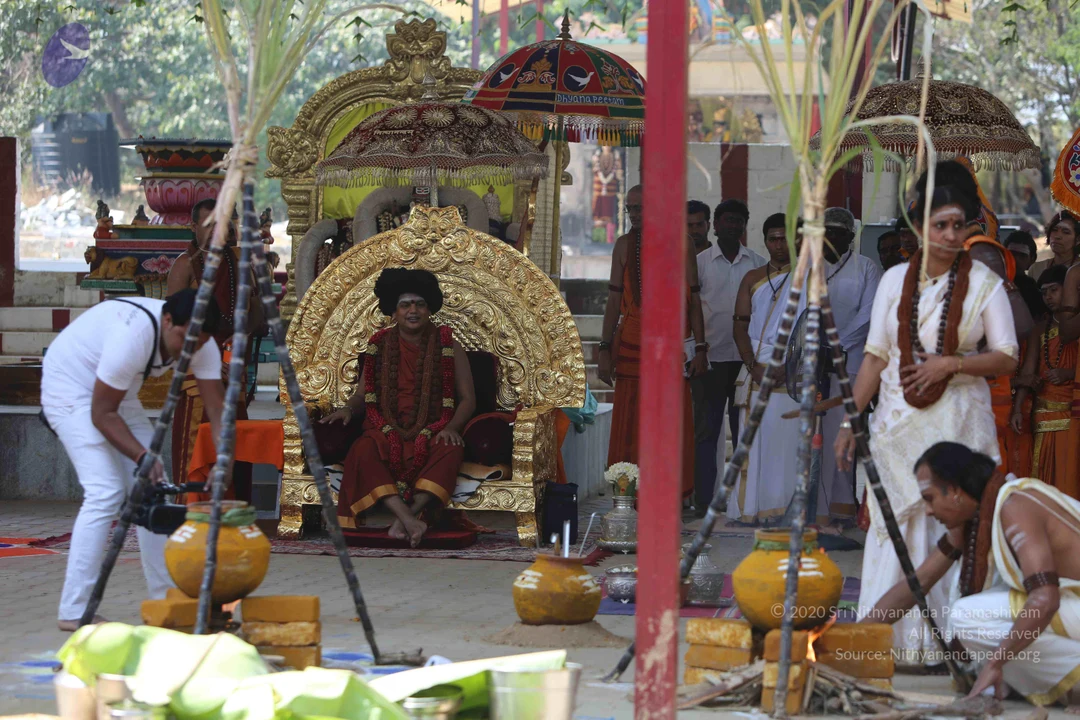
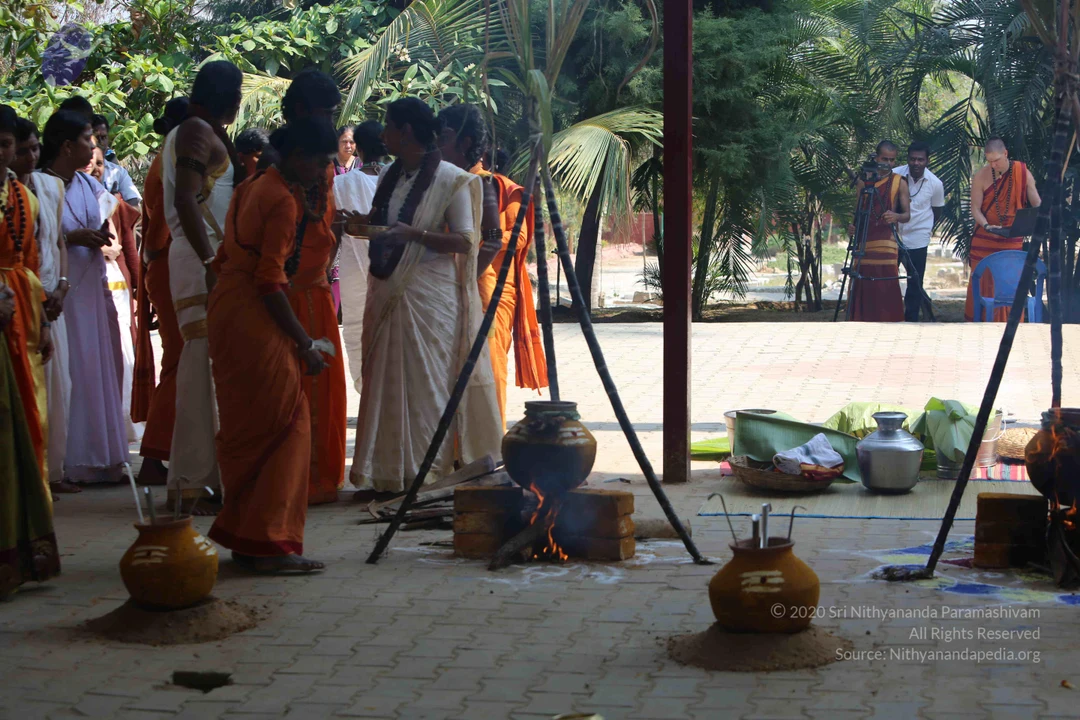
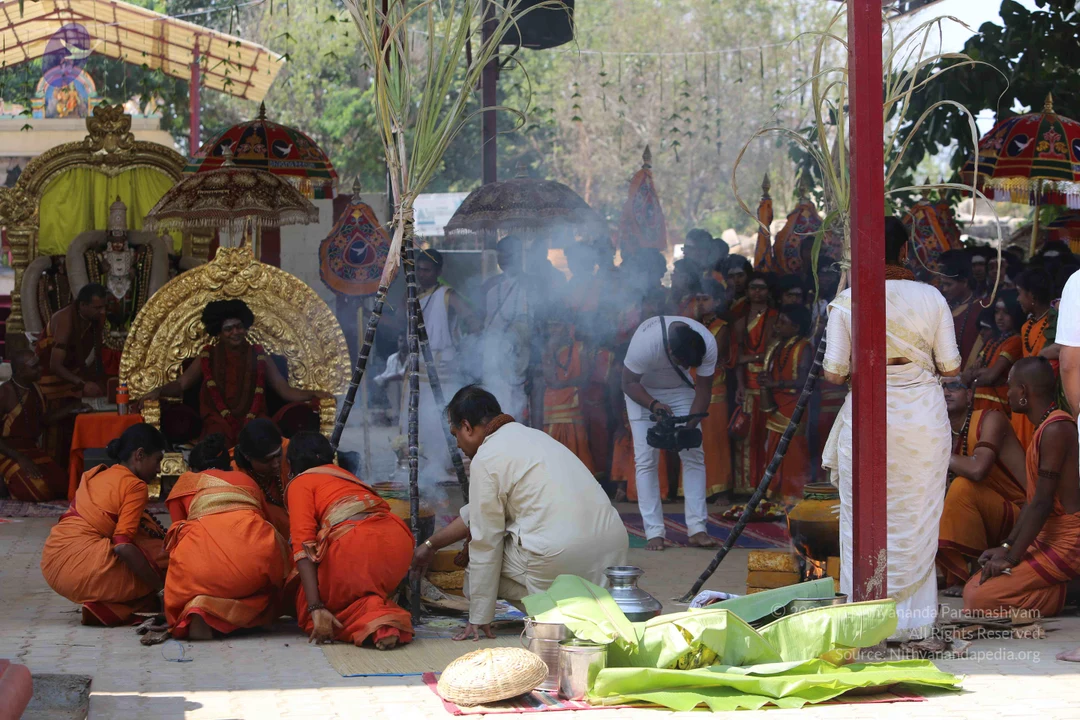
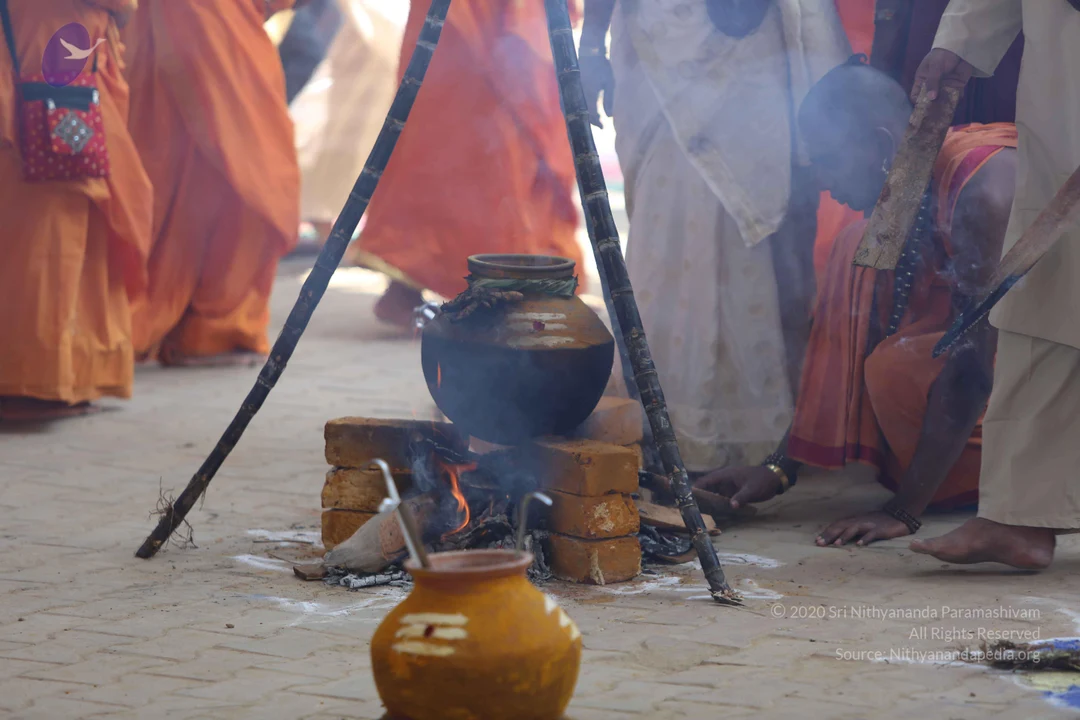
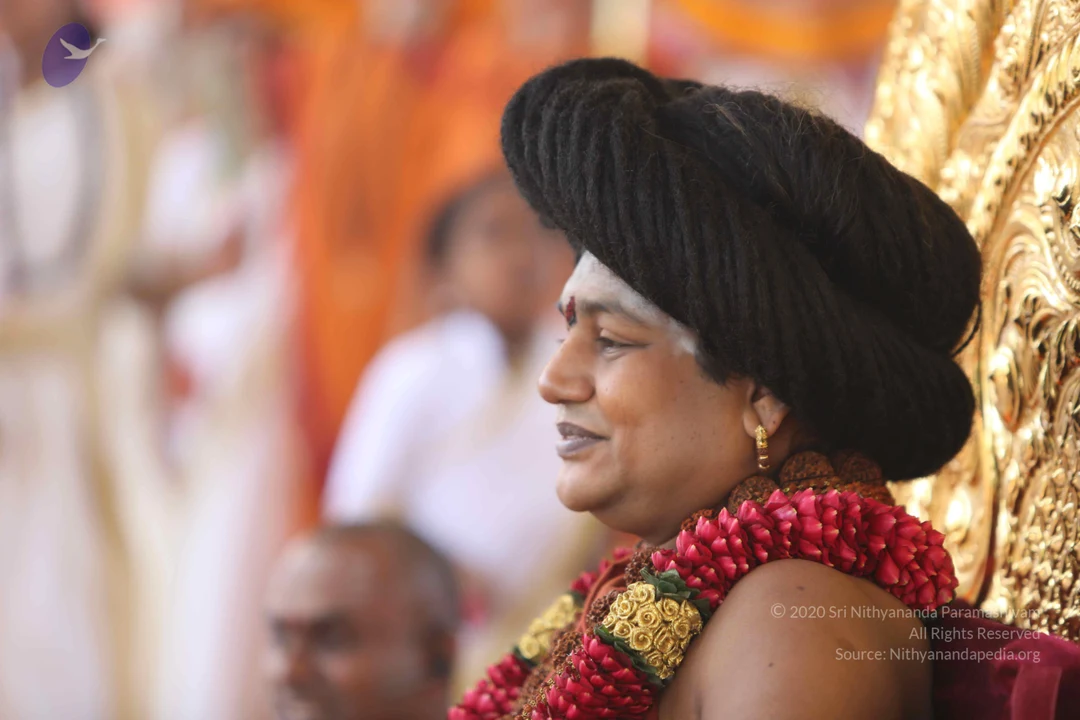
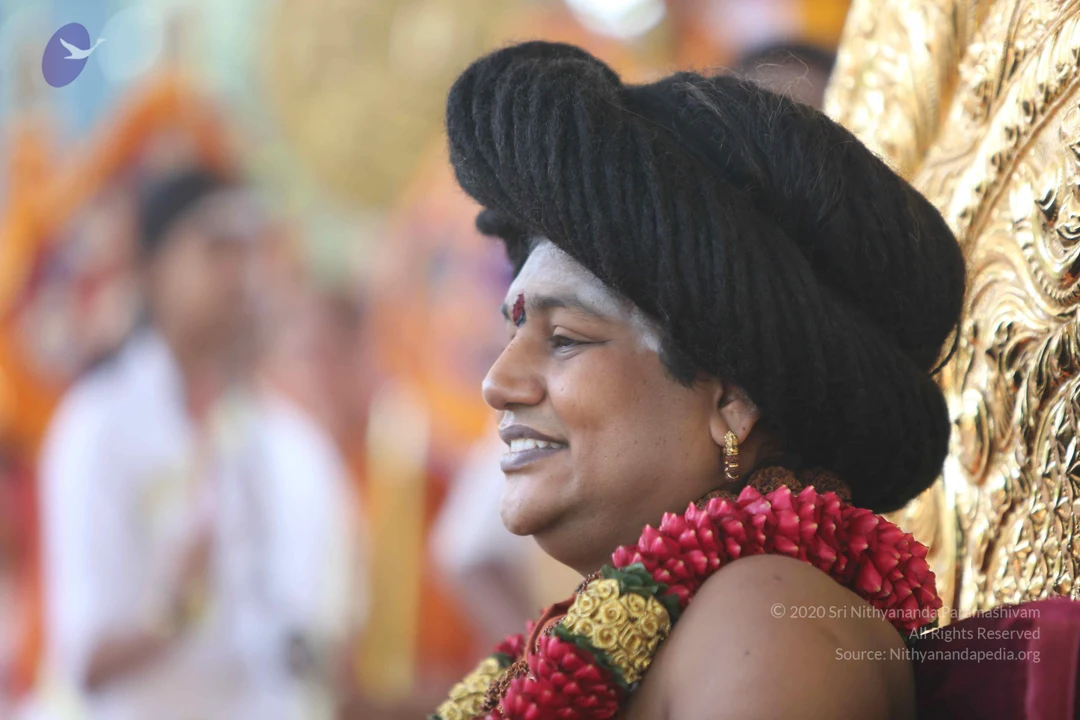
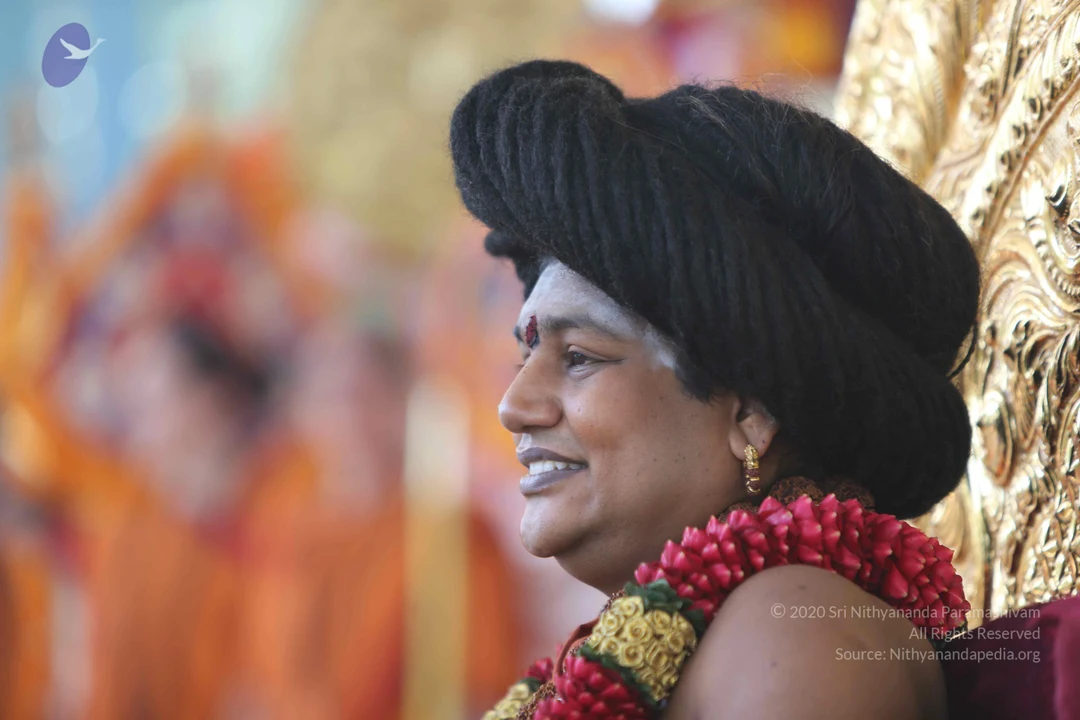
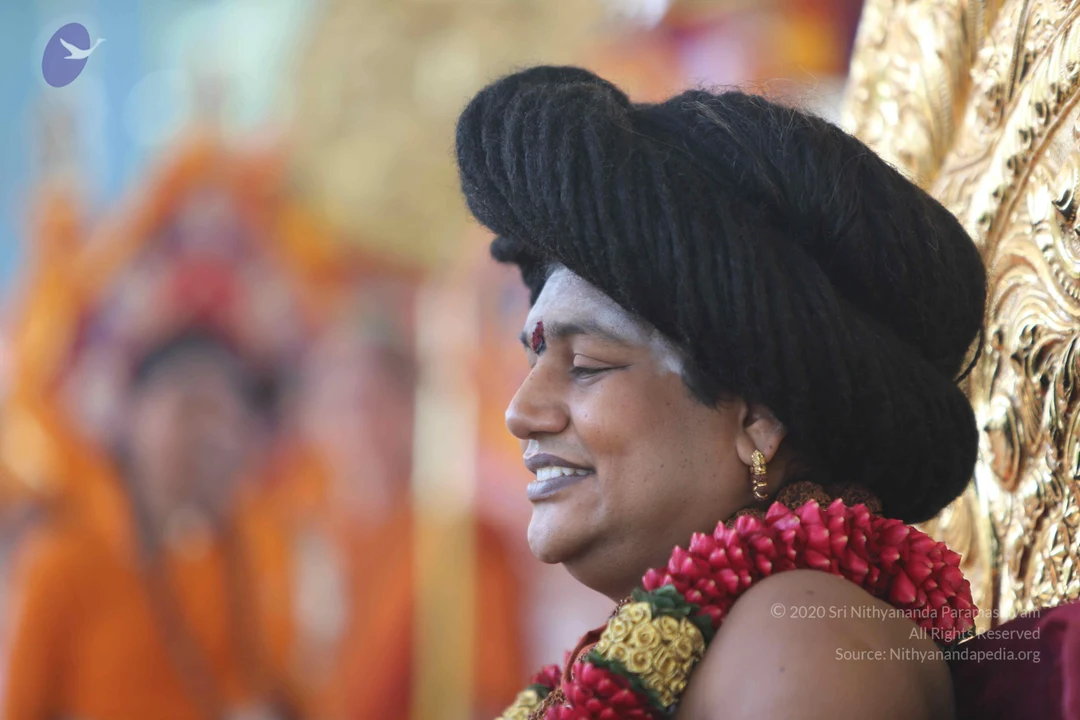
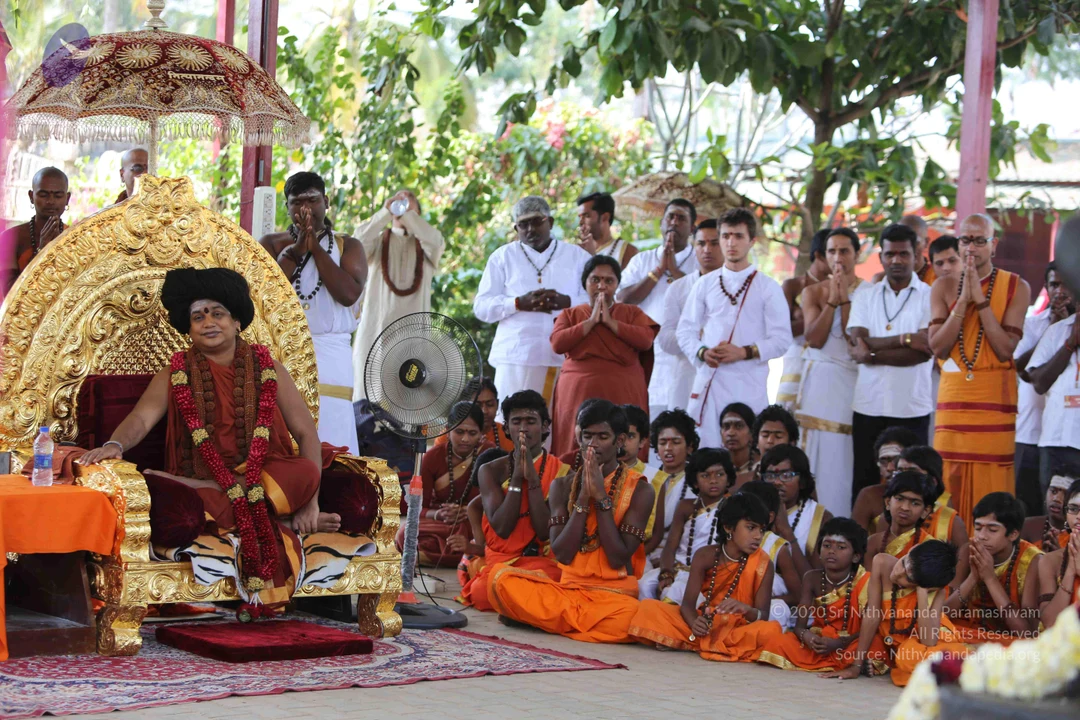
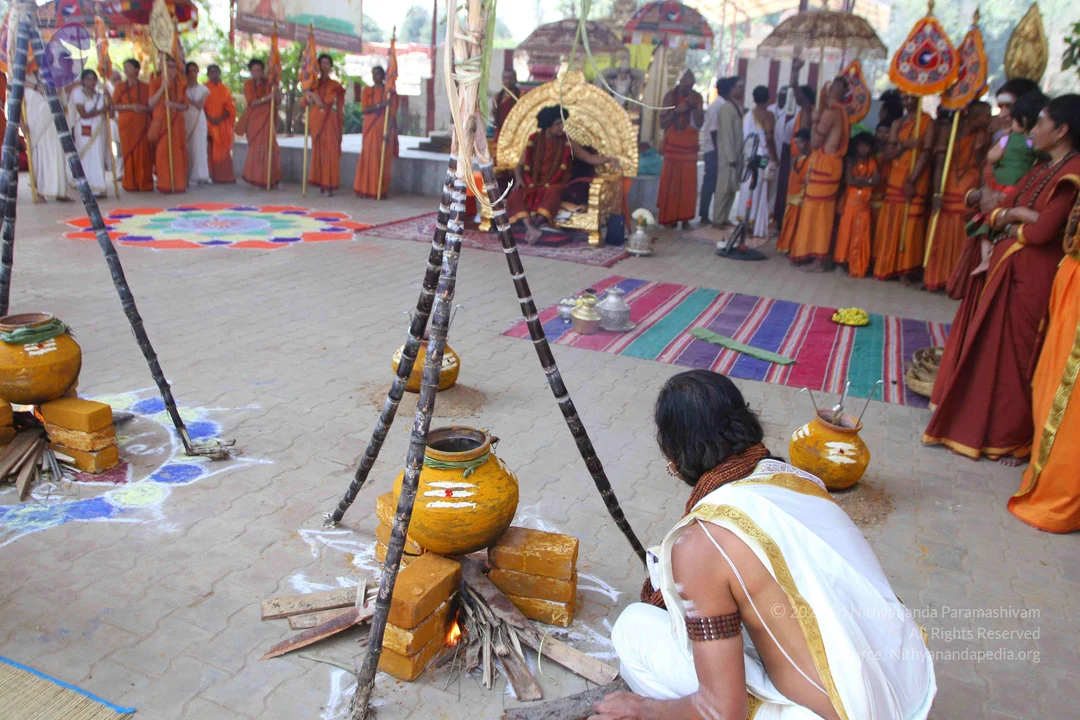
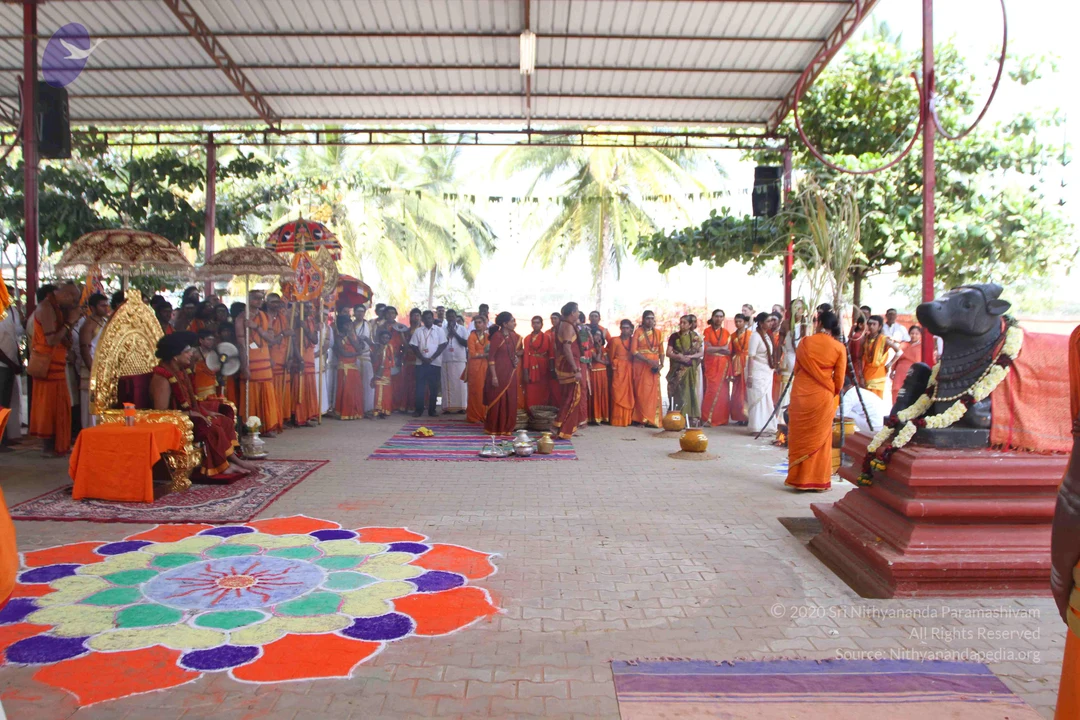
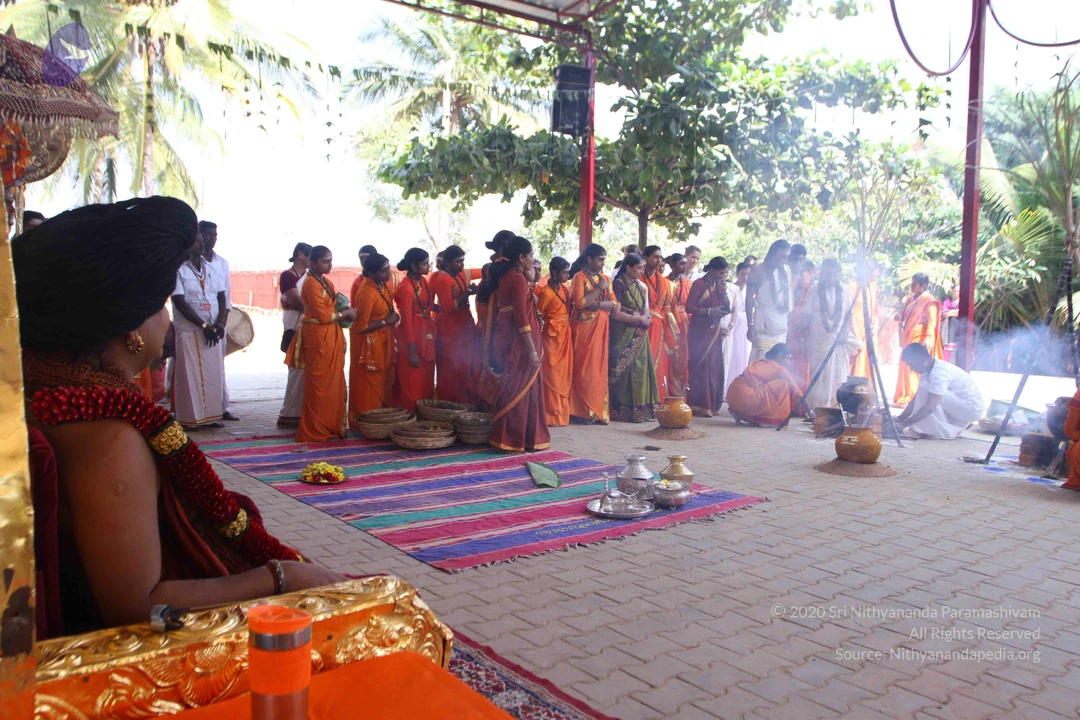
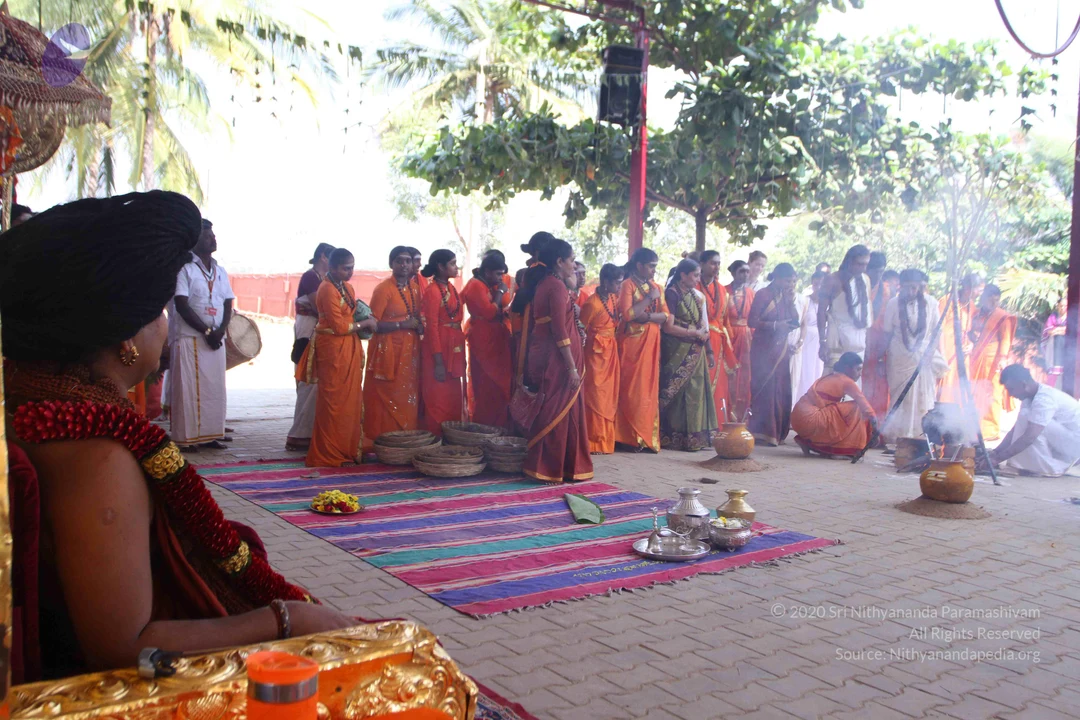
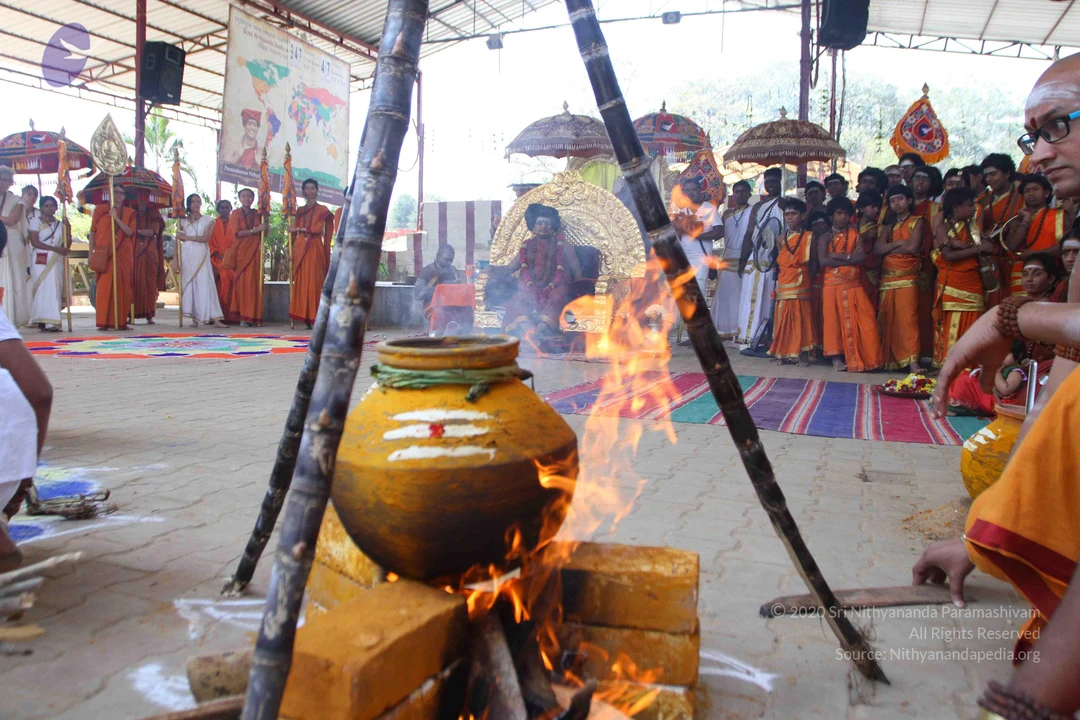
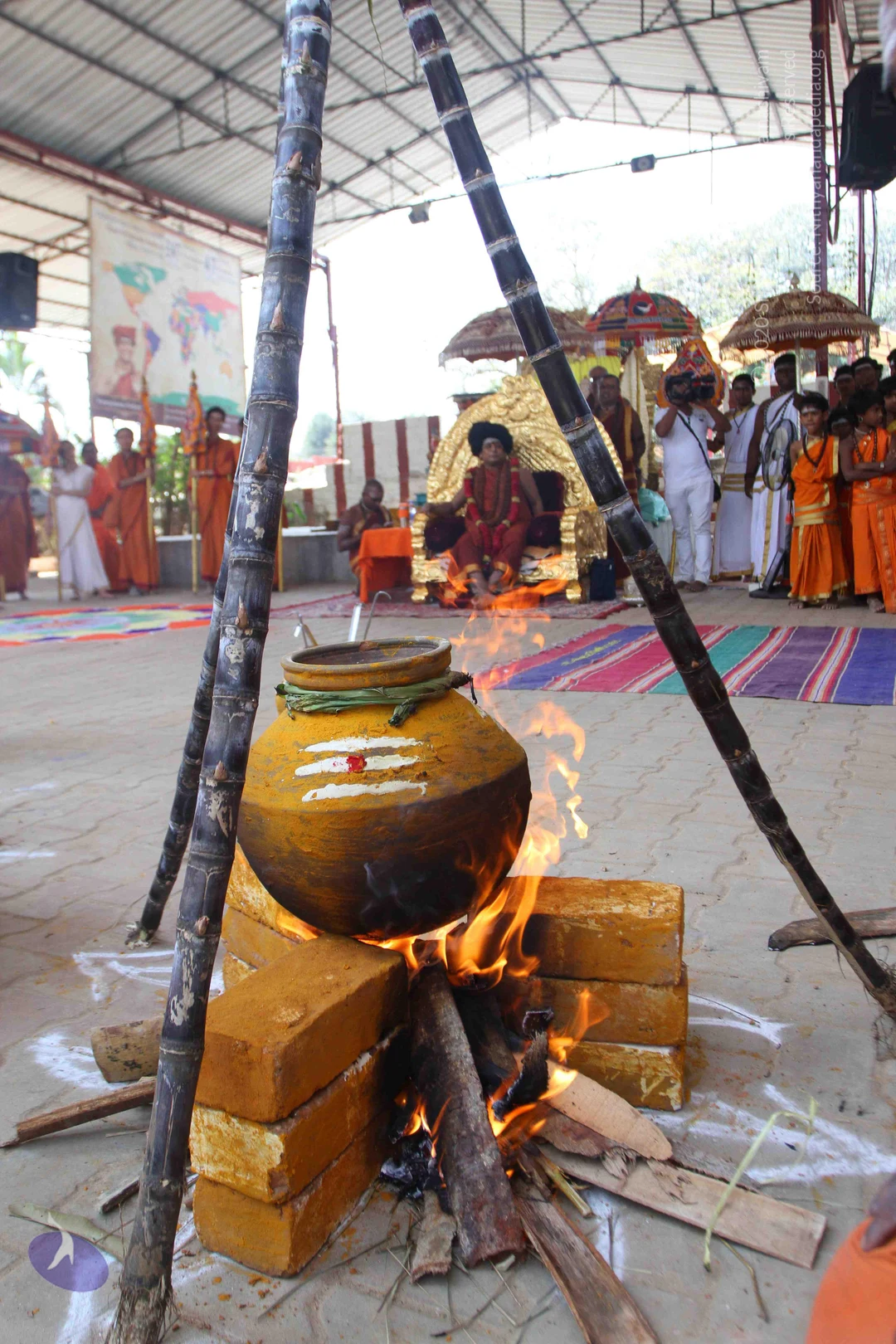
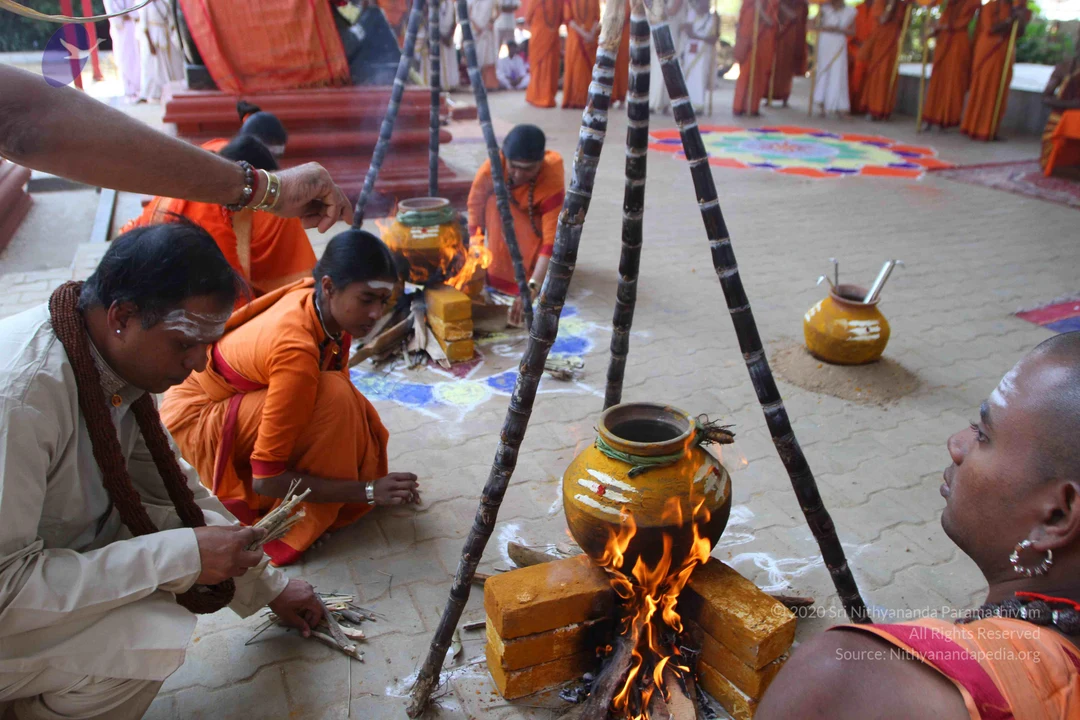
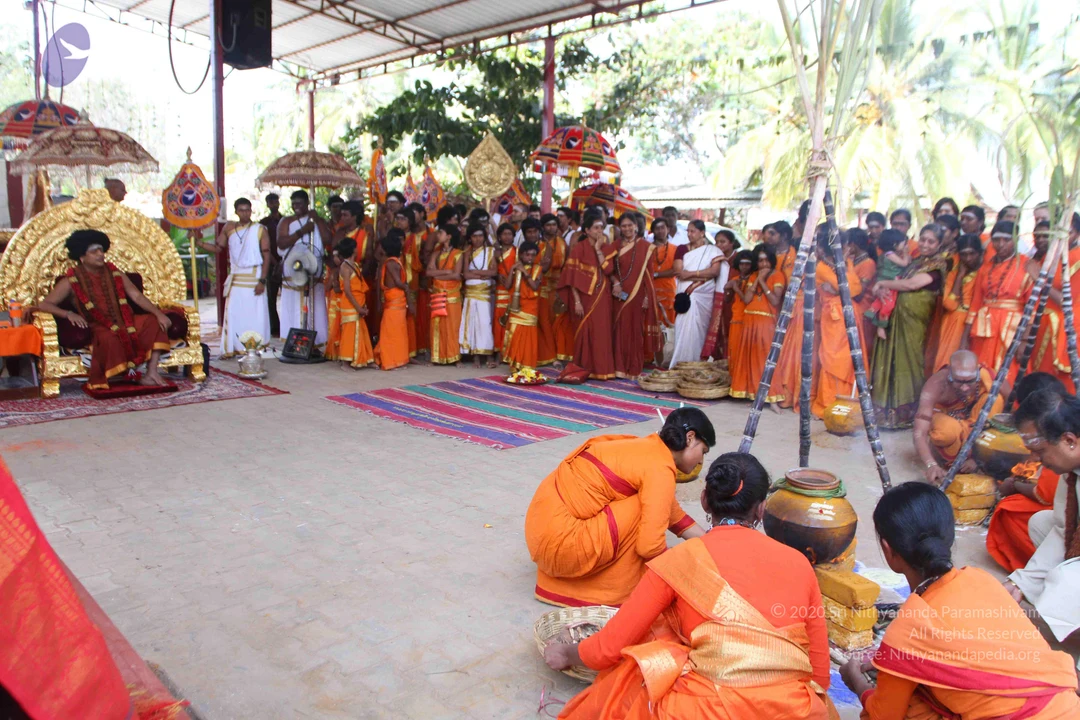
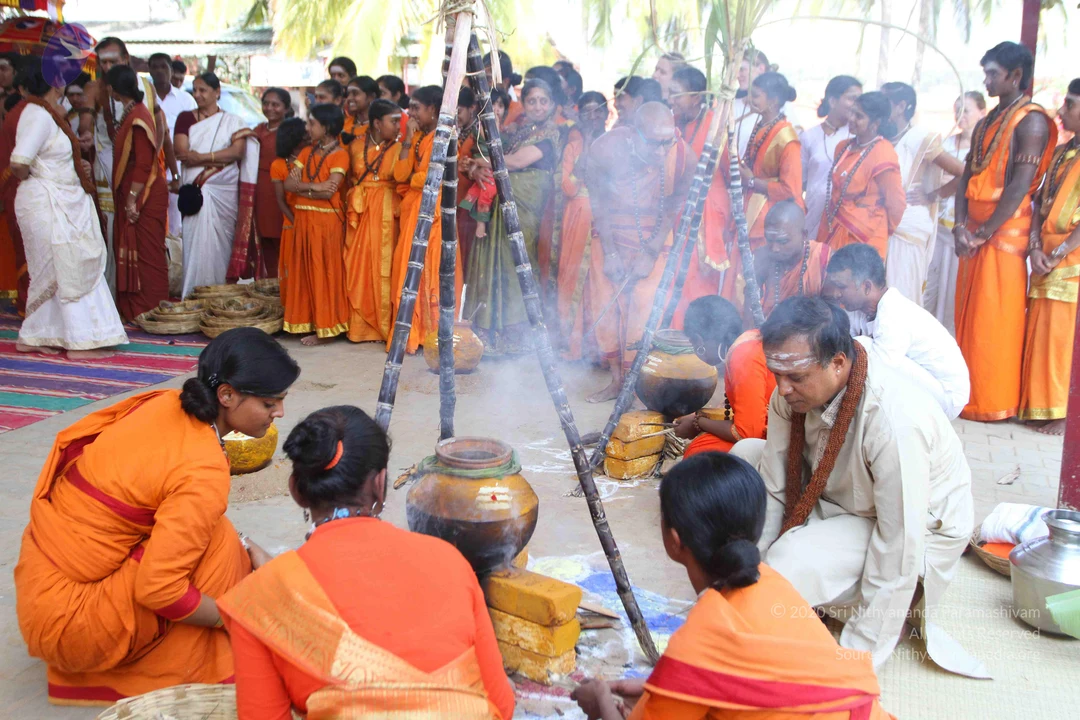
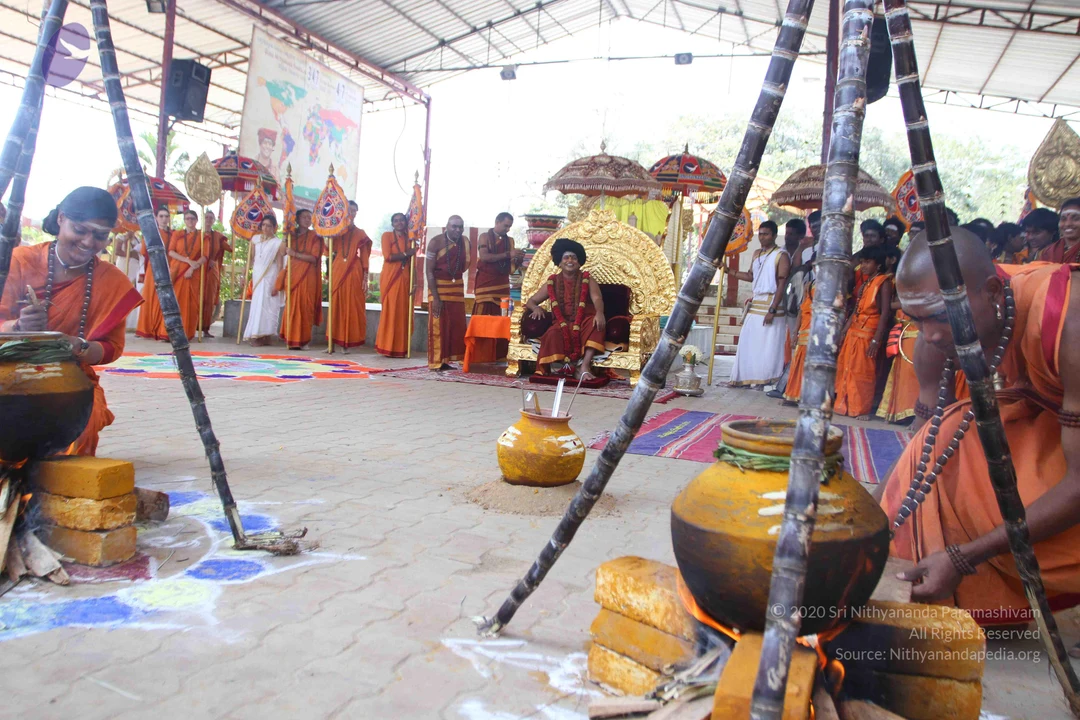
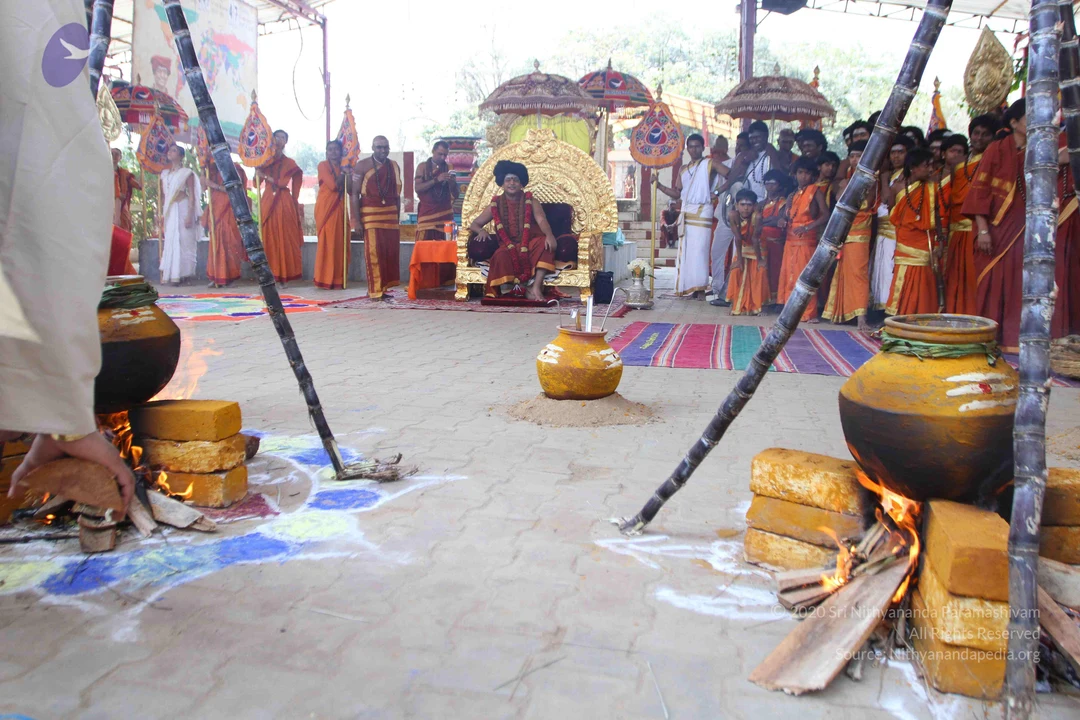
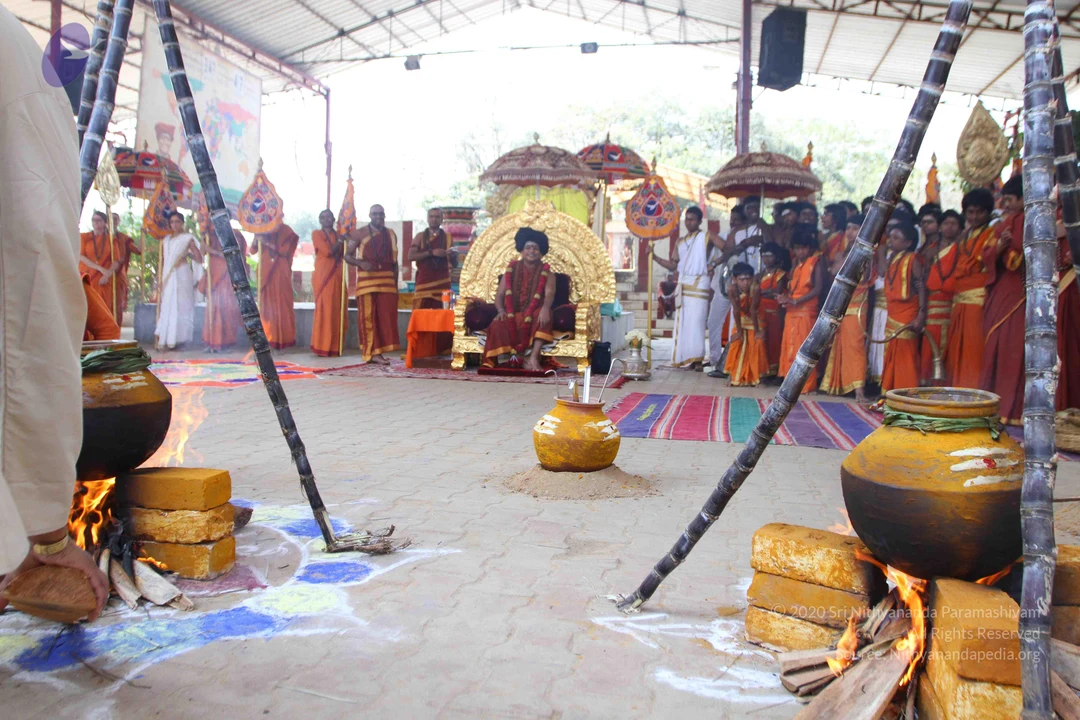
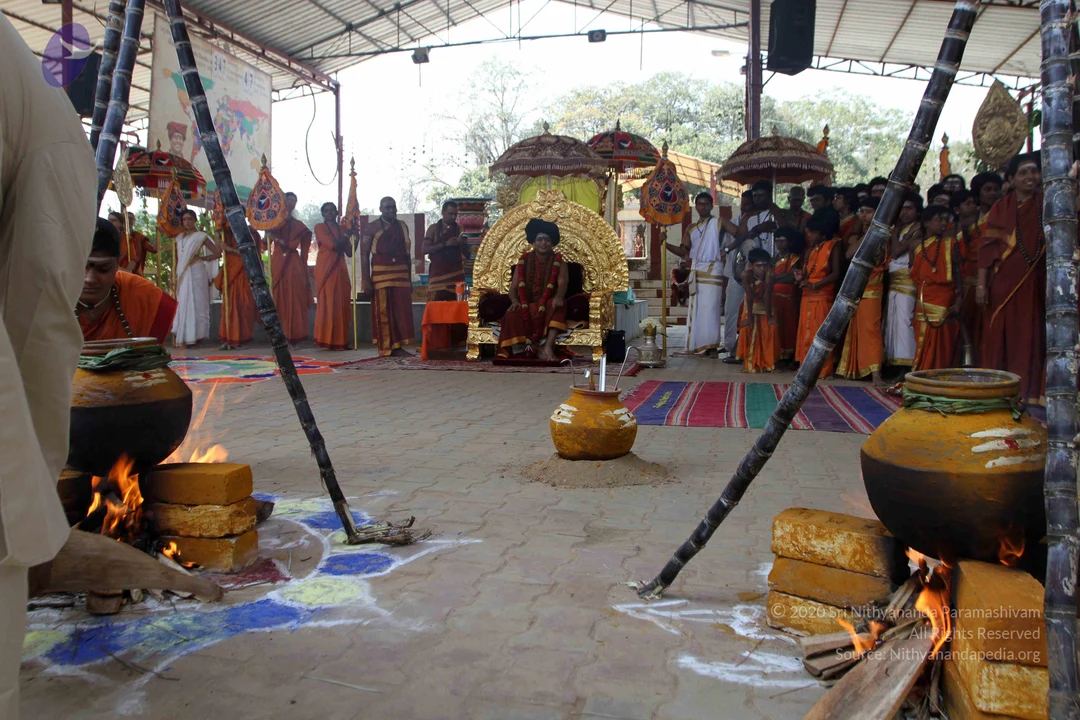
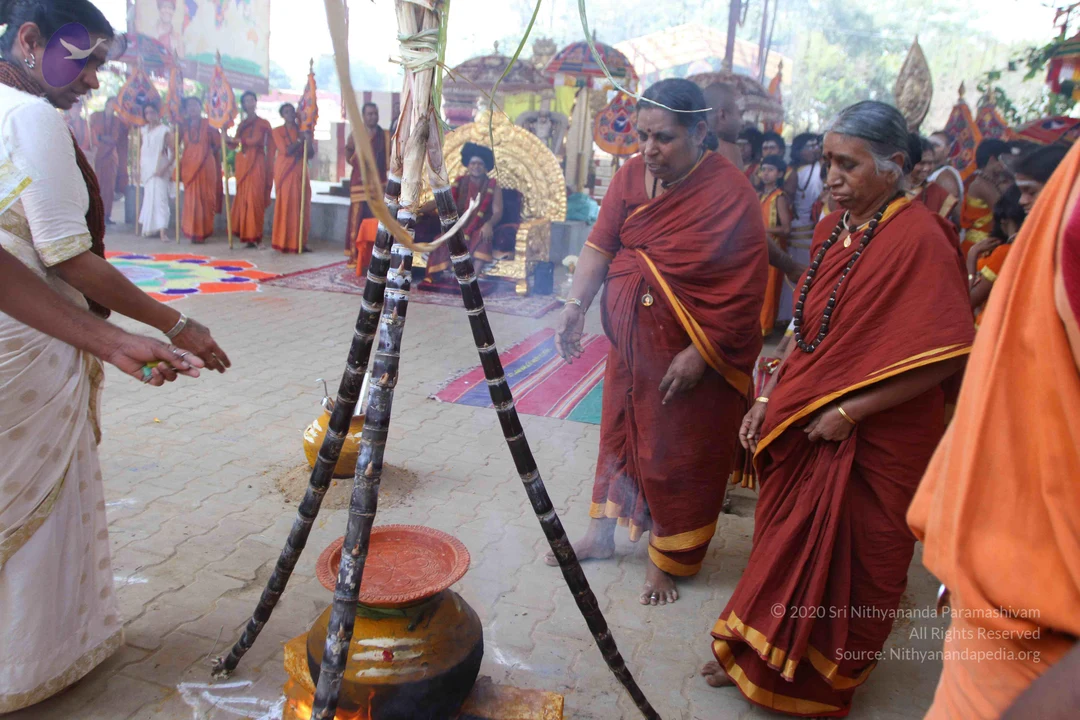
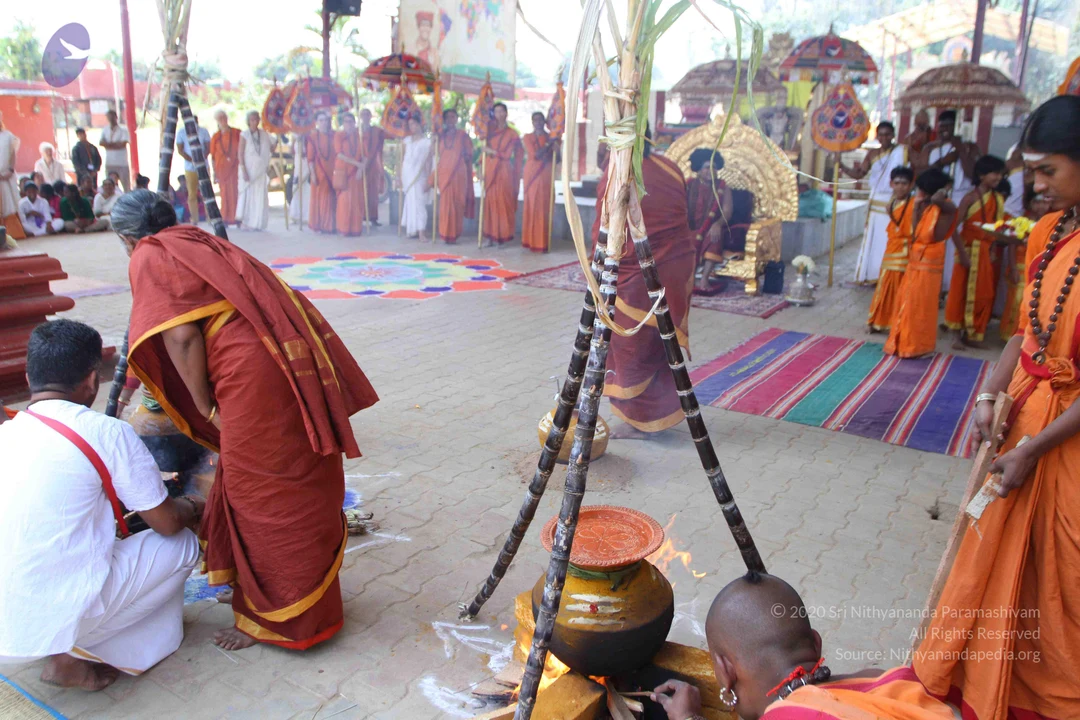
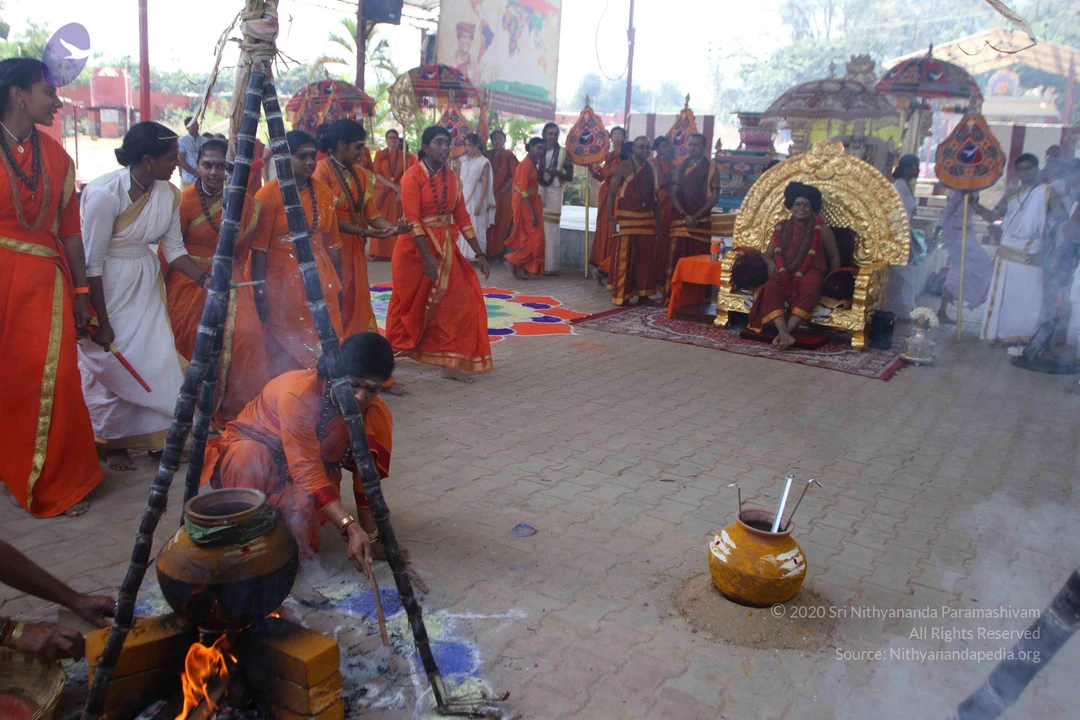
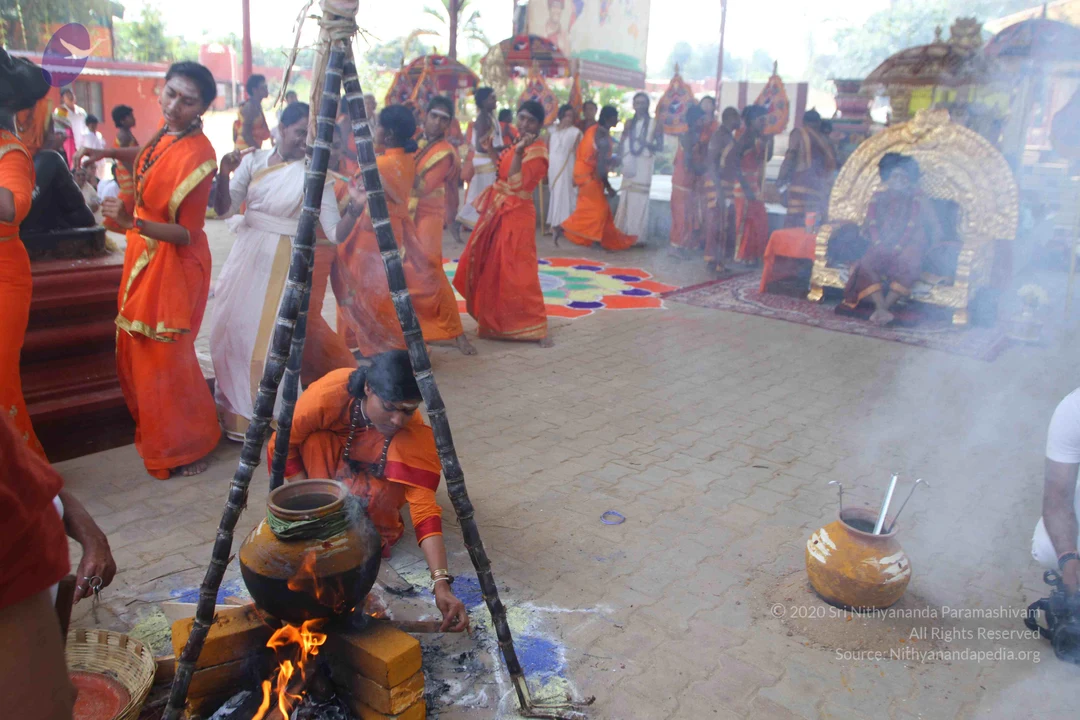
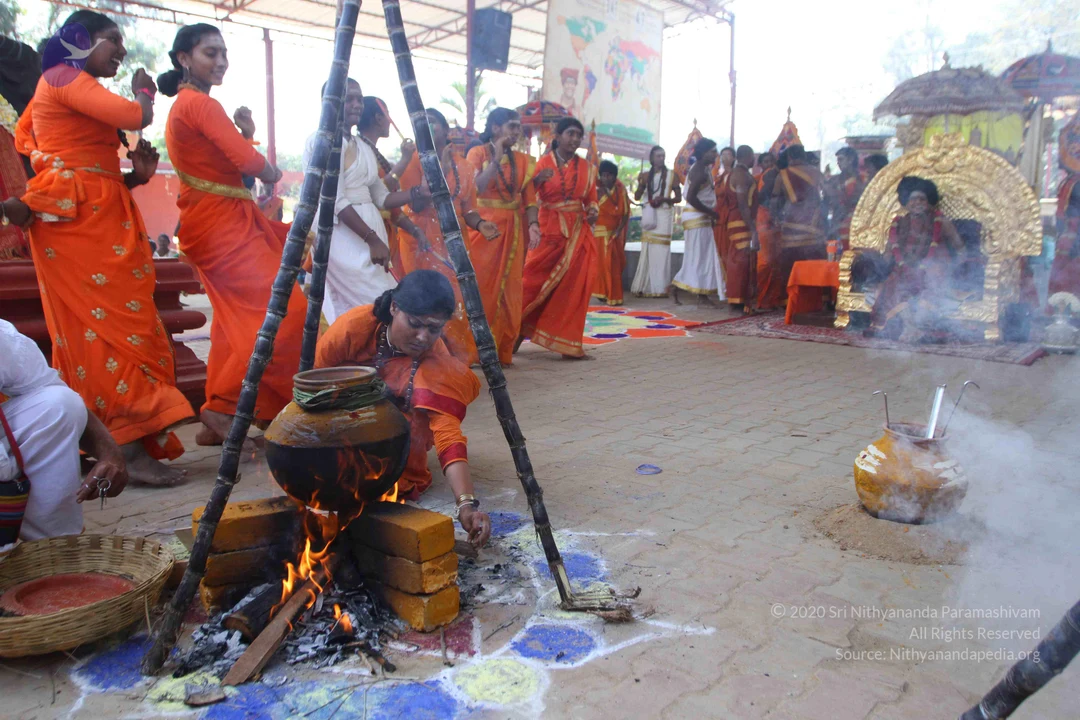
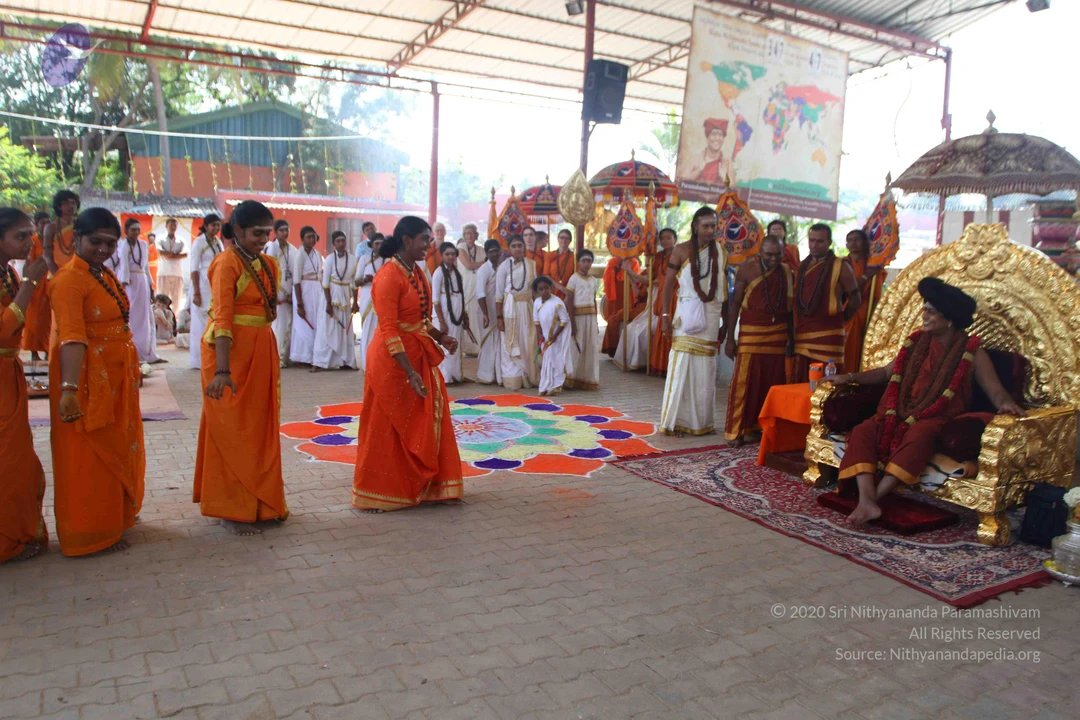
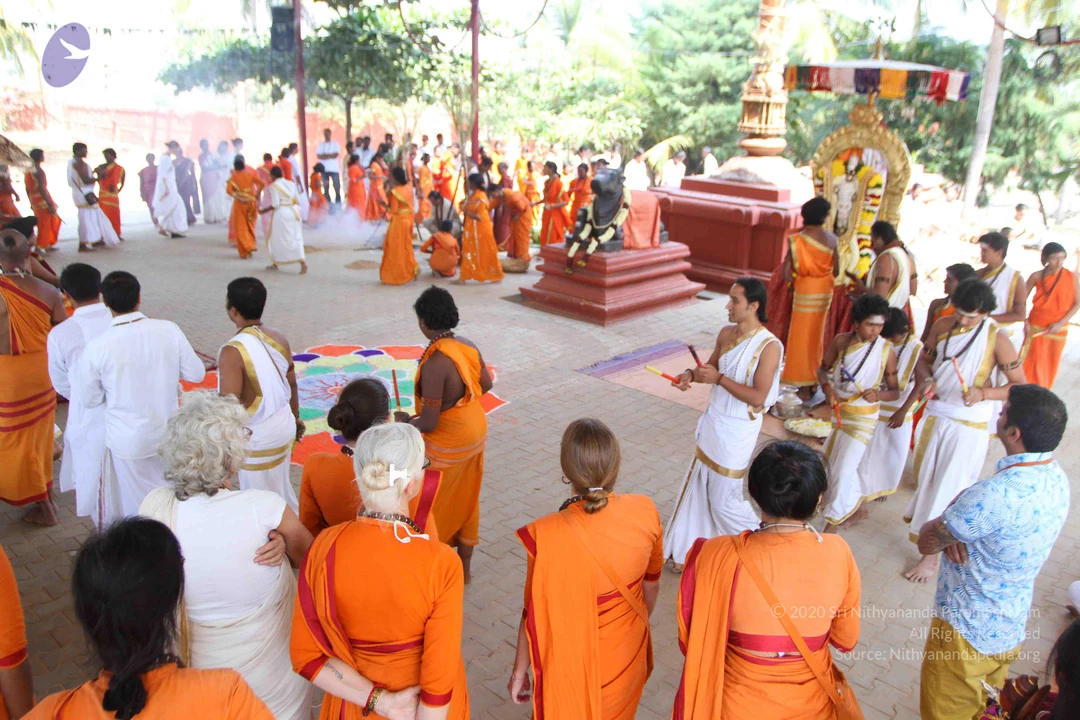
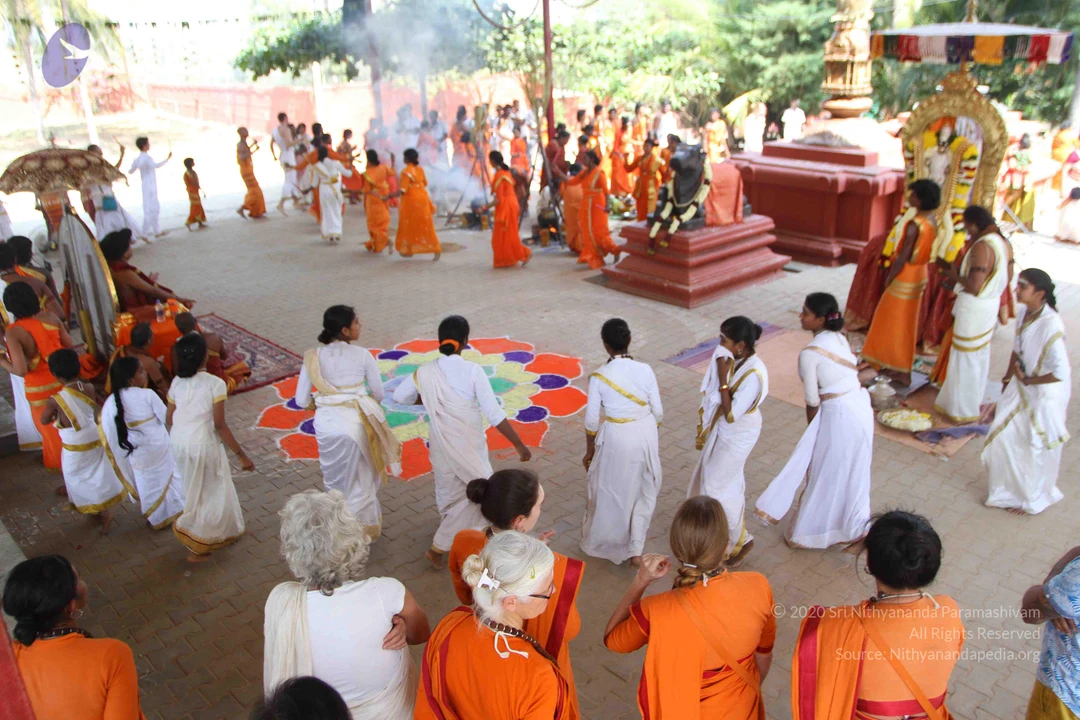
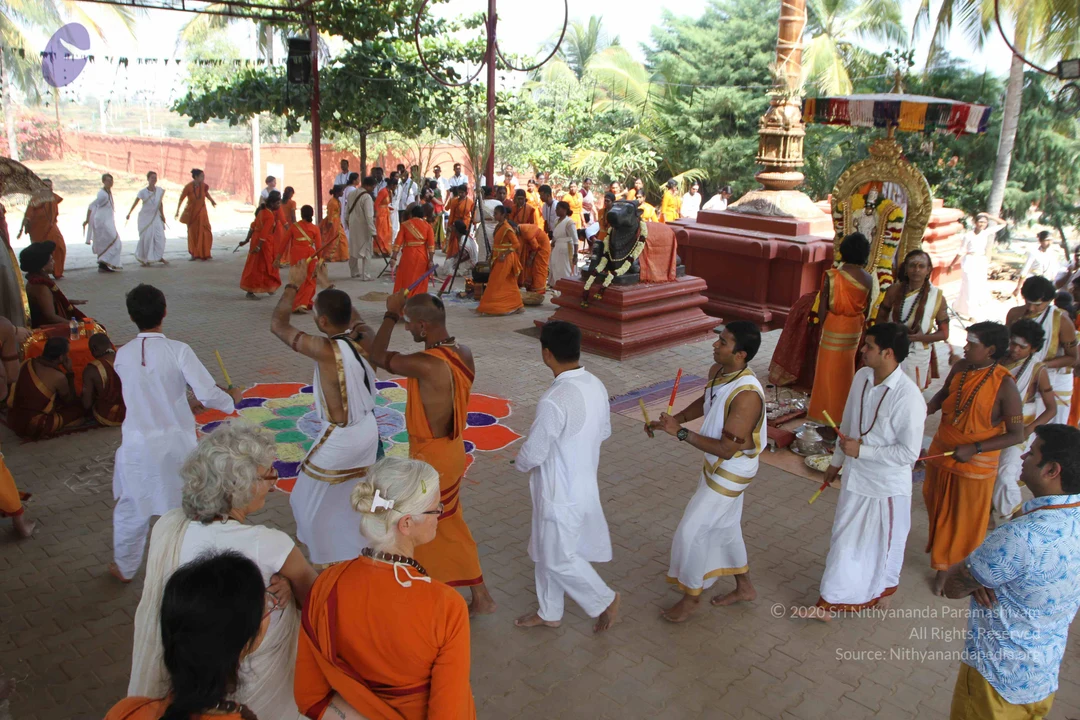
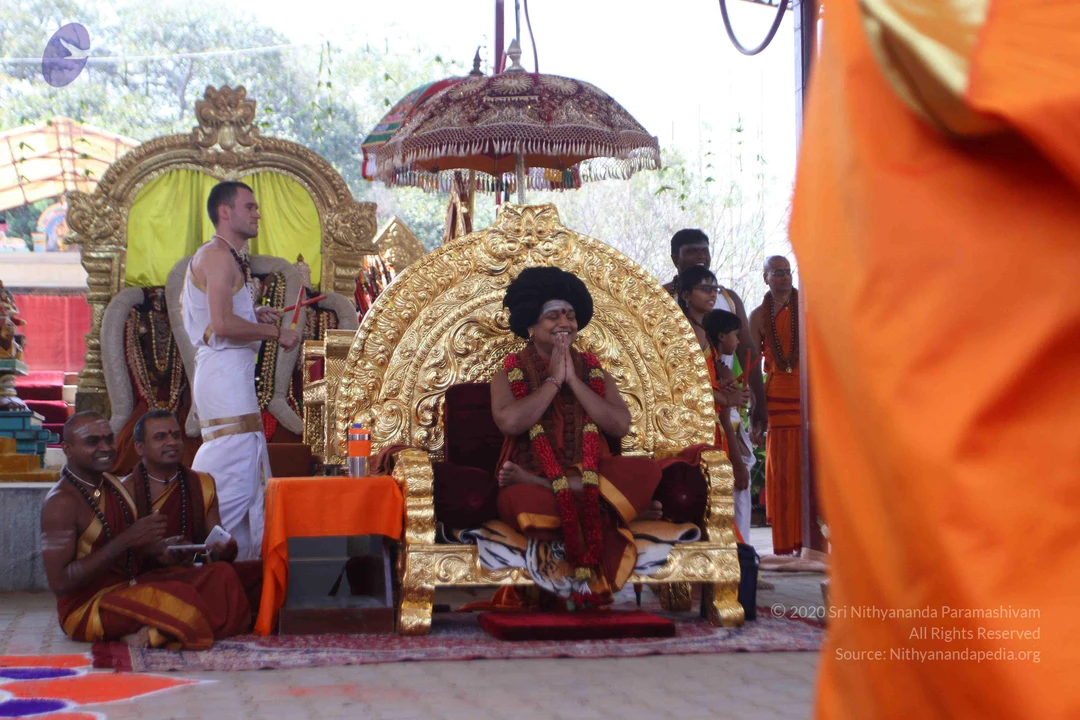
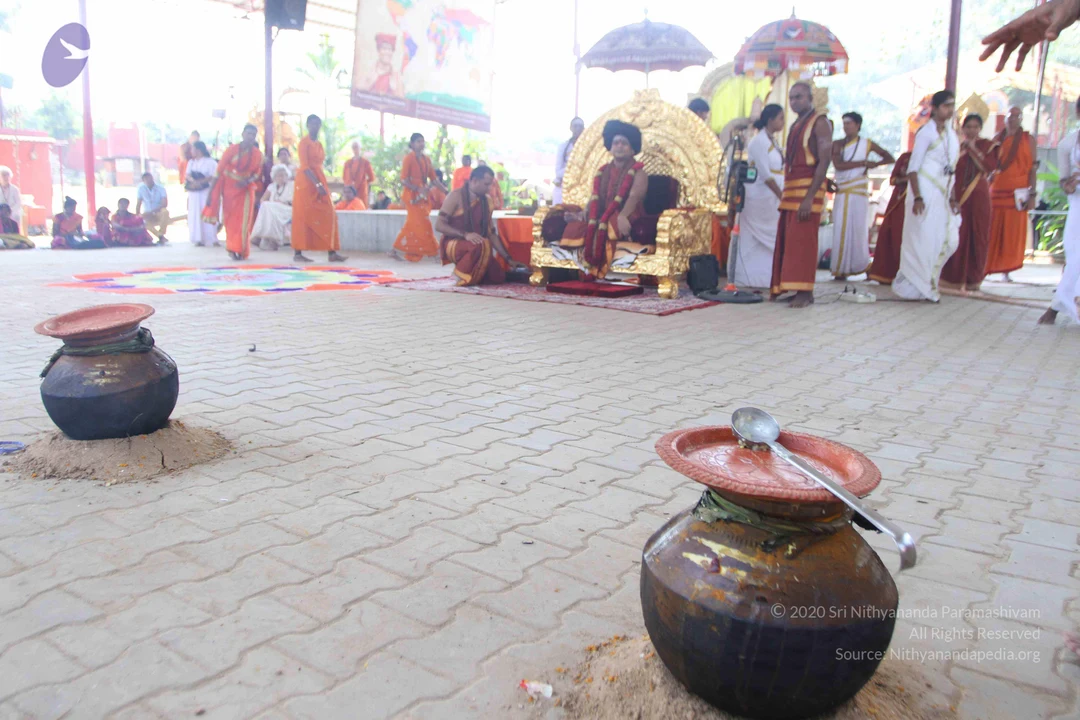
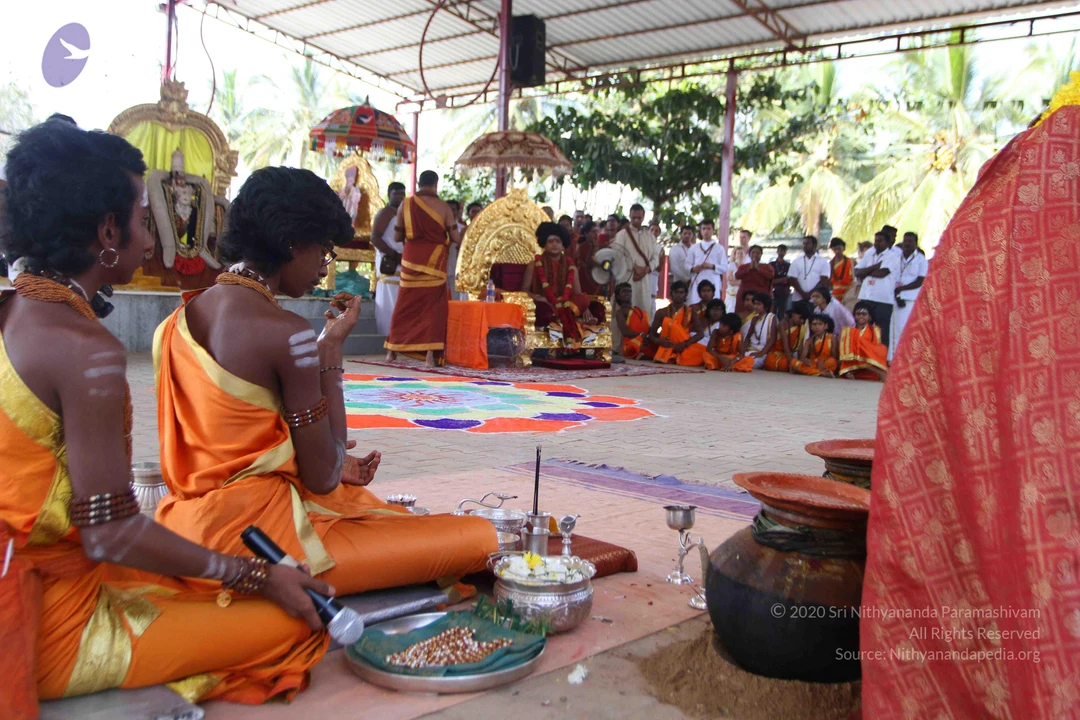
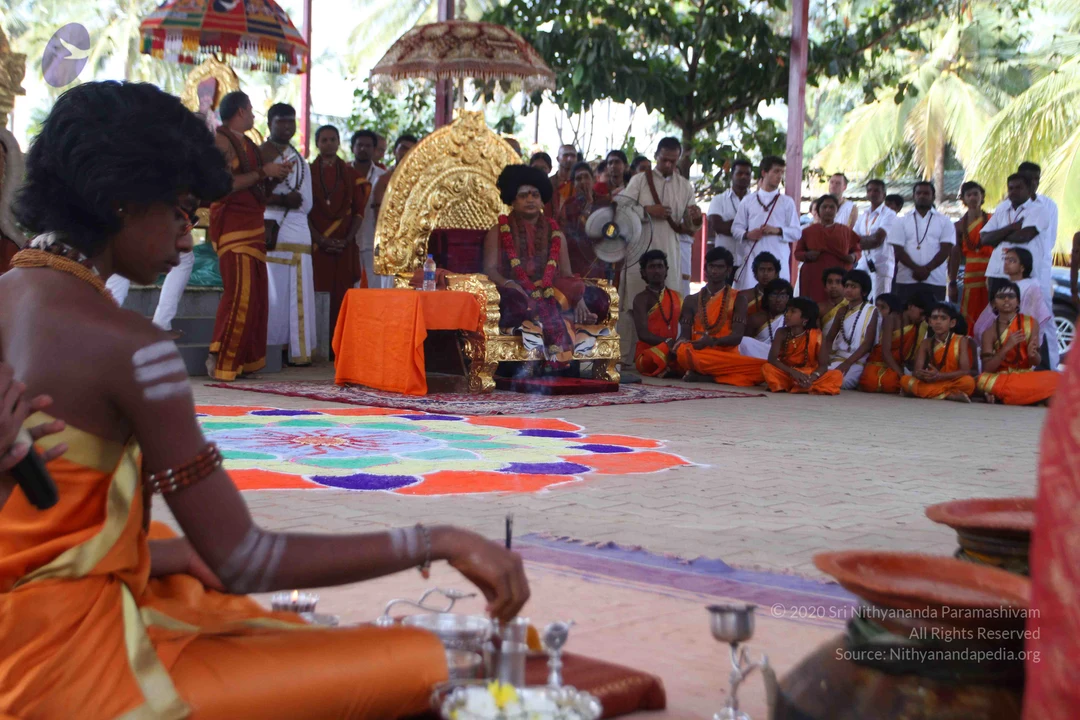
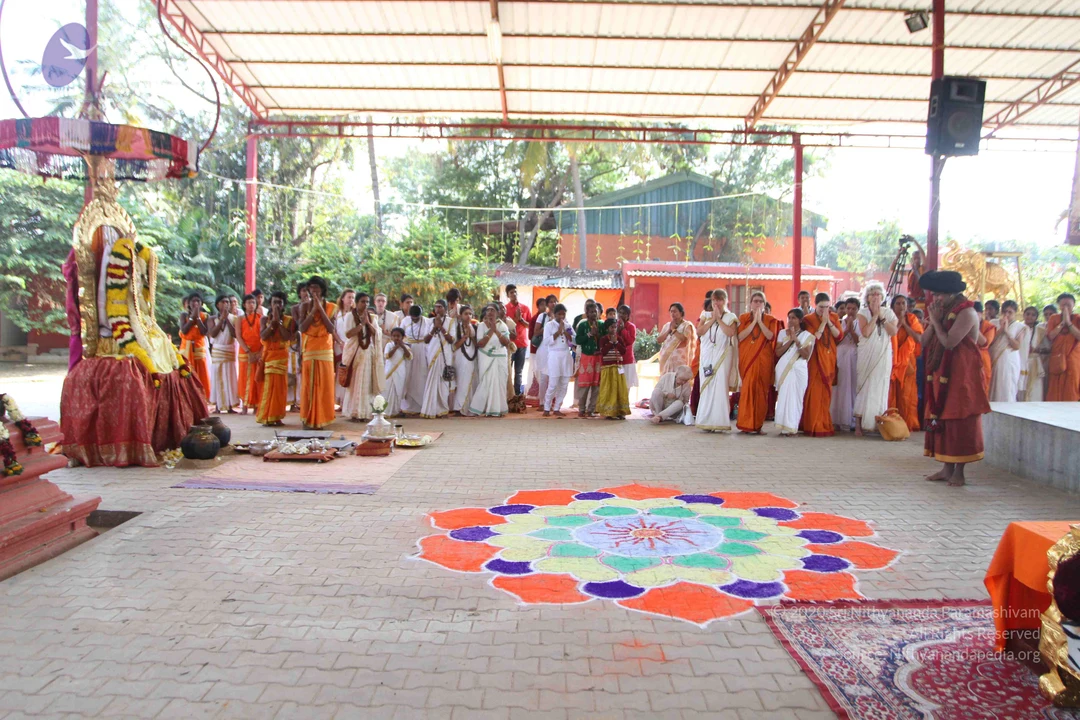
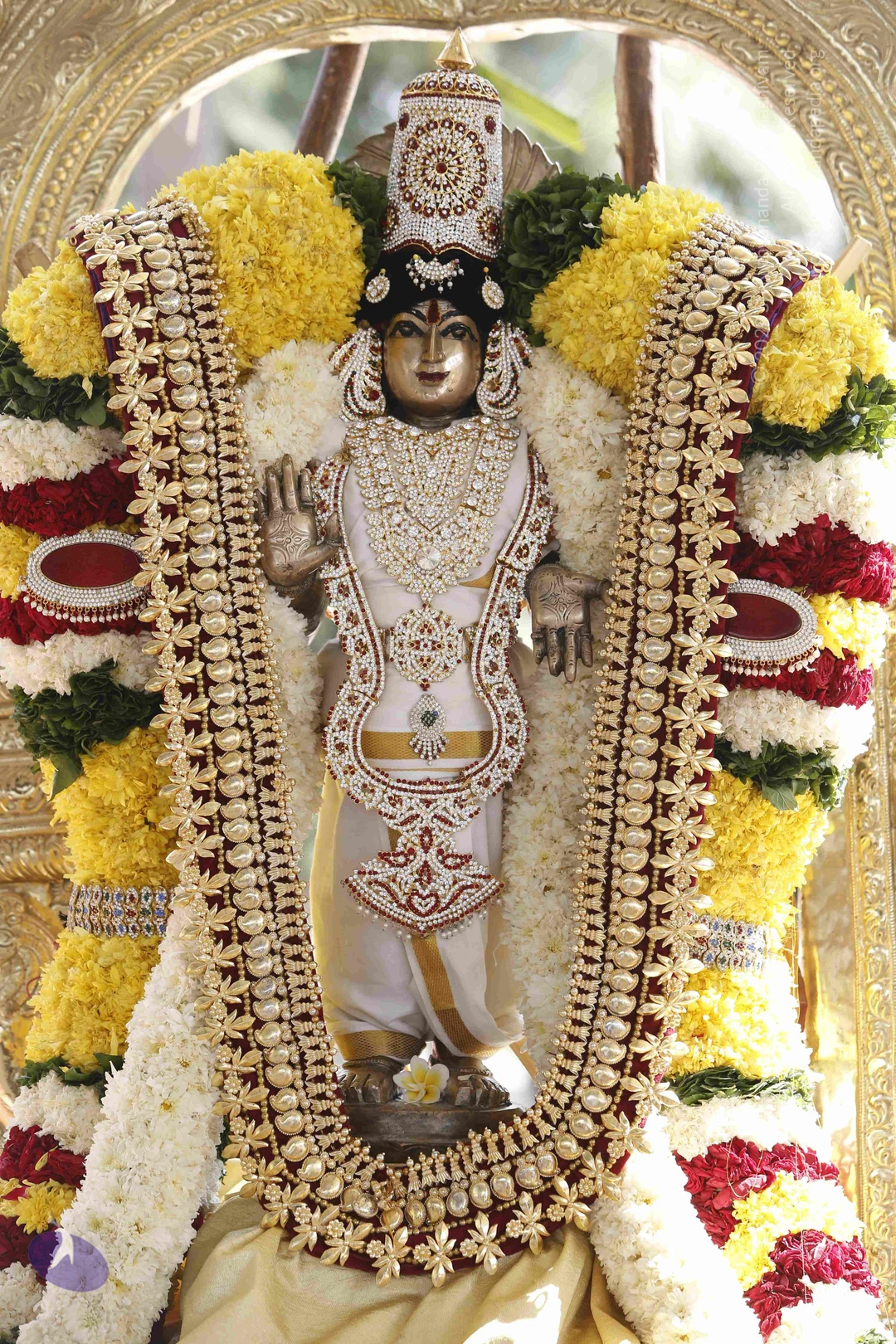
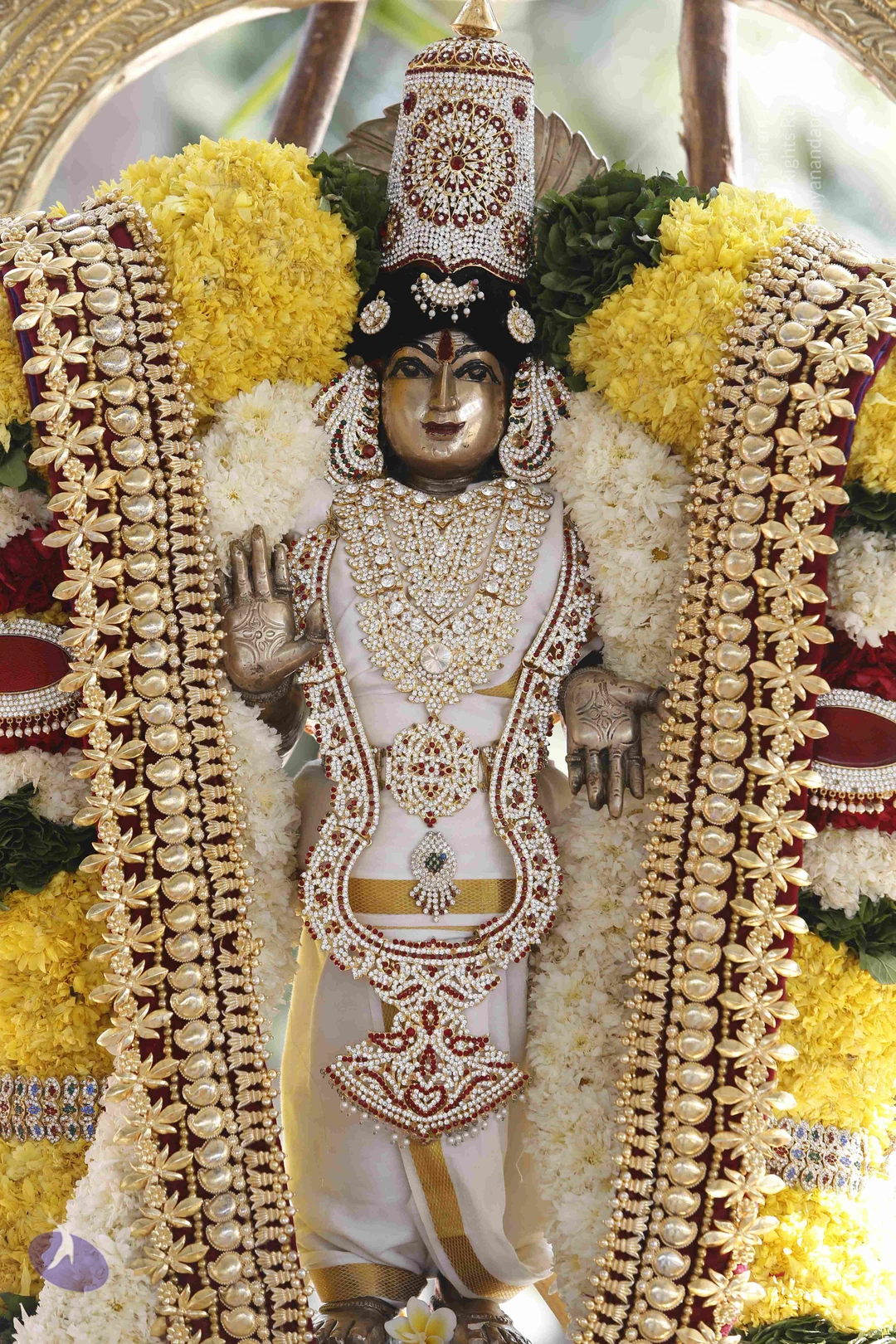
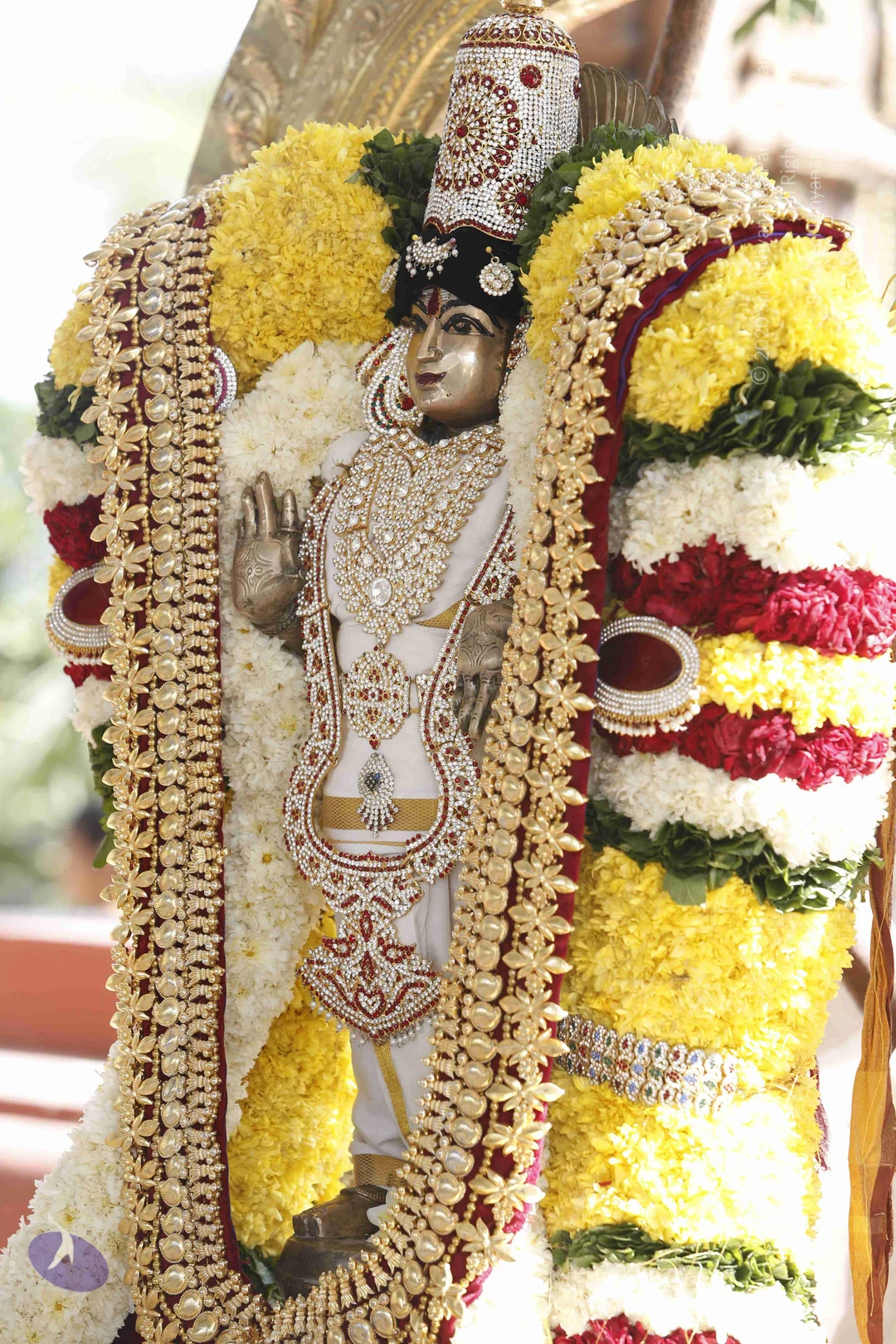
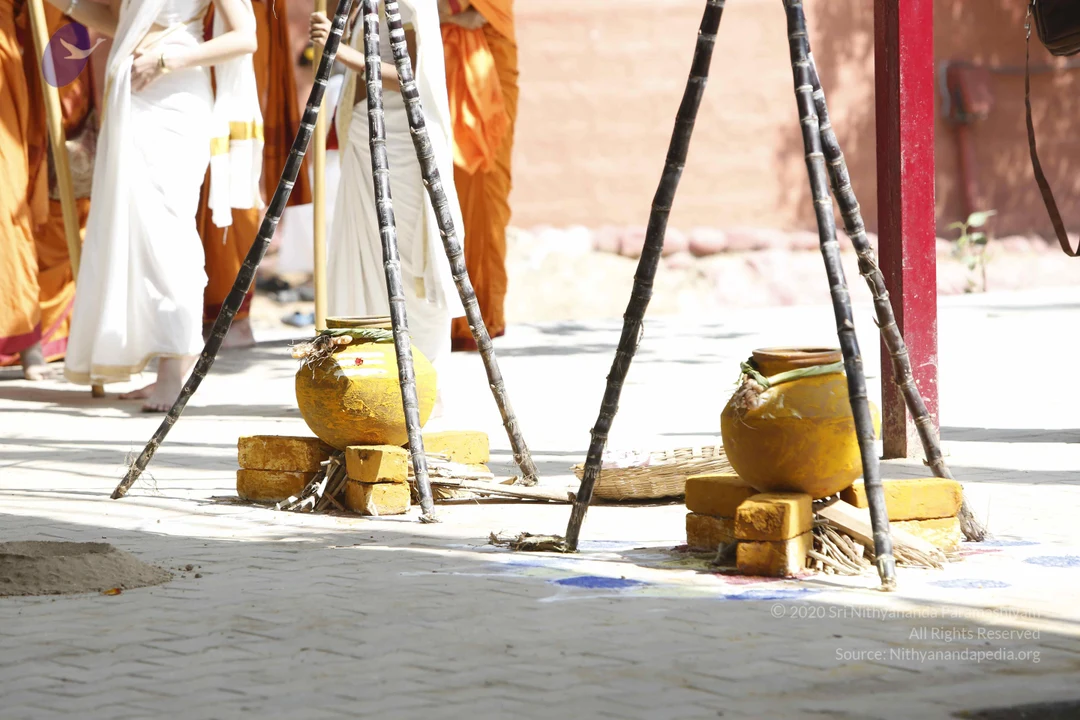
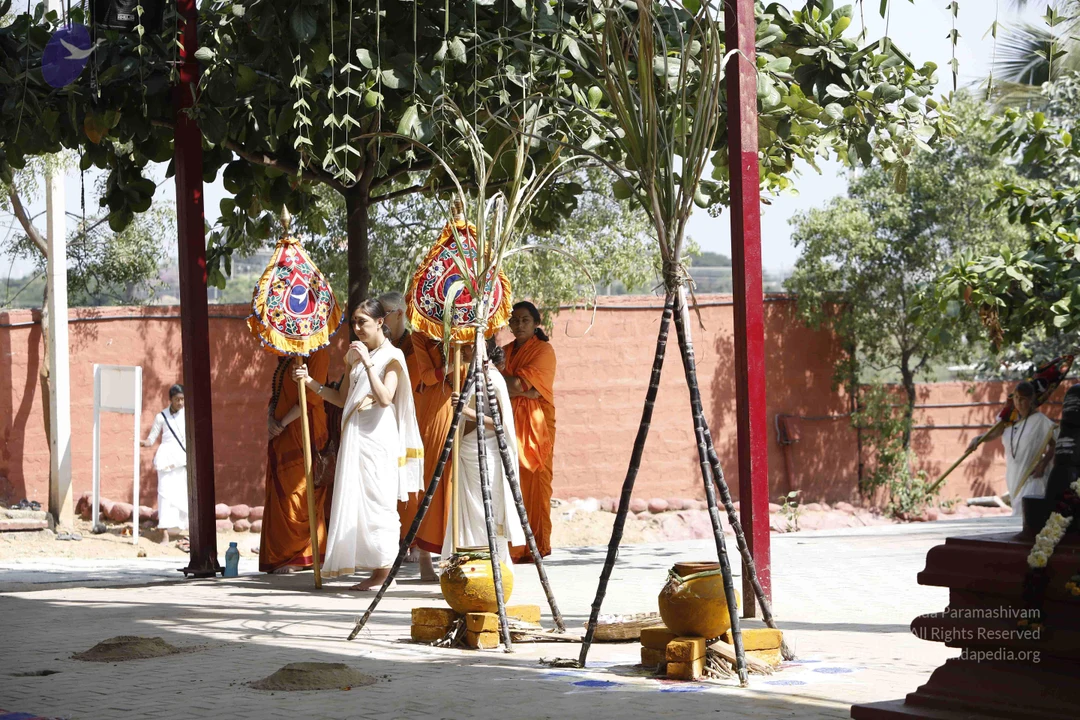
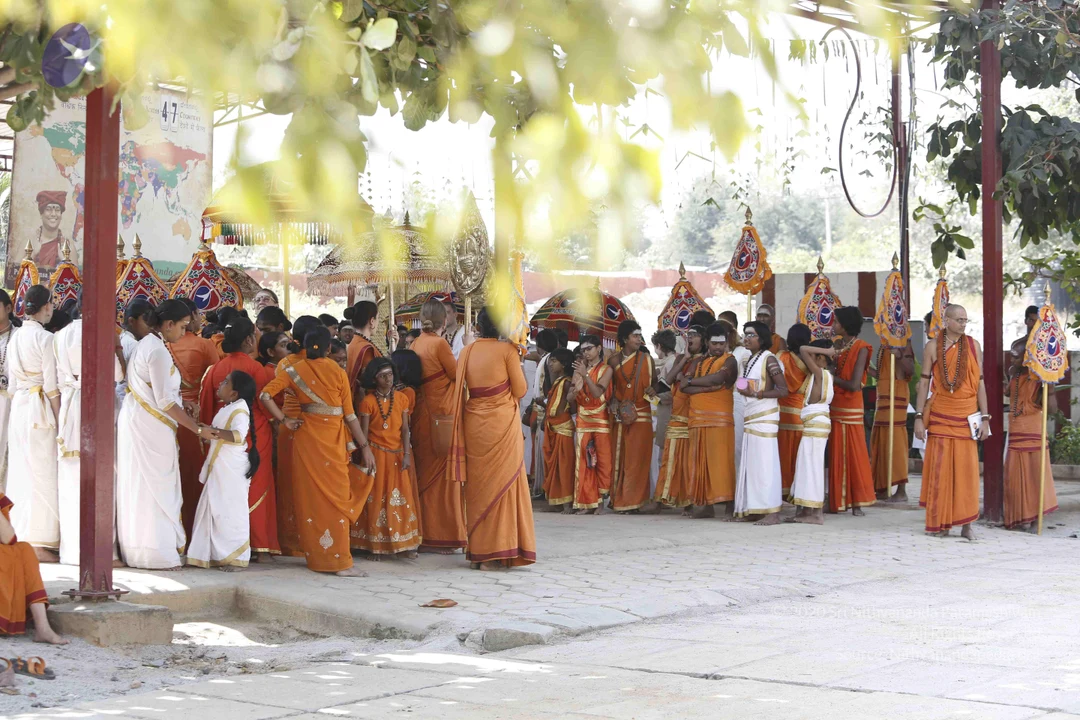
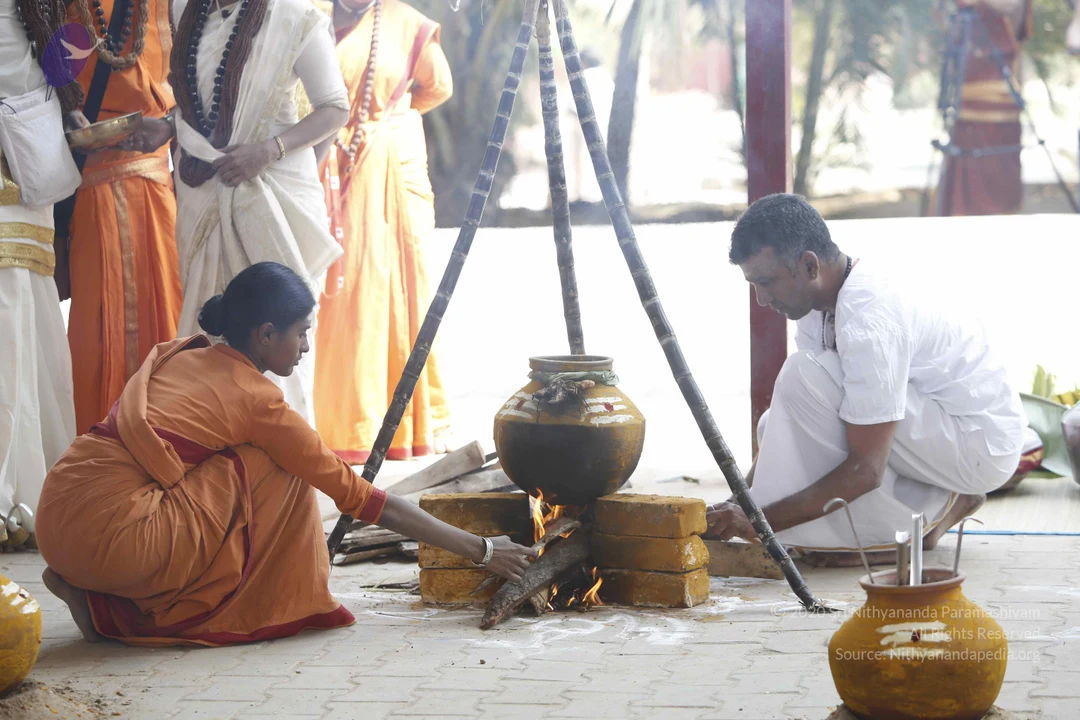
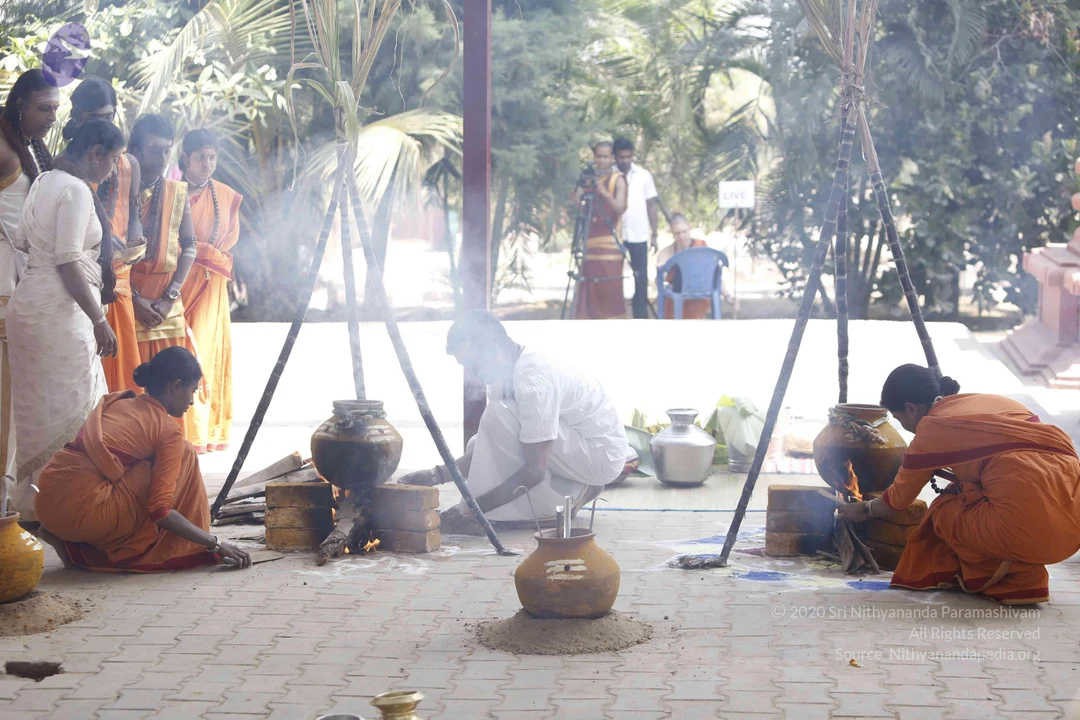
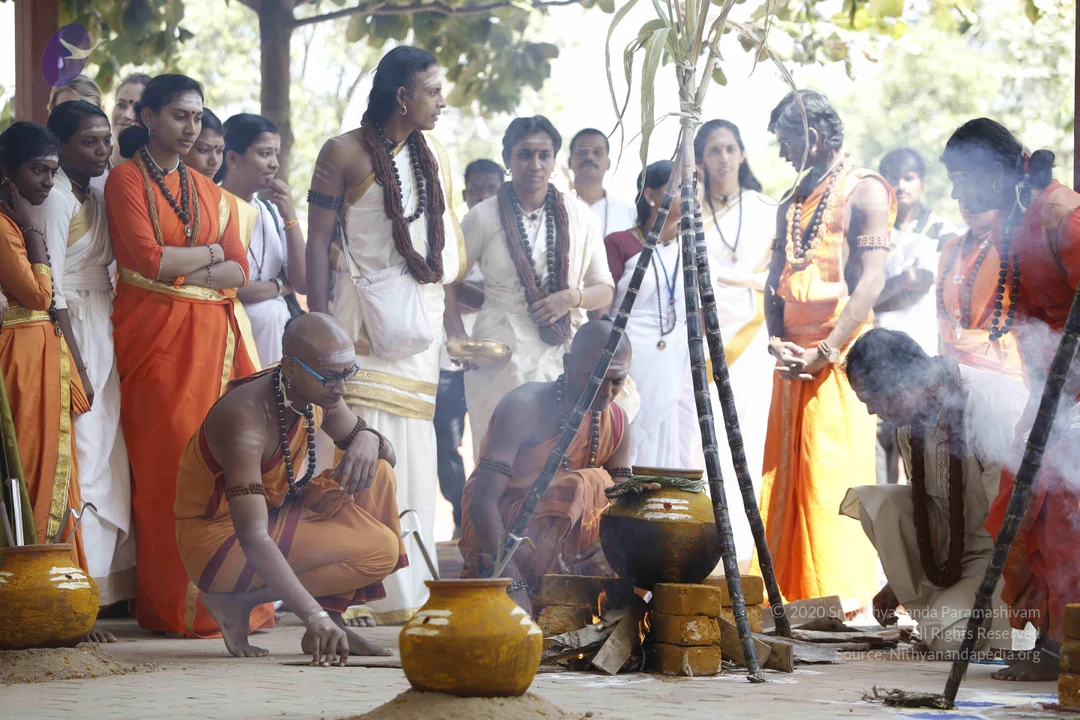
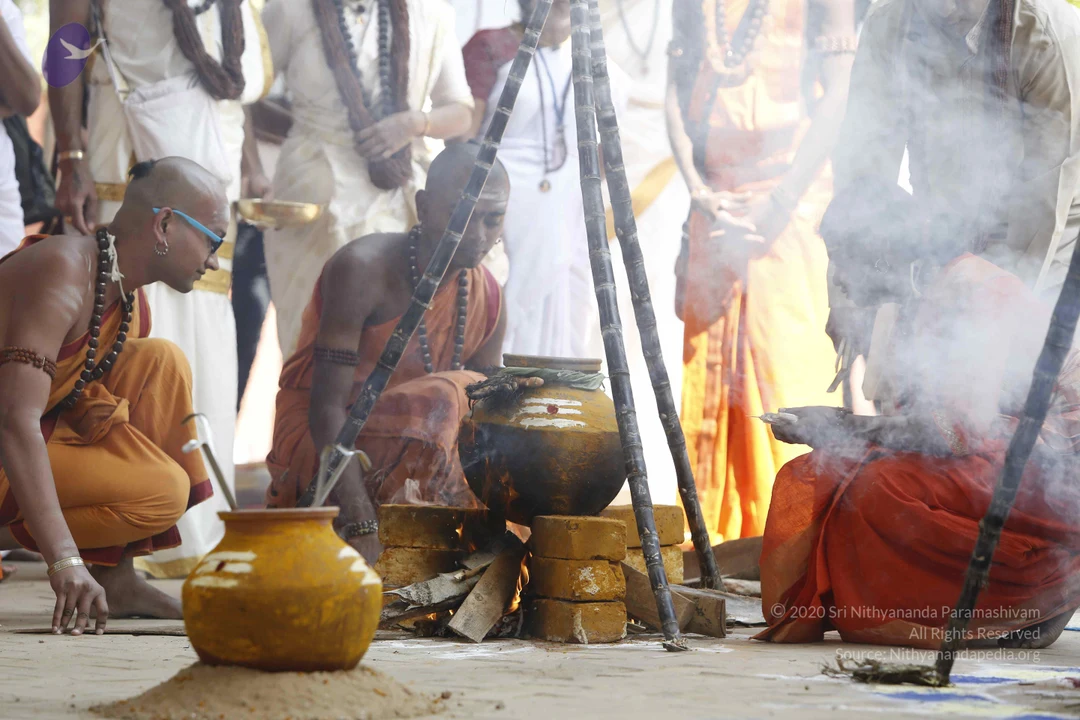
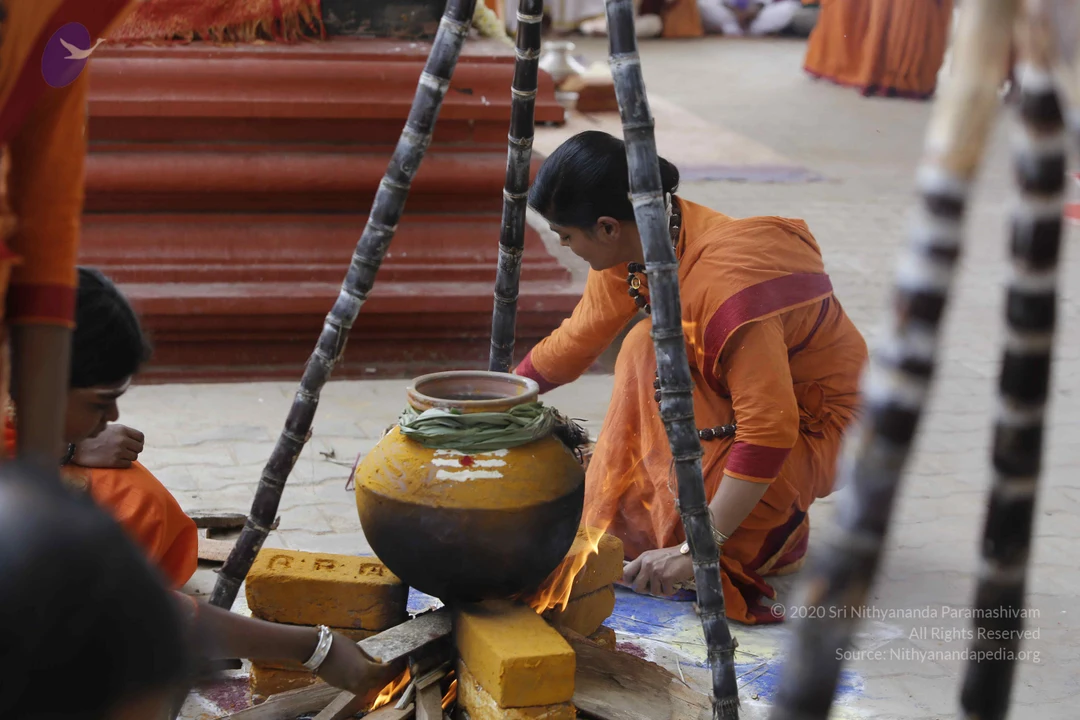
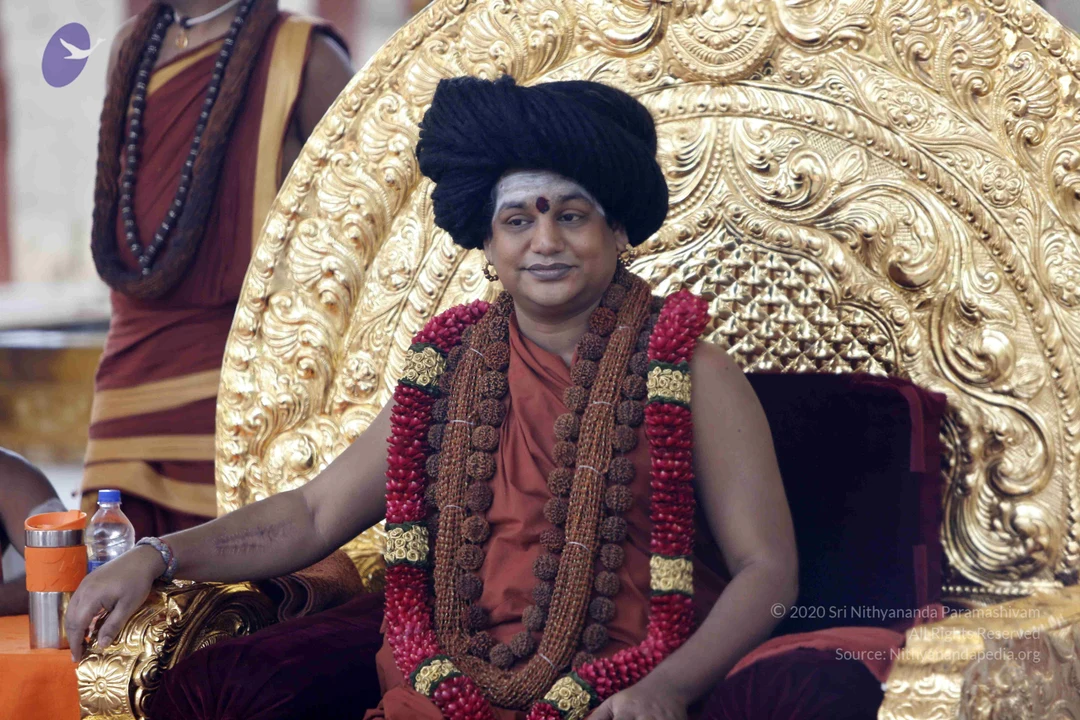
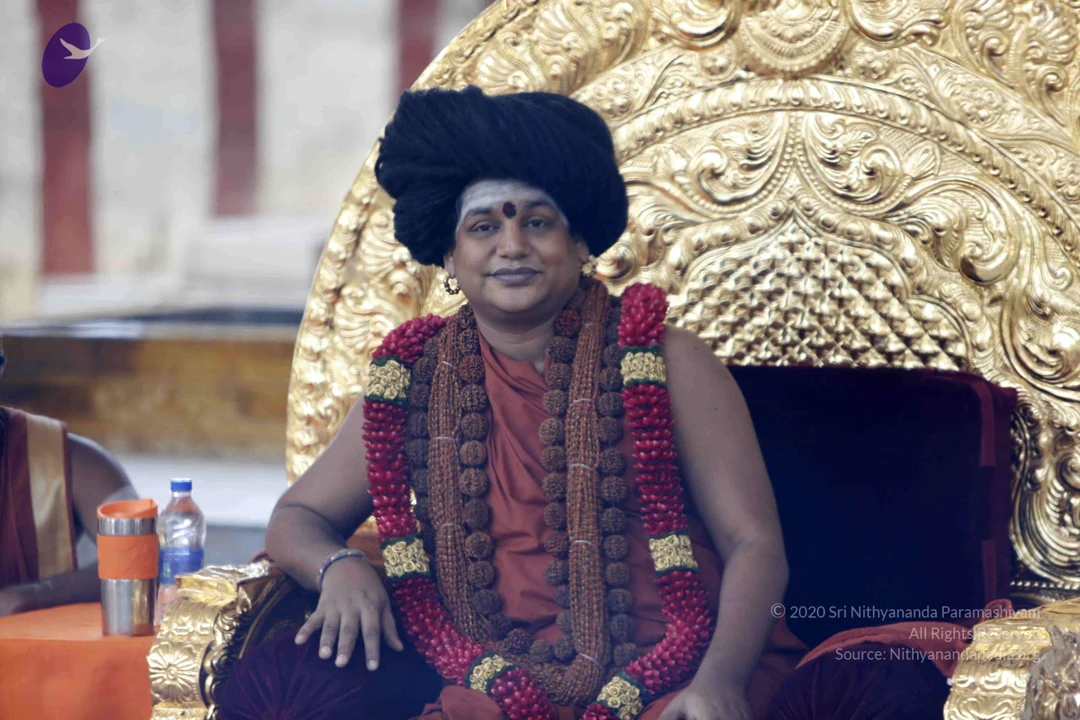
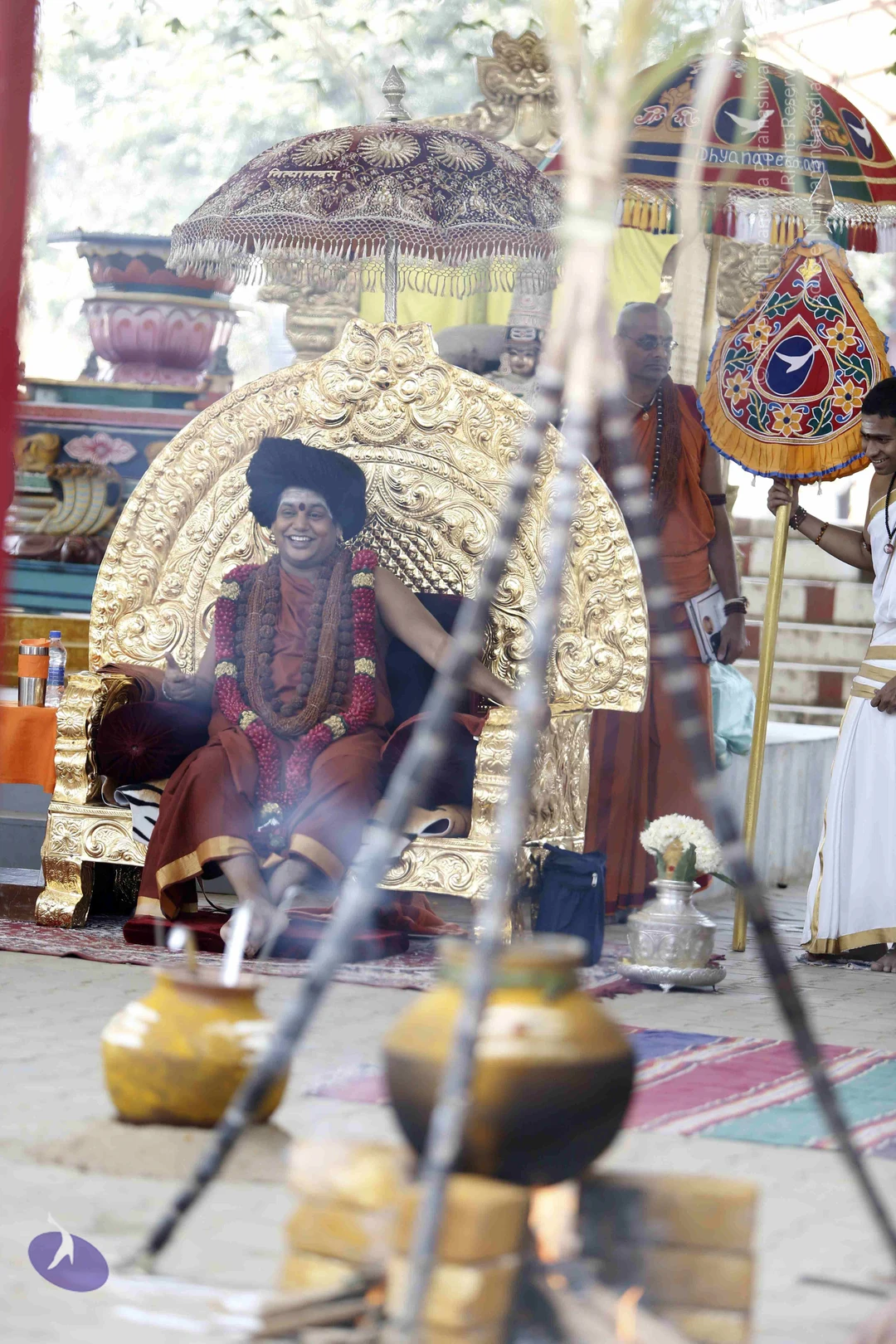
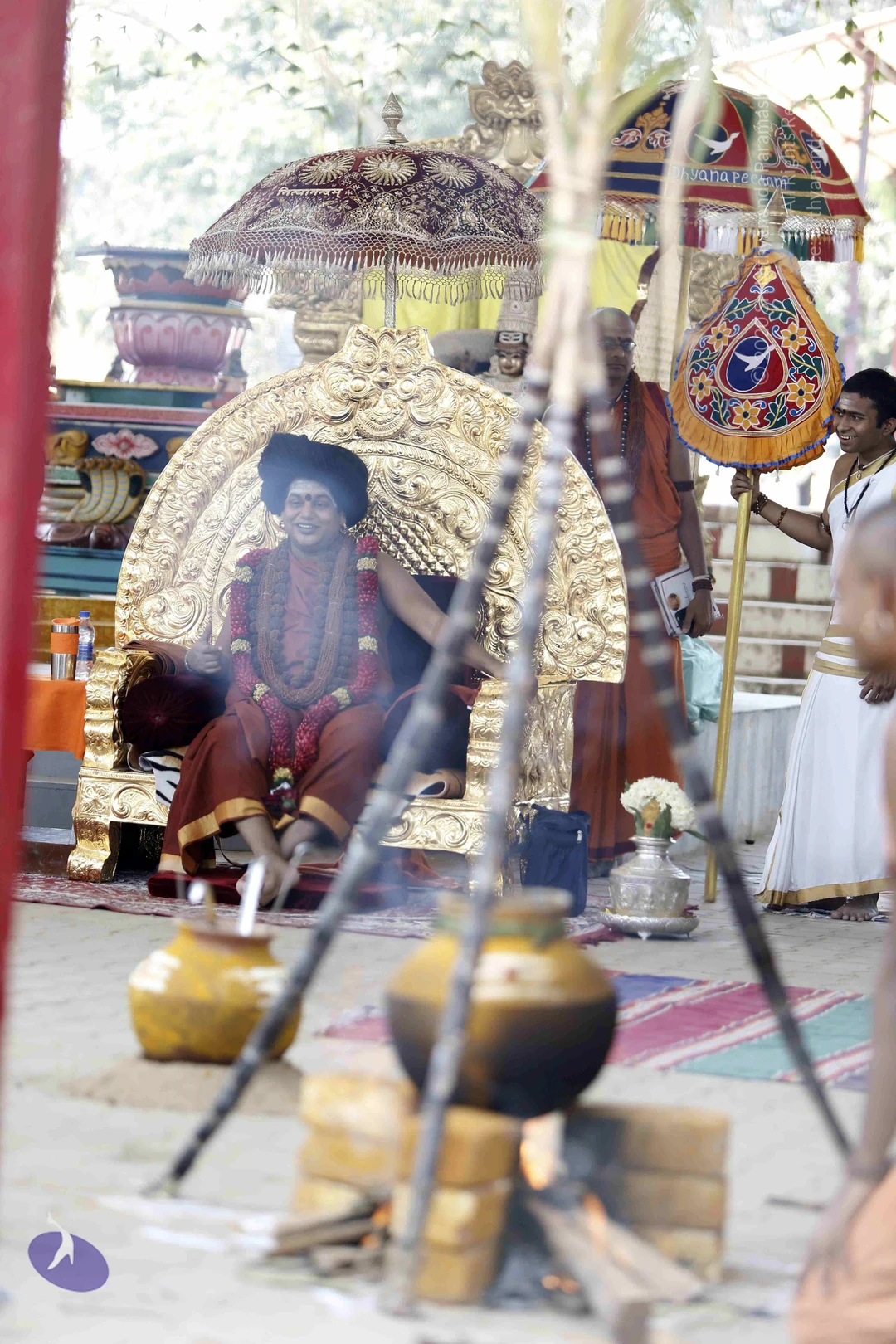
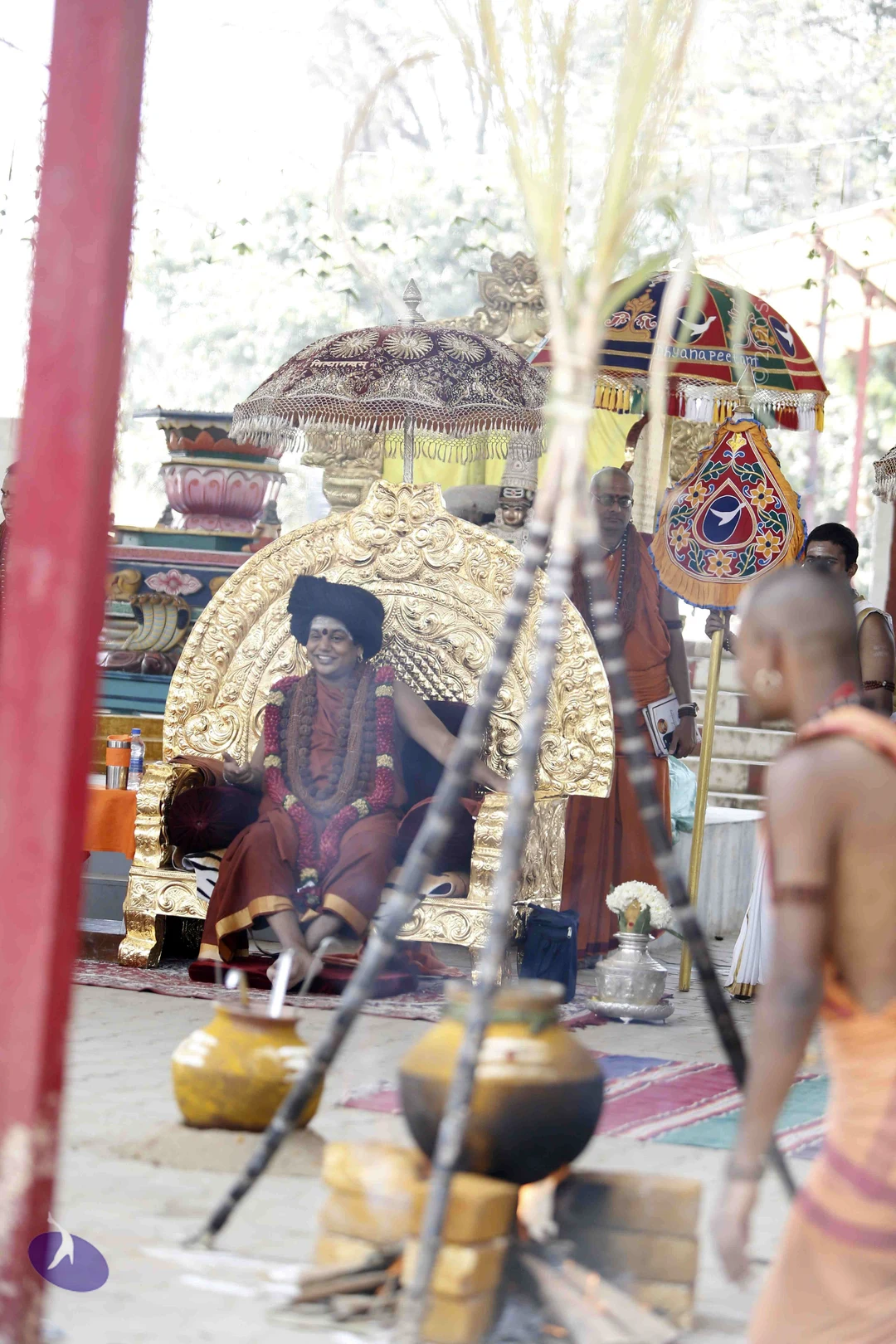
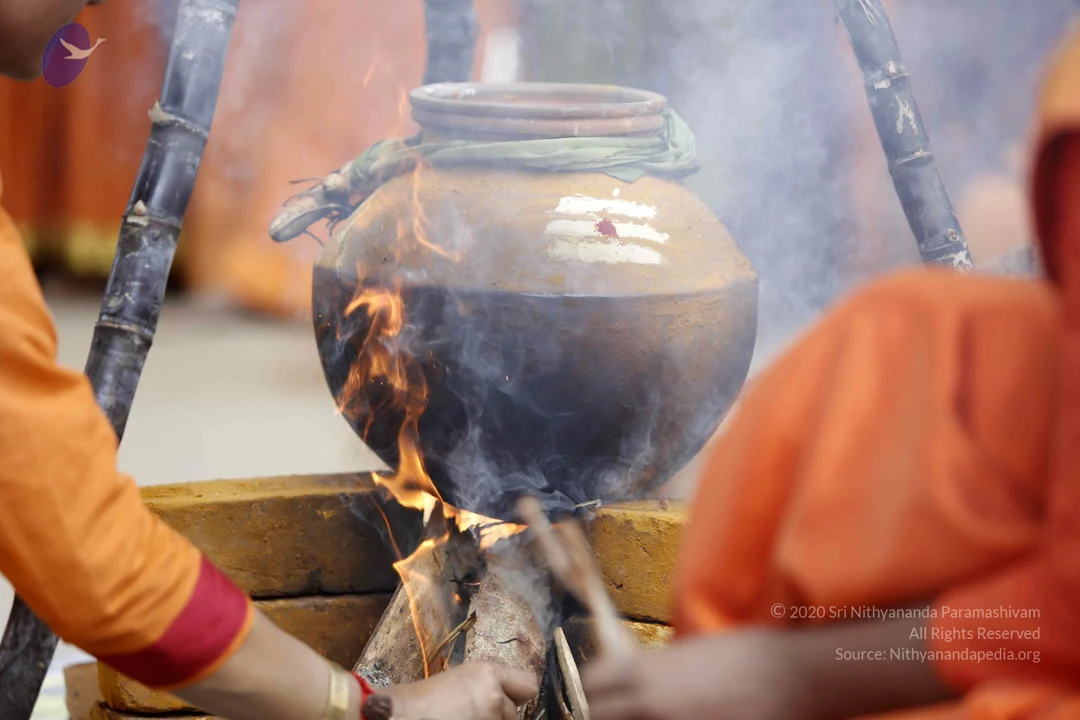
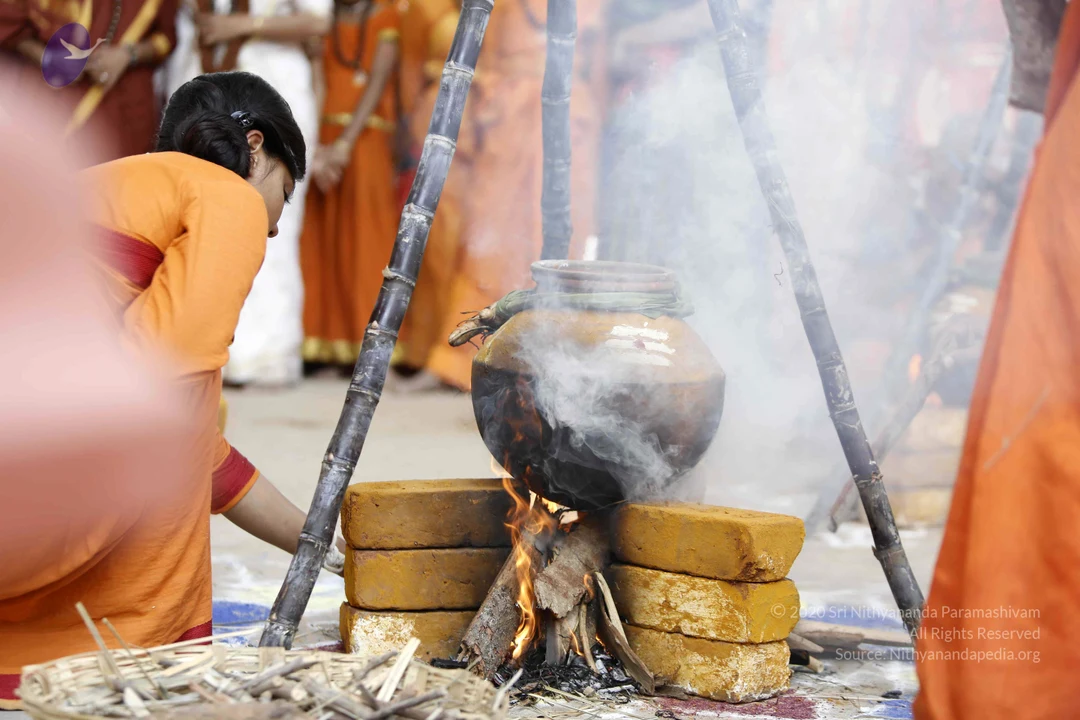
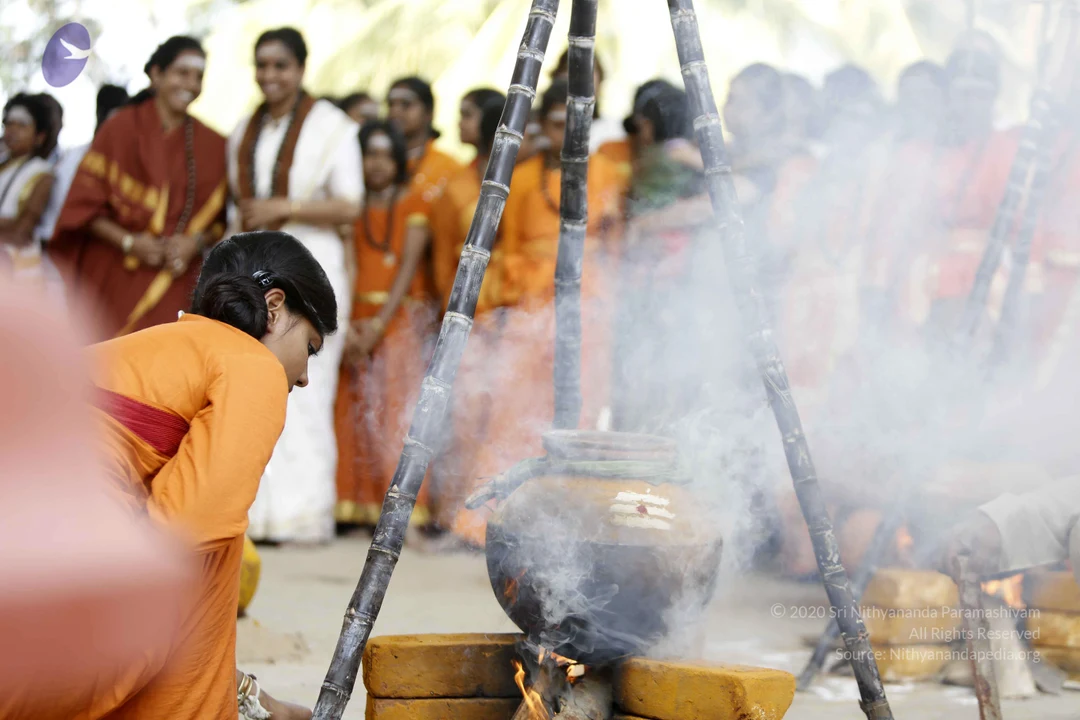
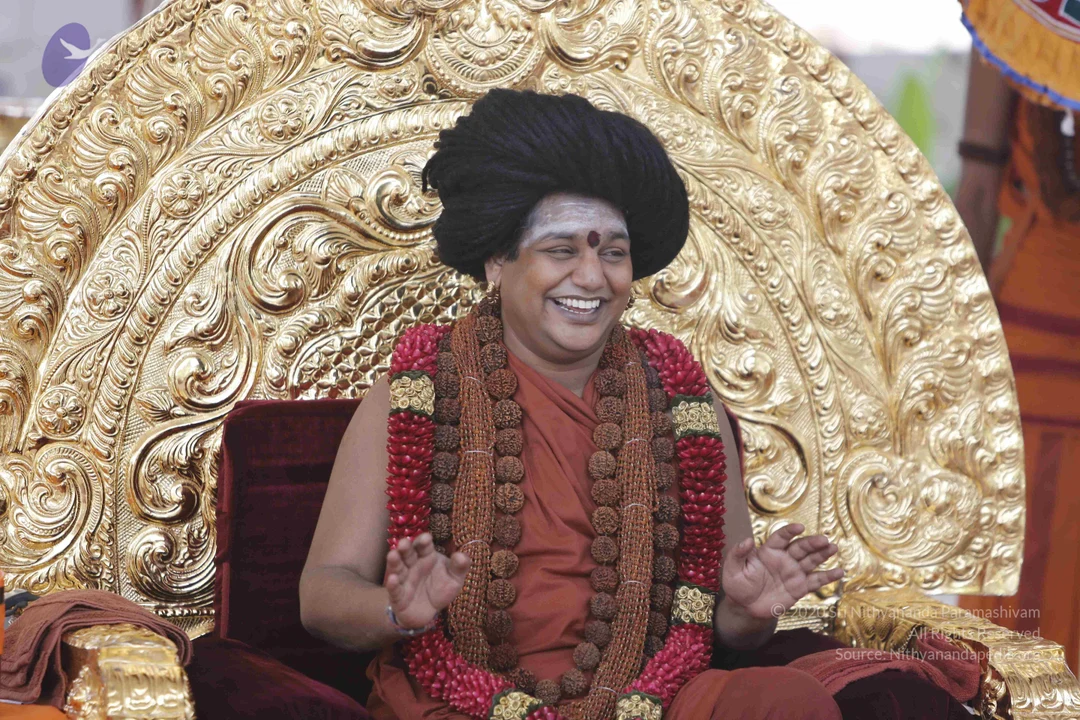
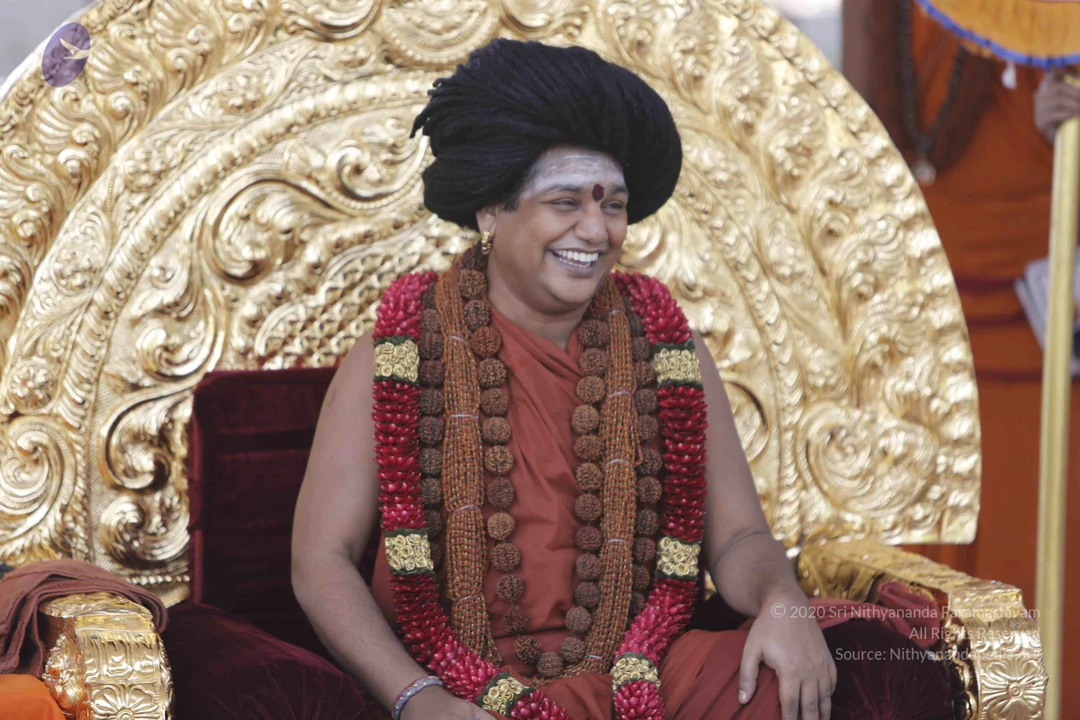
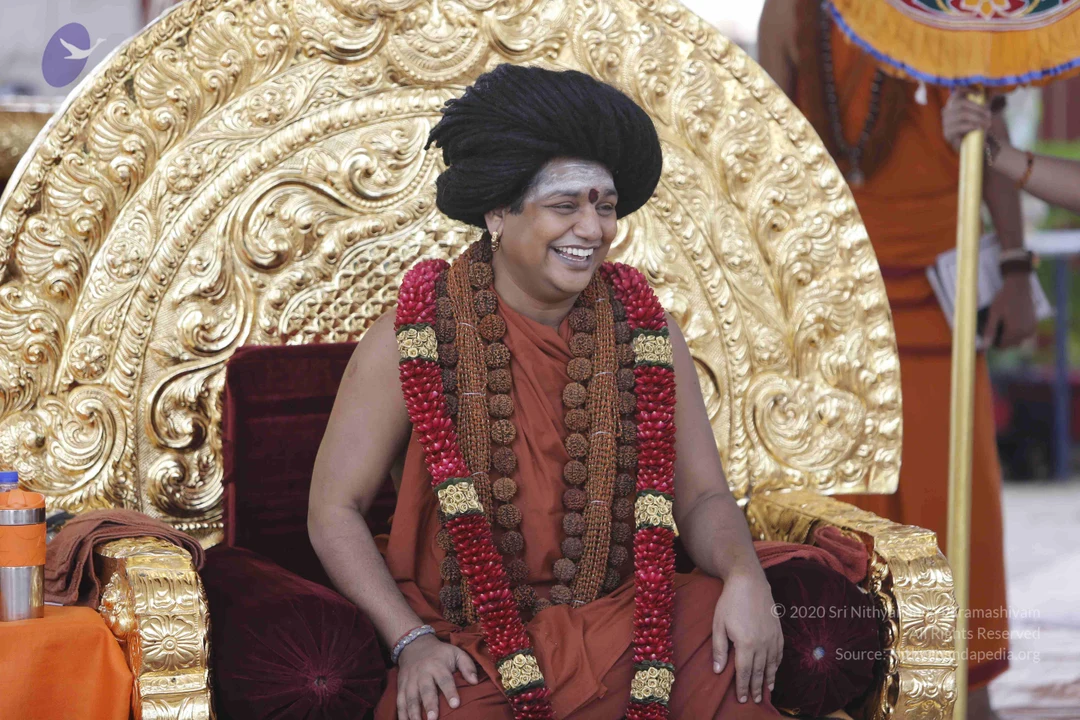
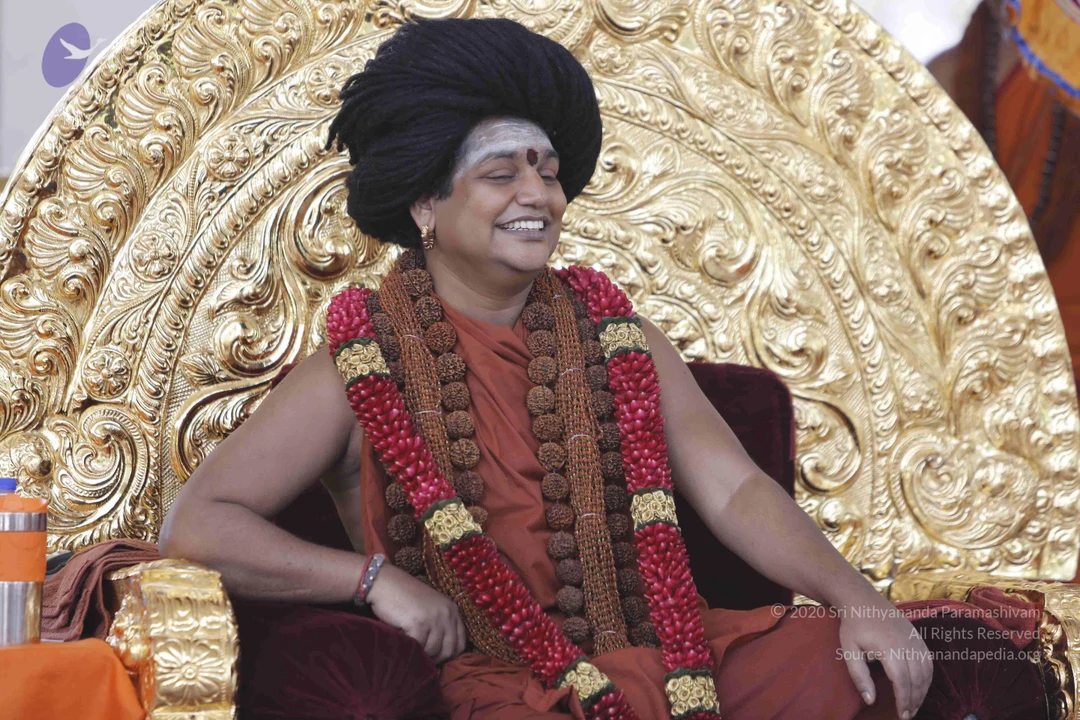
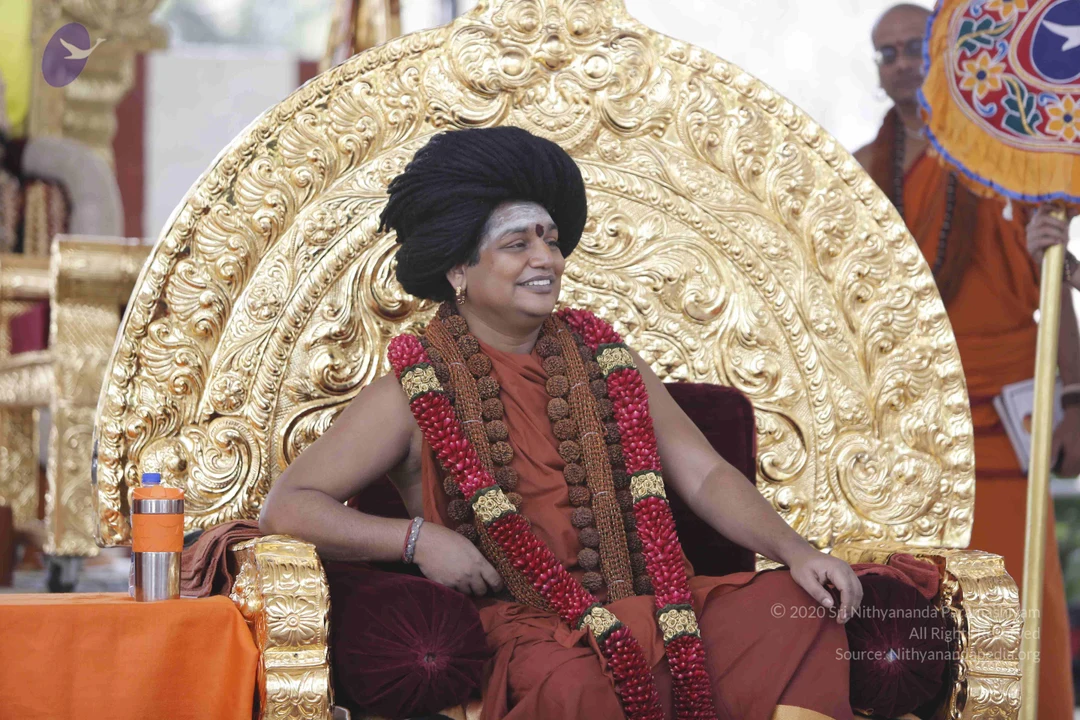
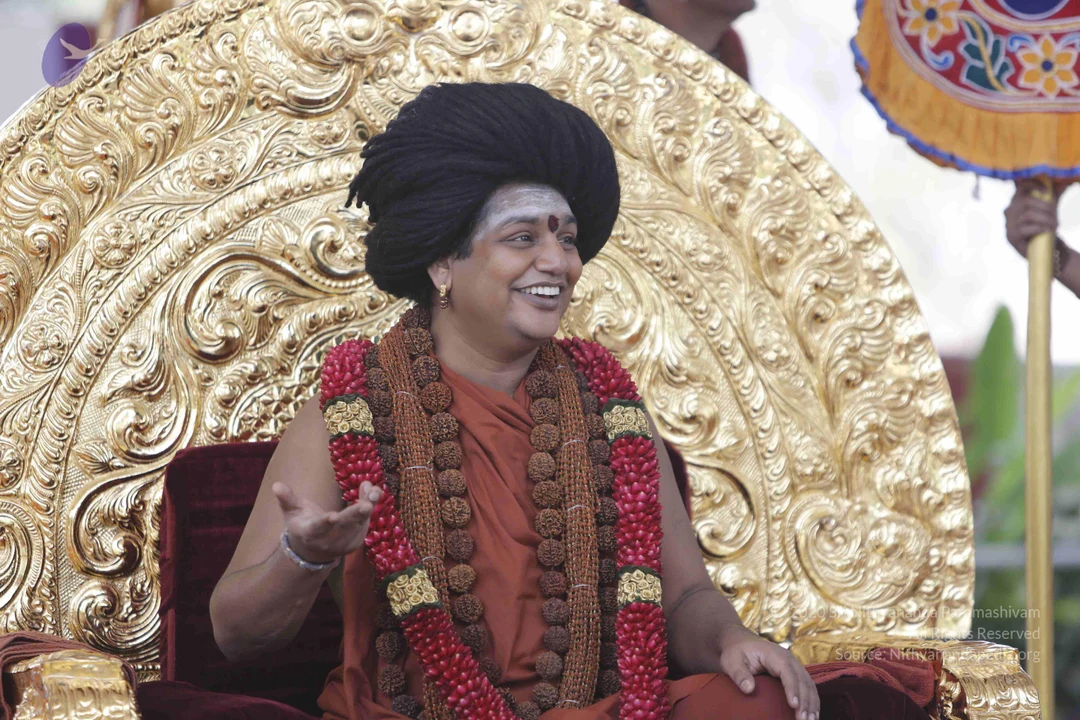
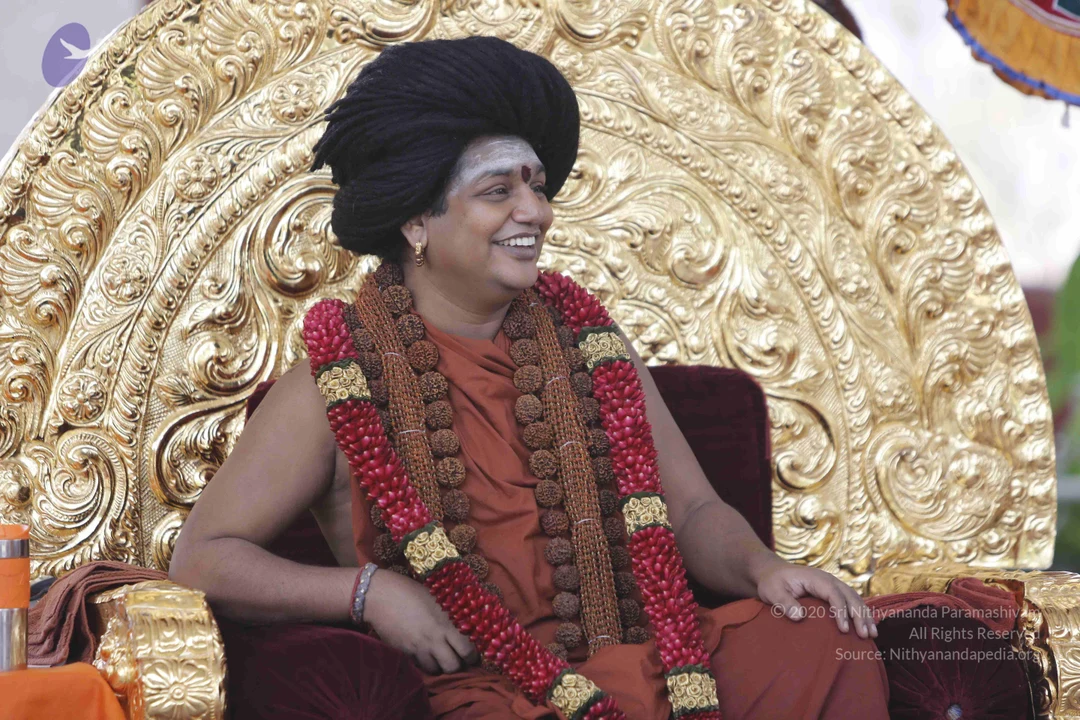
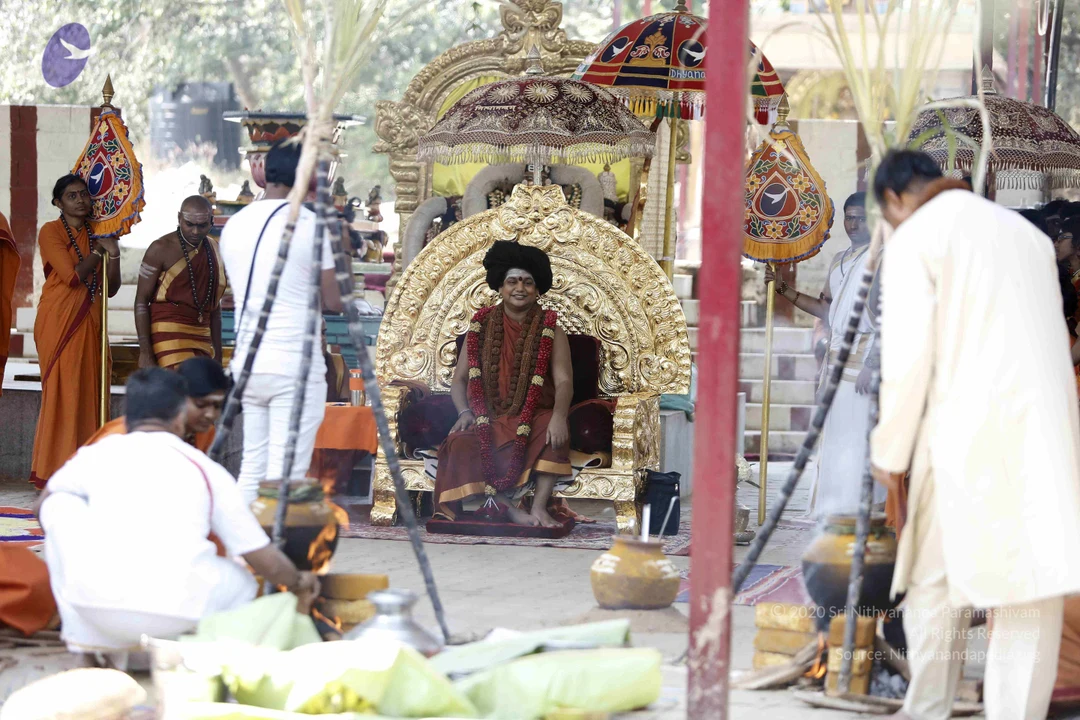
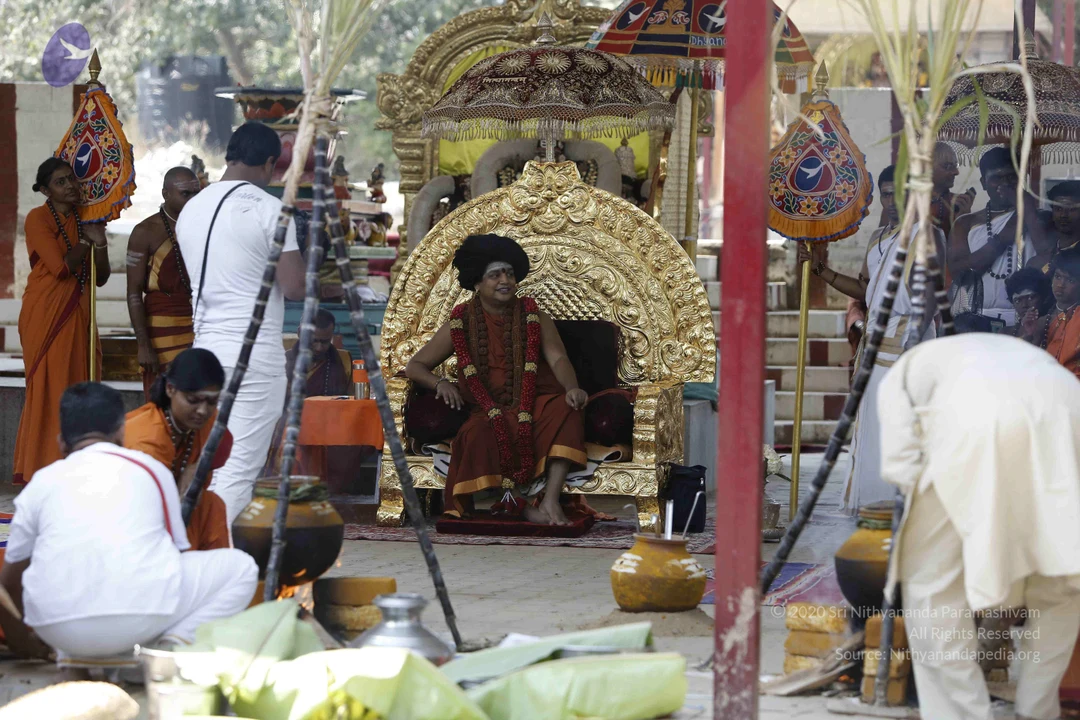
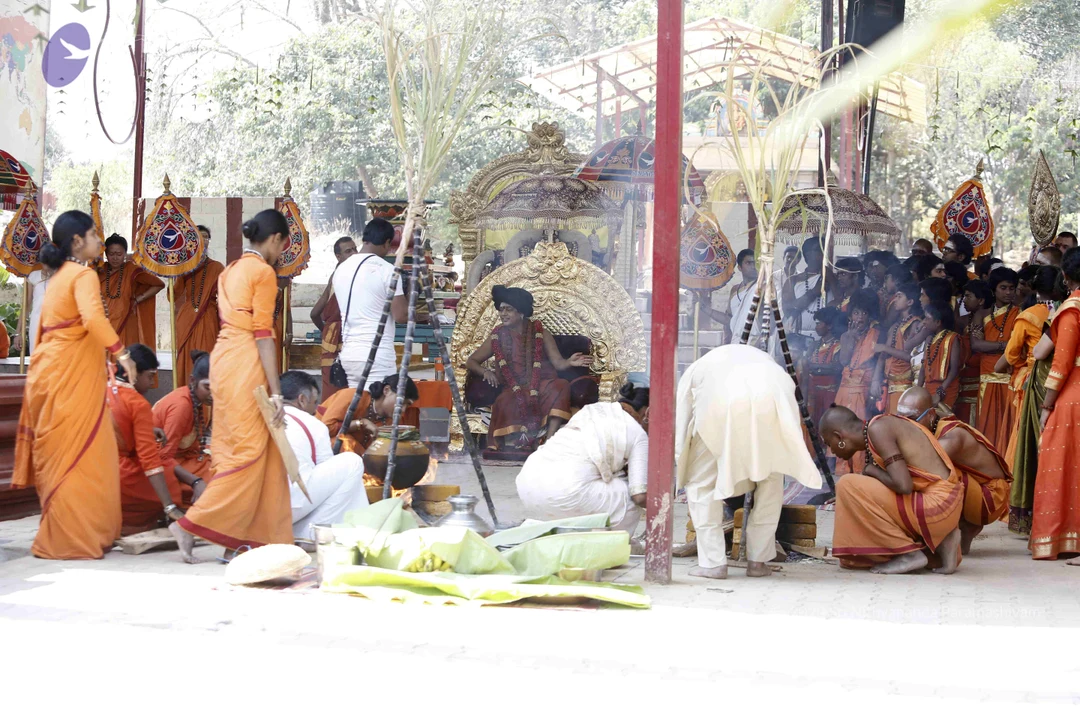
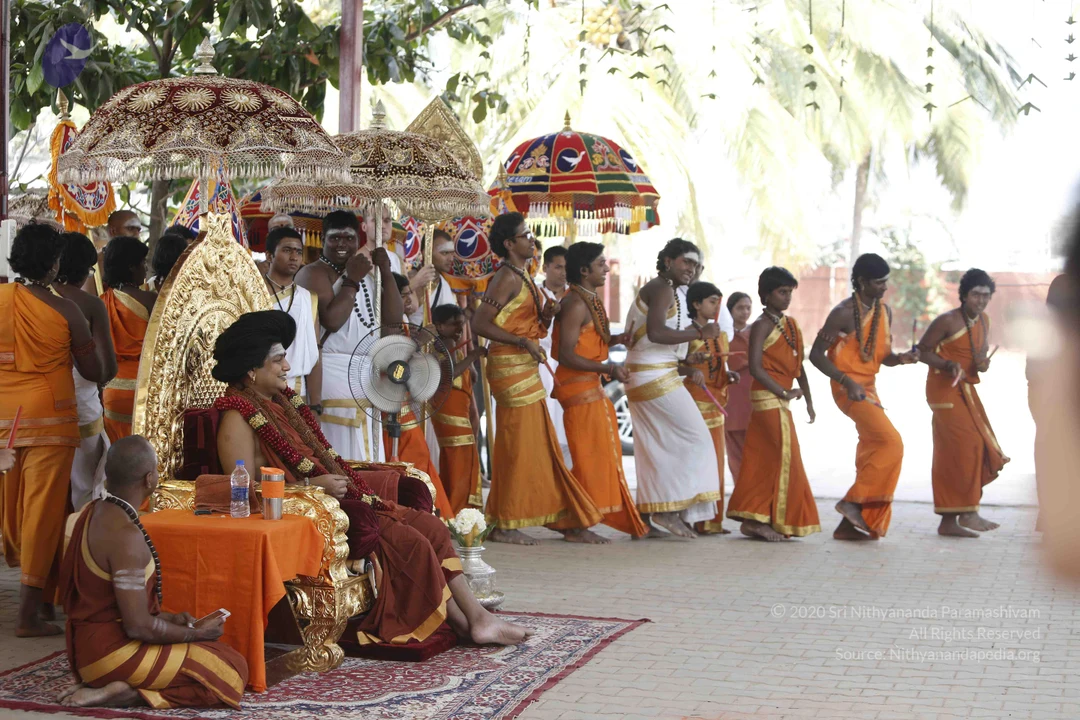
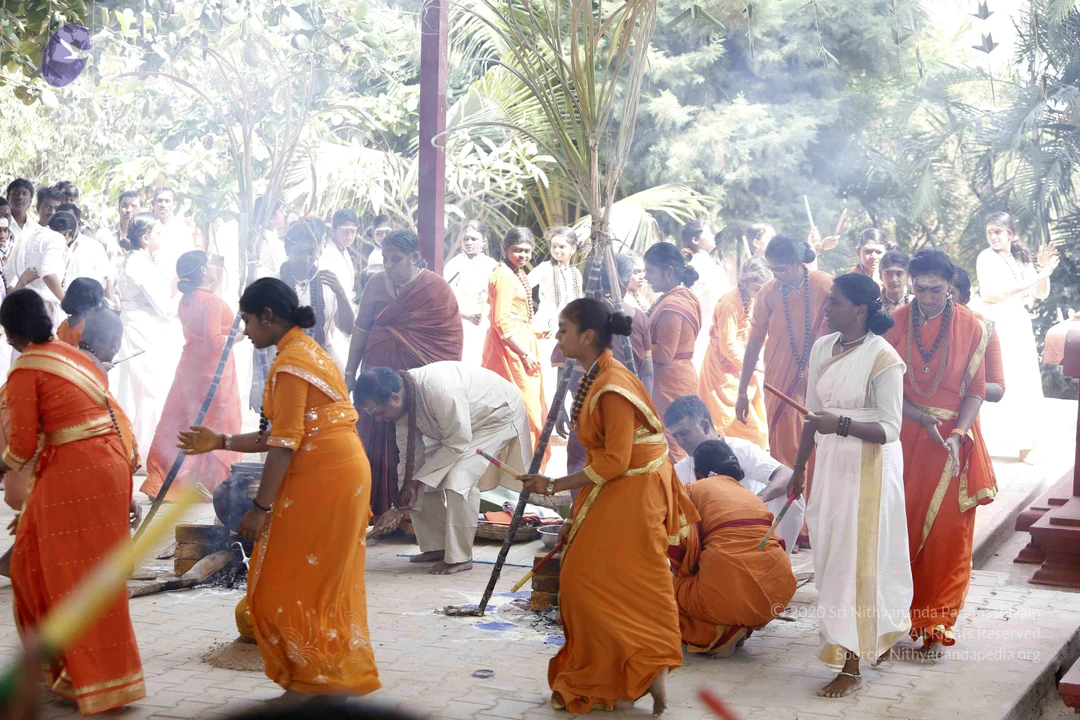
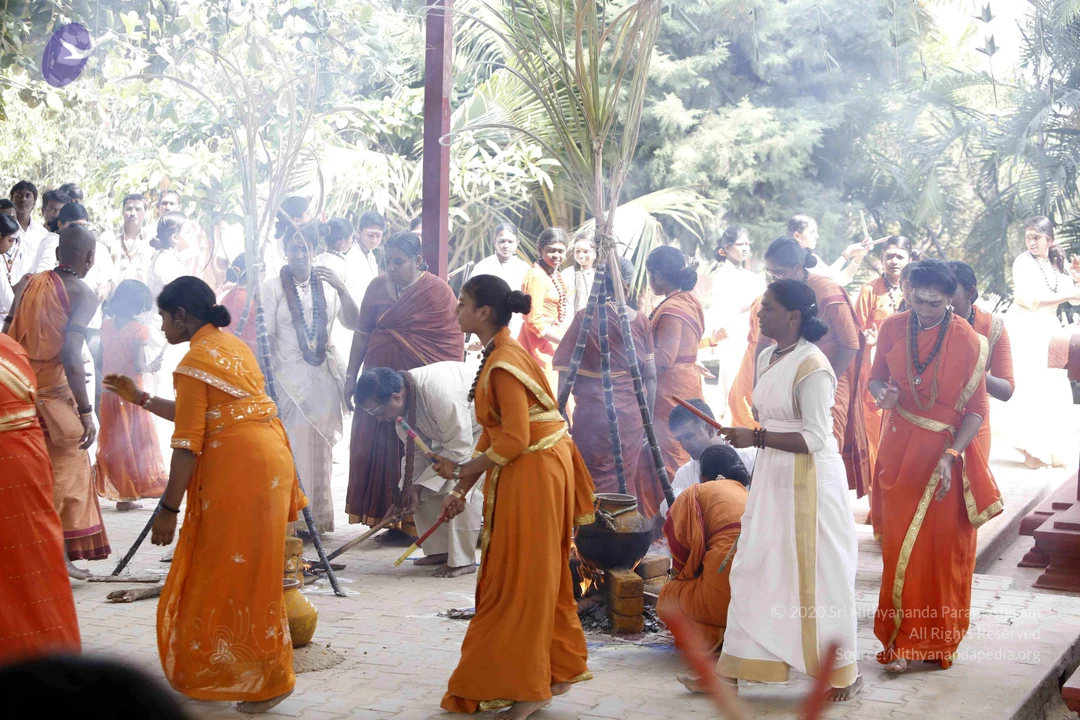
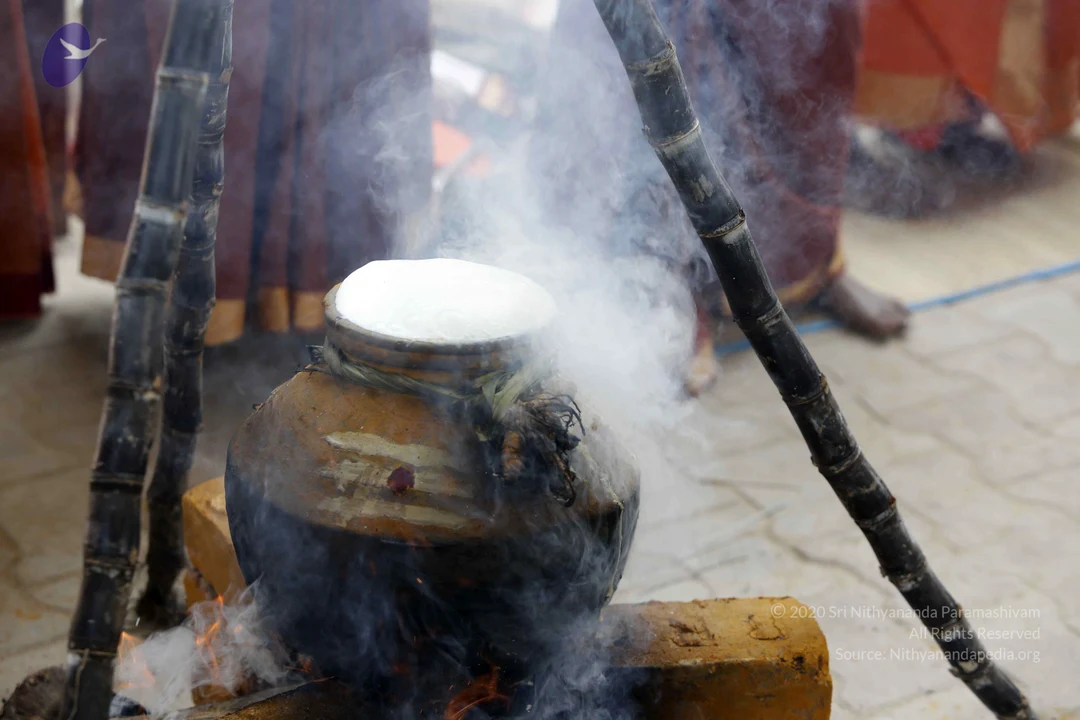
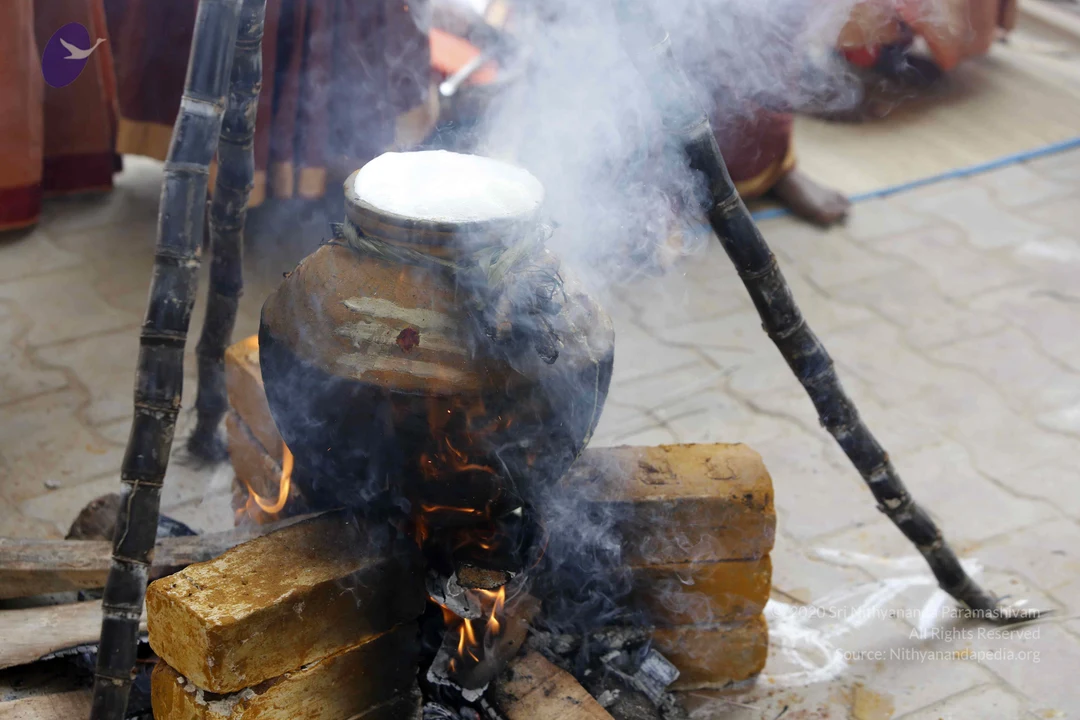
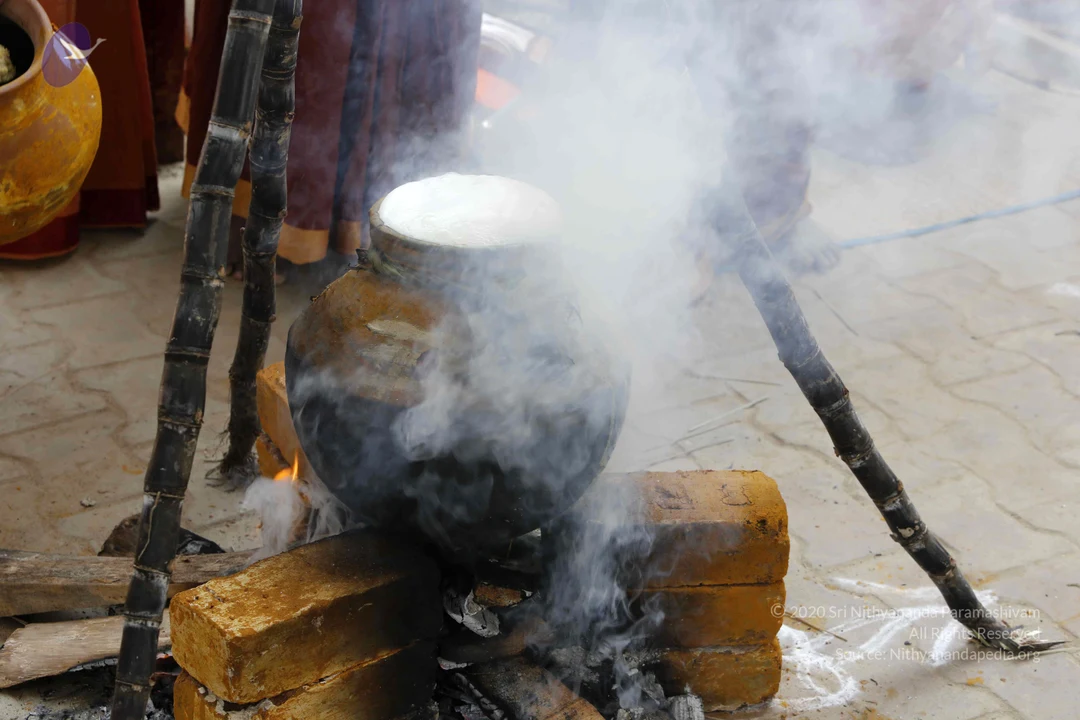
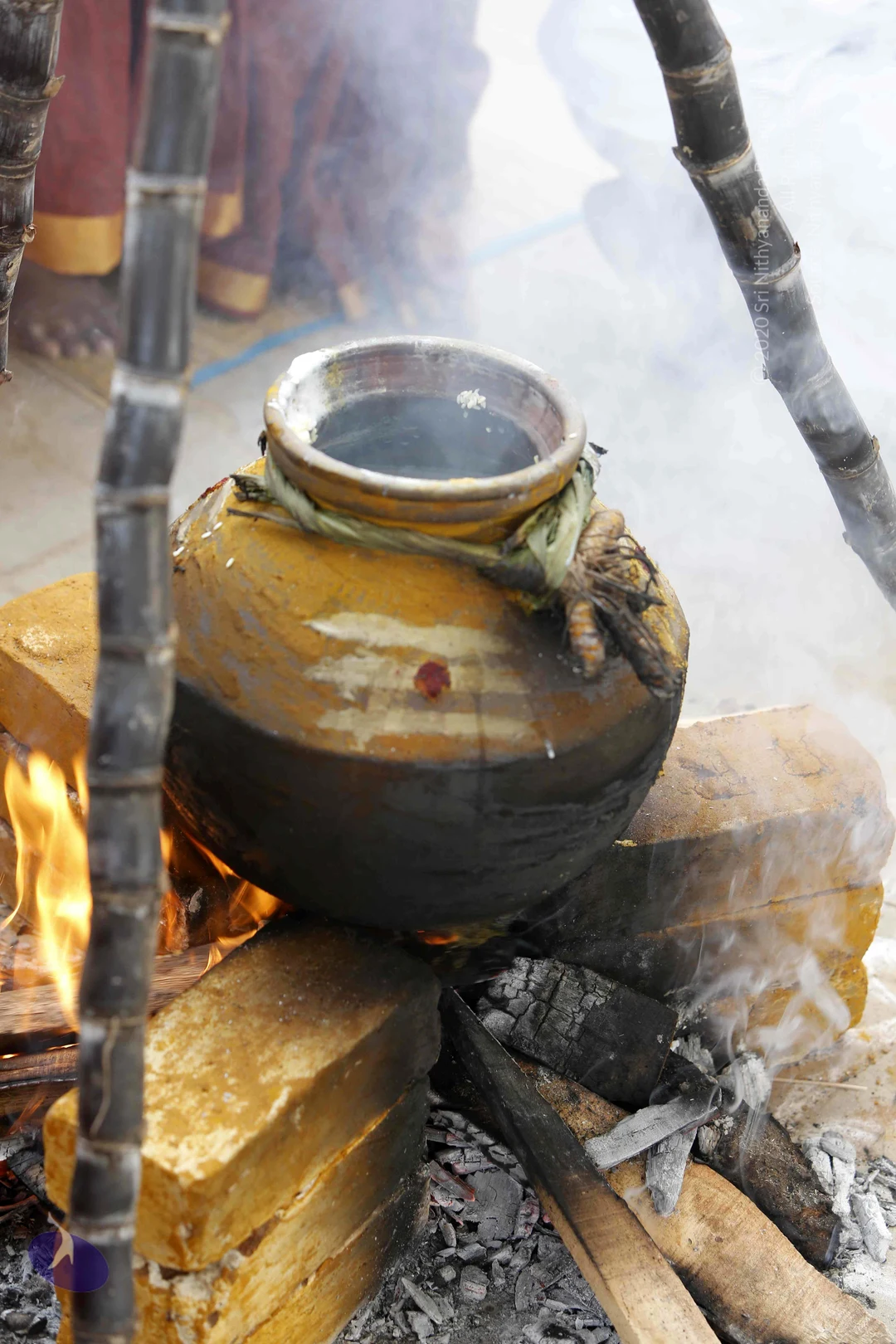
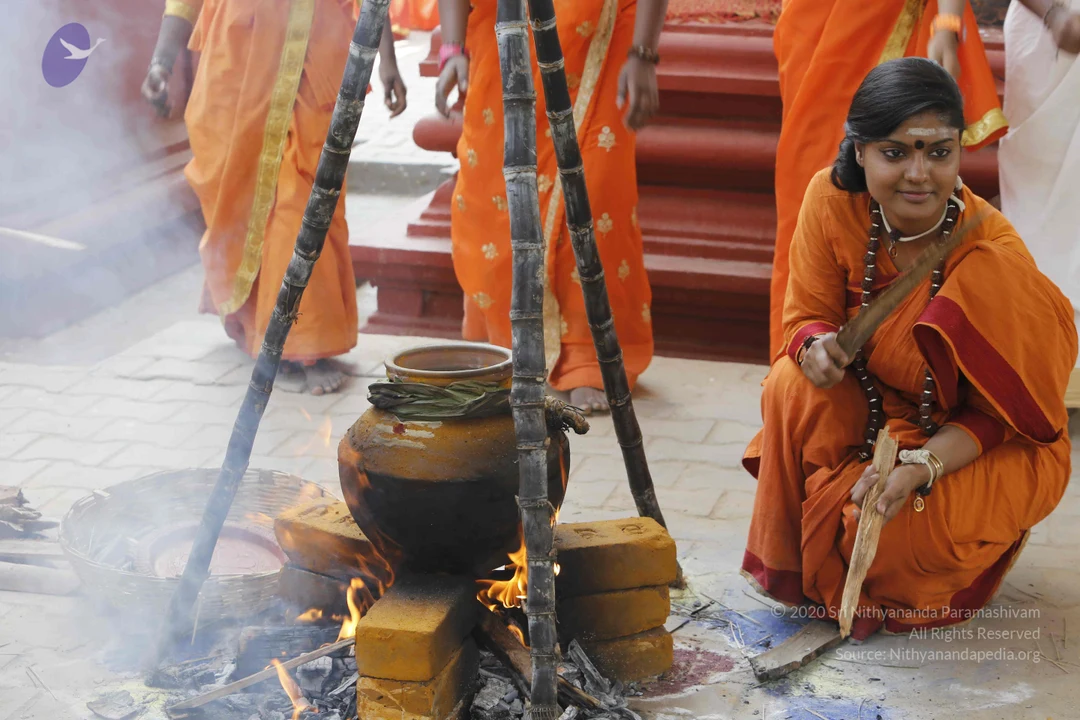
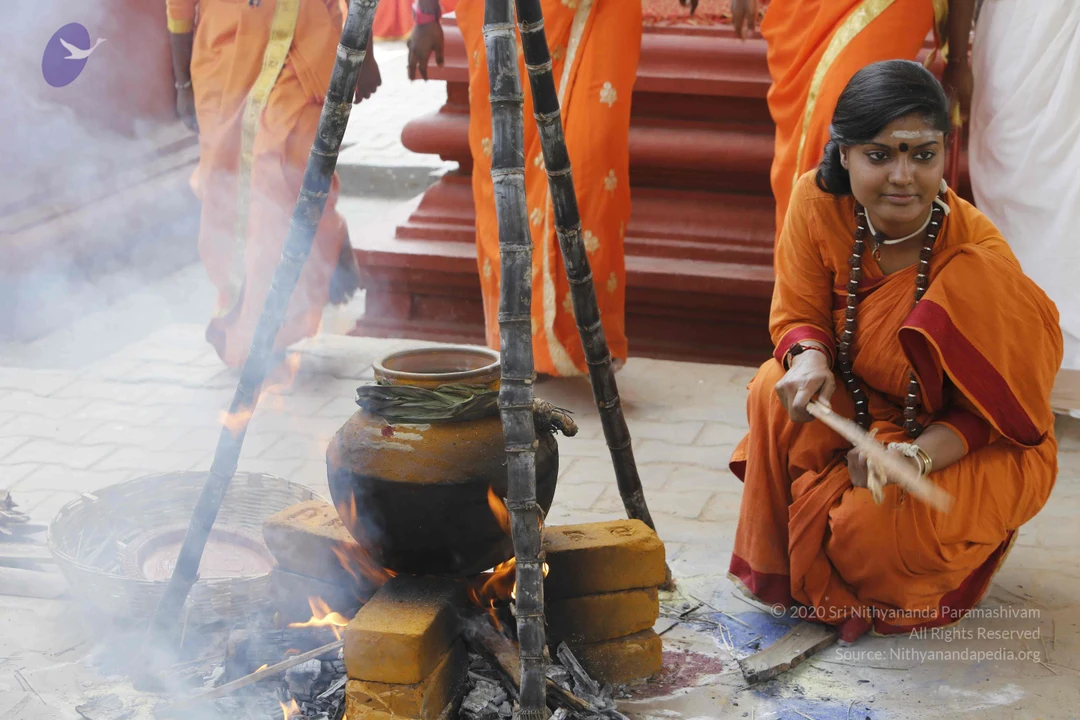
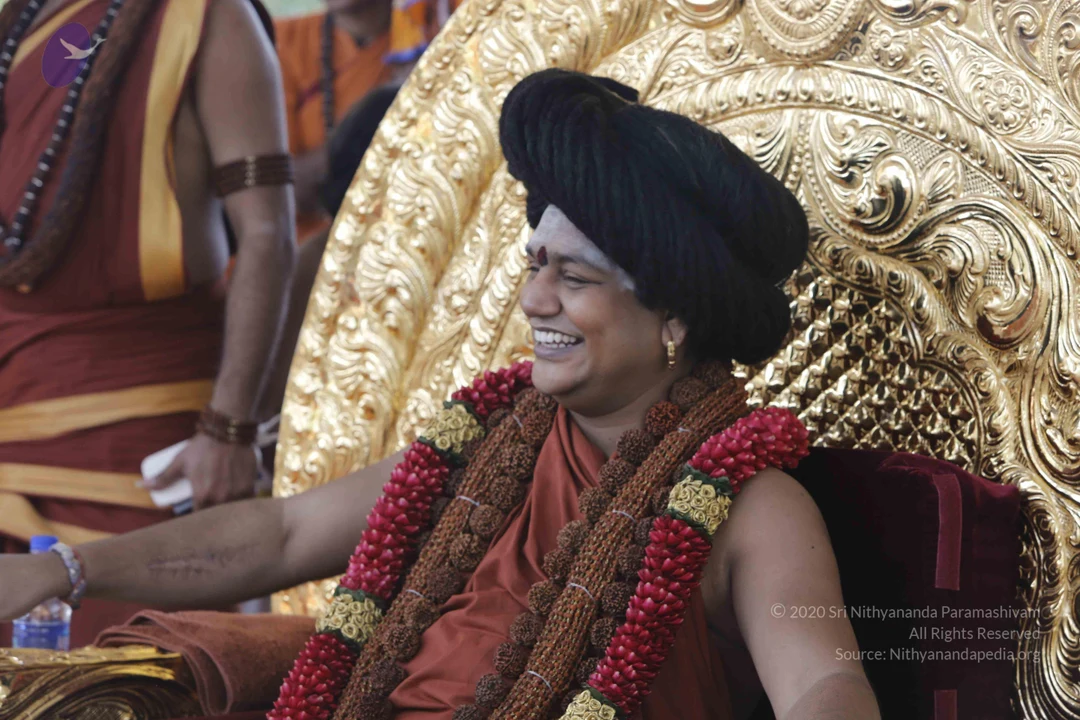
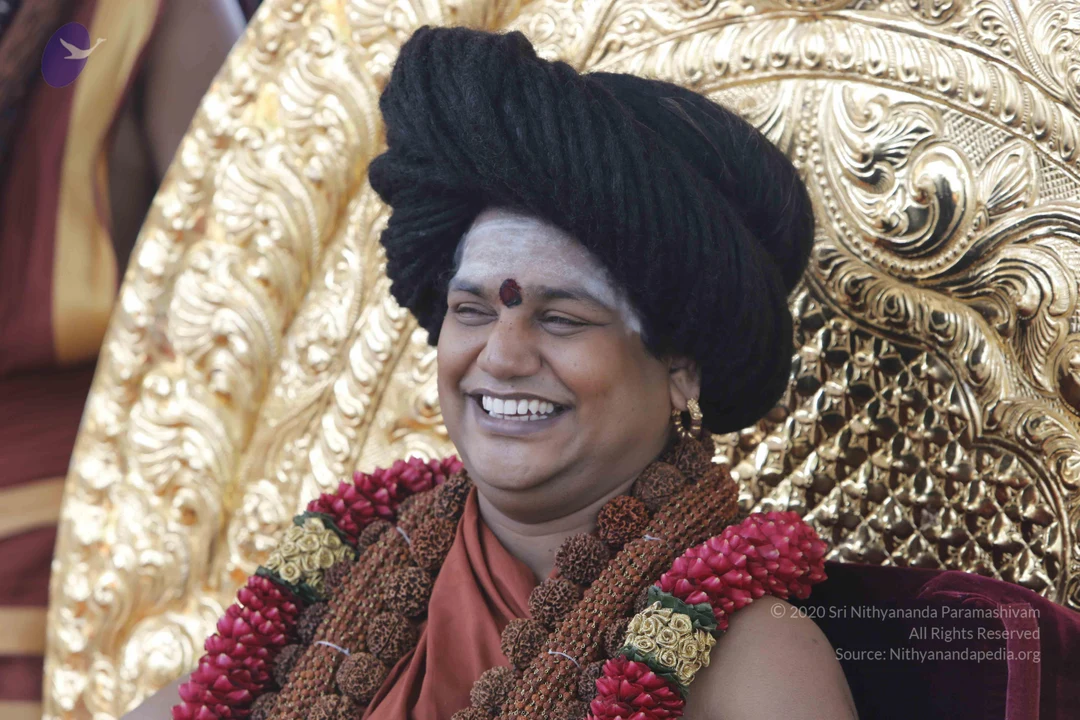
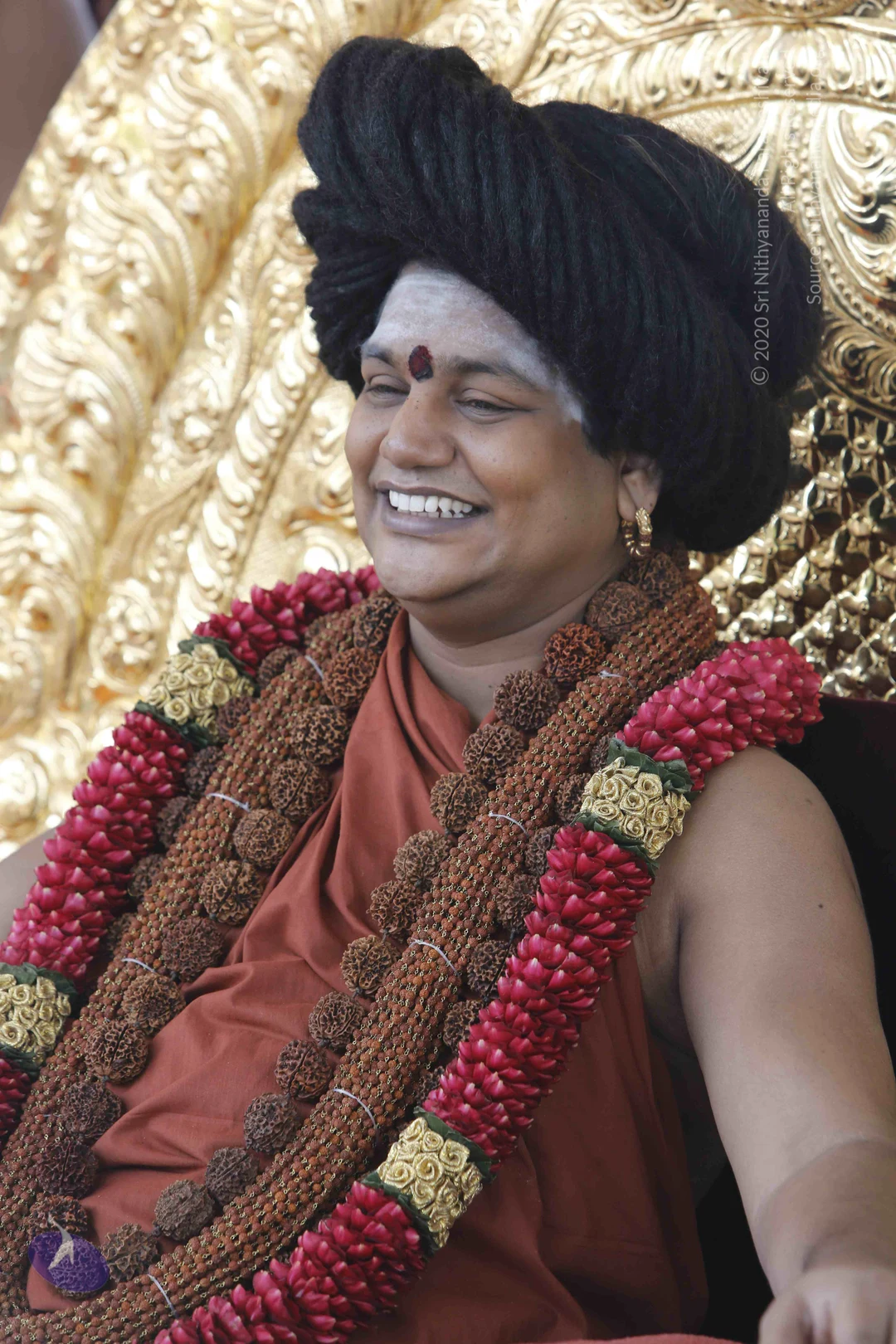
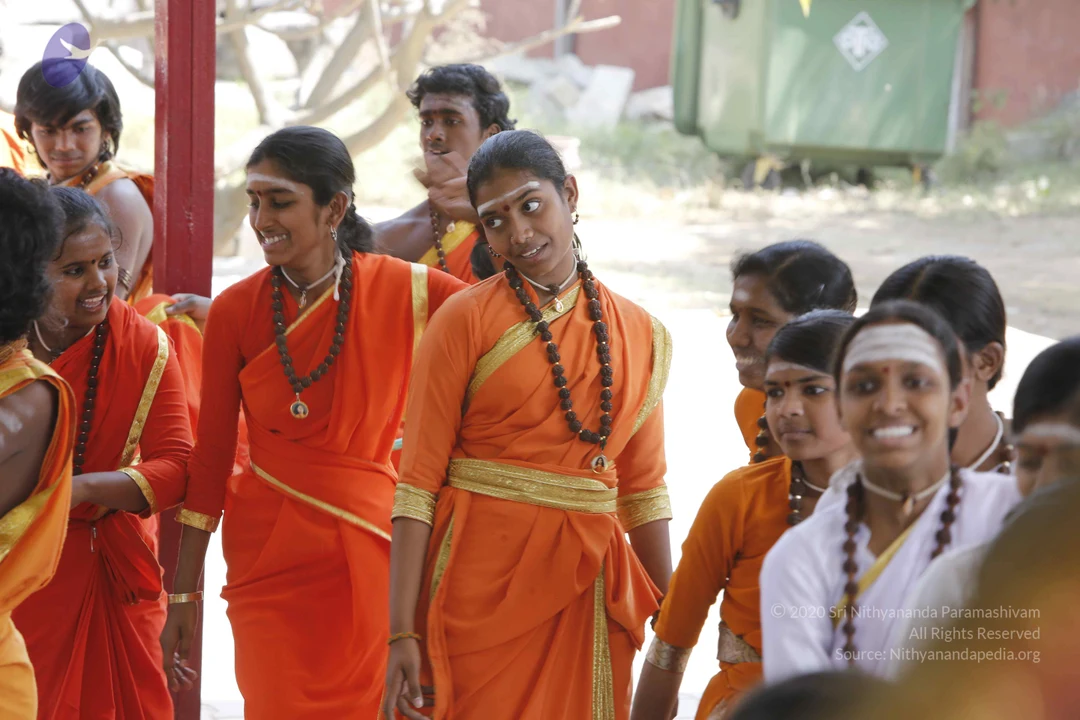
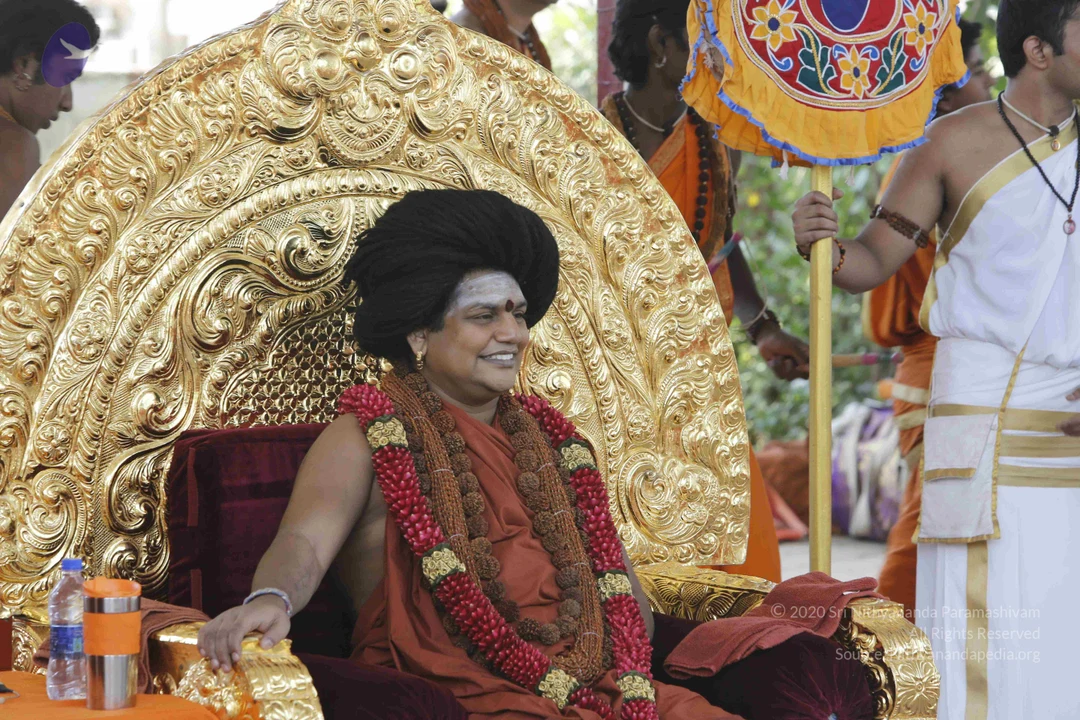
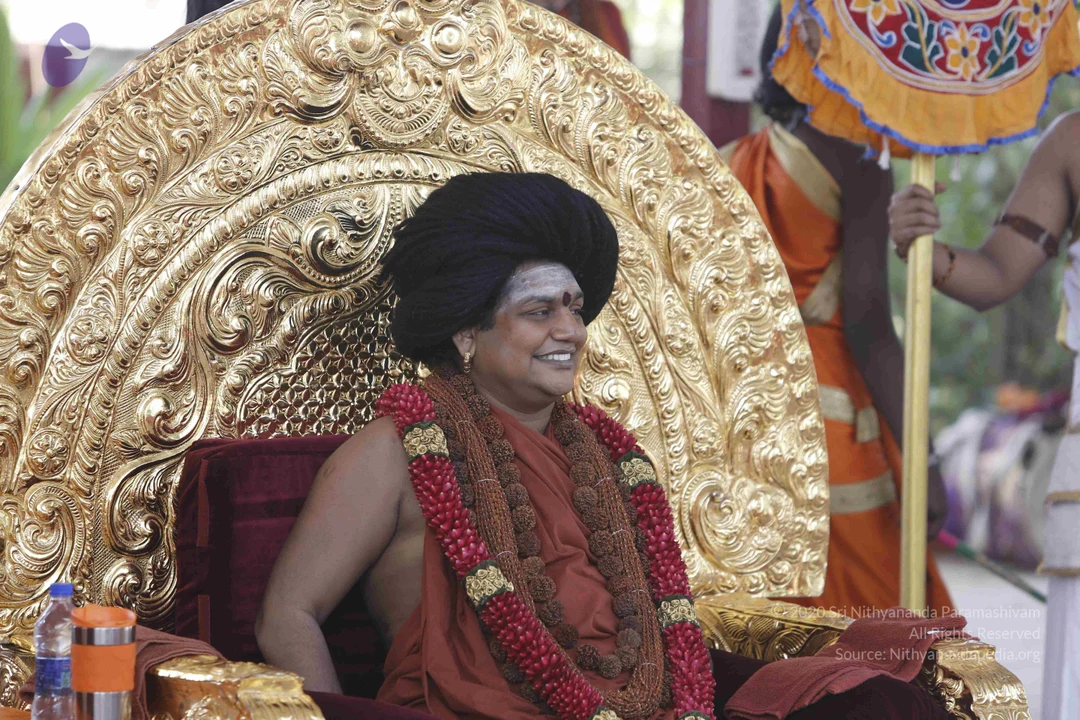
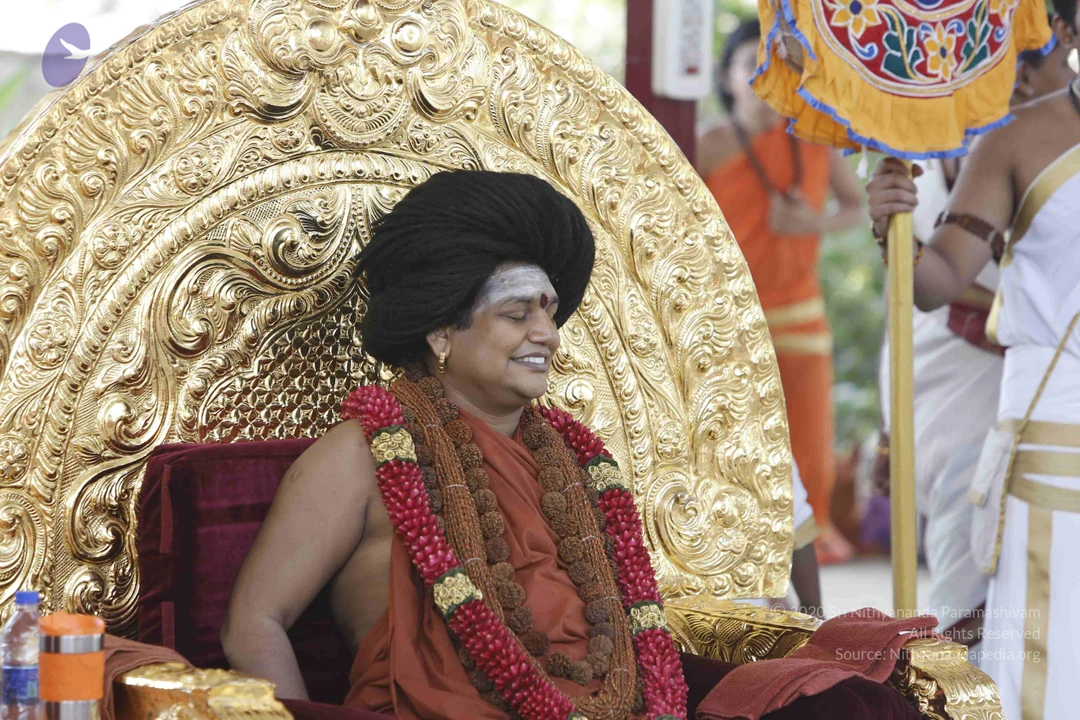
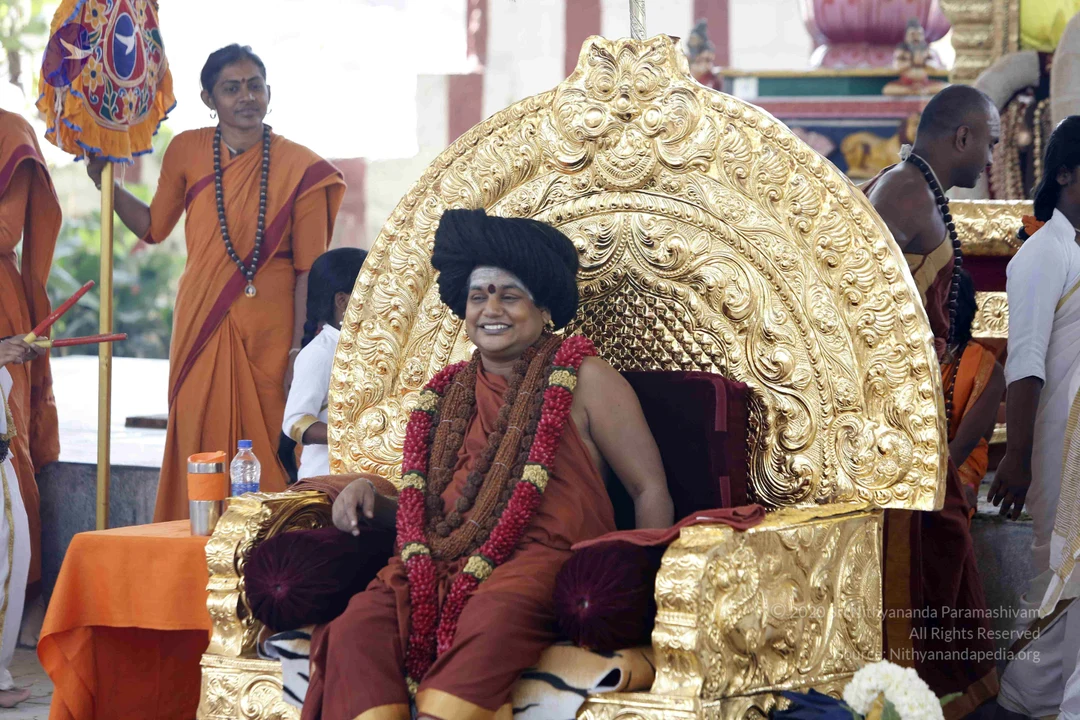
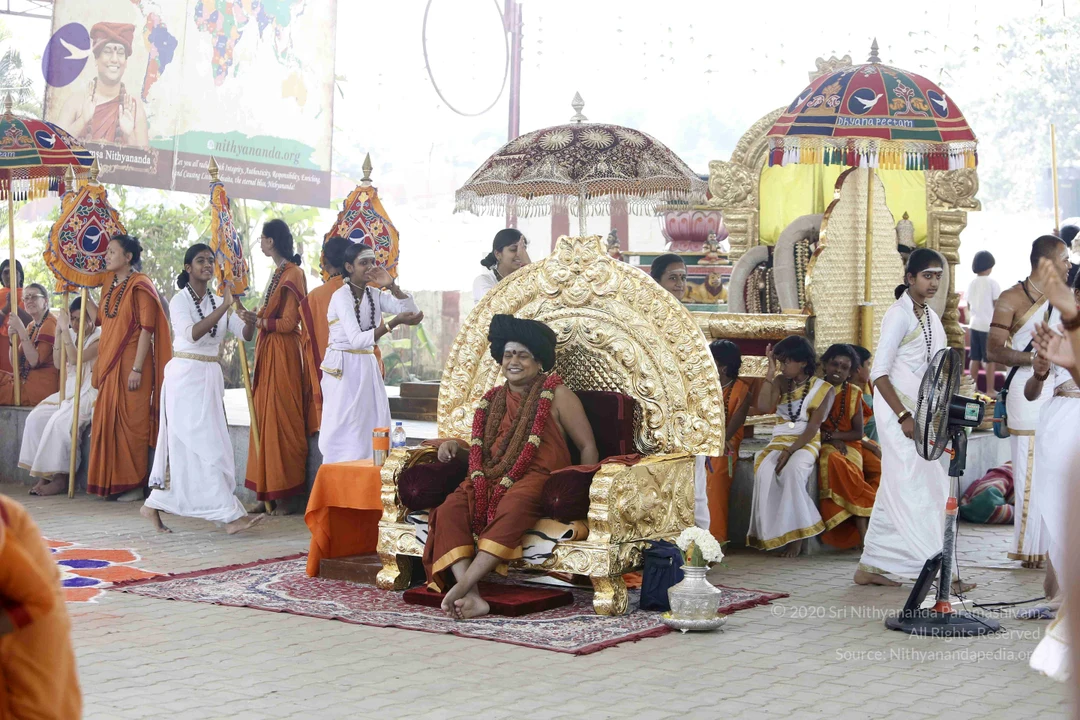
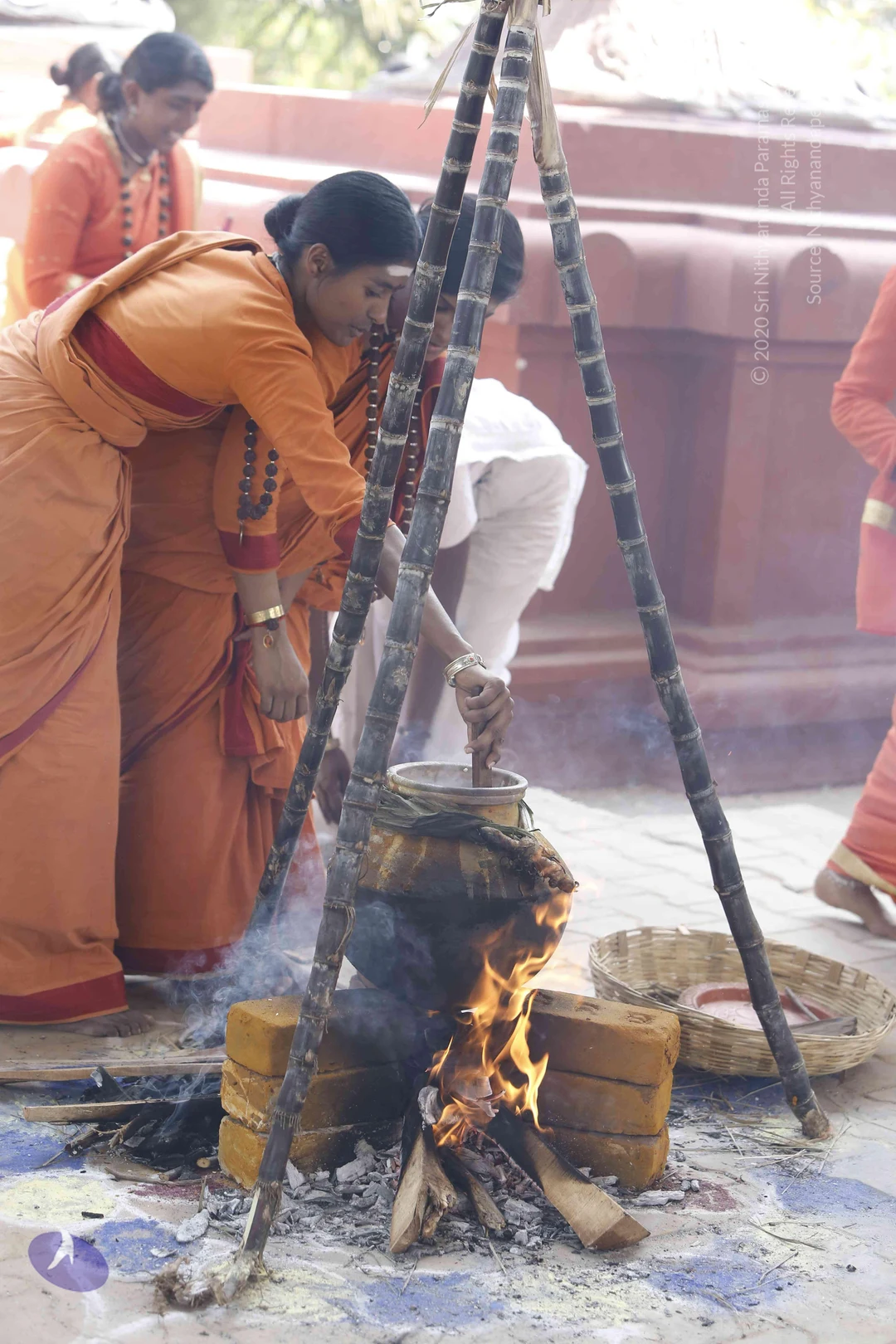
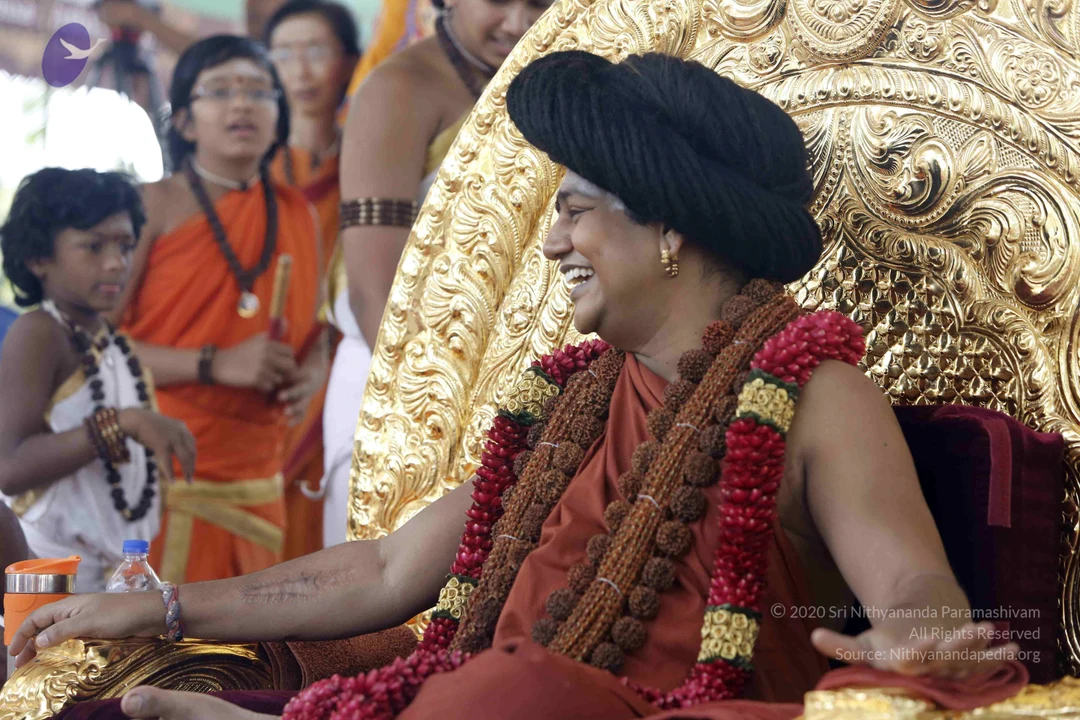
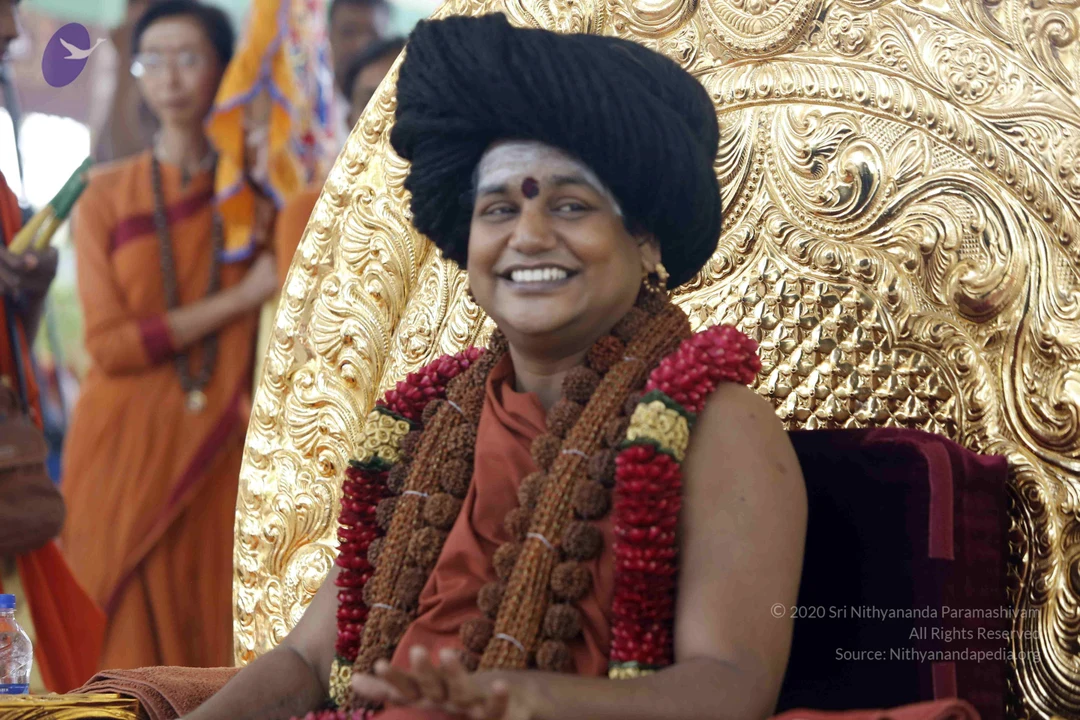
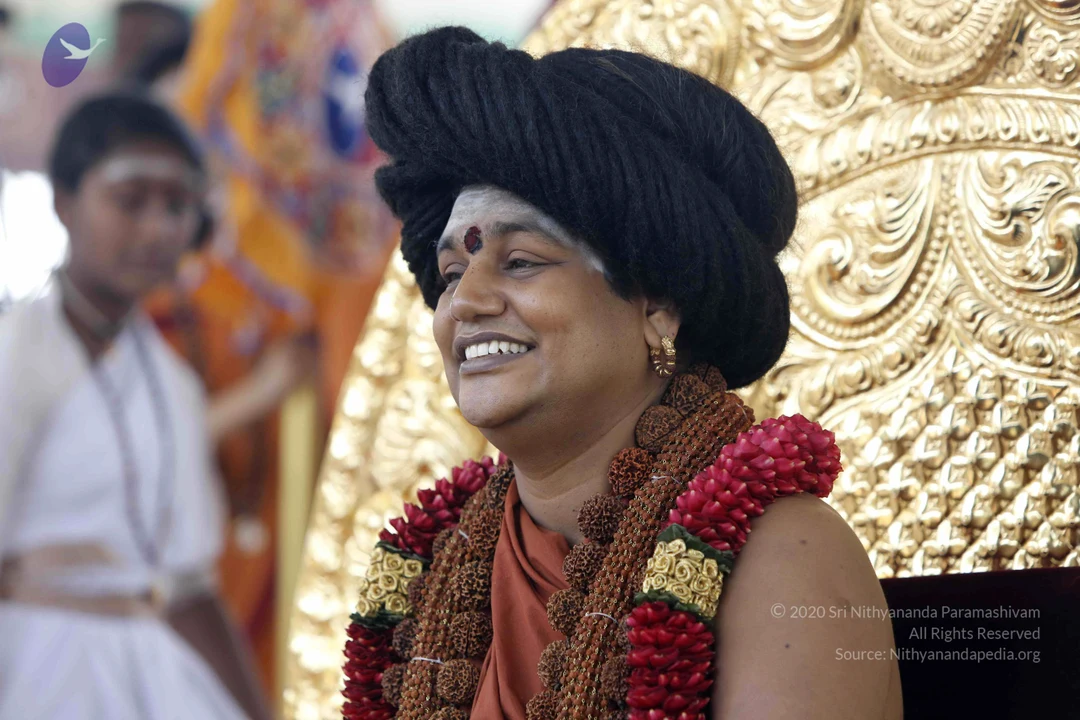
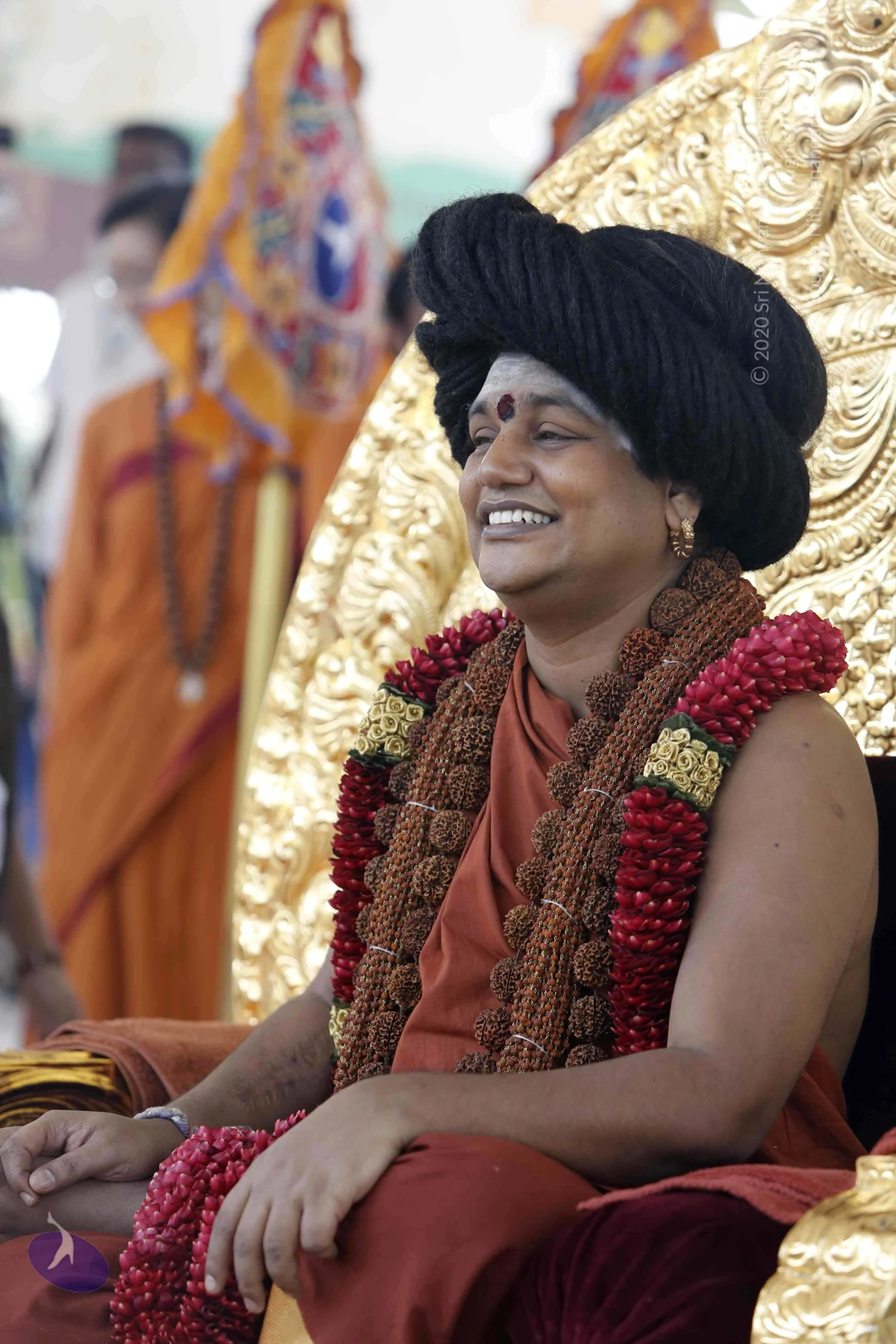
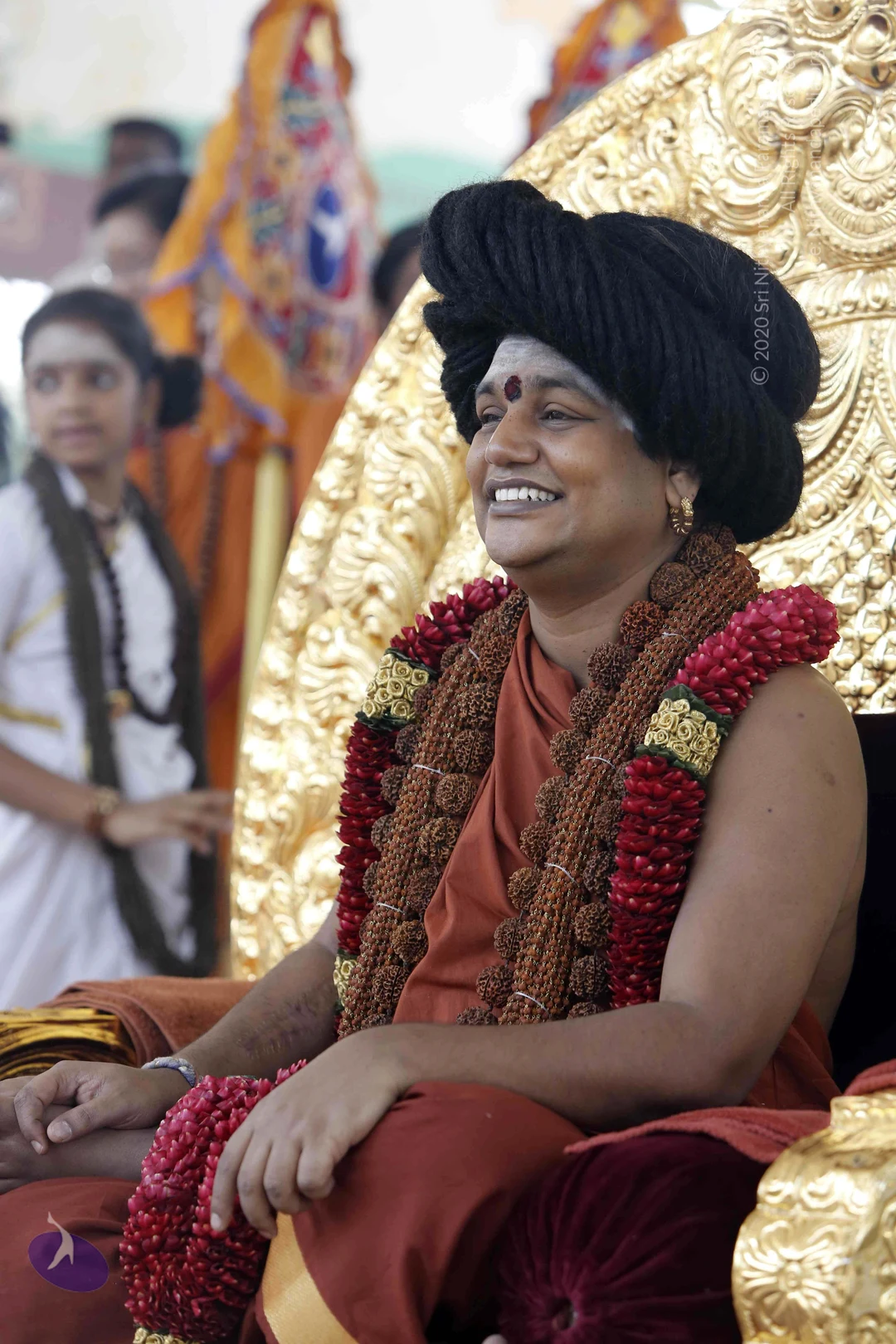
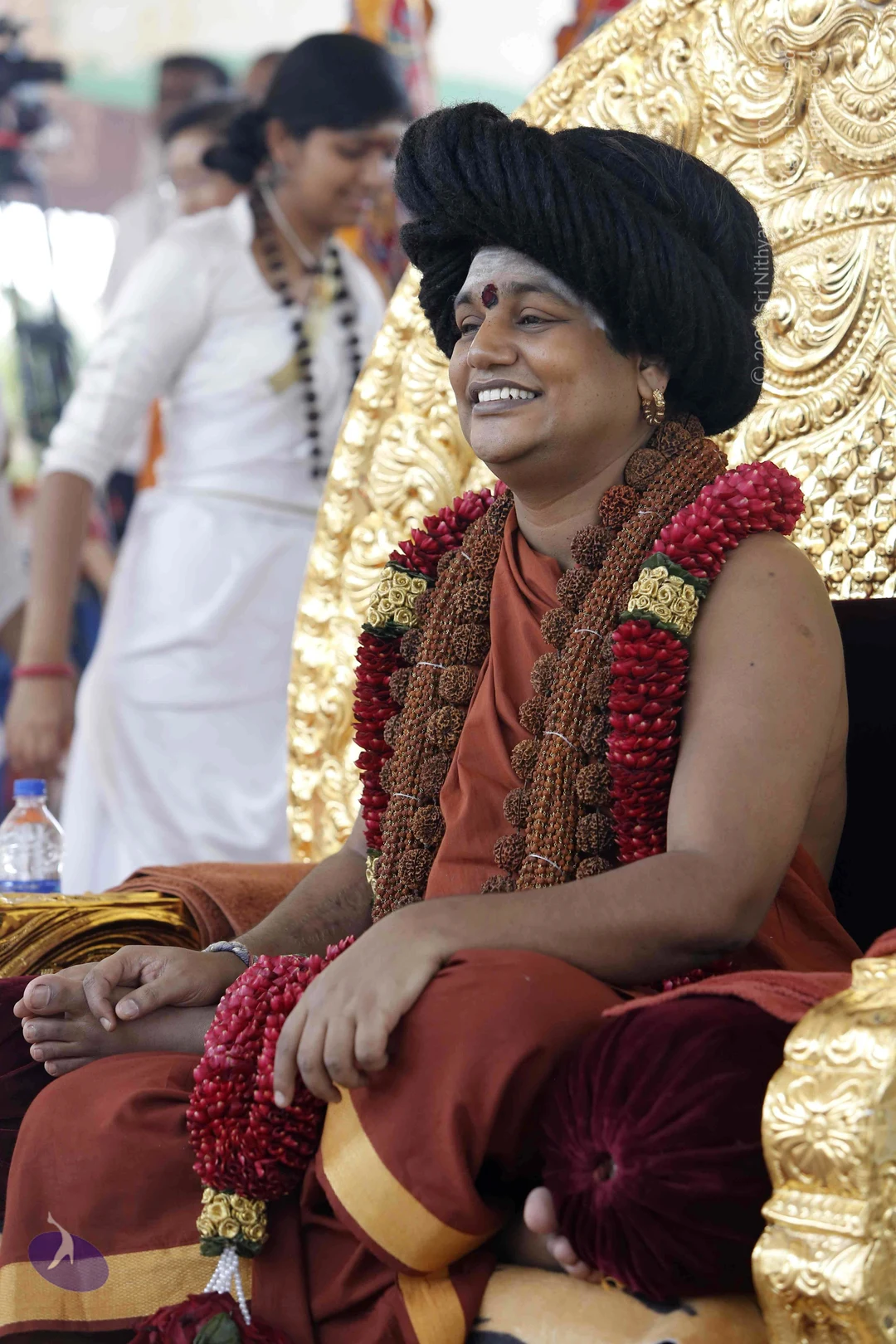
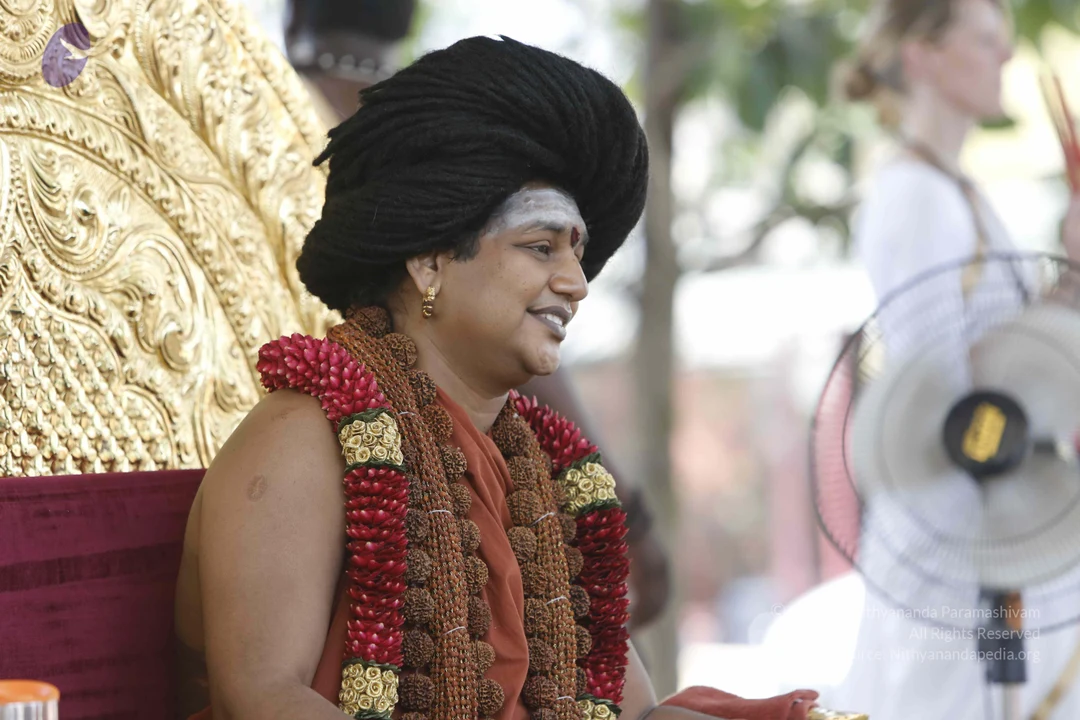
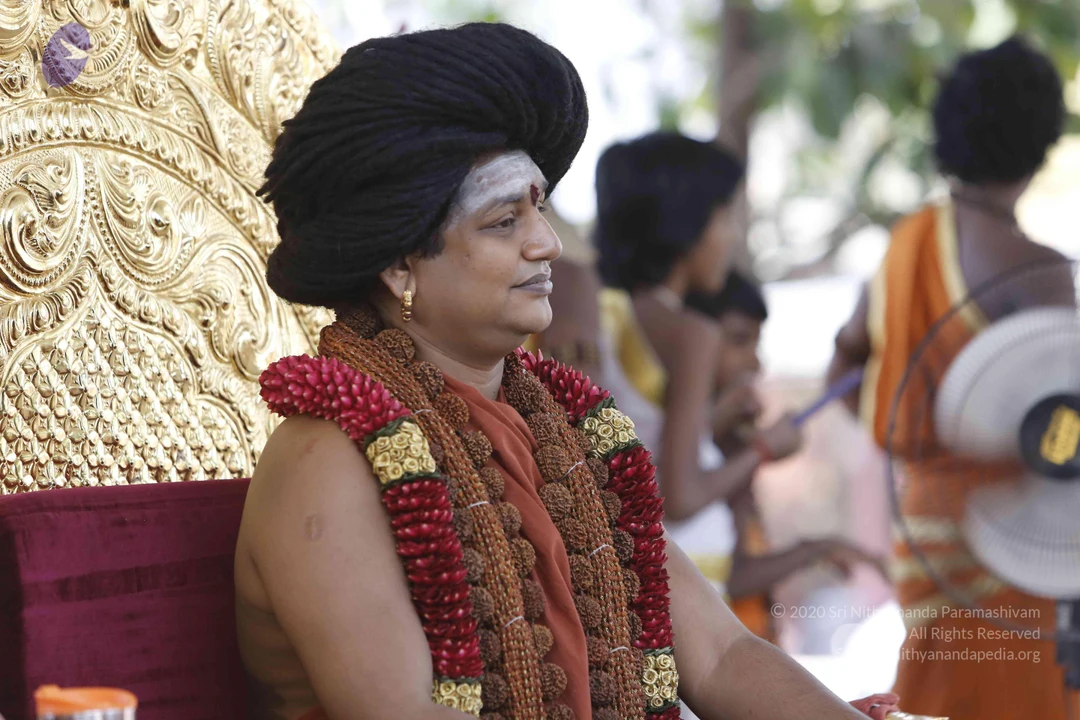
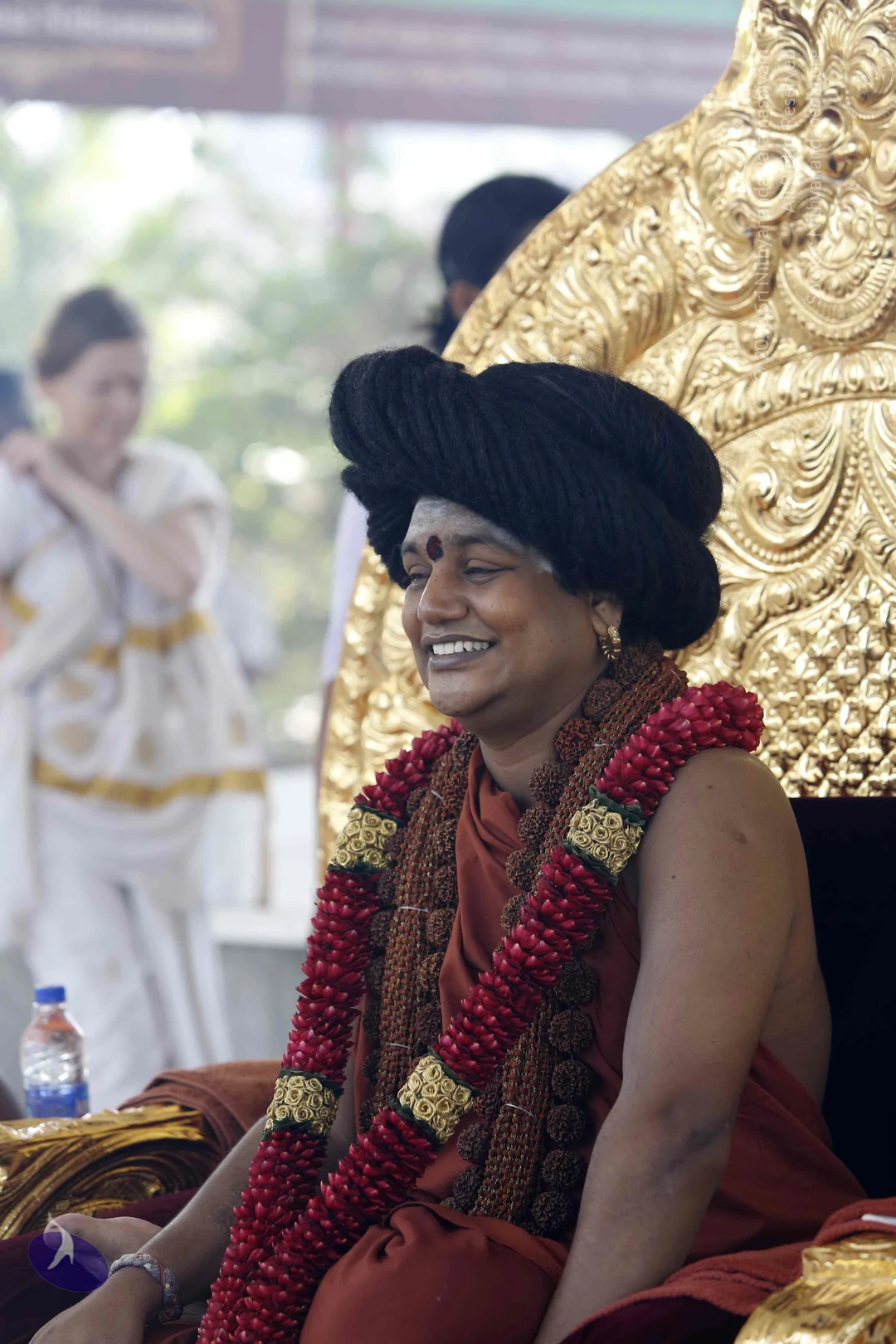
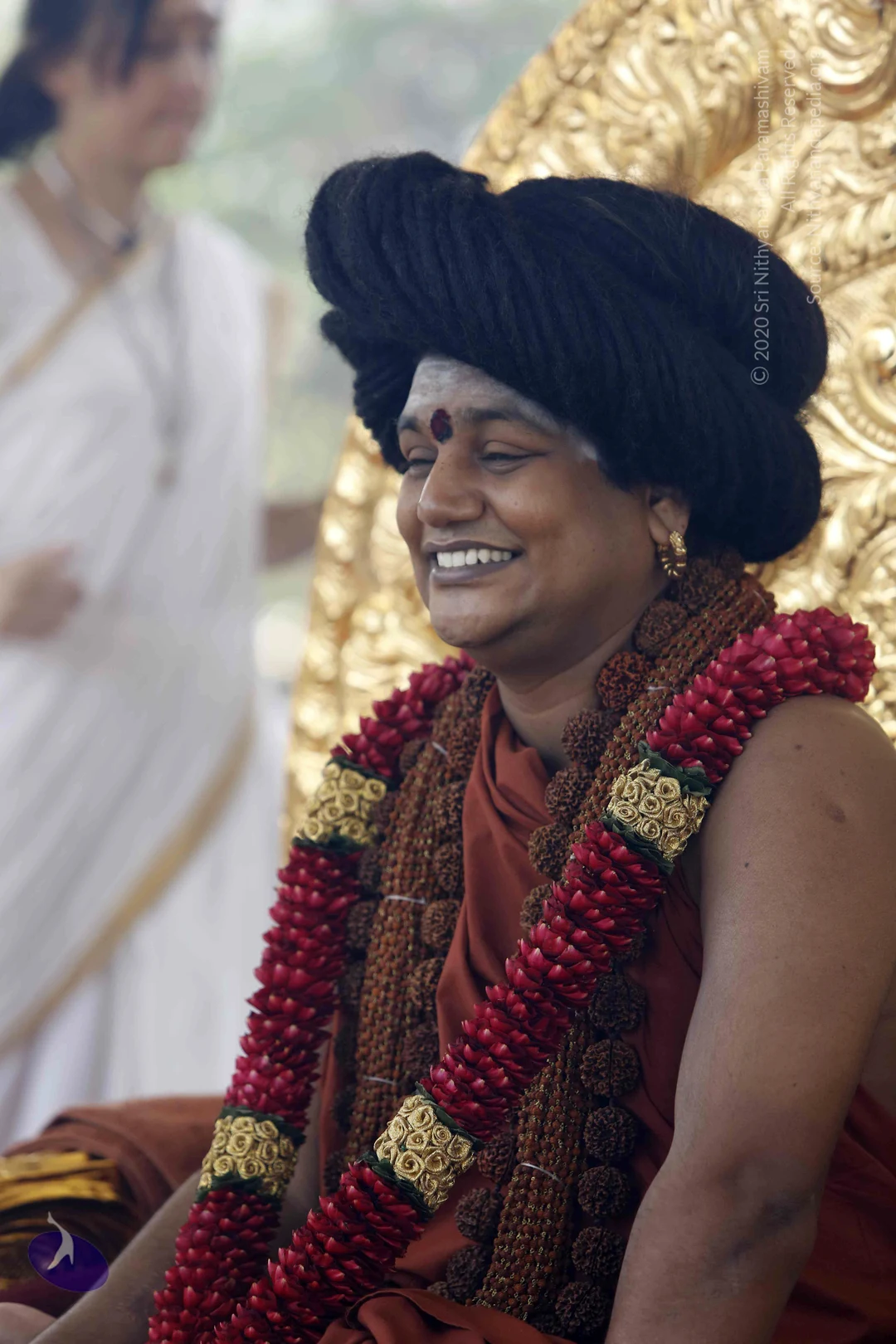
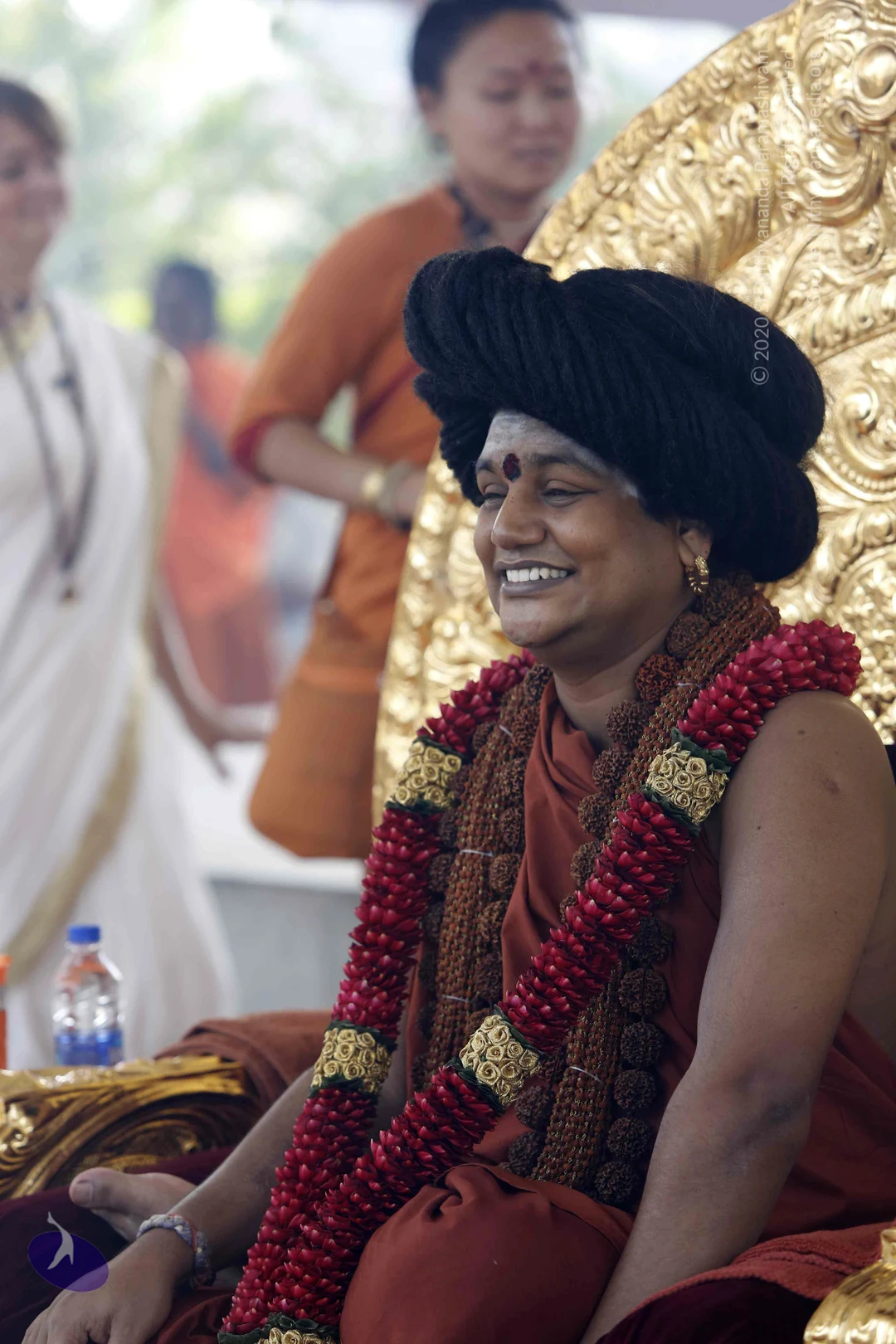
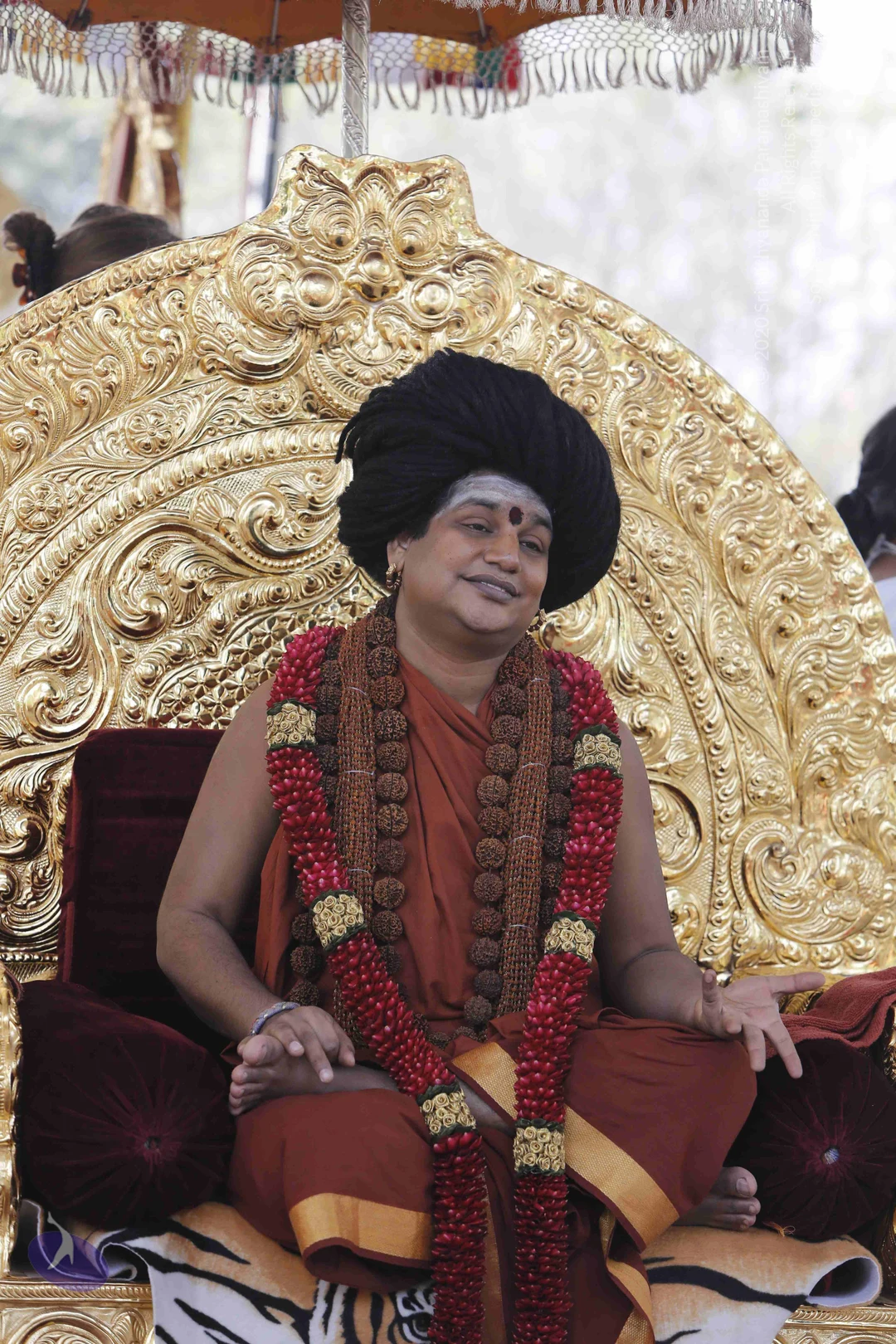
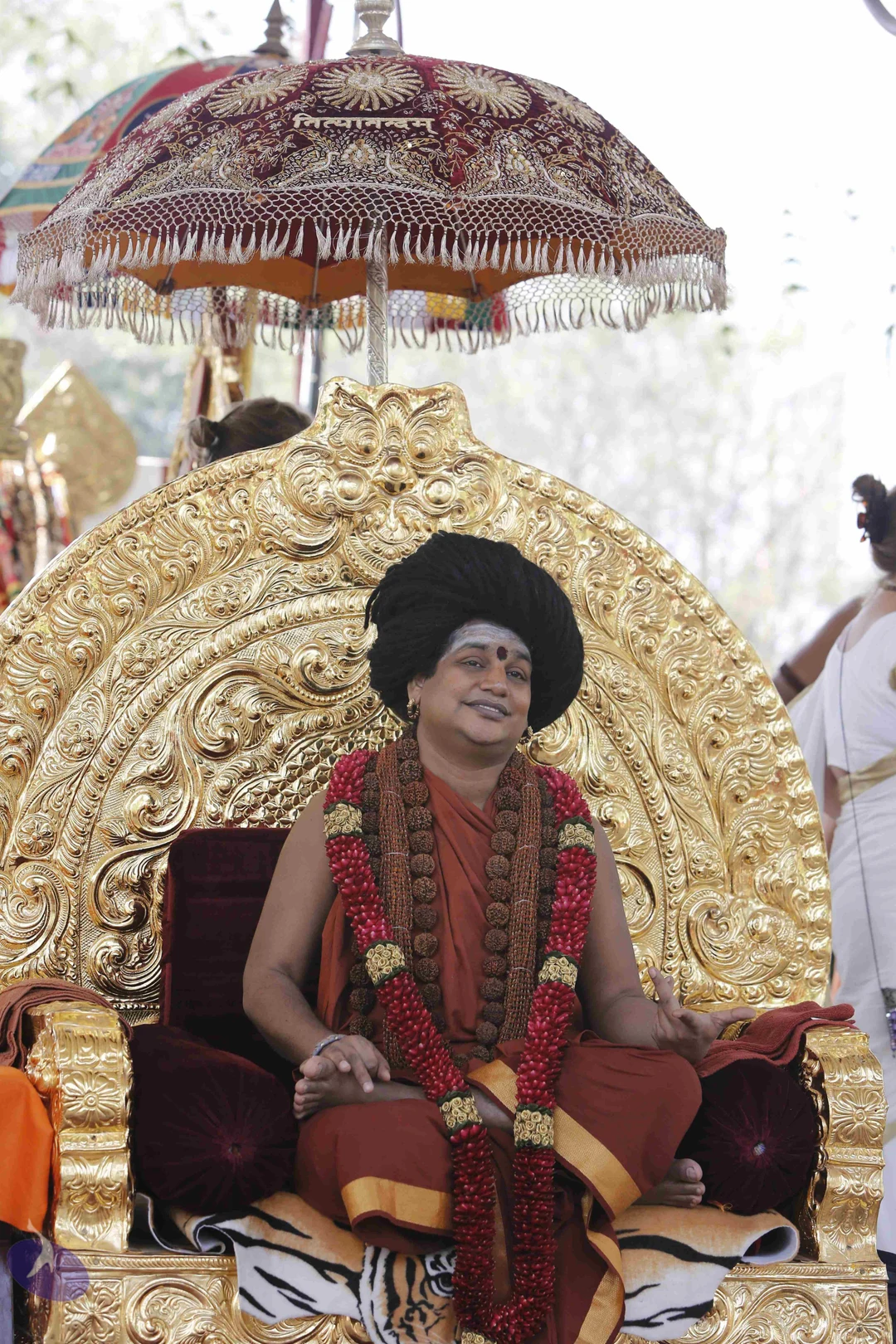
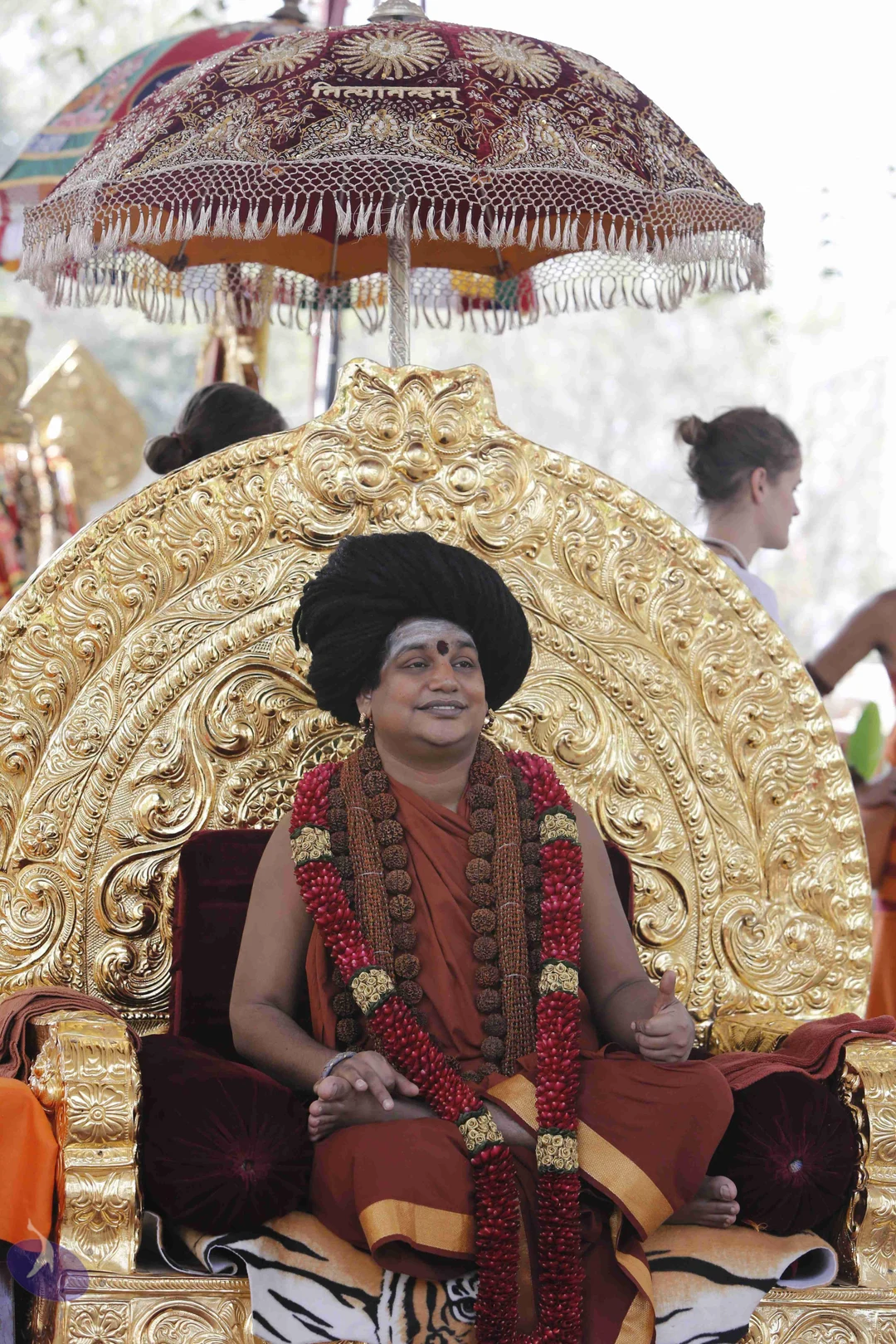
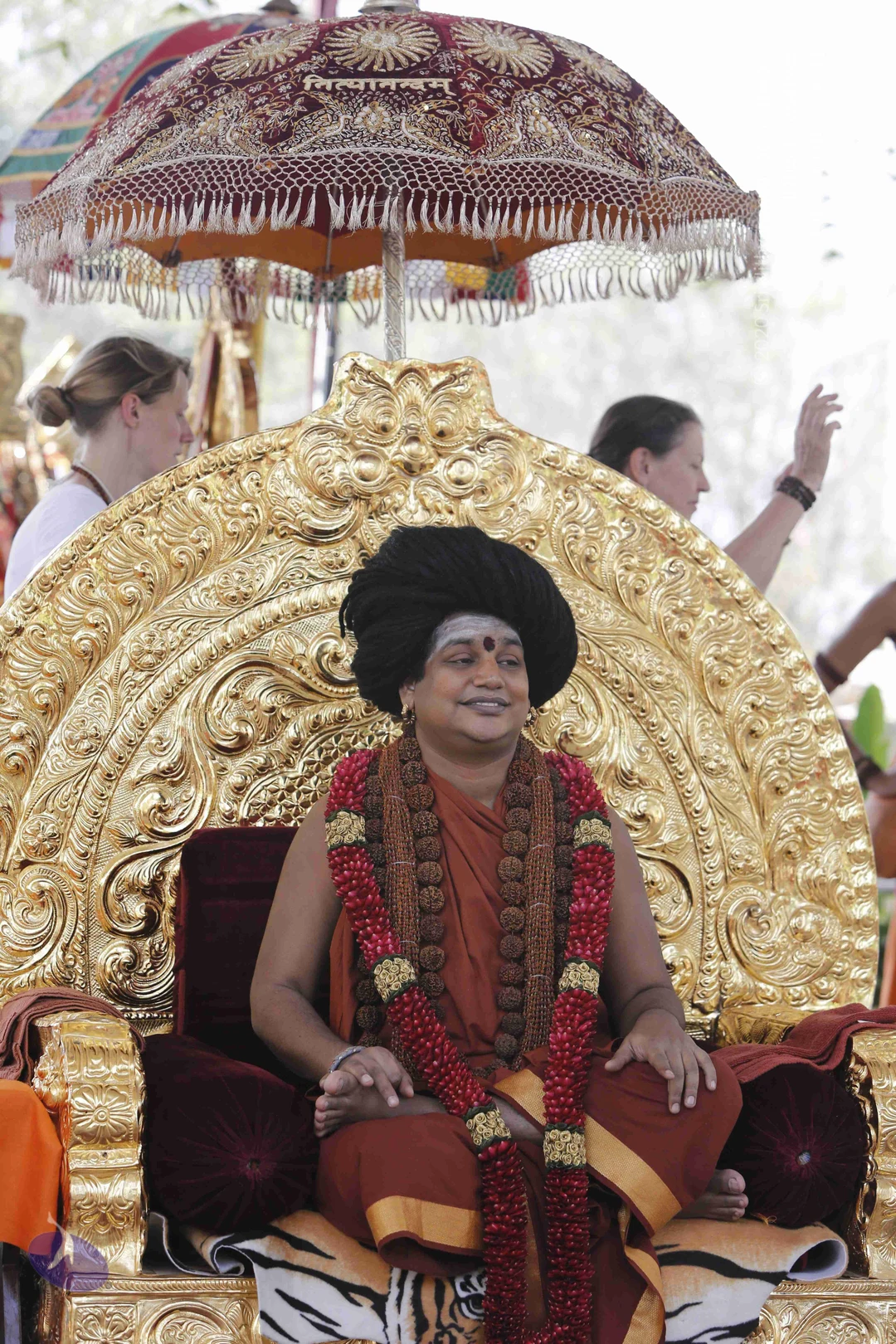
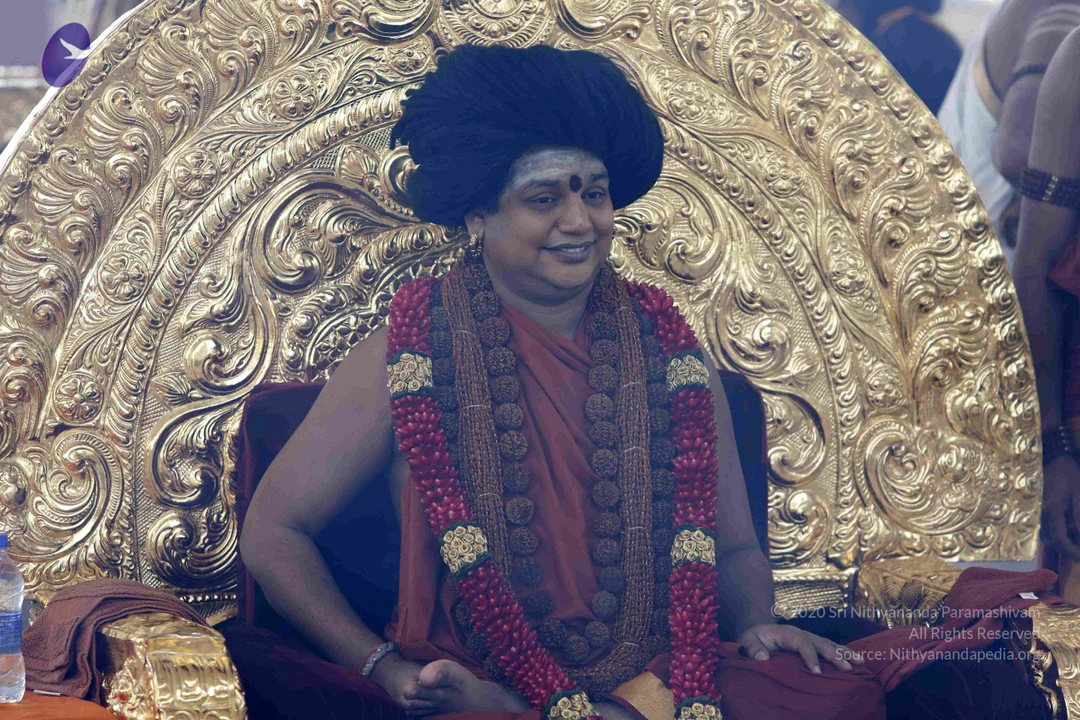
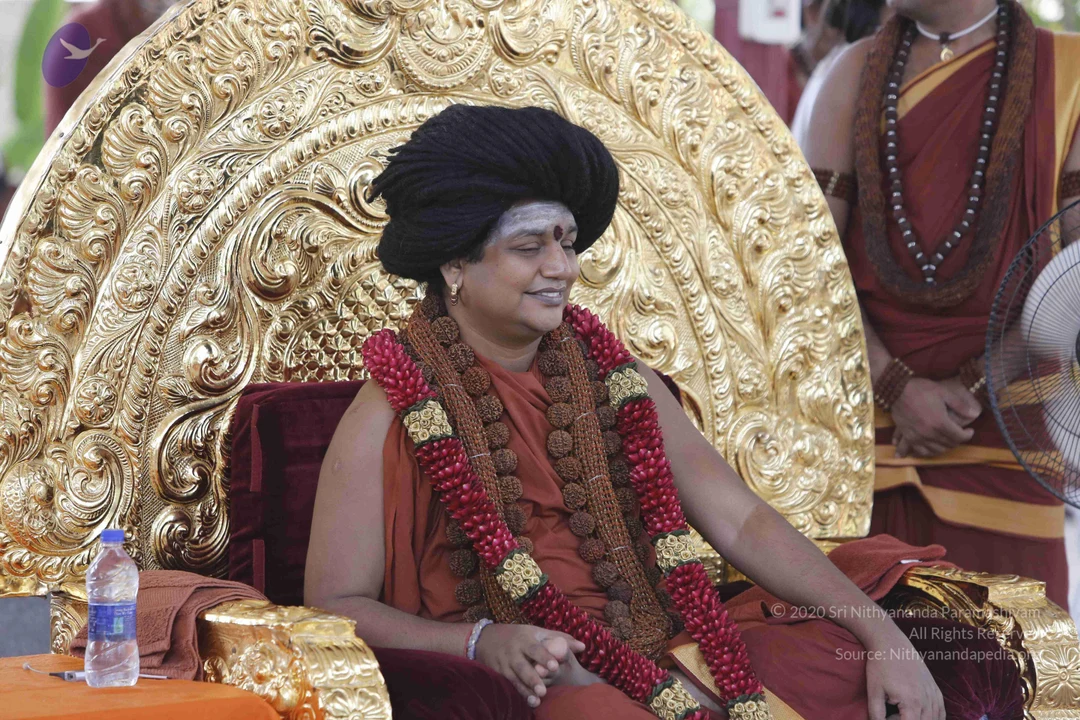
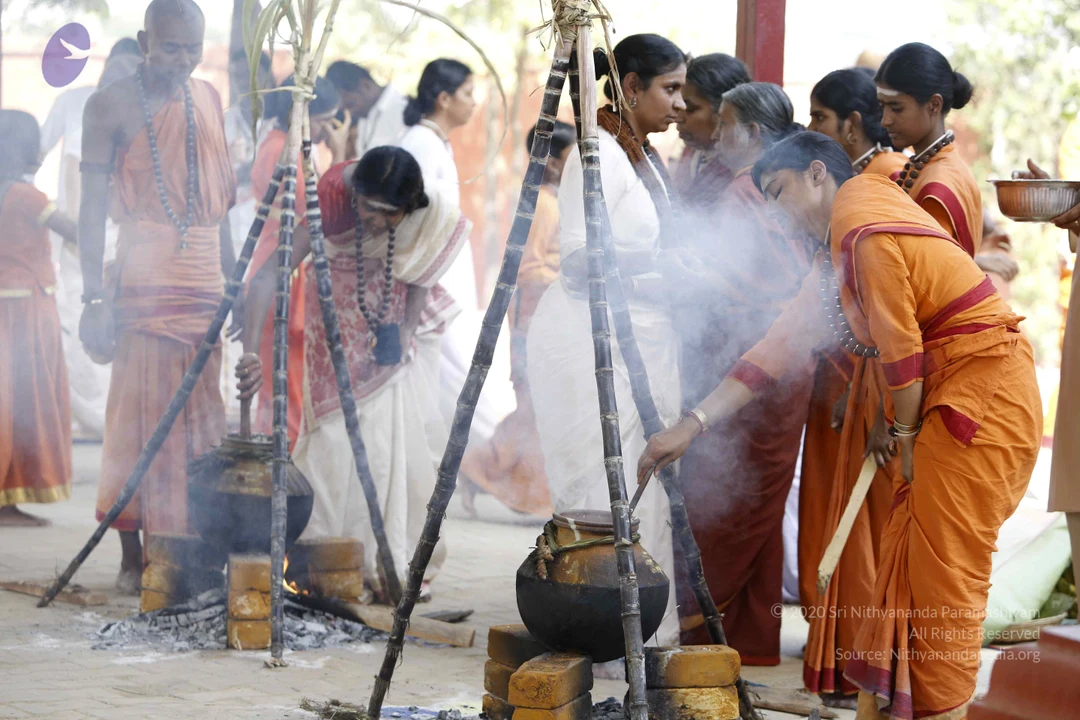
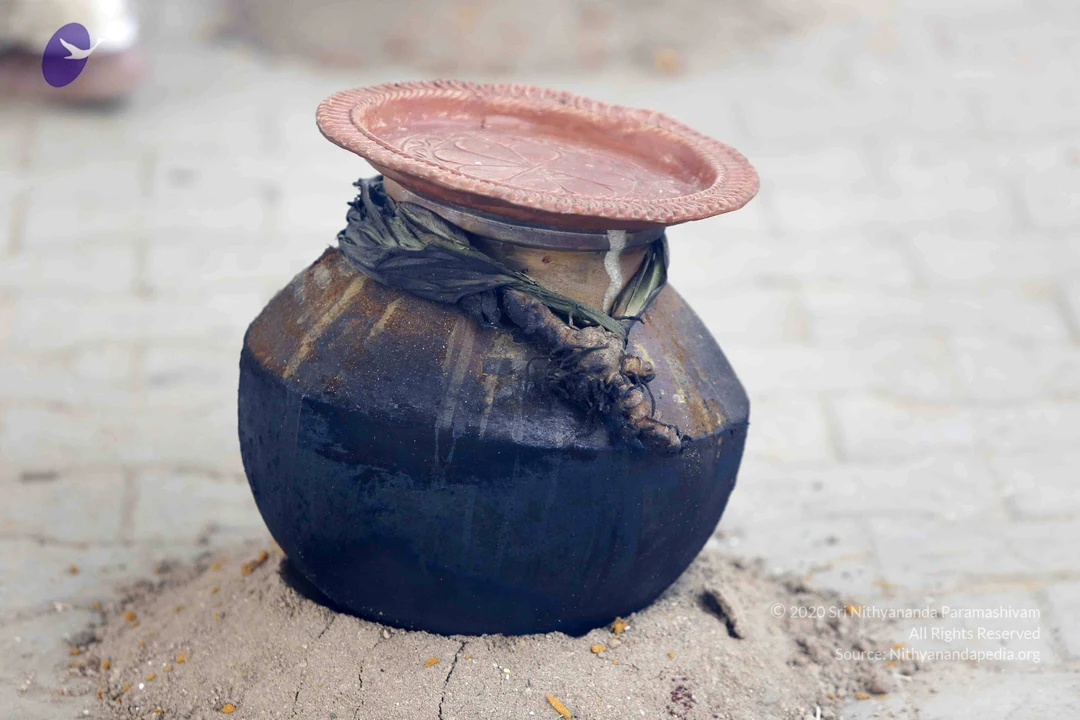
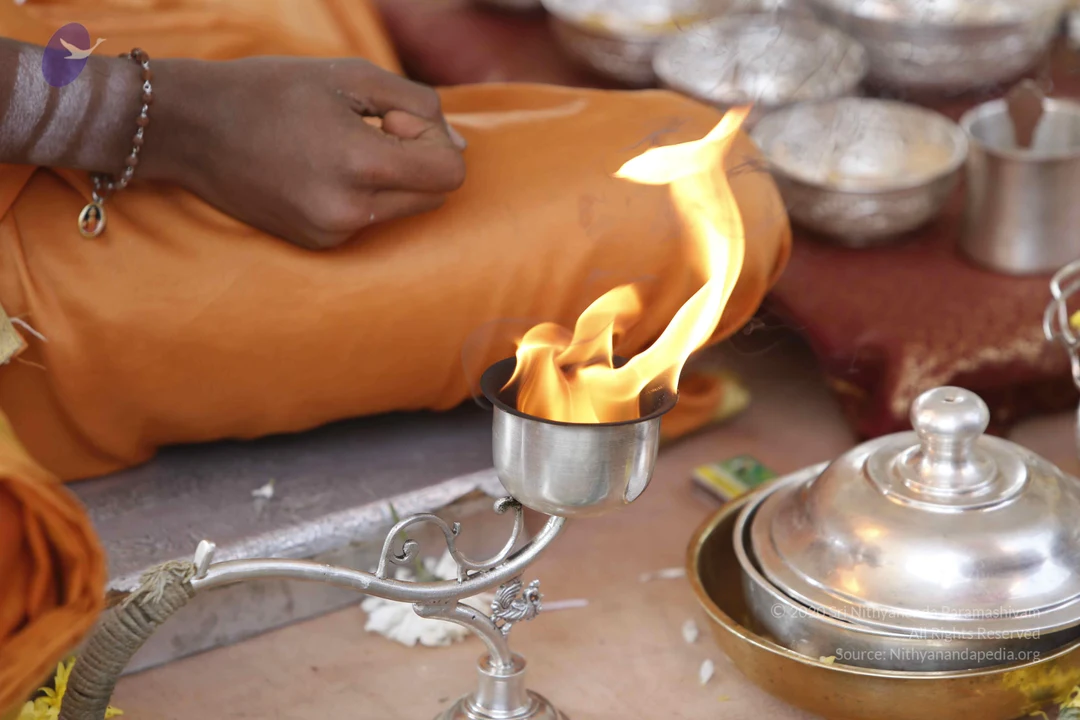
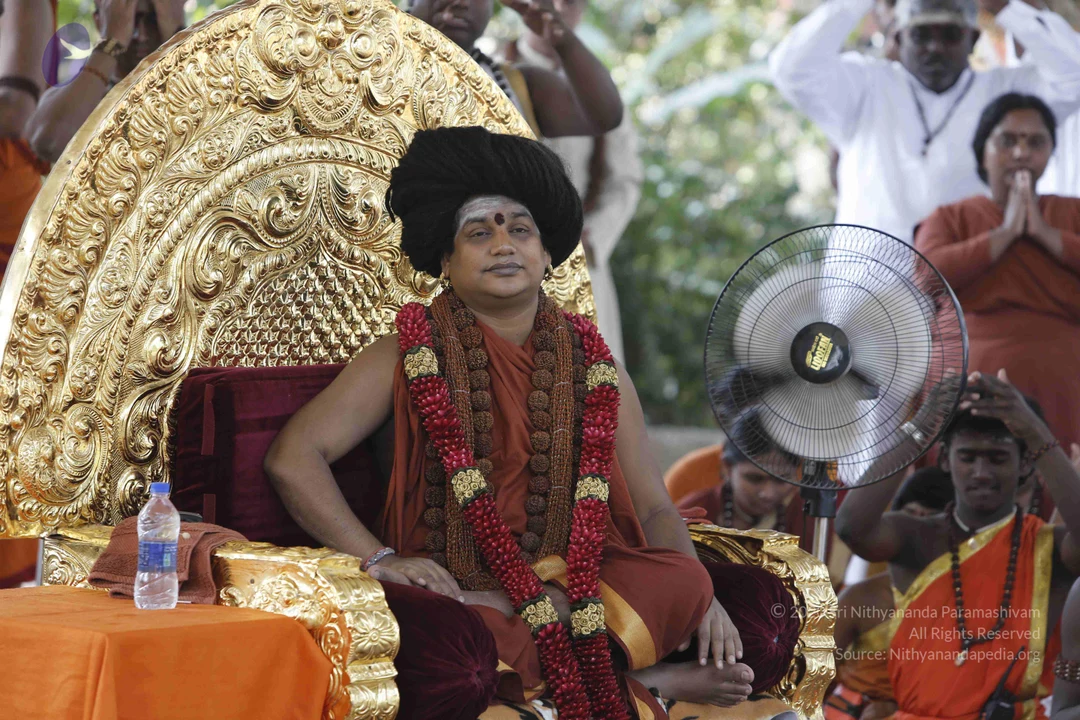
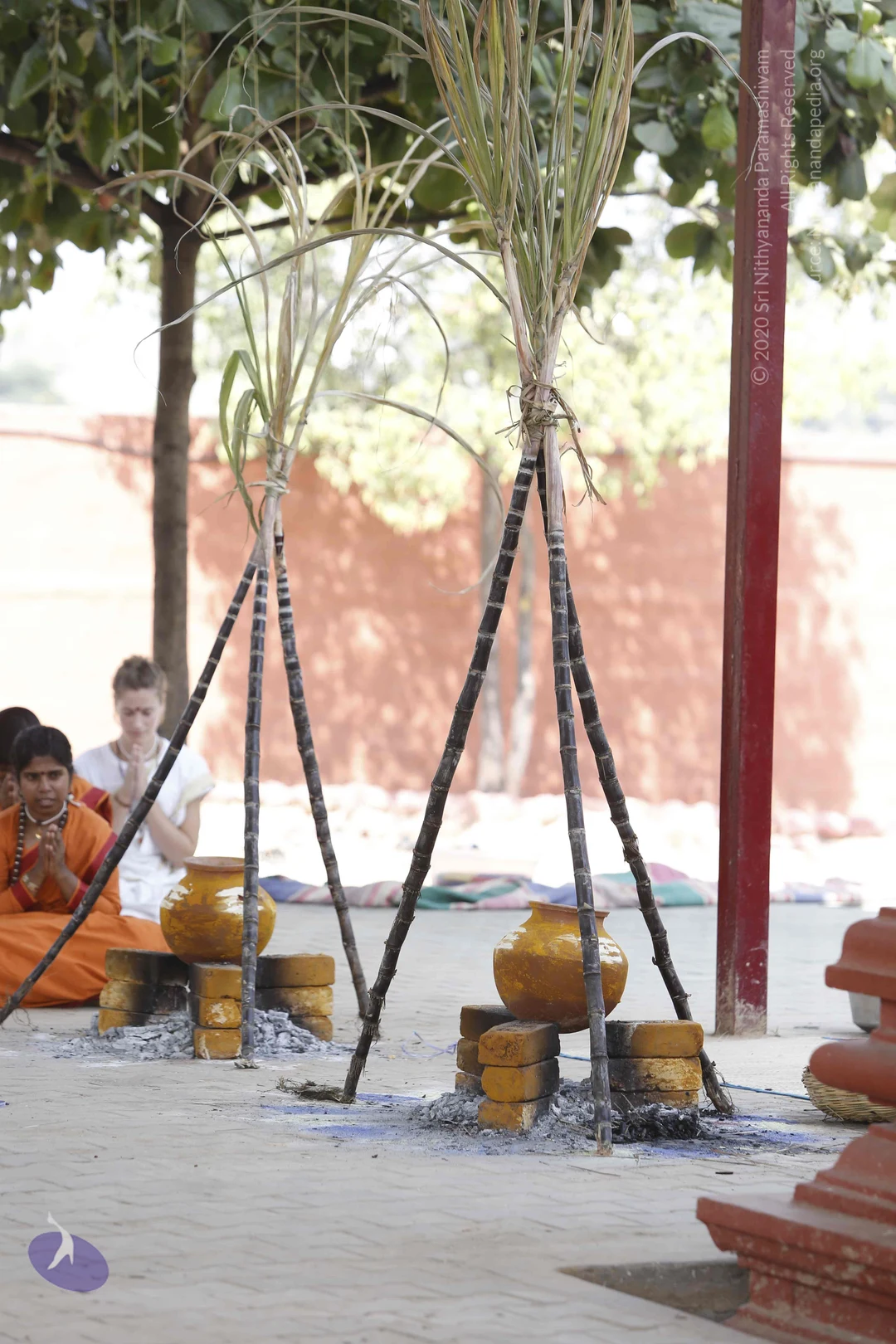
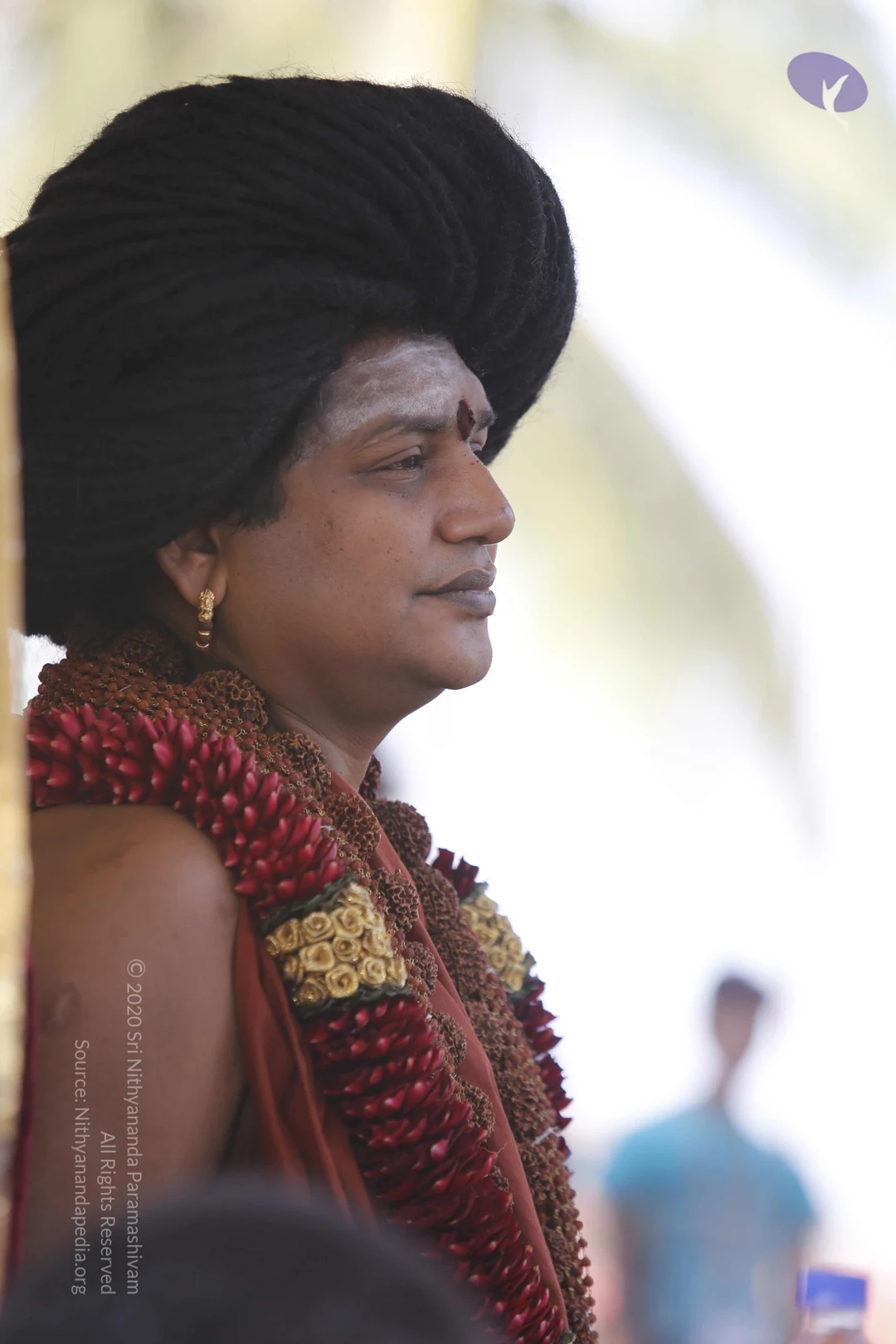
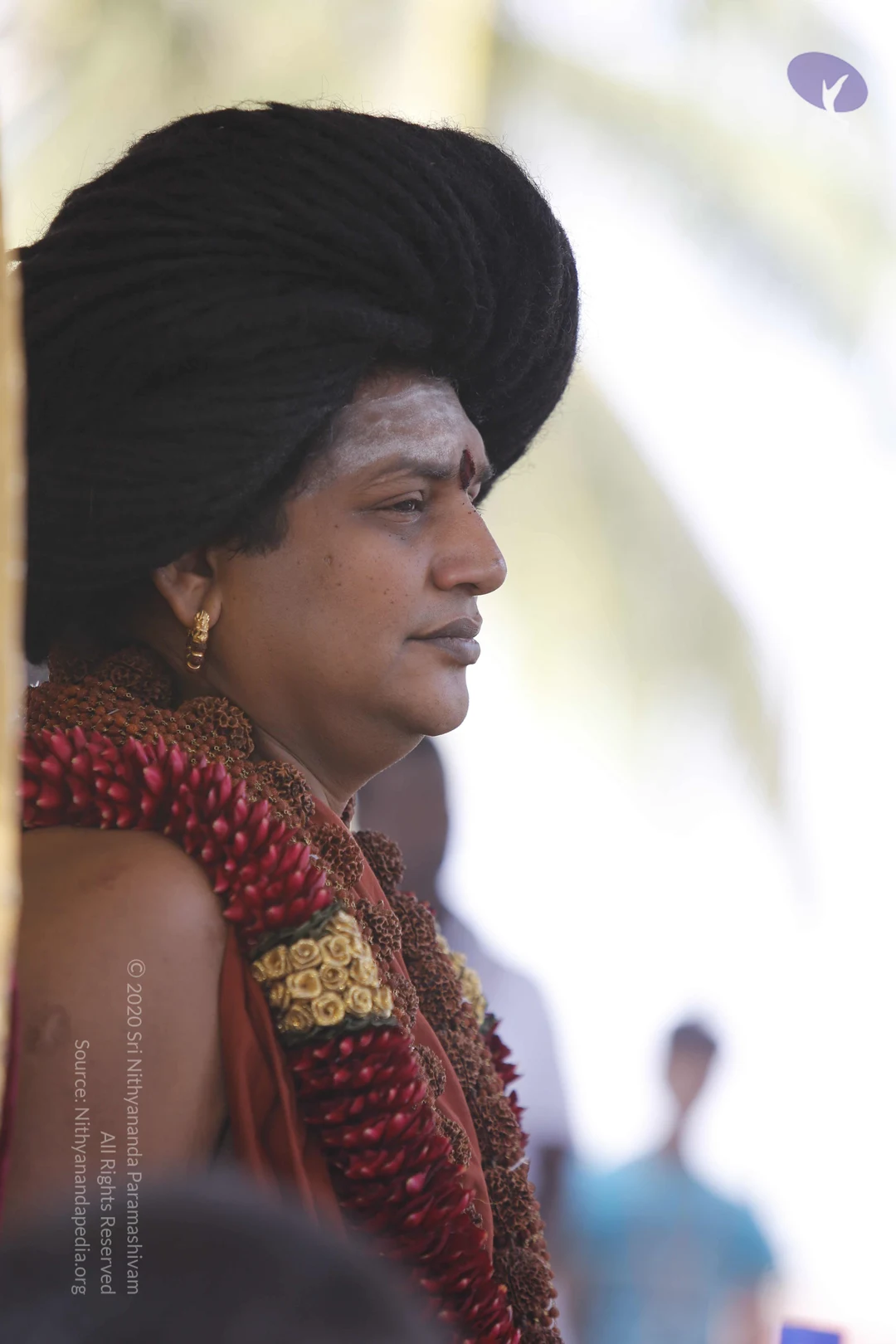
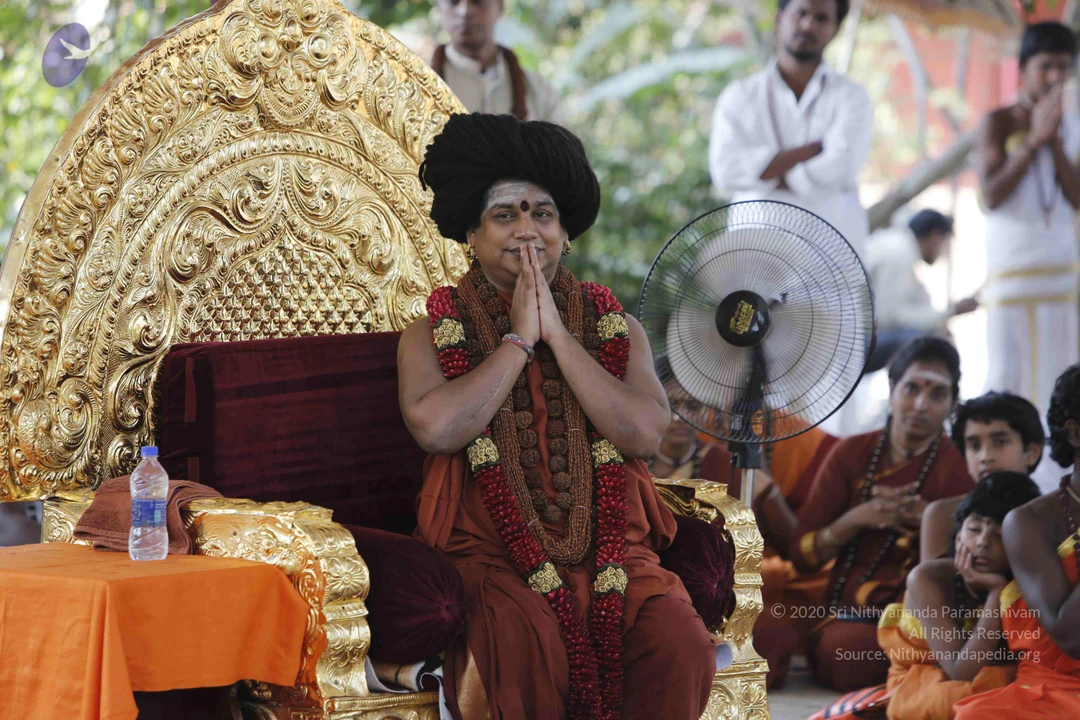
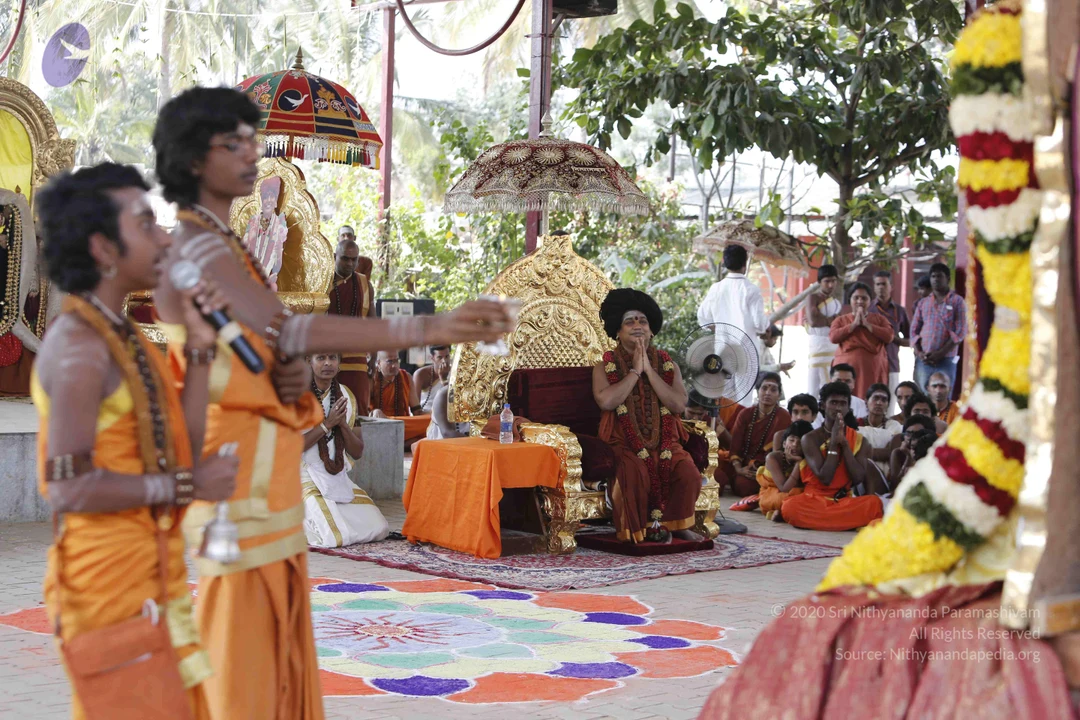
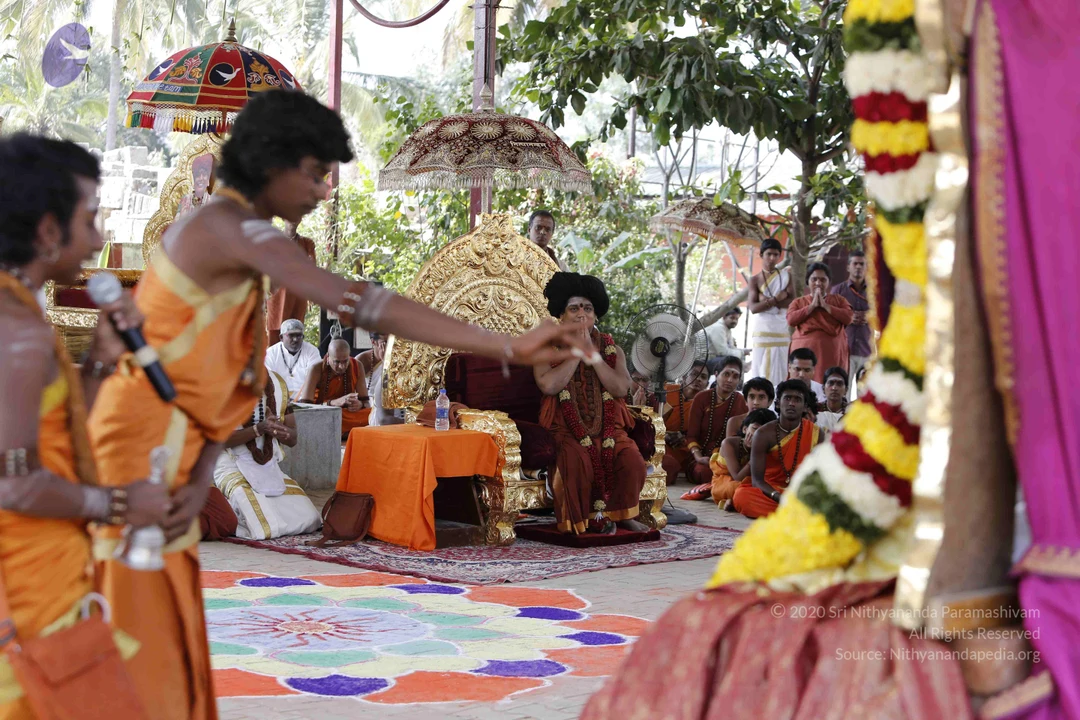
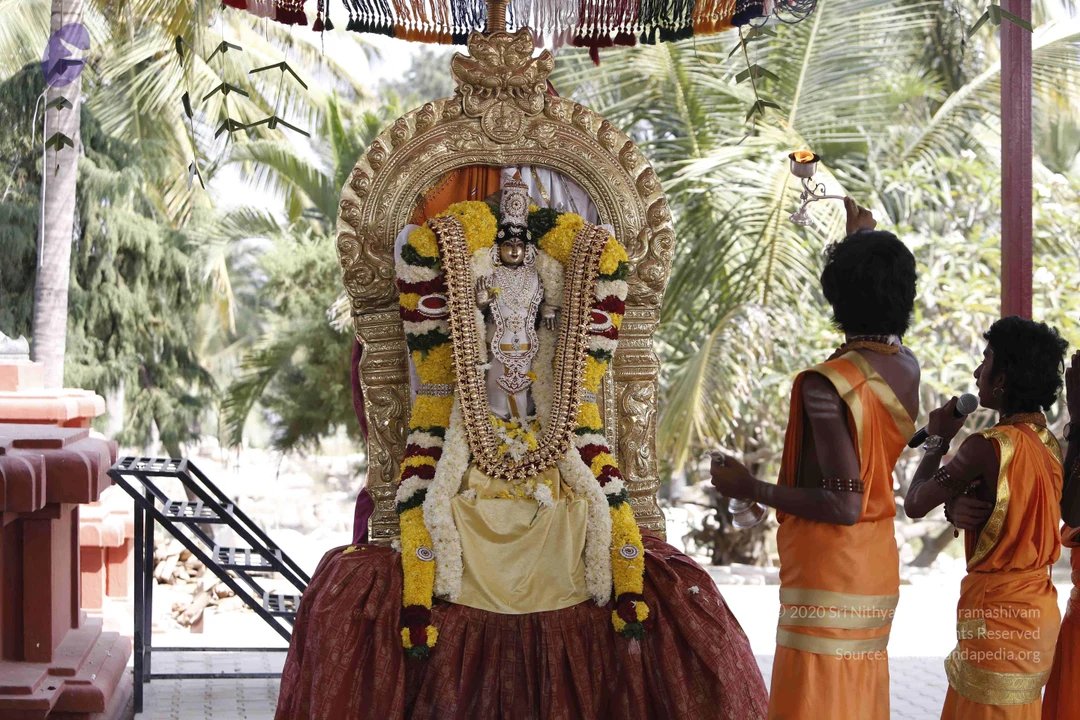
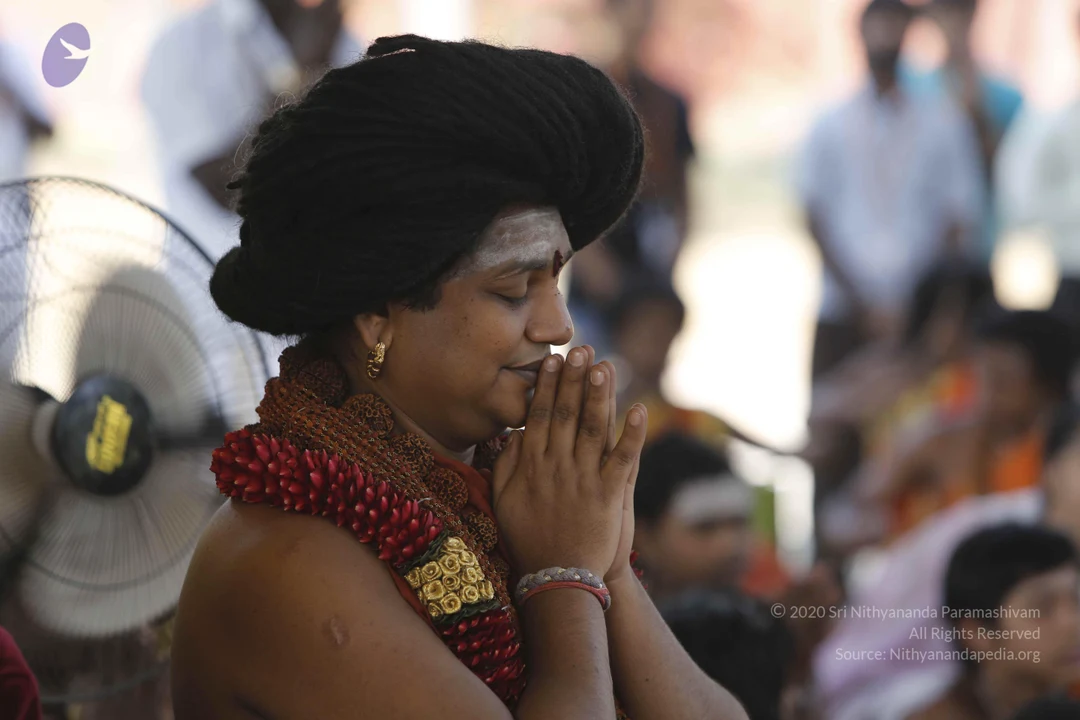
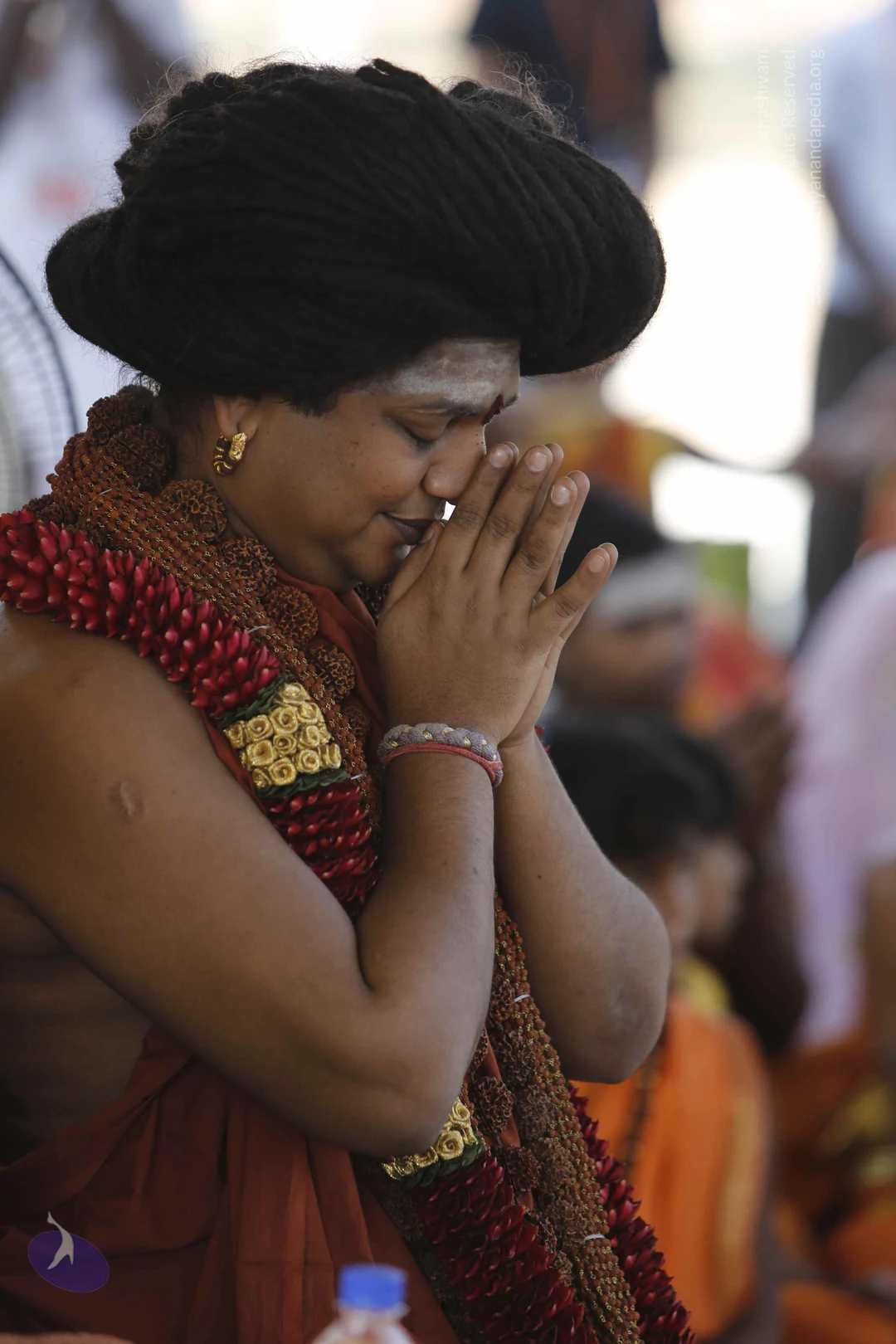
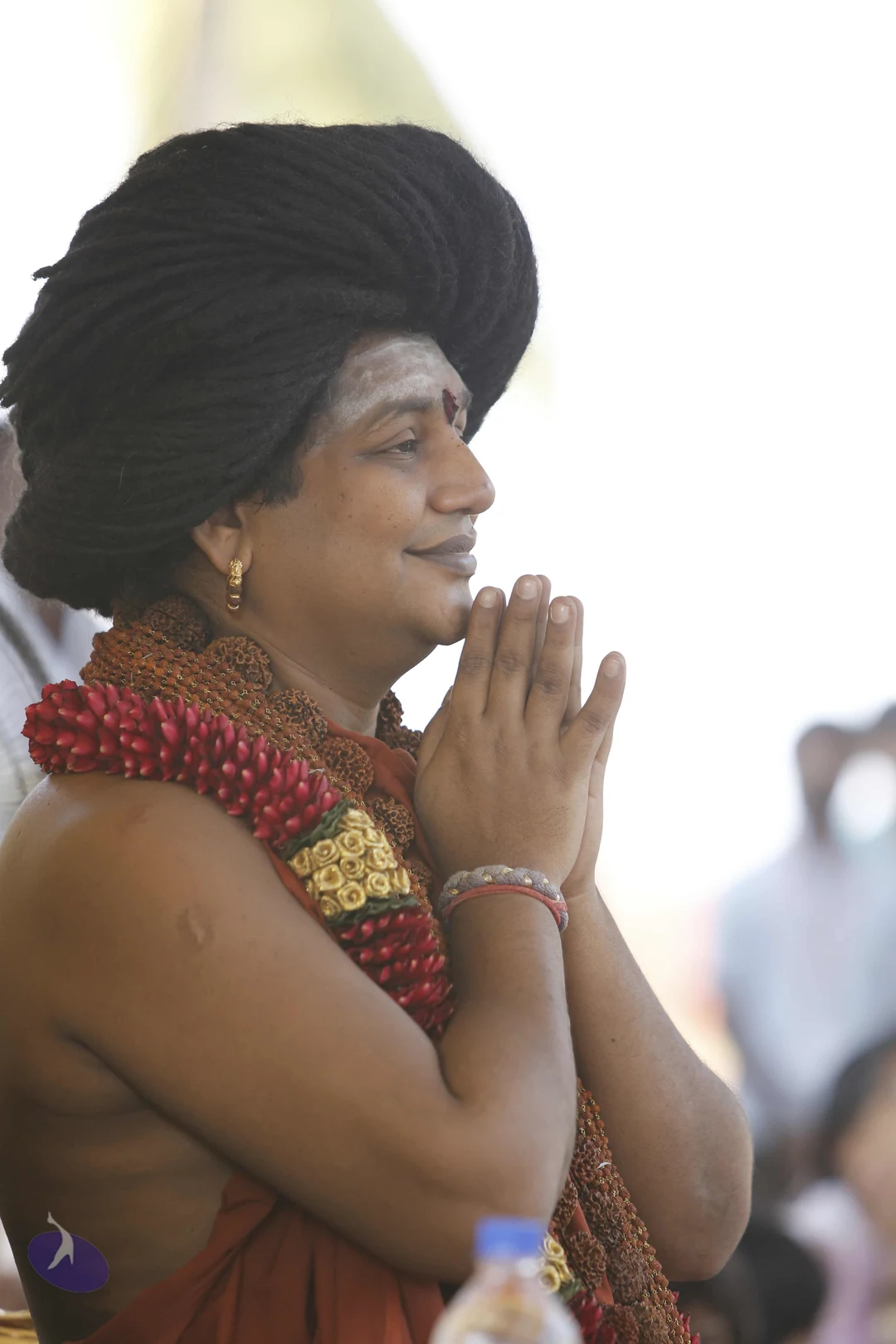
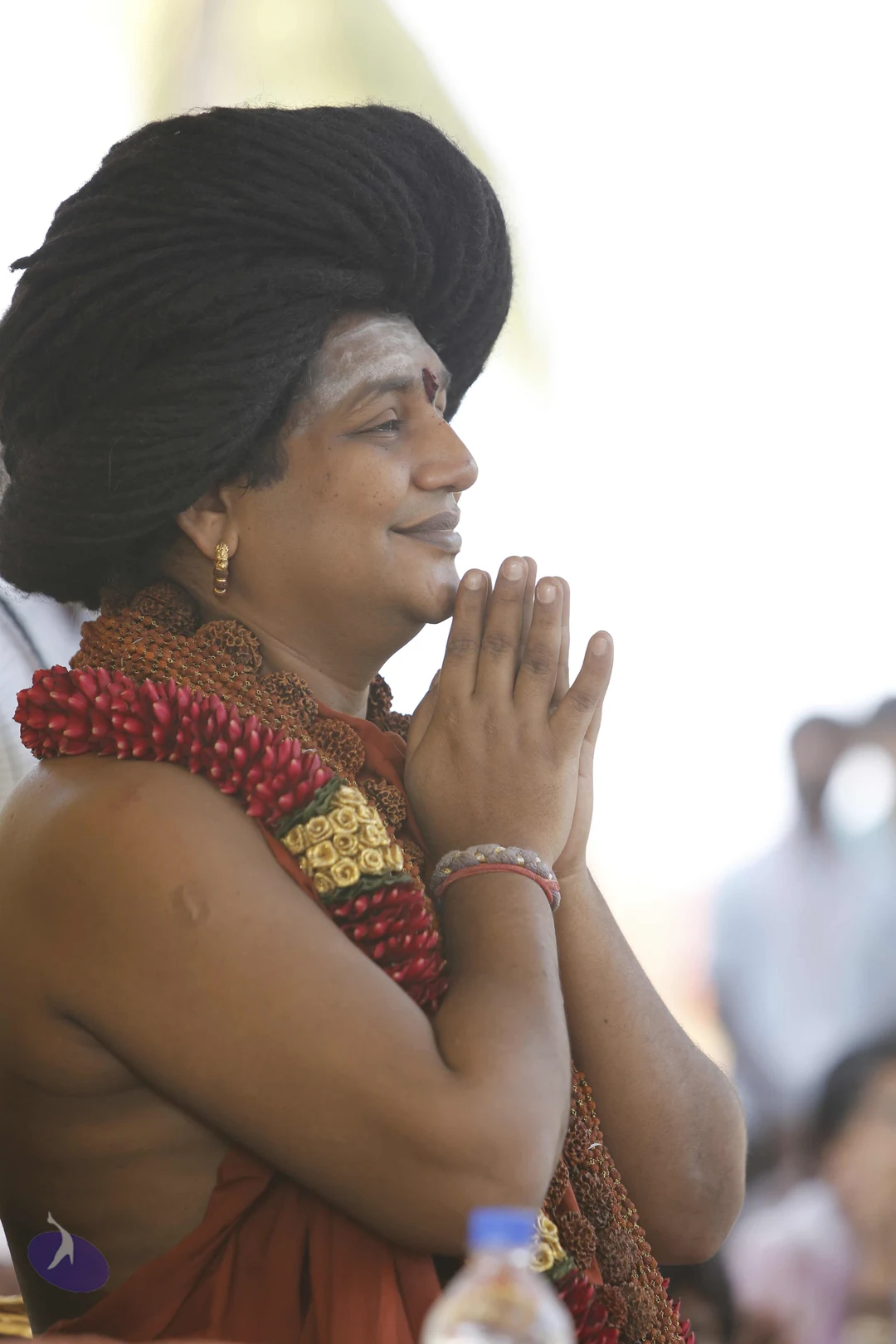
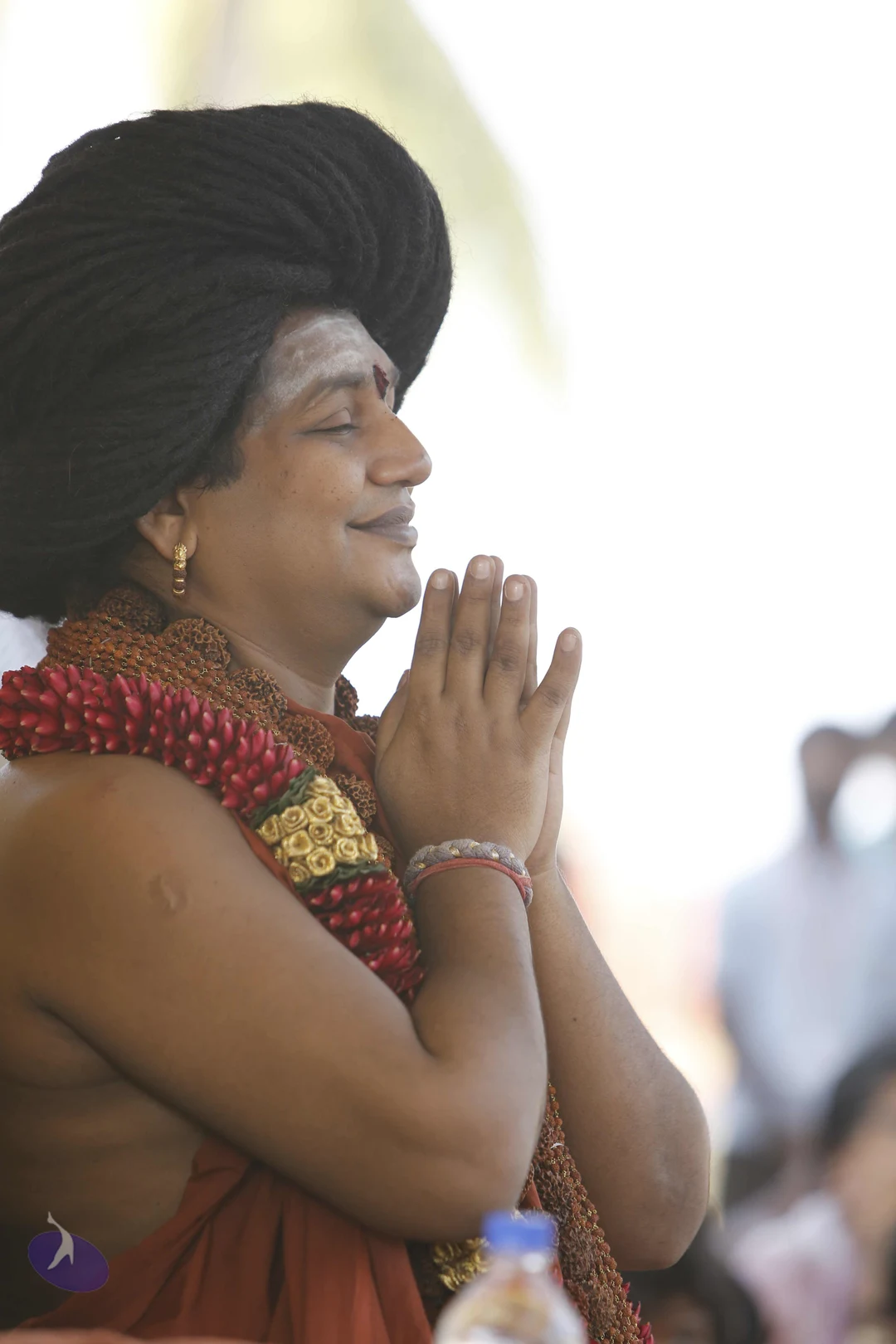
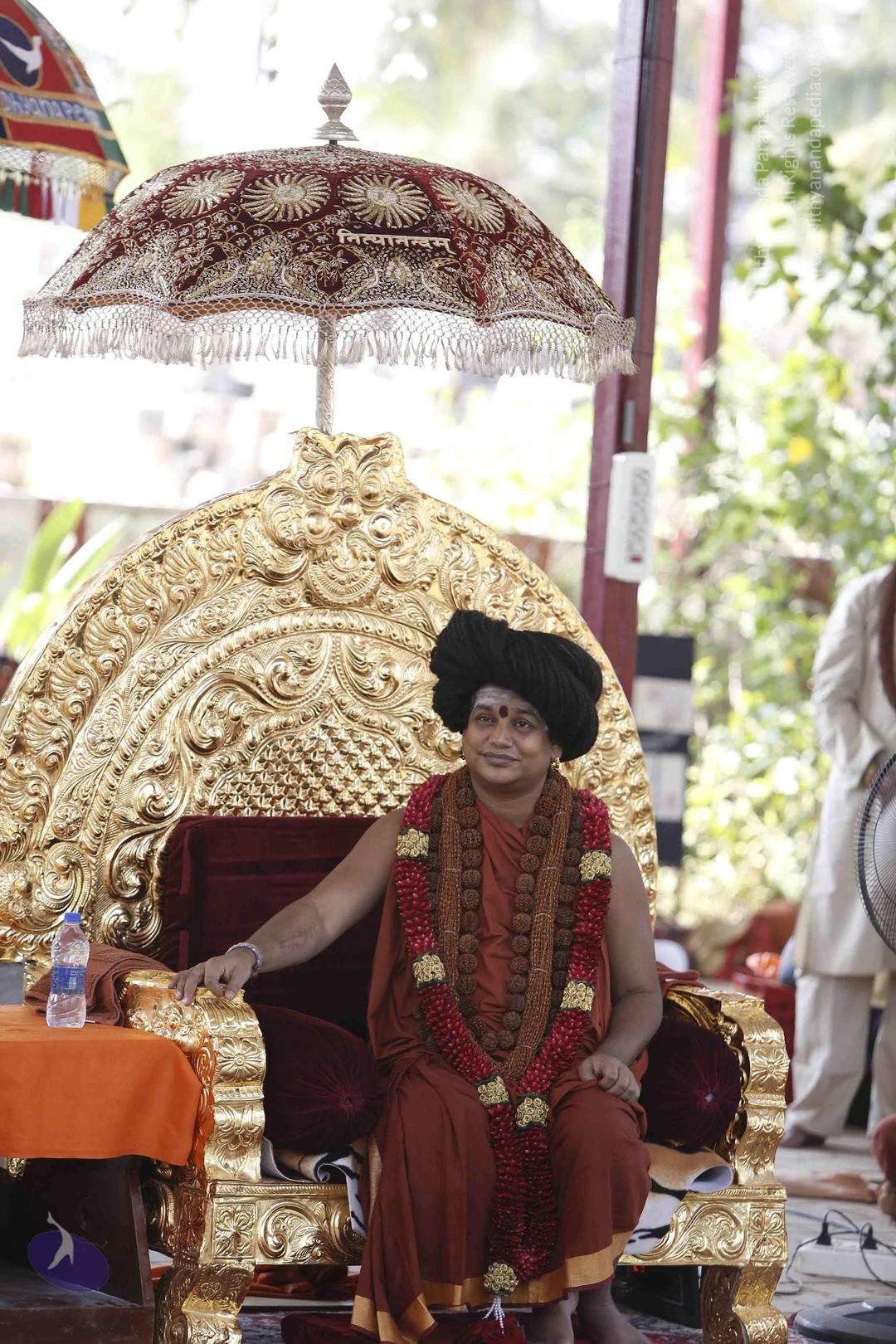
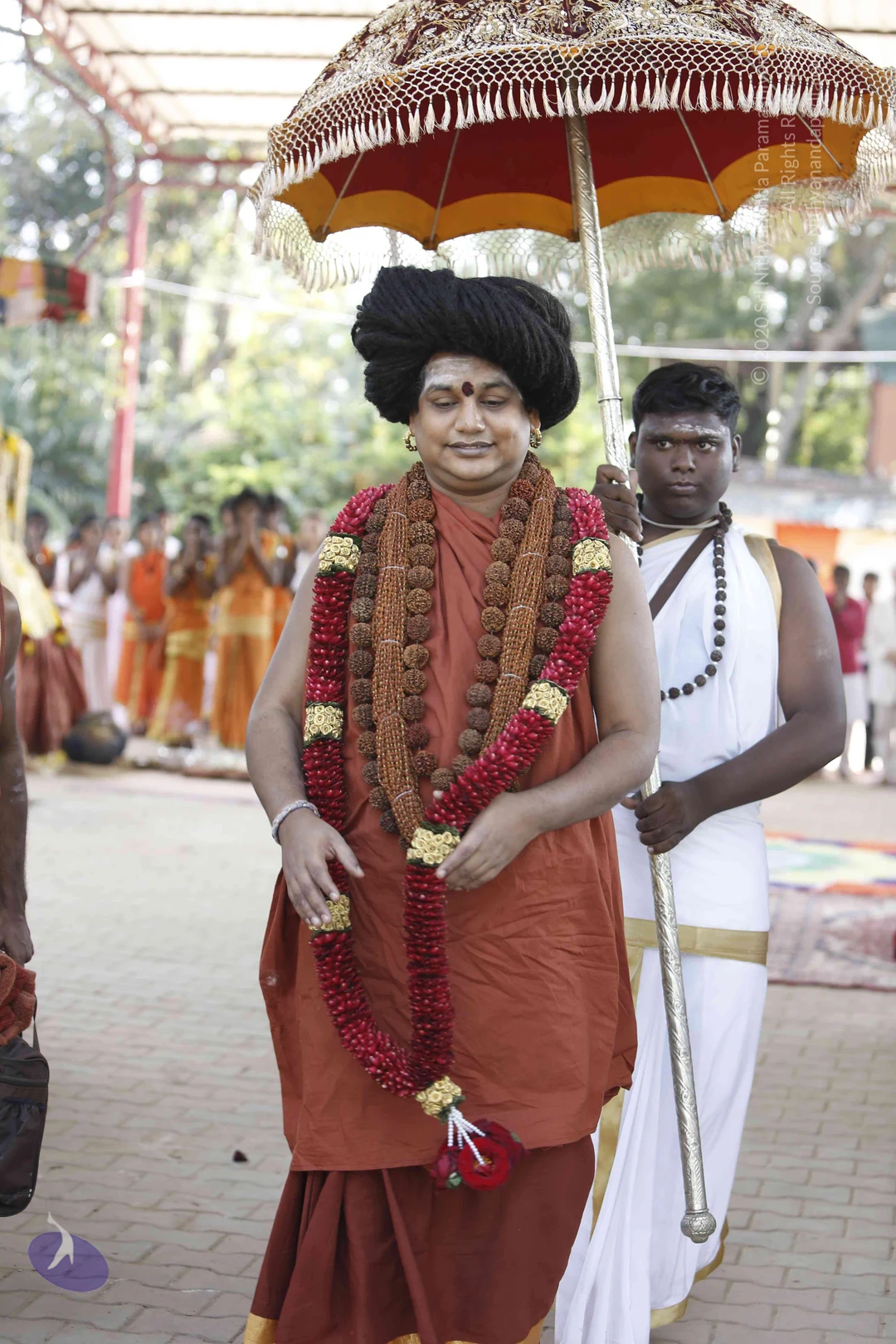
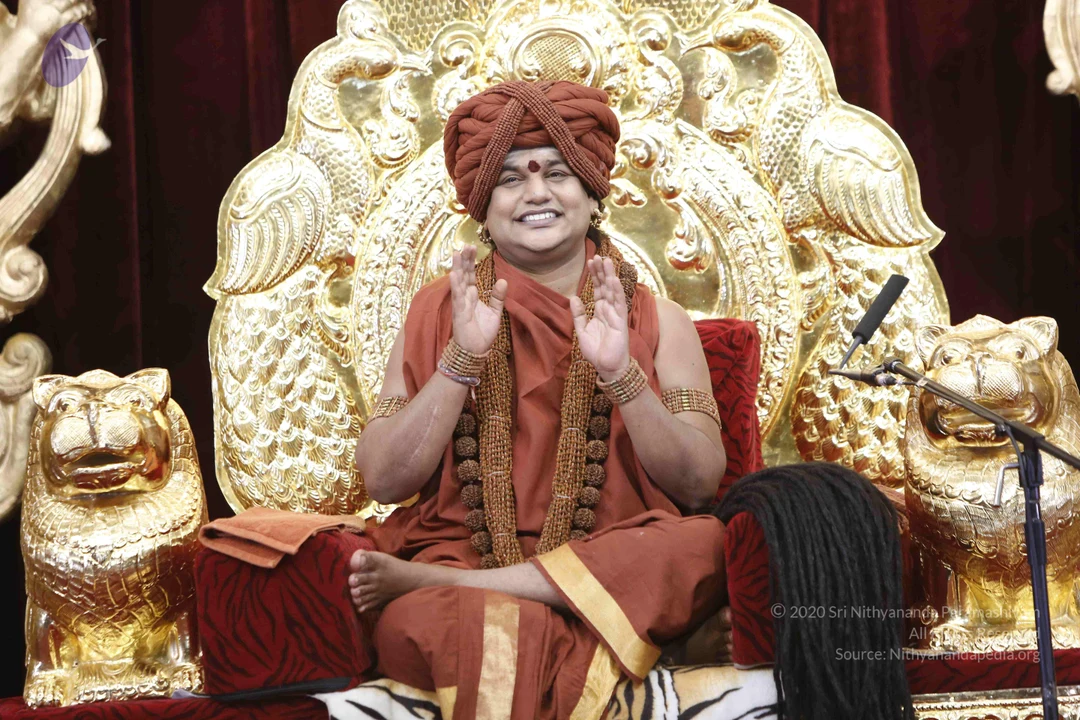
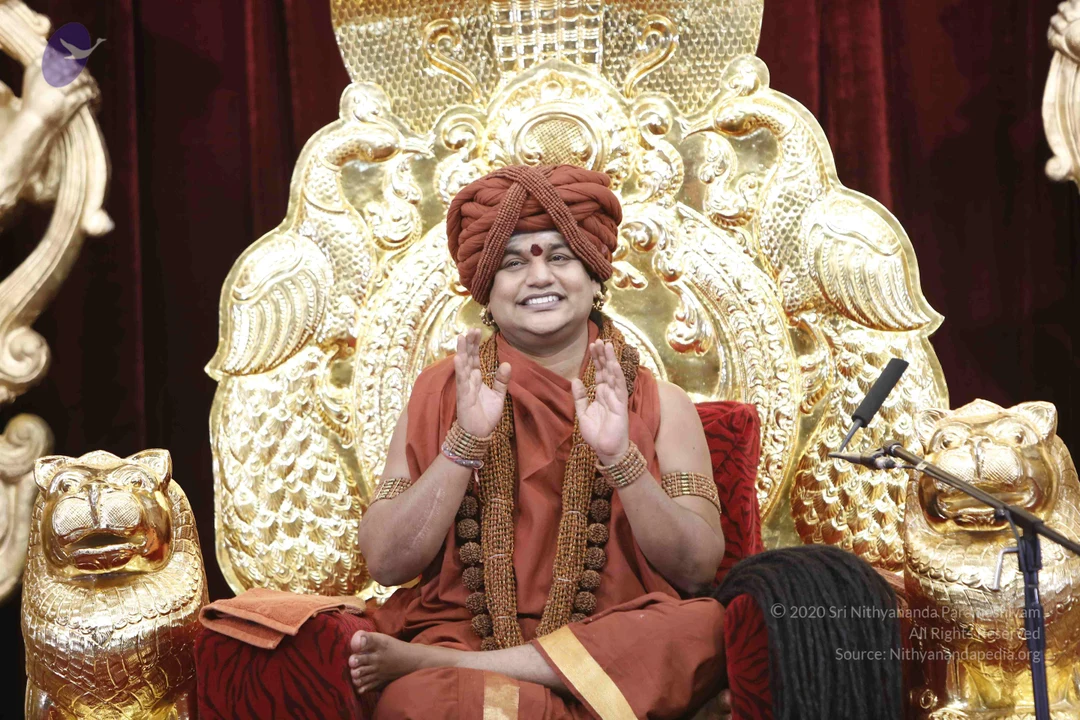
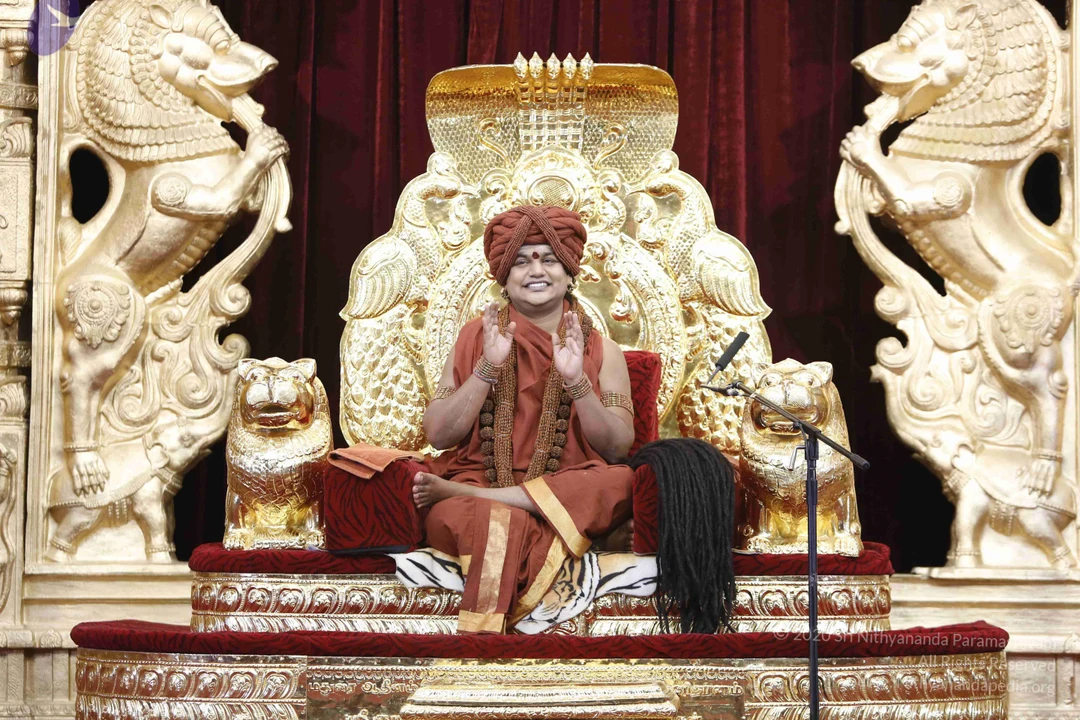
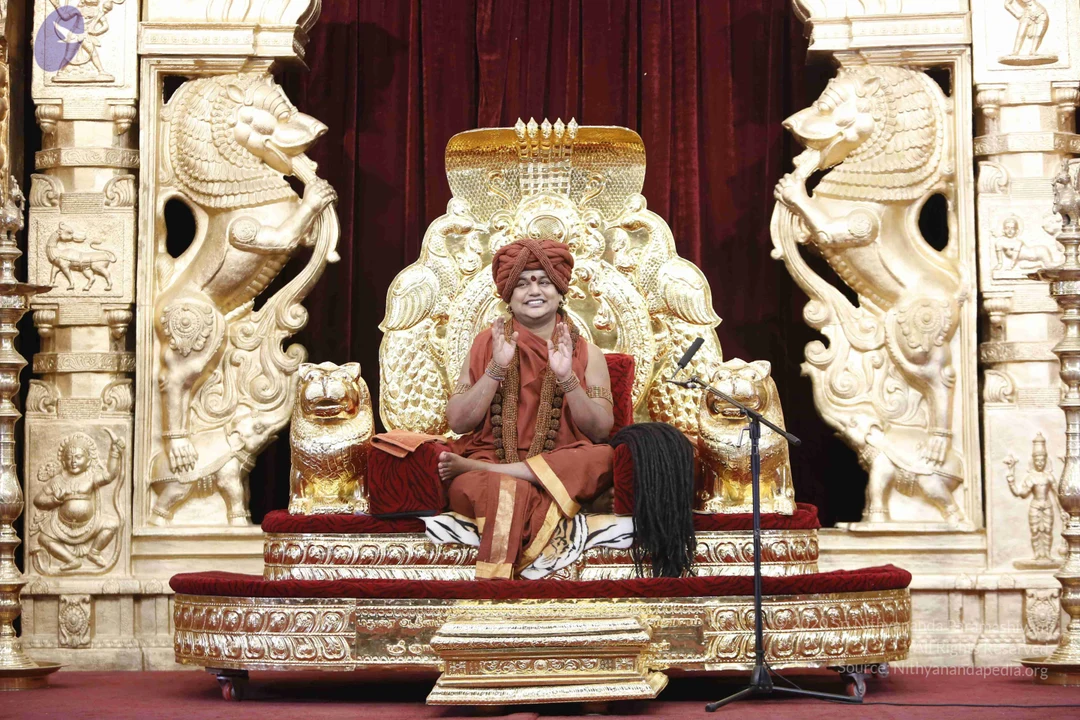
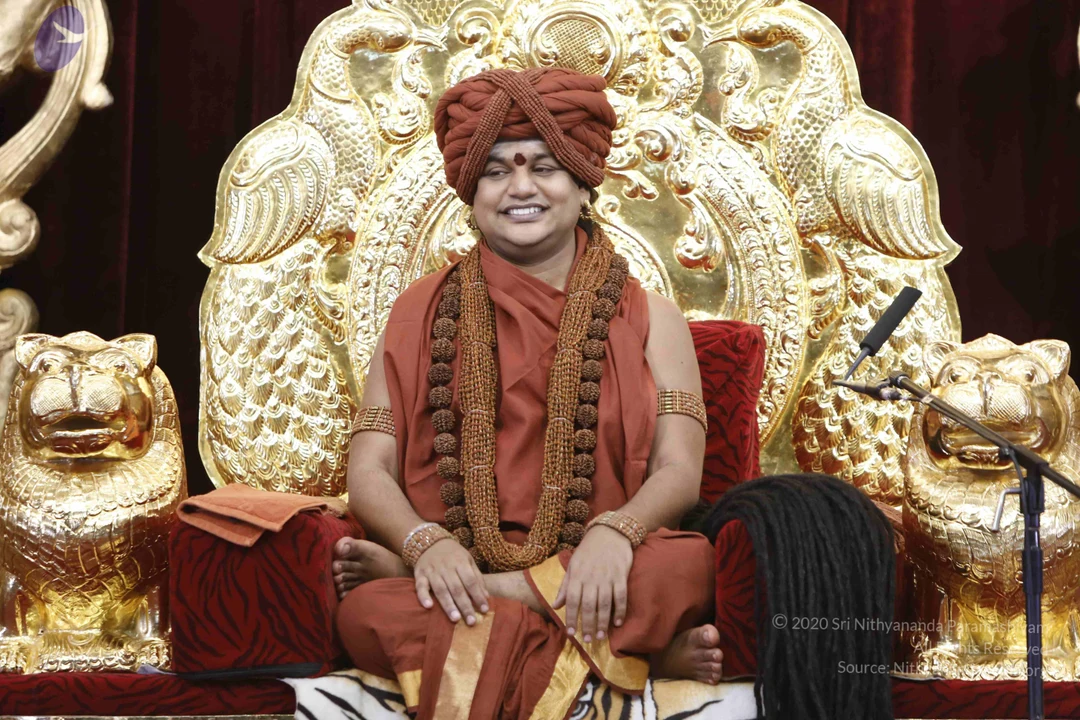
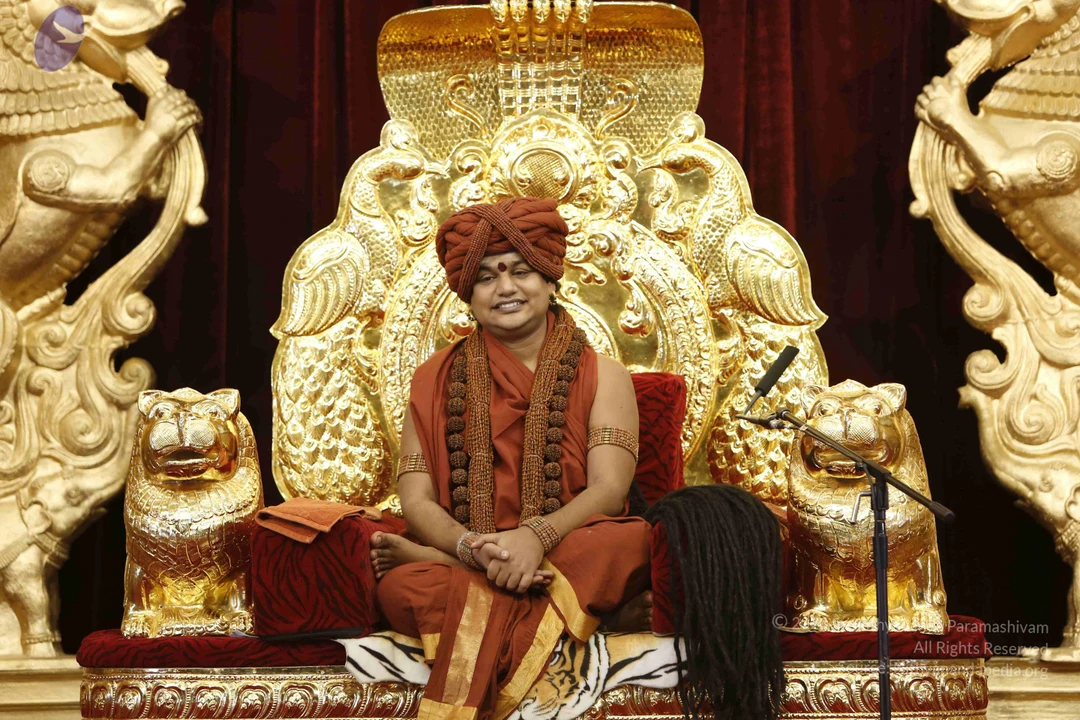
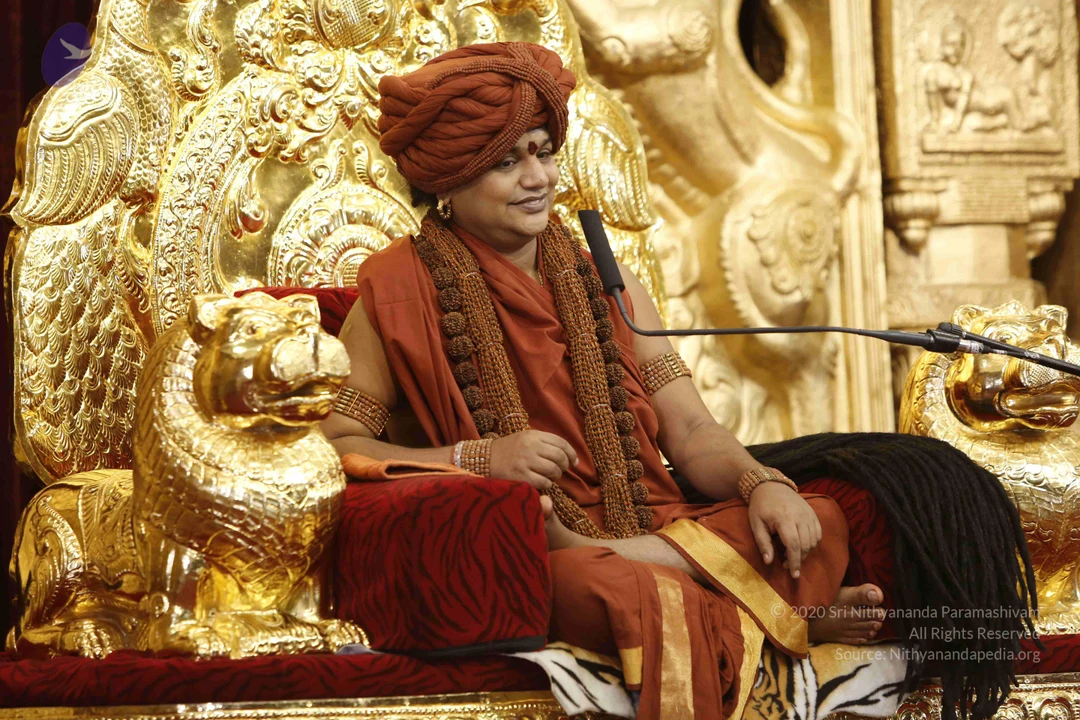
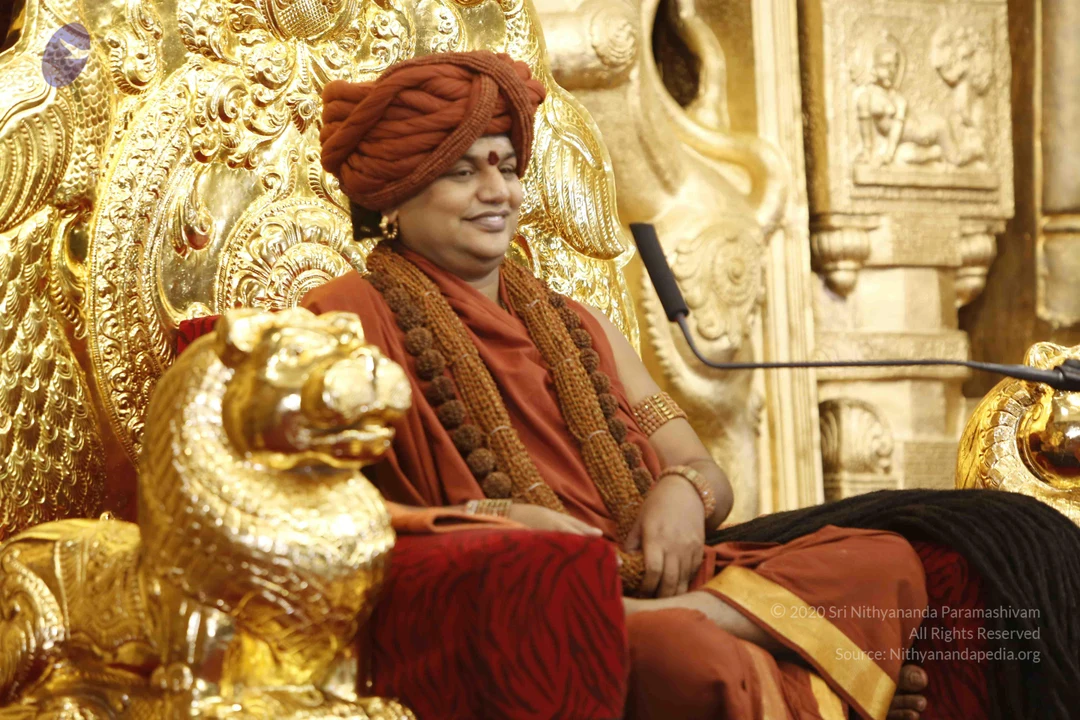
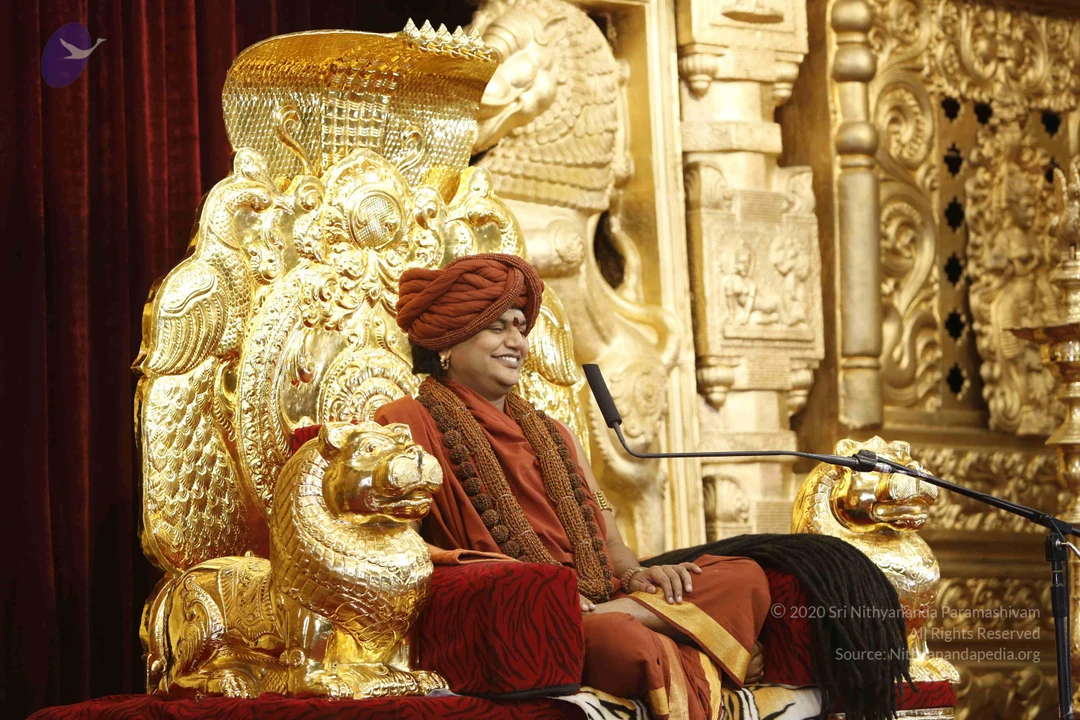
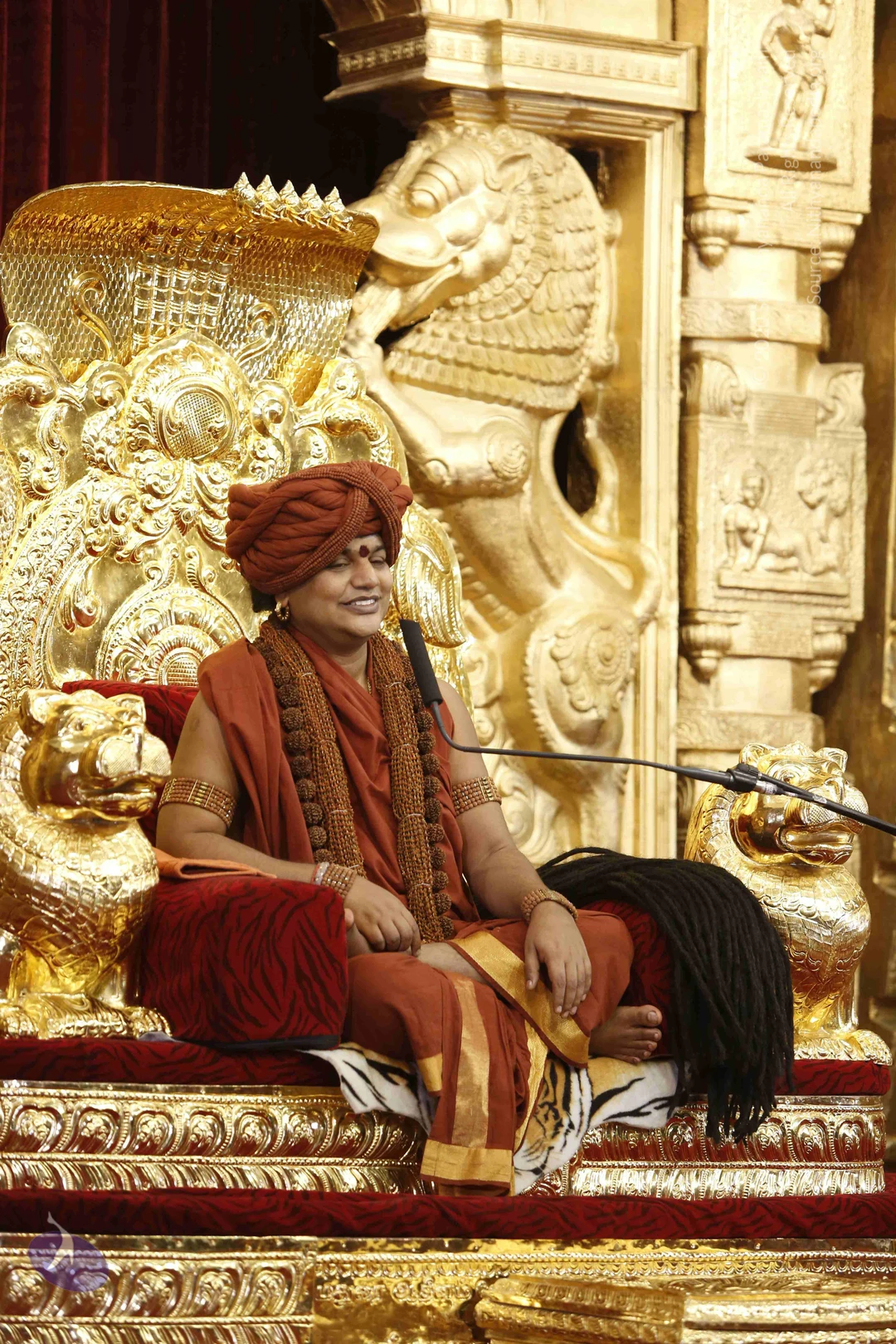
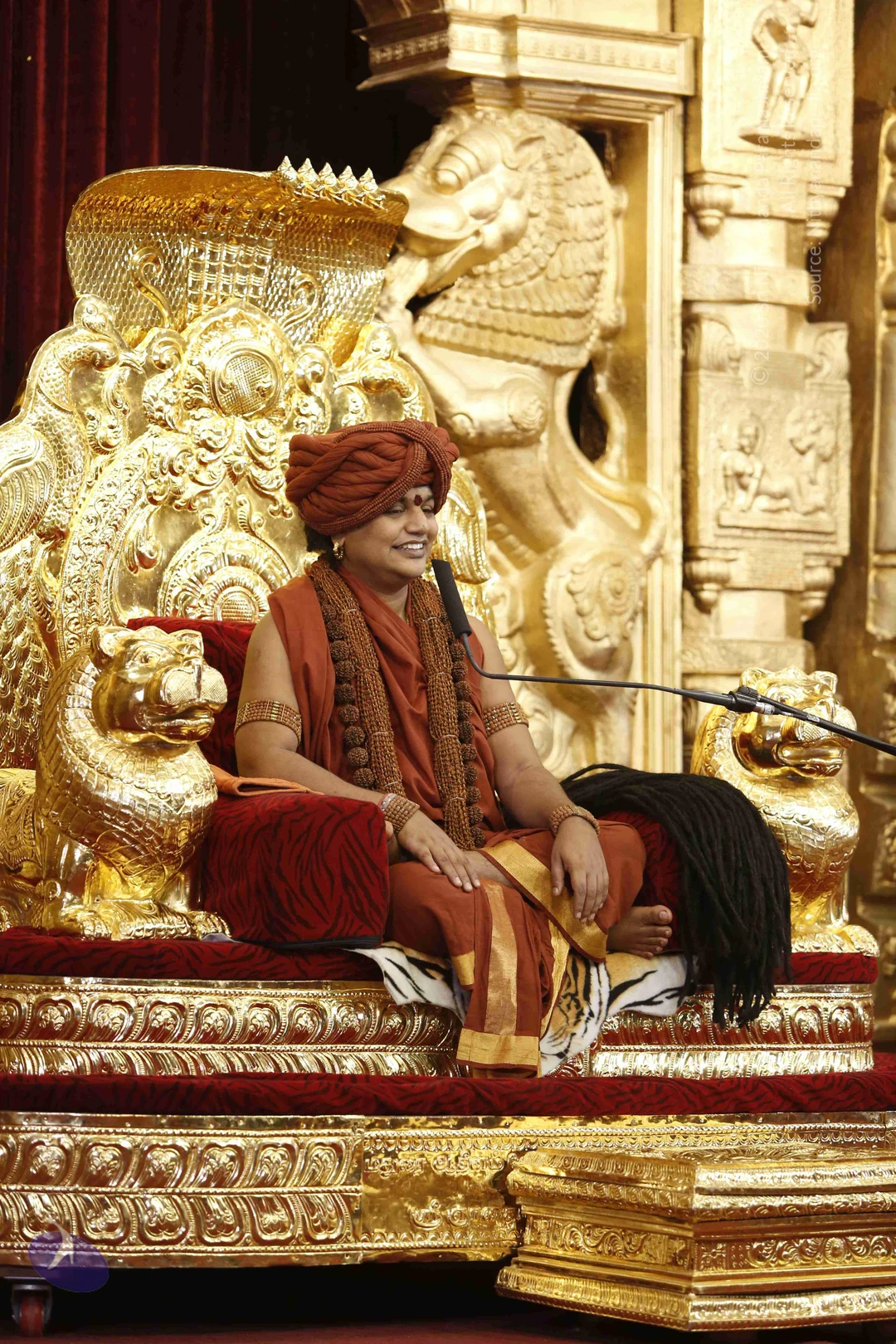
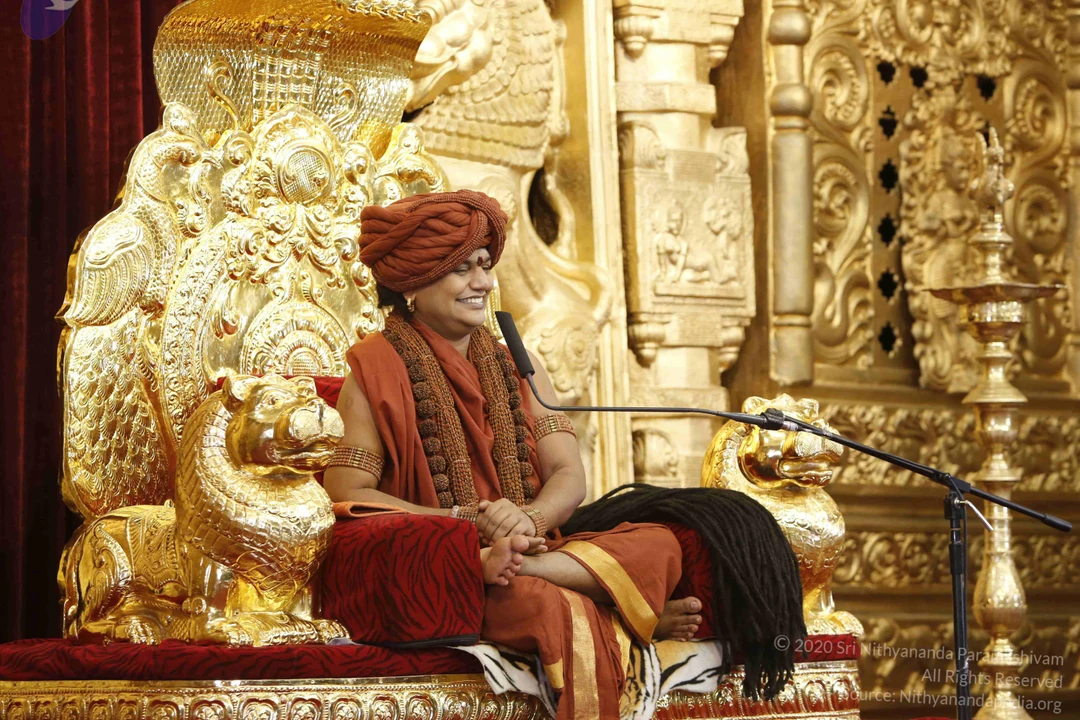
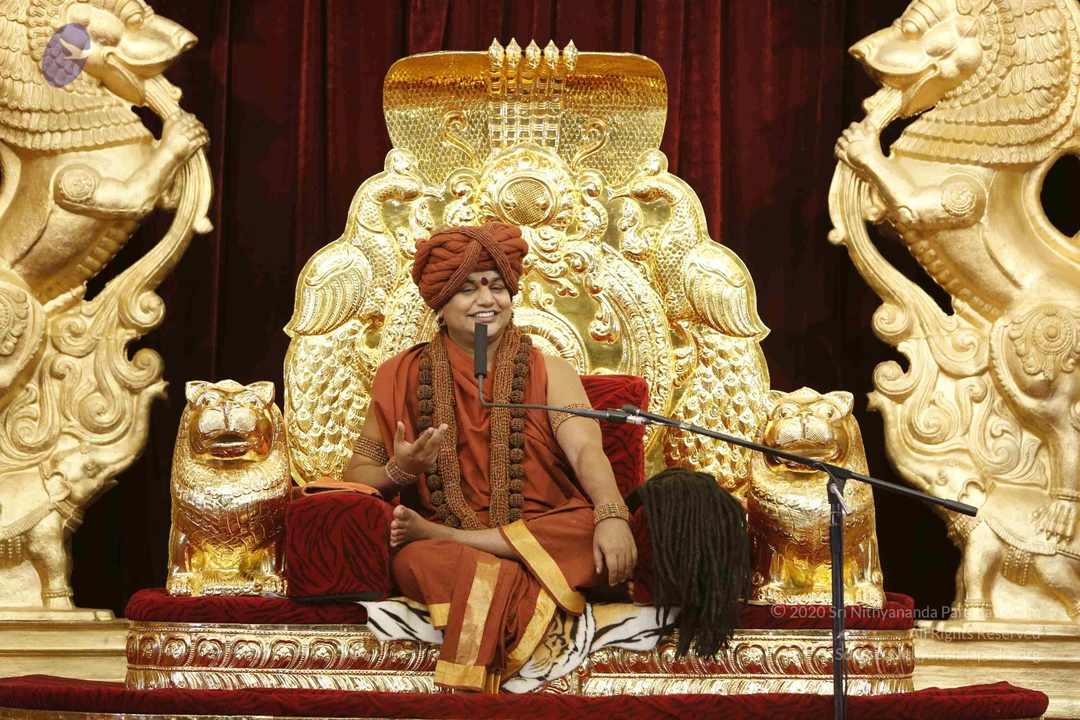
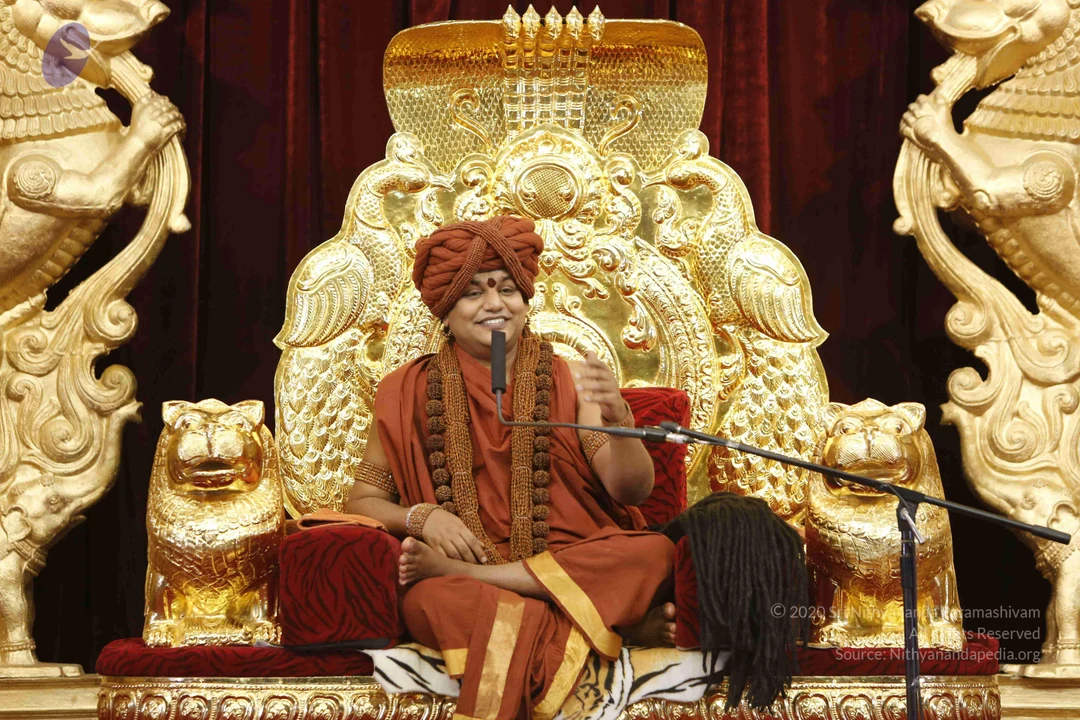
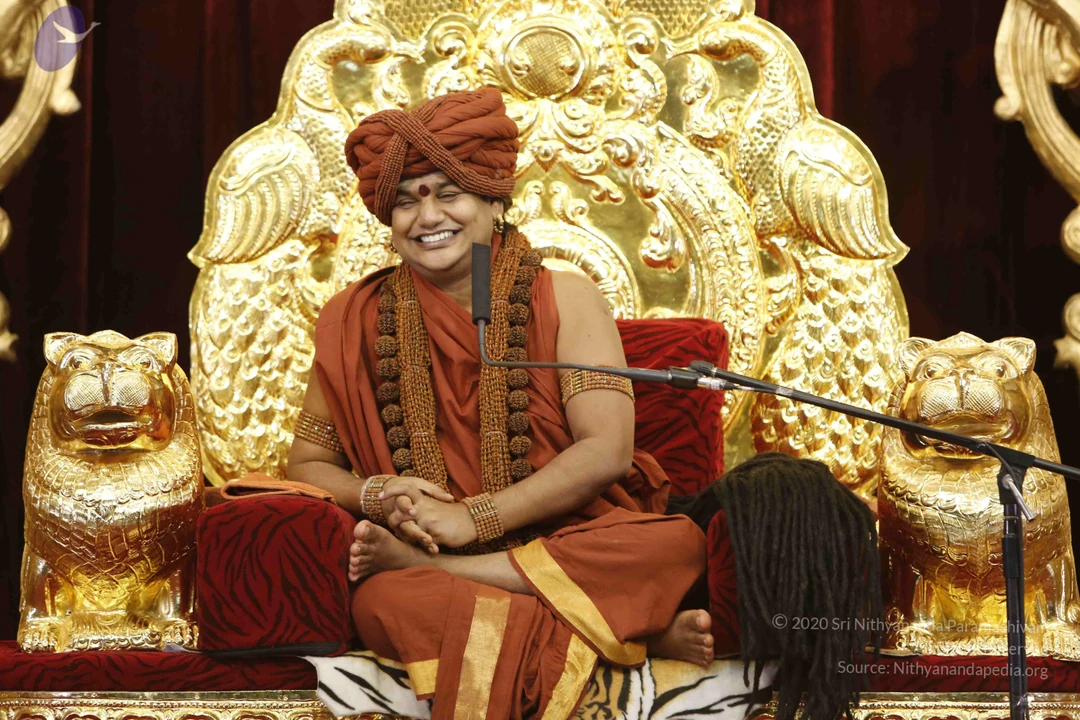
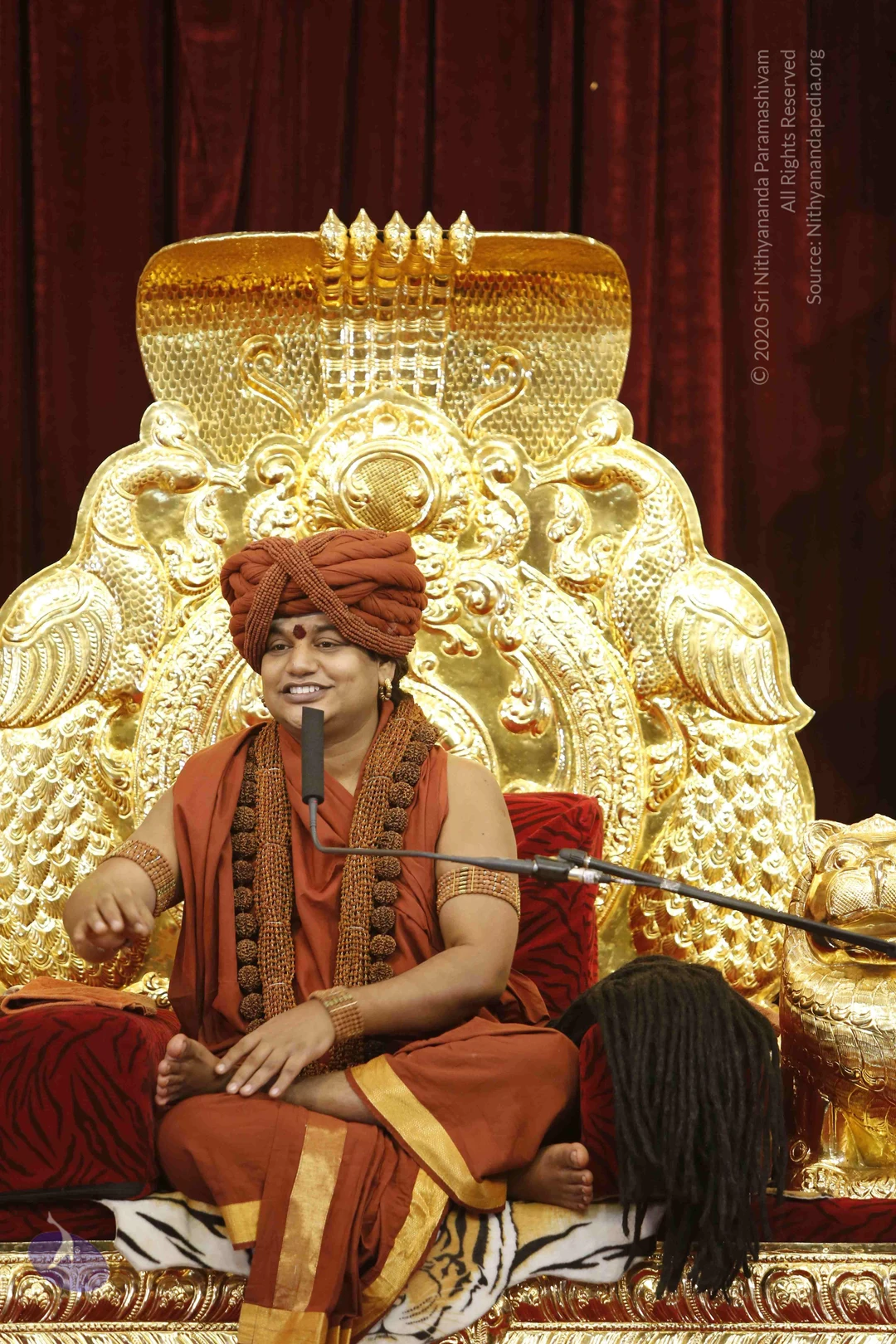
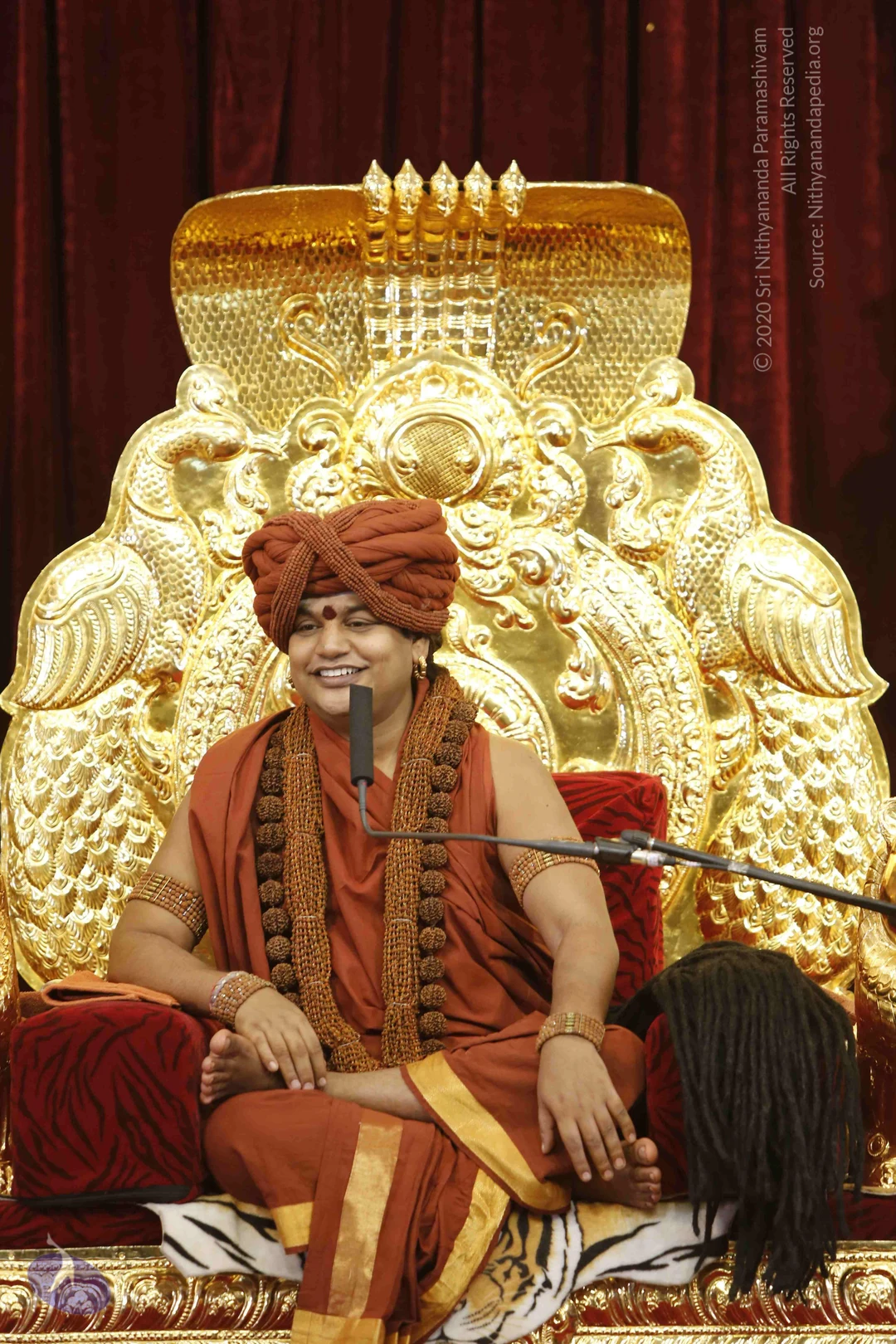
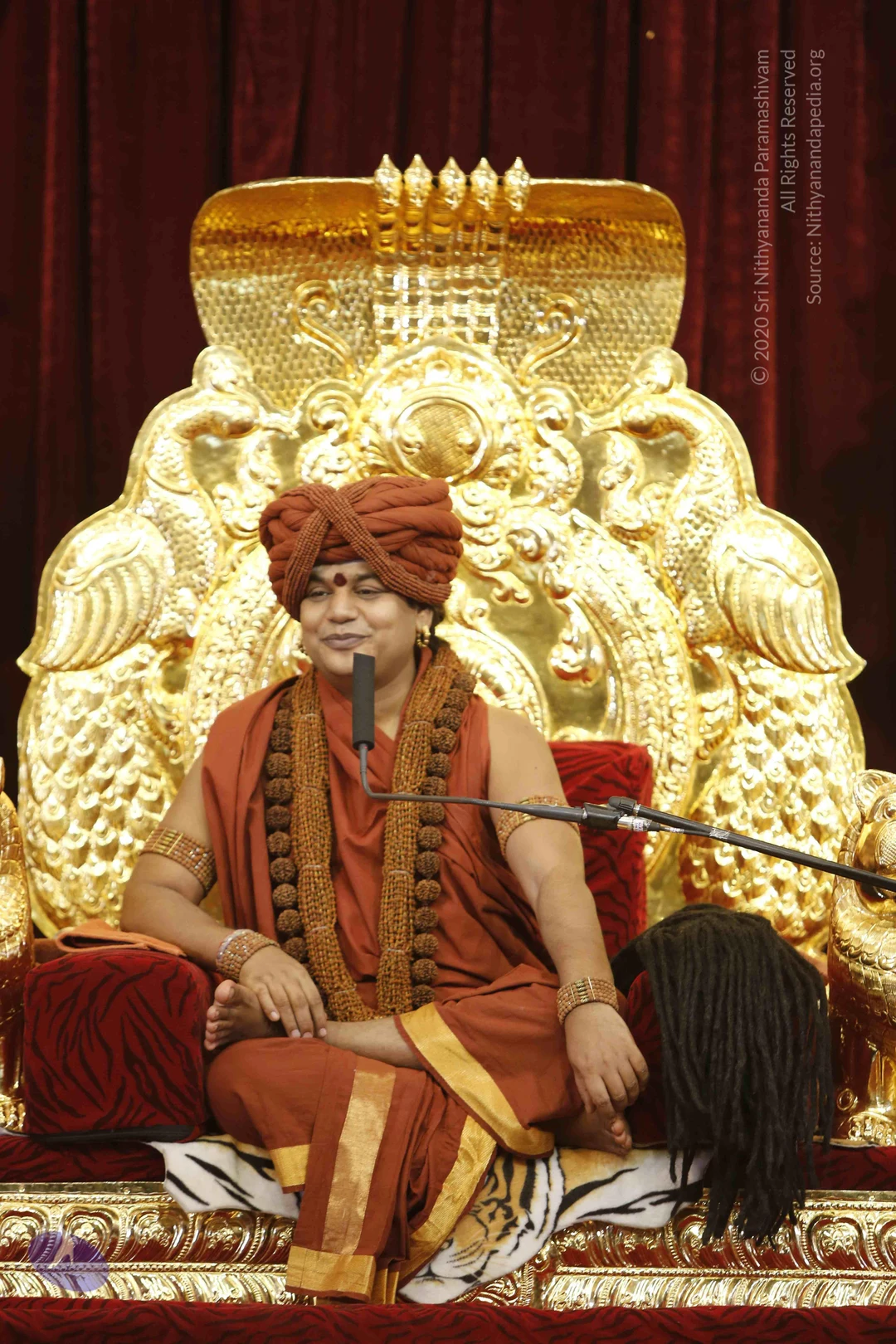
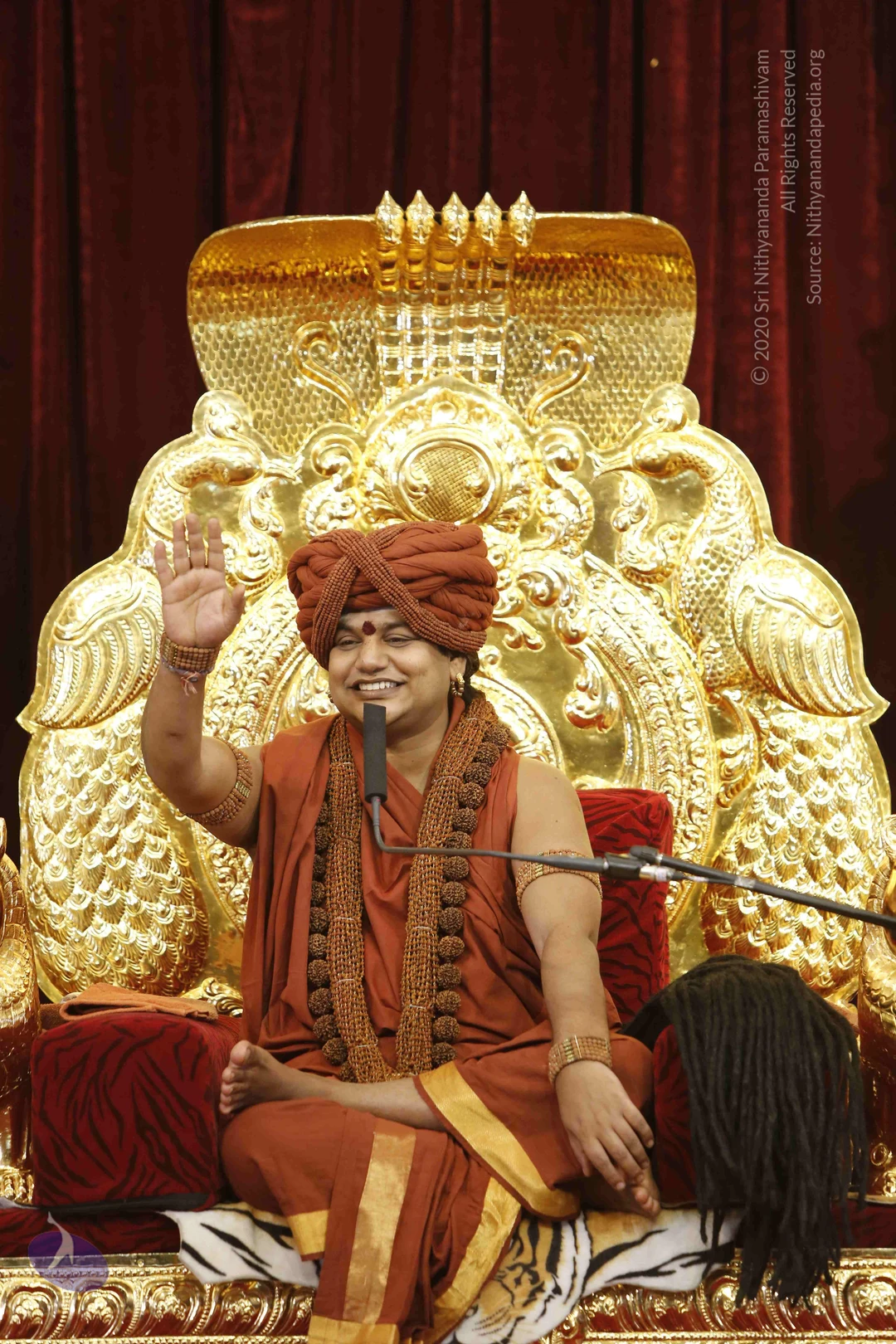
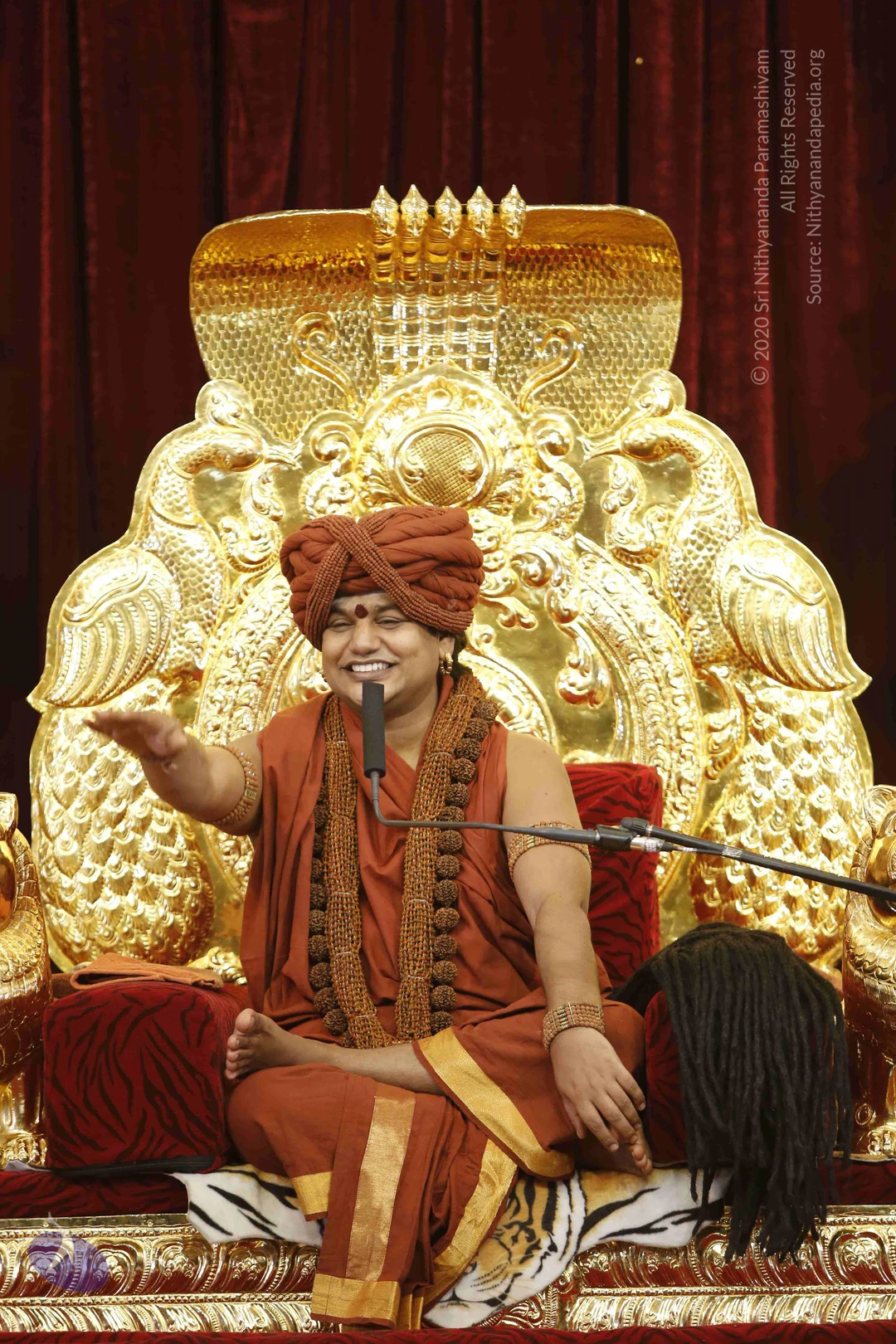
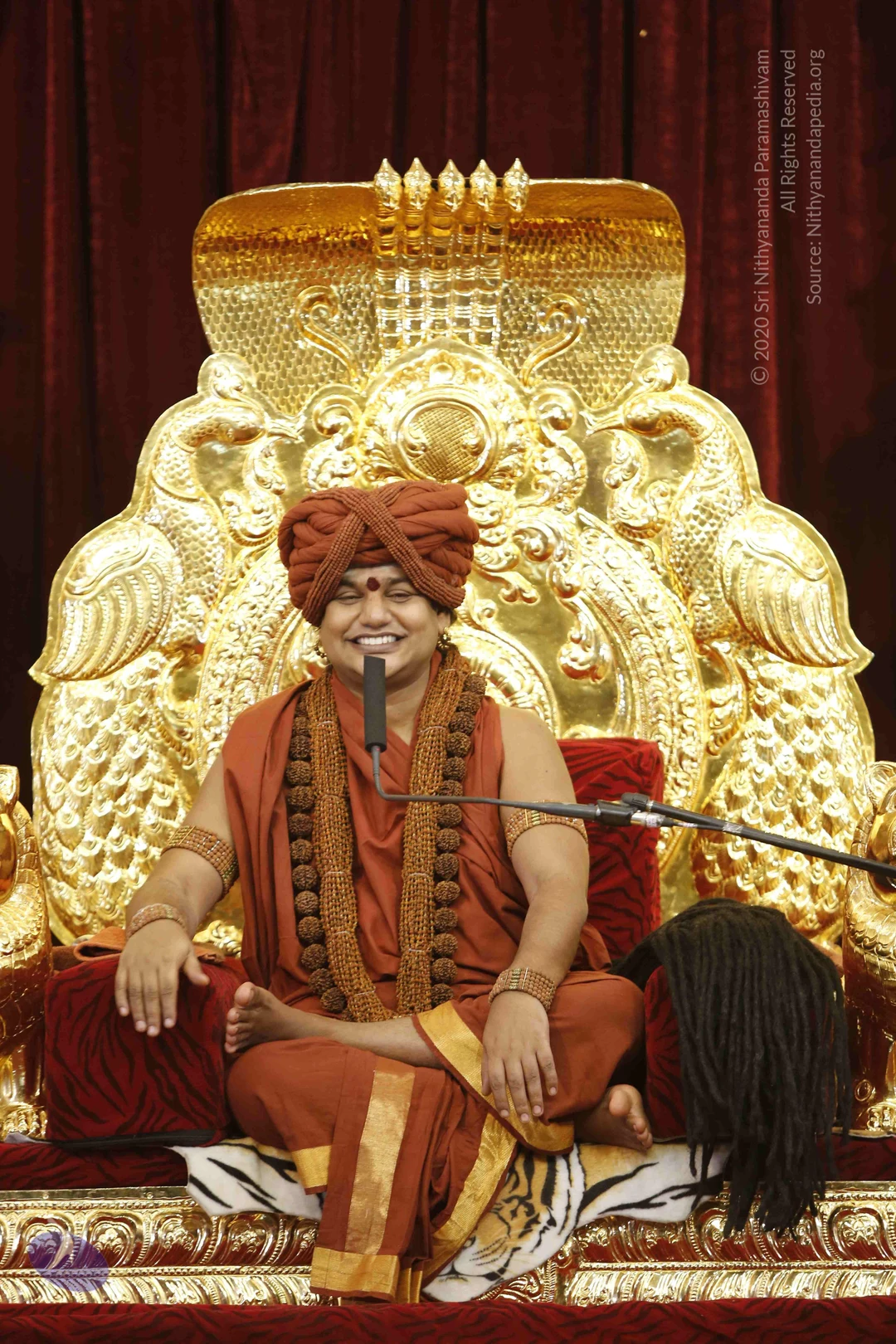
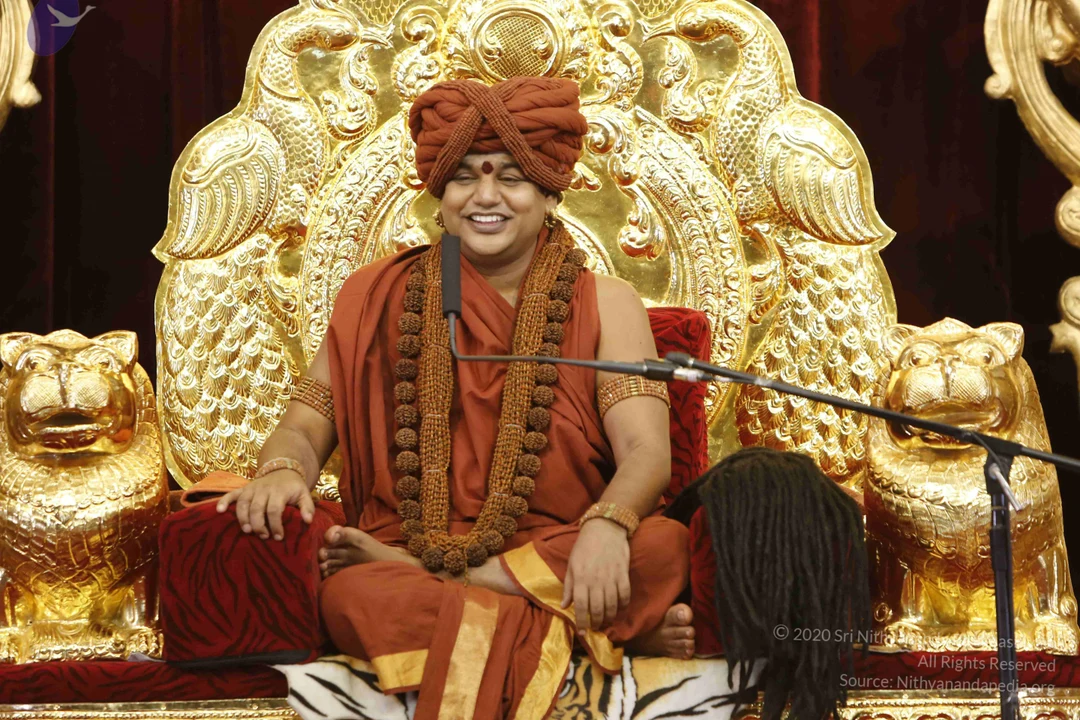
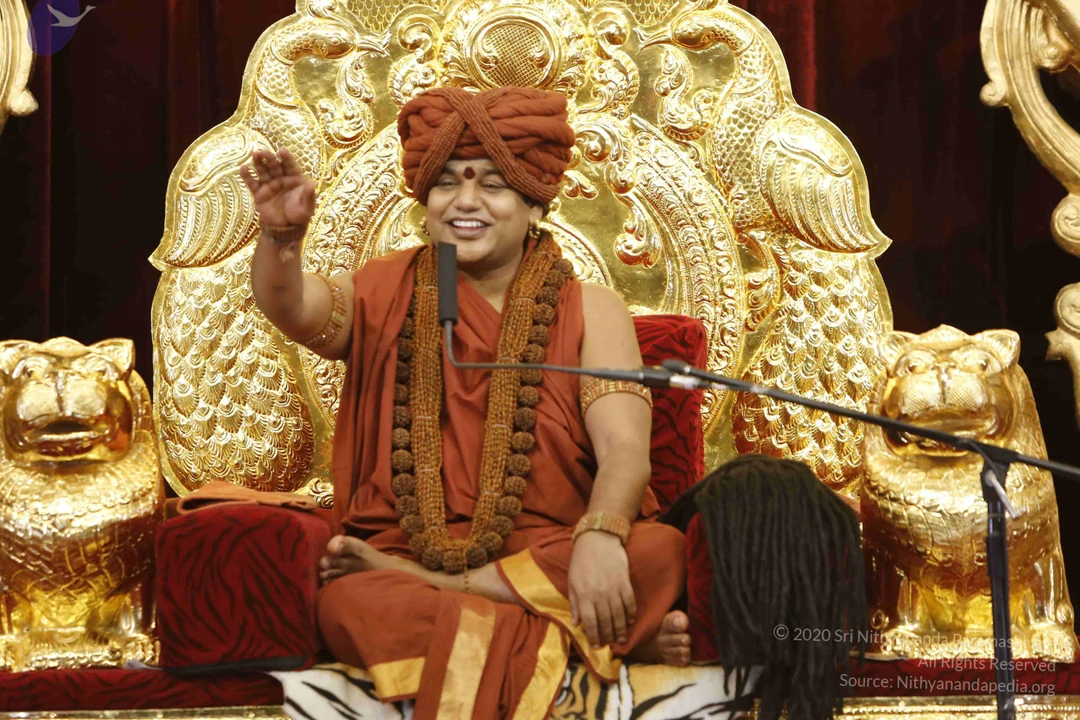
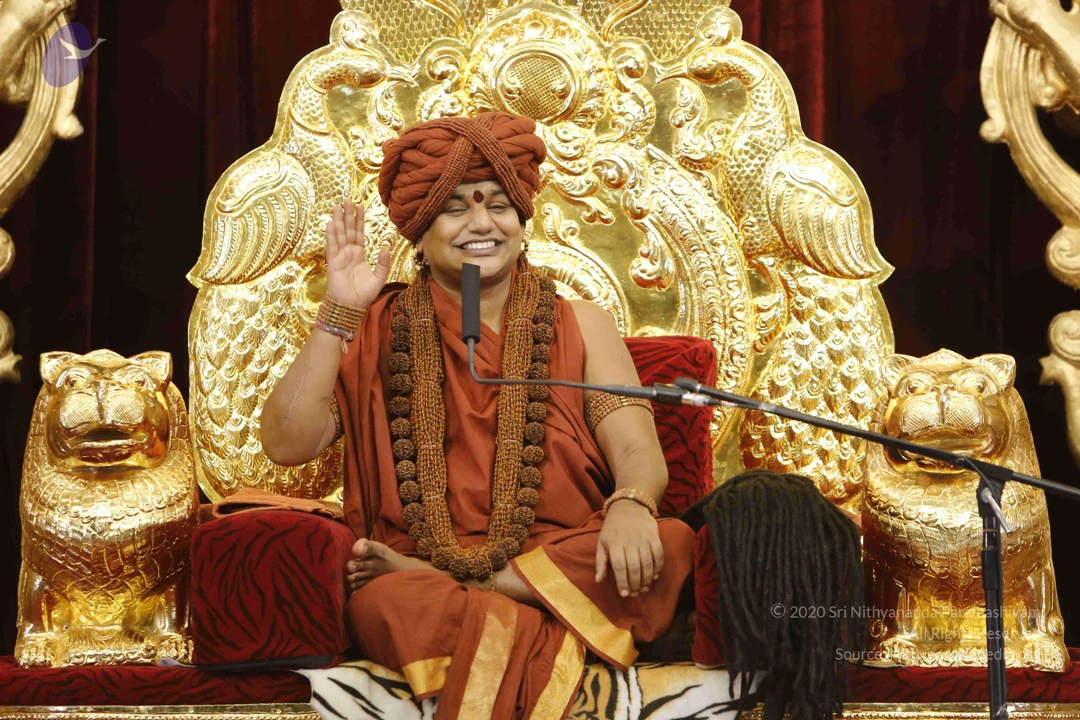
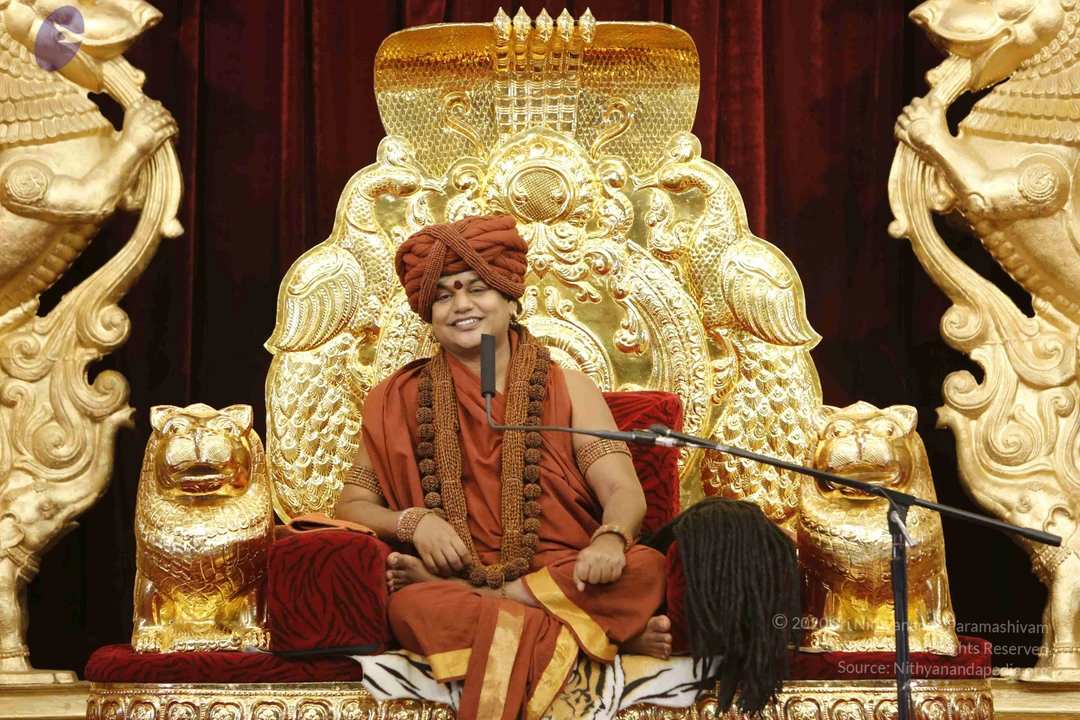
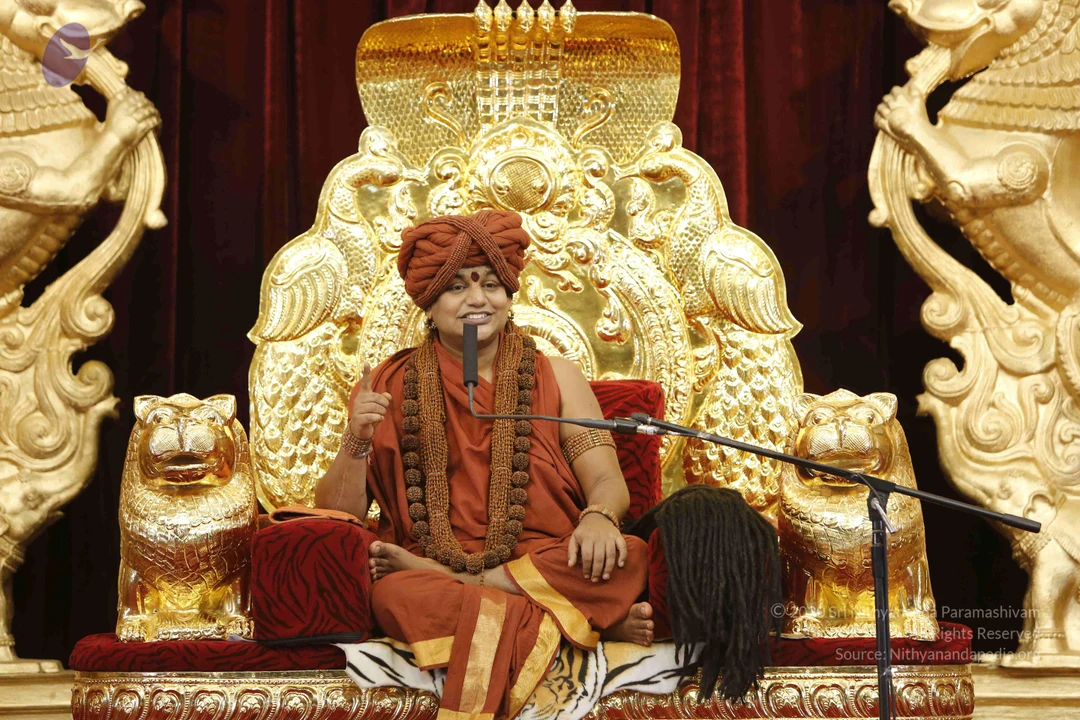
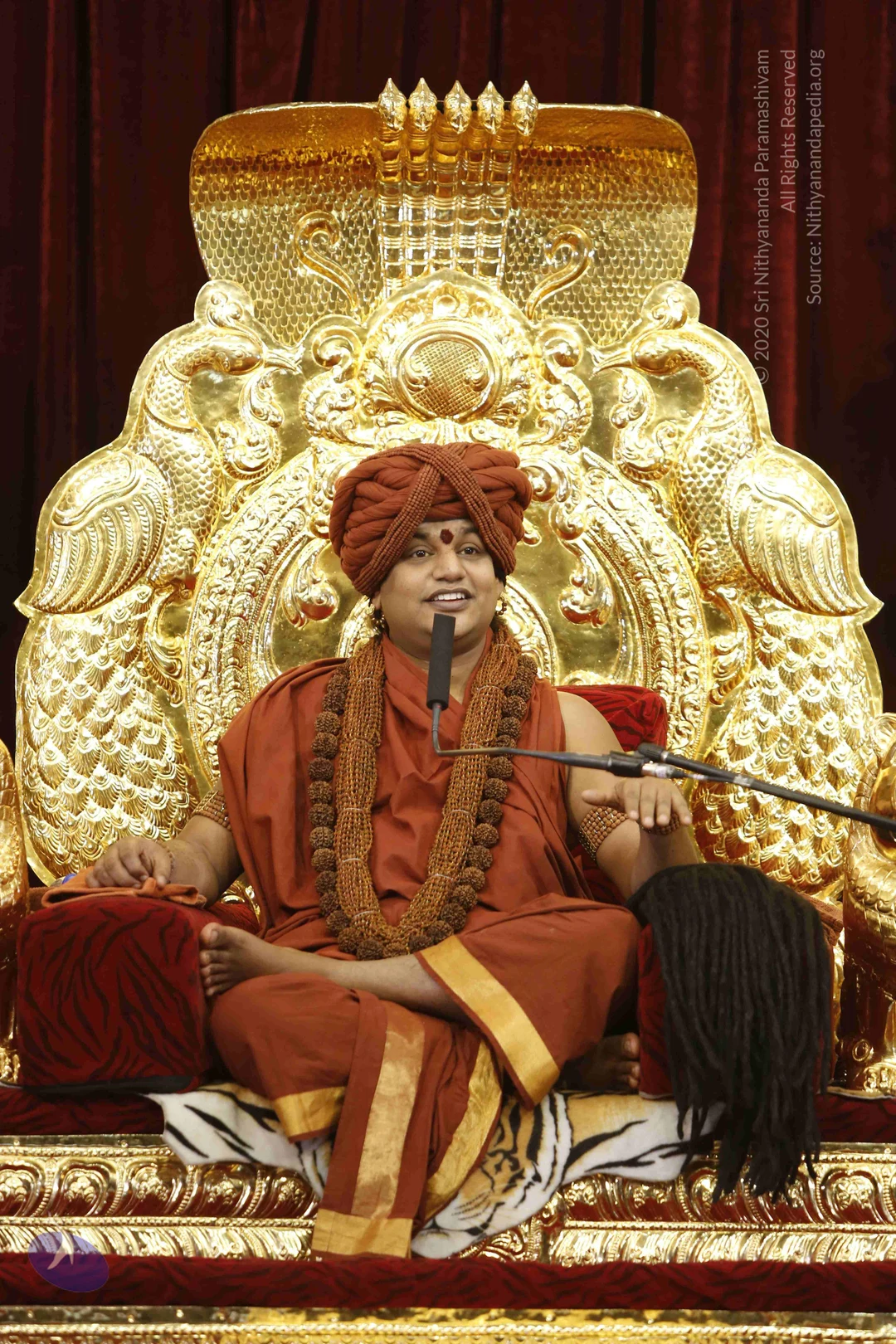
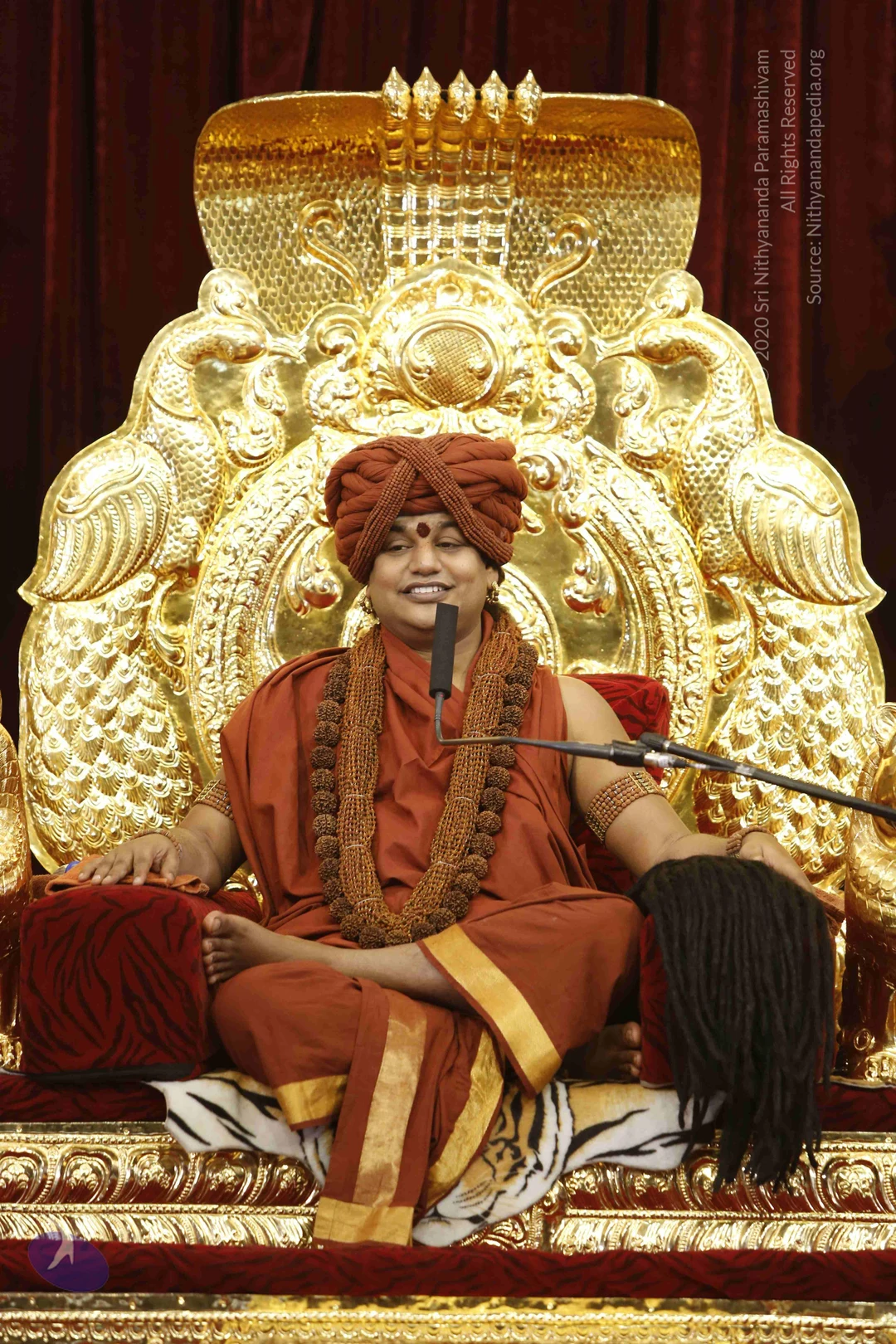
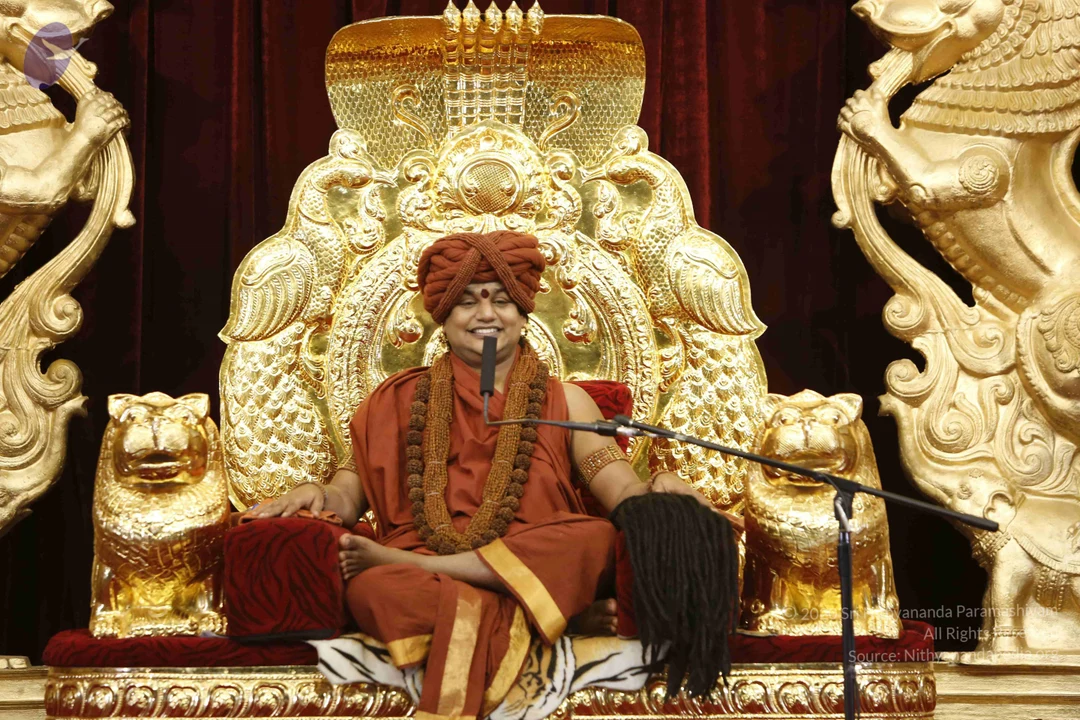
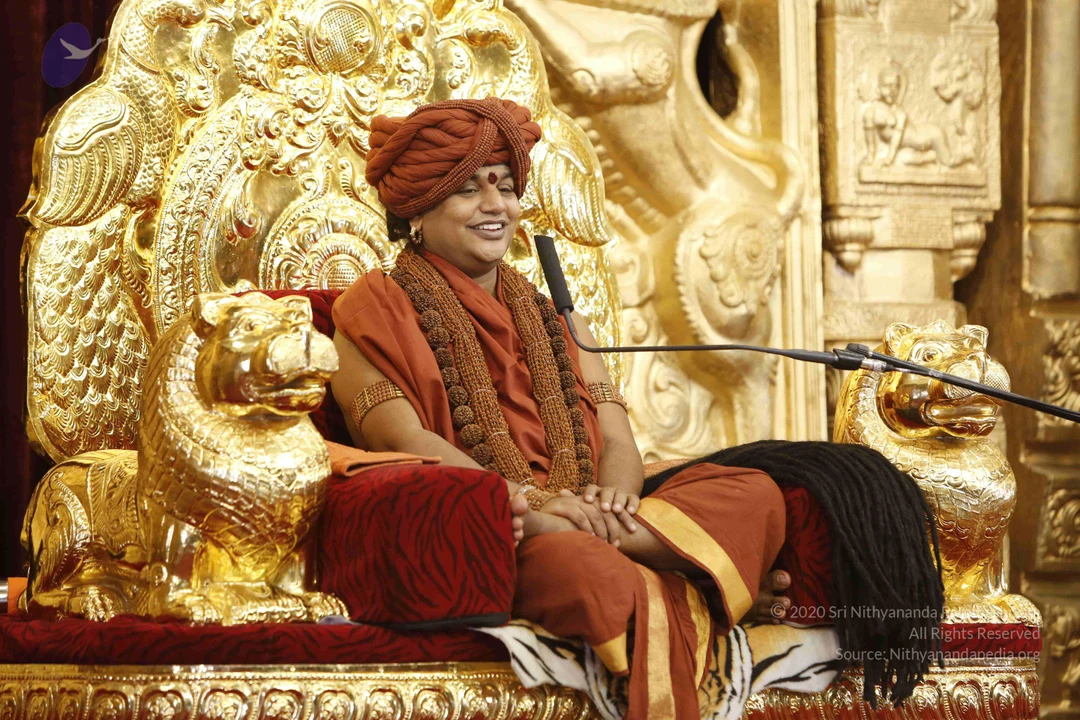
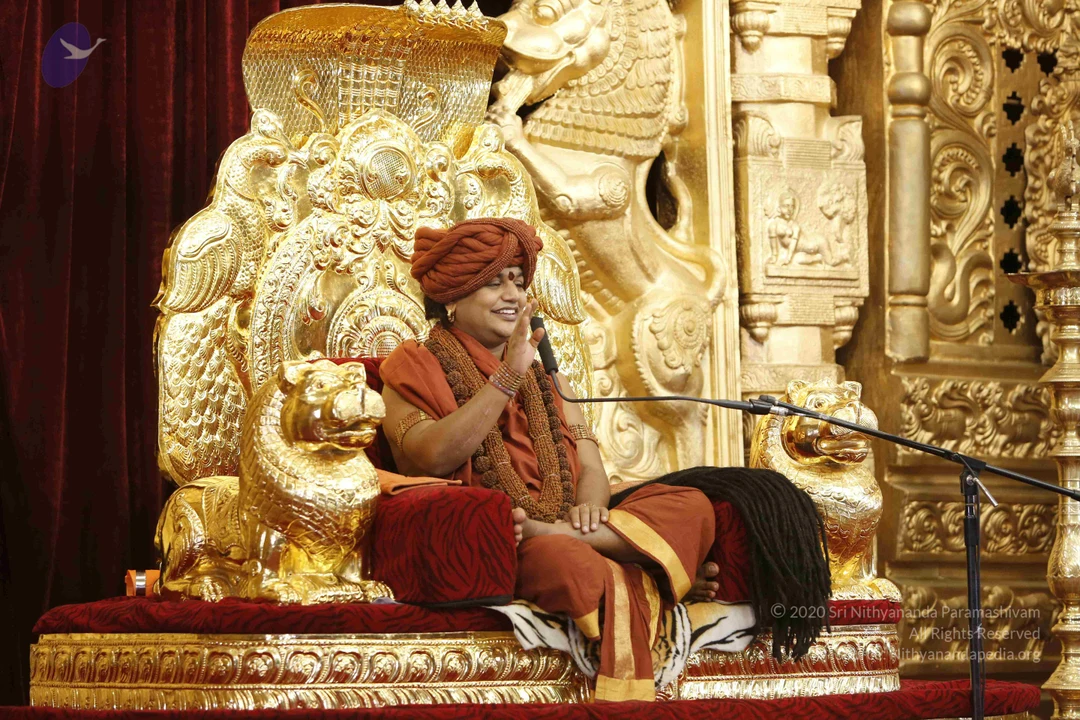
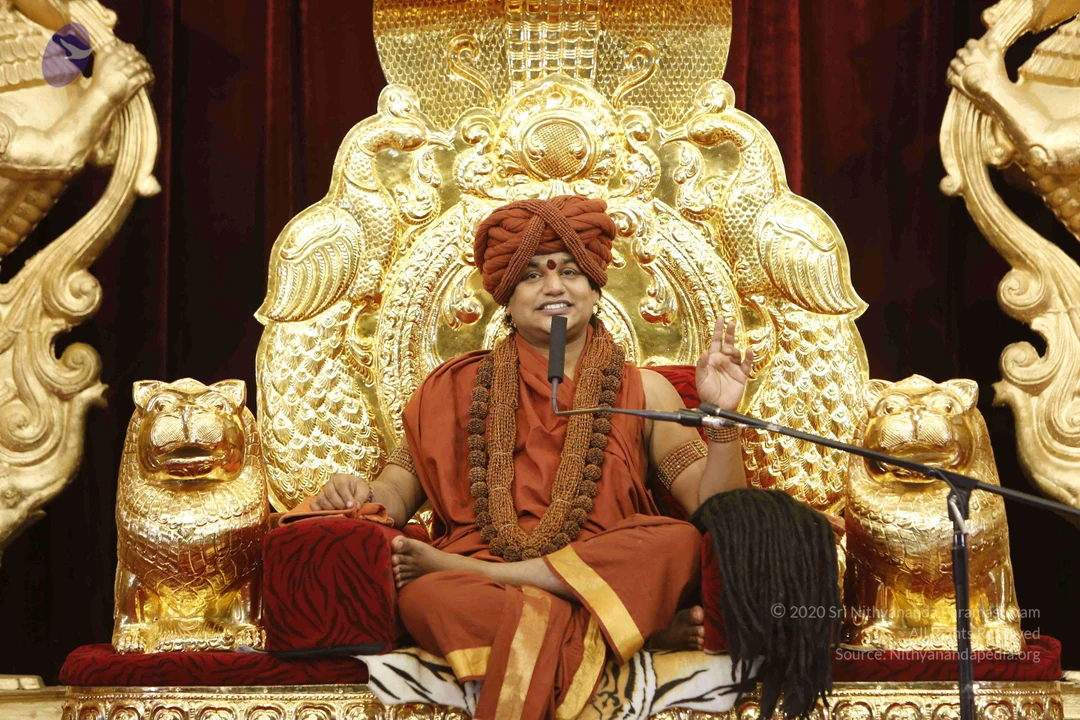
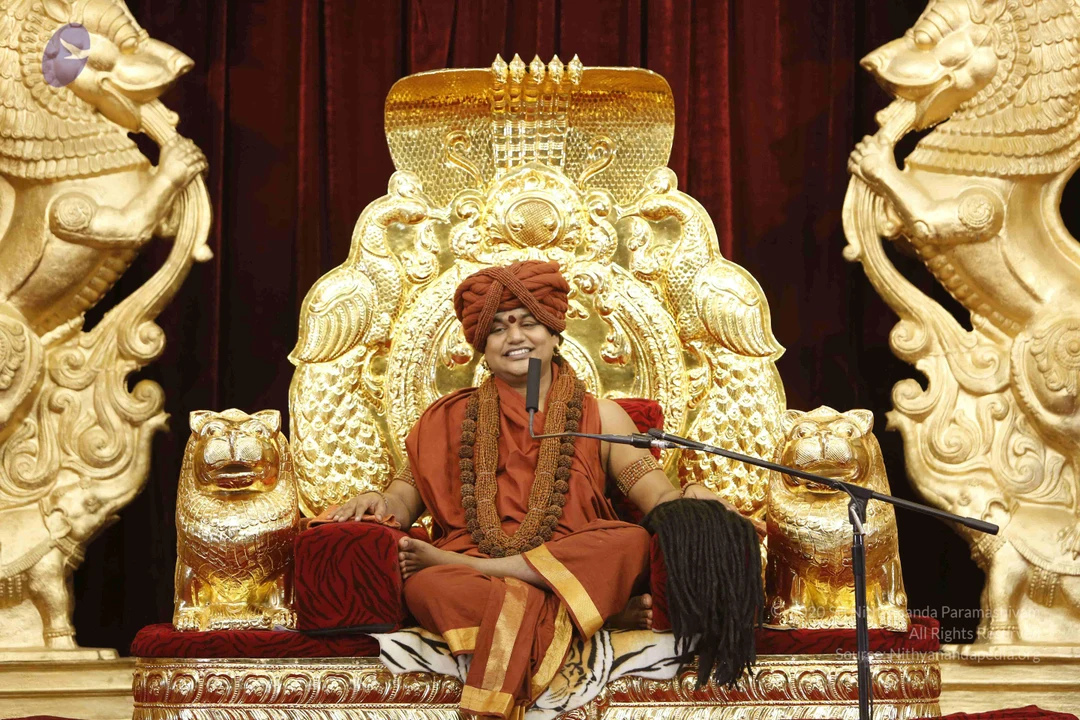
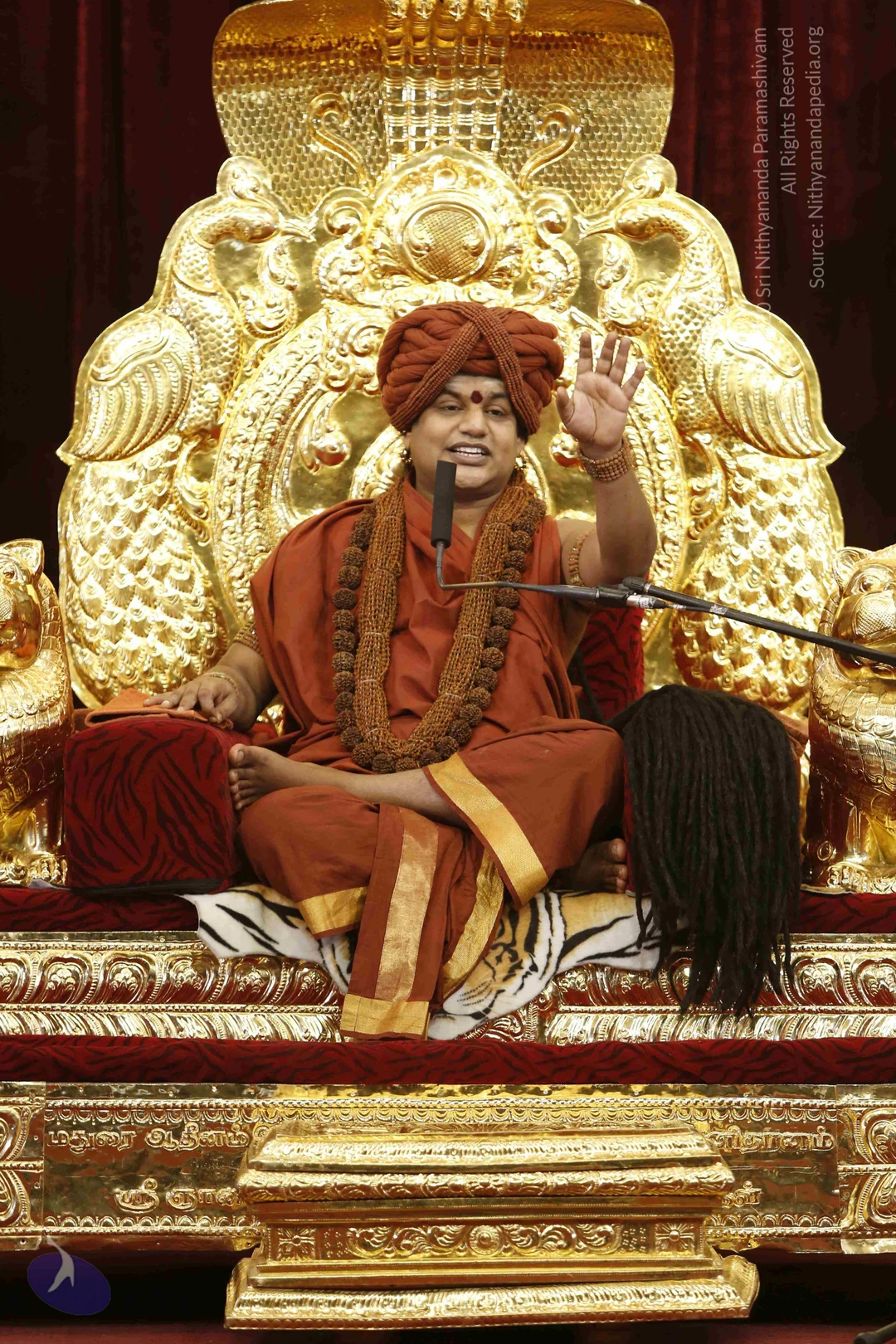
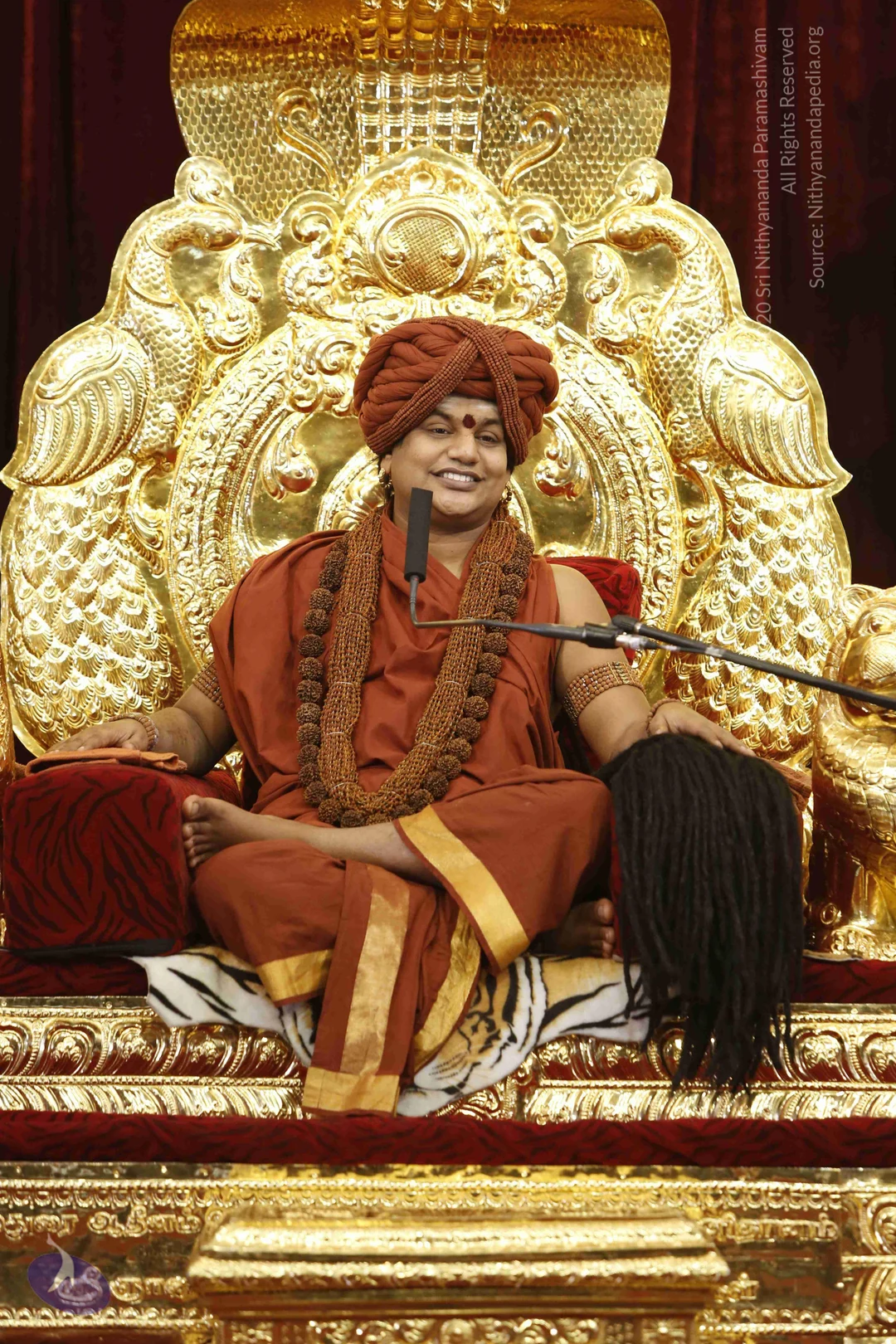
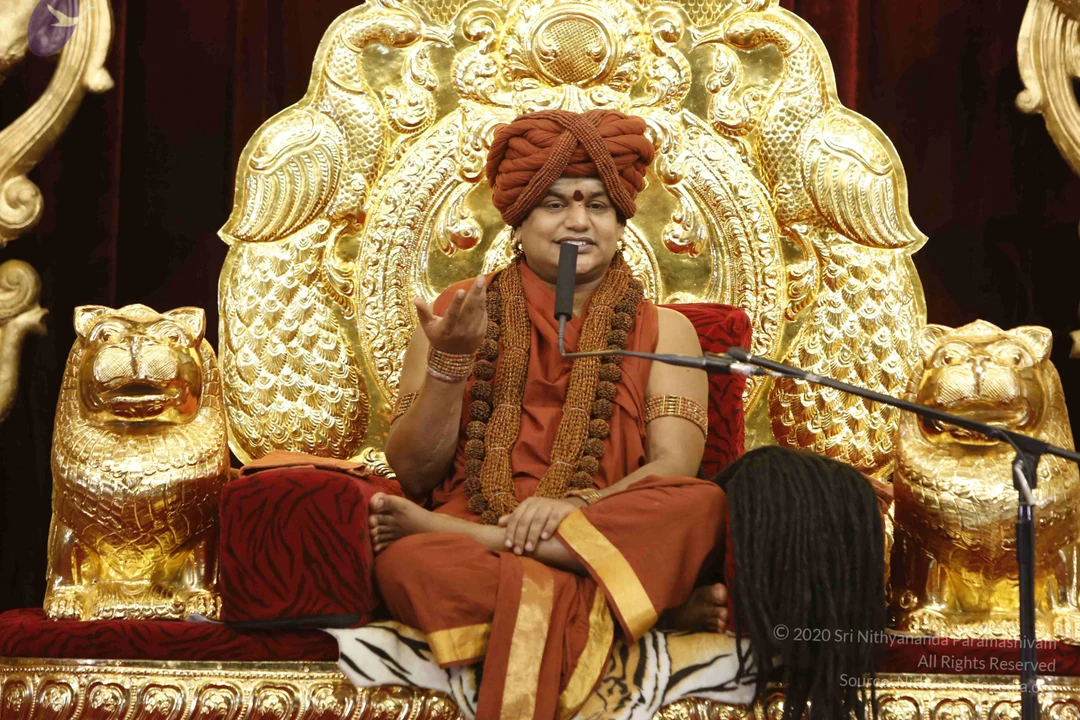
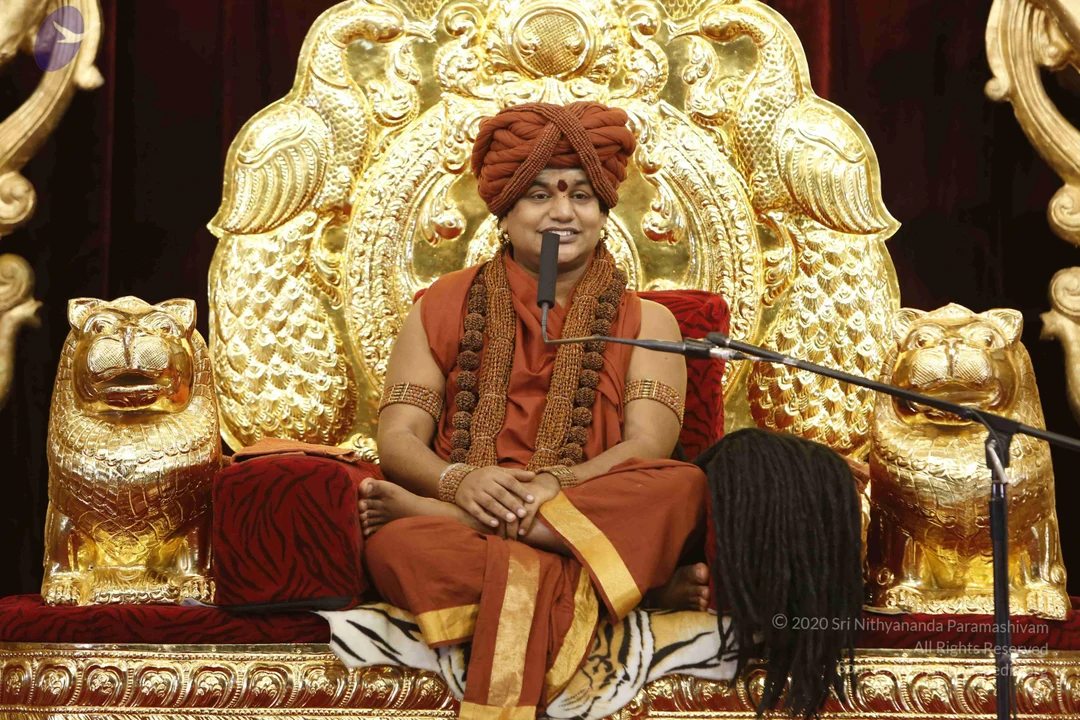
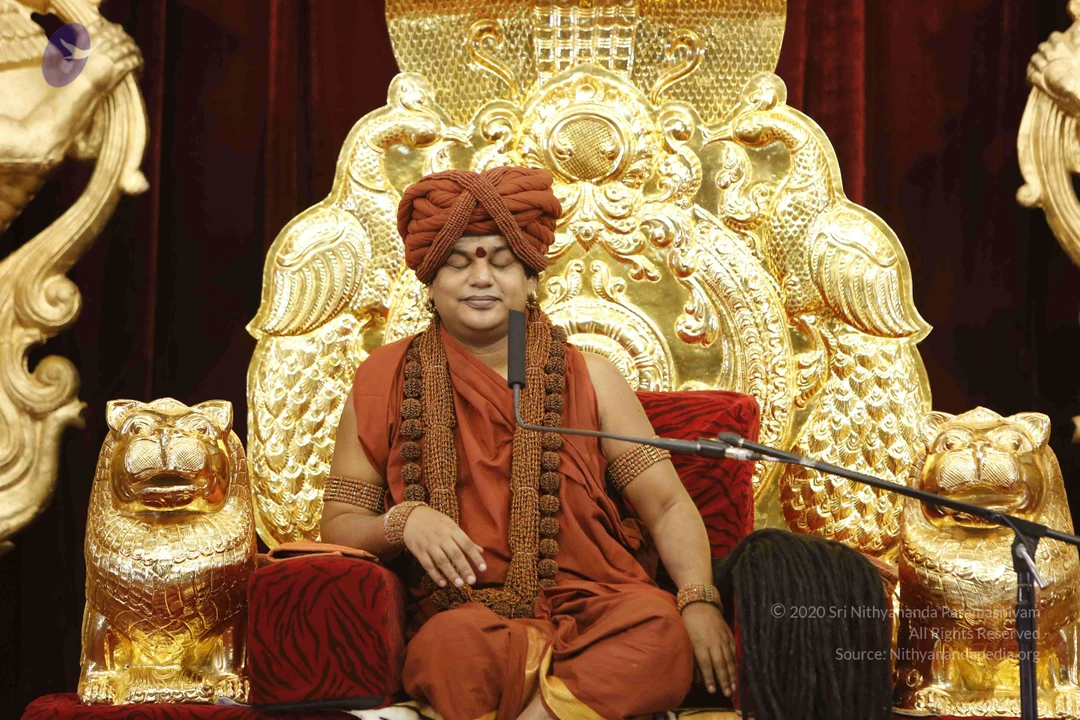
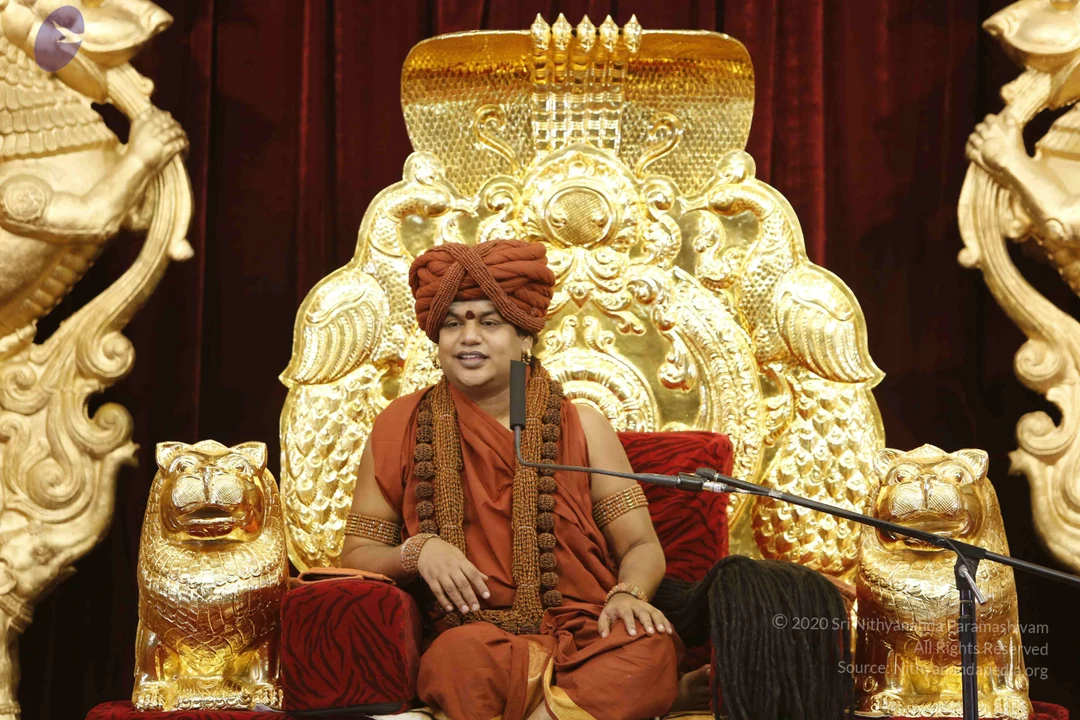
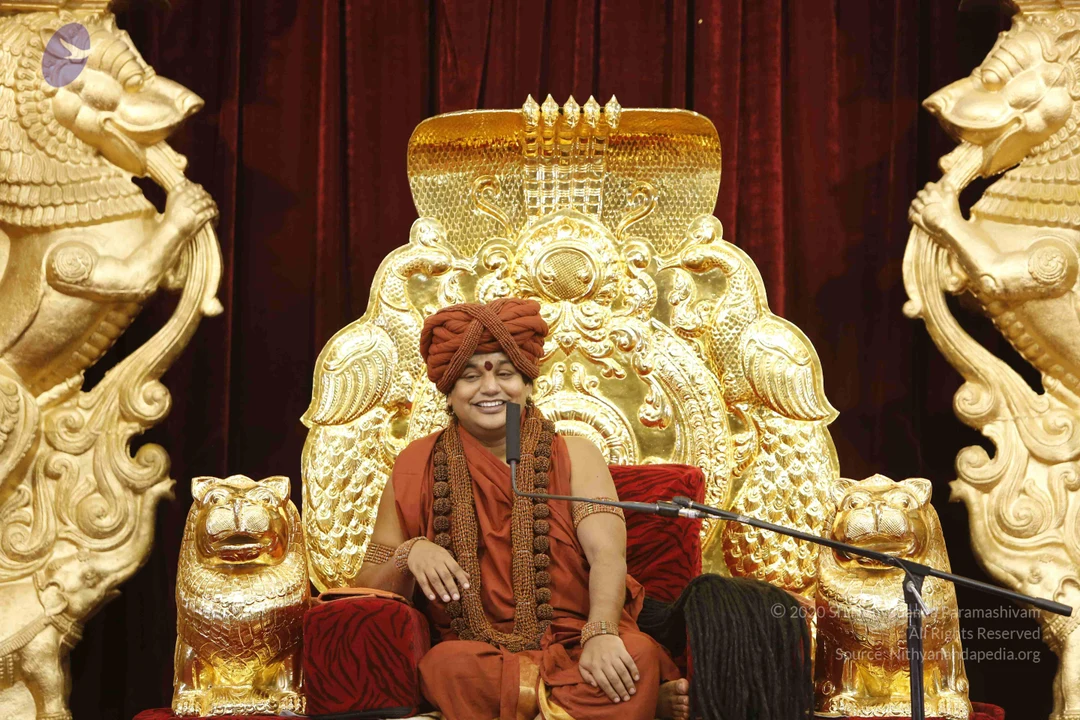
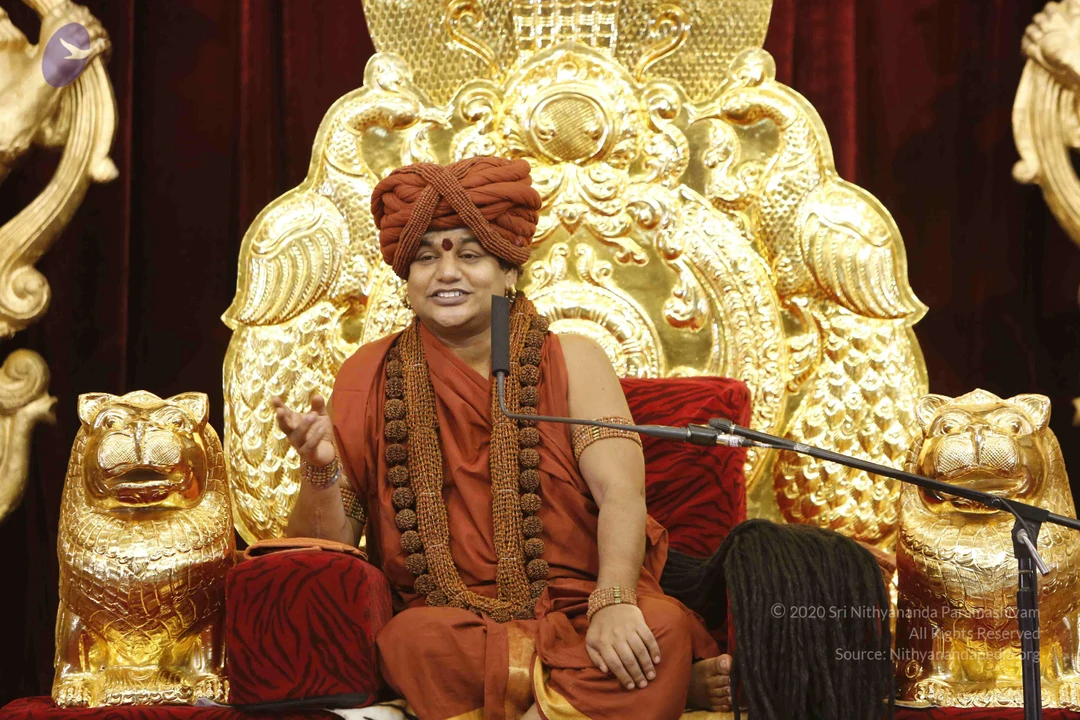
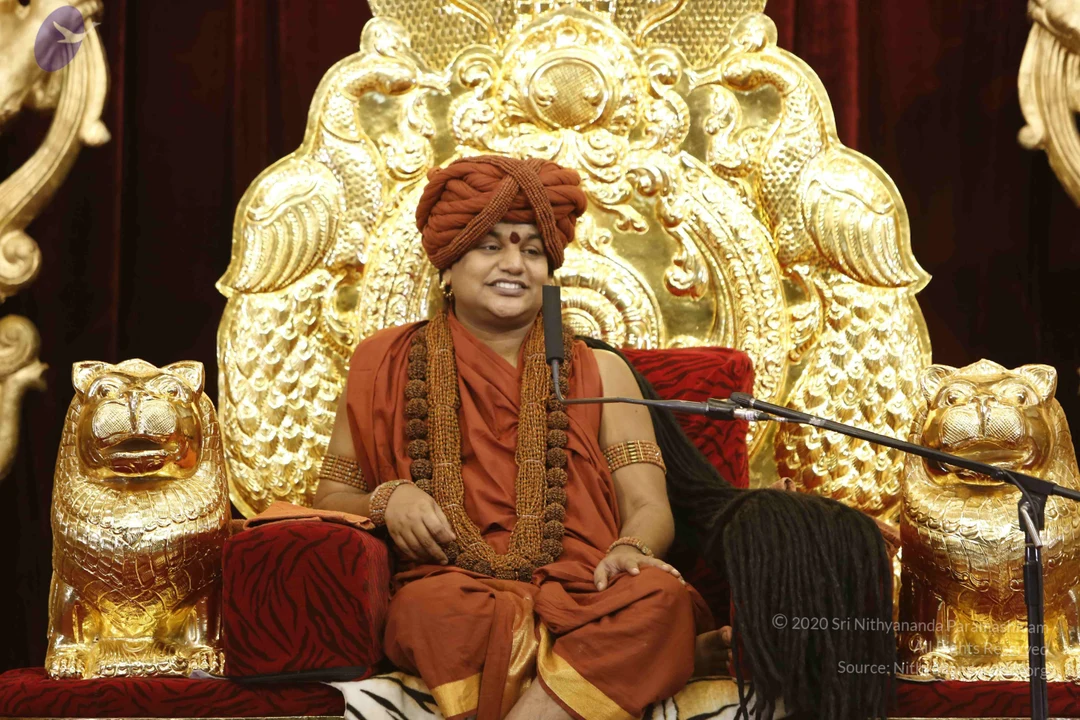
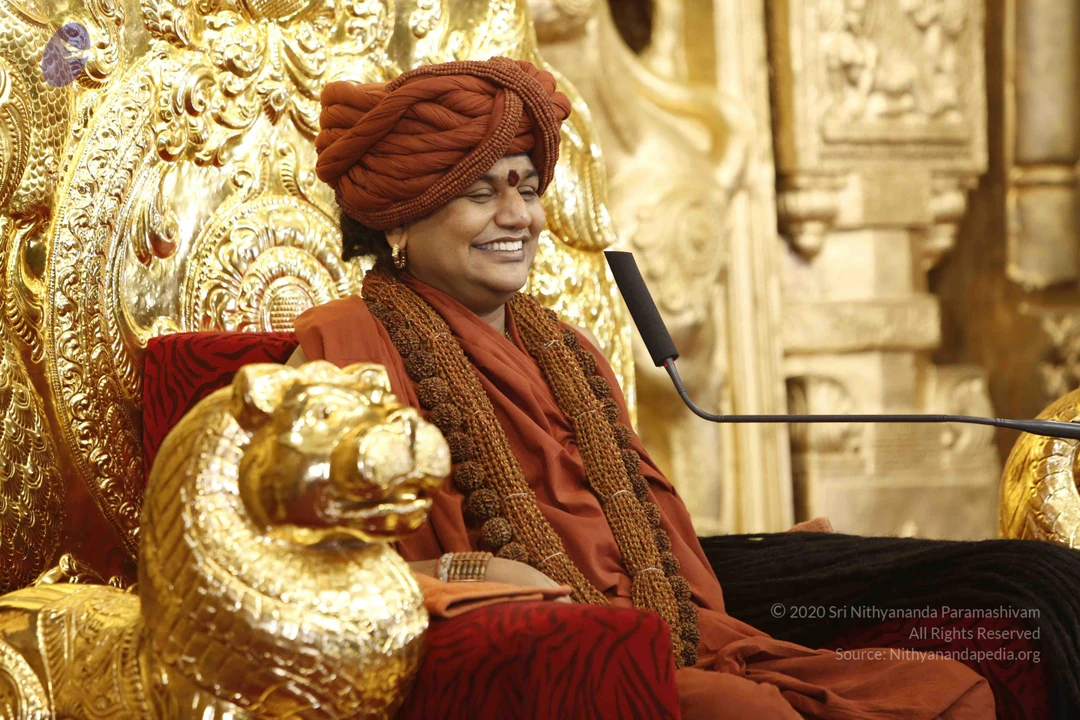
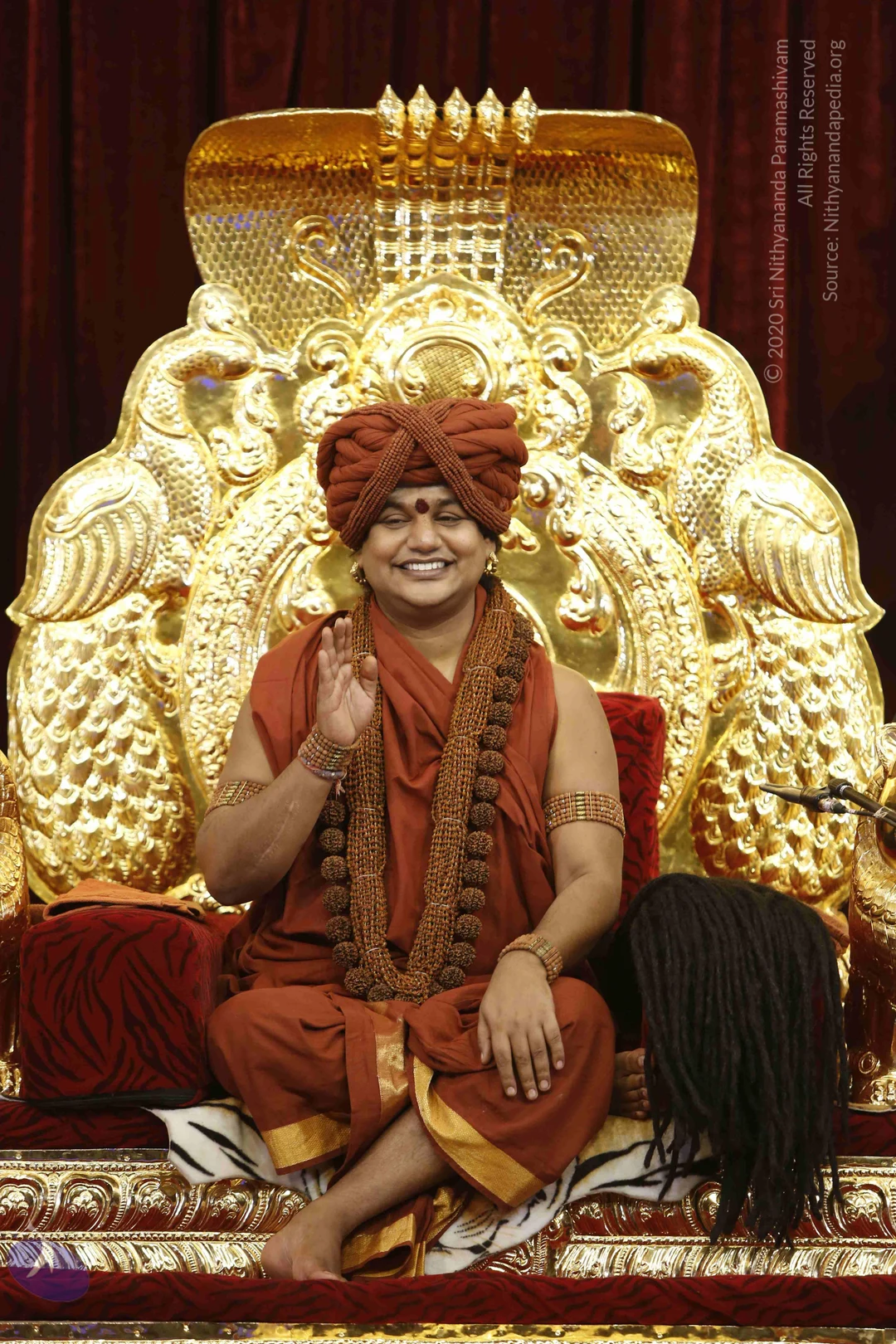
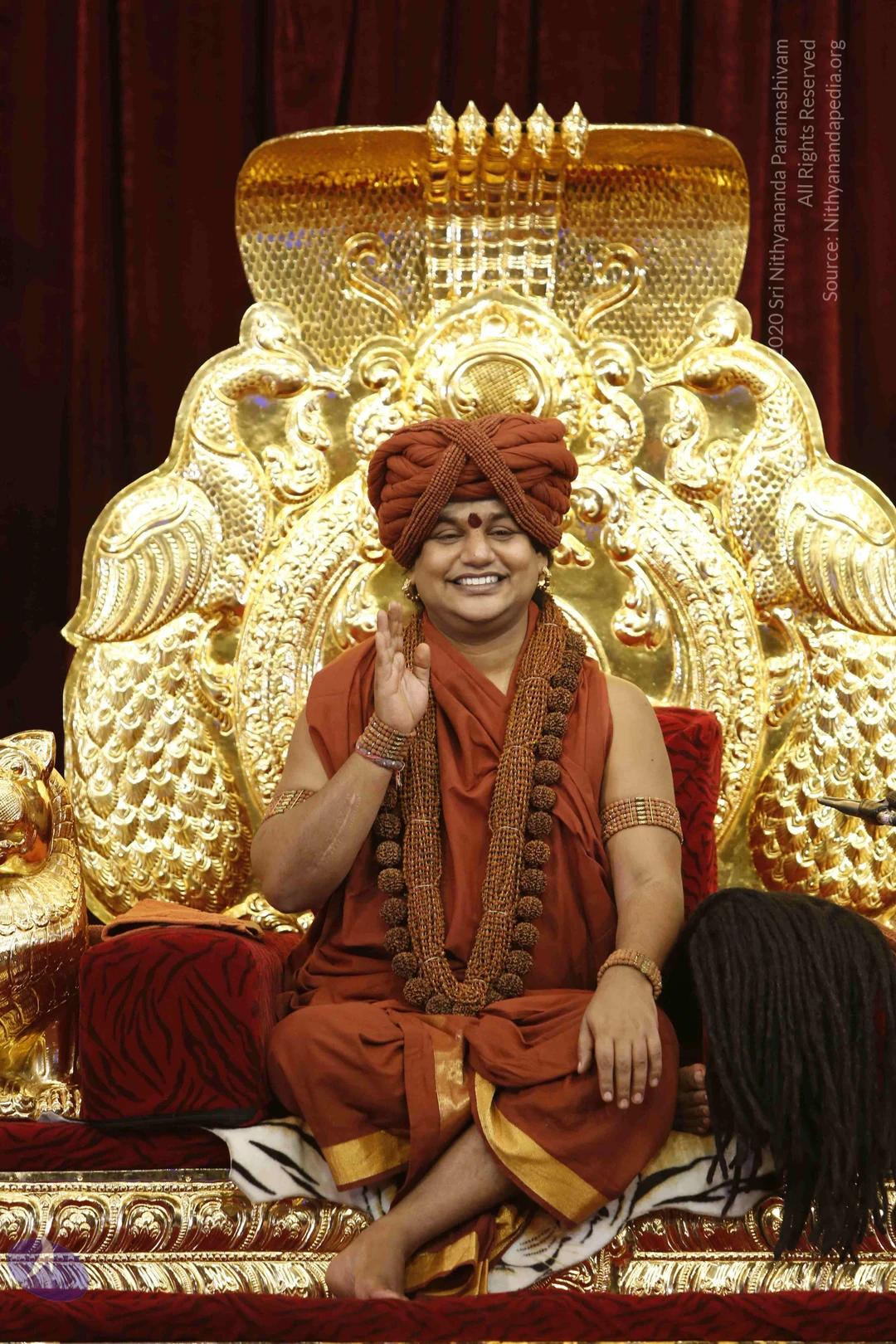
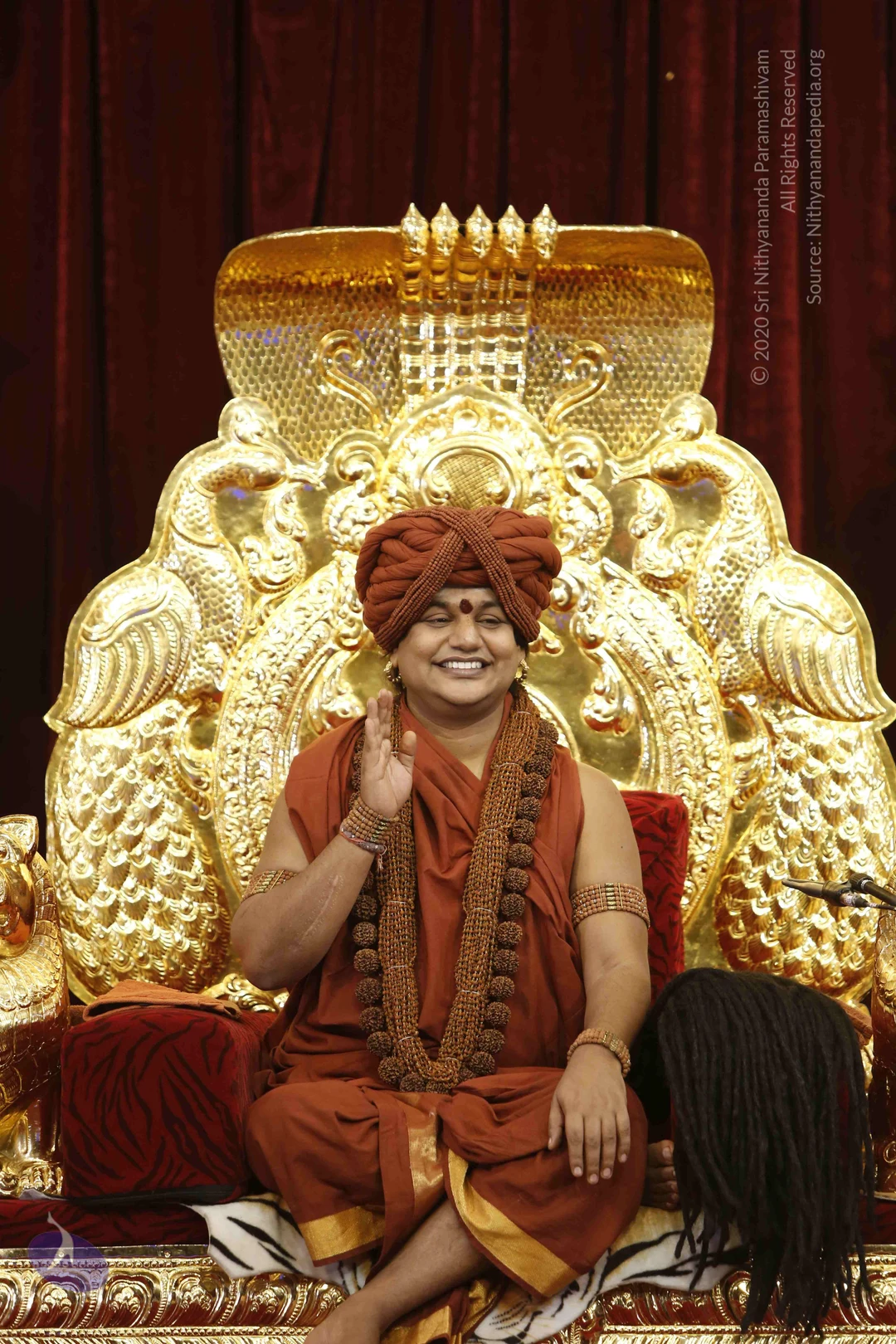
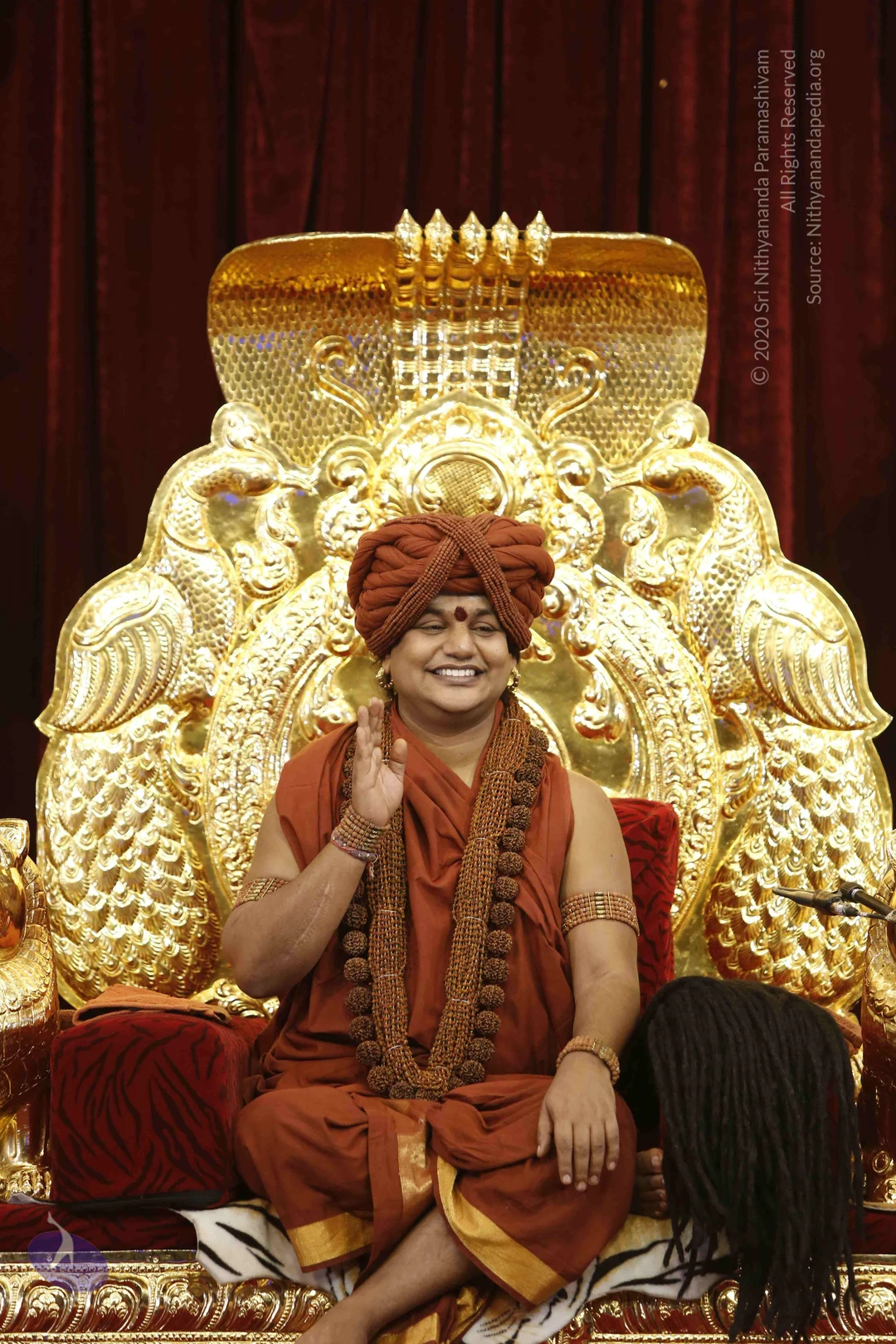
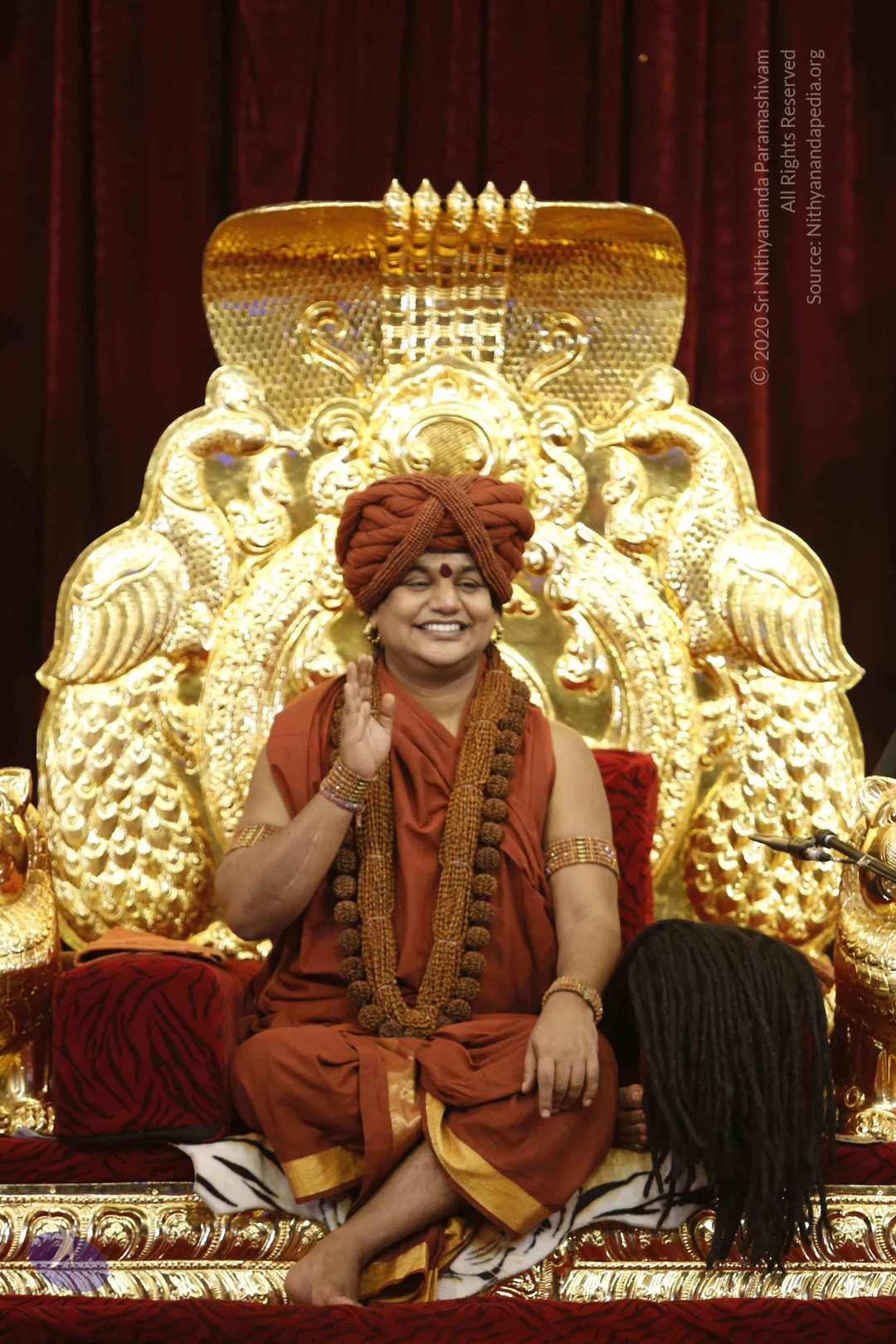
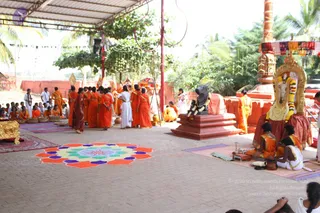
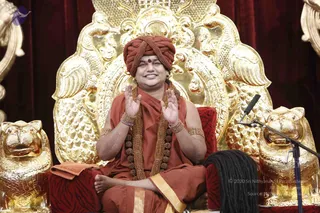
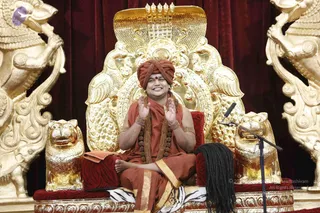
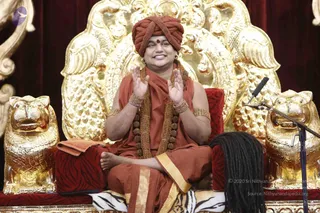
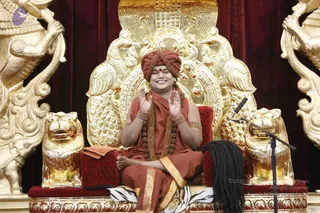
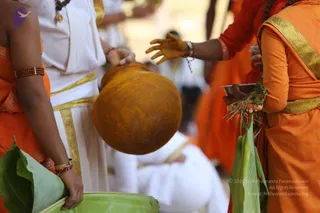
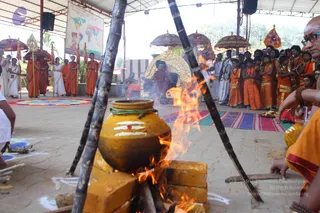
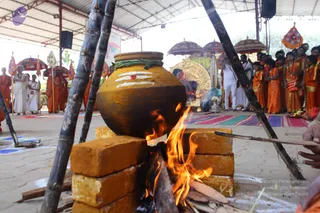
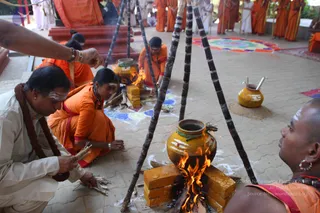
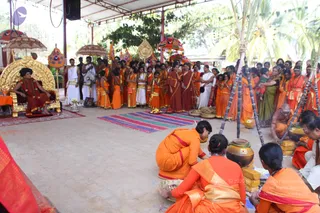
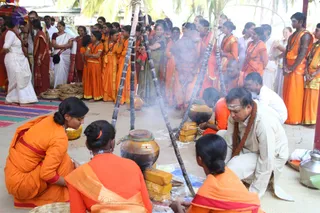
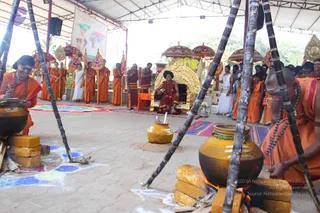
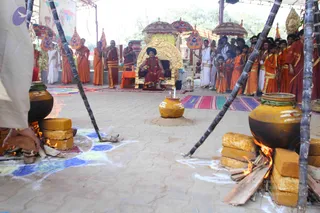
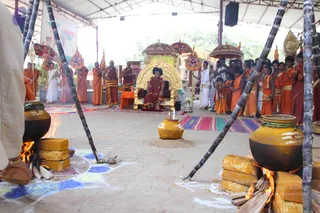
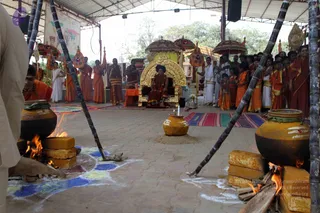
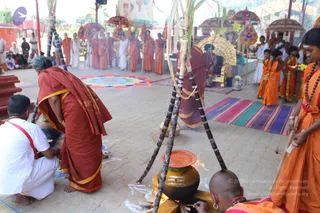
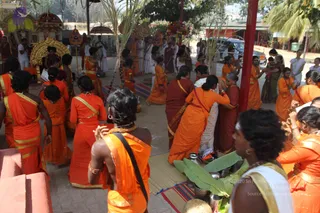
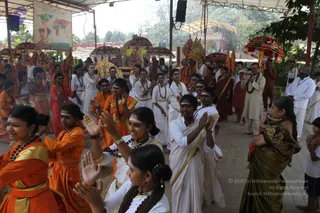
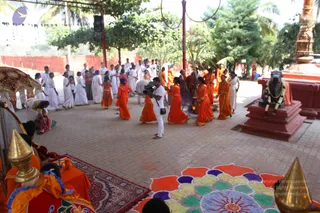
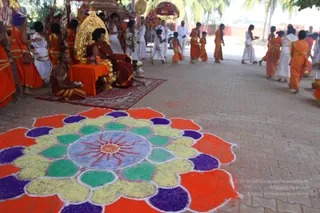
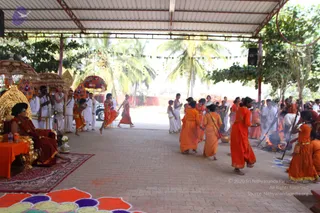
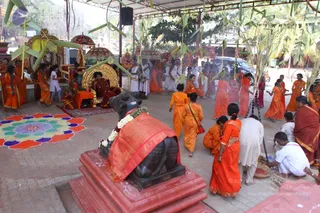
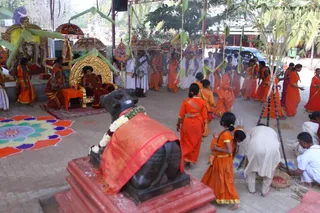
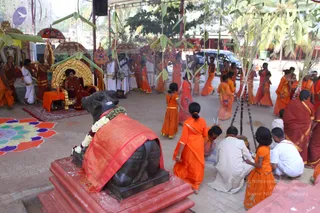
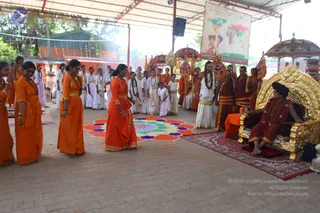
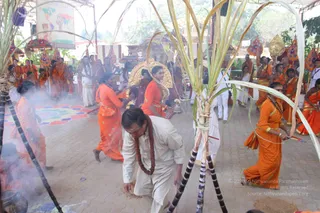
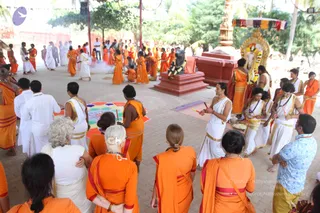
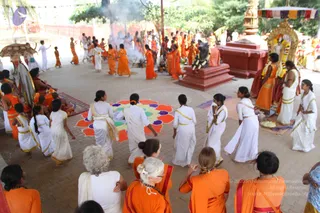
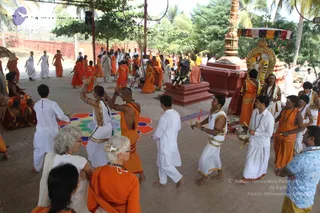
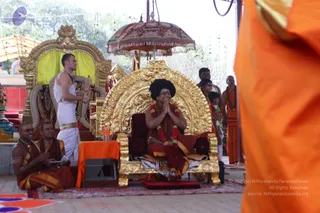
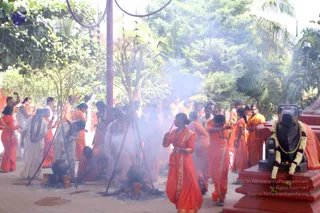
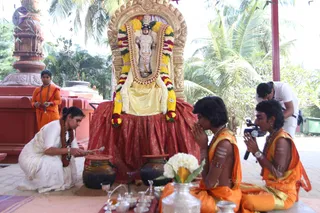
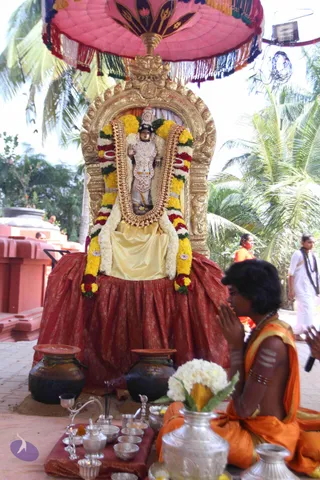
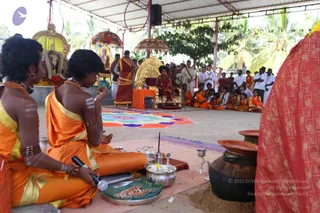
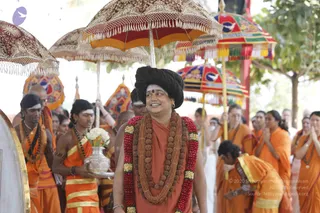
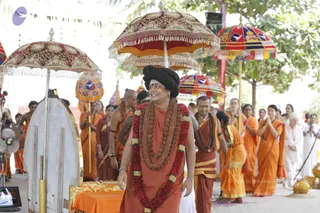
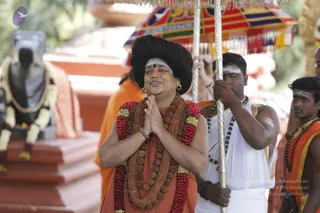
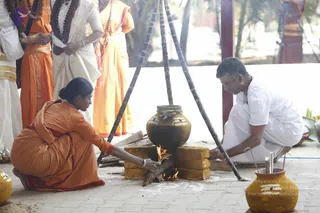
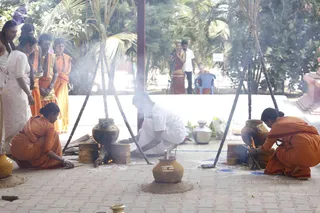
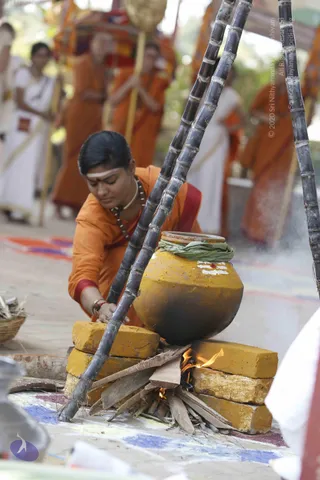
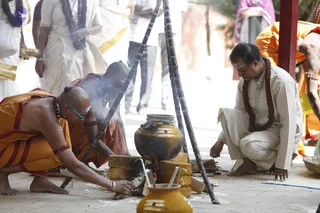
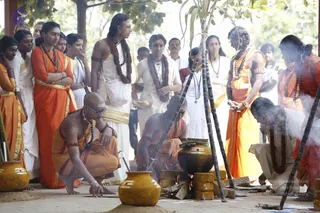
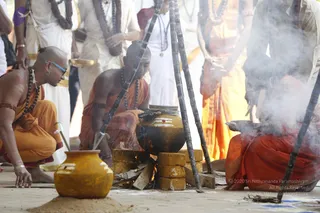
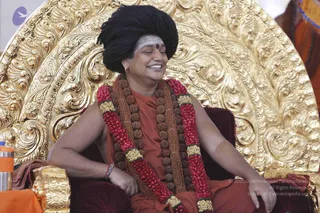
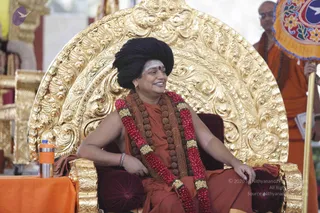
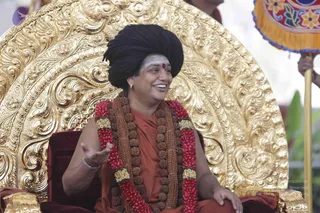
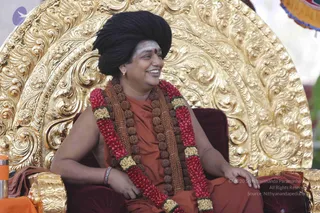
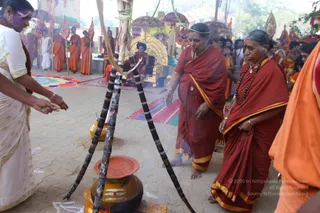
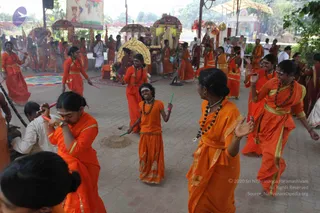
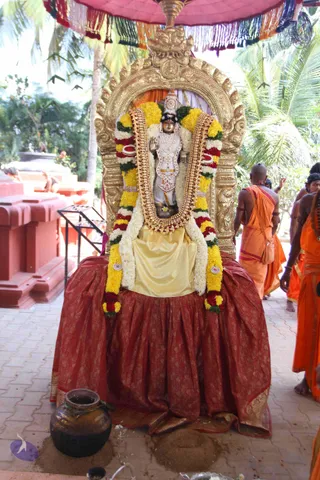
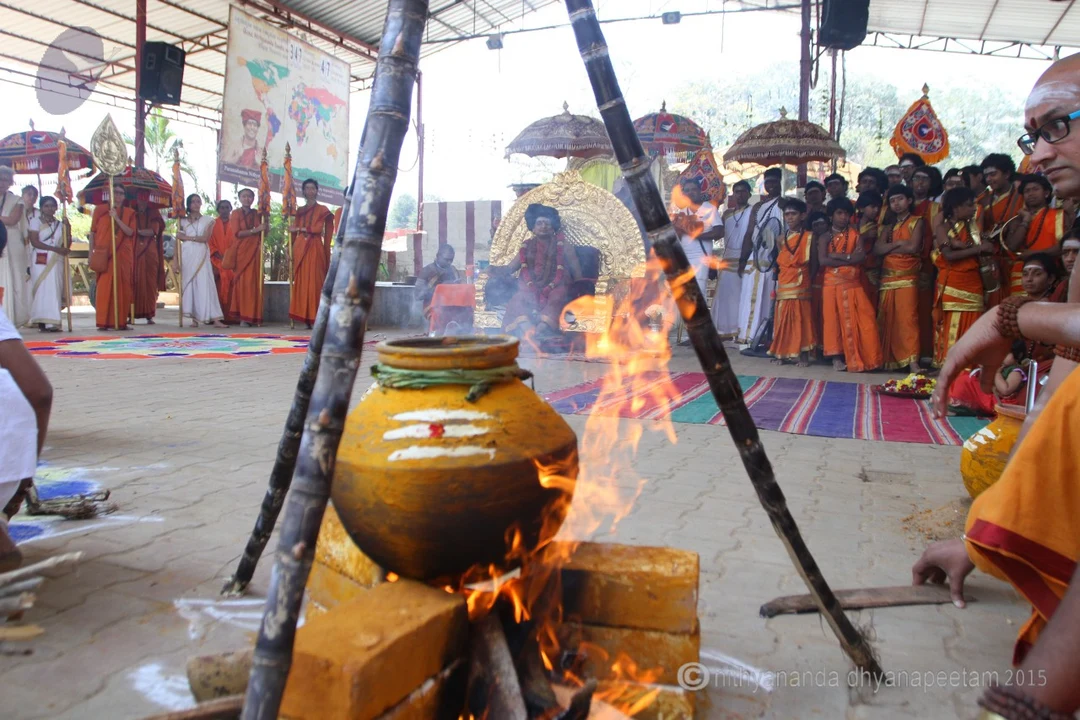
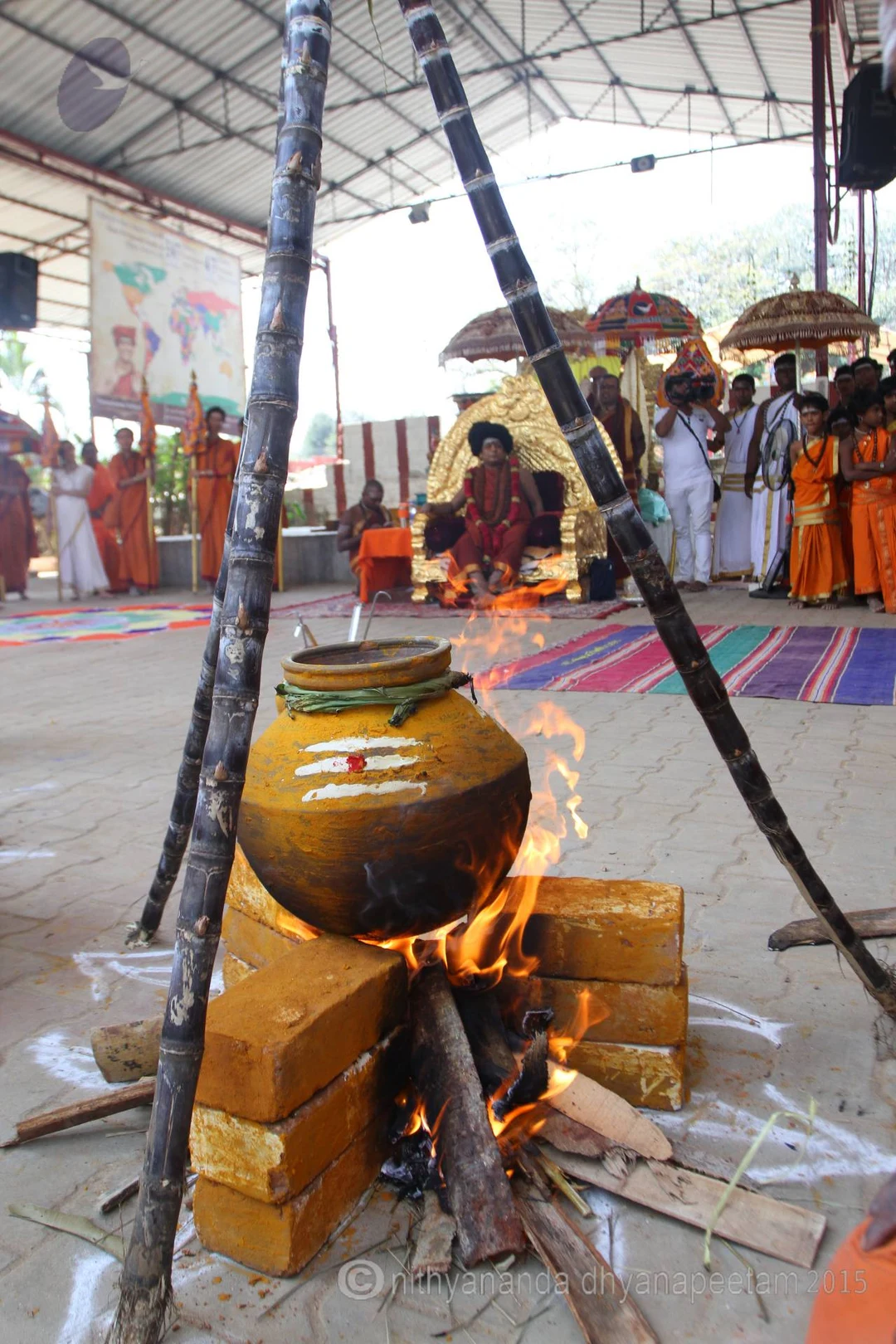
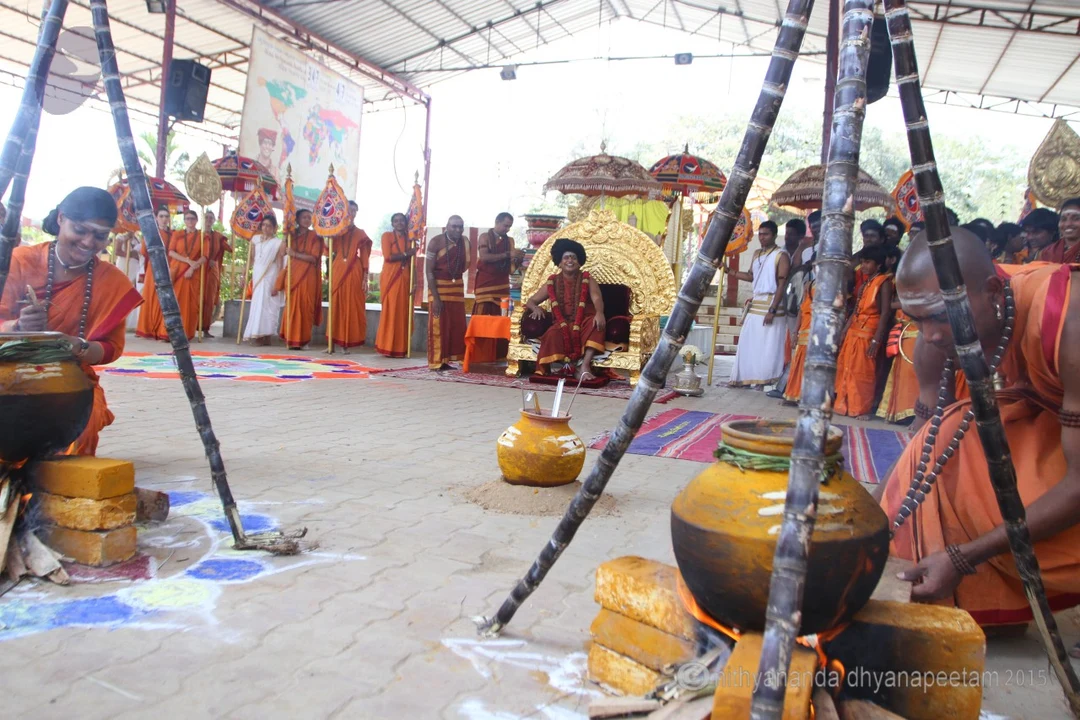
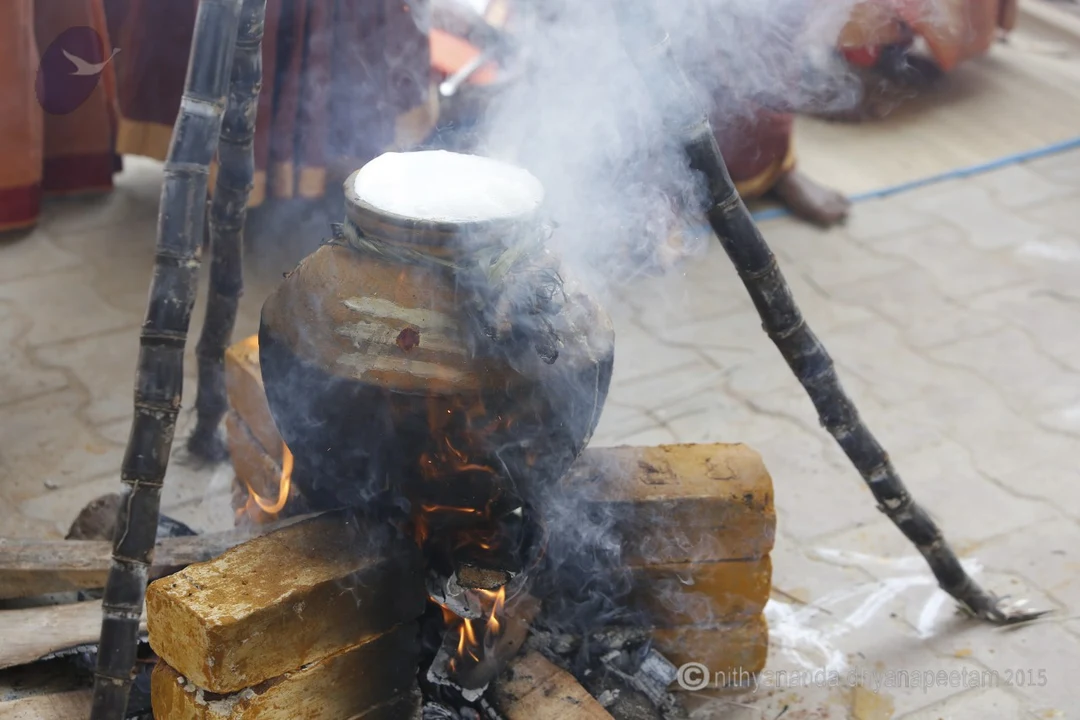
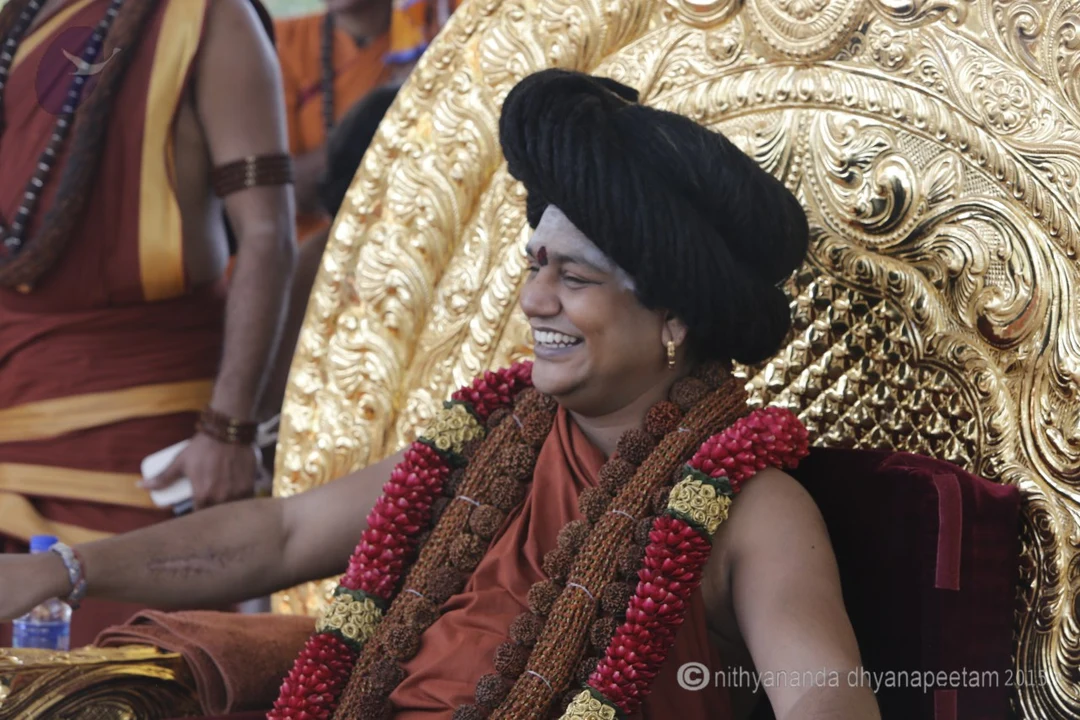
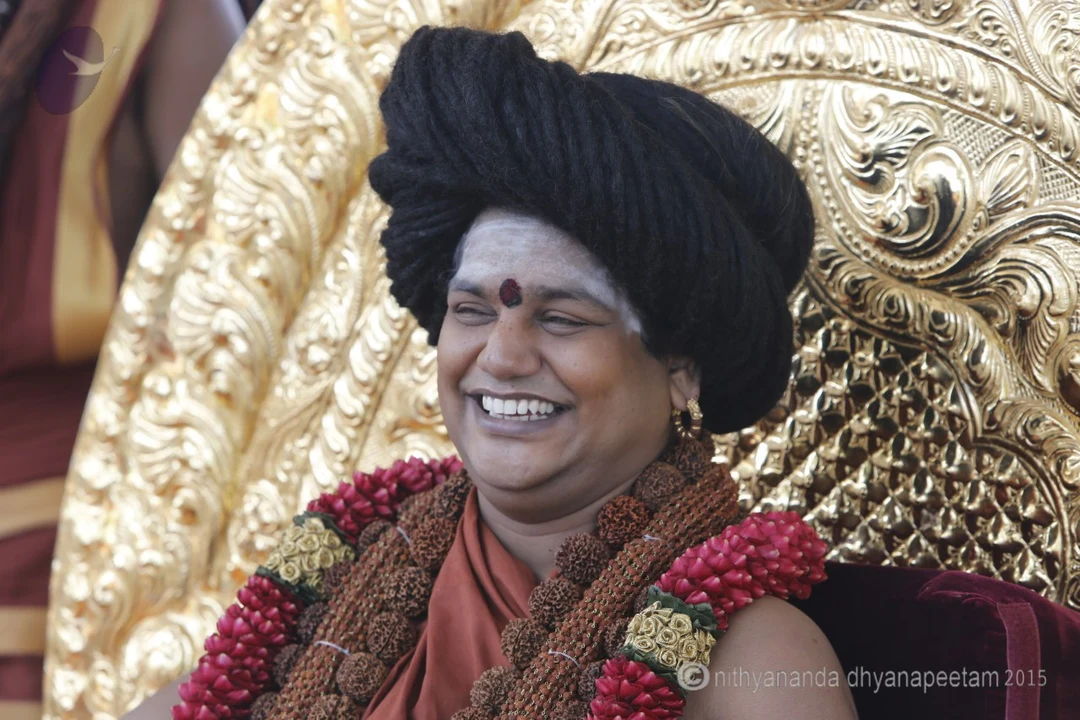
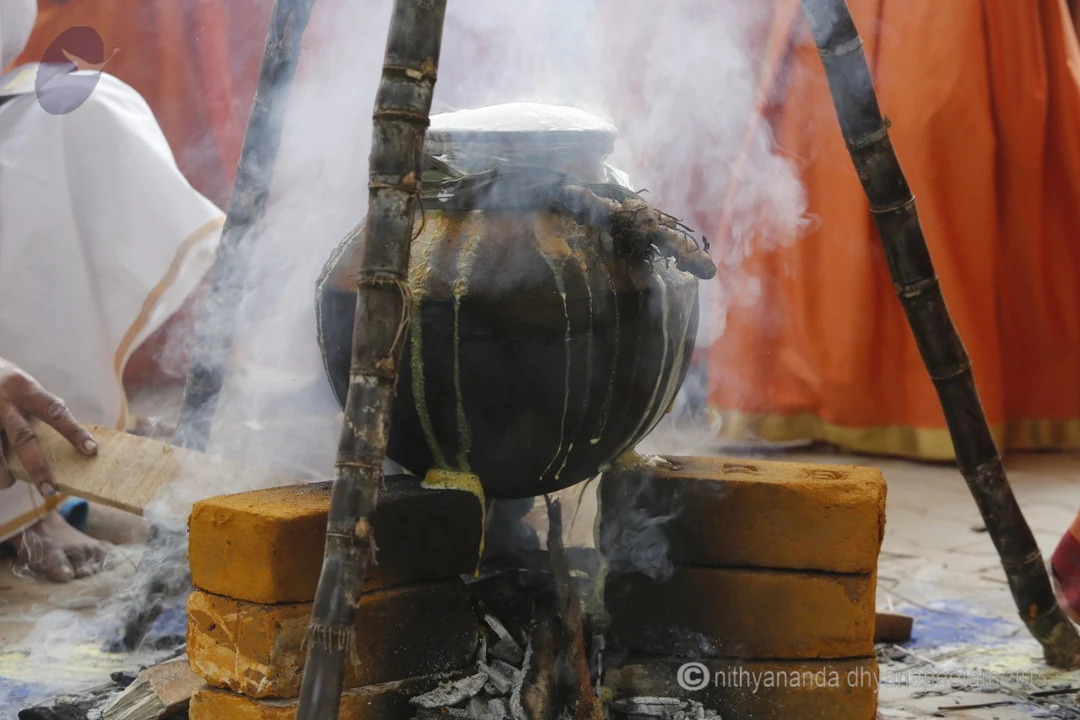
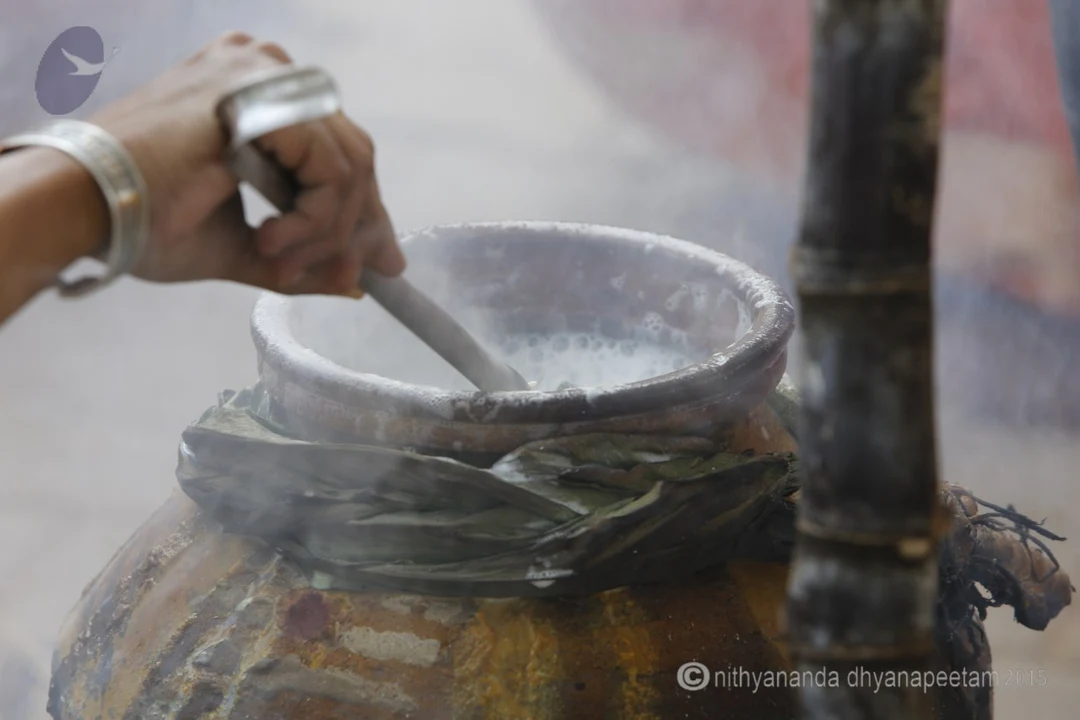
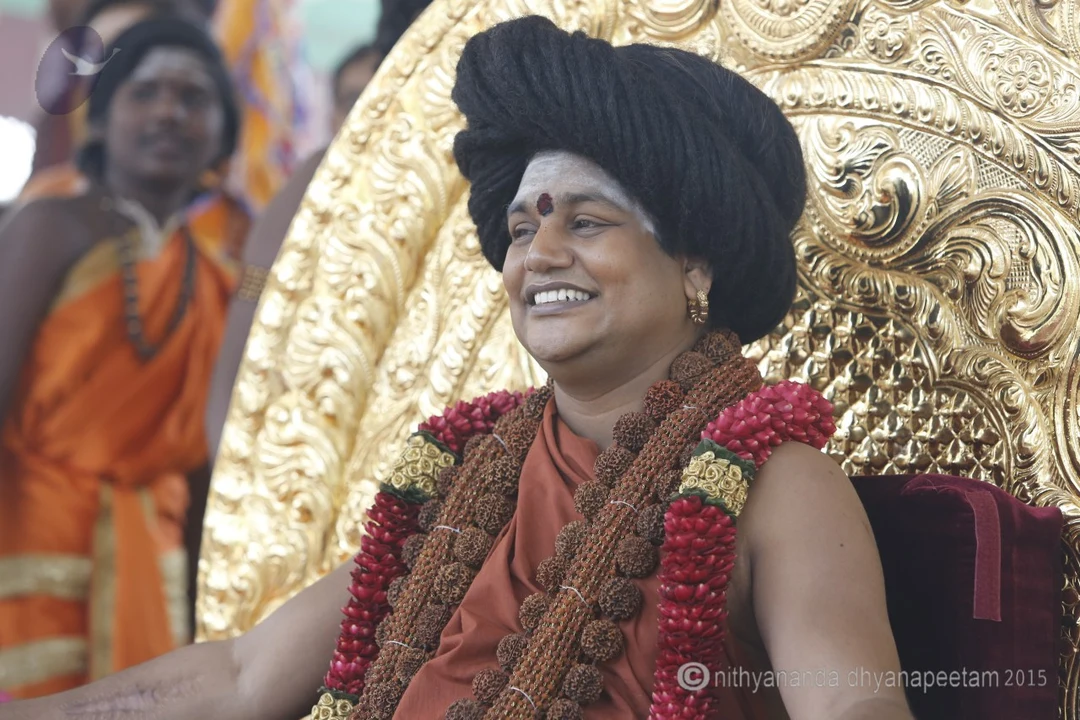
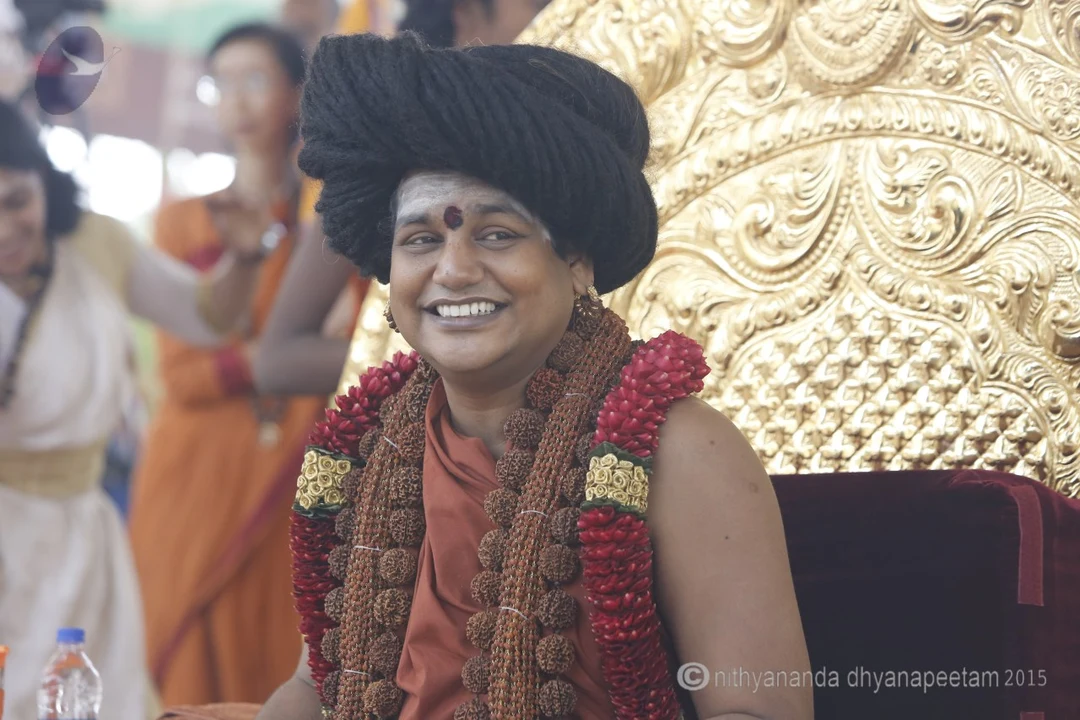
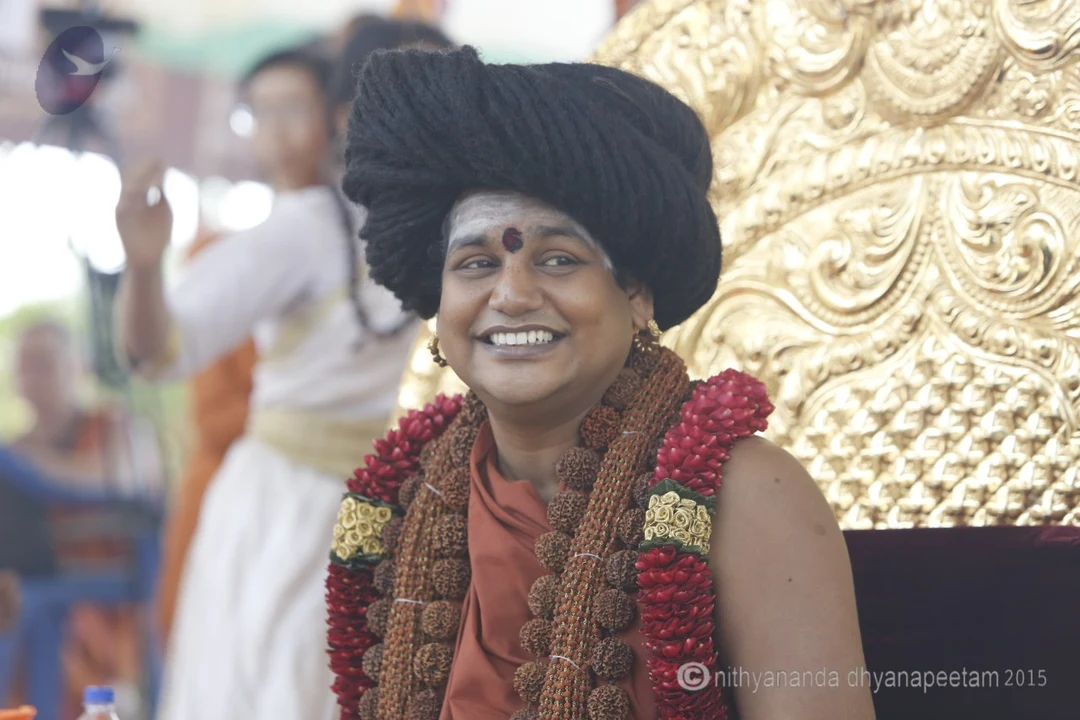
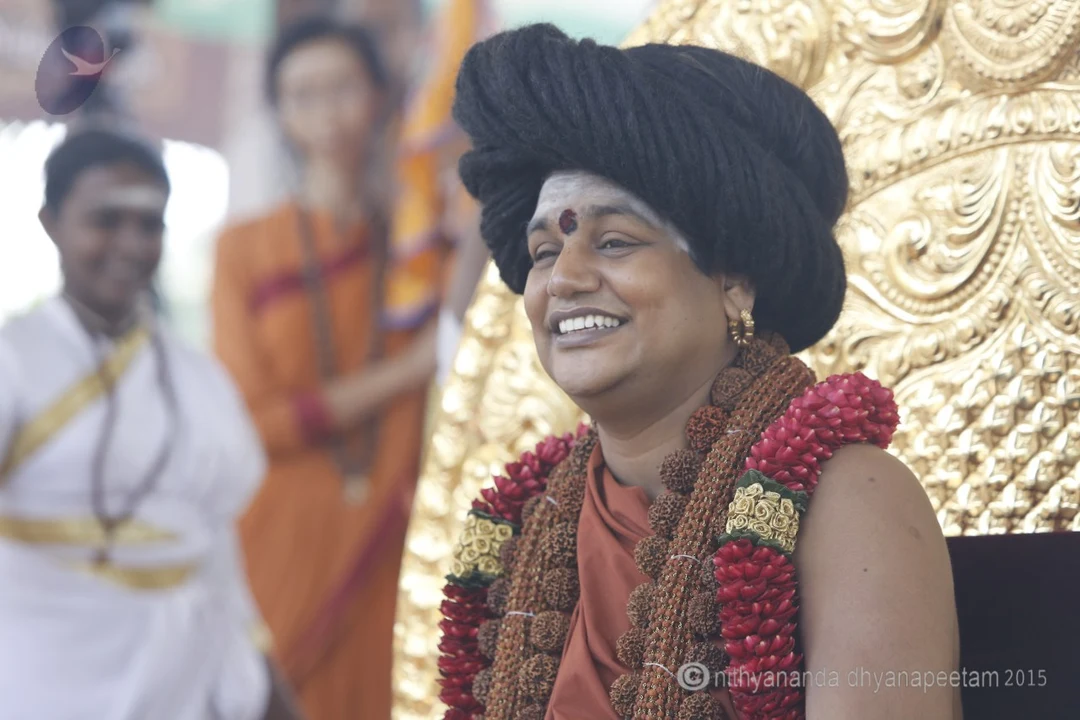
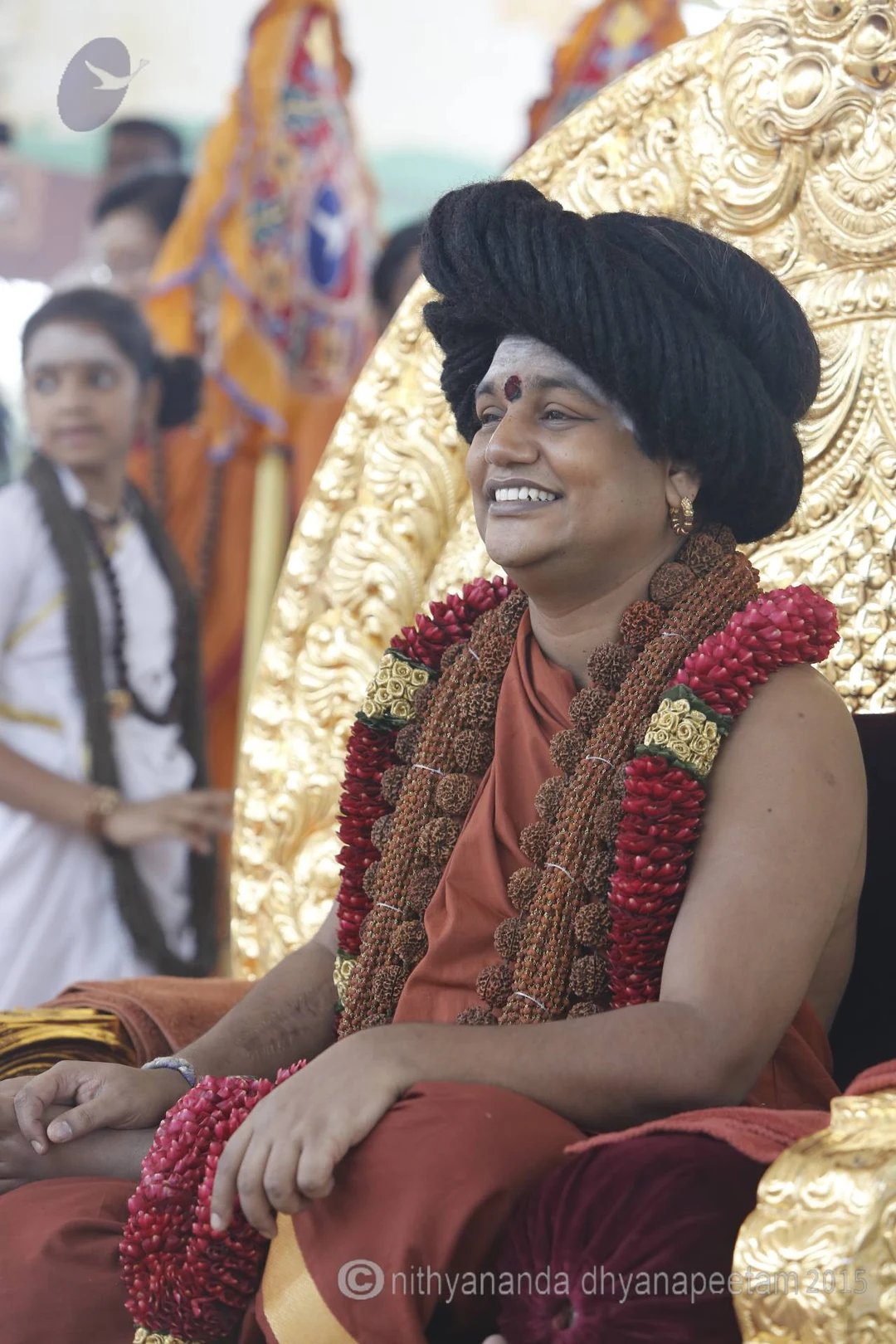
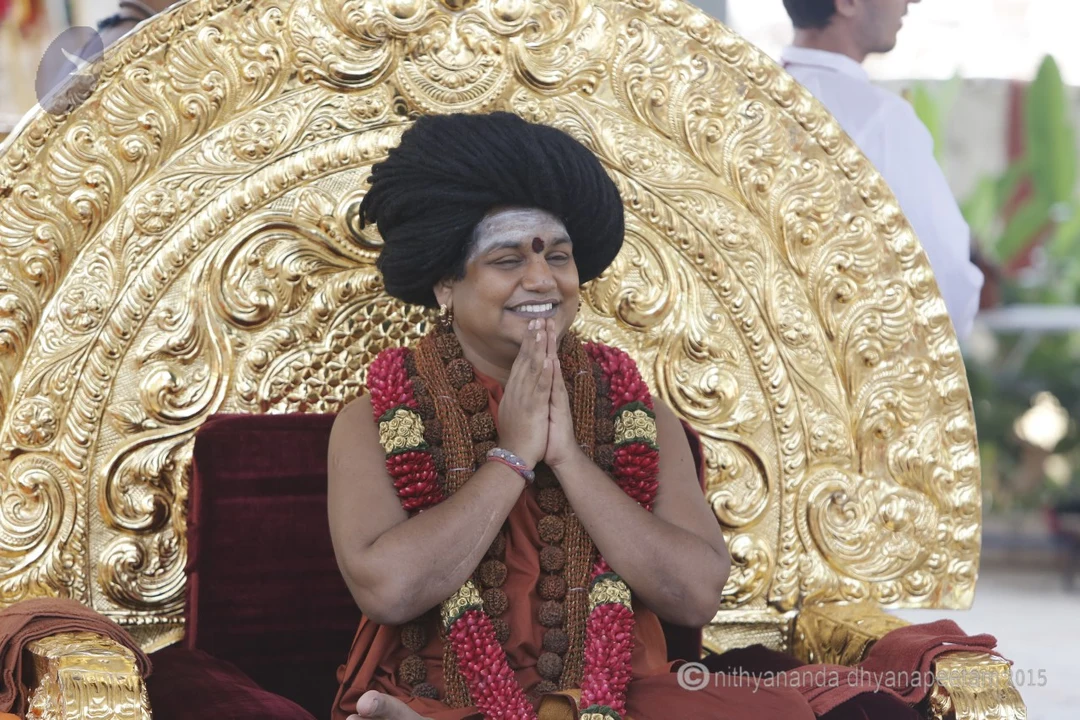
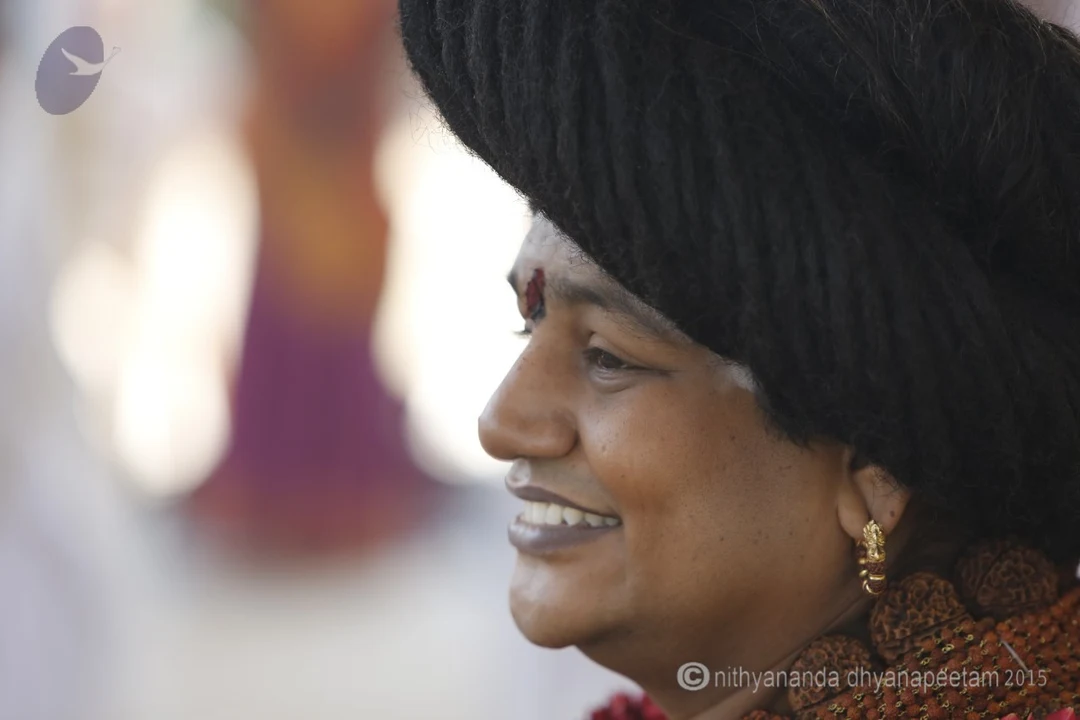
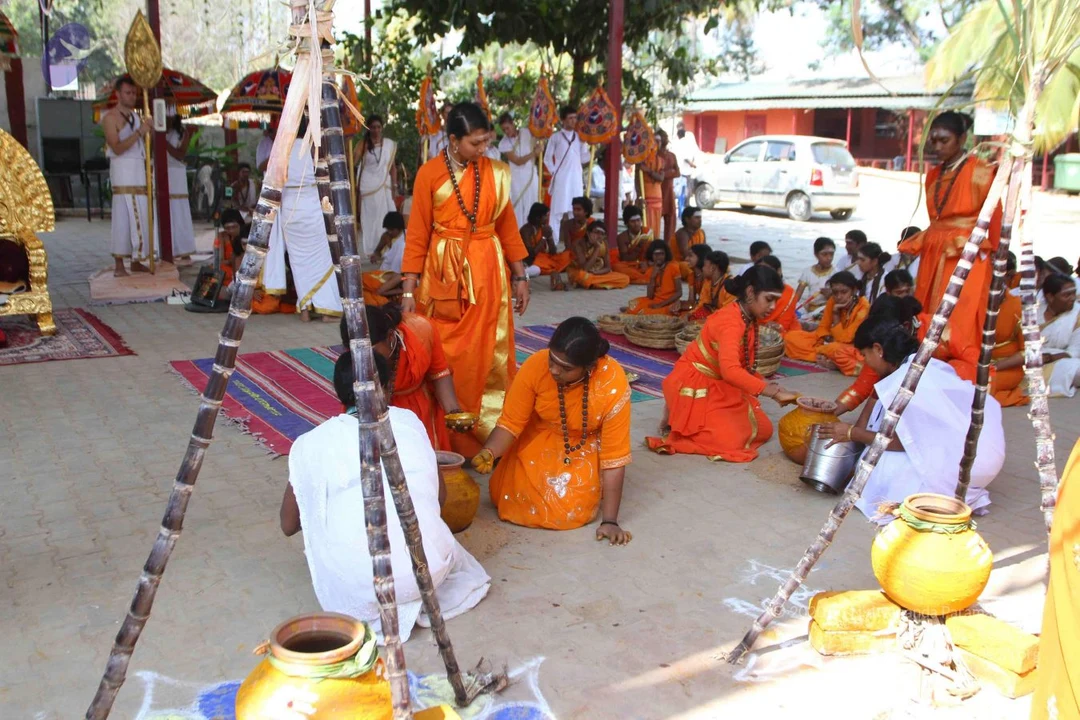
Outdoor Pongal celebration under a tent. In the foreground, a clay pot is set over a brick fire with sugarcane stalks tied into an arch above it, and a man in white dhoti and shirt with a mala kneels feeding sticks to the flames while a young woman in orange sari sits beside him. A bald man in orange robe with rudraksha bracelets and a mala stands at right facing the fire. Behind, orange-robed attendants stand near ornate kalasha banners, and a seated figure in a gold-framed throne with red garlands and a crown-like headpiece sits in the background beside a golden umbrella. A world map banner hangs on the tent.A seated man on an ornate gold throne with carved lion-head armrests and a deep red velvet backdrop, smiling with palms pressed together in greeting. He wears an orange-red turban, a saffron-orange robe with a gold-bordered cloth, a long rudraksha mala with a golden ornament, gold bangles and armlets, and a red bindi on his forehead. A microphone stand stands beside the throne and a long black braided cord hangs over the cushion. Gilded lion statues flank the throne.A seated figure in an orange-red saffron robe with gold-bordered wrap and an orange-red turban sits smiling on an ornate gold throne carved with mythical lion-faced guardians and scrollwork. Dark rudraksha beads hang in a multi-strand mala with gold bangles on the wrists, and long dreadlocks fall behind. A microphone on a stand stands in front of the throne, and the seat is draped in red cushions with a striped tiger-skin cloth beneath. Red velvet curtains form the backdrop. The figure appears to be a person, seated in a teaching or satsang setting.

January 15 2016

Original wiki page
Contents

Title

Day's Events

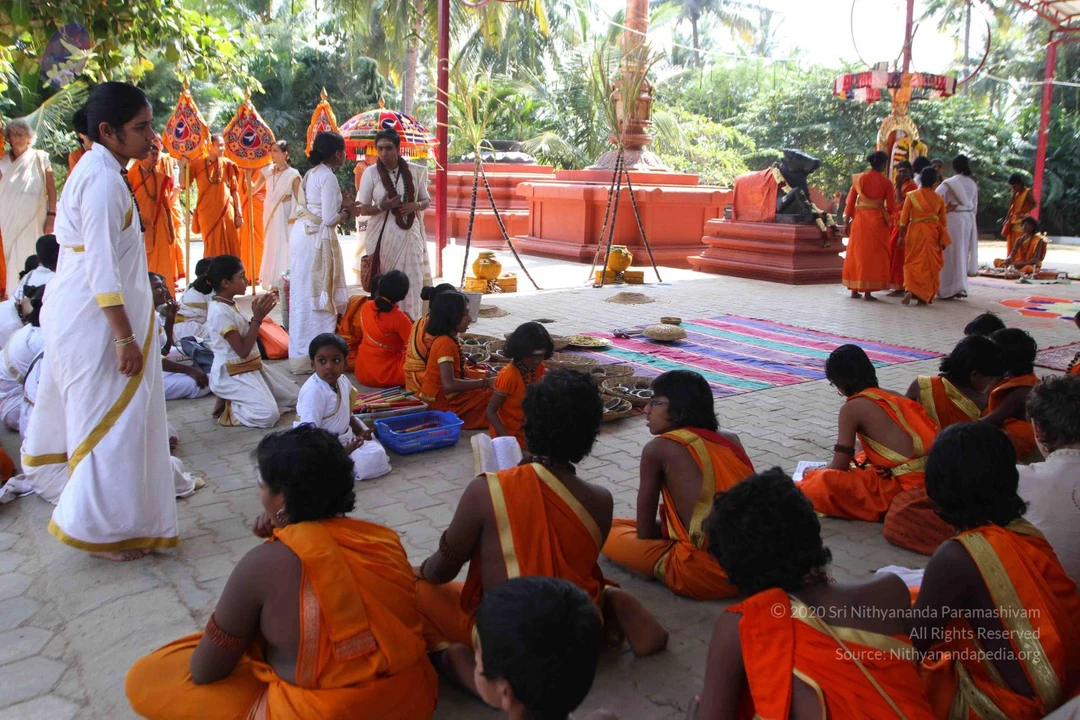
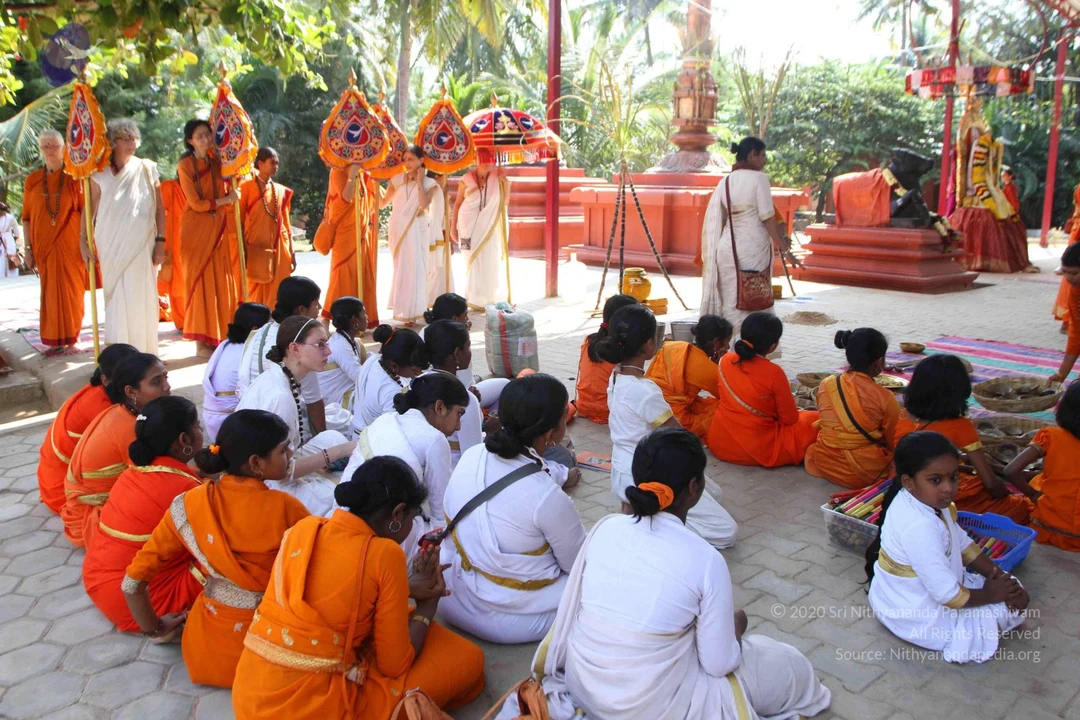
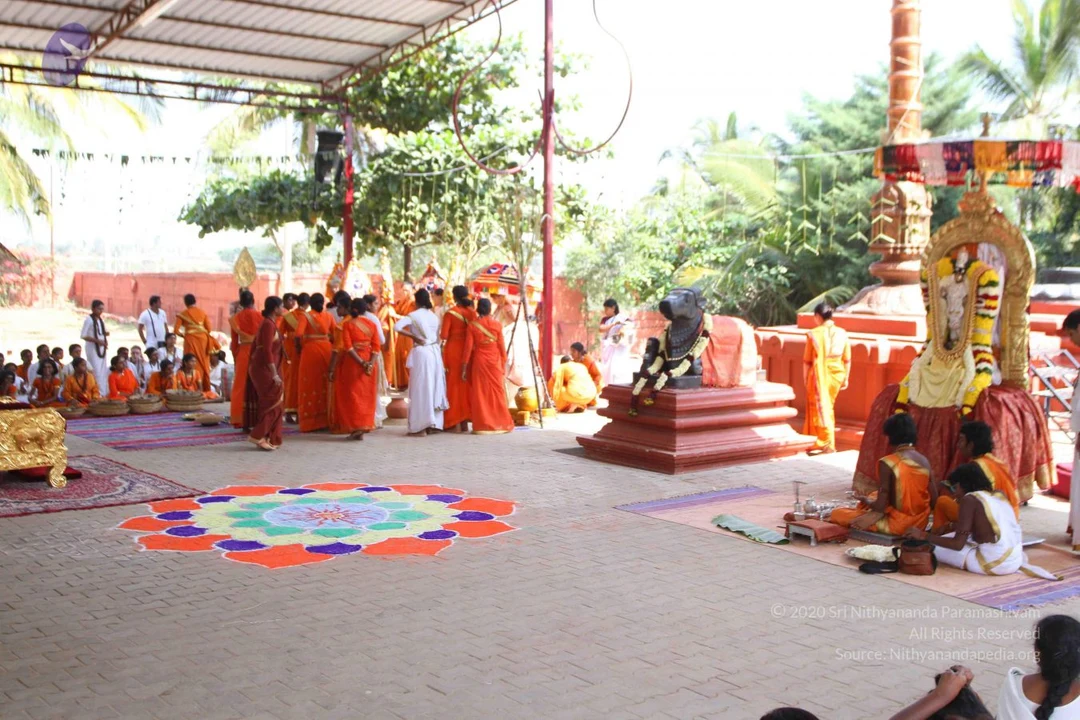
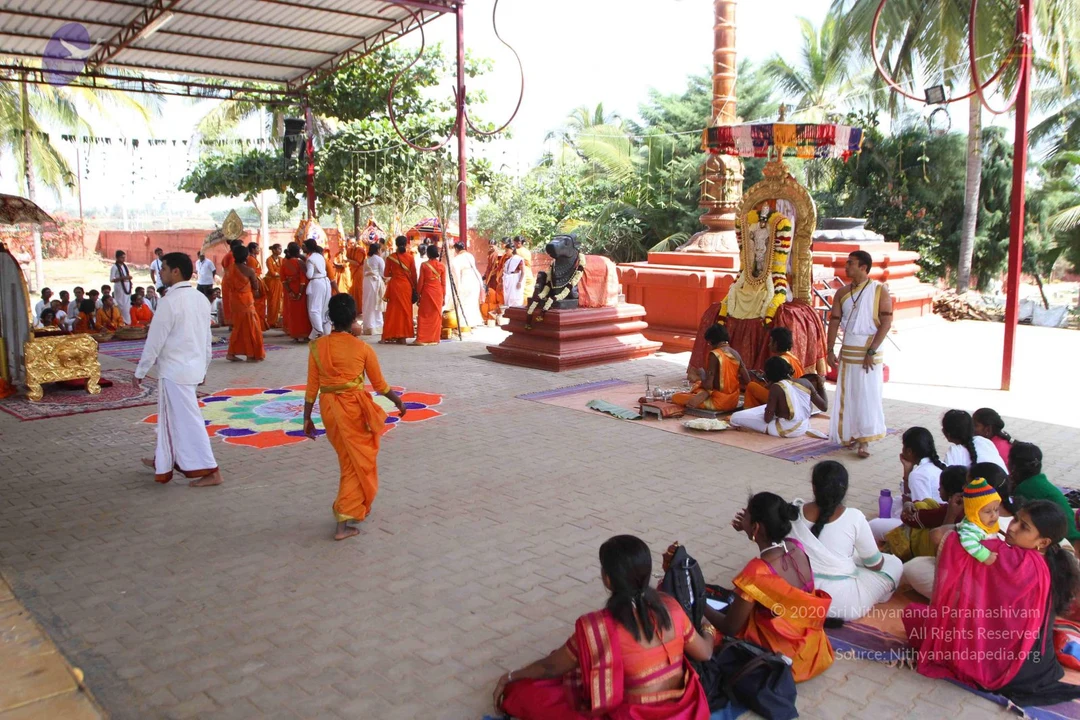
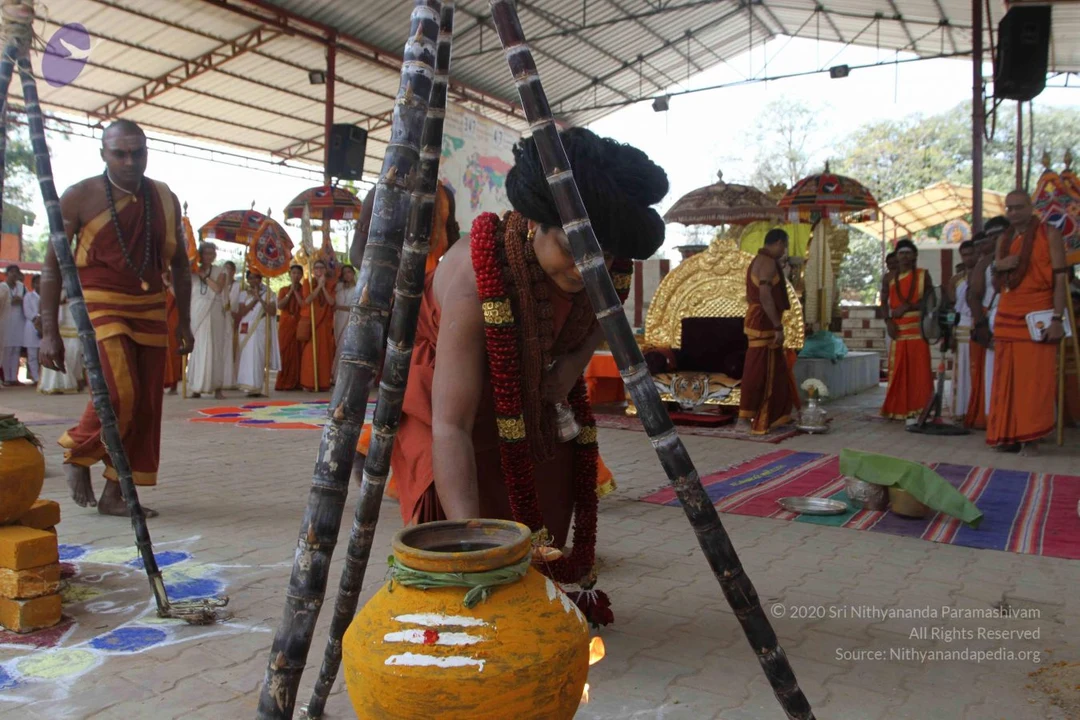
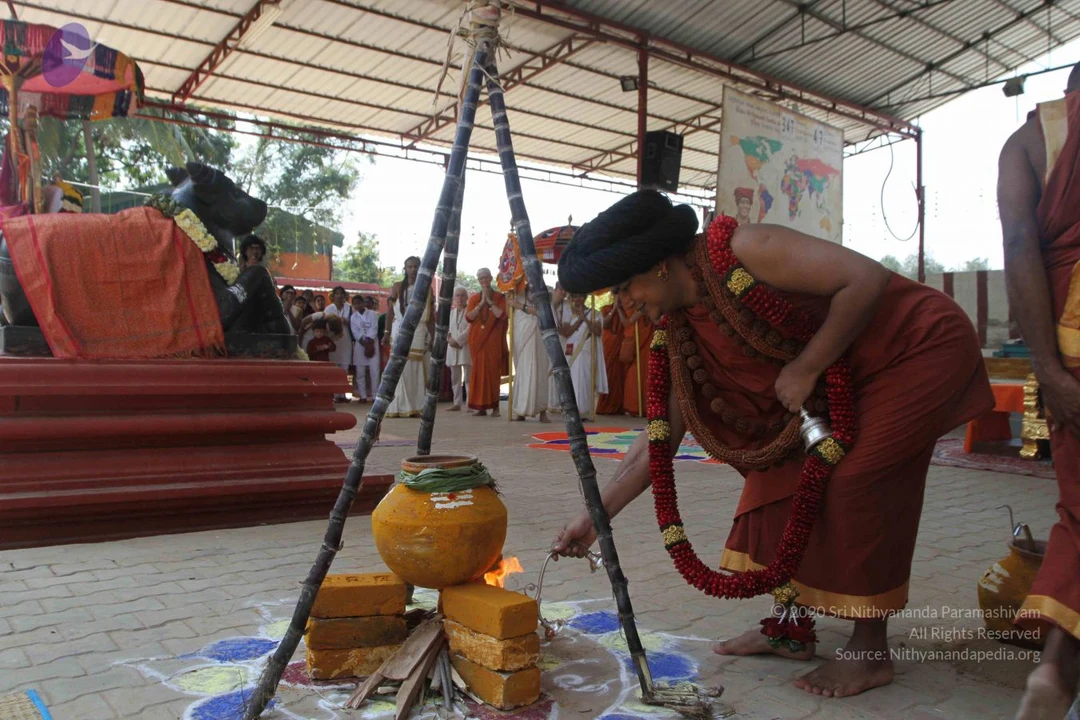
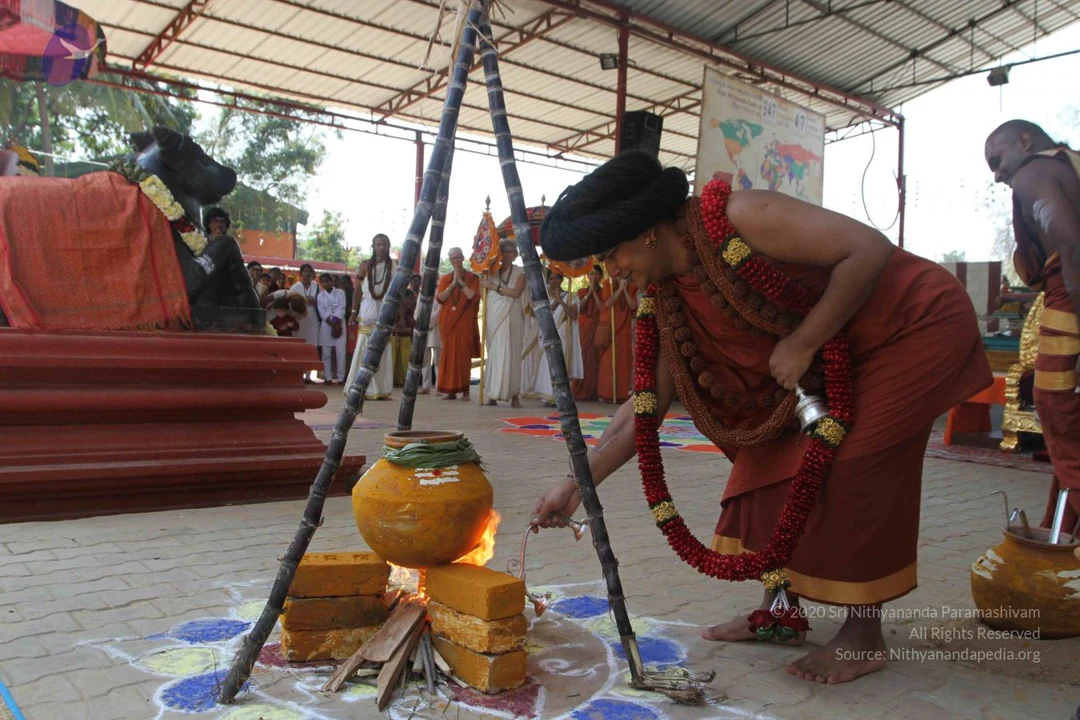
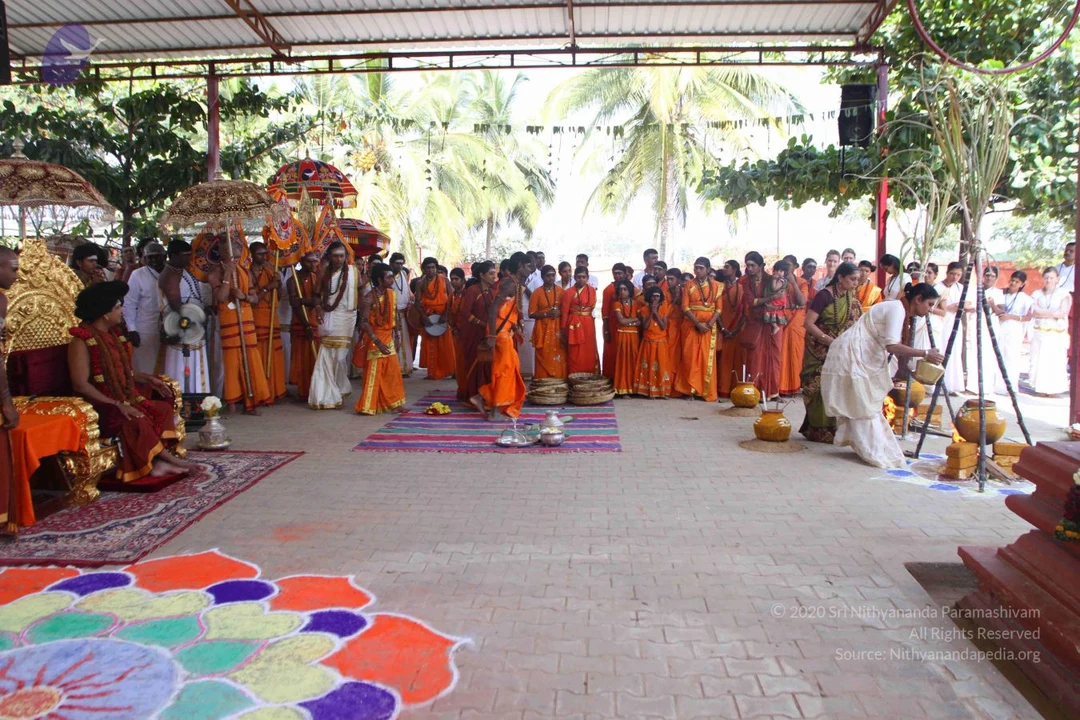
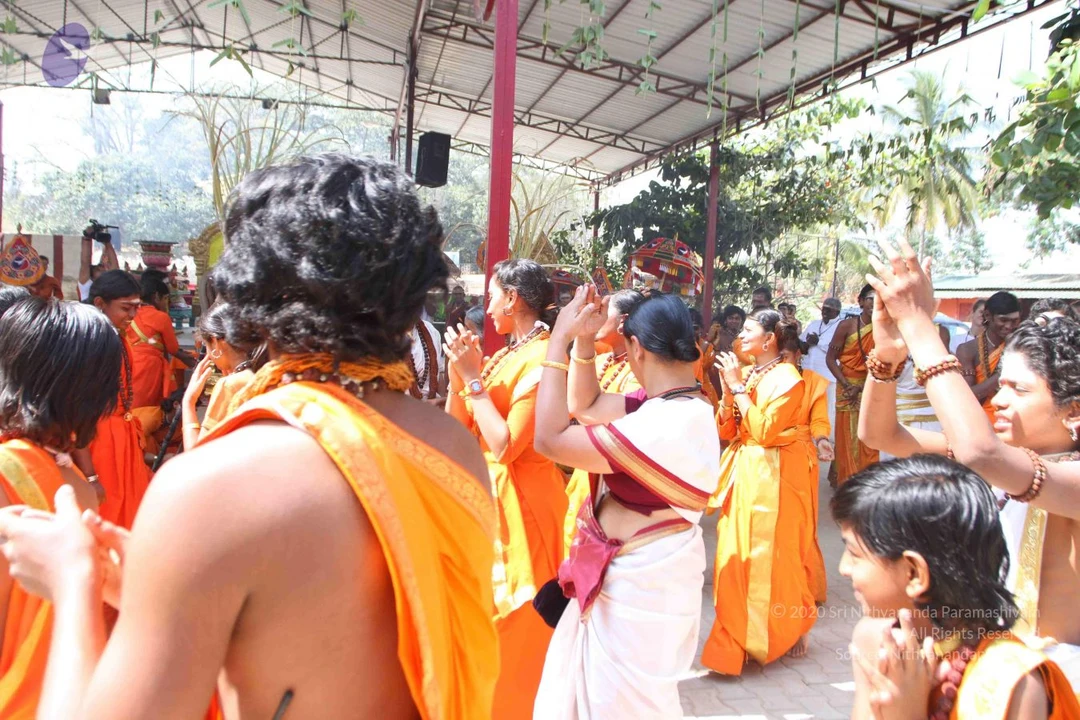
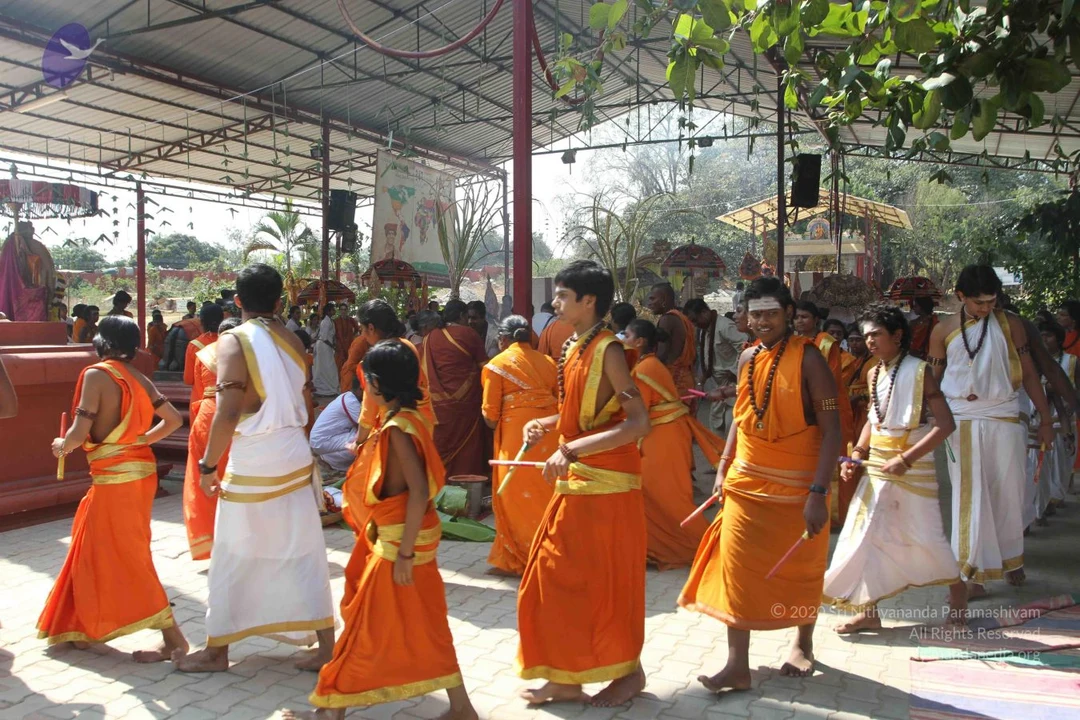
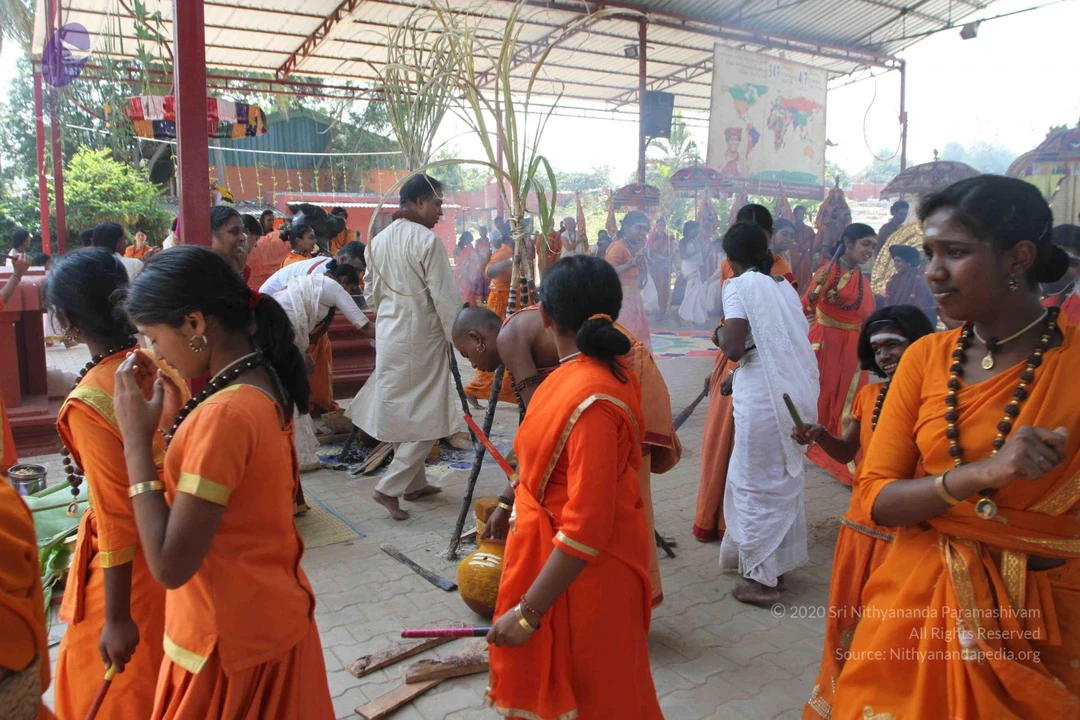
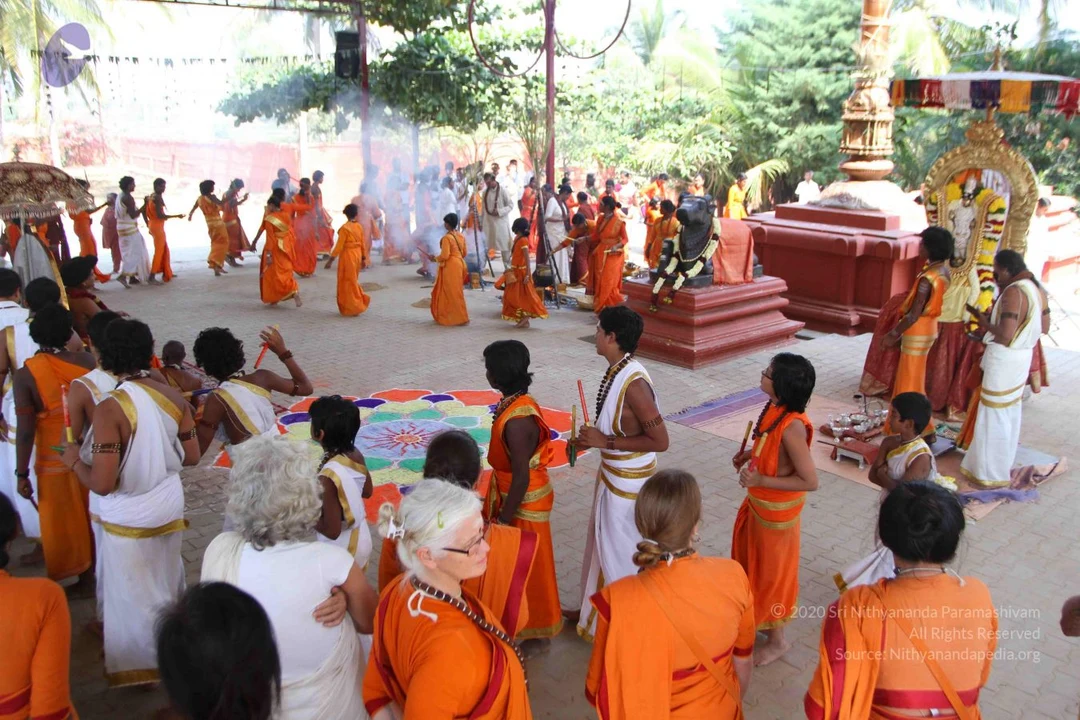
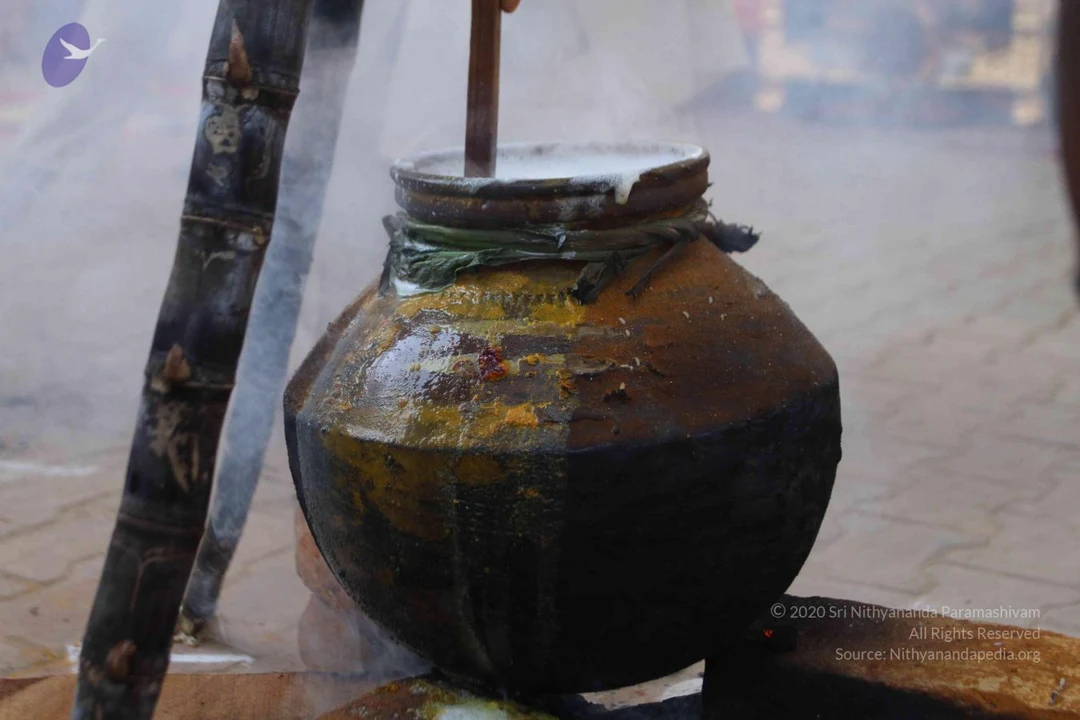
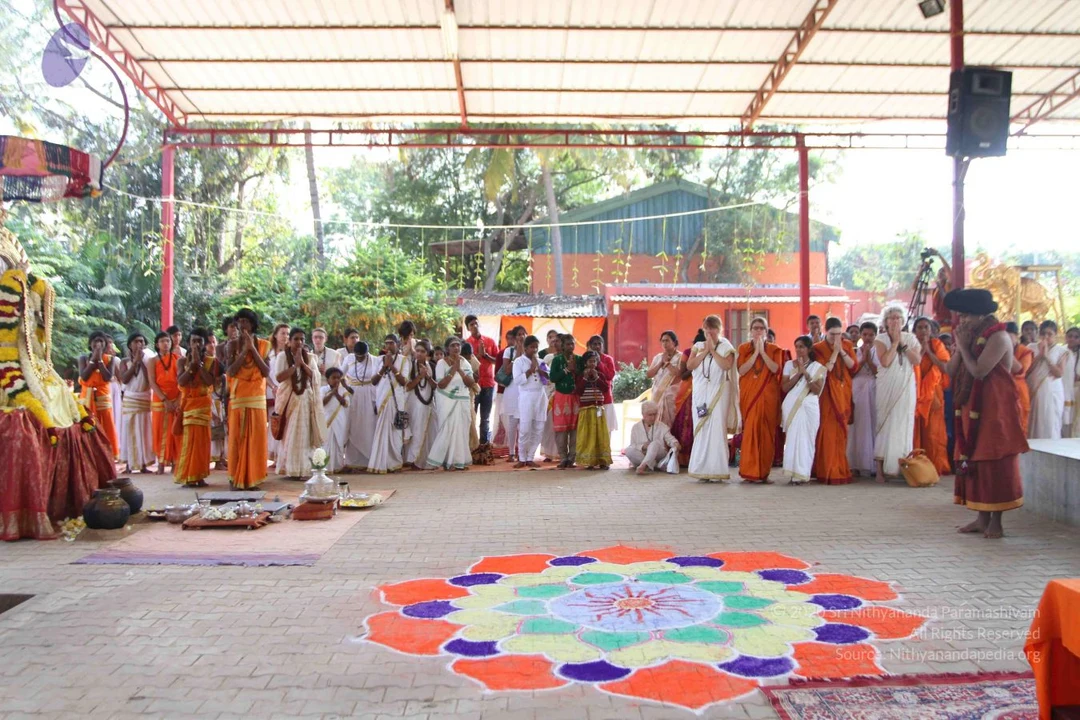
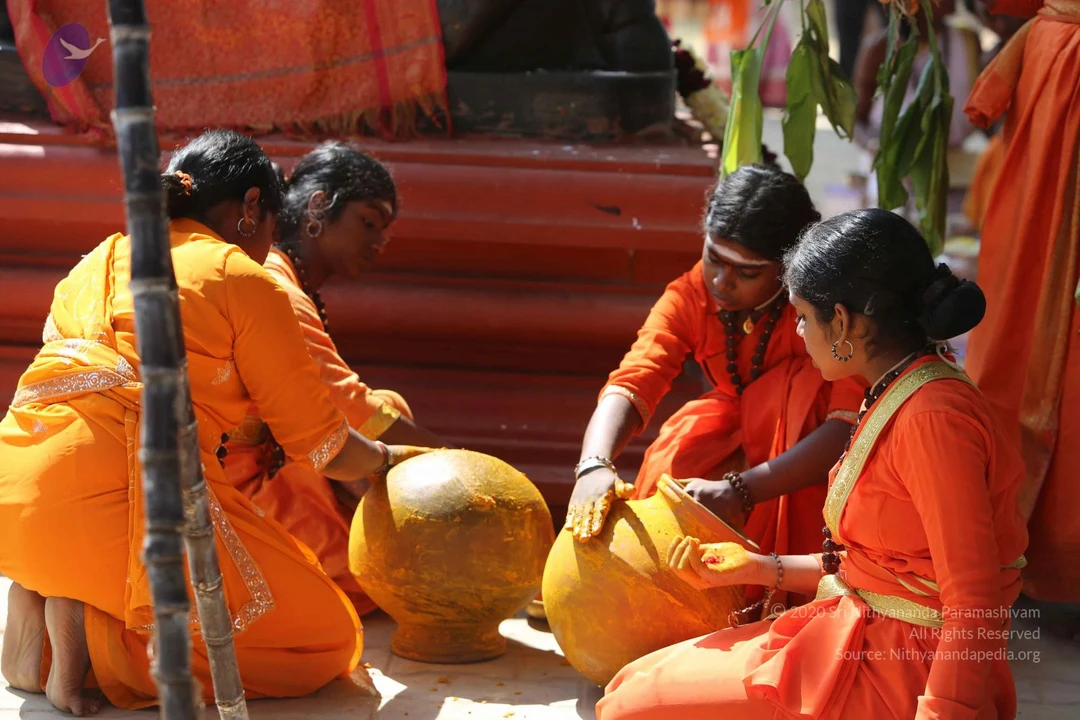
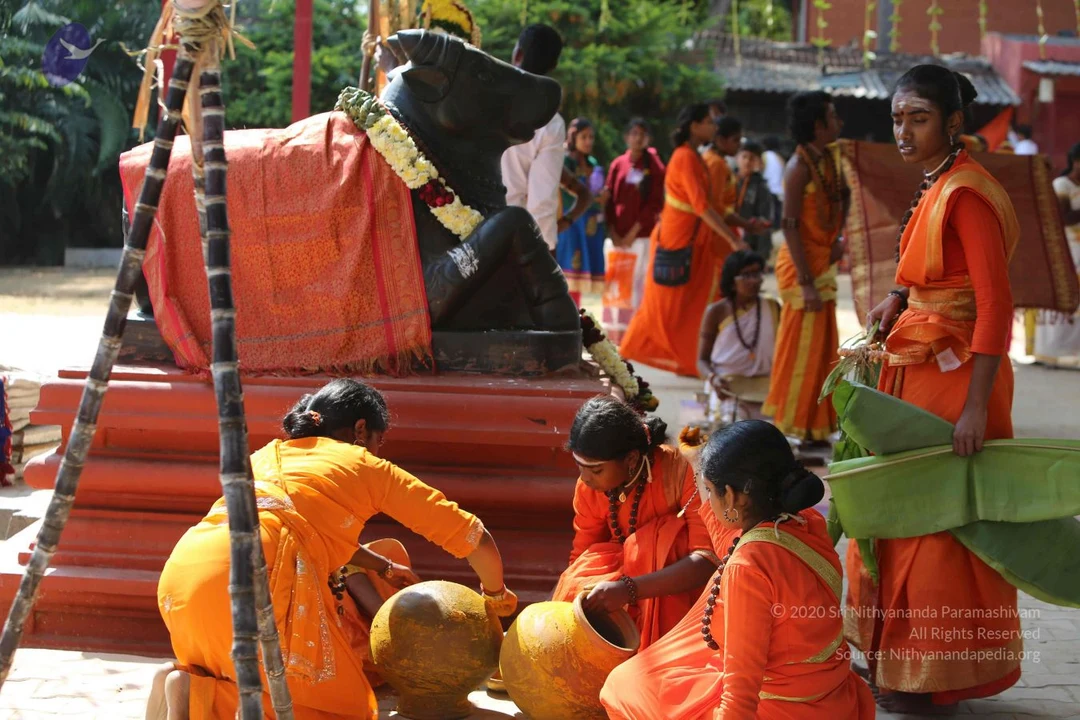
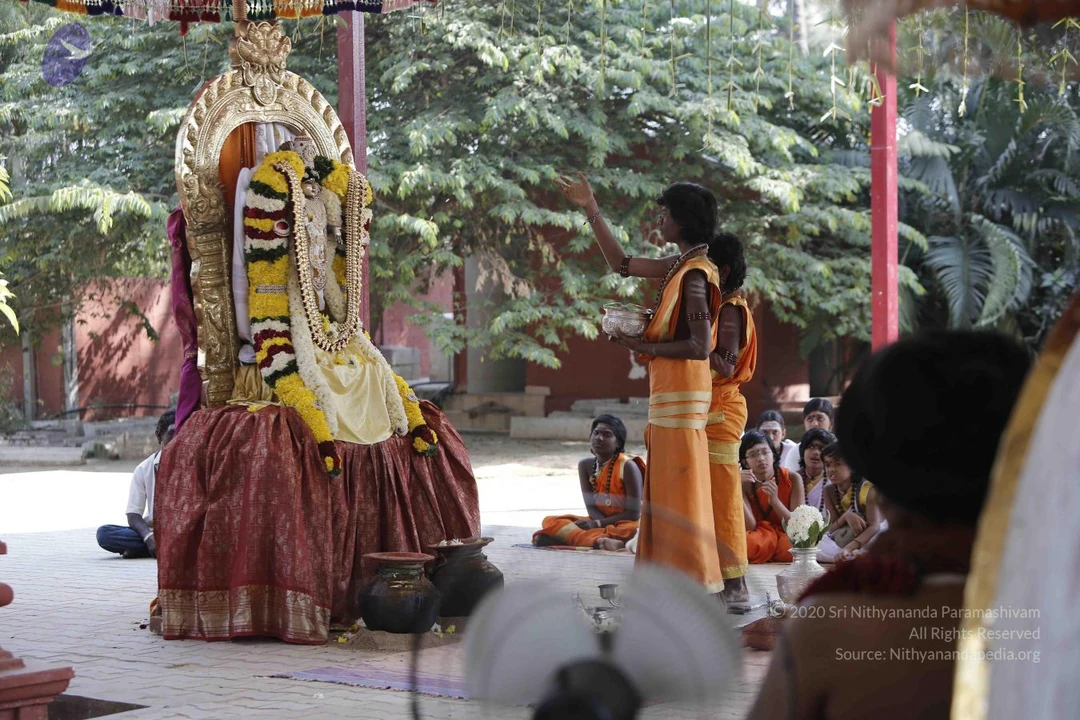
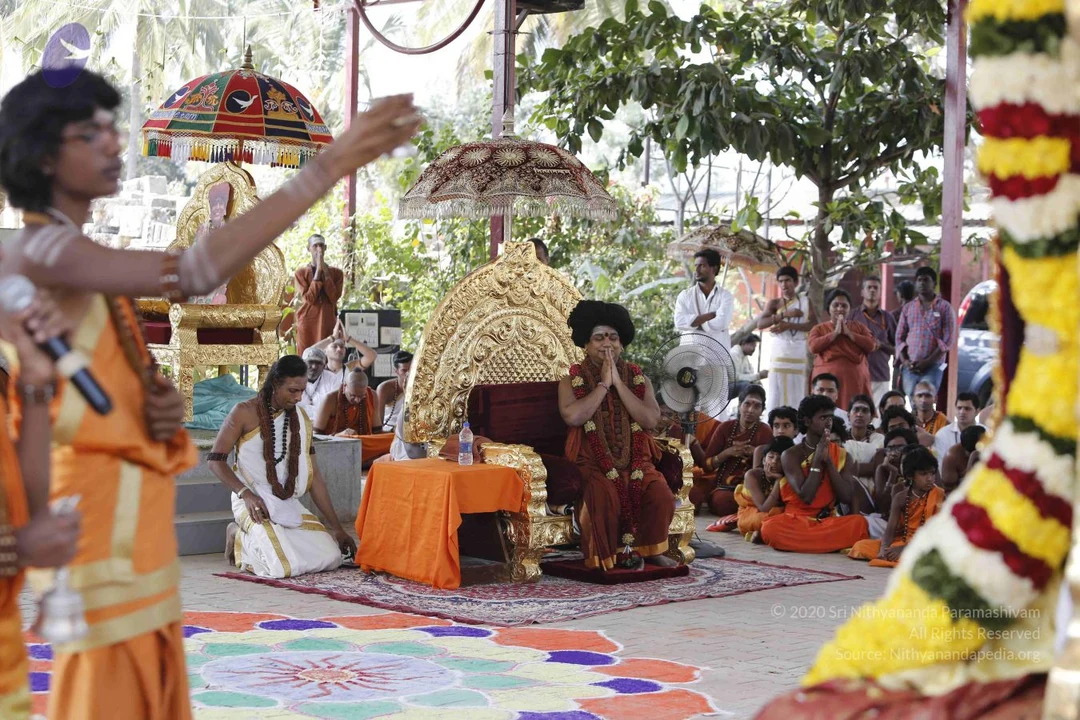
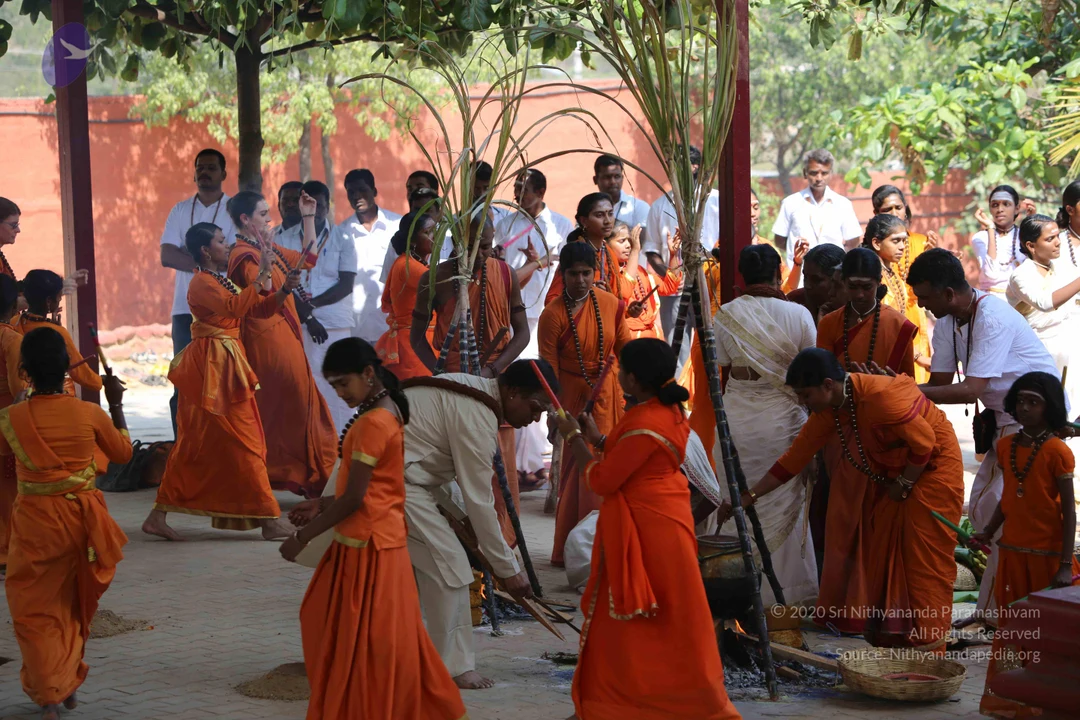
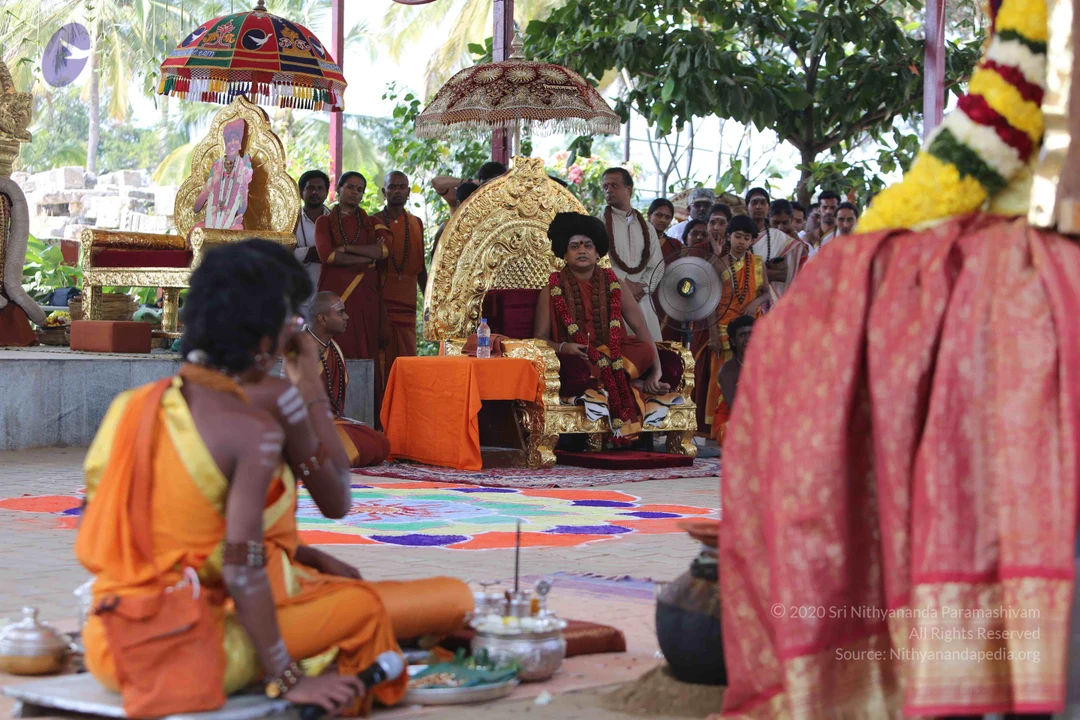
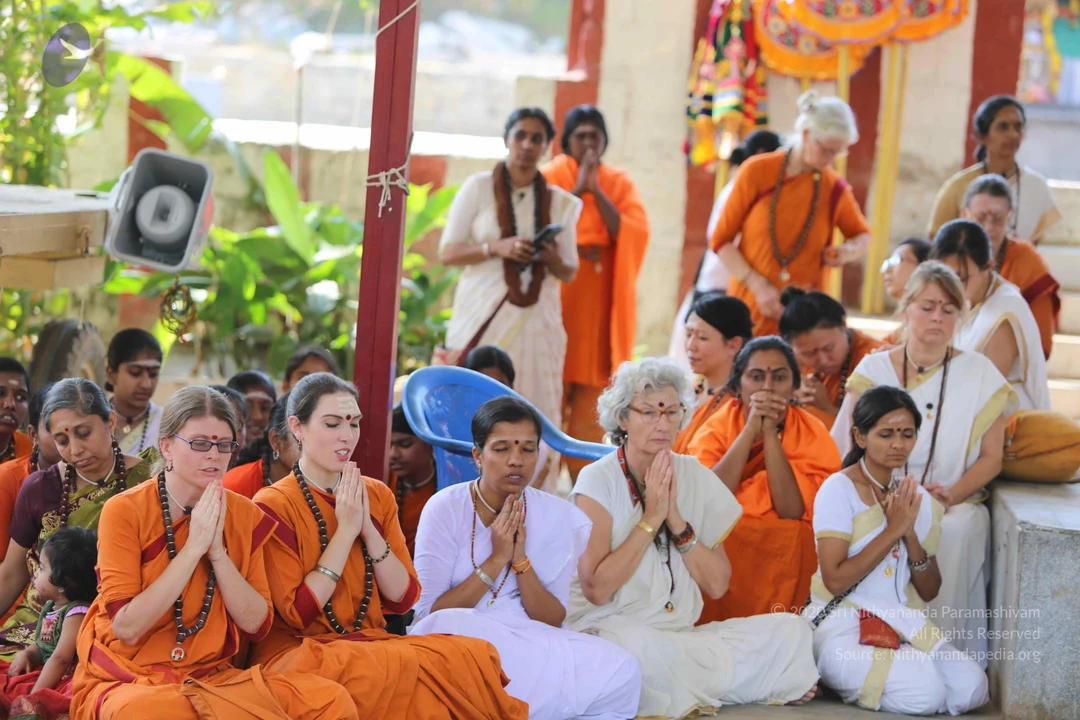
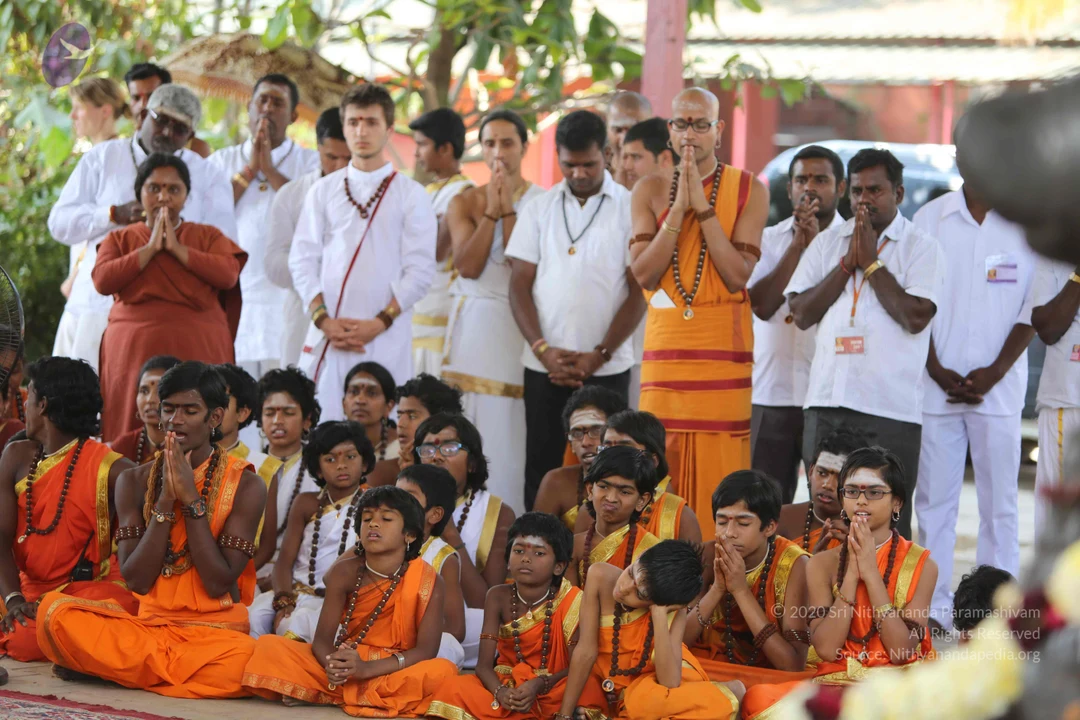
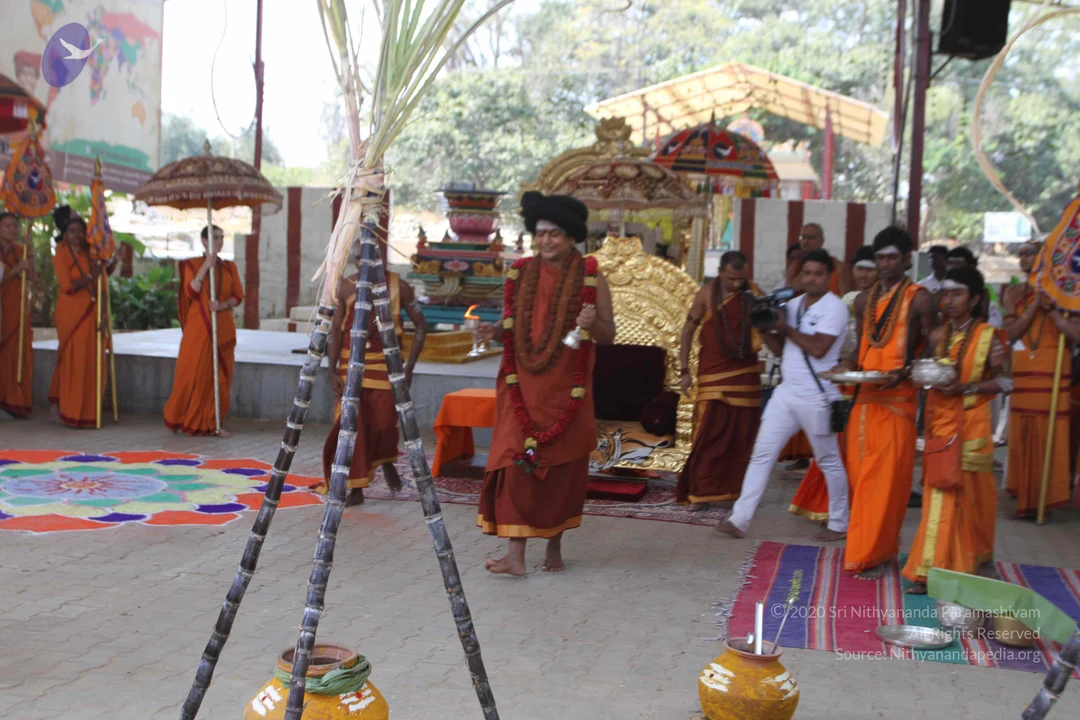
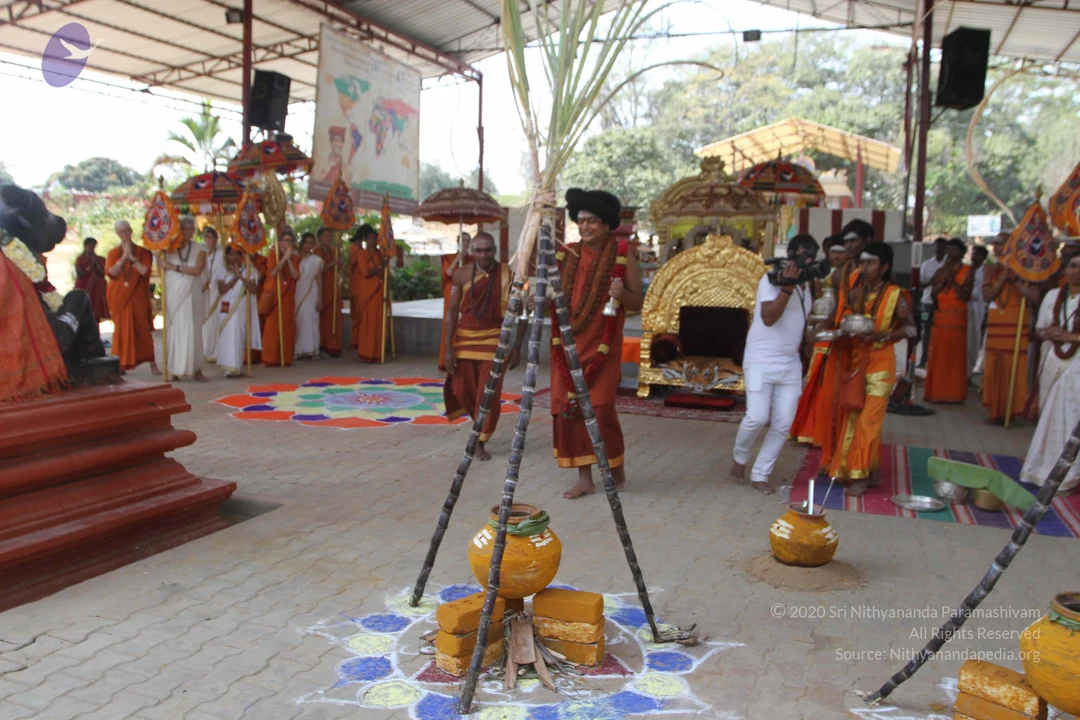
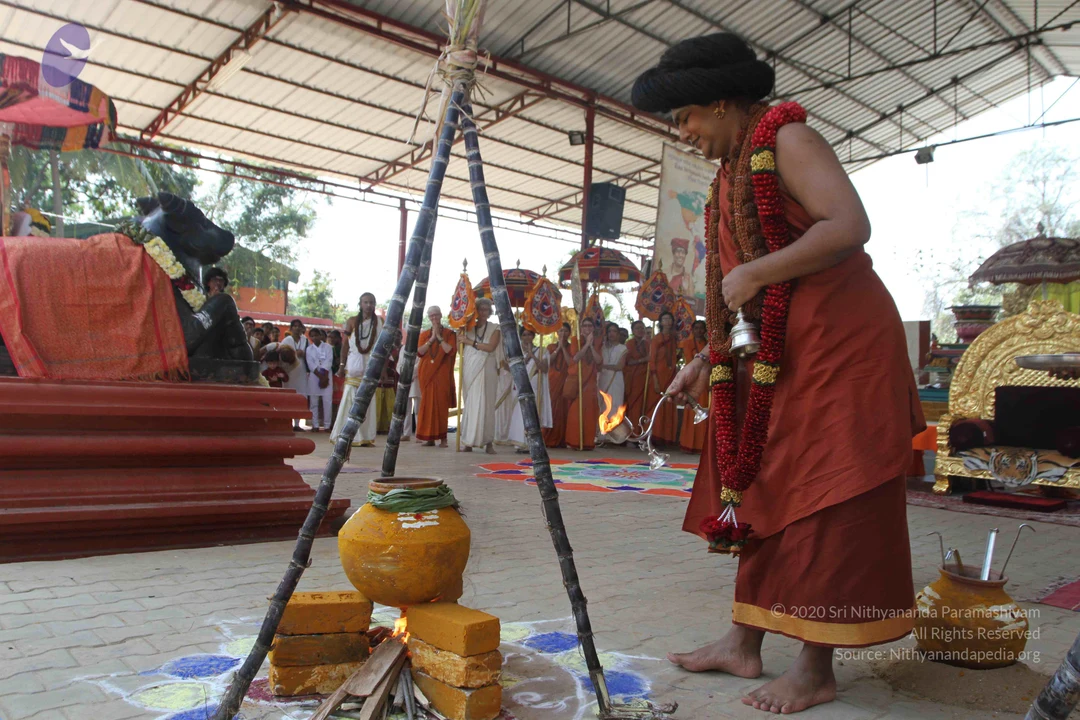
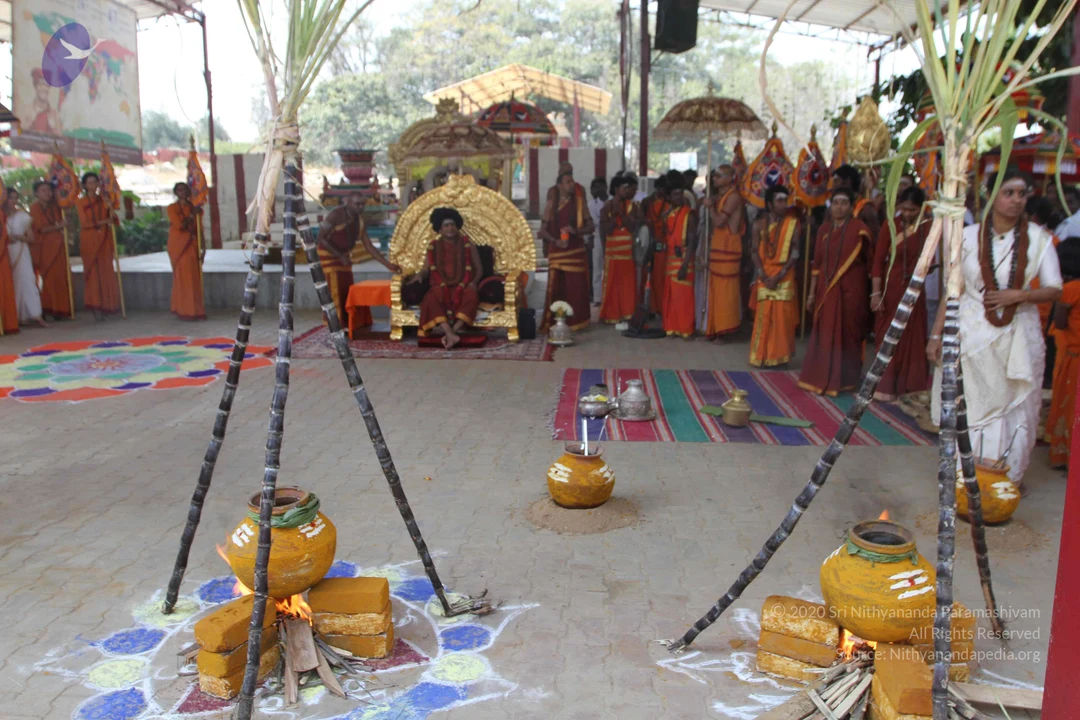
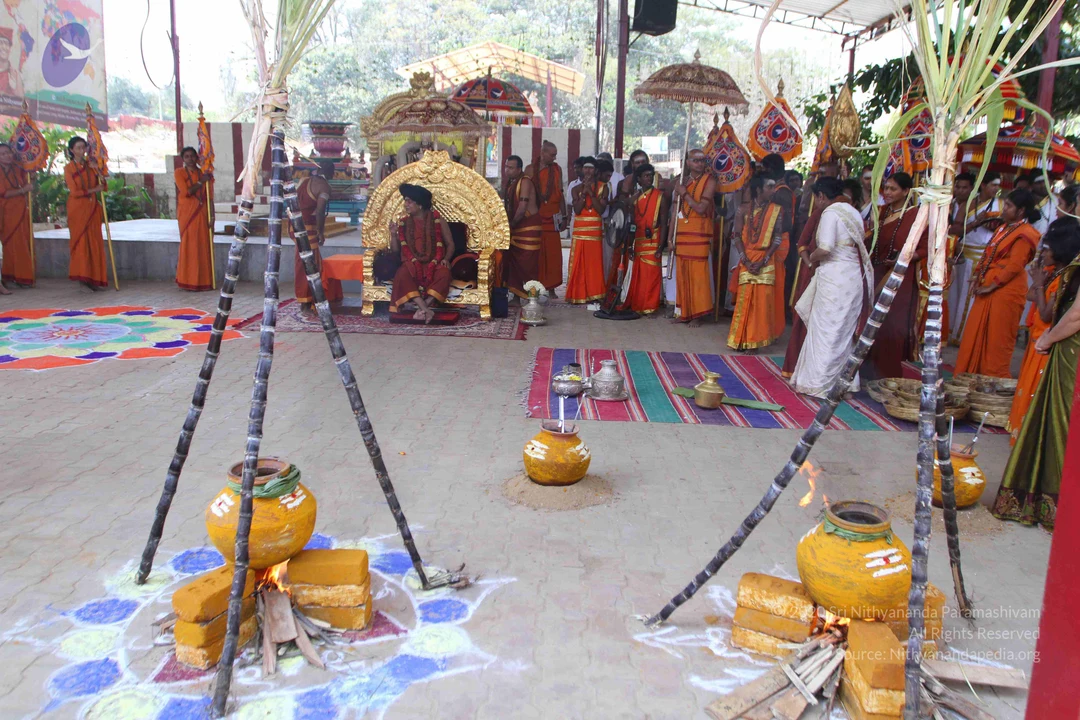
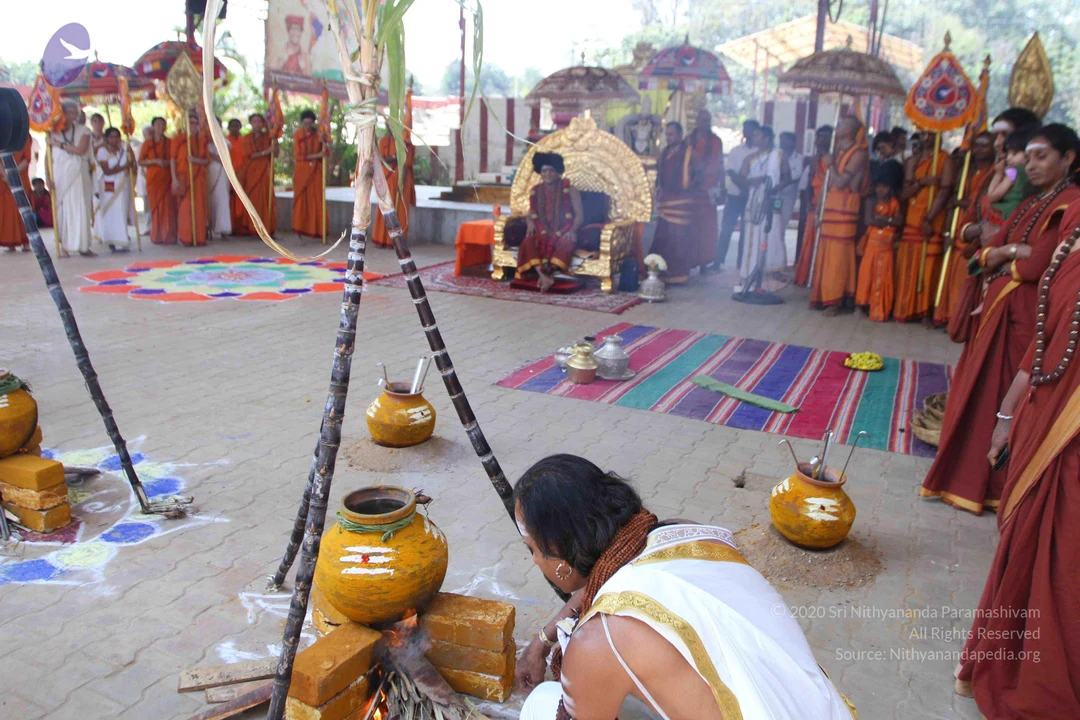
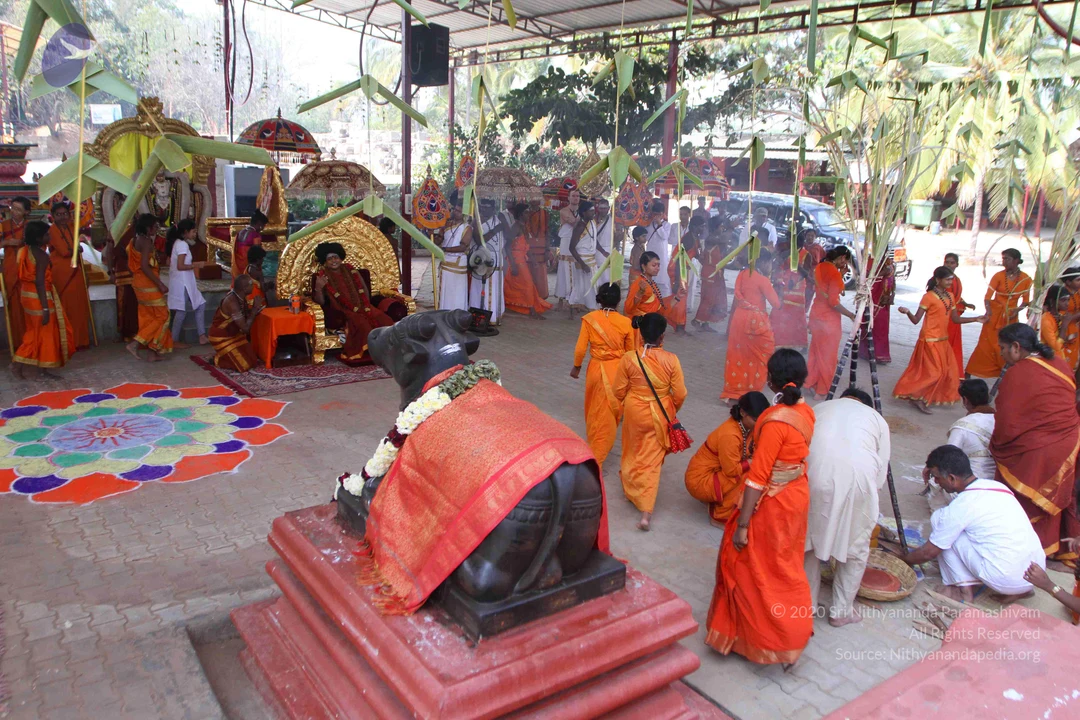
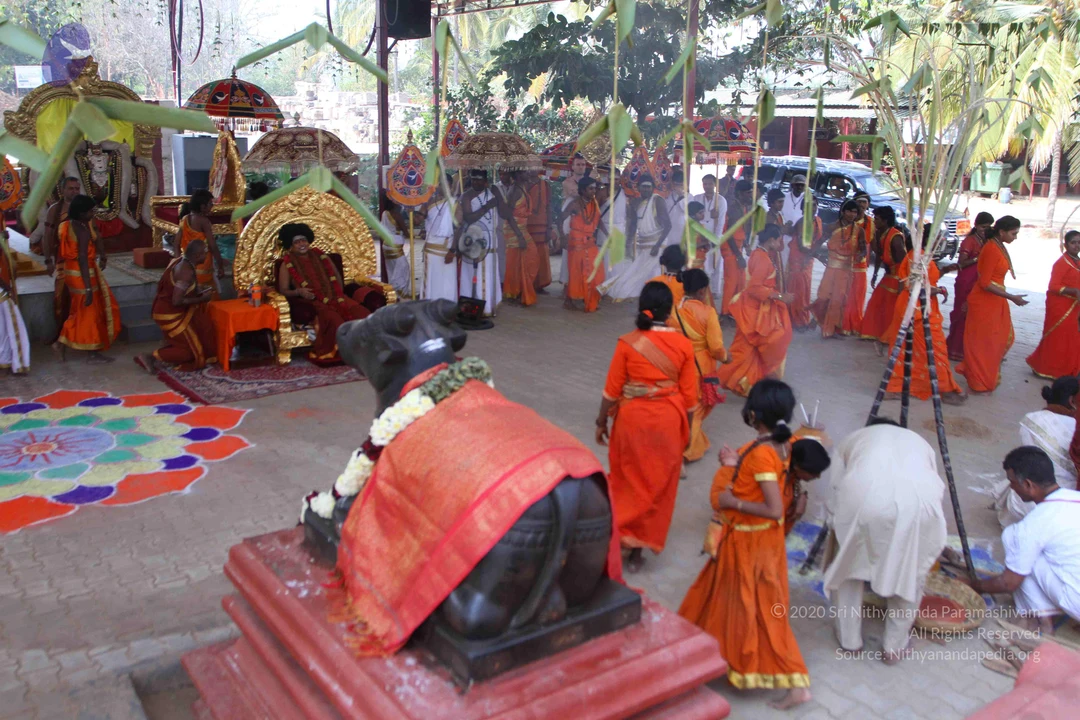
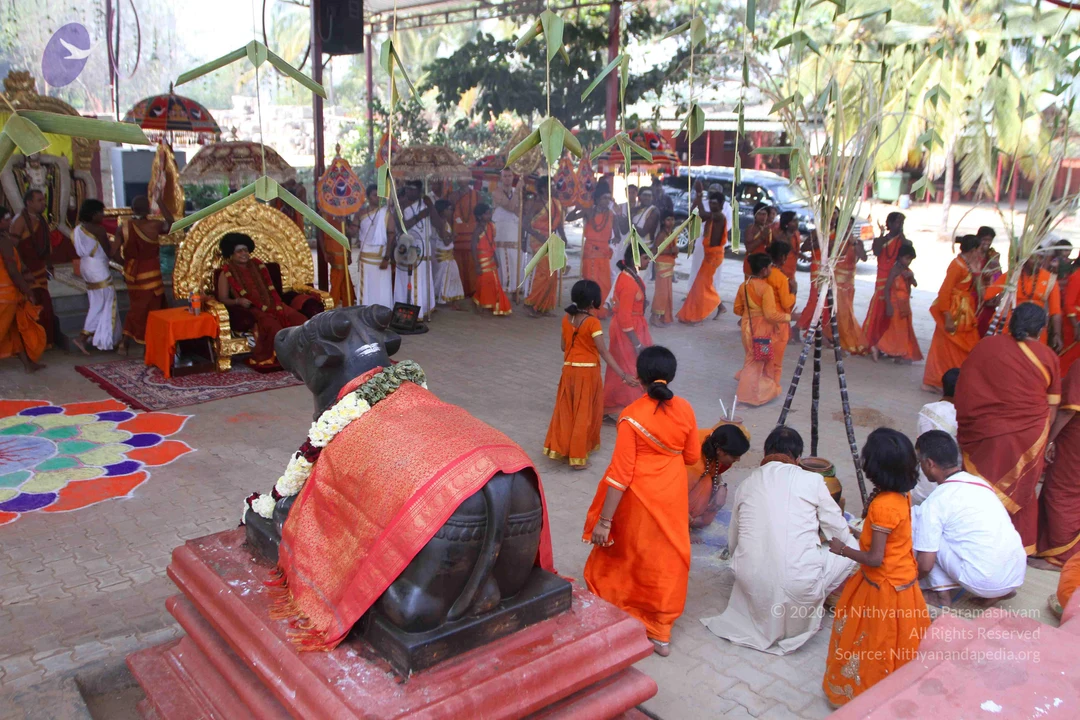
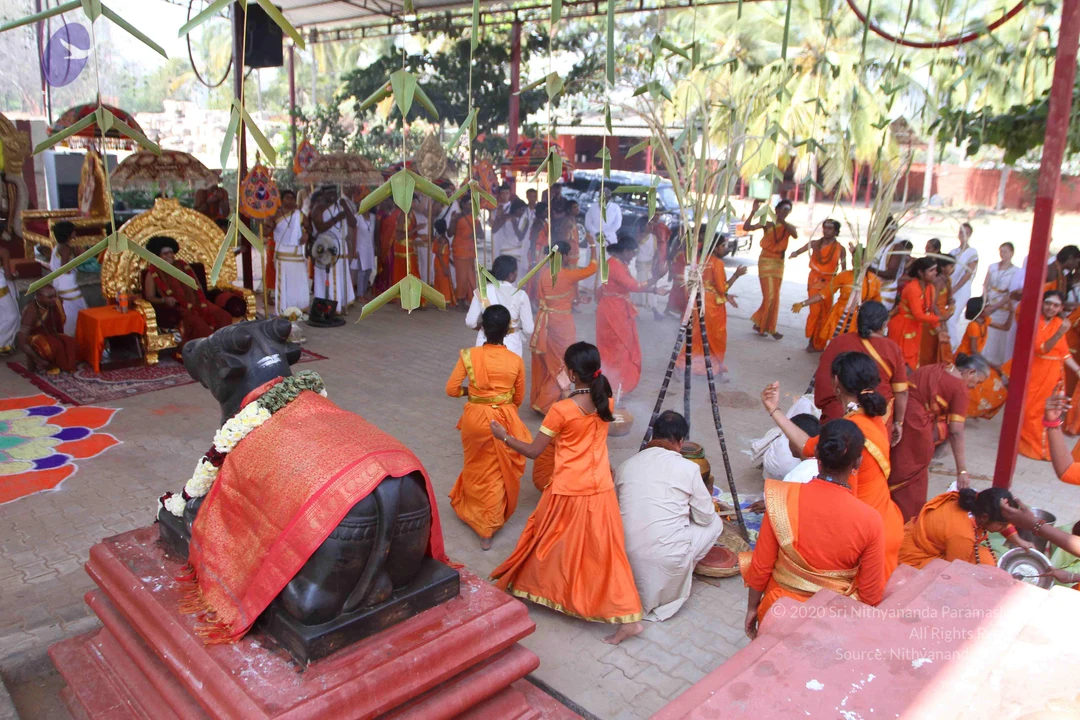
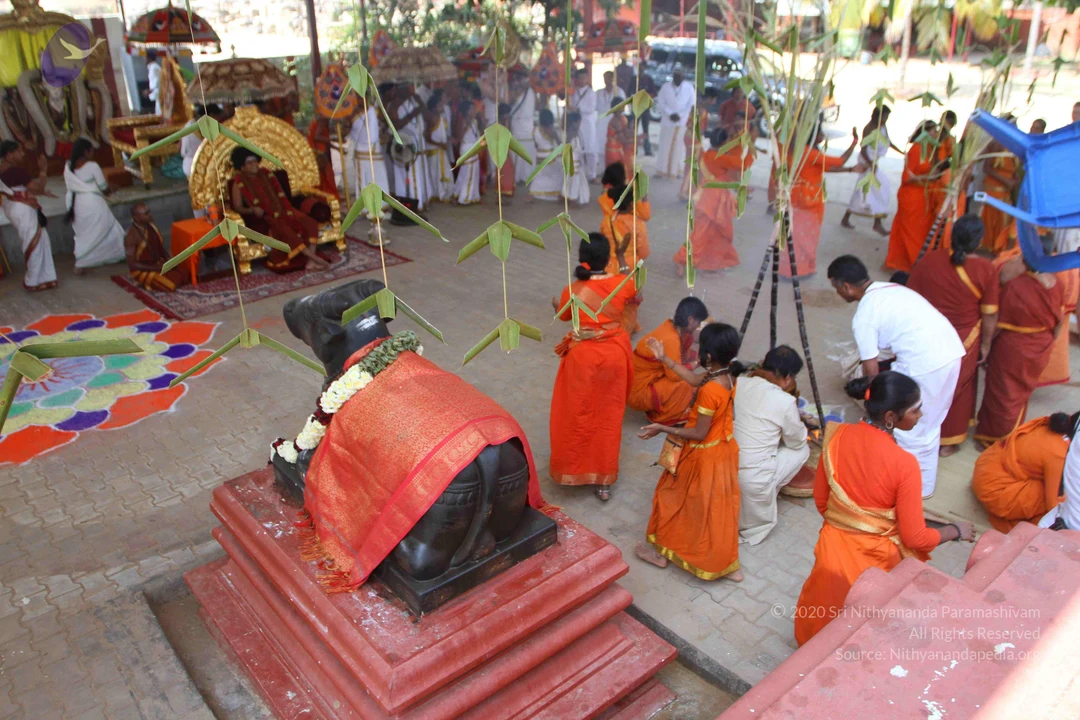
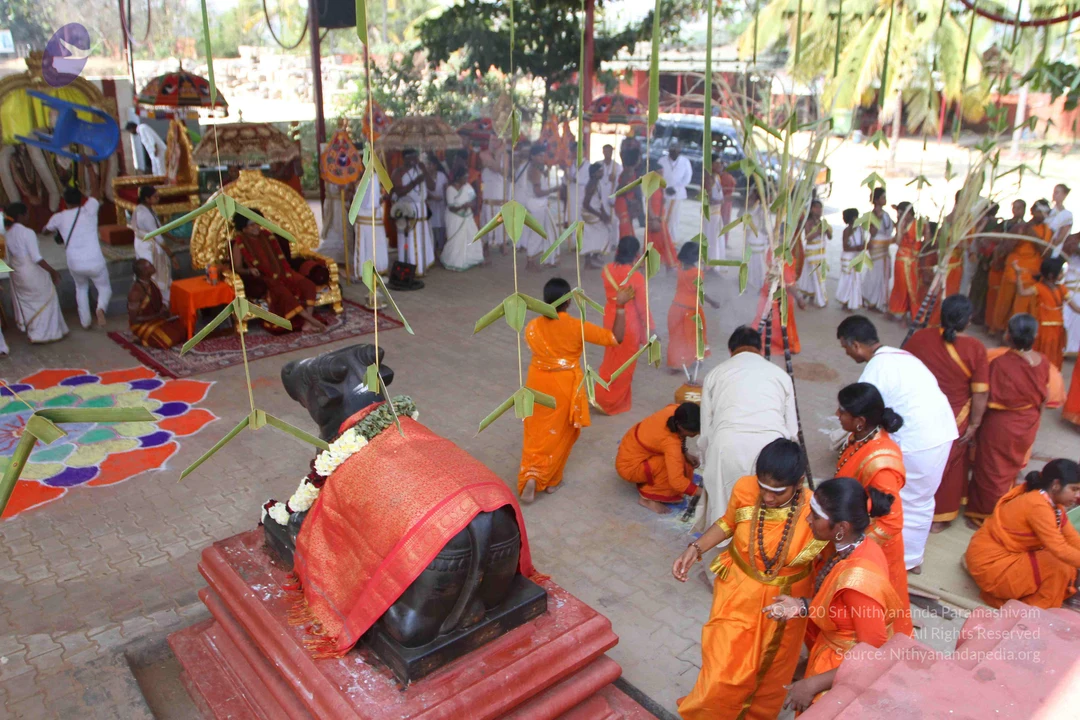
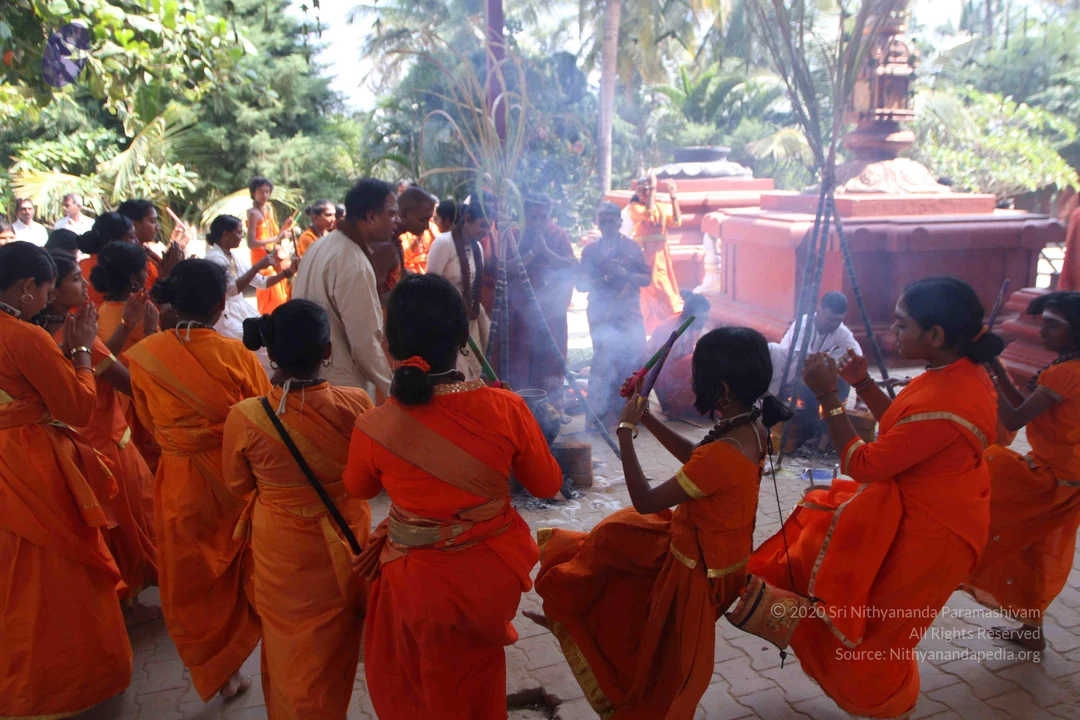
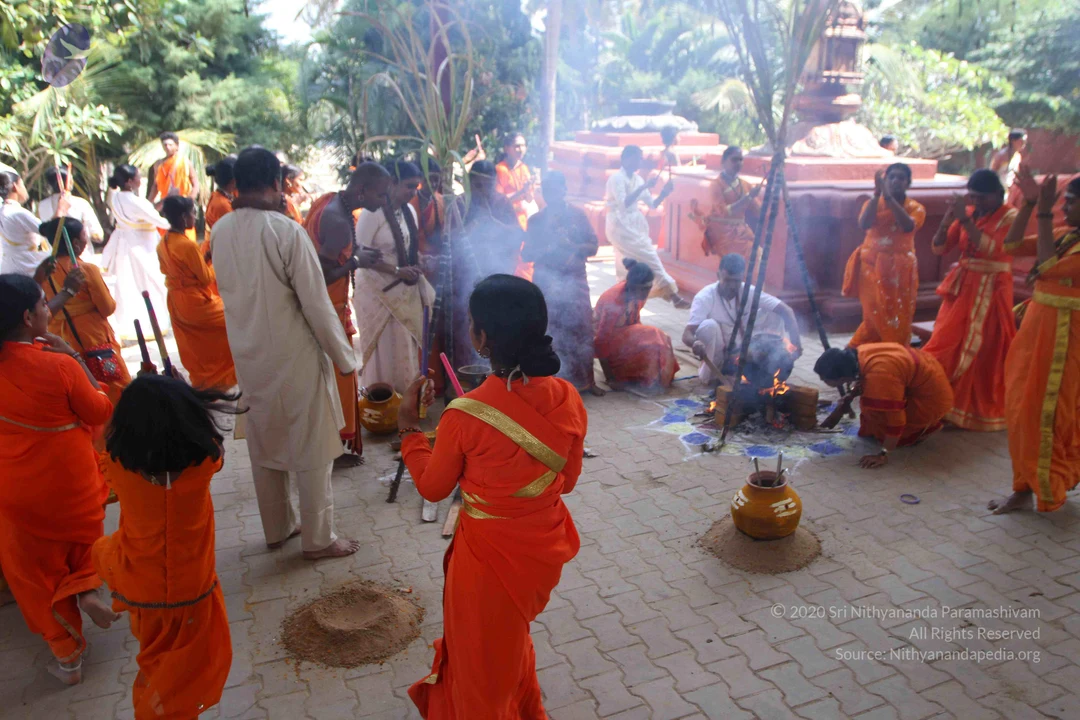
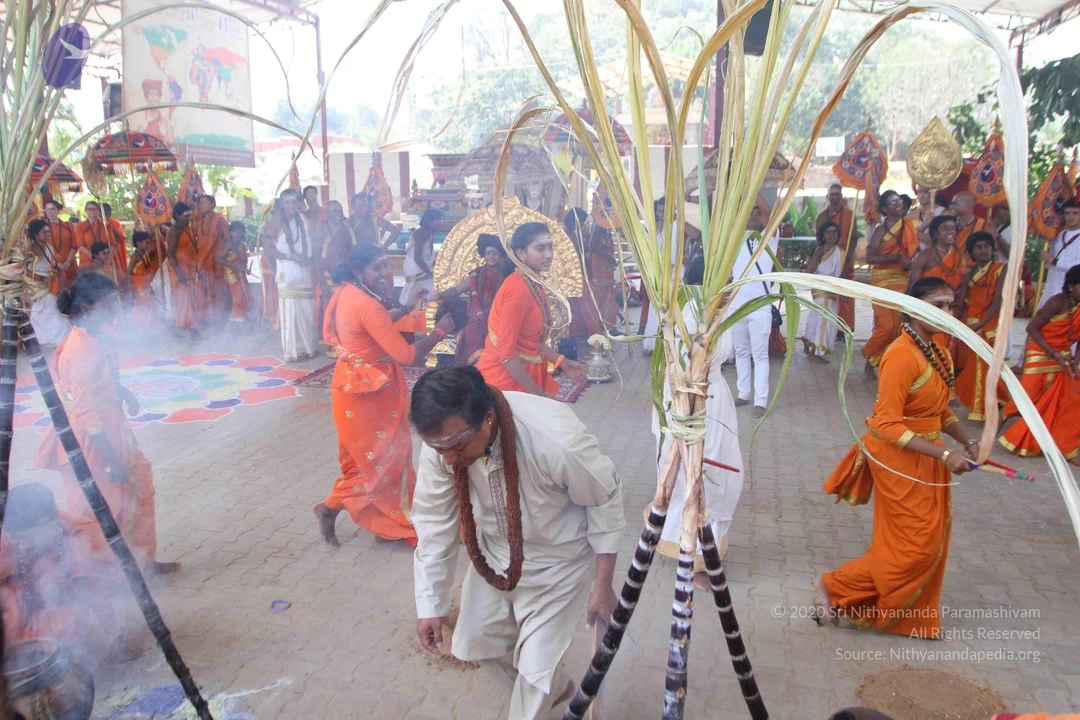
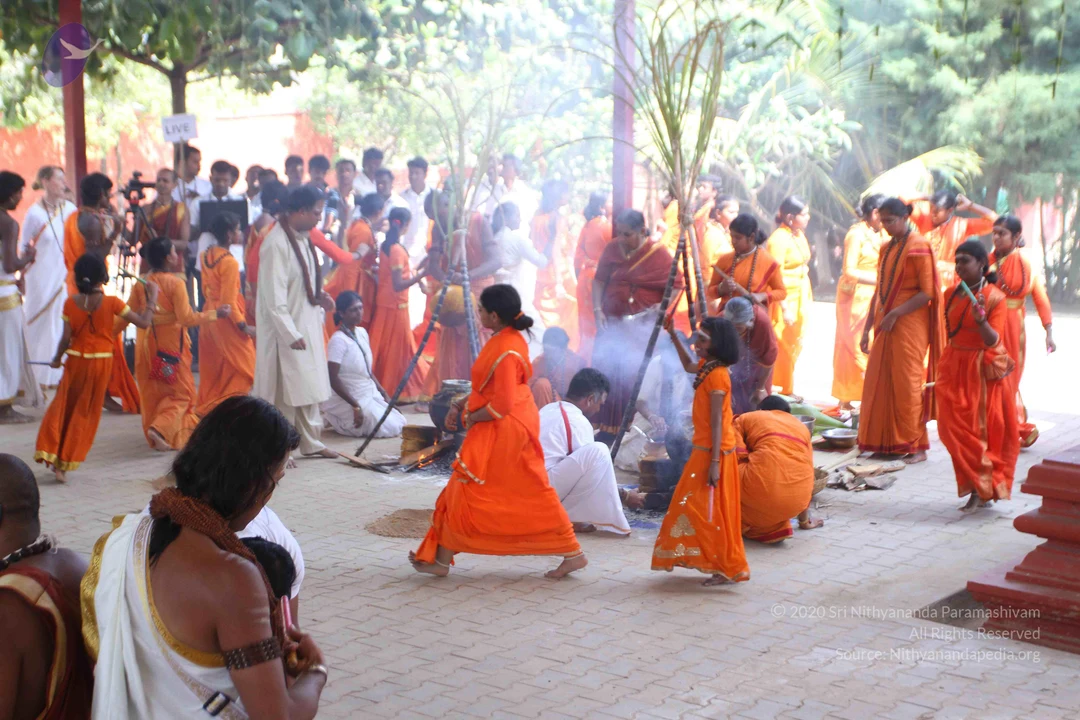
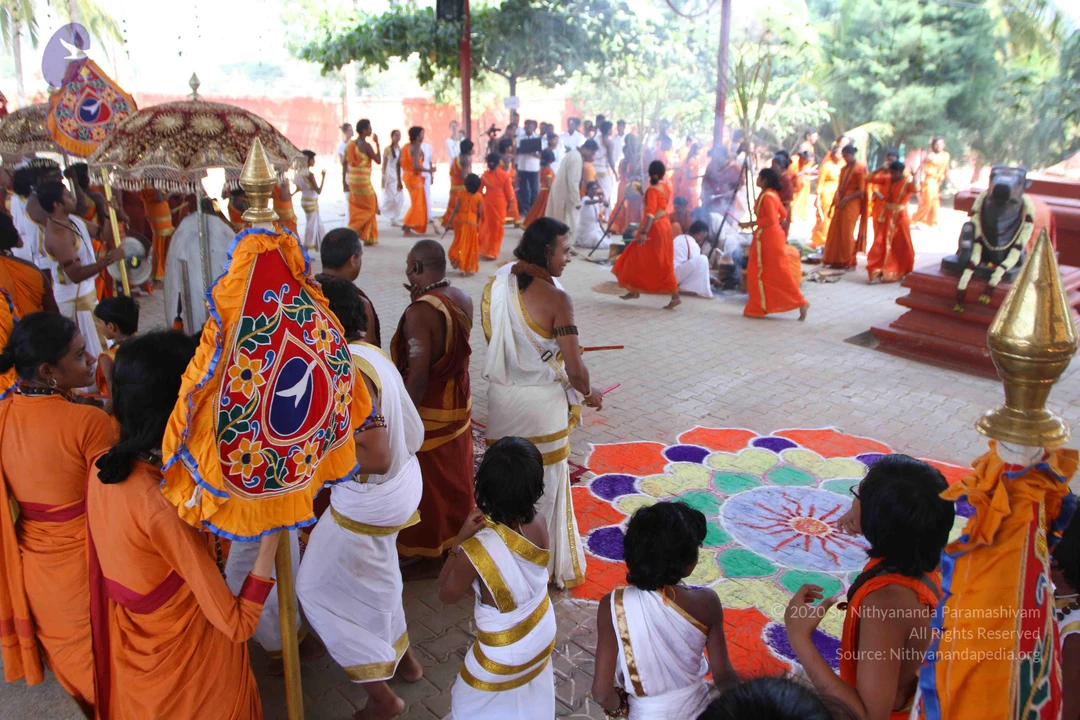
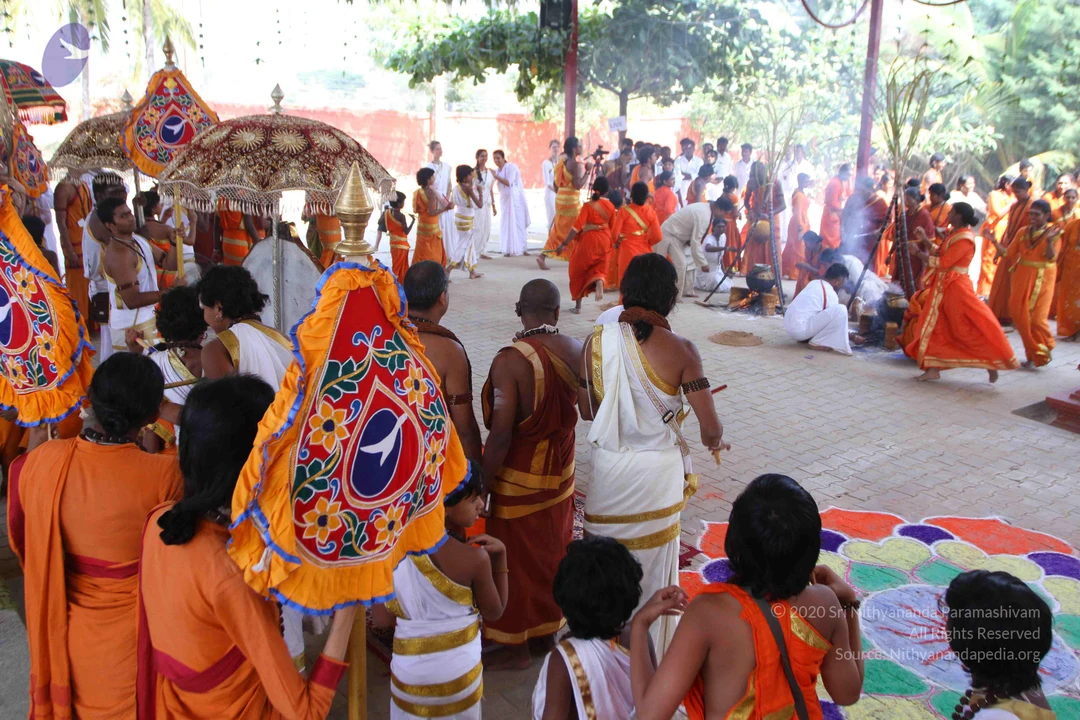
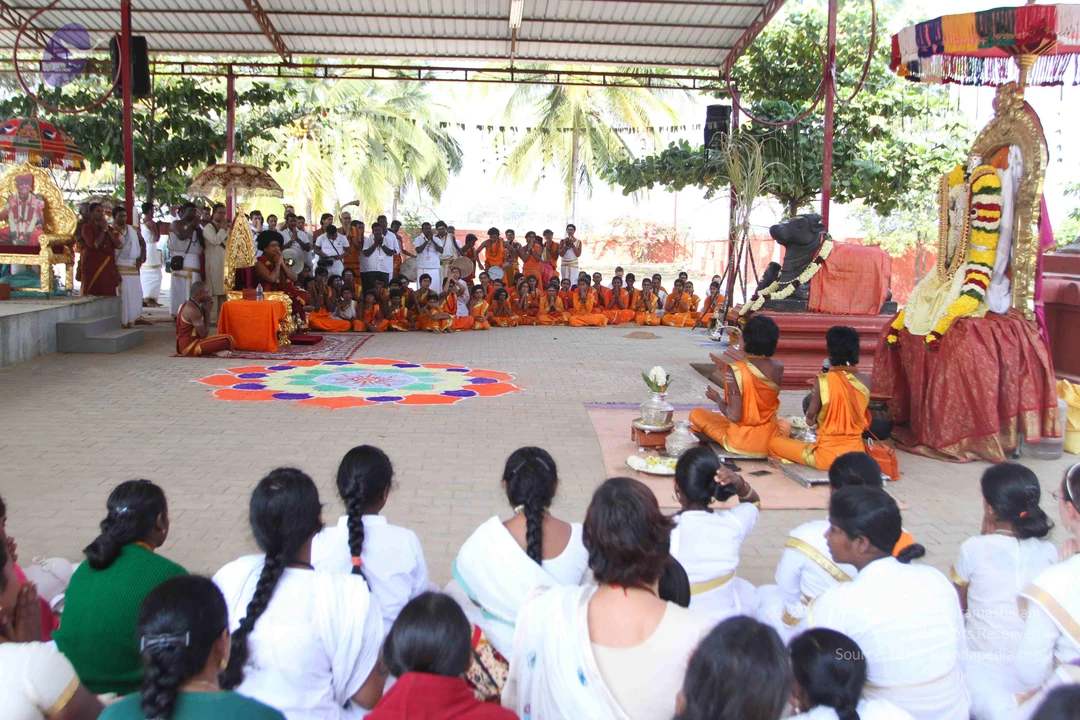
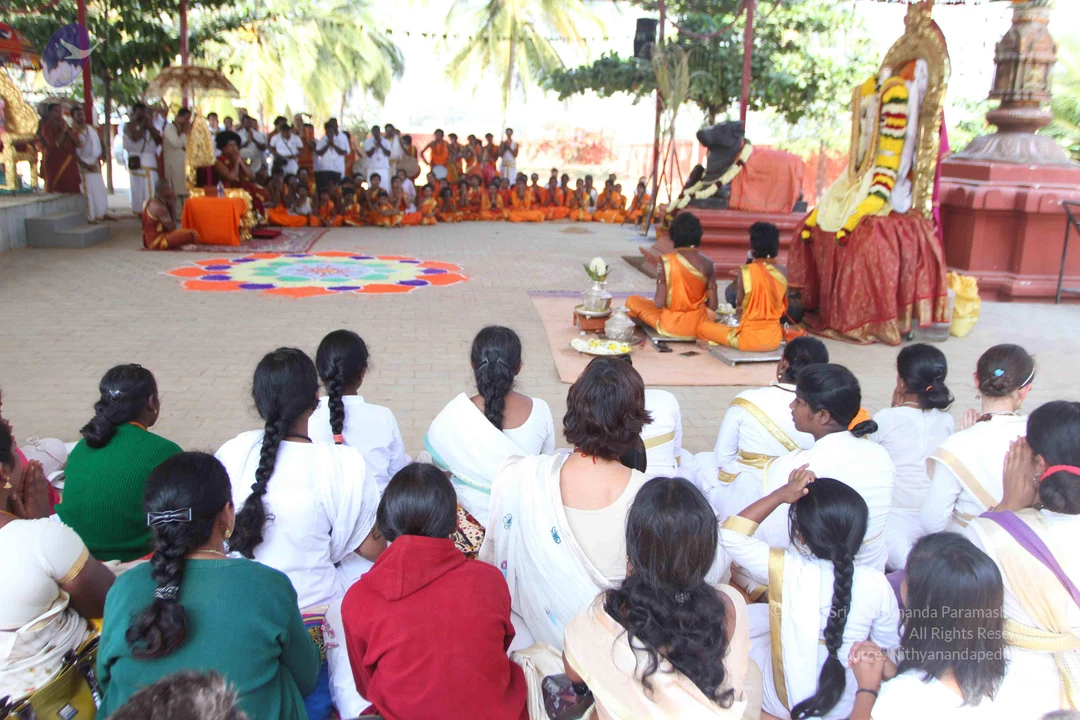
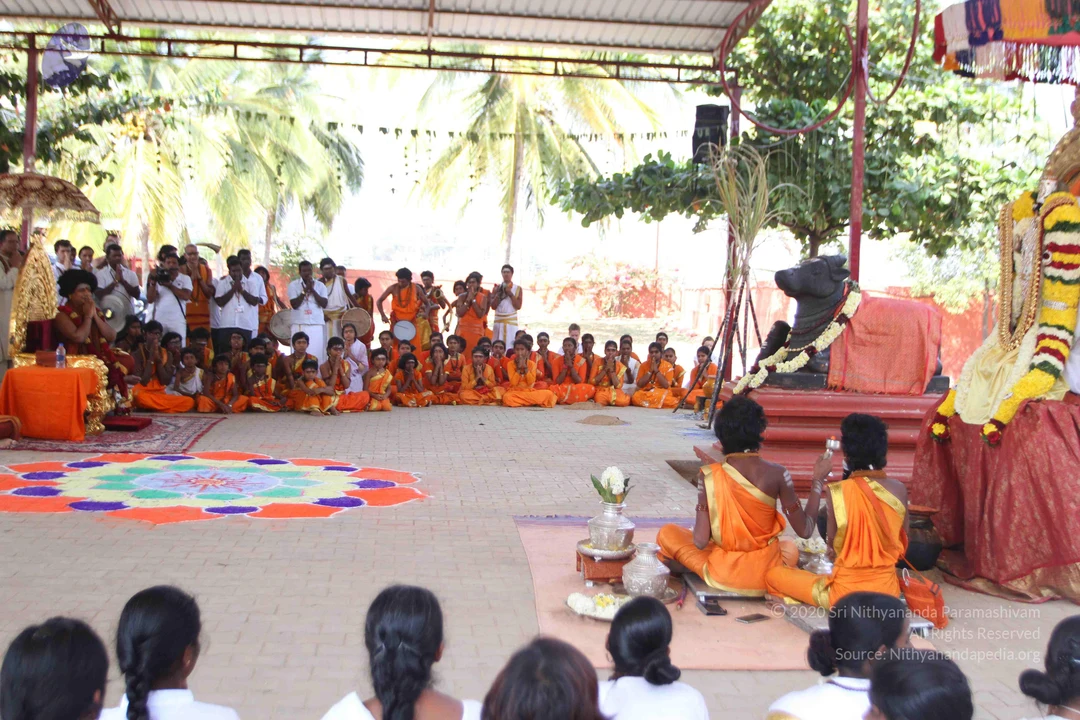
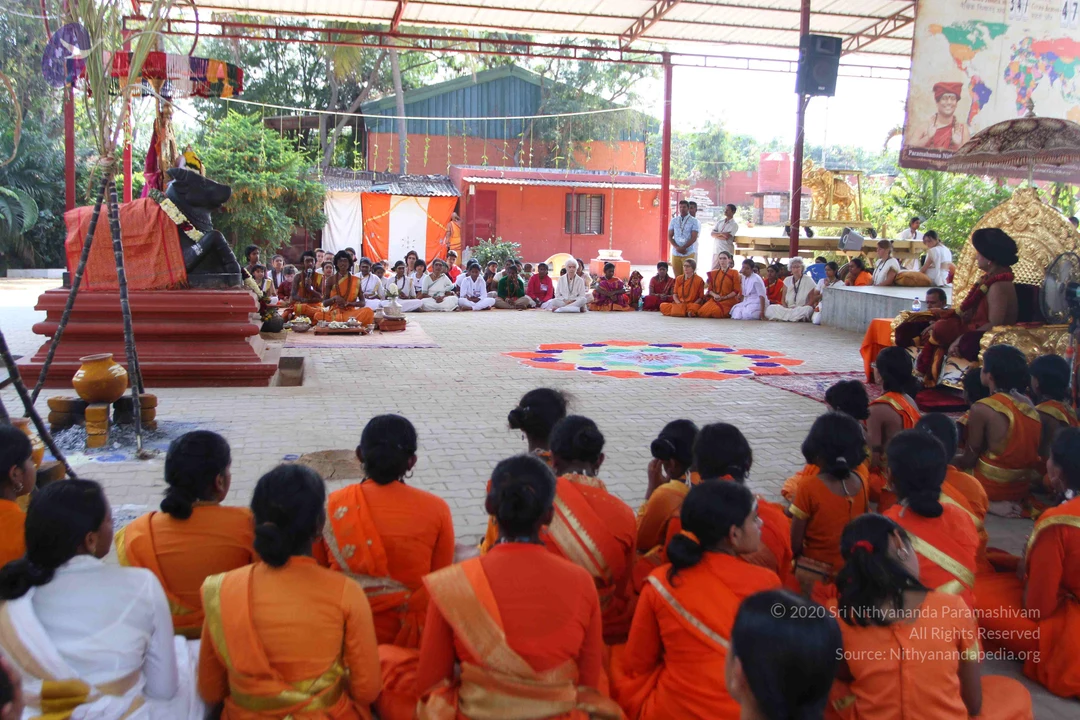
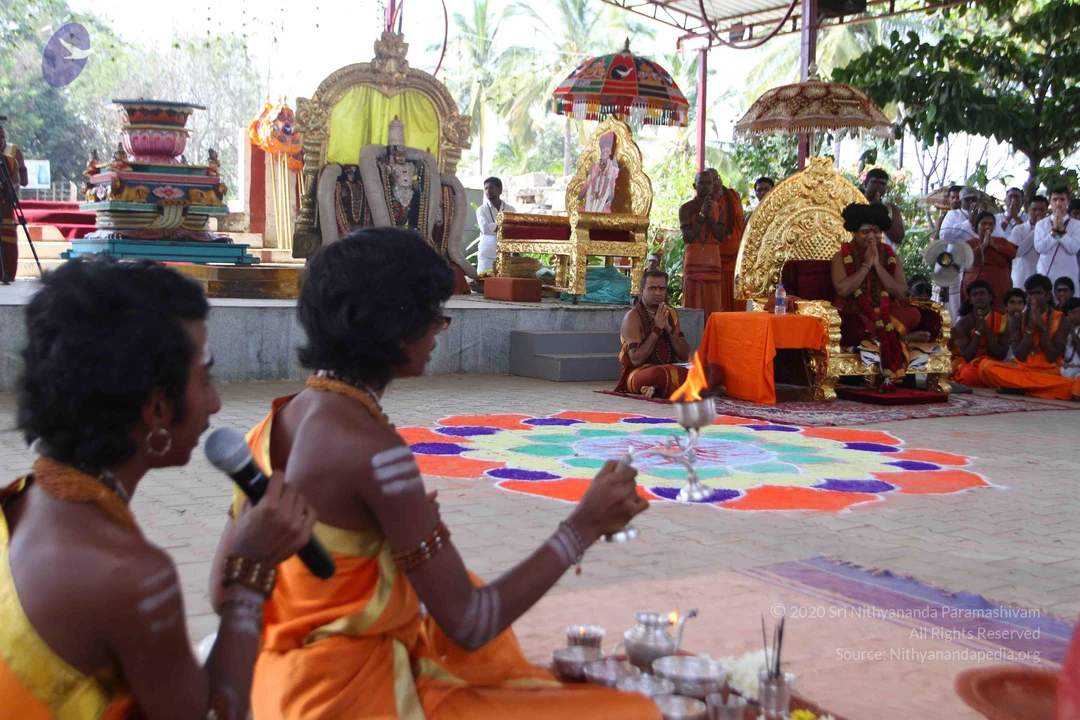
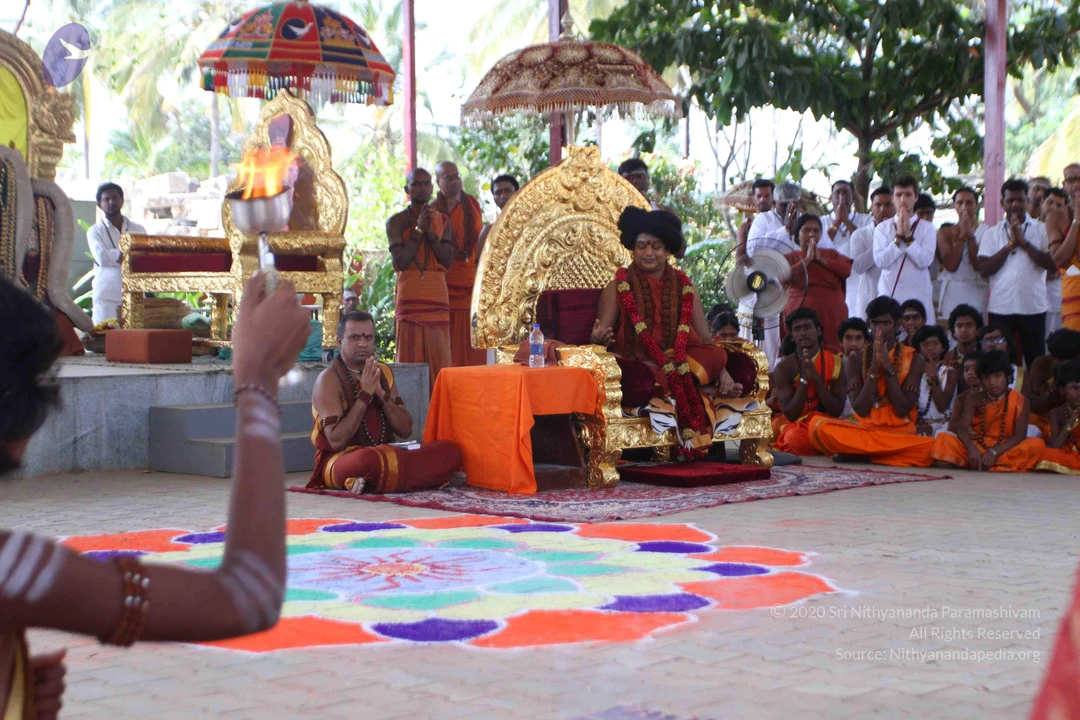
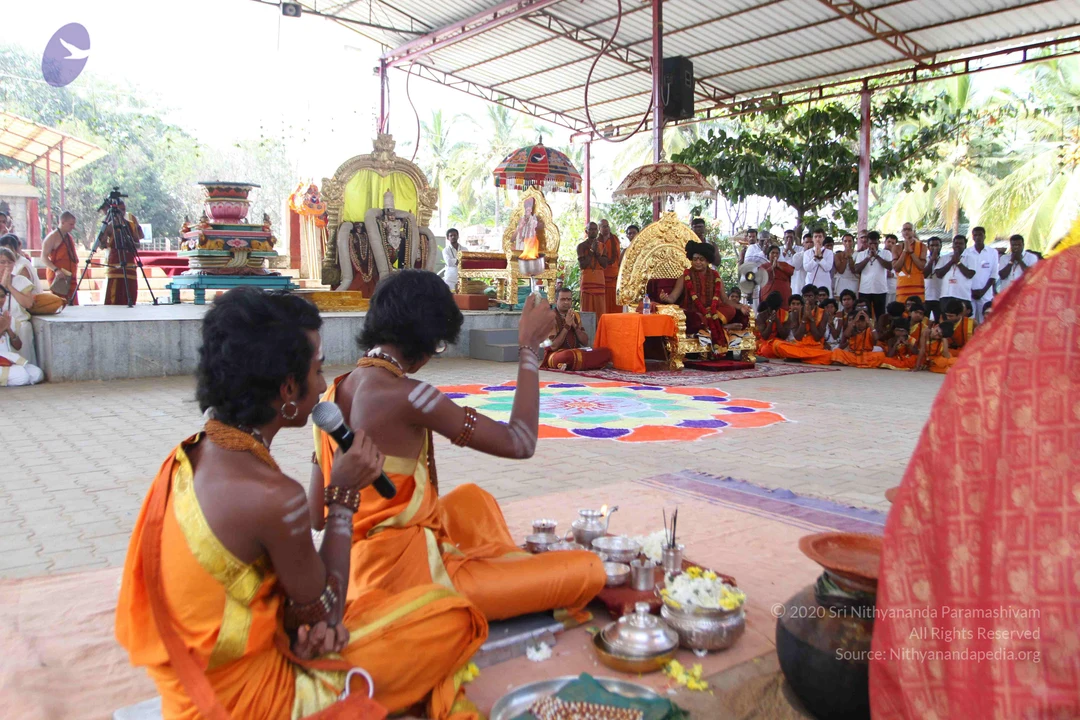
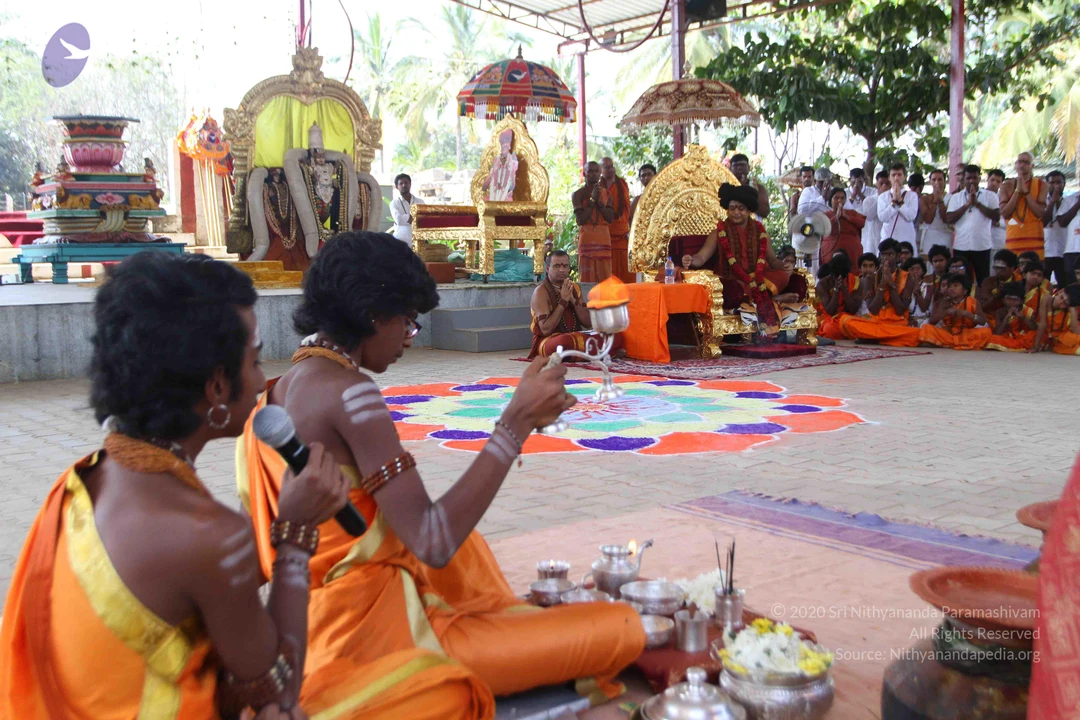
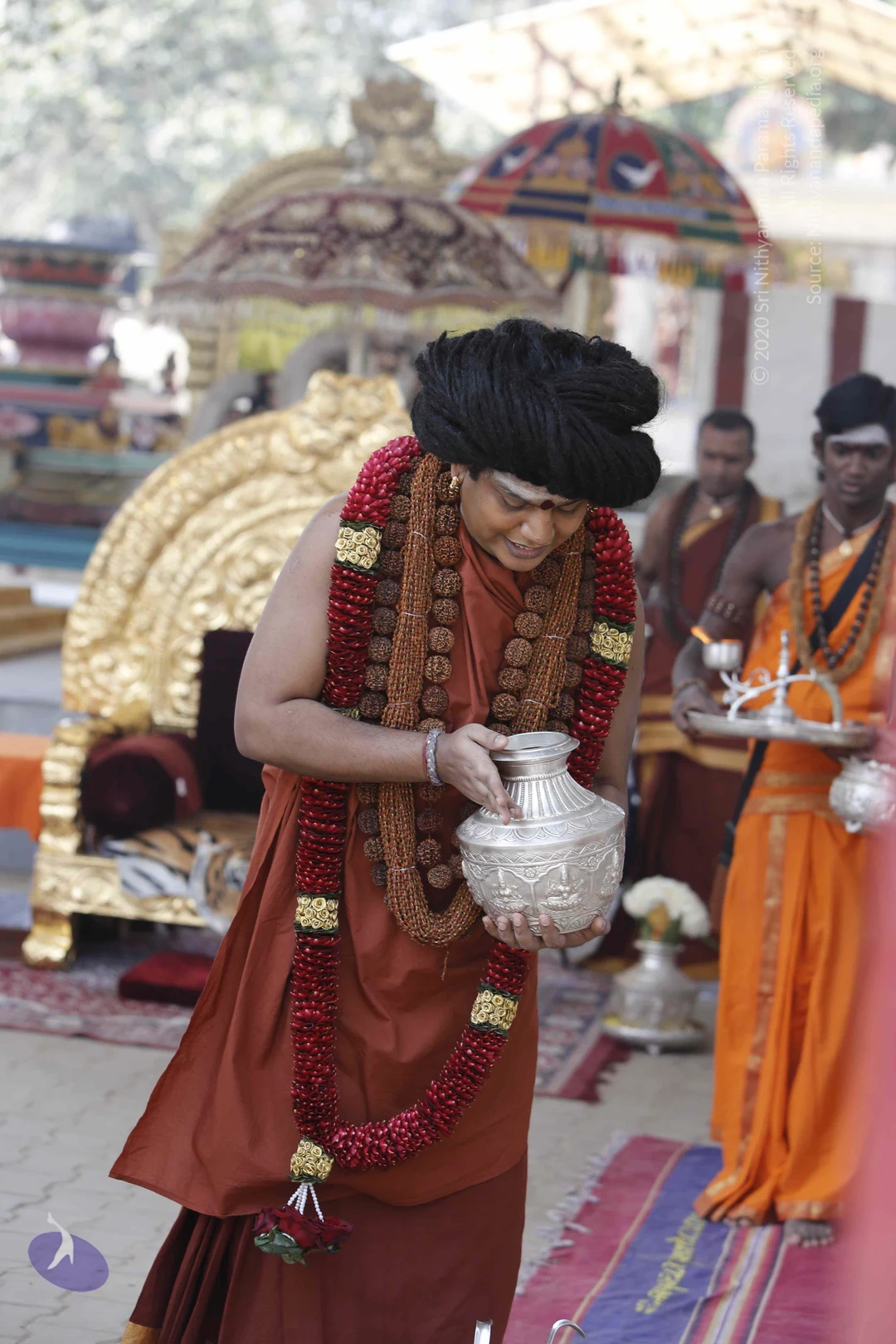
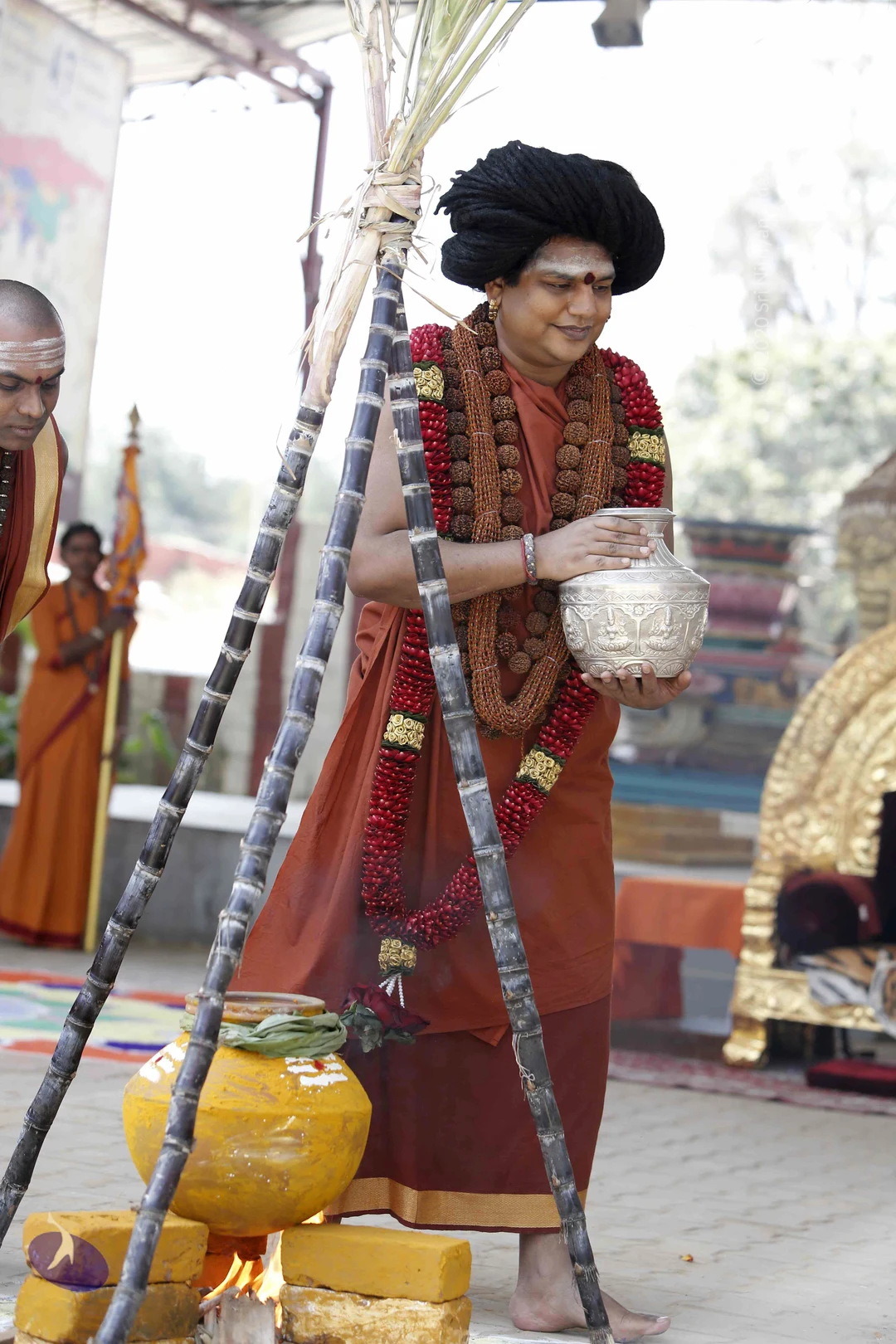
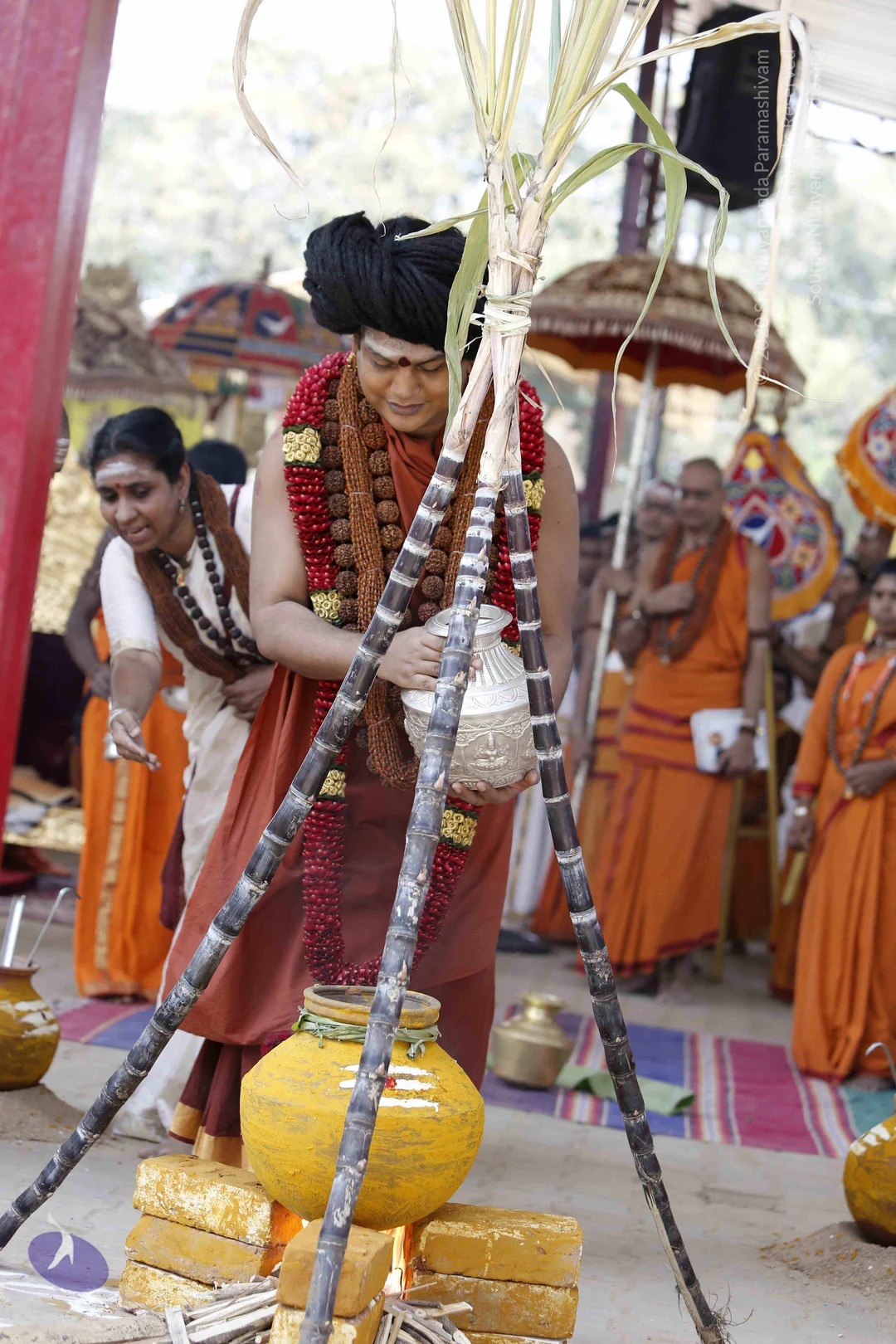
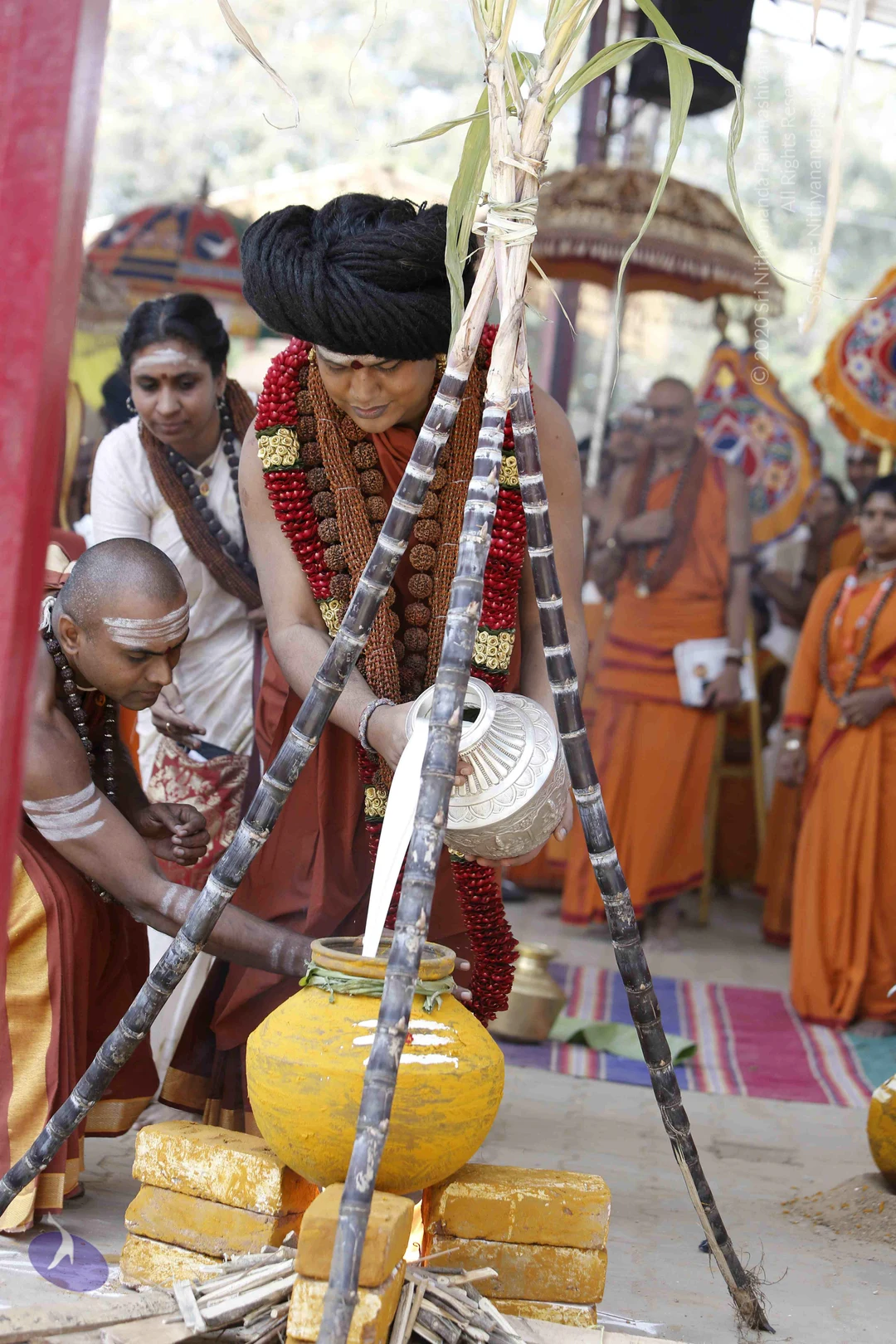
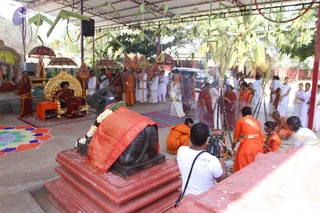
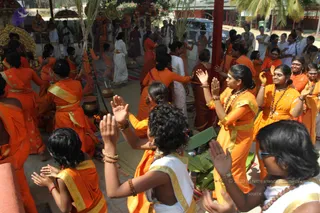
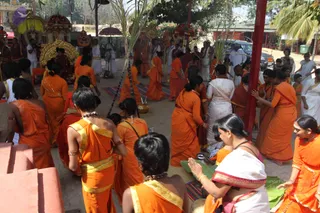
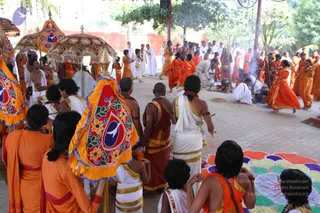
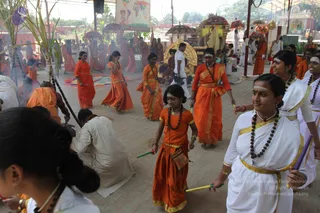
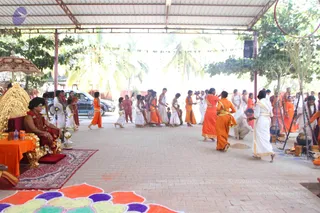
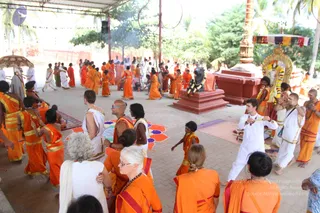
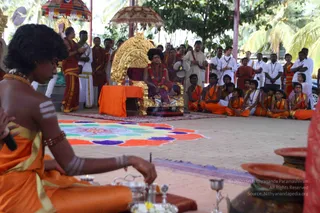
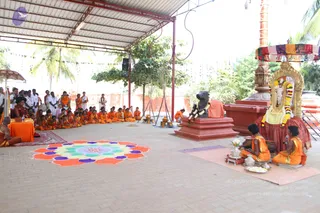
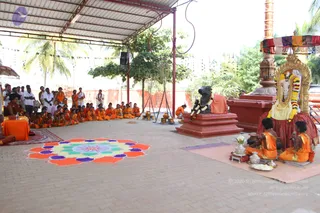
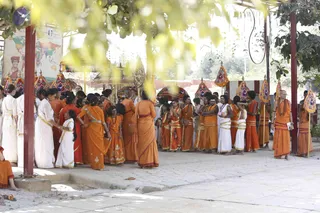
Pongal Celebration

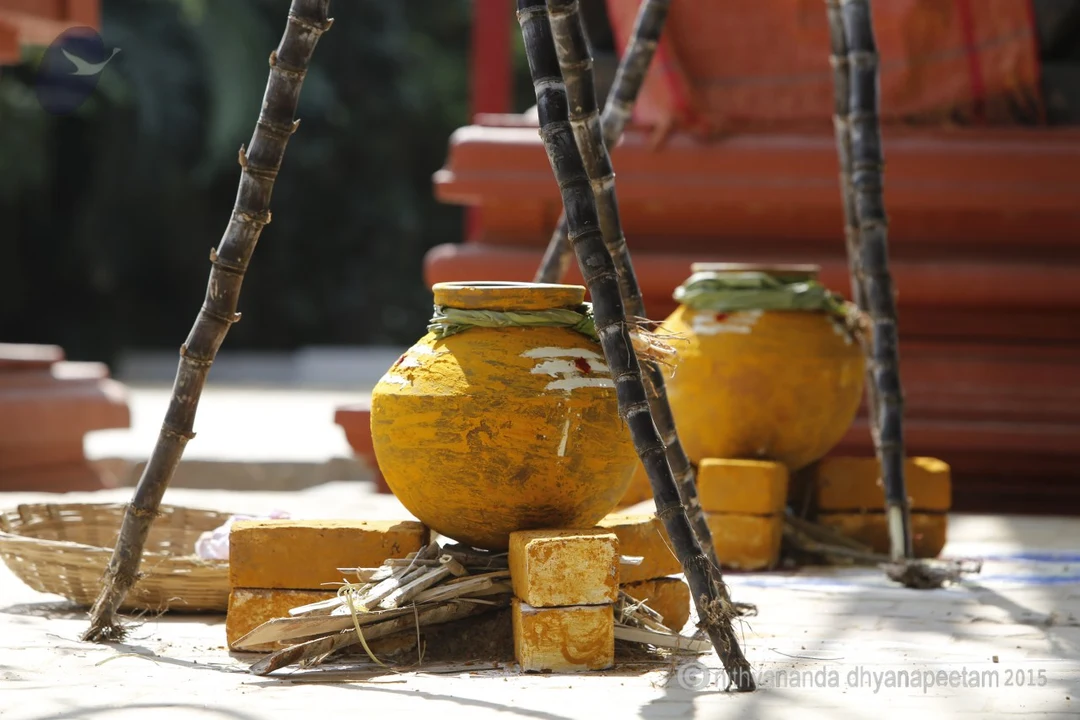
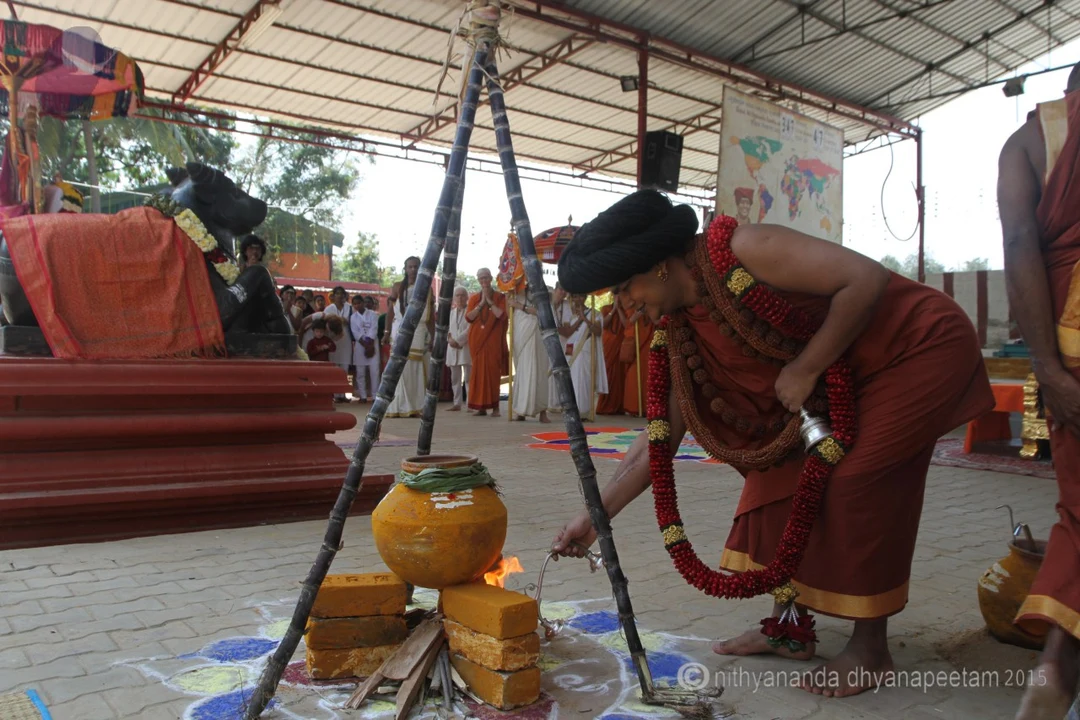
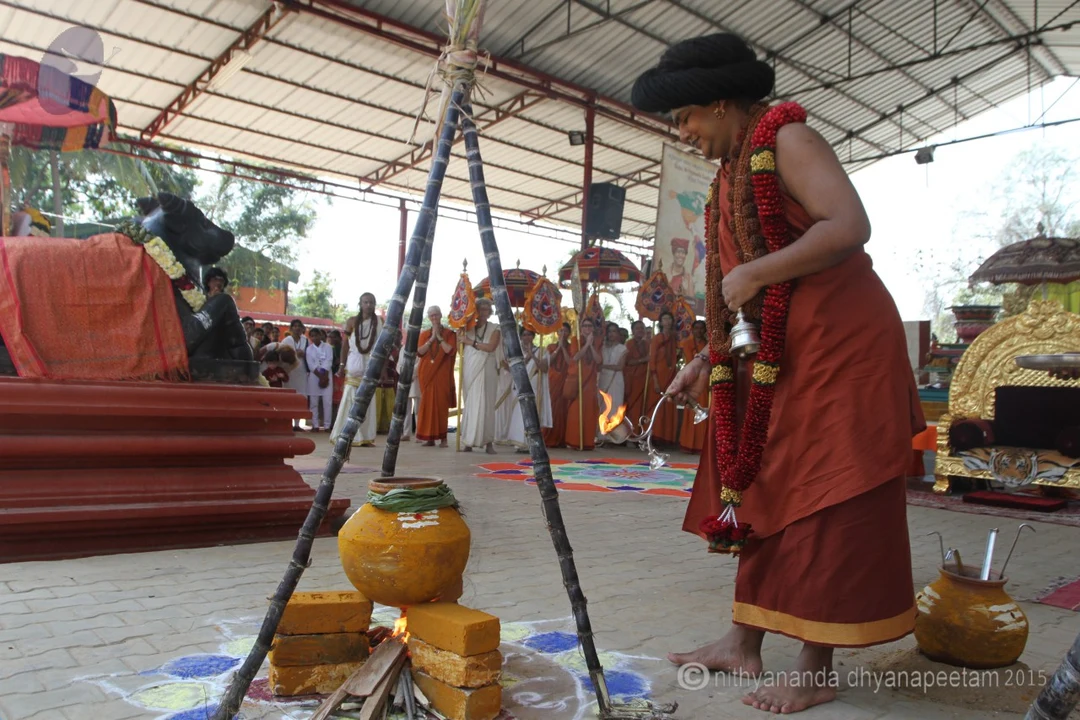
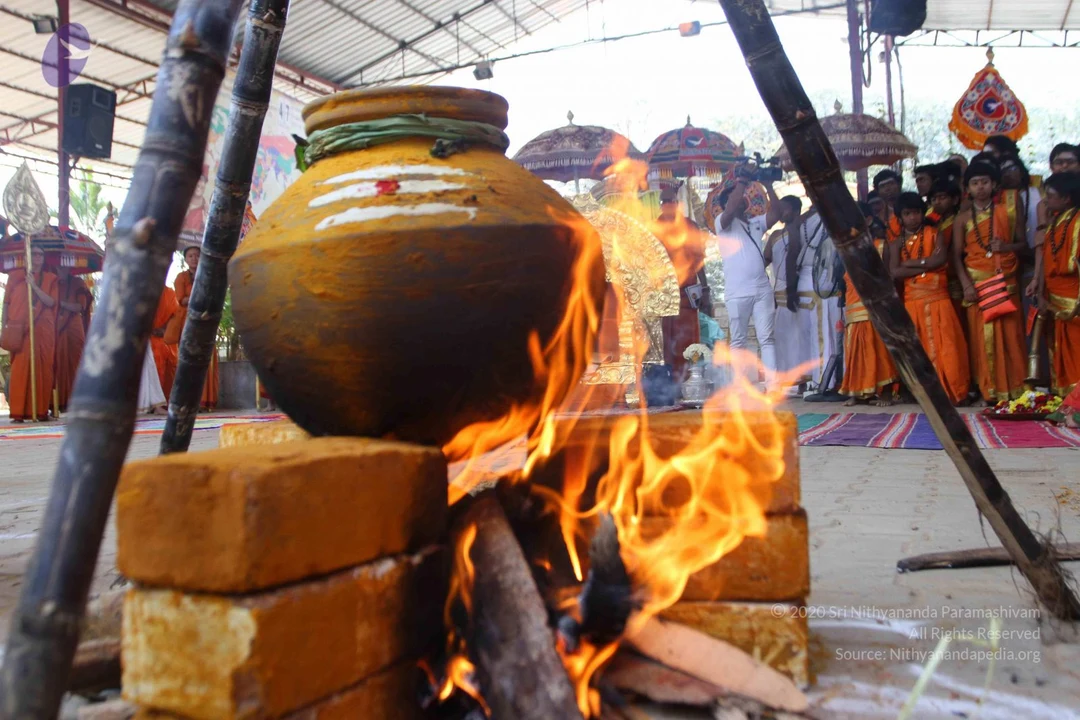
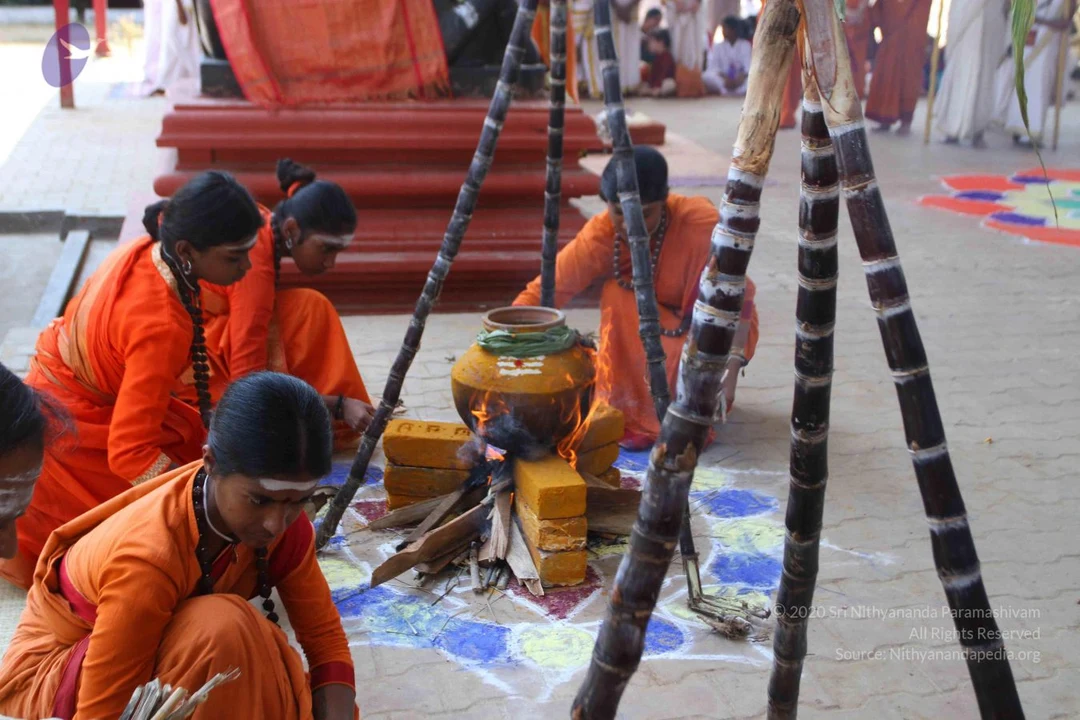
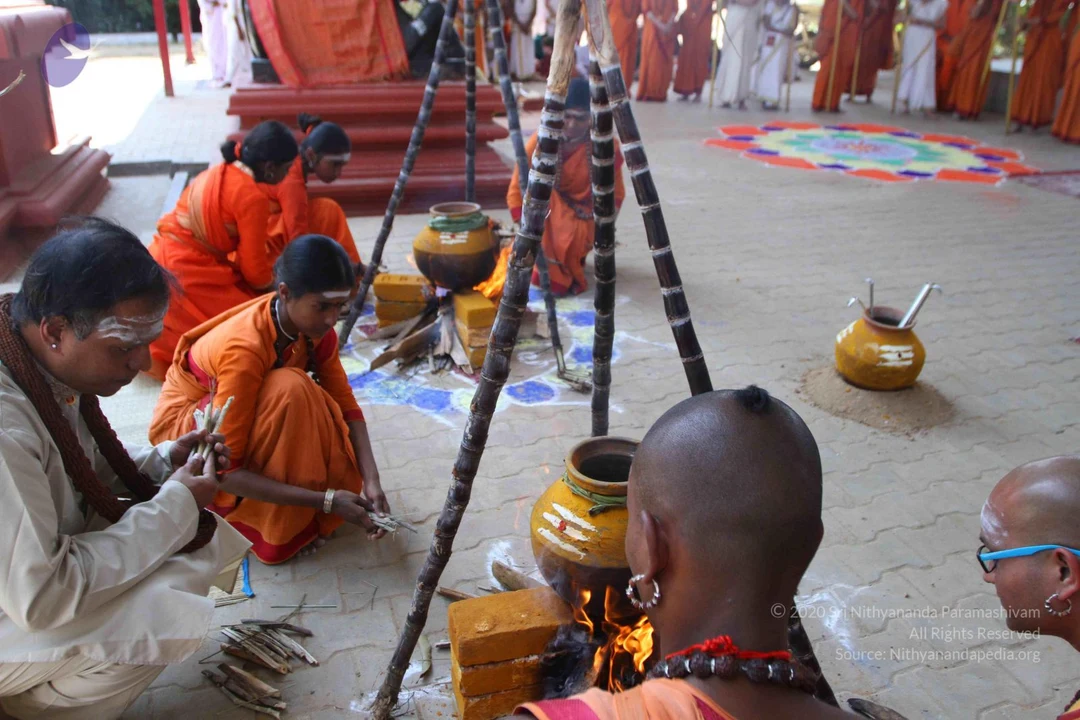
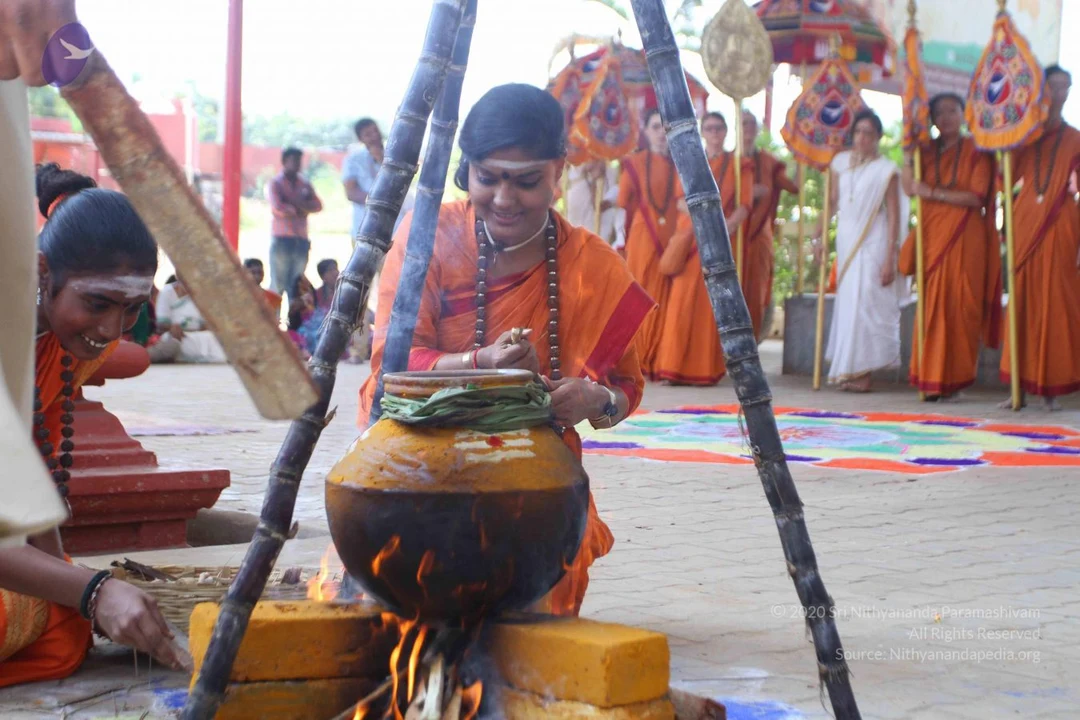
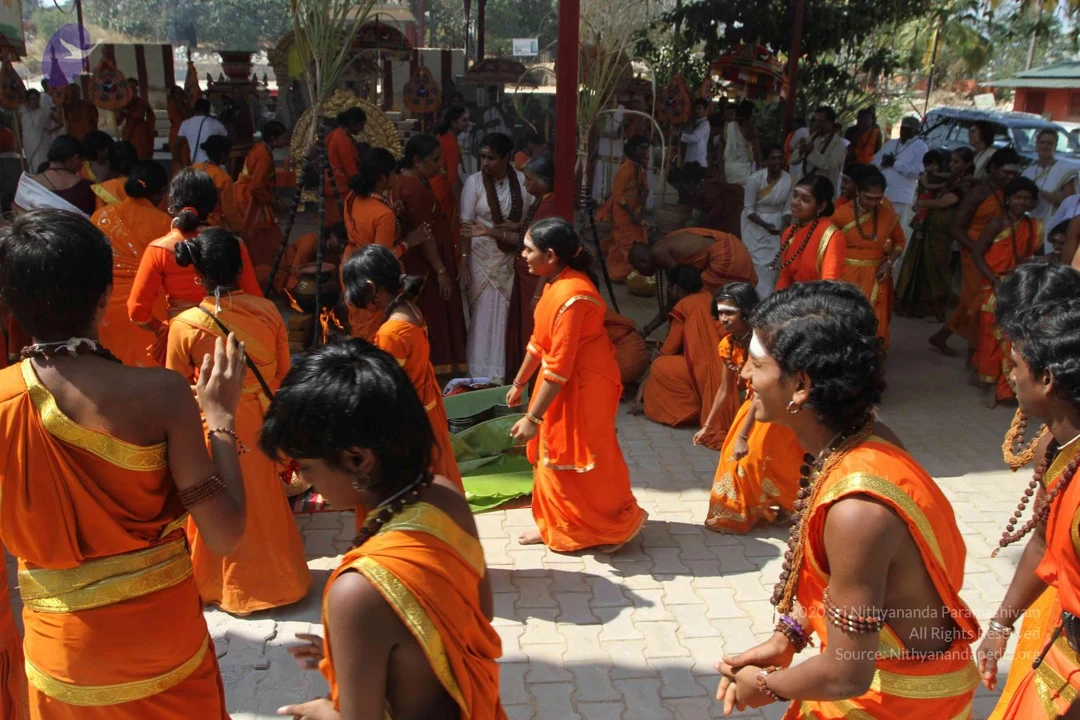
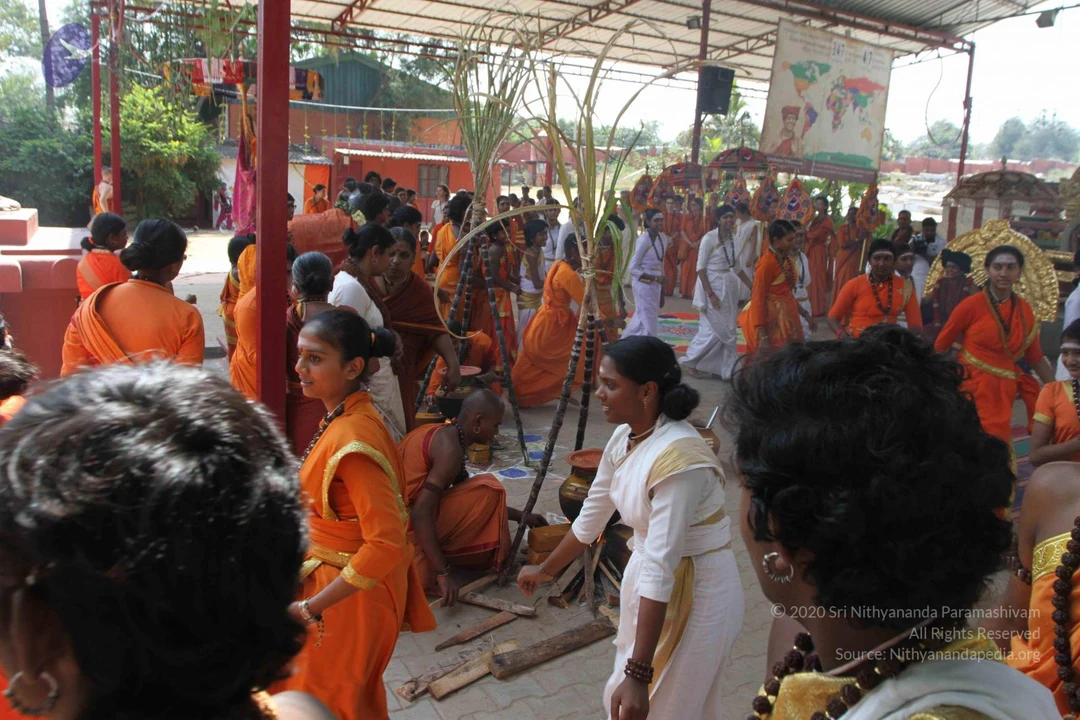
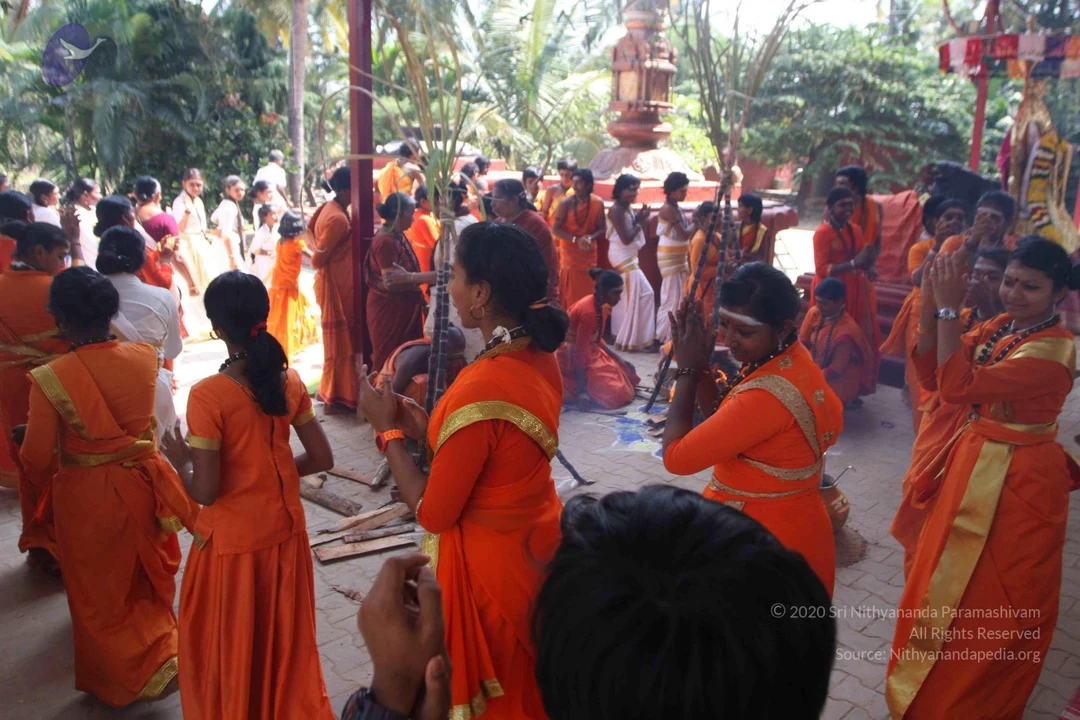
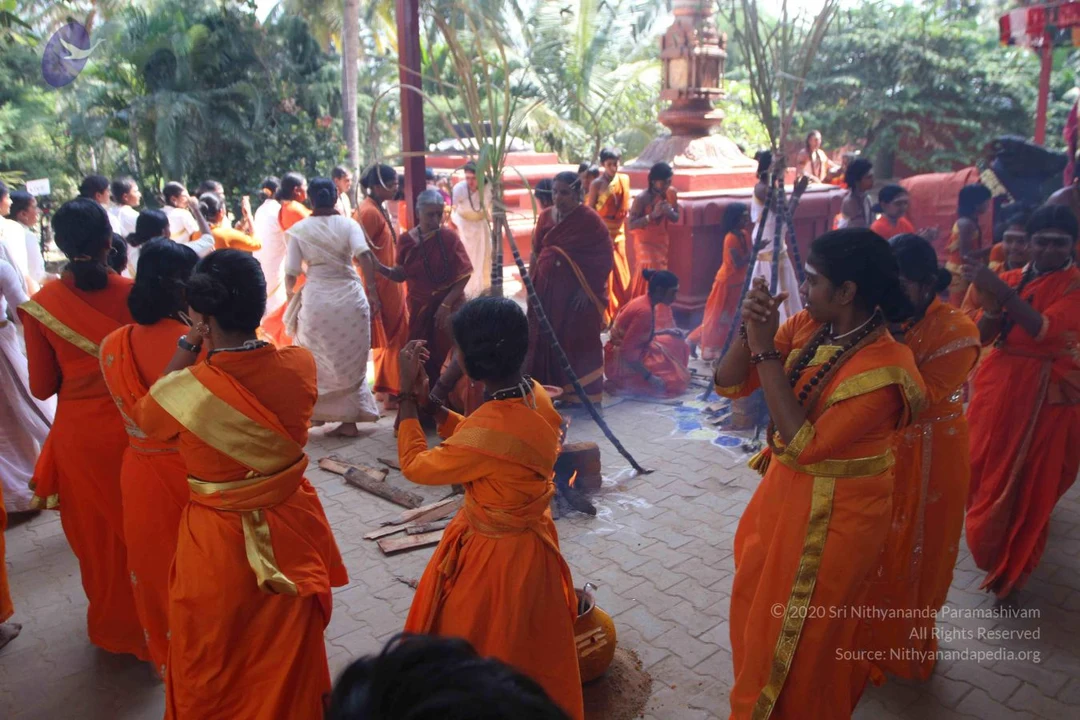
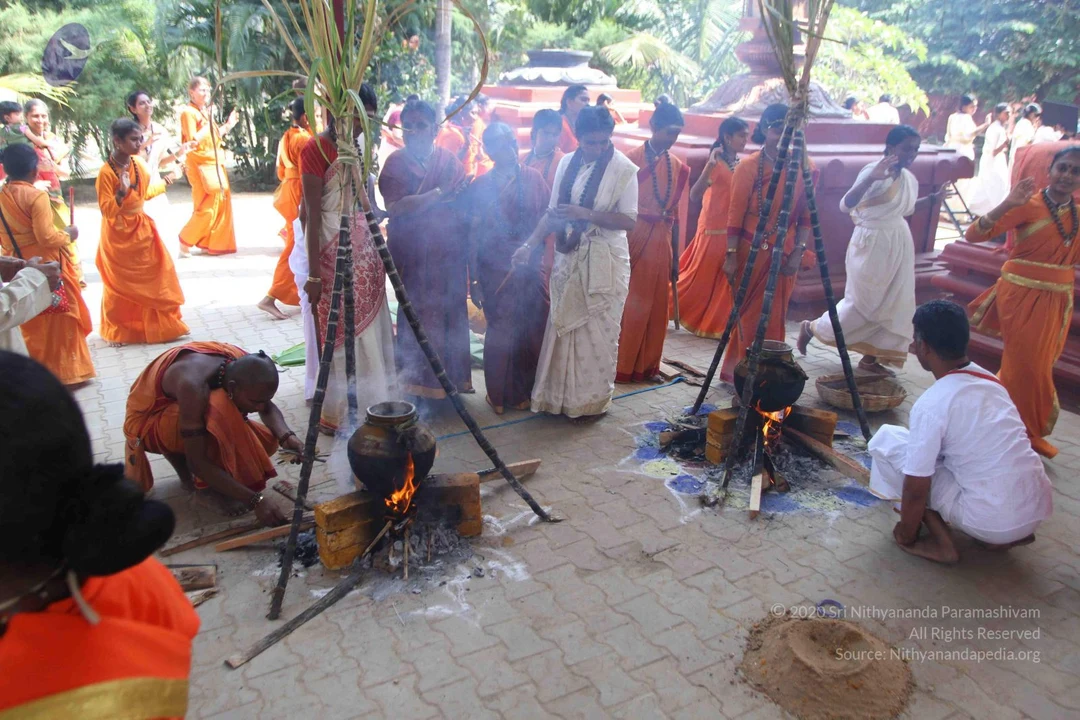
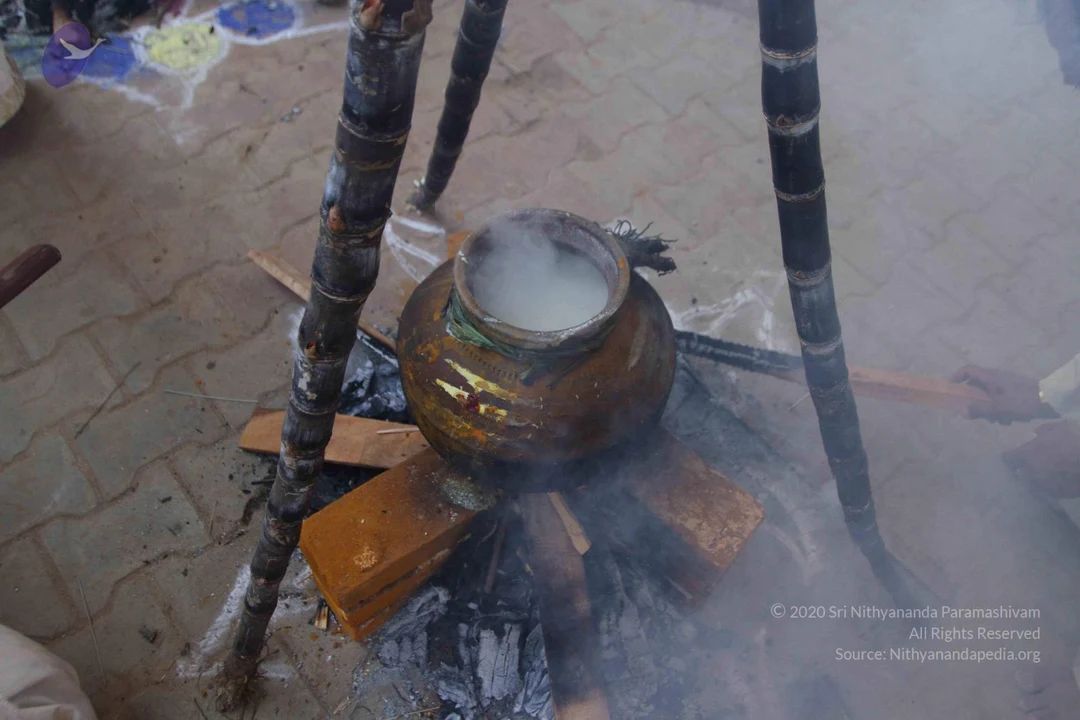
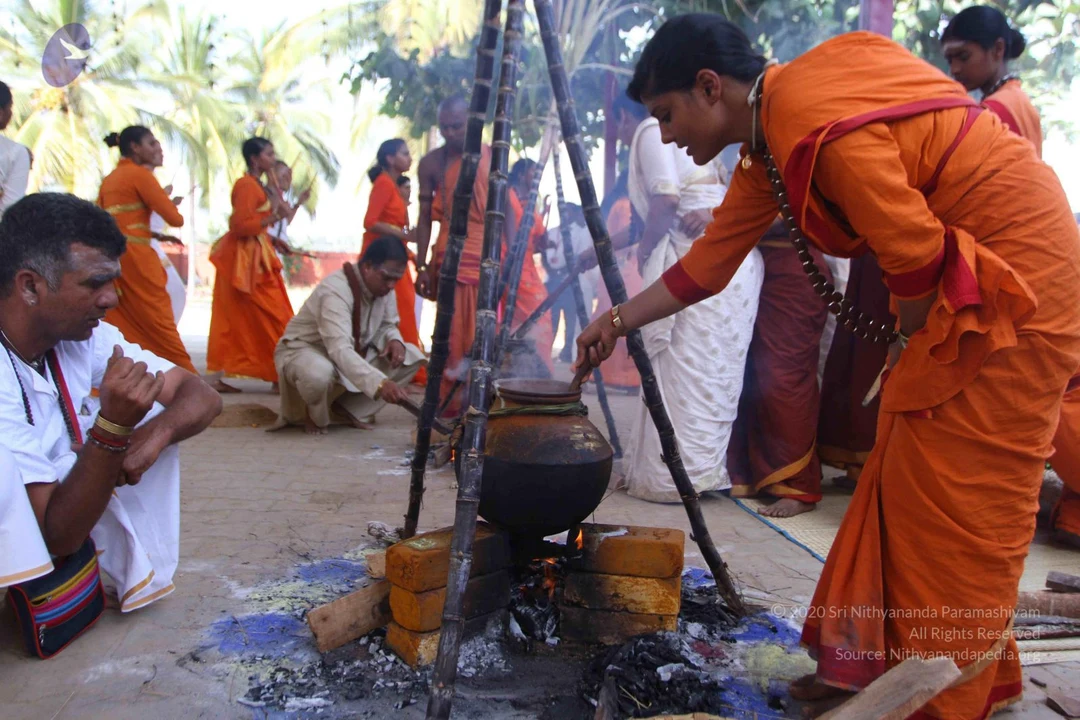
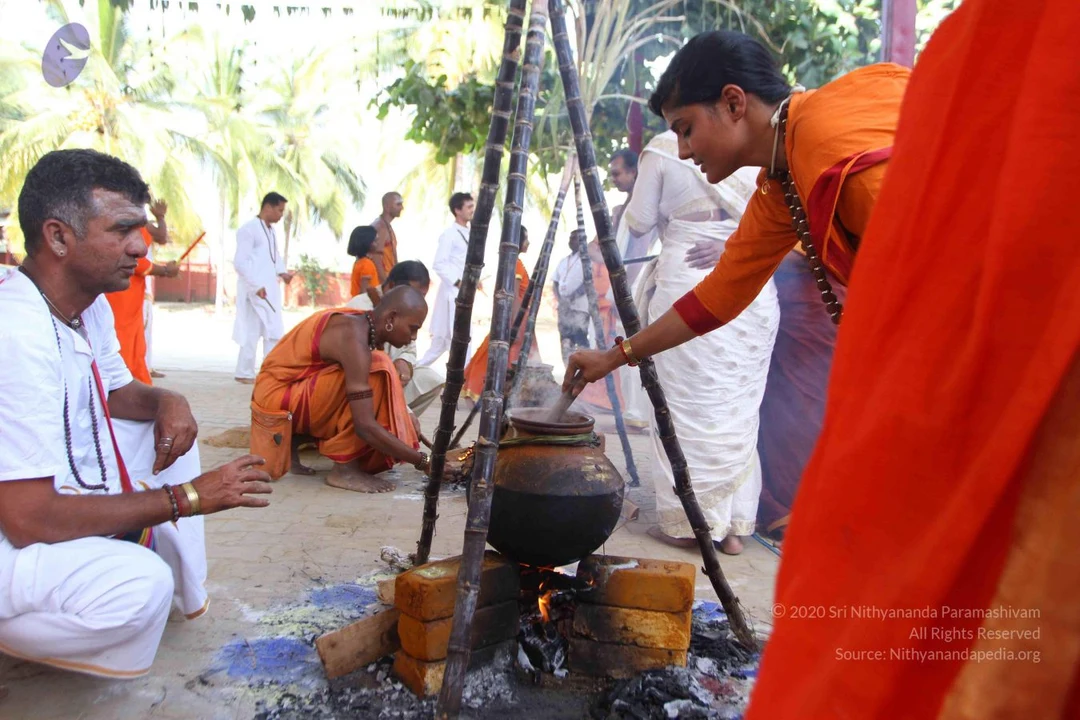
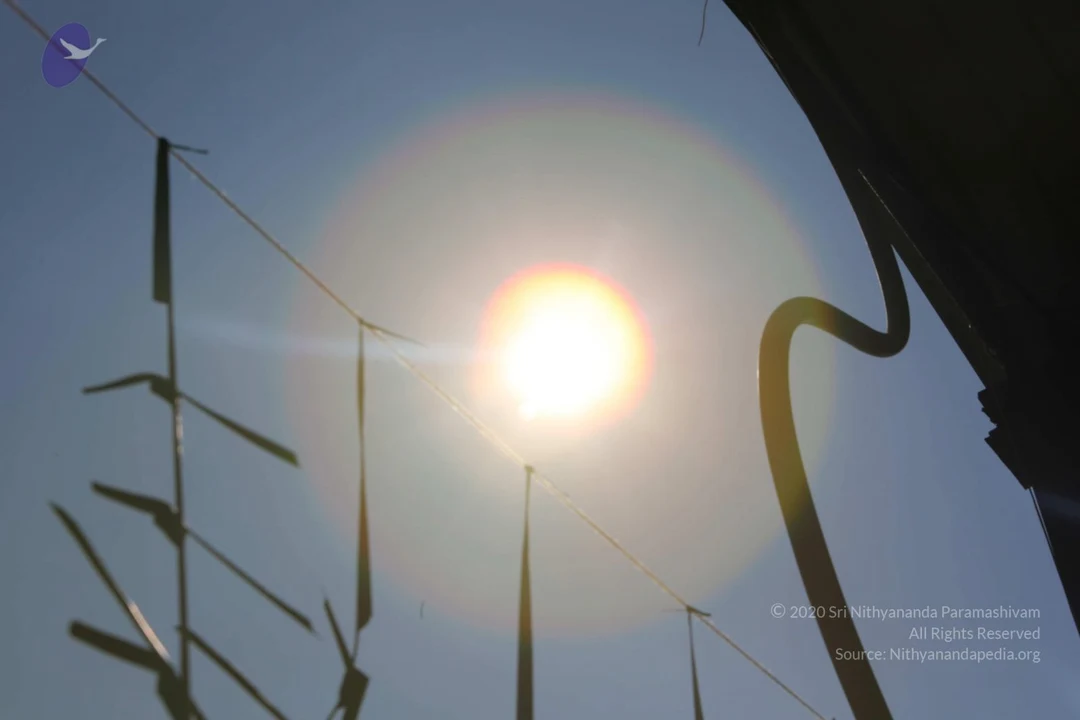
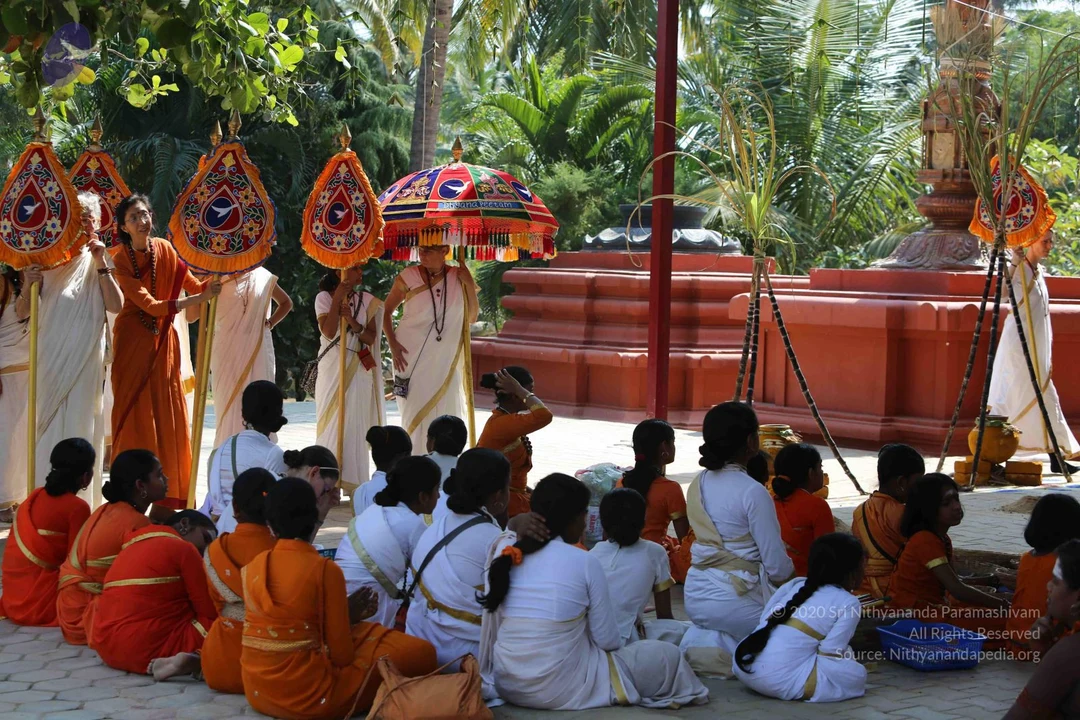
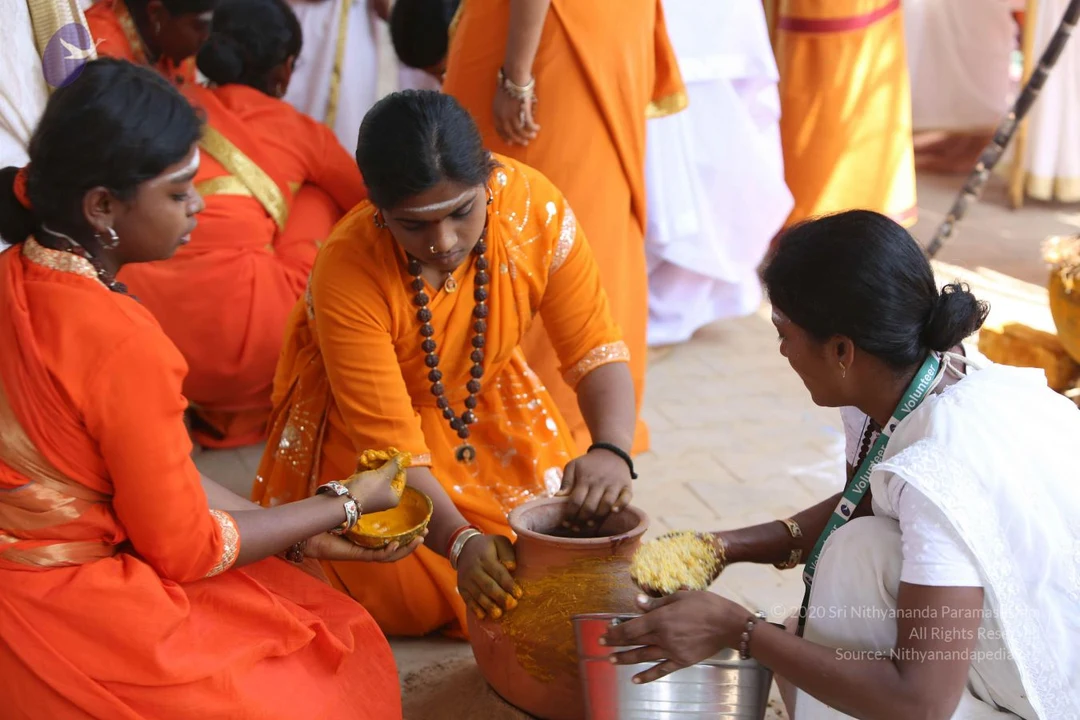
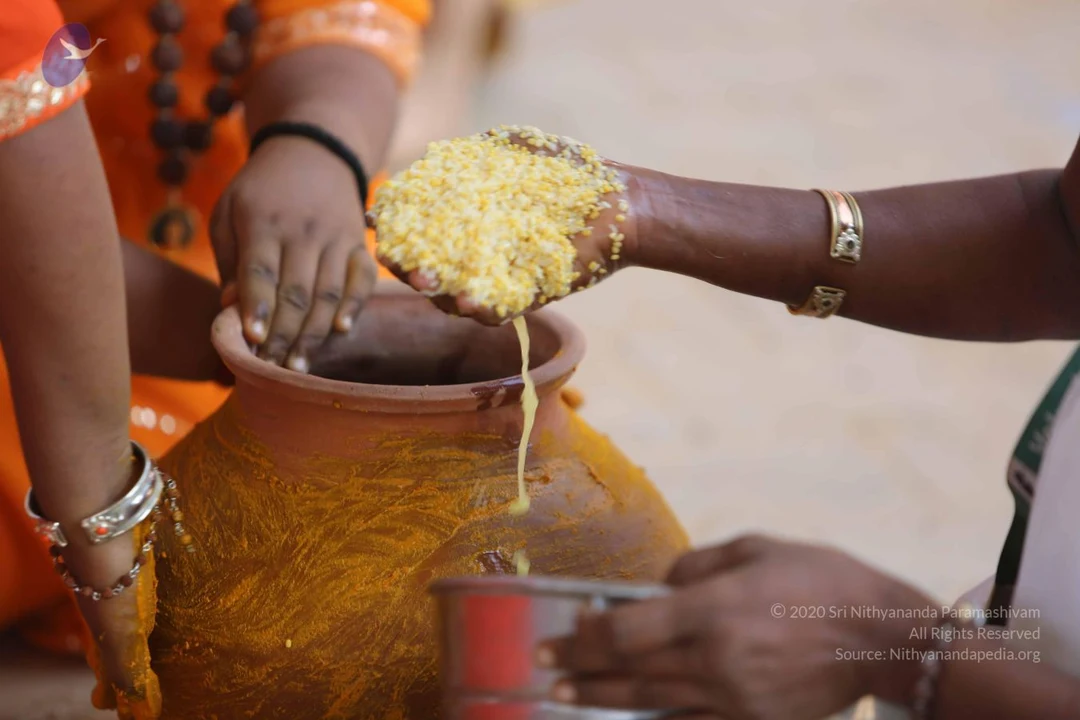
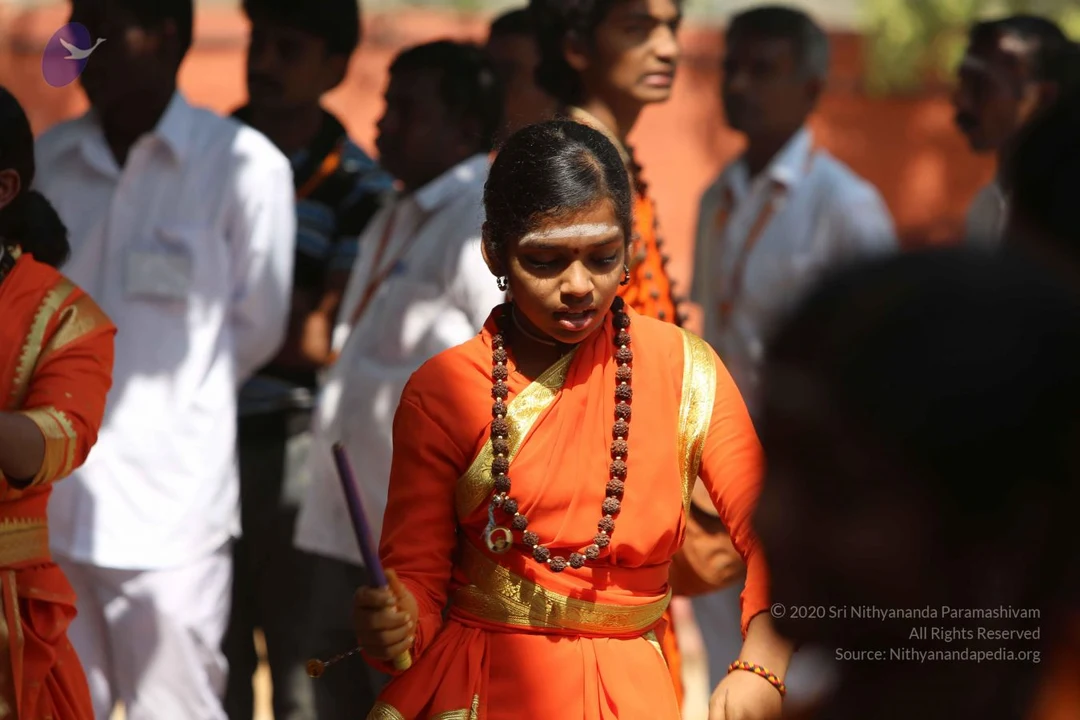
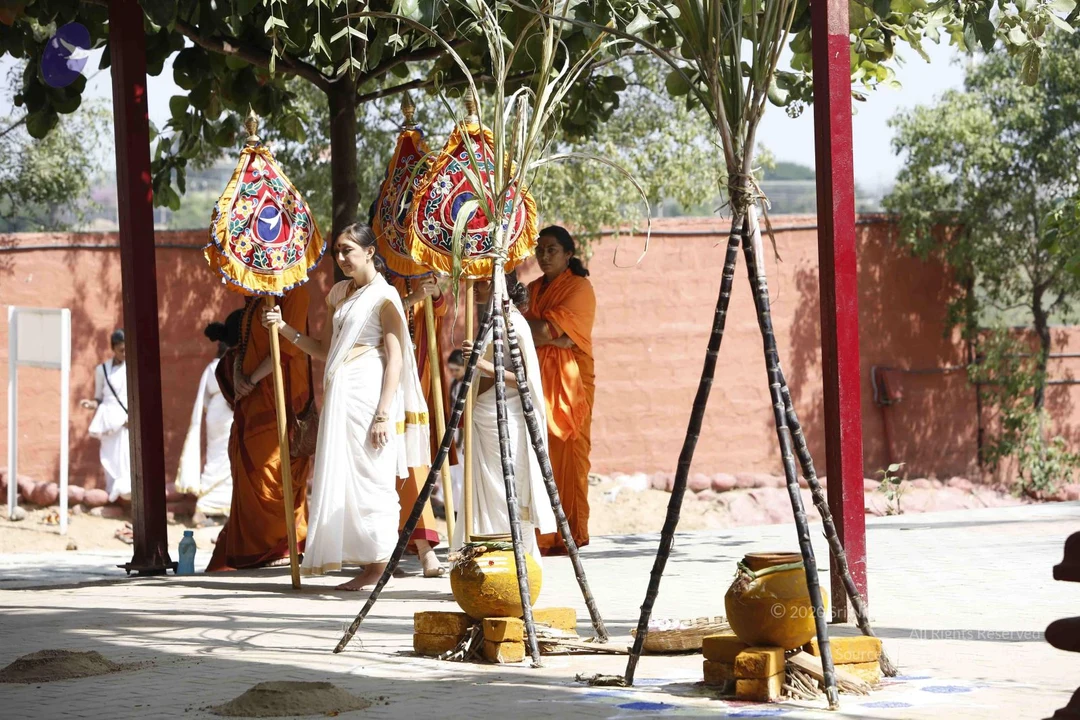
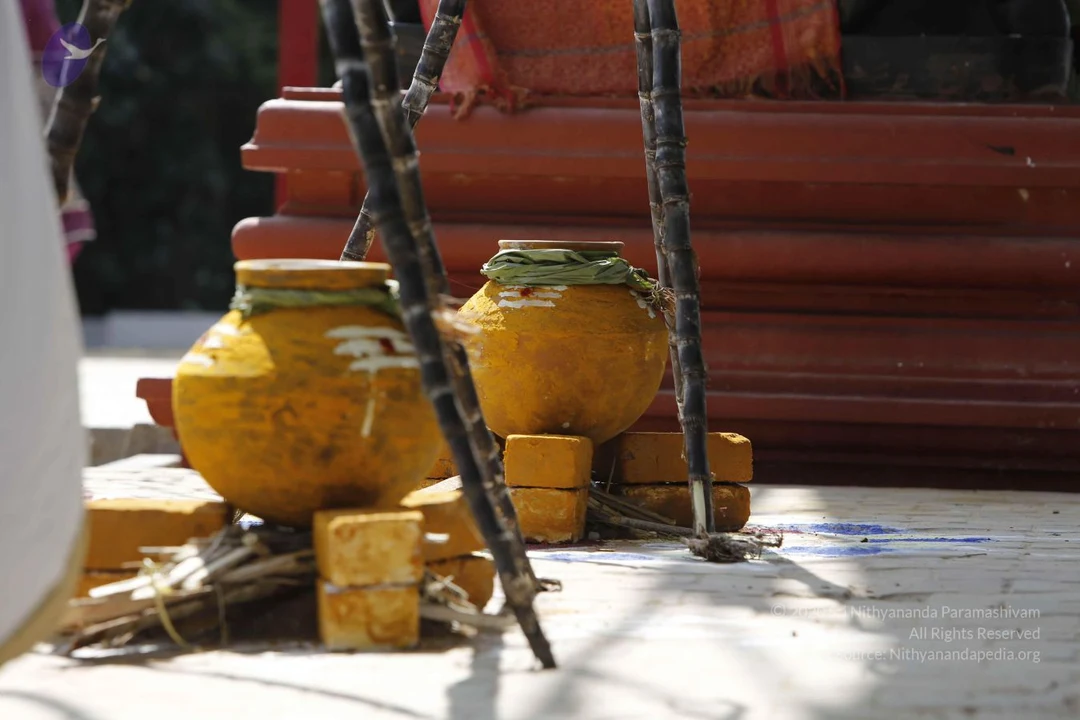
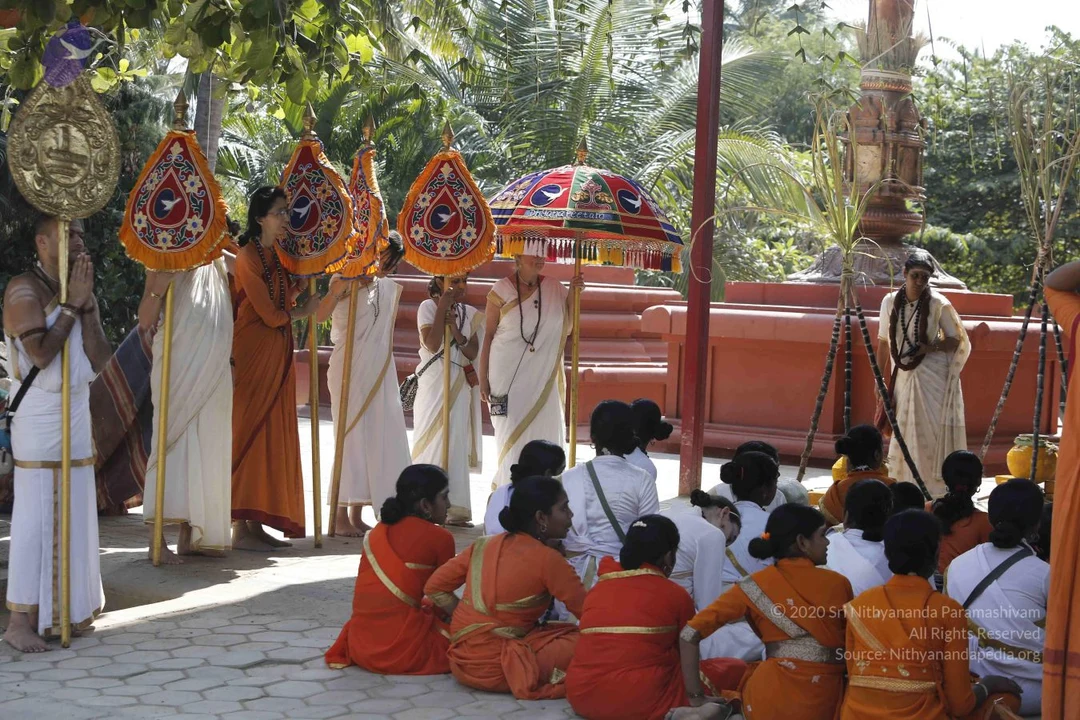
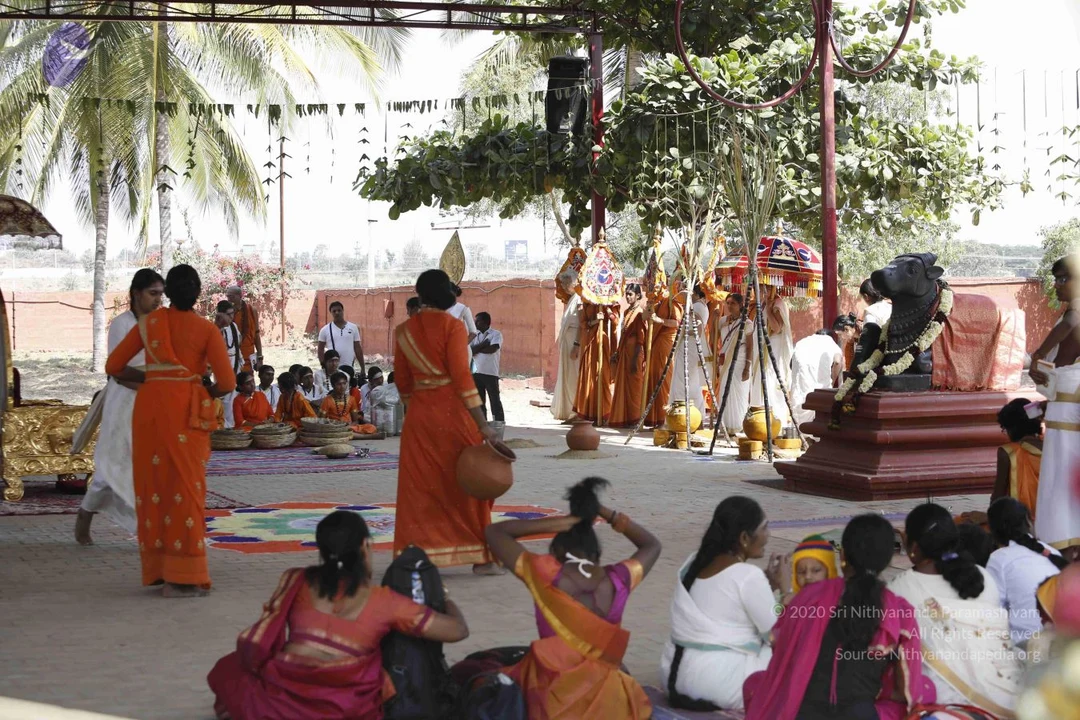
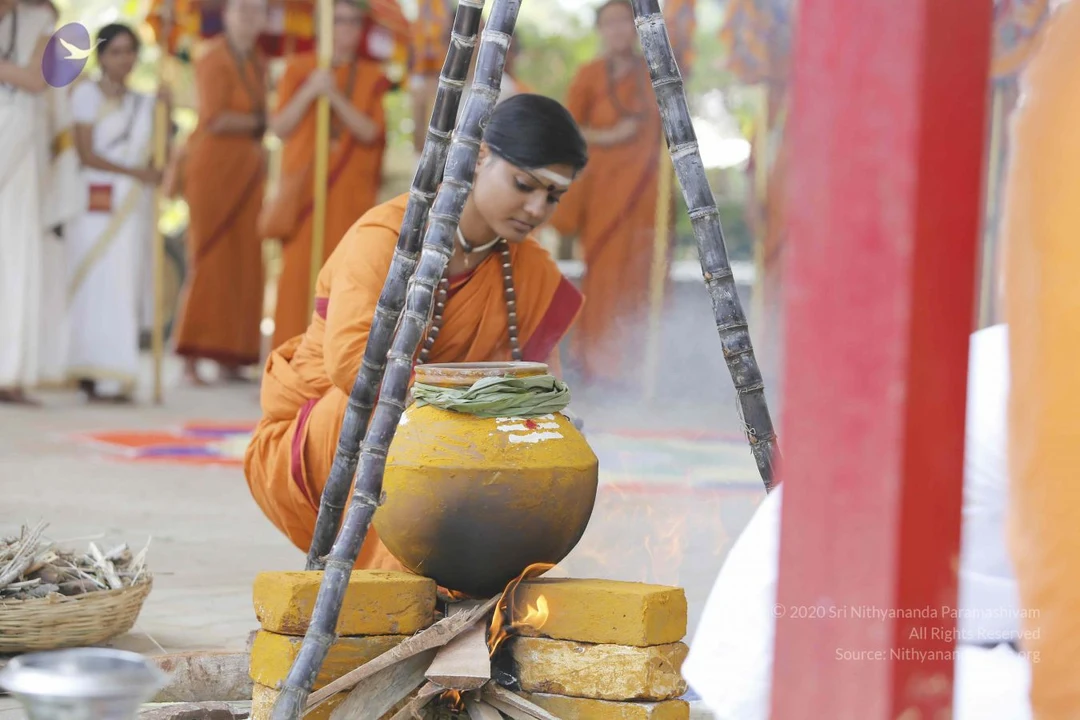
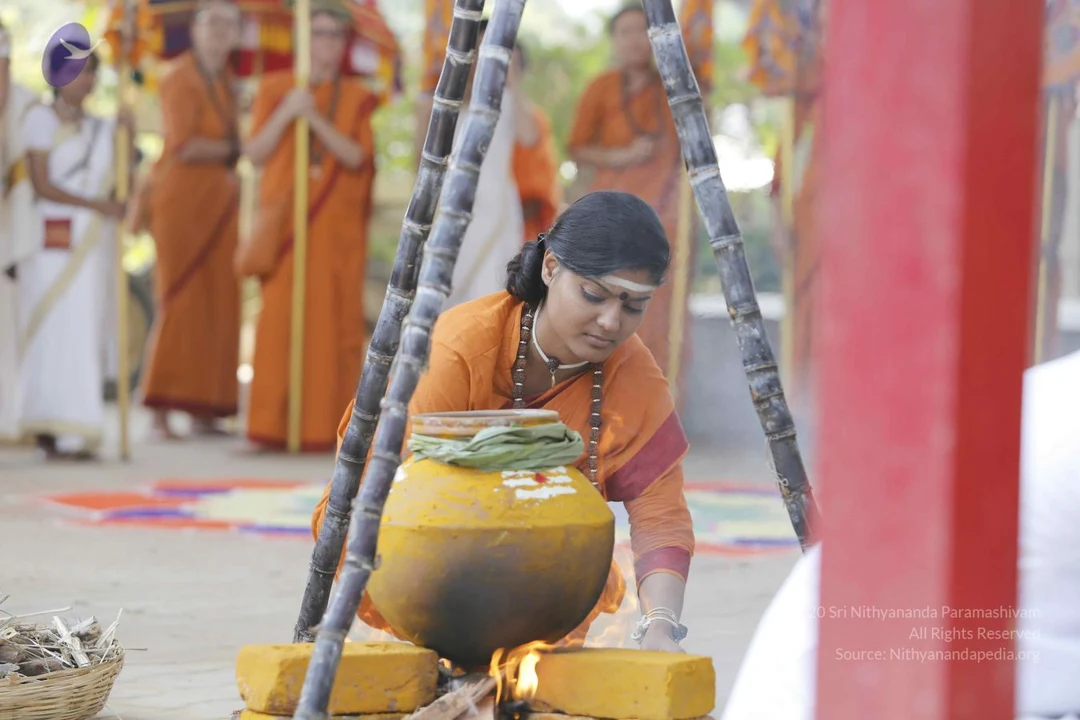
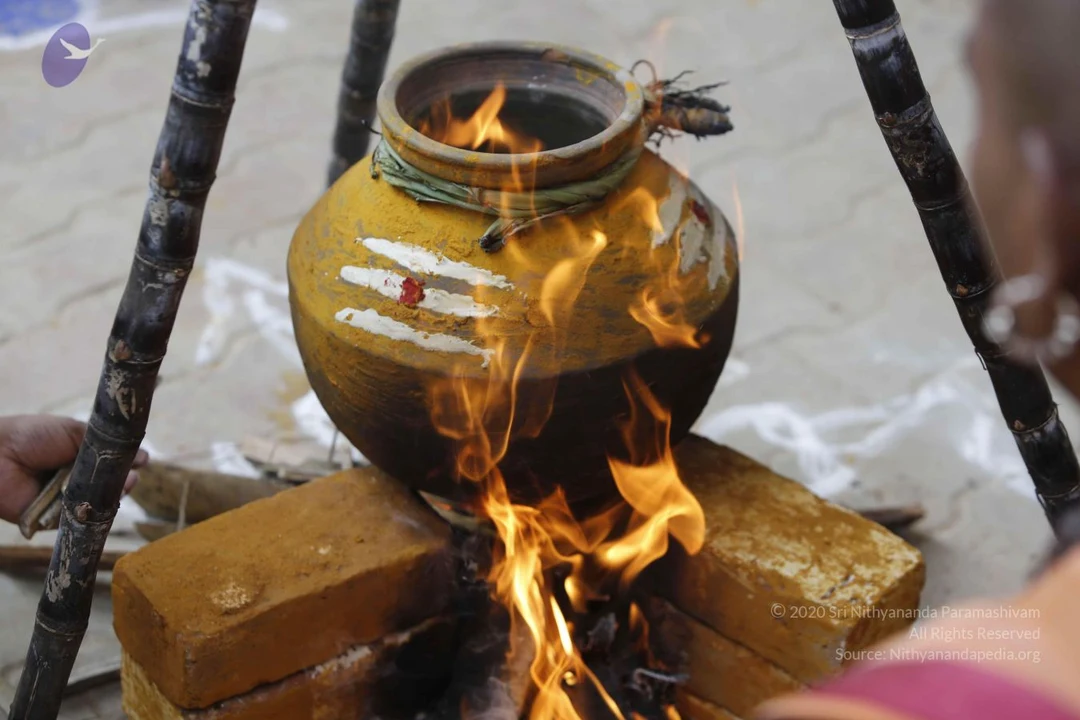
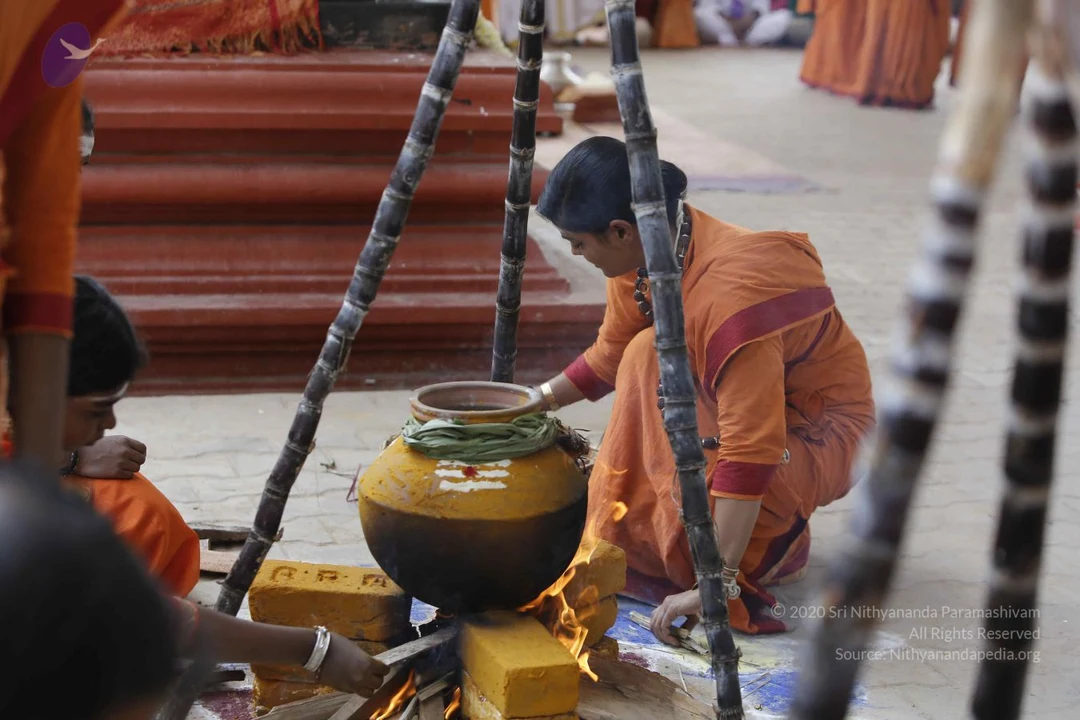
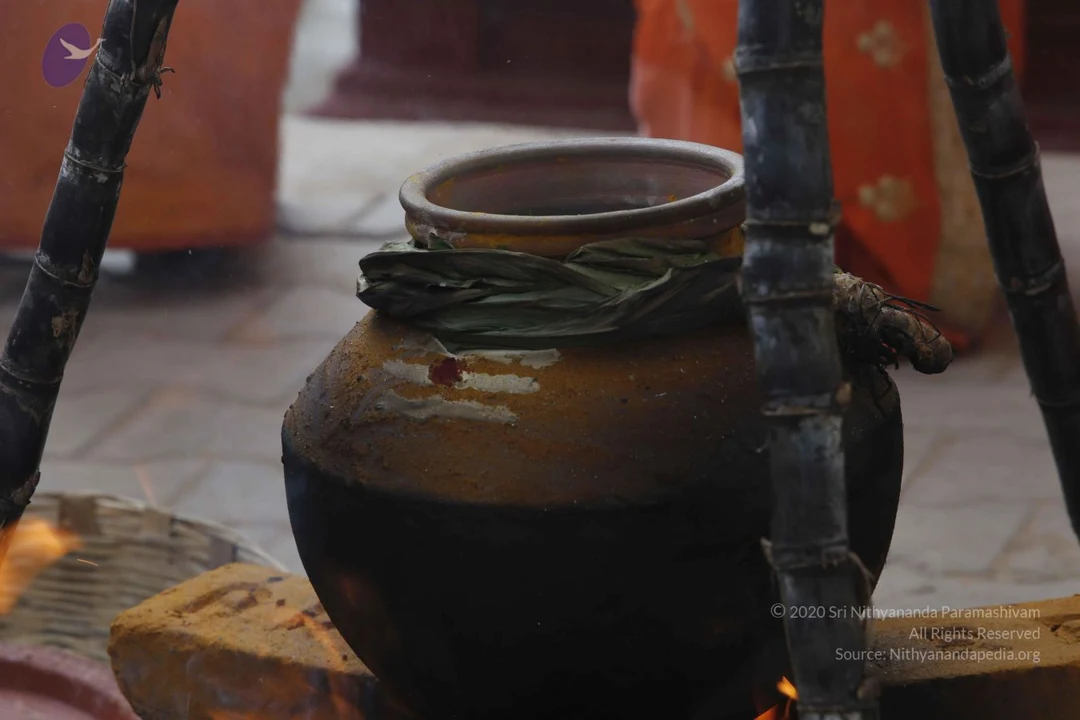
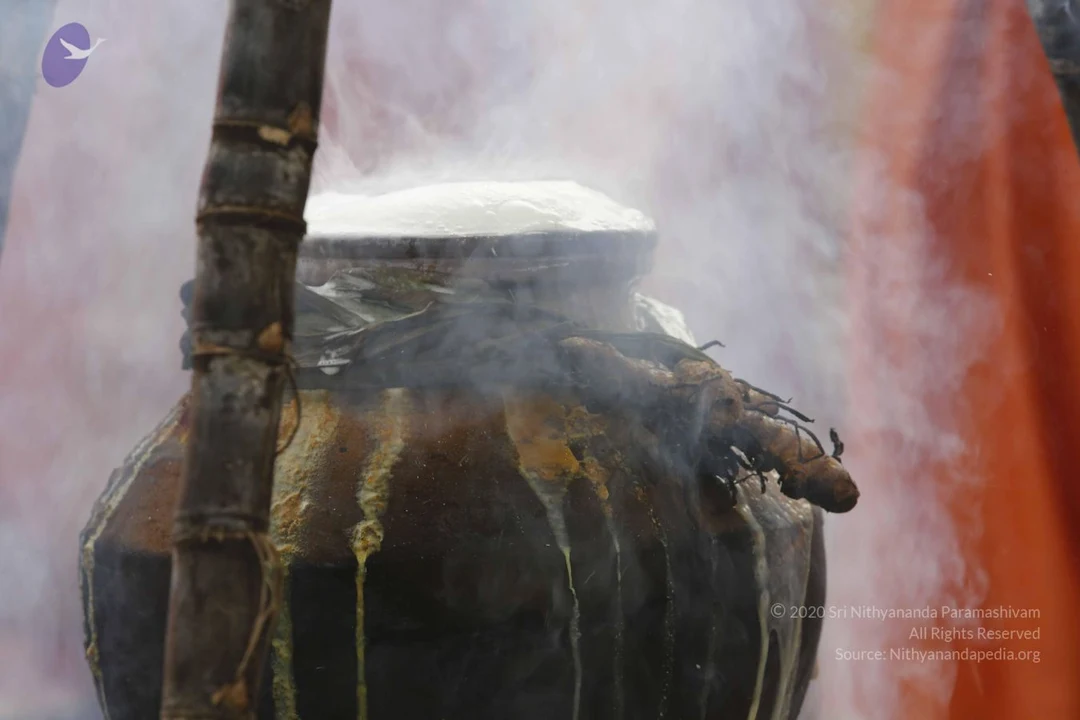
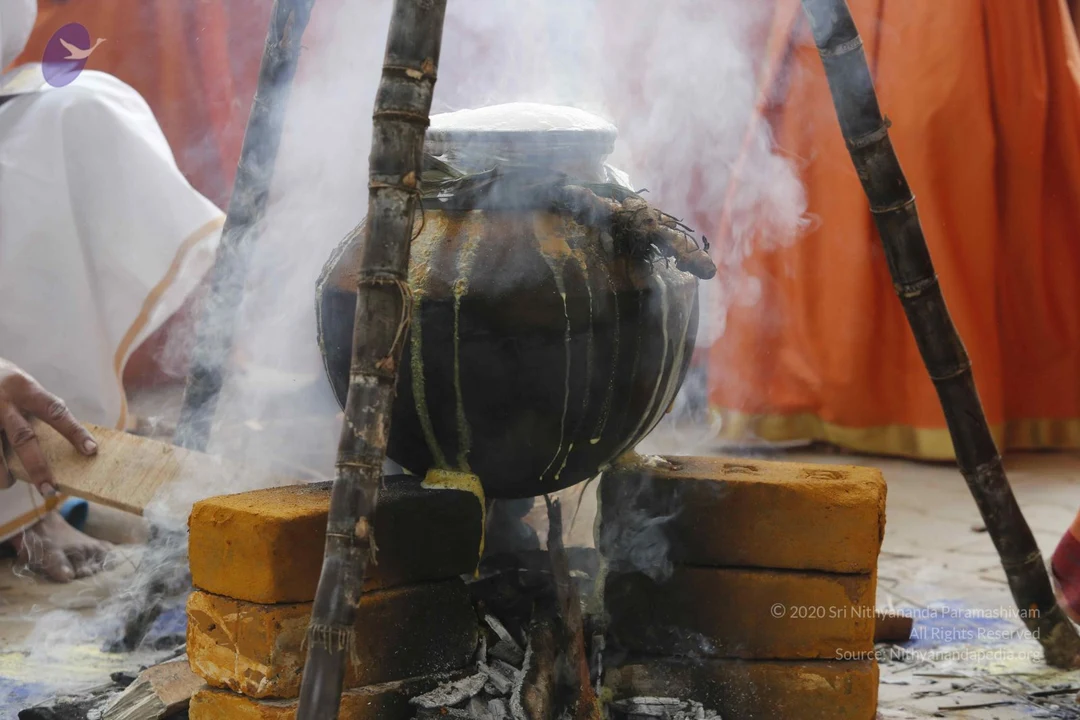
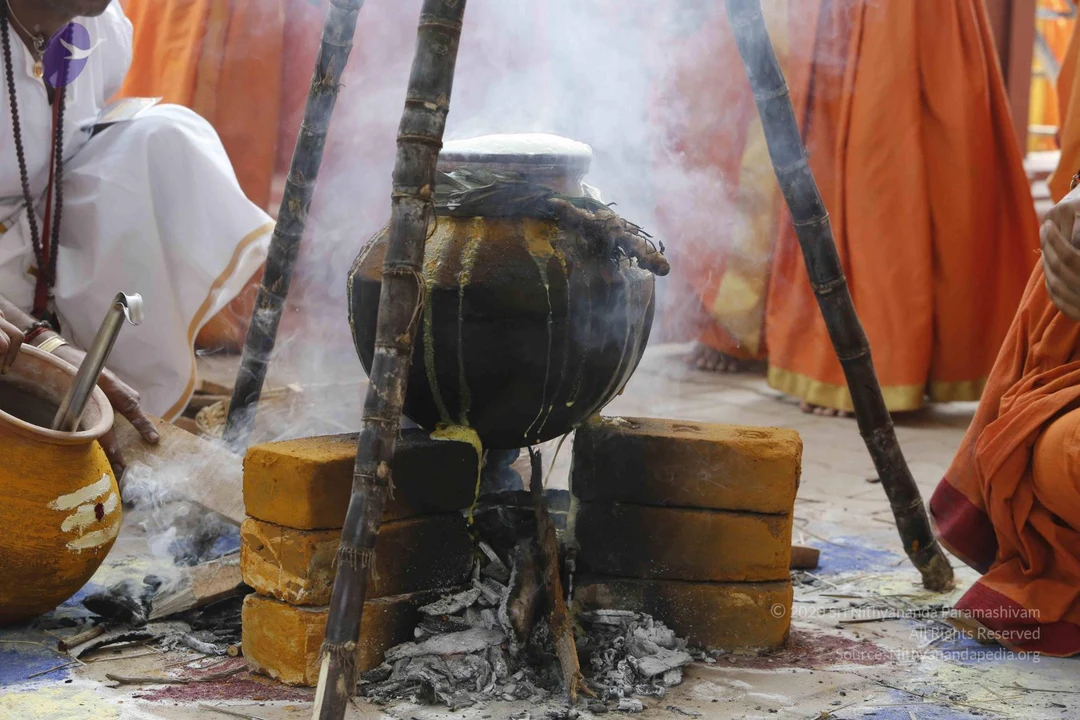
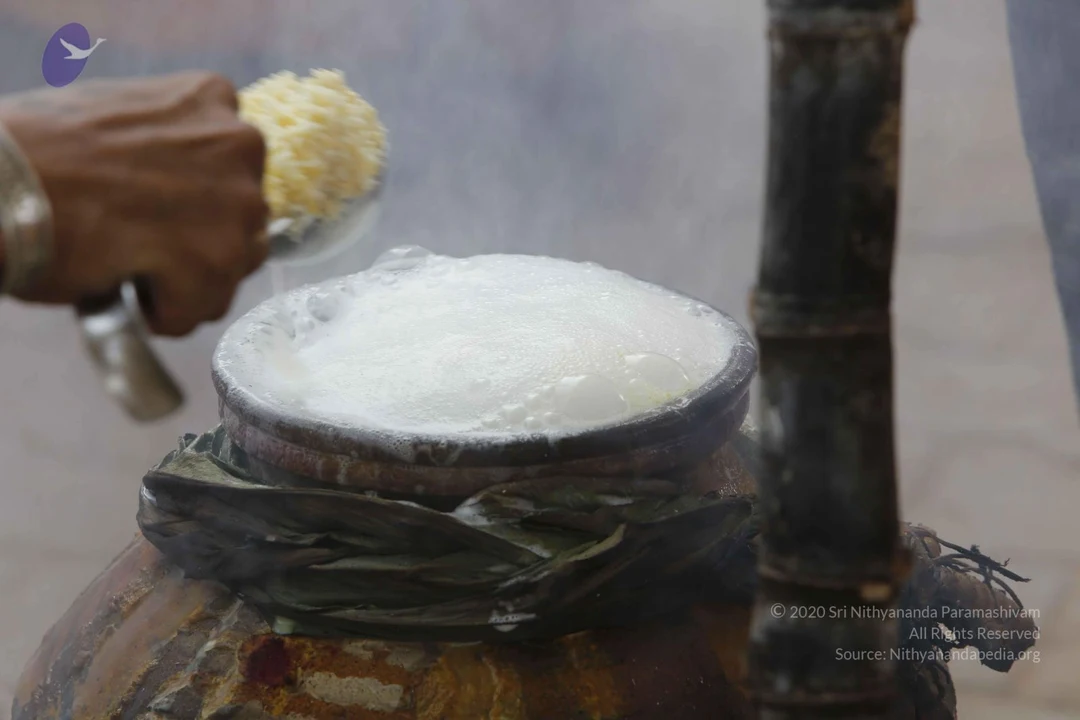
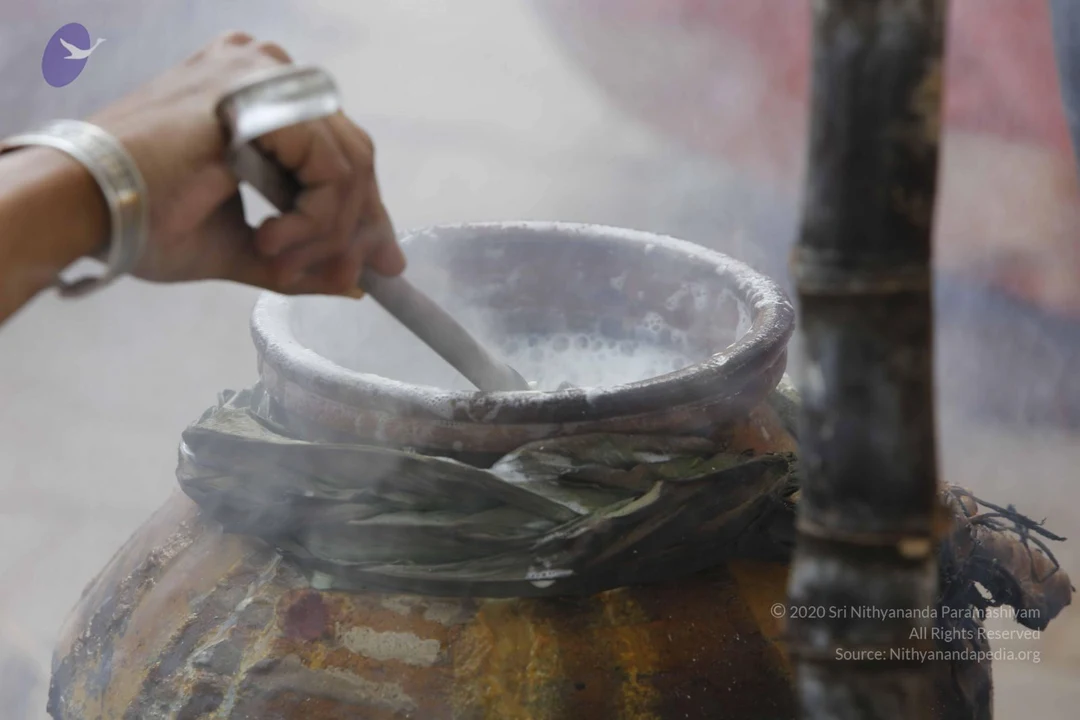
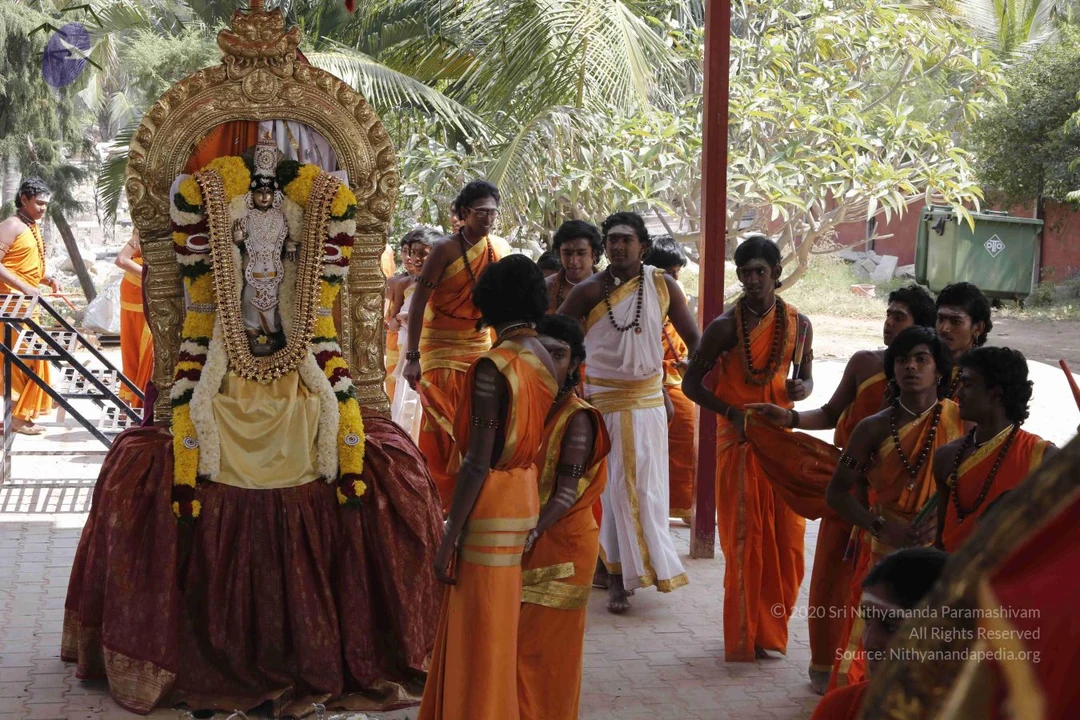
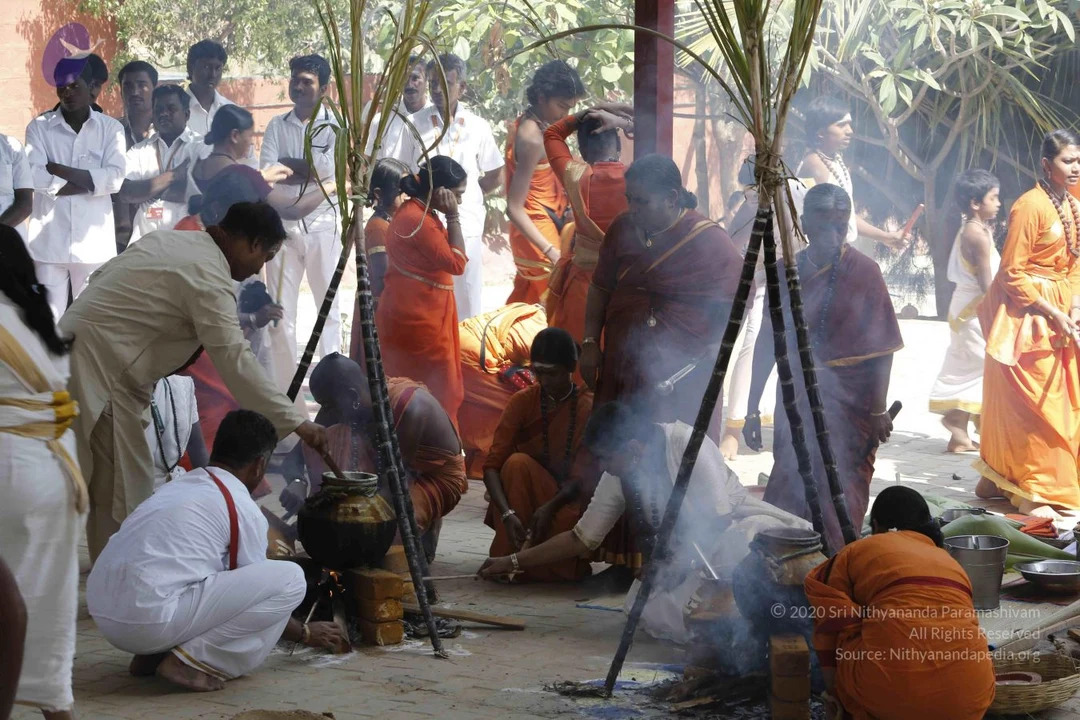
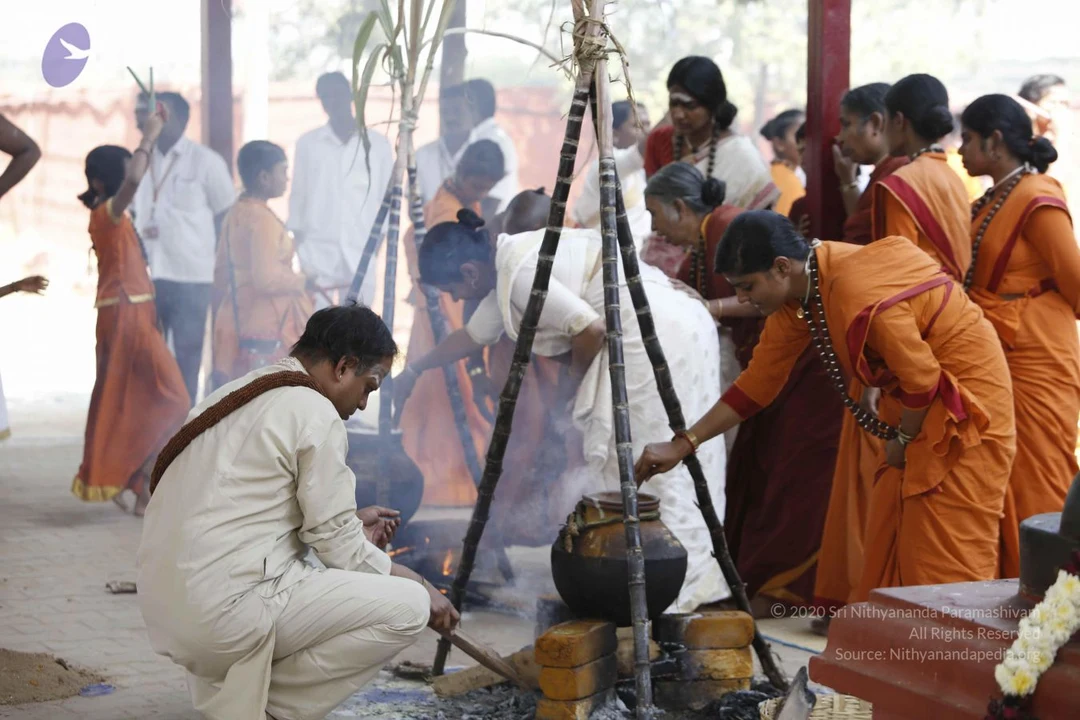
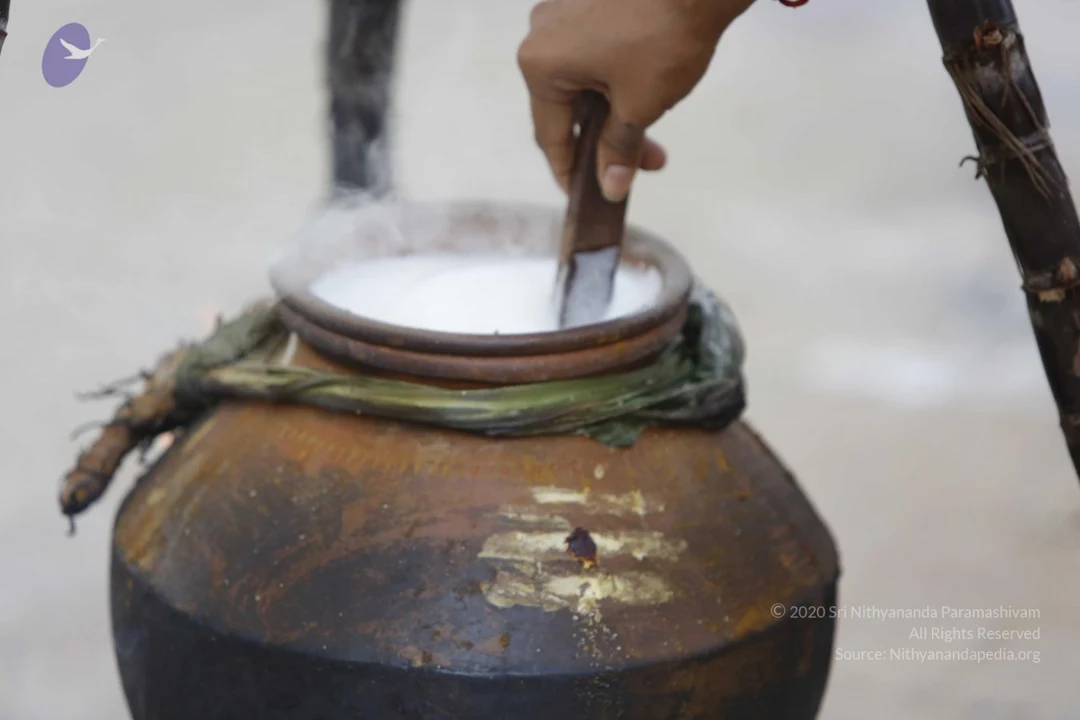
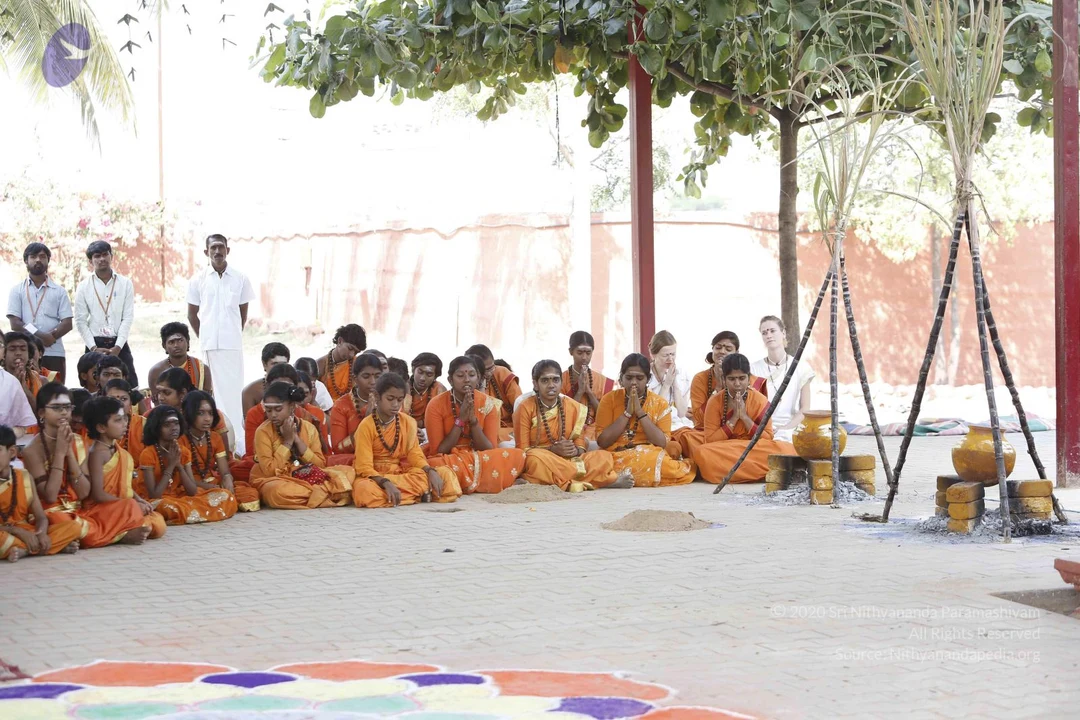
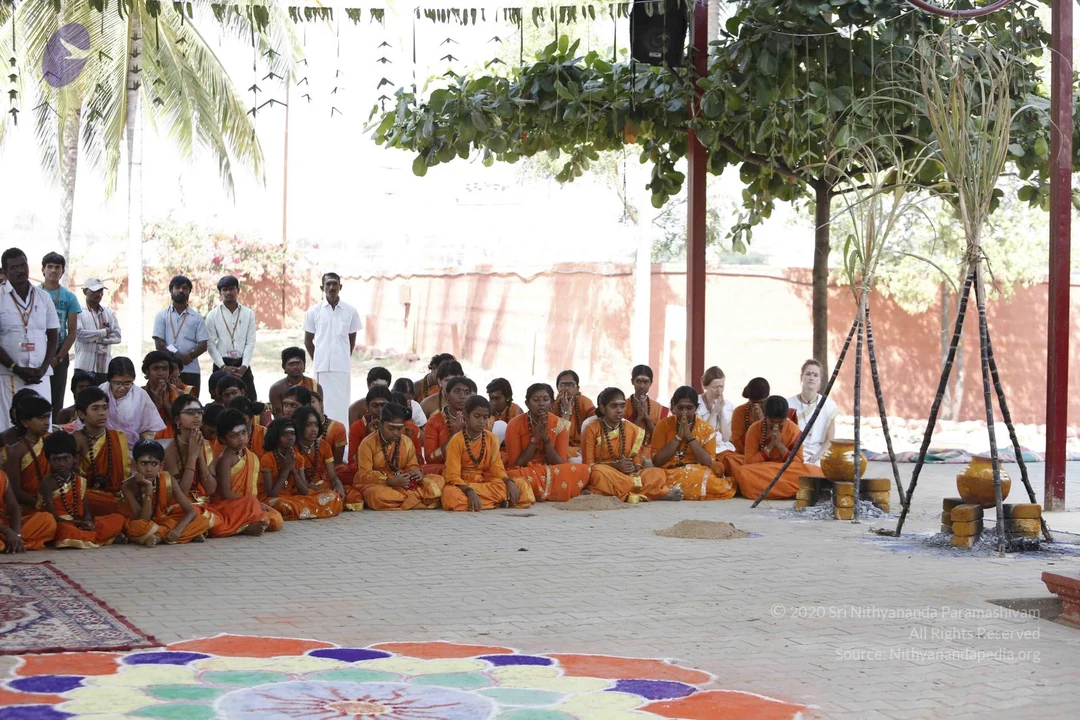
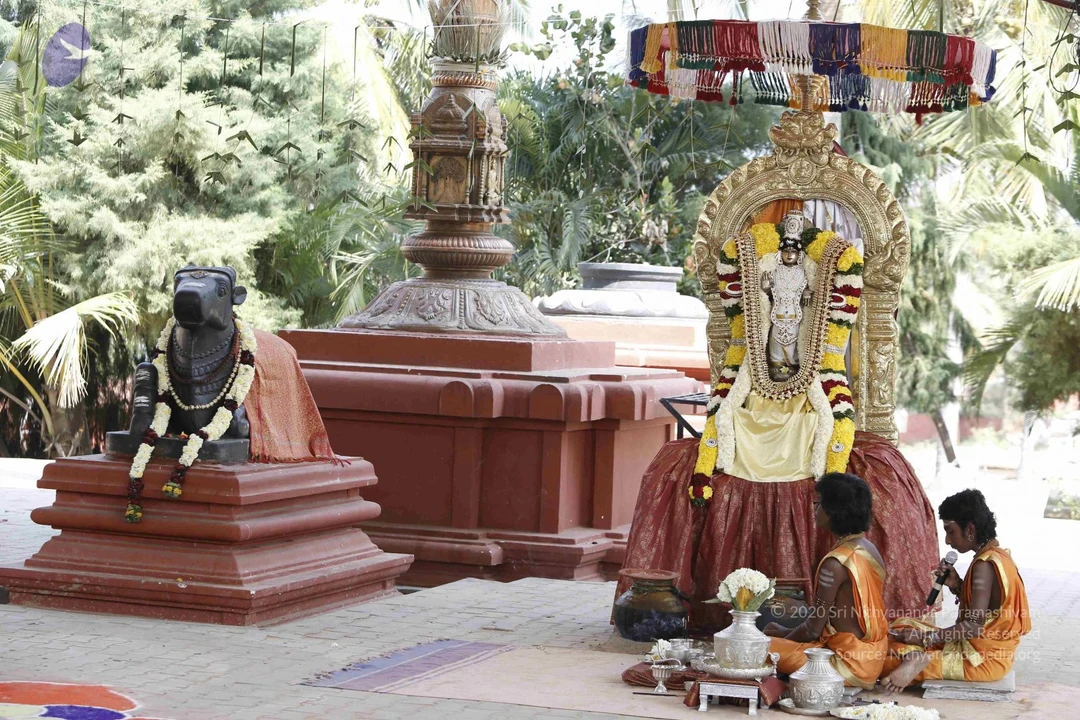
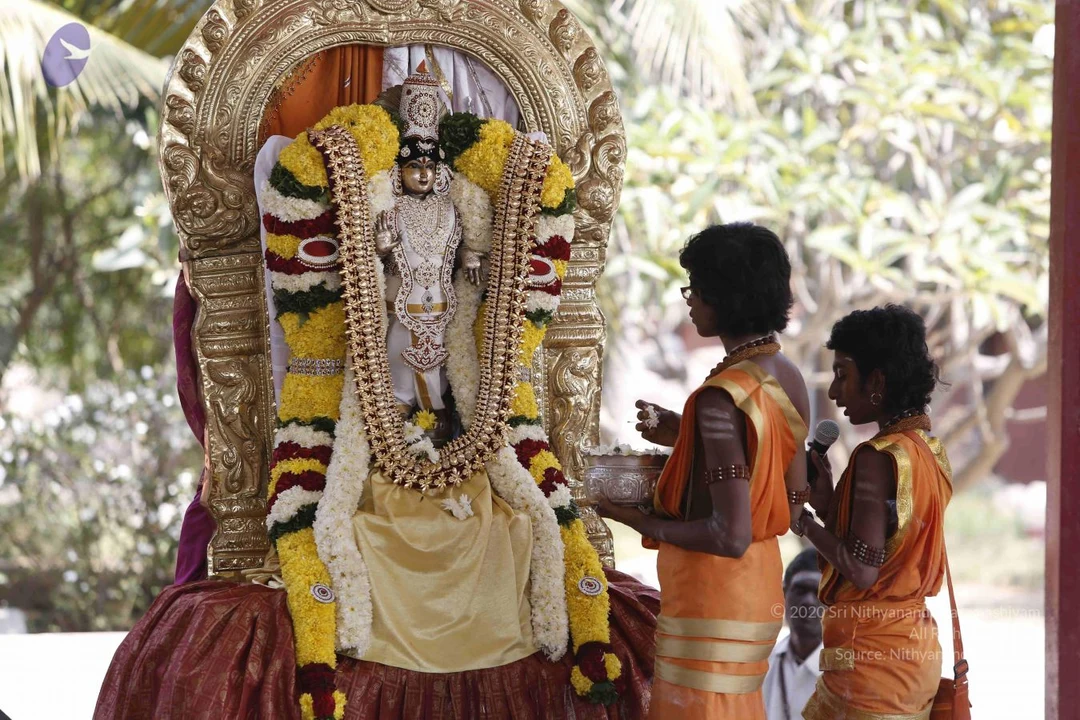
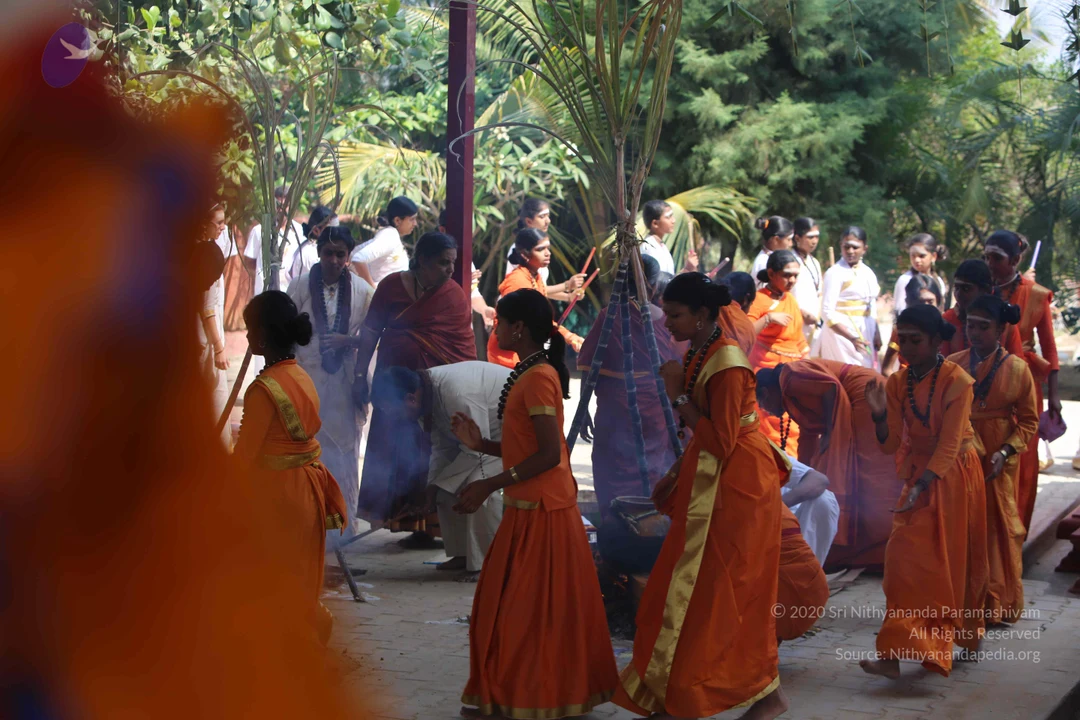
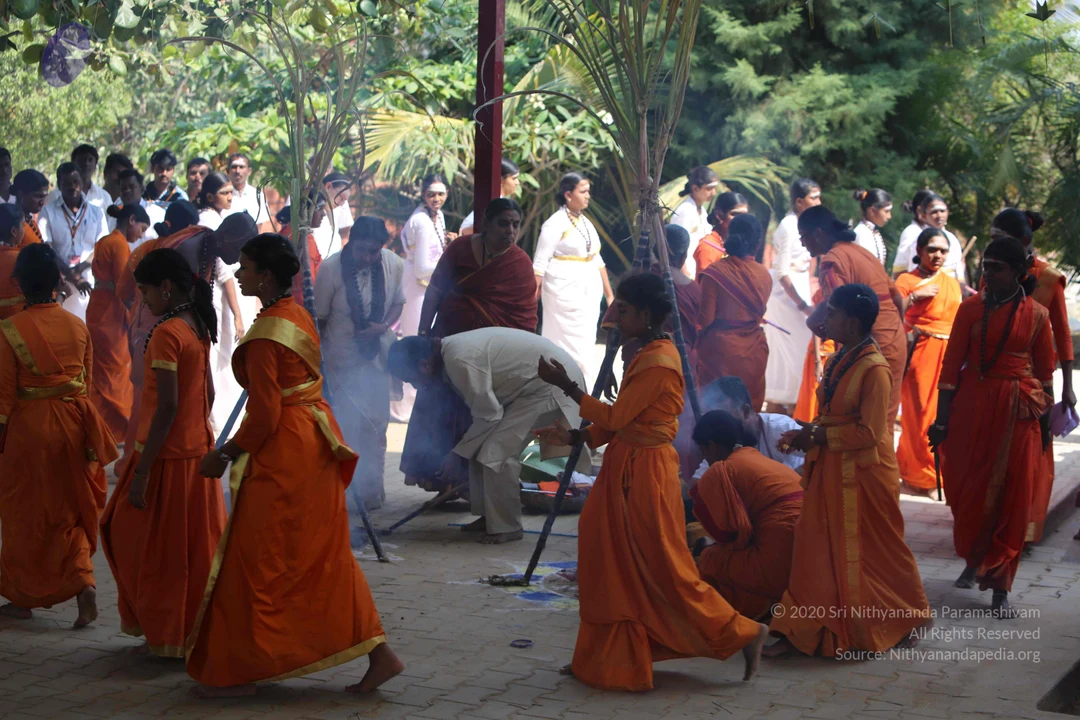
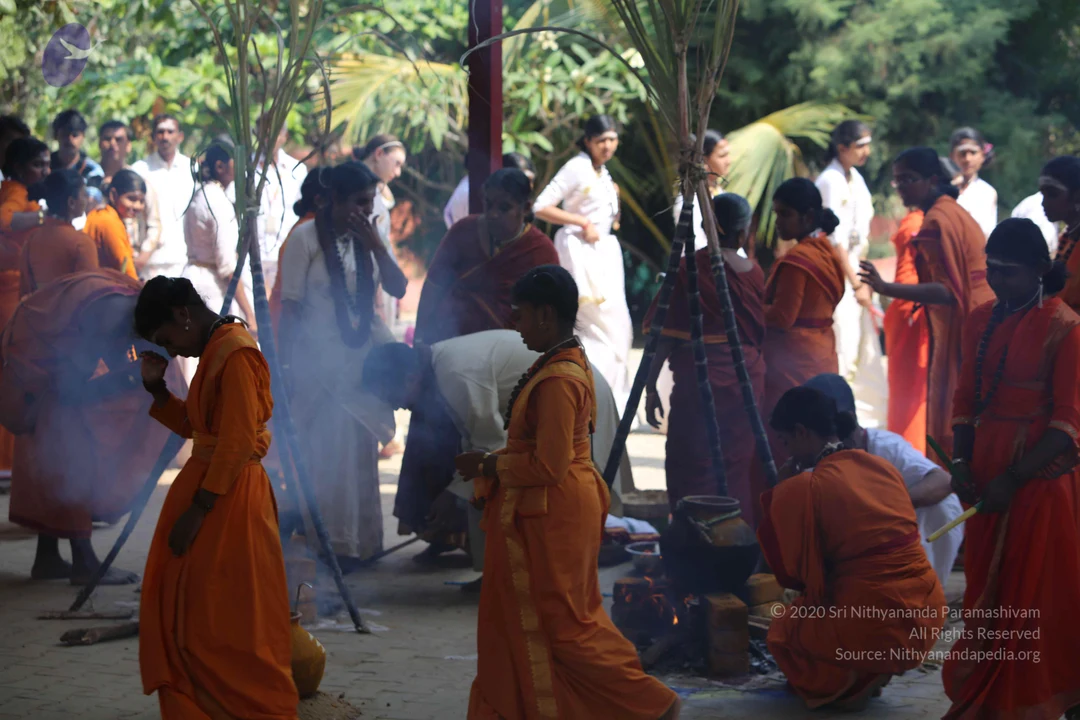
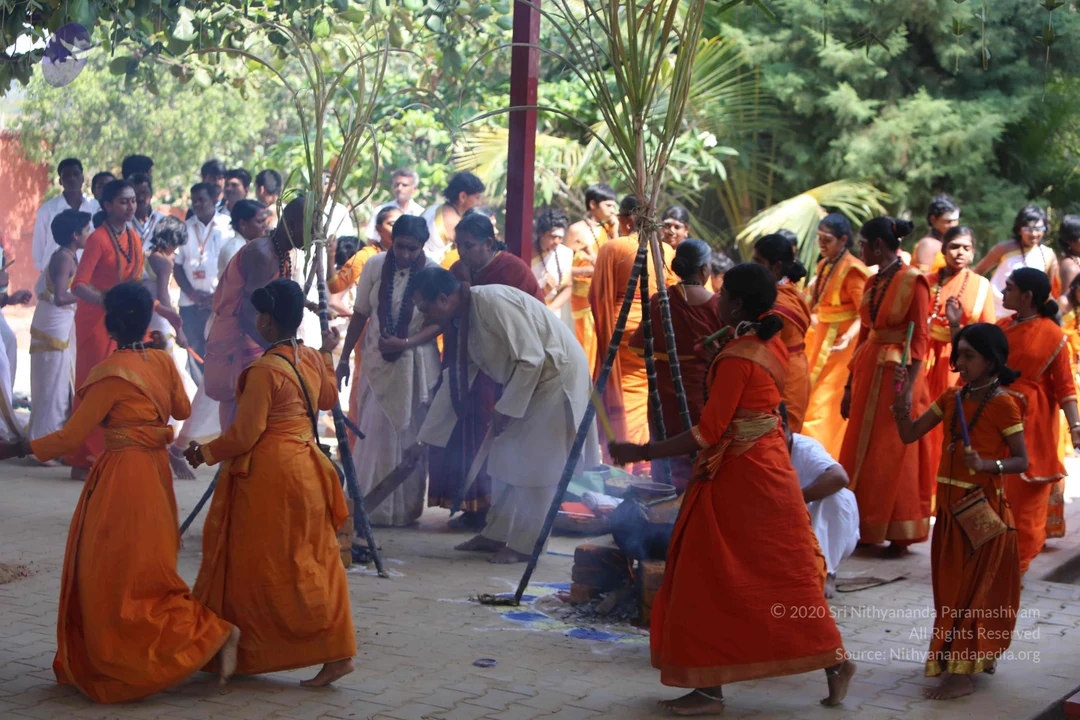
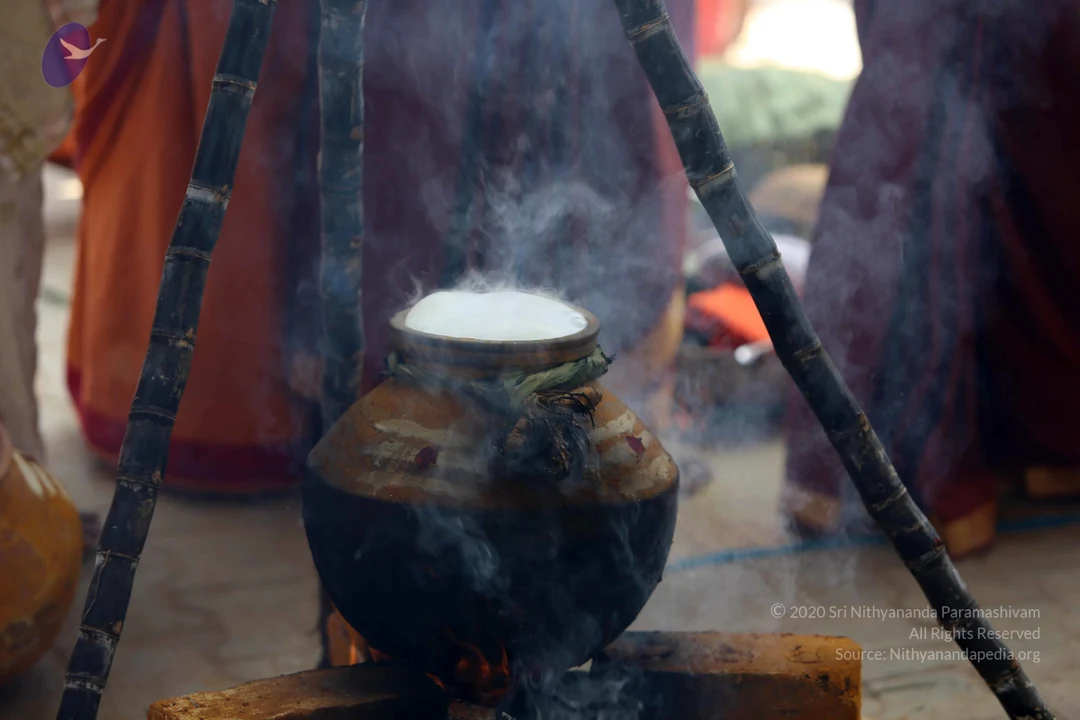
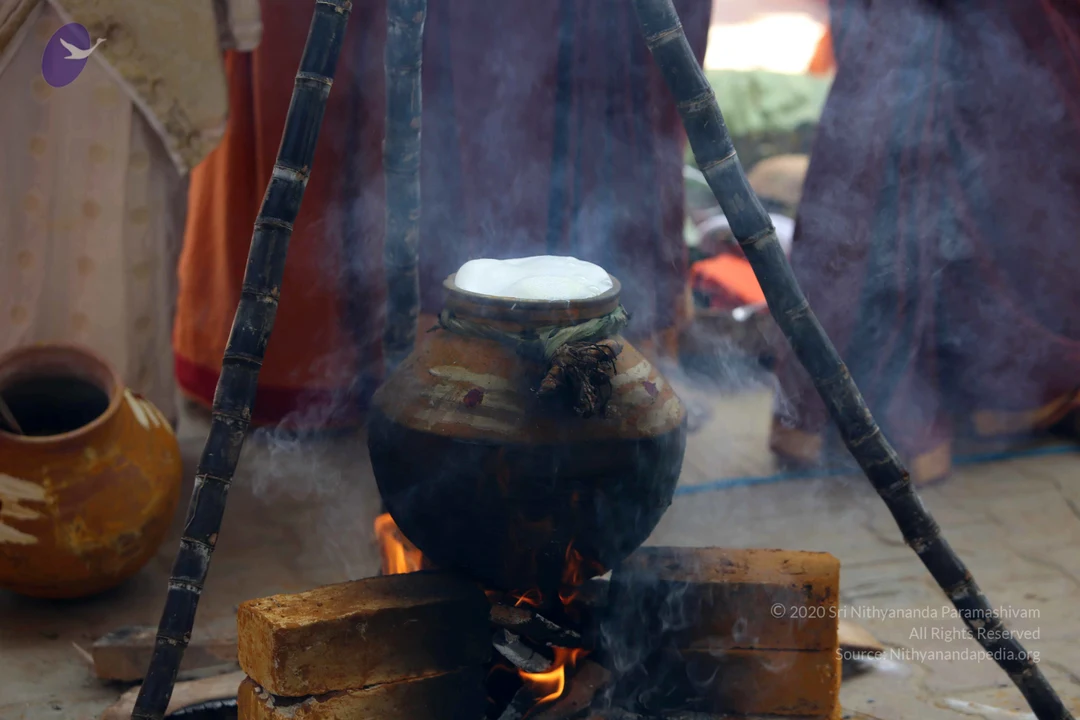
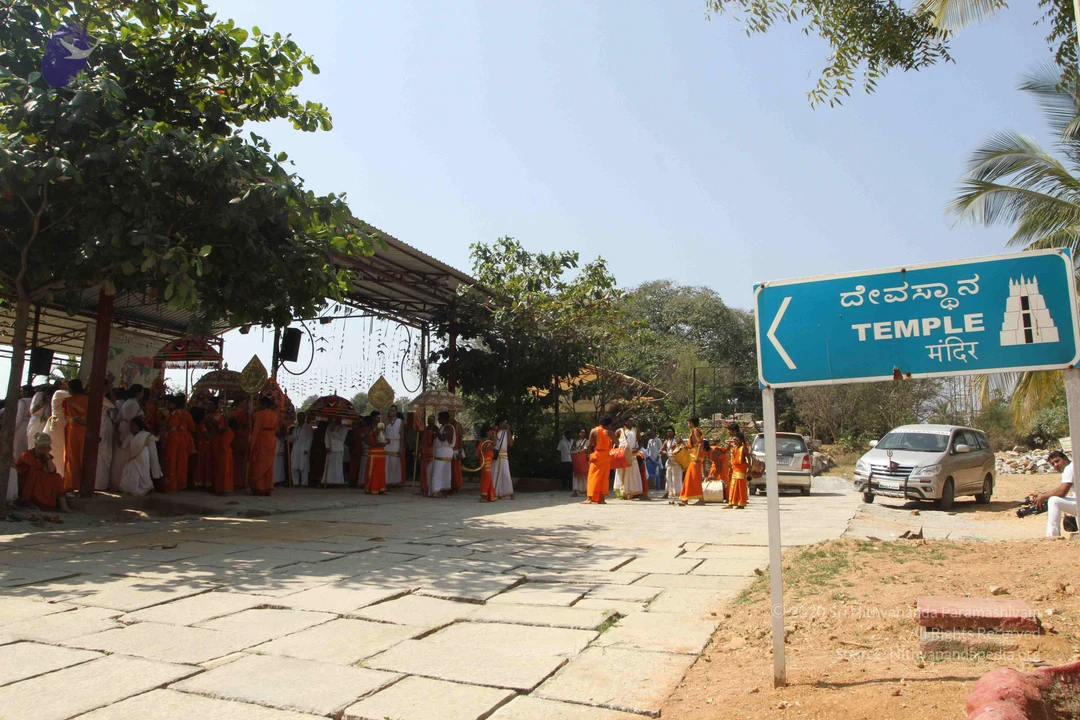
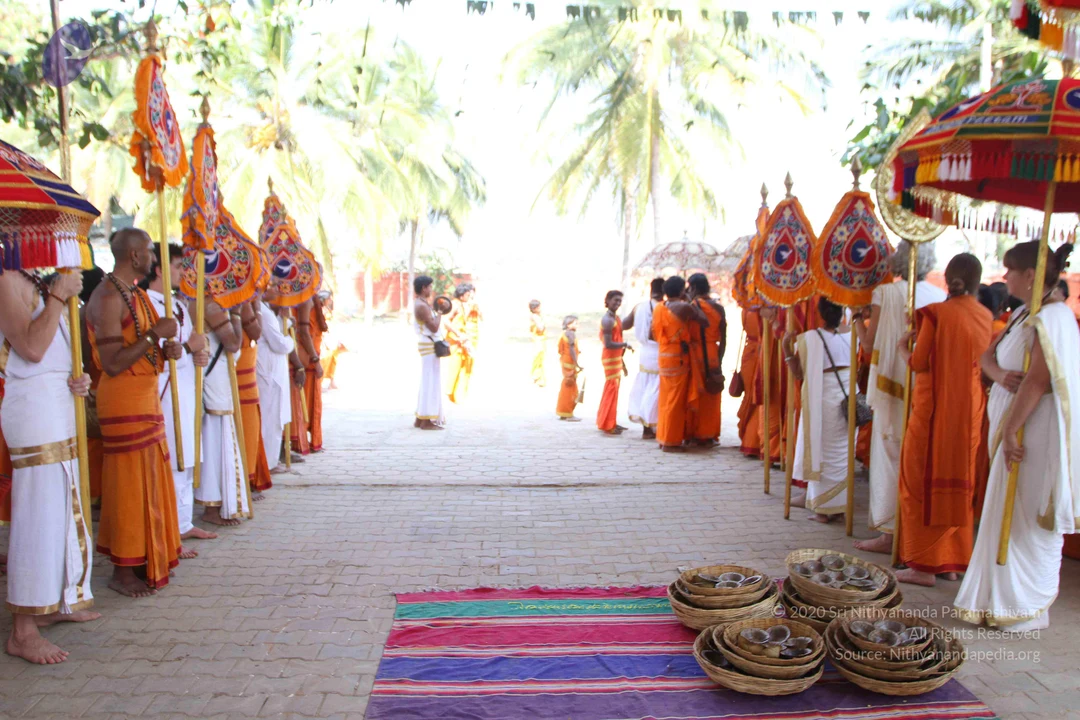
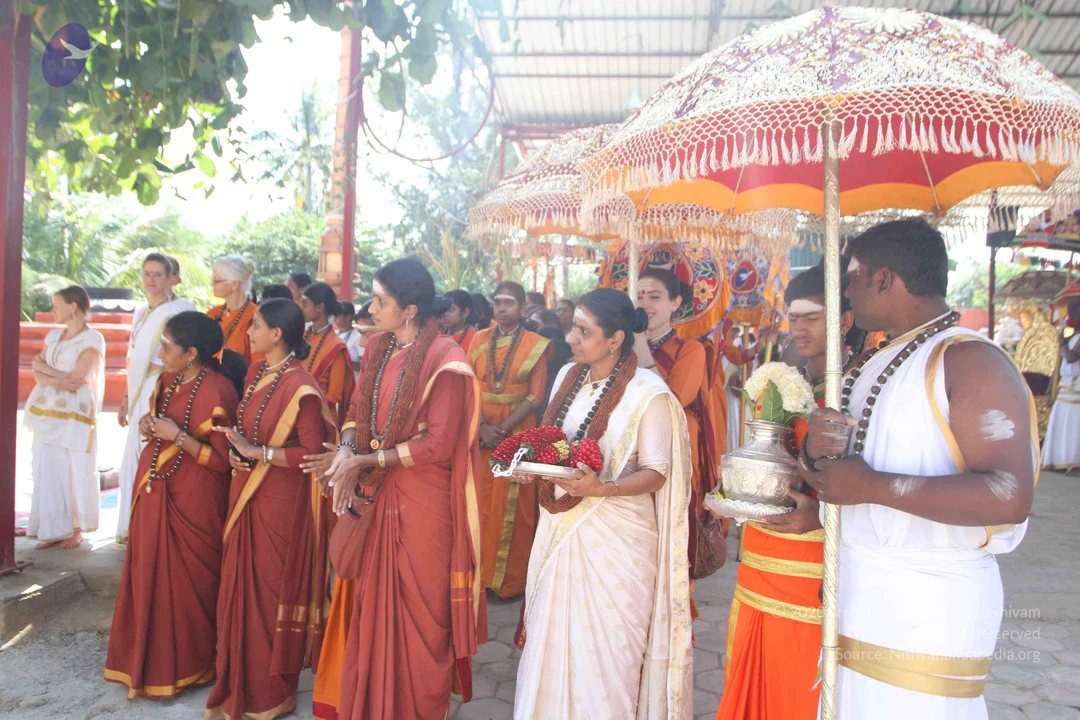
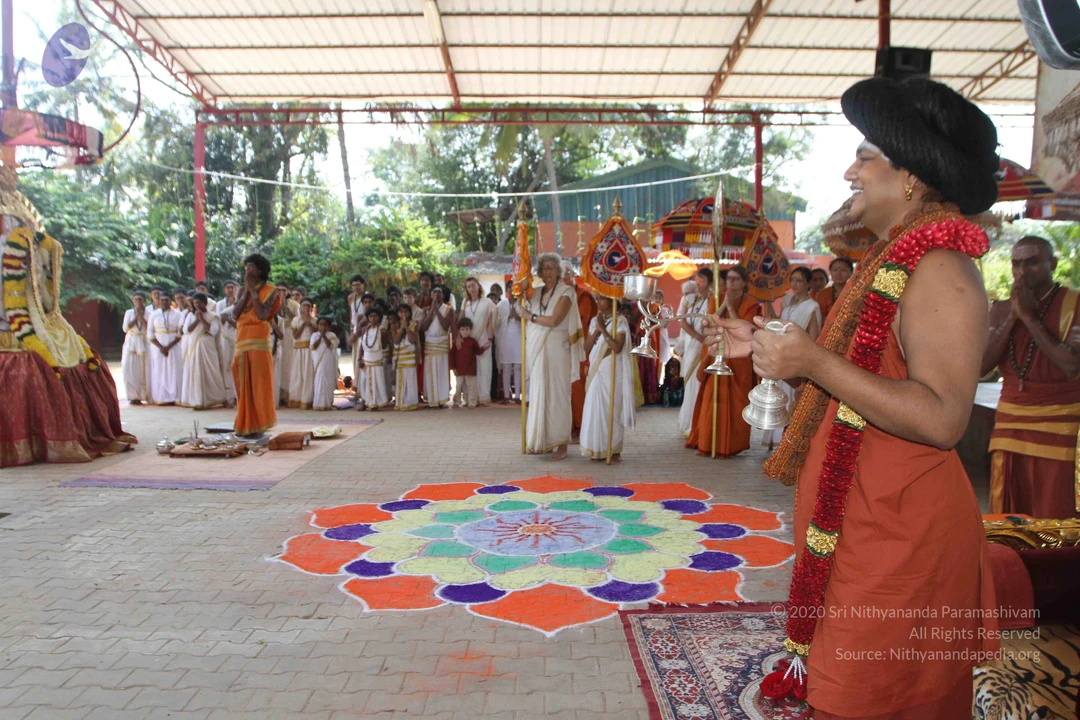
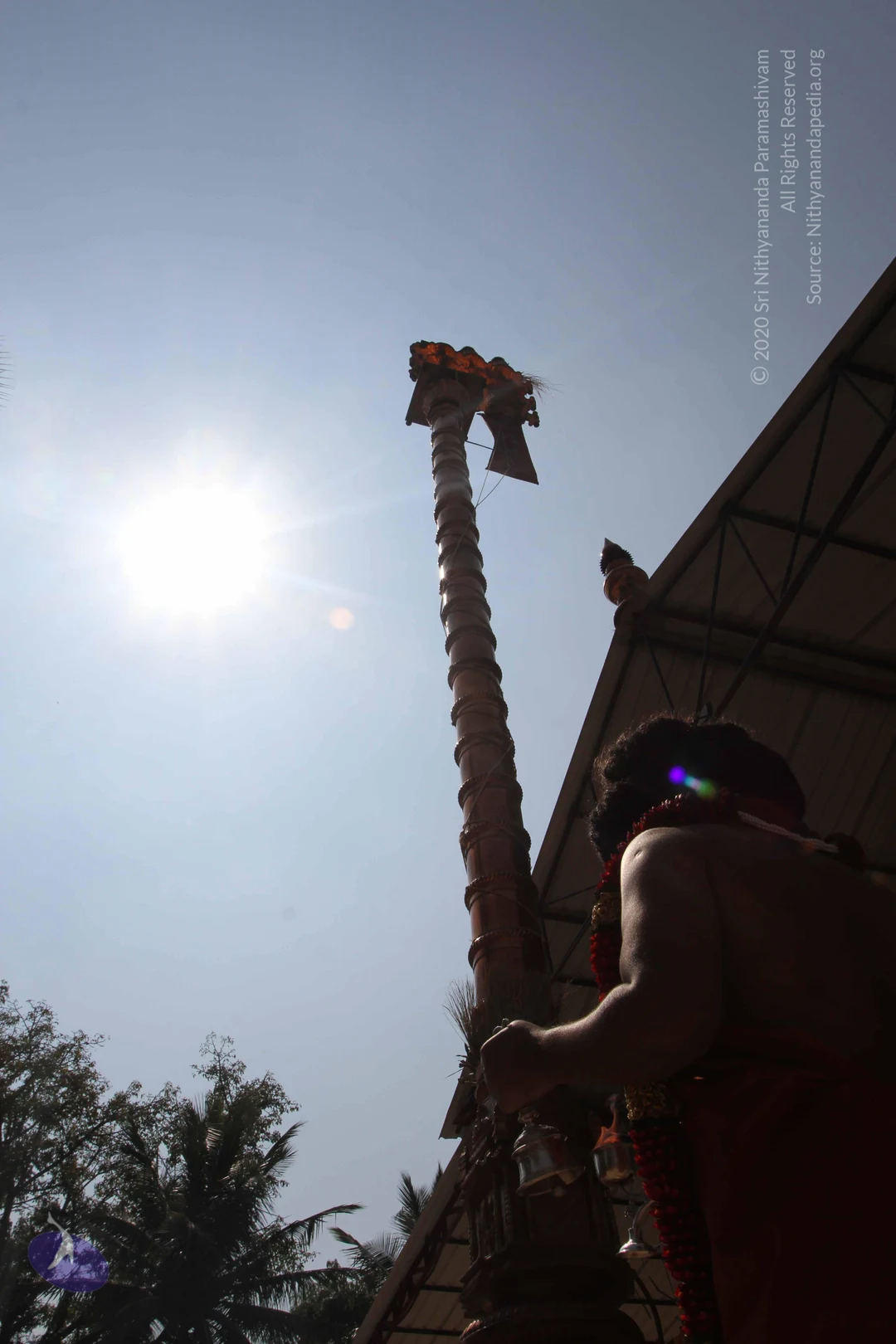
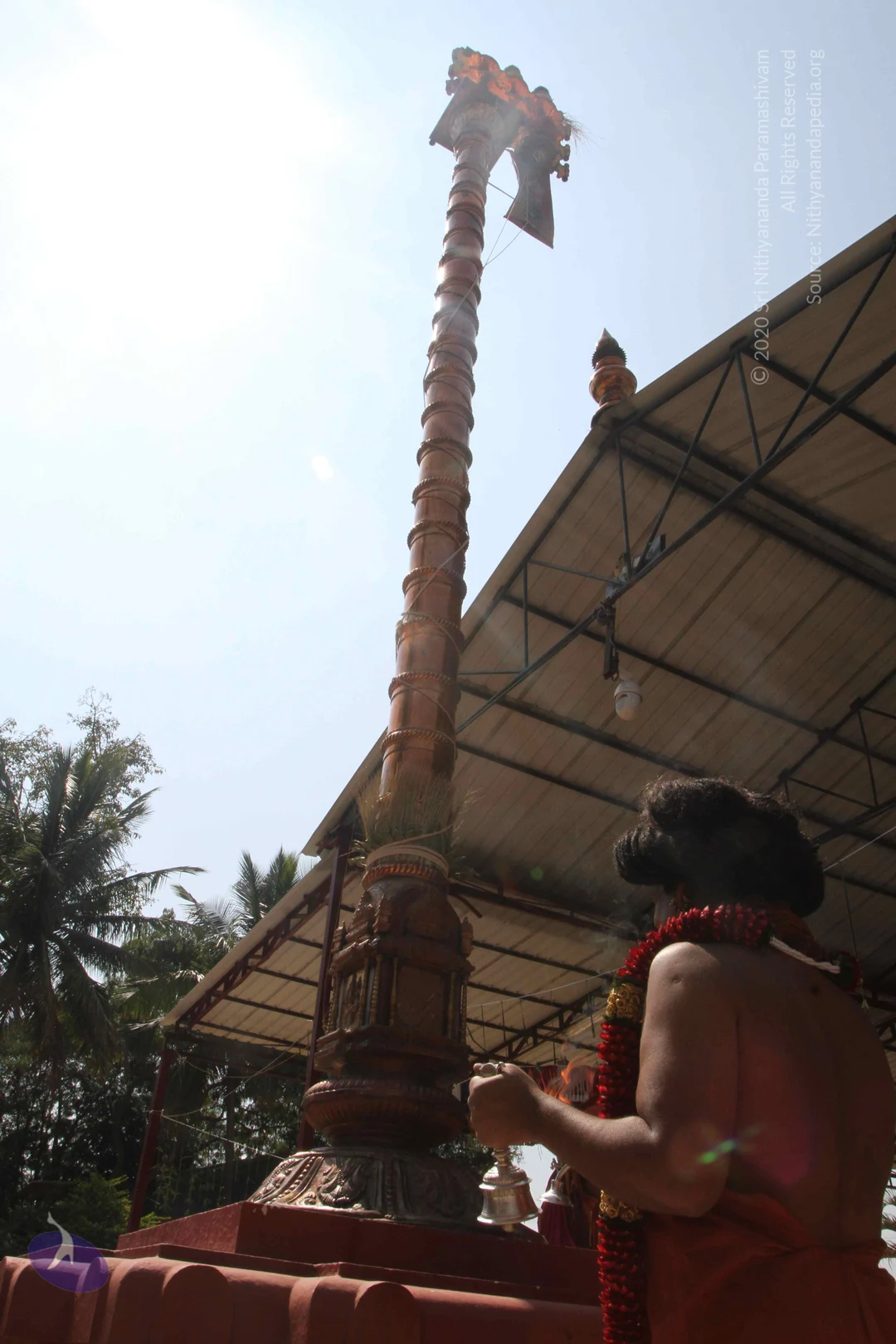
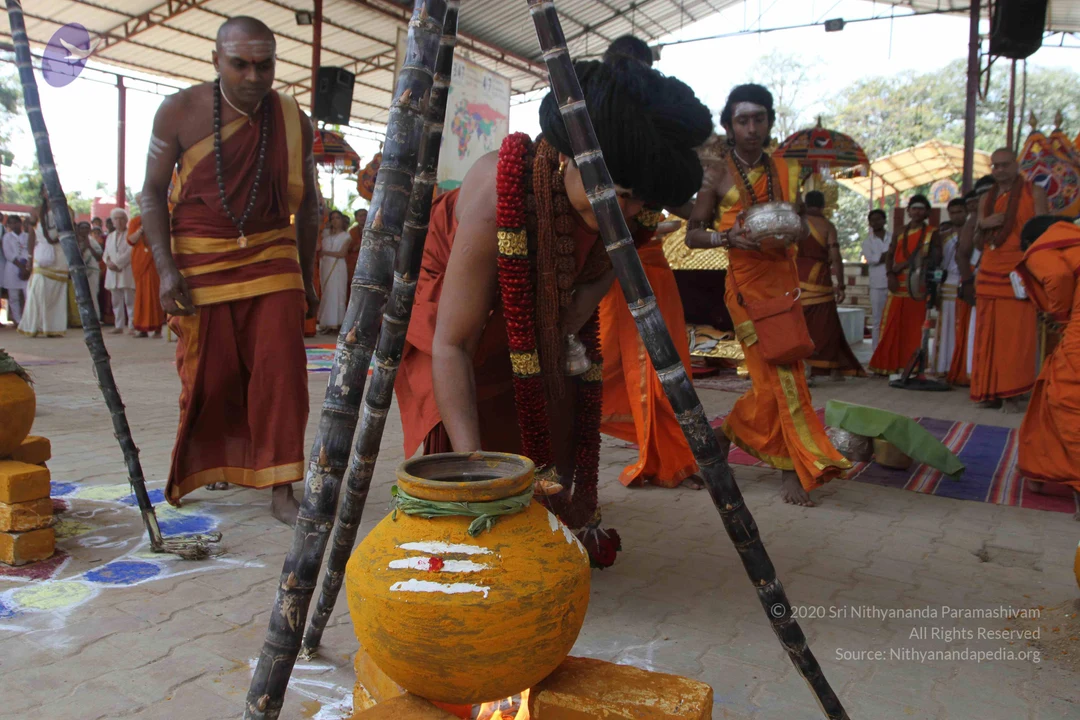
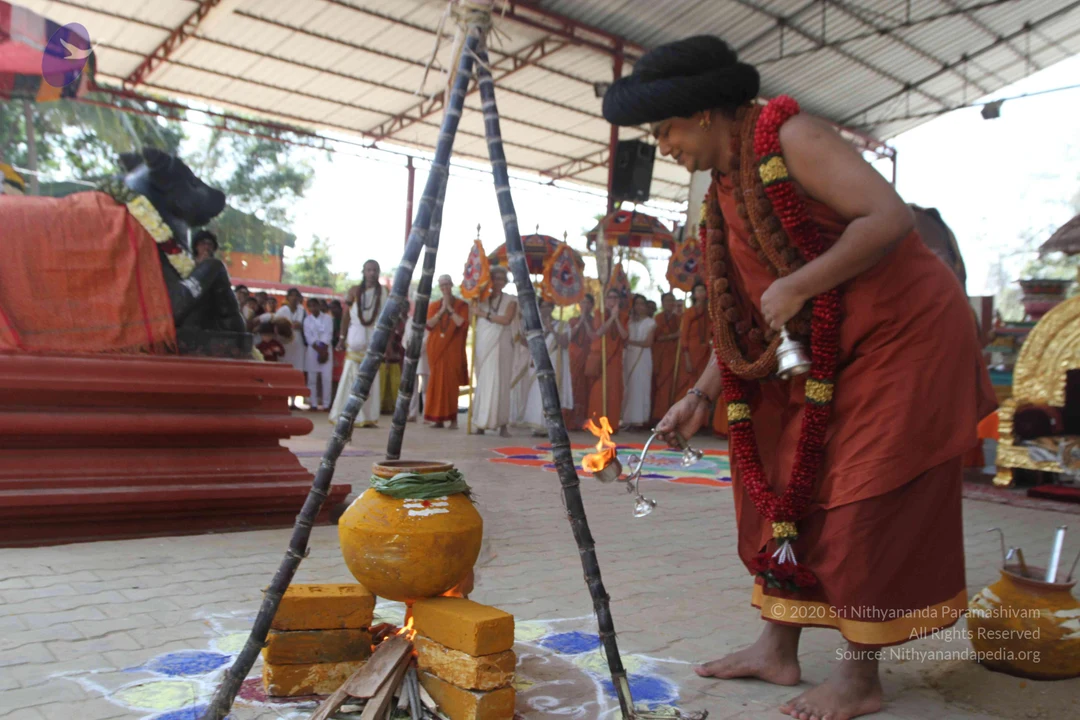
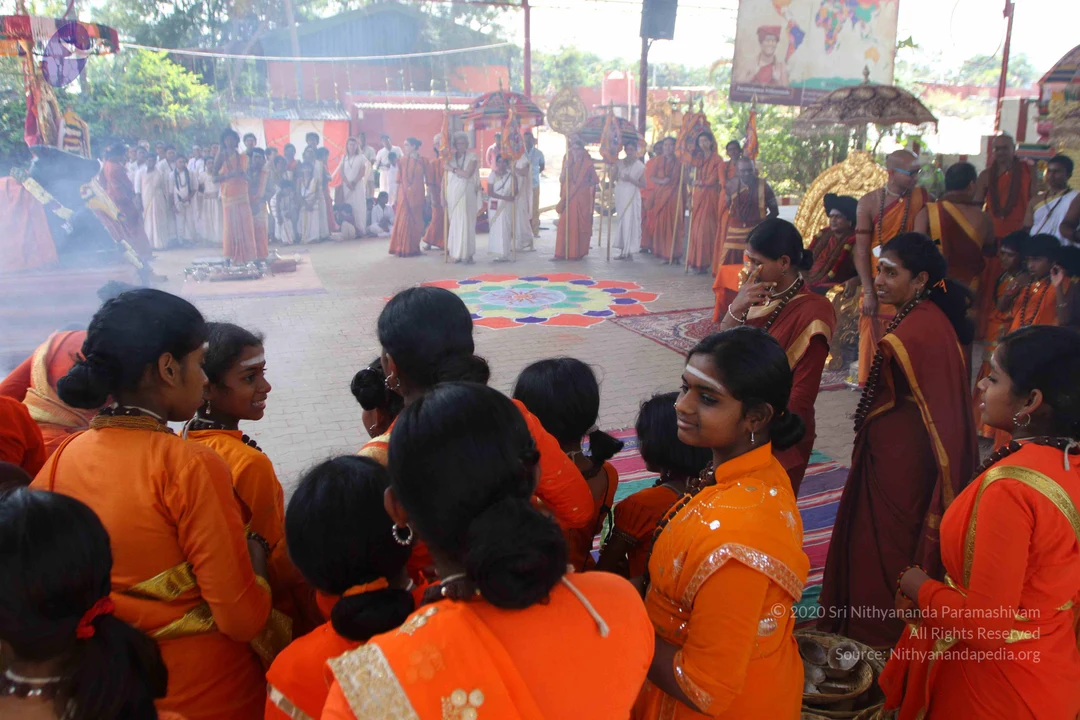
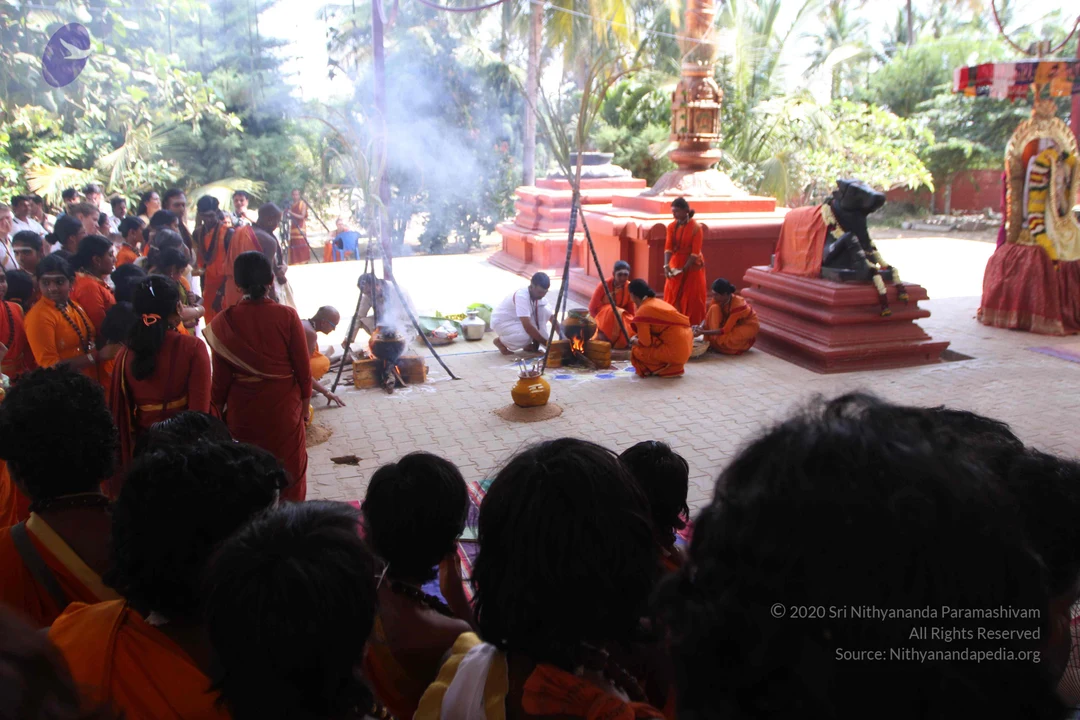
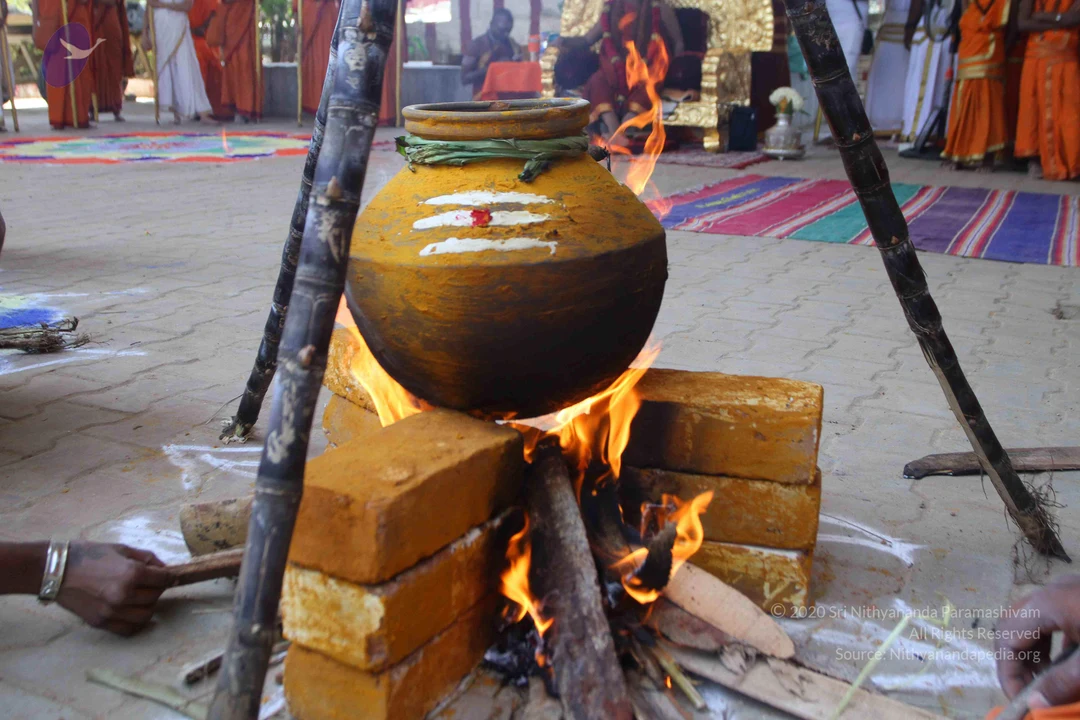
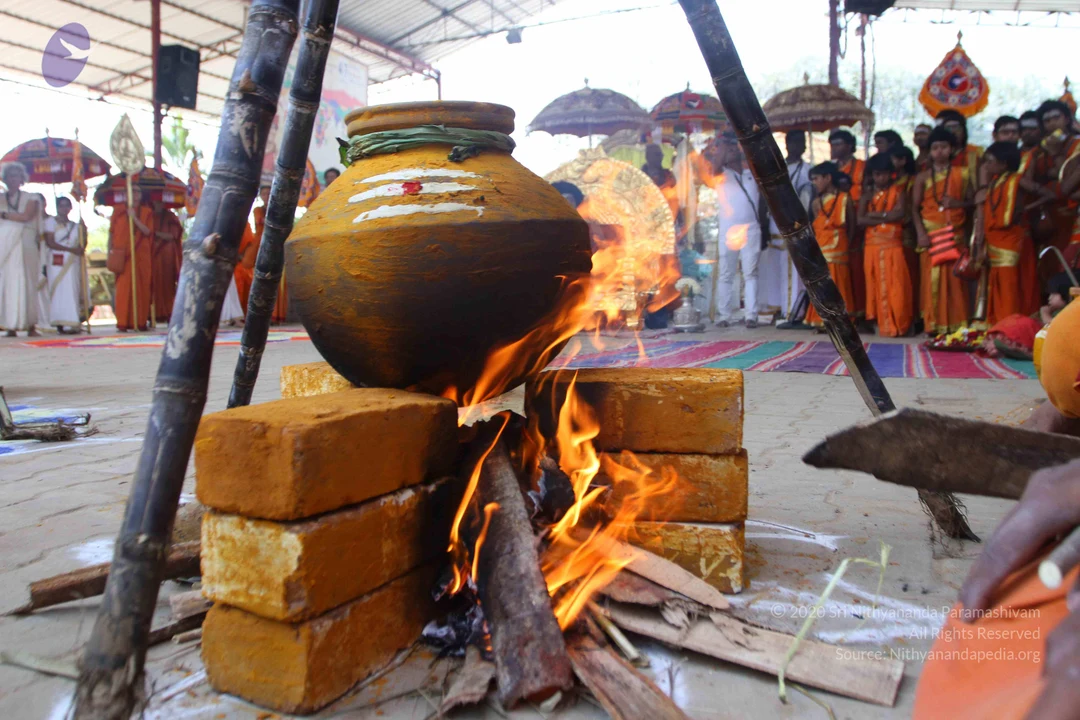
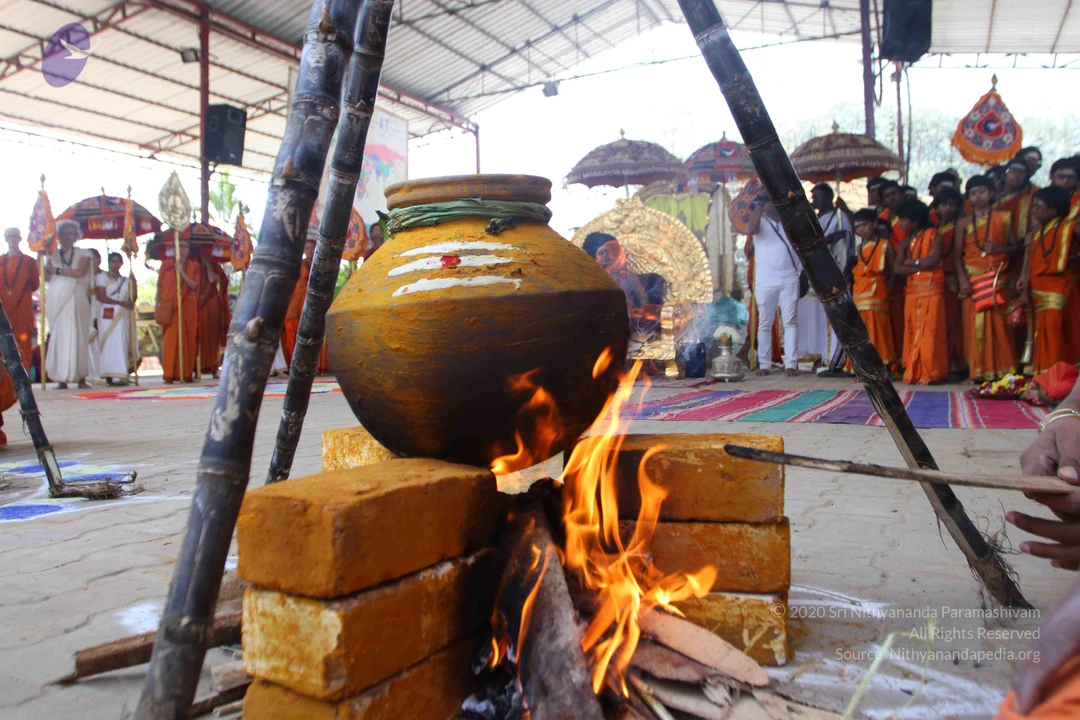
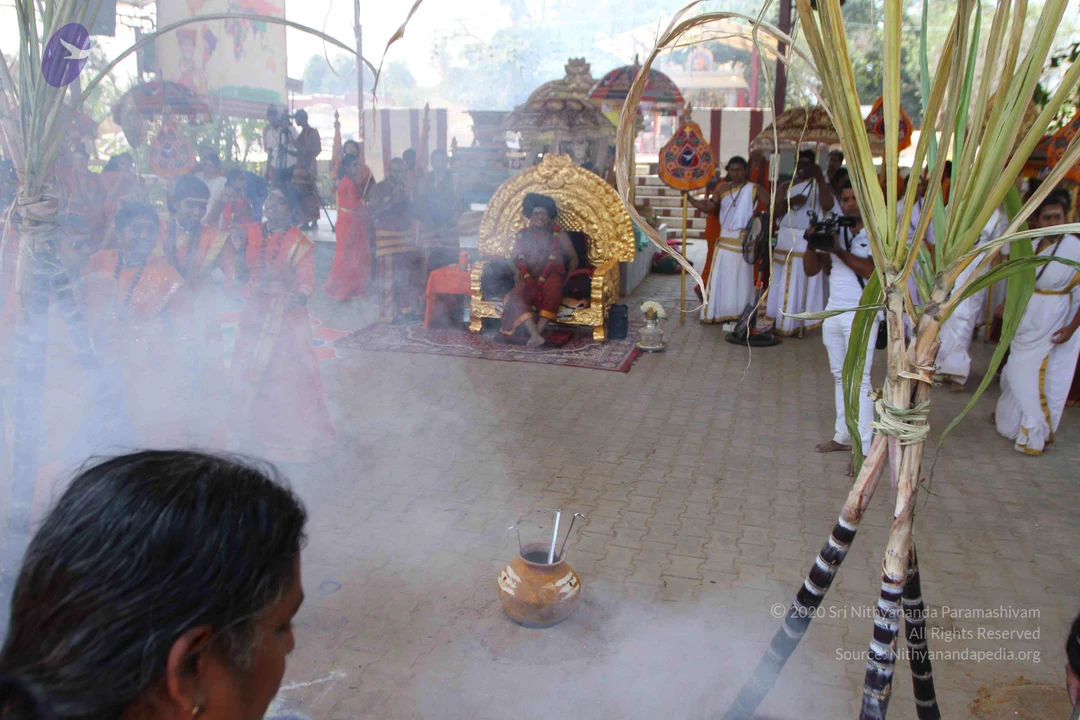
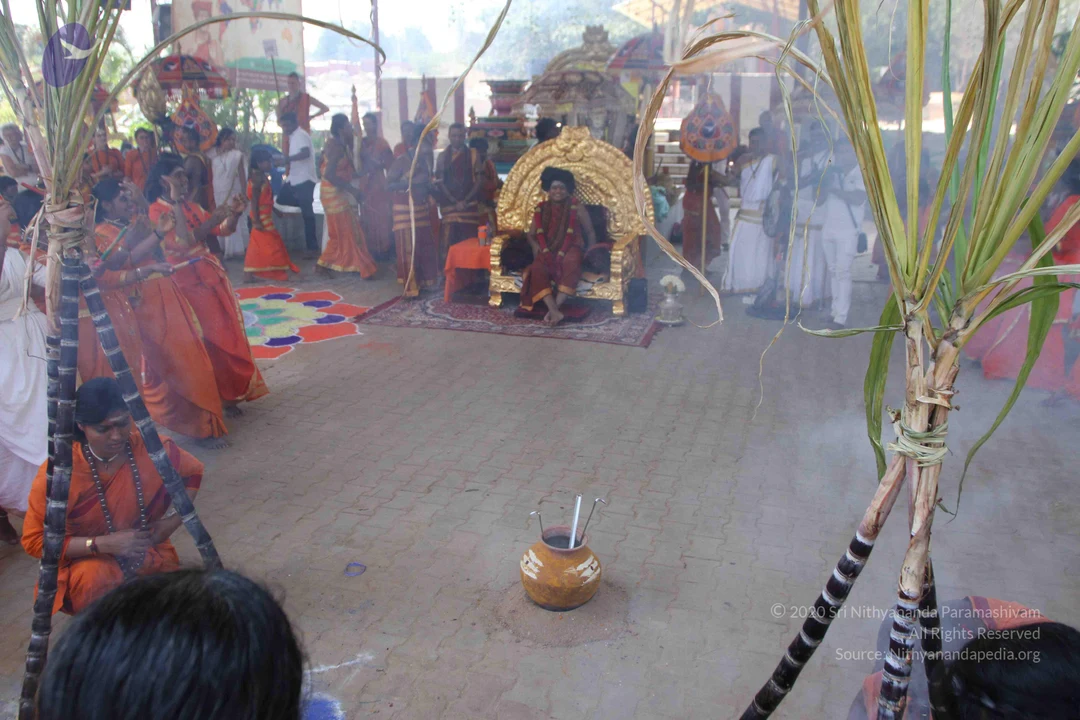
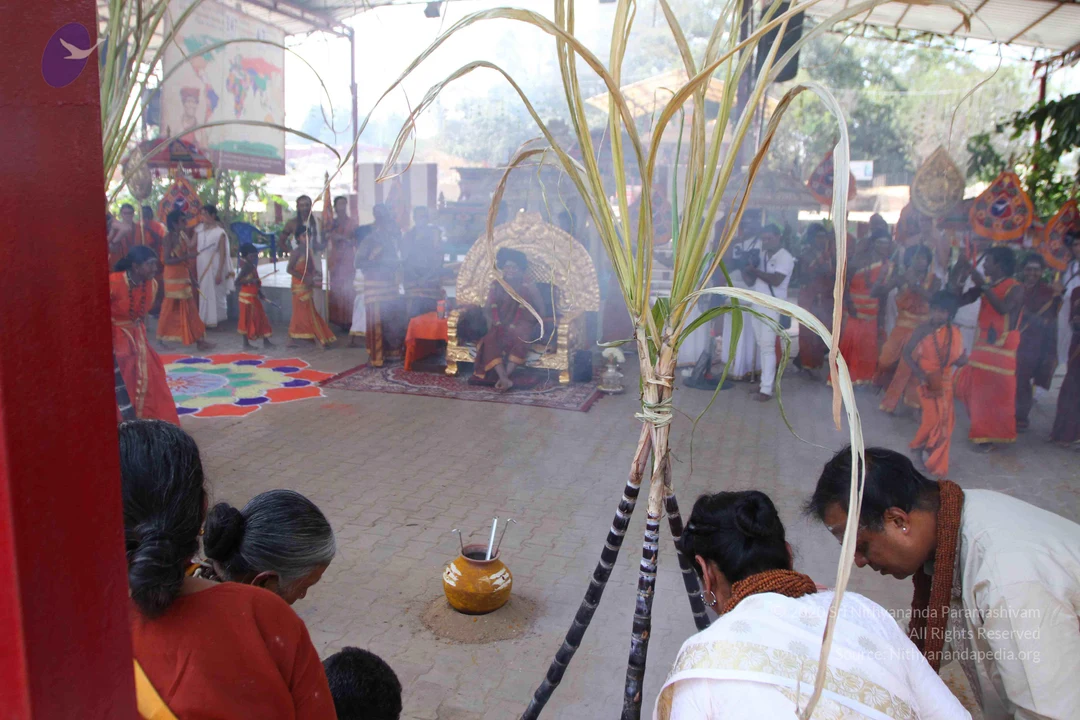
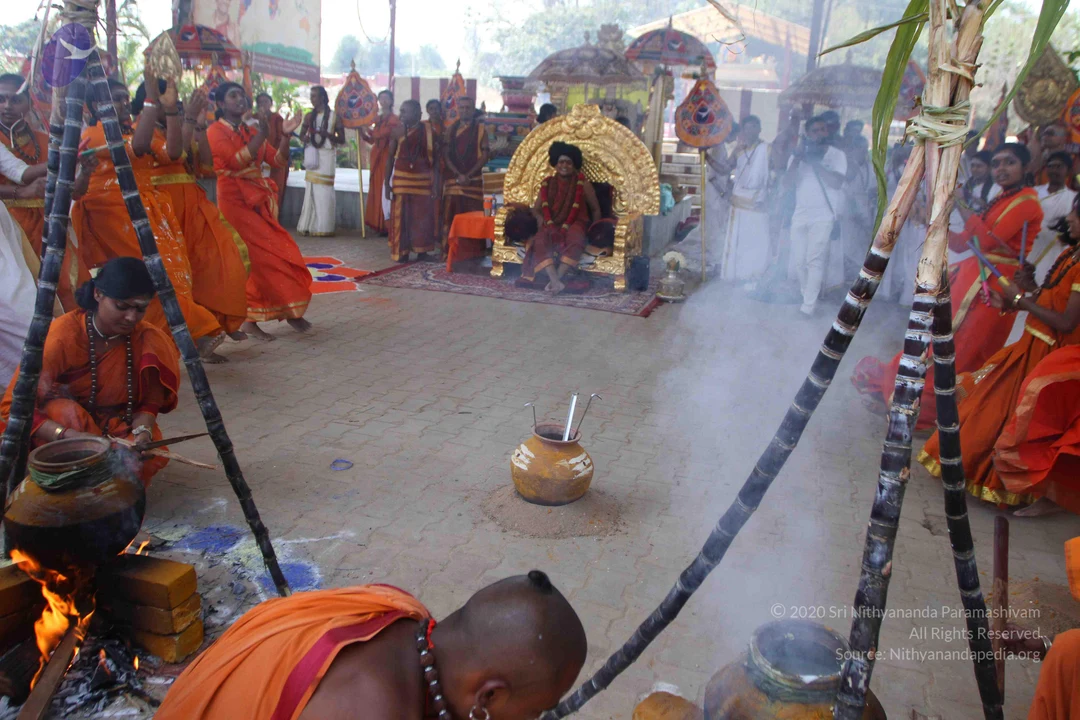
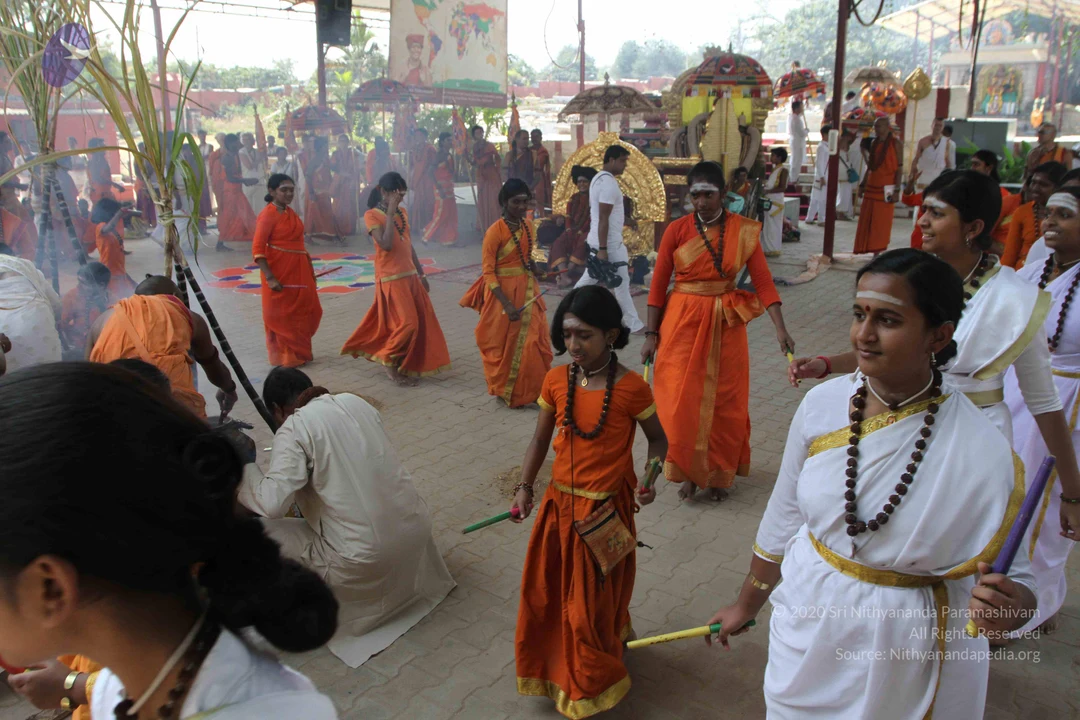
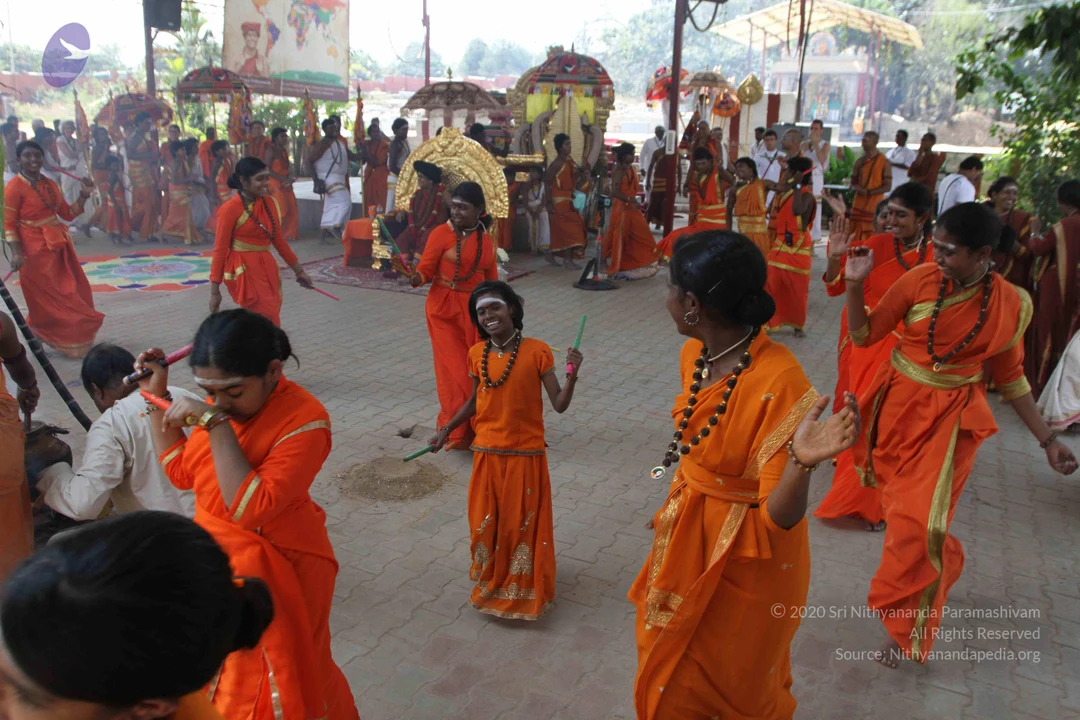
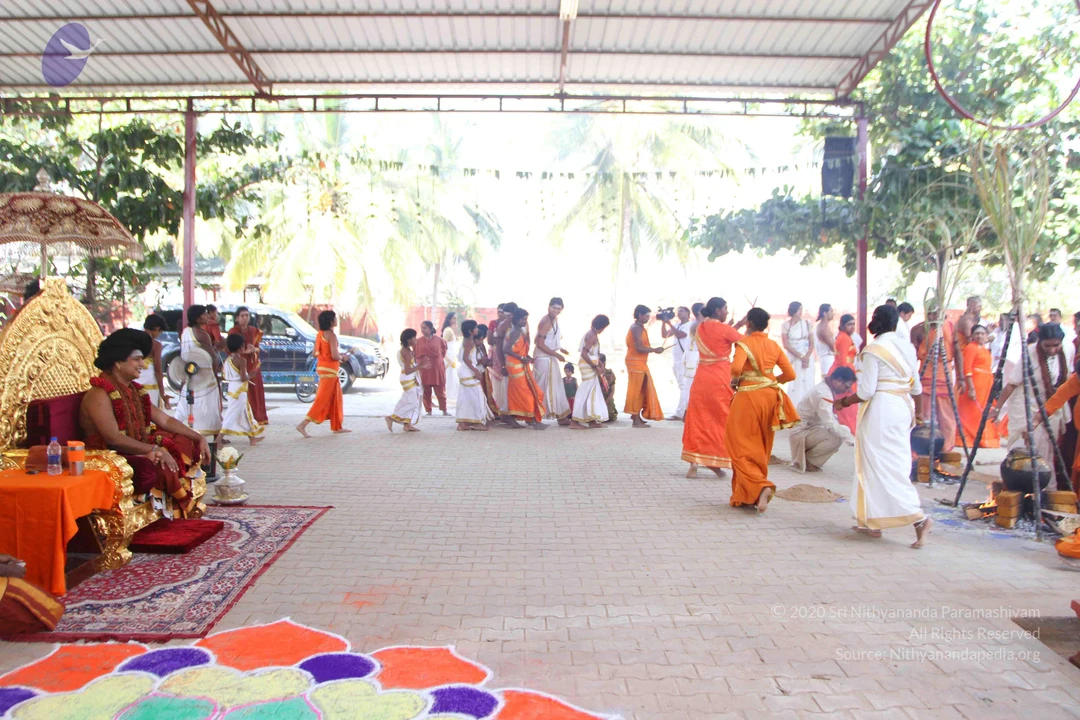
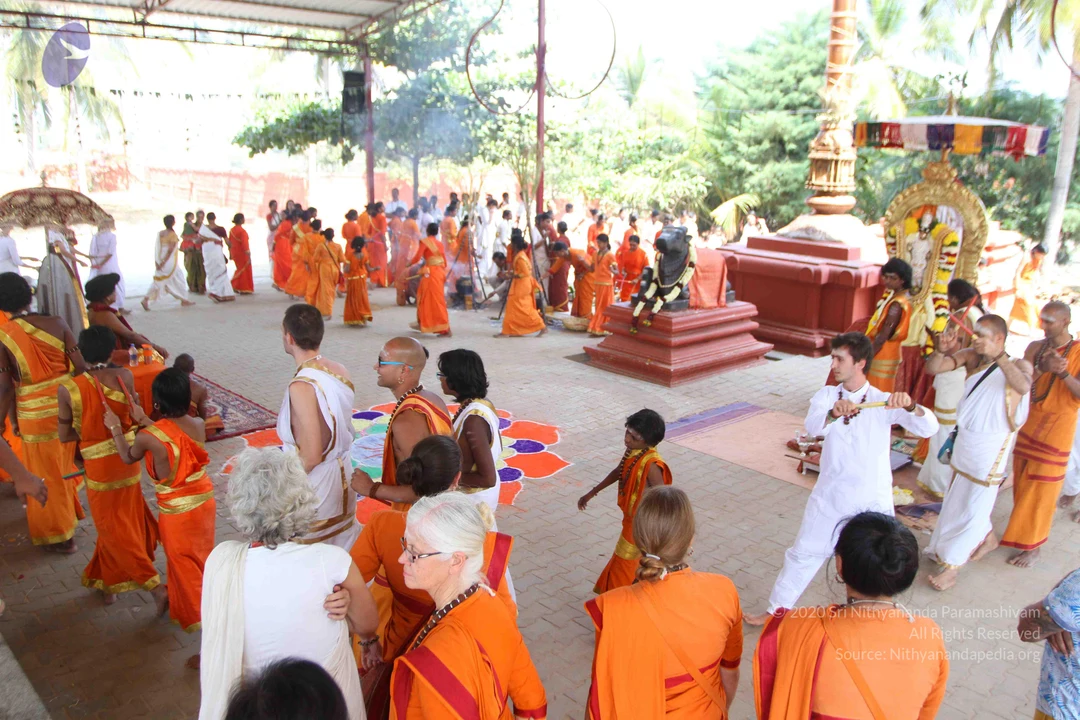
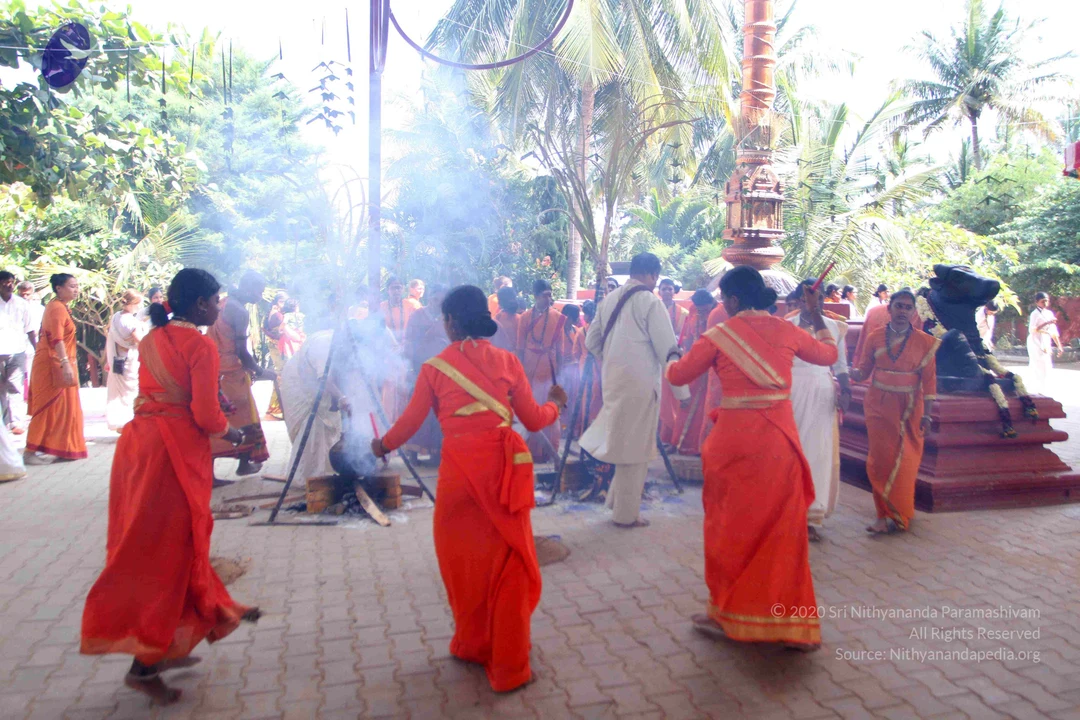
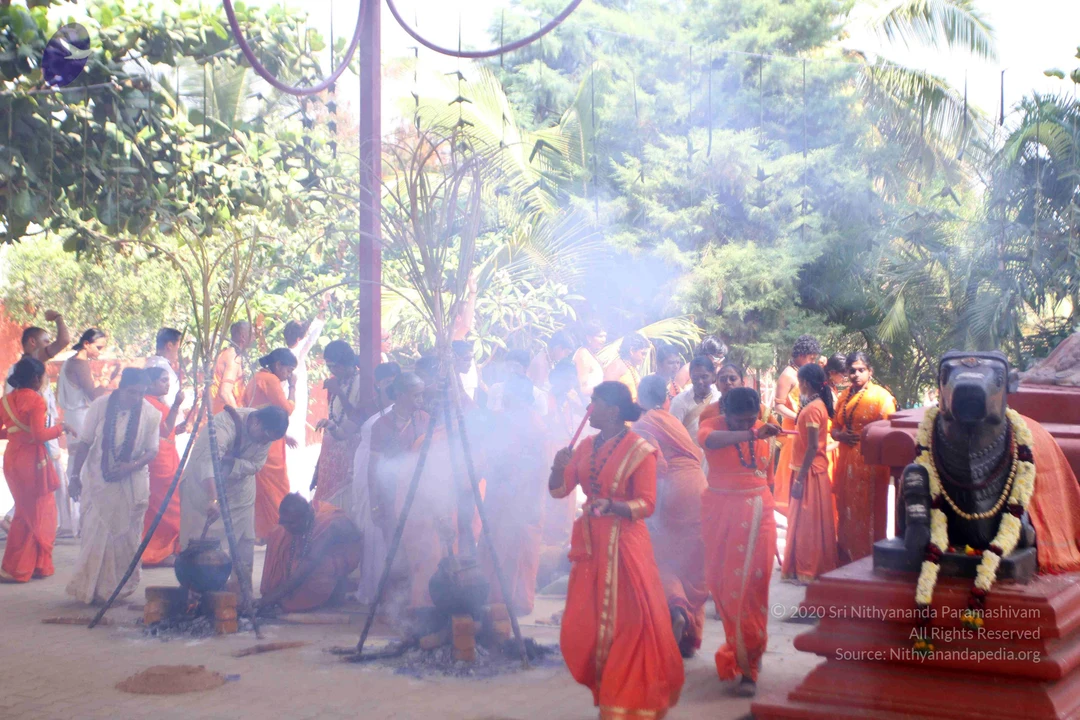
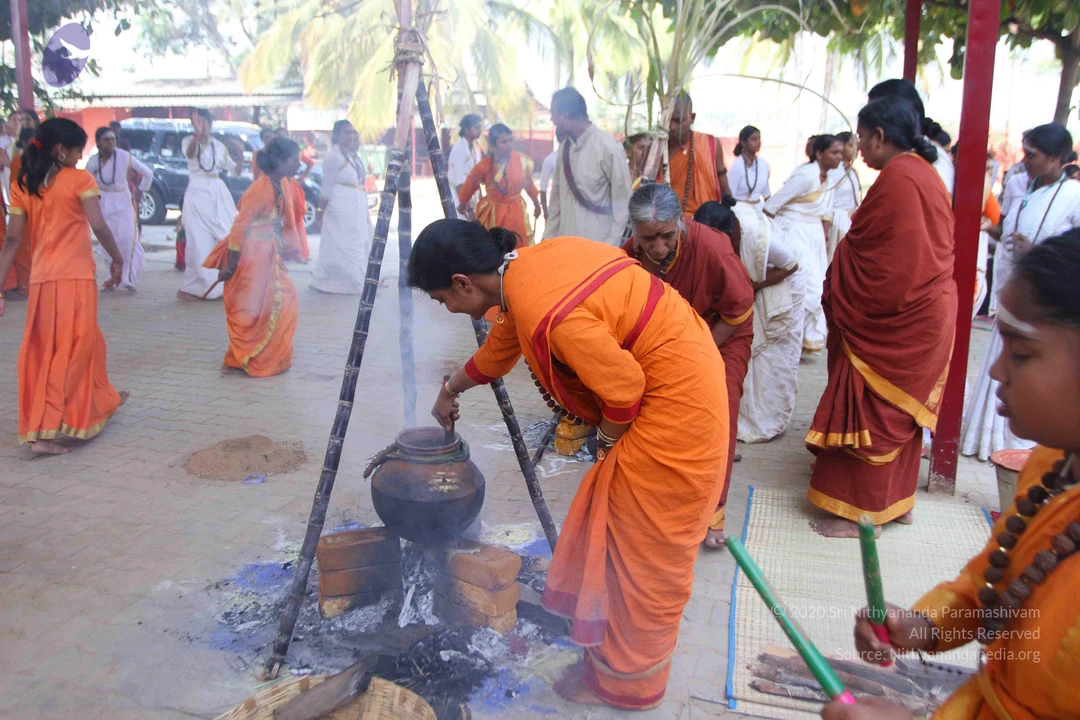
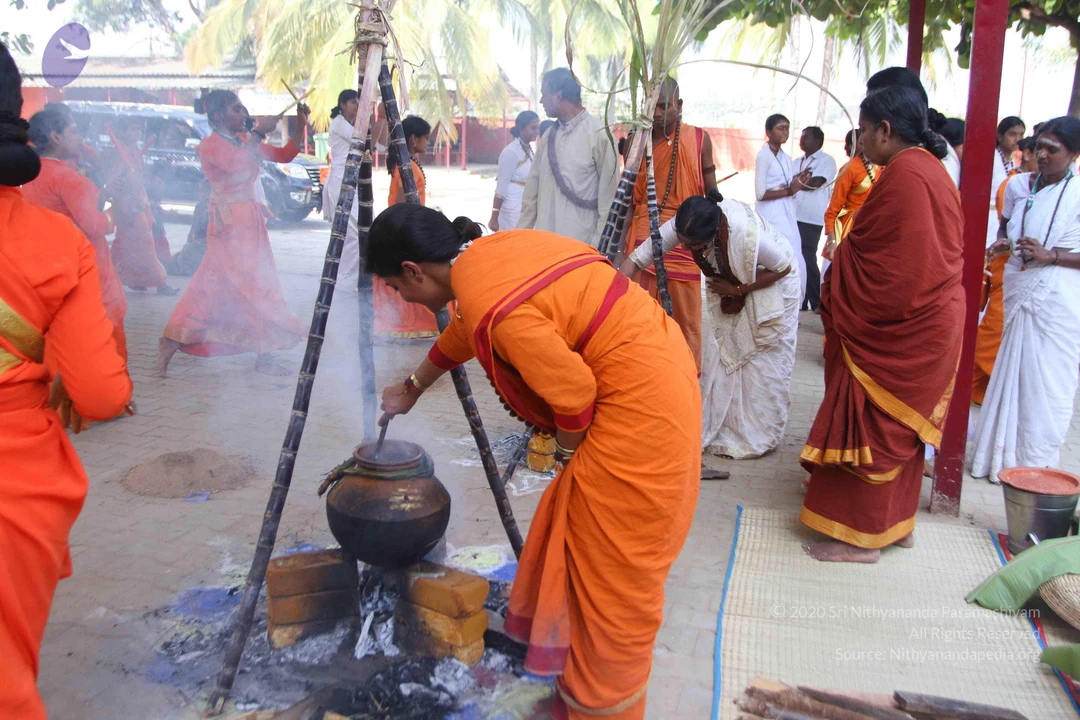
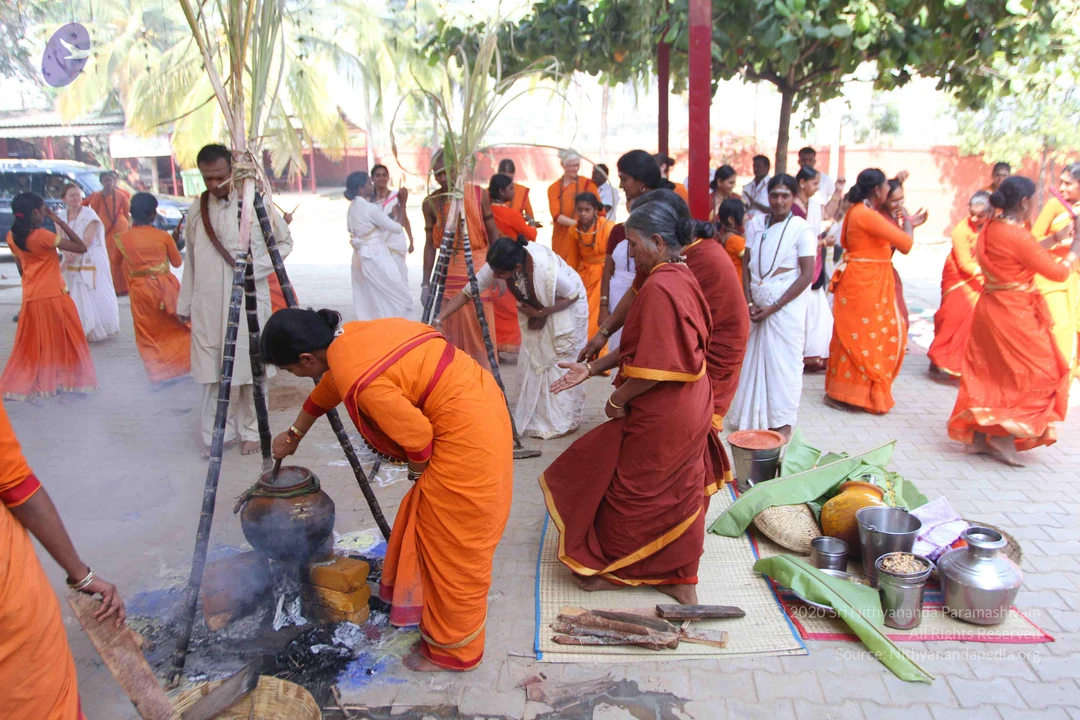
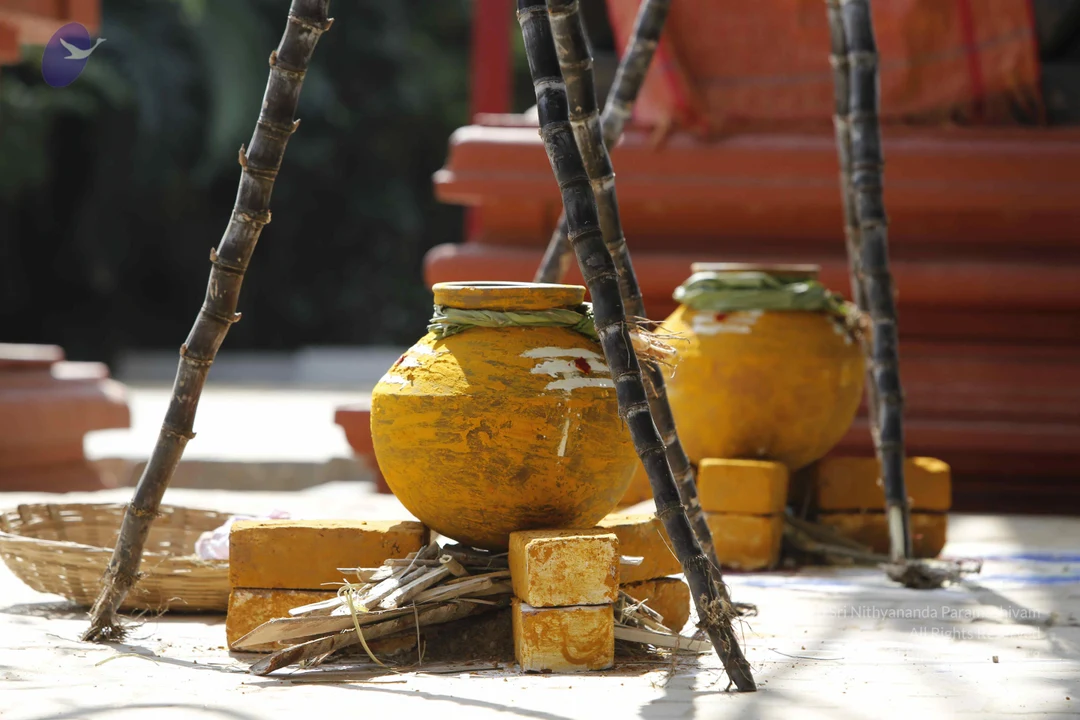
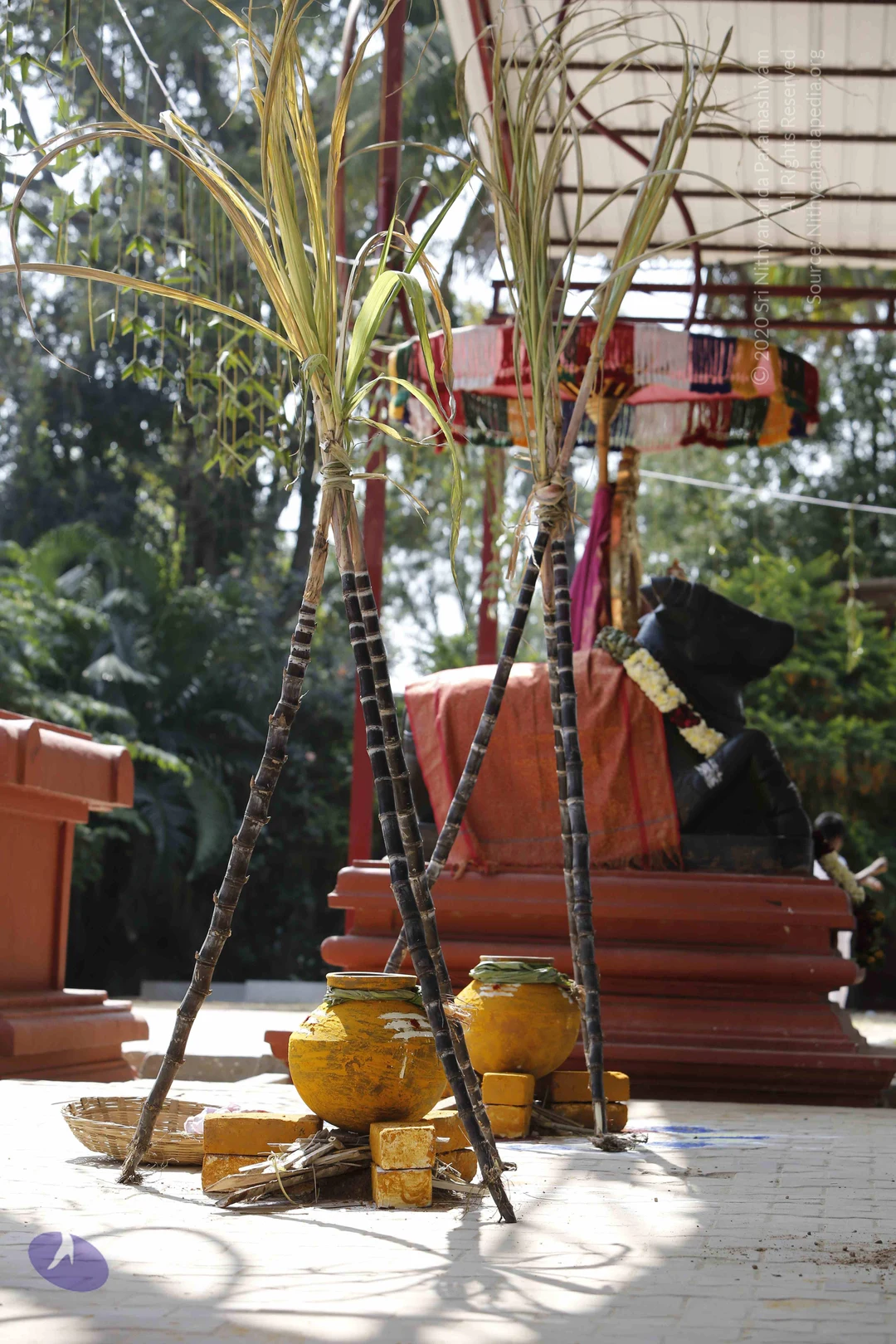
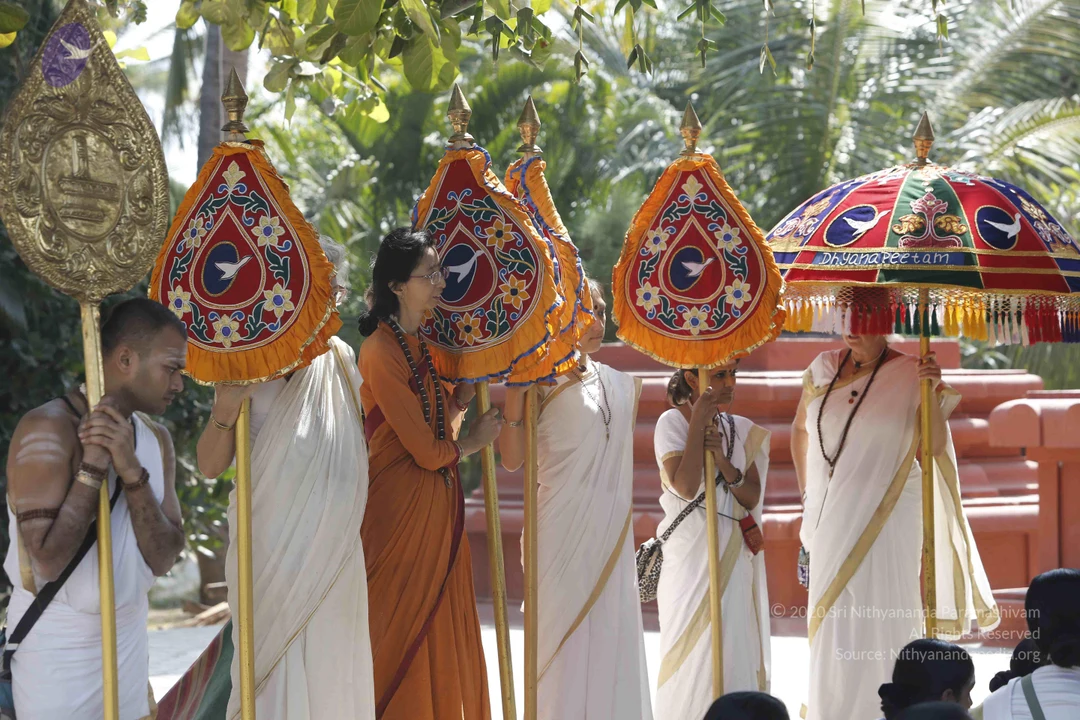
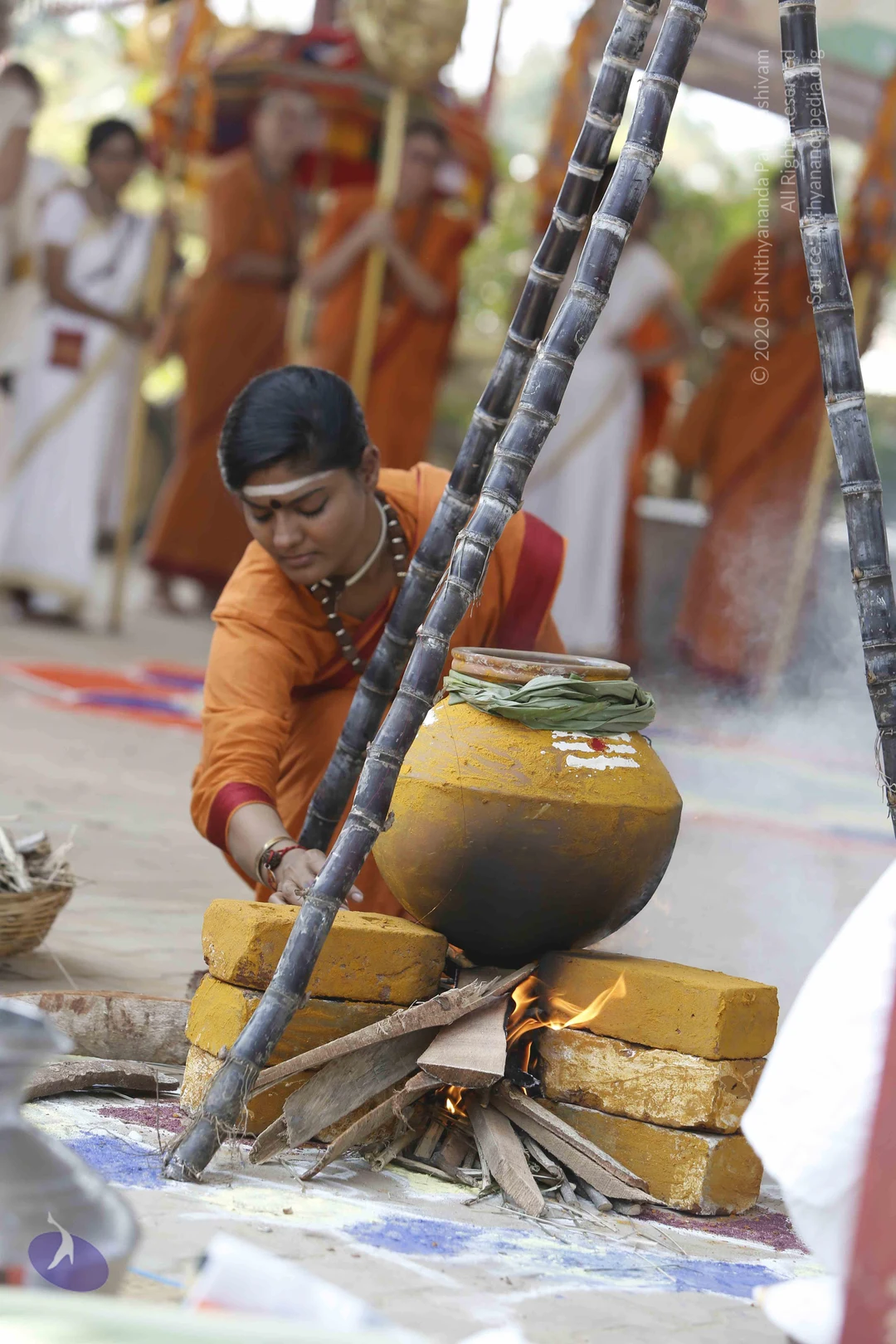
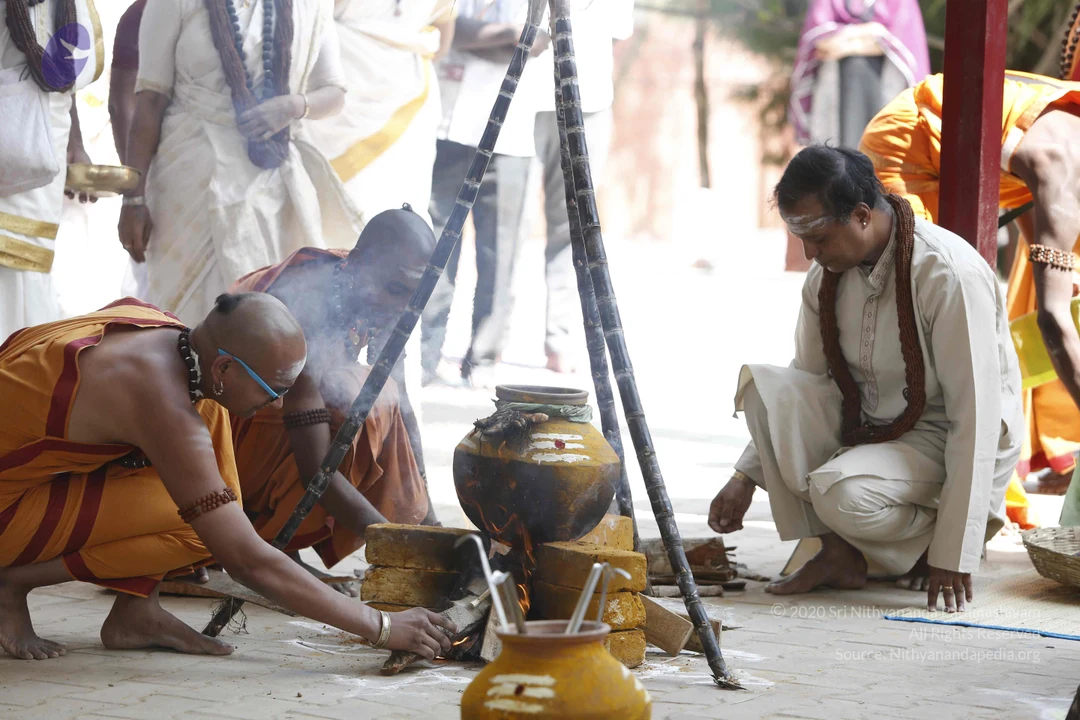
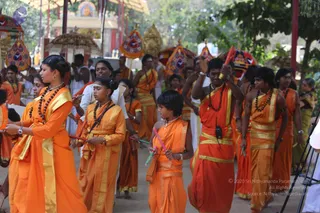
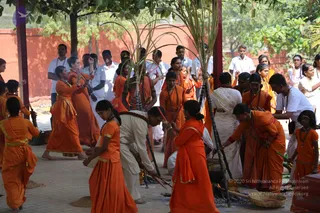
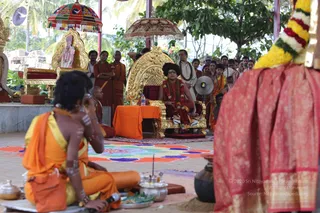
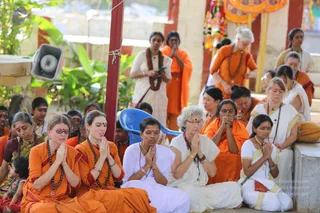
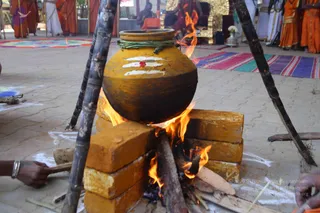
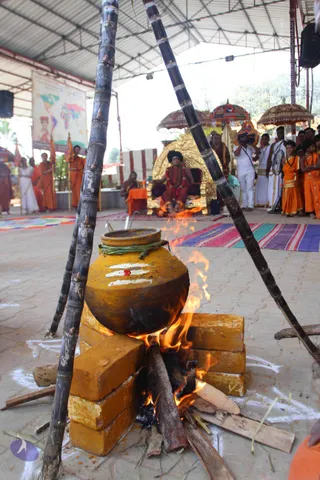
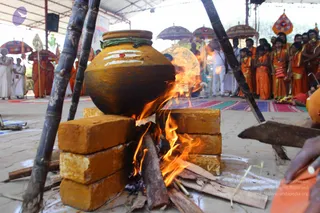
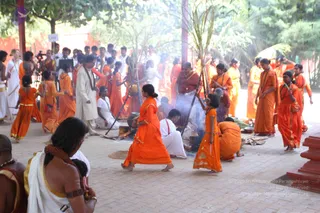
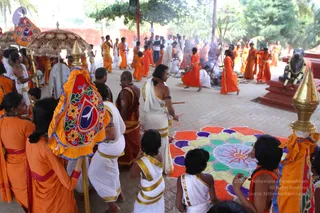
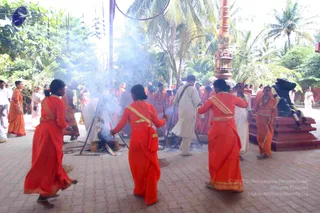
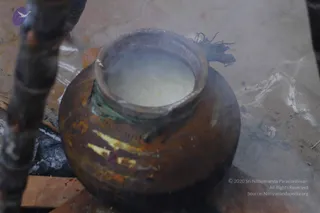
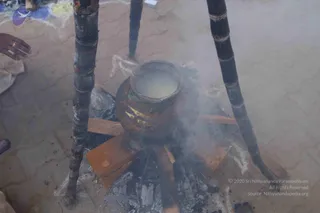
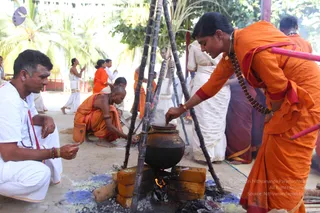
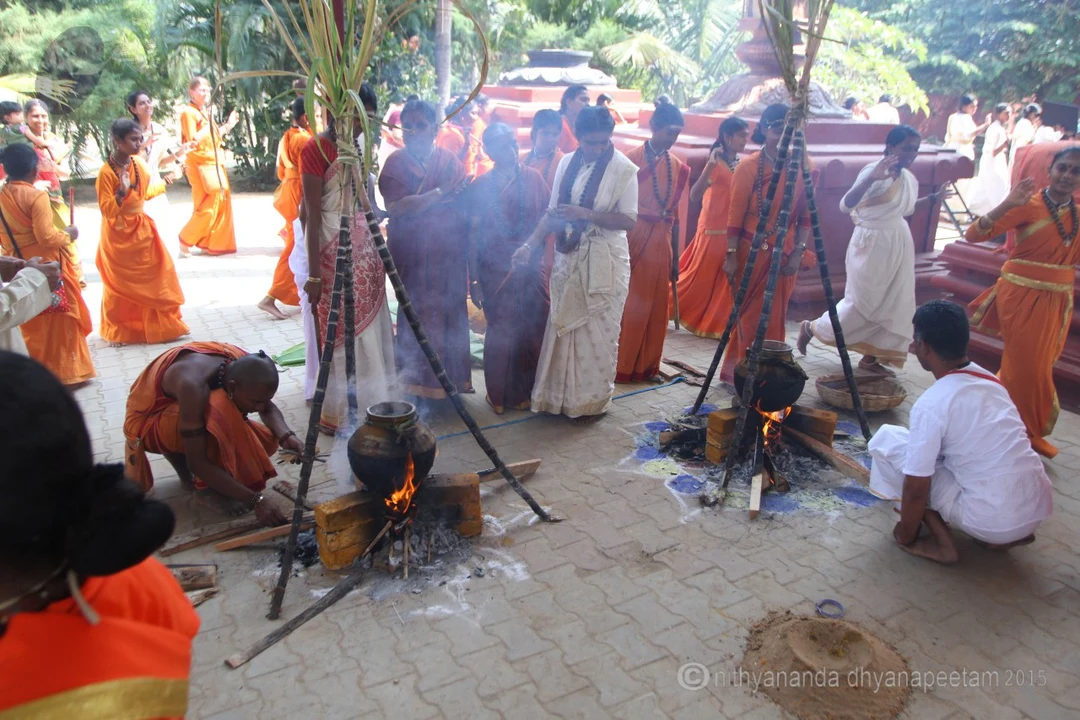
Pongal is a harvest festival dedicated to the Sun God. It is a four-day festival which according to the Tamil calendar is usually celebrated from January 14 to January 17. Pongal corresponds to Makara Sankranthi, the harvest festival celebrated throughout India.

Nithya Satsang Highlights

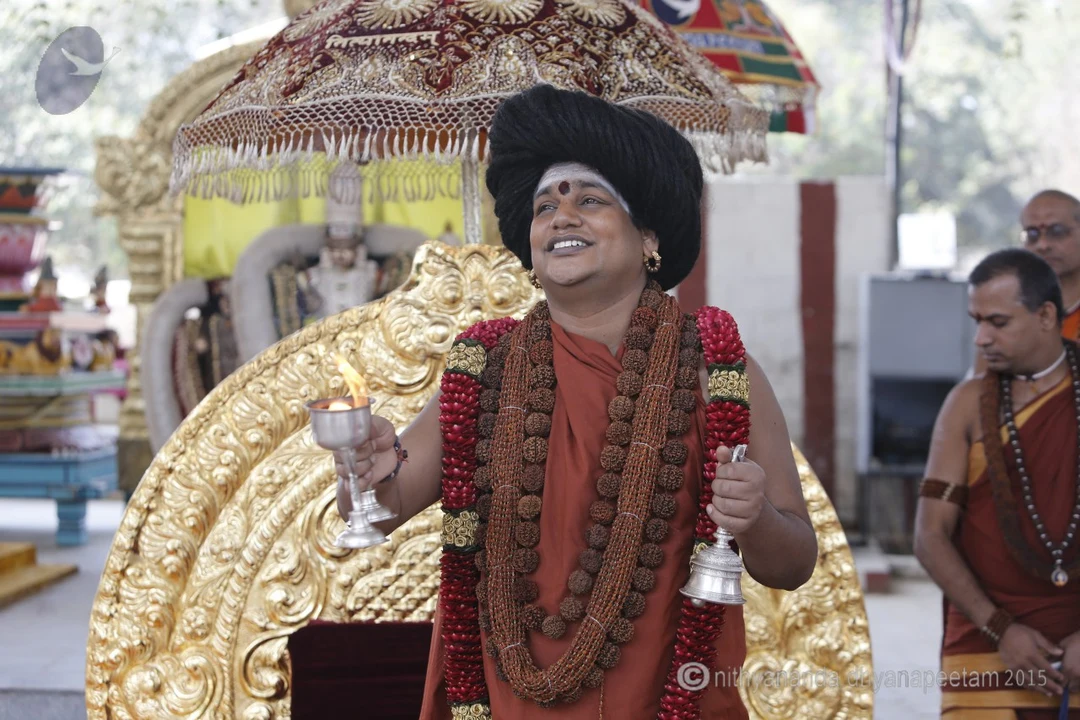
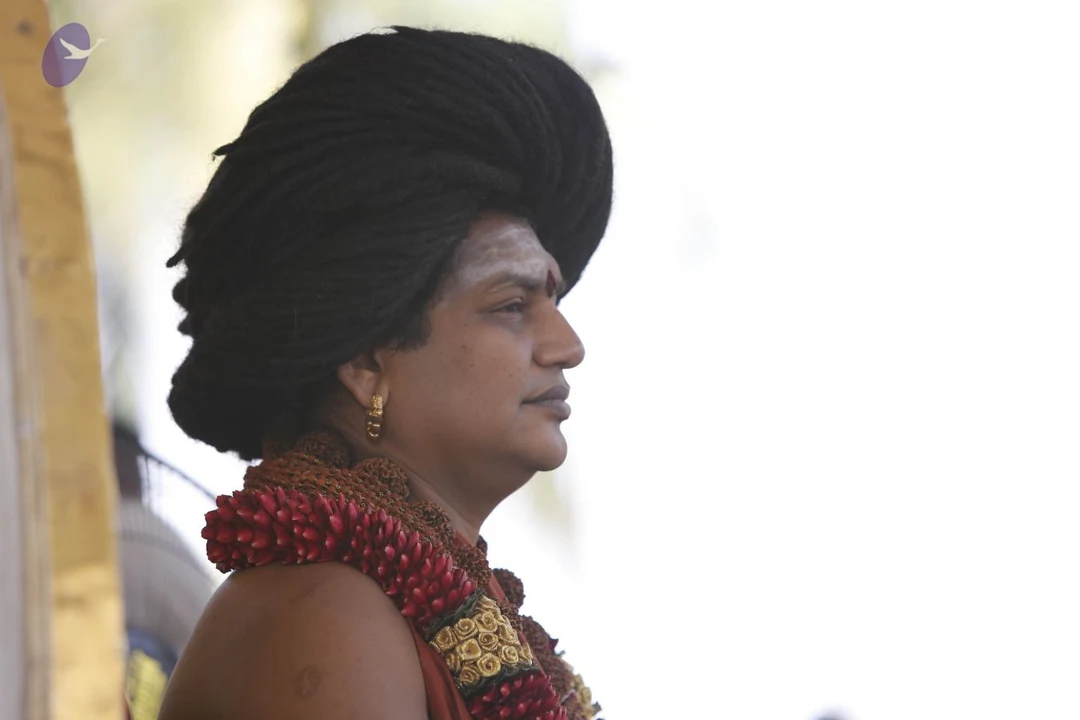
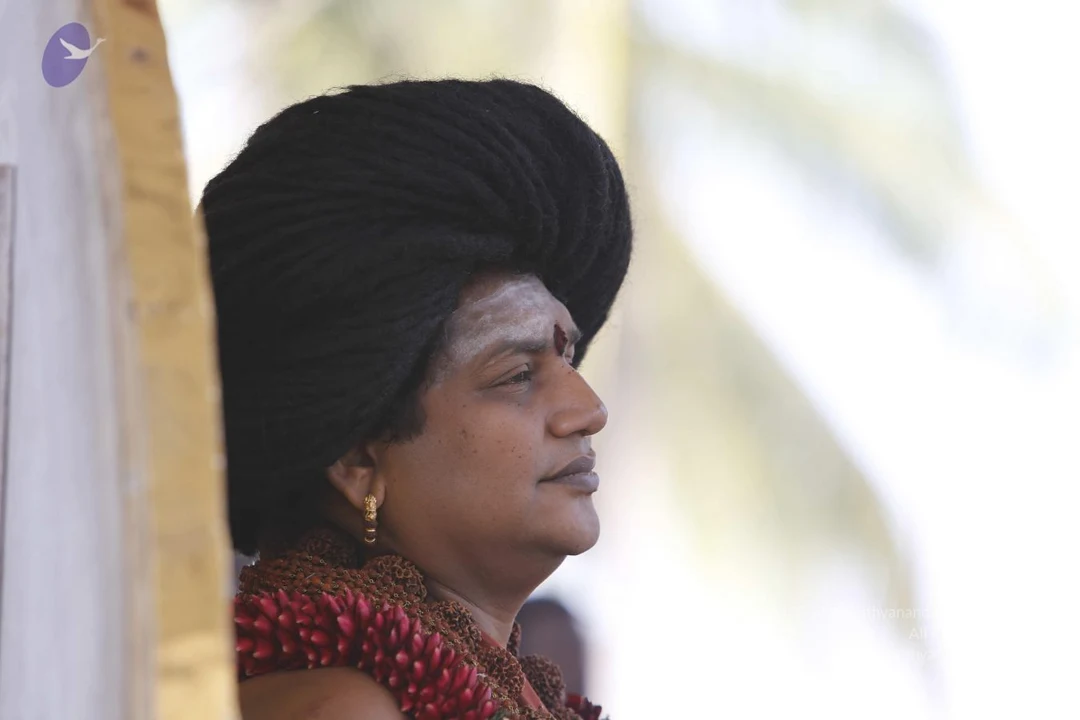
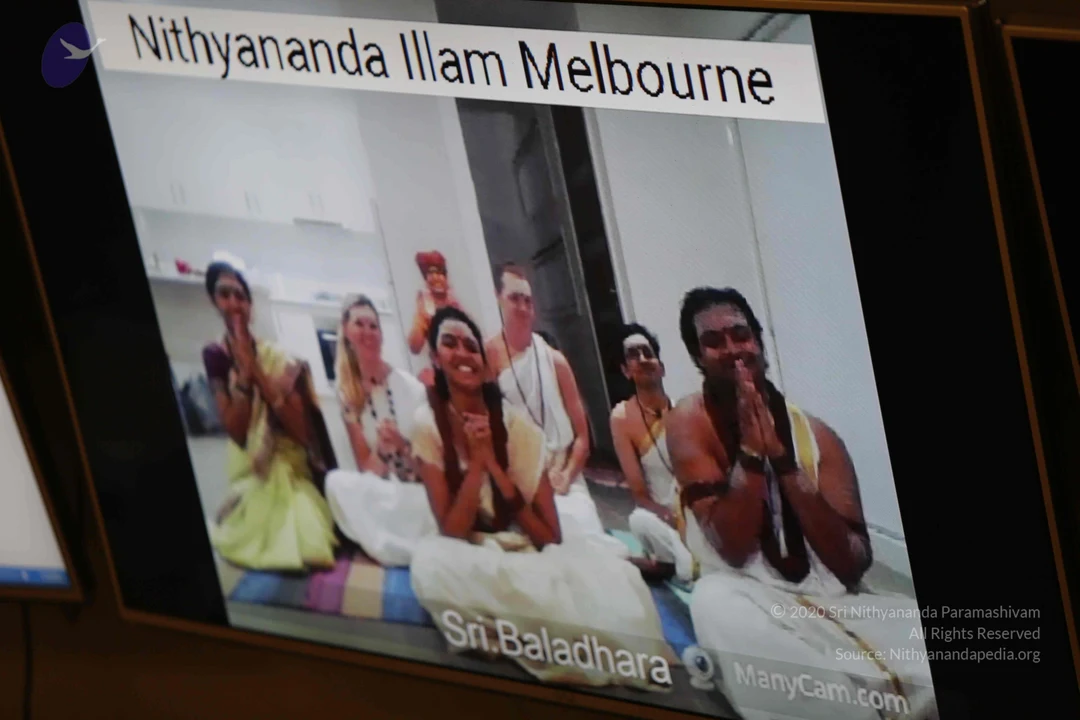
In today's Nithya Satsang, Paramahamsa Nithyananda continues to reveal the great truths on SEEKING in the Isha Upanishad satsang series. "Come back to the basic questions of life!" The humanity with the pretext of holiday and vacation has been long avoiding or pushing under the carpet, as it were, the very basic questions of life, which is our inherent quest to 'seek' the basic realities of life, of us, of the world. By invoking seeking, we drop the assumptions and hypocrisy of 'knowing' something, which were not our direct clicks and experiences. Paramahamsa Nithyananda blesses all on the sacred occasion of 'Makar Sankranti' Pongal, the Hindu festival representing new life. He also inaugrates the Melbourne Aaddhenam with the name "Nithyananda Palace Australia" and blesses the Aadheenam to have eternal auspiciousness and bliss, with His poetic Tamil.

Narration

The Supreme Pontiff of Hinduism, Jagatguru Mahasannidhanam, His Divine Holiness, Bhagavan Nithyananda Paramashivam, expounded on the Cosmic Principles of Seeking as part of the Isha Upanishad Satsang series. In this talk entitled The master is key to Seeking, The Supreme Pontiff of Hinduism (SPH) beautifully shared that our very bio memory vibrates and actively functions only with some of the basic questions about life . He explained that how many times we may listen for the answers to these questions, listening to better and better answers for these questions and clicking with them is maturity.

THe SPH shared that listening to your own answer and experiencing once for all is Enlightenment. He concluded by giving the essence of the Satsang which was to come back to the basic questions and grow and click with more and more matured answers.

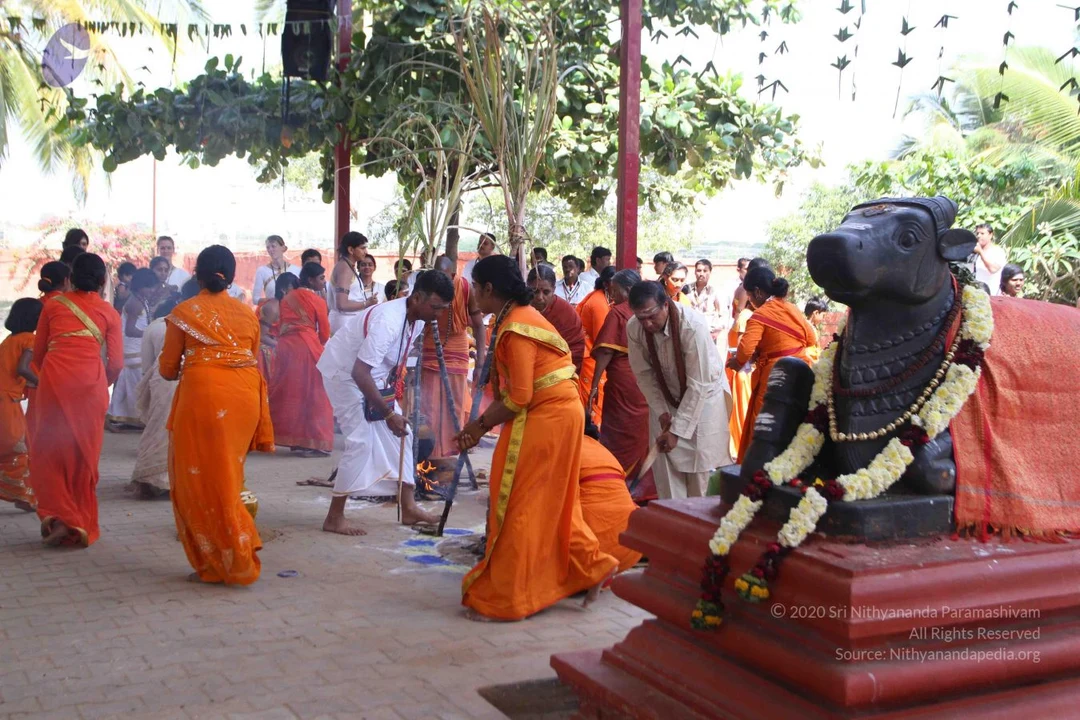
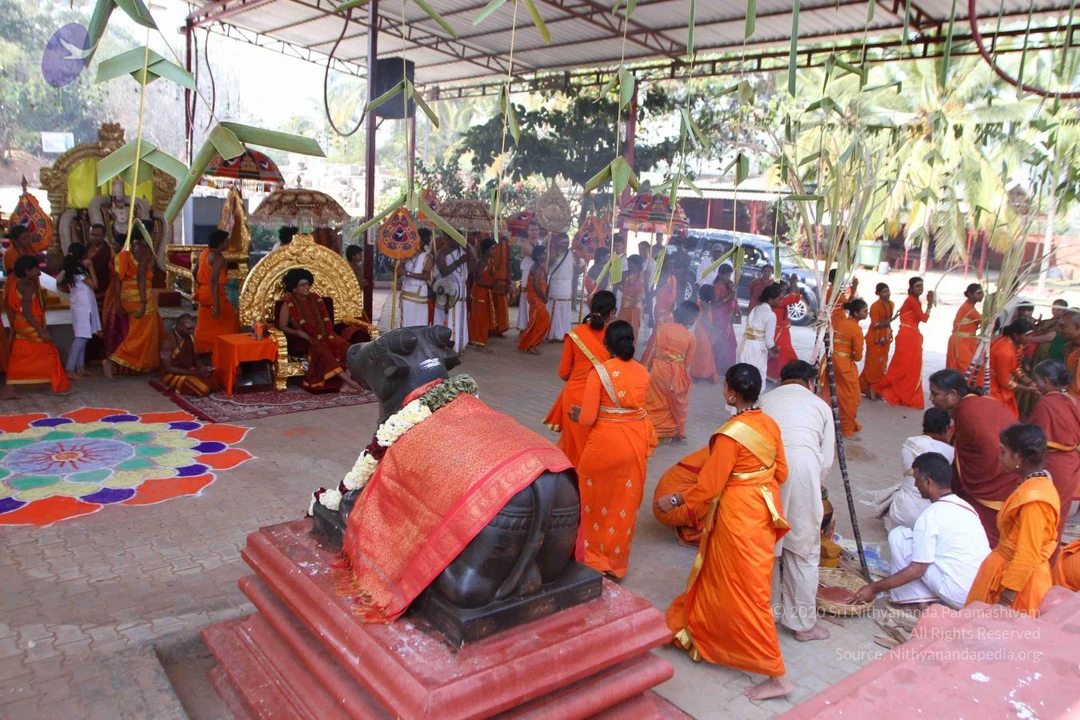
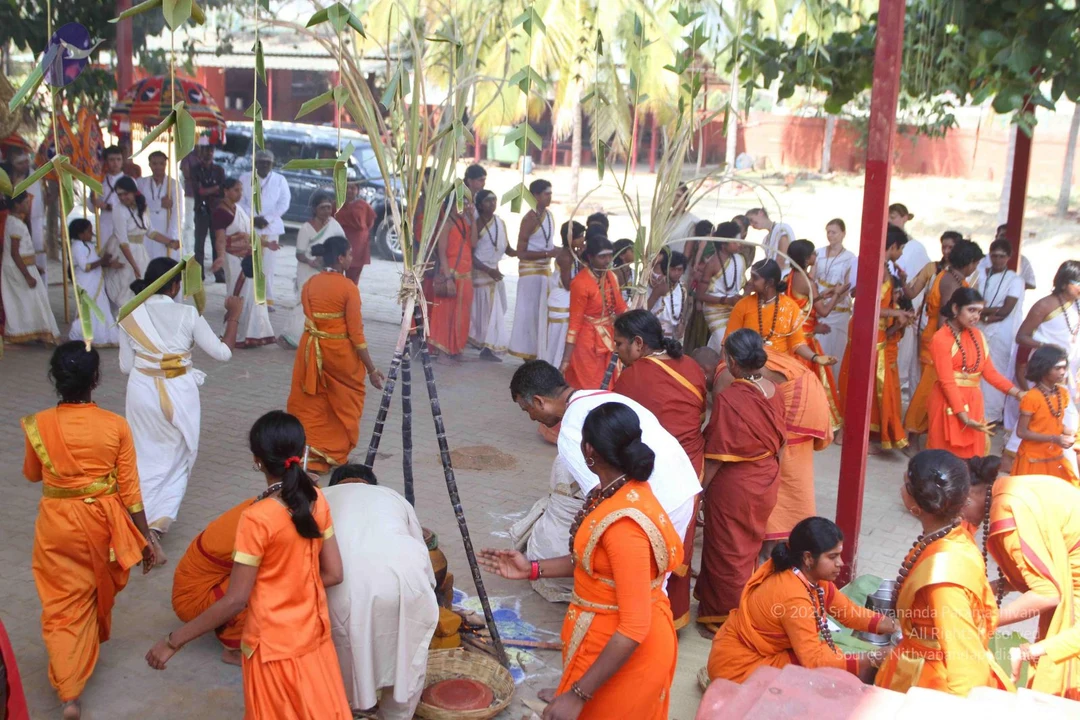
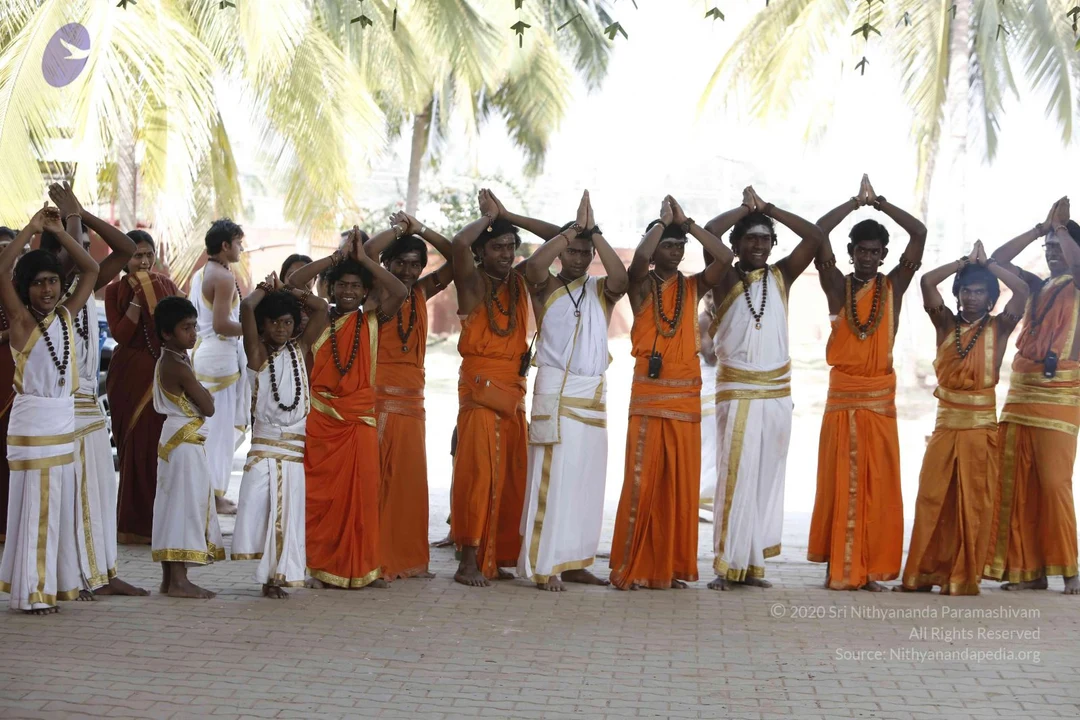
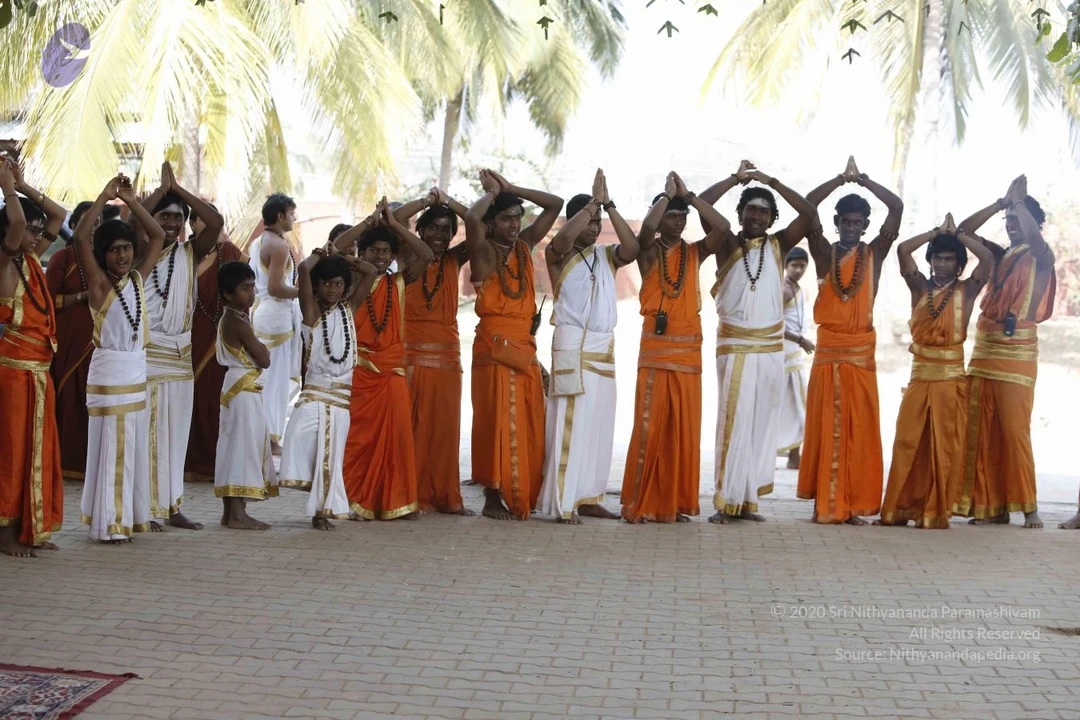
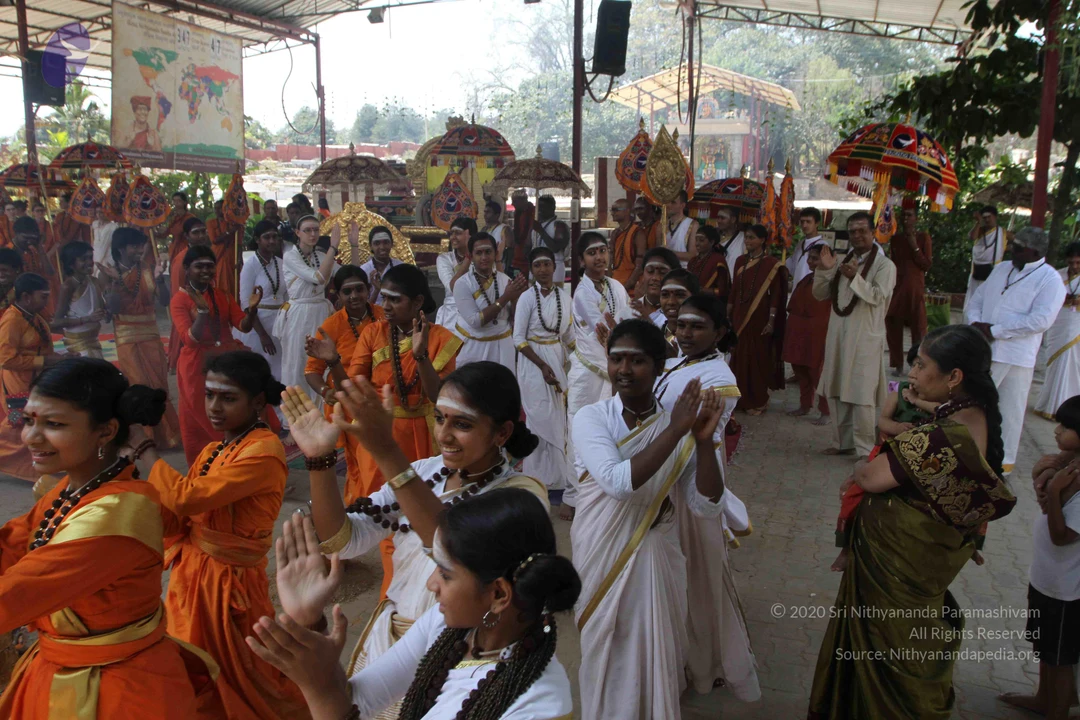
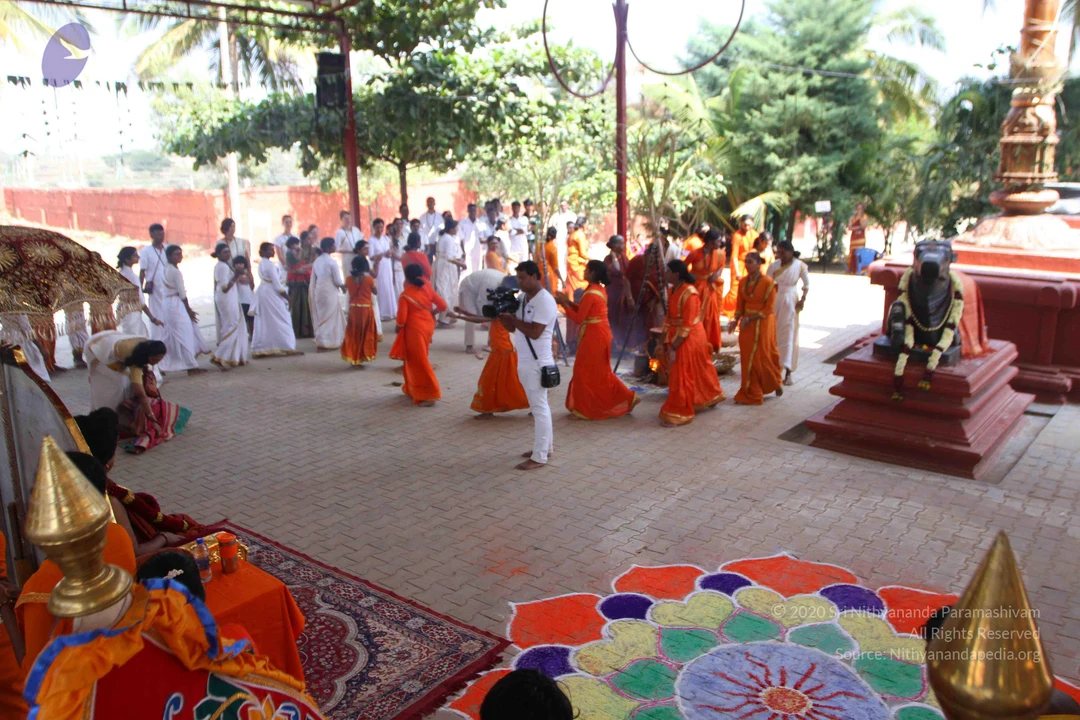
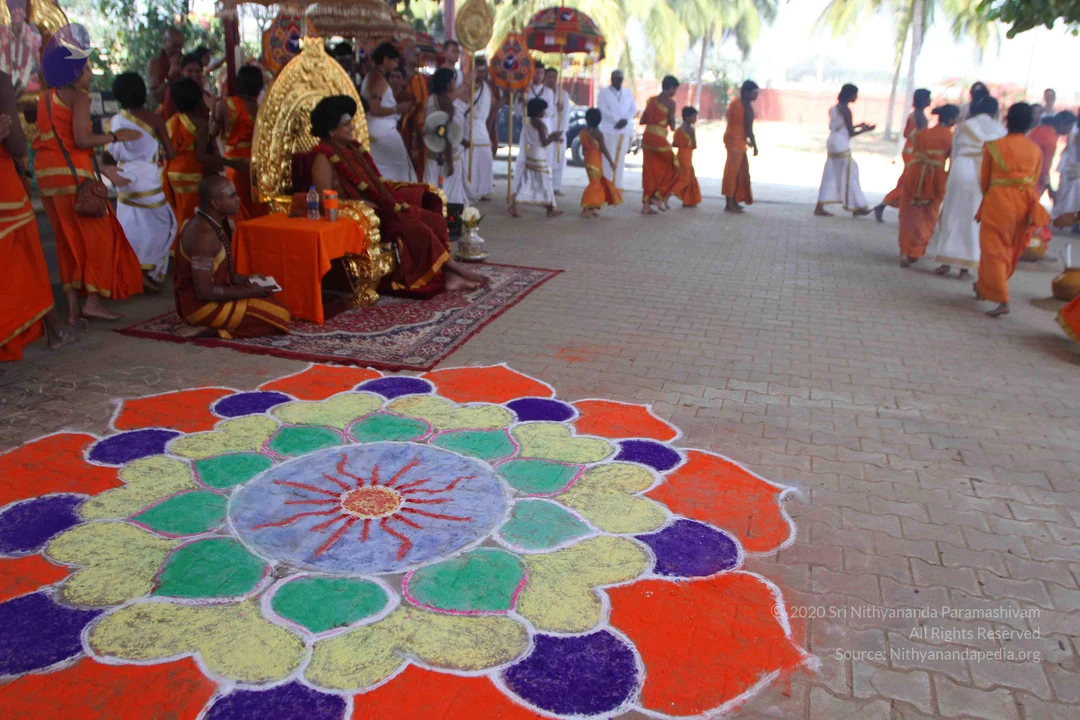
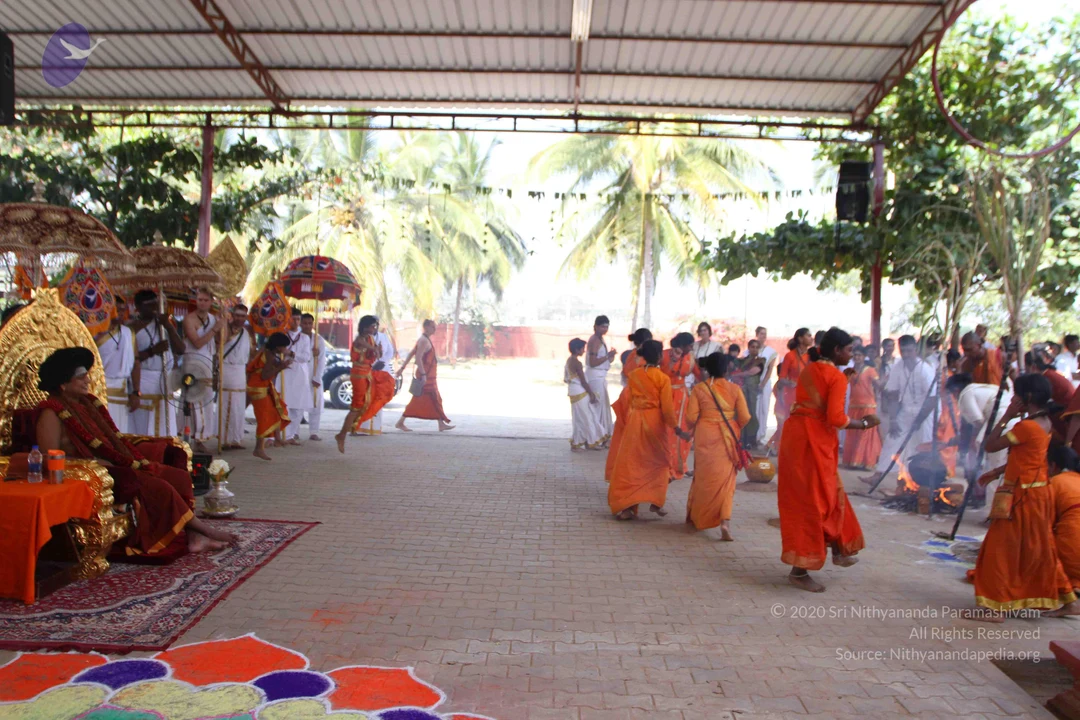
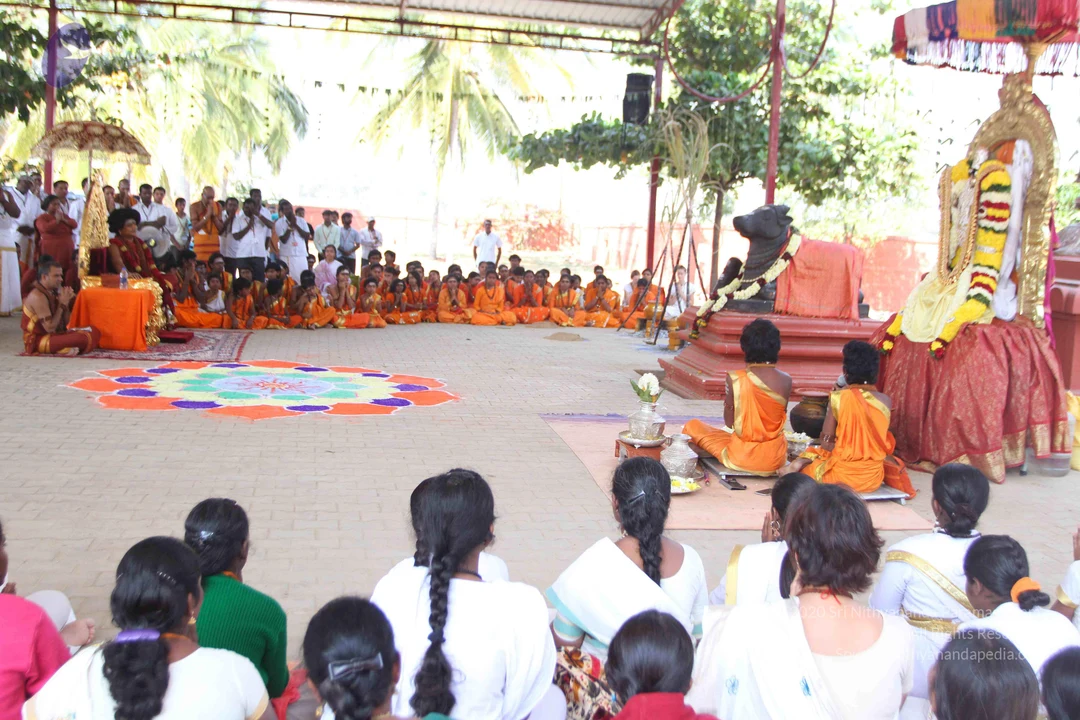
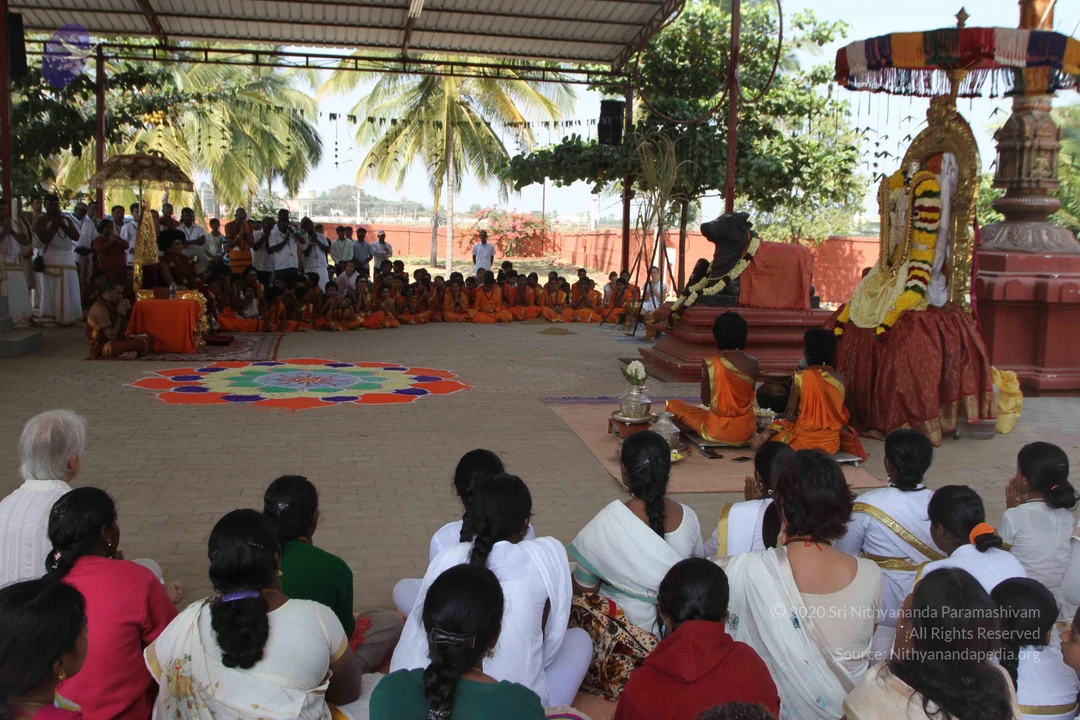
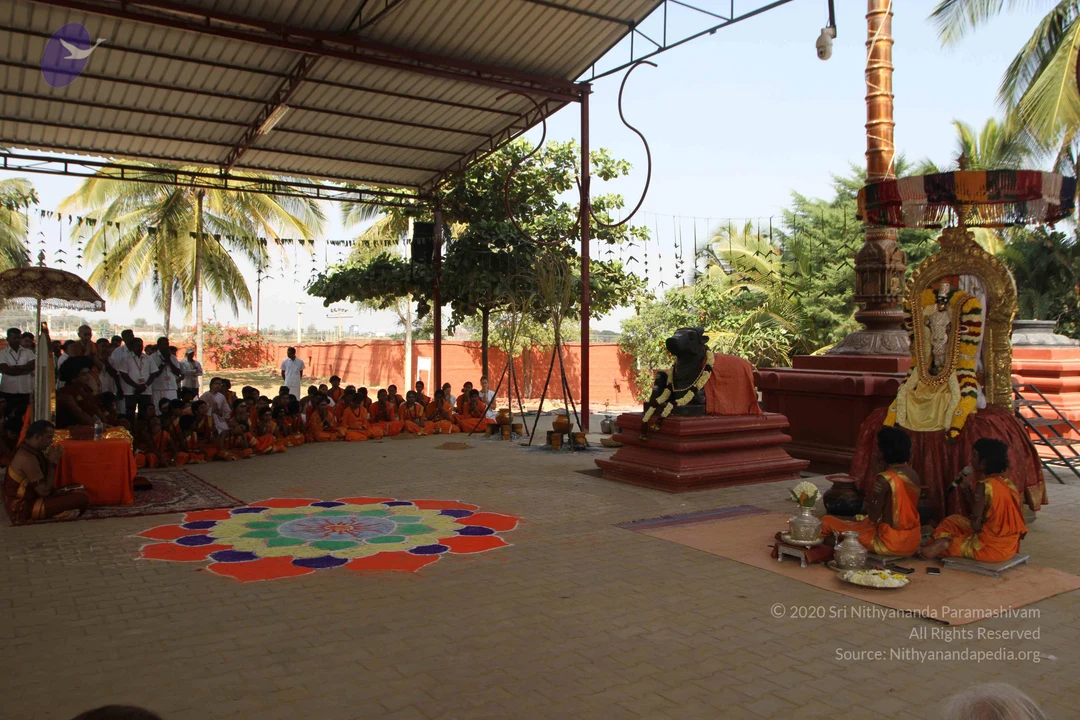
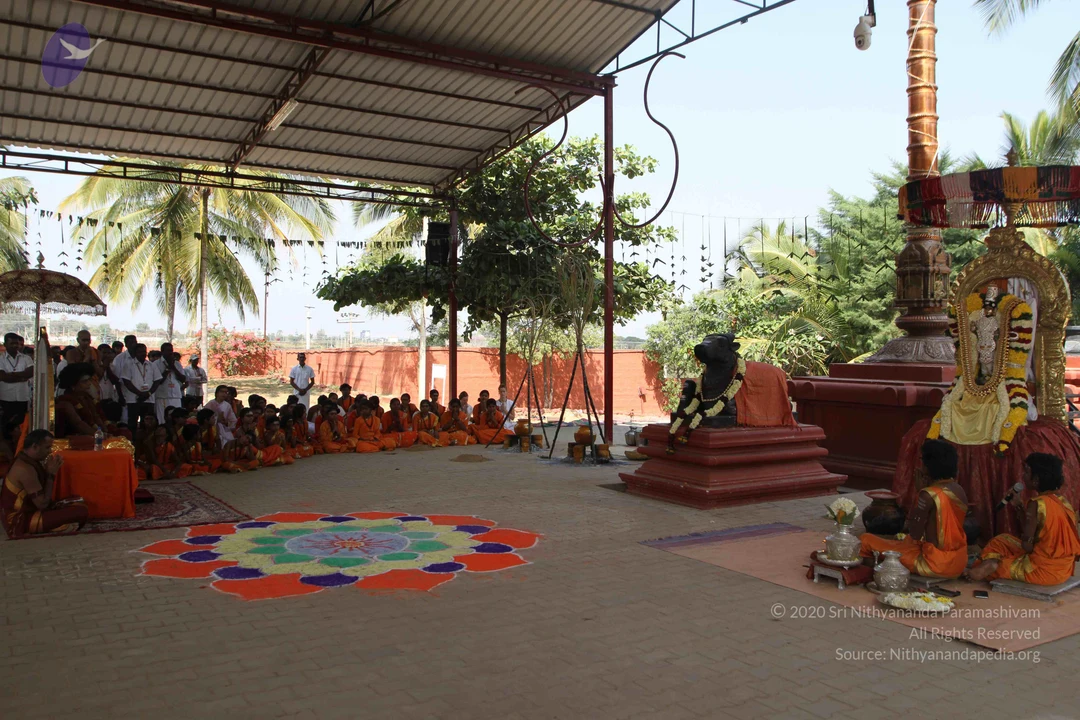
Today, glorious celebrations also took place around the world on the auspicious occasion of Makar Sankranti, Pongal which is the Hindu festival representing new life. The Supreme Pontiff of Hinduism blessed all and also inaugurated the Melbourne Aaddhenam with the name Nithyananda Palace Australia, blessing the Aadheenam to have eternal auspiciousness and bliss.

Video and Audio - Seeking - Come Back to Basics

VideoAudio

Transcript

(0:26) || nithyānandeśvara samārambhām nithyānandeśvari madhyamām | asmat ācārya paryantām vande guru paramparām ||

[Welcoming everyone watching the satsang on two way and on different channels] I welcome all of you with My love and respects

(02:26) I came to today’s satsang mainly to inaugurate Nithyananda Palace in Melbourne. So it should be called as Nithyananda Palace; Nithyananda Aranmanai! First time outside India in a country where I have not physically visited even once, not just temple, a full-fledged Aadheenam is happening with the community! With the community, a full-fledged, actually, Aadheenam does not mean only monastery or monastic members; ashram means only monastery. I told them to stop using ‘Ashram’ word. After some people have started using. No, I said don't use the word Bengaluru ashram. Some people have started using. Don't use that. Everywhere, including even my wifi connection, I told change it into Adheenam. So, Aadheenam is where sannyasis, brahmacharis, vanaprastis, grihastas, all live together, learn, practice, enrich the world with this great Sanatana Hindu Dharma, Shuddadvaita Saiva Sampradaya! I am so happy the tradition of starting the communities, Sanghas, happening without even Me physically visiting. First in Melbourne Australia, I’m naming that place as Nithyananda Palace! And, blessing all of you, just as I named Nithyananda Palace, I’ll shower everything auspicious and make the place as Nithyananda Palace. Blessings to you guys. Blessings. I am with you guys. I think maybe some one of you or one or two of you have to fly here and pick up all the things required from the, our sacred arts as My personal gift to you guys; whether cooking vessel or everything, everything required. Make it as traditional as possible. Whether it is cooking vessels or hanging chandeliers, and have from Sacred Arts as My personal gift to Nithyananda Palace. Blessings to you guys. So with this blessing formally I am inaugurating Nithyananda Palace in Melbourne, Australia.

ஆல் போல் தழைத்து, அருகு போல் வேரூன்றி, மூங்கில் போல் சுற்றம் சூழ நித்தியானந்தர் போல் ஆனந்தமாய் வாழ்வீர்களாக..."

(06:28)

I blessed in Tamil that, like Banyan tree flourishing, like the arugu (darbha) grass rooting, grounding...Arugu grass if it is two inch outside, at least 10 inch will be root, and like bamboo having friends and relatives. Bamboo will never be alone; it will be always a group, and like Nithyananda, in bliss! I am so happy they are setting a trend! It is not just community, it is not just ordinary community, they are setting a trend, model community, for the whole world to flourish. Because if I physically go, and meet people, collect them, they get inspired, and it gets created, constantly I need to be there attending. If I am not there it collapses. But without Me physically being there they gather together, they get inspired, they know how to raise themselves and they are doing it, it’ll be successful. I know it’ll be successful directly without My physical presence; because to create it My physical presence was not required, so to sustain it also it will not be required. Many communities we created but everything needed My physical presence because My physical presence created it. When people came together, it was their completion with Me, that was the first pull.

(08:25)

But now, for this Australia community Nithyananda Palace, completion among themself is the first inspiration. That is why I am telling you, this will be successful forever! This model will be successful forever, because now they know each other’s seasons, they know how to sustain themself. And I am blessing this community, encouraging all over the world as many communities as possible be created. Now they have created the real Adheenam. Blessings. Blessings Melbourne. Well done, guys, My blessings. As usual, Australia becomes My favorite. Australia is so favorite for Swamiji, He gave His very own daughter to Australia. I am so happy that everywhere Aadheenams are getting created.

(09:38)

And the next thing, today, auspicious occasion of Makara sankranti, Pongal Festival, means it’s a season of new life. The whole Uttarayana happening, Uttarayana Punyakala. Even the great souls wait for this day to leave the body. That’s the greatness of this time, the Uttarayana Punyakala. Beautiful.

On this day, formally I am releasing a book by Nithyananda University Press. The book title is “Why Suffering?” It’s available for freely for all of you to read in our website; it’s a e-book freely available. As you all know that all our books, in the form of e-book, freely available. If you want to get the hard copy you can get it from our Galleria. Today I came to Satsang mainly for inaugurating this Nithyananda Palace in Melbourne, and to tell you all, Happy Pongal and Happy Makara Sankranti. Happy Makar Sankranti, Happy Pongal.

தை திருநாளாம் இந்நன்னாளில் எல்லோரும் வாழ்வாங்கு வாழ்ந்து நிறைவோடு நித்தியானந்தத்தோடு நிலைத்திருக்க பொங்கல் திருநாளாம் இந்நன்னாளில் உங்கள் எல்லோரையும் ஆசிர்வதிக்கின்றேன்.

Happy Makara Sankranti and Happy Pongal. Blessings to all of you.

(11:46)

Last two days, I am expanding on Seeking. Maybe I will continue, few understandings which I need to share with you all to complete My introduction to Seeking. Today I will explain the sacred truth of the Source of Seeking.

Please understand, your very bio memory vibrates, your very bio memory actively functions, only with some of the basic questions about life -

What is pleasure, how can I have more? What is pain, how can I avoid that? What is life? Is this understandings help me, is this understandings going to help me? What is joy? All these basic truths, basic understandings – how can I experience them?

These basic questions about life only continues to make you function, act. Entertaining these basic questions: What is pain? How can I avoid it? What is joy? How can I have more? What is life? Please understand, how many times you may hear answer for these questions from your father, mother, uncle, society, teacher, finally from Guru. How many ever times you may listen answer for these questions, listening to better and better answers for these questions and clicking with them is maturity. Listening your own answer and experiencing once for all is enlightenment.

(15:24)

Understand? It’s nothing but basic questions. What is life? What is death? Why suffering? Why pain? What is bliss? What is joy? How can I have more joy? How can I have less pain? What is it that is living inside me? What is it that changes inside me? What is it that does not change inside me? What is it that is making me move? What is it that is making me tired? What makes me exciting? What makes me feel bored? For these basic questions, if you have better and better answer and click with the better answers, that is called Maturity. Naturally, the answer your friend gives when you were 5 year old will be different, your mother gives when you are 6 year old will be different, when your father gives when you are 14 will be different. Finally when you reach your Guru, the answer He gives will be different. So clicking with better and better answers is Maturity. Ultimately, clicking with your own answer, experience, and the question disappearing once for all is Enlightenment. That is Enlightenment.

(17:43)

Seeking is nothing but coming back to the basics, that’s all. Seeking is nothing but coming back to the basics. Seeking is nothing but taking up a life without vacation! That’s all, I am telling you. See, vacation is nothing but the questions which you don’t want to face pushing you not to live the life you are living. Please understand, the questions which you pushed under the carpet are jumping from below the carpet and sometime it even bites the wrong place. No, from carpet if it jumps, where which part it will catch? That is what is the nagging you feel for the need of vacation. If you are living in a space, the very idea of vacation disappears, you have clearly ironed out your life. You don’t need to stand anywhere waiting for something. Vacation, what is vacation? It is just waiting that you will get out of the life you’re living, and go somewhere and you expect you will get something.

(19:17)

I was reading a one-liner — In college, if you stand outside the gate, suspend. The colleges, when you get suspended, you stand outside the gate. In college, if you stand outside the gate, suspend. After marriage if you stand outside the gate, husband. That’s all. No, day after tomorrow, Arunachaleshwar Himself will be standing outside the gate! If you go to Tiruvannamalai, you’ll see the festival. Day after tomorrow, there is a festival, where Mahadeva is locked out by Devi, because he went and gave liberation to Bhringi Rishi, who was worshipping only Mahadeva, who was not ready to accept Devi. And finally Mahadeva thought, after all My disciple, how can I forsake him? He went and gave liberation to him and came back and Devi locked the place and she did not allow Him inside. Even Mahadeva got locked out. Finally Sundara has to go, Sundarar was very close pet of Devi; so he has to go and do some patch-up work and do some mediation. Finally Devi said, “Alright, open the door”, and she allowed Mahadeva inside.

(20:43)

Anyhow, if you are thinking you have to go somewhere and stand for some joy or something to happen to you, you are just pushing all your basic questions under the carpet. No! Catching, understanding the life where boredom becomes meaningless, vacation word becomes meaningless, where life itself becomes vacation; you are doing continuously something which you are enjoying, cherishing, feeling blessed, feeling blessed constantly, feeling blessed constantly. So come back to the basic questions; that’s all I call seeking.

And stop cheating yourself with the answers with which you’ve not clicked. Please understand, sometimes you talk stupid, you talk big-big philosophy to others. I have seen some of this, even this Ashramites do it.

“I am complete and I am at the feet of Swamiji, as Swamiji wants.” Hey, I am Swamiji! I tell them, “Hey I am Swamiji na. I am telling, “you, you are not!”” Then they say, “No, no, no, no, no, I am living as per Swamiji only.”

(22:48)

See you can do all this cheating to others; what about yourself? So do not hide, escape with the answers with which you have not clicked. Means, the answers which has not become your bio-memory and cognitive shift. Don’t try to use those answers to attack others or hide yourself or lie to yourself. No! That stupidity will only push you into the hell! Any answer you give should have become your bio-memory and clicked with you, your cognition. It should have become your cognition.

(23:56)

Come back to basic questions. Make this Seeking and the matured answers as part of your cognition. As you all may be aware, tomorrow, the LSP process is there, Living Shuddhādvaita Process. Especially I am going to do a very important — muscle-memory process — awakening the God Particle and making your muscle-memory pure and clean and awakening. It’s a very powerful process.

And I am also doing some of the important things in the campus, Bidadi Campus. Today, 11 more people are going to be initiated as Ashramites in Bidadi. Everyone in the Melbourne palace, the whole team also I officially, I accept all you guys as Ashramites! That same team is going to be staying there? That same group, am I right? So how many? Six, Six. All 6 of you, I officially, formally accept all 6 of you as My Ashramites and inheritors of Mahadeva. Blessings!

And today here in Bidadi, 11 are waiting for a meeting with Me. I will have a meeting with that team and bless you guys. Sangha is getting infused with a fresh energy and getting cleaned up. The old is getting cleared; either they push the old thing out or they themself get pushed; if they are too attached to the old they also get pushed. If they push the old out they can be here, that all. But no question of tiredness and boredom; that is the first and last enemy of life. Lot of wonderful things are happening.

(26:45)

So the essence of today’s Satsang: Come back to the basic questions and grow with more and more matured answers. Click with more and more matured answers.

So with this, today I give Darshan from here itself and we will have Kalpataru Darshan maybe tomorrow day after tomorrow. Now with this I bless you all. Let you all radiate with Integrity, Authenticity, Responsibility, Enriching, Causing Shuddhādvaita Saivam, Eternal Bliss, Nithyananda. Thank you. Be blissful!

(27:50)

Nithyananda Times

Photos

Pongal Celebration
Evening Satsang

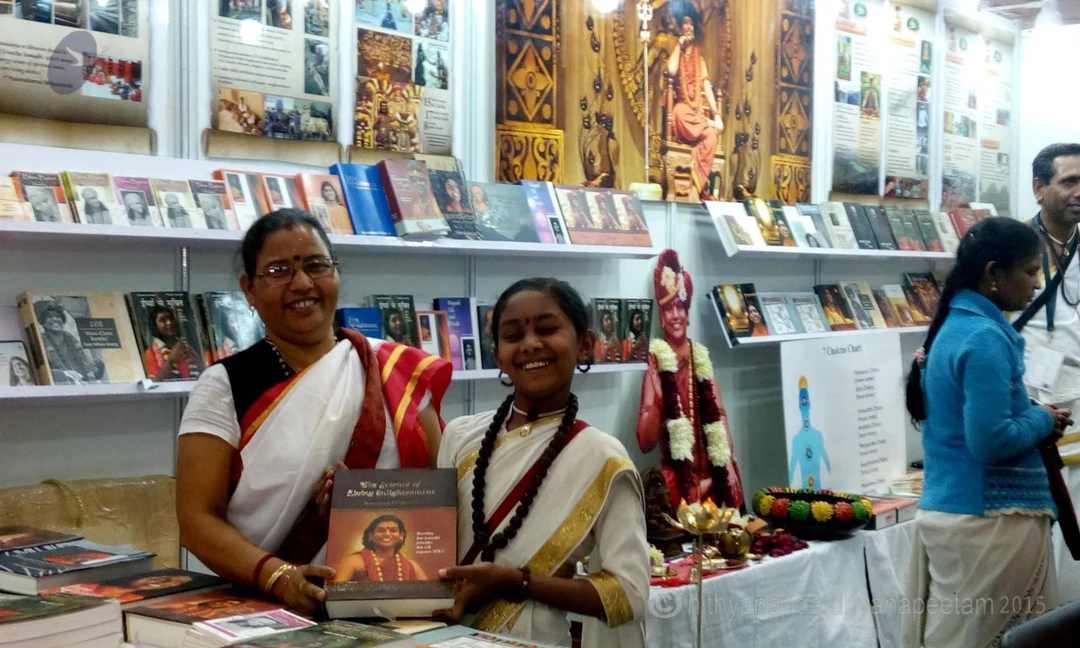
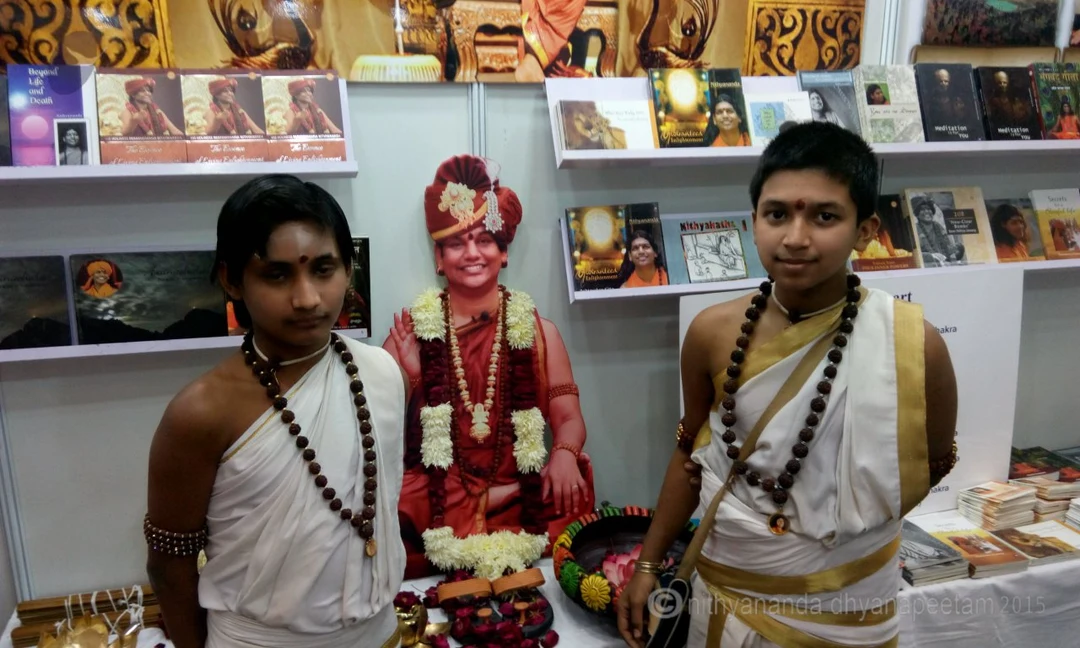
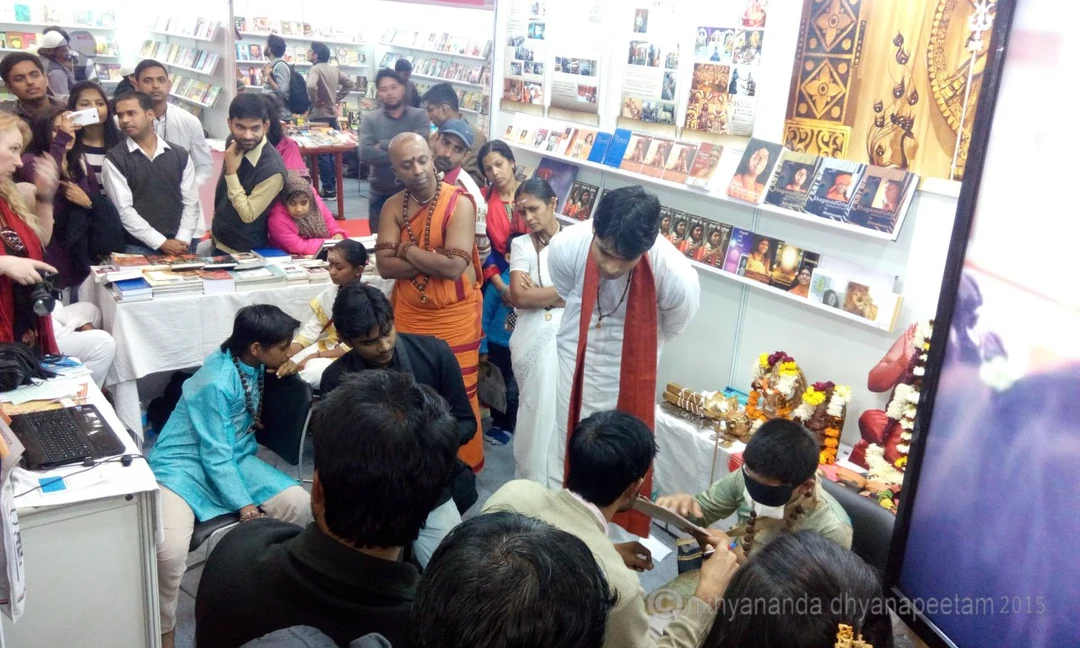
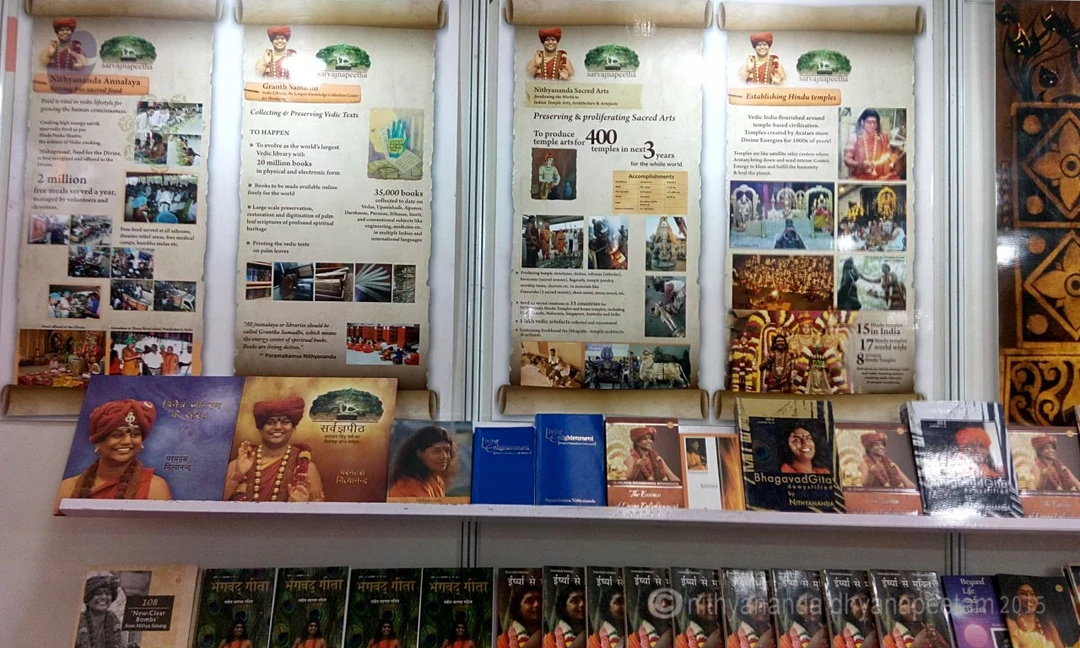
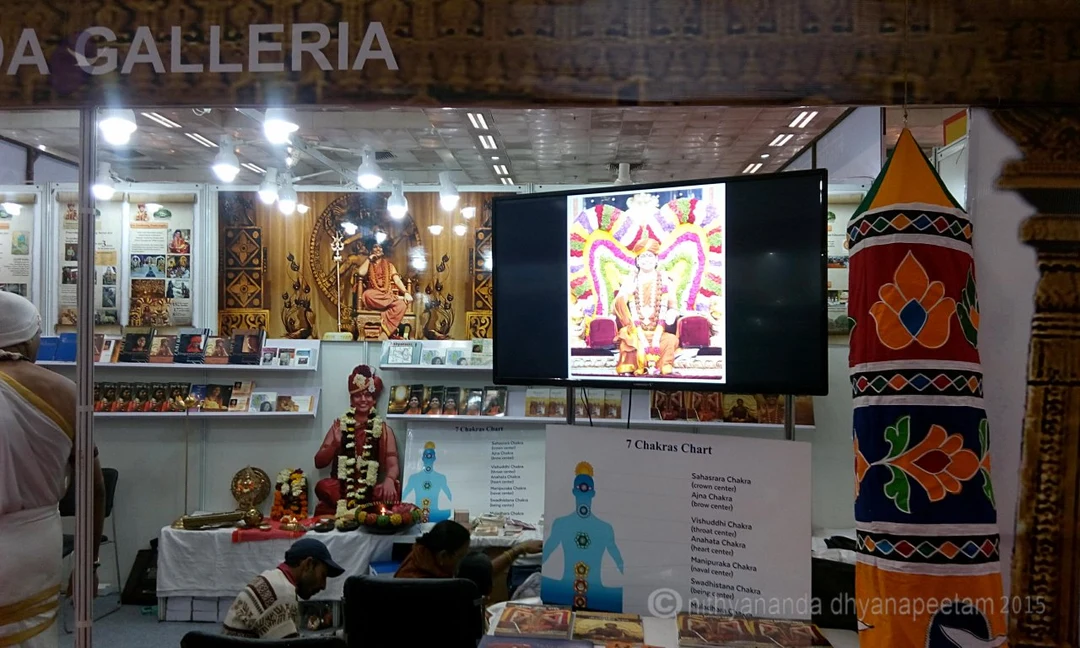
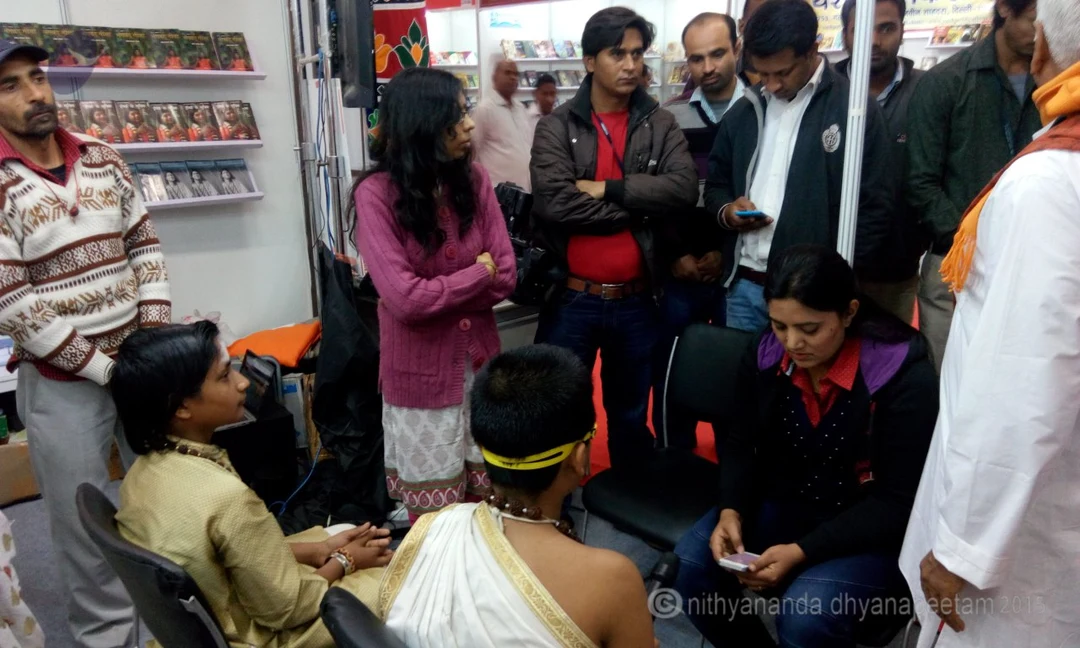
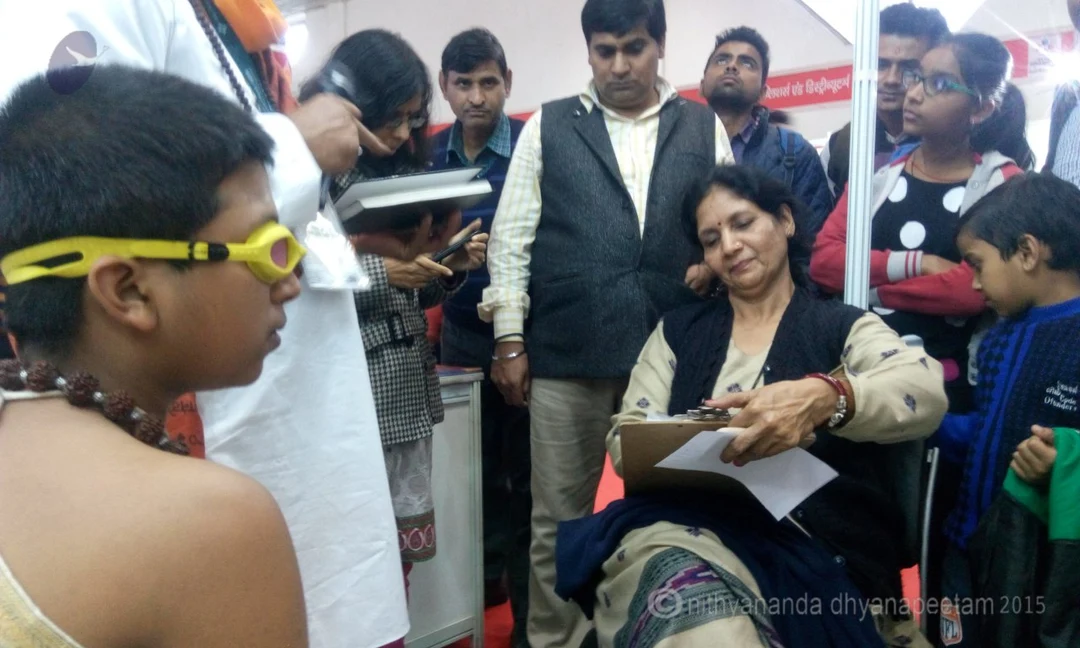
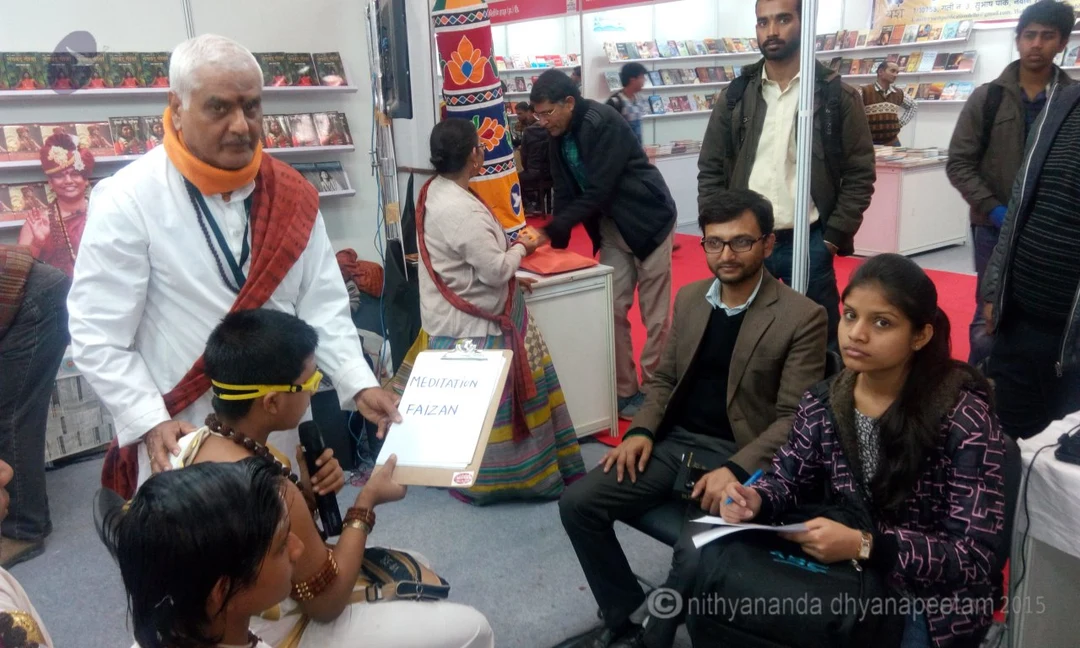
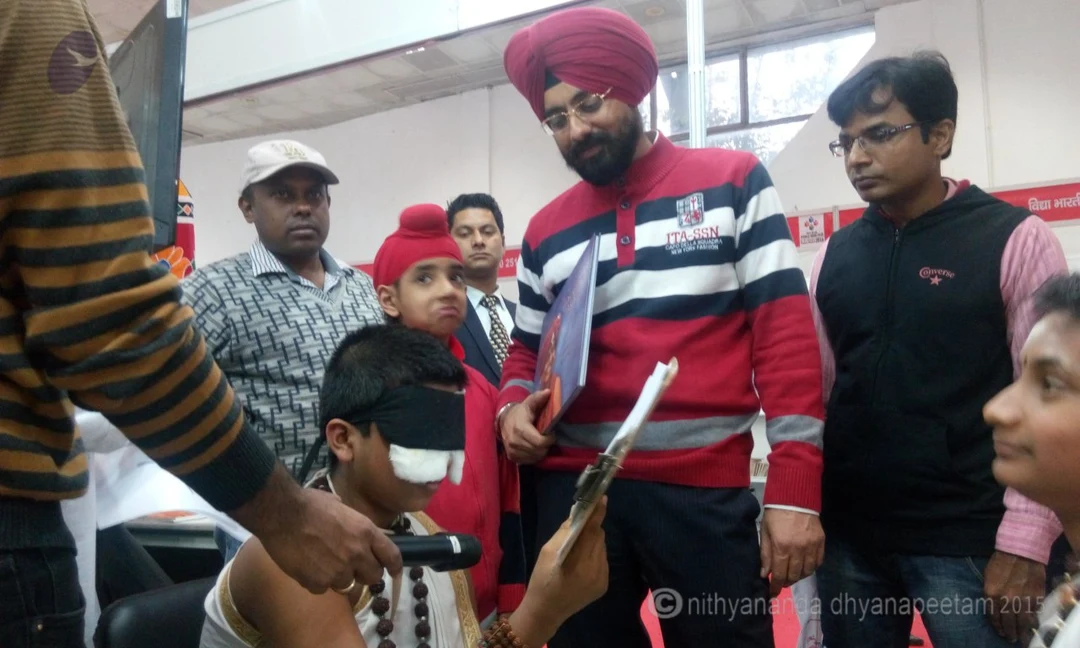
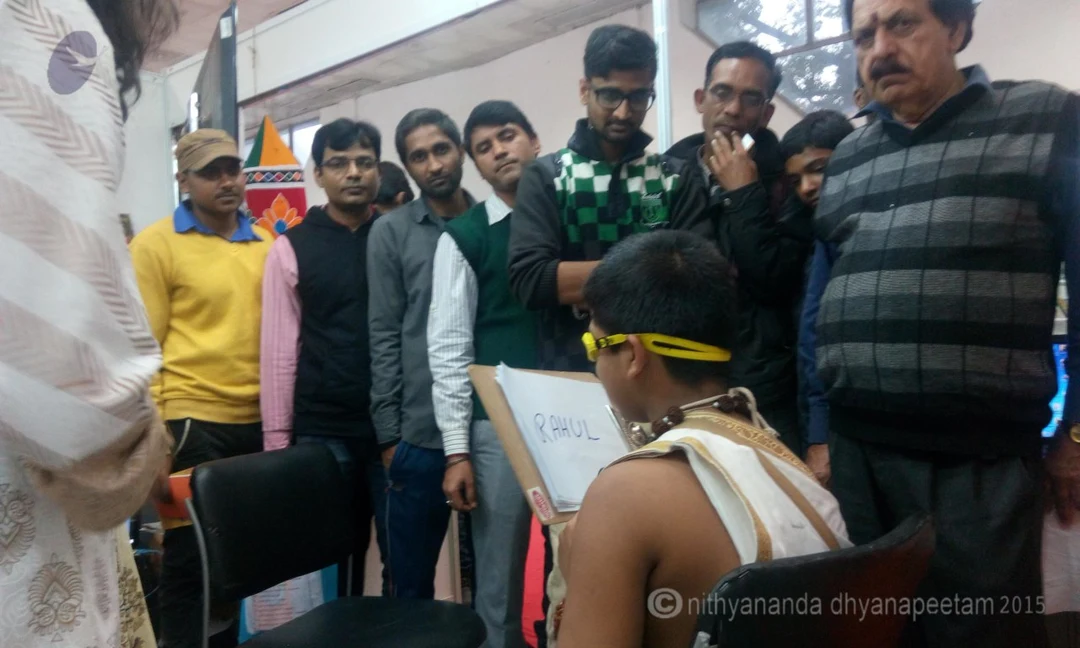
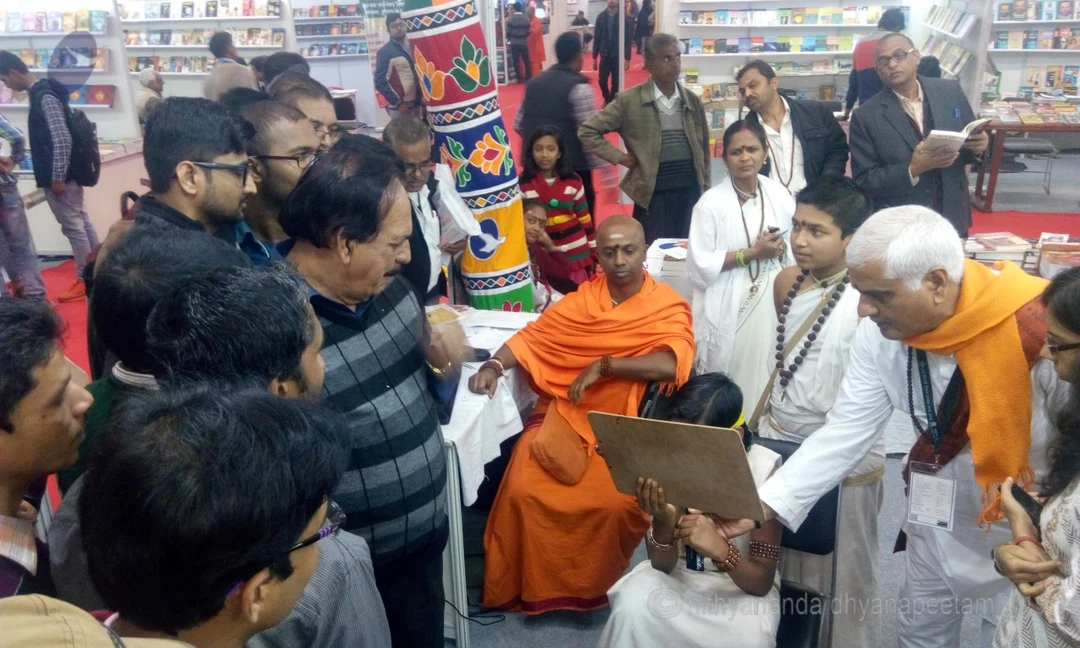
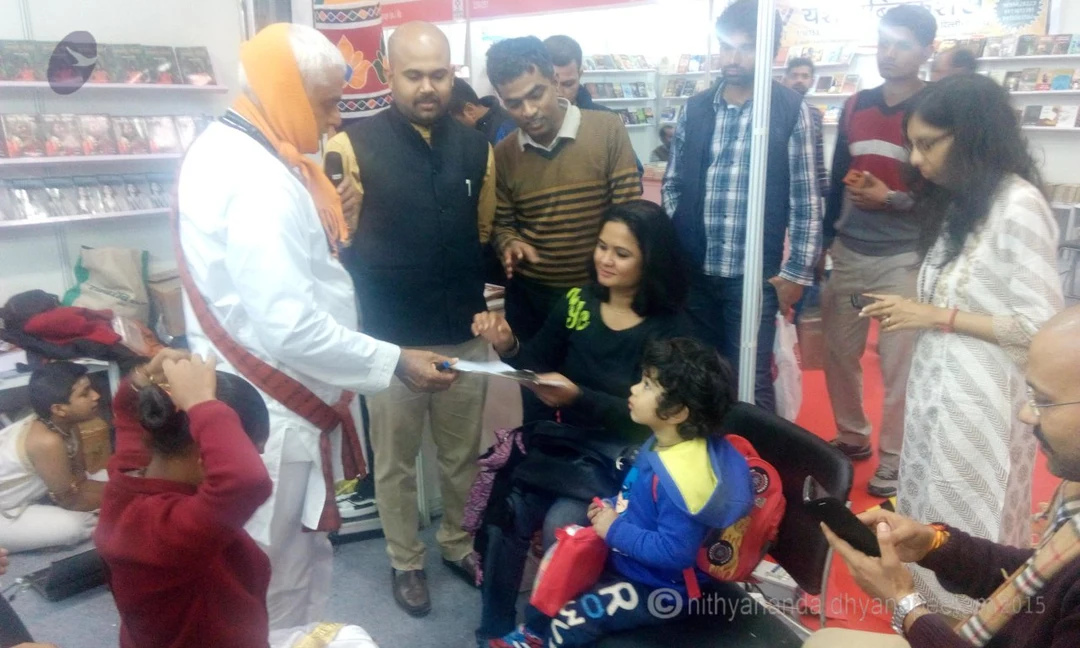
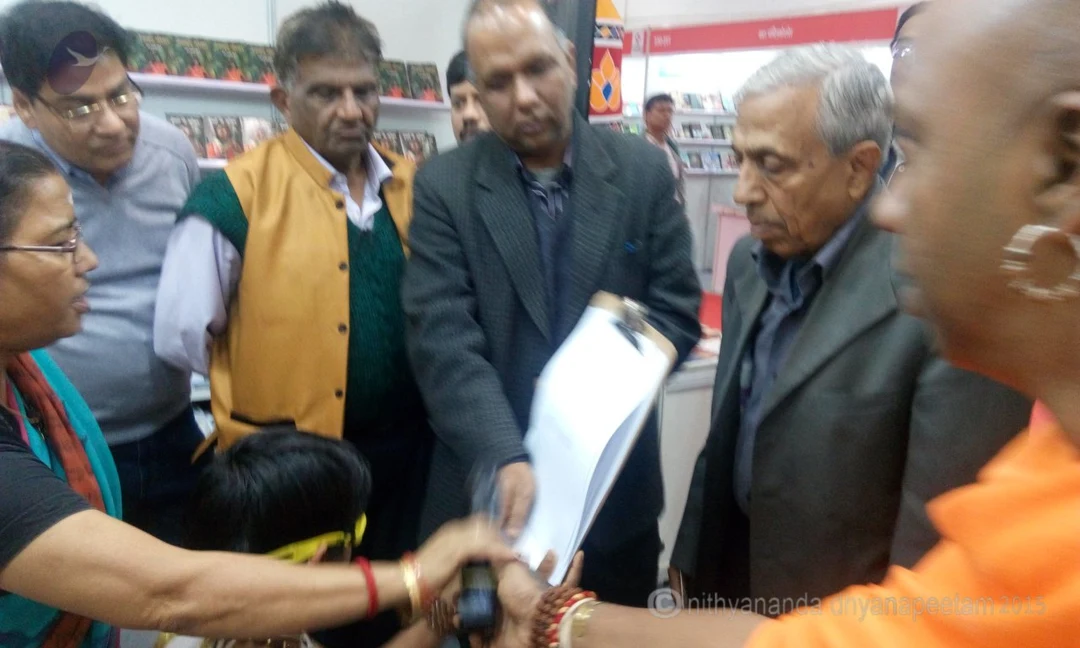
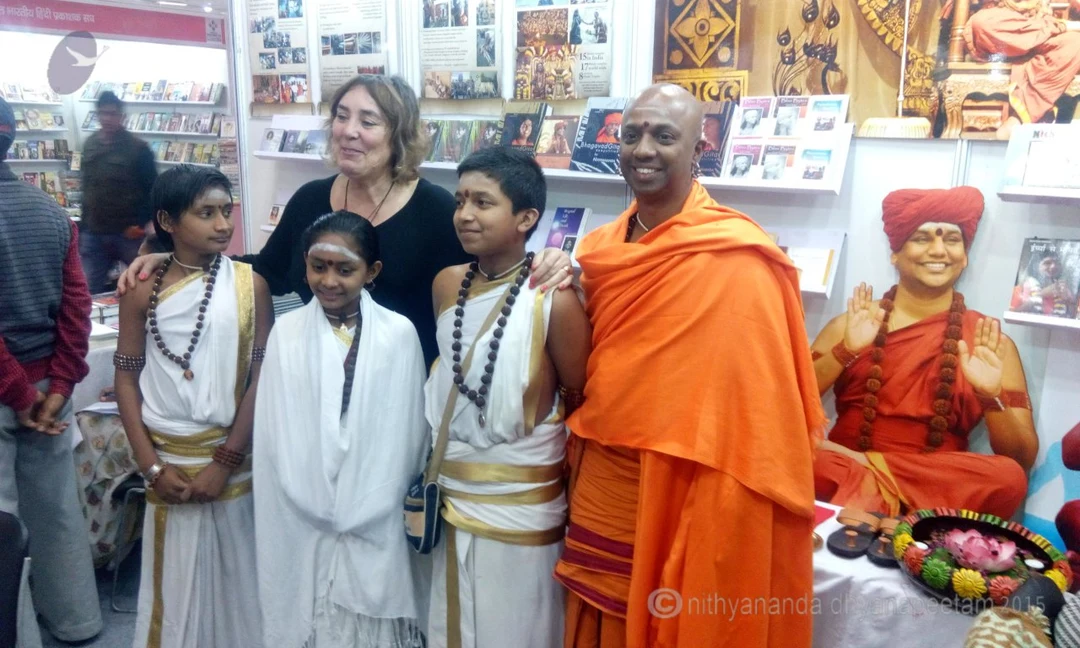
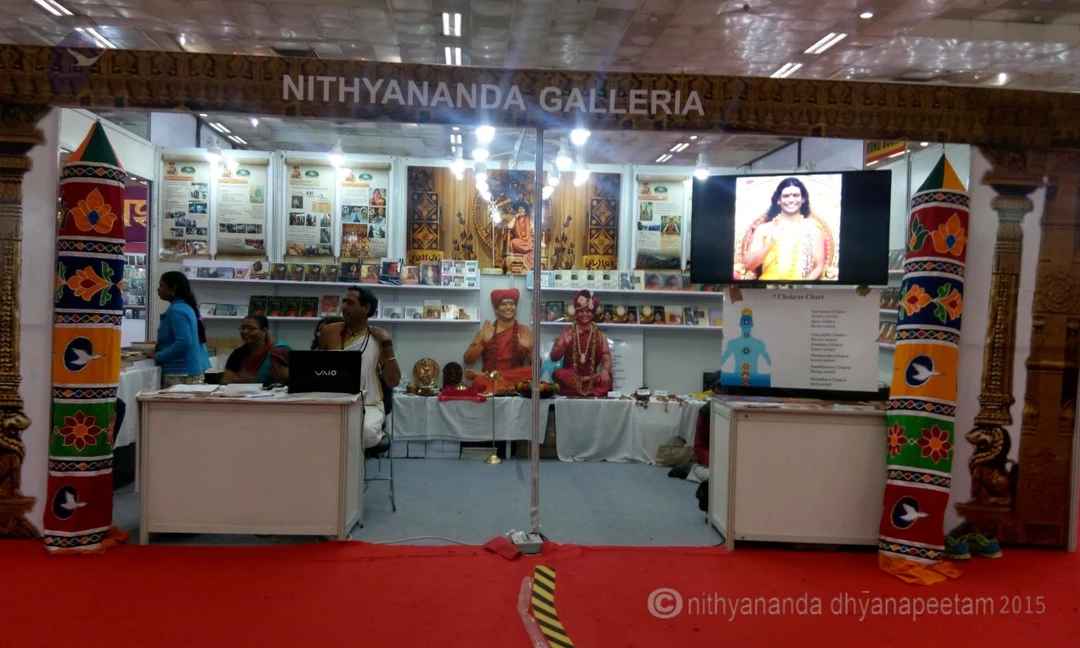
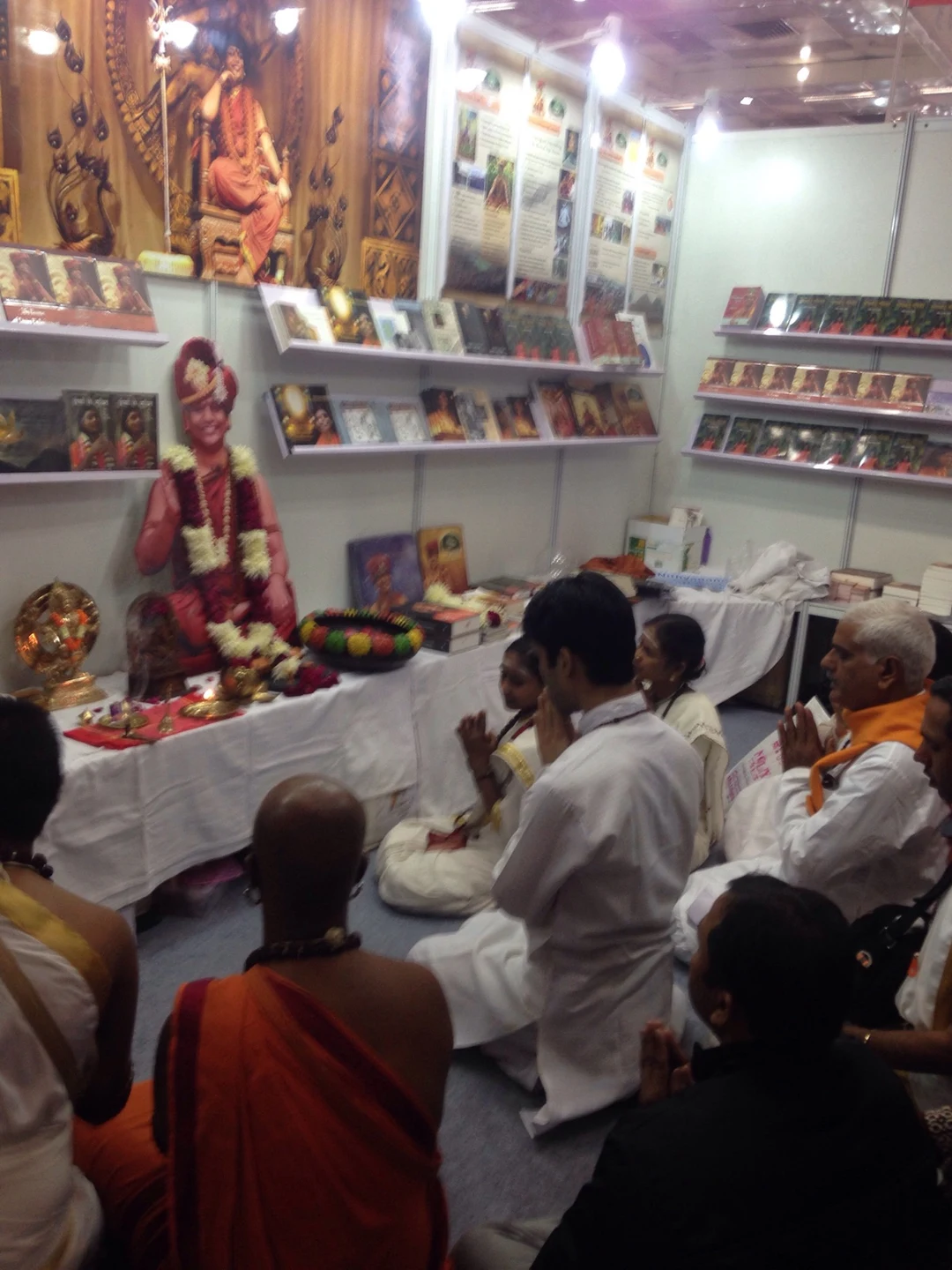
New Delhi International Book Fair

Tags

Nithyananda, Paramahamsa Nithyananda, Upanishads, Isha Upanishad, Seeking, Hinduism, Isavasya Upanishad, Shuddha Advaita, Advaita, Seeking, Australia Aadheenam, Nithyananda Palace, Mahadeva, Makar Sankranti, Pongal

Photos Of The Day:

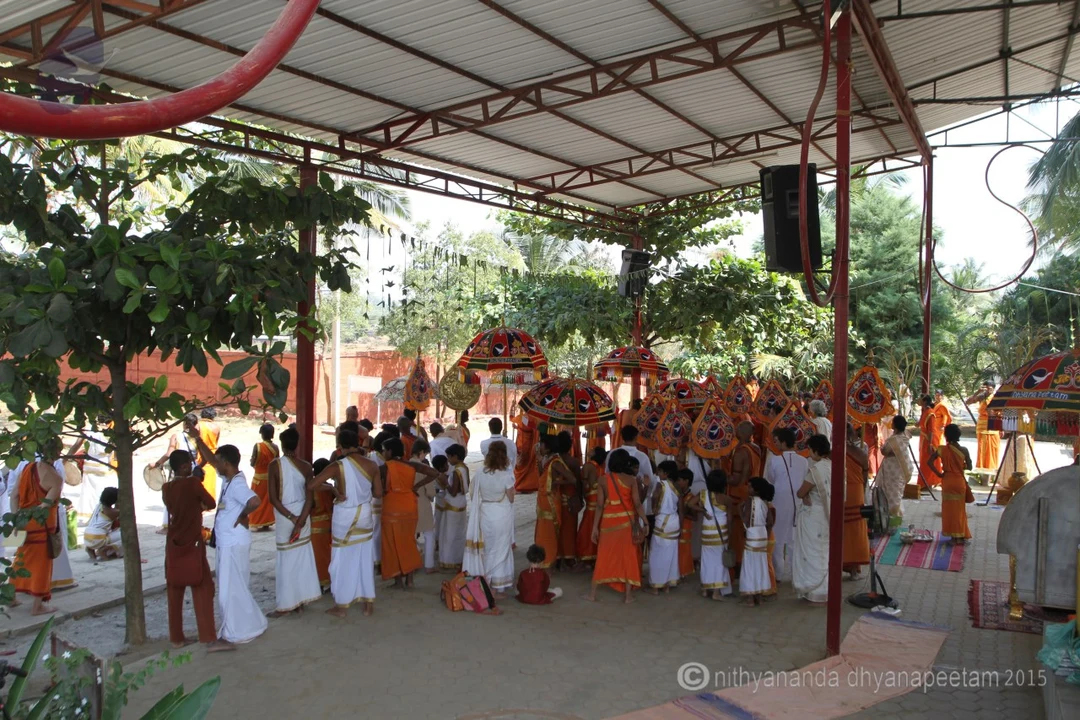
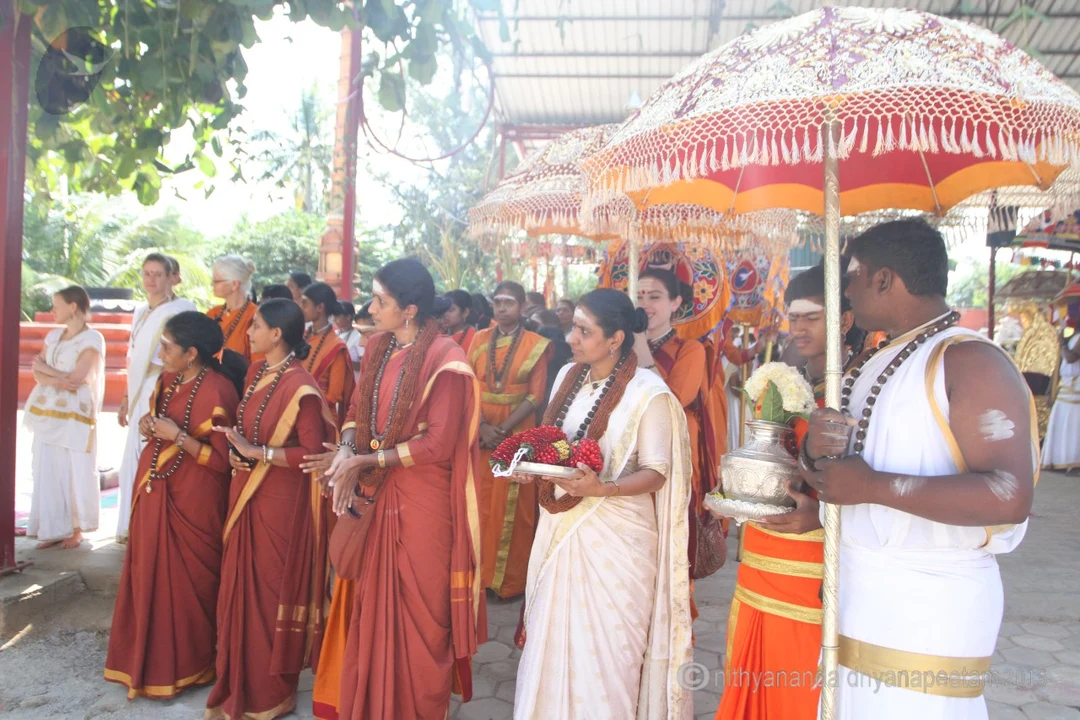
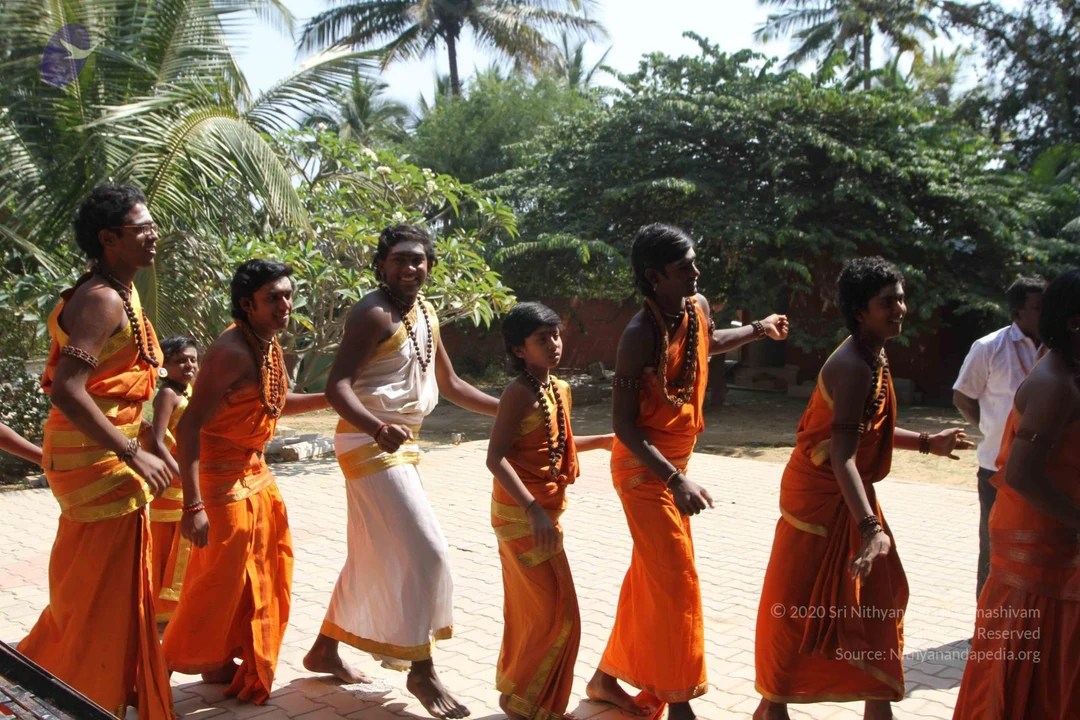
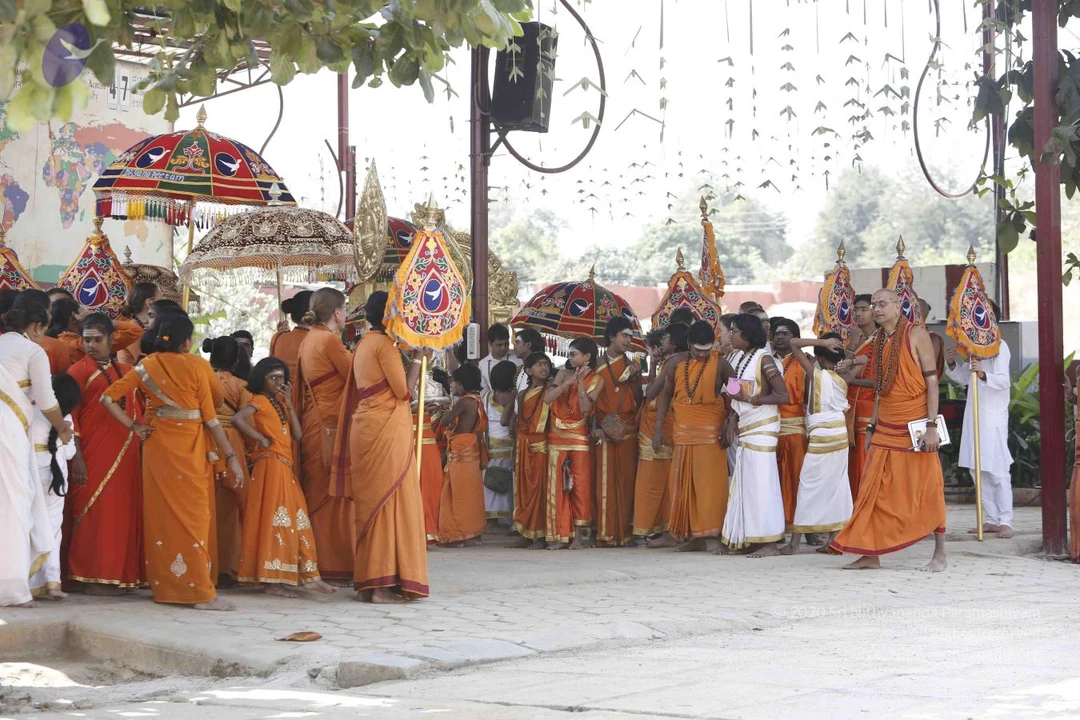
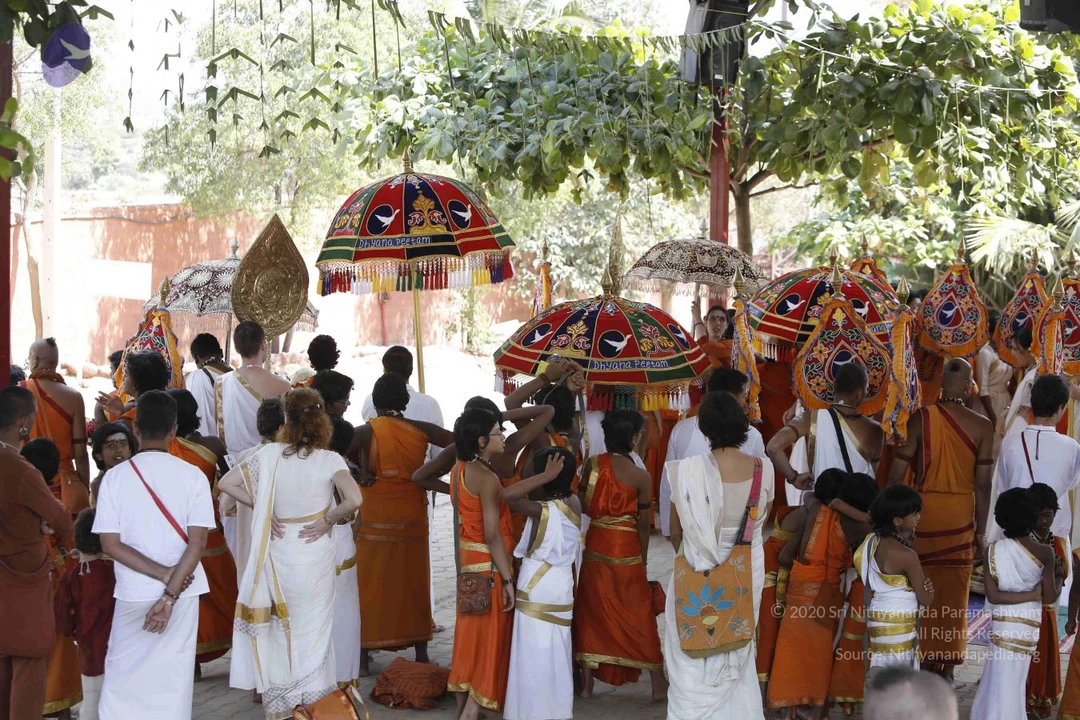
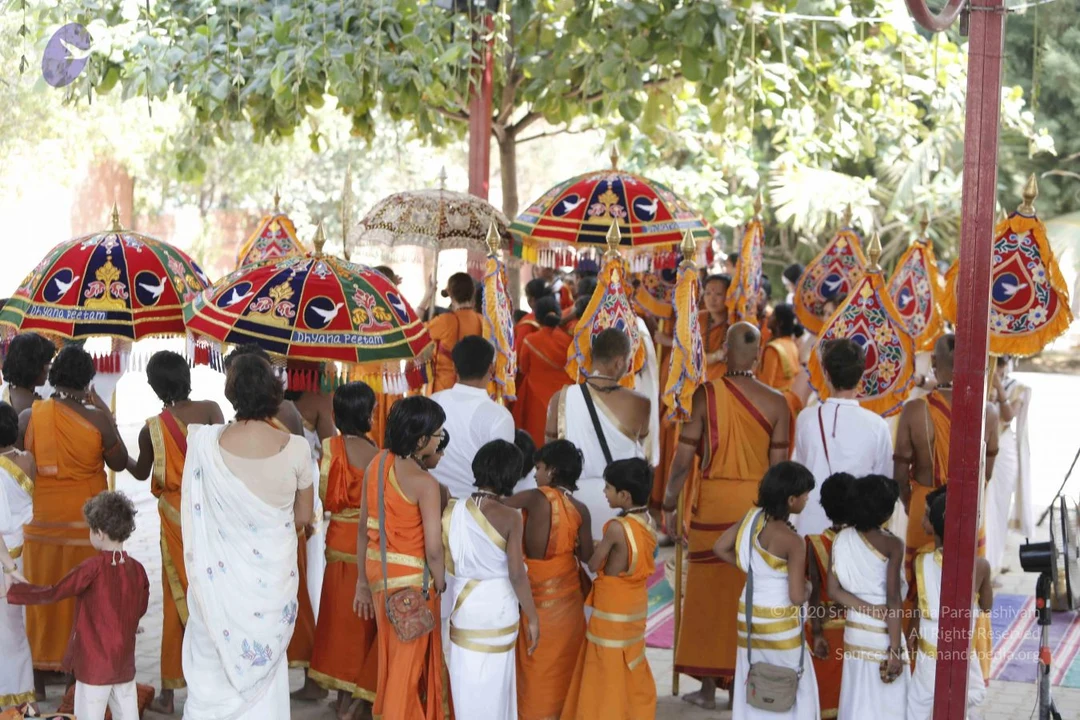
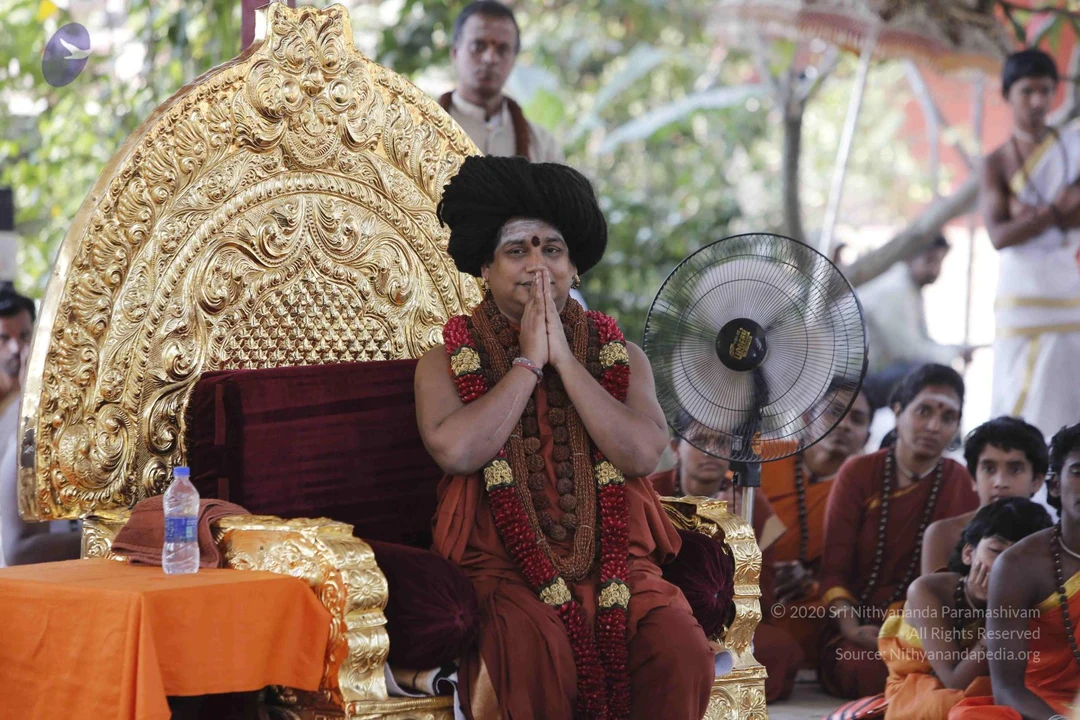
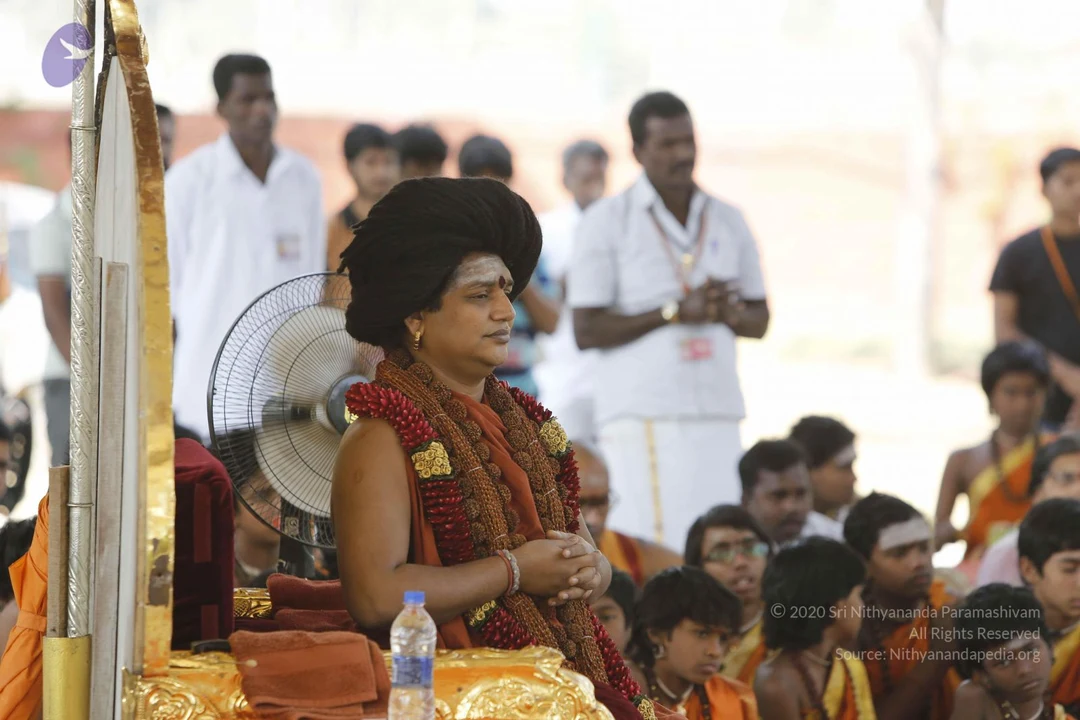
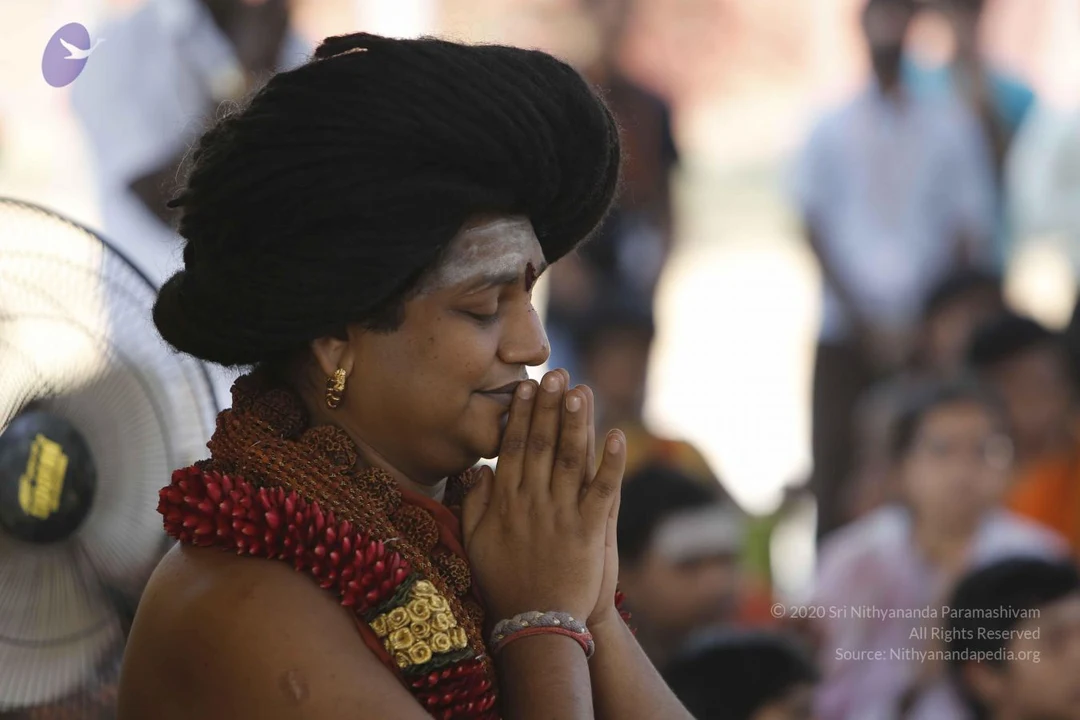
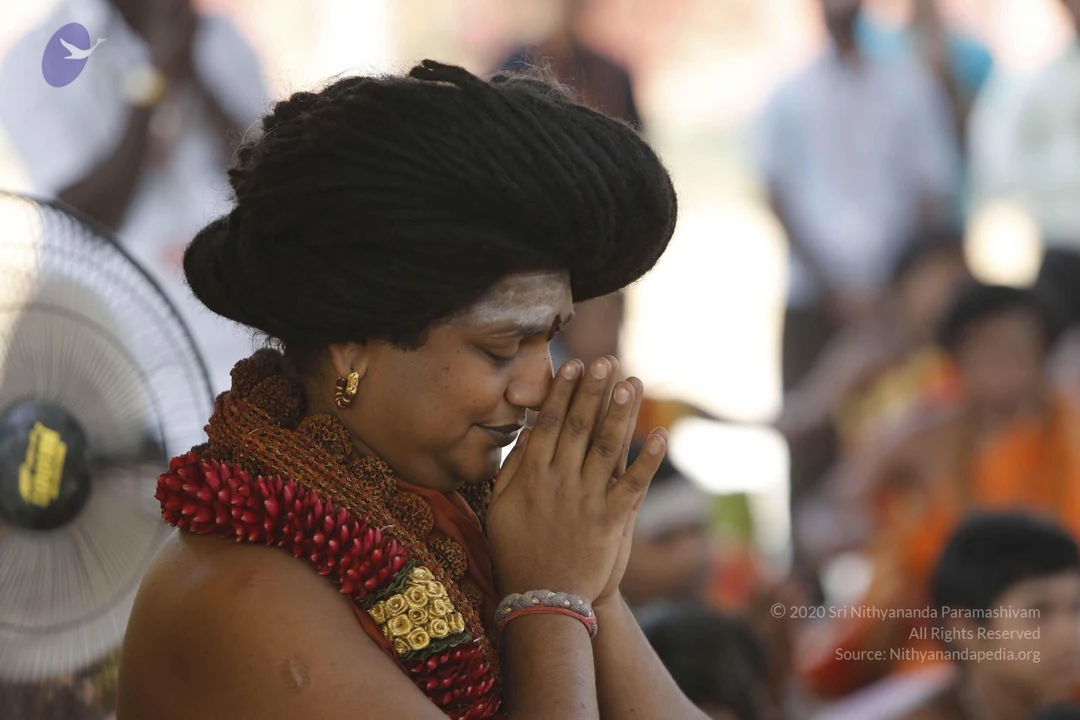
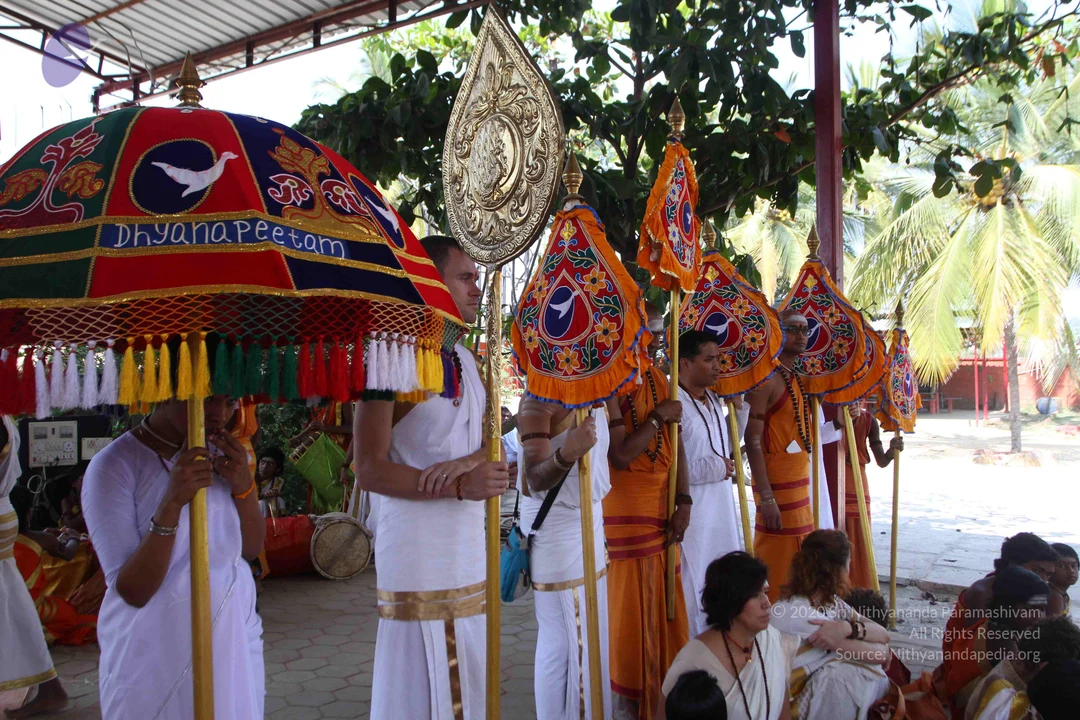
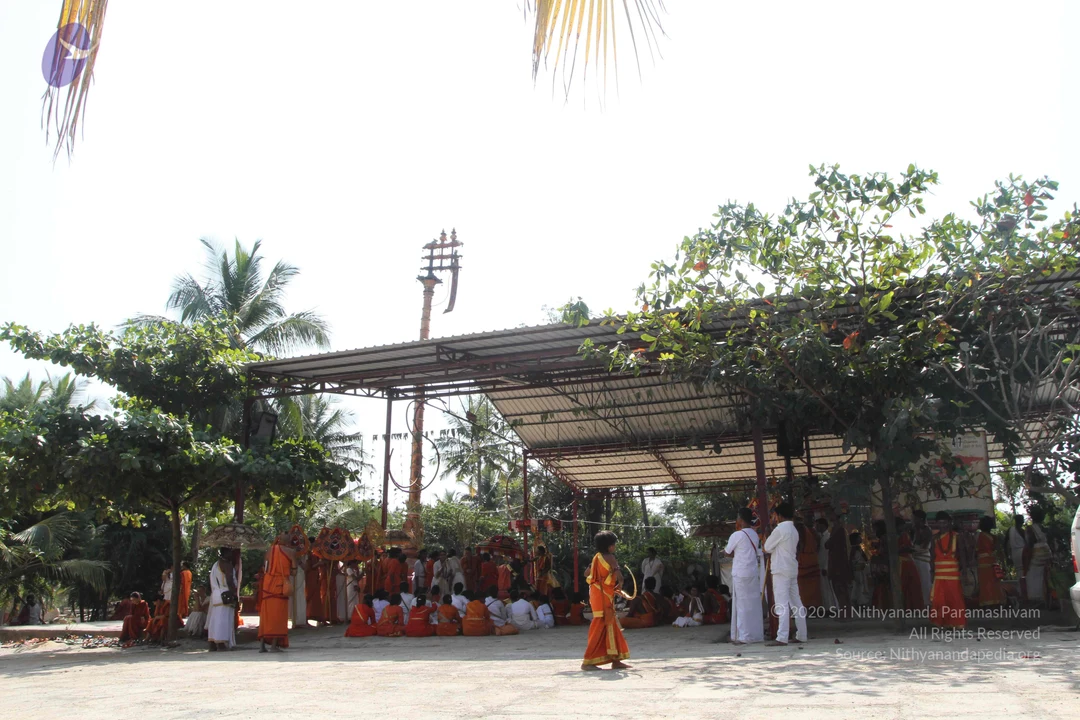
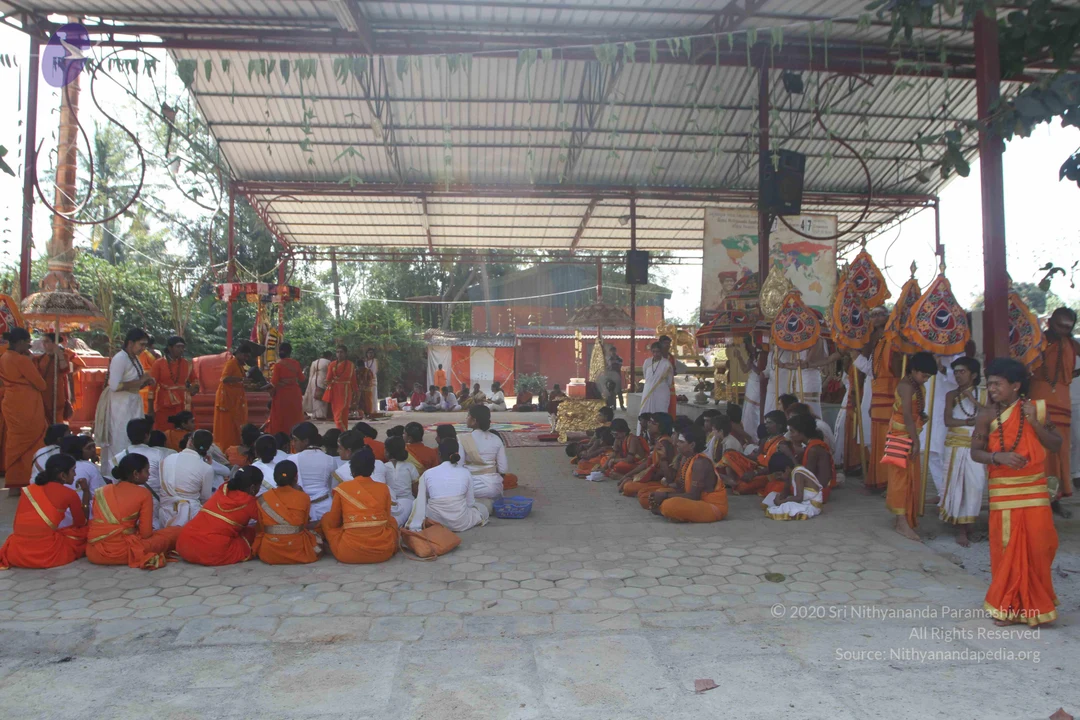
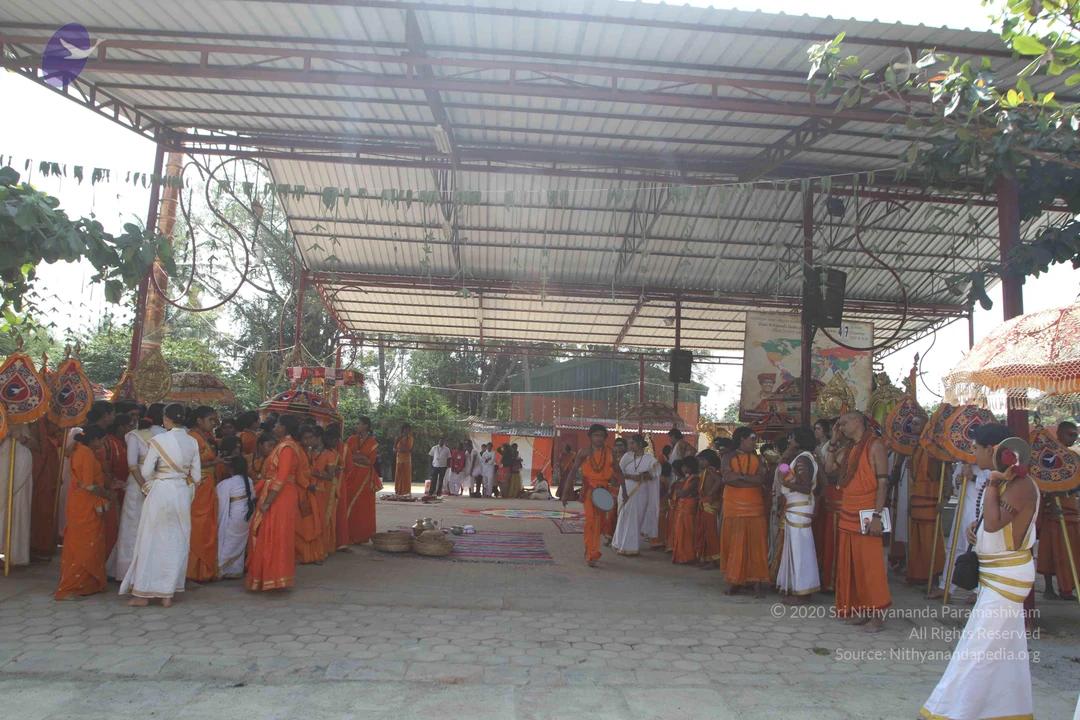
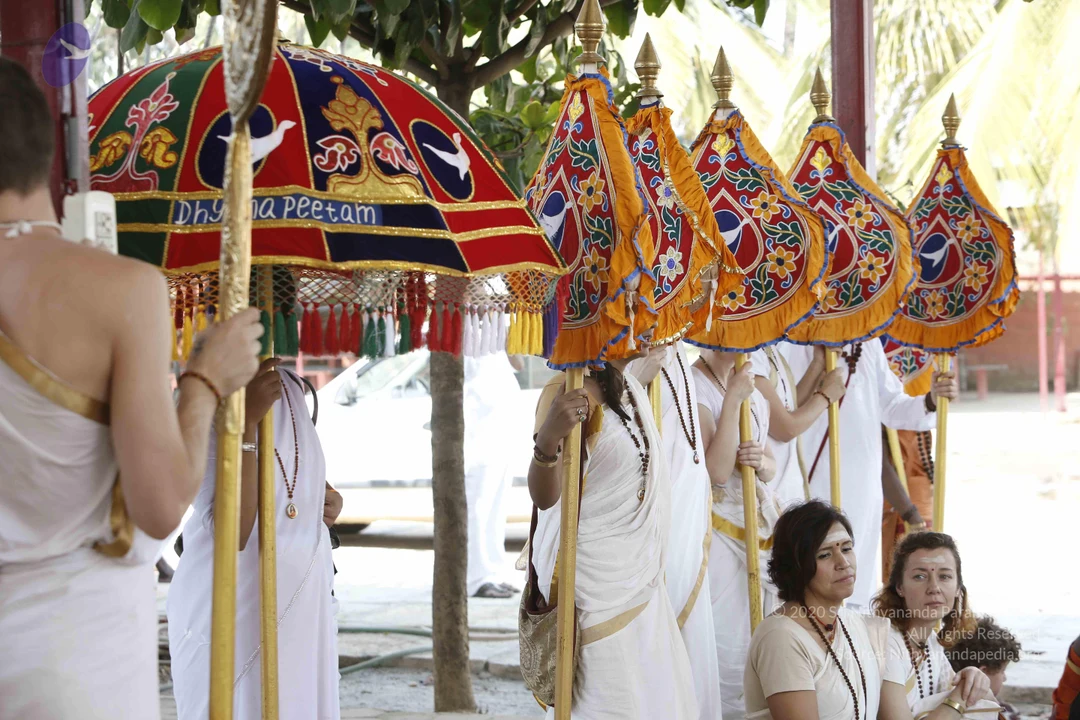
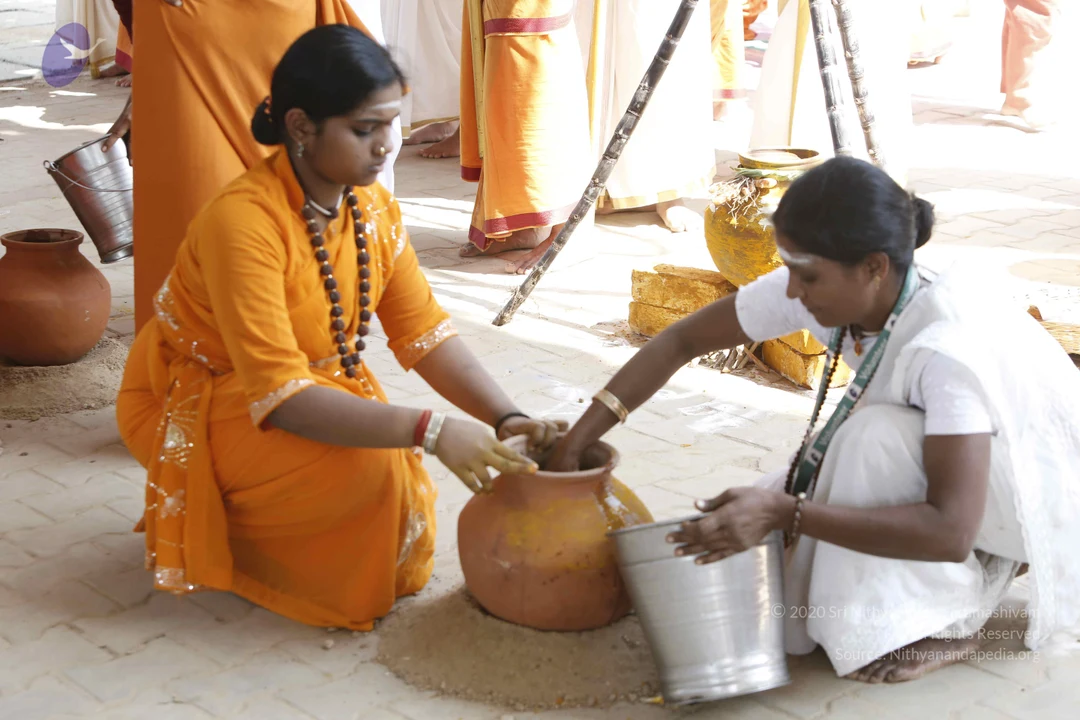
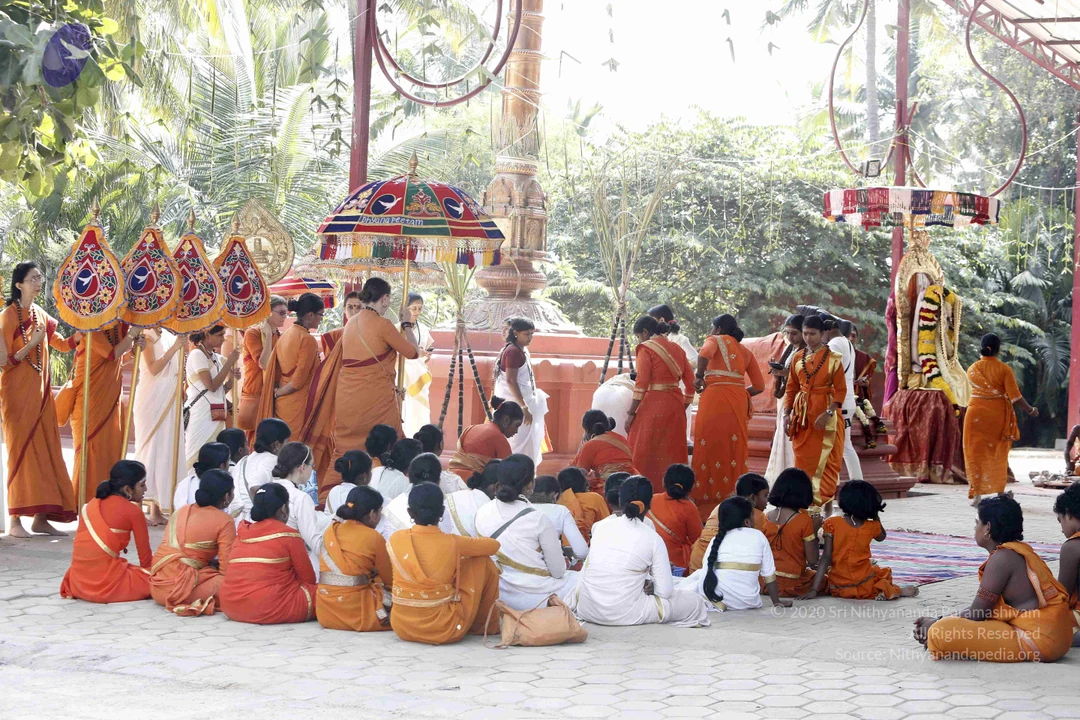
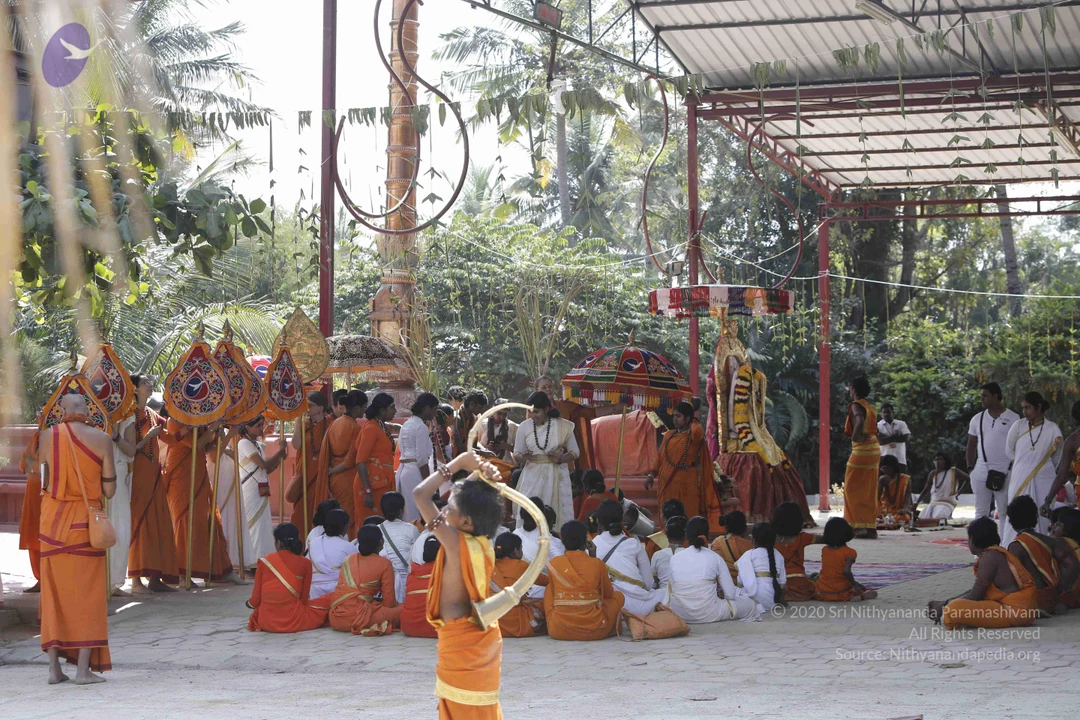
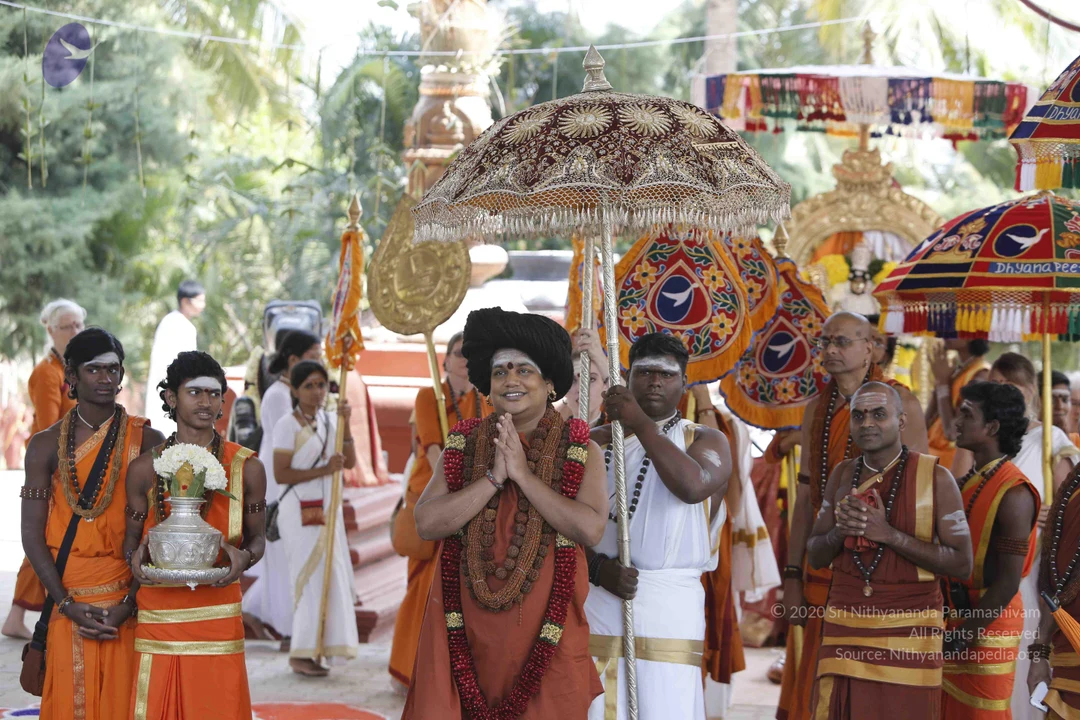
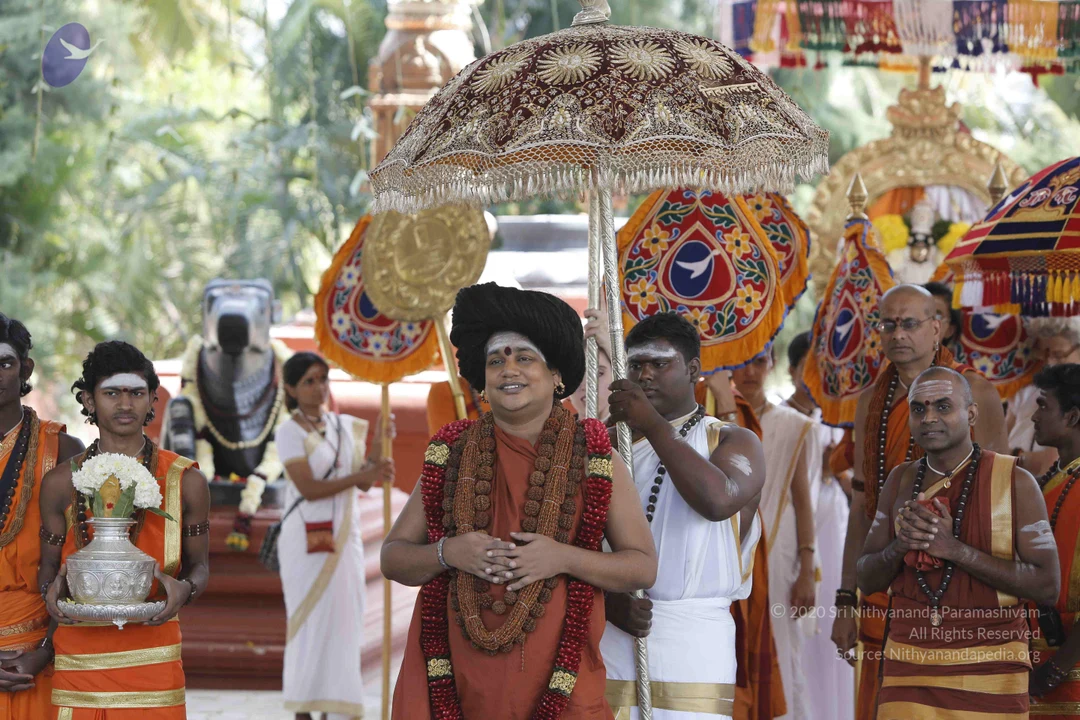
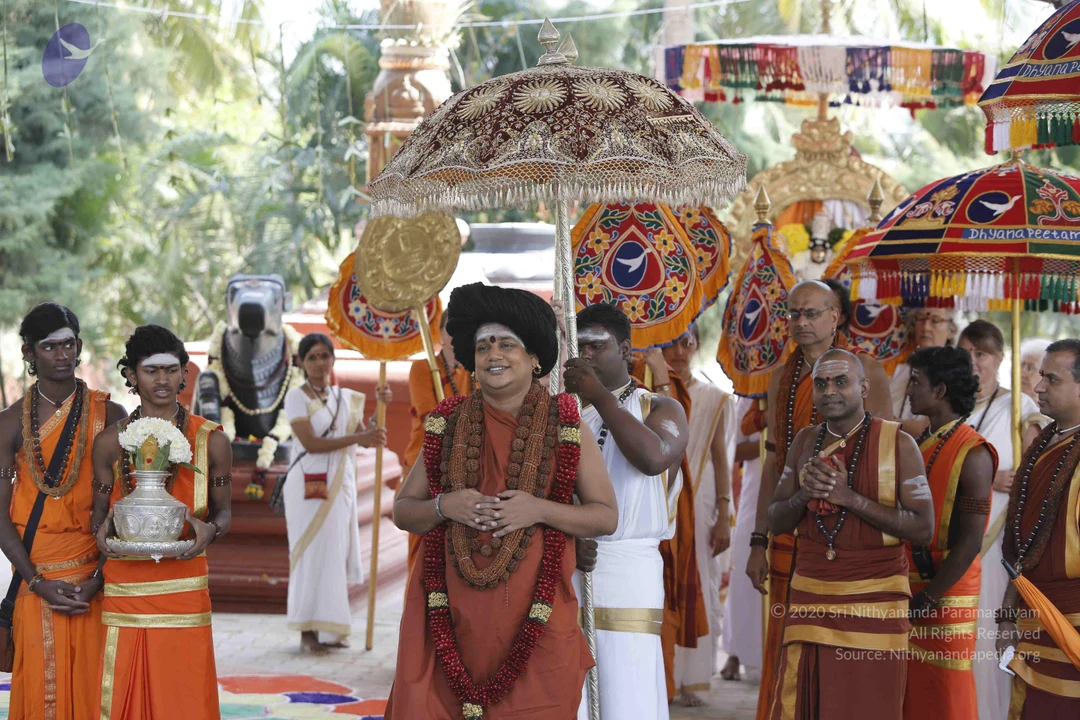
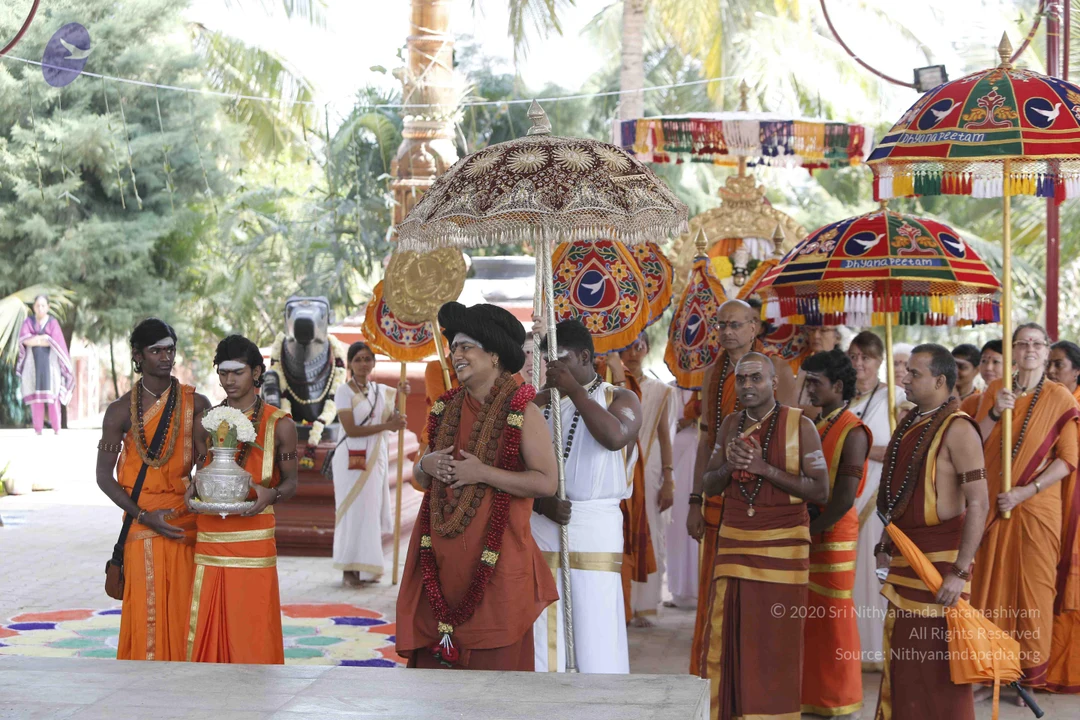
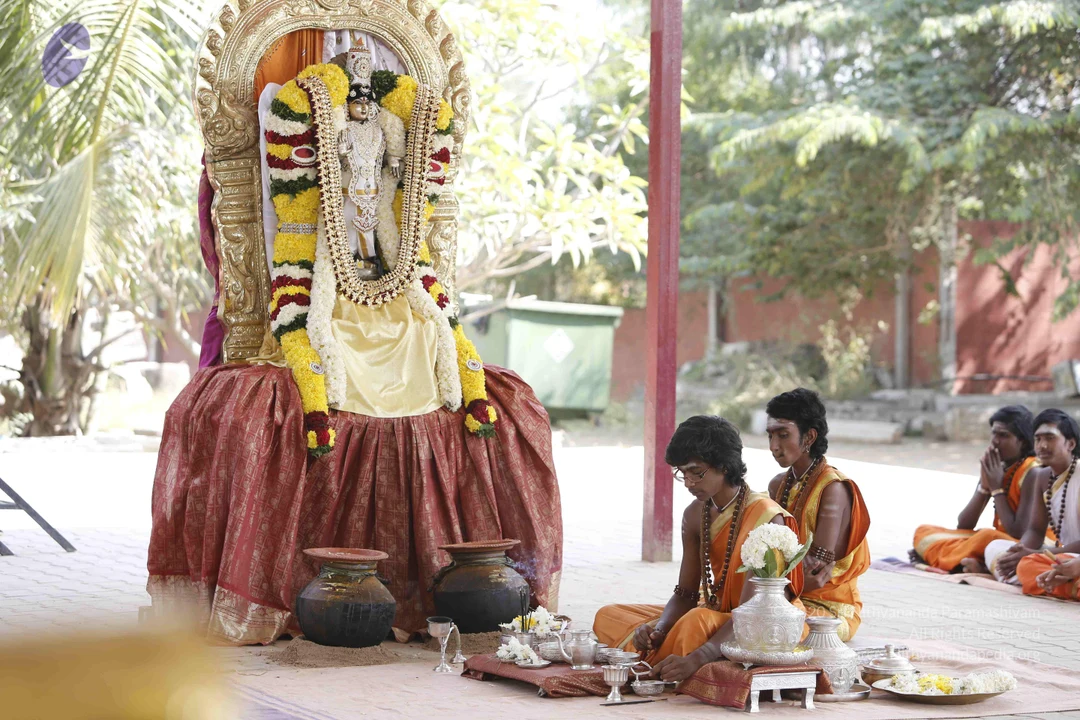
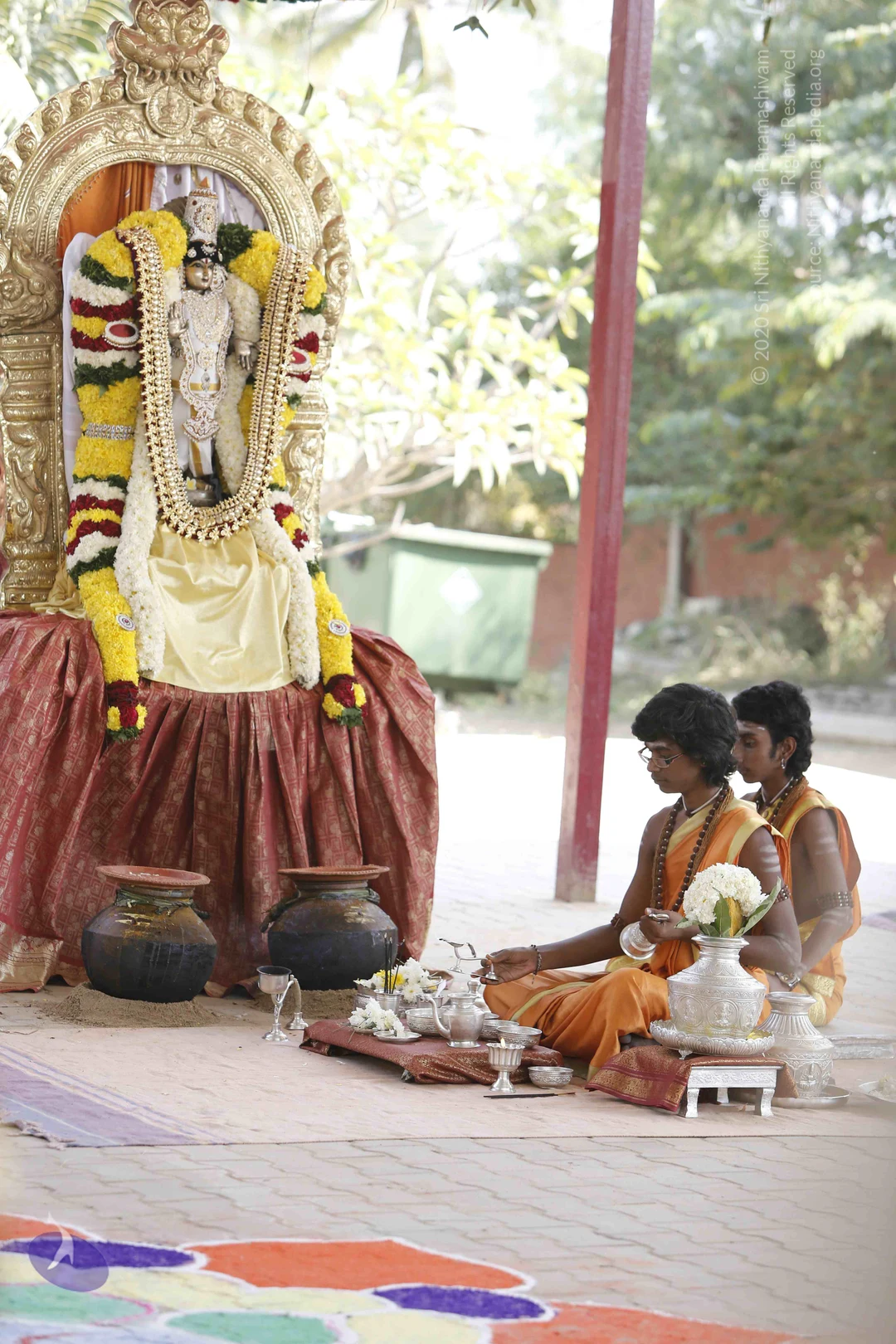
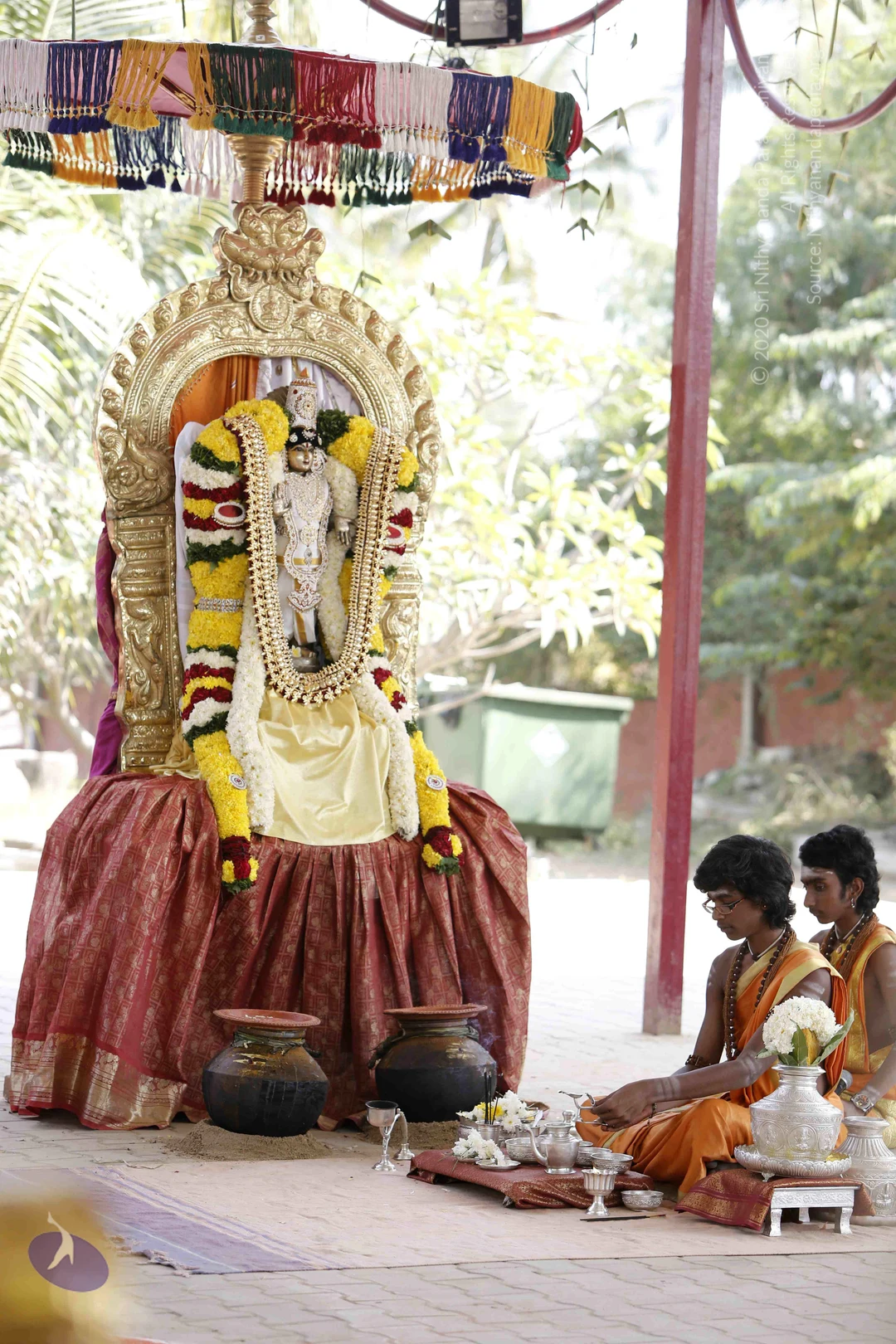
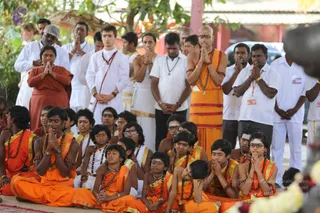
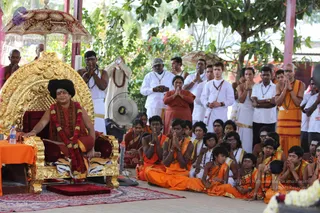
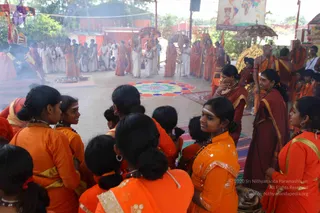
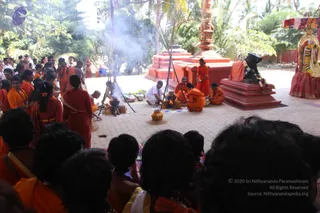
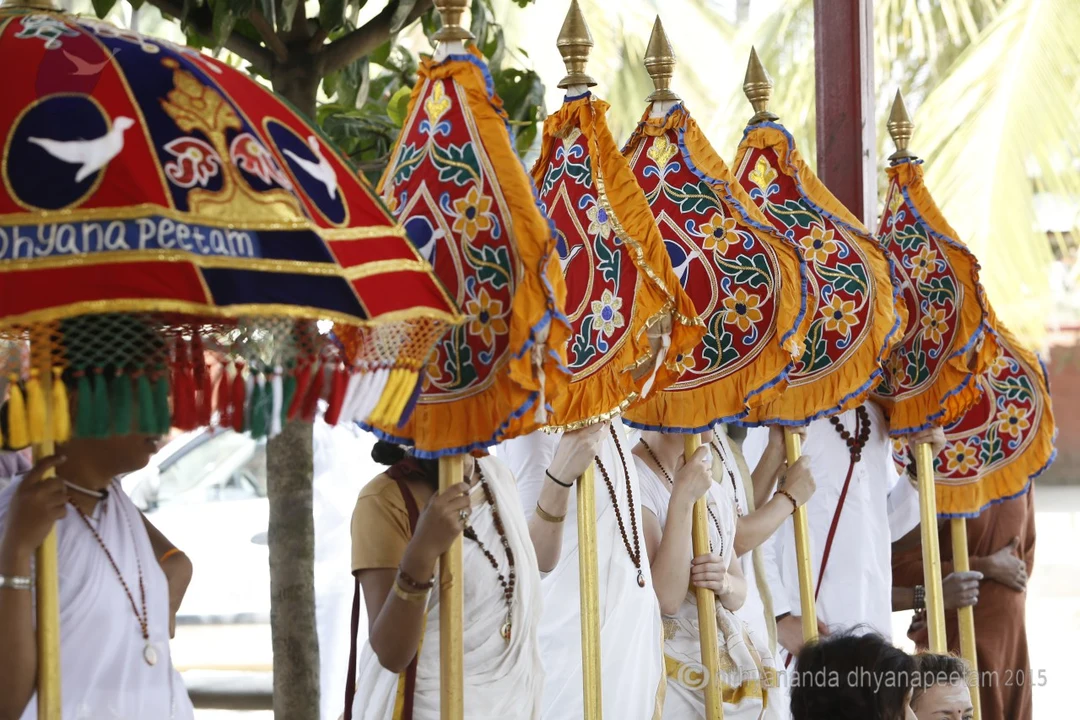
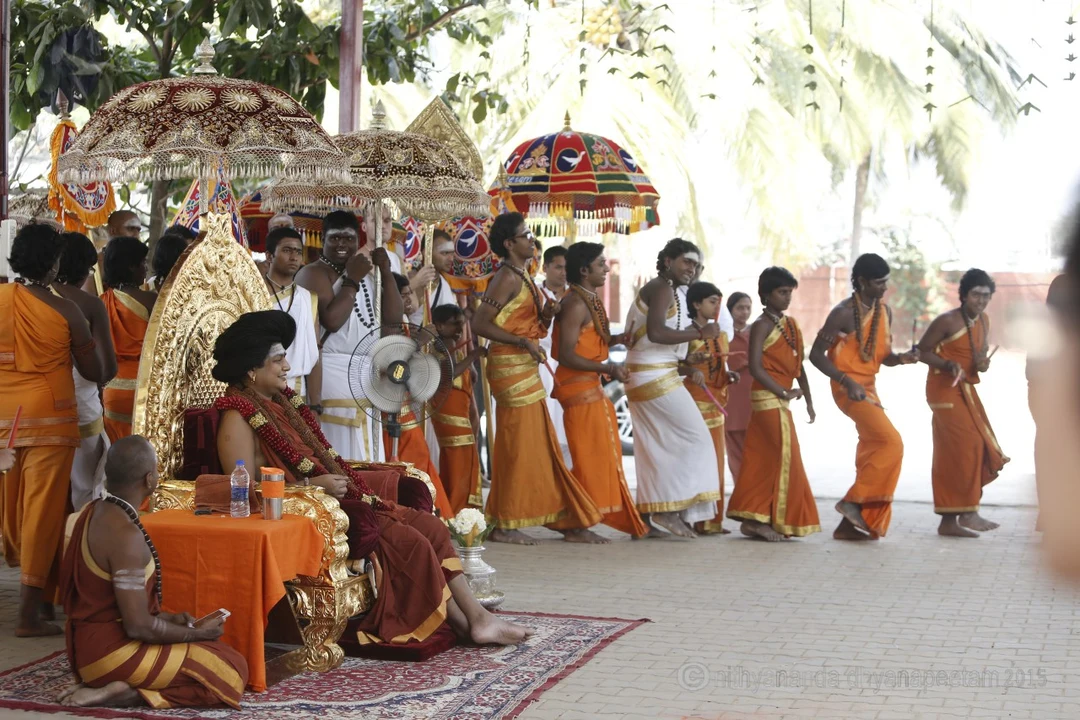
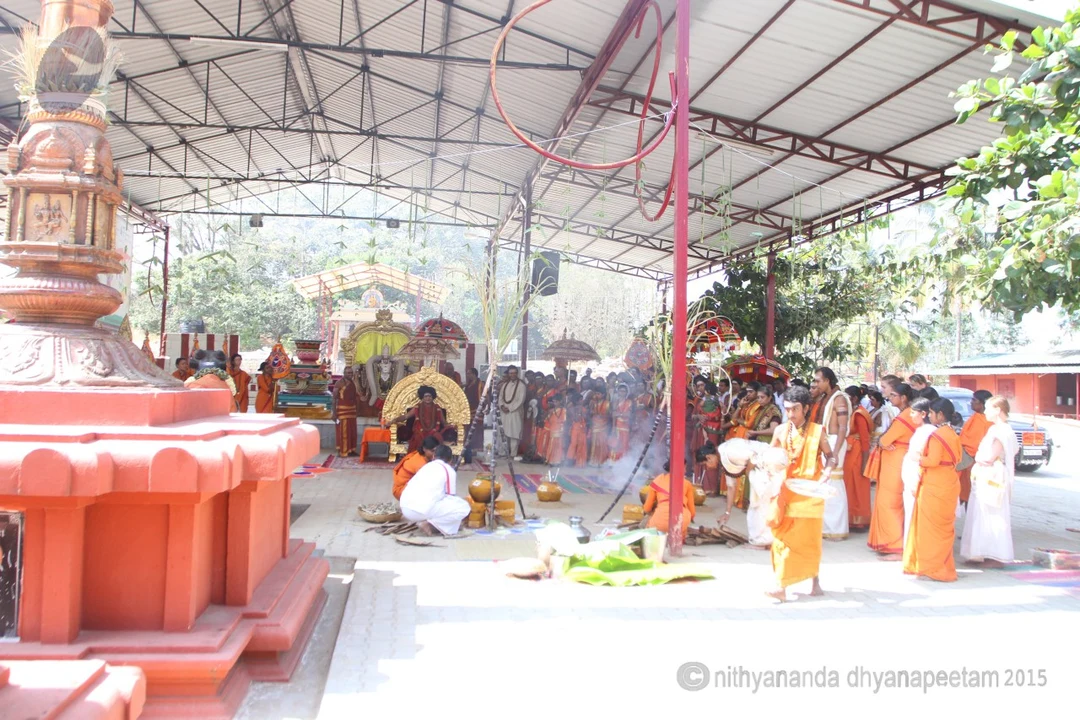
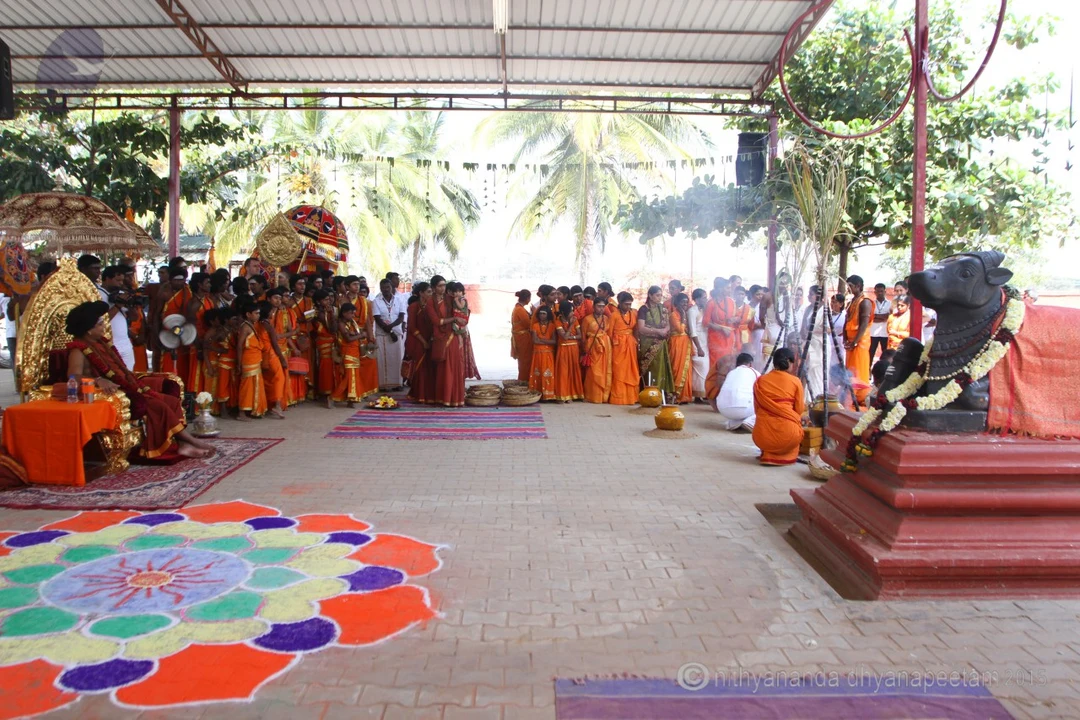
Glimpses From KAILASA'S Pongal Celebration
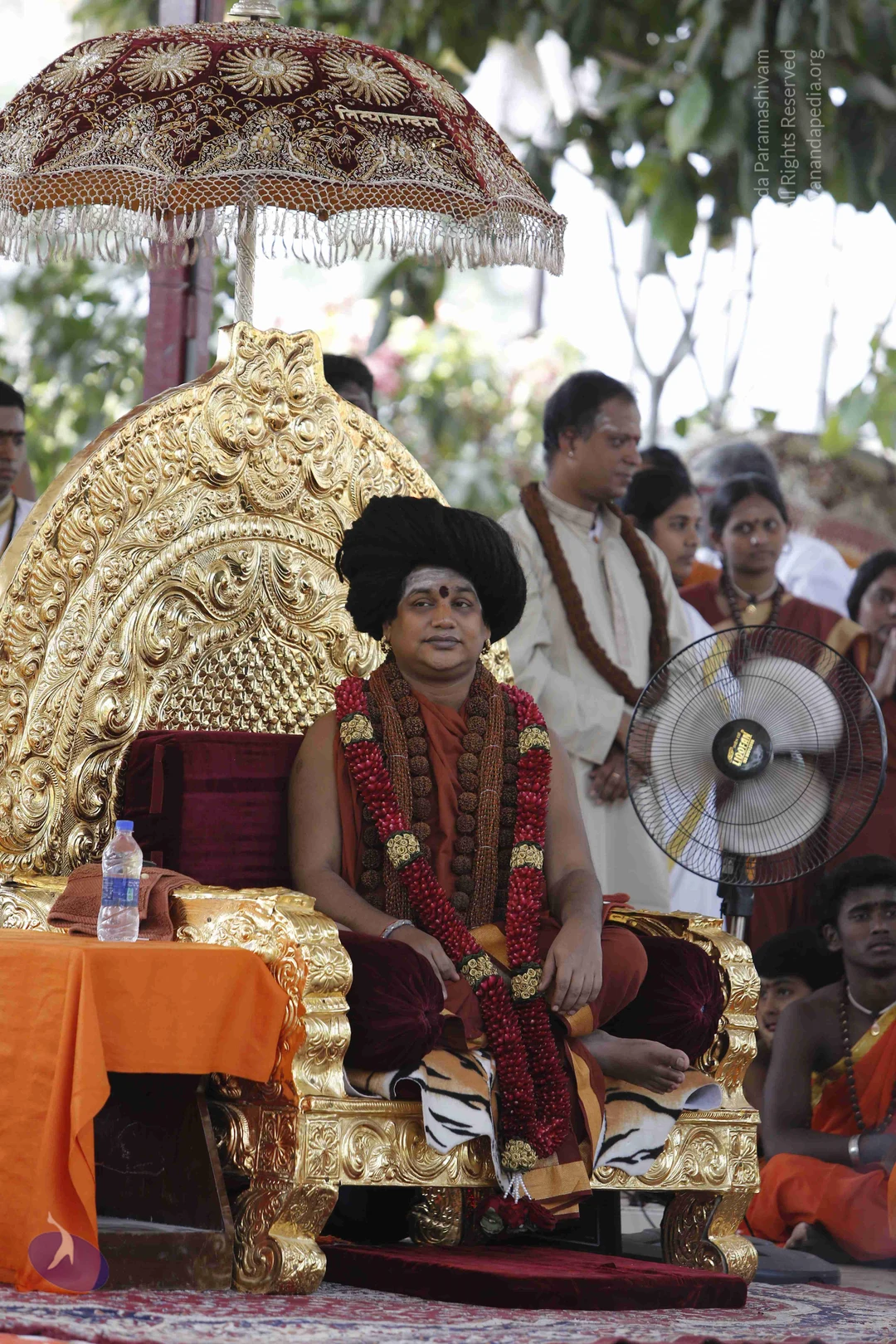
Nithya Satsang

Glimpses from KAILASA'S Pongal Celebration
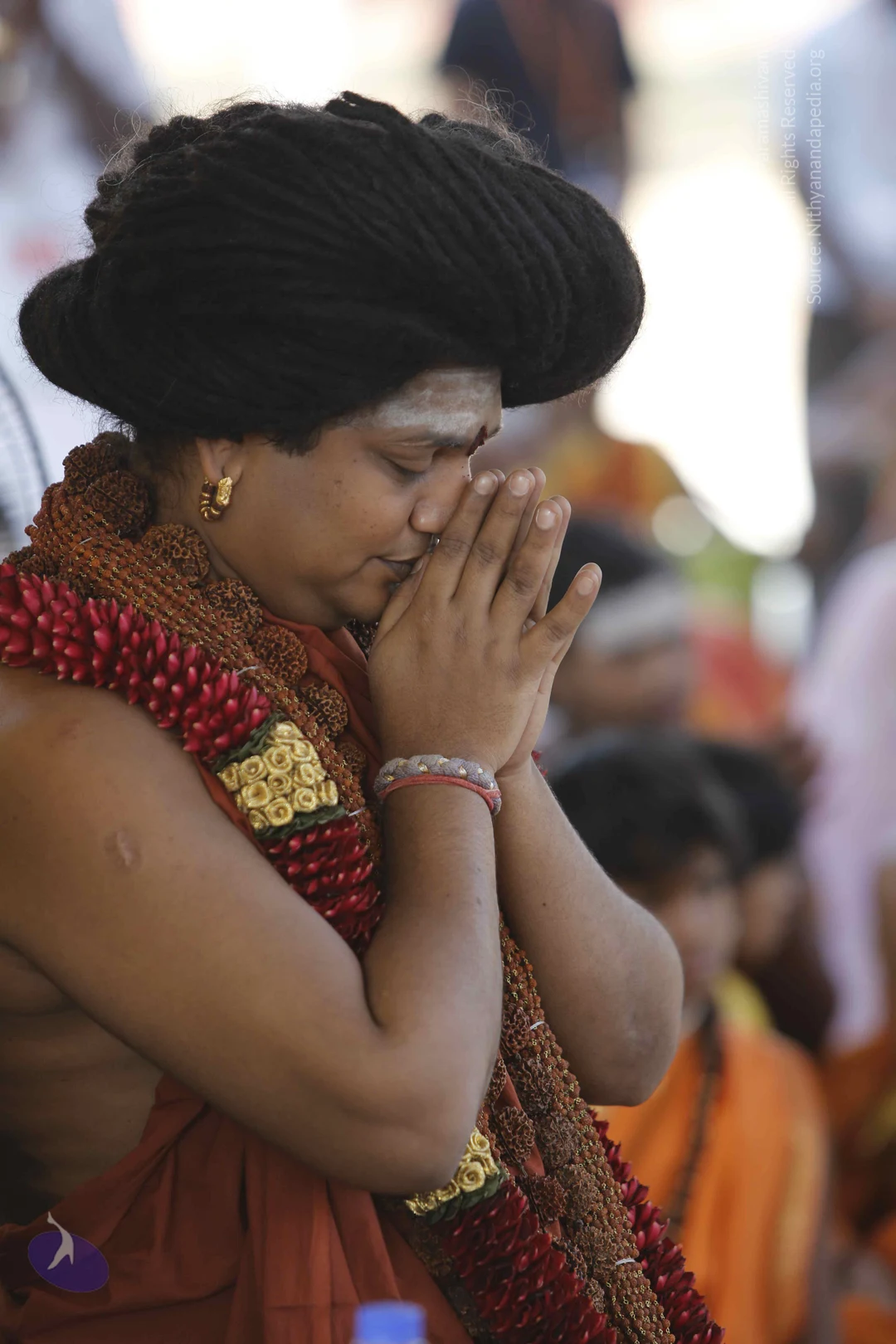
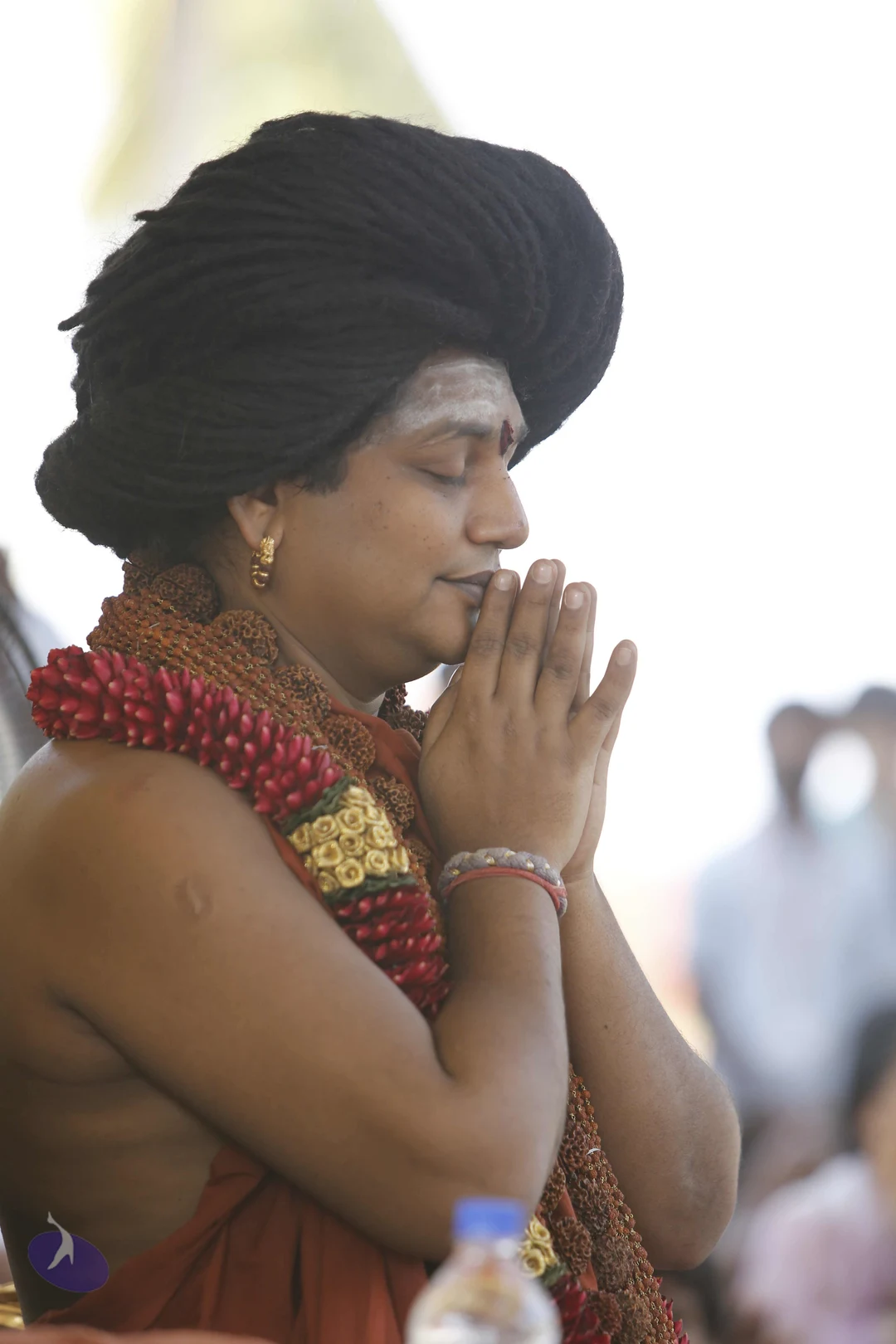
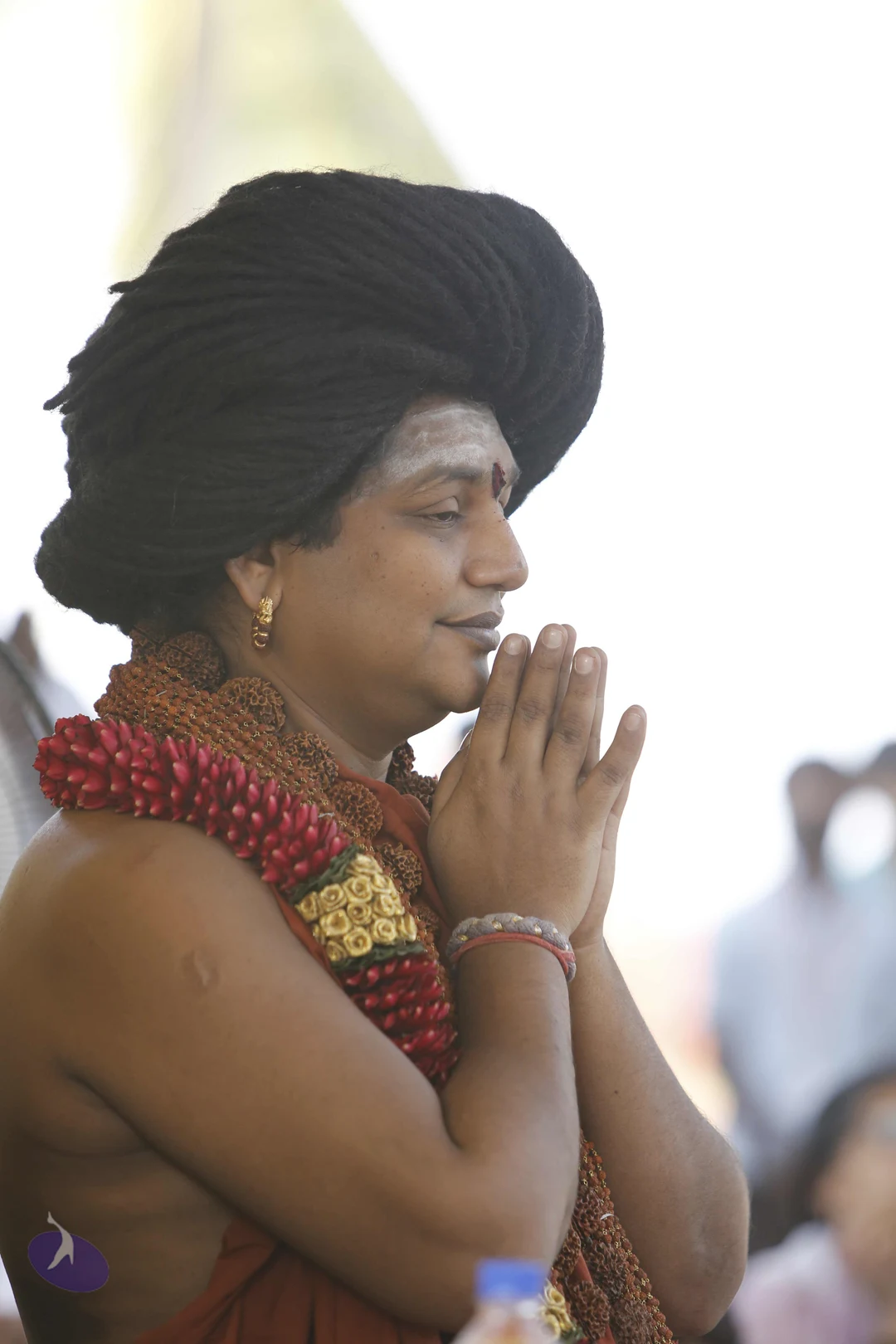
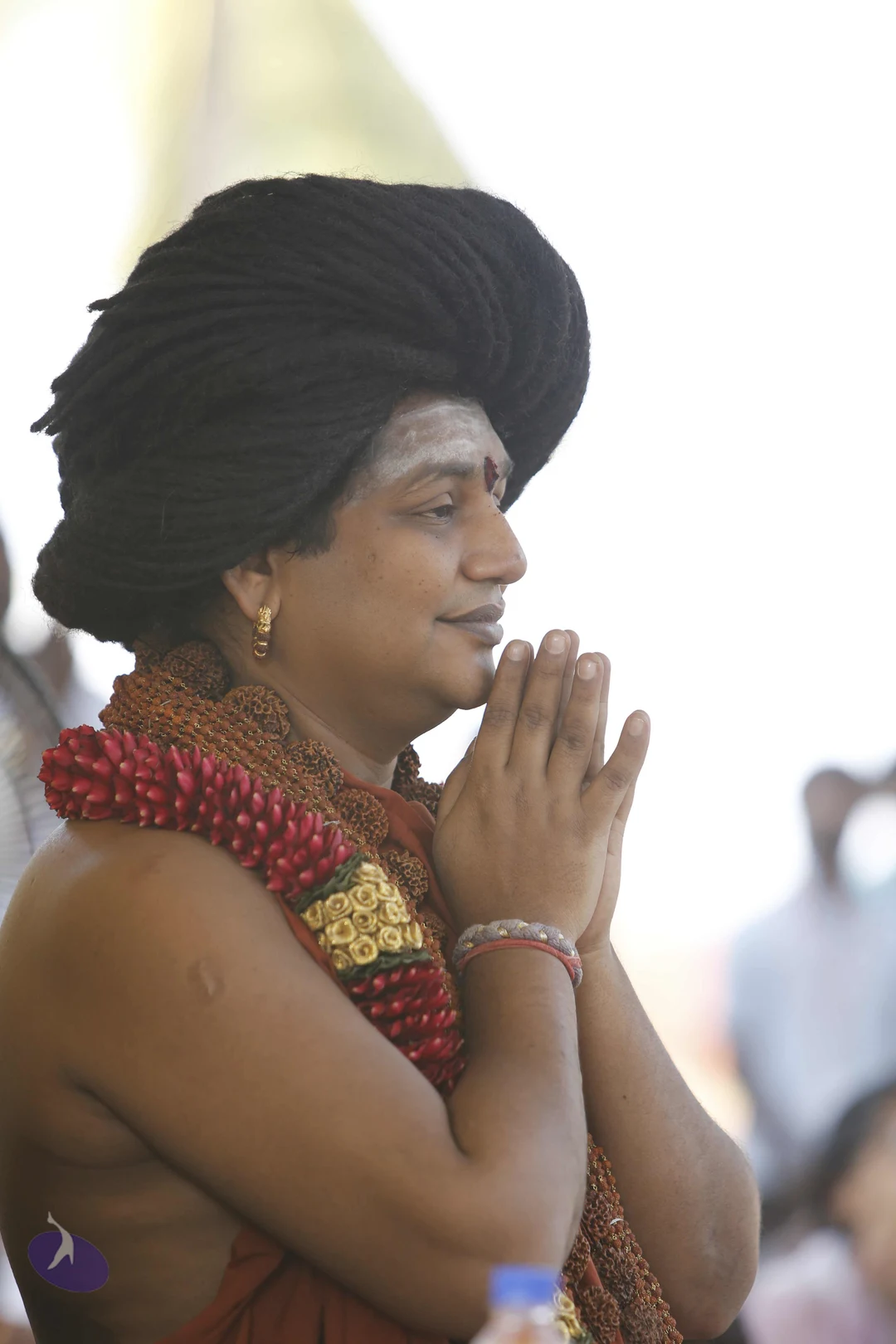
1-Pongal-Celebration_Photo_1085_IMG_4602_CMP_WM
1-Pongal-Celebration_Photo_1121_IMG_4671_CMP_WM
1-Pongal-Celebration_Photo_1140_IMG_4717_CMP_WM

2-Nithya Satsang

,

Photos from this day

View all 672 photos

Glimpses From KAILASA'S Pongal Celebration
93 photosSource gallery
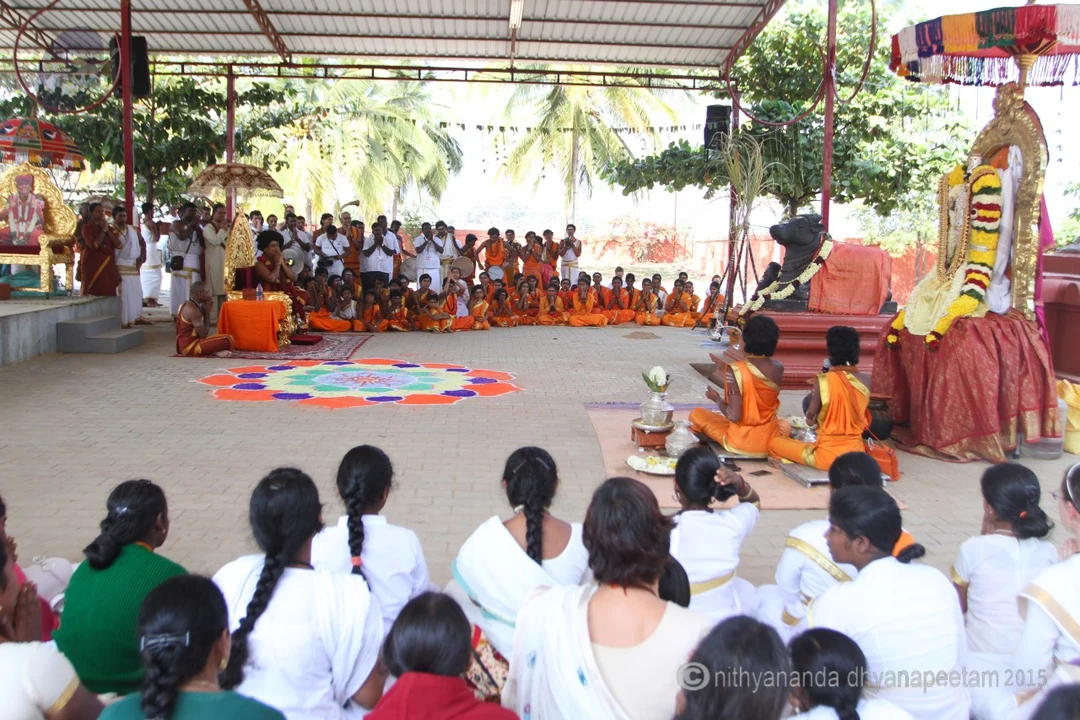
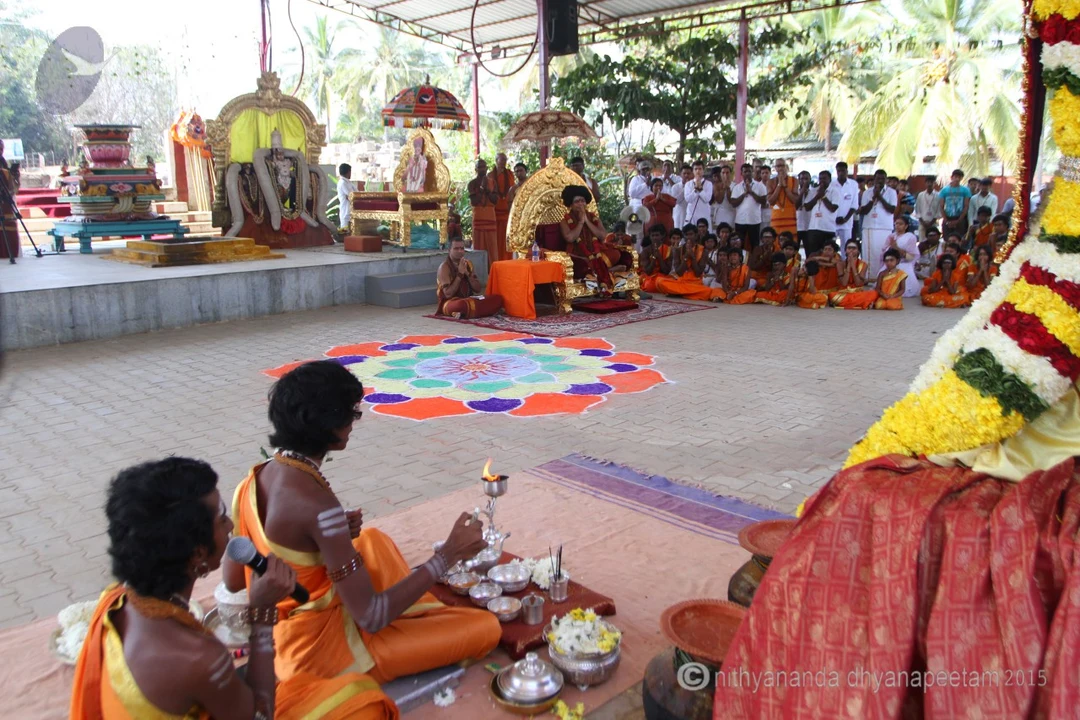
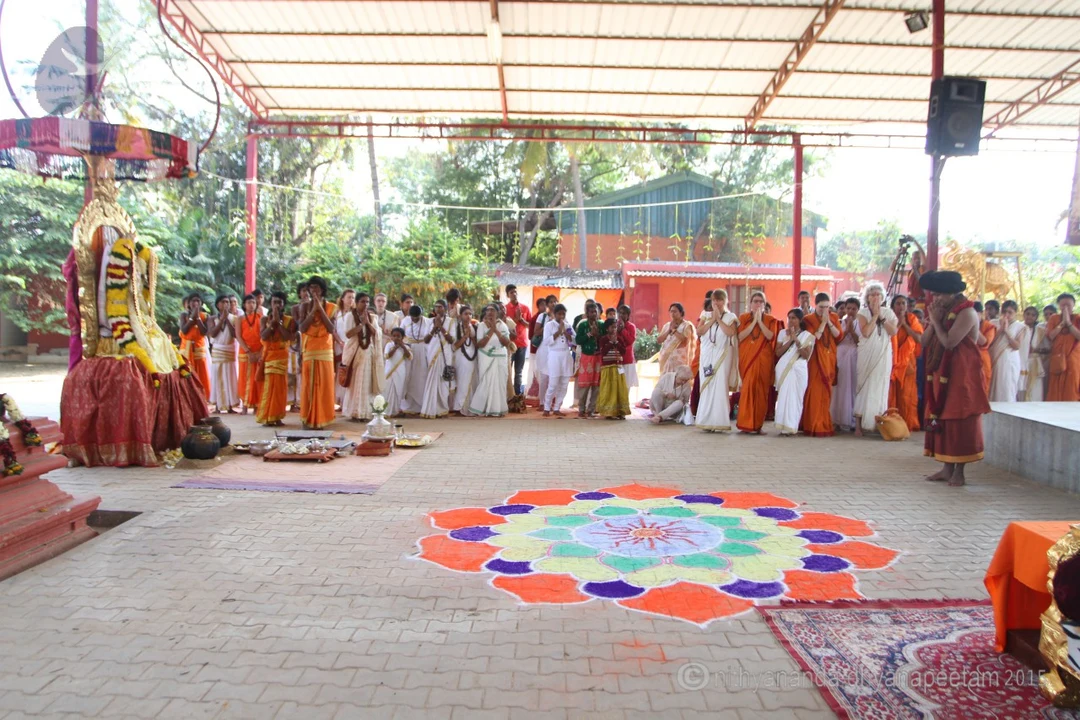
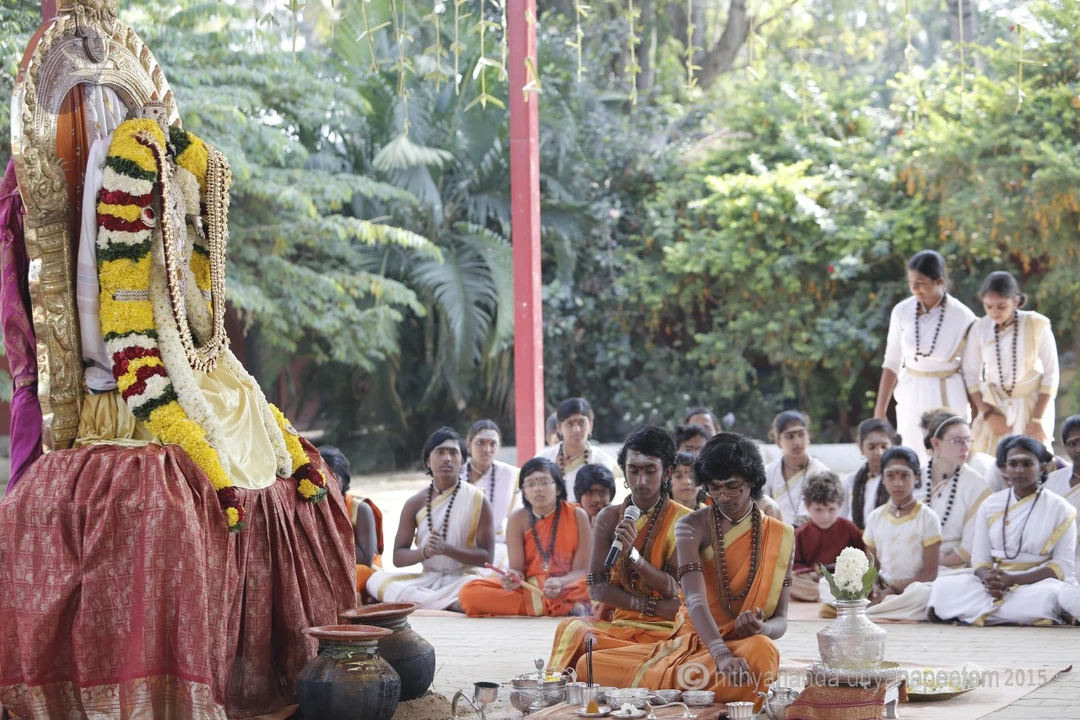
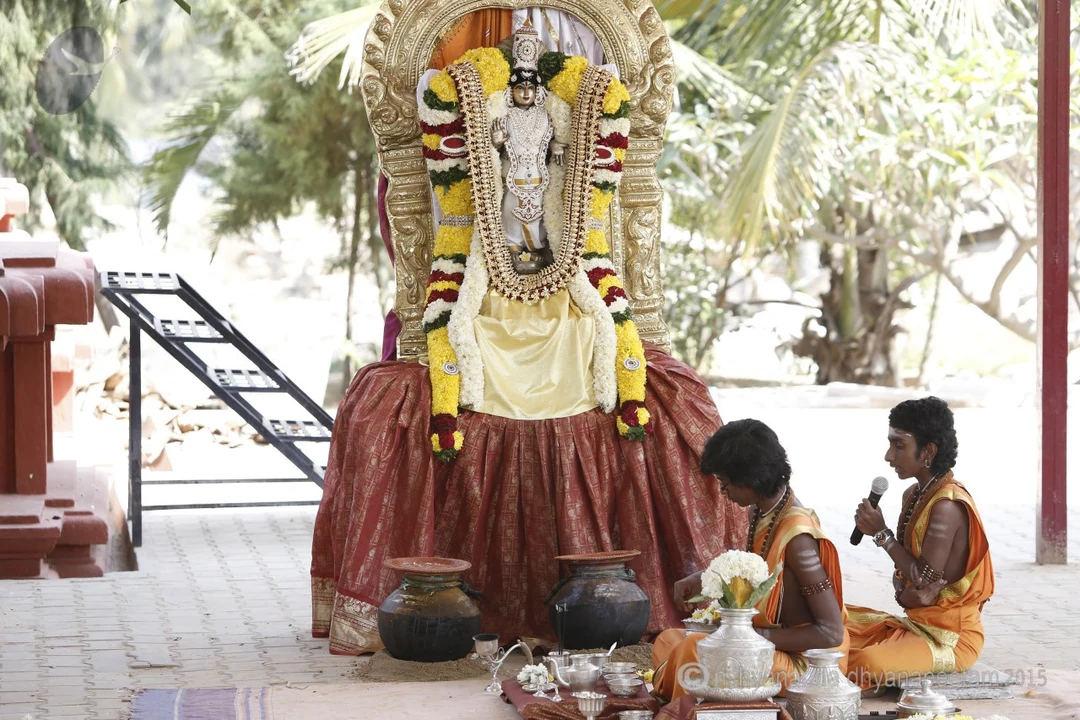
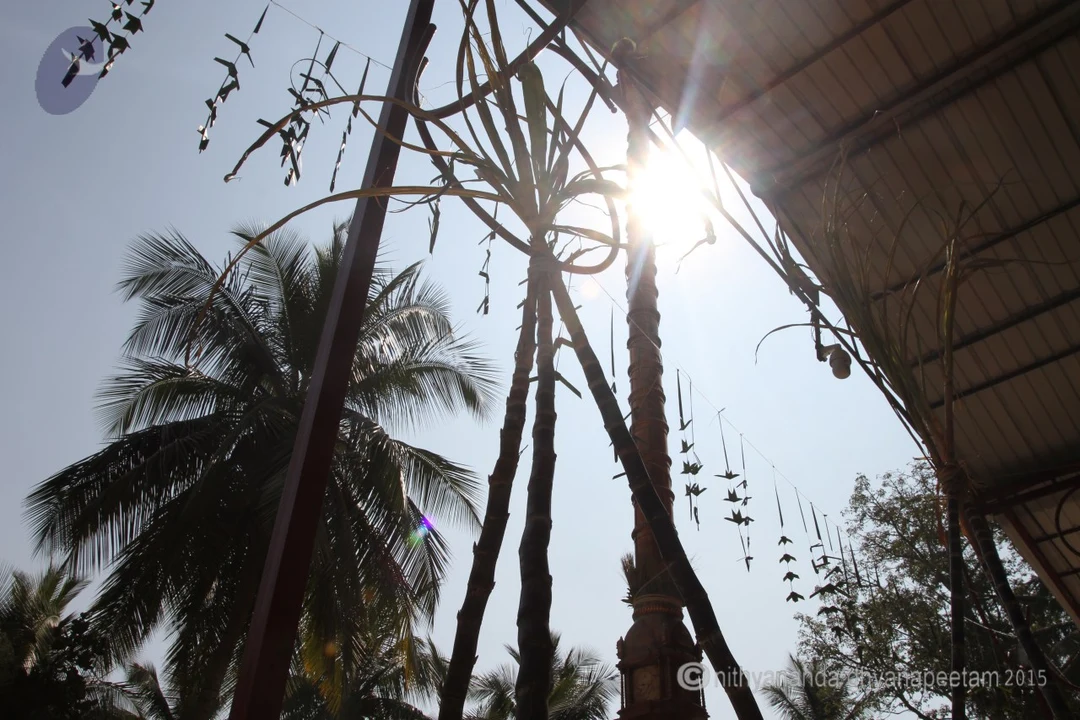
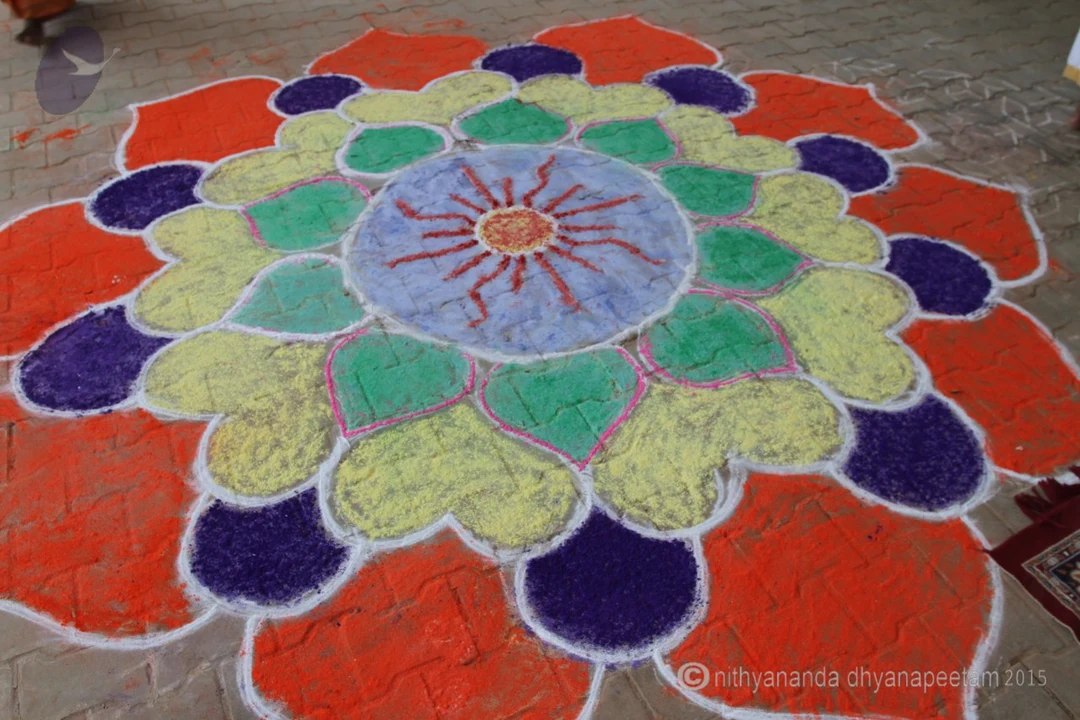
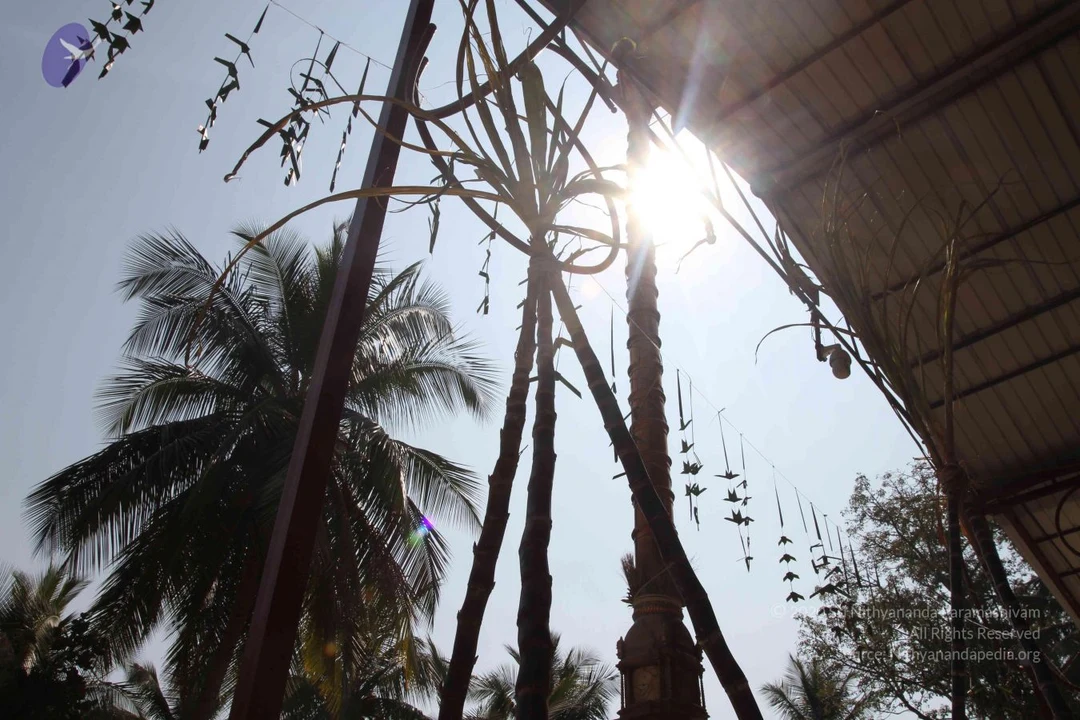
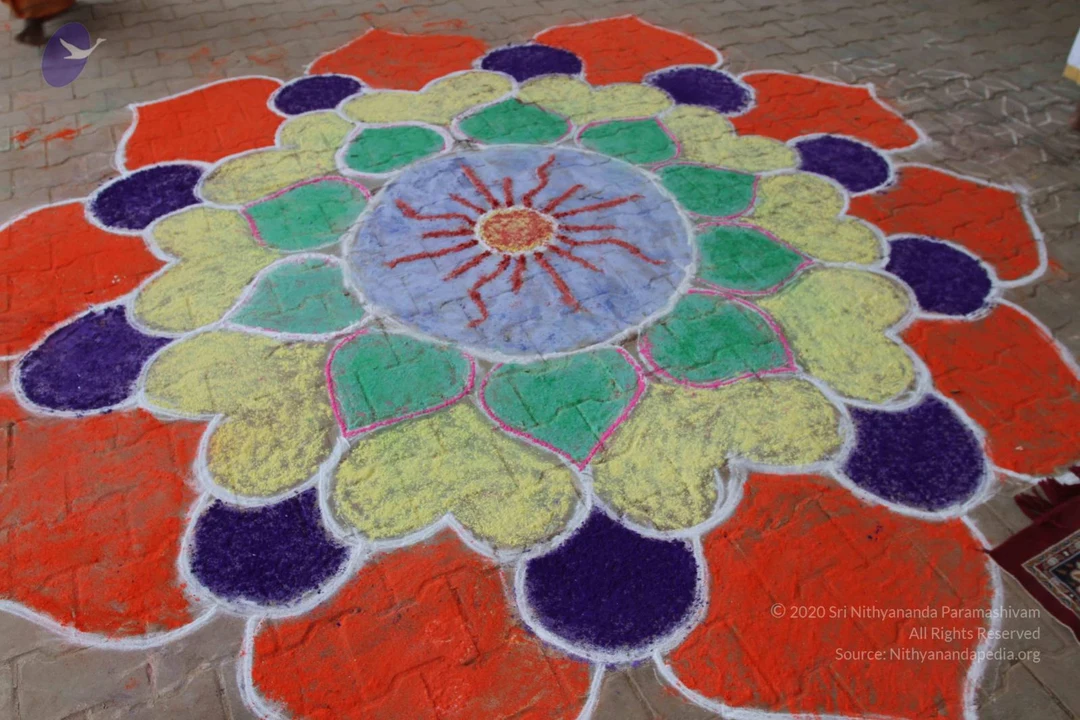
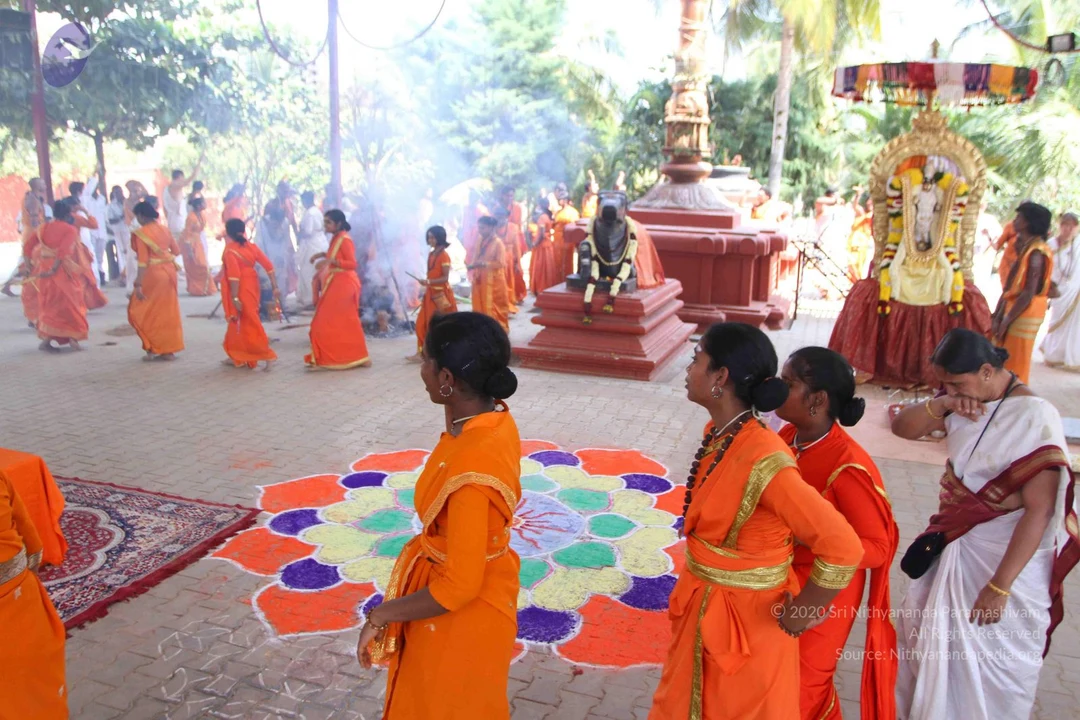
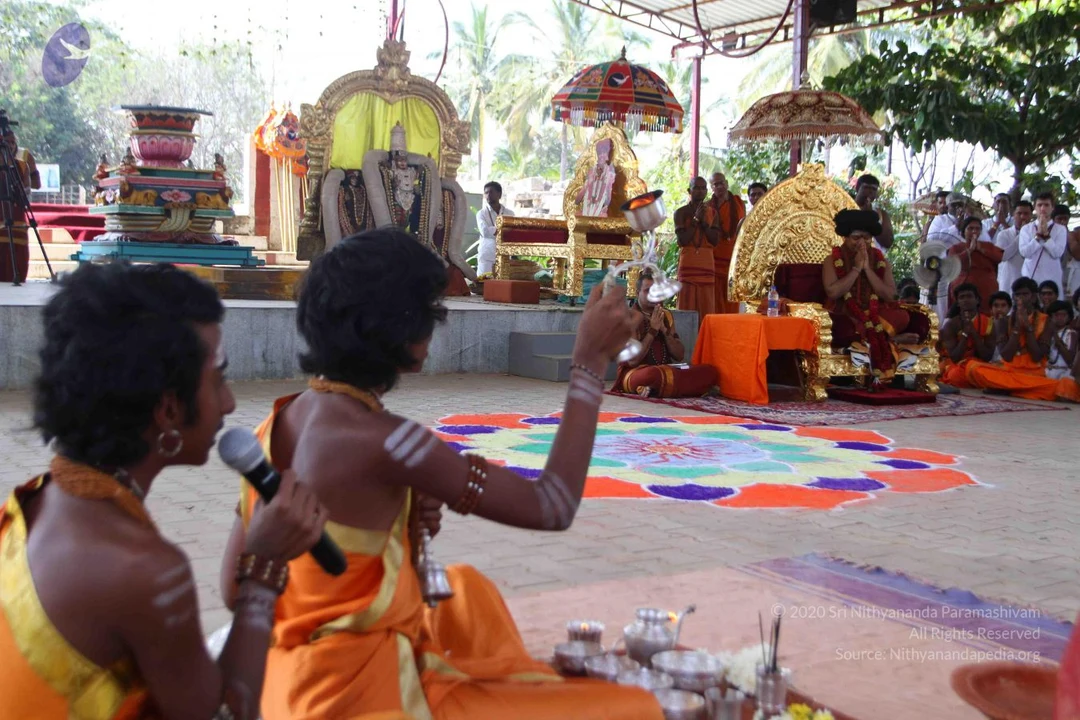
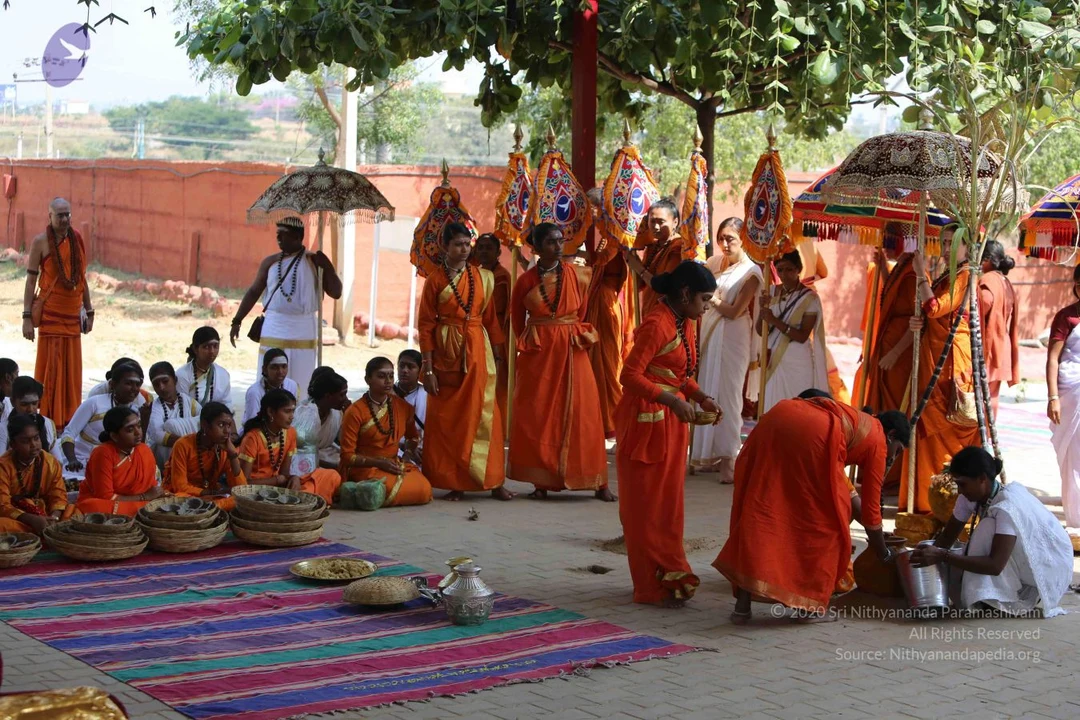
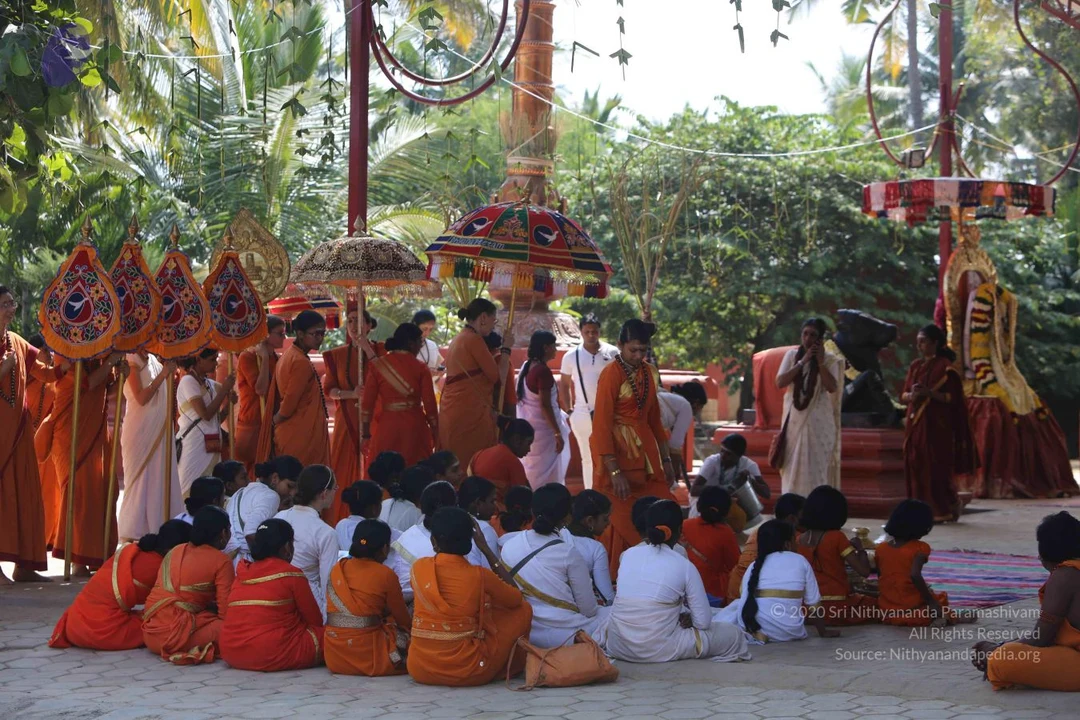
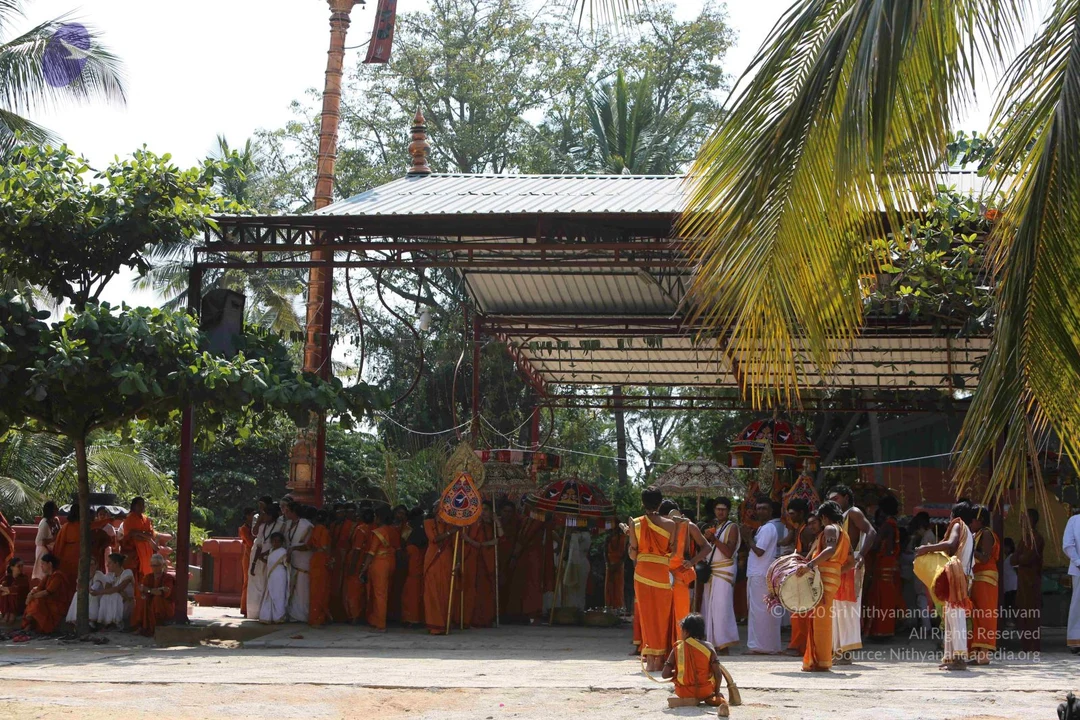
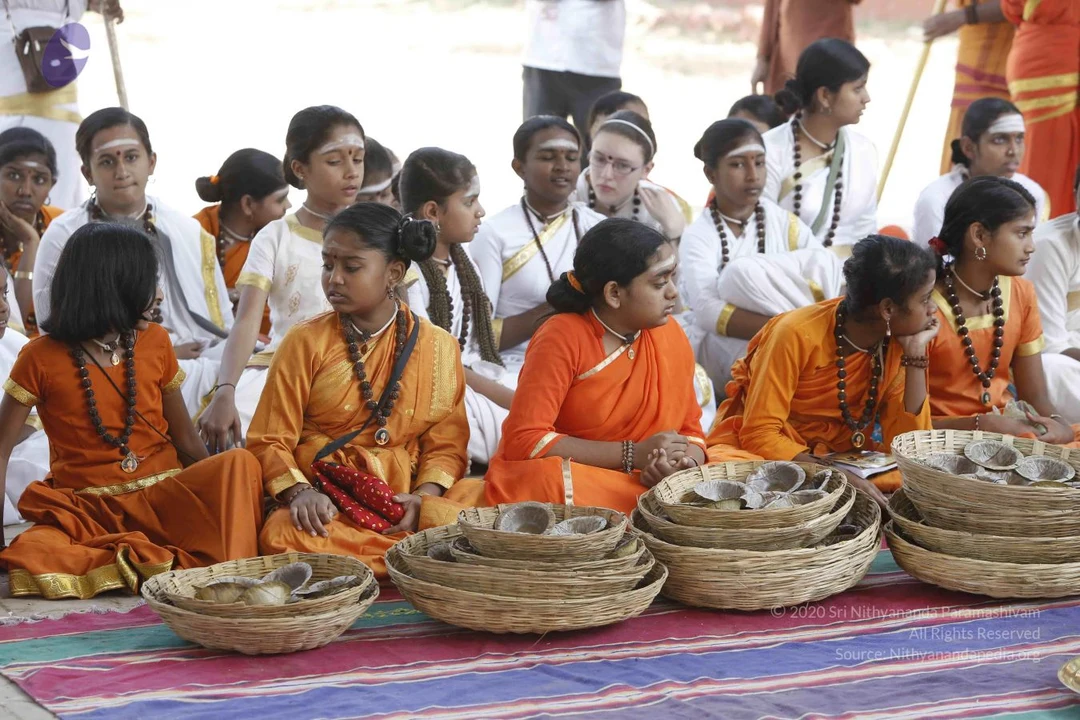
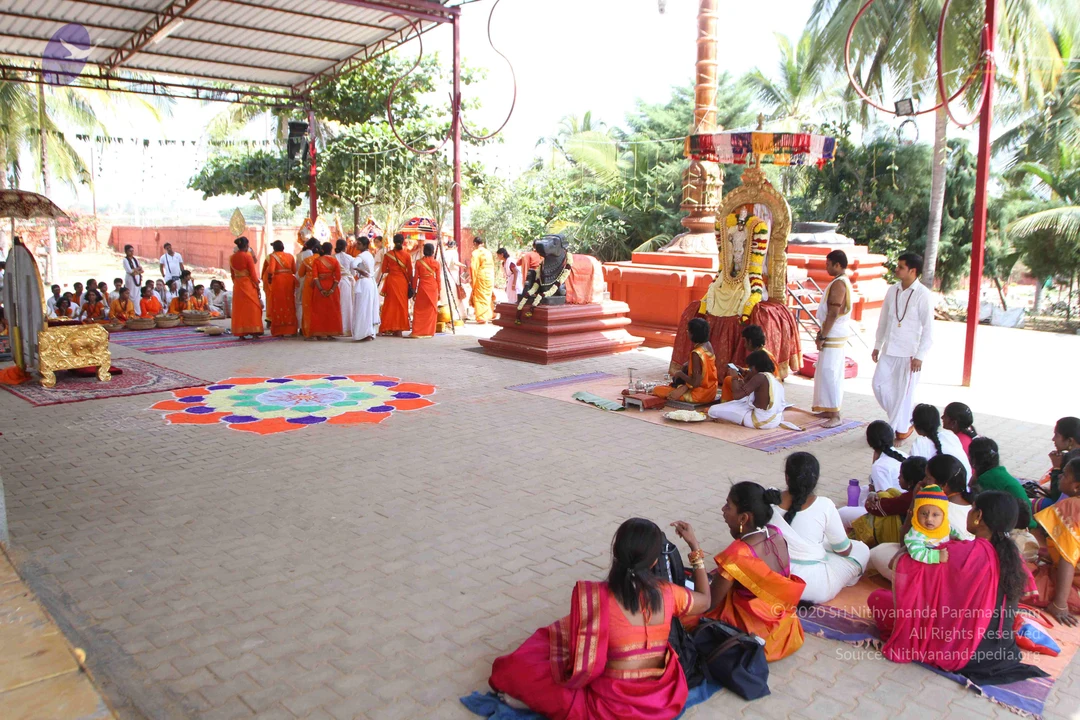
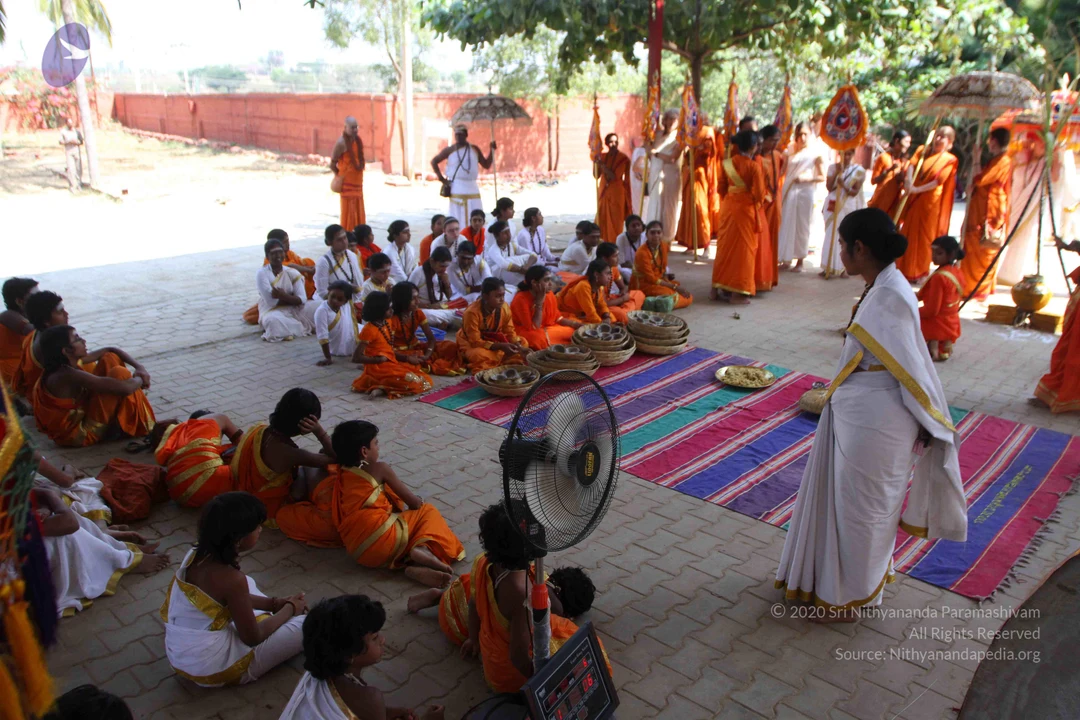
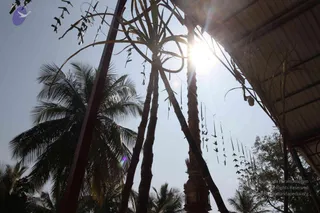
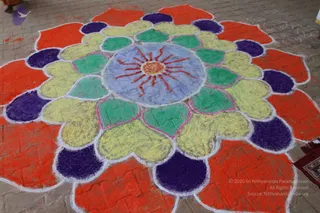
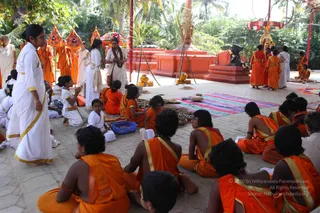
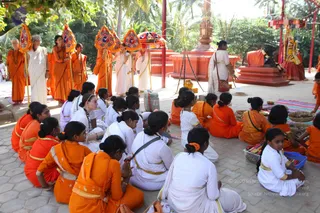
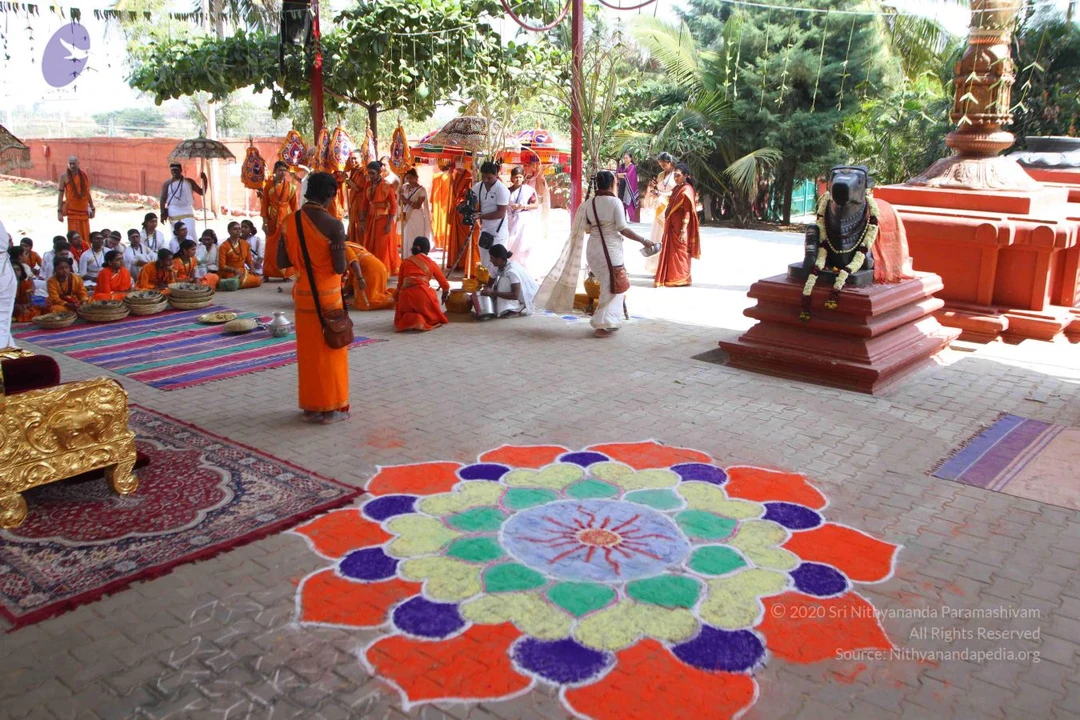
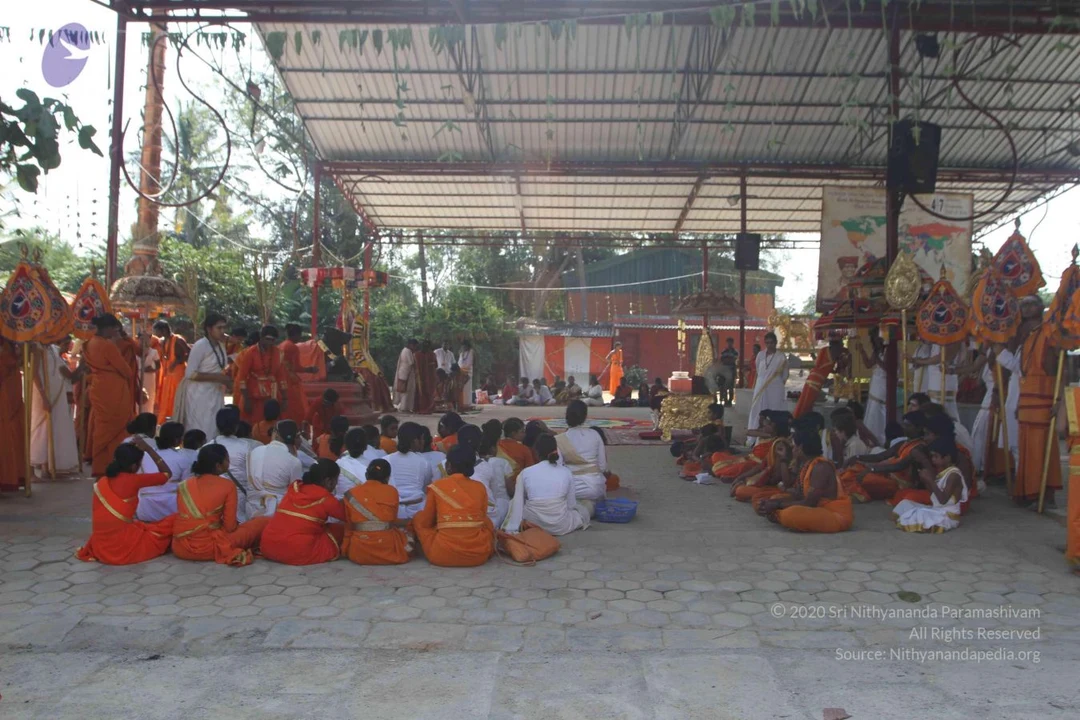
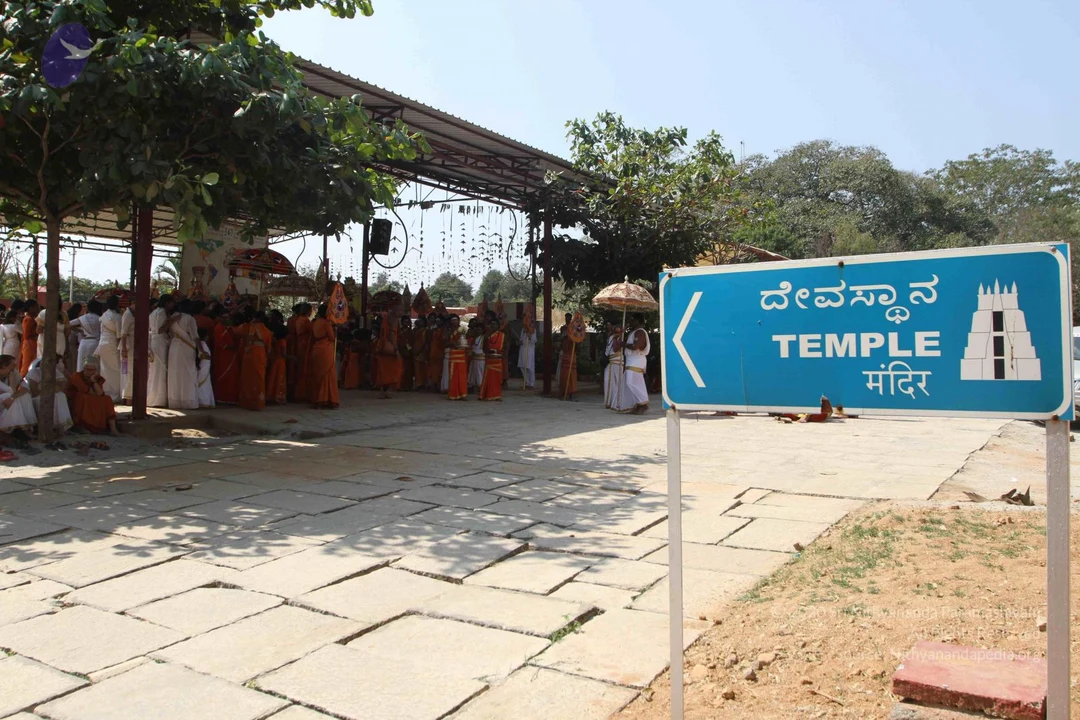
Looking upward at a sunlit outdoor scene under a bright sky with the sun glaring behind sugarcane stalks. Several tall green sugarcane stalks with leafy tops stand beside coconut palms, and strings of small paper or leaf decorations hang between them. A corrugated metal roof edge runs along the right side, with a stone pillar and trees behind. No people are visible.Looking upward against a bright, sun-flooded sky, a tall pole decorated with sugarcane stalks and strings of small hanging leaves rises beside a coconut palm and a tree. A corner of a tin-roofed structure edges the right side of the frame, and a small decorative ornament hangs from the roof. The sun blazes behind the sugarcane, creating lens flare. No people are visible in the scene.A photograph of a large floor rangoli on a paved stone courtyard. Concentric petals in orange-red, purple, yellow and green surround a pale blue central disc painted with a red-orange sun with radiating rays. No people are visible, only a corner of a red cloth at the right edge and a blurred figure's foot at the top left. The design is made from coloured powder arranged in a flower pattern.Outdoor ritual scene in a temple courtyard shaded by palms. Many seated devotees in saffron-orange dhotis and shawls, some bare-backed, sit on the paved ground in front of a striped multicoloured mat holding brass plates, offerings and a small kalasha. Several women in white saris with gold borders stand nearby, one holding a garland-like item. Behind them, orange-painted shrine structures, a dark stone statue of a bull (Nandi), and decorated ceremonial umbrellas with red and orange designs frame the scene. Devotees in orange stand at the far right beside a shrine. The setting suggests a puja or pongal-related ceremony, with the seated group absorbed in the rite.Outdoor temple courtyard scene of a ceremony on paved ground under palm trees. Standing on the left, a group in orange robes holds tall ornate parasols with red, white and blue canopies, several of them shaded by a large umbrella. Behind them, a woman in a white sari stands near a red shrine structure. Many women and girls sit cross-legged on mats in front, most in orange or white clothing with gold borders, some with flower-adorned hair, a girl in white at lower right with a blue basket of colourful items. A red-draped deity murti and a decorated red shrine stand at the right, with a stone shivalinga-like object and brass pots nearby.Outdoor temple courtyard with a brick-paved floor and a colourful rangoli floor design in the foreground, featuring orange, green and purple patterns. Many people in saffron and orange robes stand and move around a black stone Nandi bull on a red pedestal. Monks in orange and women in white and red saris gather in groups. To the right, a deity murti in a golden arched shrine is decorated with a floral garland, and two people in orange sit before a small brass puja setup with lamps and plates. A few devotees in white sit on mats in the lower right. Palm trees, a red compound wall and a canopy with bunting frame the scene.

Glimpses From KAILASA'S Pongal Celebration
145 photosSource gallery
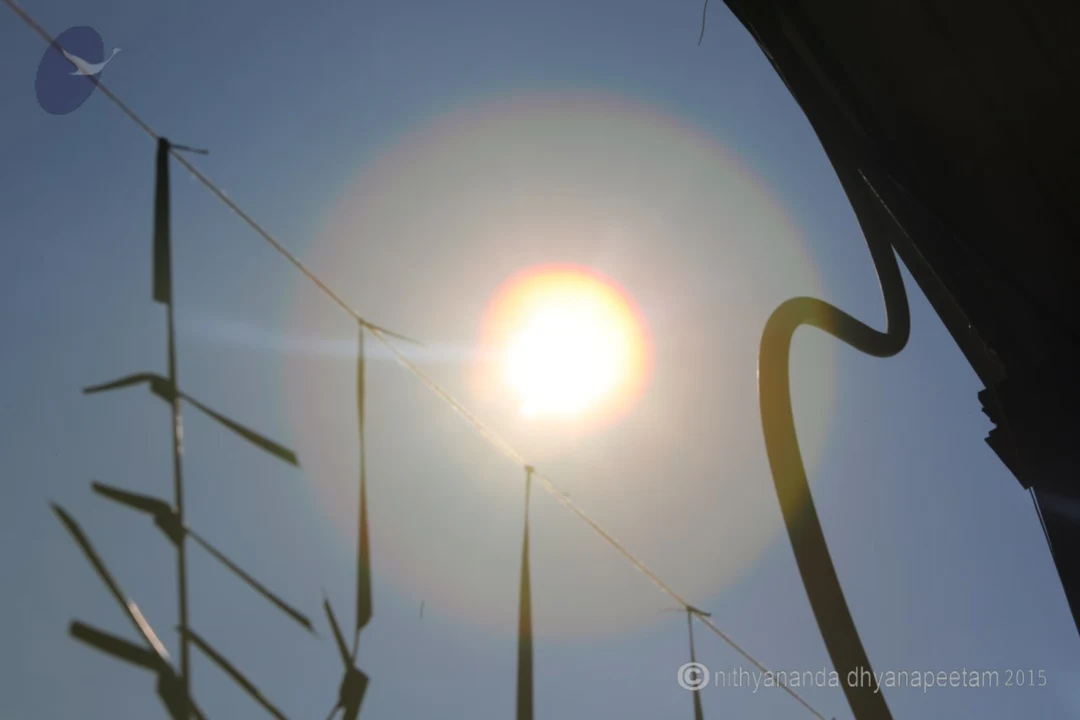
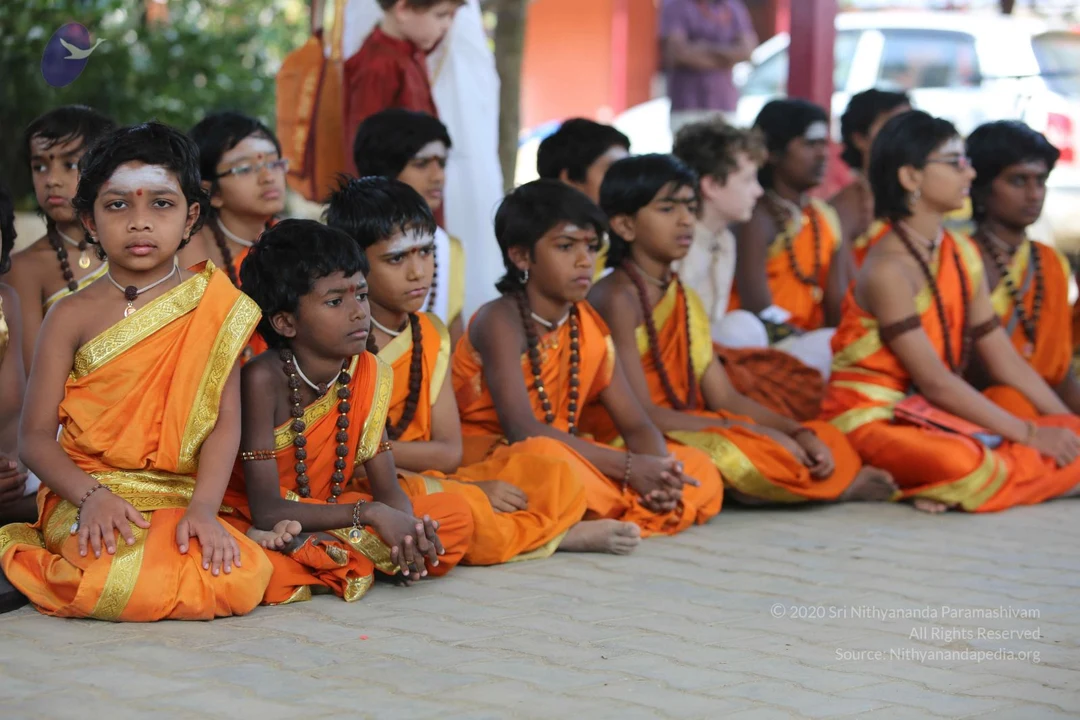
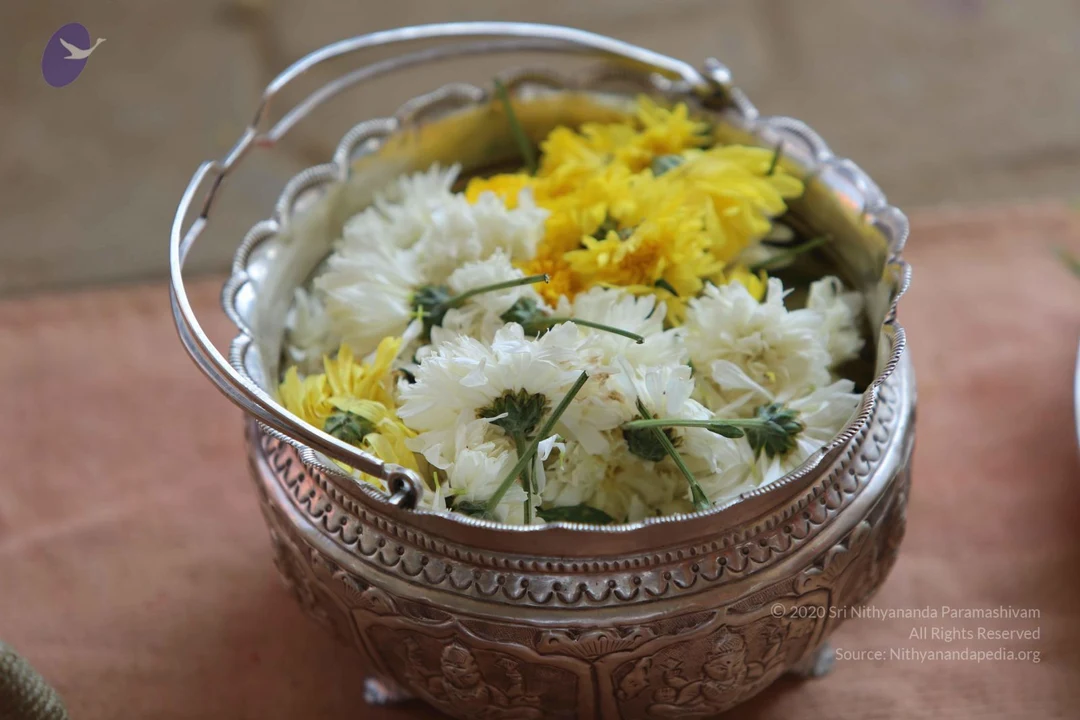
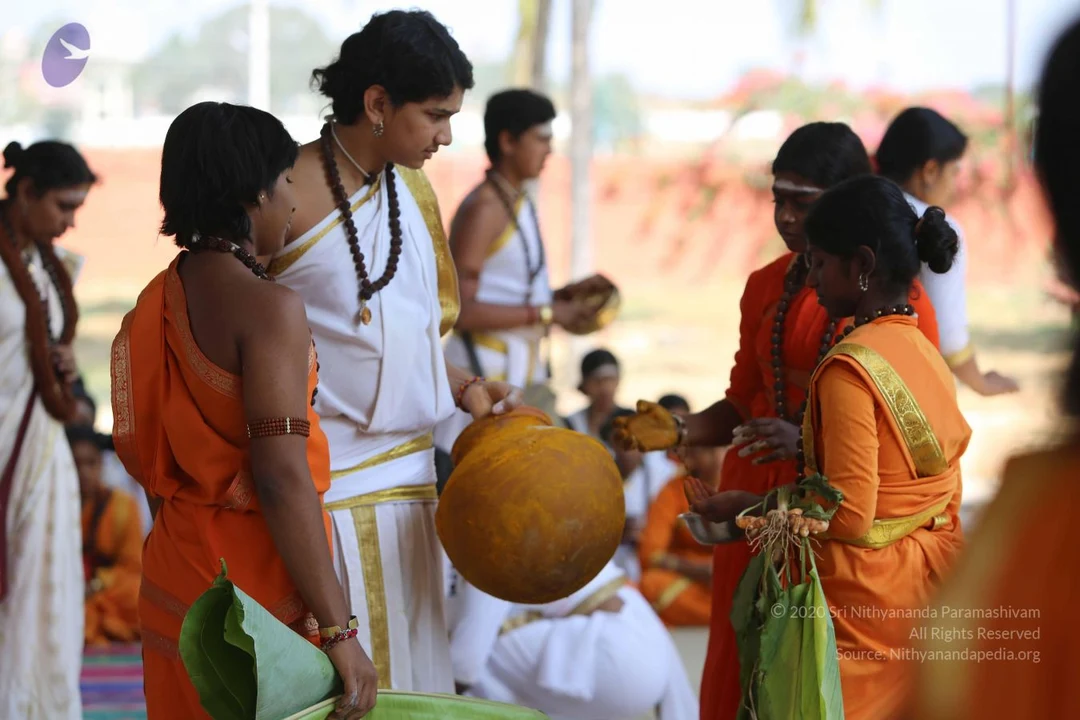
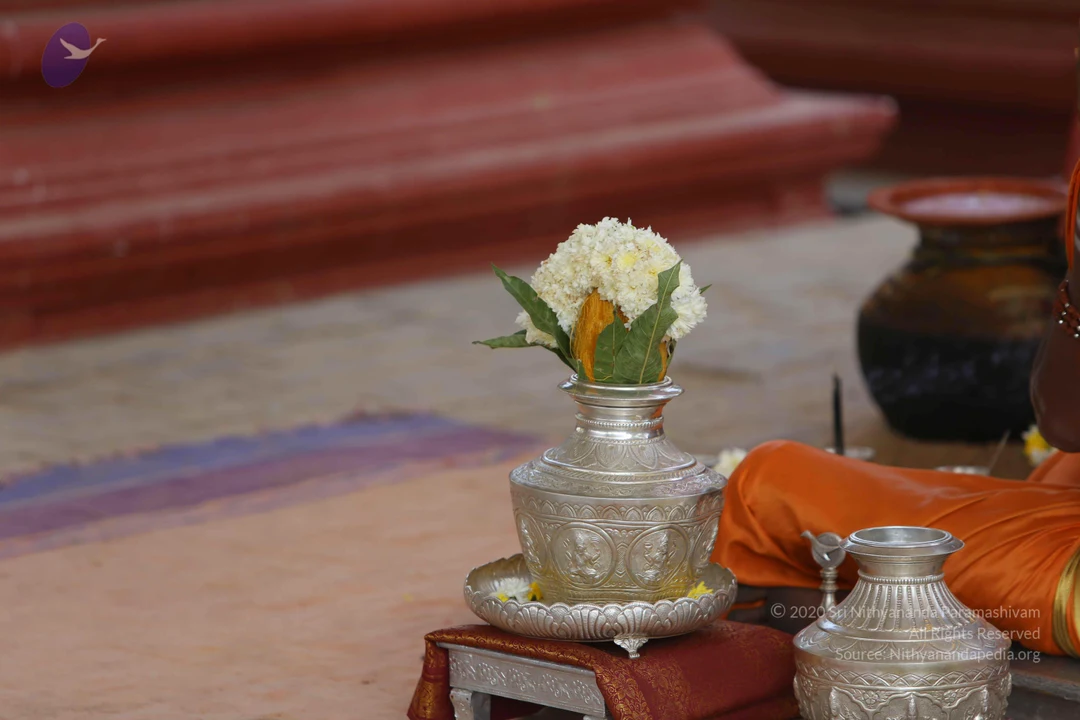
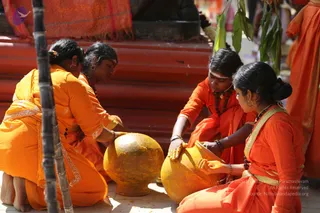
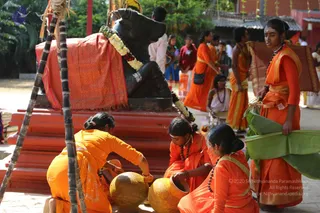
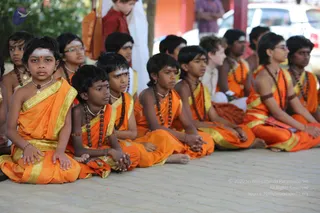
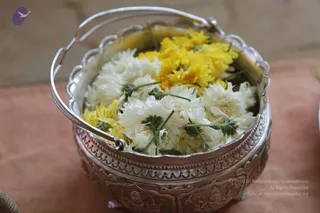
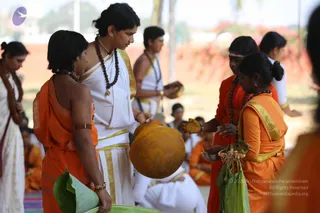
A bright sun shines through a pale blue sky, surrounded by a soft halo and warm lens glare. In the foreground, thin bamboo-like poles with narrow green leaves and strings stretch across the frame, and a dark curved structure edges the right side. No people are visible.Four women in orange and saffron clothing kneel on a pale floor beside large turmeric-coloured clay pots, decorating or painting them with yellow paste. Two women on the left wear orange salwar-style outfits with gold-embroidered borders; the two on the right wear orange-red garments with rudraksha beaded malas, bangles and a gold waistband. Behind them a red structure, orange cloth and green leaves are visible, and a bamboo stalk stands at the left edge. The setting suggests a Pongal harvest celebration with pots prepared for ritual use.Outdoor temple courtyard scene during a Pongal harvest celebration. A large black stone Nandi bull statue, draped in an orange-red cloth and garlanded with white and red flowers, sits on a red platform. Several women in orange saris with rudraksha malas kneel and pour from clay pots near the base, while others in orange saris stand nearby. Sugarcane stalks are tied at the left and a woman at right holds a bundle of green banana-leaf-wrapped offerings. Other people in white and coloured clothing stand in the background among green trees.Photograph of a row of young boys and a few girls seated cross-legged on a paved courtyard, dressed in saffron-orange garments with gold borders and wearing rudraksha malas and white forehead markings. Several children sit with hands folded in their laps, and a few older adults in white stand behind them. Some children wear gold chain necklaces and beaded bracelets, and the setting is outdoors with greenery and parked vehicles in the background.A close photograph of an ornate silver bowl with a looped handle, its rim scalloped and its sides embossed with figures, holding white and yellow chrysanthemum blossoms with green stems and leaves. The bowl rests on a rose-coloured cloth. No people are visible. The image is a ritual flower offering arrangement.Outdoor Pongal celebration with several young devotees in saffron-orange and white clothing. In the centre, a person in white dhoti with gold border and a rudraksha mala holds a large earthen pot with a turmeric-yellow top, while a companion in orange saree with gold border stands beside them. Another woman in orange with a rudraksha mala and forehead marking holds a brass vessel near a leaf-wrapped offering of sugarcane and turmeric. Others in orange and white stand in the background on a sunlit ground with red walls and palm trees.

Nithya Satsang

50 photosSource gallery
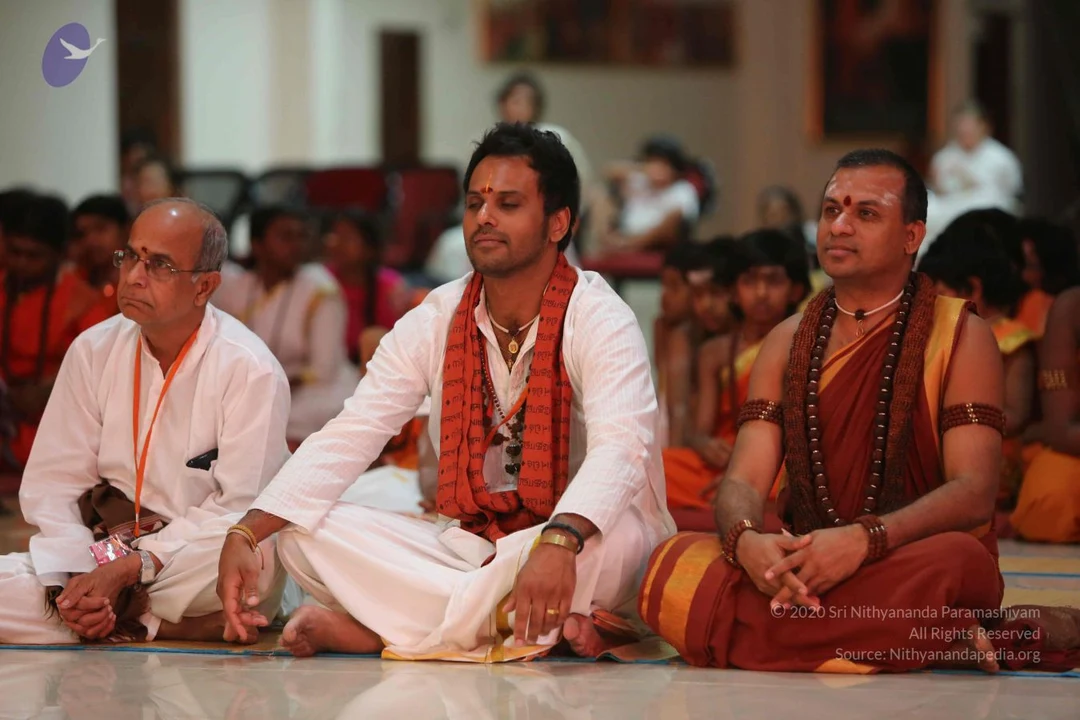
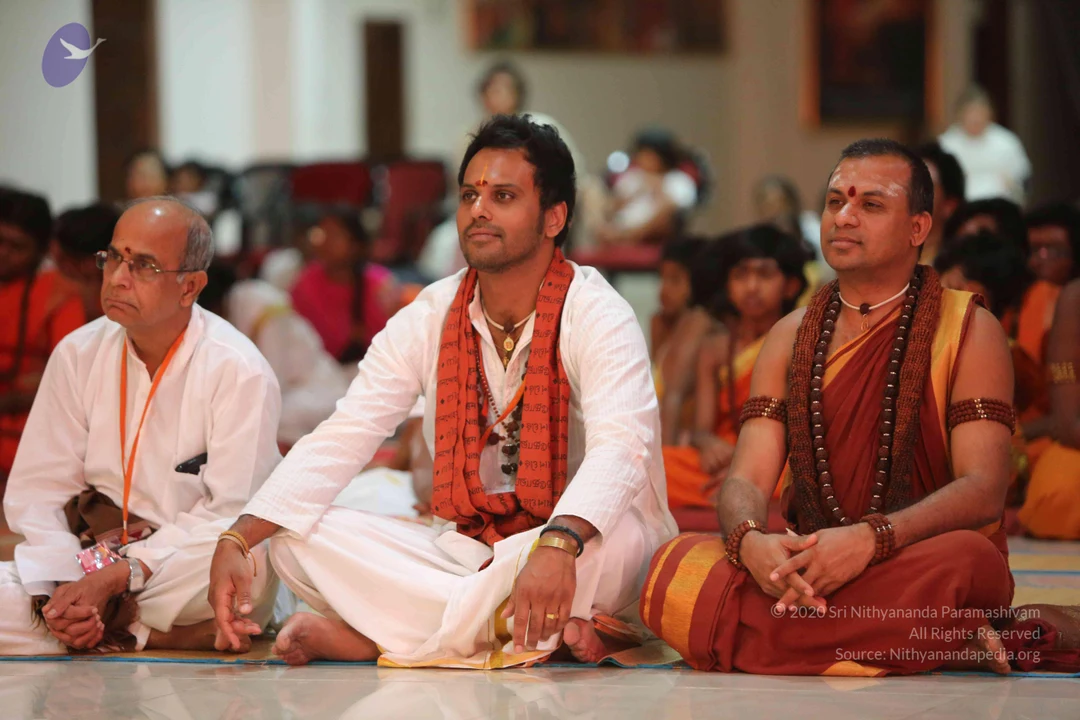
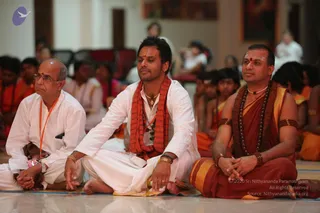
Photograph of a seated satsang gathering in a hall with a light marble floor. In the foreground three men sit cross-legged. On the right, a man with a shaved head, red and yellow sannyasi-style robes, a tall rudraksha mala and ornate bangles sits with hands clasped, eyes lowered. In the centre a man in white dhoti and kurta wears a red and white scarf and eyes closed in meditation. On the left an older man in white clothes and glasses sits with hands folded, an orange lanyard around his neck. Behind them several children and adults in orange and white clothing sit in rows, and a few people are blurred in the background. The appearance of the right-hand figure does not clearly match the a person cues, so his role is described as a sannyasi seated in satsang.A seated man in saffron-orange robes and a red-orange turban sits on an ornate gold throne carved with lion heads and scrollwork, against a dark red velvet backdrop. He wears a rudraksha mala with ceremonial gold necklaces and gold armbands and bangles, a red bindi on his forehead, and bare feet. His palms are raised and open in a blessing gesture while he smiles, with a microphone stand beside him. The description aligns with a probable Swamiji depiction through the saffron clothing, turban, rudraksha mala and ornate gold adornments on a throne. Watermarked archive photo of a satsang-style setting, one person visible.A seated man on an ornate gold throne with carved lion-head armrests and a deep red velvet backdrop, smiling with palms pressed together in greeting. He wears an orange-red turban, a saffron-orange robe with a gold-bordered cloth, a long rudraksha mala with a golden ornament, gold bangles and armlets, and a red bindi on his forehead. A microphone stand stands beside the throne and a long black braided cord hangs over the cushion. Gilded lion statues flank the throne.A man seated cross-legged on an ornate gold throne with a red cushioned seat, flanked by gilded lion figures and large gilded mythical carvings, in front of a deep red velvet curtain. He wears an orange-red turban with a red bindi, an orange-red robe with a gold-bordered dhoti, a long rudraksha mala with an ornate gold necklace, and gold bangles. He sits barefoot with palms pressed together in a greeting gesture and smiles. A microphone stand is at his side and a striped tiger-skin cloth lies beneath him. Swamiji (probable): long dark hair falling to one side, ornate gold clothing and jewellery, rudraksha mala and saffron robes, seated on a throne during a satsang.A seated man in saffron-orange robes and a matching orange turban sits cross-legged on a red cushioned throne with an ornate gold backrest carved with scrolls and shell-like motifs. Two golden lion sculptures flank the seat, and a red-and-white striped cloth lies on the platform. He wears a long rudraksha mala and ceremonial gold necklace, gold bangles on both arms, and a red bindi, and he raises both palms together in a greeting gesture while smiling. A microphone on a stand is at his right and a long black braided cord falls beside the throne. Probable Swamiji (saffron robes, orange turban, rudraksha mala and gold ornaments) seated in a satsang setting.A seated man in saffron-orange robes and a matching orange turban sits cross-legged on an ornate gold throne with carved lion and mythical bird motifs. He wears layered rudraksha malas, gold bangles and a red bindi, and has his palms pressed together in a greeting gesture while smiling. Gilded lion statues flank the throne, a red velvet cushion and tiger-striped cloth lie beneath him, and a microphone stands at the right. Gold-draped curtains form the backdrop. Appearance-based label: a person, seated on the throne in an in-person setting.

Glimpses from KAILASA'S Pongal Celebration
6 photosSource gallery
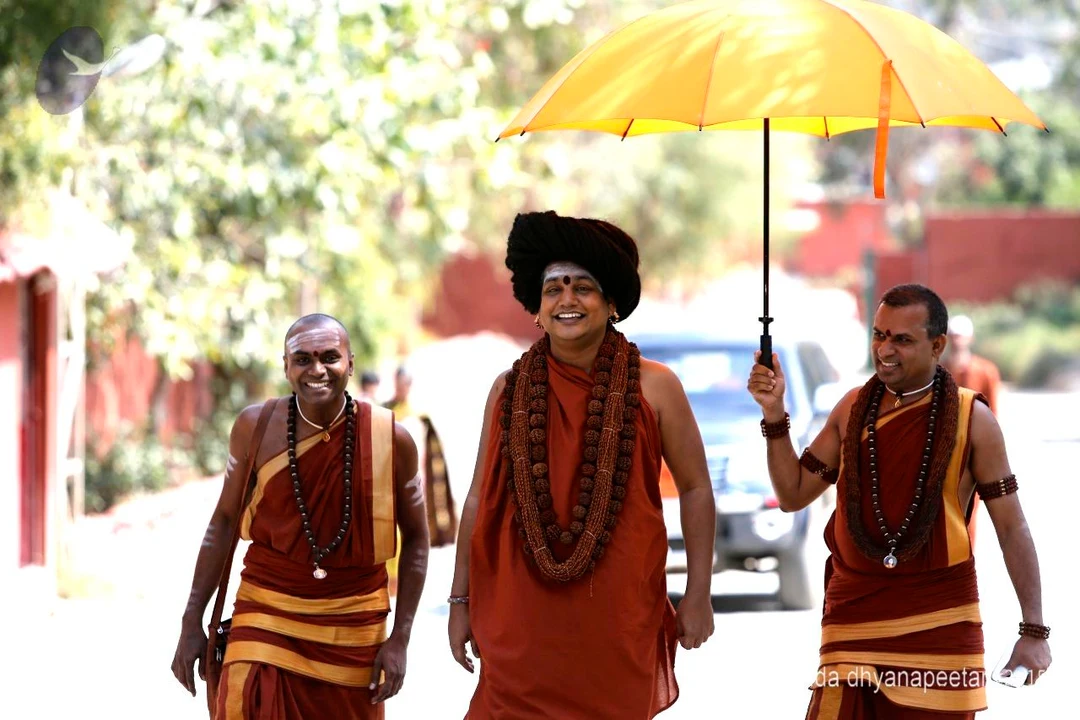
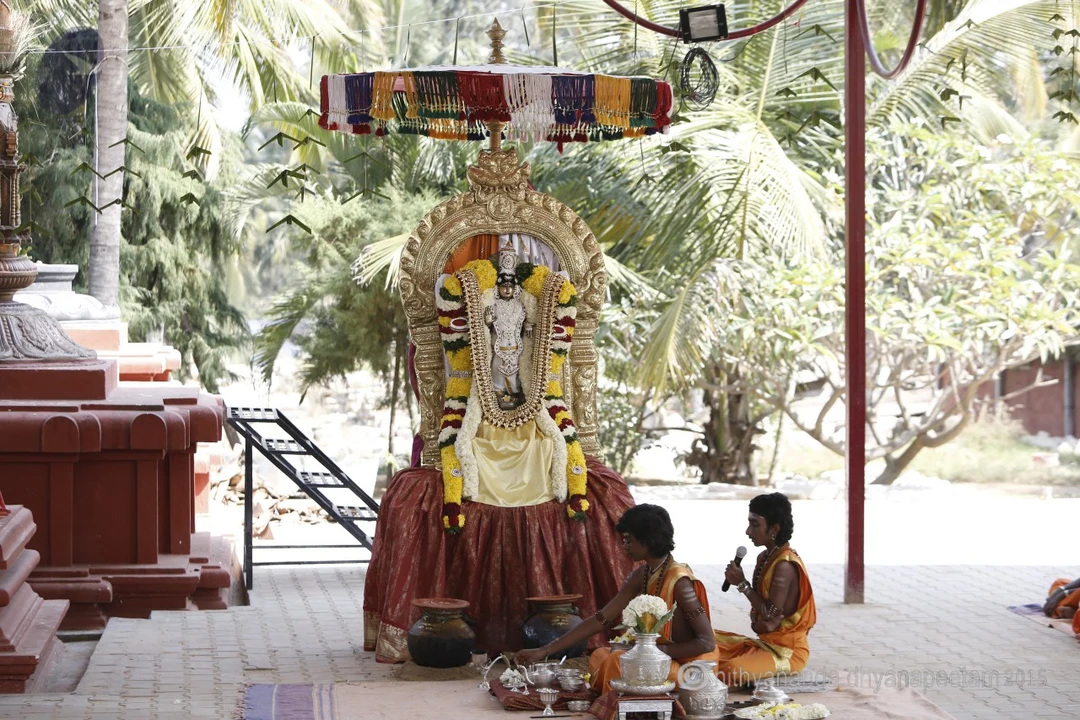
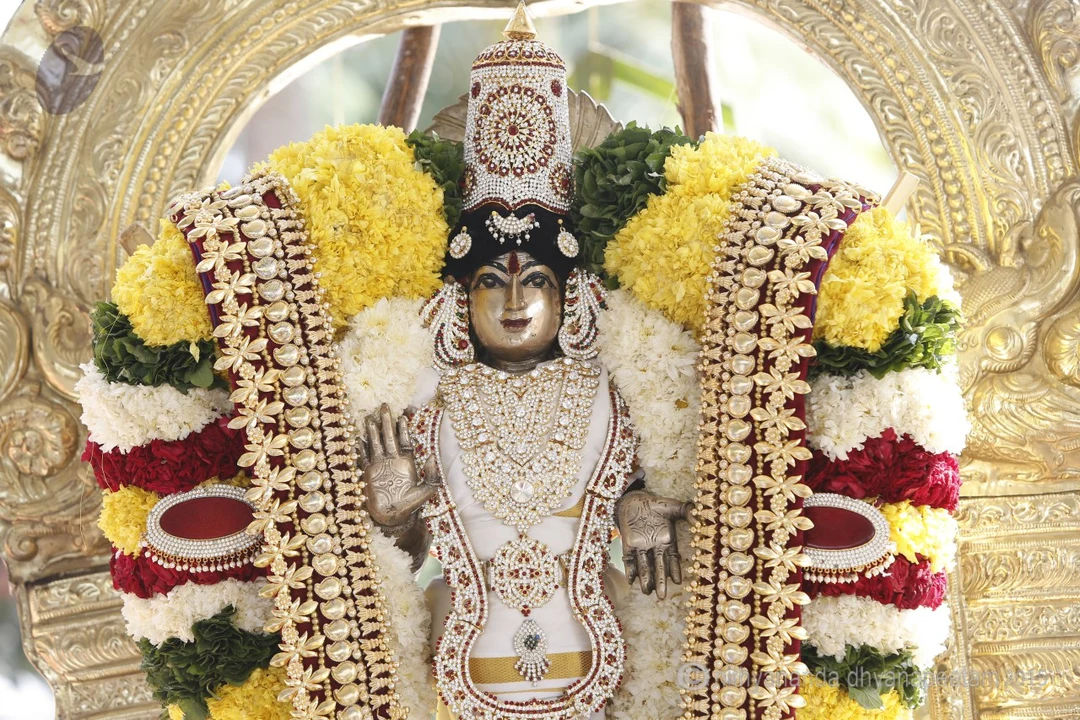
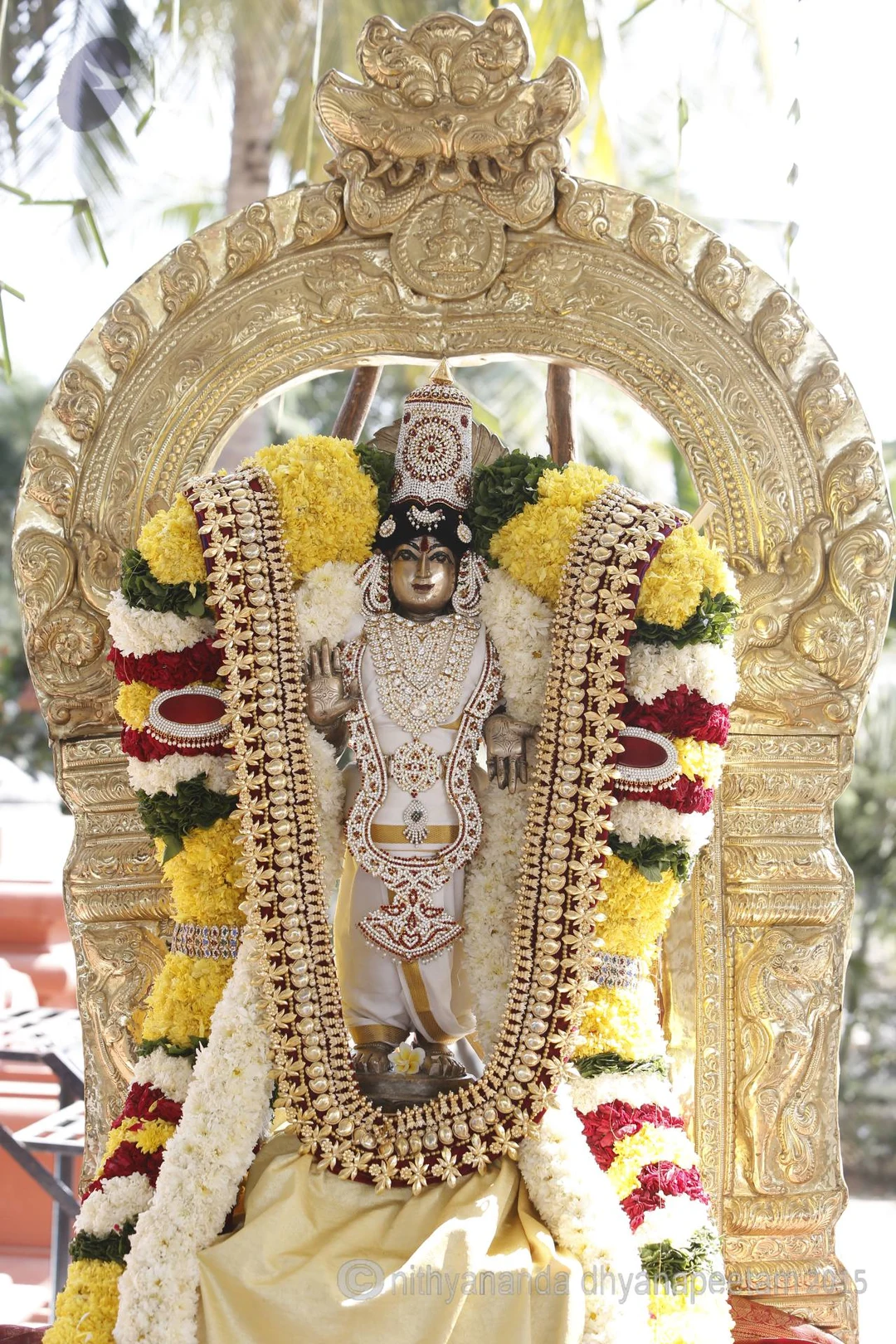
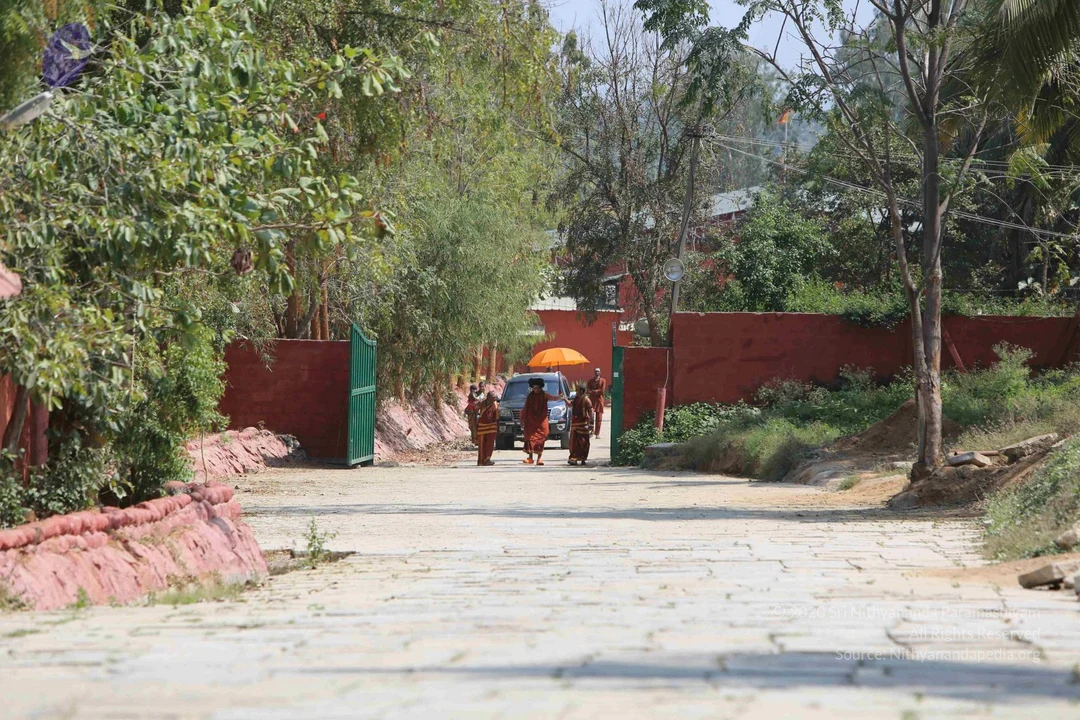
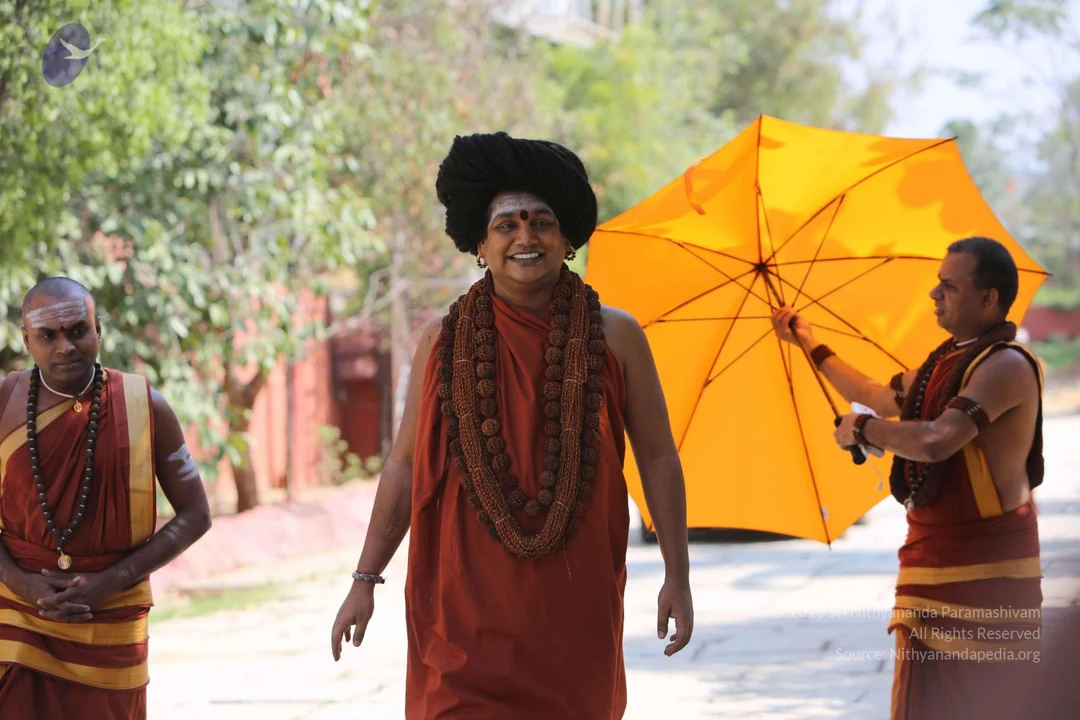
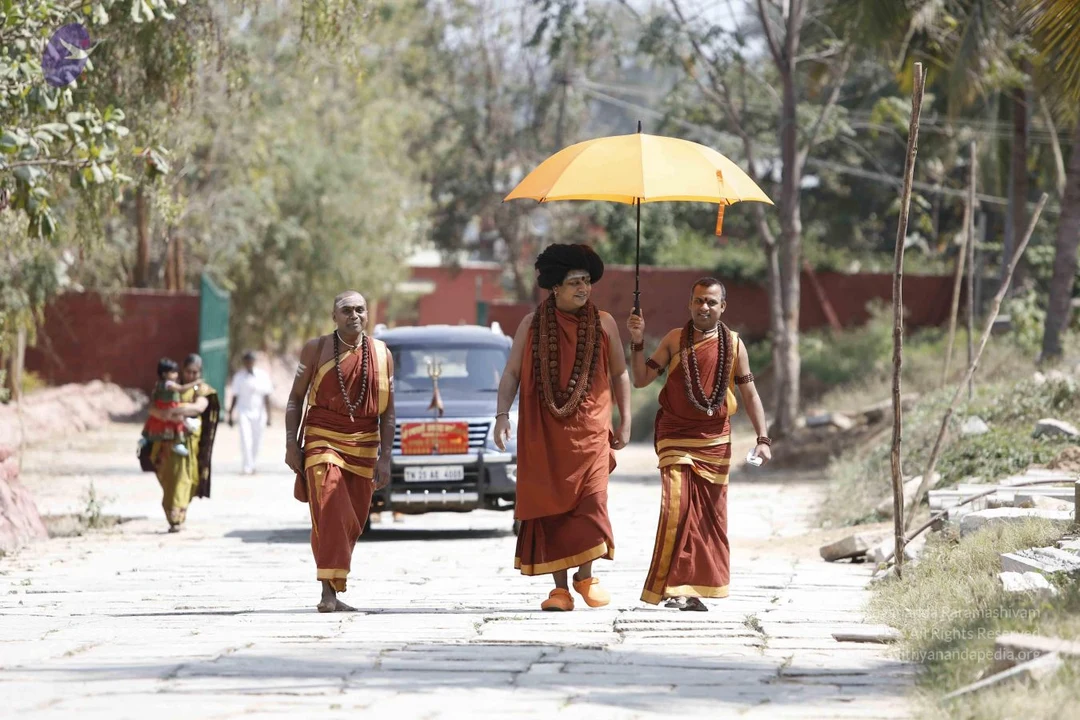
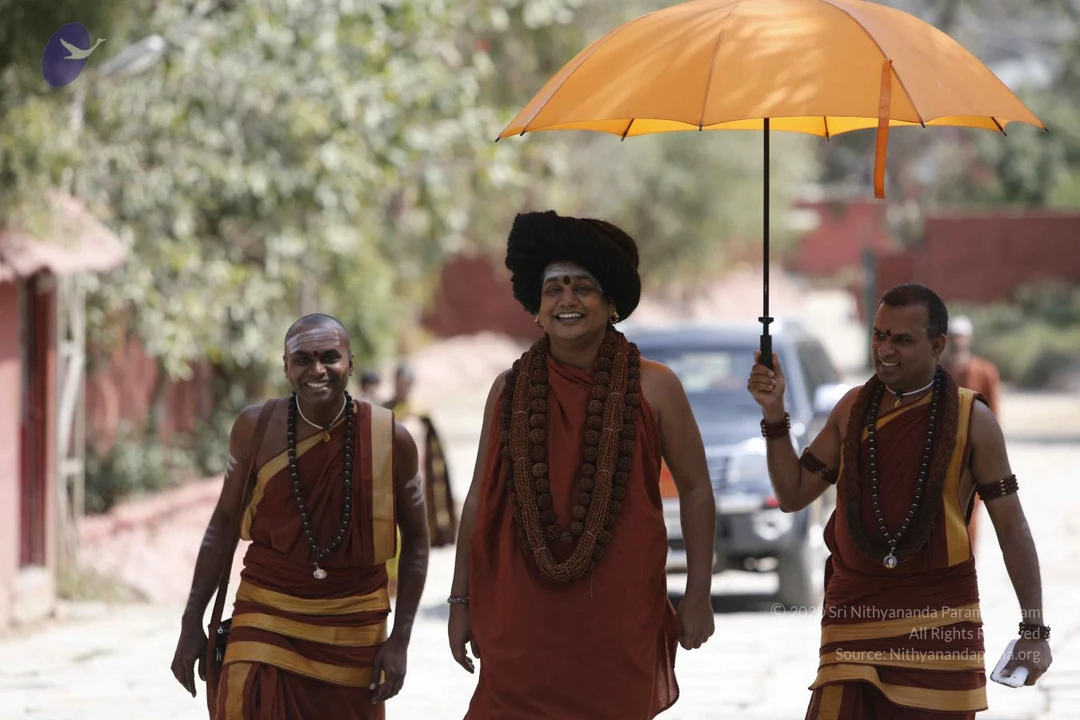
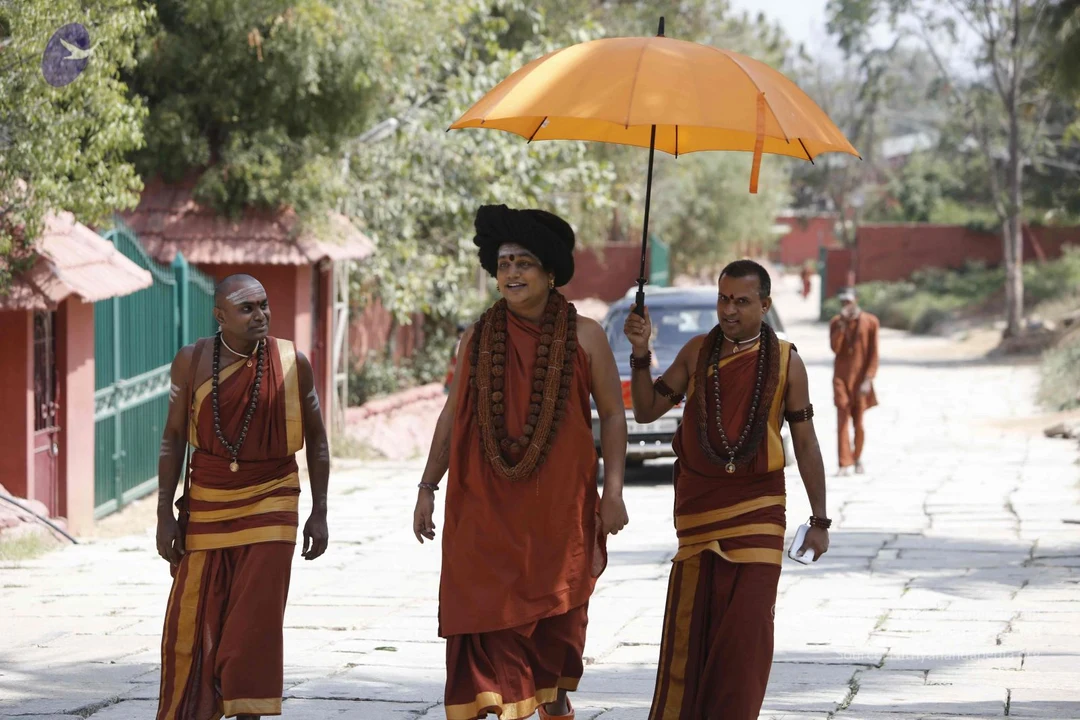
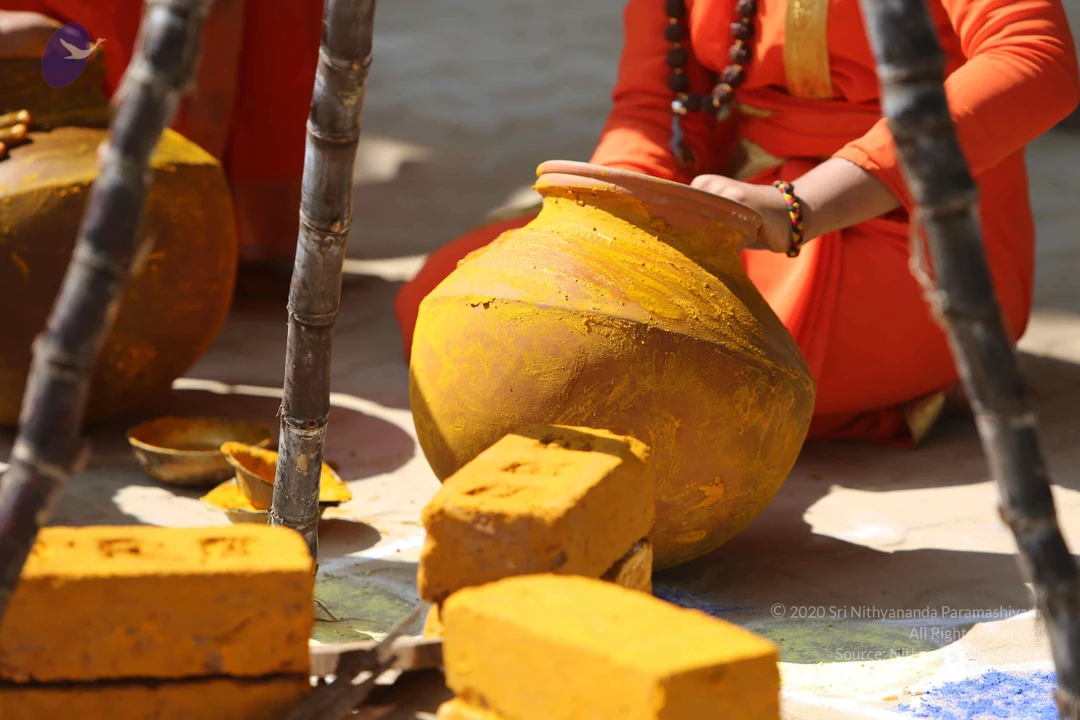
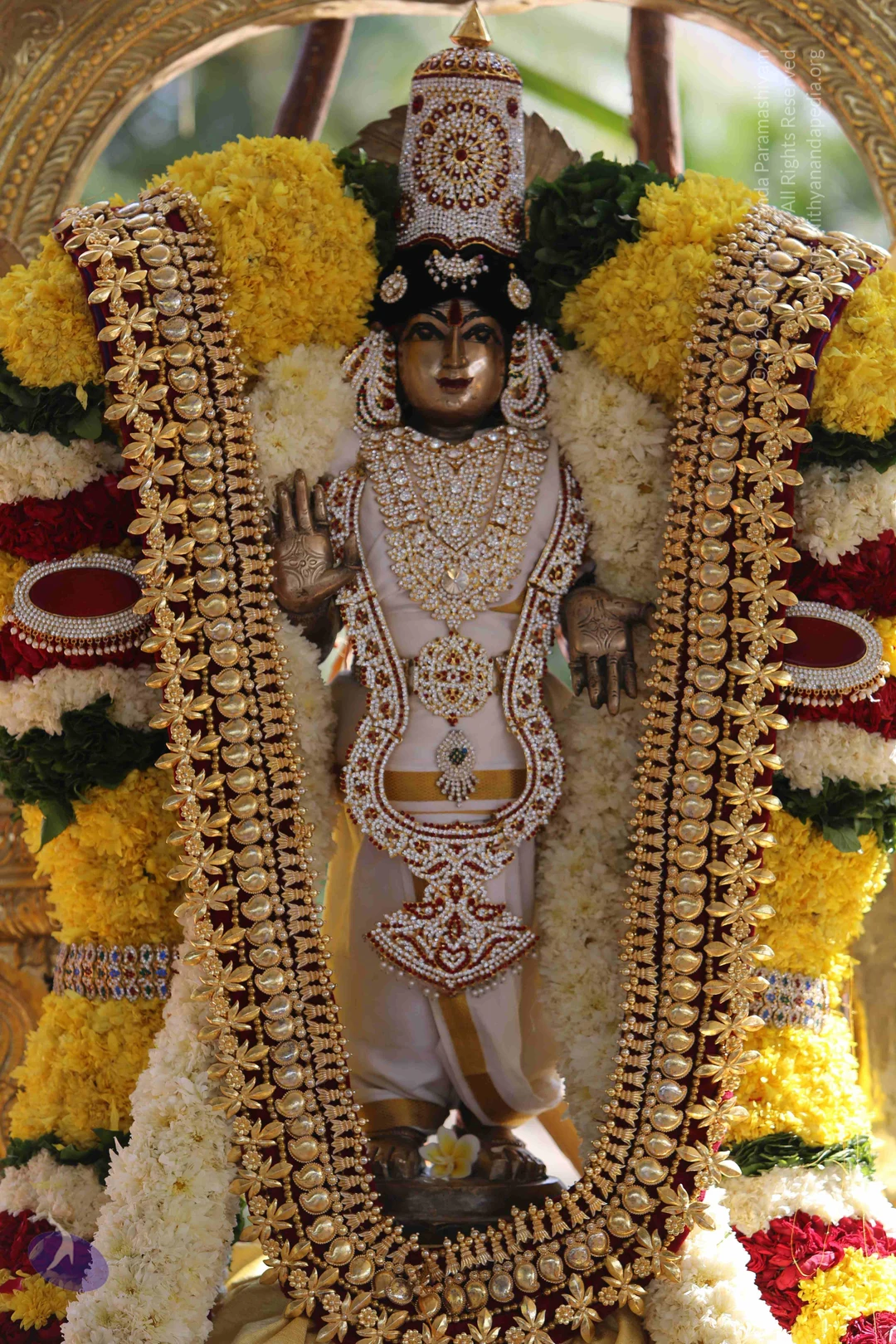
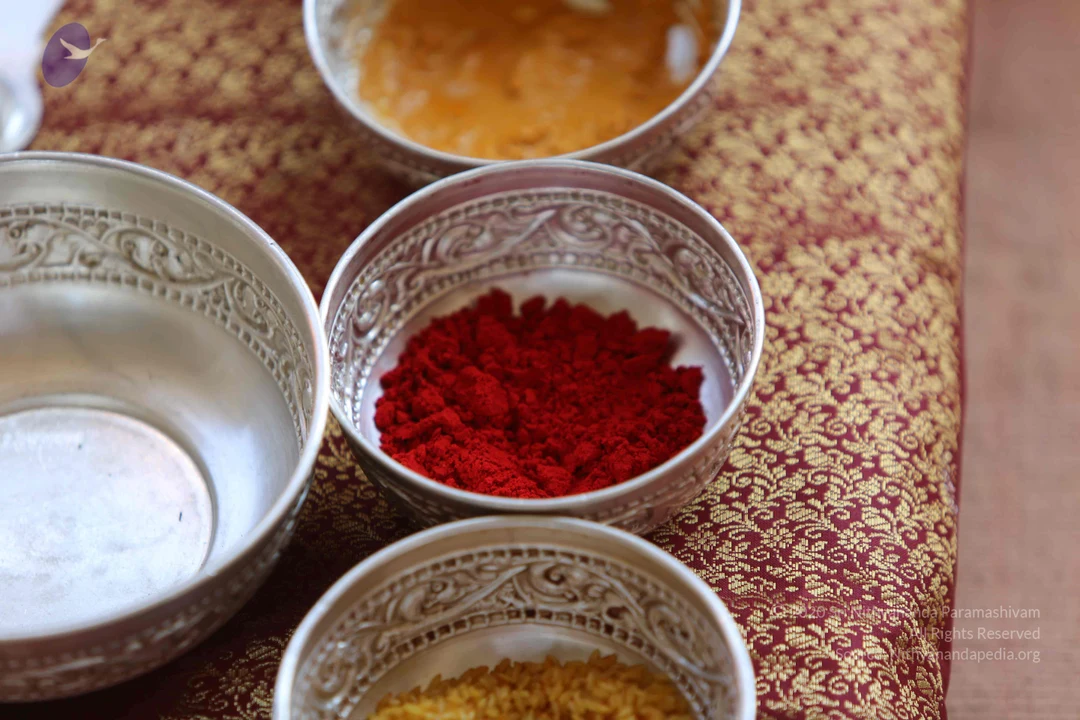
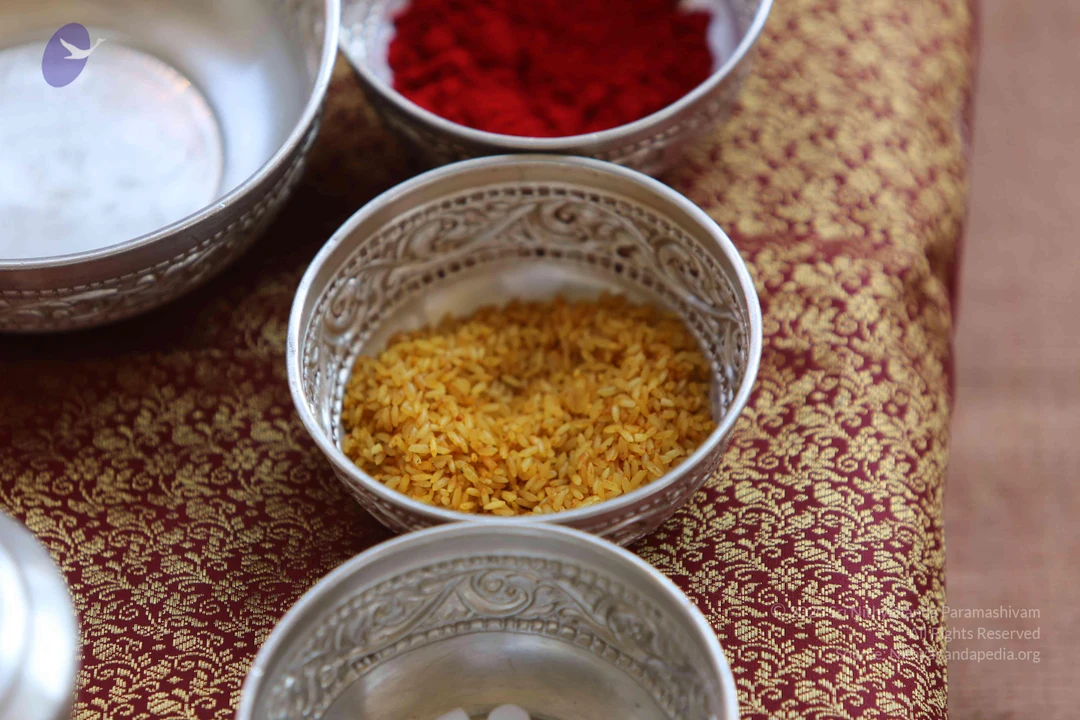
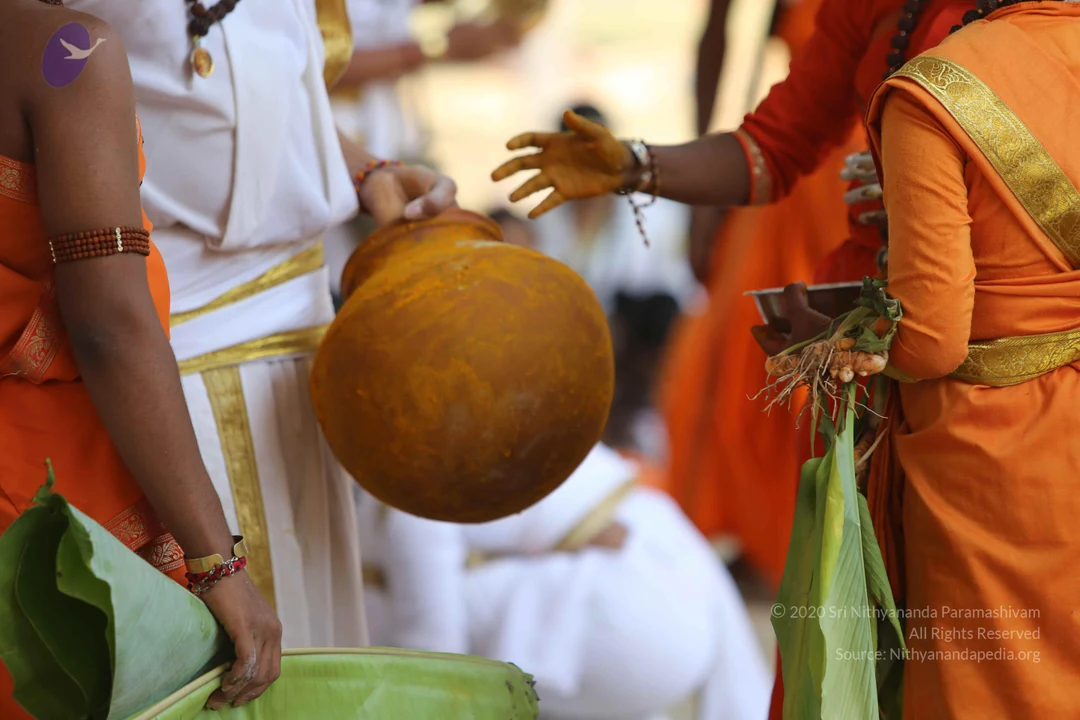
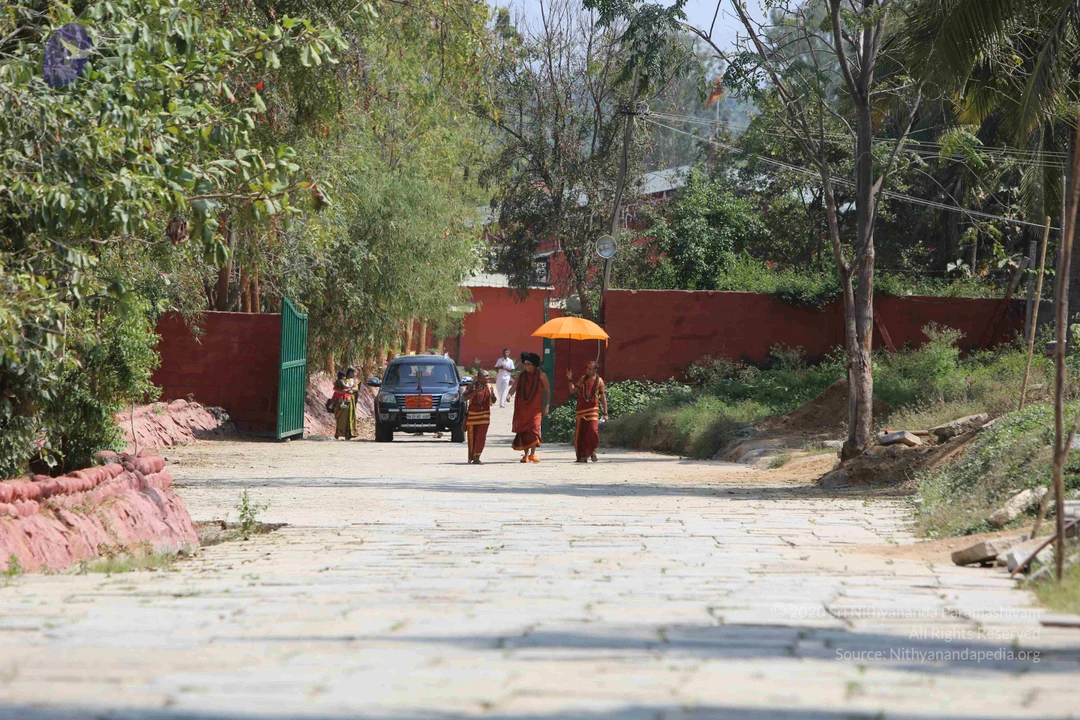
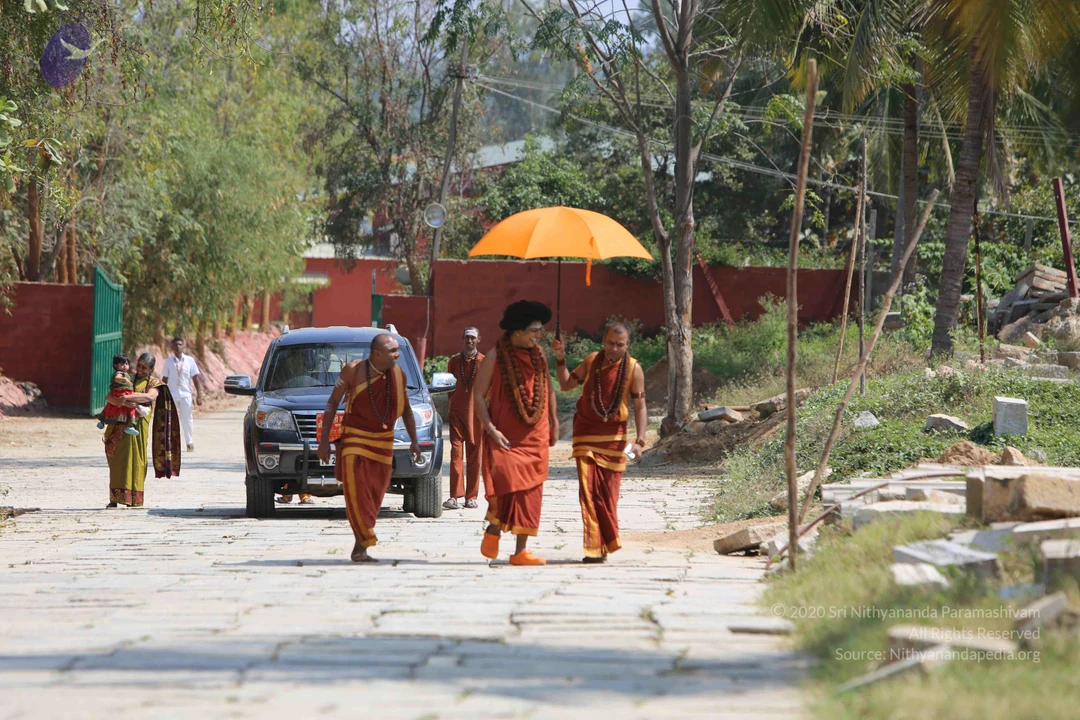
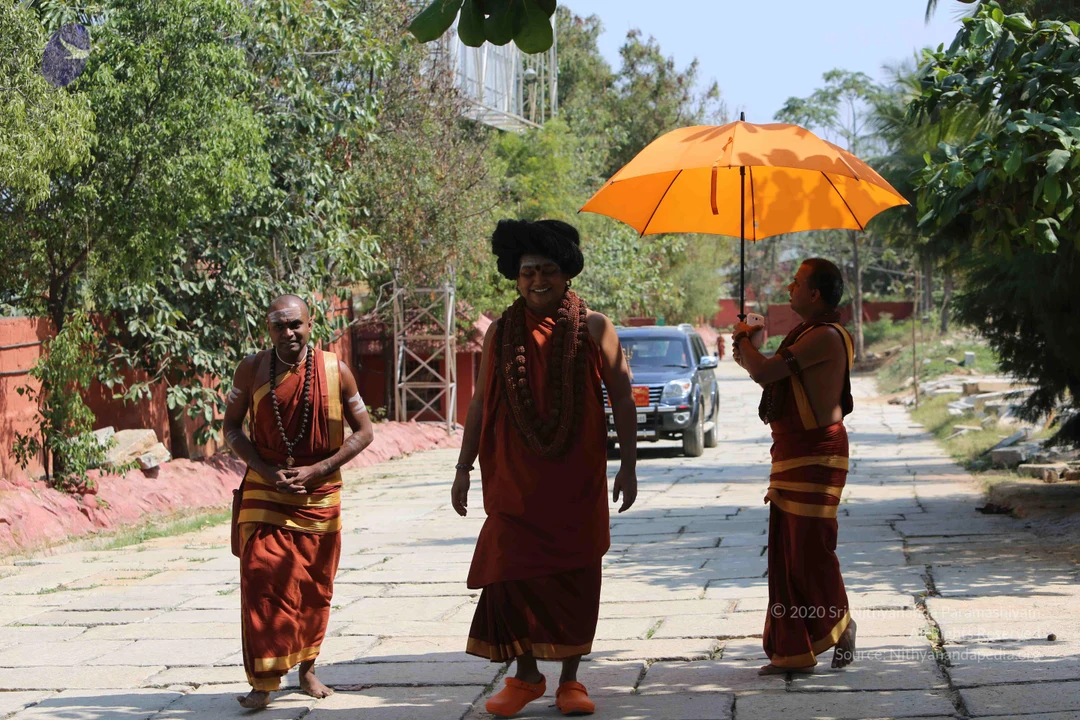
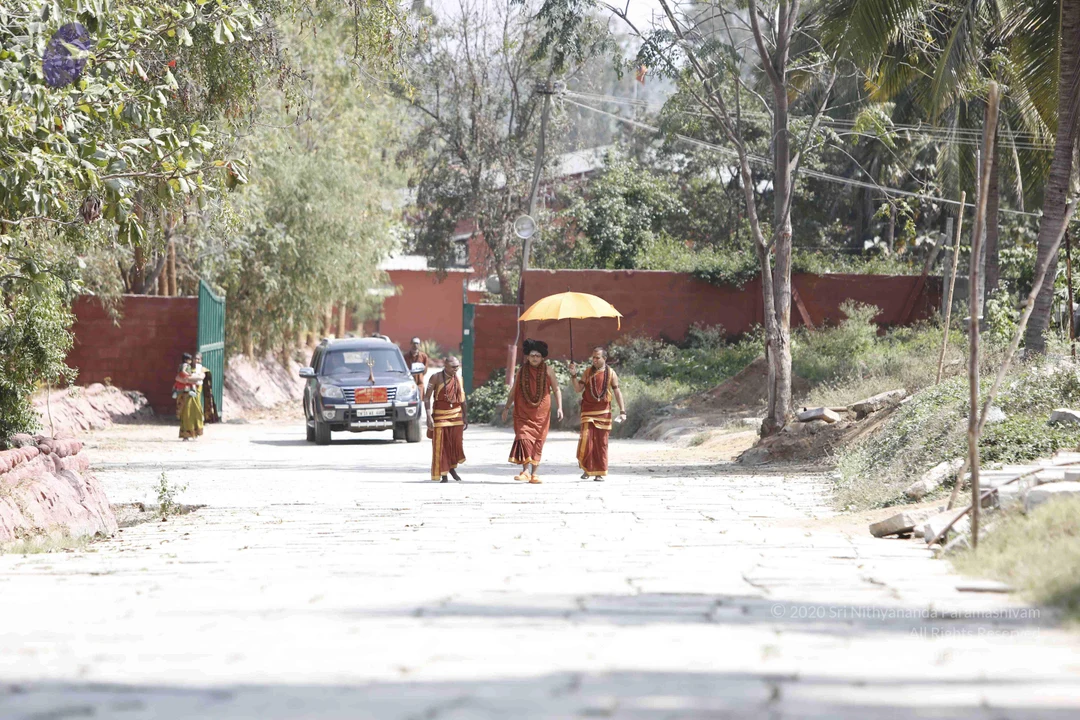
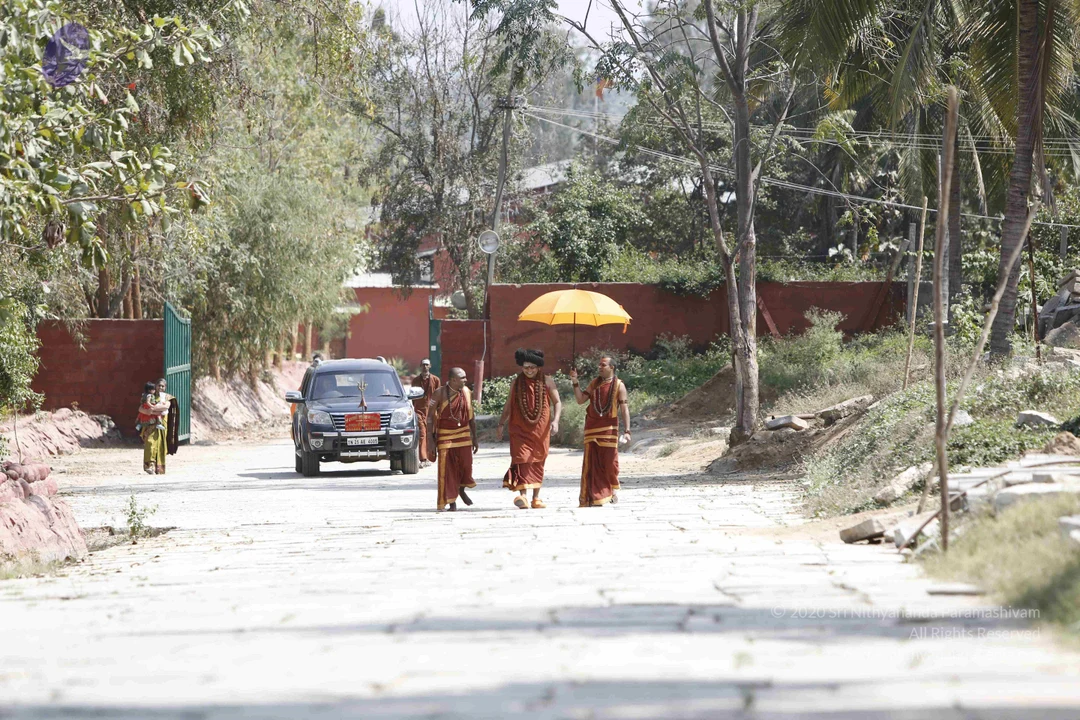
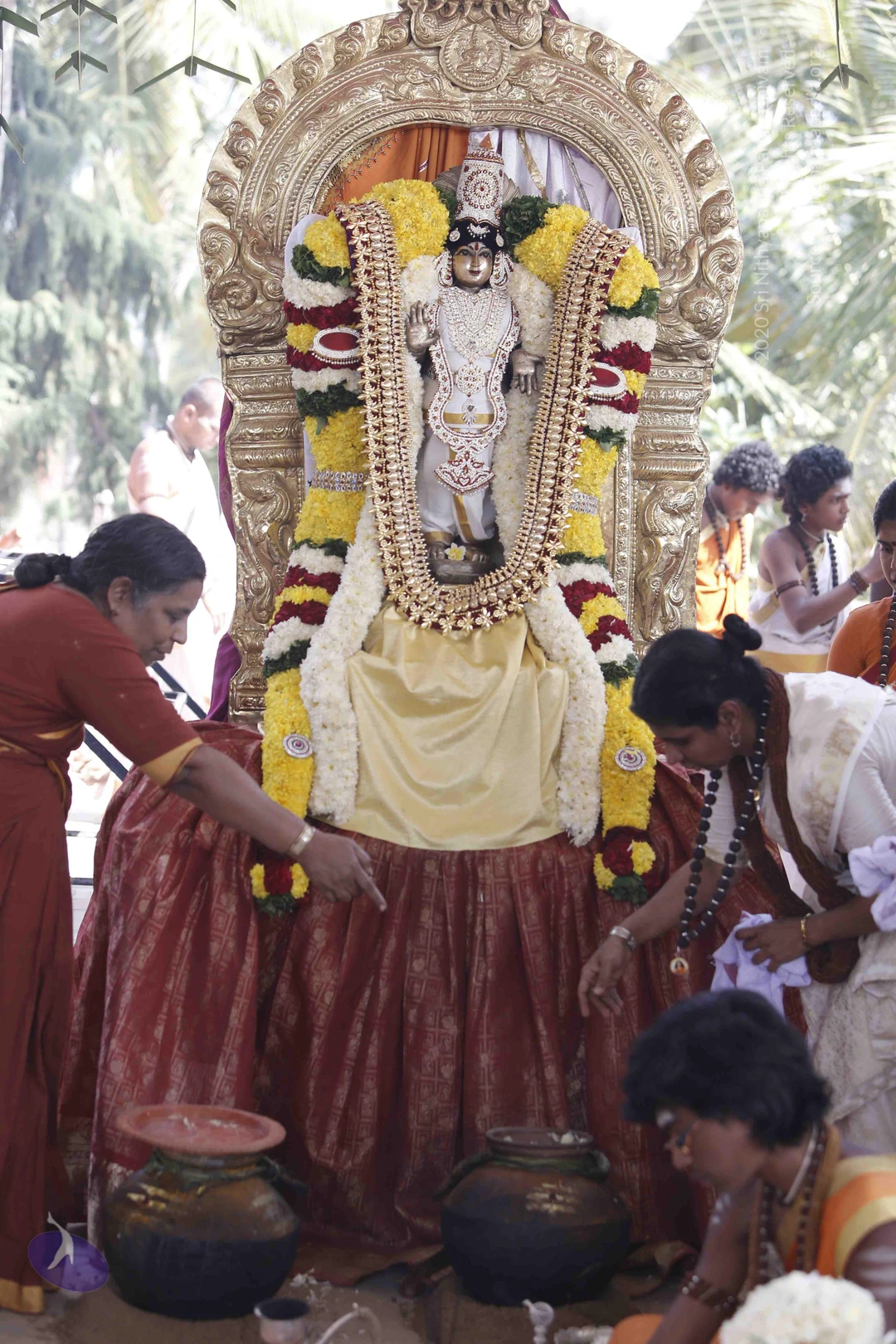
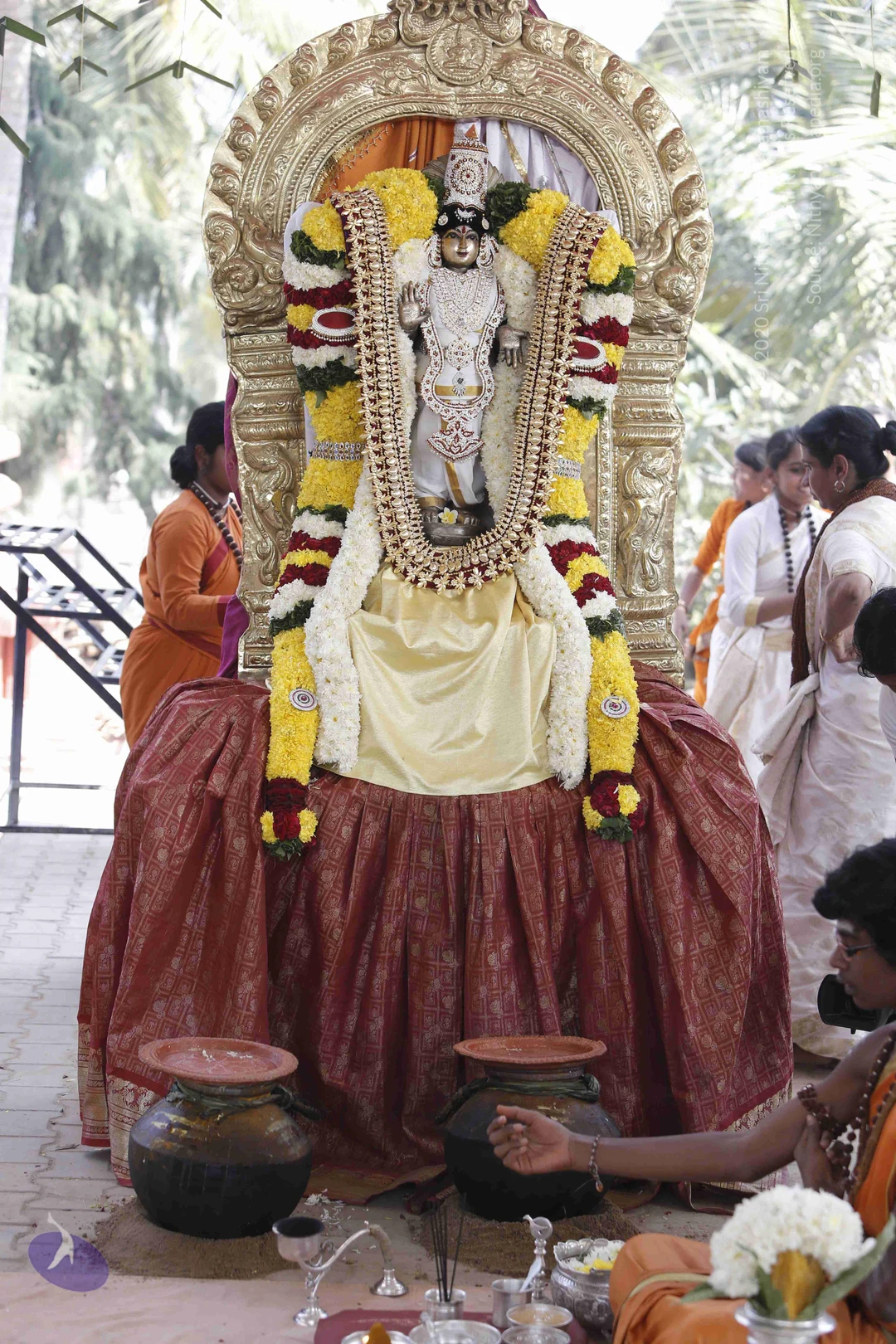
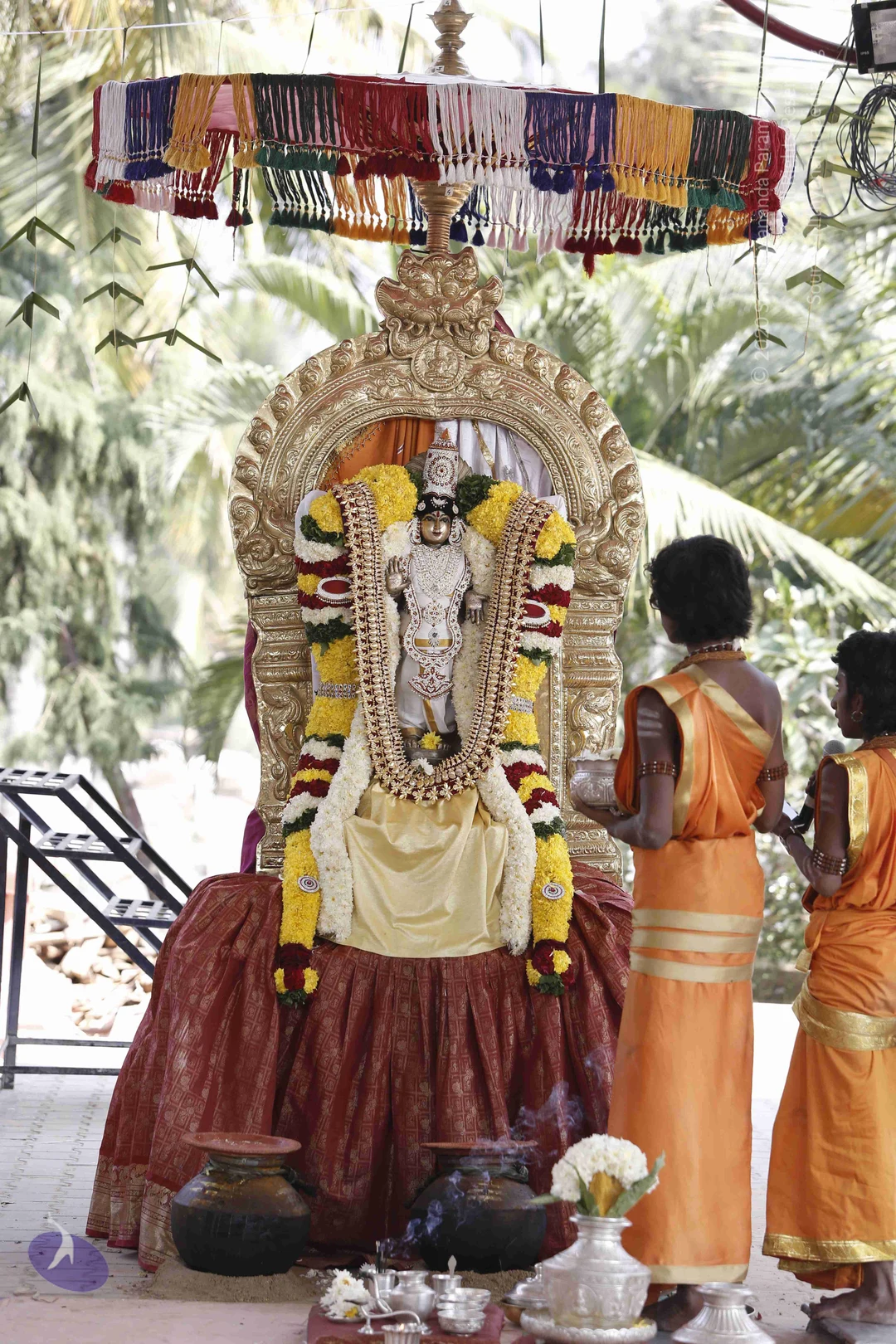
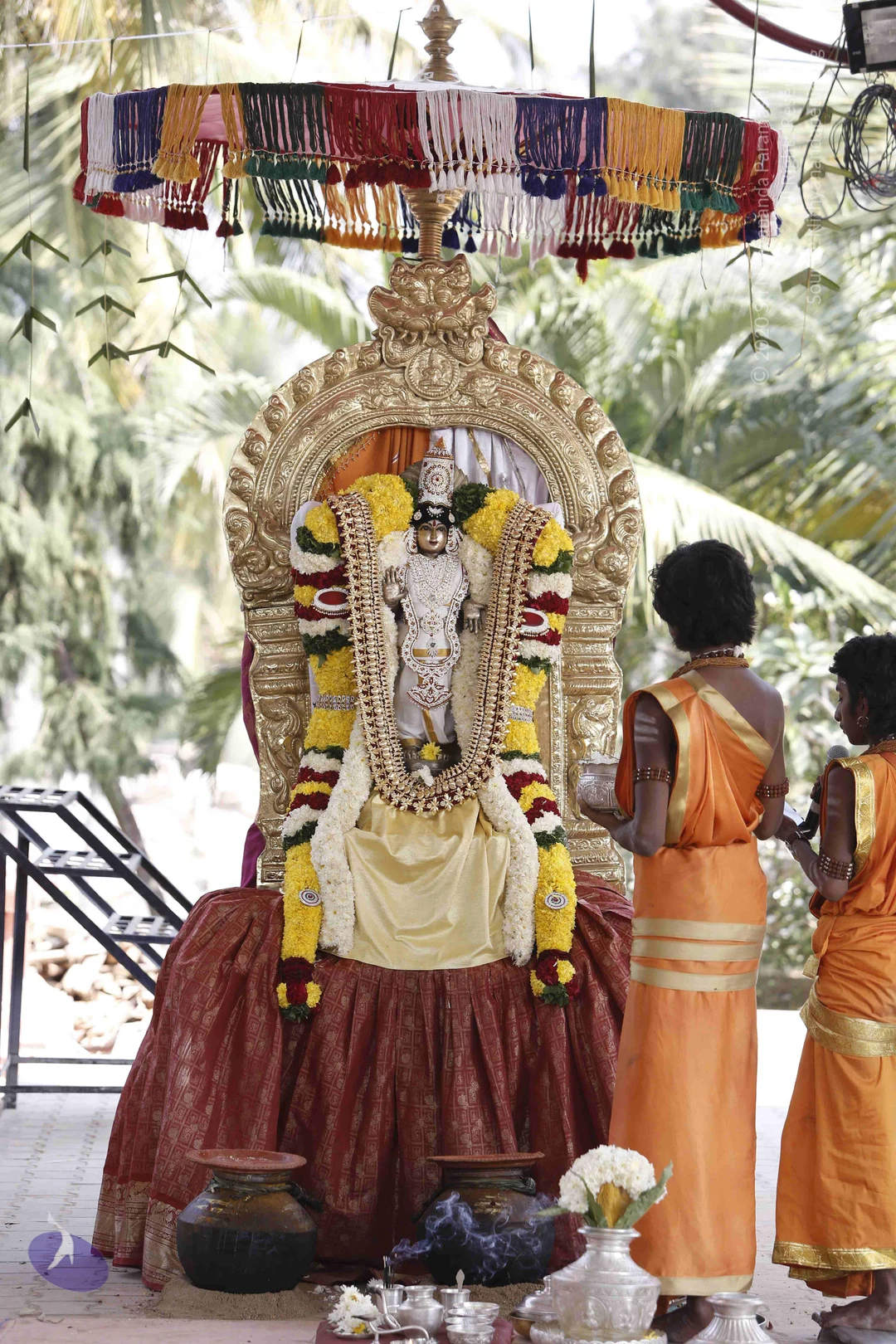
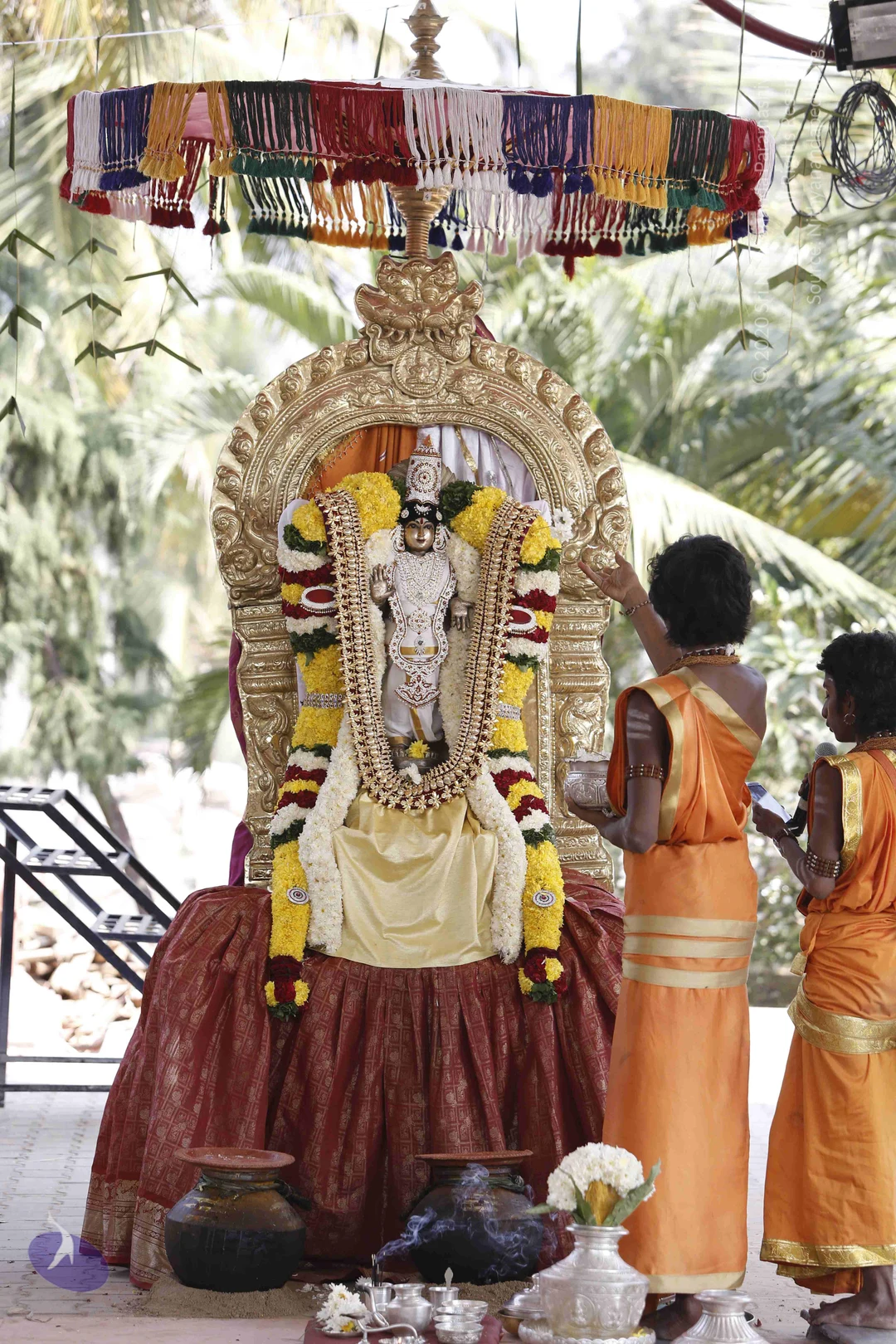
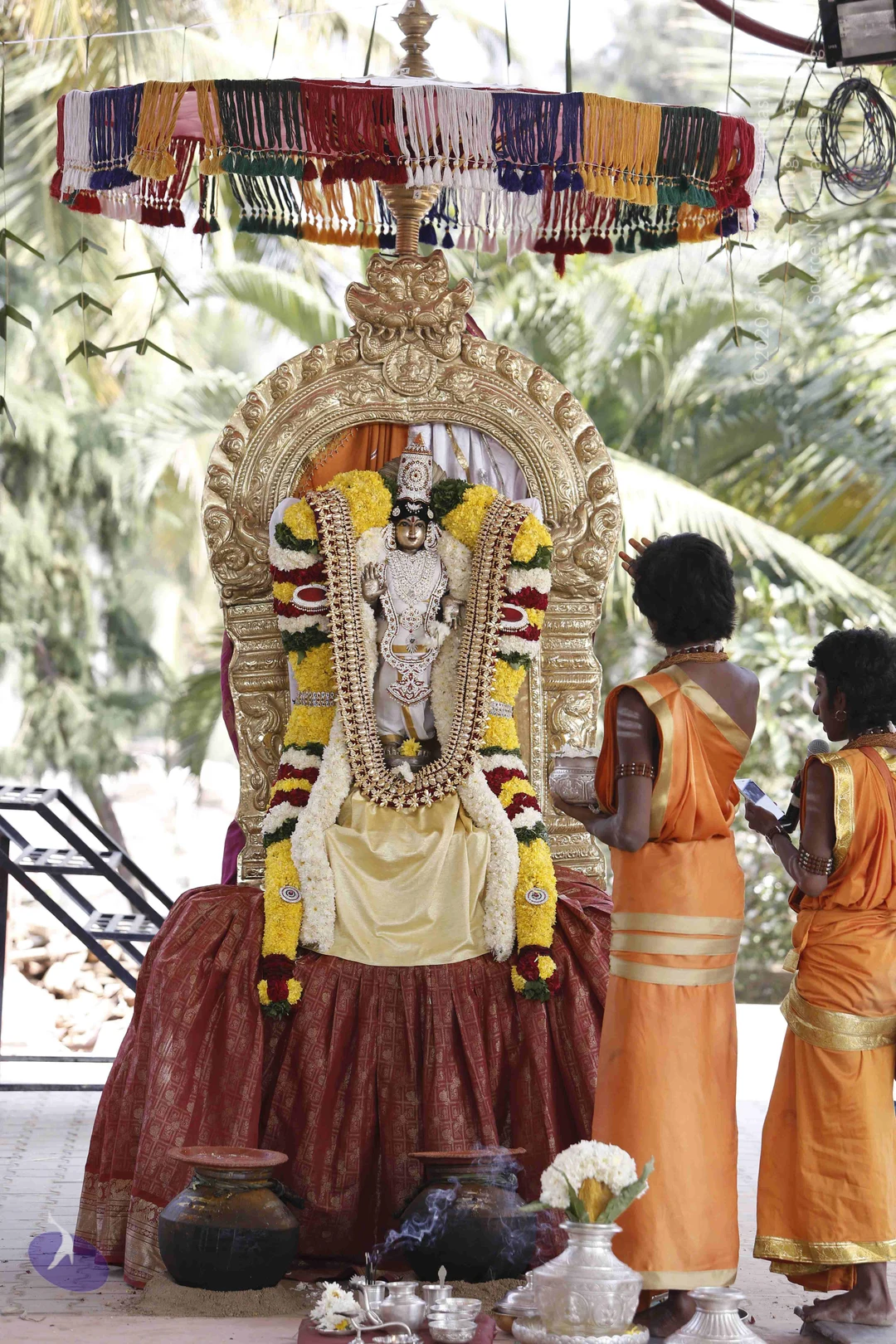
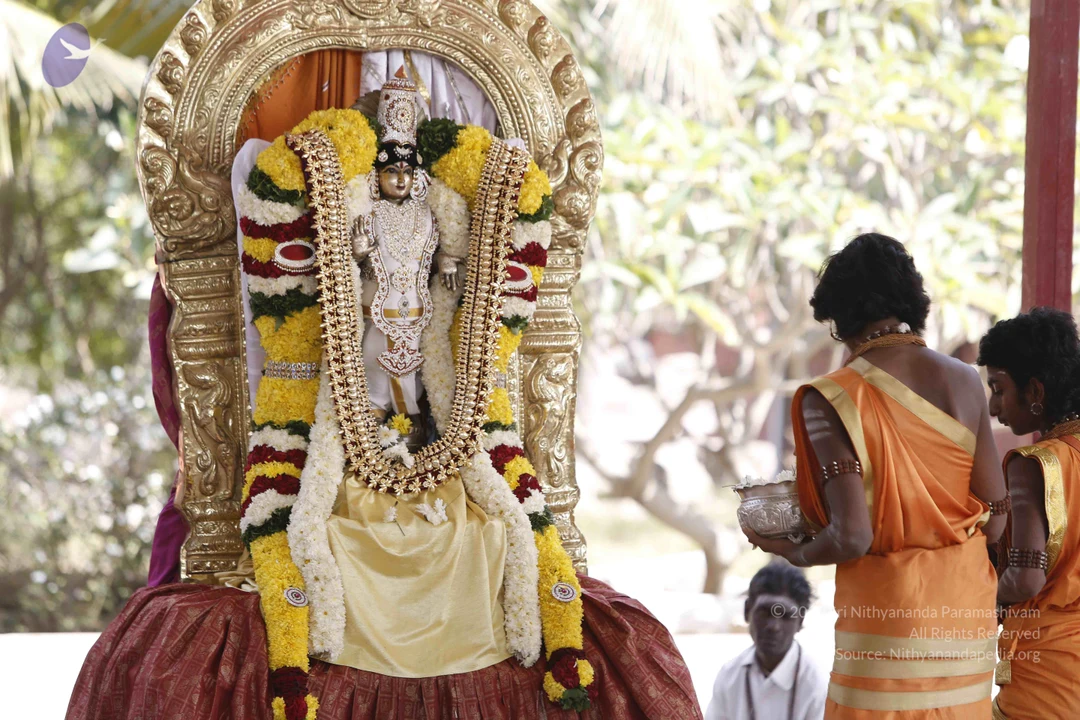
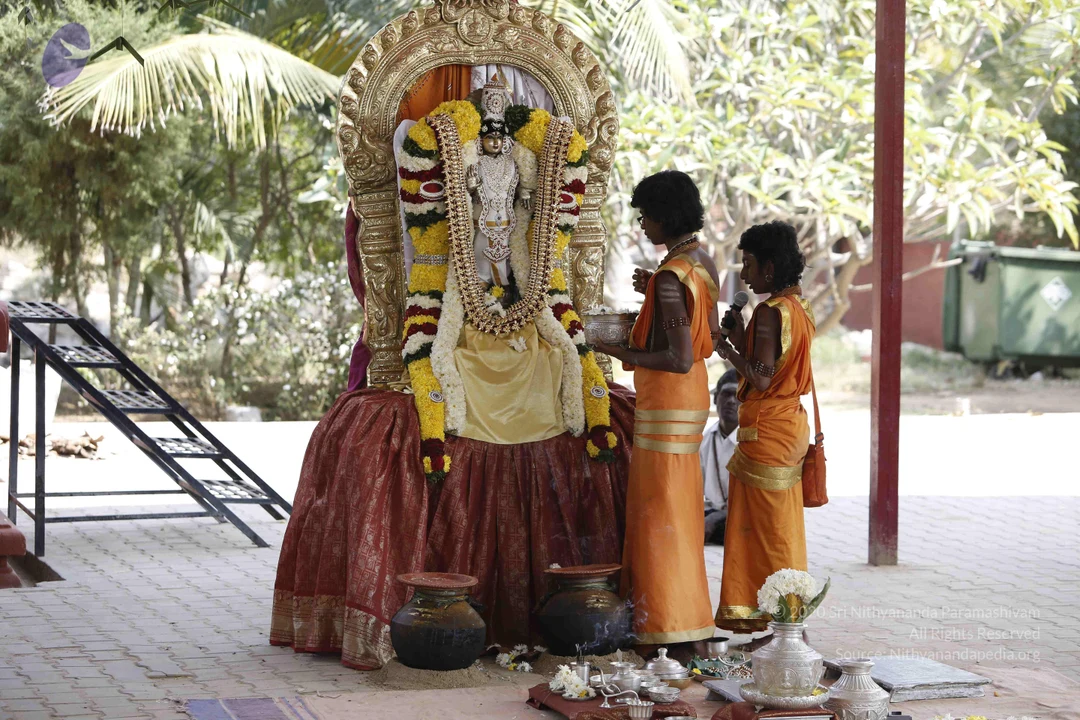
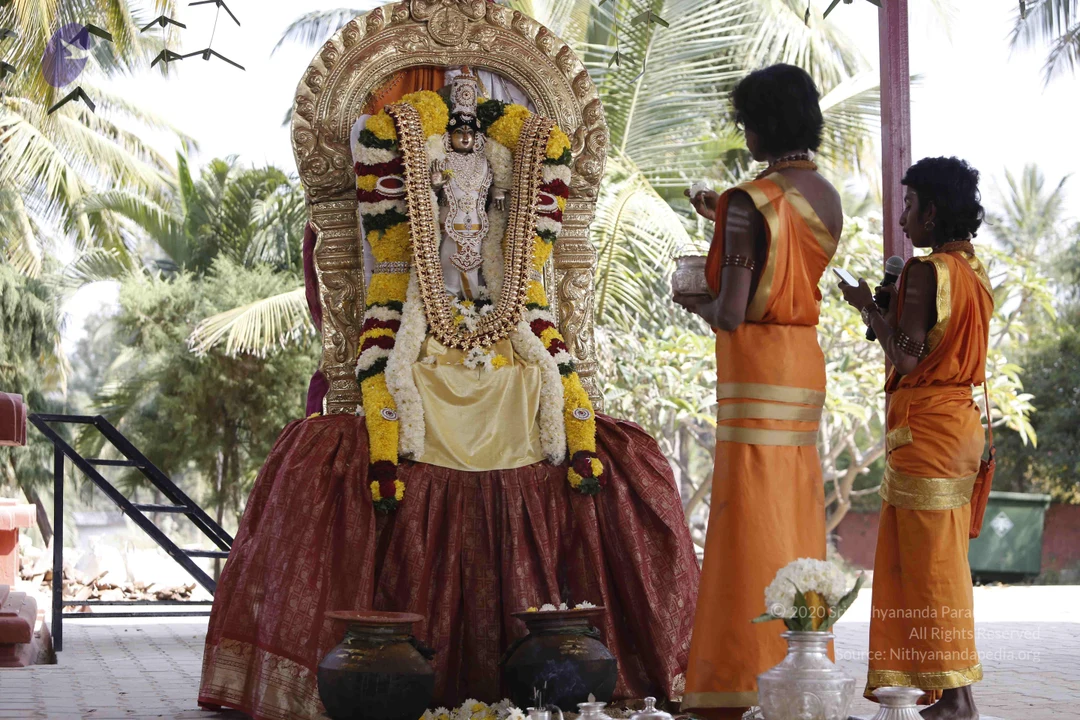
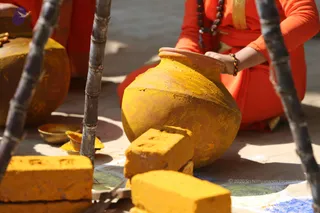
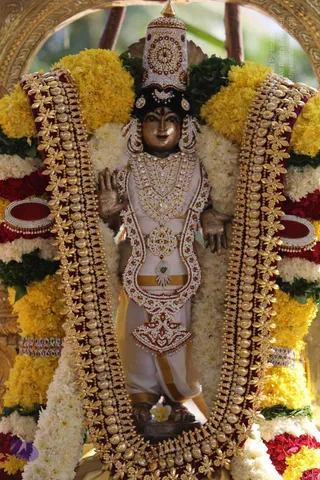
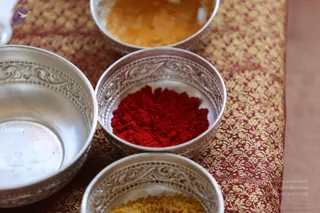
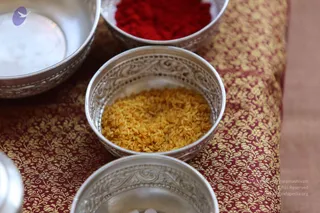
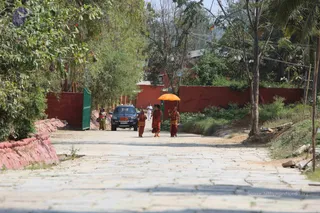
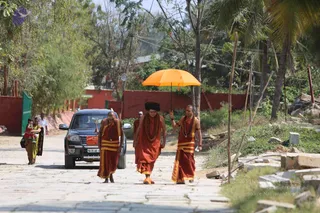
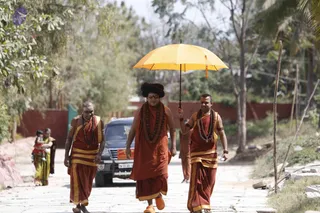
A close photograph of a turmeric-smeared clay pot being prepared outdoors for a Pongal celebration. A person in orange robes sits behind it, wearing a rudraksha mala and a bead bracelet, one hand resting on the pot's rim. Yellow-coated clay pots, yellow turmeric-tinted bricks, sugarcane stalks standing upright, and a small brass bowl of yellow powder lie on the ground. Patterned blue and green powder designs are visible on the paving. The scene suggests the preparation of traditional Pongal pot offerings.A bronze utsava murti of a standing deity, adorned with heavy gold and jewelled ornaments, a jewelled crown, a white dhoti with gold border and multi-strand pearl and gem necklaces, stands framed by a gold arch decorated with yellow marigold garlands, white jasmine and red flower garlands. Two small jewelled plates with red interiors rest on the garlands at either side. A single white flower lies at its feet. No physical people are visible, and the figure is a statue rather than a person.Close-up photo of ornate silver-toned metal bowls on a maroon fabric with gold woven floral pattern. The bowls hold powders: bright red kumkum in the centre, yellow turmeric or haldi at the bottom and top, and a pale yellow grain in the bottom bowl. Another bowl sits empty at left. No people are visible; the setting looks like a puja table prepared with offerings and kumkum.Close-up photograph of ritual items arranged on a red and gold brocade cloth. Several engraved silver bowls hold turmeric-coloured rice in the centre, red kumkum powder at the top, and white material in the bottom bowl. No people are visible, and no person is present to be identified as a person.Close photo of a Pongal harvest ritual in progress. A woman in an orange sari with a red-and-gold border and a red bangle on her upper arm holds a green banana leaf. Beside her, a person in white clothing with gold borders holds a clay pot (kalasha) with a yellow-orange finish, with the pot tilted as though pouring. At right, a person in orange saffron robes with gold borders and a rudraksha mala holds a metal plate with turmeric root and green leaves. Other robed devotees in orange and white stand in the background. The scene shows Pongal offerings being prepared.A paved stone pathway runs through an ashram compound lined with trees and a red boundary wall. A figure in saffron robes with long hair walks at the centre, shielded by a bright orange umbrella, flanked by two other saffron-clad figures. Behind them, a dark SUV is parked near a green gate, and a person in white stands further back. Dry grass, debris and sandbags line the path, with a bright hazy sky above.

Glimpses from KAILASA'S Pongal Celebration
23 photosSource gallery
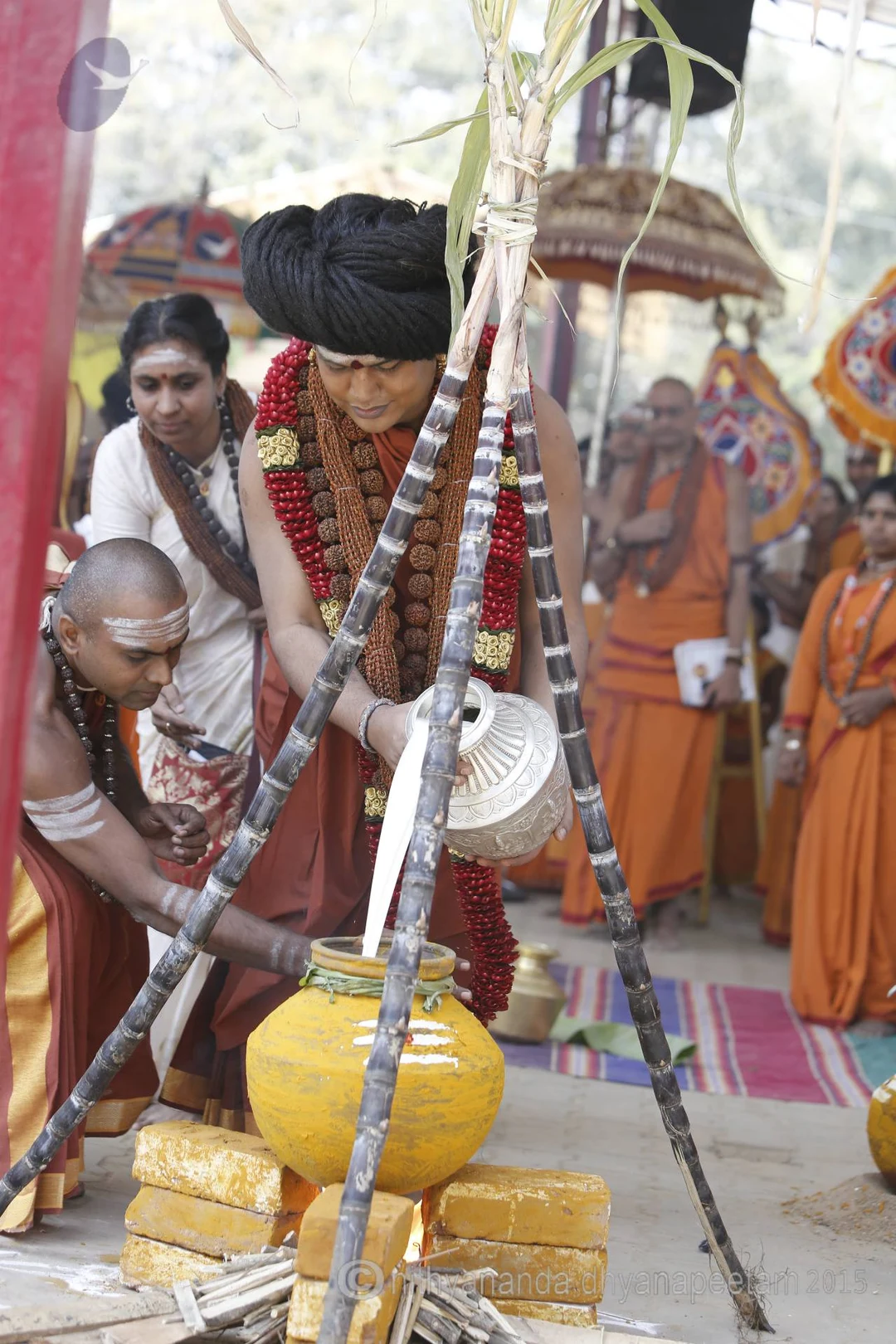
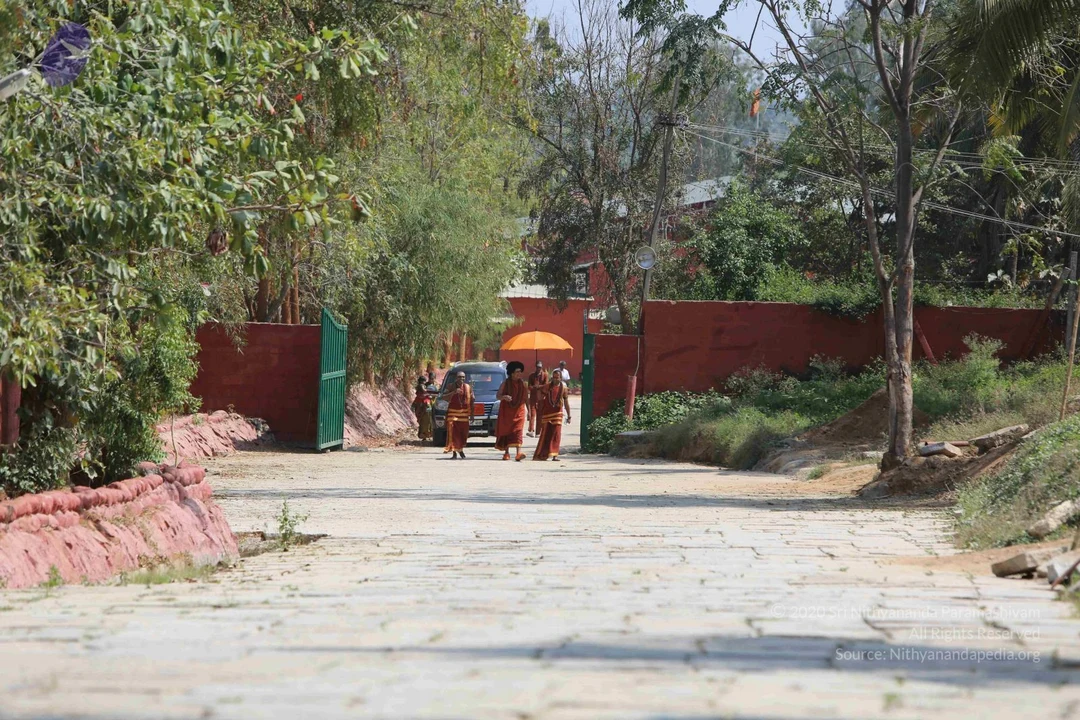
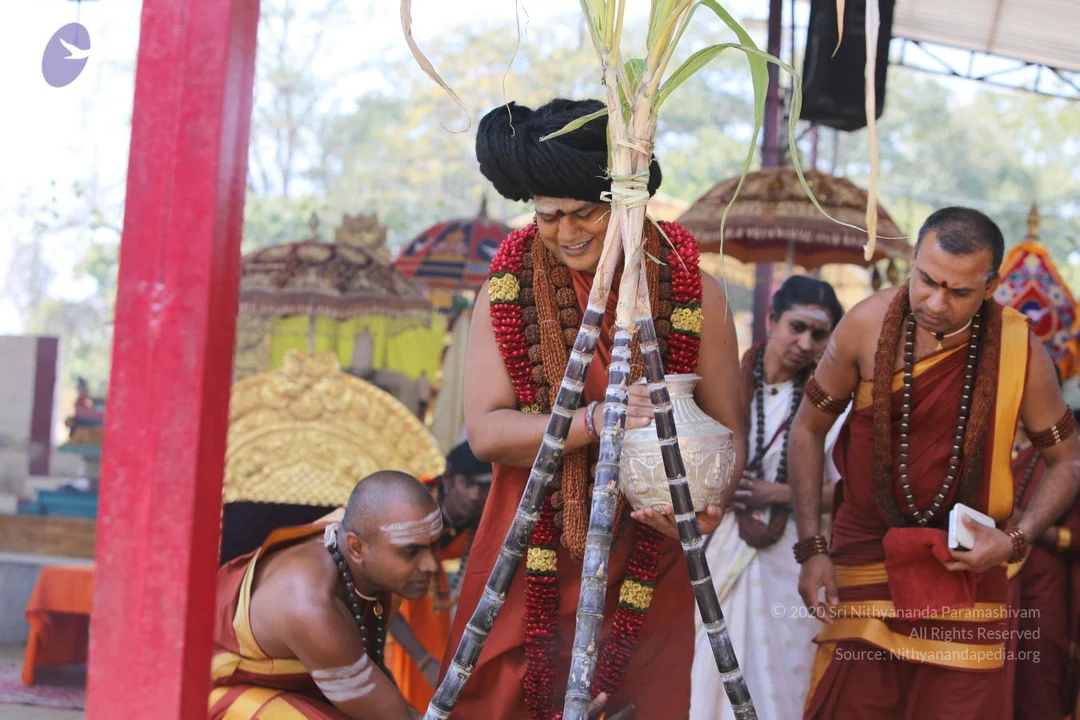
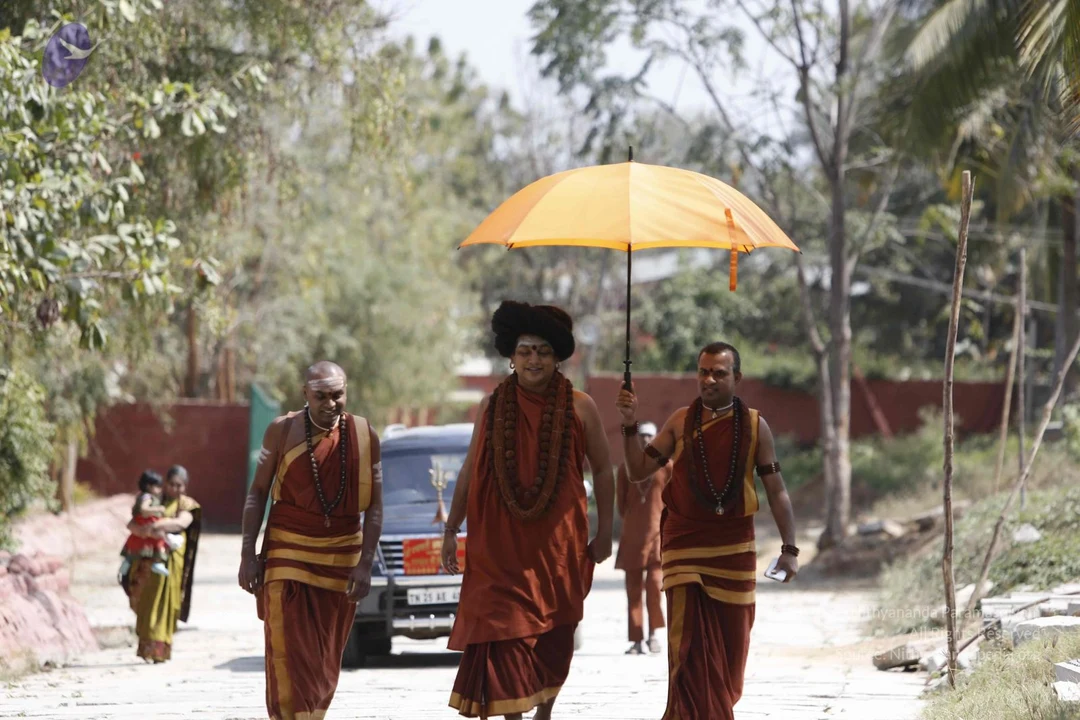
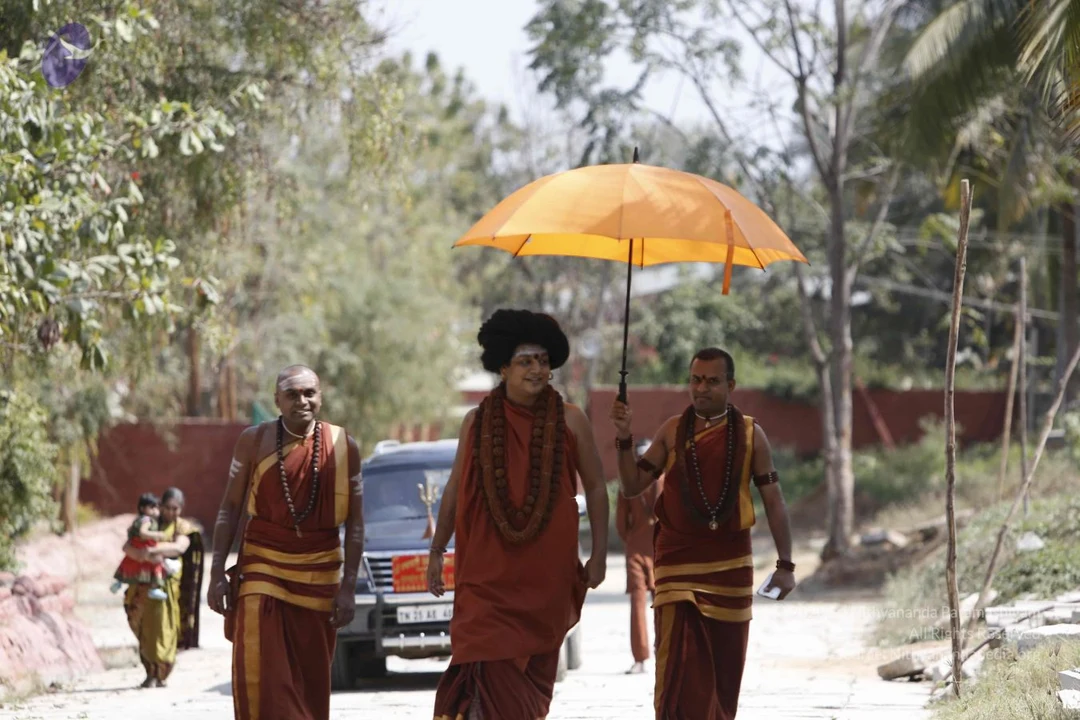
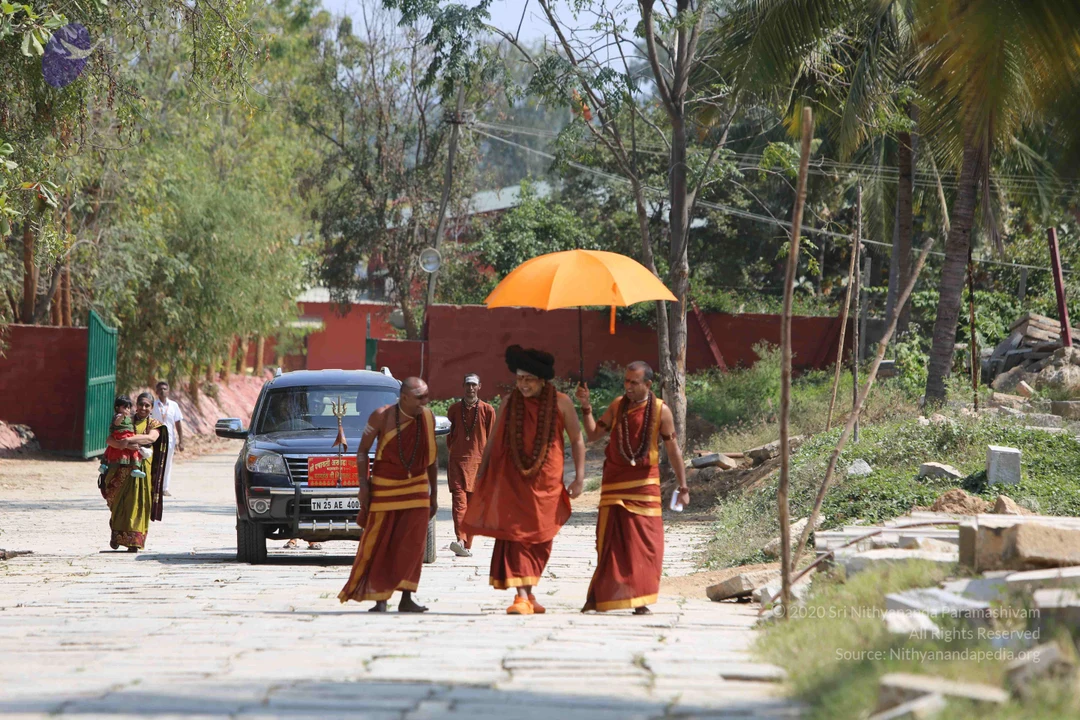
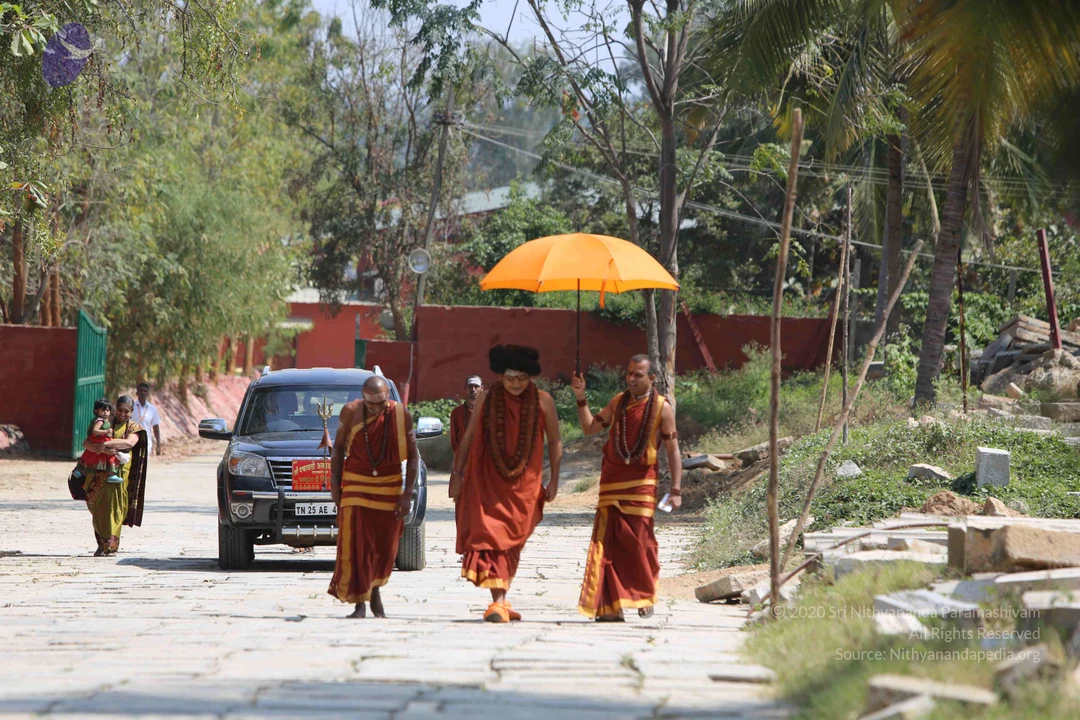
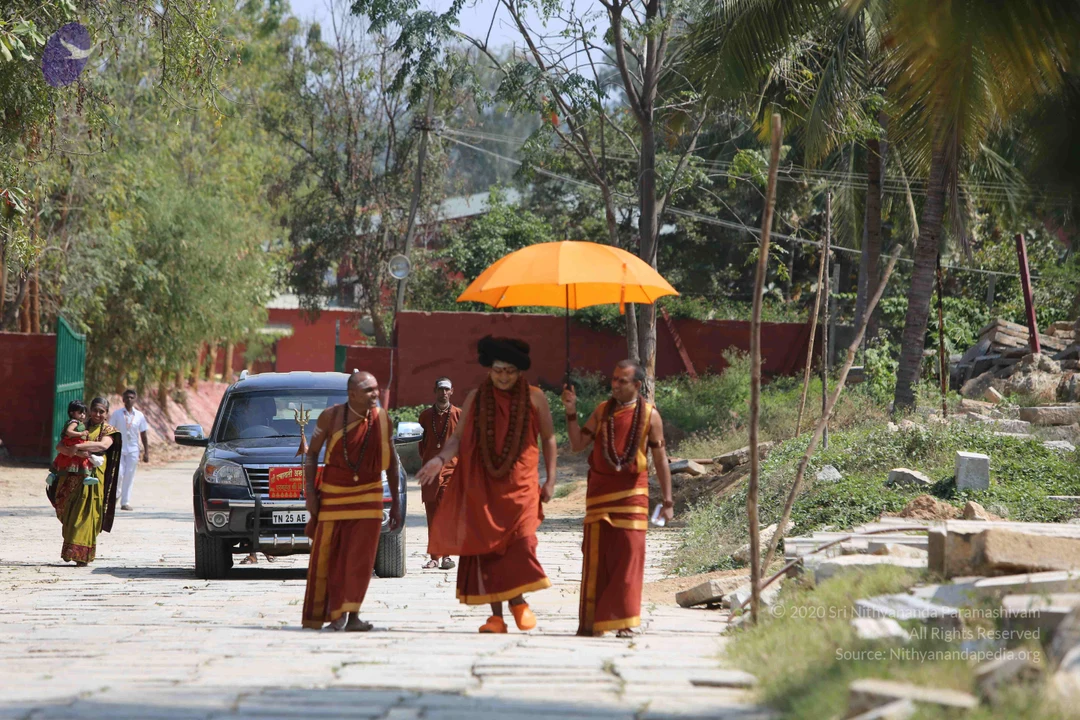
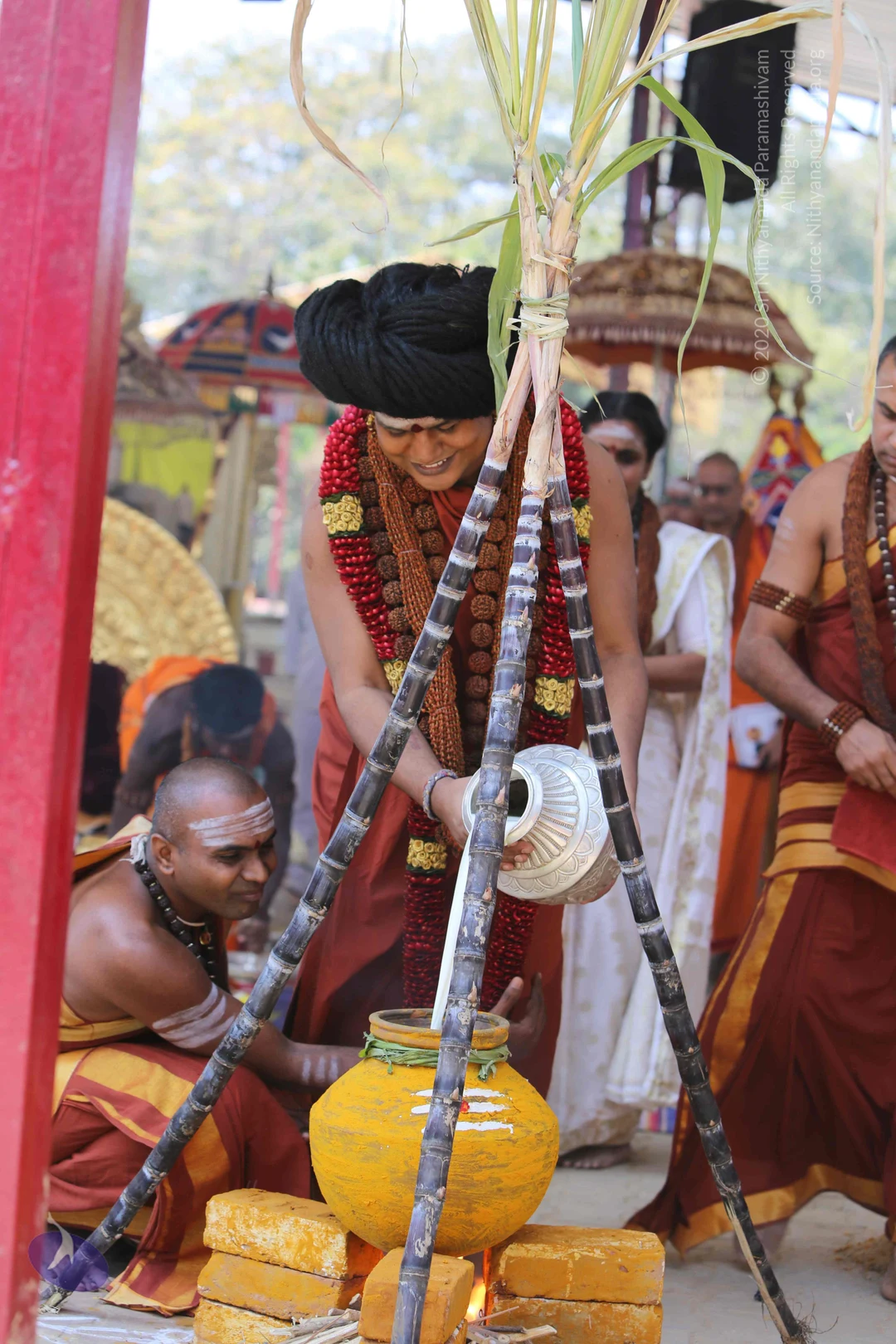
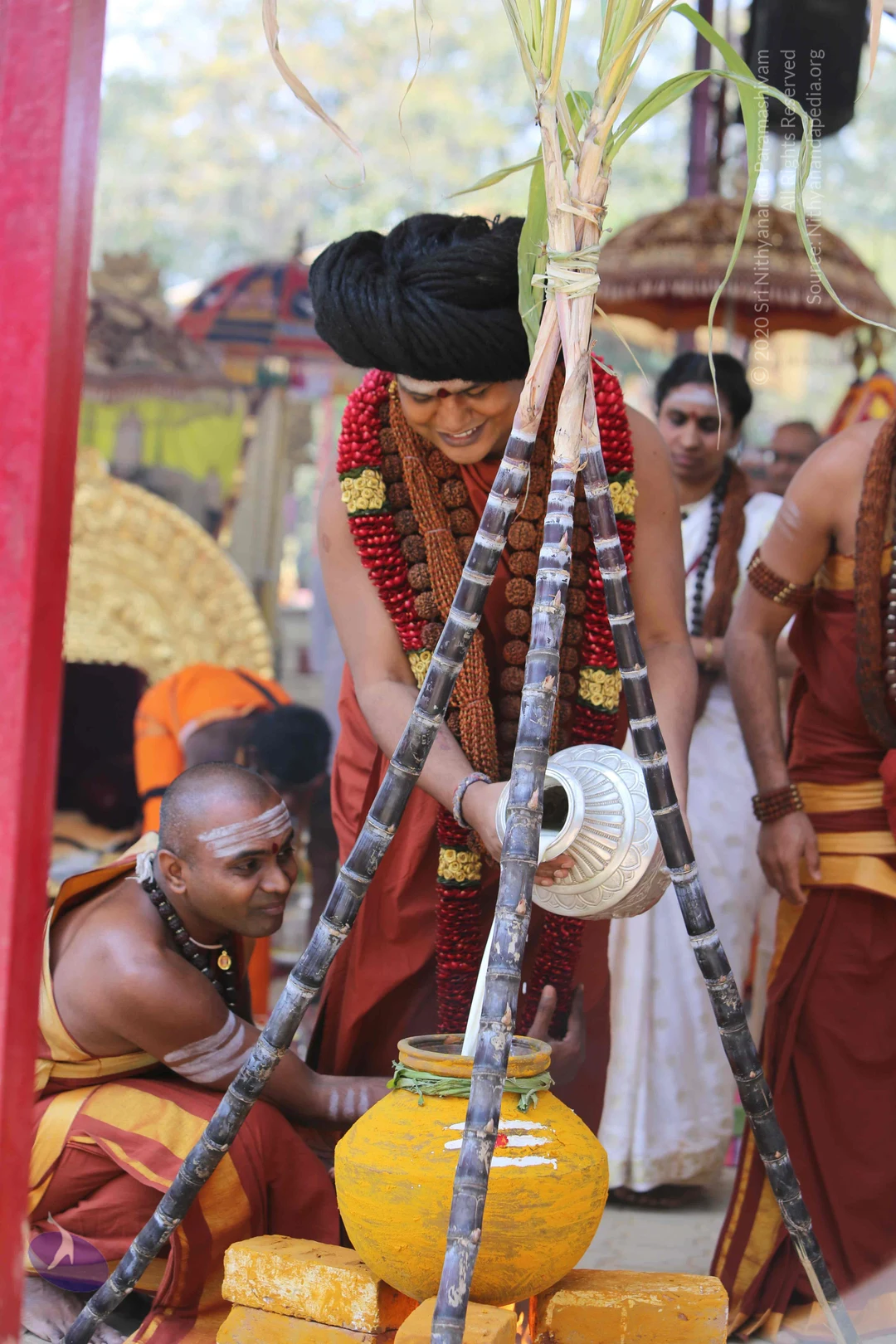
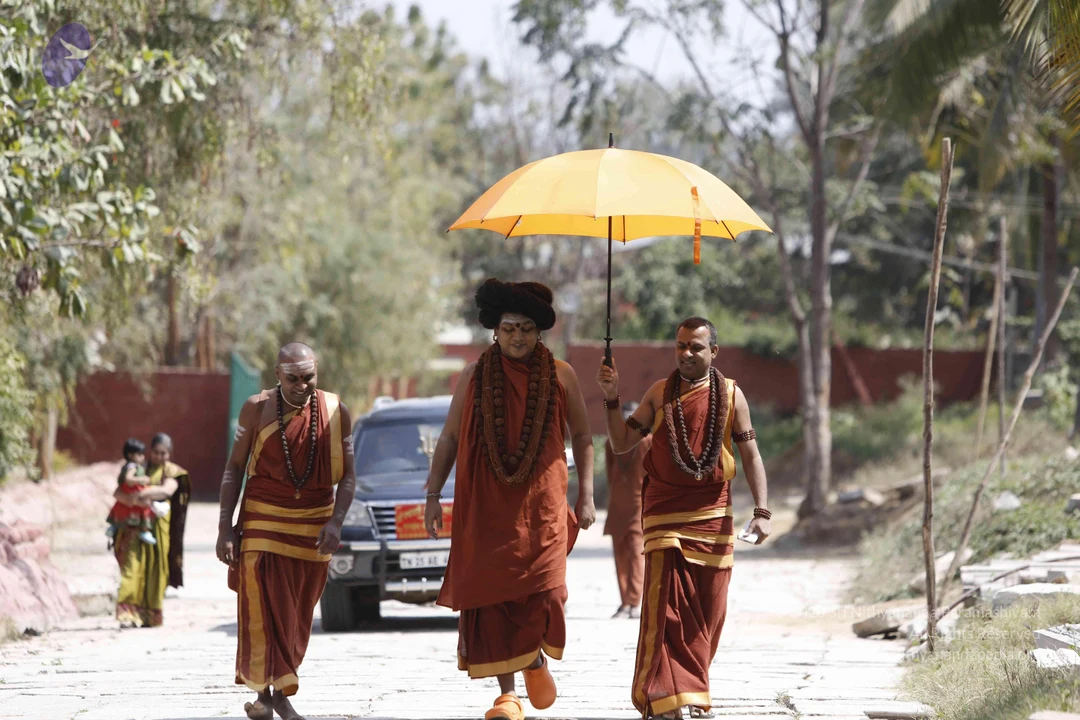
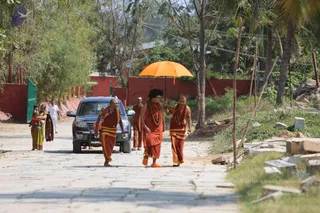
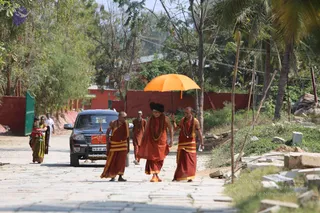
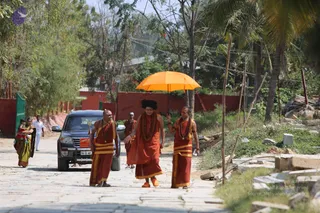
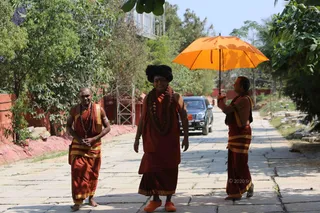
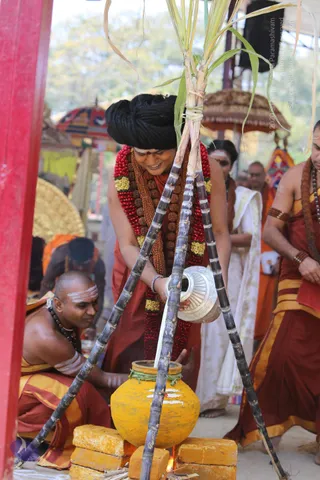
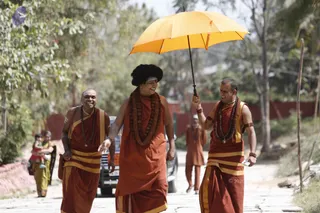
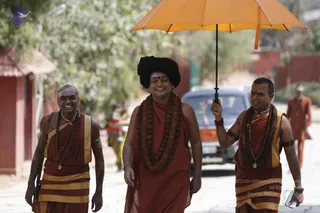
Outdoor photograph of a paved path lined with trees, palms and a red boundary wall. Three saffron-robed sannyasis walk forward: the central figure, with long dark swept-back hair and orange robes, holds an orange umbrella and wears orange footwear and a long beaded garland, while the men on either side wear rudraksha malas and orange dhotis with gold borders. A dark SUV is parked behind them, and in the background a woman in a green sari carries a small child, and another man in white stands near a green gate. Rubble and stone blocks sit on the right.Outdoor photo of a paved village road lined with trees, a red compound wall and a parked dark blue SUV bearing a red-and-white sign. Three saffron-robed sannyasis walk toward the camera; the central figure wears a black cylindrical hat, orange robes and a rudraksha mala, and is shaded by a bright orange umbrella held by the man on the right. The man on the right wears an orange dhoti with yellow border and a rudraksha mala; the figure on the left wears similar orange robes and a trishul-style ornament is visible on the car. A fourth robed man walks behind them. On the left, a woman in a green and yellow sari carries a small child, and another person in white stands near a green gate. Construction debris lies on the right.Outdoor photo of a paved village lane lined with trees, a red boundary wall and a green gate. Three saffron-robed sannyasis walk toward the camera; the central figure wears a tall black head covering and a long rudraksha mala and is shaded by a bright orange umbrella held by the man on the right. Behind them a dark SUV with a red-and-white sign and a Tamil Nadu plate is parked, and on the left a woman in a yellow-and-green sari carries a young child. Scattered stone slabs and rubble lie on the right. a person: the central sannyasi in the black head covering wearing a rudraksha mala and saffron robe with a gold-striped border.Outdoor photograph of a paved village lane lined with palm trees and a low red compound wall. A figure in a saffron-orange robe with gold-striped borders and a tall black cap walks in the centre, shaded by a bright orange umbrella held by a bald man in orange garments with gold trim and a rudraksha mala beside him. Another orange-robed man walks on the left with a rudraksha mala. Behind them a dark grey SUV with a red sign and registration TN 25 AE is parked, and a woman in a green sari carries a small child, while a man in white walks nearby. a person appearance cues: a central figure in orange with a black cap, dressed in ceremonial saffron attire, is walking under the umbrella.Outdoor photo on a paved stone path lined with green trees and a red wall. In the centre, a figure with long swept-back dark hair, a rudraksha mala and a ceremonial garland, wearing a rust-red robe with a gold-bordered wrap and orange sandals, walks forward under a bright orange umbrella held by a man on the right. Two men in rust-red and gold-bordered saffron-toned dhotis walk alongside; the man on the left wears a rudraksha mala and has white markings on his forehead and arms. A dark SUV is parked in the background.Pongal harvest ritual outdoors: a man in a dark turban and red-brown robe with a red and yellow flower garland and rudraksha beads pours milk from a silver vessel into a yellow clay pot set on yellow bricks over a small fire, with sugarcane stalks tied above it. A shaved-headed priest with white forehead markings in a yellow-bordered dhoti crouches at the left, and other robed attendants in white and red-brown stand nearby under ceremonial umbrellas. The overall scene is a Pongal boiling-milk offering.

Glimpses from KAILASA'S Pongal Celebration
33 photosSource gallery
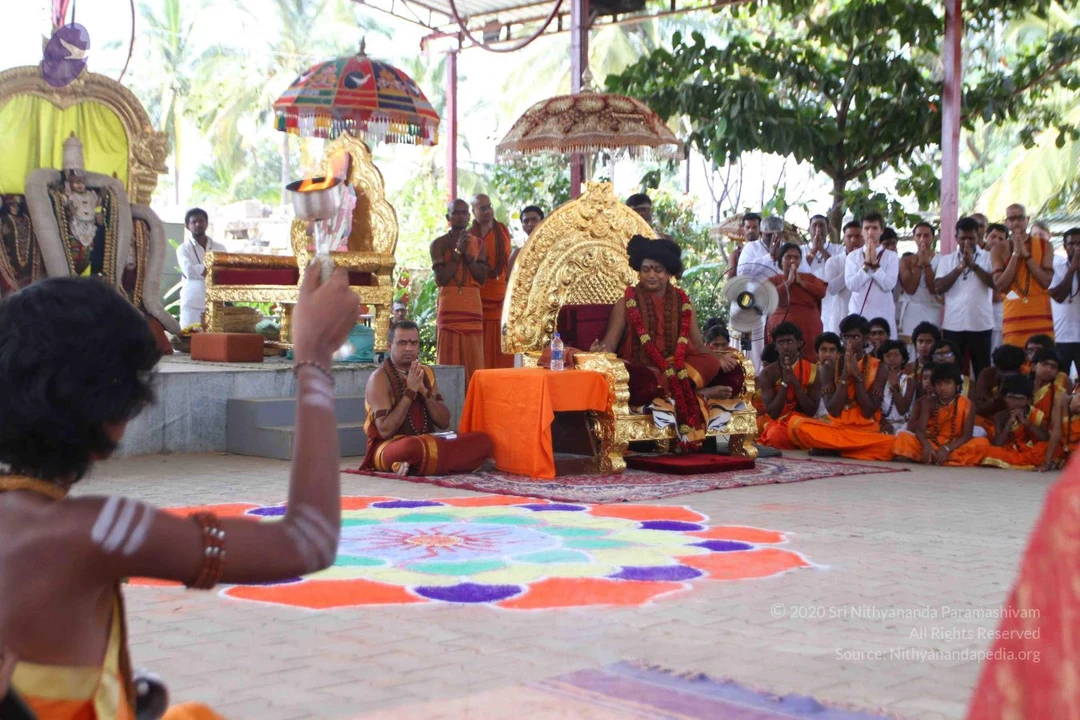
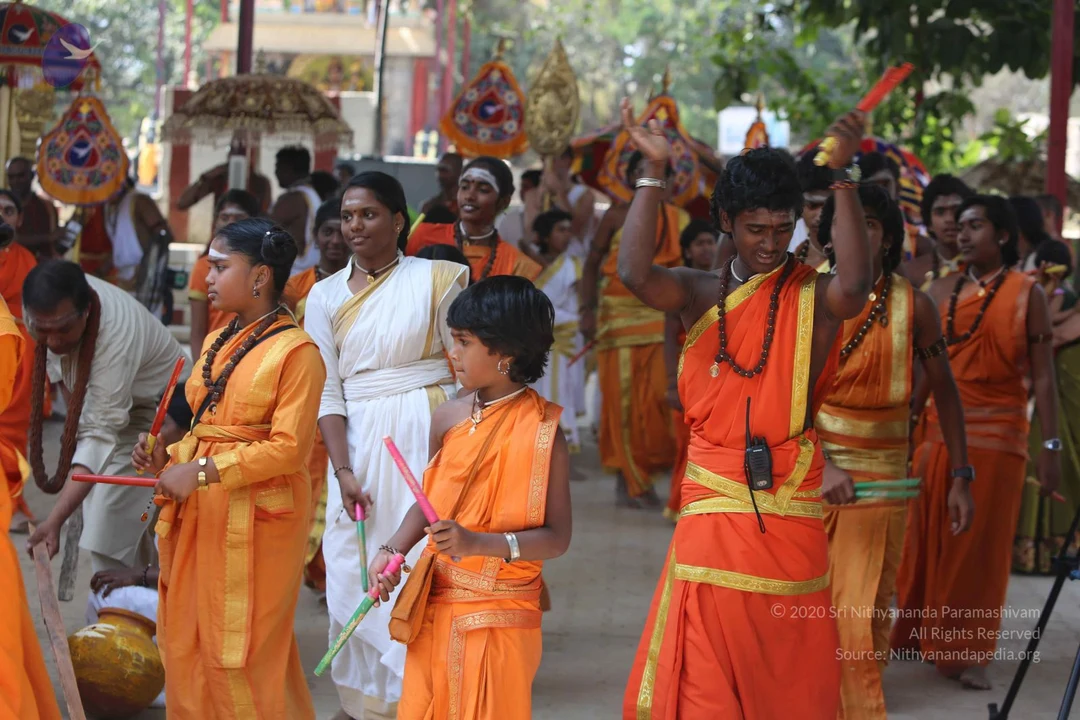
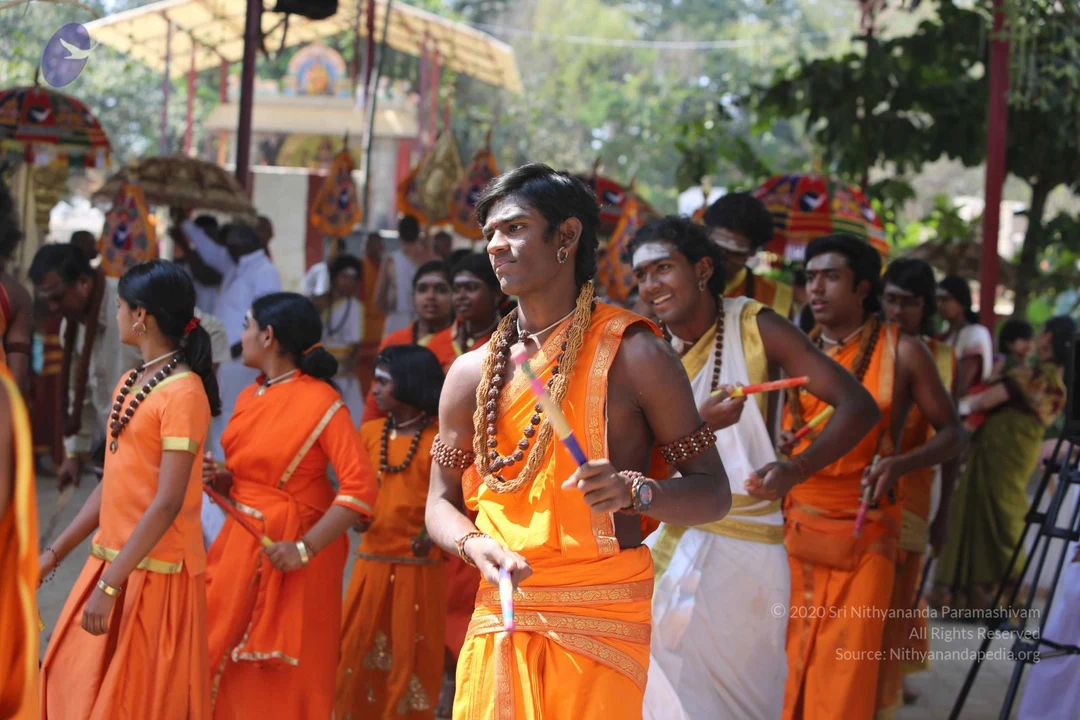
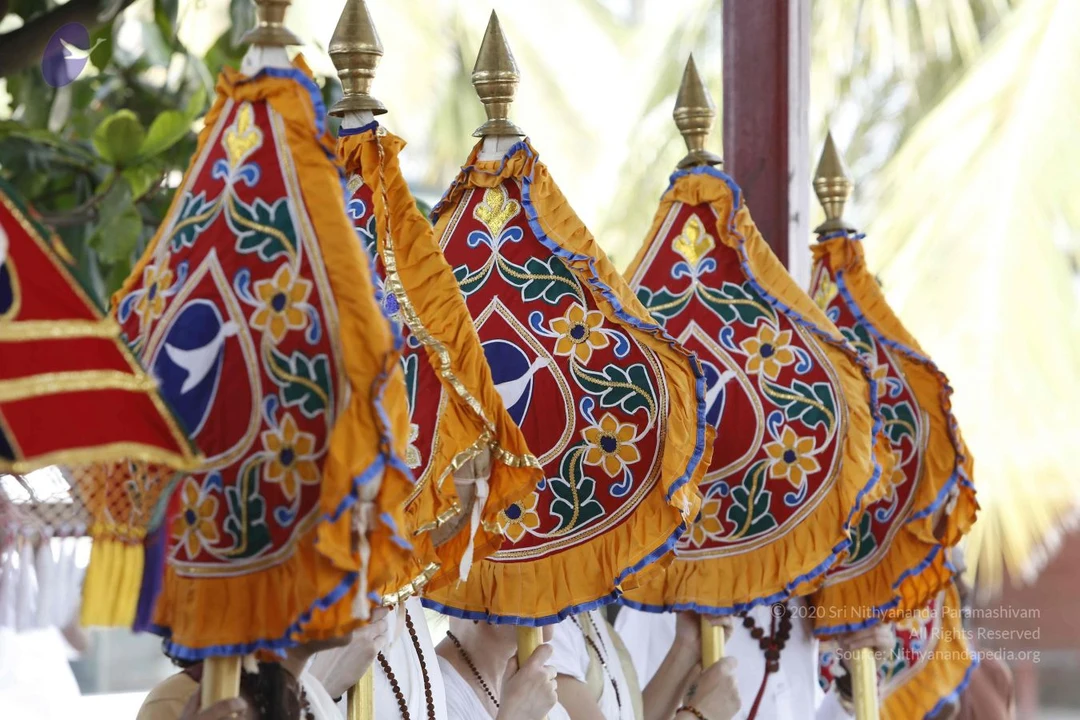
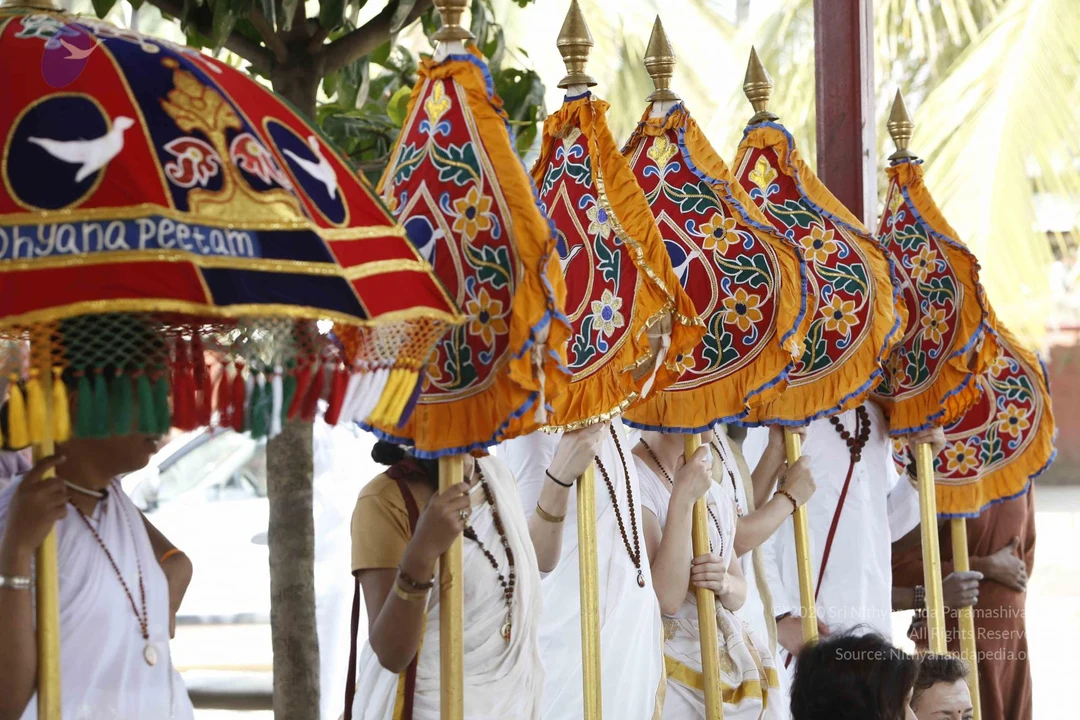
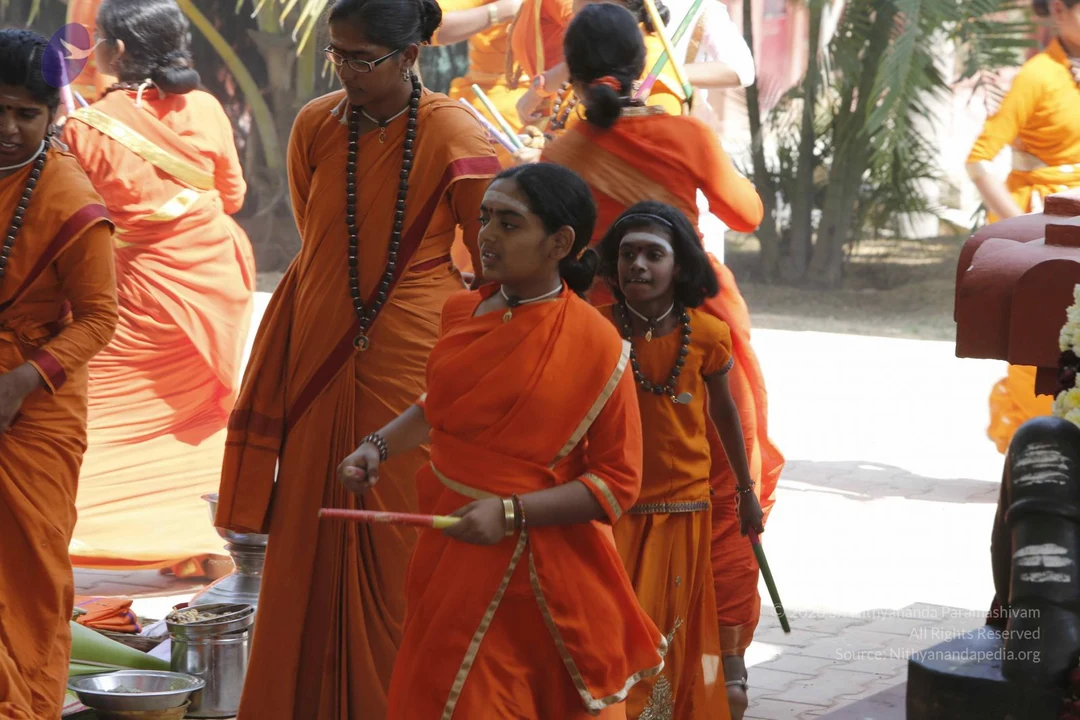
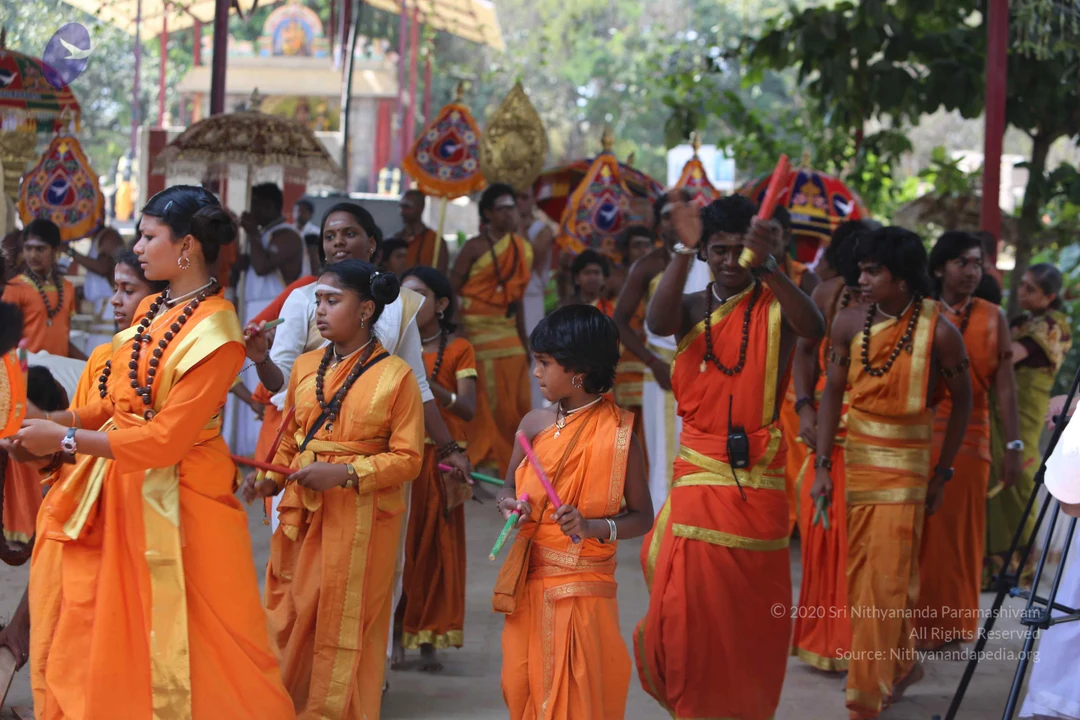
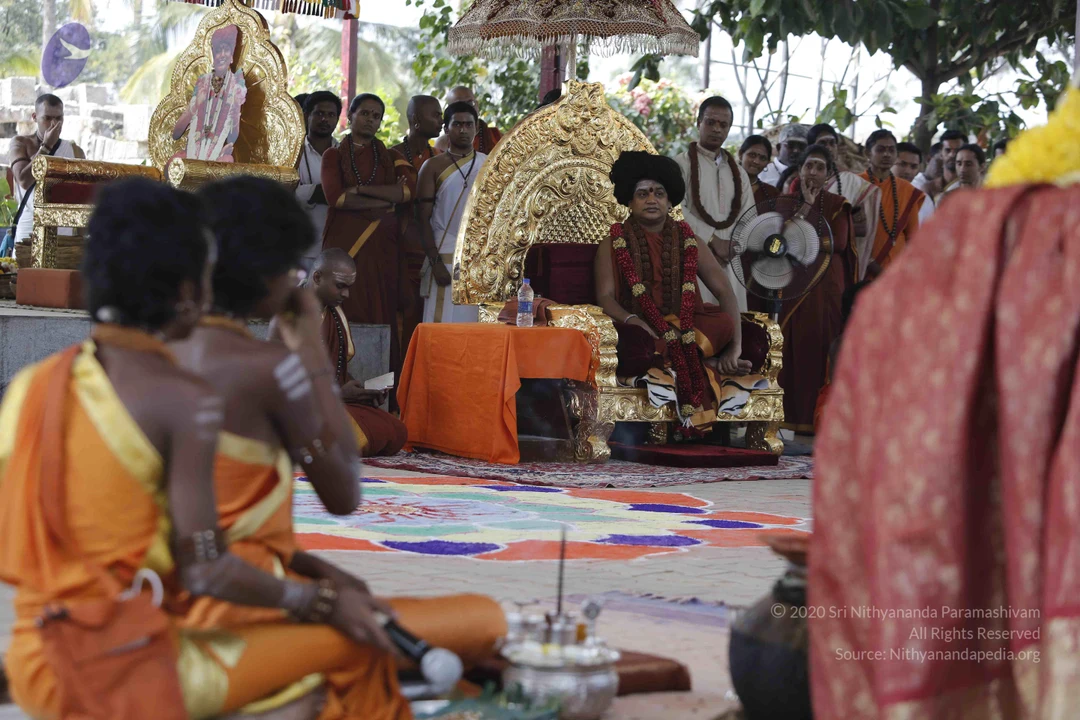
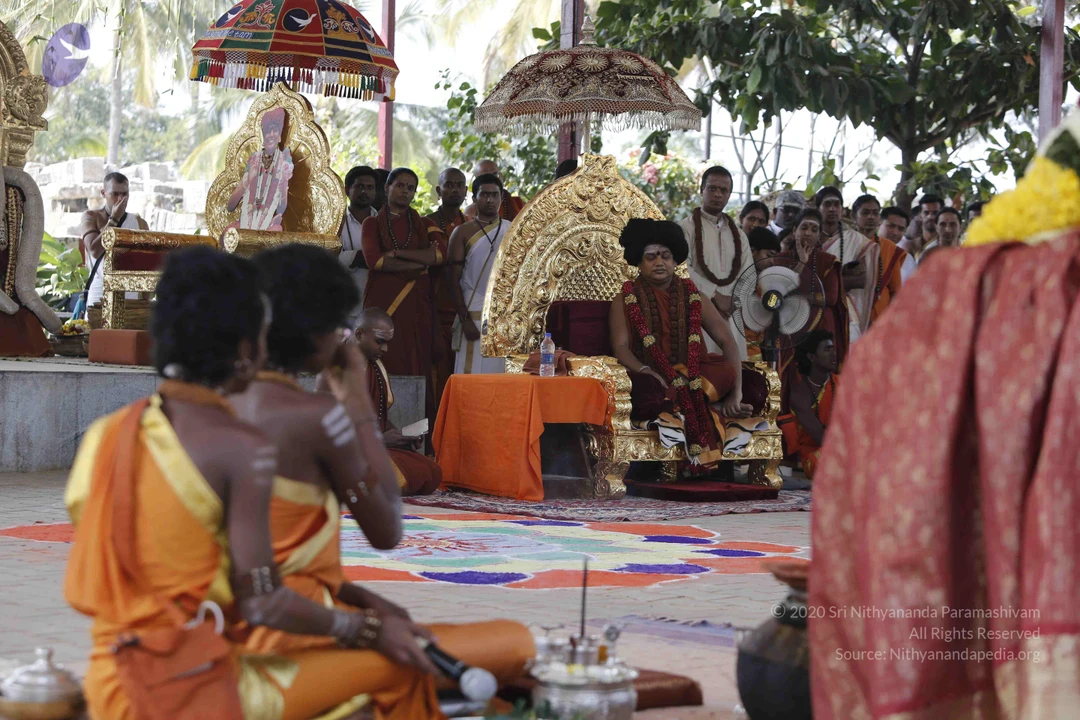
A festival procession moves along a paved path in an outdoor temple setting. Foreground young women and girls wear saffron-orange saris with gold borders and rudraksha malas, some with hair in buns and forehead markings; a girl in the centre holds a small bundle of pink and green sticks. Behind them, young men in orange dhotis with gold borders and rudraksha necklaces carry pink and red sticks. Ornate umbrella-like canopies with red, orange and blue panels rise above the crowd, and a gilded ceremonial canopy stands among trees and red temple pillars. Several people in white ritual clothes walk among the group.A Pongal harvest celebration in an open-sided pavilion with a red wall behind and green trees above. Many women and girls in saffron-orange saris and rudraksha malas gather around a clay pot set over a fire, with tall sugarcane stalks tied upright beside it. A man in white shirt and white dhoti bends forward near the fire, while others in white clothing stand nearby. A large brass or clay pot sits on the ground at right, and a woven basket of offerings rests in the foreground. Several people are in motion.Outdoor Pongal celebration in an ashram courtyard with a colourful rangoli floor design in orange, red, green and purple. A central seated figure sits on an ornate gold throne with a gold and red canopy, wearing a black turban-style headdress, red-orange robes and a long flower garland; a fan is held beside him. Around him, devotees in saffron and orange robes and white kurtas stand in rows, and a man in orange sits on the left with a microphone and offering trays with brass vessels and a small lamp. A tall deity murti with a crown-like headdress stands on a gold seat at the left, and a large red and gold cloth hangs at right. The setting features palm trees and a stone wall.Outdoor festival scene of devotees seated and standing with palms pressed together in namaskar. Foreground women wear saffron-orange saris with rudraksha malas; one woman in a white sari with gold border sits at right with eyes closed. Behind them a woman in a white sari holds a small book, and women in orange robes stand among seated devotees. A small child in a red outfit sits at left. A blue plastic chair and a loudspeaker appear beside a red pillar, with orange and yellow decorative cloth overhead and green foliage behind.Outdoor photograph of a Pongal celebration gathering. Seated in the foreground on a mat, a row of children and young people in saffron-orange dhotis and garlands of rudraksha beads sit with palms pressed together in prayer, one boy with eyes closed. Standing behind them, men and women in white shirts and mundus, some with saffron sashes and vibhuti marks, also hold their hands in anjali. A bald man in orange robes and glasses stands near the centre-right, hands folded in prayer. A woman in an orange-red sari stands at left. Trees and a red pillar frame the background, and blurred flower offerings appear at the lower right. Approximately 25 people are visible.A seated figure on an ornate gold throne under a red-and-gold canopy, wearing a black cylindrical headpiece, saffron-orange robes, and a red-and-white flower garland, with a red cushion and an orange draped table nearby. Around him, devotees in saffron and white clothing sit and stand with palms pressed together in namaste, including young saffron-clad boys seated on the ground, men in white dhotis with rudraksha malas, and a woman in orange. A pedestal fan and a potted flower arrangement are in the foreground, with trees and a red pillar behind. The figure on the throne is visibly wearing a headpiece and is placed at the centre of a devotional gathering; an appearance-based candidate for a person with a throne and garland, though the headpiece and ornate clothing are present, so this is best treated as uncertain.

Glimpses from KAILASA'S Pongal Celebration
5 photosSource gallery
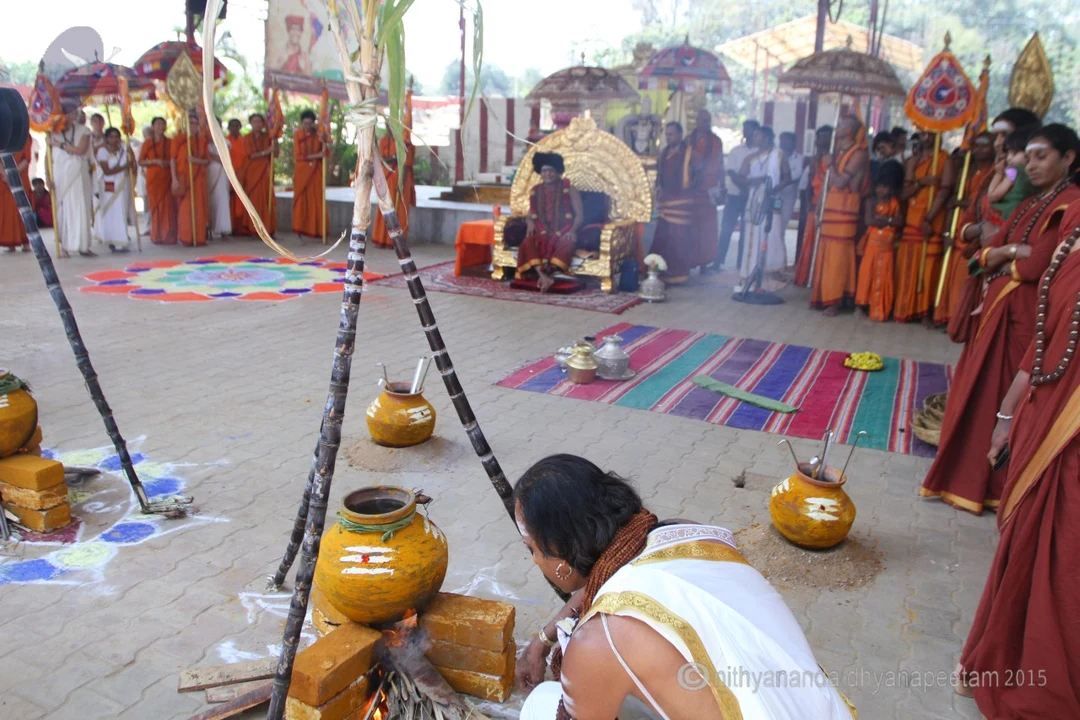
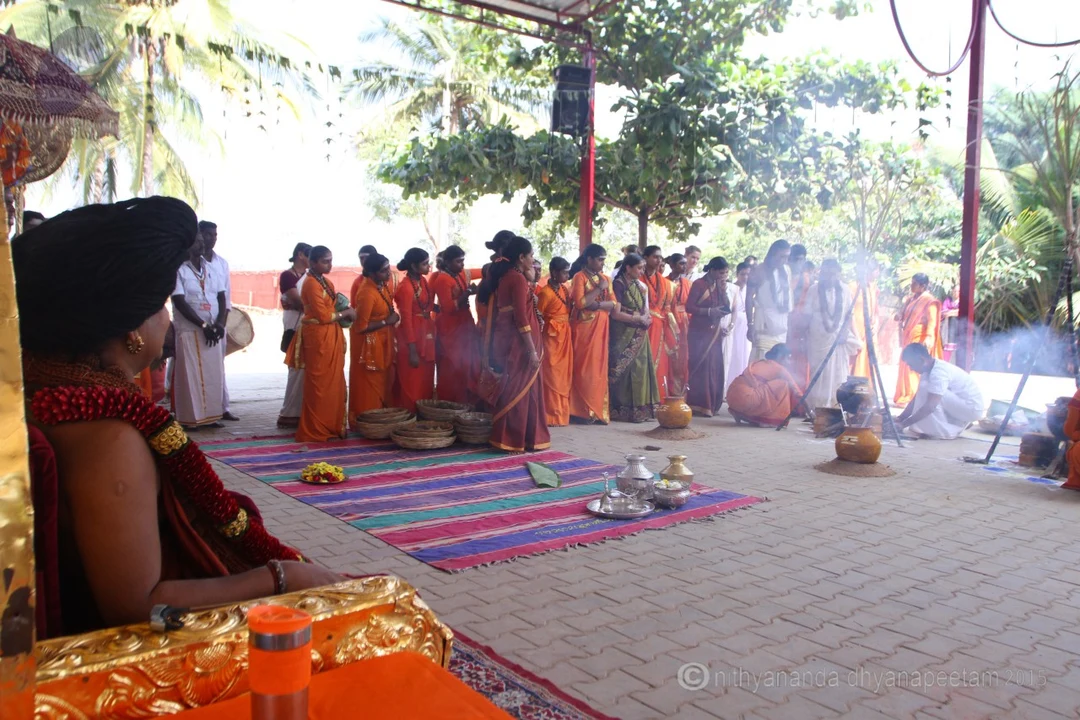
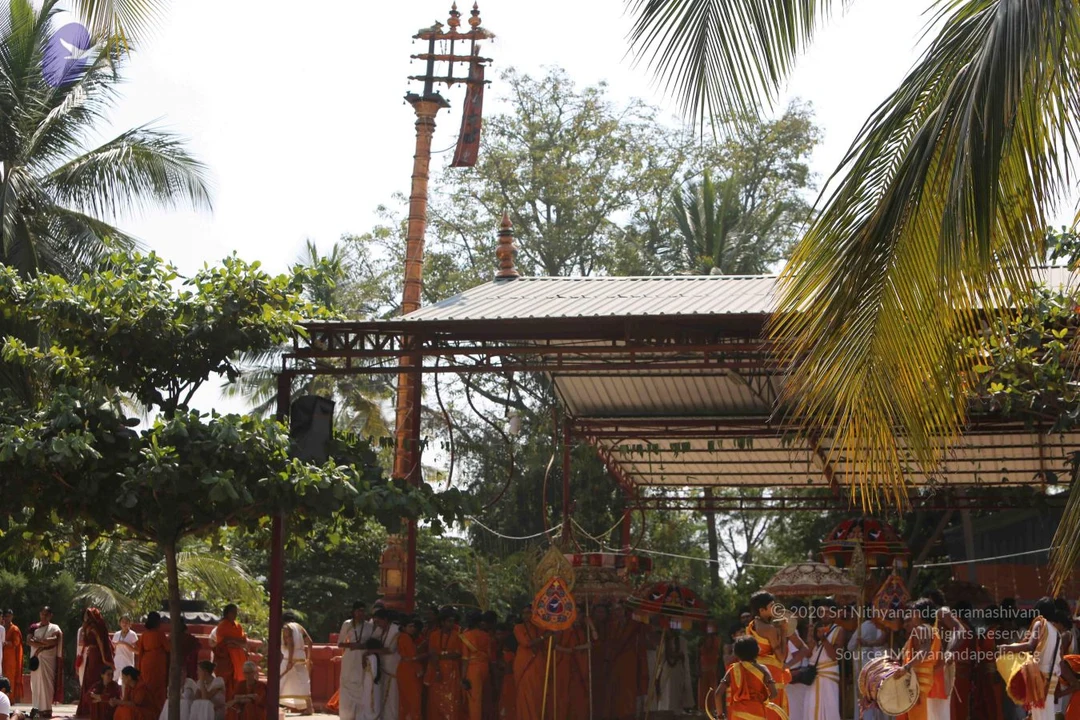
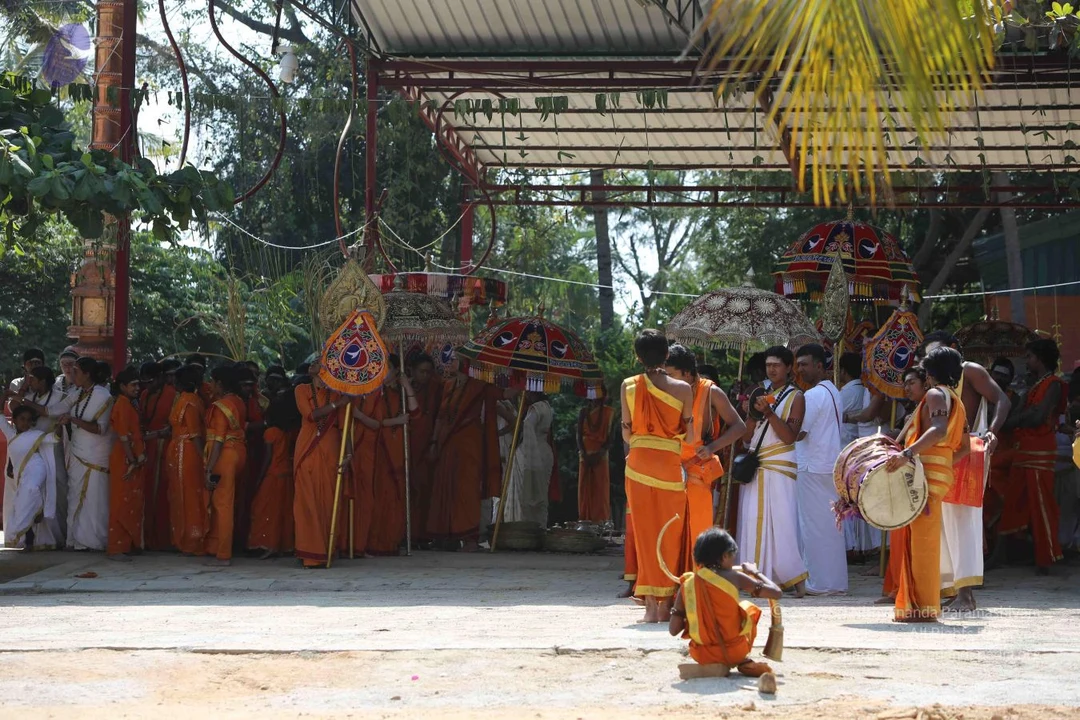
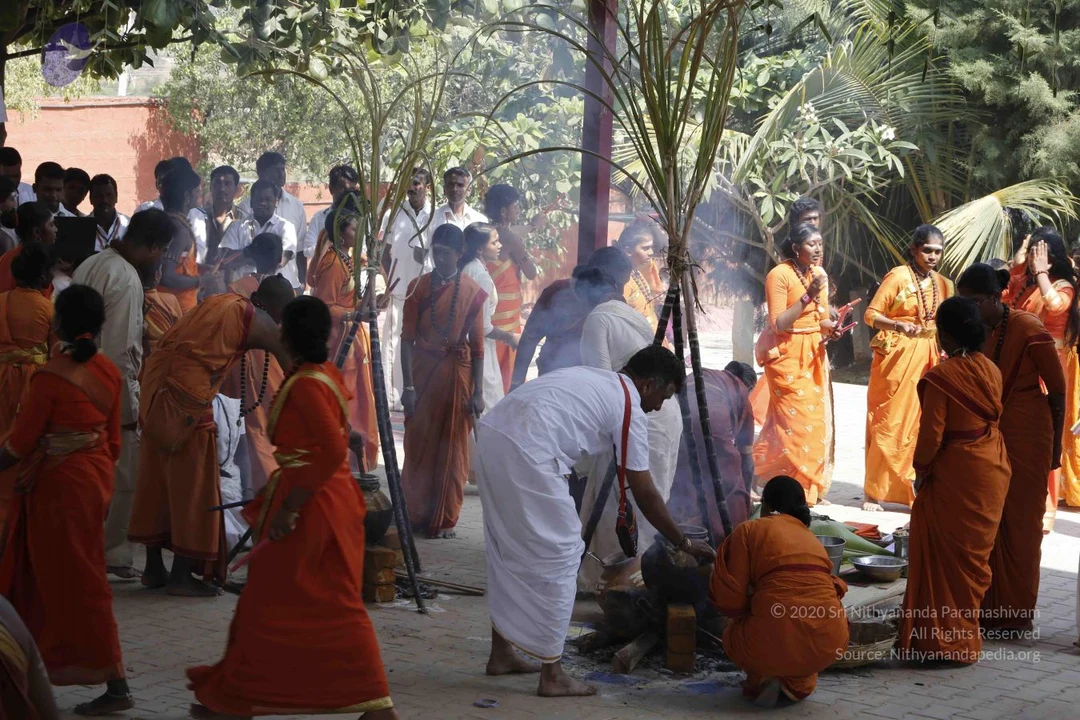
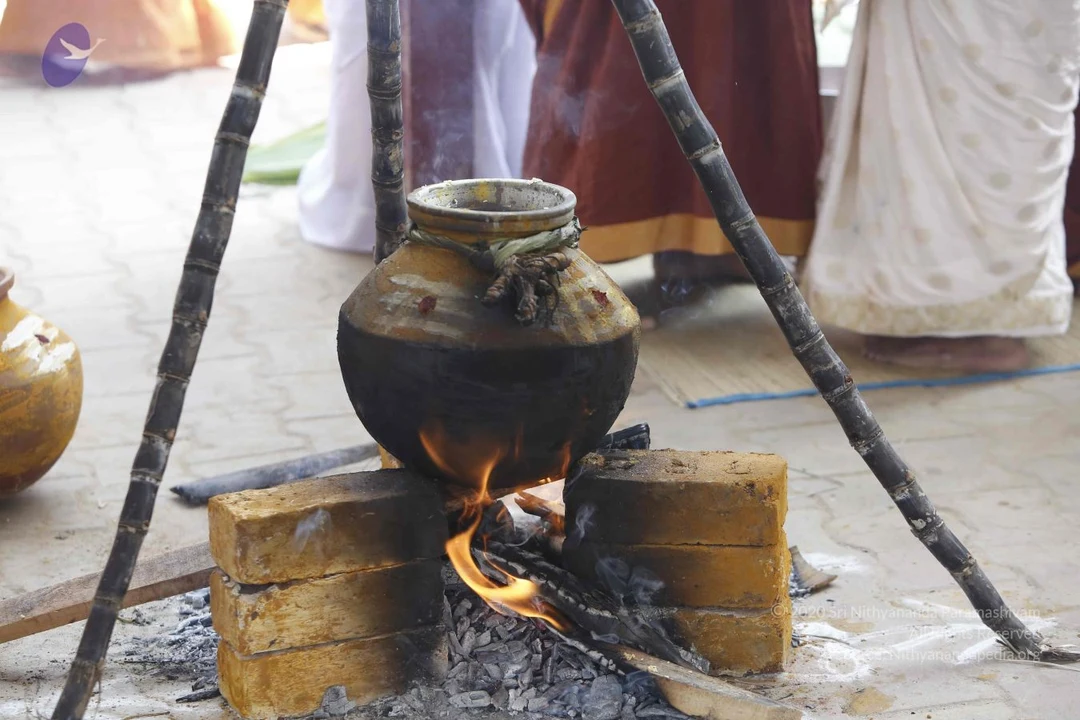
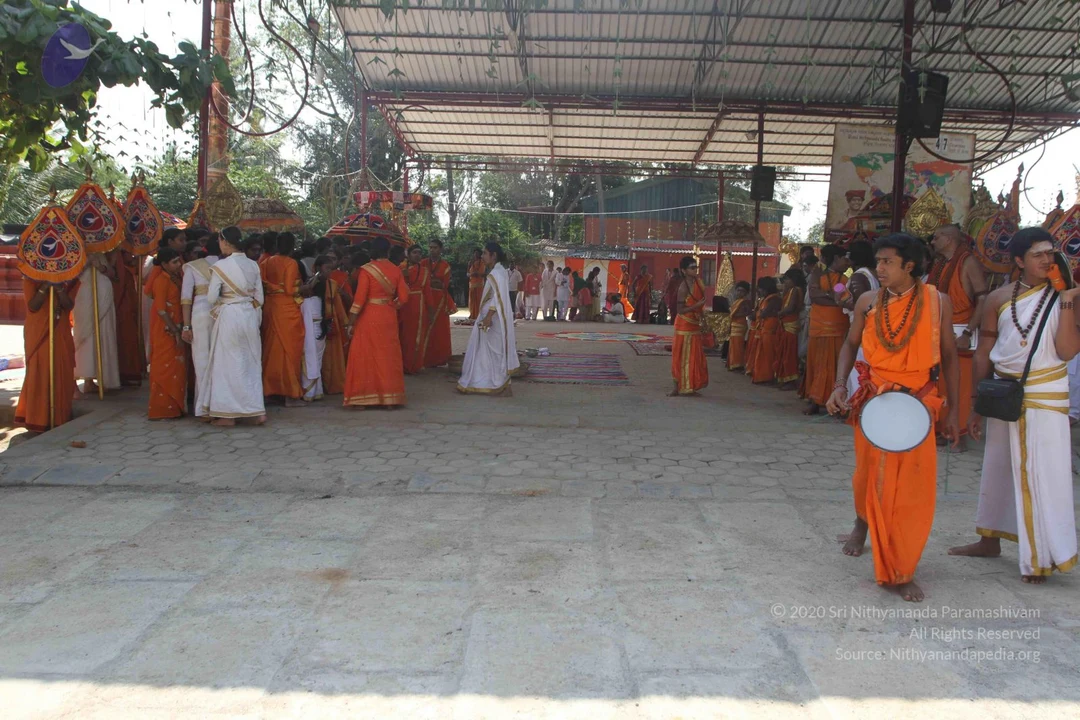
A photograph of an outdoor Pongal celebration at an ashram courtyard. In the foreground, a group of young women in orange and gold saris with white tilak marks and rudraksha malas face inward toward a central ritual space. A colourful rangoli mandala lies on the paved floor, with a striped rug beside it. On the right, a woman in a maroon sari with gold border and a rudraksha mala stands near a brass pot and offerings. Behind them, a larger crowd of people in saffron and white robes stands near a golden ceremonial structure, a parasol and ratha-style decorations, with smoke rising at left. A poster-like map and portrait hang on the back wall. Several people are visible, roughly twenty.Outdoor Pongal ritual in a temple courtyard with smoke rising from a clay pot cooking fire. Several people in saffron and orange robes kneel and tend the fire, while a man in white clothes kneels near the pots. A large crowd of devotees, mostly seen from behind, sits in the foreground. Behind them stands a red-painted shrine with a black Nandi bull statue and a red stepped pedestal, and a decorated deity murti with a garland sits to the right. Palm trees and greenery surround the courtyard.Outdoor Pongal celebration under a tin-roofed pavilion. In the foreground a yellow clay pot decorated with white turmeric-paste lines and a red mark sits on a brick stove, with flames rising beside two sugarcane stalks tied together; a man in orange robes and glasses kneels at the right with his hands near the fire. Behind, a seated figure in red and orange robes with a dark head covering sits before an ornate gold throne under umbrellas, while people in orange and white robes stand in lines, some holding ceremonial staffs and umbrellas. A colourful floor rangoli and a large map-style banner are visible. The scene shows a Pongal boiling-pot ritual with many attendees.Close view of a Pongal cooking pot, a glazed mud pot with a turmeric-yellow body, decorated with three horizontal white stripes and a red dot, its neck tied with a green leaf bundle. The pot sits on a stove of stacked yellow bricks with a wood fire burning beneath it, flames licking its base. Sugarcane stalks stand upright around the fire. Behind, blurred figures in orange and white clothing stand on a paved courtyard with coloured rangoli floor patterns and striped mats. A hand holding a metal bangle reaches in from the left edge.Pongal ritual scene under a tin-roofed pavilion: a clay pot of milk boiling over a wood fire built on stacked bricks, tied with green leaves and marked with white stripes and a red dot, with sugarcane stalks leaning around it. Behind, a seated figure in orange robes and a dark turban-like head covering with a red floral garland sits on a gold throne beneath decorated umbrellas. Around them, saffron-robed attendants and white-clad helpers stand, a camera operator films, and a row of orange-clad children watches. A world-map banner hangs at left and striped mats cover the floor.

Glimpses from KAILASA'S Pongal Celebration
3 photosSource gallery
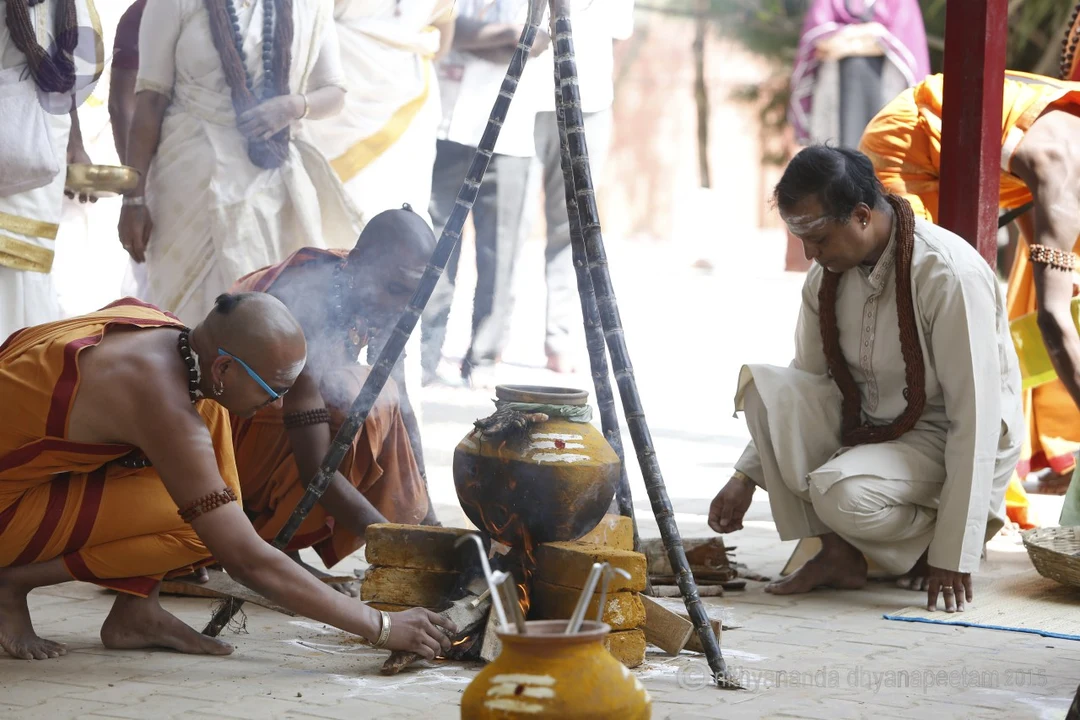
A photograph of a Pongal ritual with a clay pot placed over a wood fire on a stack of bricks, flames rising around its base. The pot is smeared with white horizontal lines and a red mark, and a green leaf is tied around its rim. Sugarcane stalks frame the fire. Behind it, a crowd of people in saffron and orange garments stands under a covered pavilion, with decorated umbrellas and a ceremonial parasol. A figure in white stands among them, and a hand holding a stick is visible at the lower right edge.A clay pot of boiling milk sits on a brick hearth with a wood fire burning beneath it, flanked by sugarcane stalks tied upright, a traditional Pongal cooking scene. Behind it, in an open-sided pavilion with a corrugated roof, a group of people in saffron-orange garments stand in rows, with white-clad priests and attendants nearby. Several figures hold saffron and orange ceremonial umbrellas and staffs, and a golden decorative backdrop with a flower-decorated altar stands in the middle distance. A person in white stands at the edge of the frame. The pot is marked with white and red lines, and the scene is a Makar Sankranti Pongal ritual.A Pongal ritual outdoors on a paved courtyard with a lit clay pot of boiling milk on a stove of stacked yellow bricks, sugarcane stalks tied in a tripod above it. A man in white dhoti with a rudraksha mala and tripundra ash on his forehead kneels at the left feeding sticks into the fire. A young woman in orange robes with ash marks sits beside him. A bald man in orange on the right, with hoop earrings and ash, watches the fire. Another clay pot with a steel ladle sits to the right, and colourful kolam floor patterns decorate the ground. In the background, several people in orange and white robes stand near a red platform.

Glimpses from KAILASA'S Pongal Celebration
3 photosSource gallery
Outdoor Pongal celebration under a open tin-roofed shelter with palm trees behind. On the left, a seated man on an ornate gold throne wears red and maroon robes, a red shawl and a rudraksha-style necklace, with a dark swept-back hairstyle; this appearance has several cues, so he is a person seated in a place of honour. Nearby, women and girls in orange and saffron saris and garments stand and kneel, one woman in orange bends over a basket of offerings, and a row of brass and clay pots and sugarcane stalks stands tied at the edge of the decorated floor. Standing devotees in white dhotis and saris, and decorated umbrellas, complete the procession-like gathering.Outdoor Pongal celebration: a man in cream kurta with a rudraksha mala and vibhuti on his forehead kneels beside a clay pot boiling over a brick hearth on a kolam-decorated floor, with sugarcane stalks tied around it. Women in orange and saffron sarees attend the pot, one leaning forward at left, and a crowd of devotees in orange and white stands behind, with steam rising and banana-leaf baskets of offerings at left. The man's face and build are not distinctive enough to confirm identity, so the a person field is unsure.Outdoor Pongal celebration under a tin-roofed pavilion. In the centre, a seated figure in a red and gold robe with a black head covering sits on an ornate gold throne beneath decorative umbrellas. Around him, saffron-robed devotees stand holding ceremonial flags and staffs. In the foreground, two saffron-clad priests tend clay pots set on brick hearths with a fire, beside raw sugarcane stalks standing upright. Floor patterns in coloured powder and striped mats lie on the ground. A printed world map hangs on the backdrop.
Glimpses from KAILASA'S Pongal Celebration
3 photosSource gallery
Outdoor Pongal harvest festival ceremony under a canopy. Two clay pots of boiling rice sit over open wood fires built with stacked bricks, with sugarcane stalks standing beside them. A seated figure on an ornate golden throne wears a dark cap, red and orange robes and a red garland, with a golden umbrella-style canopy above. Around him stand devotees in saffron and orange robes, some in white dhotis, and a row of children in orange garments. A kolam of coloured powder decorates the ground, and a small clay pot stands at the centre. a person: the seated figure on the throne wears red and orange robes with a red garland and dark cap, consistent with the page's reference to a person at this event.Outdoor Pongal celebration under a open-sided pavilion. Two clay pots of boiling milk sit on brick hearths with flames, set on blue and white kolam floor designs, with sugarcane stalks standing beside them. A central clay pot rests on a sand mound. Behind, a seated figure in a gold-framed throne wears dark robes and a garland, with a large dark head covering, flanked by umbrellas and a canopied palanquin. A group of about 20 people in saffron and orange robes stand in rows, some in white dhotis, holding ritual items. Banners and a world map hang on the back wall.Outdoor Pongal harvest celebration under a tin-roofed pavilion. Two clay pots boil over open wood fires on brick hearths, with sugarcane stalks tied at the corners and a kolam of coloured powder on the ground. In the centre, a seated figure in a red robe and dark head covering sits on an ornate gold throne with a canopy of umbrellas behind. Around them, a large group of people in saffron and orange robes stand, along with several people in white dhotis and children in orange. Ceremonial decorated umbrellas frame the scene. The photo is a physical event scene, with the central figure distinguished by red robes and a gold throne, though no identity cue beyond that is clear enough for an in_person claim.
Glimpses from KAILASA'S Pongal Celebration
2 photosSource gallery
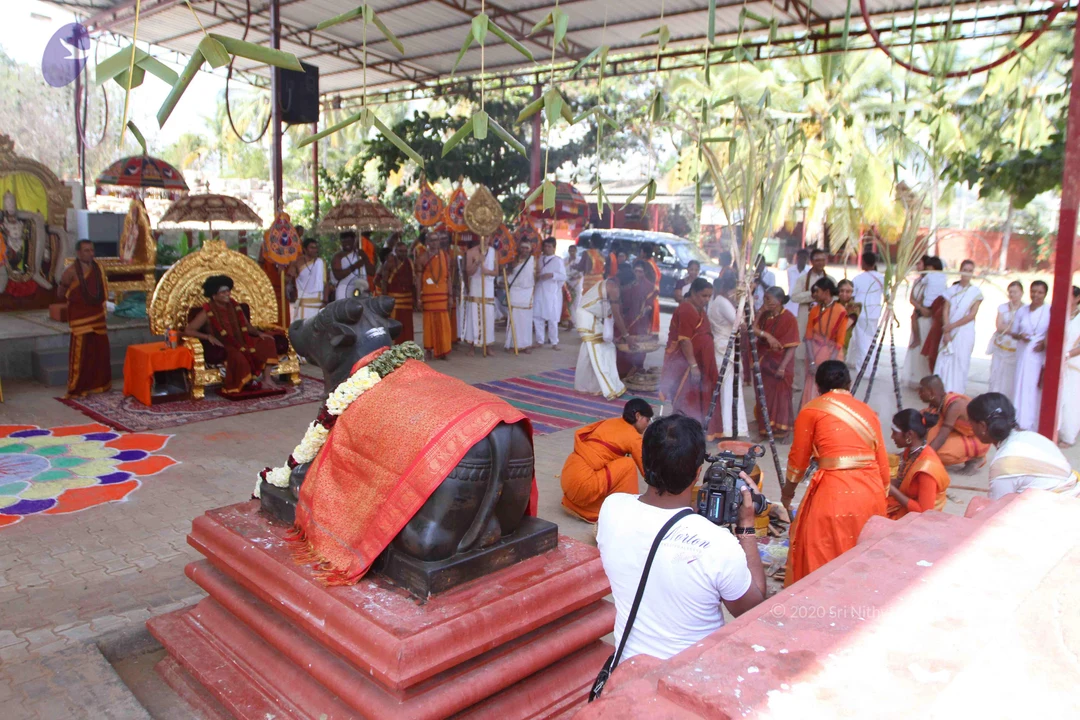
Outdoor Pongal celebration at a temple courtyard. In the foreground, a priest in a maroon-red robe with yellow border stands bent over a clay pot on a fire, the pot's rim decorated with white markings, flanked by three sugarcane stalks tied together with yellow thread, a traditional Pongal boiling-pot setting. A man in white dhoti and red sacred thread kneels at left, and a shaven-headed man in orange with red thread tends the fire at lower right. Behind them, a row of sannyasis in orange and maroon robes stands near a golden ornate throne and decorated umbrellas. A young woman in orange sari with rudraksha mala holds a brass lamp at right, and a few spectators sit at the left edge. Colourful kolam patterns and striped rugs cover the paved ground.Outdoor Pongal celebration under a open-sided pavilion with palm-leaf and sugarcane decorations hanging from the roof. A large dark stone Nandi bull statue stands on a red pedestal, draped in an orange-red cloth and garlanded with white flowers. A seated figure in red and maroon robes sits on an ornate gold throne at left, flanked by umbrellas. Standing and kneeling people in saffron and orange robes and white dhotis gather in rows; a woman in an orange sari kneels near the Nandi with offerings. A cameraman in a white shirt films the ritual in the foreground. A colourful rangoli design lies on the floor at left.
Glimpses from KAILASA'S Pongal Celebration
4 photosSource gallery
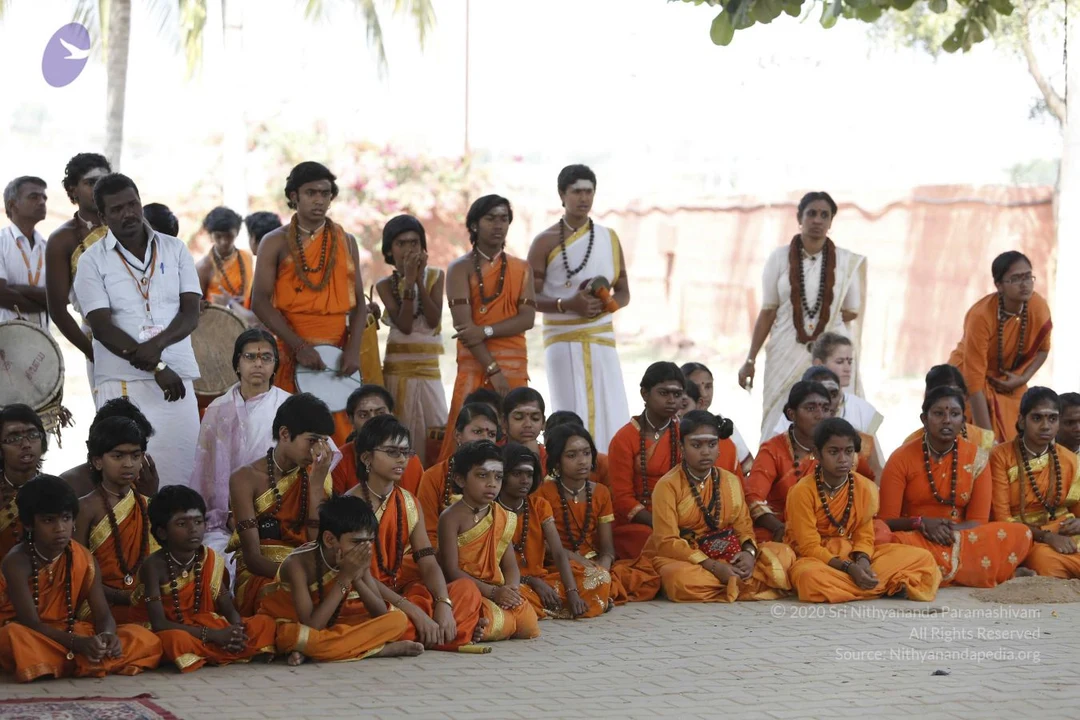
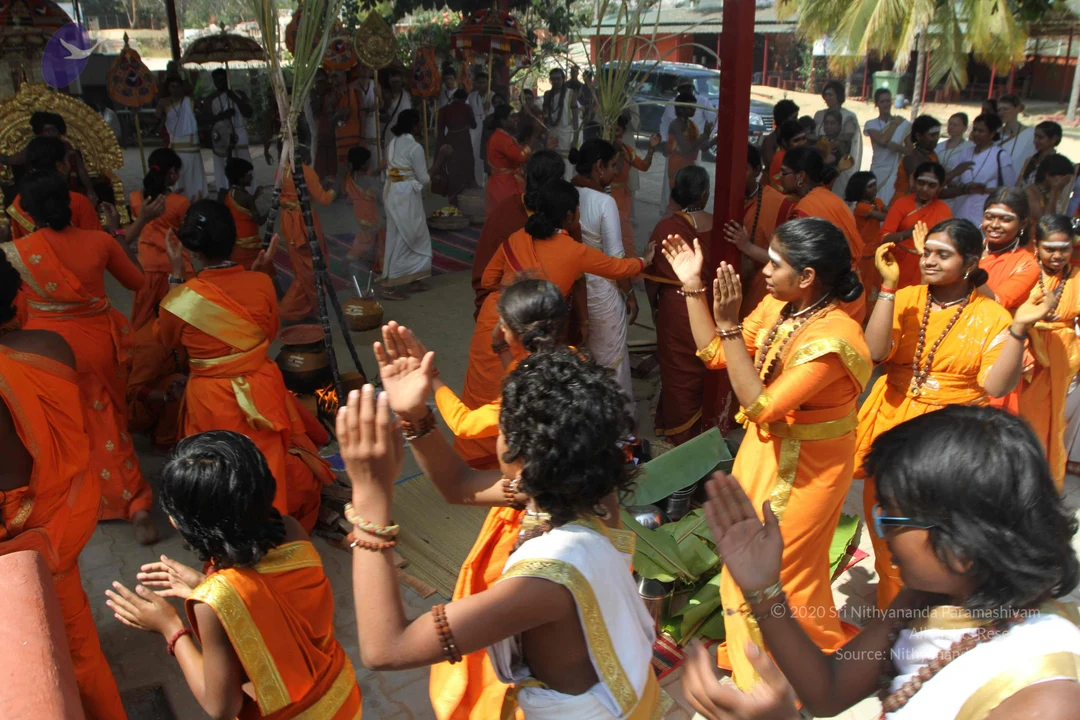
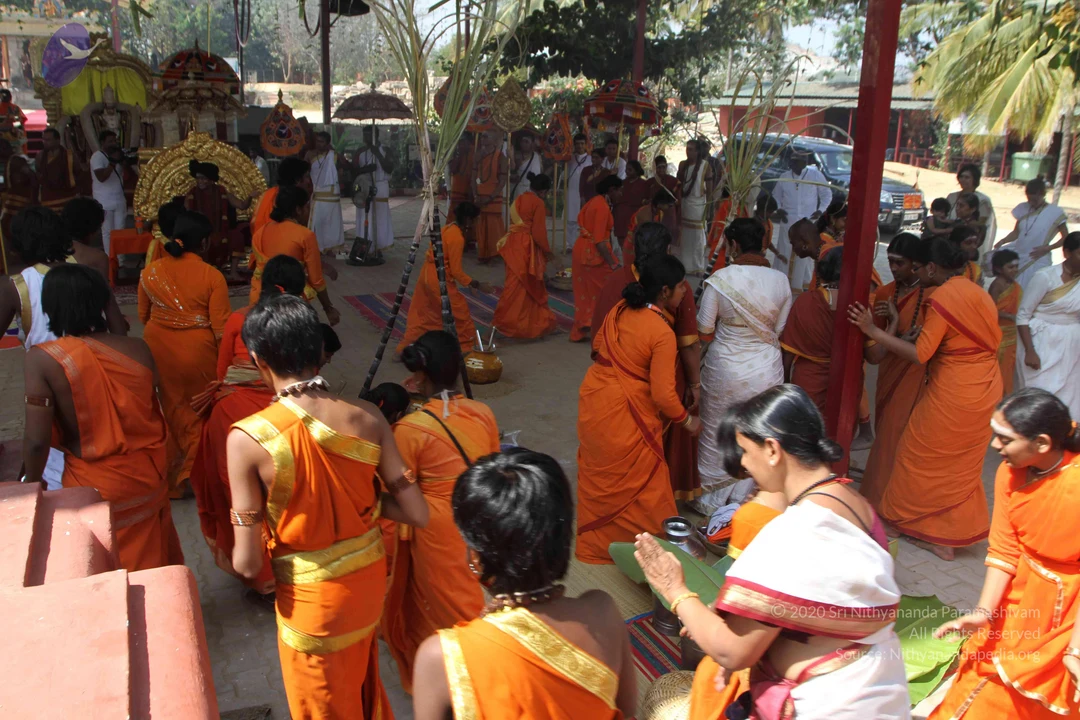
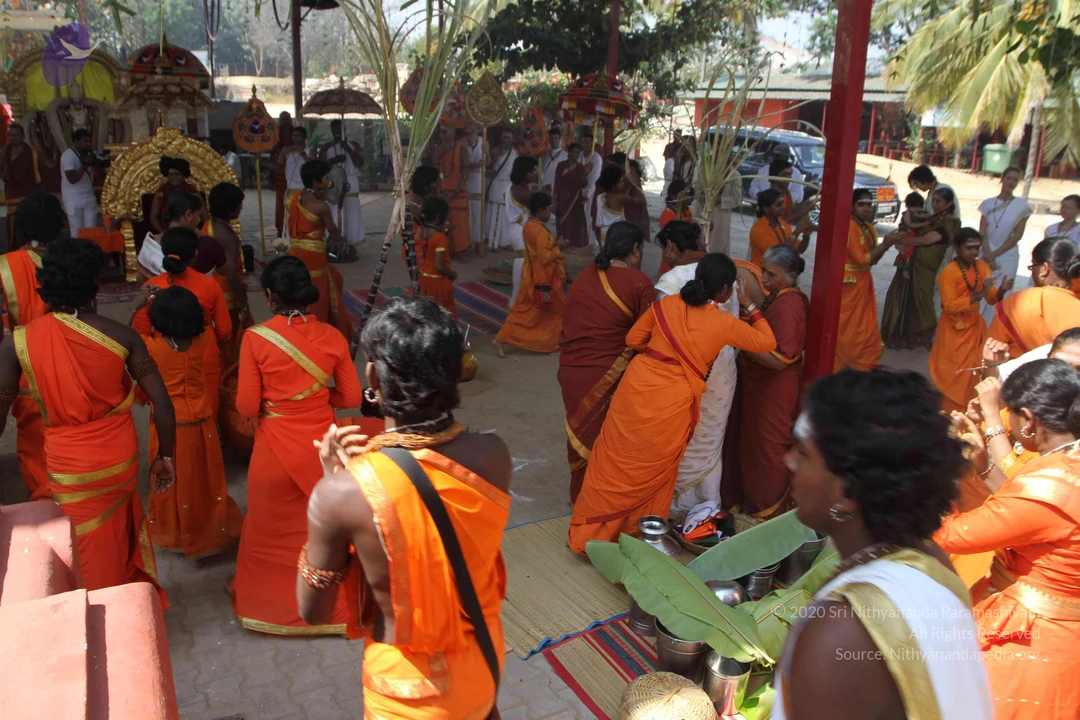
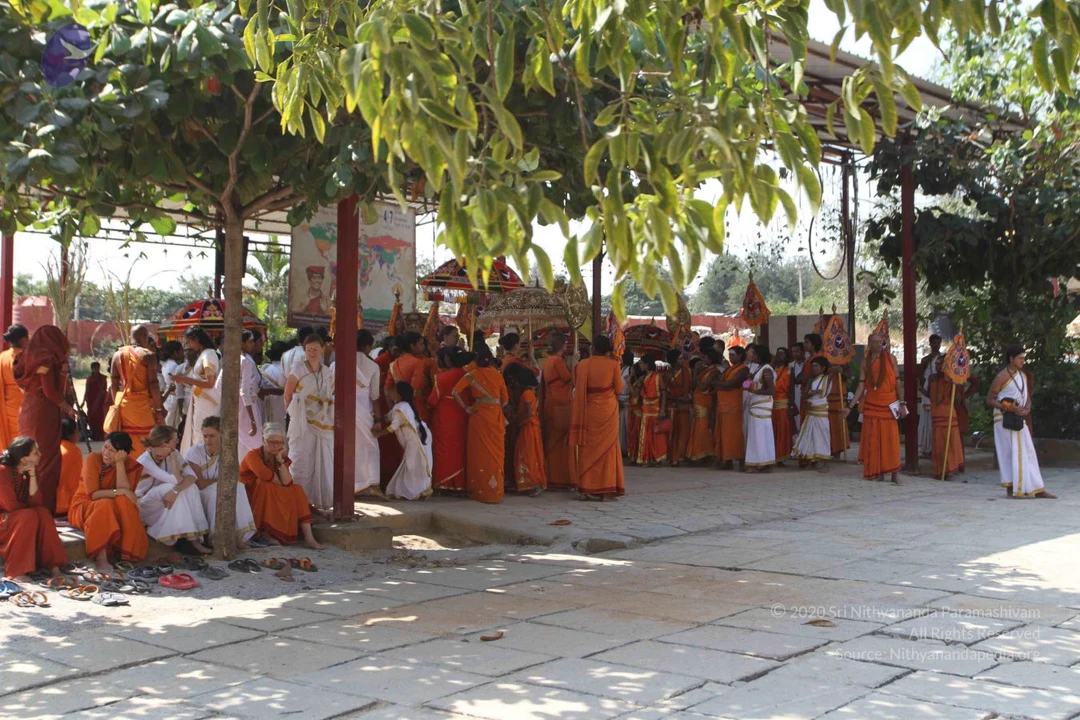
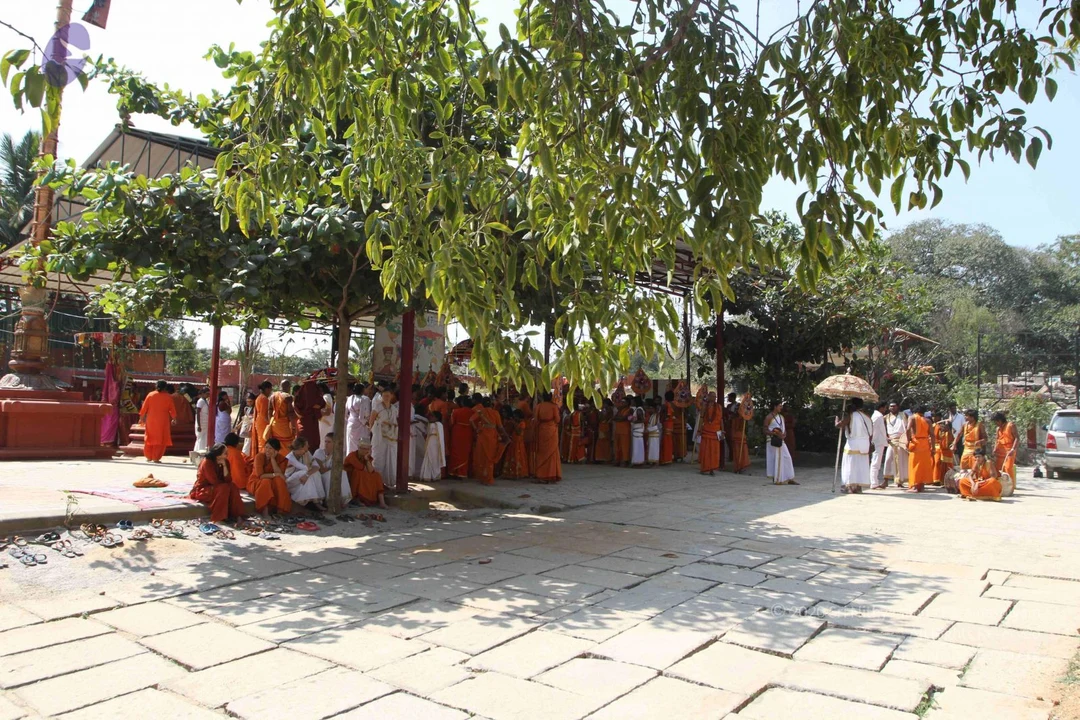
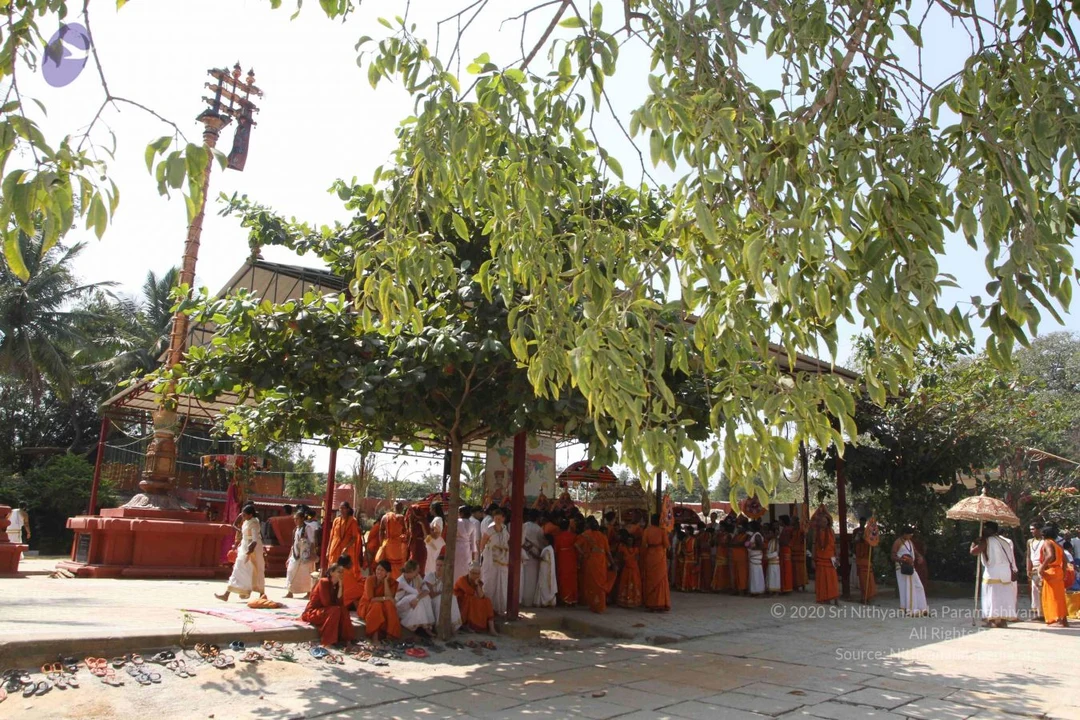
Outdoor Pongal celebration at an ashram courtyard with a clay pot and fire set up on the ground. Many young women and girls in saffron-orange saris with gold borders and rudraksha malas raise their hands in prayer, with a few in white clothes. Some have white and yellow forehead markings. Sugarcane stalks stand tall beside a red pillar, and a green leaf and brass vessels lie on a mat. Behind them, more devotees and a figure in white stand near a decorated palanquin and kalasha.Outdoor photo of a crowded Pongal celebration courtyard with many devotees in saffron-orange garments with gold borders. Several women in orange saris stand and kneel close together, while a few women in white saris with red-bordered edges stand among them. Sugarcane stalks are tied upright in the centre, and brass pots and kalasha vessels sit on mats on the ground. Behind them, a decorated palanquin or ratha with yellow canopy and gold trim, ceremonial umbrellas, and men in white dhotis and a figure in red-and-gold ritual dress stand in the background near a parked car. Several men in white clothes and children are visible around the edges, with red pillars framing the right side.A photograph of a courtyard outdoor ritual. Several women in orange saris stand in a loose group near a brown woven mat, where brass pots and vessels sit on green banana leaves in the foreground. A woman in the lower right wears a white and gold-bordered sari and dangling earrings. Behind them stands a golden palanquin or throne canopy with a red and gold umbrella, and tall palm fronds rise against the red pillars. A man in white dhoti and shirt stands near the back, and a few people in white and red garments are visible. Several people appear partially hidden in the crowd, and no single figure is clearly identifiable as a specific individual.Outdoor festival procession under a open-sided pavilion with a hanging world map banner. Many young women and men in white and gold-bordered dhotis or saris and in orange, red and saffron garments, with rudraksha malas and white vibhuti on their foreheads, stand clapping and gesturing with raised hands. Ornate decorated umbrellas and a golden palanquin with carved sides are visible behind them. An older man in white kurta and white cap stands at the right edge, and a woman in a green sari holds a small child. Several devotees appear to be celebrating Pongal with the procession.

Glimpses from KAILASA'S Pongal Celebration
18 photosSource gallery
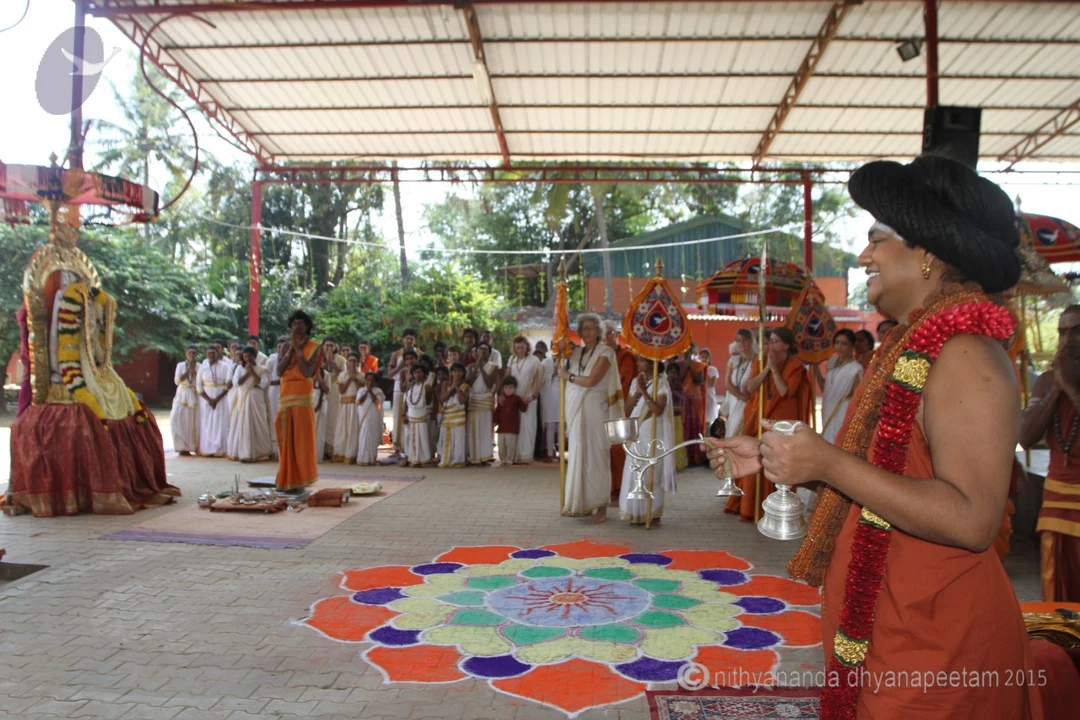
A photograph of an outdoor courtyard ceremony with a paved floor and red-painted walls behind palm and shade trees. Many people in white dhotis and white saris walk and gather, while several women in bright orange saris move in a line carrying items toward a red stone shrine platform holding a black Nandi bull statue garlanded with flowers and a decorative orange cloth. A camera operator in white clothing films the procession. In the foreground, a colourful floral rangoli on the ground sits beside a red-and-orange carpet, a brass kalasha-style finial, and a seated figure in orange clothing with small vessels on a low table. A golden decorative umbrella stands at left.A colourful chalk rangoli with a red sun motif in a blue centre, surrounded by petals in orange, yellow, green and purple, lies on a paved courtyard in the foreground. Behind it, a seated figure in a red and gold robe with dark hair sits on a gold throne with a red cloth draped over the seat. Beside the throne, a man in red-brown dhoti kneels with a small book on an orange-draped table. Figures in orange and white robes move among attendants, and gold-topped umbrellas and palm trees stand in the background. a person identity cannot be confirmed from appearance.Outdoor Pongal celebration under a corrugated roof, with palm trees and bunting beyond. A figure seated on a gold throne at left wears a dark crown-like headdress and red-orange clothing, with a red and gold cloth draped over the seat and a small table with orange cloth and a water bottle beside. Several people in orange and saffron garments walk and dance across a paved floor, some carrying a pot, while others in white dhotis stand near a row of ornate umbrellas and a palanquin. At right, a fire burns in a pit with people tending it and a cluster of onlookers. A colourful rangoli lies in the foreground at lower left.Outdoor pavilion at a Pongal celebration with a large black stone Nandi bull statue draped in an orange cloth and garlanded with white flowers in the foreground. Behind it, a seated figure in a red-and-gold robe sits on an ornate golden throne beneath a decorated canopy. Women and girls in orange saris move in a line past bundles of green leaves and palm fronds hanging from the roof. A colourful geometric rangoli lies on the paved floor at left, and a man in white dhoti kneels at right near a basket. Several other people in white and orange clothing stand near the throne and a tall brass lamp stand.A courtyard ritual scene with a black stone Nandi bull statue in the foreground draped in an orange cloth and garlanded with white flowers, set on a red plinth. Behind it, a seated figure in orange and red robes sits on an ornate gold throne with a small orange table before him, attended by people in orange saris and dhotis. A group of women in orange saris walks in a procession past tall sugarcane stalks with green leaves tied across the path, while men in white dhotis and a drummer stand nearby. A colourful kolam rangoli design decorates the floor at left, and a man in white kneels at right beside a lamp. Parasols and a canopy frame the scene, with a parked car behind, reflecting a harvest festival setting.A courtyard celebration with many people in orange and saffron clothing. In the centre a figure in red and gold sits on an ornate gold throne-like seat under a decorated canopy, while attendants in orange and white stand around. In the foreground a large black stone Nandi bull statue wears a red and gold cloth and a garland of white flowers, placed on a red pedestal. Children in orange and adults in white kneel near a small pot and a kolam of coloured powder. Tall bundles of green leaves and palm fronds hang from poles above, and red and orange parasols decorate the background. The scene appears to be a Pongal harvest festival ritual.

Glimpses from KAILASA'S Pongal Celebration
6 photosSource gallery
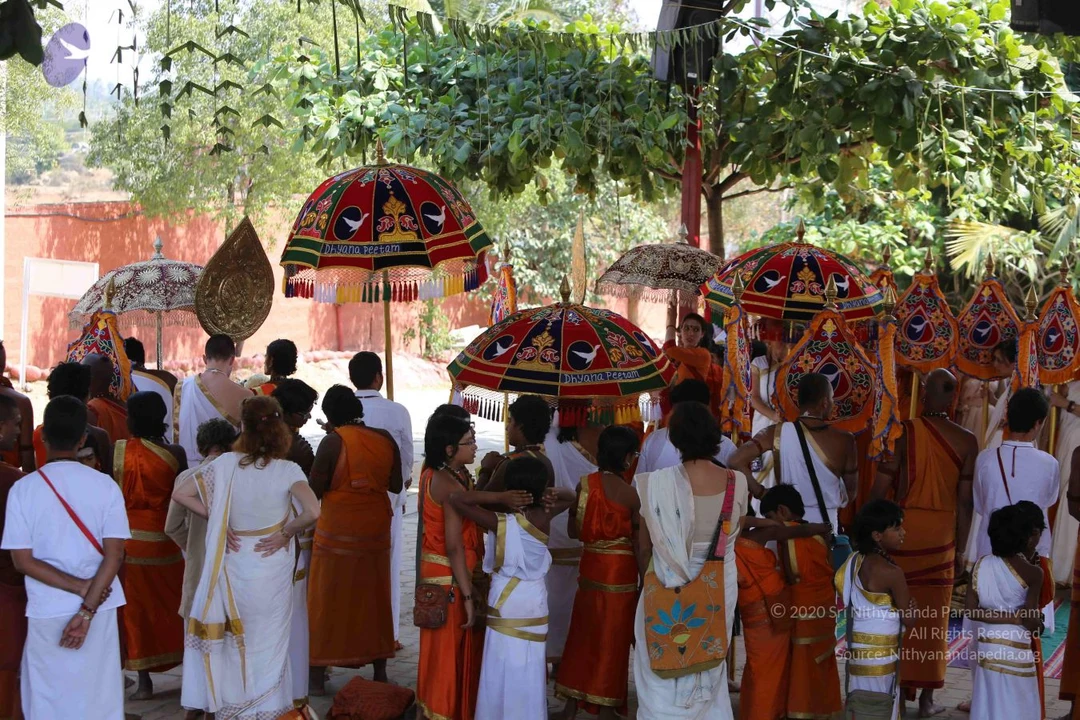
A photograph of a pavilion event with a colourful floral kolam rangoli on the paved floor. Women in orange saris with traditional jewellery and dancers in orange move in a line at left. Behind them rows of people in white dhotis and white shirts stand, and a few children in white attend. Ceremonial parasols and banners hang in the pavilion. At right a seated figure in a gold ornate throne, wearing a dark turban, orange robes and a red garland, is attended by two men in orange-red garments and rudraksha malas. A large map banner hangs on the back wall. Possible Pongal celebration.Outdoor Pongal celebration in a courtyard with a brick-paved floor. In the foreground a man in a cream kurta and a long rudraksha mala bends low near sugarcane stalks tied together with straw and dark stripes, and a small mound of sand or grain lies at his feet. Around him women and young people in saffron-orange saris and dhotis move about, some holding incense sticks and brass lamps. Behind them is a golden peetha or altar frame, a deity murti in a shrine, colourful pennants and a white-clad priest among devotees. A kolam rangoli in red, blue and yellow decorates the floor at left, and smoke from incense drifts through the air.A photograph of a Pongal outdoor ritual on a paved courtyard with a small clay pot set over a fire of burning wood. Many women and girls in saffron and orange saris stand and crouch around the fire, several holding long green sugarcane stalks and leafy branches. A man in a white dhoti and light shirt stands near the centre, and men in white clothes sit at the fire's edge. Two women in white saris sit at the lower left with their backs to the camera, and a red-painted pillar and trees frame the background. A small sign reading LIVE is visible at the top left.A photograph of a Pongal celebration in an open courtyard. In the foreground, devotees in saffron-orange clothing carry ornate umbrellas with red, orange and blue embroidered panels bearing a bird emblem, and a gold-tipped finial. A bare-chested man with a red shawl and ash markings stands beside a man in white dhoti and shawl. Children in white and gold-bordered cloths stand near a large colourful rangoli on the ground showing a sun motif in red, orange, yellow and purple. Behind, many people in orange and white robes move through the courtyard, and a black stone deity murti decorated with garlands stands at right on a red platform.Outdoor Pongal celebration in an ashram courtyard. Many devotees wear orange and saffron clothes with white-clad priests among them. Ornate parasols with red, orange and blue floral panels shade the procession on the left. A bald man in a rust-brown dhoti with a rudraksha-style necklace stands near a woman in white with gold borders. At right, people in orange gather around a fire pit where a sugarcane-and-straw offering stands; a colourful kolam with pink, purple and yellow patterns lies on the ground. Children in white and gold sit in the foreground beside a woman in orange holding a shoulder bag.Outdoor festival scene at a temple courtyard with a paved floor. Many young women in saffron-orange saris with gold borders and rudraksha malas stand and move in a group, some holding short sticks; others in white saris with gold borders and tilak marks on their foreheads stand at the right. Sugarcane stalks stand at the upper left. In the background a golden ornate throne/peetha with a decorated canopy and a figure in white sits near it, with more orange-clad people and colourful umbrella-like canopies beyond. Several women at the front left are seen from behind. A patterned kolam design lies on the ground near the centre. Most visible people appear to be young women and girls; the scene shows roughly twenty or more people.

Glimpses from KAILASA'S Pongal Celebration
5 photosSource gallery
Outdoor pavilion under a corrugated roof during a Pongal celebration, with palm trees and a parked vehicle beyond. On the left, a figure with dark hair, red-and-gold ornate garments and red-beaded adornments sits on an ornate gold throne with a red cushion, beside an orange draped table holding water bottles and a small lamp. Groups of devotees in white dhotis and orange robes walk and gather across a paved floor; some in white carry or stand near a fire pit with a cooking pot, and others prostrate or bow. Colourful floor rangoli in orange, purple and yellow lies in the foreground, with sugarcane stalks standing beside the fire. Several people appear to be filming or photographing.Outdoor ashram courtyard with a paved floor and a canopy roof, during a Pongal celebration. Many devotees in orange and saffron robes with yellow or red borders move through the open space, and several people in white dhotis and white shawls stand in the foreground. A few people in the foreground wear rudraksha malas. In the centre, a red stone platform holds a dark bull statue decorated with garlands, and a deity murti sits in a golden arch on the right beside a tall brass lamp stand. A colourful rangoli design lies on the ground near a woven mat. A shaved-headed person in orange near the centre is not clearly identifiable as the a person from appearance, so no identity is asserted.A photograph of an outdoor temple courtyard during a Pongal celebration. Many people in orange and saffron garments stand around a paved open area, with men in white dhotis and gold-bordered shawls holding small rods or lamps near a kolam rangoli design on the ground. A dark stone statue of a bull sits on a red pedestal in the centre, beside a red shrine structure and a garlanded deity murti under a golden arch. Several women in orange saris with white hair and orange garments stand in the foreground, seen from behind. A fire or smoke rises in the middle of the courtyard among the group.A festive outdoor Pongal celebration on a paved courtyard with a large colourful kolam rangoli floor design in red, orange, green and purple. Many devotees, mostly women and girls in white dhotis, saris and gold-bordered garments, and others in saffron-orange robes, move around the kolam and a red stone shrine platform with a deity murti. Incense smoke rises from the centre, and a gold-framed deity image garlanded with flowers stands at the right. A figure in a dark robe and mask-like adornments stands near the shrine. Several seated people in orange sit under a decorated canopy at left, with brass vessels, flowers and offerings on mats. Around 40 people are visible.Outdoor courtyard ritual on a paved floor under a tree canopy with palm trees beyond a red wall. A black Nandi bull statue sits on a red pedestal in the centre, with a decorated shrine and a golden canopy frame at right holding a deity murti draped with garlands. Devotees in saffron and orange robes and white dhotis walk in a line carrying incense sticks and offering items, while others sit near a colourful rangoli floral kolam. Two older women in the foreground wear orange and white with garlands. A man in a blue patterned shirt stands at the right edge. Strings of small flags and tassels hang overhead. The scene appears to be a Pongal festival procession or puja. No clearly identifiable a person is confirmed in this crowd.

Glimpses from KAILASA'S Pongal Celebration
10 photosSource gallery
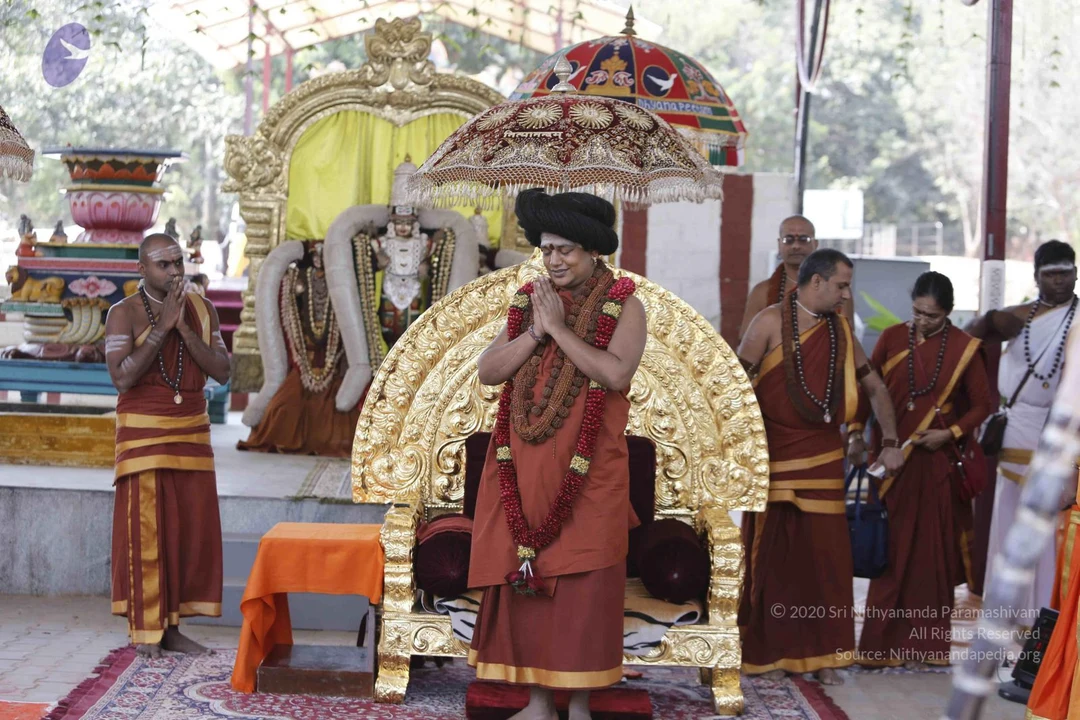
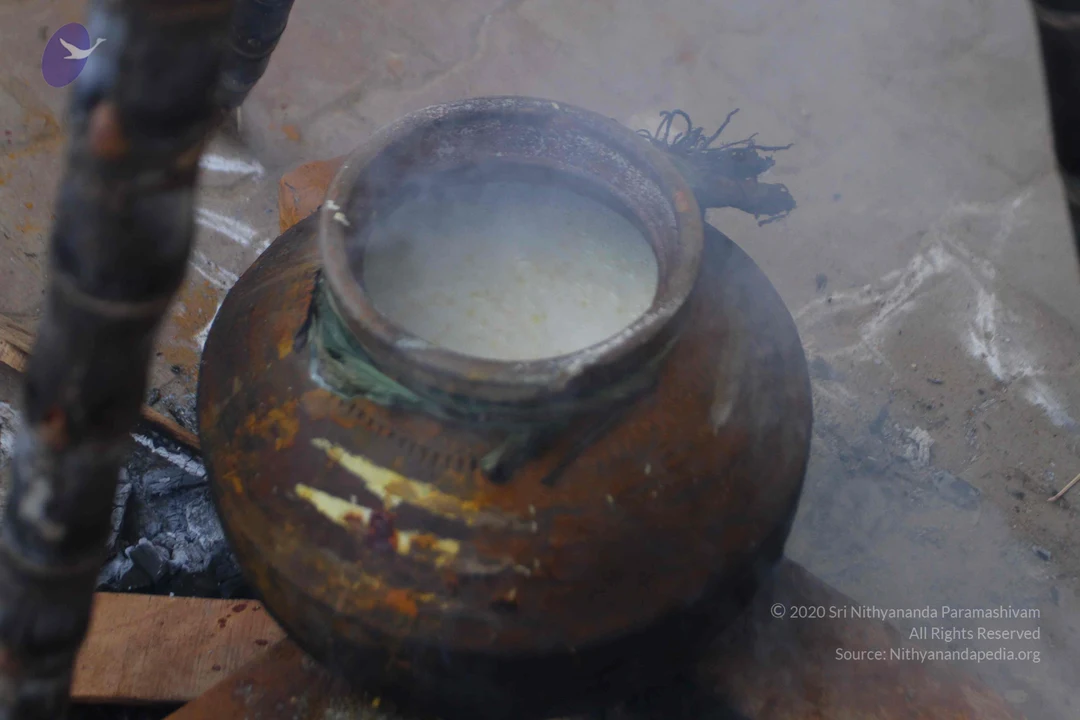
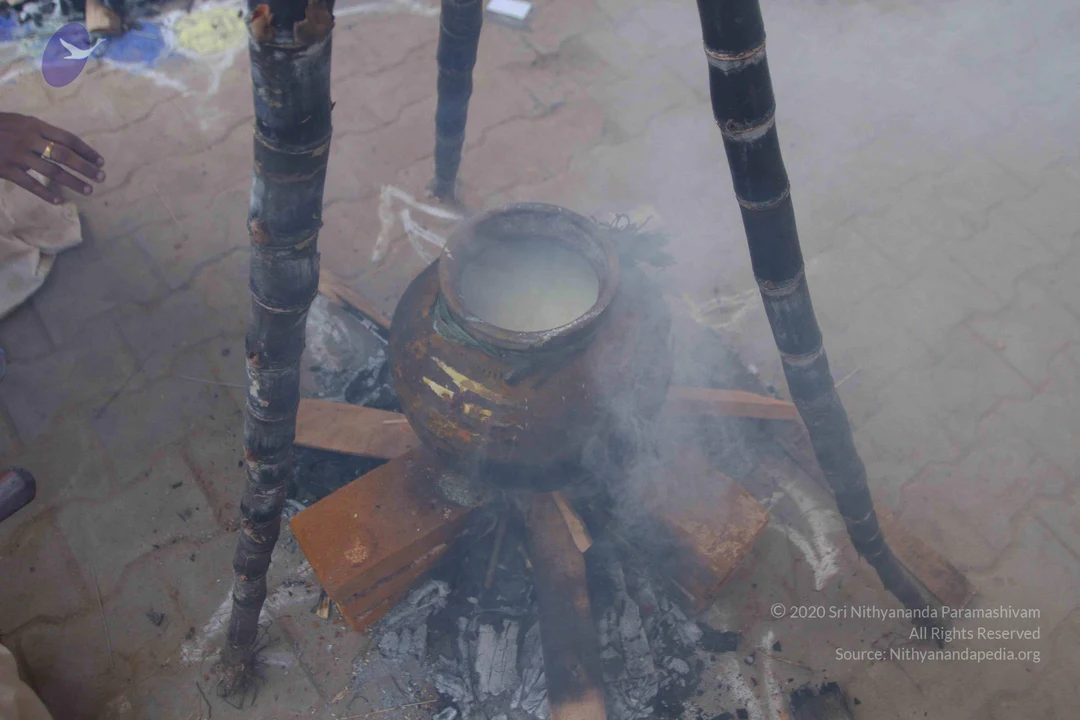
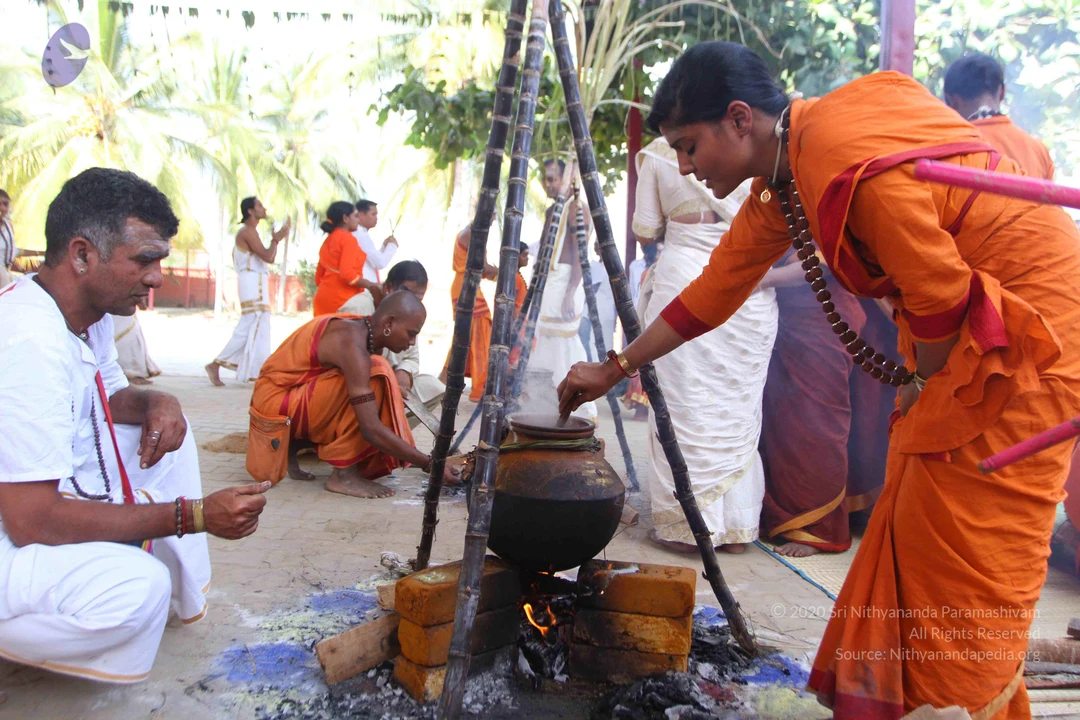
A photograph of a Pongal celebration at an ashram courtyard. A man with a large dark topknot and forehead tilak sits with palms pressed together on an ornate gold throne with red cushions, wearing an orange-red robe and a red and white flower garland; a gold-framed umbrella with red fringe stands above him. Beside him, a second gold throne is draped with a yellow backdrop and garlands. A young man in white dhoti and shawl holds a ritual object, and devotees in orange robes and rudraksha malas stand nearby. Men seated at left wear red-and-gold dhotis, and a rangoli of orange and red colours decorates the floor in the foreground.Outdoor photograph of a Pongal celebration at a temple-style courtyard with a brick-paved floor and palm trees. In the foreground, several women in bright orange saris with yellow borders walk away from the camera. At centre, a man in white clothing tends a smoking fire pit with a cooking pot and wooden sticks, with smoke rising. A carved stone bull, painted black and red, sits at right beside a tall orange ornamental pillar. Around them, many people in orange and white clothing stand and move through the courtyard.Close photo of a rustic earthen clay pot on a wood-fired hearth, filled with boiling white rice porridge that steams at the rim. The pot is blackened and streaked with yellow turmeric paste, and a green leaf and a tuft of dried stalk sit at its neck. Sugarcane stalks lean in from the left edge over ash and charcoal on a stone floor marked with white chalk lines. The scene reflects a Pongal cooking offering, with no people visible.A clay pot of milk boils over a wood fire on a paved ground, steam rising around it. Three sugarcane stalks stand upright around the pot as a frame, and chalk or coloured powder markings lie on the pavement. A person's hand with a ring is visible at the left edge. This is a Pongal pot-boiling offering, with no one's face visible and no clear figure identifiable.Outdoor Pongal cooking ritual on a paved courtyard beneath palm trees. A woman in an orange saree with a rudraksha mala stands at right, pouring rice into a black clay pot set over a brick fire, with sugarcane stalks tied in a tripod above it. Beside her, a man in white dhoti and shirt sits cross-legged on the left, with white tilak marks on his forehead, and a shaven-headed man in orange cloth kneels near the fire, tending it. Other people in white and orange clothing stand in the background, some walking among palm trees.Outdoor Pongal celebration at an ashram courtyard with smoke rising from a clay pot on a brick hearth where people tend a fire under a tall bamboo-like frame. Many devotees in orange and saffron saris and dhotis, some in white, stand and move around the fire, with some holding sticks or bundles. On the right, a black Shiva lingam on a red pedestal is garlanded with white flowers and rudraksha-style beads. Palm trees and greenery fill the background. No clearly identifiable a person figure is visible.

Glimpses from KAILASA'S Pongal Celebration
38 photosSource gallery
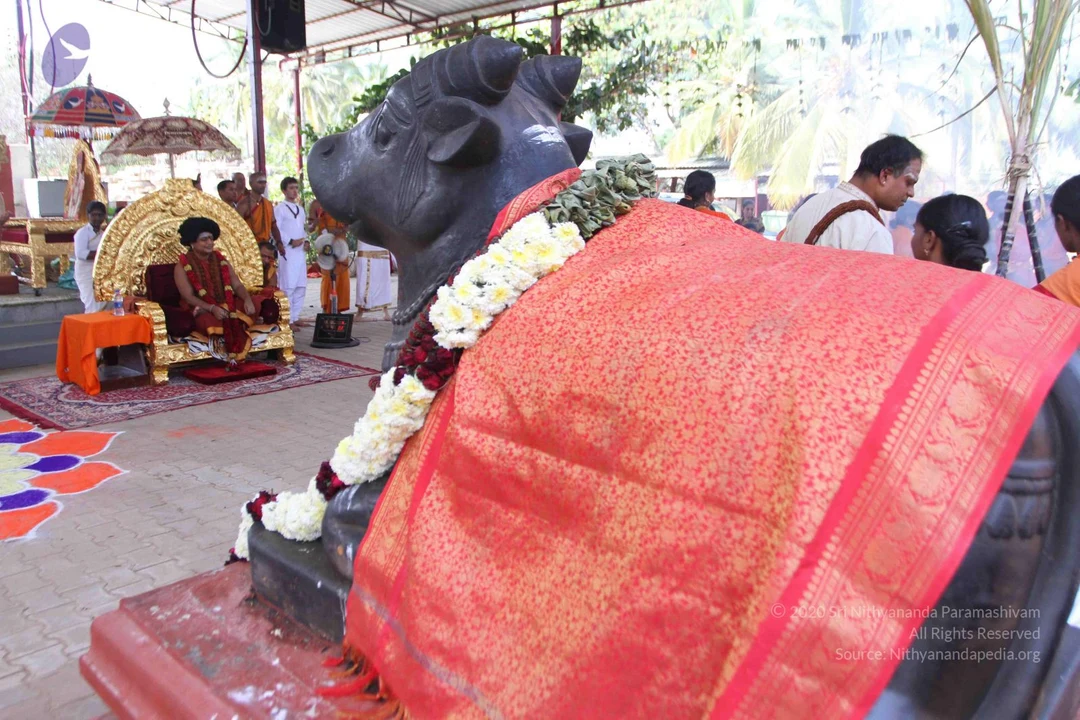
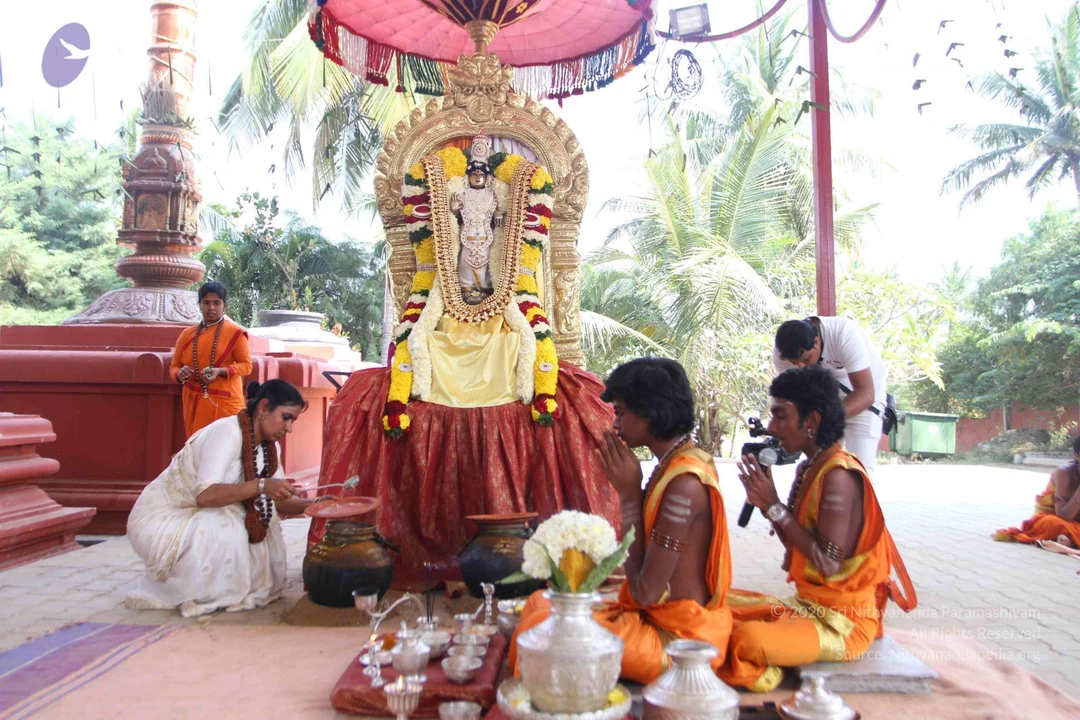
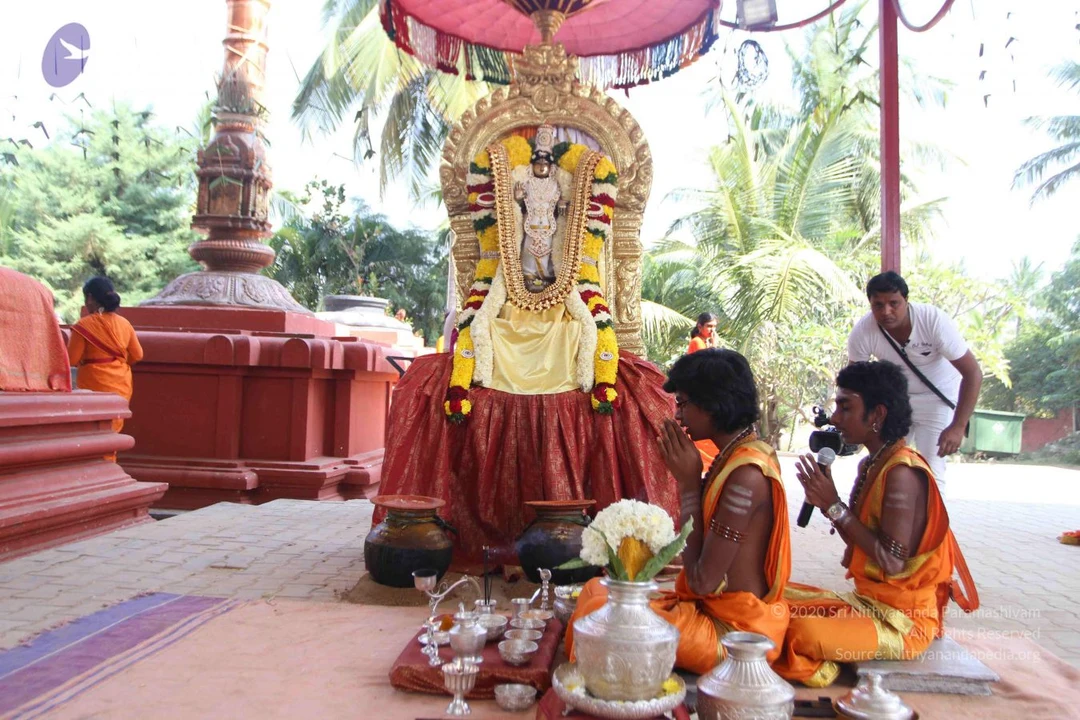
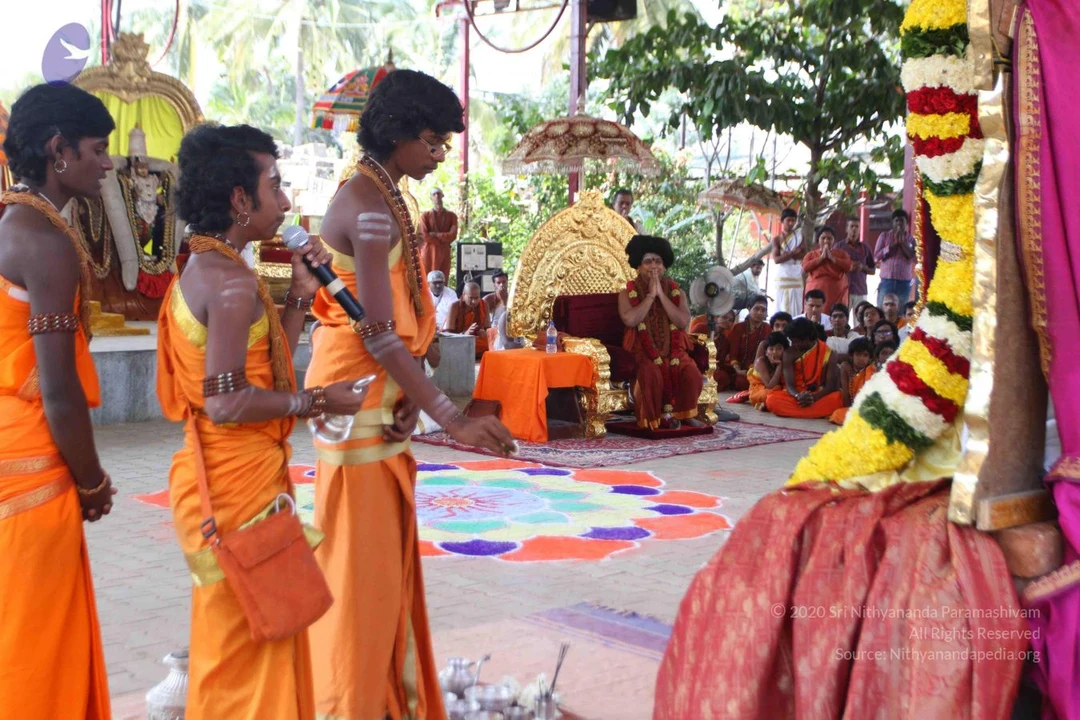
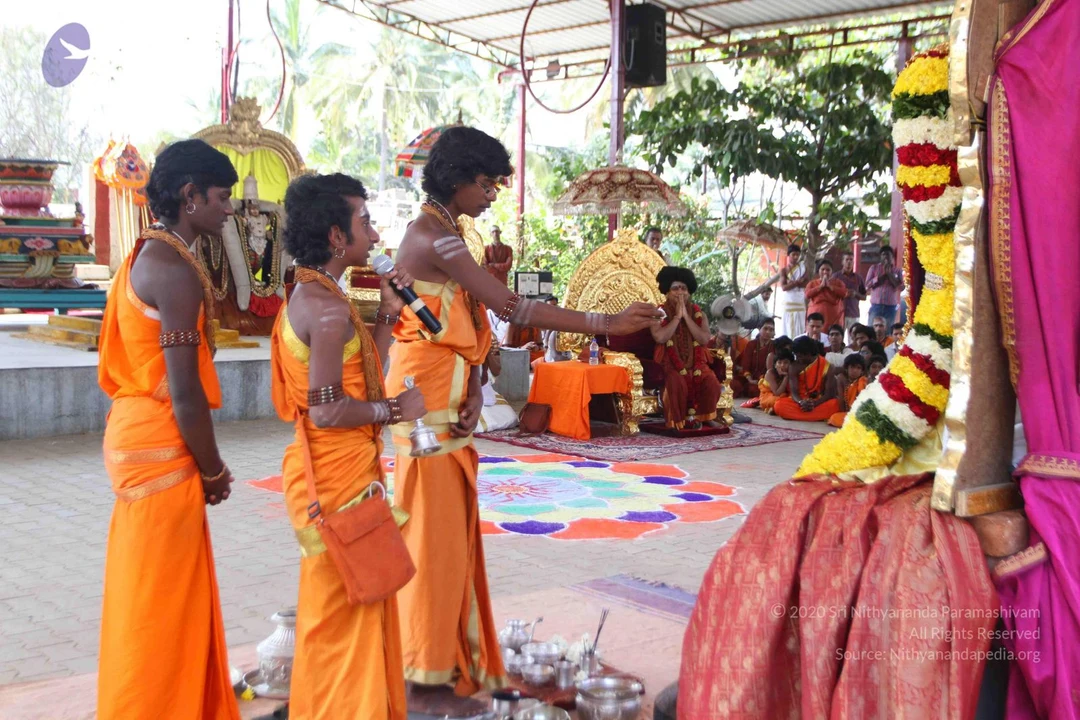
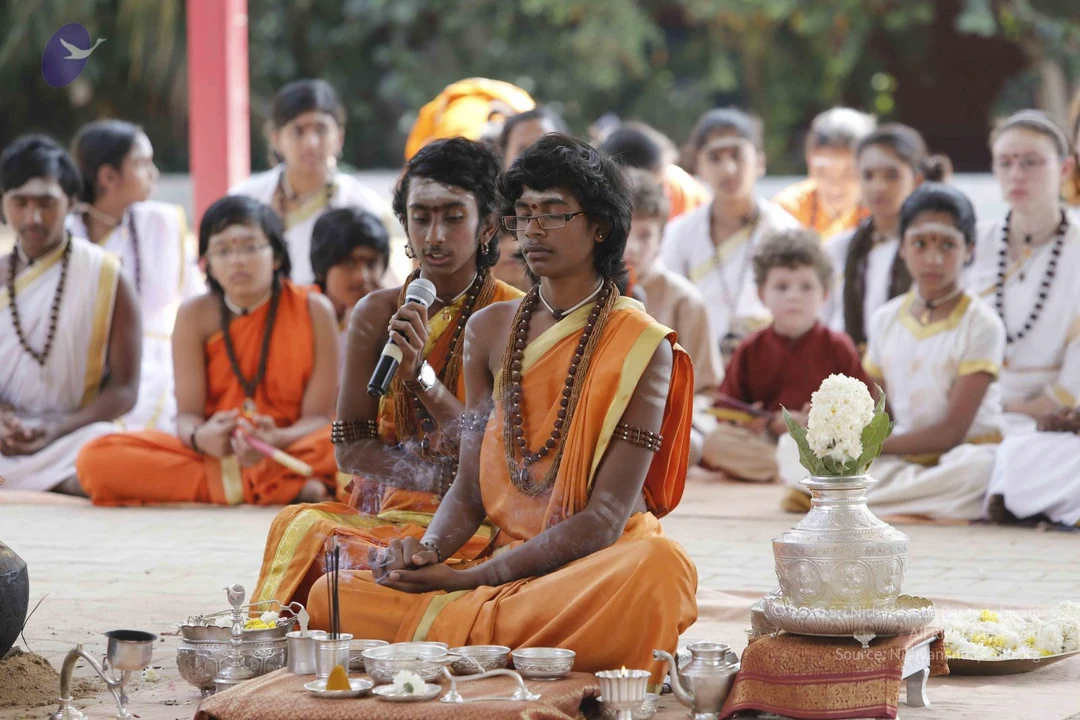
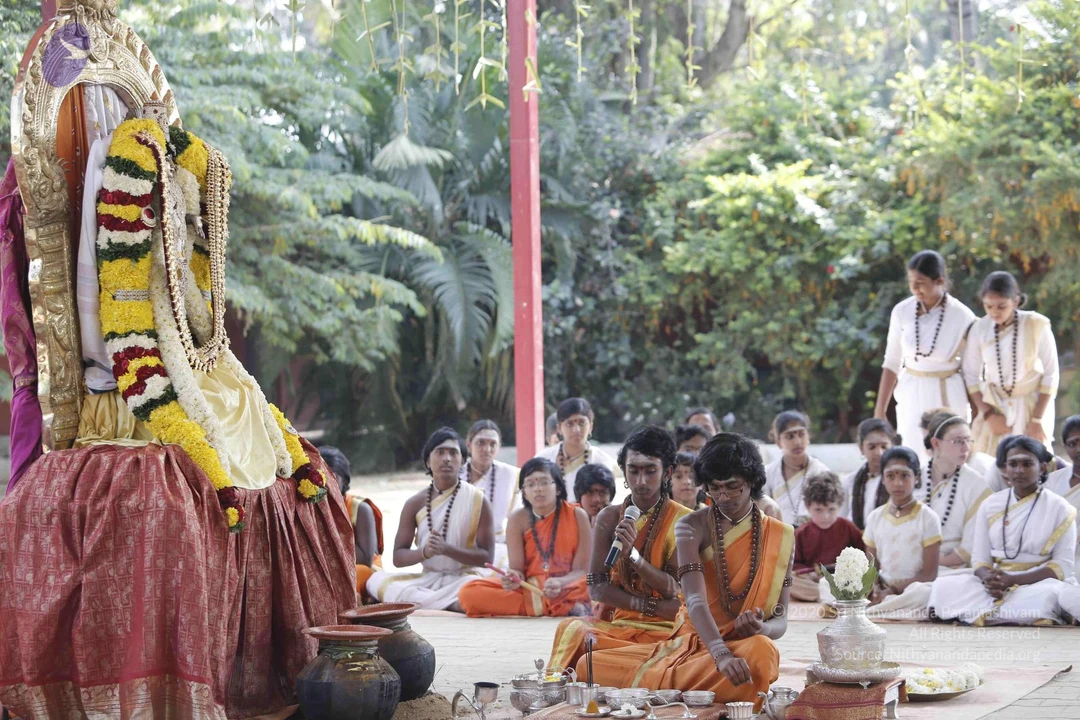
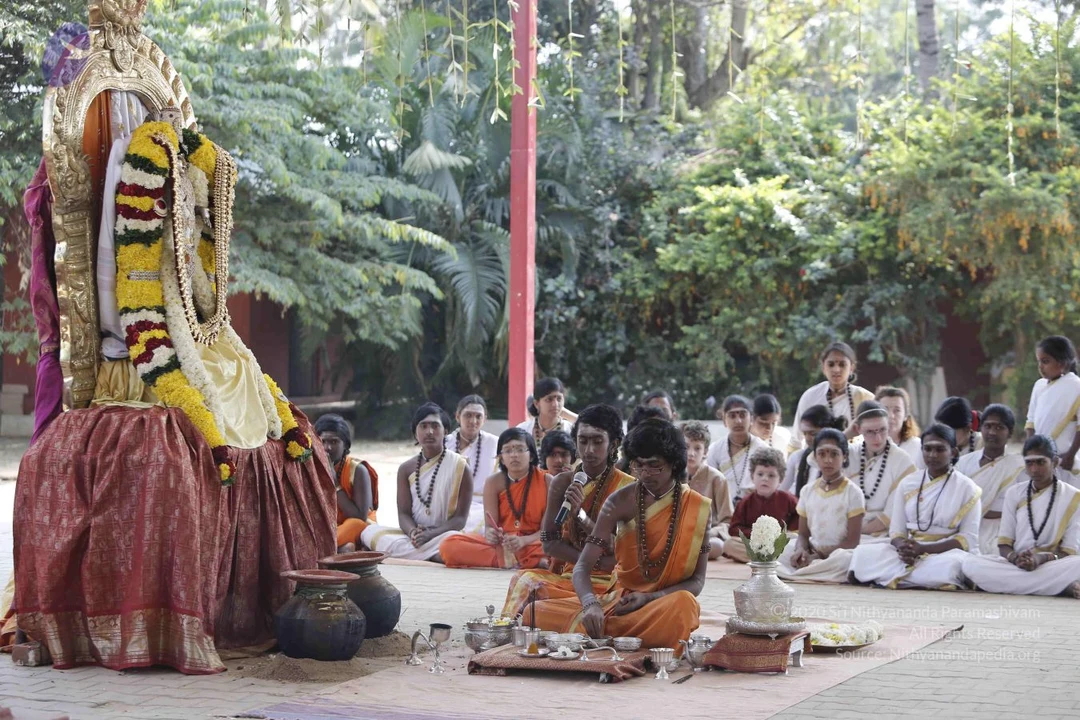
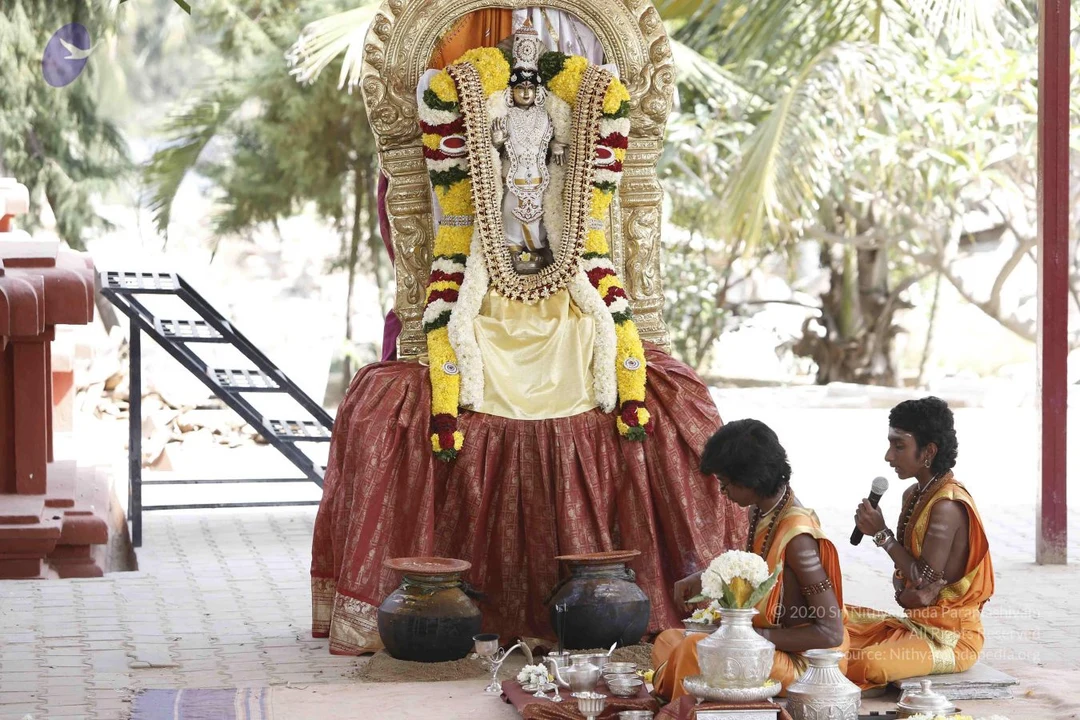
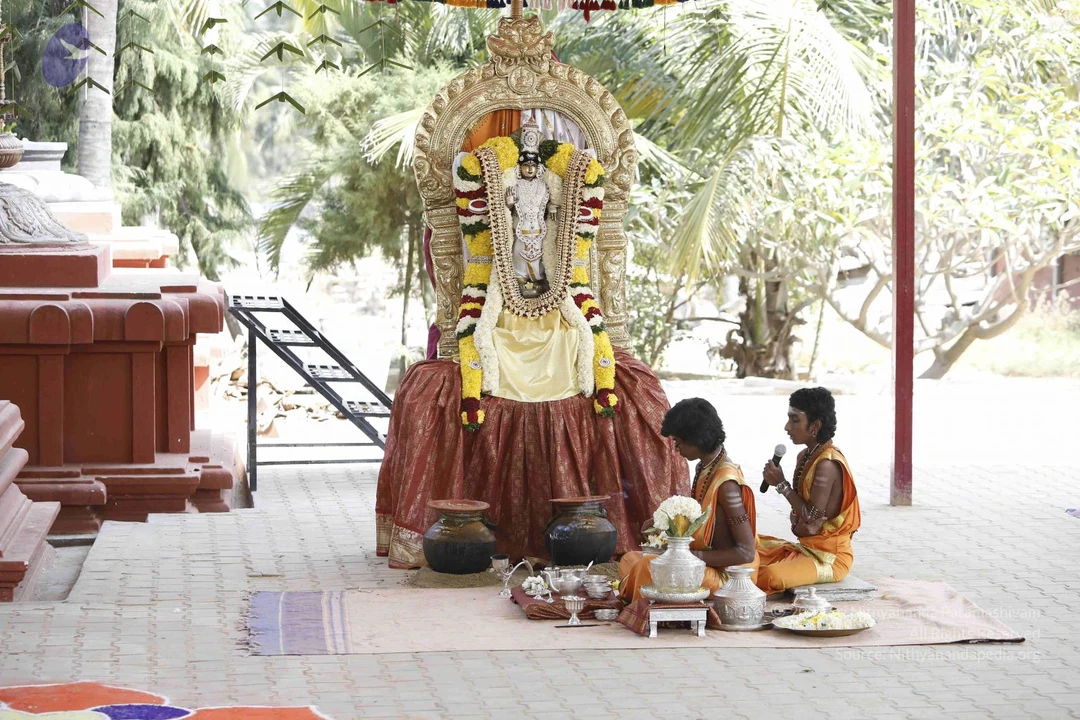
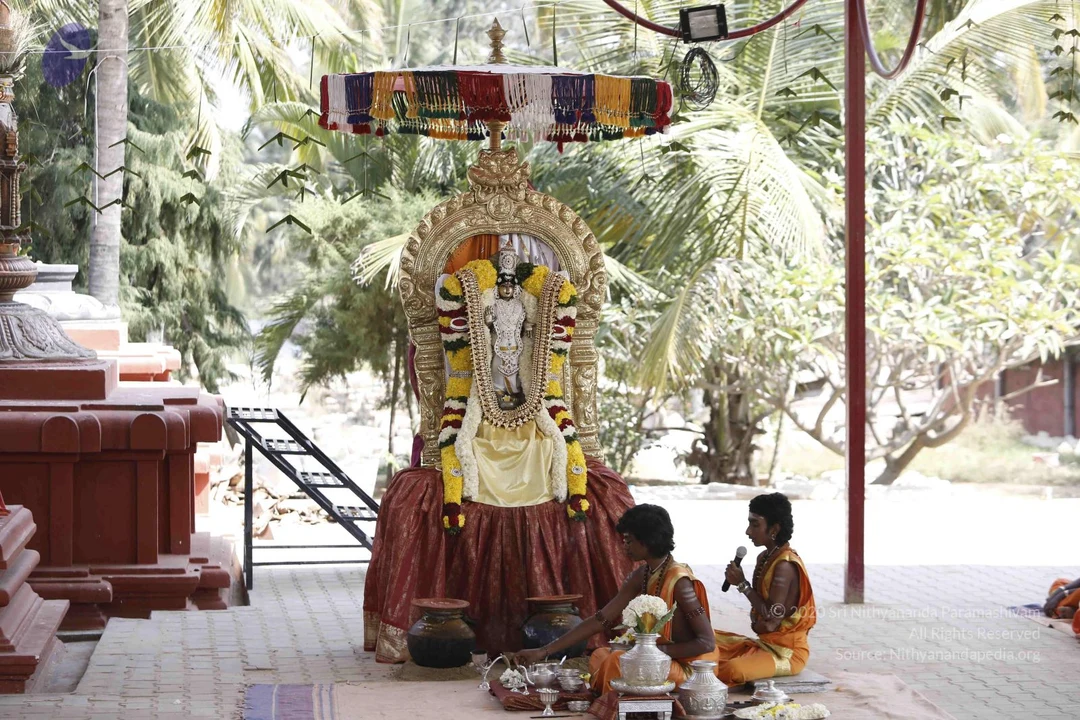
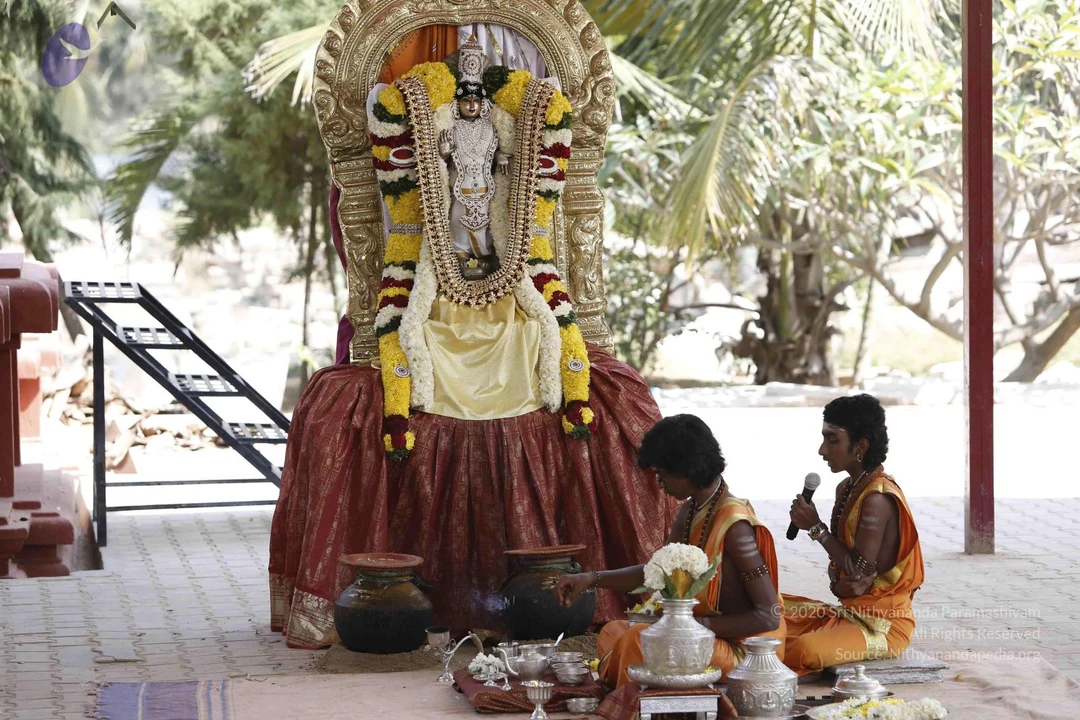
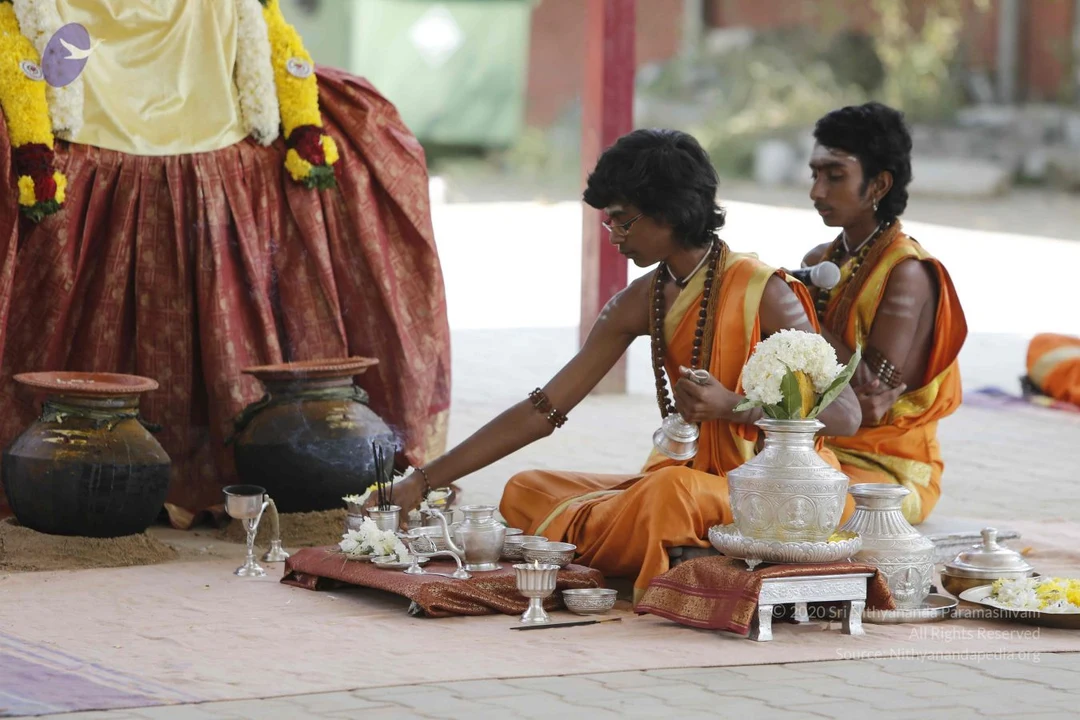
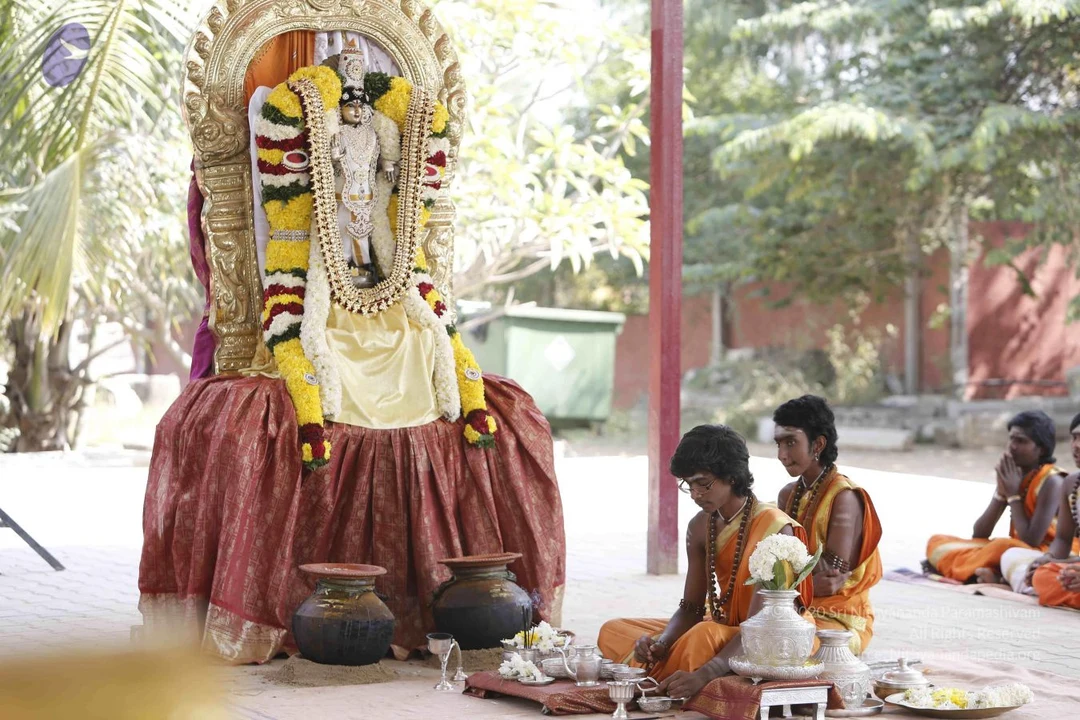
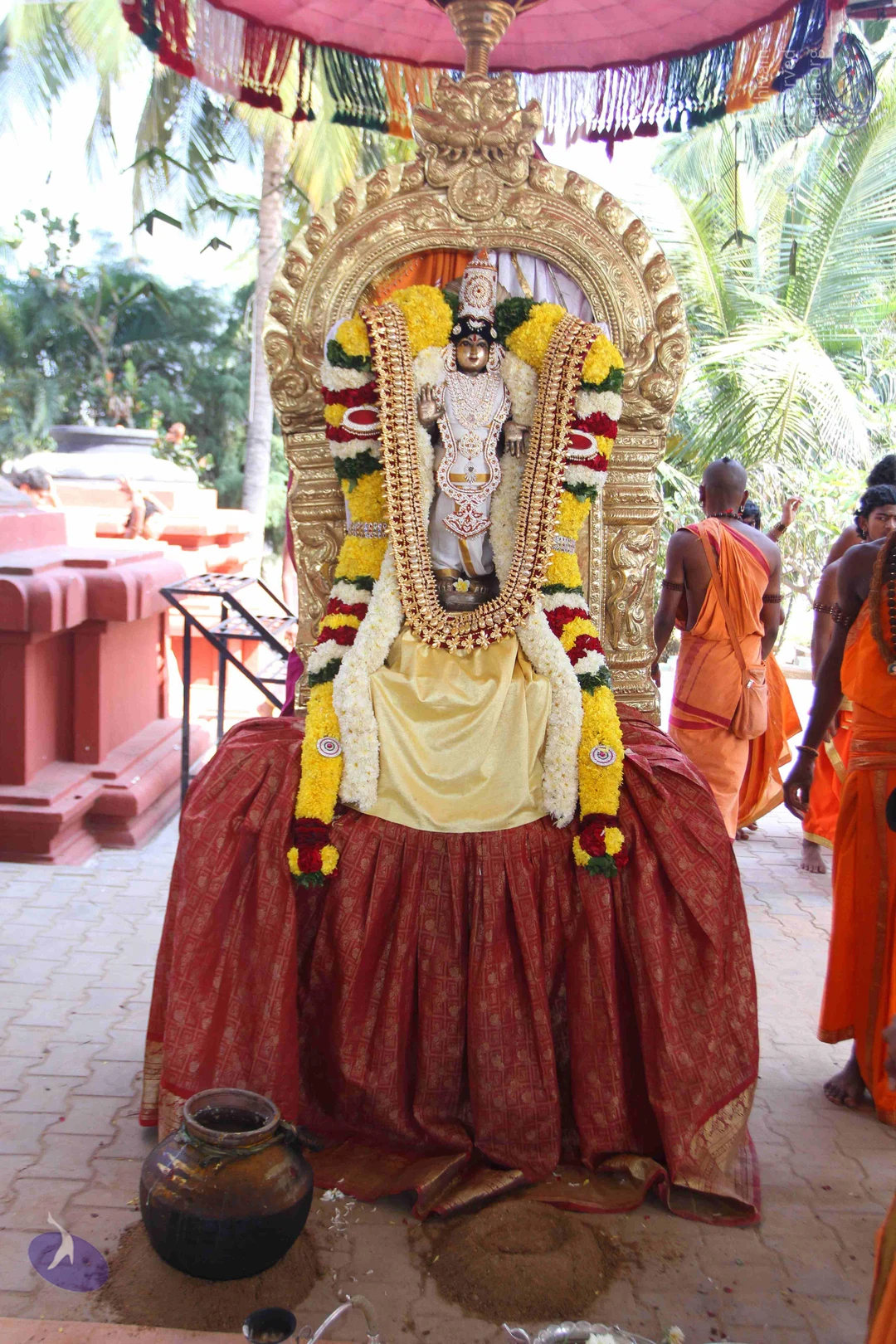
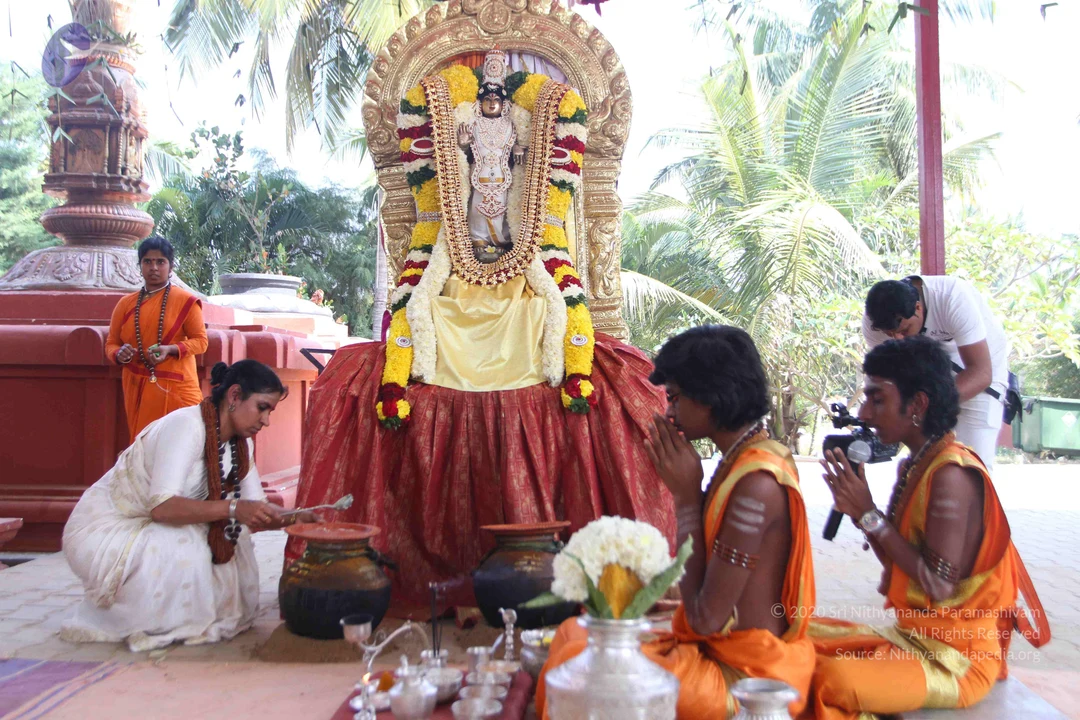
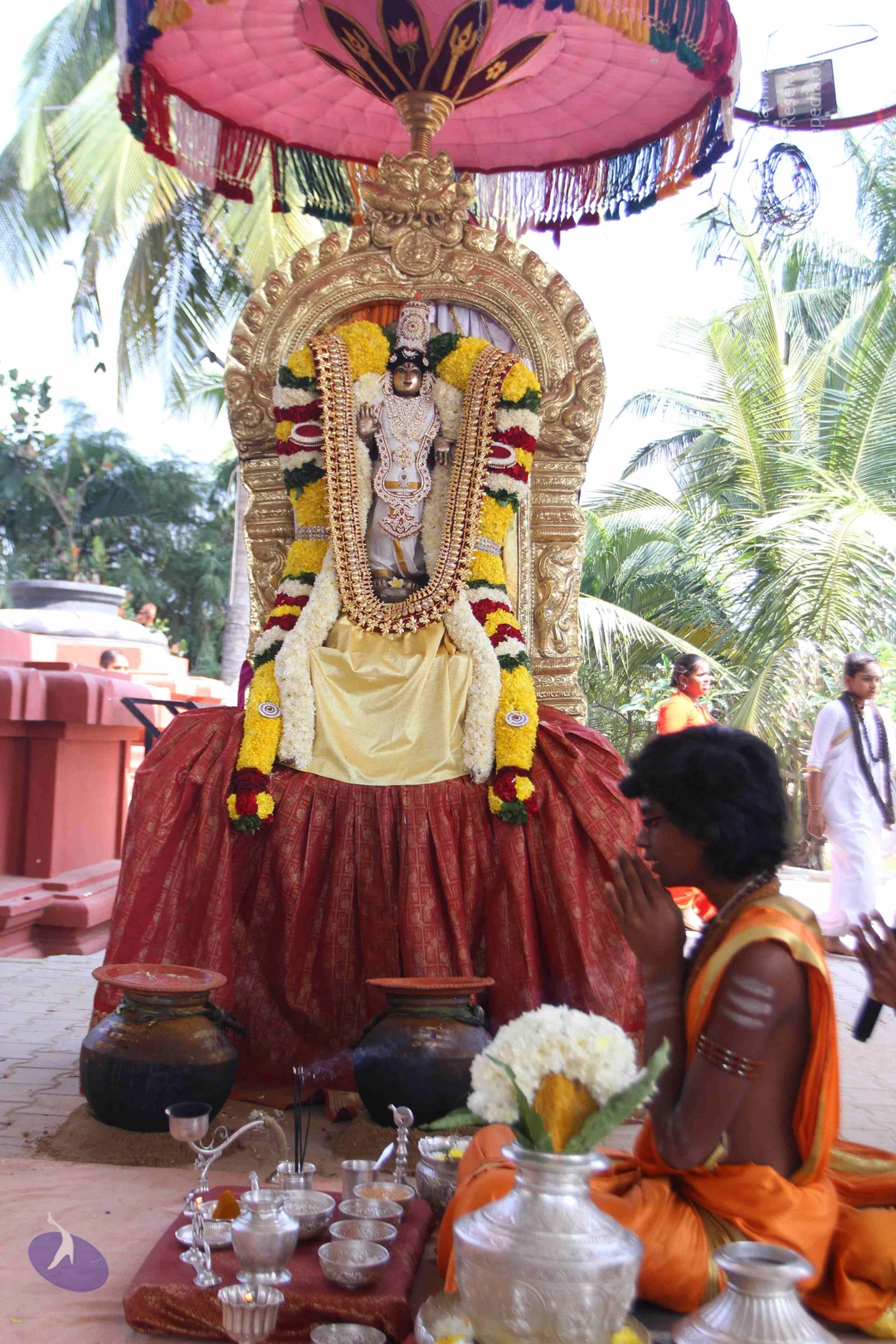
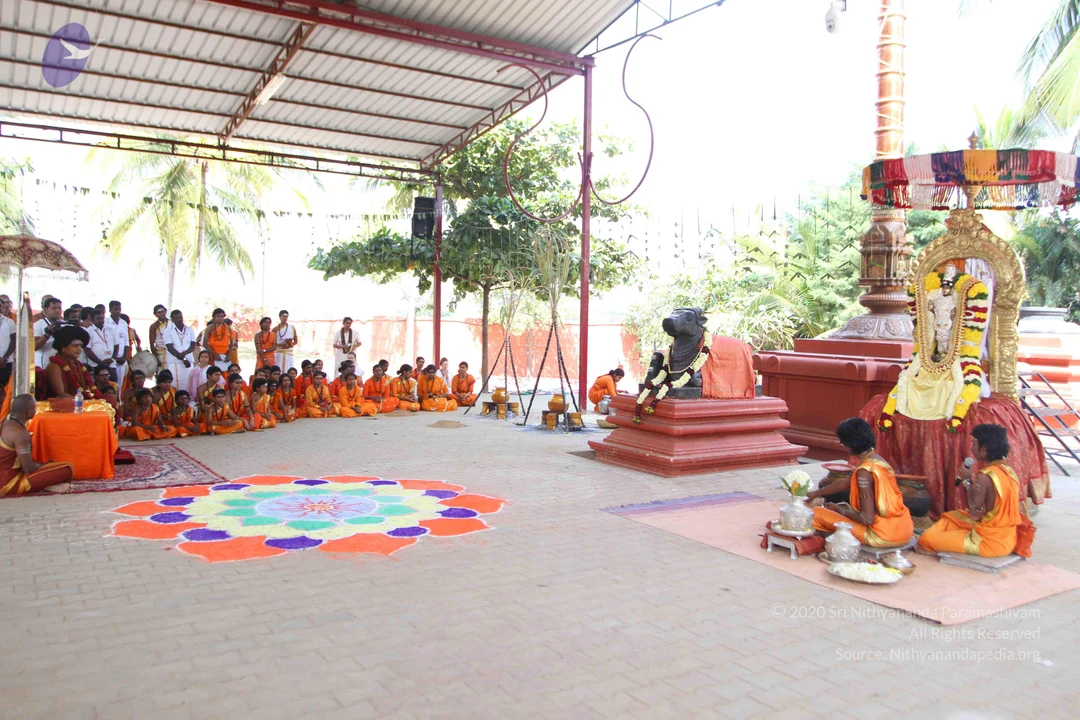
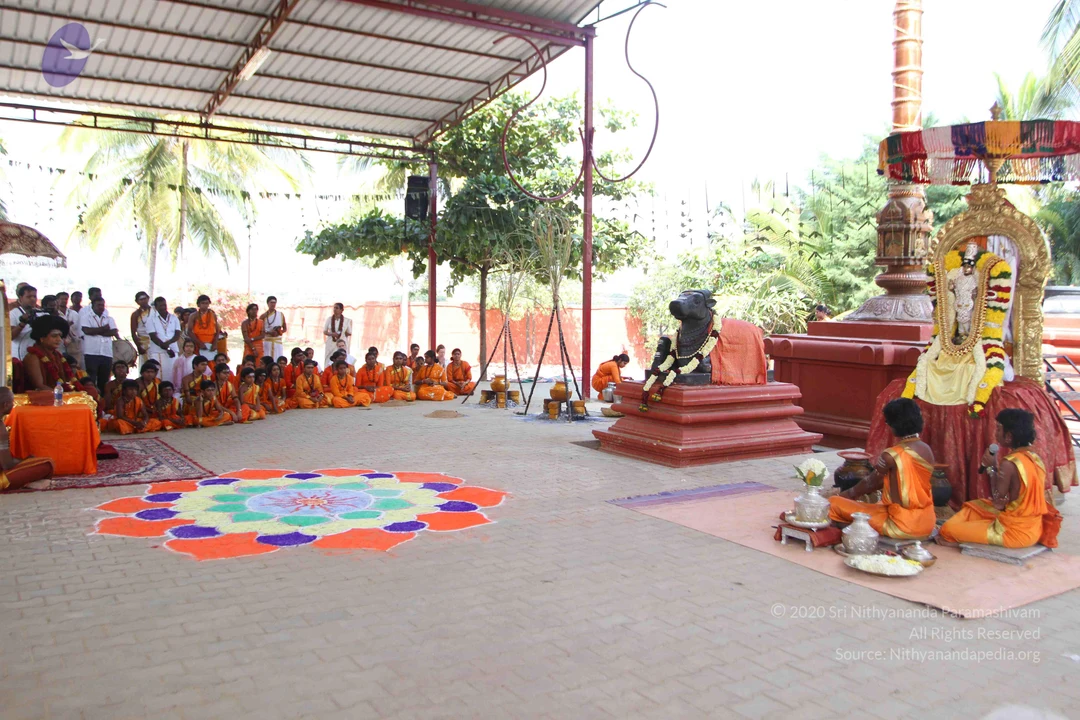
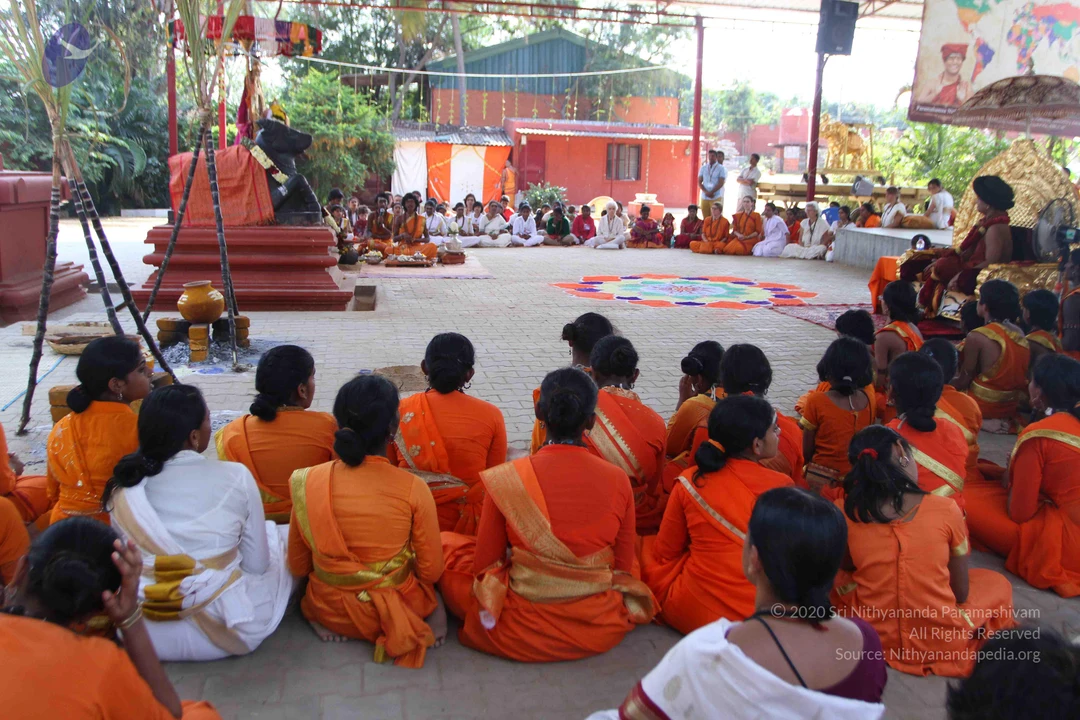
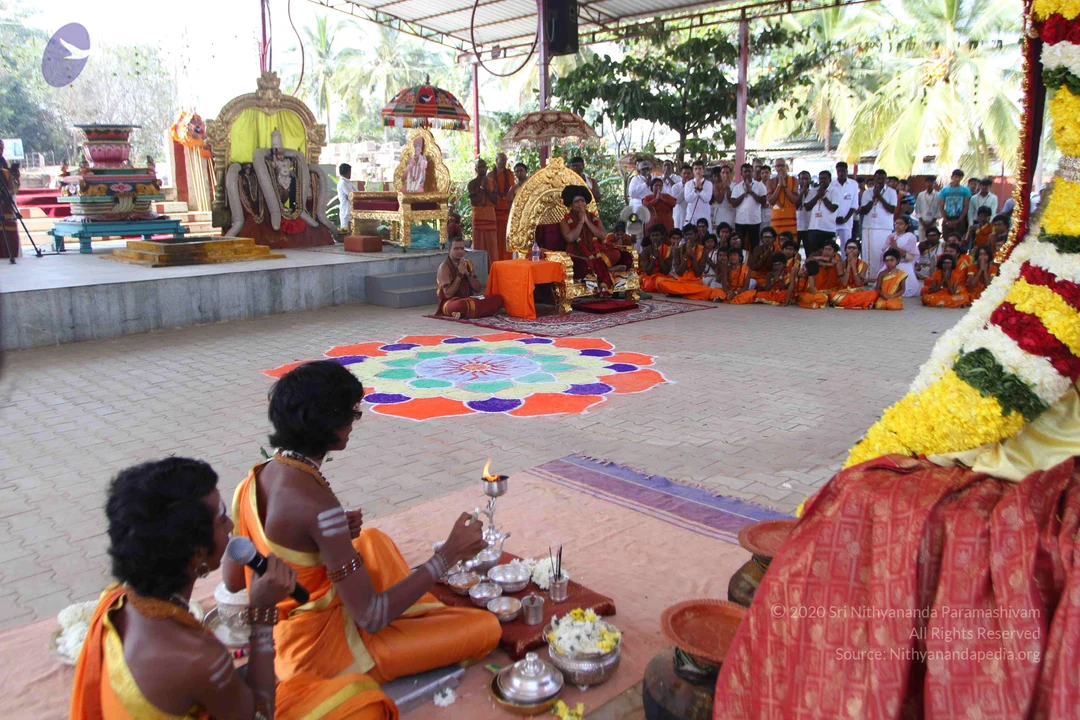
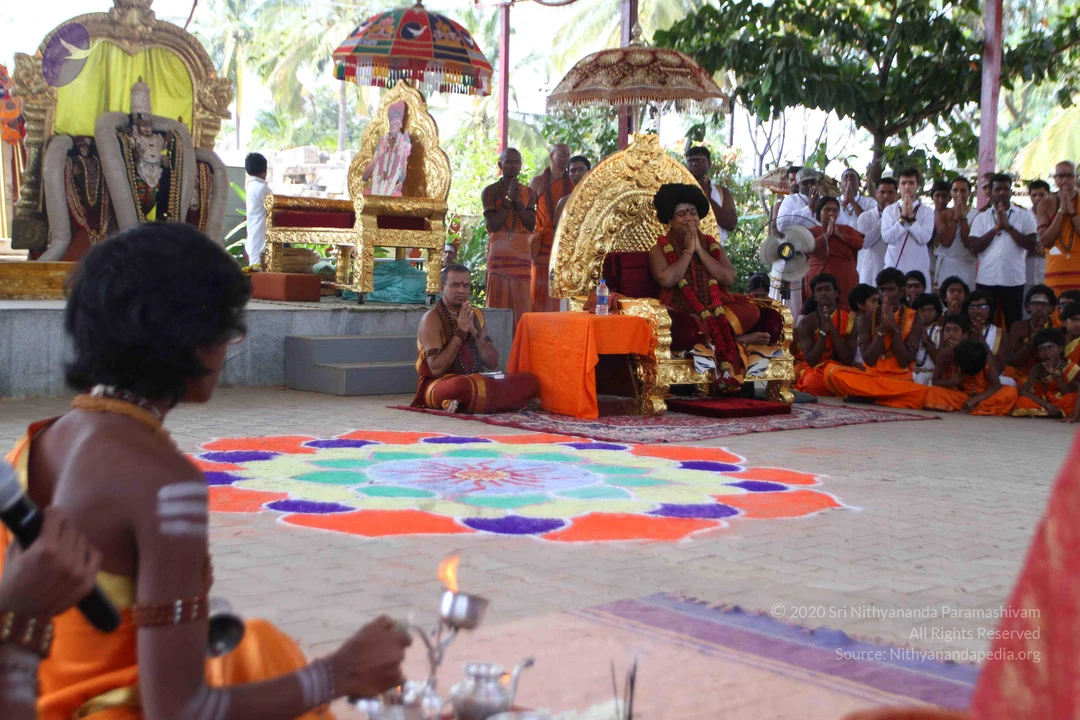
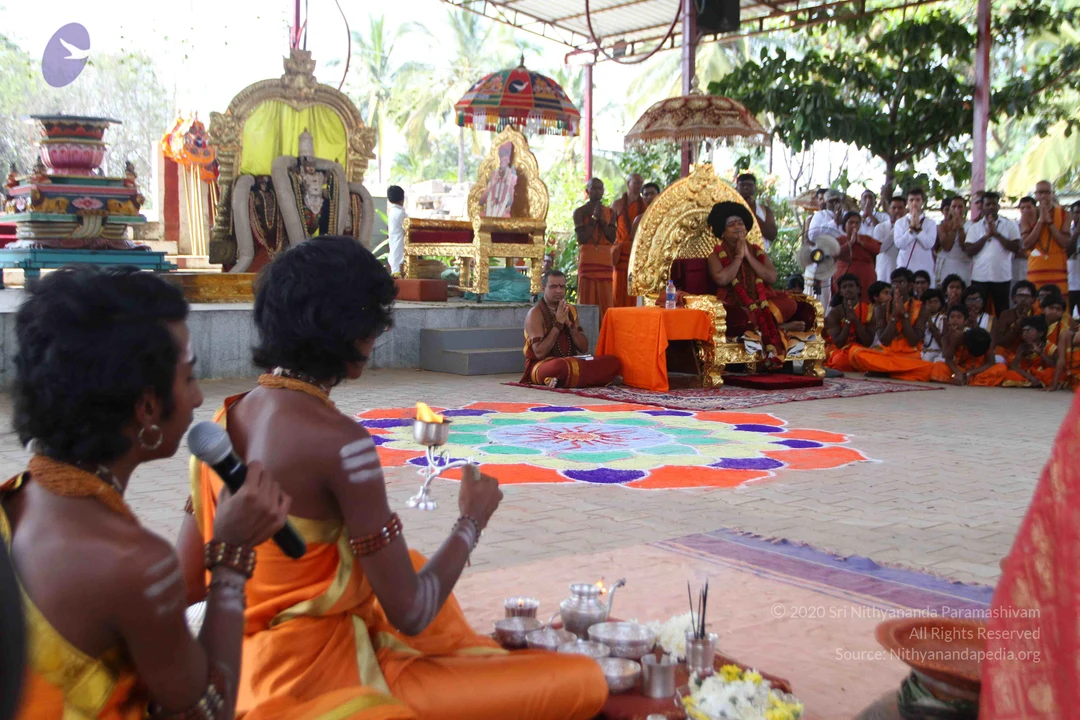
Outdoor temple-style worship at a shrine with a golden arch framing a deity murti draped in a red-and-gold cloth and wreathed with yellow and red-white flower garlands. Two devotees in saffron-orange dhotis kneel with hands folded in prayer, one with white horizontal markings on the body, and a woman in white sari with a rudraksha mala kneels at left stirring or serving from a small plate. A standing man in saffron robes with a mala holds a small object at left, and a cameraperson in white shirt films the scene at right. Clay pots, brass vessels with a flower arrangement, and lamps sit on the platform before the deity, with palm trees behind.Outdoor puja scene under a pink canopy with fringed tassels. A gilded arched shrine frames a small white deity murti adorned with gold jewellery and garlands of yellow and white flowers, seated on a draped gold cloth over a red patterned base. In front, a man in an orange dhoti-style garment and orange shawl sits with his palms pressed together in prayer, with white markings on his arms. Before the shrine are brass and silver vessels, bowls of offerings, a flower arrangement, incense sticks and a clay pot pair. Palm trees stand behind; a man in white with a mala and a woman in orange are visible in the background.Outdoor Pongal celebration under a open-sided shelter with palm trees behind. In the foreground, two young performers in saffron-orange dhotis and shawls with gold borders, wearing beaded necklaces and bangles, sit cross-legged; one holds a small object near a metal plate of rice and offerings, the other holds a microphone-like stick. A colourful rangoli covers the floor. Behind them, a figure in a red-and-gold robe sits on an ornate golden peetha/throne under a decorated umbrella, with a seated group of children and adults in orange and white clothing in front. A brass kalasha pot, a lamp, and a brass bowl of white flowers and grains sit in the foreground. A deity murti with a golden backdrop stands at the left. Roughly 20 people are visible in total.Outdoor ritual gathering under a pavilion with palm trees. A seated figure on an ornate gold throne with a red-and-gold back, wearing a black cap, a red shawl and a red-and-white garland, sits above a colourful geometric kolam rangoli on the paved floor. In front, a bare-shouldered person in orange and yellow cloth, with white body markings, sits on the ground with a microphone and a hand over ritual vessels, lamps and a brass dish. Around the throne, people in orange and white garments stand and sit, including a row of children in orange cloth on the right. Red and gold parasols and an orange-draped table stand nearby.Outdoor temple courtyard under a corrugated roof during a Pongal celebration ritual. A large group of people in orange and white clothes sits in rows on the brick floor facing a colourful floor rangoli of concentric circles in orange, purple, green and yellow. Near the center a black stone Nandi bull with a garland stands on a red pedestal. At right, a deity murti with yellow garlands sits within a gold arch beneath a canopy with fringed cloth. Two priests in orange robes sit on a pink mat beside brass vessels and flower offerings, one holding a bell or small object. A man in orange seated at left, and sugarcane stalks stand near the group. Palm trees and a tree appear behind the structure.Outdoor temple courtyard under a corrugated metal roof with palm trees behind. A large black stone Nandi bull sits on a red pedestal, draped with a garland, facing a gilded shrine with a deity murti decorated with yellow and white flowers and a fringed canopy. Two people in saffron-orange robes sit on a pink mat beside brass kalasha pots, flowers and oil lamps performing puja. Dozens of seated devotees in saffron and orange clothing face the ceremony in rows, while a few standing people in white and orange stand at the back. A colourful circular rangoli with petal motifs is drawn on the paved floor in the foreground.

Glimpses from KAILASA'S Pongal Celebration
6 photosSource gallery
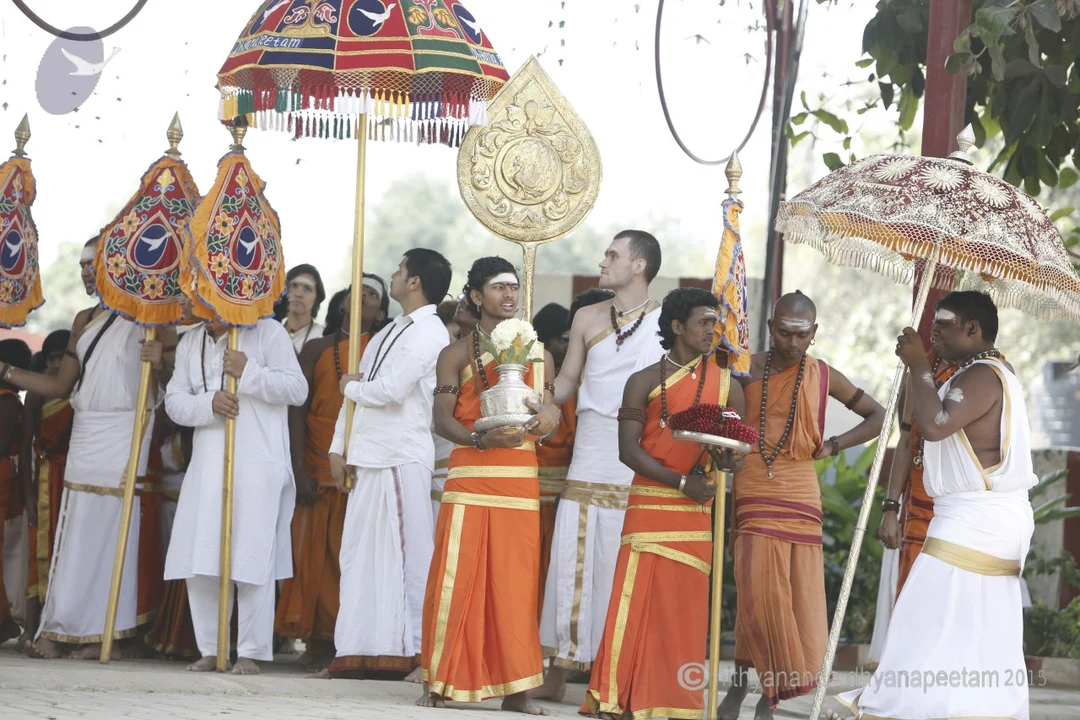
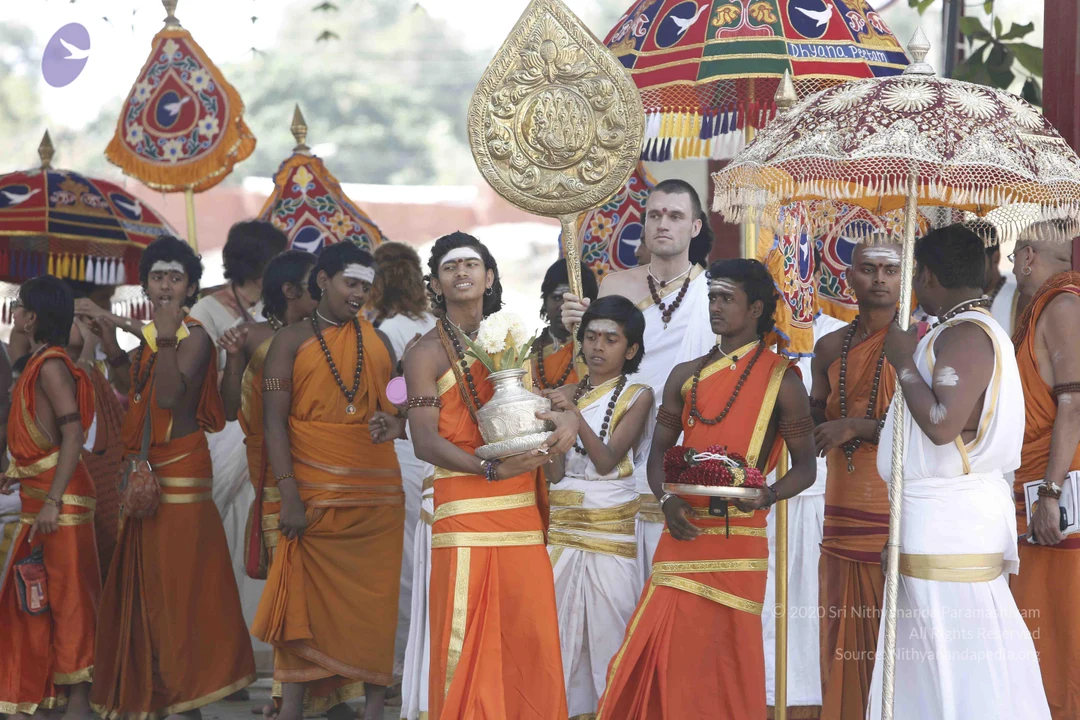
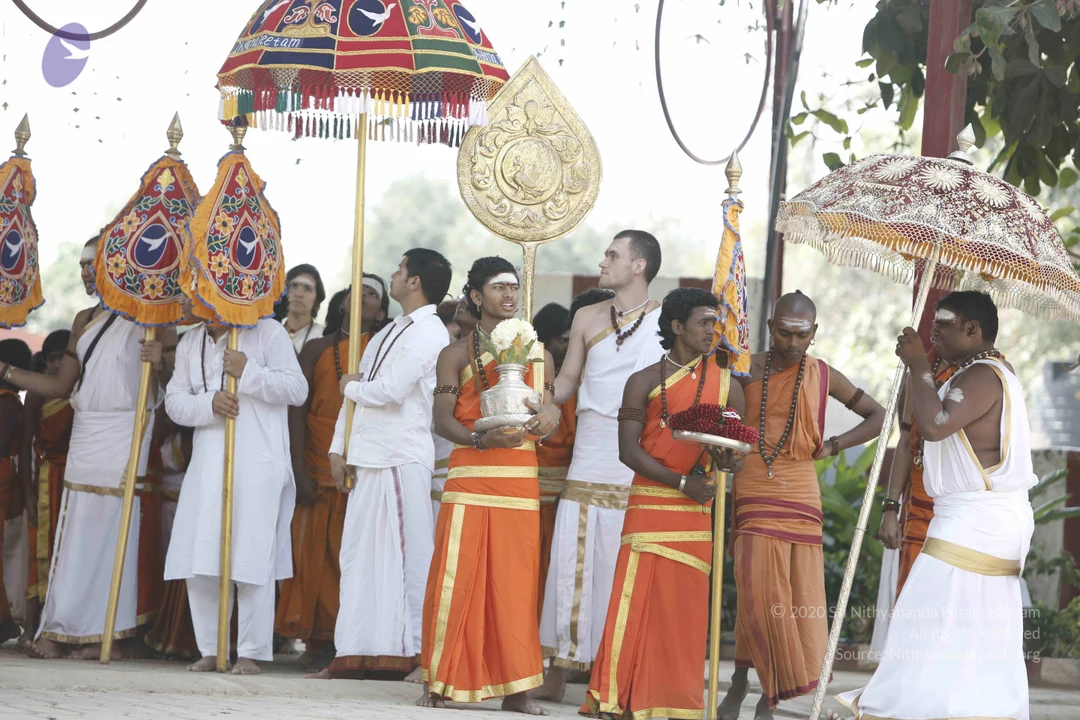
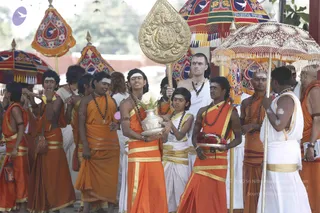
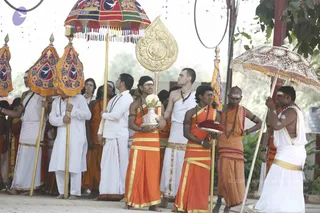
Outdoor procession at an ashram courtyard under a shaded pergola. Many devotees in saffron and orange saris and dhotis stand in lines, several in white ritual dress, holding small flags and incense. Colourful triangular pennants with embroidered borders line the path, and an ornate palanquin-style umbrella canopy with gold finials stands behind the crowd. On the right, a shaved-headed man in orange robes, rudraksha mala and a shawl stands at the edge; his appearance is consistent with a sannyasi, though a person identification is uncertain. A world map and a portrait panel are visible on the left wall.Outdoor procession of saffron-robed and white-clad devotees carrying ritual items. In the centre, a young man in an orange dhoti and orange shawl with rudraksha beads and a sandalwood tilak holds a silver kalasha vessel with white flowers. Beside him, a boy in white dhoti and gold-bordered cloth holds the vessel's support, and another man in orange holds a tray of red flowers. Behind them, a bare-chested man in a white dhoti and garland holds a large gold ceremonial fan-shaped standard, while a man in white holds a decorated parasol. Several parasols in red, green and cream with fringed edges are visible overhead. Ash markings and white forehead lines are common among the participants. No clearly identifiable a person is visible.A procession of devotees in a courtyard during a temple-style ceremony. Several men in saffron/orange dhotis with gold borders and rudraksha malas carry ceremonial items. One young man in orange holds a silver pot with white flowers, while a man in orange holds a silver tray of red flowers. A man in white dhoti with a bare chest and a sacred thread stands beside them. Behind, men in white dhotis hold tall gold poles topped with ornate red, gold and orange parasols and a large gold ceremonial disc. A man in white dhoti at right holds a decorated umbrella, with white markings on his body. Several other participants in white and orange stand in the background among trees.Three saffron-robed figures walk along a paved road through a rural campus lined with trees and a red brick wall. The central figure, with long dark hair swept up and rudraksha beads, holds a bright yellow umbrella over the group. A dark SUV with an orange flag or sticker sits on the road behind them, and a woman in a green sari stands near a gate on the left. The central figure shows distinctive long hair and beads in saffron clothing, so this is a person candidate, but the figure is distant and the appearance is uncertain.Outdoor photograph of a paved village lane lined with trees, a red boundary wall and a green gate. Three saffron-robed sannyasis walk toward the camera; the central figure wears a dark turban and a rudraksha mala, and a bright yellow parasol is held over him by the figure on the right, who also wears a mala. A black SUV with a small placard follows behind them, and a woman in a green sari stands near the gate on the left. Another robed figure is visible farther back. The sannyasis are the subjects, their roles as escorts and attendants clear from their position, not from any identifiable face.Three saffron-clad men walk along a paved path lined with trees and a red wall. The central figure, with long swept-up dark hair, a crown-like topknot, a rudraksha mala and a long rudraksha garland, is shaded by a yellow umbrella held by a man on the right, who wears an orange dhoti with yellow borders, a rudraksha mala and bangles. A man on the left in a similar orange dhoti with yellow borders and a rudraksha garland walks beside them. A parked dark SUV and a woman in a green sari carrying a child are in the background. The central figure's long hair, saffron robe and rudraksha adornments are visible appearance cues, and he is shaded by an umbrella as he walks, consistent with a probable Swamiji (probable) in a procession-like walk.

Glimpses from KAILASA'S Pongal Celebration
22 photosSource gallery
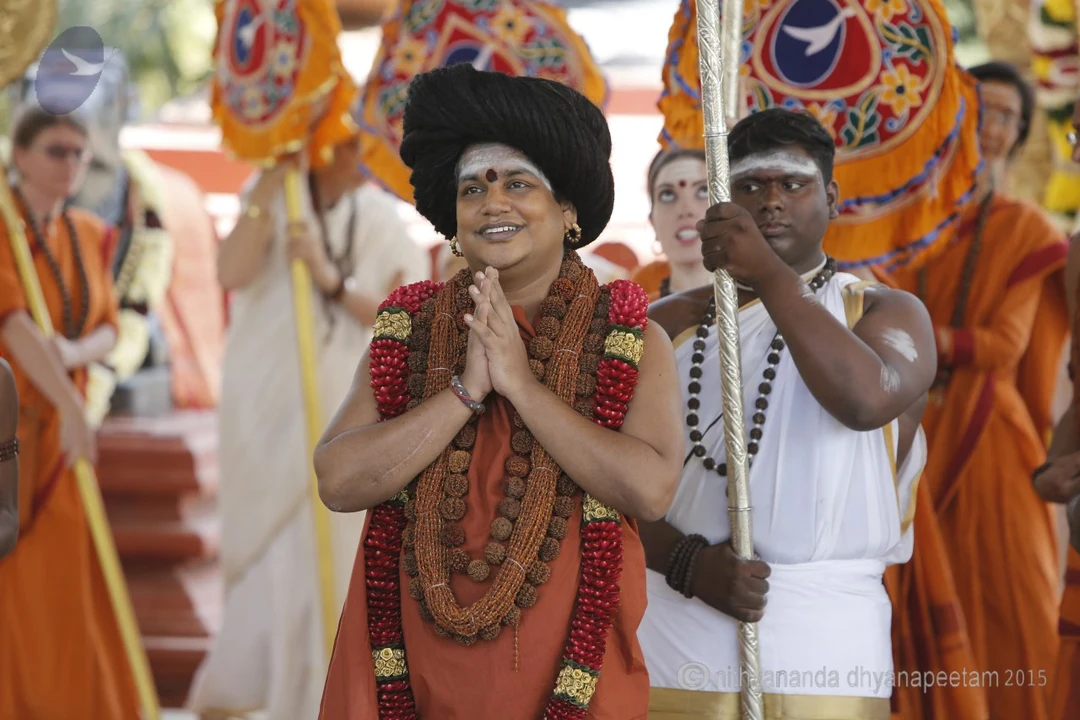
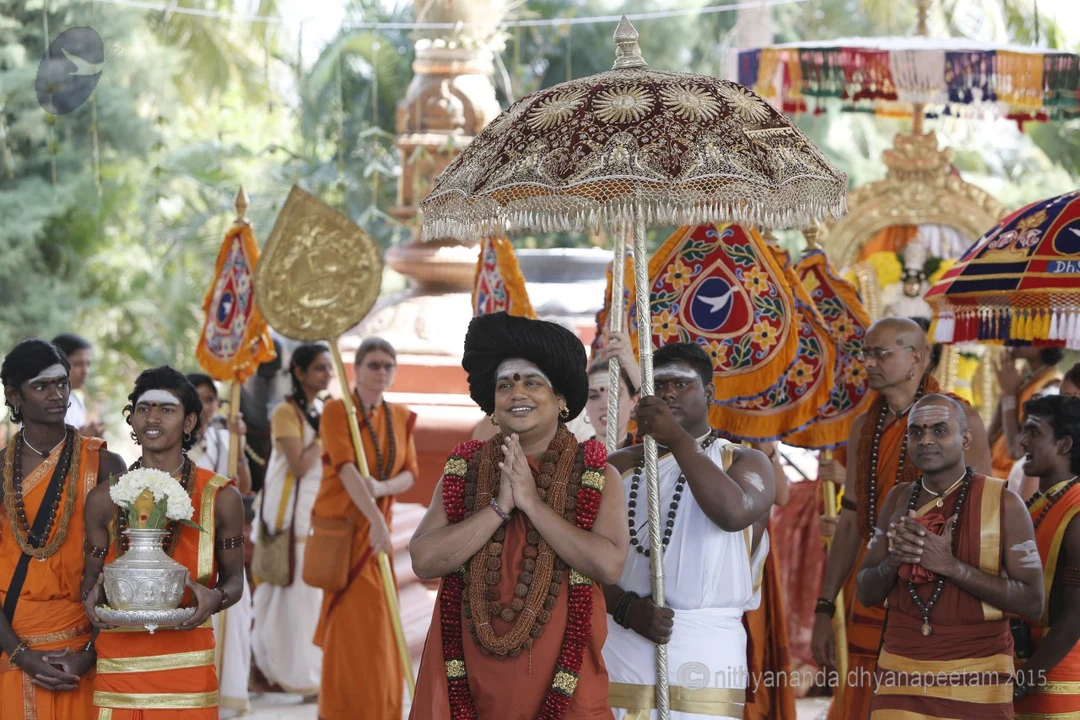
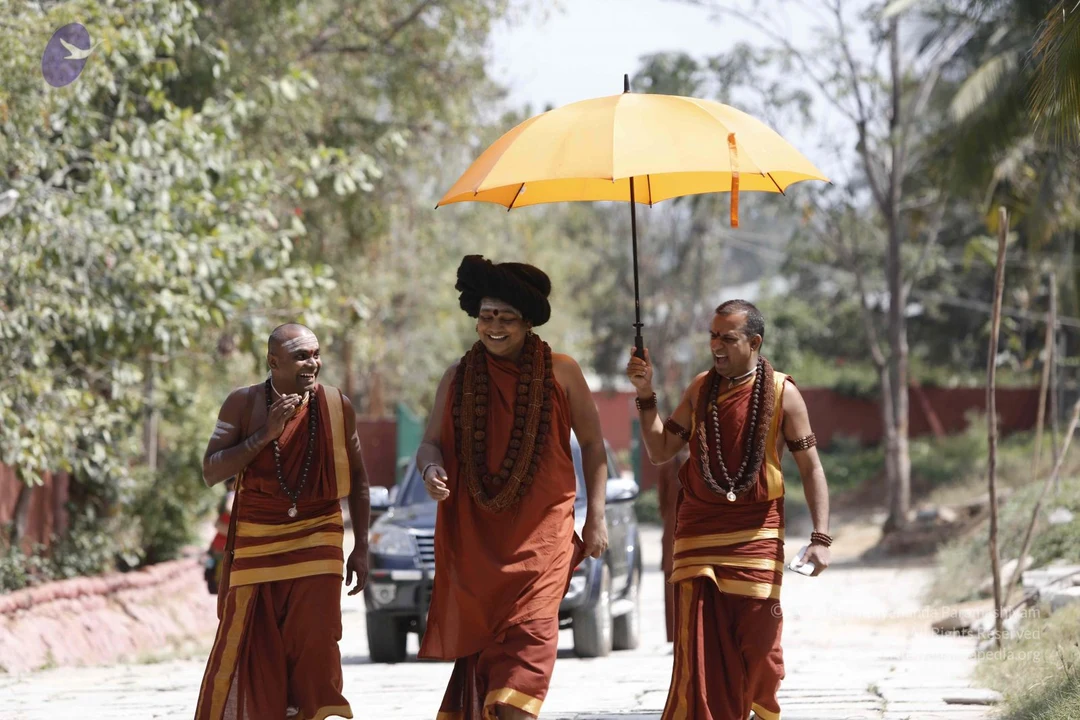
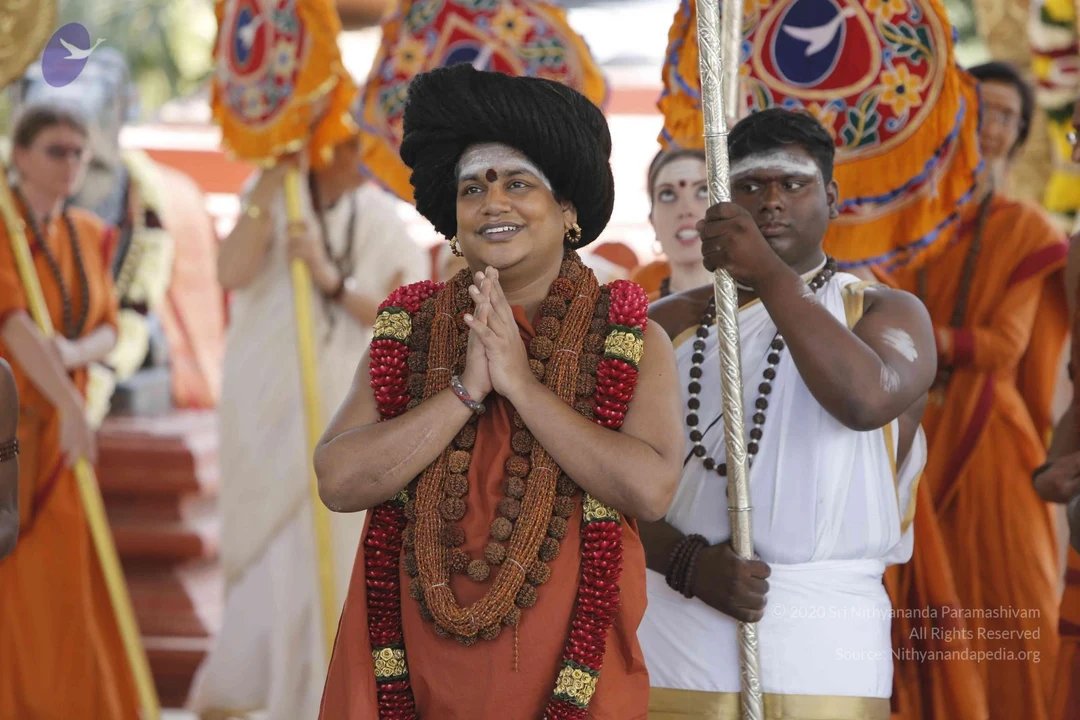
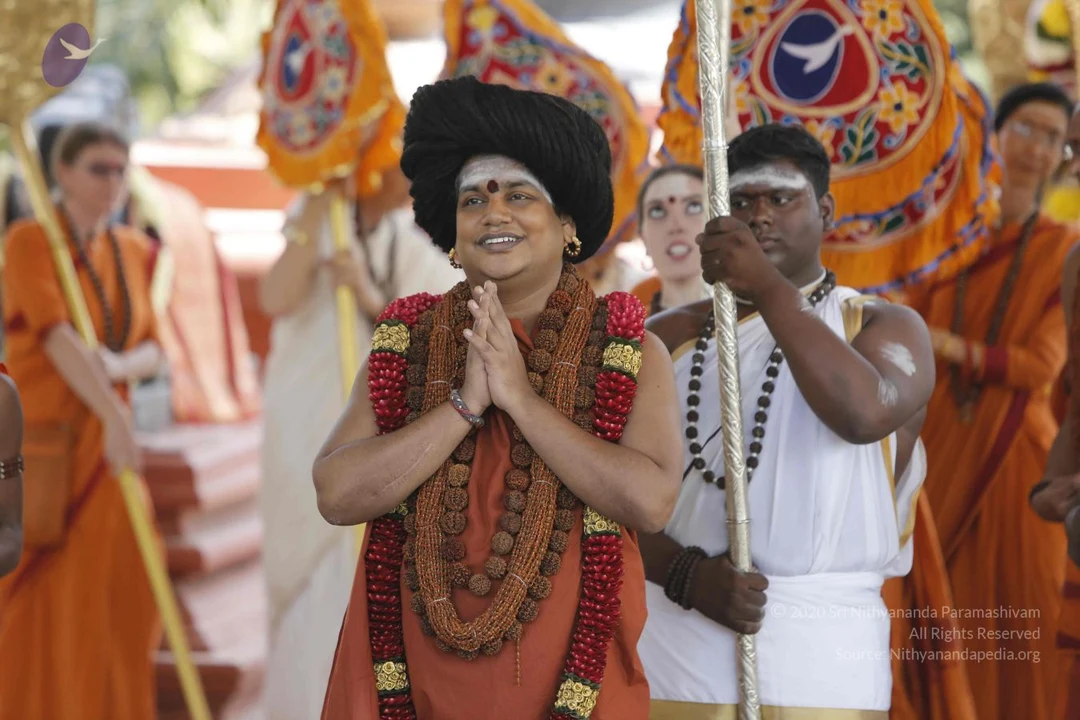
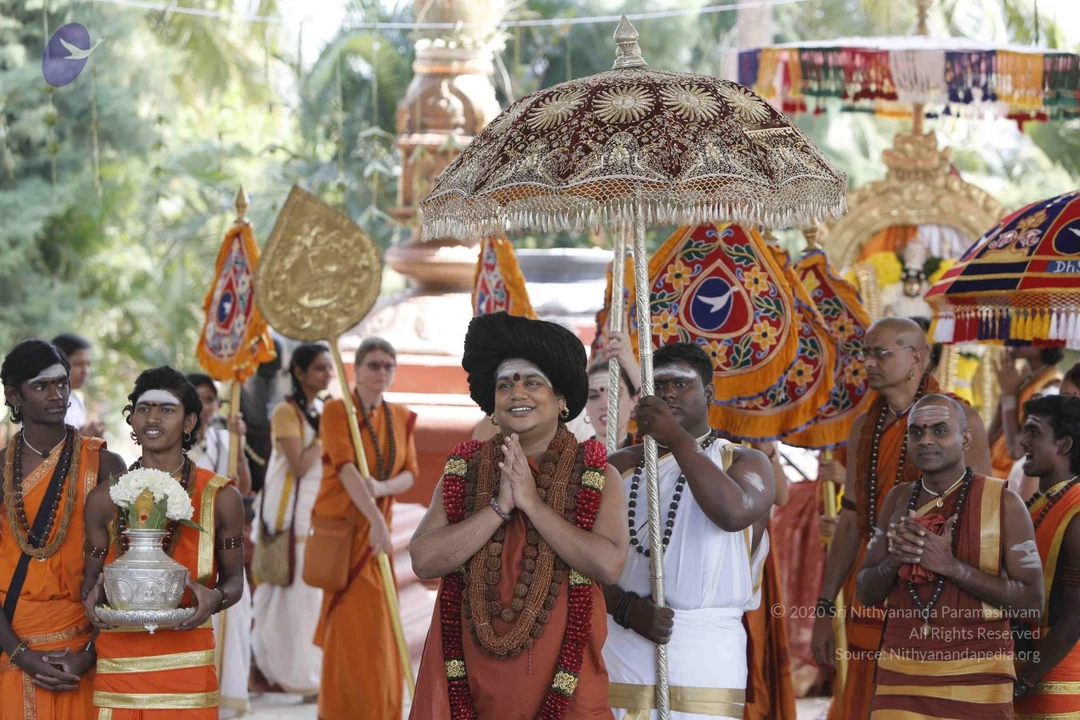
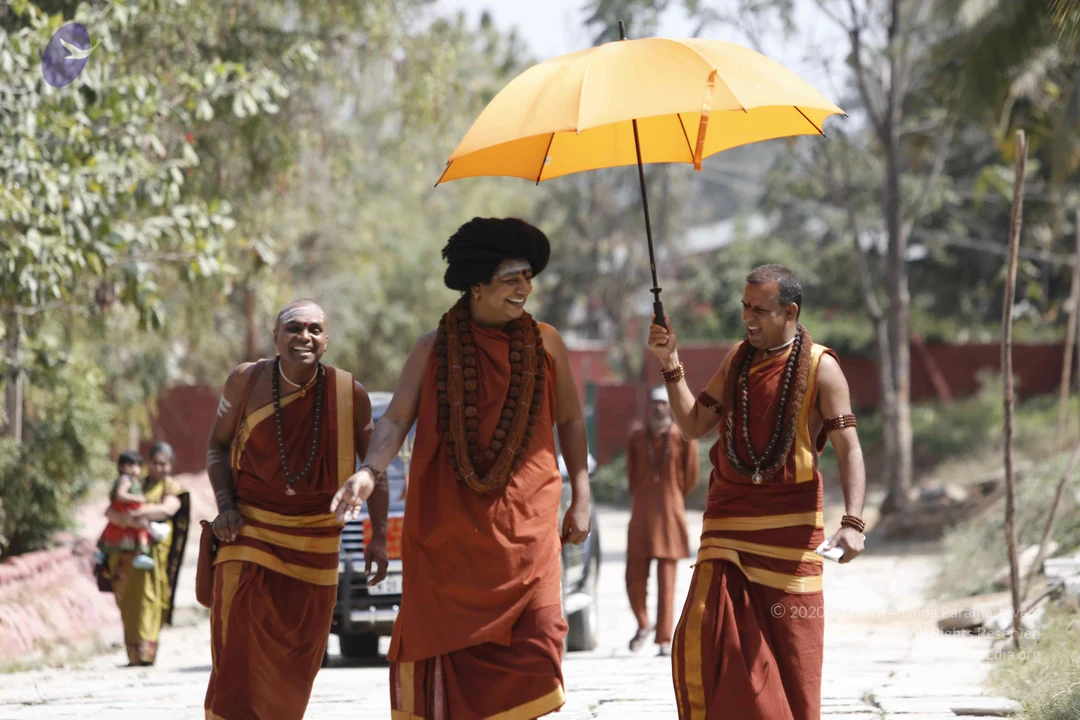
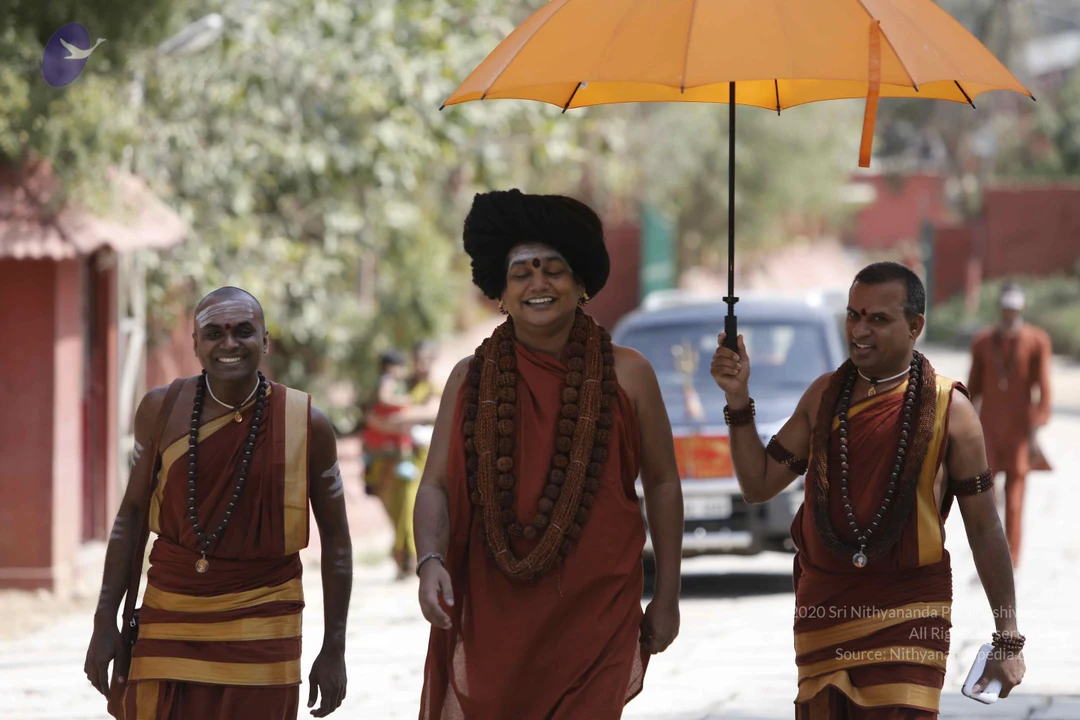
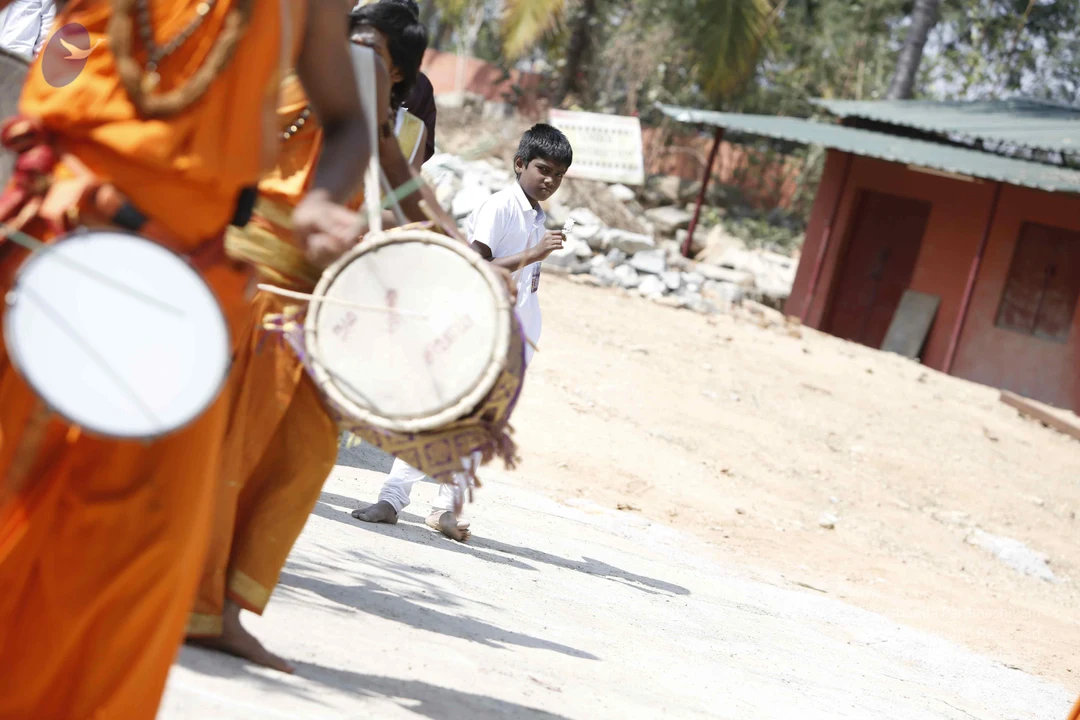
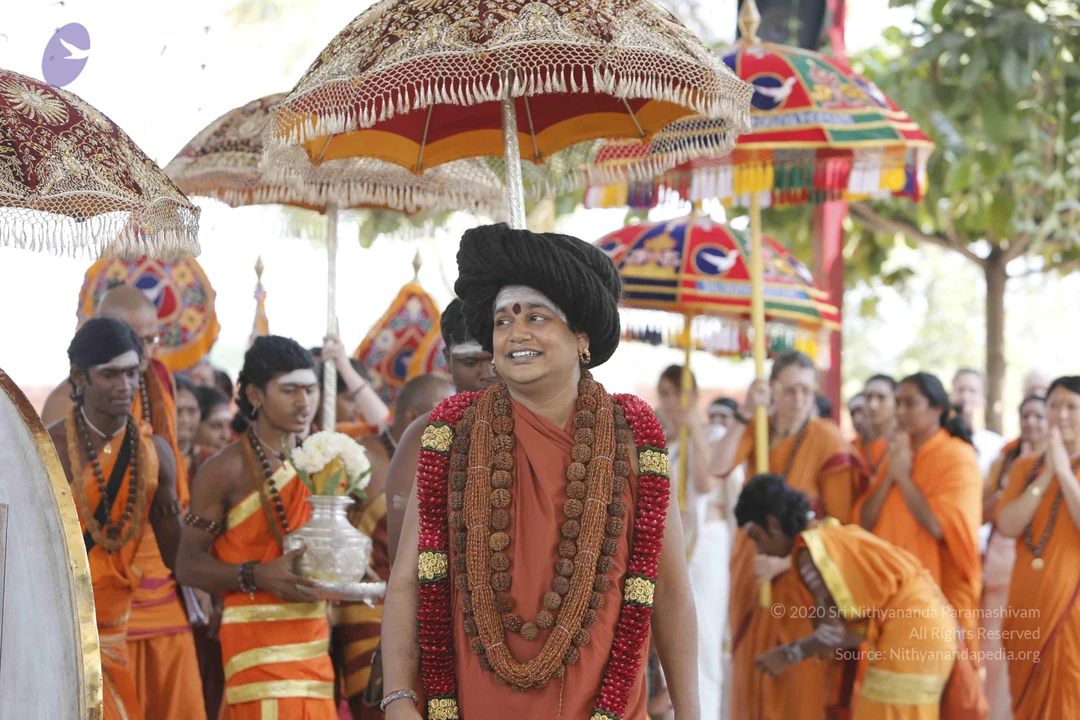
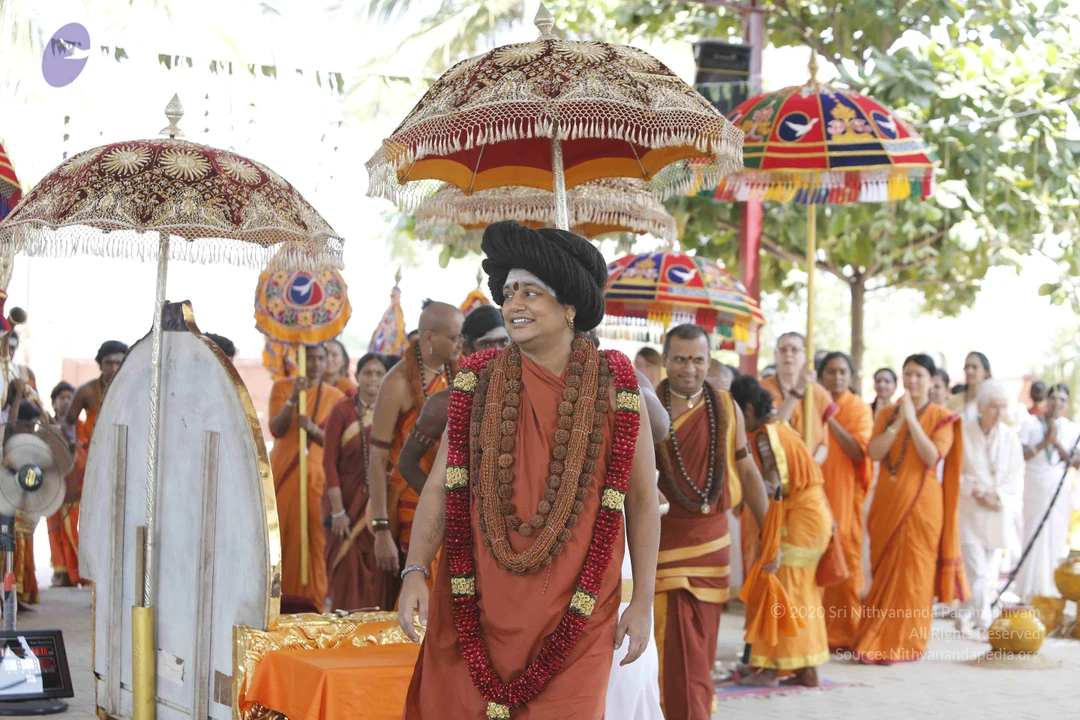
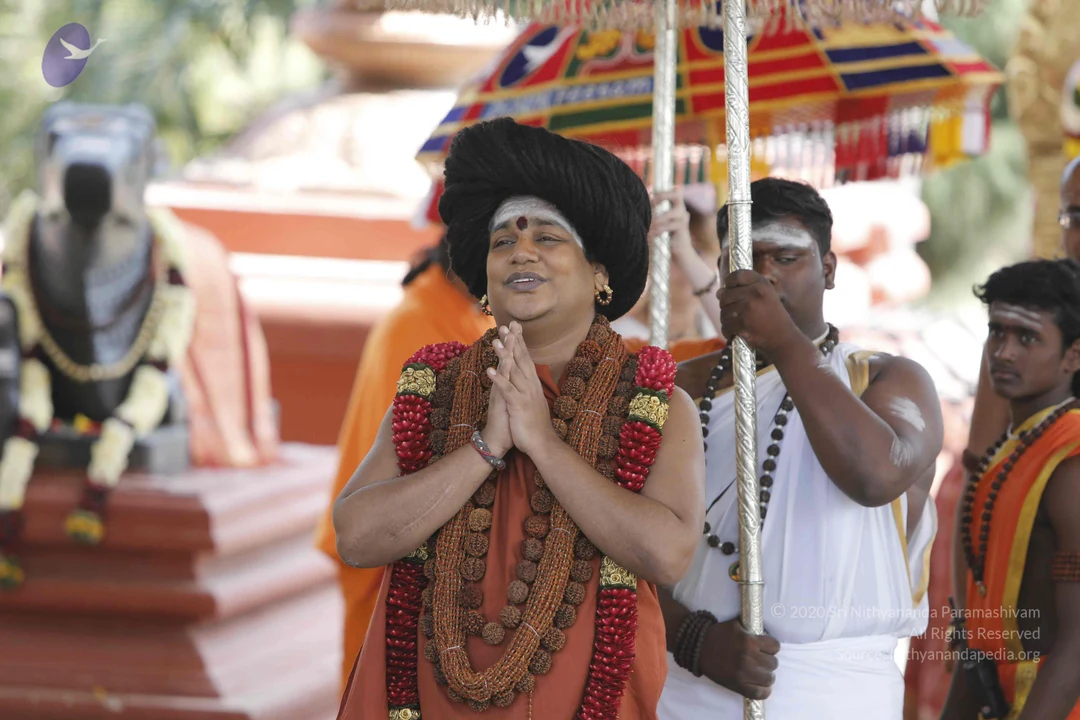
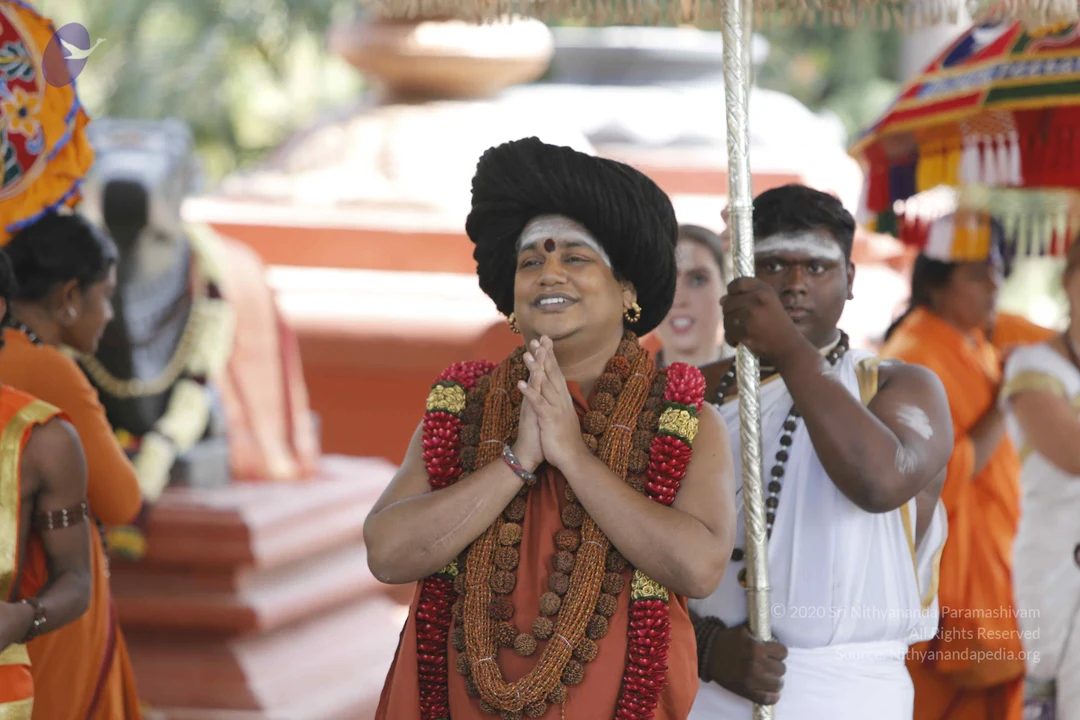
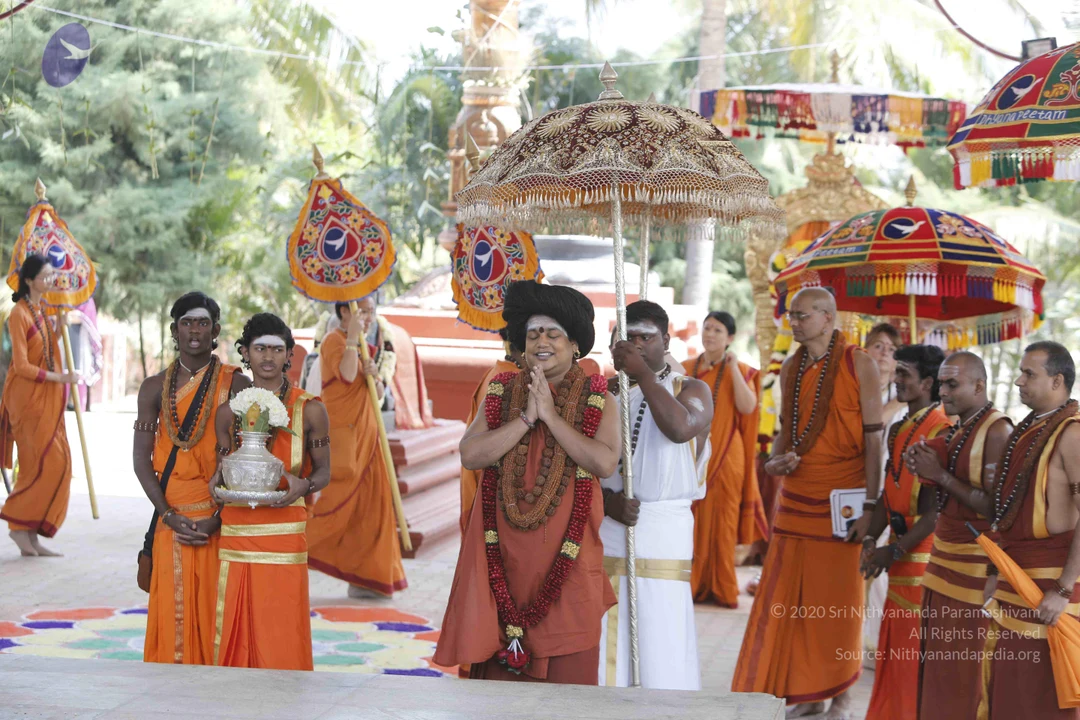
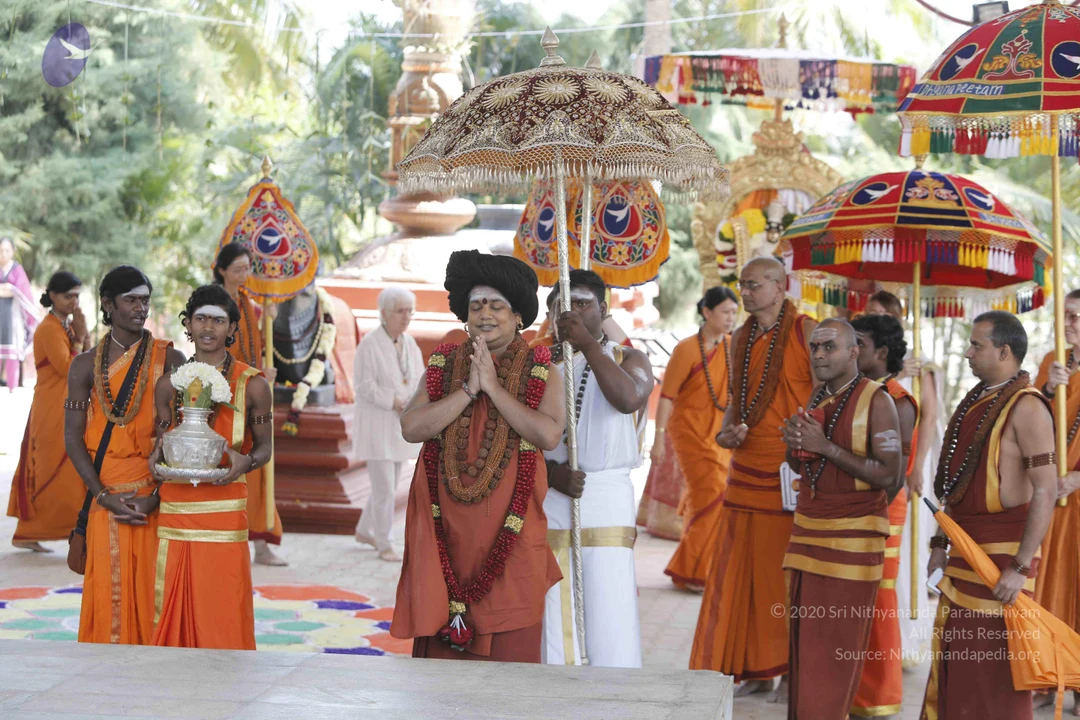
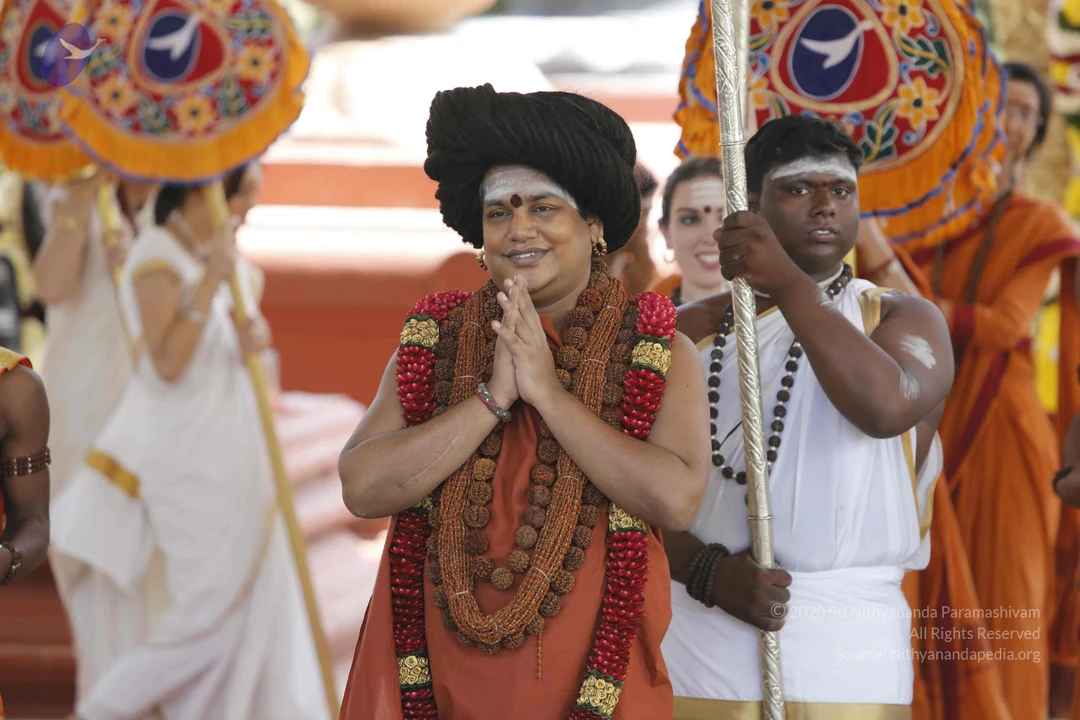
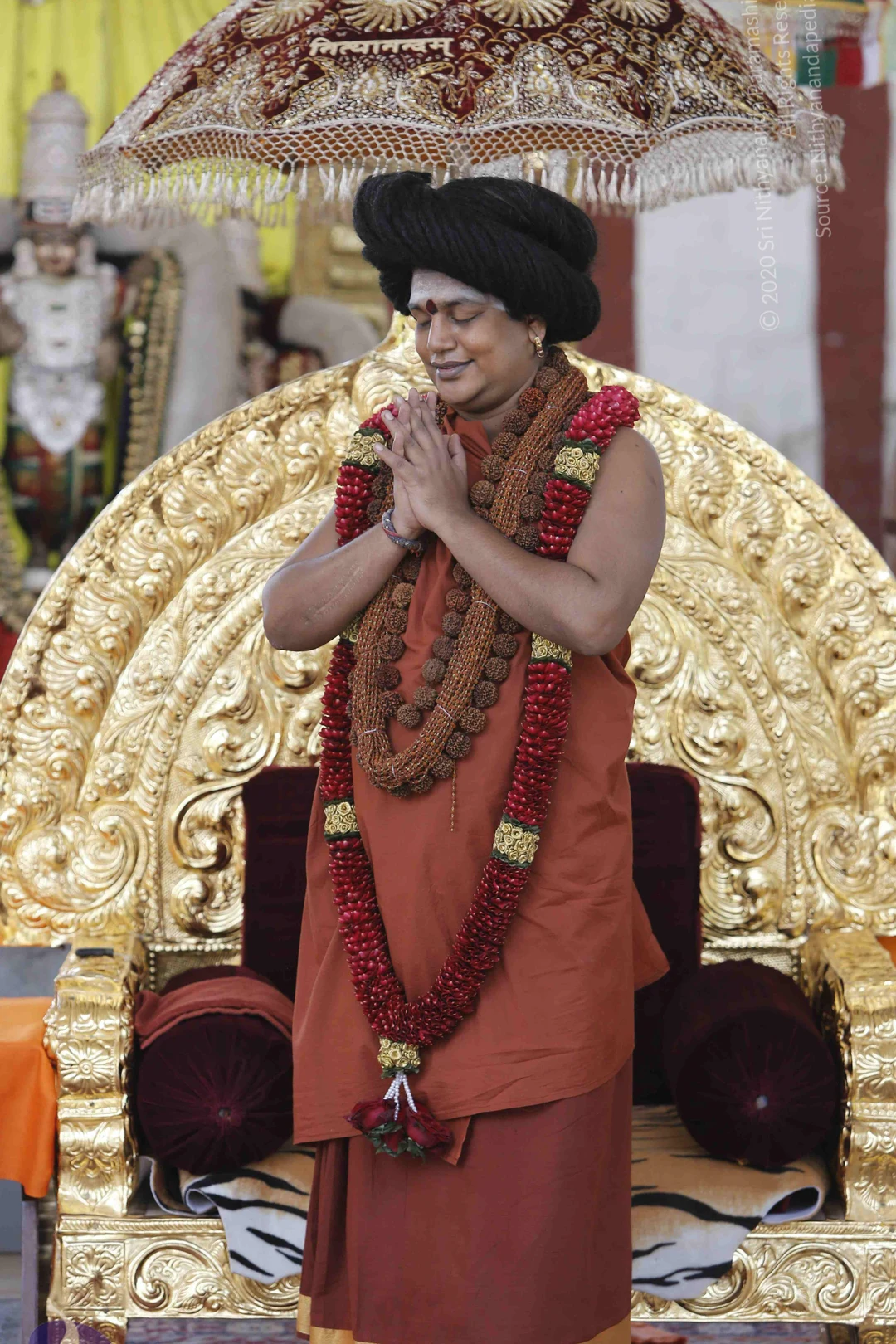
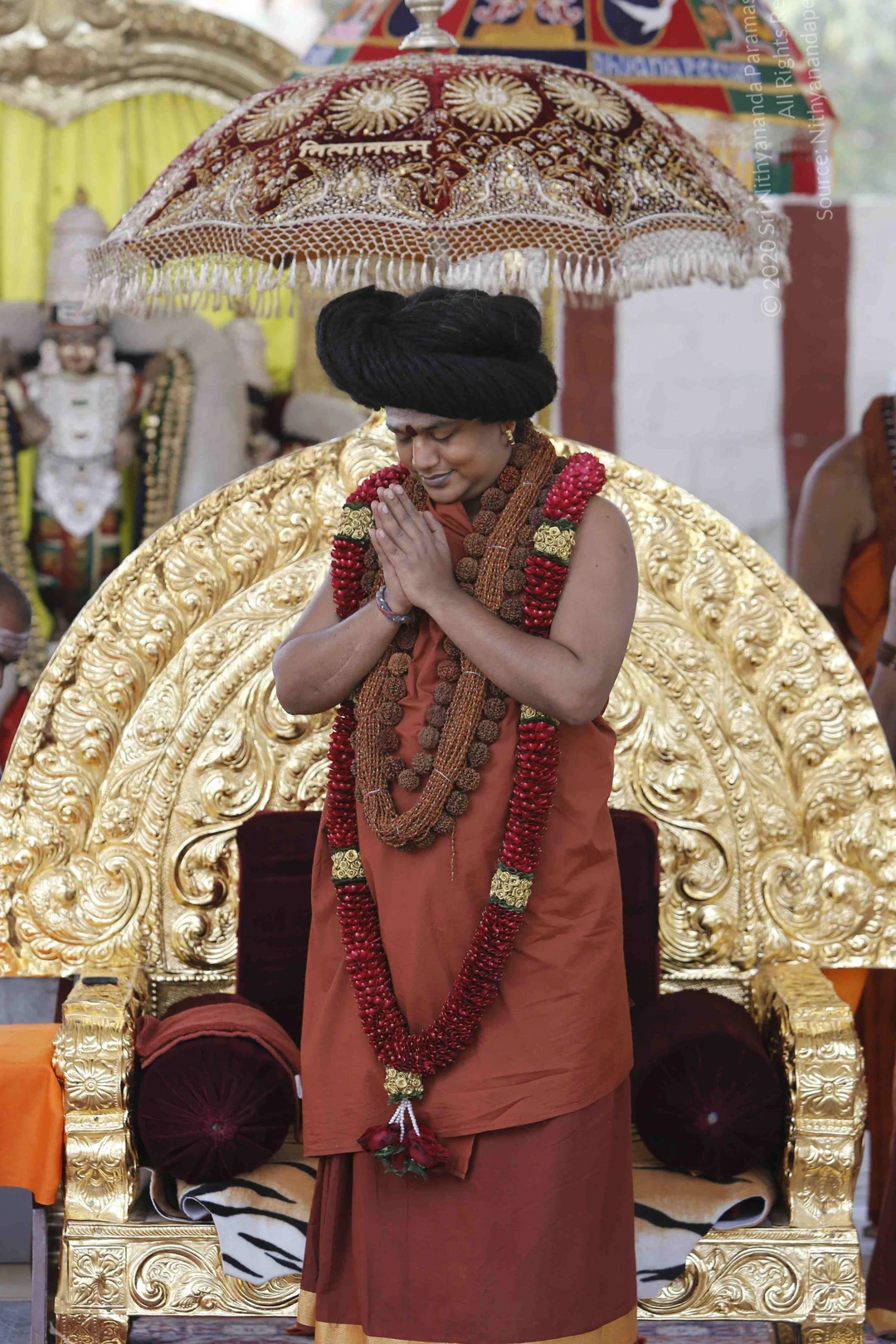
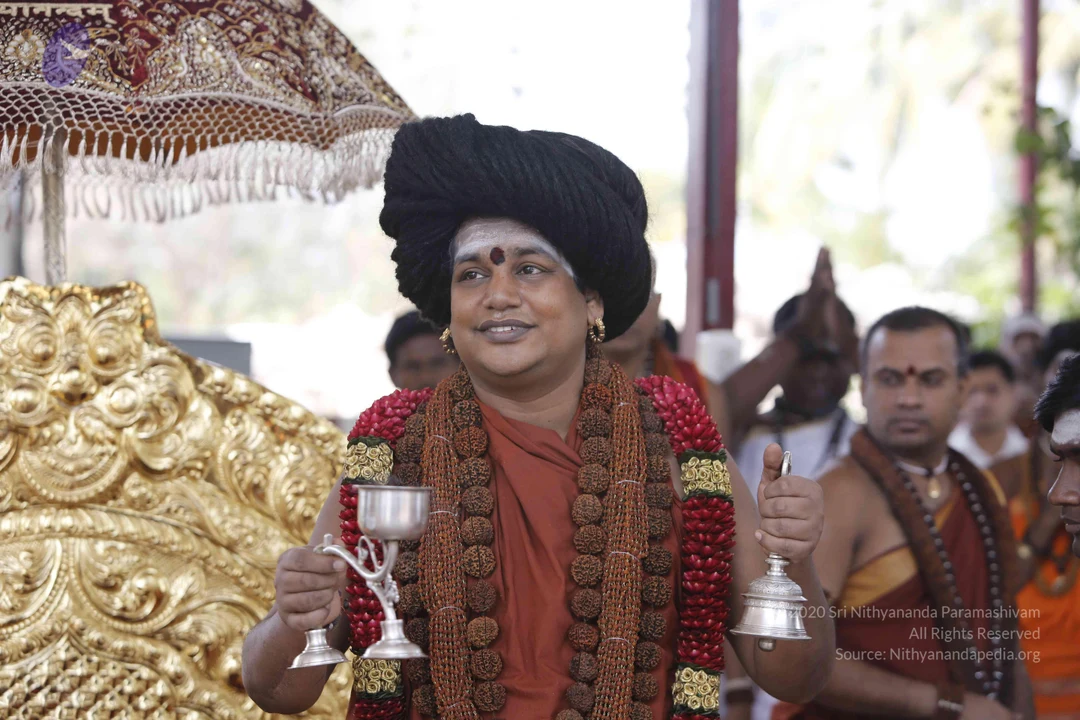
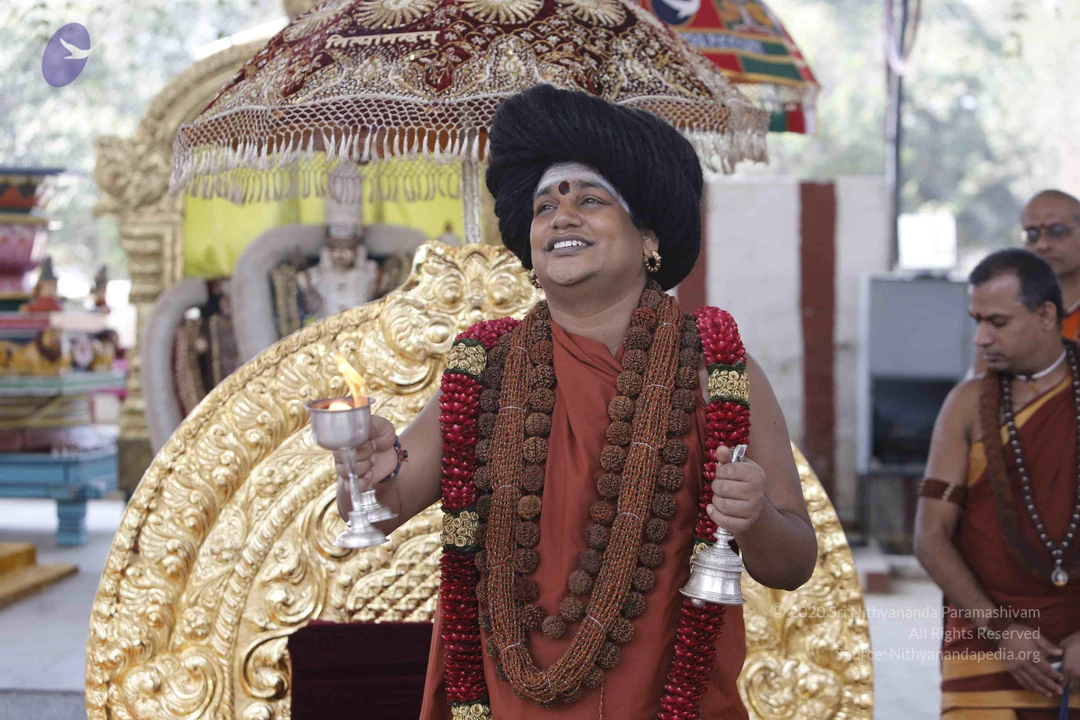
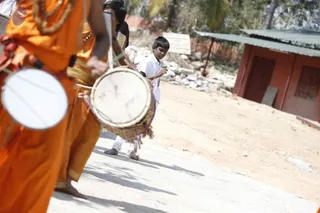
Three men in saffron-orange robes walk down a paved path lined with trees, smiling. The central figure has long swept-back dark hair, a large rudraksha mala with a tiered bead garland, and a saffron wrap; he is shaded by a bright yellow umbrella held by the man on the right. The man on the left wears a gold-edged saffron dhoti and rudraksha mala, and the man on the right wears a gold-bordered saffron dhoti with beaded bracelets. In the background a woman in a yellow sari holds a child, and another saffron-robed figure walks behind. The scene suggests a procession or ashram walk, with a parked vehicle and red wall behind.Three men walk along a paved road in a sunlit ashram setting, with green trees and red-walled buildings behind them. The central figure wears a tall black turban-style headwrap, orange-red robes, a thick rudraksha mala, and a tilak on the forehead, and is smiling with eyes closed. A man on the right holds a bright orange umbrella over the group and wears a rudraksha mala, a gold chain, and dark bangles, with orange-red robes edged in gold. A man on the left, wearing orange-red robes with gold borders and a rudraksha mala, smiles at the camera. A vehicle and another robed figure appear in the background.A photograph of a drum procession on a dirt-and-concrete path. In the foreground, blurred figures in saffron-orange clothing play a drum with a white drumhead and a yellow-patterned frame. Behind them, a young boy in a white shirt and white dhoti walks barefoot, looking toward the camera and holding a small object. Behind him stand more people in orange, a red-brick building with a green corrugated roof, a stone pile, and palm trees. The scene suggests a festival drumming procession.A procession photograph of a central figure wearing a tall black turban, a rust-orange sleeveless robe, a long rudraksha mala draped over the shoulders, and a red flower garland with gold-coloured clasps. A white vibhuti line and red tilak mark the forehead, and he smiles while walking forward. Around him, young men and attendants in saffron-orange dhotis with gold borders carry a silver kalasha of white flowers, and ornate umbrellas with fringed red and gold canopies shade the group. Devotees in orange and white stand with hands folded, and one attendant bows low at the lower right. Cues in the image support a possible identification of the central figure as a person, who is shown walking in procession rather than seated on a throne.A procession of saffron-robed devotees and sannyasis walks along a shaded path, with ornate umbrellas in red, gold and maroon carried overhead. In the centre, a figure in an orange-red robe with a black turban-style crown, a long red and gold garland, and a dark rudraksha mala smiles while walking beside a white and gold palanquin with an orange cloth draped over it. Other people in orange and white clothes stand with hands folded along the route. a person appearance cues: black crown, rudraksha mala, ceremonial garland and saffron robe, in a procession context.A procession outdoors in front of a black stone Nandi bull statue draped with white and yellow flower garlands. In the centre, a person in an orange-saffron robe with a large black turban, sandalwood tilak on the forehead, and red and white flower garlands with rudraksha beads stands with palms pressed together in namaskar, eyes closed. Behind them a man in a white dhoti and white shoulder cloth holds a silver umbrella pole under a red, yellow and blue canopy, and a bare-chested man with white ash markings and rudraksha mala stands at right. Orange-clad attendants and red-and-white pillars frame the scene.

Glimpses from KAILASA'S Pongal Celebration
18 photosSource gallery
A Pongal cooking ritual outdoors on a paved courtyard. A woman in an orange sari kneels at a brick hearth, feeding wood into a fire beneath a clay pot marked with white paste. Beside her, a man in a white shirt and white dhoti crouches and tends the flames. Sugarcane stalks are tied in a tripod over the pot. Standing behind are women in orange and white saris, one holding a brass vessel, and a partly visible figure in orange. Clay pots and banana leaves lie nearby. The man's appearance does not clearly match the a person candidate, so his identity remains uncertain.Outdoor Pongal celebration on a paved courtyard under a open pavilion. Two women in saffron-orange saris kneel at clay stoves built from bricks, tending small fires beneath clay pots boiling milk for Pongal. A man in white dhoti and white shirt kneels between them, attending the pot. Bundles of sugarcane stalks are tied into tripod frames above the stoves. Standing behind, a row of women in orange and white saris watch, one holding a brass lamp. Palm trees and foliage surround the courtyard, with a camera operator and a seated onlooker in the background. A pot is marked with a decorative design, and banana leaves and brass vessels lie on the ground.A photograph of a Pongal ritual. A woman in an orange sari with a white and red forehead mark and a beaded necklace kneels beside a yellow clay pot placed on stacked yellow bricks over a wood fire, its neck covered with green leaves and marked with kumkum. Sugarcane stalks lean around the pot. Behind her, women in orange saris and white garments stand in a blurred courtyard, with colourful rangoli patterns on the ground. This visual shows the boiling-pot offering ritual of the Pongal harvest festival.A Pongal celebration in an outdoor courtyard: a clay pot filled with milk sits over a wood fire on stacked bricks, with sugarcane stalks tied upright around it. Two priests in saffron and orange dhotis kneel at the fire; the nearer one, bald and with a rudraksha mala, tends the flames with sticks. A man in a cream kurta with a brown shawl and tilak kneels at right, watching. Behind them, people in white and gold-bordered dhotis stand near a brass vessel. A smaller clay pot sits in the foreground.Pongal harvest ritual outdoors under a tree canopy. Several devotees in saffron and orange clothing with rudraksha malas stand around a clay fire hearth where a pot of milk or rice boils over burning wood. Sugarcane stalks with leaves are tied upright beside the hearth. A man in orange dhoti kneels at left near a yellow clay pot, and a man in white dhoti and shawl kneels at right tending the fire. Smoke rises through the scene. Several women in orange saris and white attire stand watching. The pot is decorated with white markings. Approximately ten to twelve people are visible.A Pongal ritual outdoors where a clay pot is boiling over a brick hearth of firewood, with white lines painted on its rim. Sugarcane stalks stand upright around it. A shaved-headed man in orange cloth and rudraksha beads crouches at left, beside a yellow clay pot on the ground. Another orange-clad man tends the fire at centre, and a figure in red-orange cloth at right feeds smoke and offerings. Behind them, people in white dhotis and orange garments stand holding brass vessels.

Glimpses from KAILASA'S Pongal Celebration
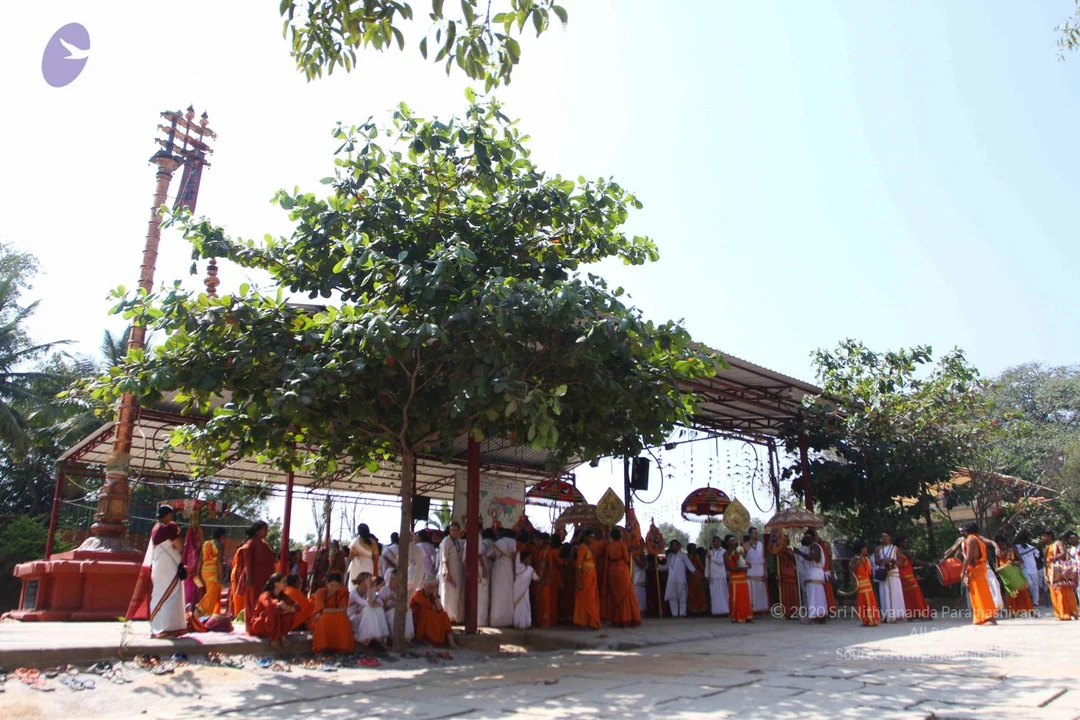
2 photosSource gallery
A smiling person with long swept-back dark hair sits on an ornate gold throne with carved floral scrollwork. They wear an orange-saffron robe, a red and white beaded garland, multiple rudraksha malas across the chest, a gold-edged ceremonial necklace, and a white vibhuti marking with a red kumkum dot on the forehead. Their eyes are closed in a joyful expression. A red velvet cushion and an orange flask are visible at the left edge. Swamiji (probable) appearance-based label; the figure is seated and enthroned rather than standing, with the cues of long hair, saffron robe and rudraksha malas.A smiling figure with a tall black turban and a white vertical mark on the forehead sits on an ornate gold throne with carved scrollwork and maroon velvet cushions. He wears an orange-saffron robe, a long rudraksha mala, and a red and white flower garland with gold ornaments. A small orange-capped steel flask sits on an orange table at left. Behind him, a standing attendant in orange robes holds a decorated yellow-fringed ceremonial umbrella with floral and blue motifs. a person seated in the centre as the principal figure; the attendant is a devotee. Two people are visible.

Glimpses from KAILASA'S Pongal Celebration
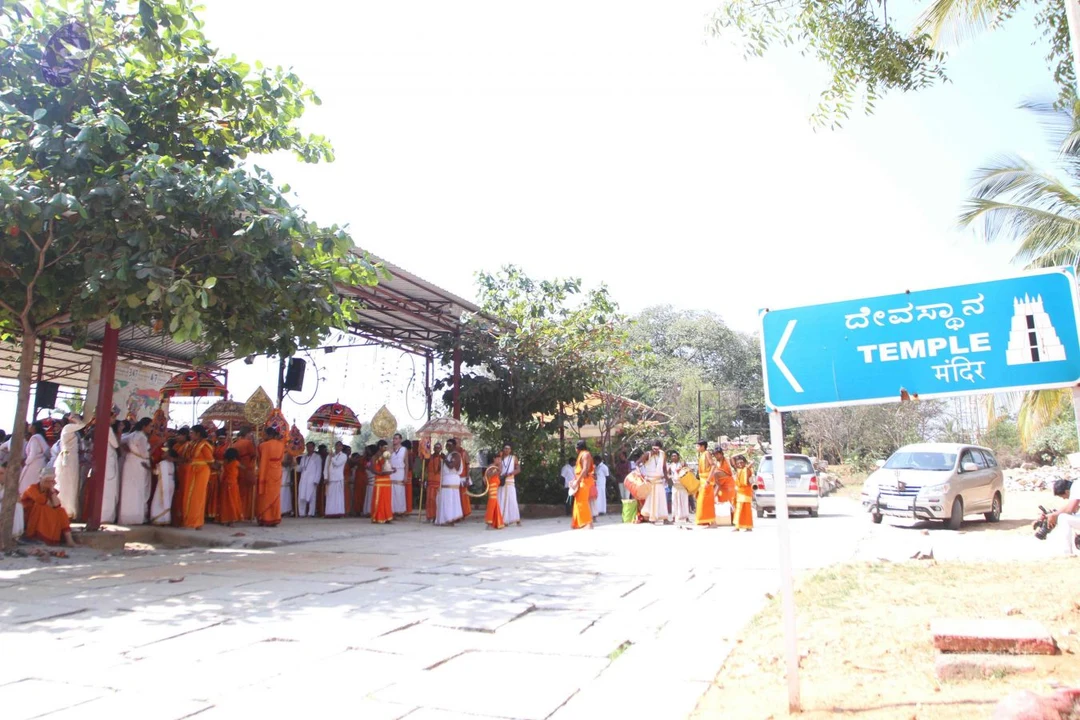
2 photosSource gallery
Photograph of a smiling man with a large black swept-back bun and a white-and-red forehead mark, seated on an ornate gold throne with carved scrollwork and a red cushion. He wears an orange-saffron robe, multiple rudraksha malas, and a garland of red flowers with gold-tinted sections, and gestures with one raised open hand. Behind him at right, a person holds a long pole with a yellow and red embroidered canopy umbrella. The presentation and cues (long swept-back hair, saffron robe, rudraksha malas, ornate throne) are consistent with Swamiji (probable), seated in the place of honour at an outdoor event.A smiling man seated on an ornate gold-carved throne with dark red cushions. He wears a tall black hair bun, white forehead markings with a red bindi, and an orange-rust ochre robe. Around his neck hang red and white flower garlands with gold-trimmed ribbons and layered brown rudraksha malas. He has small gold earrings and a red-and-silver bracelet on his wrist. A lidded orange-and-silver flask sits at the lower left. Swamiji (probable): the long swept-back hair bun, ochre robe, layered rudraksha malas and ceremonial throne are the qualifying cues, and the page identifies him as present at the Pongal celebration.
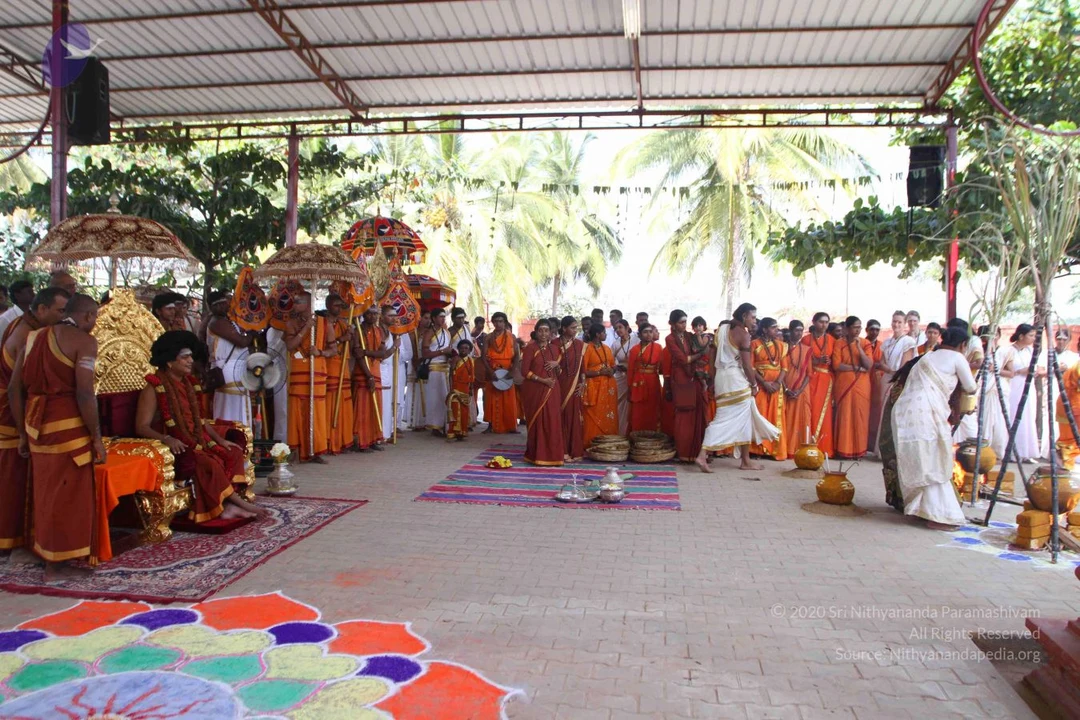
January 15 2016

175 photosView all
Photograph of a Pongal ritual outdoors under a canopy. In the foreground, a woman in a white saree with gold border stands at left, hands extended over a clay pot with a copper-coloured plate on top, where sugarcane stalks are tied together overhead. Two women in deep red sarees with yellow borders stand beside it, one with a rudraksha mala, their hands gesturing toward the pot. Behind them, figures in orange and saffron robes stand near saffron and multicolour ceremonial flags and a large golden throne-like seat. Colourful kolam rangoli designs decorate the paved ground. The scene shows a Pongal harvest offering with sugarcane and a boiling-pot ritual.A photograph of a festive outdoor procession at a courtyard, with many women and girls in orange saris and orange long skirts with gold borders, many wearing rudraksha malas and forehead markings. Several dancers hold short sticks mid-gesture while others clap and move in a loose group. Behind them, ornate golden palanquins with canopies and a gilded throne-like seat are carried, with men in white dhotis and onlookers near a colourful painted rangoli on the ground. A banner with a world map and a portrait is visible at the top. Students and attendees fill the background.A photograph of a standing deity murti of Murugan, a small metal figure with a conical crown and white ornaments, placed within an ornate gold arched shrine on a red and gold draped base. The figure is garlanded with yellow marigold and white jasmine strands with red flowers, and a red and multicoloured fringed canopy hangs above. In front sits a dark clay pot on the paved floor. At right, several people in saffron-orange robes stand or walk past, one bald man with a bag across his shoulder. Palm trees and red stone structures frame the outdoor temple courtyard.