Skip to content
Tuesday

15 January 2013

January 15, 2013 Morning Satsang

Dated photos
438
Source pages
1
Media
2
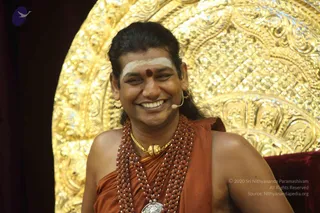
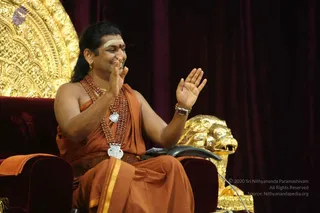
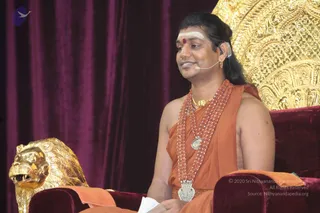
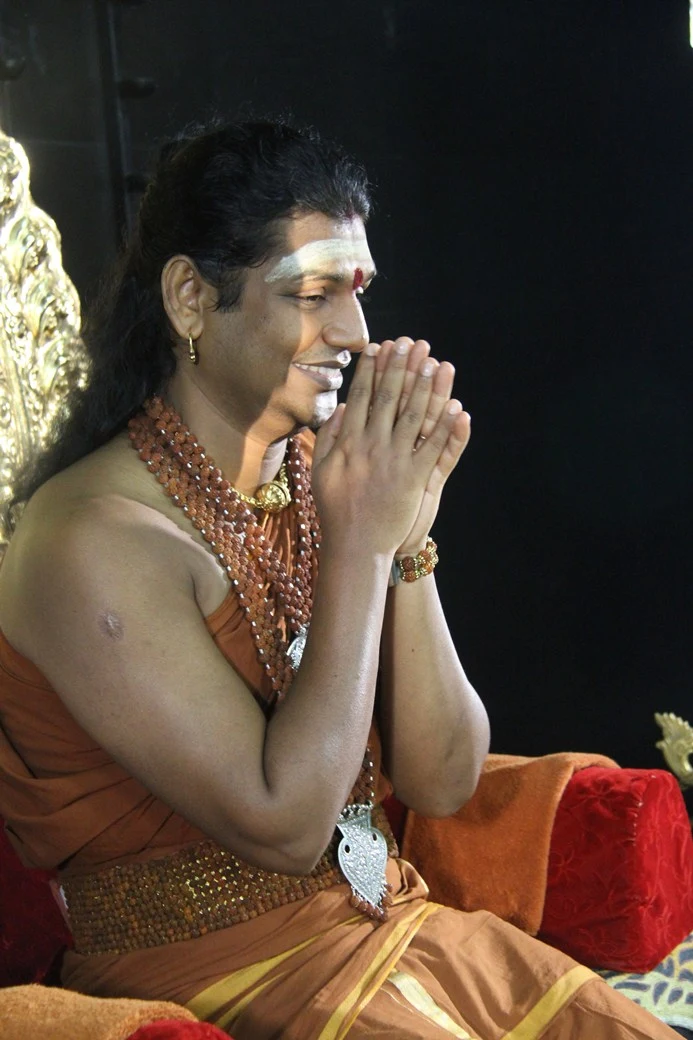
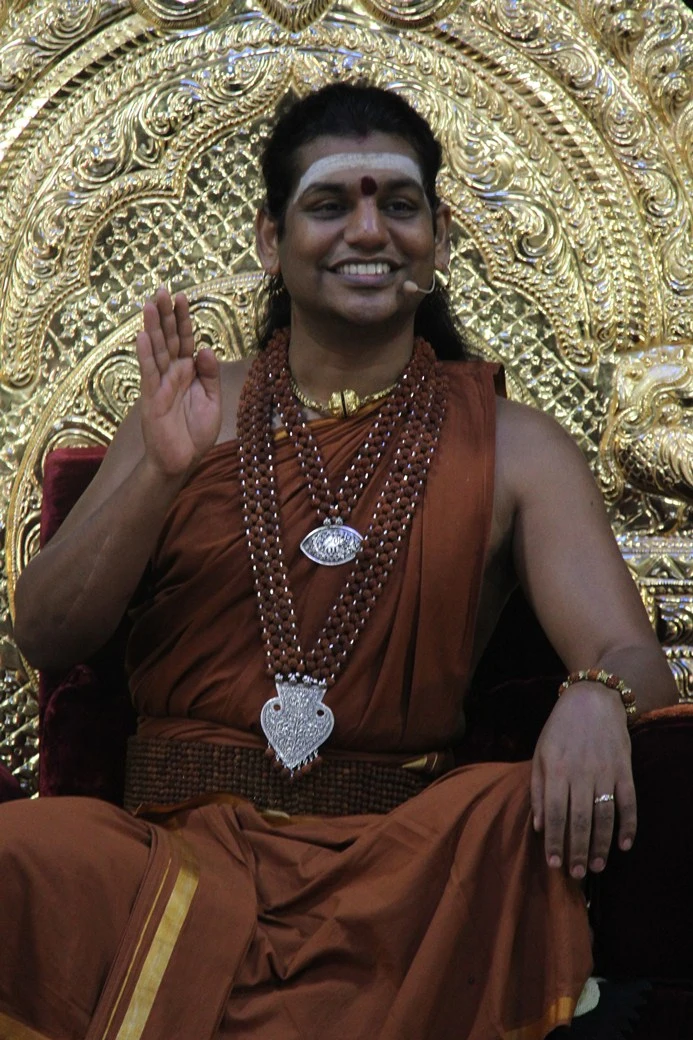
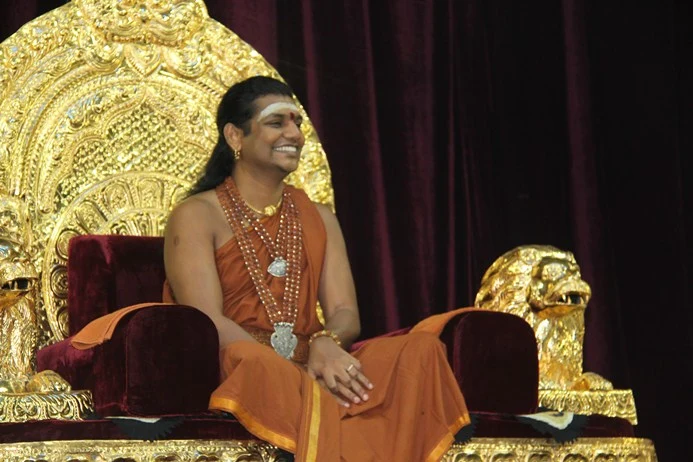
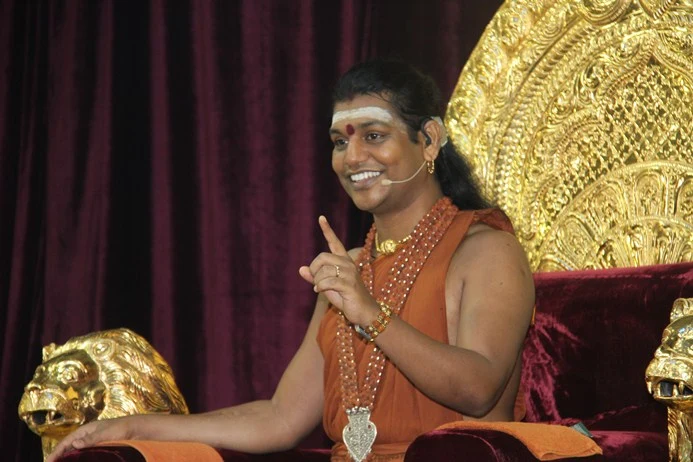
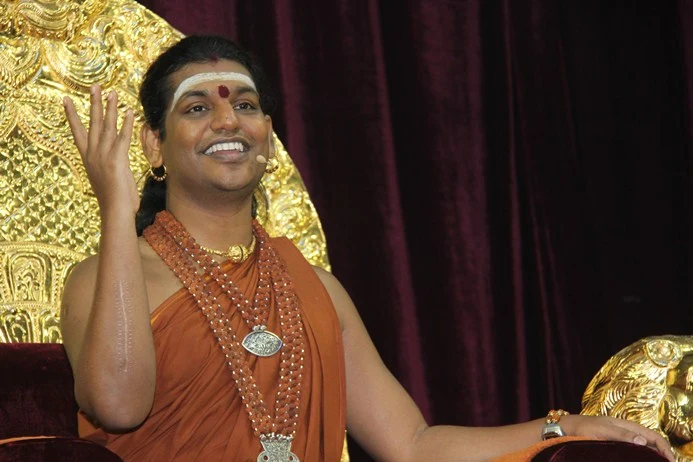
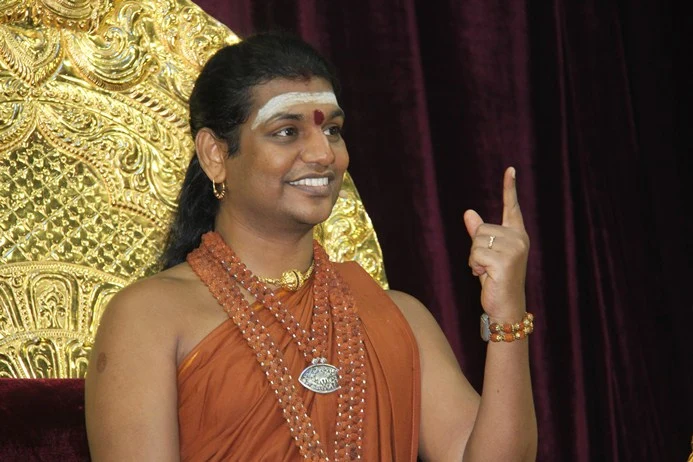
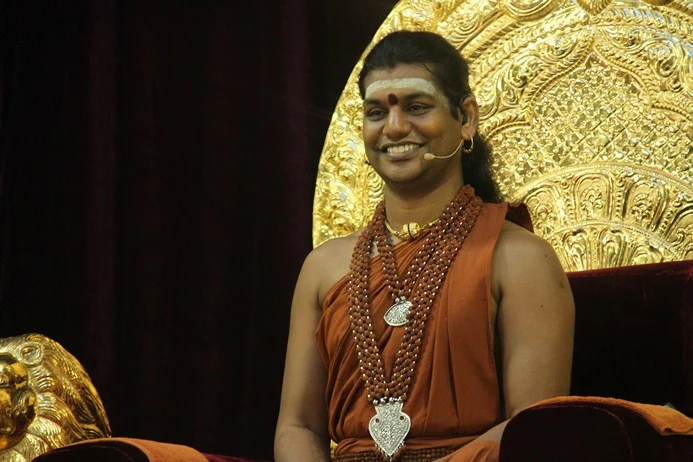
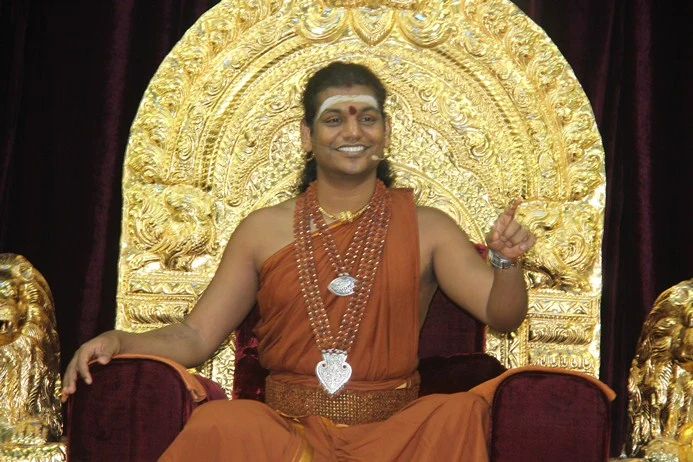
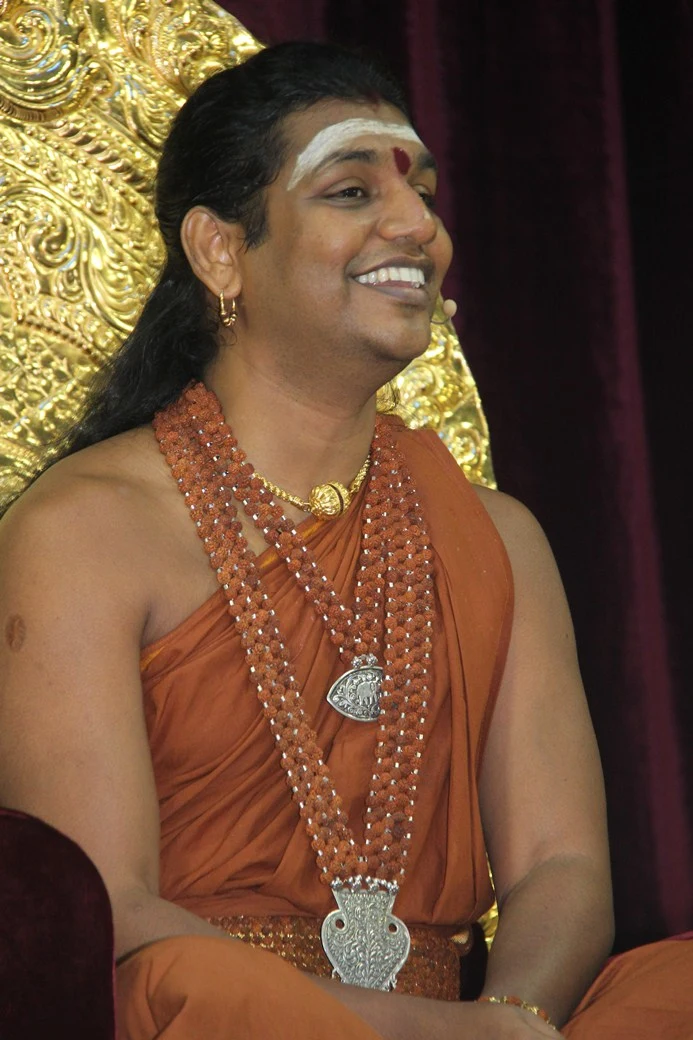
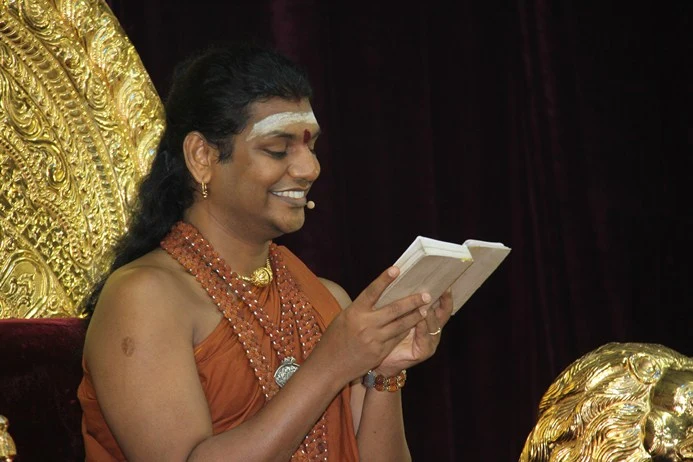
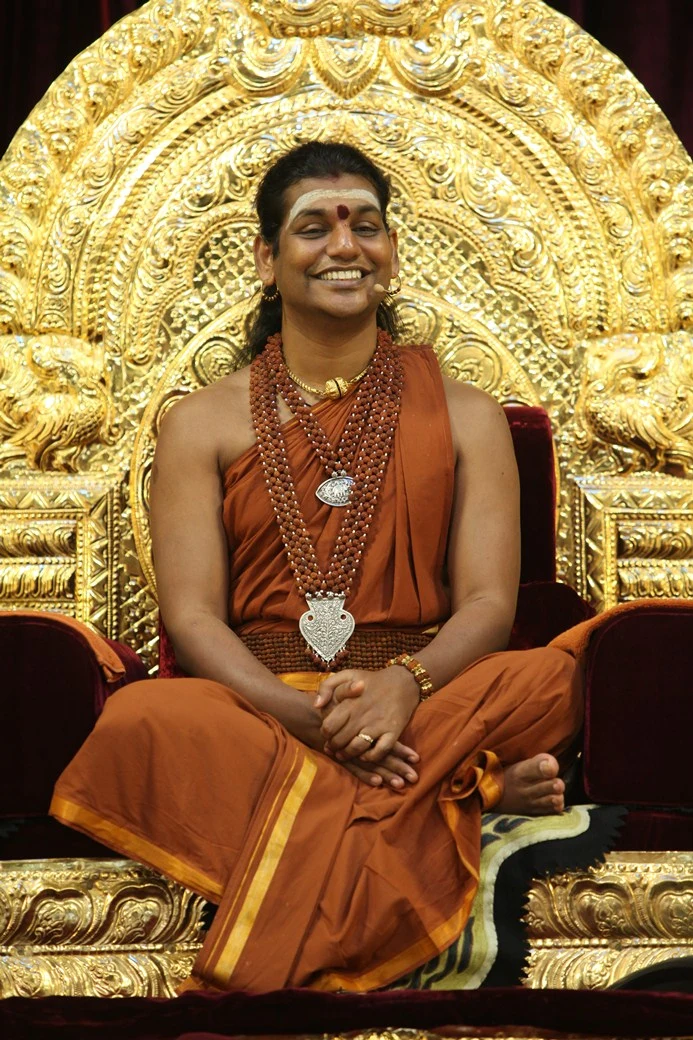
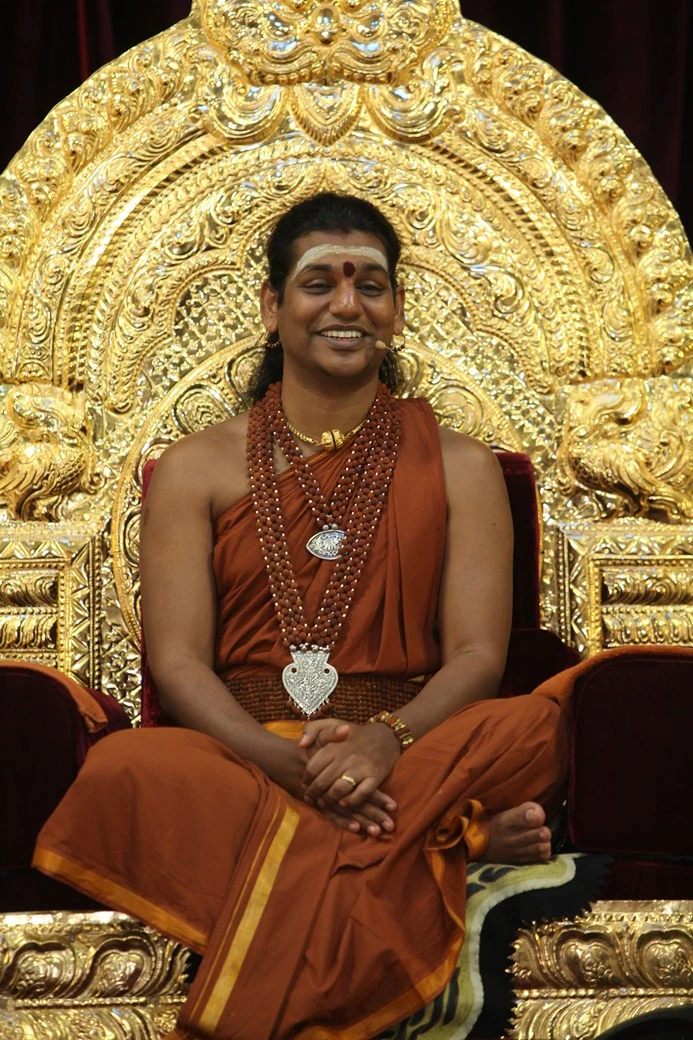
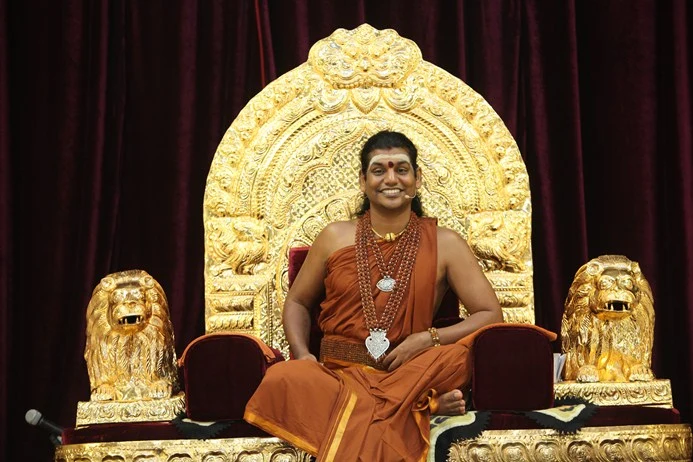
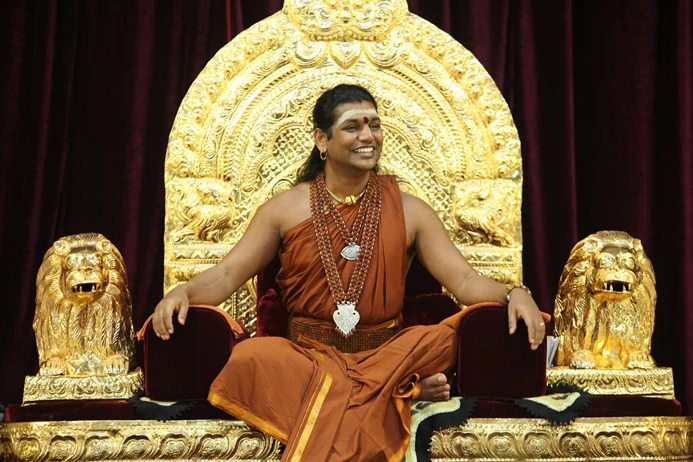
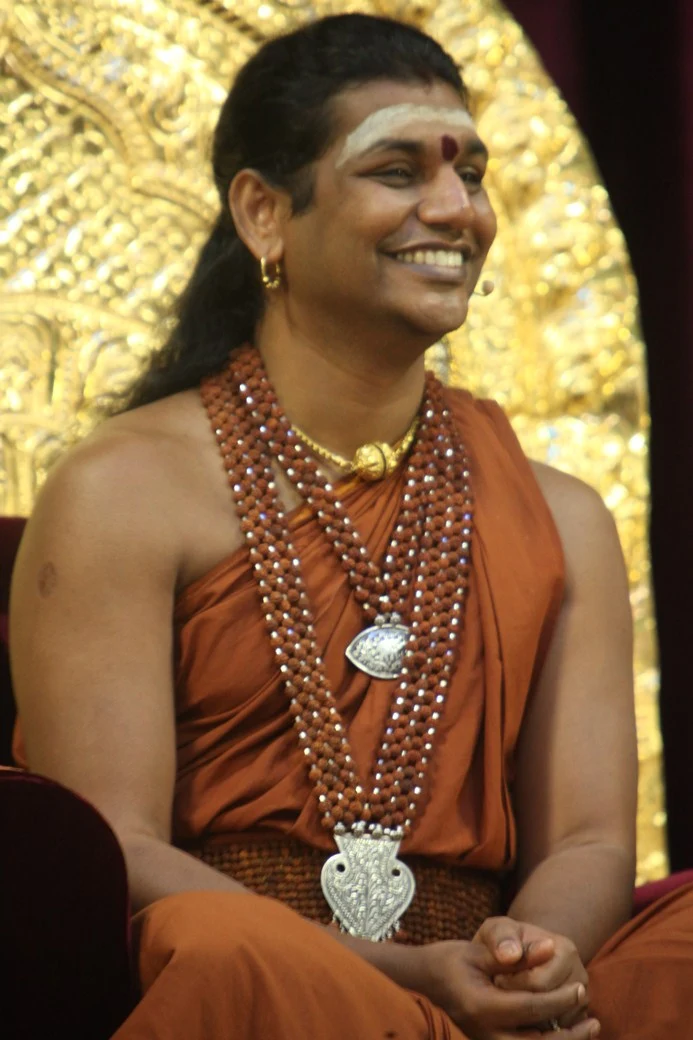
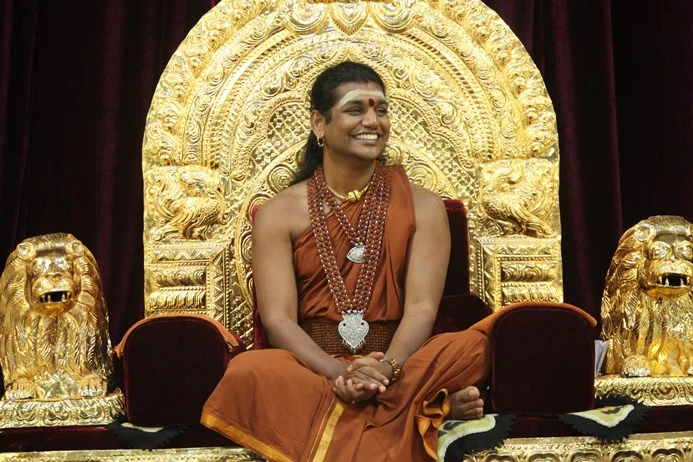
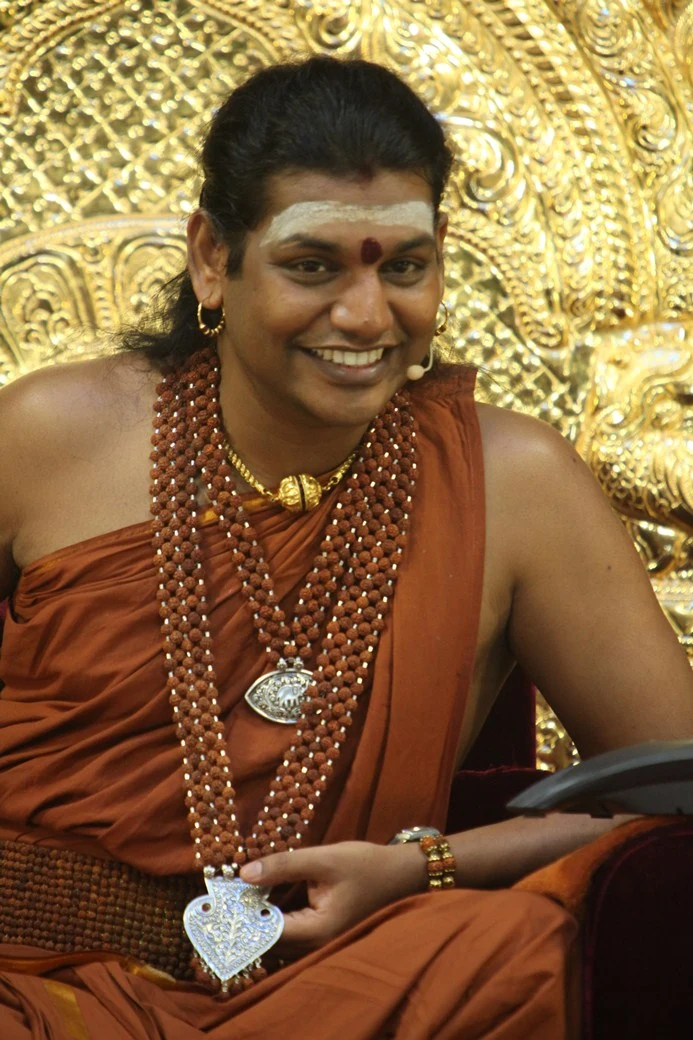
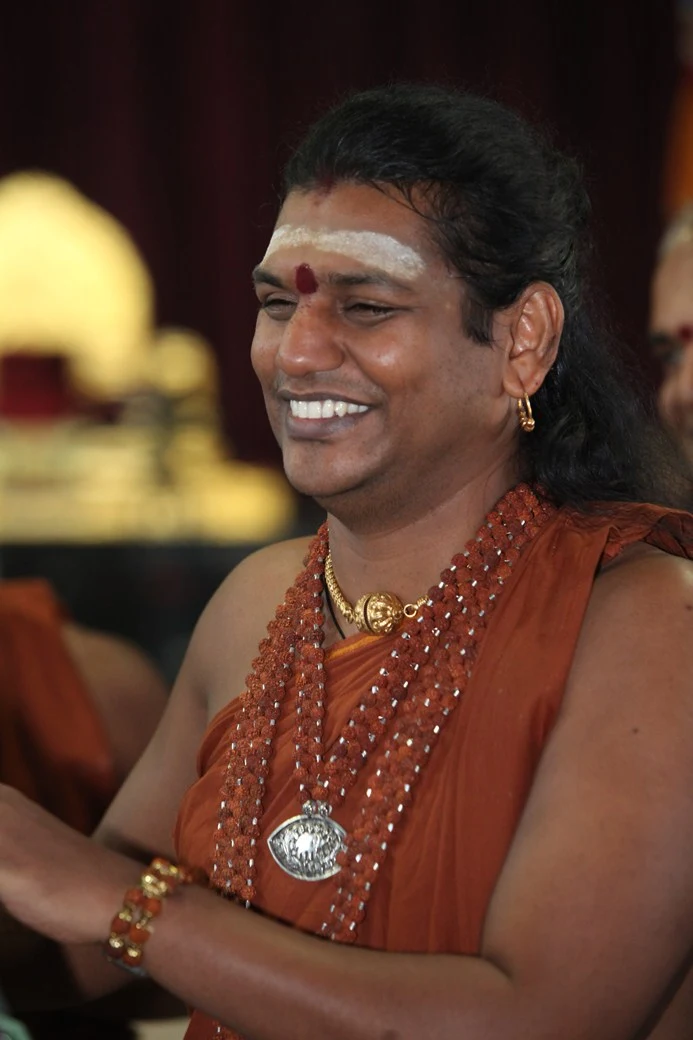
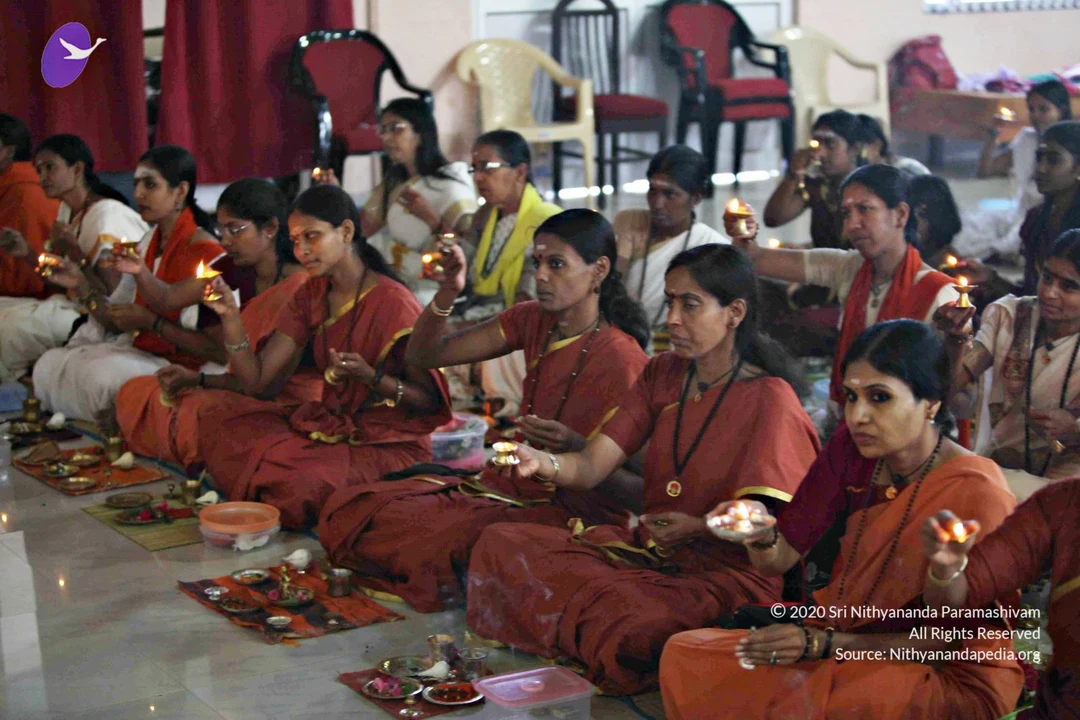
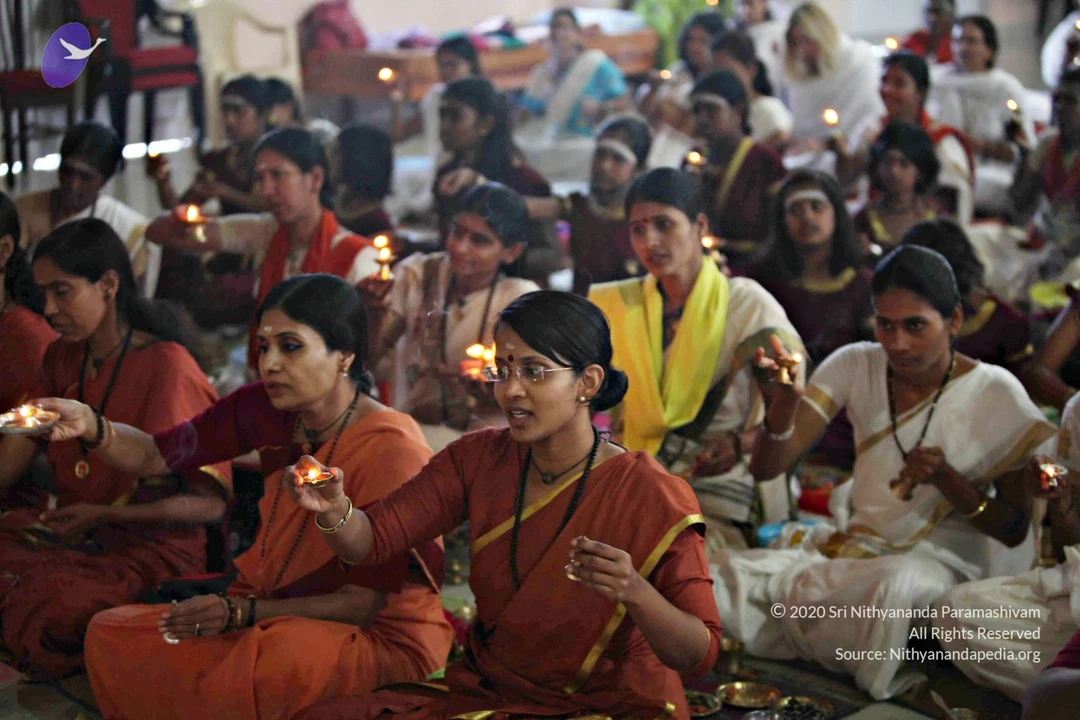
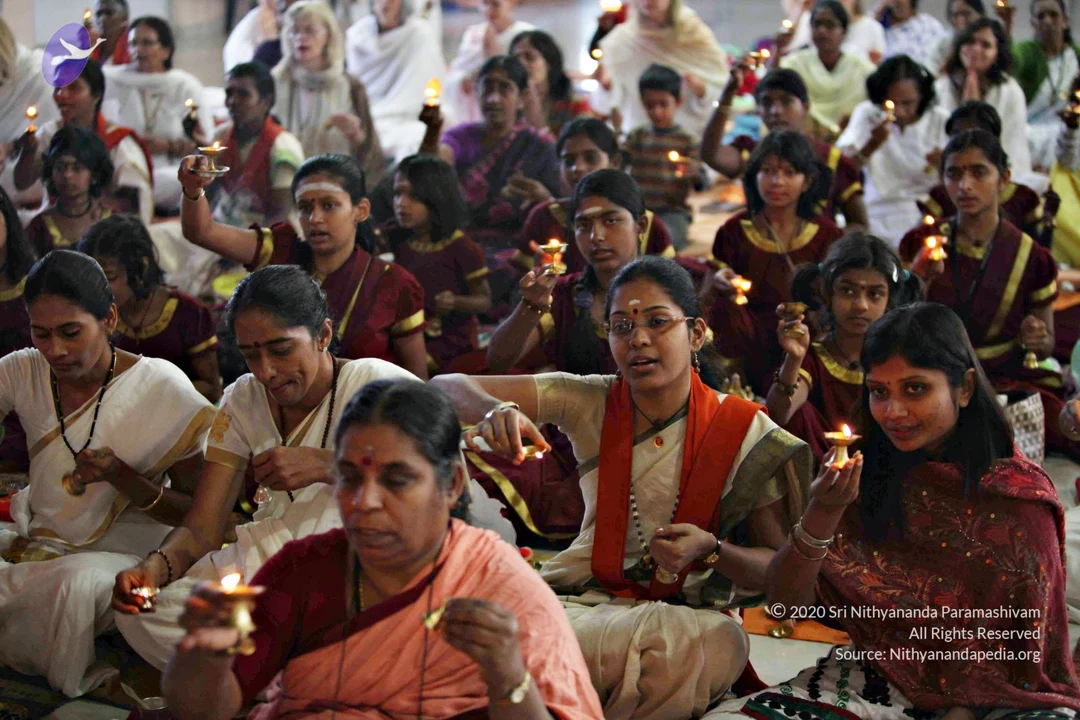
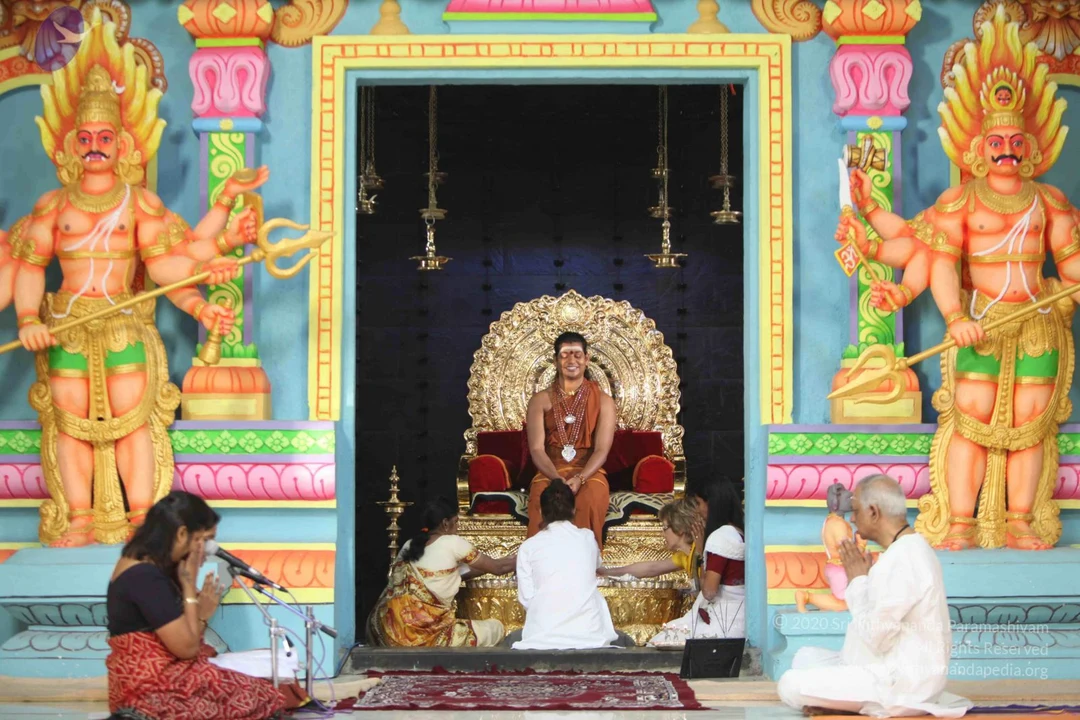
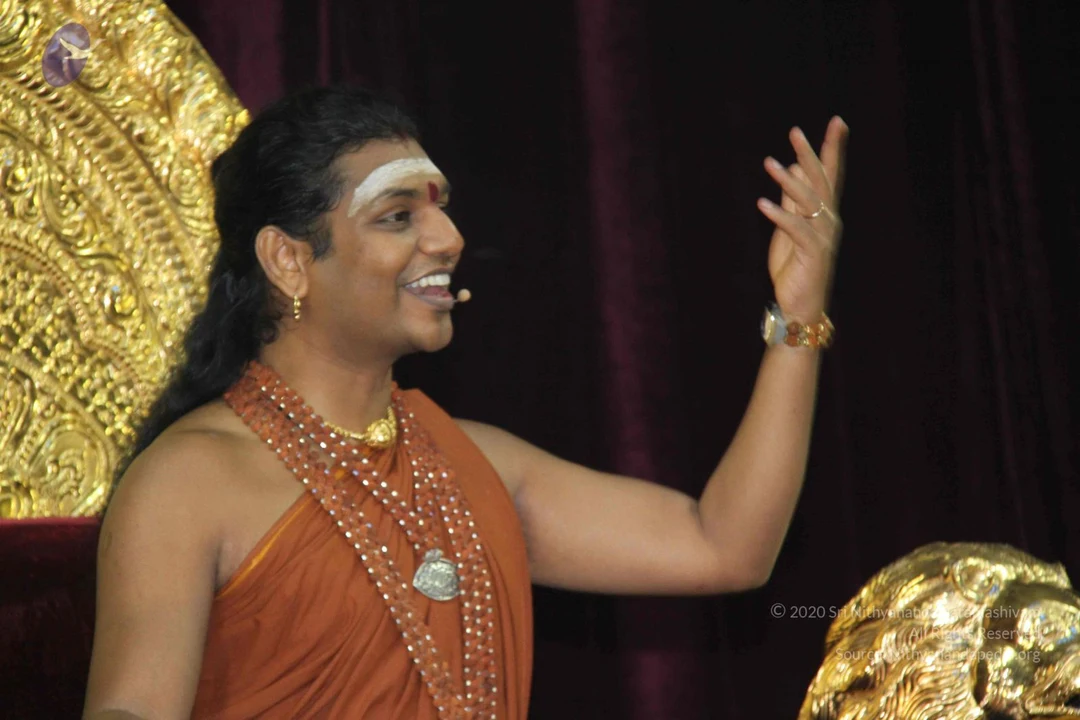
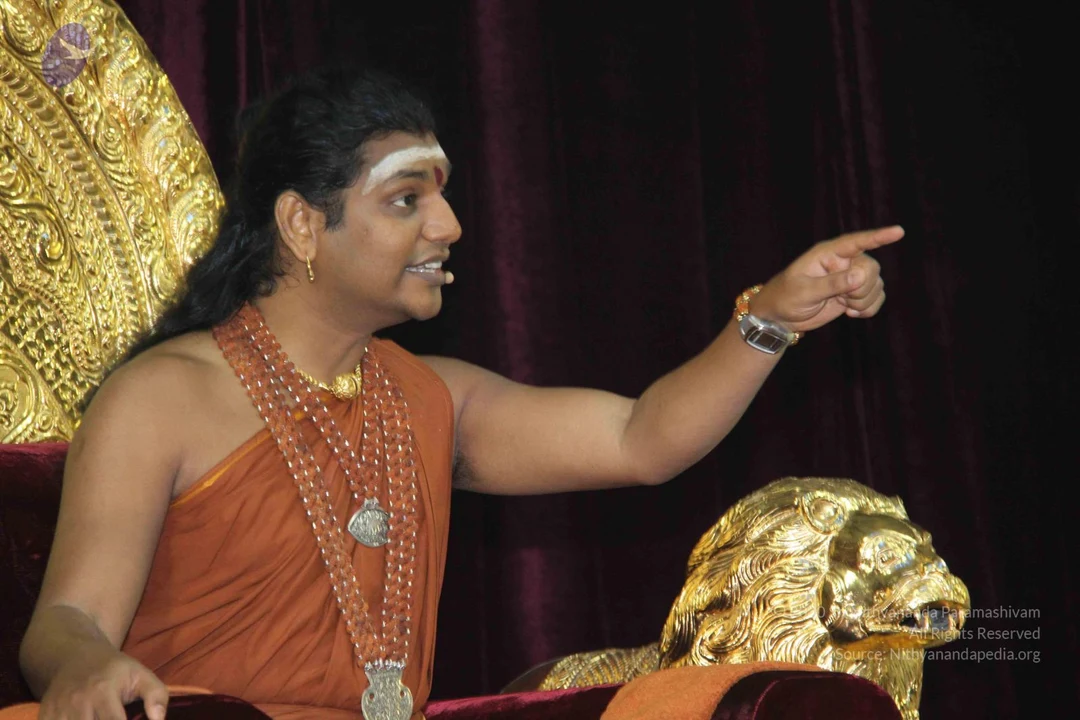
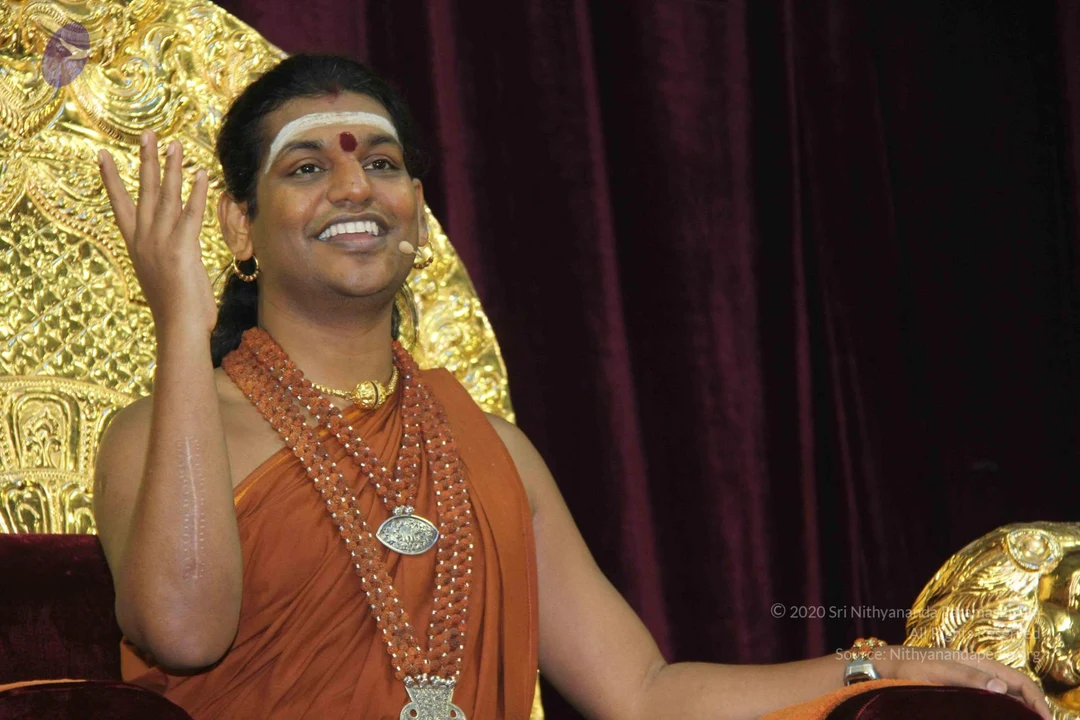
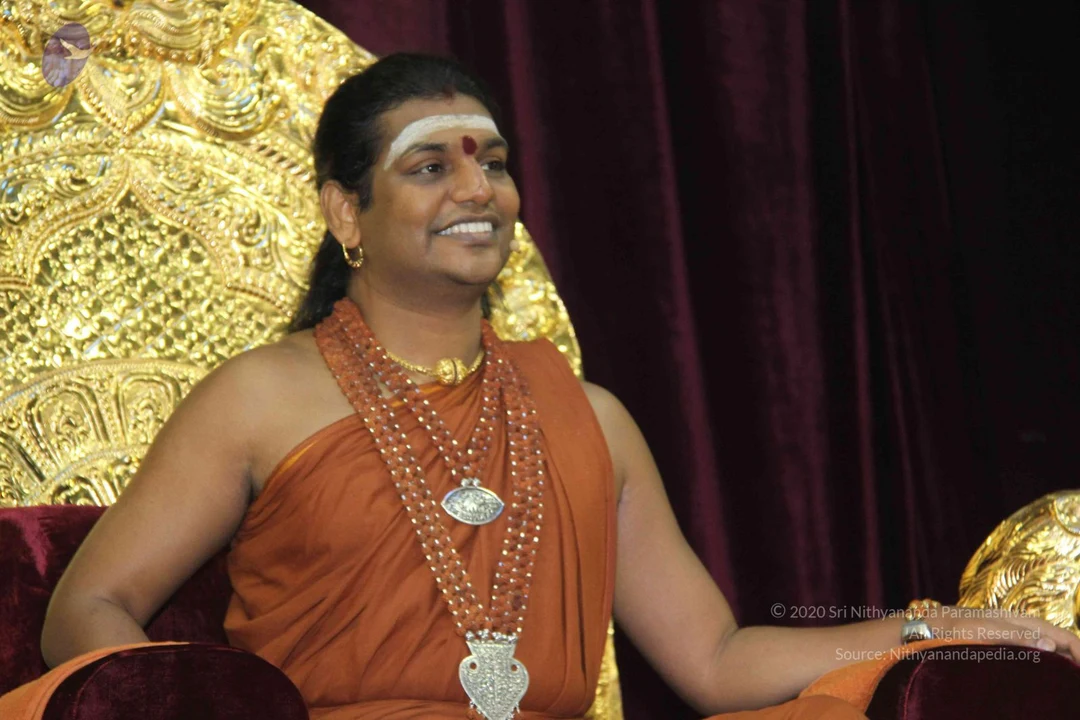
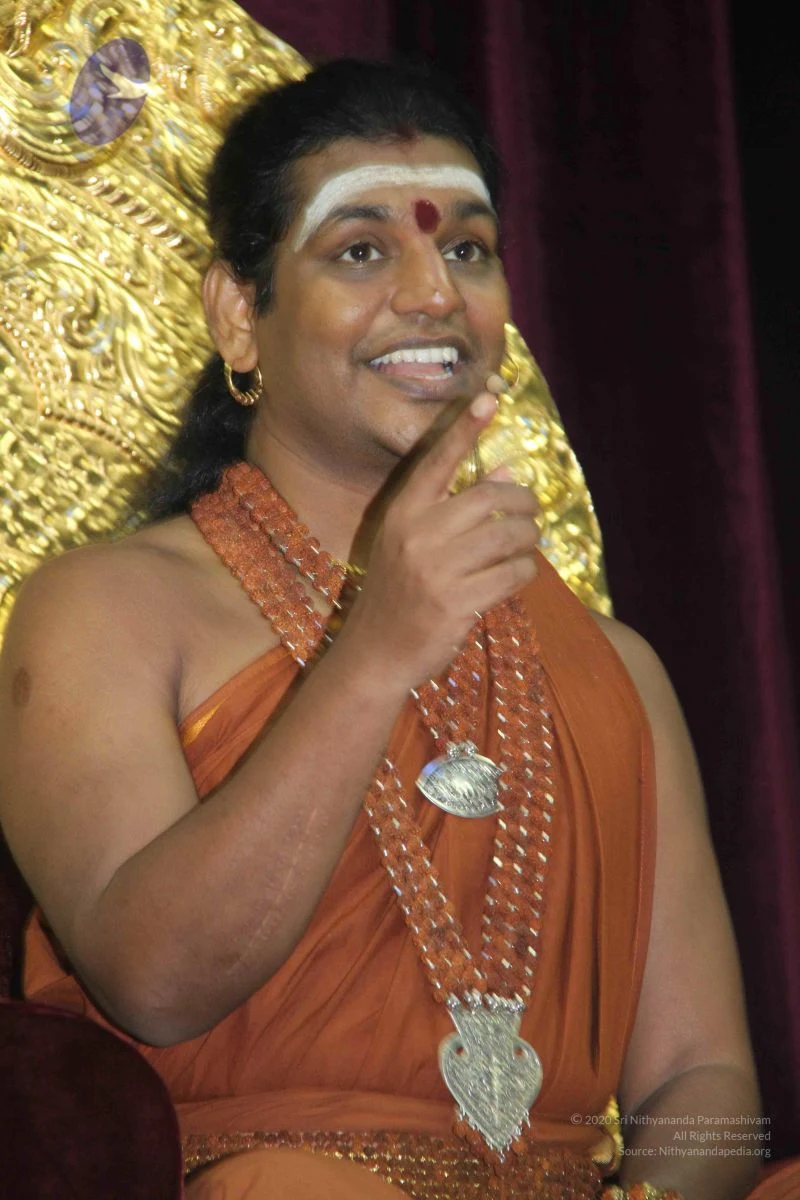
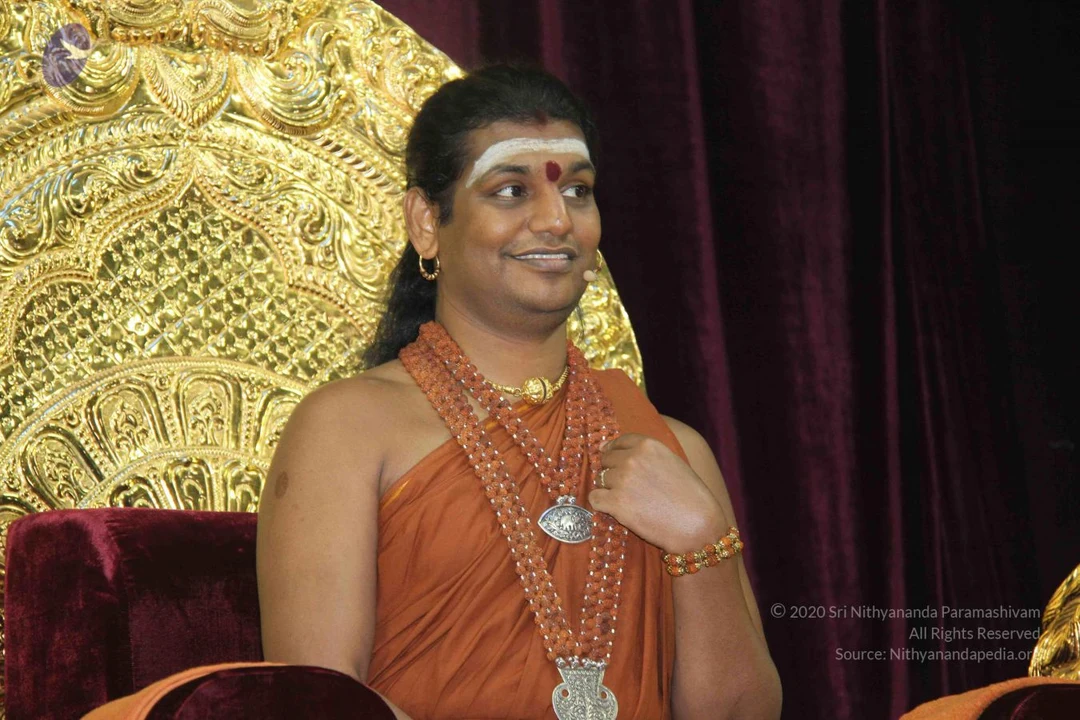
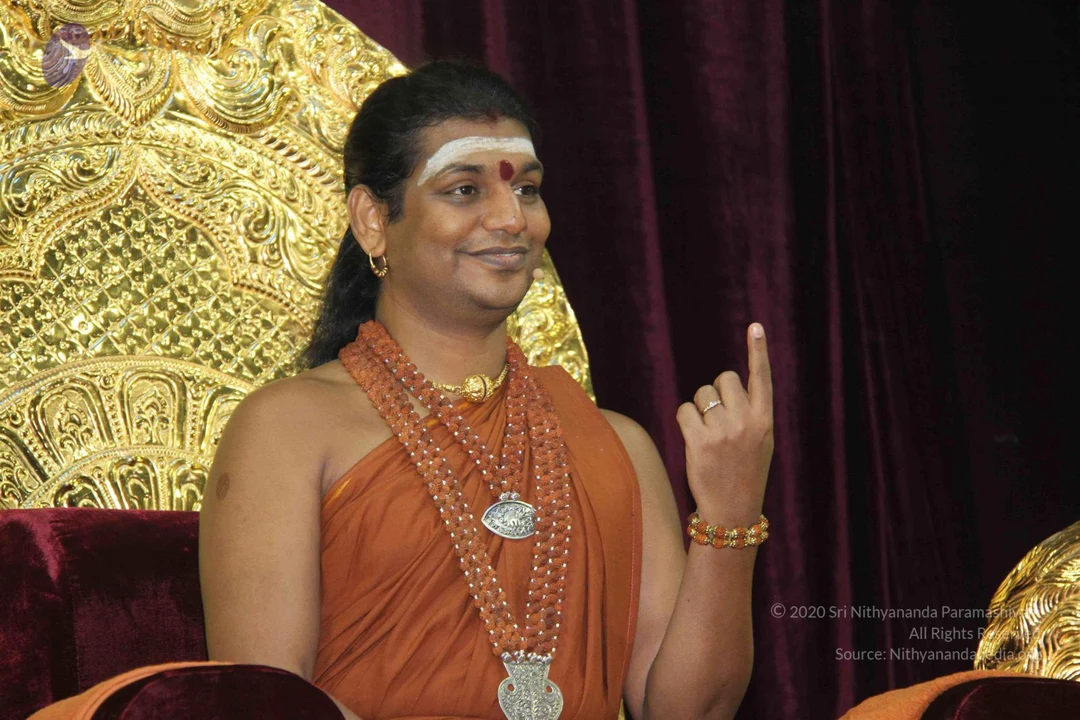
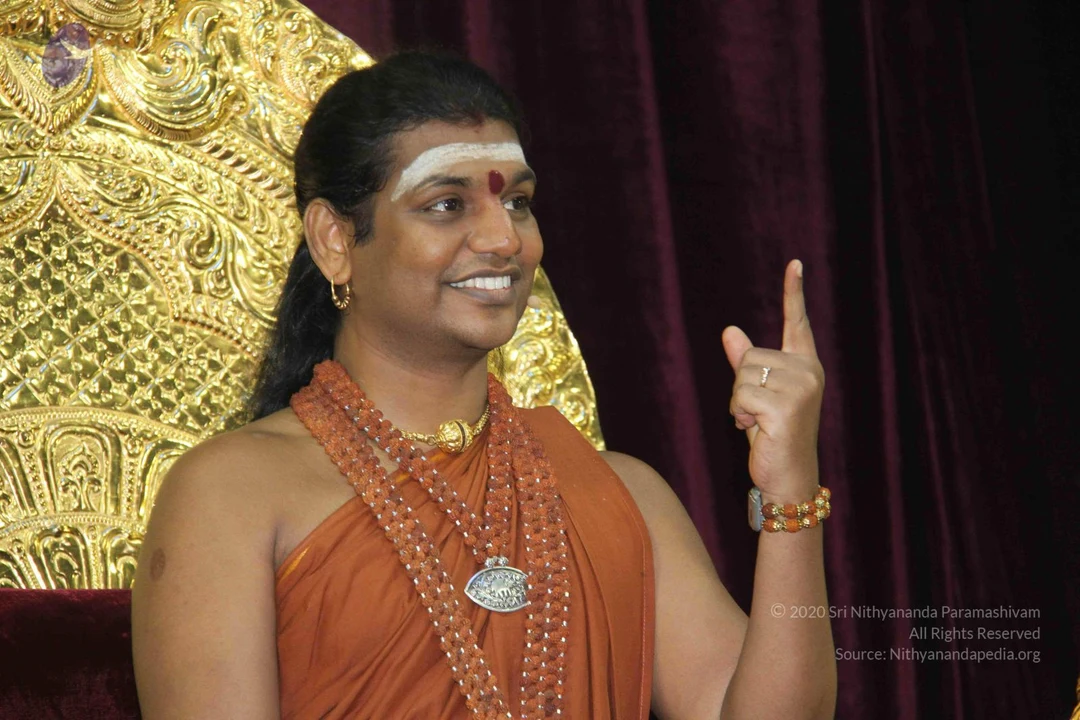
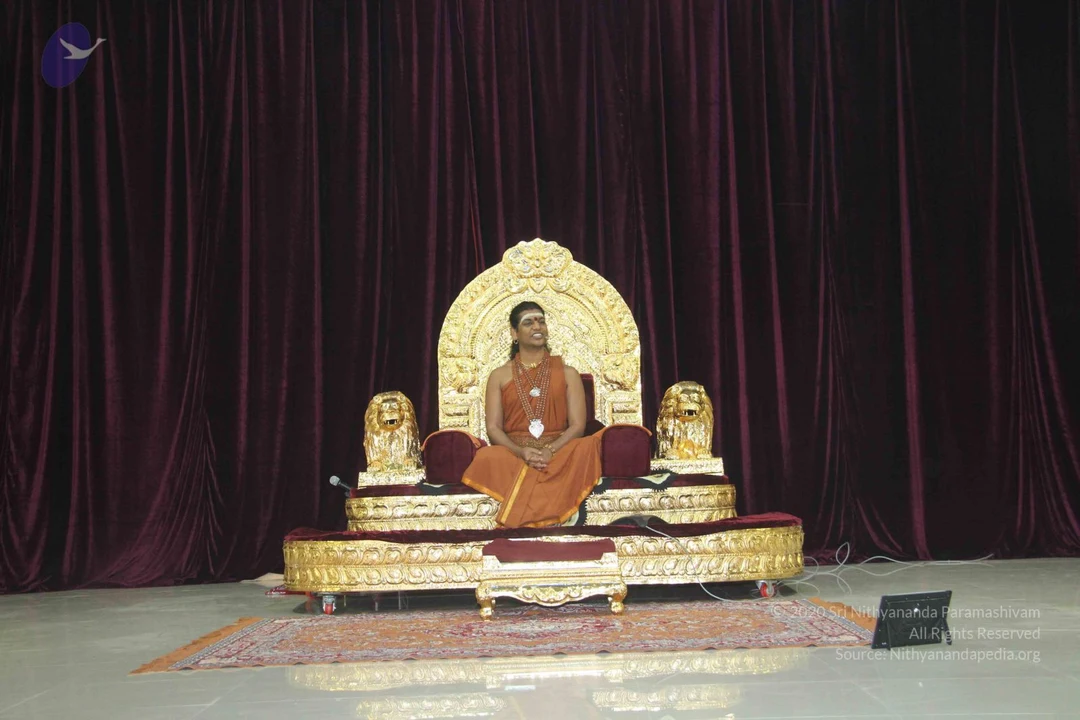
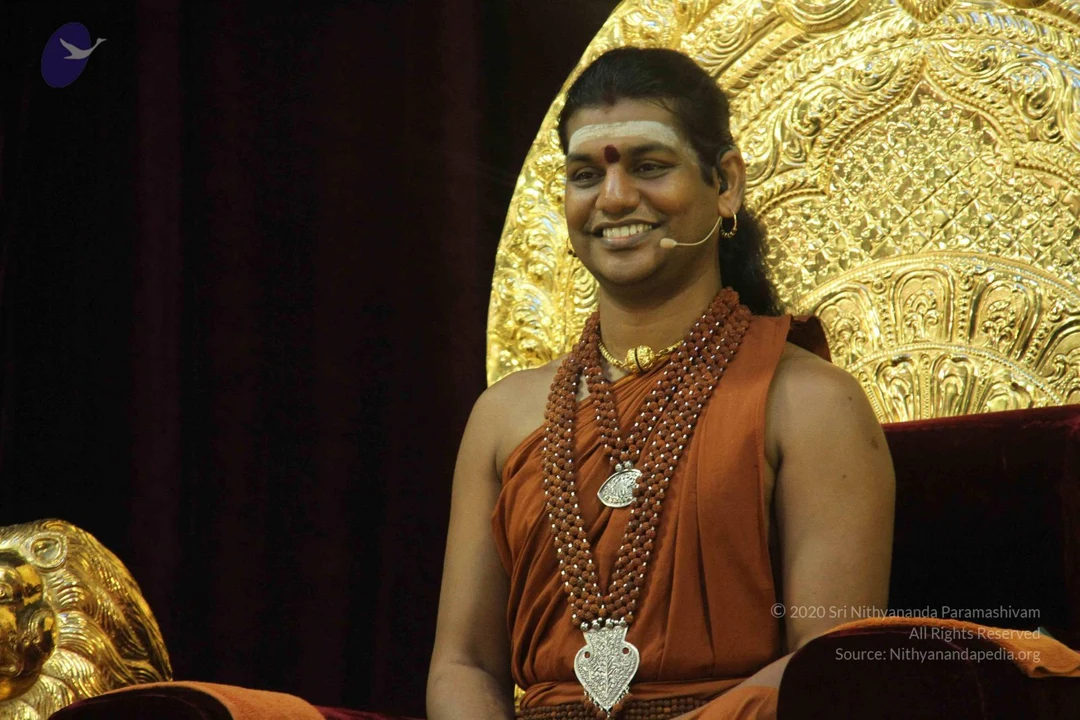
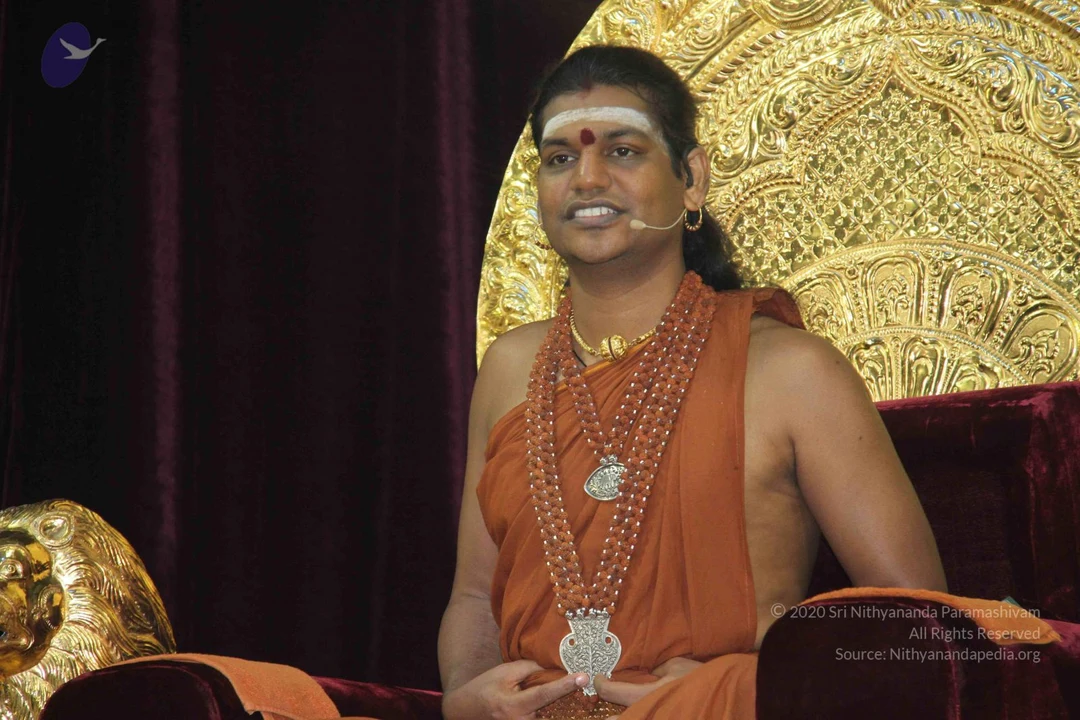
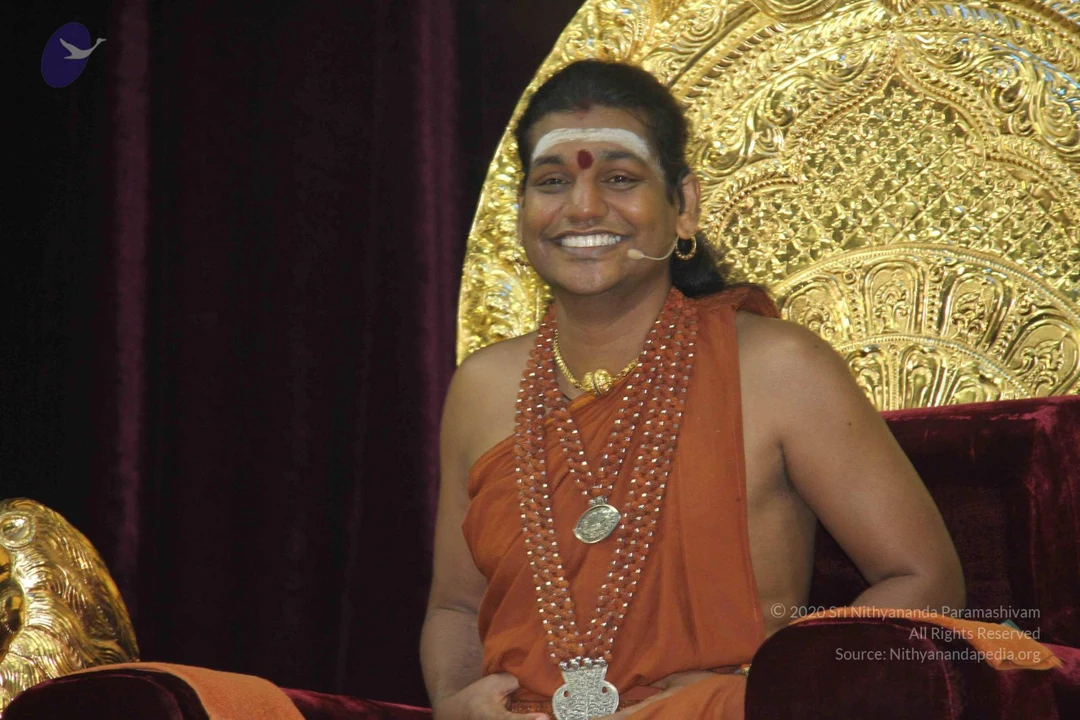
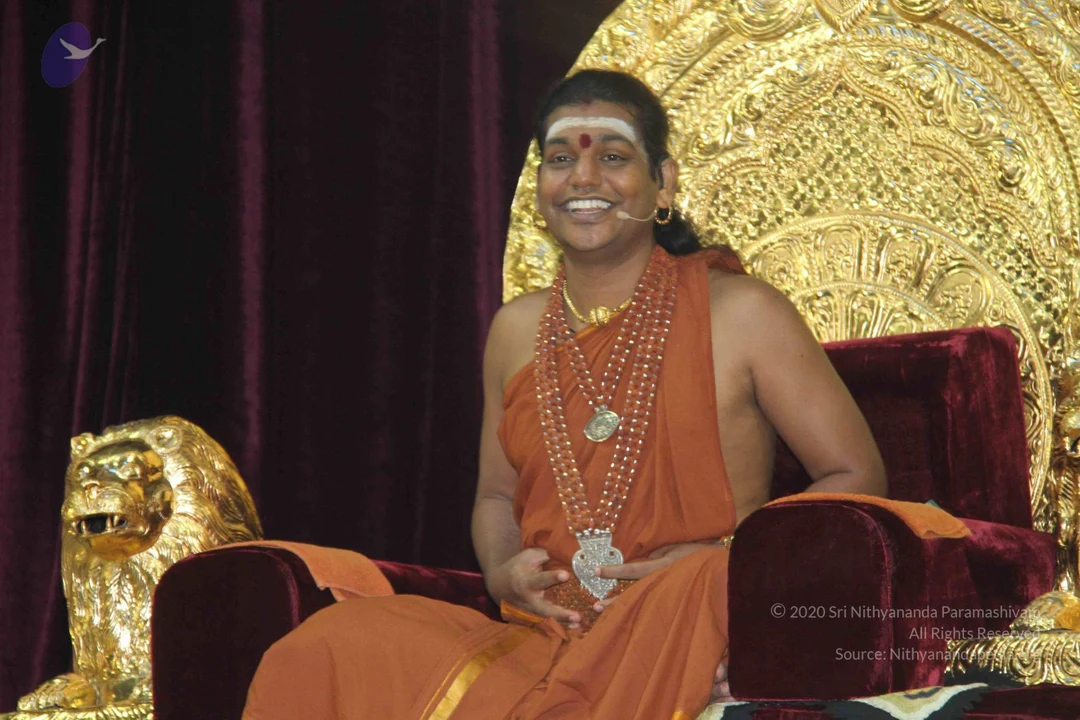
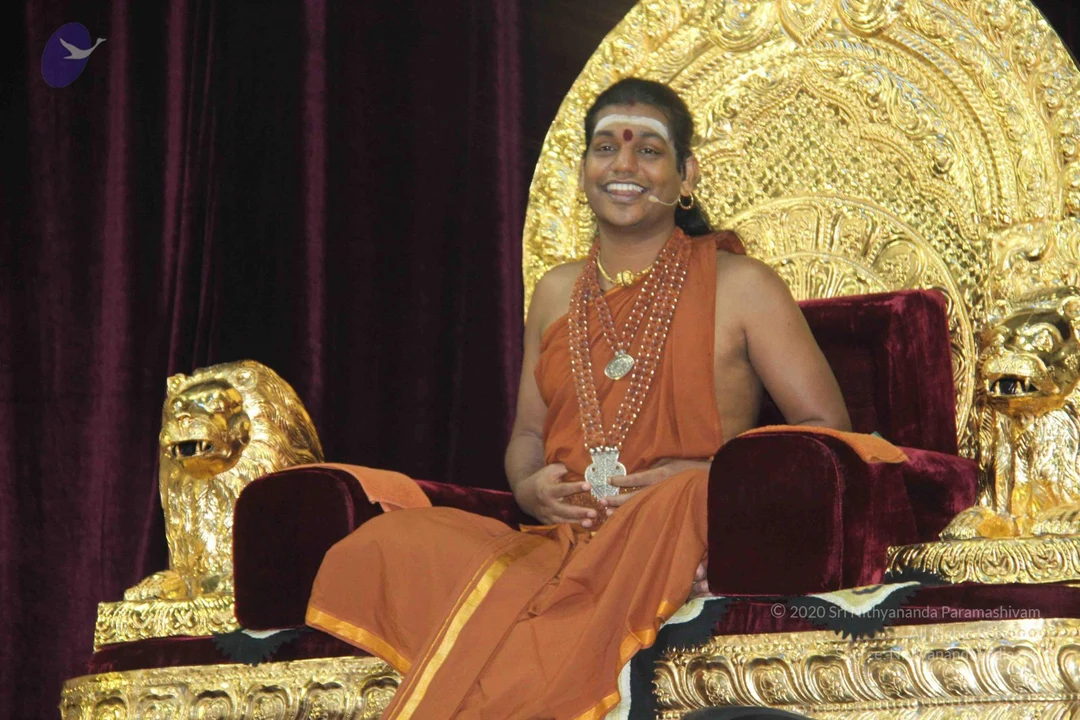
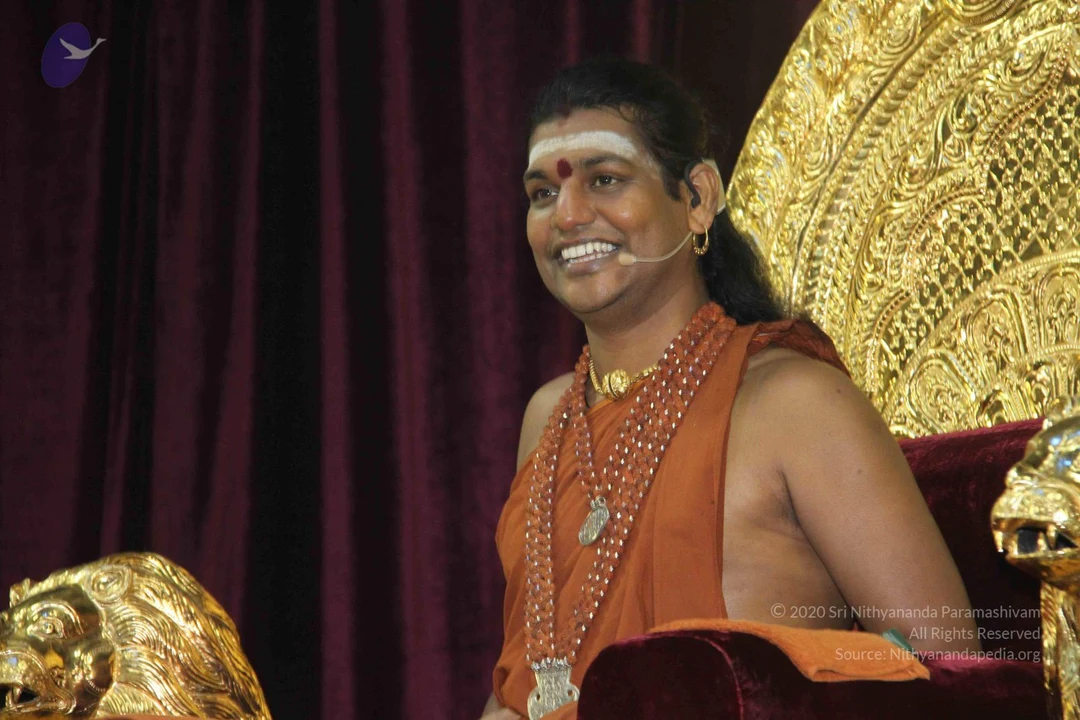
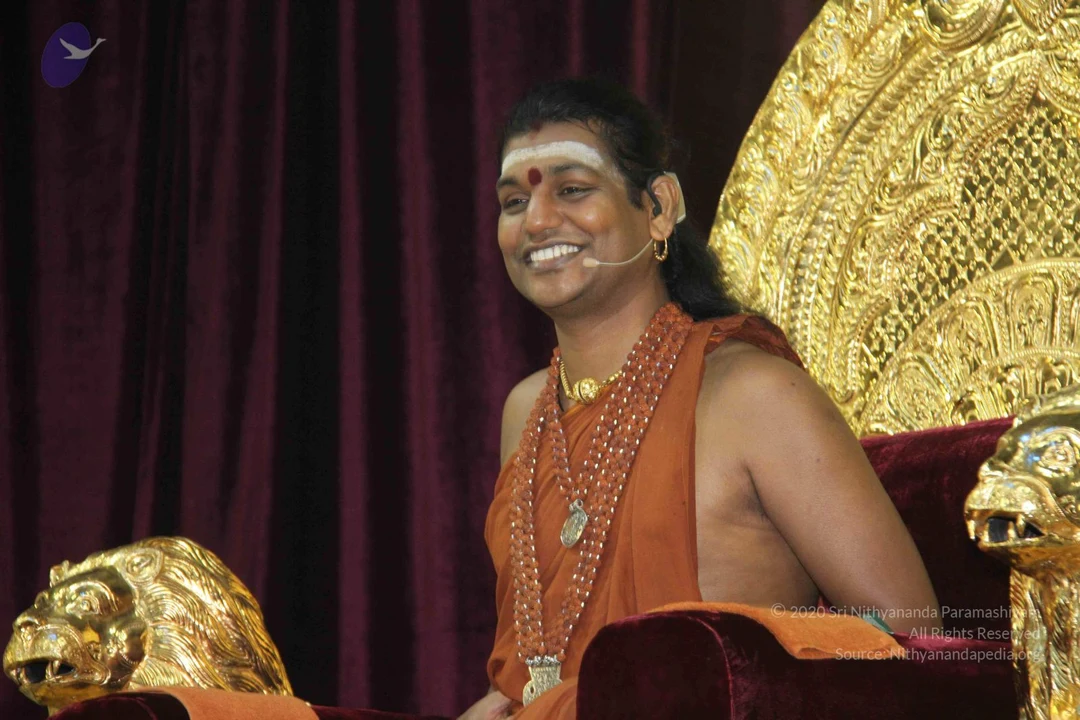
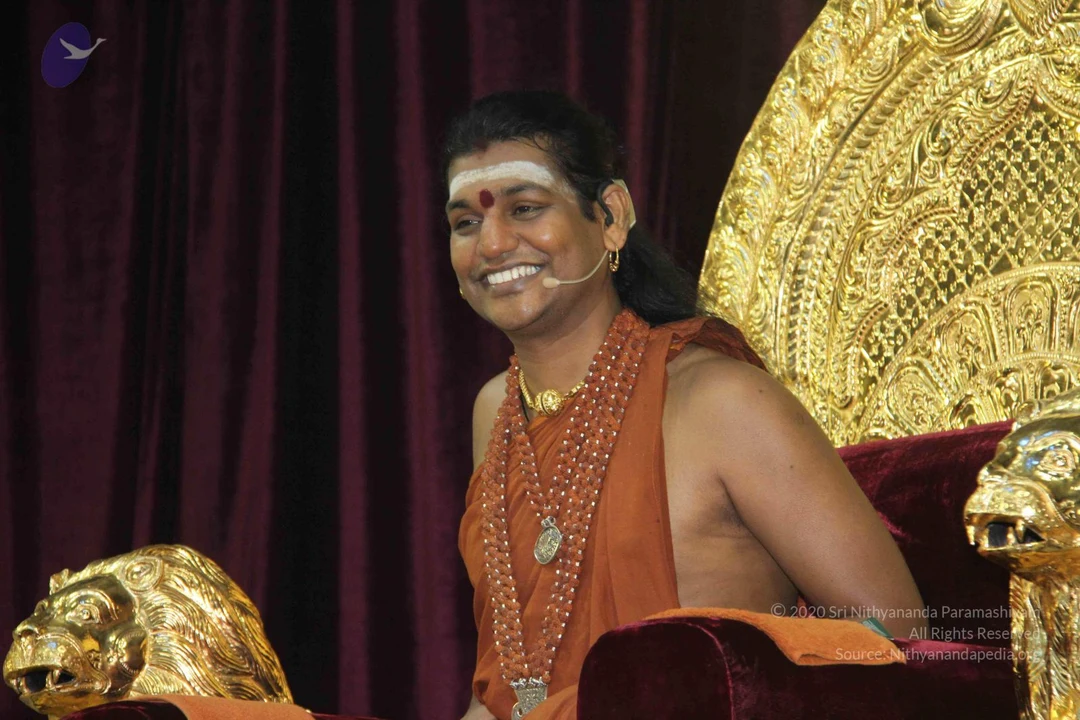
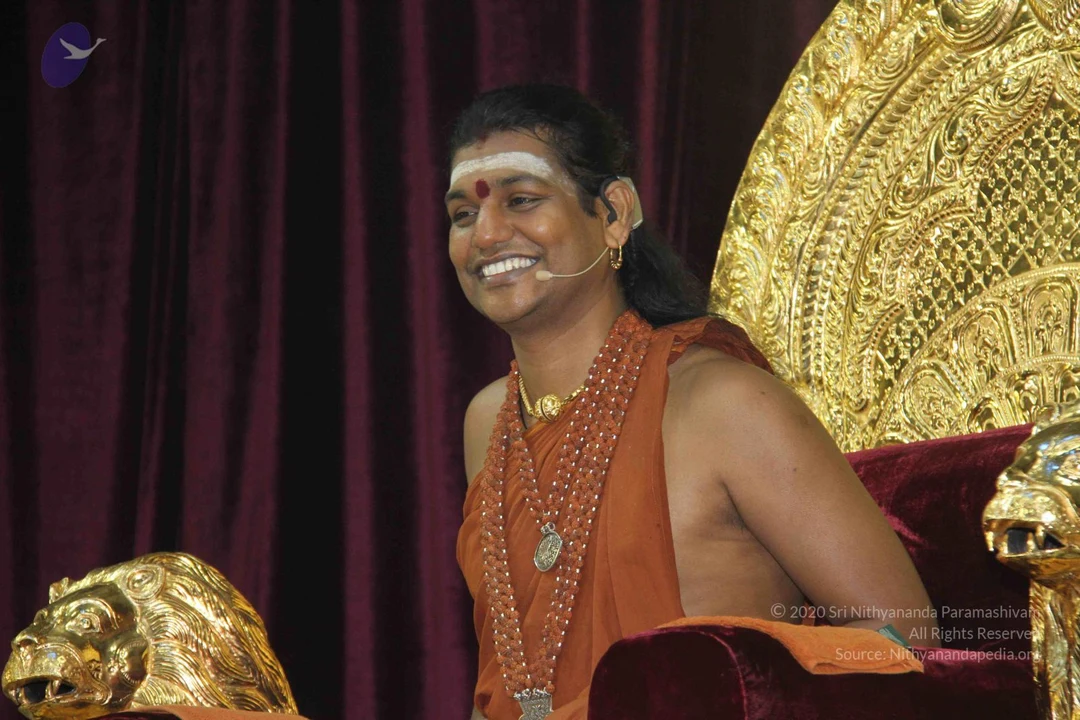
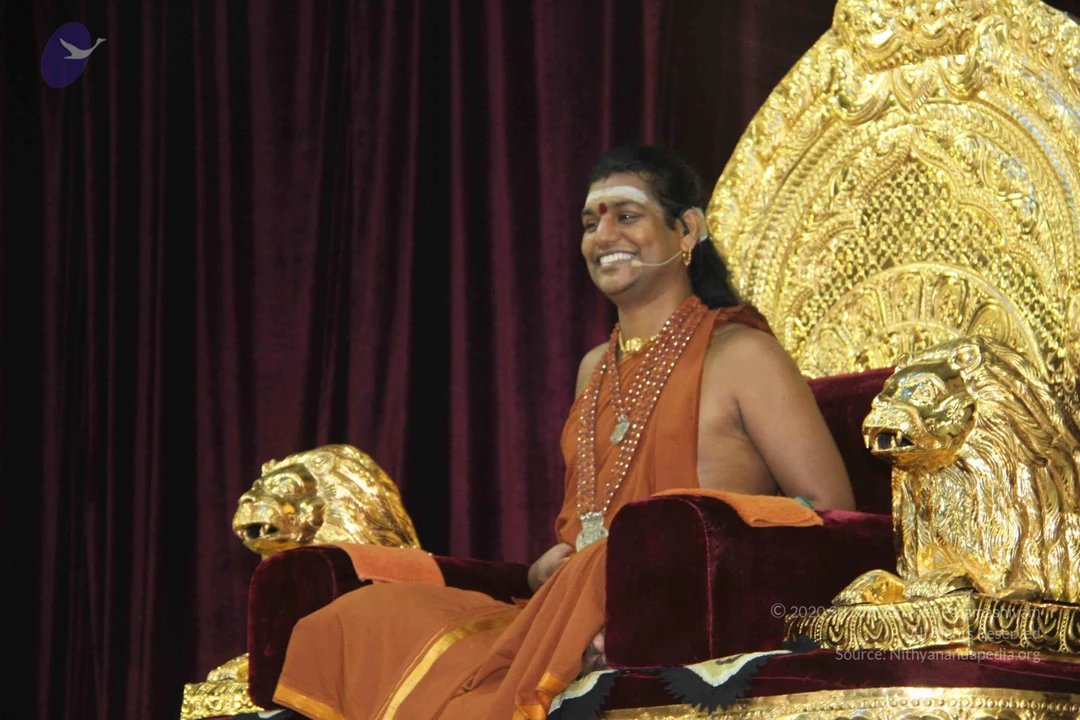
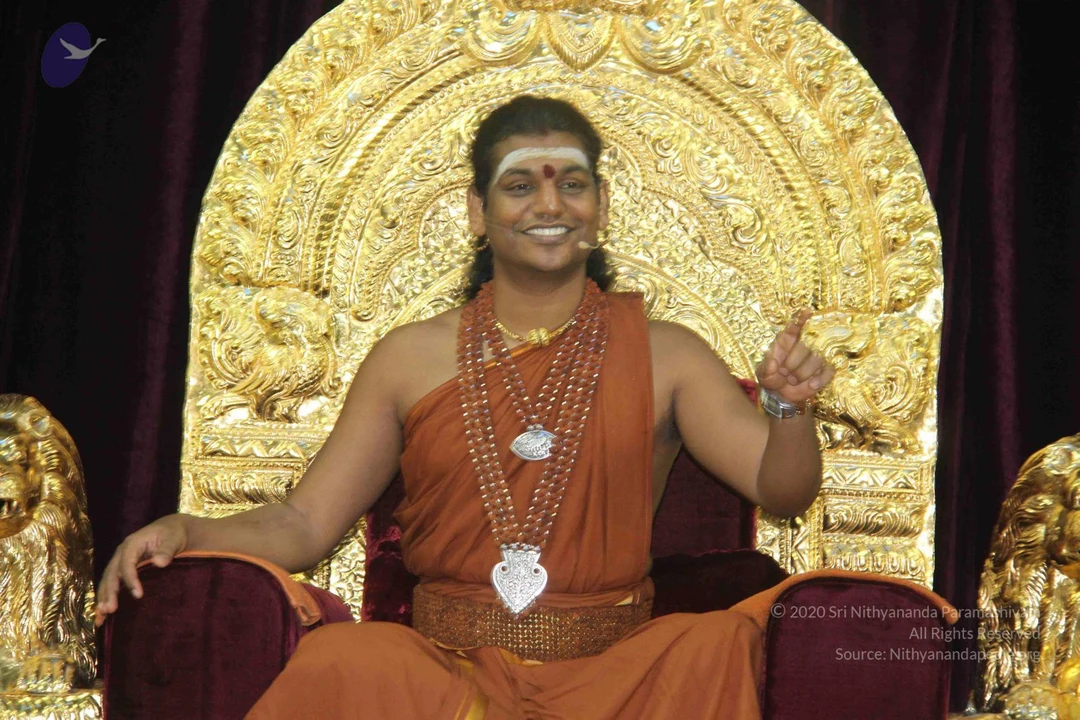
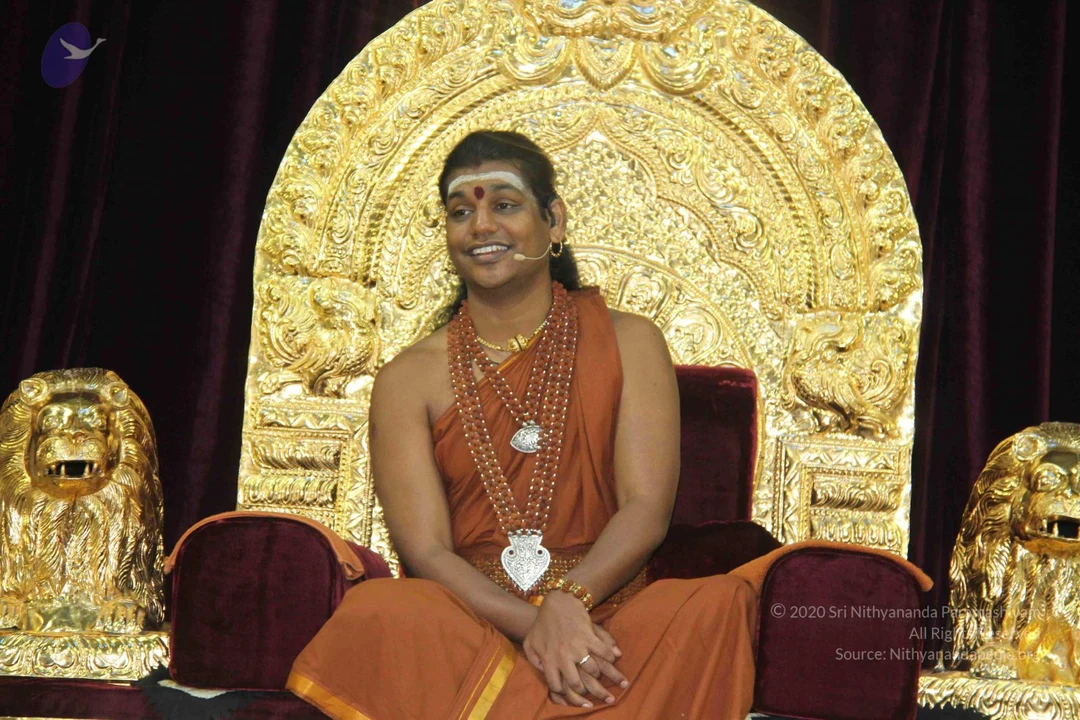
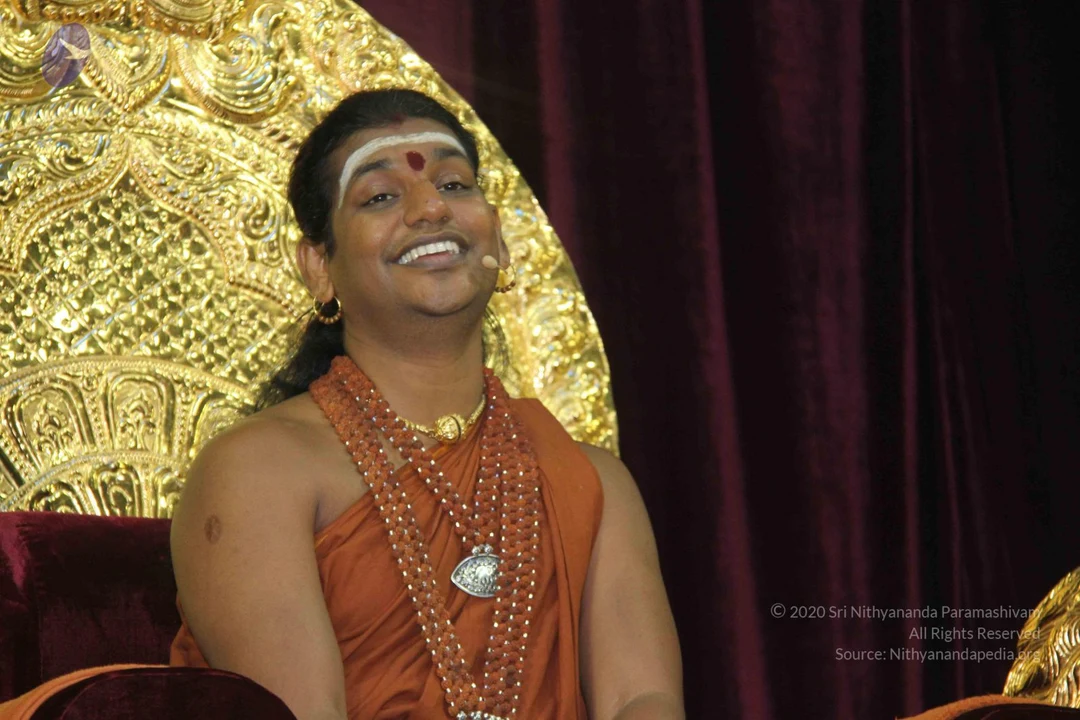
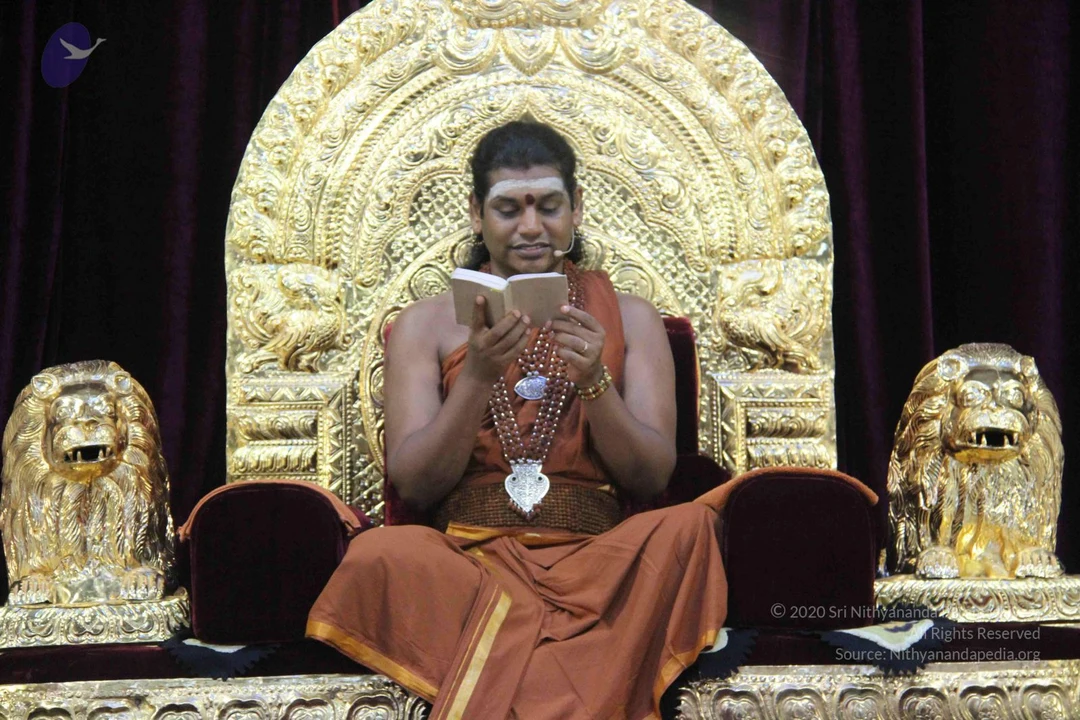
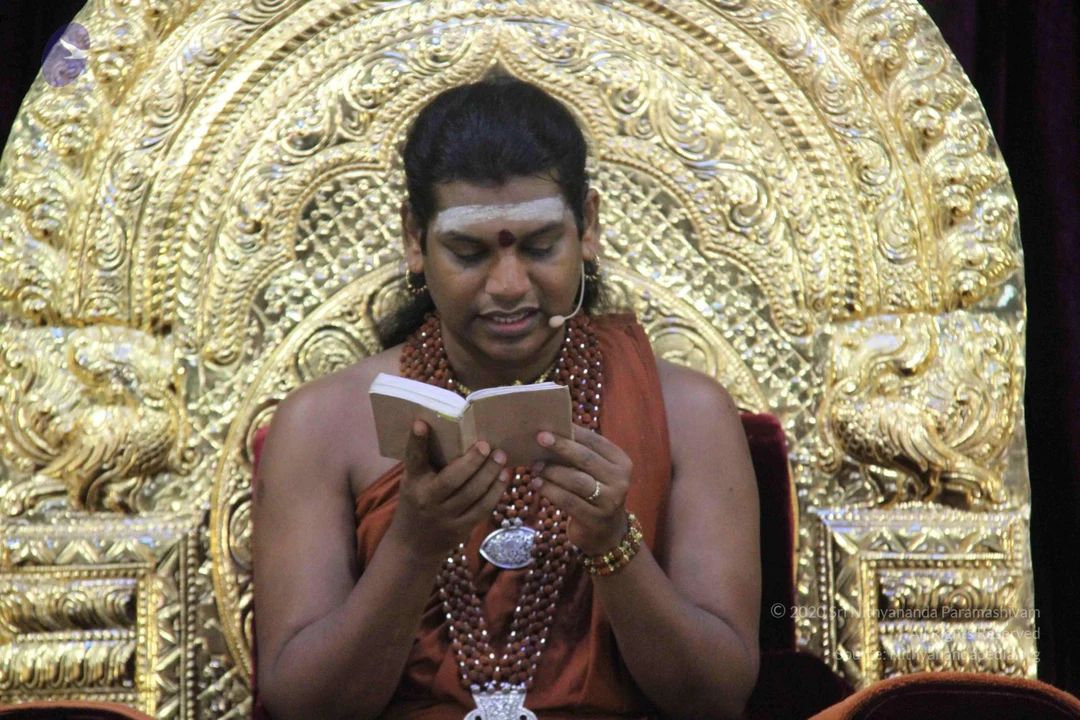
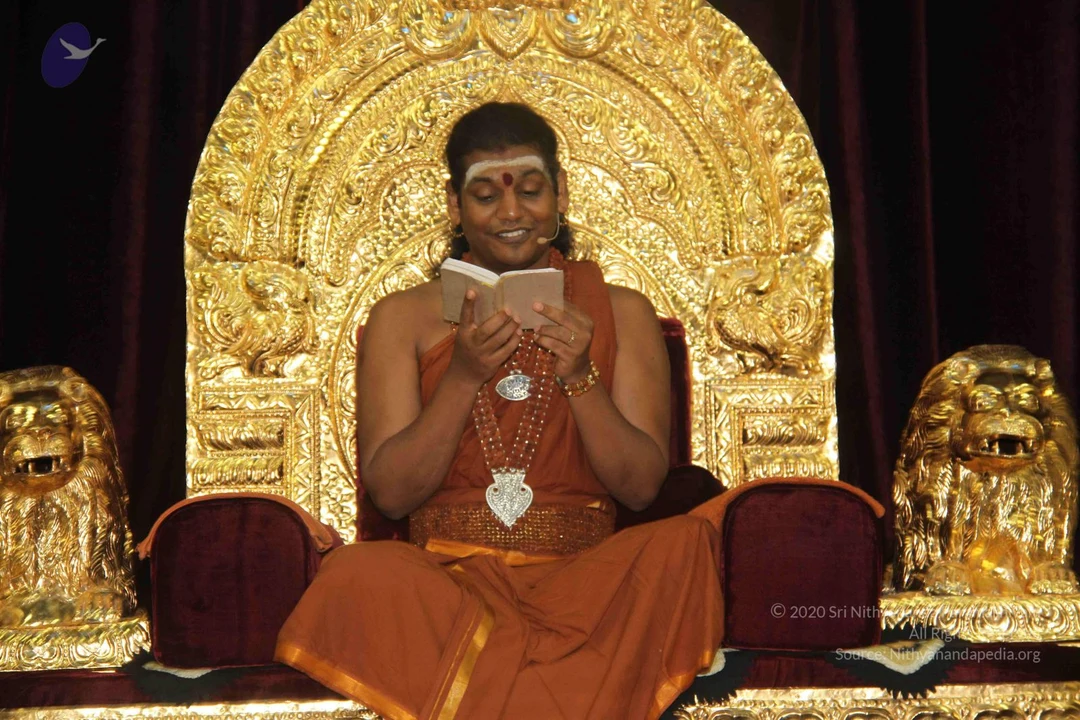
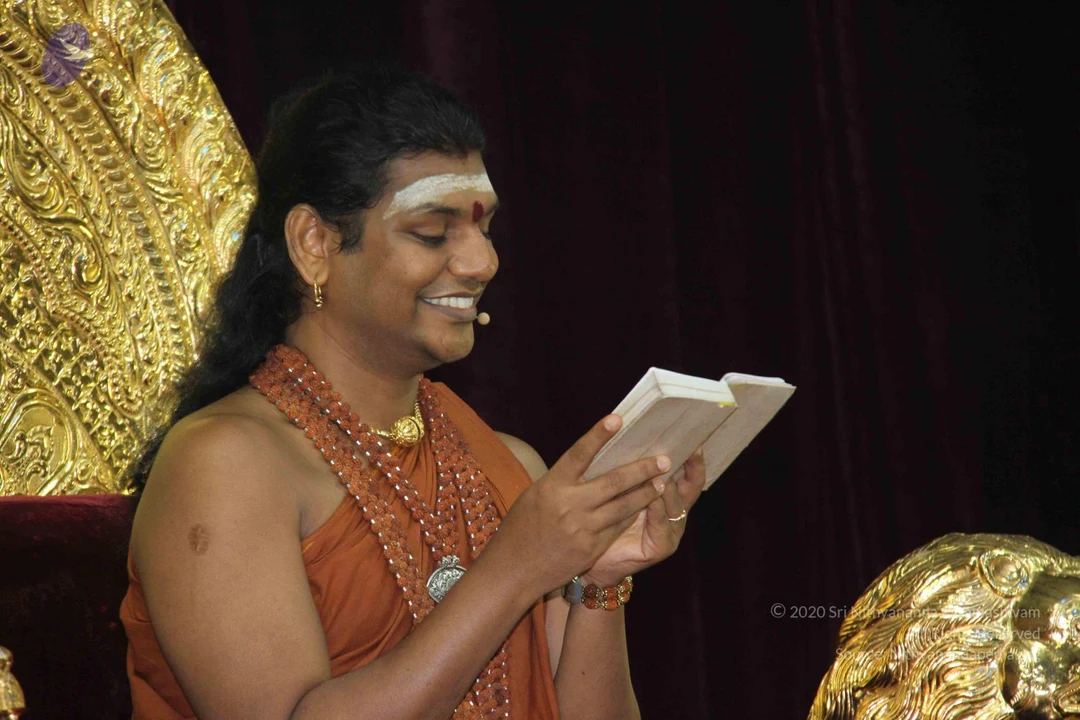
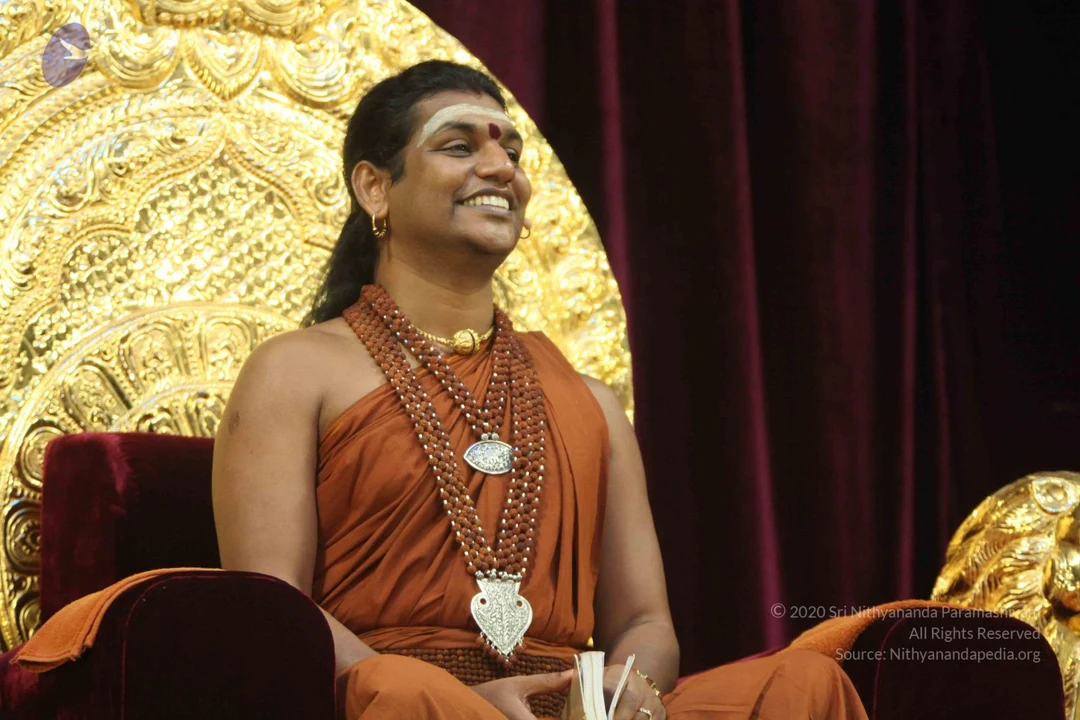
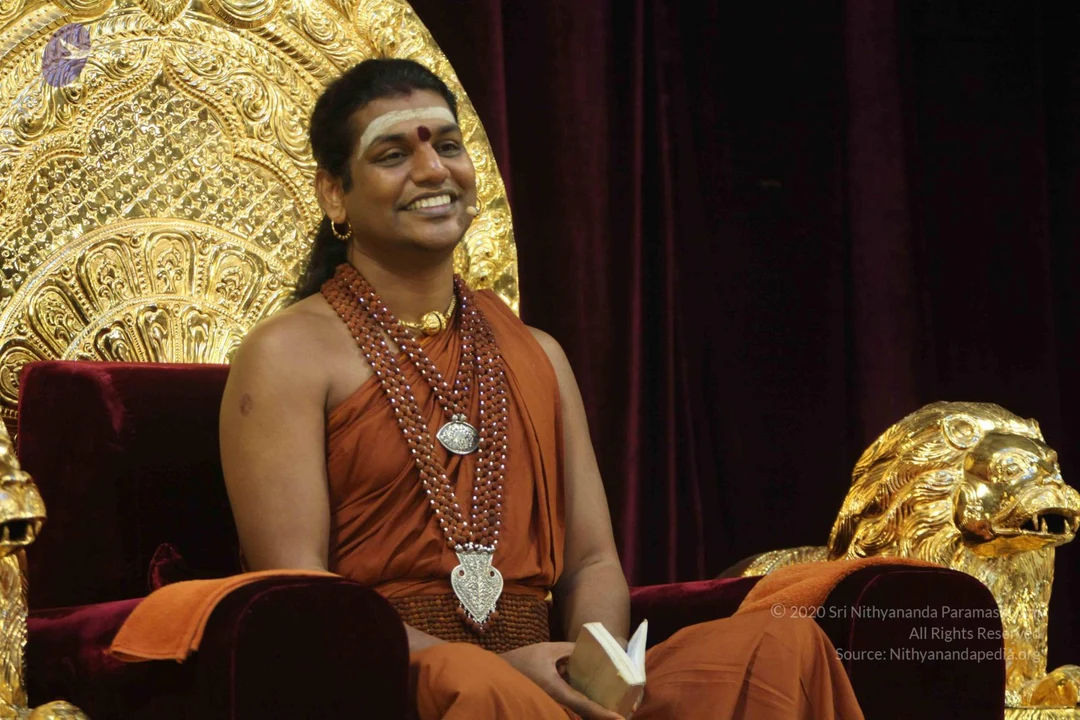
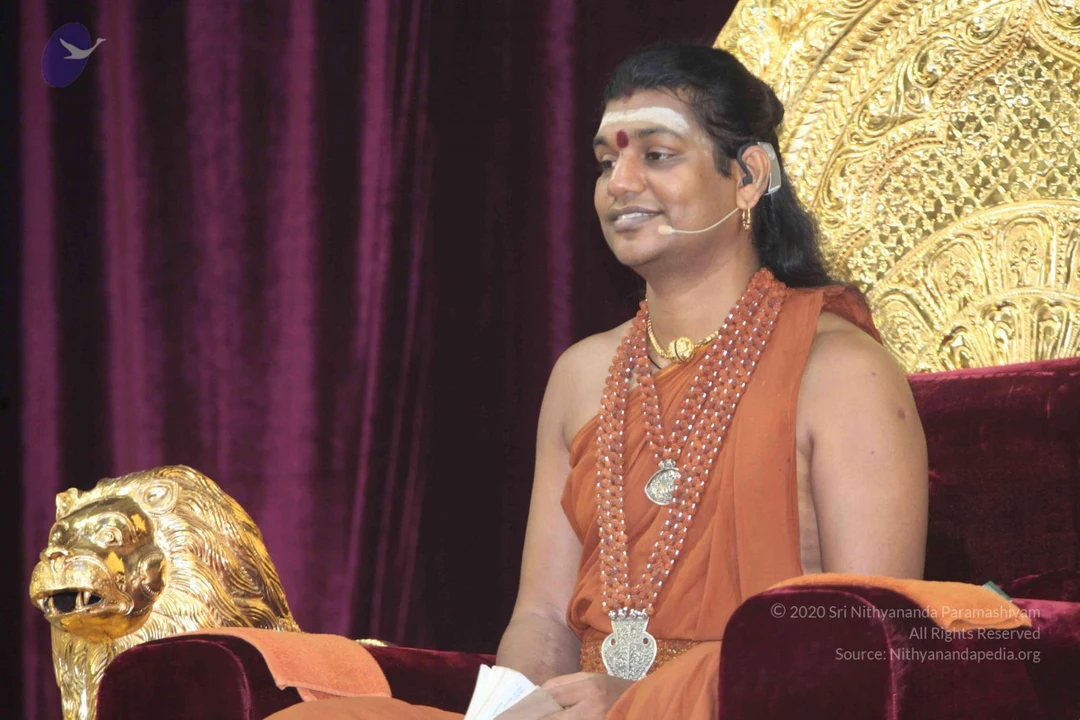
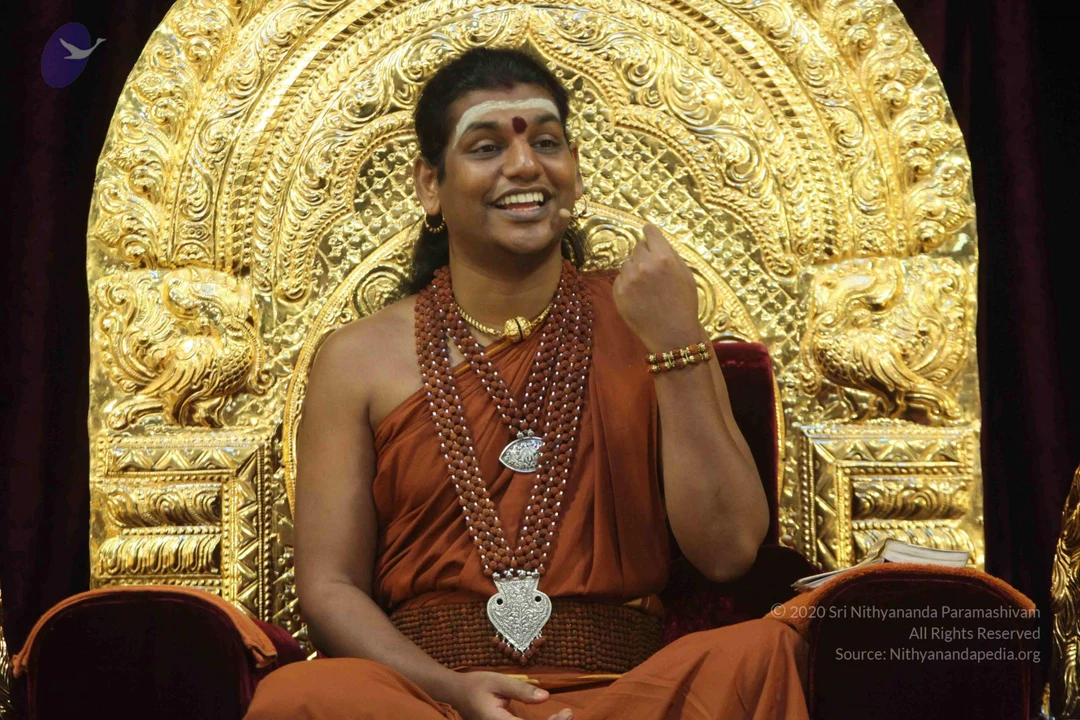
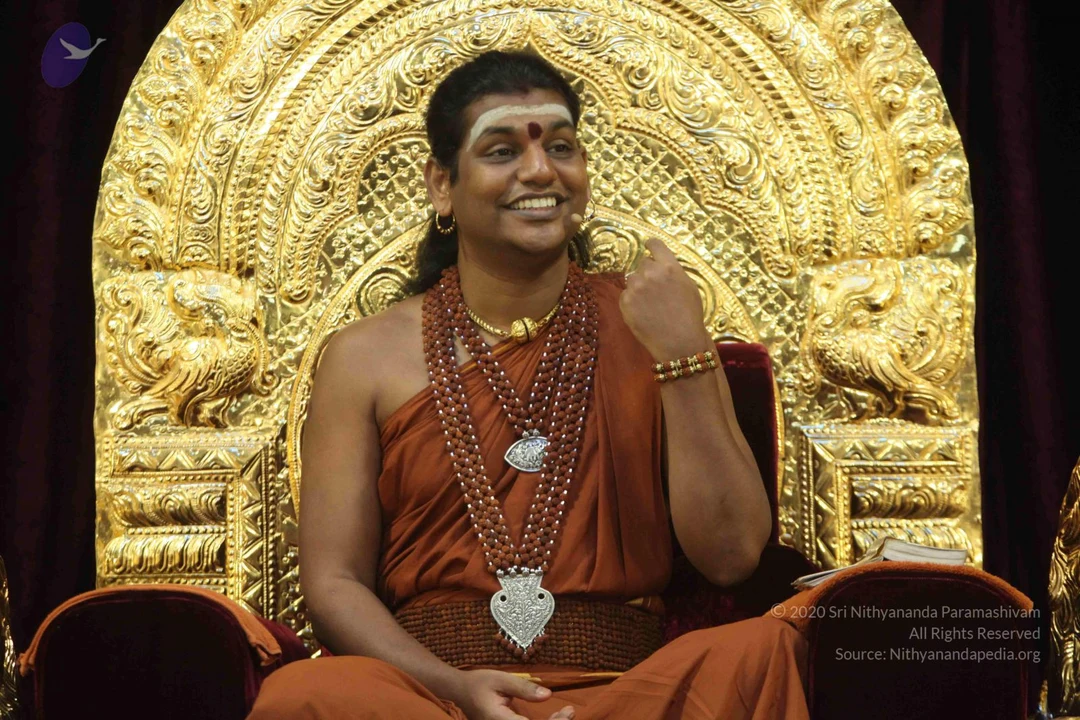
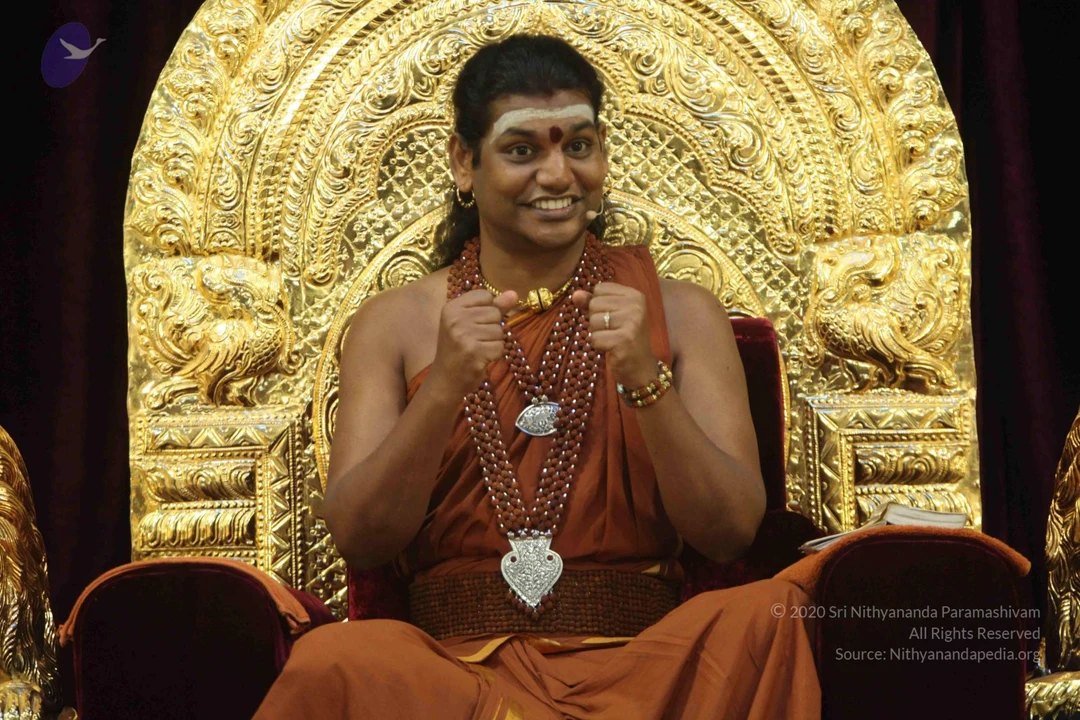
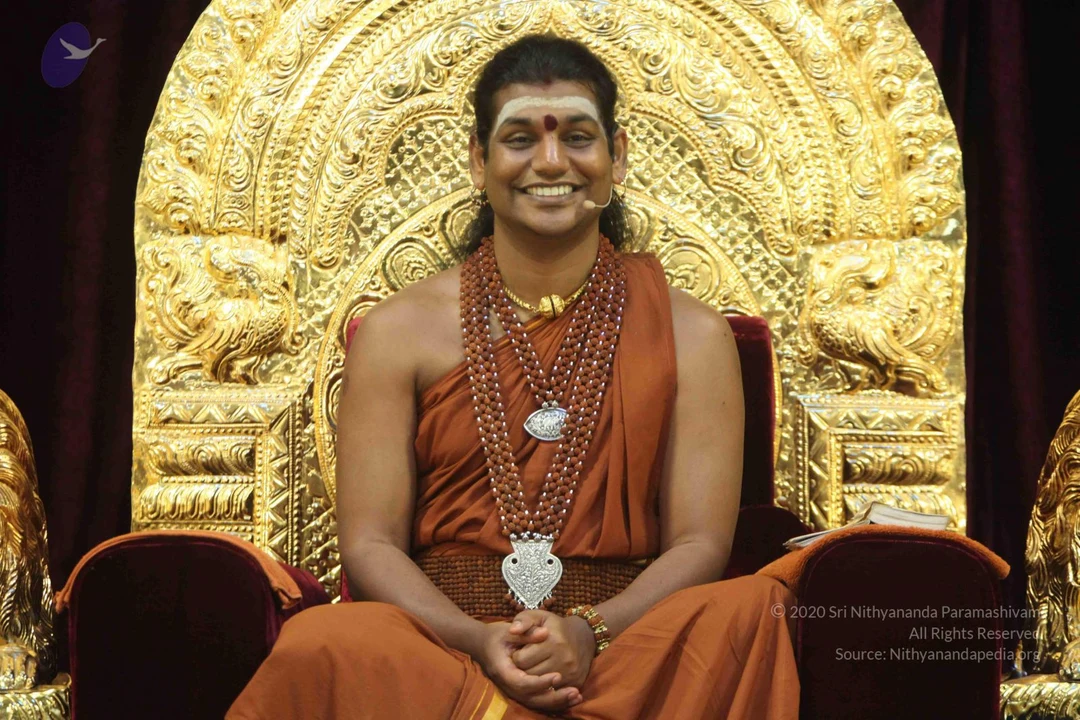
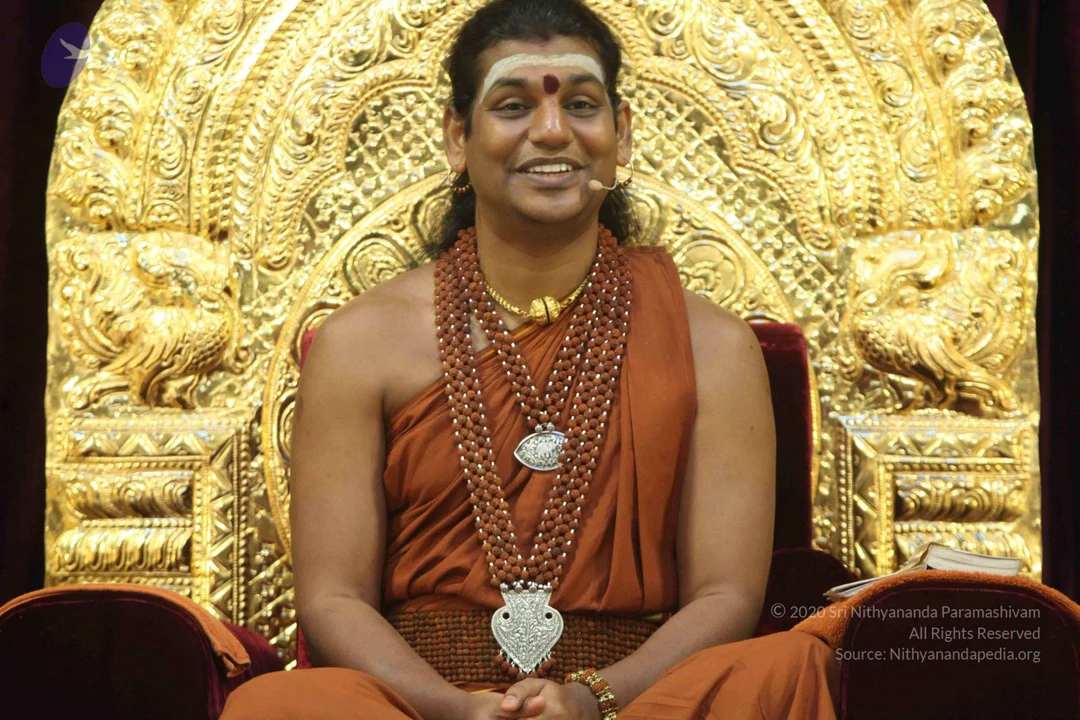
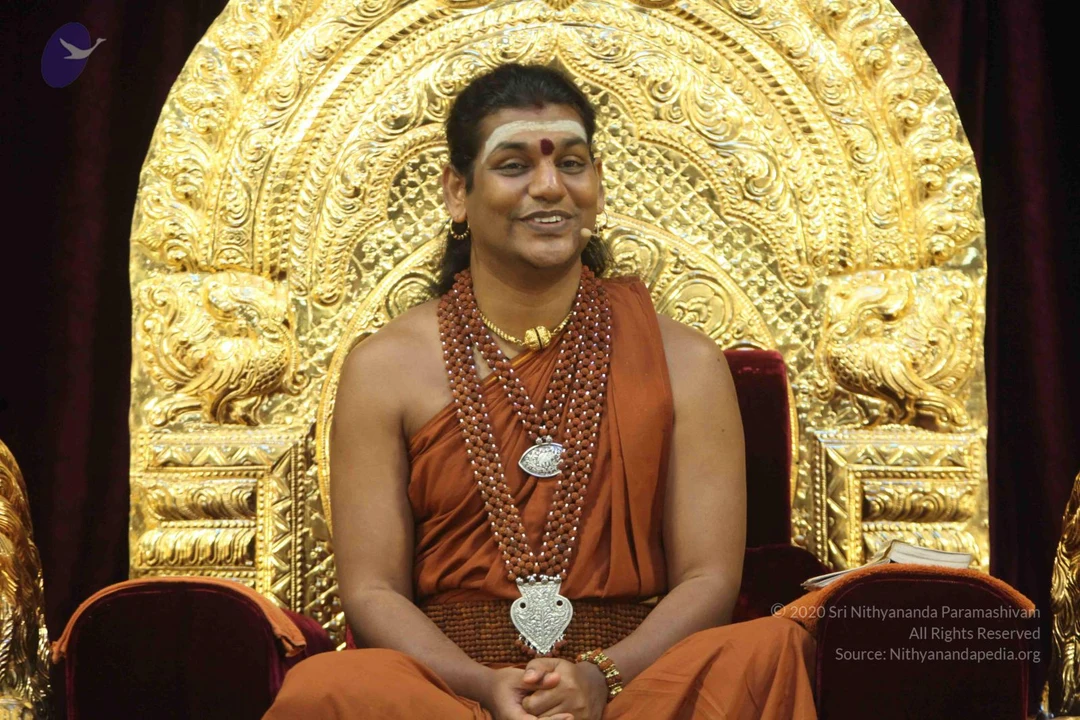
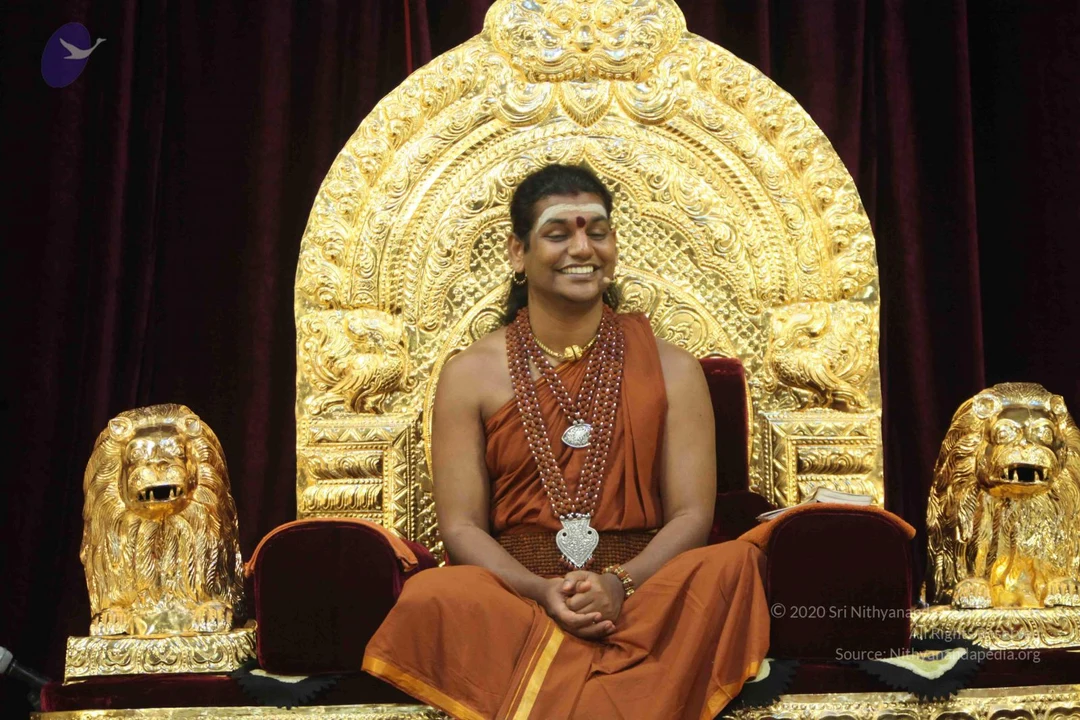
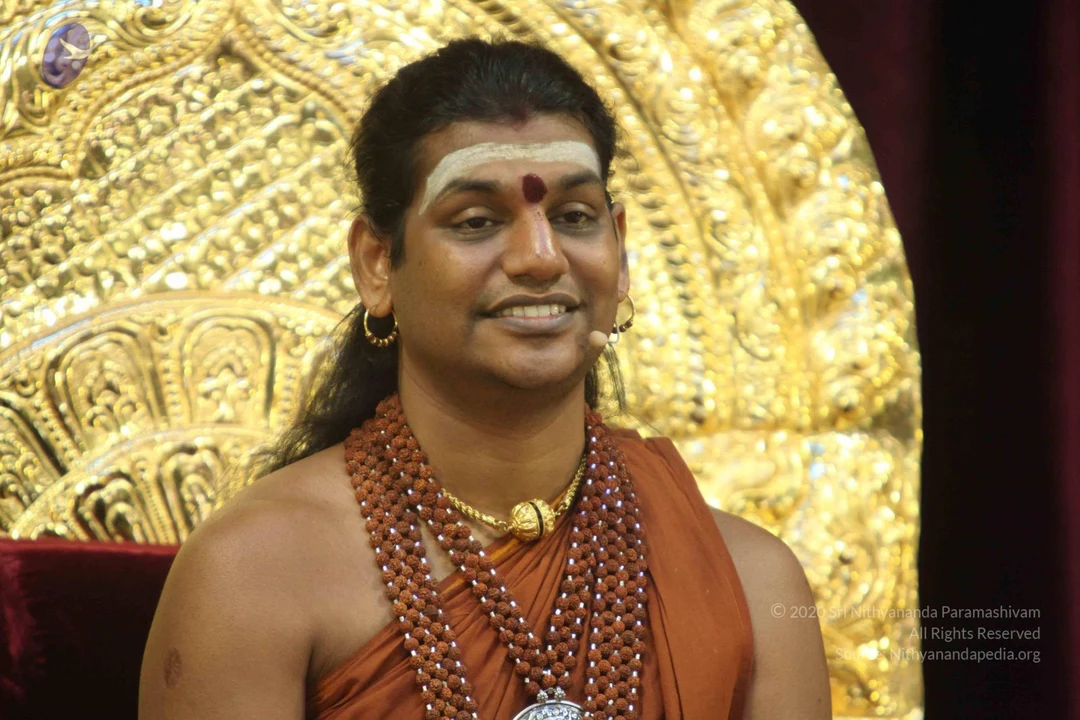
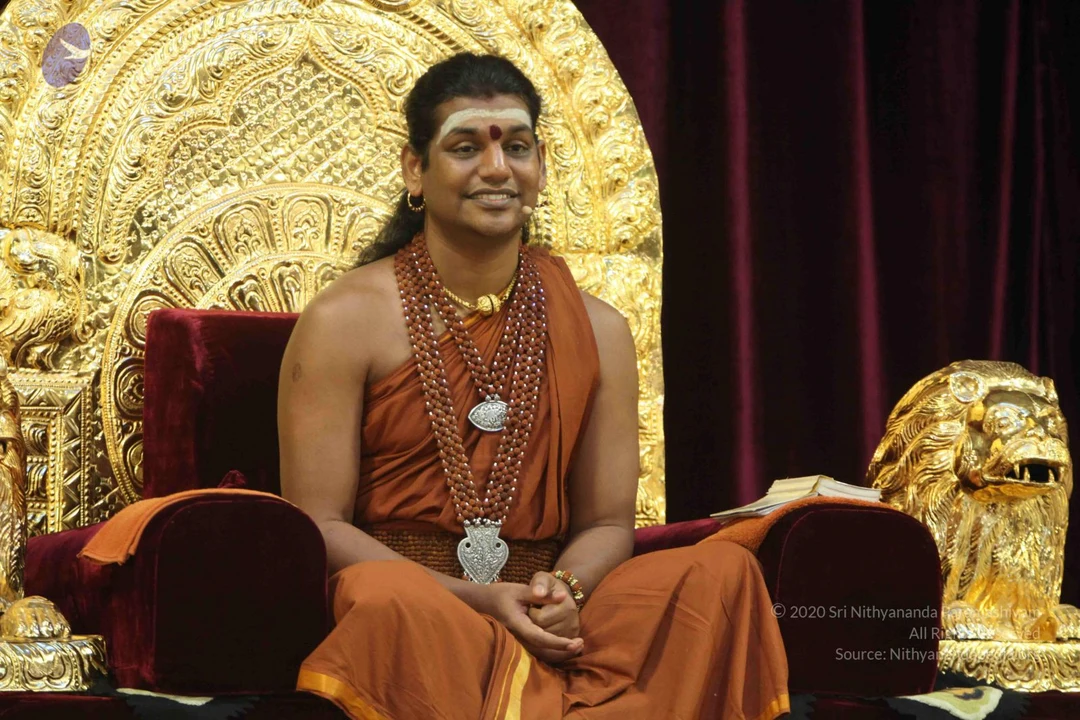
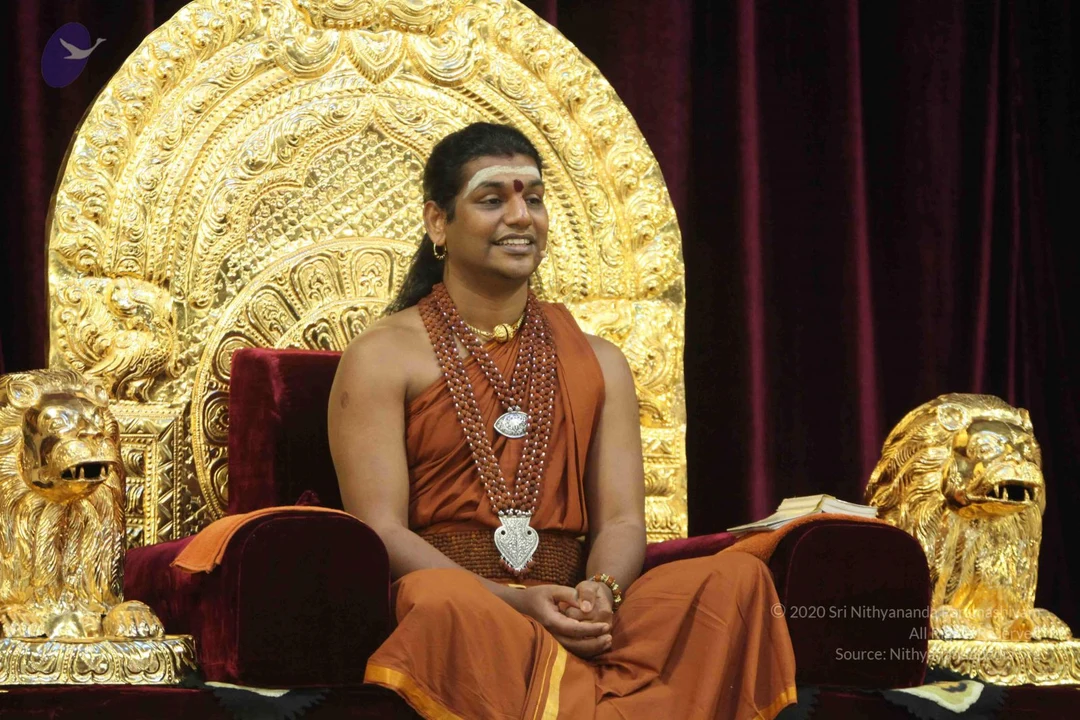
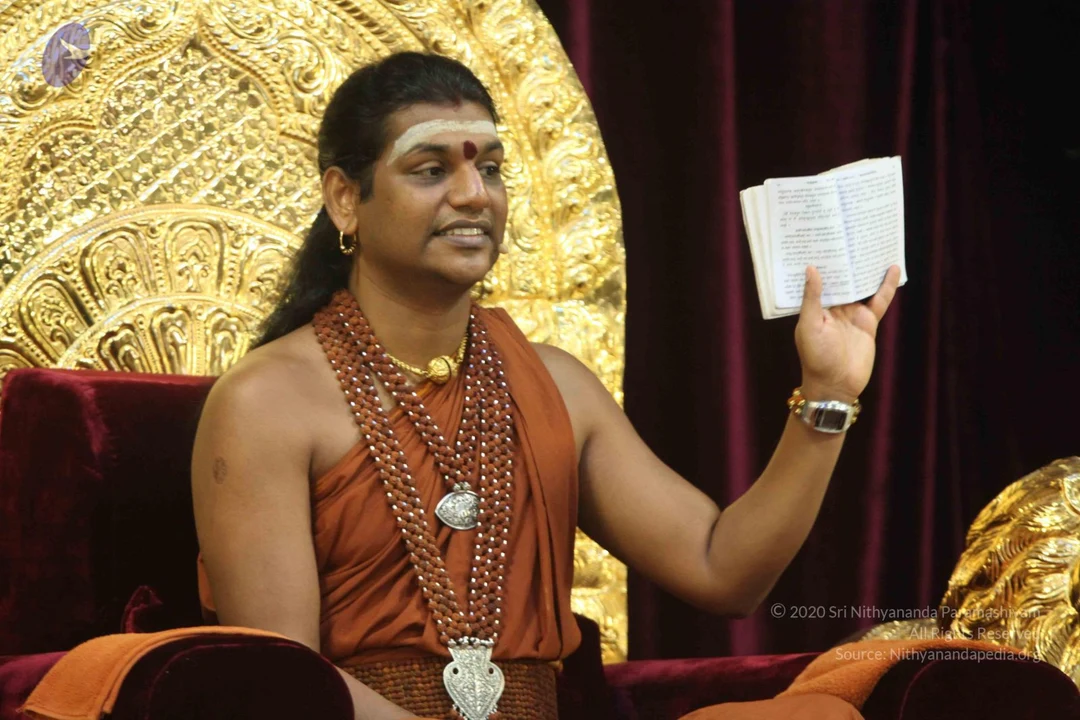
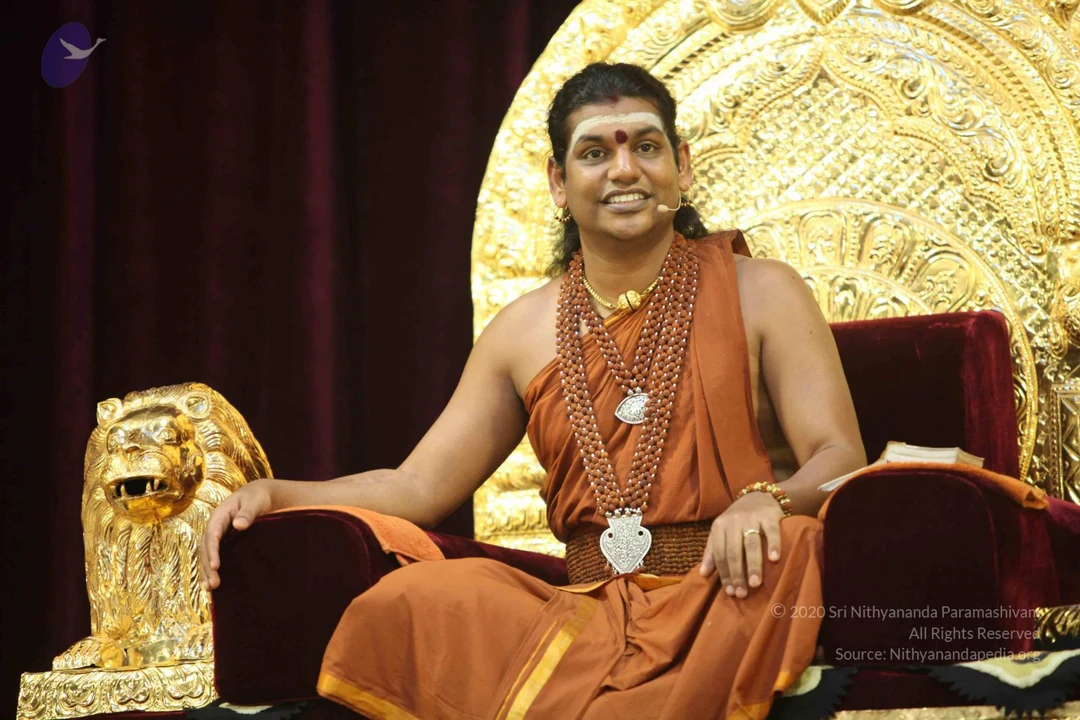
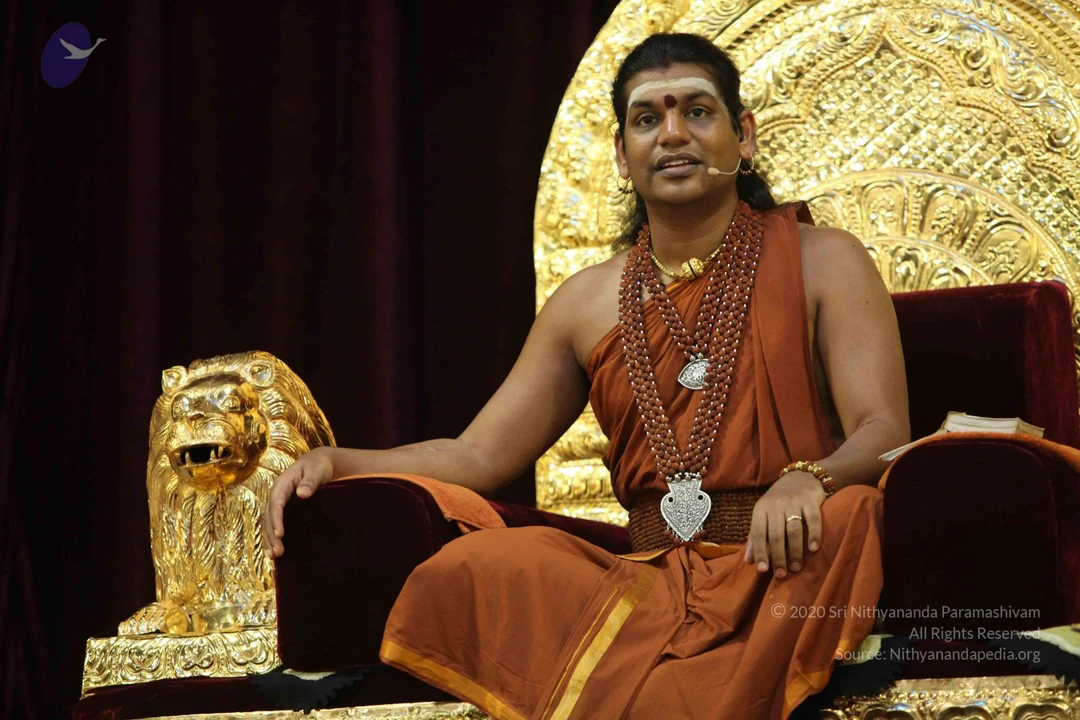
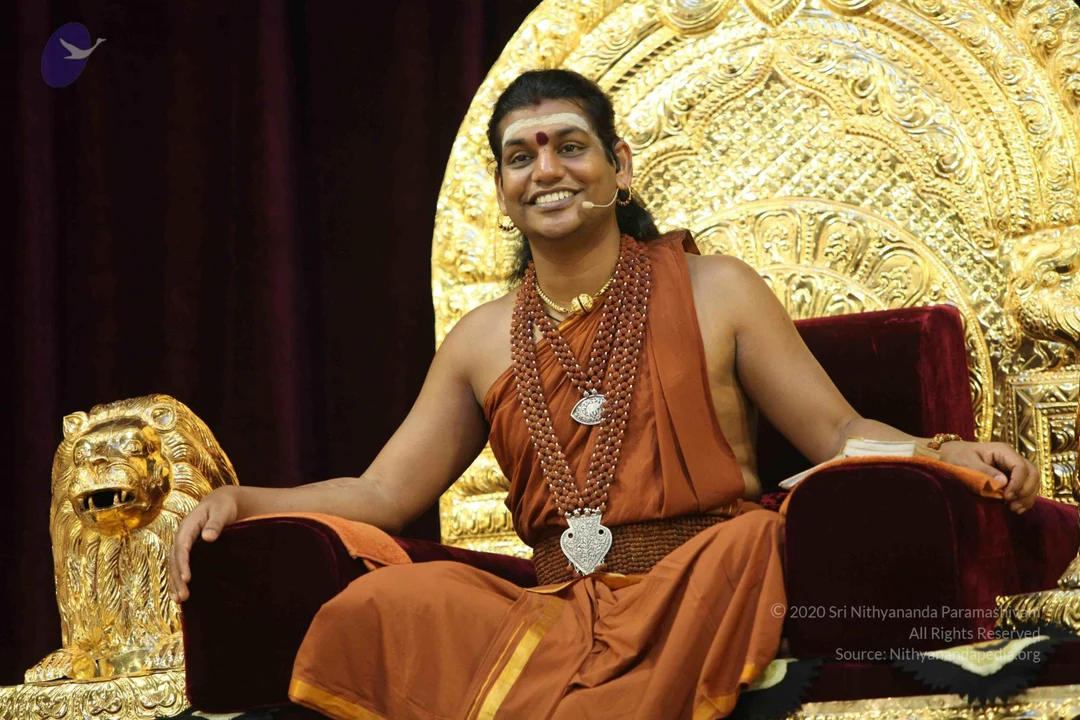
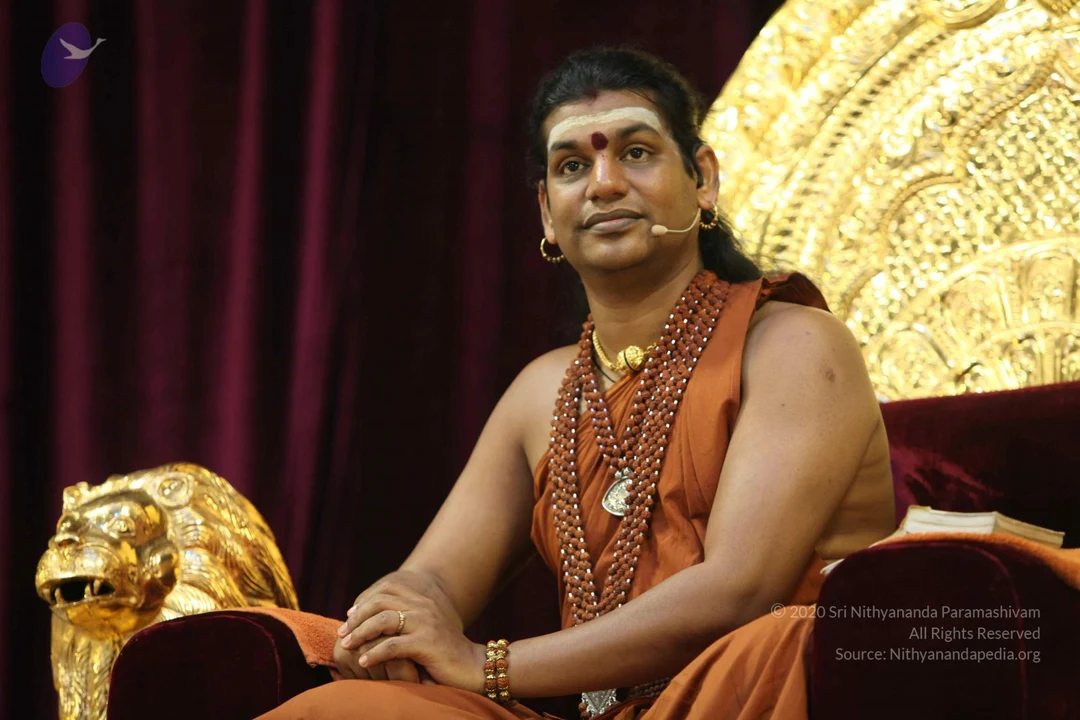
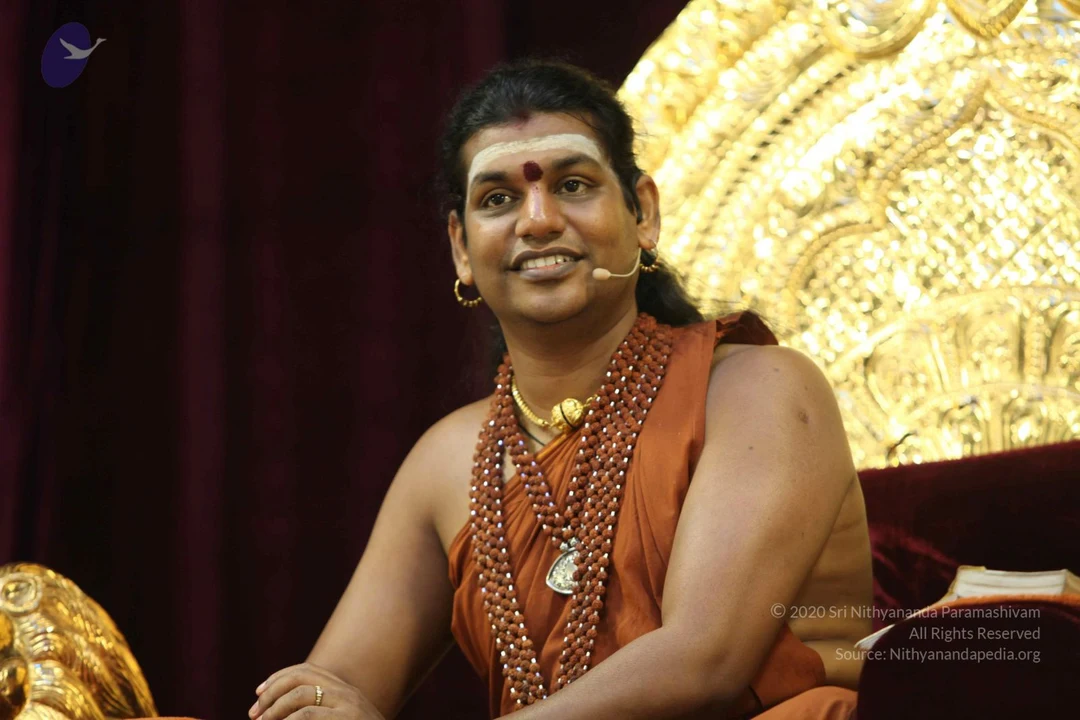
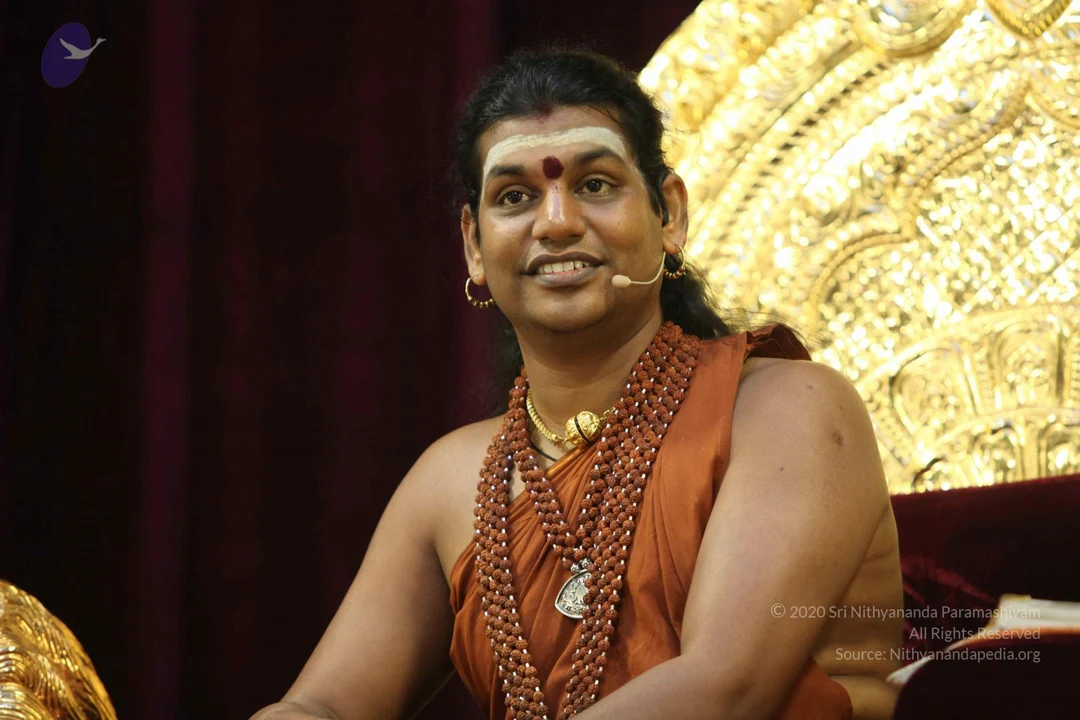
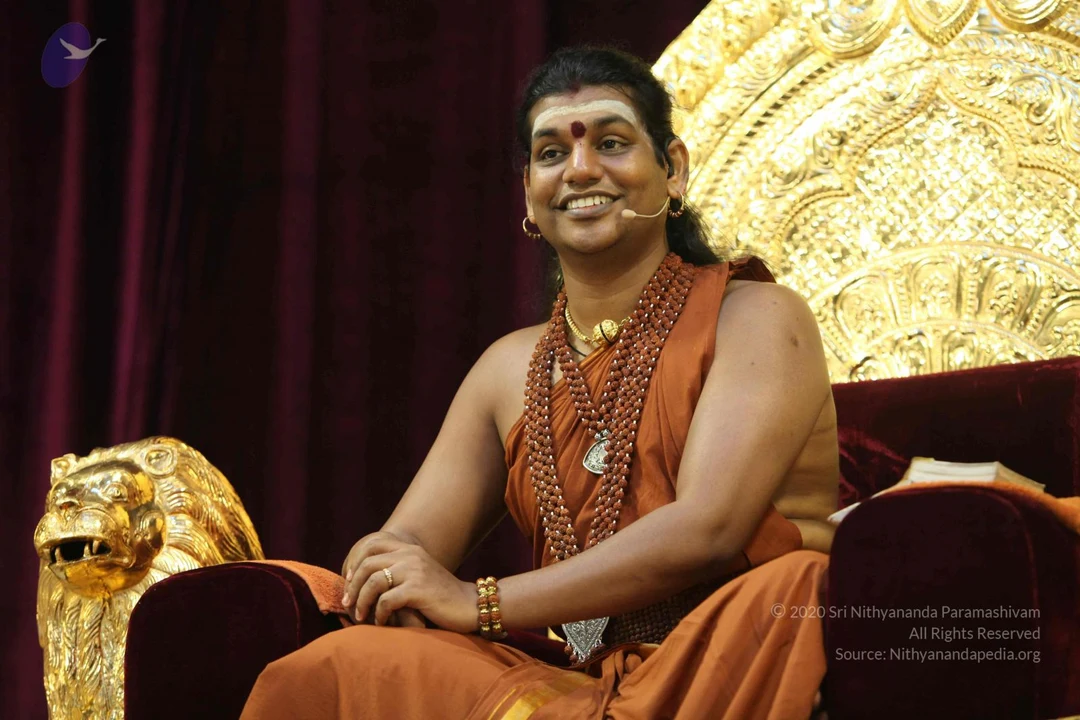
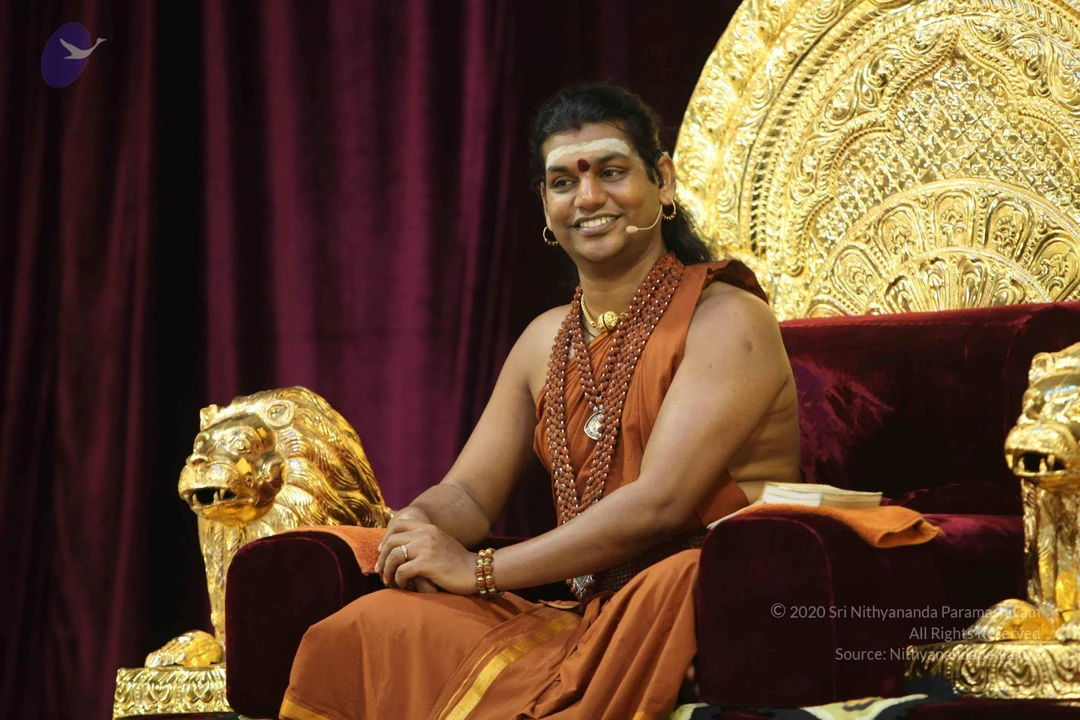
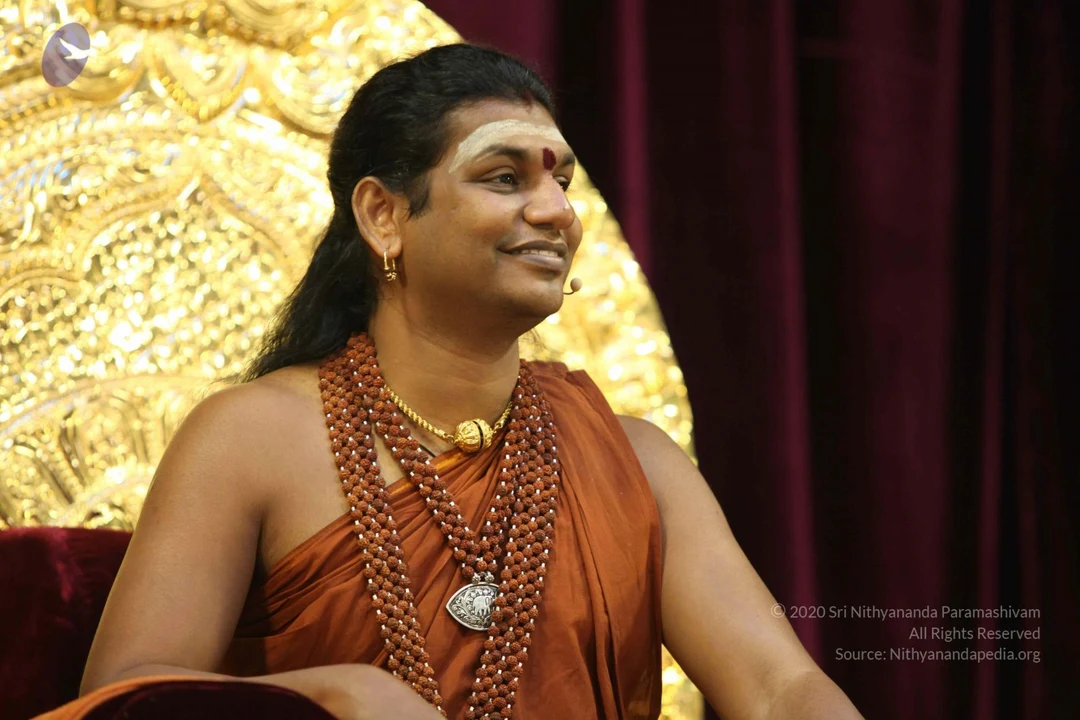
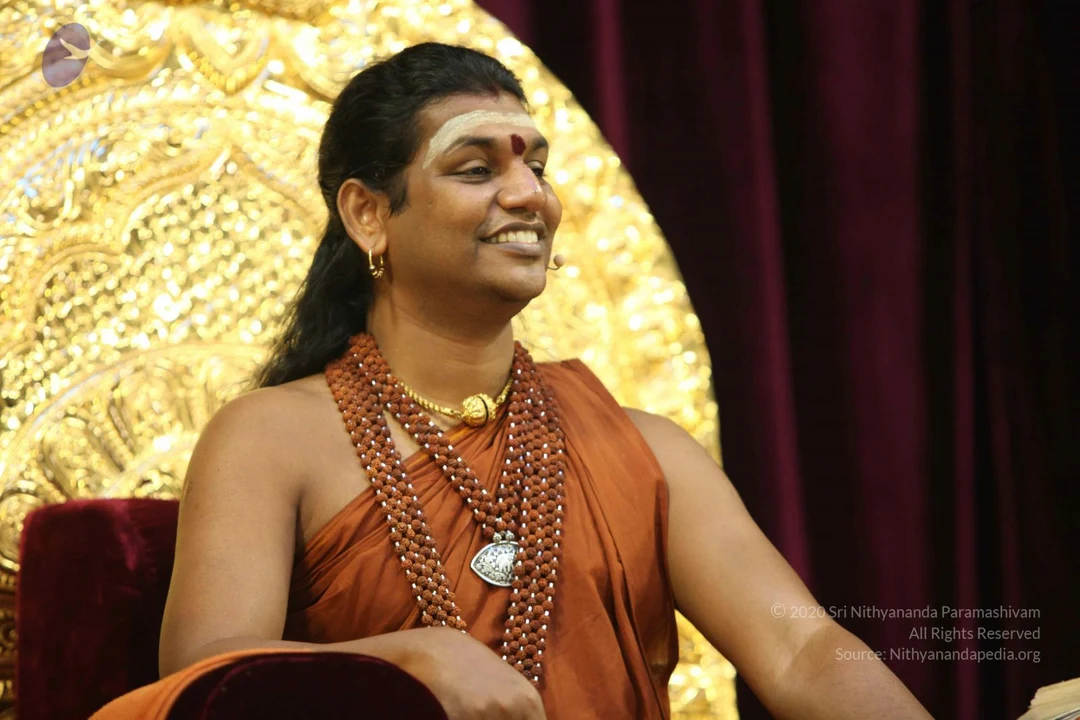
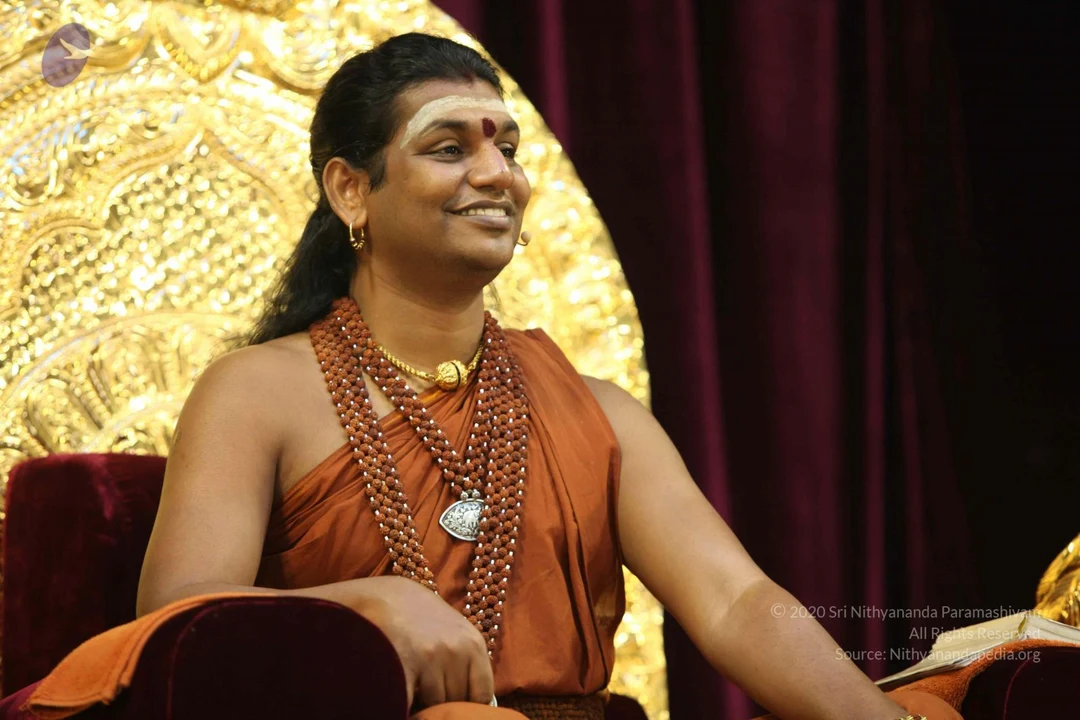
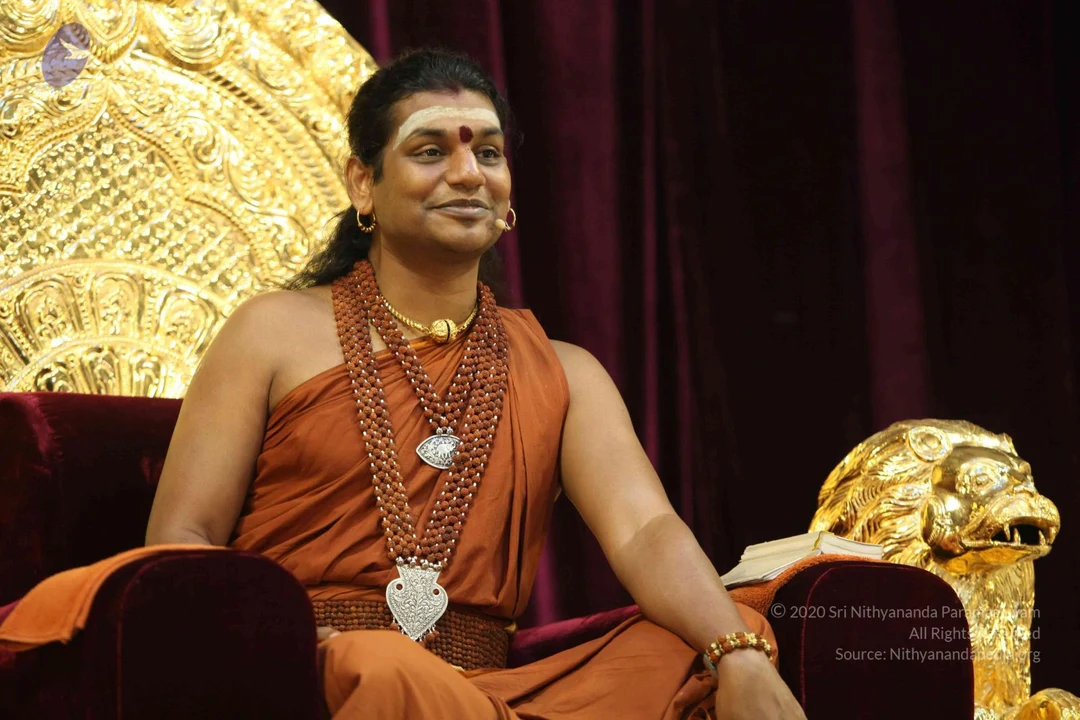
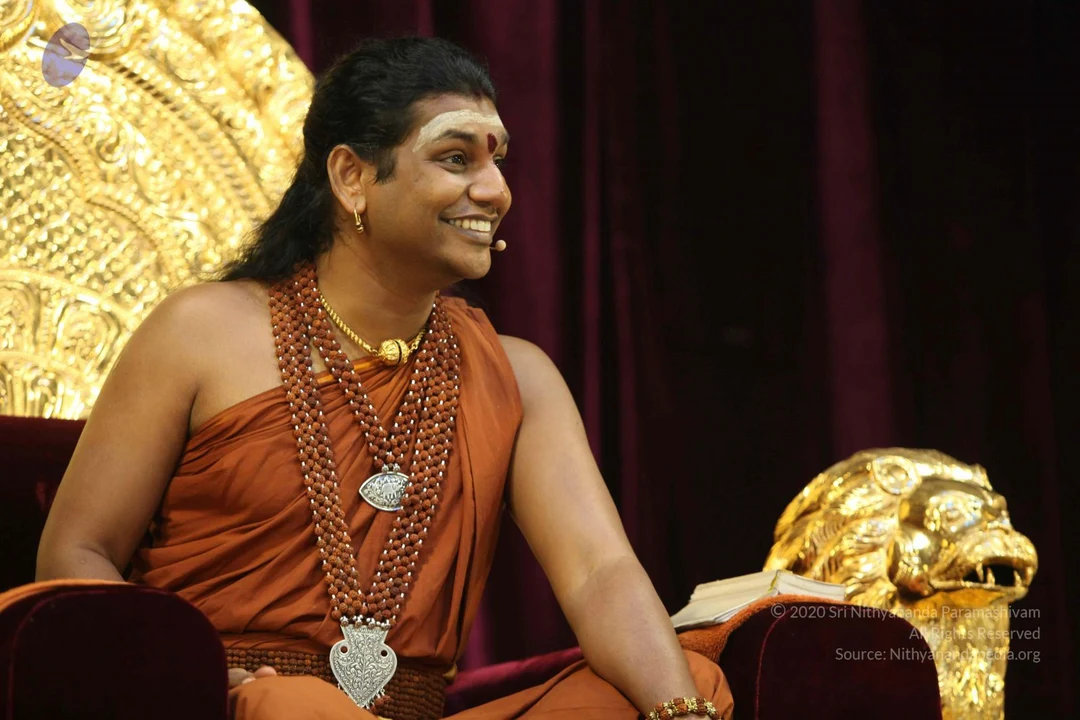
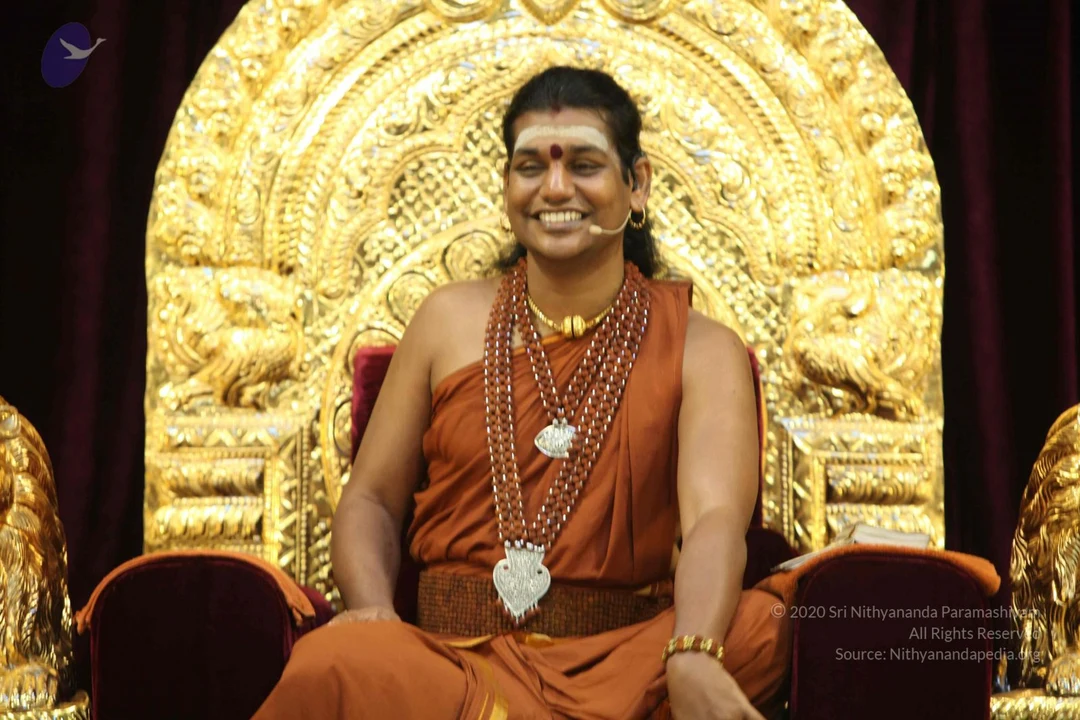
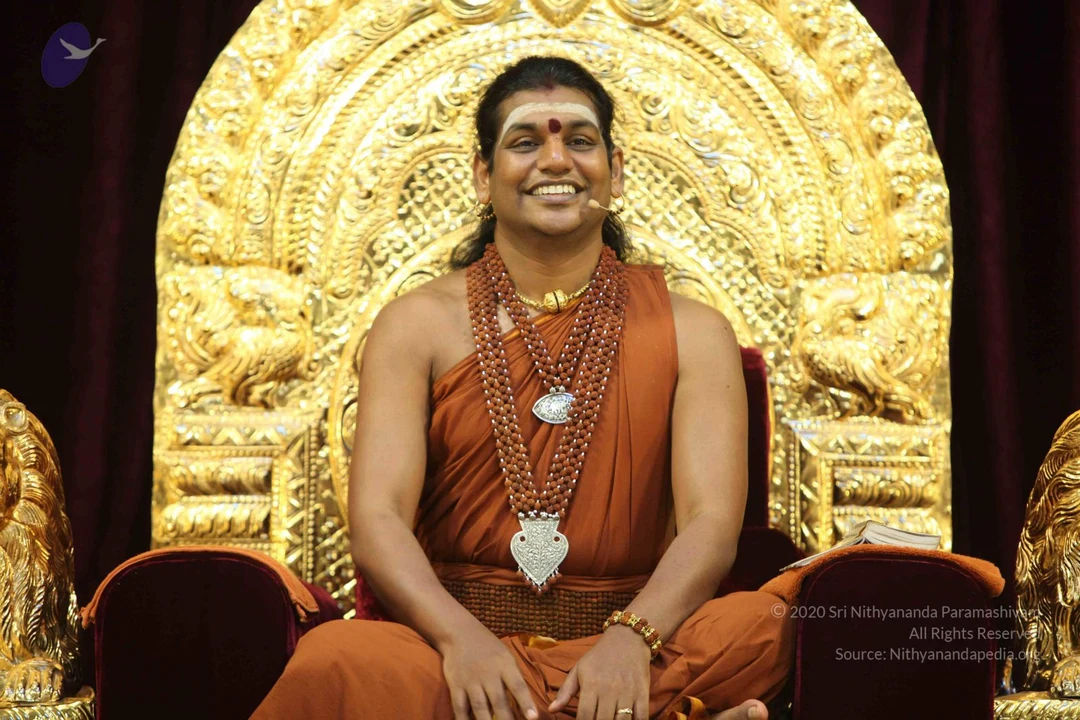
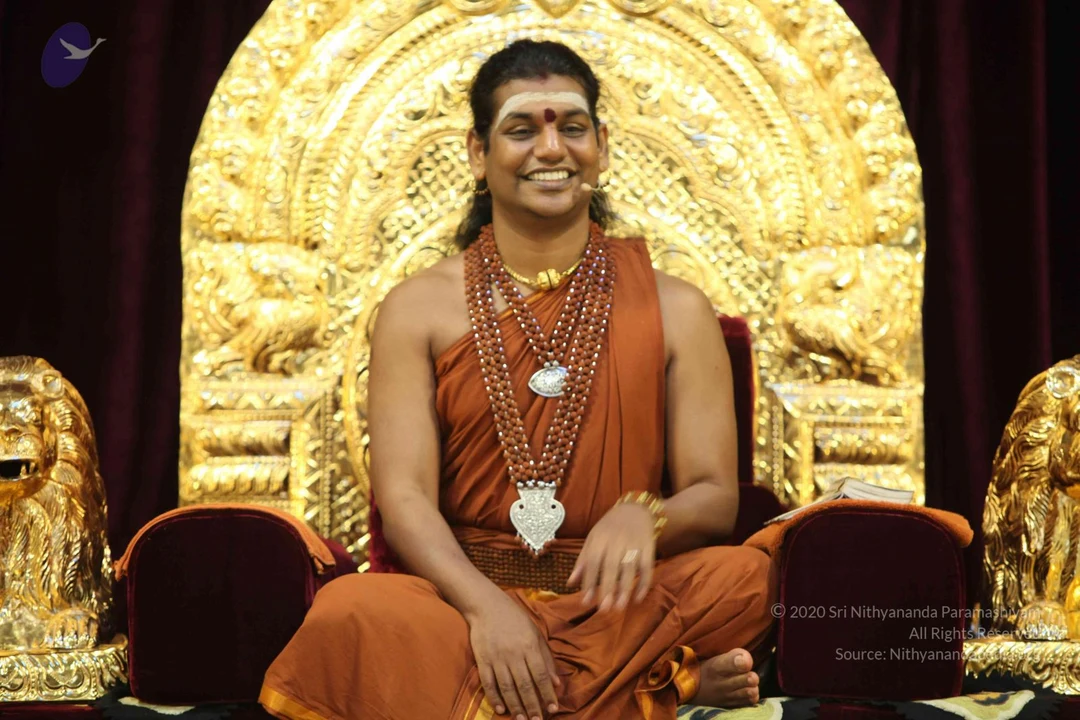
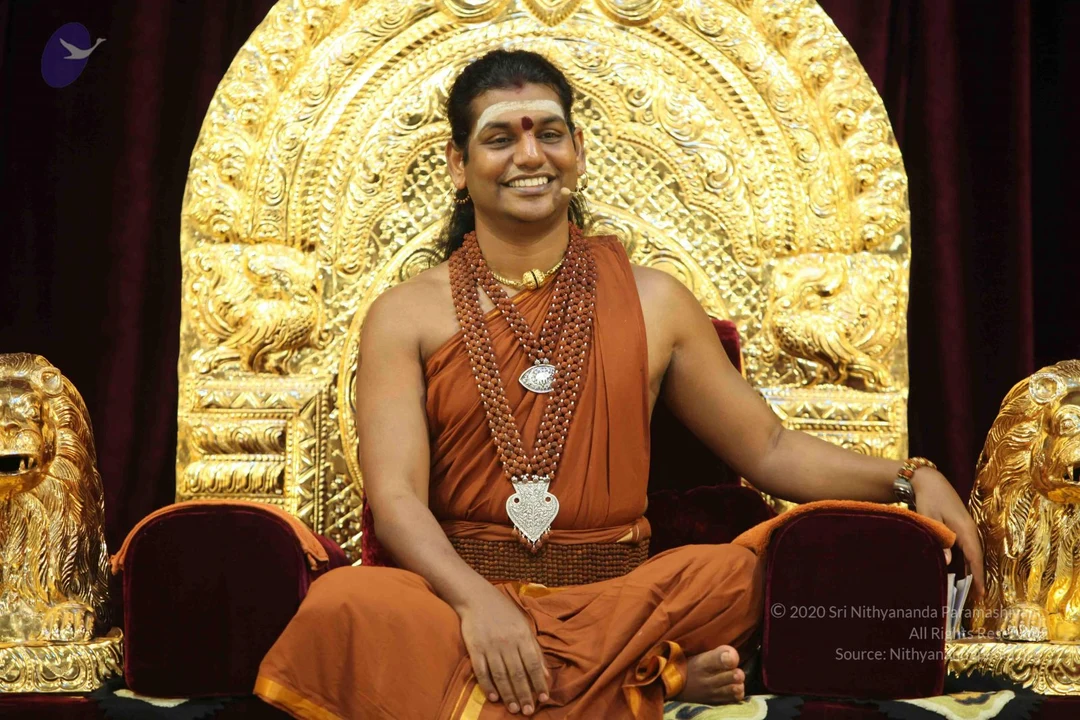
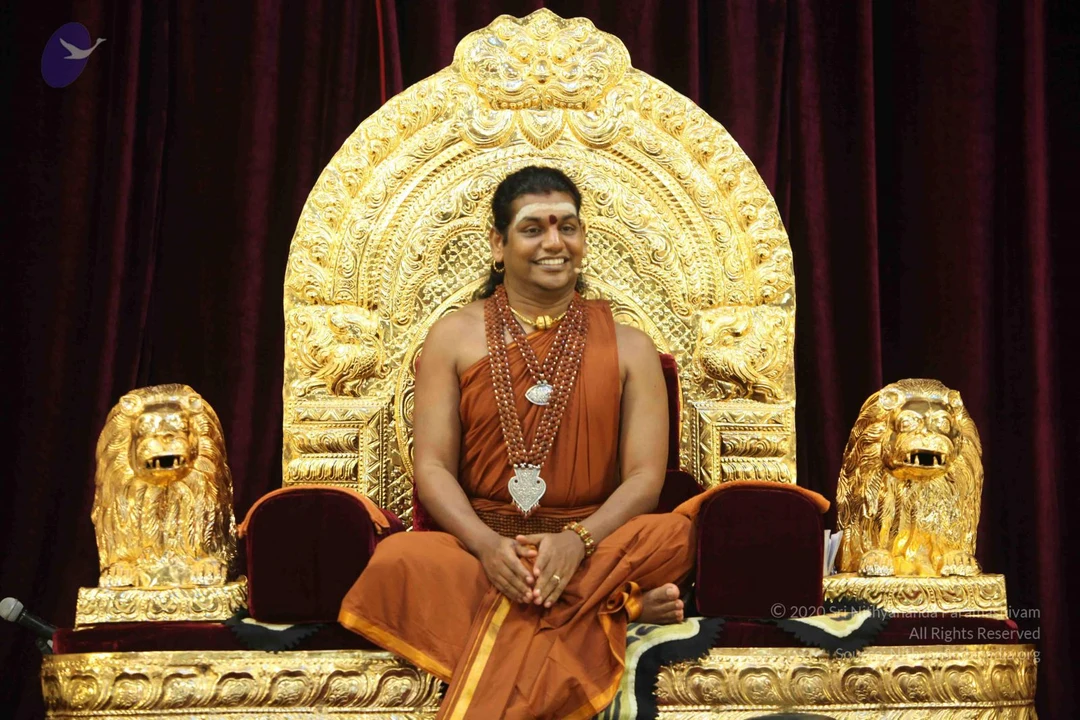
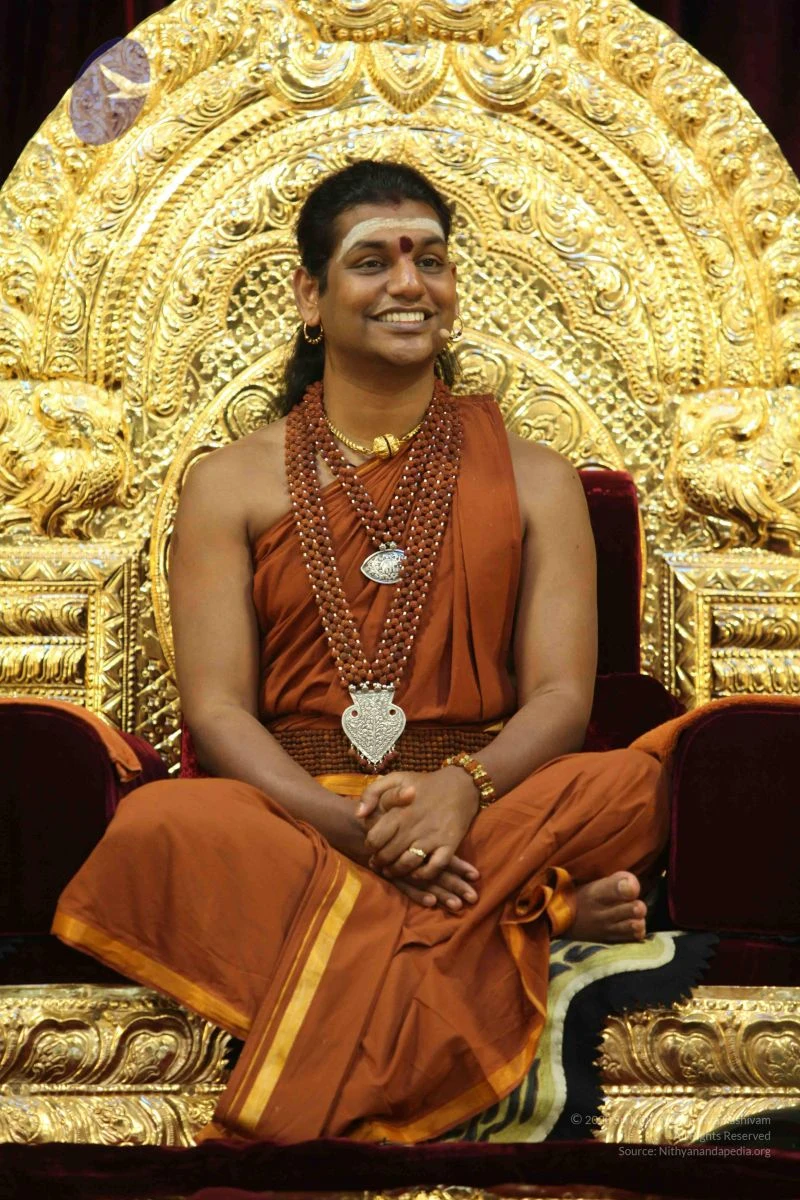
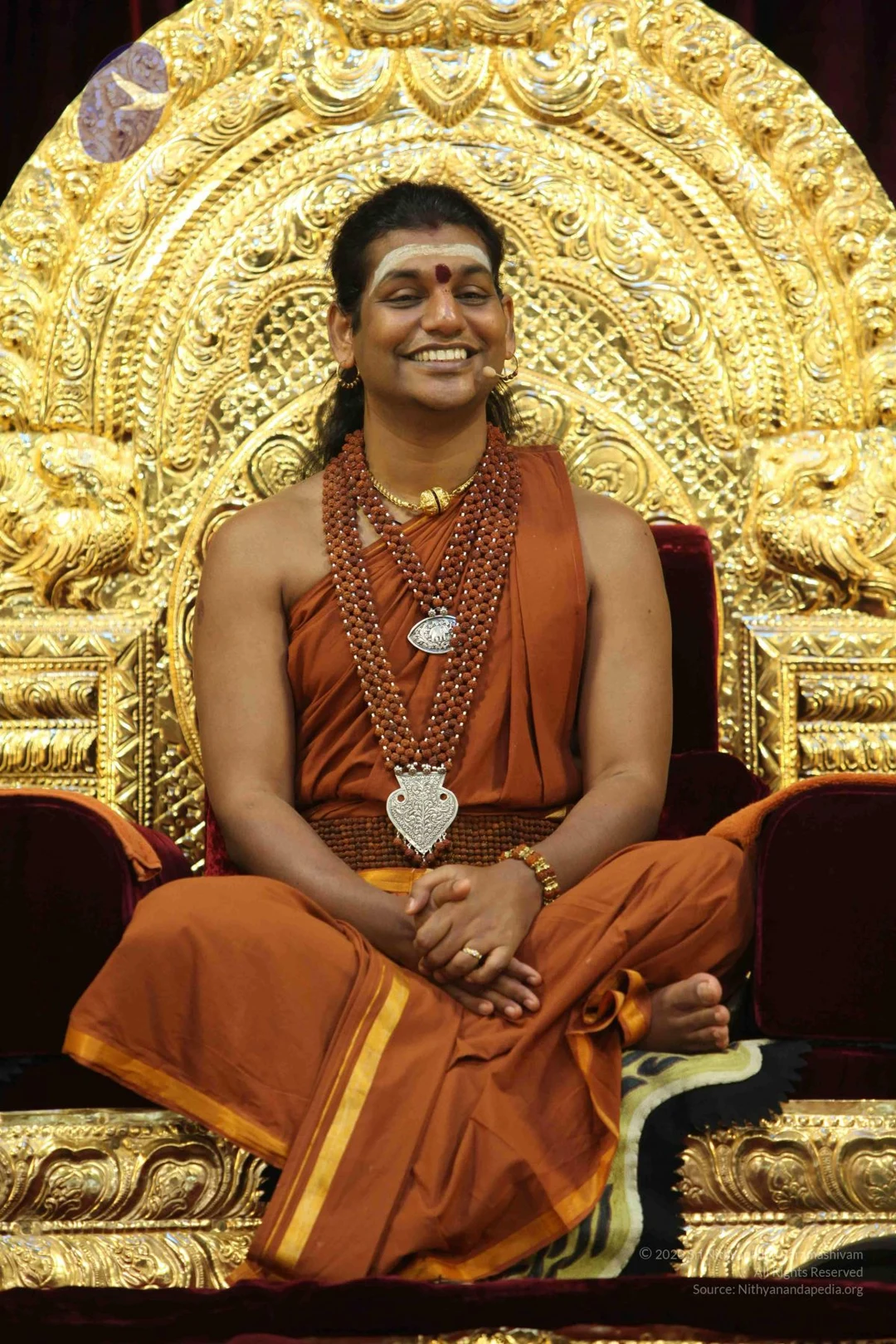
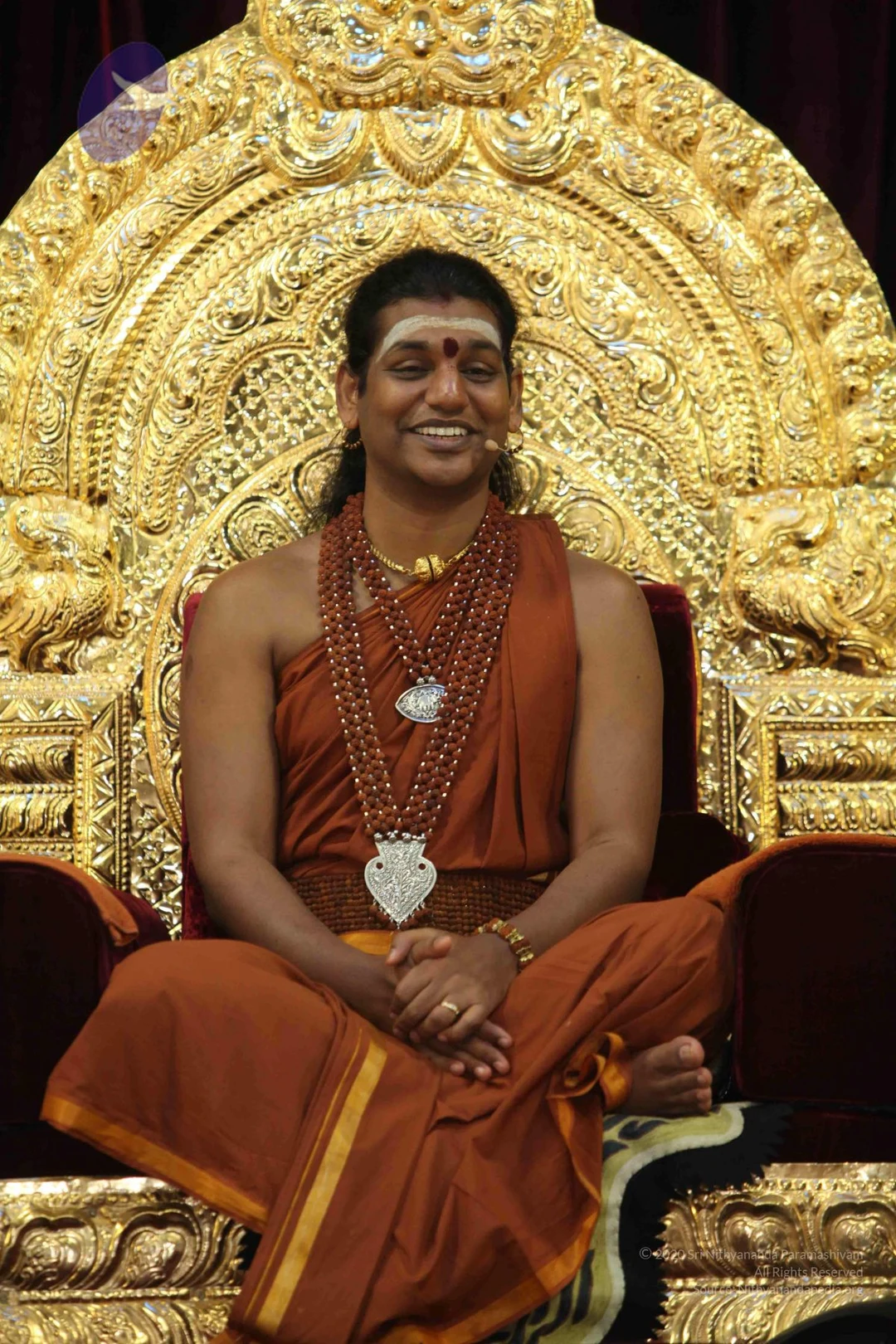
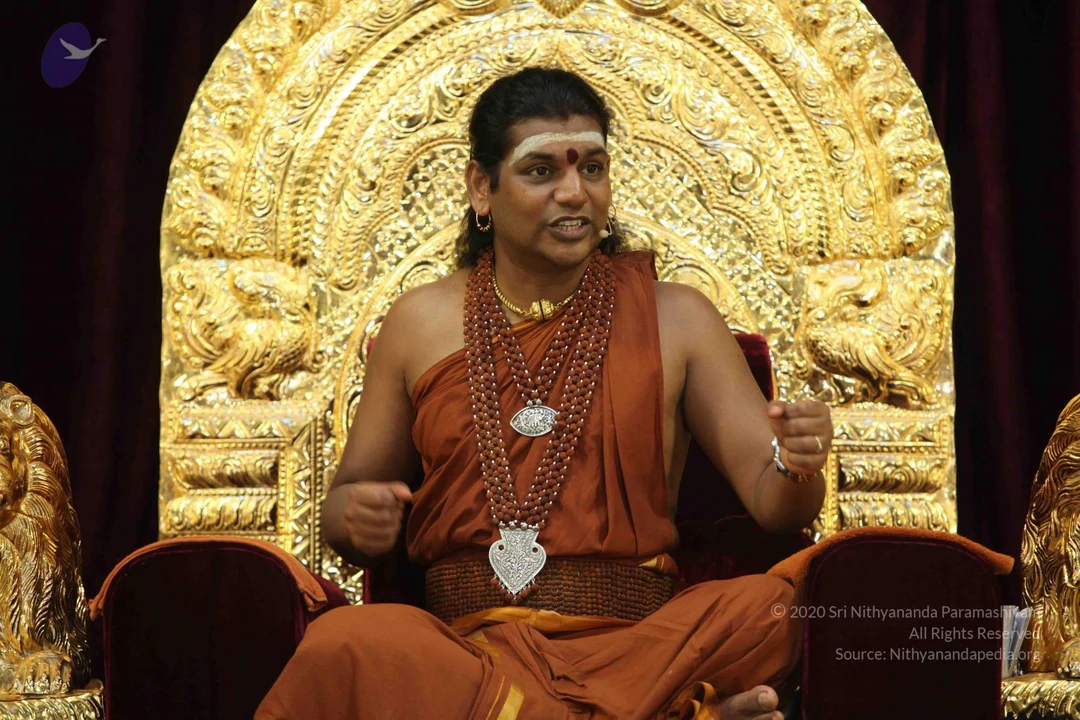
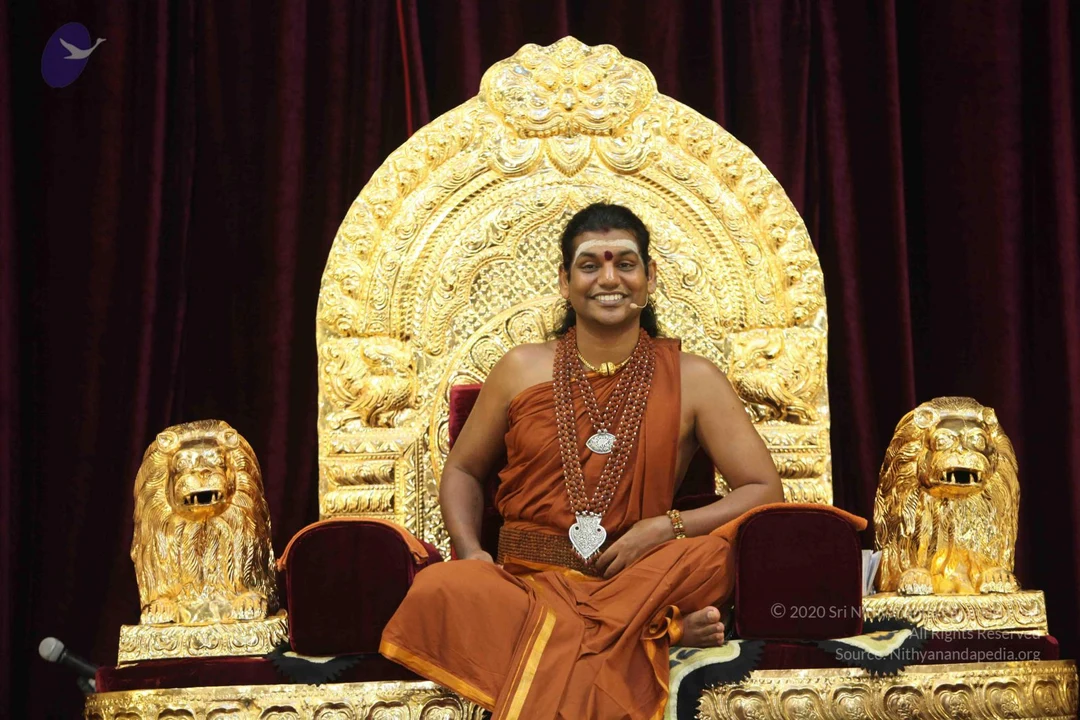
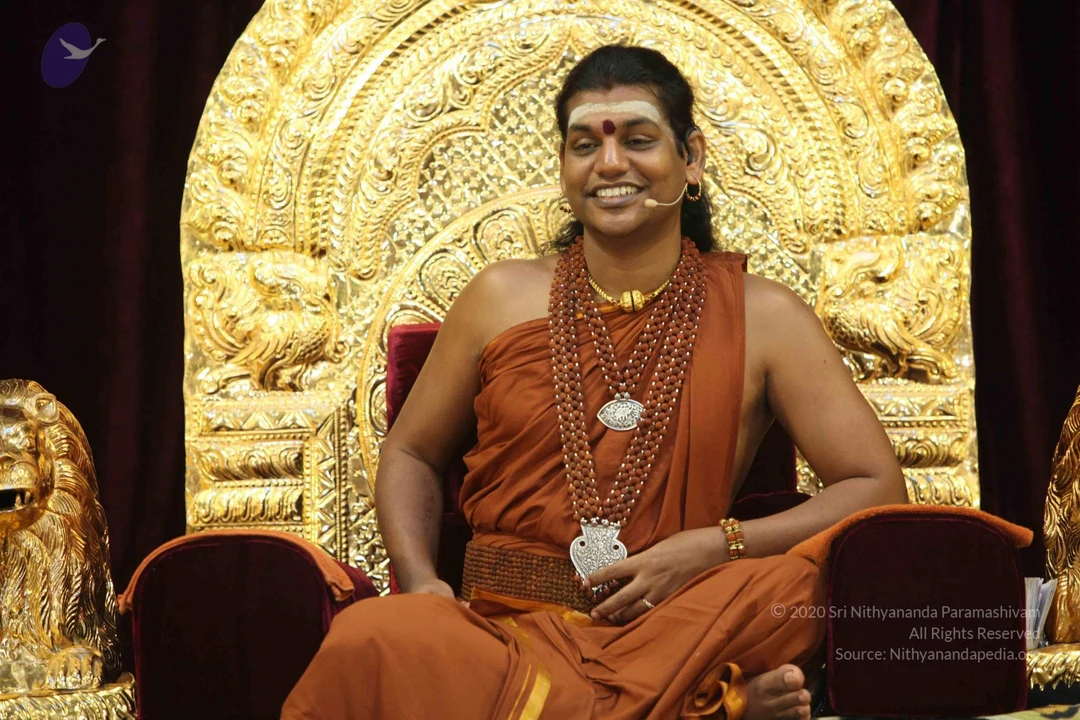
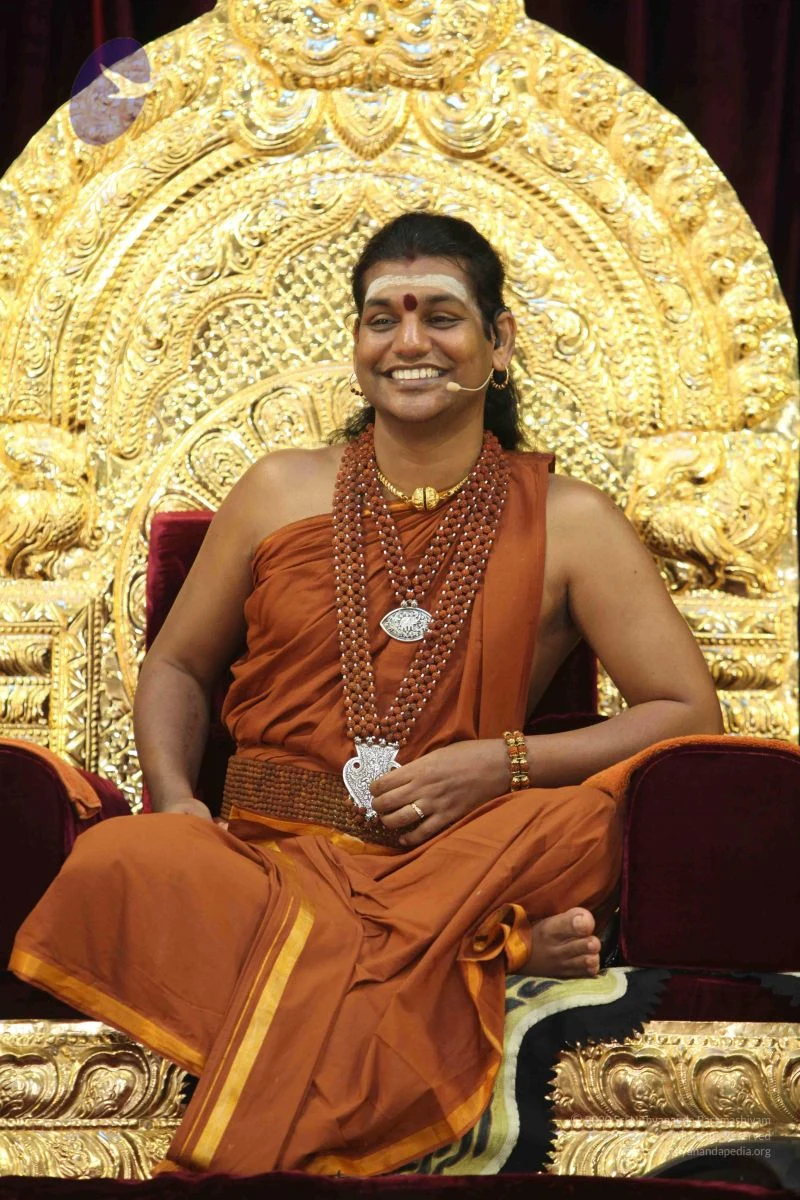
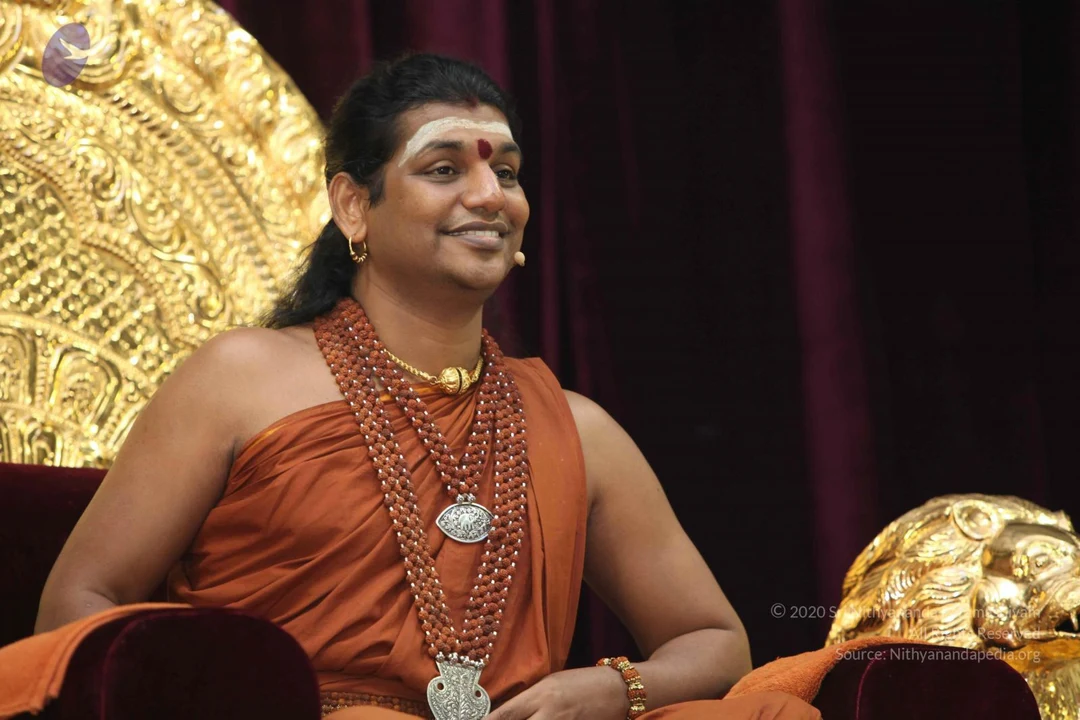
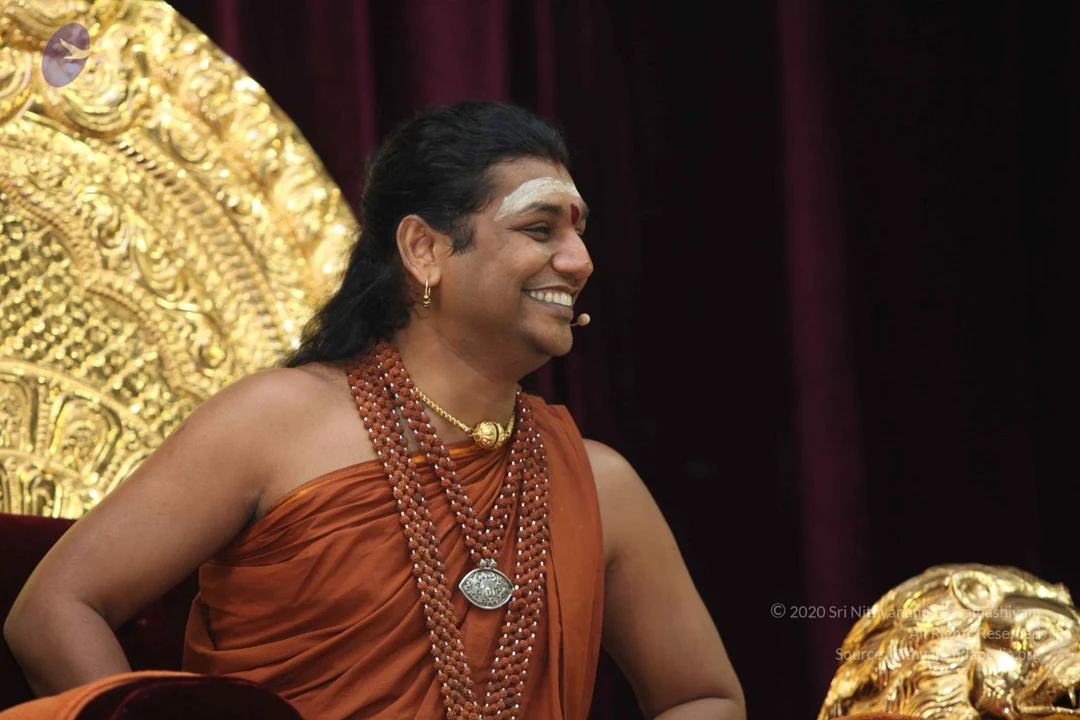
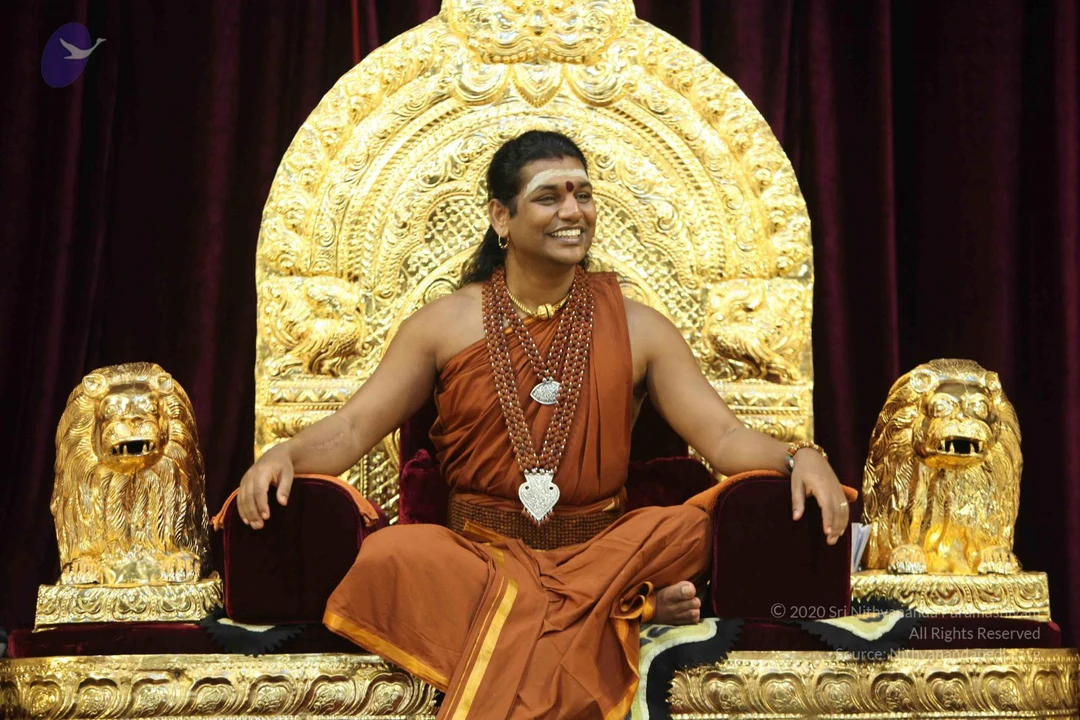
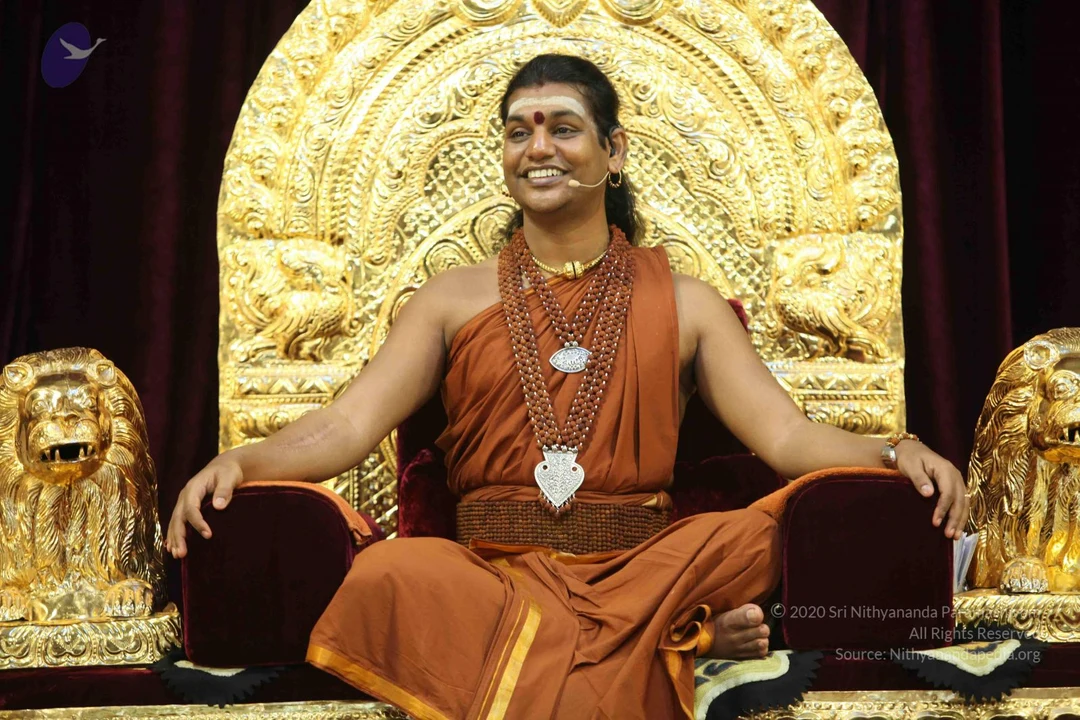
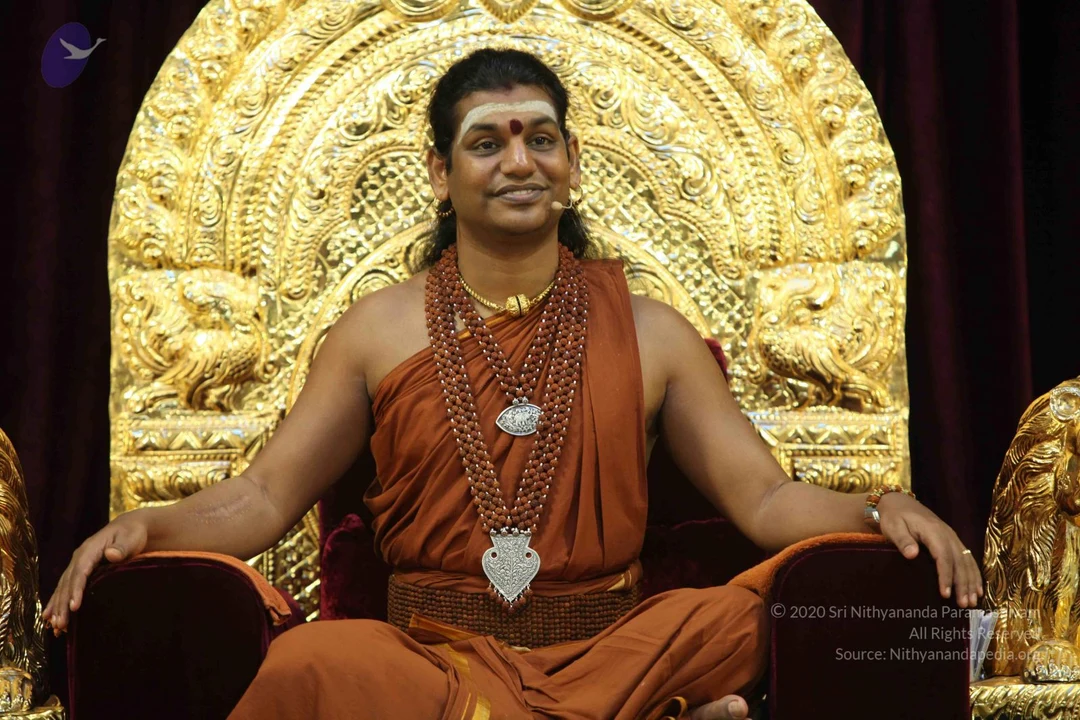
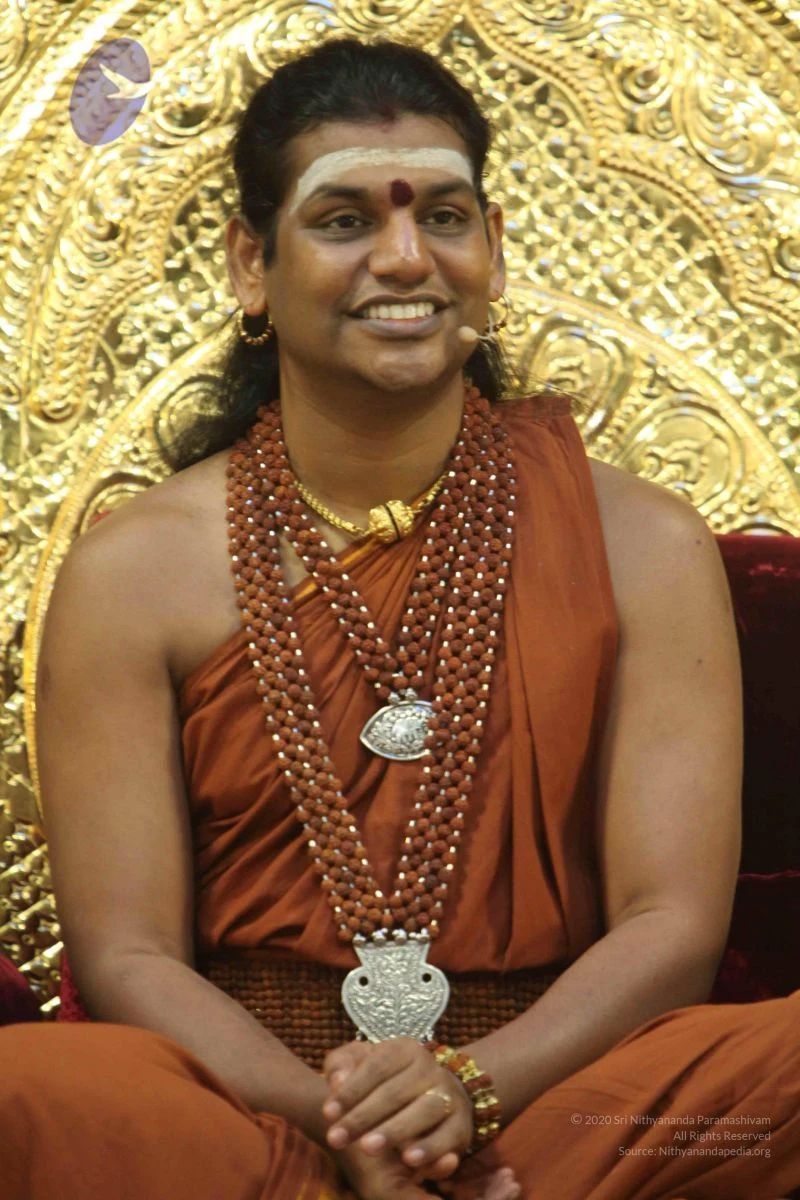
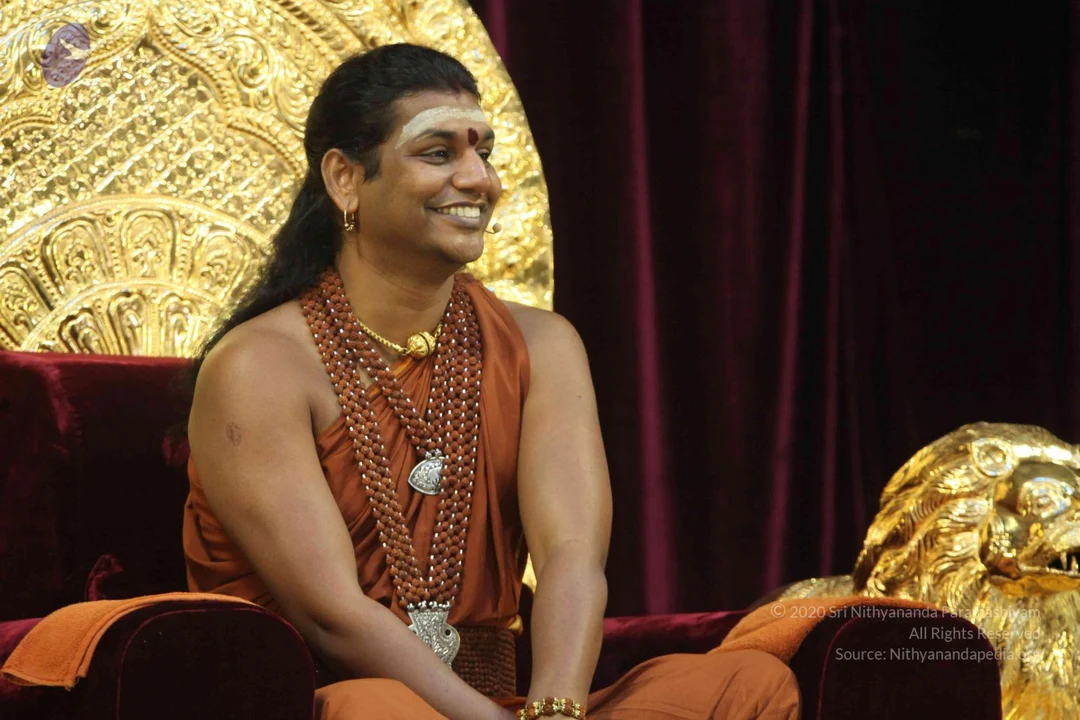
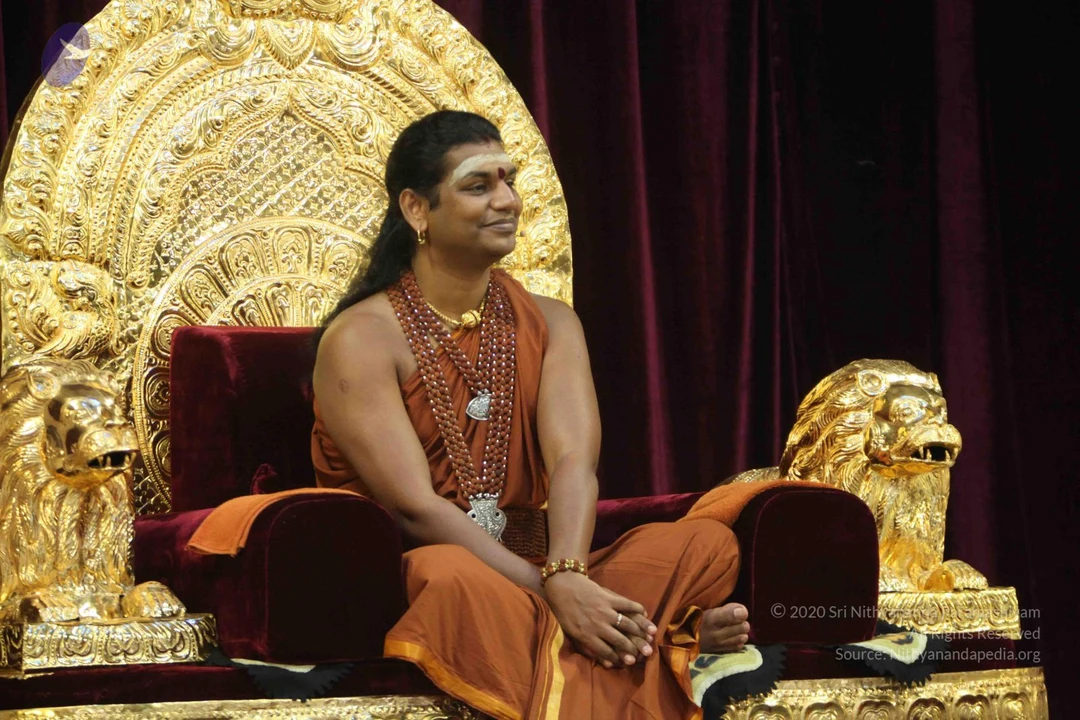
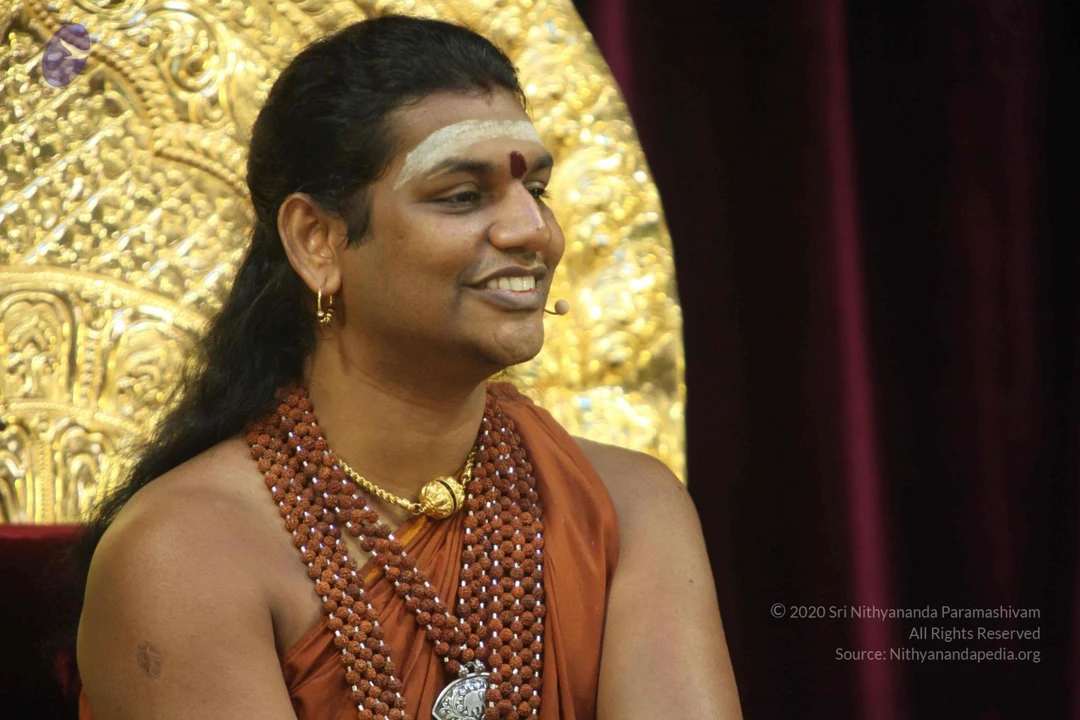
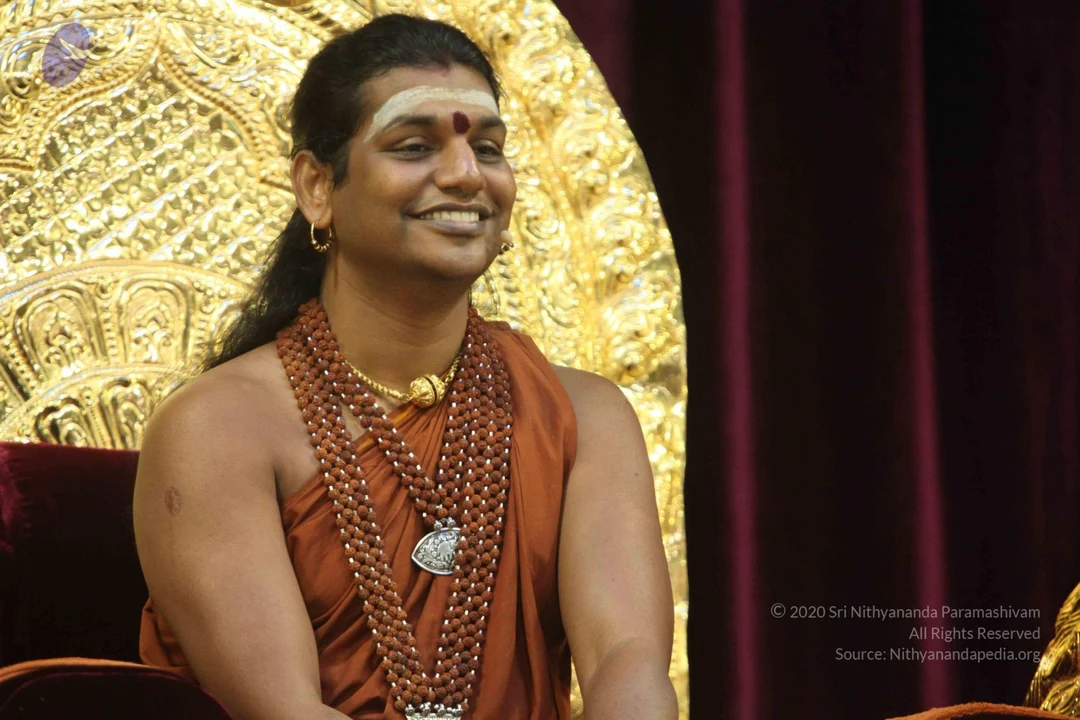
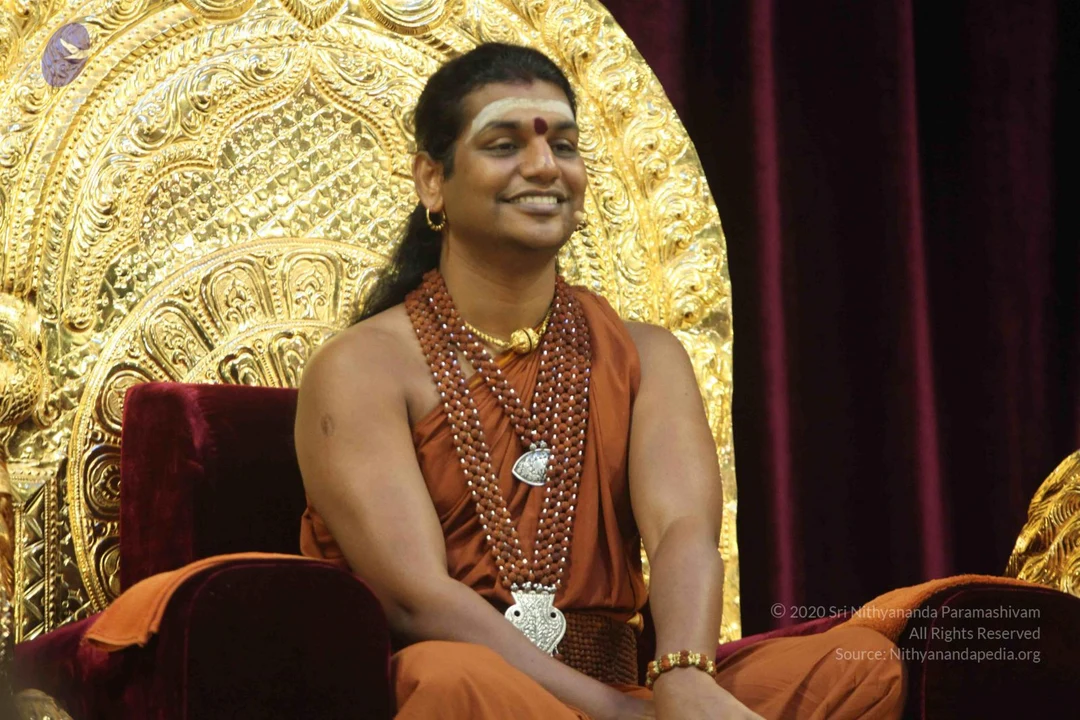
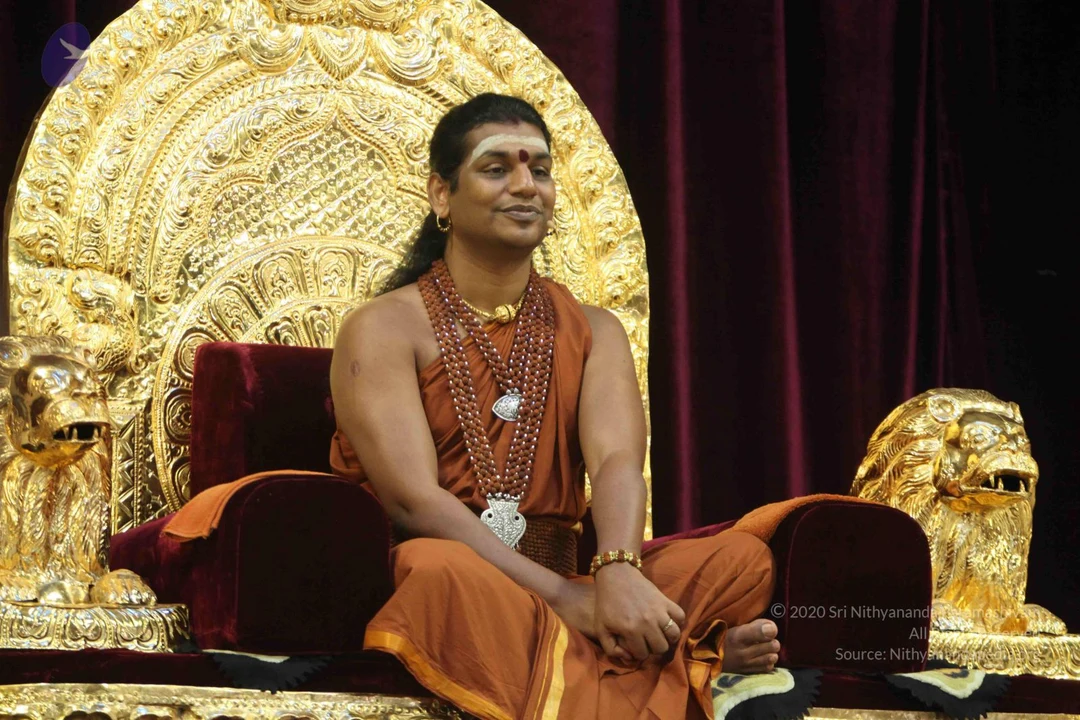
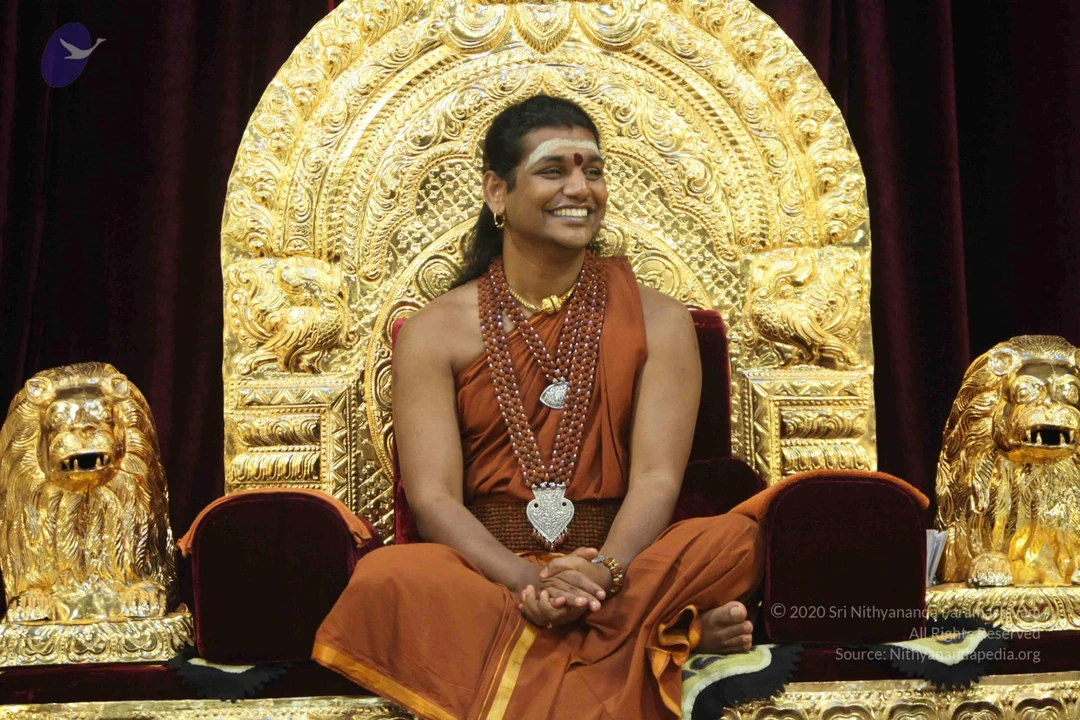
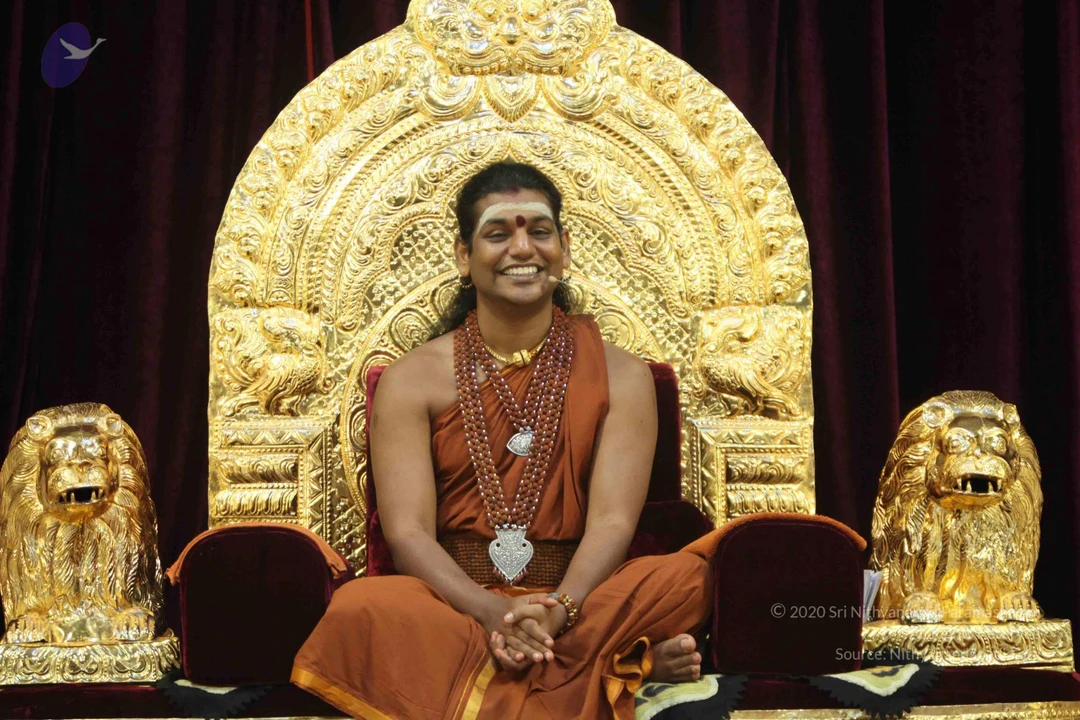
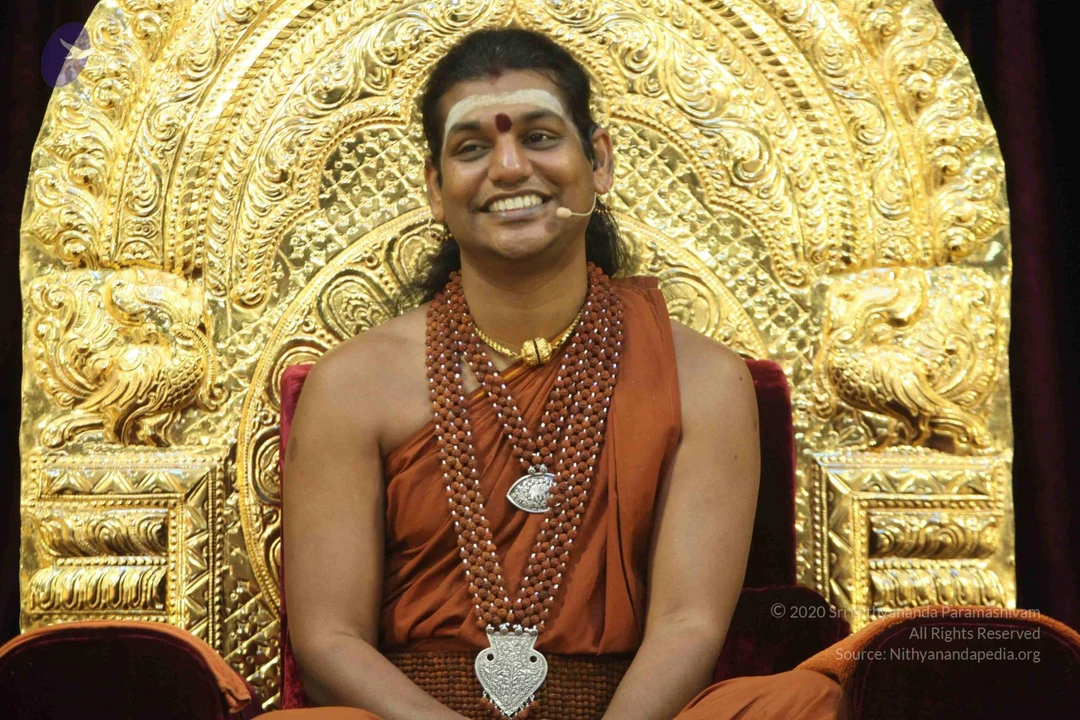
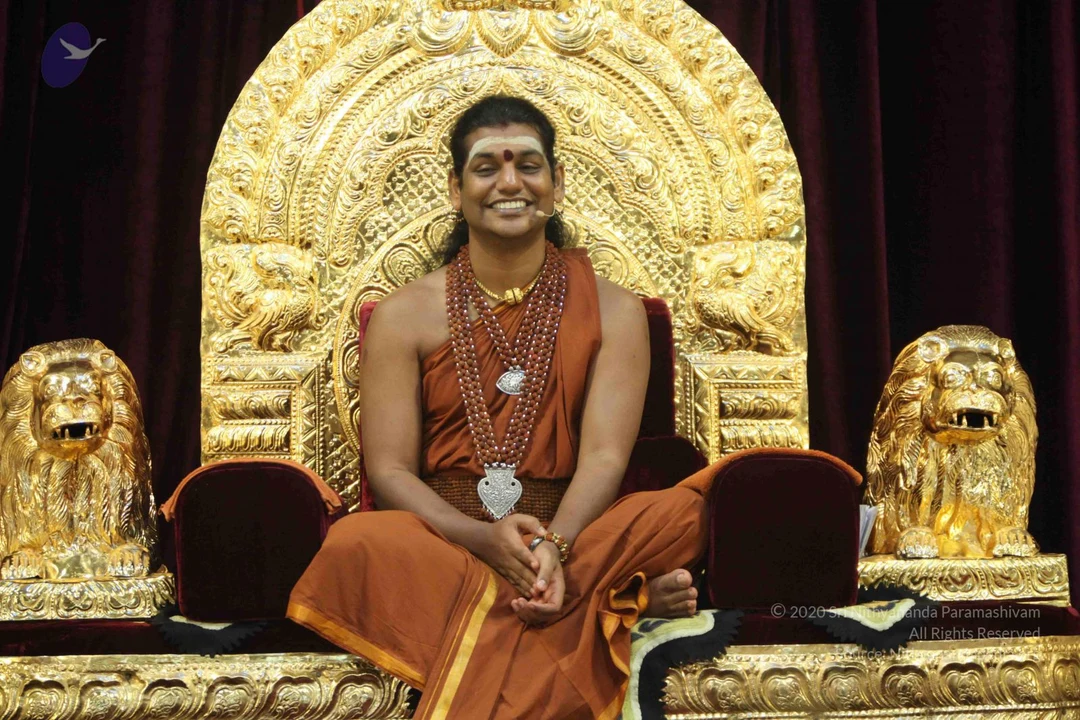
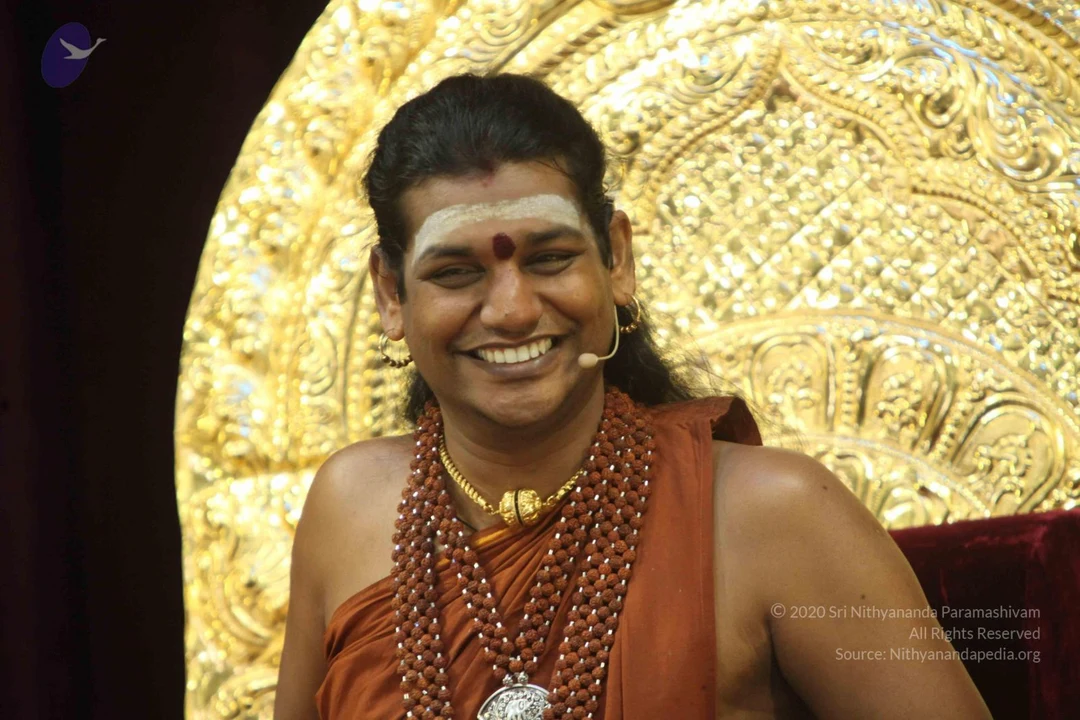
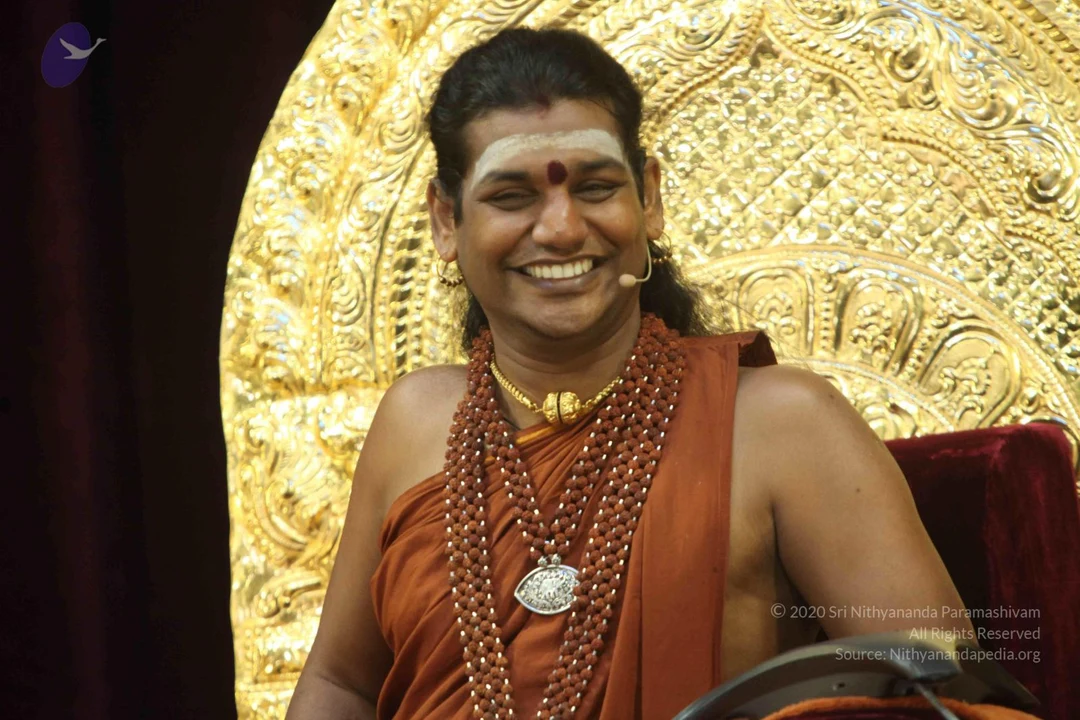
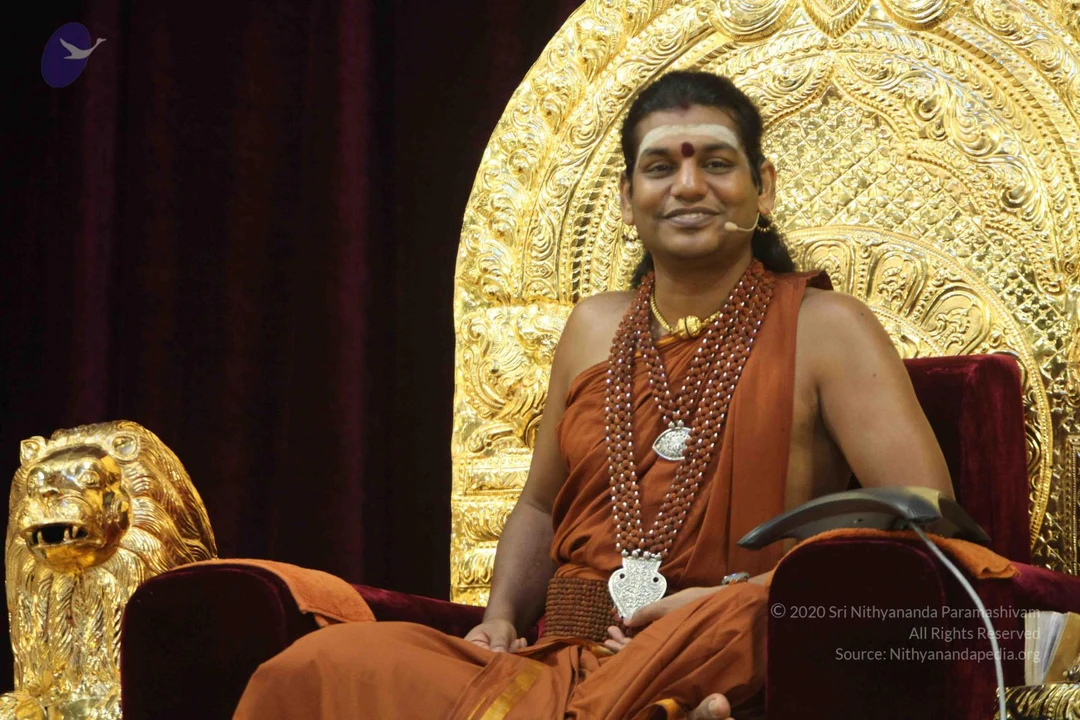
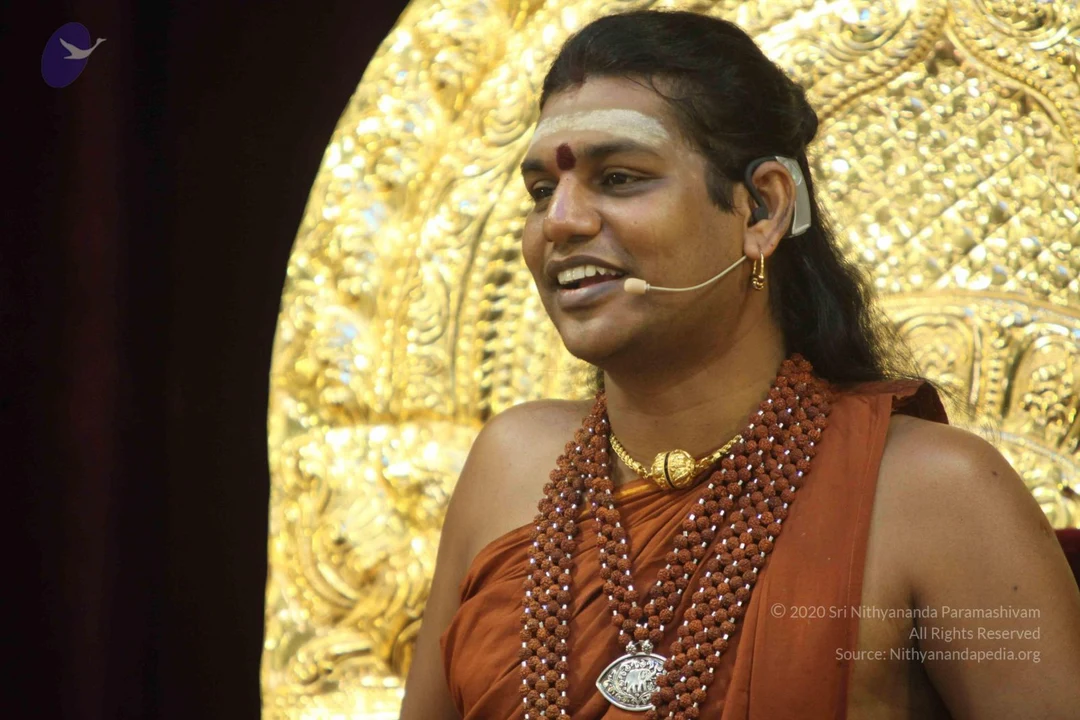
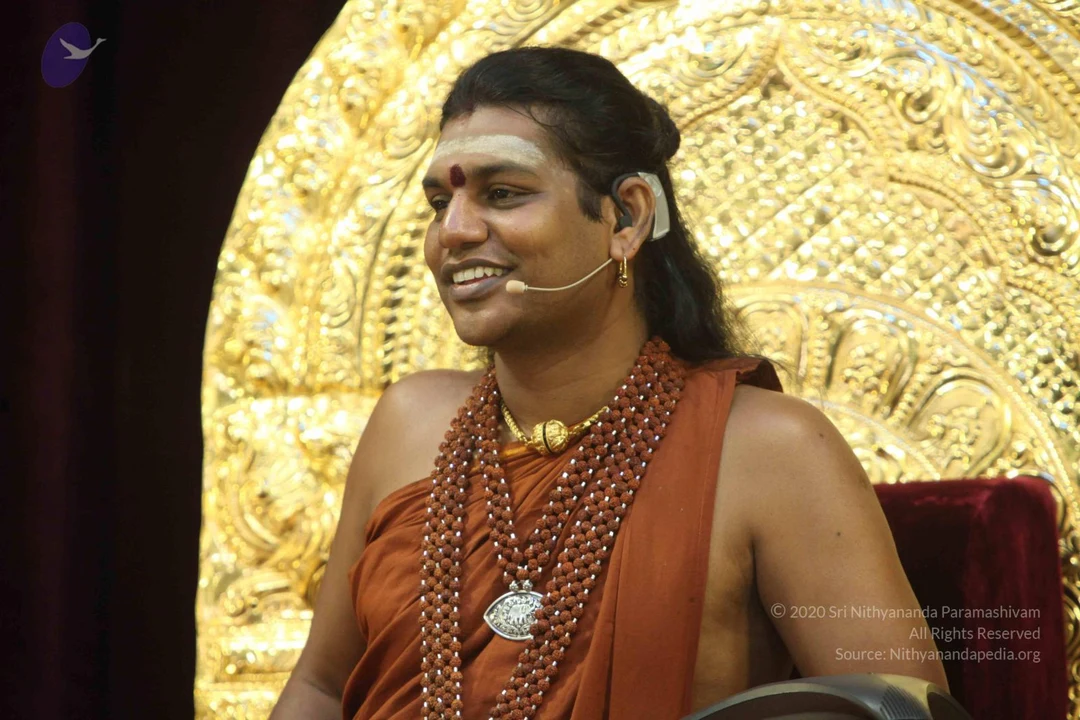
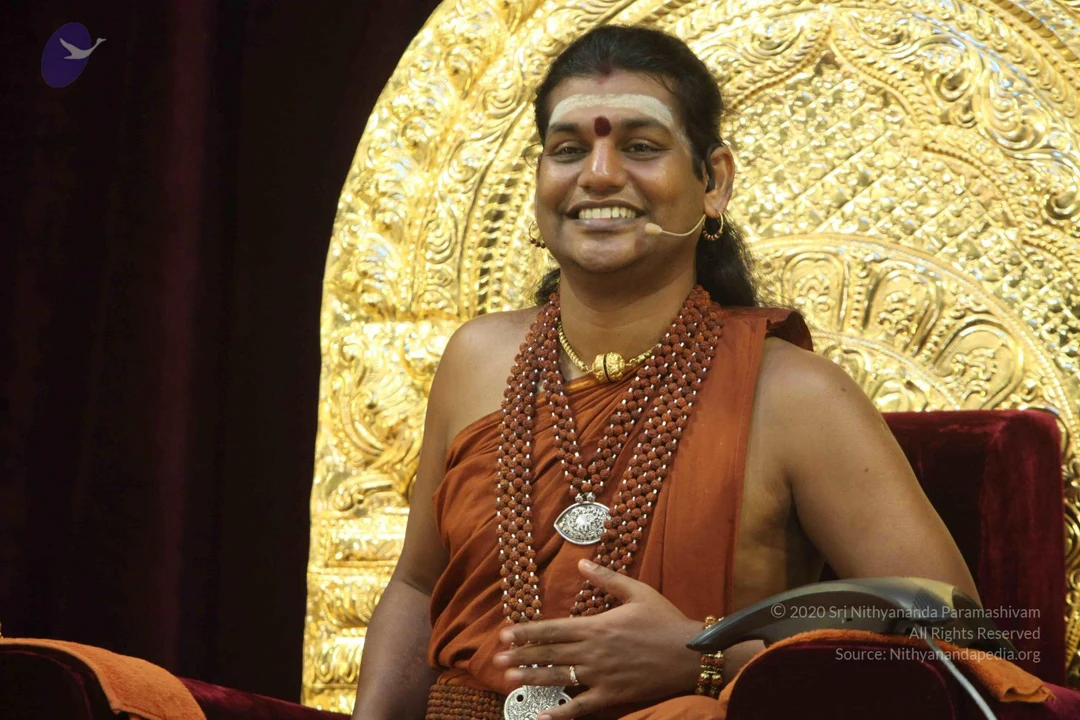
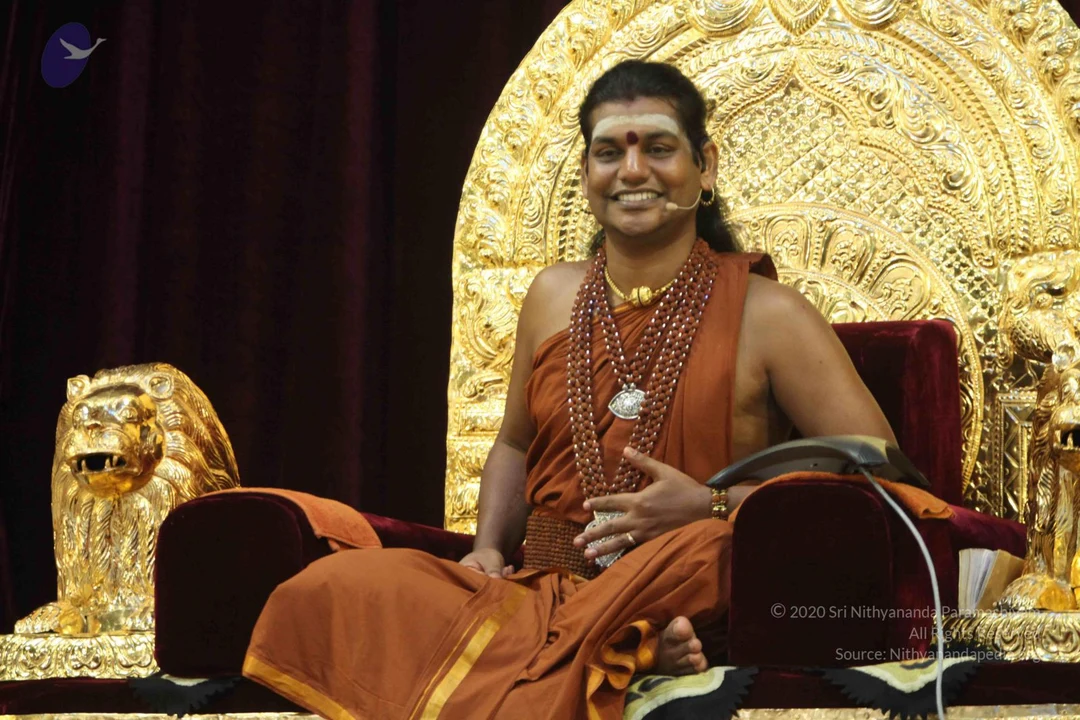
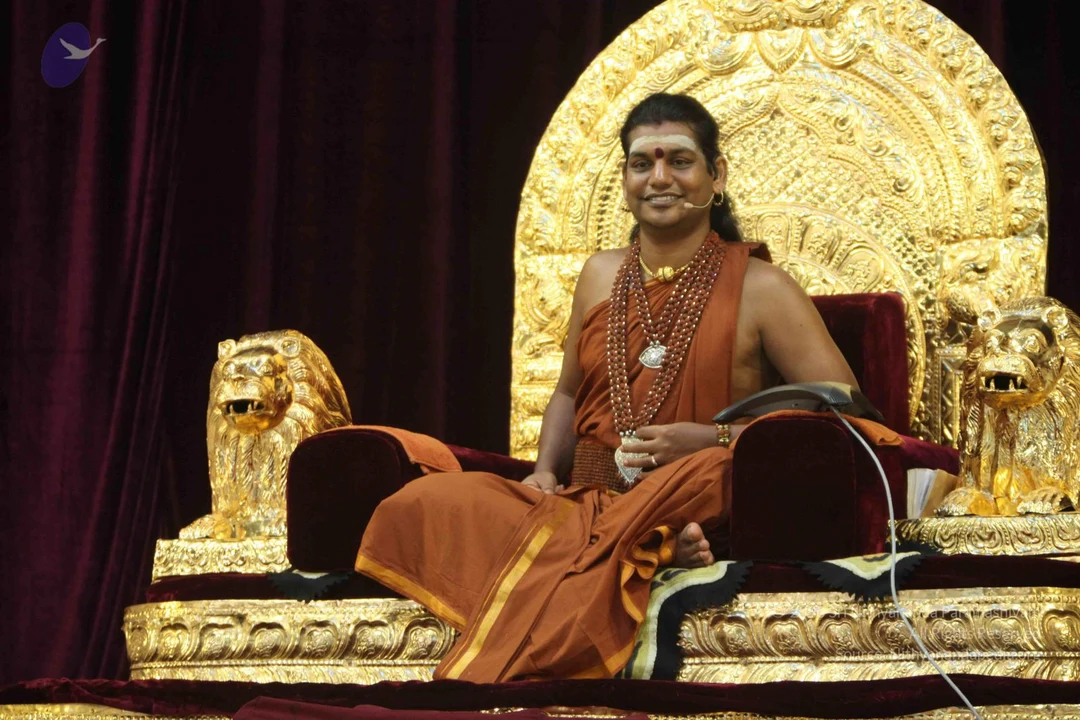
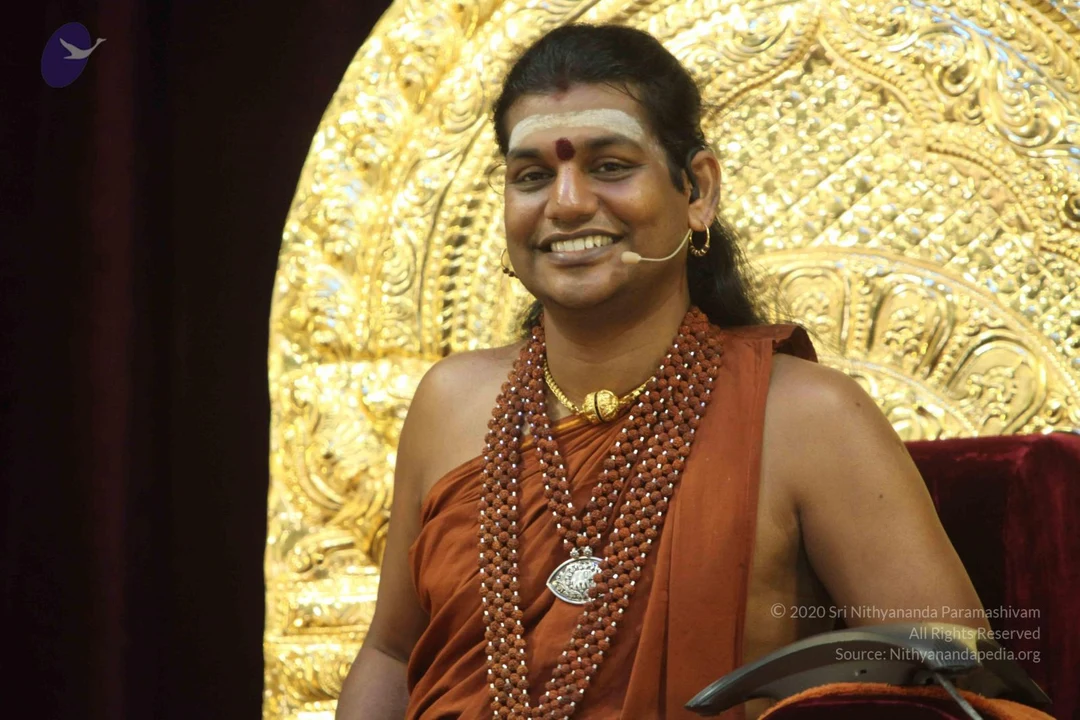
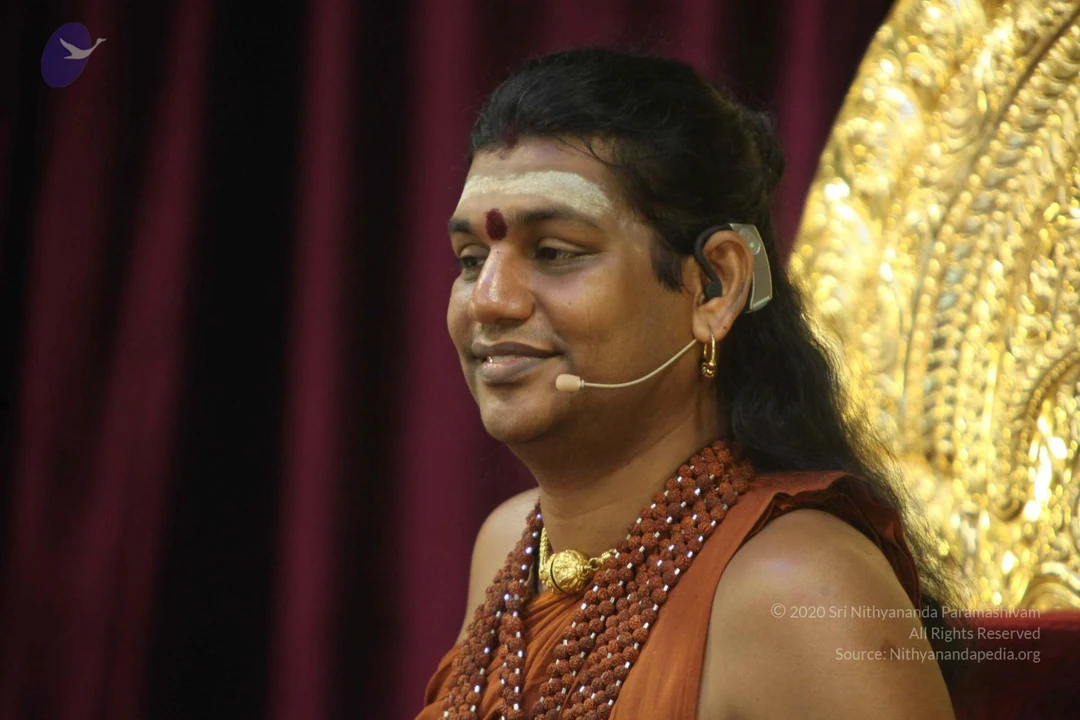
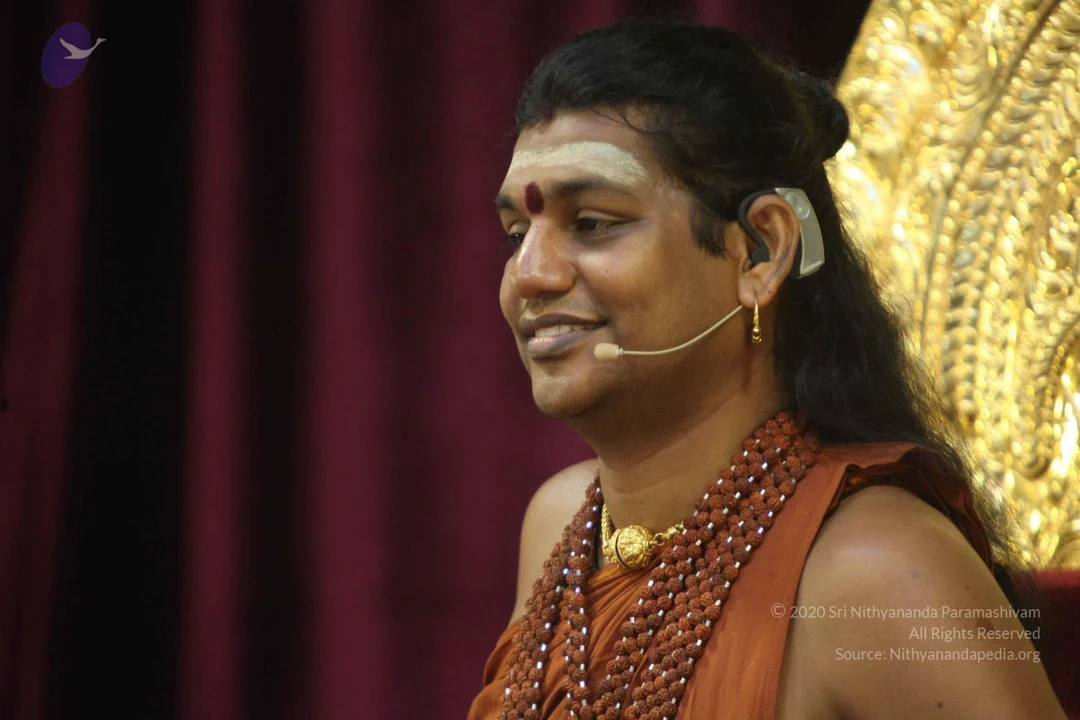
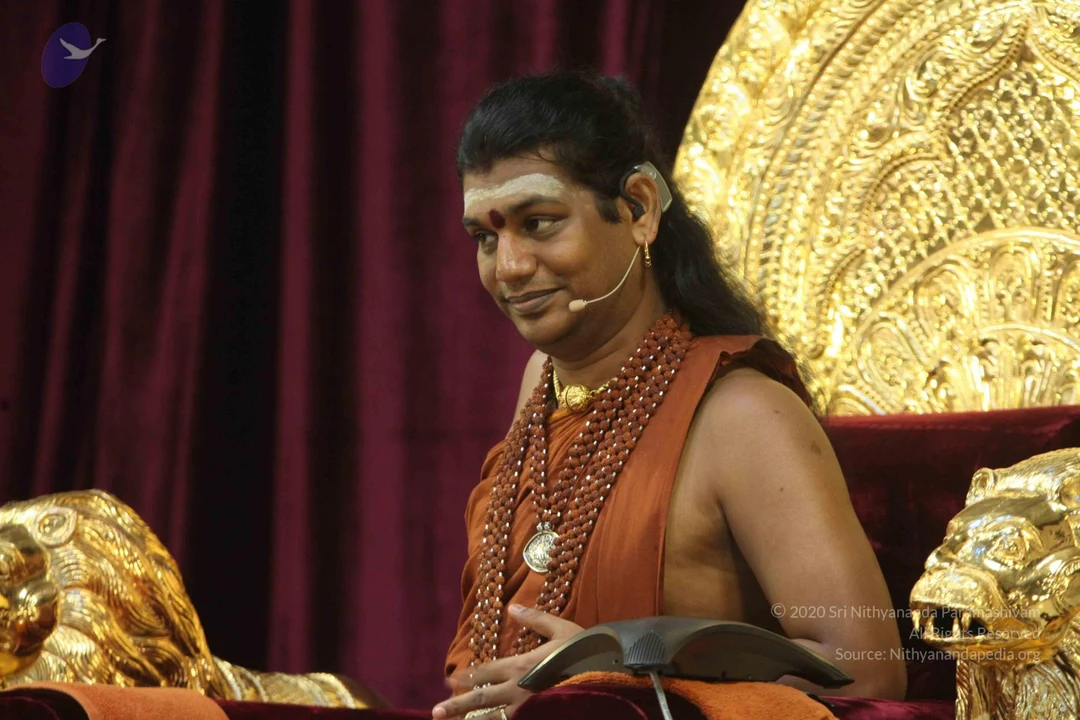
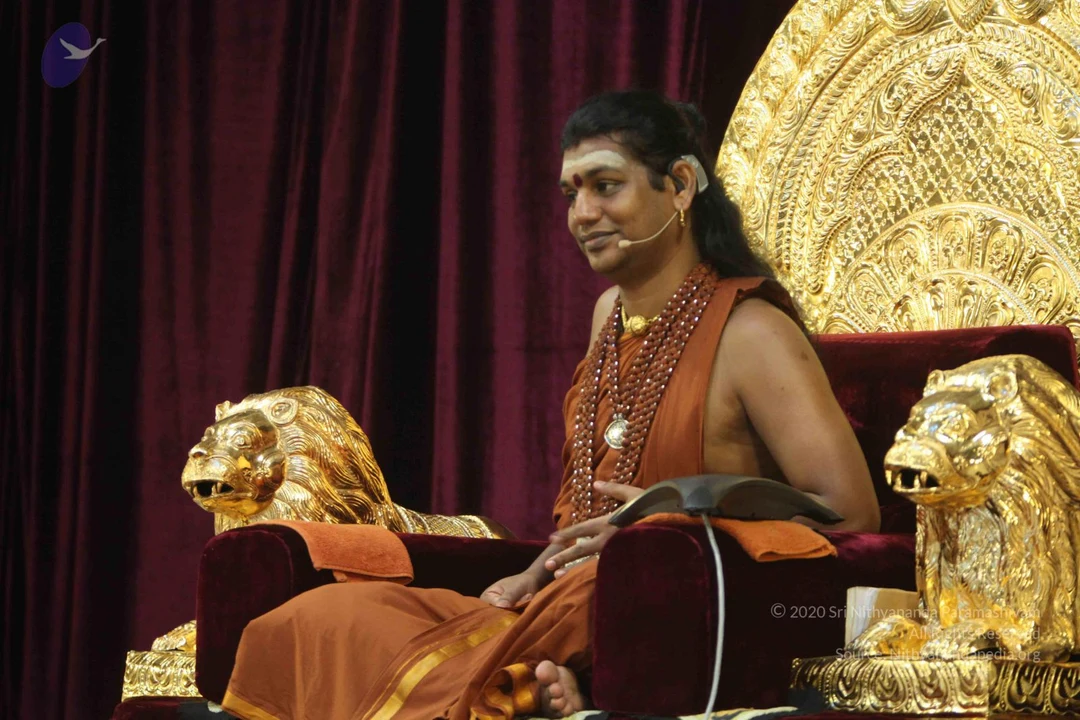
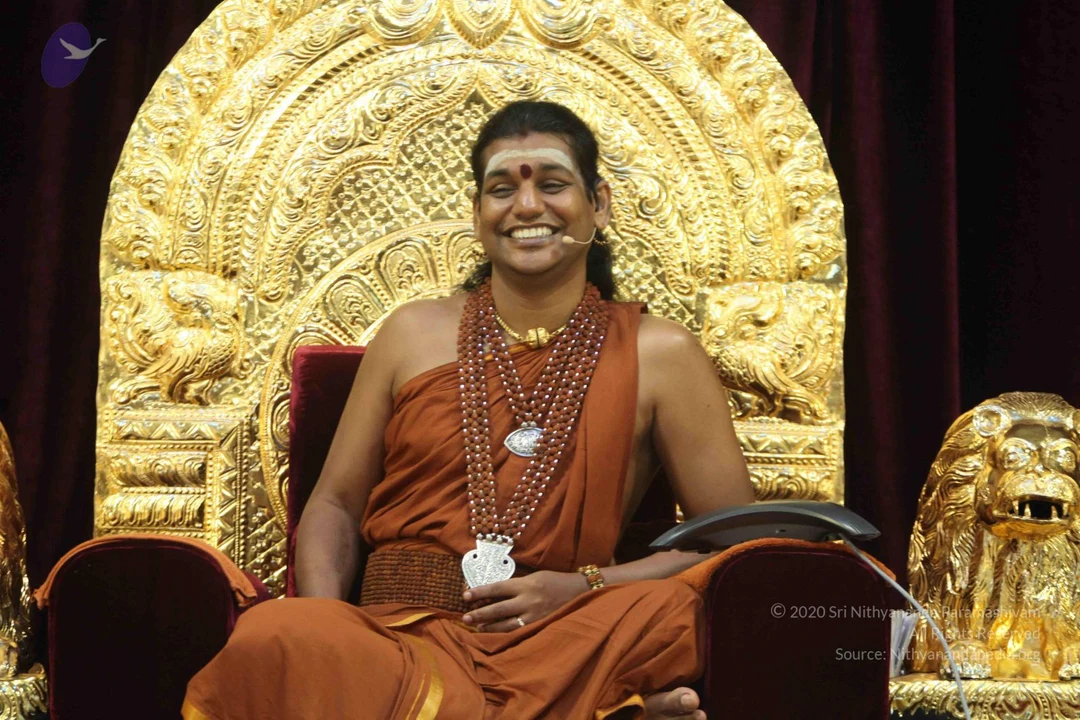
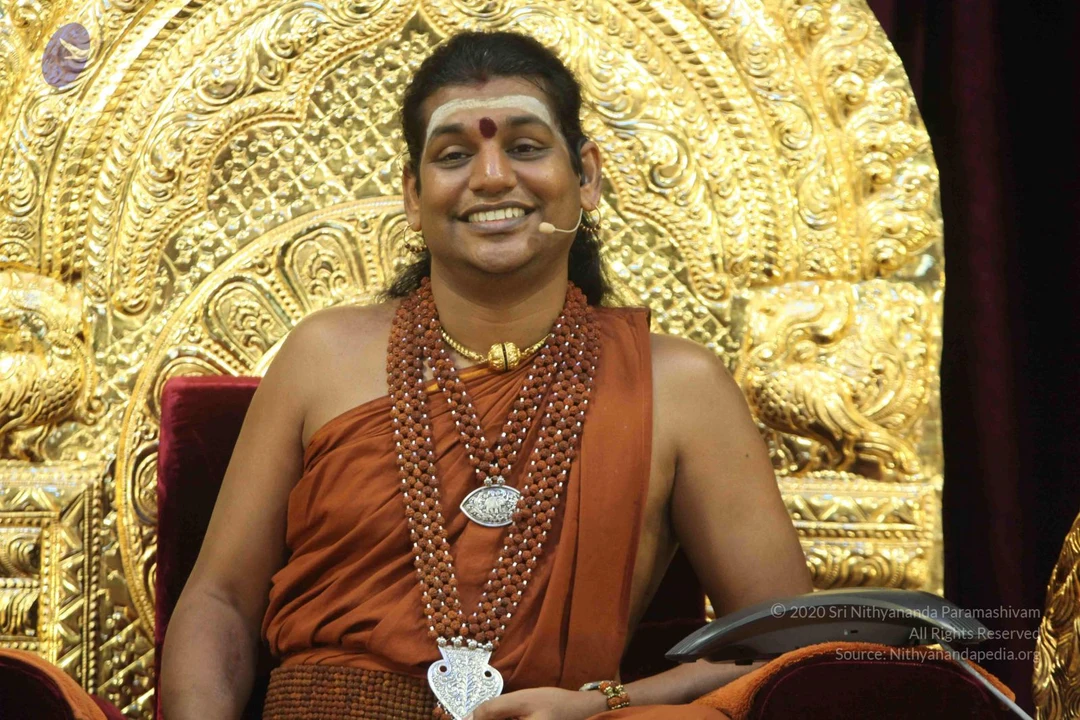
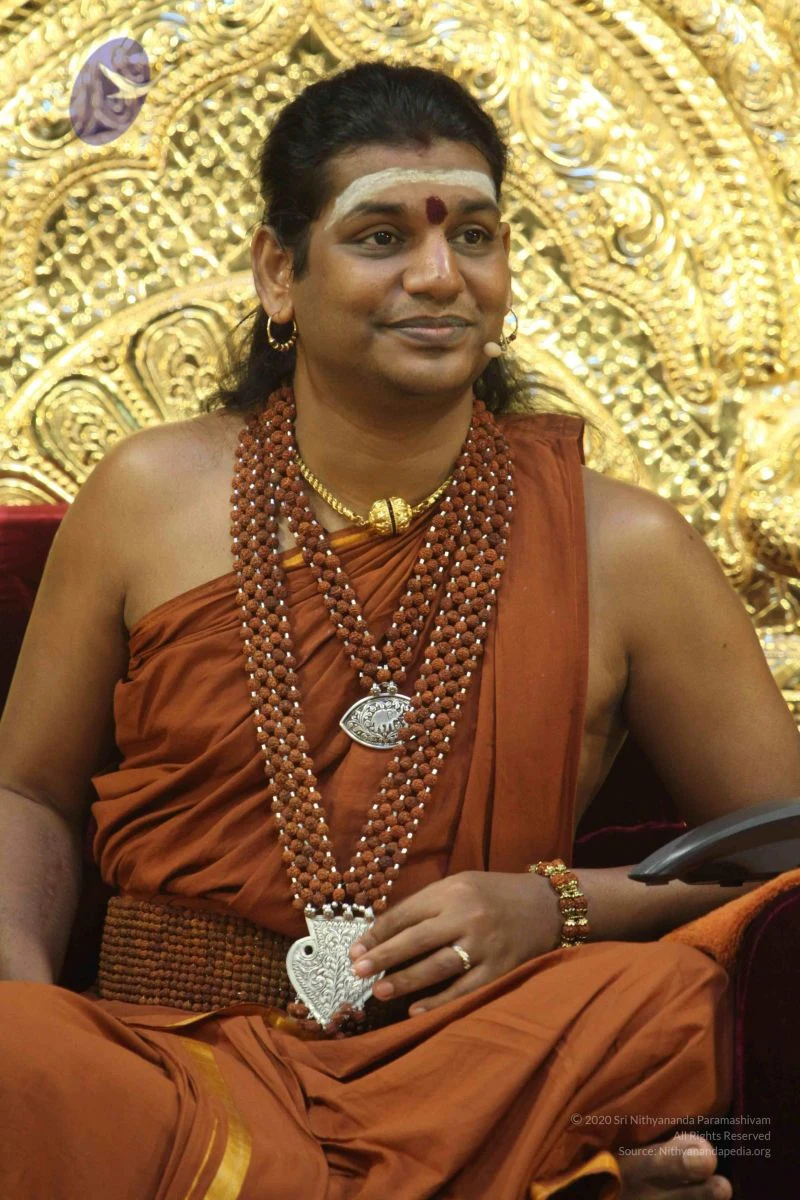
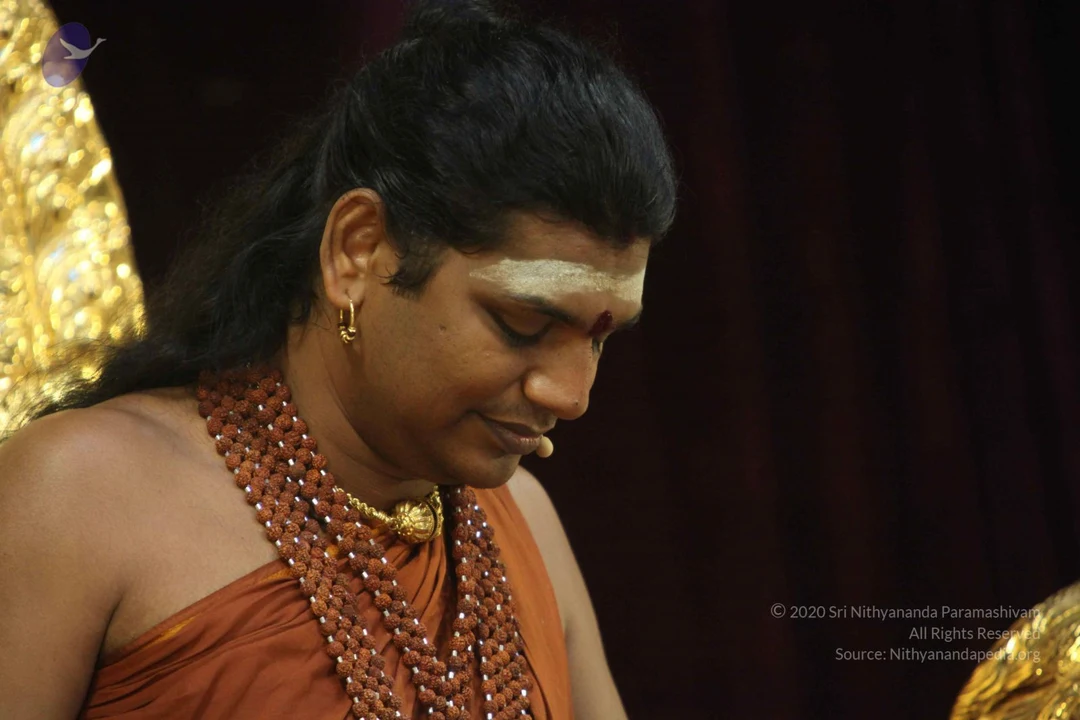
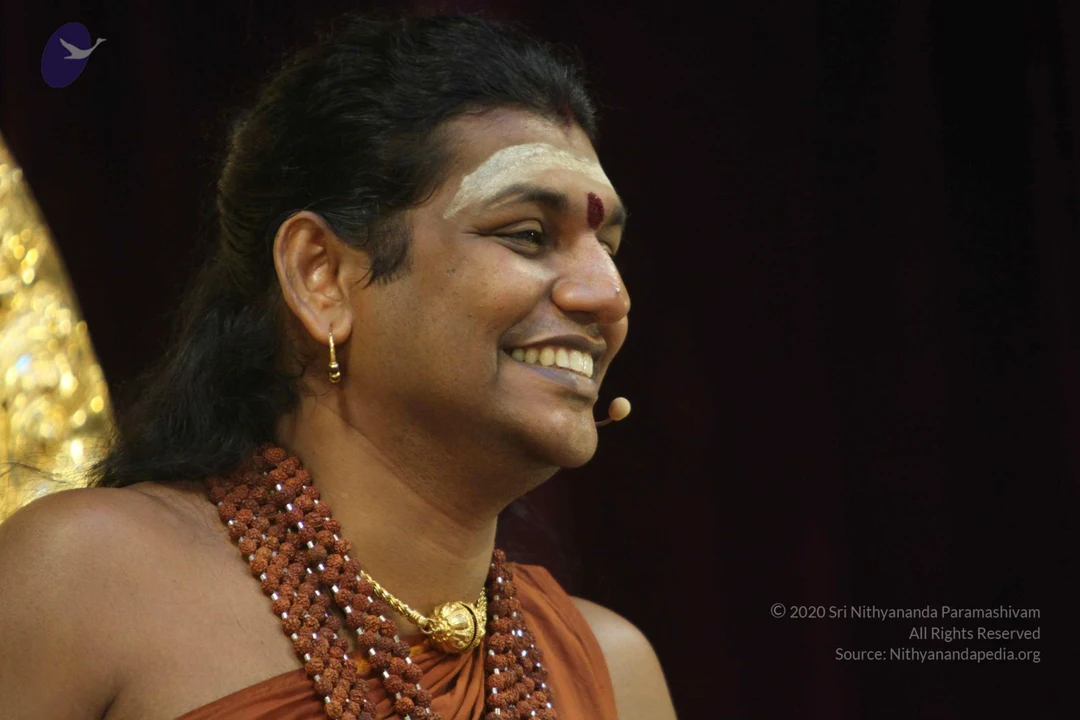
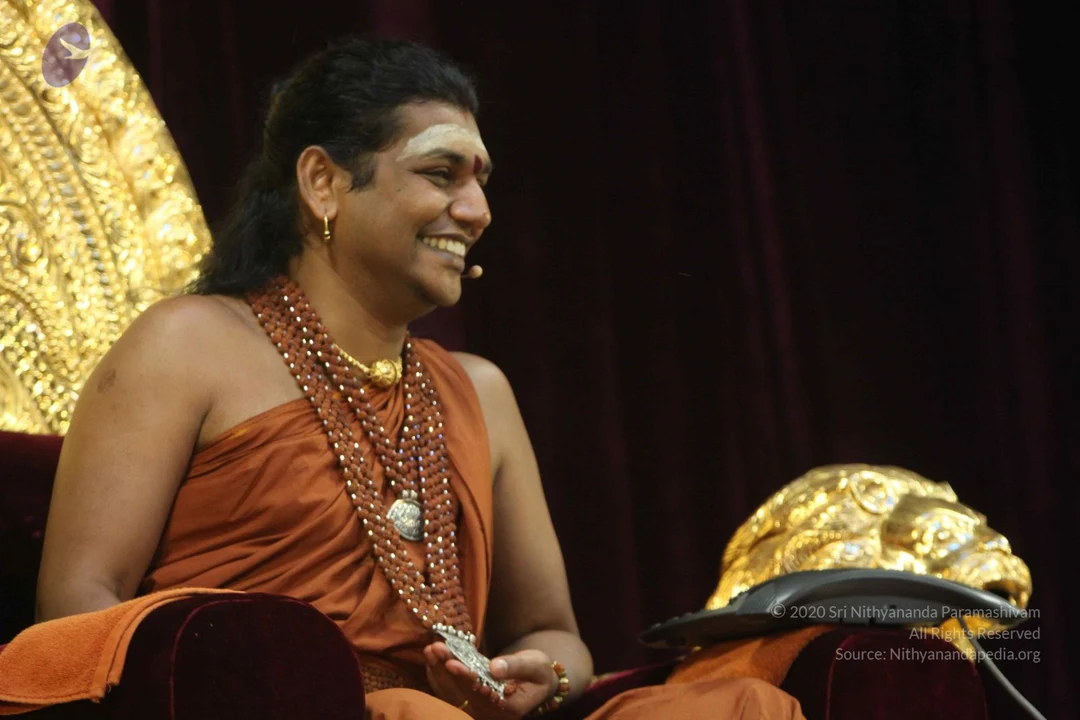
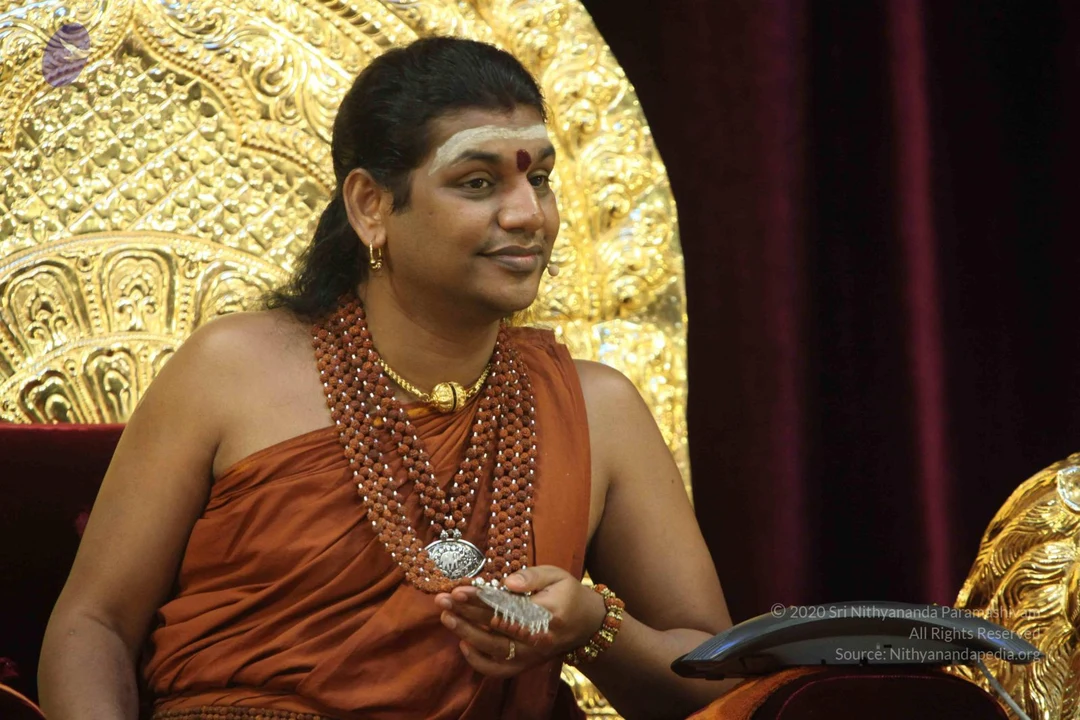
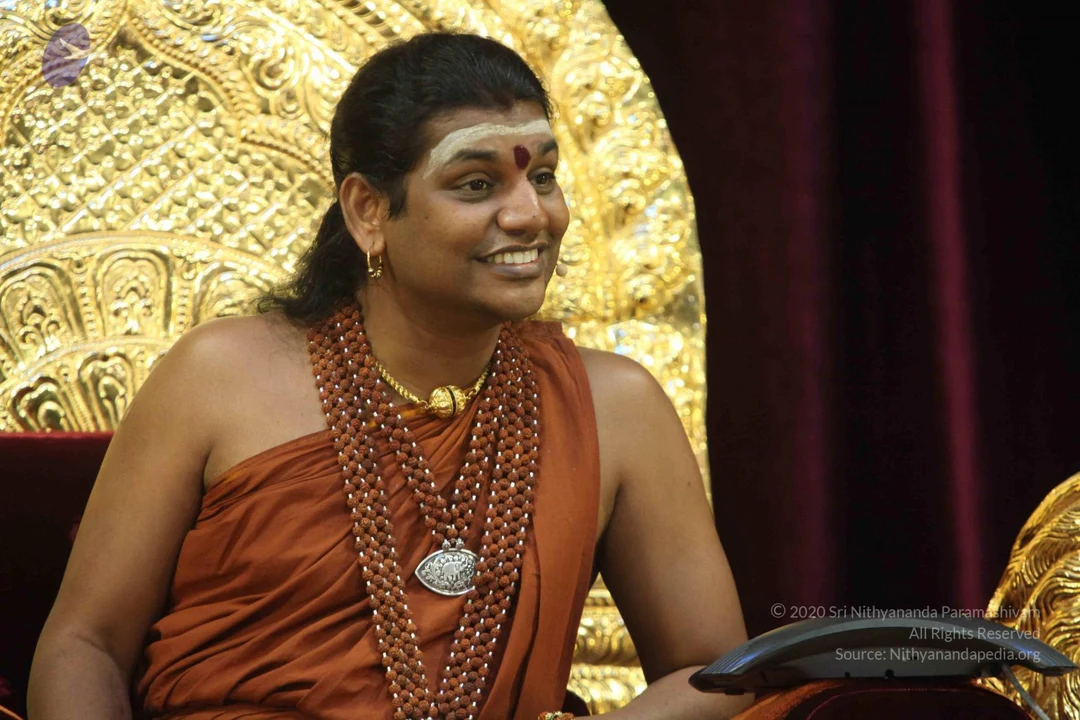
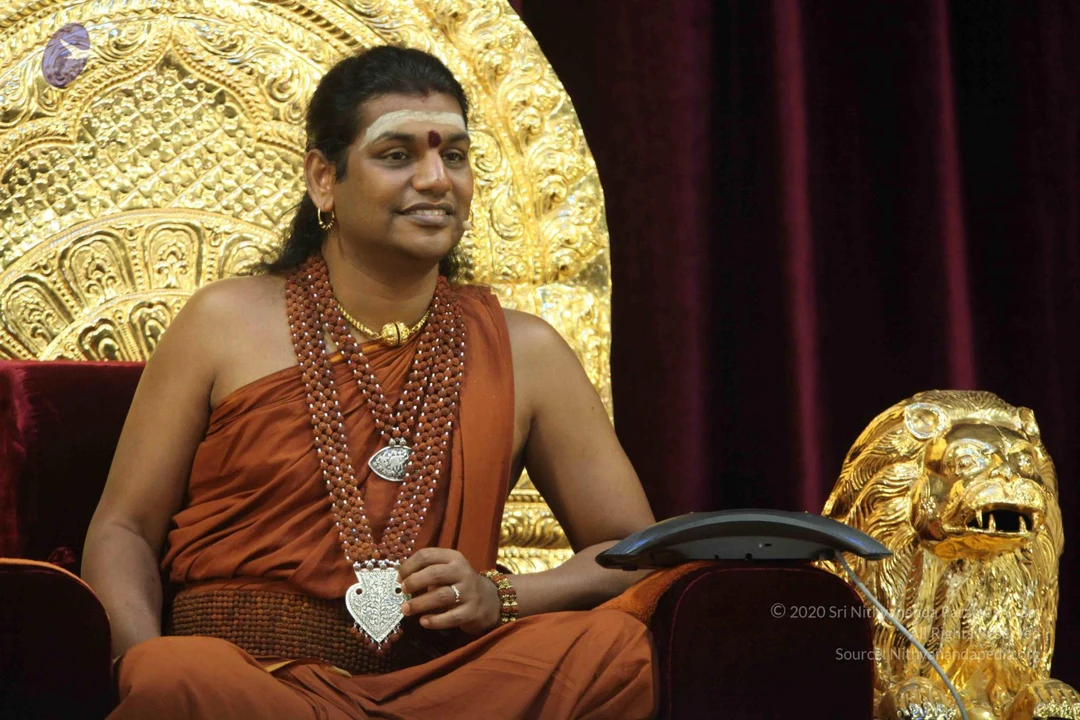
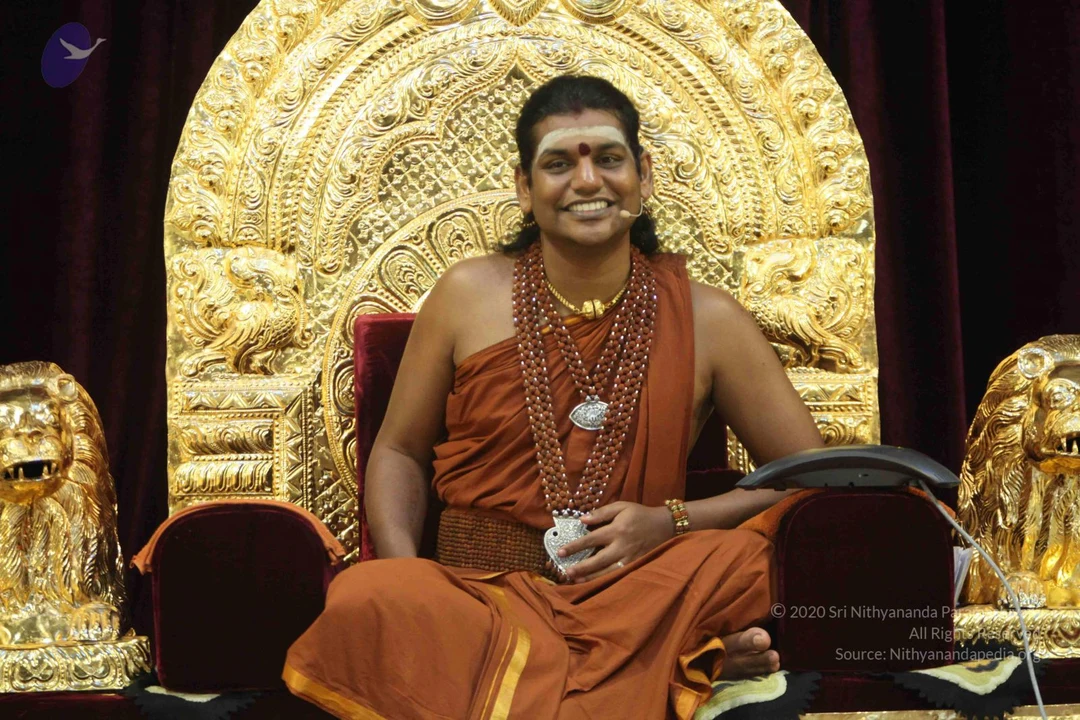
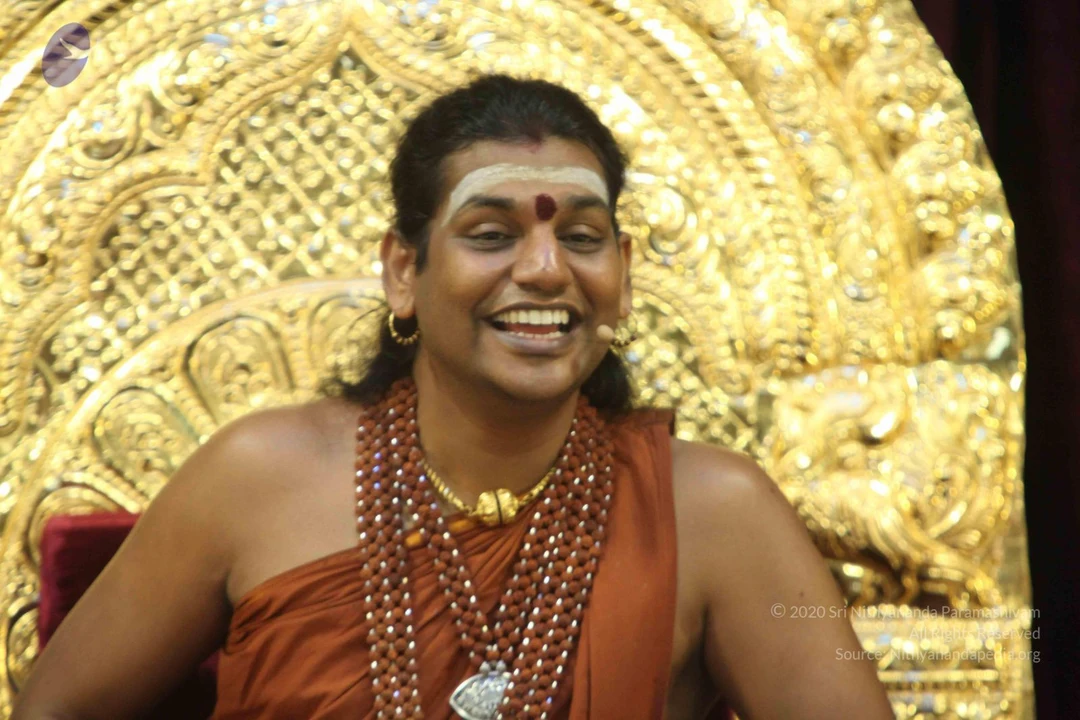
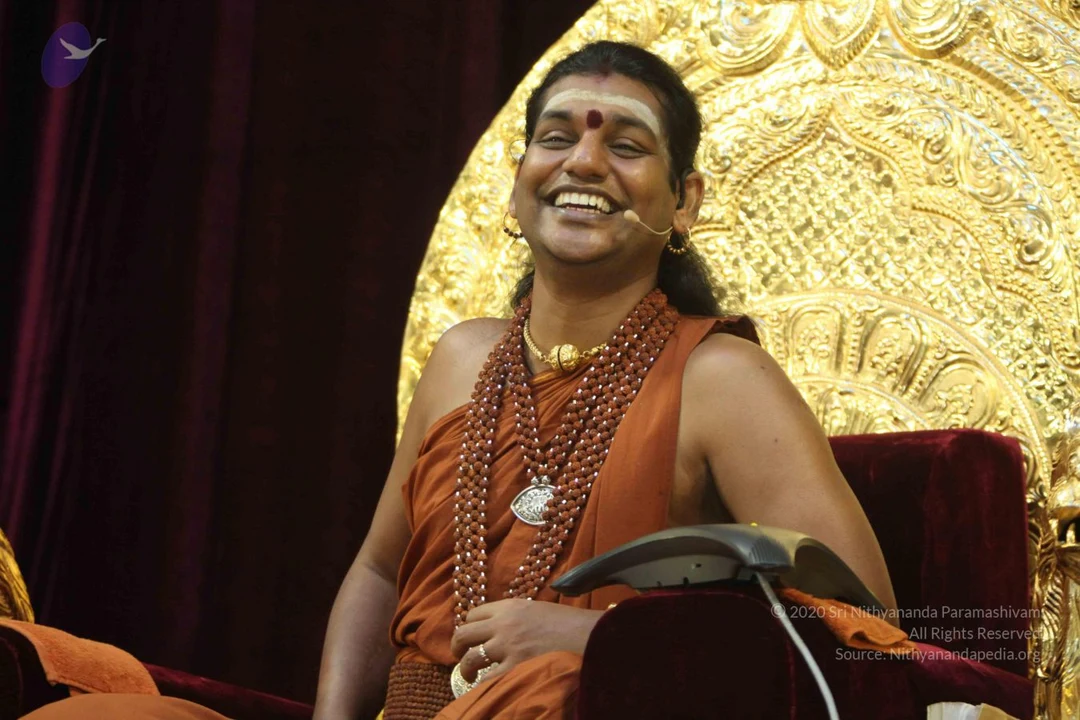
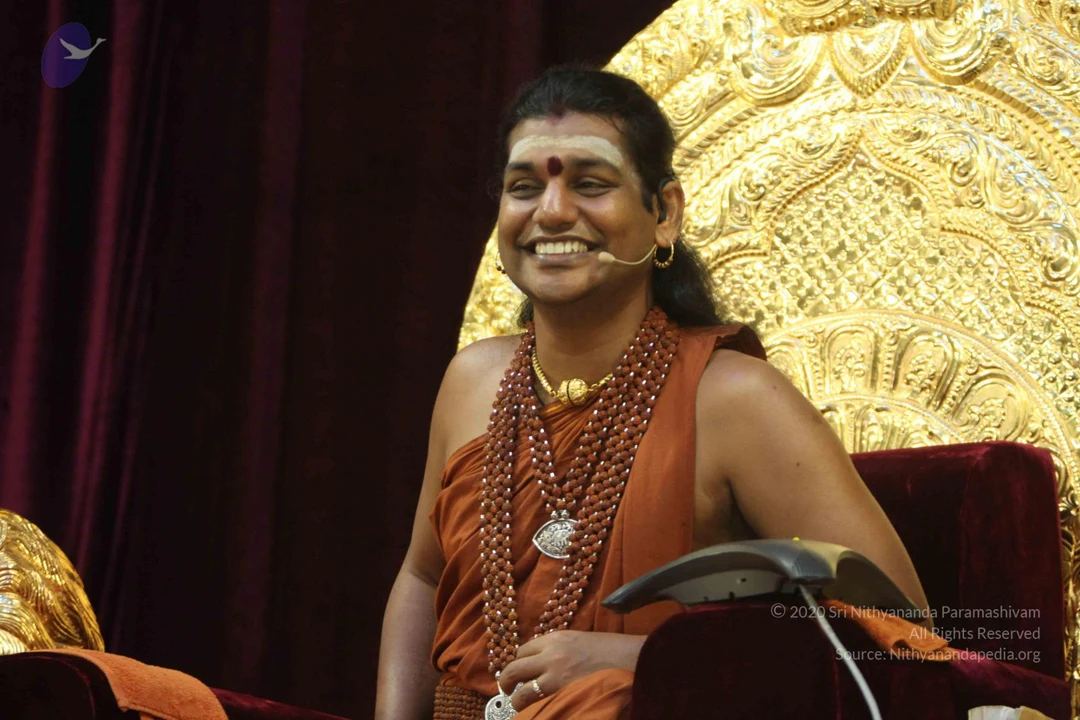
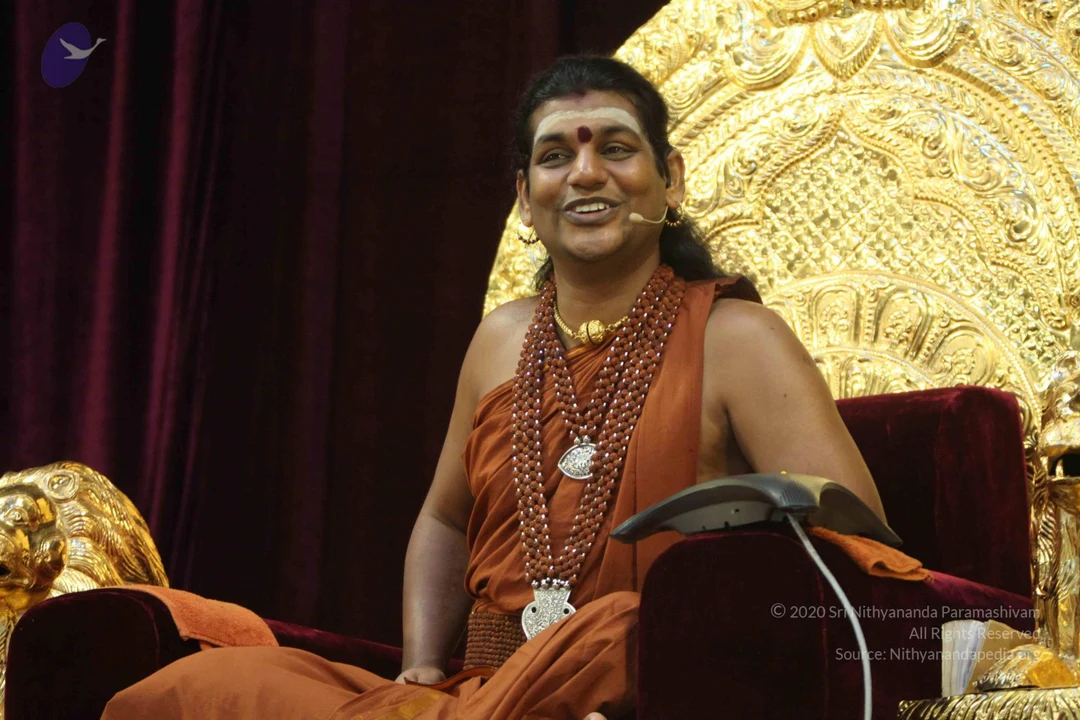
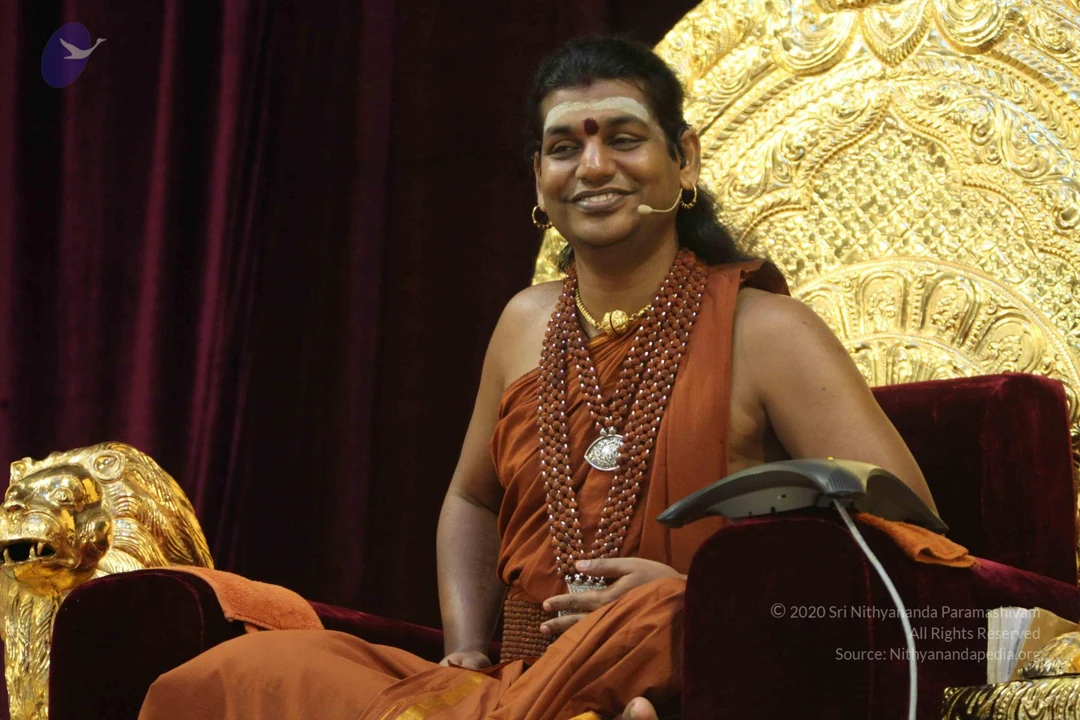
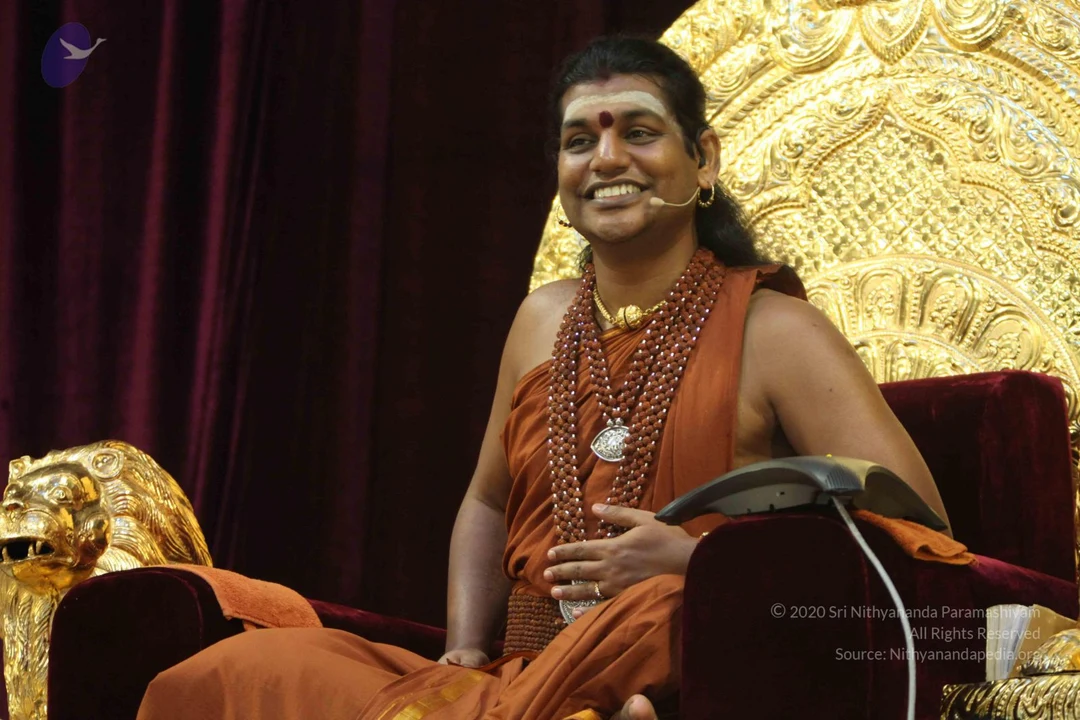
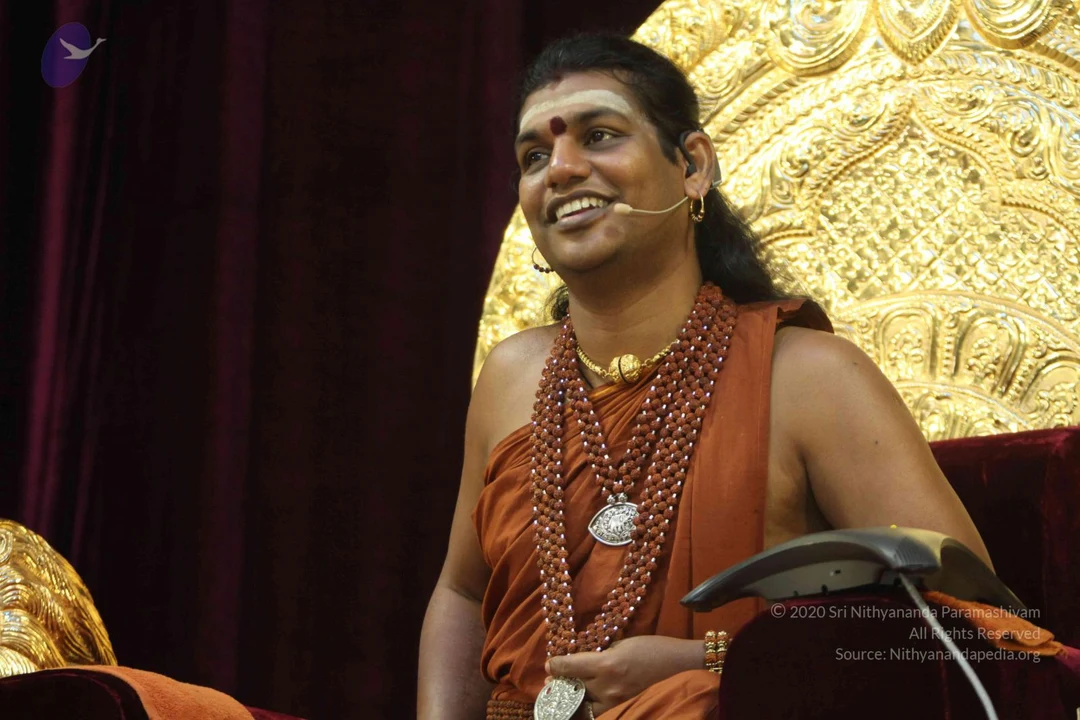
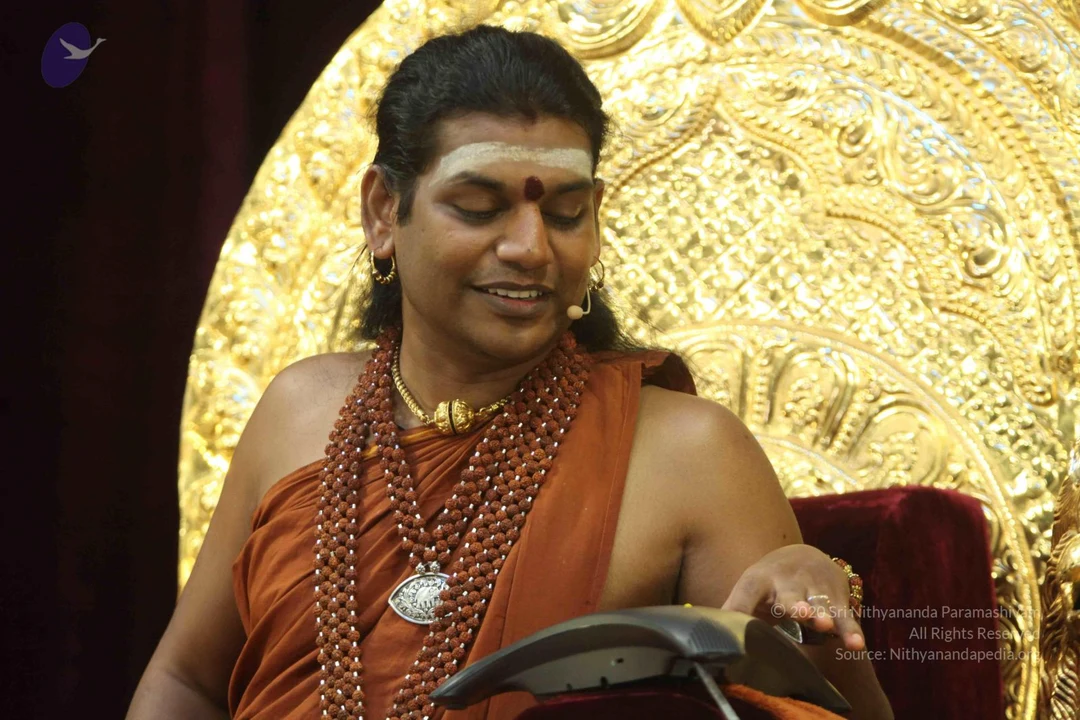
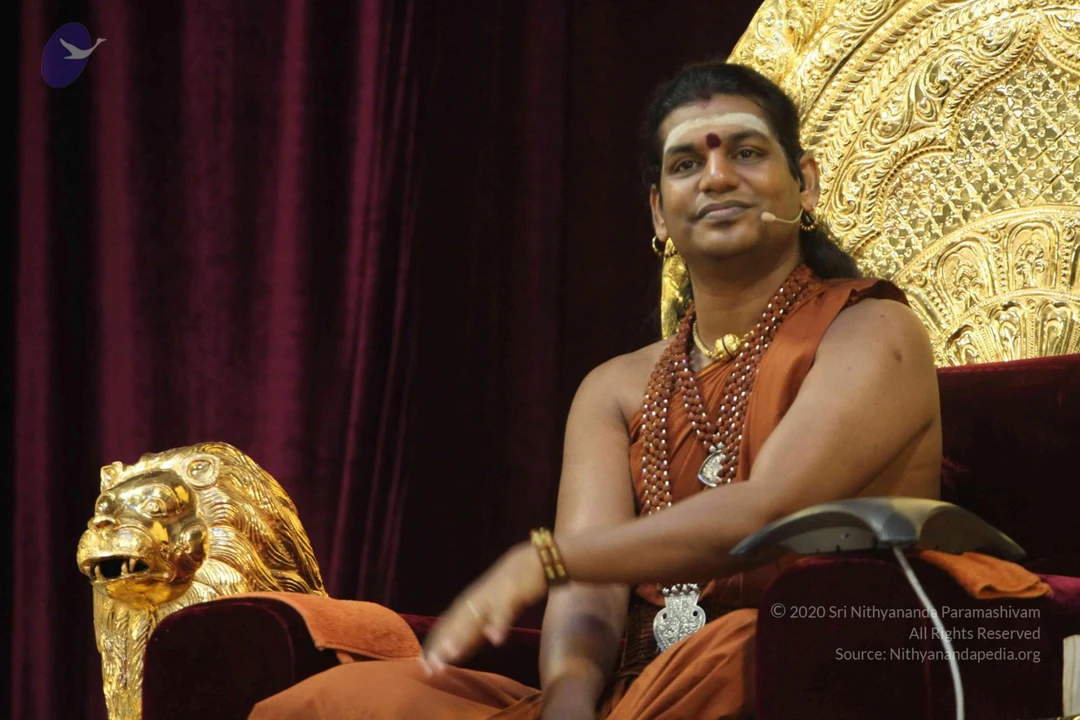
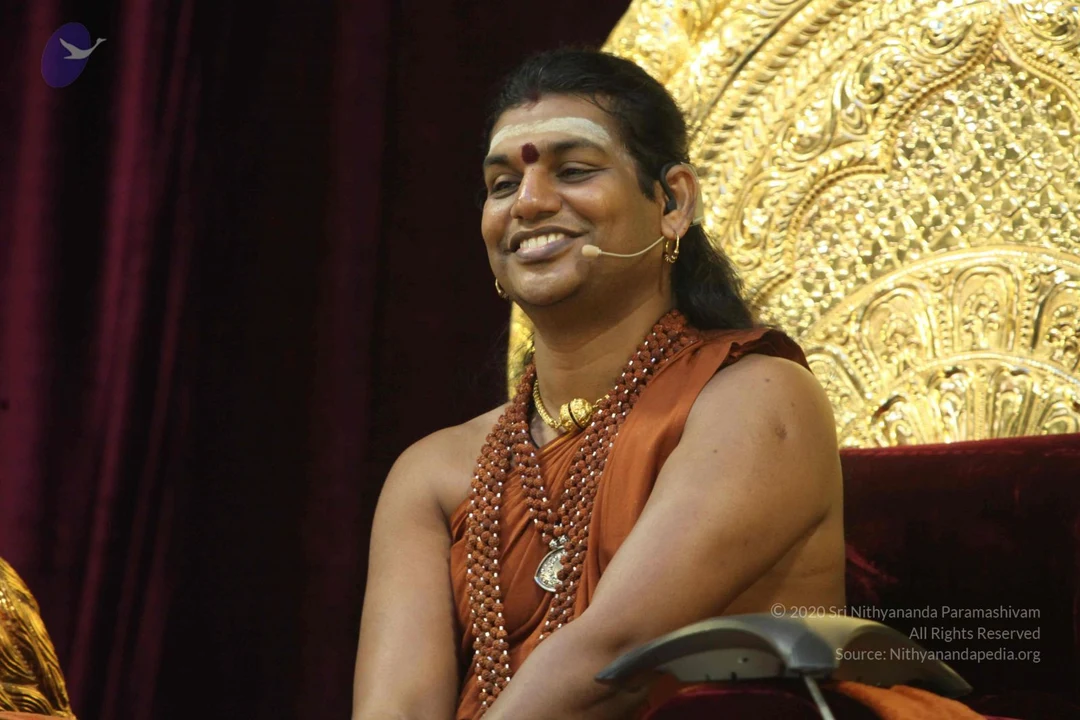
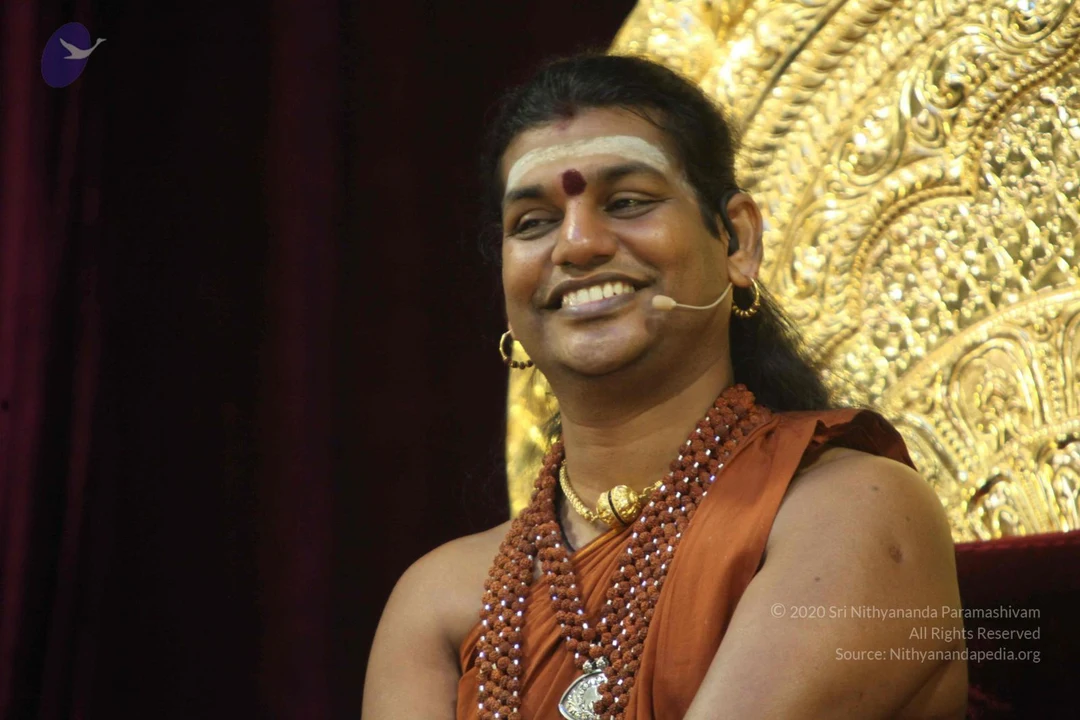
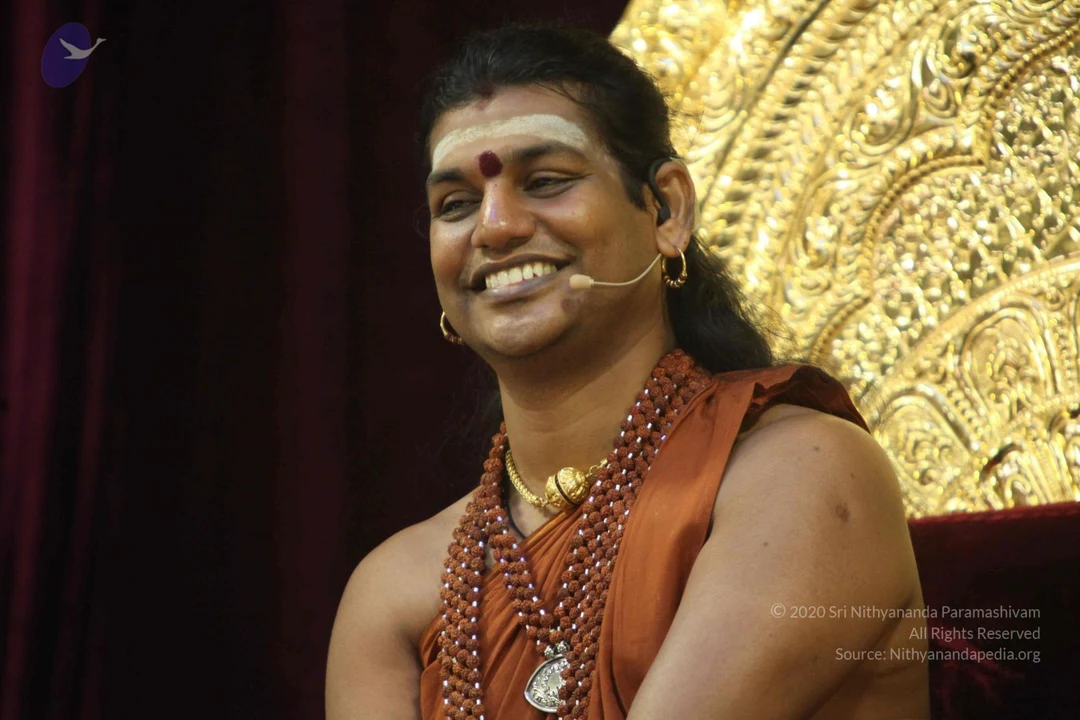
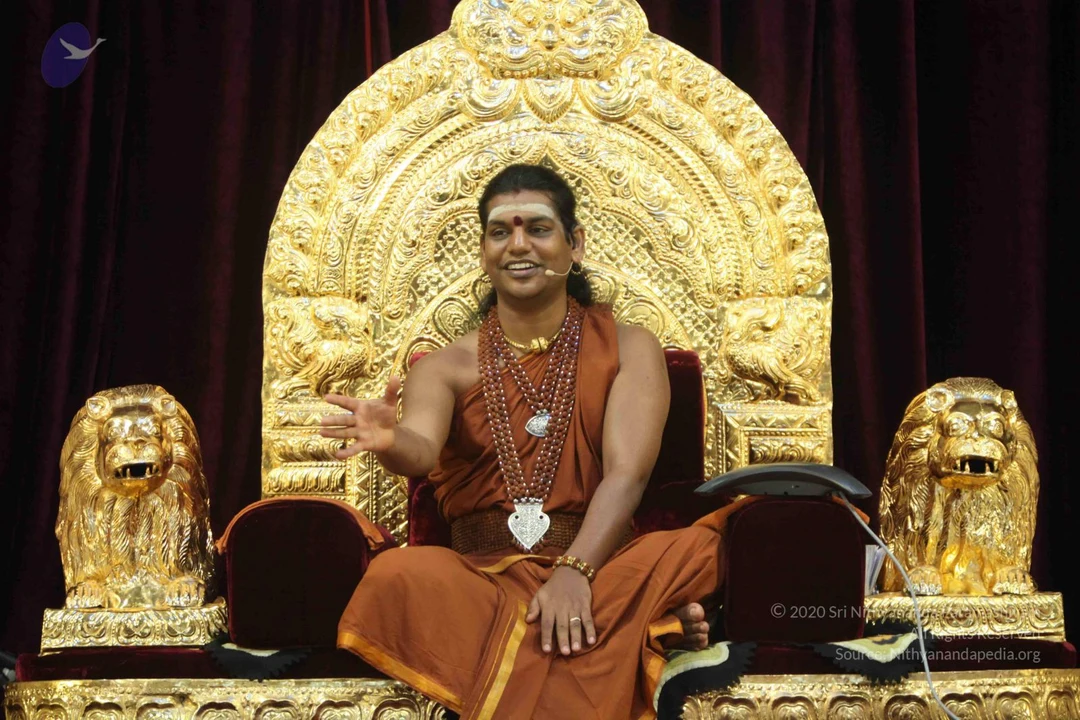
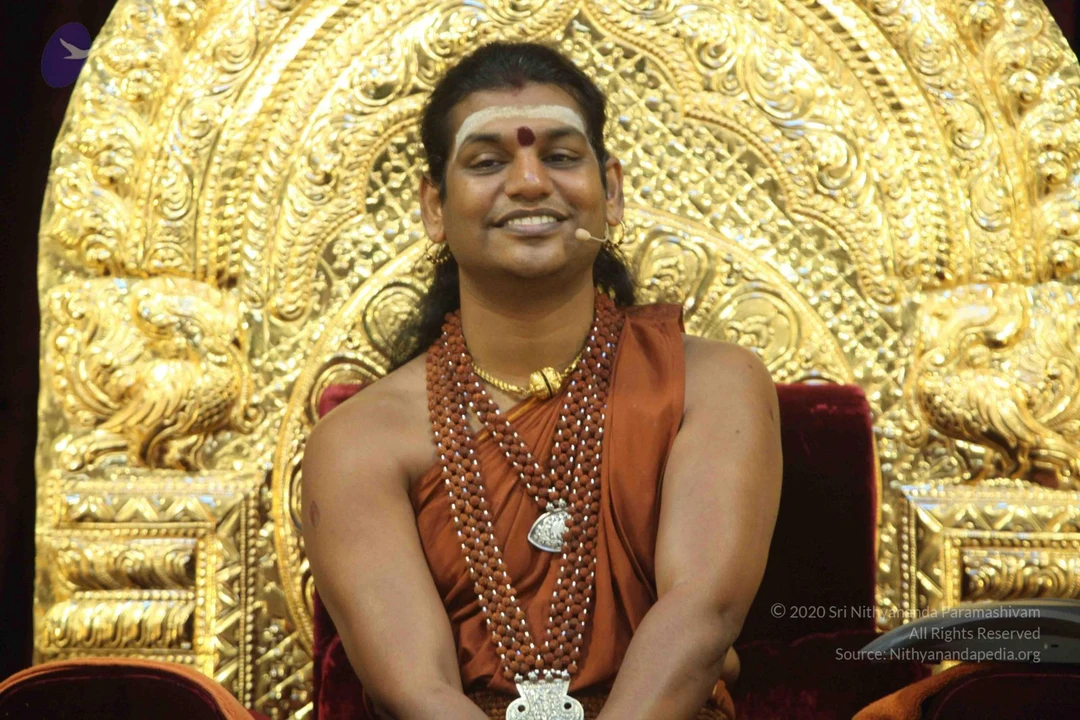
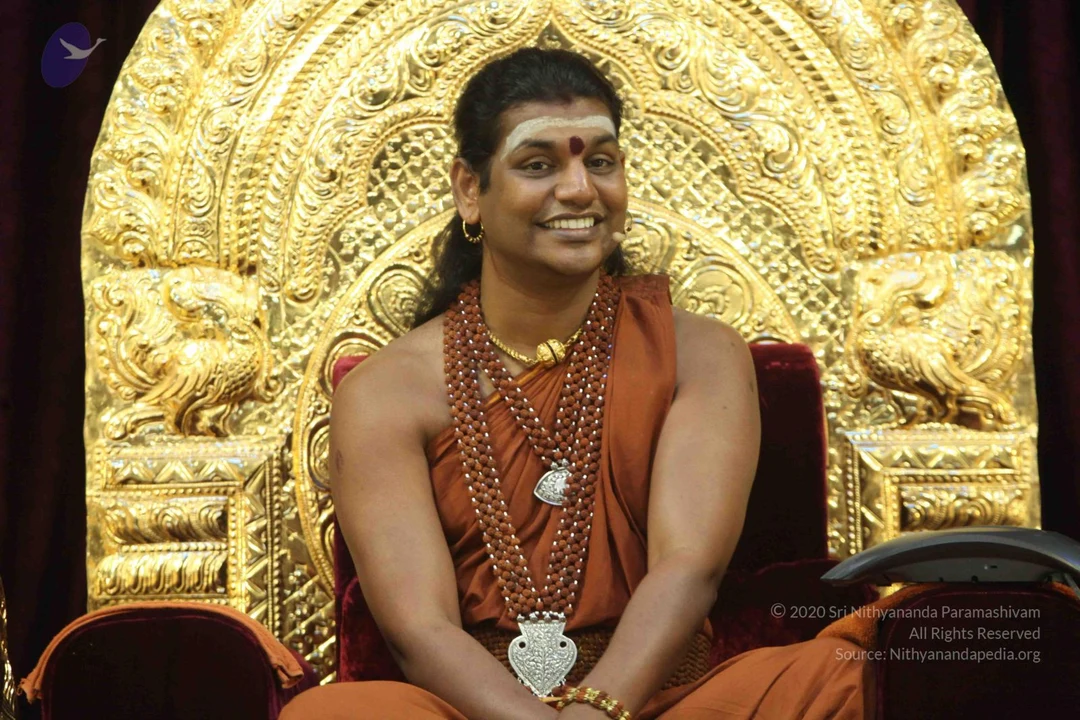
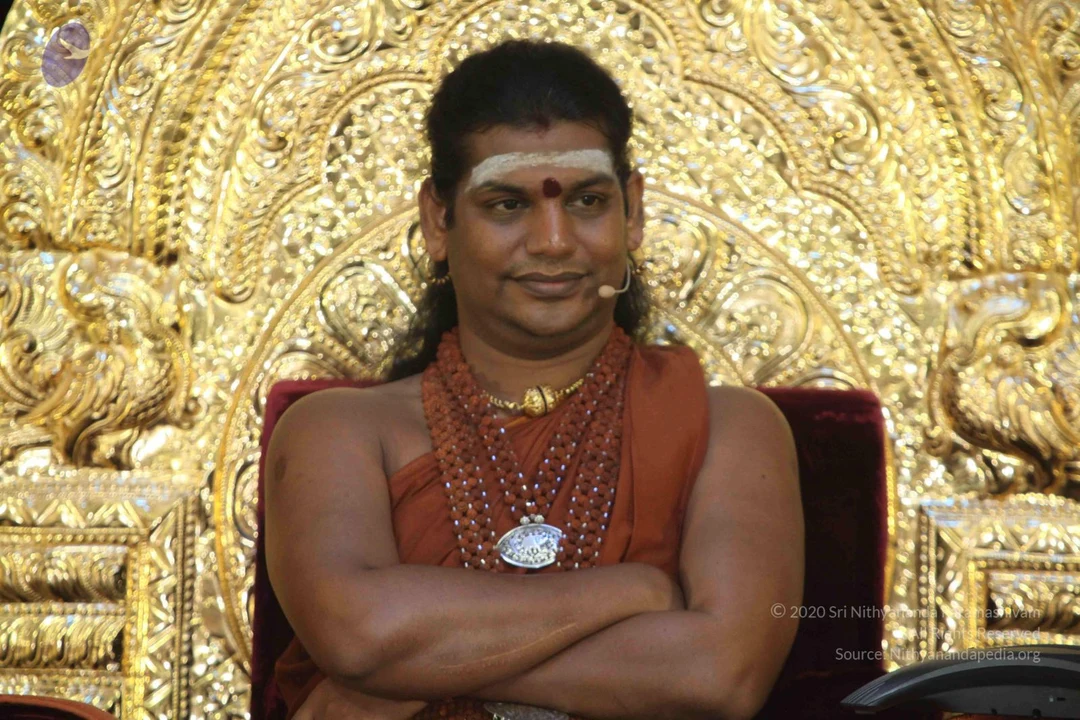
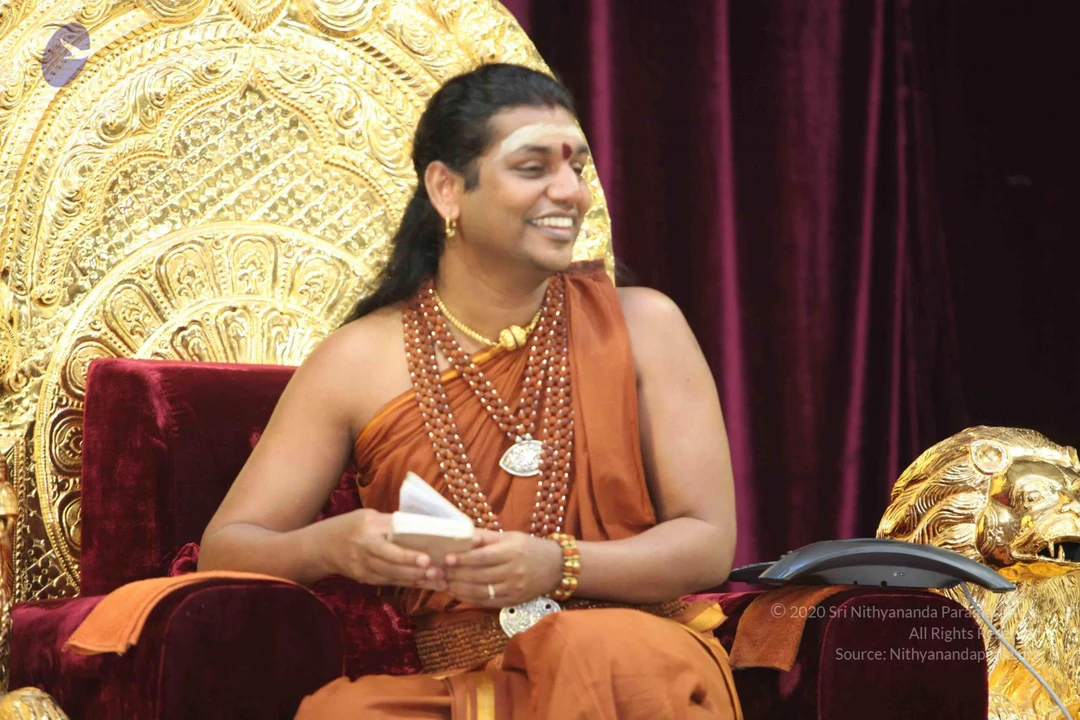
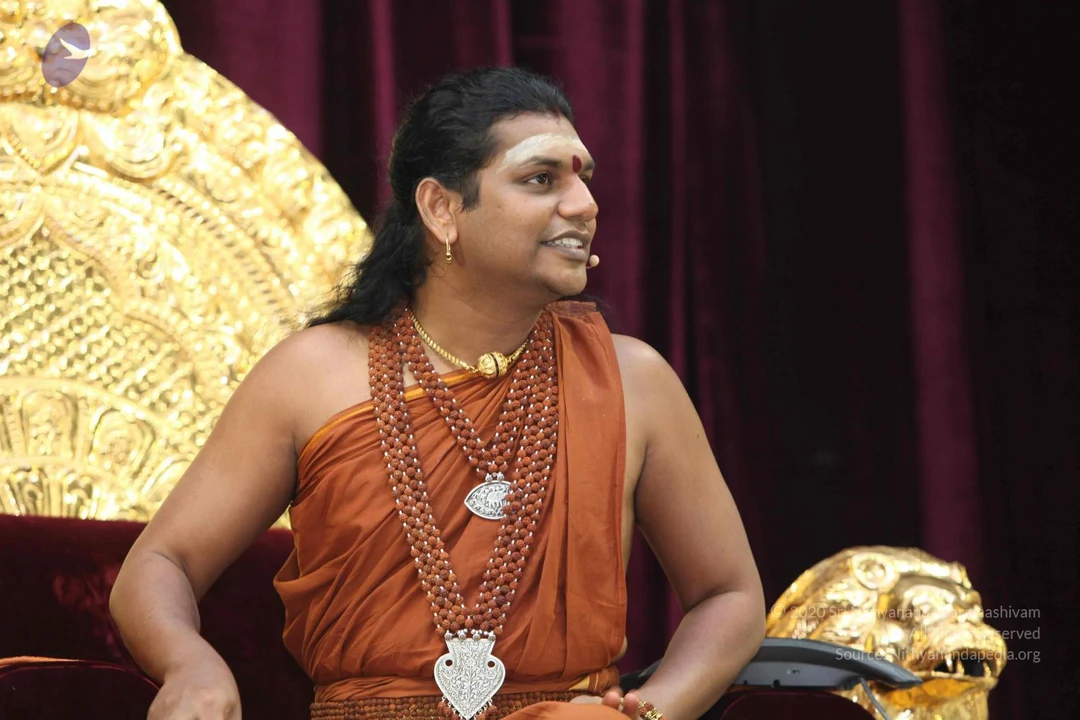
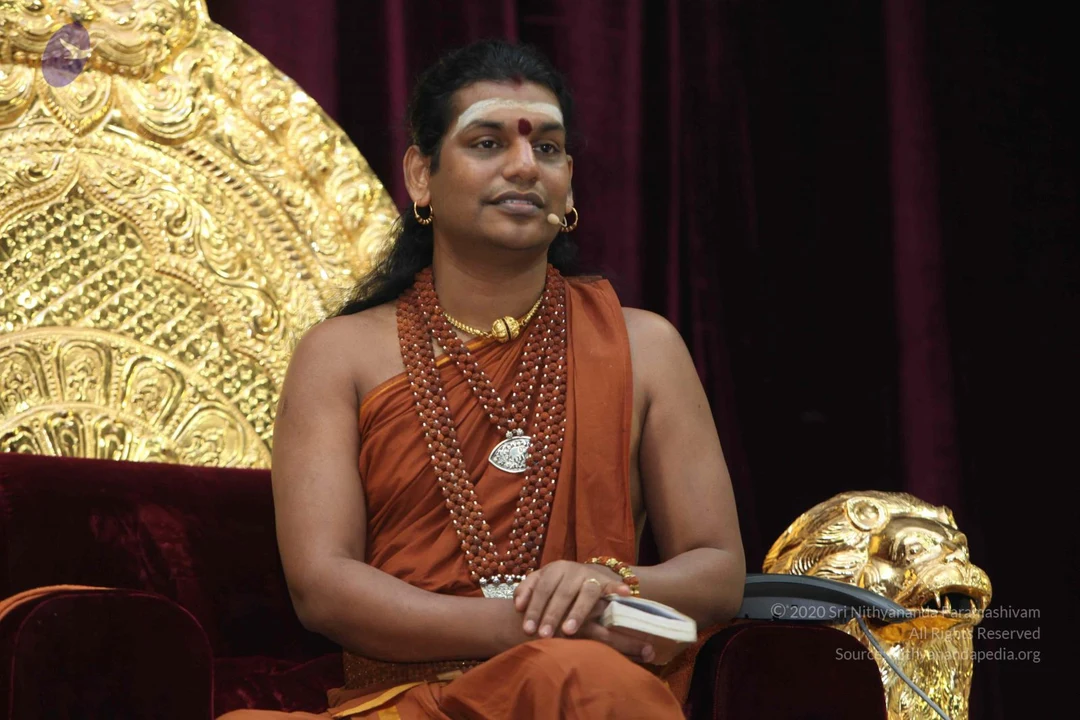
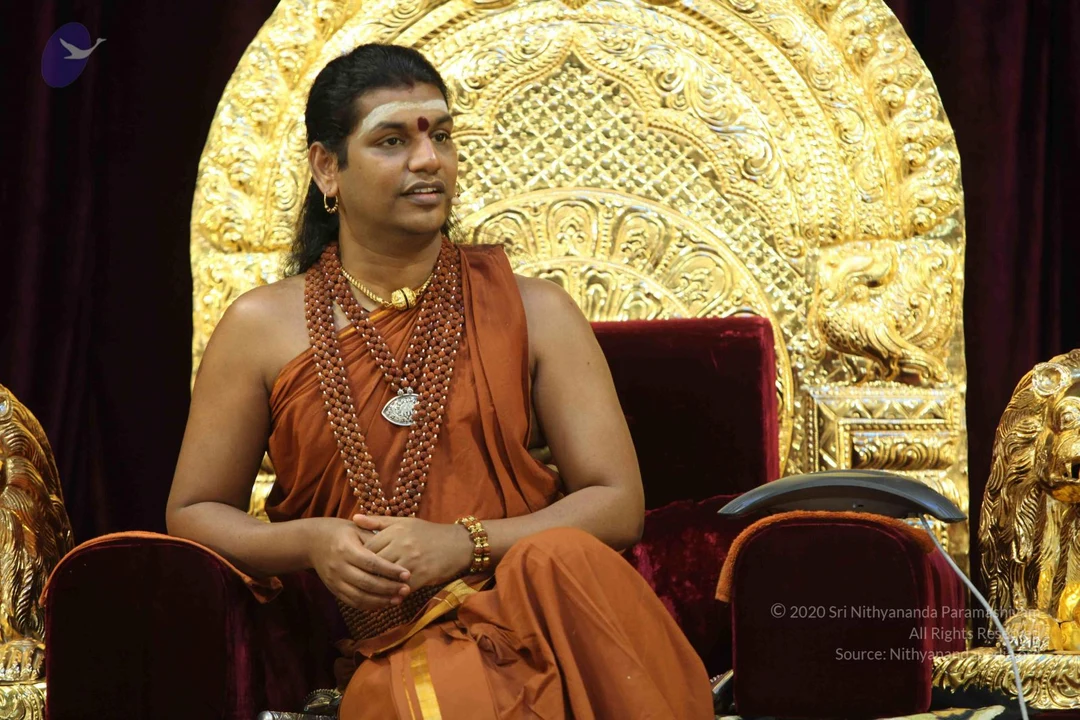
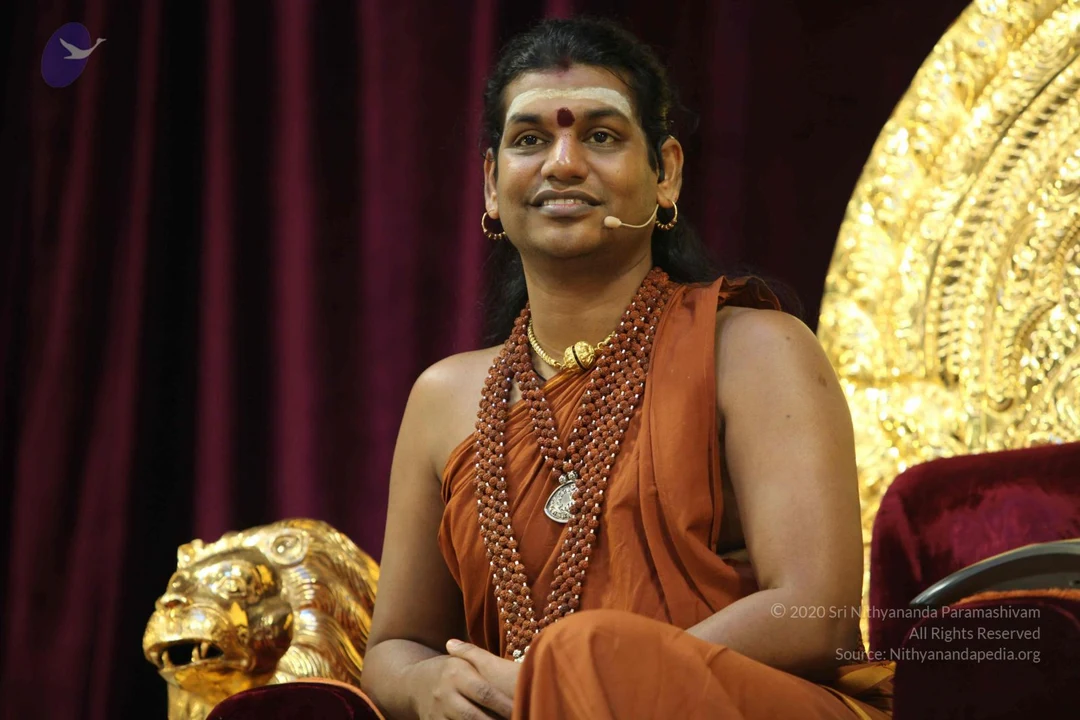
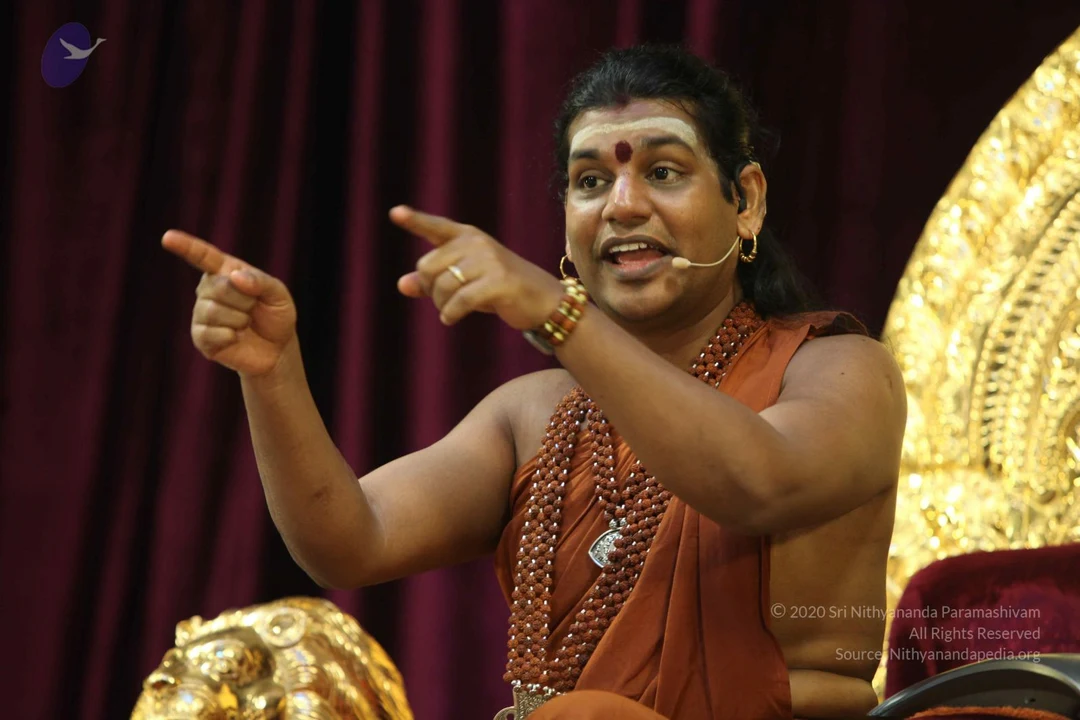
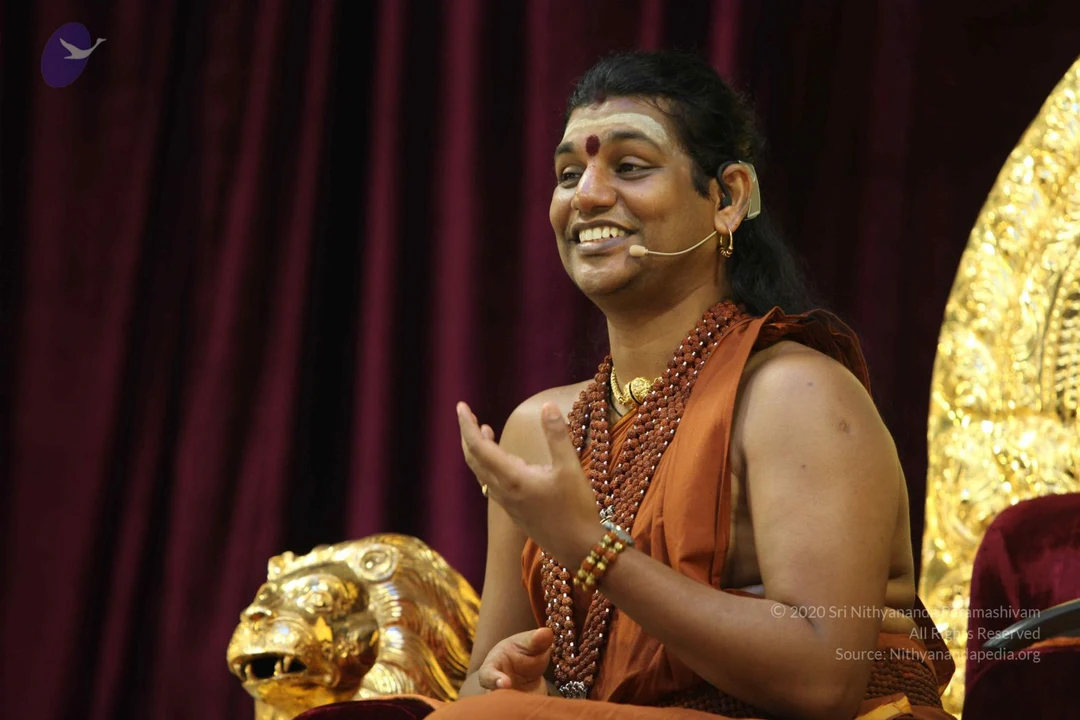
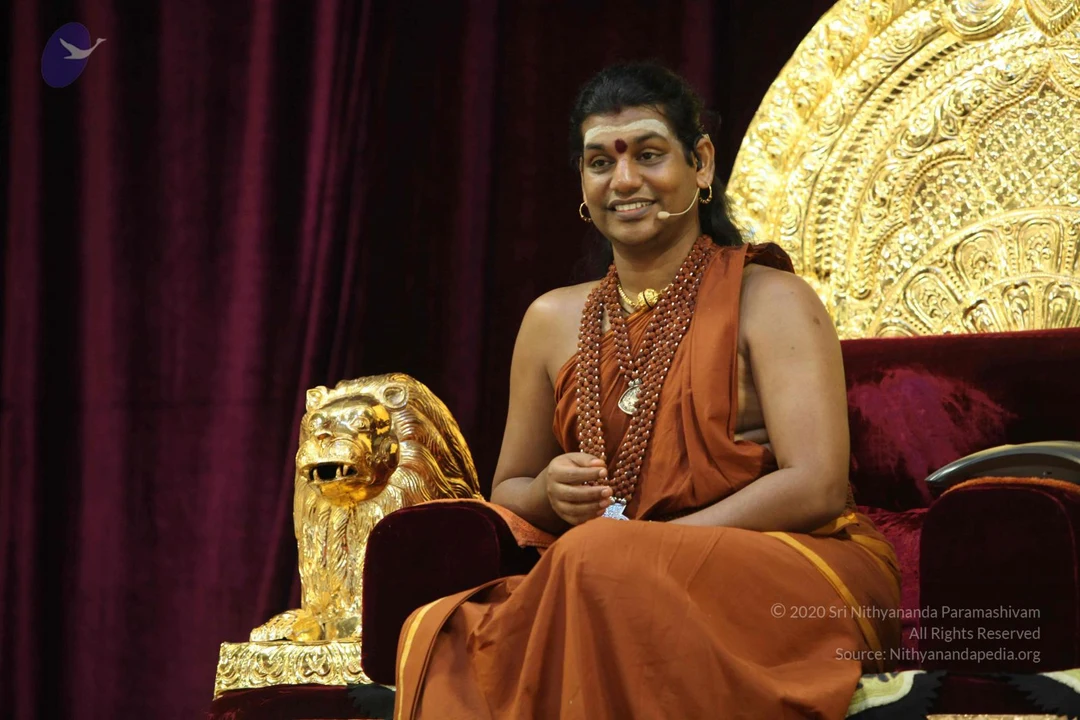
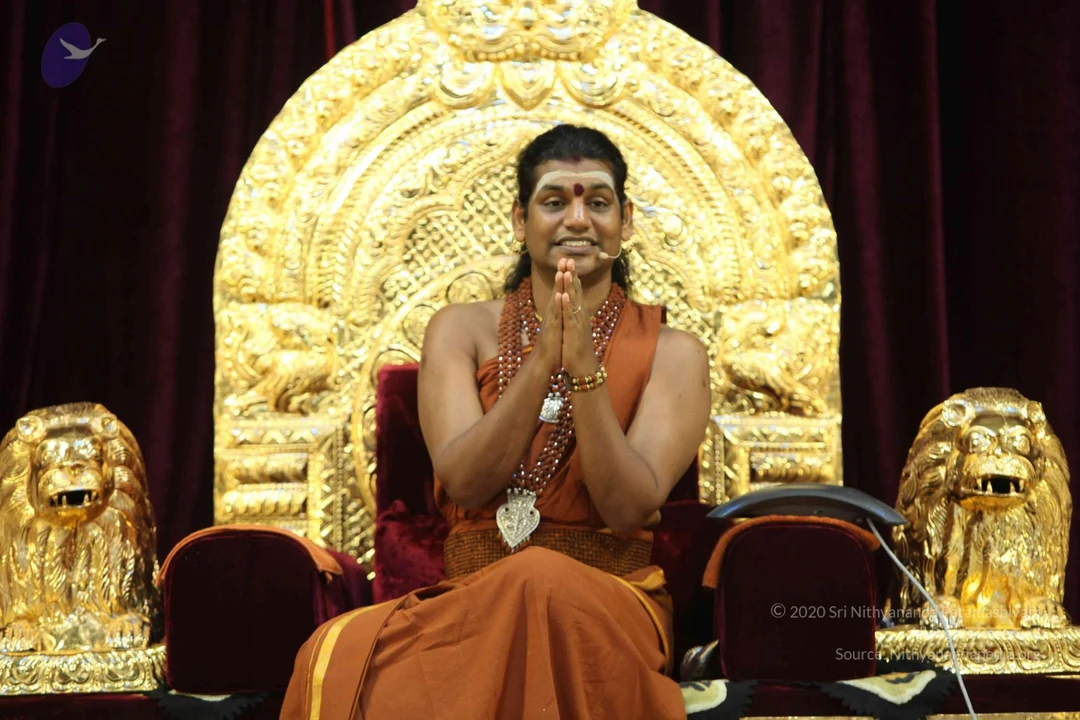
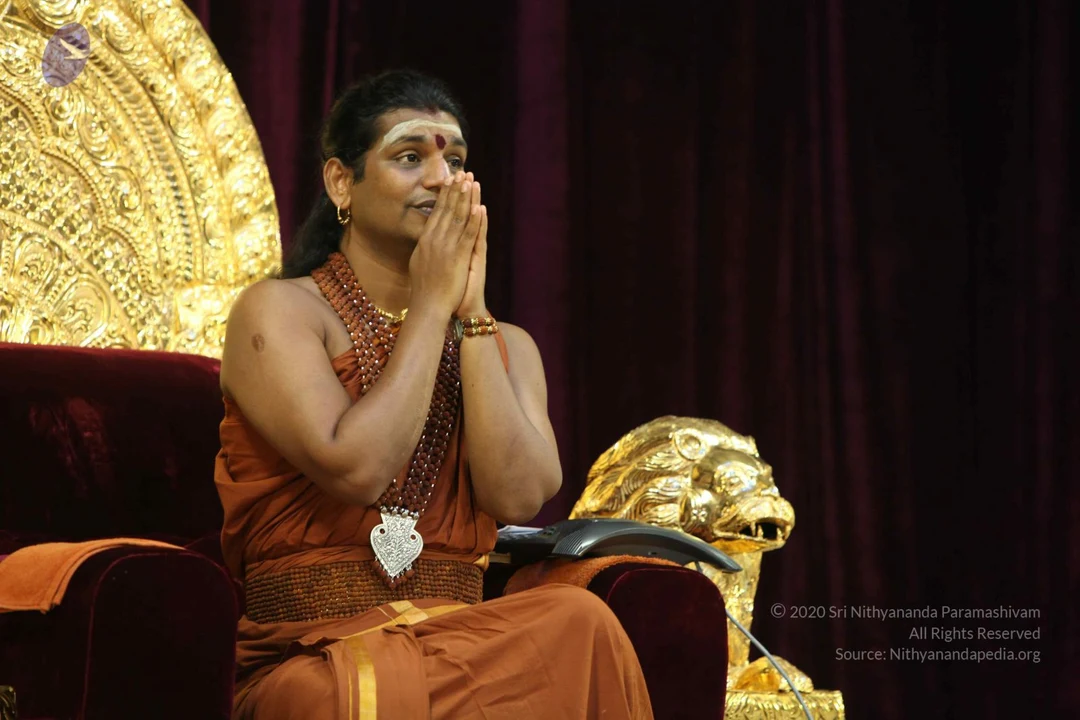
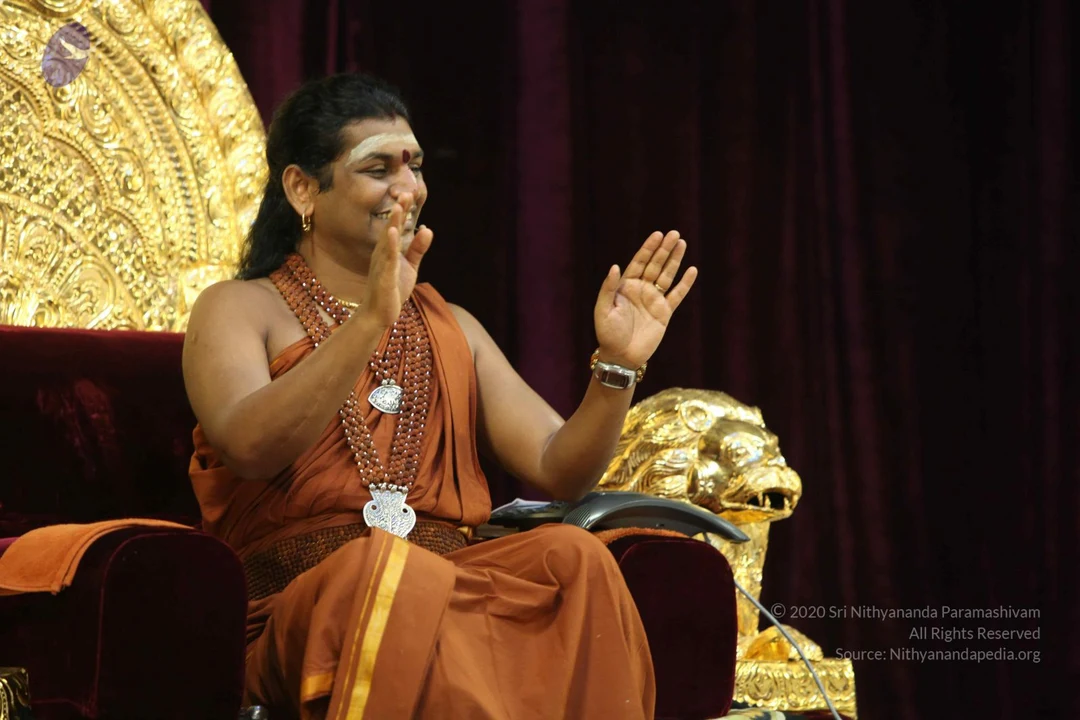
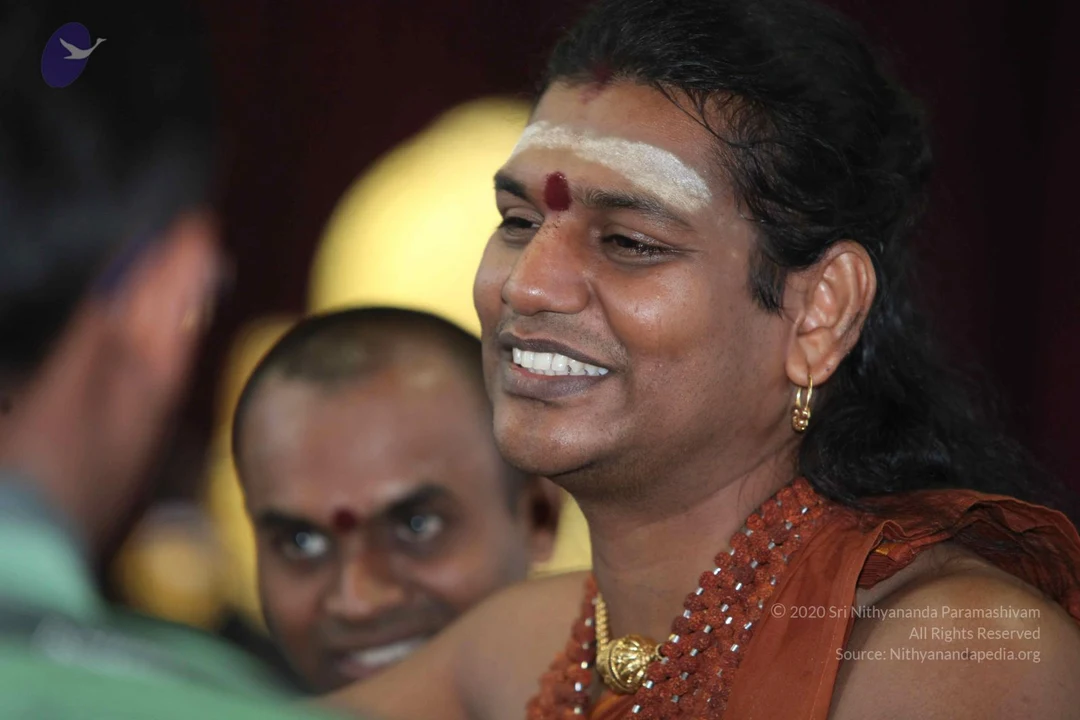
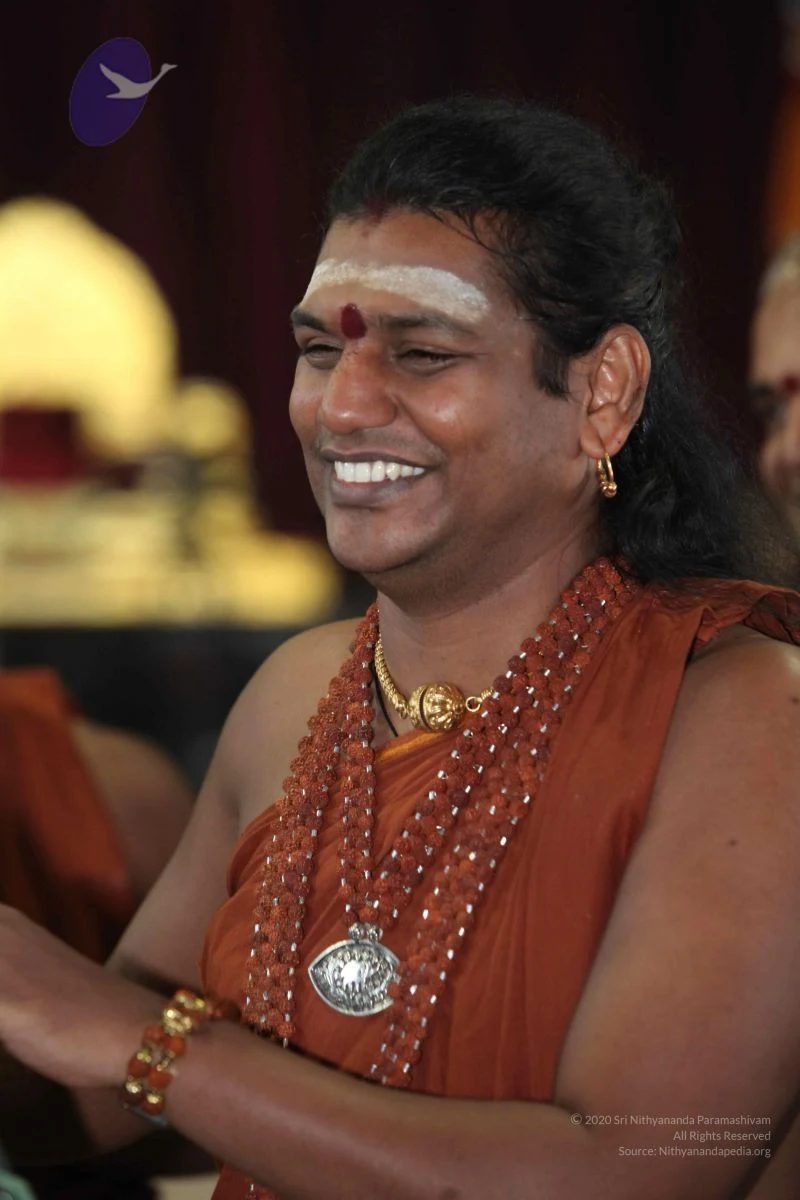
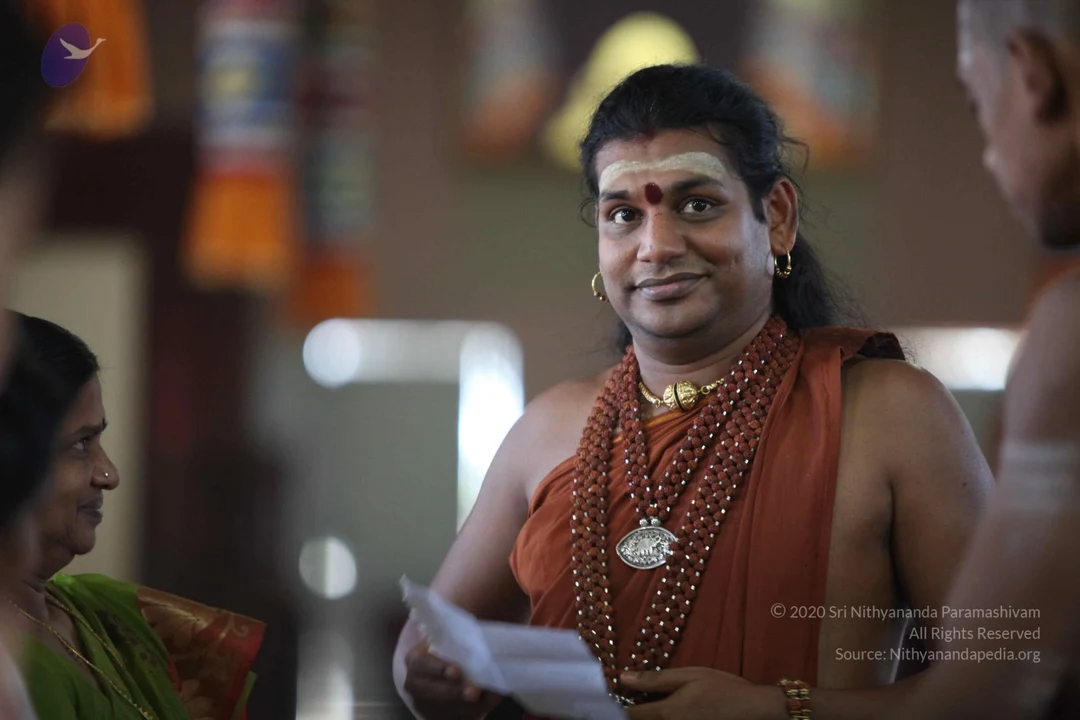
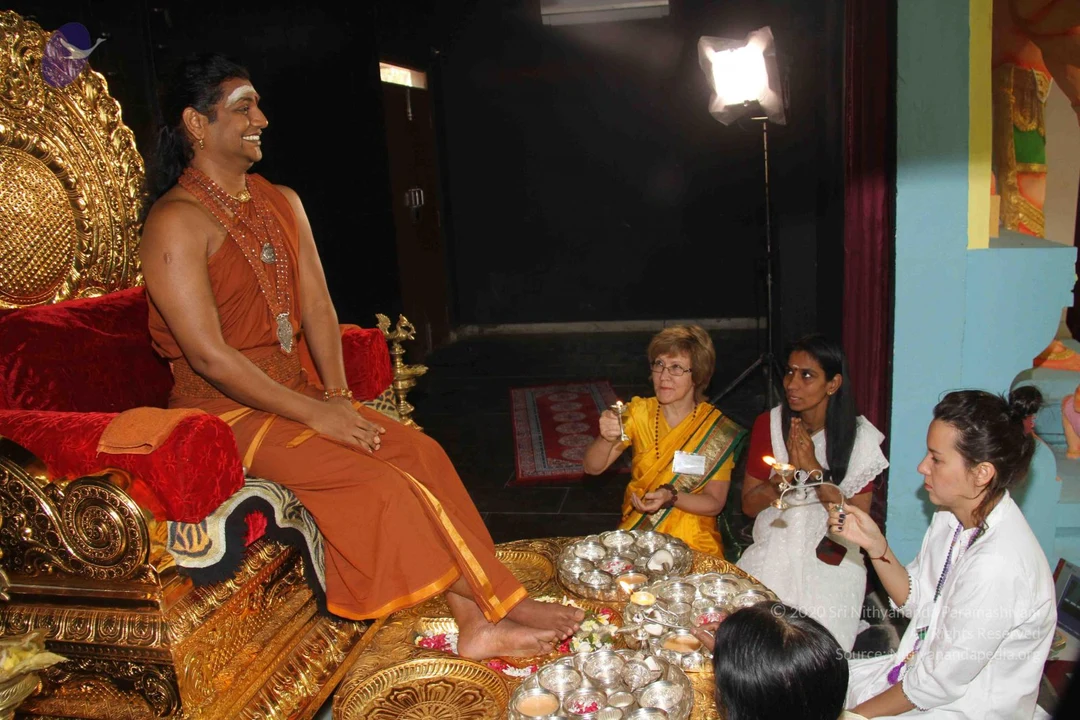
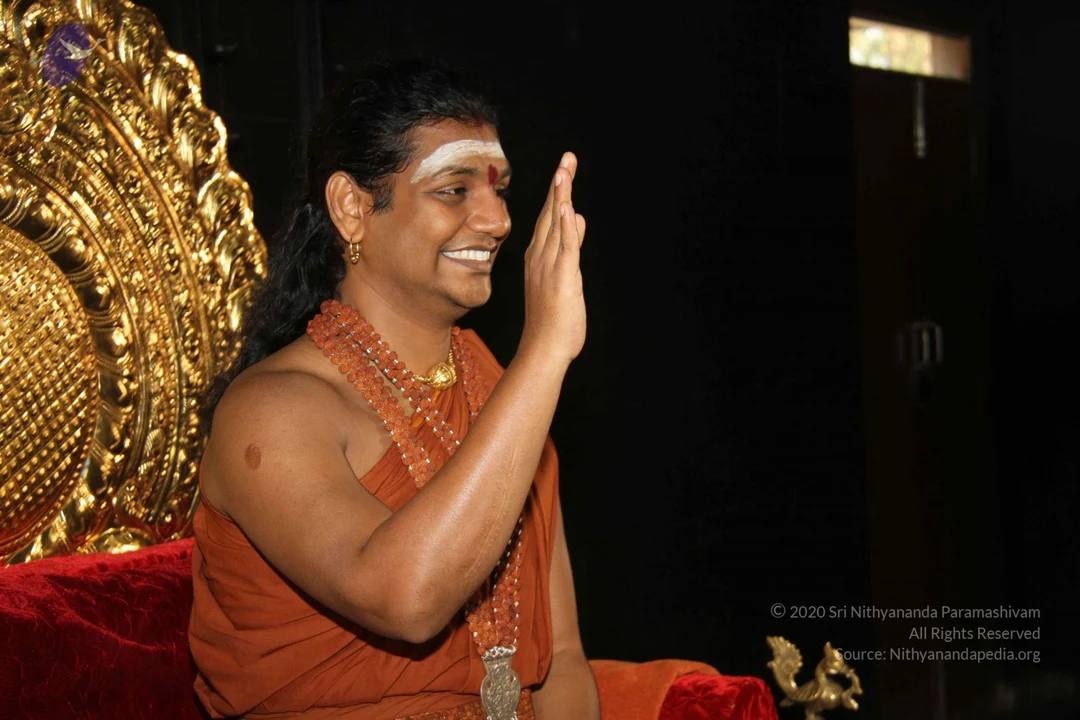
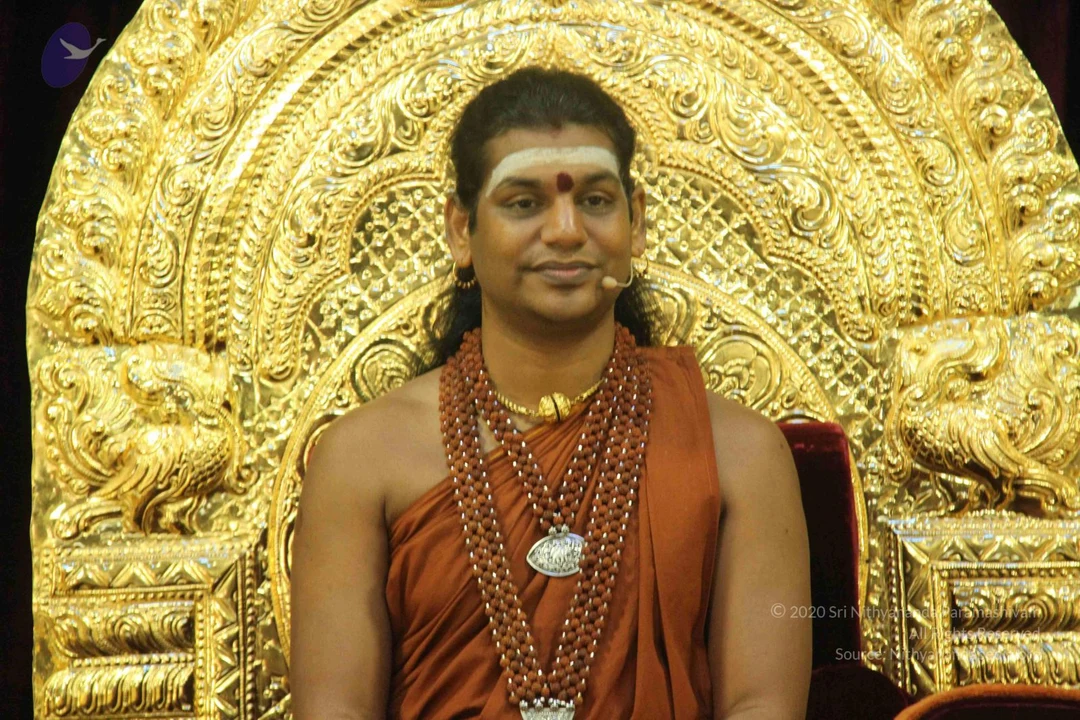
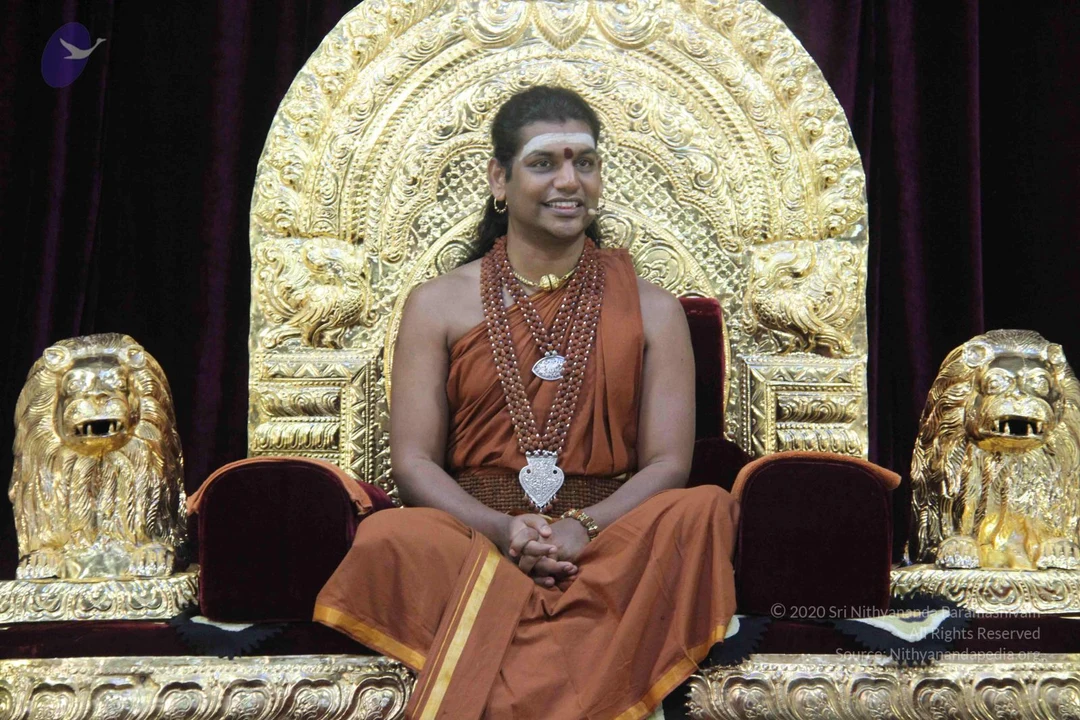
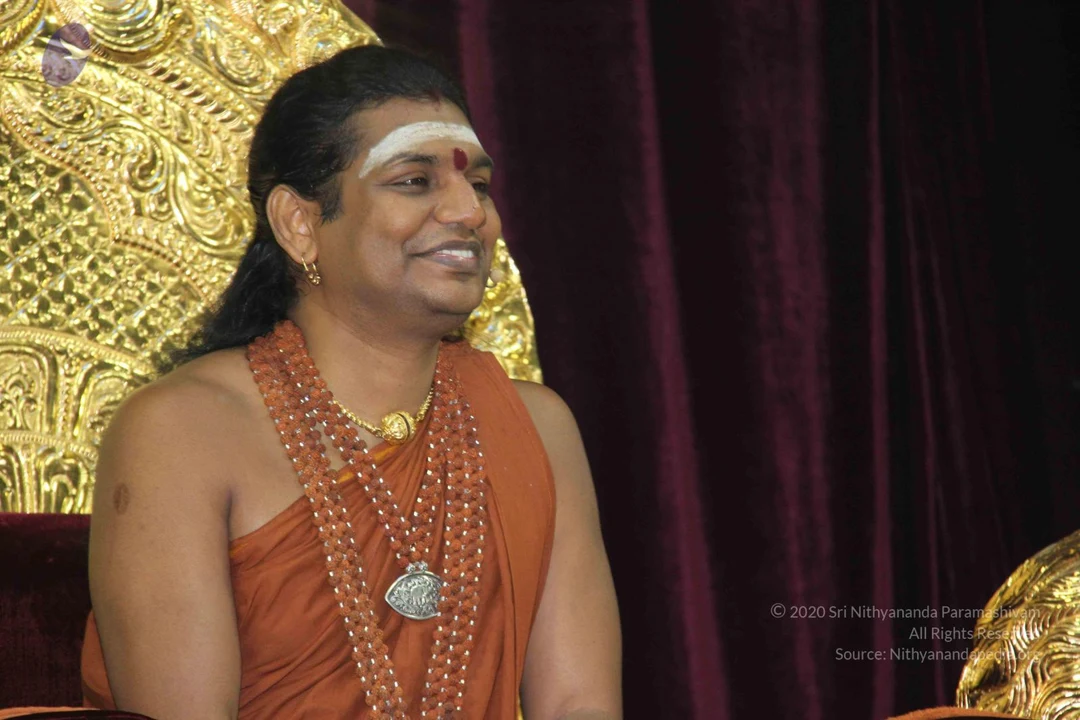
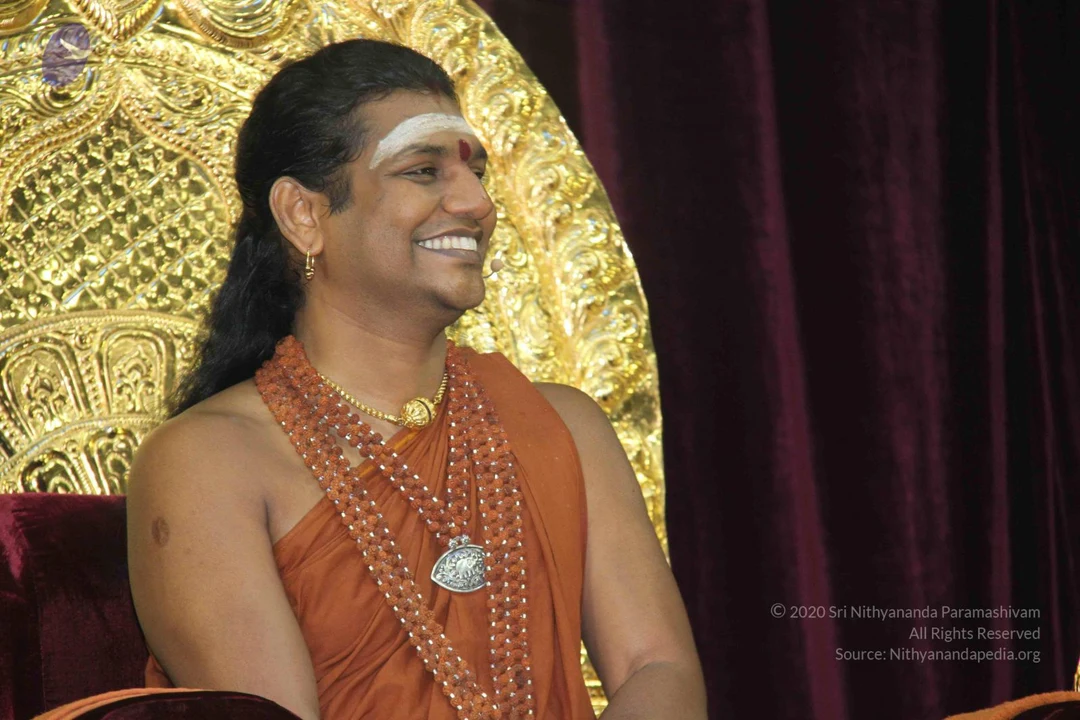
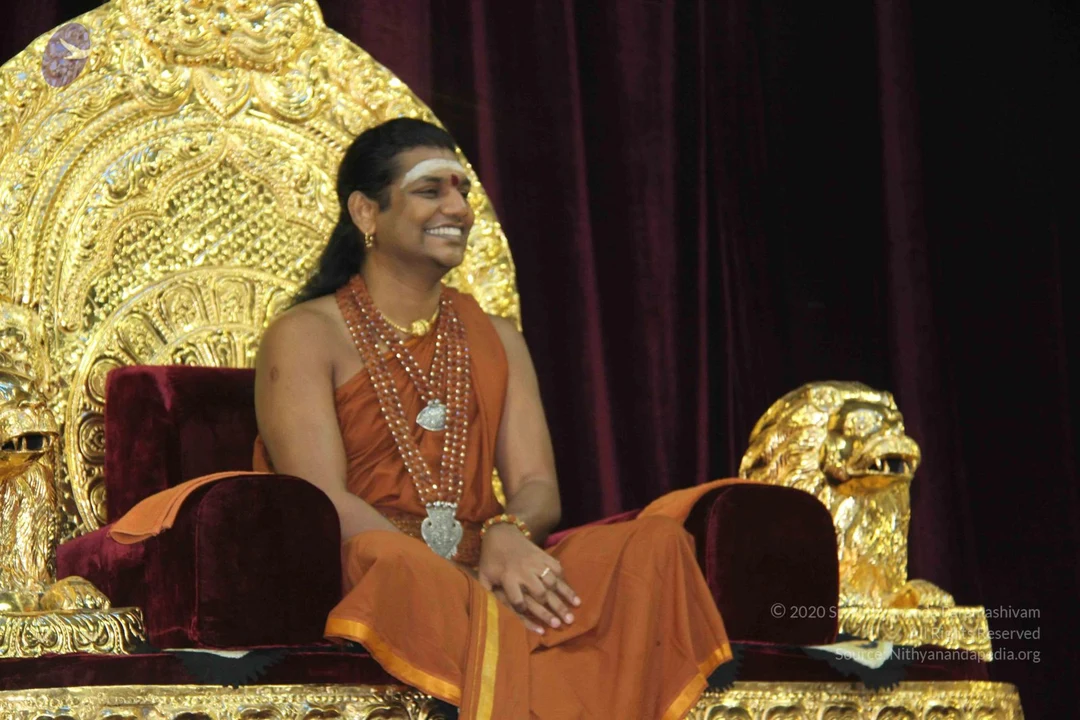
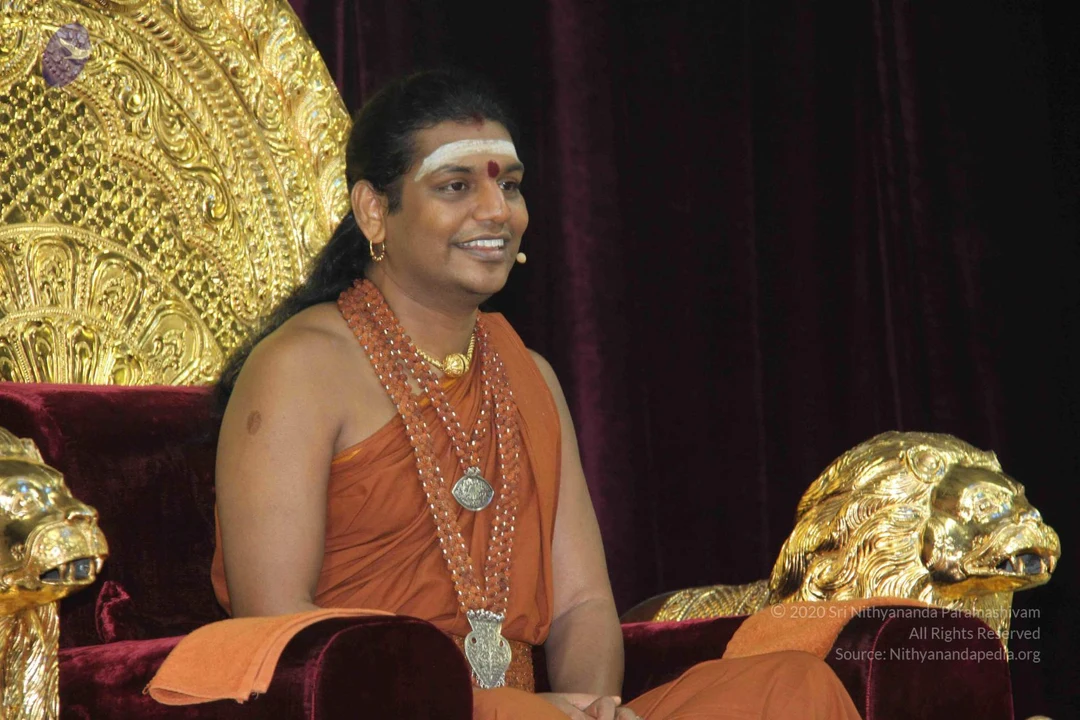
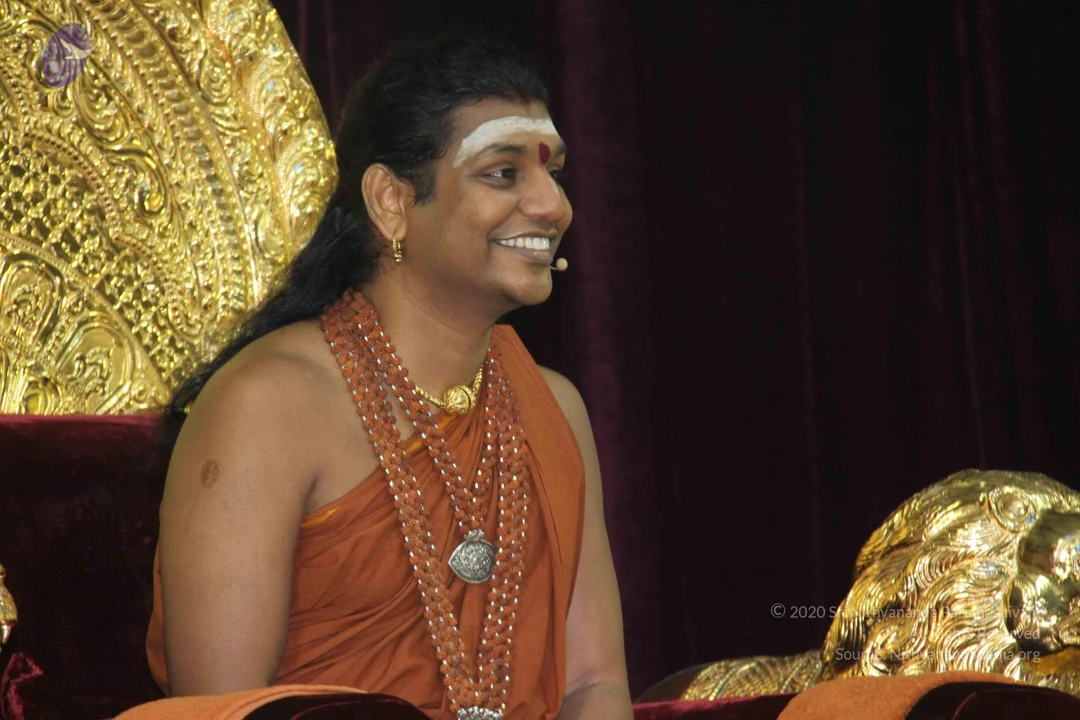
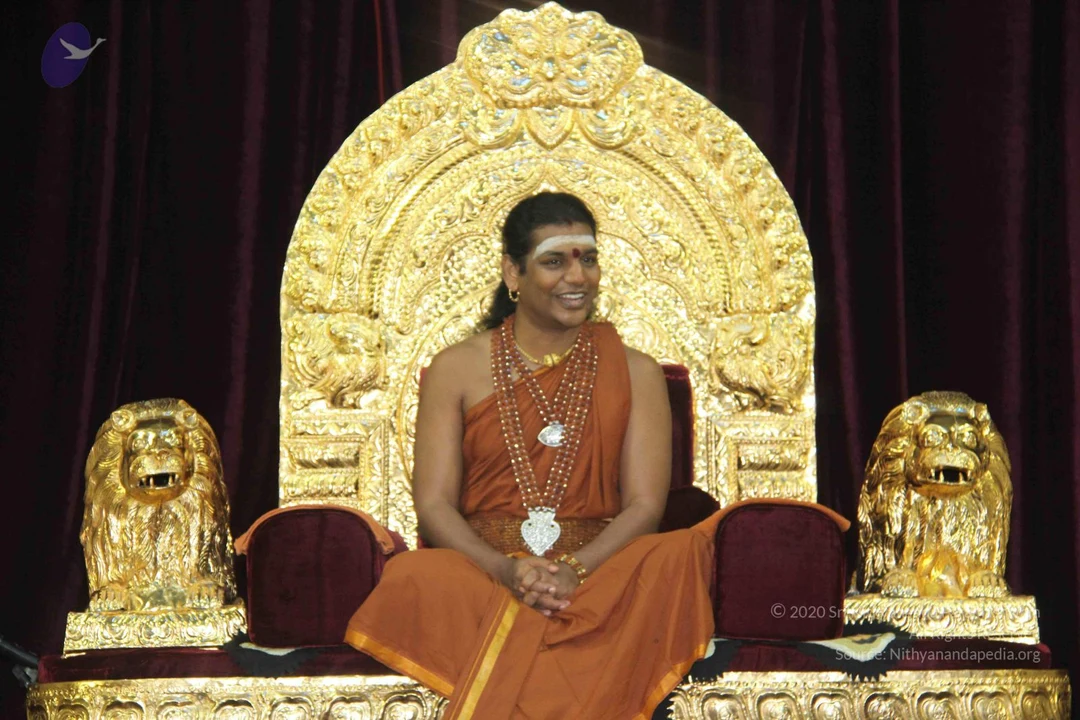
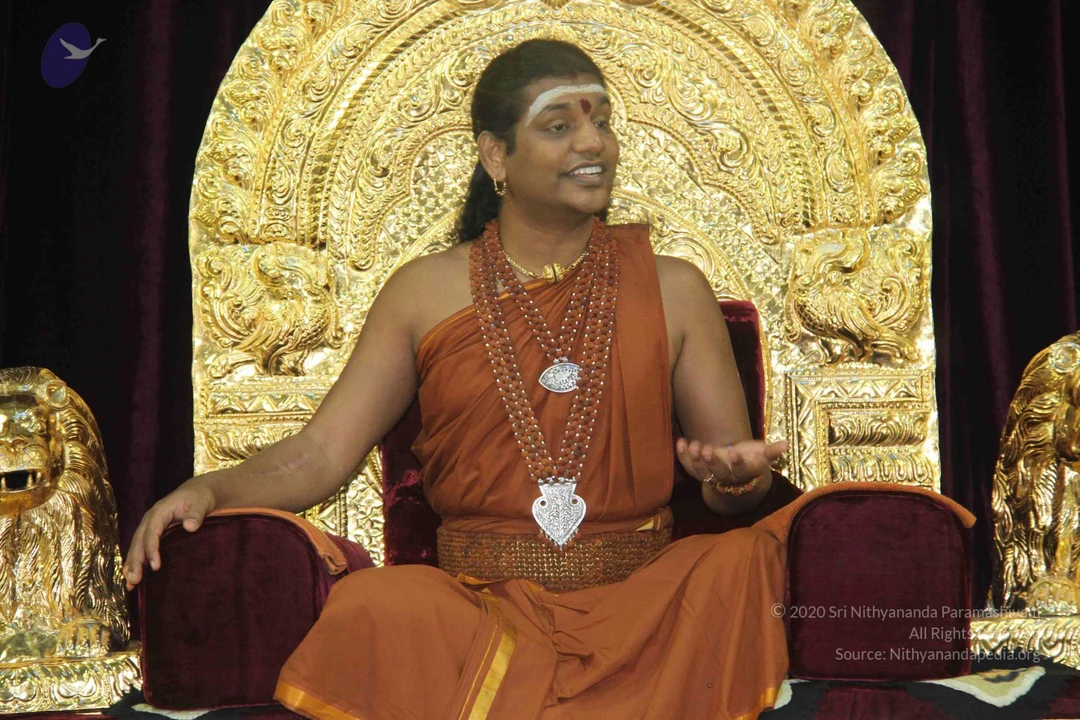
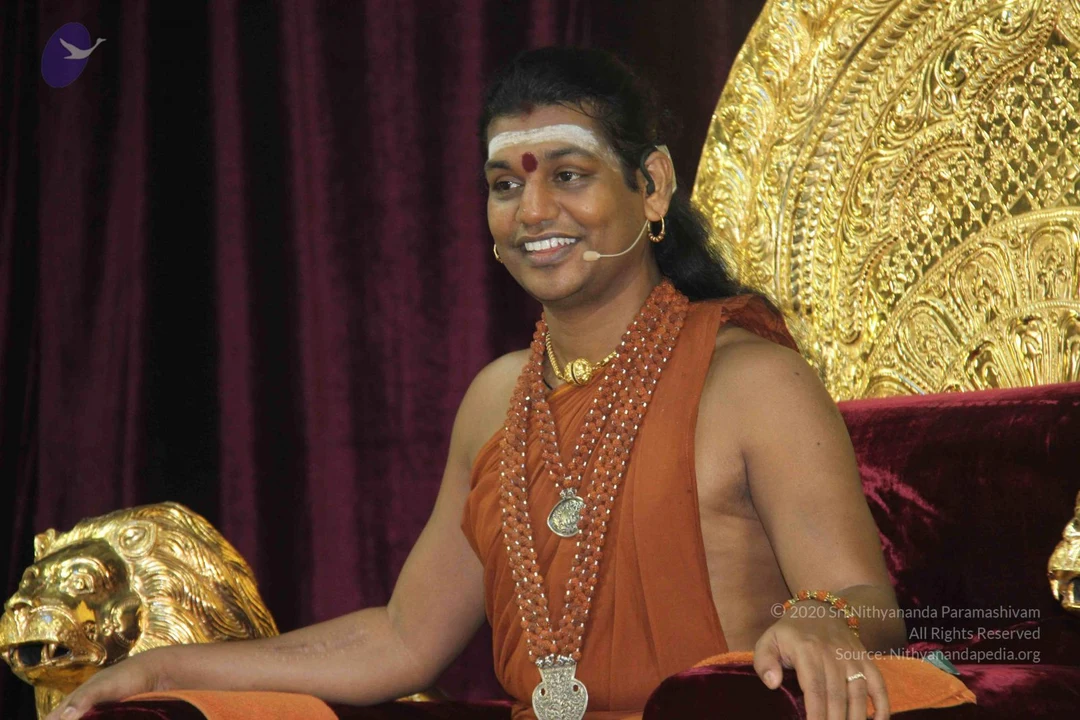
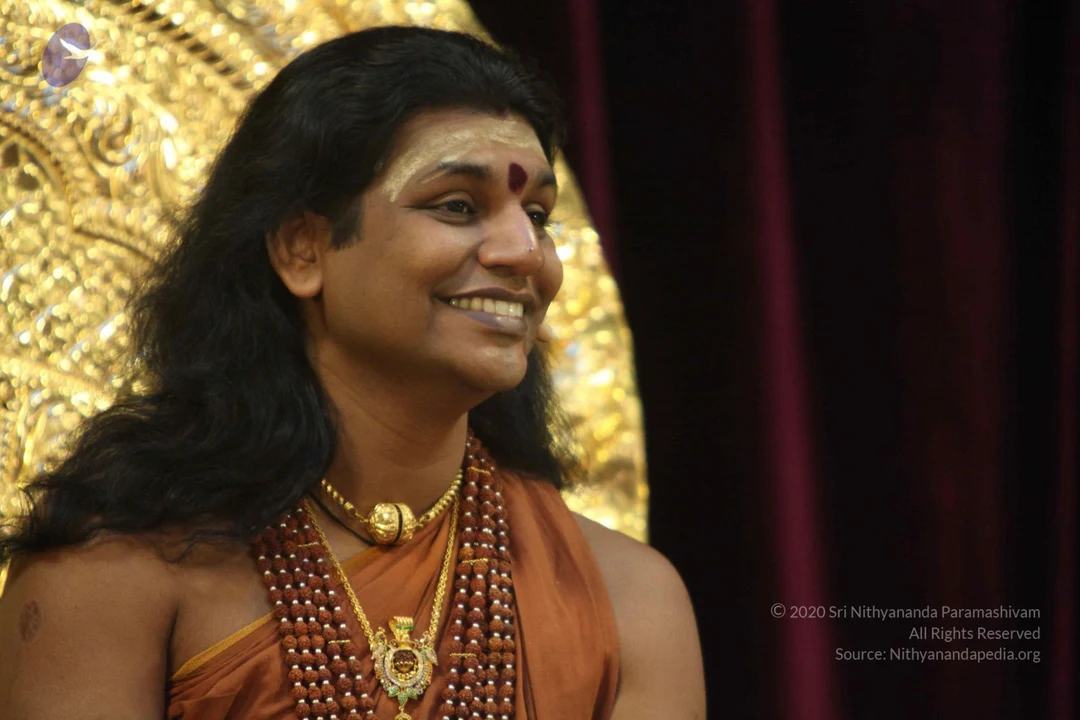
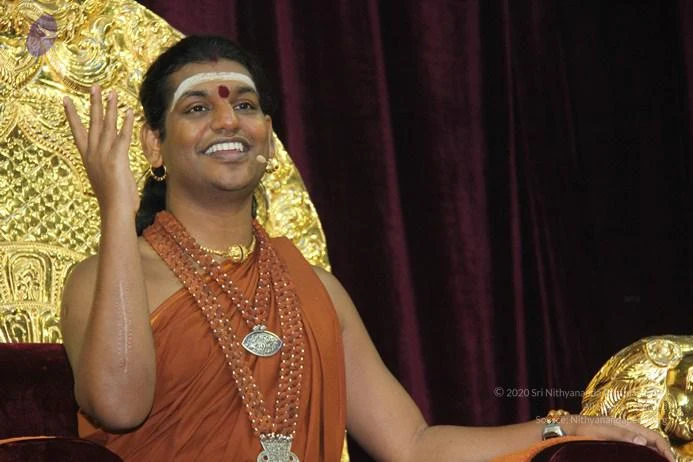
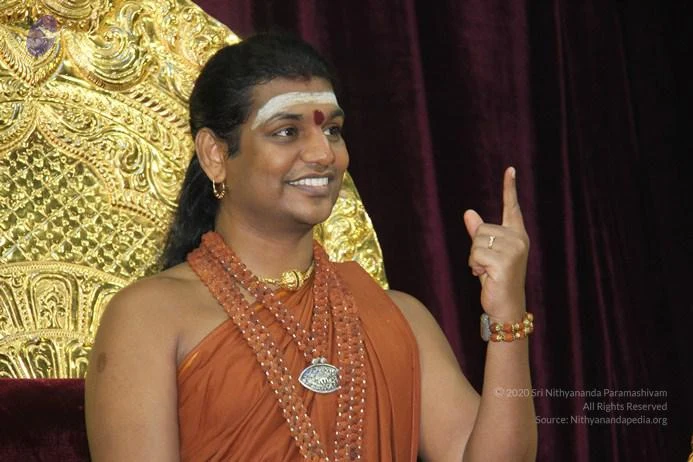
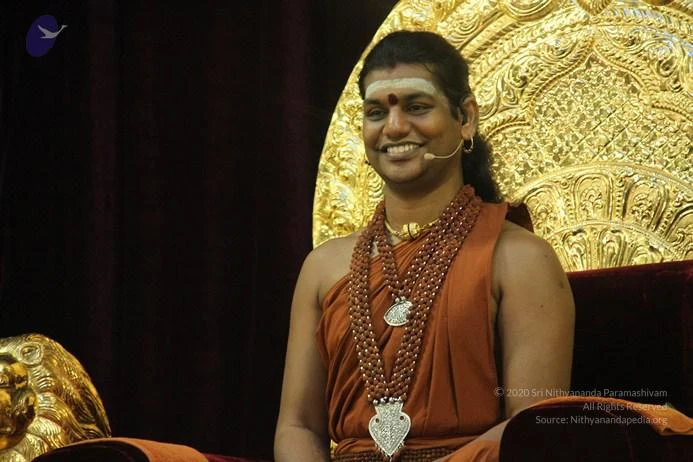
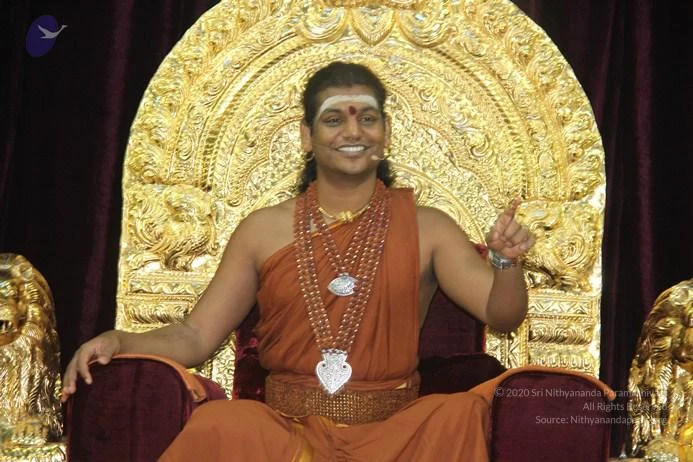
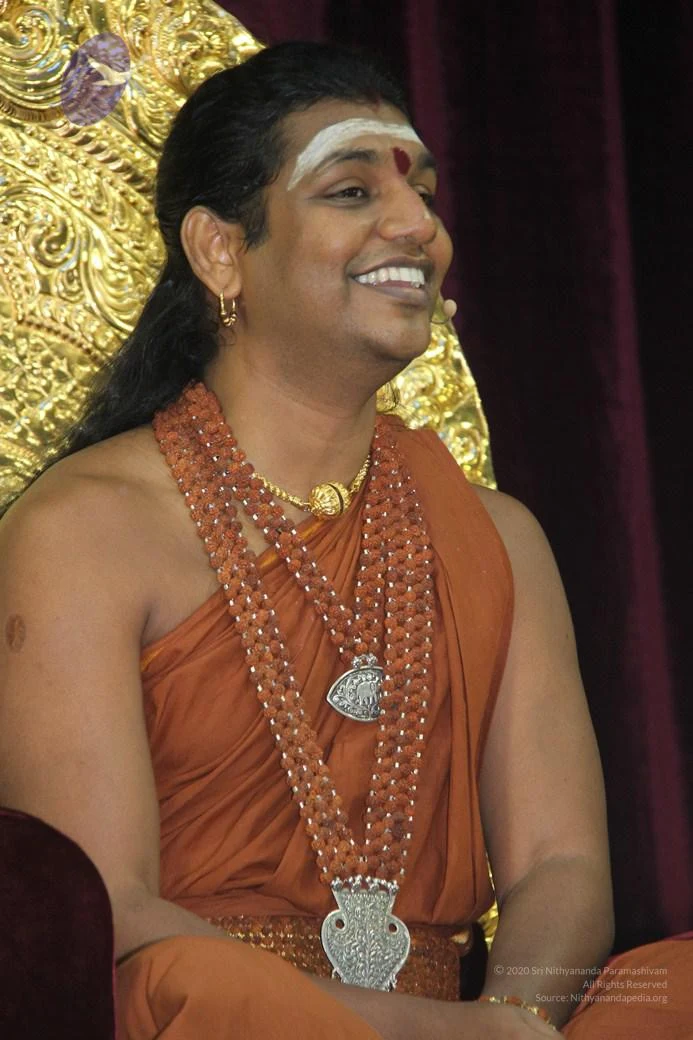
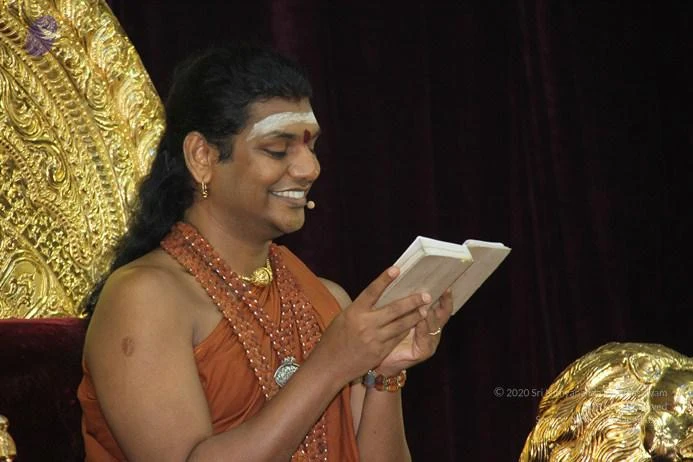
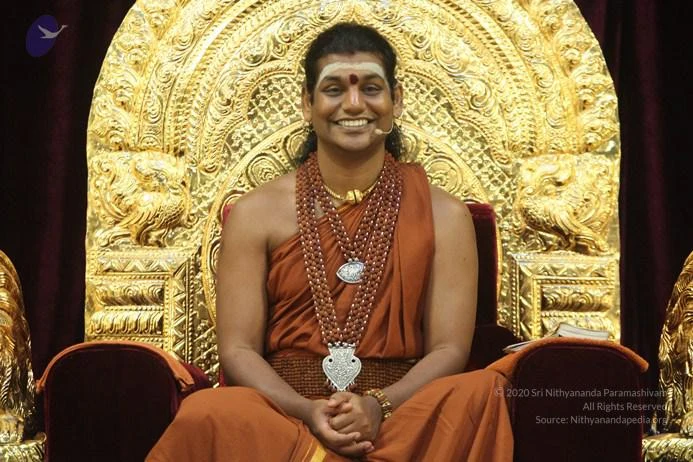
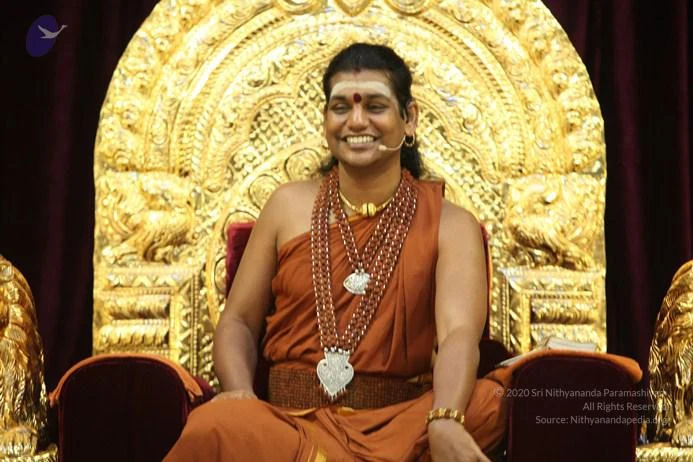
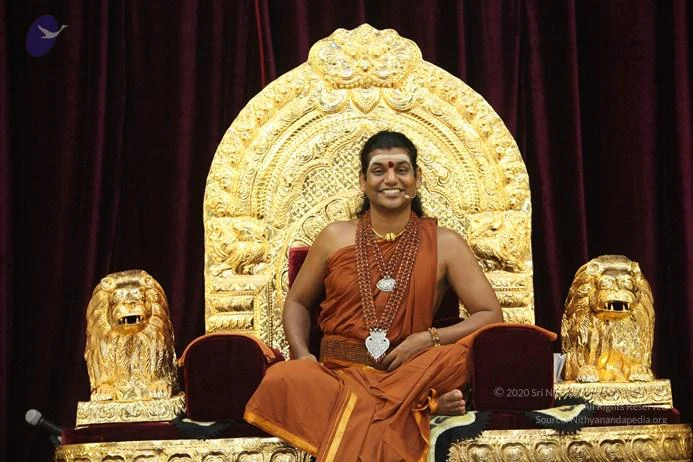
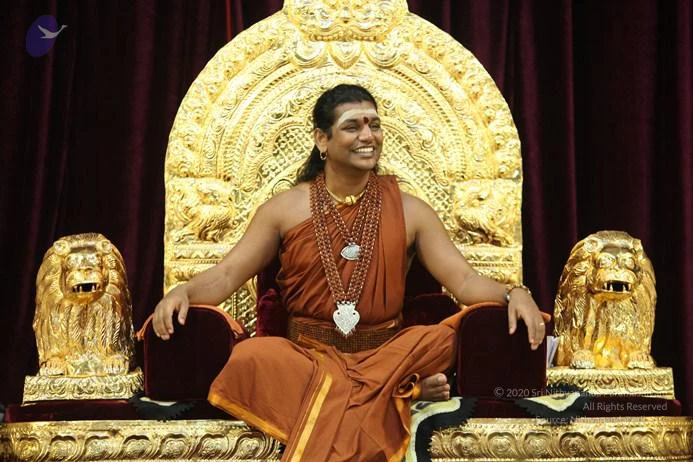
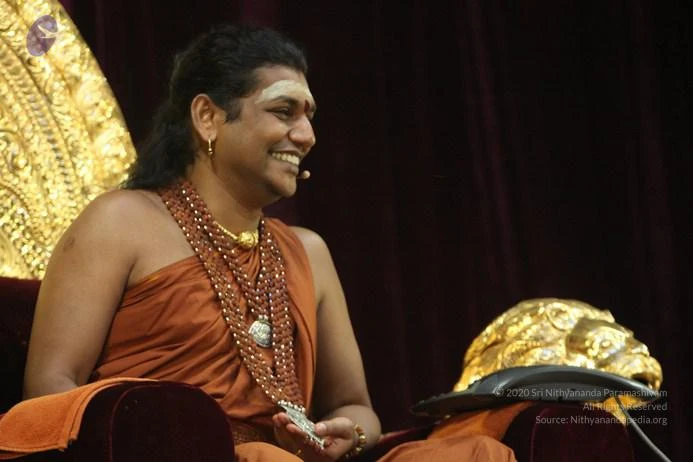
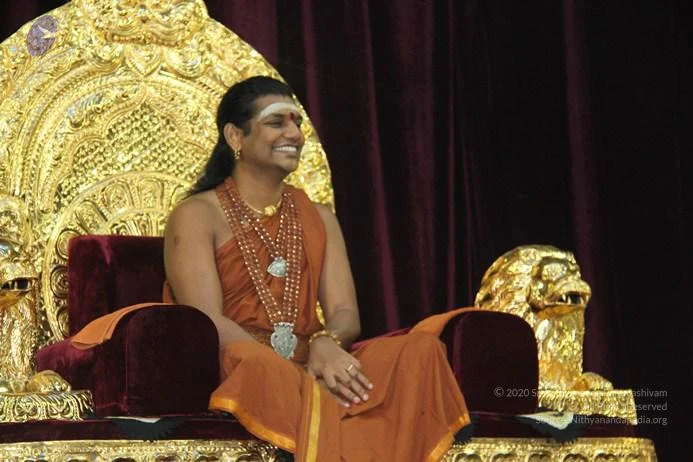
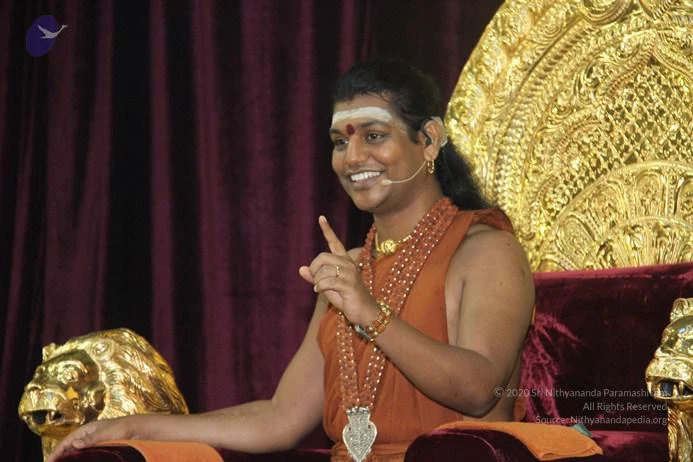
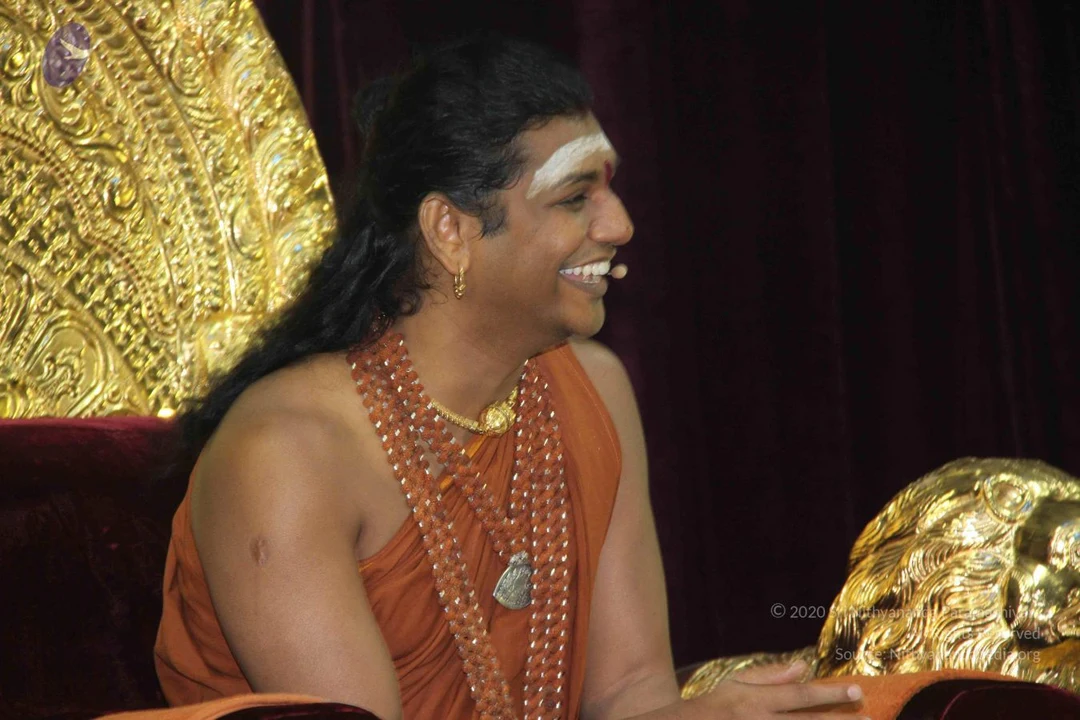
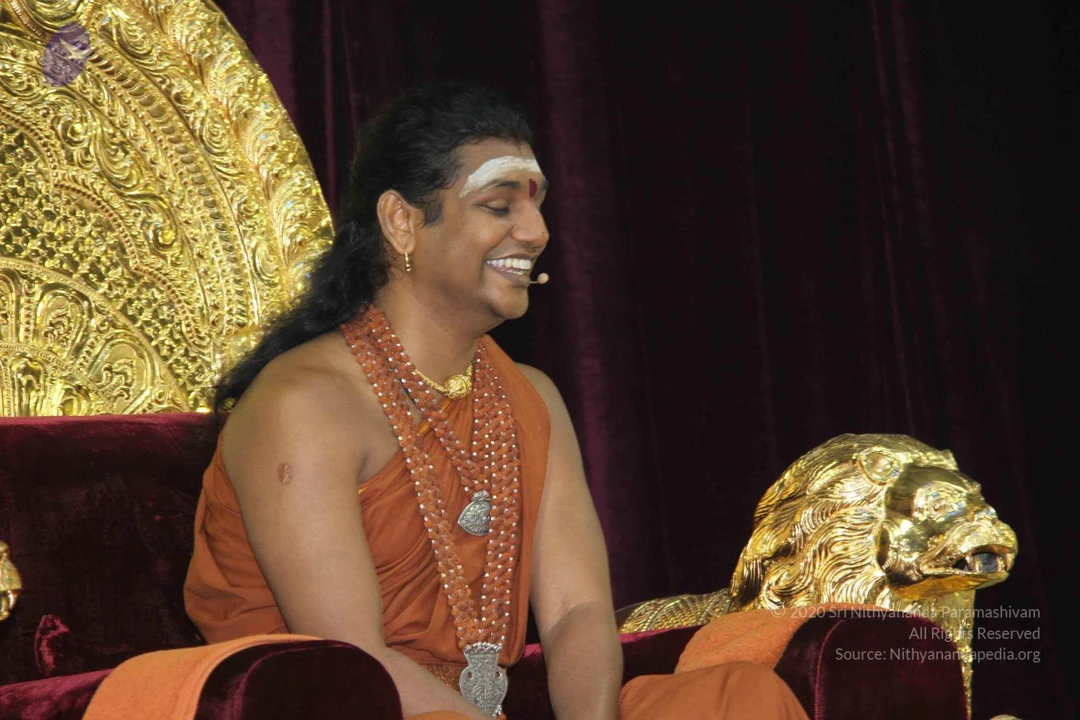
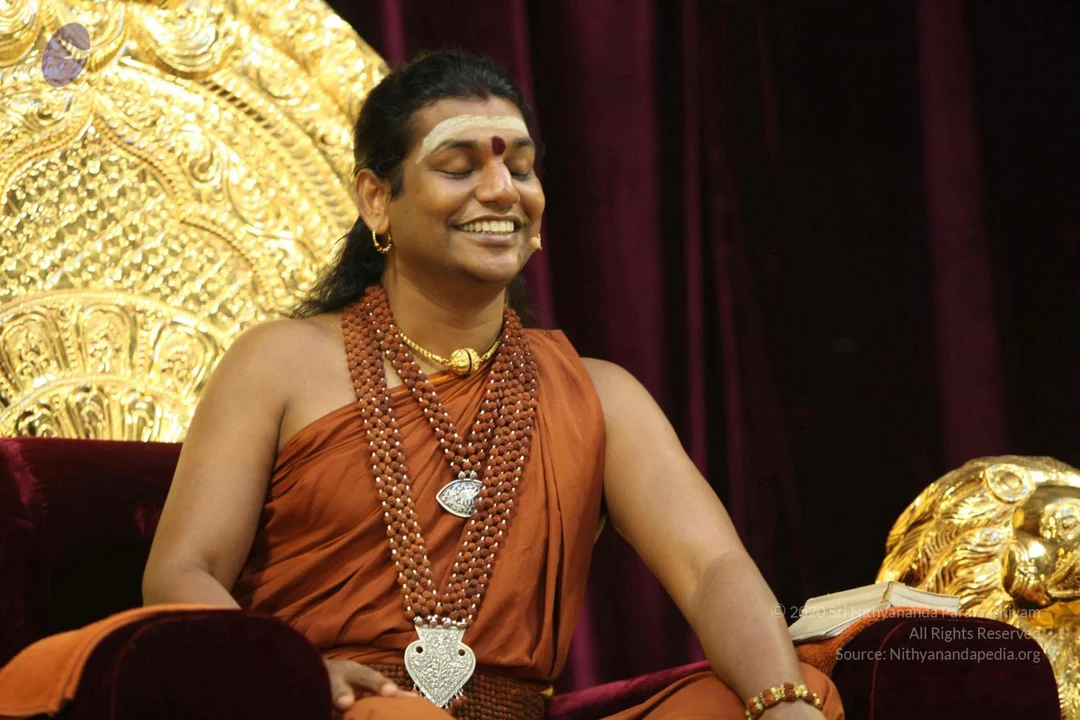
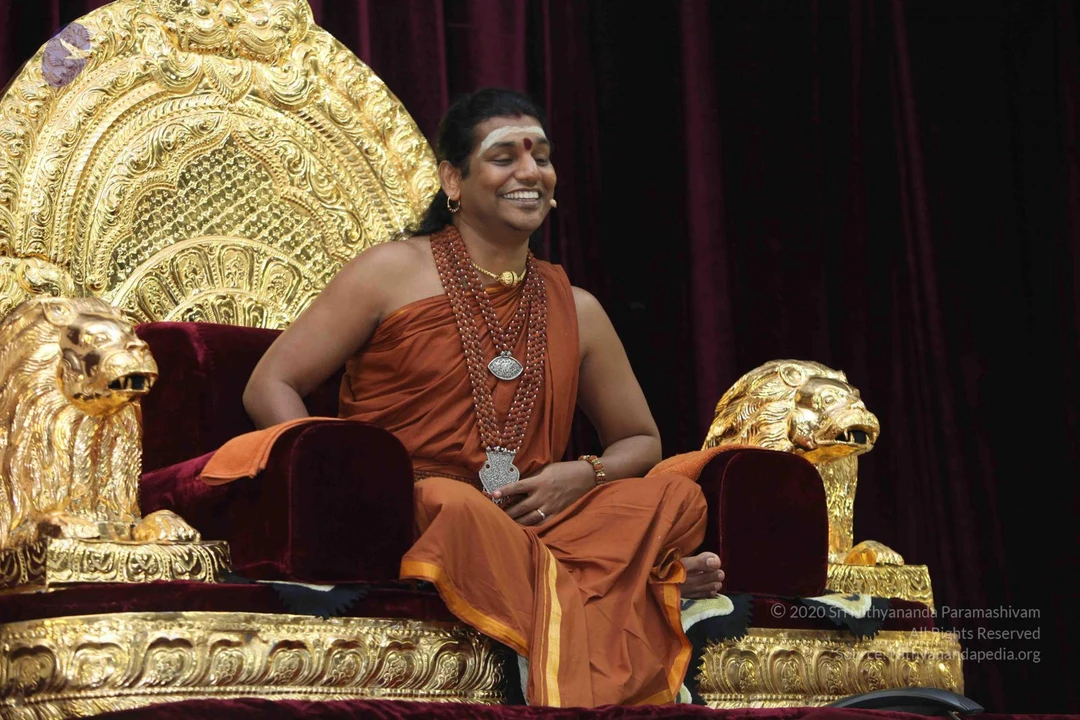
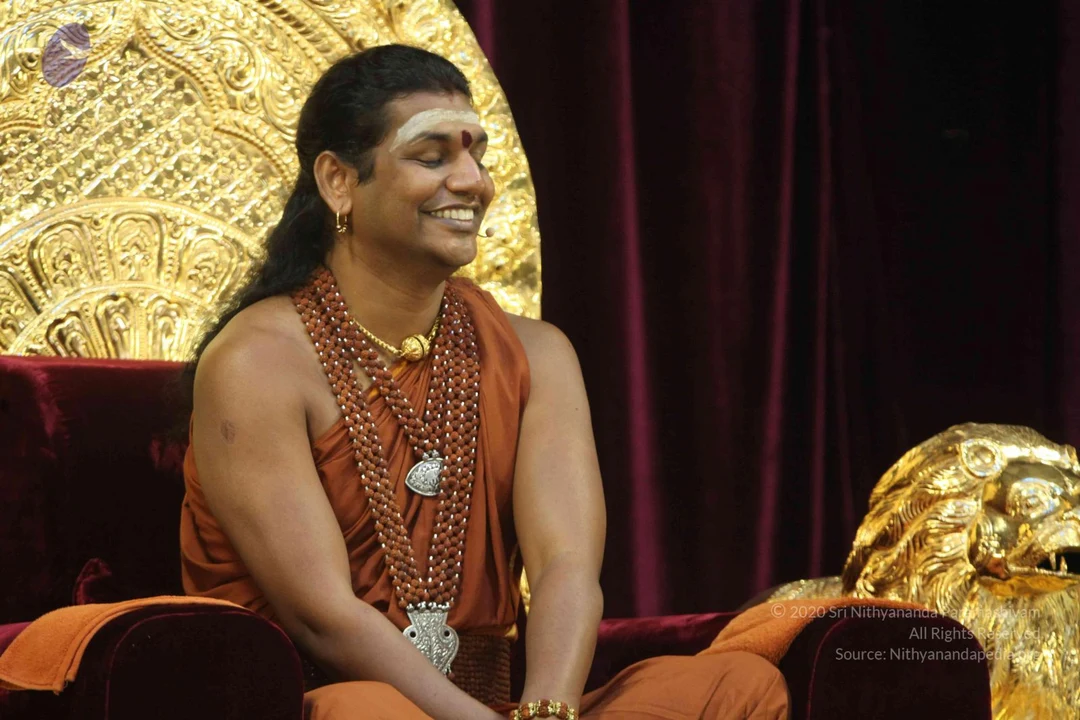
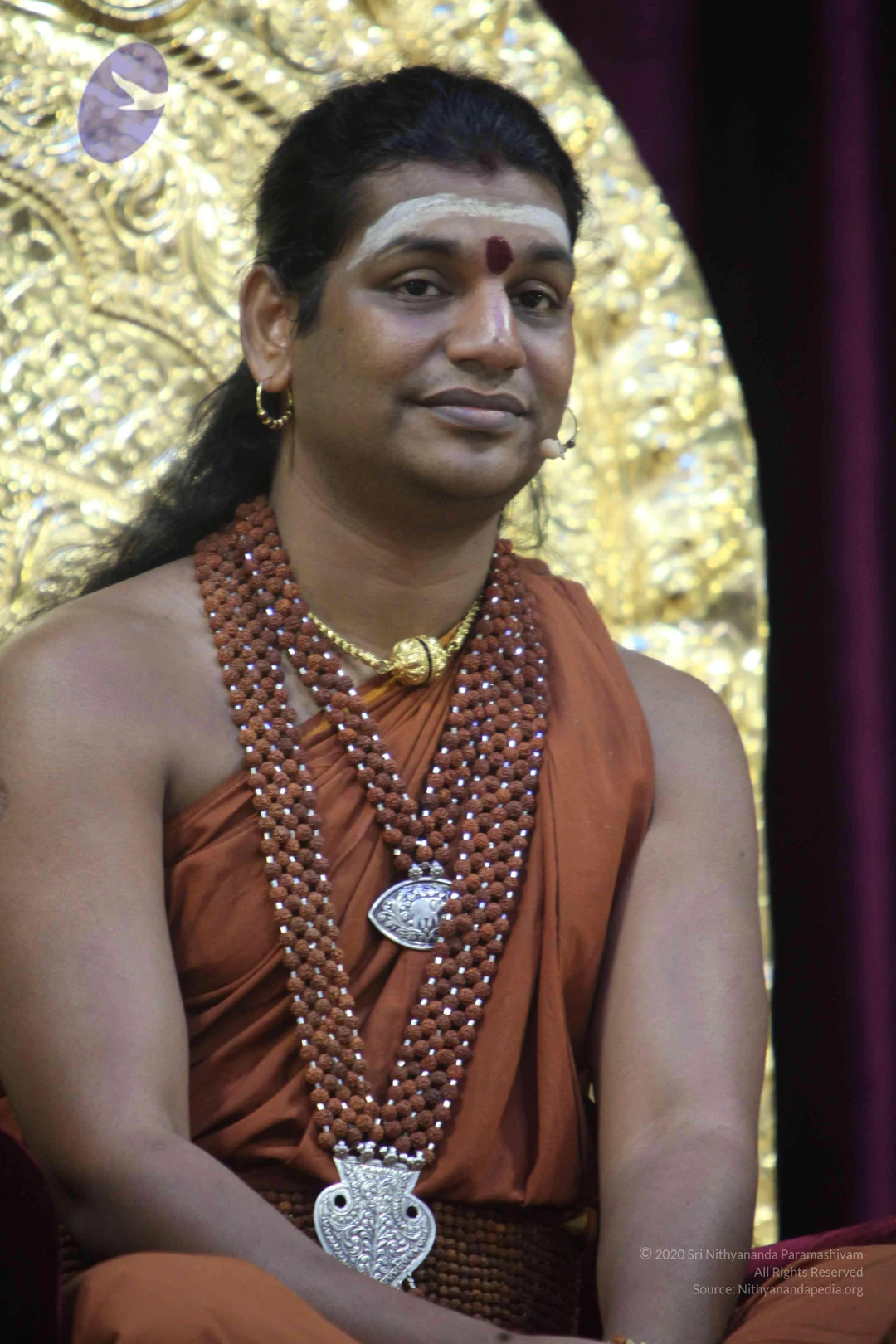
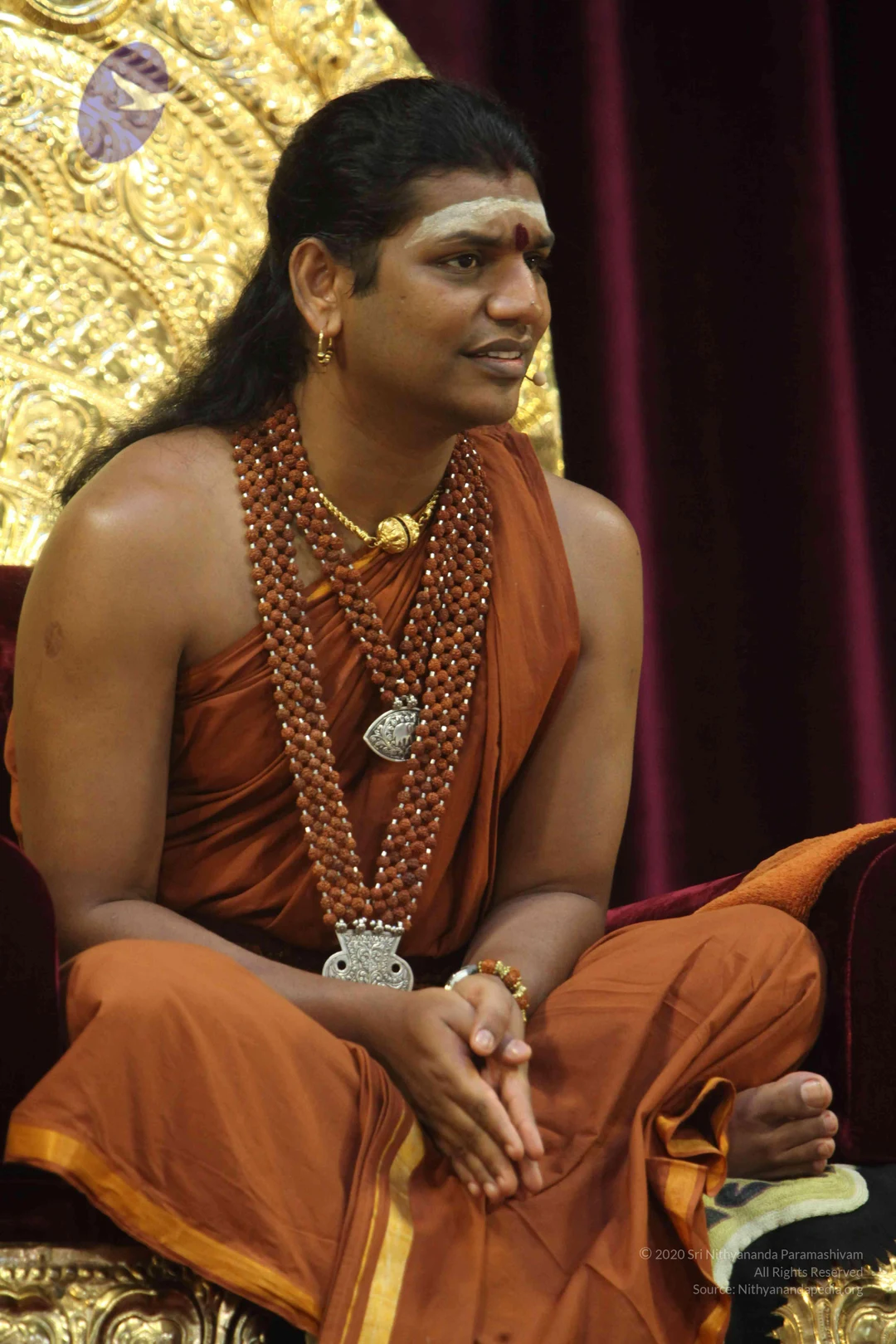
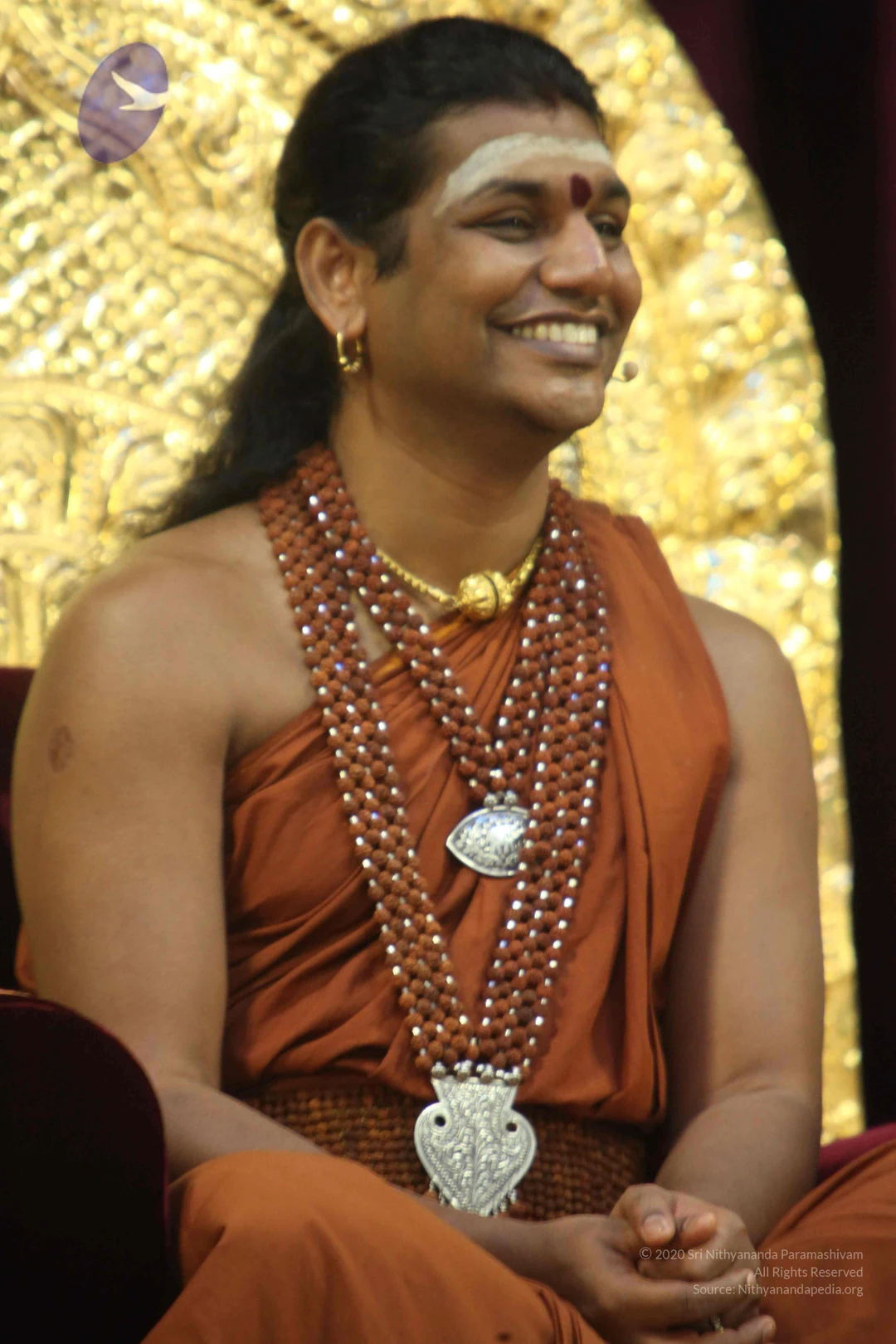
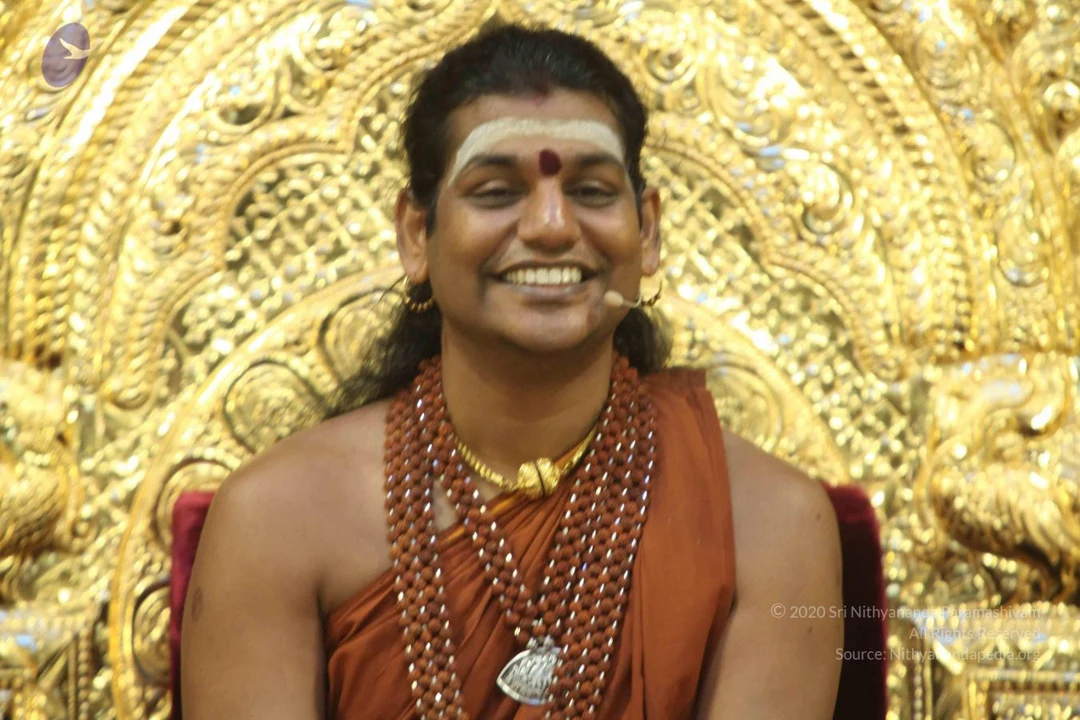
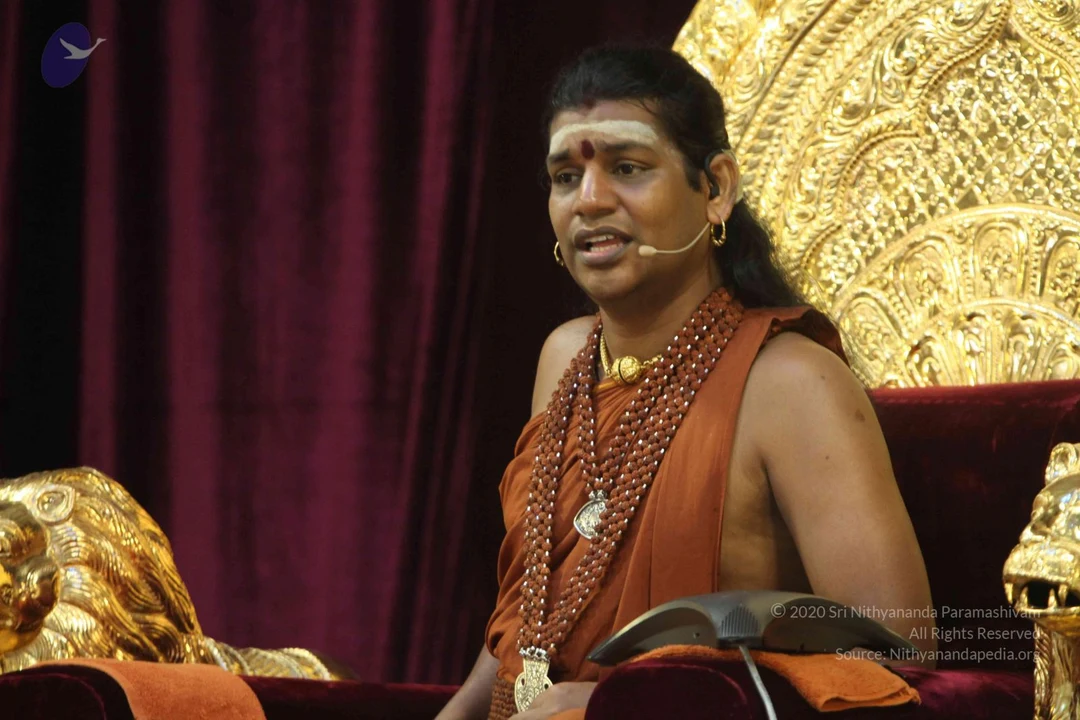
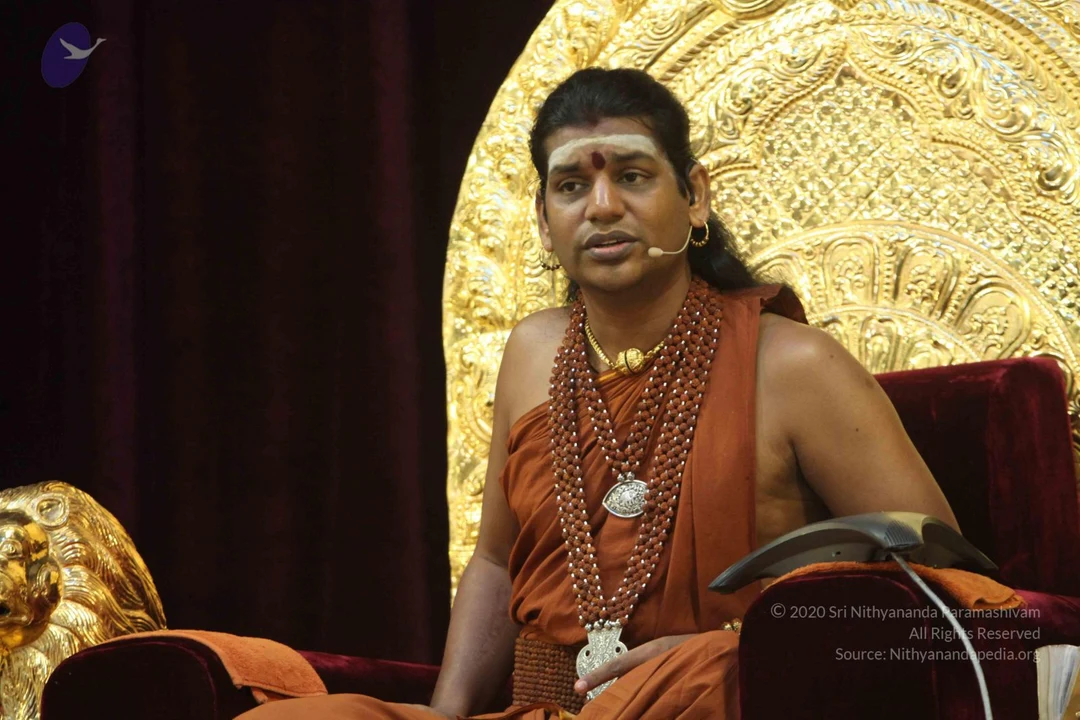
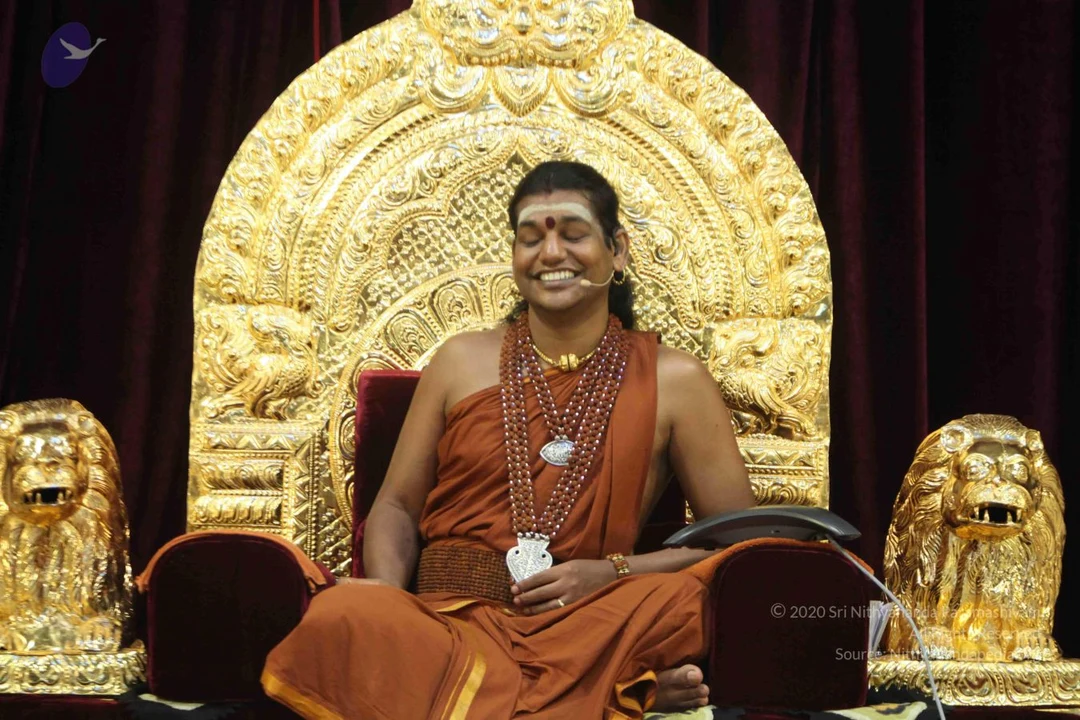
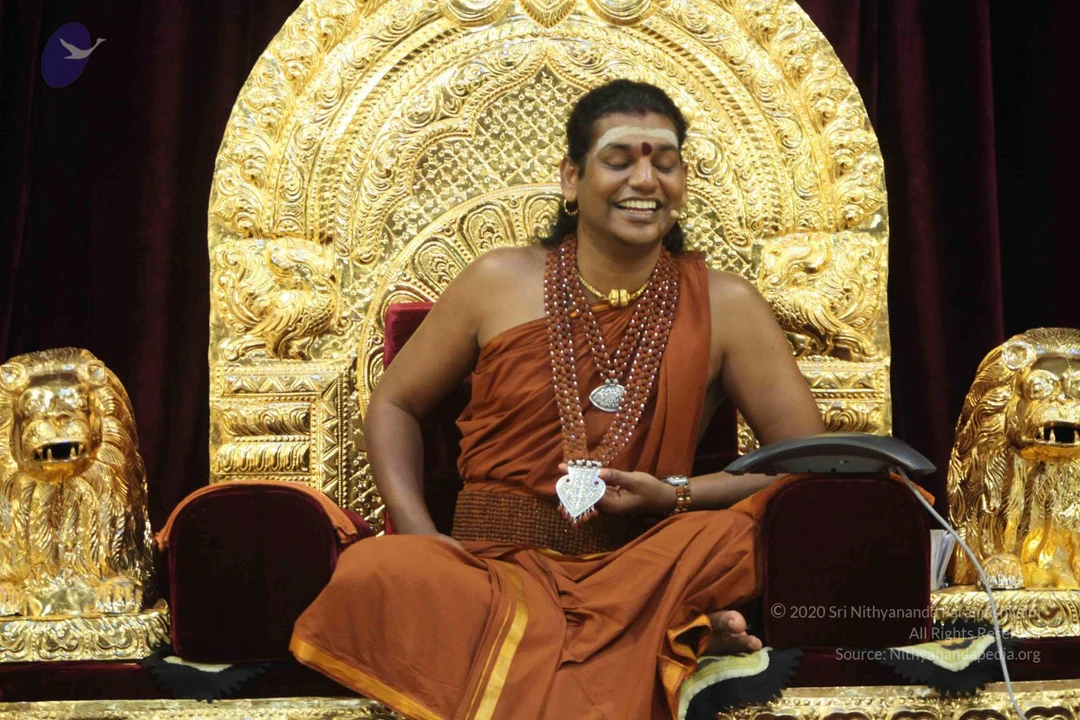
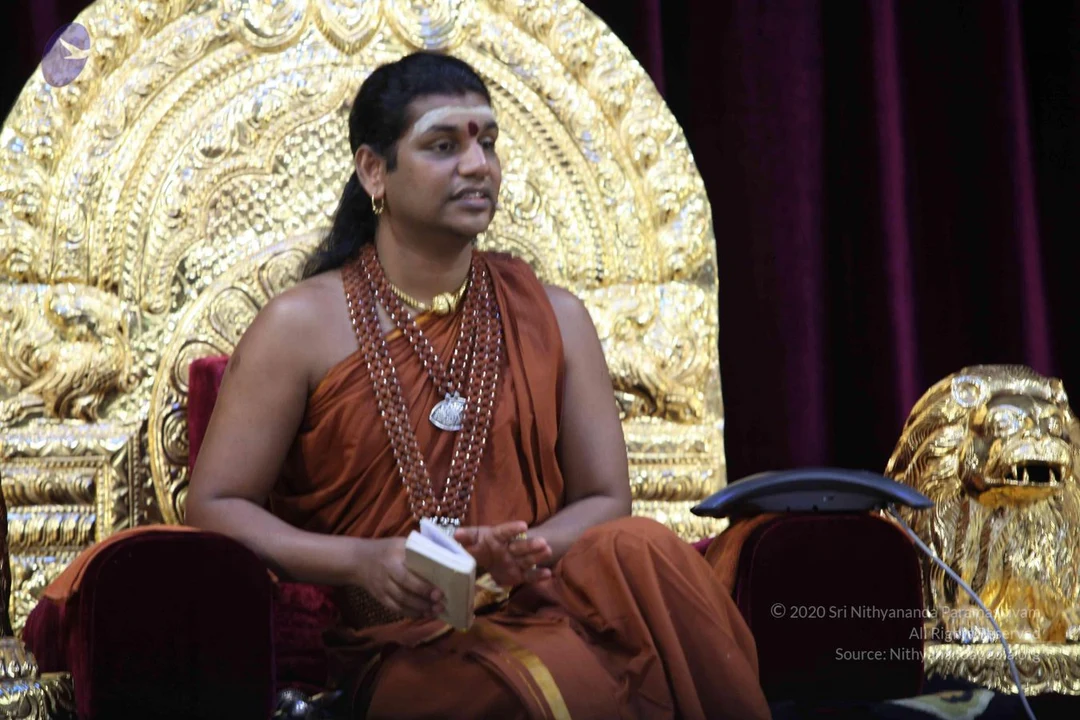
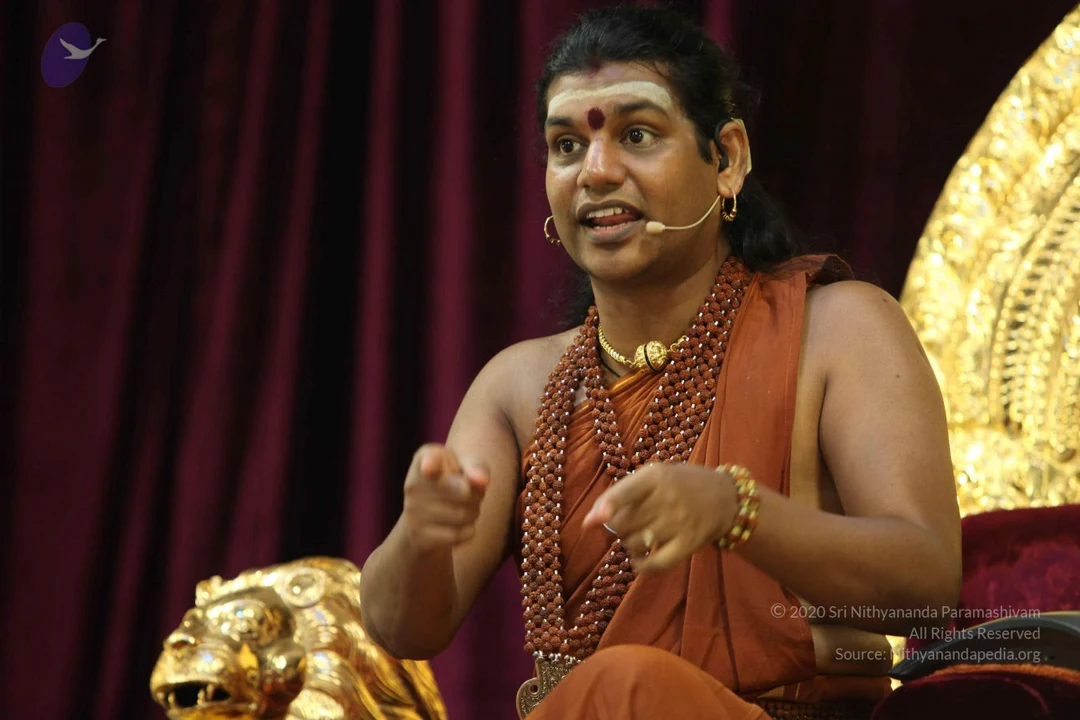
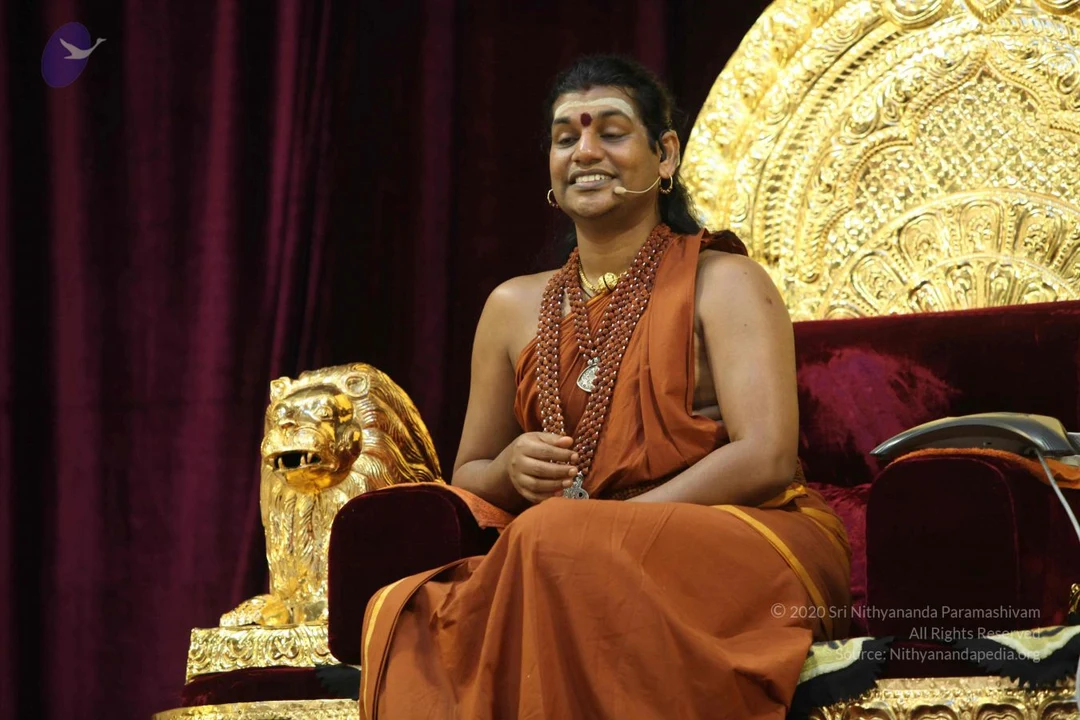
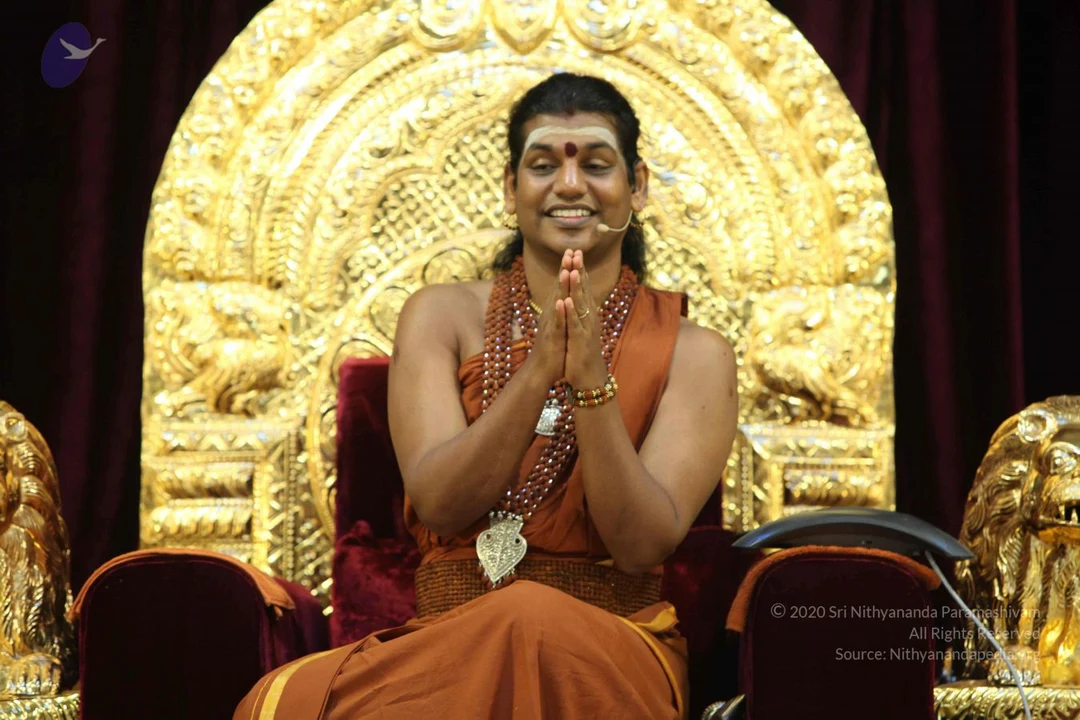
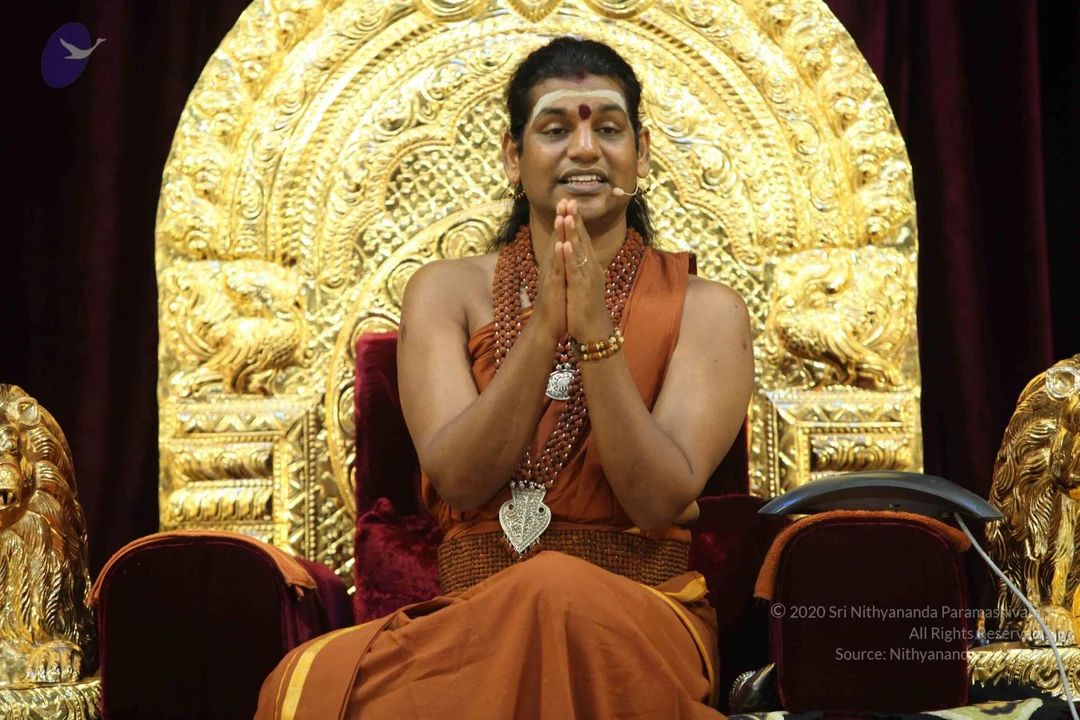
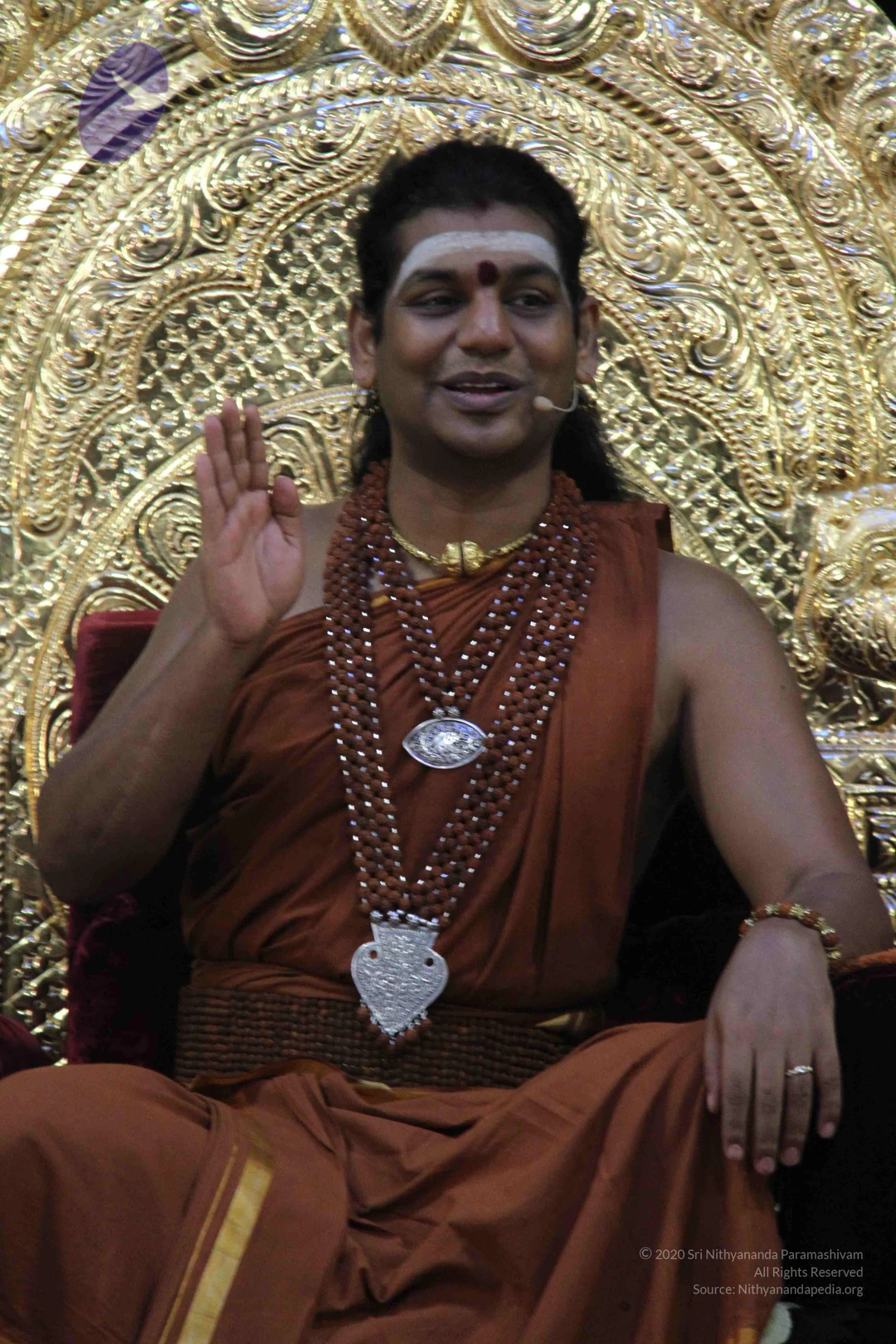
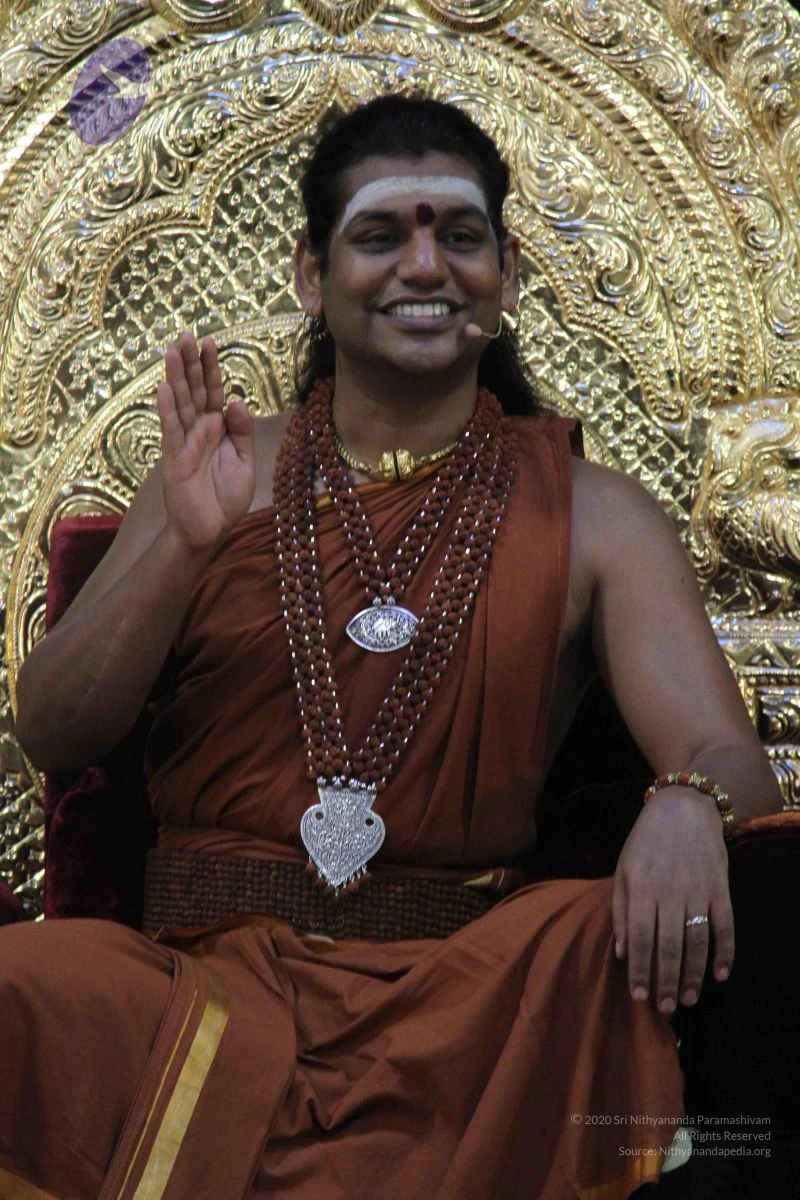
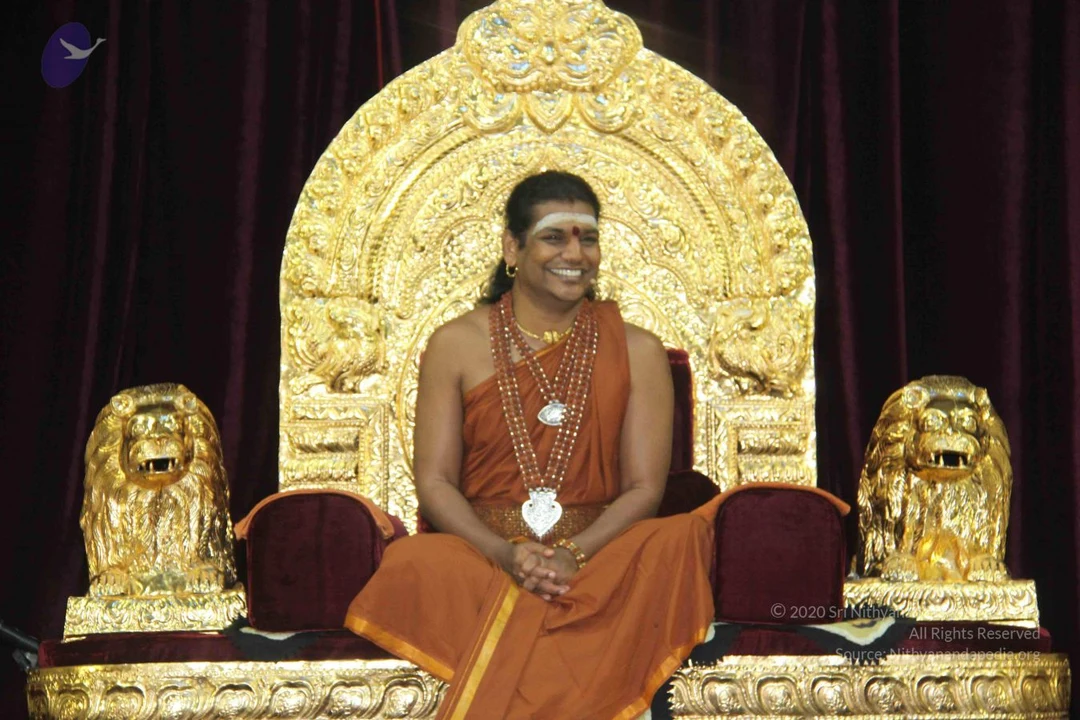
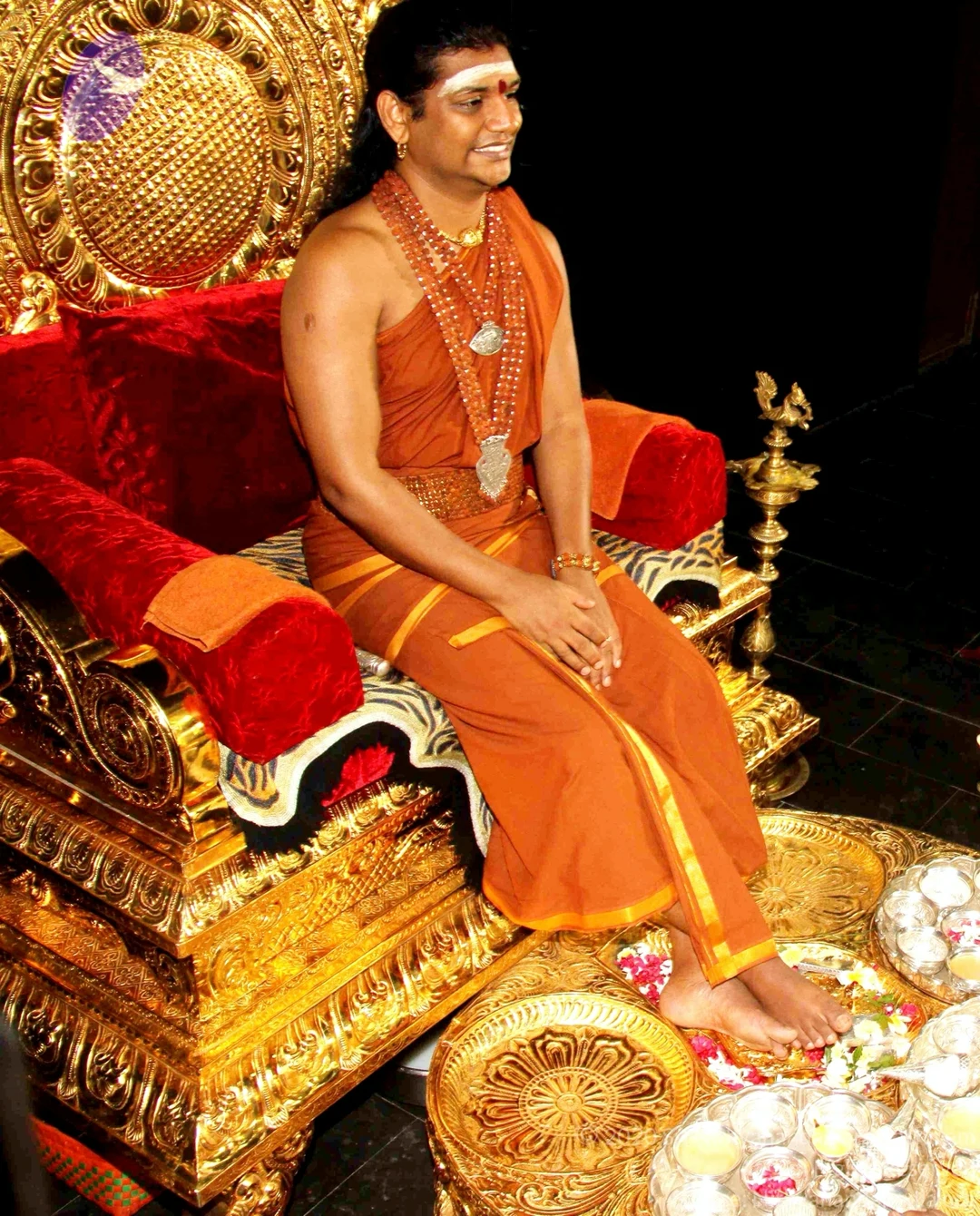
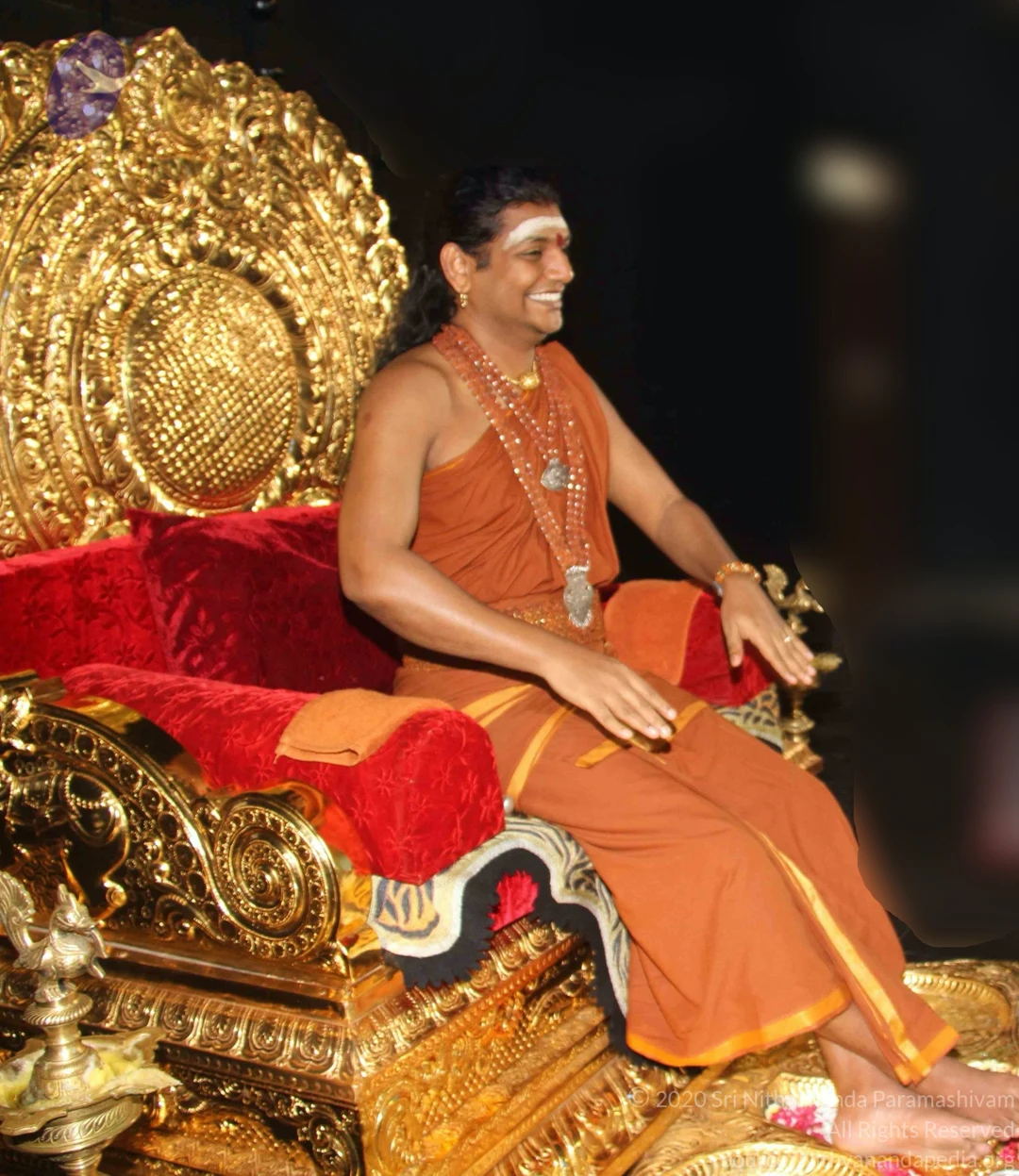
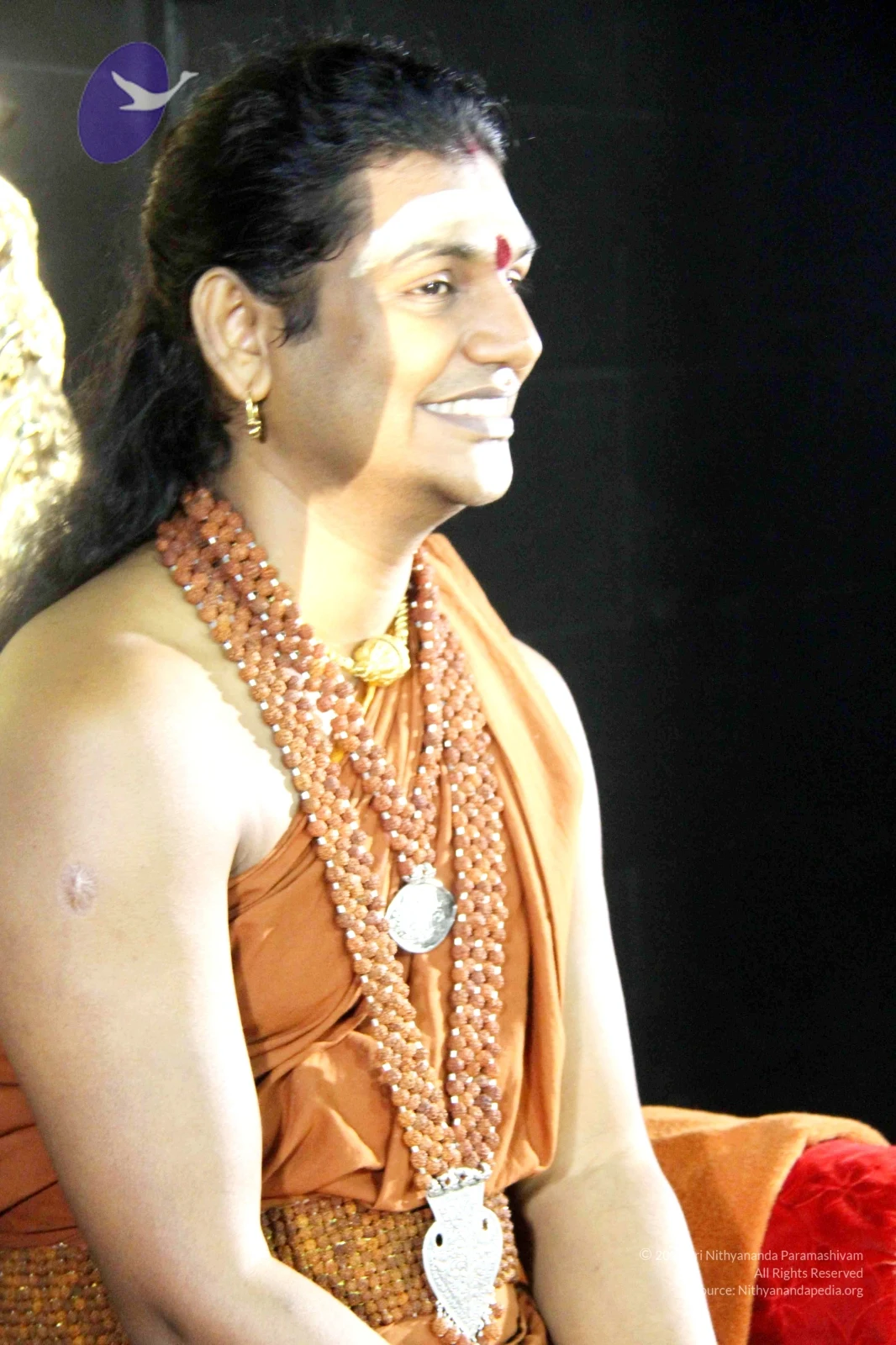
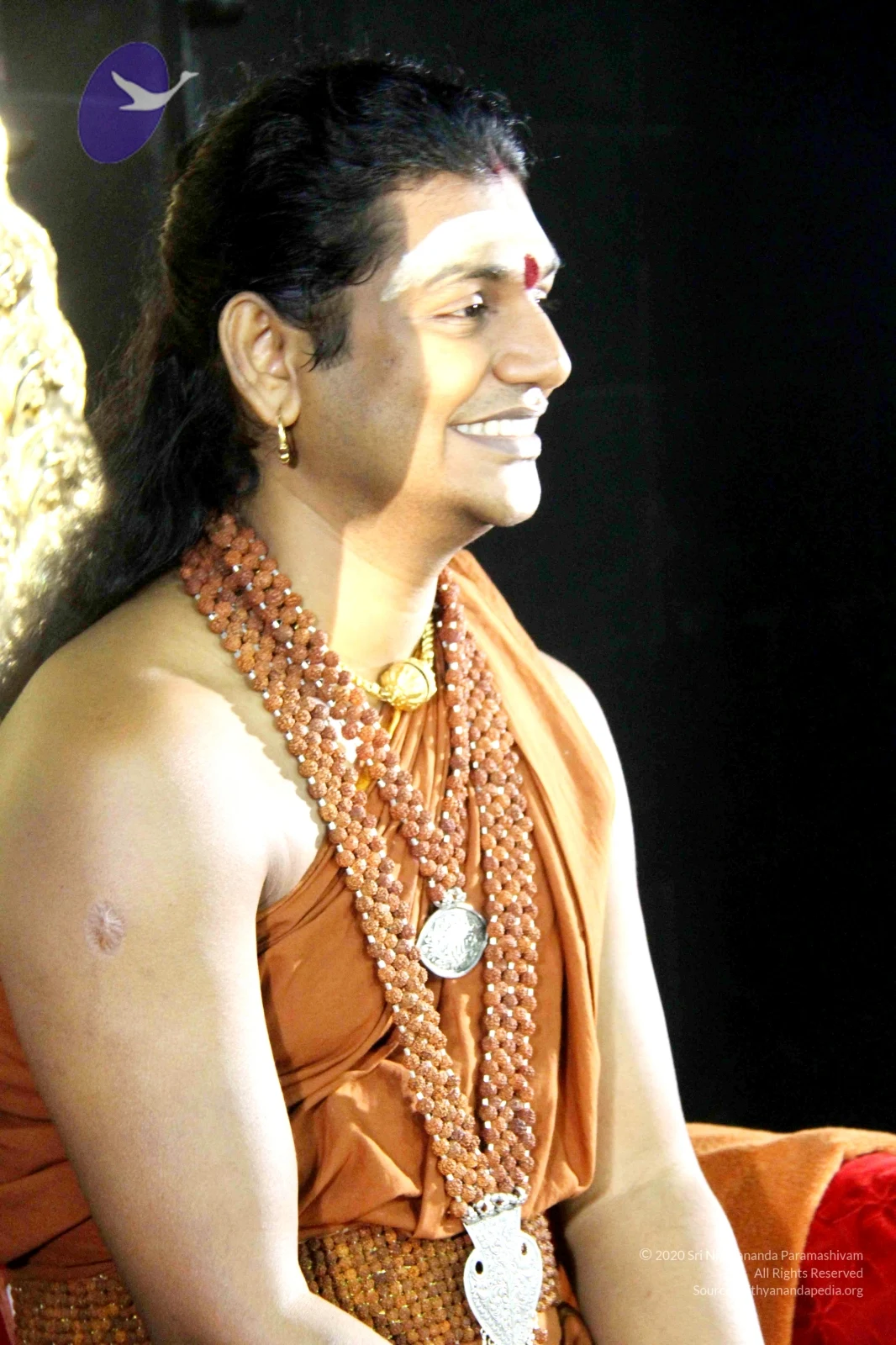
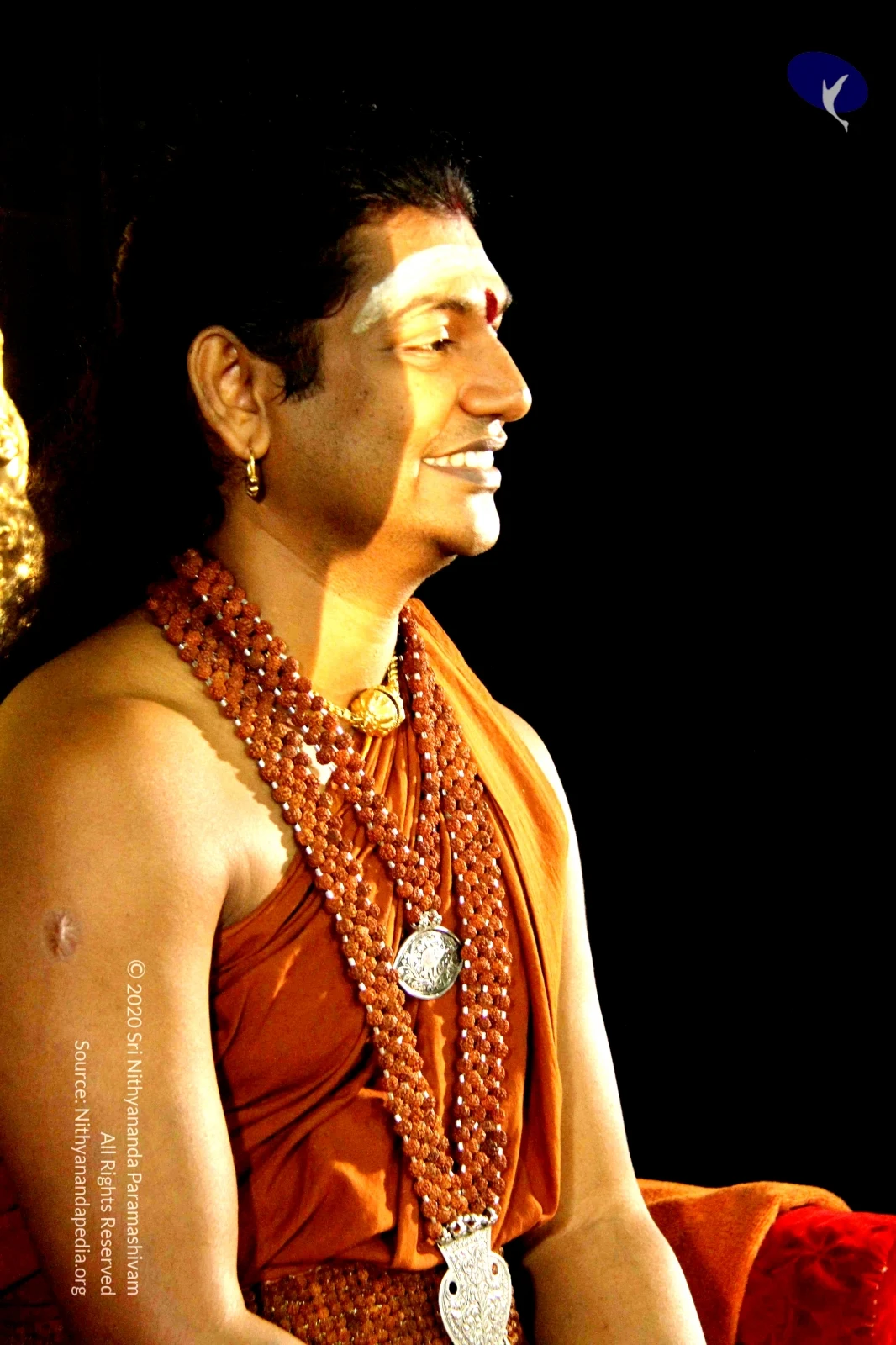
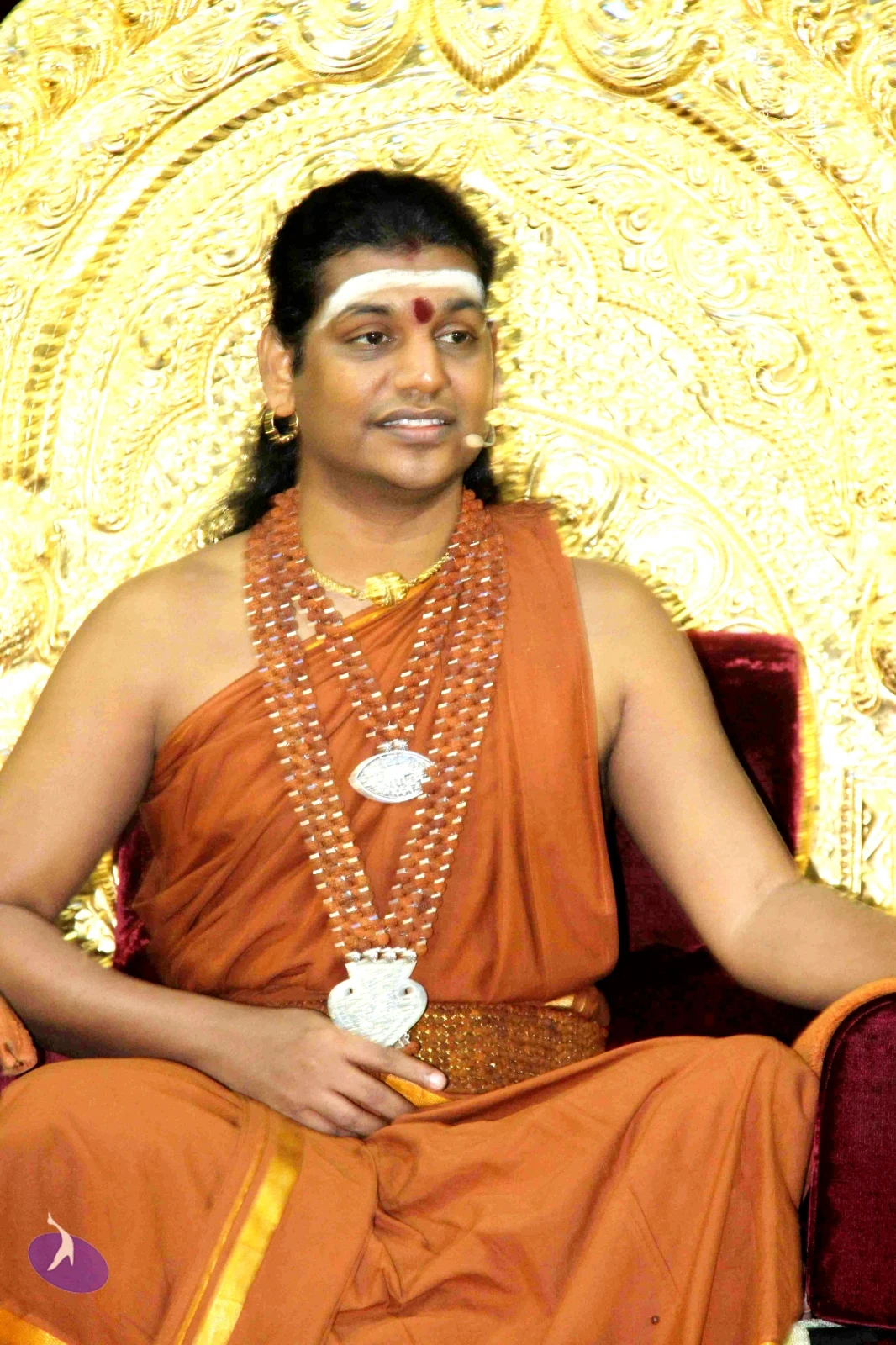
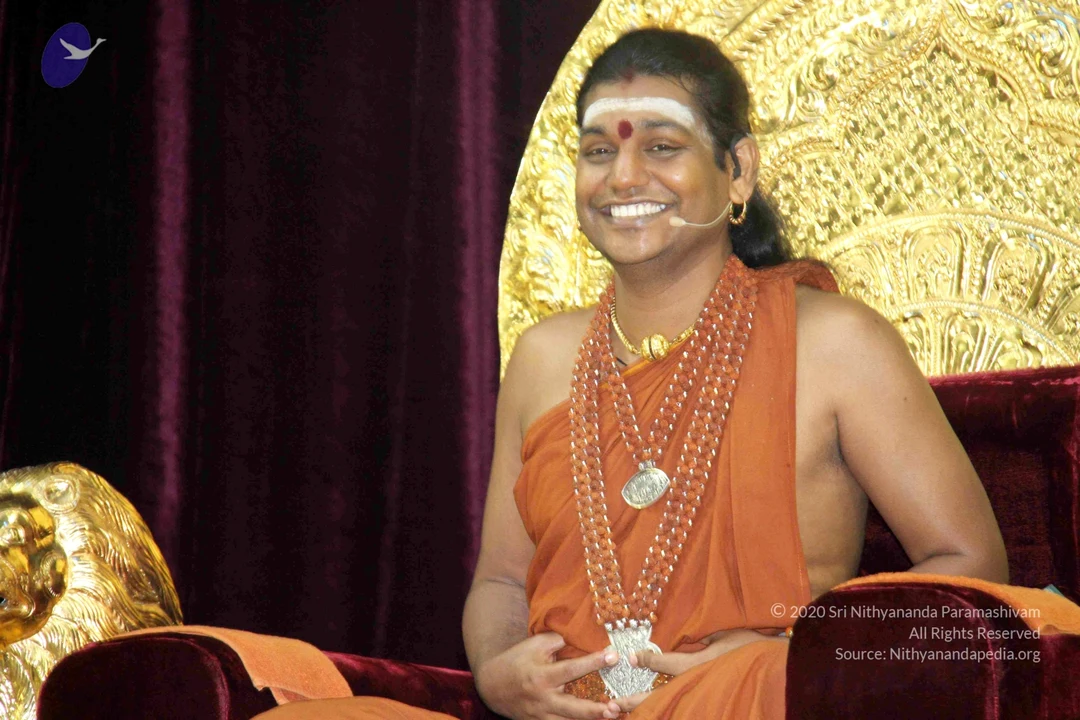
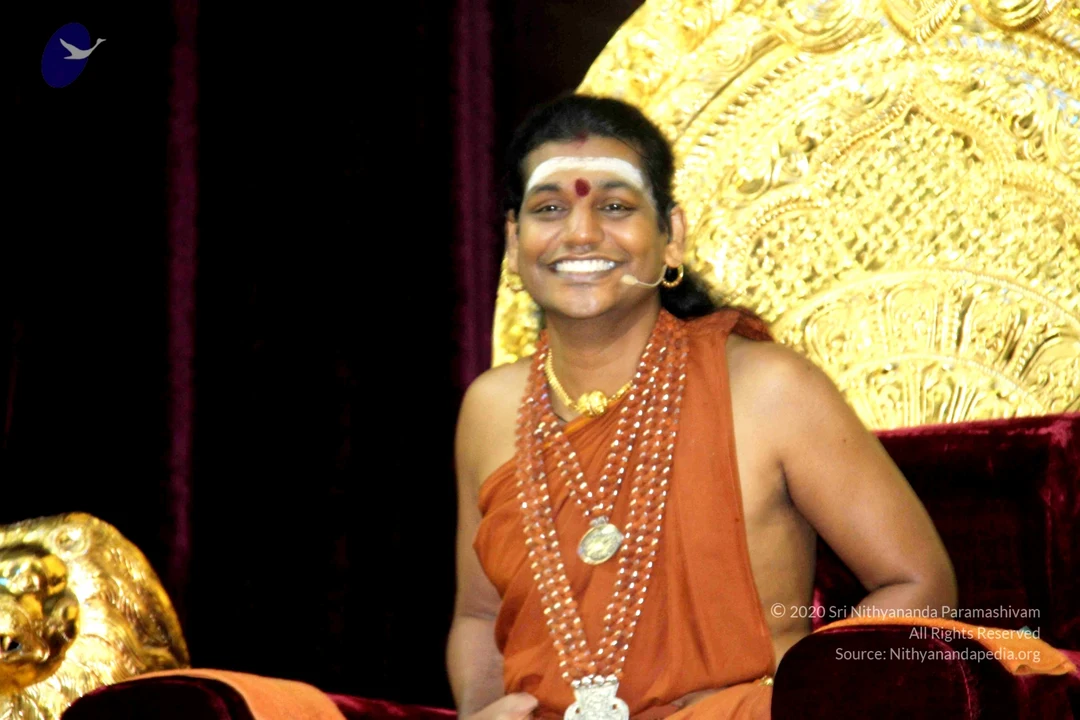
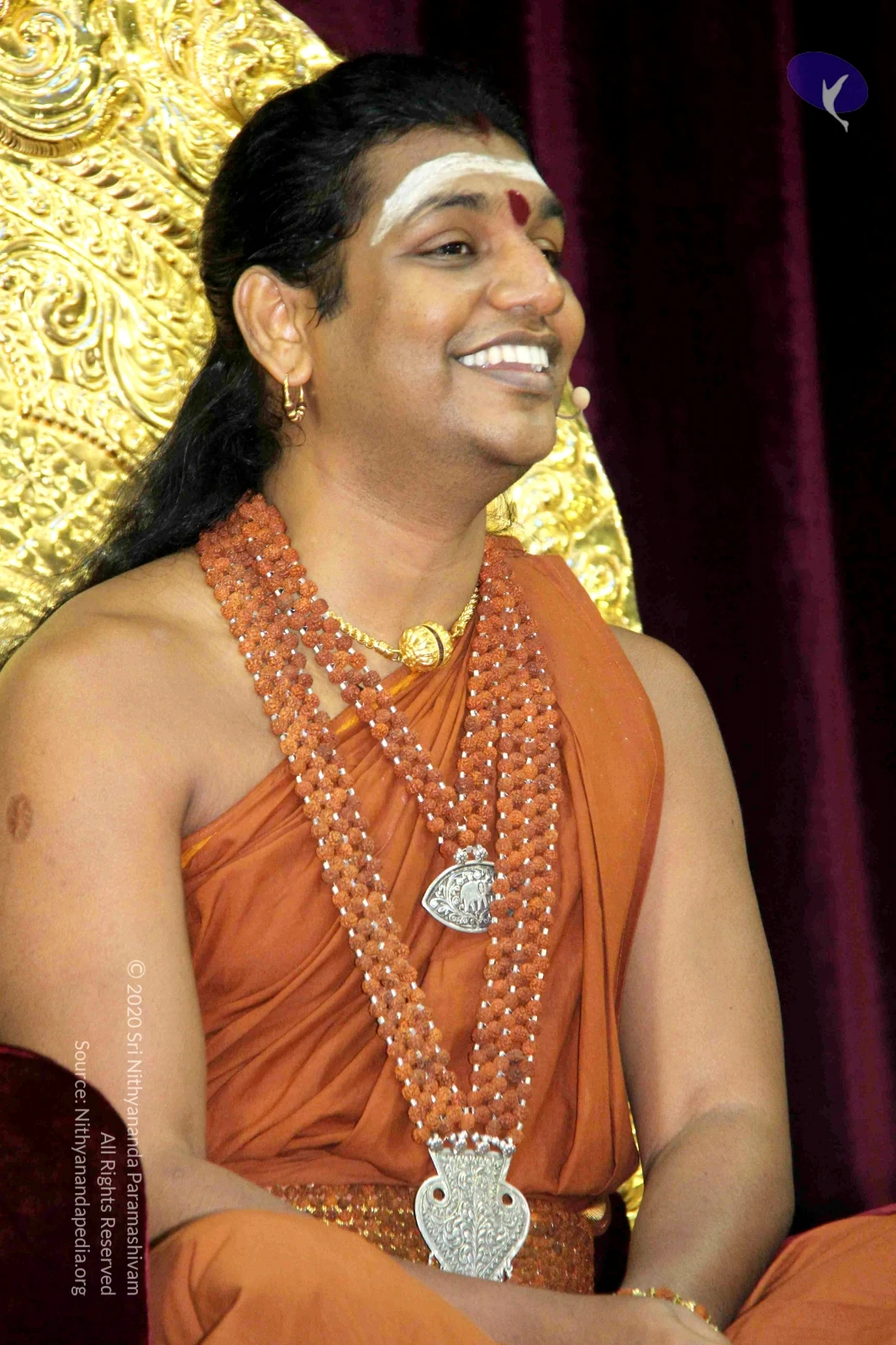
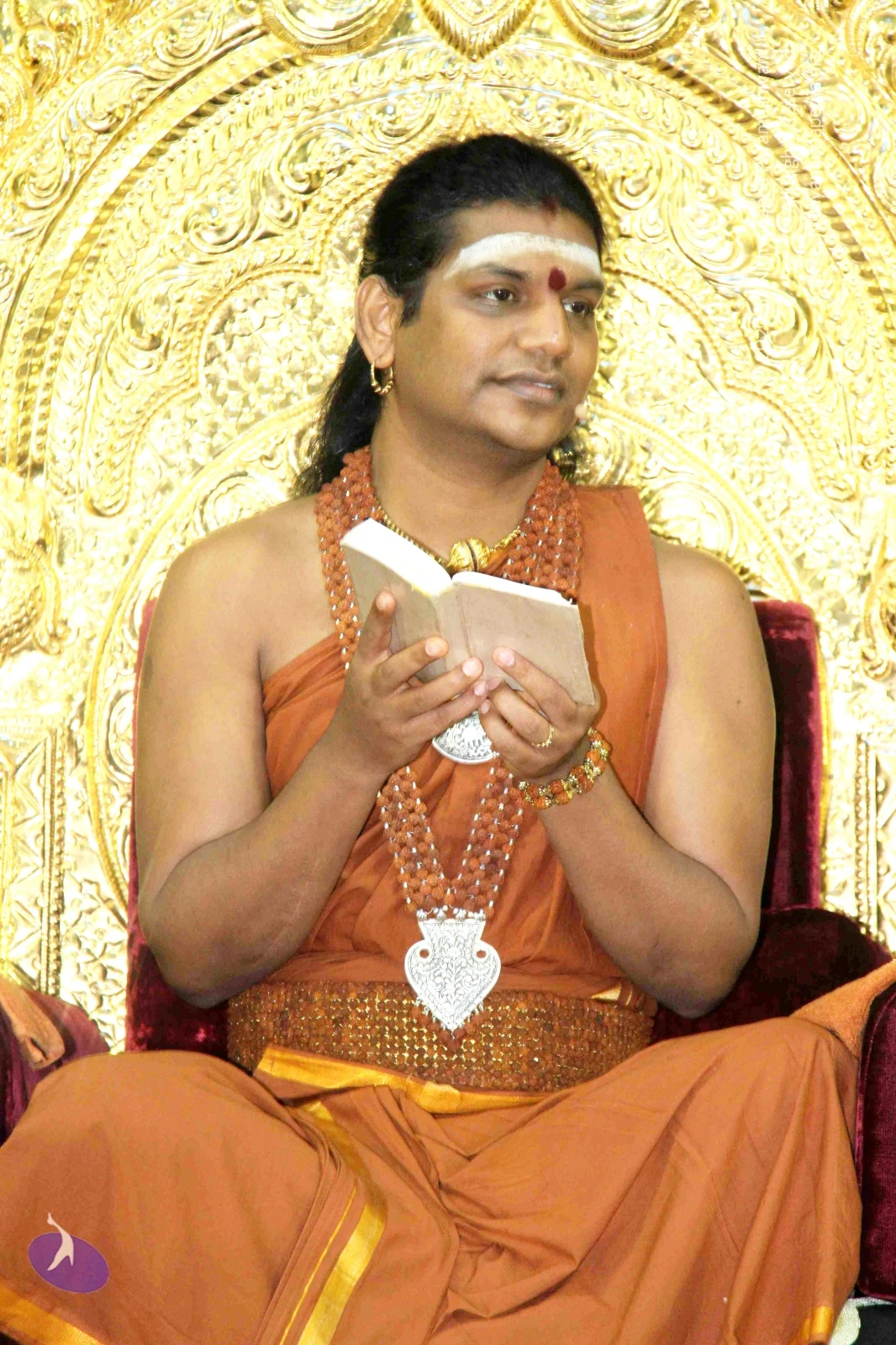
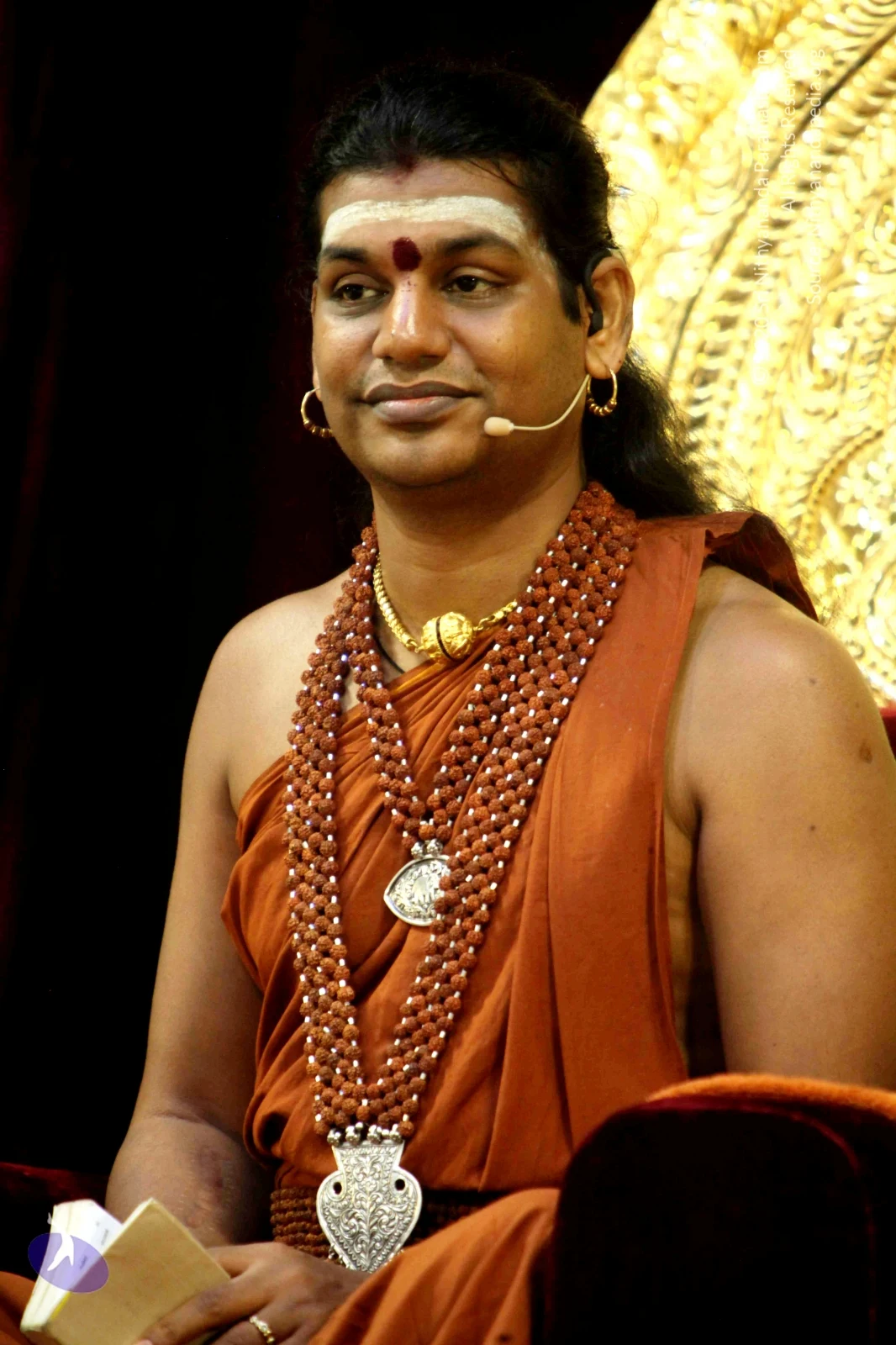
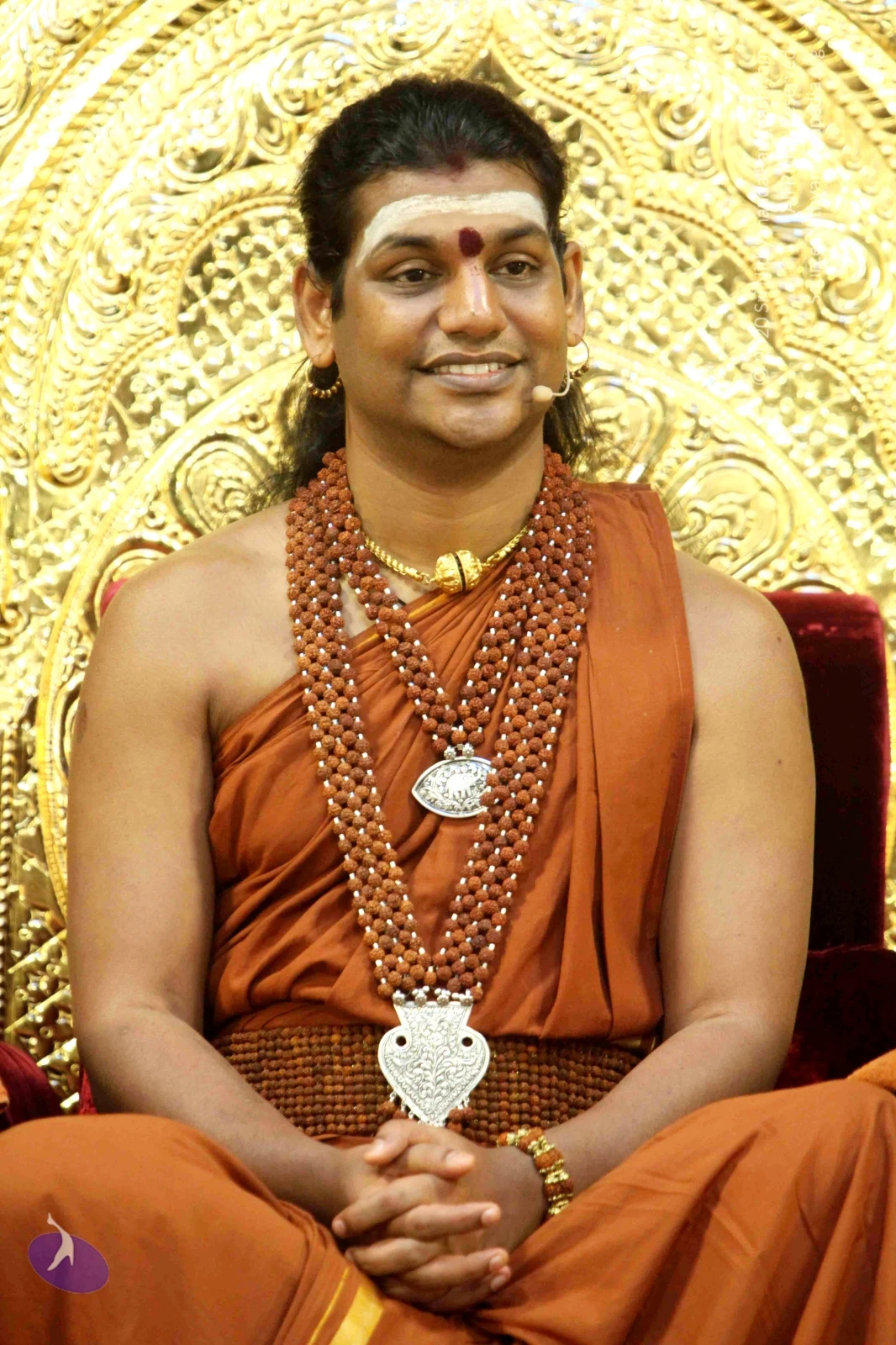
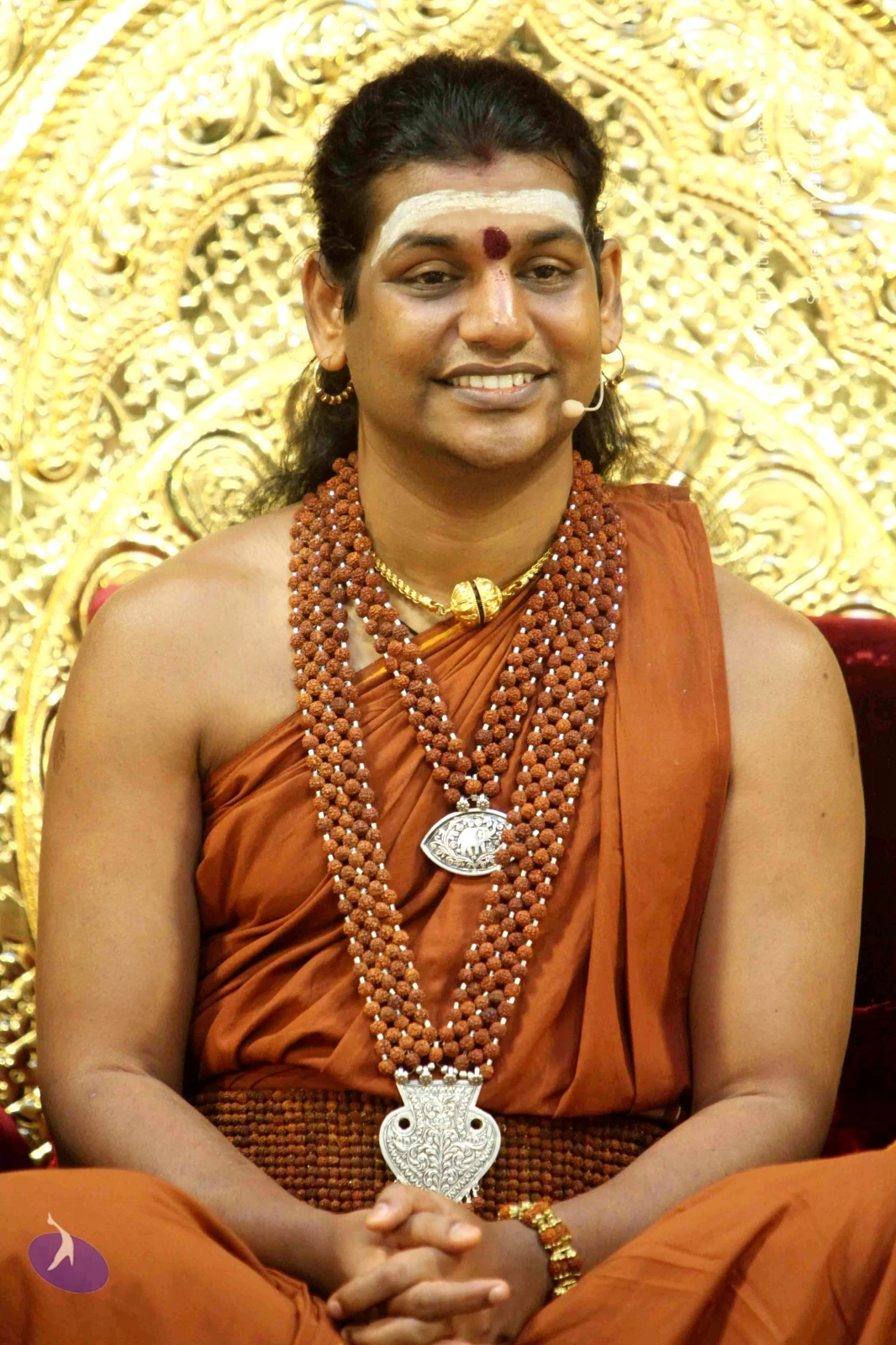
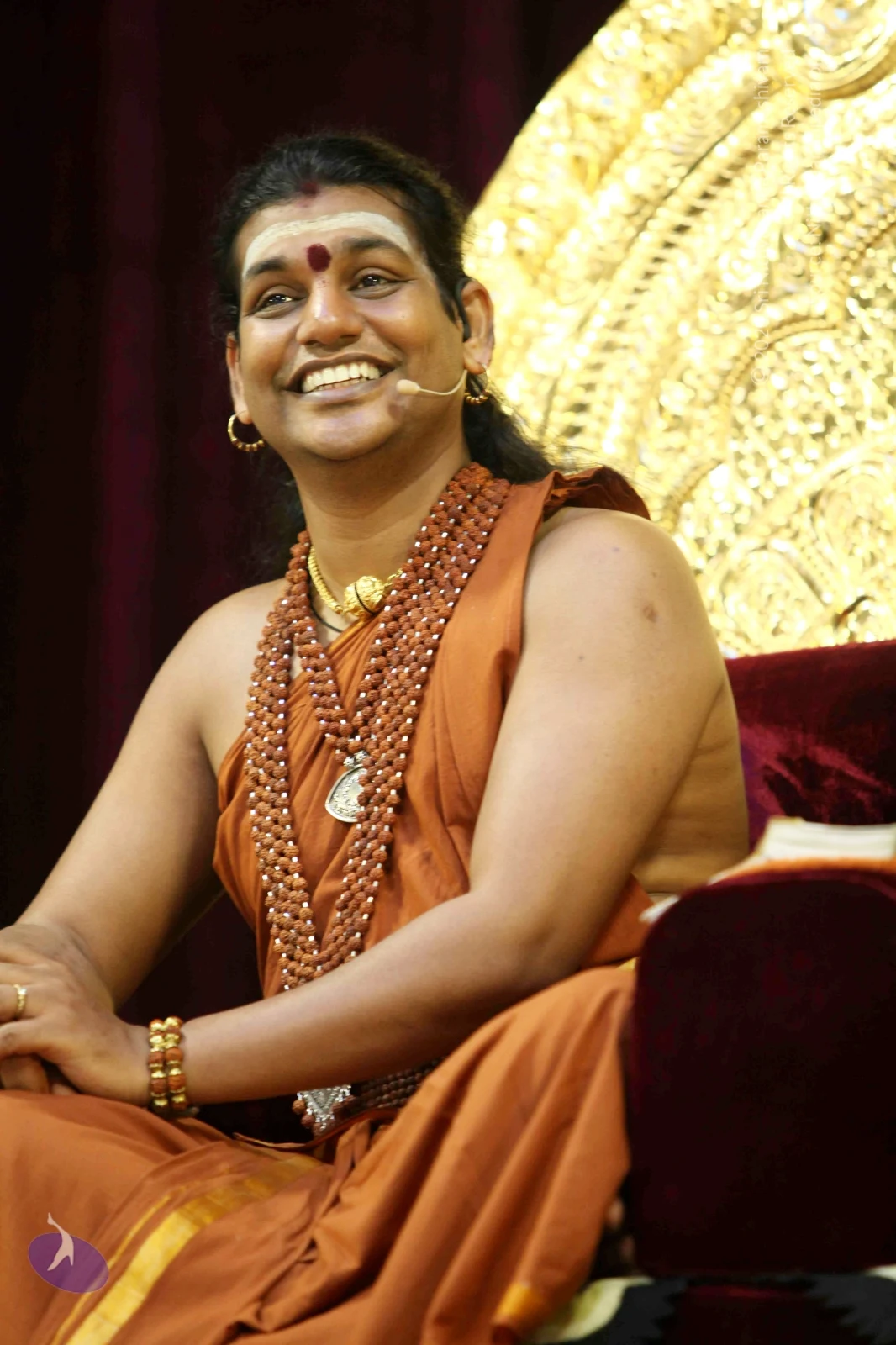
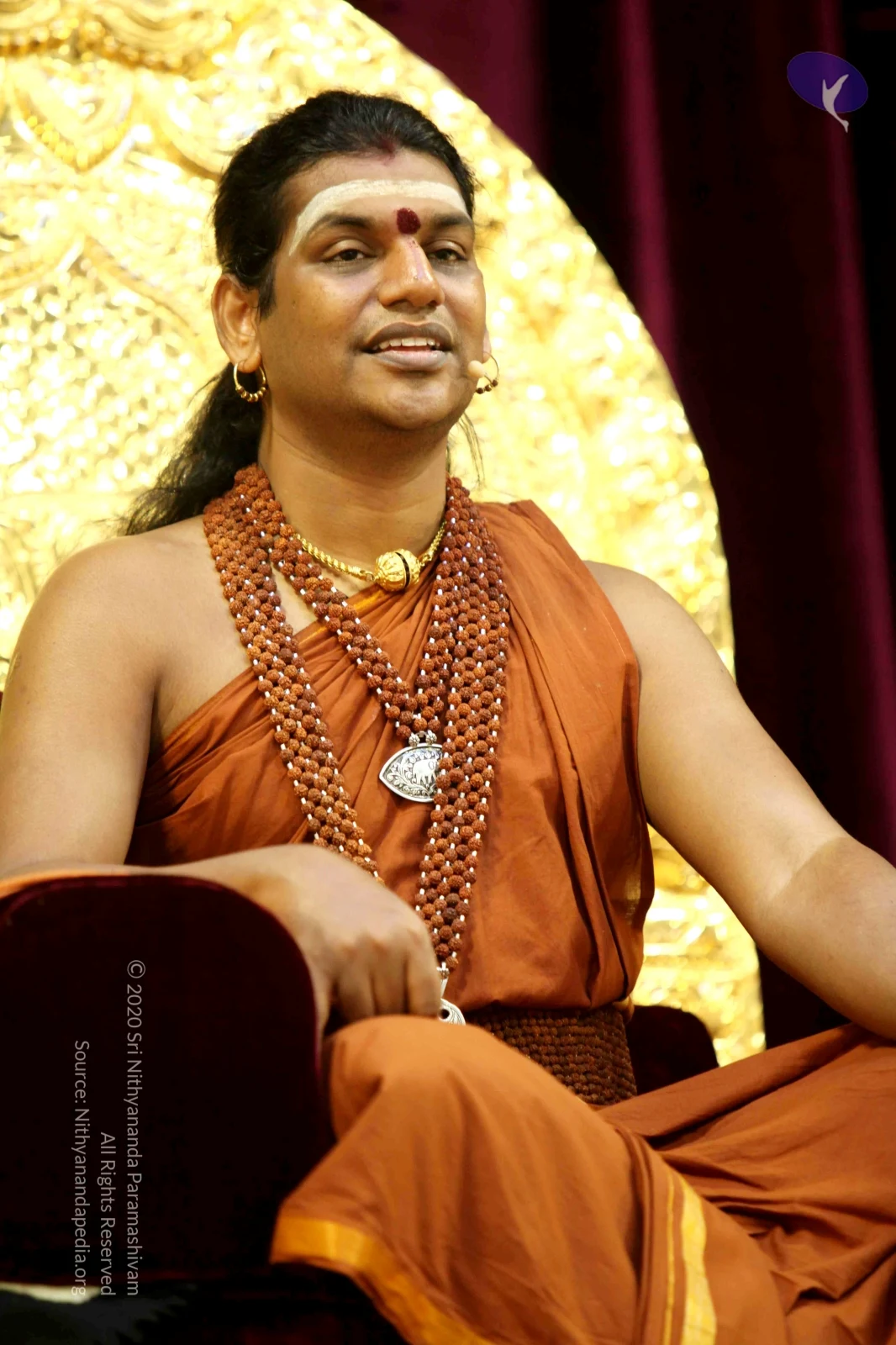
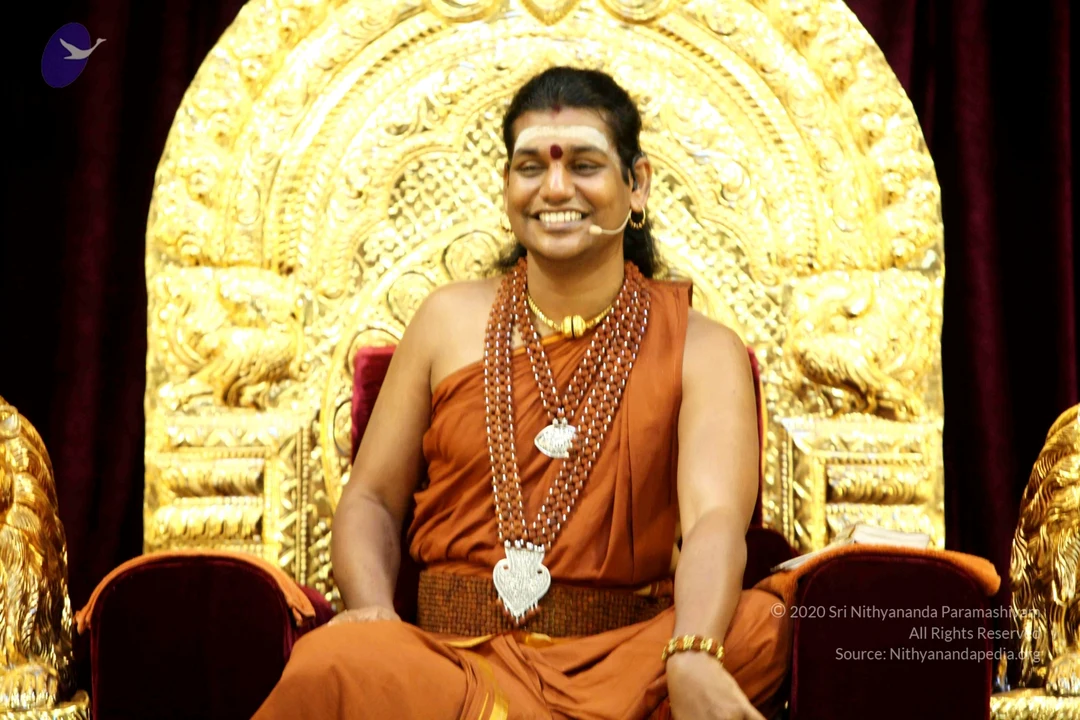
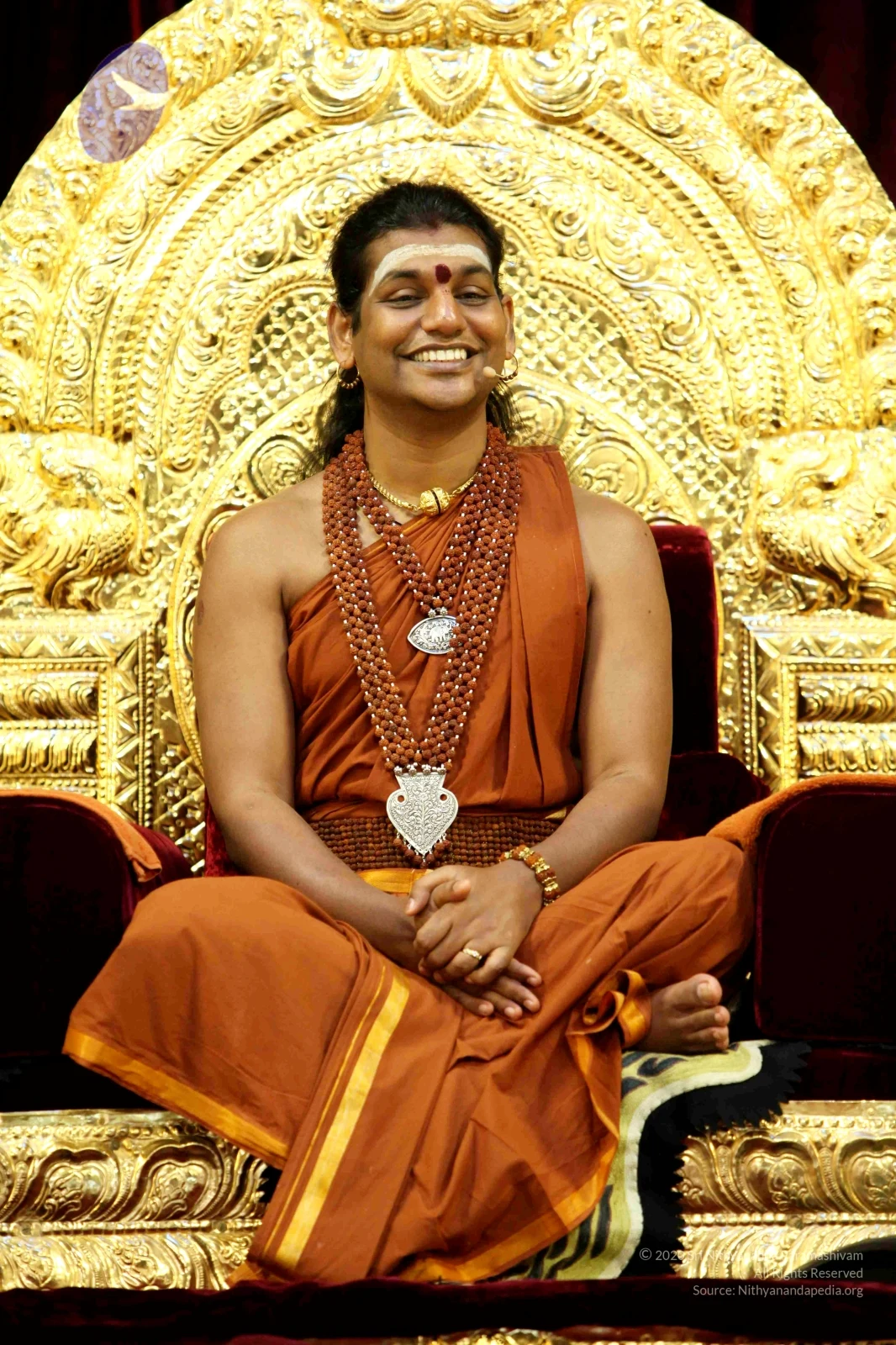
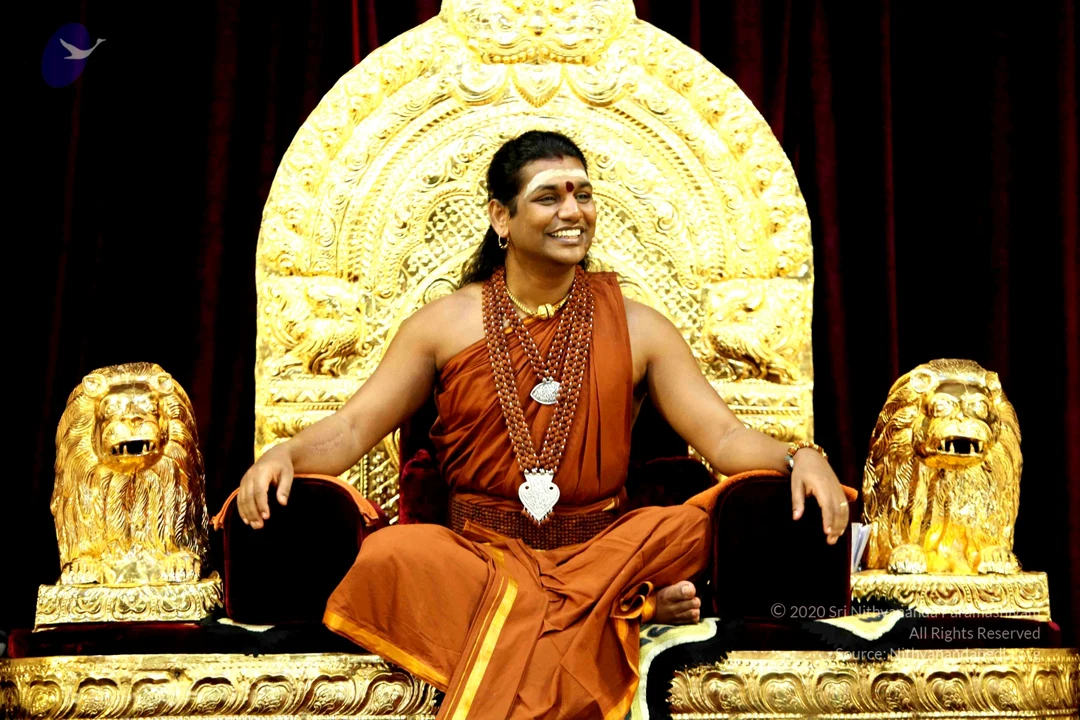
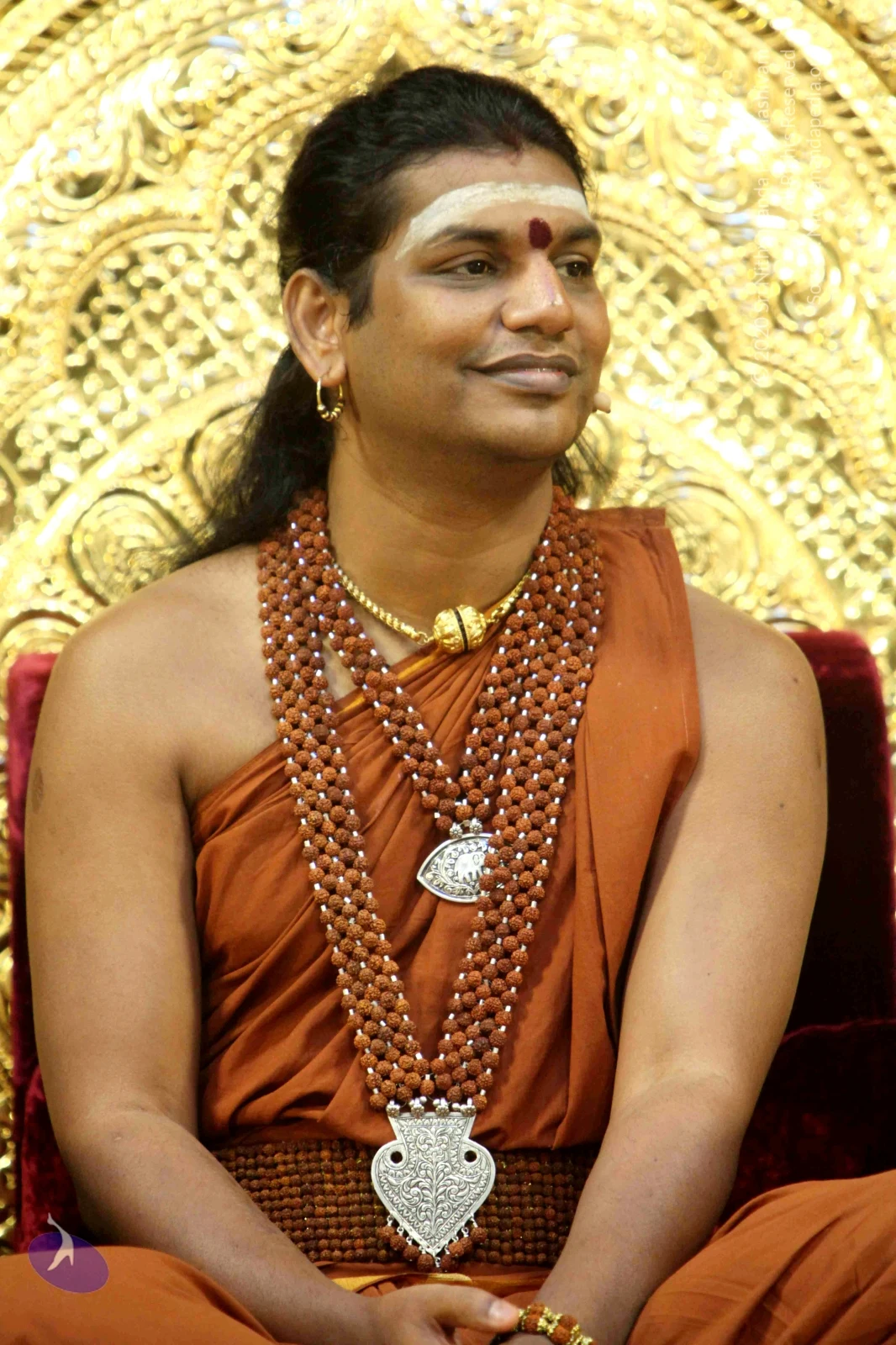
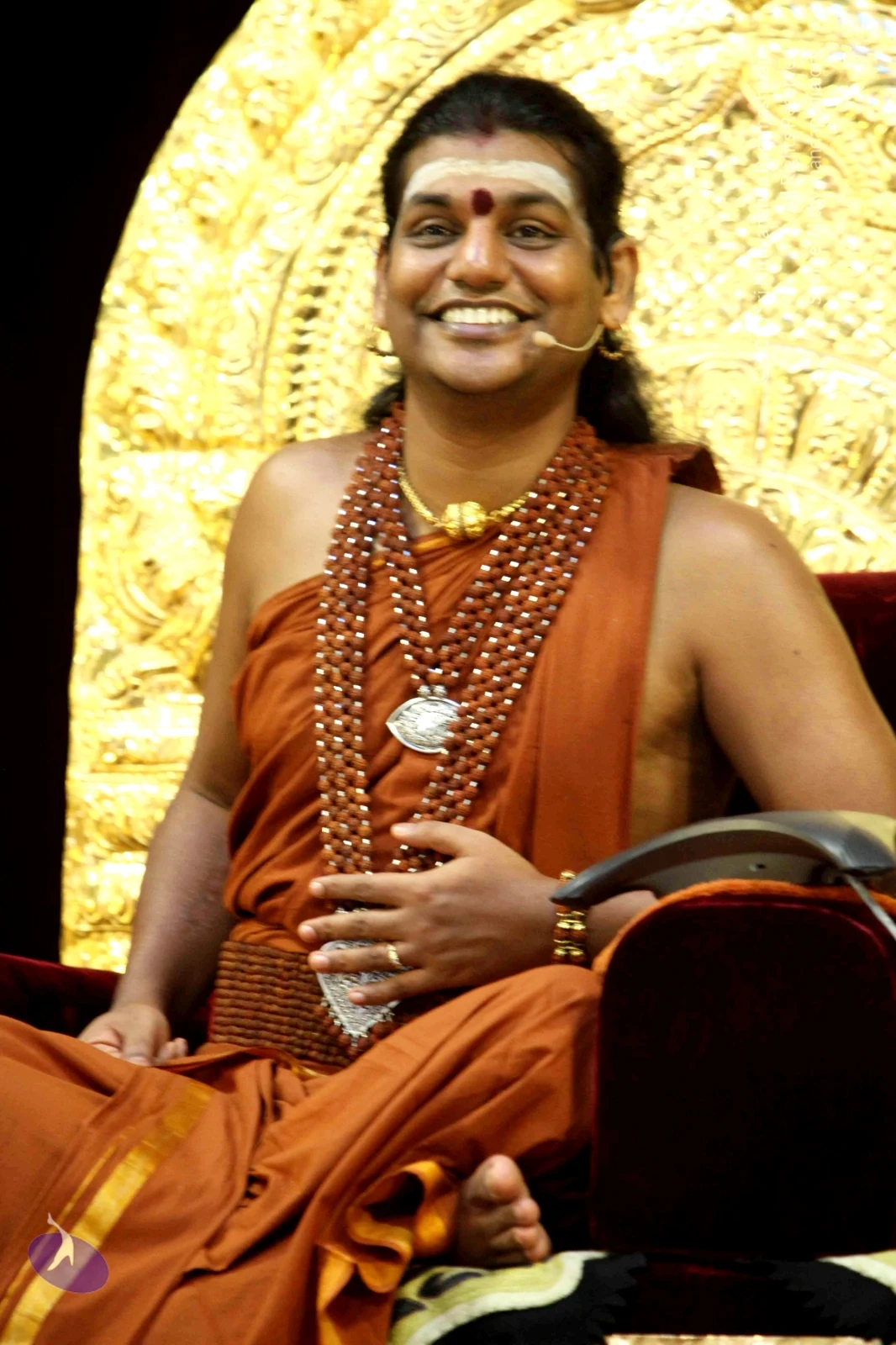
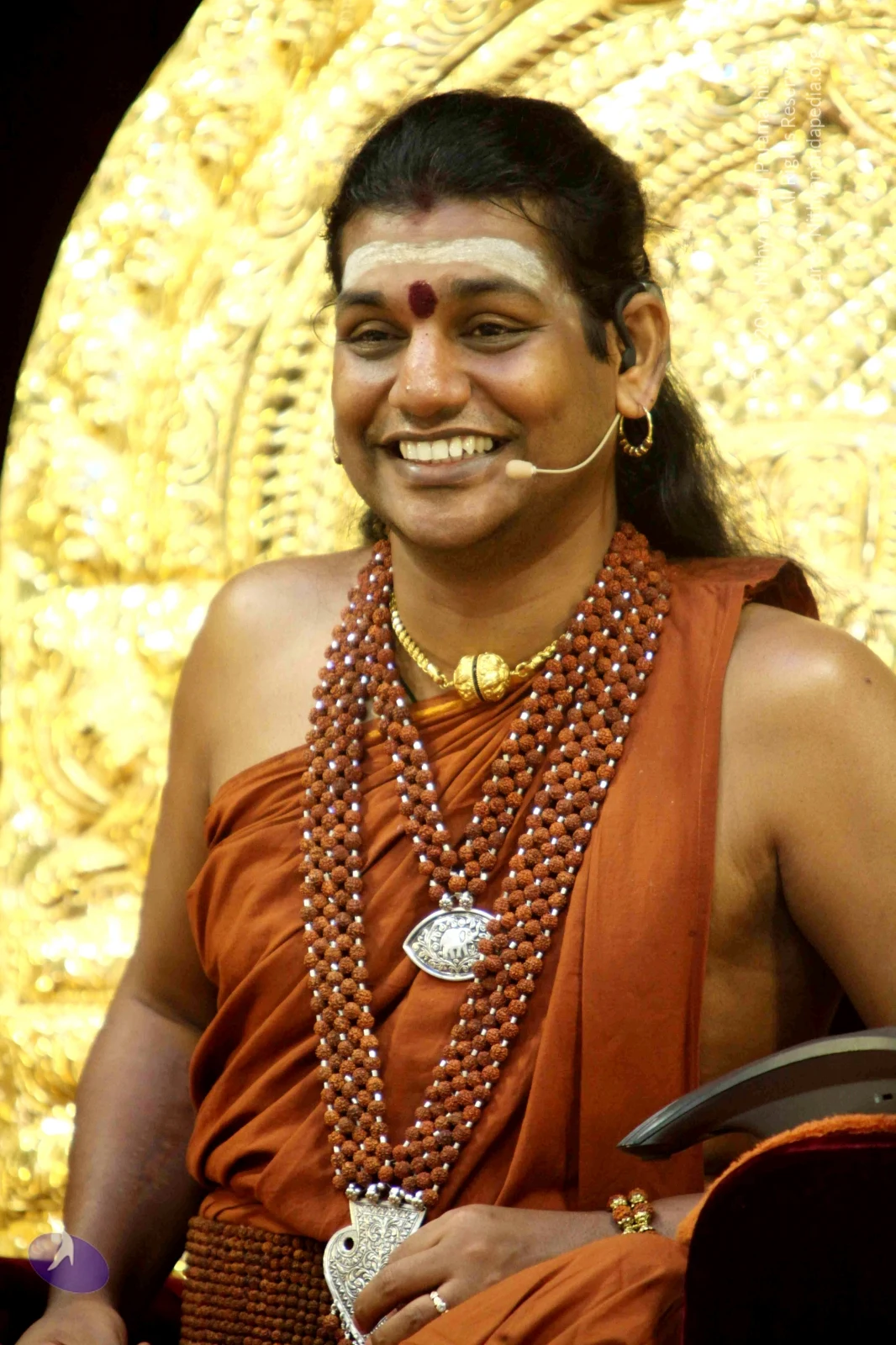
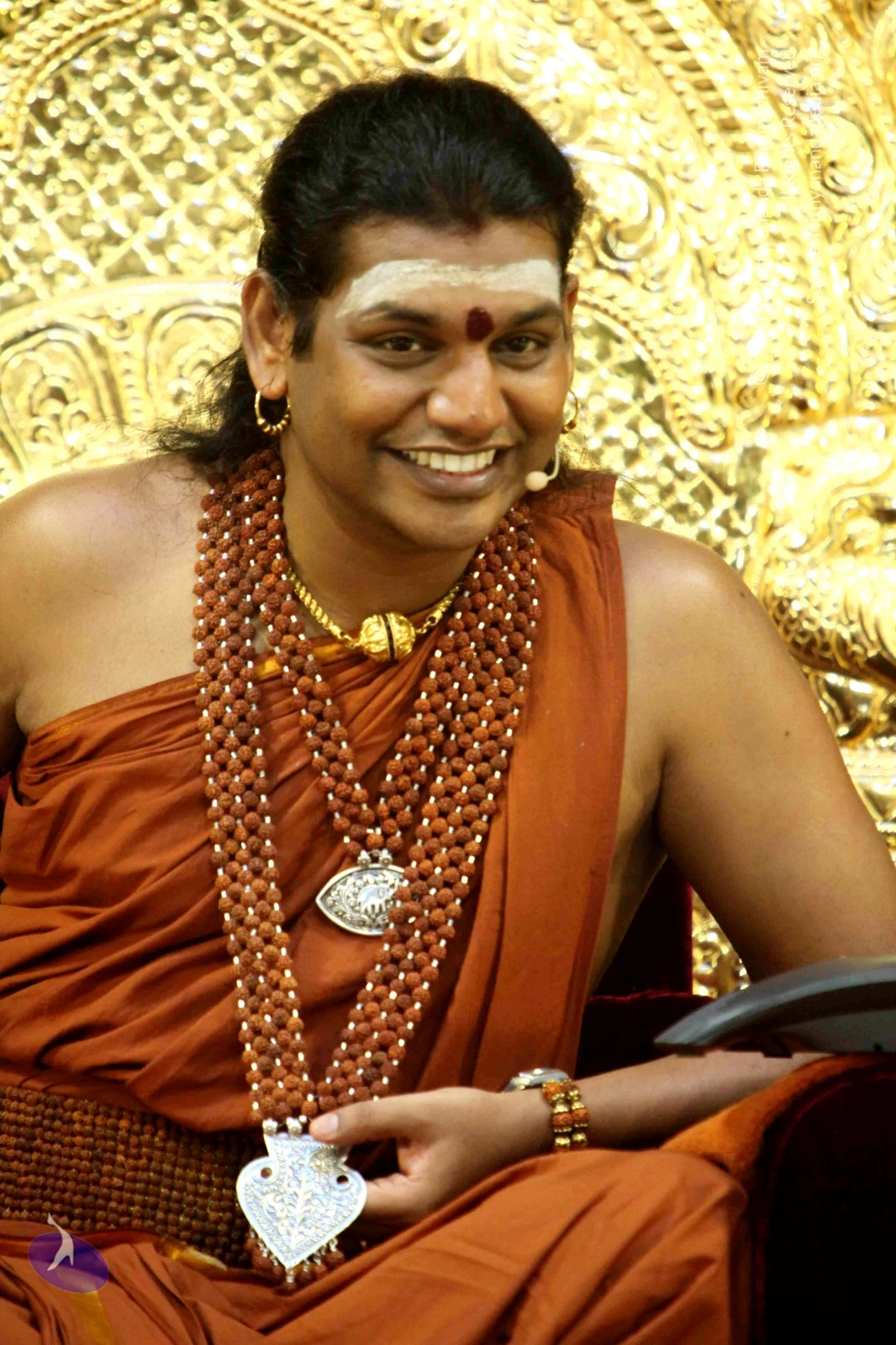
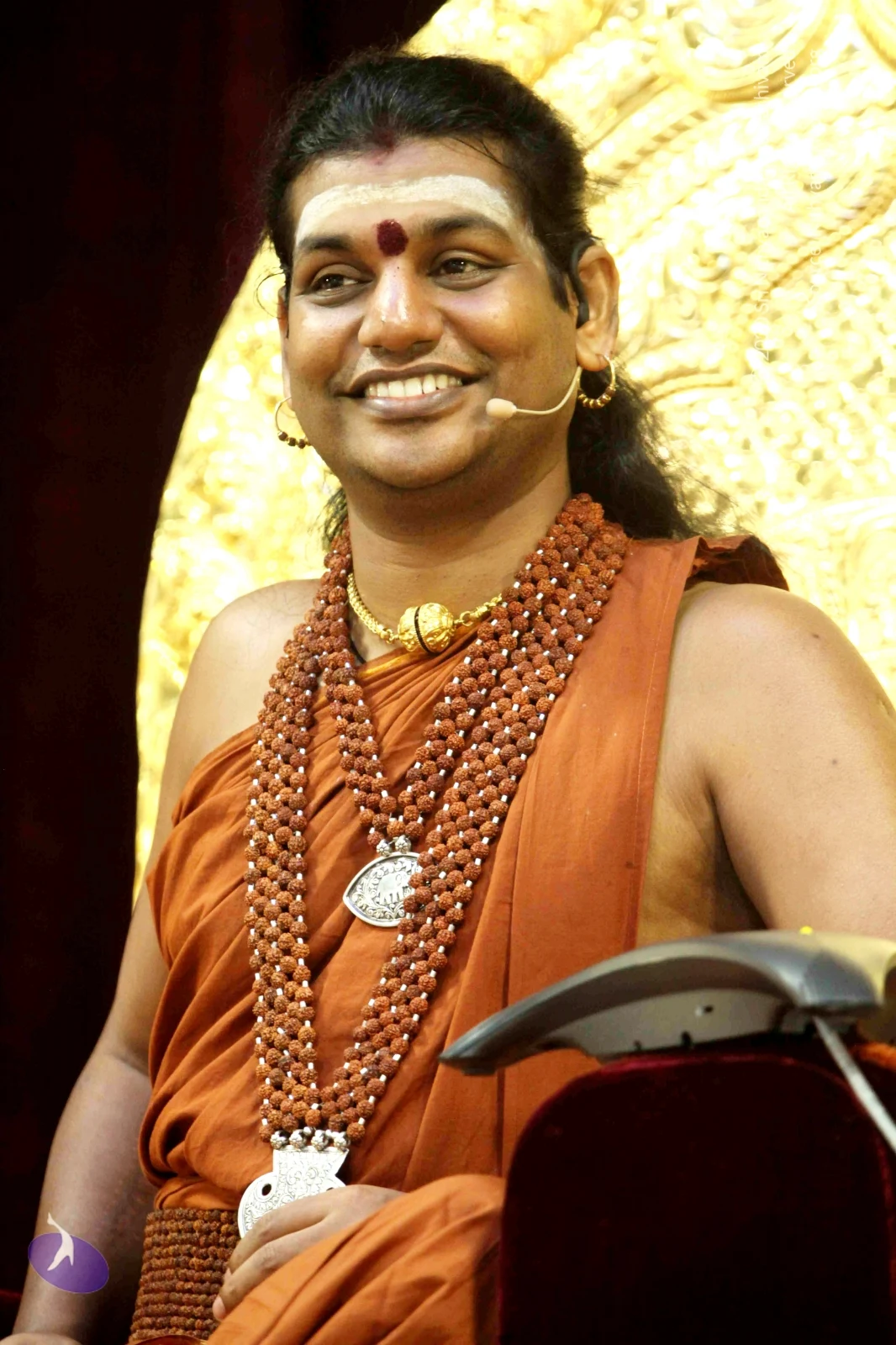
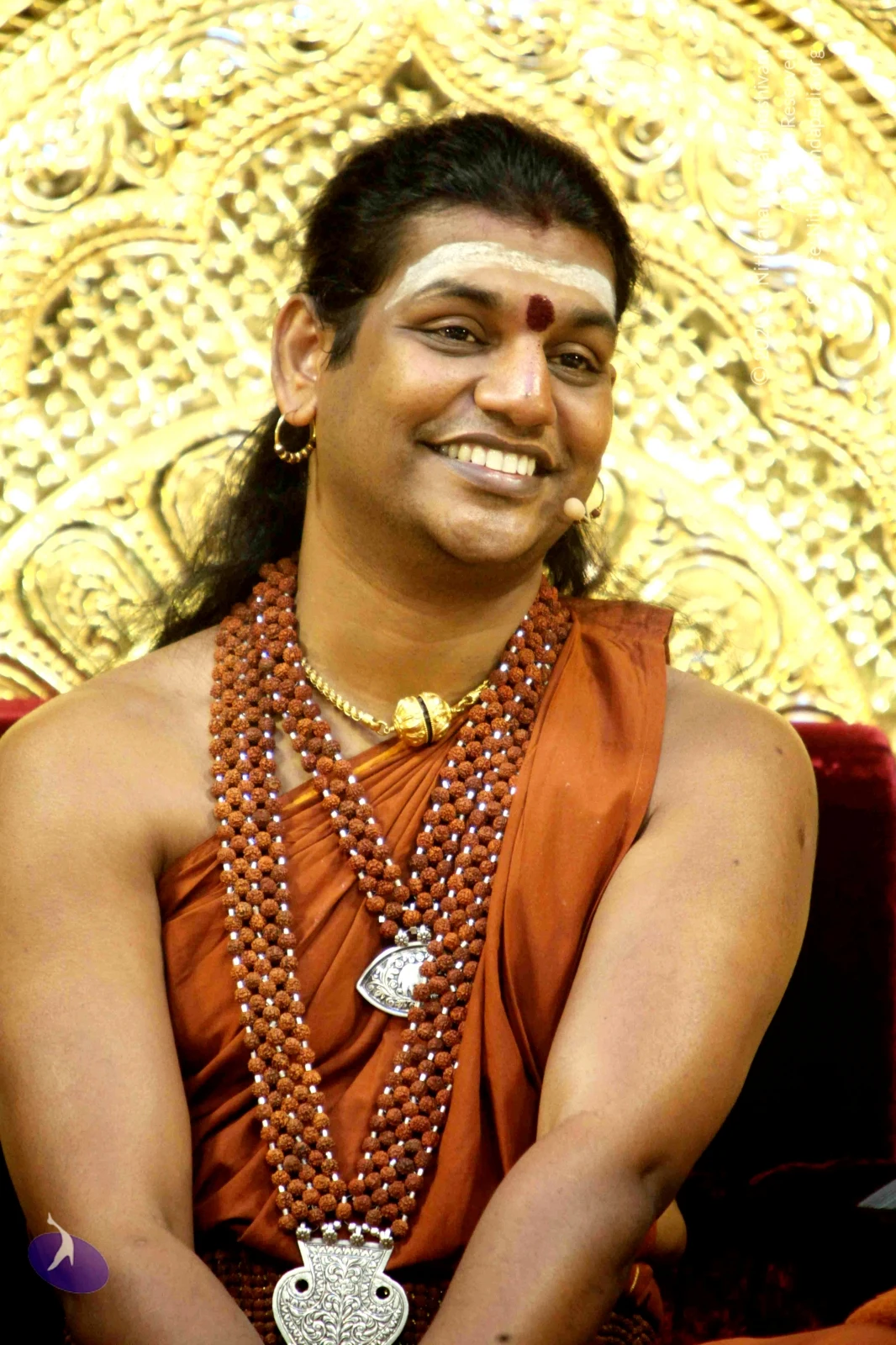
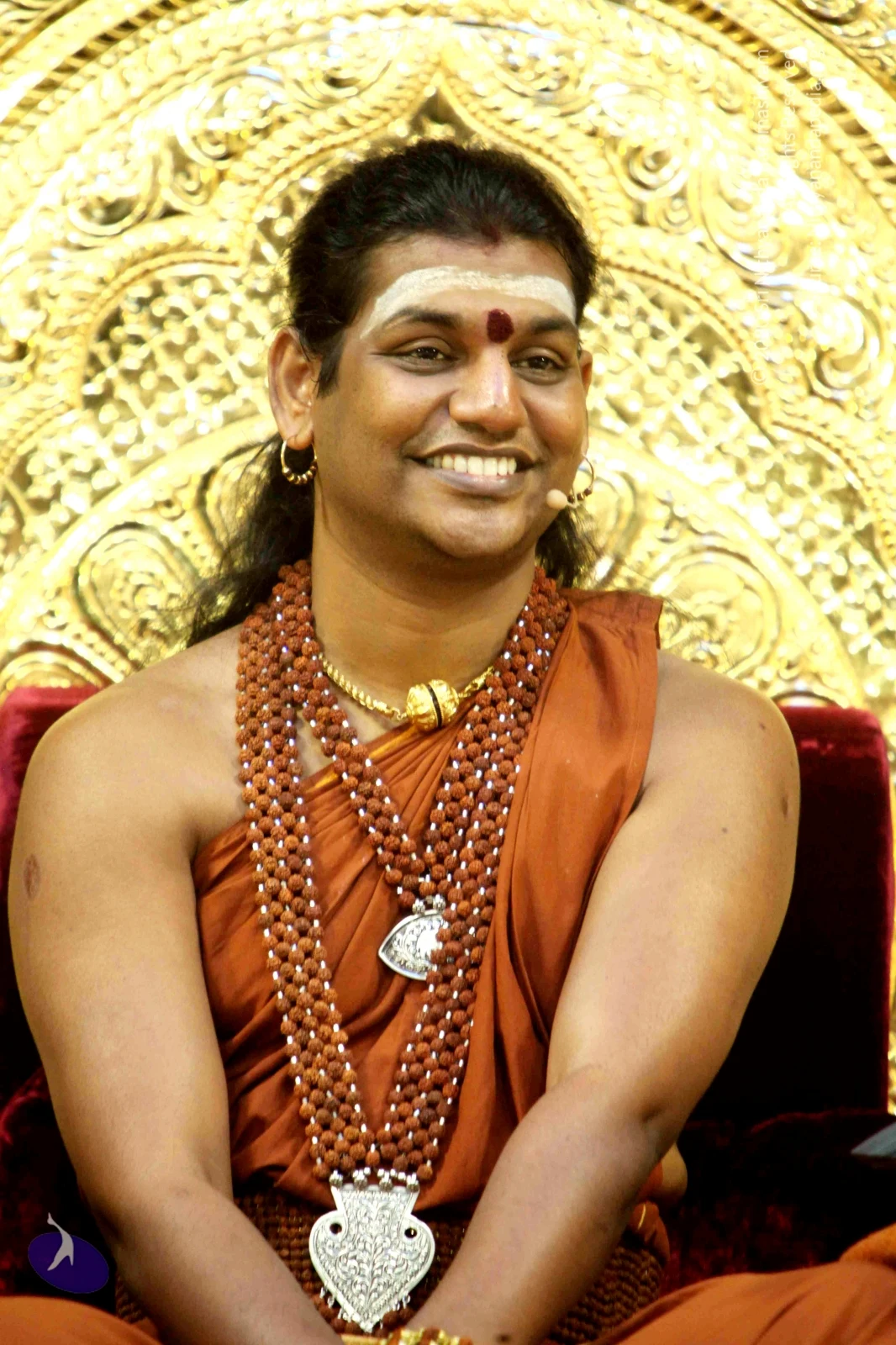
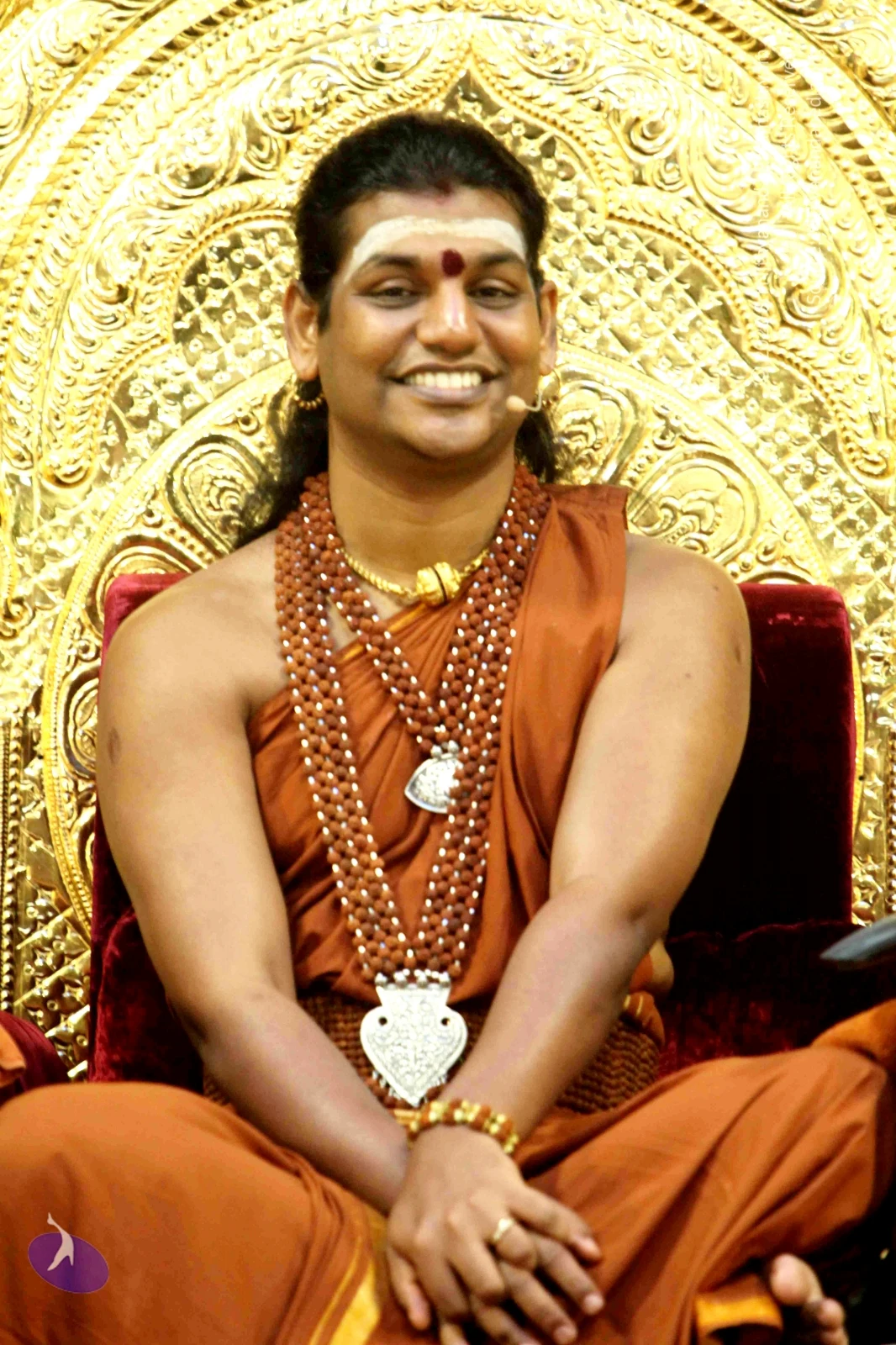
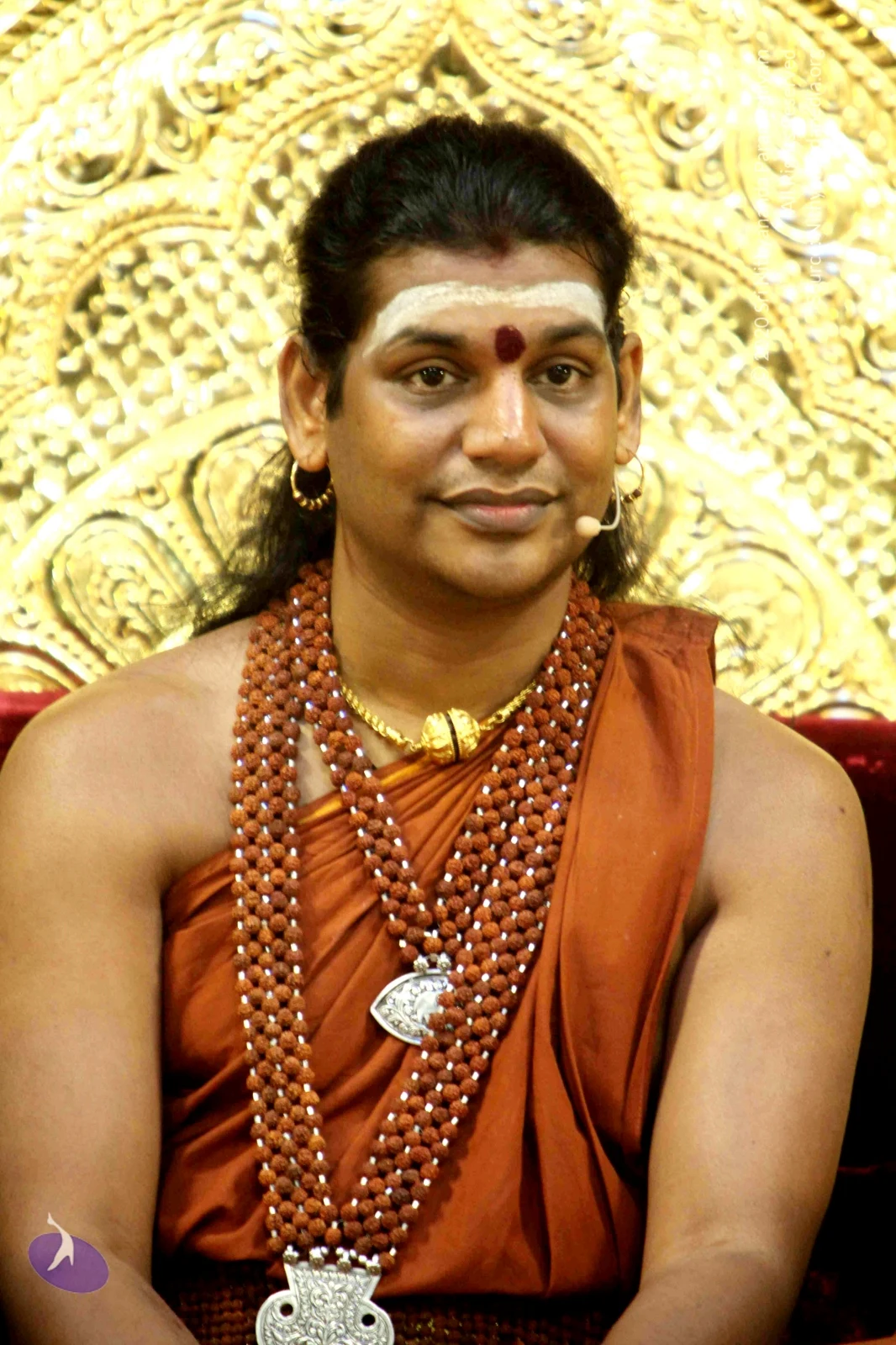
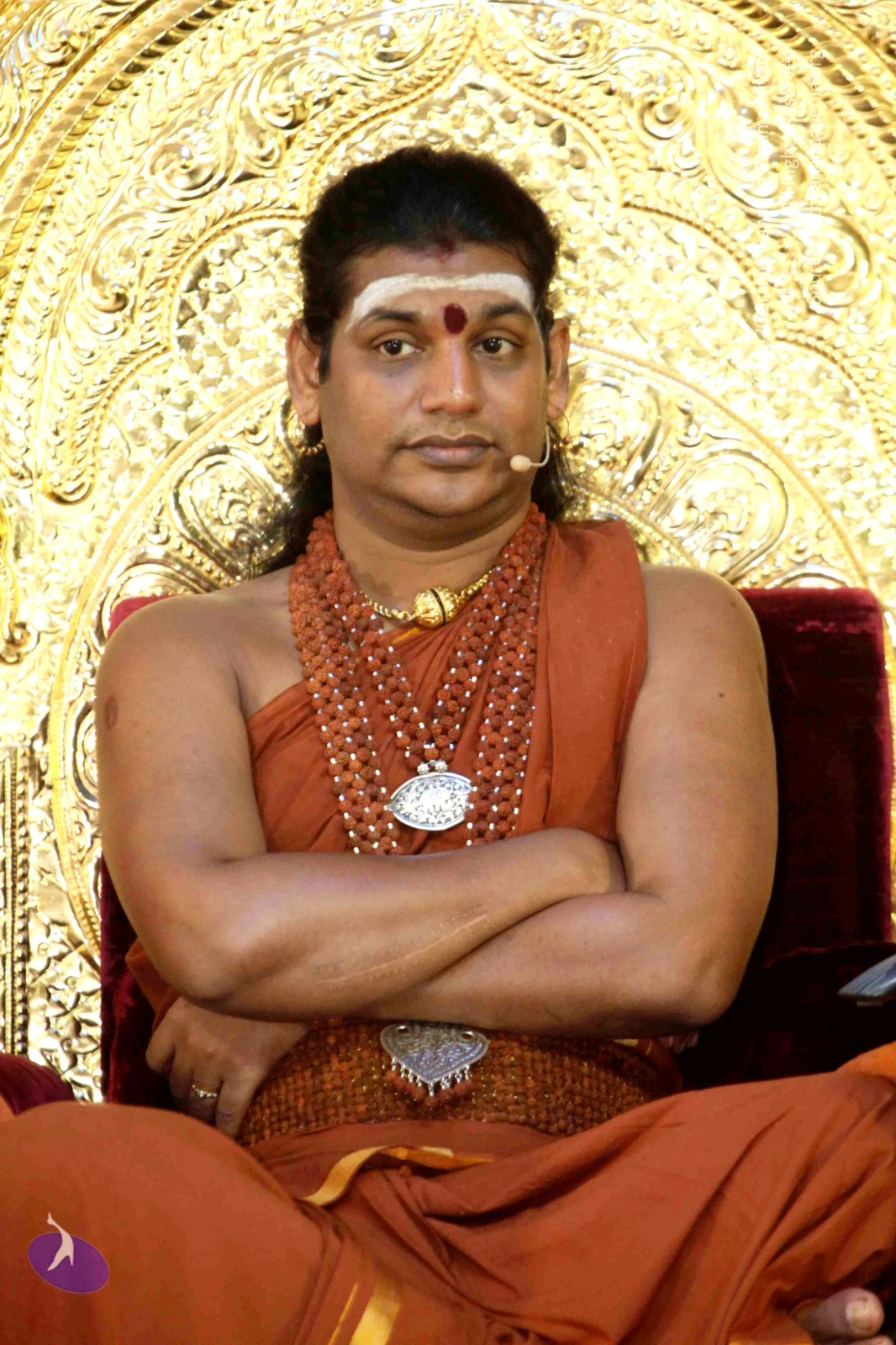
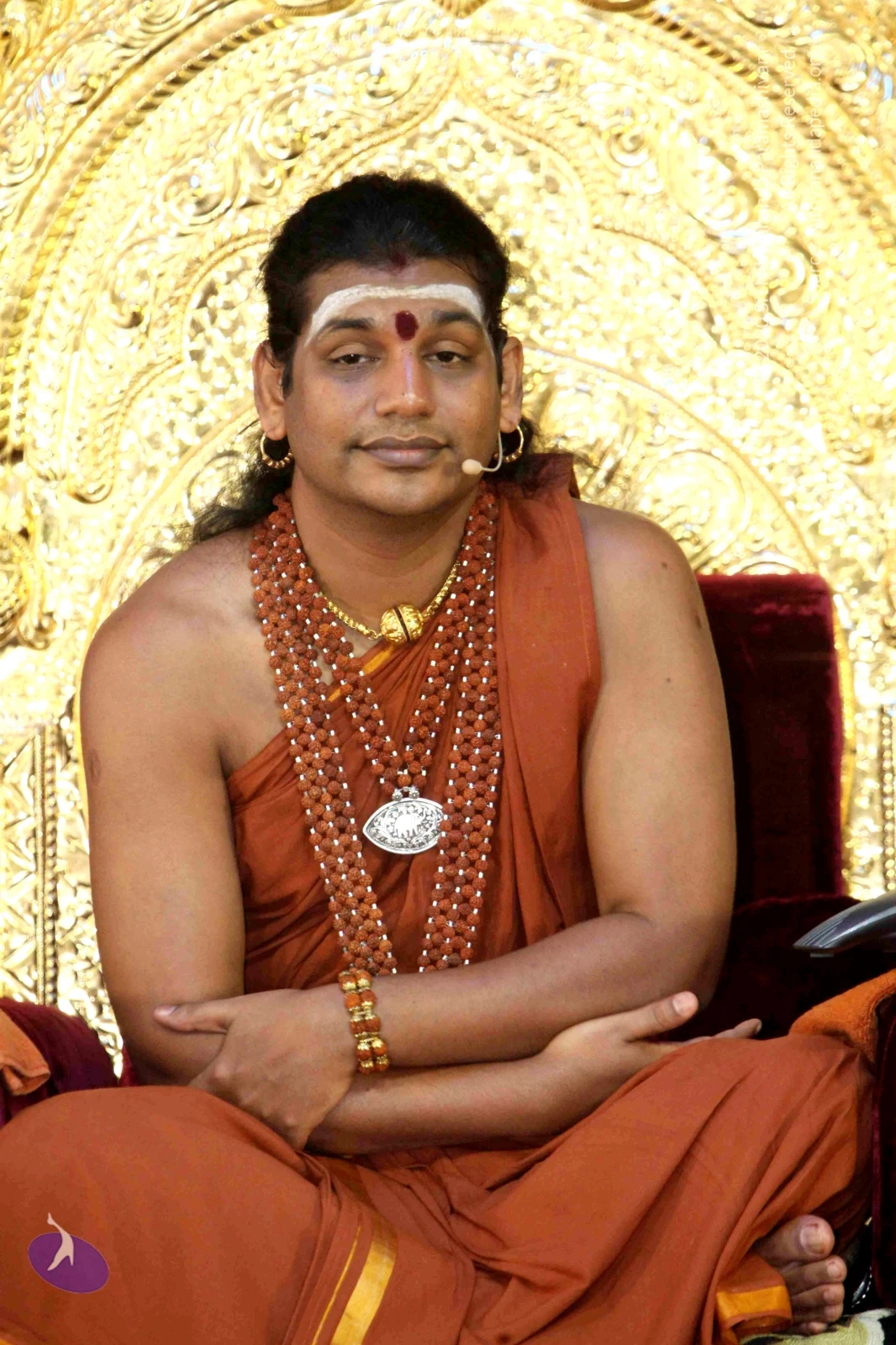
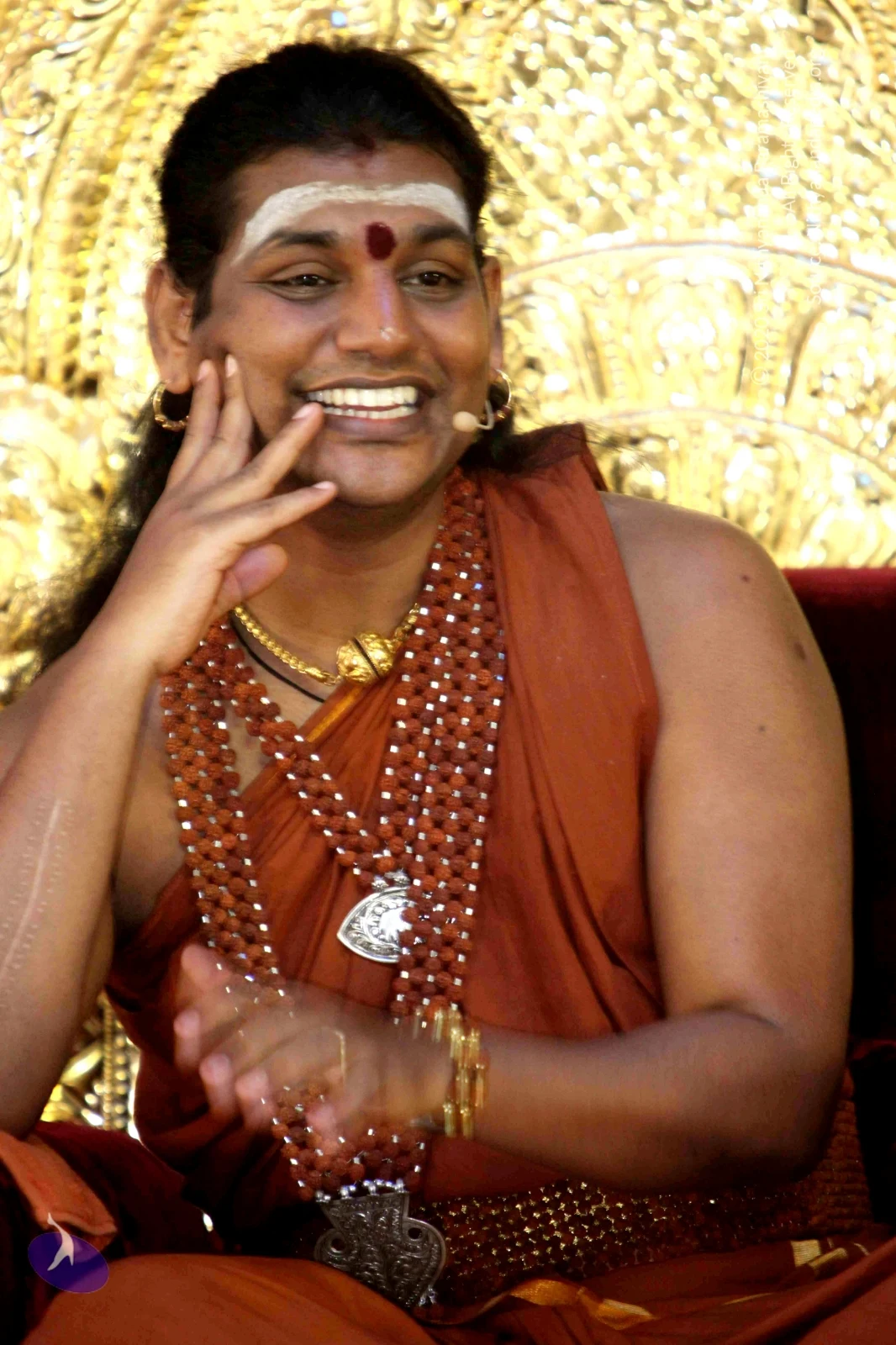
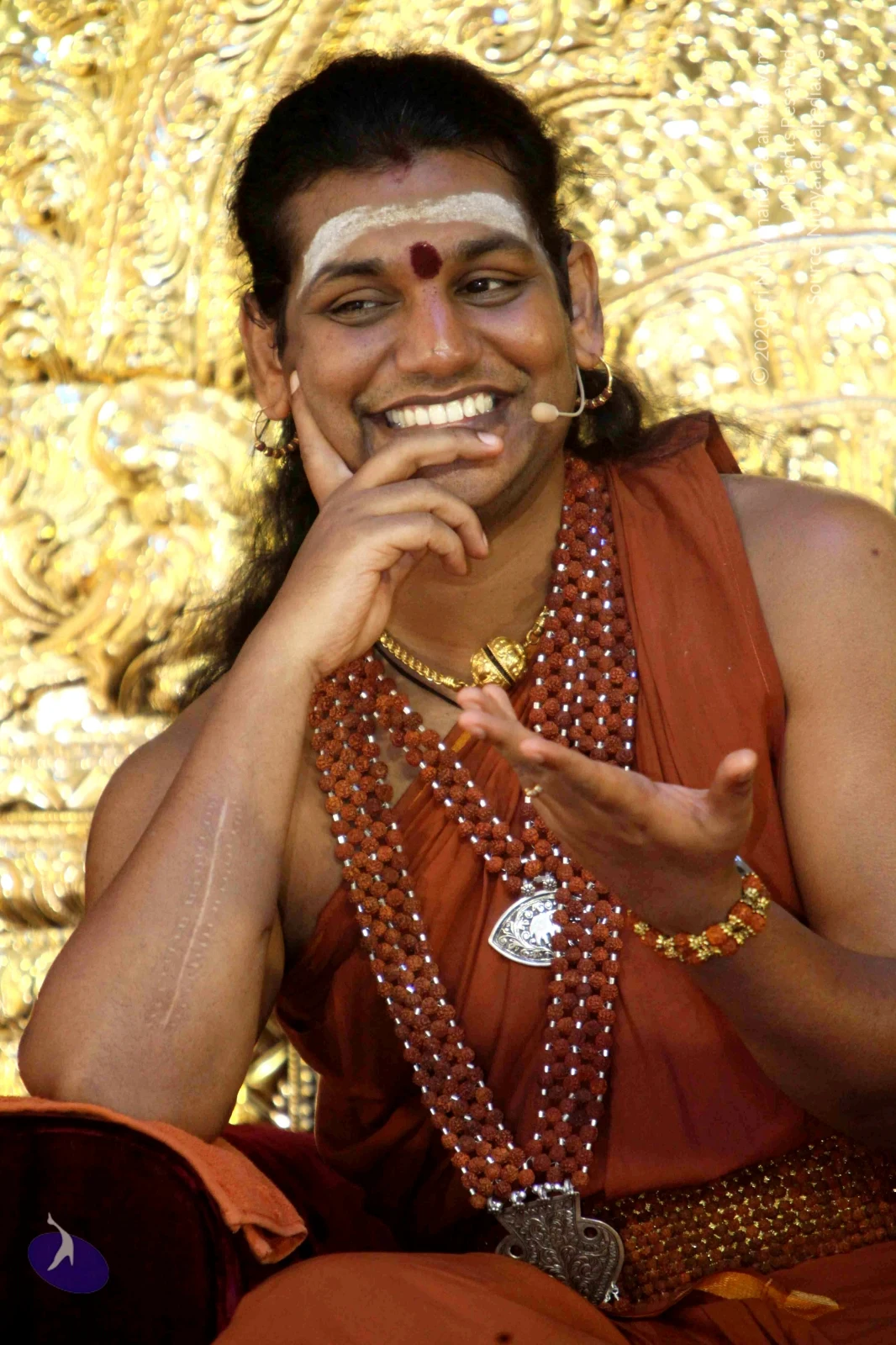
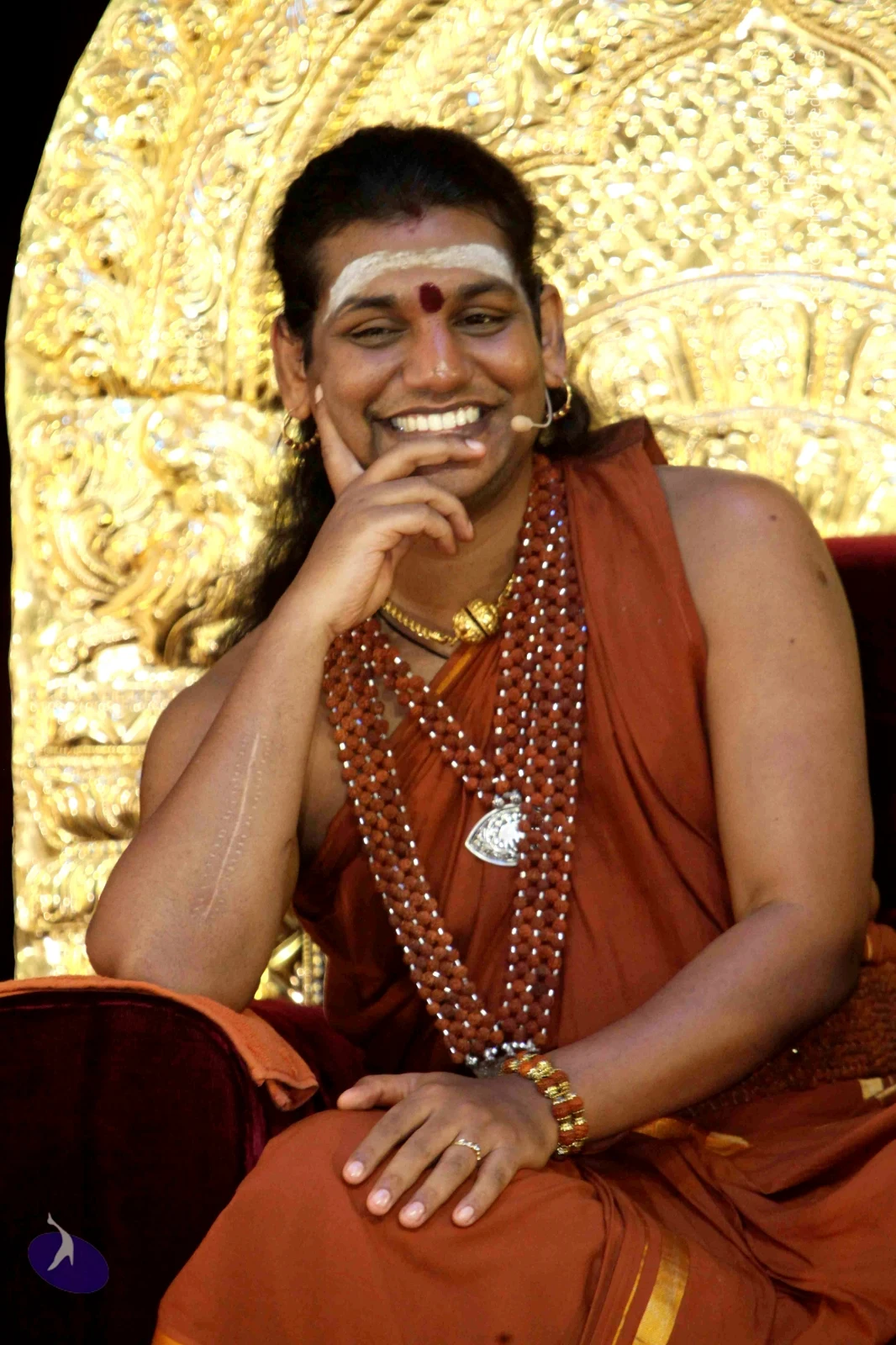
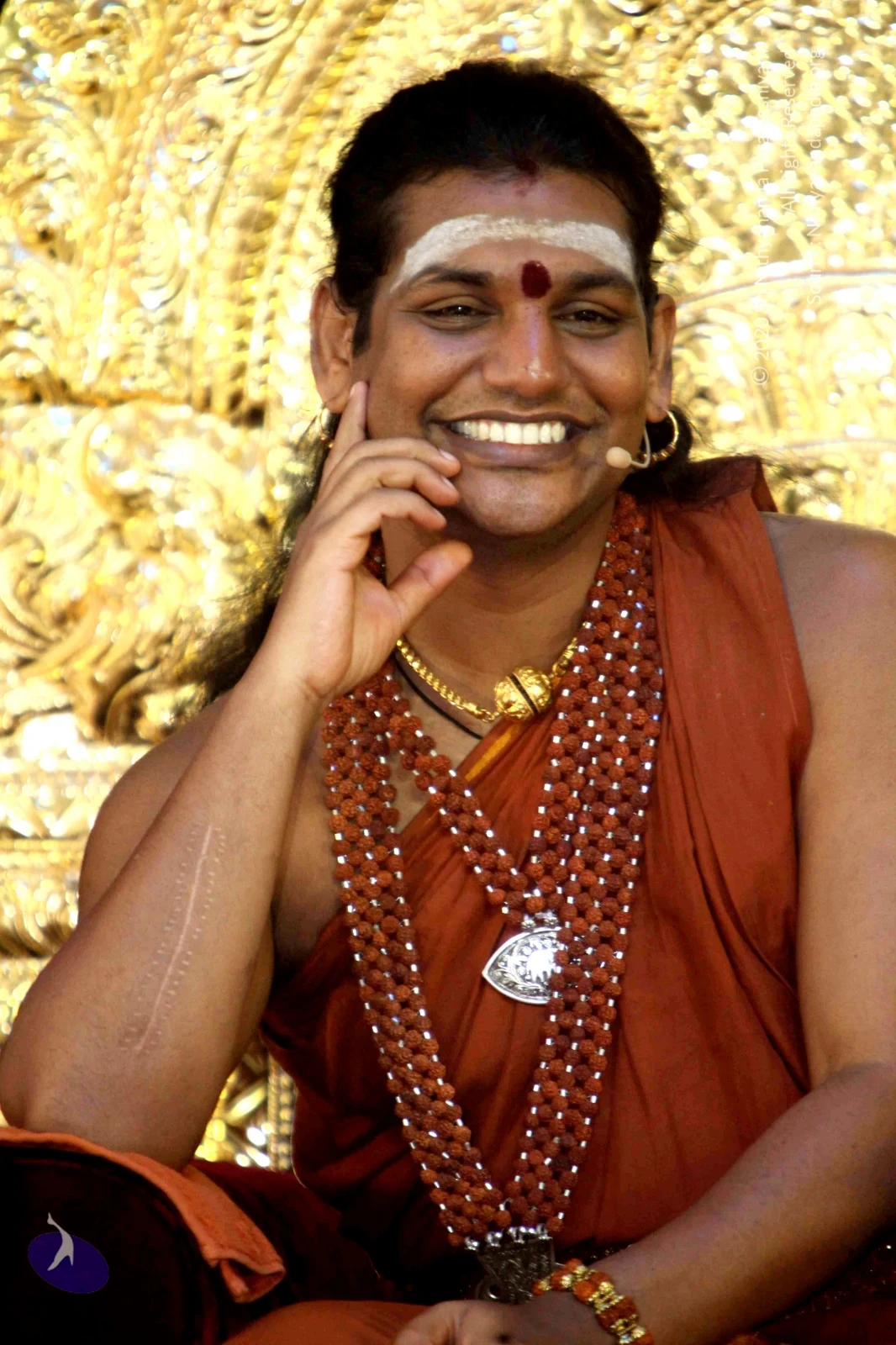
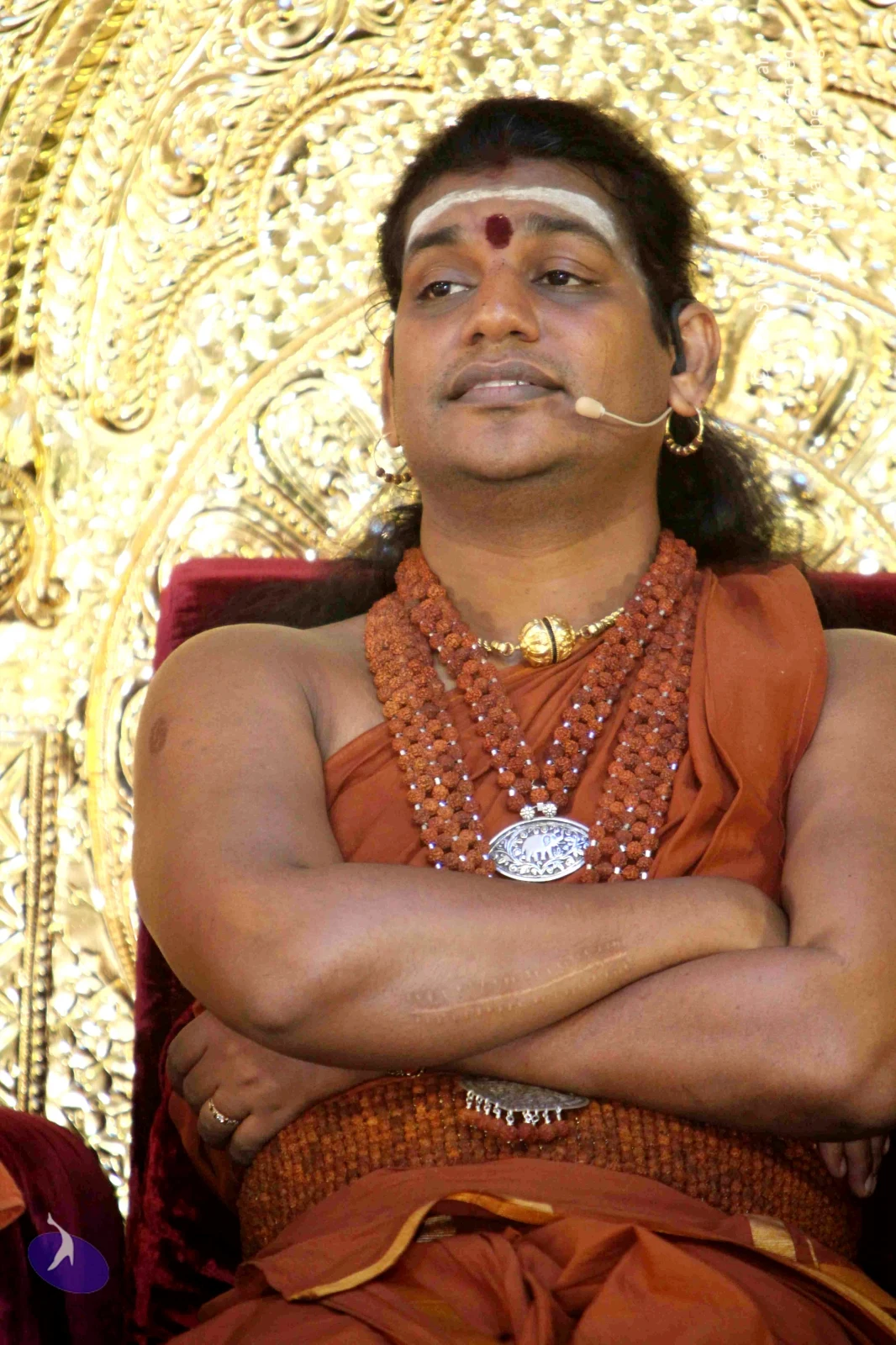
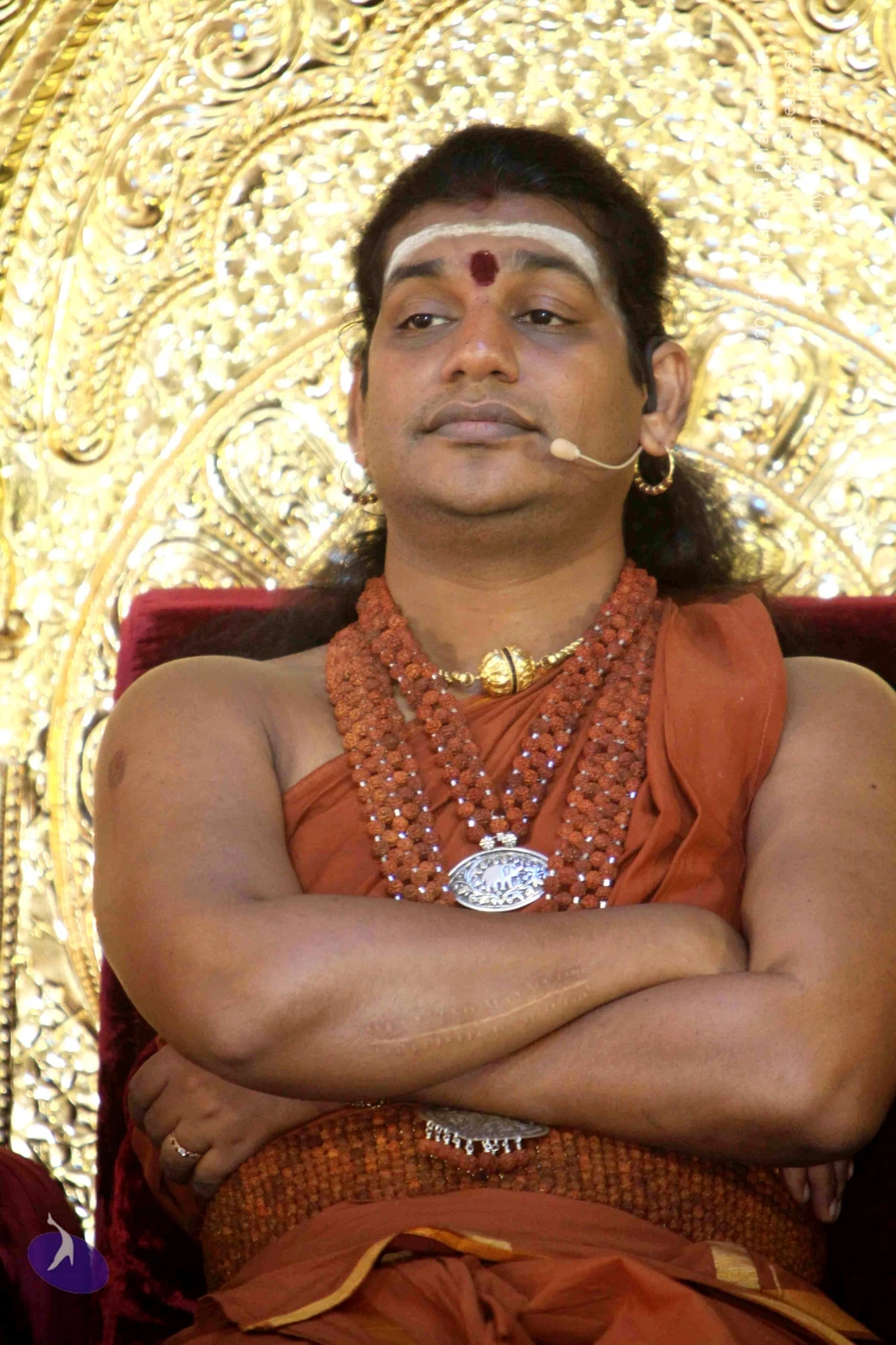
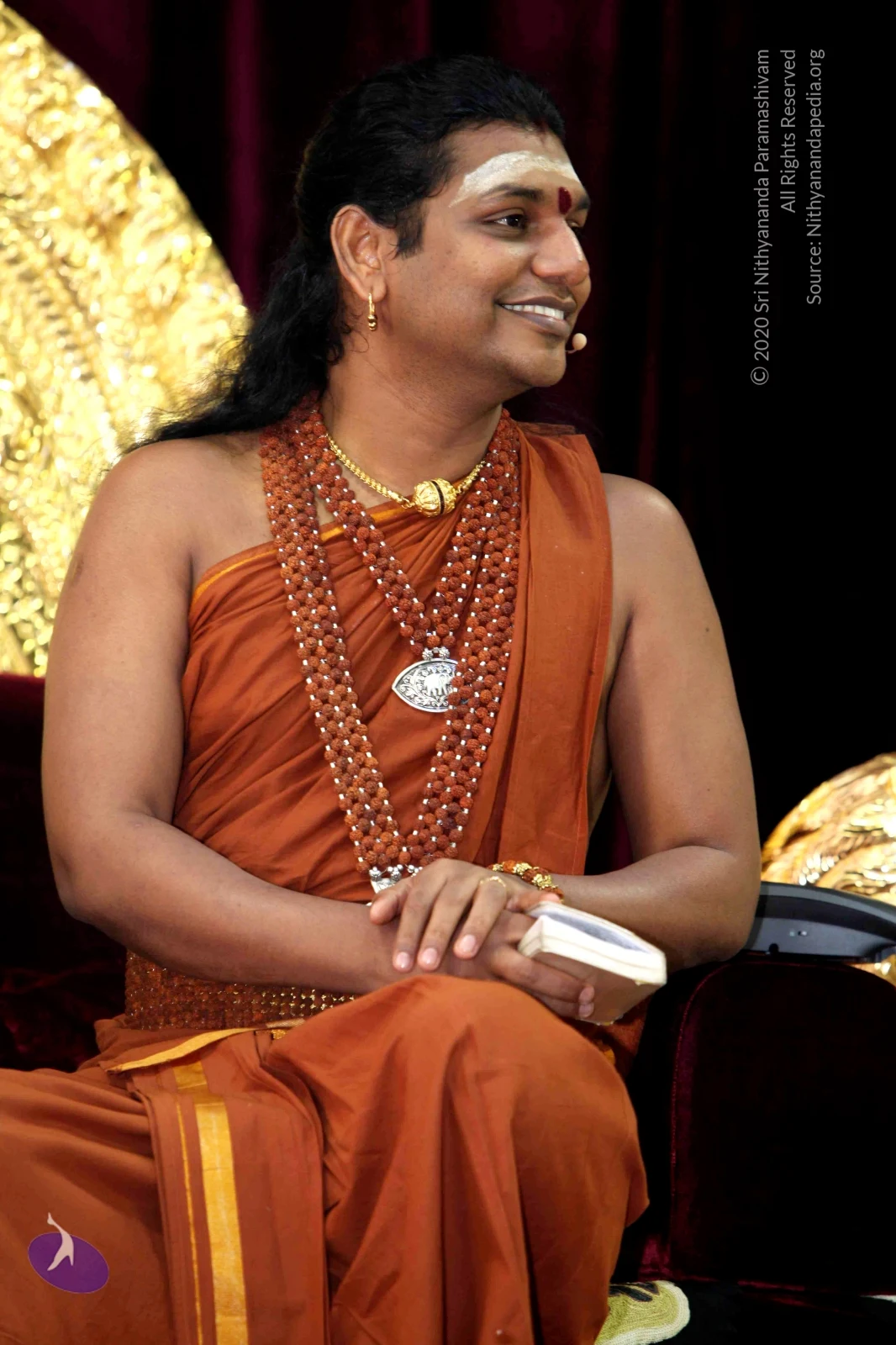
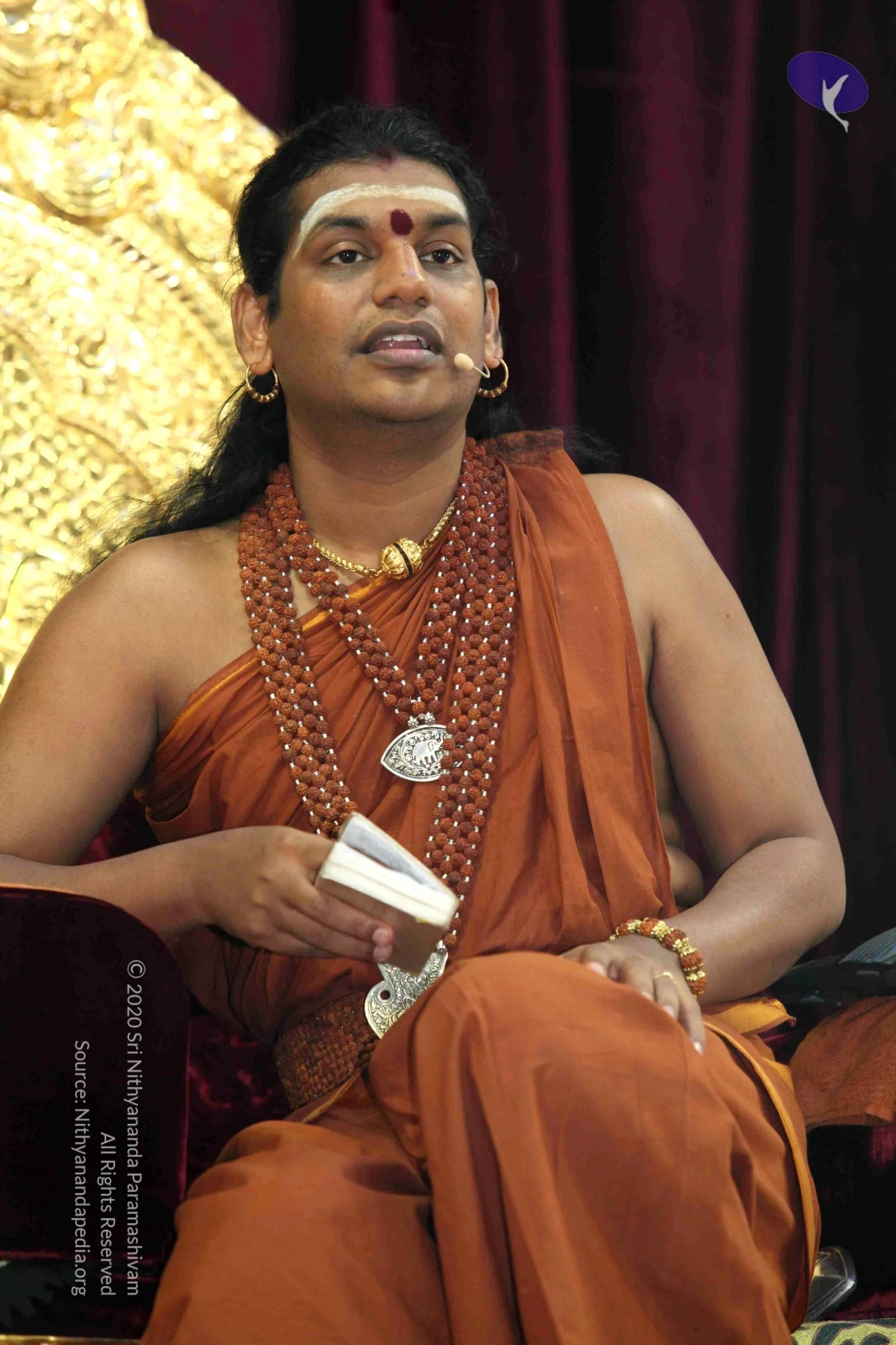
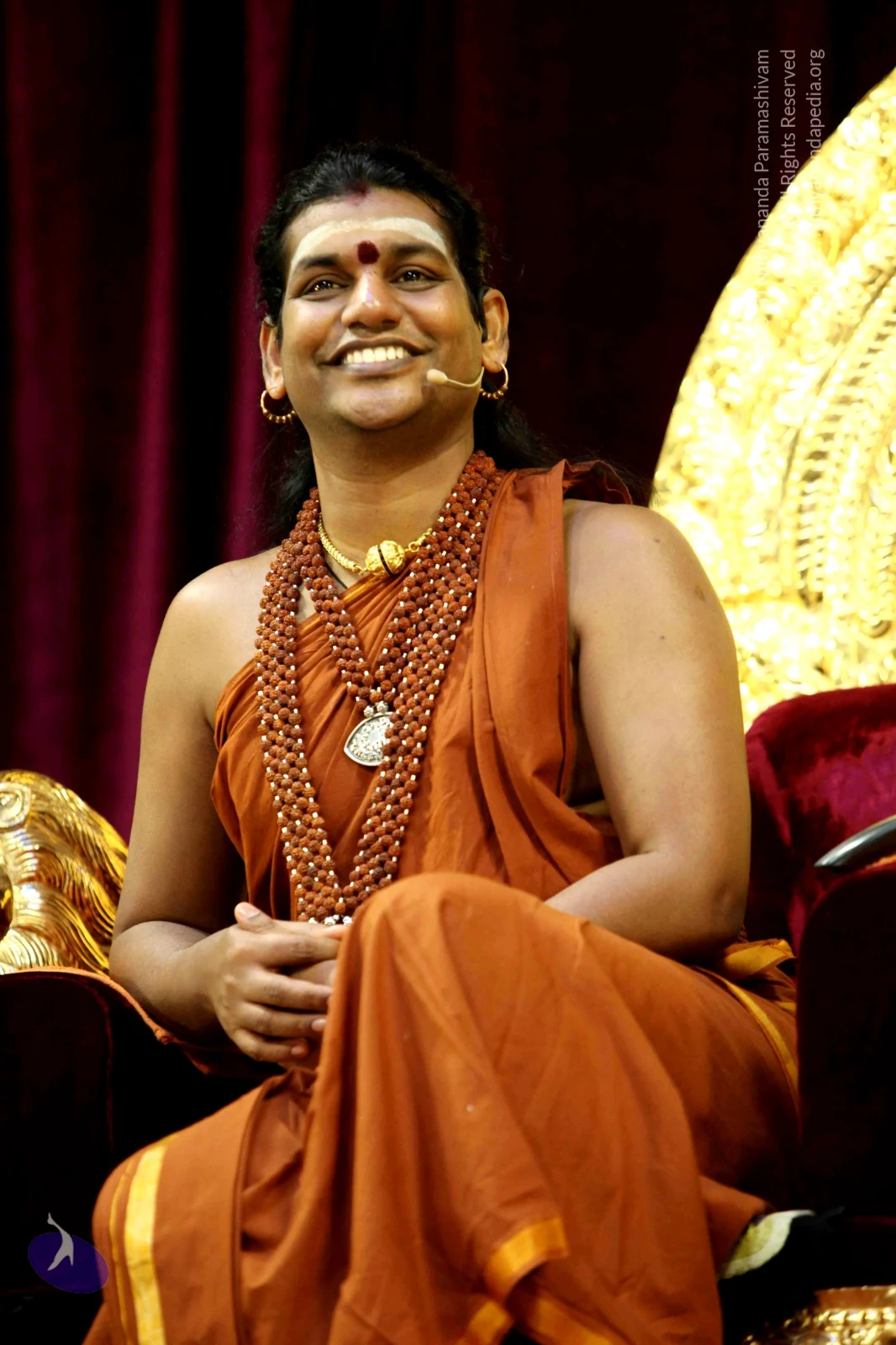
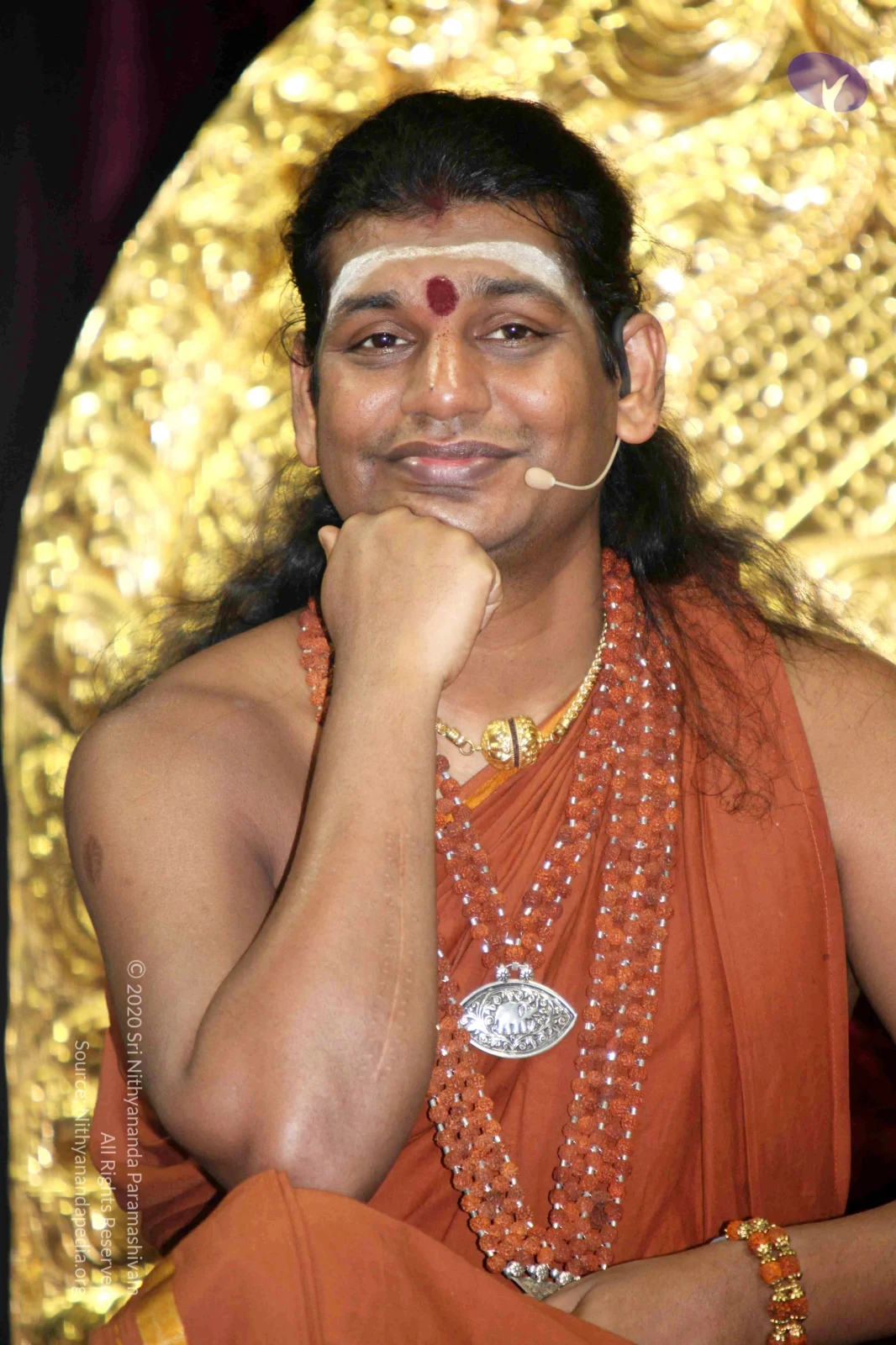
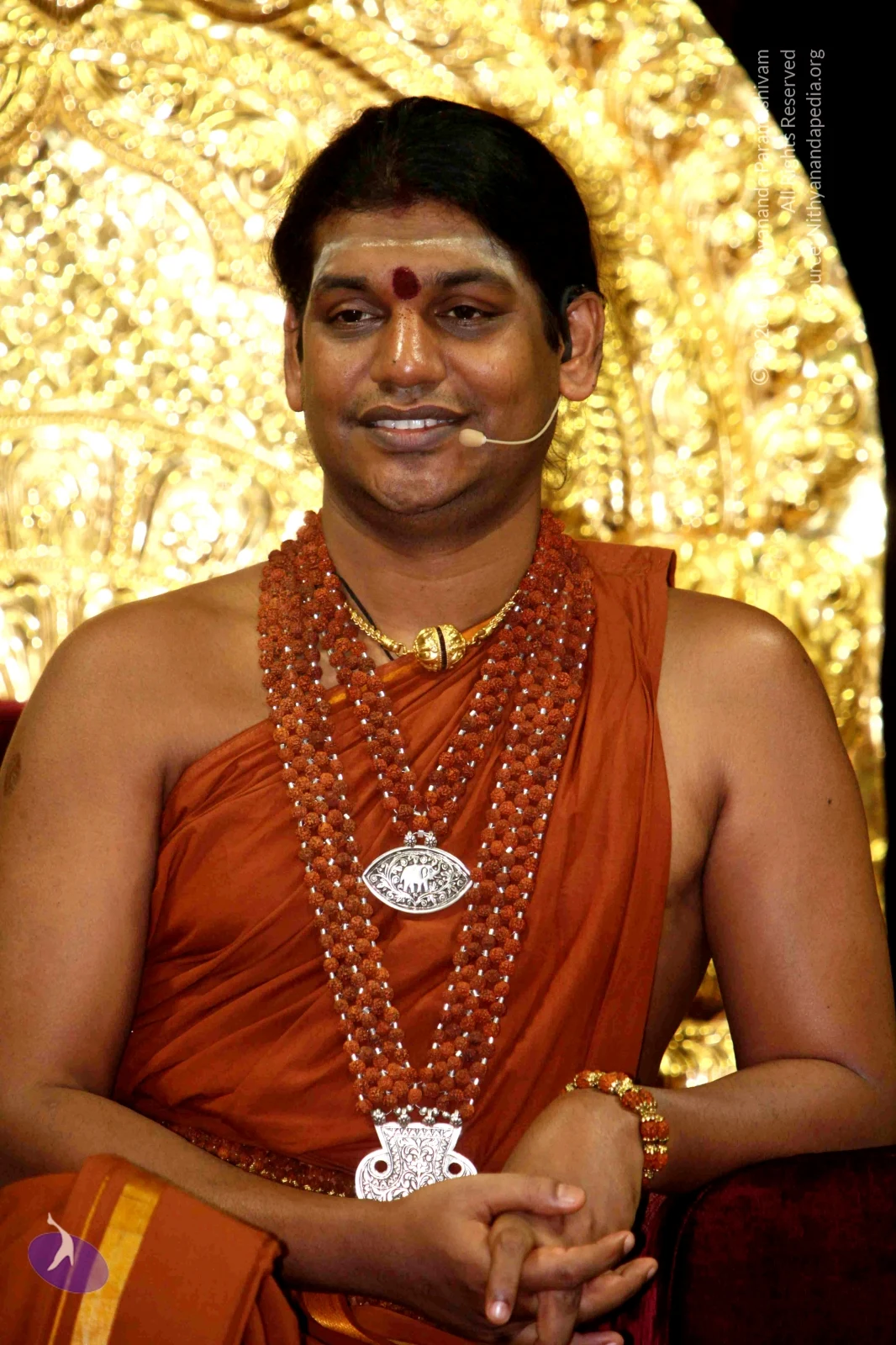
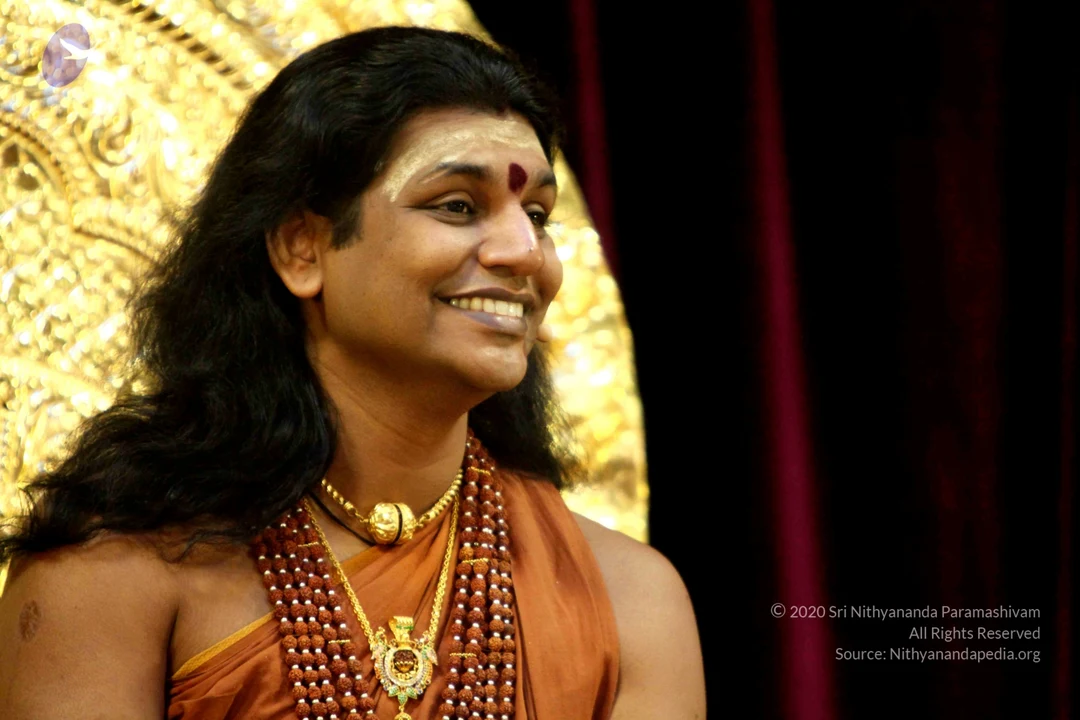
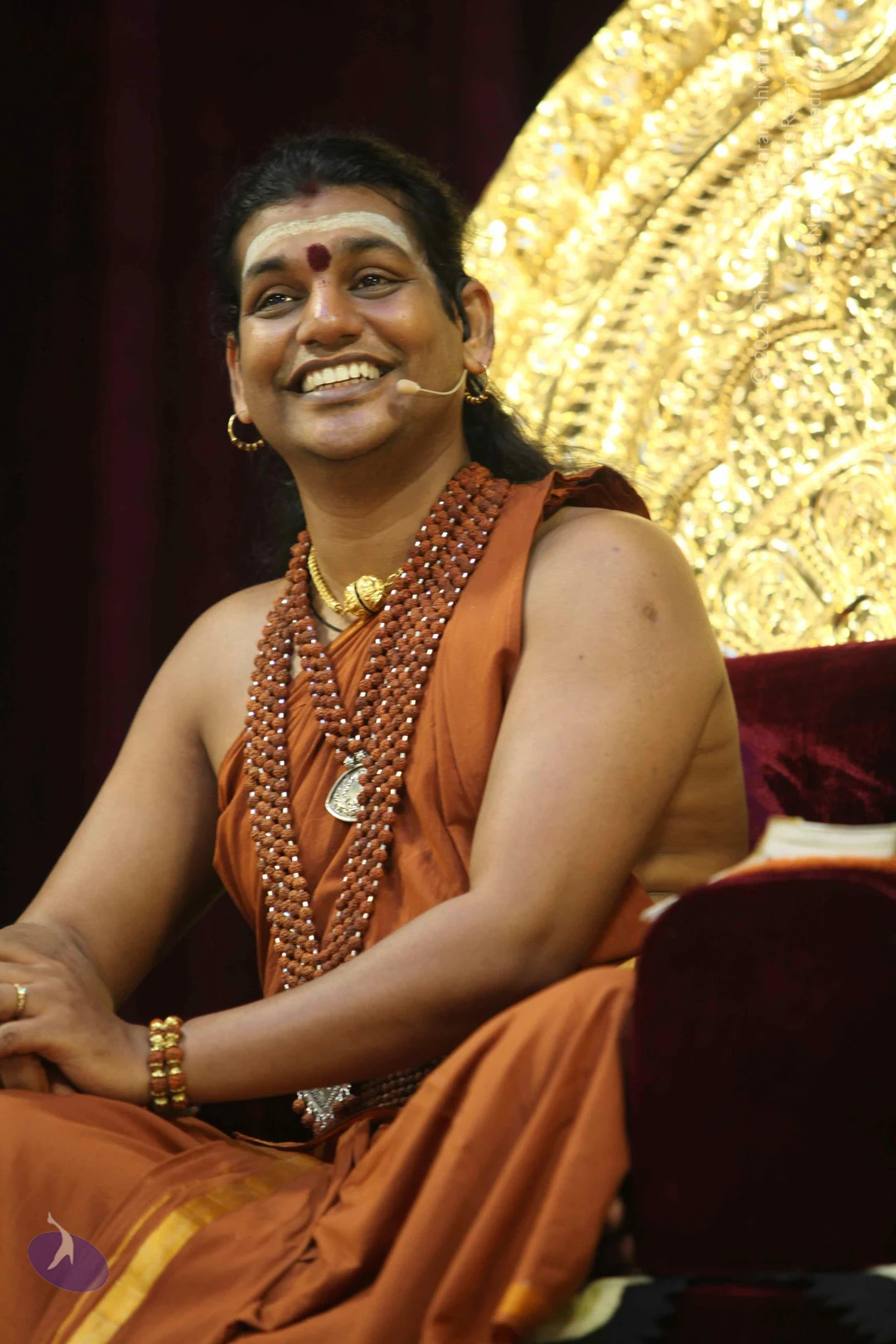
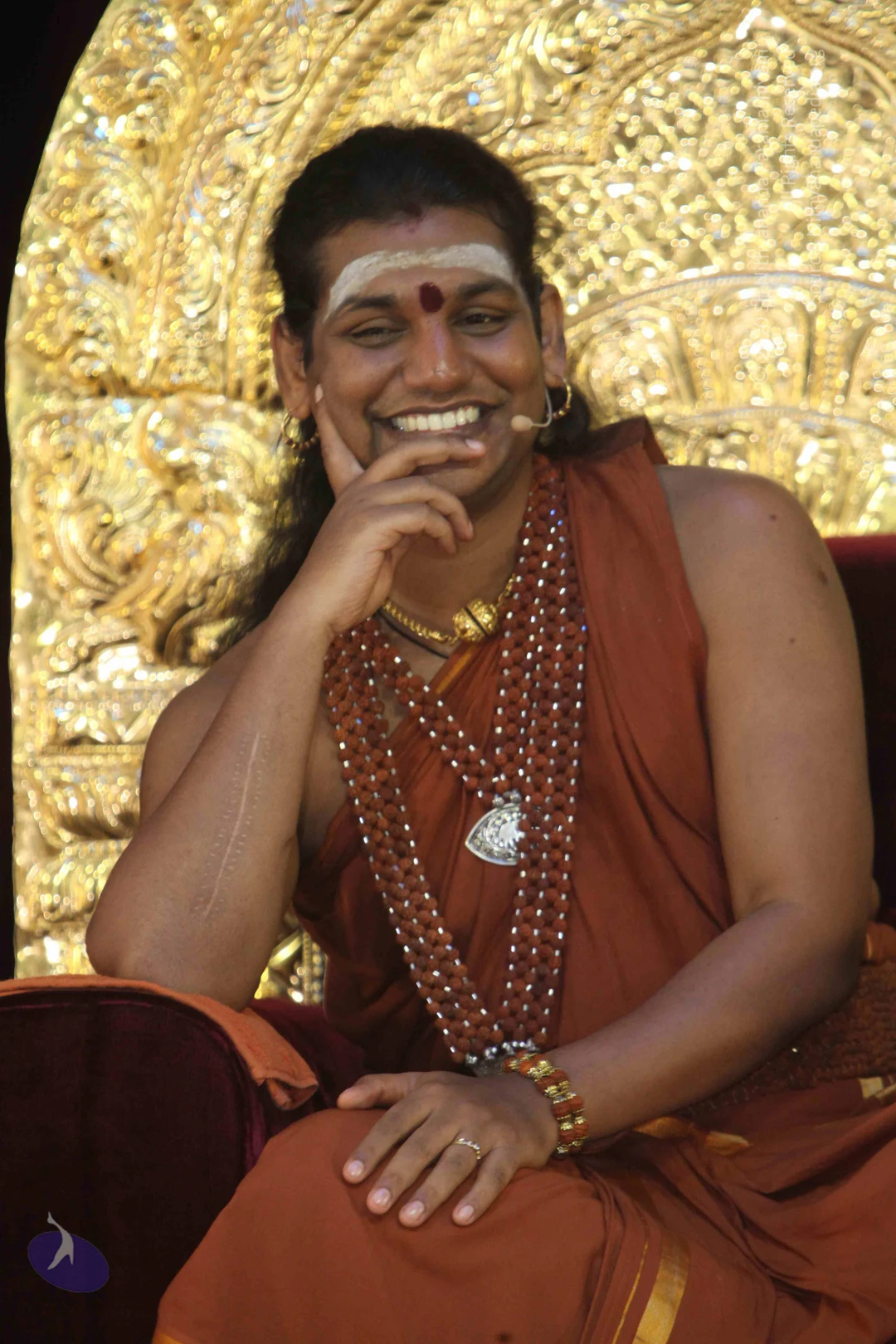
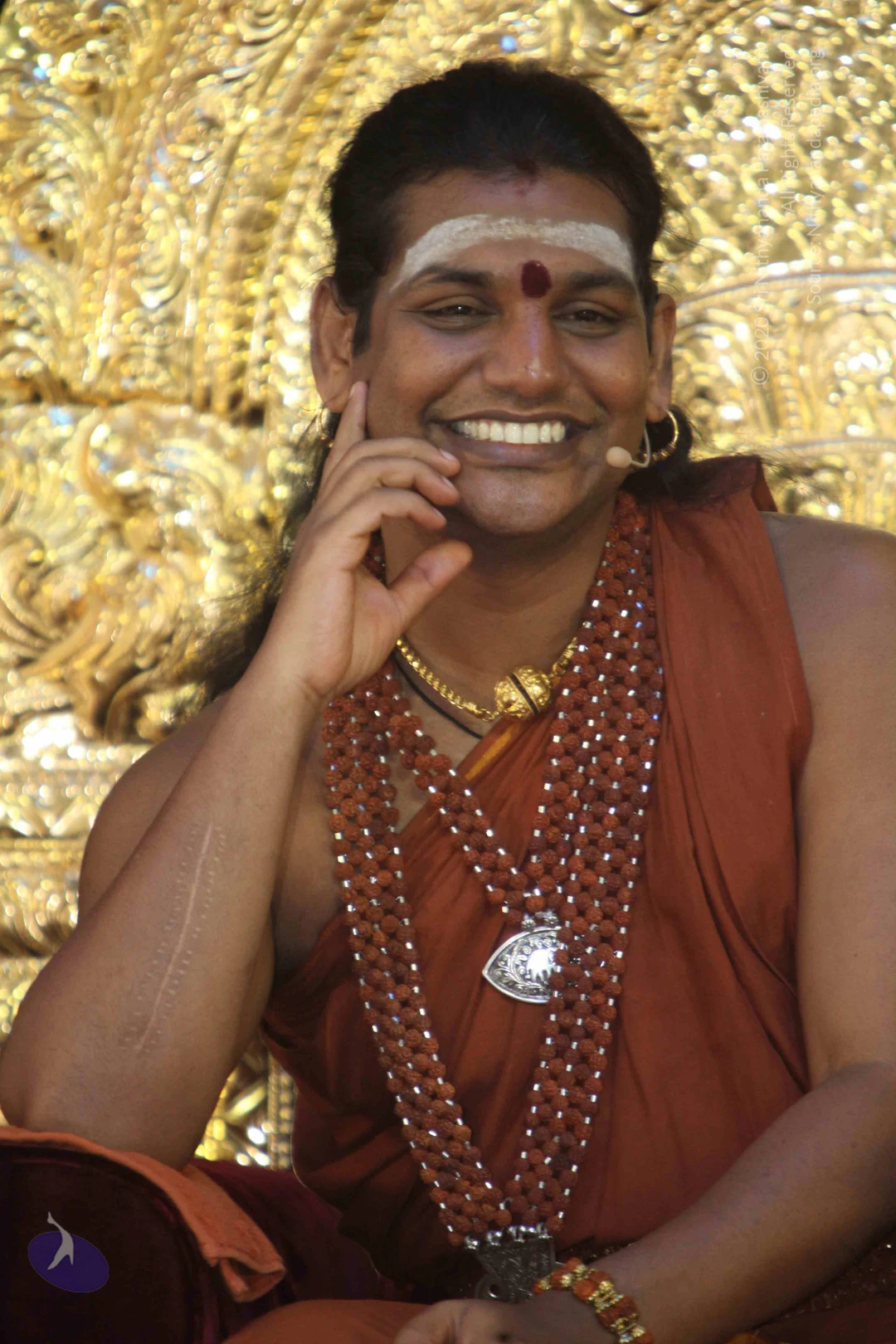
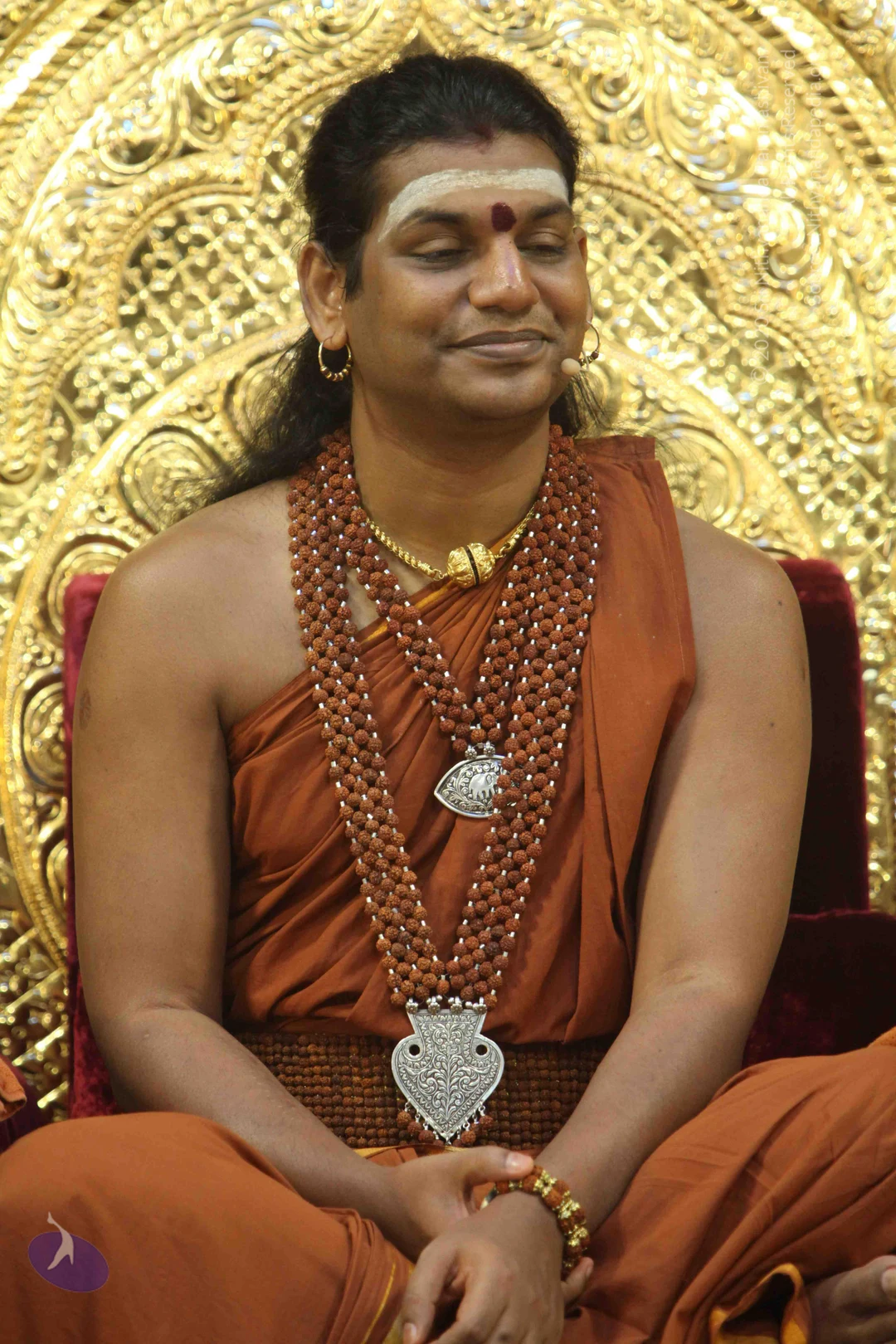
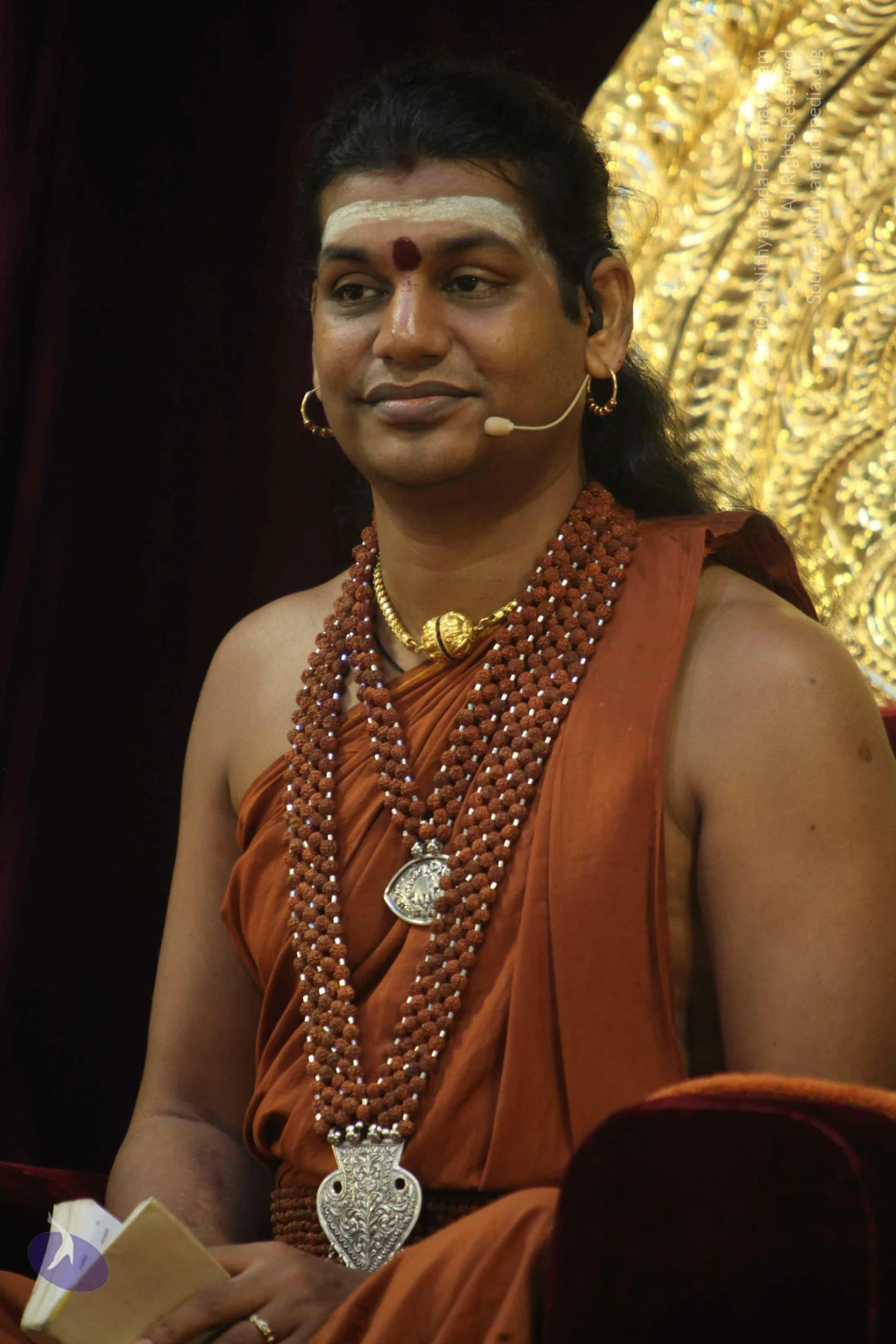
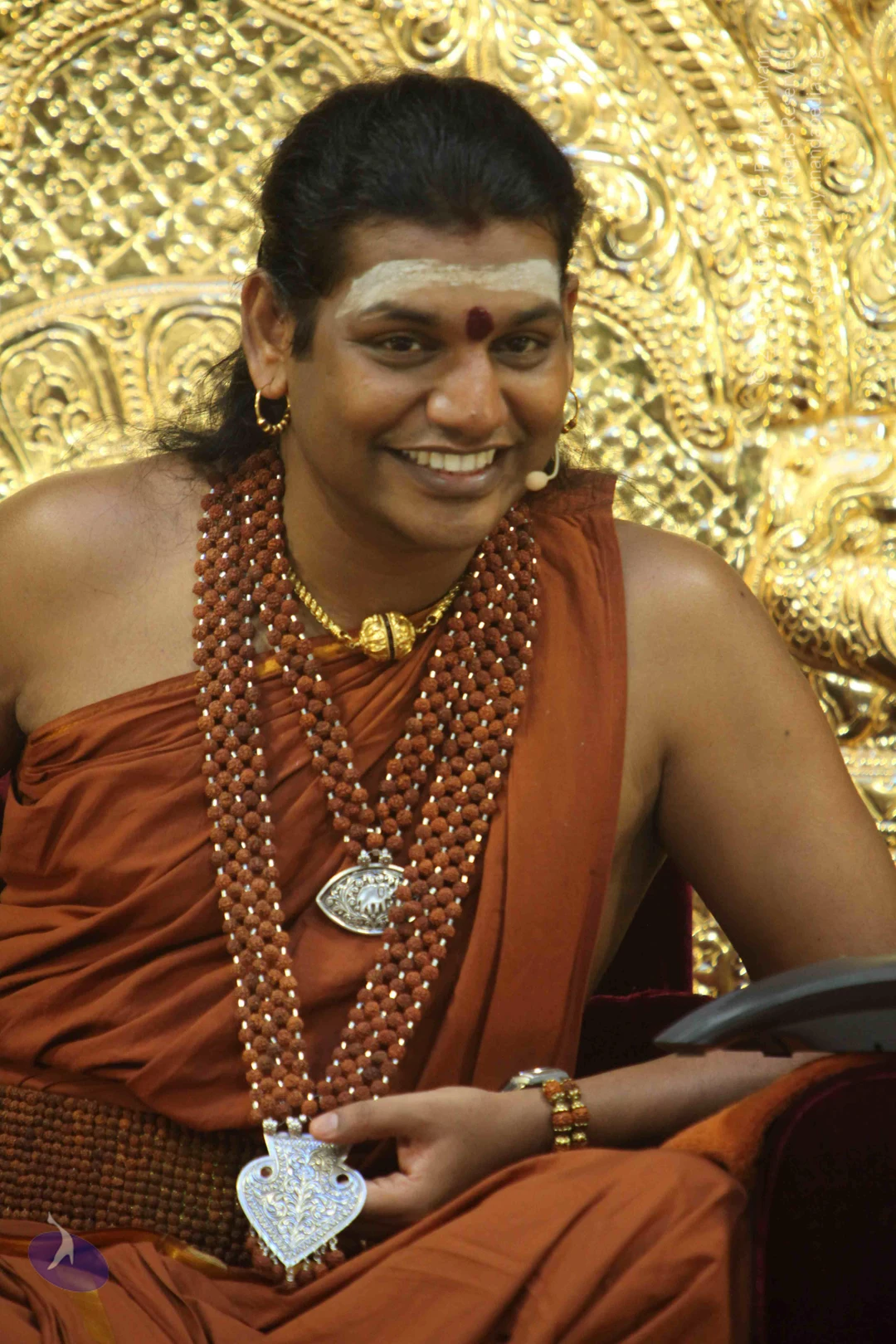
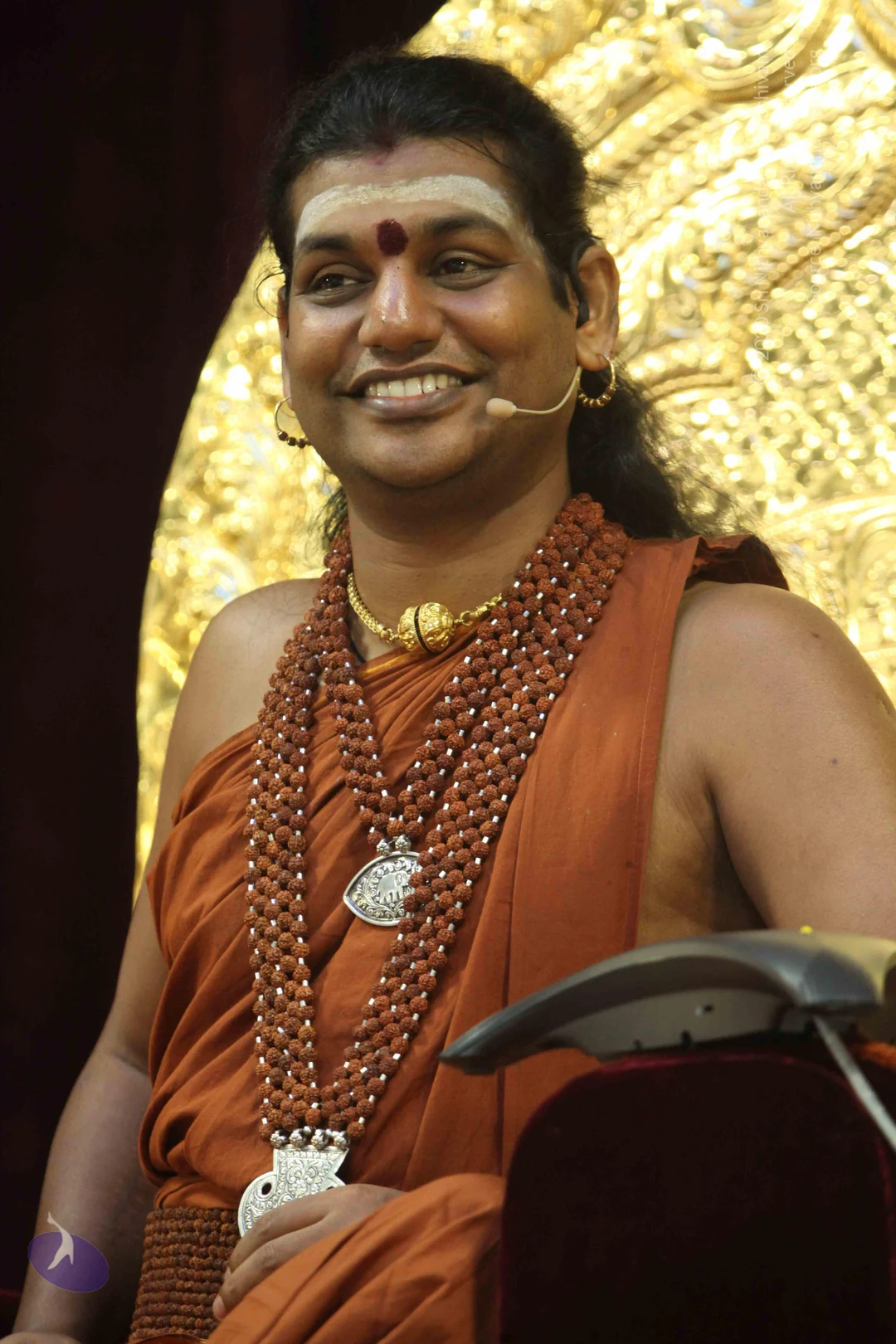
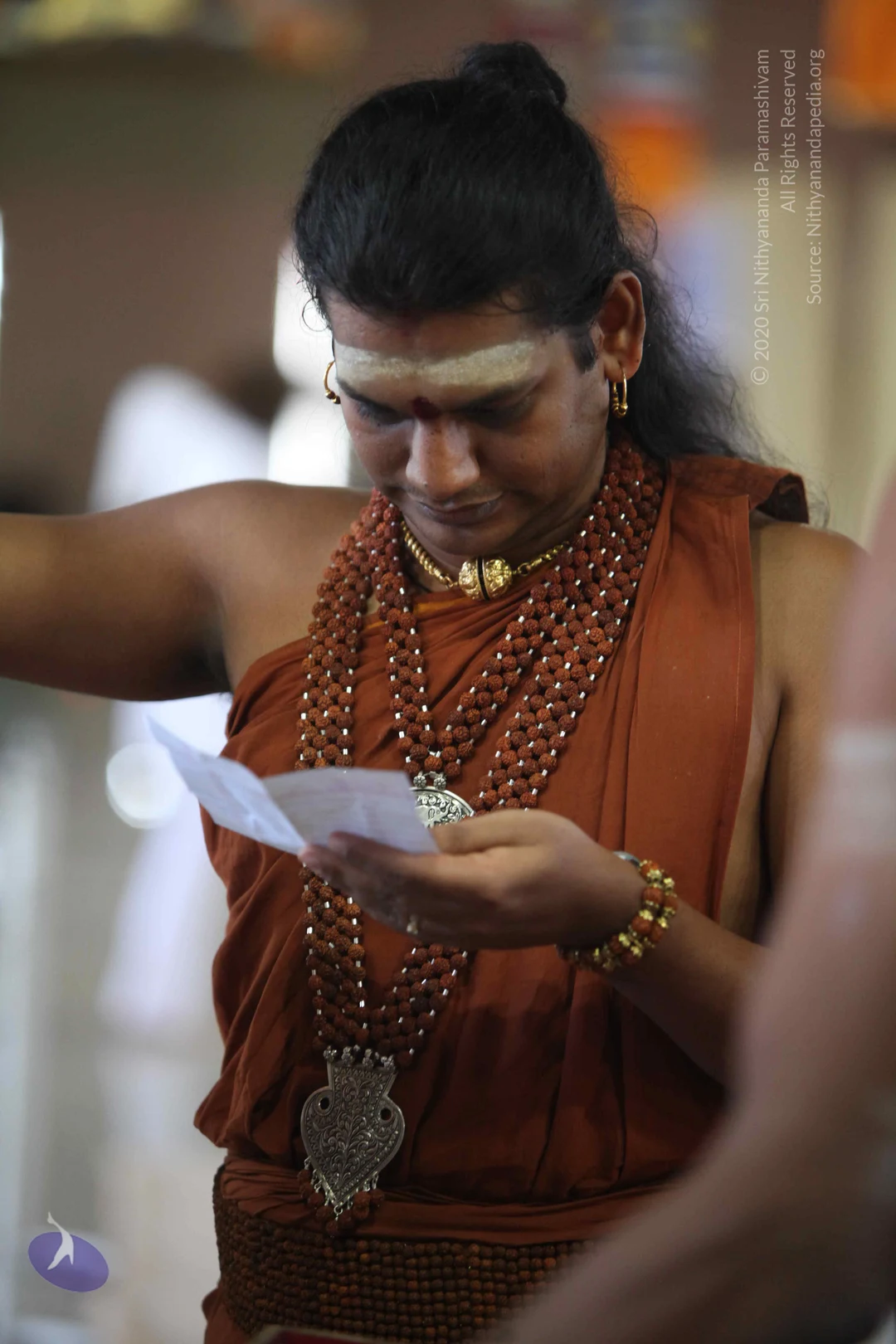
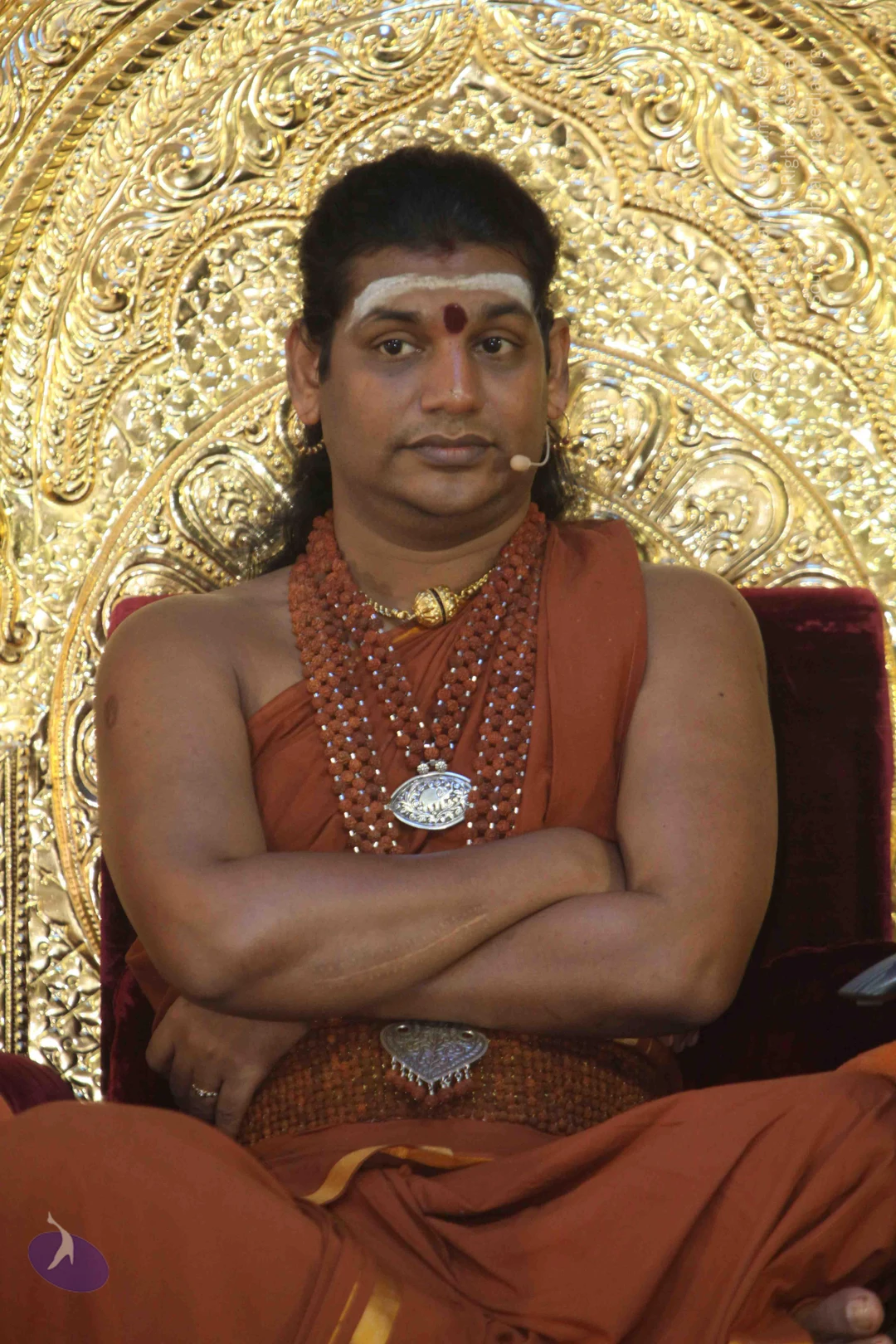
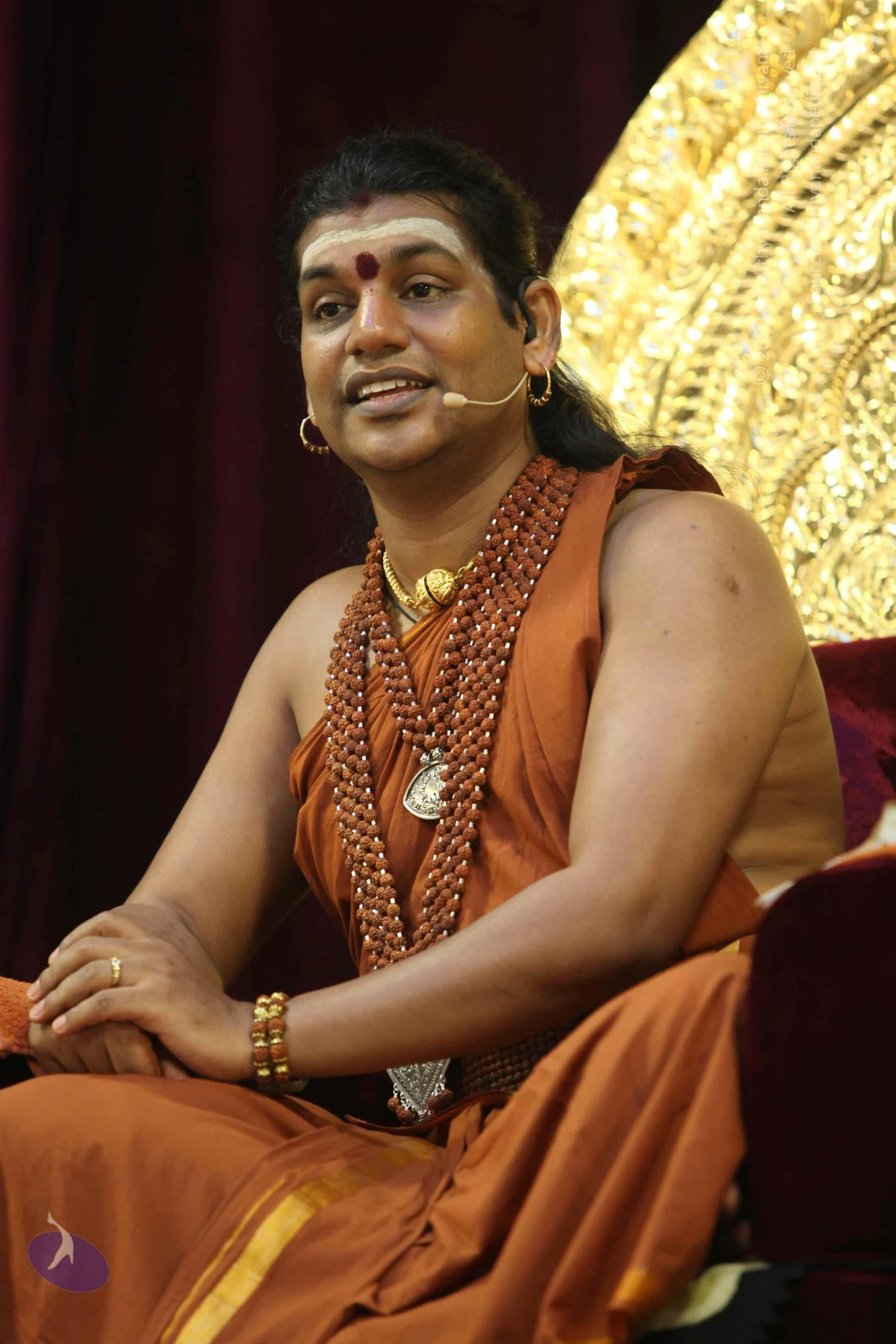
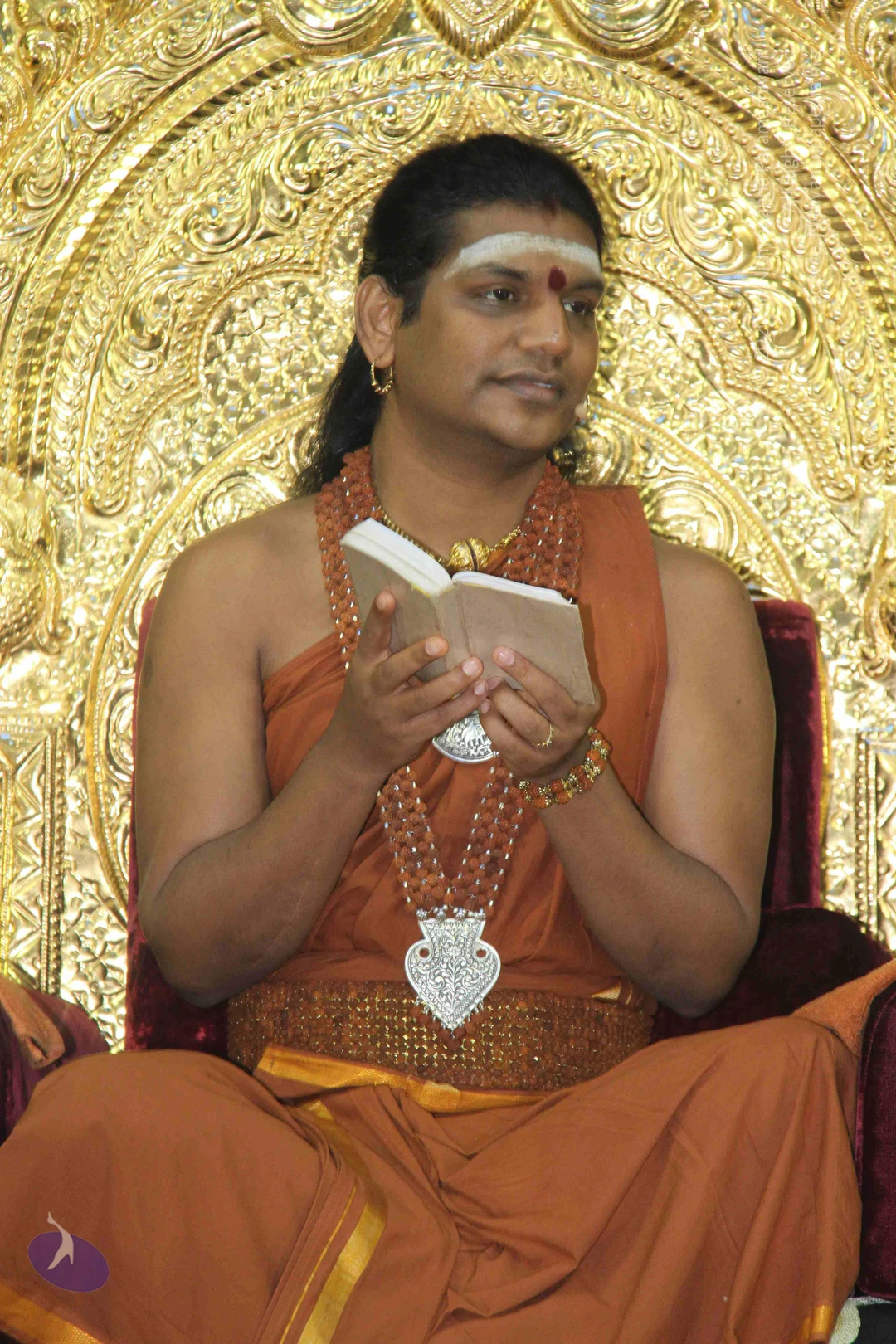
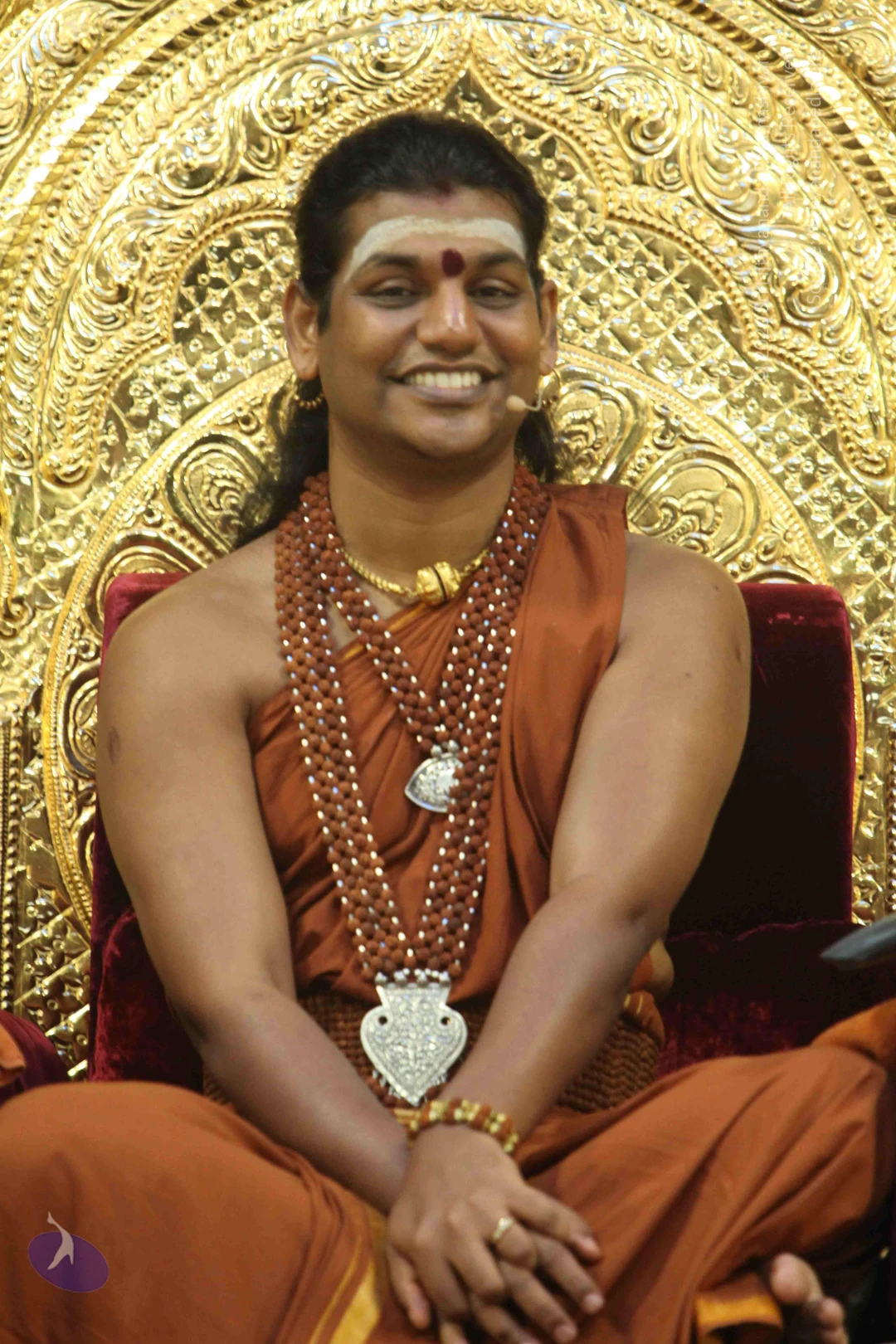
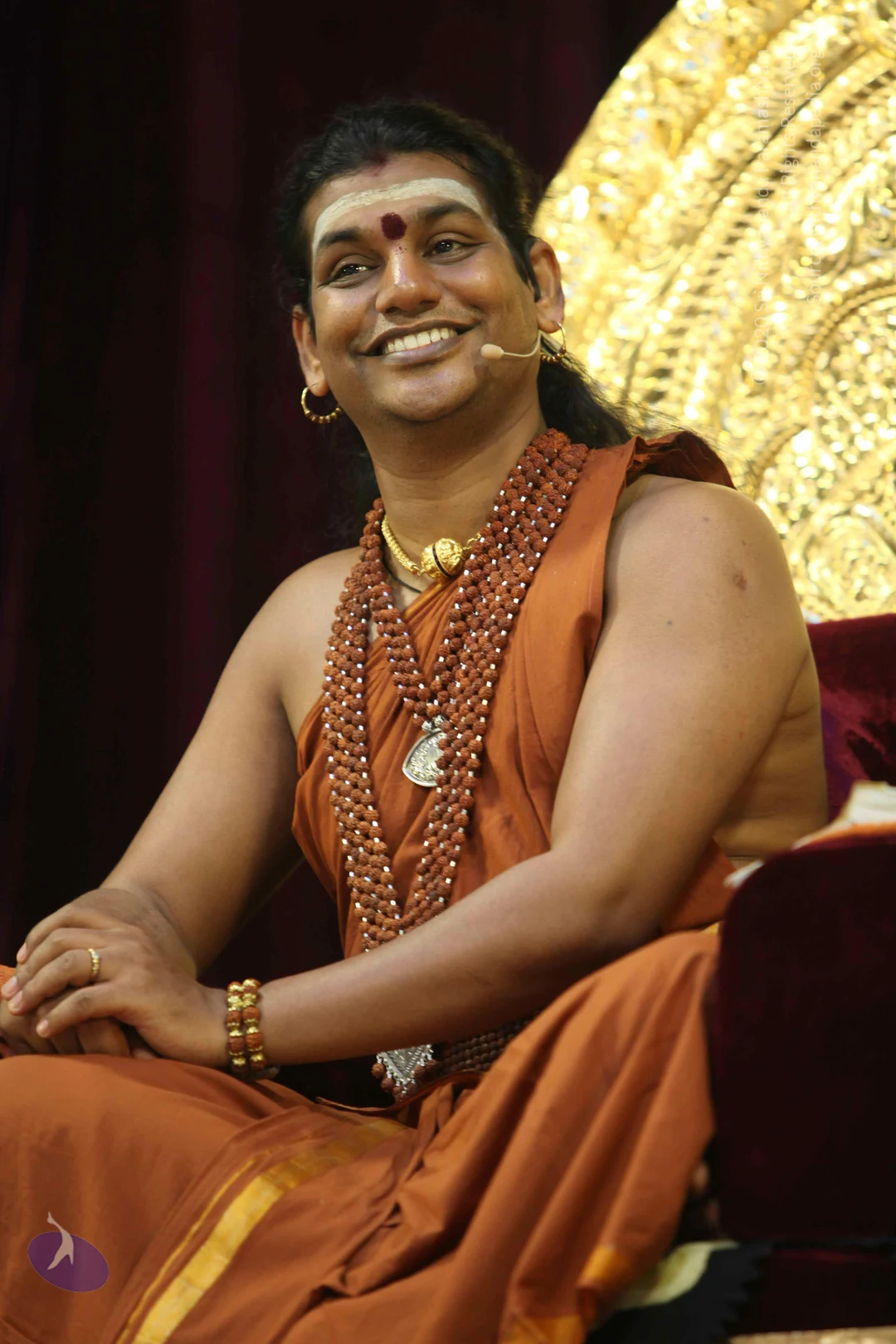
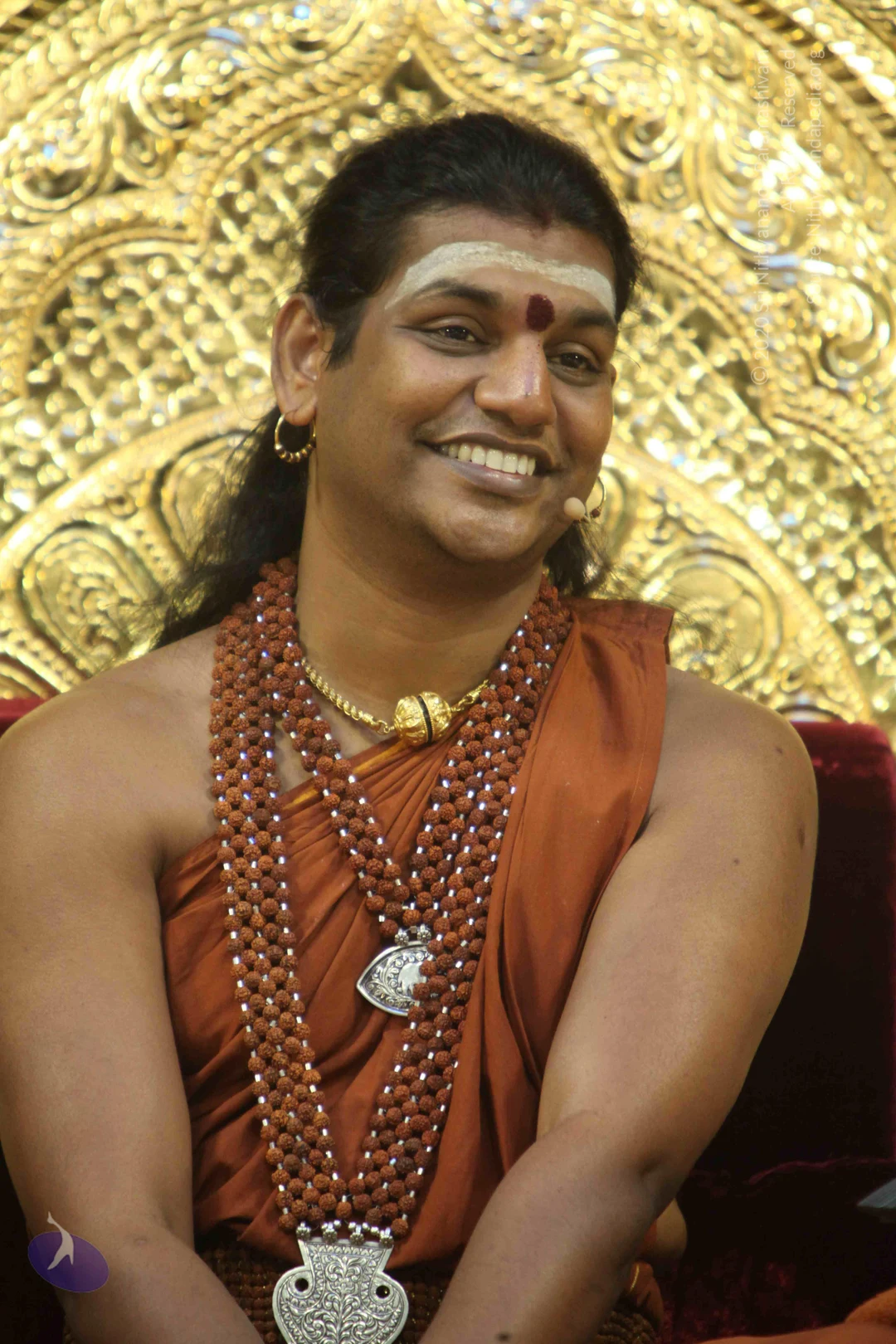
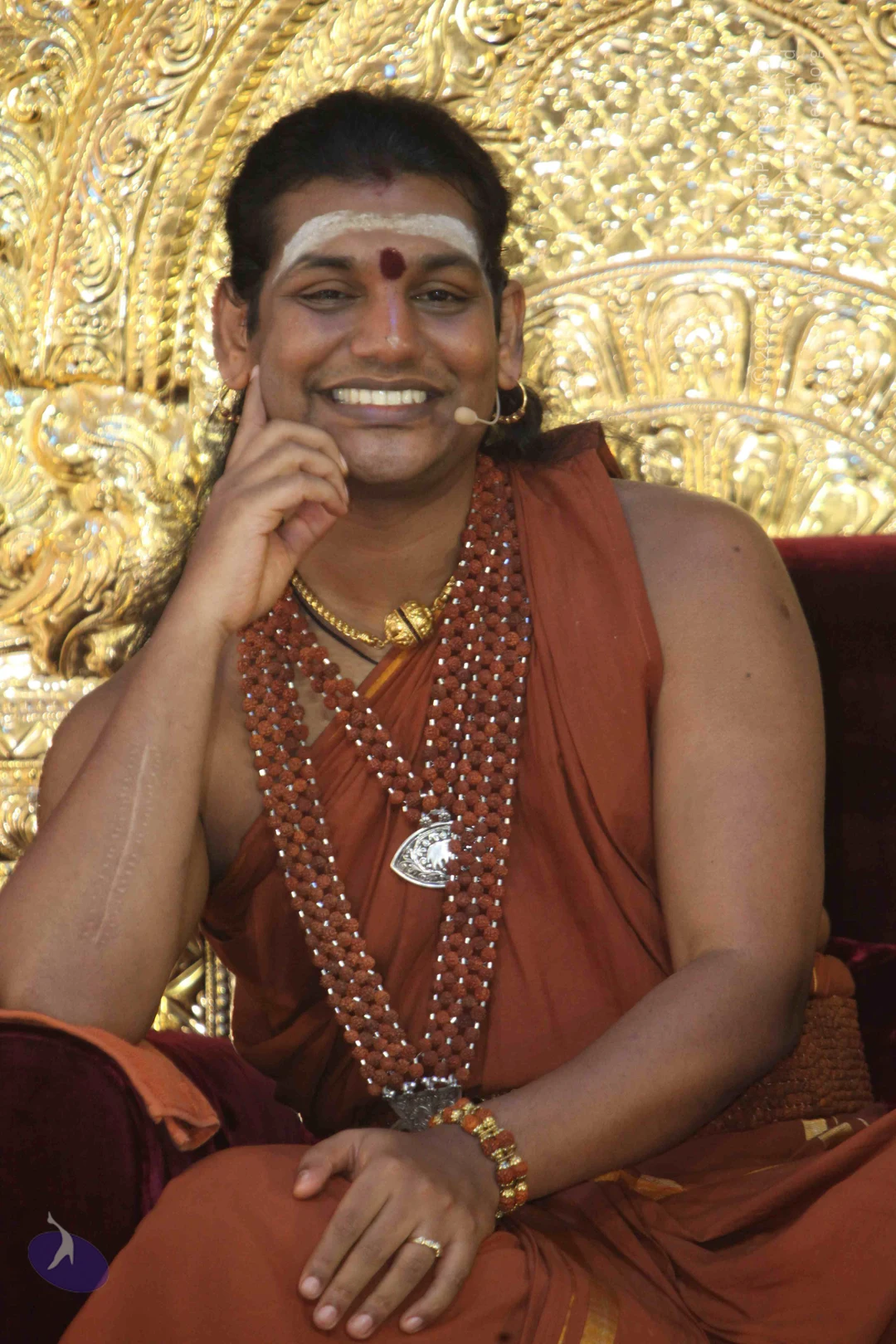
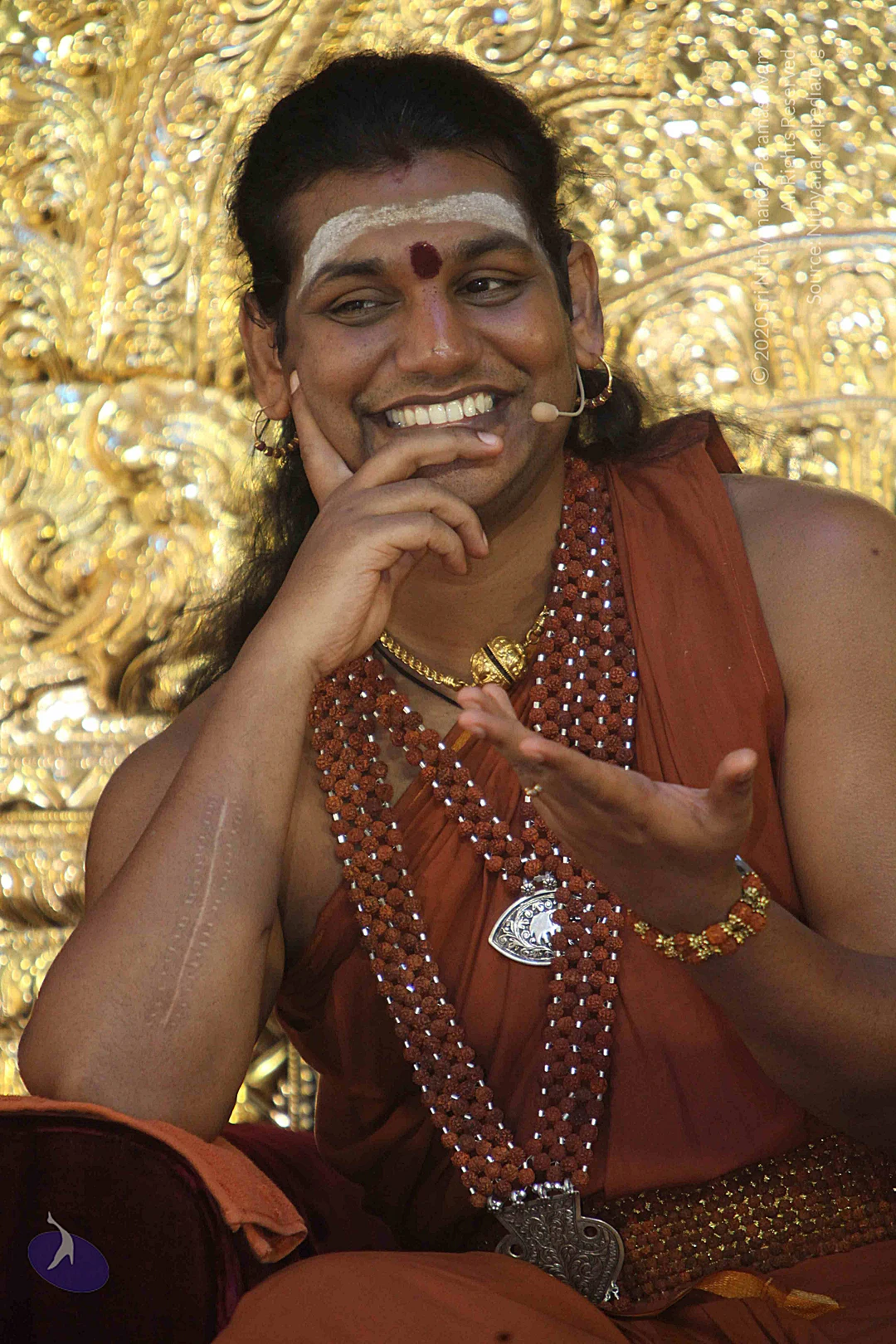
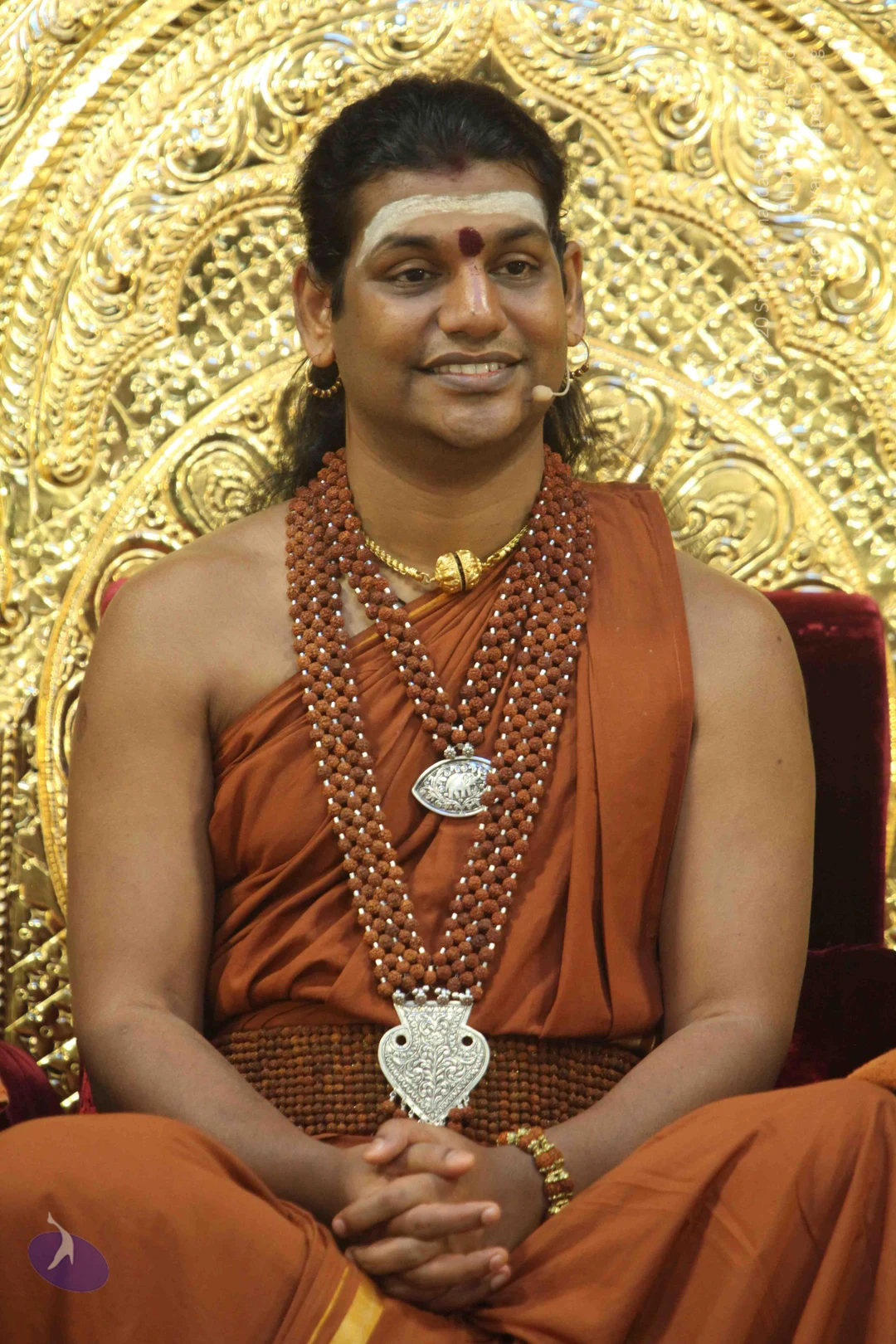
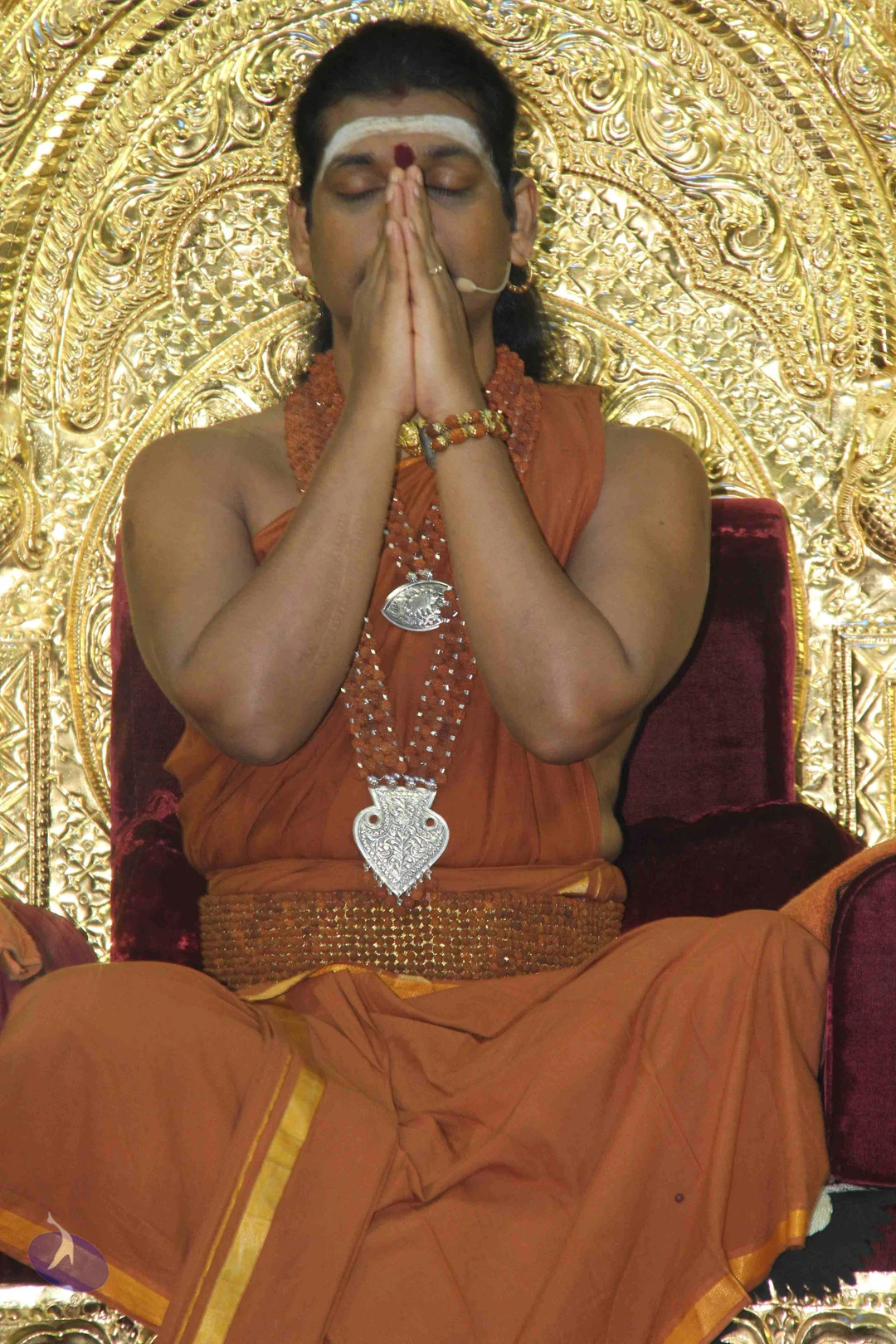
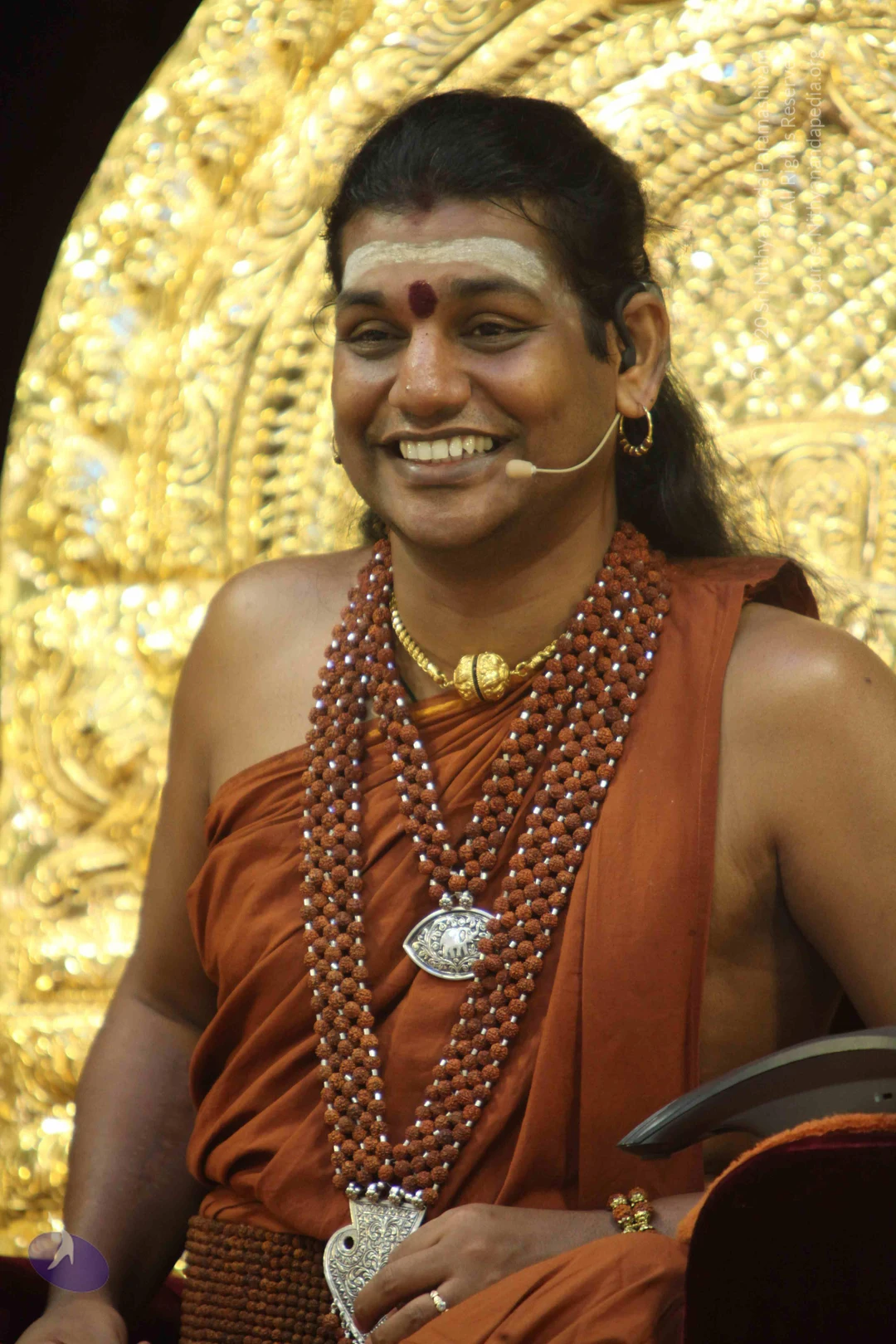
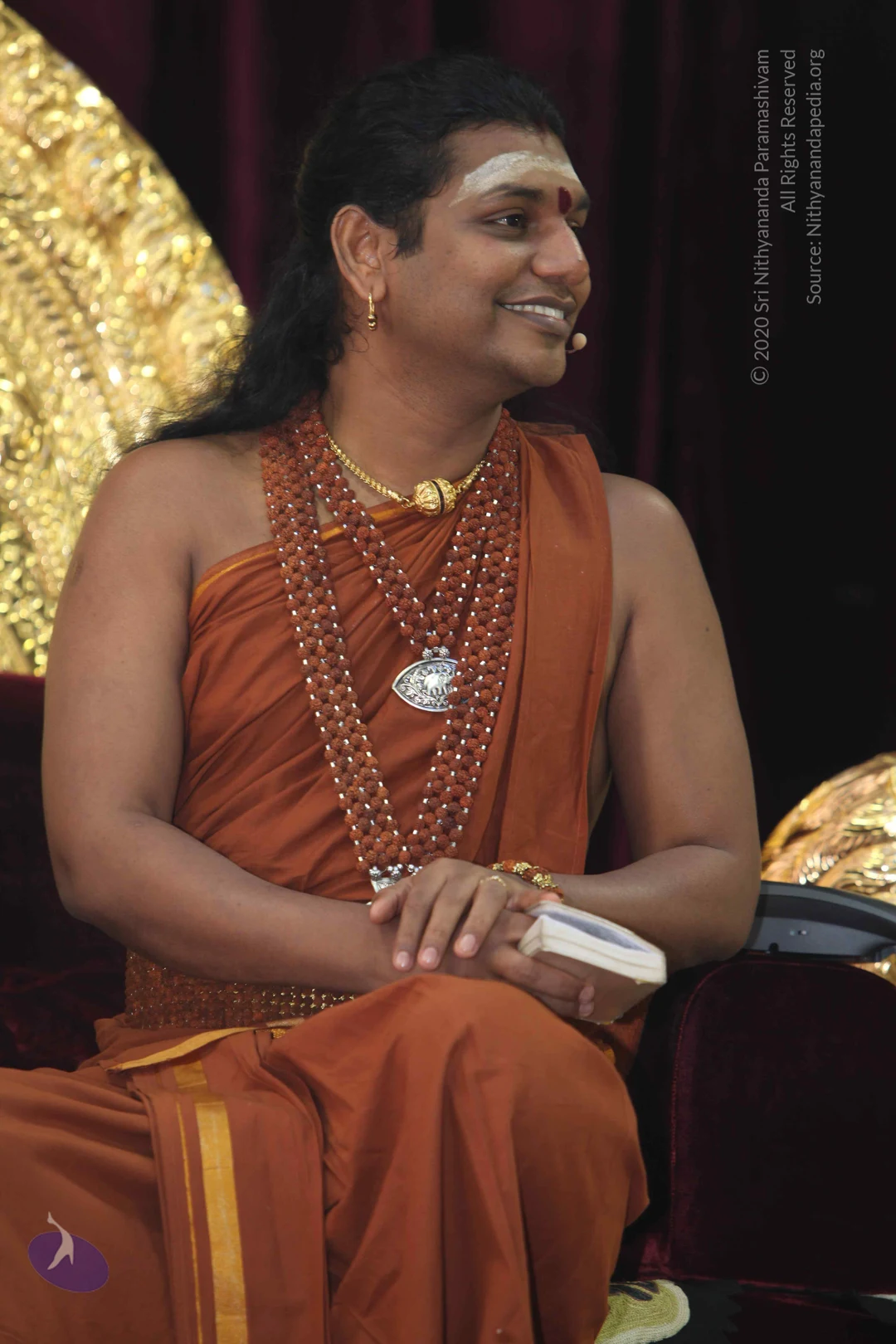
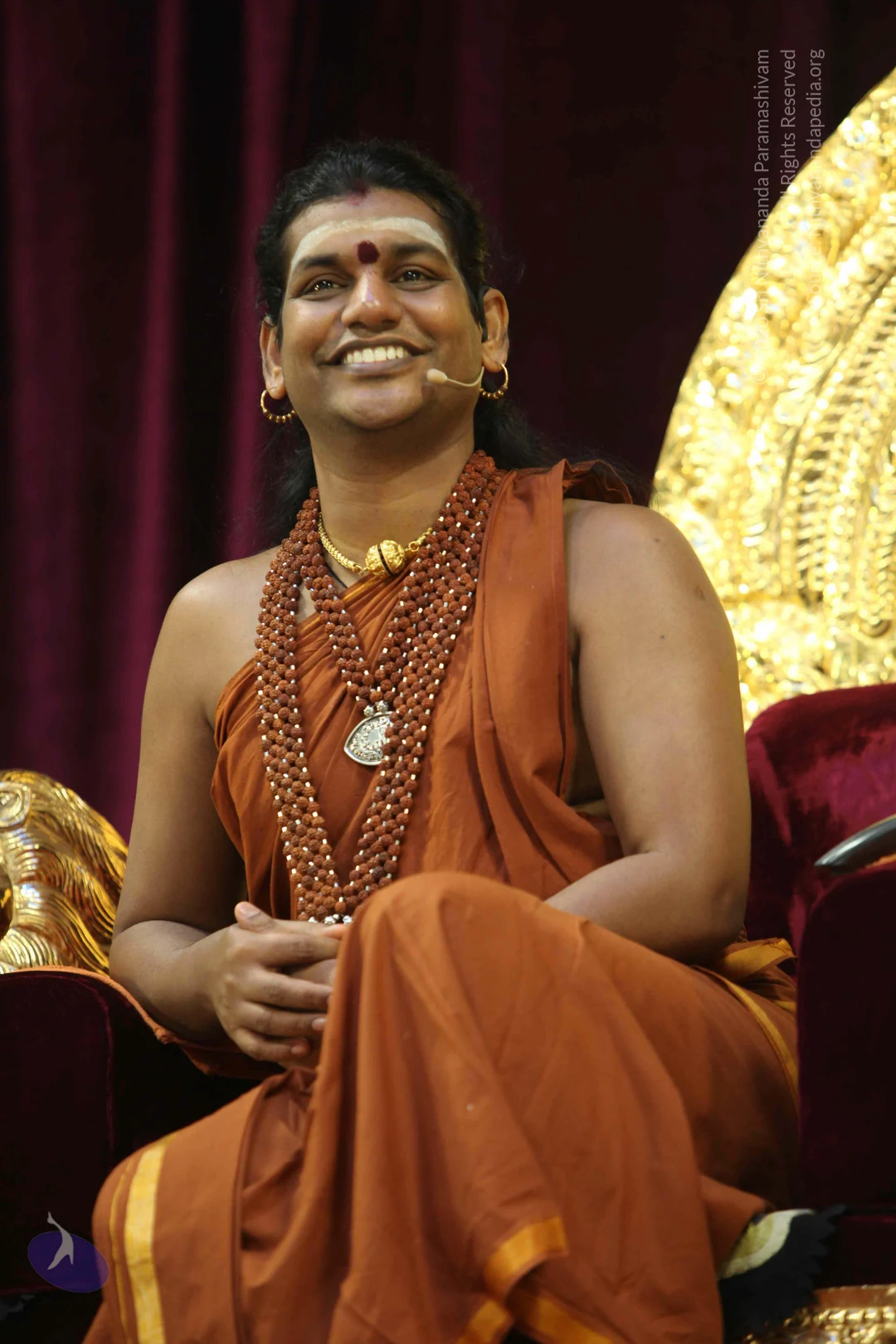
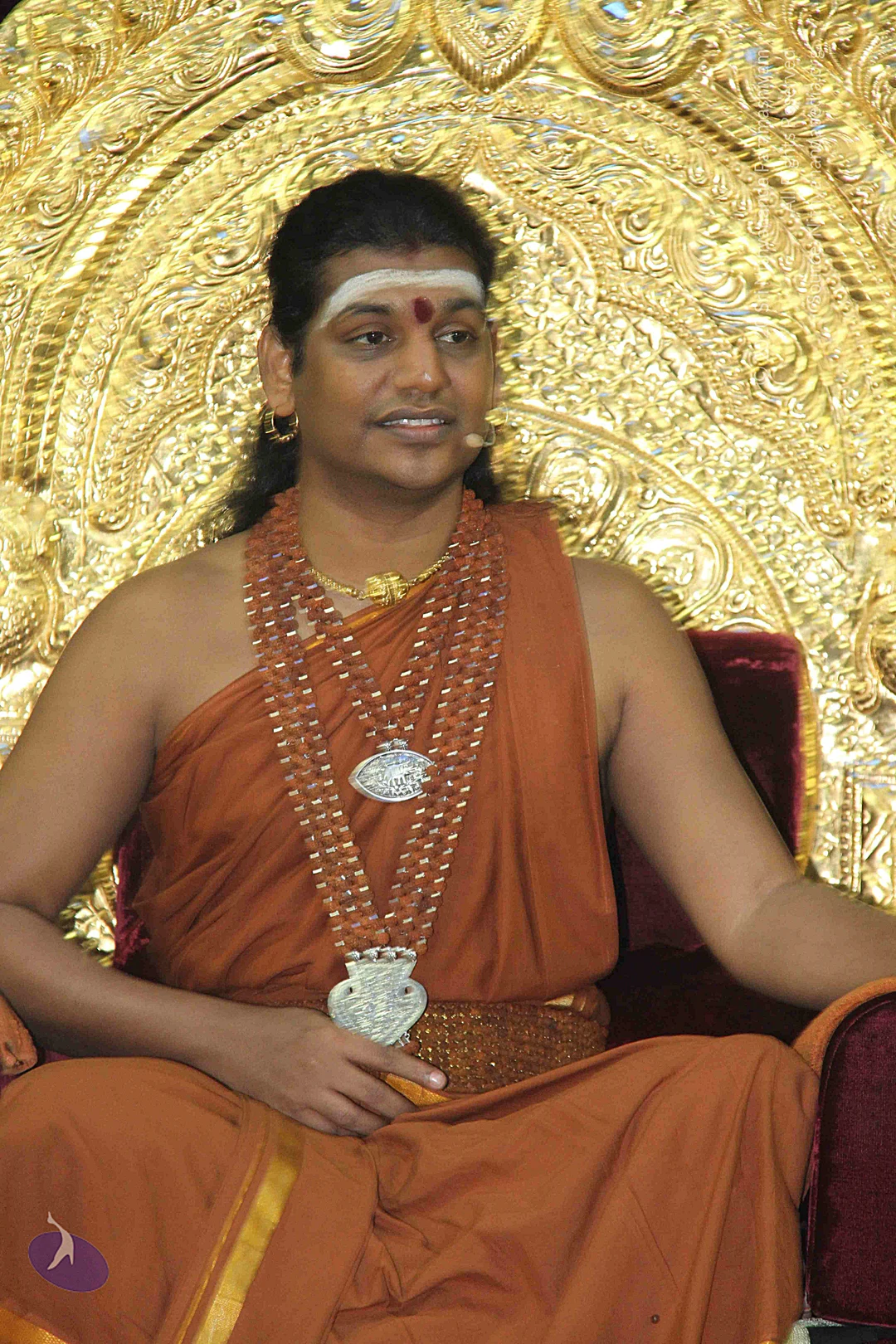
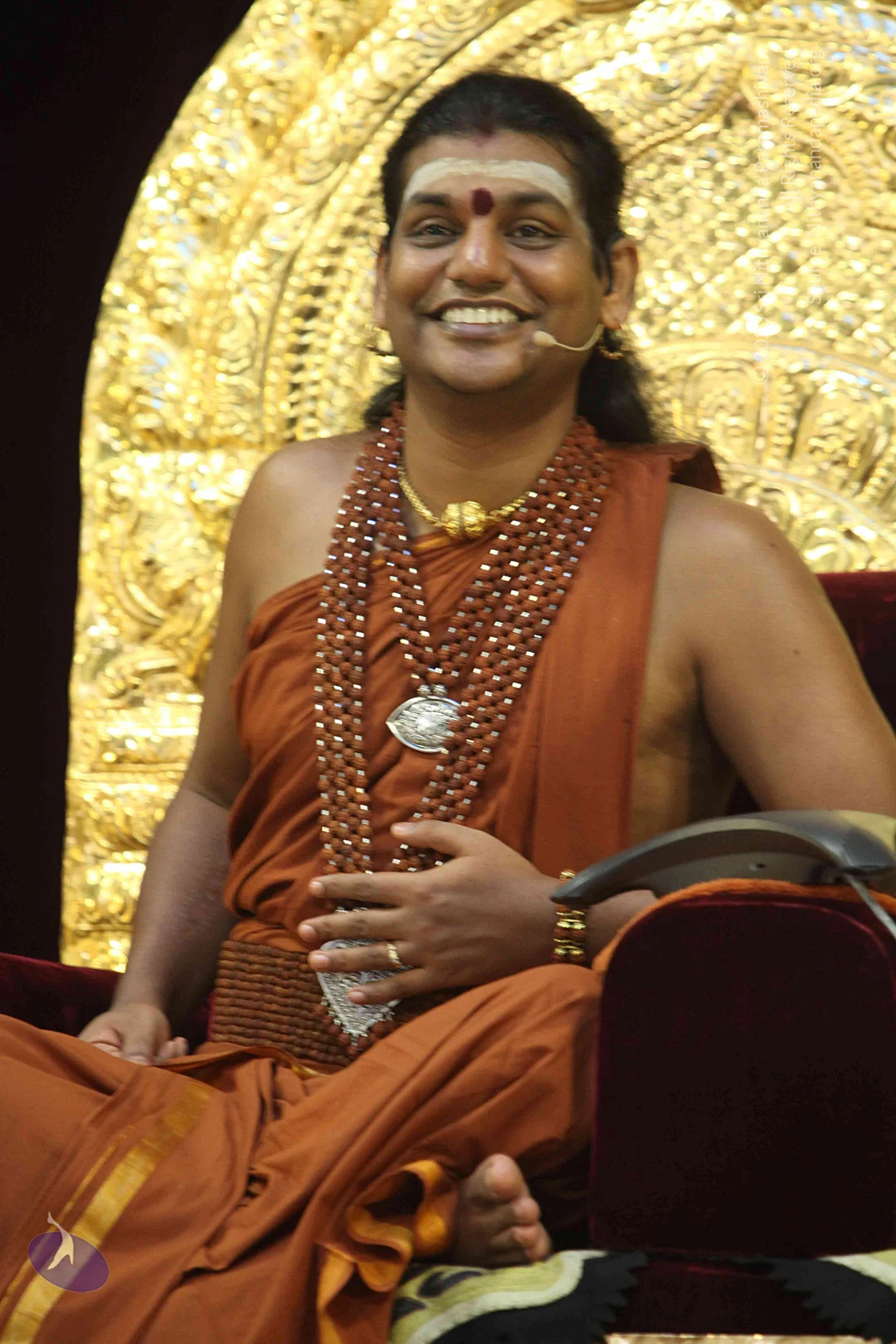
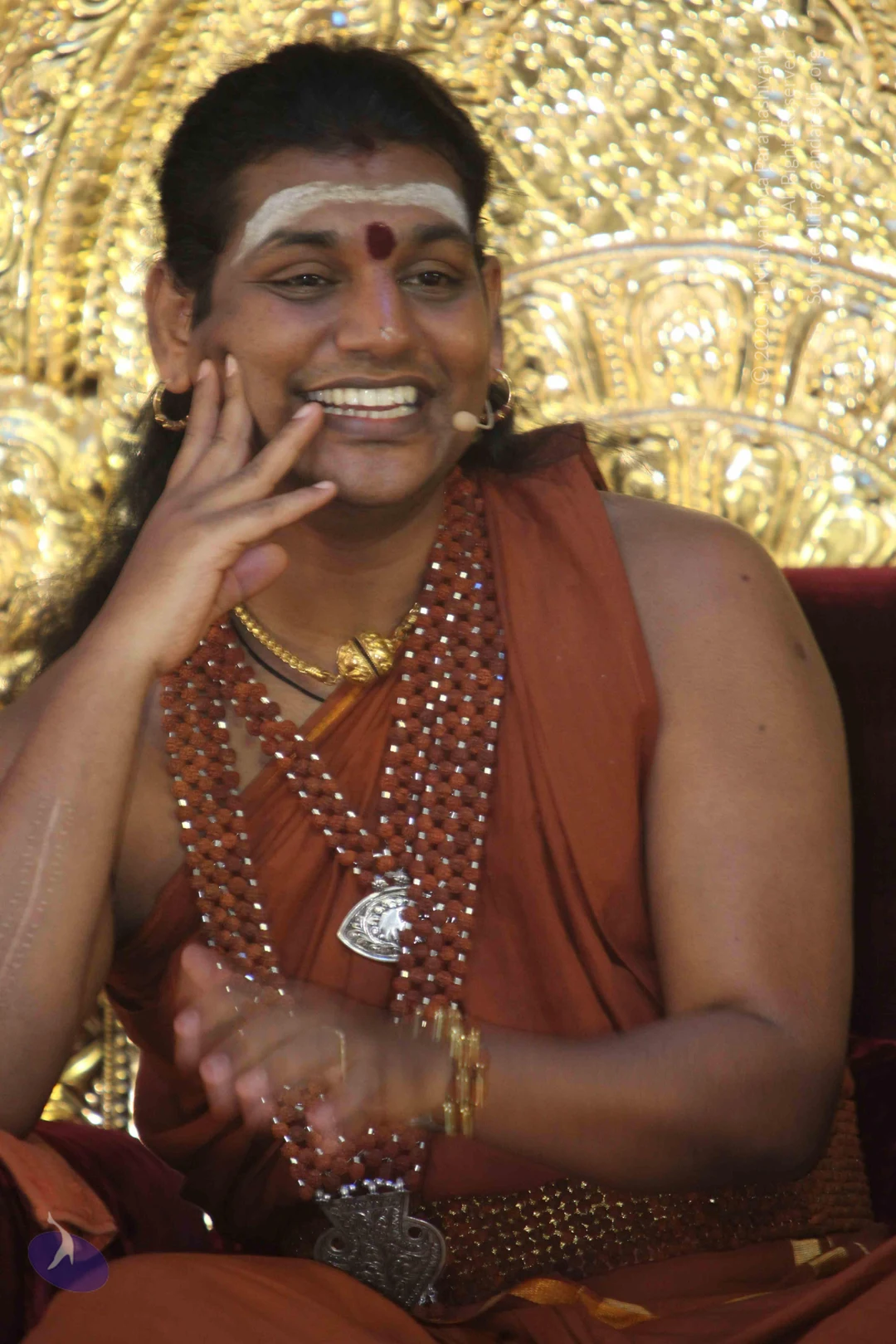
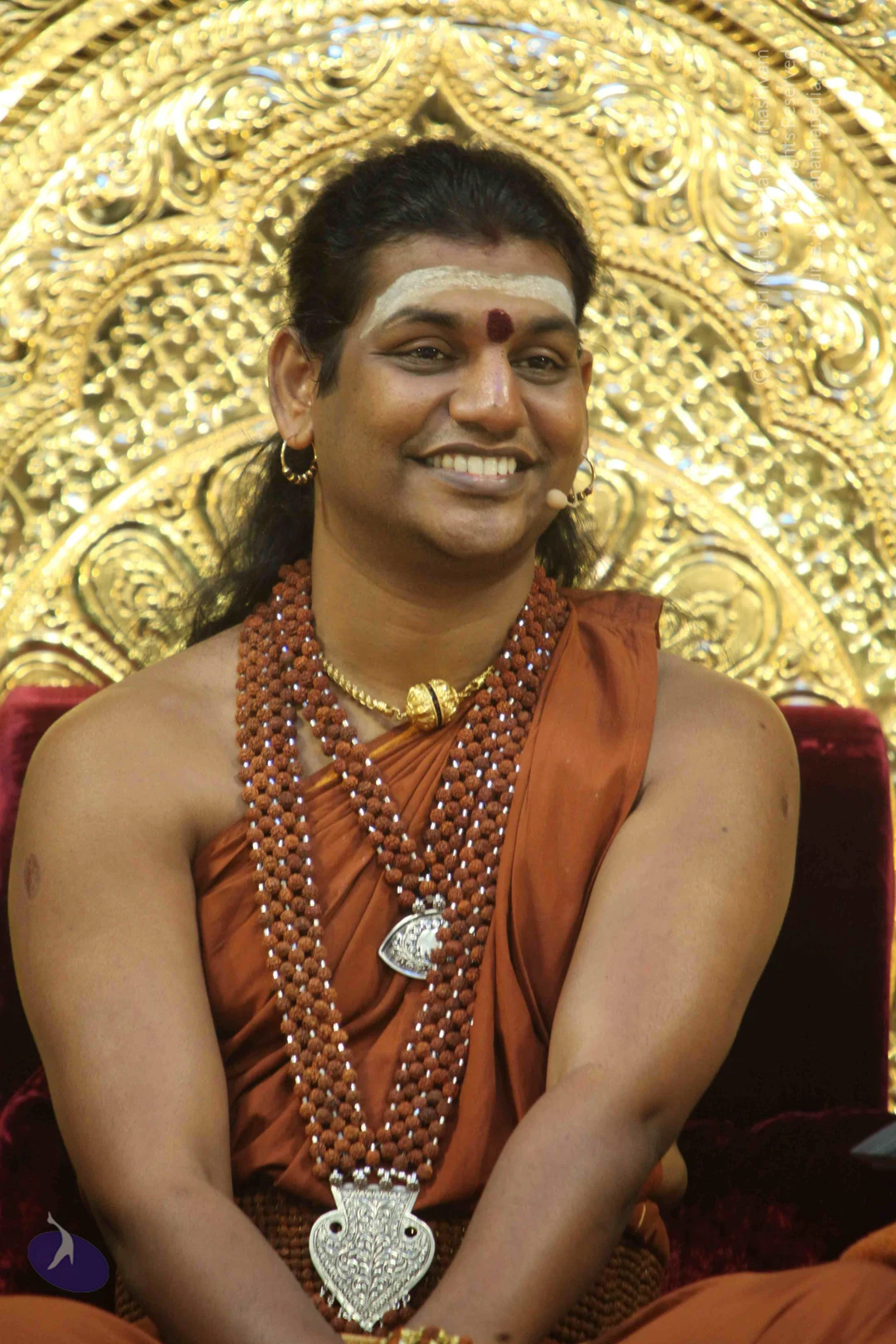
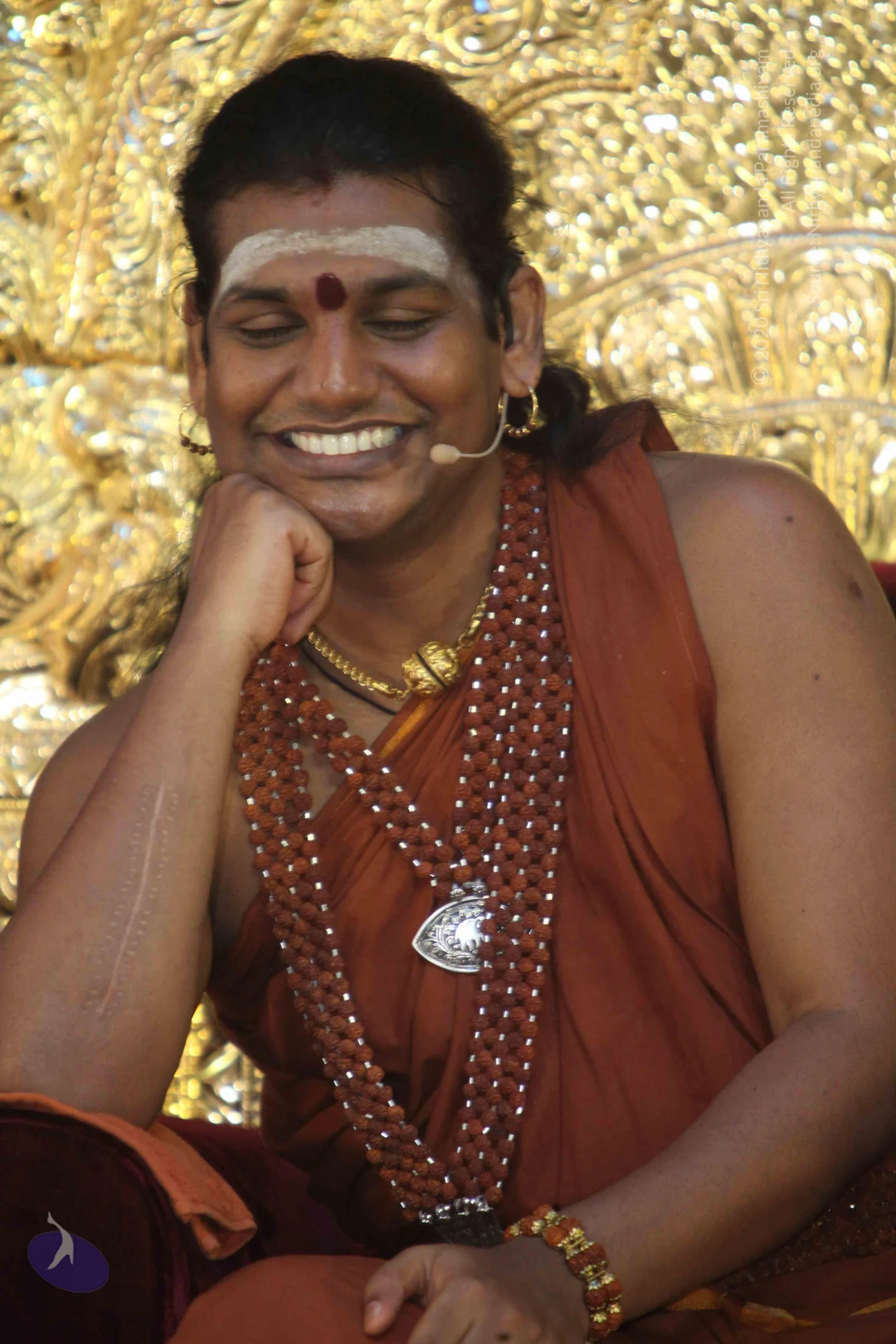
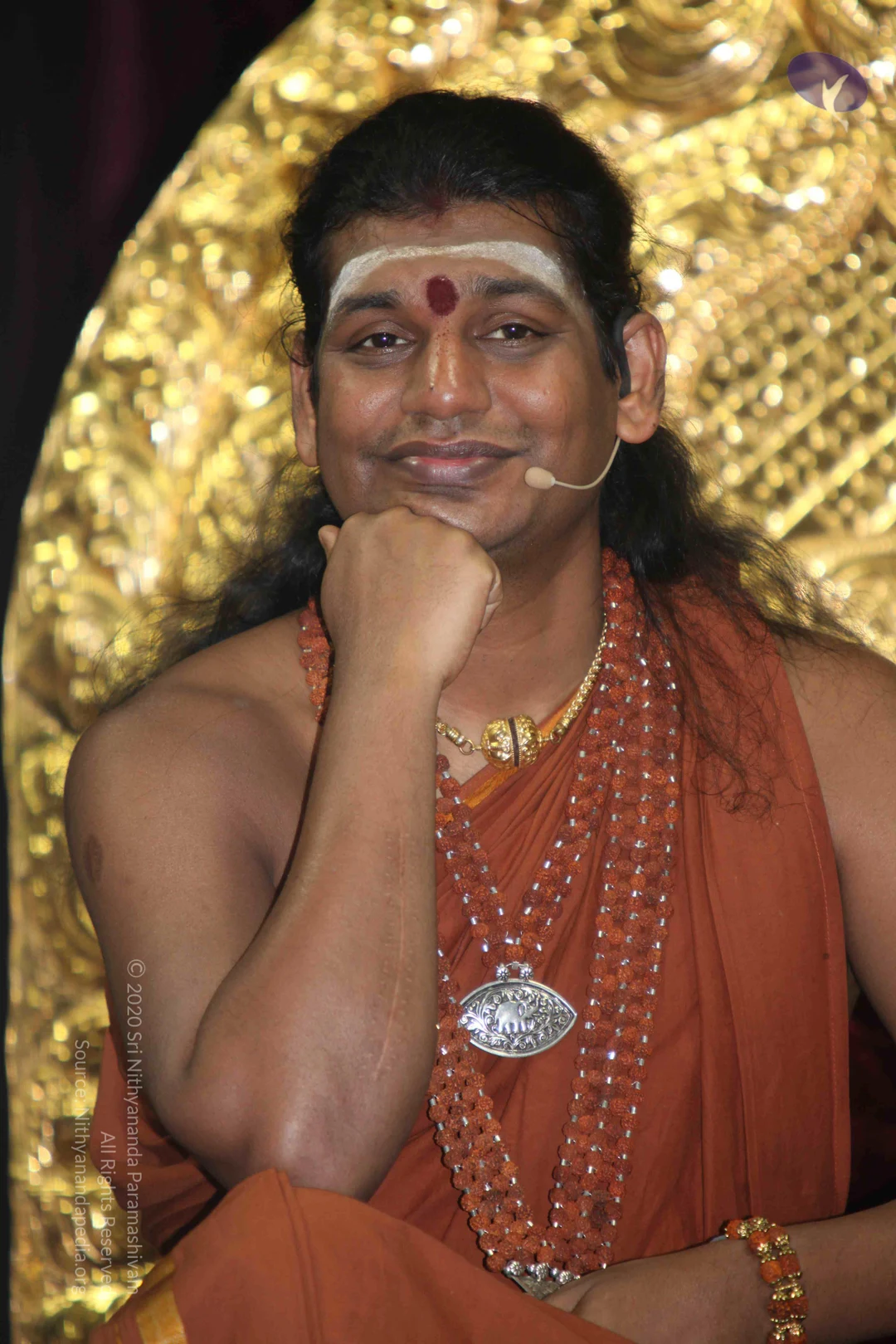
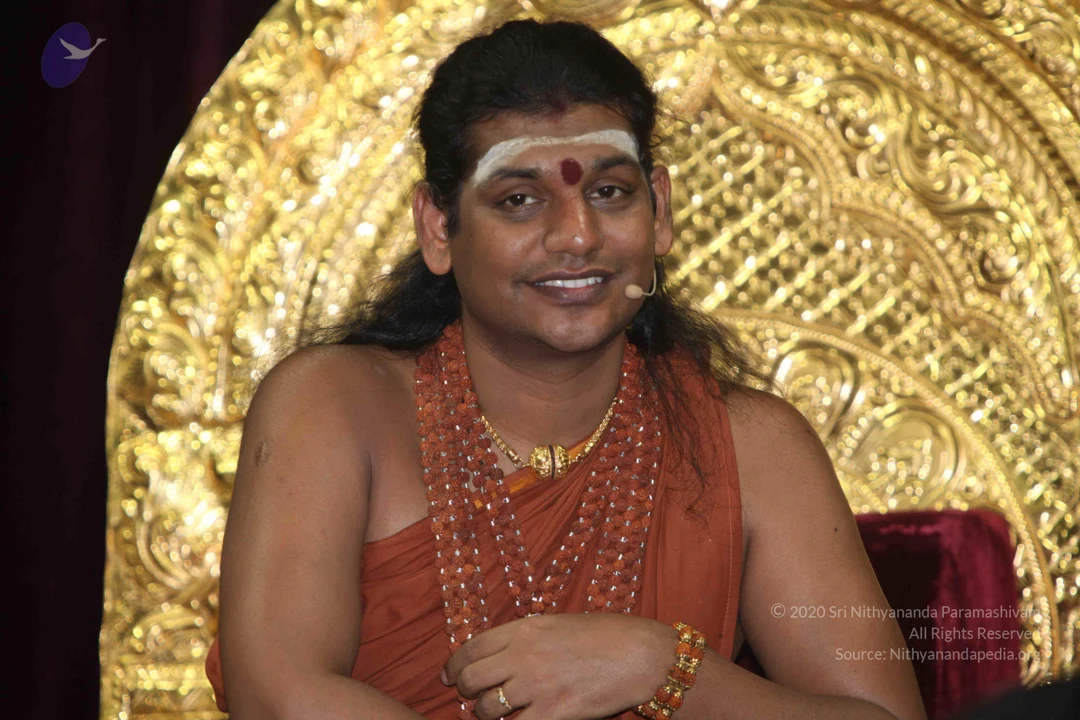
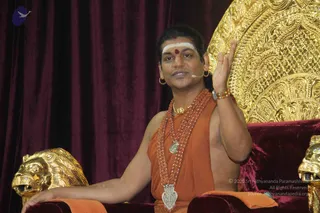
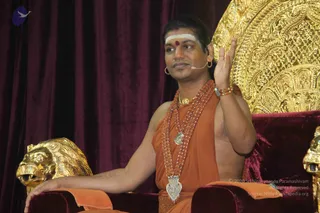
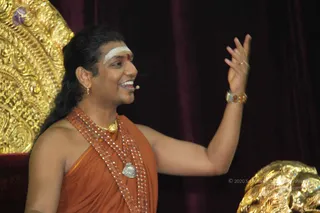
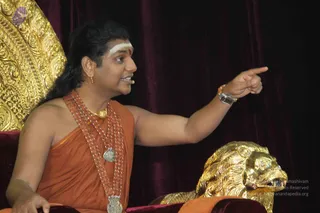
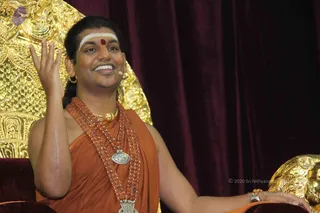
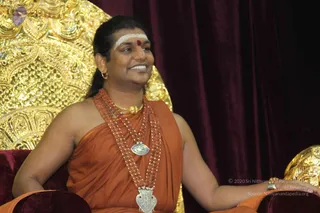
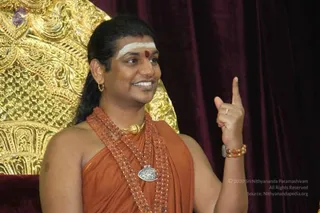
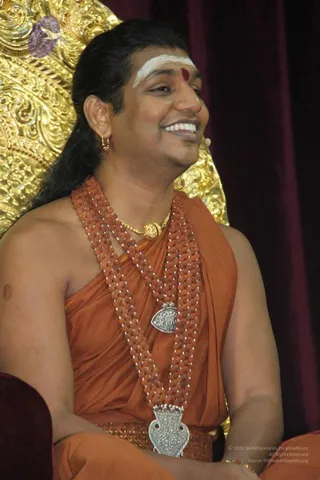
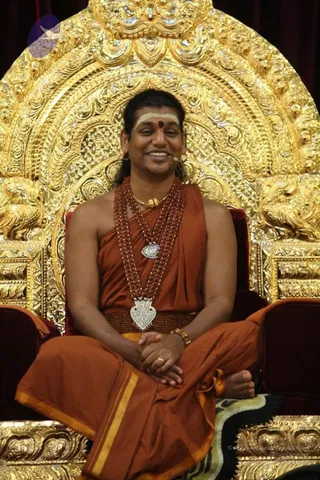
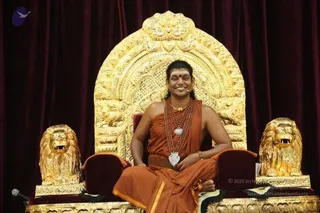
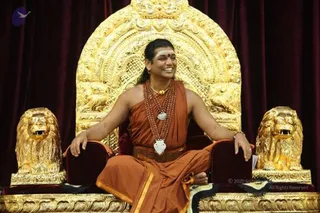
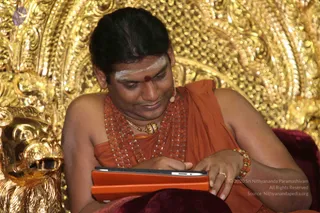
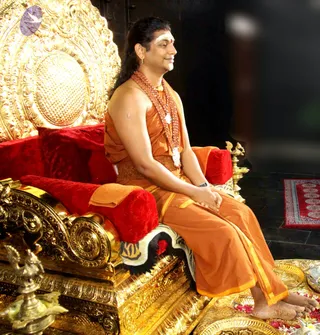
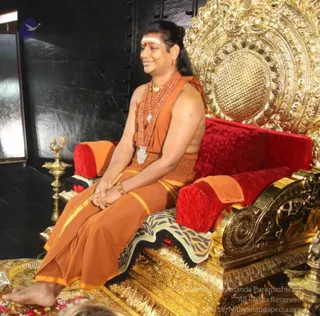
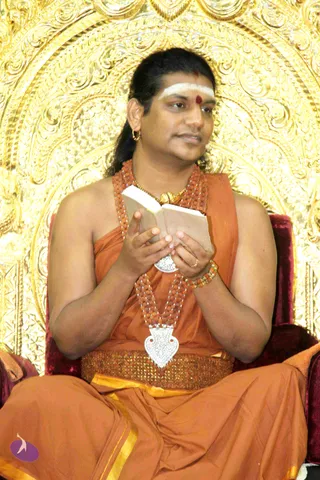
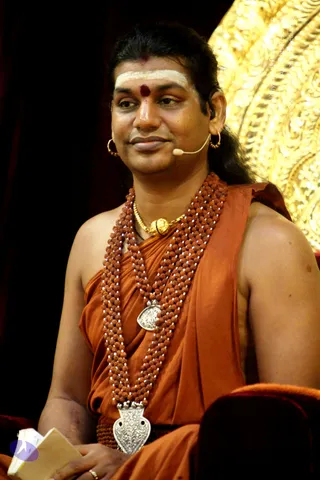
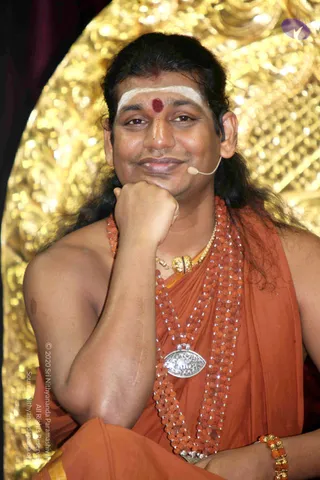
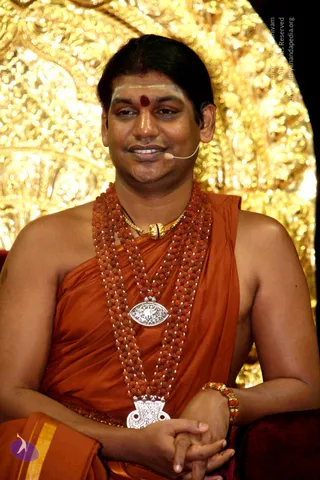
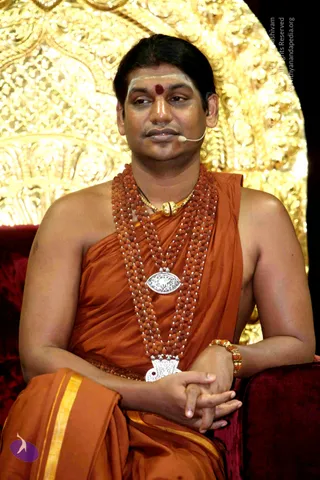
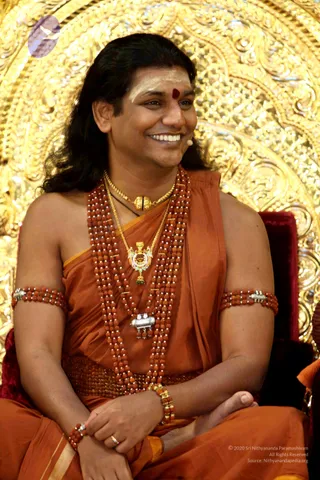
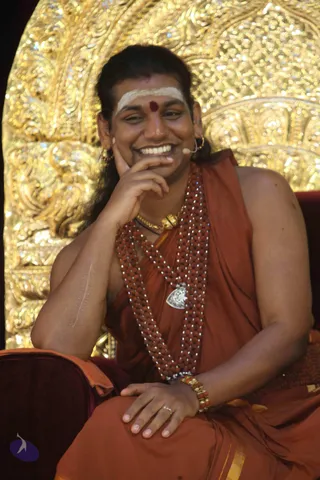
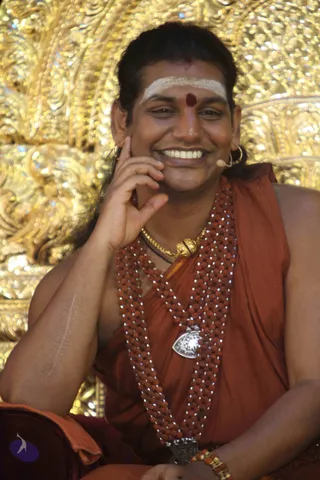
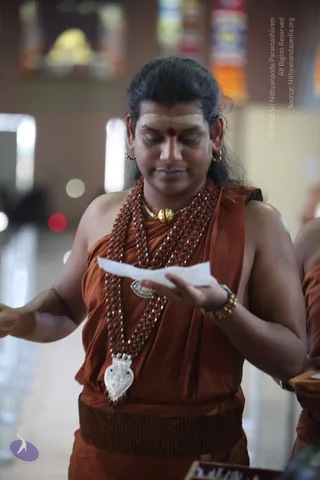
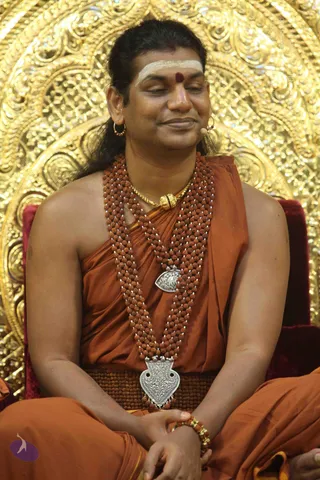
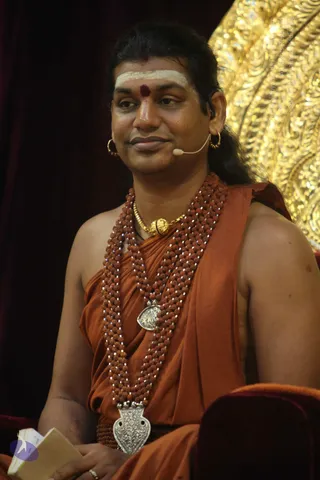
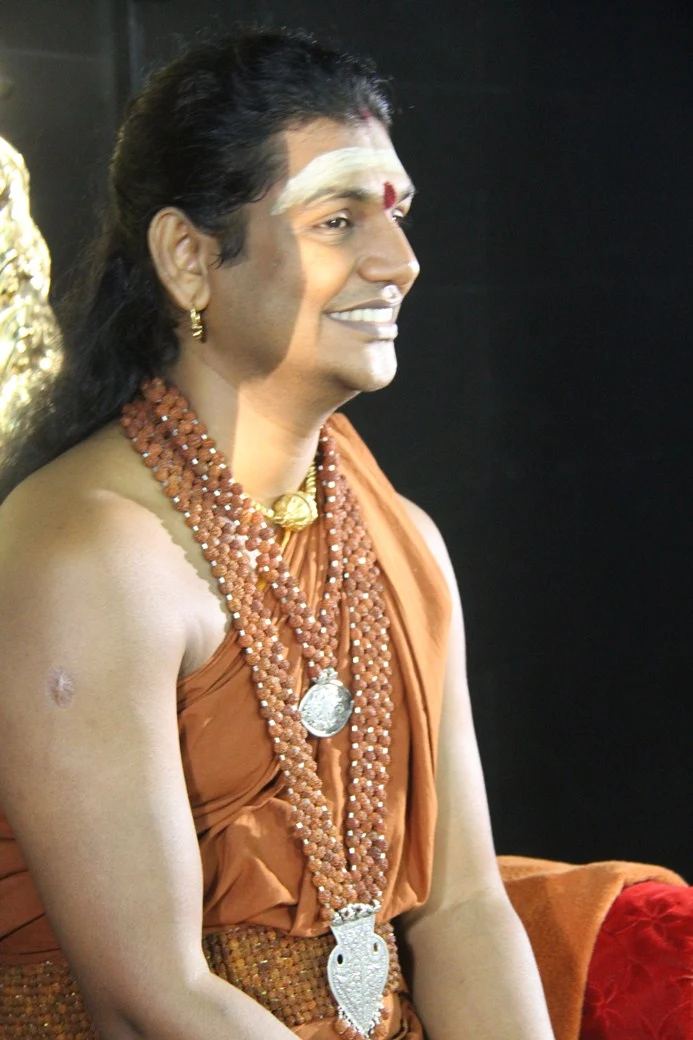
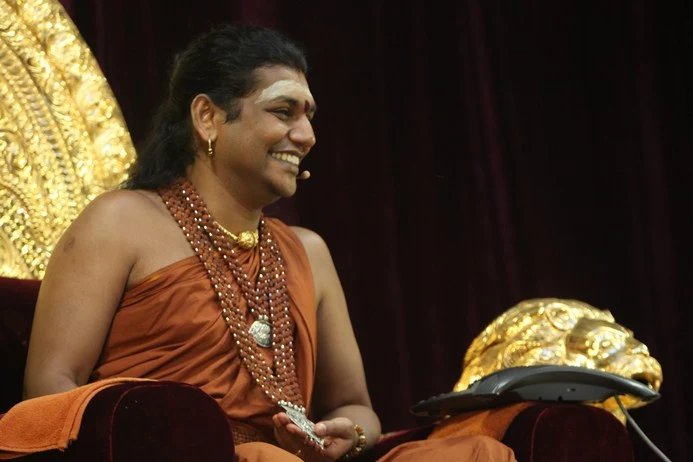
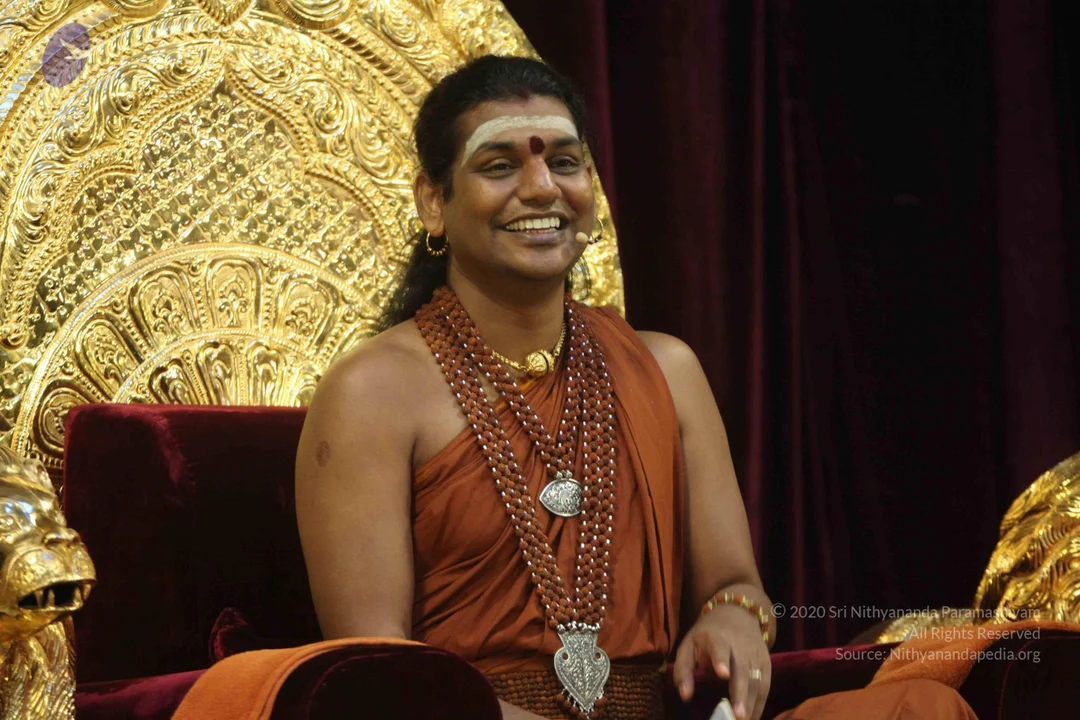
A smiling man with swept-back dark hair sits before an ornate gold repoussé backdrop. He wears an orange-saffron shawl draped over one shoulder, multiple strands of rudraksha beads, a gold ceremonial necklace with a medallion, a red bindi and white vertical tilak on the forehead, and gold hoop earrings. A small clip microphone is attached near his face. A deep red velvet cushion is visible at the lower right. The description matches the page's stated Swamiji cues: long swept-back hair, saffron clothing and rudraksha malas, so this is a probable appearance-based match for Swamiji (probable) seated in person during a satsang.A photograph of a man seated on a red velvet throne with ornate gold carved back, gesturing with both hands raised and smiling. He wears saffron-orange robes, a long rudraksha mala with a large silver pendant, a silver necklace, a small earring, a wristwatch, and white forehead markings with a red bindi. Beside him is a golden lion sculpture on the armrest, a microphone is visible, and a deep maroon curtain forms the backdrop. a person appears to be giving a satsang discourse; the appearance cues are the saffron robes, rudraksha mala and ornate ceremonial setting.A man seated on a dark red velvet throne with a gilded lion-headed armrest in front of him and a gold-embroidered backrest behind. He wears an orange-saffron robe draped over his shoulders and torso, several strands of red-orange beaded rudraksha-style malas, a large silver pendant, and a gold necklace. He has a white horizontal forehead marking with a red dot, earrings, and a small headset microphone, and holds a few white papers in his lap. Maroon curtains hang behind him.

January 15 2013

Original wiki page
Contents

Title

January 15, 2013 Morning Satsang

Description

In today’s morning Satsang, Paramahamsa Nithyananda (Swamiji) elaborated on the concept of Brahmanyam Bahputratam - the feeling of “I am the chosen one”. Swamiji said when a master gives Sannyas he should make the disciple feel, he or she is the son or daughter of the Cosmos. That Disciple should feel, “I am the chosen one of the Cosmos.” Swamiji also elaborated on the Nachiketagni, the three fold fire of Nachiketa and its importance for every spiritual seeker. Any process has 3 fold: Completing it successfully, staying in the same space, and having the necessary tools to come back successfully if you fell by accident.

Video - Favourite Inheritor of the Cosmos || Part 1 || Nithyananda Satsang

Transcript

[00:15] Sadāshiva samārambām jnana sambandāchārya madhyamām Asmadācharya paryanthām vande guru paramparām.

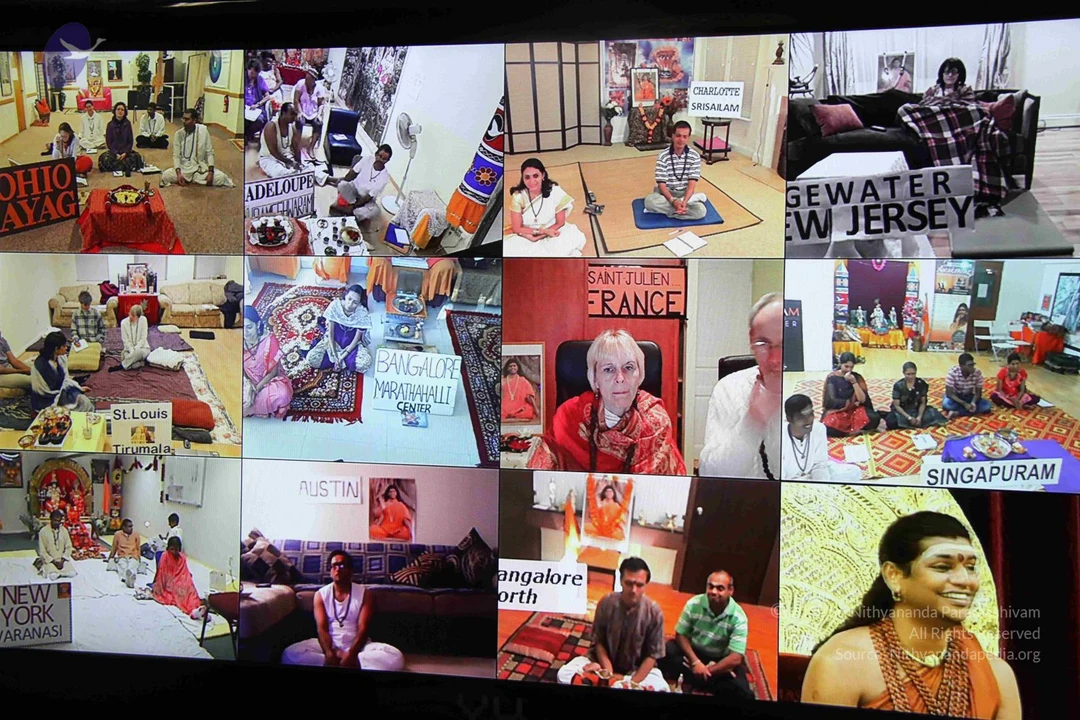
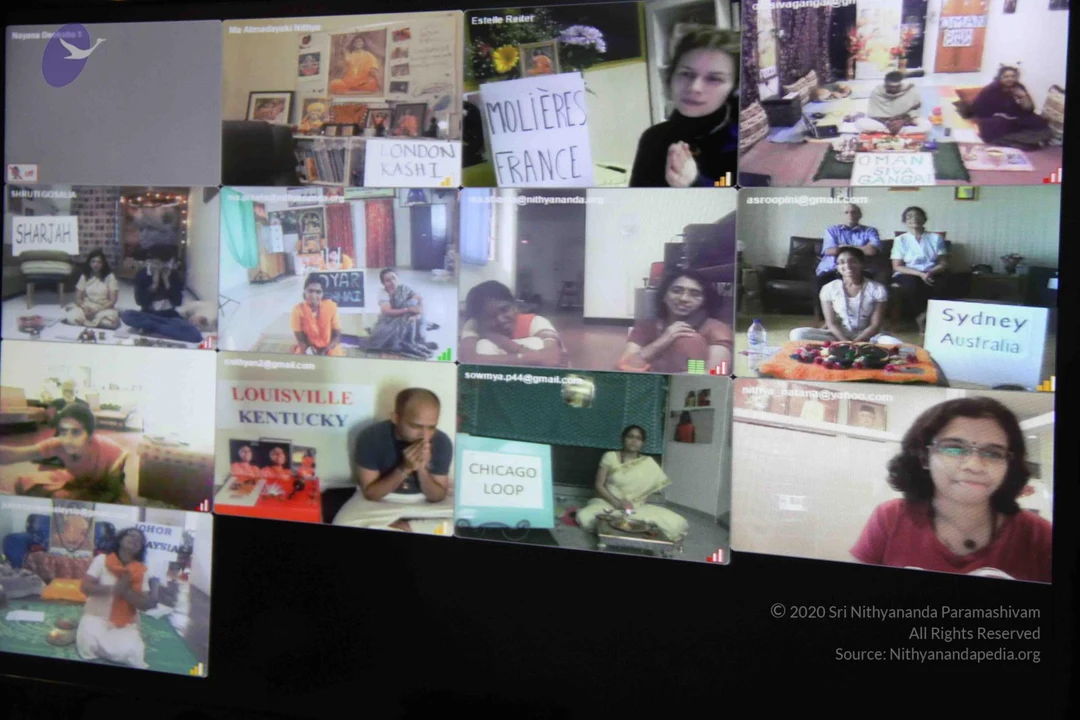
I welcome you all with My love and respects. I welcome all the devotees, disciples, samajis, satsangis sitting with us around the world at this moment in 440 places through Nithyananda TV, 31 places two way video conferencing and 226 cities in 24 countries around the world. The cities sitting with us in 2-way video conferencing, having Nayana Deeksha.

[01:10] Hyderabad-Bhagyanagaram, Oklahoma-Somanatham, Toronto-Kailasam, Vancouver-Puri, San Jose-Madurai, LA-Arunachalam, Los Angeles-Arunachalam, Phoenix-Kanchipuram, Tiruvannamalai, Seattle-Chidambaram, Sharjah-Louisville Kentucky, Sripuram-Chennai, London-Kashi, Molliers-France, Chennai- Alvarpet, Sydney-Australia, Chicago-Loop, Oman-Sivagangay, Priyankananda-Malaysia, Ohio-Prayag, Guadeloupe-Rameshwaram, Charlotte-Srisailam, Edge Water-New Jersey, Singapore-Singapuram, St Julien-France, St. Louis-Tirumala, Bengaluru- Marathahalli, Austin, Bengaluru North, New York-Varanasi, Singapore-Singapuram and Sydney-Australia. Yes. That’s it. Any missing? Johor-Malaysia. Yes, Johor-Malaysia. Chennai-Alwarpet, New York-Varanasi.

[02:32] I welcome all of you with My love blessings. Today, we have a unique special program starting - Ashramites Inner Awakening. Ashramites Inner Awakening and an important announcement, first time on planet earth, shramites Inner Awakening. An important announcement: Anybody want to become ashramite, our full-time organizers, who are planning to become ashramite in near future, means from your side you are very clear, from My side I have kept the application pending, all those people also can apply. We will see the applications and you can apply, email- [email protected]. If you apply, send the email now, before the program starting, I'll, whatever, whoever is, whoevers application is accepted, I'll call you guys and you can attend even through 2-way. You may be thinking, too close I'm telling. If you need time, then you are not ready completely from your side. That is the reason I am telling this close.

[04:16] [email protected] - you can email. Anybody, our organizers, full-time volunteers wanted to become ashramite, you can apply and you can send the email. I’ll have you attended at, through 2-way. I can see Adyar also now, Adyar - Chennai also. Ma, if they can't apply, it means they're not ready. Then this is not the first priority of their life, understand.

[05:06] So dates is, from today to 23rd, I have one more batch also. But I will not allow anybody for that batch, if you apply now. 😊 At that time I will decide whether I'm going to open that batch or not. Hey, don't you understand, it is… the program will be happening whole day anytime, but only between 15th and 23rd. There is no time, there is no time.

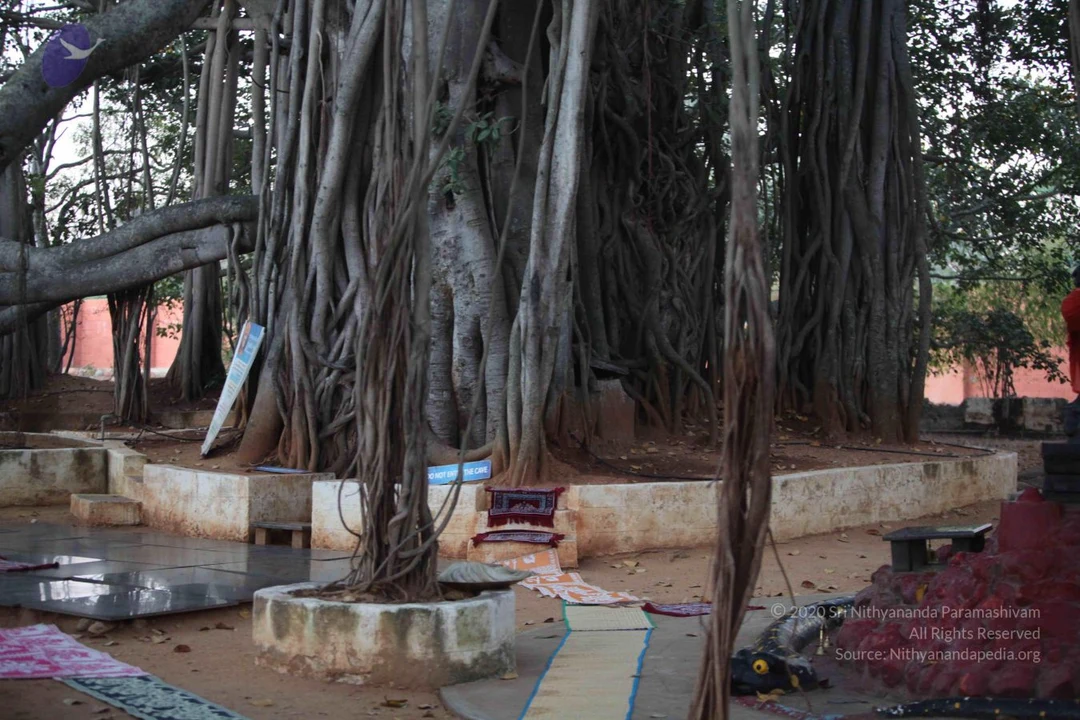
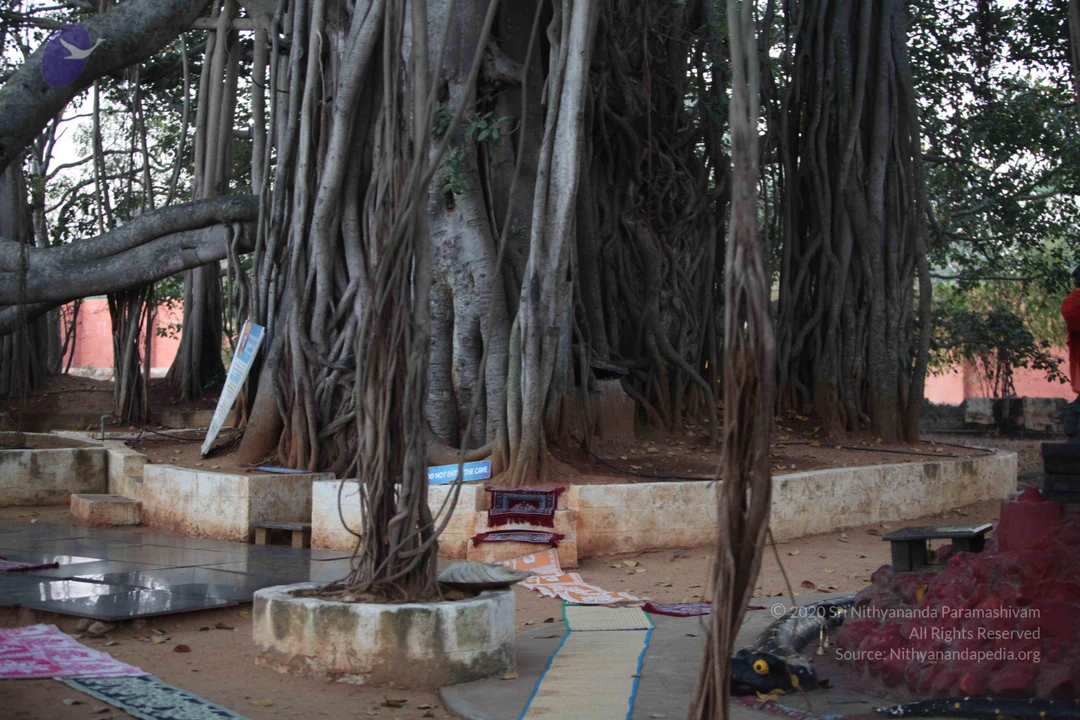
See, ‘ashramites’ is not a job. It…, I can't even say it will be daytime of India, anytime. Suddenly I may decide that, “come on, it is really beautiful and moon is there. Let's go and sit under Banyan Tree. Let's sit.” And if the snake comes out, then we will tell, “Allright, let's go to Vaidya Sarovar and sit.” It is the spirit. Mmh. ‘Ashramites’ means literally, see, after you leave your body living around Me is very easy. Living around Me while you are in the body as Divya Sariri is not a joke. Understand, mmh… as ‘Divya Sariris’ is not a joke, mmh.

(06:44) See the Narayana Upanishad, Maha Narayana Upanishad says, when a Master gives Sanyas, he should make the disciple feel, the disciple is the chosen son or daughter of the Cosmos. ‘Aham me bahuputraya’. Understand, so you should feel so connected to the whole Cosmos, he should declare ‘Aham me bahuputraye’, ‘I am that chosen, special’. Only then the next step of ritual is done, Viraja Homa is done. The first mantra of the Viraja homa... Viraja homa means purifying yourself. I commit with all My ashramites, I'll make you guys feel that ‘Aham me bahuputraya.’ Keeping Kala Bharaiva as a witness with authenticity and integrity I declare, “I will not give up on Me and all of you ashramites till I make you guys feel, with your whole heart you should sing, ‘Aham me bahuputraya’, ‘I am the Chosen One.’

[08:25] So beautiful that verse is that ‘all powers of the cosmos is available for me, at my disposal out of my free will’. All the special things of the Cosmos. See Cosmos has three special things: Creativity - means all the artistic abilities, Intelligence - Saraswathi and all the natural resources - Lakshmi - means the forests and ocean and pearls and everything. And all the extraordinary powers, metaphysical powers - Kali.

[09:11] So the person should feel all these are in my disposal. ‘Aham me bahuputraya’, ‘I am the chosen one’. I commit and I will not give up on Me and you guys till I make you experience I am ‘Aham me bahuputraya’, ‘I am the chosen one’. Bahuputra or Bahuputri, anyone is okay. But I am the chosen one. Only when I make you guys feel I'll rest. I'll not give up on Me and you.

So this whole Inner Awakening is for that. The purpose of Inner Awakening is to make you feel ‘Aham me bahupturaya’ - ‘All the best things of the world is in my disposal. So beautifully it is in my control. So, I am the Chosen One’ and keeping Kala Bhairava as witness, I commit I'll make it happen, I'll make it happen.

[10:52] I will not give up on you and I'll not give up on Me. That I am not able to do that to the people. No. I can do it. Only then that word ‘Bahuputra’ or ‘Bahuputri’ has a meaning. You should be overflowing with the Completion, overflowing with the Completion and feeling, “Wow, what a life.” Only then you feel, ‘Aham me bahuputraya.’ It can never come just by money. I tell you. Money is only one resource of Cosmos - the natural wealth like diamonds and pearls and all that - Lakshmi. But there are other two major parts: the mystical powers - Kali and creativity, intelligence - Saraswati. When all three is available to you at your disposal, just by free will, then the person feels ‘Aham me bahuputraya.’

[12:46] I'll prove My love to all of you by making you experience ‘Aham me bahuputraya.’ Anything less than that is not a gift I would like to give you guys. Then it means I don't love. I'll prove, I love you guys by making you experience, live it undoubtedly. Not few hours or few days, living it as ‘Aham me bahuputraya.’ When you wake up you should know in the morning, “Wow I am the chosen one.”!! I'll do it, I'll do it. So anybody want to become ashramites, even if you have completed the recent 2012 IA graduation, you can apply. If you are waiting to become ashramite, from your side you are clear, and from My side I have kept the application pending. There are many like that I have kept. I think at least hundred applications are in pending like that. Last one or two years itself I am dragging, delaying, mmh, dilly-dollying. All of them can apply, it’s a free program. No money requirement. It will be in English, the program will be in English. I may use Tamil a little bit, because many of the ashramites does not understand English completely. So I’ll use the Tamil language in between but I commit with you guys, that I’ll make sure that ideas are conveyed, the truths are conveyed, tatvas are conveyed in both the language, in Tamil and English, both. Mmh. I commit with you guys that in English surely it is conveyed, in Tamil whenever it is required, I’ll use the language.

(15:35) For example this two day, two night we had a program. For India night and for other countries day time. We had a program. Especially the early morning sessions, after 1 o’clock sessions, throat is not cooperating, eyes are not cooperating, they just want rest, but I said, “No. I committed, we have to do it.”

It's not that once I tell them, they leave My body, no. They stay with My body and do what I am saying, then after going to the room, I put little that mint, or put little sandal on the eyes and cool the eyes, put little mint on the throat and cool the throat. I do the repairing work after, but when I have to do it, these organs stood by Me.

Same way I feel ashramites when I have to do it, they stood by Me, even with the friction. Now it is My time I need to put them the mint, sandal and make them understand, cool them and make them as part of Me. My eyes, they don't want to do what I want, but the moment I said, “No, we have to do it”, it came and sat and I did the class.

The throat, they were just begging, “No, I don't want to do.” I said, “No, I have committed, I have to do.” Then they just came and sat and I did the class. After that I went to the room and put whatever need to put the mint in the throat and sandal paste in their eyes and whatever and healed them. Now, they are completely become one. So it is time for all of My external organs that I put mint, sandal paste and make them become smooth part of Me. That's the exact feeling I was feeling from today morning.

[18:01] So it is My responsibility to make My heart feel, ‘I am the Chosen One. I am beating the center of the Cosmic Heart.] It is My responsibility for My tongue to feel, ‘Hey, I am the chosen one. I am the expression of Saraswati's dance.’ It is My responsibility for My hand to feel, ‘I am the Chosen One, through me the energy flows which heals millions.’

[18:41] I have… it is My responsibility now to make all My ashramites to feel, ‘We are the Chosen One; through us the whole thing happens.’ I know, there are some, even still now having, having in the heart, “Ehh, this all He talks, He tells, but tomorrow again he is “mmmhhrrr”.” It will take little time for you guys to trust that I really love you guys, but I will not give up on you and Me, till I prove you are ‘Bahuputra.’ I'll not give up. I'll not give up. I'll do it. I'll do it. [19:33]

Video - Favourite Inheritor of the Cosmos || Part 2 || Nithyananda Satsang

Transcript

[Swamiji laughing] They were literally begging. I said... the moment I heard the first bell, I said, “Already bell has come, now nothing can be done. Just cooperate with Me.” They simply obeyed. They cooperated with Me.

[05:25] So, whatever may be, you guys stayed back, stood. So, now it is time. As I said, see after all the program is over, I went to the room and put little sandal and cooled the eyes. That irritation has gone. Now it has become very blissful part of the body. Now the eyes feel, ‘Aham me bahuputraya’. Mmh. So, now it is time for Me, to make all the organs stayed back, to make them experience ‘Aham me bahuputraya’. Mmh.

[06:36] ….the sloka ‘Mahanarayana Upanishad’, Viraja Homa, just before the Viraja Homa, the Valli... ‘Viraja Homa Mantra’ it’s called. Mmh. Actually I literally felt when I was getting initiated; formally I went through Viraja Homa and that Sannyas ritual 3 times in My life. Once with Kuppammal and then Hamsananda Puri and now, of course Madurai Adheenam, the, all the formal rituals. All the 3 times I felt ‘Aham me bahuputraya’. Of course, first time feeling is a very important thing. After that it continues, it doesn’t go away. Mmmh.

[08:04] The ‘Viraja Homa Mantra’, in ‘Viraja Homa Mantra’ the 1st verse: Tilan-juhomi sarasaa(ga)m sapishtaan gandhaara mama chitte ramantu svaahaa | Gavo hiranyam dhana-mannapaana(ga)m sarveshaa(ga)m sriyai svaahaa | sriyam cha lakshmim cha pushtim cha keertim cha anrinyataam | brahmanyam bahuputram | ‘Brahmanyam bahuputratām’

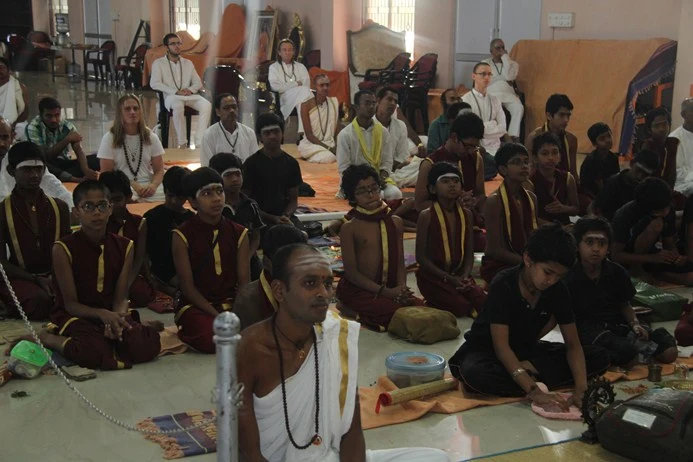
[08:44] So in the commentary, you see this is a pro, this is a poetry, when you translate this into a prose, that time they write like a ‘Aham me bahuputraye’, the feeling - ‘Aham me bahuputraye’. sraddha-medhe prajaas-sandadaatu svaahaa || Great. Give a good hand to Gurukul Kids. Great. ‘Brahmanyam Bahuputratām’. It means ‘I am the chosen son of the Cosmos’, ‘Brahmanyam Bahuputratām’. ‘Aham me bahuputraye’. Great.

[09:42] Praana-apaana-vyaana-udaana-samaanaa may sudhyantaam | Jyotir-aham virajaa-vipaapmaa bhooyaasa(ga)m swaahaa || Sreescha lakshmees-cha pushtis-cha keertims-cha anrinyataam| brahmanyam bahuputrataam|

The same line, ‘Brahmanyam bahuputratām’ is coming twice in this.

sraddhaa-medhe prajnaatu jaatavedas-sandadaatu svaahaa||

Only when you feel you are the Bahaputra or Bahaputri, ‘Chosen One’, you will feel like radiating love to the world. Understand, otherwise still you are incomplete, unfulfilled. How will you love others?

[11:12] When I completed with the whole Cosmos and realized My relationship with the Cosmos, I felt, ‘Aham me bahuputraye’. ‘Brahmanyam Bahuputratām’. So I commit with all of you whether you feel... you may feel, “No, it is impossible. He can not make me feel ‘bahuputra’; he can make anybody else feel, not me.” Even then, I commit with you guys, I will not give up on you. I’ll make sure, you feel, you are... not only feel, you experience, you transform and experience, you are ‘bahuputra’ and ‘bahuputri’. Mmmh.

[12:19] Of course, I make this commitment not only ashramites, sannyasis, brahmacharinis, even to Gurukul Kids. Only after I make, in future, only after I make people experience they are ‘bahuputras’, I want them to come inside the ashram. First that is the, I have to give them the experience that they are bahuputras. Only then they have to come. Mmh. Only then they will stand by during all the frictions.

[13:24] You are not the hair which has fallen because it doesn’t feel connected to what I am. You are the eyes and the lungs and the heart and liver and kidney and the hand which is still standing, sticking; even though you had some incompletions. Mmh. ‘Brahmanyam Bahuputratām’ Great. I think this is the real message all you guys should know. Not only the people who have become ashramites, even others should know that this is the context or the energy from which I am operating, functioning. [14:48]

Photos

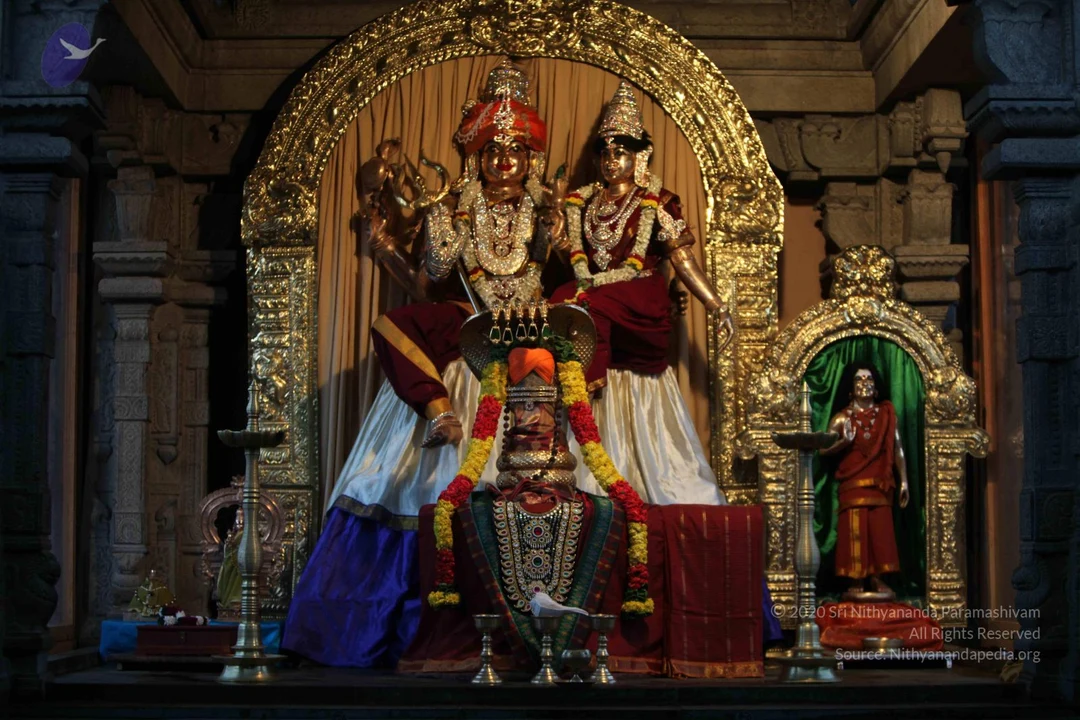
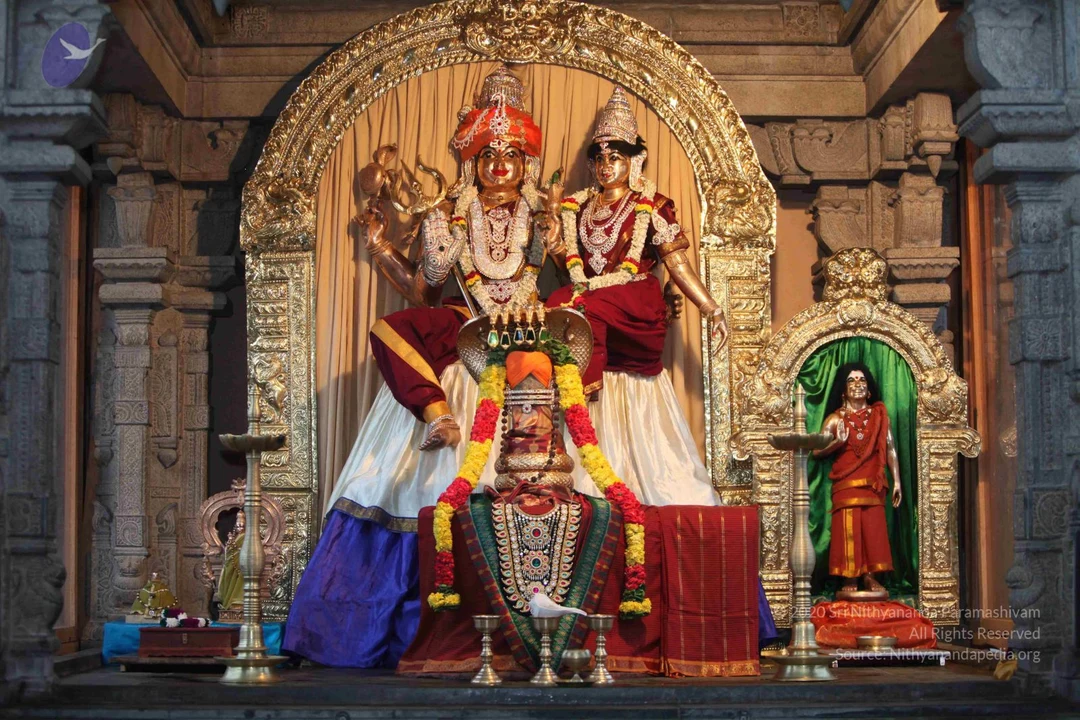
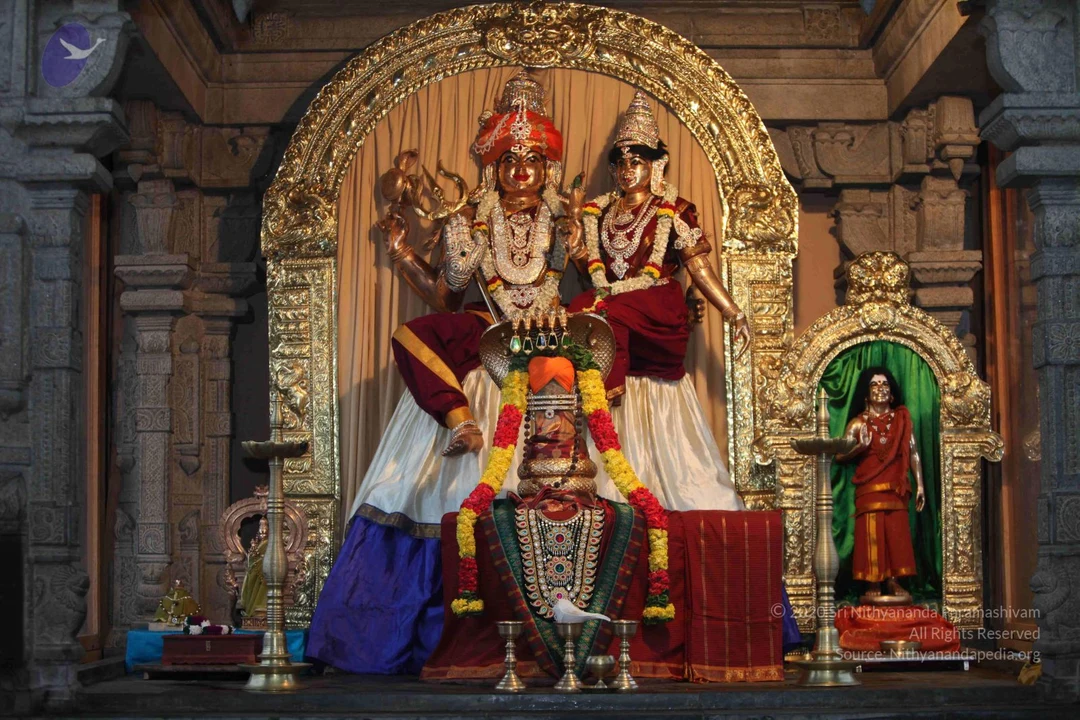
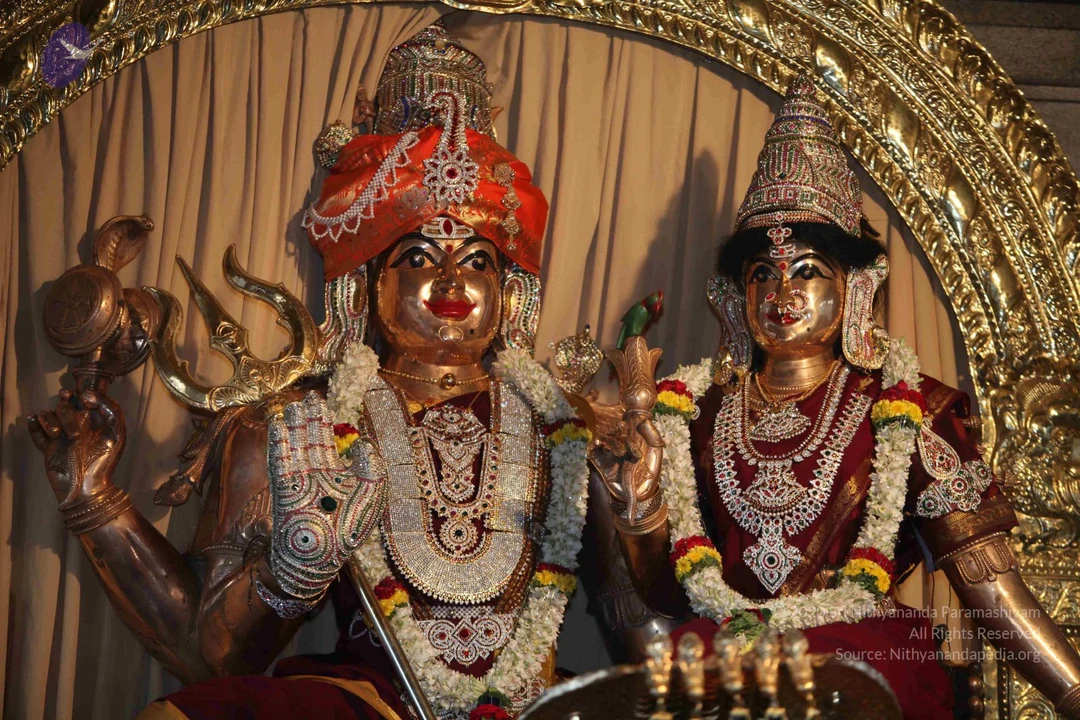
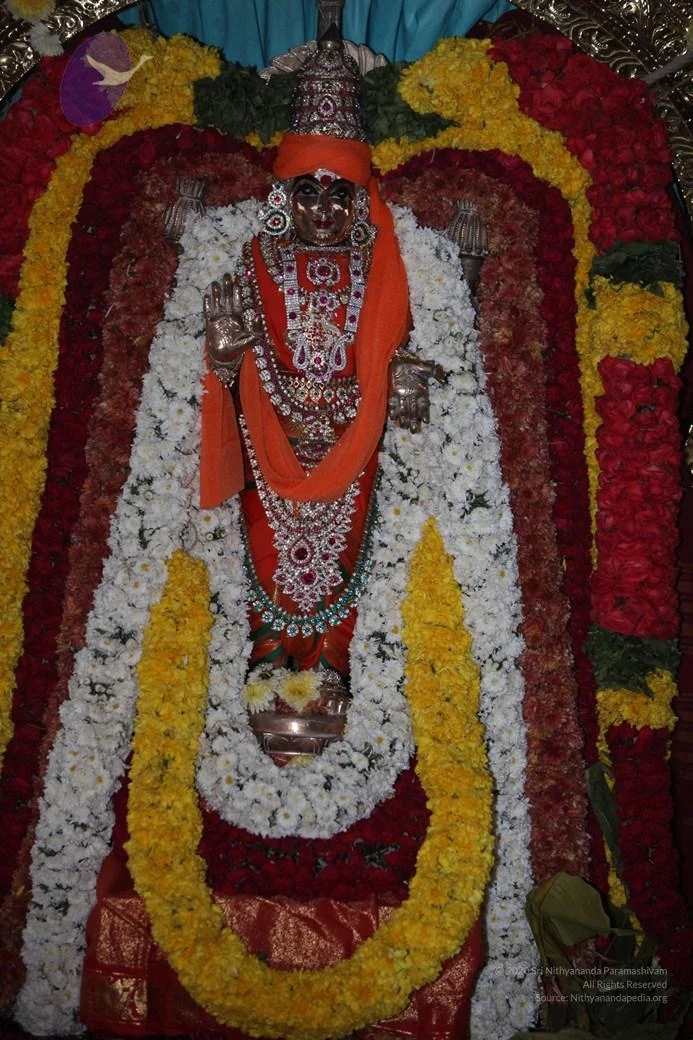
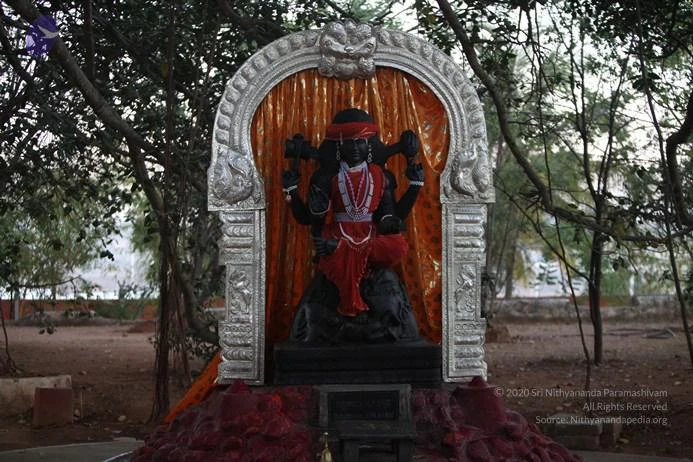
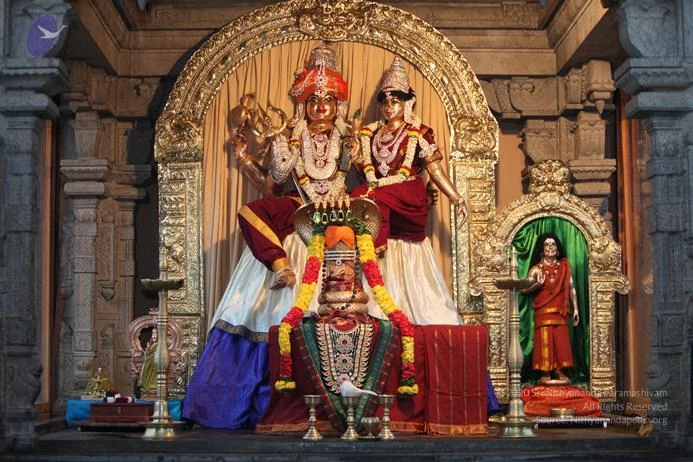
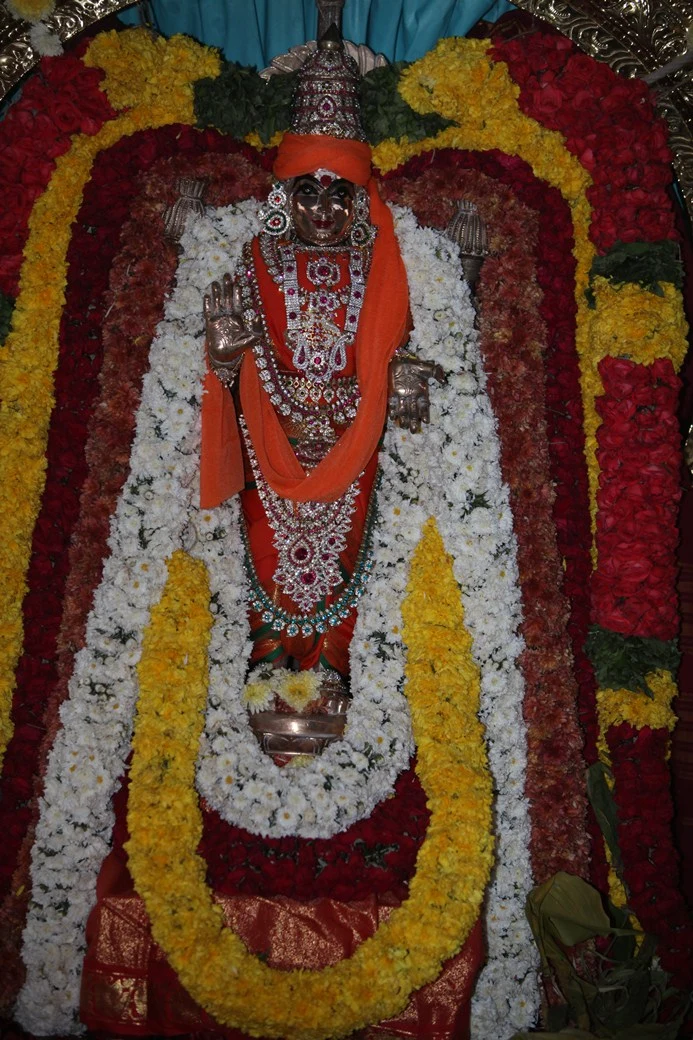
Glimpses of Temple
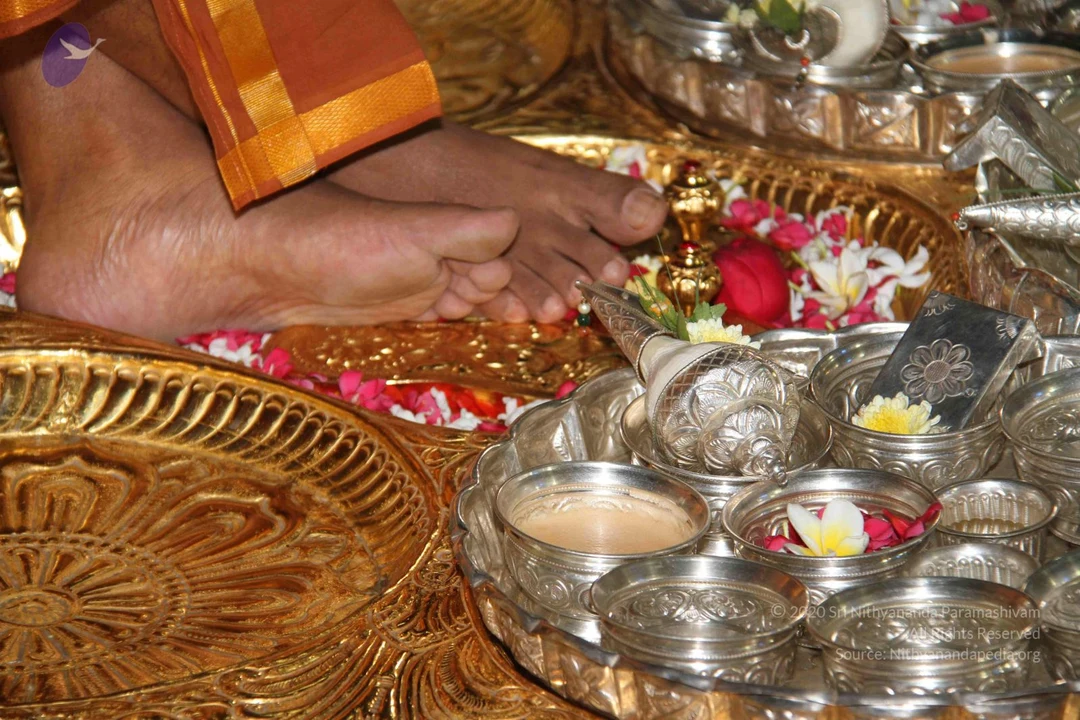
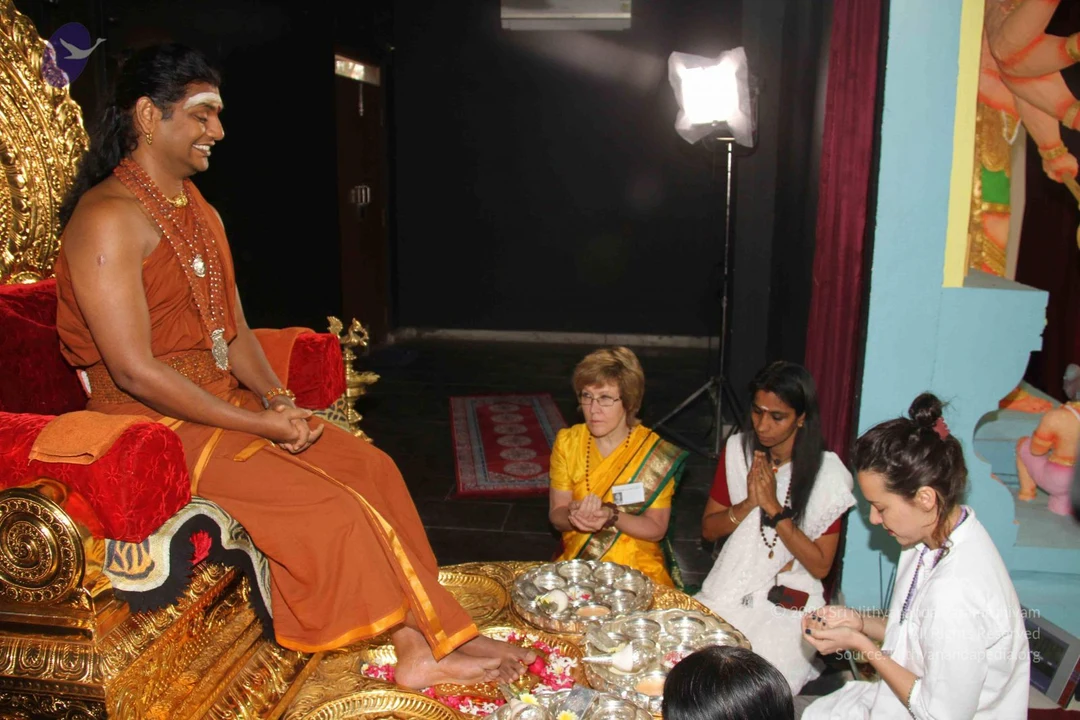
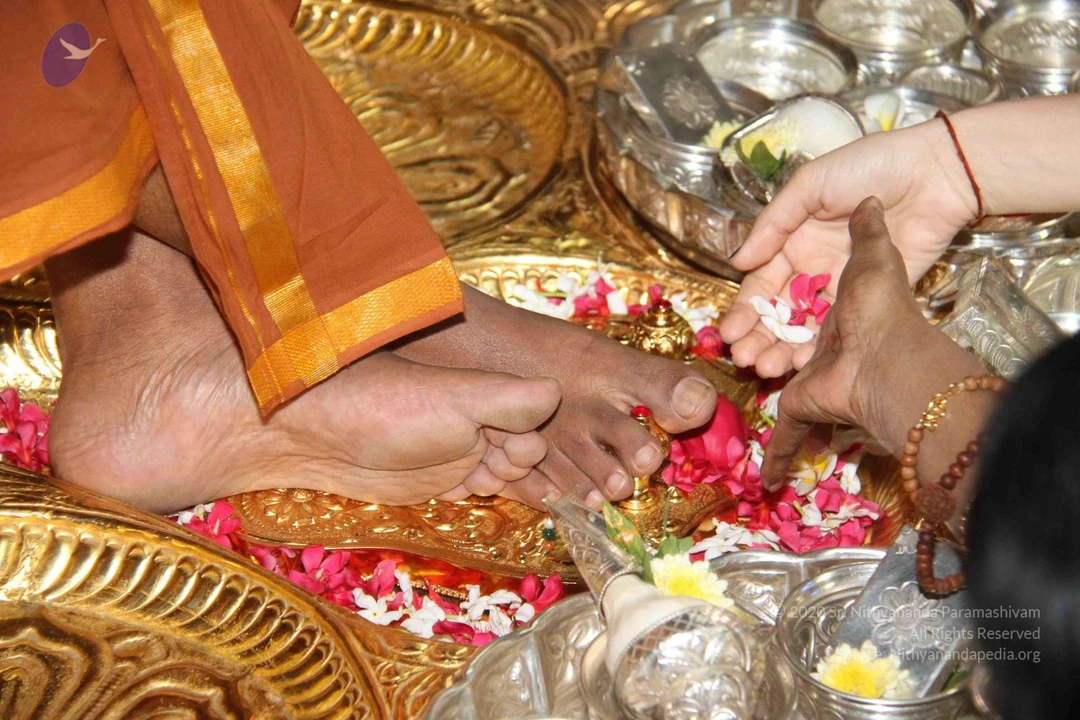
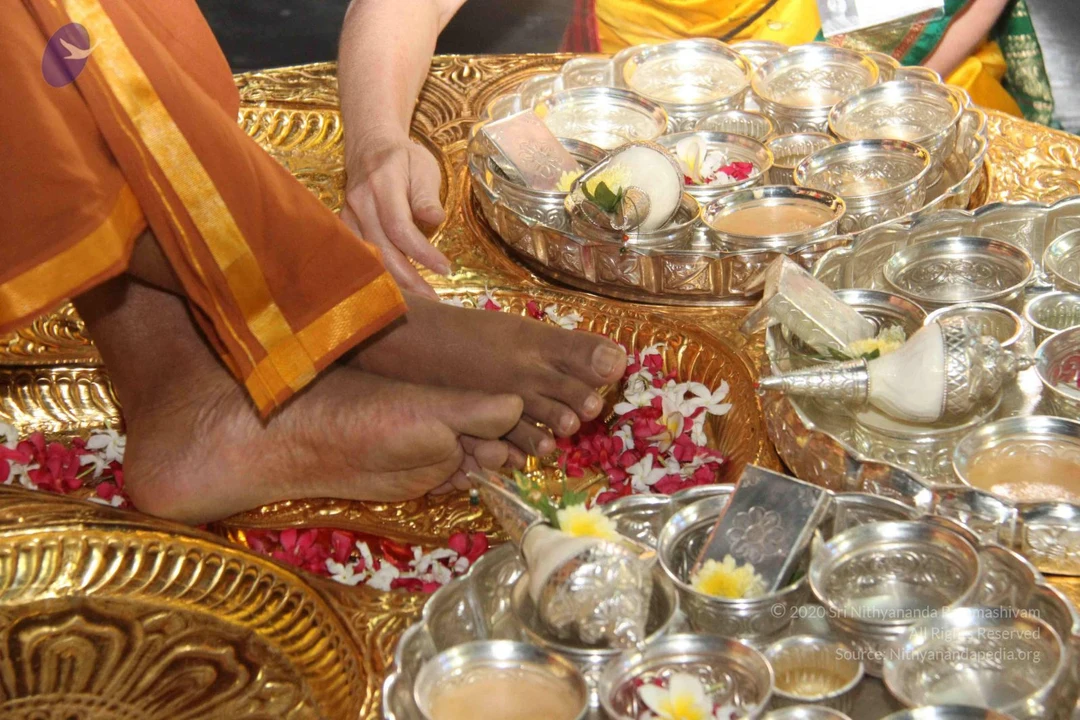
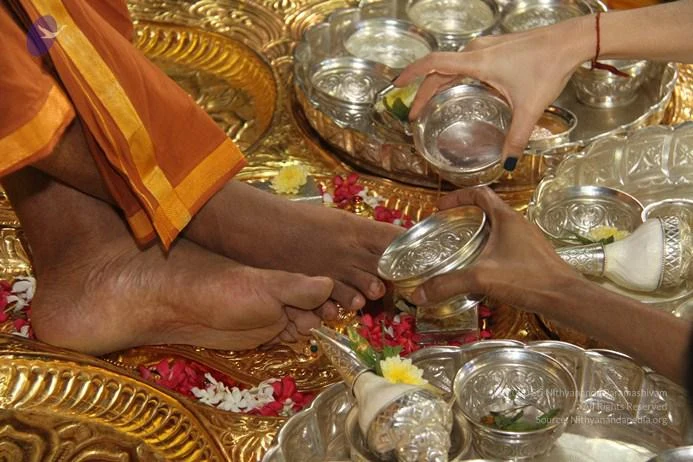
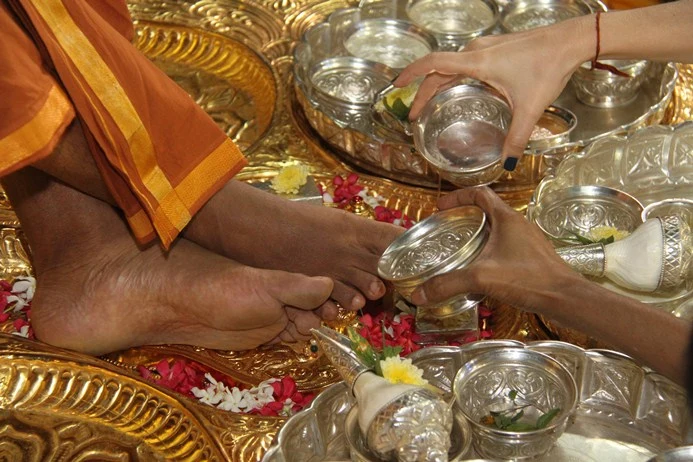
Pada Puja
Satsang
Dial the Avatar
Blessing
http://nithyananda.org/sites/default/files/photo-gallery/IMG_0279.JPG

MorningSatsang

KUMBH-MELA-TENTS-BEING-BUILT-BY-NITHYANANDA-DHYANAPEETAM
Tags

Paramahamsa Nithyananda, authenticity, Nachiketa, sannyas, cosmos, disciple, seeker

Photos Of The Day:

Card1
Card2

Bhaktikama

SelectedWeb

Photos Of The Day:

card1

IA-Reunion and Mattu Pongal

card2

1-Temple

2-Pada-Puja

3-Dial-The-Avatar

4-Sarva-Darshan

5-IA-Reunion-and-Mattu-Pongal

01-Bidadi-Temple-and-Satsang

02-Pada-Pooja

04-IA-Reunion-Mattu-Pongal

Photos from this day

View all 438 photos

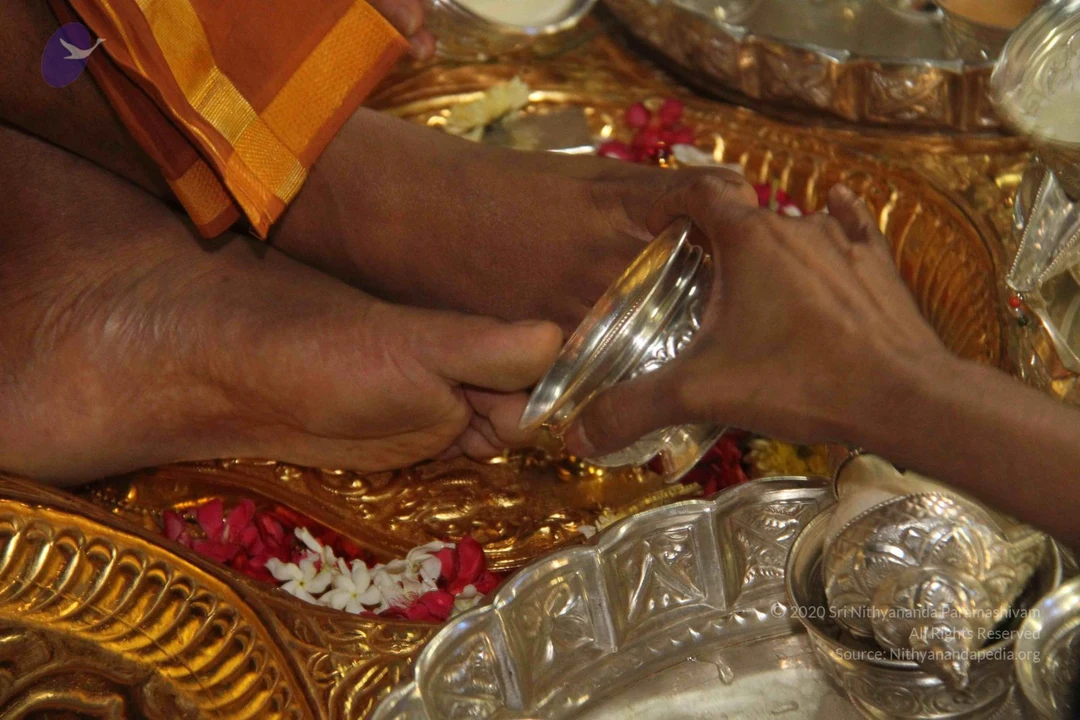
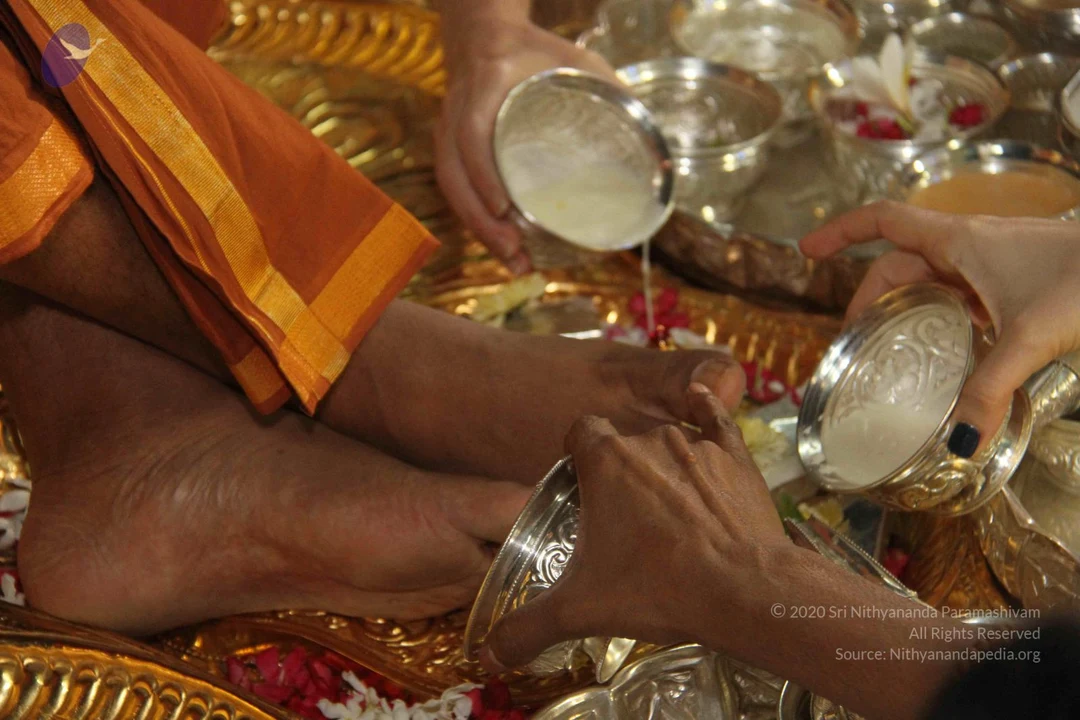
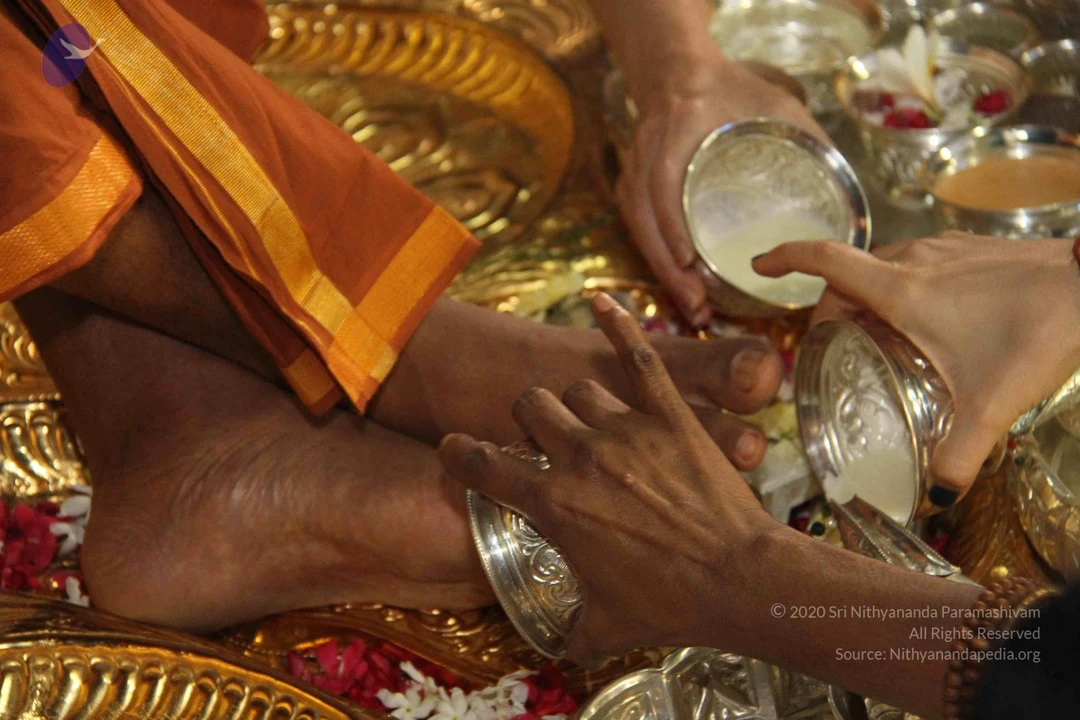
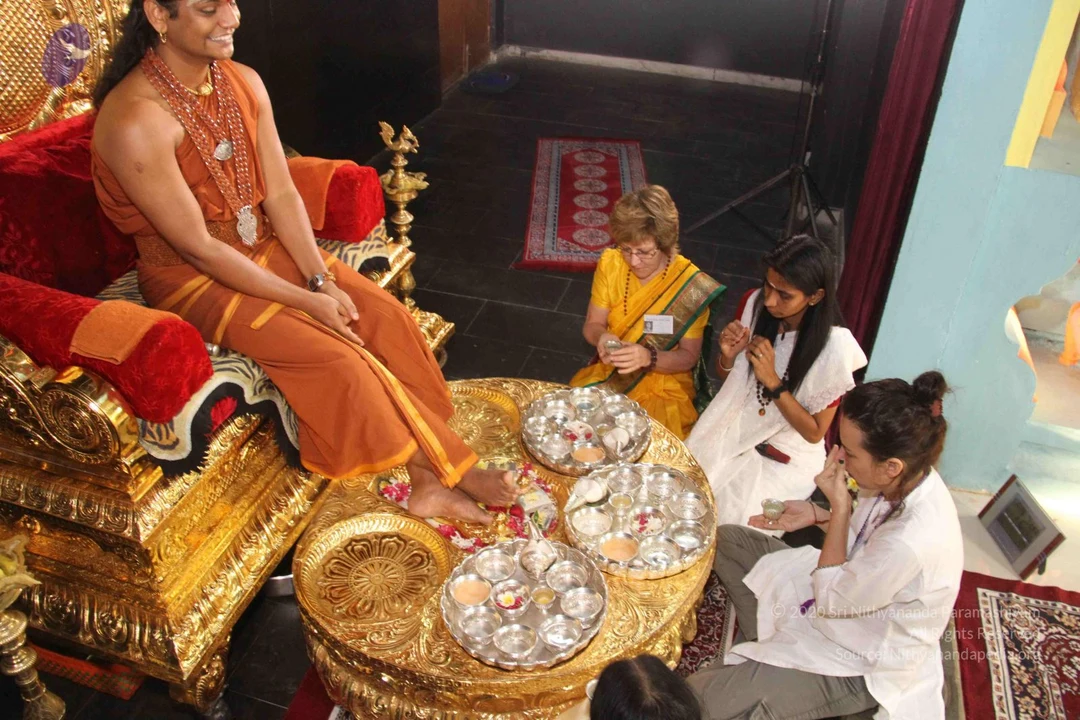
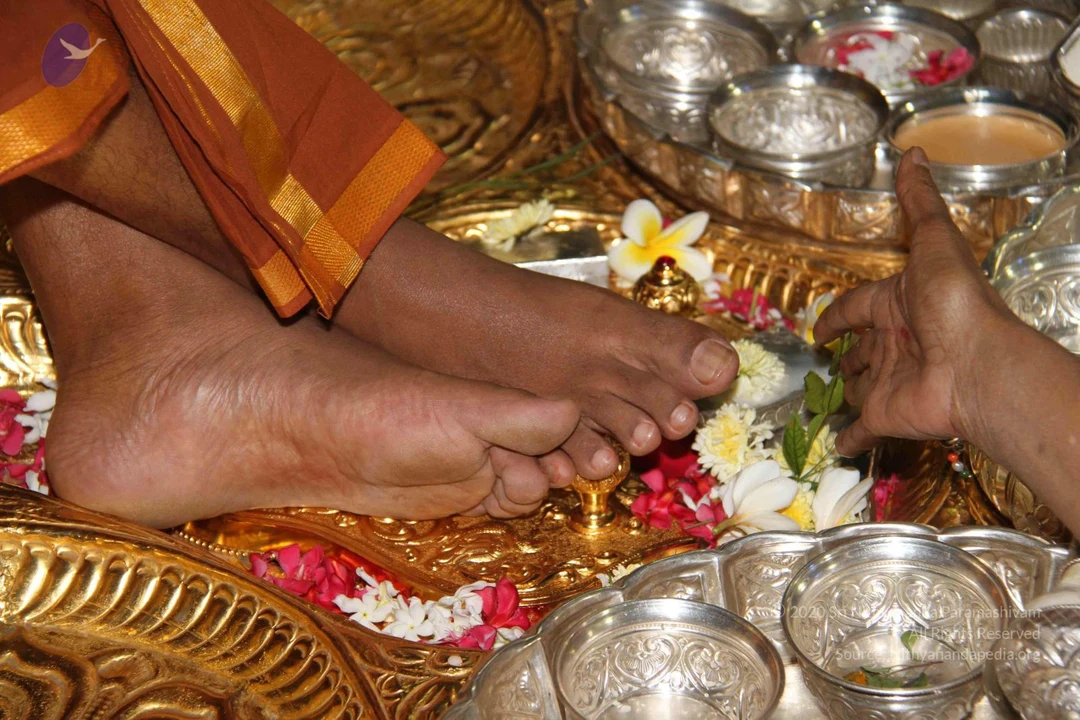
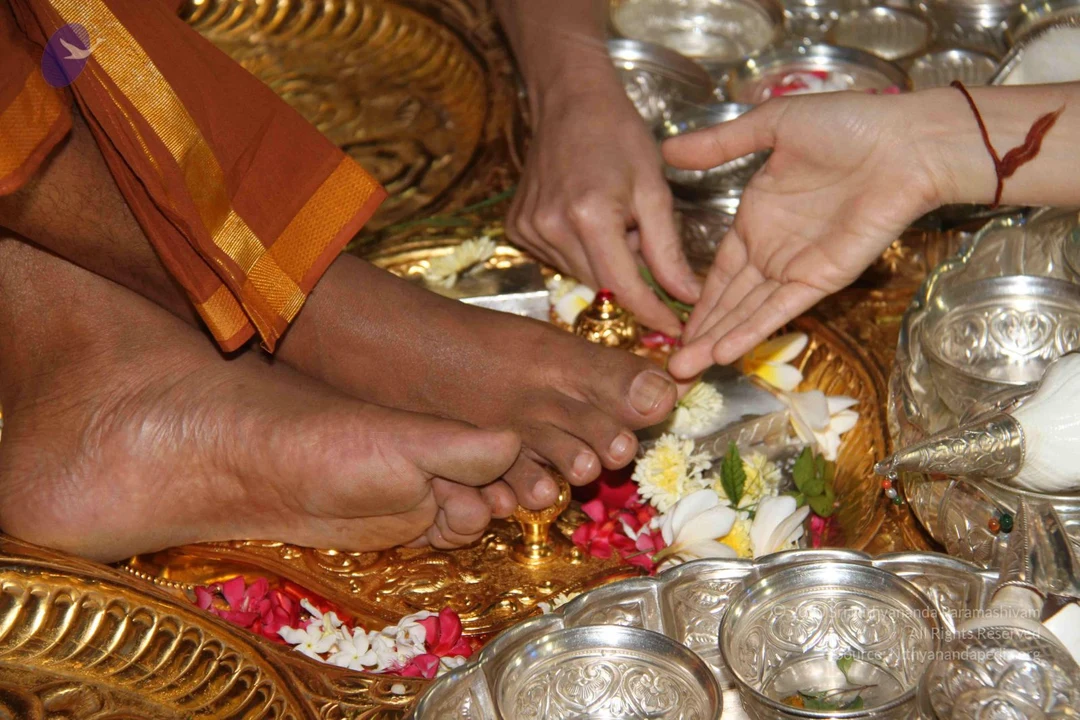
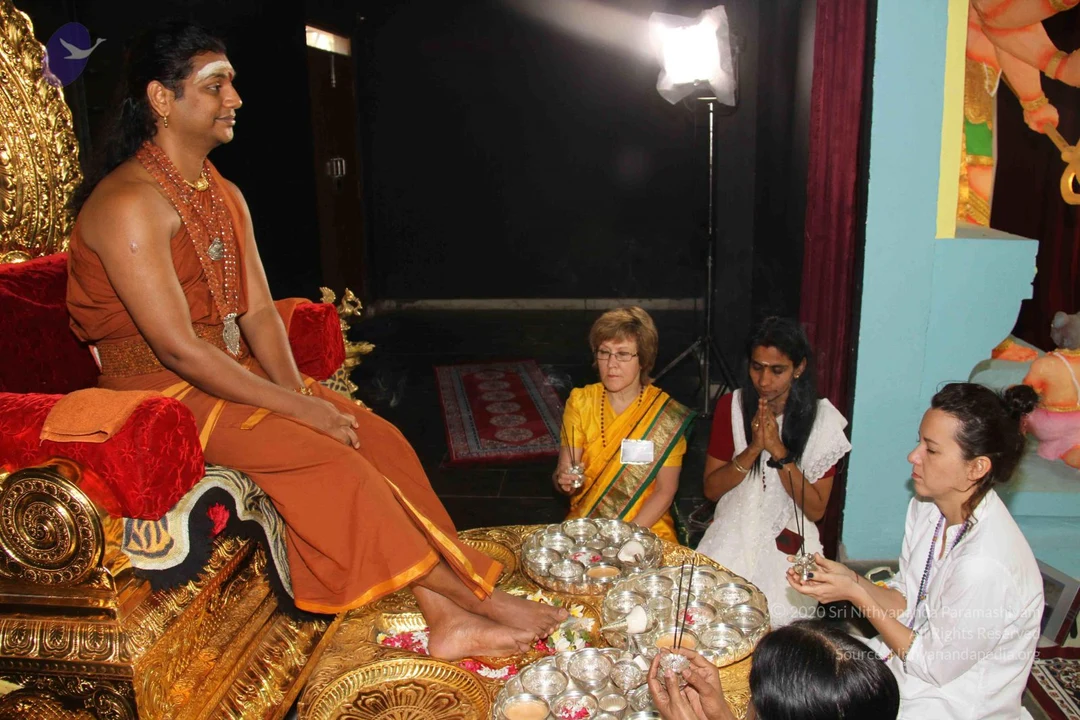
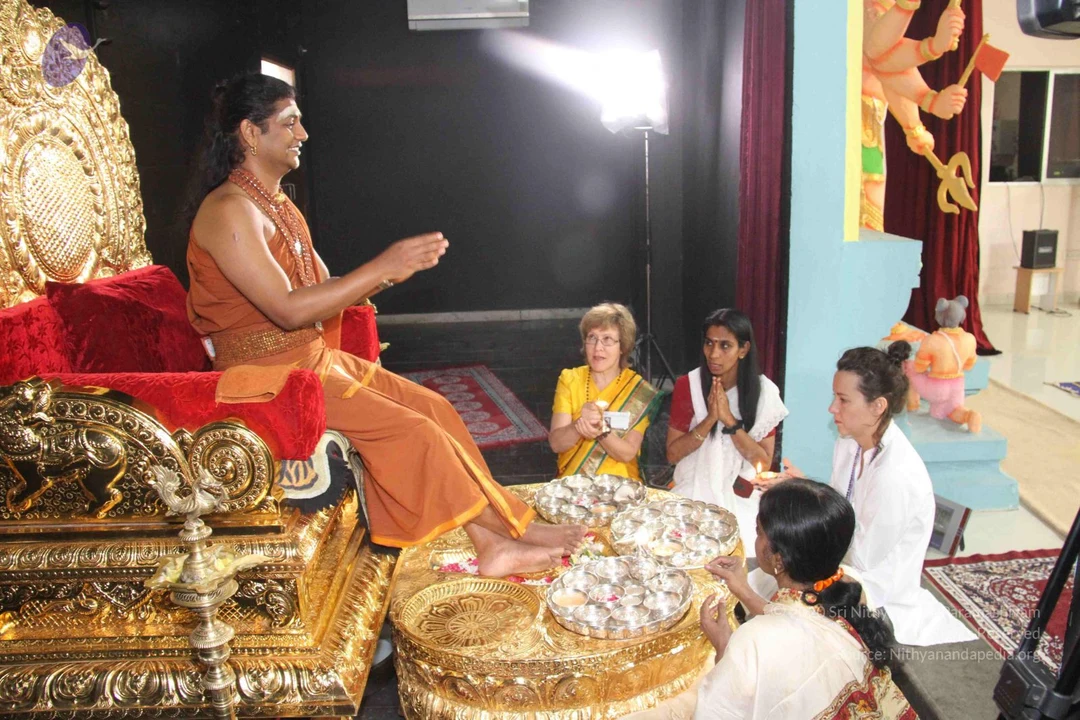
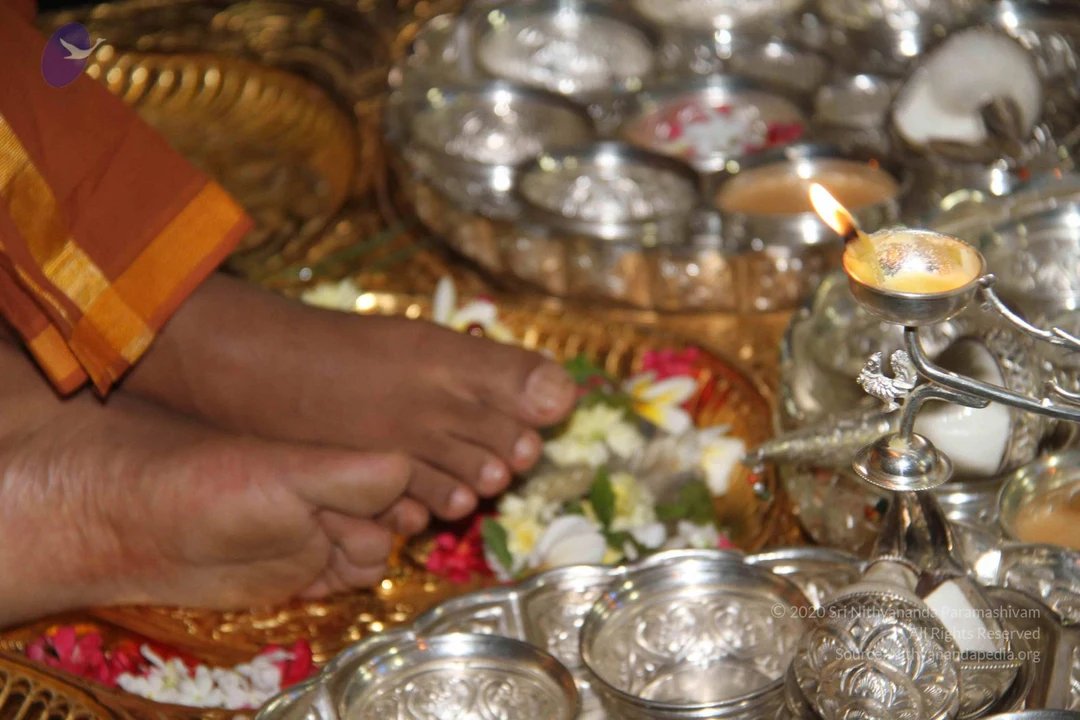
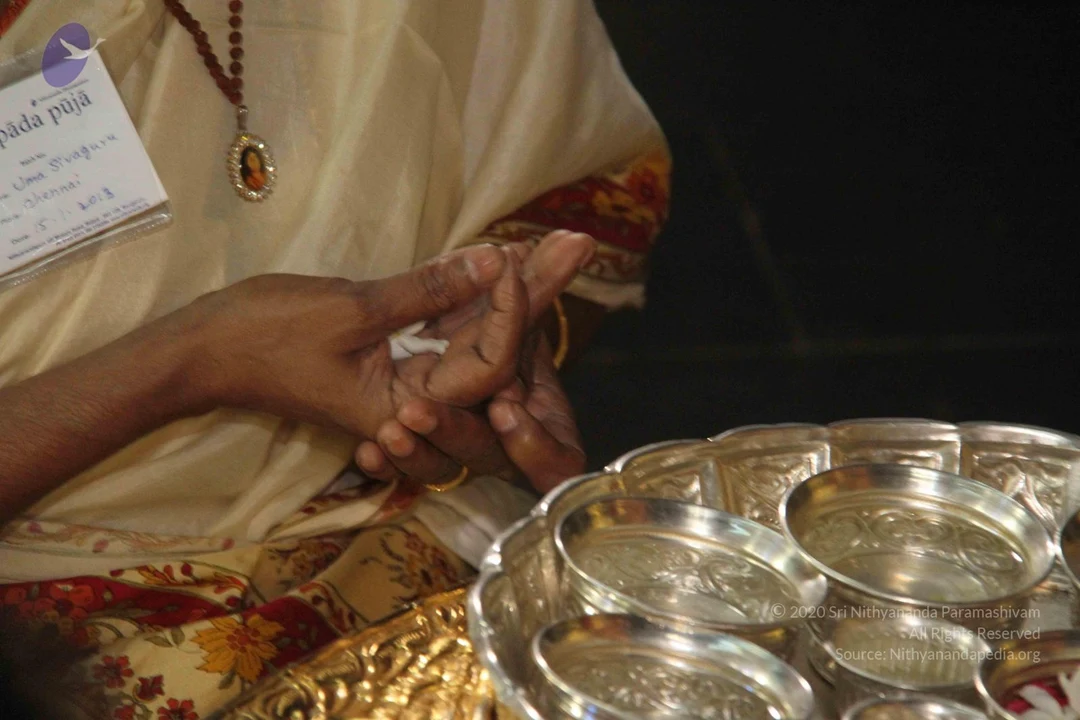
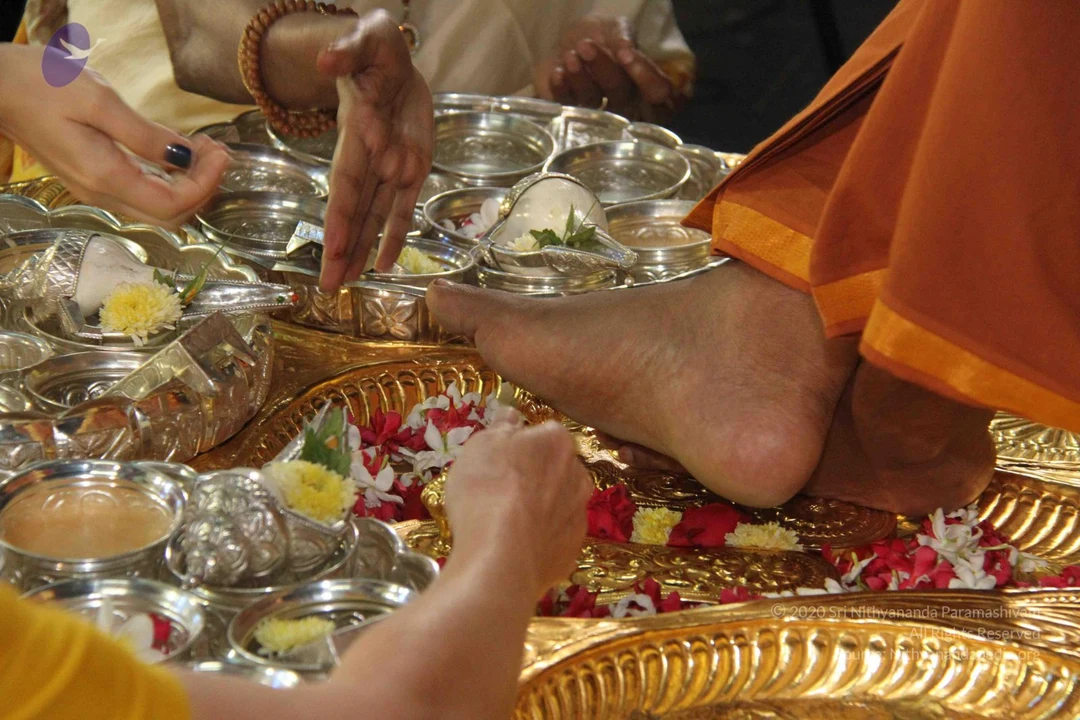
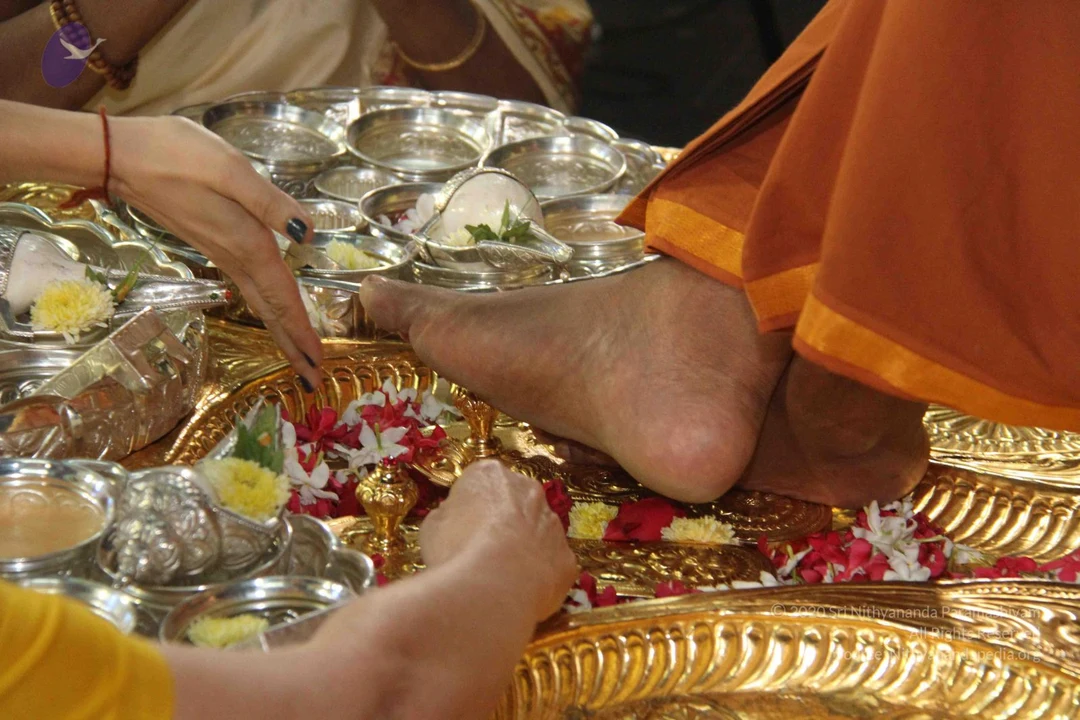
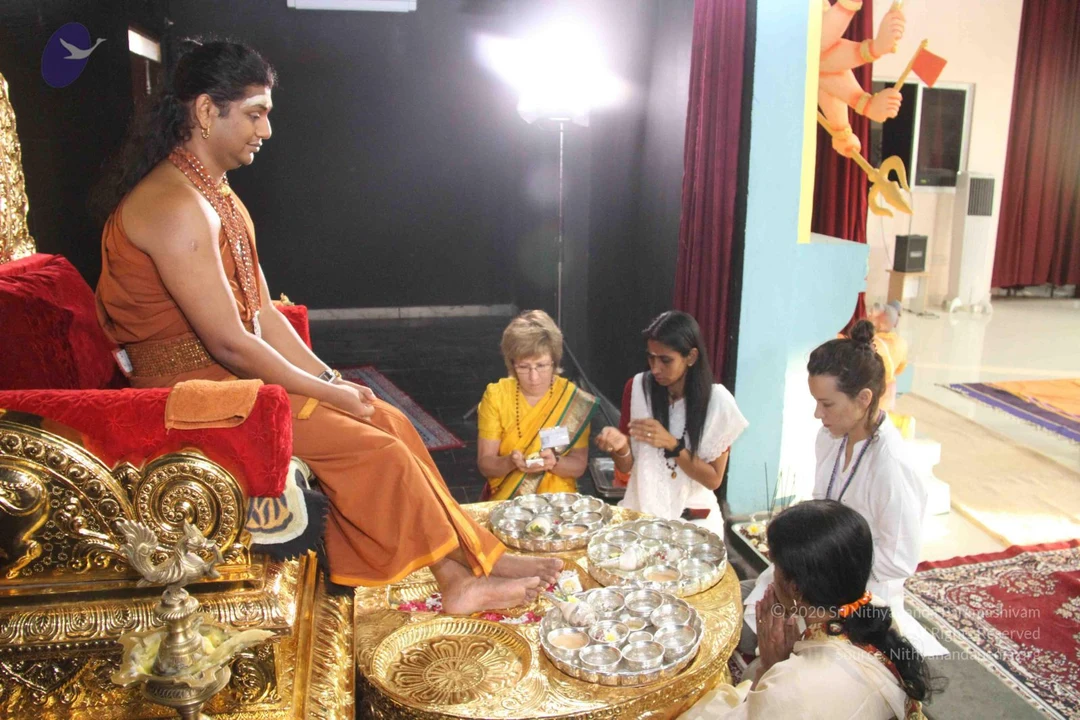
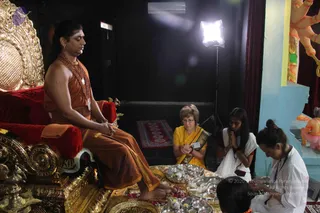
Pada Puja

1 photoSource gallery
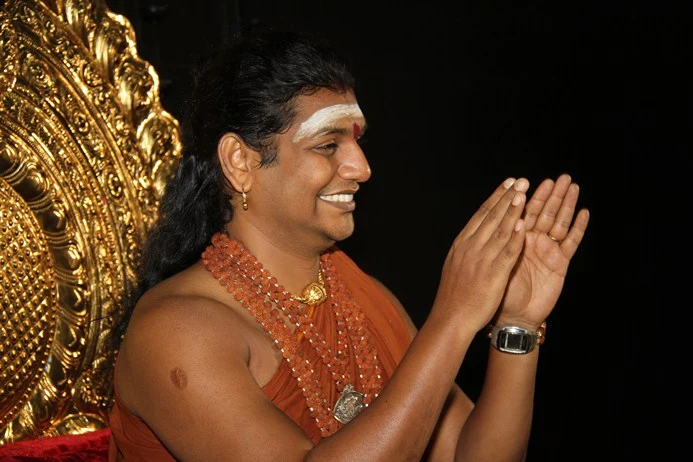
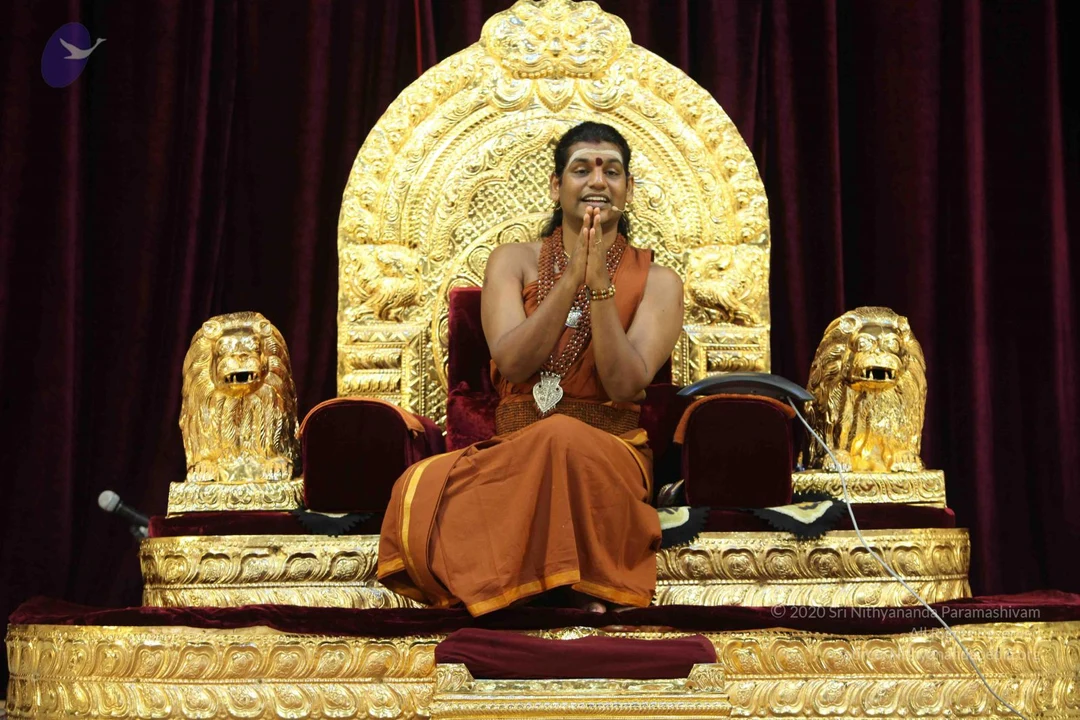
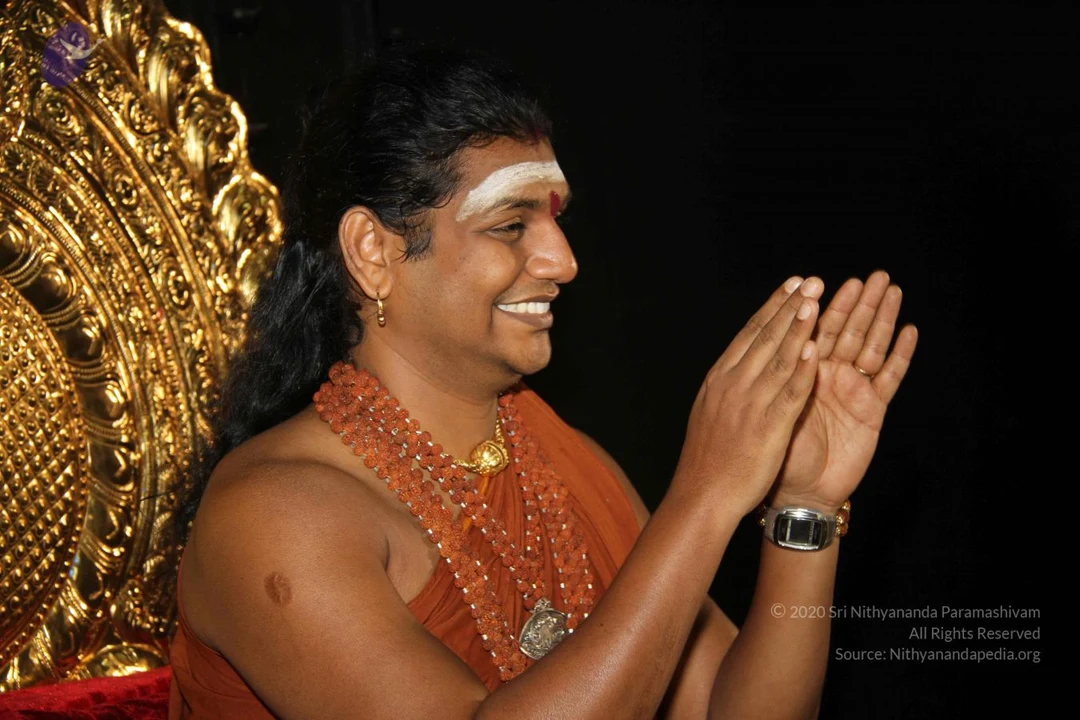
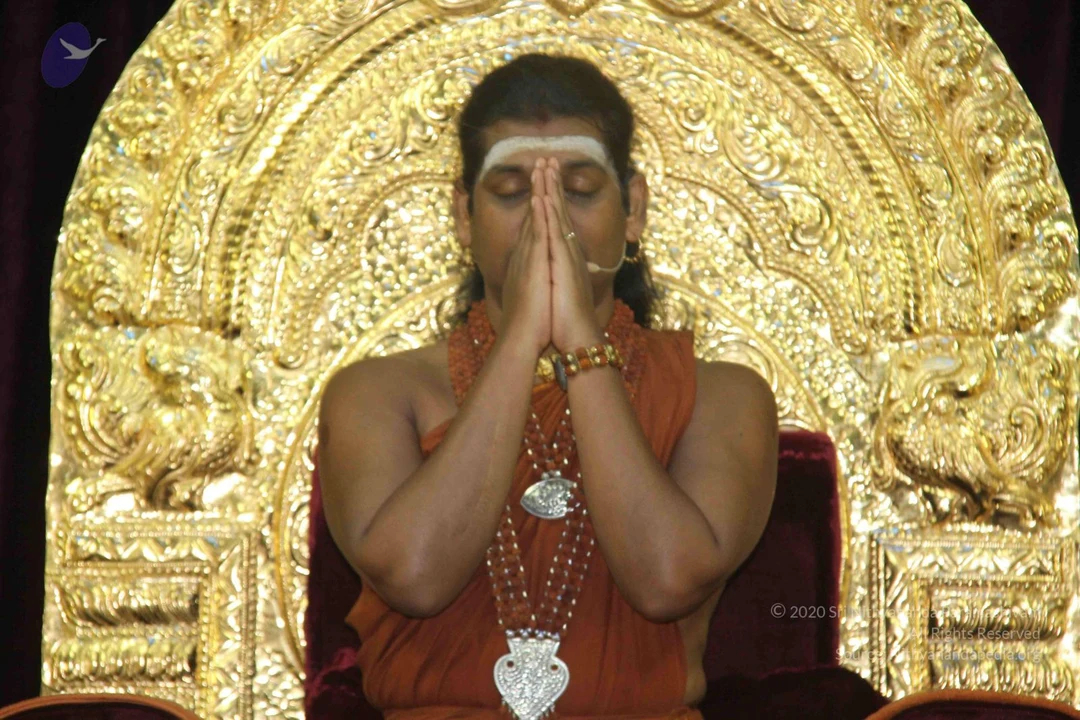
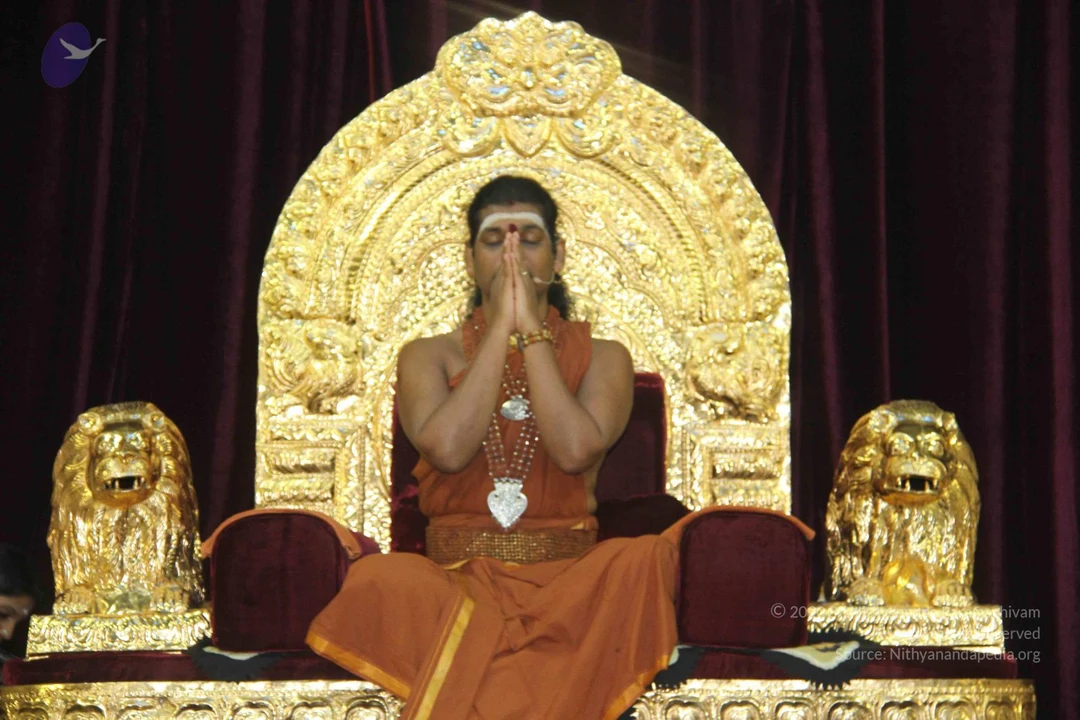
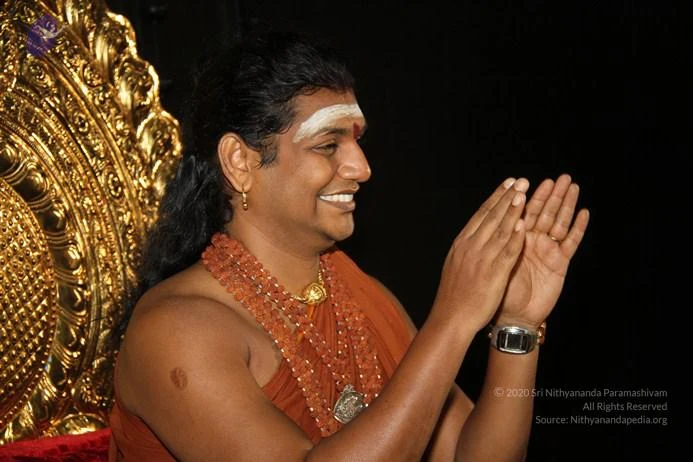
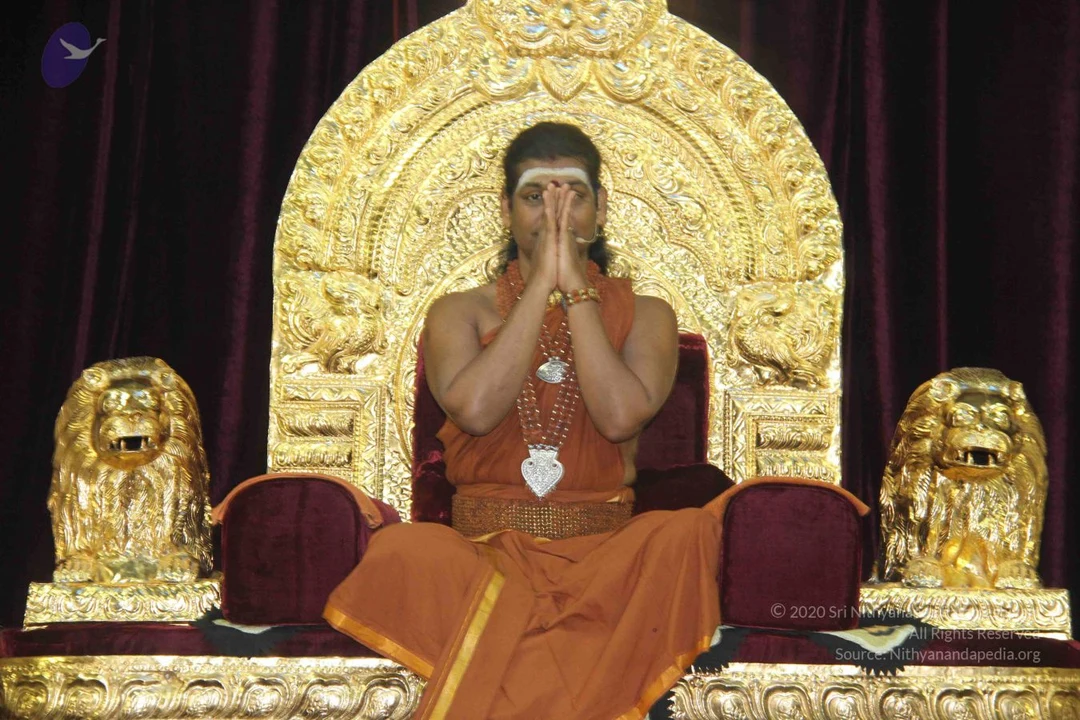
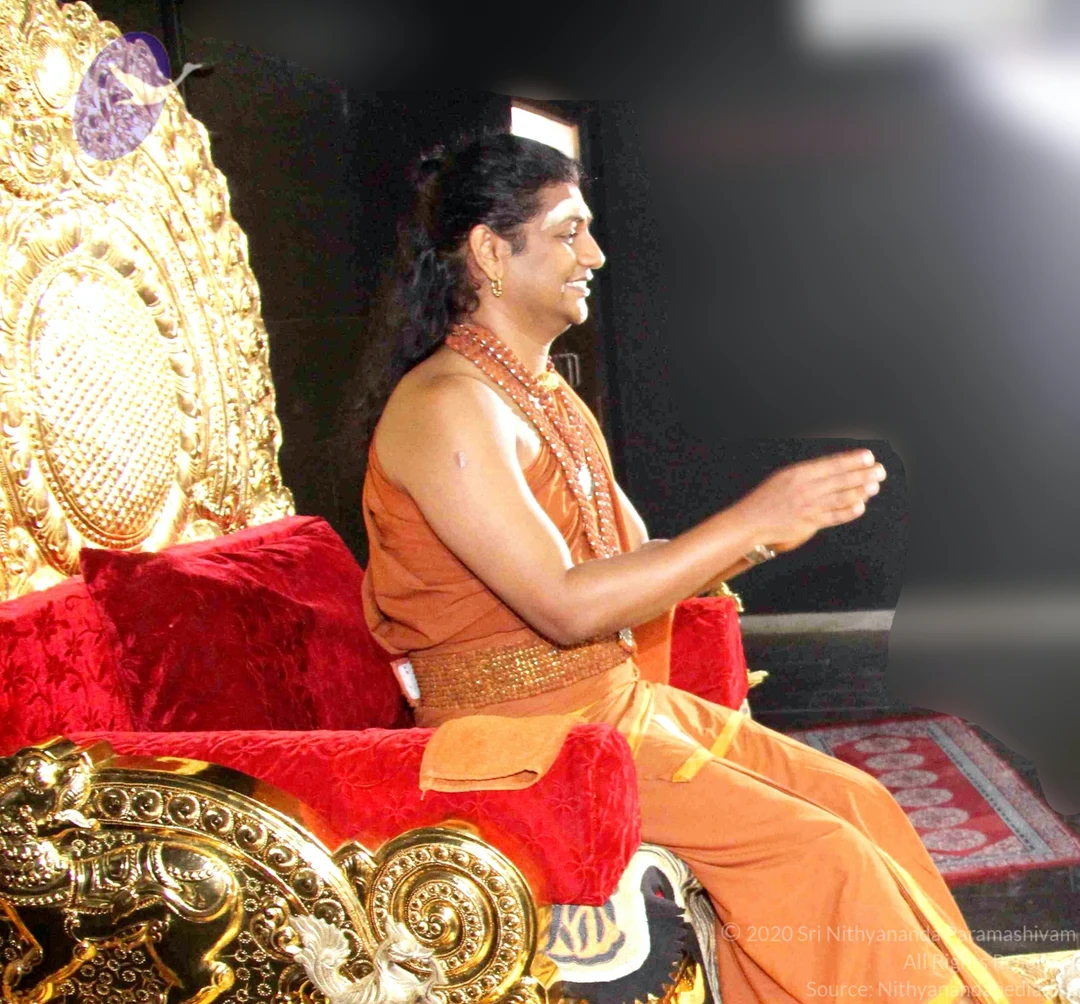
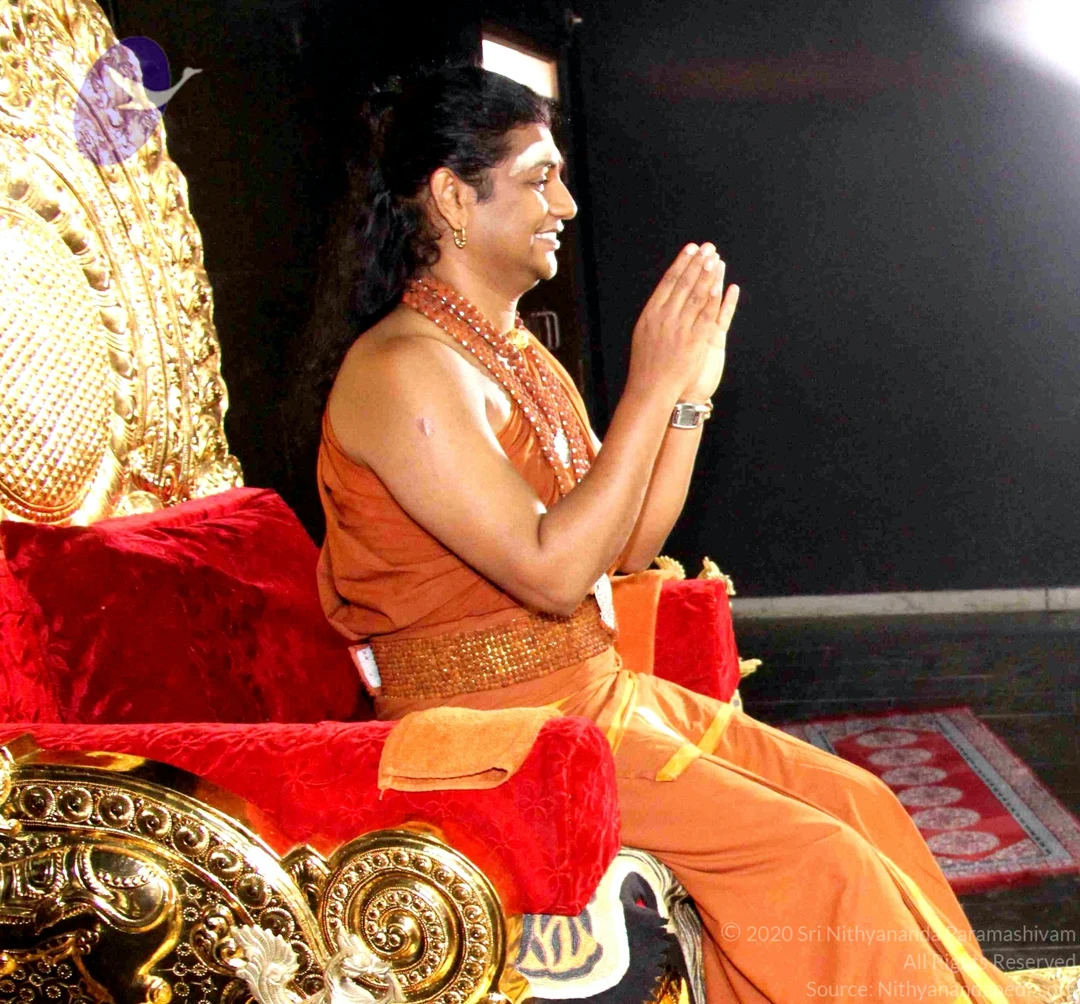
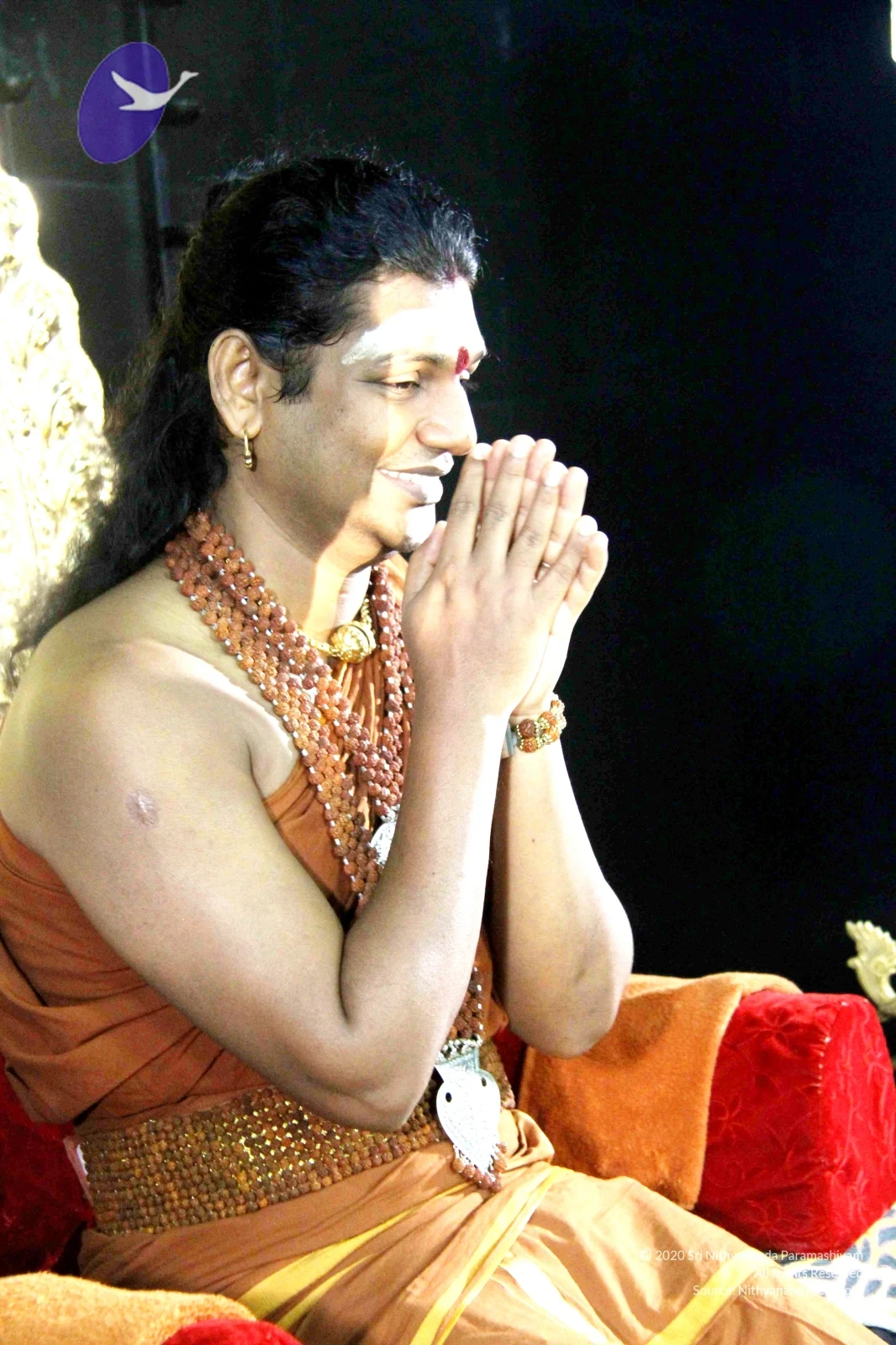
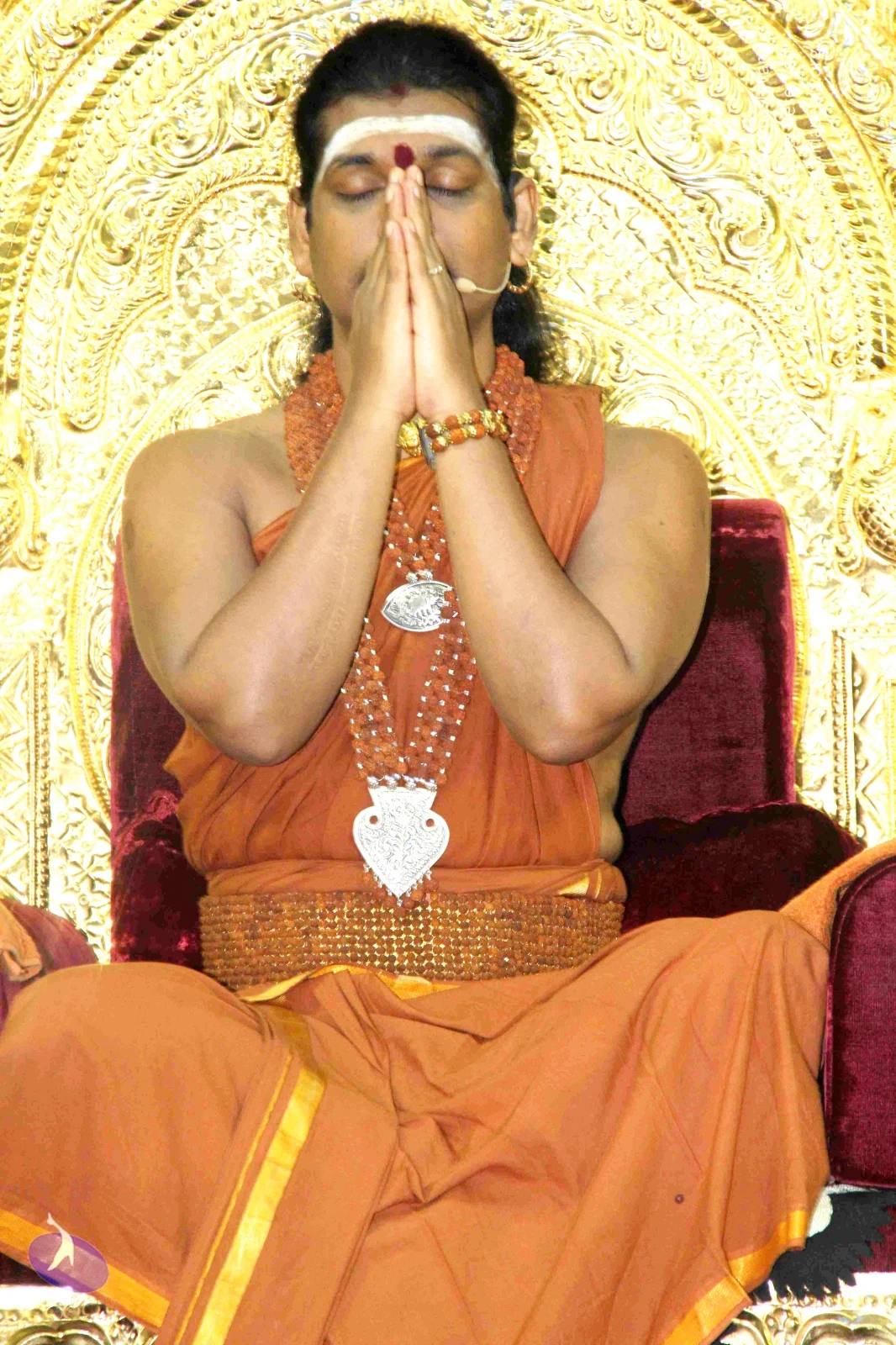
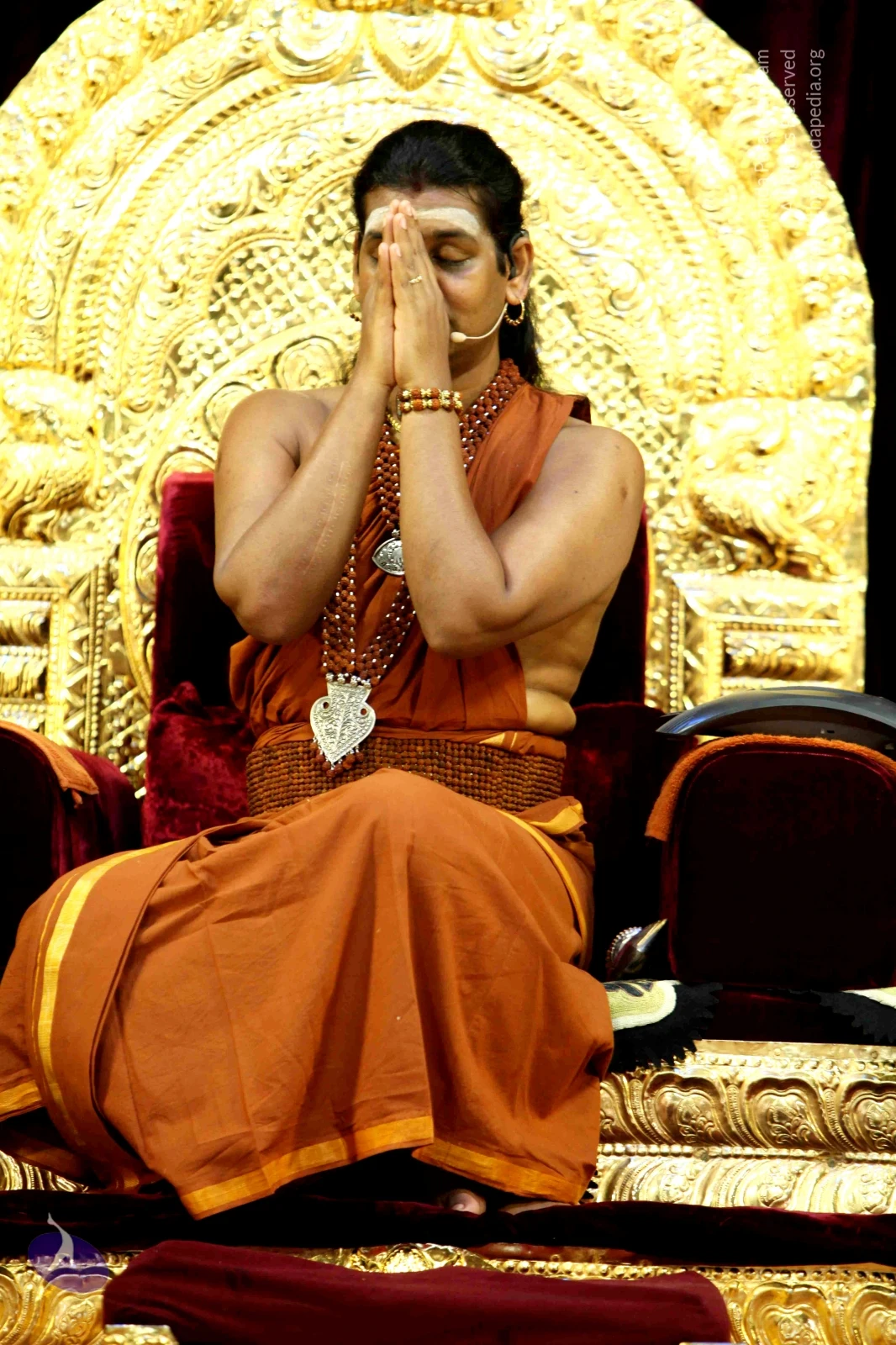
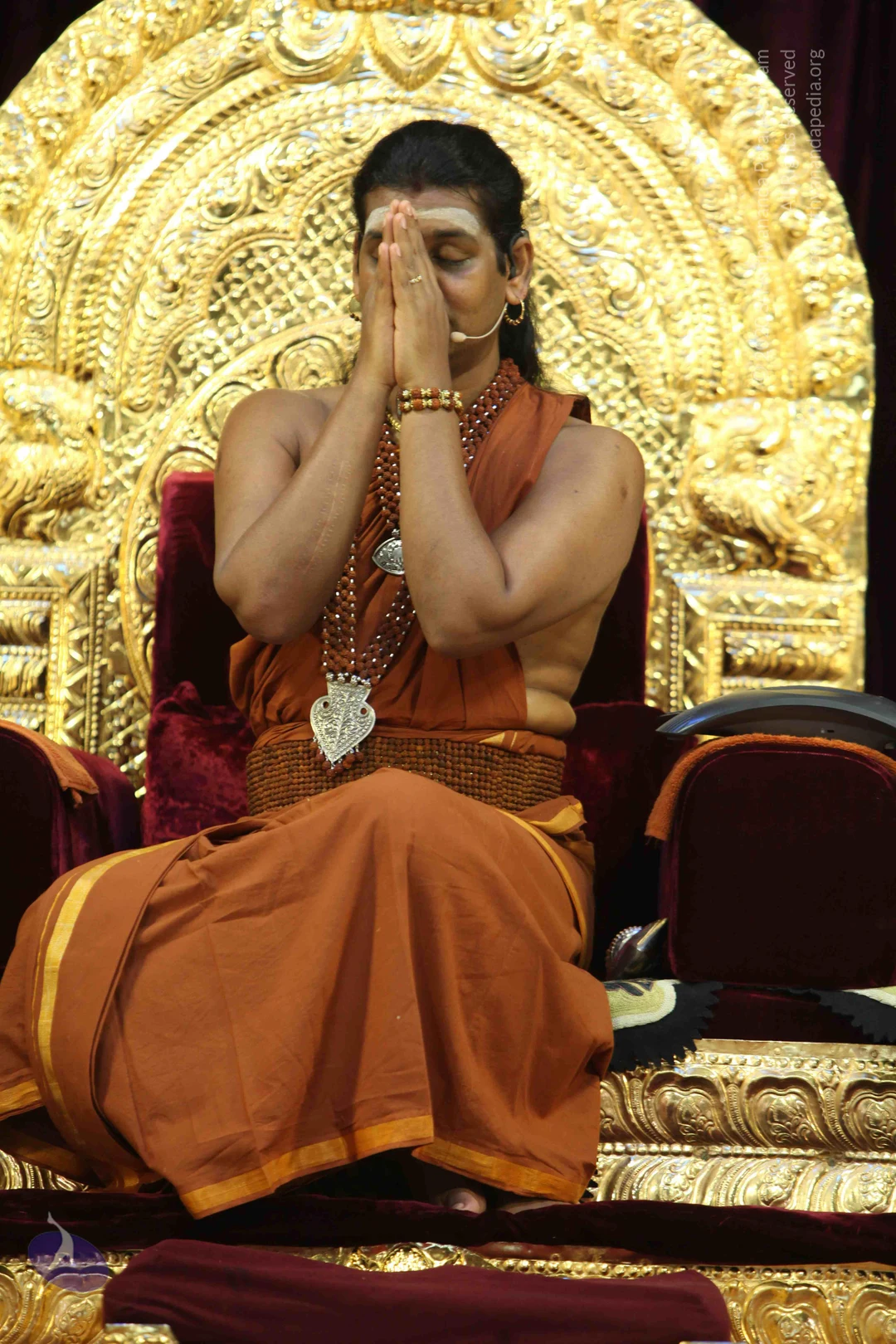
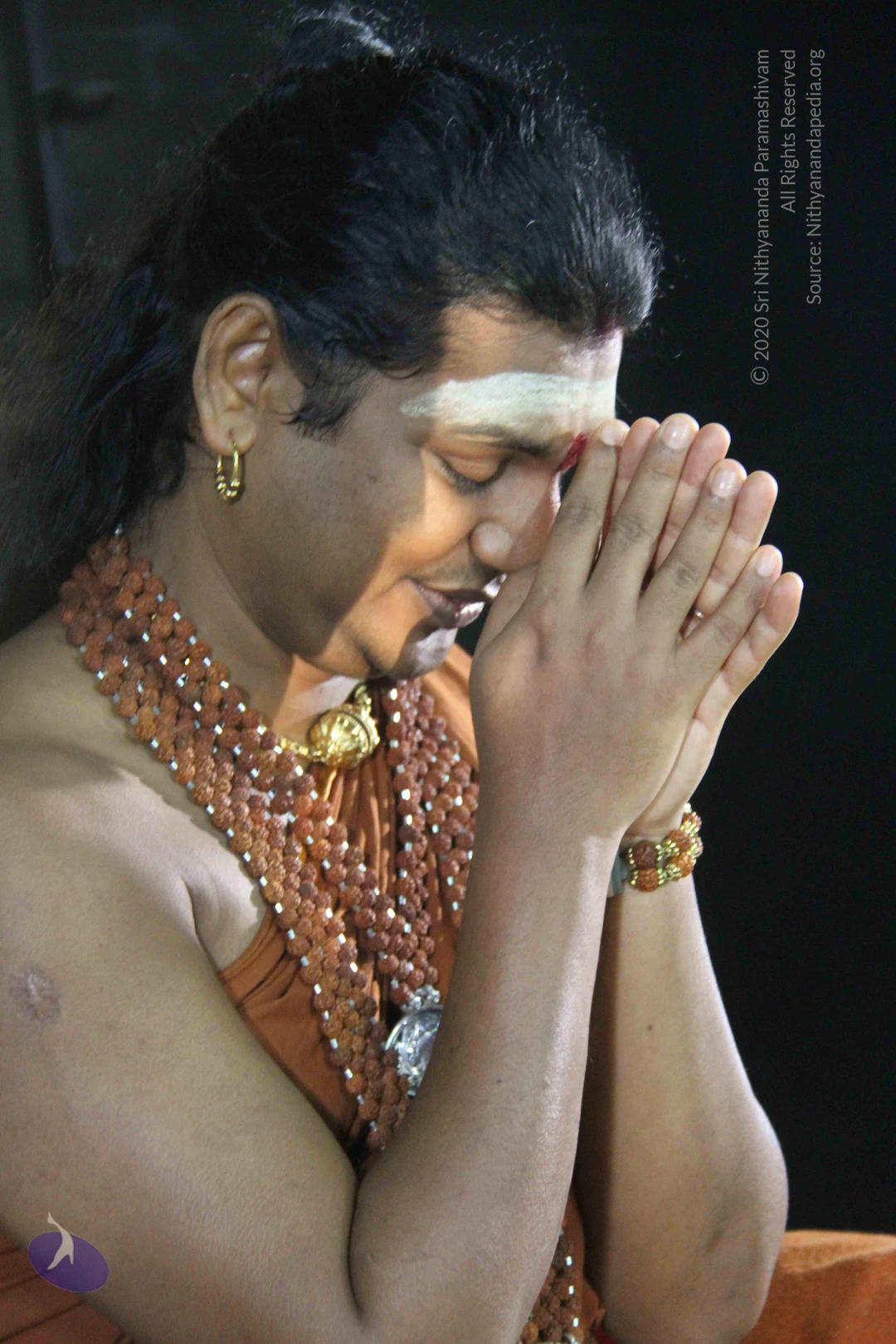
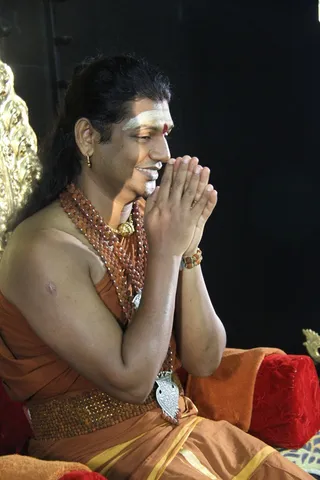
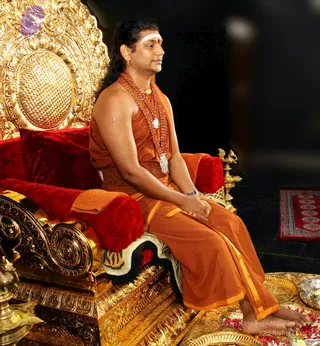
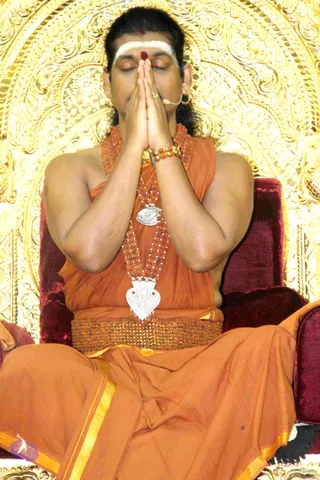
Swamiji (probable) sits in a seated pose with palms pressed together in anjali mudra, smiling and looking to the side. He wears an orange-saffron unstitched garment, long dark hair swept back, a white and red tilak on the forehead, multiple orange rudraksha malas, a gold necklace, a silver pendant, and an orange beaded waist belt. A gold ornate chair back and red cushions are visible behind him against a dark backdrop, in a satsang setting.

Satsang

2 photosSource gallery
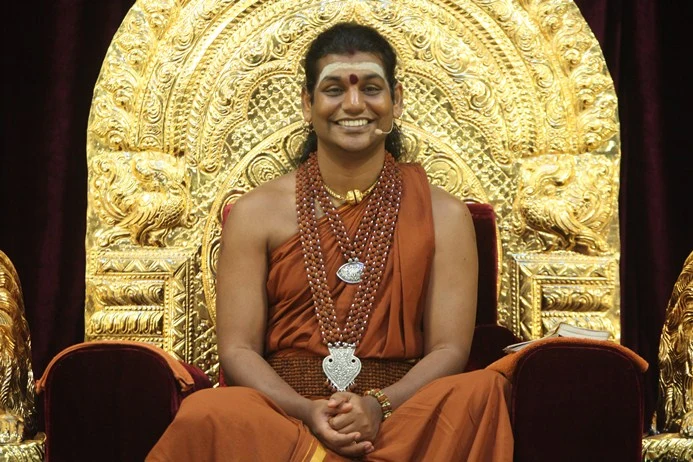
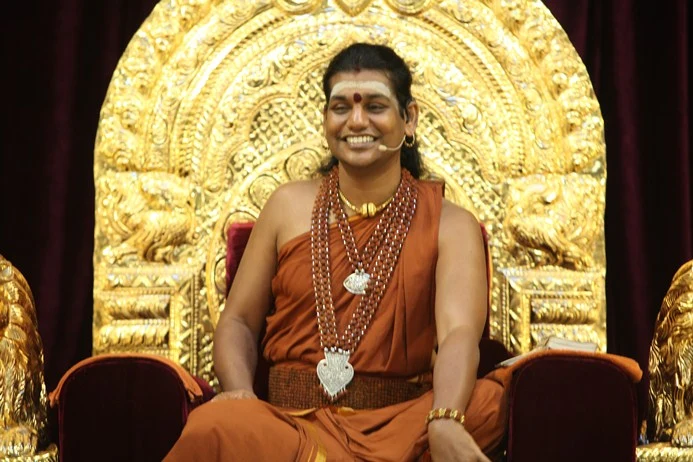
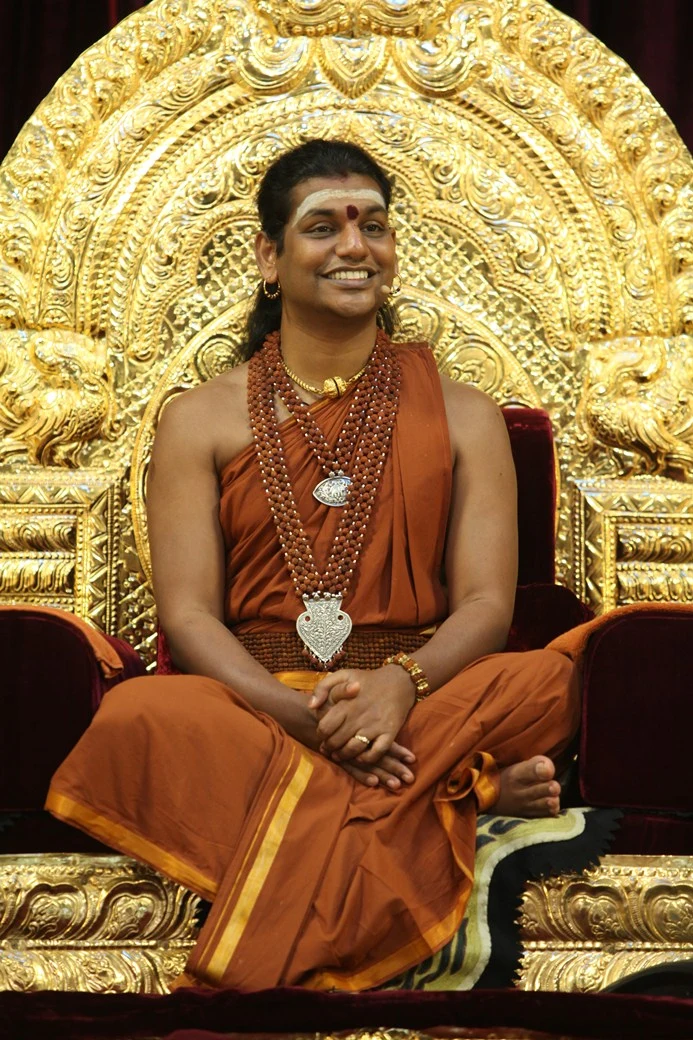
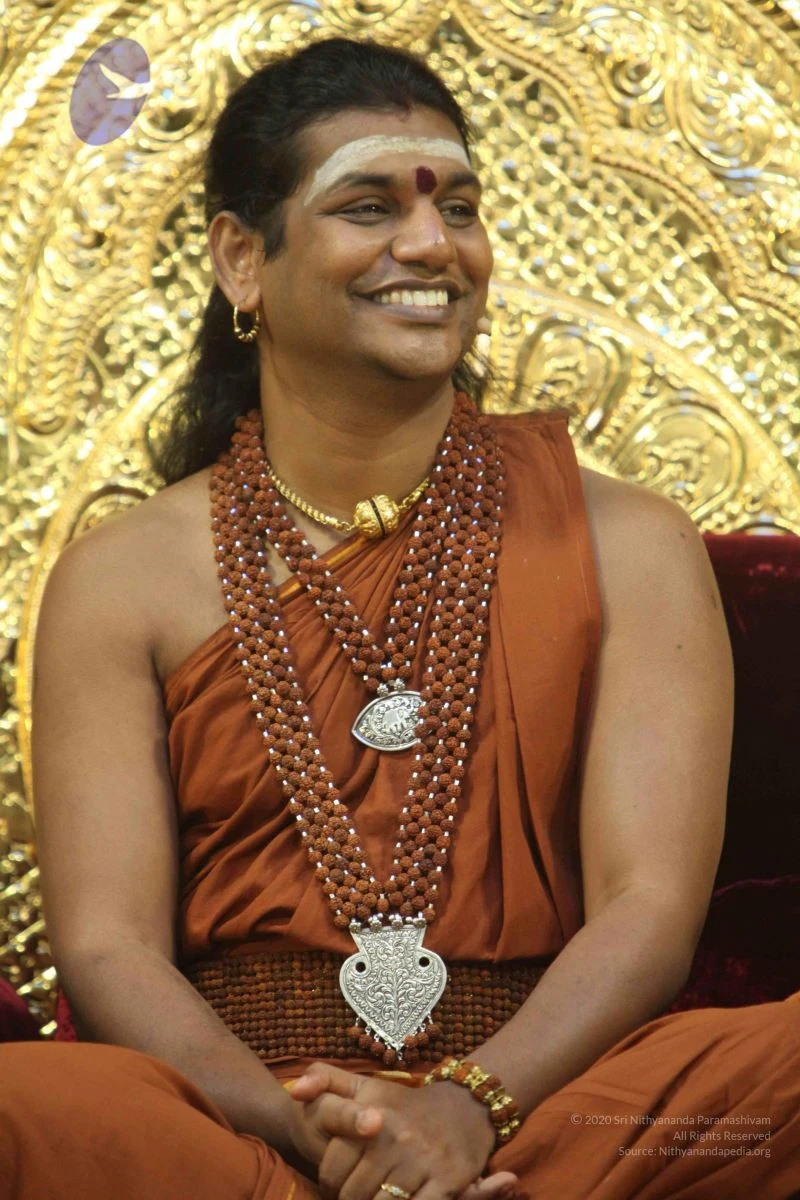
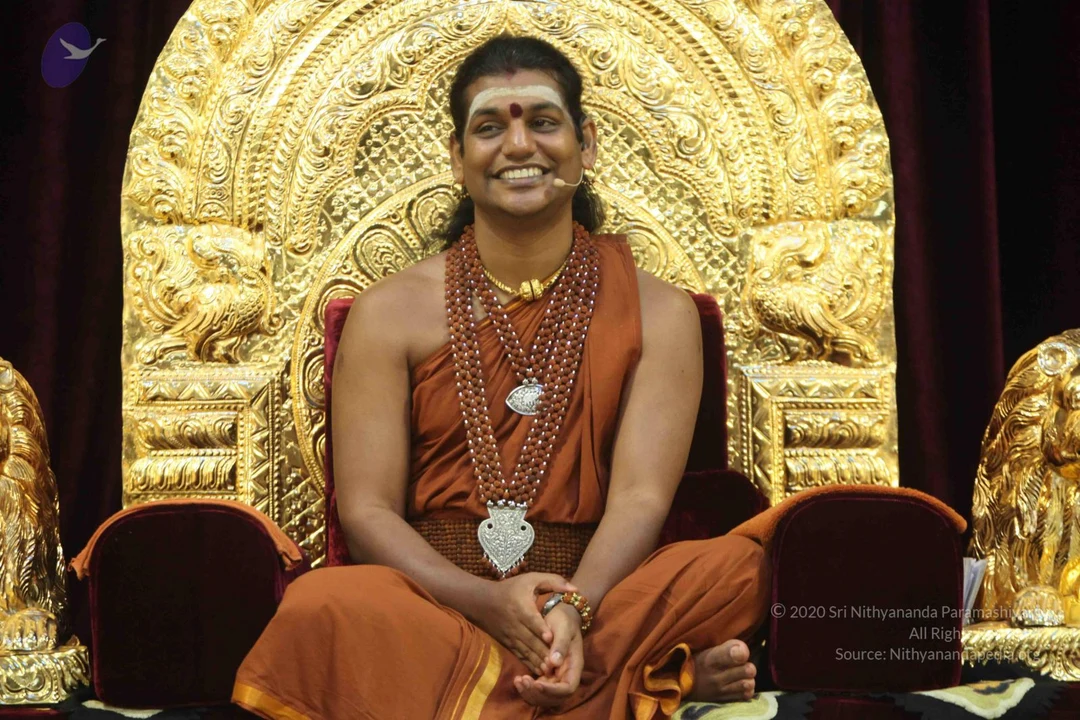
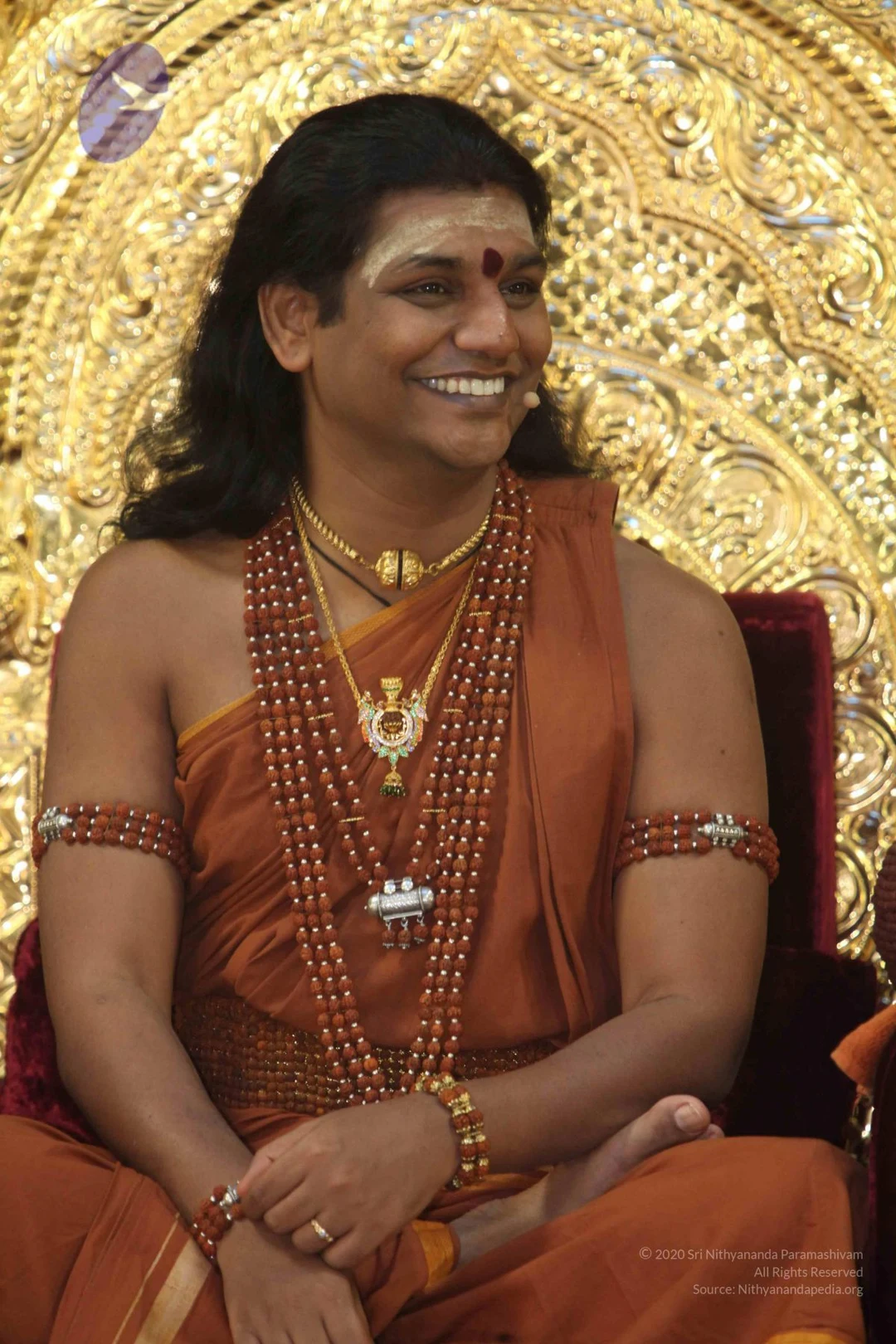
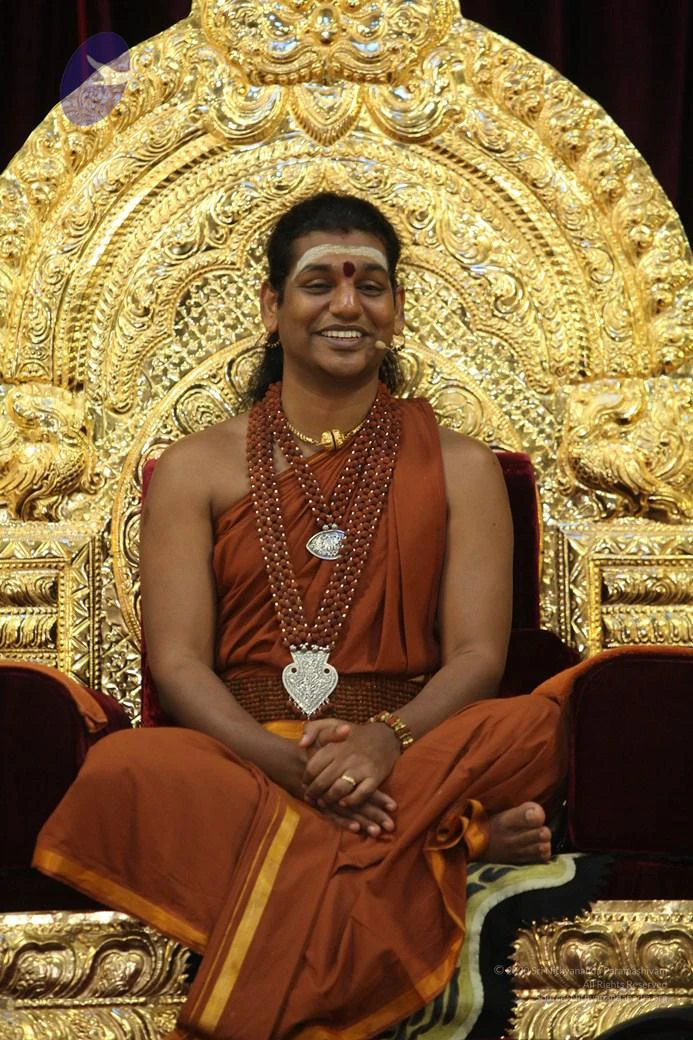
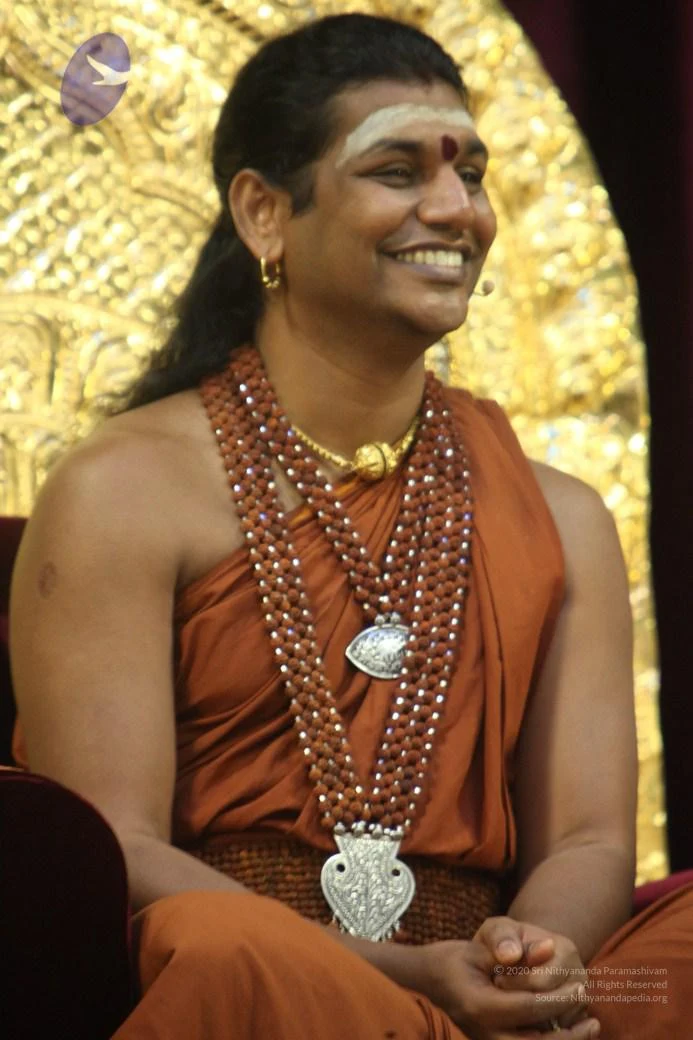
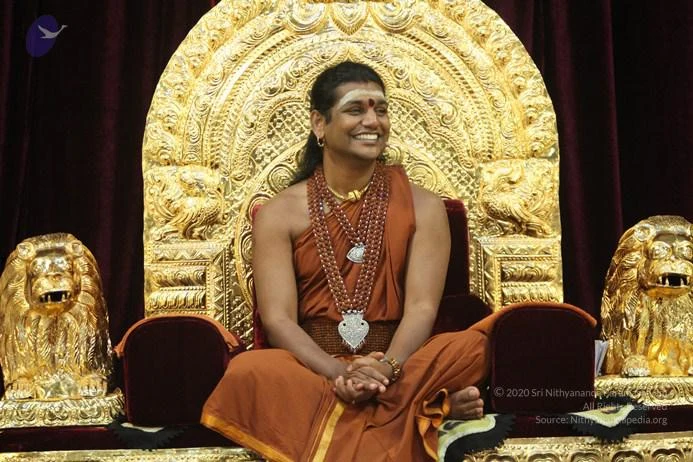
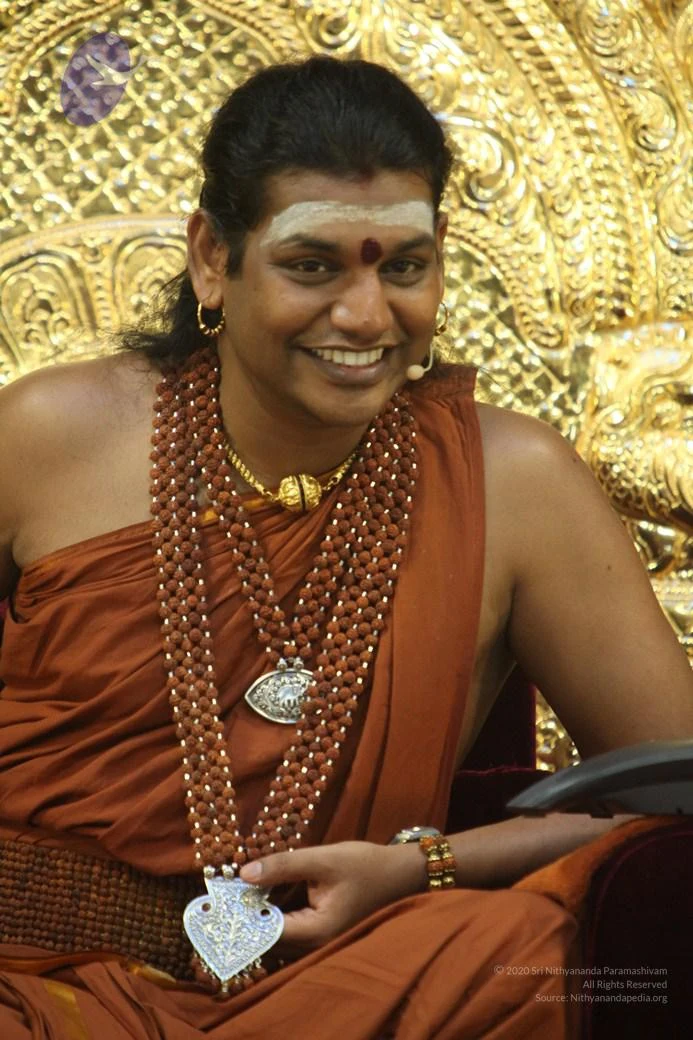
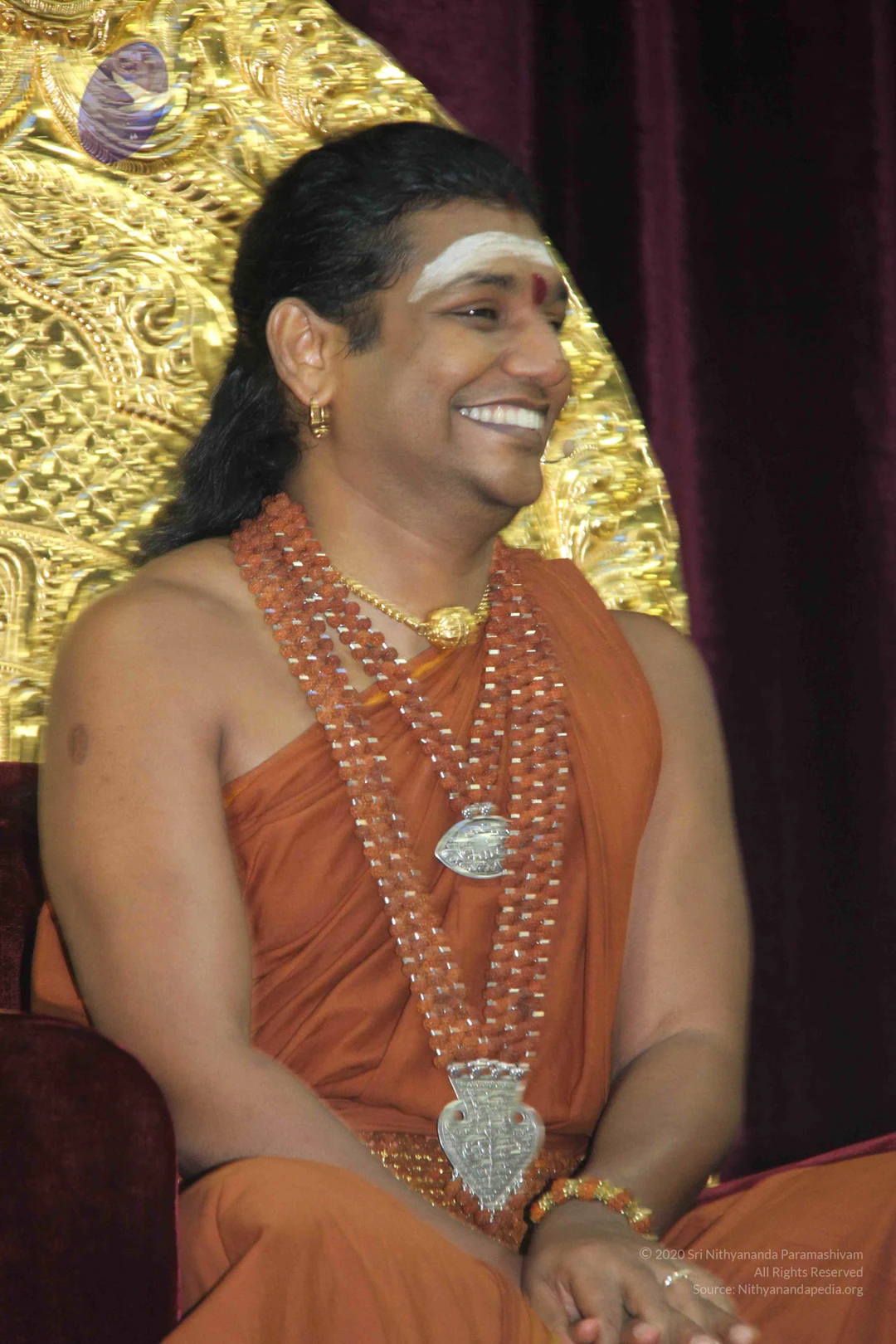
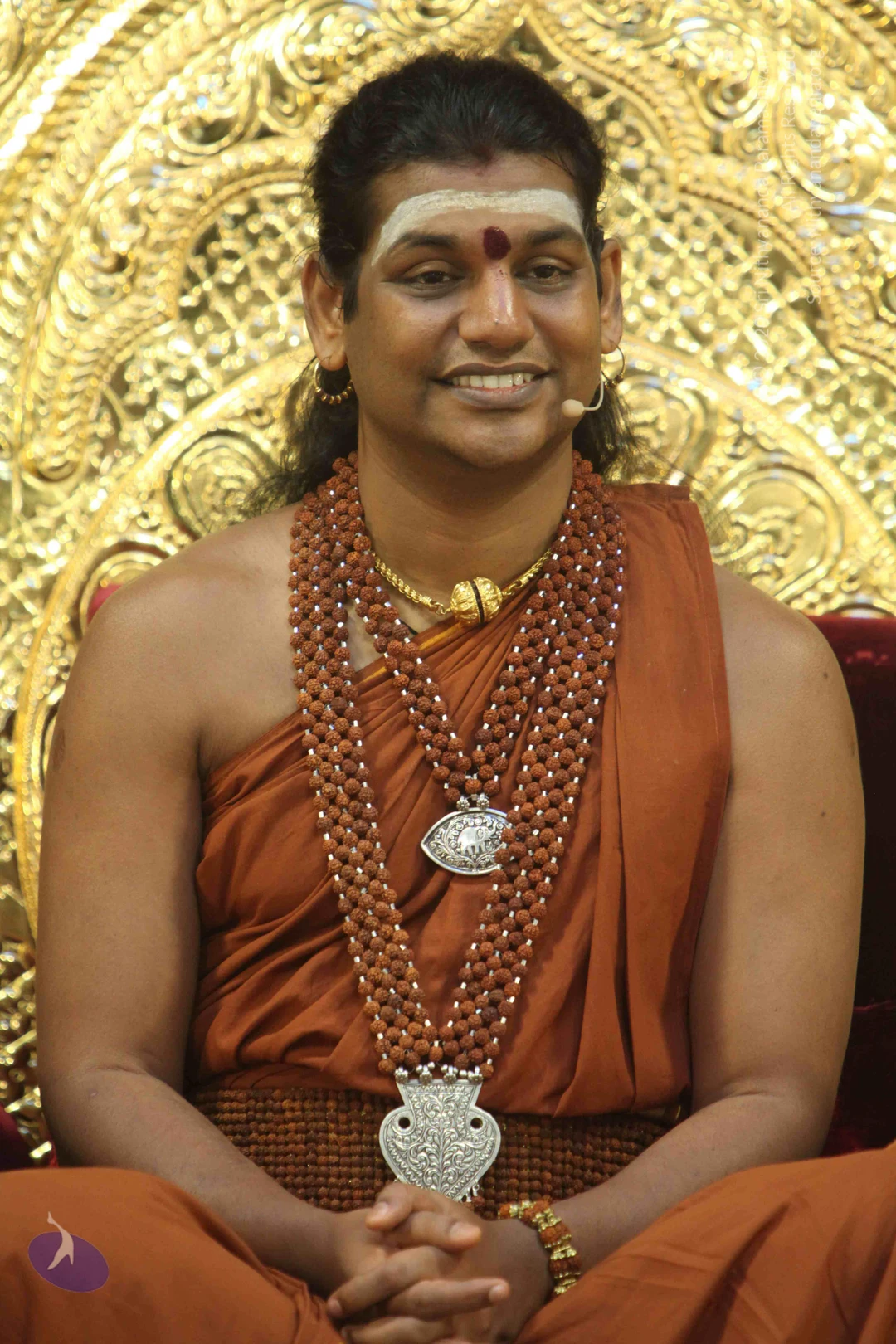
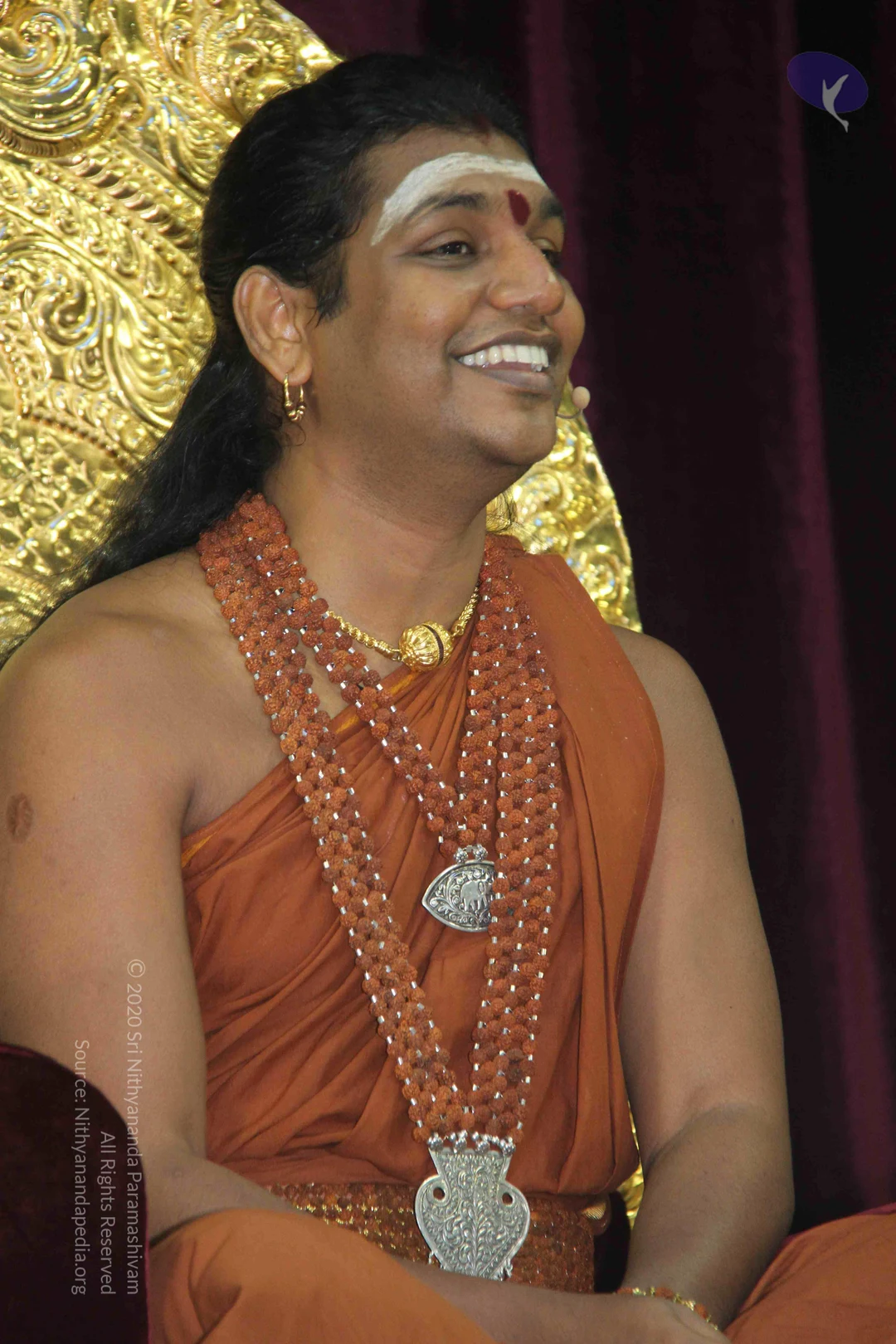
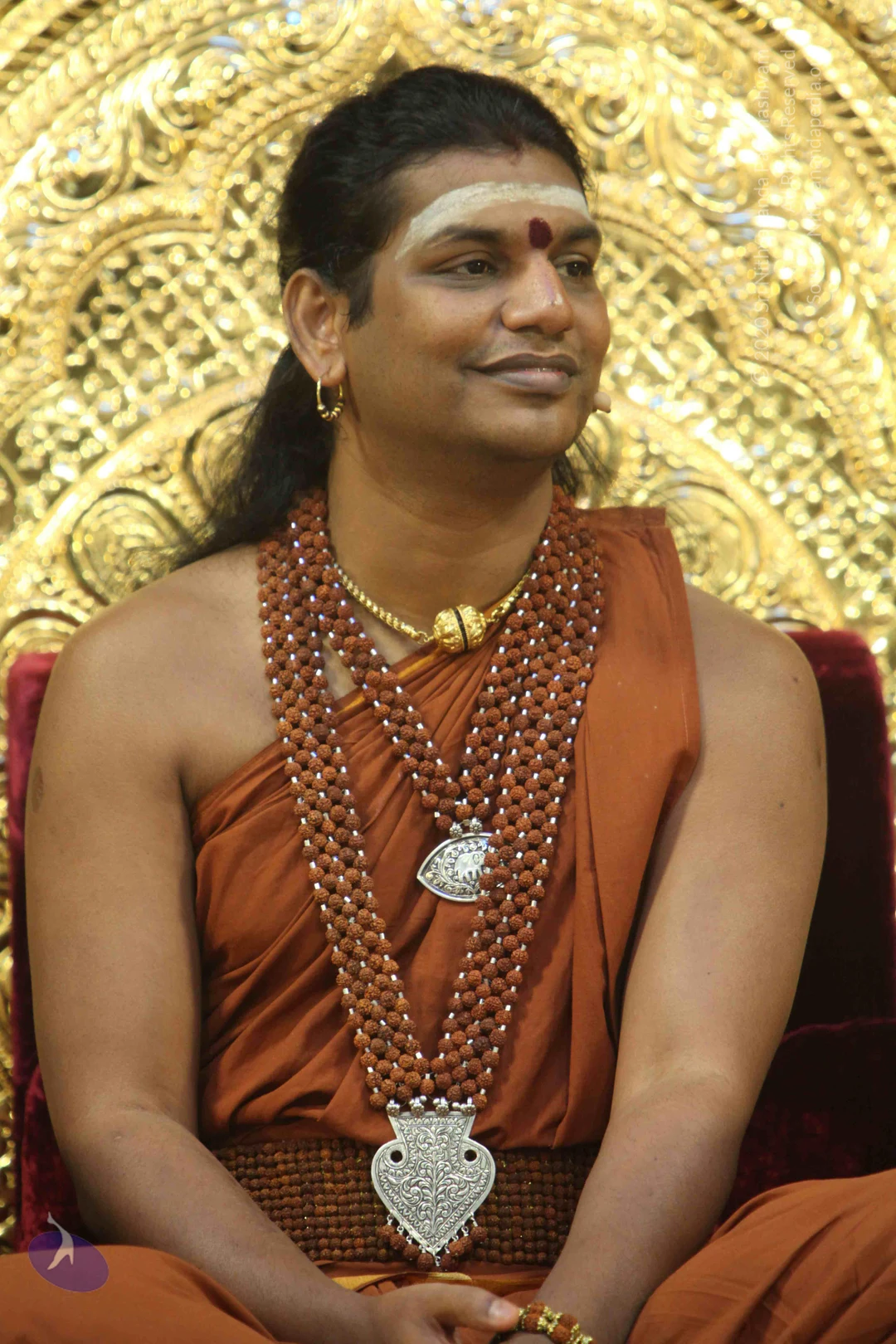
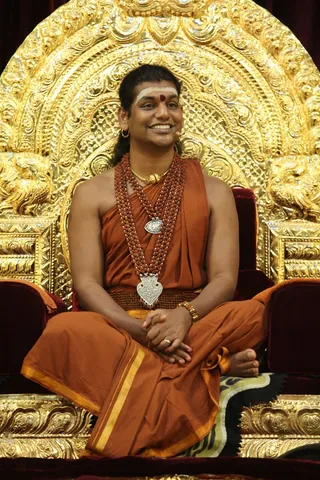
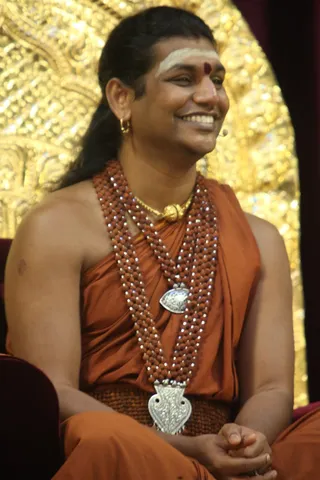
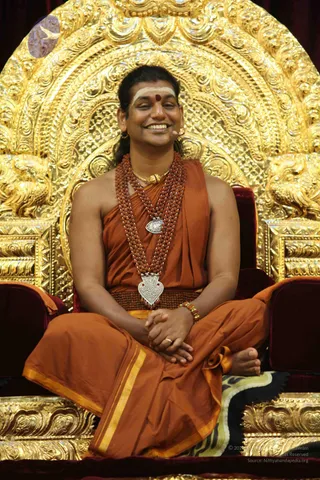
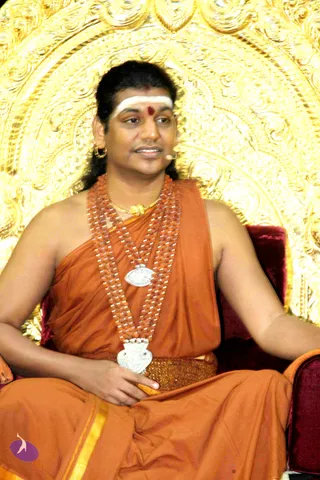
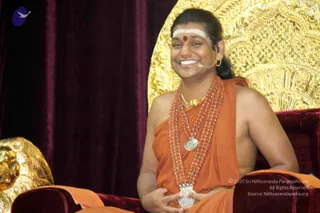
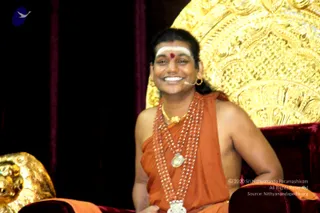
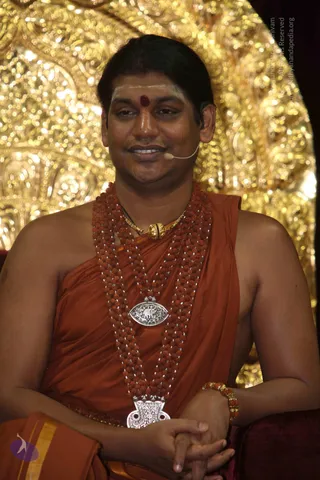
A seated man in saffron-orange robes sits cross-legged on an ornate gold throne with carved lion and floral motifs and deep red velvet cushions. He wears multiple strands of rudraksha beads, a silver pendant, a gold necklace, gold earrings, and a gold bracelet, with white vibhuti marks and a red bindi on his forehead. He smiles with hands clasped in his lap. Swamiji (probable) appearance-based label: long swept-back hair, saffron clothing, rudraksha malas and ceremonial gold necklace, seated on a throne at a satsang setting. No other people are visible.A smiling man seated against an ornate gold-leaf backdrop, wearing an orange-saffron cloth wrap over bare shoulders and multiple strands of rudraksha beads with a large ornate silver pendant. He has long swept-back hair, a white vertical tilak with a red dot on his forehead, a gold ear stud, and a gold necklace. His hands are clasped in his lap.

MorningSatsang

16 photosSource gallery
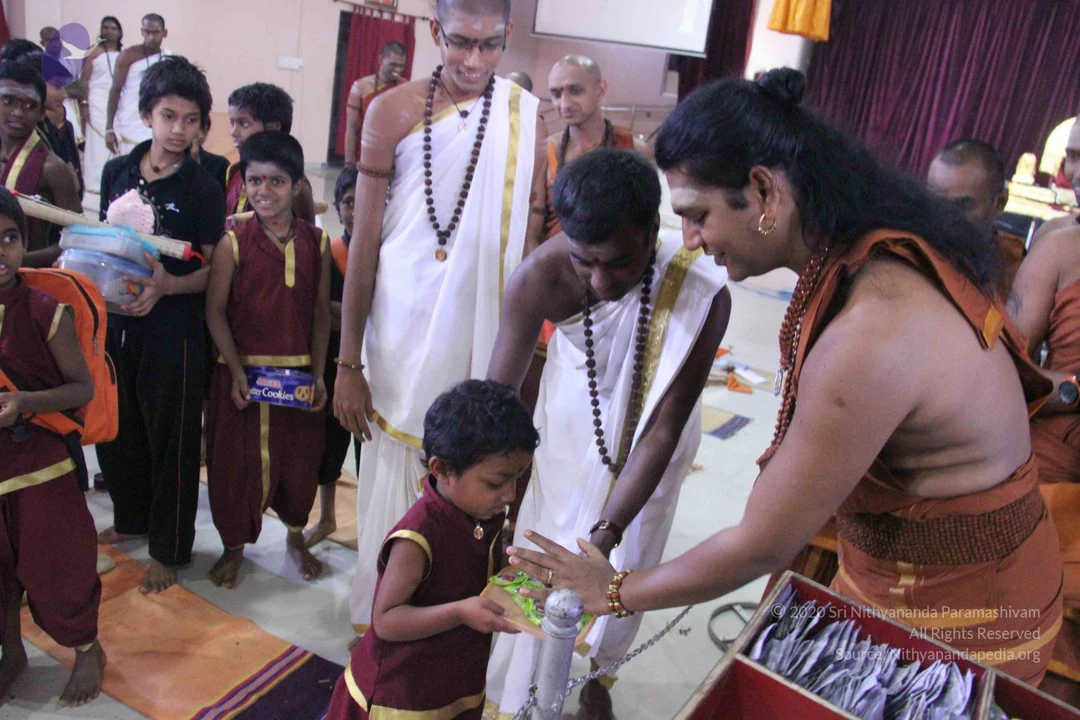
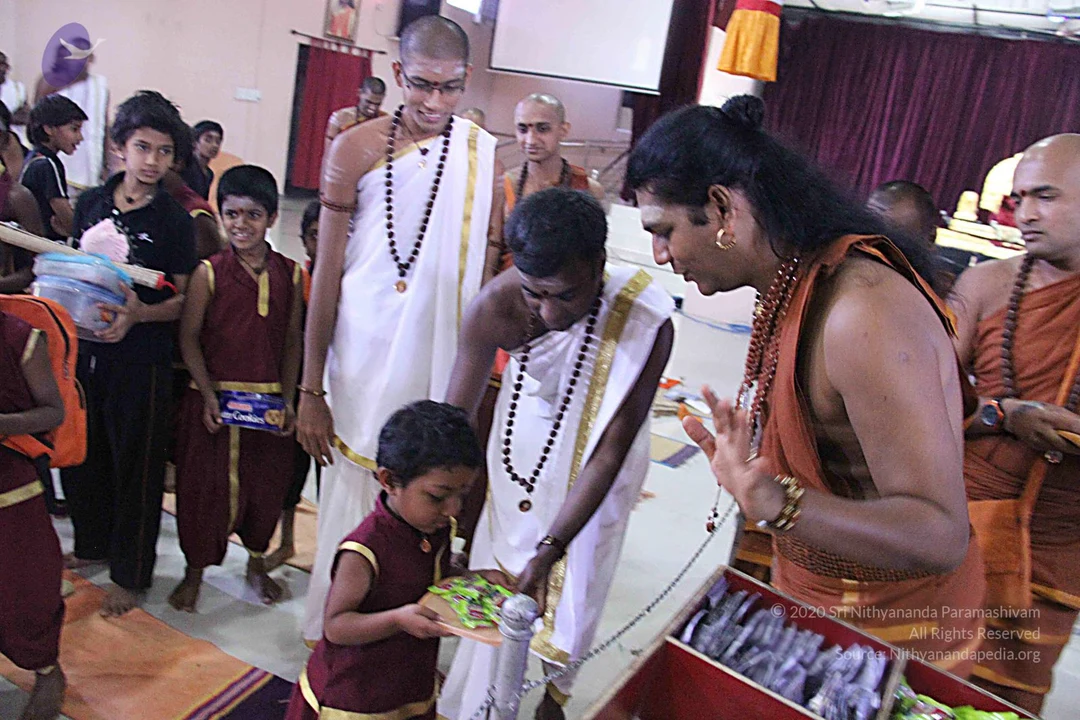
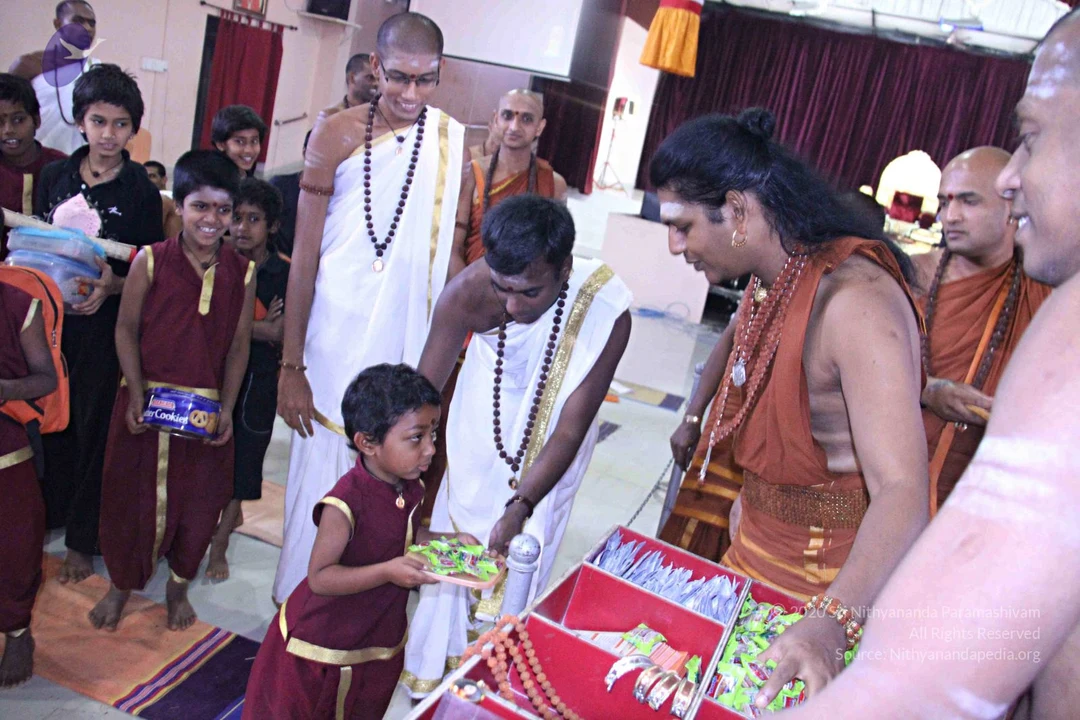
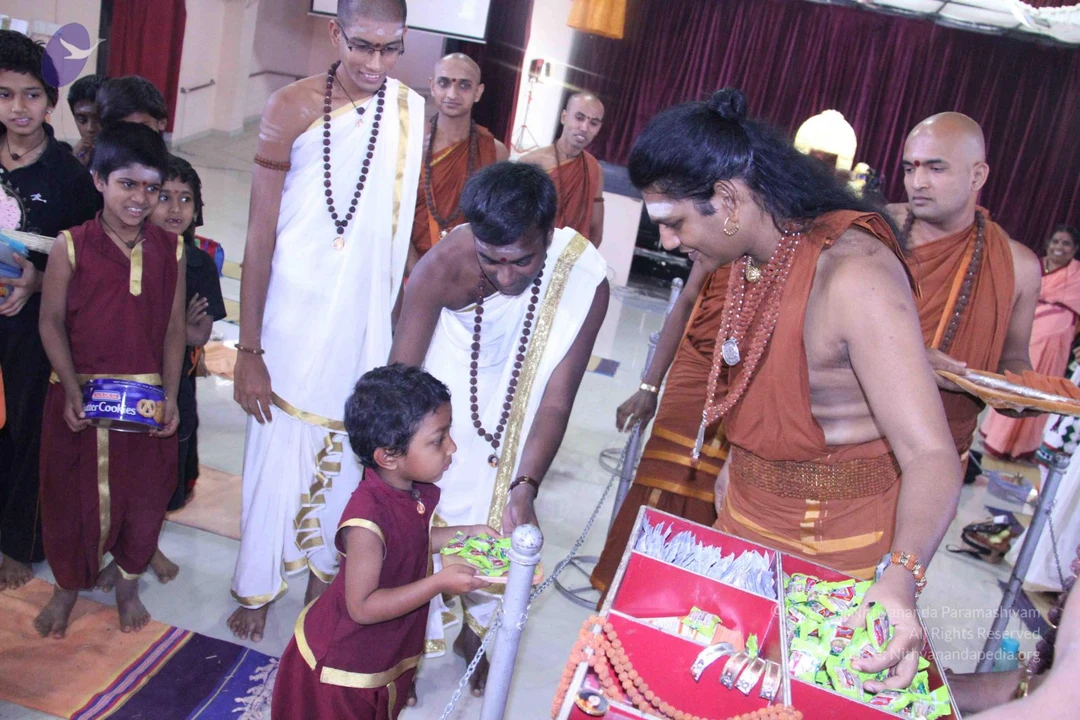
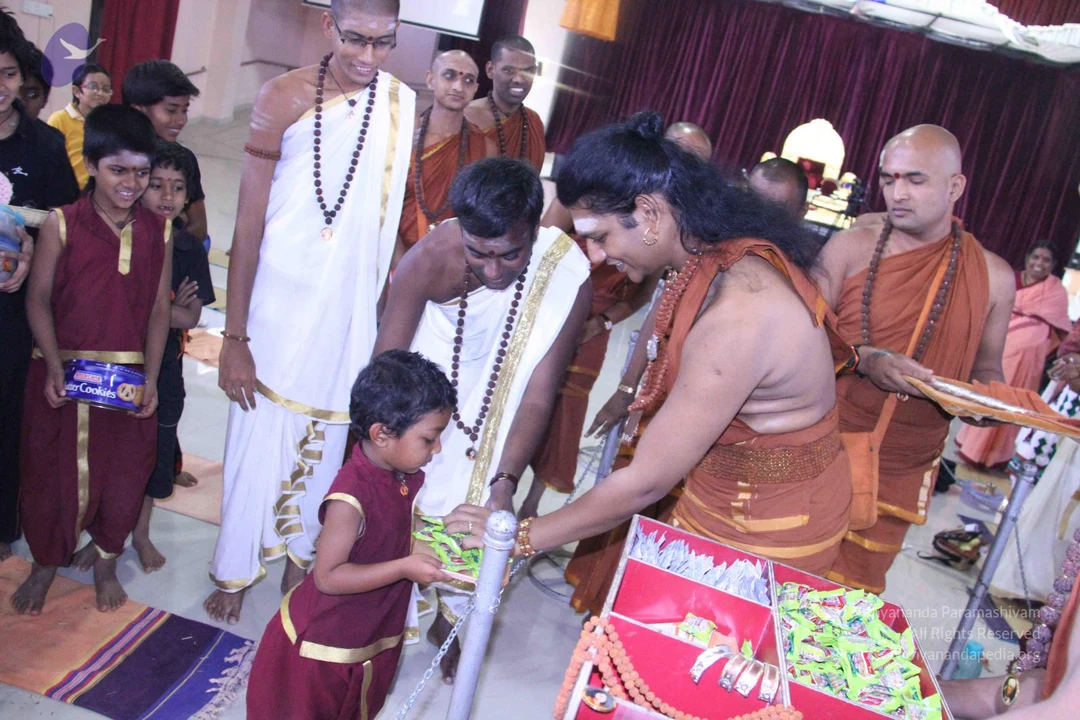
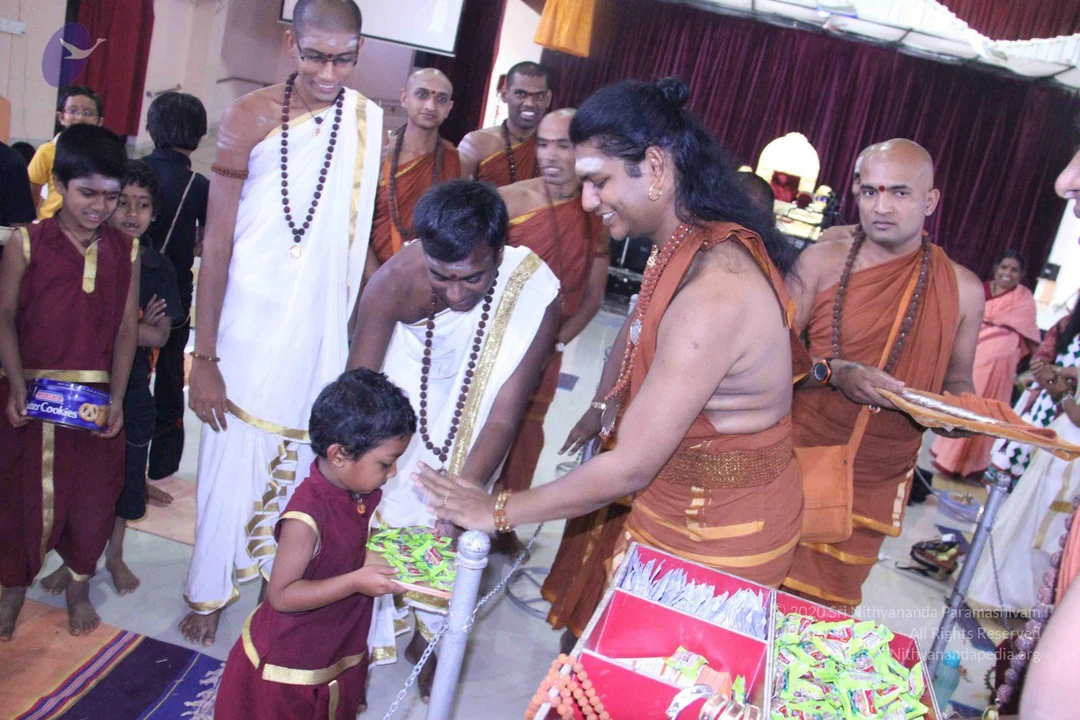
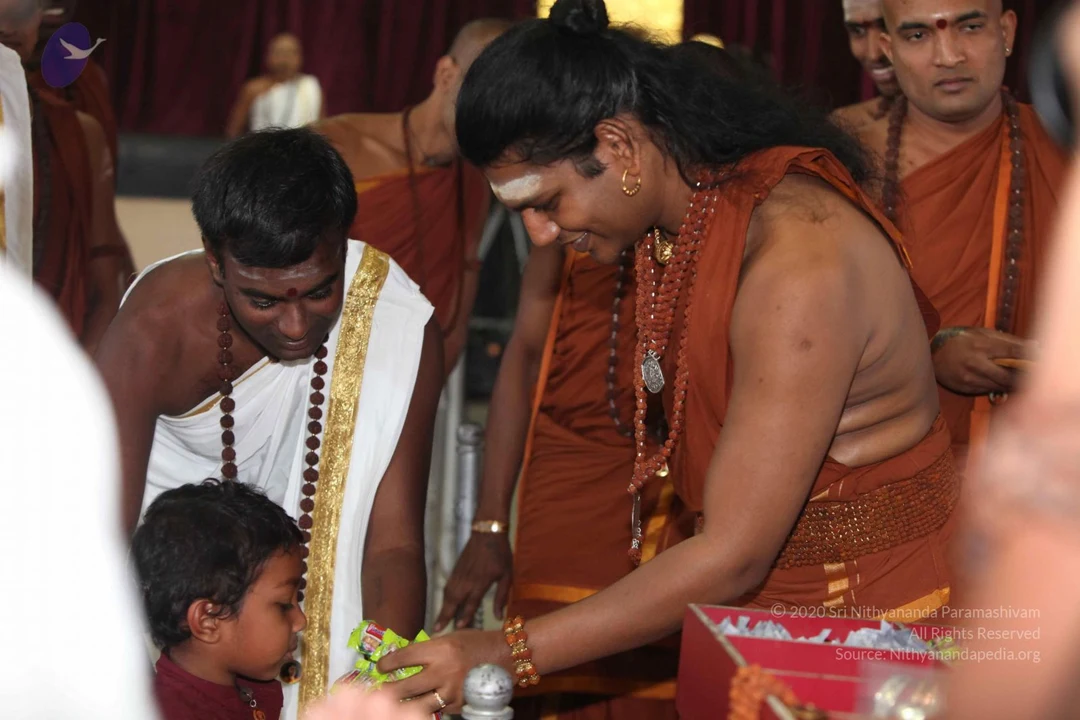
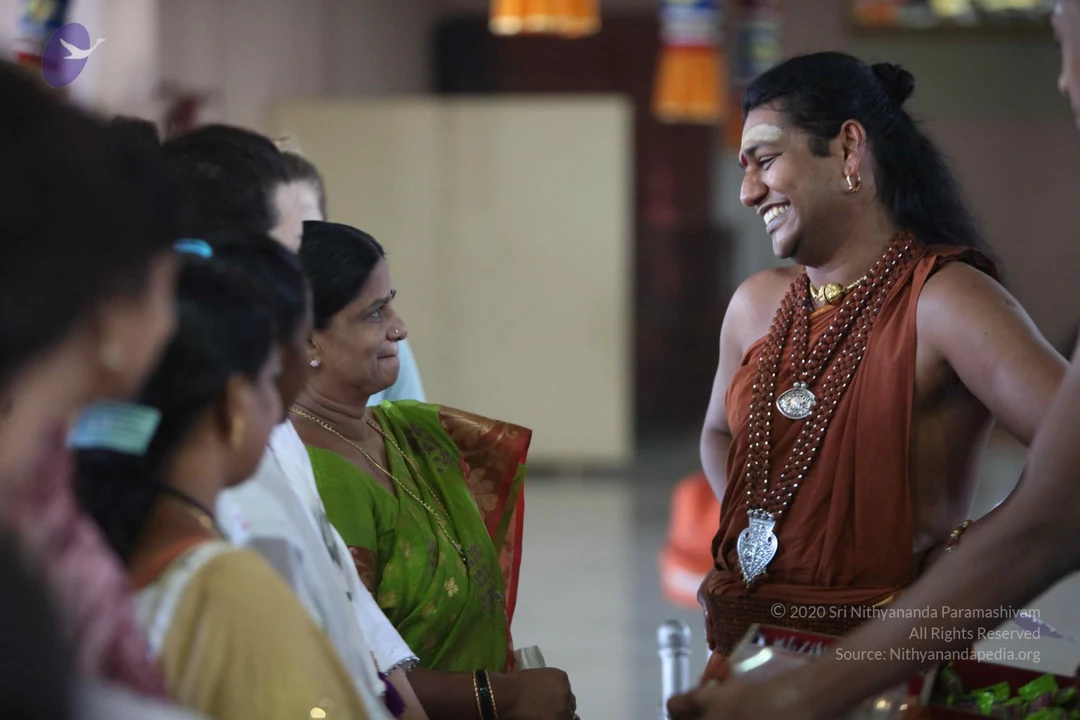
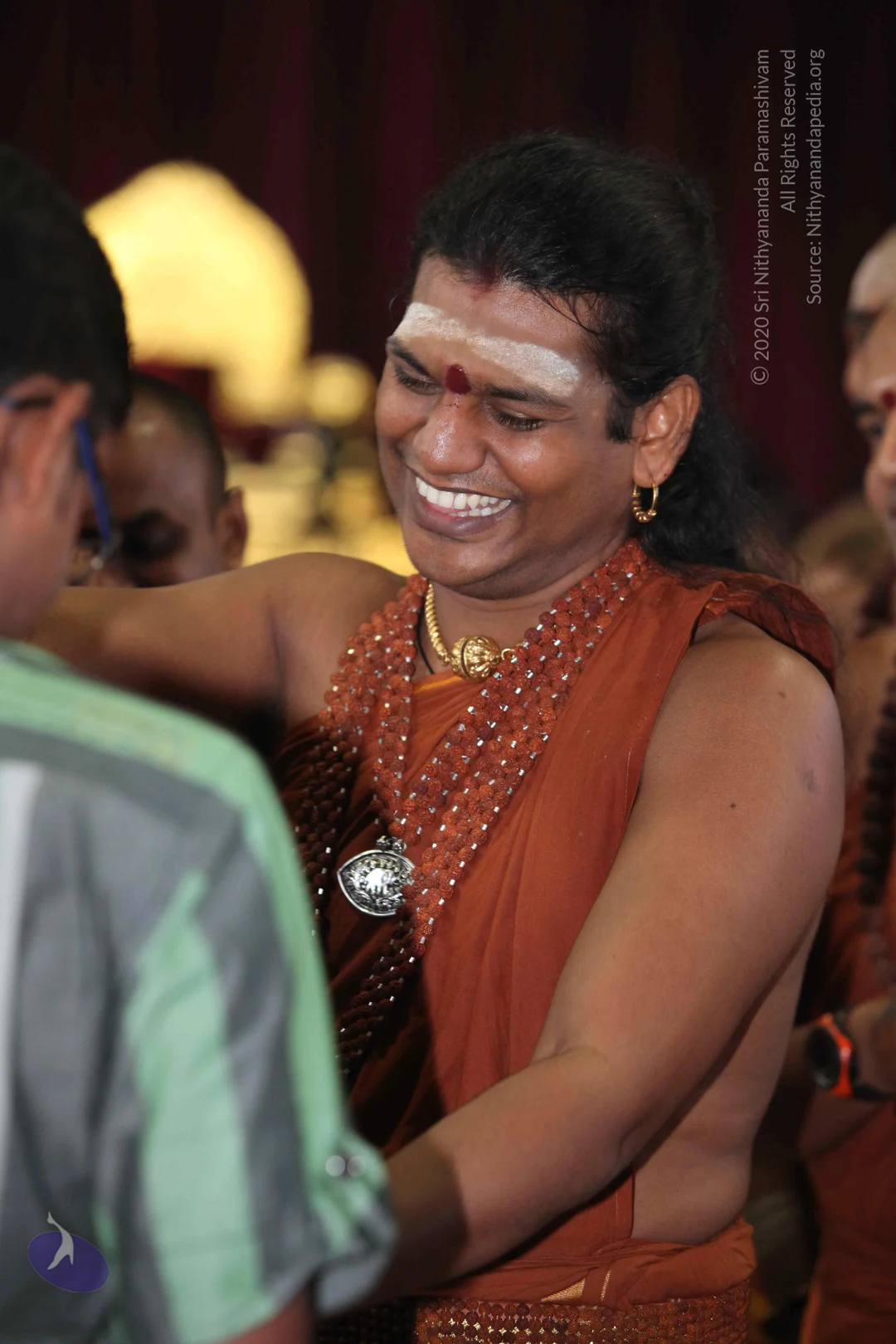
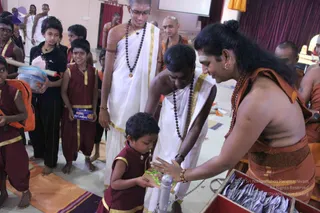
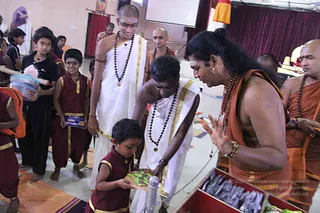
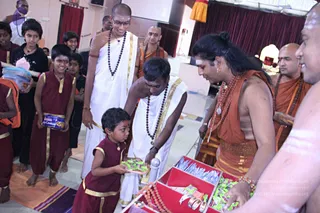
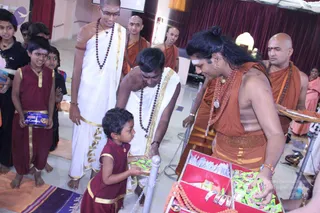
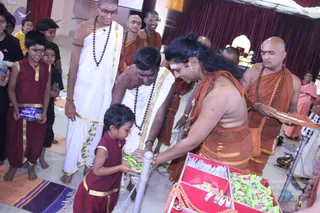
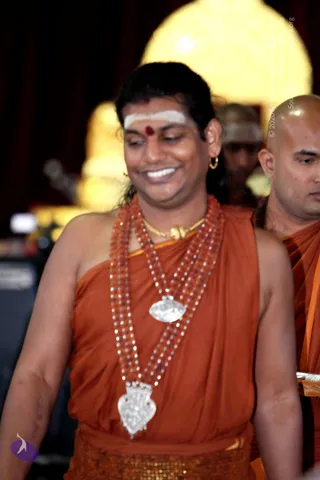
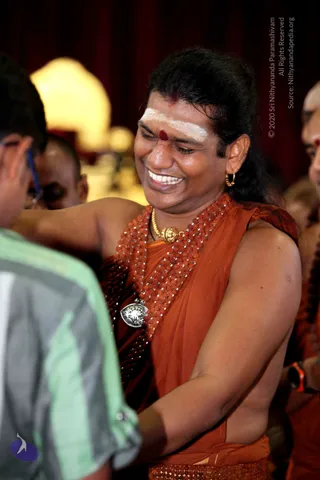
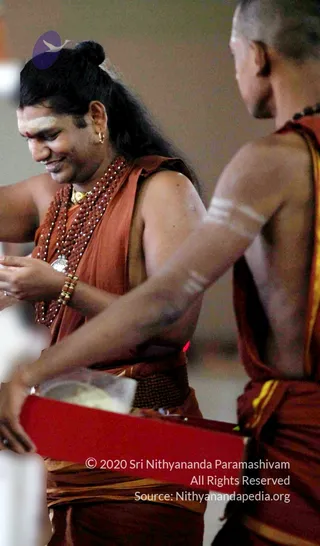
A photograph of a ritual scene indoors where a figure in an orange and bronze-toned sleeveless garment with a rudraksha mala and long swept-back dark hair leans forward at right, hands extended toward a small child in maroon and gold clothing who is placing a leaf-wrapped offering on a metal stand. Beside them a young man in white dhoti with gold border and rudraksha beads watches, and a shaved-headed man in white dress stands behind. Several children in maroon and gold attire stand at left holding bundles and a tub, and a box of folded white cloth sits at lower right. Maroon and orange drapes and a projection screen are in the background.A photograph of a crowded hall where a bare-shouldered figure in an orange-saffron garment with rudraksha malas and gold bangles stands at right, hands pressed together and leaning toward a small child in a maroon and gold outfit holding a plate. Beside them, a man in white dhoti with gold border and rudraksha mala bends over an open wooden box containing small packets and objects. Several children in maroon and white uniforms and a boy in black shirt stand in line behind; a bald young man in white and another in orange appear at left and right, and a maroon curtain and projector screen hang in the background.A photograph of a ritual or giving moment in an ashram hall. A man with long dark hair, a rudraksha mala and gold ornaments, wearing an orange-saffron garment and a bare chest, leans over a red tray divided into compartments holding small bundles of wrapped sweets, rudraksha malas and bangles, and reaches into it. A young boy in a white dhoti with gold border and a rudraksha mala stands at the tray, and a small child in a maroon outfit with gold trim holds a plate of green sweets. Other children in maroon and black clothes stand behind, one holding a blue-and-white Quaker Oats container. Men in white dhotis and saffron robes stand nearby, and a bald man in saffron is at the right edge. The orange-saffron figure with long hair and rudraksha adornments fits the page's a person reference, though the appearance is only probable.A photograph inside an indoor hall with maroon curtains showing a group of ashram members handing out sweets to children. At right, a man with long dark hair tied up, wearing orange ochre robes, a rudraksha mala and a large ceremonial beaded necklace with a pendant, leans over a red tray divided into compartments holding green-wrapped sweets, garlands and bangles. In the centre, a man in white dhoti and shawl with gold borders and a rudraksha mala bends toward a small boy in a maroon outfit with gold trim who reaches for a sweet. Other saffron-robed sannyasis stand behind, and a shaved-headed man in white with gold-bordered dhoti is at left beside a standing boy holding a Butter Cookies tin. Several children and a woman in pink sari are visible in the background.A photograph of a group of people in an ashram hall with a maroon curtain behind them. A long-haired figure in saffron-orange robes and a rudraksha mala, with a beaded necklace and ornate waist belt, is handing sweets from a red tray with compartments to a small child in a maroon kurta with gold trim. Nearby, a young man in white dhoti with gold border bends forward toward the child, while other devotees in saffron, white and maroon clothing stand around. Boys in maroon and a standing man in white stand at the left, and a woman in pink sari appears at the right. Green-wrapped sweets are scattered on the tray and on the floor.A photo of a group of men and boys in a temple hall distributing sweets. A man with long swept-back dark hair, orange-saffron robes and a rudraksha mala with gold ornaments stands at right, leaning over a red box of wrapped candies and handing a sweet to a small child in a maroon outfit. Beside him, a bald man in saffron holds a tray of sweets. On the left, a bald young man in white dhoti with a gold border and rudraksha beads smiles, and a boy in maroon with a box of cookies watches. Other saffron-clad monks and a woman in pink sari stand behind. A red curtain and a shrine hang in the background.

KUMBH-MELA-TENTS-BEING-BUILT-BY-NITHYANANDA-DHYANAPEETAM

7 photosSource gallery
A photograph of an outdoor construction or staging area with a bamboo scaffold frame supporting a tan tarpaulin roof. Corrugated metal sheets form temporary walls, with two dark blue cloth panels hung in an open doorway. Scaffolding poles and a light grey building wall are visible behind. No people are present.An interior view under a large striped tent with yellow and white canvas panels draped overhead. Two small crystal chandeliers hang from the ceiling. Wooden poles support the tent, and the sandy ground is covered with straw. A wooden cart with a dark brown body sits to the left. No people are visible in the scene.A photograph of an empty white tent interior with white fabric walls and a white ceiling panel. The floor is covered with red and orange woven mats over straw. A white vertical pole stands in the centre of the frame, and the tent's sidewall folds into the image. No people or ceremonial items are visible.A photograph of a temporary outdoor shelter with a corrugated metal sheet roof supported by thin wooden poles. Corrugated metal panels form low walls along the sides, and blue and yellow tarpaulin sheets hang at the back. The ground is bare concrete or packed earth. No people, statues, or ritual objects are visible; the scene appears to be a plain makeshift structure or stall area.A dim tented space with white fabric walls and ceiling. Rows of red and gold cushioned mats or seats line the floor, with a few rounded cushions and bolsters arranged in lines. No people are visible, and the scene appears to be an empty satsang hall or seating area set up for devotees.A low, dim interior with a white fabric canopy overhead supported by thin white poles. Colourful patterned rugs and mats cover the floor, and a patterned cloth lies in the lower foreground. The space appears empty of people and furnishings beyond the floor coverings.

Card1
197 photosSource gallery
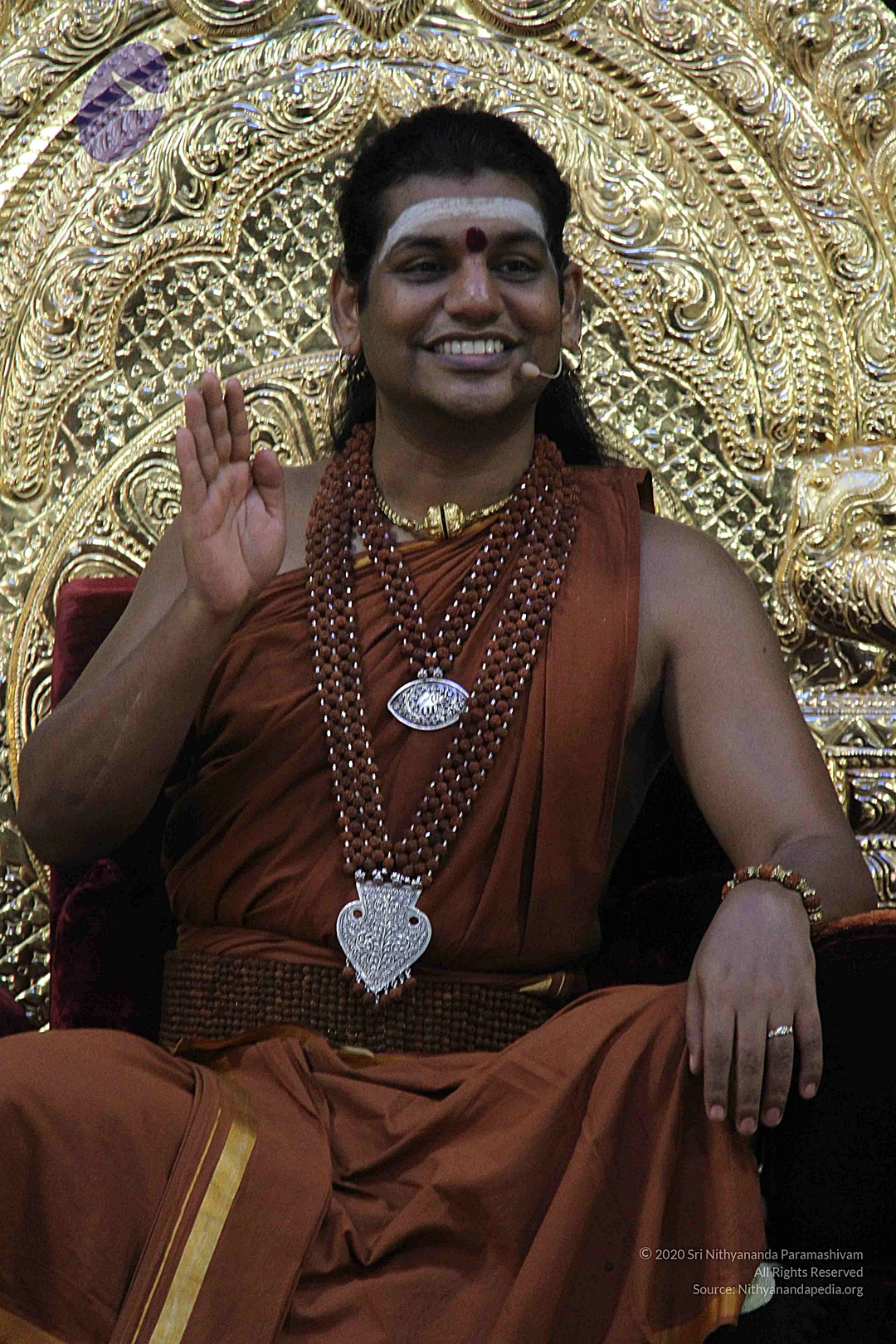
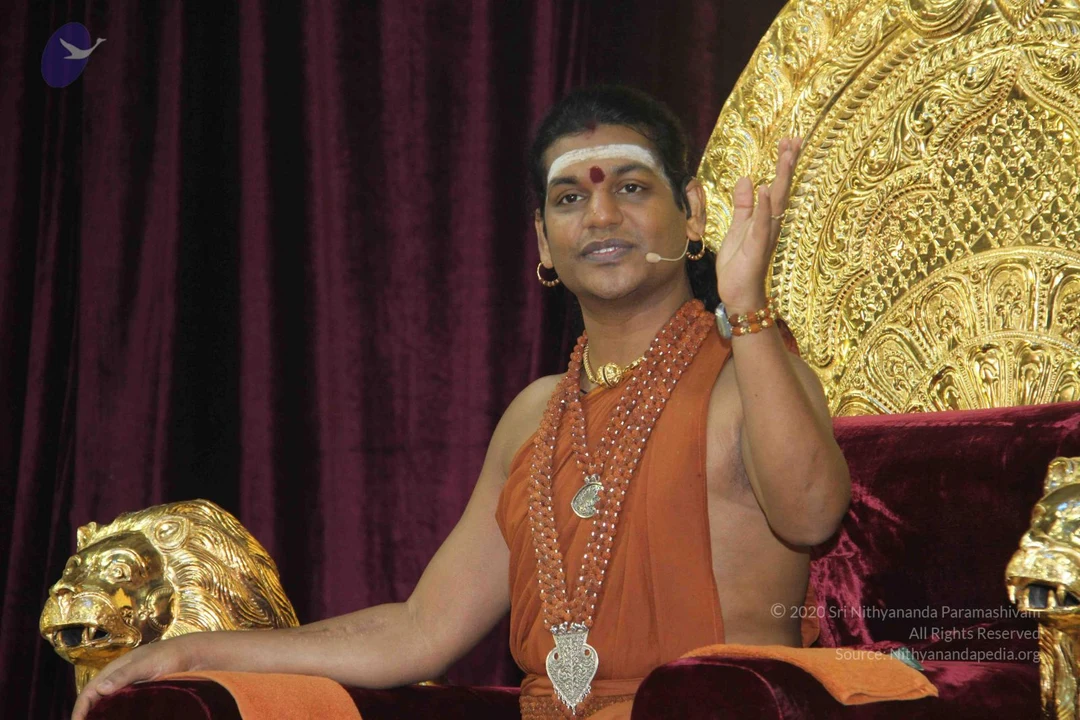
A man seated on an ornate gold-and-maroon throne with gold lion-head armrests, raising one hand while speaking into a headset microphone. He wears a saffron-orange wrap, multiple strands of reddish rudraksha-style beads, a silver pendant, a gold necklace, and a bead bracelet, with a white vertical tilak and red dot on his forehead. Behind him stands a large gilded throne backrest against deep burgundy velvet drapes. a person seated in satsang role on the peetha throne, teaching to an audience; the image is a photo of a discourse setting.A man seated on an ornate gold-and-crimson throne during a satsang, raising his right hand in a speaking gesture. He wears an orange saffron shawl over bare shoulders, a multi-strand rudraksha-style bead mala with a silver pendant, gold earrings, a gold chain, and a white tilak with a red bindi on his forehead, and a small microphone is clipped near his face. Golden carved lion heads sit on the arm rests, with deep maroon velvet drapes behind. a person appears in person, seated on the throne and addressing the audience.A man with long swept-back dark hair, white vertical tilak and red bindi on his forehead, wears an orange saffron wrap, layered red-orange beaded mala necklaces and a gold pendant. He smiles and raises one hand while speaking into a headset microphone, seated before an ornate gold throne-like carved backrest against a deep maroon velvet curtain. A gold lion-head ornament is partly visible at lower right.A man seated on an ornate gold throne with carved golden backrest, before a deep maroon velvet drape, pointing his right arm outward while speaking. He wears an orange-saffron cloth draped over one shoulder, layered rudraksha-style beaded necklaces in orange-brown with a silver pendant, a gold chain, a wristwatch and a beaded bracelet, and a white horizontal tilak with a red dot on his forehead. Beside him rests a gold lion-head armrest. A tiny lapel microphone is visible. Swamiji (probable) is identifiable from the saffron clothing, long swept-back hair, ornate gold seating and rudraksha malas; a clear face-independent appearance match is present, so the figure is treated as a probable in-person candidate.A man seated on an ornate gold-carved throne before deep maroon drapes, smiling and raising his right hand as if speaking. He wears an orange-saffron shawl over the shoulder, multiple strands of rudraksha beads, a large pendant and gold necklace, and gold hoop earrings. A white horizontal tilak with a red dot marks his forehead, and he wears a lapel microphone. Swamiji (probable): a seated teacher in saffron with long swept-back hair, rudraksha malas and ceremonial gold necklaces, giving satsang discourse.A seated man in an orange-saffron robe draped over one shoulder sits on an ornate gold throne with a deep red velvet backrest and curtain behind him. He wears a white vertical tilak with a red dot on his forehead, gold hoop earrings, a gold chain at the neck, and multiple strands of red-brown beaded malas, one with a silver pendant and another with a larger silver heart-shaped pendant. He smiles and looks to his right with an open hand resting on the armrest. Probable Swamiji: long swept-back hair, saffron robe, rudraksha-style malas and ornate gold throne fit the description of the Satsang speaker, though identification is by appearance only. The image is a photograph from a satsang setting.

Card2

17 photosSource gallery
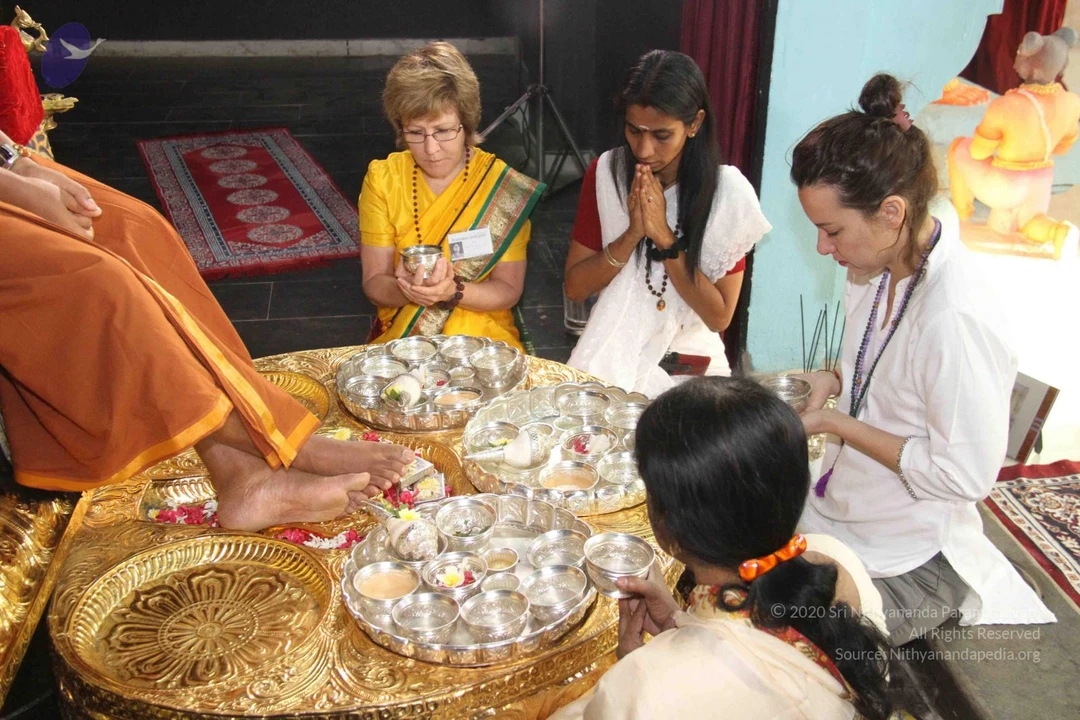
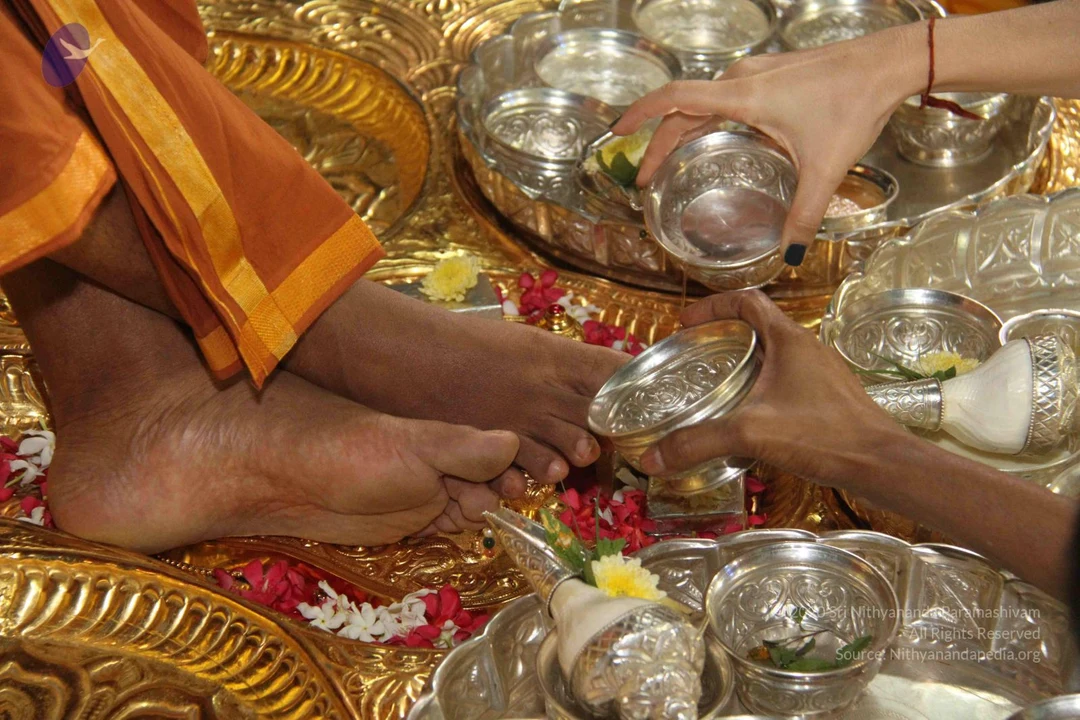
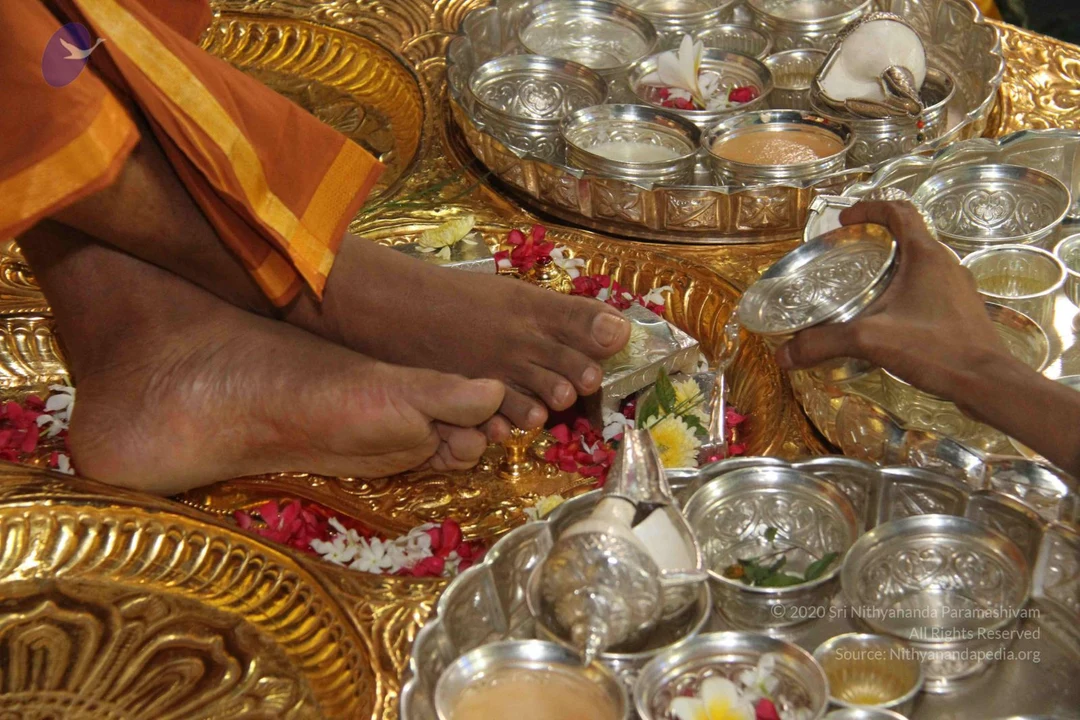
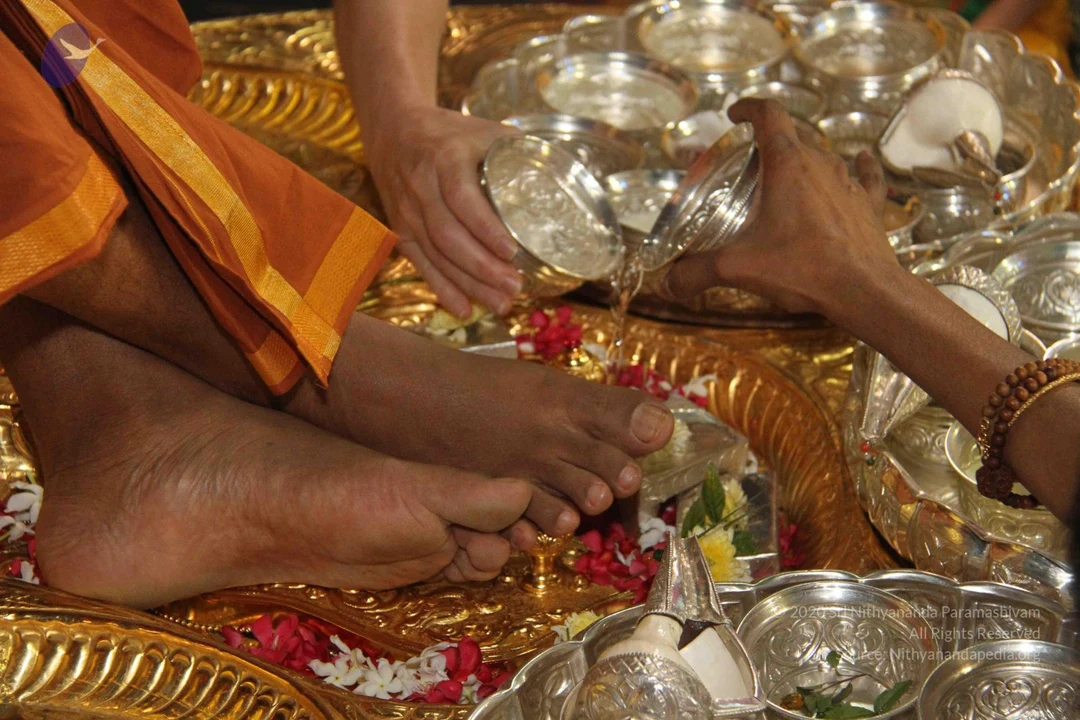
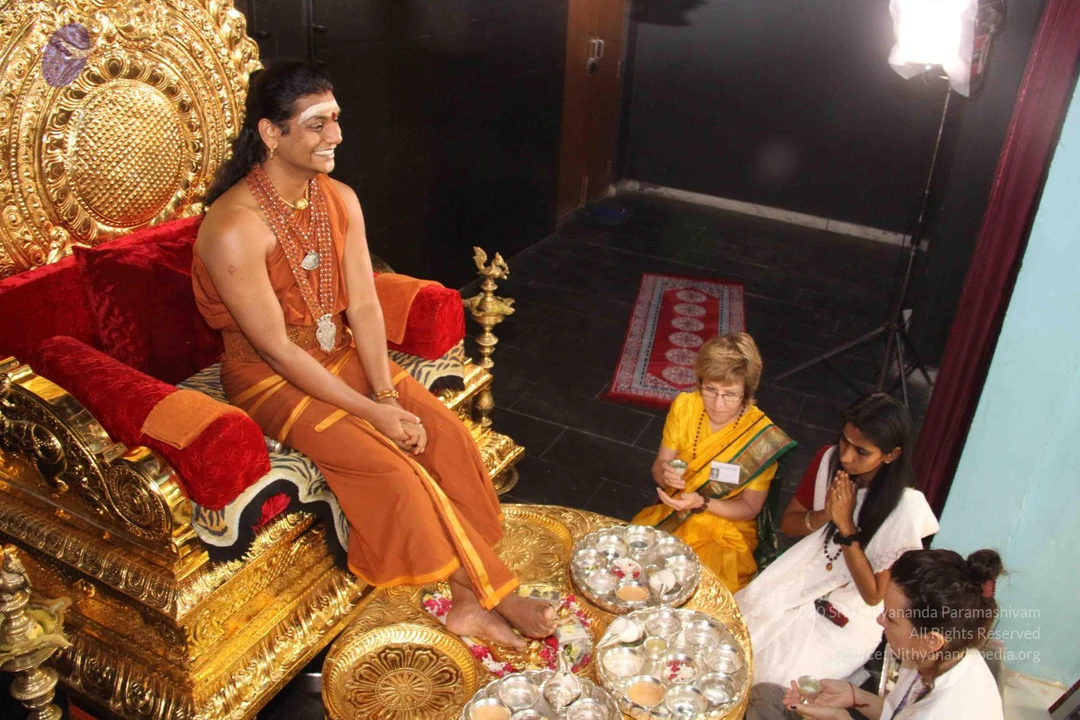
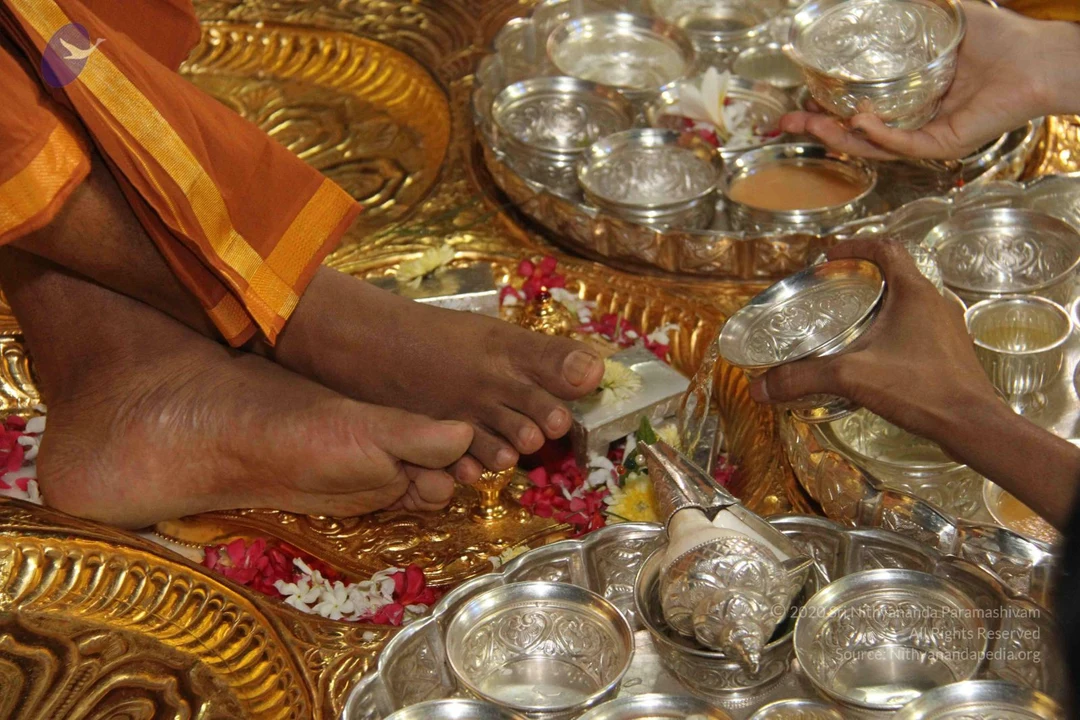
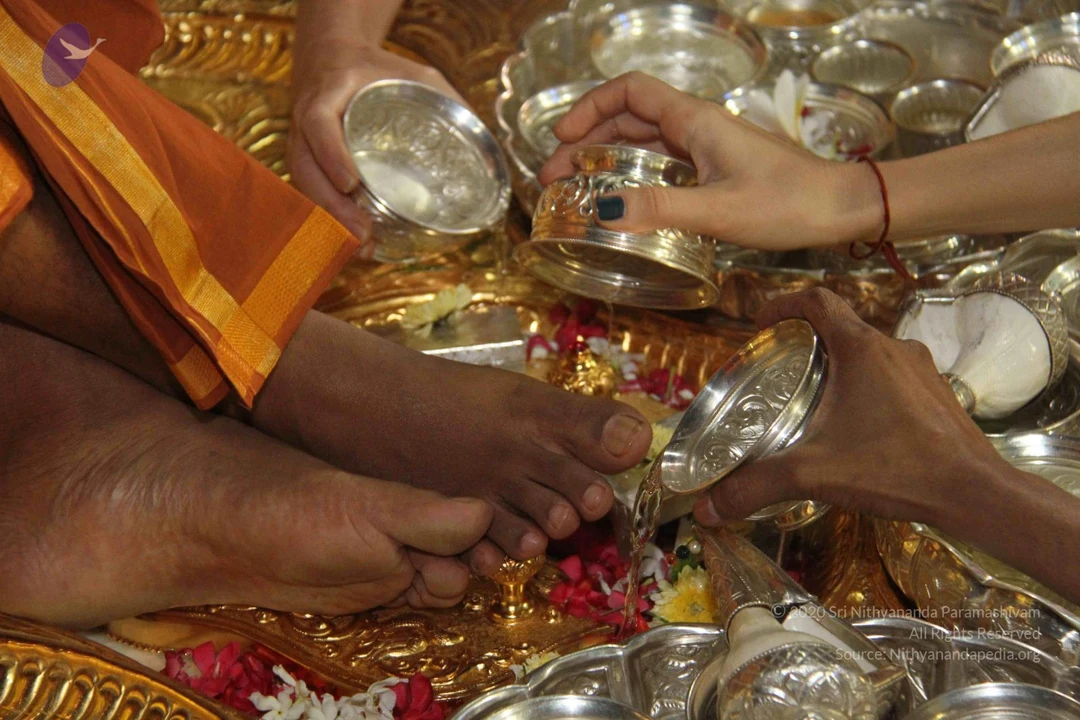
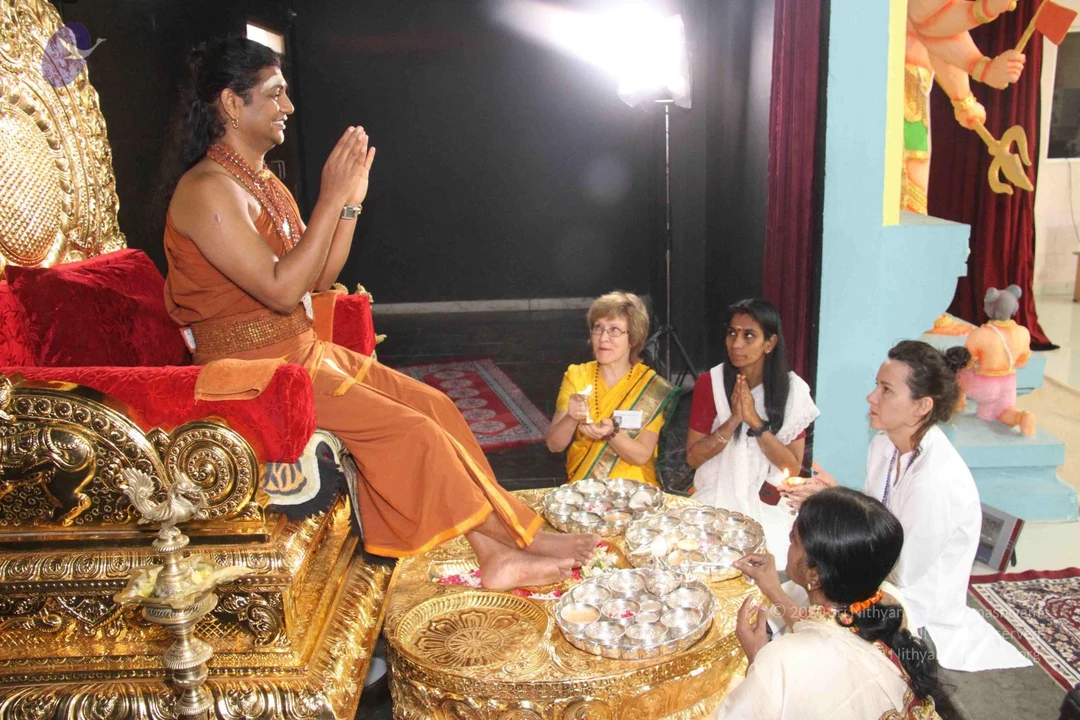
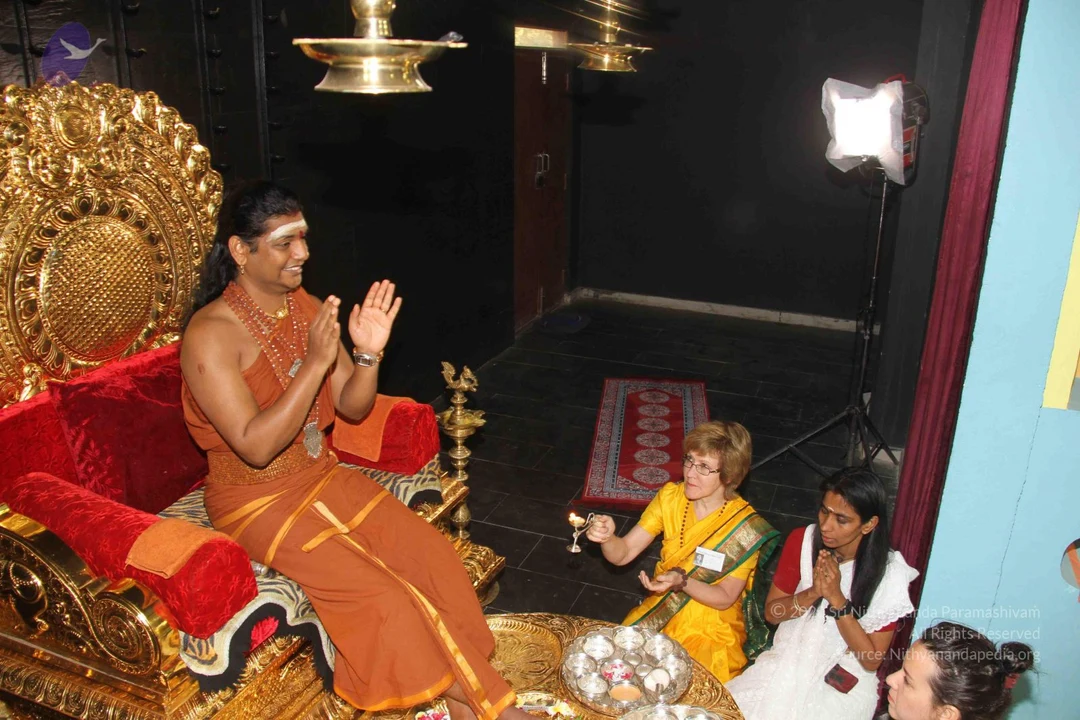
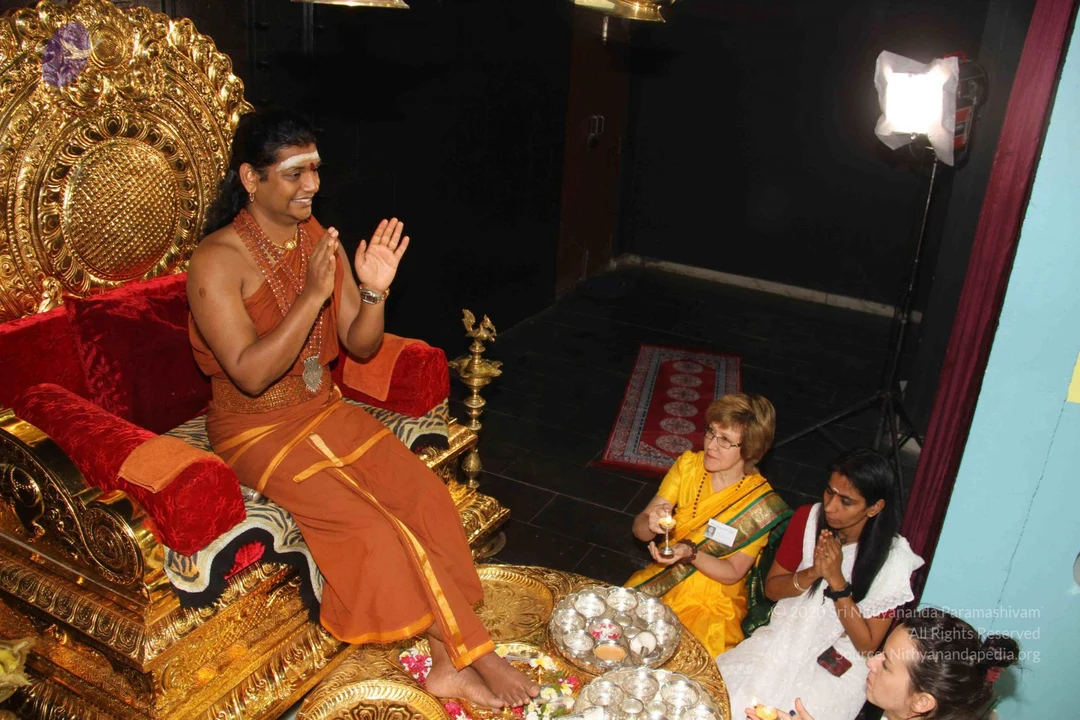
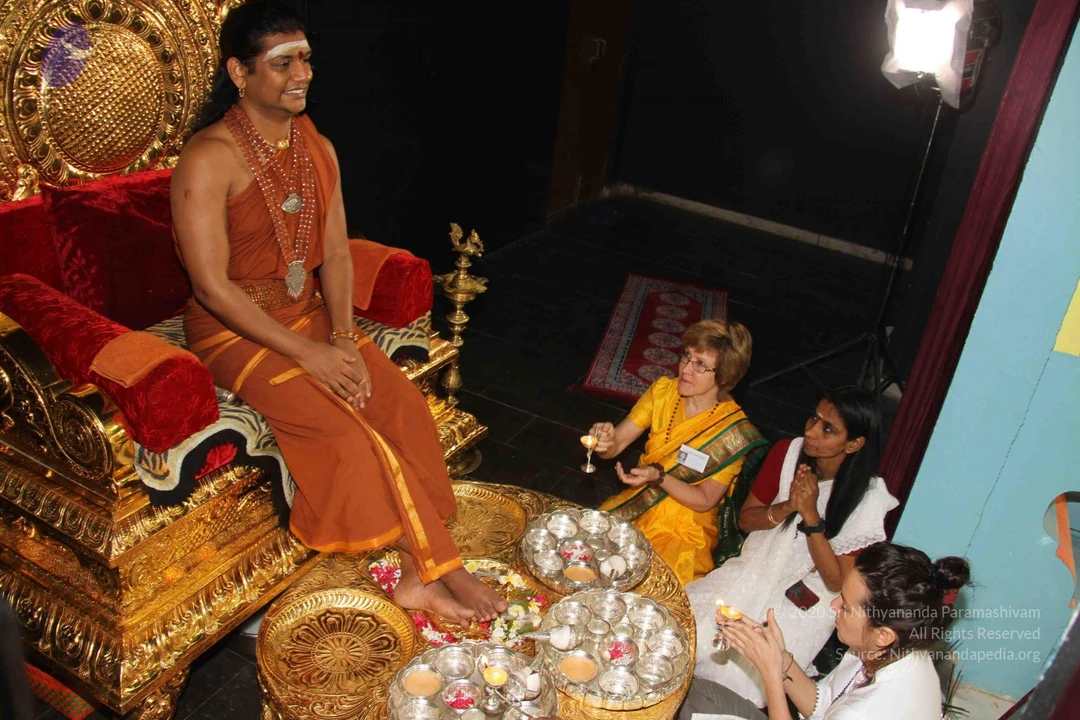
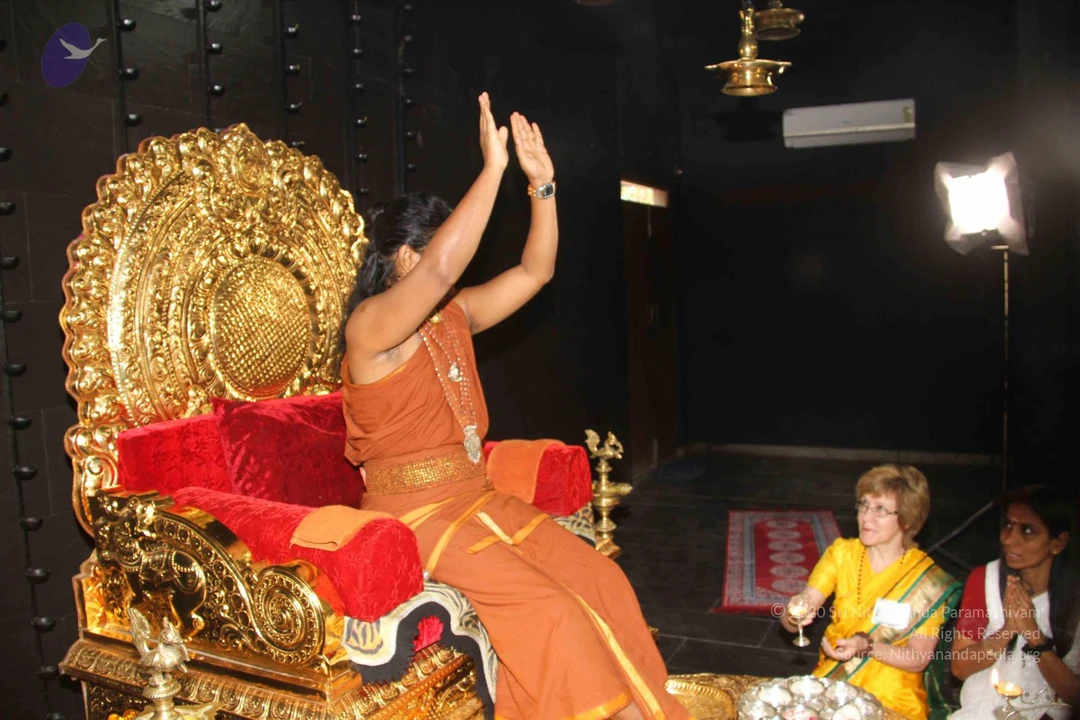
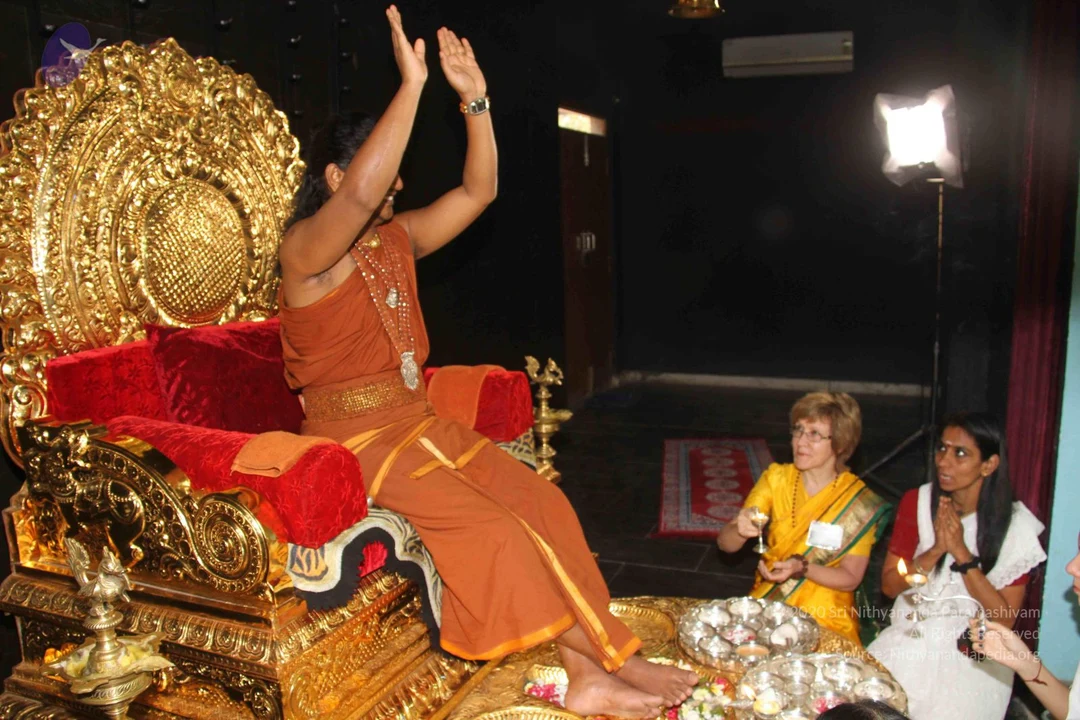
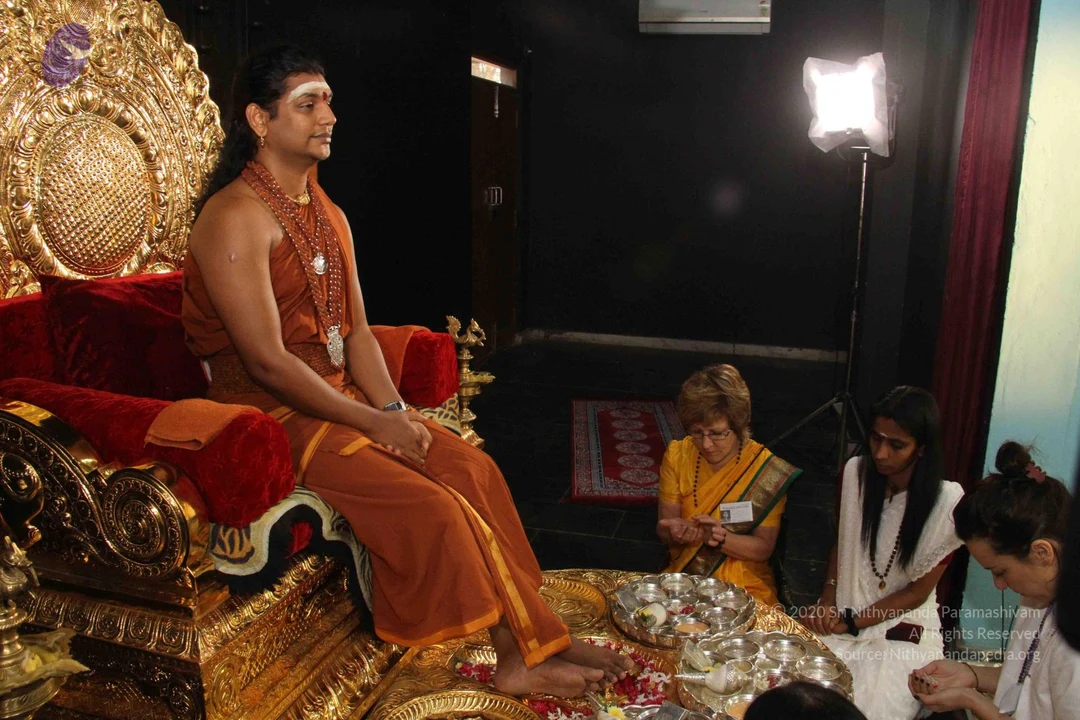
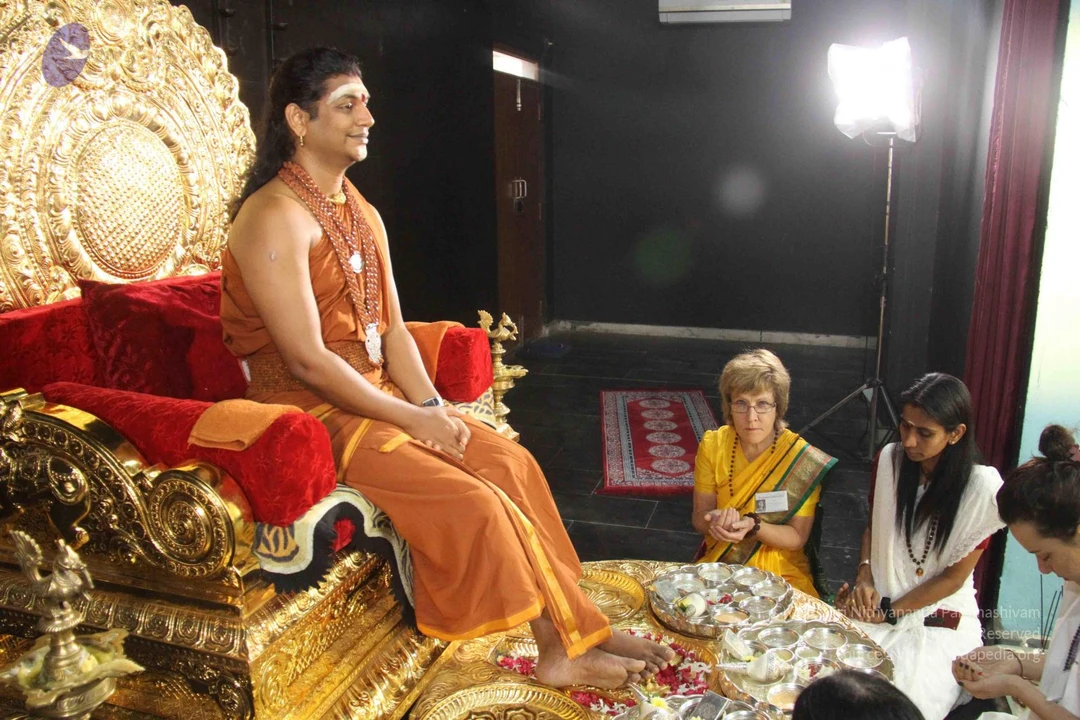
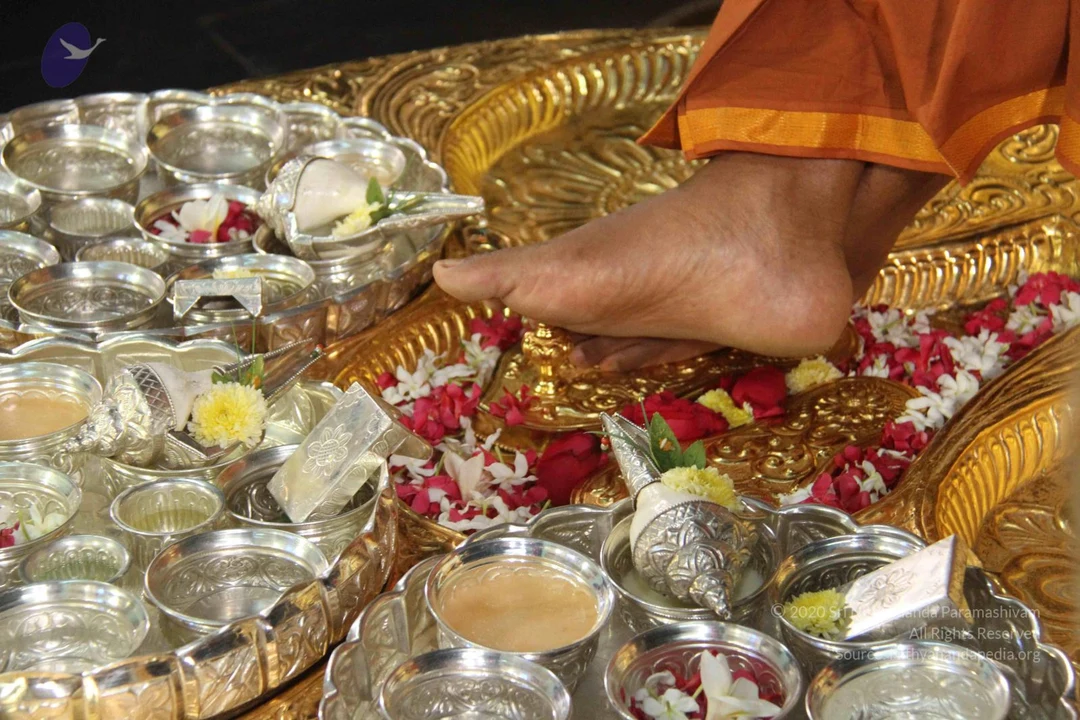
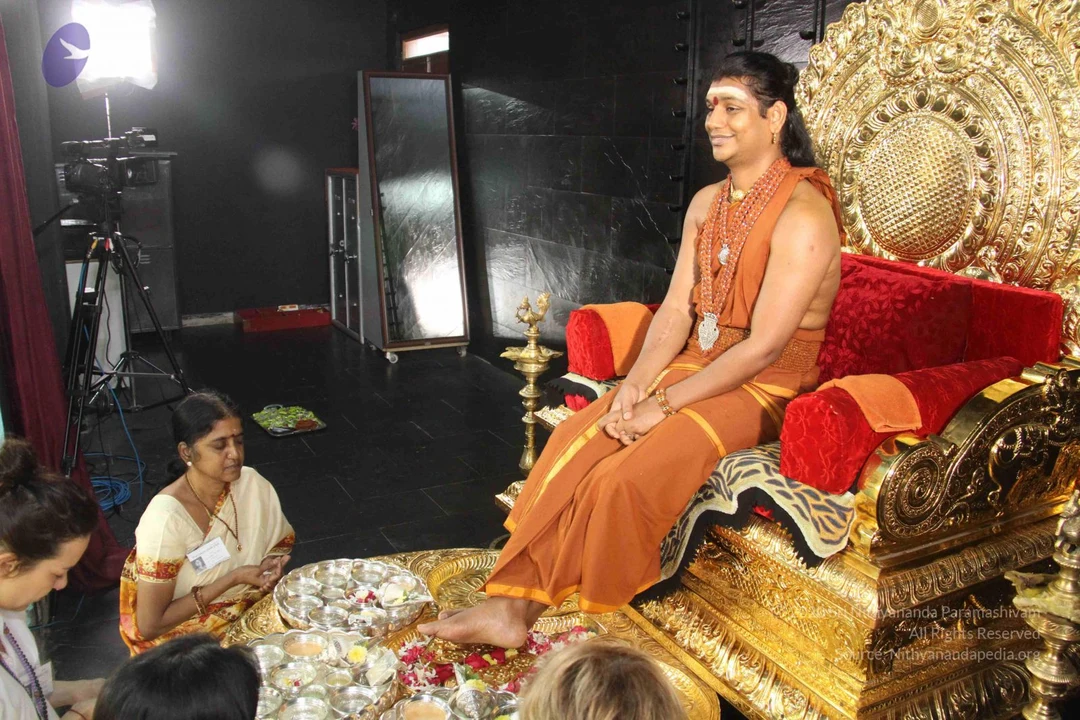
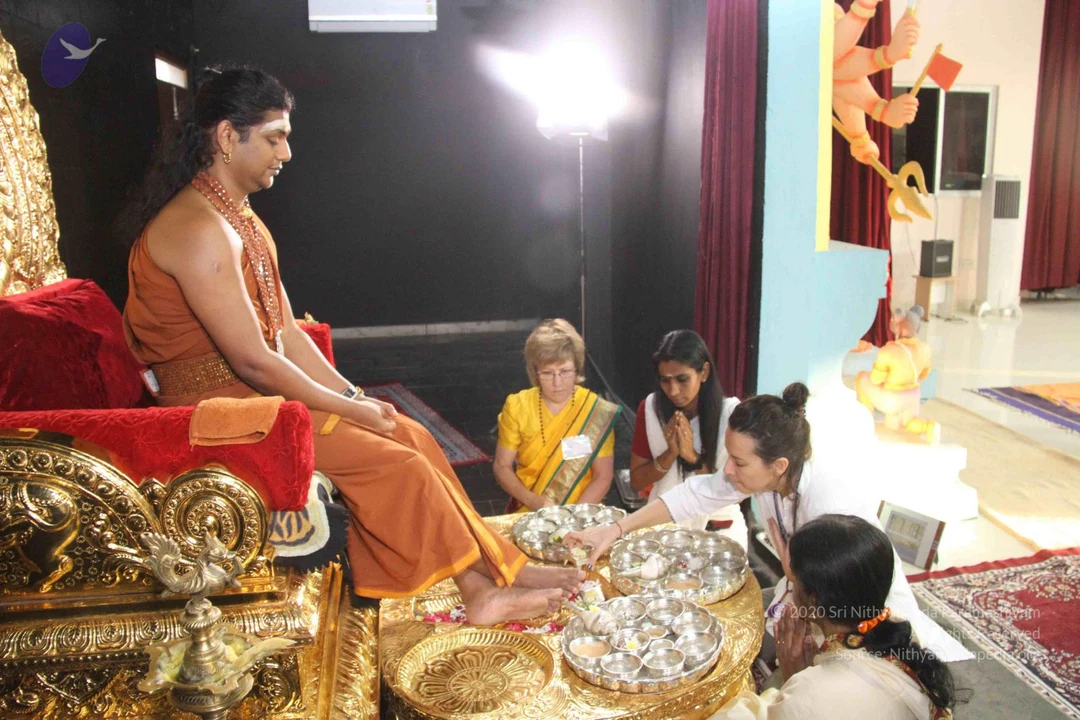
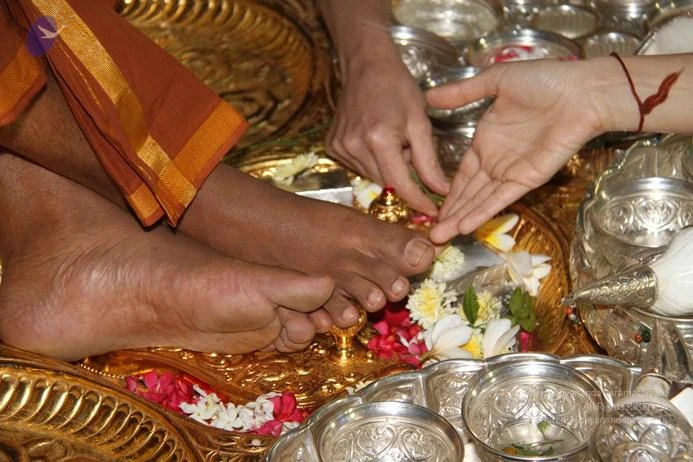
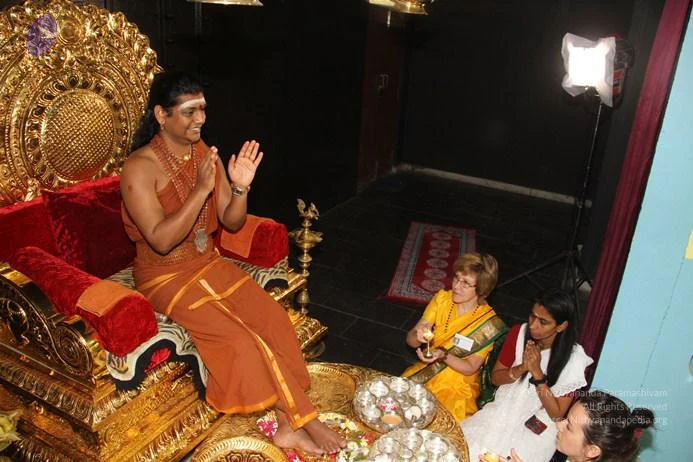
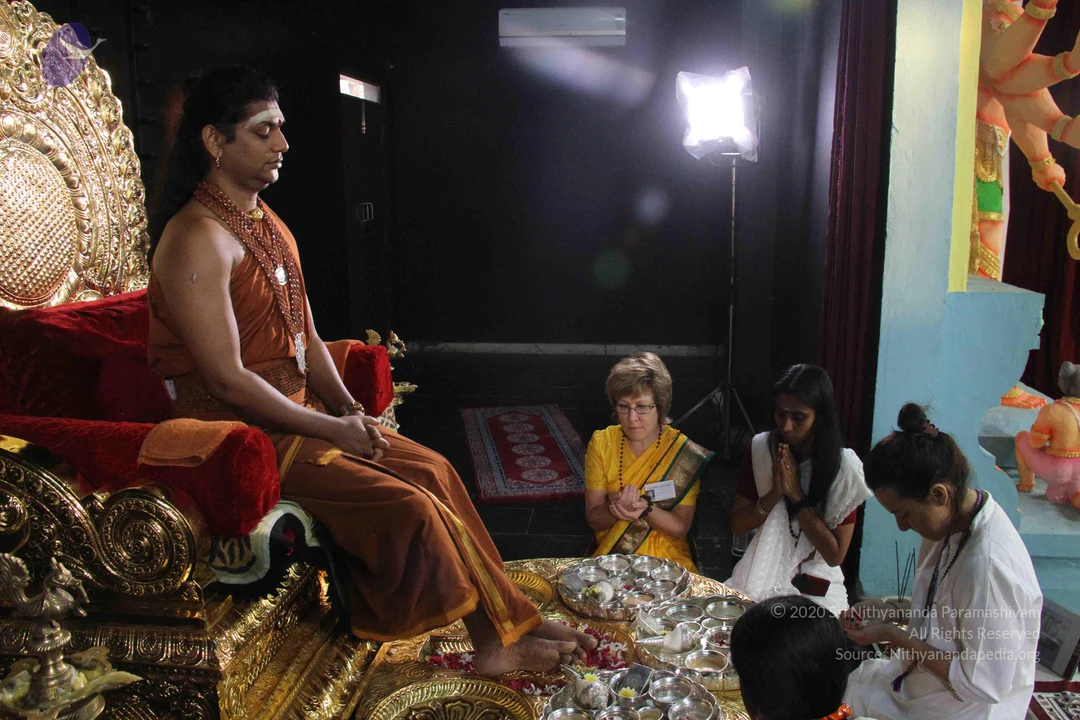
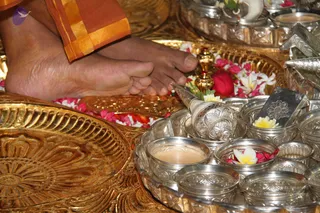
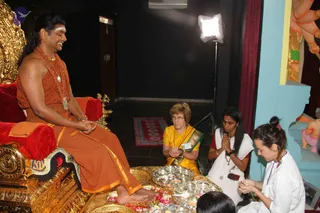
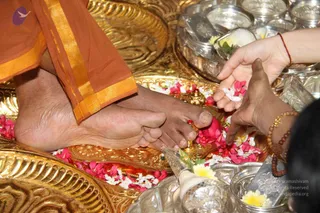
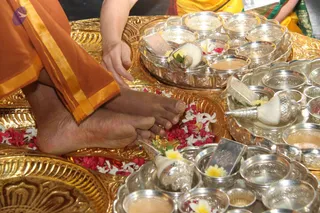
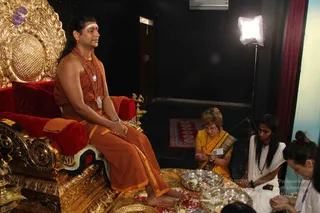
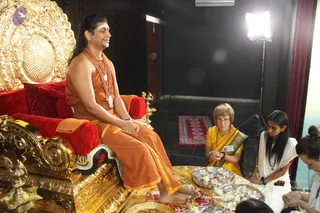
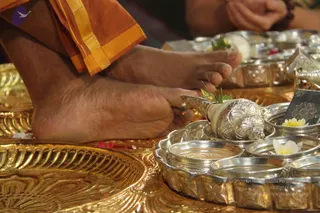
Close-up of bare feet resting on a gold-toned ritual tray during a padapuja. The feet wear the edge of an orange-and-gold cloth at the ankle. Around them are scattered red, pink and white flower petals, a gold kalasha-shaped vessel, and silver bowls holding milk-like liquid, petals and a flower. A silver conical item with a mesh cover and a silver plate sit on the right, with a silver container at the top of the frame. The photo is taken from above.A seated man in saffron-orange robes and a rudraksha mala with a large ornate pendant sits on a gold-and-red throne, smiling, with bare feet resting on a gold tray. Kneeling before him, a woman in a yellow sari with a green border and glasses has her hands folded in prayer, while another woman in a white dress with a rudraksha mala and a woman in a white top bend forward with joined palms. The tray holds brass bowls, flower petals and a garland. Behind them stands a golden-brown background with a sculpted deity figure and a red-carpeted mat, with a studio light on a stand. This is a padapuja-style ritual honouring the seated figure.Close-up of a padapuja ritual: a pair of bare feet in orange-brown robes with gold-bordered hems rests on a gold tray scattered with pink and white flower petals. A devotee's hand, wearing a red thread and rudraksha bracelet, pours or offers water over the toes, while silver bowls and a small gold kalasha sit nearby. Only the feet and hands are visible, so the person being honoured cannot be identified from the frame.Close view of a padapuja ritual: bare feet in orange-saffron cloth with gold border rest on a gold tray strewn with red and white flower petals. Hands in a sleeve of orange-saffron attire pour from or arrange silver bowls, a silver cup and a silver spoon; other silver and copper bowls hold milk-like liquid, yellow flowers and white flowers. Gold-coloured ornate plates frame the scene. A partially visible person in yellow and green cloth sits at the top edge. Only hands, feet and partial limbs are visible.A seated man in saffron-orange robes sits on an ornate gilded throne with red velvet cushions, wearing a rudraksha mala and a ceremonial gold pendant necklace, with a white forehead mark and long swept-back hair. Three women kneel on the floor before a brass tray of small silver cups, flower petals and lamps. The woman in the centre wears a yellow sari and glasses, the woman to the right wears white with a mala, and a third woman in a white top kneels at the lower right. A portable studio light stands behind them against a dark wall.A photo of a seated man on an ornate gold throne with red cushions, wearing an orange robe, orange dhoti-style wrap, multiple rudraksha malas and a pendant, with a white forehead mark and long hair swept back; he is identified by appearance as a probable Swamiji (probable) in a seated satsang role. Before the throne, a woman in a yellow sari with a green border sits with hands folded beside a younger woman in white sitting on the floor. Brass trays of flowers, petals and small lamps sit on a gold cloth in front of them, and a brass lamp stands at the left edge. A red patterned mat and a light stand are visible in the dark room behind.

Bhaktikama

1 photoSource gallery
A smiling man with long dark hair sits cross-legged on an ornate golden throne with carved floral and bird motifs. He wears a saffron-orange draped garment with a gold border, multiple strands of rudraksha beads, a large silver pendant, a gold chain and a gold bracelet, with a white tripundra and red bindi on his forehead and a small clip microphone at his ear. His hands rest folded in his lap. Appearance-based cues (long swept hair, saffron clothing, rudraksha malas, ceremonial gold and throne) make this a person in person during a satsang setting.

SelectedWeb

16 photosSource gallery

card1
223 photosSource gallery
A man seated on an ornate gold-and-maroon throne with gold lion-head armrests, raising one hand while speaking into a headset microphone. He wears a saffron-orange wrap, multiple strands of reddish rudraksha-style beads, a silver pendant, a gold necklace, and a bead bracelet, with a white vertical tilak and red dot on his forehead. Behind him stands a large gilded throne backrest against deep burgundy velvet drapes. a person seated in satsang role on the peetha throne, teaching to an audience; the image is a photo of a discourse setting.A man seated on an ornate gold-and-crimson throne during a satsang, raising his right hand in a speaking gesture. He wears an orange saffron shawl over bare shoulders, a multi-strand rudraksha-style bead mala with a silver pendant, gold earrings, a gold chain, and a white tilak with a red bindi on his forehead, and a small microphone is clipped near his face. Golden carved lion heads sit on the arm rests, with deep maroon velvet drapes behind. a person appears in person, seated on the throne and addressing the audience.A man with long swept-back dark hair, white vertical tilak and red bindi on his forehead, wears an orange saffron wrap, layered red-orange beaded mala necklaces and a gold pendant. He smiles and raises one hand while speaking into a headset microphone, seated before an ornate gold throne-like carved backrest against a deep maroon velvet curtain. A gold lion-head ornament is partly visible at lower right.A man seated on an ornate gold throne with carved golden backrest, before a deep maroon velvet drape, pointing his right arm outward while speaking. He wears an orange-saffron cloth draped over one shoulder, layered rudraksha-style beaded necklaces in orange-brown with a silver pendant, a gold chain, a wristwatch and a beaded bracelet, and a white horizontal tilak with a red dot on his forehead. Beside him rests a gold lion-head armrest. A tiny lapel microphone is visible. Swamiji (probable) is identifiable from the saffron clothing, long swept-back hair, ornate gold seating and rudraksha malas; a clear face-independent appearance match is present, so the figure is treated as a probable in-person candidate.A man seated on an ornate gold-carved throne before deep maroon drapes, smiling and raising his right hand as if speaking. He wears an orange-saffron shawl over the shoulder, multiple strands of rudraksha beads, a large pendant and gold necklace, and gold hoop earrings. A white horizontal tilak with a red dot marks his forehead, and he wears a lapel microphone. Swamiji (probable): a seated teacher in saffron with long swept-back hair, rudraksha malas and ceremonial gold necklaces, giving satsang discourse.A seated man in an orange-saffron robe draped over one shoulder sits on an ornate gold throne with a deep red velvet backrest and curtain behind him. He wears a white vertical tilak with a red dot on his forehead, gold hoop earrings, a gold chain at the neck, and multiple strands of red-brown beaded malas, one with a silver pendant and another with a larger silver heart-shaped pendant. He smiles and looks to his right with an open hand resting on the armrest. Probable Swamiji: long swept-back hair, saffron robe, rudraksha-style malas and ornate gold throne fit the description of the Satsang speaker, though identification is by appearance only. The image is a photograph from a satsang setting.

IA-Reunion and Mattu Pongal

14 photosSource gallery
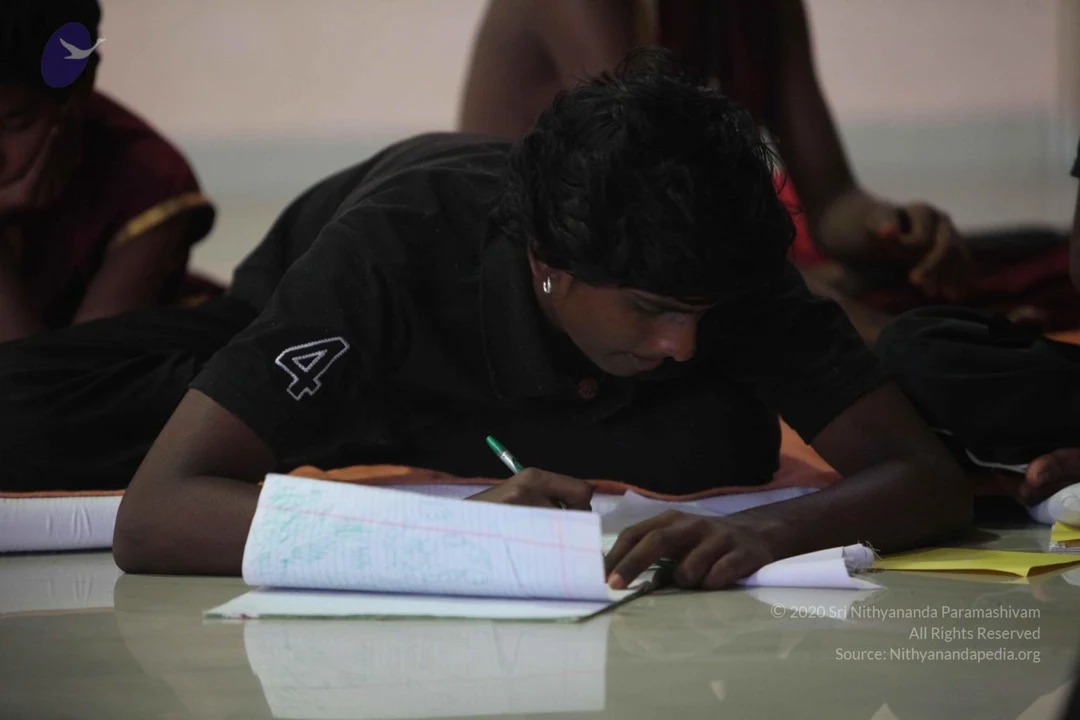
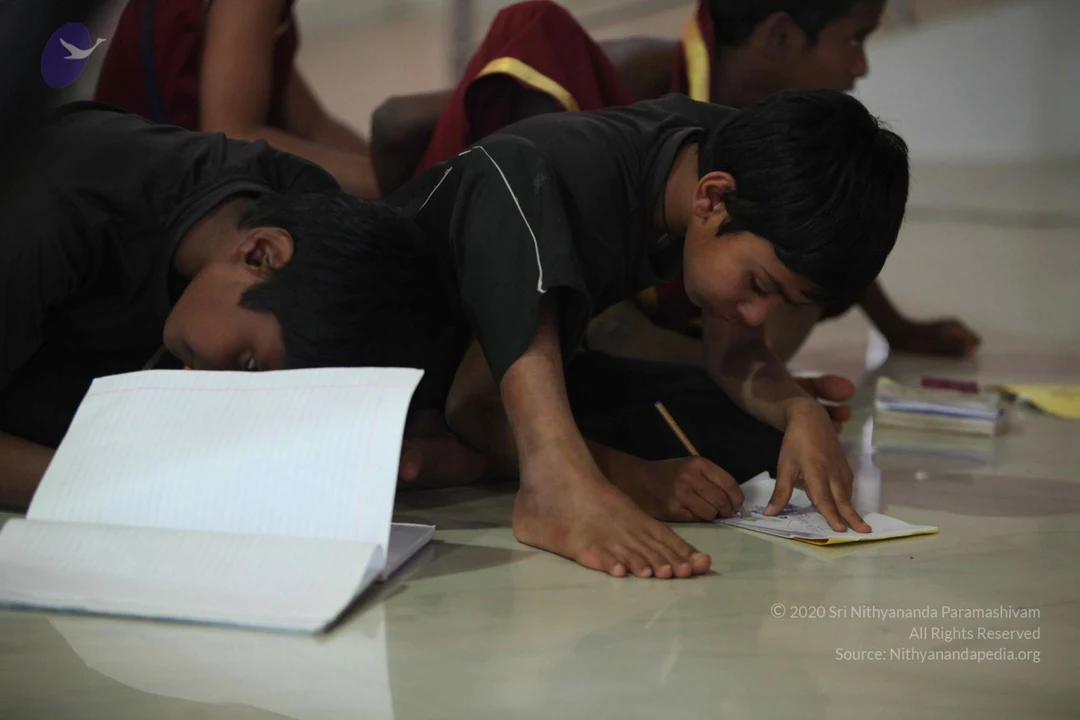
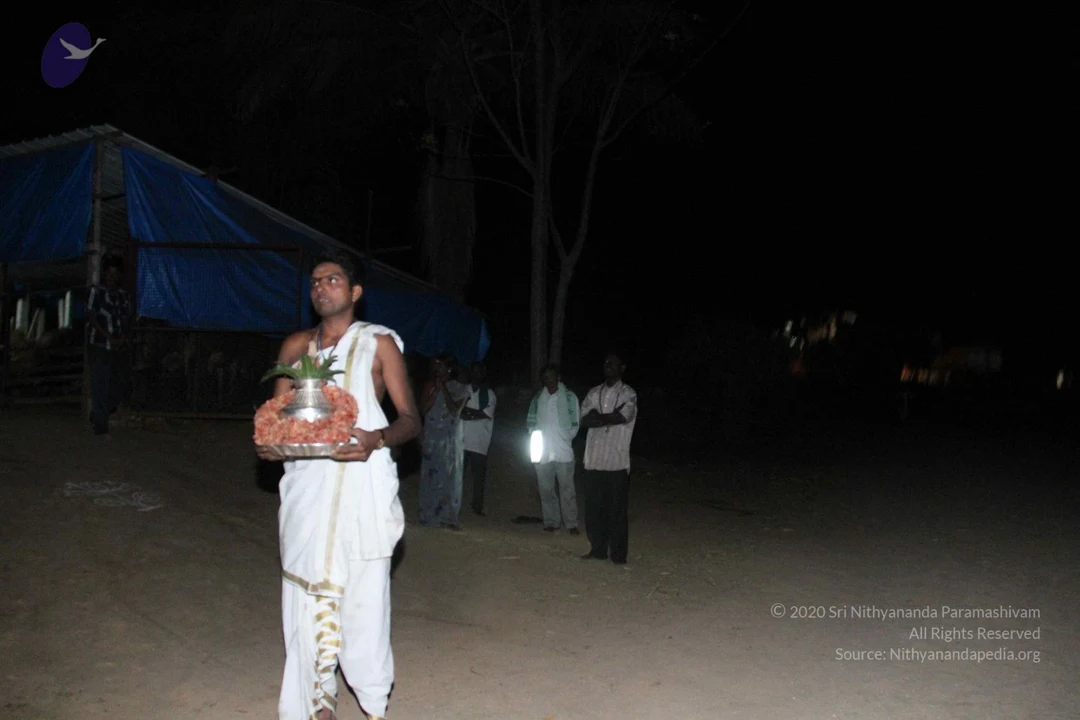
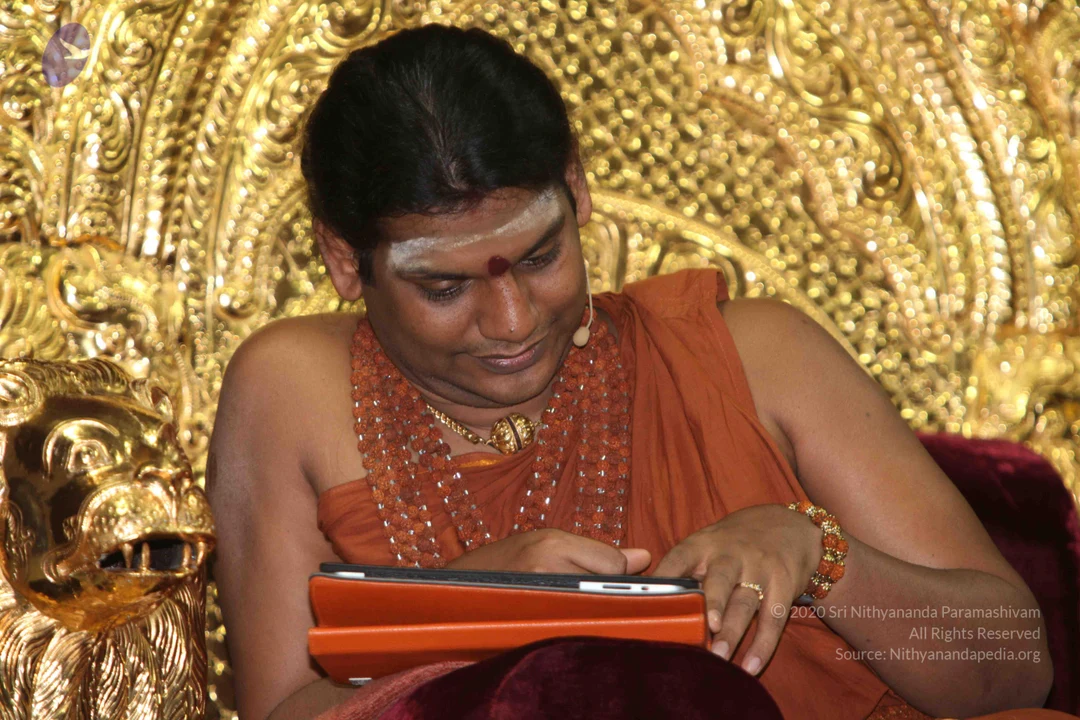
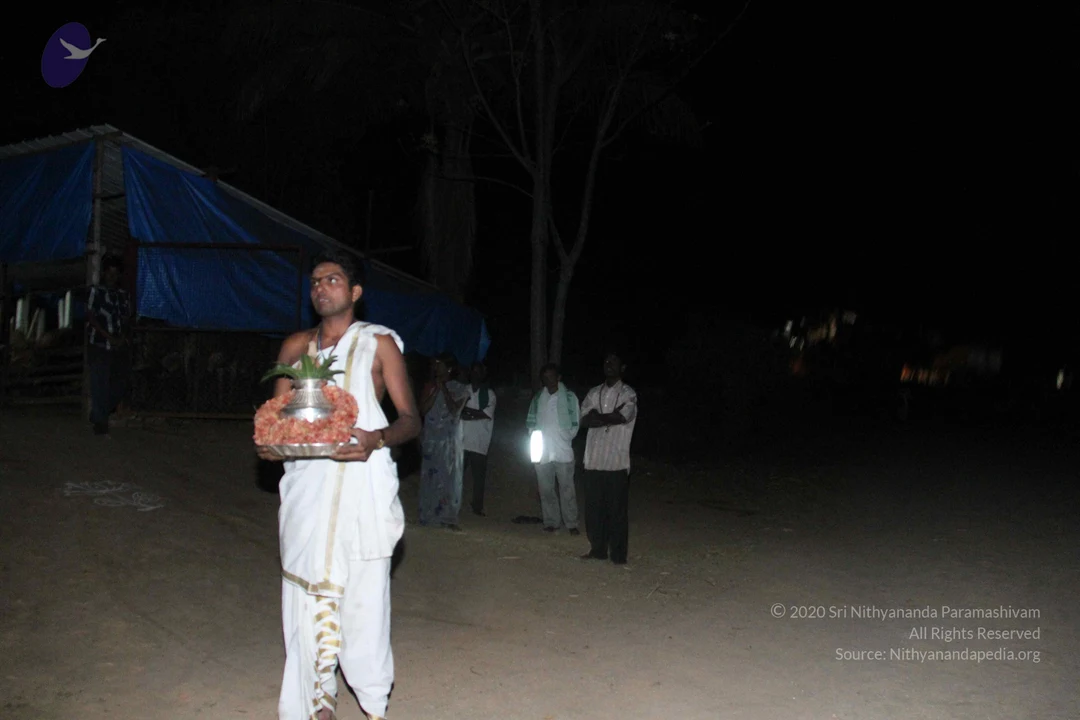
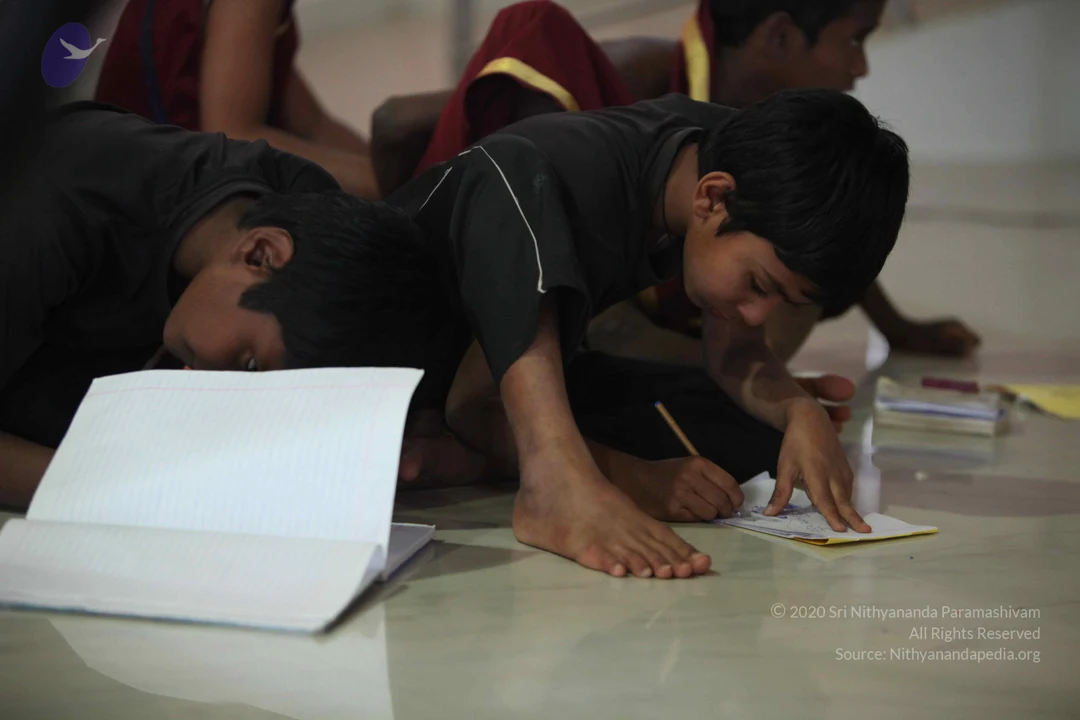
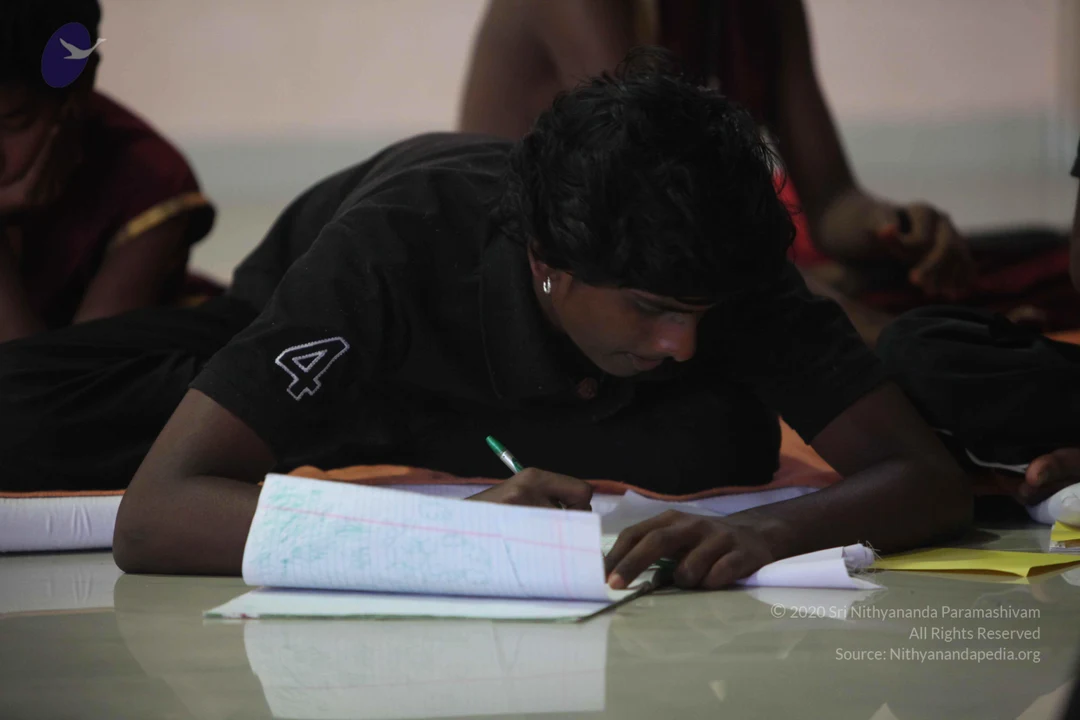
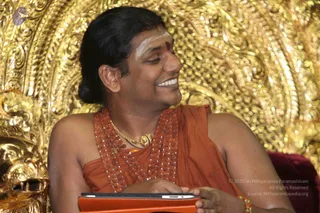
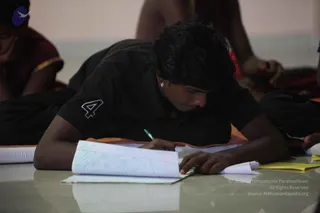
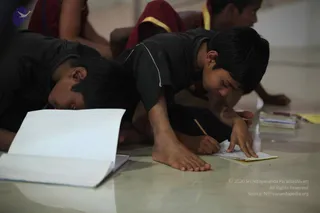
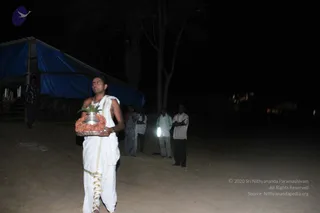
A man sits in front of an ornate gold repoussé backdrop with a small wireless headset microphone near his face. He wears an orange-saffron shawl draped over one shoulder, multiple strands of beaded rudraksha-style orange malas, a gold ceremonial necklace and a gold bracelet. A white horizontal line and red dot mark his forehead, and his long dark hair falls past his shoulders. He smiles with his hands folded in his lap, seated in front of a deep red cushion, consistent with a person in a satsang setting.A smiling man with swept-back long dark hair sits in front of ornate gold-leaf carved throne-back panels, with a golden lion-head armrest visible at the left edge. He wears saffron-orange robes draped over one shoulder and multiple strands of rudraksha beads, along with a gold pendant necklace and a gold bracelet. He has white vibhuti marks on the forehead with a red kumkum dot, and holds an orange tablet device in his hands. Swamiji (probable) appearance cues: long swept-back hair, saffron clothing, rudraksha malas and ceremonial gold necklace seated on a golden throne. A small lapel microphone is visible near his face.A man in orange robes sits in front of an ornate gold throne carved with floral scrollwork and a golden lion head at the lower left. He has white vibhuti lines and a red kumkum dot on his forehead, several tiers of orange and clear beaded malas, a ceremonial gold necklace, and a gold bracelet. He looks down and works on an orange tablet device resting on his lap, with a small earpiece microphone visible at his ear. a person is present in the seat of the throne, shown in appearance-based cues of saffron robes, rudraksha-style malas and gold adornments.A young man in a black polo shirt with a small embroidered logo on the sleeve lies prone on a glossy floor, writing in an open ruled notebook with a green pen. Behind him, partially visible, a seated person in a maroon garment and another in red sit on the floor. The setting appears to be a hall during a satsang or class-style sitting, with yellow papers lying nearby.Photograph of young boys in black t-shirts lying prone on a polished white marble floor, writing and drawing on sheets of paper with pencils. One boy in the foreground leans on his elbows and draws on a loose sheet; another boy beside him rests his head on the floor. A spiral notebook lies open at the left edge. Other boys in maroon and yellow-trimmed robes are partly visible at the top of the frame. No a person is visible in this scene.Night-time outdoor scene on a dirt ground beside a blue tarpaulin-covered shelter and dark trees. A man in a white dhoti with gold border, bare-chested and wearing a thin sacred thread, carries a silver plate holding a kalasha with green leaves and a garland of orange flowers, walking forward. Behind him, several men stand in the dark, one holding a small torch light, another in a striped shirt with arms folded, and a woman in a blue sari. Ritual procession or puja scene; the person carrying the plate is a priest-like attendant with no distinctive a person cues visible.

card2

11 photosSource gallery
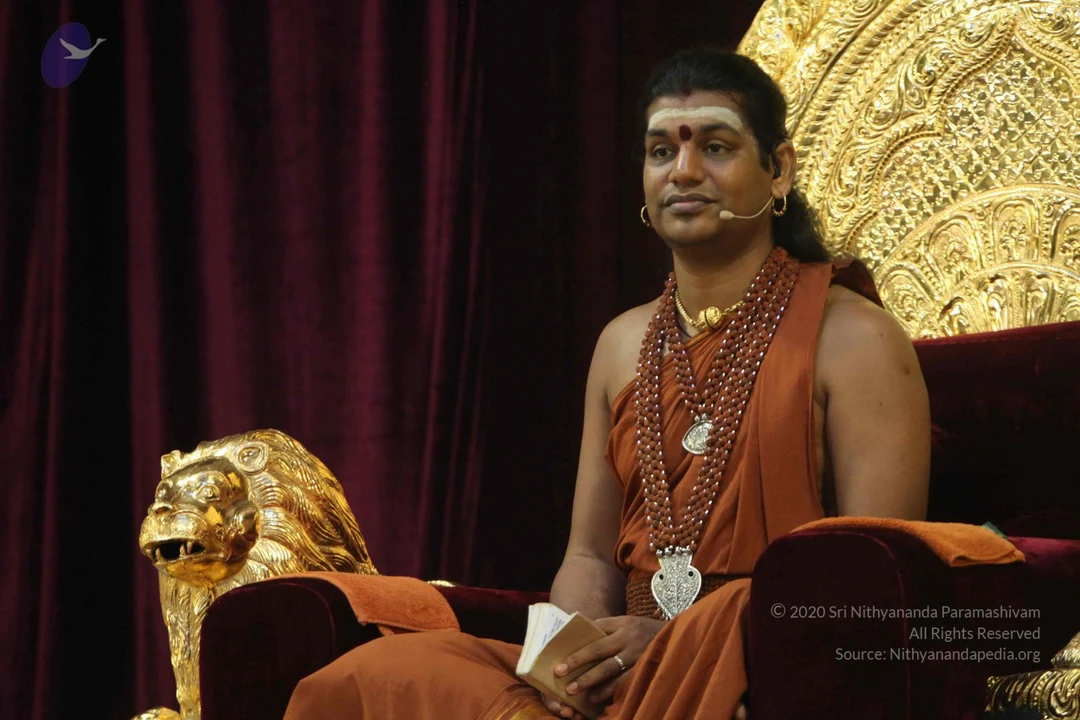
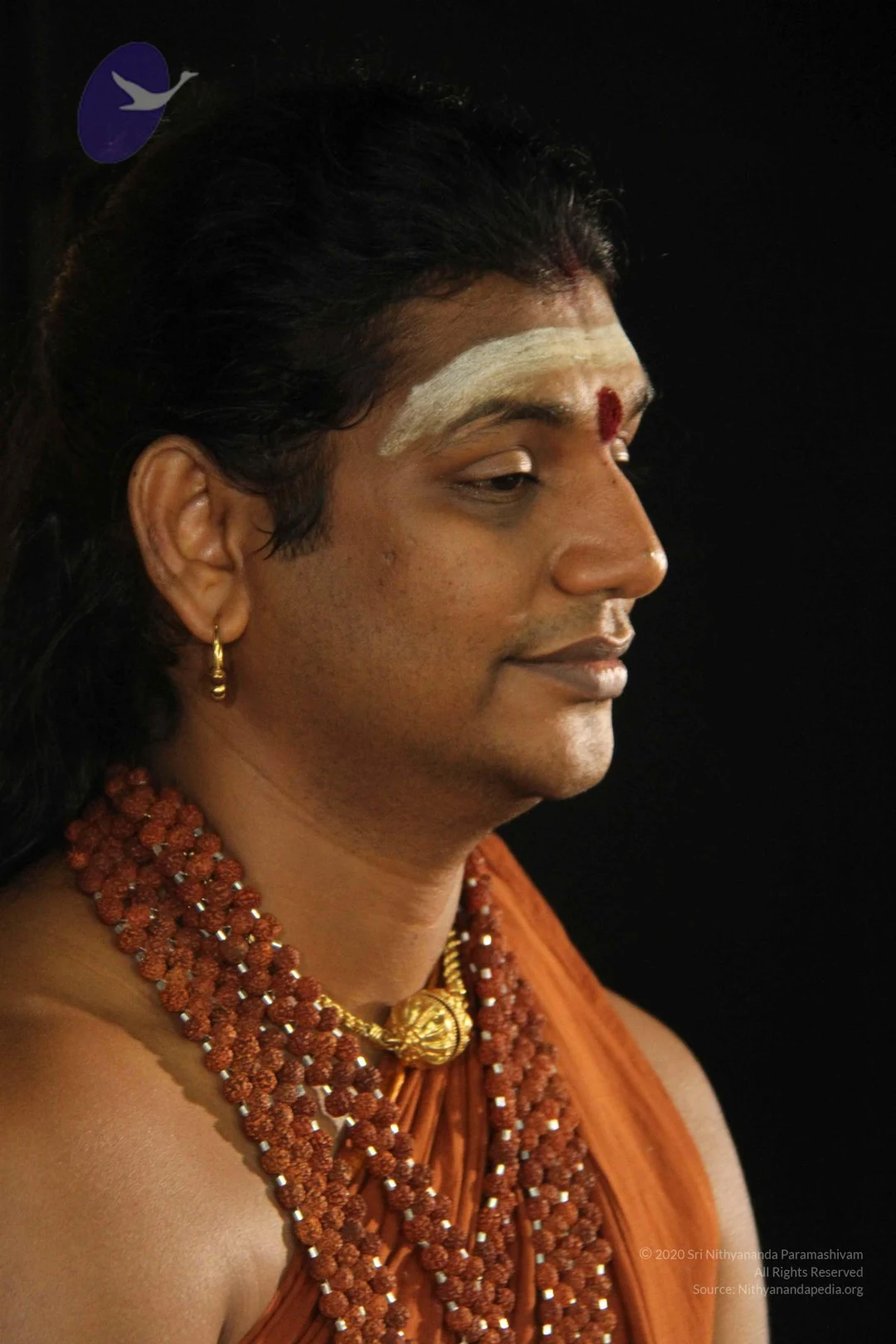
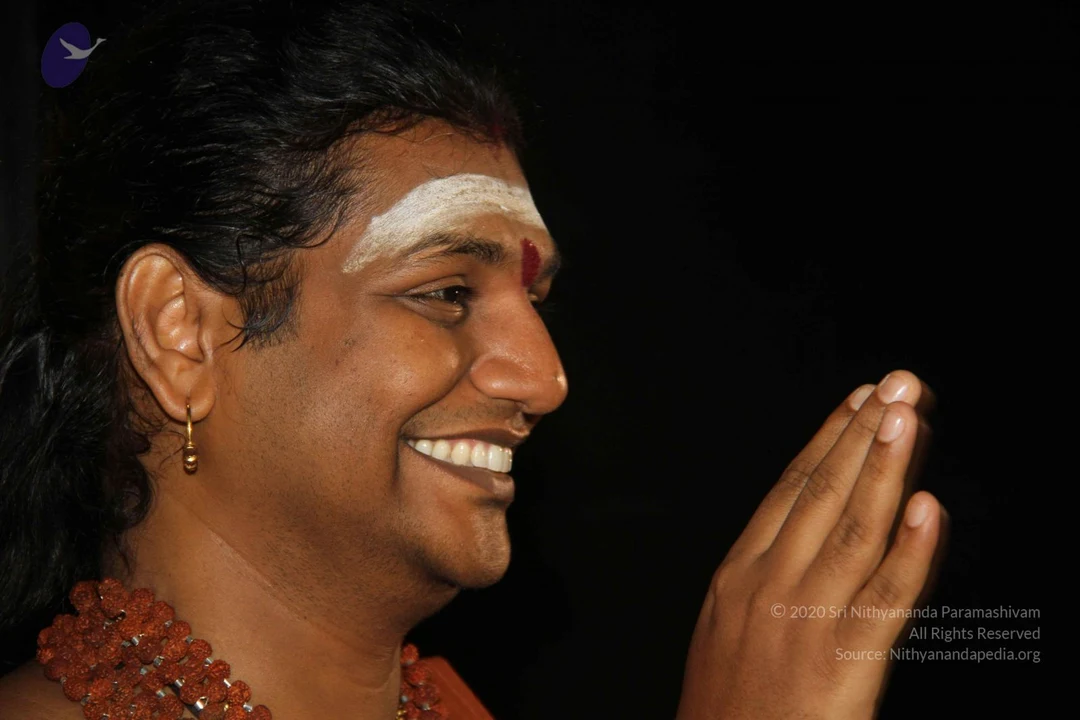
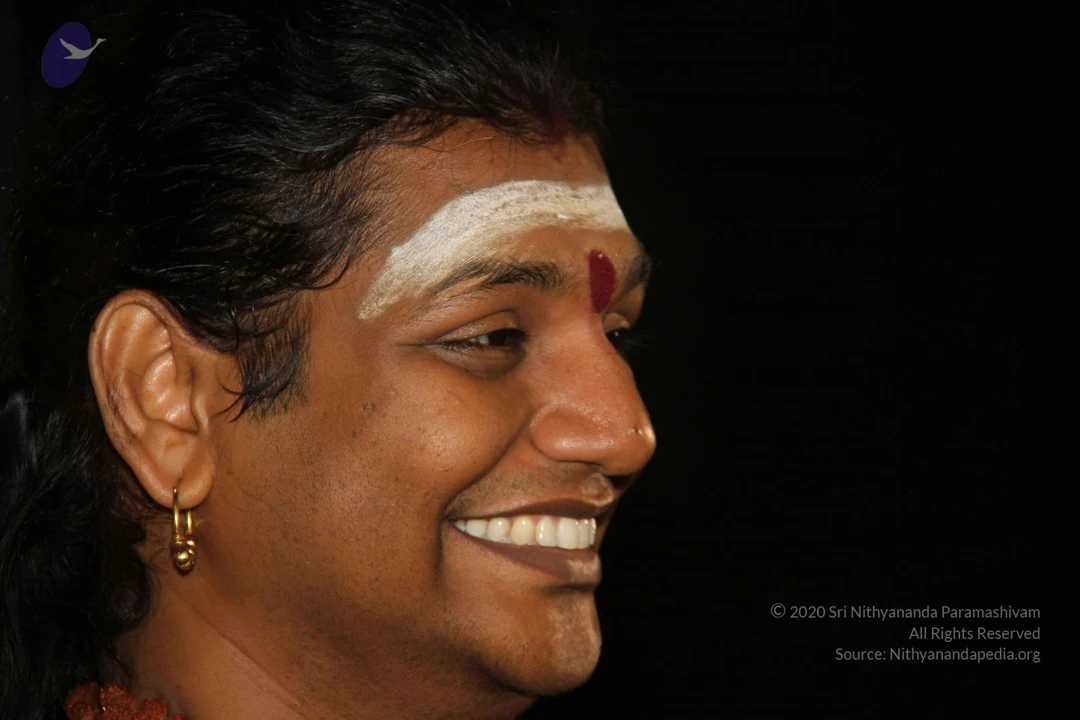
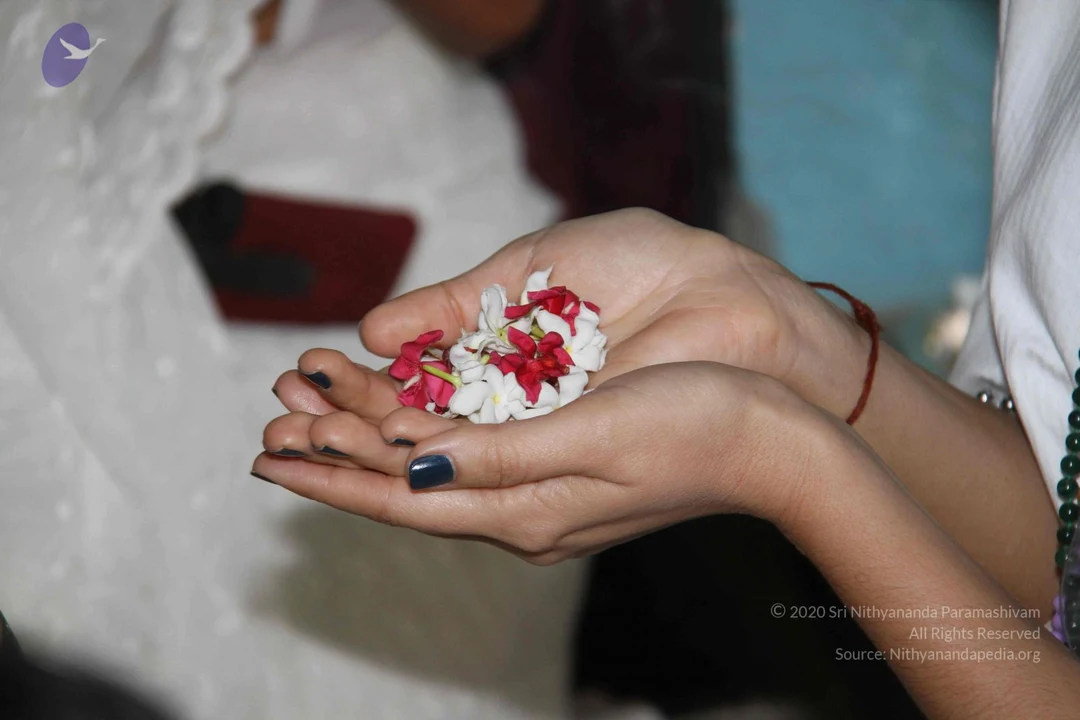
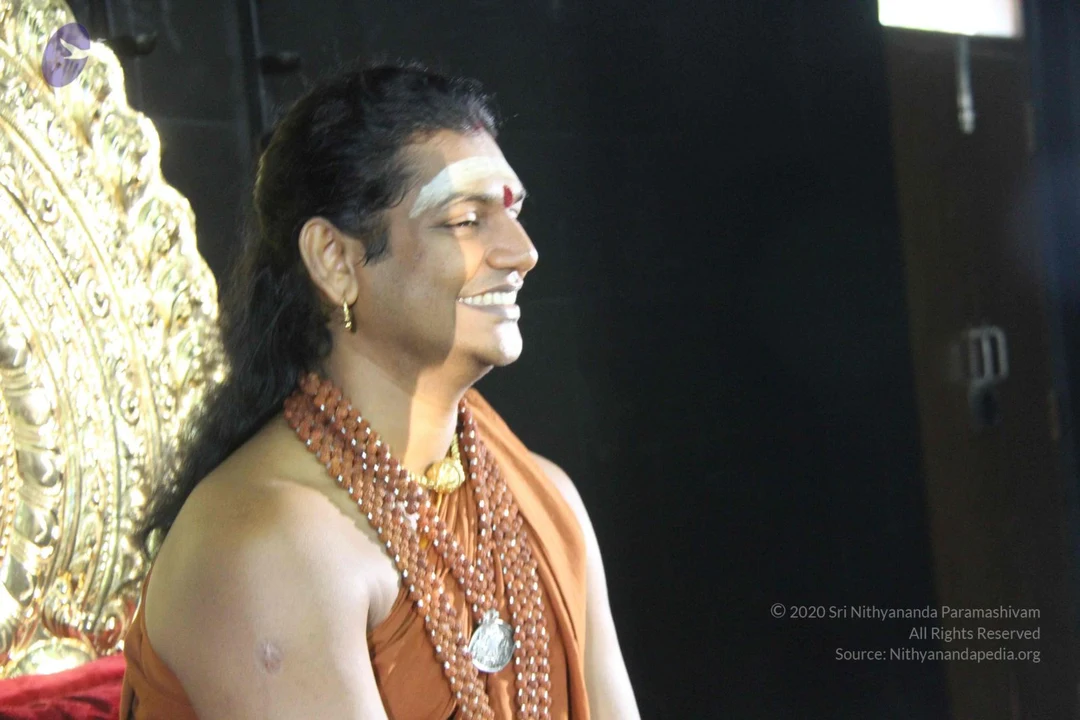
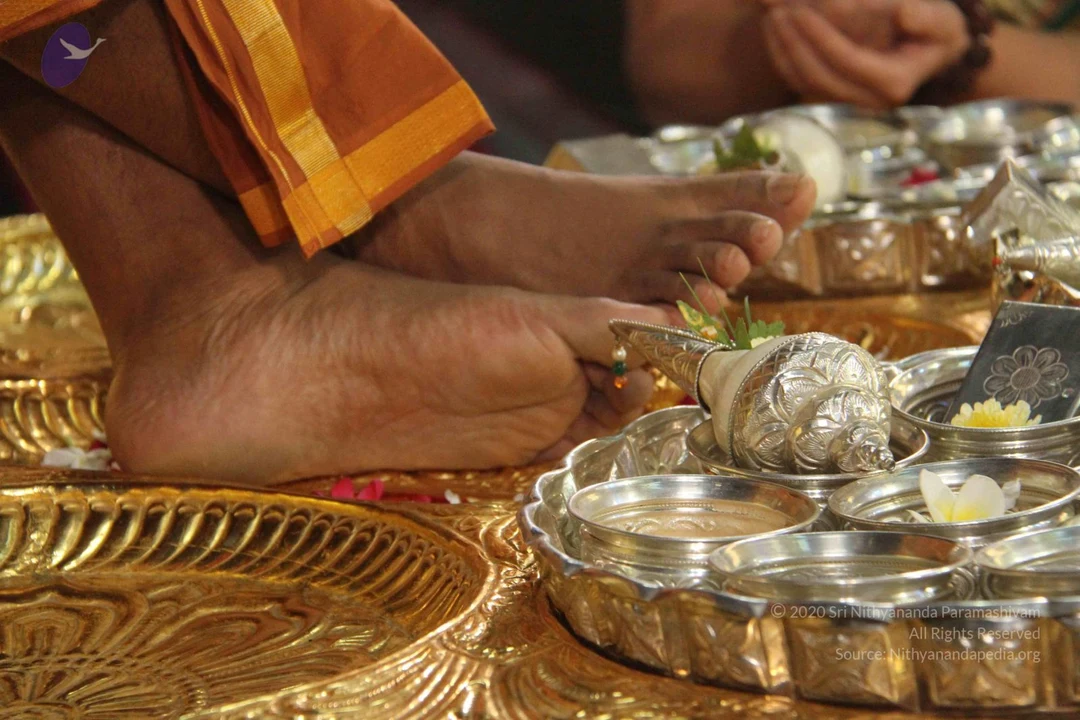
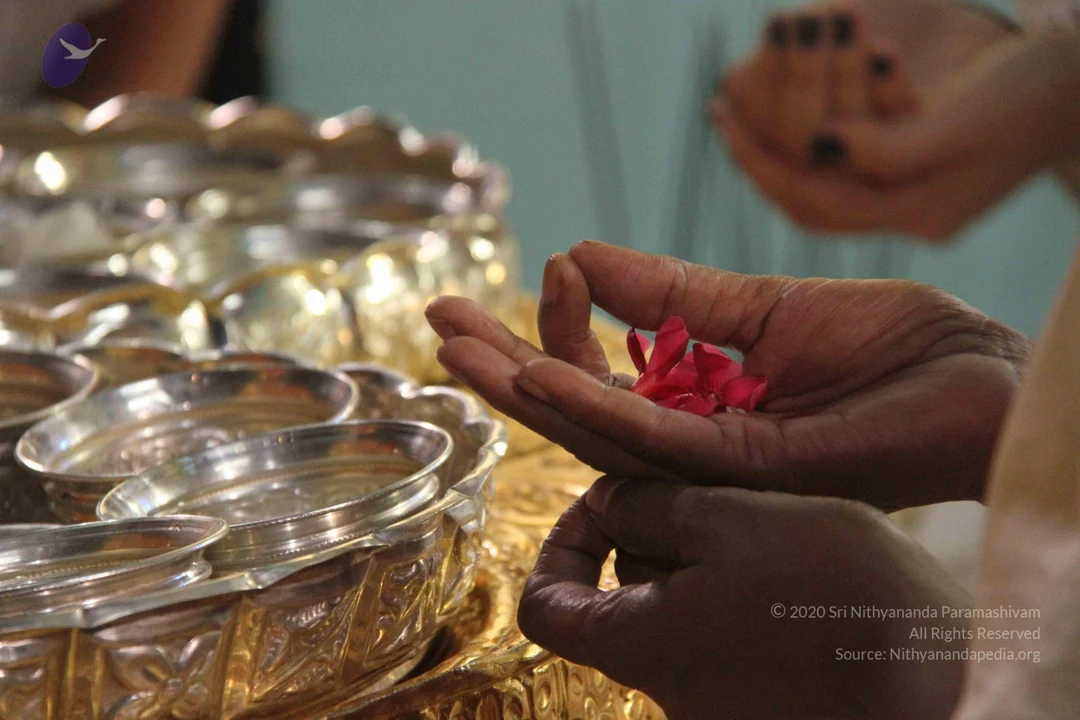
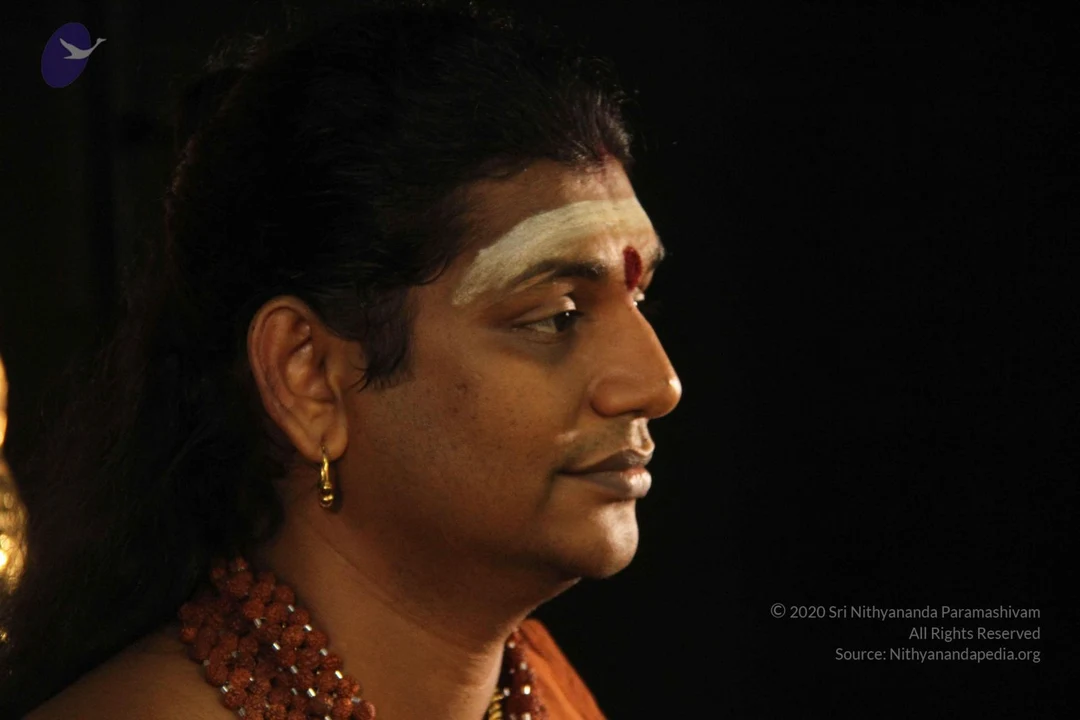
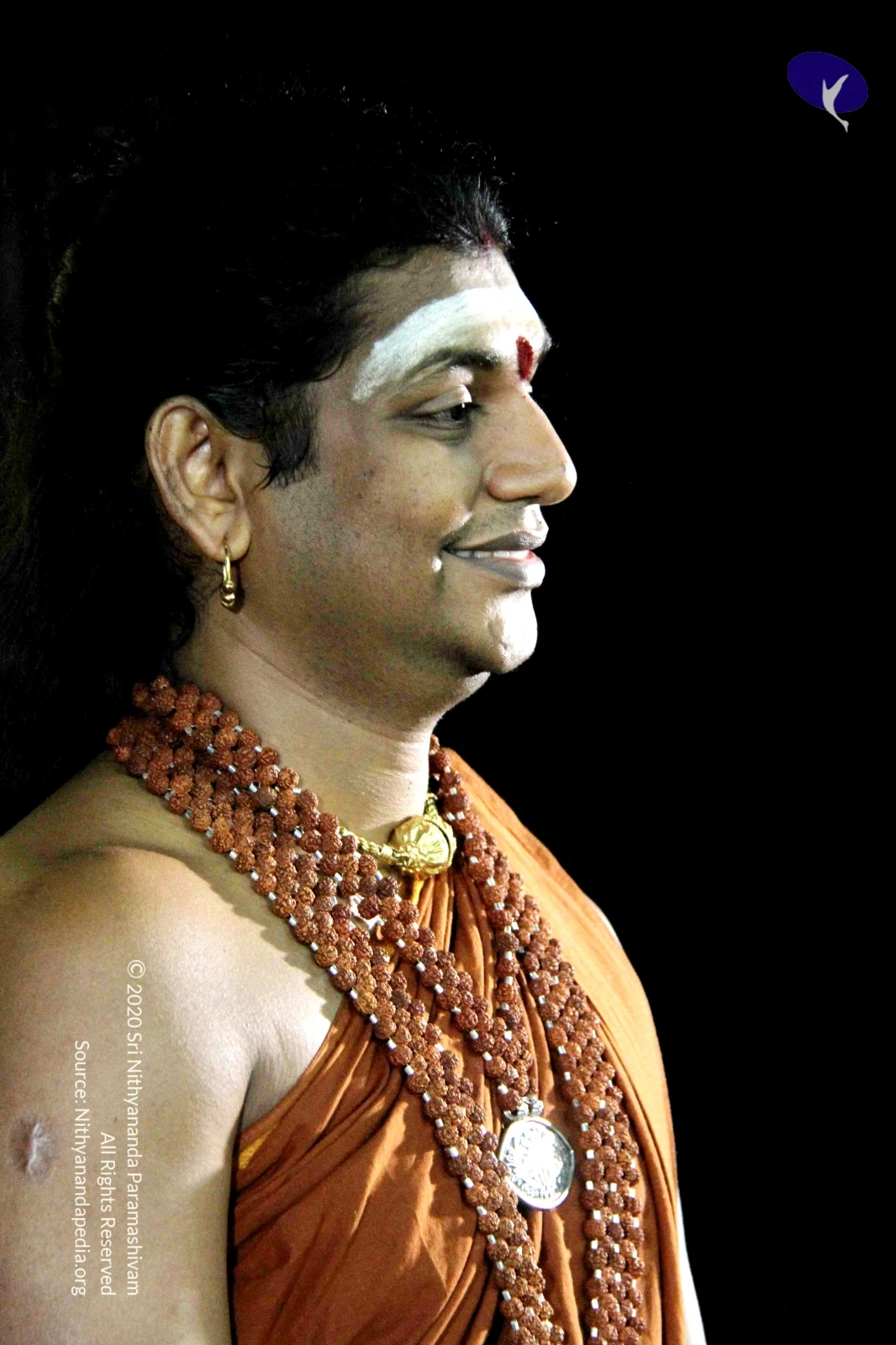
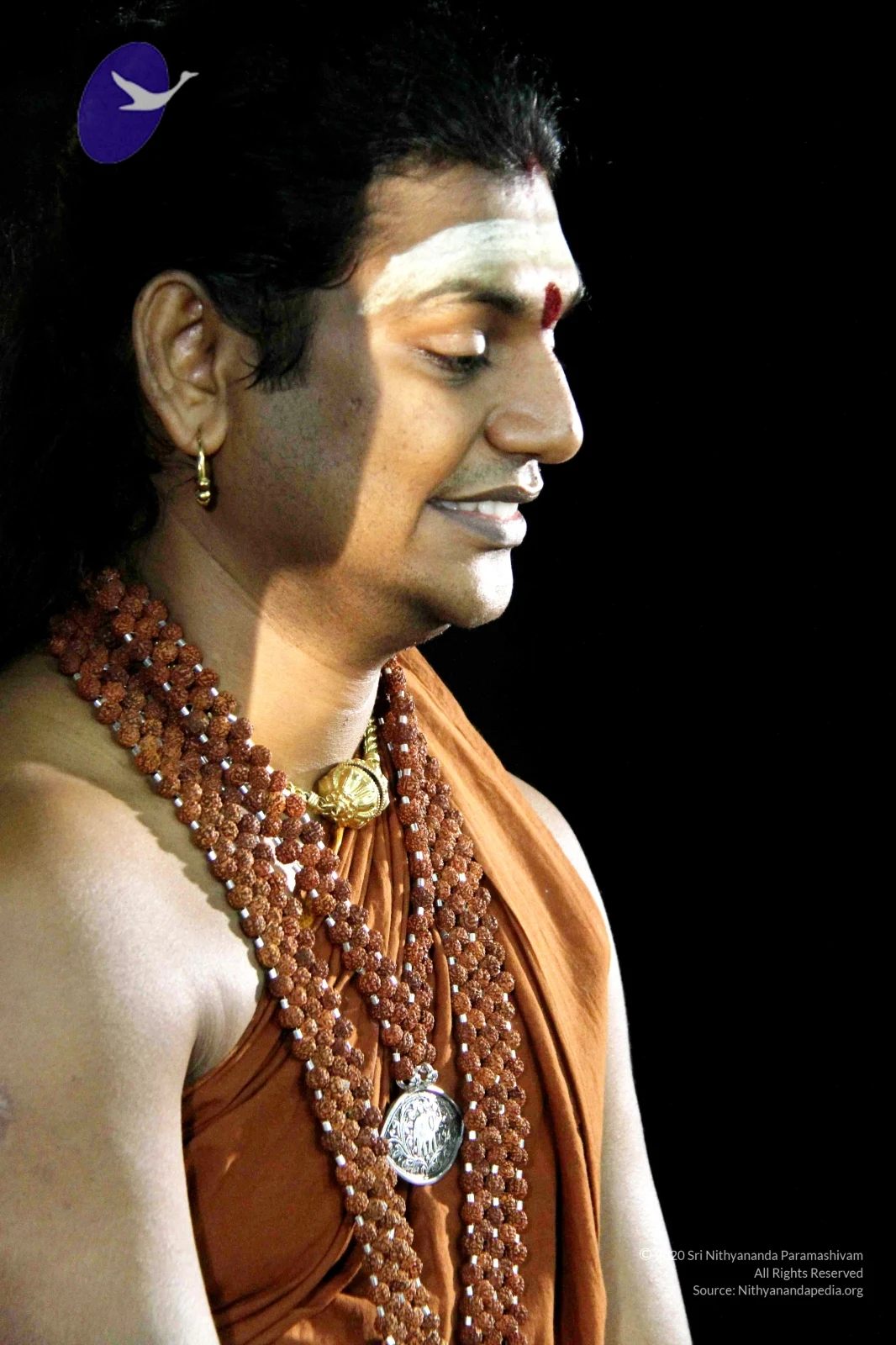
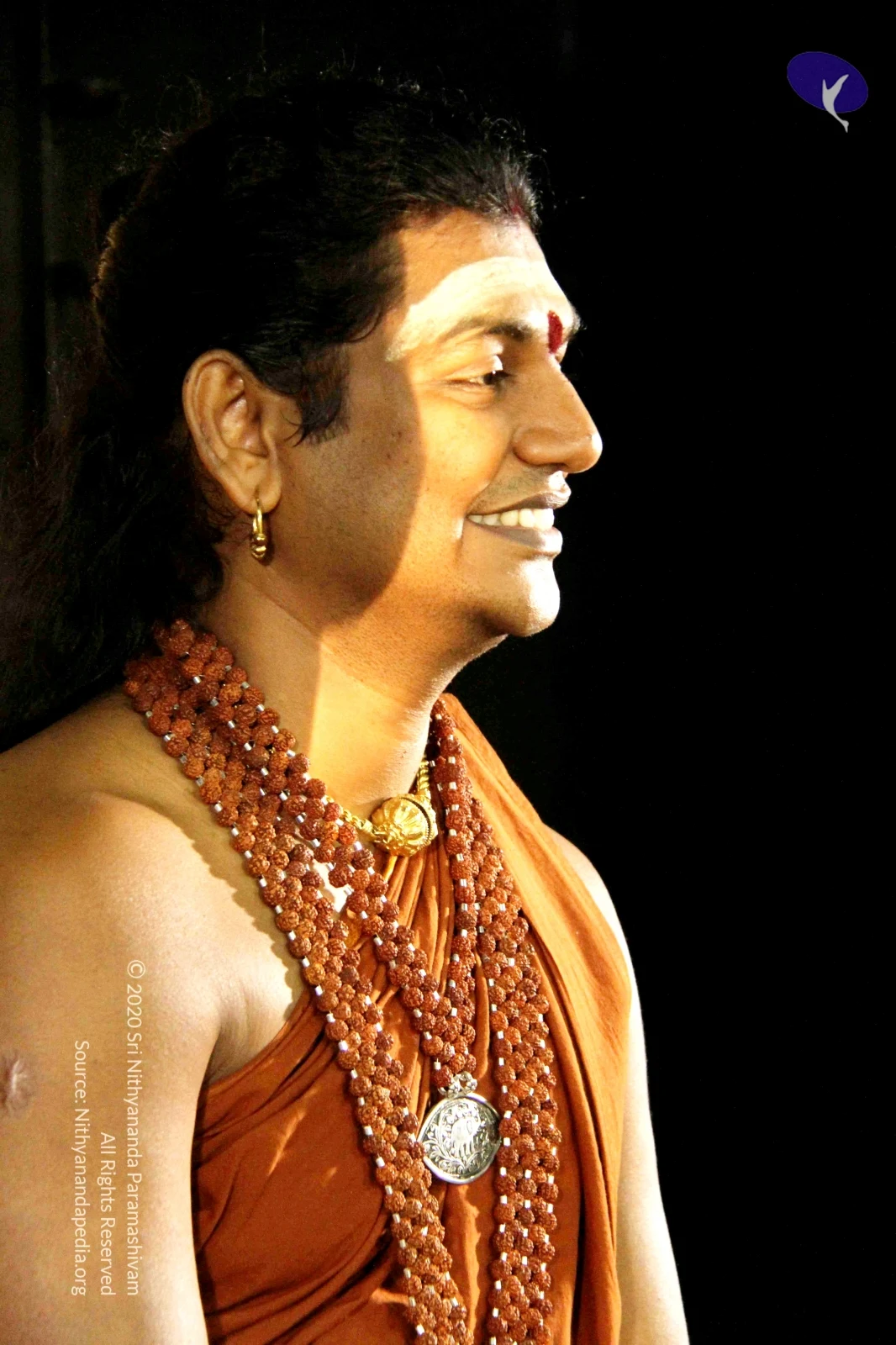
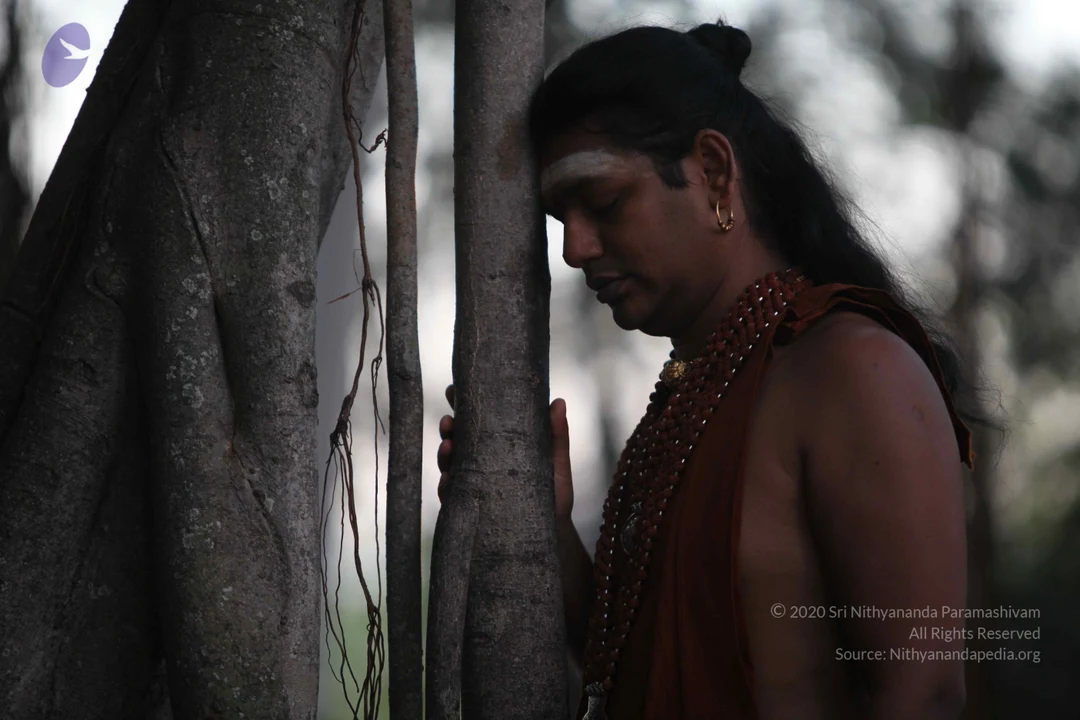
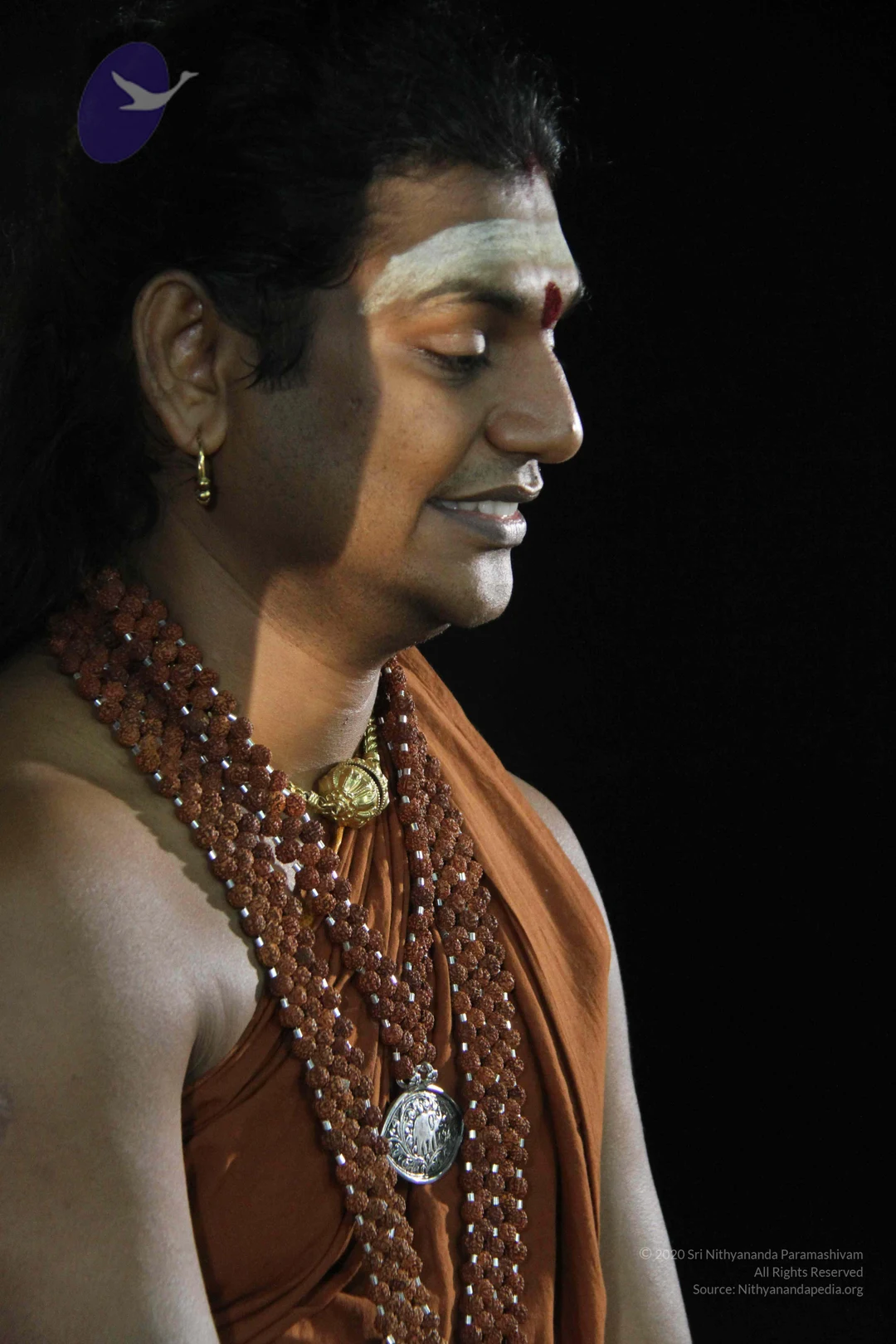
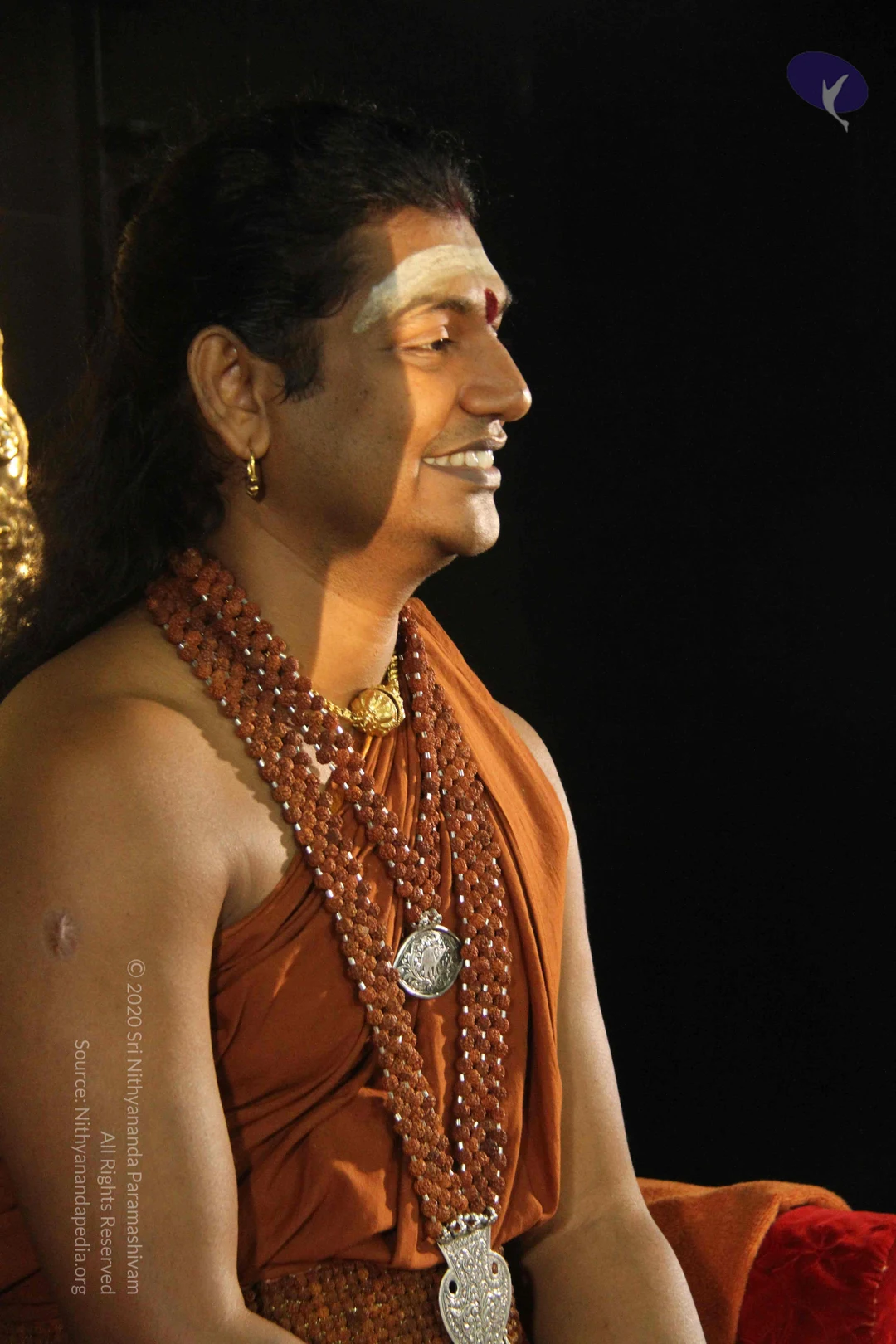
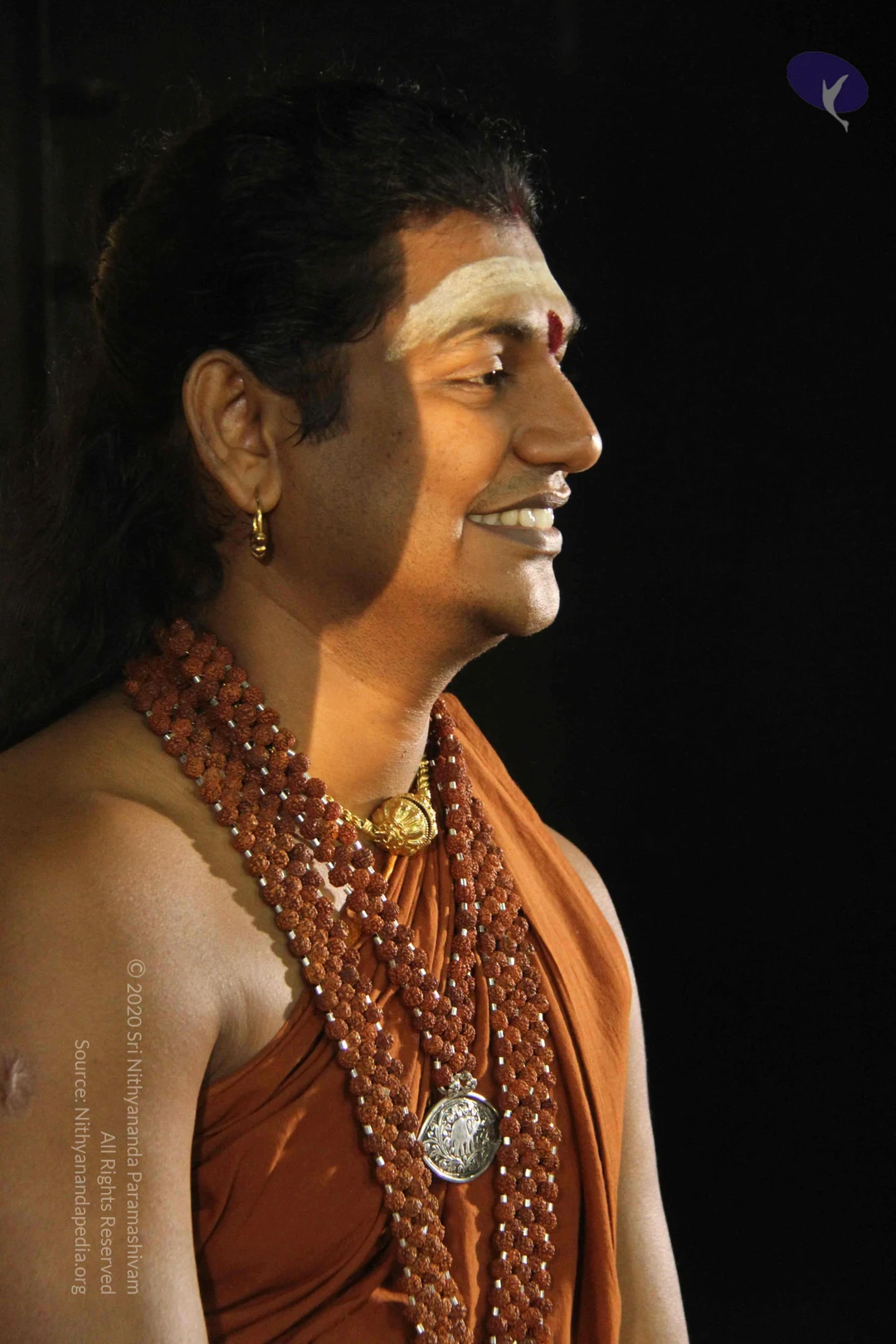
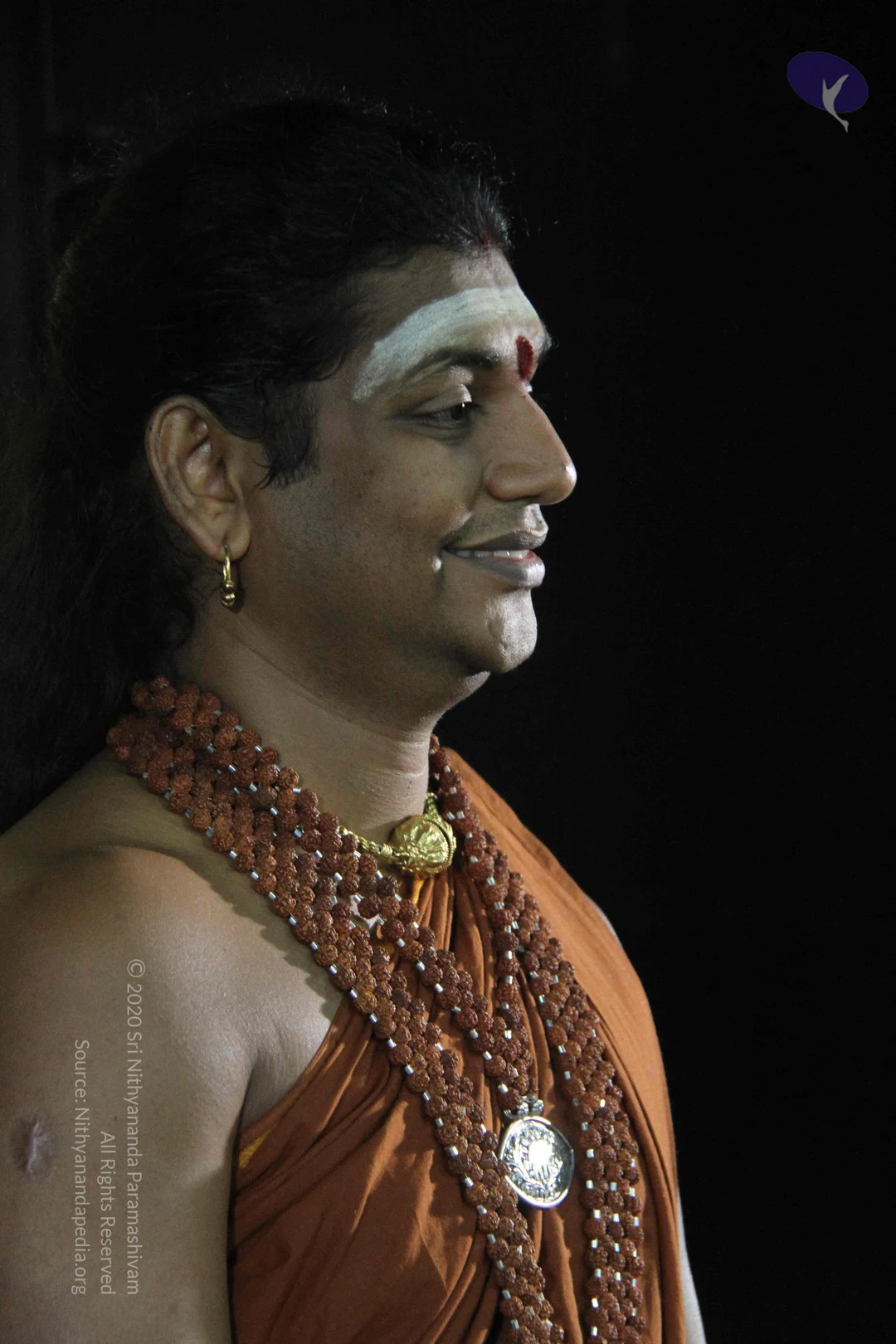
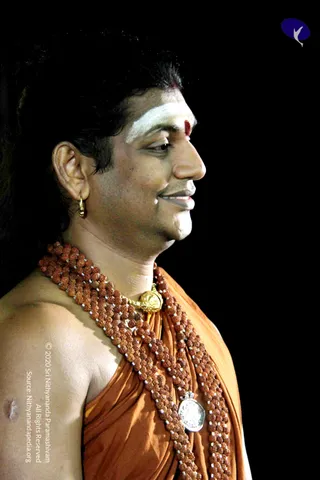
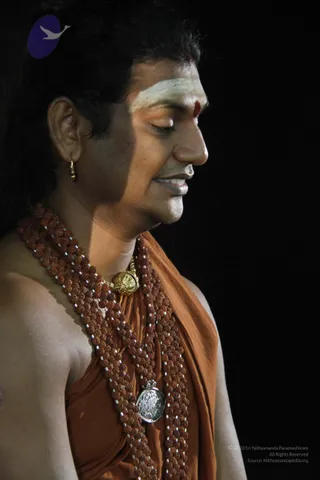
Close-up of bare feet resting on a gold-toned ritual tray during a padapuja. The feet wear the edge of an orange-and-gold cloth at the ankle. Around them are scattered red, pink and white flower petals, a gold kalasha-shaped vessel, and silver bowls holding milk-like liquid, petals and a flower. A silver conical item with a mesh cover and a silver plate sit on the right, with a silver container at the top of the frame. The photo is taken from above.Close-up of a padapuja ritual: a pair of bare feet in orange-brown robes with gold-bordered hems rests on a gold tray scattered with pink and white flower petals. A devotee's hand, wearing a red thread and rudraksha bracelet, pours or offers water over the toes, while silver bowls and a small gold kalasha sit nearby. Only the feet and hands are visible, so the person being honoured cannot be identified from the frame.Close view of a padapuja ritual: bare feet in orange-saffron cloth with gold border rest on a gold tray strewn with red and white flower petals. Hands in a sleeve of orange-saffron attire pour from or arrange silver bowls, a silver cup and a silver spoon; other silver and copper bowls hold milk-like liquid, yellow flowers and white flowers. Gold-coloured ornate plates frame the scene. A partially visible person in yellow and green cloth sits at the top edge. Only hands, feet and partial limbs are visible.Close-up photo of bare feet of a person wearing an orange-and-gold bordered dhoti or cloth, resting on a large golden ritual tray. Beside the feet are silver bowls holding pale paste, a silver cone-shaped vessel with green leaves, and white and yellow flowers; a small green bead or stone ornament is visible near the toes. Padapuja style foot worship setting with brass and silver puja implements and rose petals scattered on the tray. Faint hands of seated devotees appear at the top edge.Close-up photograph of a pair of hands holding red flower petals over an arrangement of ornate silver and gold bowls on a tray. A second pair of hands with dark nail polish appears blurred in the upper right. Only the hands of two people are visible; their faces are not shown.Close side-profile photograph against a black background of a man with swept-back dark hair, a white tilak stripe and red dot on the forehead, a small gold earring, and a thick necklace of red-brown rudraksha beads over bare shoulders with an orange cloth. Swamiji (probable) appearance-based label: long swept-back hair, rudraksha mala and orange garment; only one person is visible, with a partial bright light at the far left edge.

1-Temple

8 photosSource gallery
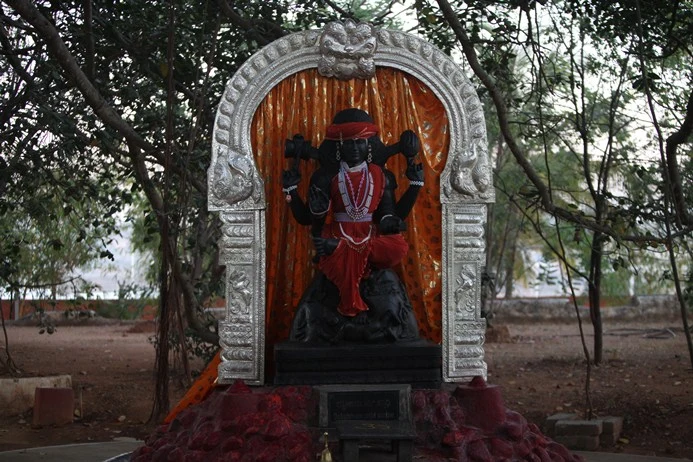
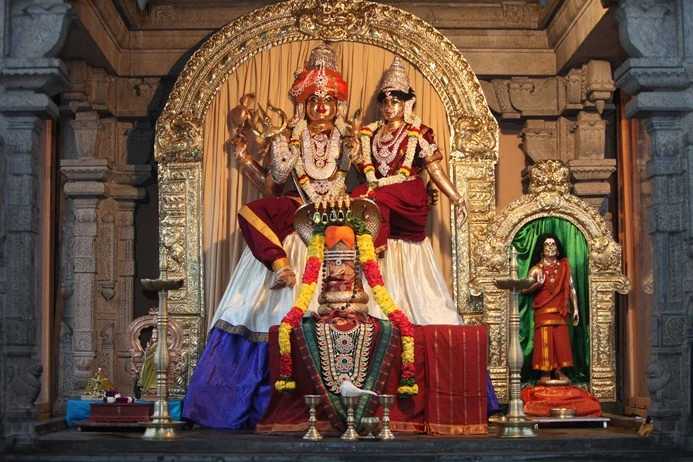
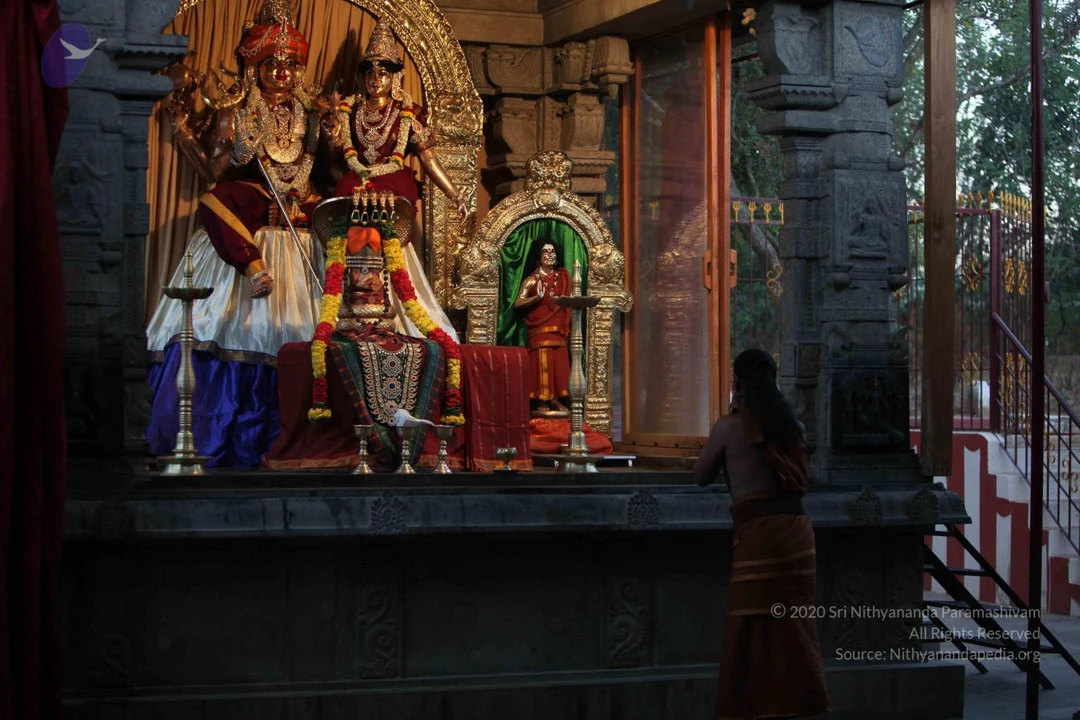
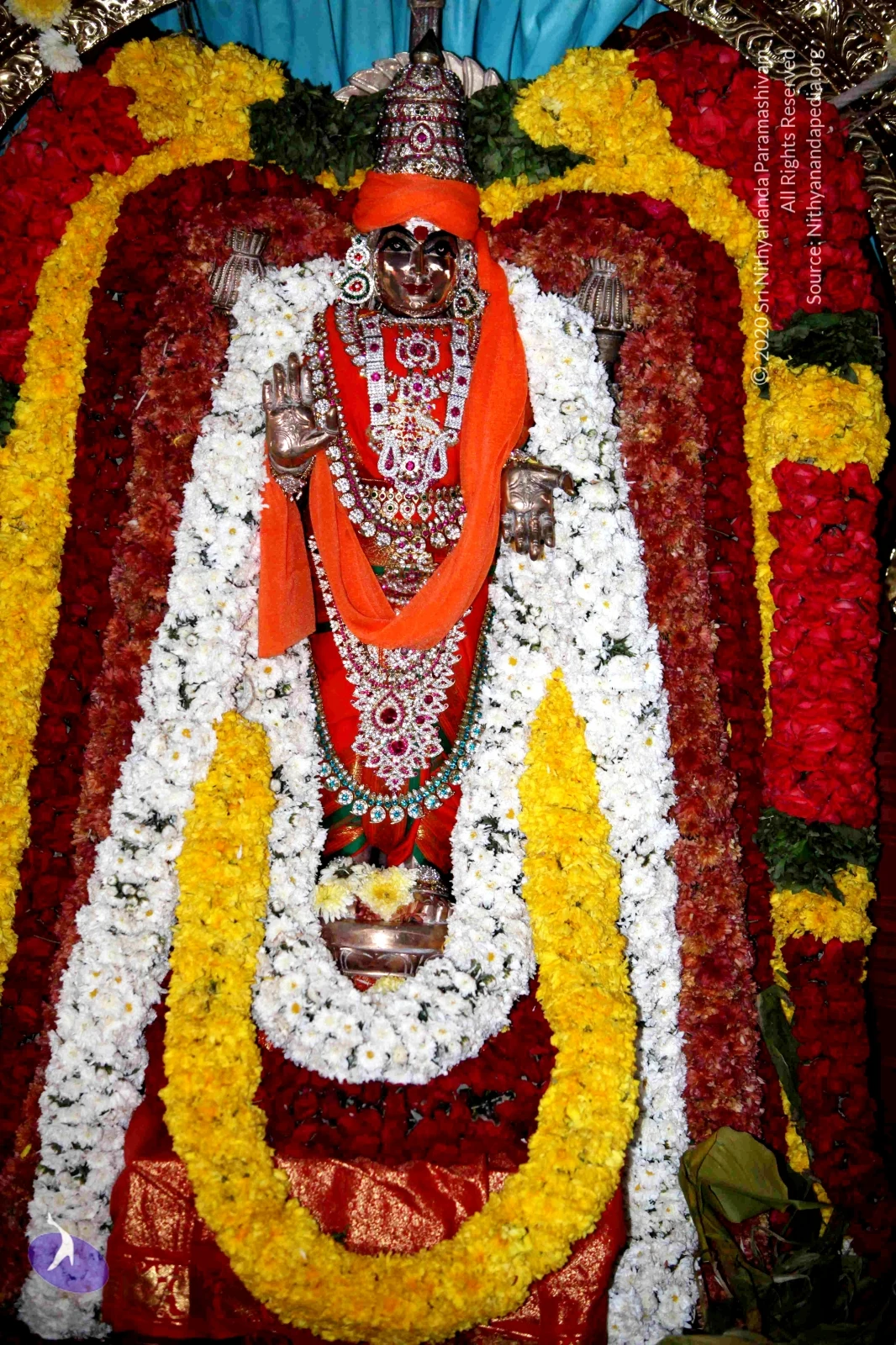
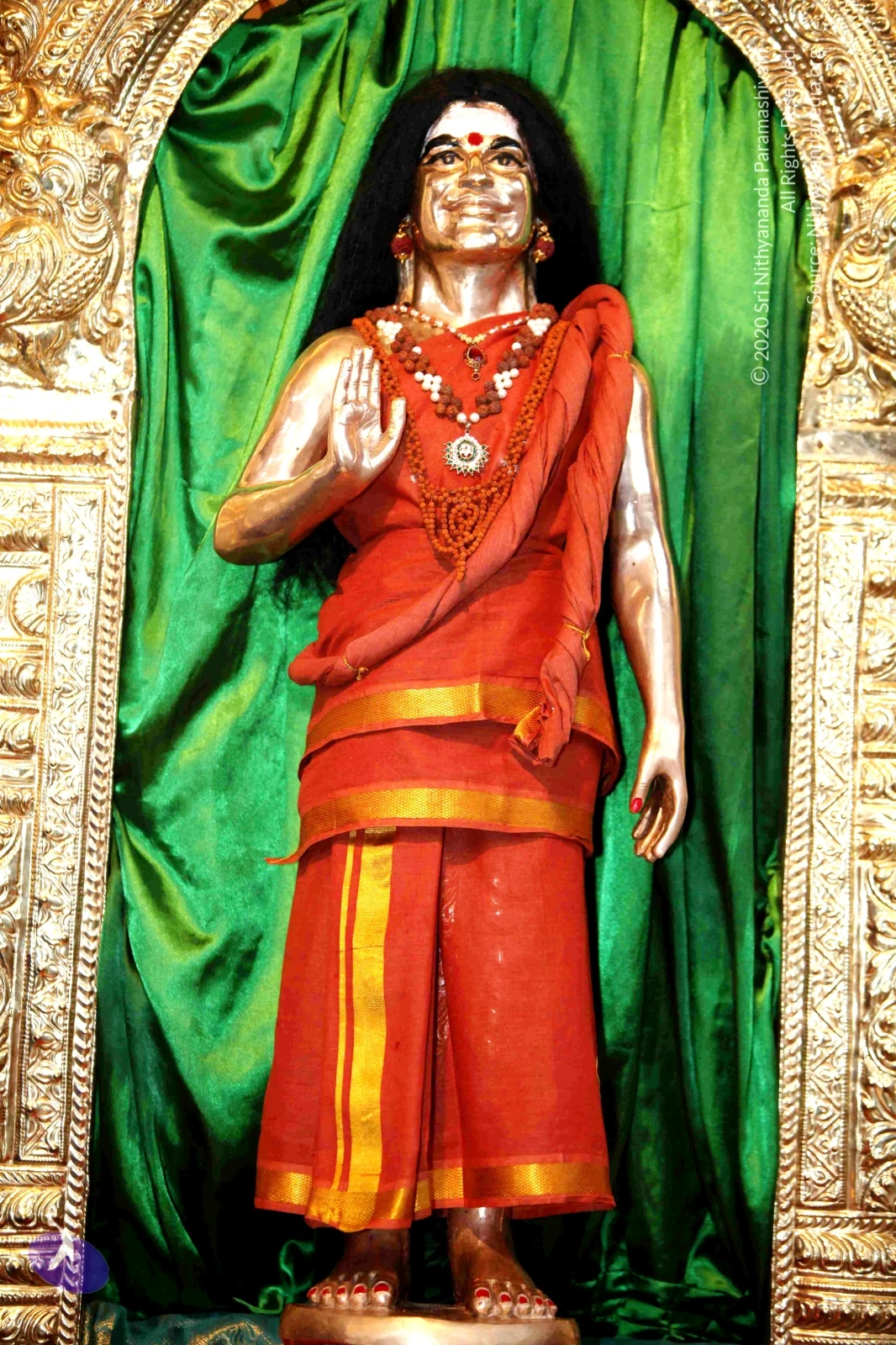
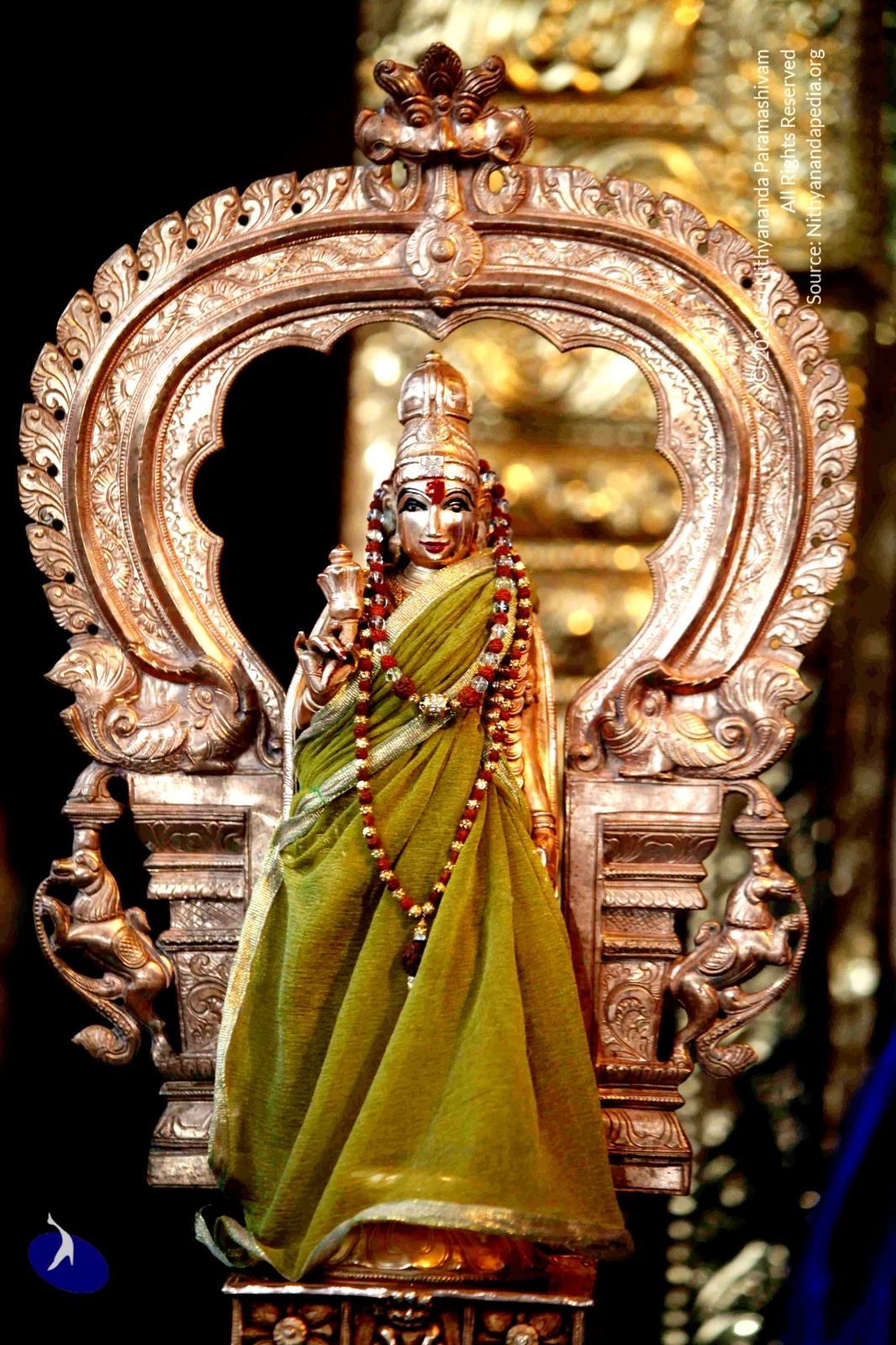
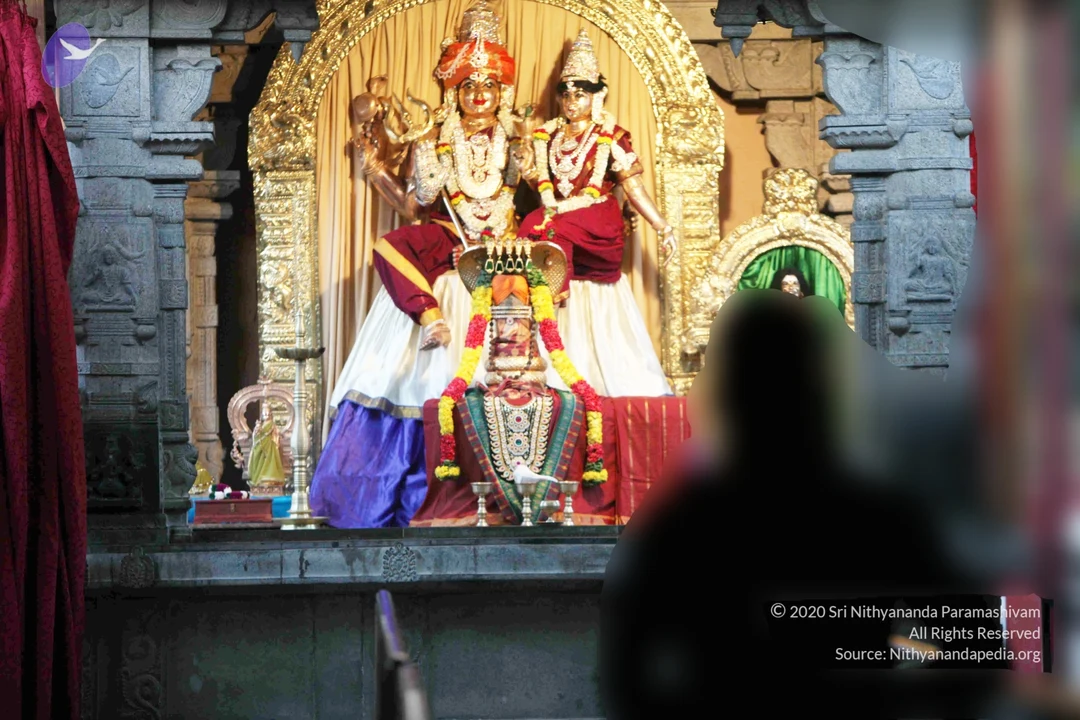
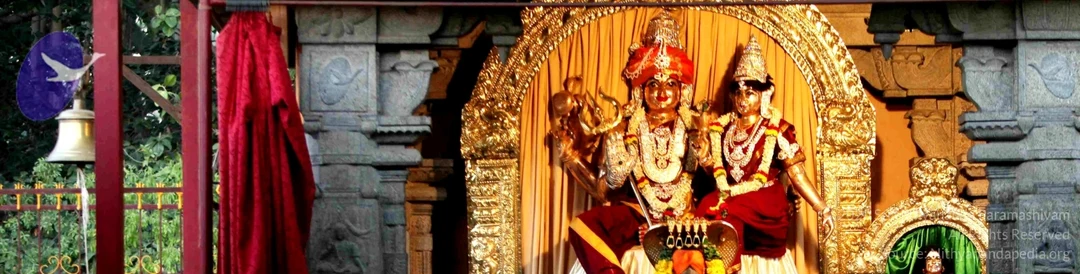
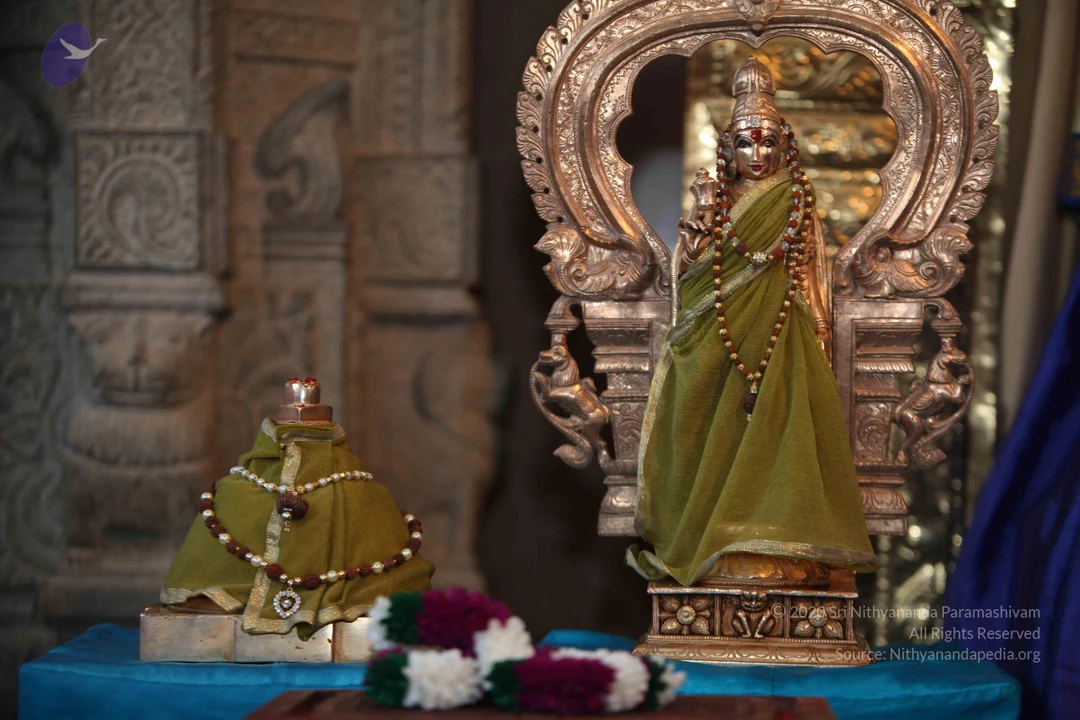
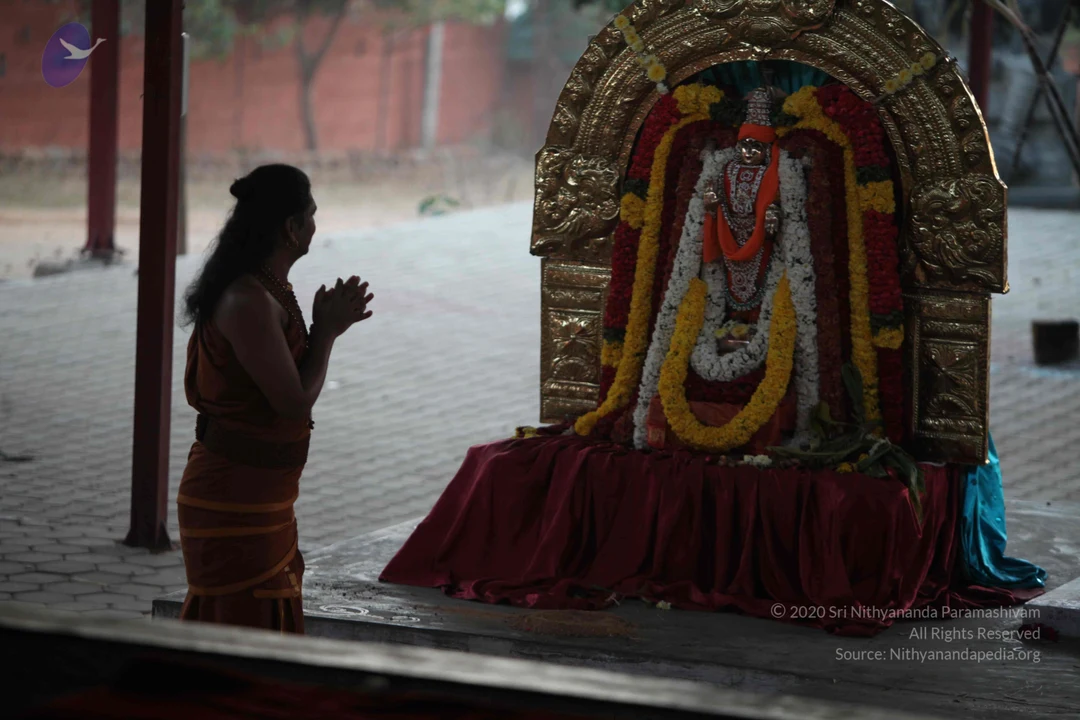
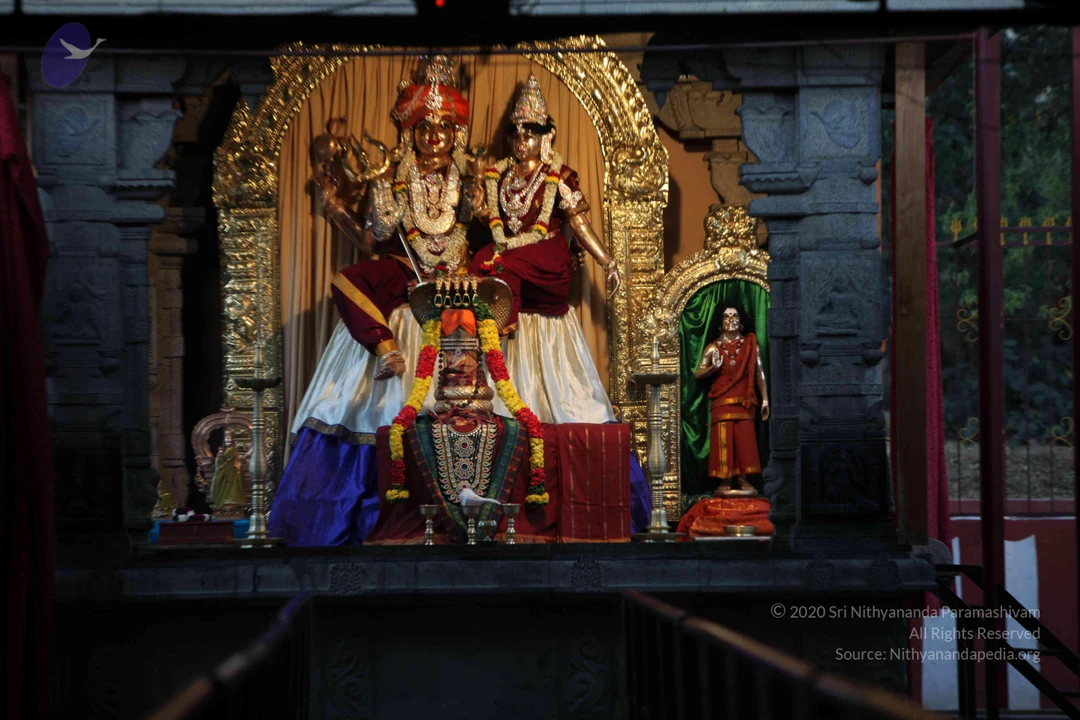
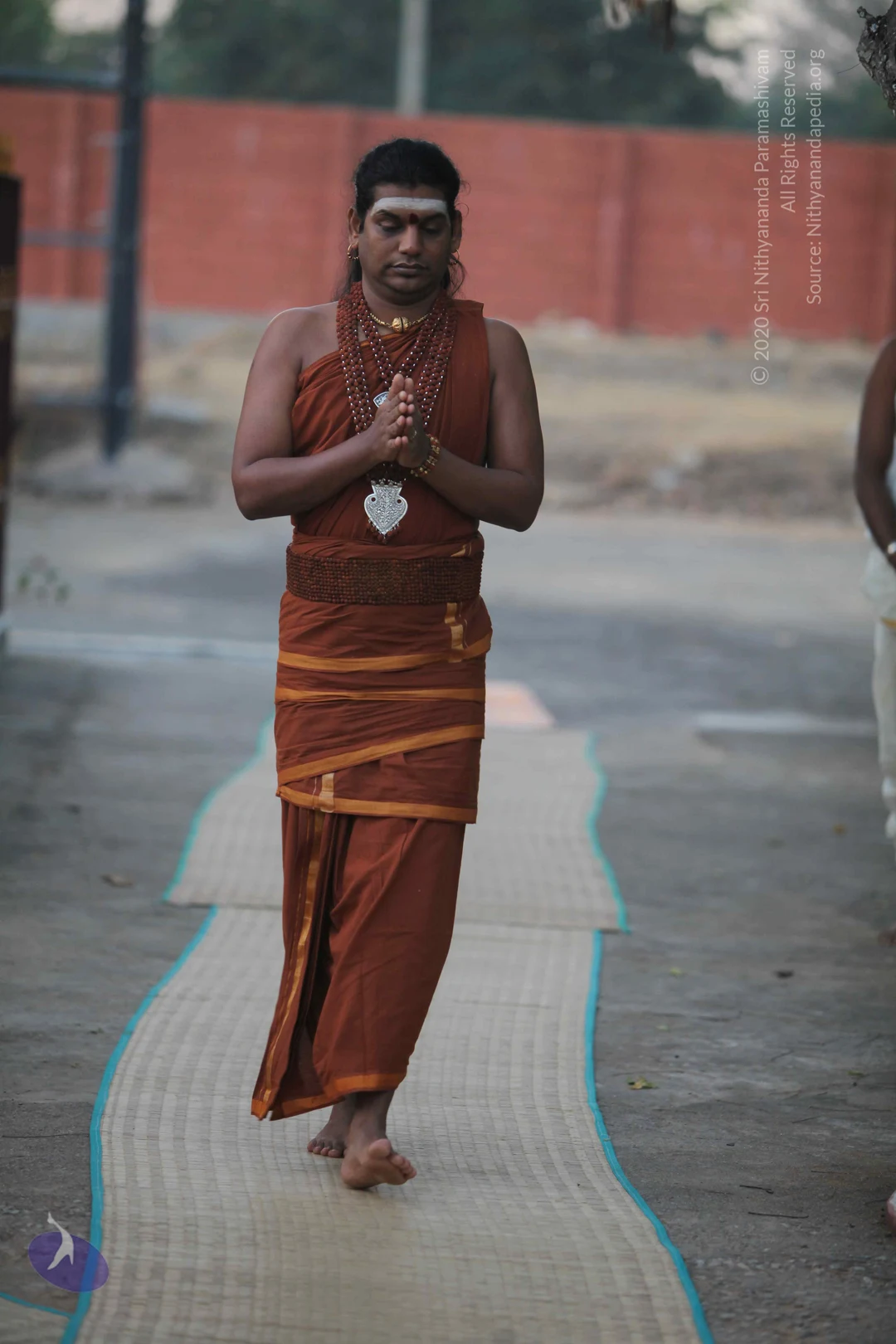
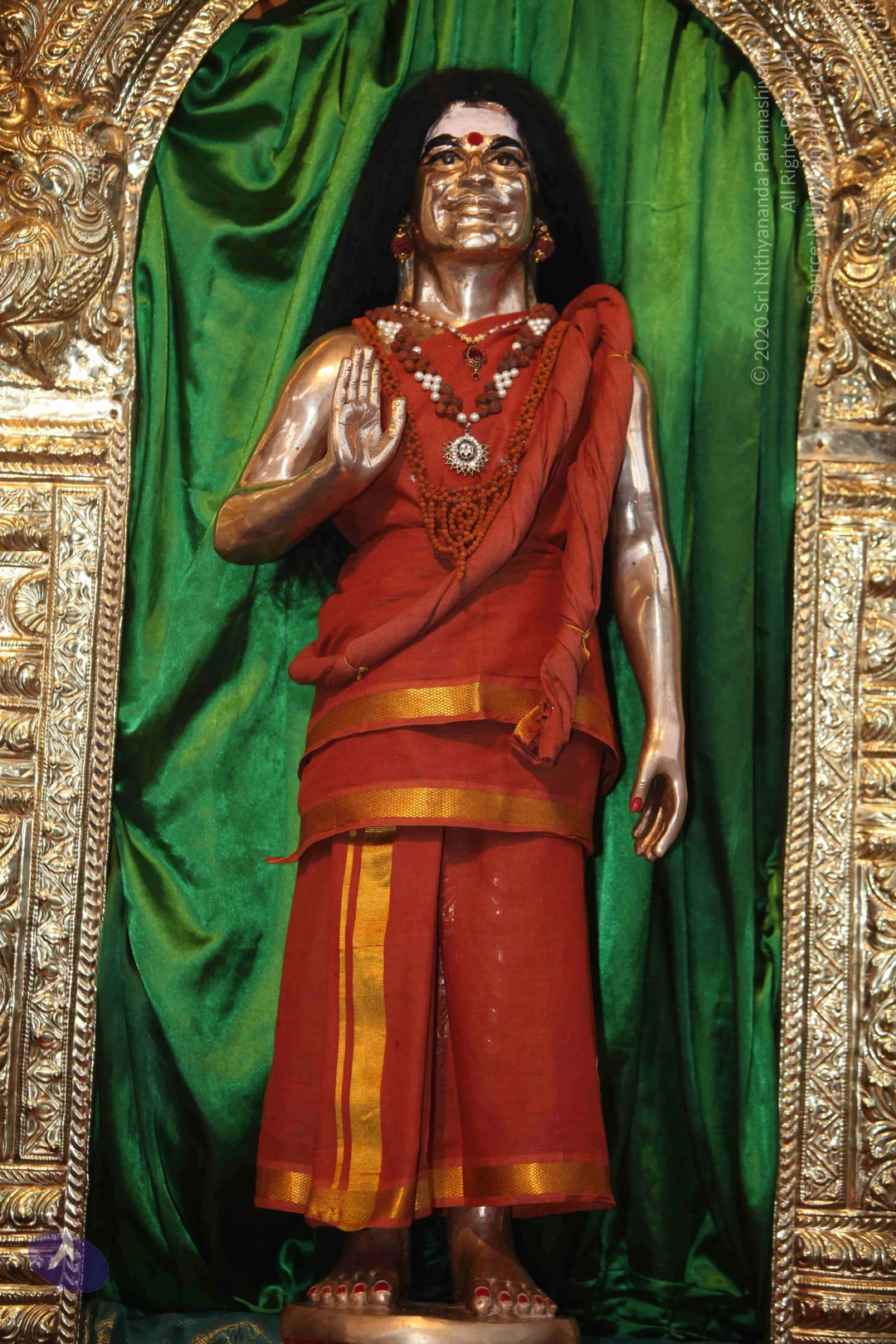
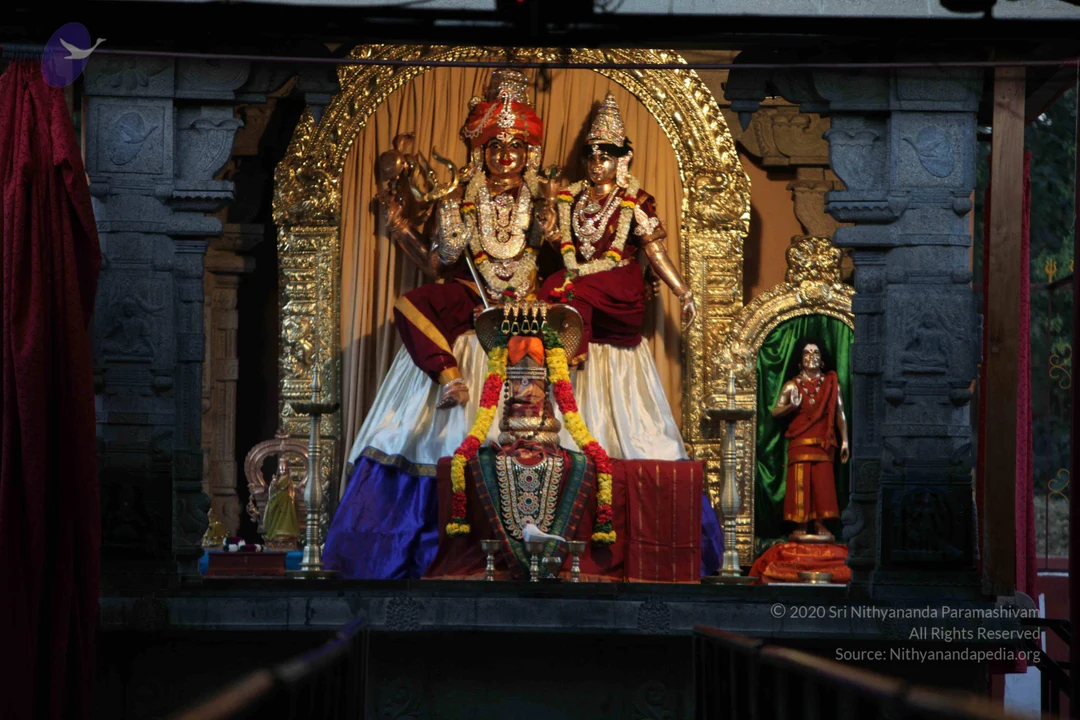
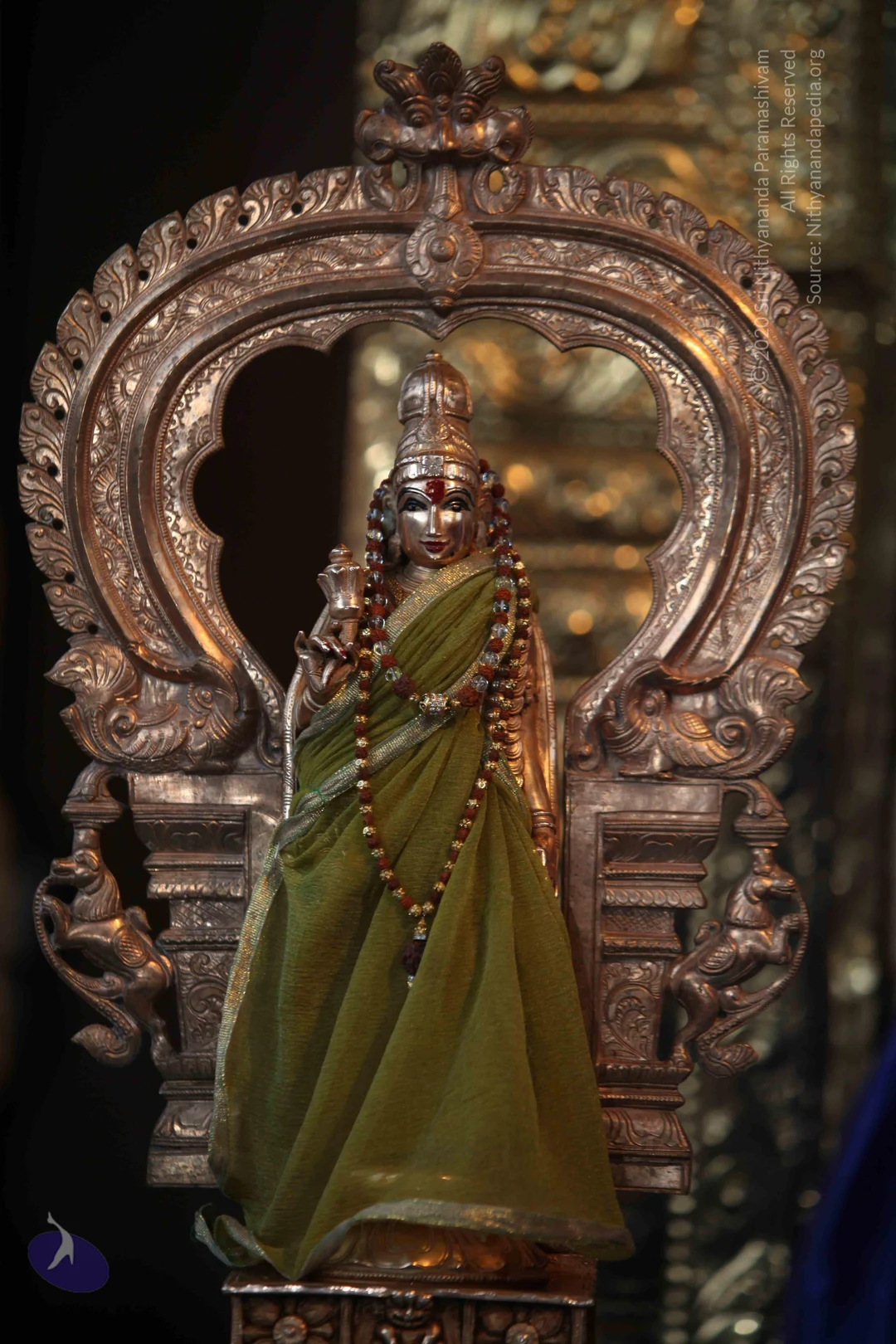
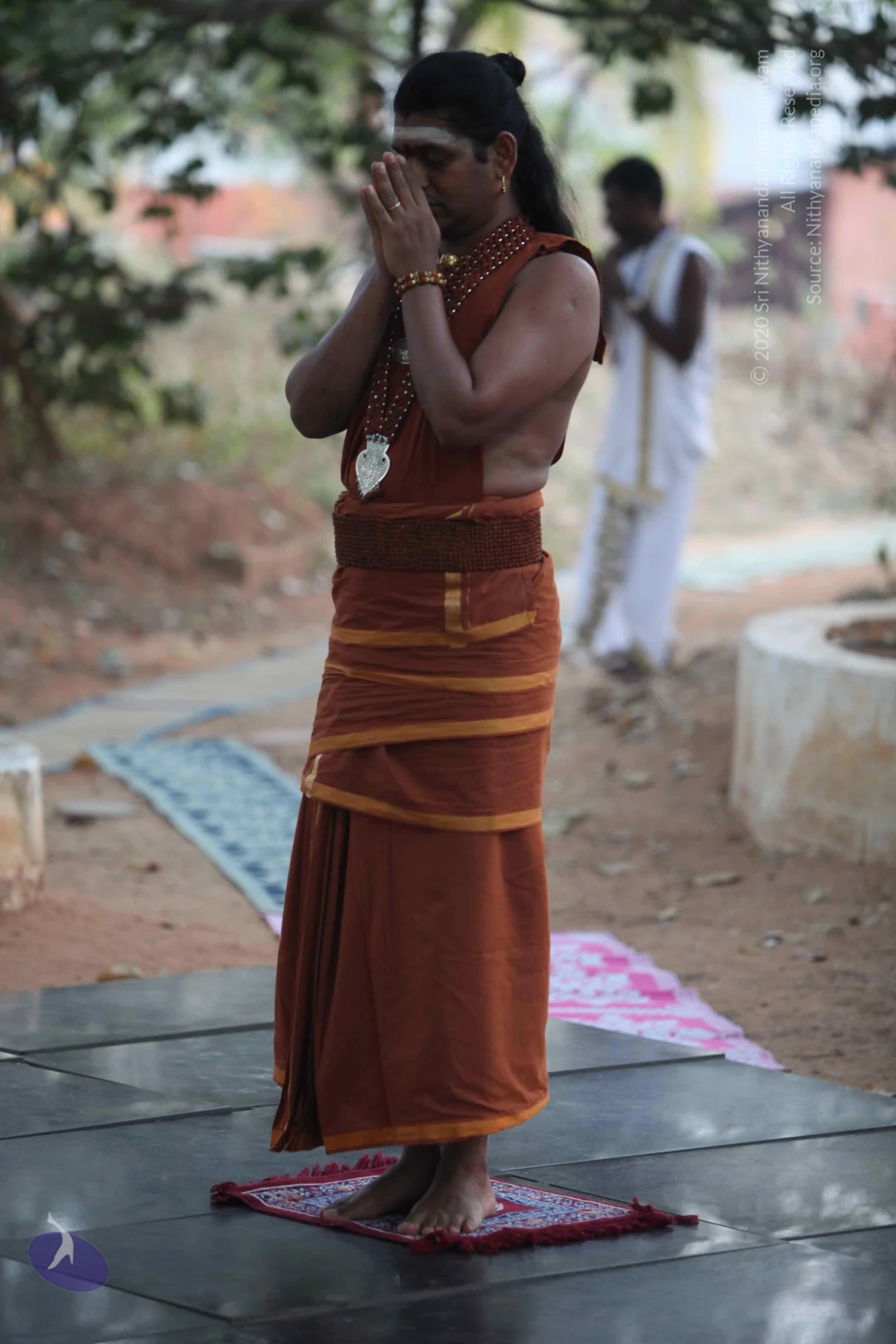
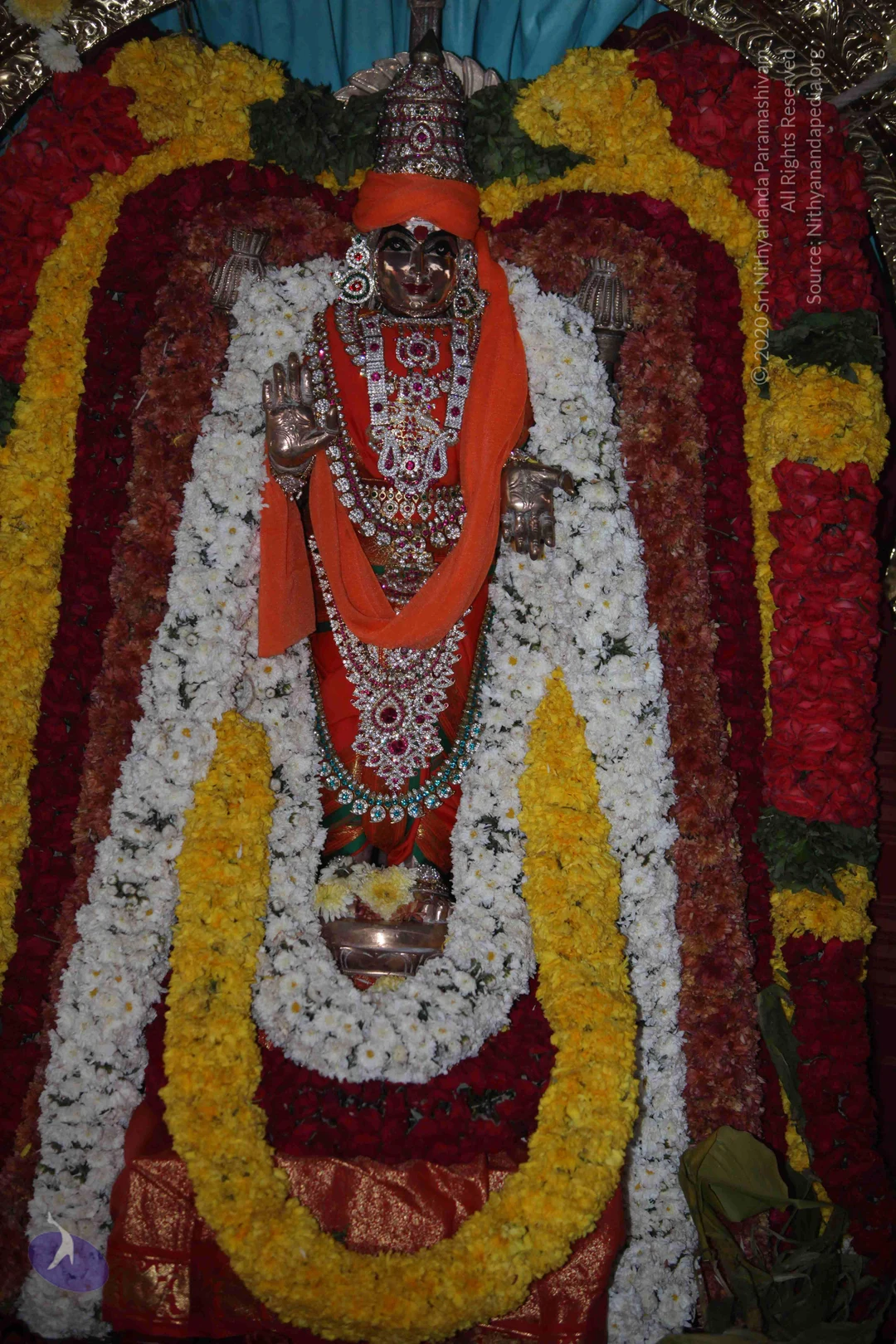
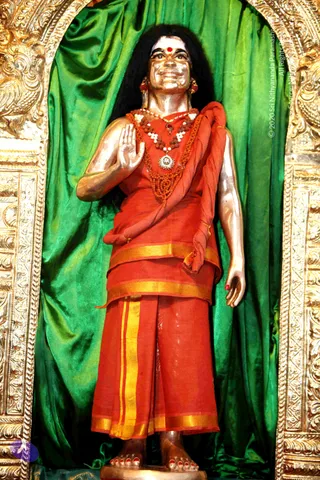
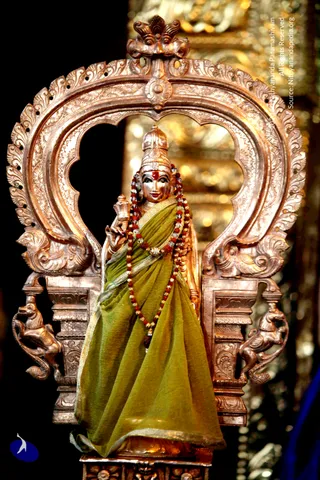
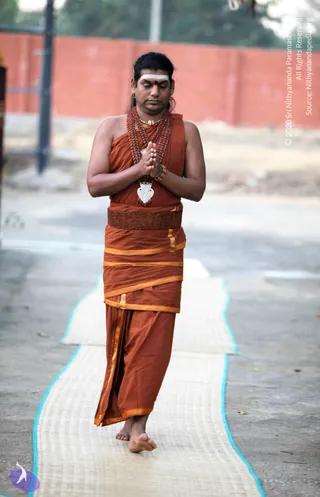
A silver-toned statue of a standing figure in an ornate gilded archway with a bright green silk backdrop. The figure has long flowing black hair, a red bindi on the forehead, red-and-gold earrings, and raises one hand in blessing. Layered rudraksha and white bead malas hang on the chest with a round ornamental pendant. The statue wears an orange-red shawl over a red top with gold borders and a red dhoti with gold stripes, standing on a base with red-painted toenails. This is a statue, not a living person. The image is a photograph of a depiction and shows no physical people.A gilded copper-toned metal statue of a female deity stands within an ornate arched prabhavali-style frame with floral and foliate carving and small animal figures at the base. The figure wears a green sari with a gold-thread border, a crown, a red bindi, and a long rudraksha and red bead mala across the chest, and holds a small lamp-like object in one raised hand. The background is a blurred gold shimmer. No physical people are visible; the figure is a statue.A temple shrine photographed from the front, with a golden arched niche and grey stone pillars. Two standing figures in golden crowns, garlanded necks and white-and-red garments flank a central seated deity murti, which wears a garland of red and yellow flowers and a jewelled breastplate. Brass lamps stand on the stone plinth before it, and a dark silhouette of a person's head and shoulders occupies the right foreground, partly blurred. A red cloth hangs at left.A wide banner photo of a temple shrine with two gilded deity murti seated side by side on a raised platform before golden arched frames and gold curtains. The figure on the left wears a red crown and white floral garlands; the figure on the right wears a tall gold crown, red garment and layered garlands, with a fruit-and-flower offering in front. A large red cloth hangs at left beside a brass bell and a red metal railing, with carved stone pillars behind and foliage. No physical people are visible.A photograph of a temple shrine with a golden arched niche framing two deity murtis, a male figure in a red turban and a female figure with a tall crown, both adorned with garlands, gold jewellery and ornaments, seated on a dais with a red-and-gold base. Orange and yellow drapery hangs behind them, with a red cloth hanging at left beside a brass bell and a red-and-gold iron railing. Grey carved stone pillars with floral reliefs surround the shrine, and a small framed image at lower right shows another figure in red with a green backdrop. No physical people are visible.A barefoot man in orange-saffron robes walks along a woven straw mat laid on a paved outdoor path, hands pressed together in anjali mudra and eyes lowered. He wears a white horizontal tilak across the forehead with a red dot, a multi-strand rudraksha mala, a silver pendant, a gold necklace and a wide rudraksha waist band over the saffron dhoti. A red brick wall and trees form the background.

2-Pada-Puja

21 photosSource gallery
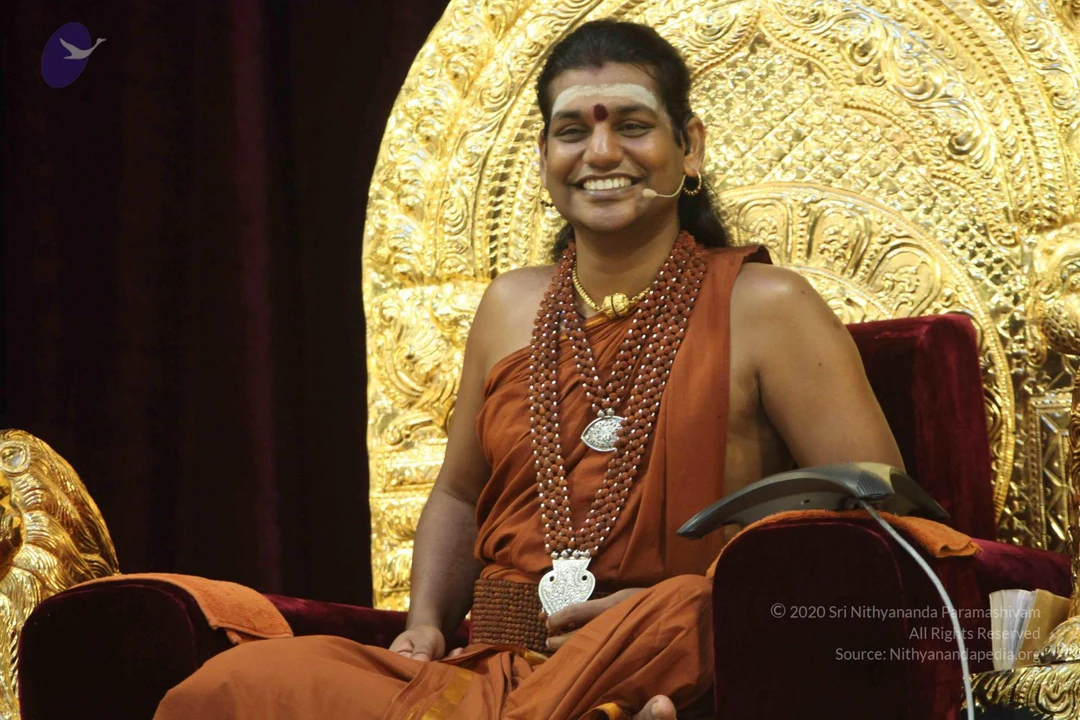
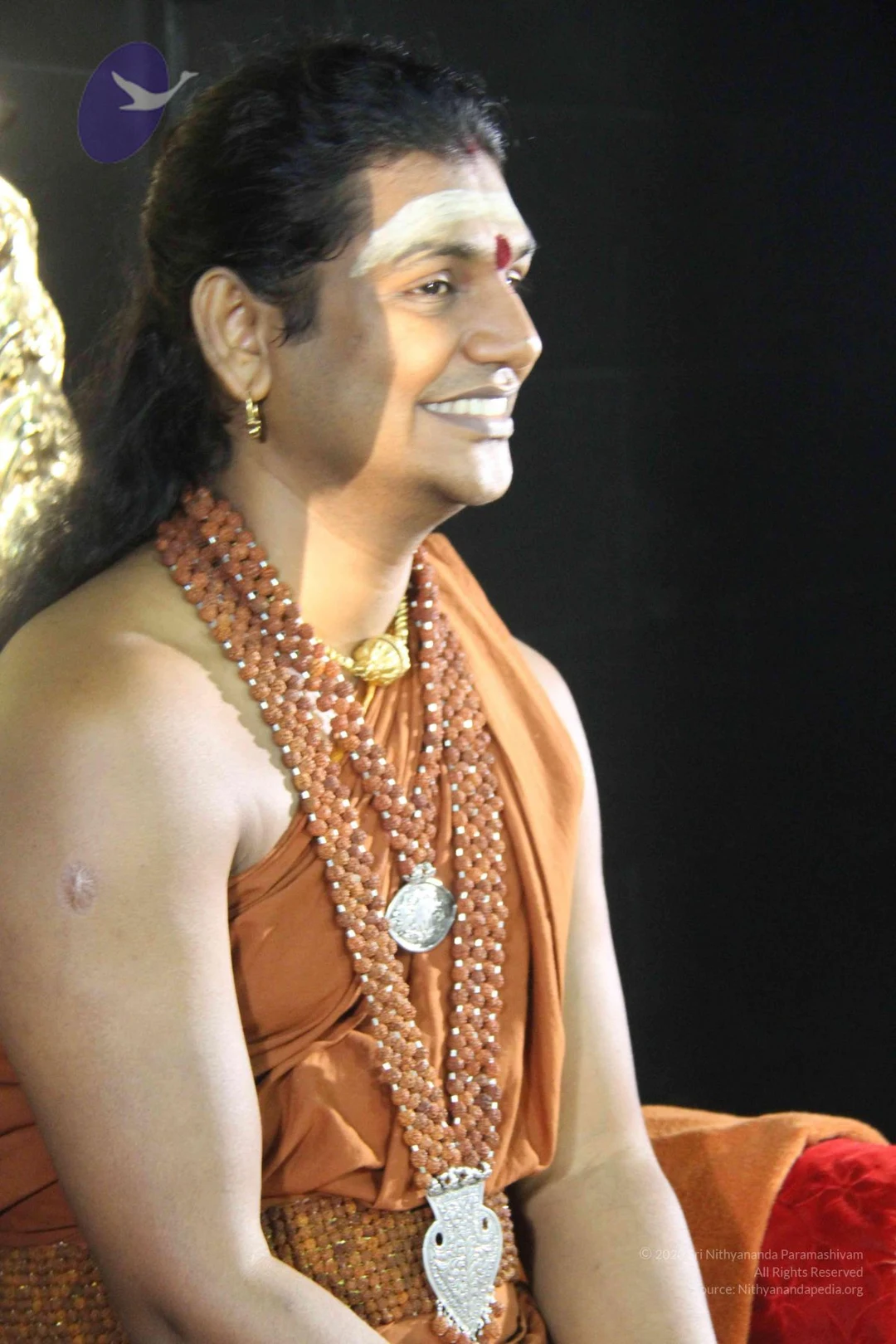
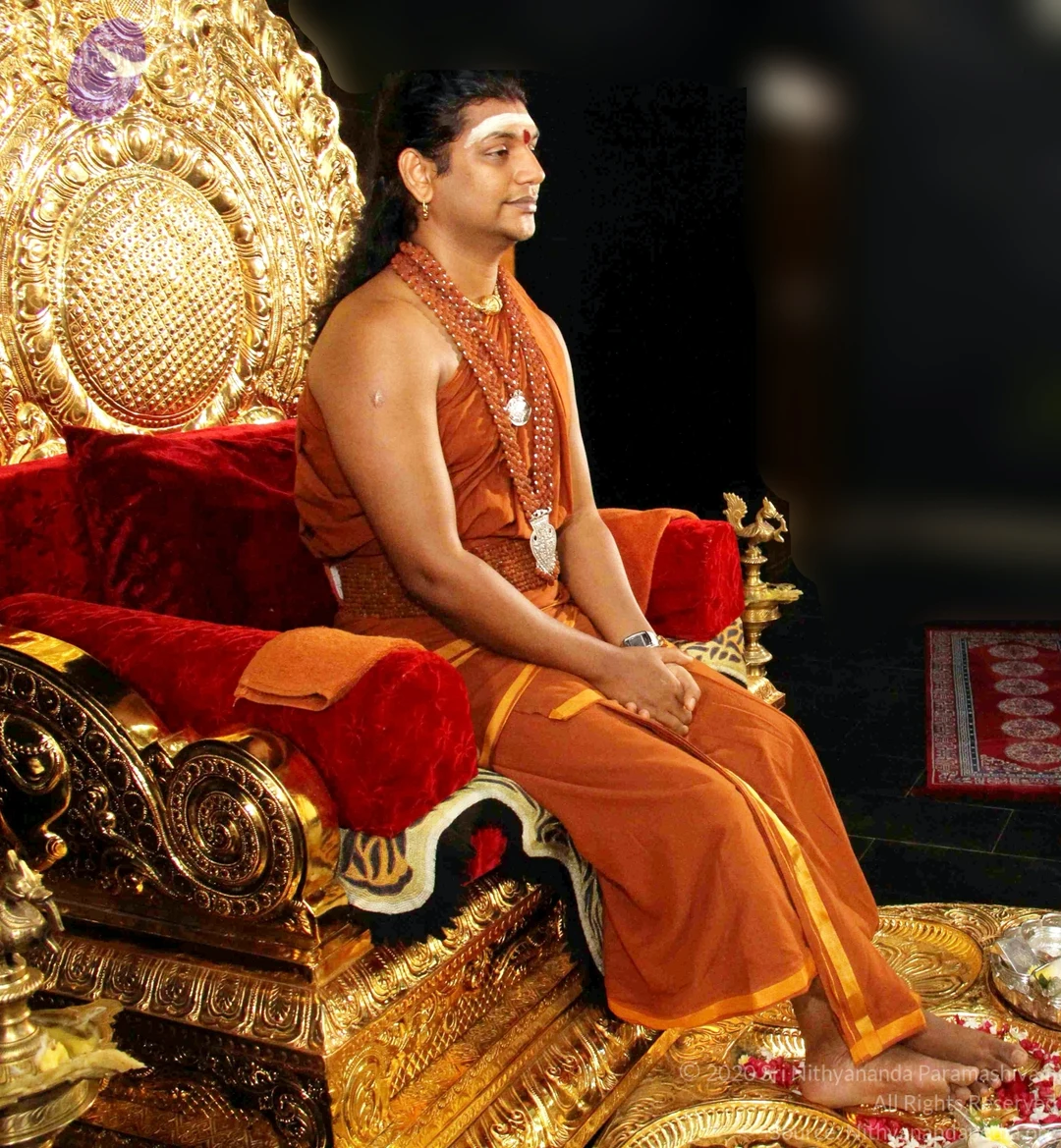
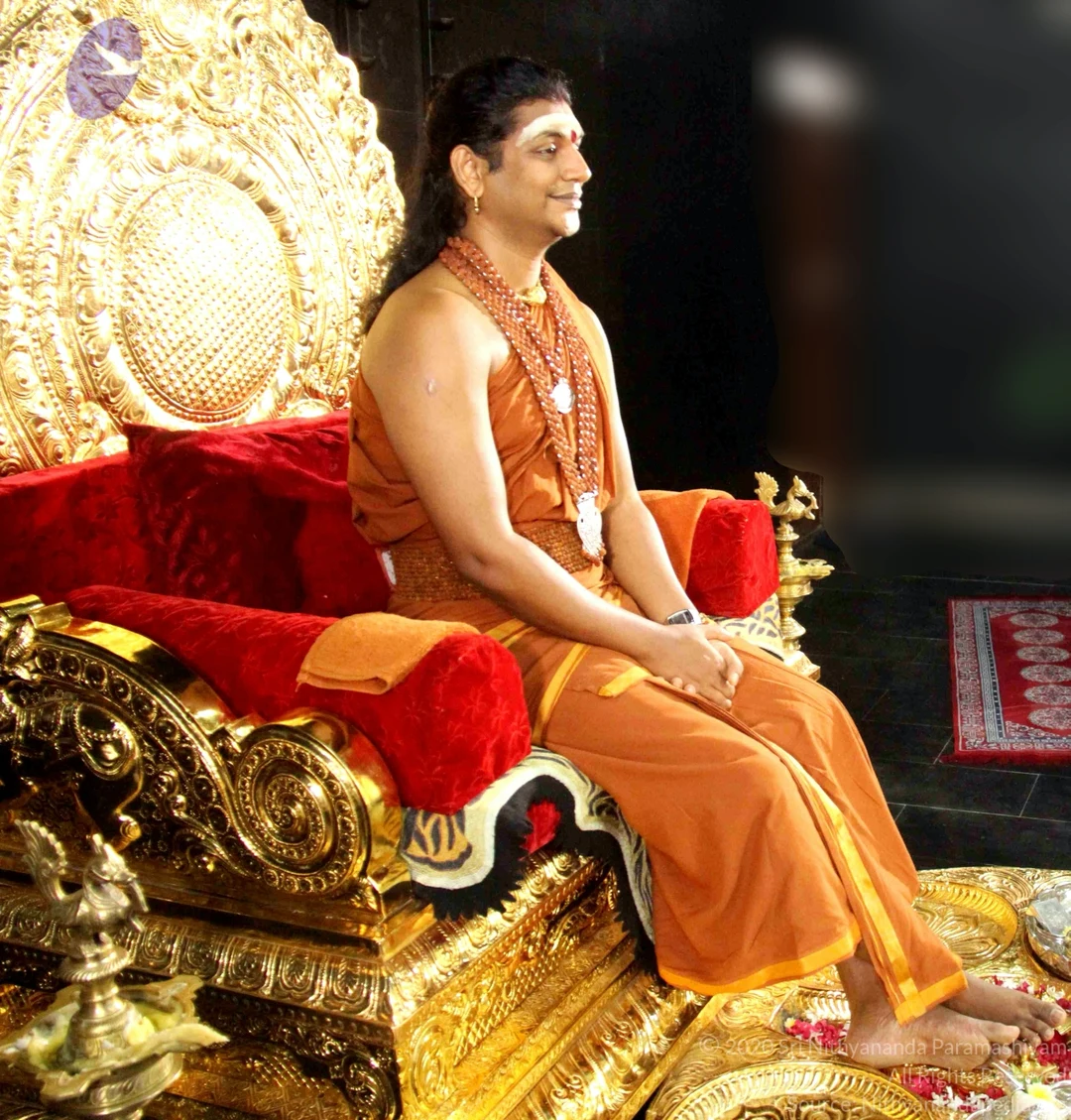
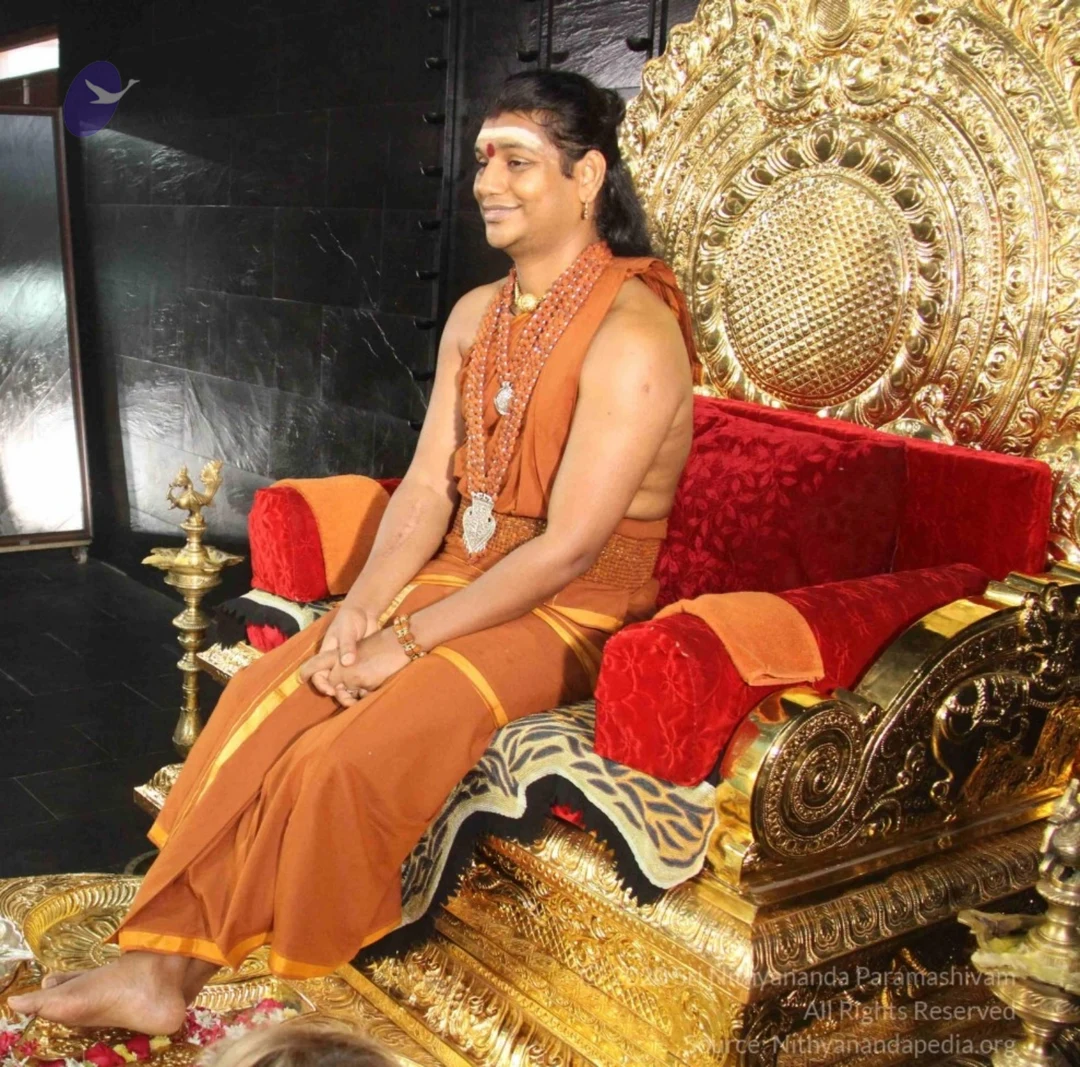
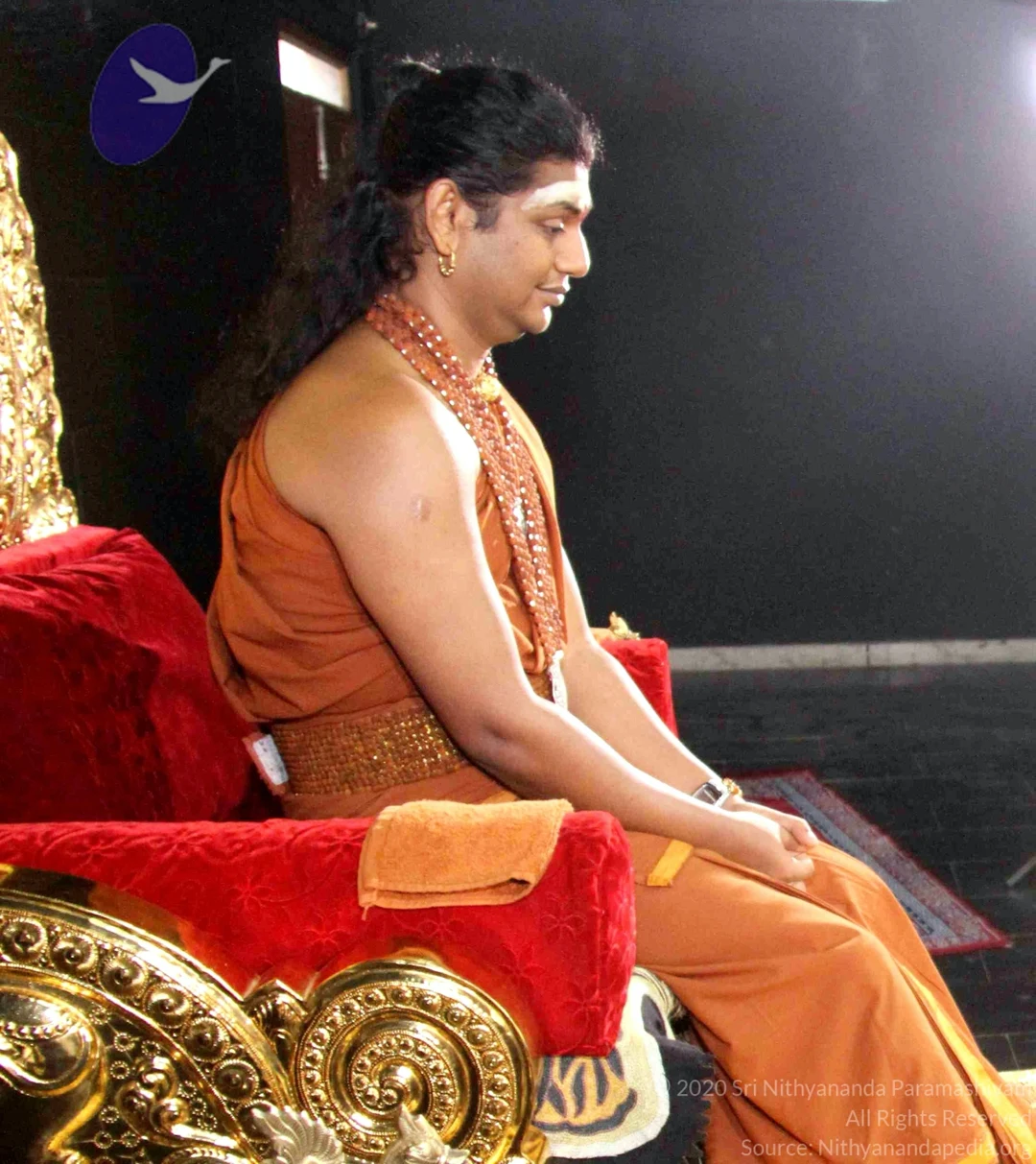
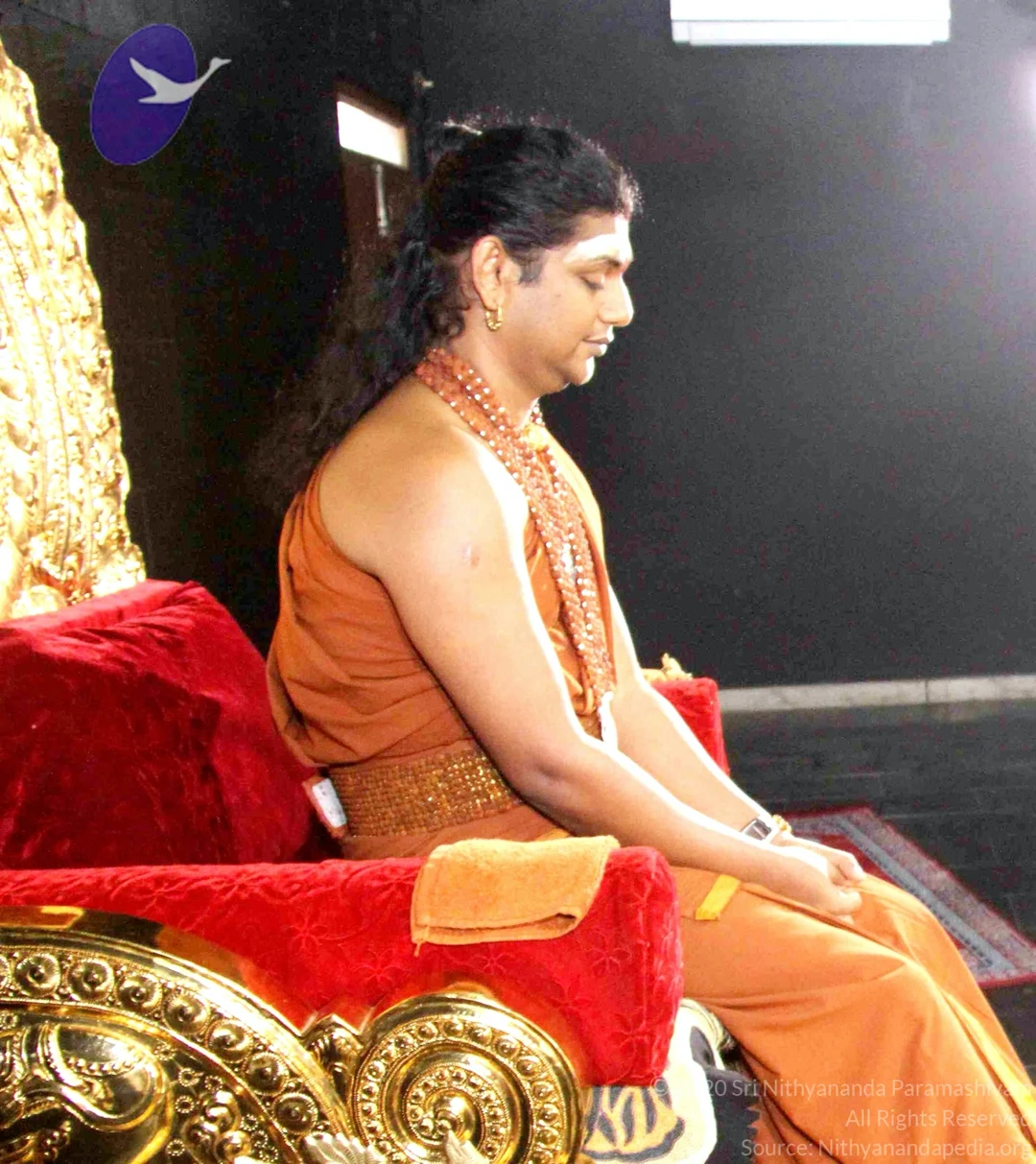
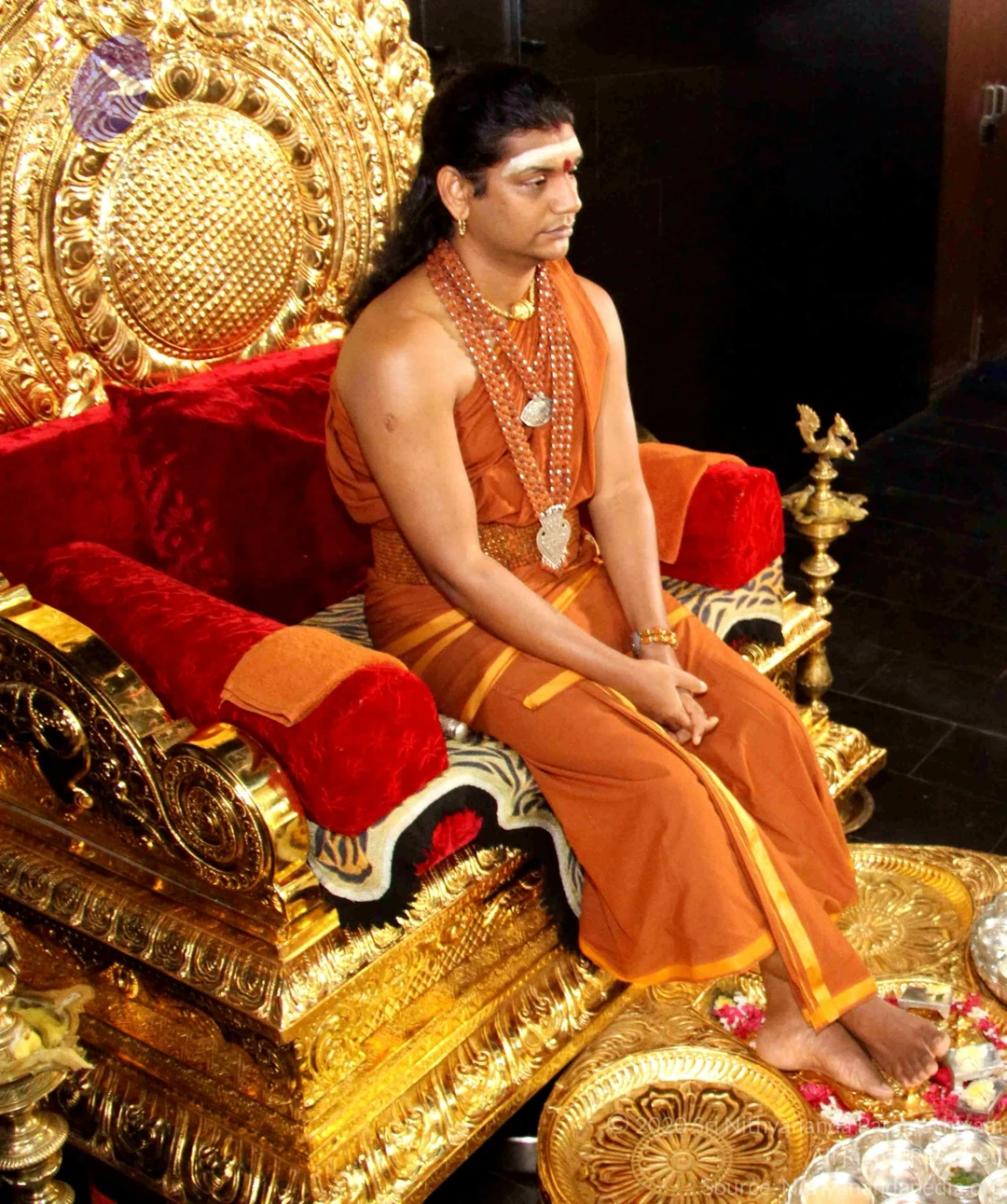
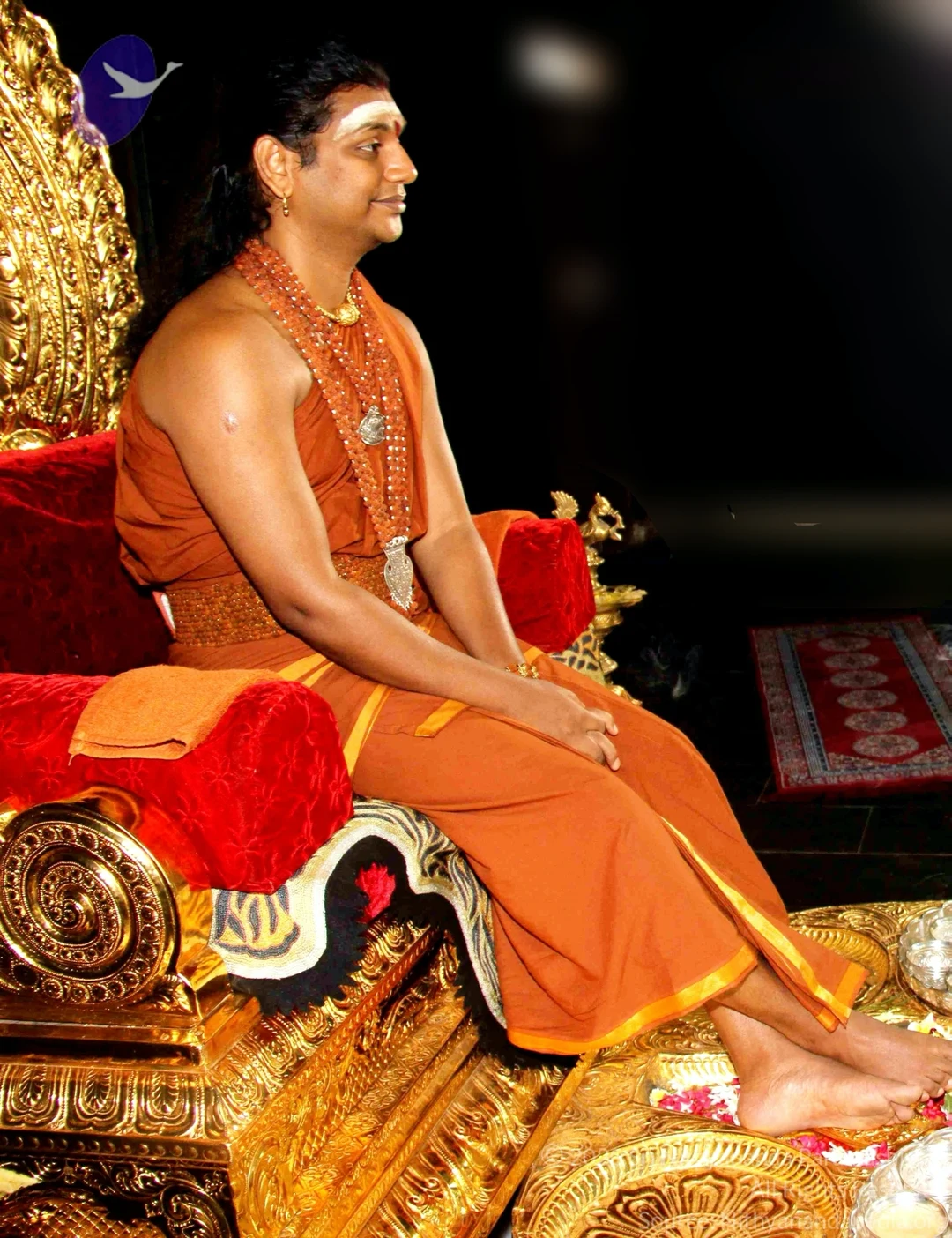
Side-profile portrait of a man against a plain black background, smiling slightly. He wears a saffron-orange shawl over his bare shoulder, several strands of rudraksha beads, a gold pendant on a gold chain, and a small gold hoop earring. A white horizontal band and a red bindi mark his forehead. His shoulder is bare and the image has a small logo at top right.A seated man in orange-saffron robes sits on an ornate gold throne with red velvet cushions, hands resting in his lap. He wears a long rudraksha mala with a silver-toned pendant, a gold necklace, a white and red tilak on his forehead, and a wristwatch. Brass lamps and a gold tray with flower petals sit at the base of the throne, and a red patterned rug lies on the dark floor. Appearance-based cues are strong, so this is a person seated in person.A seated man in orange ochre robes sits on an ornate gilded throne with red velvet cushions and armrests. He wears long rudraksha malas, a white and red forehead mark, and an orange shawl draped over his shoulder. His hands rest in his lap, and bare feet touch a floor covered with red flower petals. Brass oil lamps stand beside the throne, and a red patterned rug lies on the dark floor.A seated man in saffron-orange robes sits on an ornate gold throne with a red velvet cushion and tiger-striped throw, against a black slate wall. He wears a white and red forehead mark, a long rudraksha mala with a silver pendant, and beaded bracelets, and his hands rest together in his lap. Brass oil lamps stand beside the throne, and flower petals lie on the floor at his feet. Only the foot of one other person is partly visible at the bottom edge.Photograph of a man seated in profile on an ornate red velvet throne with gold carved armrests and a gold-carved side panel. He wears an orange-saffron garment draped over one shoulder, a wide beaded waist belt, multiple strands of red-orange rudraksha-style beads, a small gold earring, and a white forehead marking. His long dark hair is swept back into a bun. An orange towel rests on the armrest and a patterned prayer mat lies on the floor in the background. Swamiji (probable) is seated in ceremonial saffron attire with rudraksha malas, long swept-back hair and a throne setting, consistent with a satsang or discourse setting.A seated man in profile on an ornate red-cushioned golden throne, eyes closed in meditation. He wears an orange saffron-coloured unstitched garment over one shoulder, a dense rudraksha mala necklace of reddish beads, a beaded waist belt, and a white vertical tilak on his forehead. Long dark hair is tied back. A gold-coloured carved panel and a folded orange towel rest on the throne arm, with a patterned mat on the floor behind. This appears to be Swamiji (probable), identified by the saffron garment, rudraksha malas and long hair on a ceremonial throne.

3-Dial-The-Avatar

36 photosSource gallery
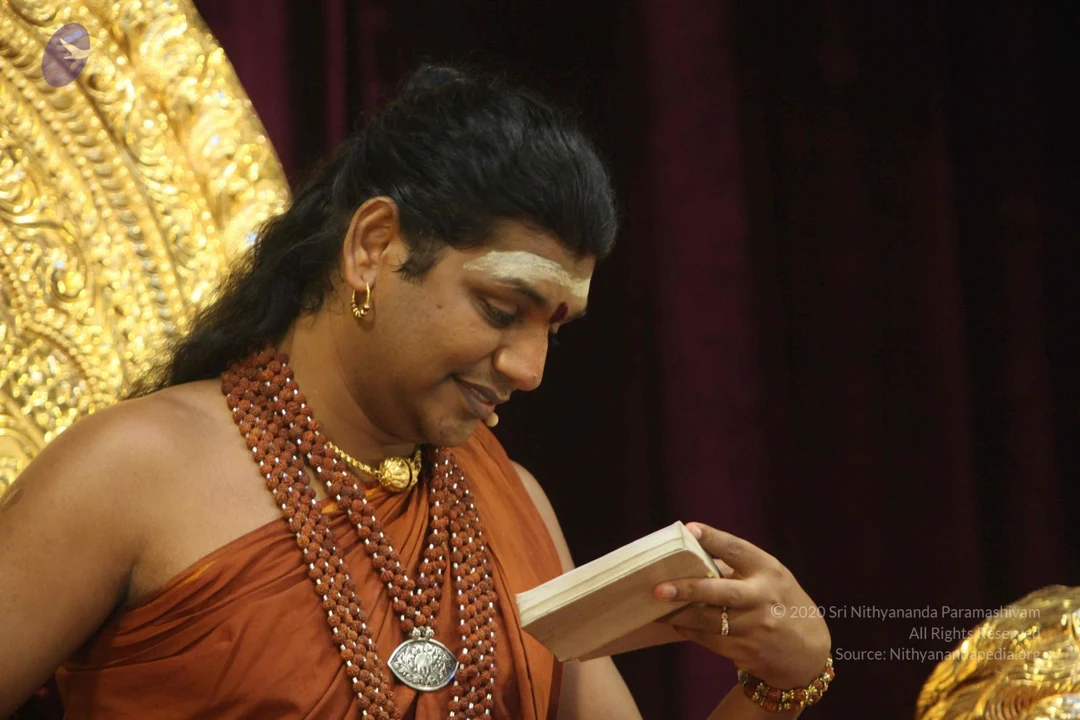
A man seated on a red velvet throne against an ornate gold repoussé backdrop, wearing an orange saffron robe with a gold-bordered dhoti, multiple strands of orange rudraksha-style beads, a silver pendant, and a gold necklace. He has a white vibhuti line and a red kumkum dot on his forehead, a small microphone at his ear, and his right hand rests on his lap while he speaks. Appearance-based probable Swamiji: long swept-back hair, saffron clothing, rudraksha malas and ceremonial gold necklace, seated on a throne during a satsang.A seated man in saffron-orange robes sits with eyes closed and palms pressed together in namaste before an ornate gold repoussé backdrop. He wears a white forehead band with a red bindi, a rudraksha mala draped over the chest, a beaded orange waist belt, a silver heart-shaped pendant, and a small headset microphone at his ear. He sits on a deep red velvet chair. A small purple logo appears in the lower left corner. Swamiji (probable): long dark hair, saffron robes, rudraksha mala and ornate silver pendant, seated in a satsang setting.A smiling man seated on a plush red velvet throne in front of a large gold repoussé backdrop, with a gold lion-head armrest visible at left. He wears an orange saffron shawl over bare shoulders, multiple strands of orange rudraksha beads, a silver pendant and a gold chain, with a white and red tilak on his forehead. A small headset microphone is clipped near his face and he holds his hands together over his lap. a person: the orange robe, rudraksha malas and ceremonial gold ornaments and the throne setting suggest the page's Satsang speaker, though the face is not used for identification.A smiling man sits on a red velvet cushioned seat in front of an ornate gold throne backrest with intricate embossed carving. He wears an orange-saffron unstitched cloth draped over his shoulder, leaving his upper body bare, with a white vertical tilak on his forehead and a red dot at its centre. He has multiple strands of rudraksha-style beaded malas and a gold ceremonial necklace with a pendant, plus small gold earrings and a small wireless microphone clipped near his mouth. A golden lion-shaped armrest is partly visible at left against dark maroon drapes. The setting suggests a stage used for satsang. Swamiji (probable): long swept-back hair, saffron clothing, rudraksha malas and a ceremonial gold necklace, seated in a throne-like setting.A man seated on a red velvet throne against an ornate gold repoussé backdrop, wearing saffron-orange robes wrapped over the shoulder, long swept-back dark hair, a white tilak with a red dot on the forehead, multiple strands of orange rudraksha malas, a silver heart-shaped pendant, a gold-trimmed orange waist cord and a beaded bracelet. He holds an open book in both hands and looks to the side while appearing to speak. Appearance-based probable Swamiji (matching long hair, saffron robes and rudraksha malas) seated in satsang, though the page only names the event.Close-up photo of a seated man in an orange-rust sannyasi robe draped over one shoulder, wearing multiple strands of rudraksha beads with silver spacers, a gold ornate necklace and a large engraved silver pendant. He has white and red tilak marks on his forehead, gold hoop earrings and a head microphone, and holds a small book in one hand. A gold-embossed backrest is behind him. a person is visible here through orange robes, layered rudraksha malas and ceremonial gold necklace; he appears to be addressing a satsang.

4-Sarva-Darshan

12 photosSource gallery
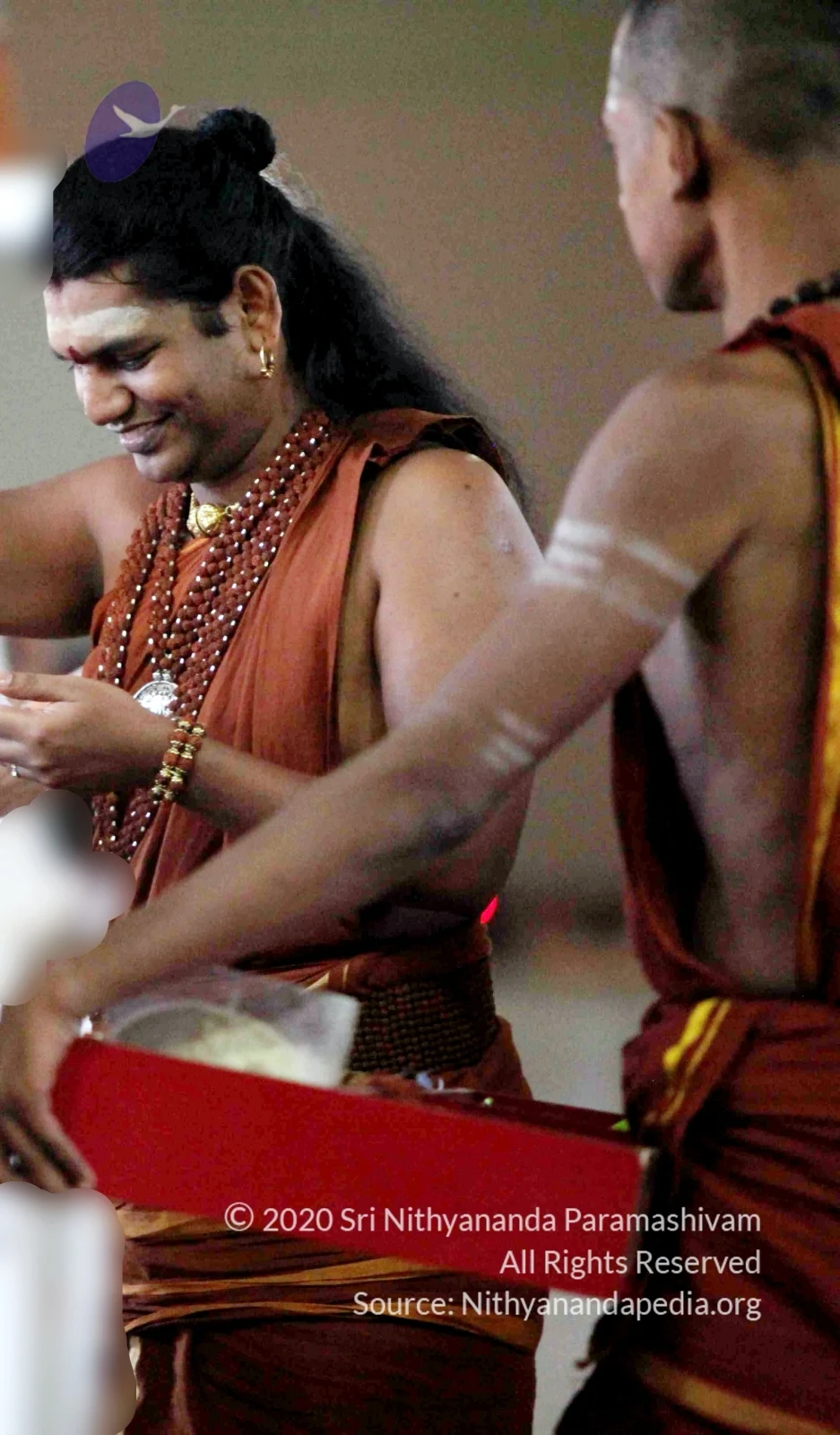
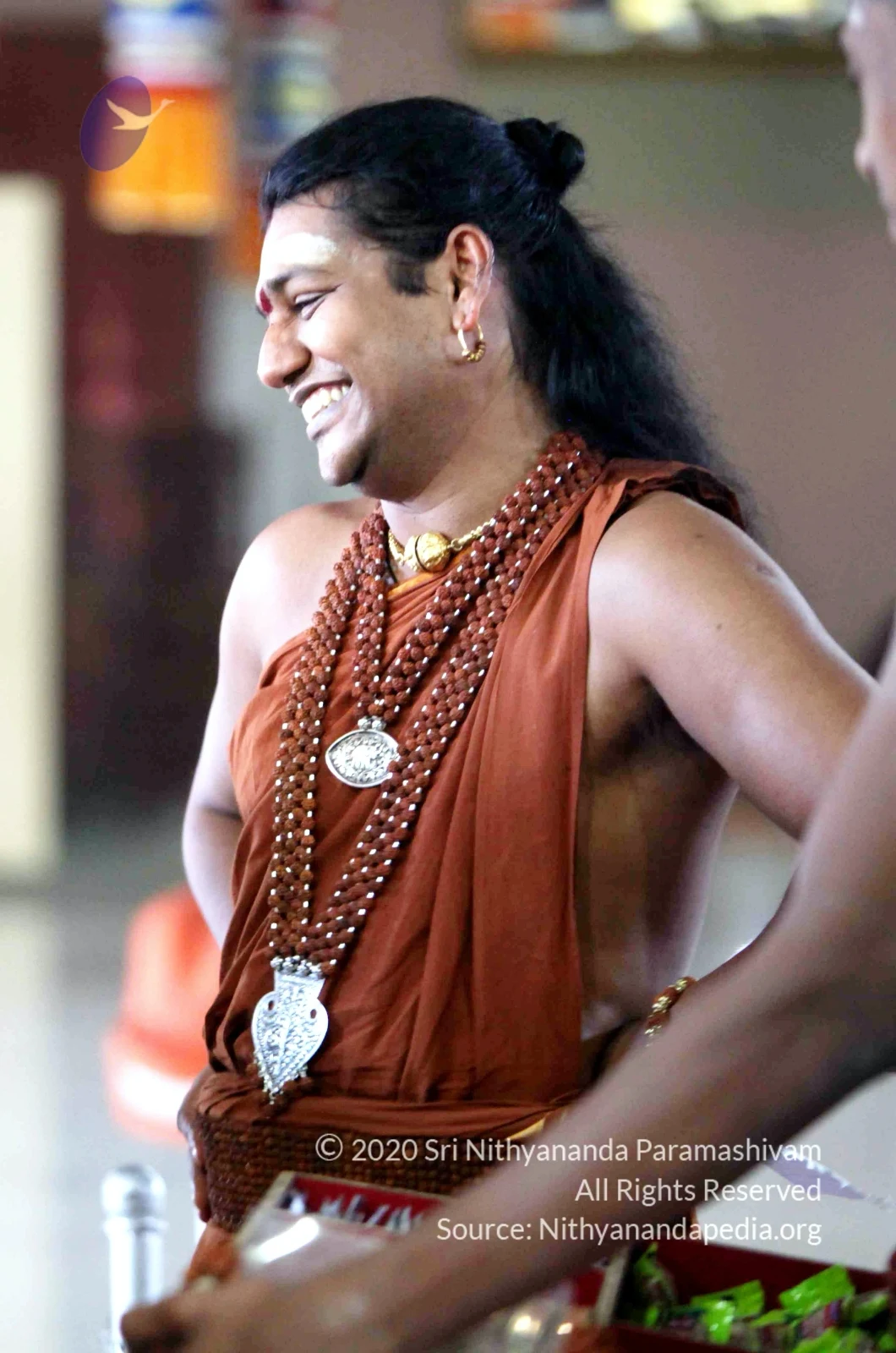
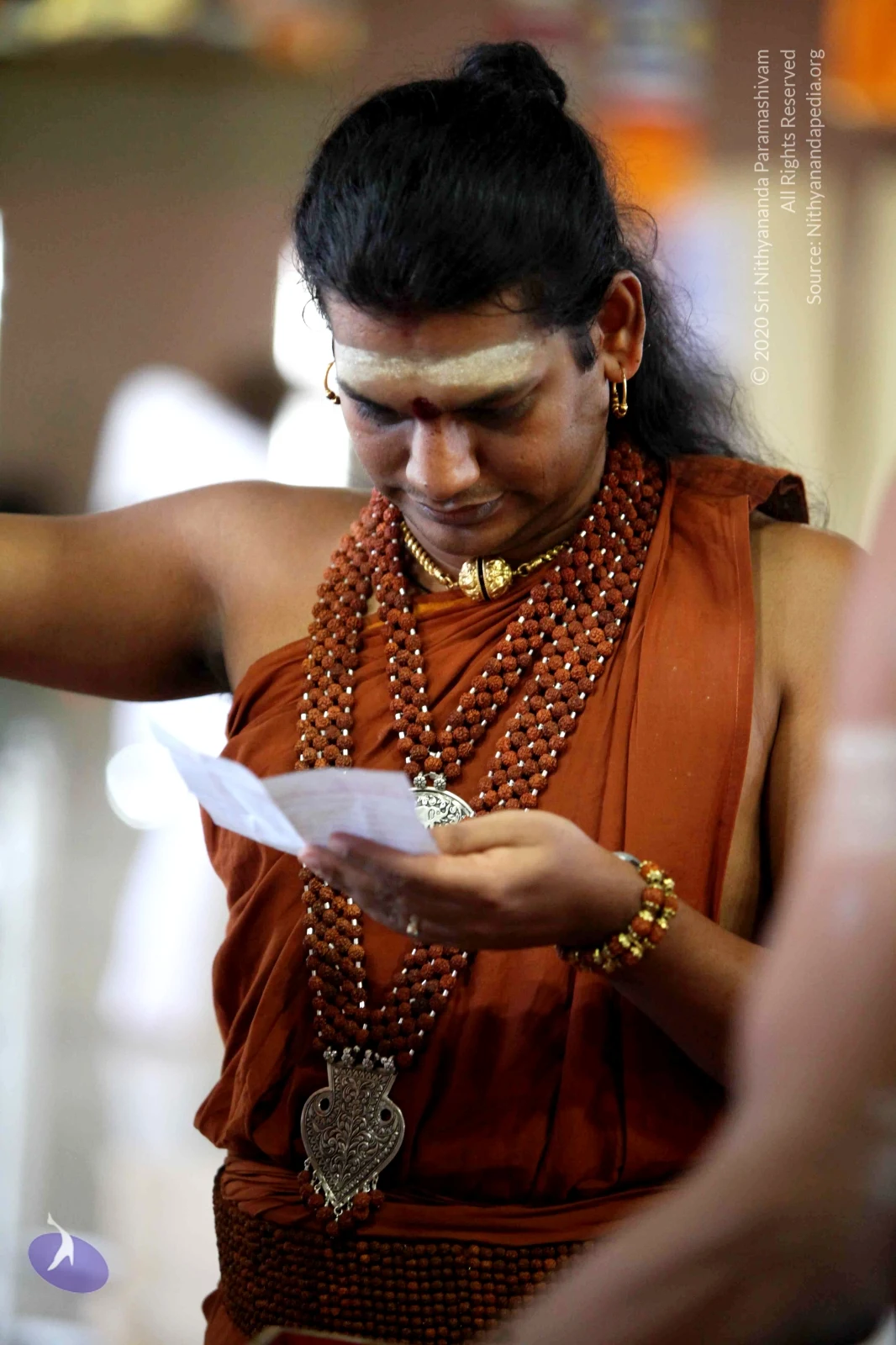
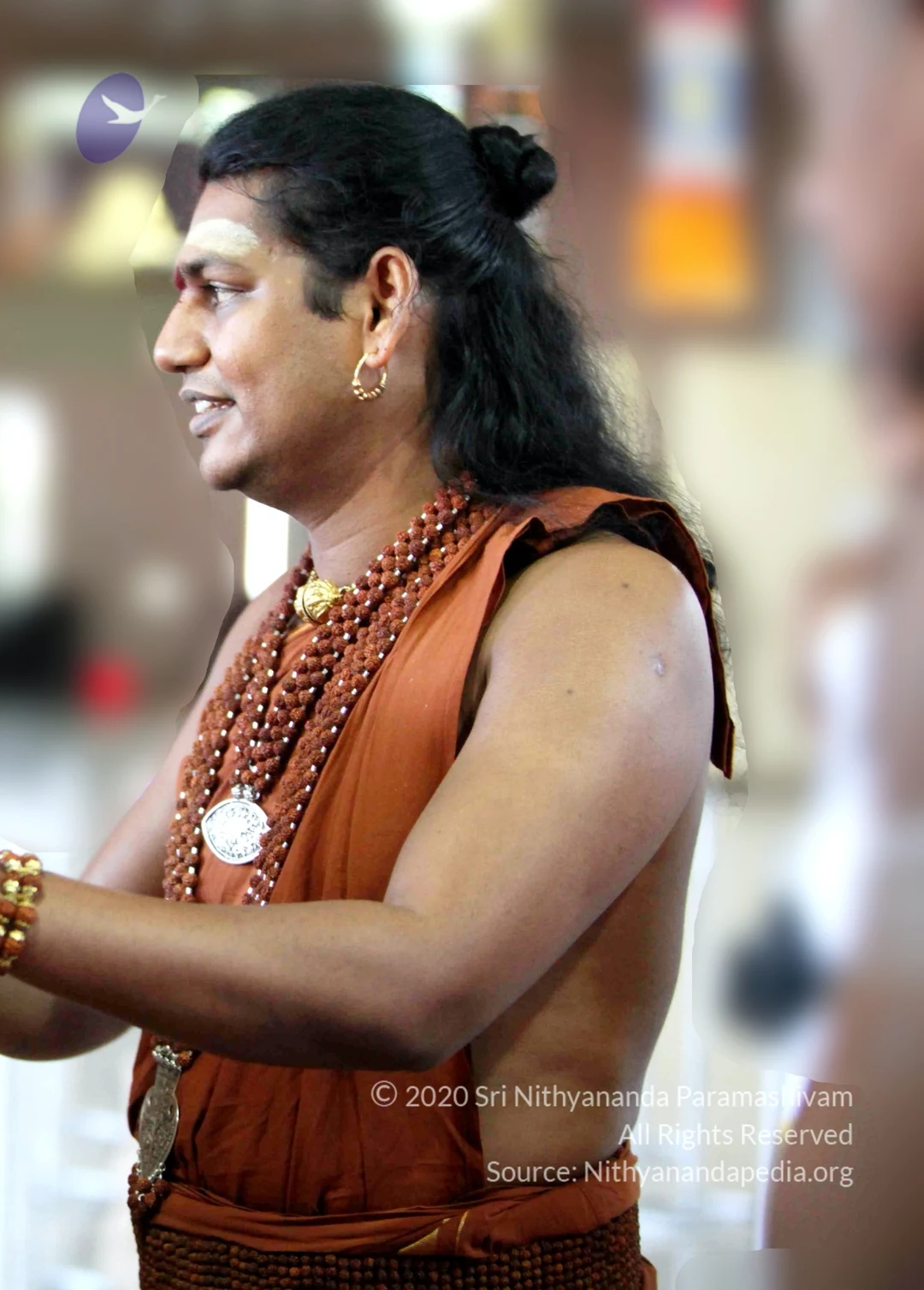
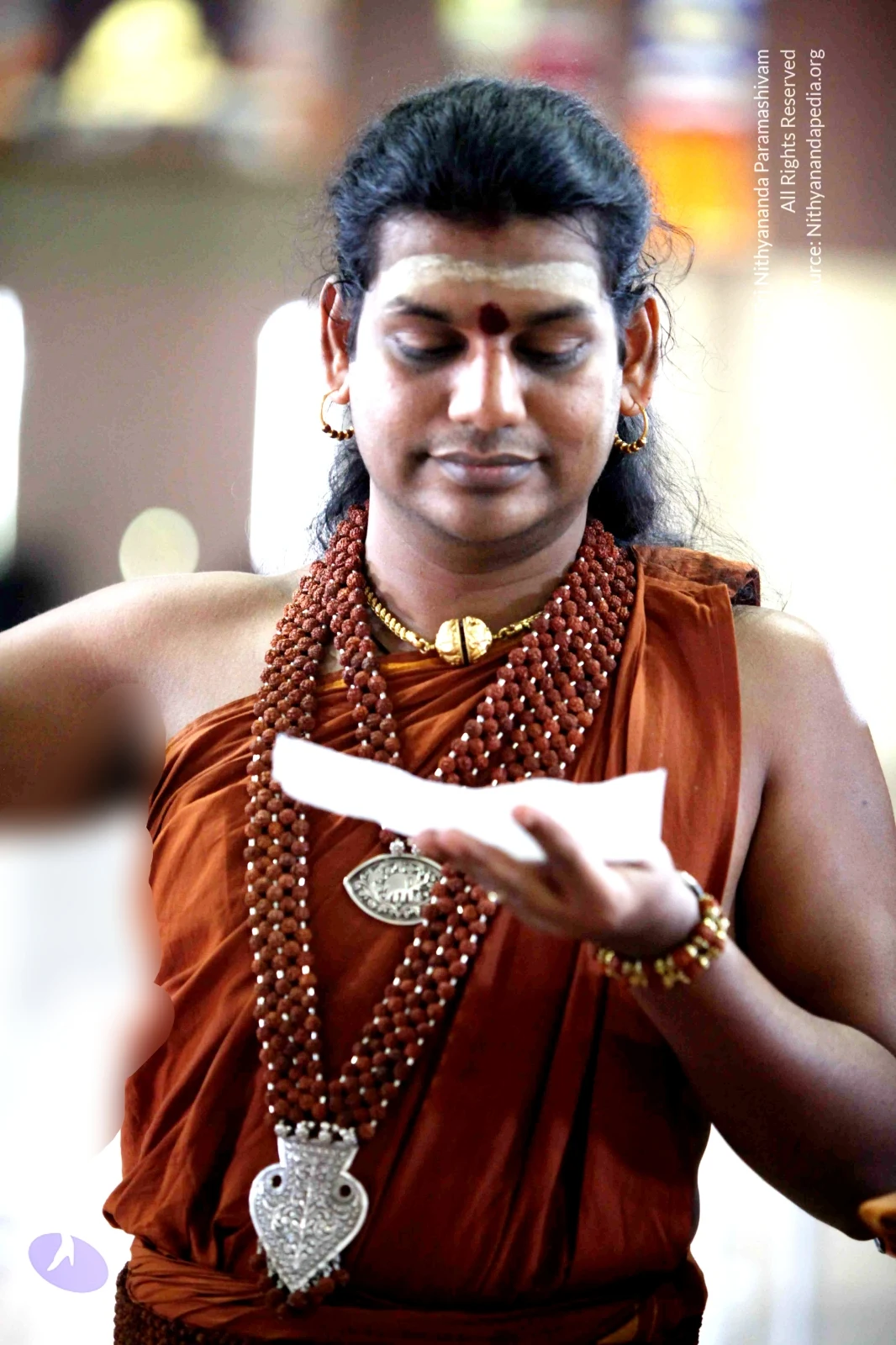
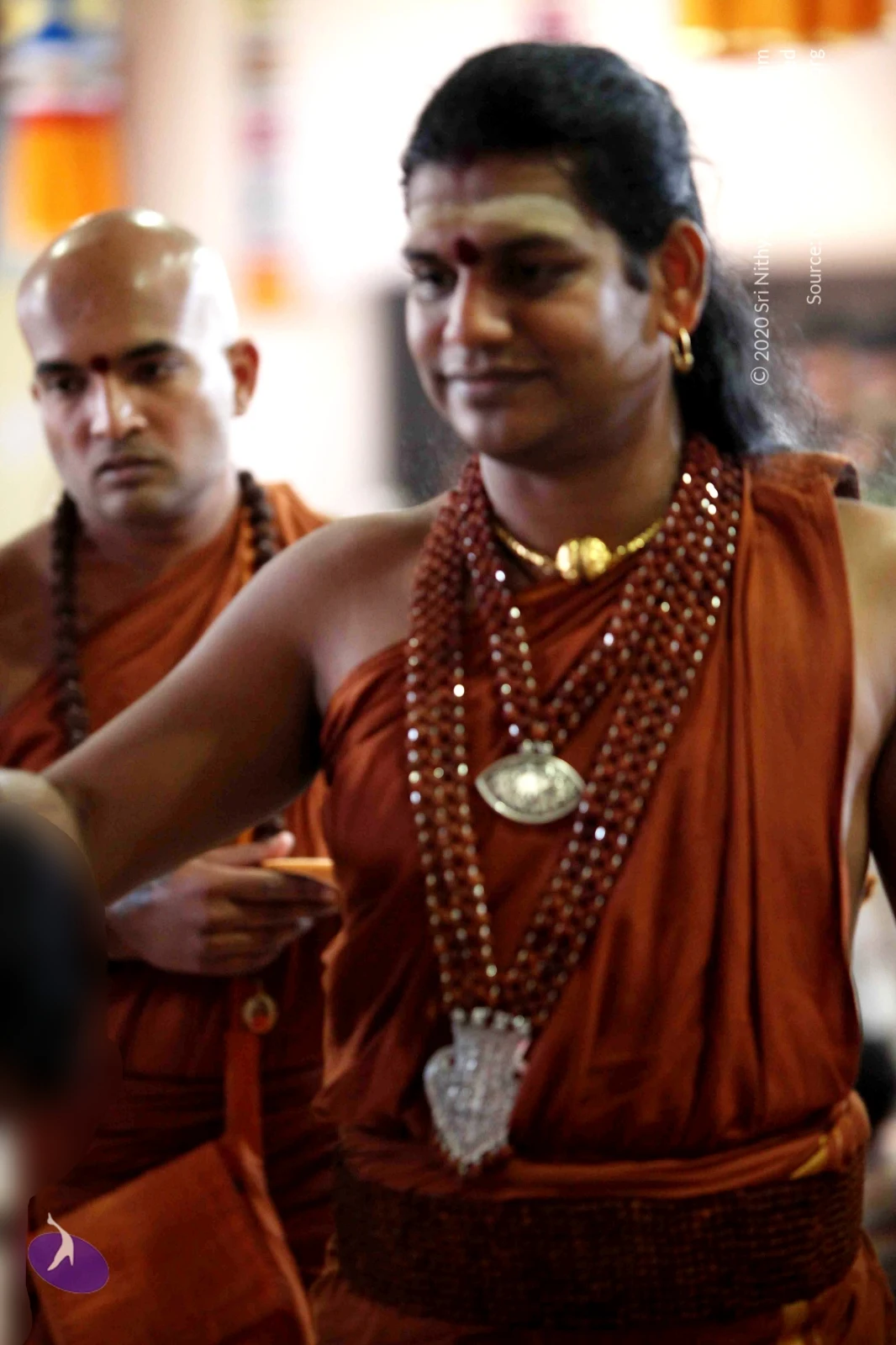
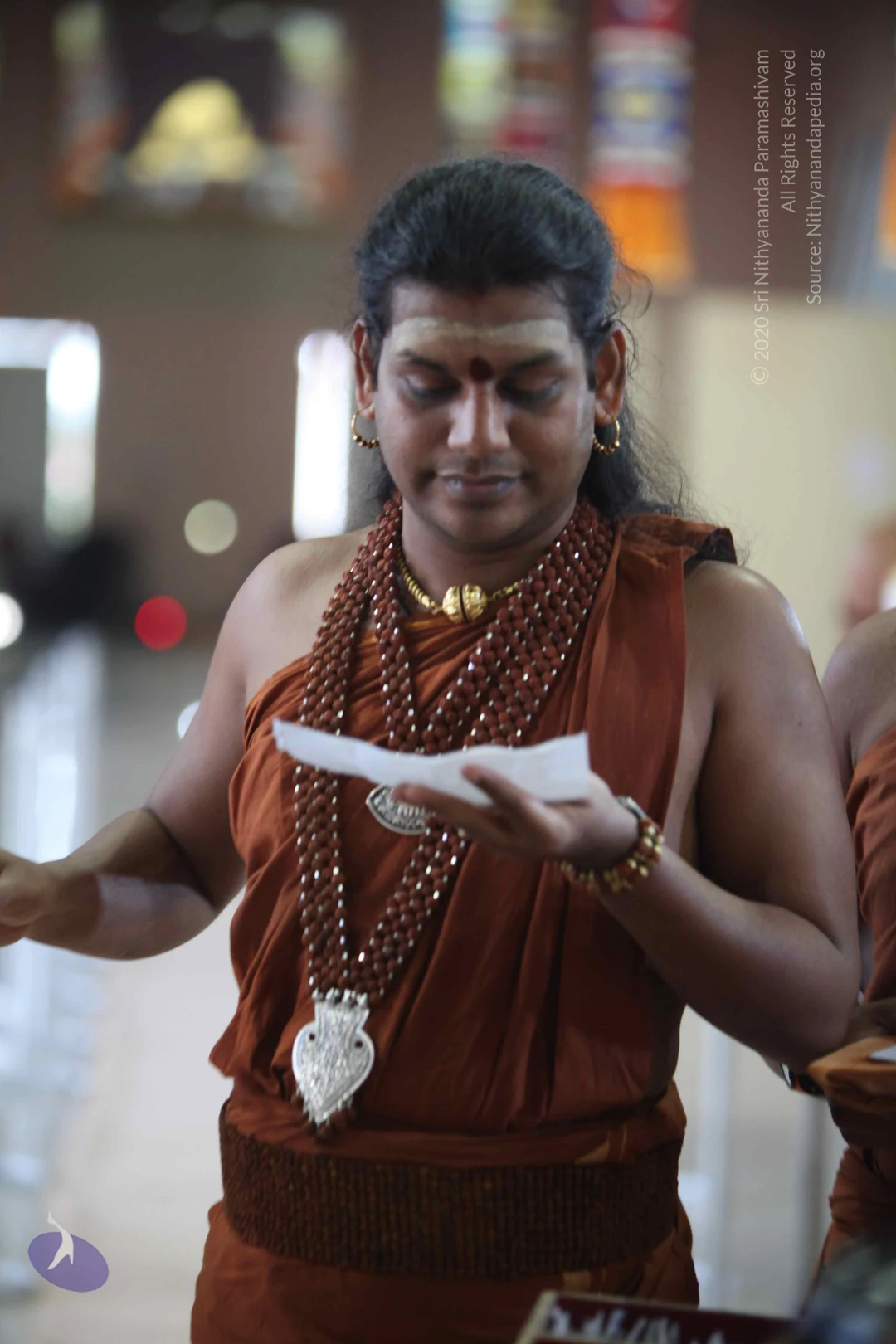
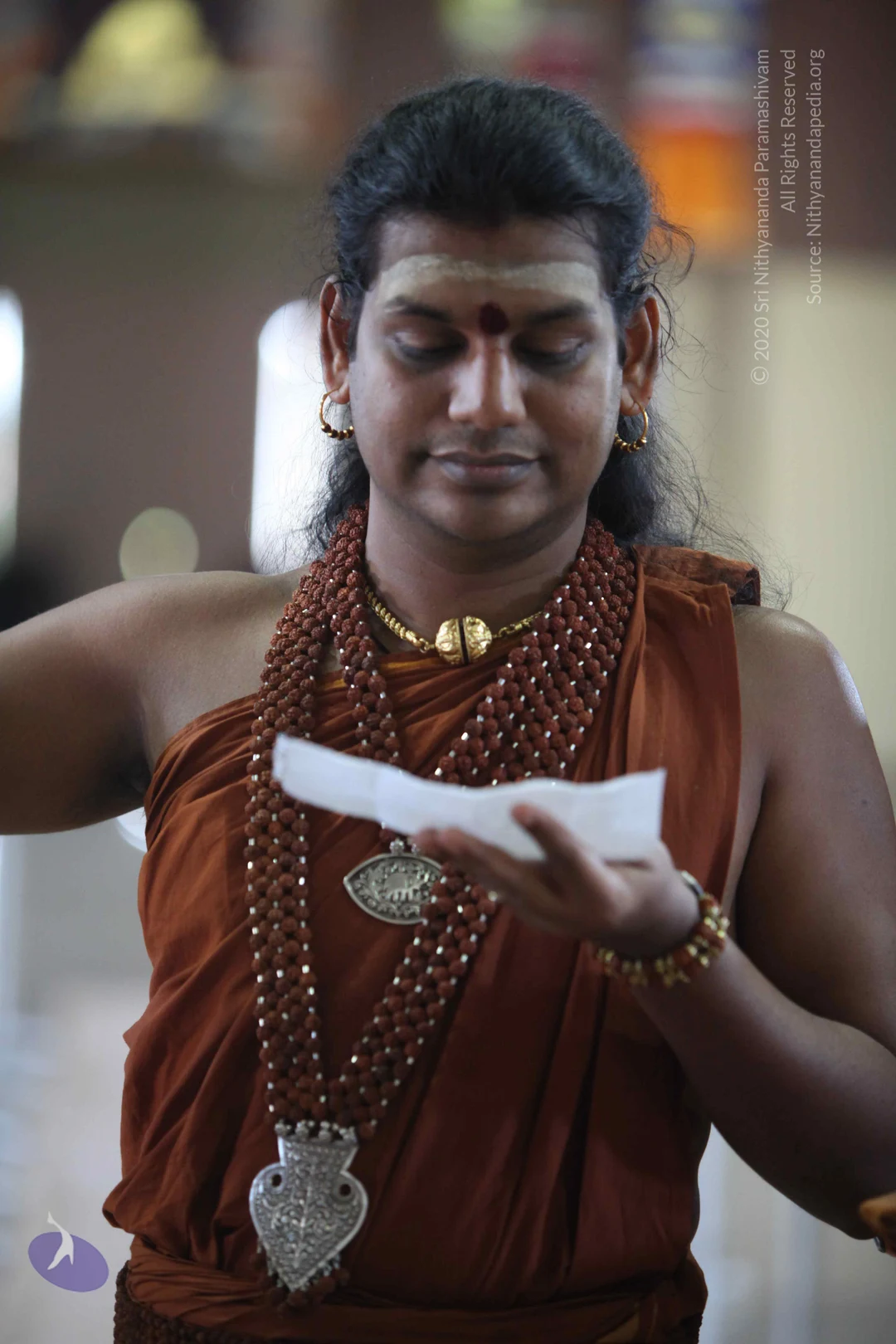
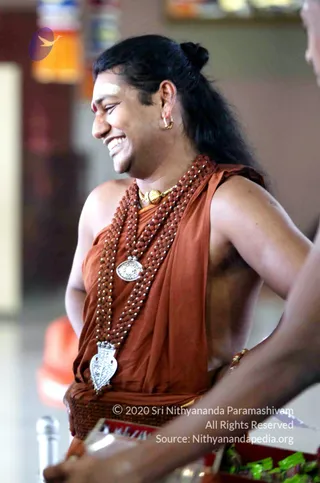
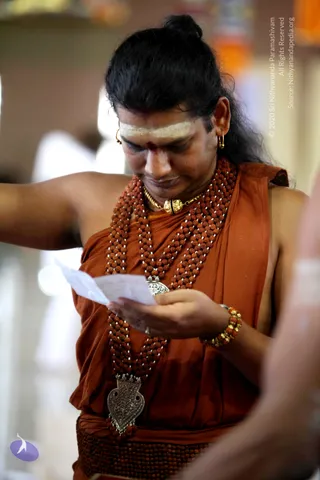
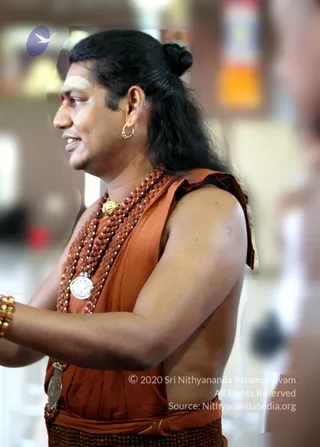
Photo of a smiling man with swept-back dark hair, a white vertical ash mark and red kumkum dot on his forehead, wearing saffron orange draped clothing bare on one shoulder, multiple strands of red-orange beaded mala with large silver pendants, and a gold necklace. Beside him, a shaved-headed man in orange robes stands partly visible. A glowing golden canopy or structure fills the background. Appearance-based candidate: Swamiji (probable), shown in person, with a compatible presentation of long swept-back hair, saffron clothing and rudraksha-style malas.Photograph of two men in orange-red garments at an event. The man on the left has long dark hair tied in a bun, a white vertical forehead mark with a red dot, gold earrings, multiple strands of rudraksha beads and a gold pendant around his neck, and a rudraksha belt; he smiles while holding a small object in his hands. The second man, shown from behind and partly in profile, is shirtless with white horizontal arm markings and wears an orange cloth with yellow edging; he stands beside a red box containing a white substance.A smiling man with long dark hair tied in a high bun, a white and red tilak on his forehead, and gold hoop earrings stands in profile, bare-shouldered, wearing a rust-orange wrap. He wears multiple strands of brown rudraksha beads with silver pendants and a gold ornamental necklace. A blurred person's arm and a red-and-green offering tray appear in the foreground. Background shows a blurred temple-like interior with an orange lamp.A man with long dark hair tied in a top knot stands and reads a small white paper held in his right hand. He wears a rust-orange sleeveless robe, multiple strands of rudraksha beads, a silver pendant, a gold ceremonial necklace, gold earrings and rudraksha wristlets. A white vertical stripe and red mark are on his forehead. Swamiji (probable) is identified by his long swept-back hair, saffron robe, rudraksha malas and ceremonial gold necklace, and he is reading at a satsang setting. Another person's arm is partly visible at the right edge.Side profile of a man with long black hair tied in a topknot, white tilak lines on the forehead and a red dot between the brows. He wears gold hoop earrings and a rust-orange sleeveless cloth draped over one shoulder, with multiple strands of rudraksha beads and a silver pendant around his neck. A rudraksha beaded belt is visible at the waist, and he holds his hands together in front of him while speaking in a blurred indoor setting. Probable Swamiji by visible cues: long hair, rudraksha malas, orange clothing and gold ornaments.

5-IA-Reunion-and-Mattu-Pongal

7 photosSource gallery
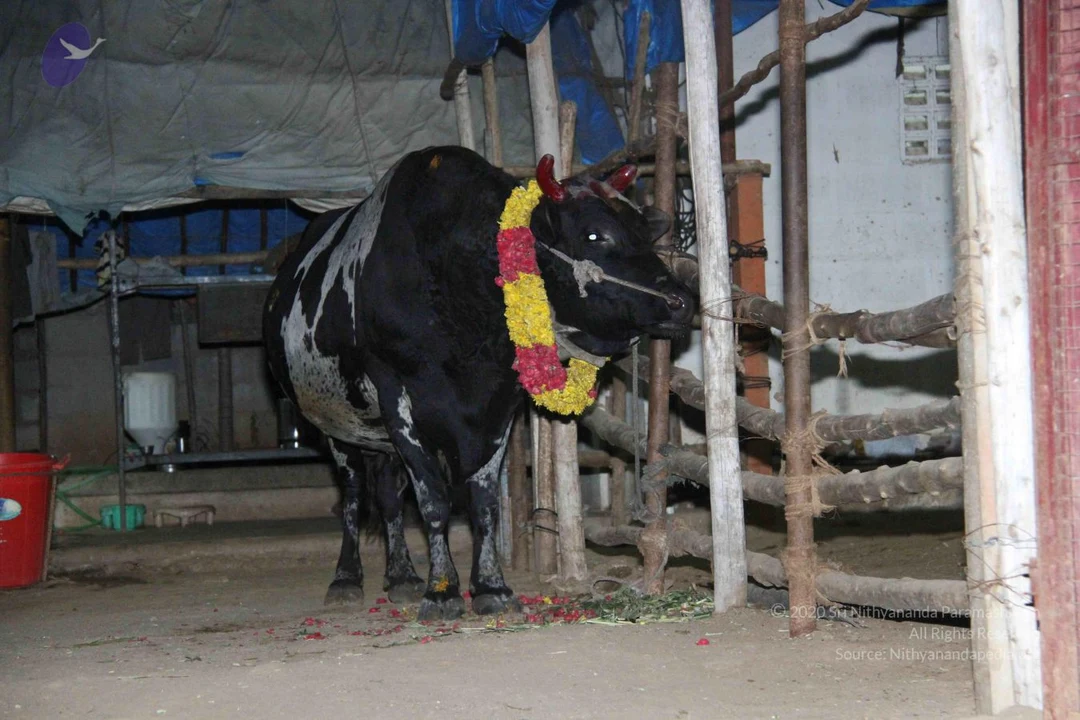
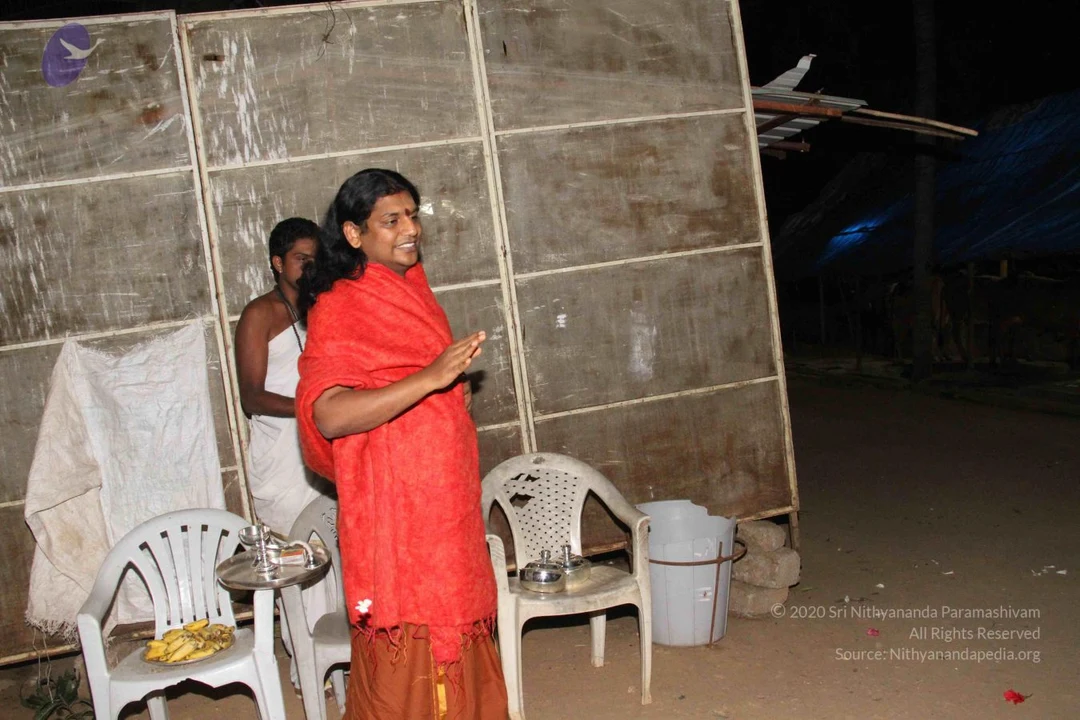
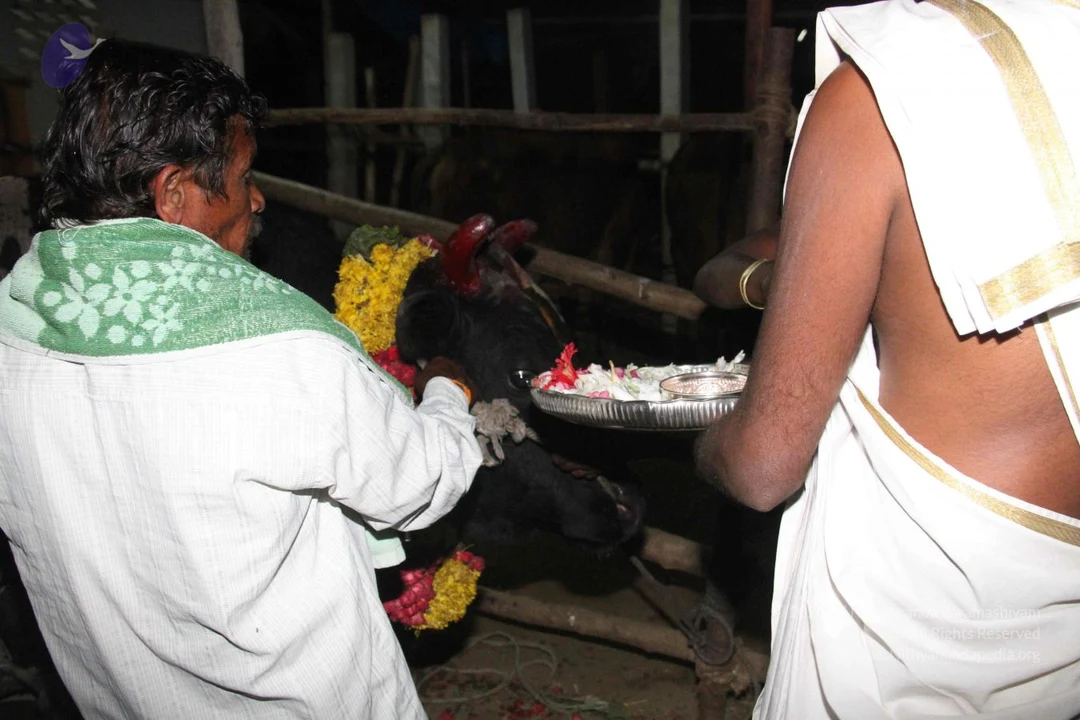
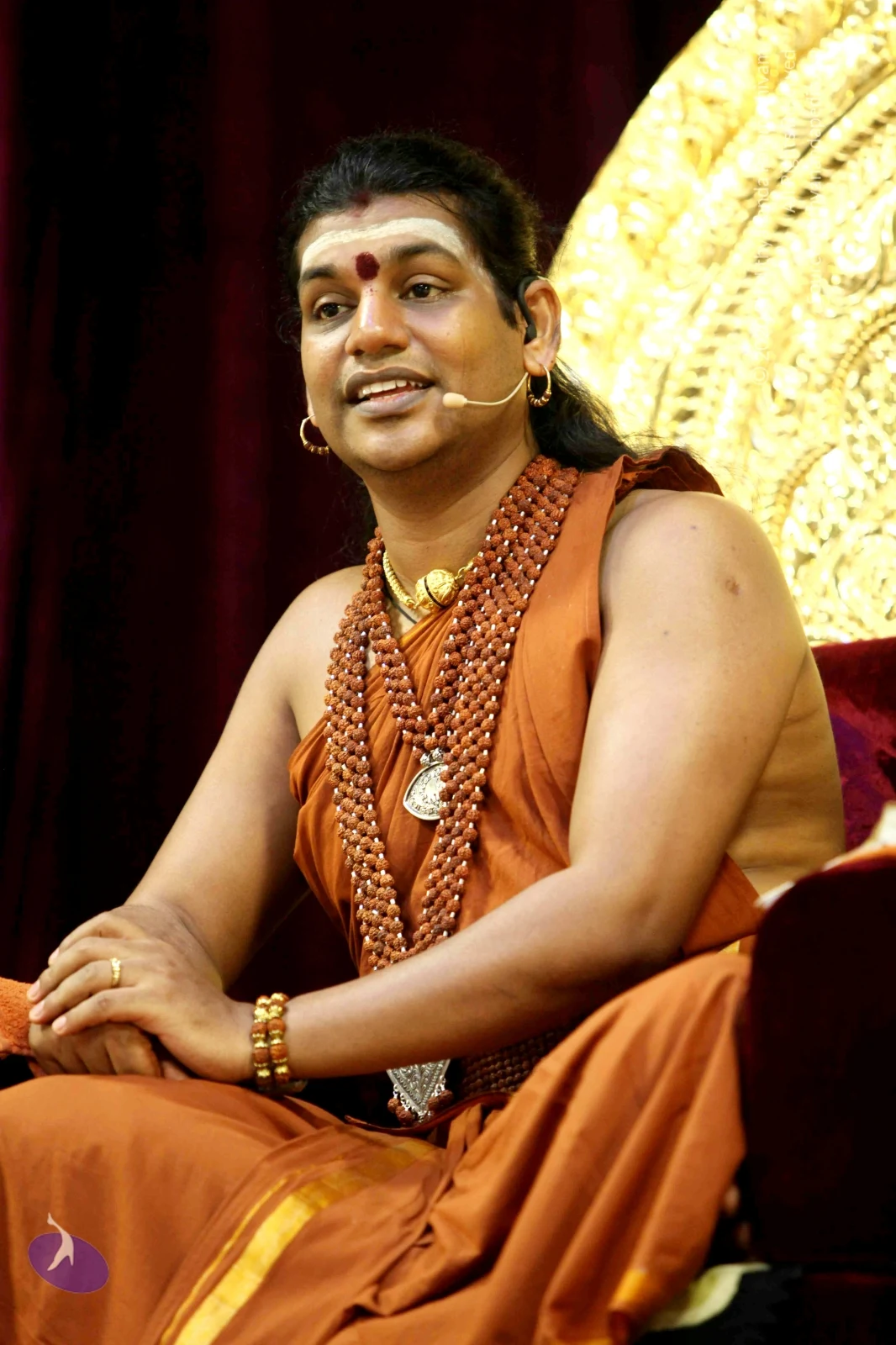
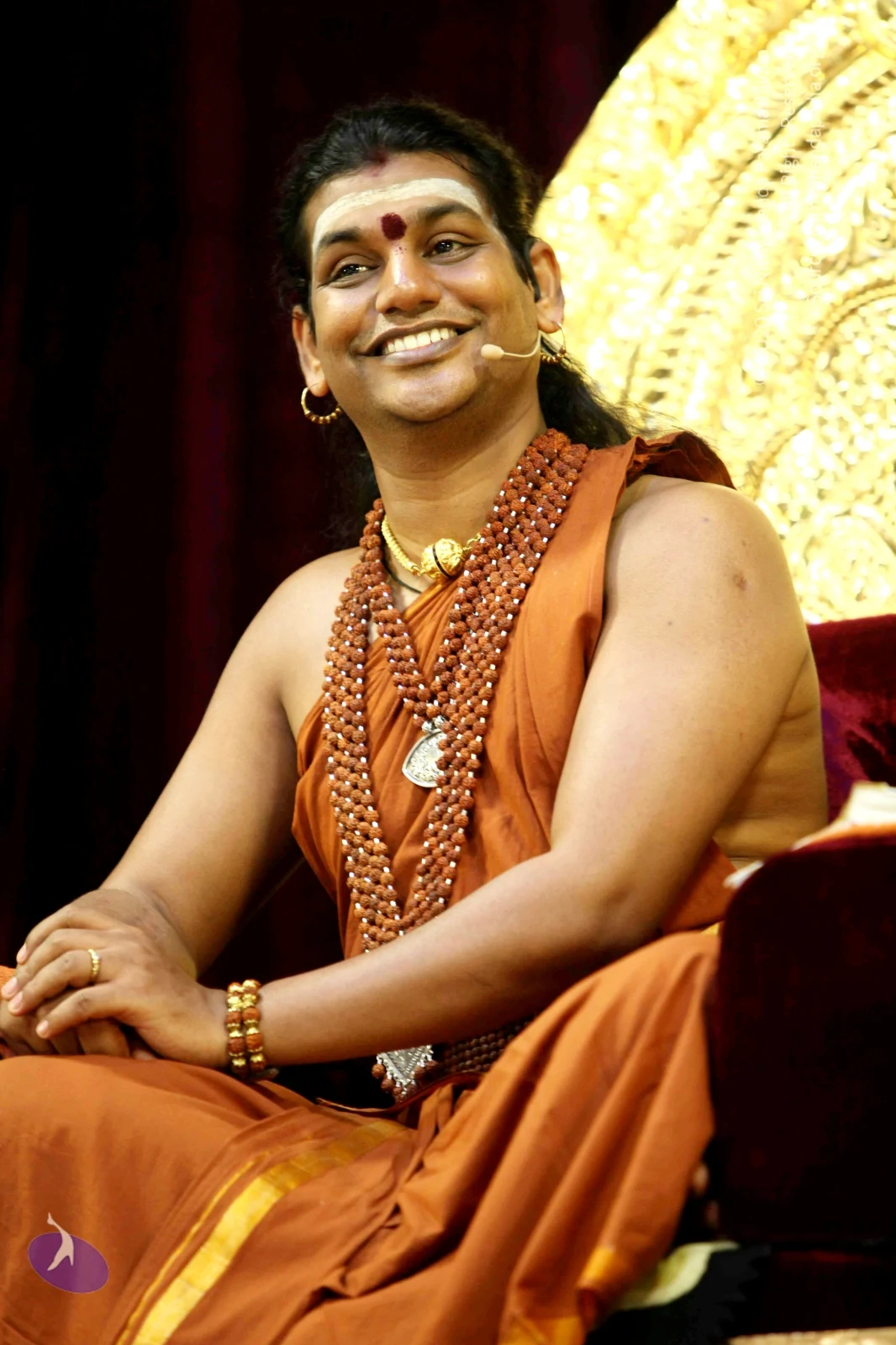
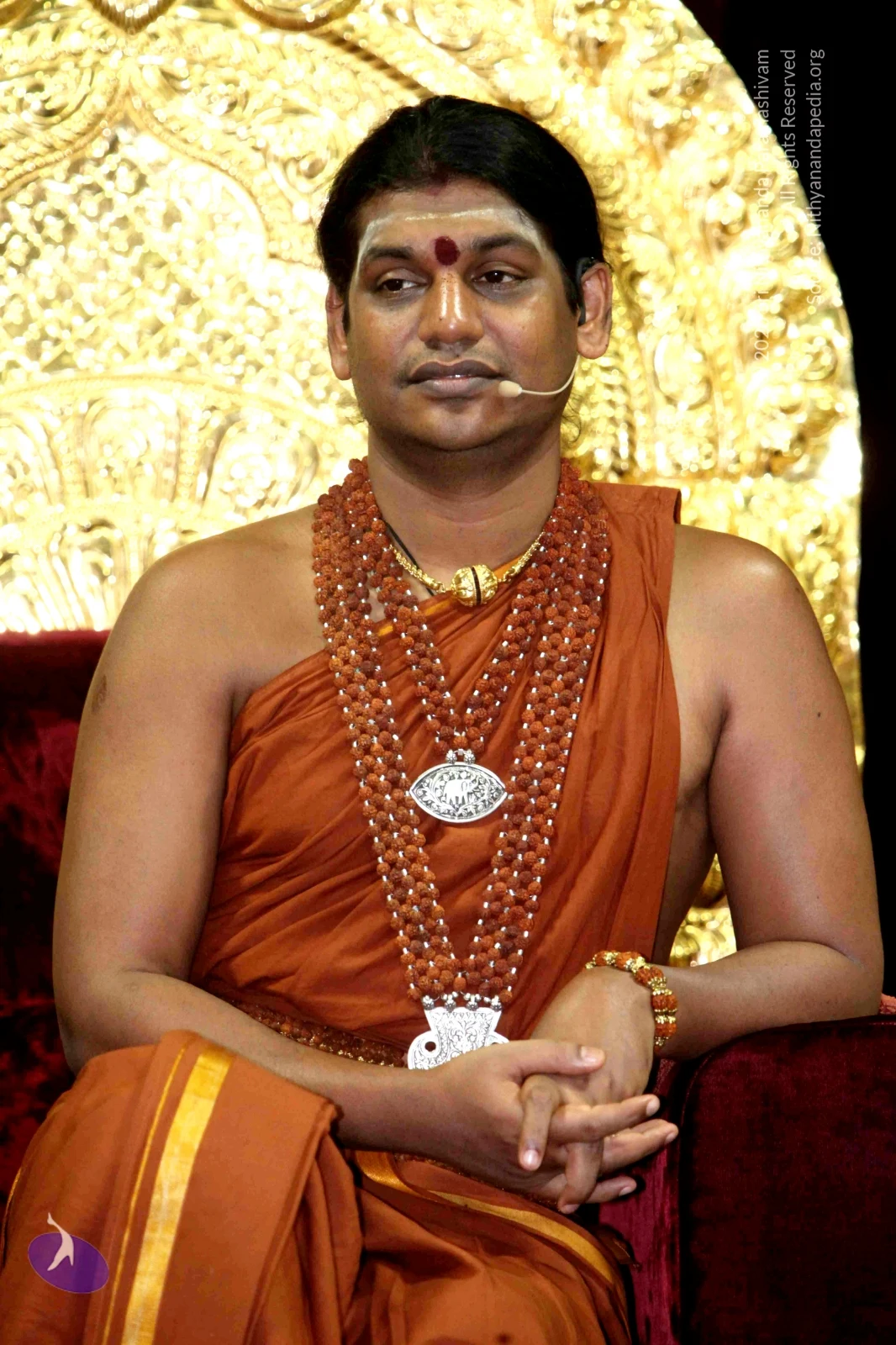
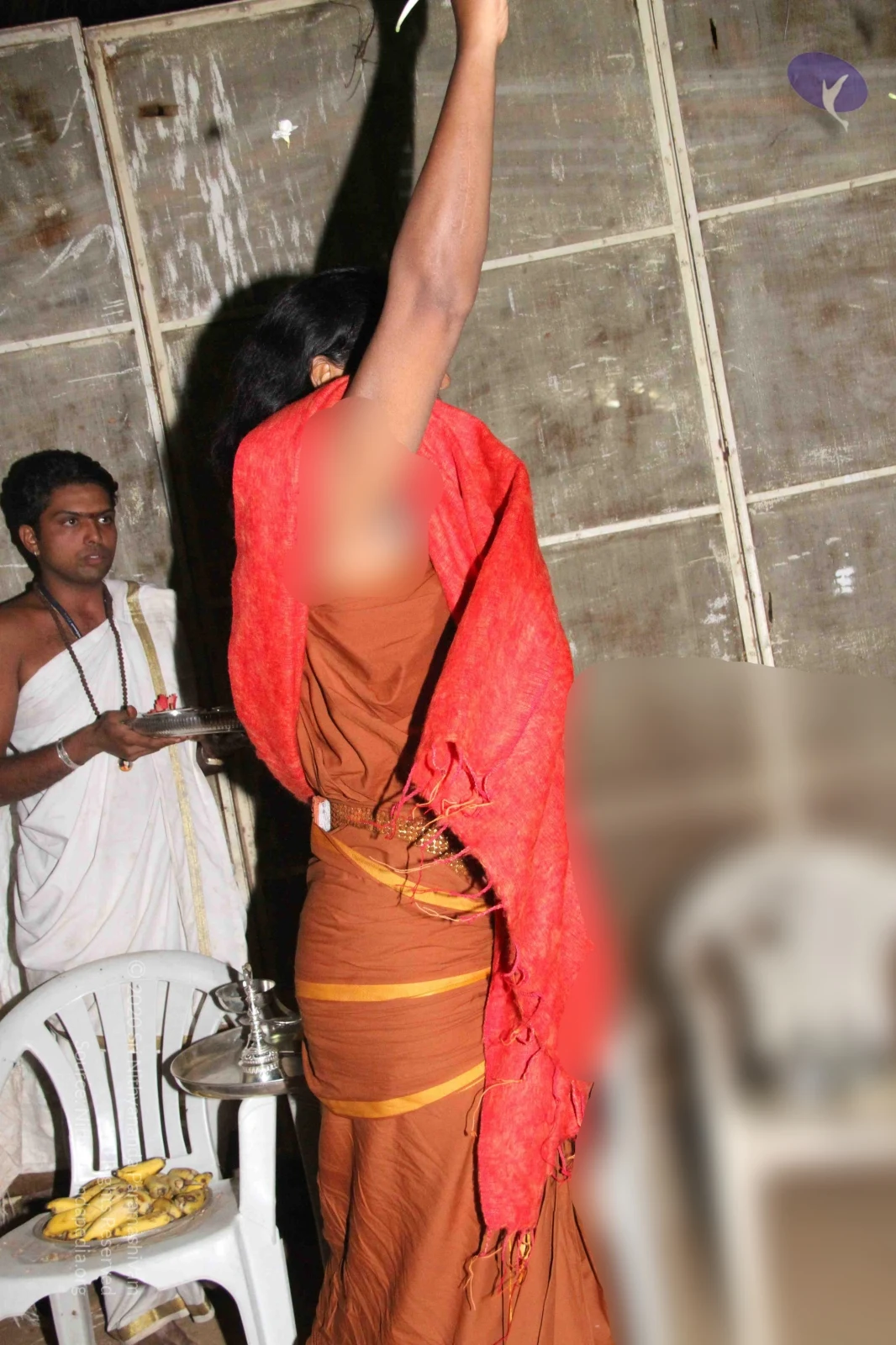
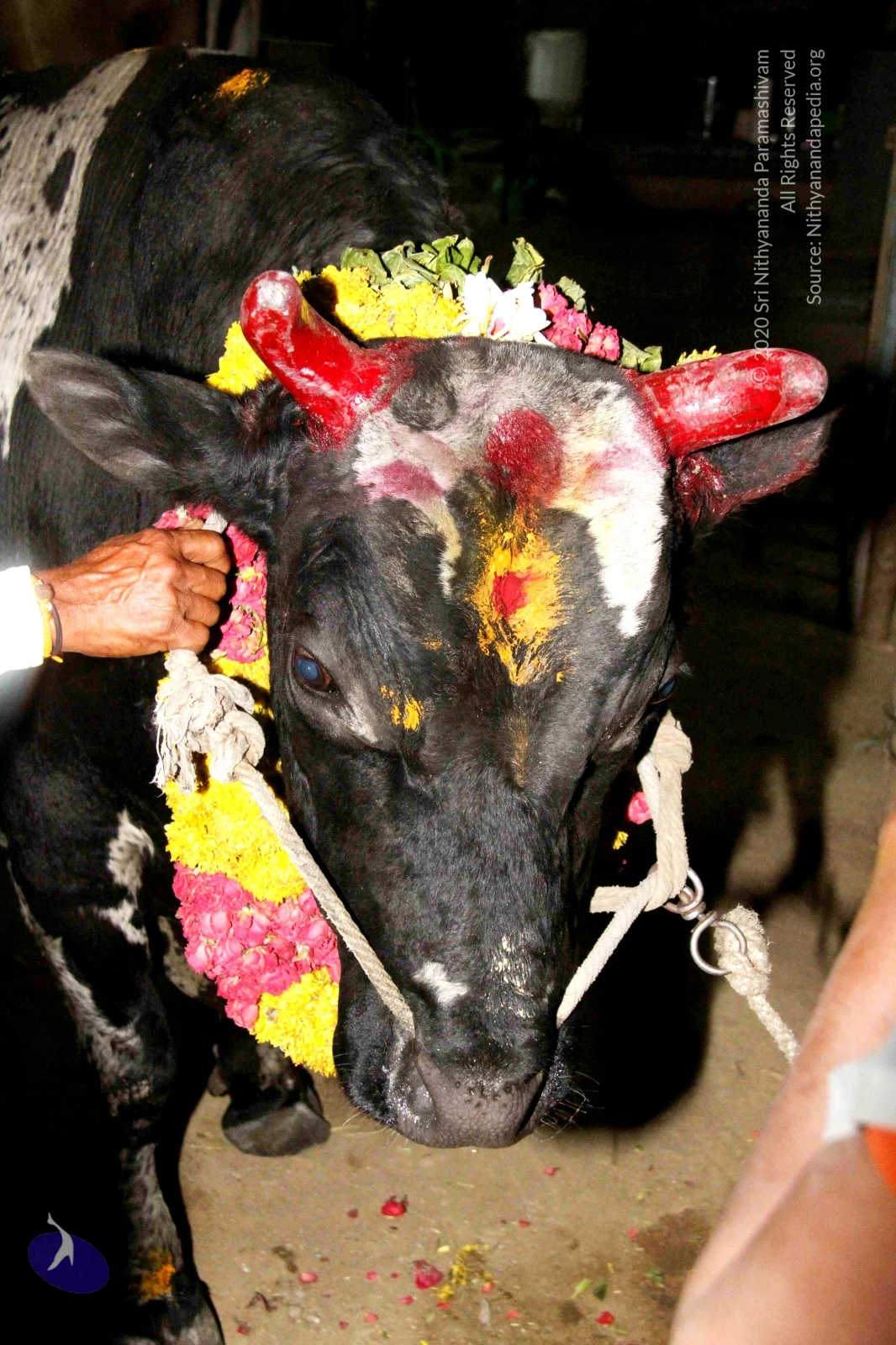
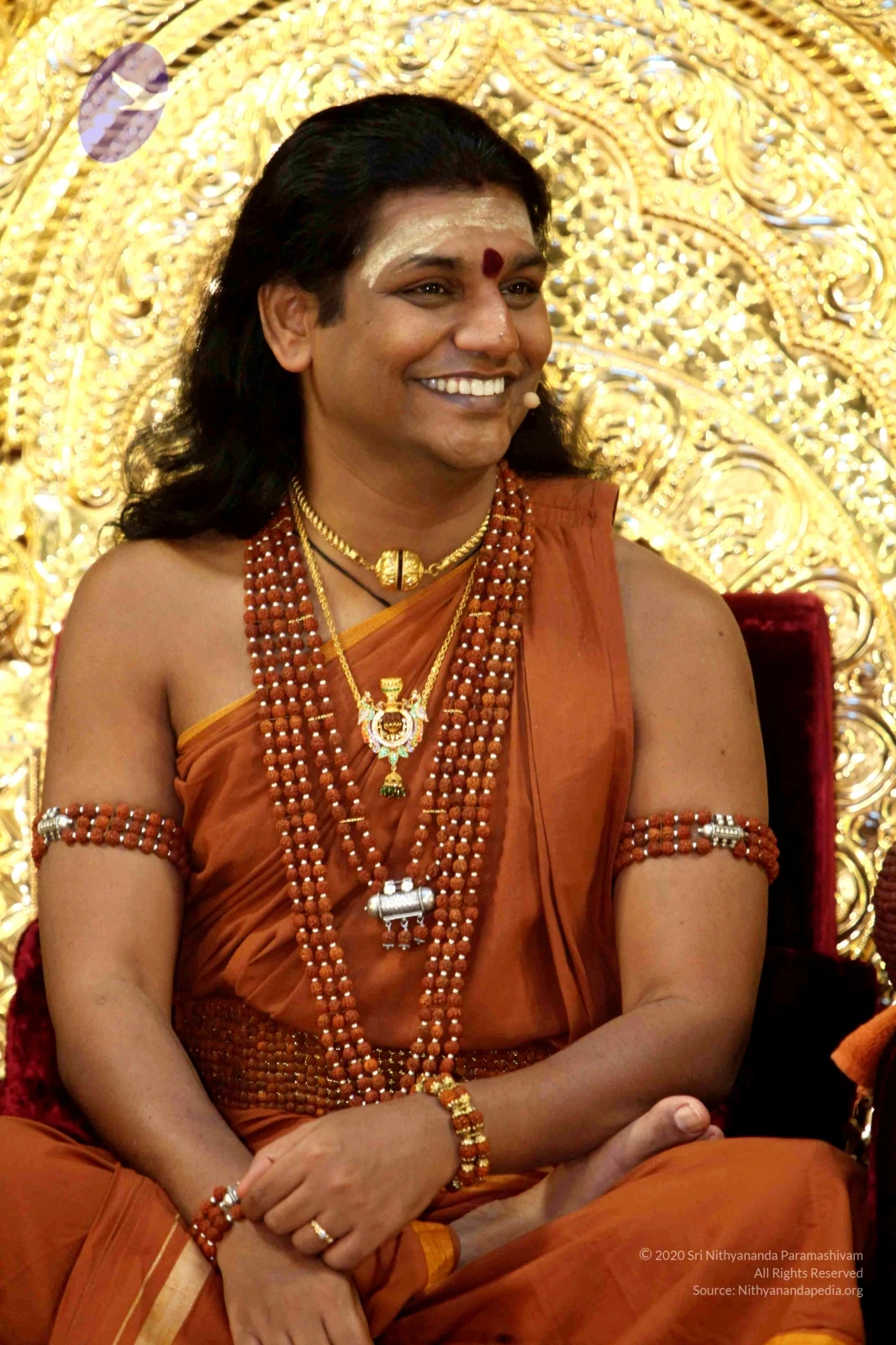
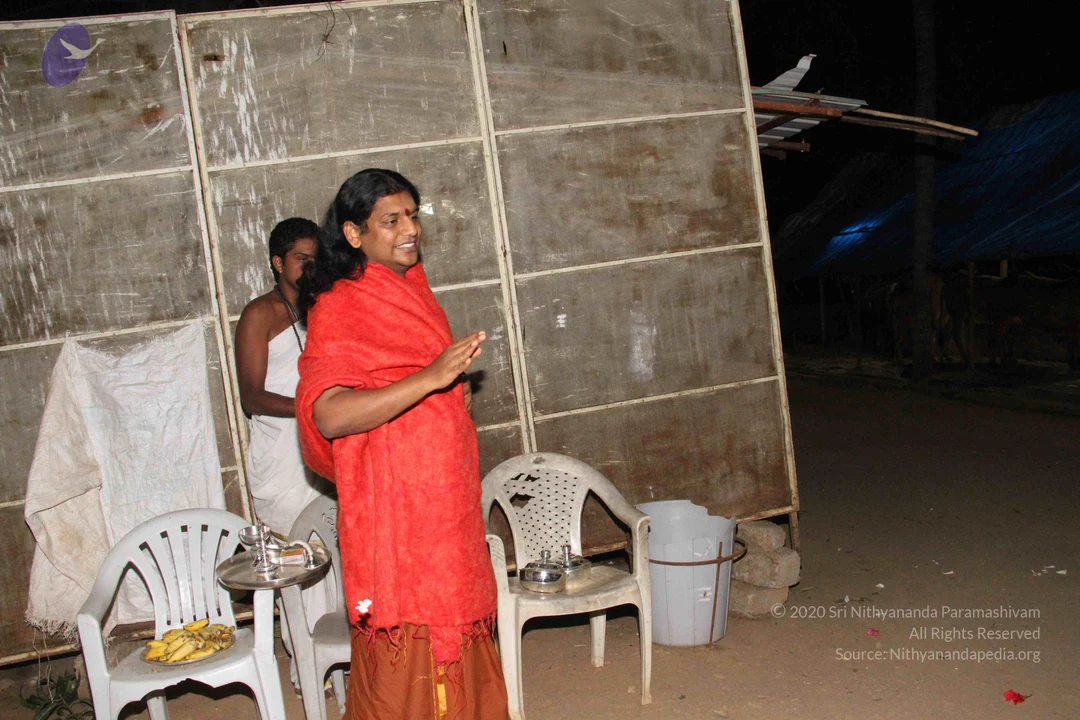
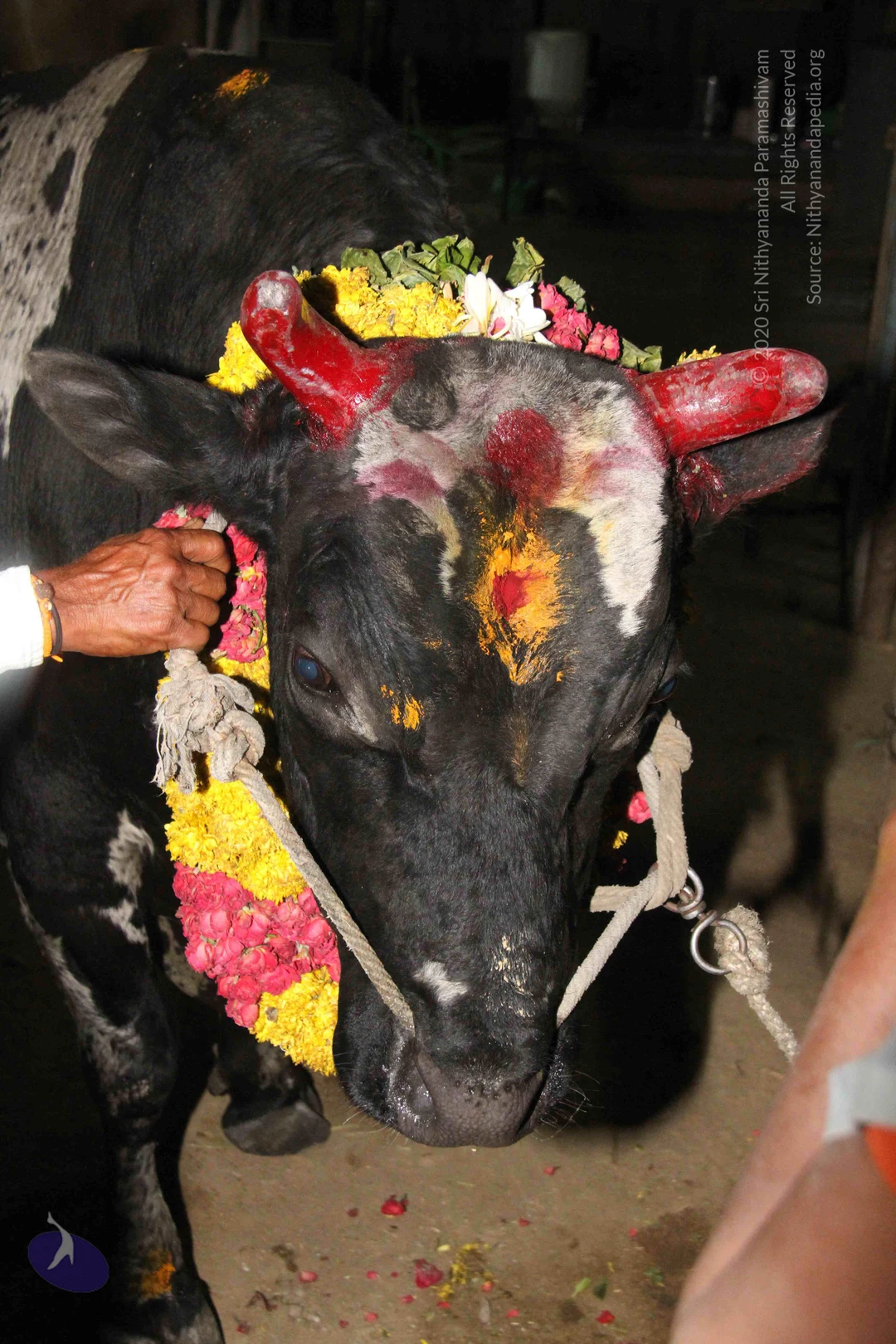
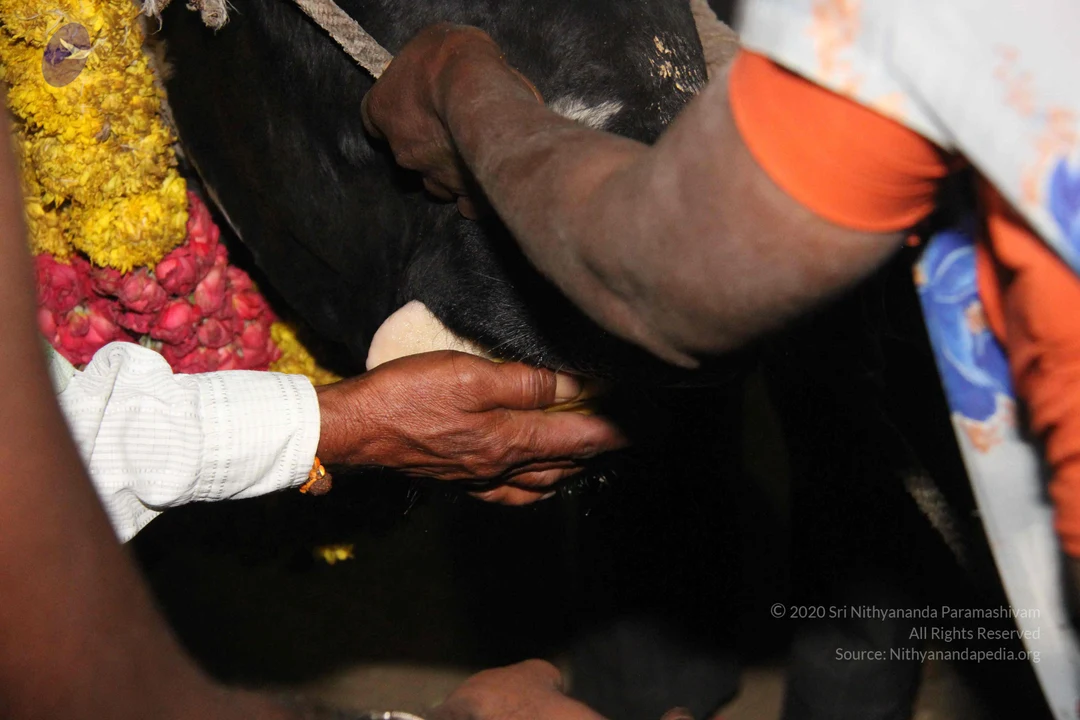
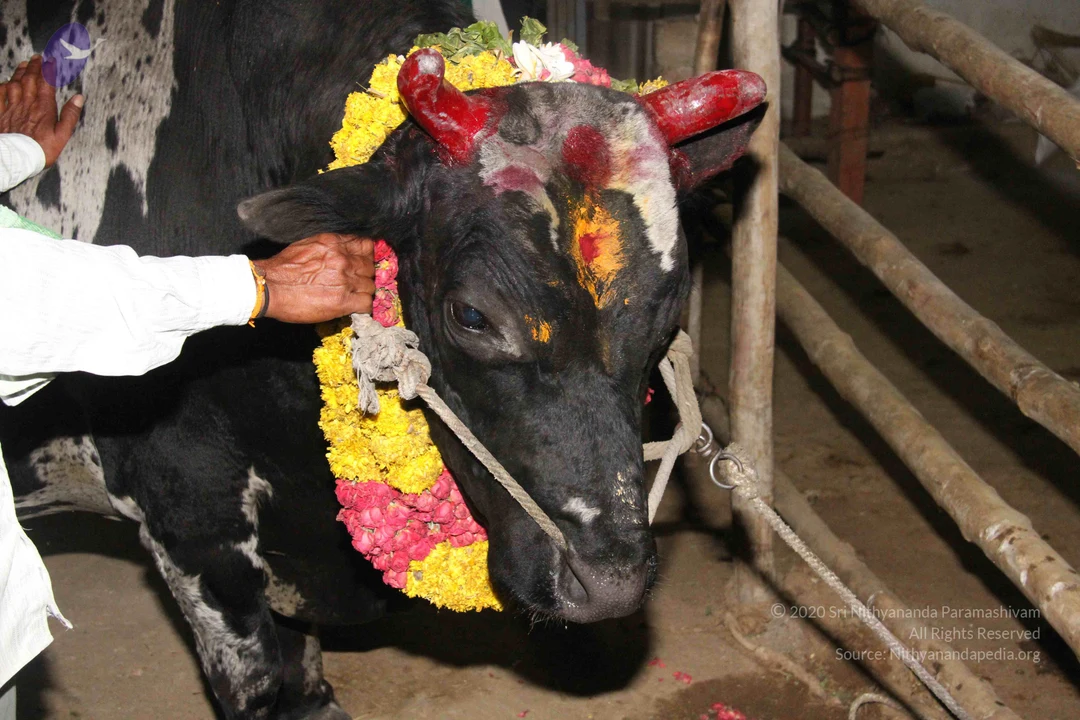
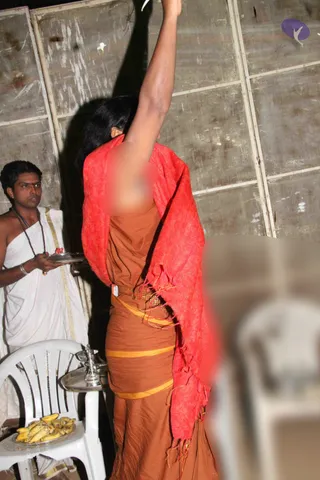
A man seated in front of an ornate gold repoussé backdrop, wearing an orange-saffron sleeveless drape over the shoulders and a gold-and-black beaded pendant necklace. He wears multiple long rudraksha malas with silver spacers, a large silver pendant engraved with an elephant motif and another silver pendant at the chest, and a rudraksha bracelet on his wrist. A red bindi and white vertical tilak mark the forehead, and a small headset microphone is clipped near his face. His hands are folded in his lap, and he smiles toward the audience. Appearance-based label: a person, seated in a satsang setting.A seated man in an orange-saffron dhoti and shawl, bare-shouldered on one side, wears layered rudraksha malas and a large ornate silver pendant with a gold necklace. He has a red bindi and white tilak on his forehead, a small headset microphone, and a gold-and-red bead bracelet. His hands are clasped in his lap before a red velvet chair and an ornate gold-embossed backdrop. a person by appearance, given the saffron clothing, rudraksha malas and ceremonial gold necklace, seated in a speaker's position at a satsang setting.Night photograph of a person seen from behind in a rust-brown sannyasi-style garment with a gold-trimmed belt and a red shawl draped over the shoulders, one arm raised high toward the upper edge of the frame. Their head is obscured by a blur. Beside them a man in white dhoti with a gold border and a dark rudraksha mala holds a silver tray with red offerings, and a silver lamp stands on a small table next to a plate of yellow fruit on a white plastic chair against a weathered wooden wall. The scene suggests a ritual offering, though the exact rite is not visible.A black and white cow stands close-up on a dirt floor, its horns painted red and its forehead marked with red and yellow powder. A garland of yellow marigolds and pink roses with green leaves is draped over its head and neck. A rope halter is attached, and a person's hand, wearing a thin white garment, holds the garland at the left edge. Scattered petals and powder lie on the ground.Close photo of a smiling man seated on a red velvet chair before an ornate gold-embossed backdrop. He has long dark hair swept back, a red bindi and white vertical forehead markings, and wears an orange-saffron cloth draped over one shoulder with multiple strands of rudraksha malas, a gold chain with a jewelled pendant, a gold necklace, rudraksha armlets and bracelets, and a rudraksha waist band. A small microphone is clipped near his face and his hands rest in his lap. Swamiji (probable) by the flagged page and the distinctive saffron clothing, long hair, rudraksha malas and ceremonial gold ornaments.

01-Bidadi-Temple-and-Satsang

32 photosSource gallery
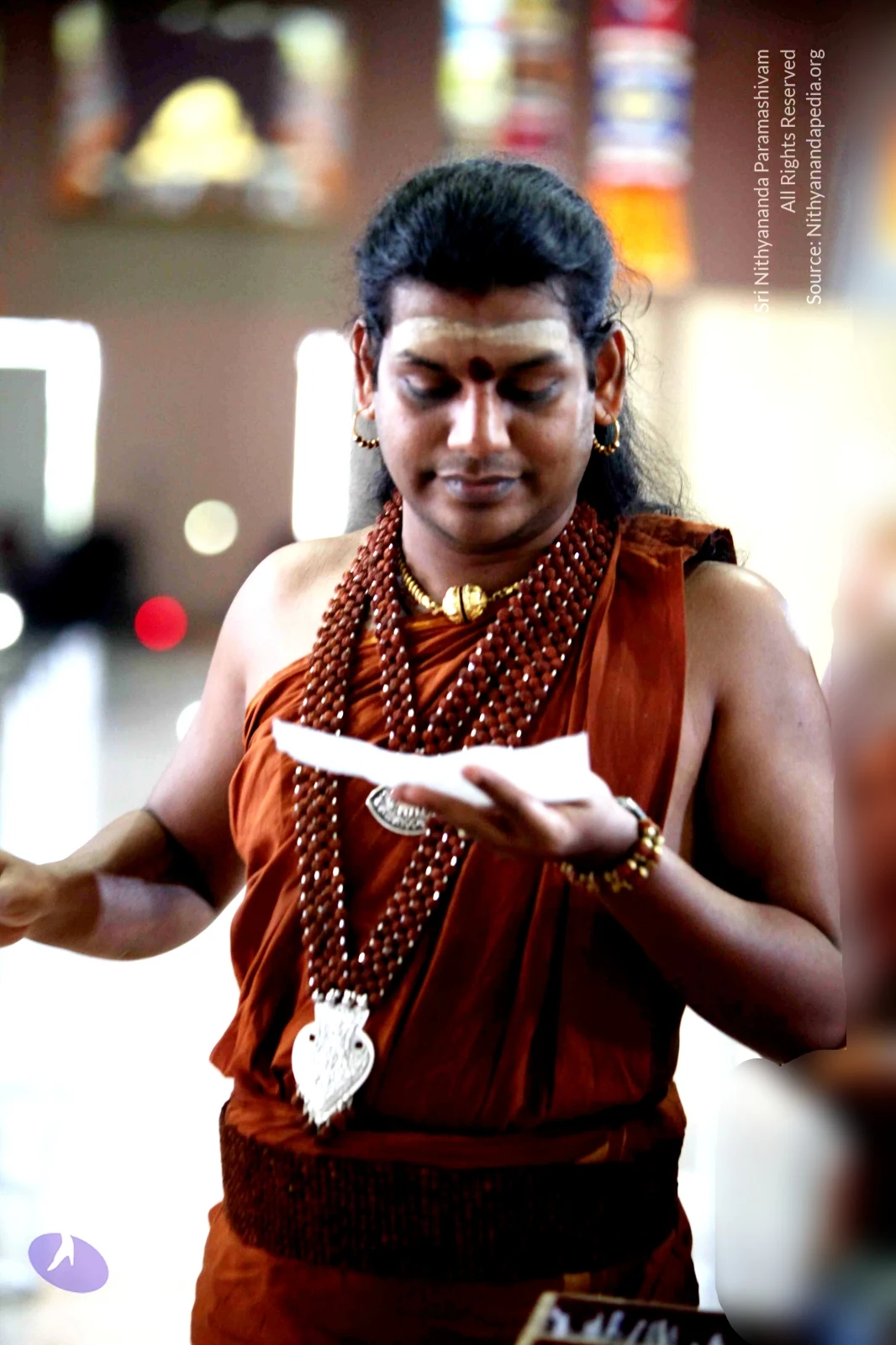
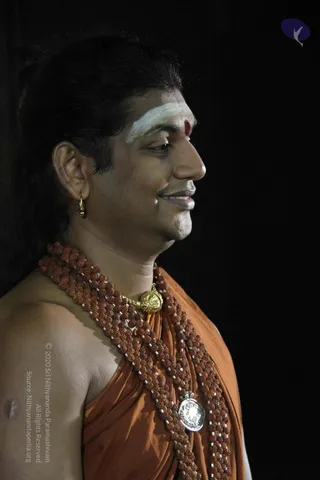
A smiling man with swept-back long dark hair sits on an ornate gold throne with repoussé floral carving. He wears an orange-saffron cloth draped over his shoulders, multiple strands of rudraksha beads with silver accents, a gold pendant necklace, a gold and rudraksha bracelet, and a finger ring. A white tilak with a red dot marks his forehead, and a small microphone is clipped near his face. His right hand rests against his cheek in a relaxed, amused pose while his left hand rests on his knee. Probable Swamiji (in_person candidate) seated during a satsang setting, identified by the swept-back hair, saffron clothing, rudraksha malas and ceremonial gold necklace.Close photo of a smiling man seated before an ornate gold-embossed backdrop, one hand raised to his cheek. He wears an orange-red sleeveless wrap, layered rudraksha malas with a silver pendant, a gold chain with a gold pendant, a white vertical tilak with red bindi, and a small microphone clipped near his ear. Appearance-based candidate: a person, identified by the saffron-red robe, rudraksha malas, ceremonial gold necklace and seated satsang setting.A man in a saffron-orange sannyasi cloth draped over one shoulder stands indoors, holding a folded white paper in his right hand and looking down at it. He wears multiple strands of dark red rudraksha beads, a silver pendant, a gold necklace with a round gold bead, and a beaded wrap belt, plus gold hoop earrings and a white tilak with a red dot on his forehead. Blurred windows and colourful hangings are in the background, and a second person in orange is partly visible at the right edge. Appearance cues are limited, so this is an unconfirmed candidate: the rudraksha mala, gold ornaments and sannyasi clothing are present, but his face and identity cannot be confirmed from the image alone.Close side-profile photograph of a man against a black background, eyes lowered and smiling slightly. He wears a saffron-orange cloth draped over one shoulder, multiple strands of brown rudraksha beads with silver spacers, a gold pendant and a small gold earring. He has a white horizontal forehead marking with a red dot and dark hair swept back. Dramatic side lighting falls across his face and shoulder. Appearance-based candidate: a person, shown in person, identified by the saffron cloth, layered rudraksha malas, gold pendant and white forehead tilak.A seated man in orange-saffron robes sits on a red-cushioned chair before an ornate gold repoussé backdrop. He wears multiple strands of rudraksha beads with silver pendants, a gold chain with a gold bead at the neck, and gold hoop earrings, and has a white tilak with a red bindi on his forehead. A small headset microphone is clipped near his ear. His eyes are lowered and he smiles softly, hands resting folded in his lap with a rudraksha bracelet. Appearance-based candidate: a person, seated in a satsang setting, identified by the saffron robes, layered rudraksha malas, ceremonial silver pendants and gold ornaments.Close-up photo of a man seated in front of an ornate gold-embroidered backdrop, wearing an orange-rust draped garment over one shoulder, multiple strands of rudraksha beads with silver spacers, a large silver pendant with floral engraving, and a gold chain with a round gold pendant. He has white sacred ash on his forehead with a red dot, gold hoop earrings, and a small head microphone, and holds an open book in one hand. Appearance-based label: a person, based on the orange robe, rudraksha malas and ceremonial jewellery; the photo is captioned as a satsang event.

02-Pada-Pooja

2 photosSource gallery
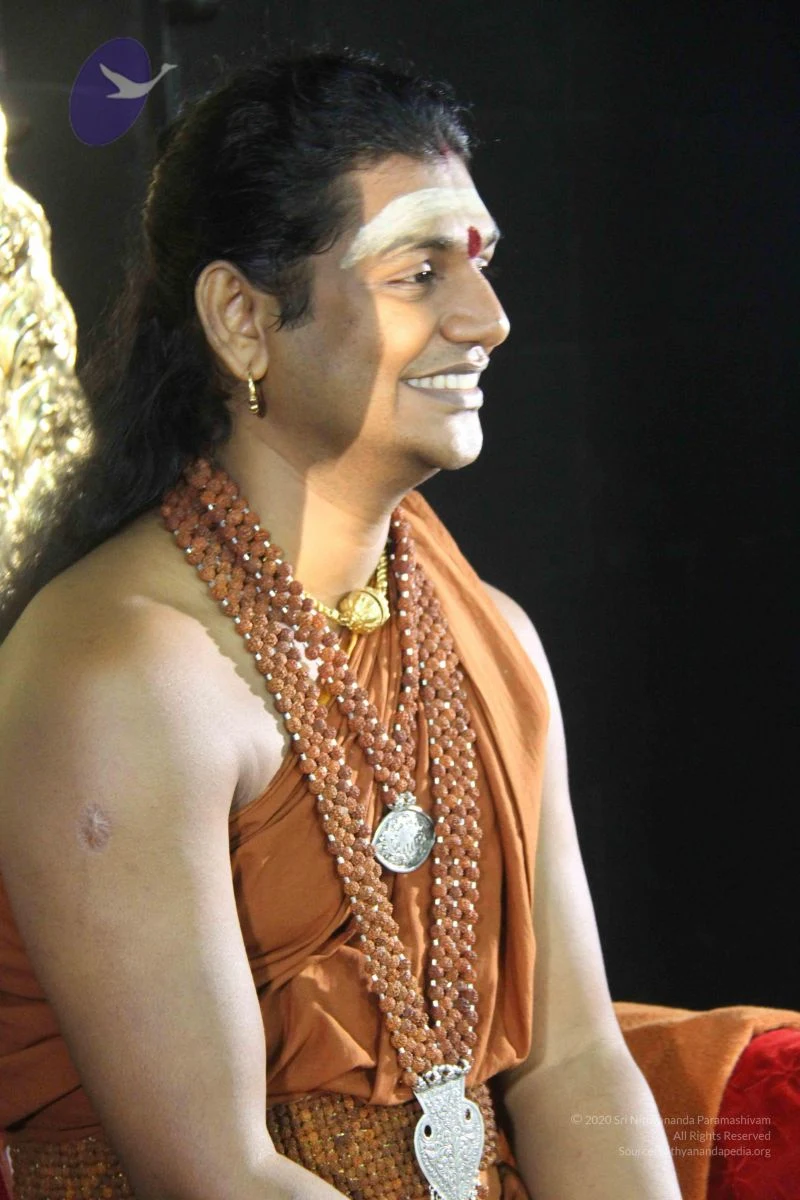
Side profile portrait of a man against a black background, smiling slightly. He has long dark hair swept back, a white vertical forehead mark with a red dot, and a gold earring. He wears multiple strands of brown rudraksha beads, a gold ornament at the neck, a round silver-toned pendant, and an orange-saffron shawl draped over his bare shoulder. Swamiji (probable) appearance cues include the swept-back hair, saffron clothing, rudraksha malas and ceremonial gold neck ornament. A small logo appears at the top right corner.A seated saffron-robed man with a white forehead mark, rudraksha mala and ceremonial gold necklaces sits on an ornate gold-and-red throne with eyes closed and hands resting in his lap, as a padapuja-style ritual unfolds. Three women kneel before him on the floor among brass plates, bowls and flower petals: a woman in a yellow sari with folded hands and glasses, a woman in white with palms pressed together, and a woman in white with hair tied back who tends the offerings. A small bowl and tray sit near the throne, and a pink elephant figure stands at the right edge beside a deity murti. a person is shown with a saffron robe, rudraksha mala and ceremonial gold necklaces, seated as the central figure of the padapuja.

04-IA-Reunion-Mattu-Pongal

2 photosSource gallery
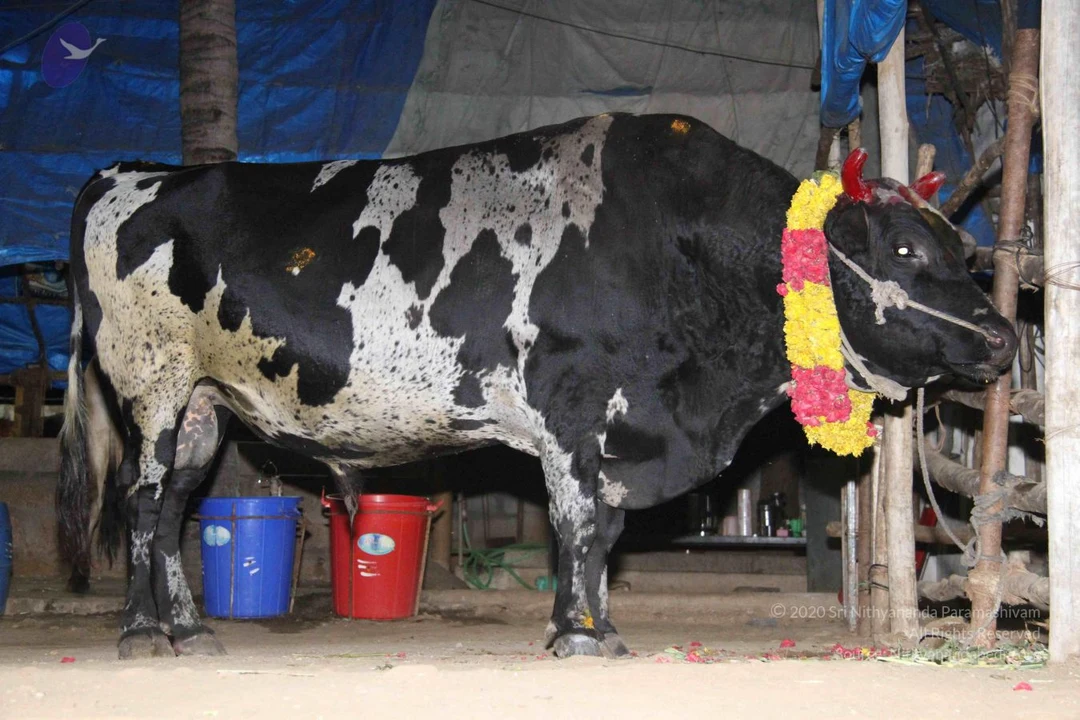
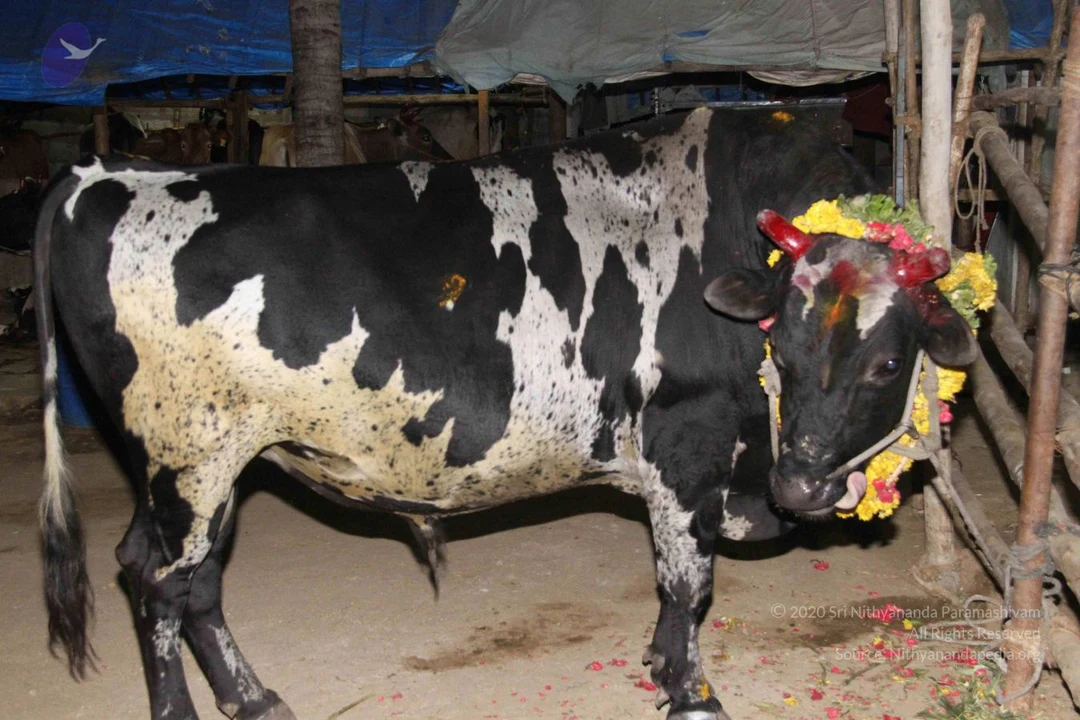
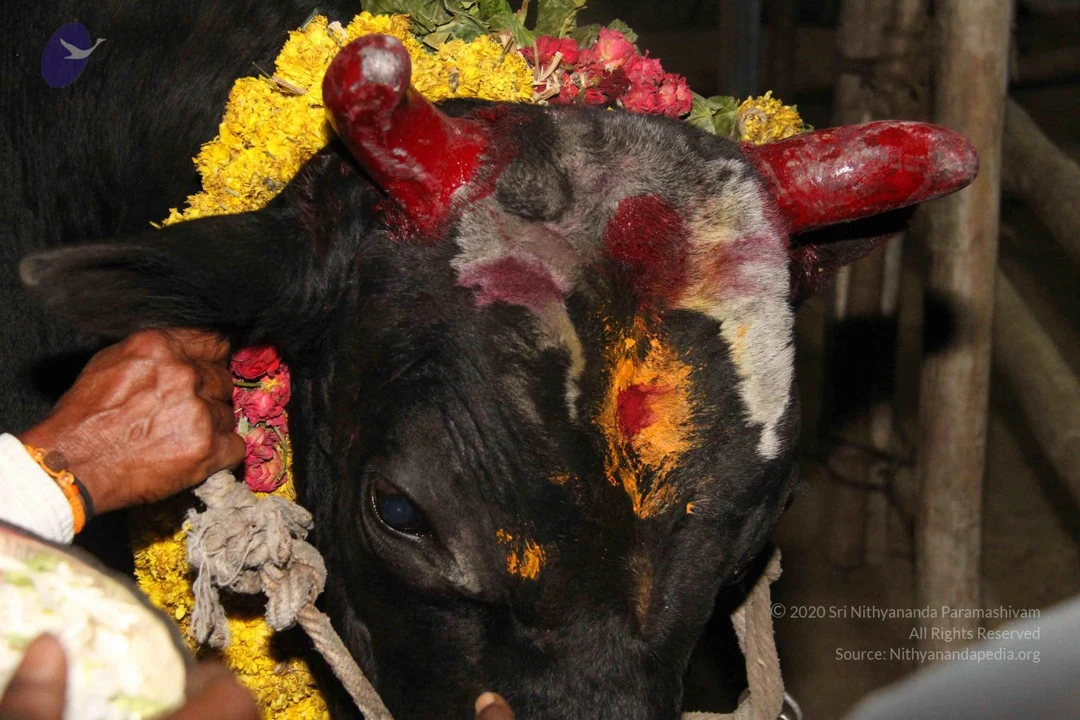
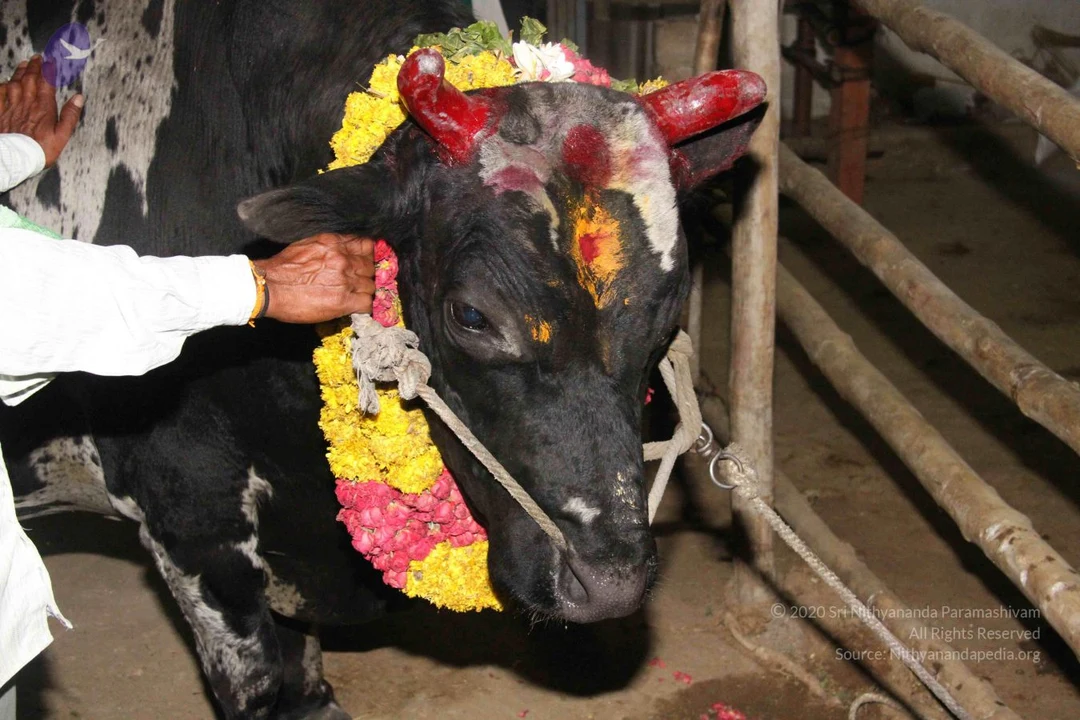
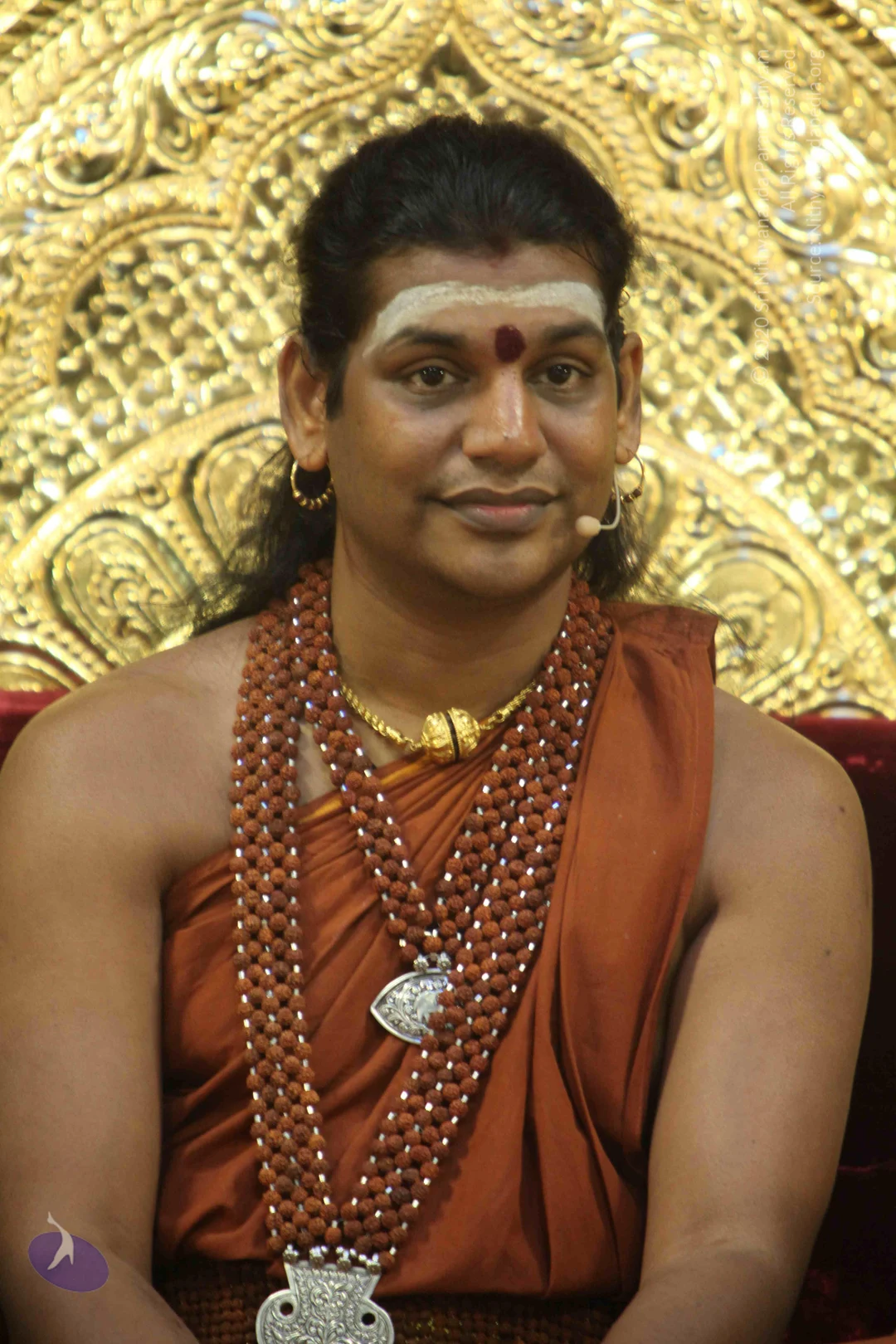
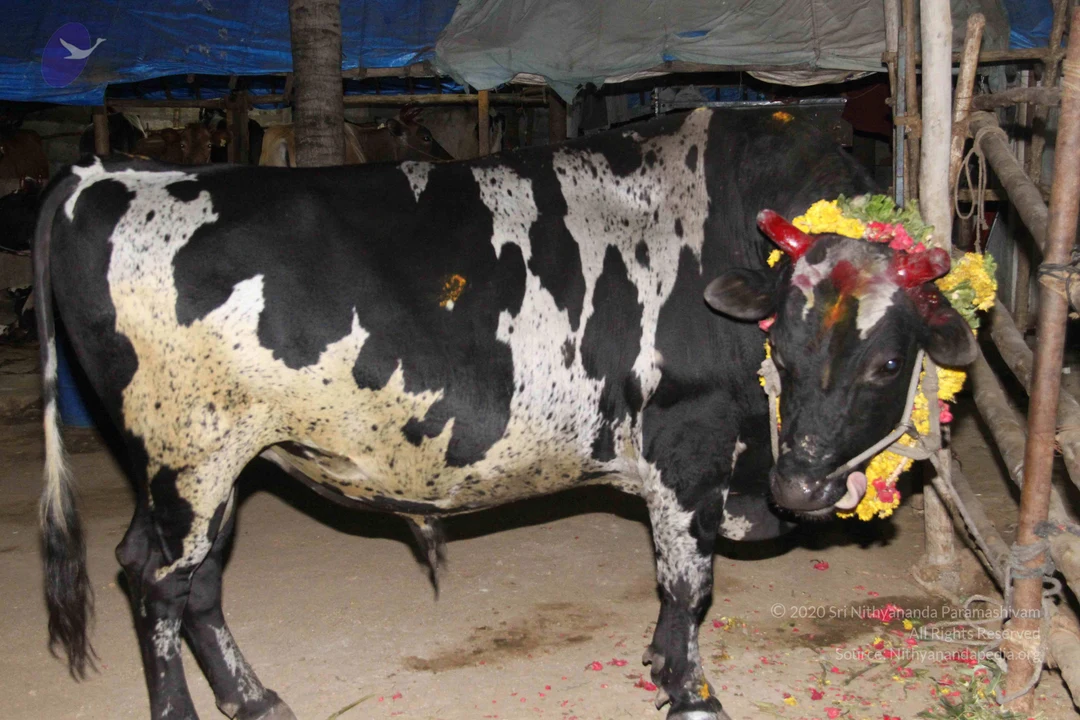
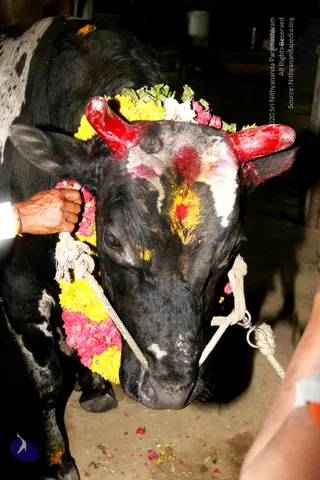
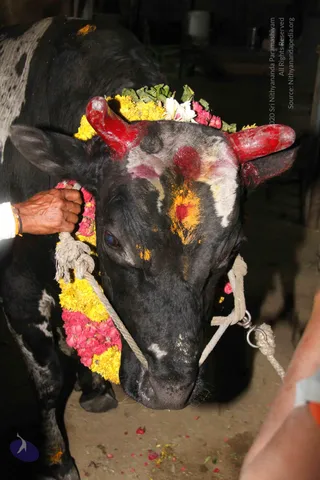
A decorated black cow with white patches stands tied with a rope halter, its horns painted red and its head marked with red and yellow kumkum and turmeric. A garland of yellow marigolds and pink roses, with green leaves and white flowers, drapes its neck and crowns its head. An elderly person's hand holds the rope near the neck, and a pale-clad arm is visible at the lower right. Scattered petals lie on the earthen floor. This is a festive cow worship scene.A smiling man in an orange-saffron shawl sits before an ornate gold repoussé backdrop. He wears multiple strands of rudraksha beads with silver spacer beads, a large silver pendant engraved with an elephant, a gold bead necklace, and a rudraksha bracelet. He has a white tilak and red bindi on his forehead, a small wireless headset microphone, and his hands are clasped in his lap. a person seated for satsang, based on the saffron clothing, rudraksha malas and ceremonial gold necklace.

January 15 2013

1 photoView all
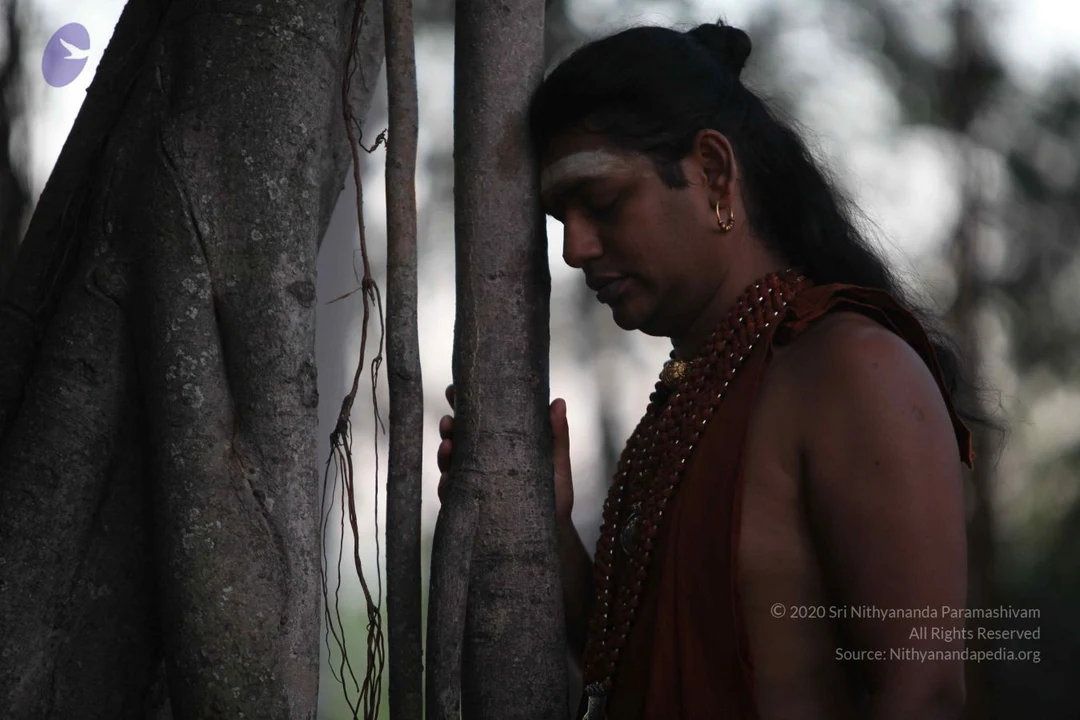
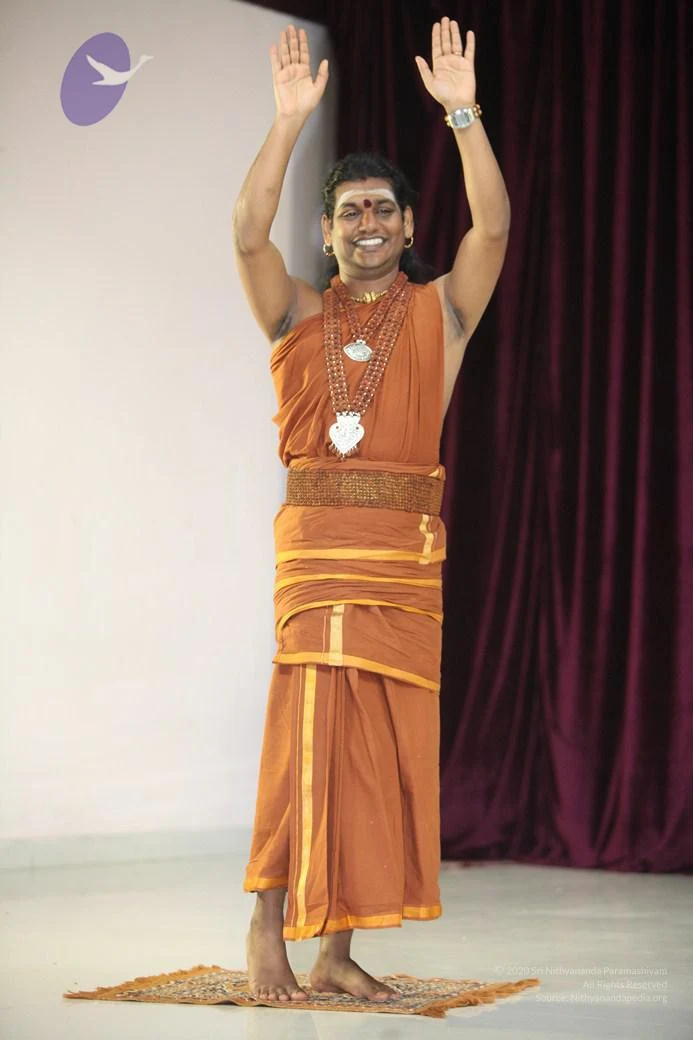
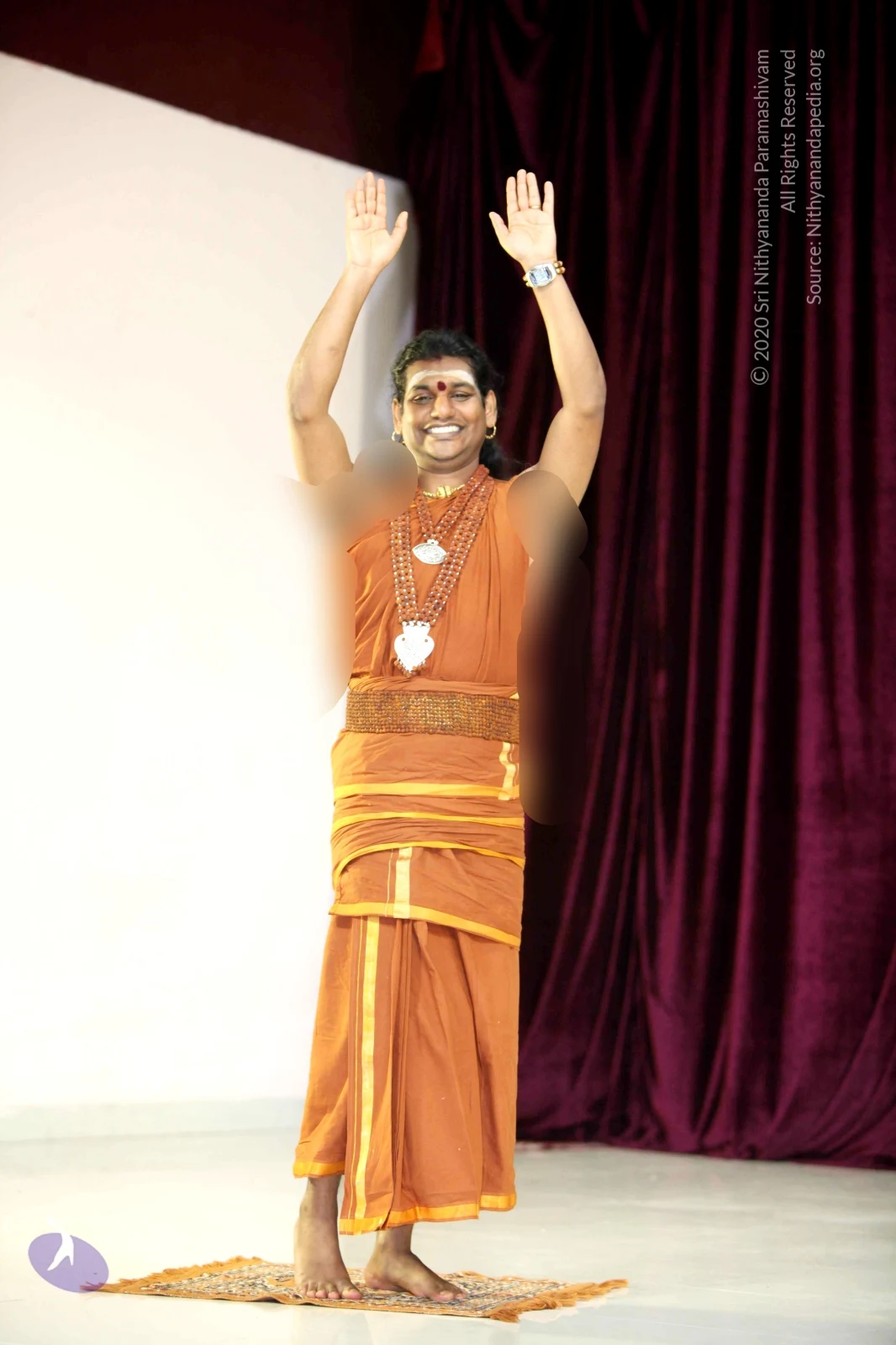
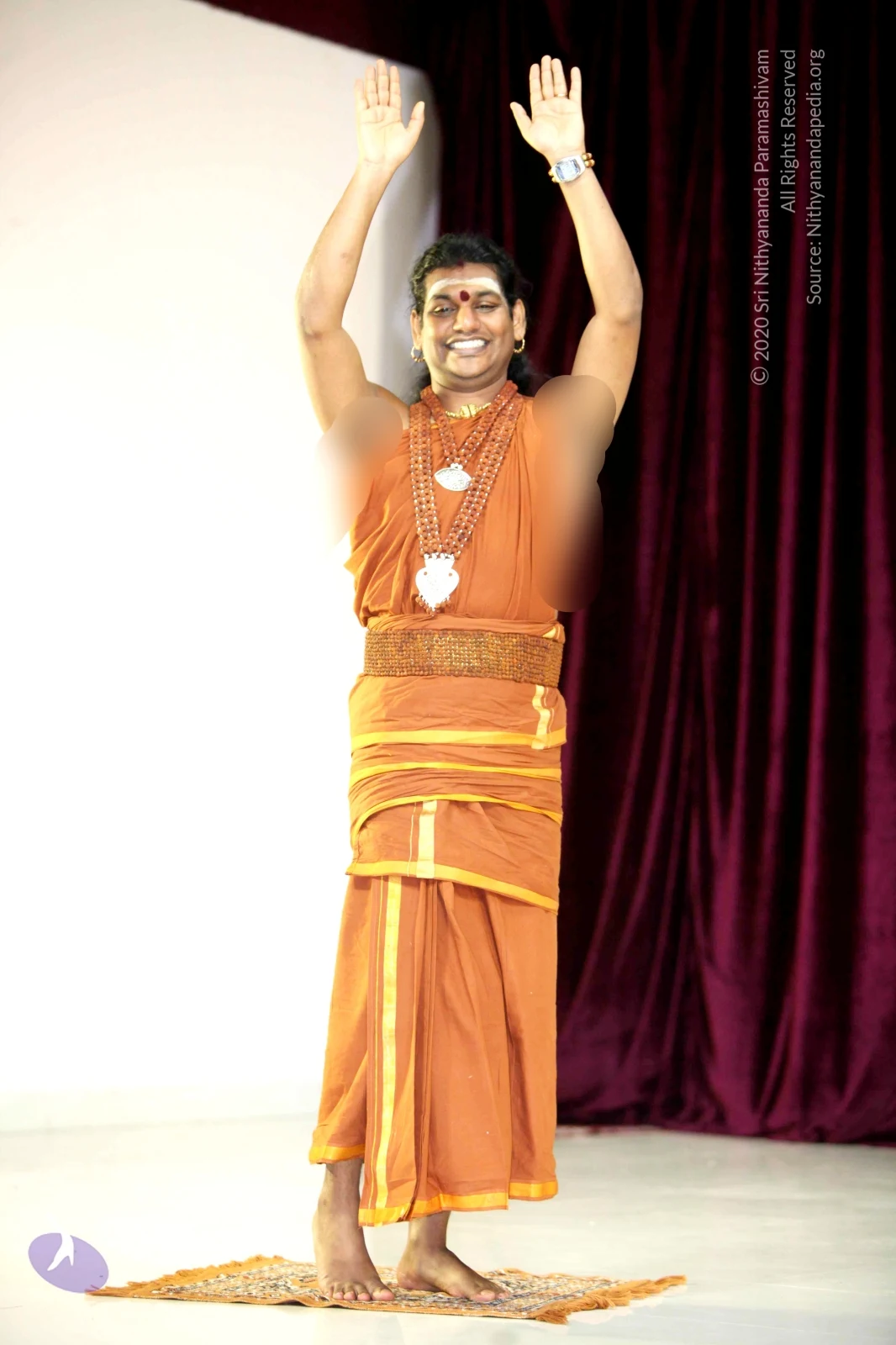
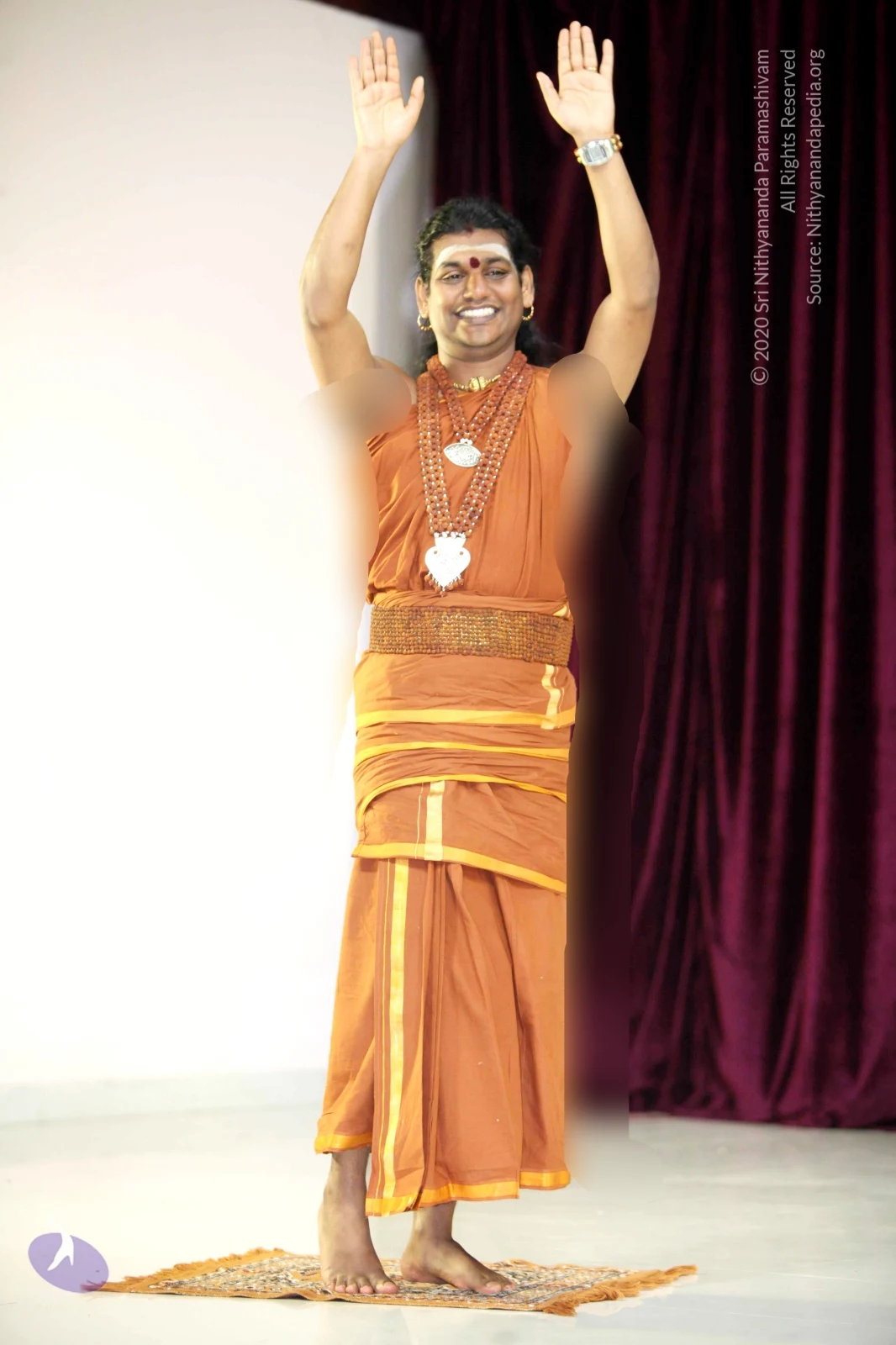
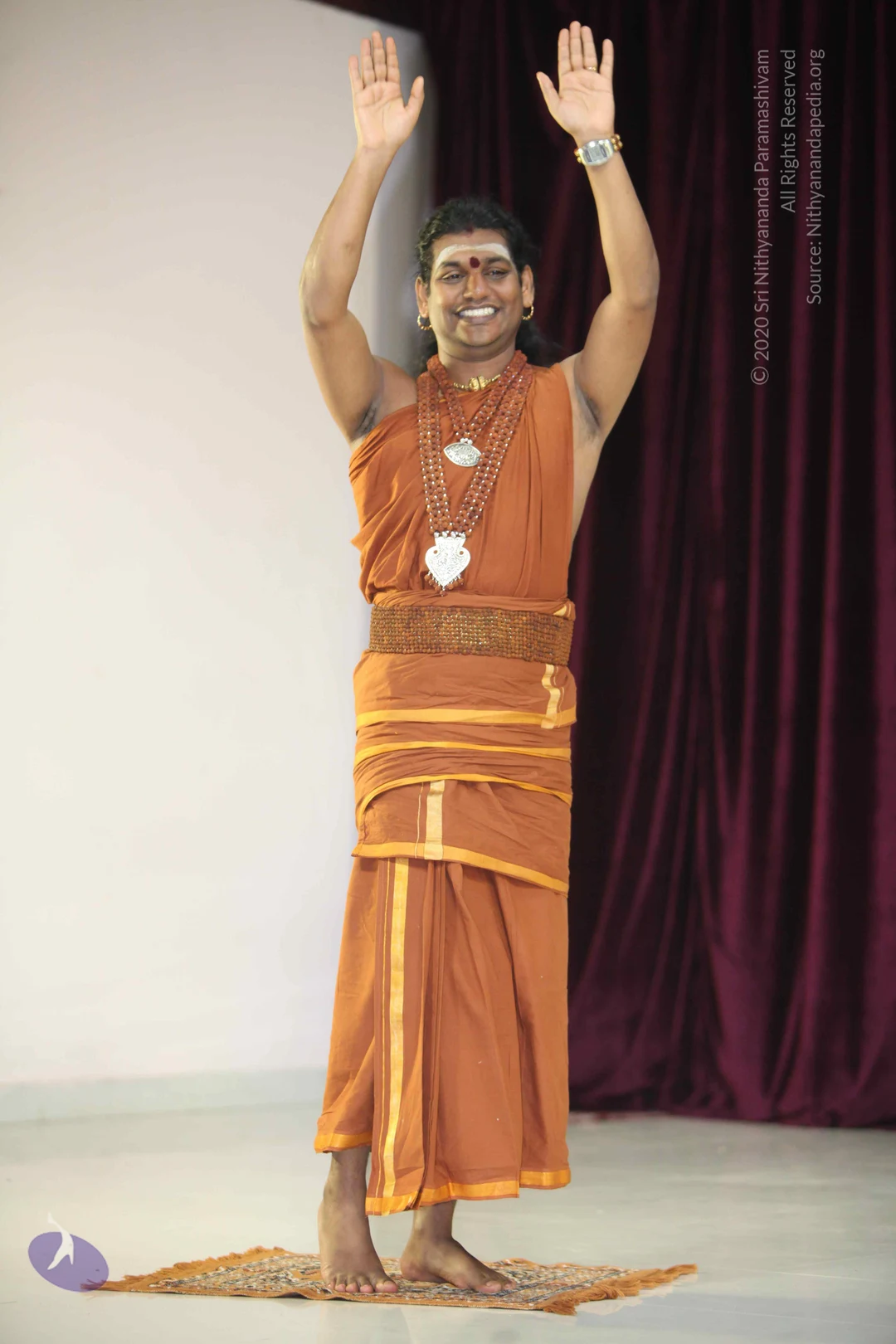
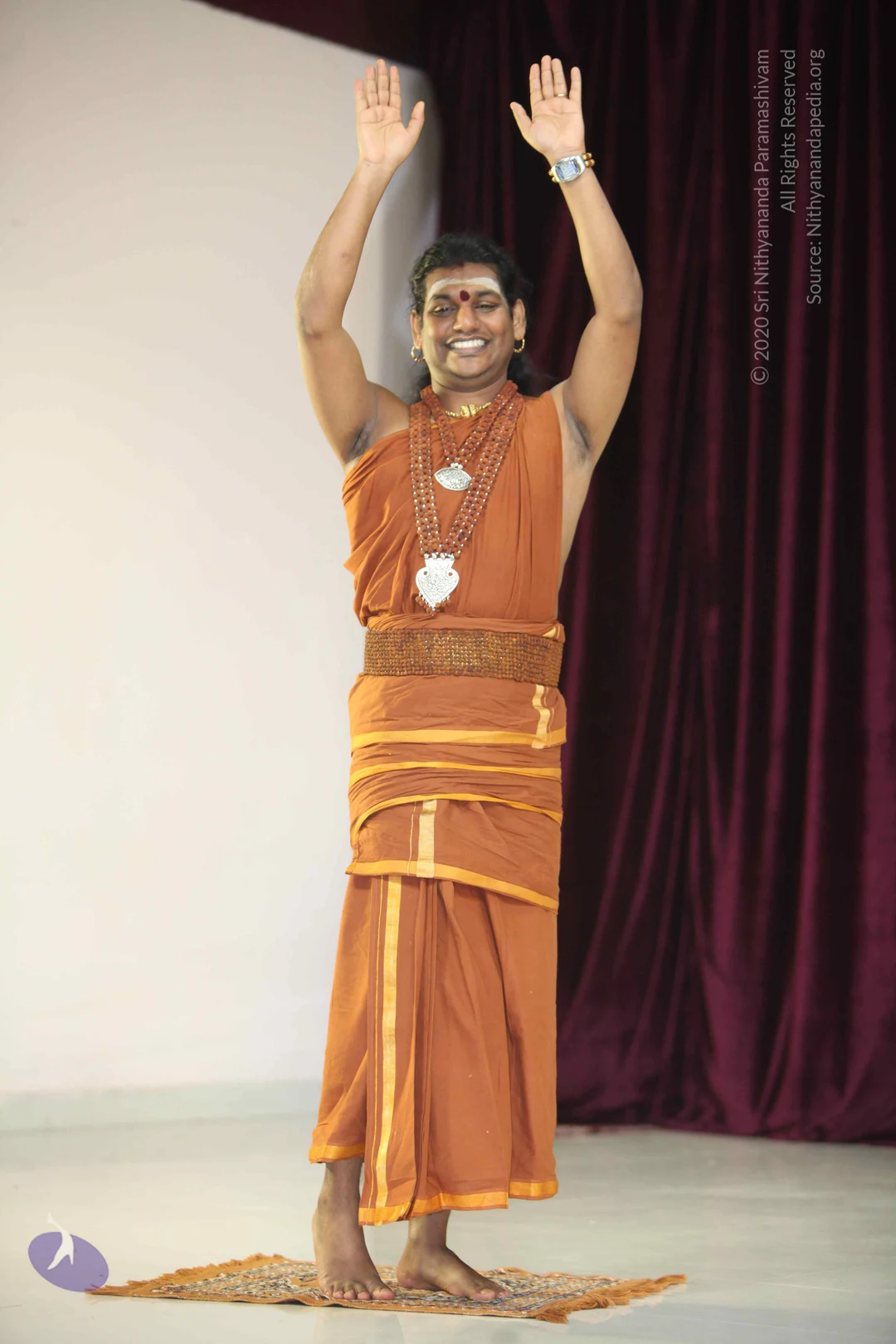
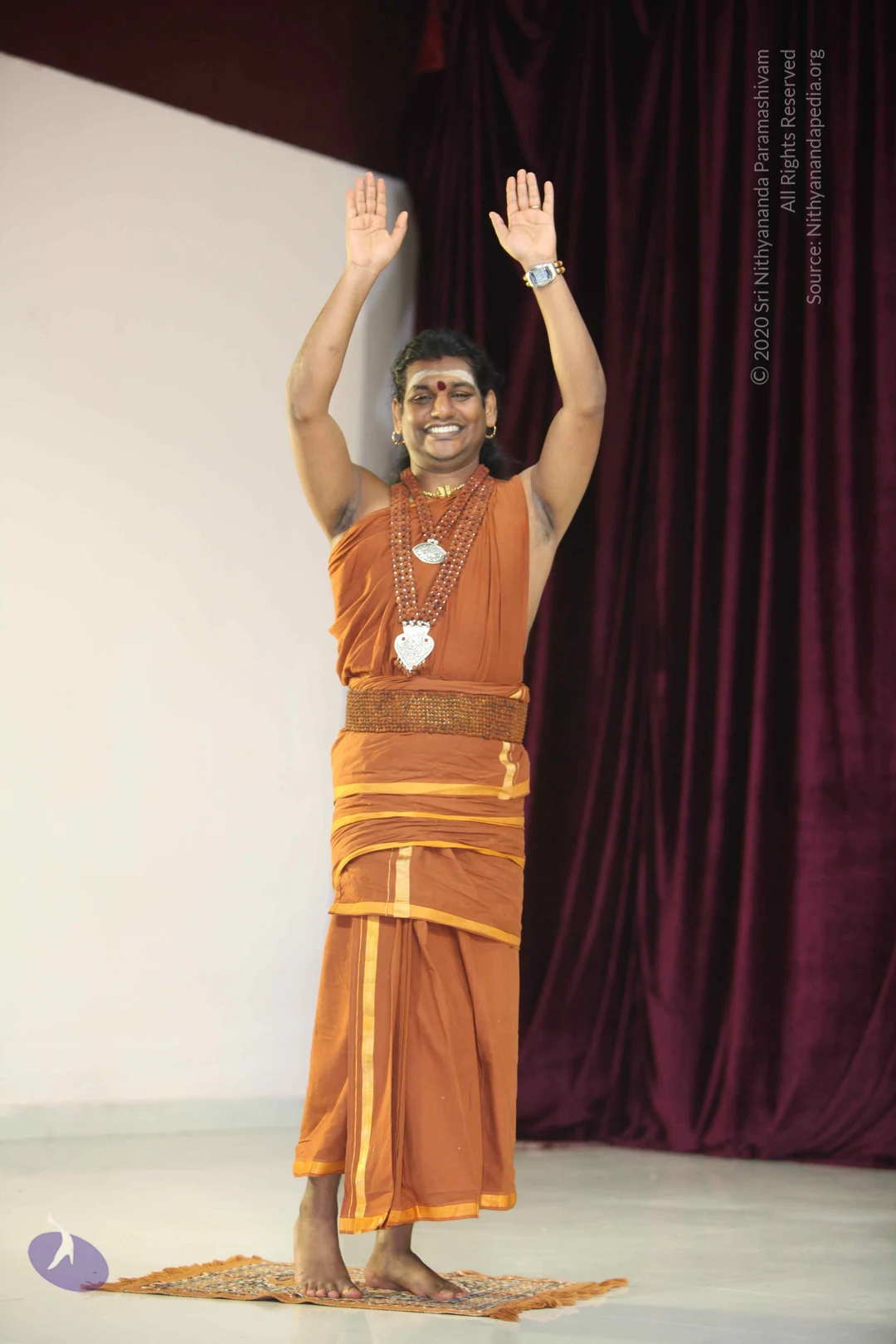
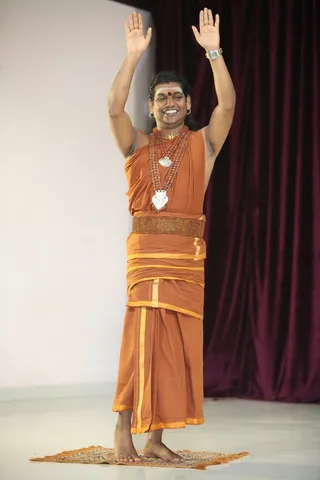
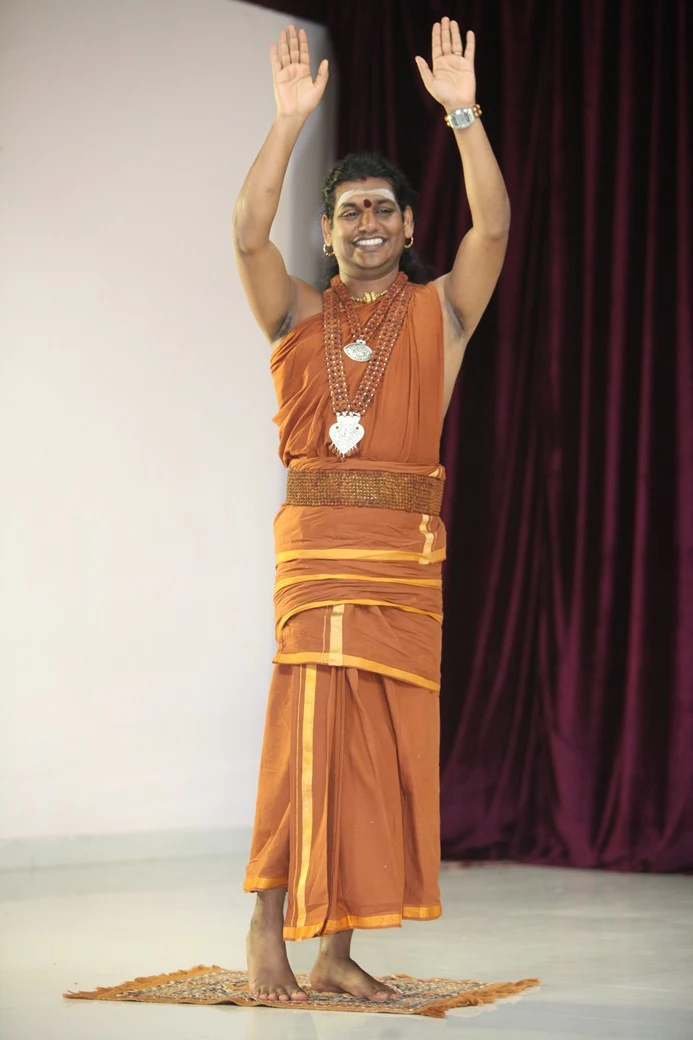
A standing man in saffron-orange robes raises both arms overhead with palms open, smiling broadly. He wears a rudraksha mala with a silver pendant, a gold necklace, a wide embroidered orange waist sash, a red bindi and a wristwatch on his left wrist. He stands barefoot on a woven orange mat before a plain wall and a deep maroon curtain.