Friday
9 January 2015
Love The Mahadeva in You
- Dated photos
- 296
- Source pages
- 1
- Media
- 5
January 09 2015
Original wiki pageTitle
Love The Mahadeva in You
Description
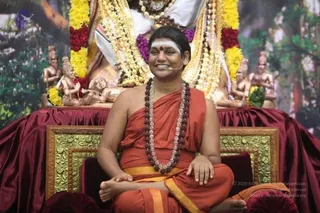
Today’s (09th January, 2015) Morning Satsang continues with the Living Advaita series on Upanishads. Paramahamsa Nithyananda explains how being in love with ourselves, which is our own component of Mahadeva, is the only way to keep the eternal excitement alive. Through the Upanishads, we can remember all our possibilities, helping us to live Advaita.
Video and Audio - Love The Mahadeva in You
| Video | Audio |
Transcript
(0:14) Nithyānandeshwara samārambhām Nithyānandeshwari madhyamām | Asmat ācārya paryantām Vande Guru Paramparām ||
(0:42) I welcome all the Devotees, Disciples, Samajis, Satsanghis, Srimahants, Mahants, Thanedars, Kotharis, visitors, viewers, everyone, sitting with Us all over the world through Nithyananda TV and Sadhna TV, and two-way video-conferencing.
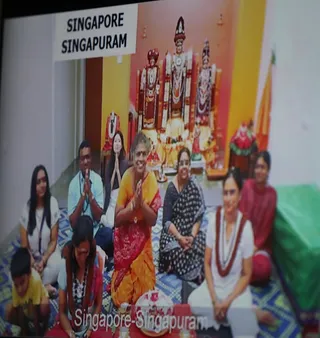
(1:08) Cities sitting with Us in two-way video-conferencing: Redmond-USA, Oklahoma-Somanatham, Colombo-Sri Lanka, London-Kashi, Hyderabad-Gupta Kashi, Seattle-Chidambaram, Toronto-Thiru Kailasam, Houston-Kalahasti, Nithyananda University-Paris, Scottsdale-Arizona, Singapore, Dubai-Vaidyanatham, St. Louis-Tirumala, Los Angeles-Hollywood, Atlanta-Georgia, Rajapalayam, Warrington-UK, Guadeloupe-Rameshwaram, Singapore-Singapuram, Ohio-Prayag, Los Angeles-Arunachalam, Vancouver-Canada, Nithyananda Nagara-Hyderabad, Dakota Dunes, San Jose-Madurai, Los Angeles-Hollywood, Jorpati-Nepal and some more cities; may be San Antonio-Texas and some more cities are joining. I welcome all of you with My love and respects.
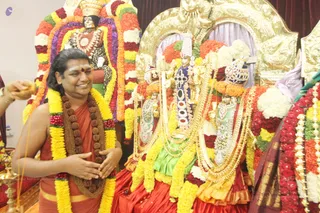
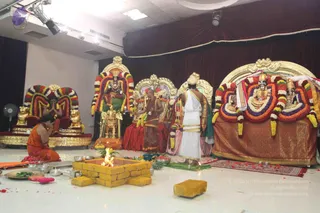
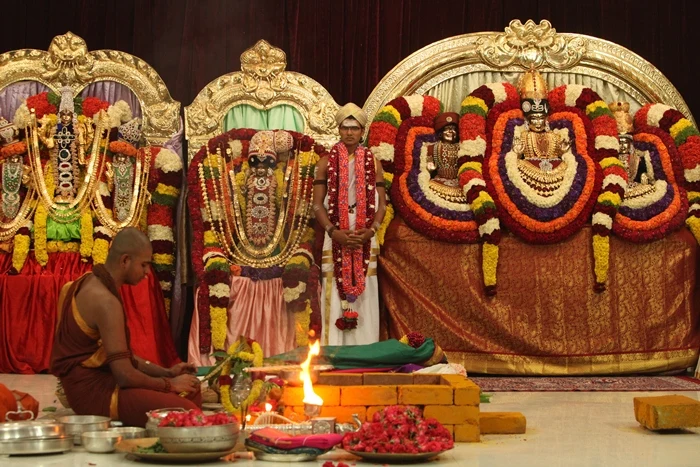
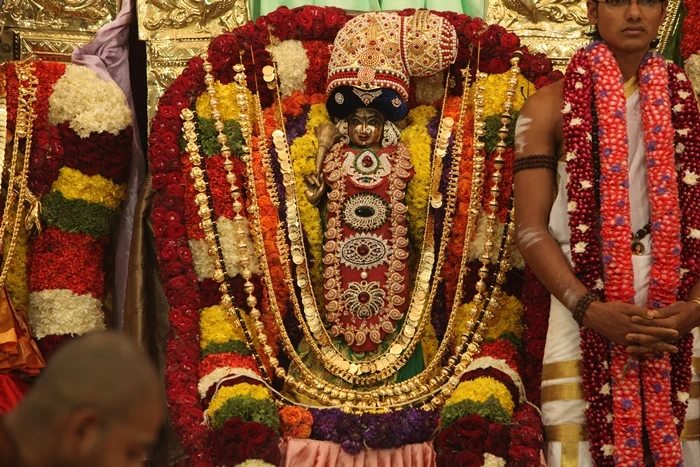
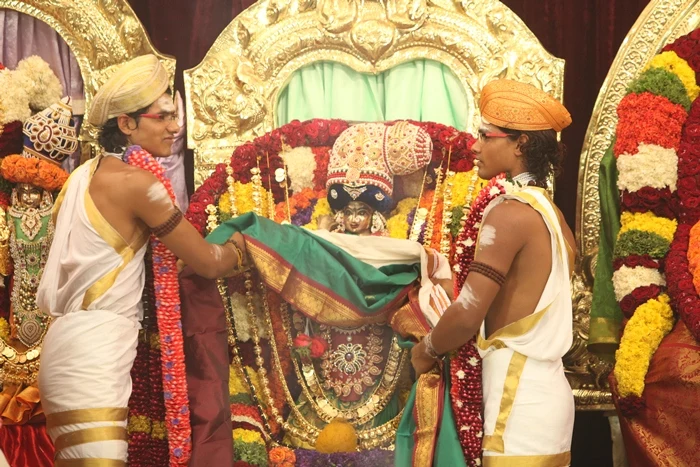
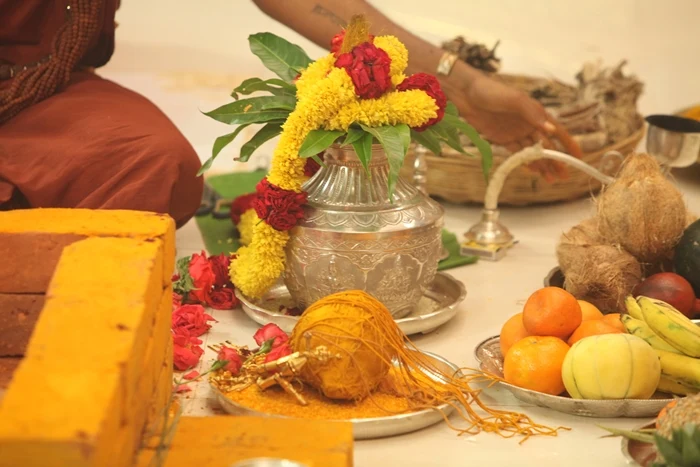
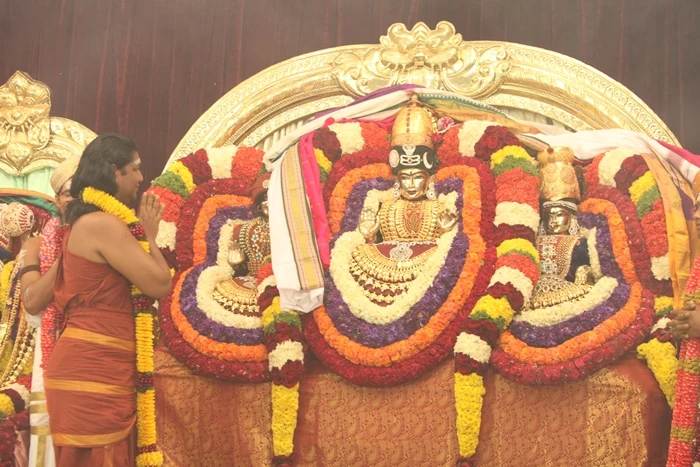
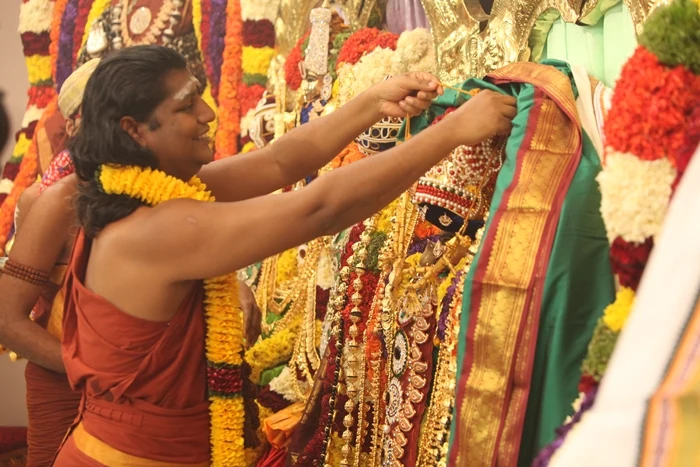
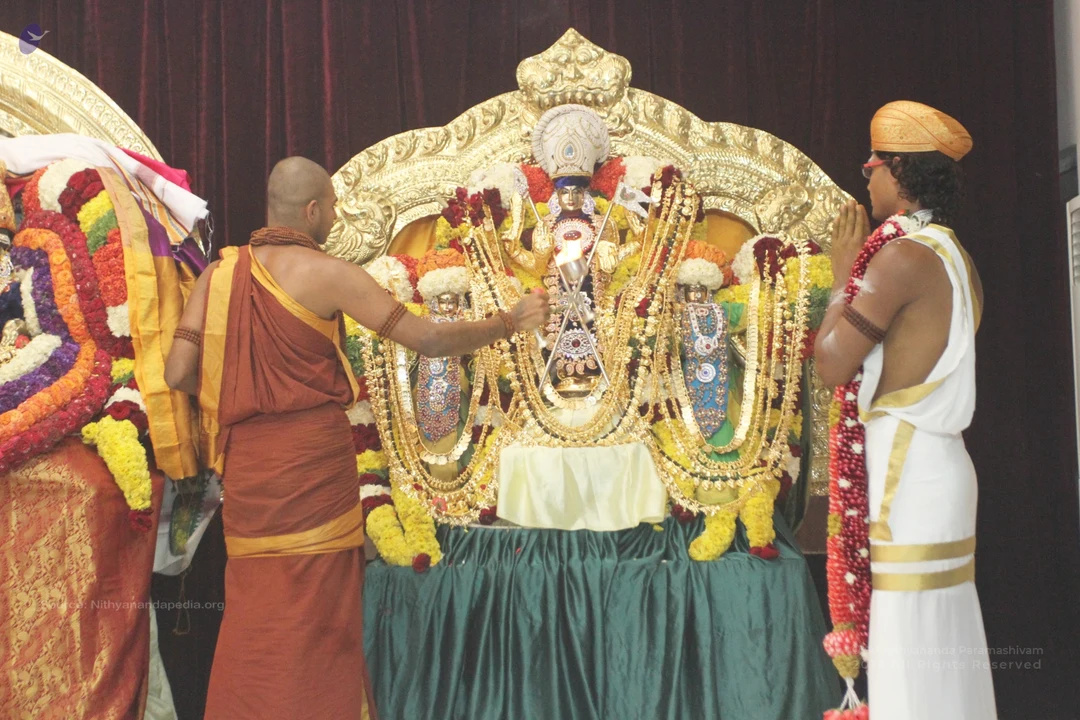
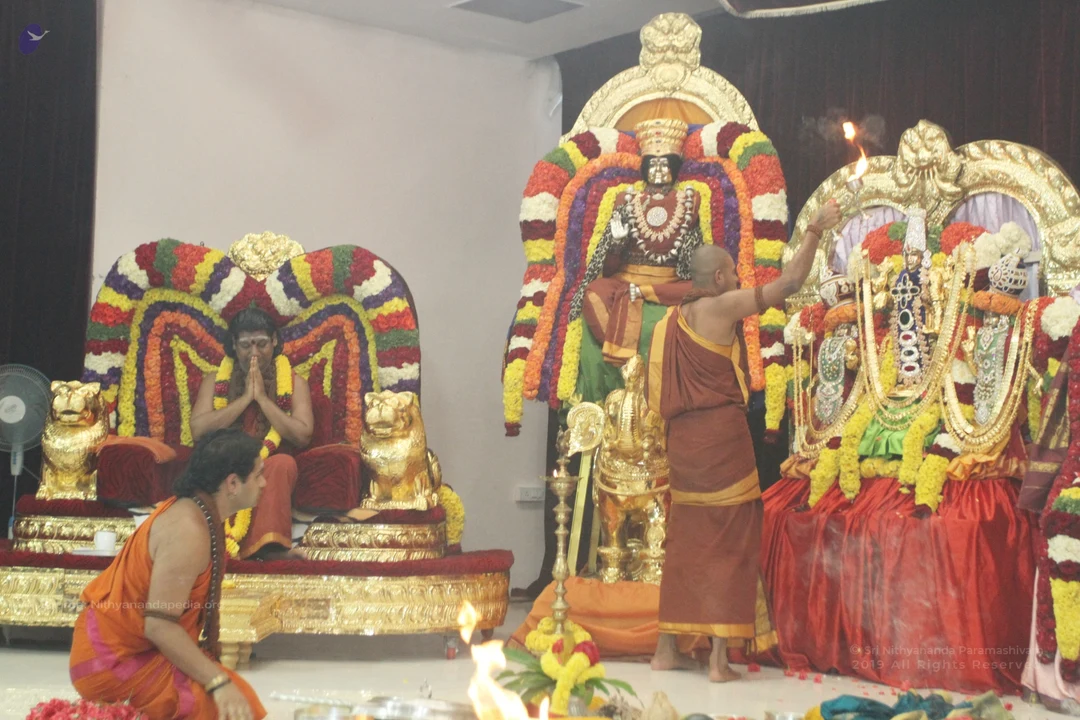
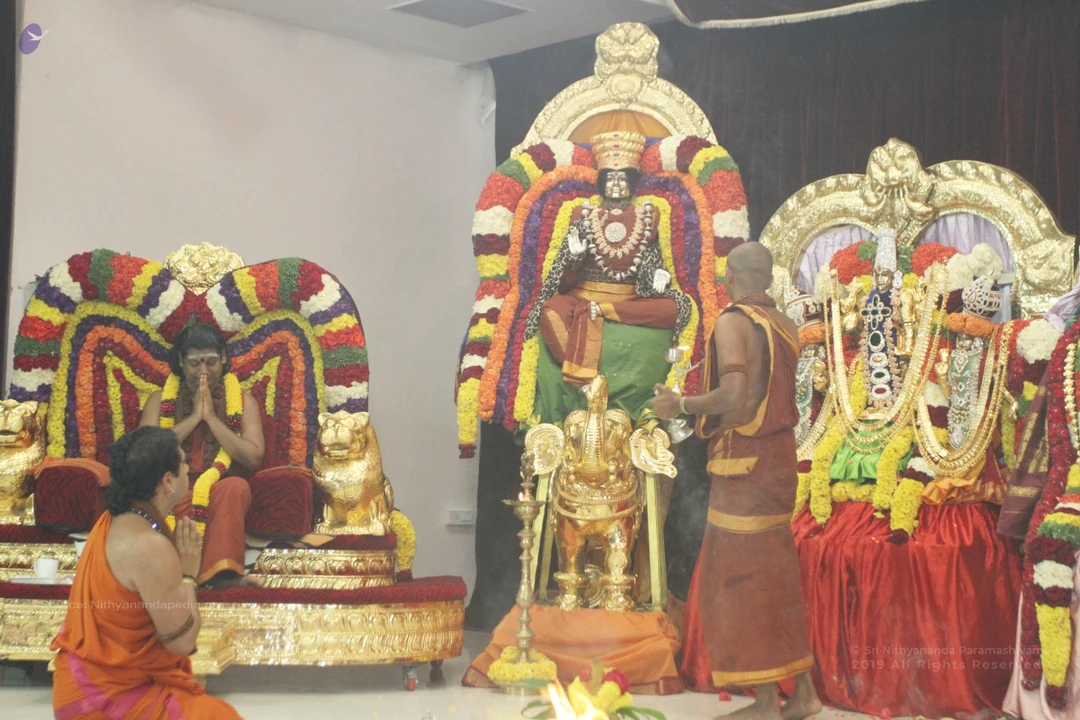
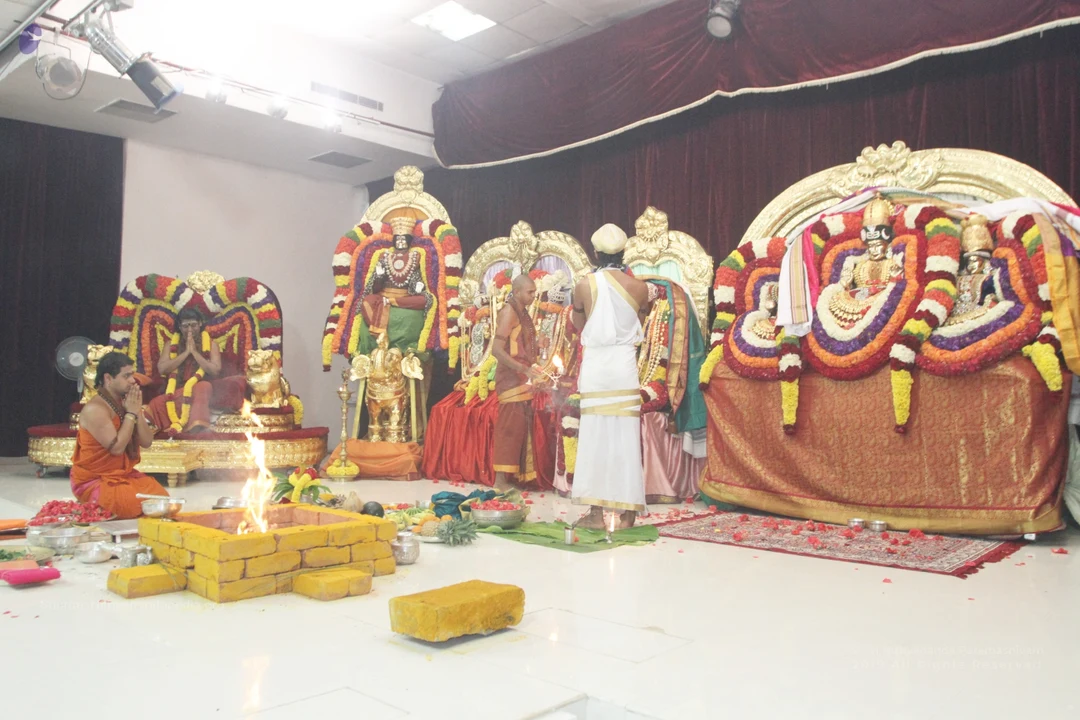
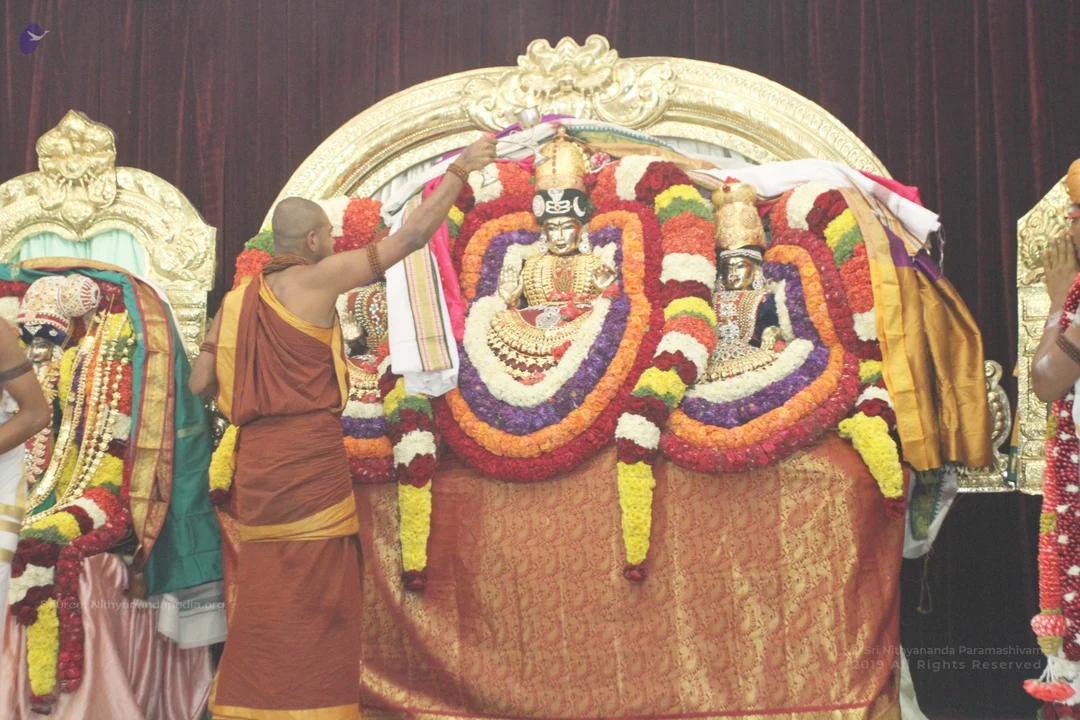
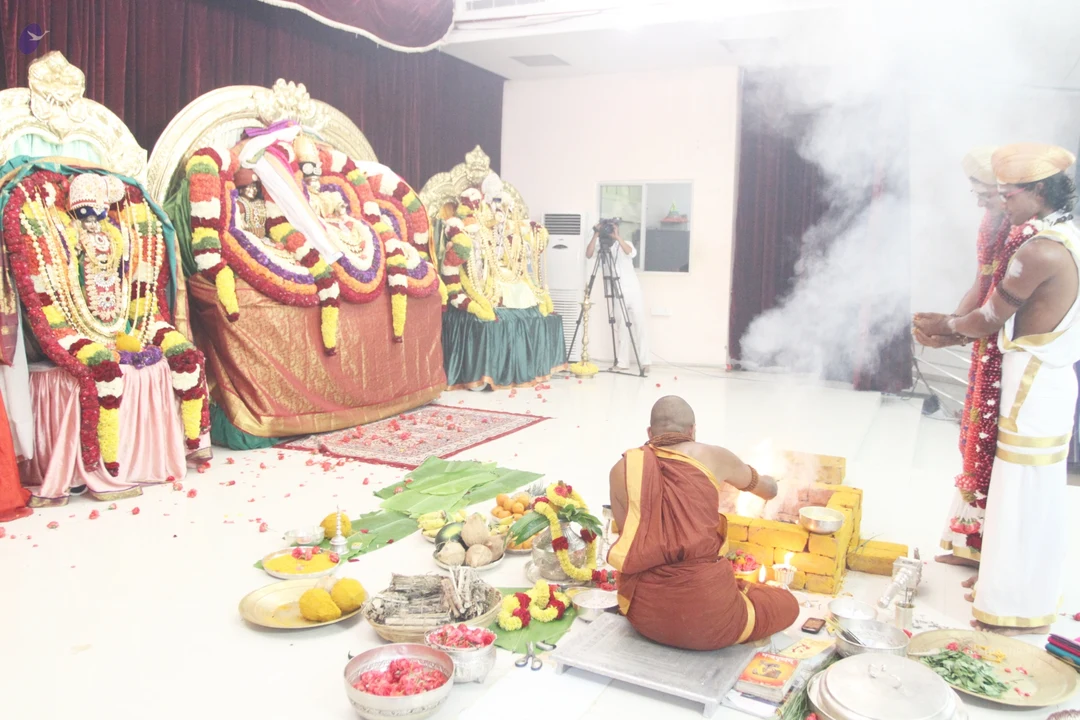
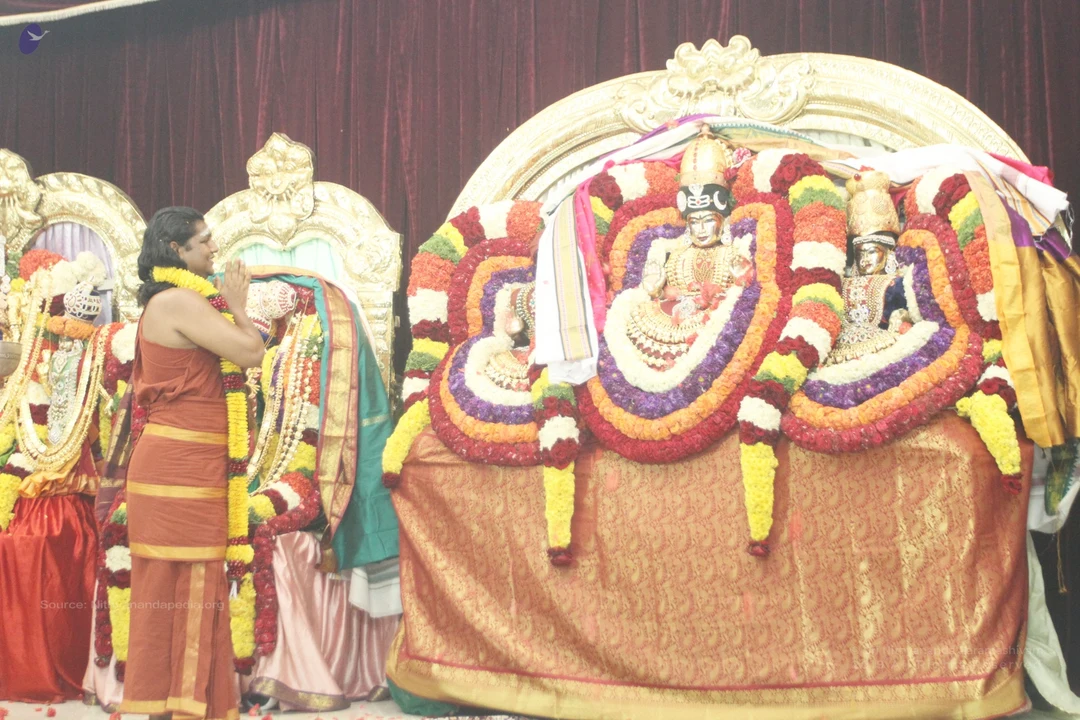
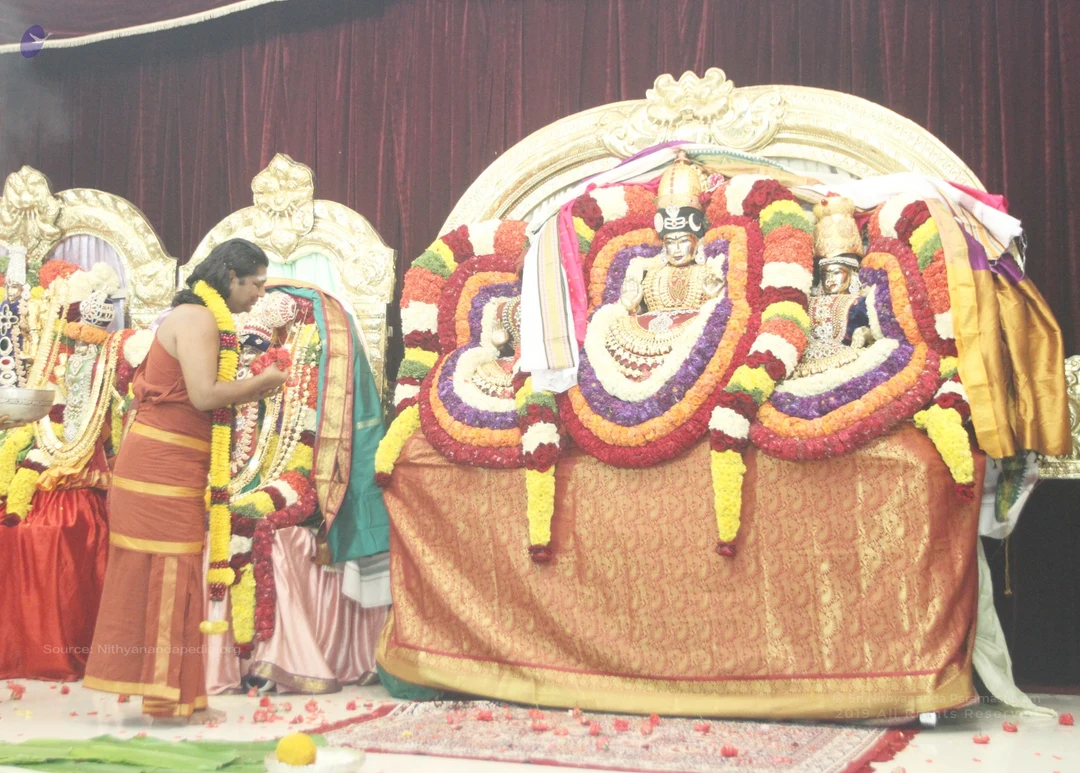
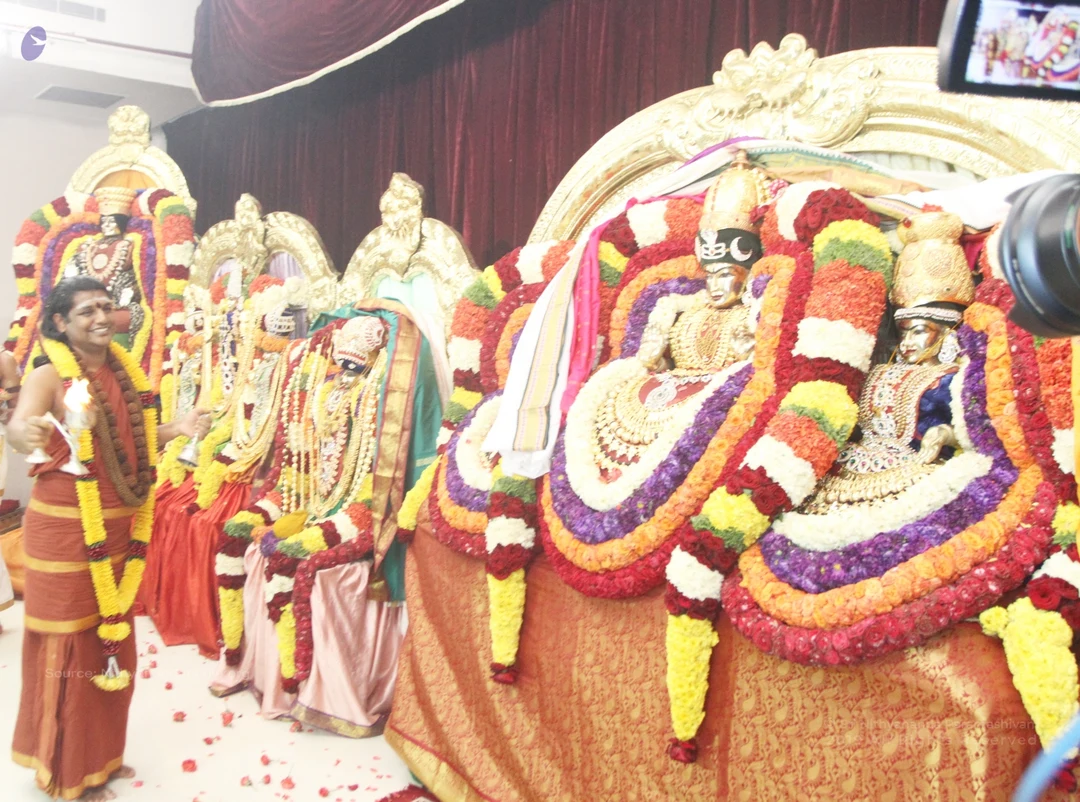
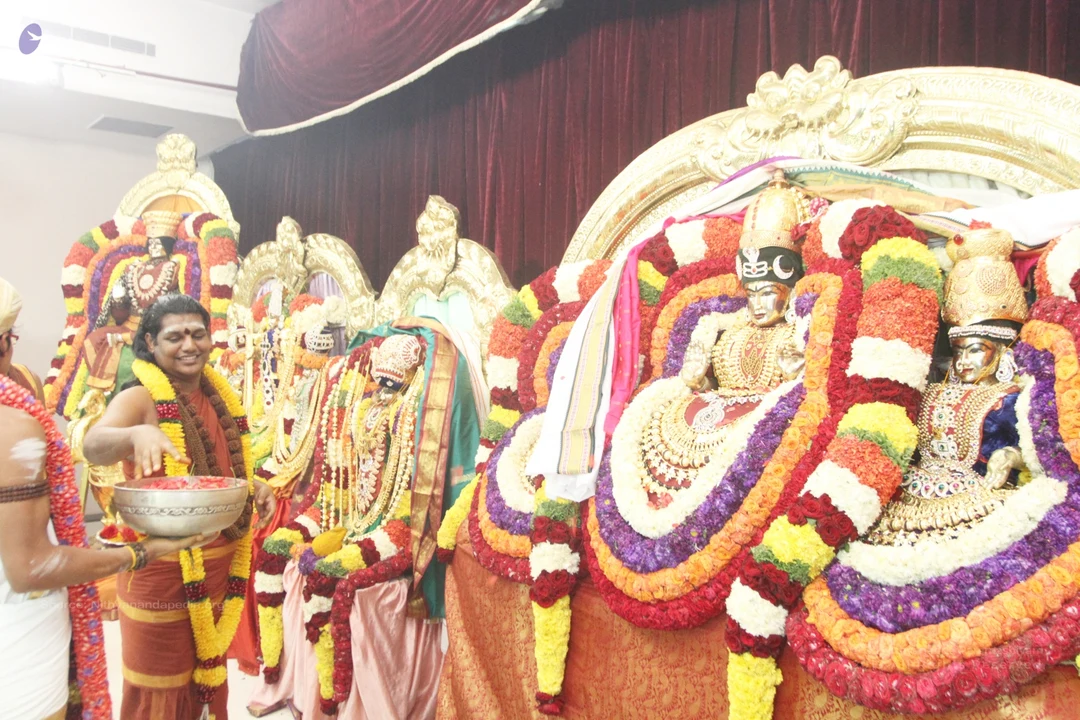
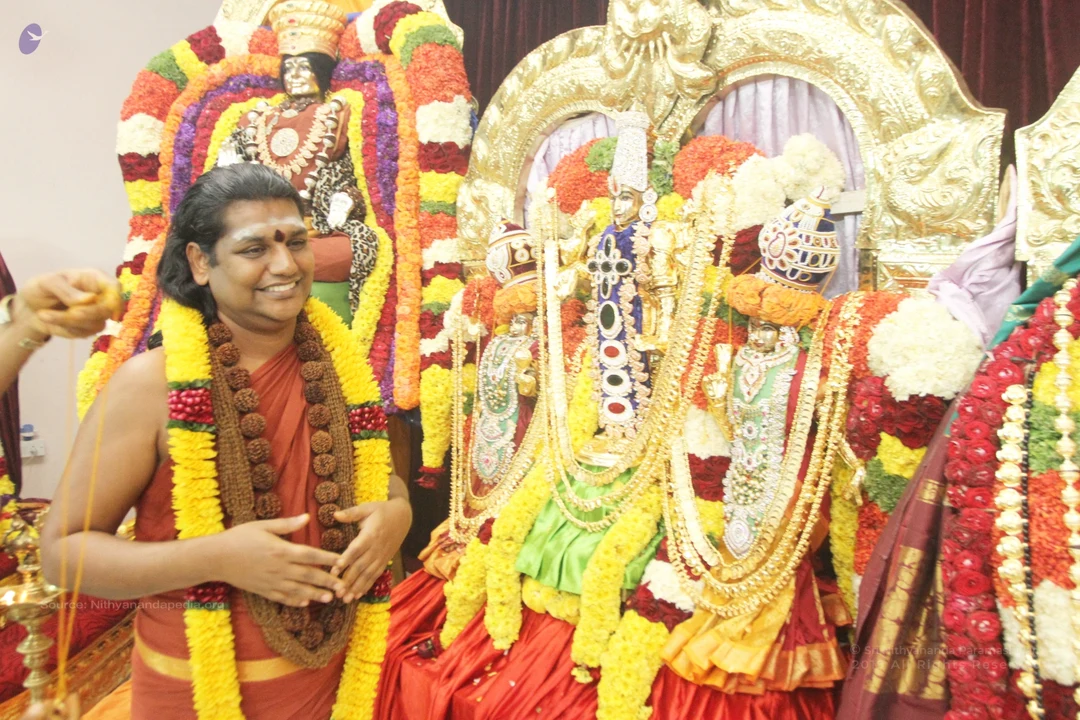
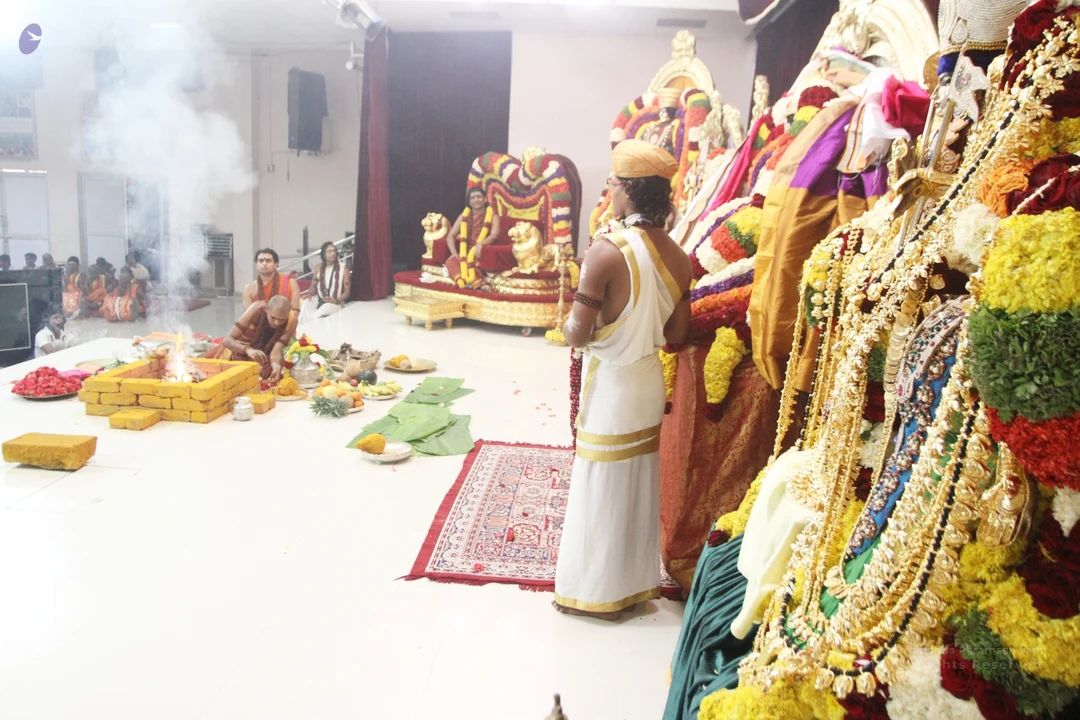
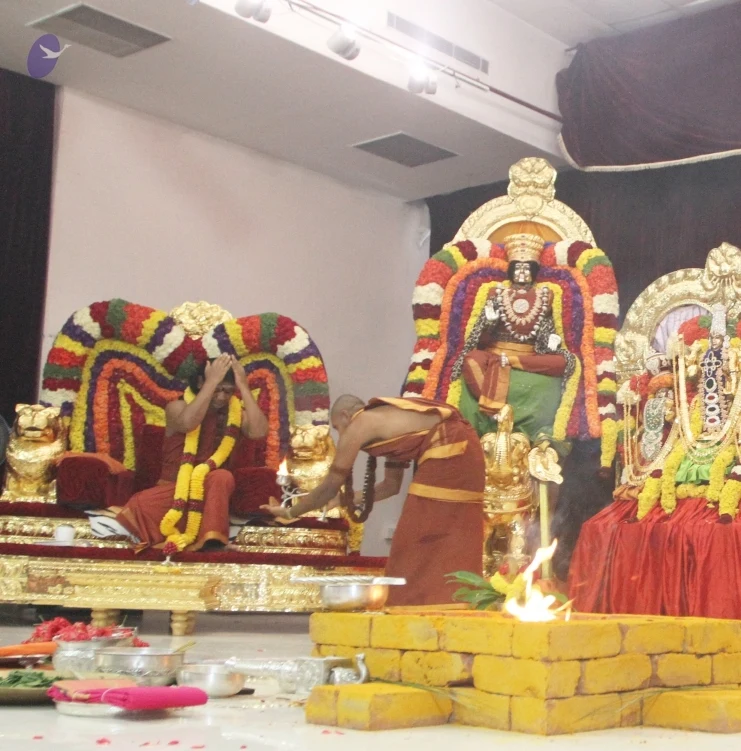
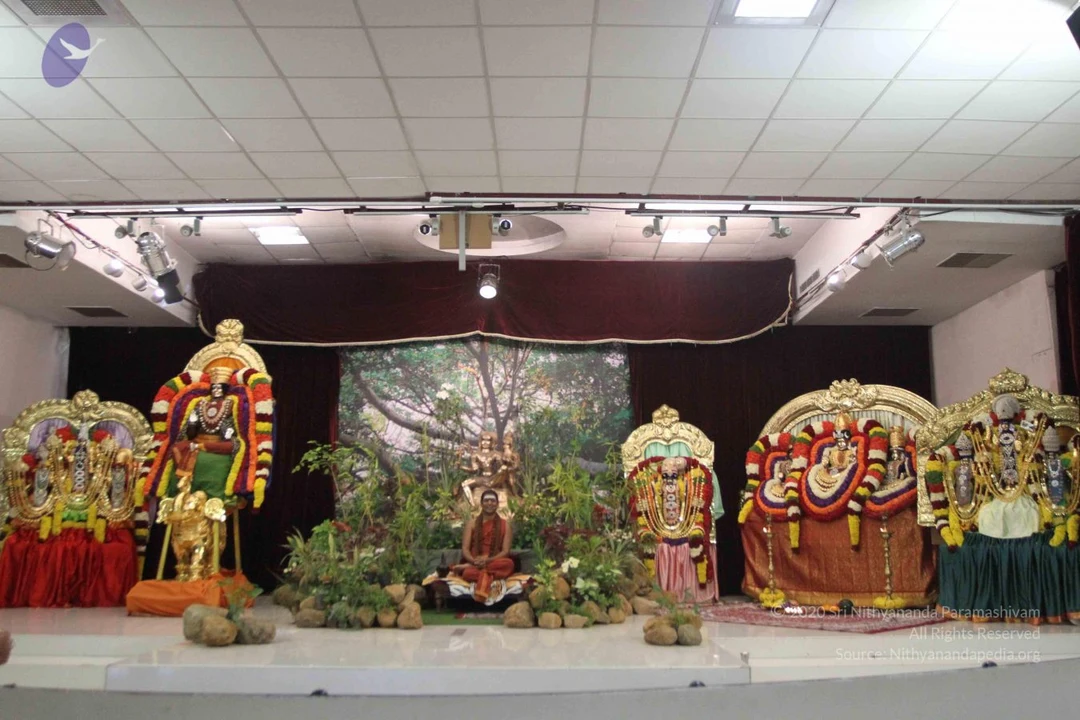
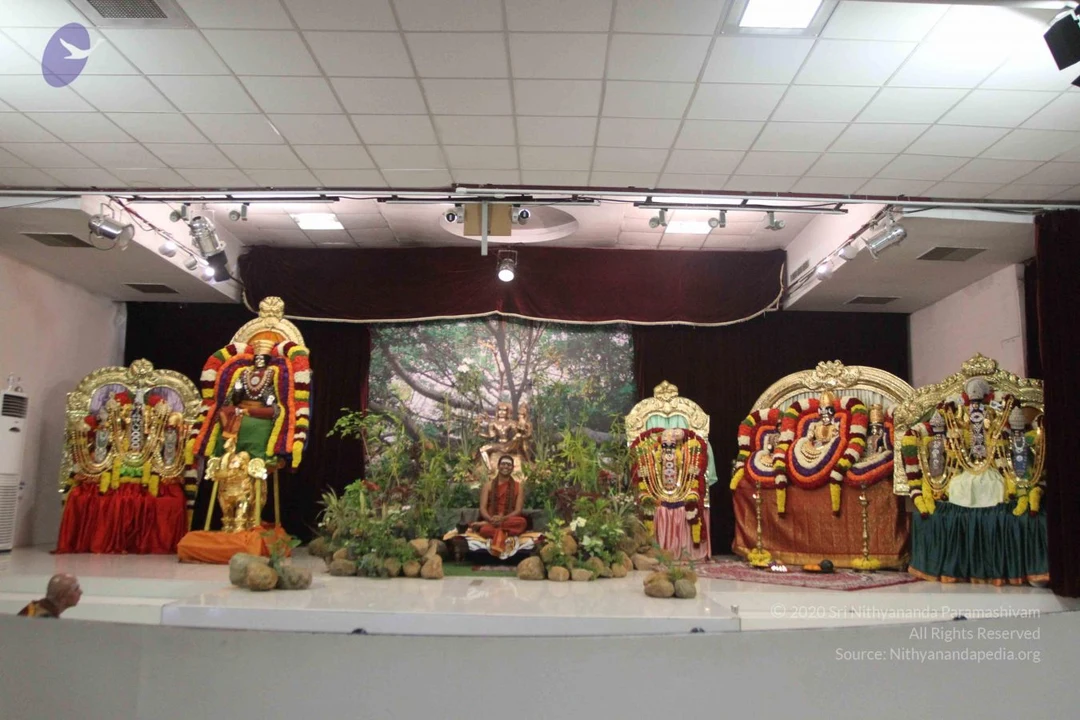
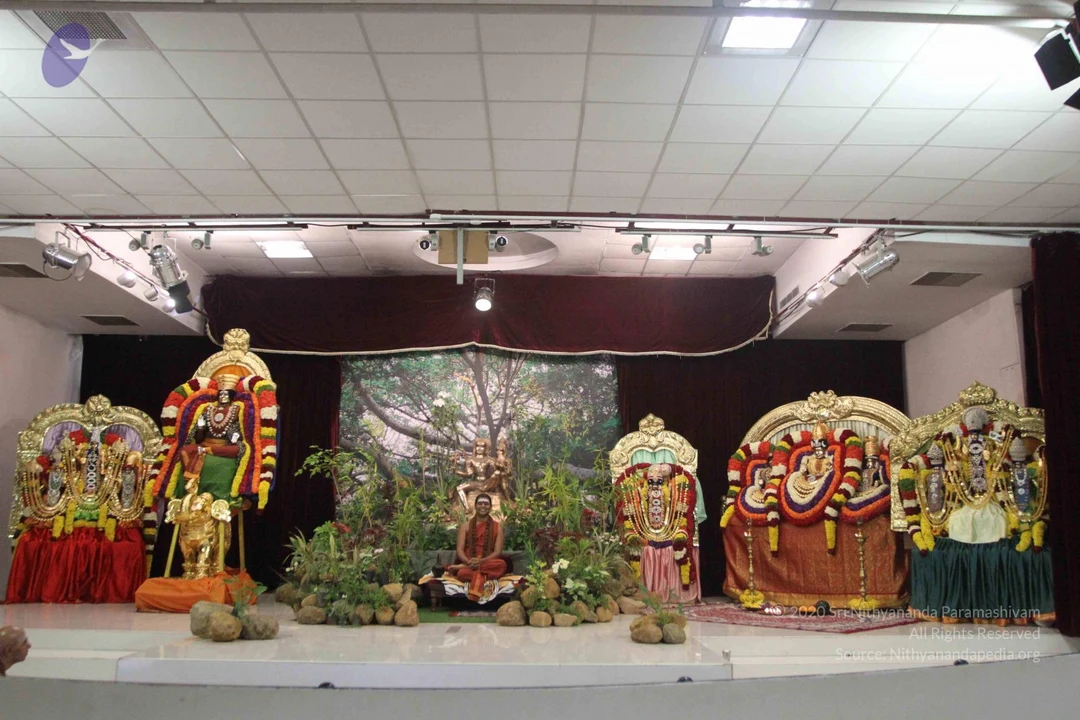
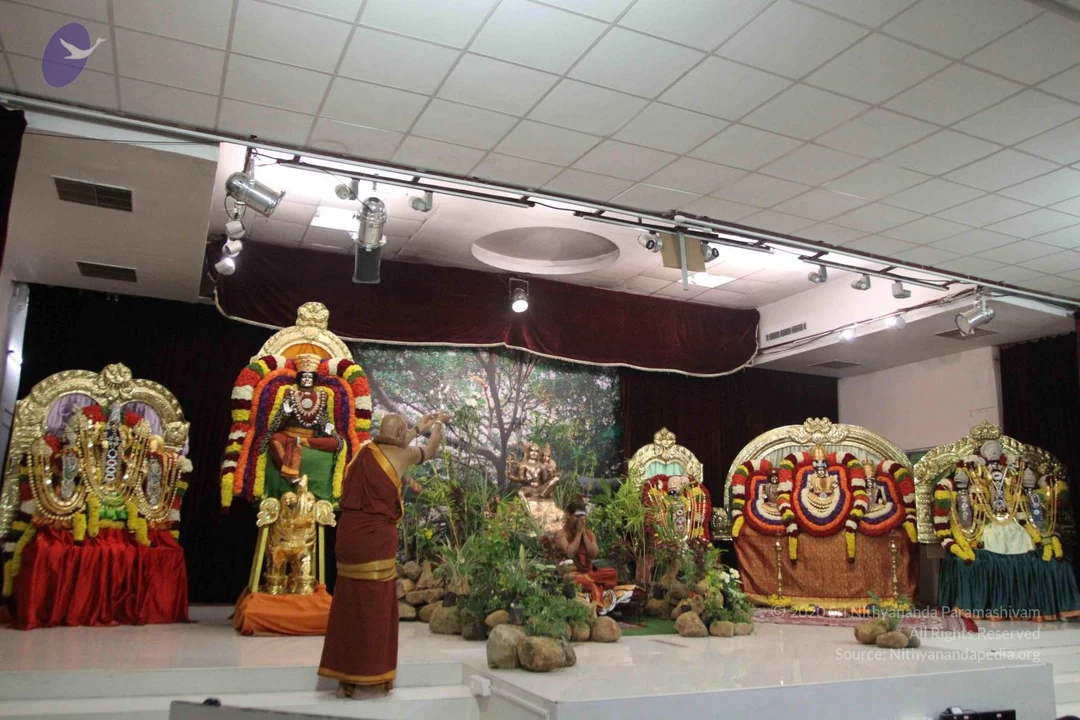
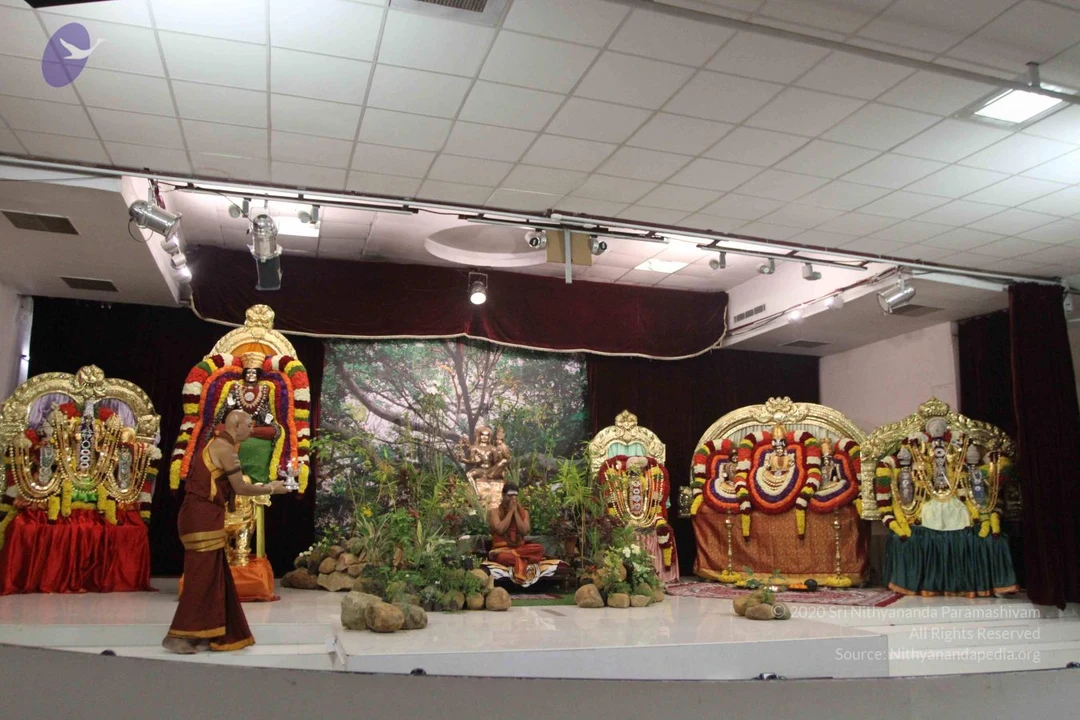
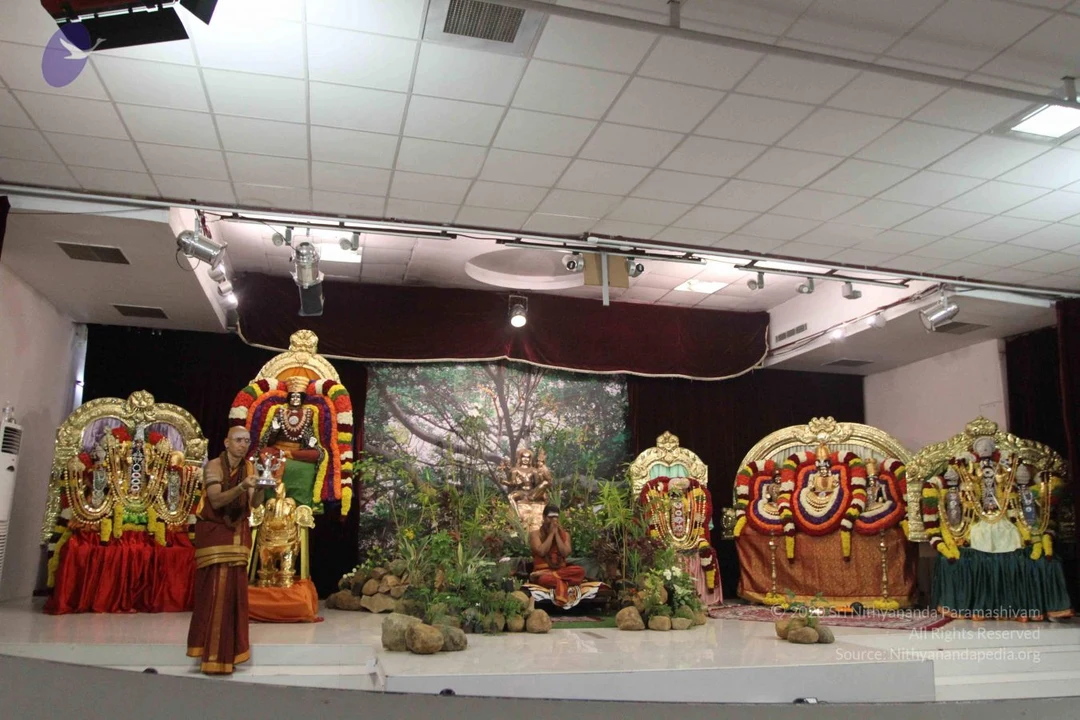
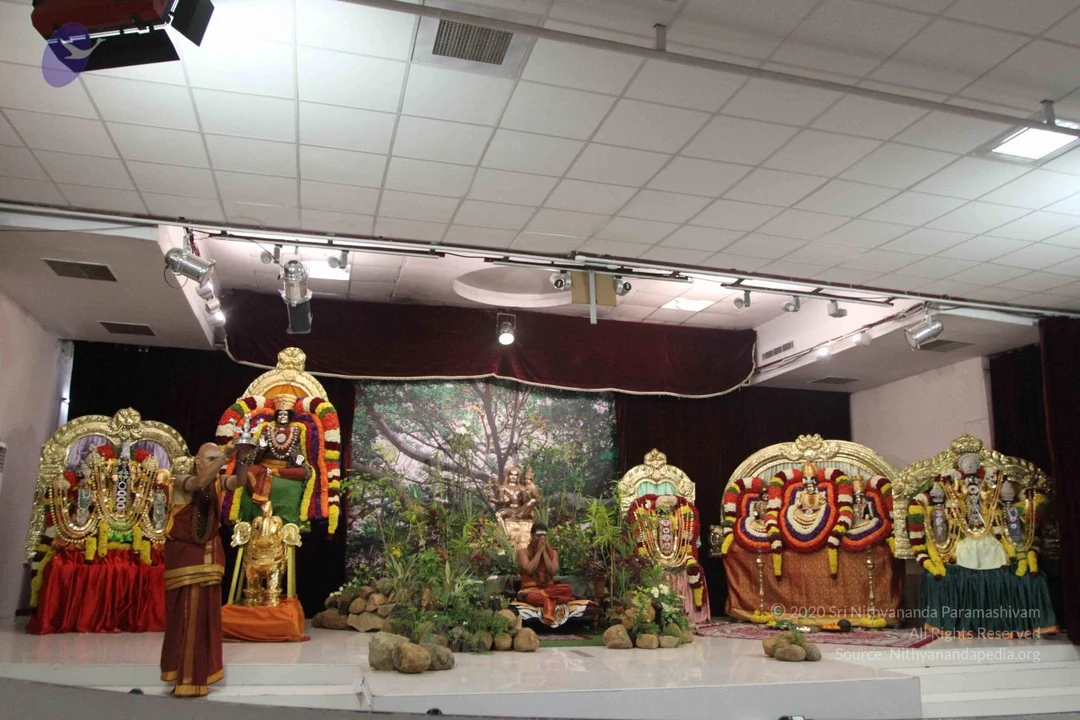
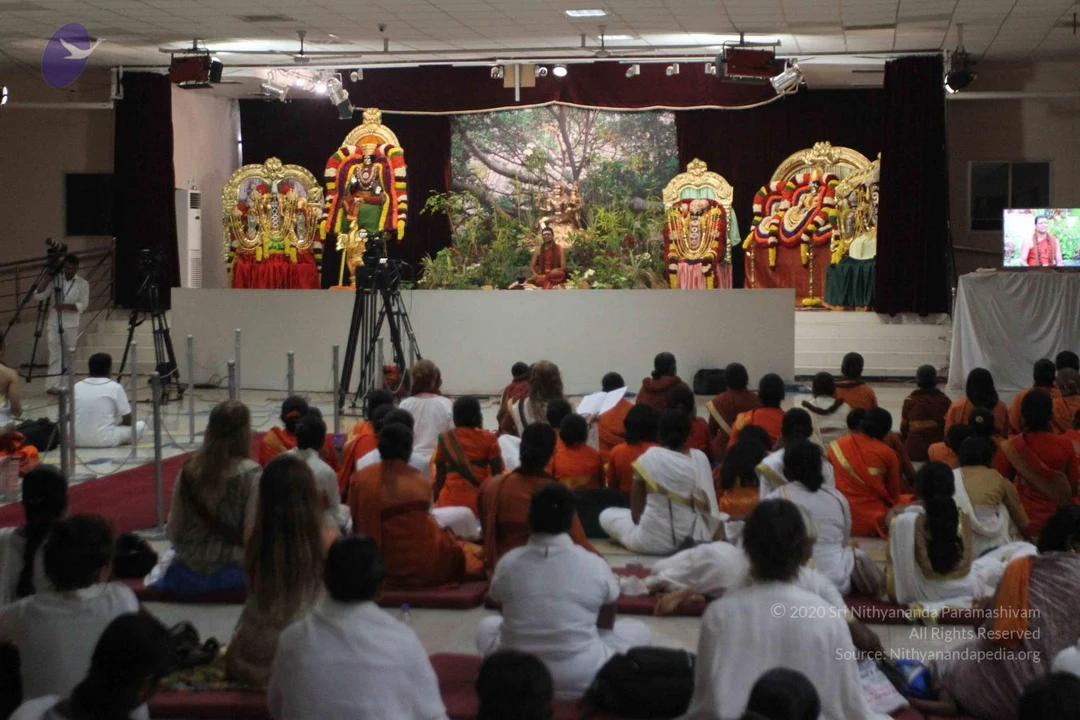
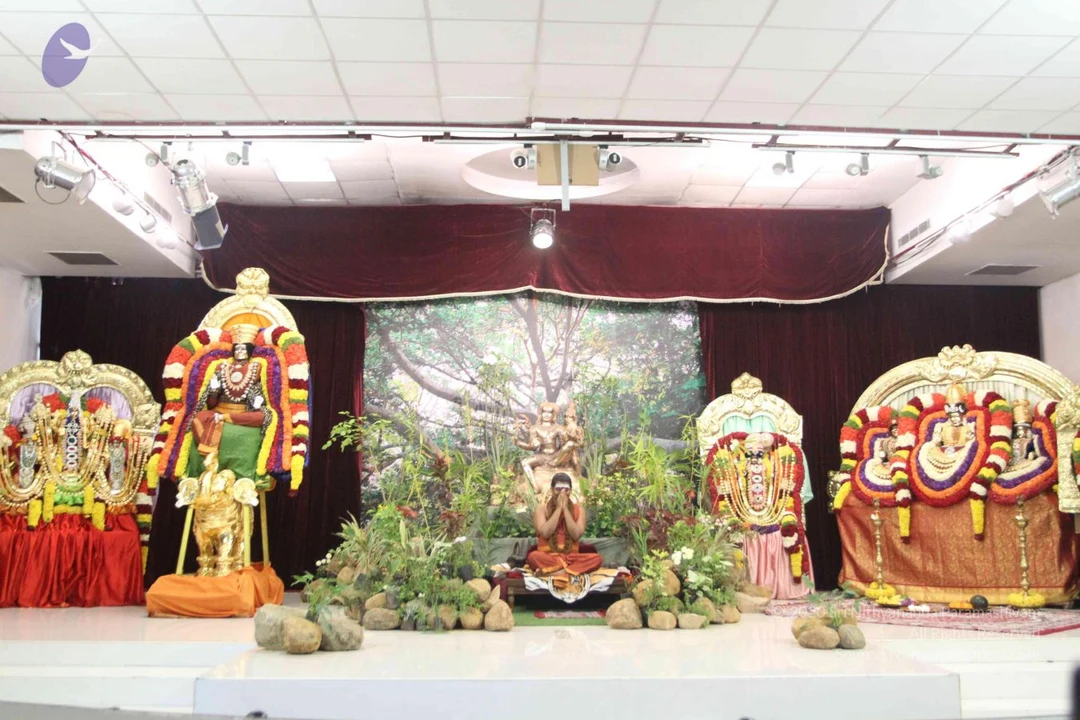
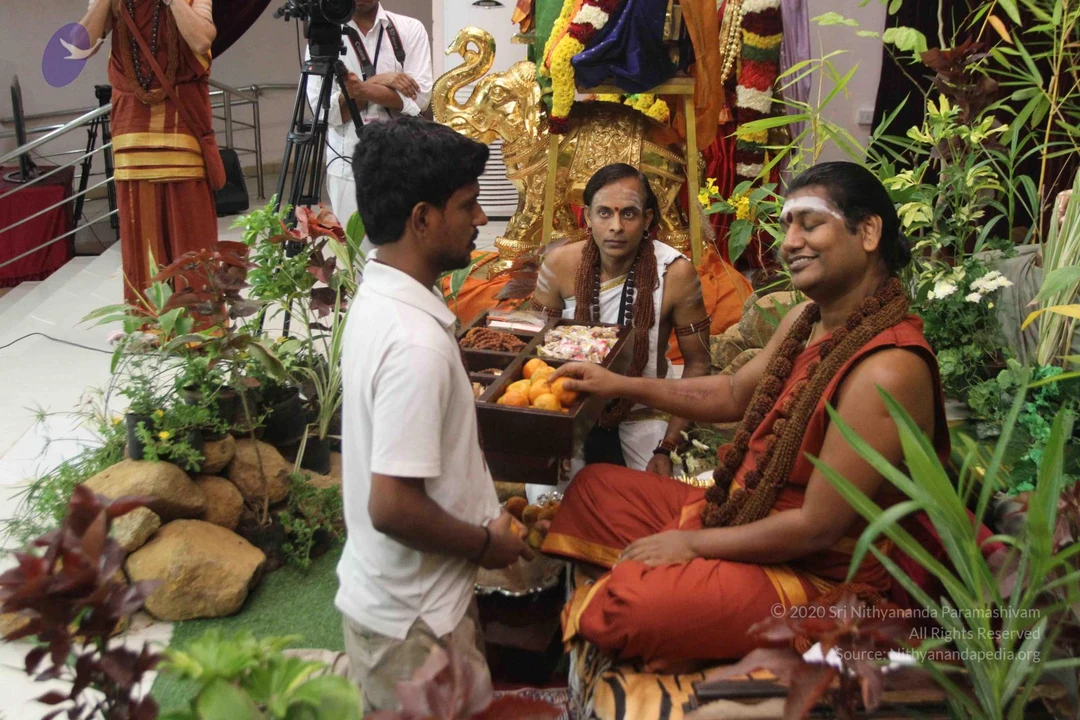
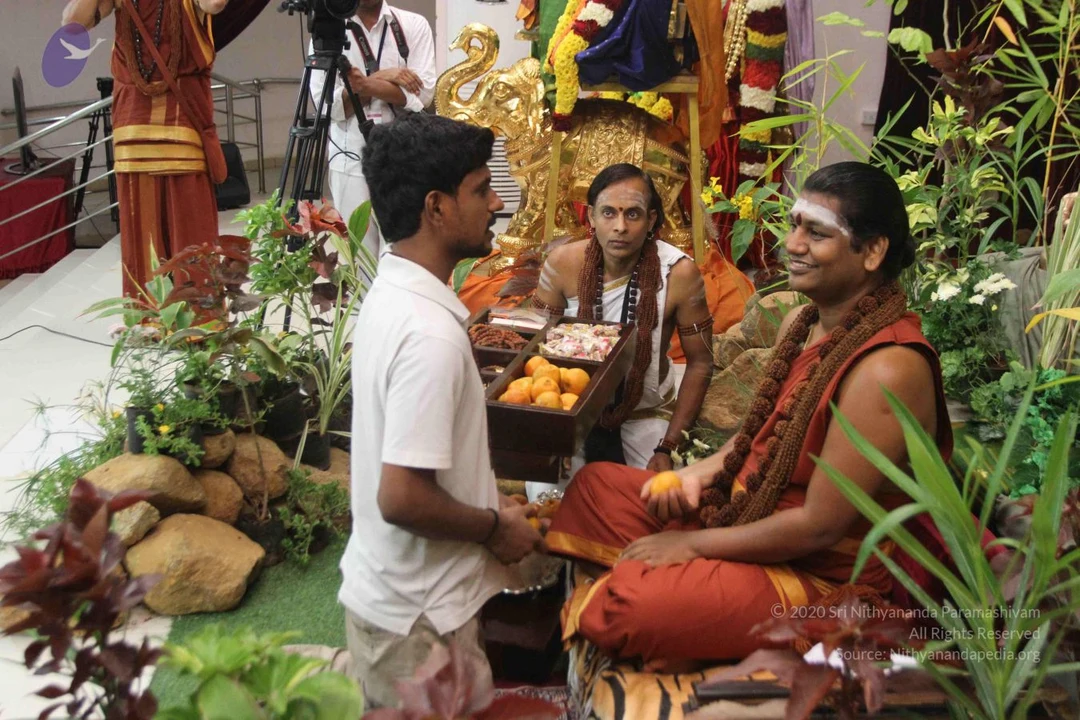
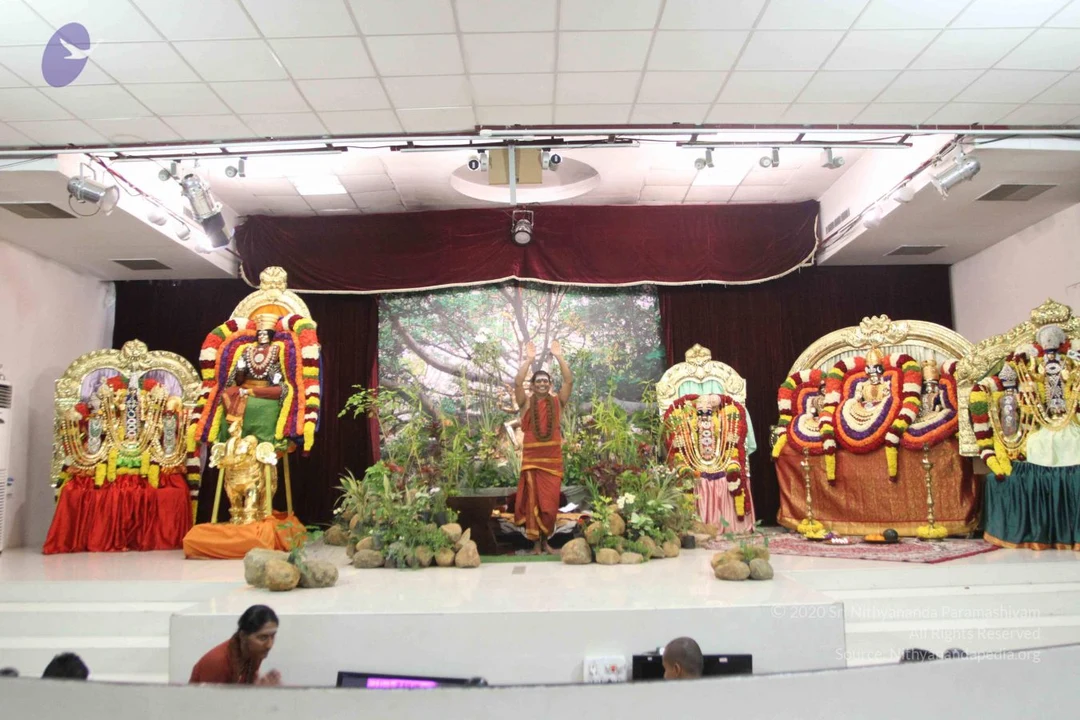
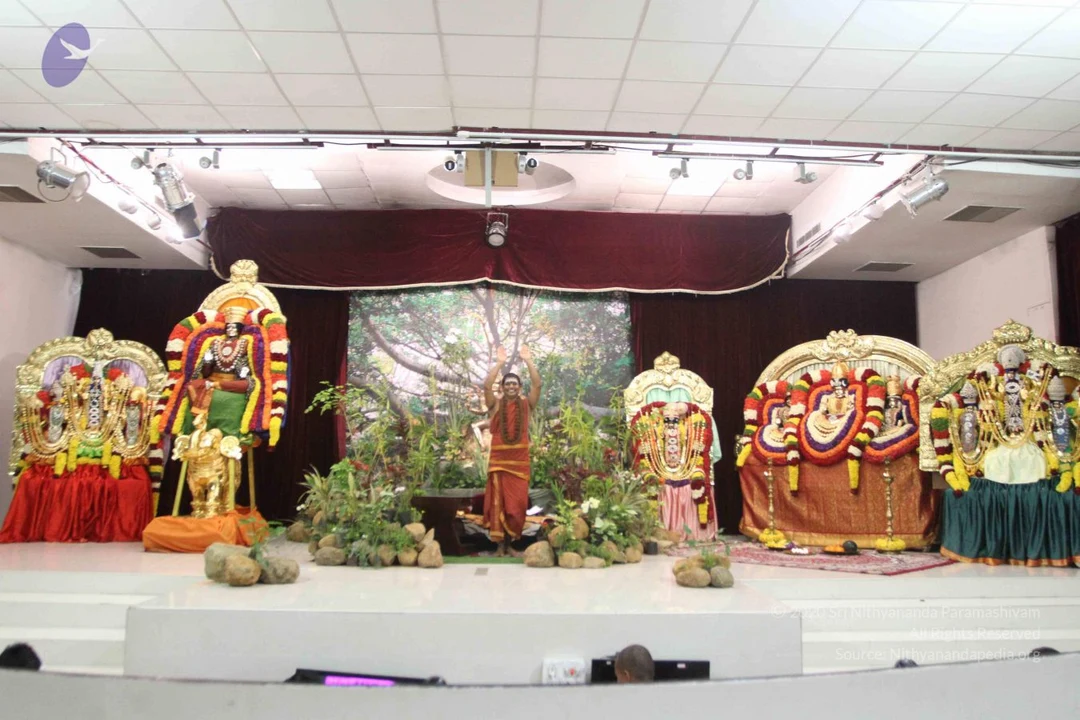
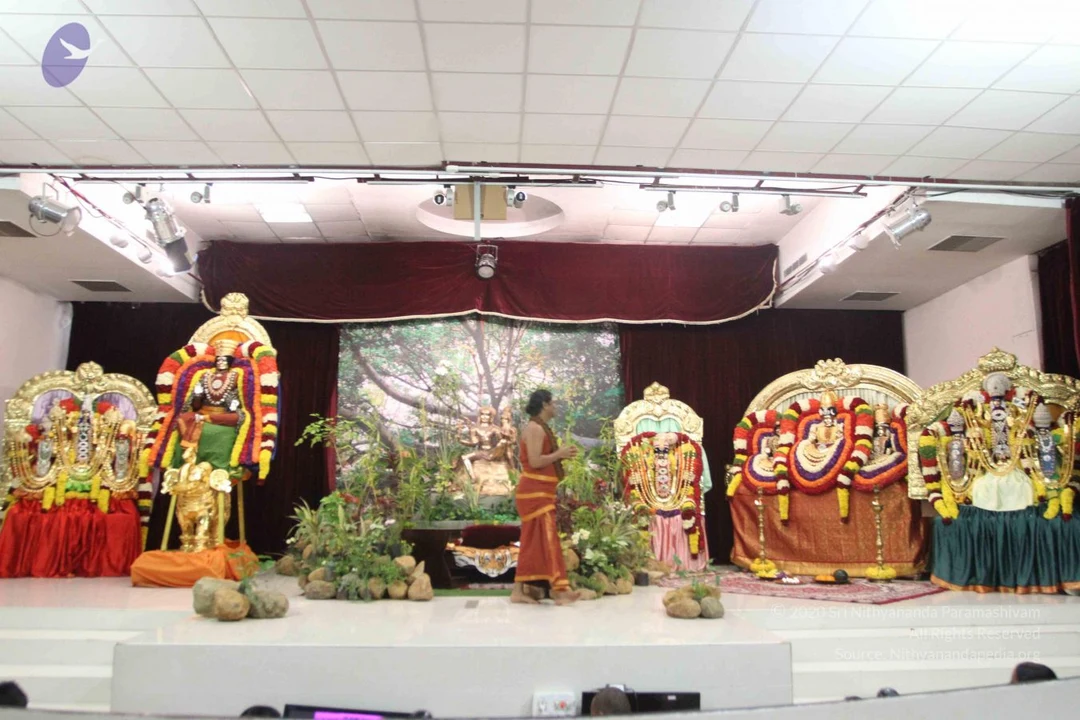
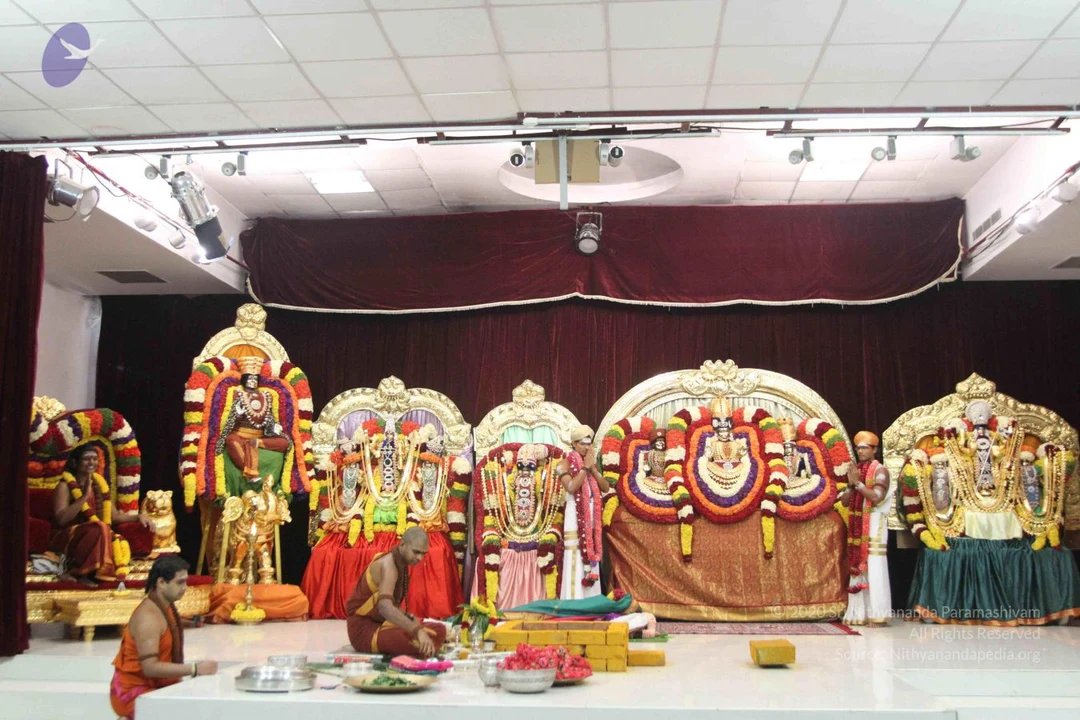
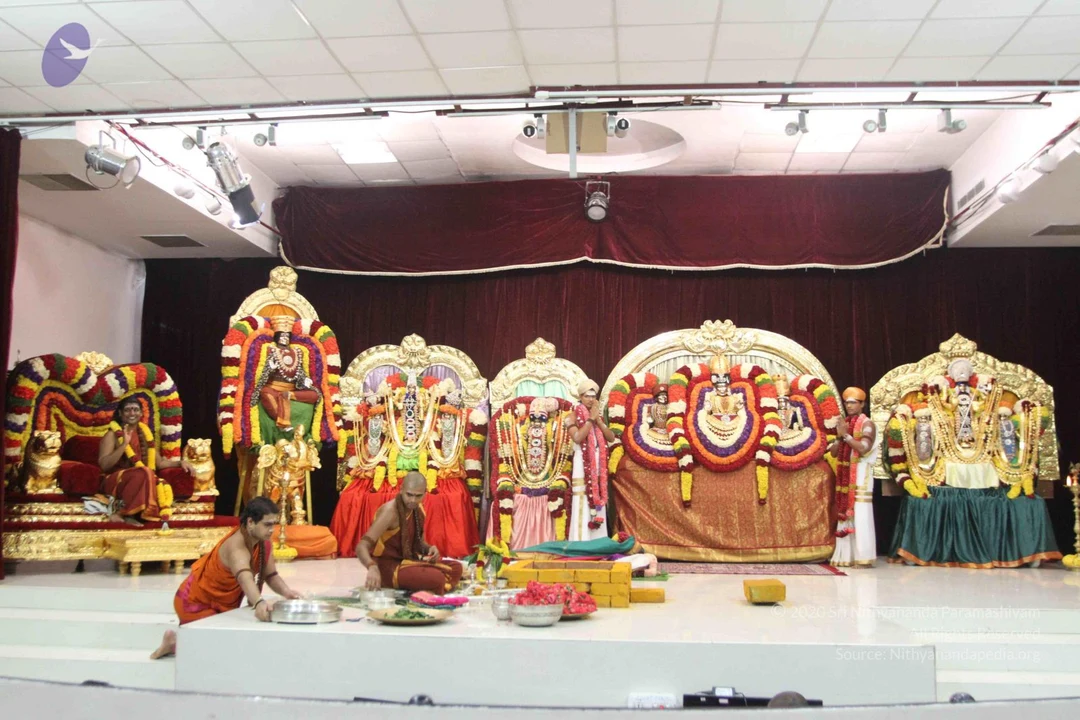
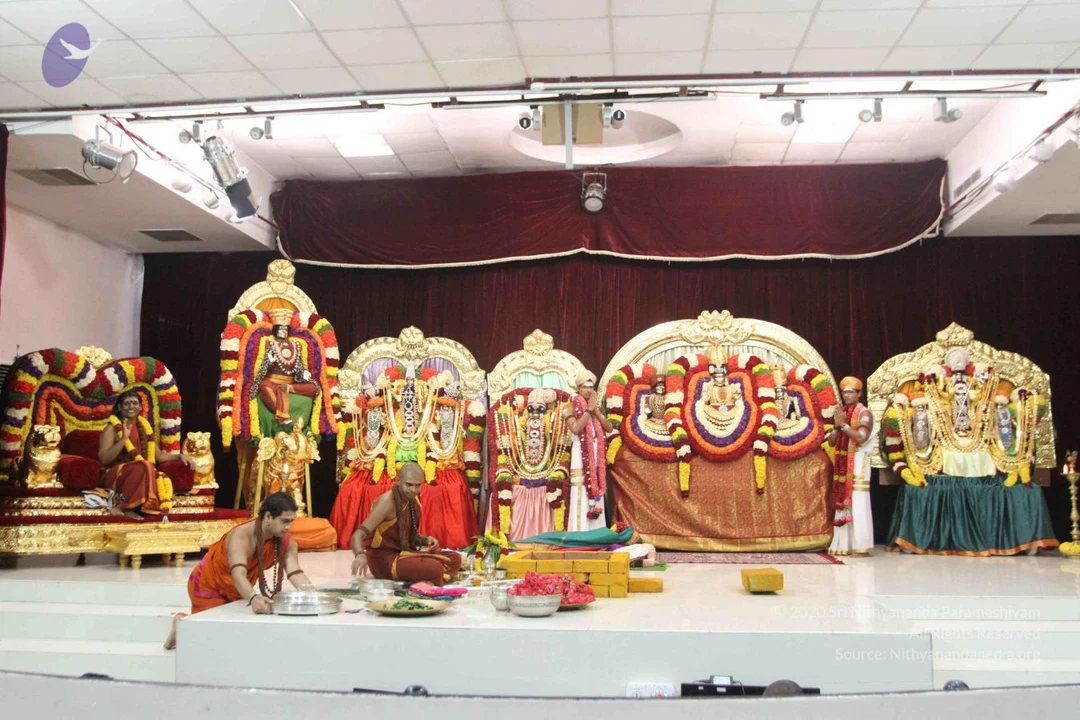
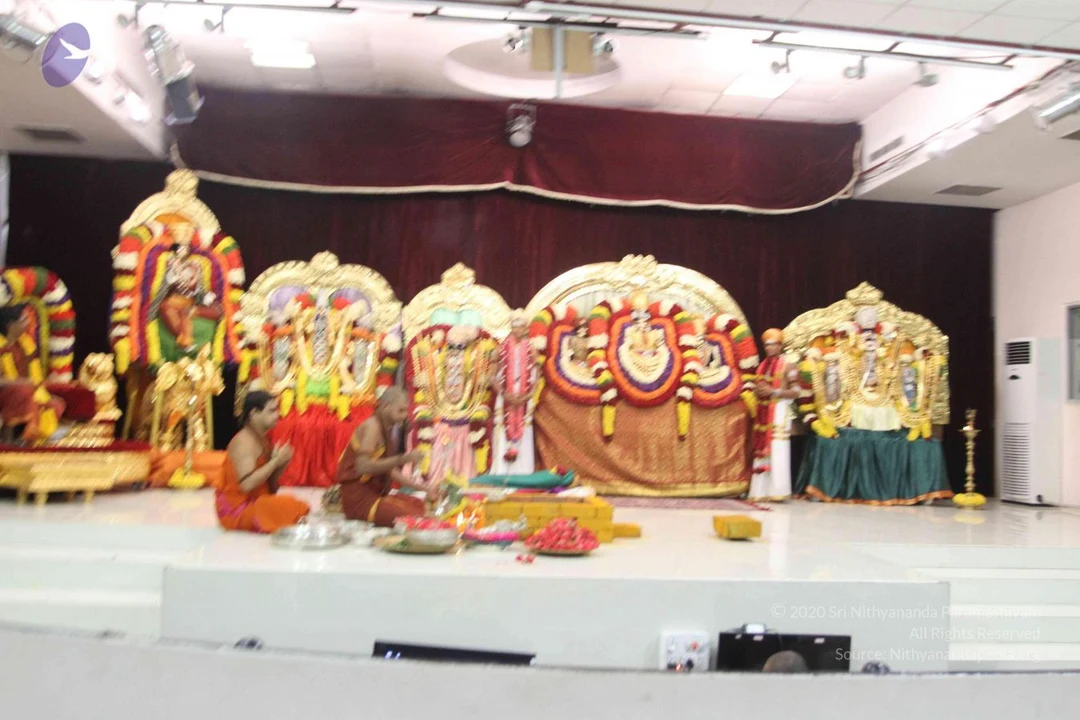
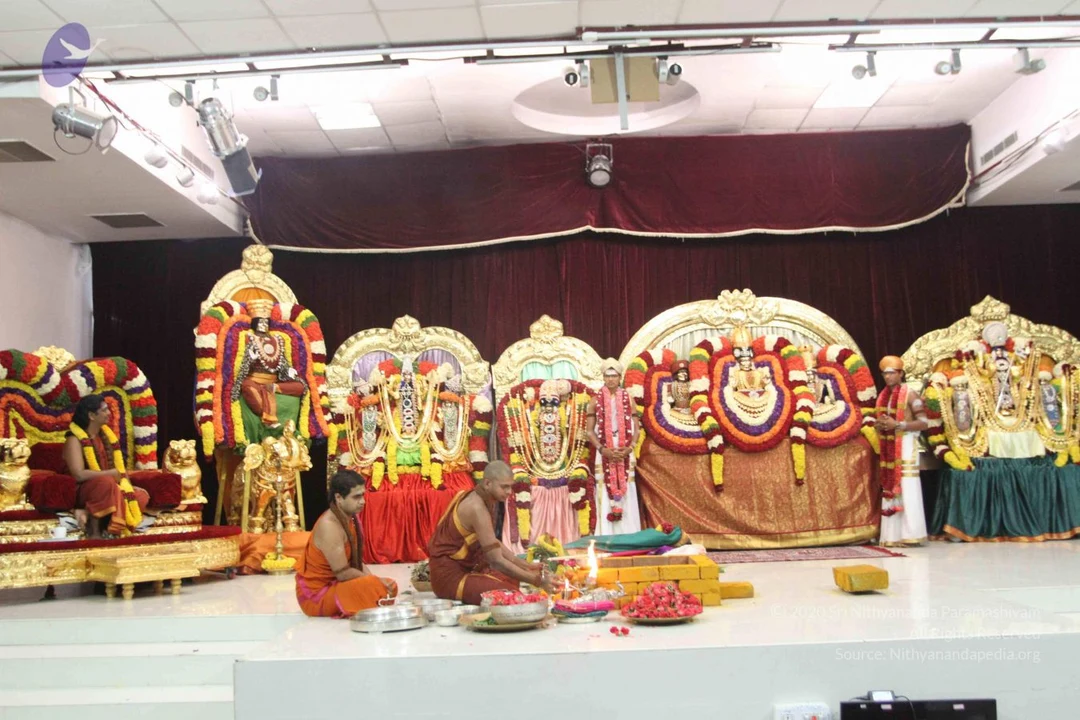
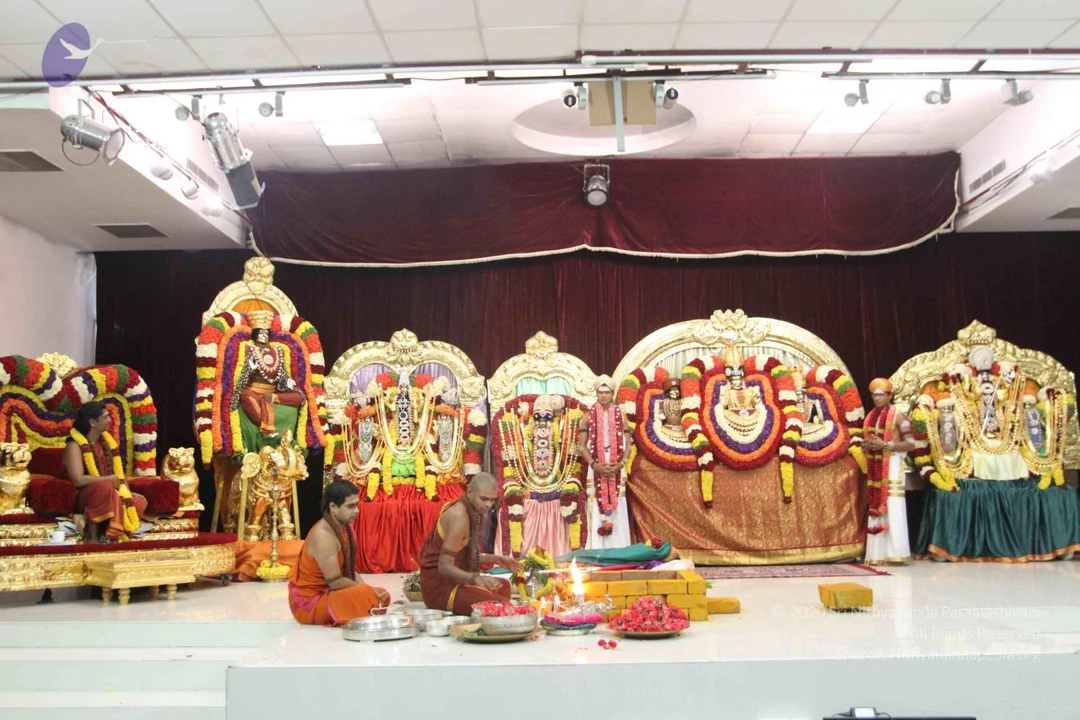
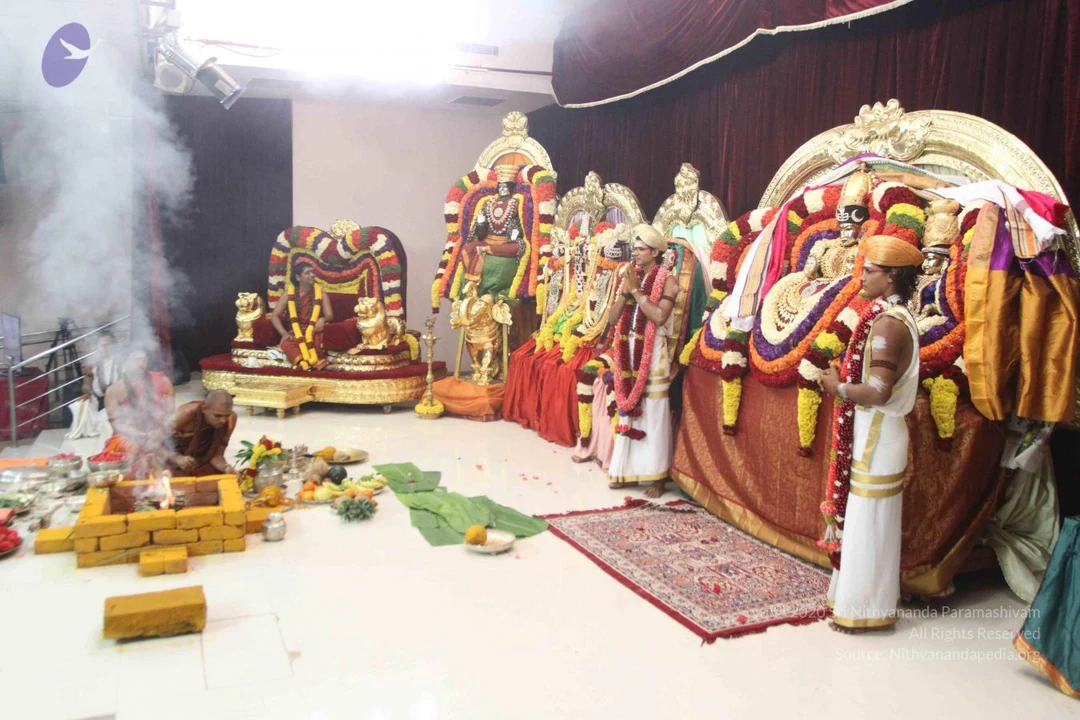
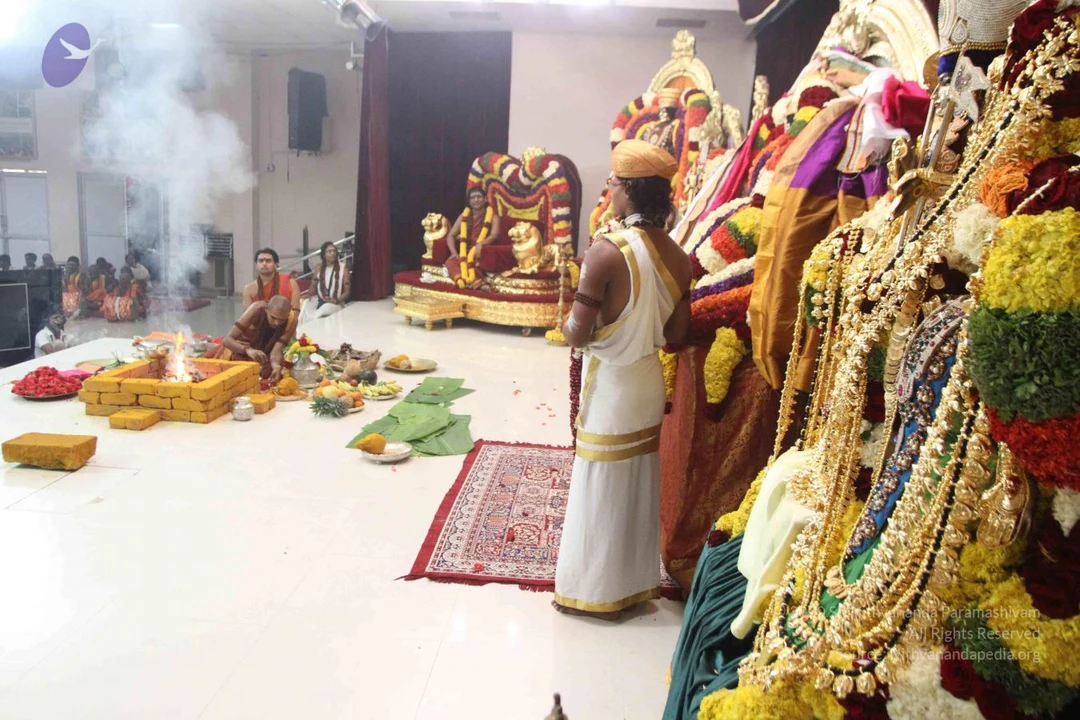
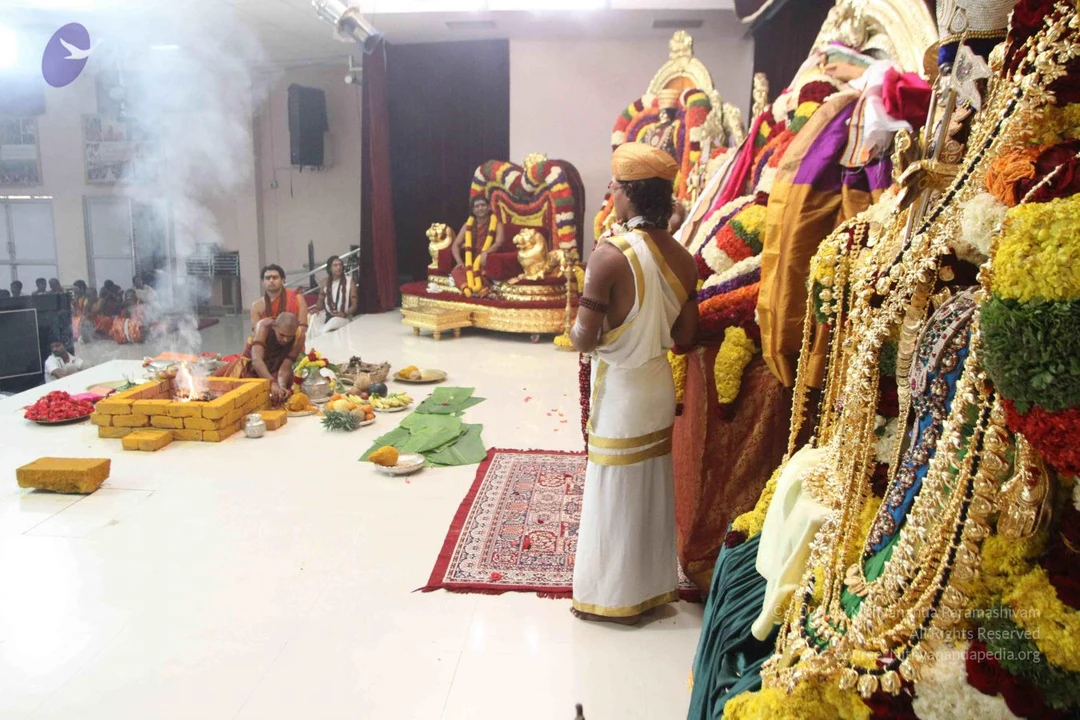
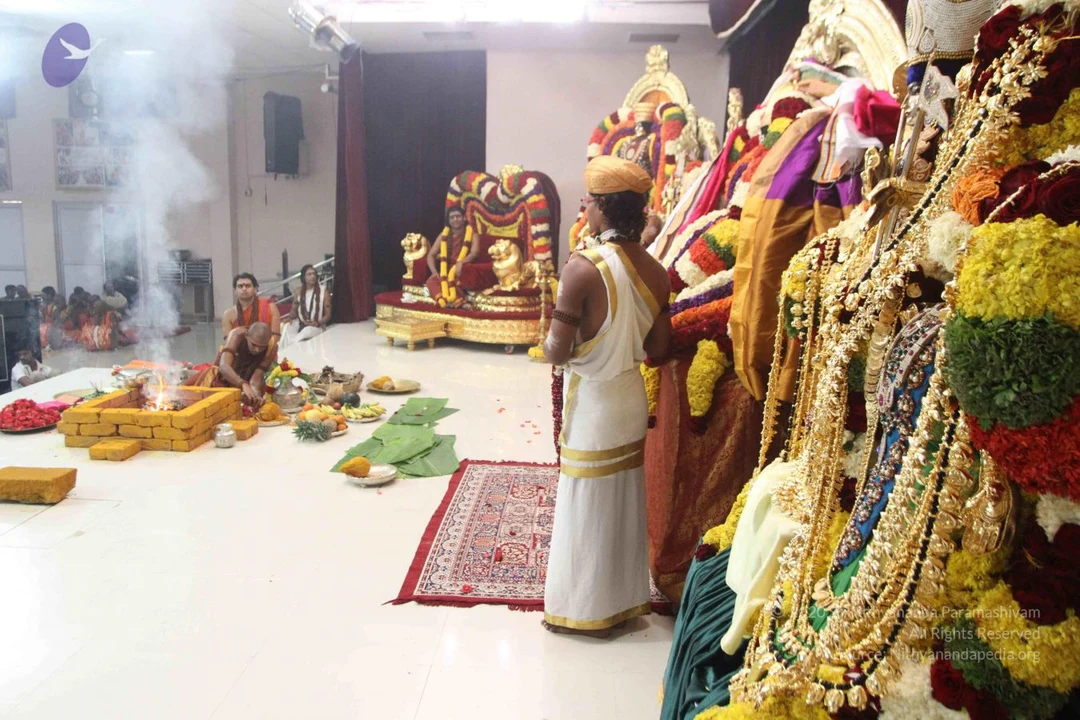
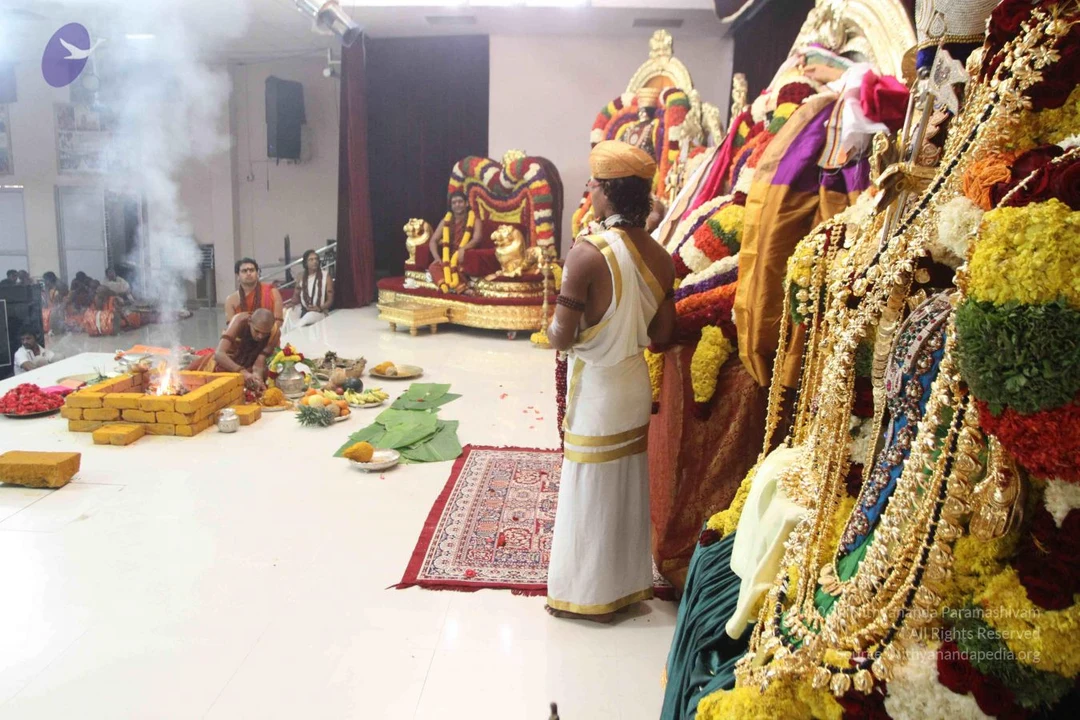
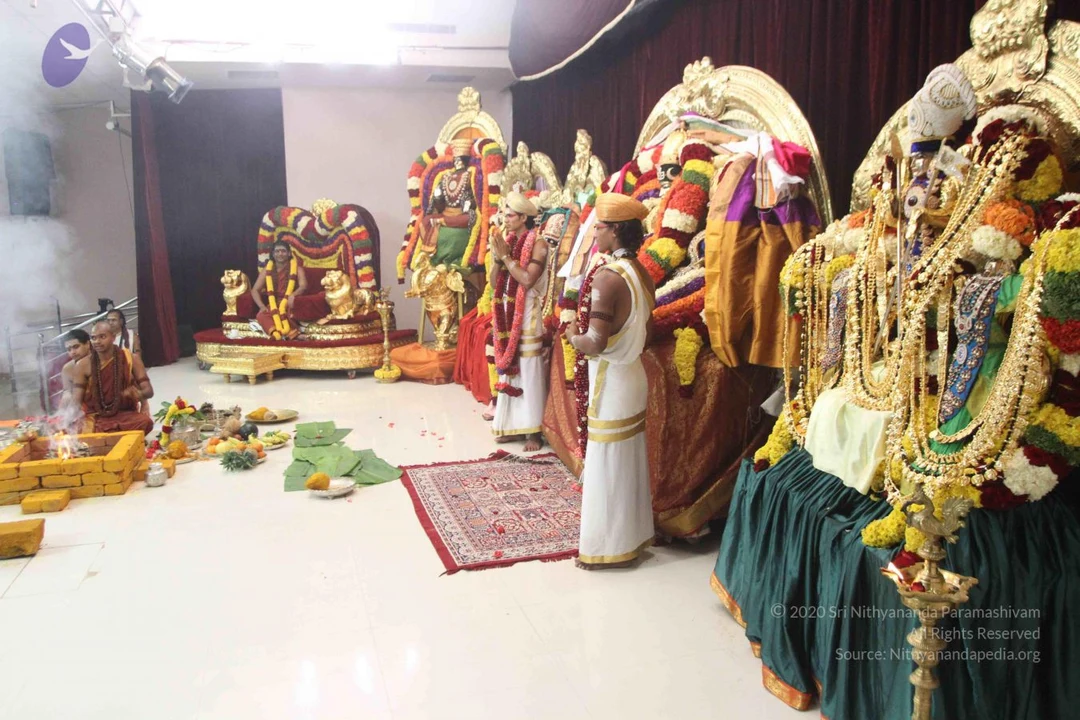
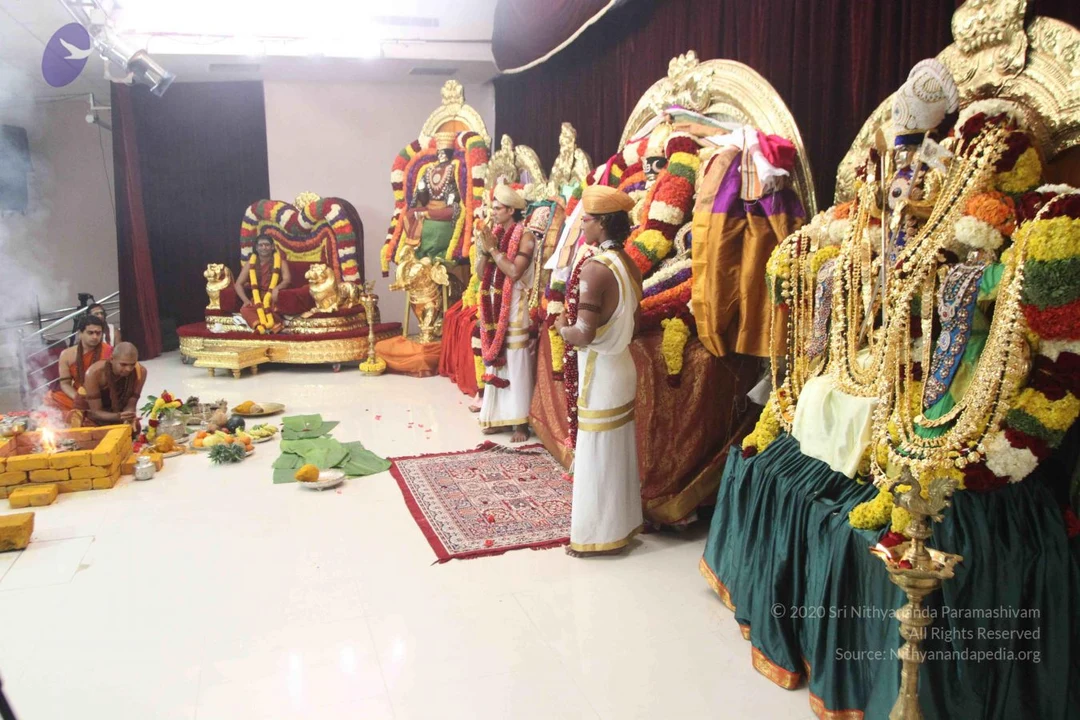
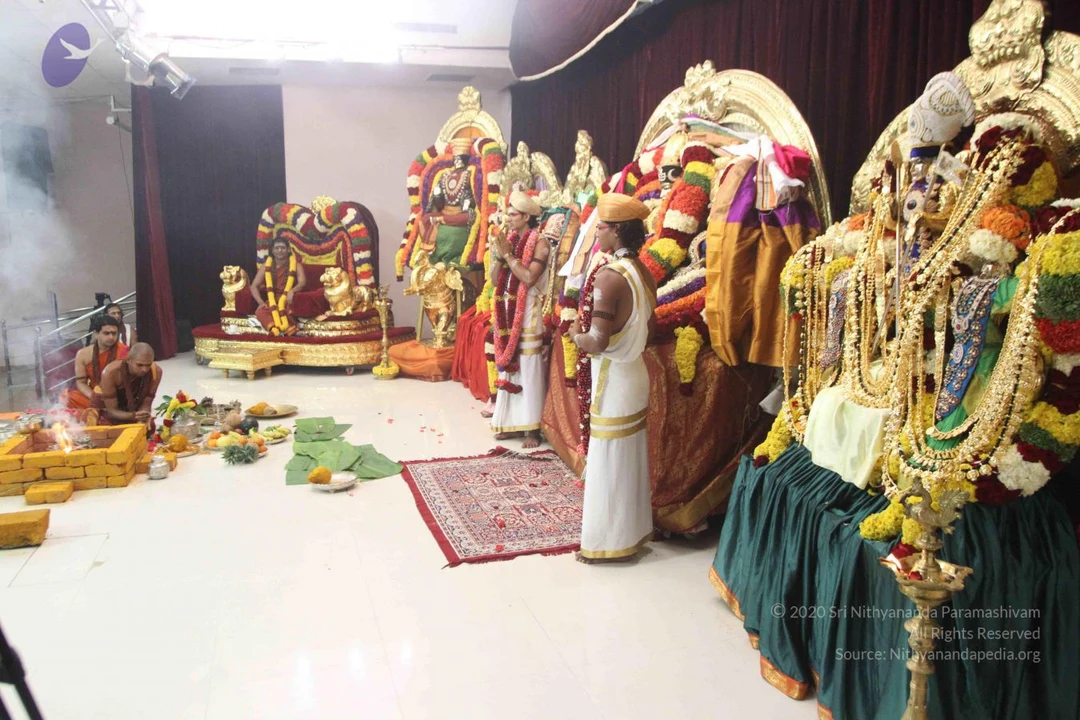
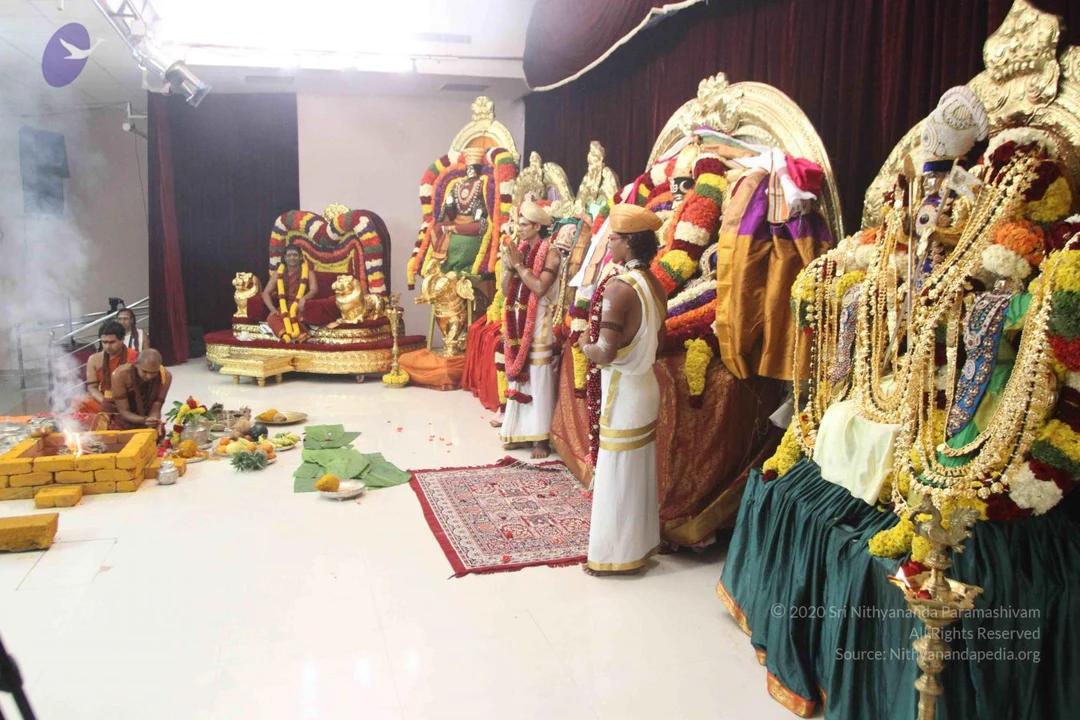
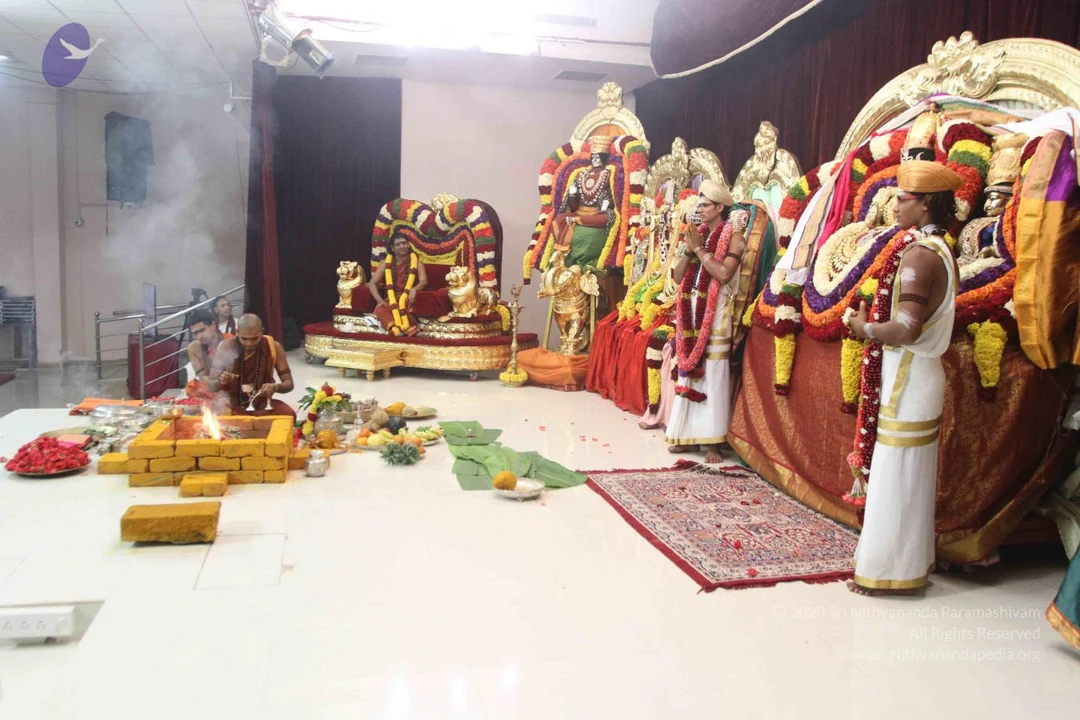
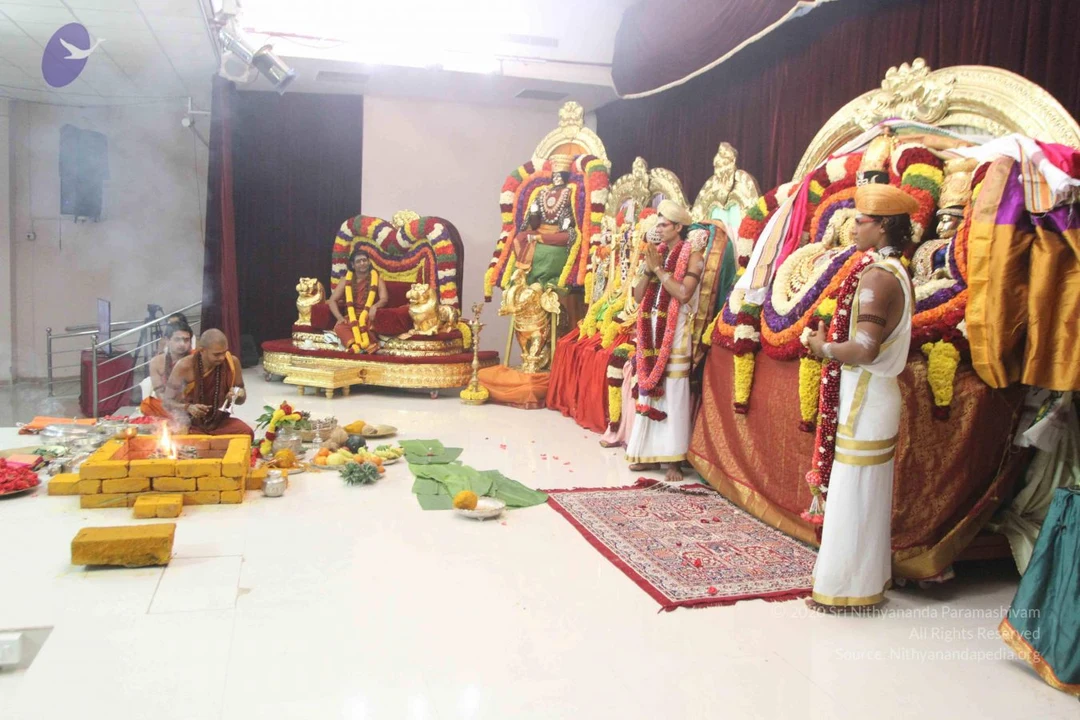
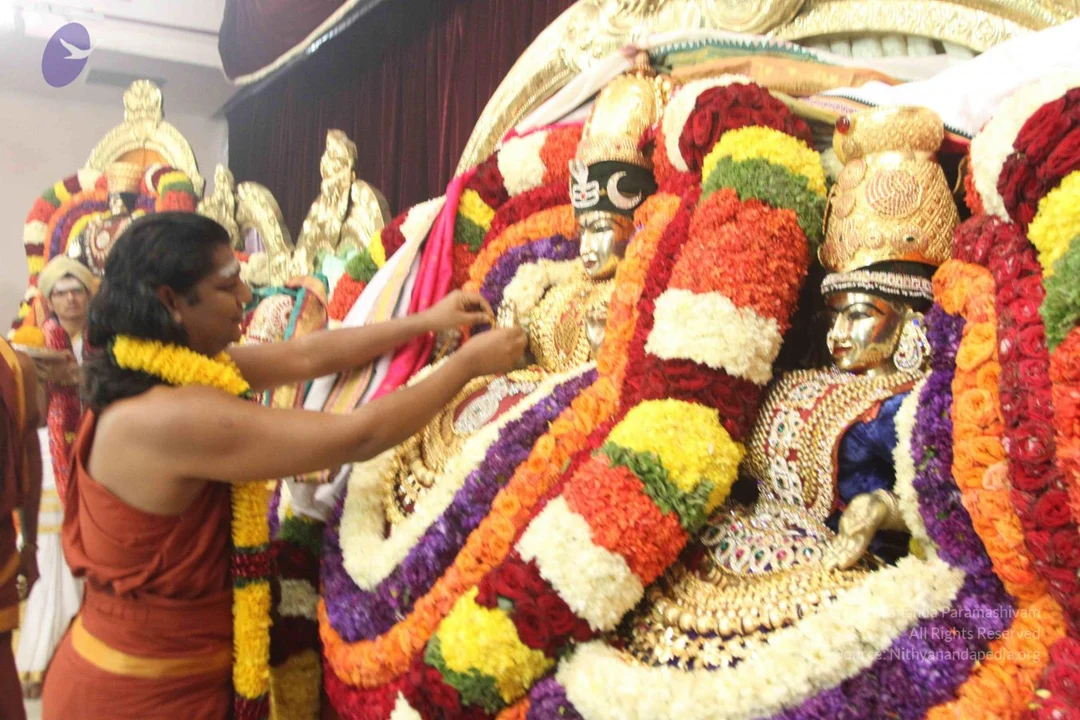
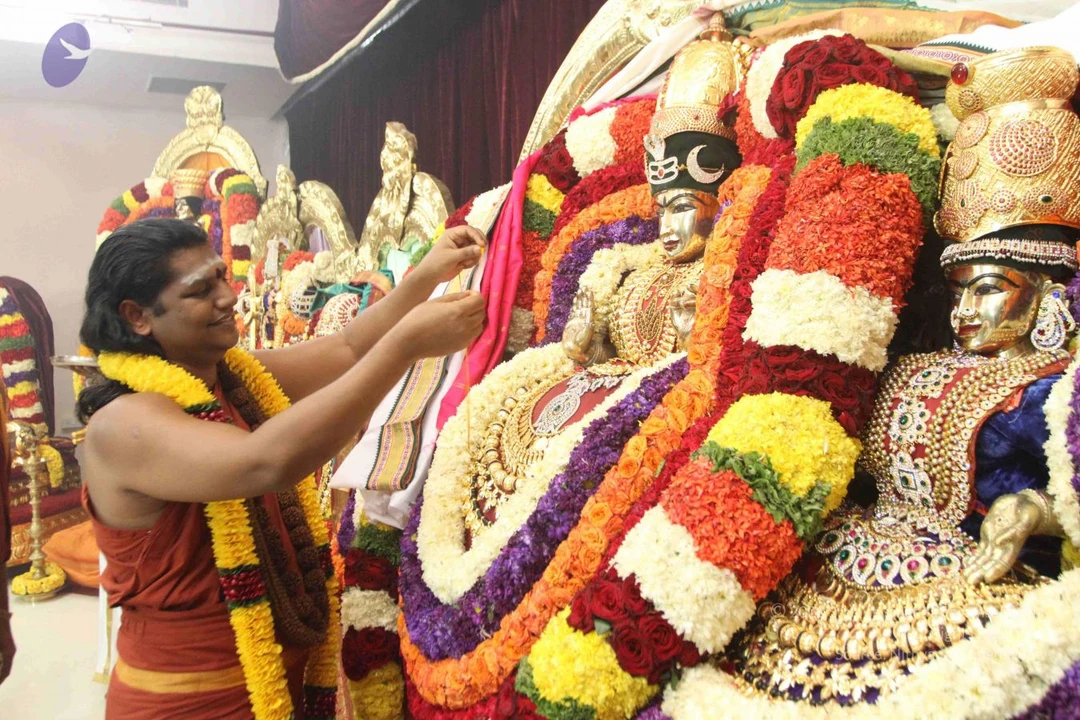
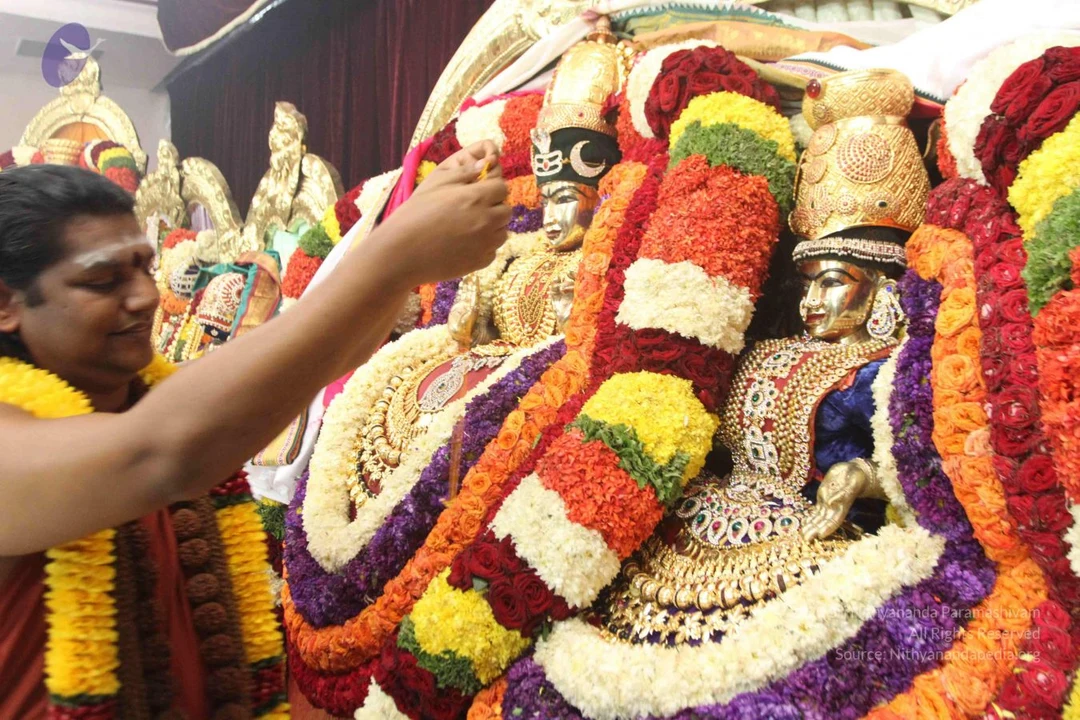
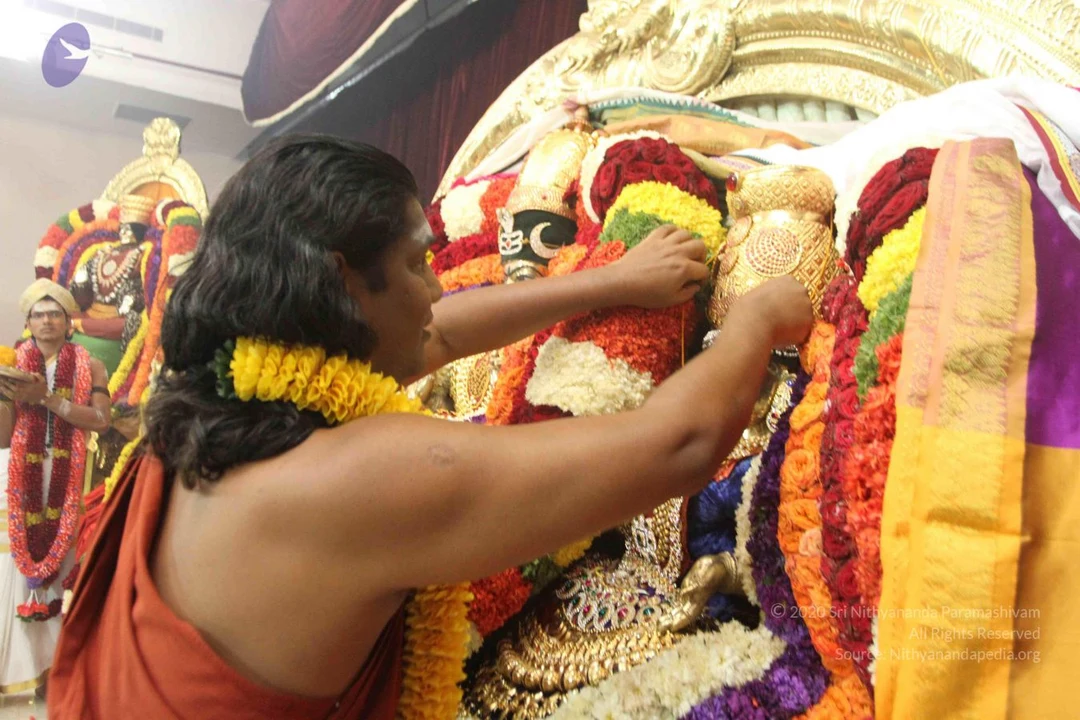
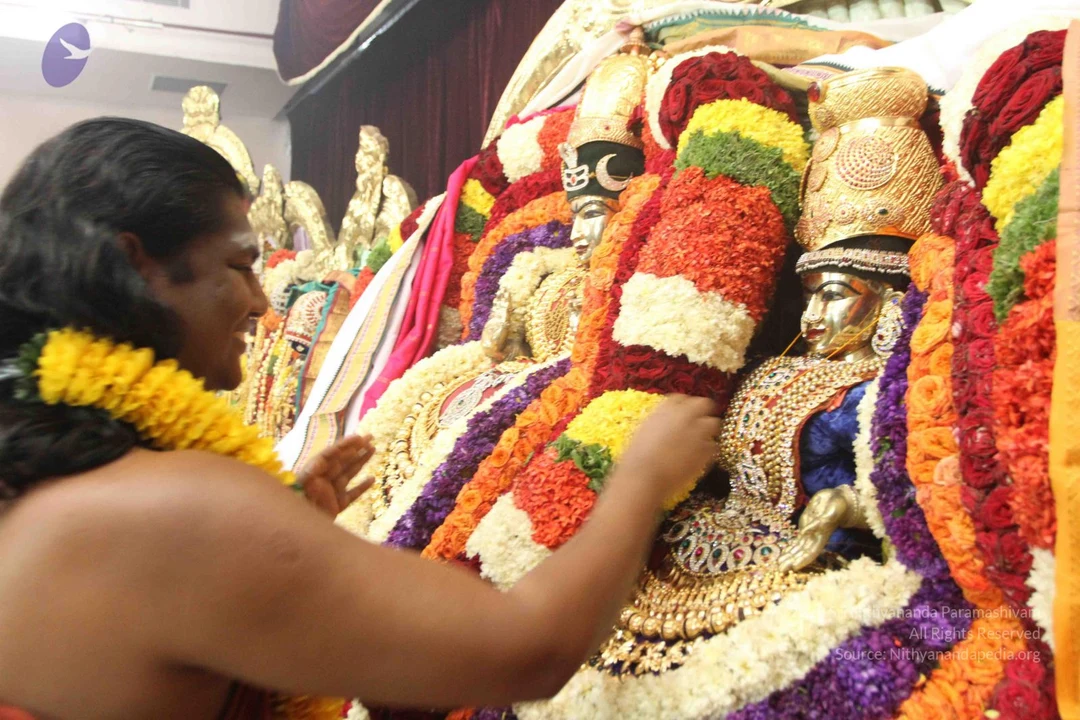
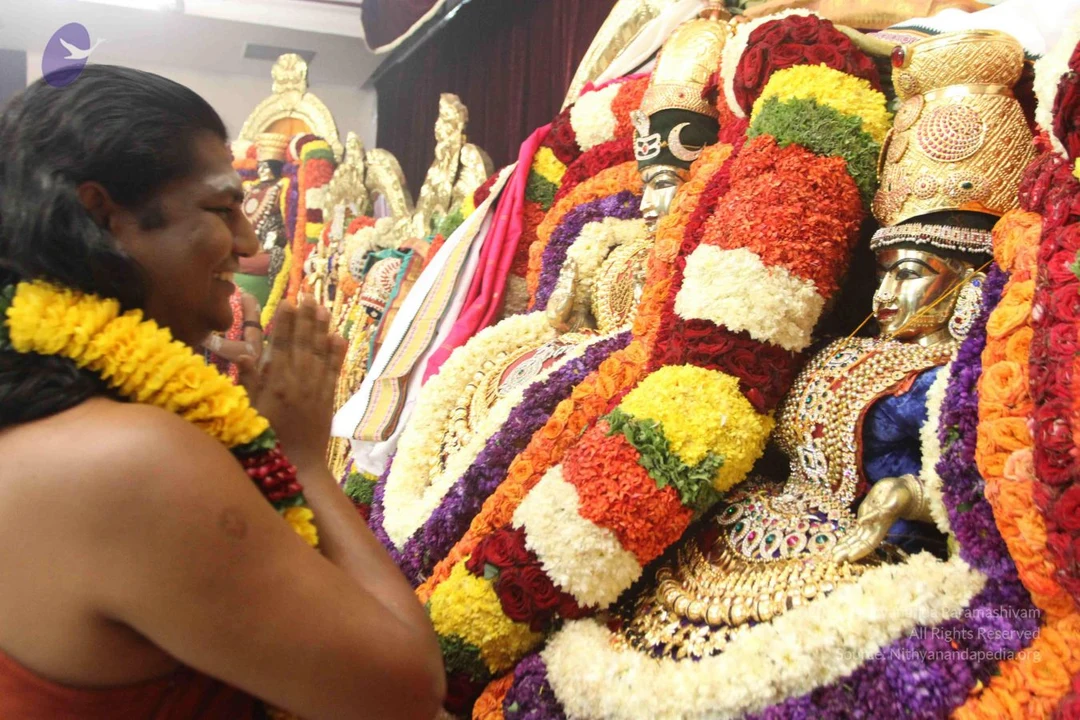
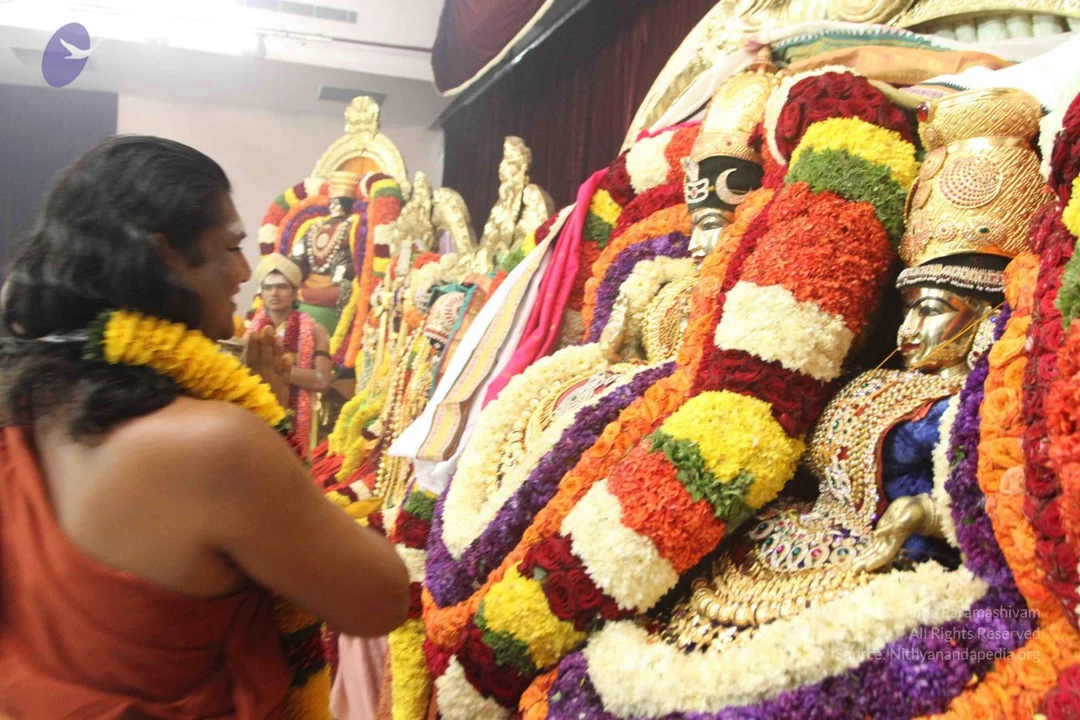
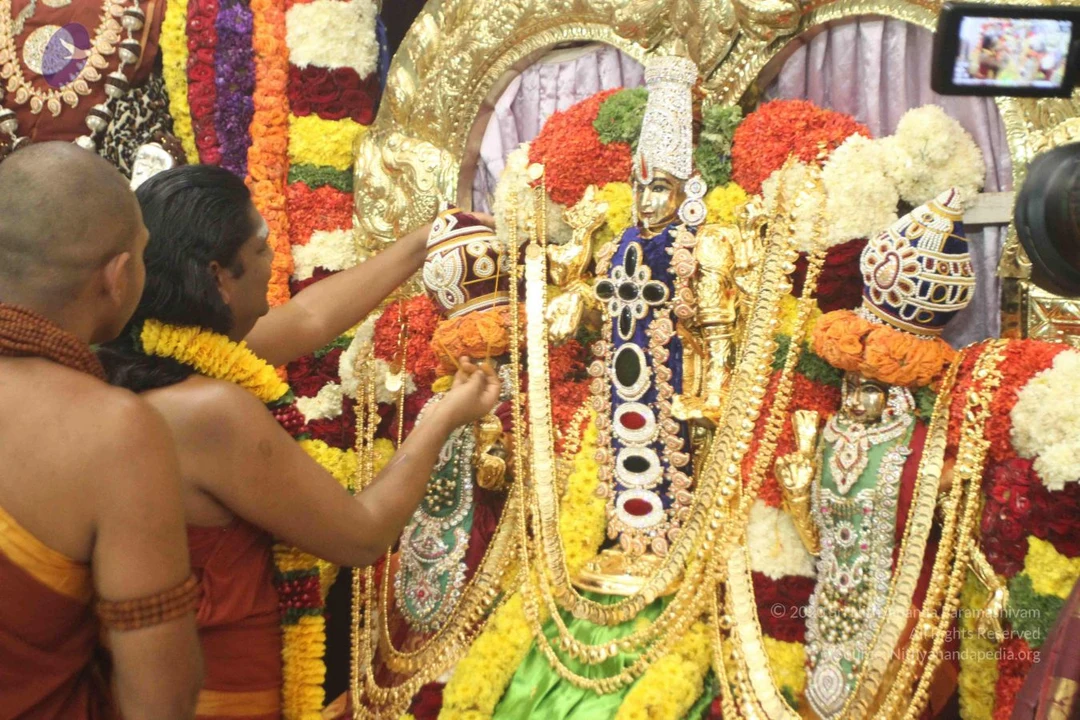
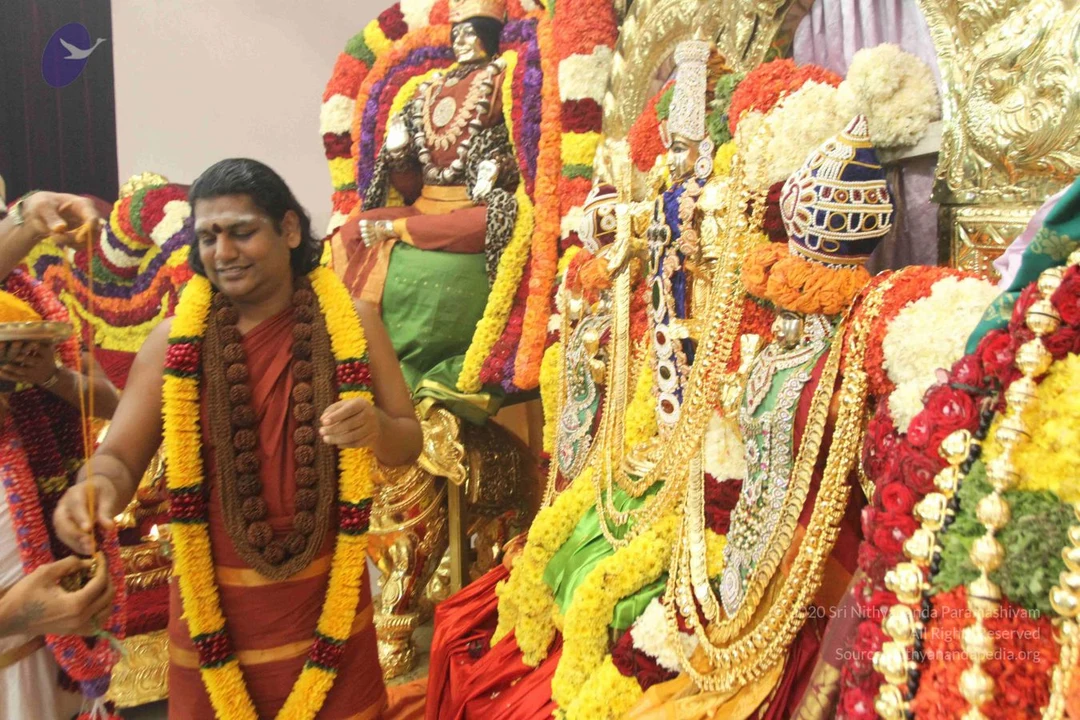
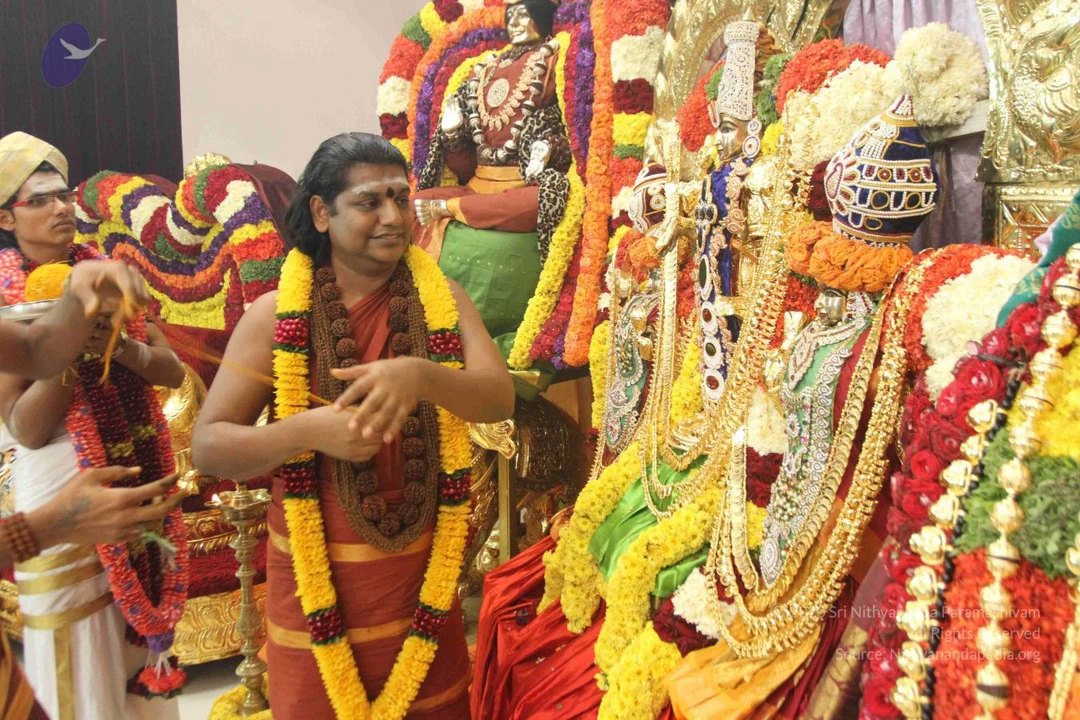
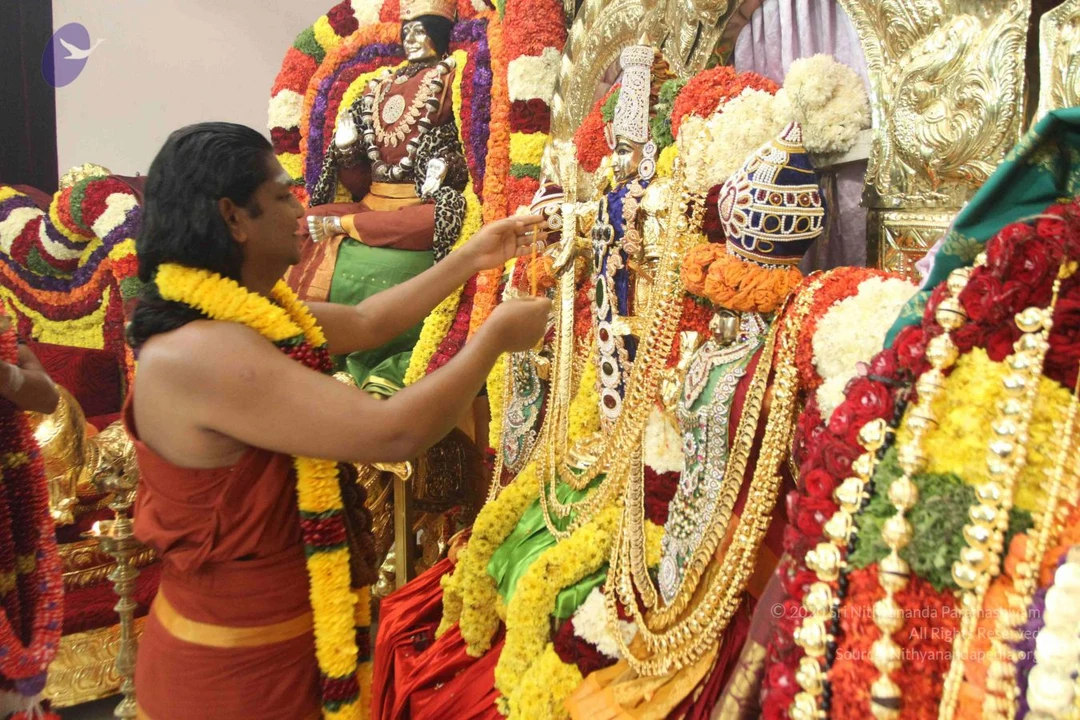
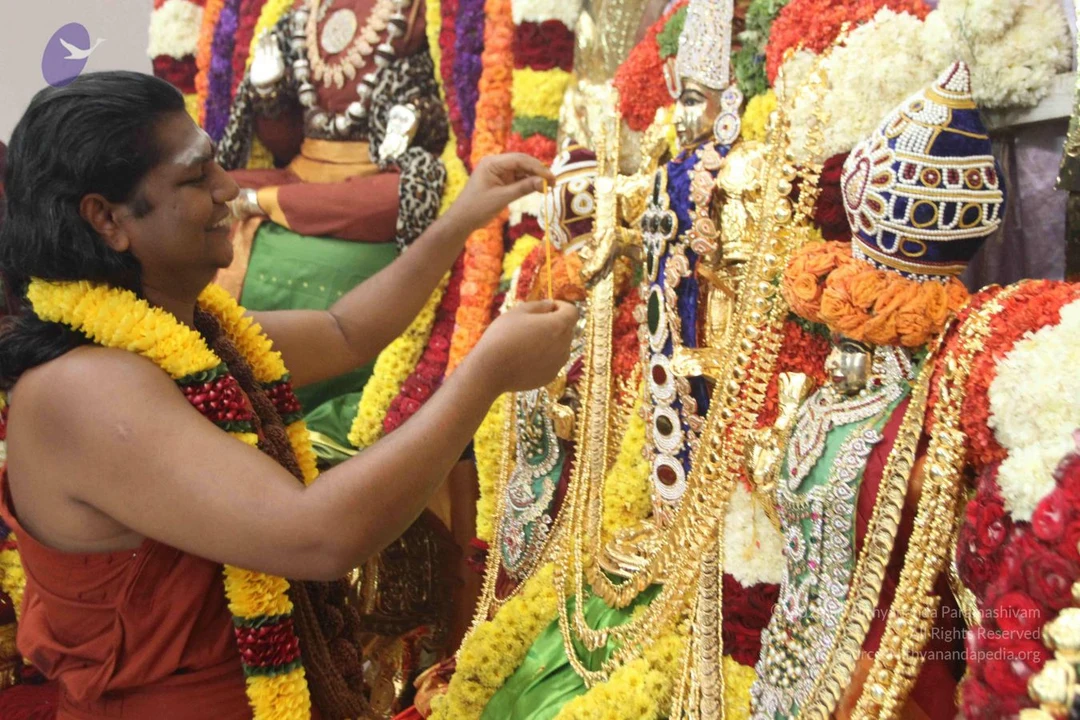
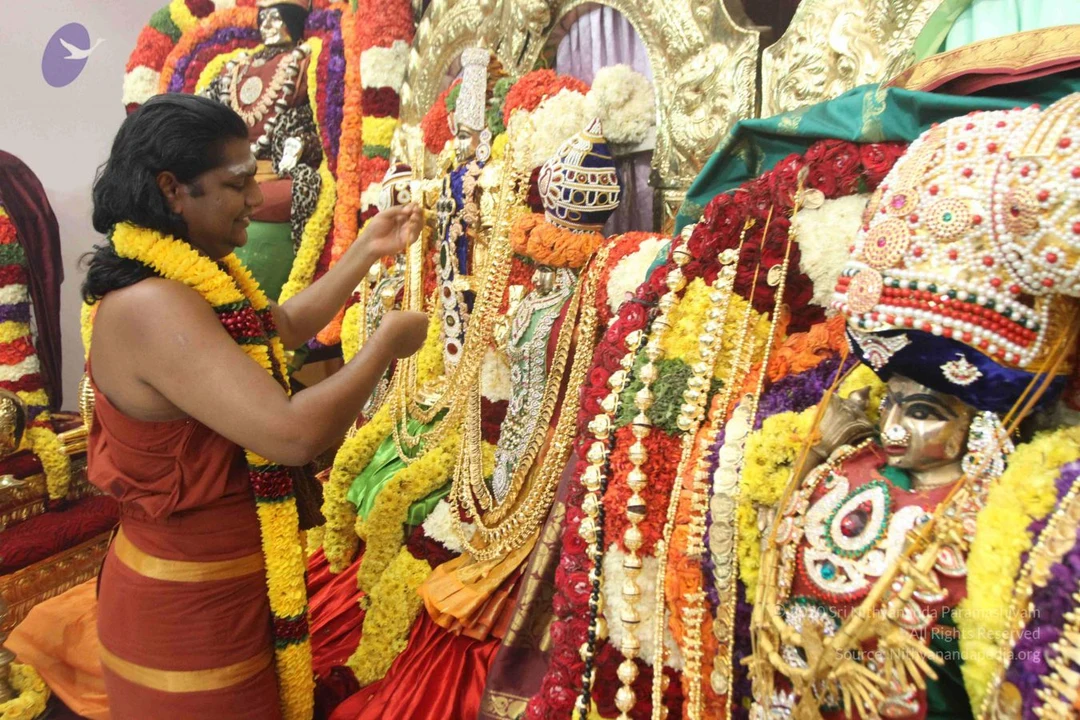
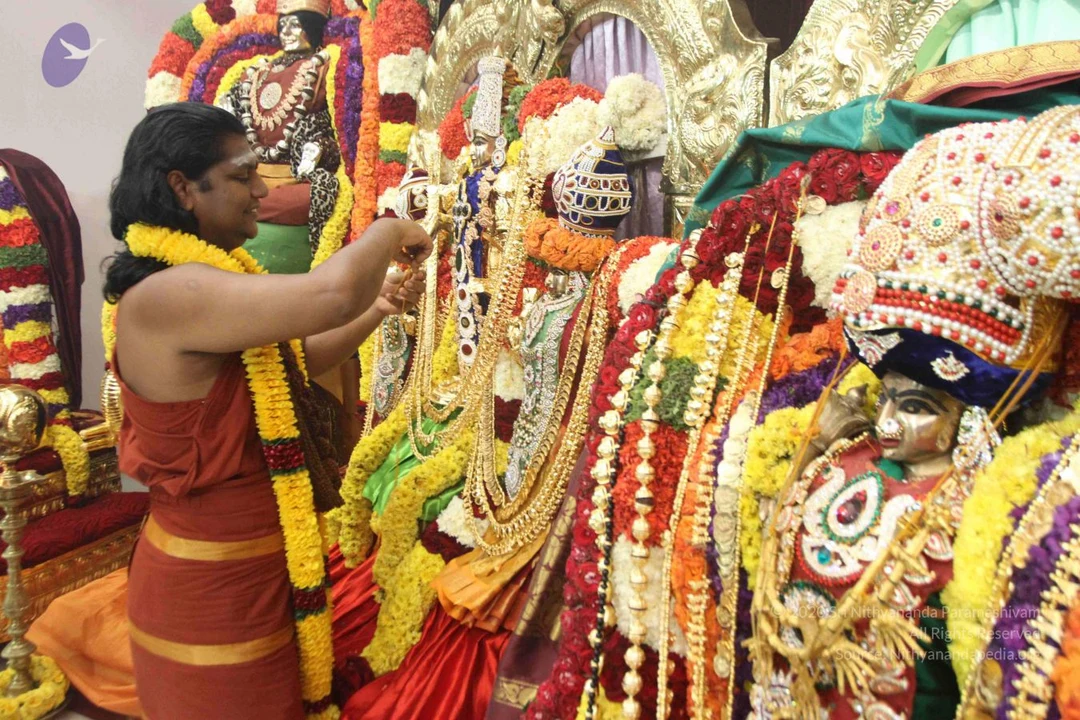
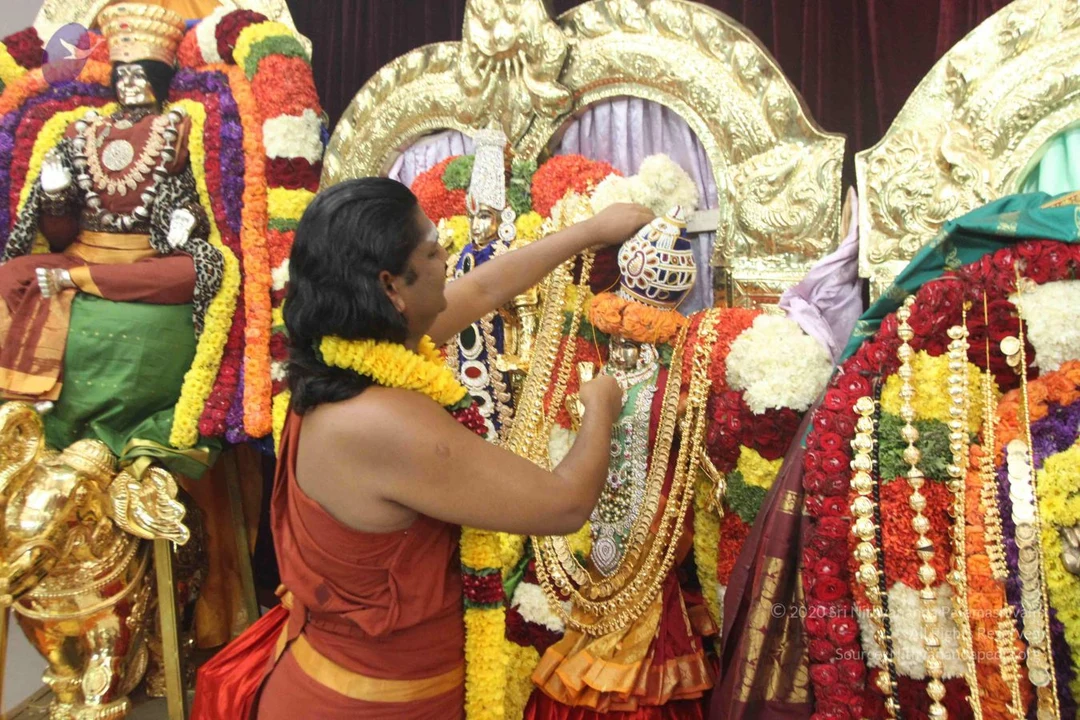
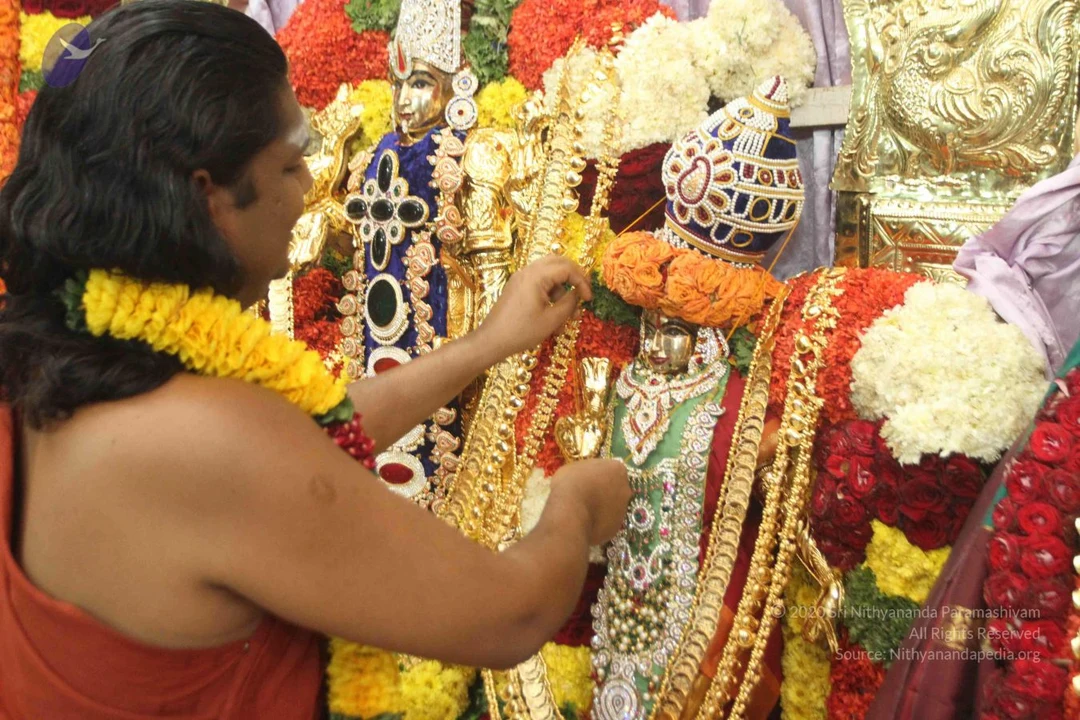
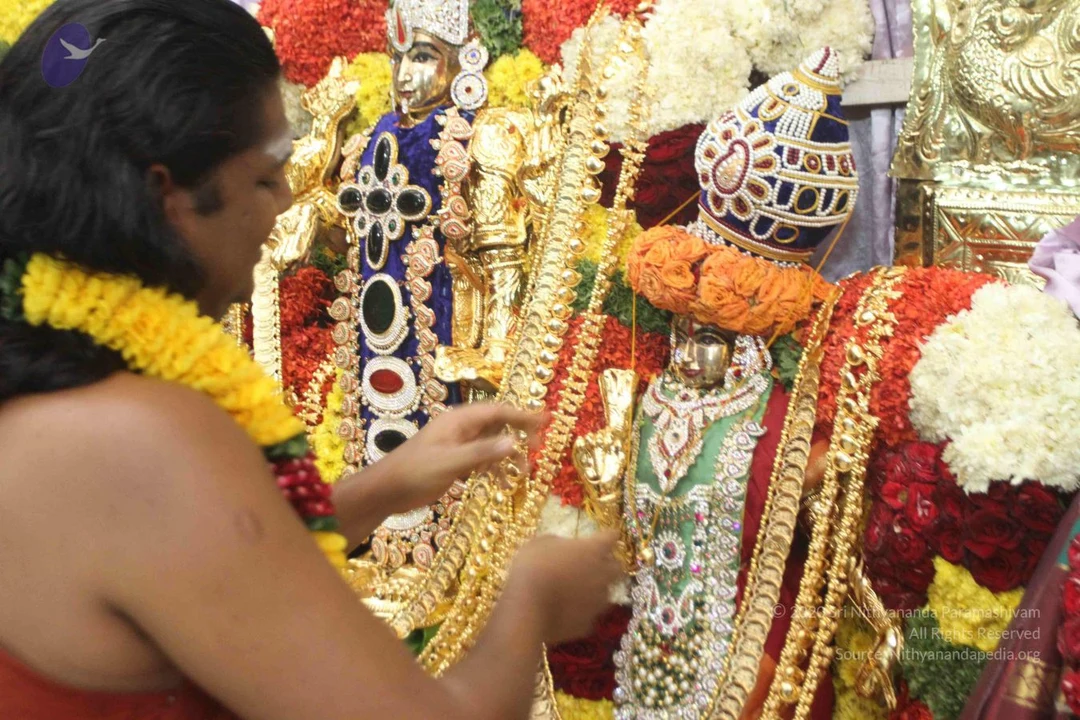
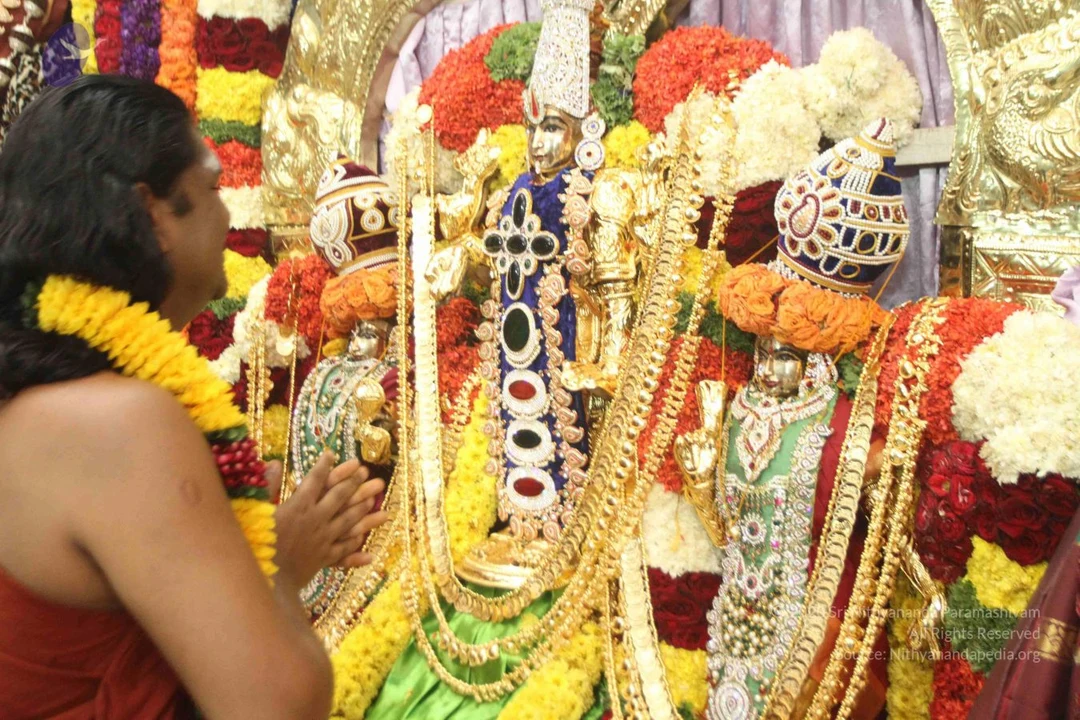
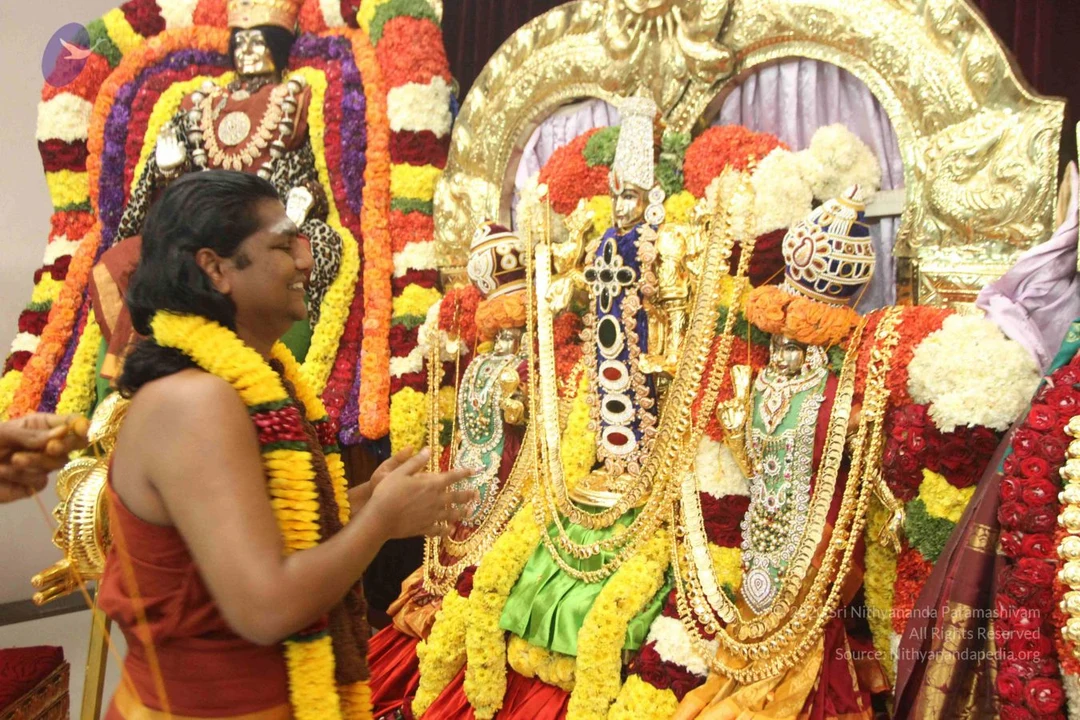
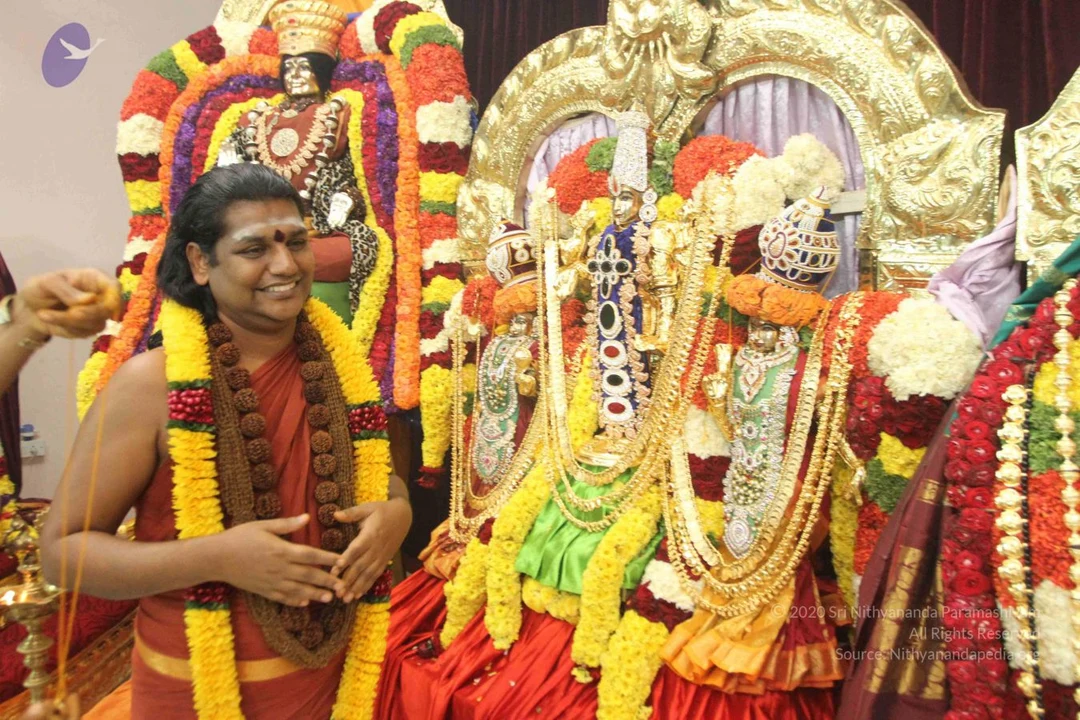
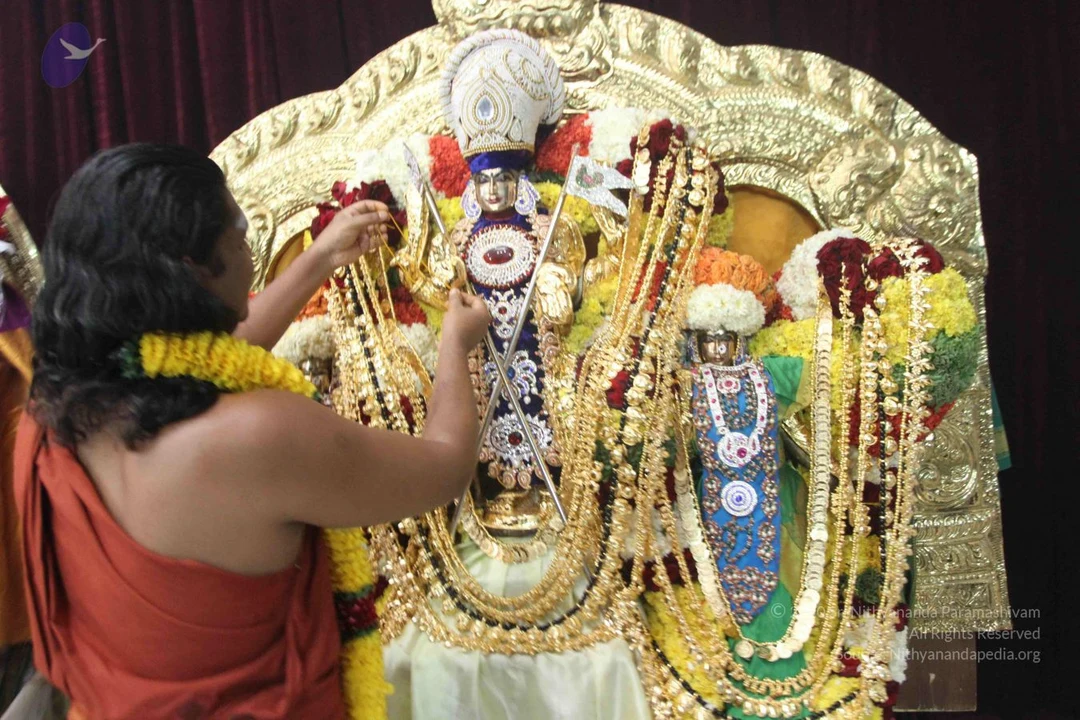
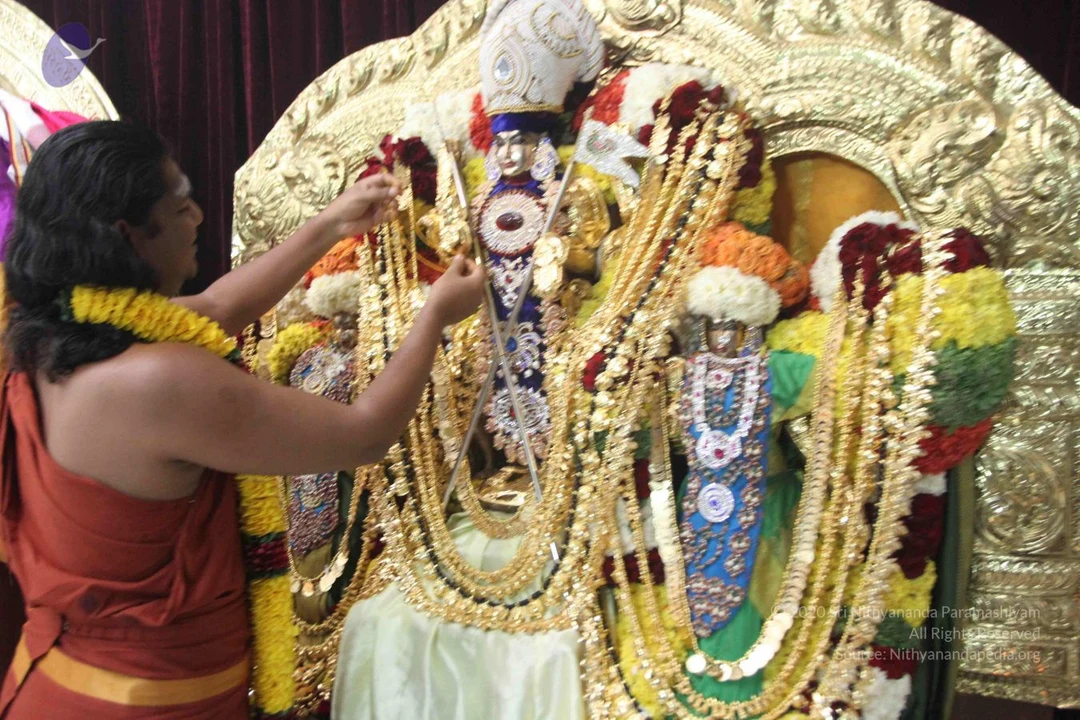
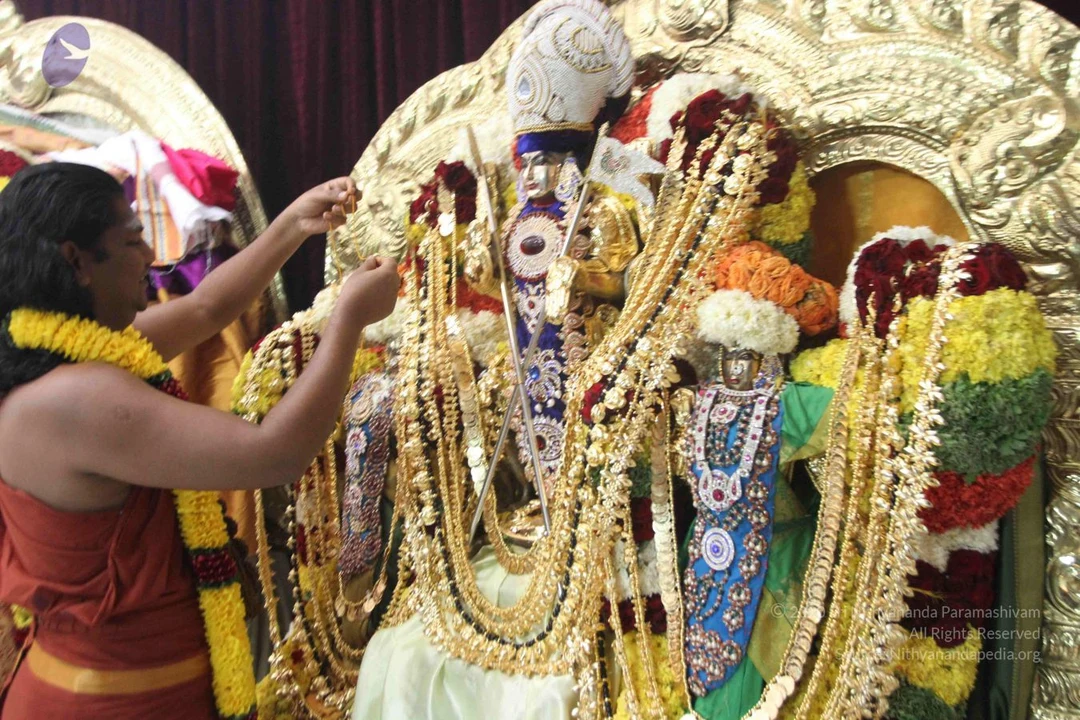
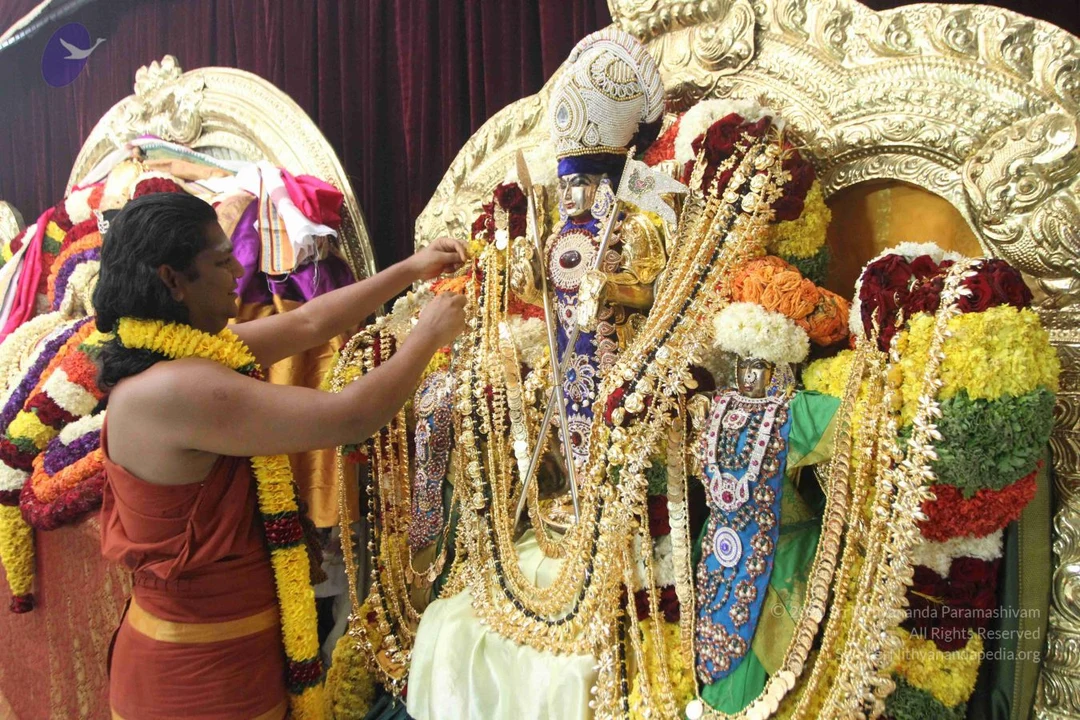
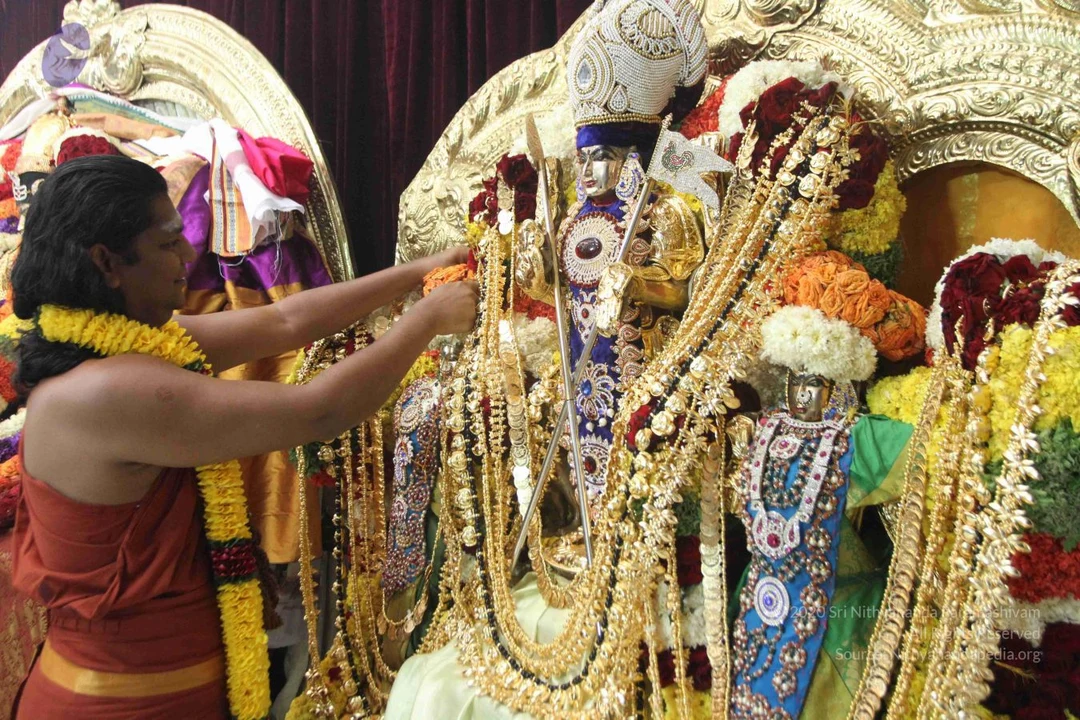
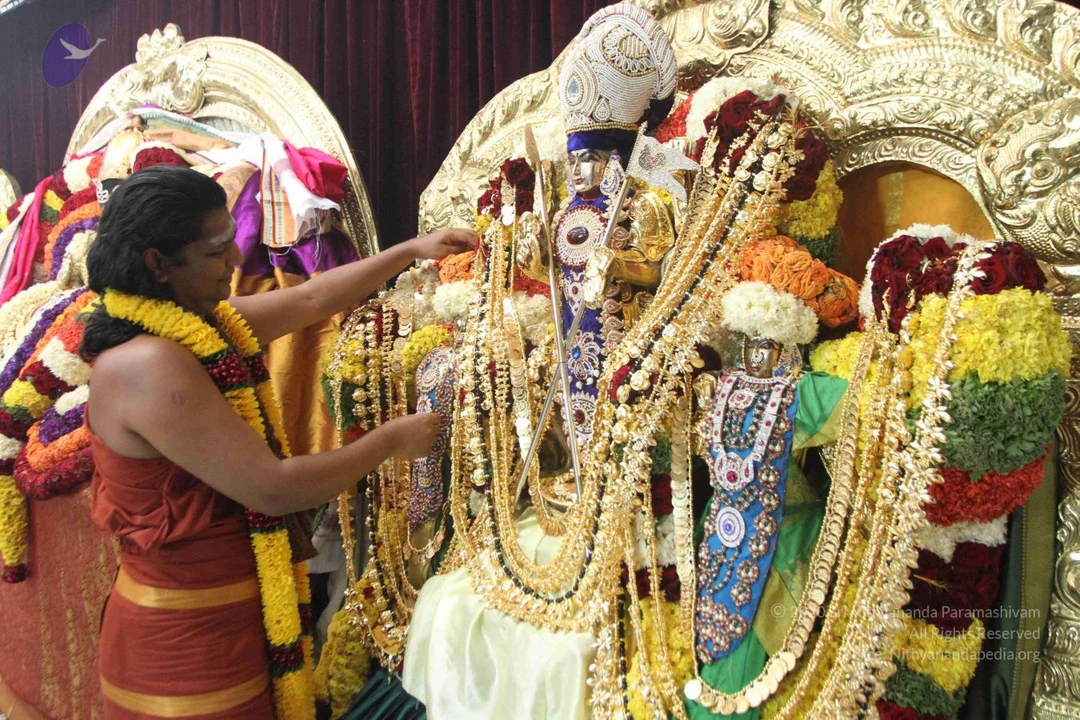
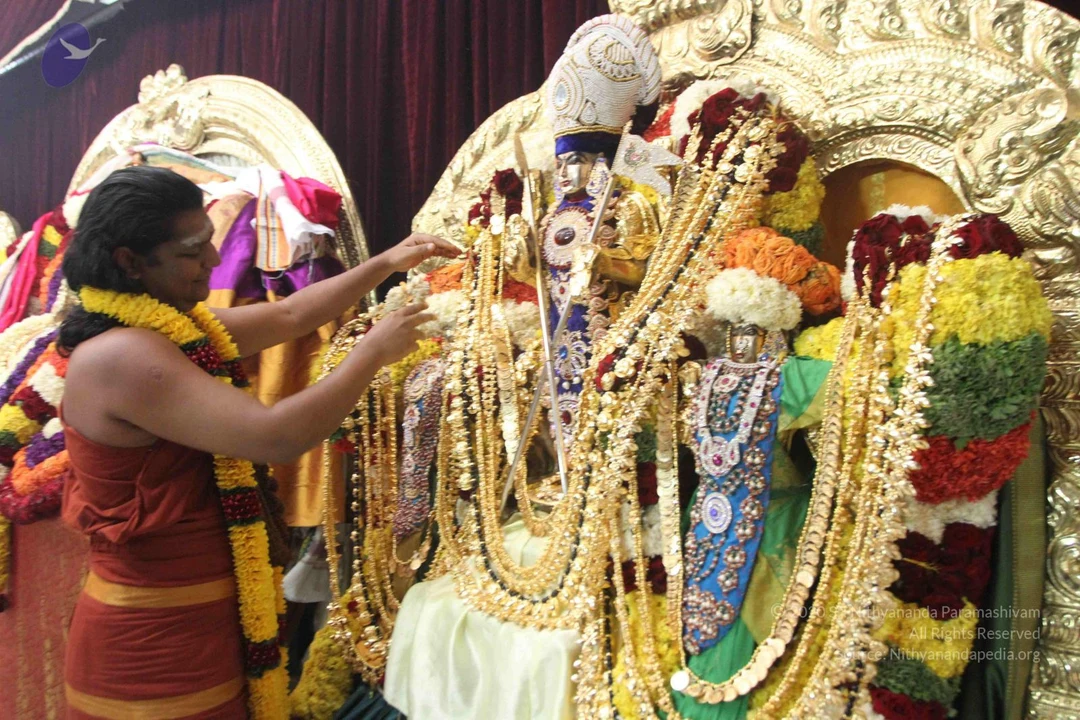
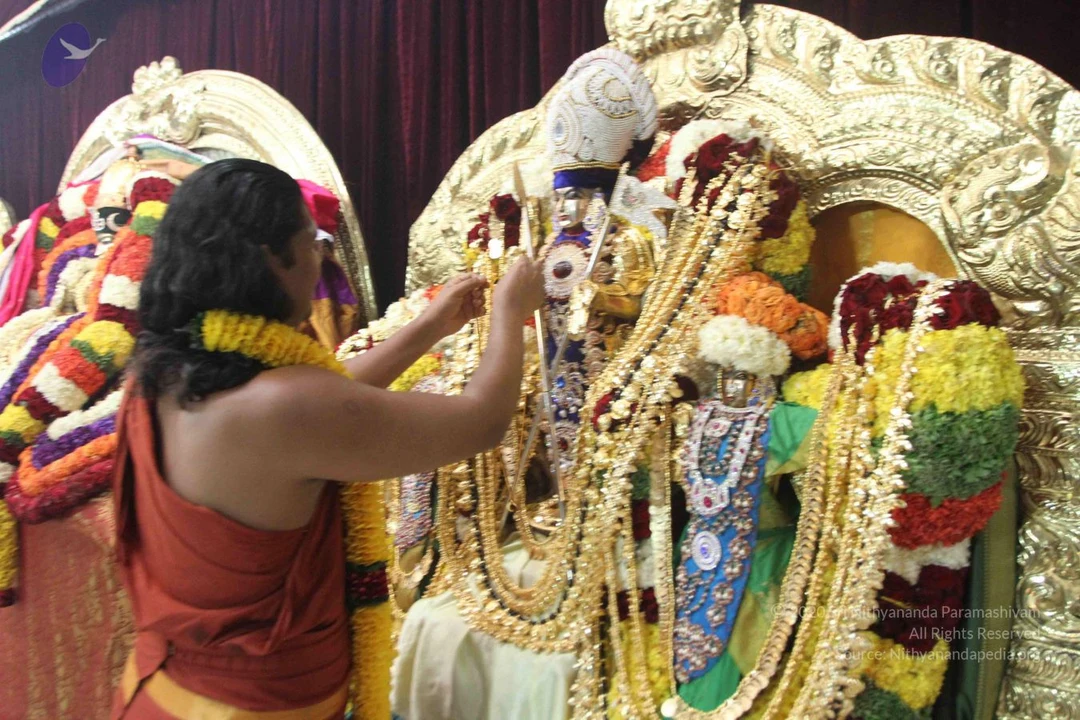
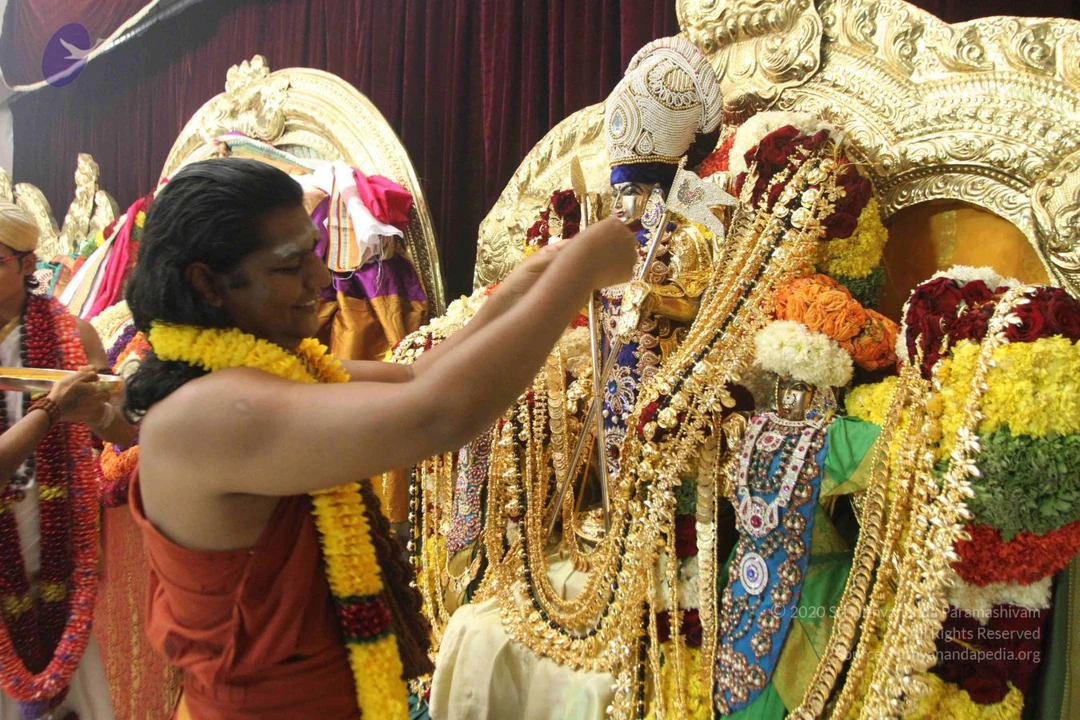
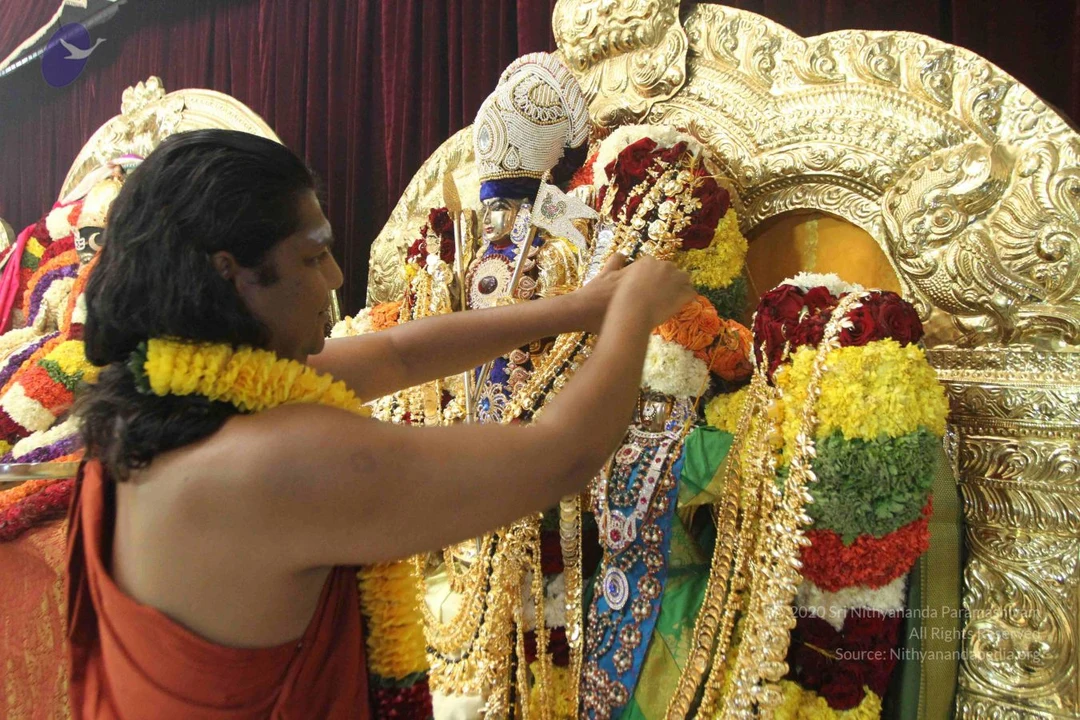
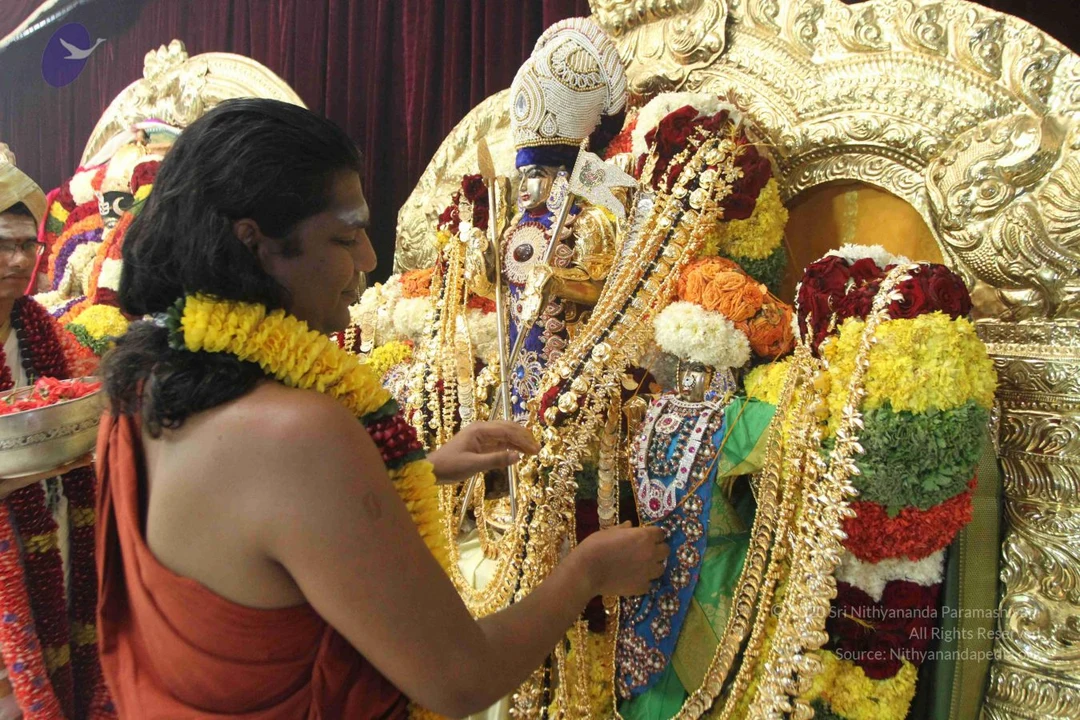
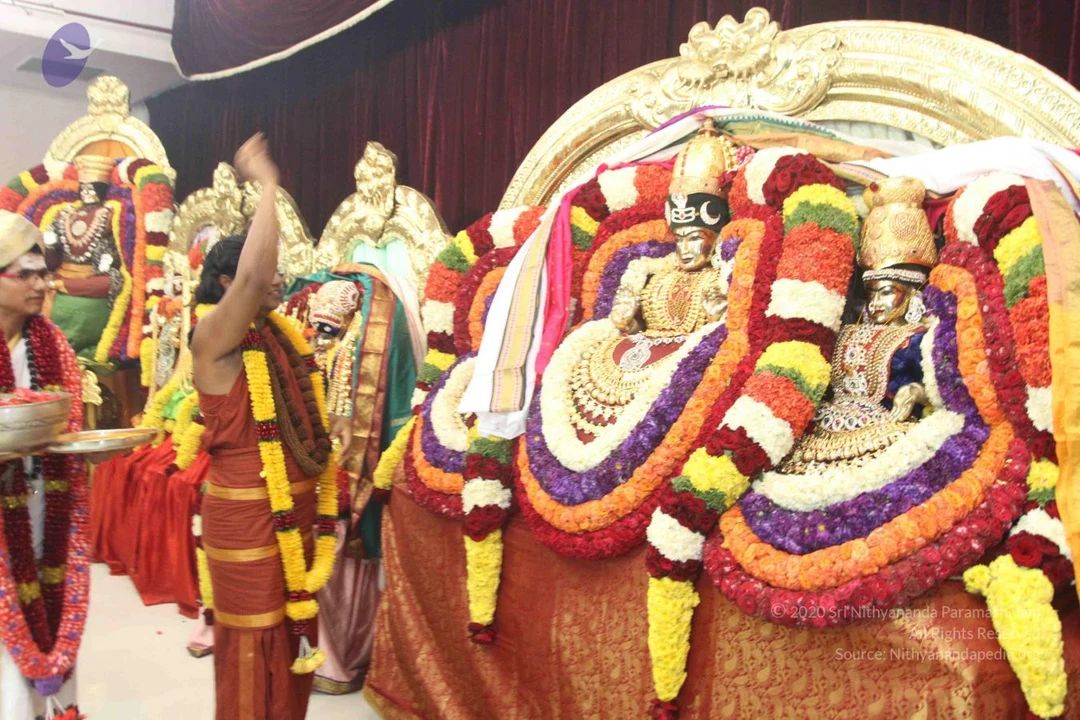
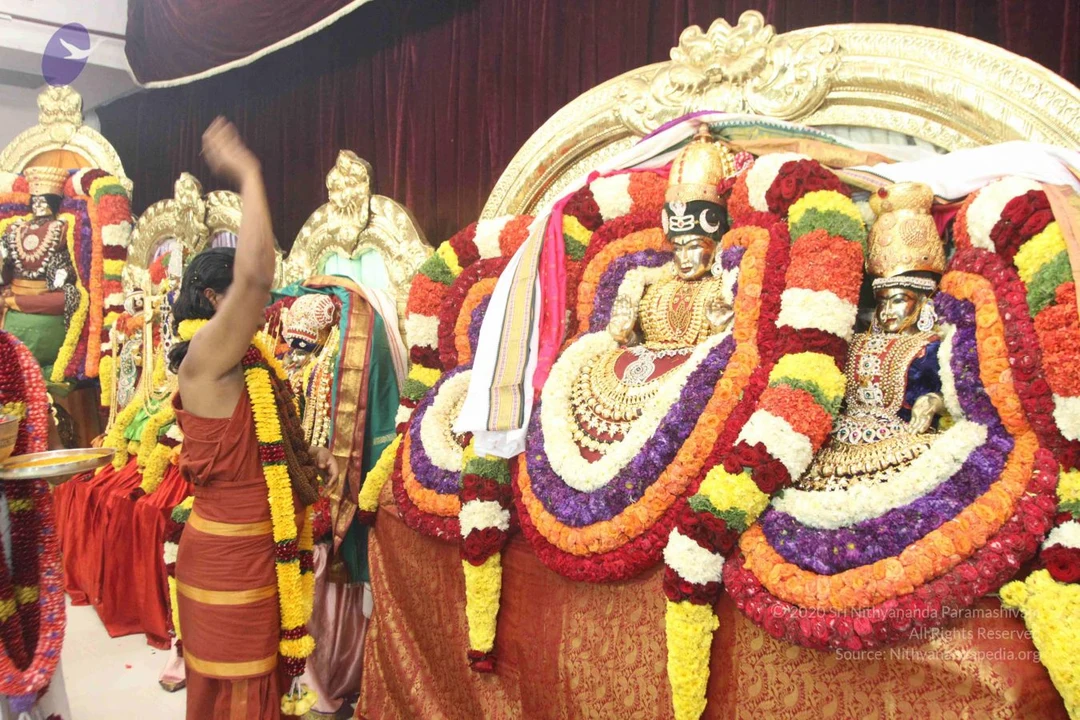
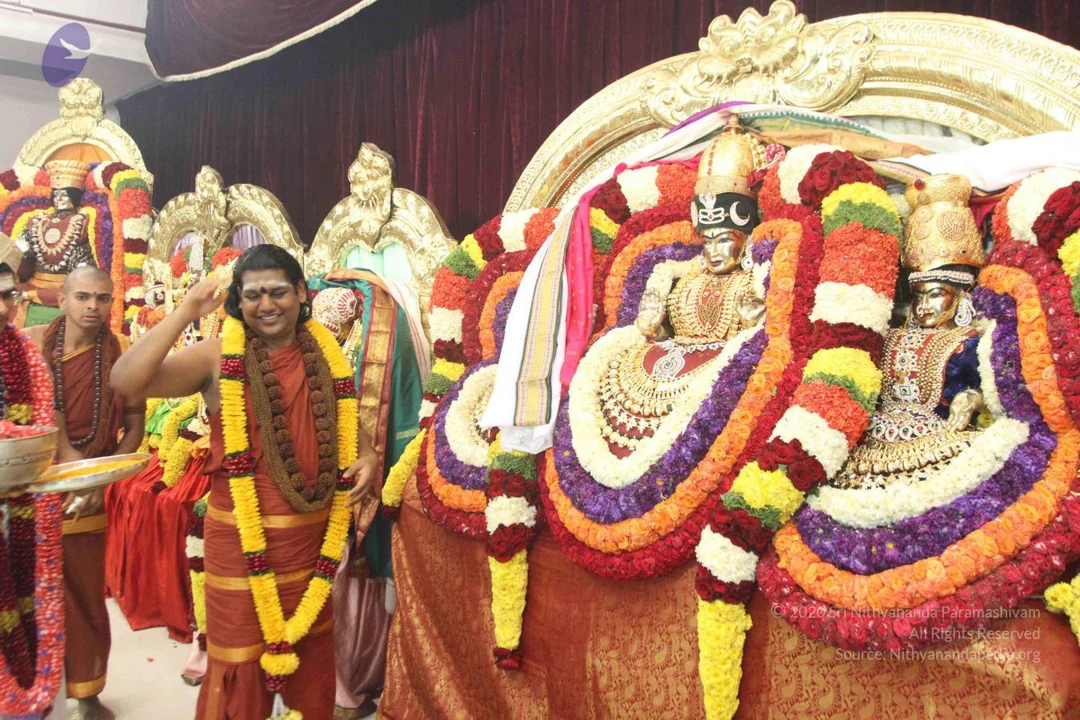
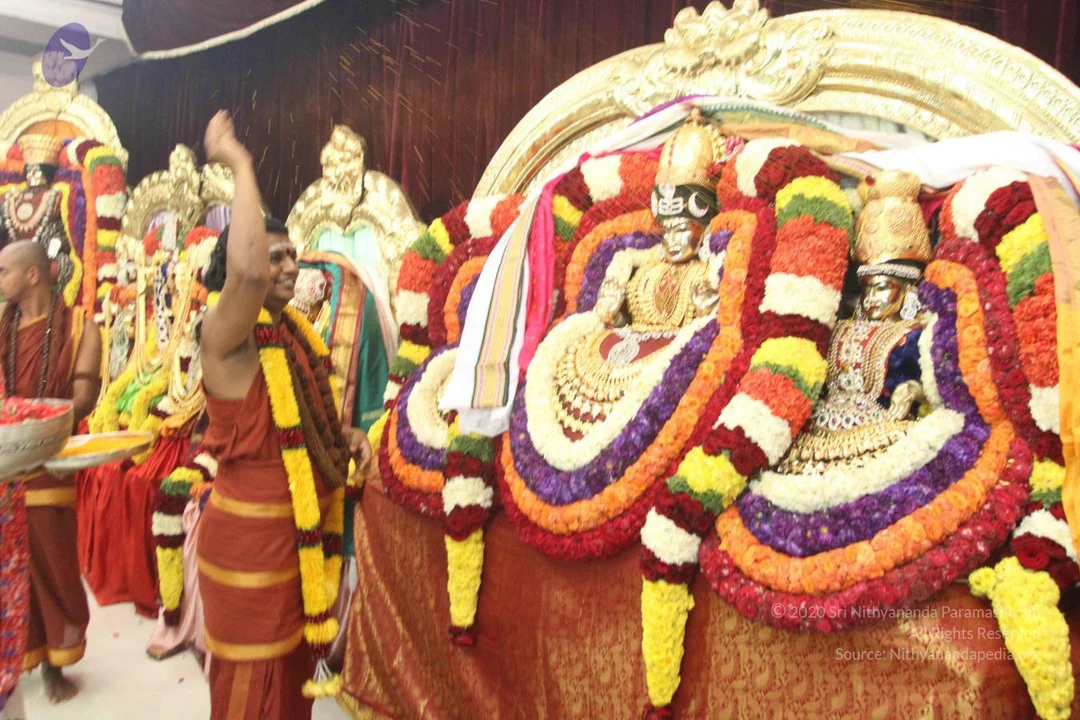
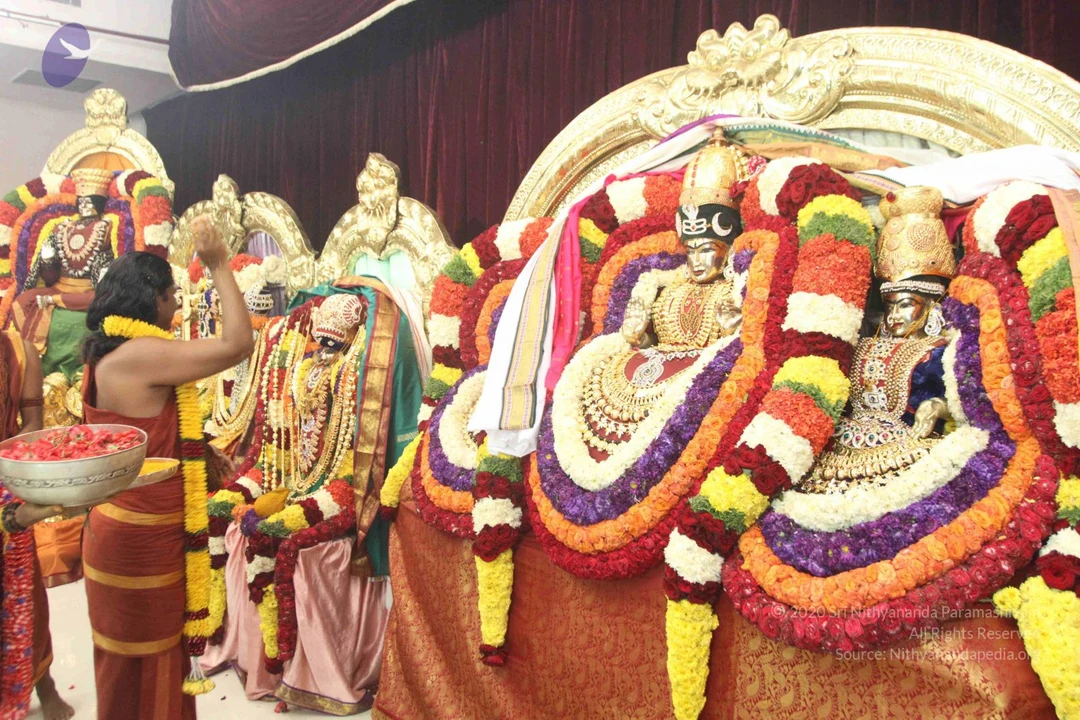
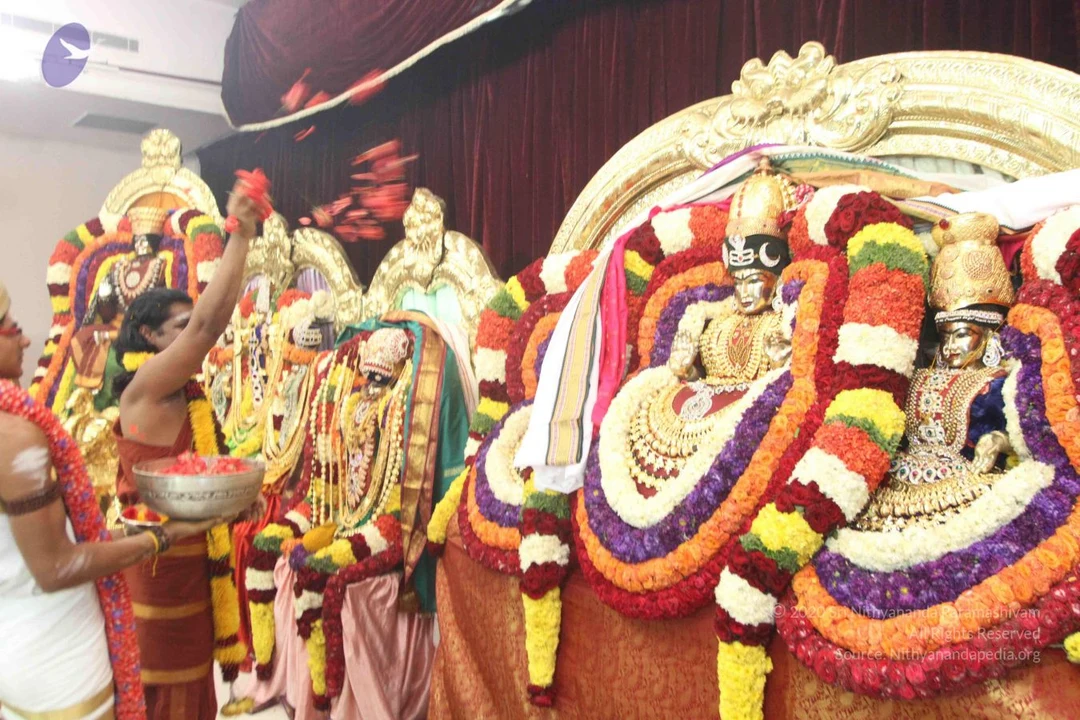
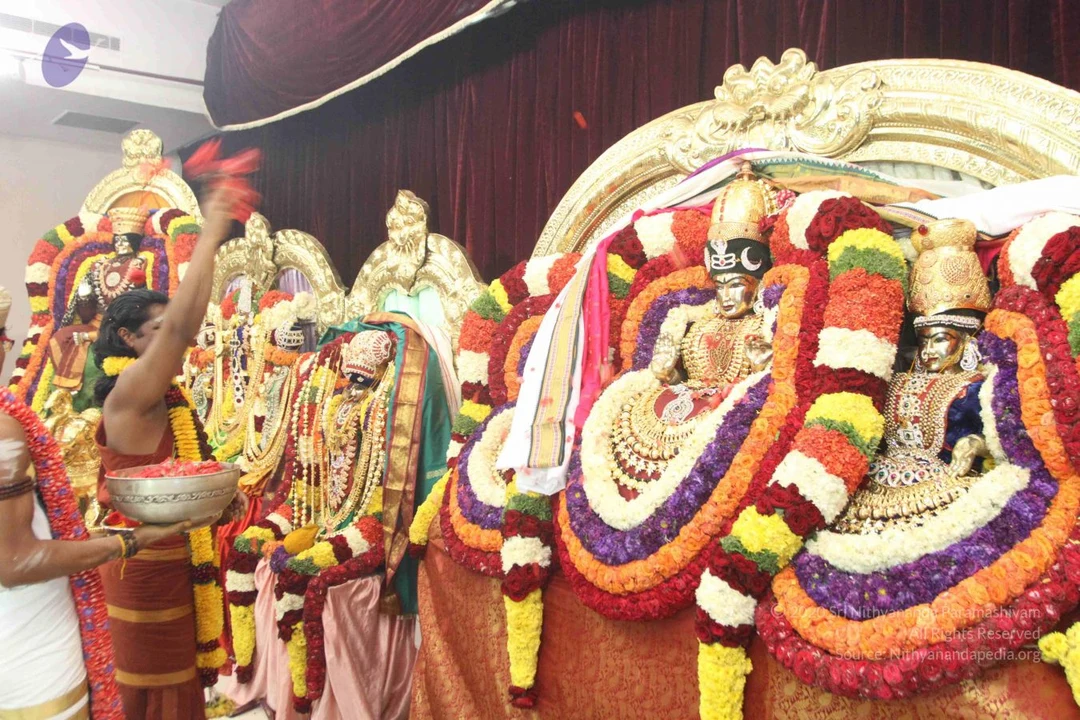
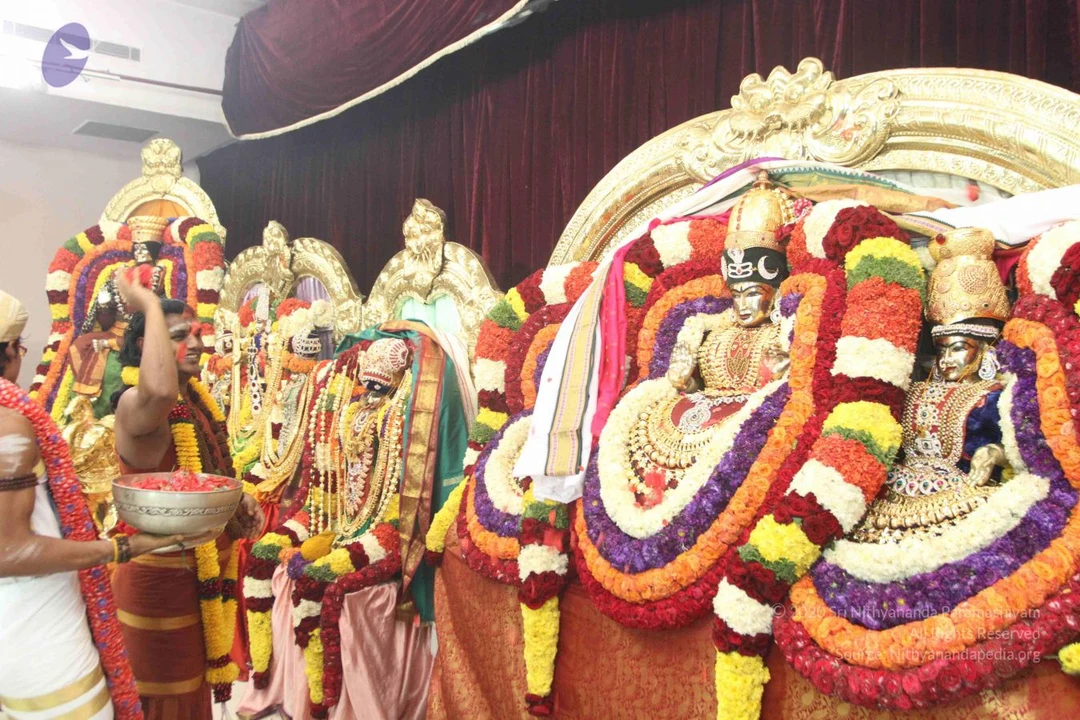
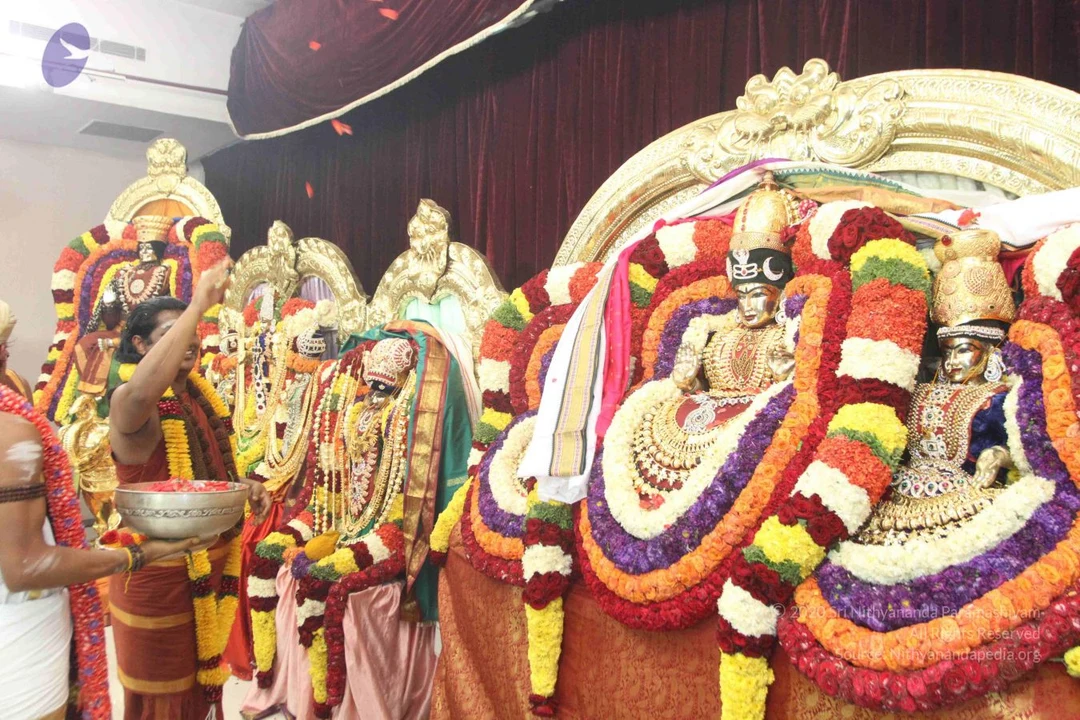
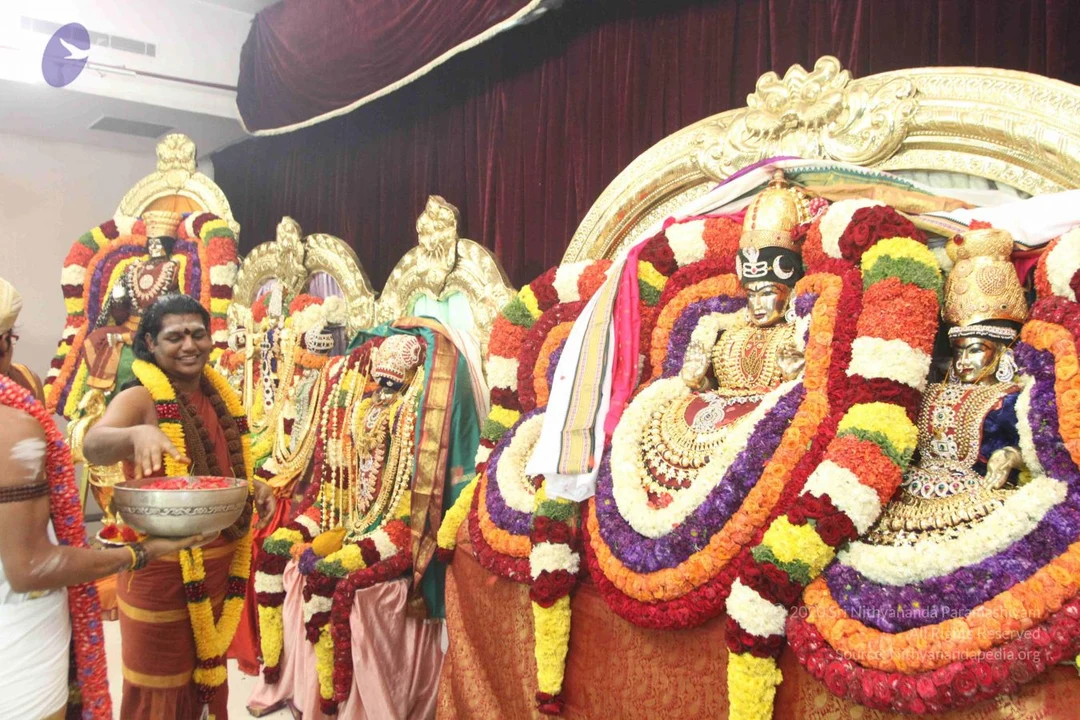
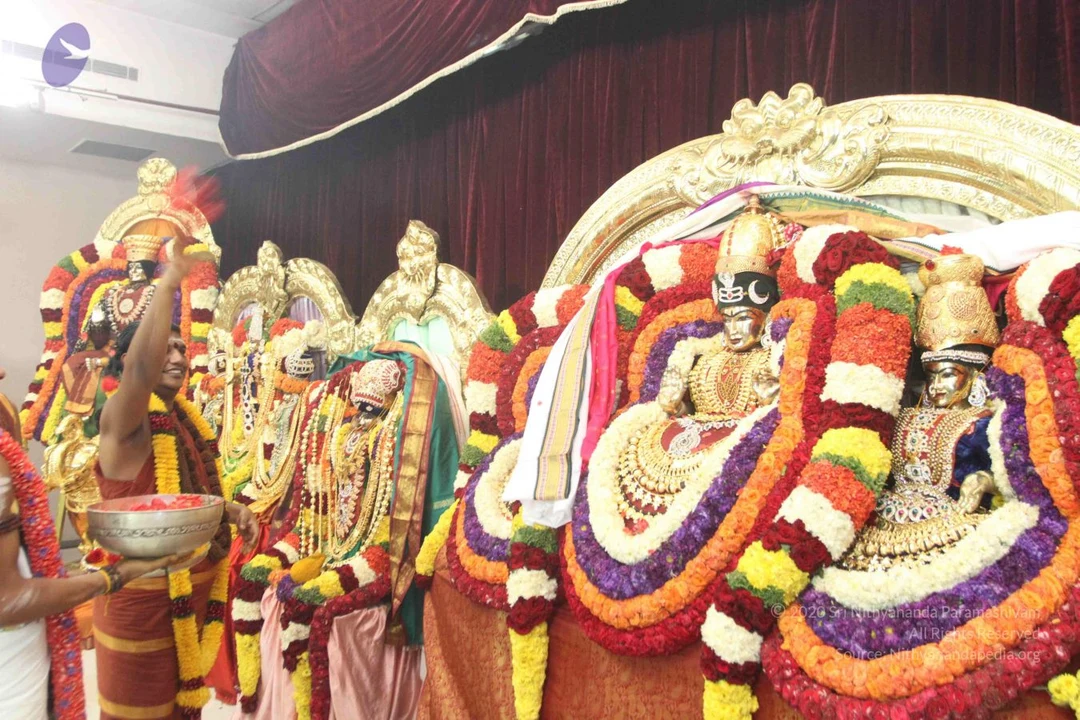
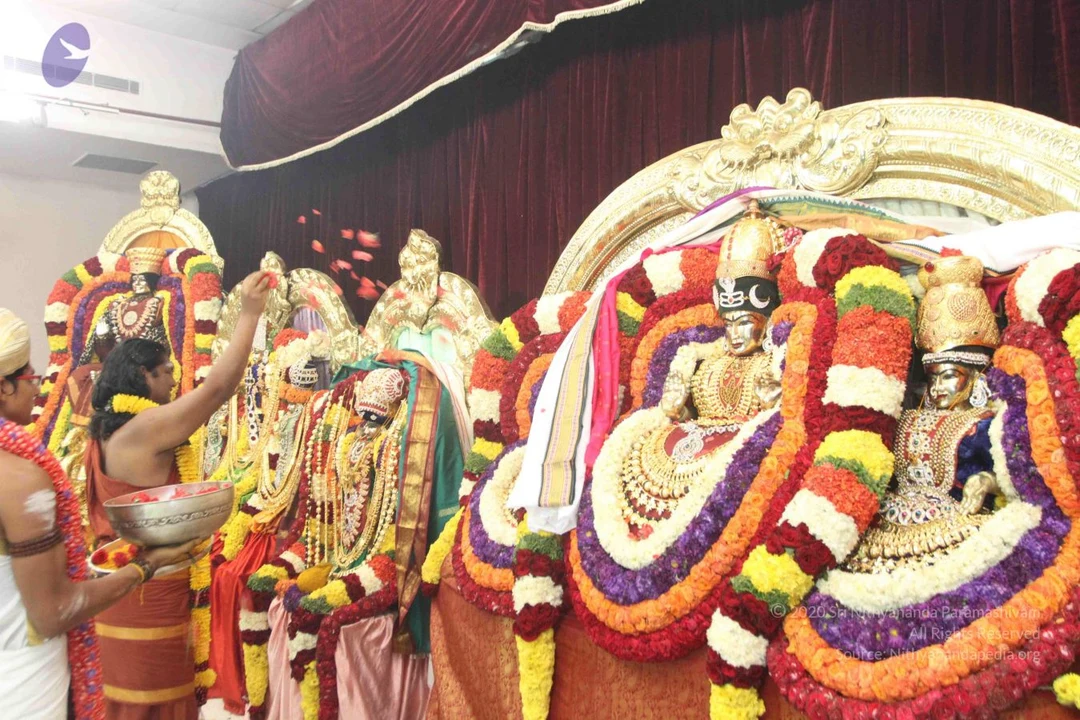
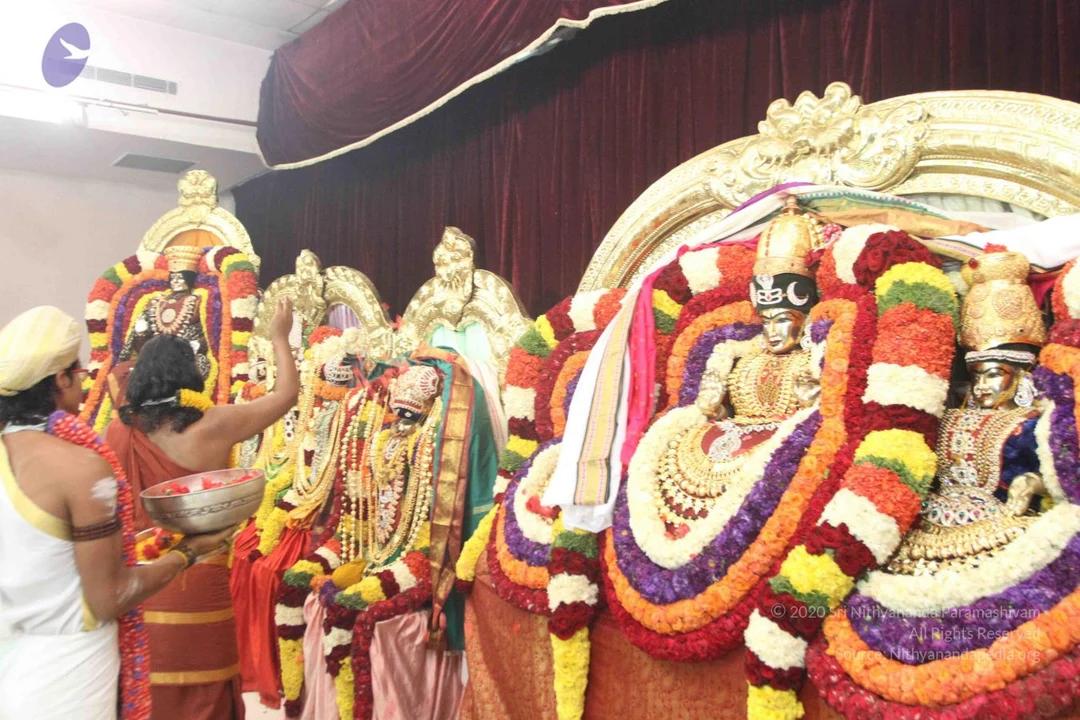
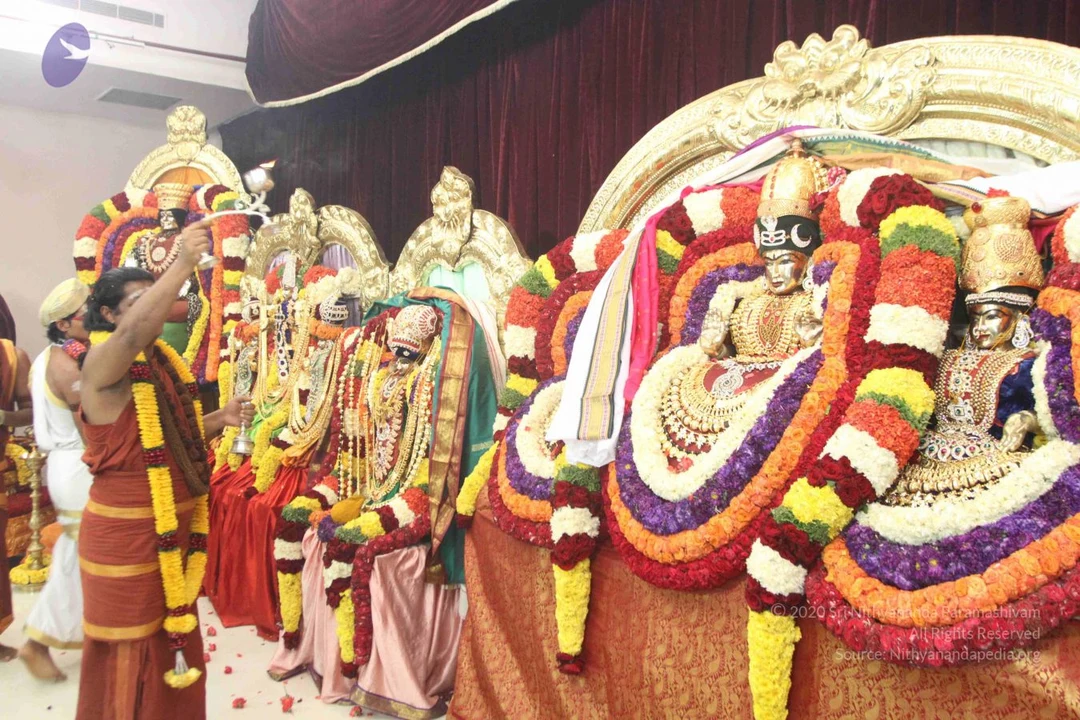
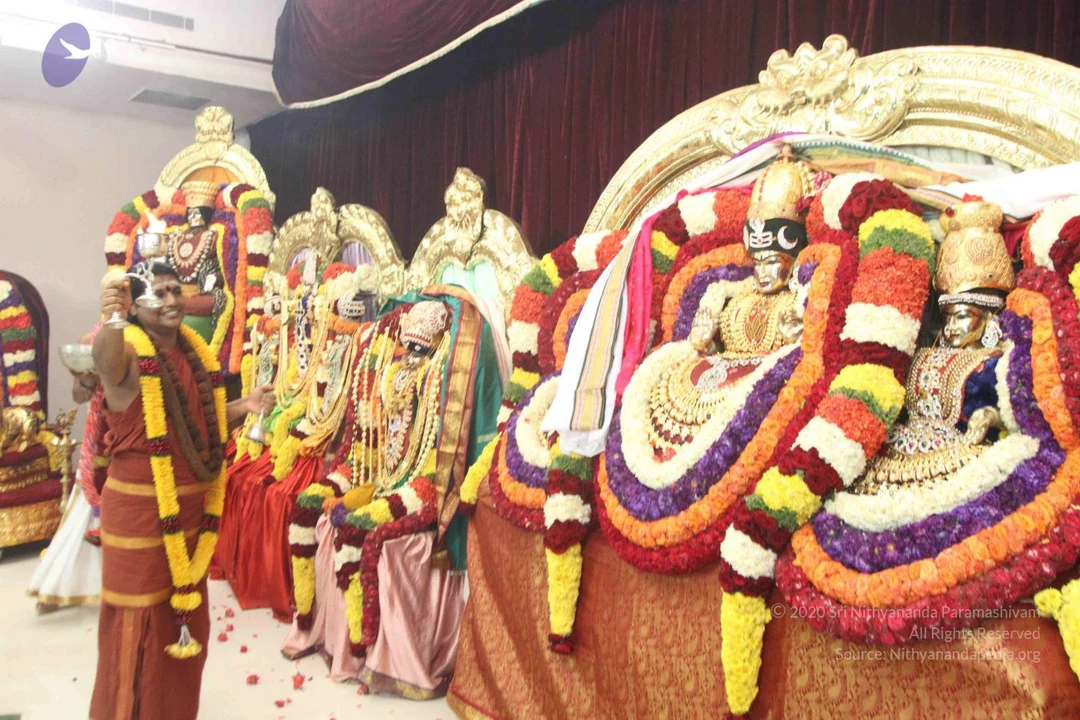
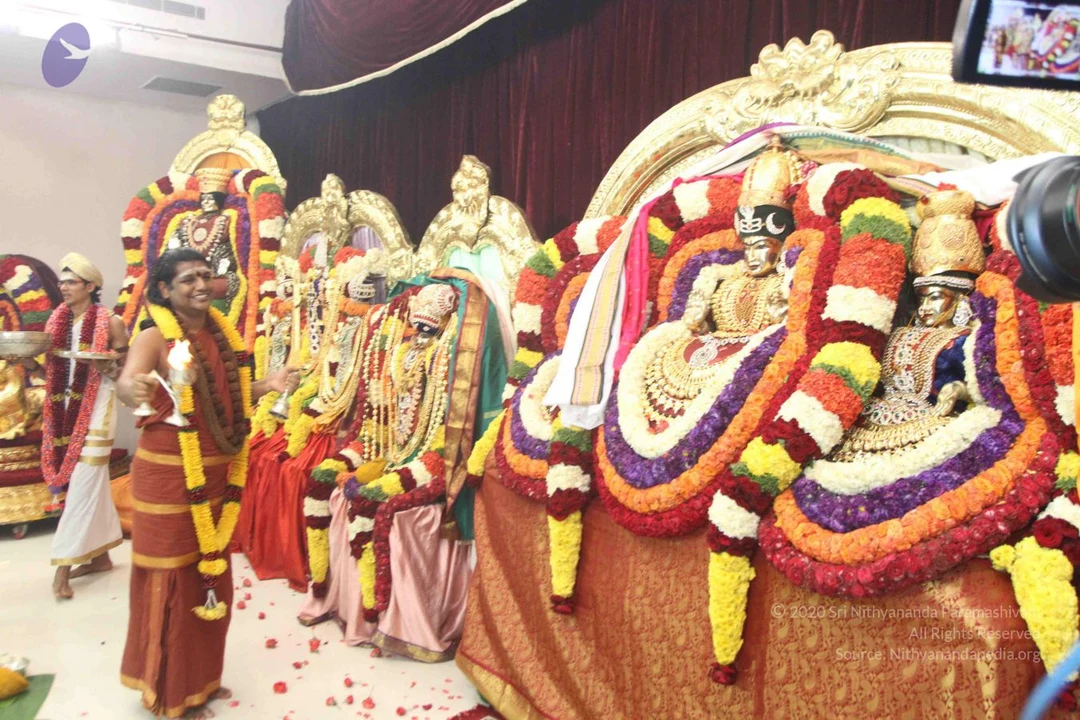
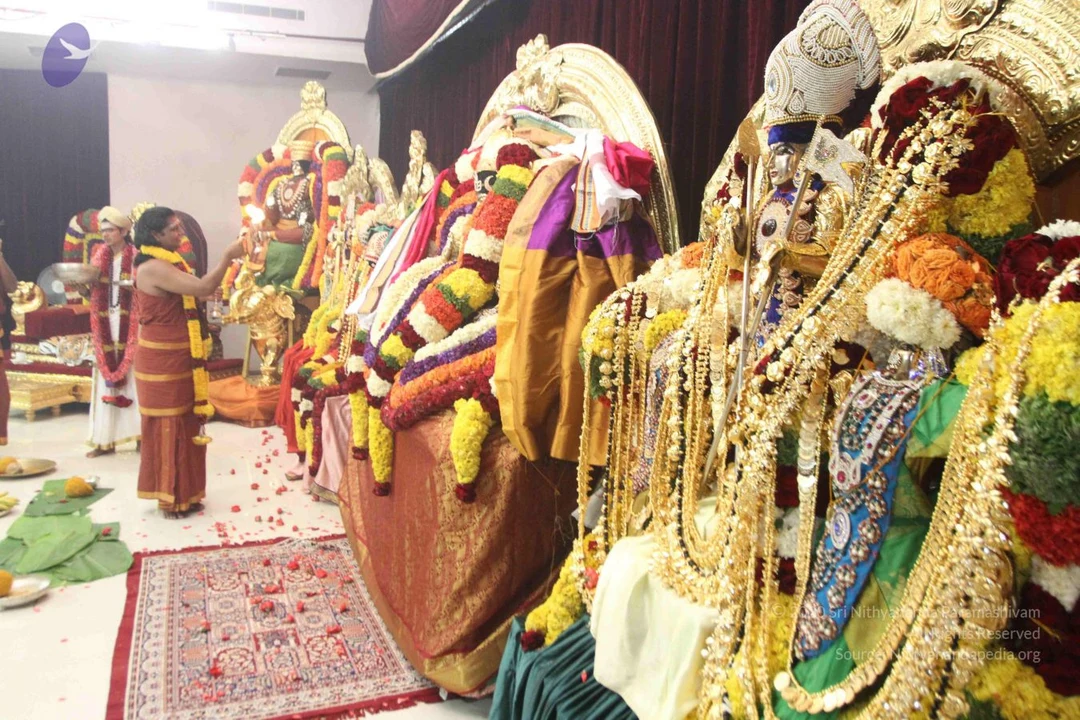
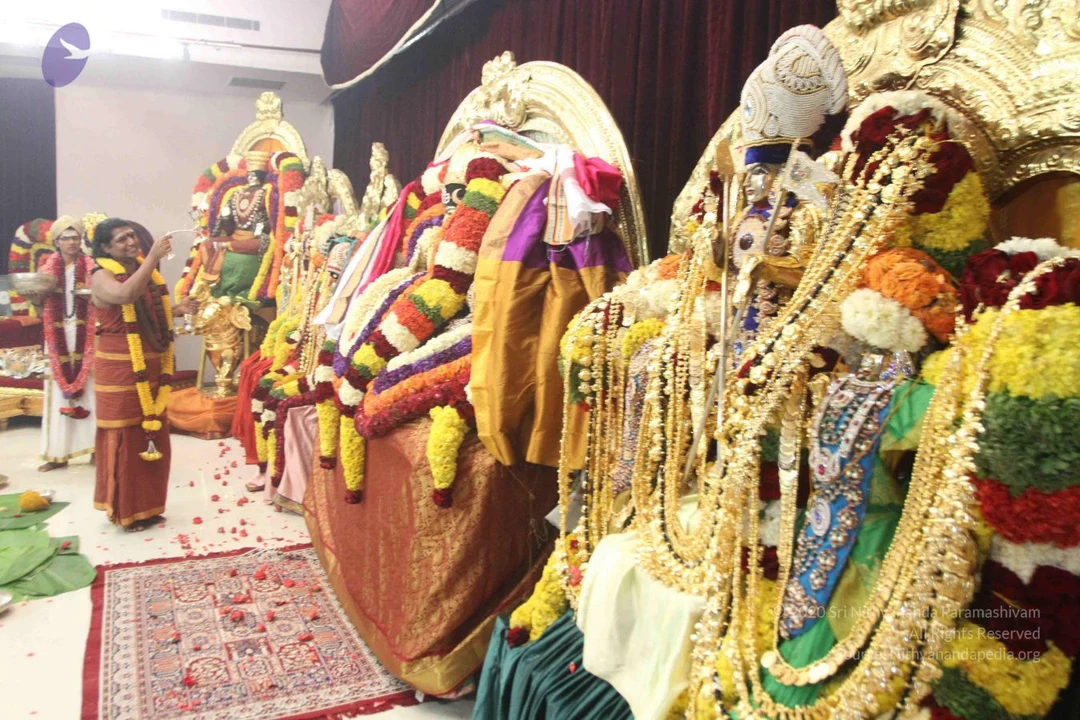
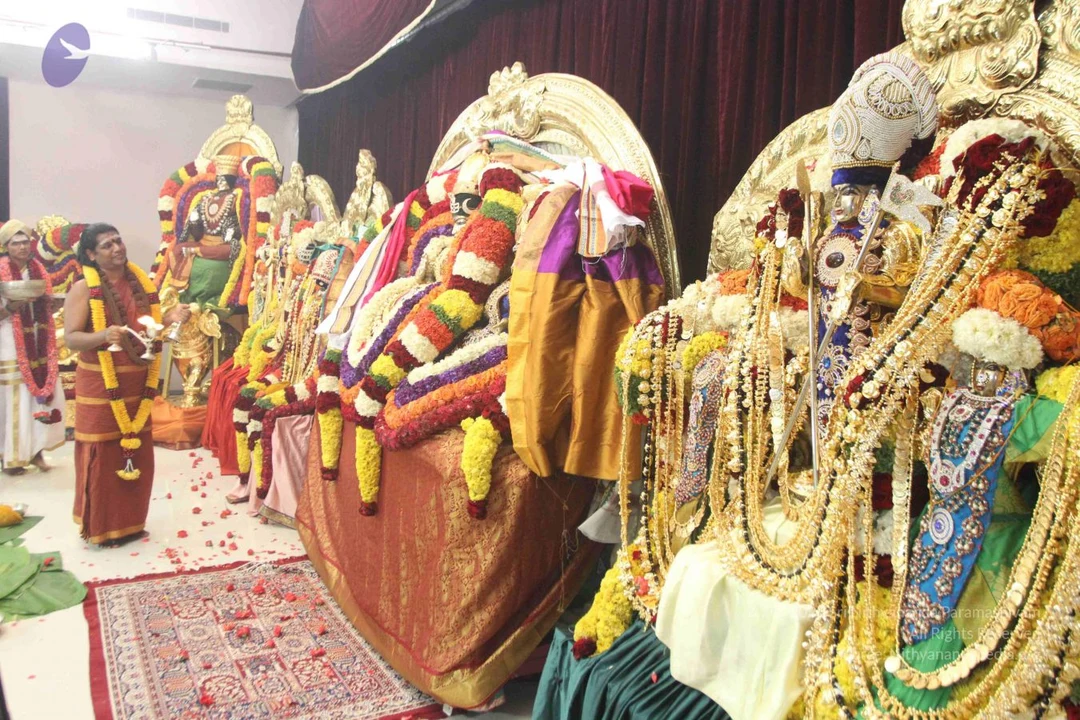
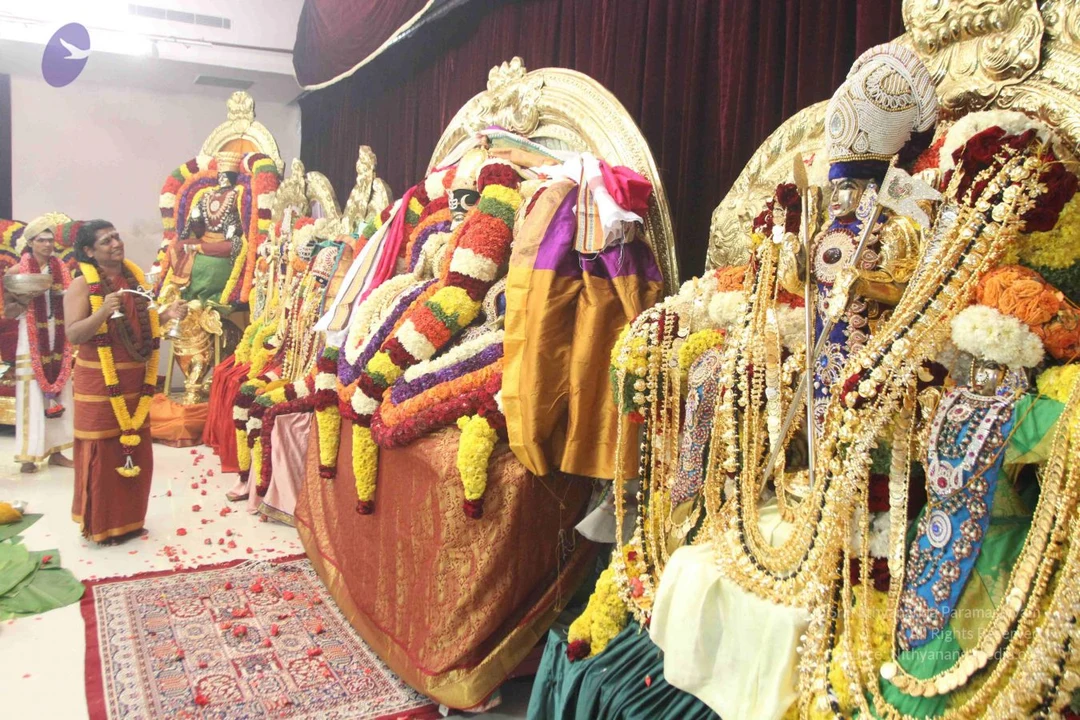
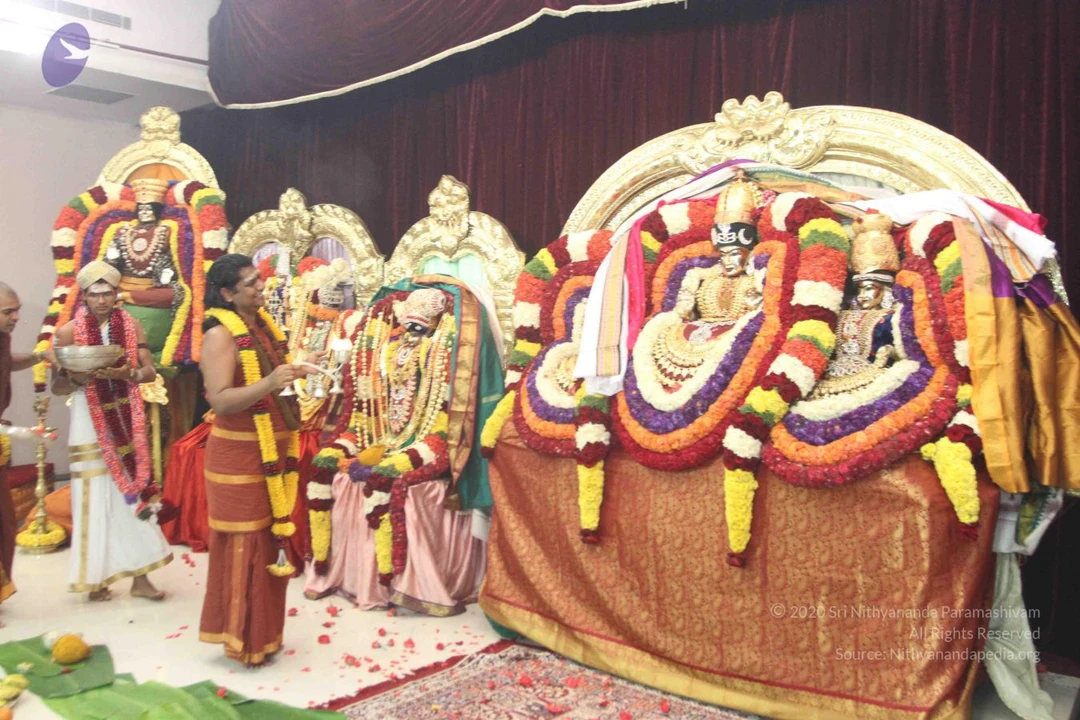
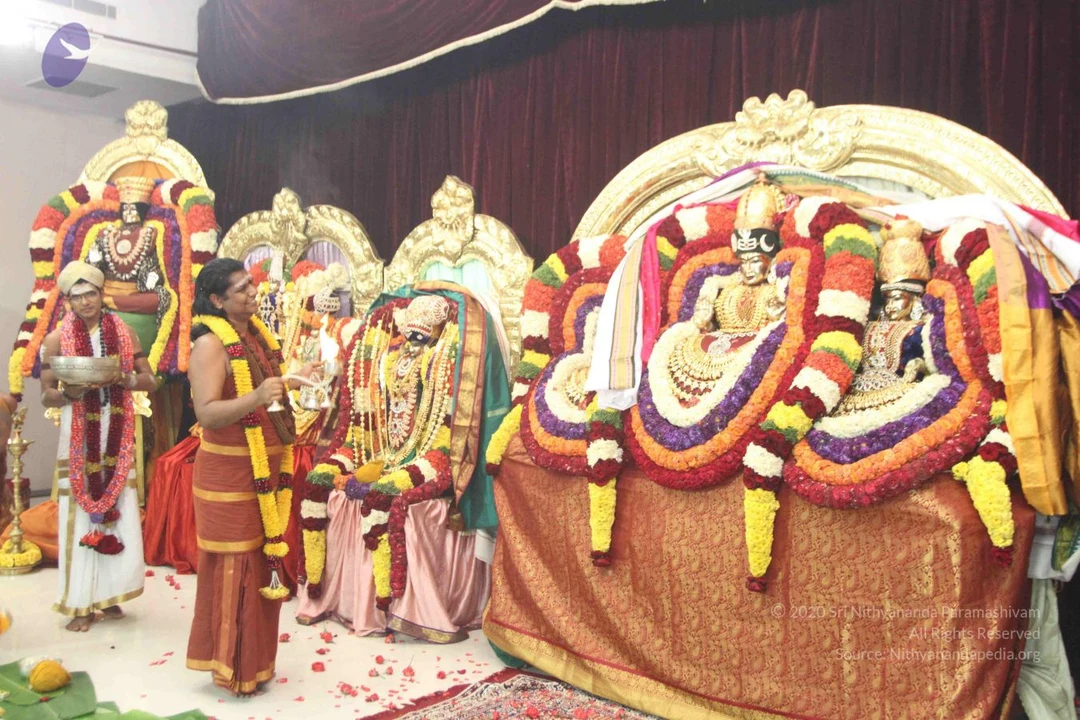
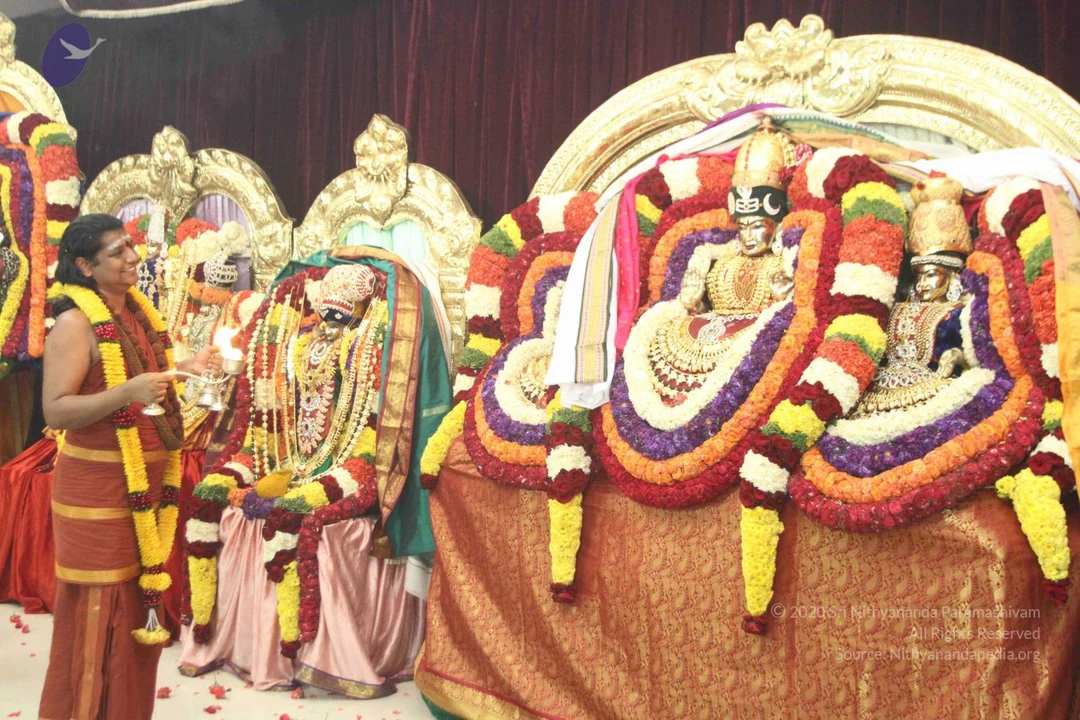
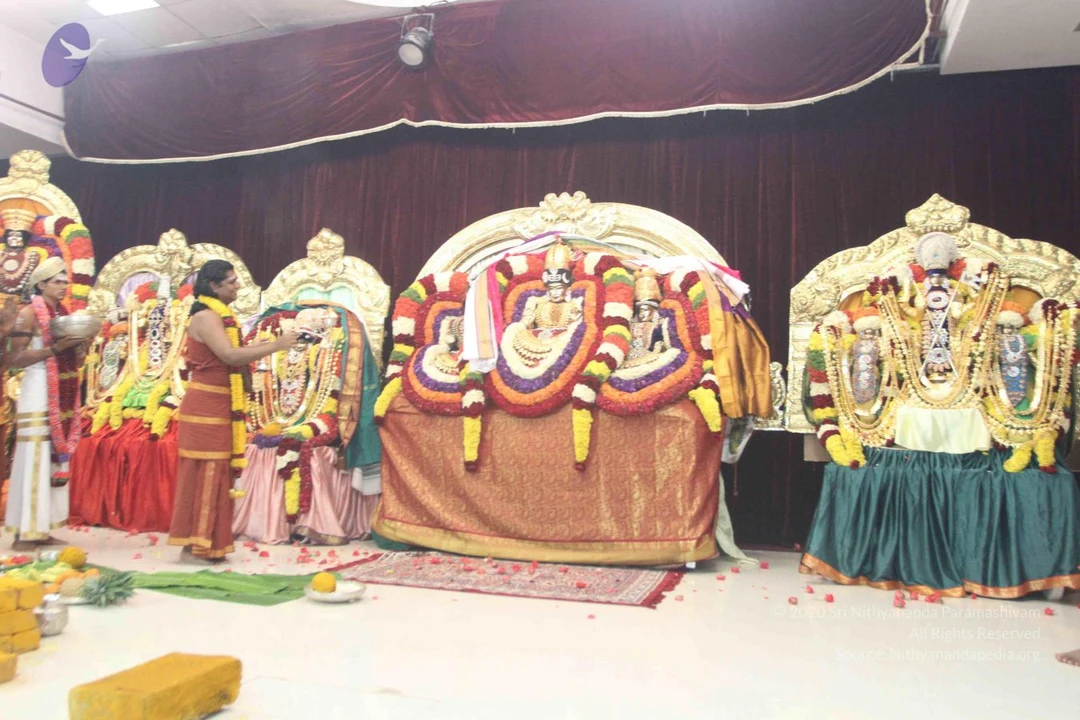
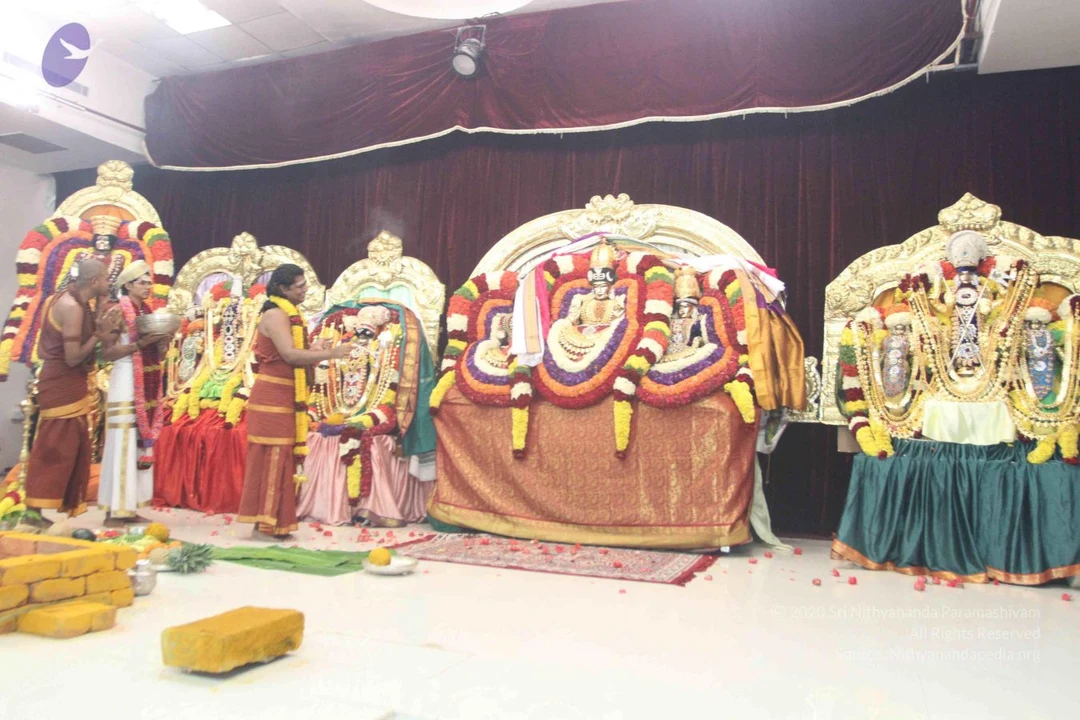
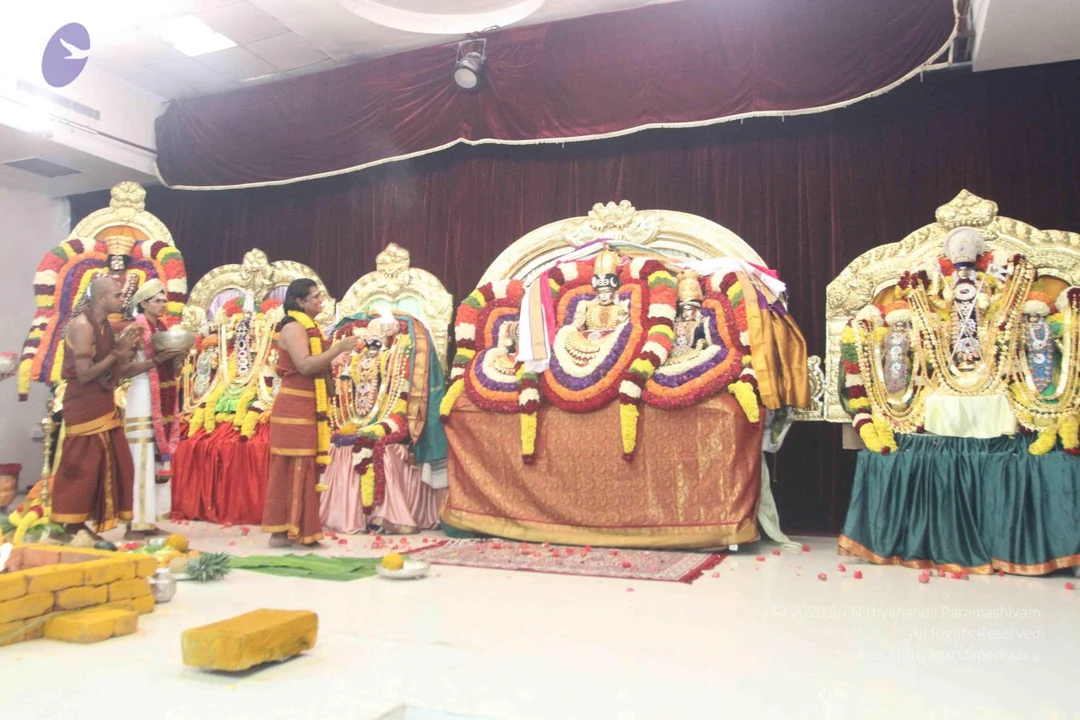
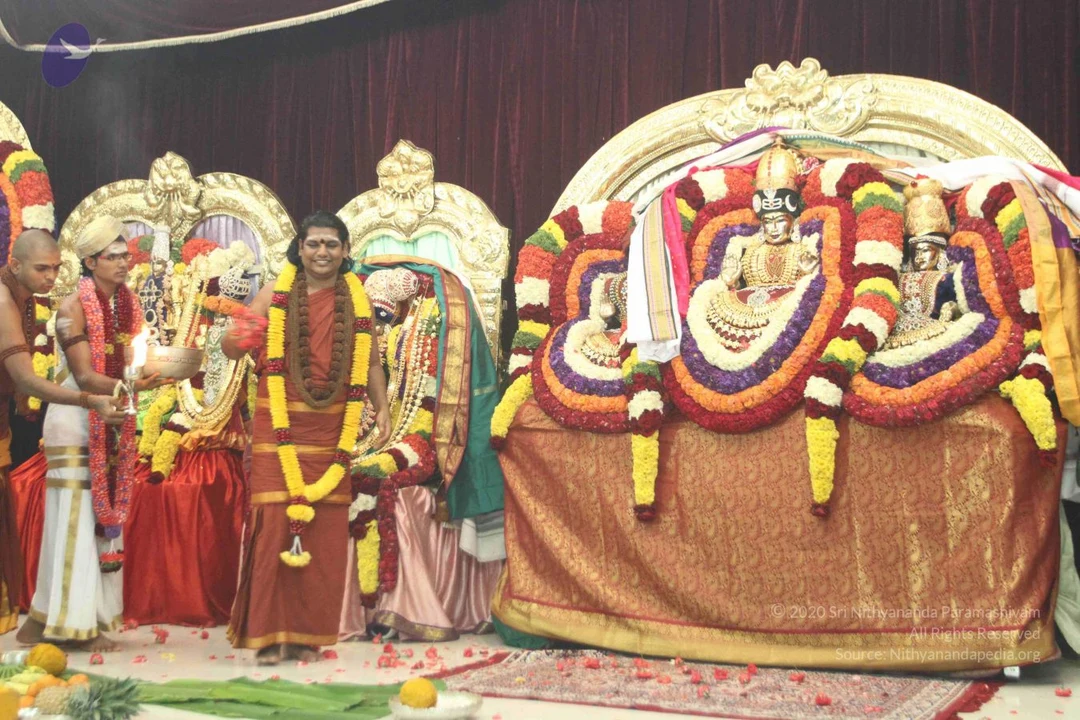
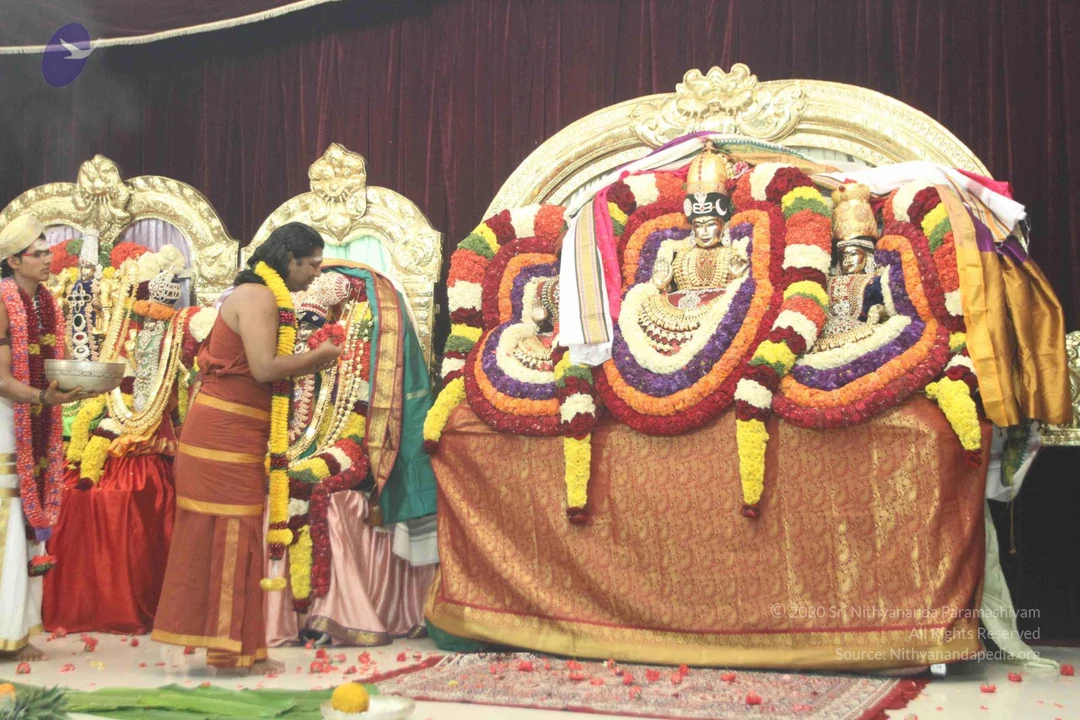
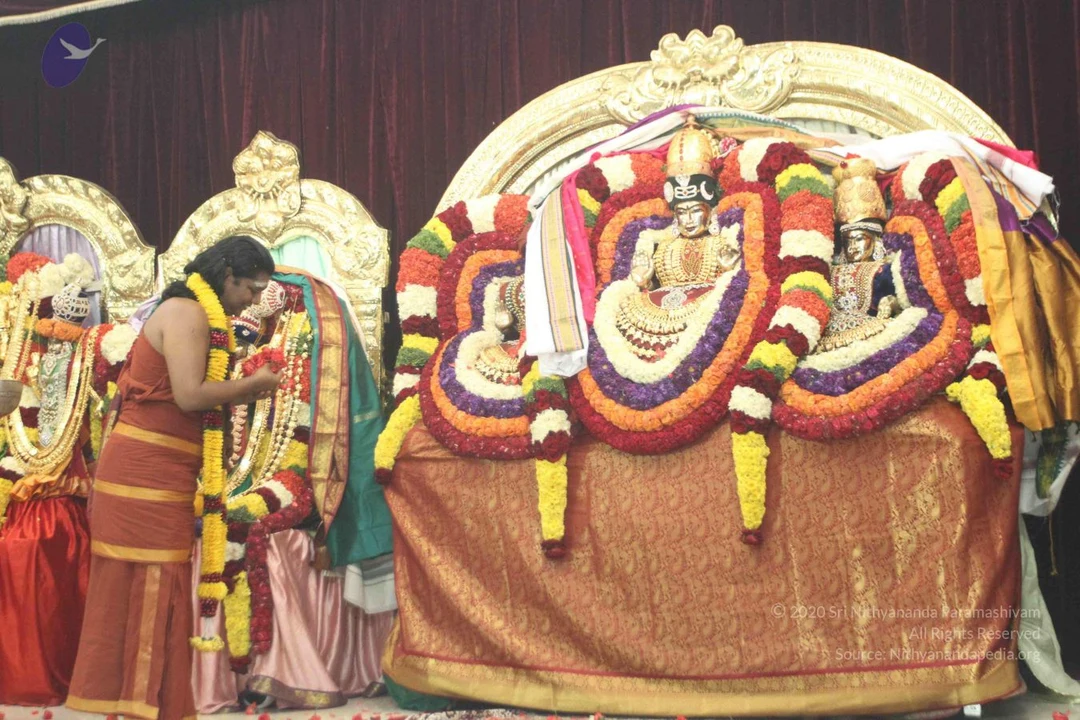
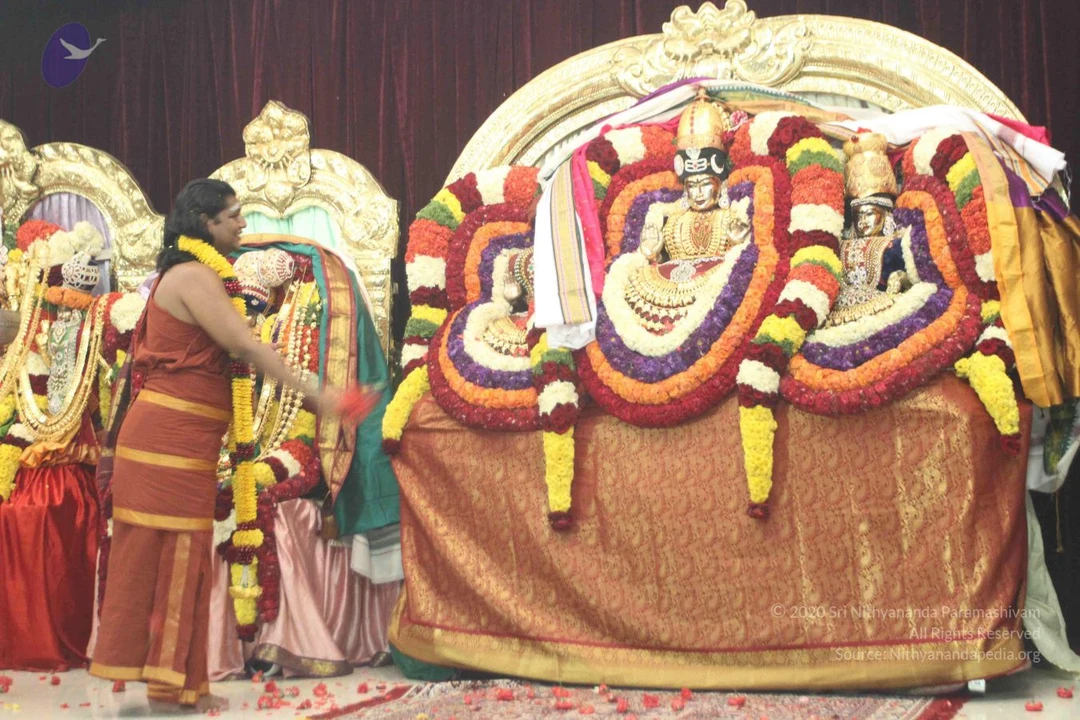
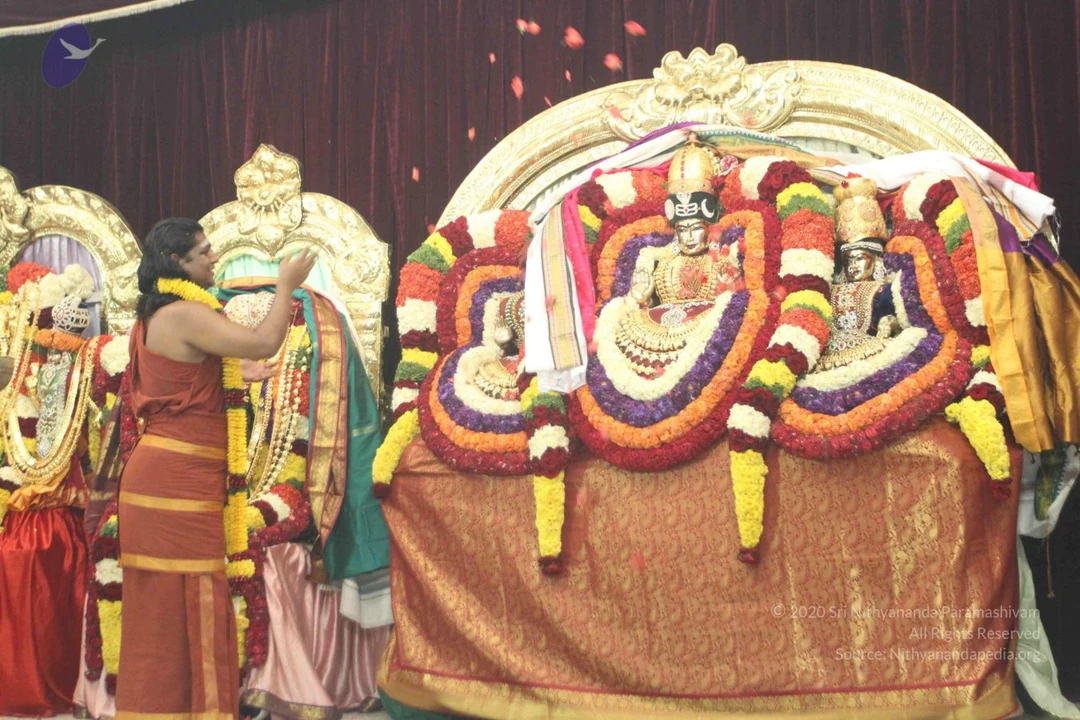
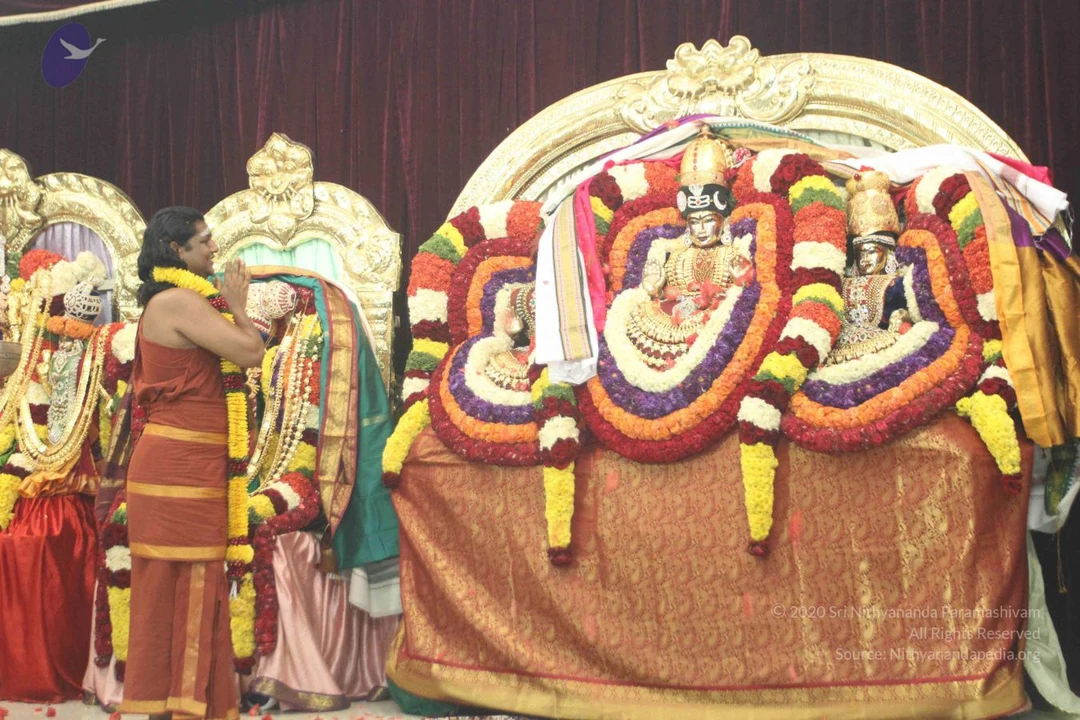
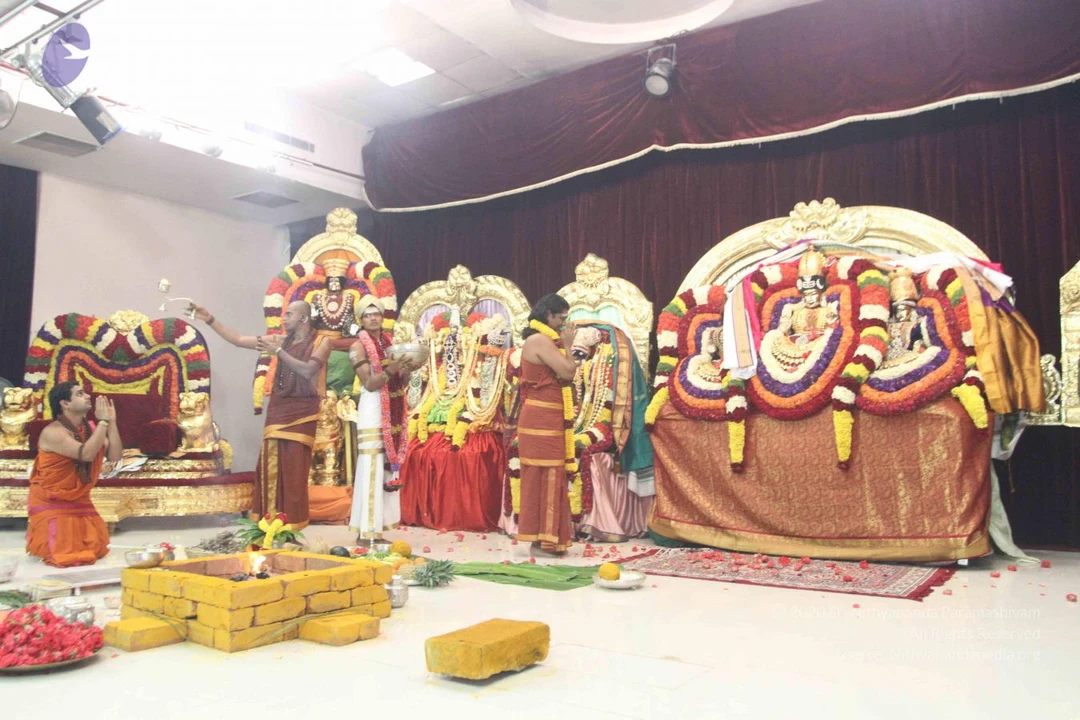
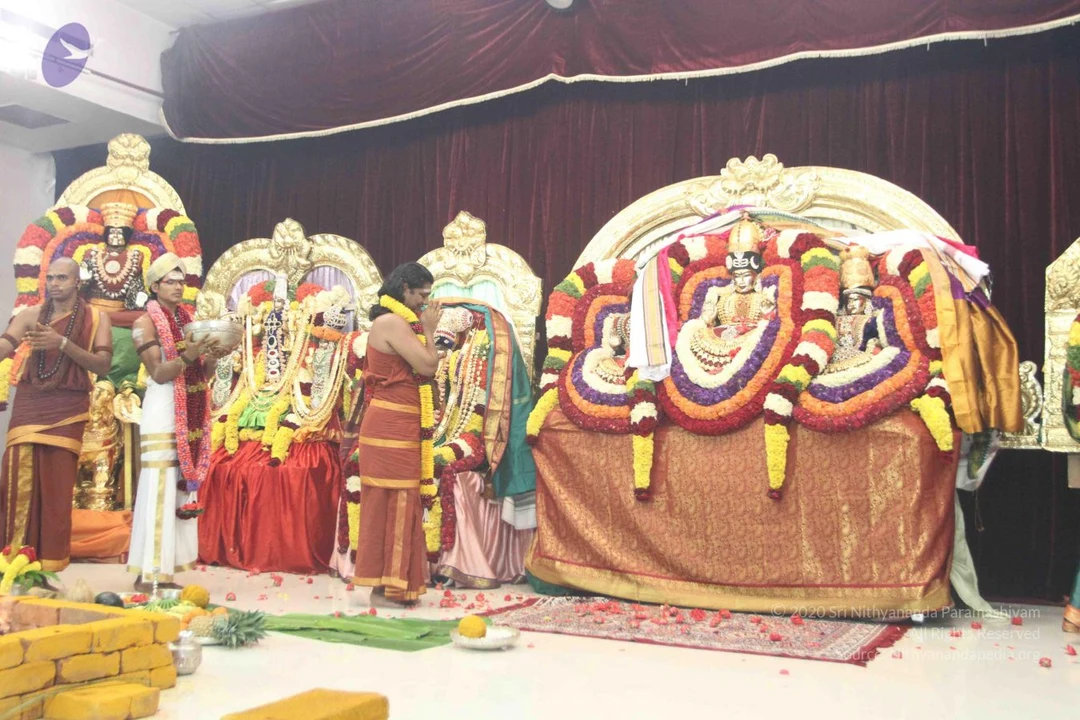
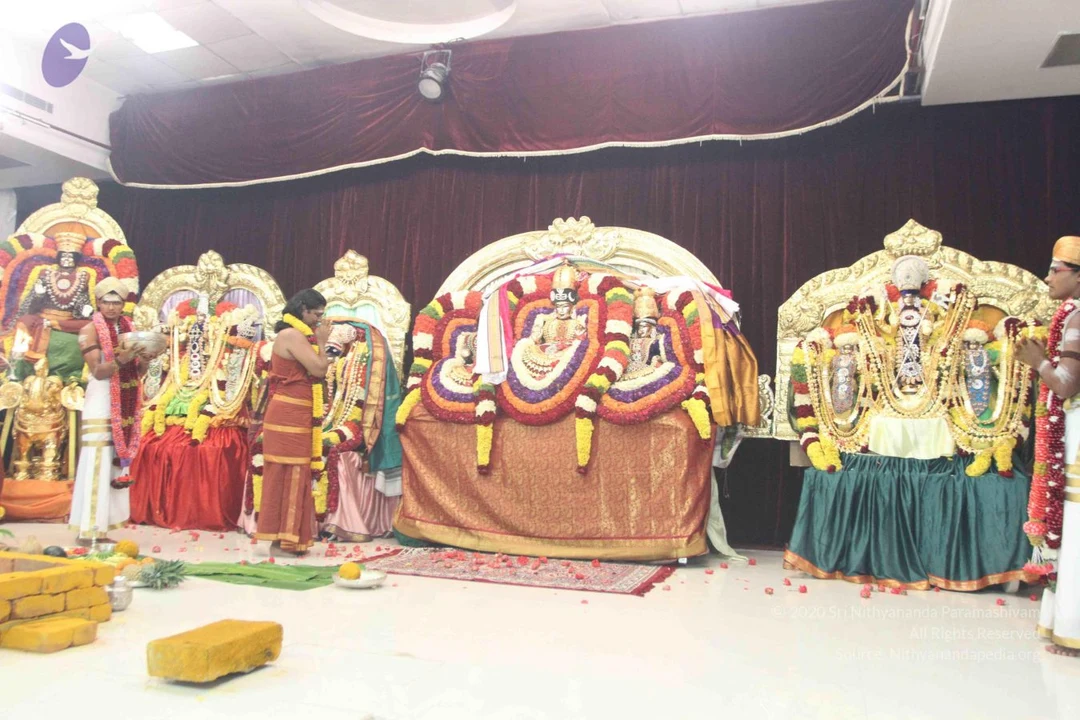
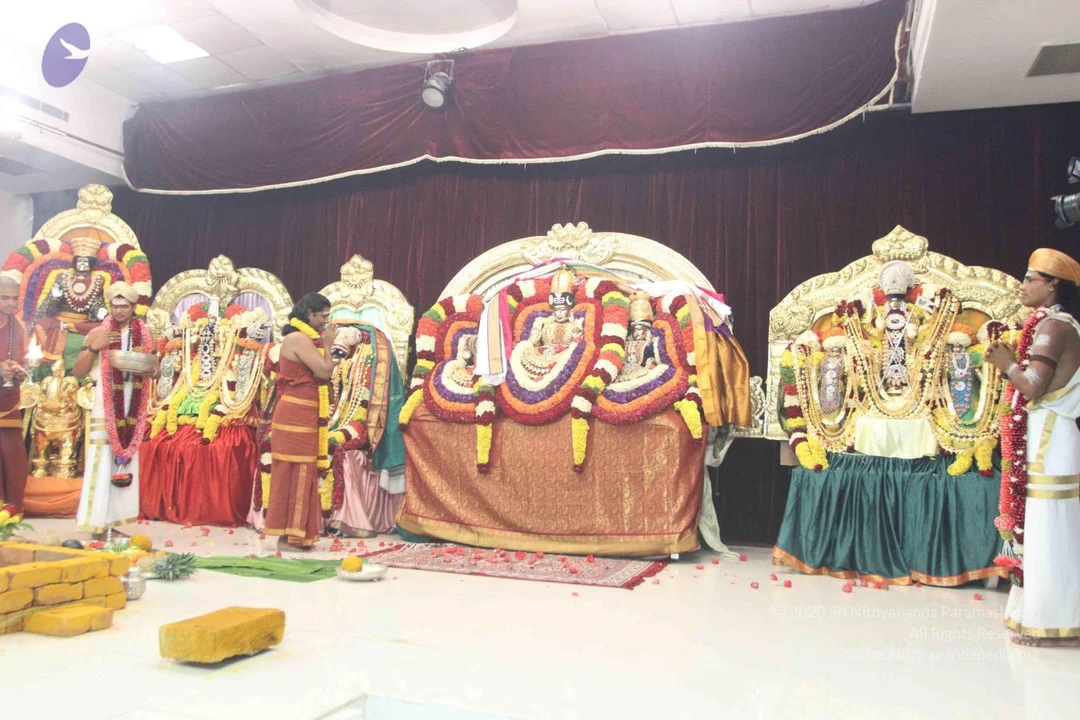
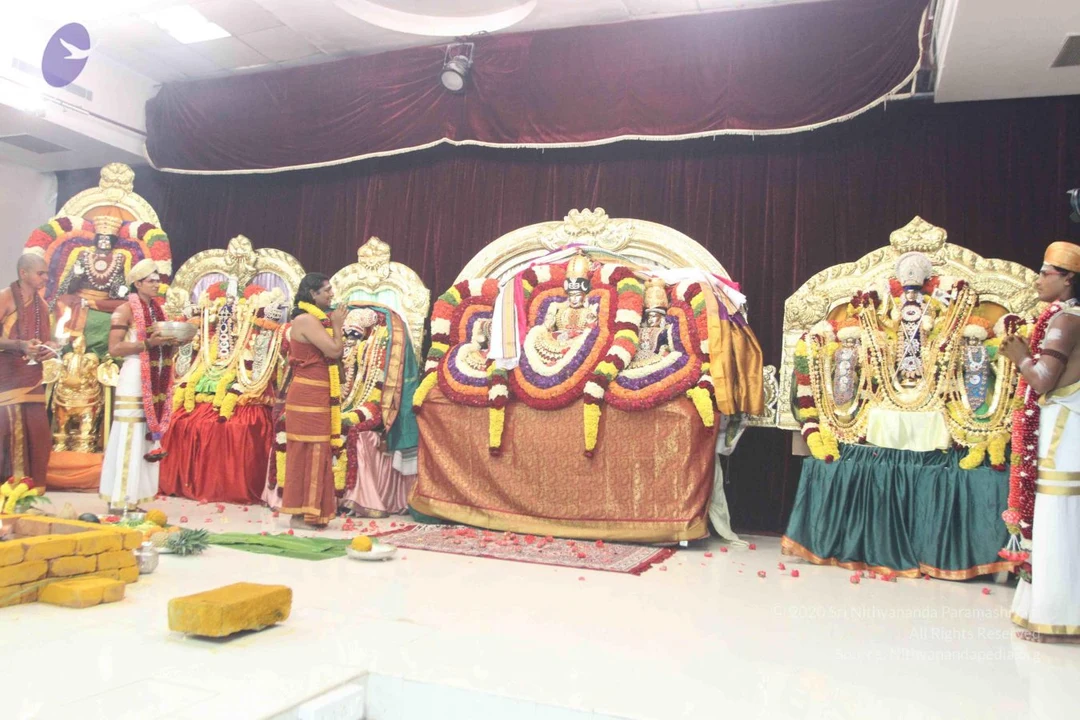
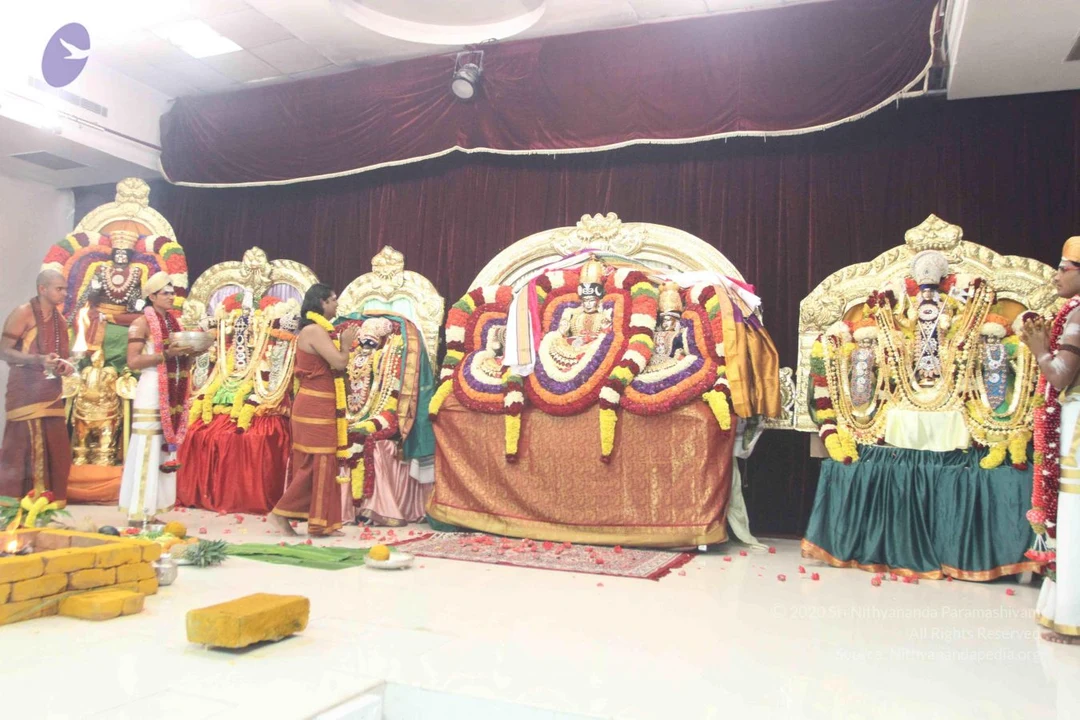
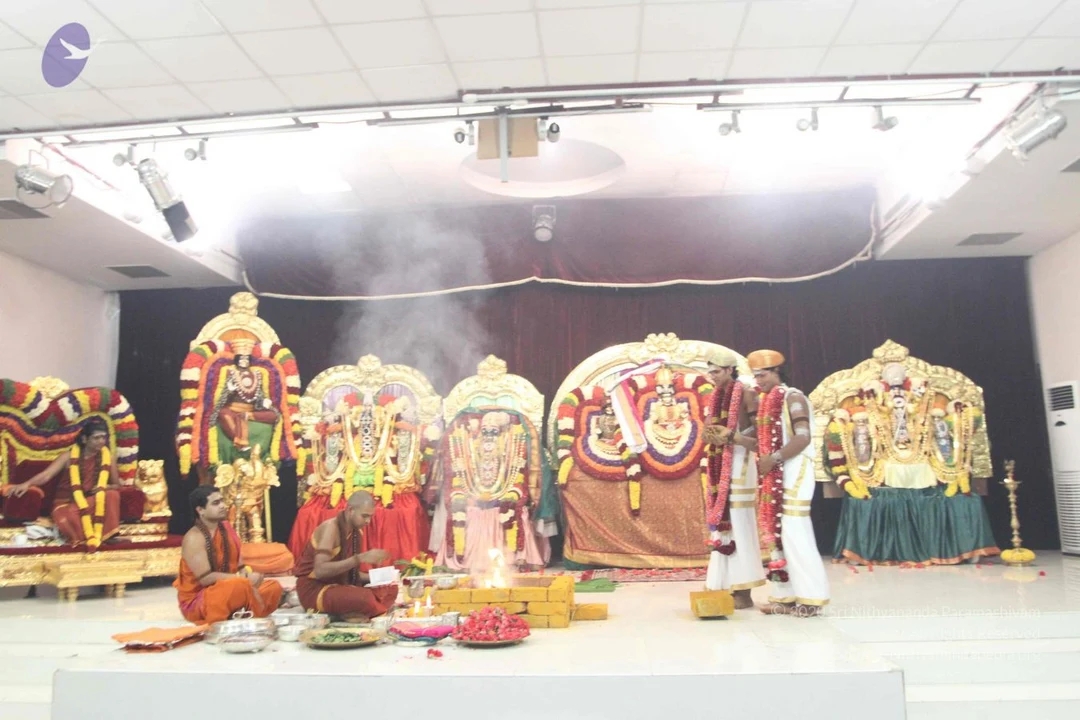
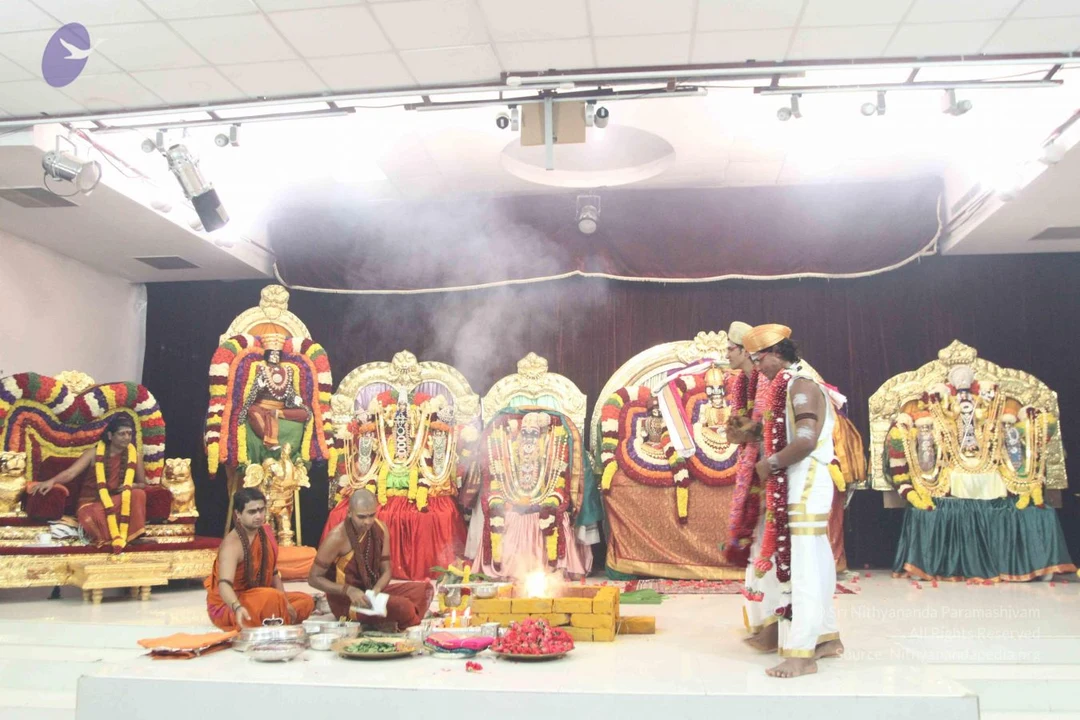
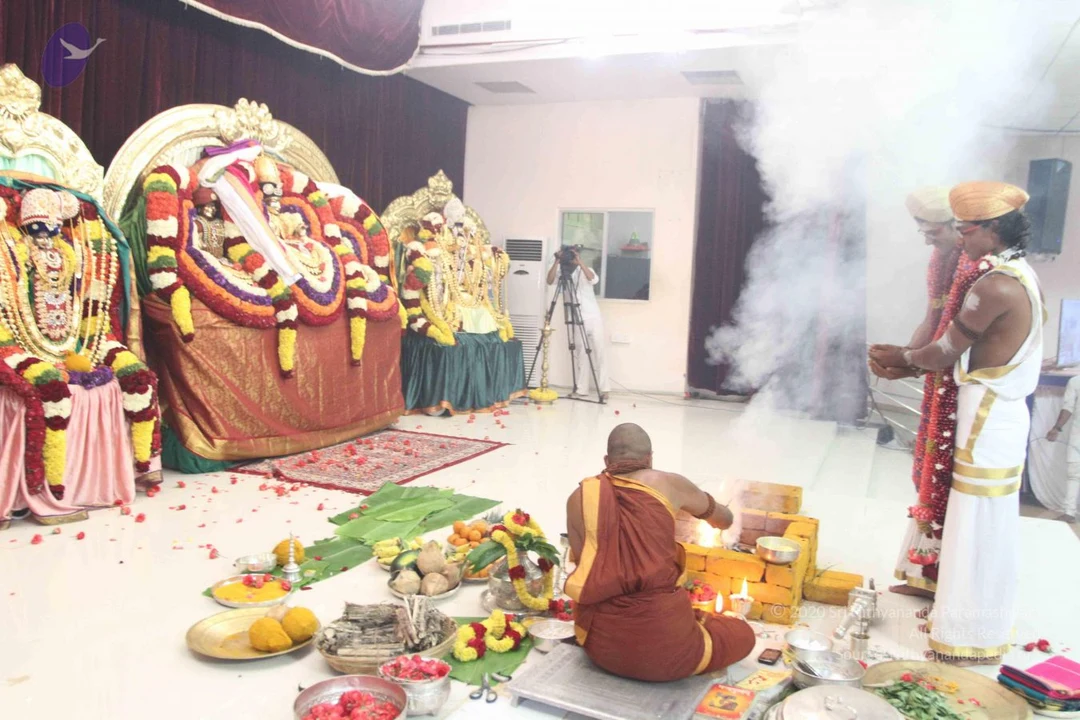
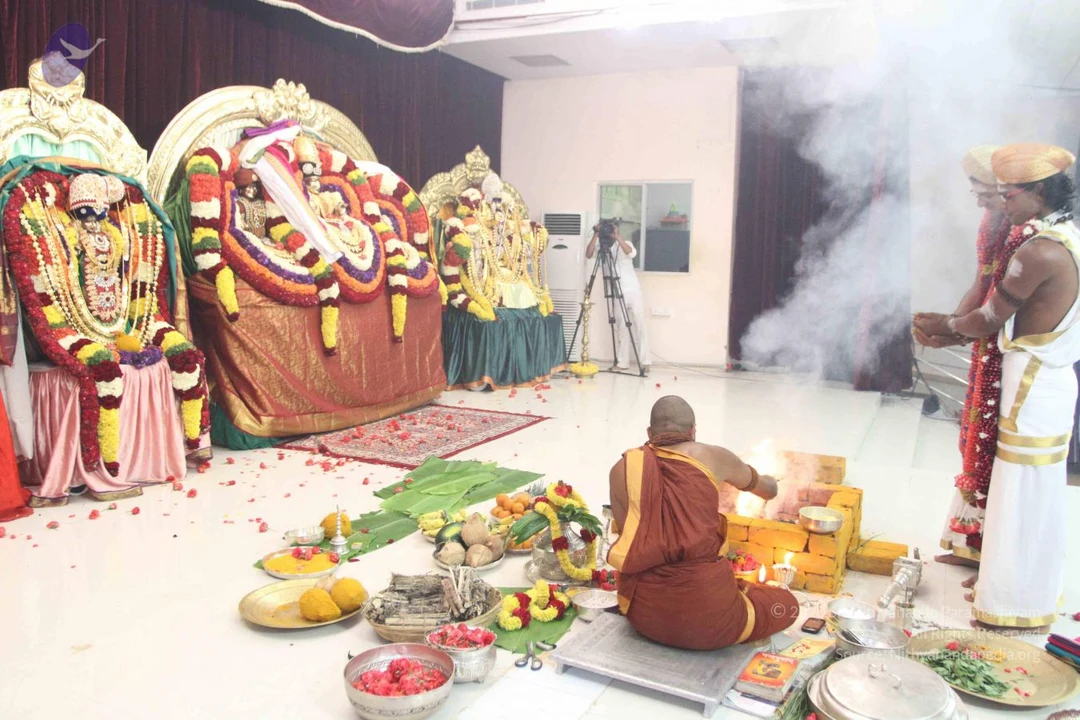
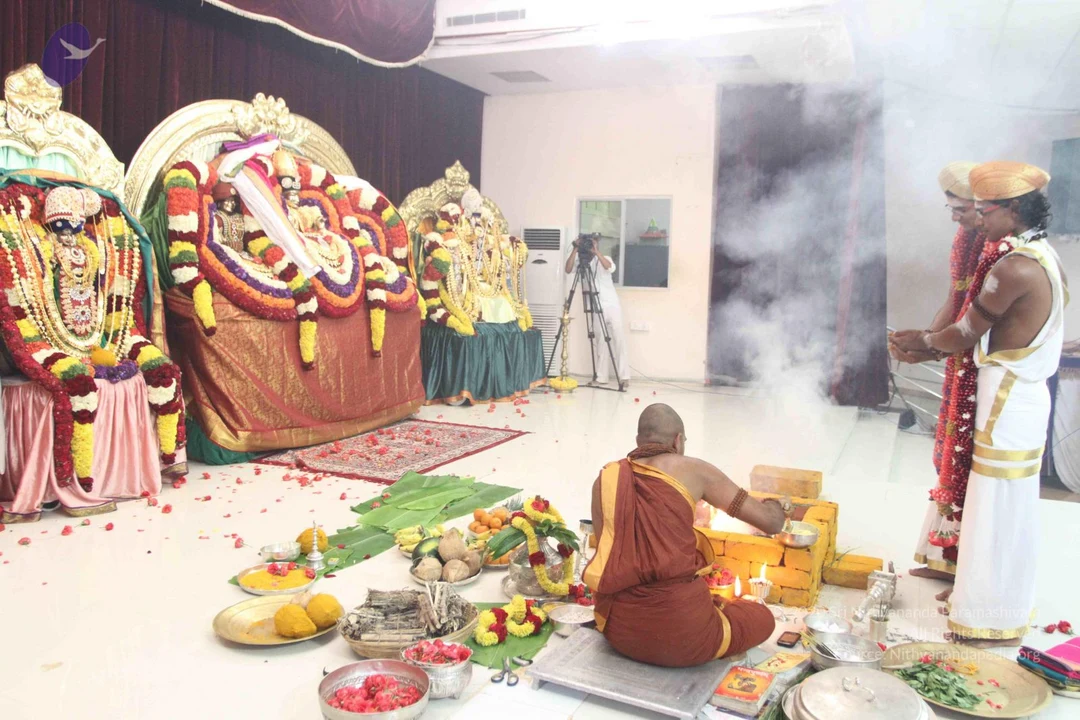
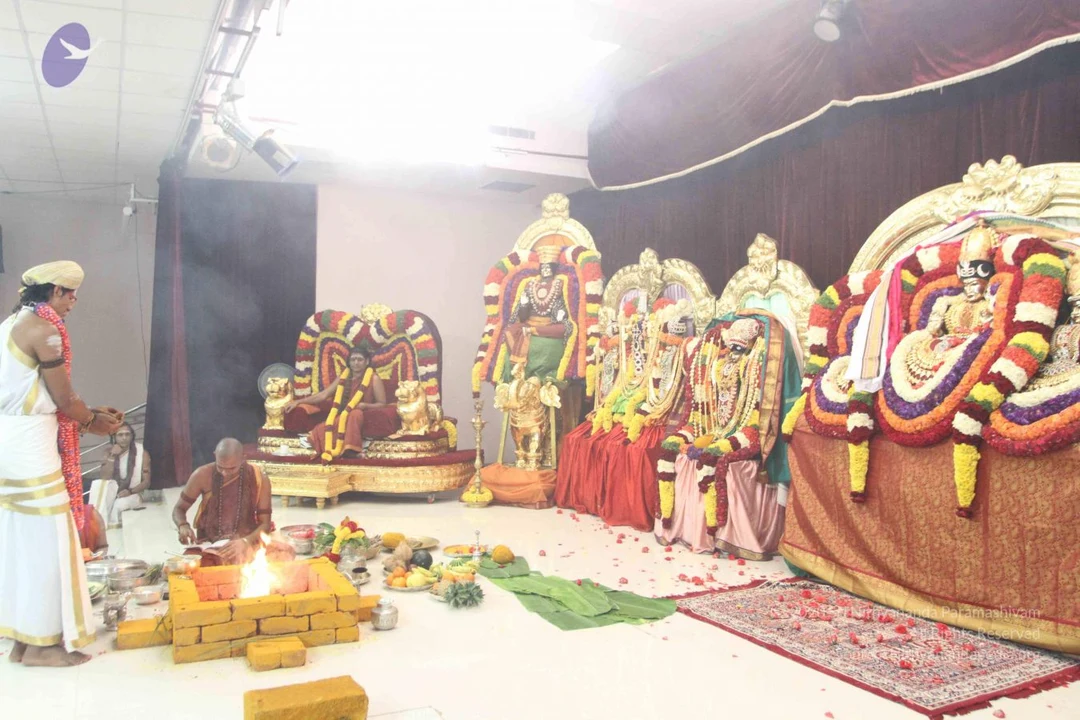
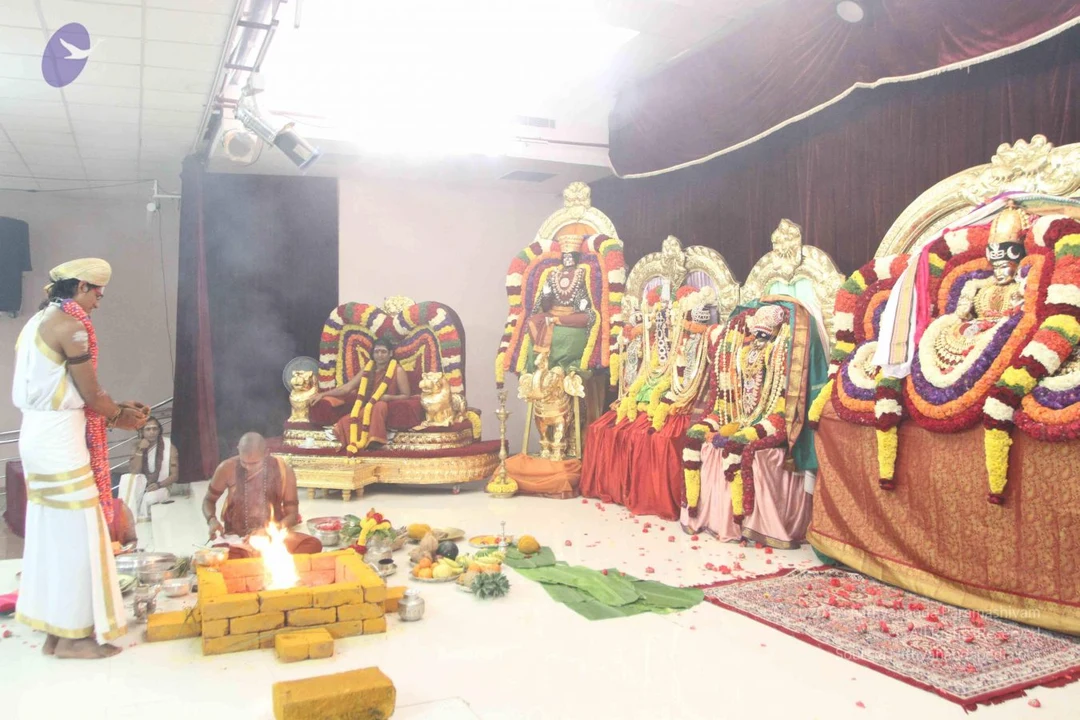
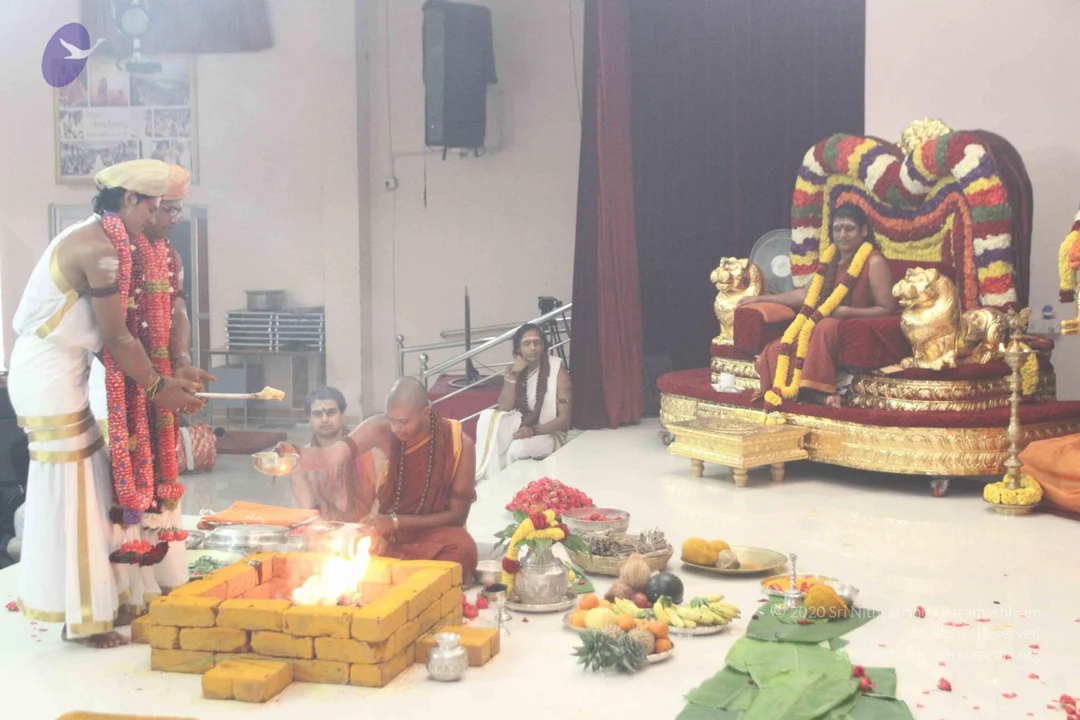
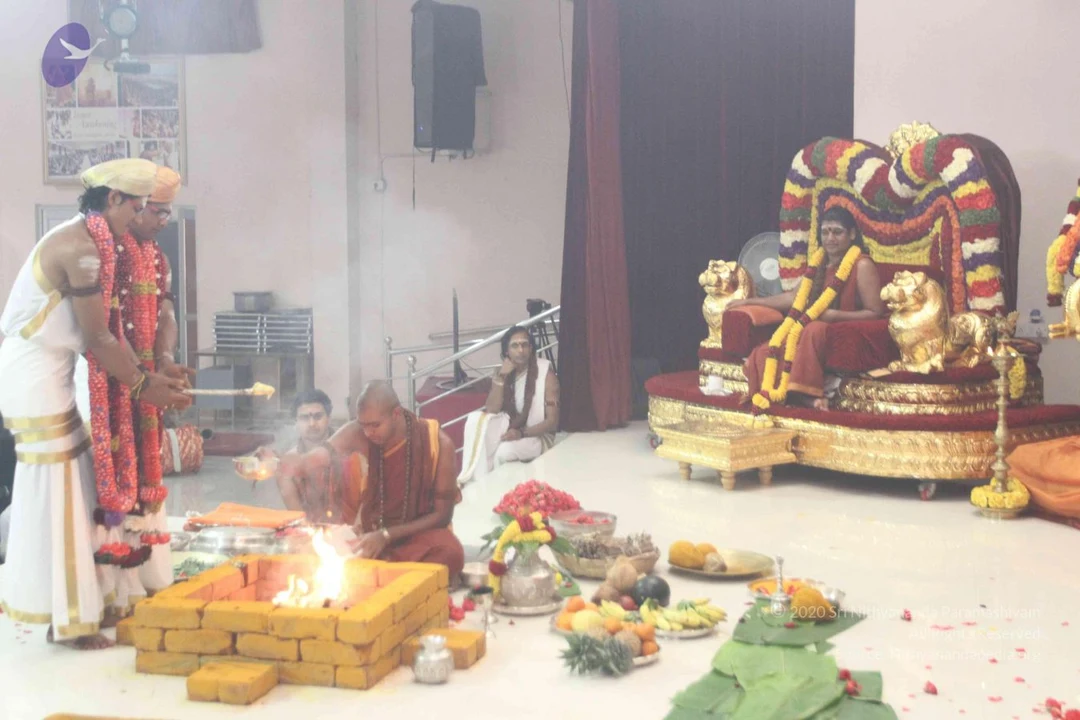
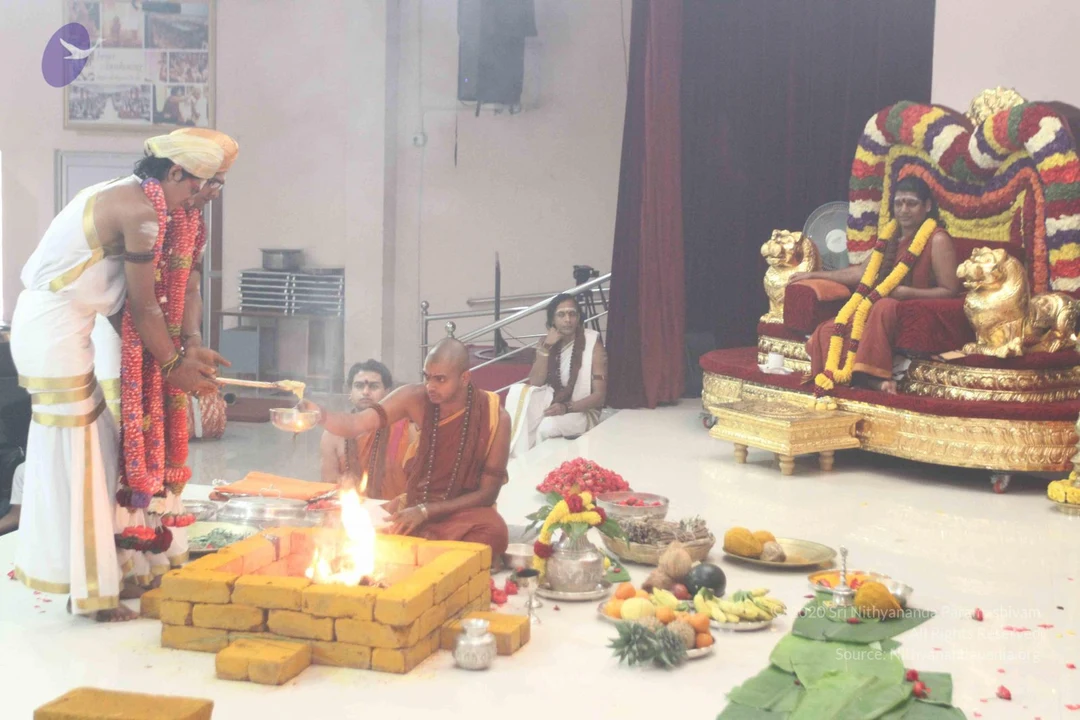
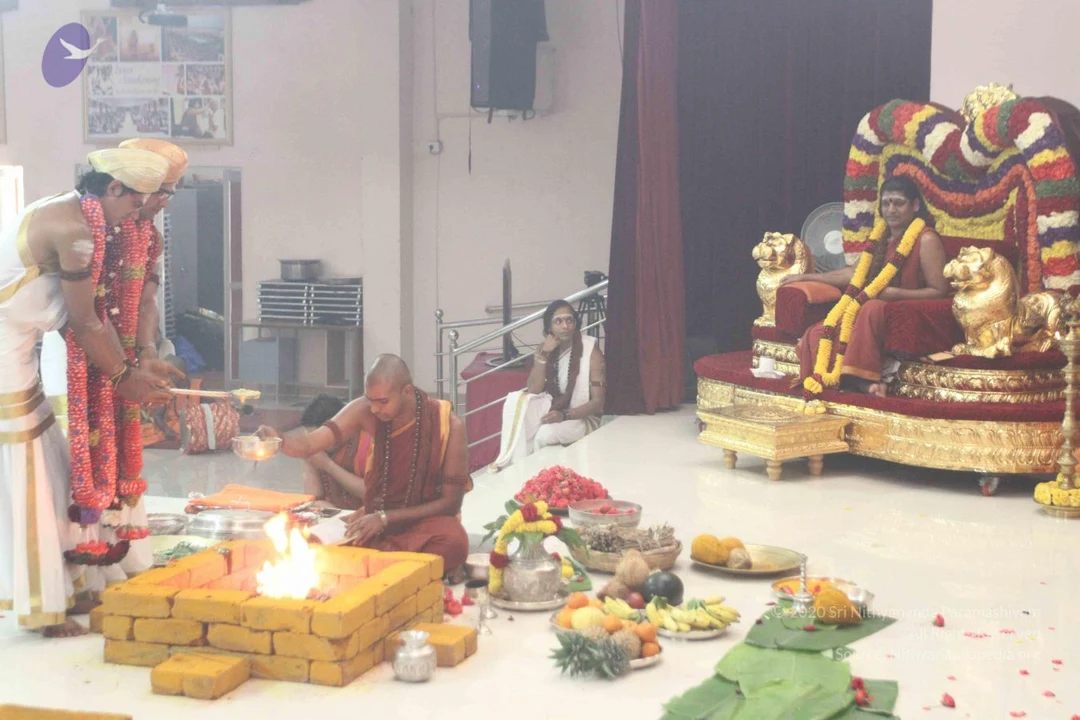
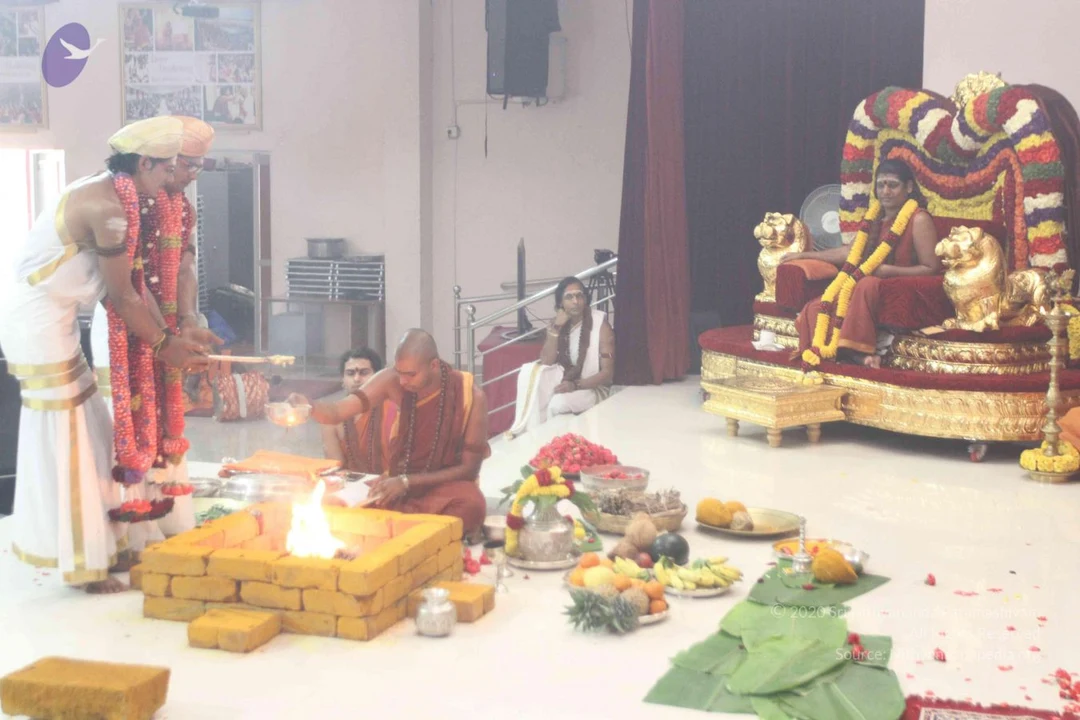
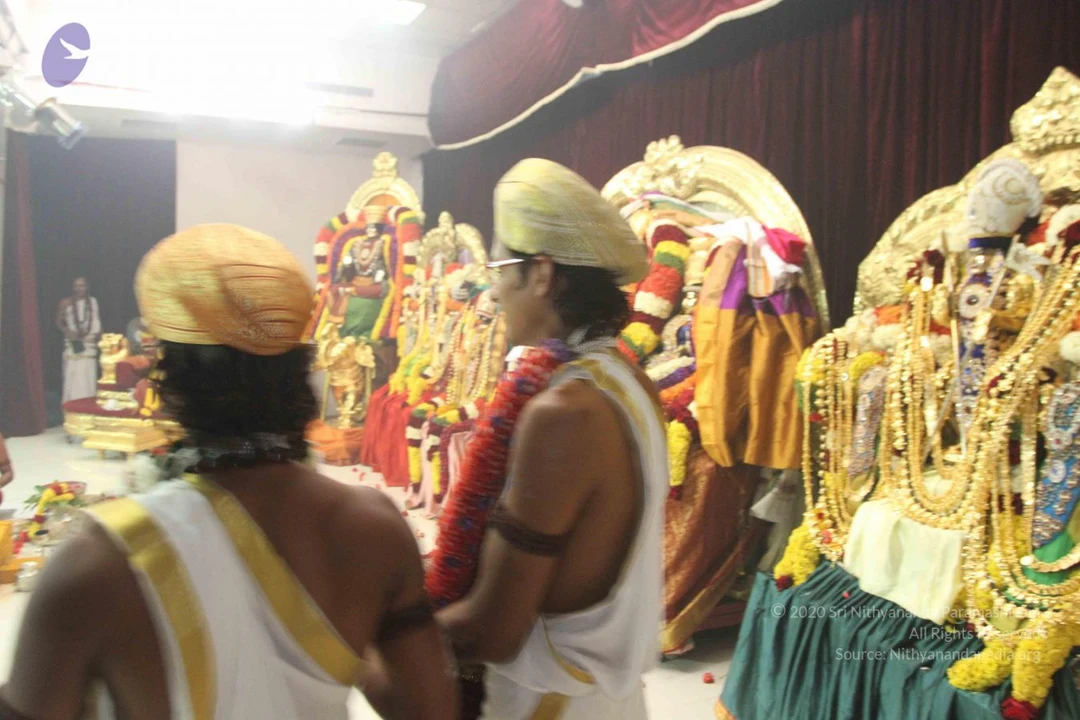
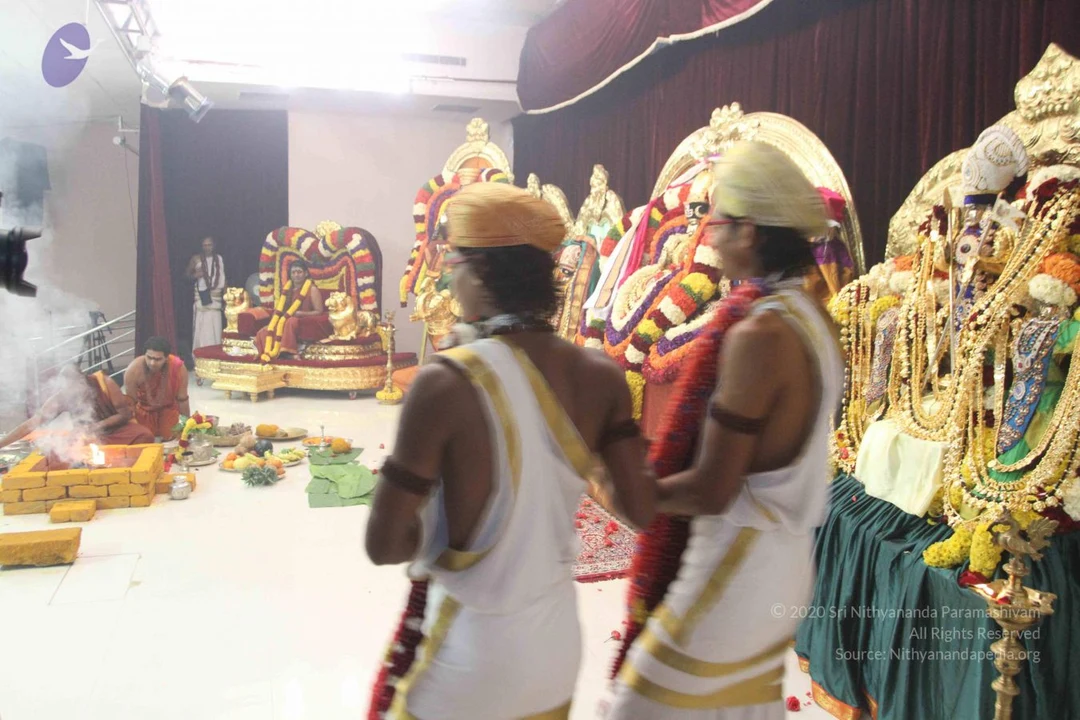
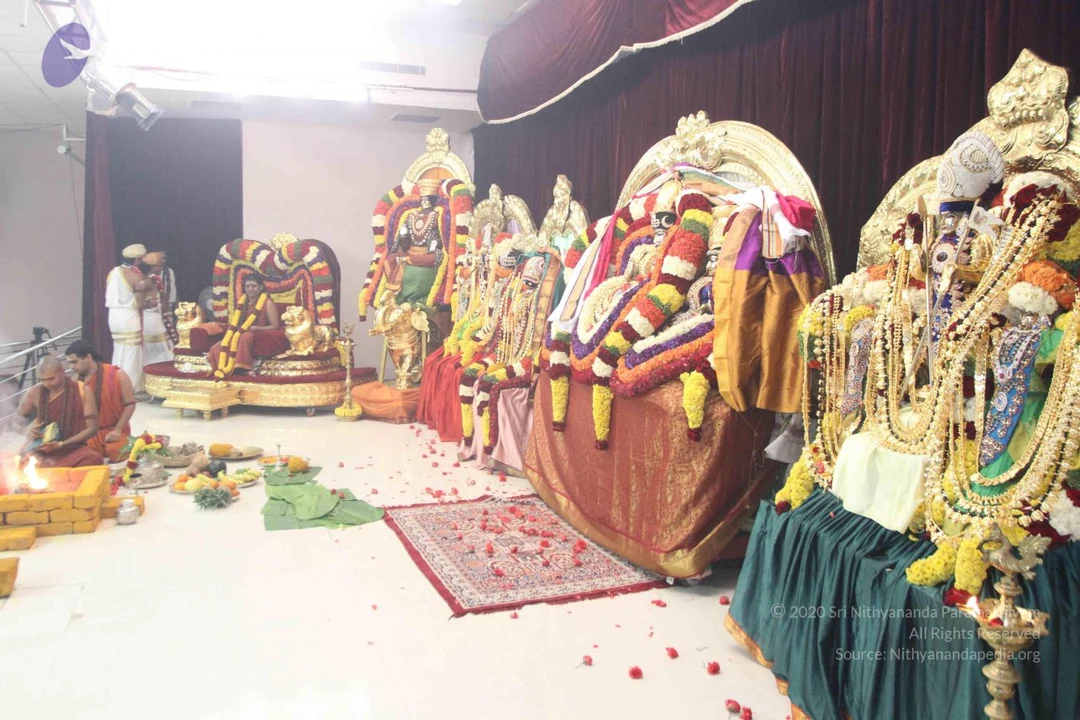
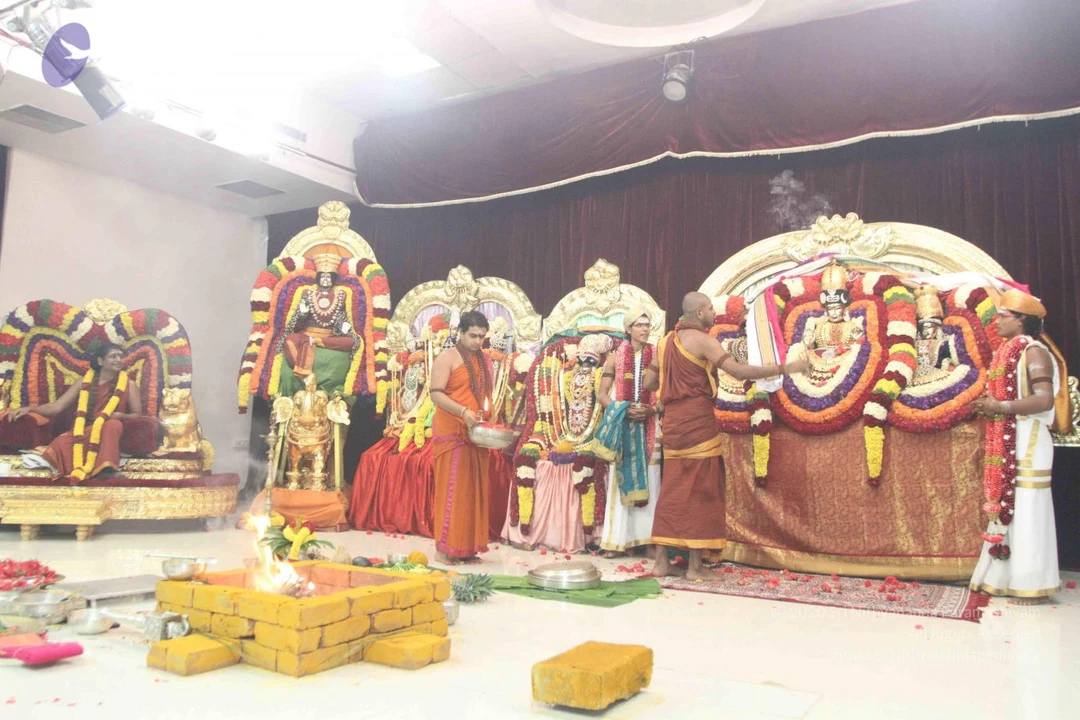
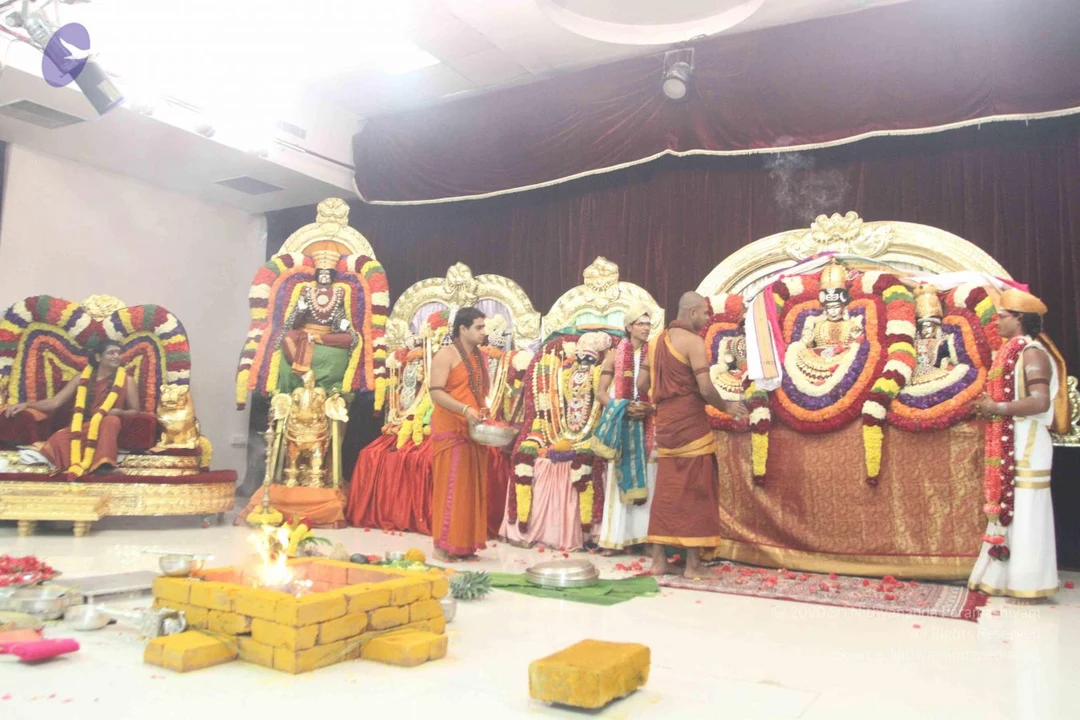
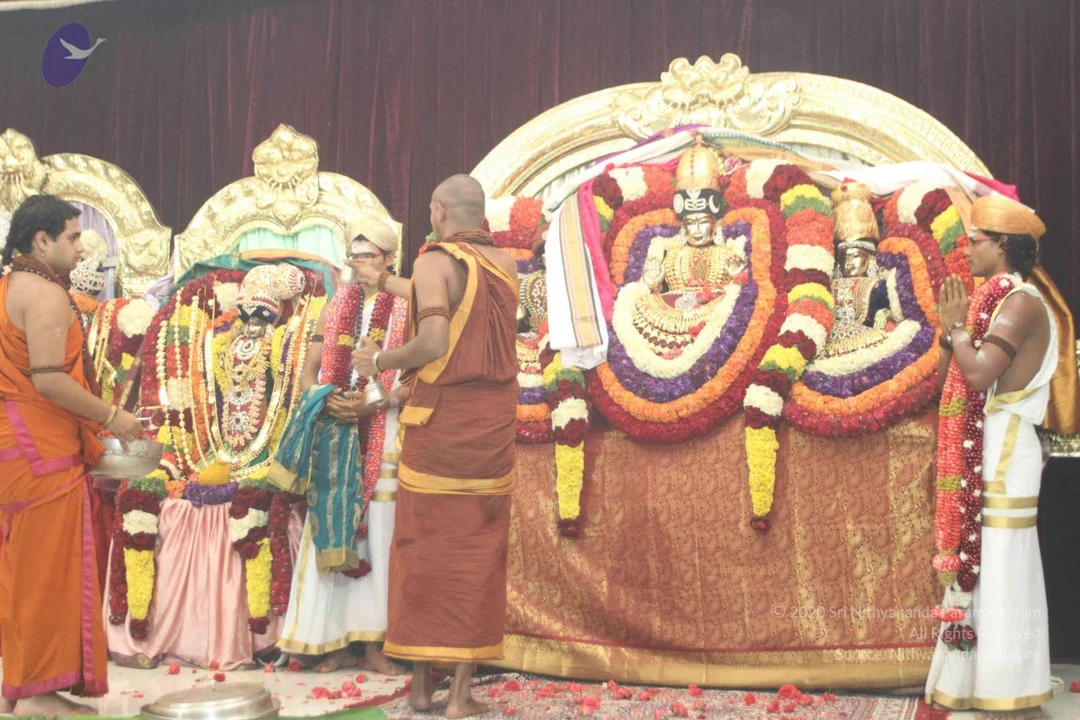
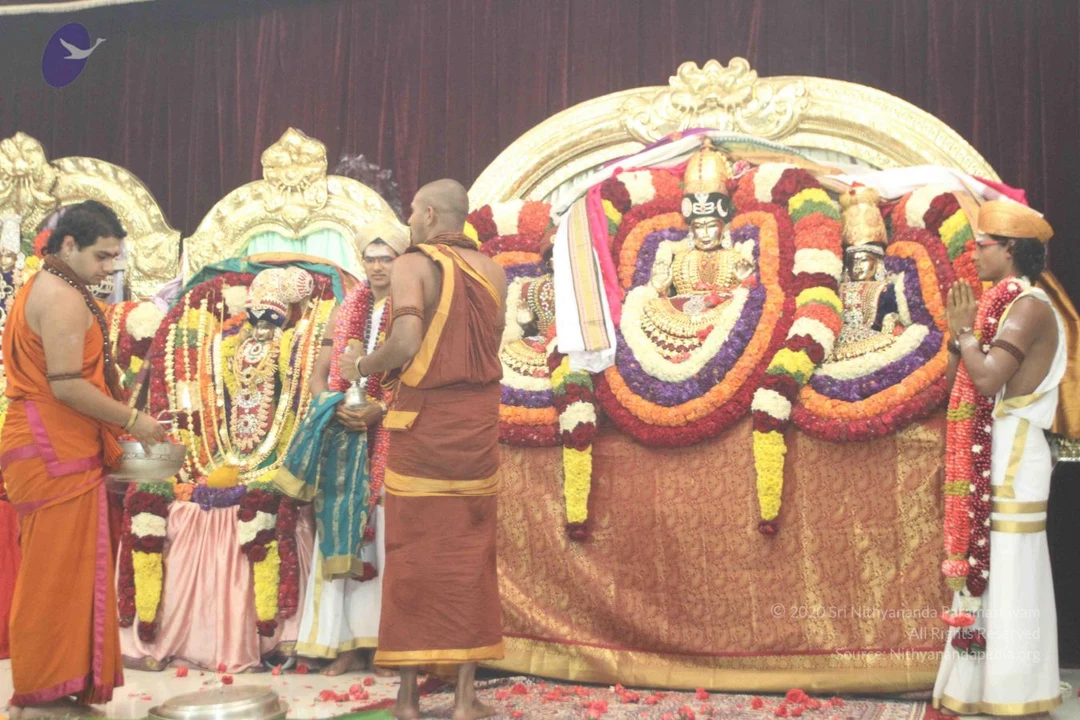
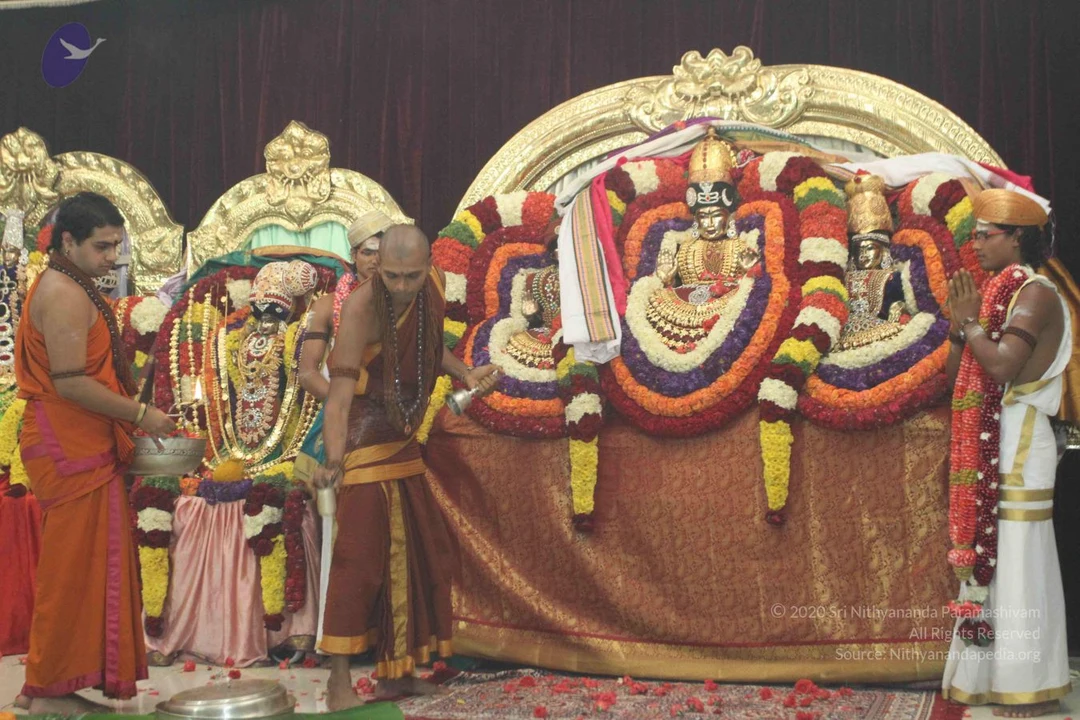
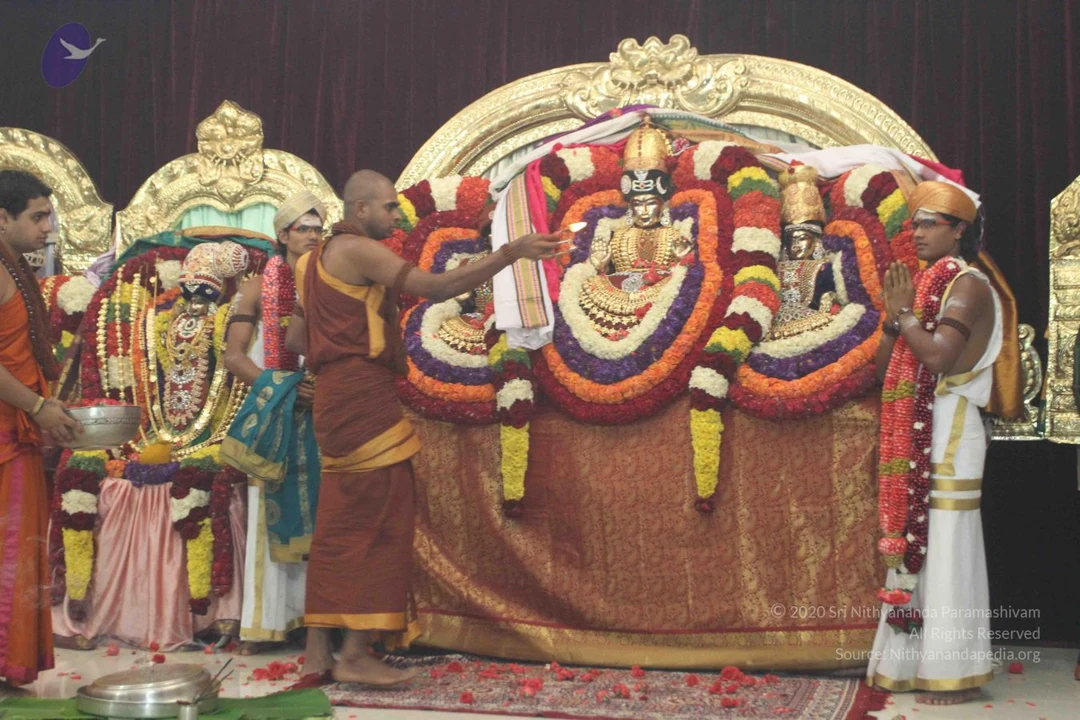
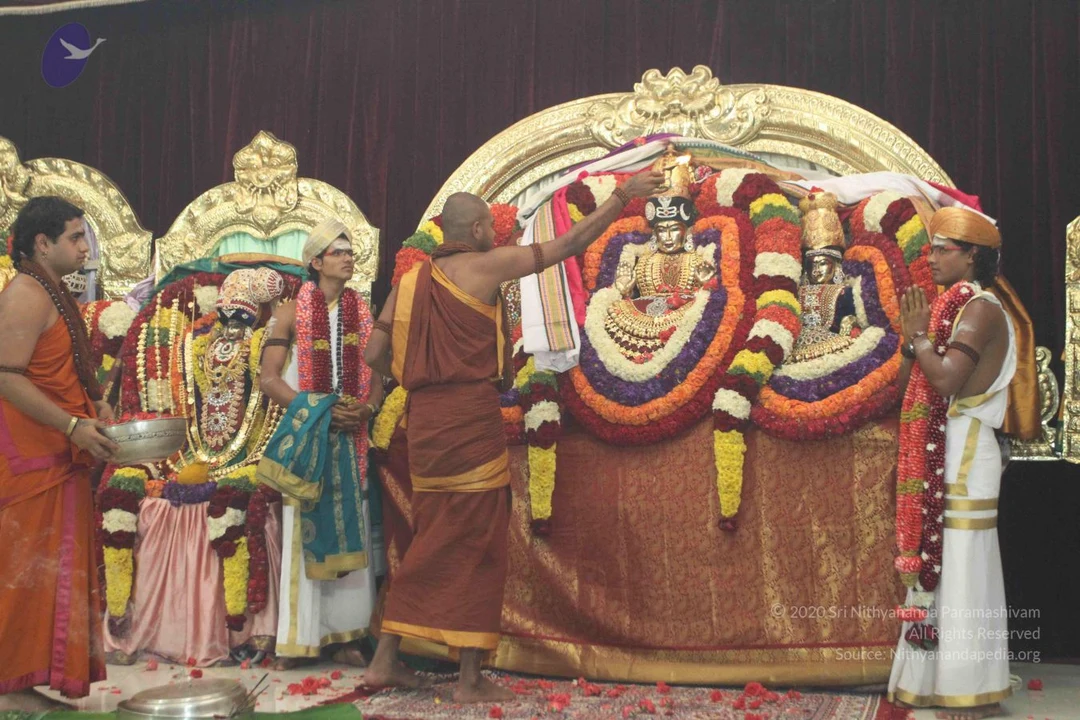
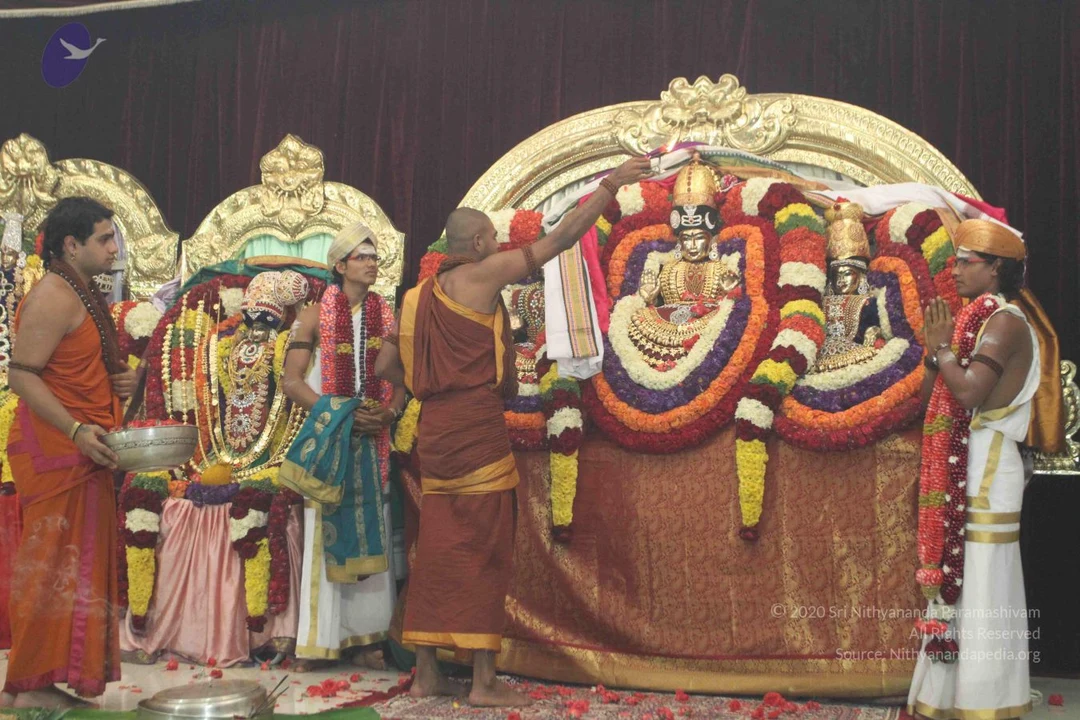
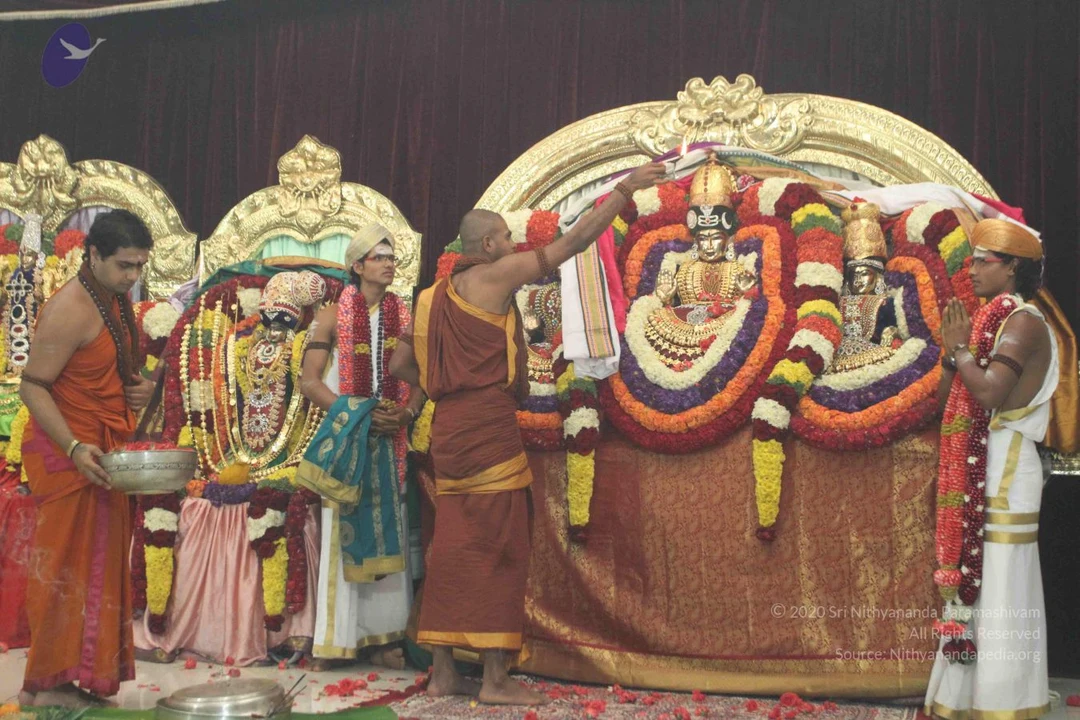
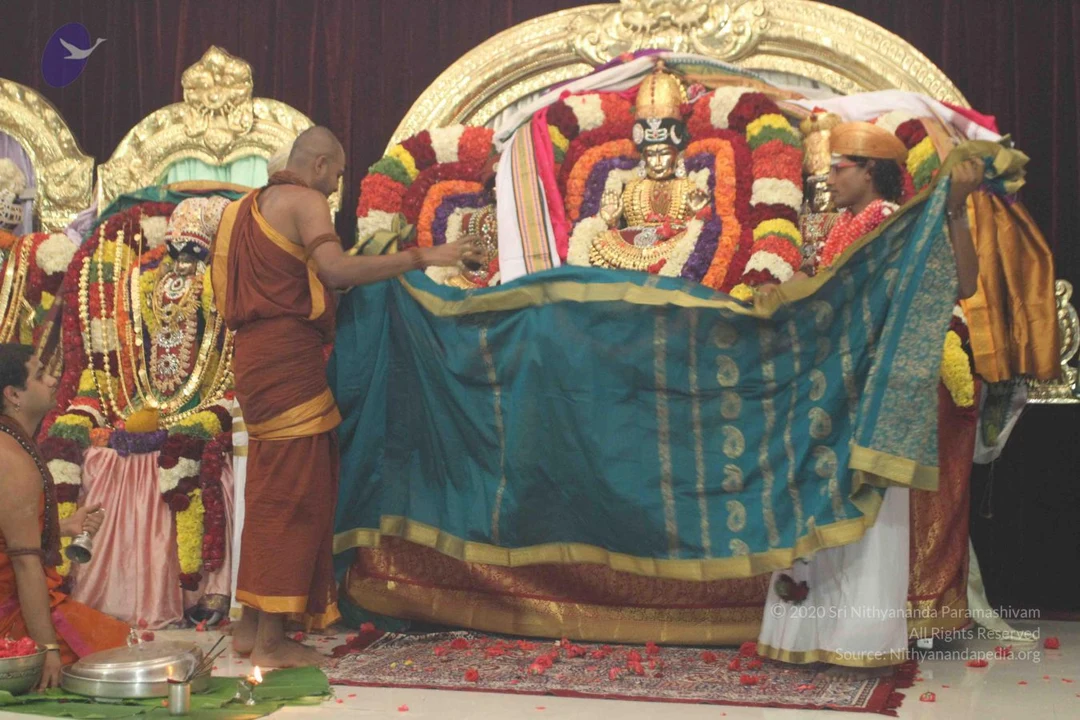
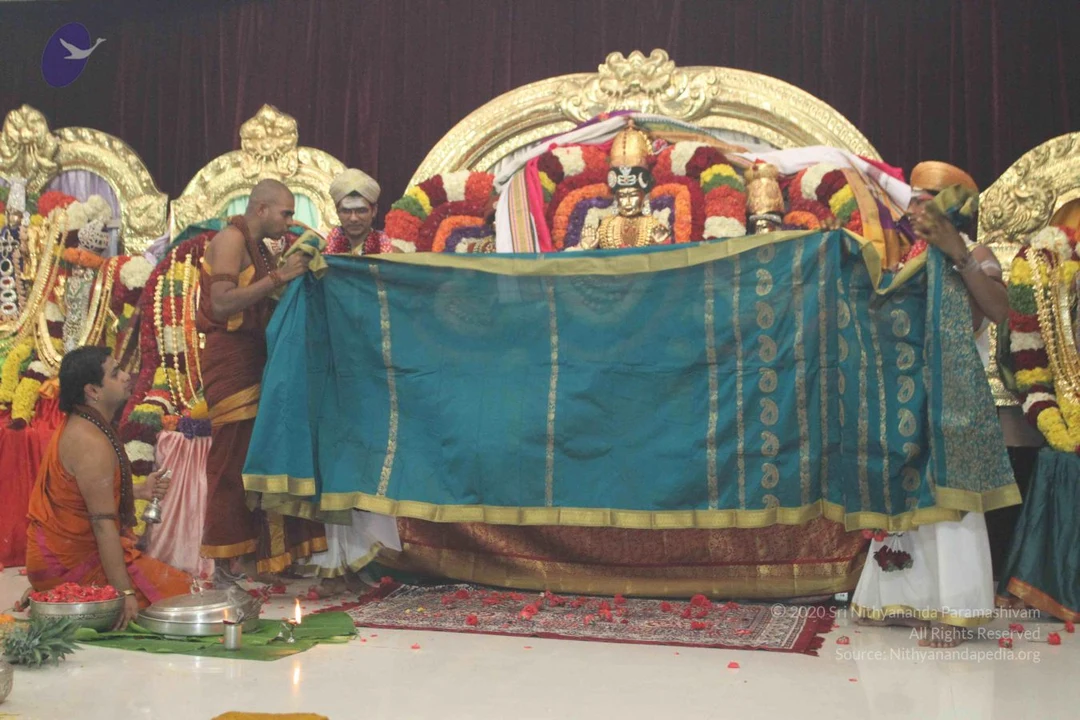
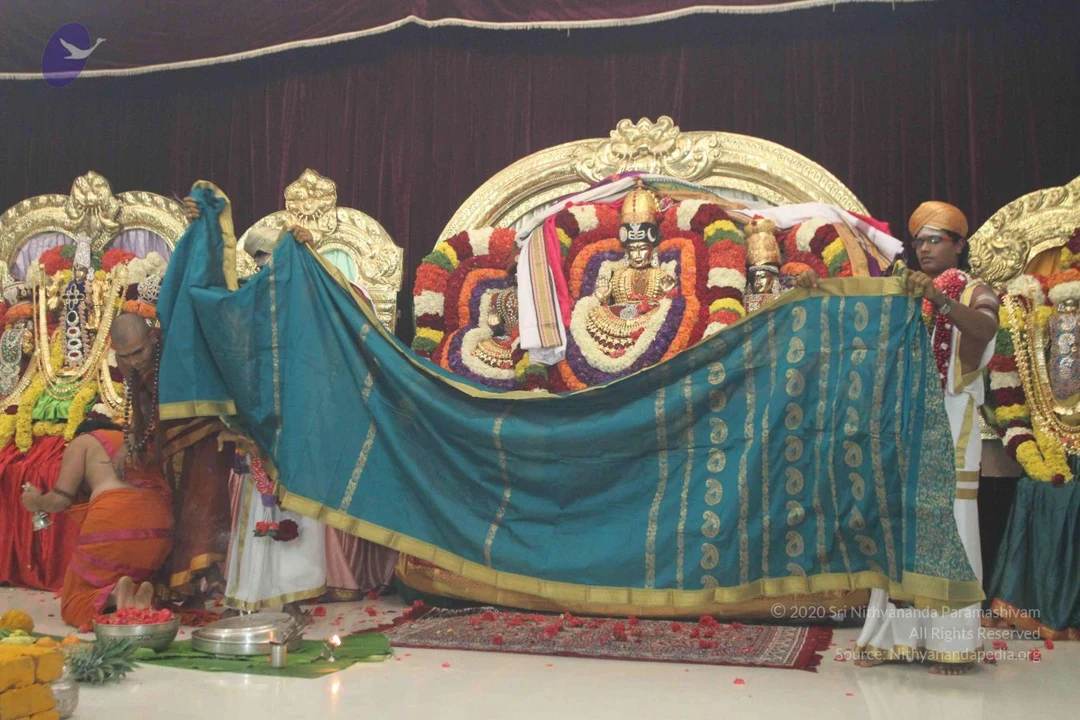
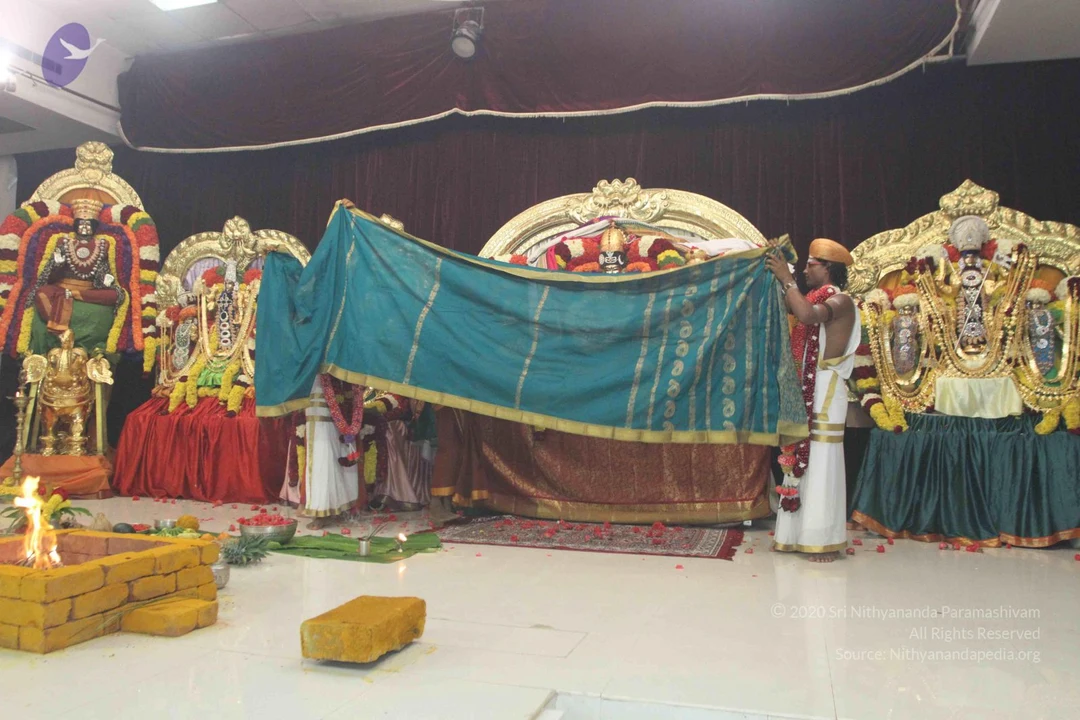
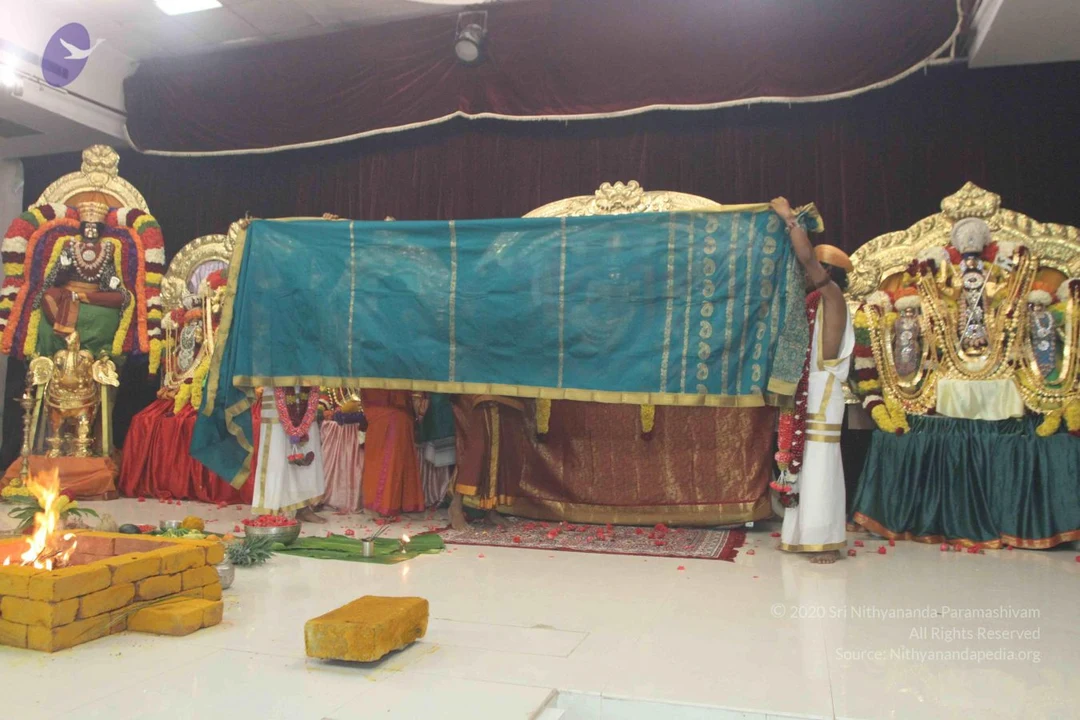
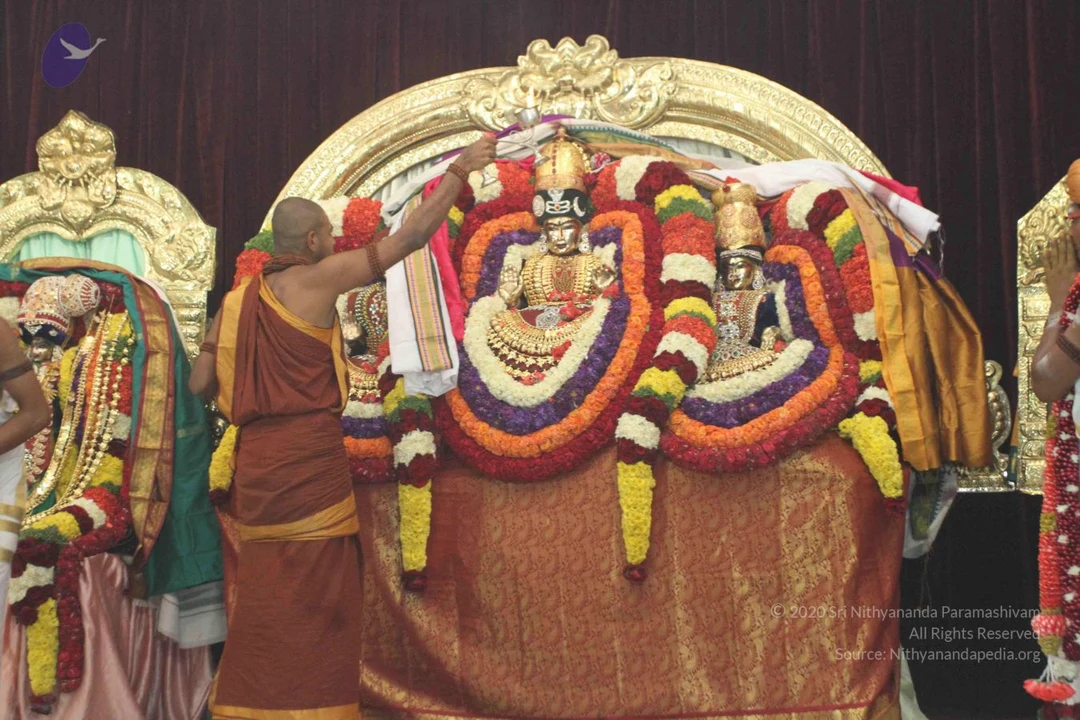
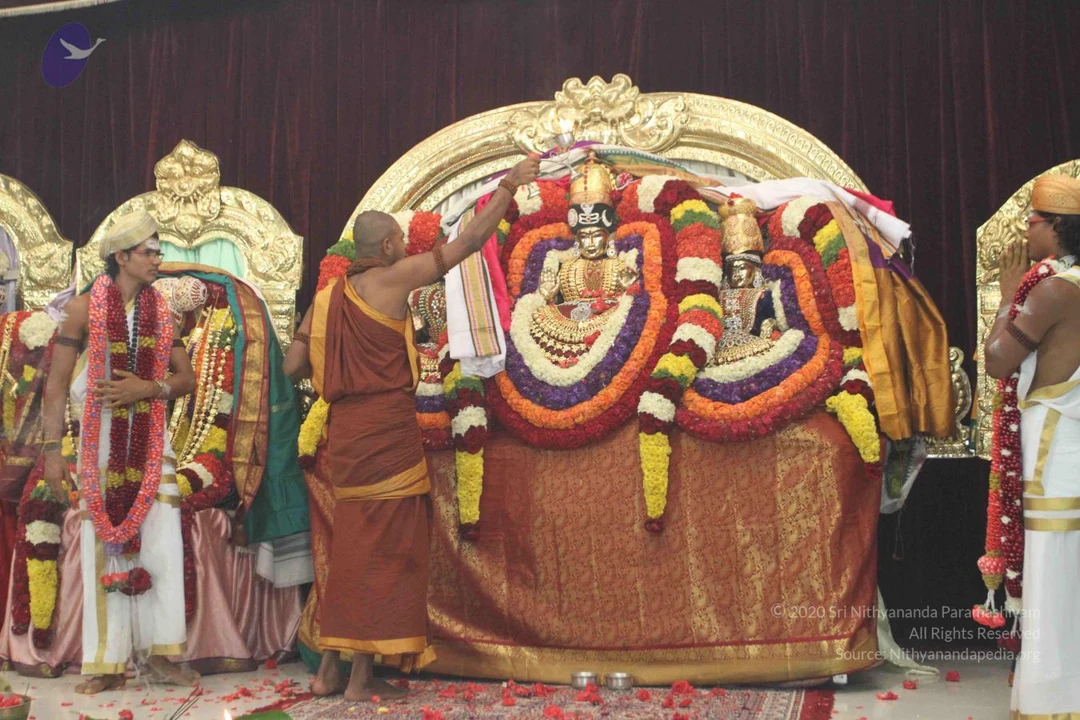
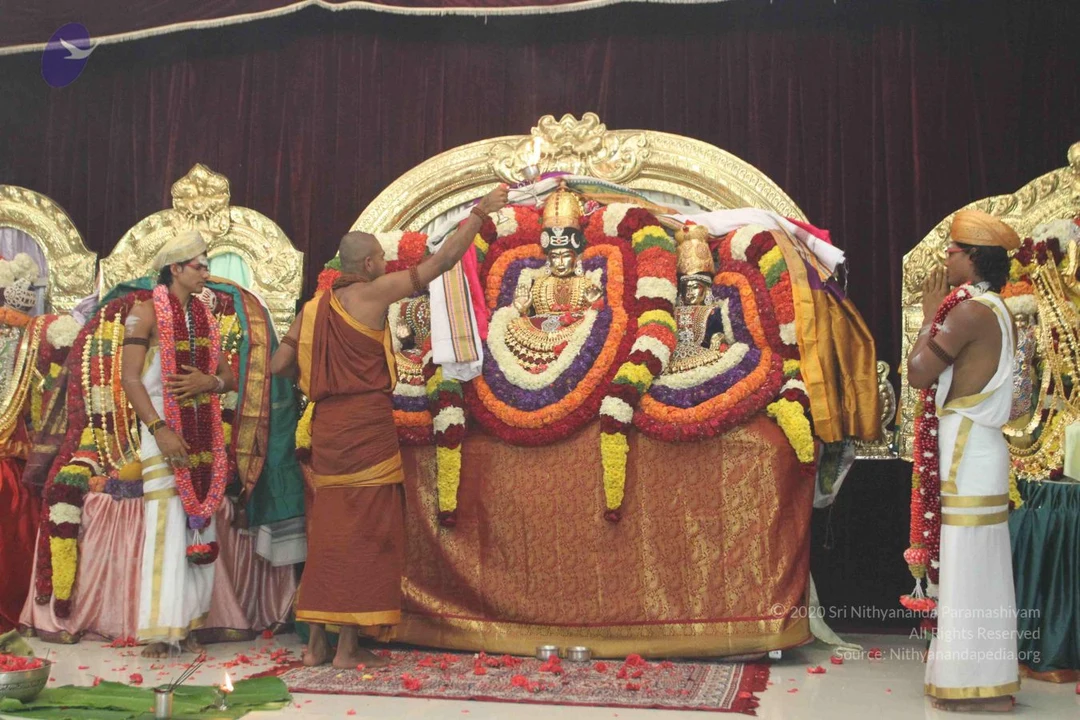
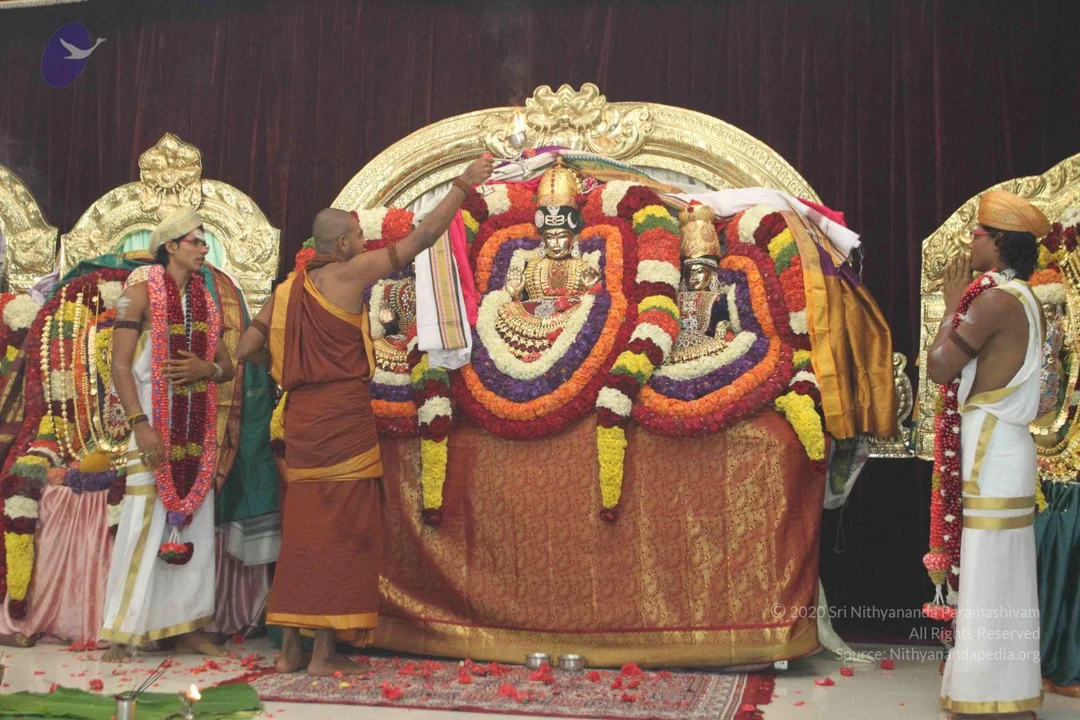
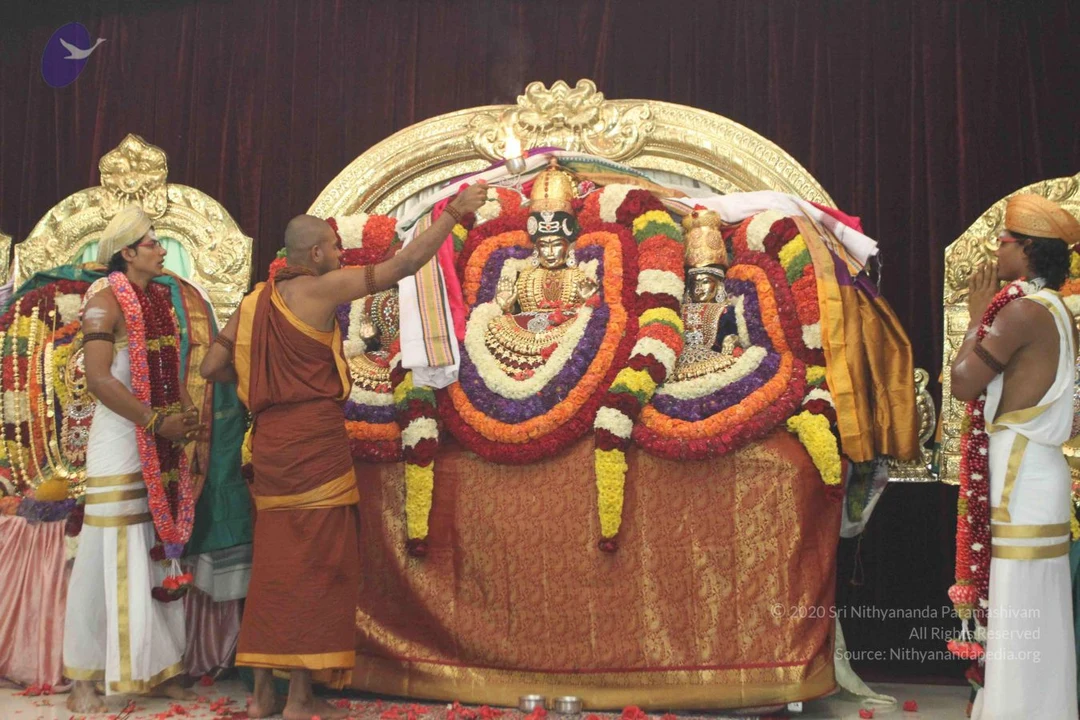
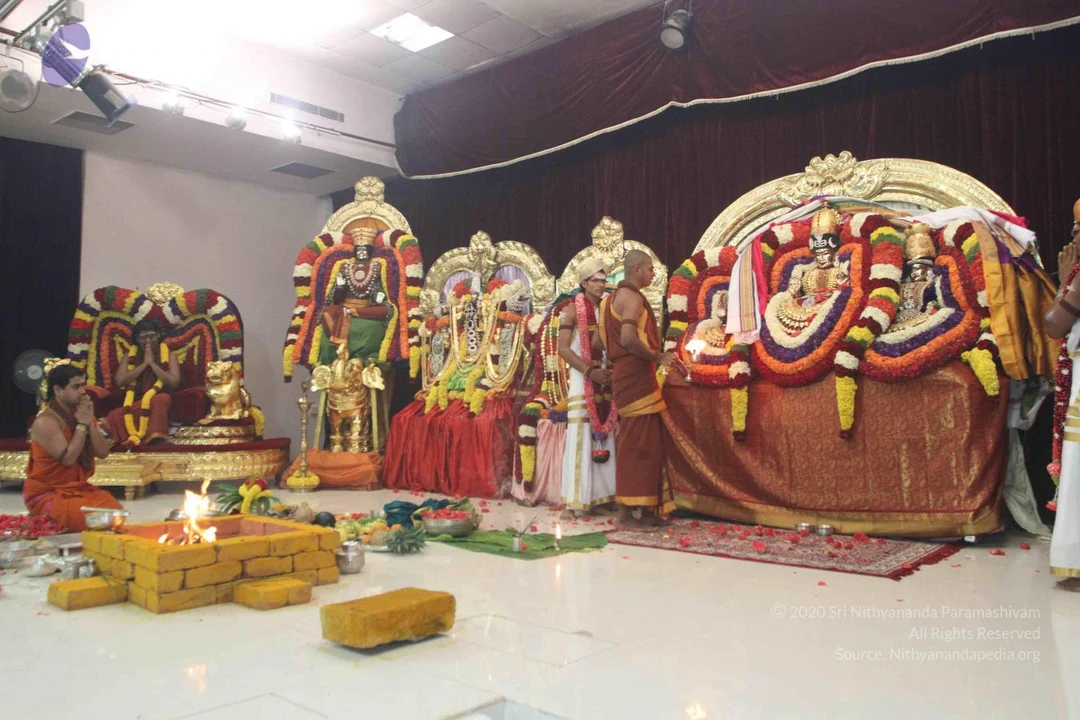
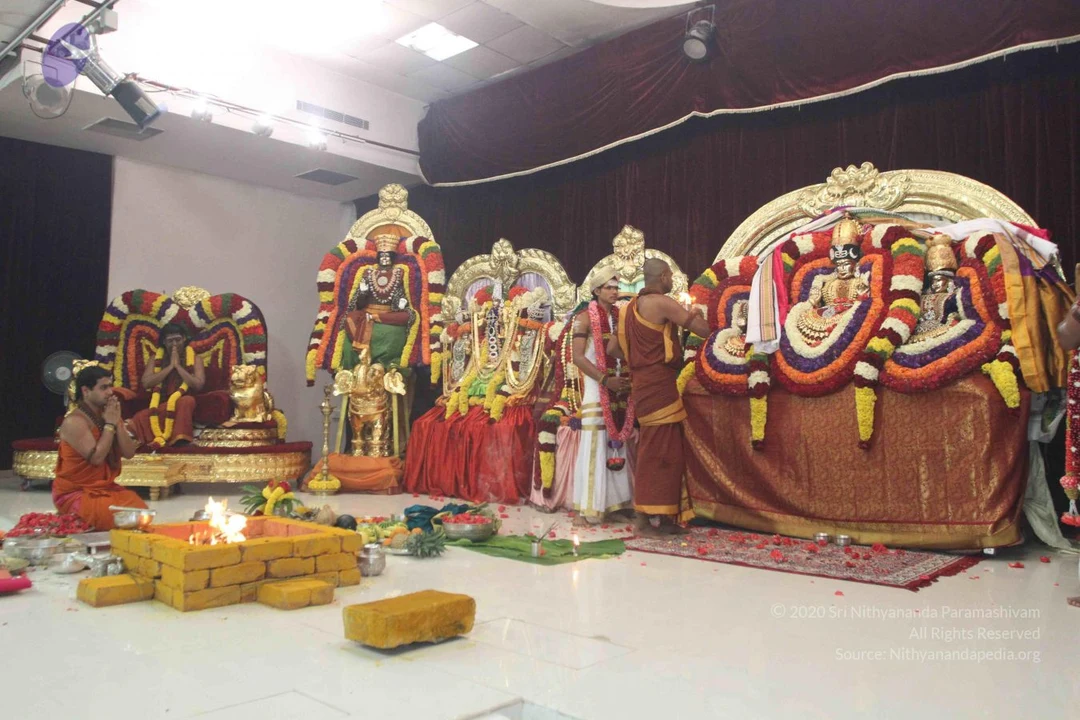
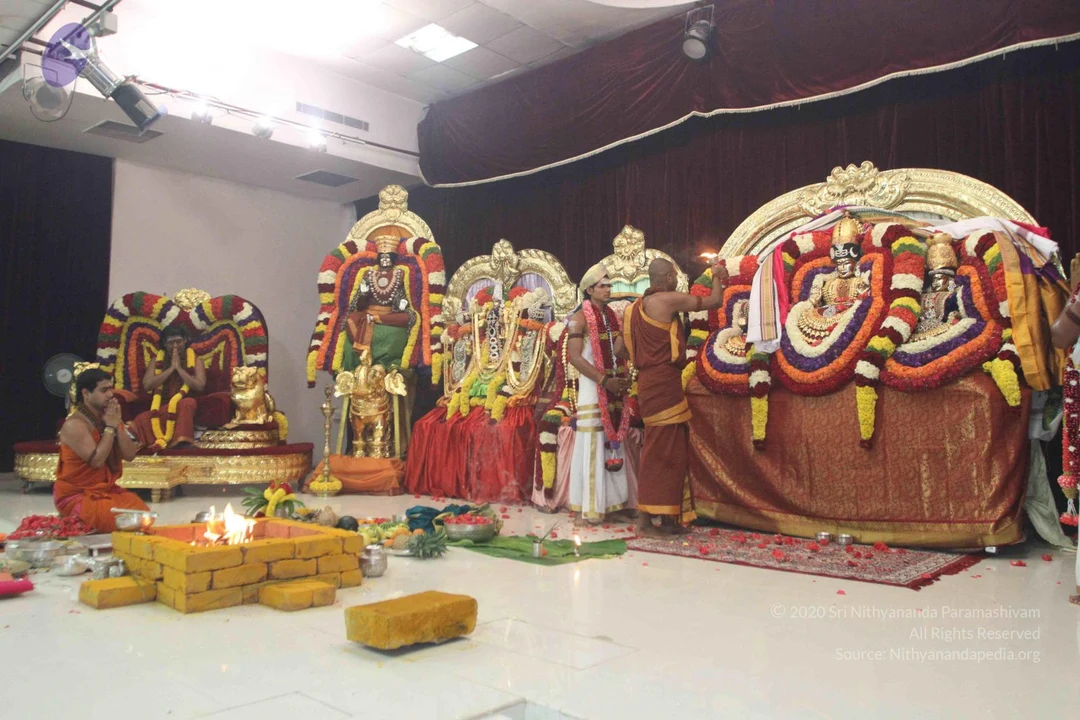
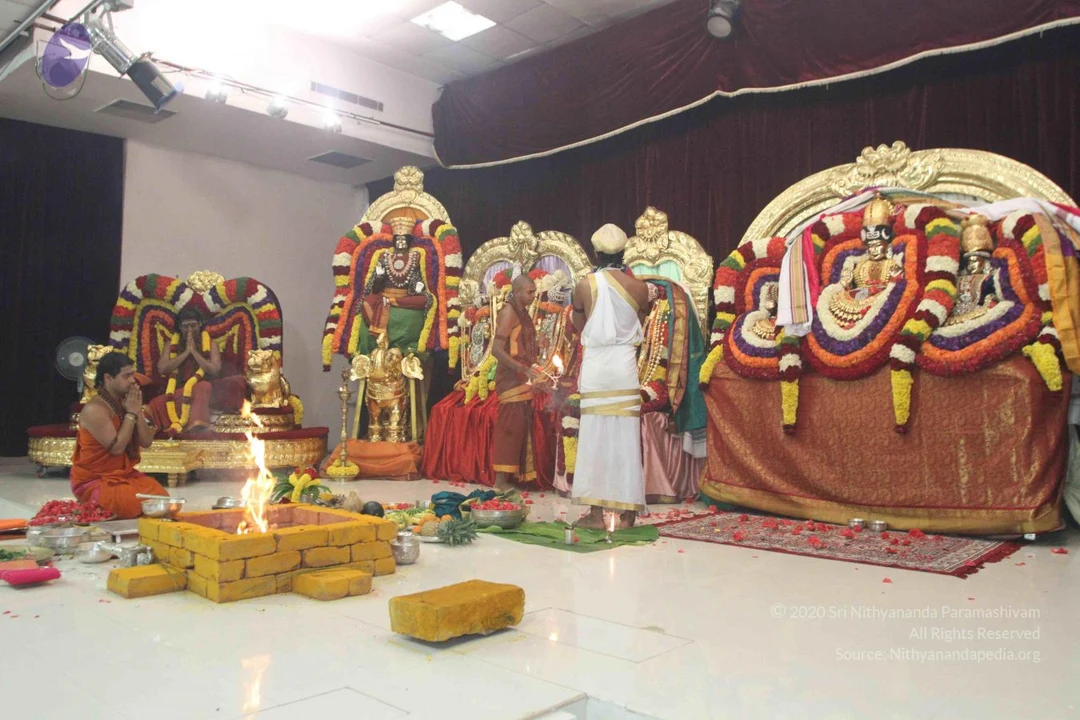
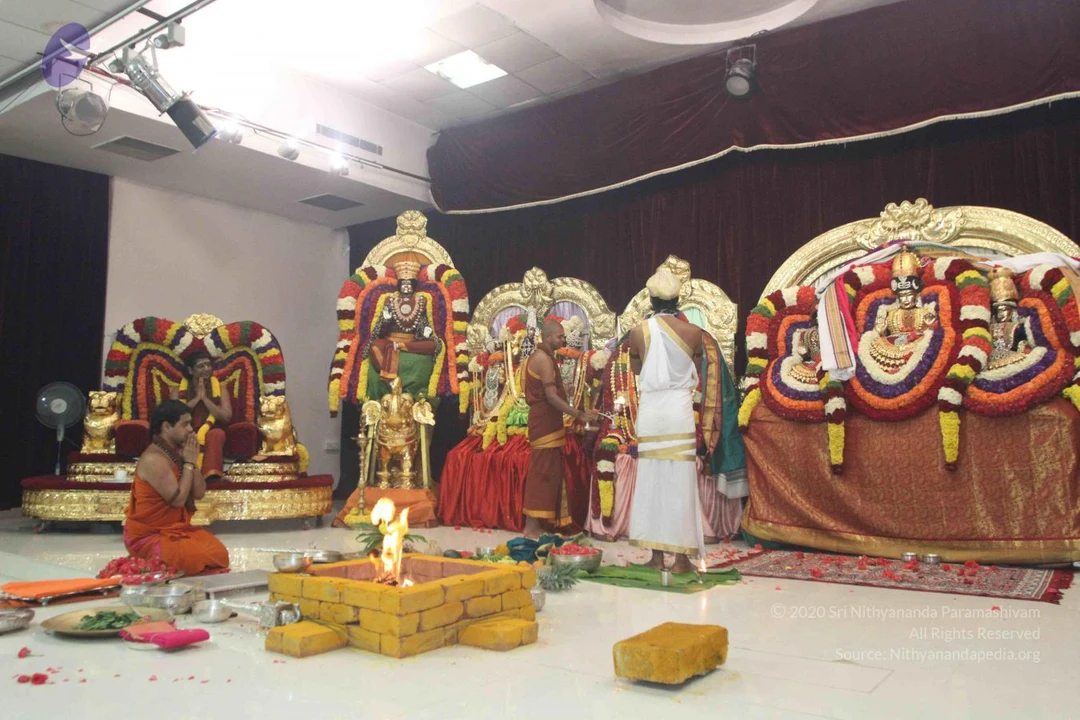
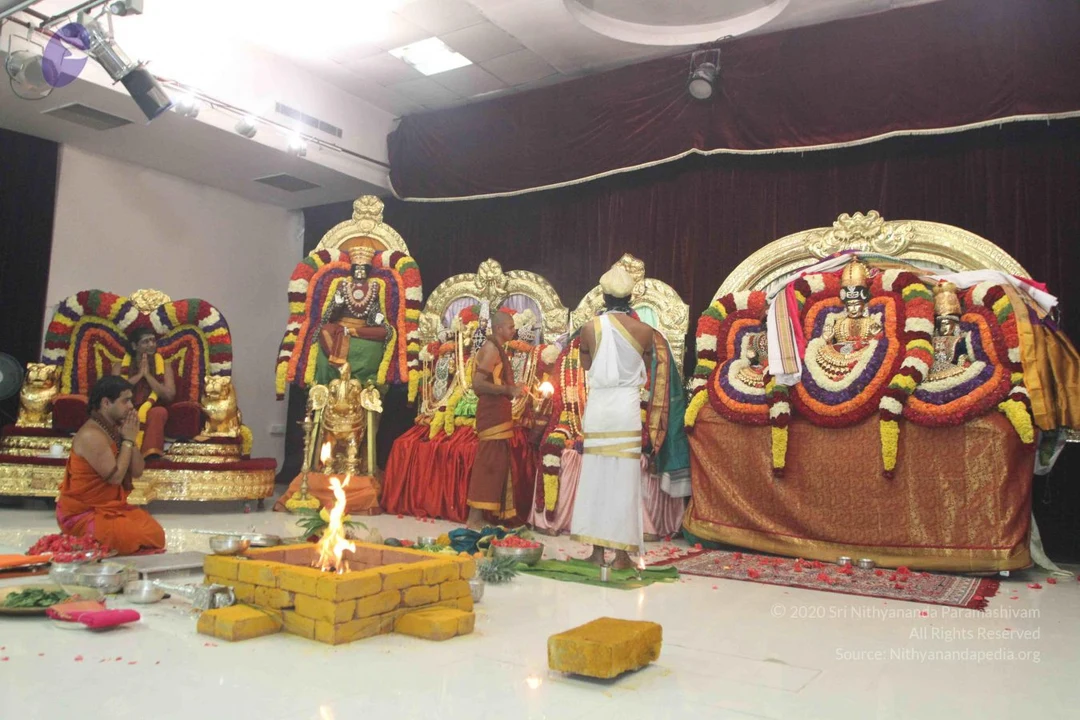
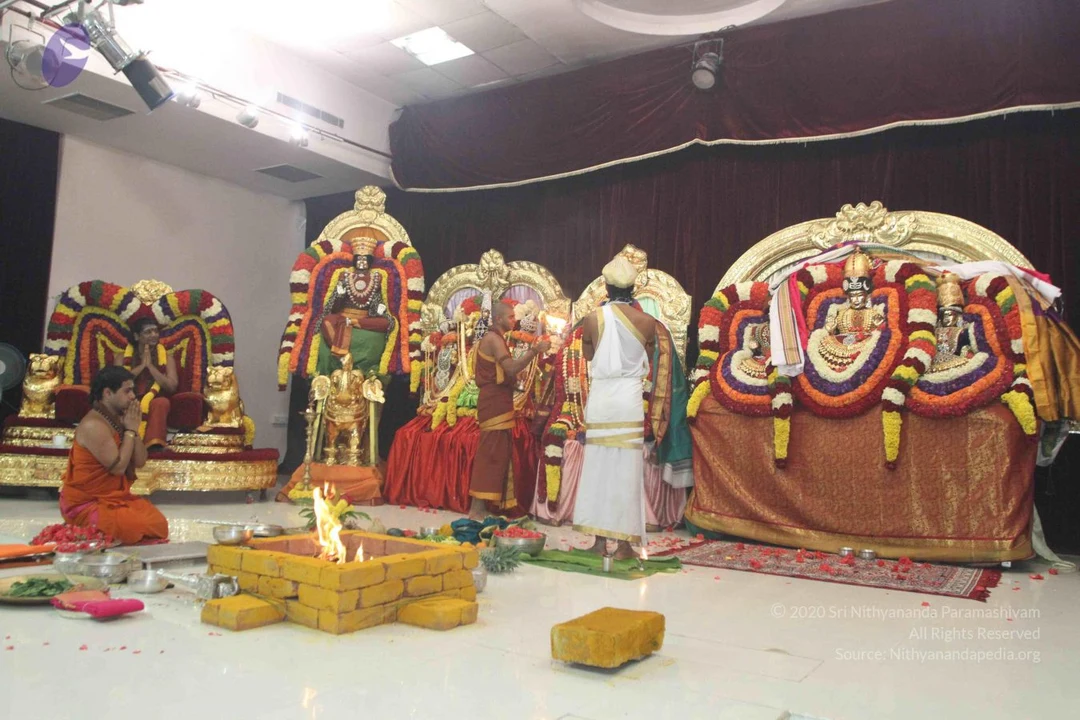
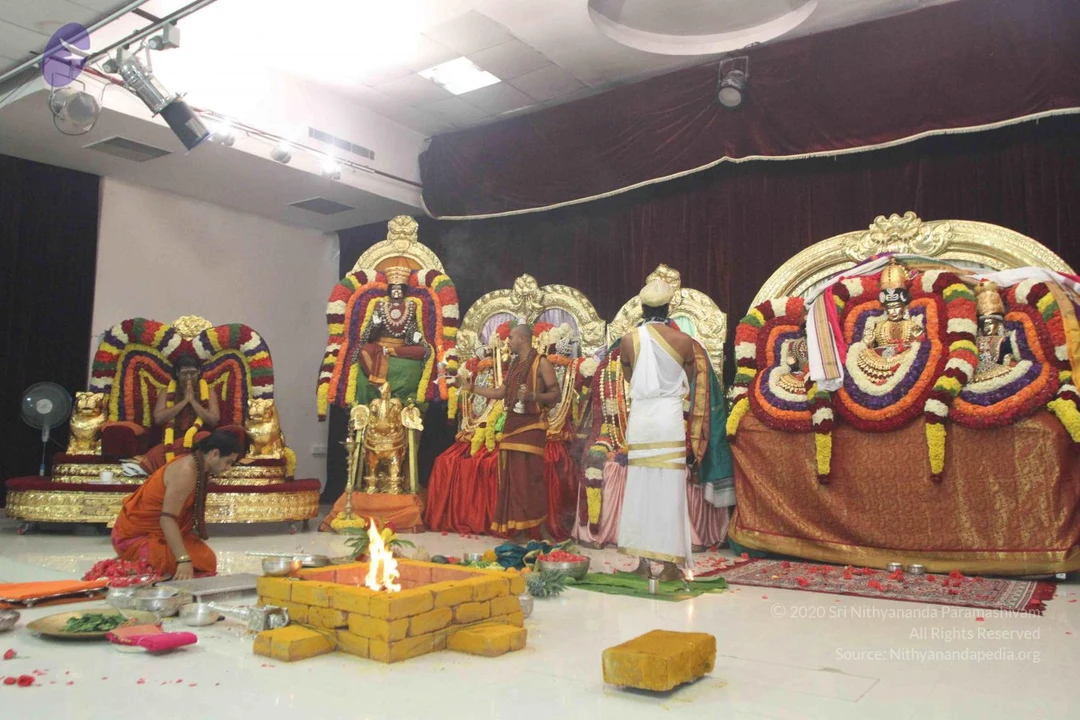
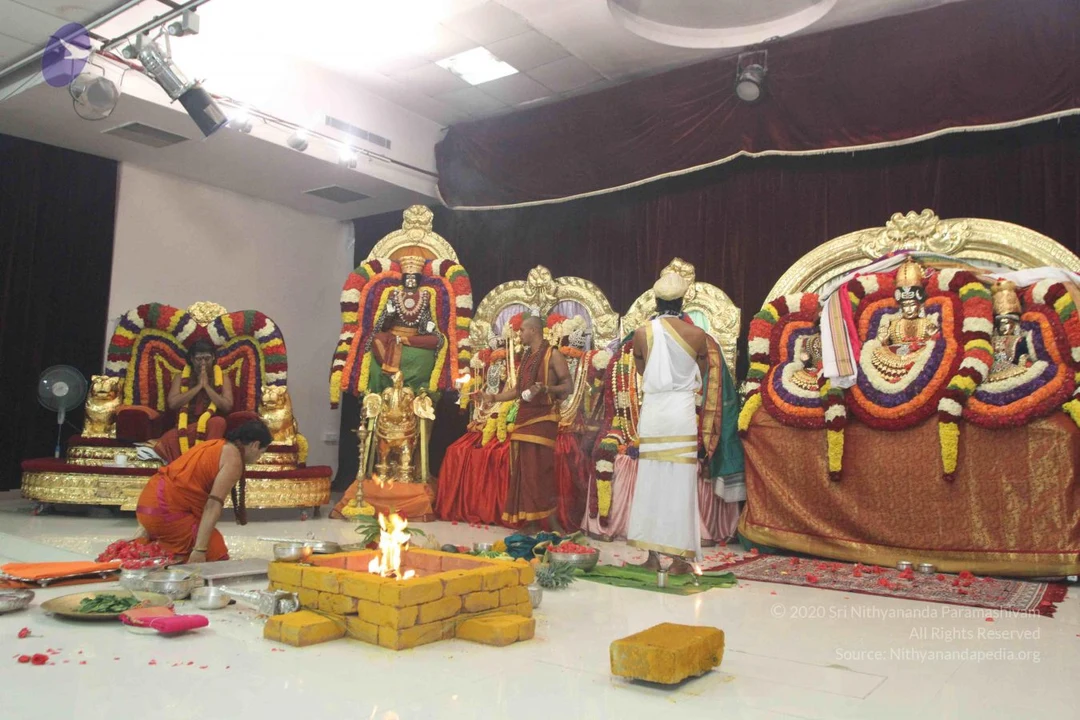
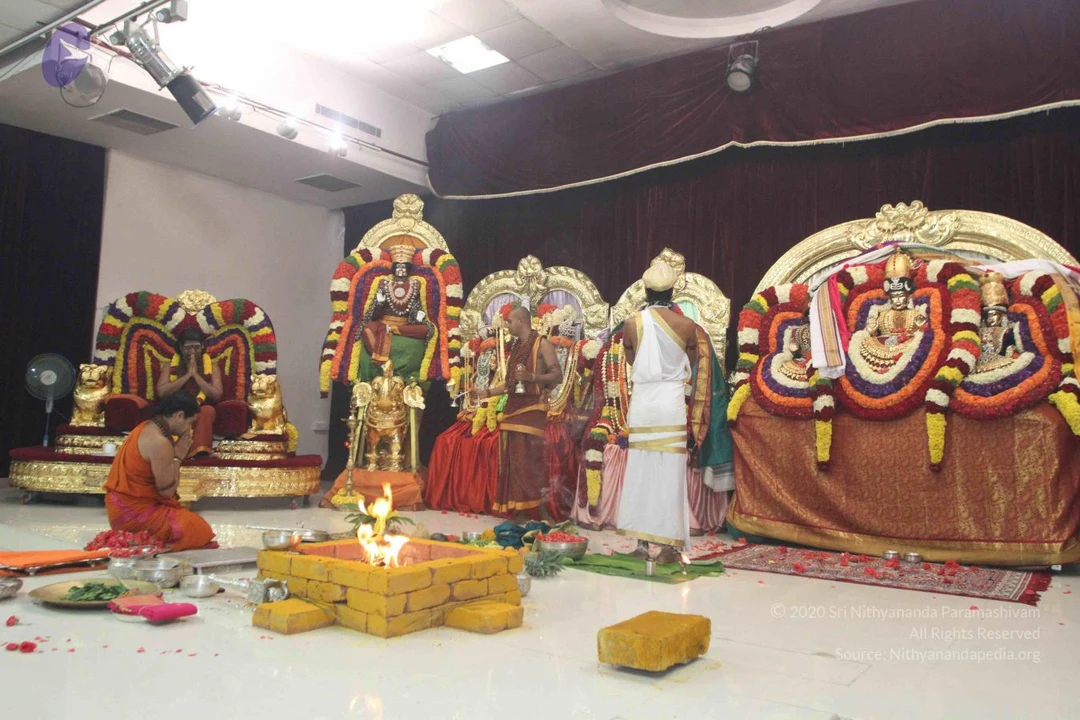
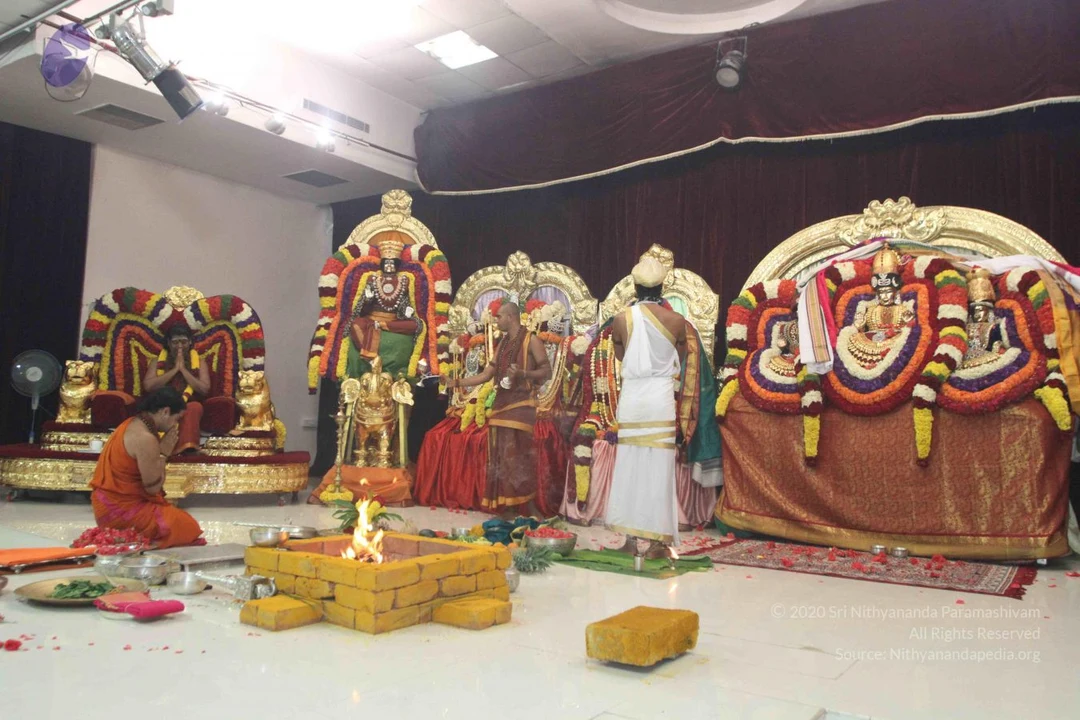
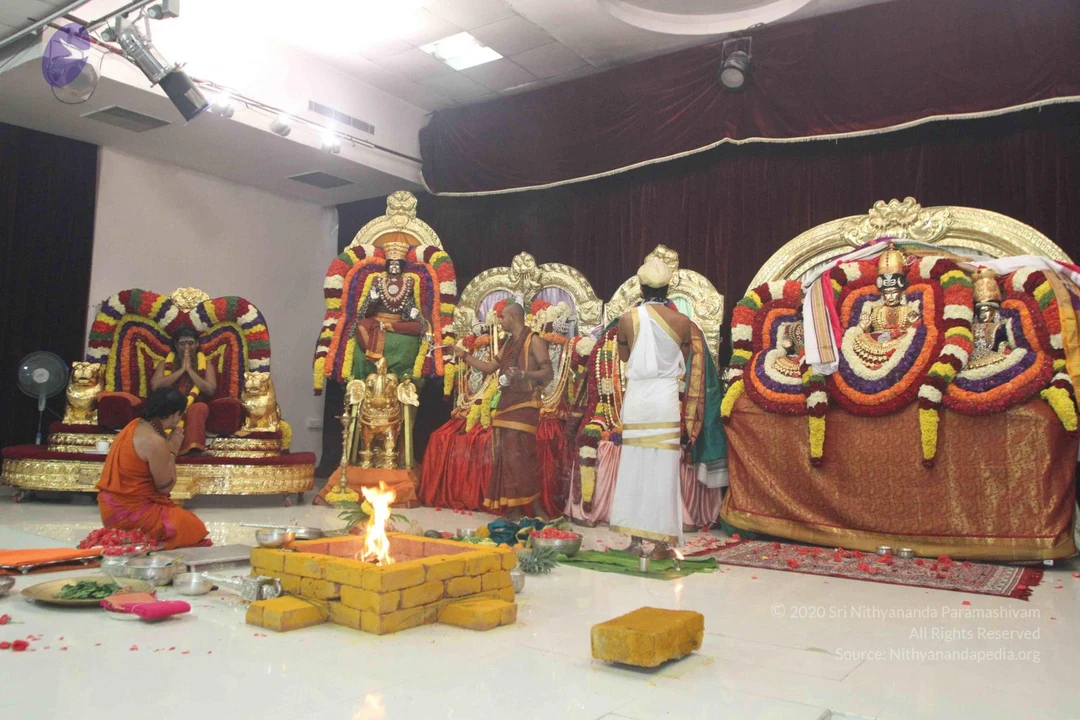
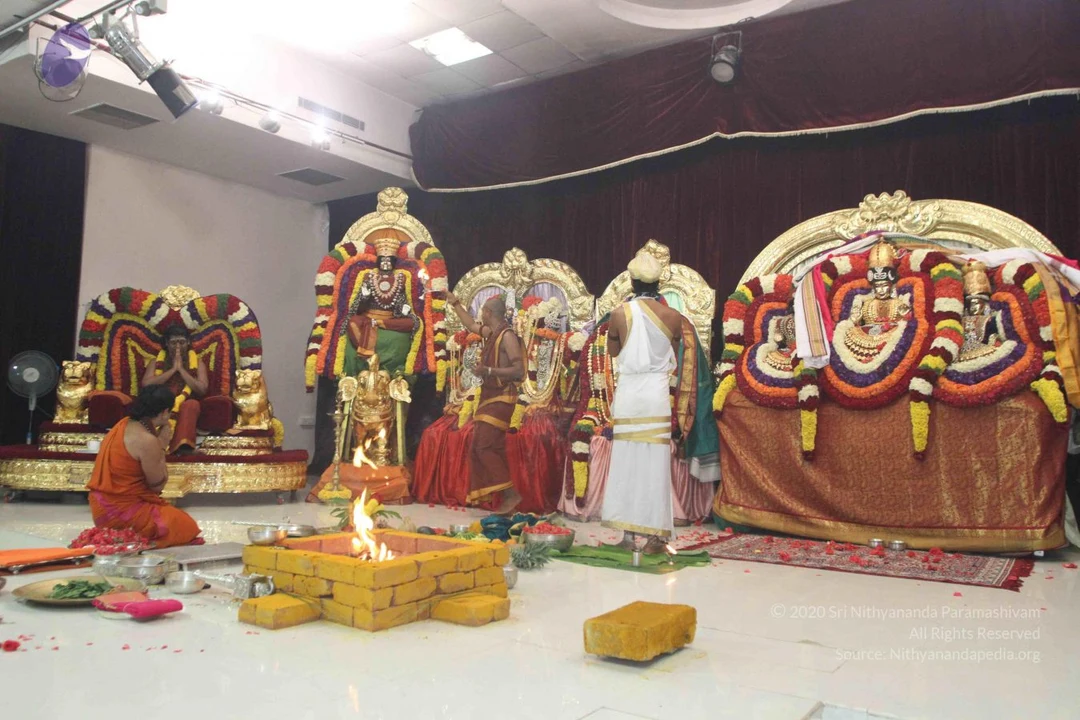
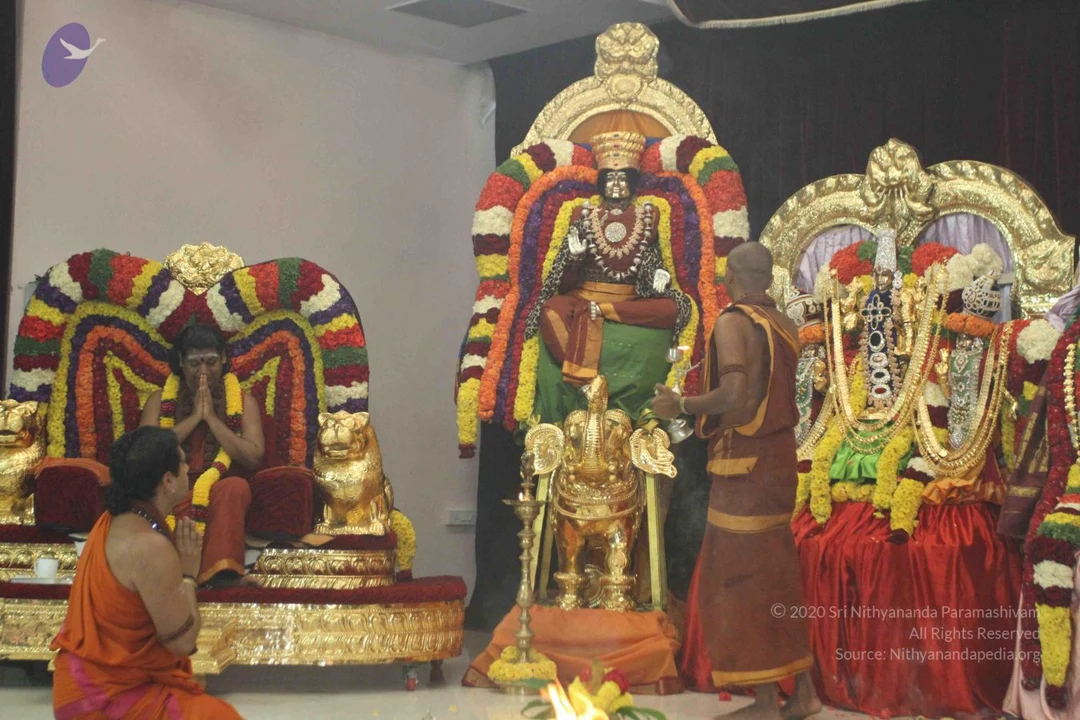
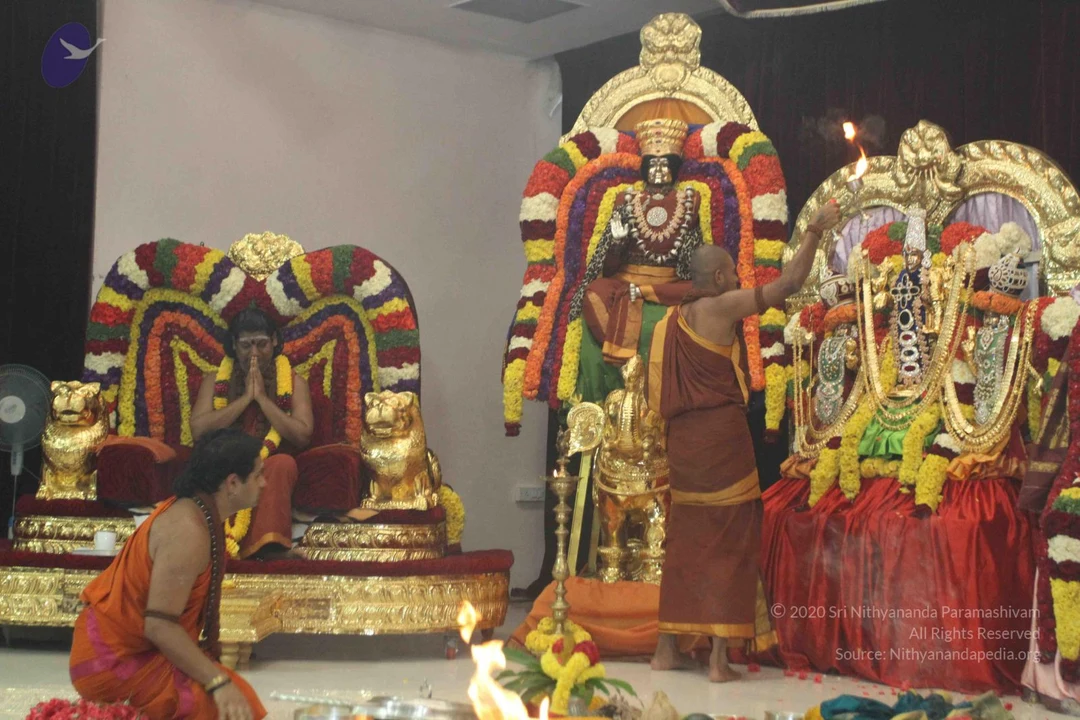
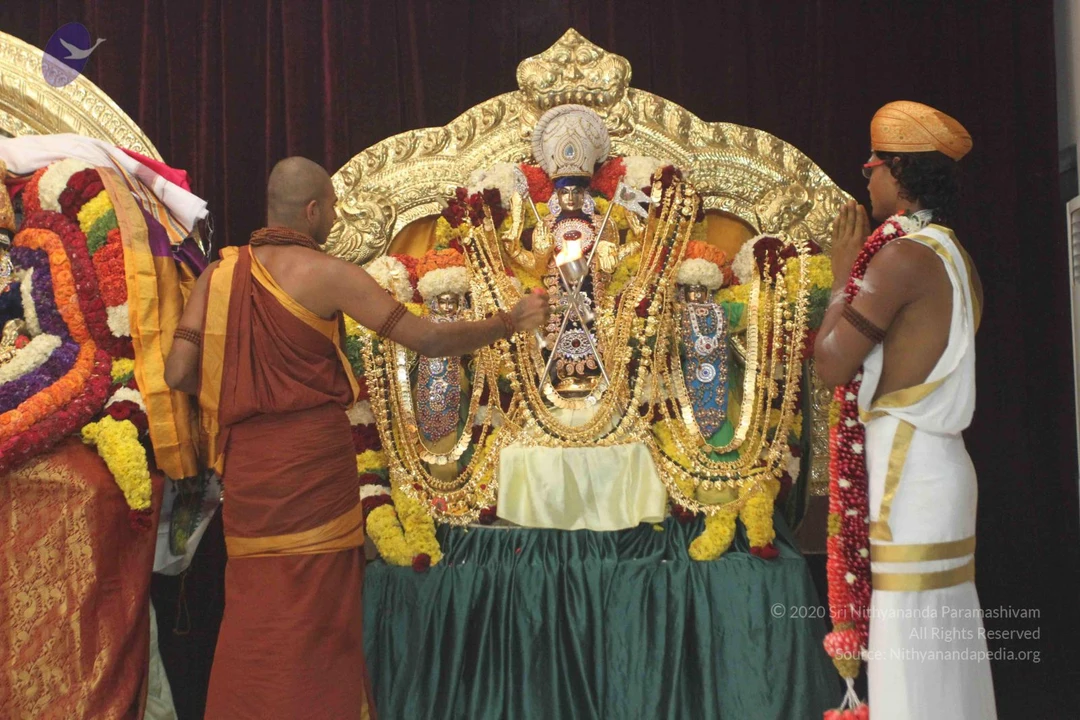
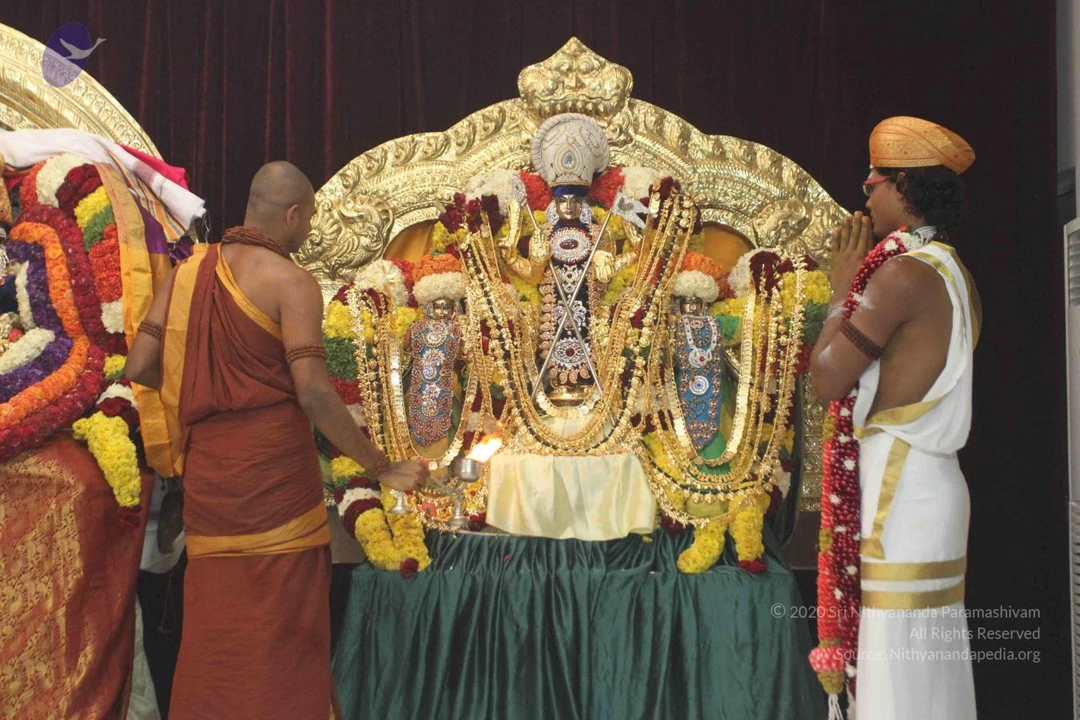
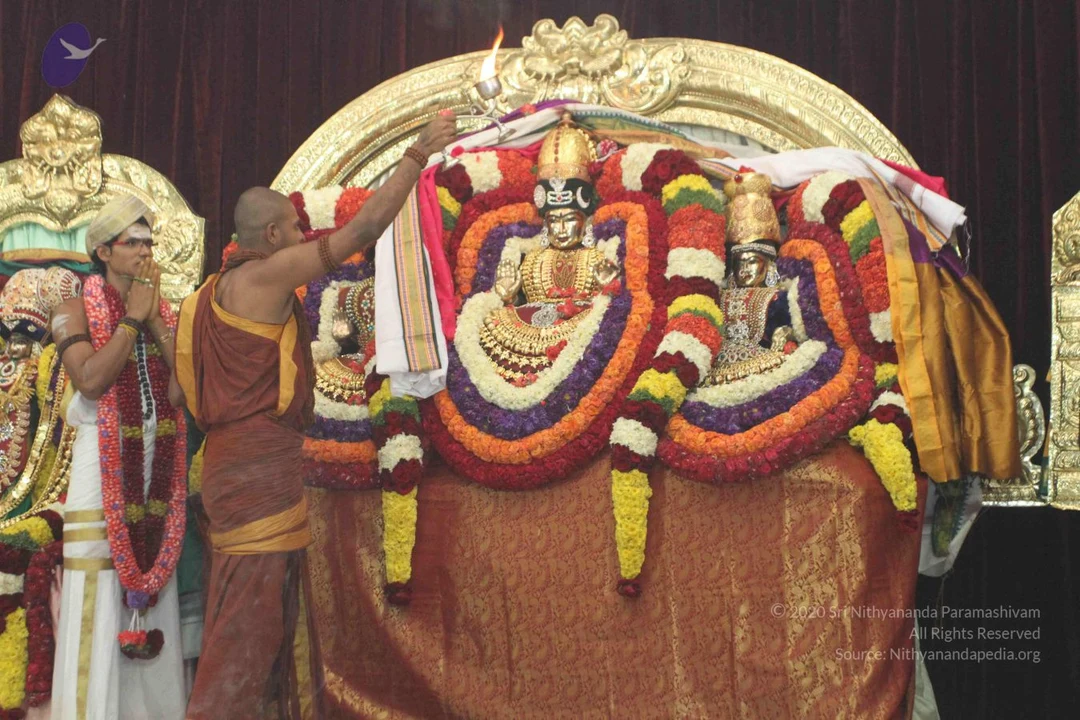
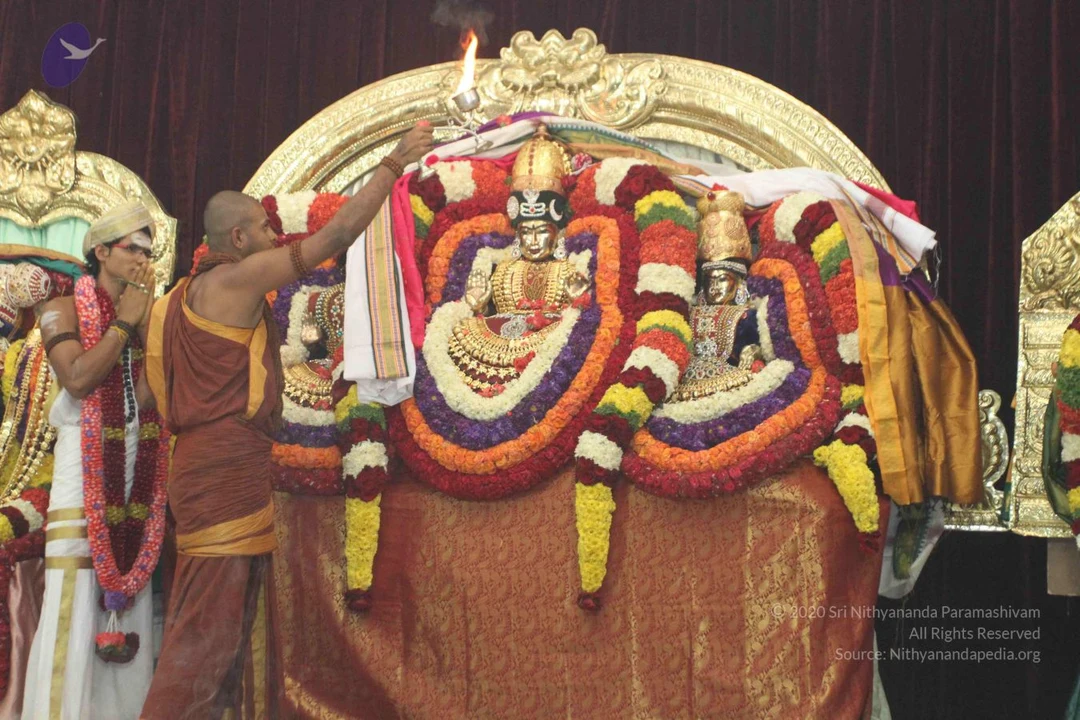
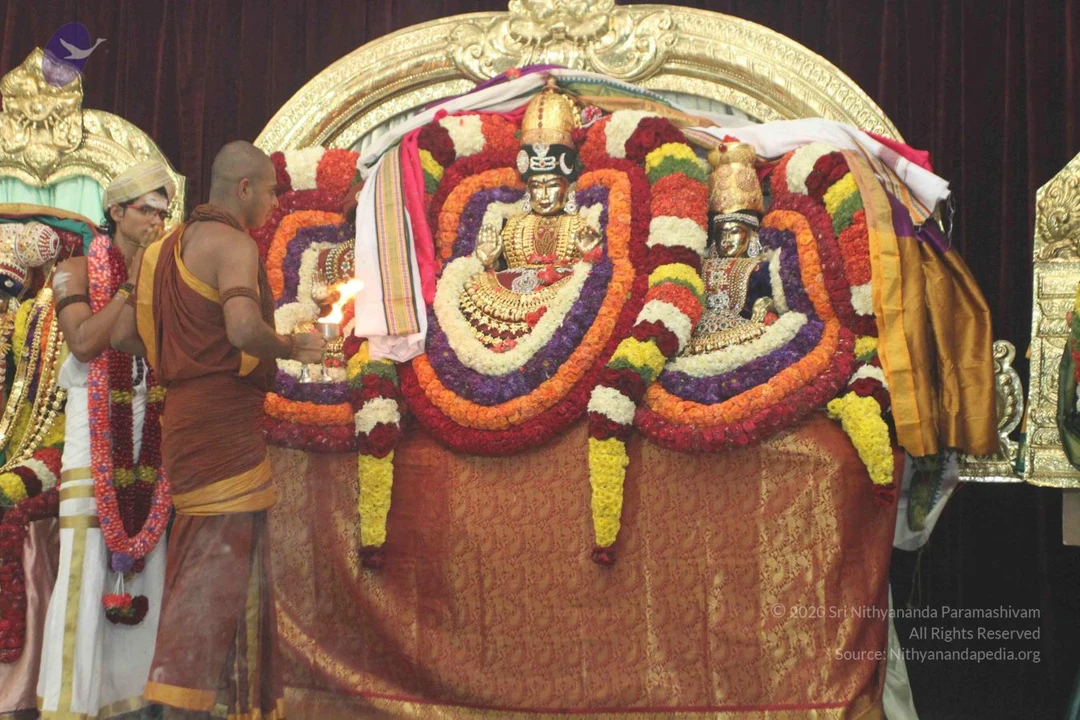
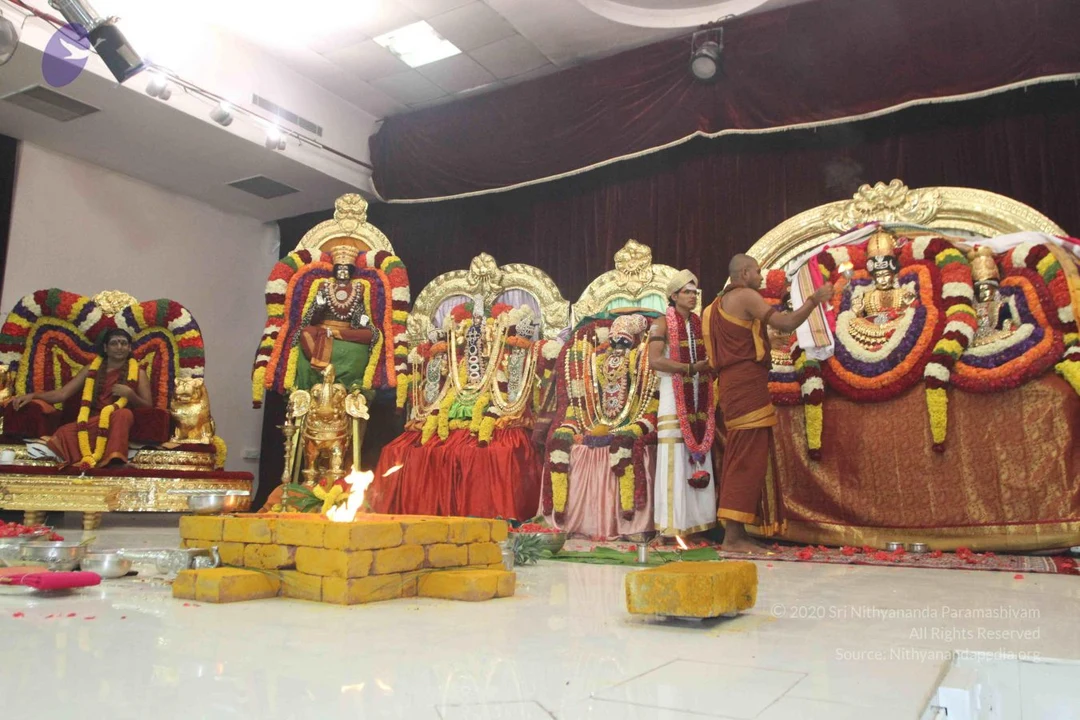
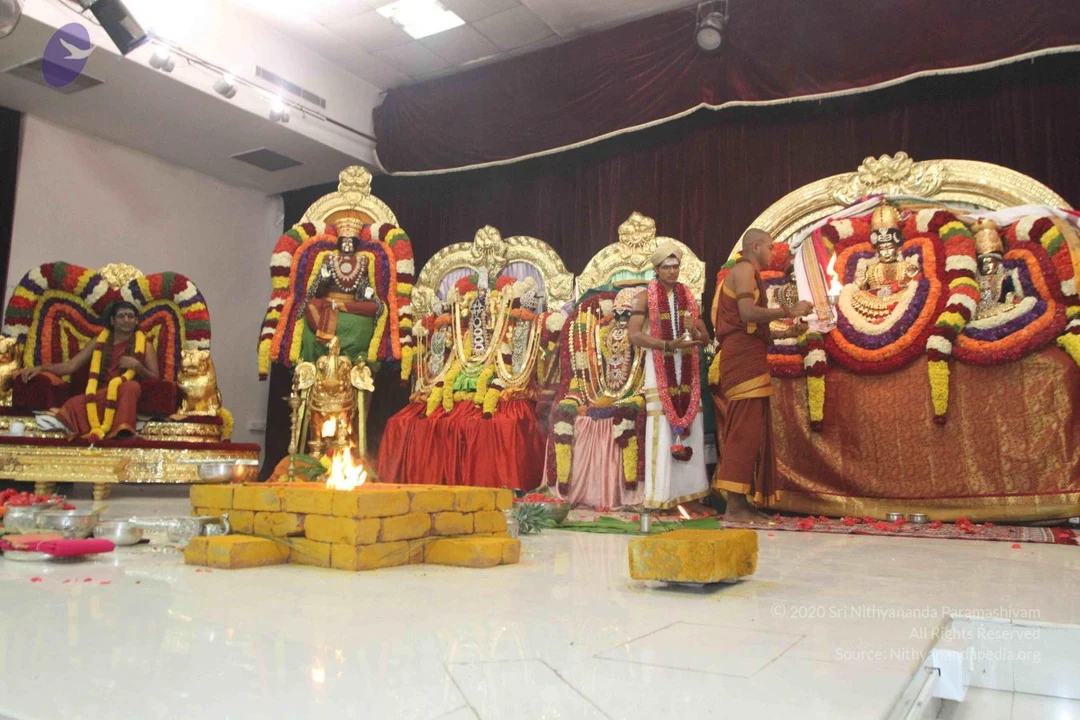
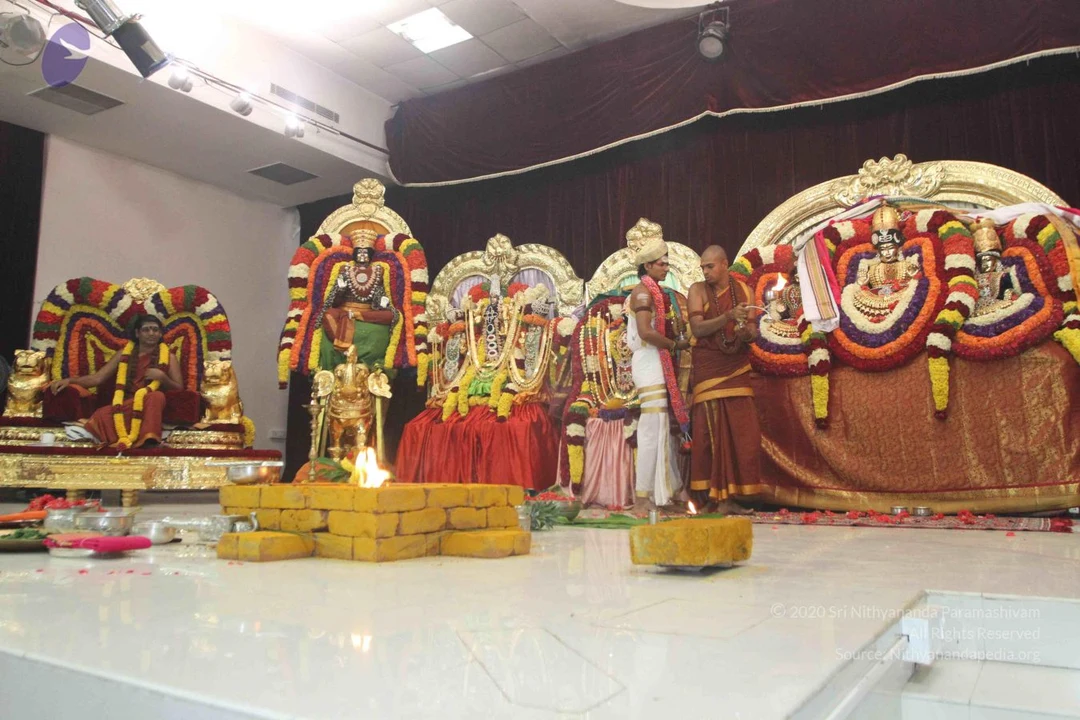
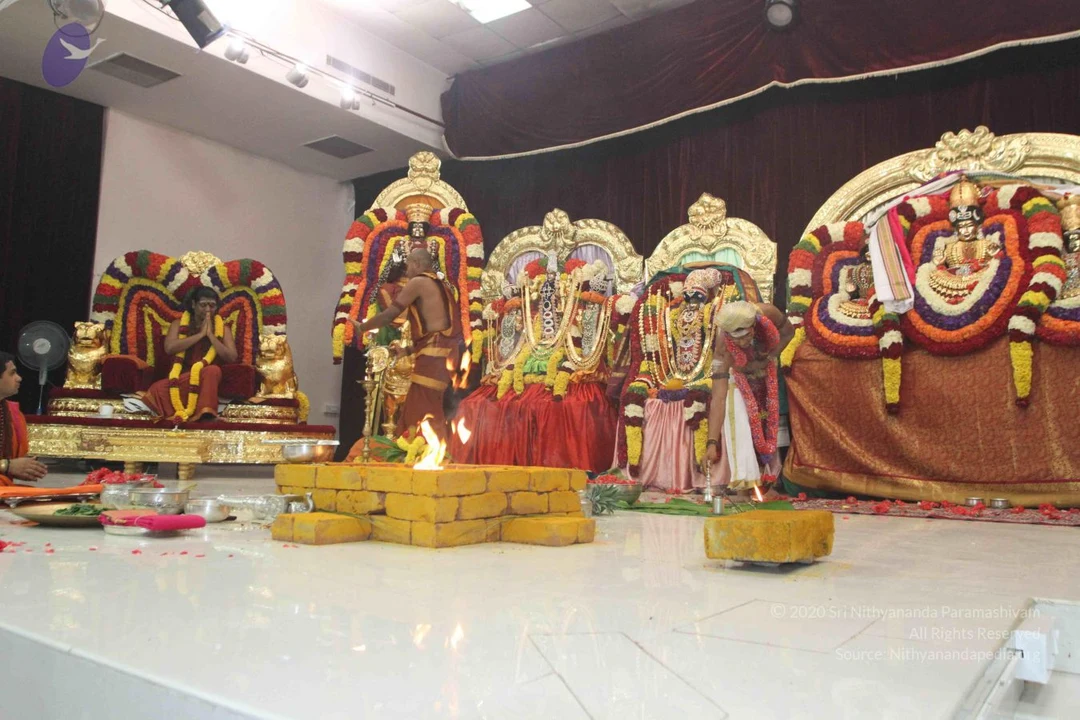
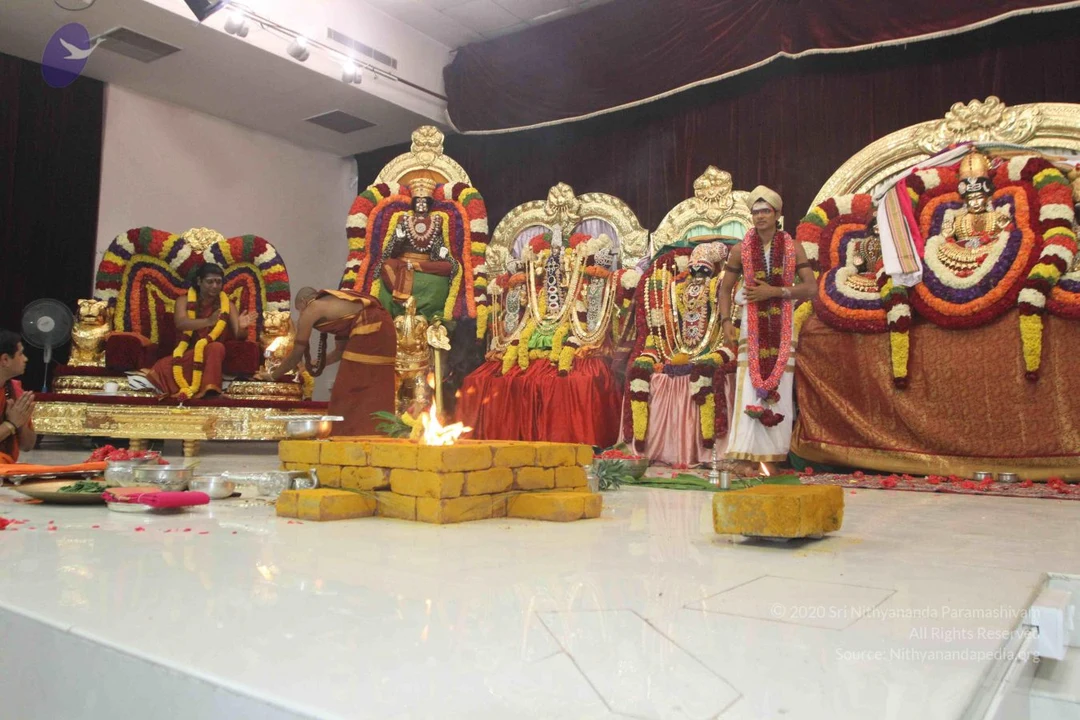
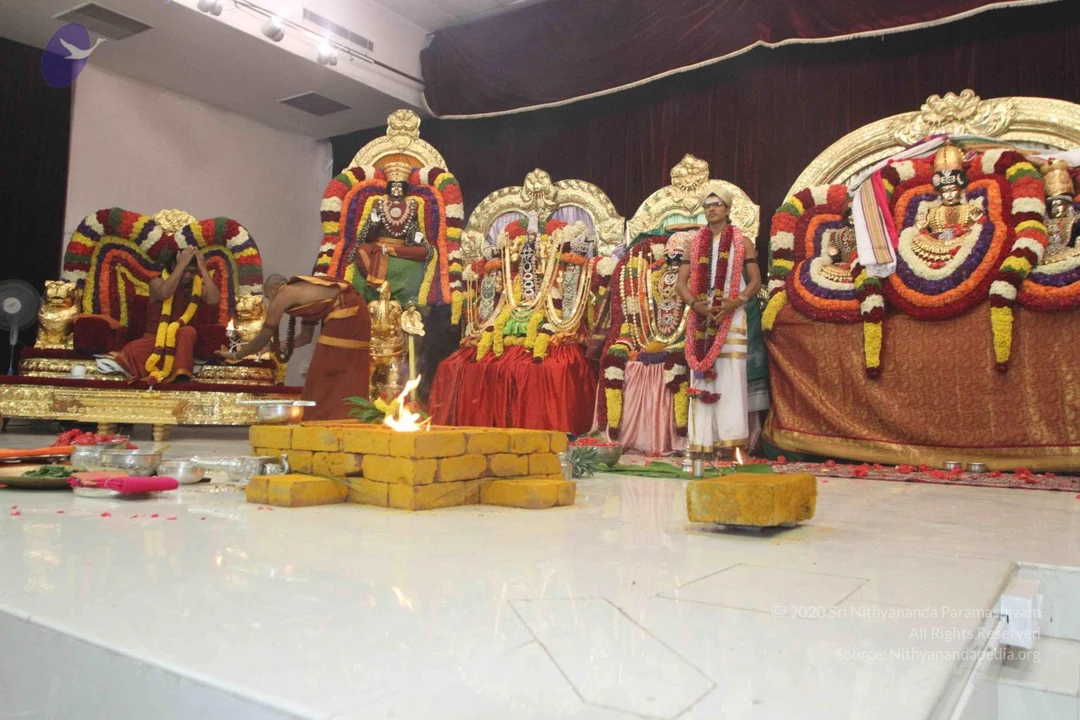
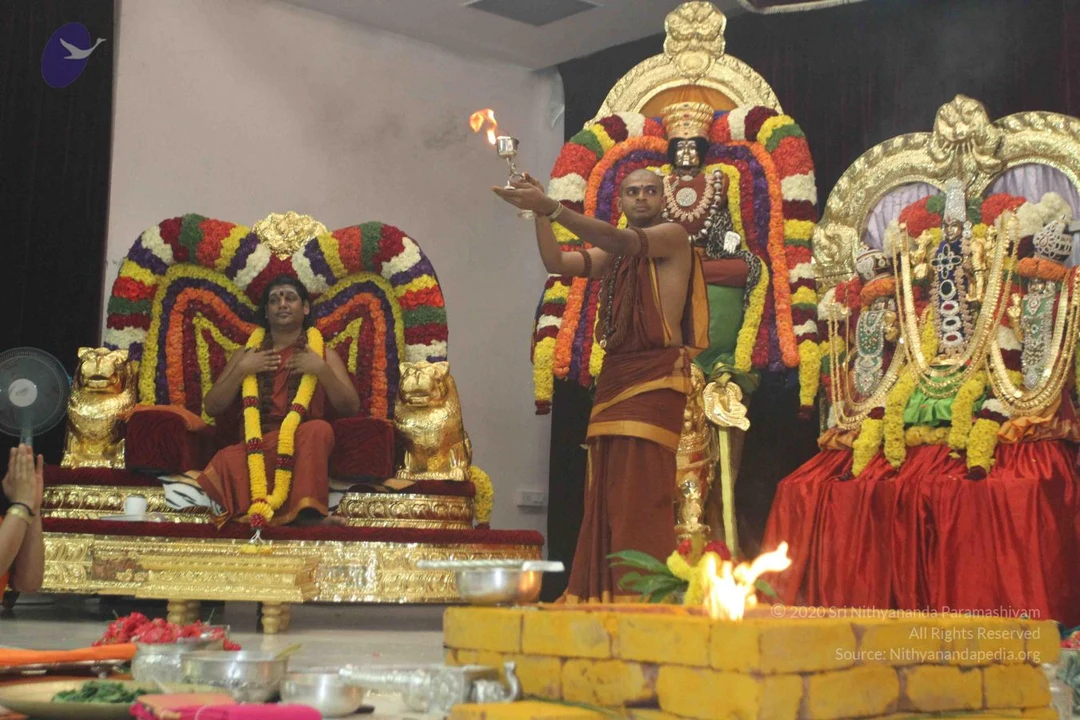
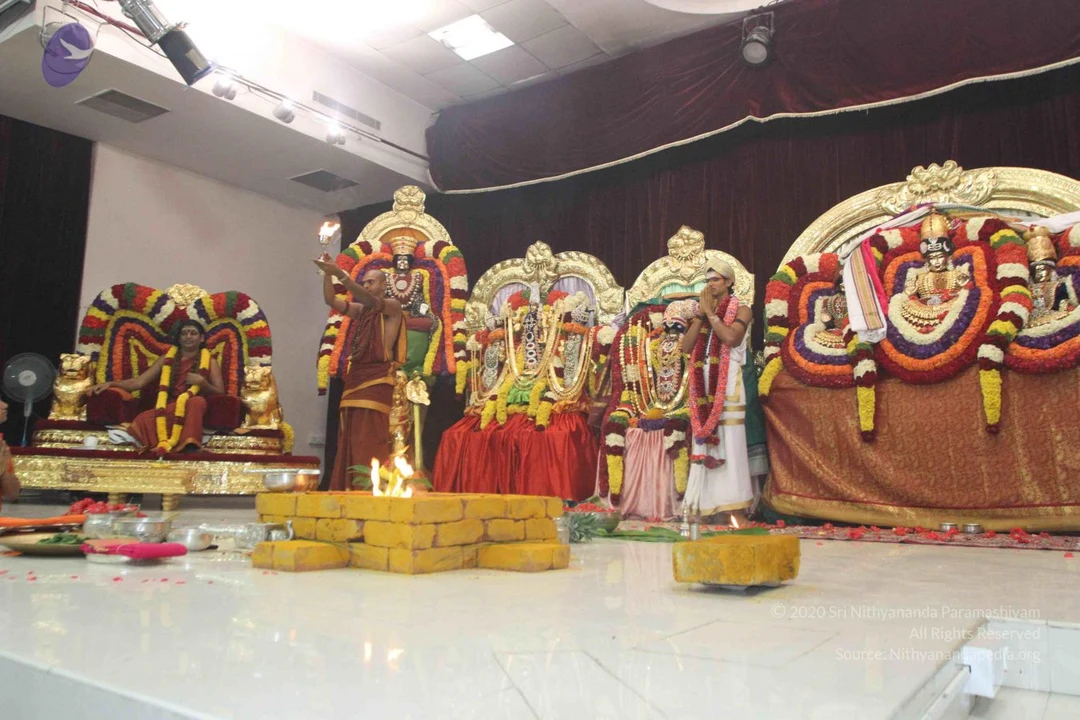
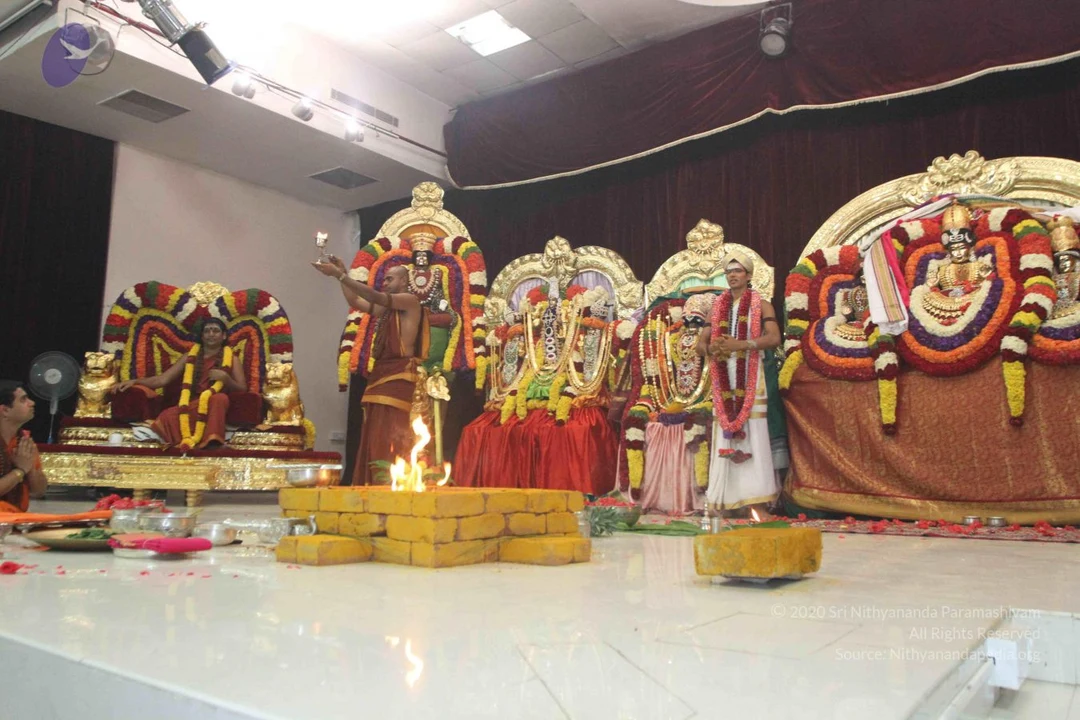
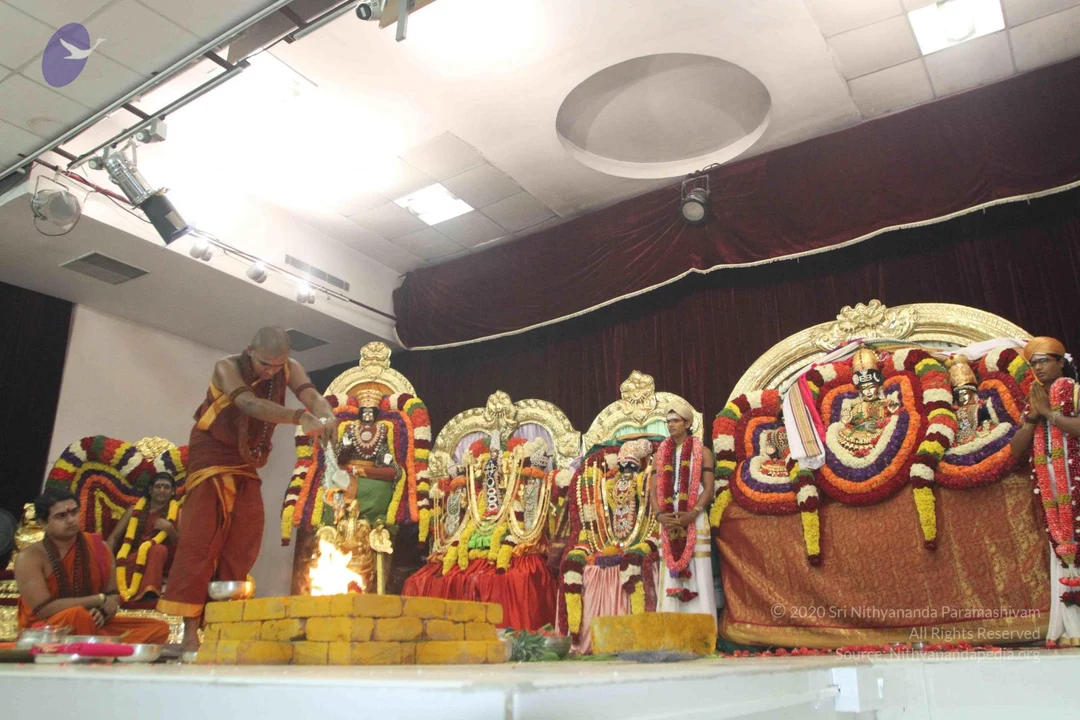
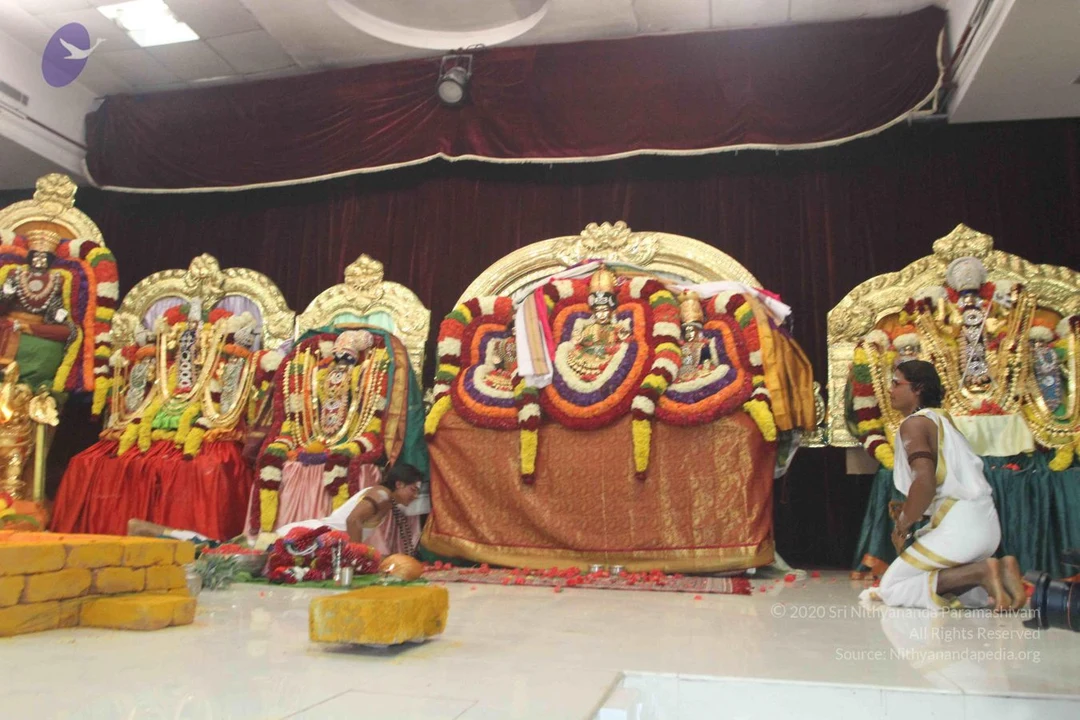
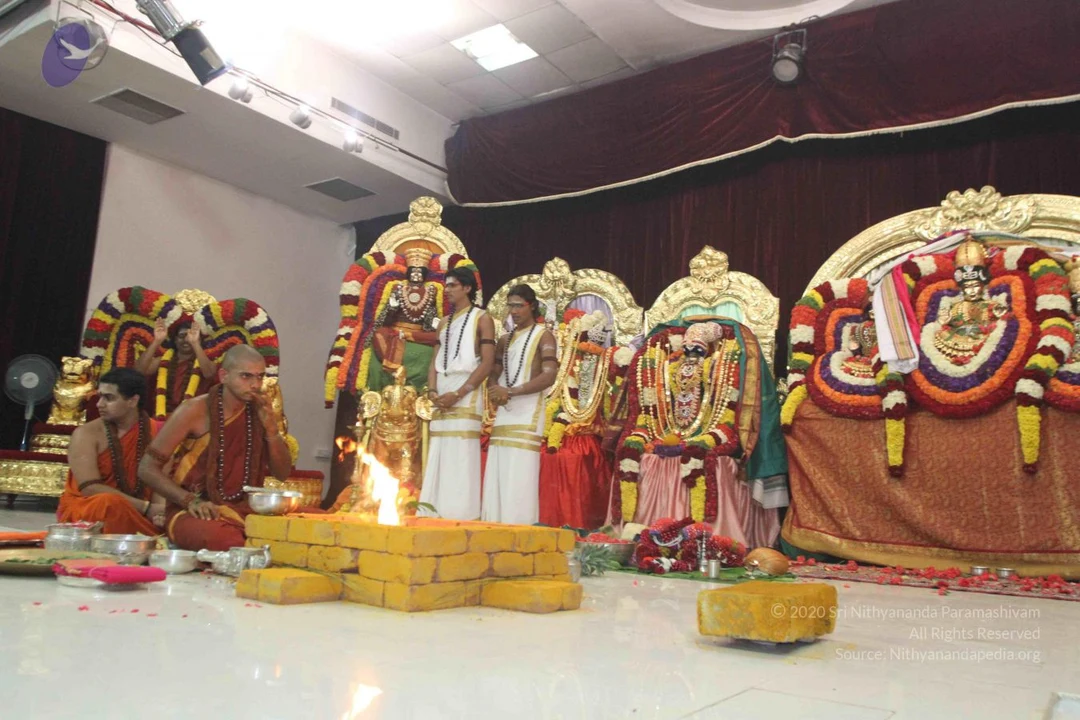
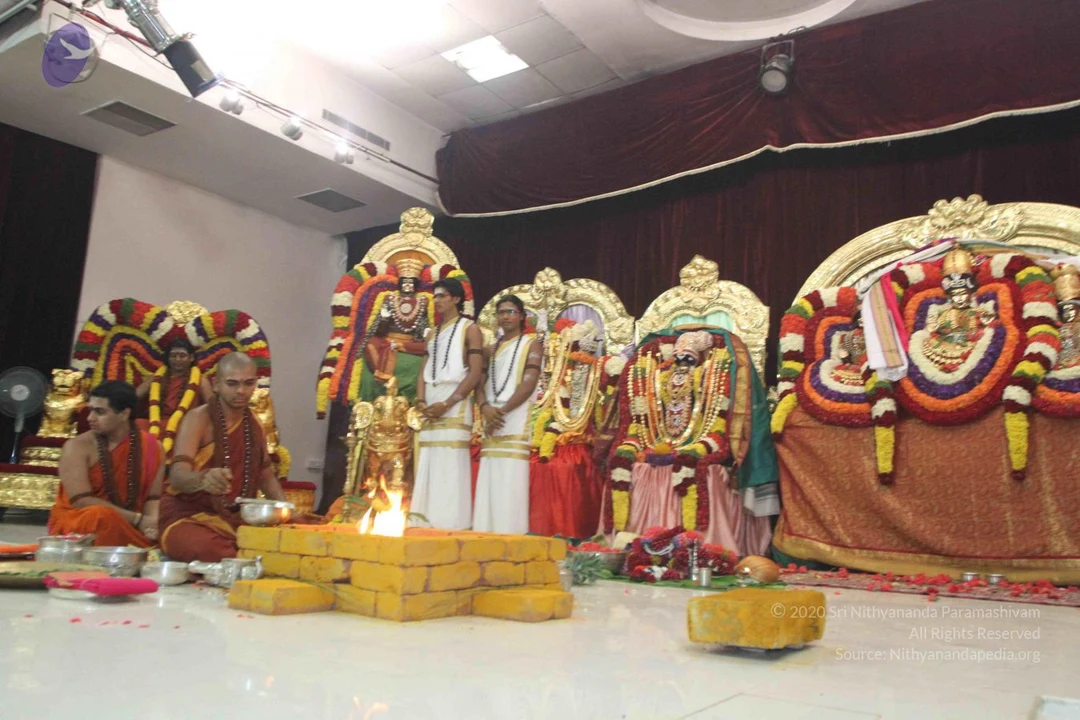
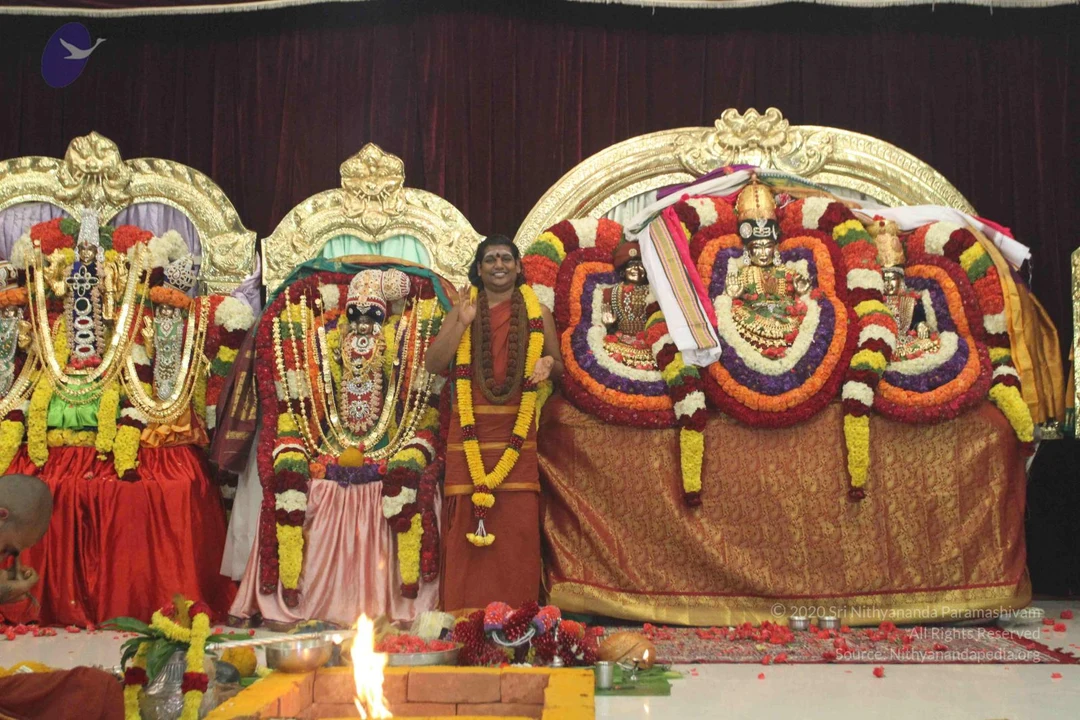
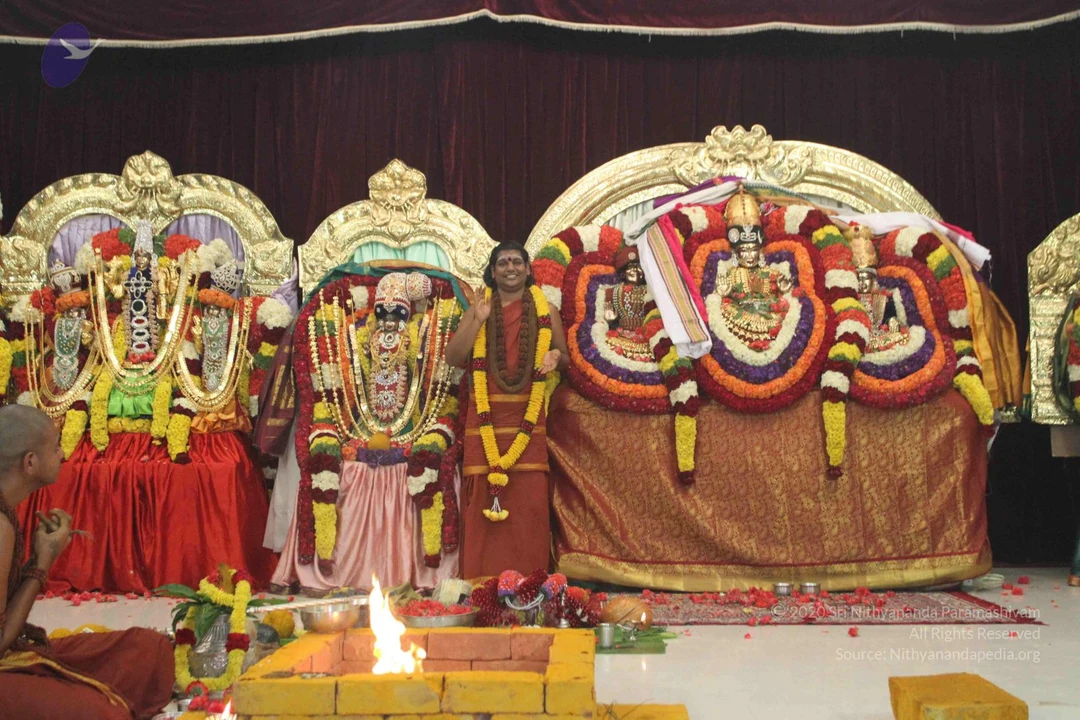
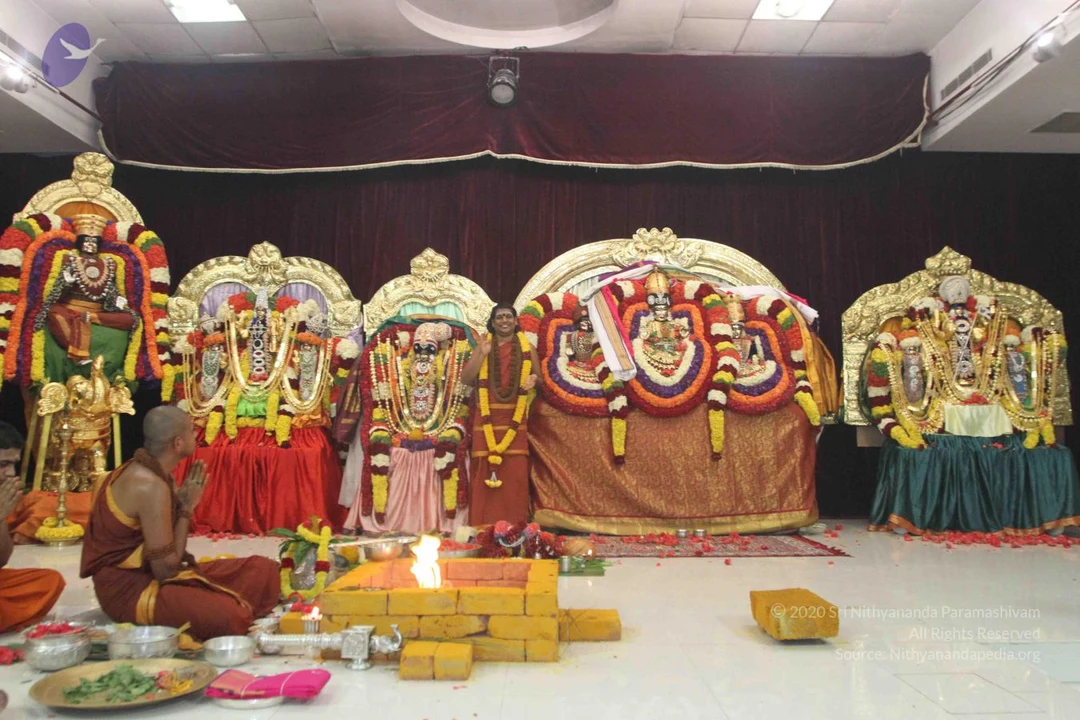
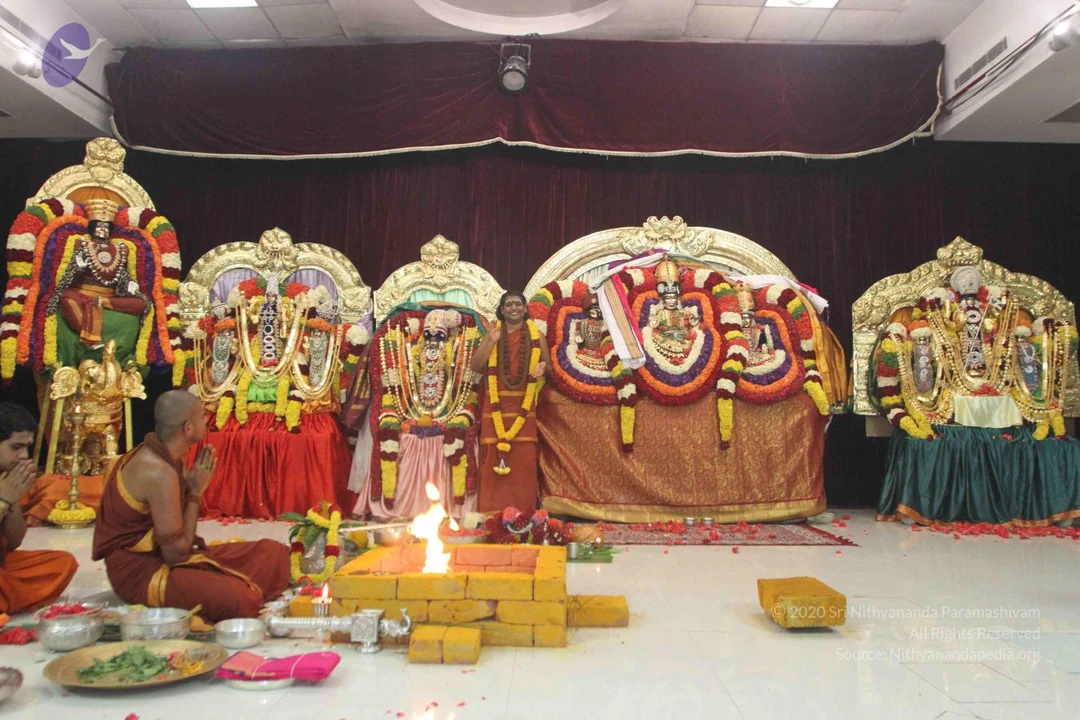
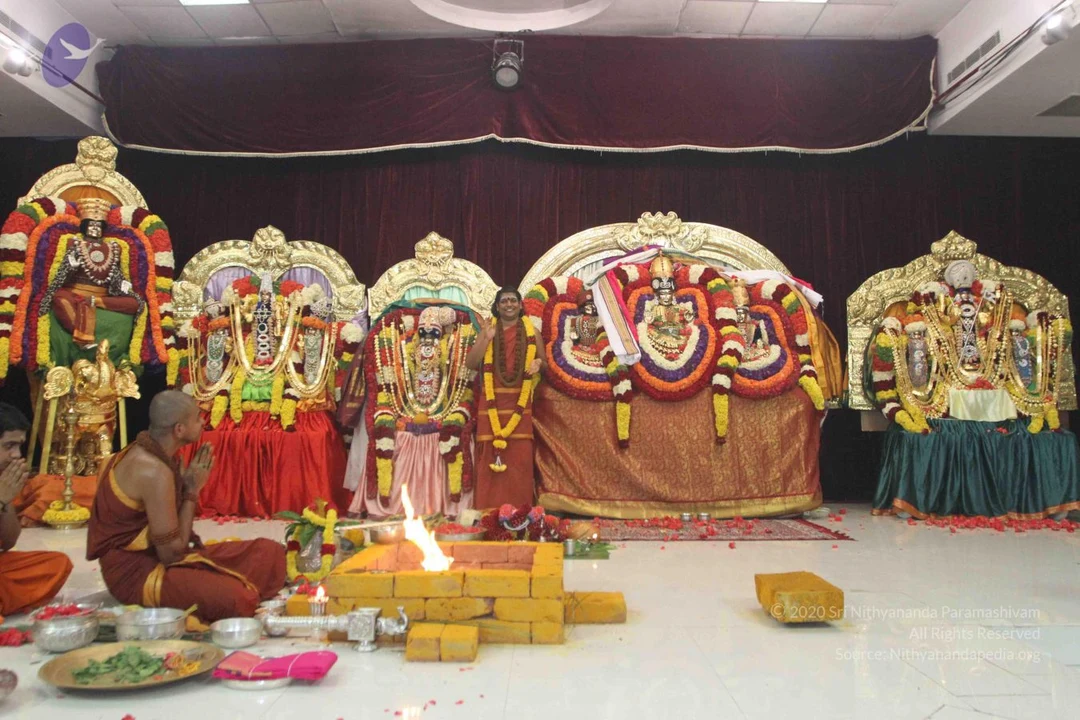
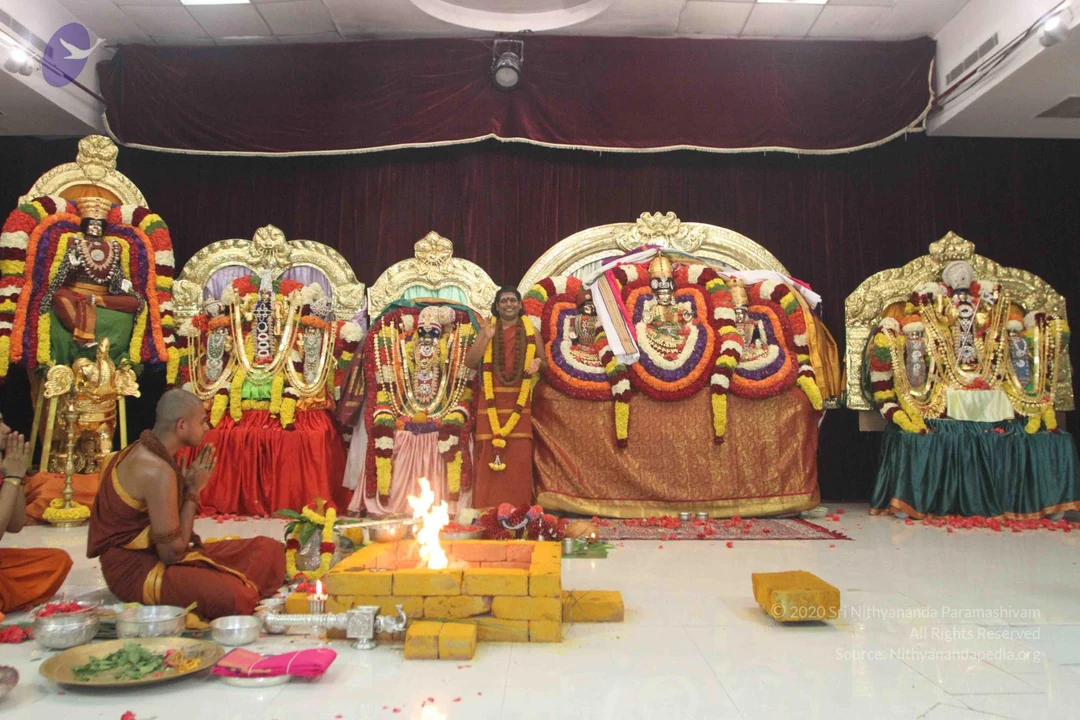
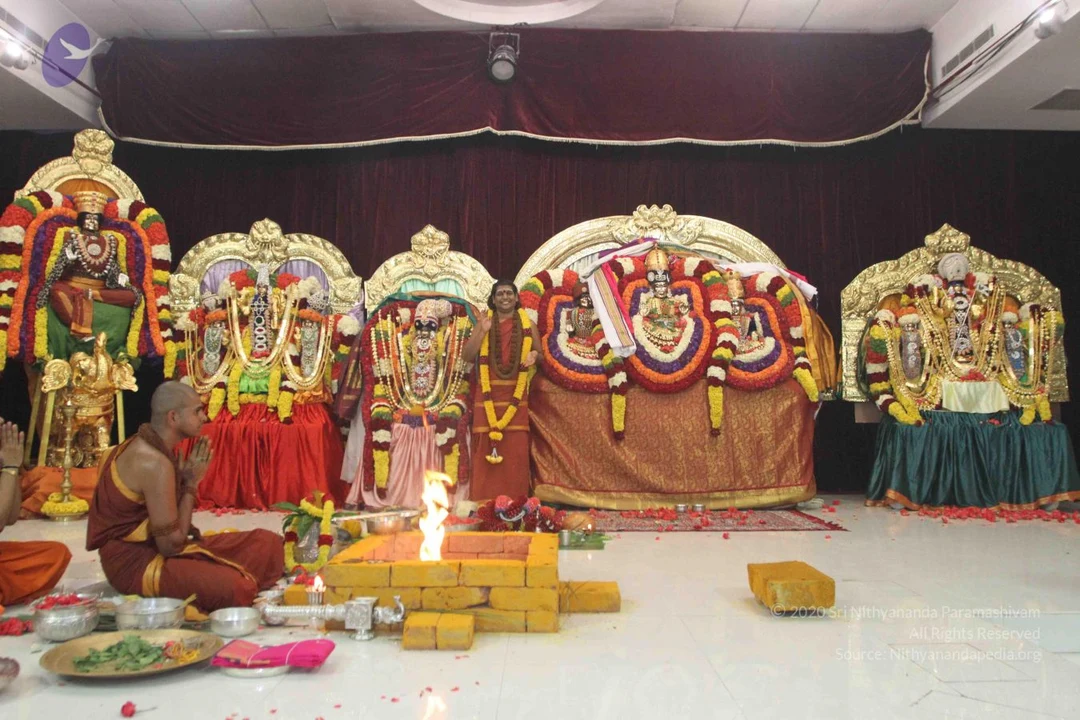
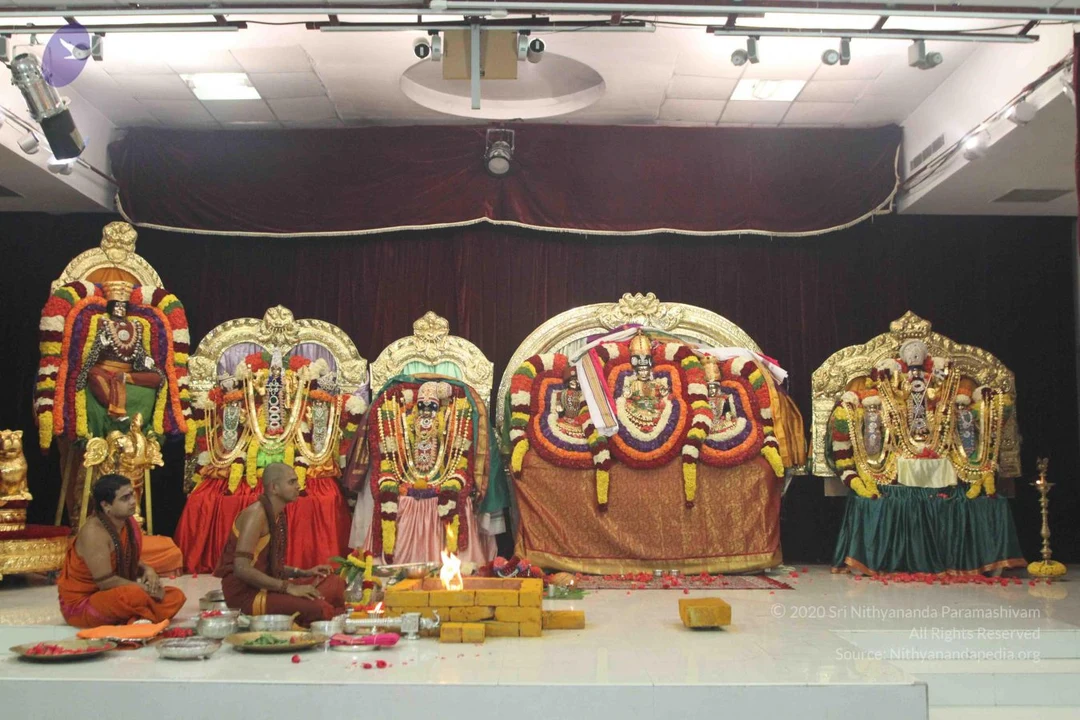
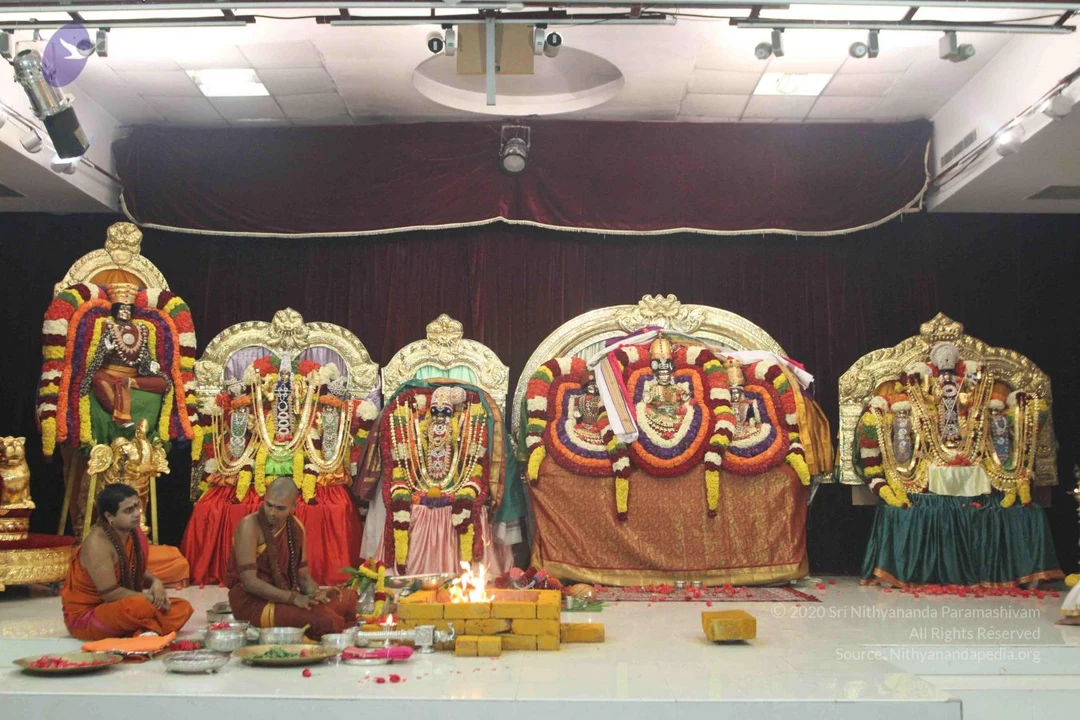
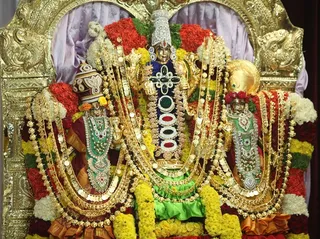
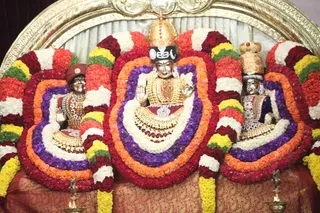
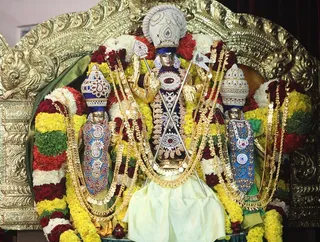
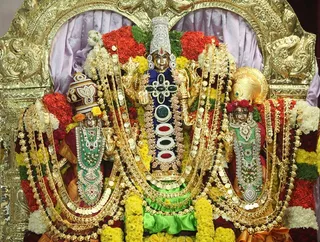
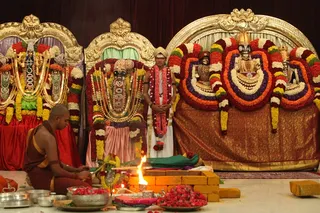
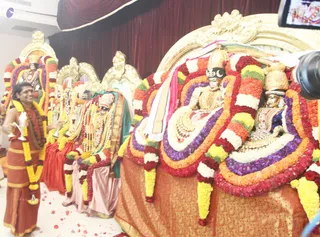
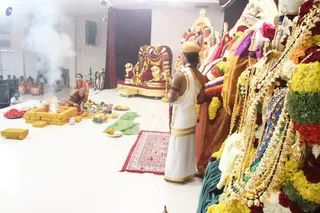
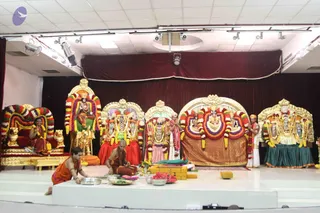
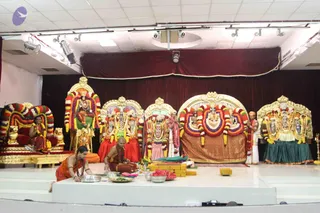
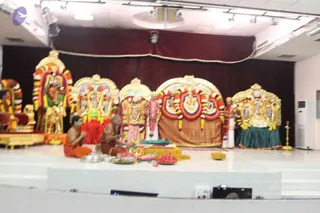
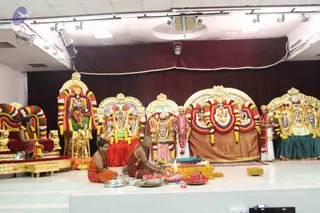
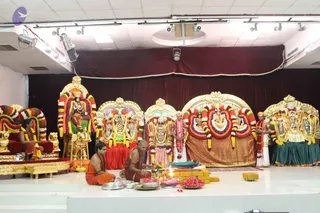
(2:36) Today, the sixth day of the Nithyananda Brahmotsavam! Today, the Leela Alankara is Realizing the Incarnation-hood, realizing the incarnation purpose, the mission - it happened in Omkareshwar. That’s a Leela. And all the gods and goddesses are there today. We are going to be having Meenakshi Thiru Kalyanam - The Devi’s, Mahadeva’s marriage with Mahadevi. So, for Thiru Kalyanotsava everyone has gathered. Funny thing is that, before even marriage, already the Subramanya has happened. Actually, Subramanya happened when Devi was Parvati. So, during the Meenakshi’s incarnation, Subramanya already was there.
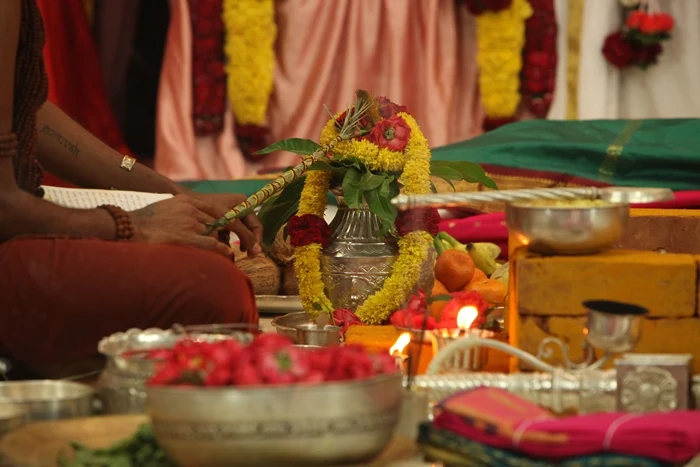
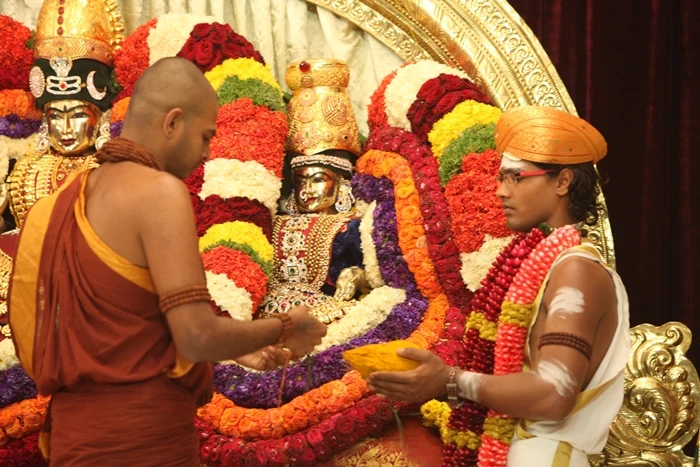
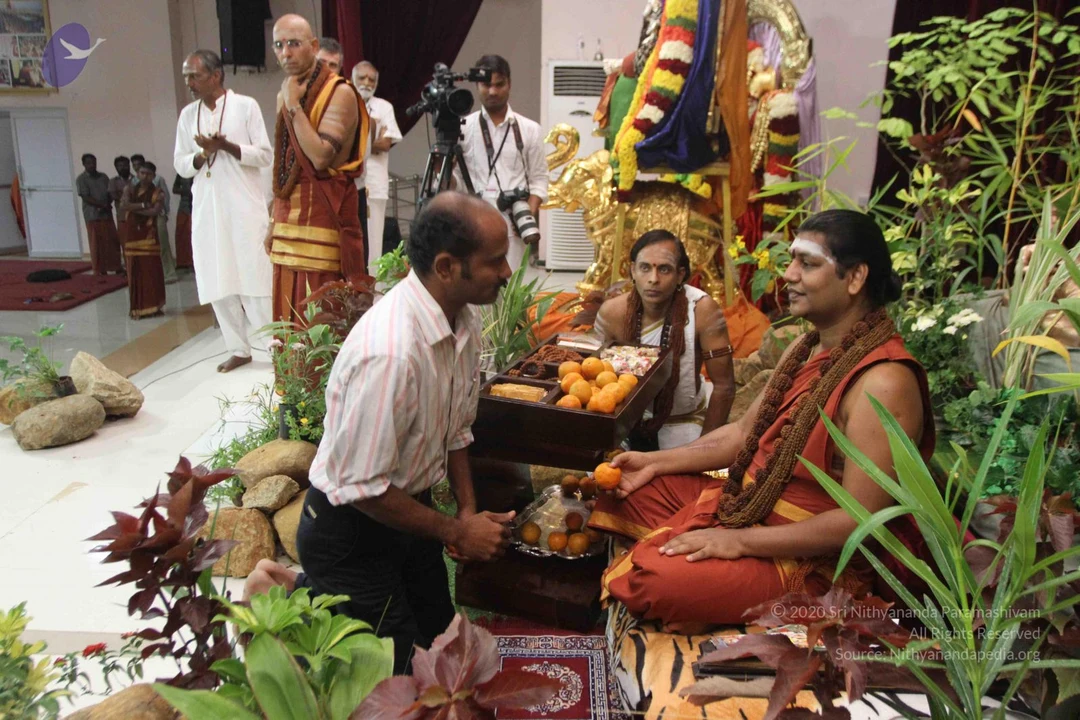
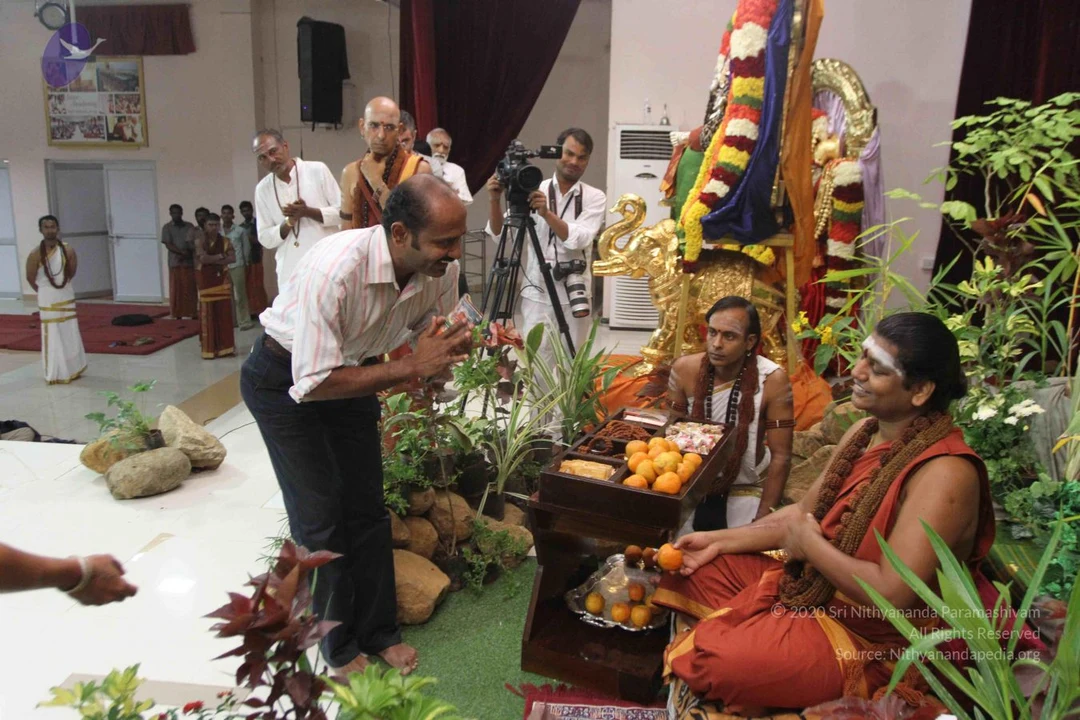
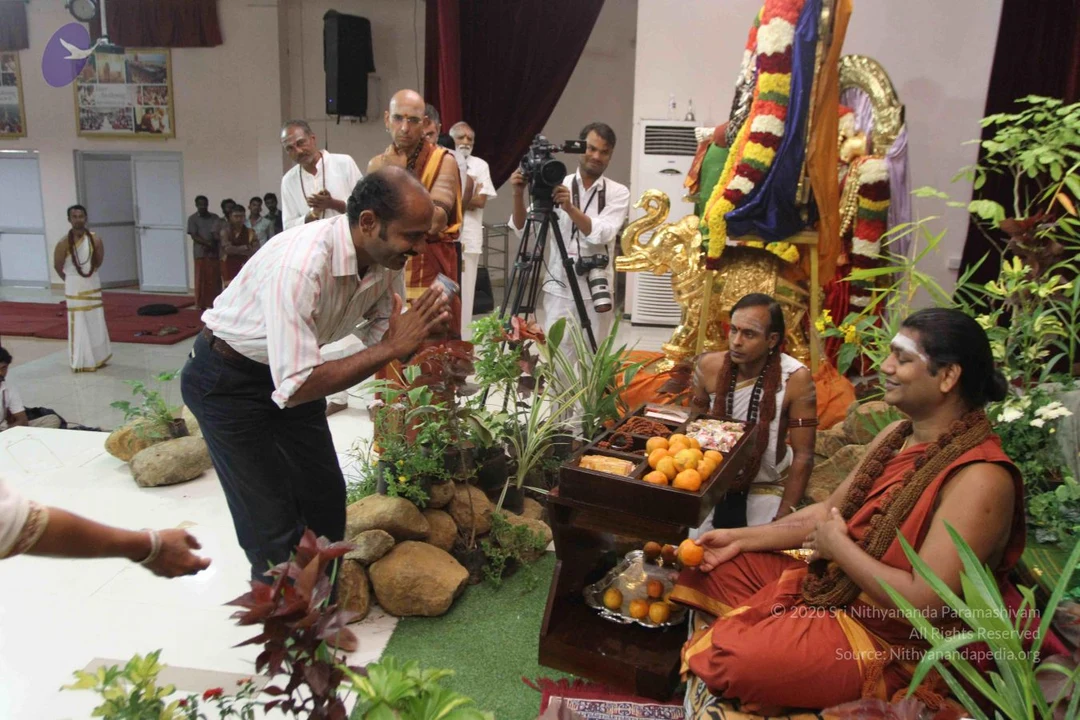
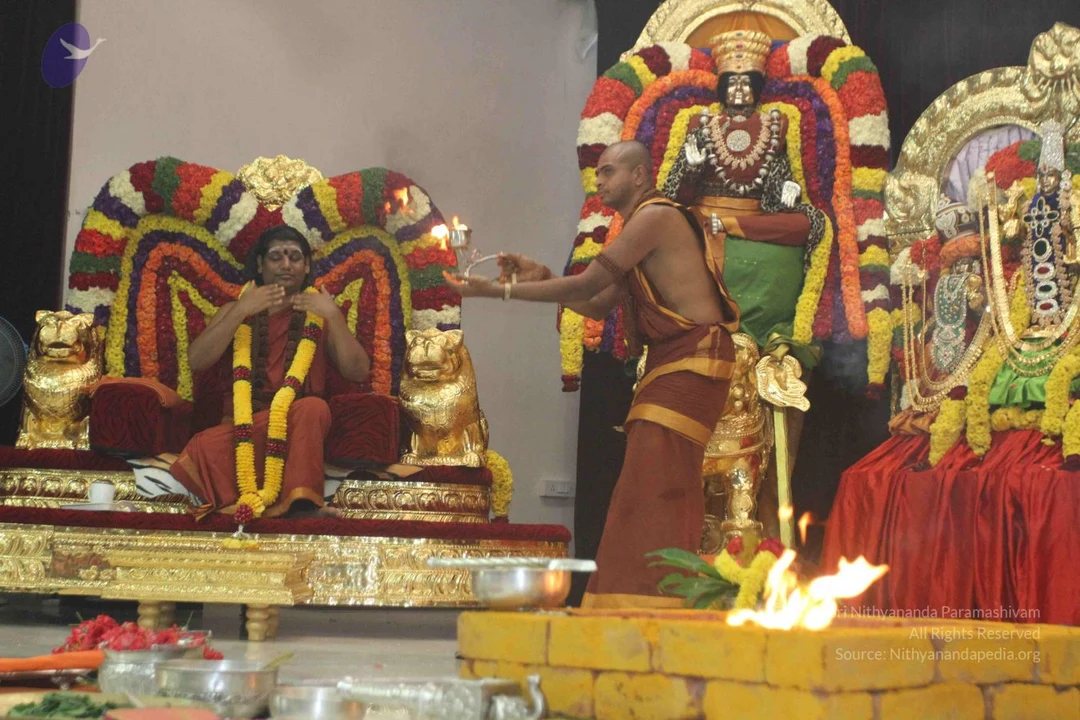
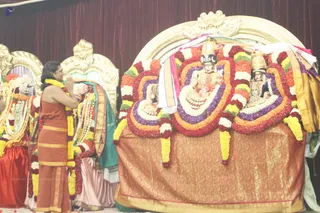
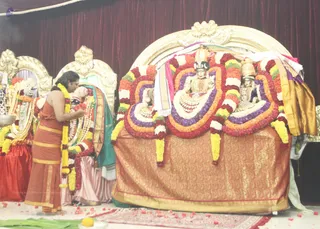
(4:02) So, we are going to re-enact the Leela of Meenakshi Thiru Kalyanam. Because of that, Subramanya will be there in the marriage. Only in the Parvati’s marriage Subramanya cannot be there. But, in the Meenakshi’s marriage, Subramanya will be there; because Devi came down as Meenakshi much later, much later the Parvati’s incarnation. So, Subramanya also will be there. Today we will be having Meenakshi Thiru Kalyanam ceremony and the milk Abhishekam to Nithyanandeshwara. You can all tune in to Nithyananda TV to enjoy Meenakshi’s marriage ceremony, Meenakshi Thiru Kalyanam. Let’s receive the blessings of Mahadeva, offering Arti, then we’ll enter into the satsang.
(6:23) I’ll try to expand on the core message of Upanishads, ‘Living Advaita’. Understand, I am trying to set the context. I am trying to set the context, for you to internalize Upanishads. Nothing, nothing, as I said, nothing at all said extra in the Upanishads. As I said, you can’t edit them. No editing is possible. It is so precise, perfect. And, you can’t comment on it. Nothing extra can be added to it. Maybe you can highlight something and go on repeating it. You can’t comment on it.
(7:57) I was expanding yesterday on ‘Sacred Knowledge’ - sacred understandings you need to excel, to reach your peak possibility in the life. I tell you, if you see a person sitting next to you, how you will feel; if you see a dog sitting next to you how you will feel; If you see a plant sitting next to you how you will feel - it is based on that - that is going to respond to you. Please understand. If you think the person who is sitting next to you is alive, you will react, either love or withdrawal, whatever; you may react in a different, one, some way. If you sit the dogs...if you see the dog sitting next to you, you will react in some way. But, if you don’t react the same way to the plants, it means you don’t feel they are alive.
(9:38) Listen to this logic. You will understand the conclusion. Why we feel the plant is not that much alive, the person is more alive, the dog is little less alive, and the plant is less alive - why? Because, we have a wrong knowledge, ‘the action decides the life’. No, existence decides the life; not action decides the life. Because a man can do more actions than dog, the dog can do more actions than plant; you gauge, you measure even the existence of life in them, based on the actions. Please understand. This is the basic misunderstanding. Some of these basic misunderstandings can be repaired only by Upanishads, only by Upanishads! Because, only the Upanishadic Masters carried that kind of a inner-space.
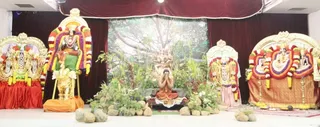
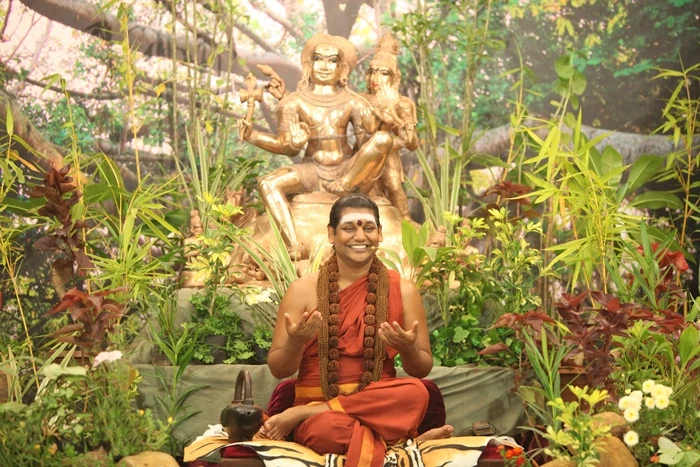
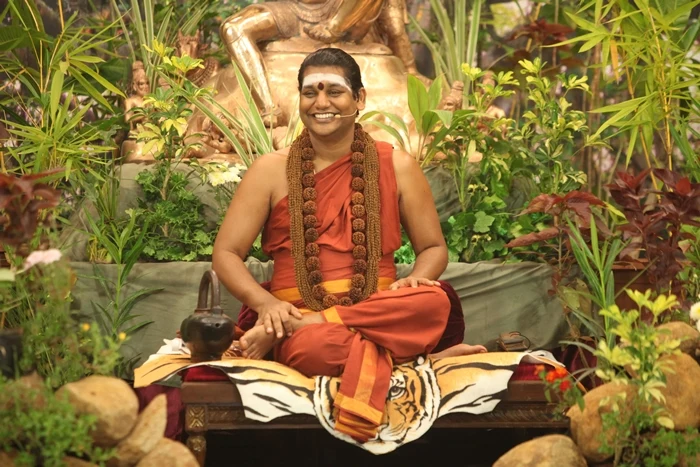
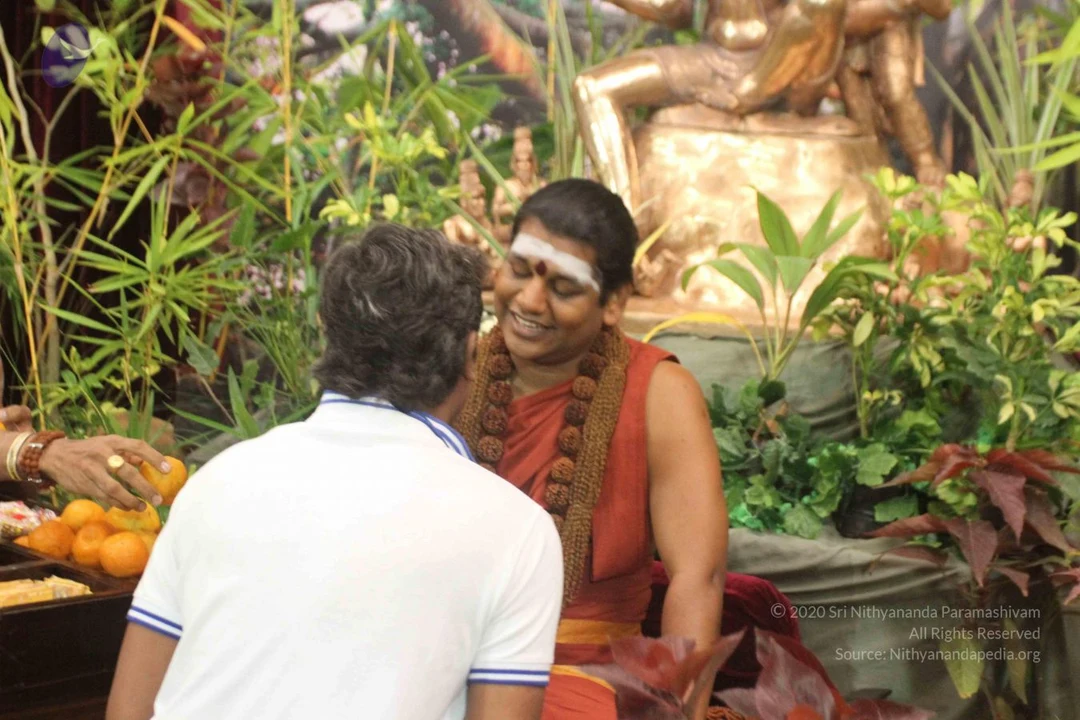
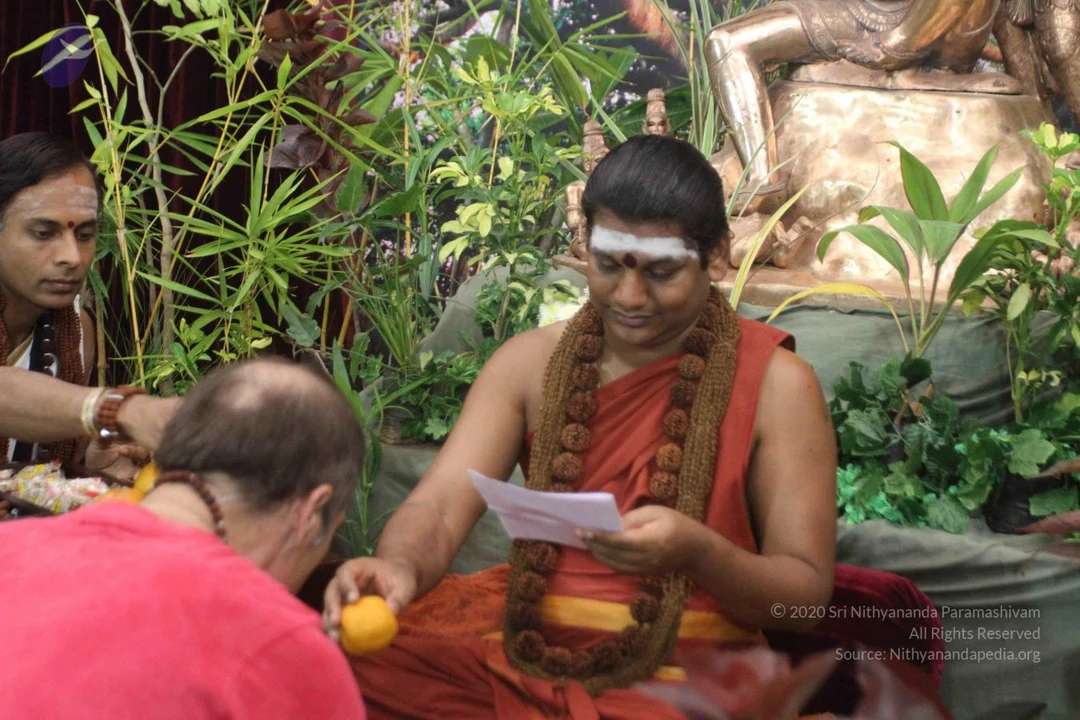
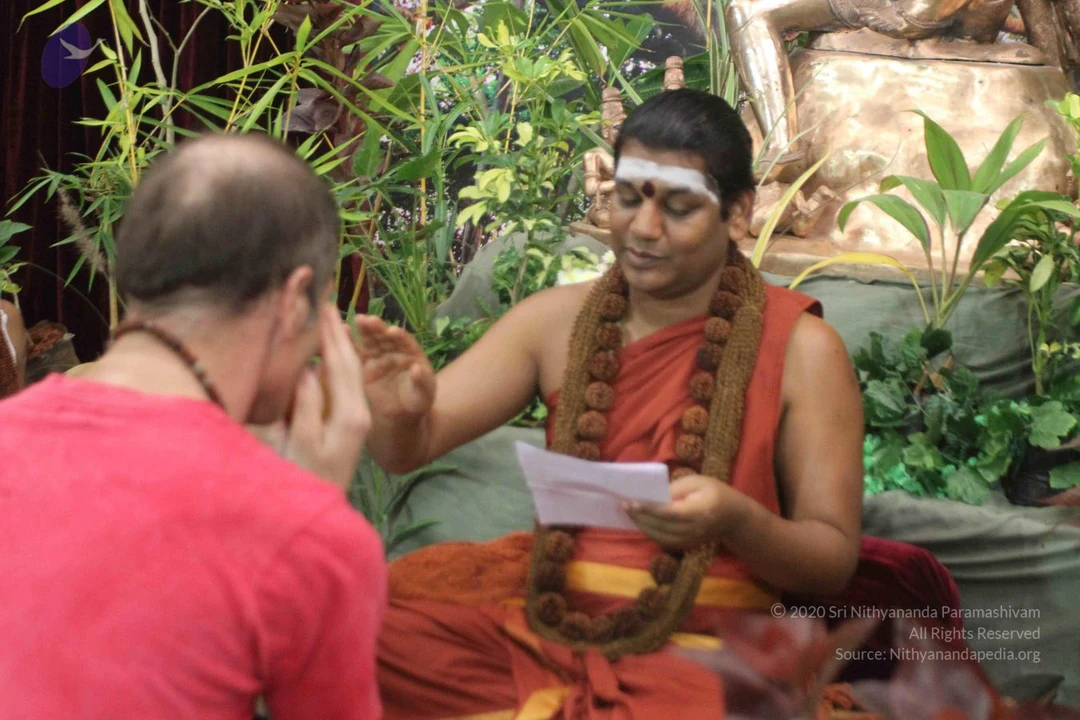
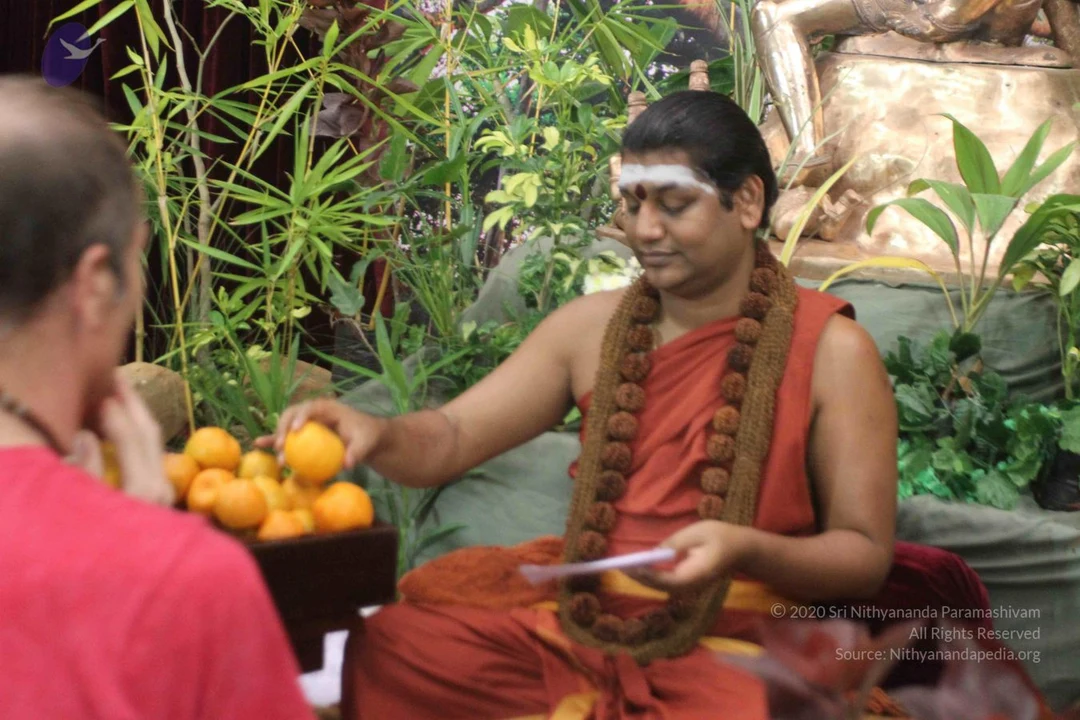
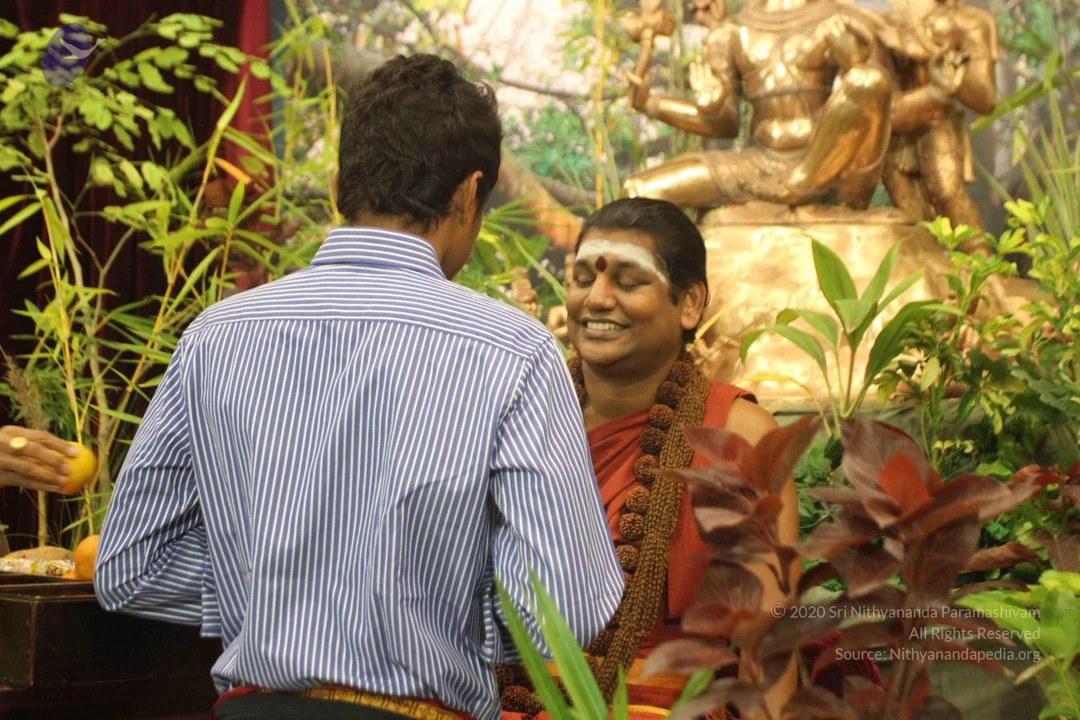
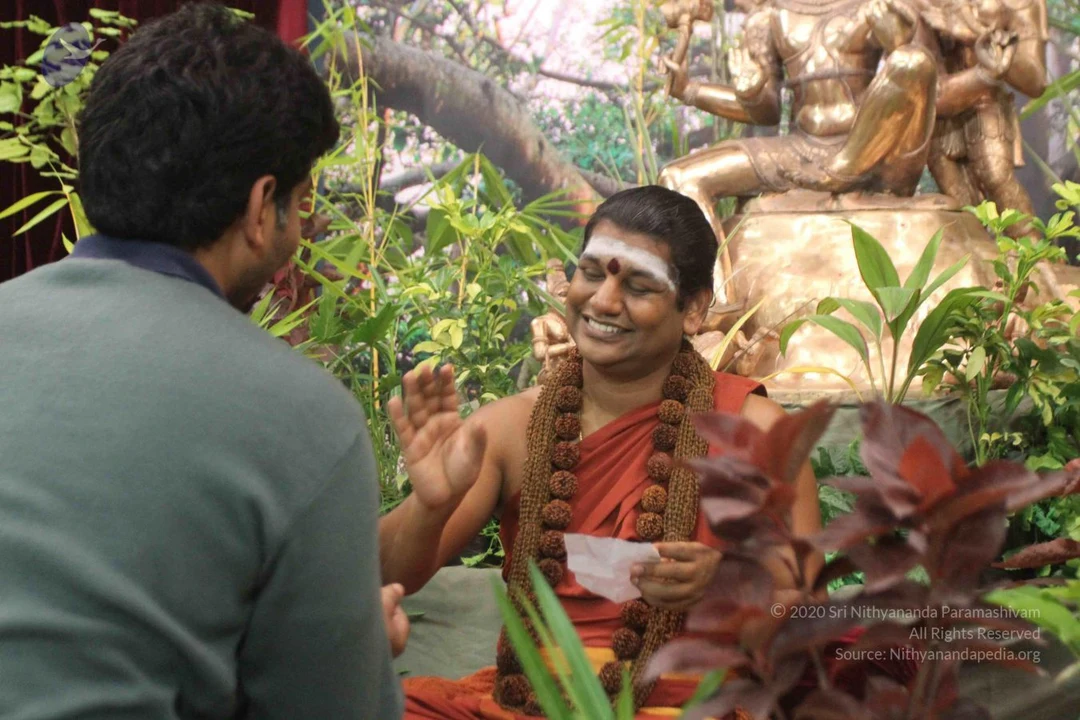
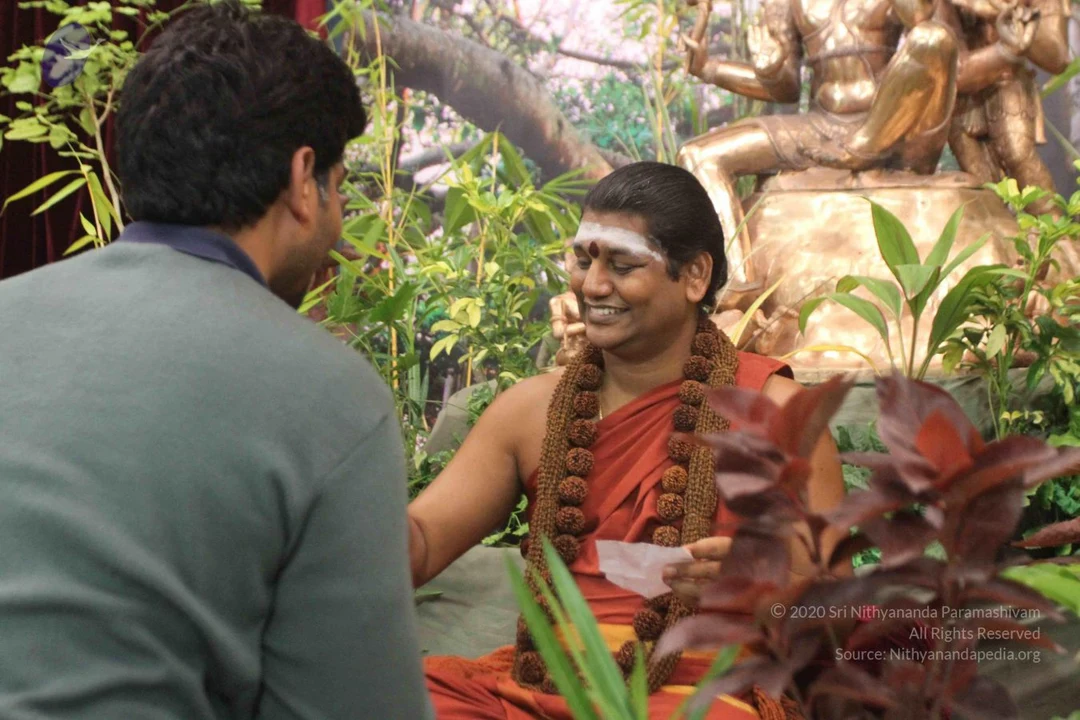
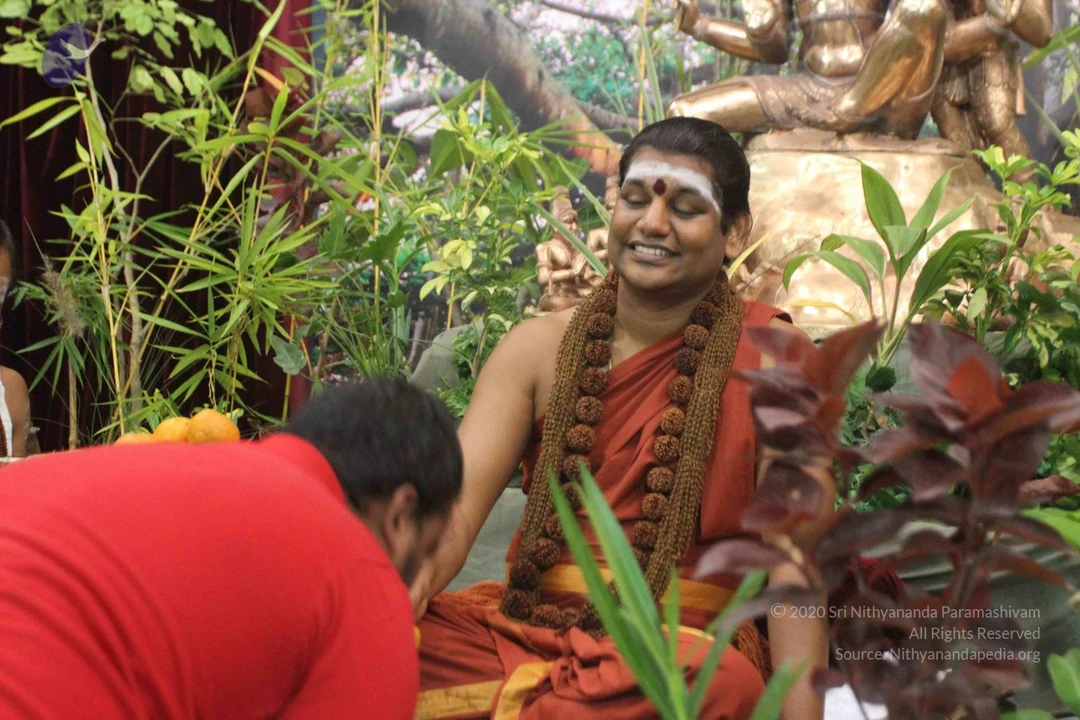
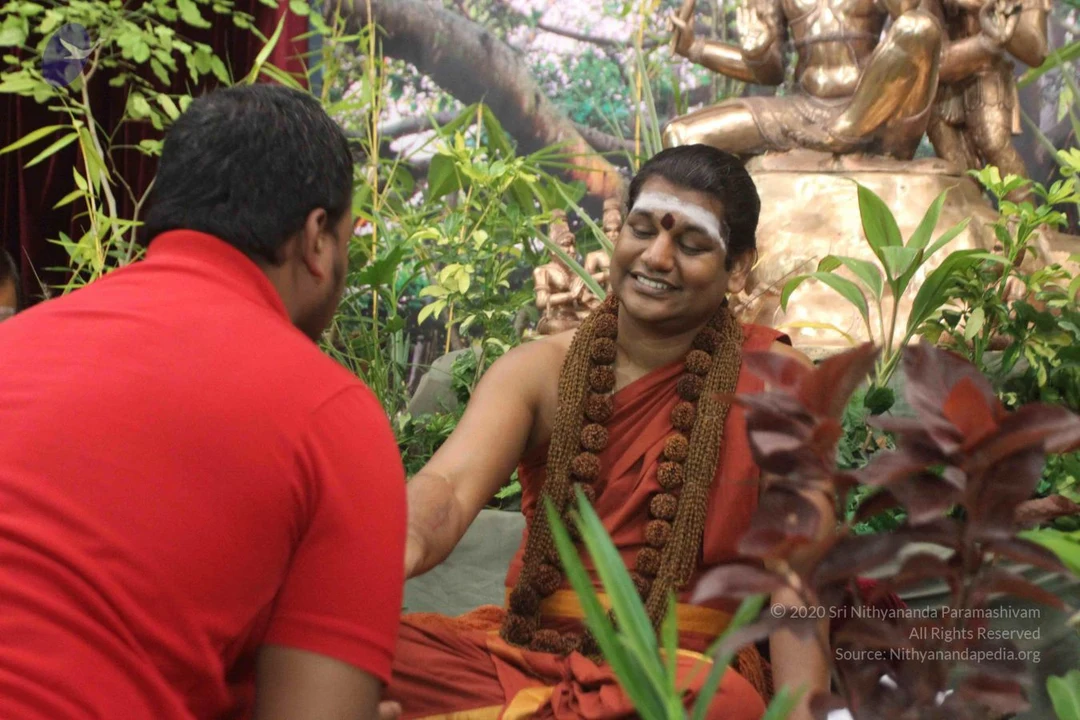
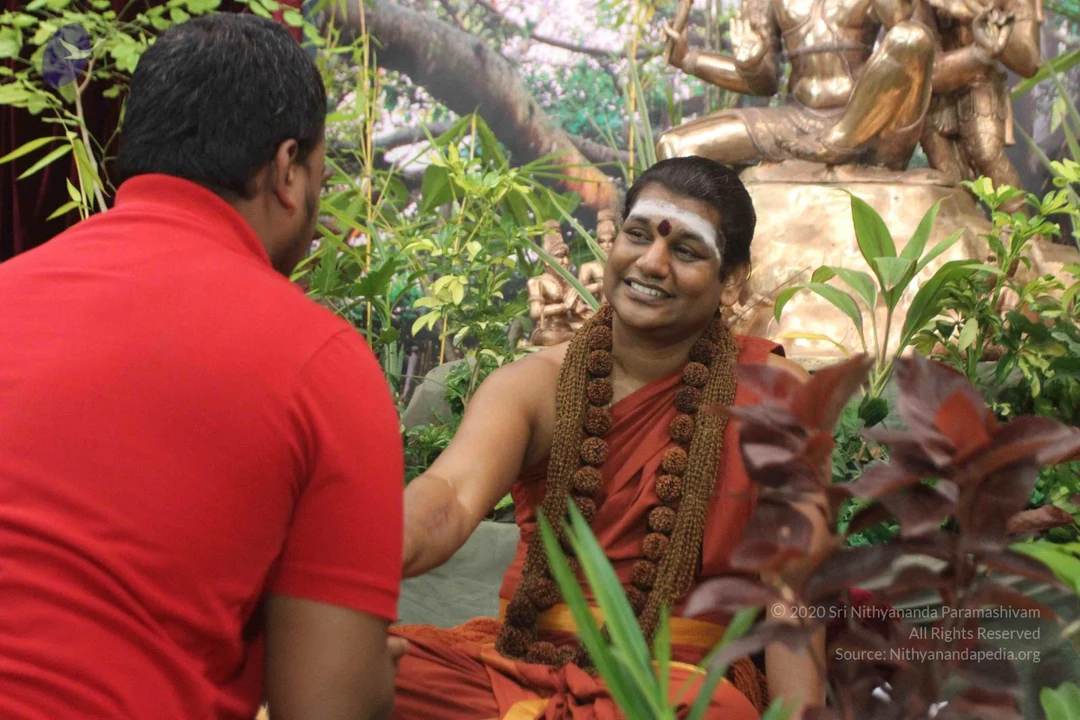
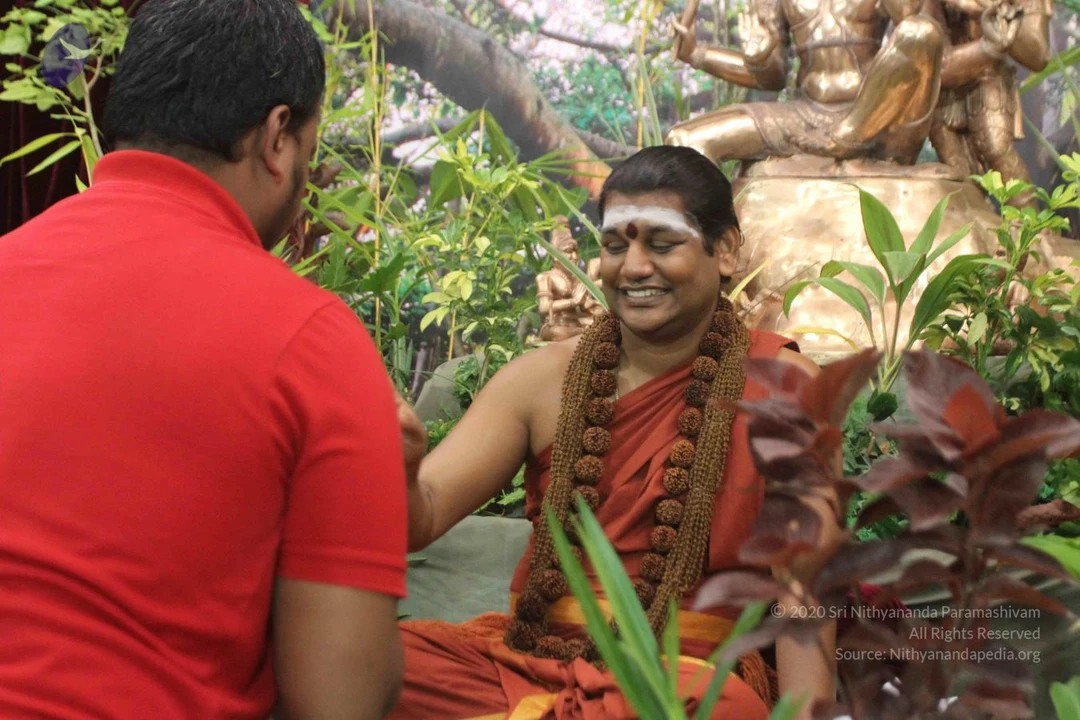
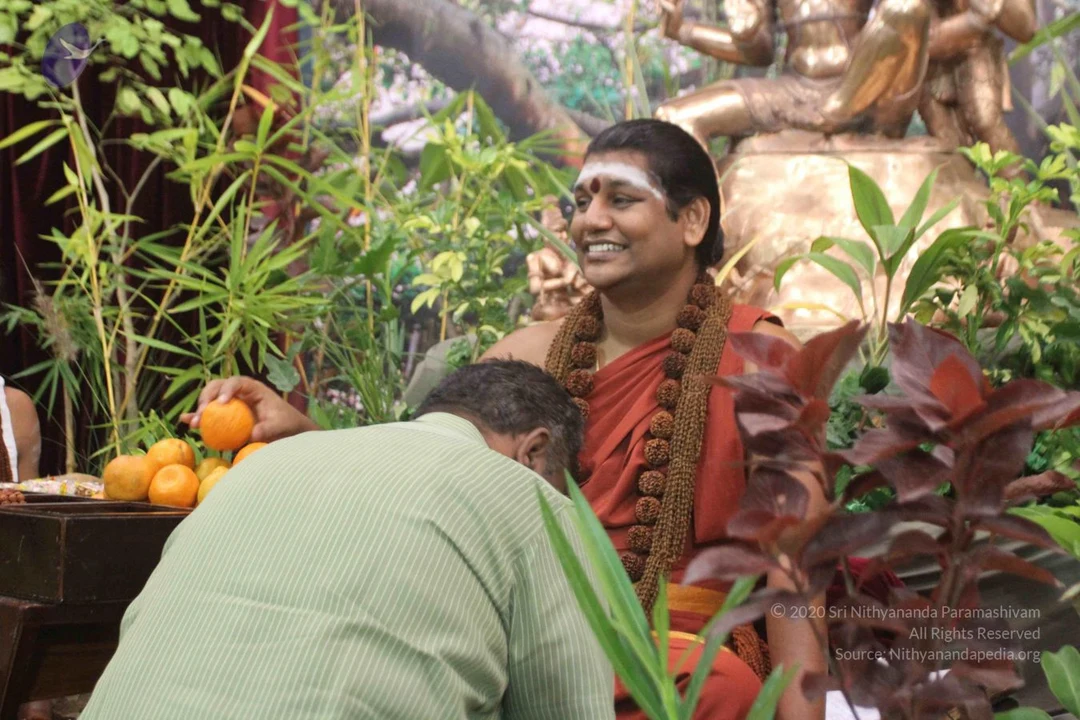
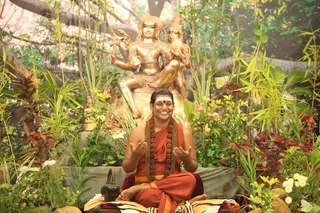
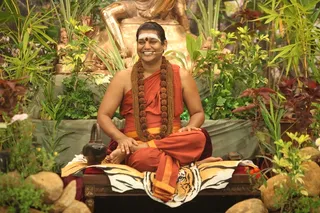
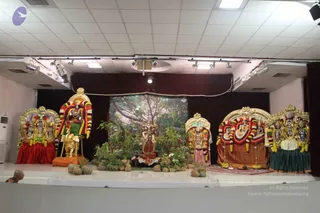
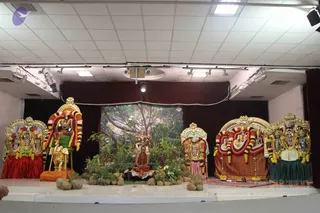
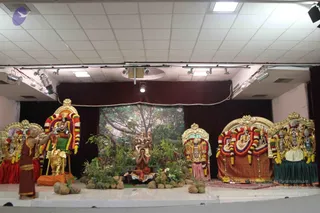
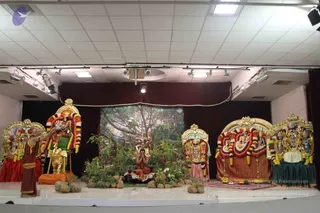
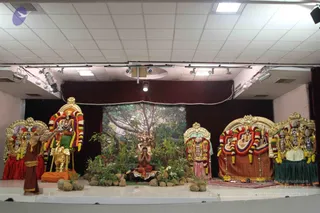
(11:23) Our architect, who is doing this stage decoration for Upanishads - getting the plants, rock, everything - she suddenly comes and tells me, “Swamiji, really I have to tell You something.” I said, ‘what?’ “The plants kept next to You has grown taller, almost one feet.” I said, ‘Come on! I heard enough stories.’ She says, “No, Swamiji, really Swamiji. Too tall - they are growing every day, day by day, tall.” I laughed and tried to brush it aside. She said, “No, Swamiji, I can prove to You. I can show You the height - day one, then day two - how they are growing so tall.” I said, ‘They are also hearing Upanishads!’ First I told them, ‘First get me evidence, only then I will talk about it.’ Because, I don’t want people to make fun of Me or fun of this whole idea of Upanishads.
(12:59) Listen. I do not treat them, because of their action or inaction. I do not have an idea about them, because of their action or inaction. Just like every day I’ll bow down in front of Kaalabhairava... See, the Garbha Mandir door, We respect as the symbol of Kalabhairava. It is worshipped as a deity of Kalabhairava. So just like every day, I bow down in front of Kalabhairava; when I come down I always touch the plants in My garden, I touch all of them for a second - bless them, and come. Because of their action or inaction, I do not gauge the level of life in them.
(14:08) Please understand. I have not done something special to them. I just did not judge their level of life. See, it’s like a, when the, if a dog is sitting next to you, if you judge, ‘it has a very low life’, you may not even respond. That also won’t respond. Even if you recognize his existence, he loves himself and loves you. Understand? Whoever makes you love yourself, you love that person. Whoever makes you love yourself, you love that person. It’s law of life. Your attitude may be different - respectful, sometime reverence, sometime fear, sometime whatever - whoever makes you love you, you will love that person. I tell you, My whole work is making people love them truly.
(16:03) I tell you, I am constantly respecting your existence as life. With these plants, the same thing. I just respected their existence. I never did anything else but, before sitting in this seat every day, I bow down to all of them. I do not have an idea they are some way lower. I just feel I am sitting with a group of people. If a group of people are sitting next to Me, how I’ll feel, that is exactly the way I am feeling. The way I respond to your existence, the same way I responded to their existence.
(17:13) For human beings, the way of responding to their existence is blessing them or healing them or asking their problems and giving some solution or consolation, courage. For these plants, just a good look - look from the eyes which is respecting their life, is enough for them to beautifully expand and celebrate, love their own existence, love their own existence. Understand? And one good thing with the plants, you don’t need to train them; they don’t have SDHD (Self-Doubt, Self-Hatred, Self-Denial); they don’t have the exploiting mentality; they don’t have exploiting tendency. They do not have something which is not them as part of them.
(18:20) With human beings - they internalize something which is not them as part of them. So you will have to separate that and show them what they are. And, I tell you, the moment I show what is you, you will just fall in love with you!
(18:42) The Mahadeva component of you, which fulfils whatever you want; which gives so much of feeling good about you, is real you. Please understand, all of you have the Mahadeva component of you which makes you feel so good about you. Sometime people say, “No, I think I never had, saw that part. I don’t think I have that. I think, when I came down, I left that in Kailaasa and came down” Or, ‘After I came here, it got it parceled, somebody stolen it.” No.
(19:30) Nainan chindanti shastrāni | Nainan dahati pāvakaha ||
No one can cut it and take it away from you. No one can burn it and take it away from you. All of us have the Mahadeva component in us which gives... How much ever you deny, you do catch the glimpse of that, you do experience it. You can go on denying, ‘No, no, no, no that and all is not there. Unnecessarily why should I imagine and create mess? No, no, no’. You can go on denying, denying. See, for example, if I deny the existence of these plants and did not revere them, respect them for their existence; nothing, they may not have grown; they would just have had their usual growth. But the moment I respect their existence, they also respect their existence.
(21:00) The moment I respect you as a Sanyasi, the Enlightened being, the Mahadeva’s embodiment, Shiva Gana, you also start respecting you. When you know, the Mahadeva component in you is still active, alive, it has not expired, you fall in love with you. I tell you, falling in love with yourself is the only way to keep ‘Nithyothsāha’ – ‘Nithya Uthsāha’ – ‘eternal excitement’. Nothing else can give you eternal excitement.
(22:27) Even if you fall in love with Me, I will push that love back on you, telling, ‘Fall in love with your component of Me, your component of Mahadeva.’ When you fall in love with Me, you fall in love with my component of Mahadeva. Even that can be denied by your mind after some time with the mind game, play, and all that. But, fall in love with your component of Mahadeva which is eternal excitement, inspiration, Nithyothsāha, Nithya Uthsāha. I tell you, the person who has touched the eternal excitement about himself, only he will have ‘beyond logic’ tolerance.
(23:37) I tell you, illogical tolerance, the ‘beyond logical’ tolerance, will happen to you, when you understand the Mahadeva component of you, the Mahadeva side of you, the God side of you; because, you will just be in love with that existence. You will just be in a trance with that existence. I am telling you, being in love with that Mahadeva component of you is ‘Bhakti’. That is ‘Bhakti’.
(24:46) Whenever you go dry, catch that component part again. I am really telling you, it will bring tremendous tolerance, which is beyond any logic. A man who has achieved the tolerance beyond any logic, can never be disturbed or destroyed. Please Understand - this is law of life. This is law of life; because, when you know the Mahadeva component of you, you are just in love with your existence; you are just in love with your possibilities. It is not some delusion. Please understand. It is not some delusion, it is not some illusion. It is not some delusion, it is not some illusion. It is possibility for every one of you.
(27:15) Some of these things, no one can take it away, I tell you. No one can take away your Consciousness. No one can take away your Enlightenment. No one can take away your understanding, you are Mahadeva. Whenever tiredness, boredom comes to you, remember, ‘I am Mahadeva’ and ‘I have Mahadeva as my Master to remind me and help me to reach the experience of Mahadeva.’ Don’t immediately sulk saying, ‘No, no. Yes, He will tell me to become Mahadeva. But getting up from the bed, moving the body and doing mmm mmm mmmm. He expects too much from me. He makes me do too many things. How can I think so much? How can I act so much?’
(28:41) Understand, your inability to think or act never takes away your existence as Mahadeva. Your action does not - please listen - your action does not touch your Mahadeva-hood. You may be a Thanedar, not doing anything useful; just sitting, eating dash dash. Even that, does not touch your Mahadeva-hood, does not touch your Shivahood, does not touch your God-hood, does not touch your Mahadeva component of you.
(29:46) Understand. Somebody expresses it through their intellect. Somebody expresses it through their body. Somebody expresses it through creating complications. No, there are some people who are ‘Doctorate in Complications’. They create so much complication; before even taking two steps further, inside taka taka taka, taka - twisting, turning their legs – they have taken two thousand steps. I call them, ‘PhD in Comp.’ – creating complications. You see, creating complications, ‘Why should I do? He doesn’t love me. I think He expects too much from me. Unnecessarily He’s trying to think I am intelligent. Even if I am intelligent, why should I work? Why should I enrich the world? Why should I do this? Why should I do that? I think non-doing is the joy’. That is one of the biggest, biggest, biggest, lie you believe.
(31:06) Understand. Non-doing does not take away your Shivahood. For example, if you don’t do anything, don’t worry that your Shivahood will be taken away. No. But, that is not going to make you experience your Shivahood and expand and radiate. If you are non-doing, you are doing complications, ‘PhD in Comp.’
(31:52) When I request everyone of you; you may be Engineer in Noida, or a Doctor in Bangalore, Lawyer in Ahmedabad, or a Sanyasi sitting in Varanasi, whoever you may be; when I say, ‘You have Mahadeva component’, I tell you, the highest possibility of all-knowing, all-powerful, always blissful is your existence - that is your possibility; that is you. I am asking you to start living it; to start loving that component of you. I am saying, whether in your profession, in your career, in your family, in your relationships, in your life - express this.
(33:09) Decide, how Mahadeva will respond to this situation. ‘If Mahadeva is a Lawyer like me in Allahabad High Court, how He will respond? Let me live like that.’ - that is Dharma. ‘If Mahadeva is a Doctor like me in Bangalore, how He will live? Let me live like that’ - that is Dharma. Living with all your possibilities, blissfully - that is all I am asking you - and immediately you start thinking, ‘No, no, He is expecting, Swamiji is expecting too much out of me.’ That is why I am saying, ‘PhD in Comp.’ - ‘PhD in SDHD’, Self-Doubt, Self-Hatred, Self-Denial.
(34:23) I am telling you. See, if Mahadeva component is not there in you, you can’t even breathe - why don’t you understand that? The amount of things you need to do for breathing is ten-thousand times less than what you need to do to finish all your projects successfully. All your projects - imagined, unimagined - are ten-thousand times less than your breathing project. Good, Mahadeva made all that as automated. Otherwise you will be sitting and drawing, ‘Through the right nose, half an inch expansion hole and two and a half feet pipe; if I inhale, and then keep the air inside my lungs for these many seconds...’ - by that time, breathing has stopped. I tell you, how much of your Consciousness, existence is required for your breathing; only one of ten-thousandth effort and Consciousness is required to finish off all your so-called projects in the life. Your life is far more easier.
(35:57) If you exist - I tell you - everything is possible. I am not giving you any delusion. I am not giving you any illusion. People ask Me, ‘How Your Gurukul kids are doing blindfold reading?’ No, if you have eyes, you can do blindfold reading. Because you need to tie the eyes nah, so for that you need eyes. Ha Ha Ha Ha Ha! If you have eyes, you can do the blindfold reading, because you need to close the eyes, for that you need eyes - that’s all.
(36:48) I tell you, for all possibilities you don’t need a separate technique, method, to open them up in you. I am telling you. Only whatever you believed is not possible for you, you need to undo those wrong beliefs. But there are tons of things, you just did not bother to believe it is possible or not possible. For all those things, even just remembering - it’ll start opening up in you. Understand.
(37:24) See, for example - living without food - you may have started believing, it is not possible for you and actually it is not possible for you, till you are trained. You need to go through lot of yogic practices, meditations. Till then it is not possible and ultimately it is not required. Just to have a glimpse of you, you can try sometimes, those yogic practices - that’s all - and it is not required, you need to be completely without food. That is not required for Enlightenment. Understand. It is just one of the yogic excitement.
(38:20) Listen. About this, ‘able to live without breathing’ - you know you can’t, because you started believing it. But there are some yogis - in Himalayas, I have seen - they bury their head in the under the sand and live, something like eleven days. Okay. Whatever you already started believing not possible by you, you will not be able to do - that is okay. But there are many things, you have not taken the decision, or believe, stand - it is not possible for you - those things are possible for you.
(39:07) Going and talking to somebody and inspiring that person, to certain idea which you believe as true - this, you may not have believed, it is not possible for you. If you start opening it up as a possibility, it may be available suddenly for you. There are so many things, which you have not closed the door upon you, are still available and open for you; which you have not closed the door upon you, are still available and open for you. Reminding you, about all your possibilities is ‘Living Advaita’. Reminding you about all your possibilities is ‘Living Advaita’ - and that can happen only by Upanishads.
(40:36) I’ll continue, continue, continue on the Upanishads. With this, I bless you all. Let you all radiate with Integrity, Authenticity, Responsibility, Enriching, and Causing Eternal Bliss, Living Advaita, Eternal Bliss, Nithyananda. Thank you. Be blissful. (41:13)
Nithyananda Times
Paramashivoham Oneness Capsule 313 (09Jan2015)
Title
Sacred Marriage Ceremony of Meenakshi || Meenakshi Thirukalyanam || 09 January 2015
Link to Video:
Photos
Nithya Satsang and Kalpataru Darshan
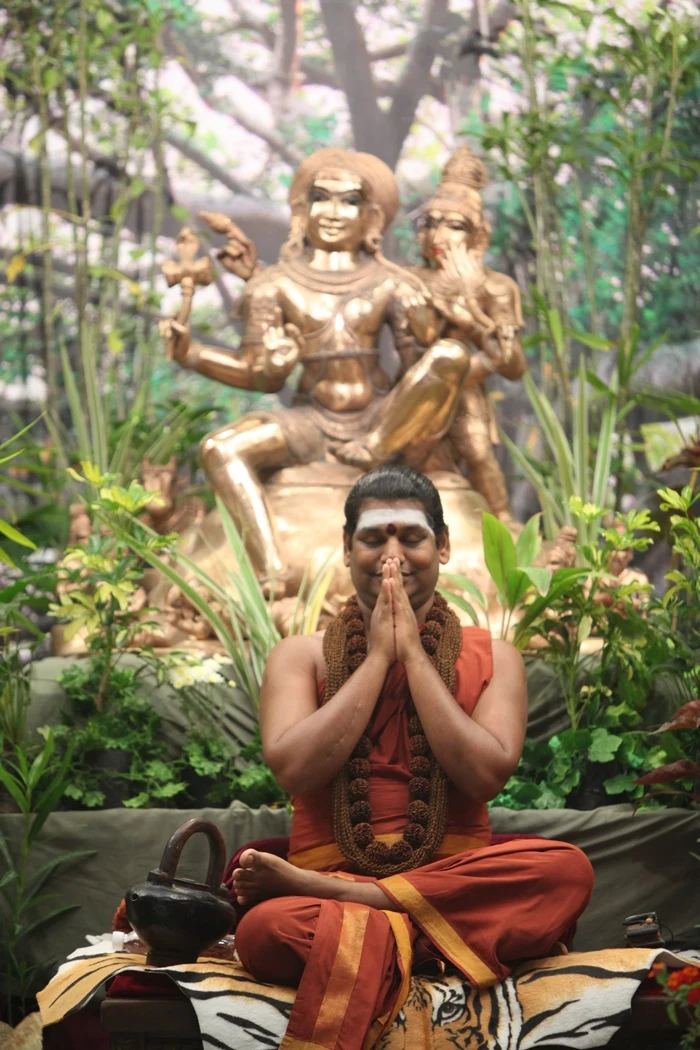
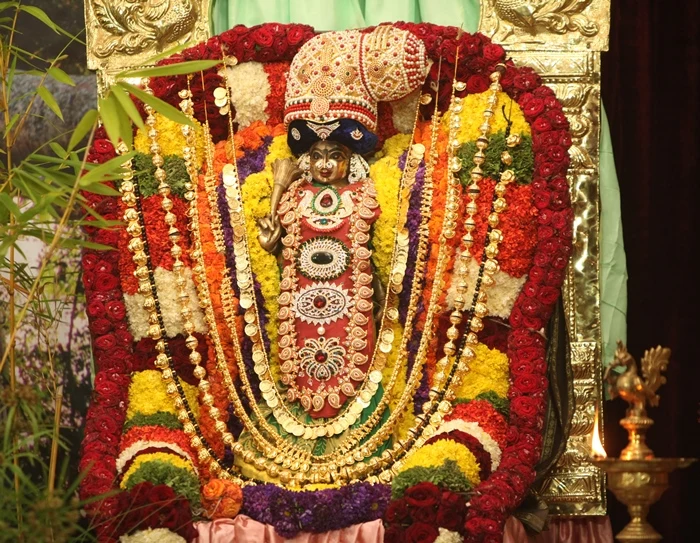
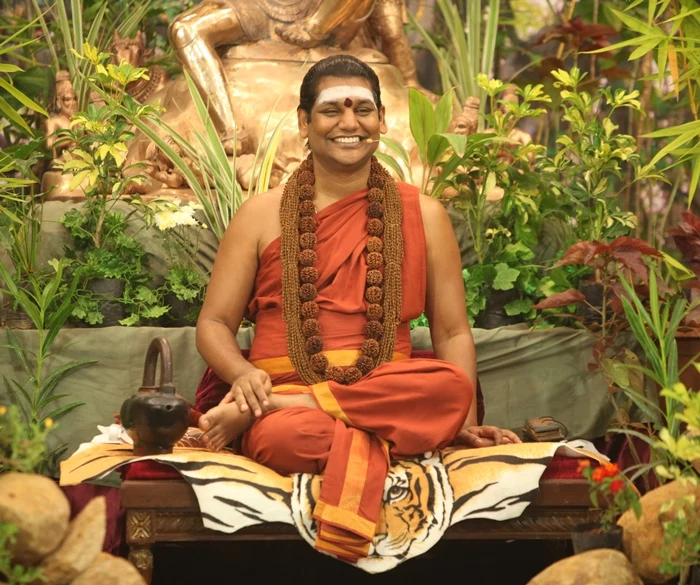


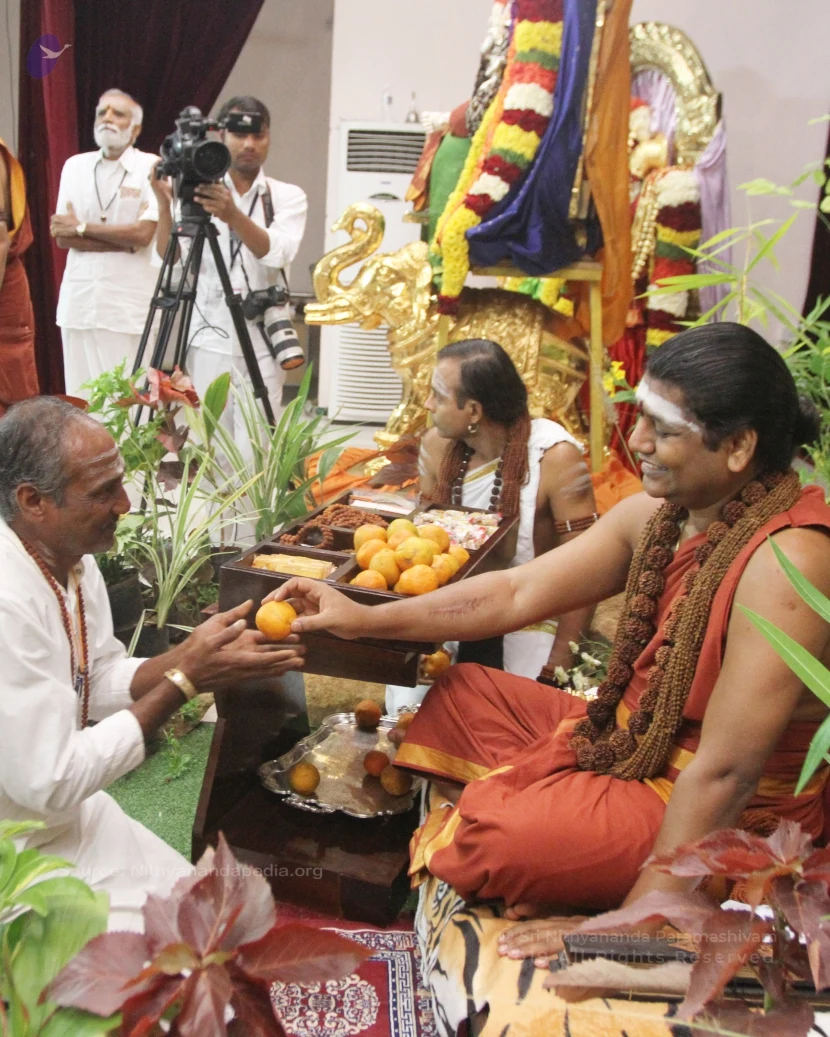
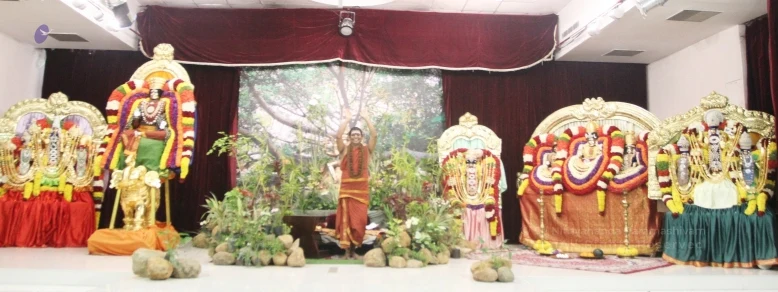
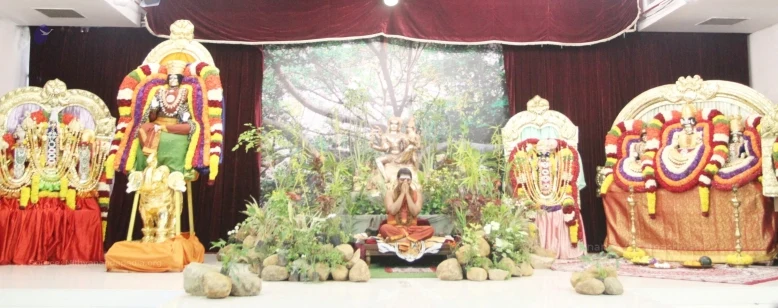
Utsavamoorthi and Kalyanotsava
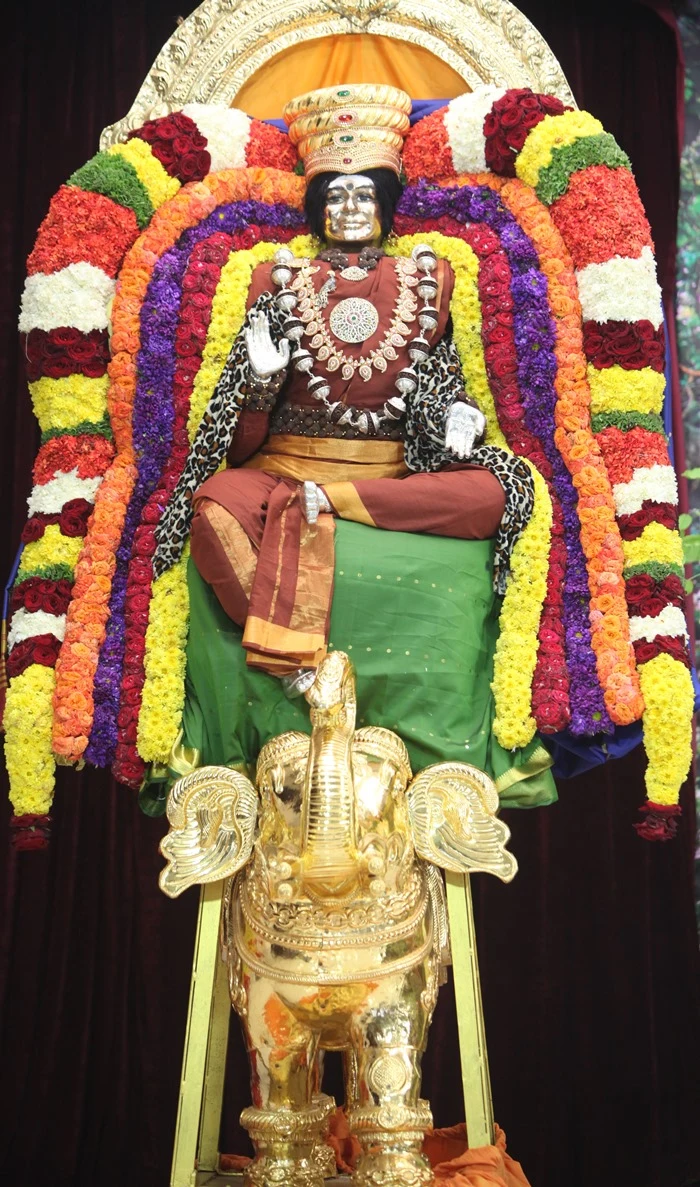
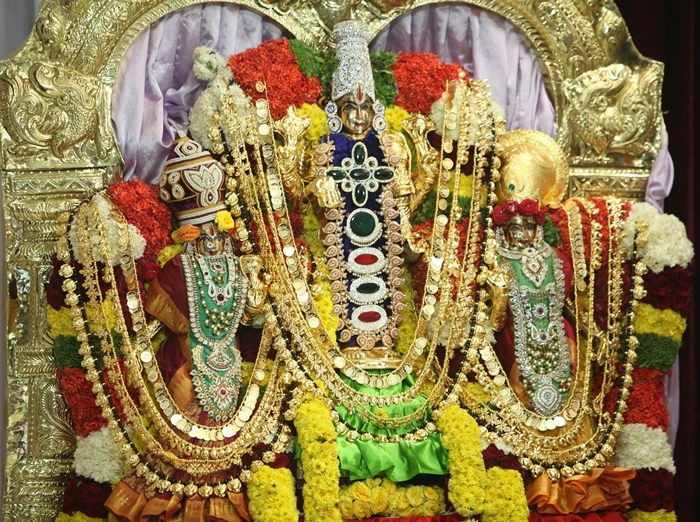
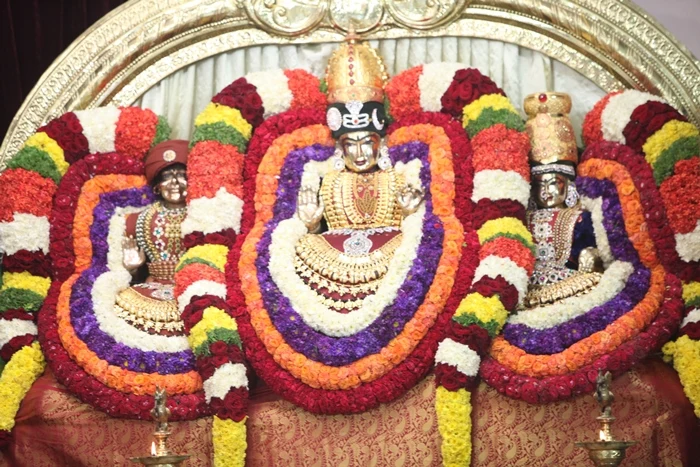
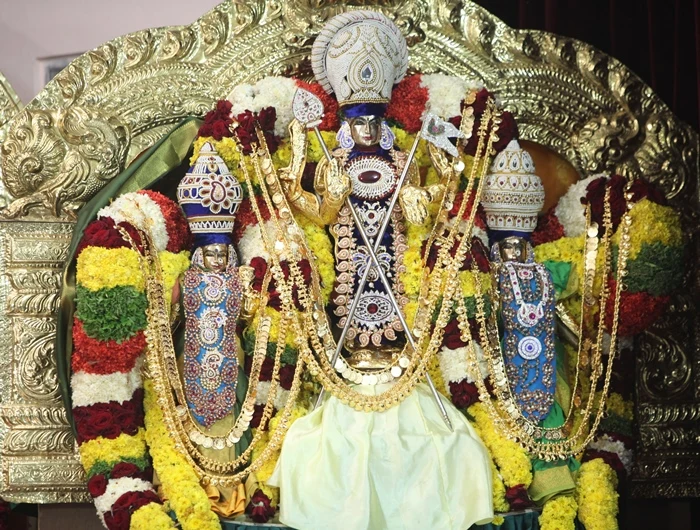
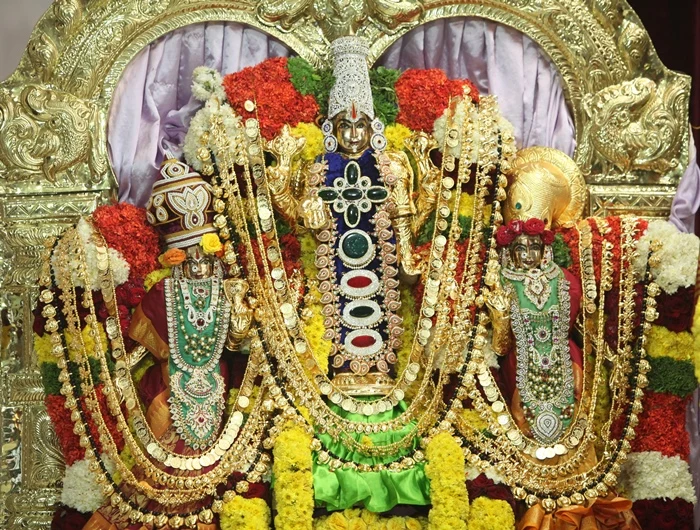
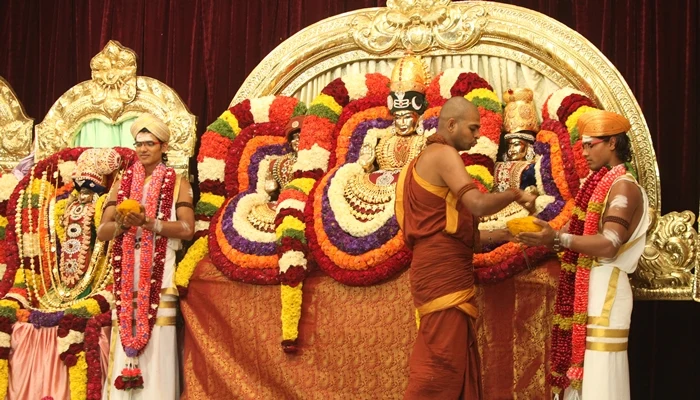
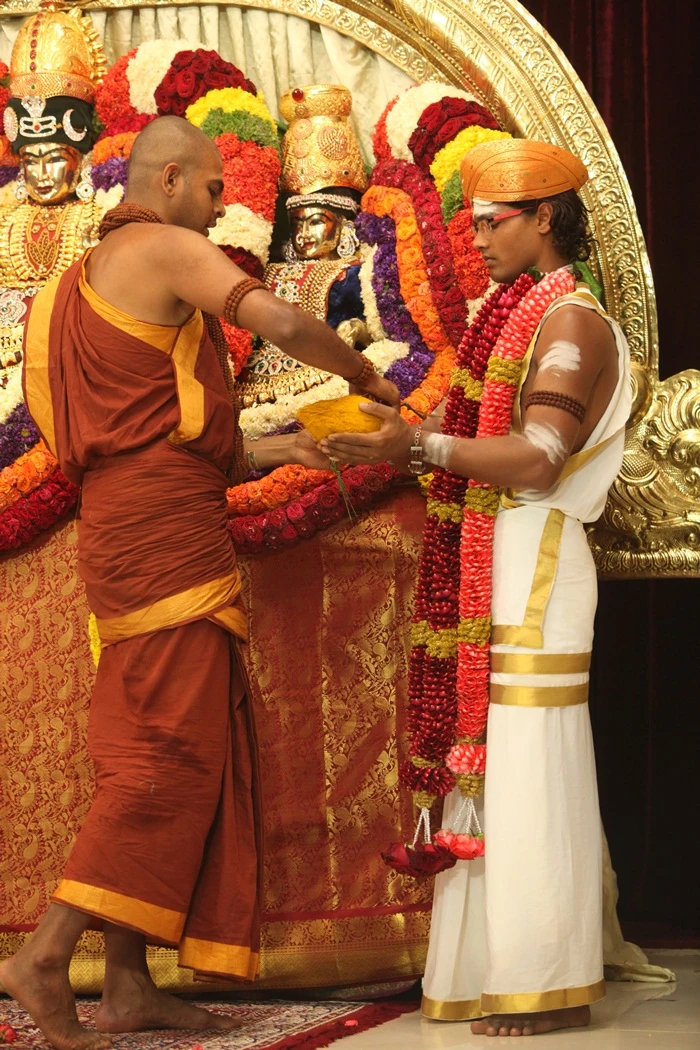
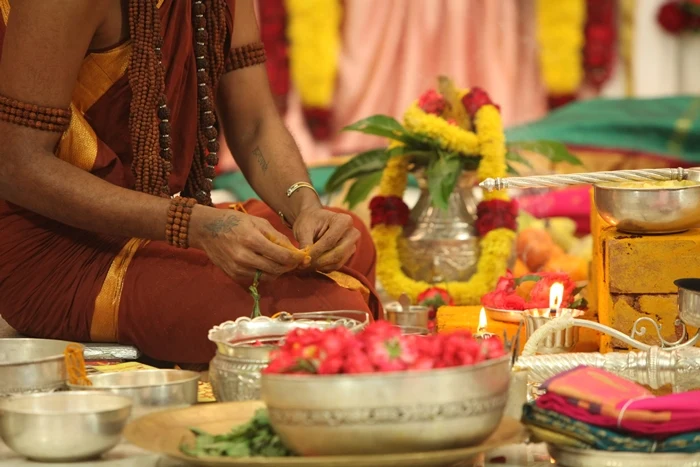
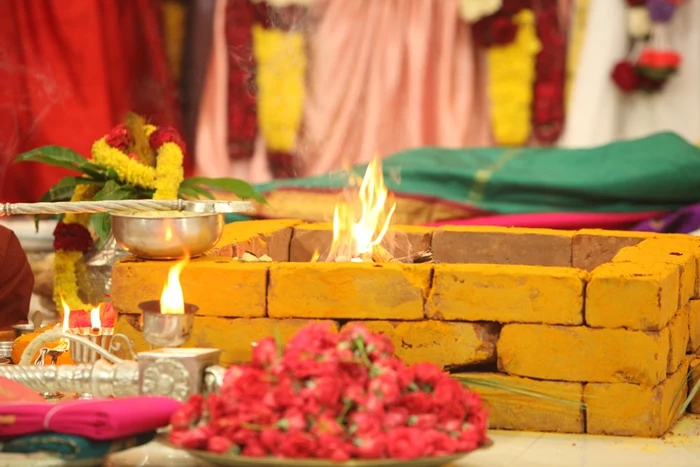
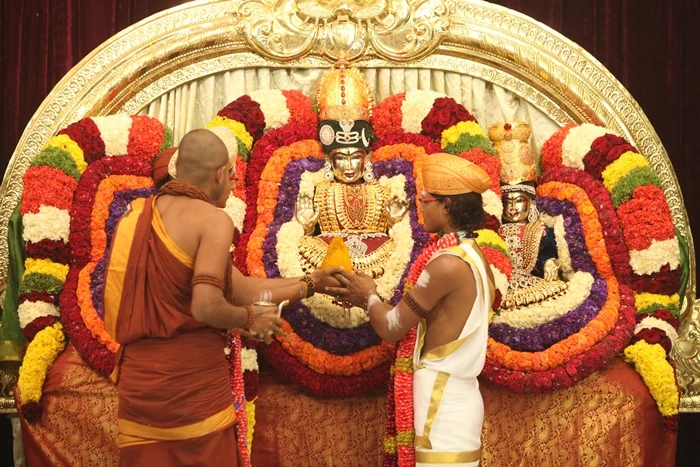
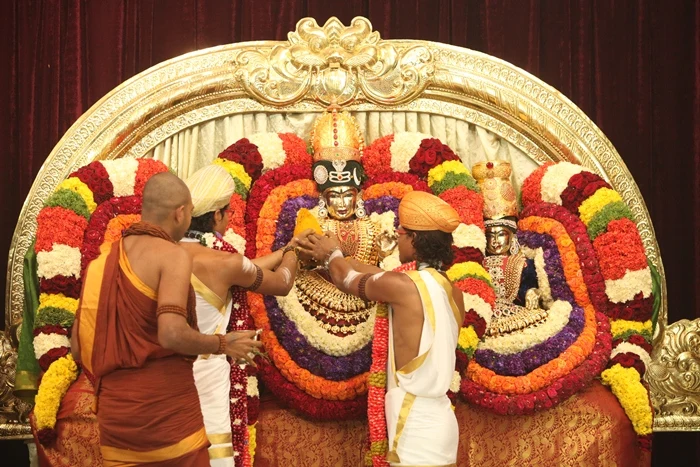
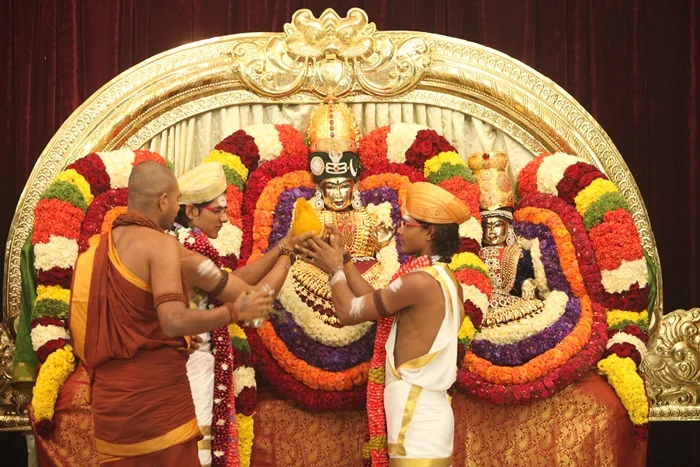
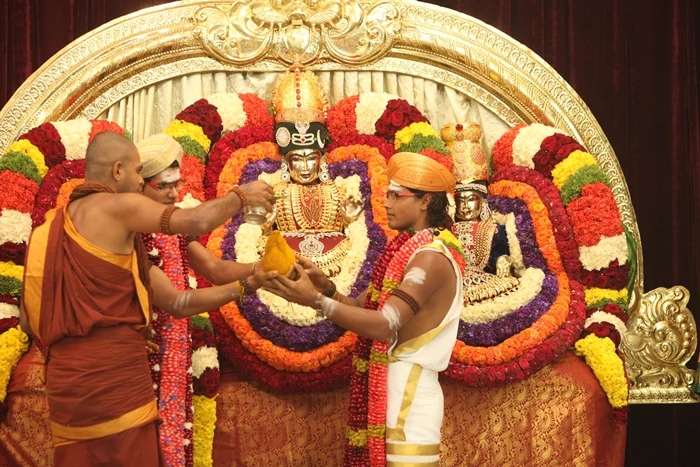
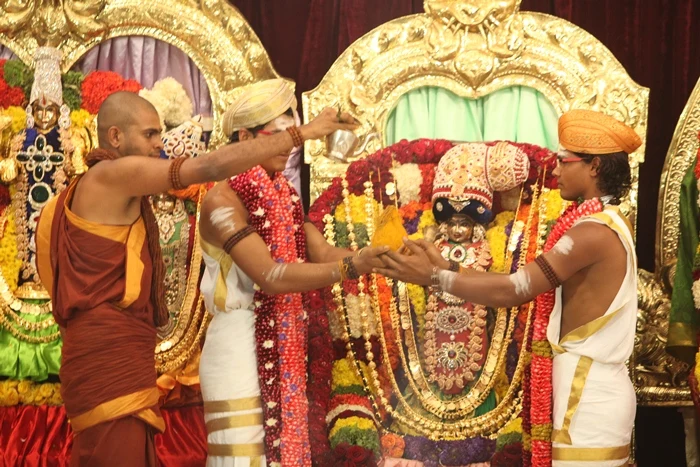
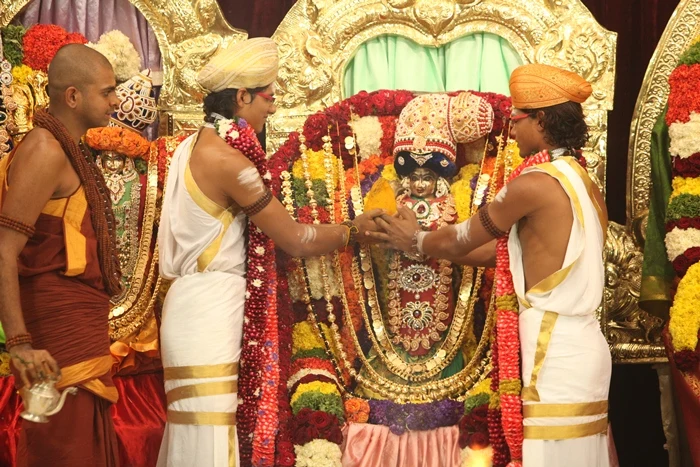
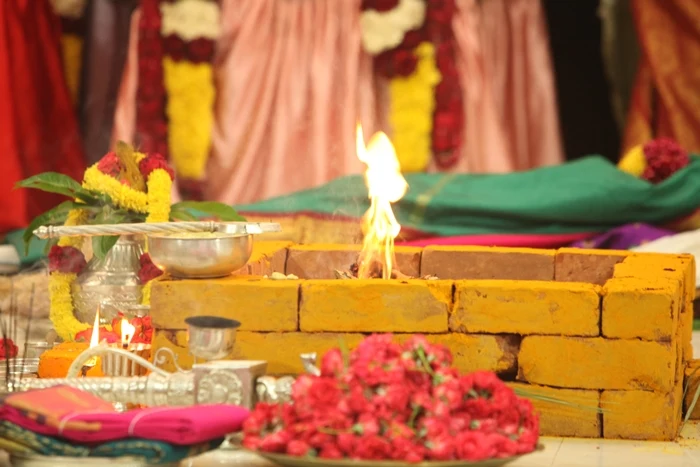
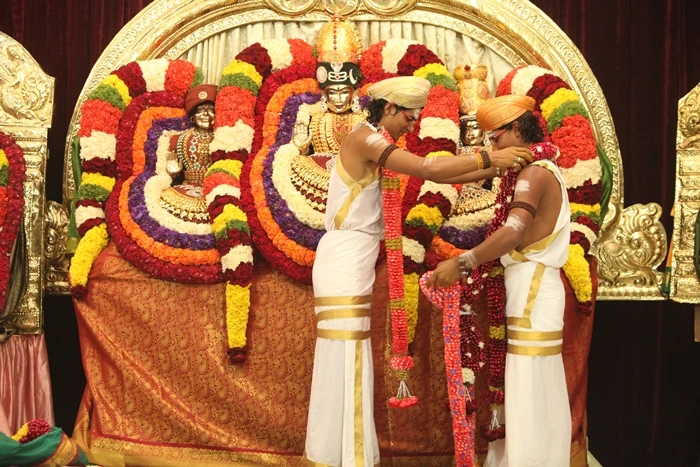
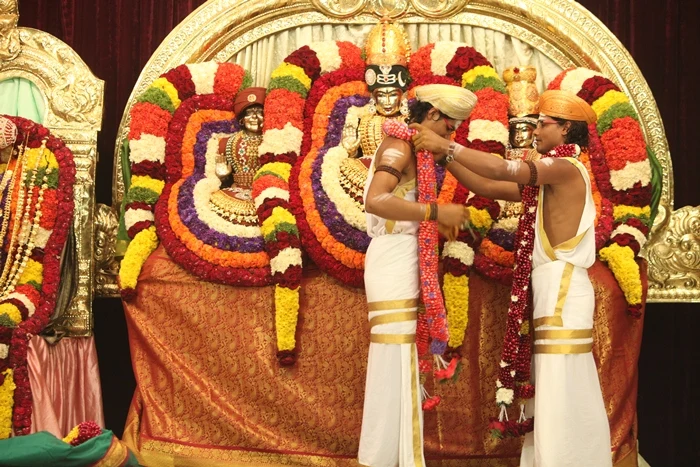
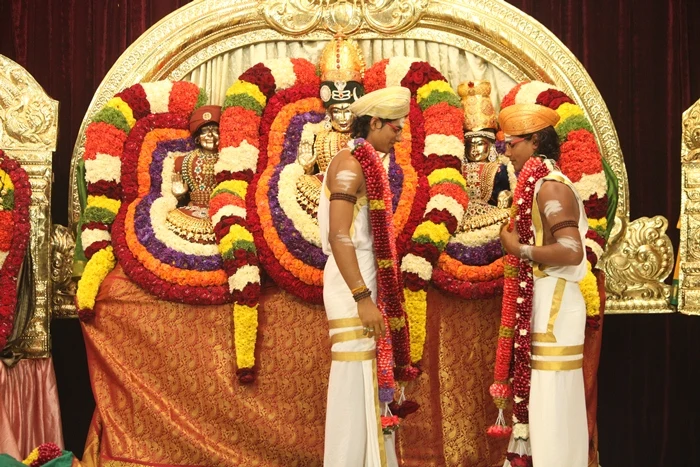
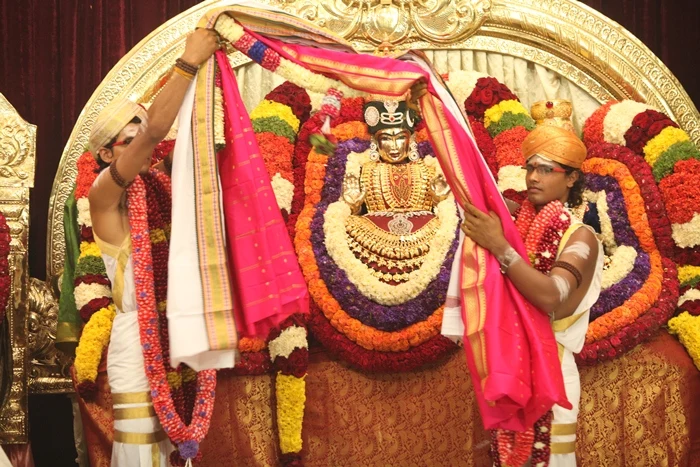
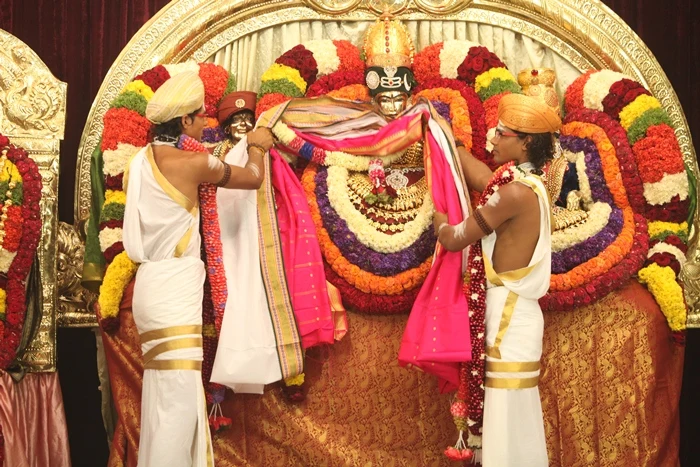
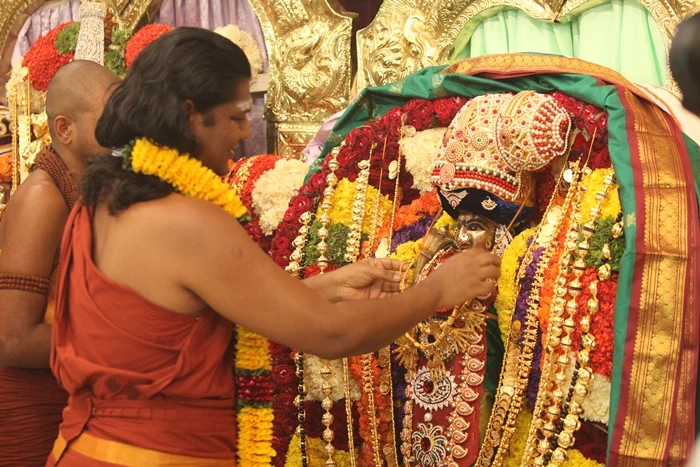
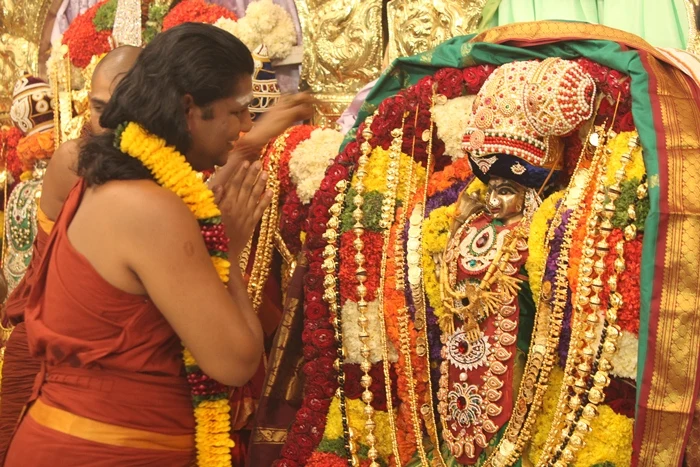
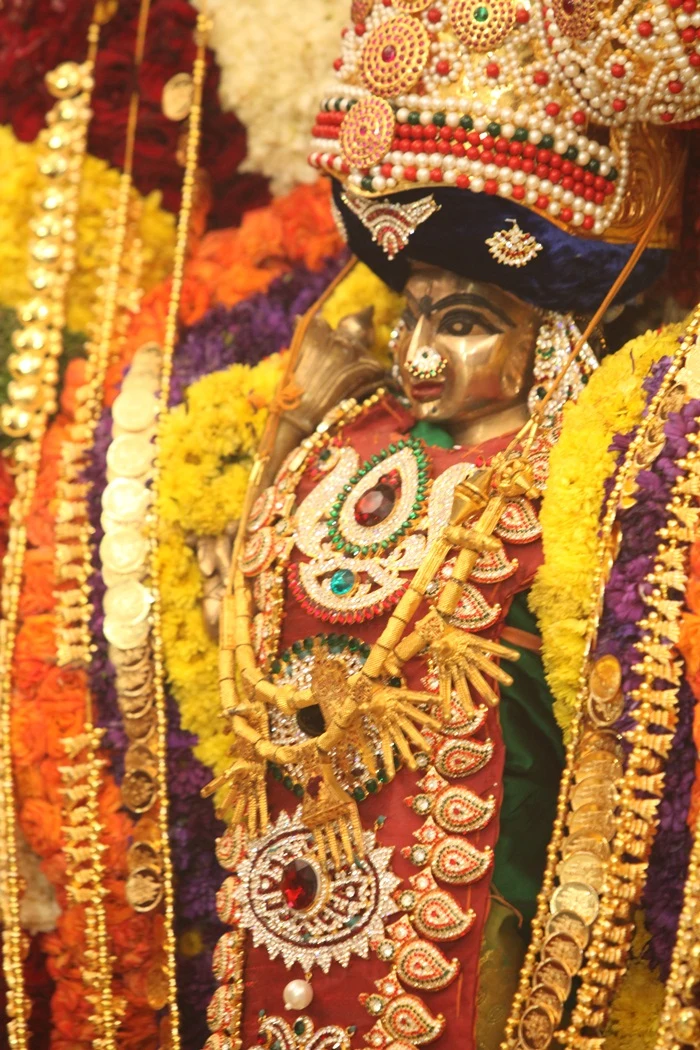
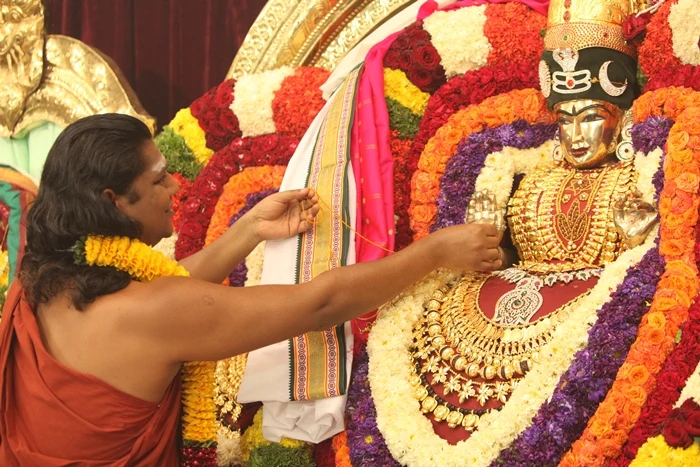
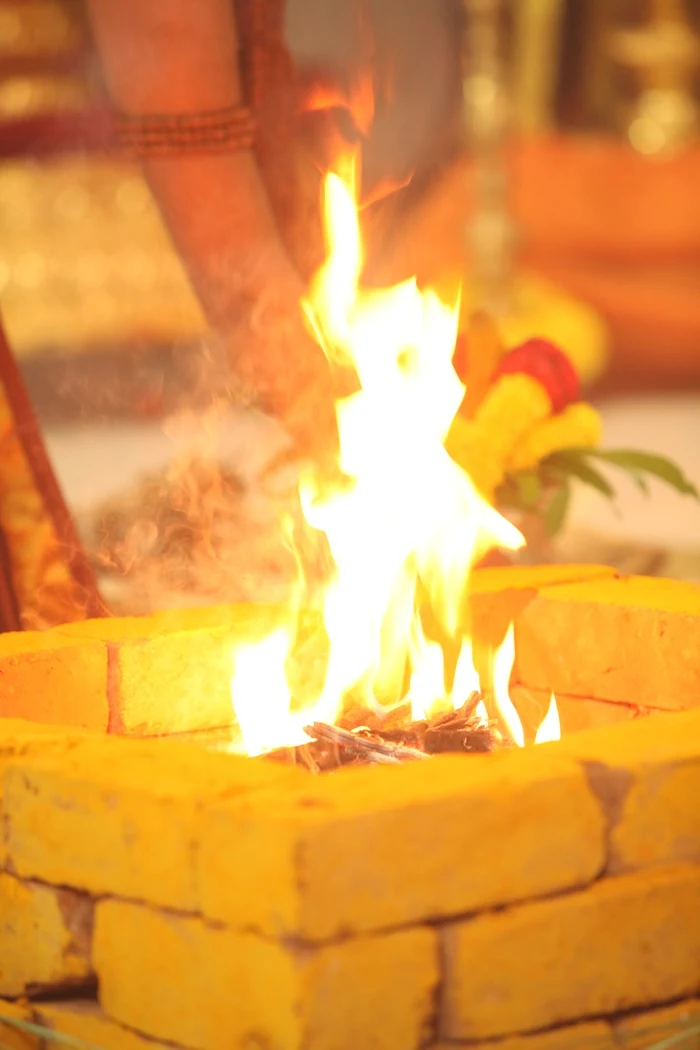


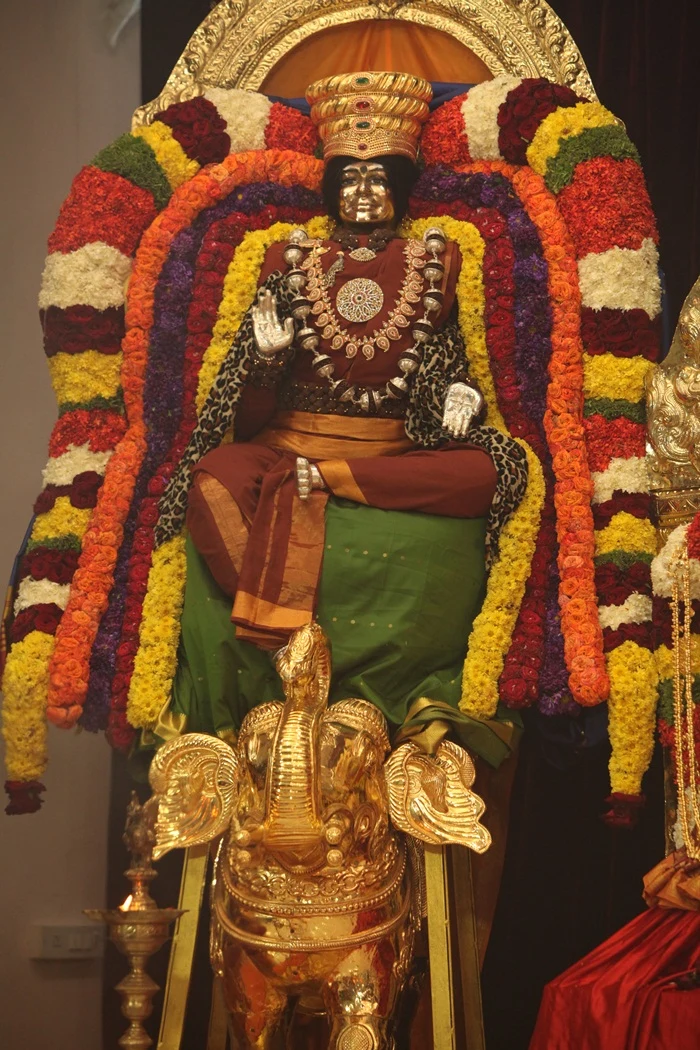
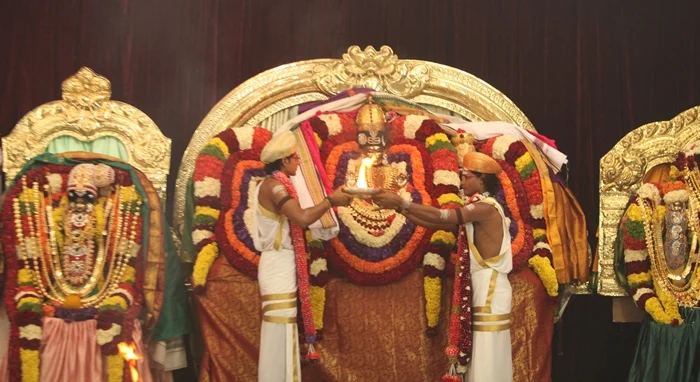
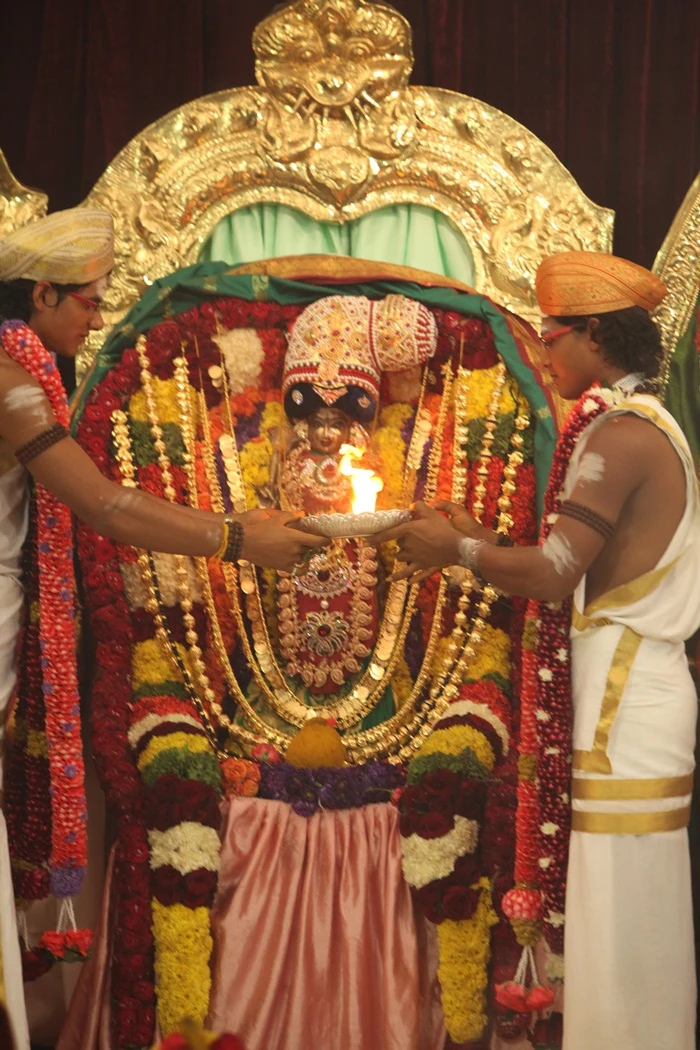
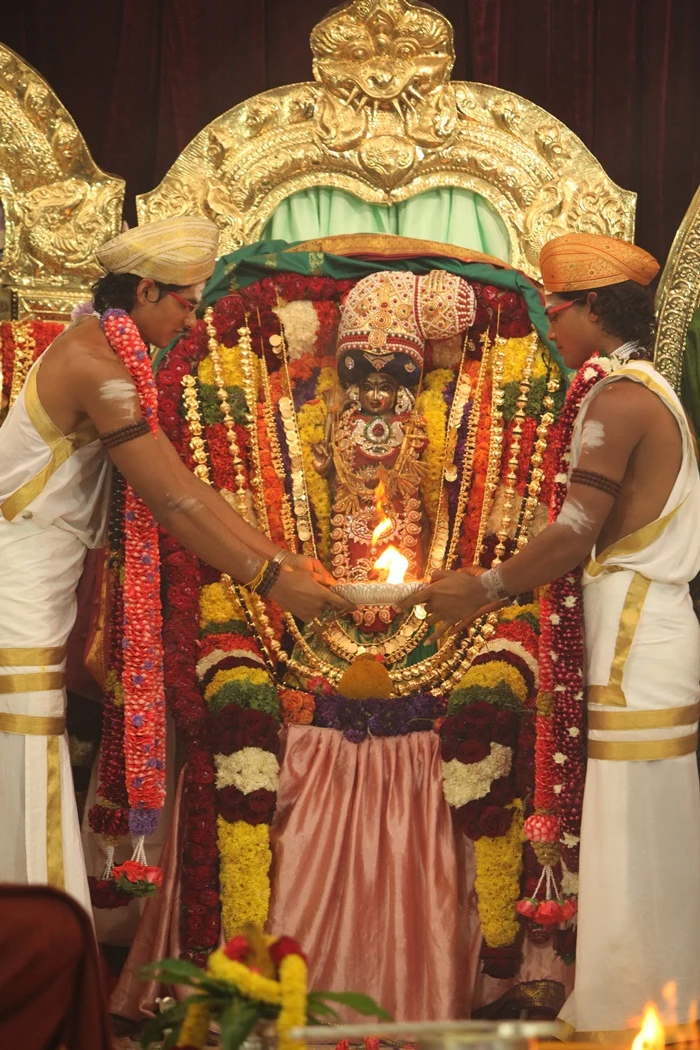

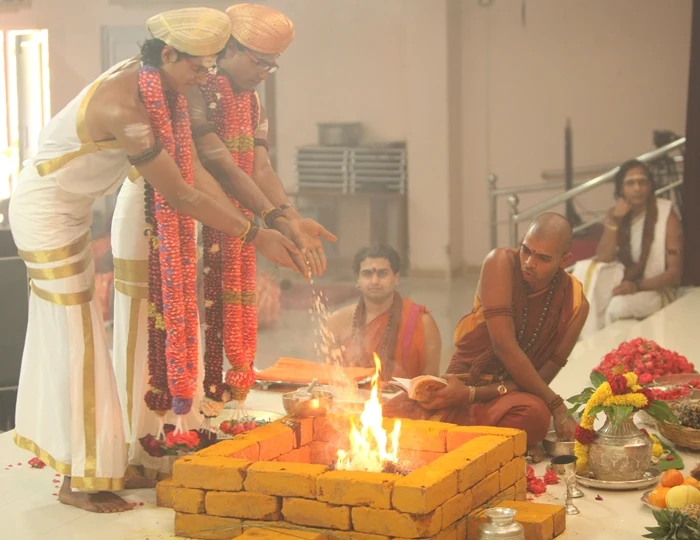
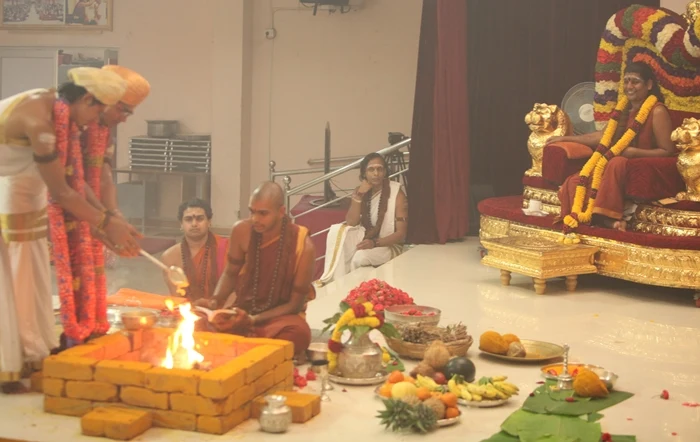
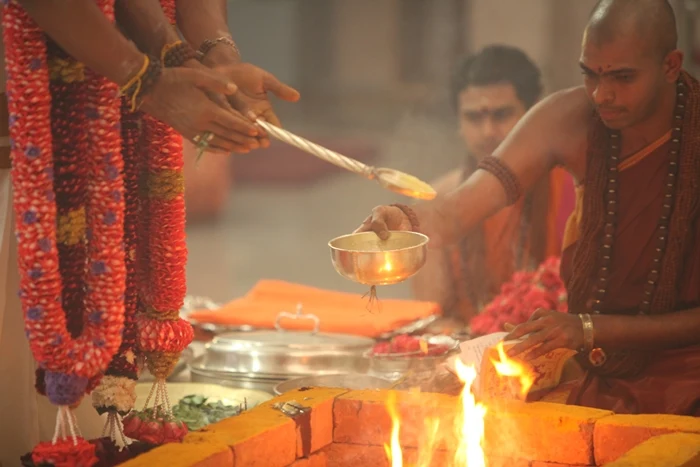
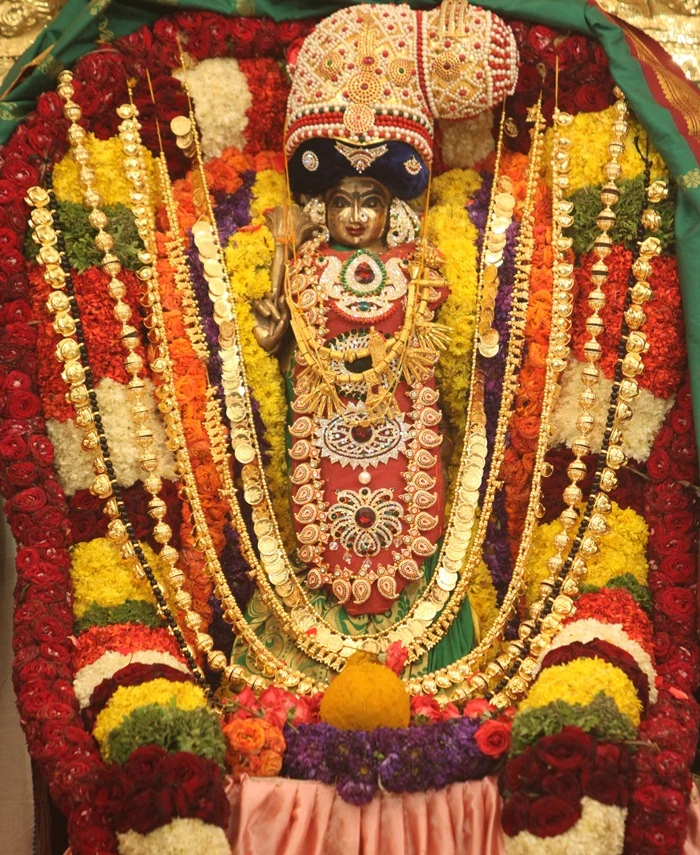
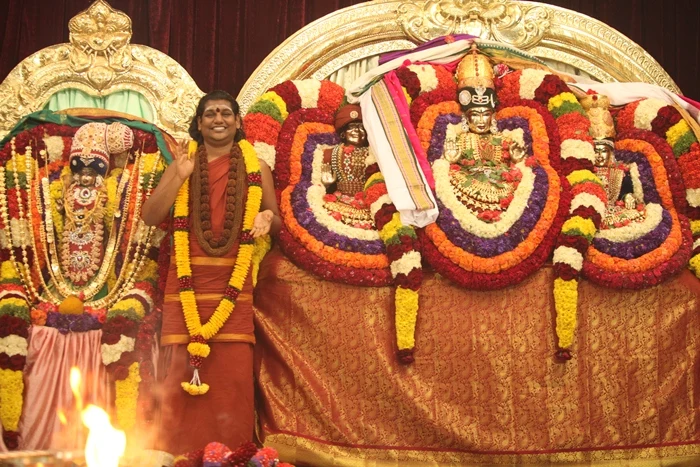
Meenakshithirukalyanam
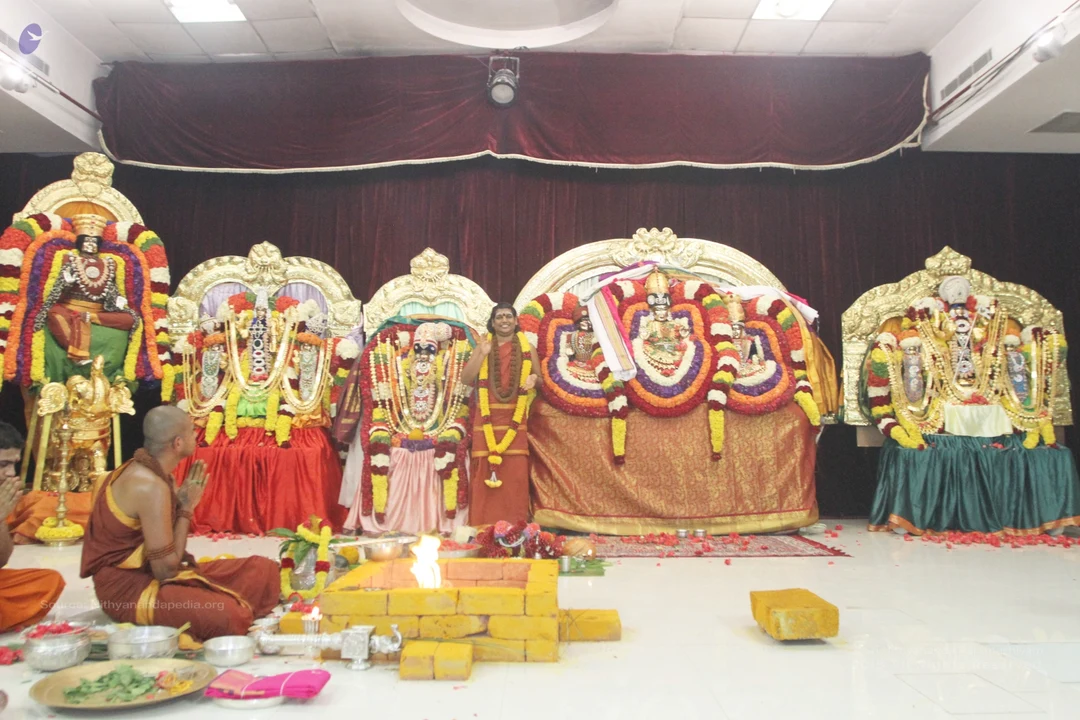
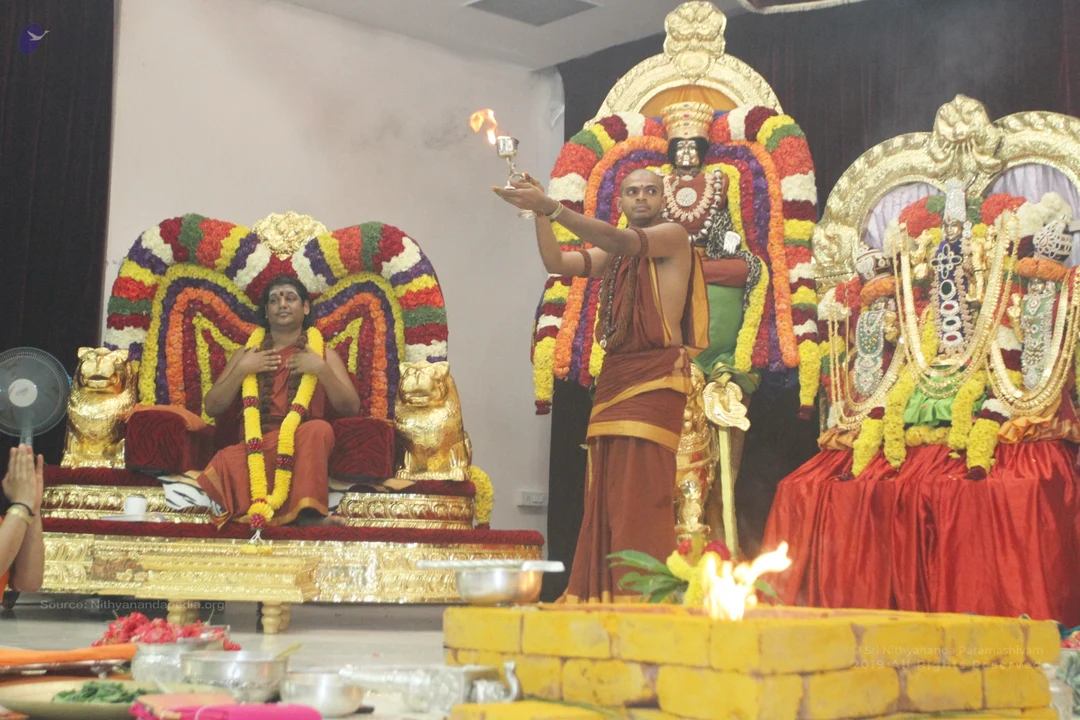
Morning-Satsang
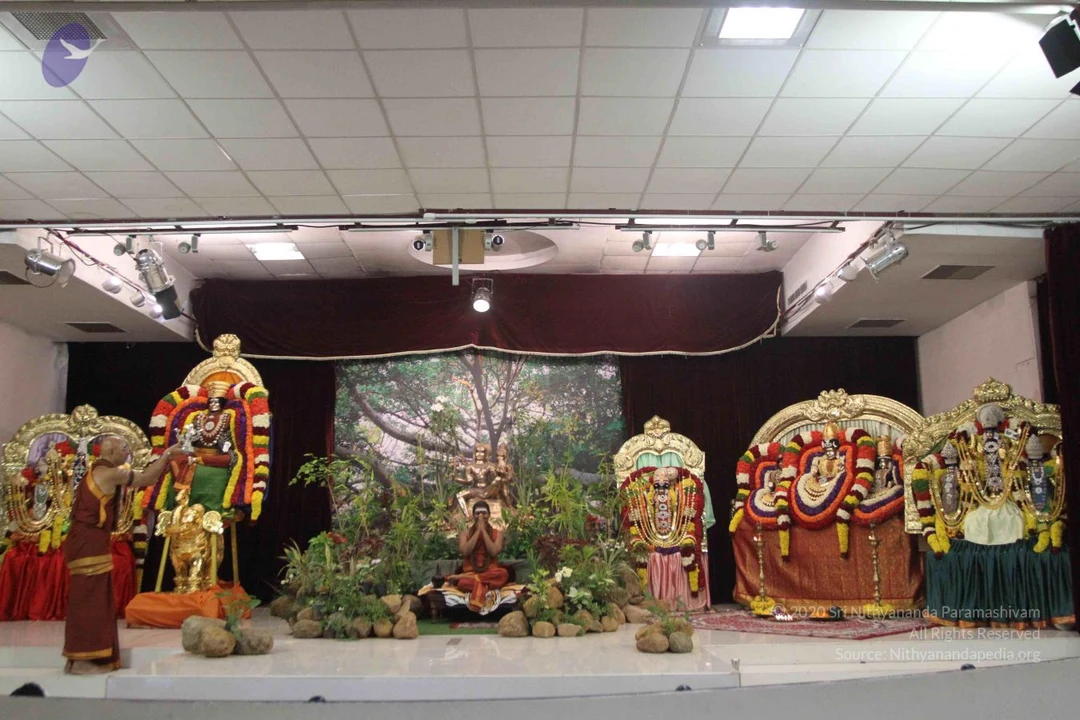
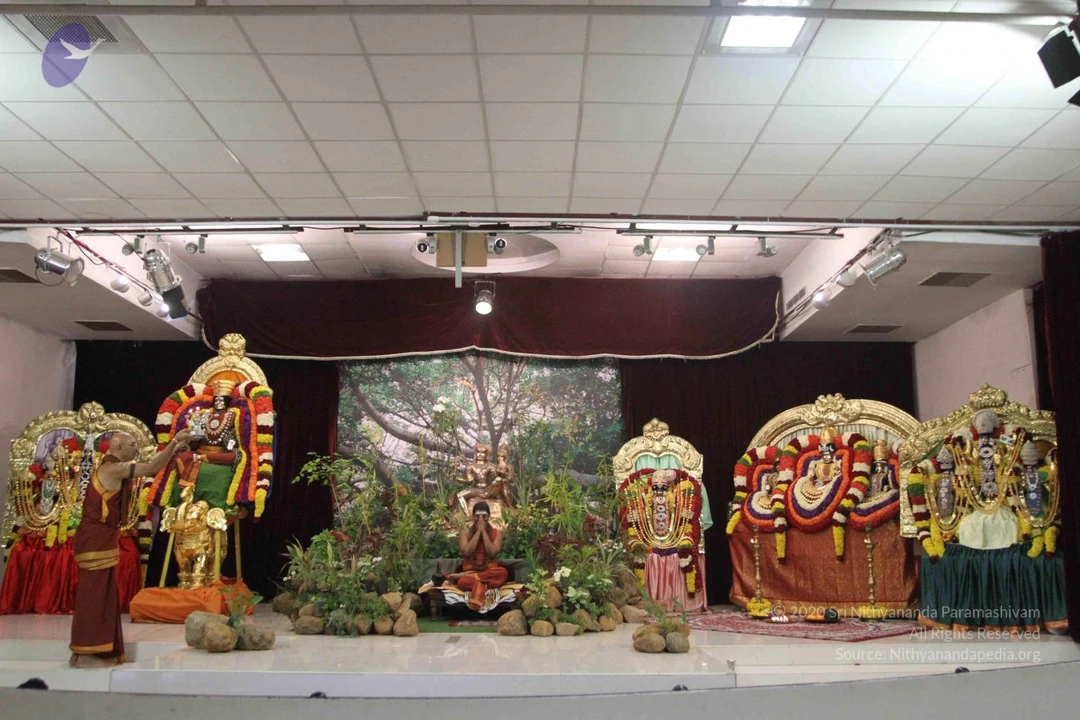
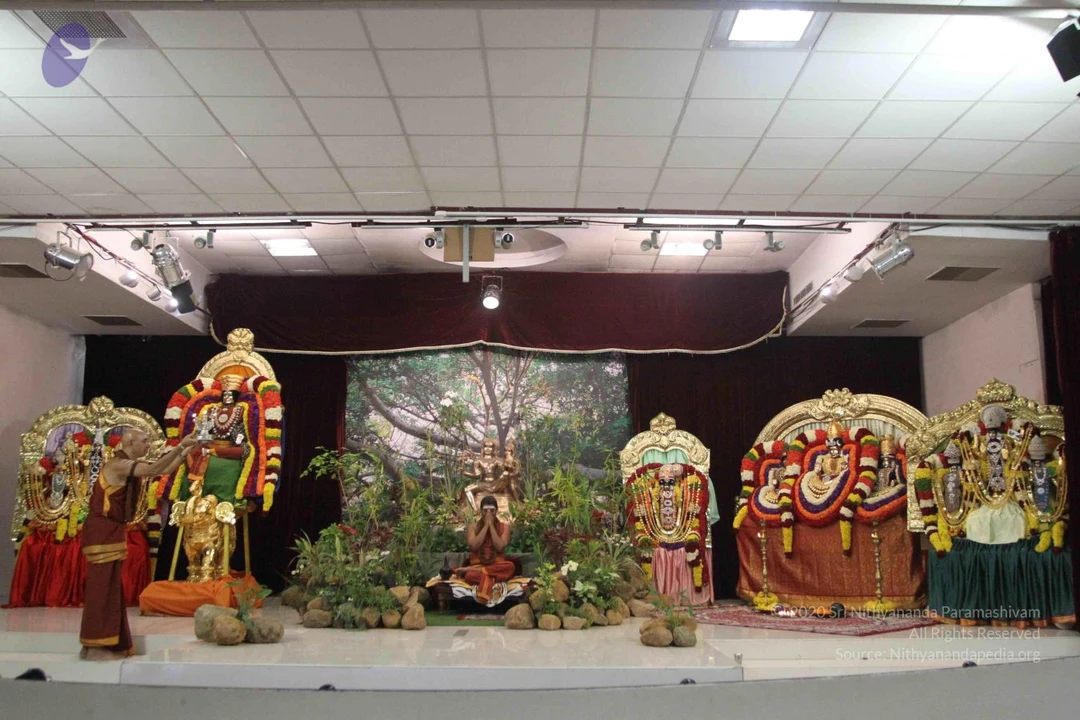
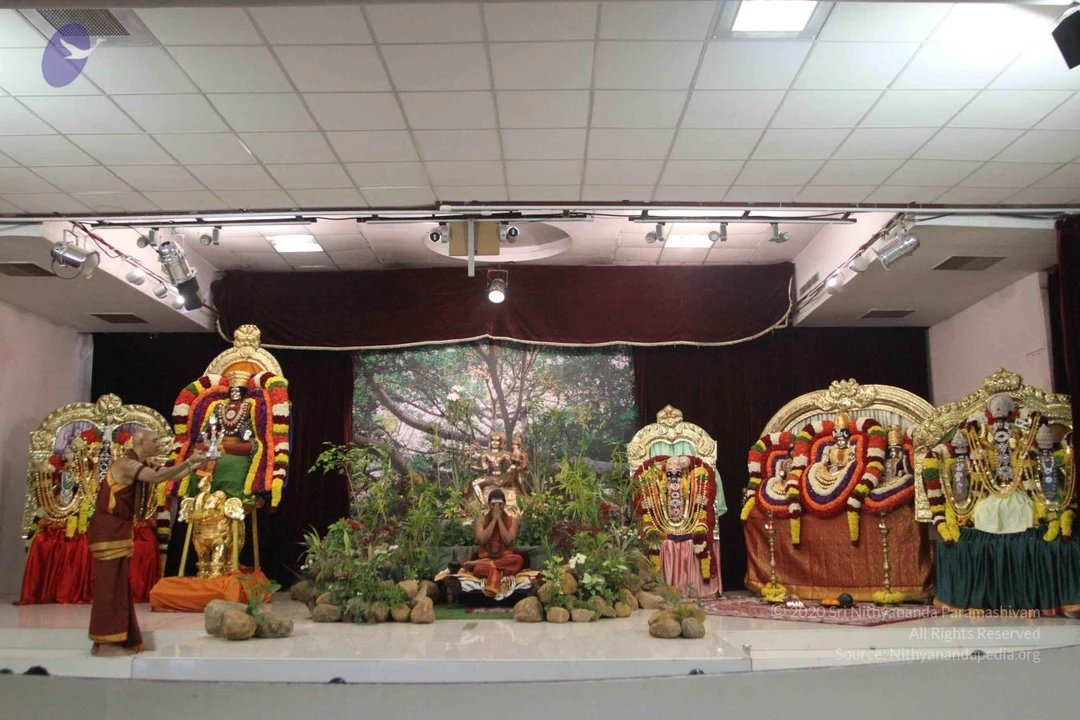
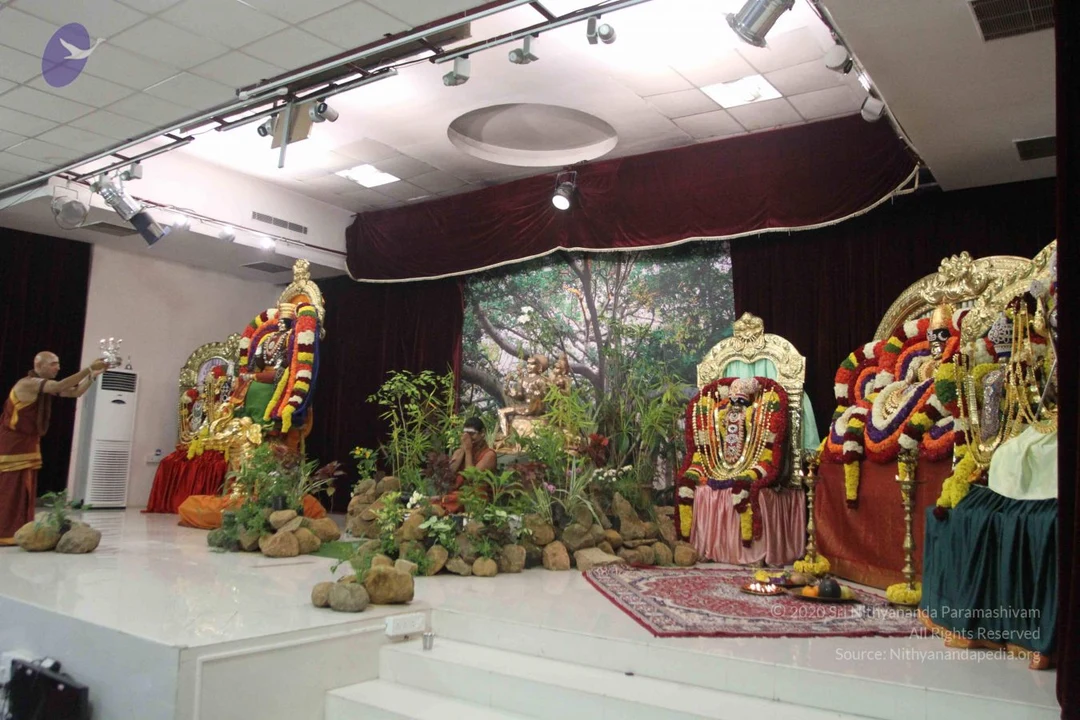
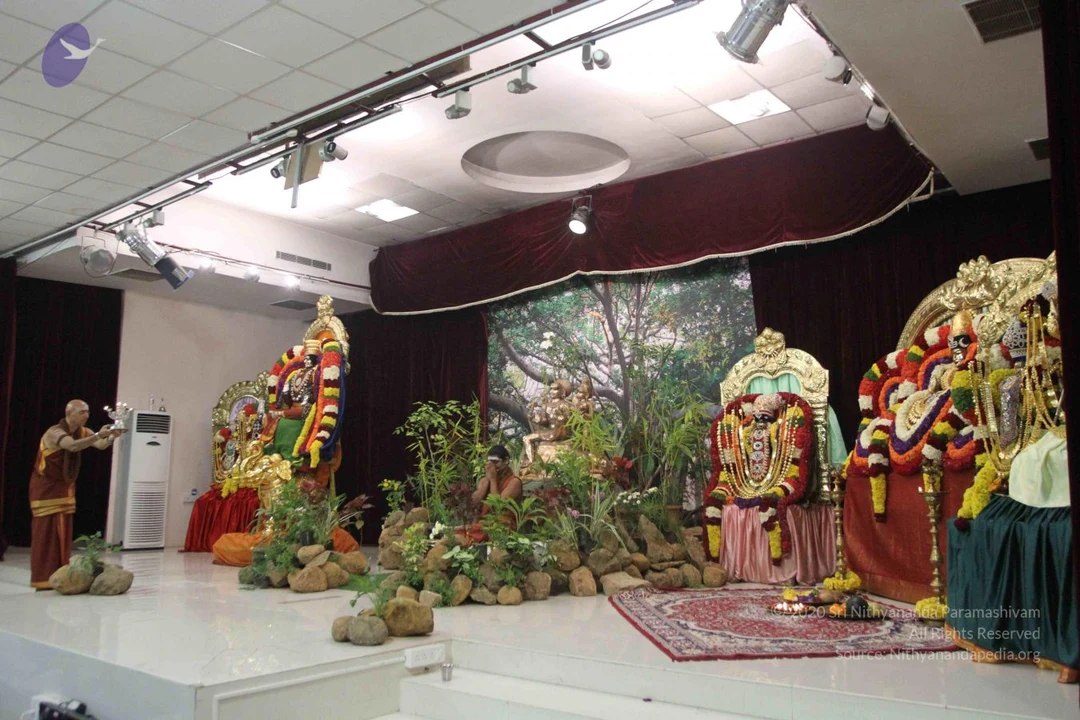
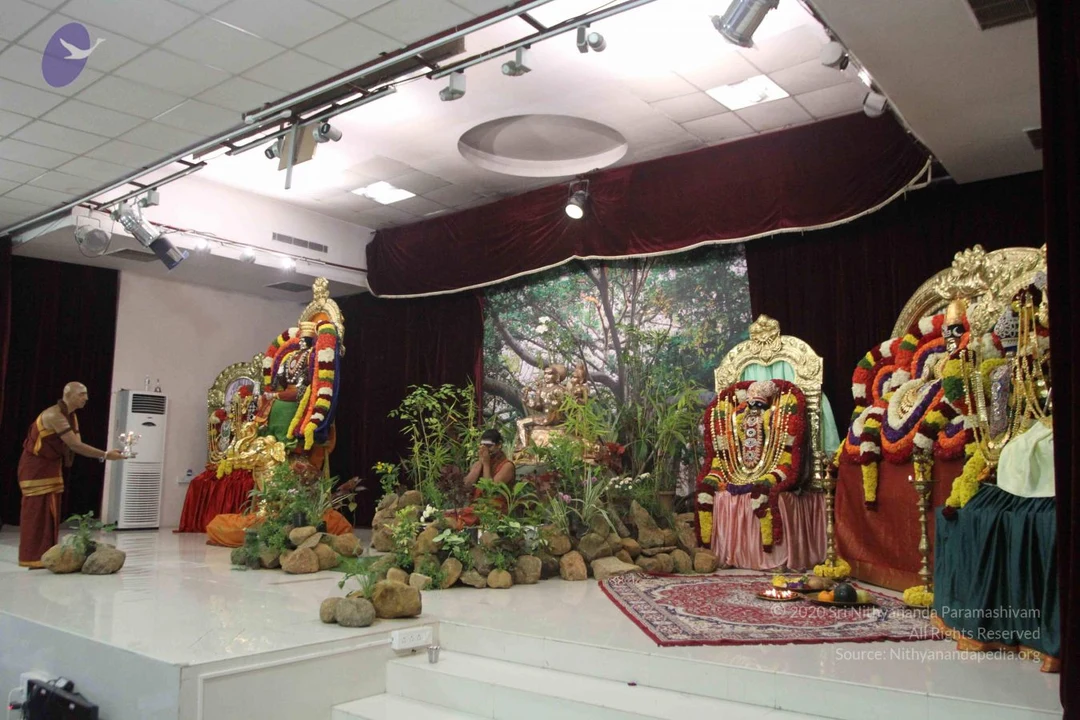
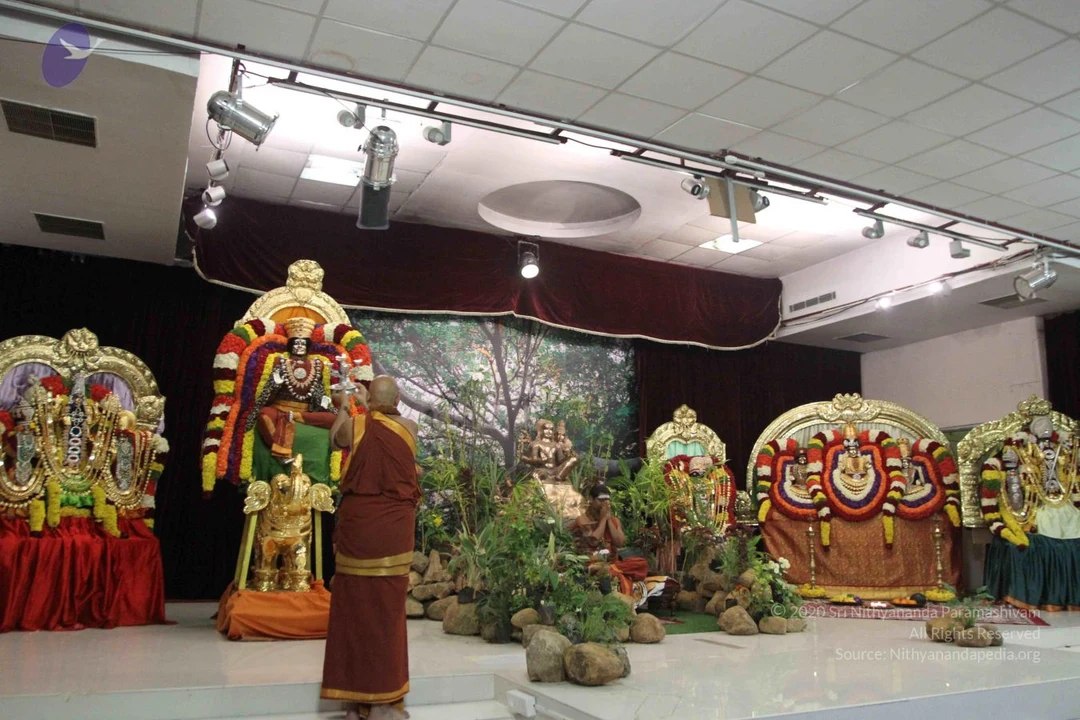
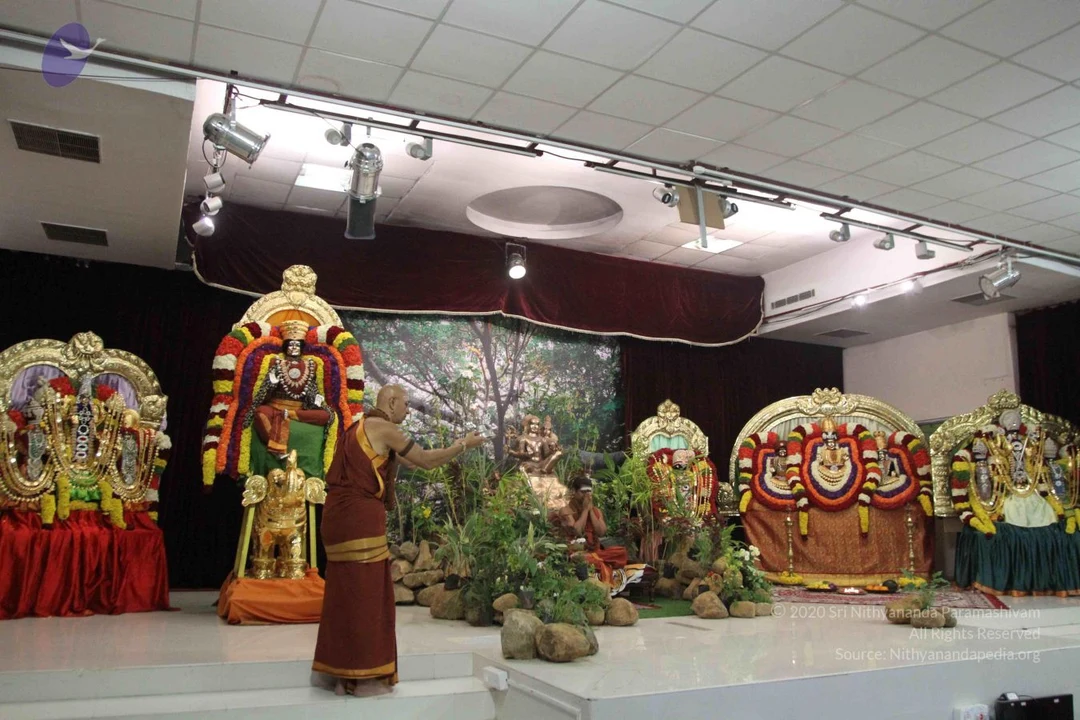
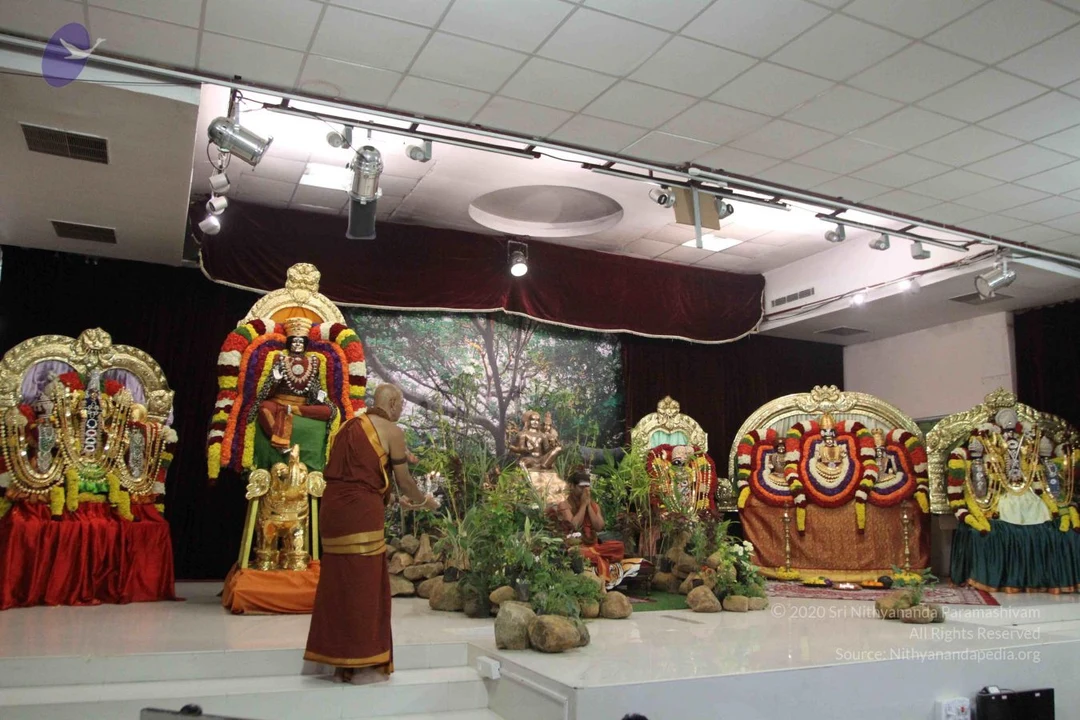
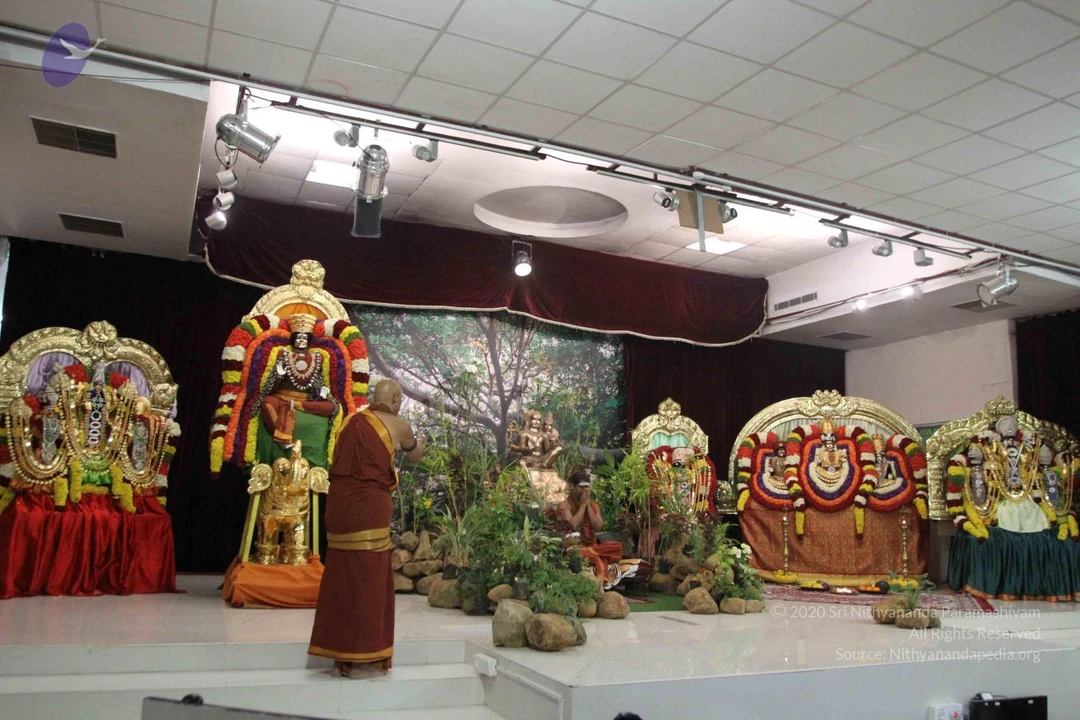
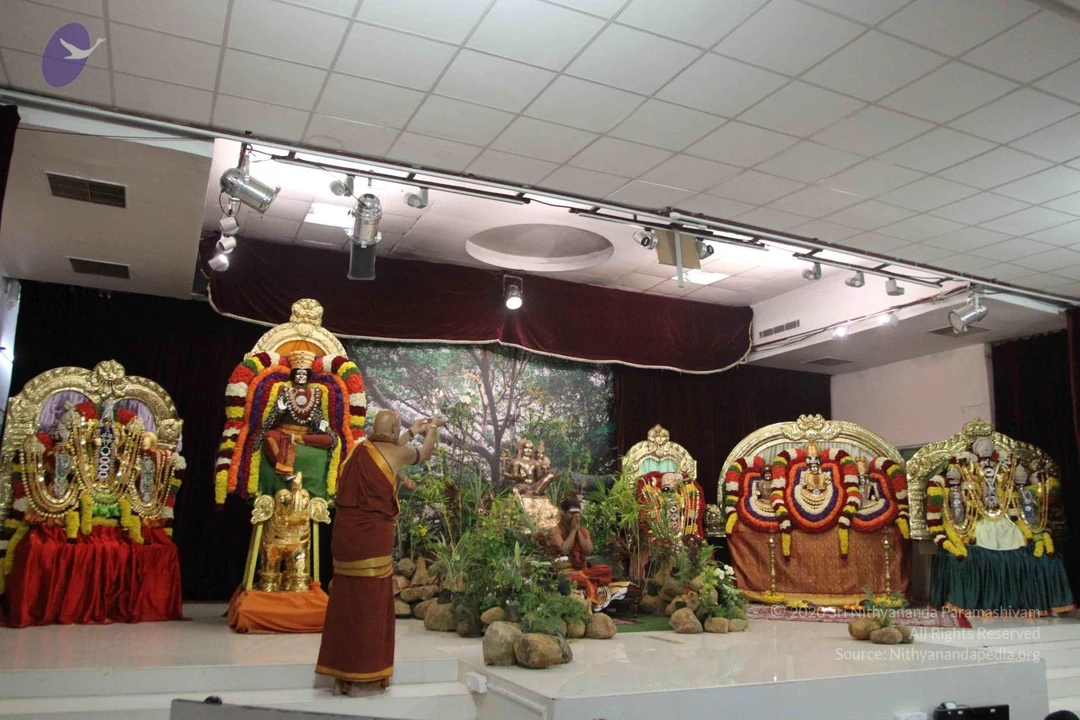
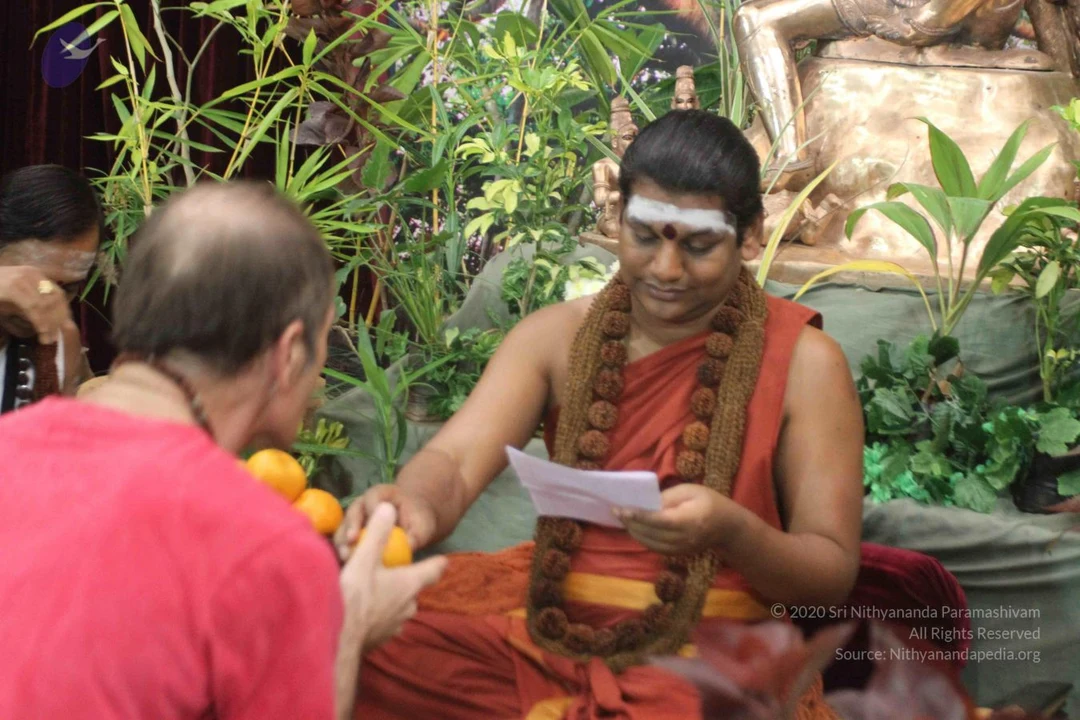
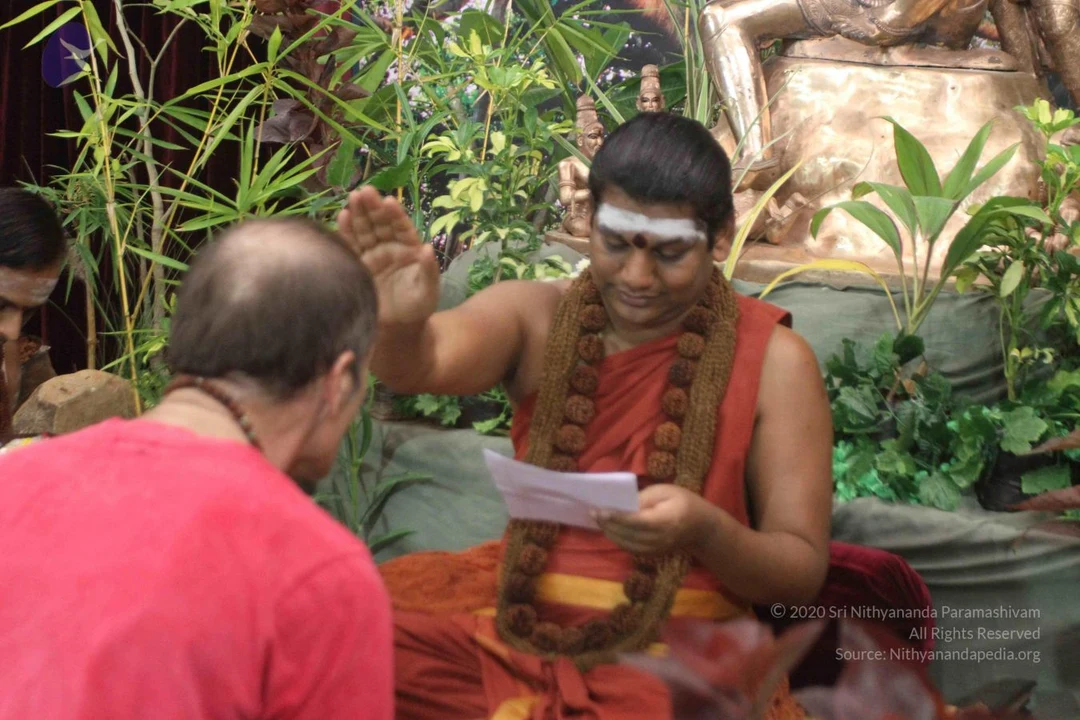
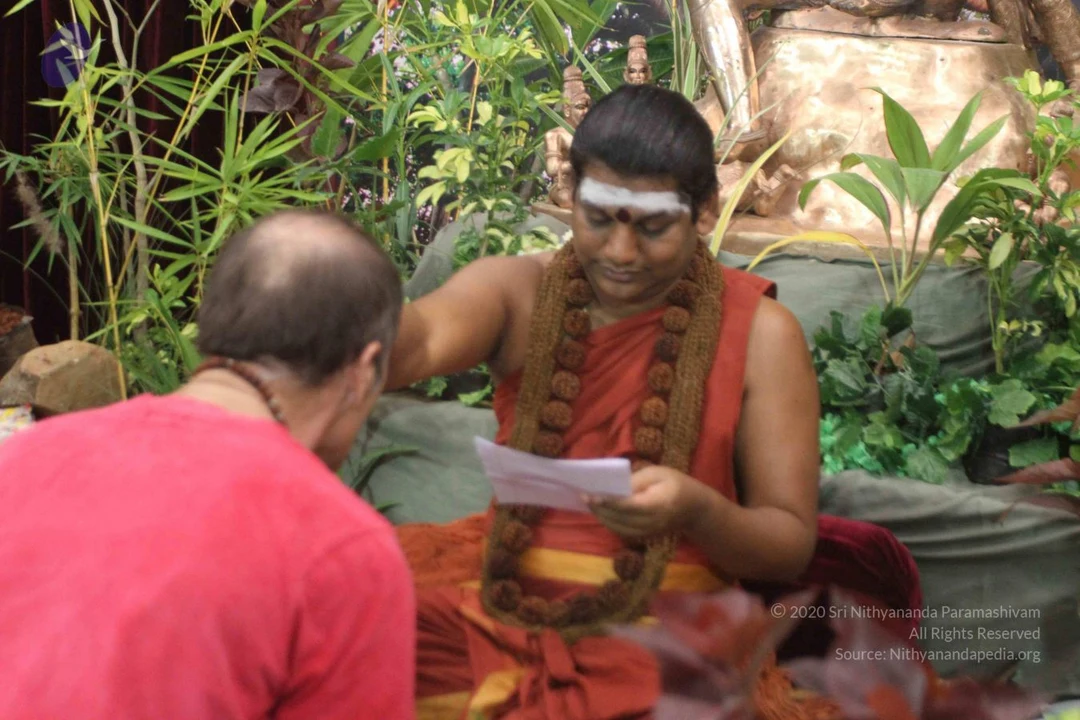
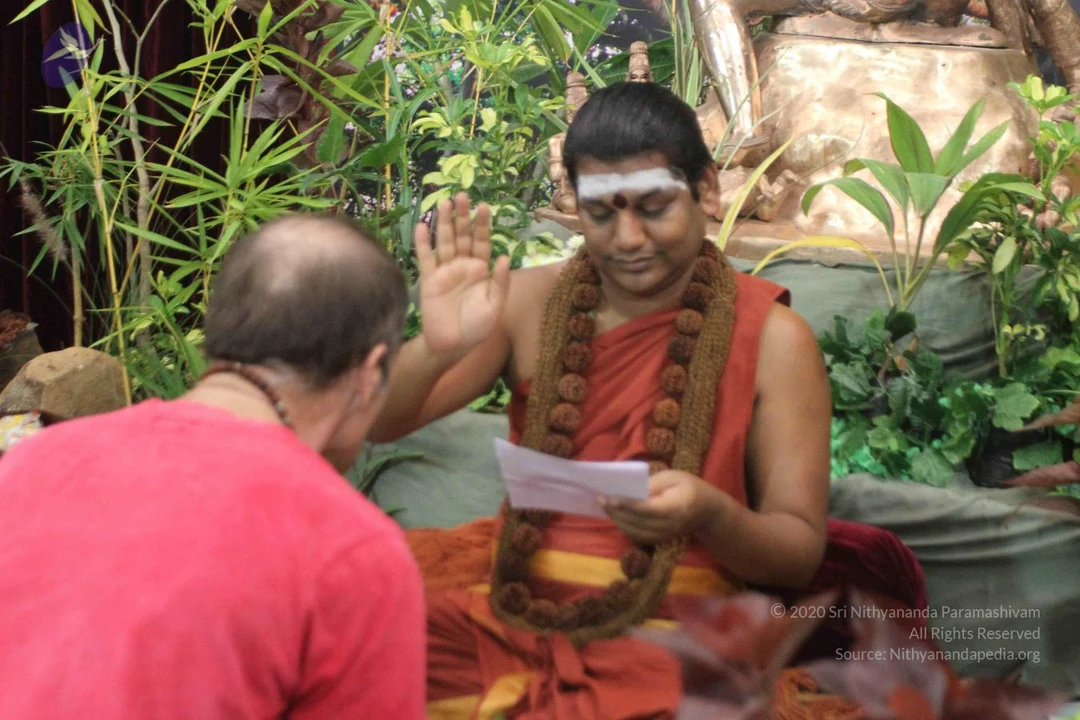
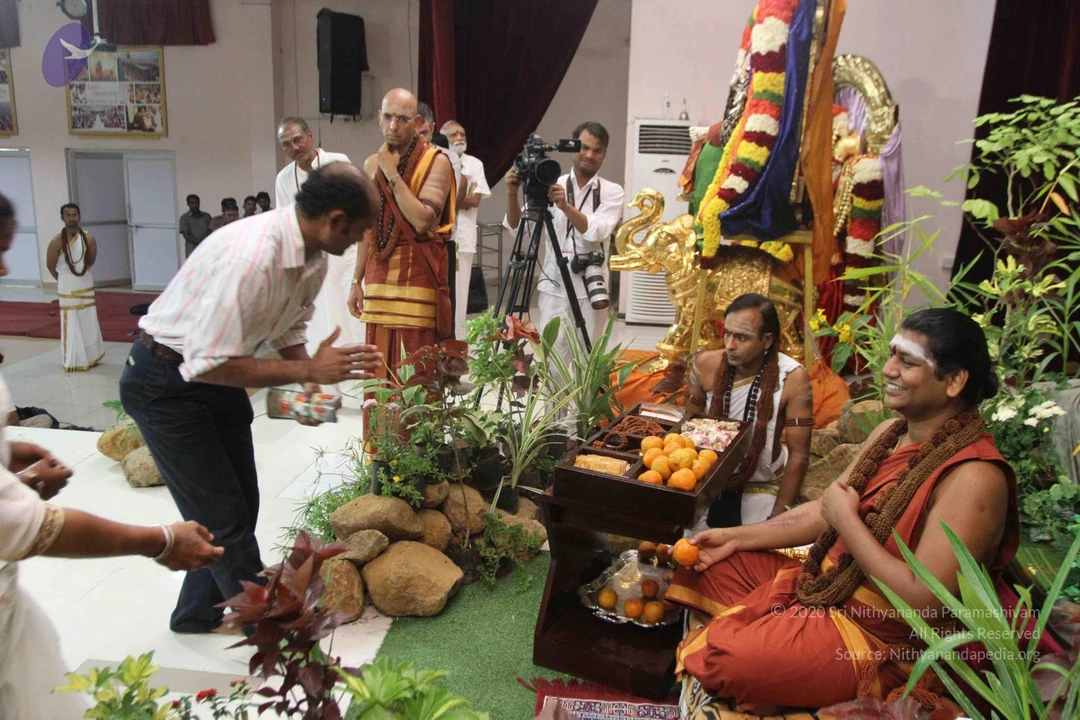
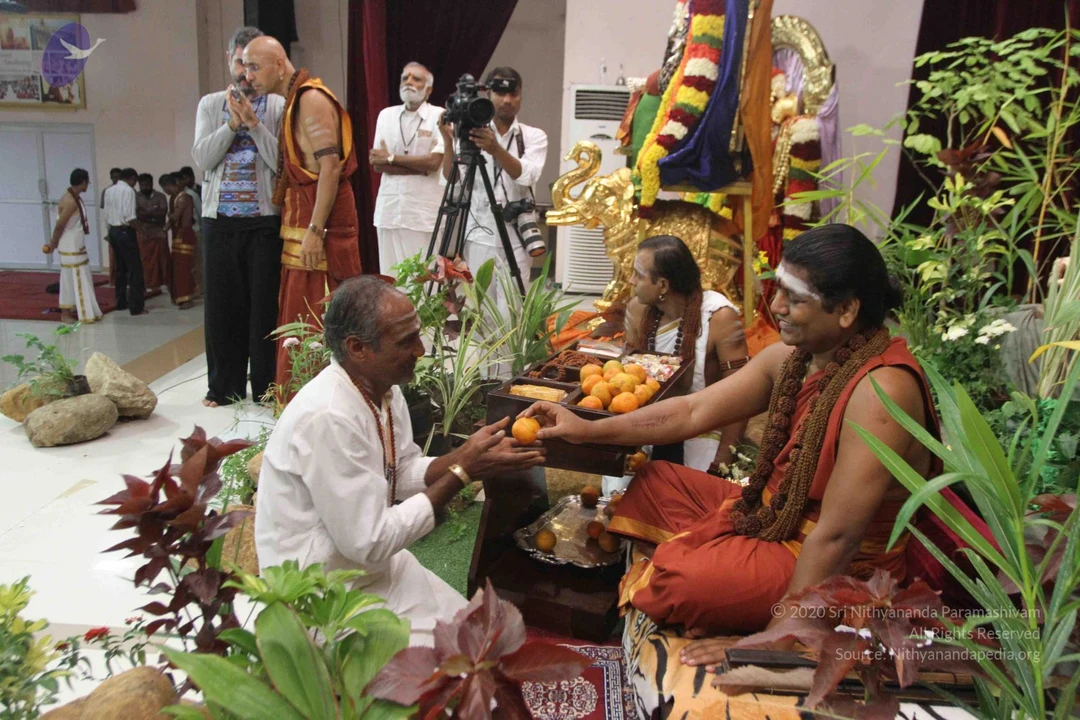
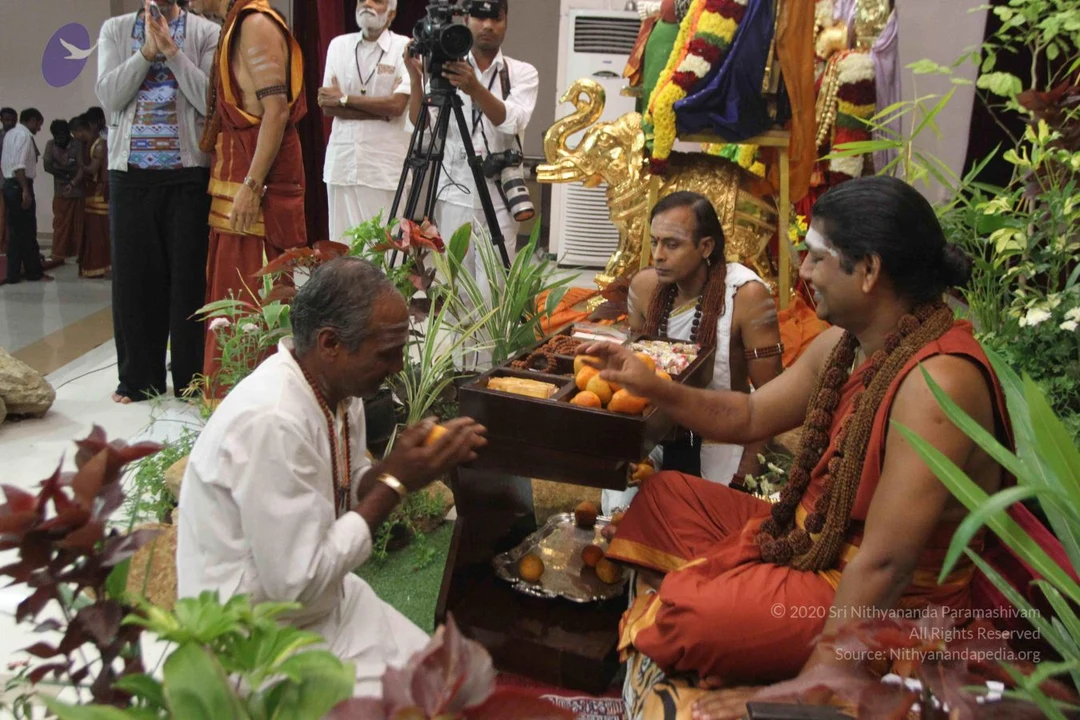
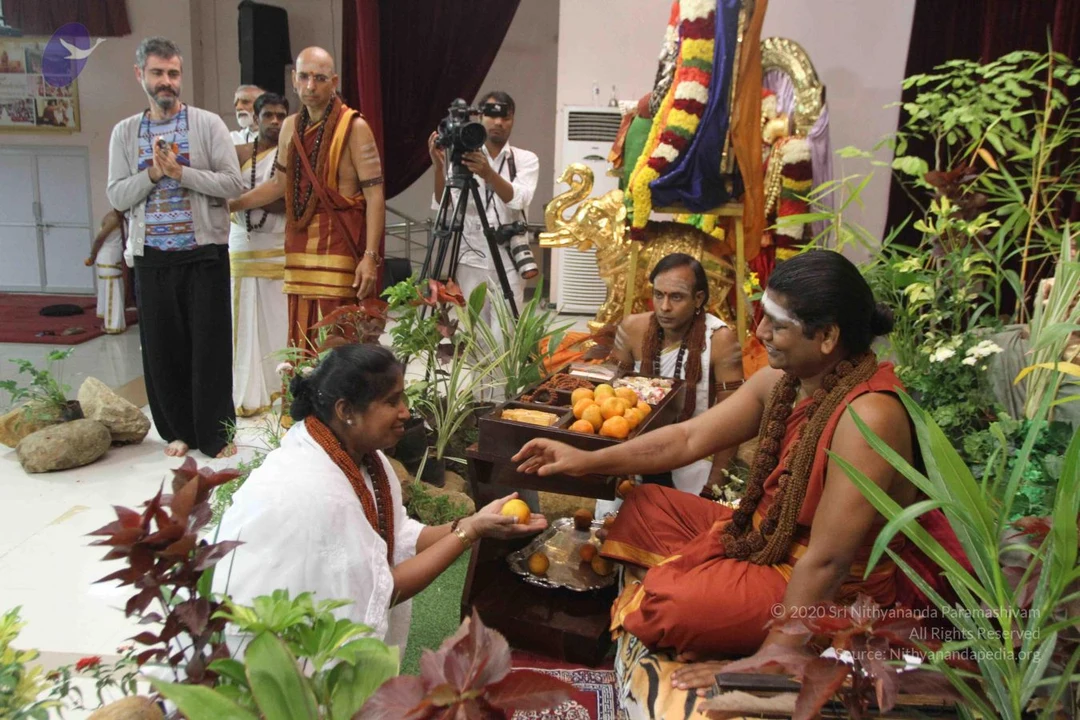
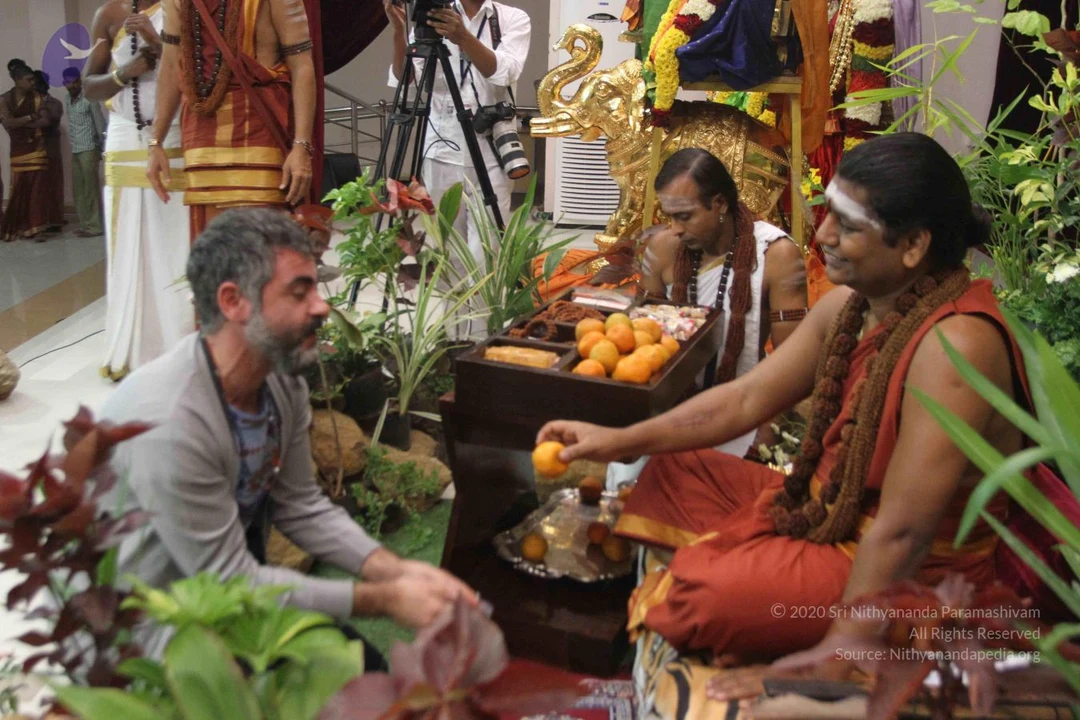
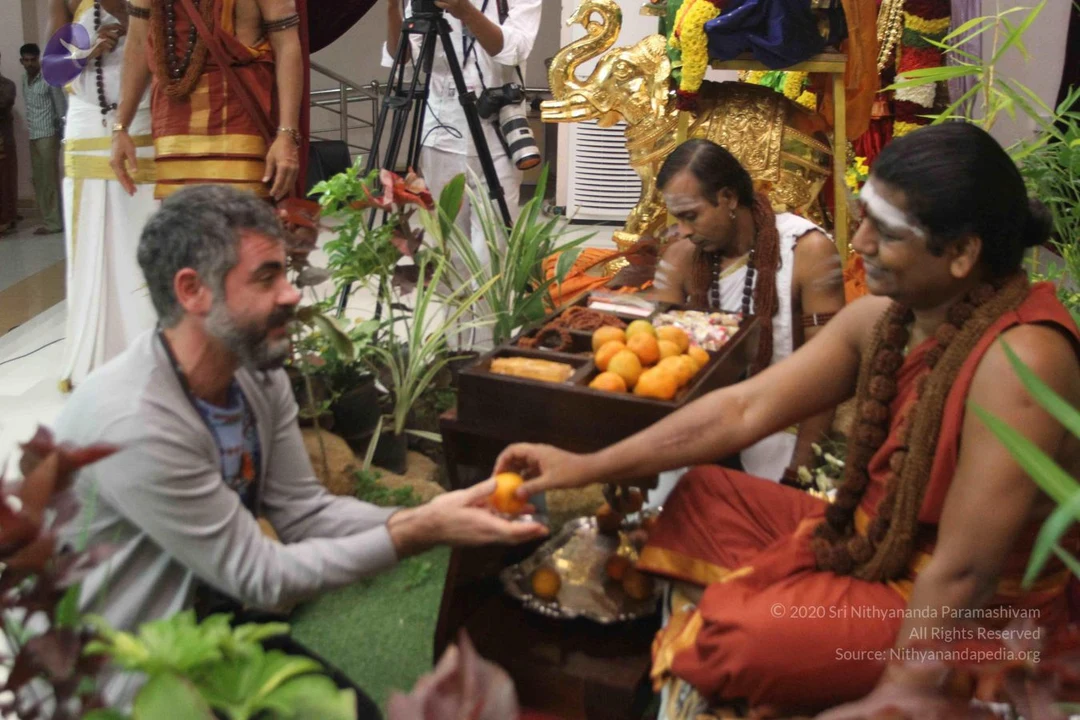

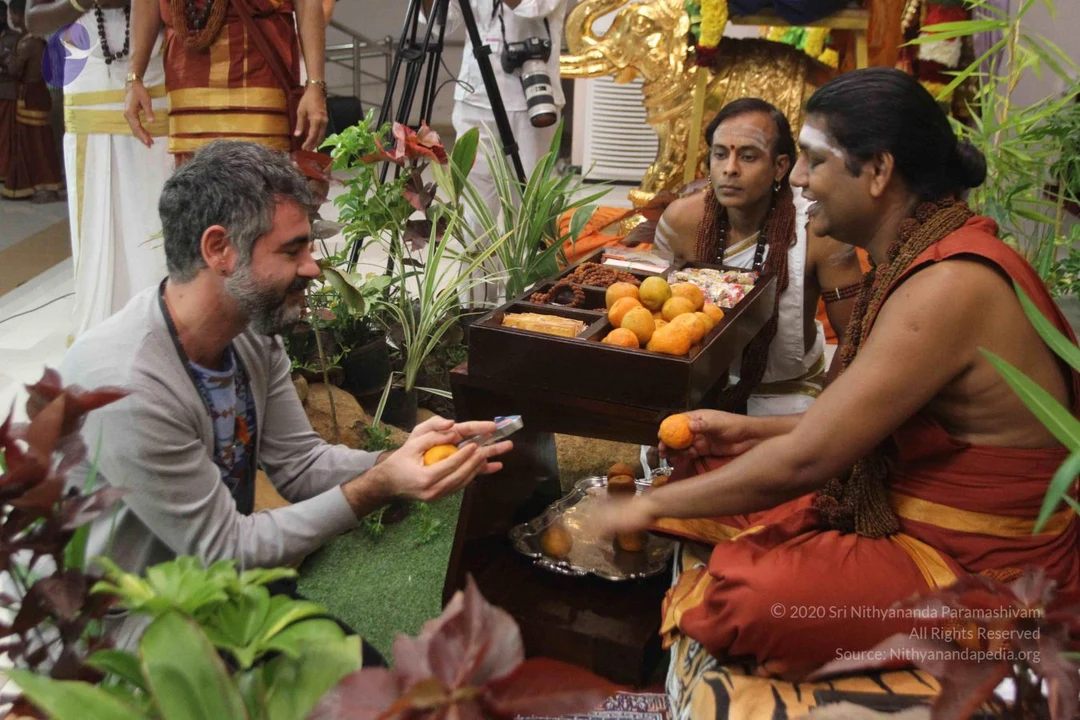
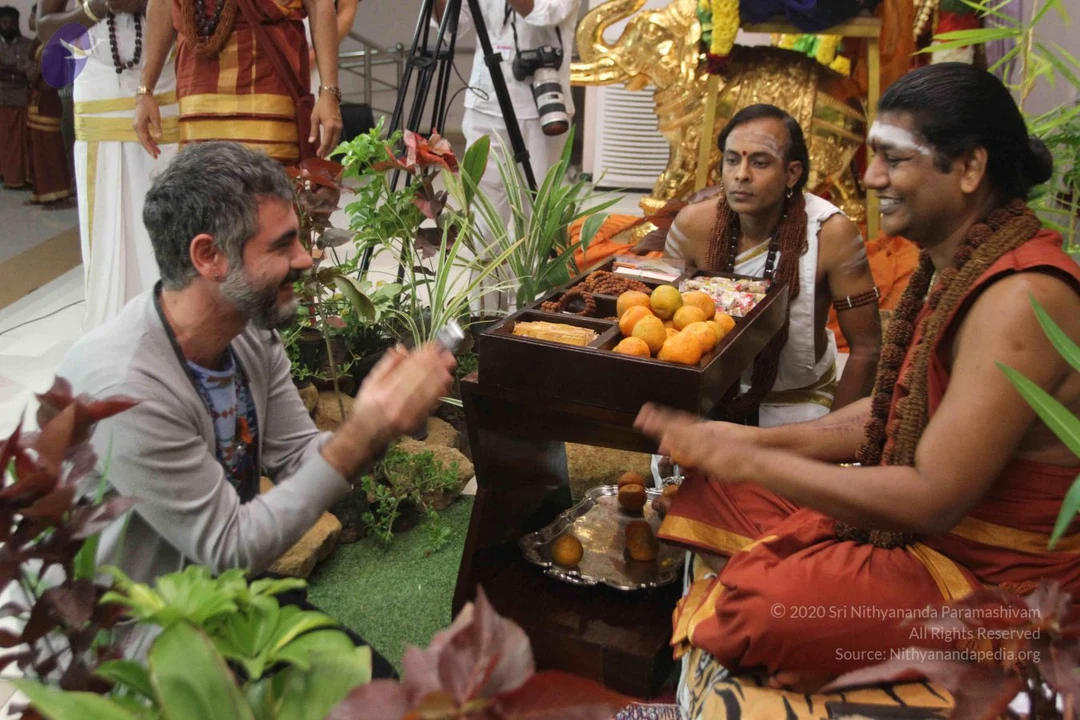
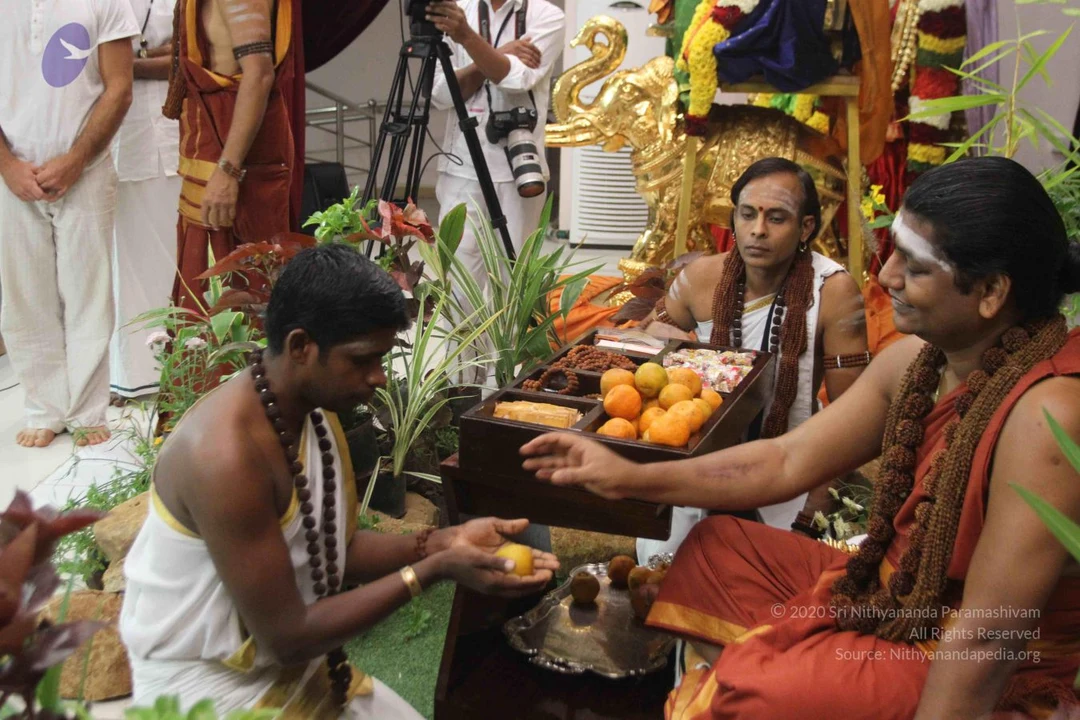
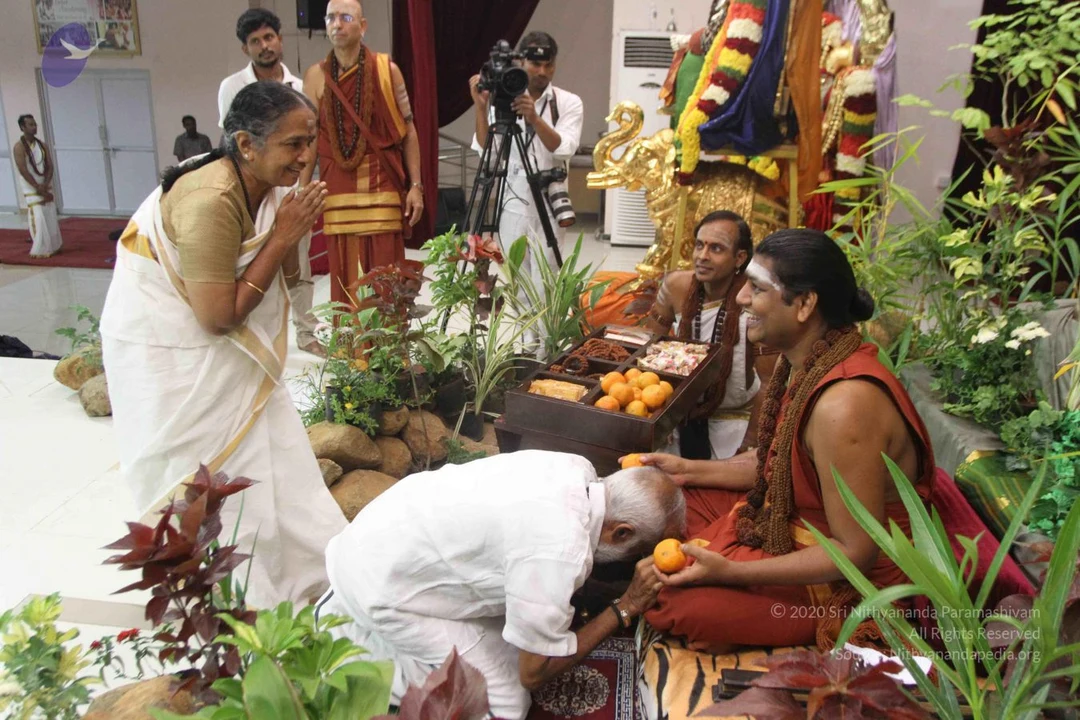
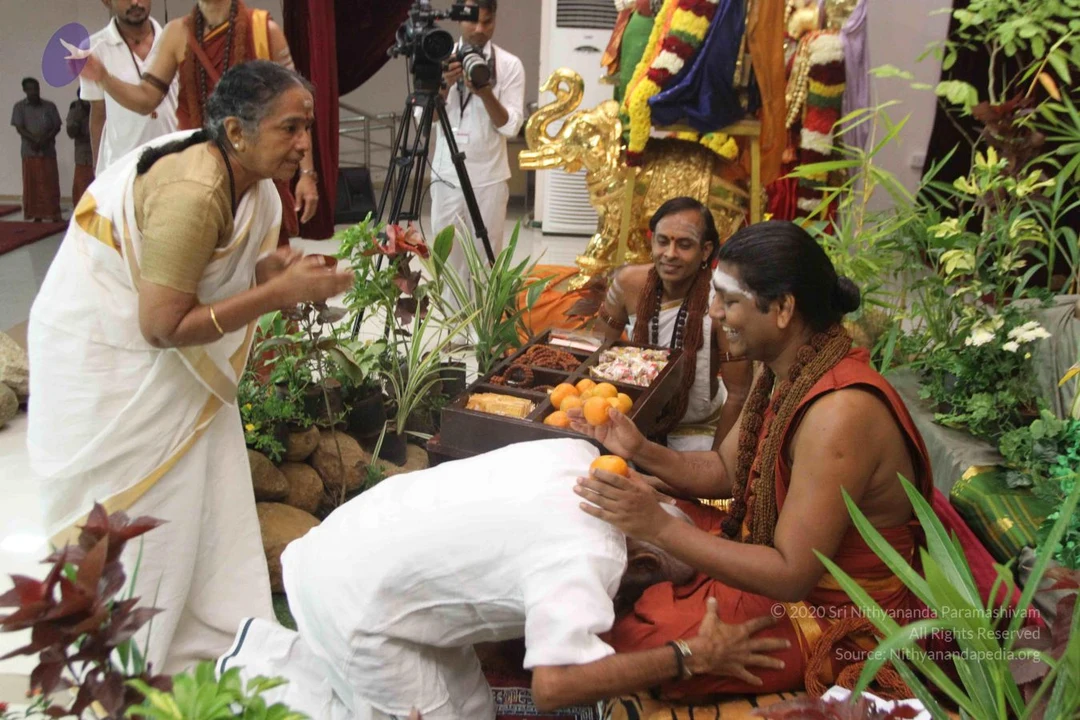
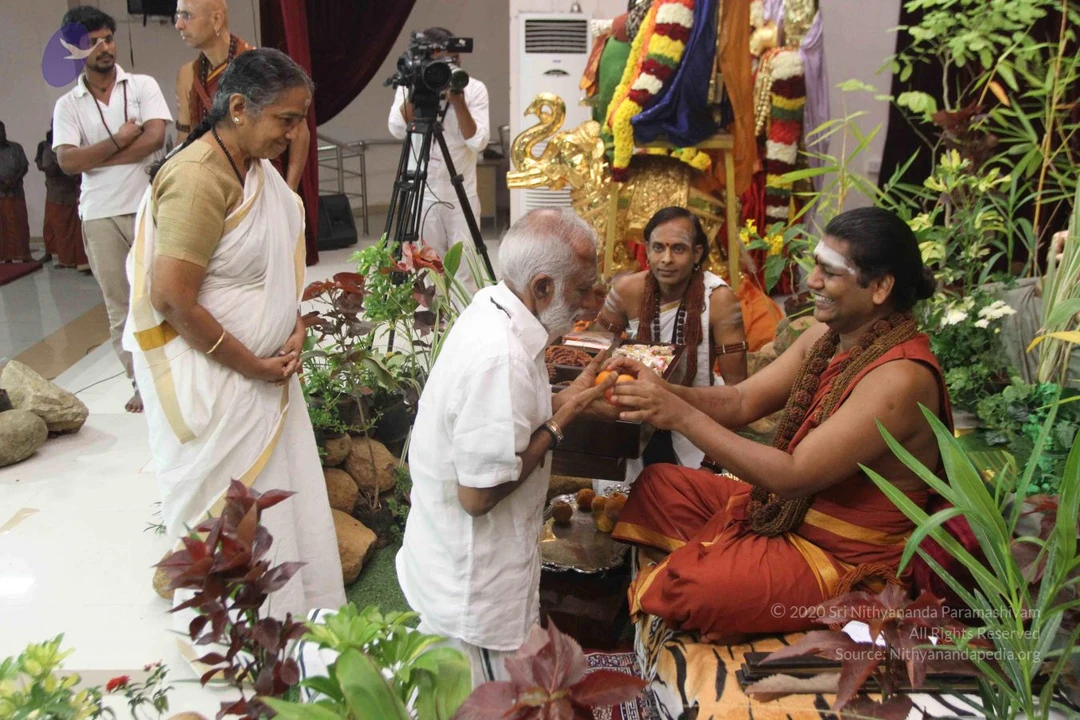
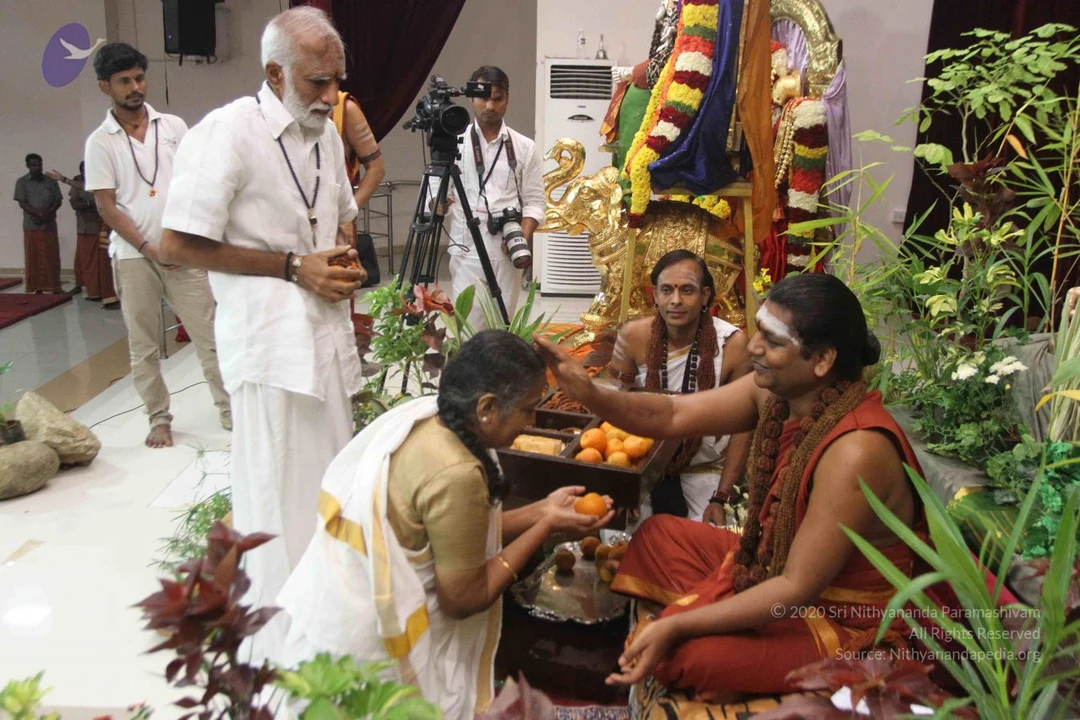
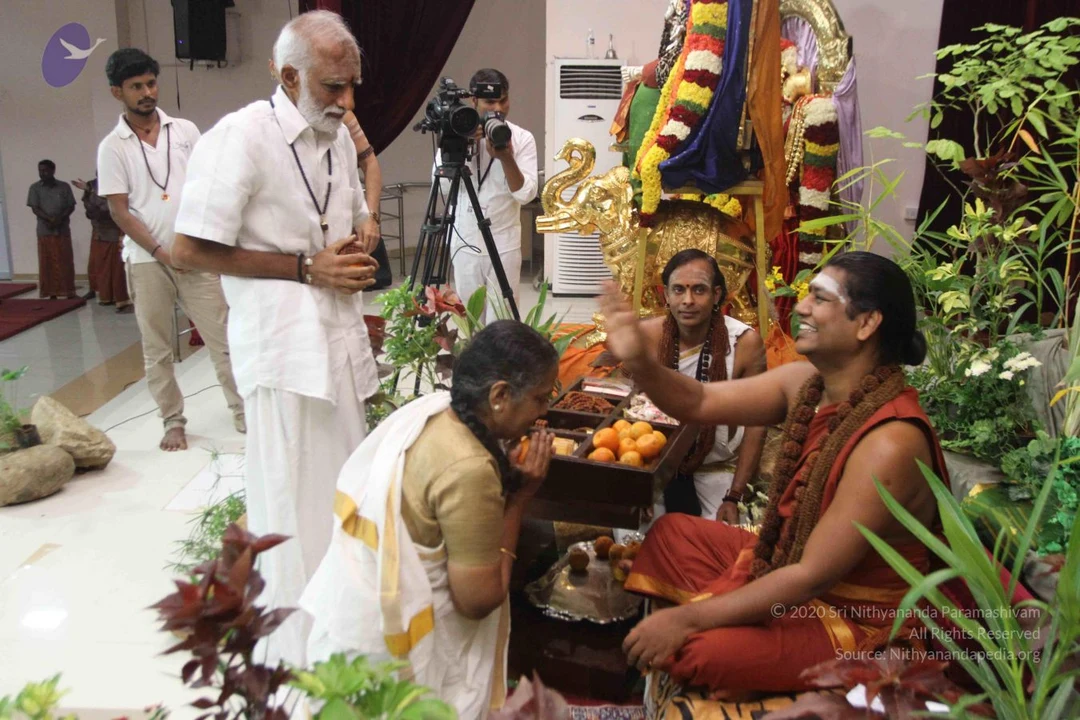
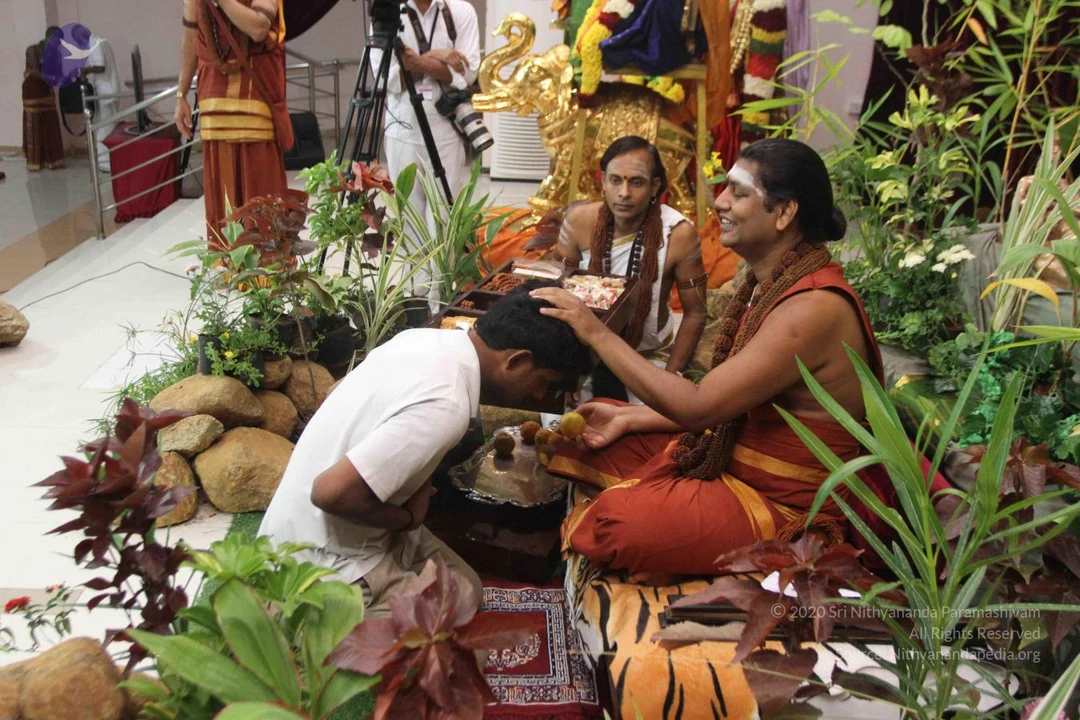
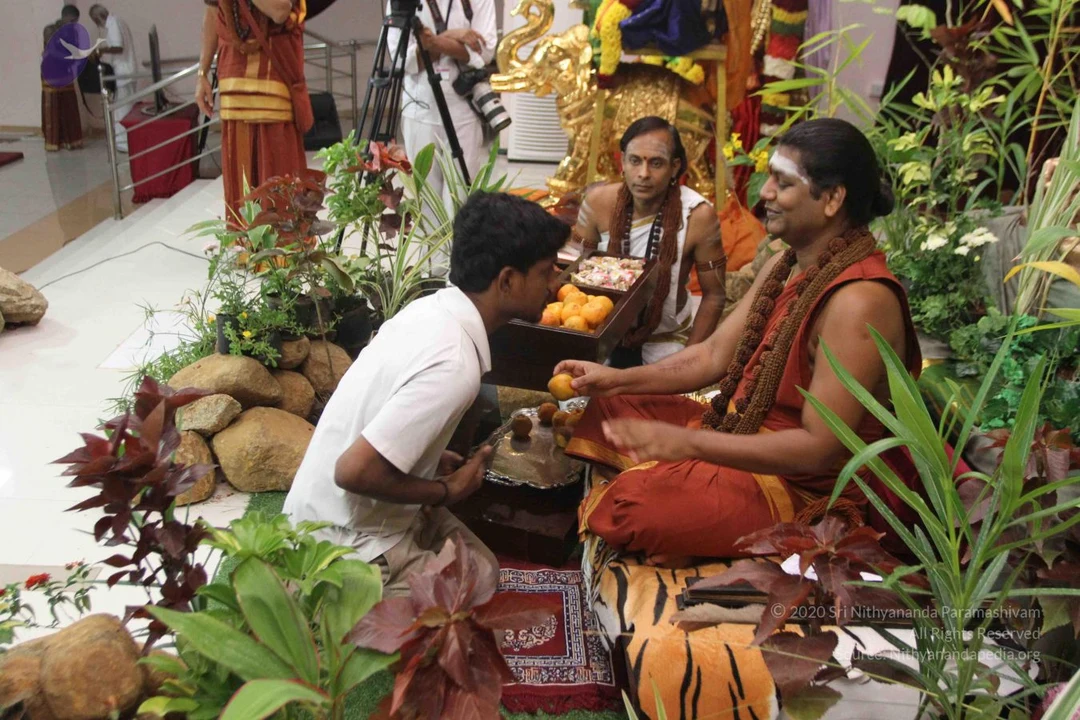
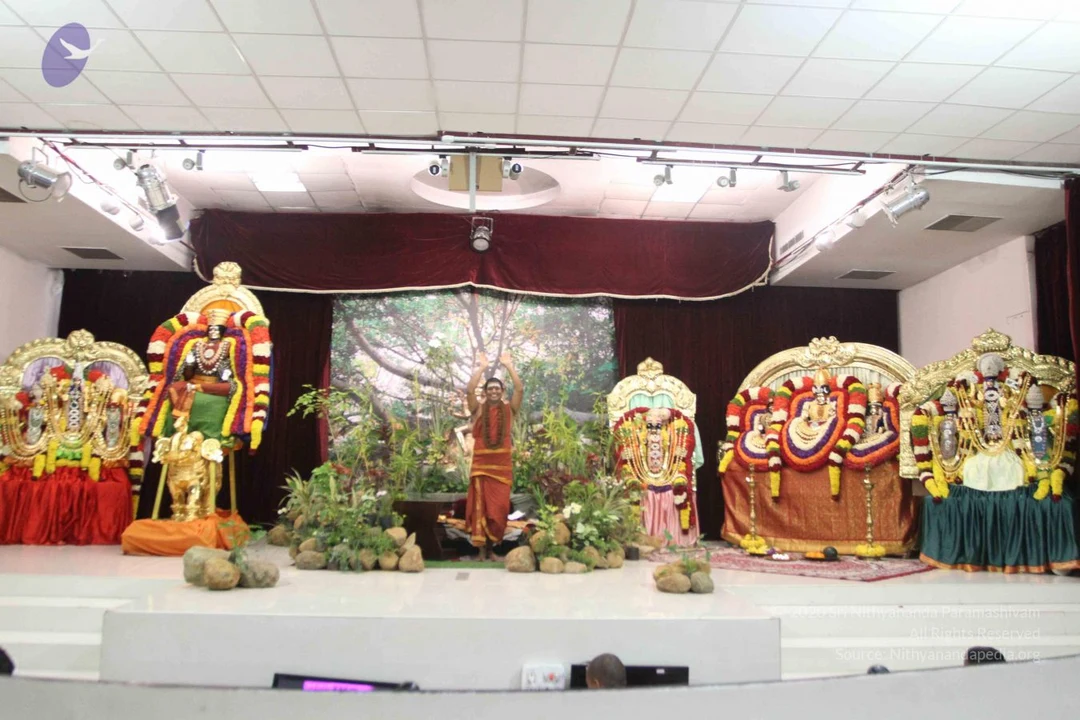
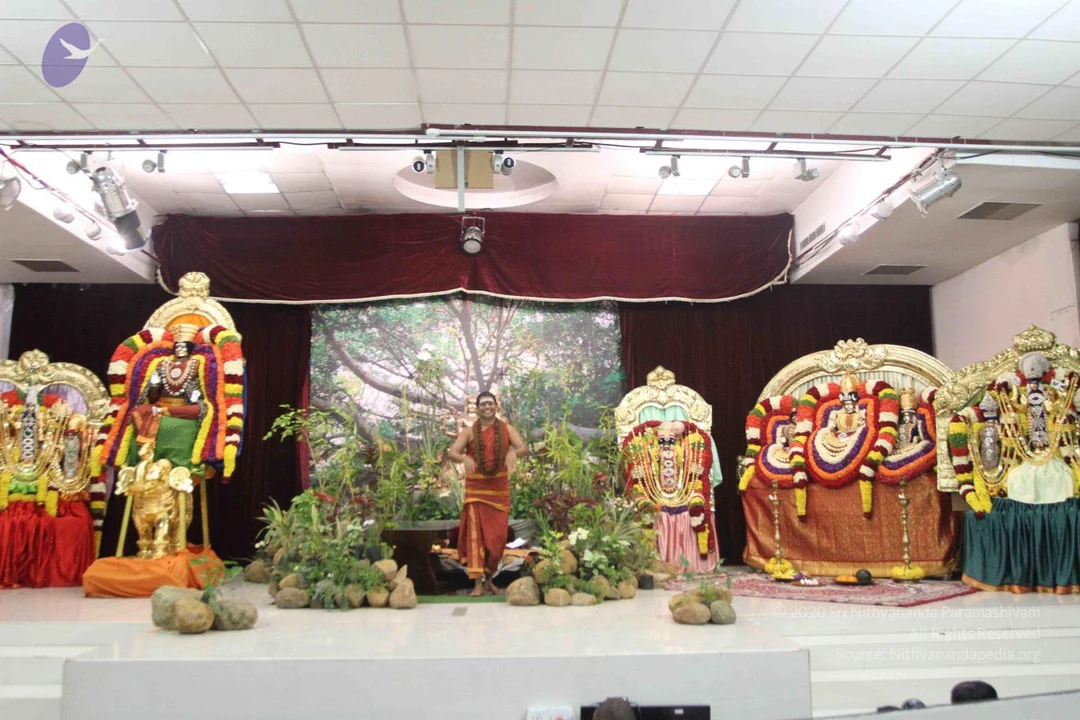
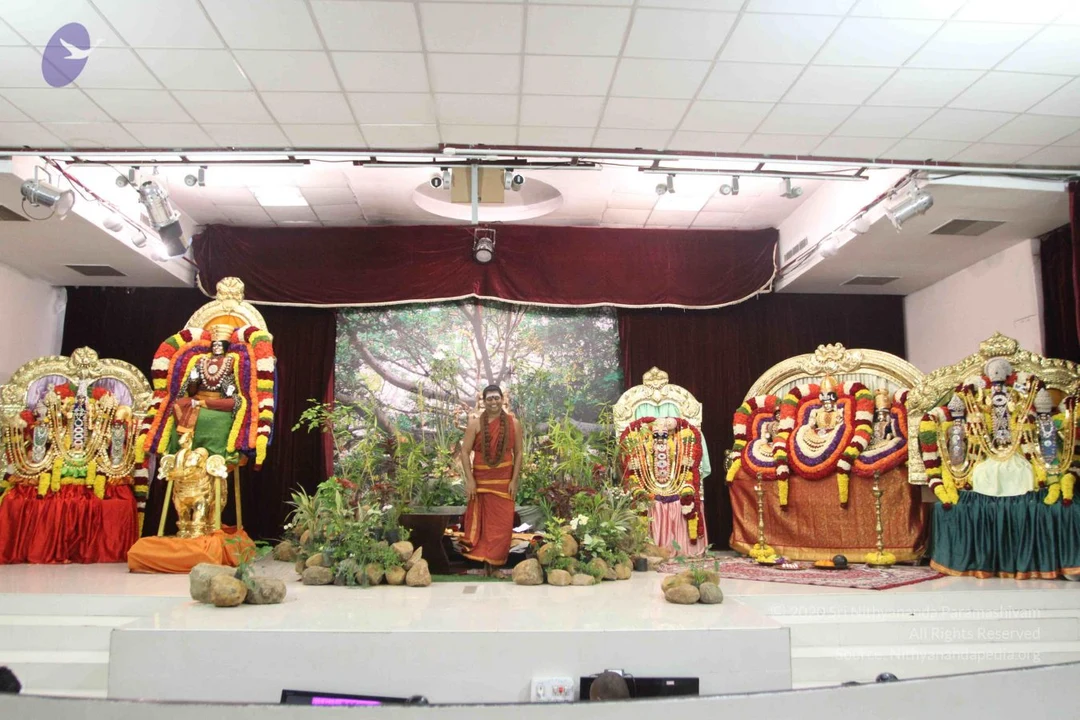
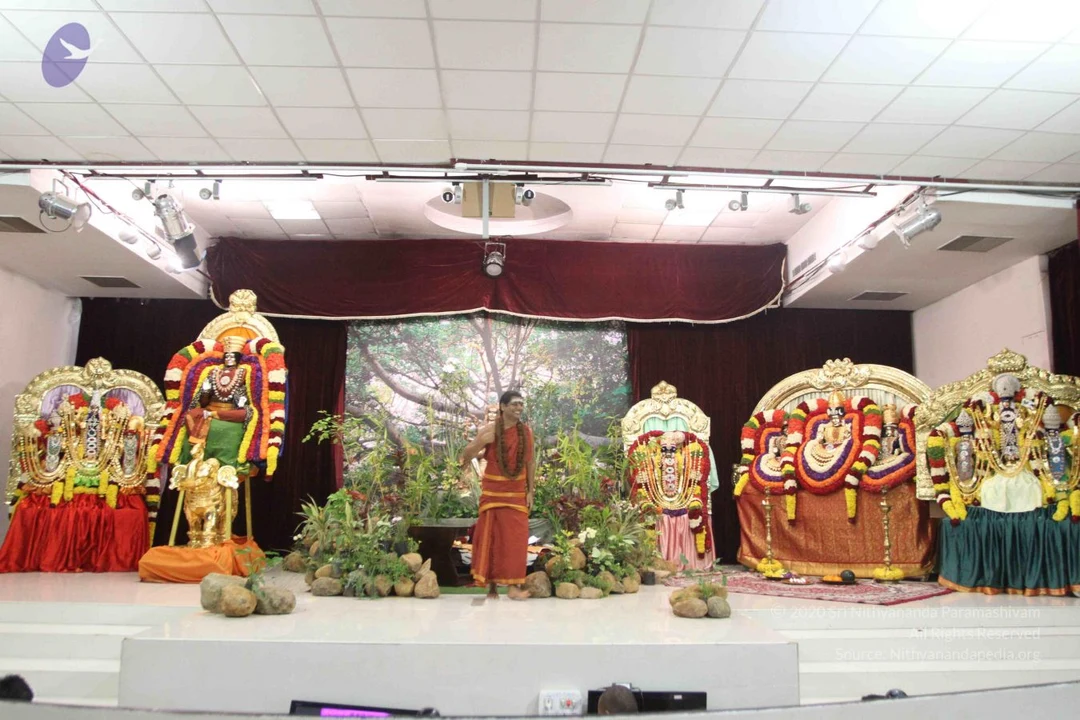
Meenakshi-Thirukalyanam





Link to Facebook Post
https://www.facebook.com/ParamahamsaNithyananda/photos/a.321615927926264/771806022907250
Tags
Advaita, Upanishads, Paramahamsa Nithyananda, love, Mahadeva, eternal
Photos Of The Day:
FB-Photos-of-the-Day
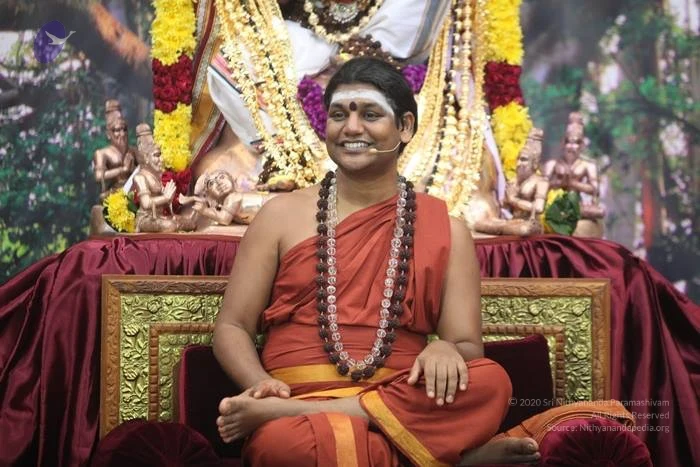
Photos from this day
View all 296 photosNithya Satsang and Kalpataru Darshan
2 photosSource gallery
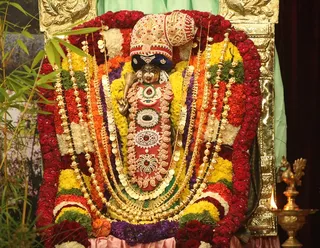
Nithya Satsang and Kalpataru Darshan
11 photosSource gallery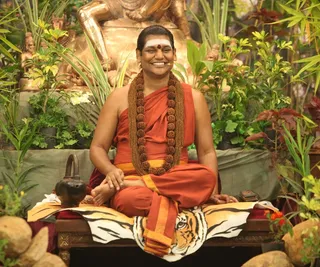
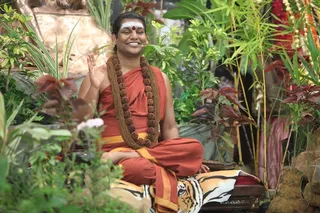

Utsavamoorthi and Kalyanotsava
46 photosSource gallery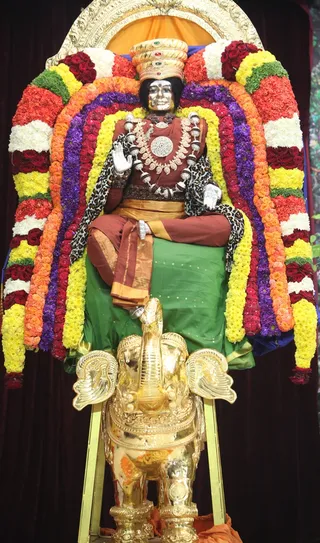
Meenakshithirukalyanam
7 photosSource gallery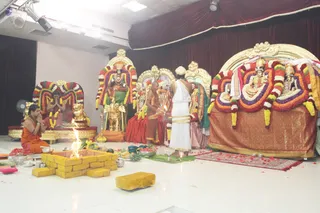
Meenakshithirukalyanam
68 photosSource gallery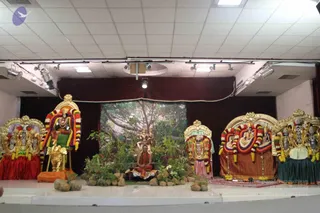
Meenakshithirukalyanam
161 photosSource gallery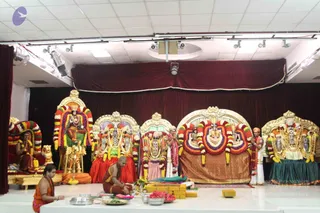
FB-Photos-of-the-Day
1 photoSource gallery