Thursday
8 January 2015
THE SUPREME PONTIFF OF HINDUISM JGM HDH BHAGAVAN NITHYANANDA PARAMASHIVAM
- Dated photos
- 134
- Source pages
- 1
- Media
- 3
January 08 2015
Original wiki pageTitle:
THE SUPREME PONTIFF OF HINDUISM JGM HDH BHAGAVAN NITHYANANDA PARAMASHIVAM
Description
Video and Audio - Upanishads Teaches How to Live Advaita
| Video | Audio |
Transcript
(0:18) nithyānandeśvara paramaśiva samārambhām nithyānandeśvari parāśakti madhyamām | asmat āchārya paryantām vande guru paramparām ||
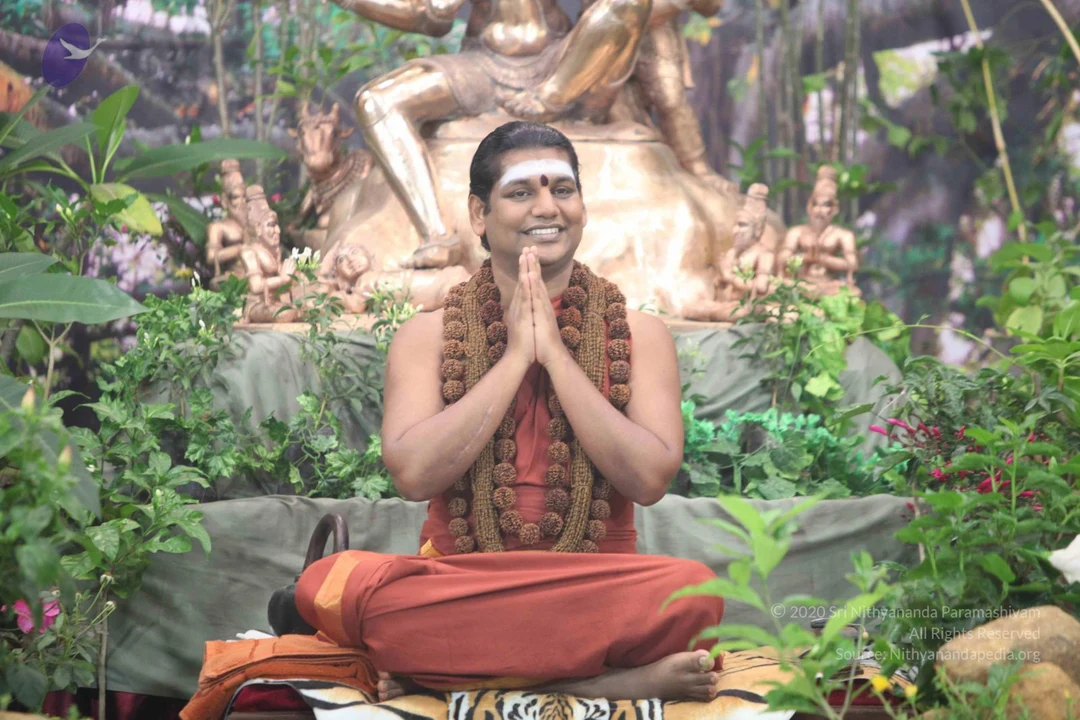
I welcome all the devotees, disciples, samajis, satsangis, ShriMahants, Mahants, Thanedars, Kotharis, visitors, viewers, everyone, sitting with us all over the world through Nithyananda TV, Sadhna TV, and two-way video-conferencing having Nayana Deeksha all over the world. Cities sitting with us in two-way video-conferencing having Nayana Deeksha all over the world: Los Angeles-Arunachalam, Seattle-Chidambaram, Houston-Kalahasthi, Hyderabad-Gupta Kashi, Scottsdale-Arizona, Colombo-Sri Lanka, Toronto-ThiruKailayam, Oklahoma-Somanatham, Melbourne-Tiruvarur, London-Kashi, Enriching Temple-Bidadi, Dakota Dunes, Vancouver-Canada, St. Louis-Tirumala, Jorpati-Nepal, Oman-Sivagangai, Vancouver-Canada, SanJose-Madurai, Guadeloupe-Rameshwaram, Rajapalayam, Ohio-Prayag, Singapore-Singapuram, Dakota Dunes, Ma Prabha-St. Louis, Hyderabad-Nithyananda Nagaramu.....and some more cities...... I welcome..... London-Kashi, Melbourne-Tiruvarur, Colombo-Sri Lanka.......some more cities are joining.....Thiruvannamalai...... I welcome all of you with My love and respects.
(2:43)
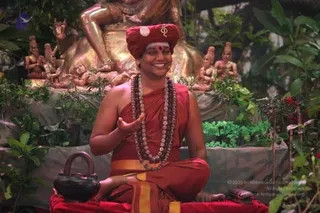
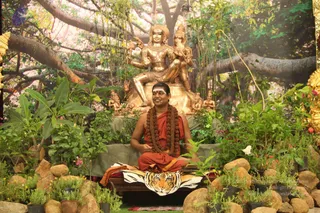
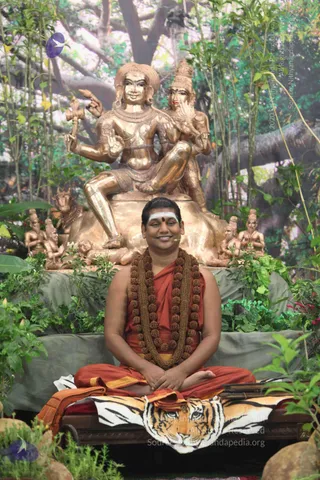
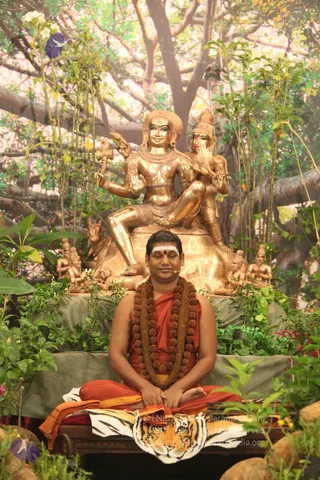
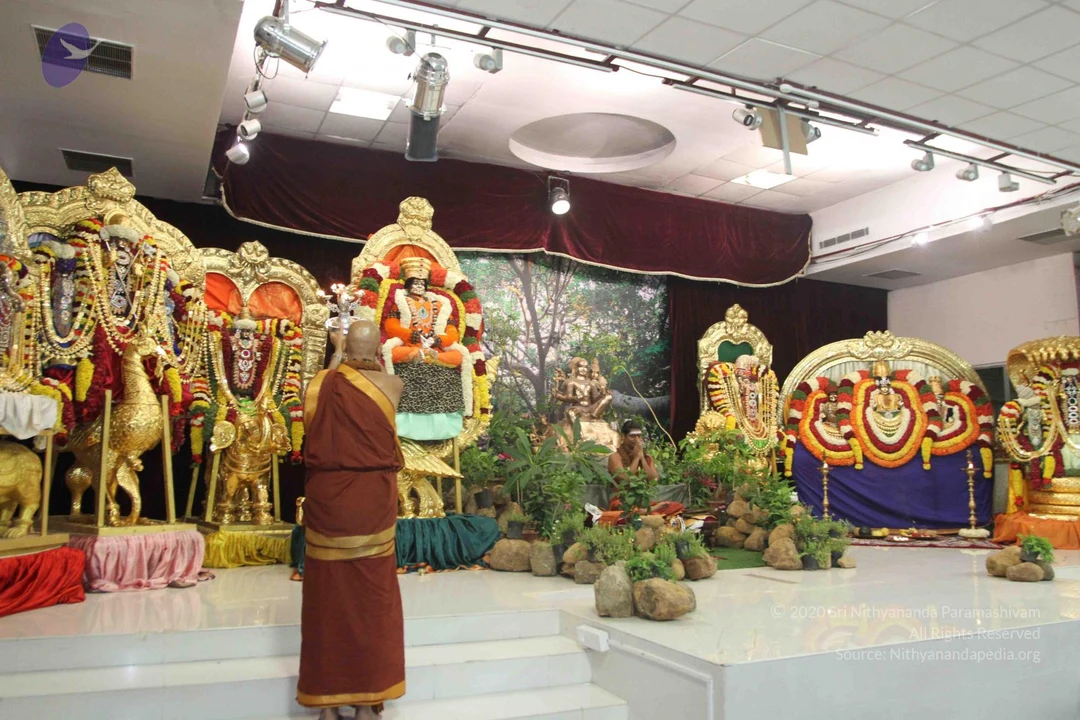
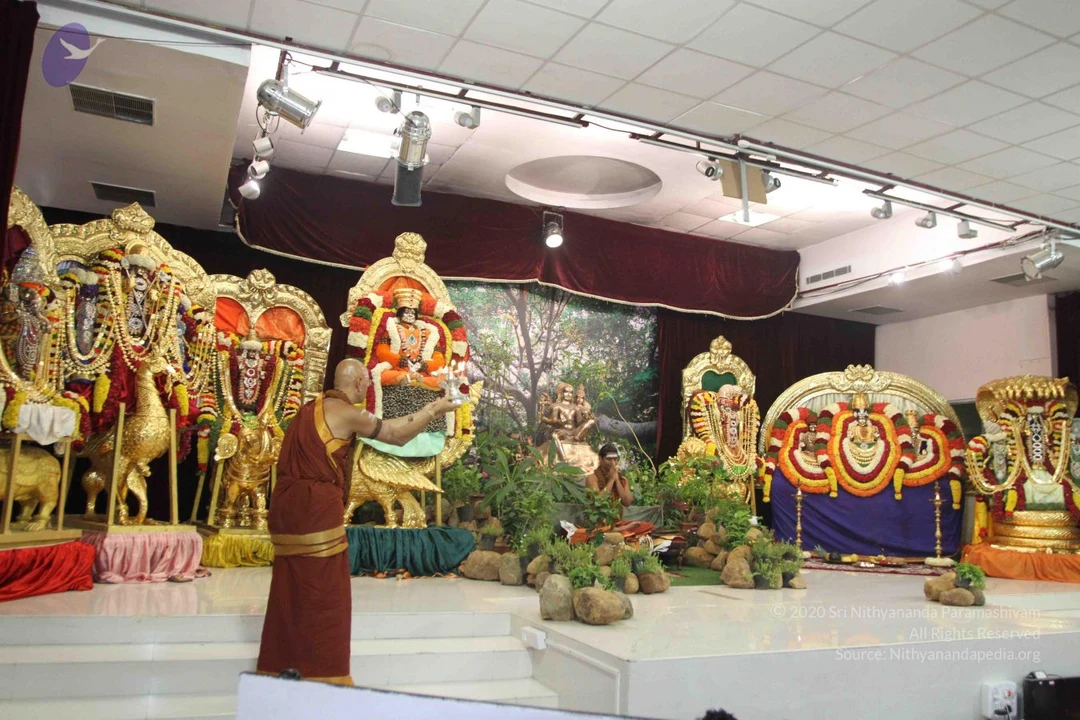
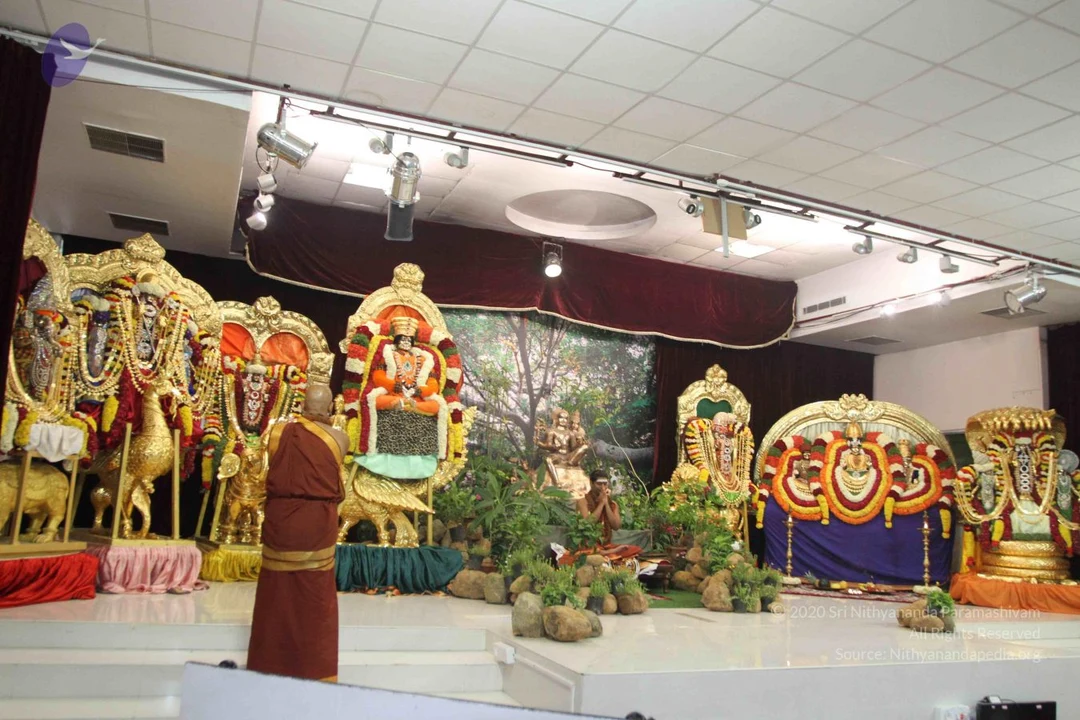
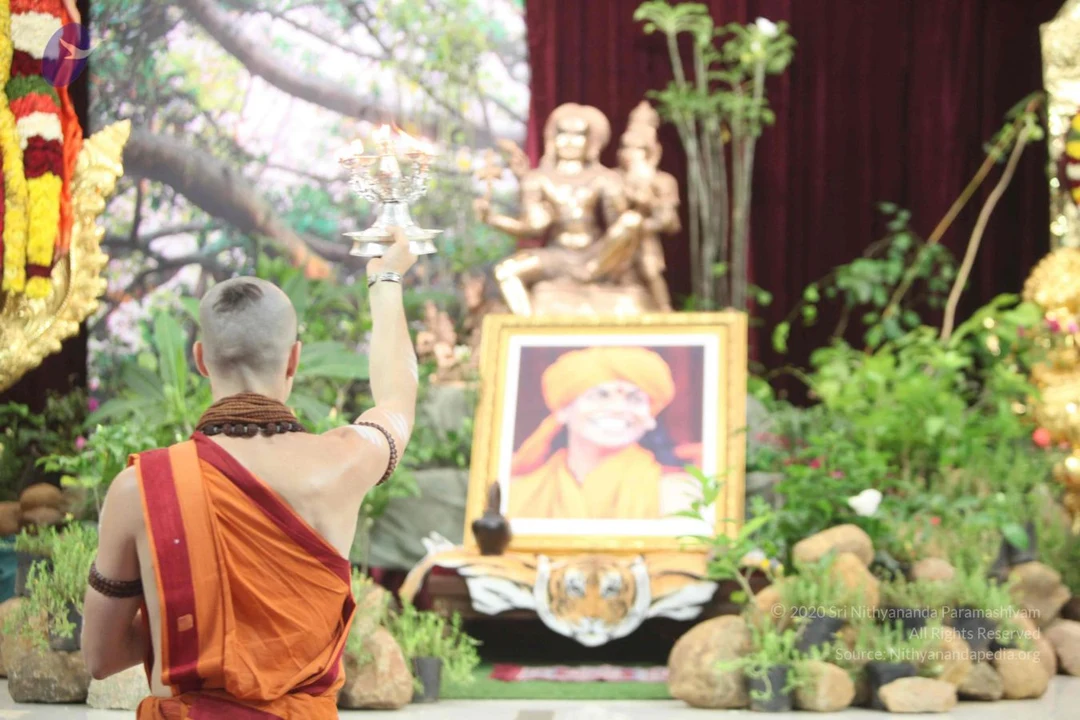
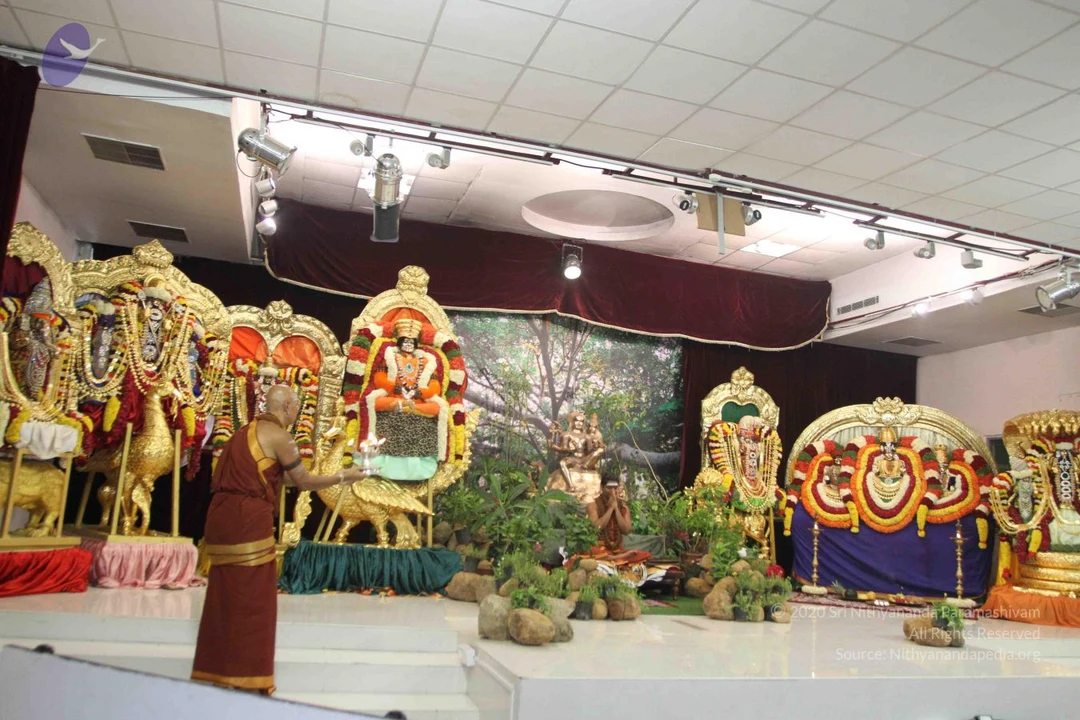
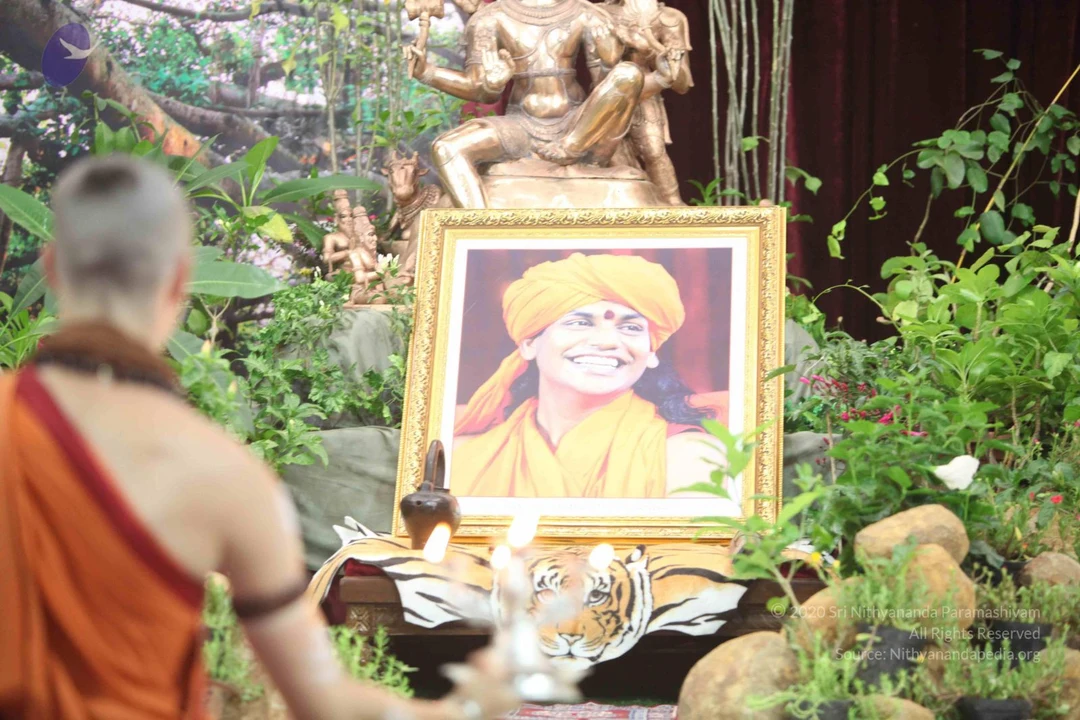
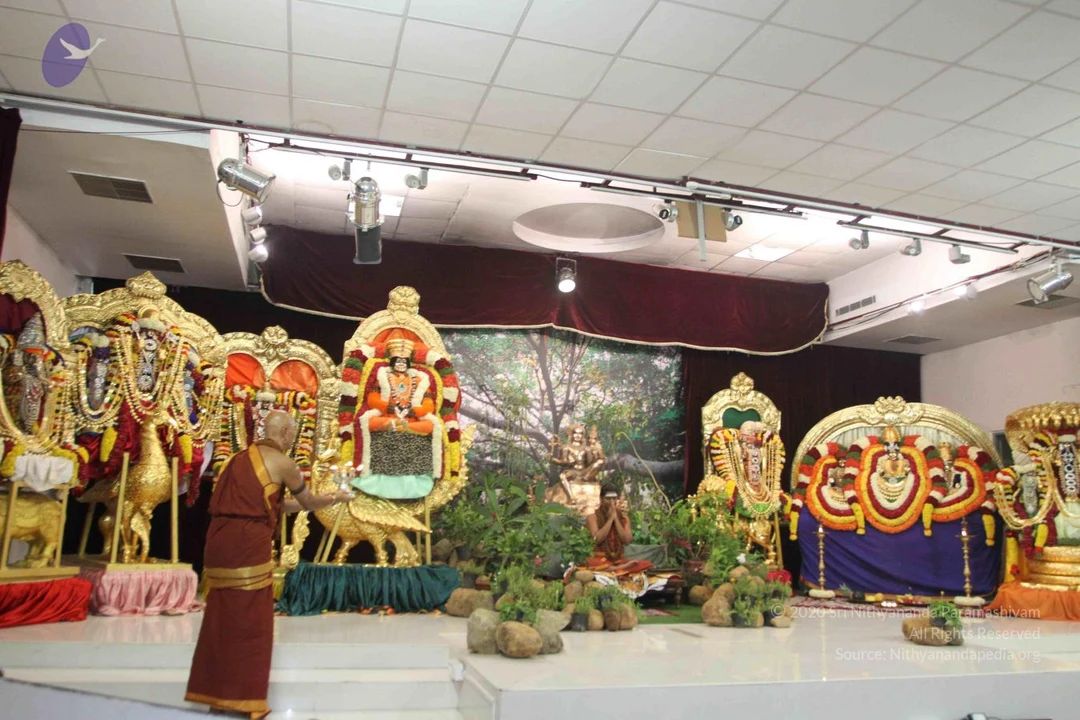
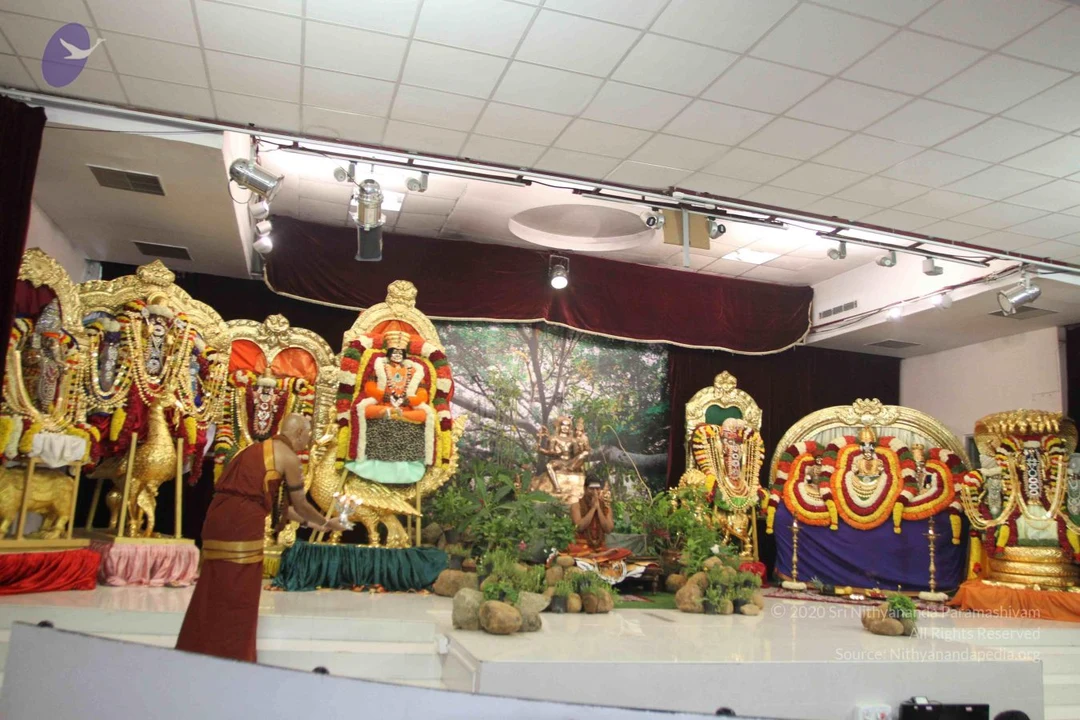
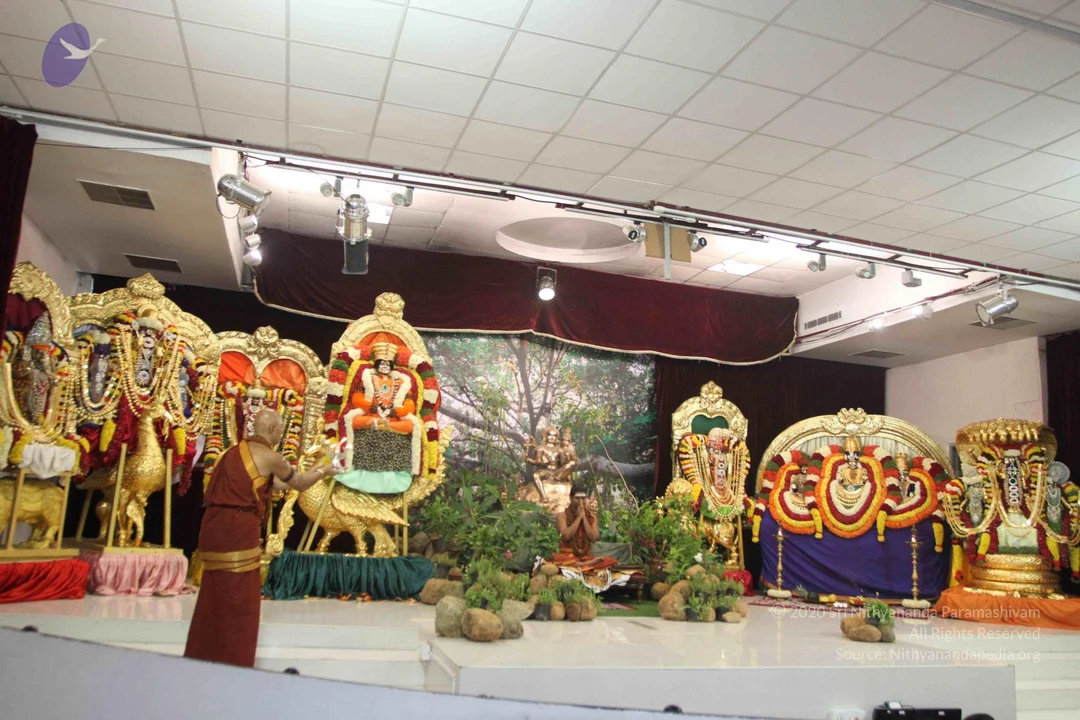
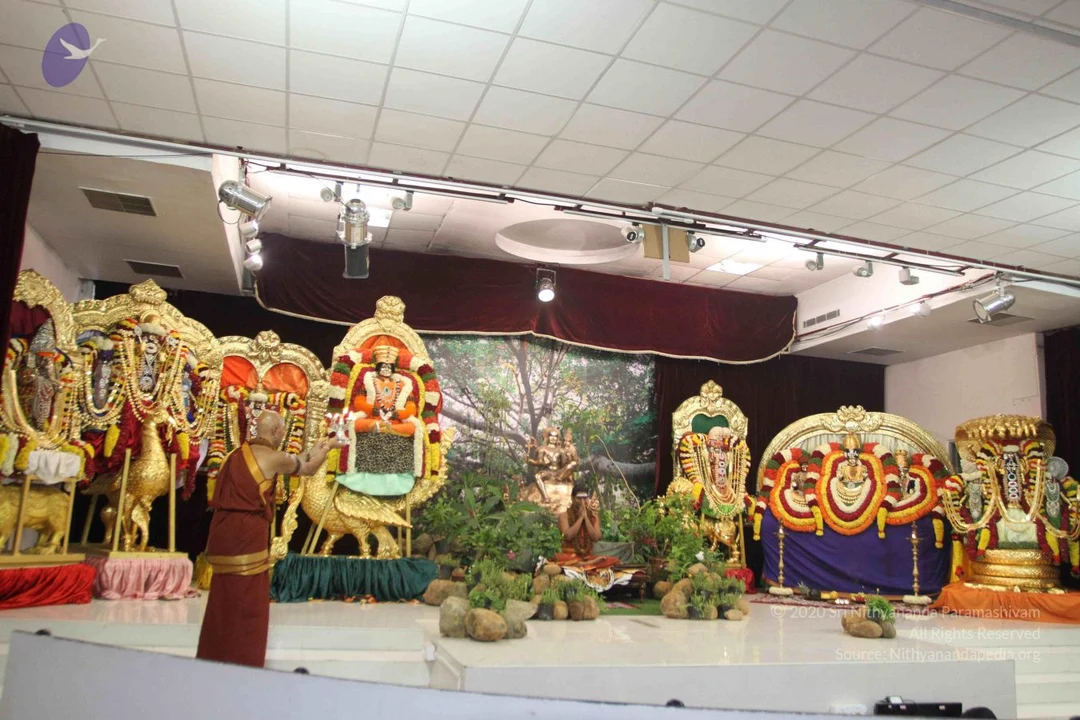
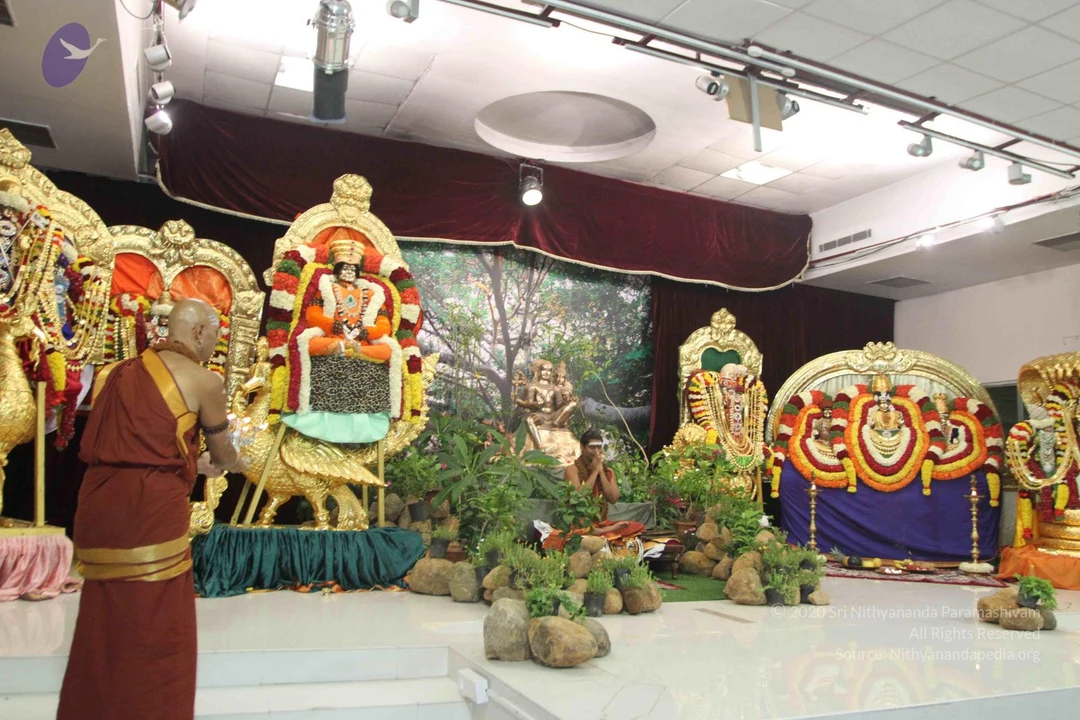
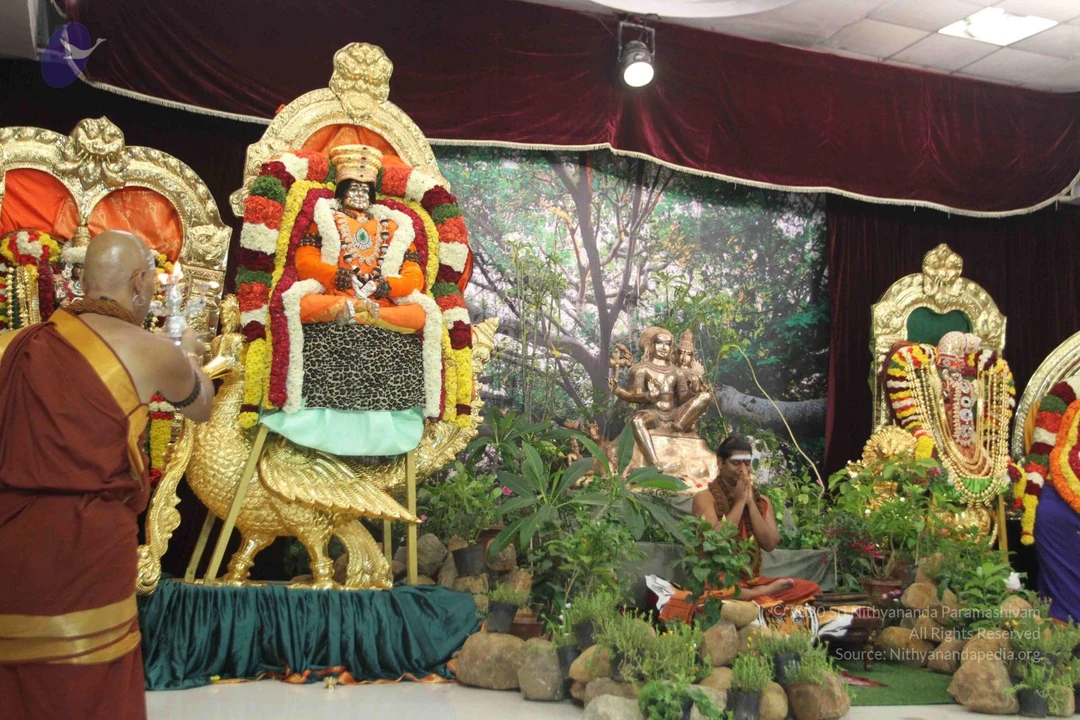
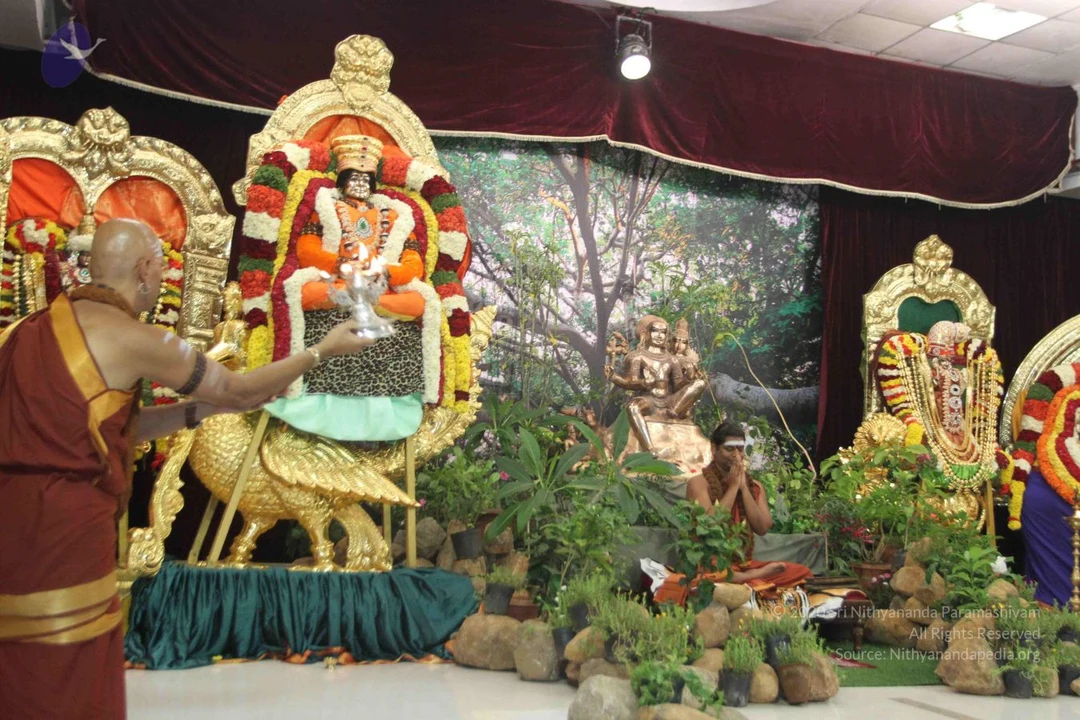
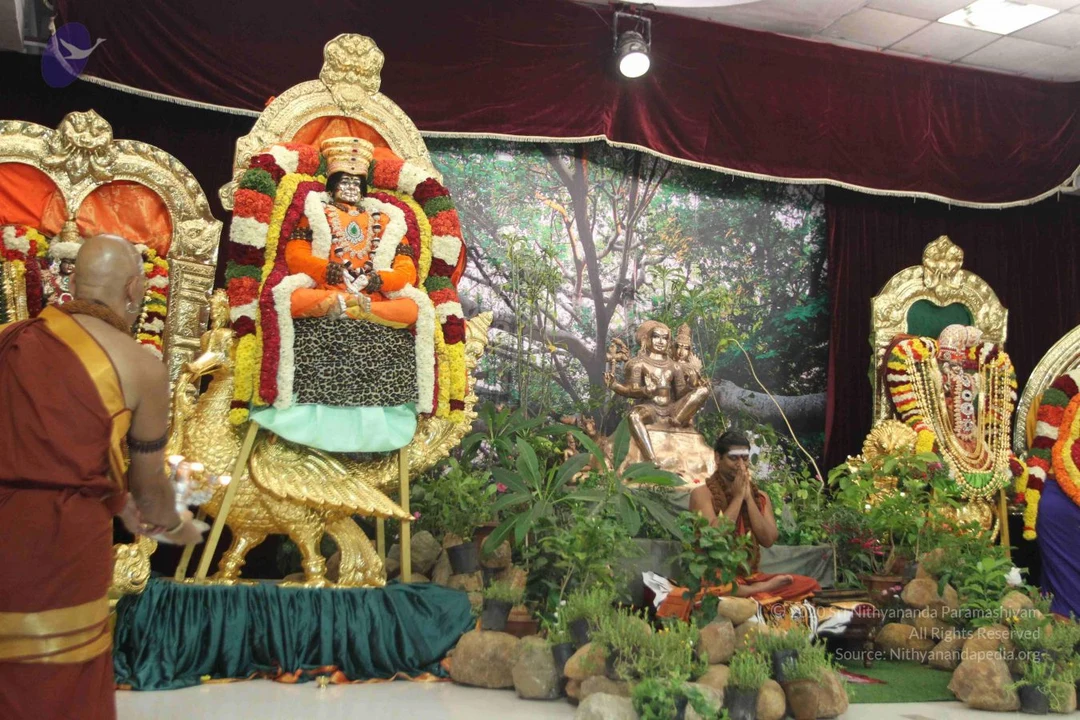
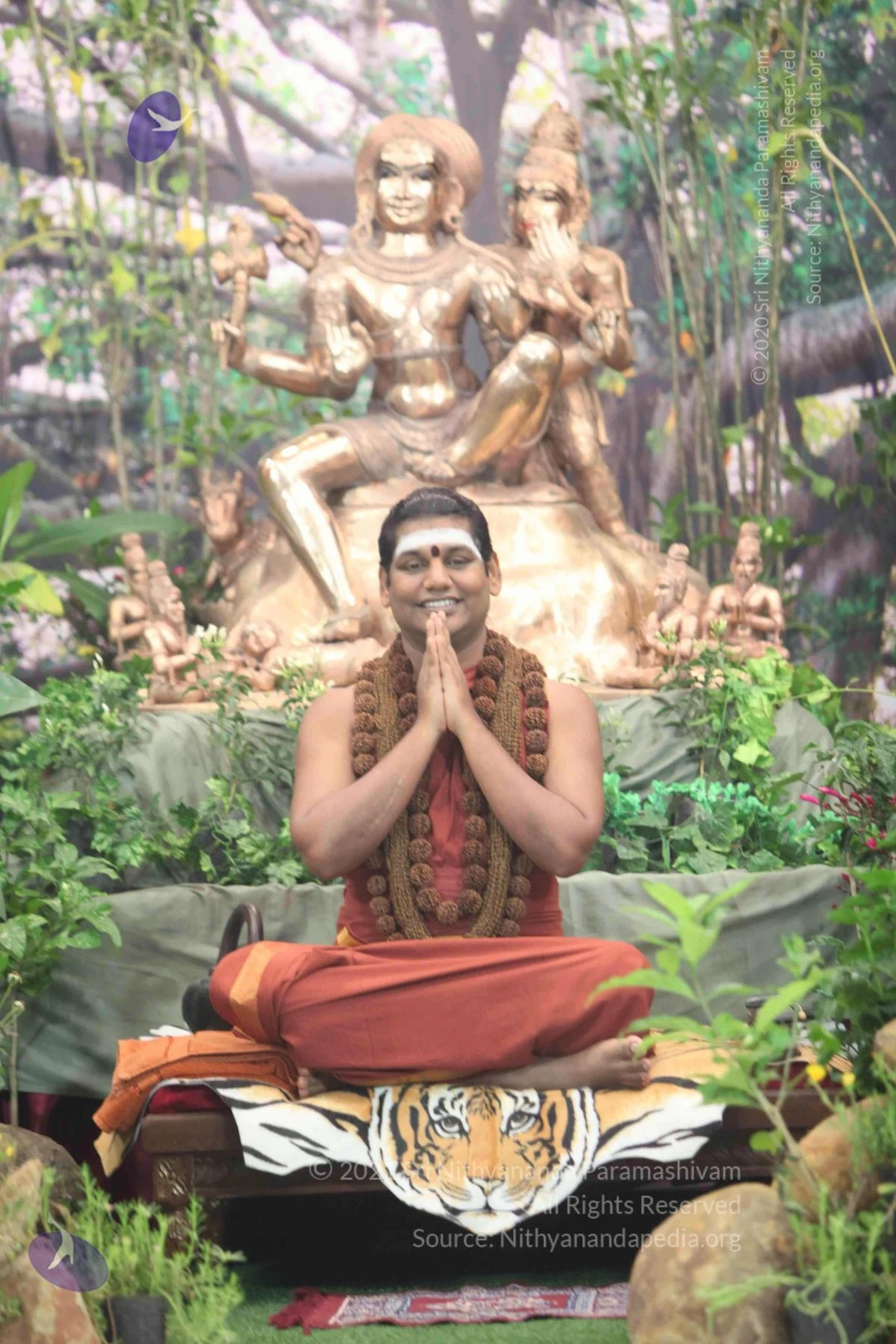
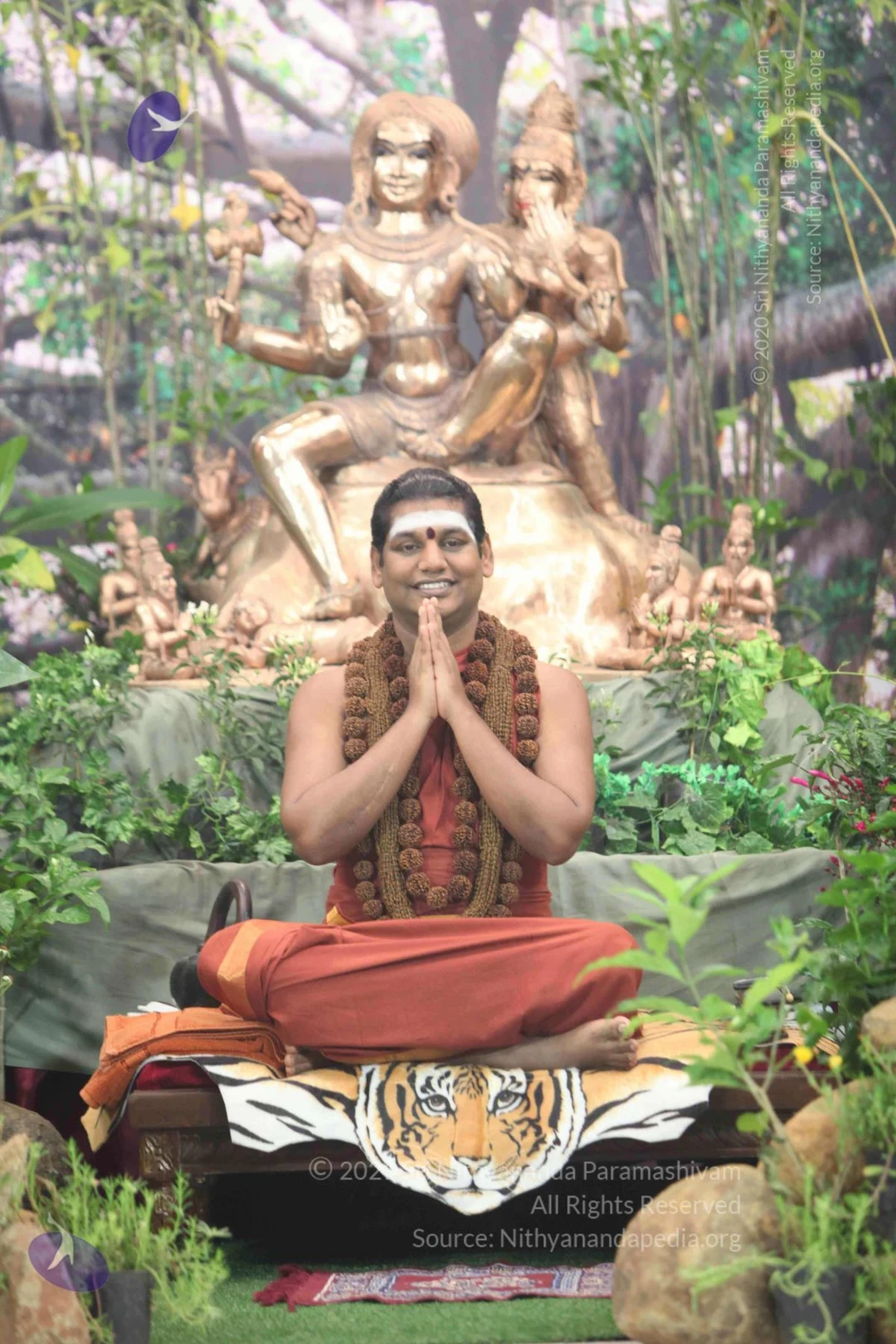
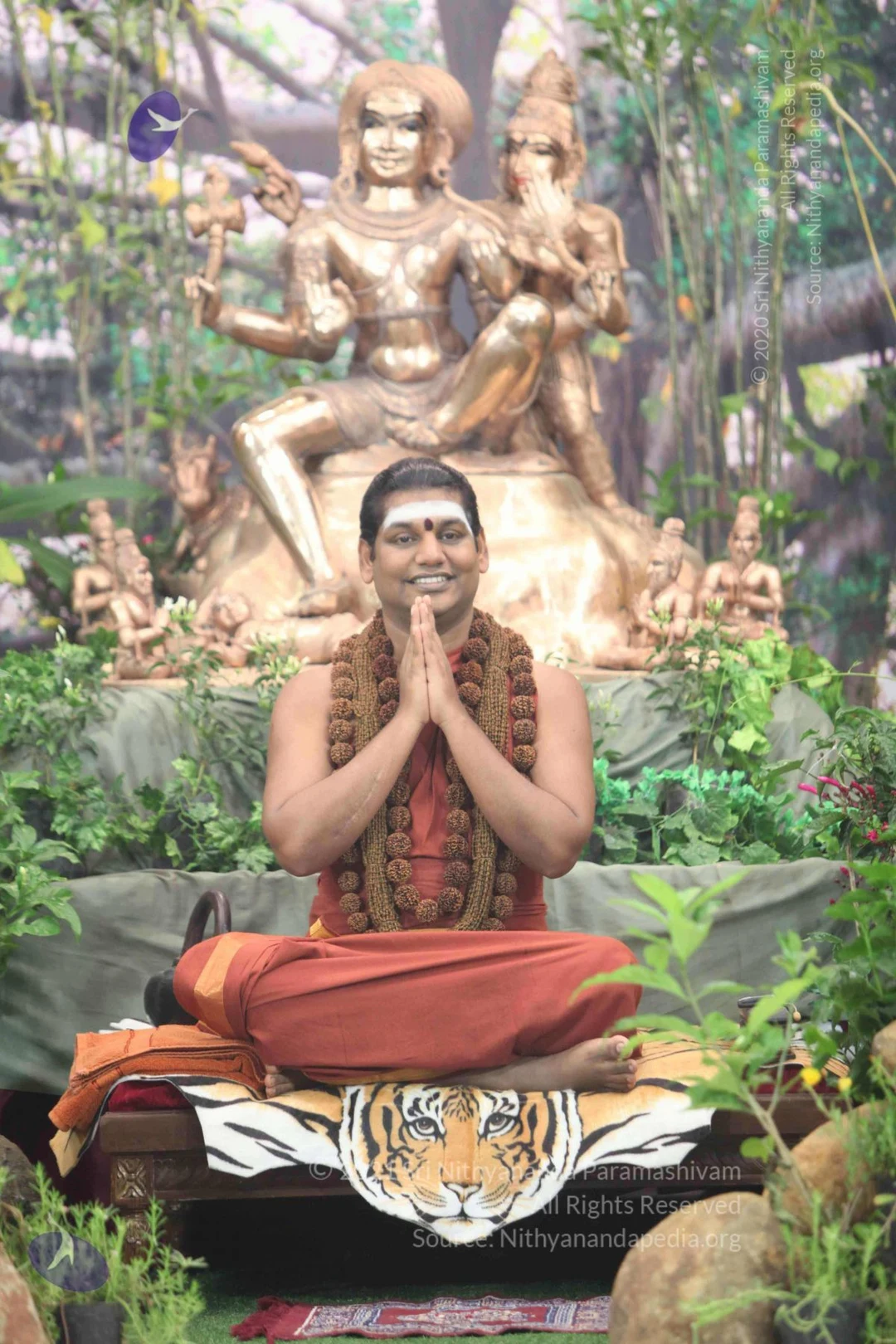
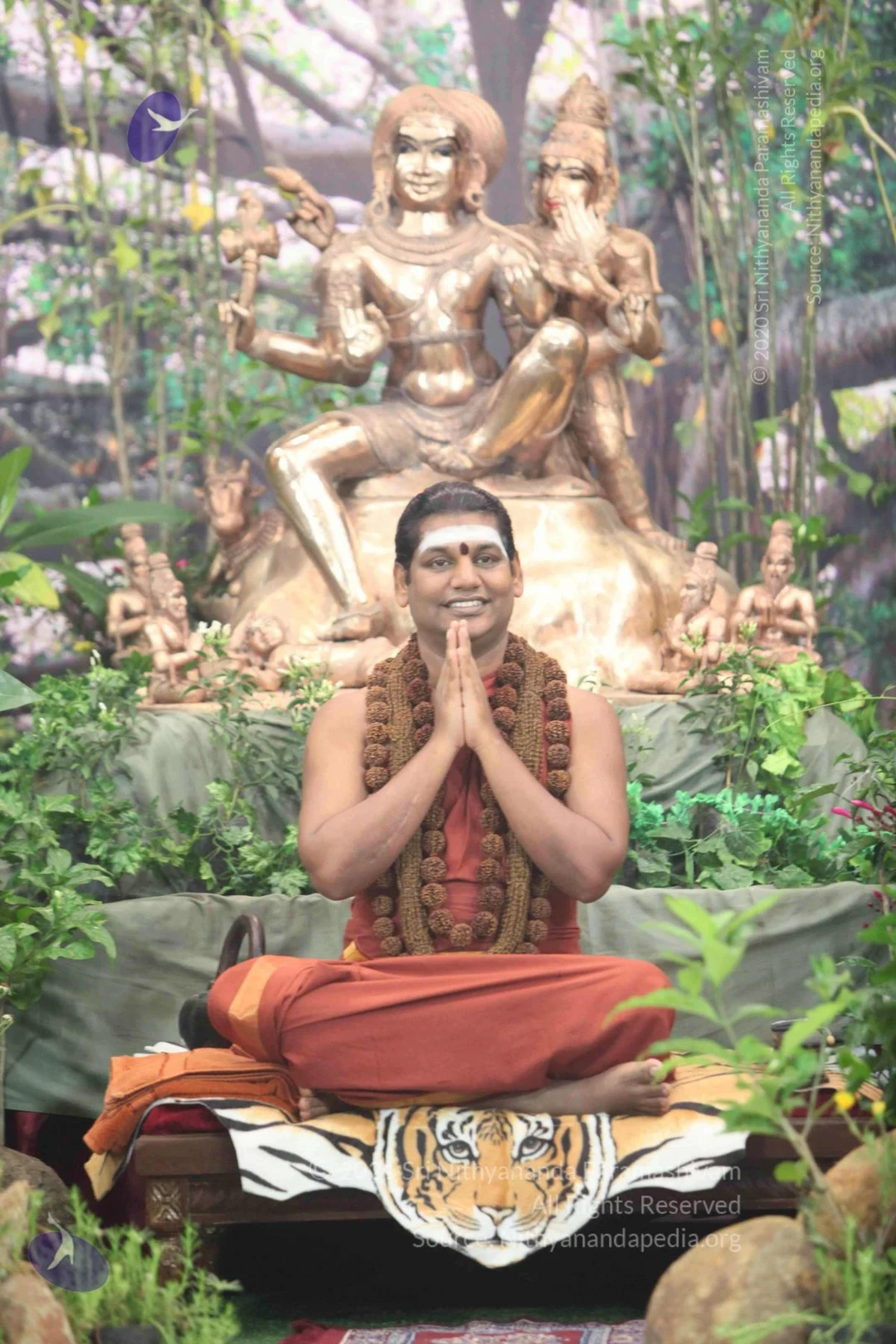
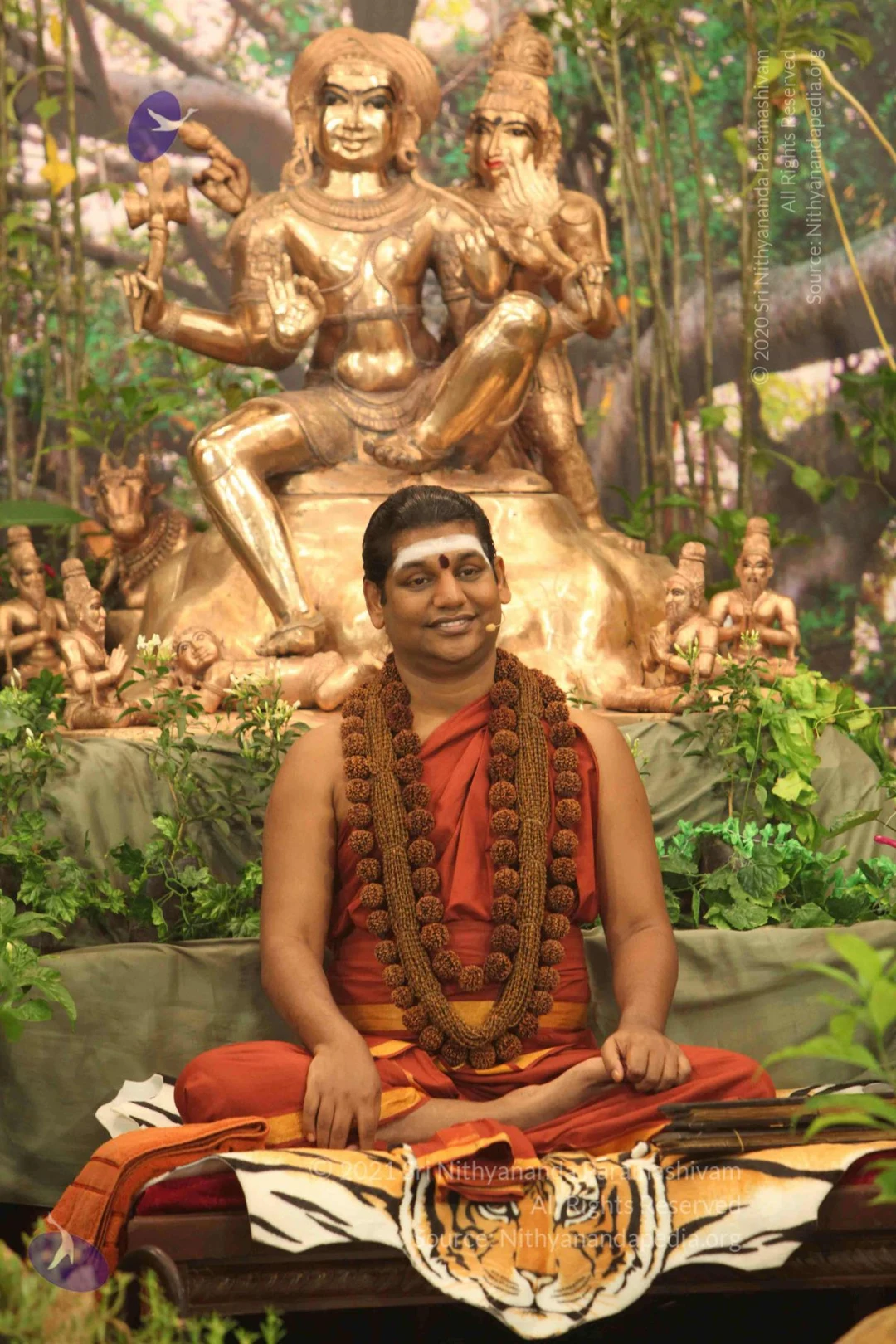
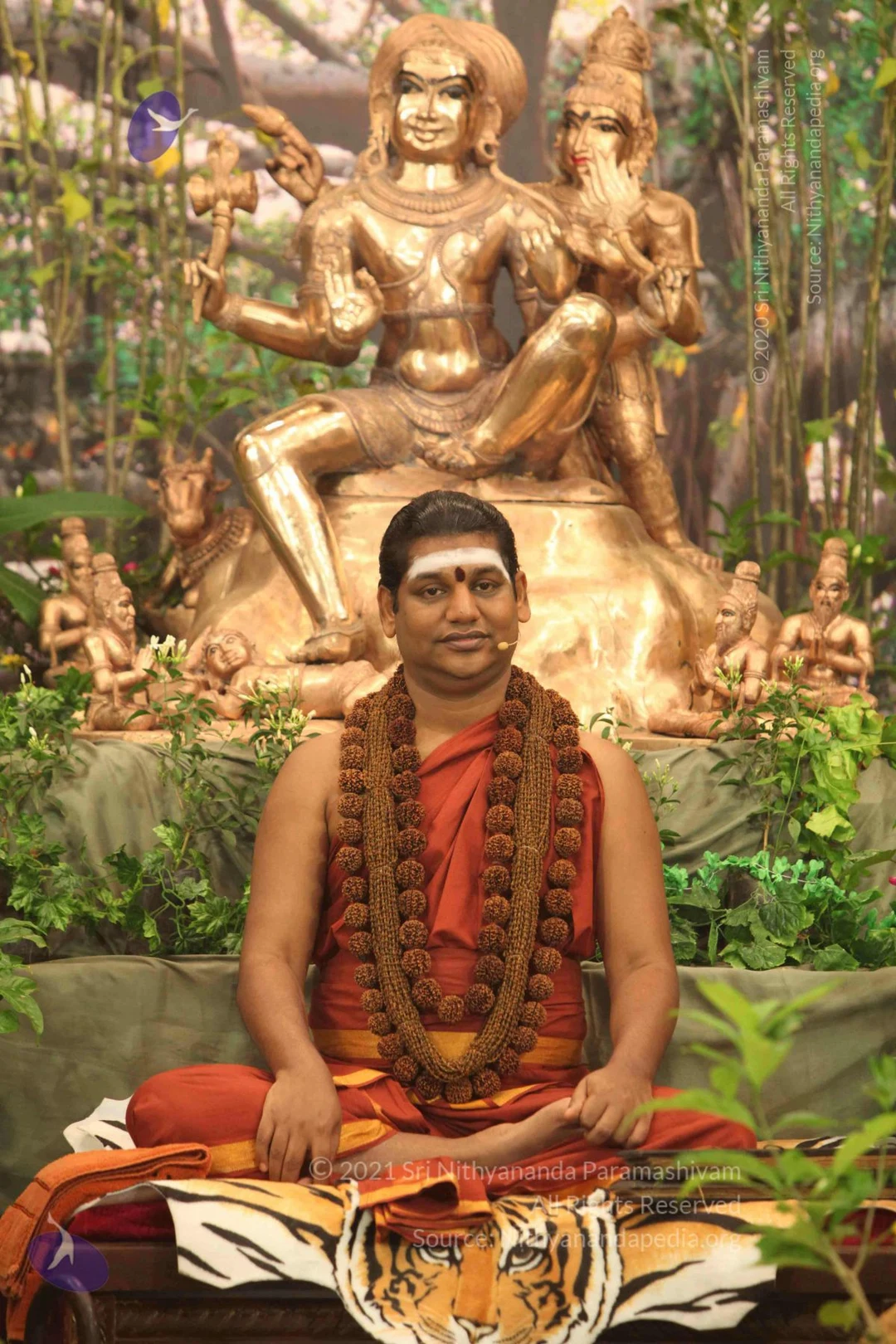
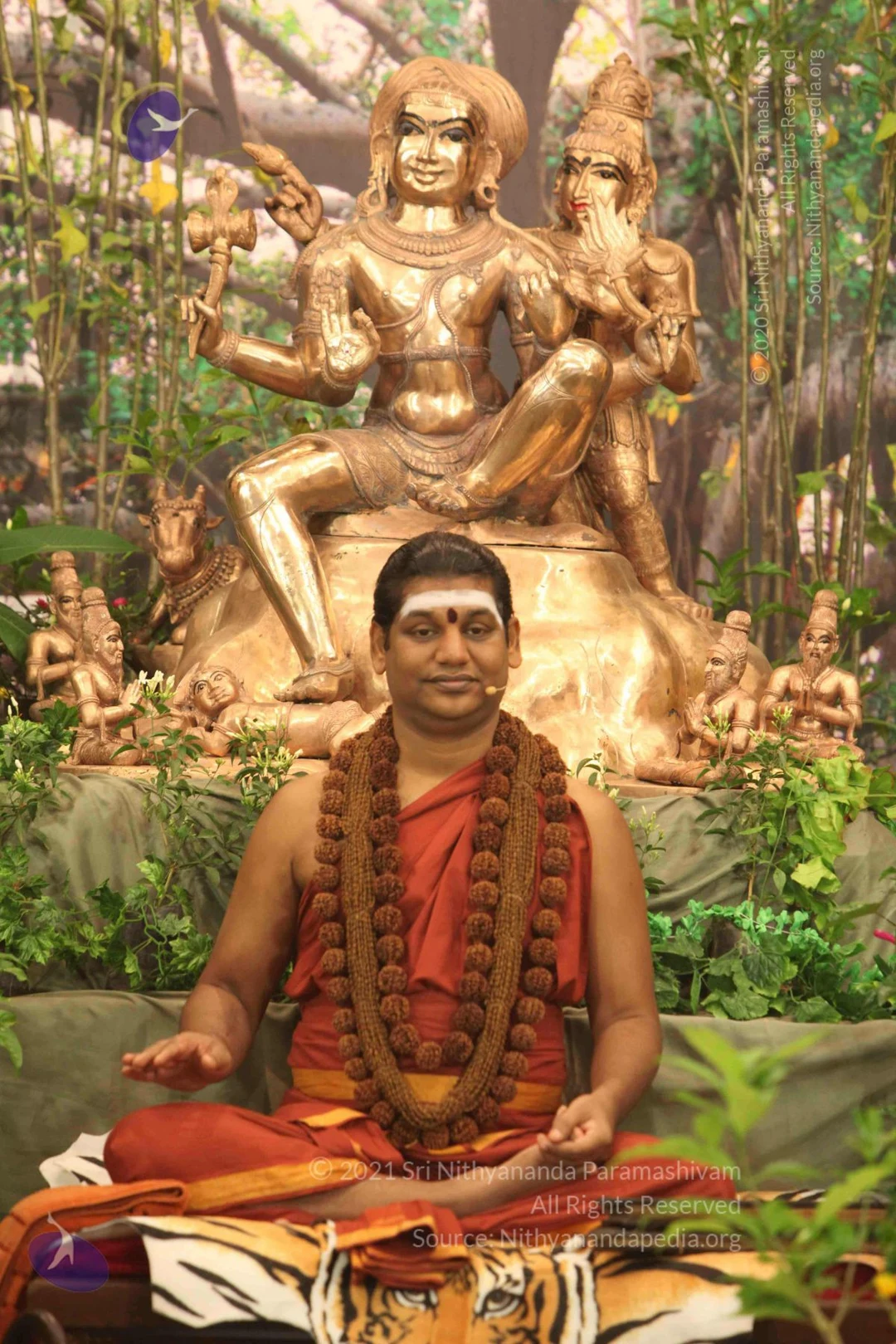
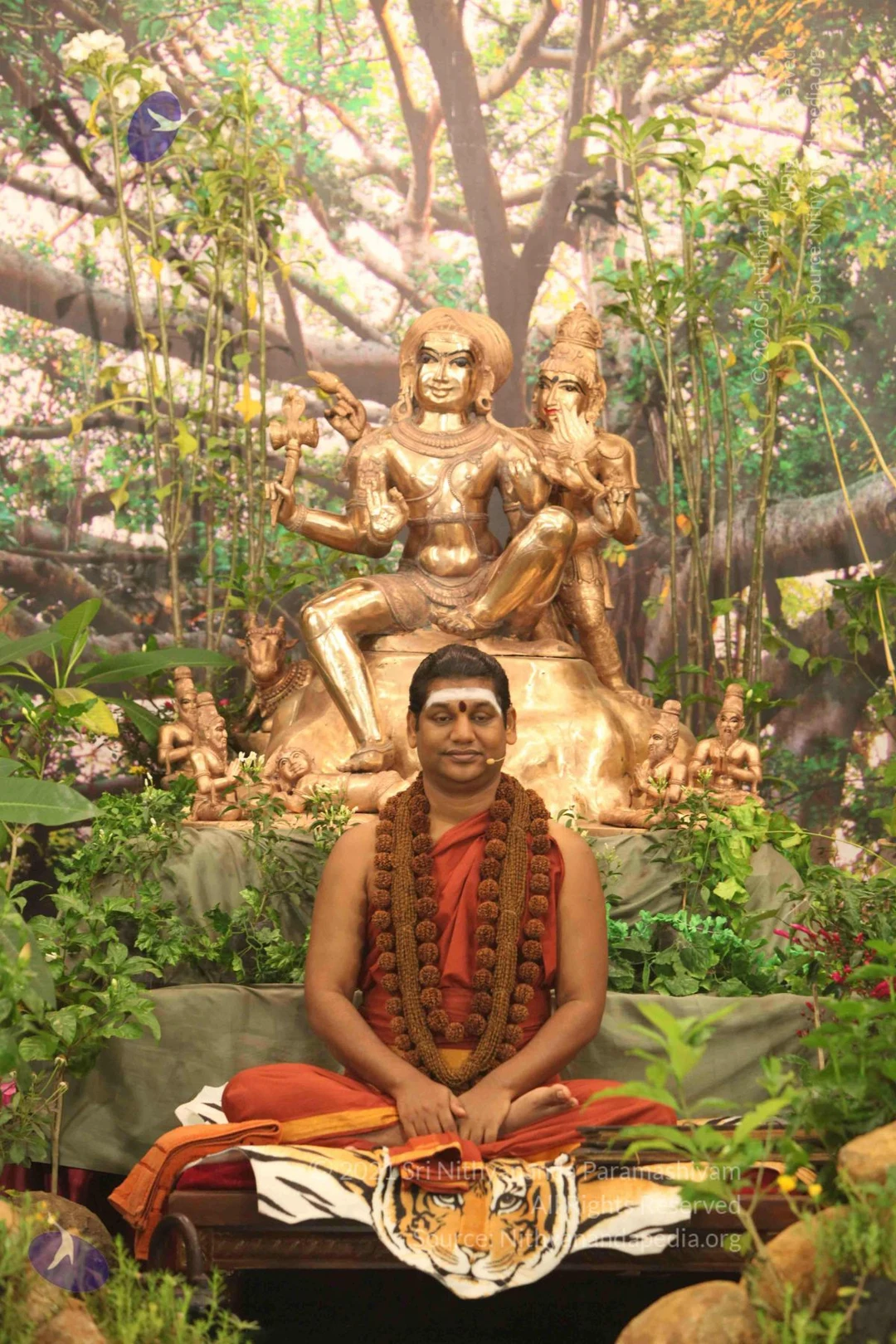
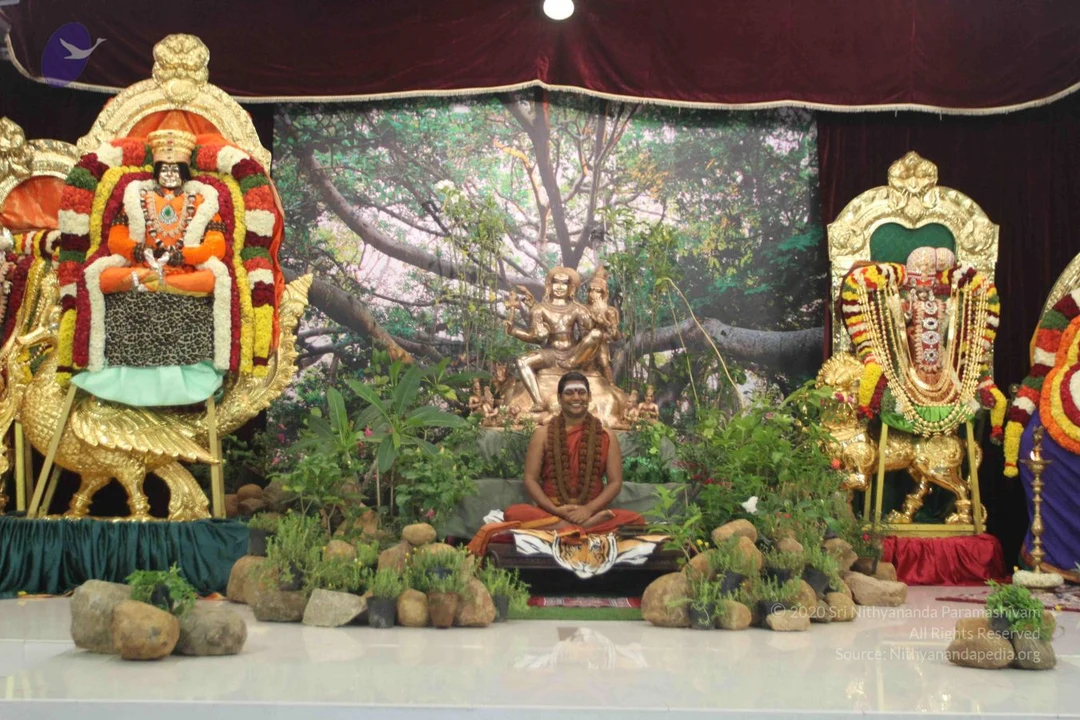
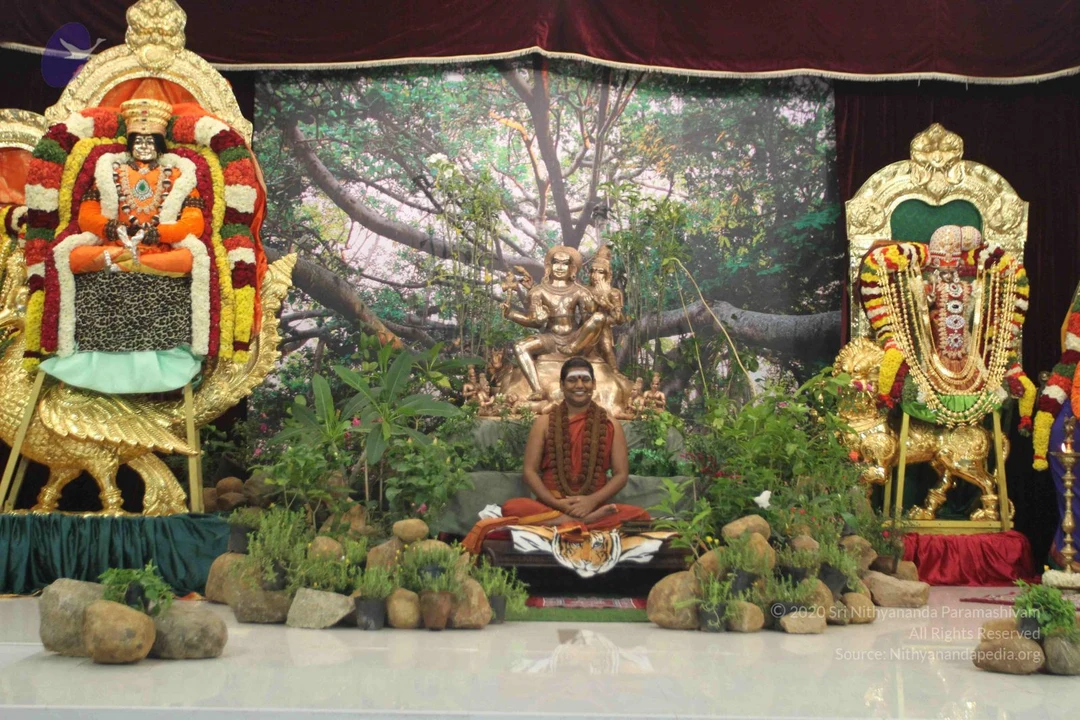
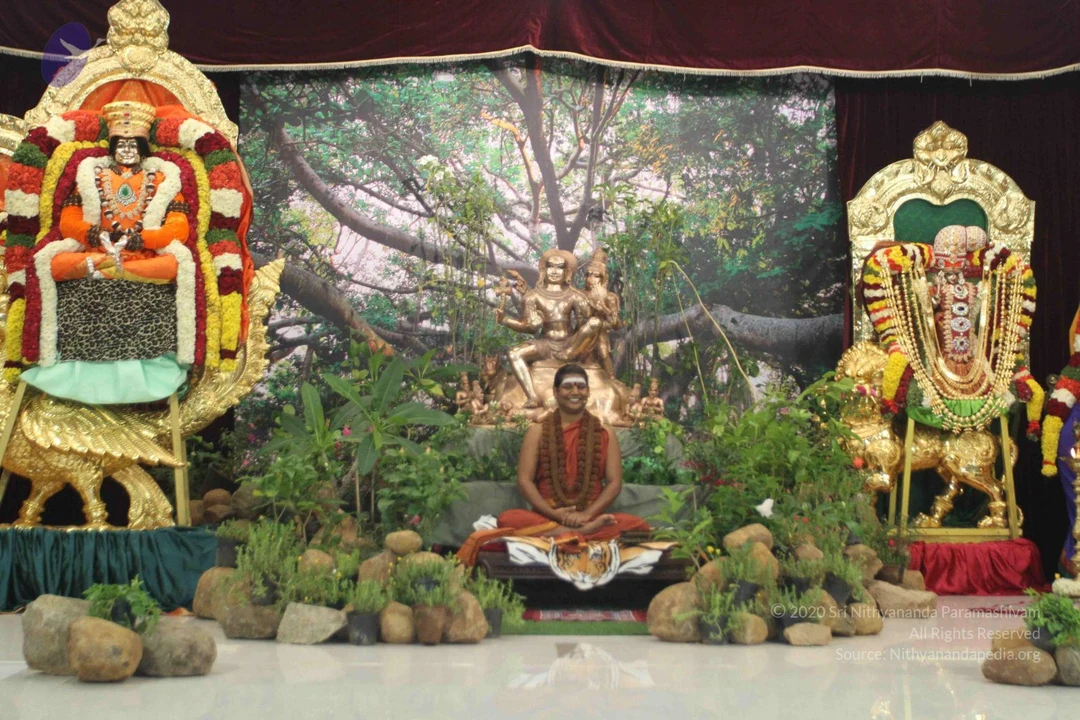
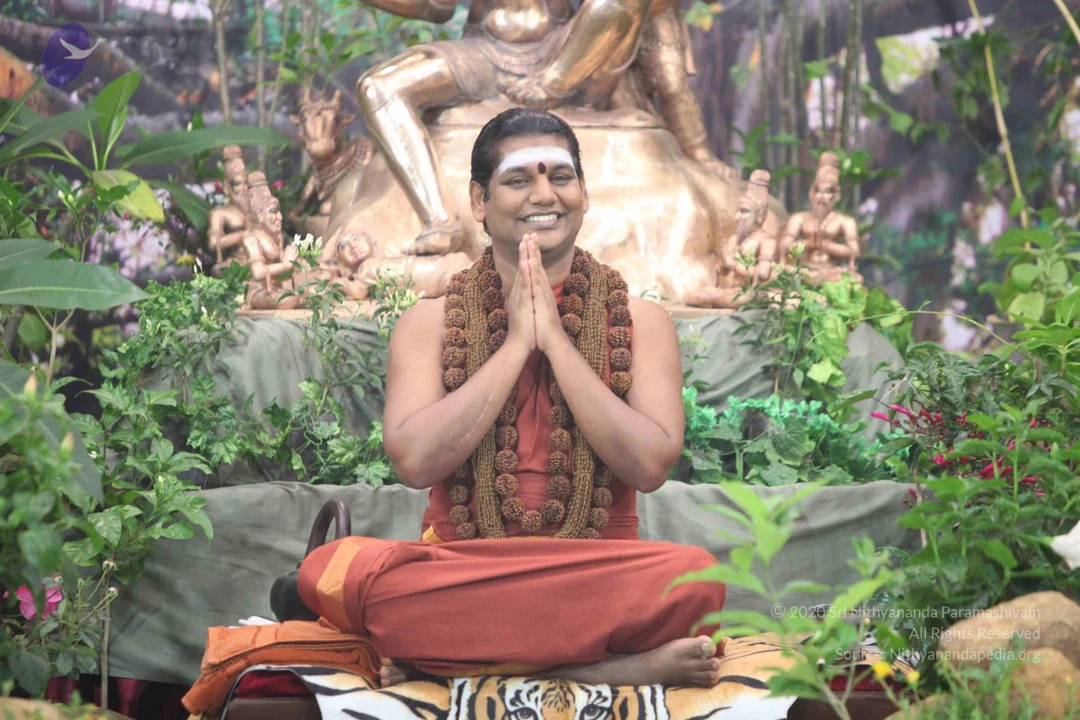
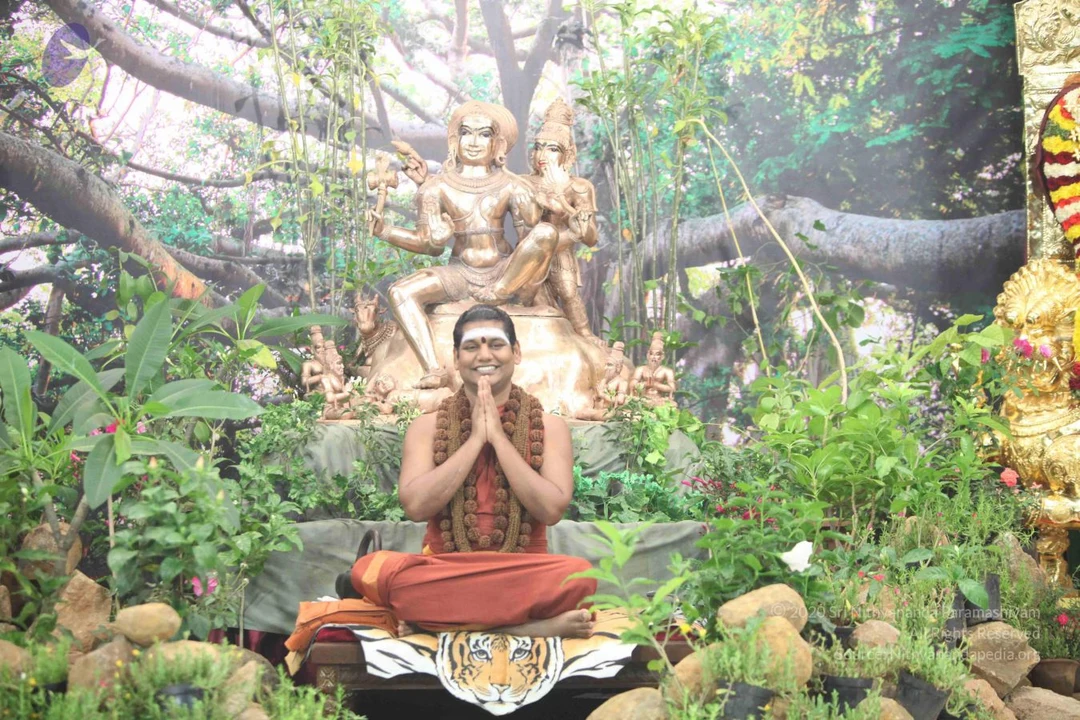
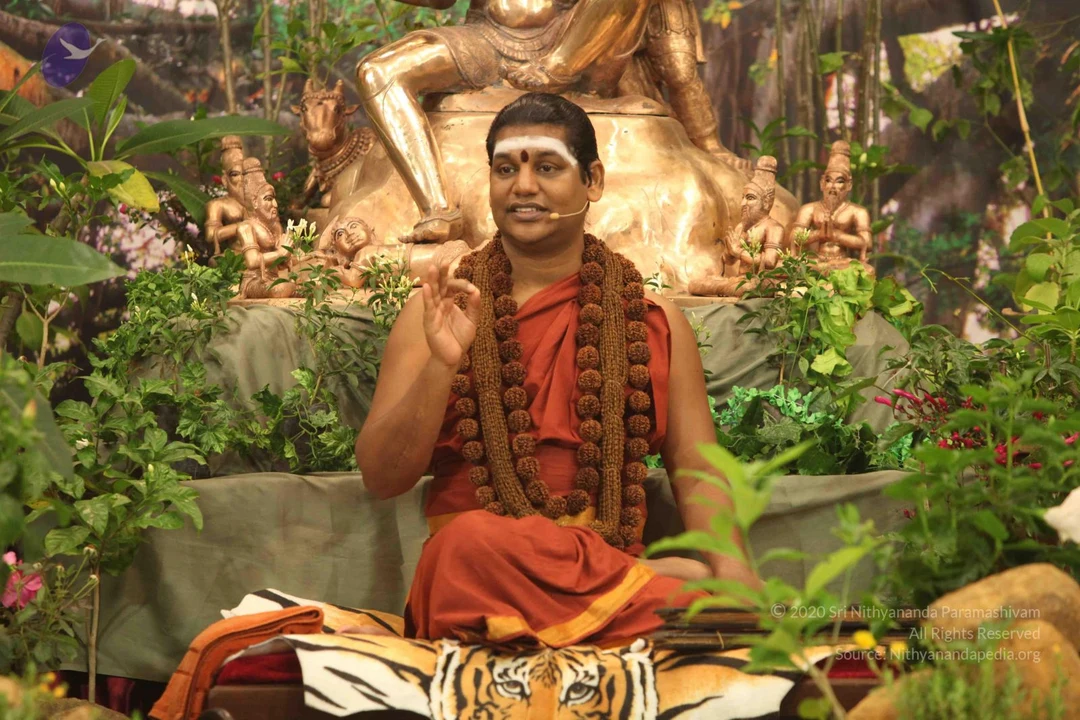
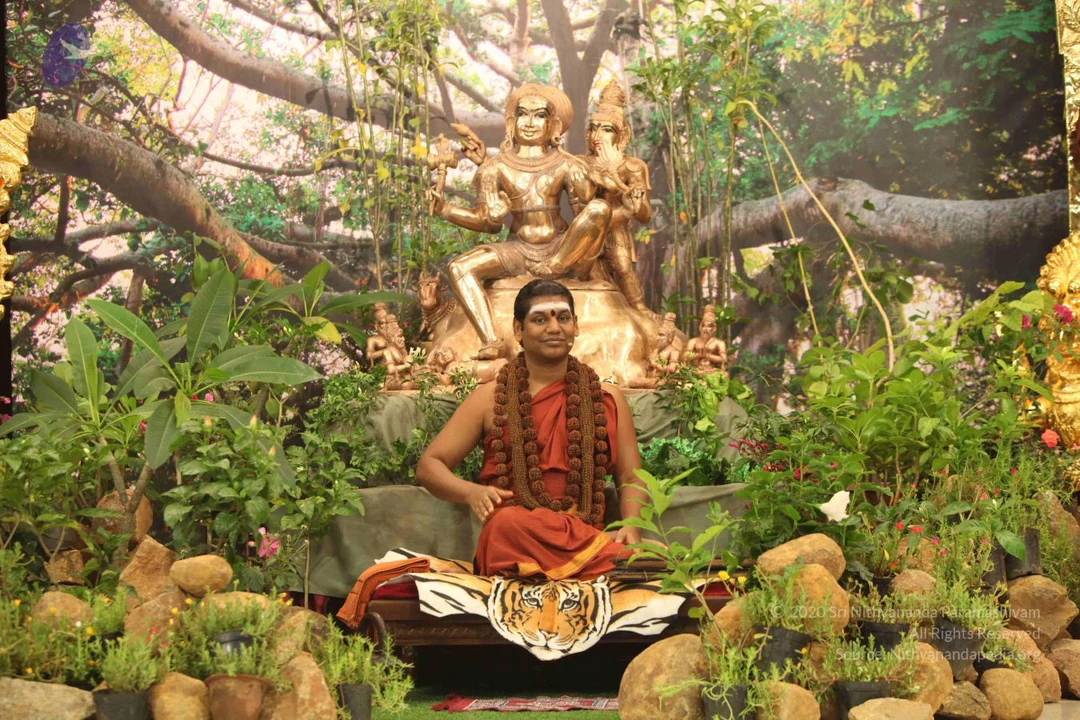
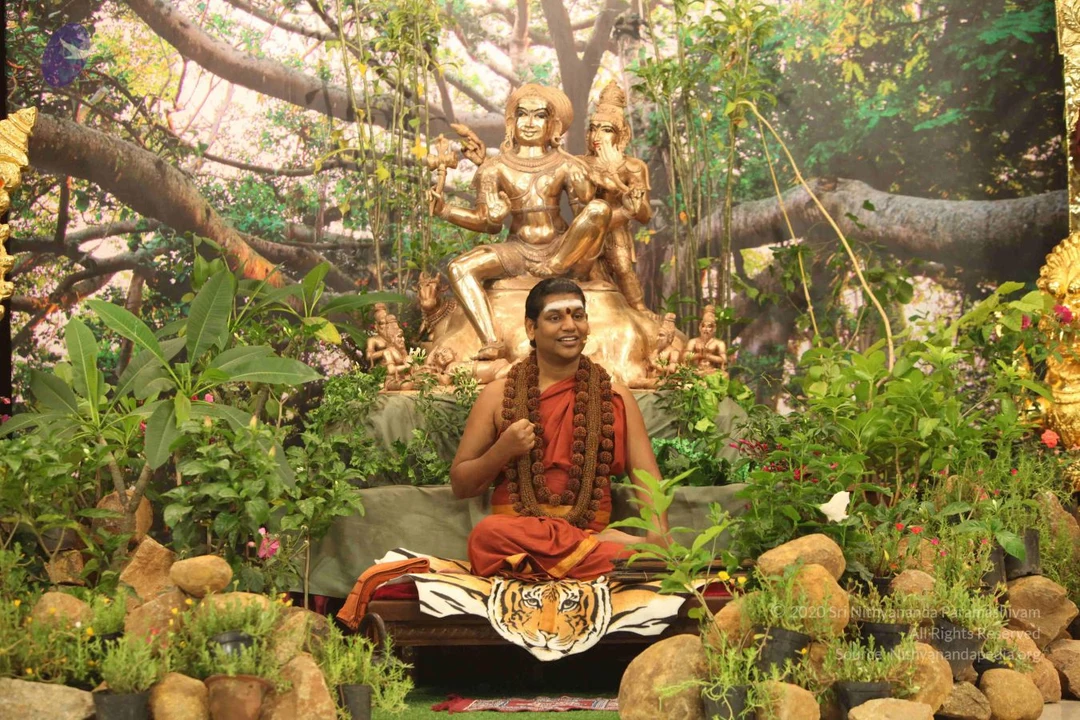
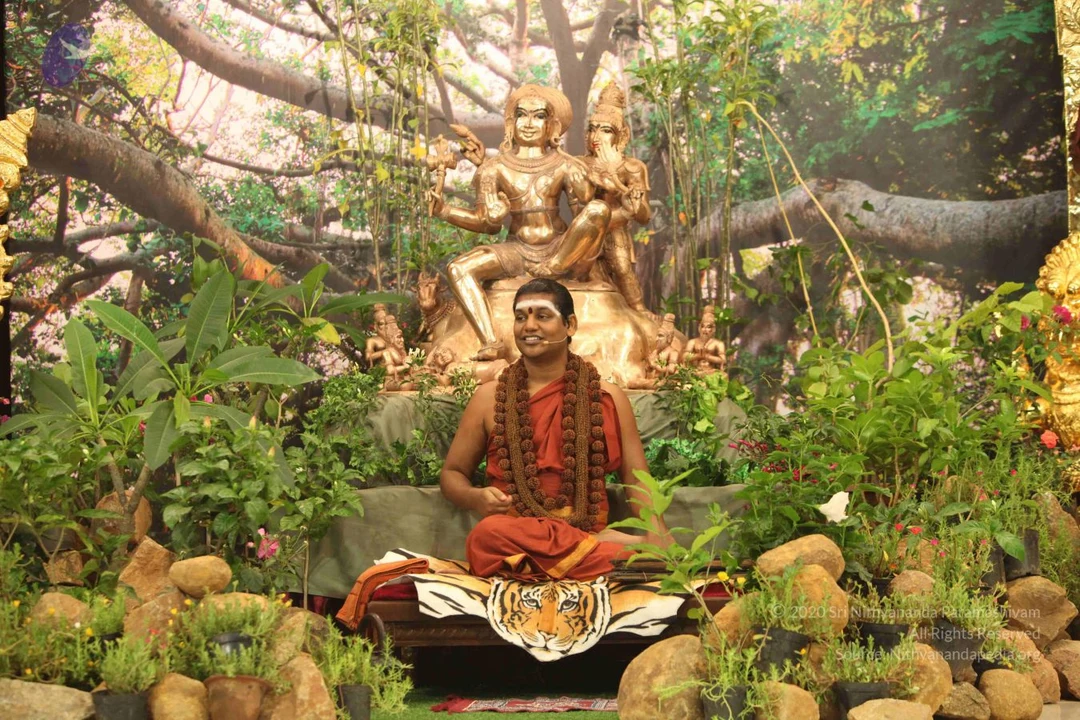
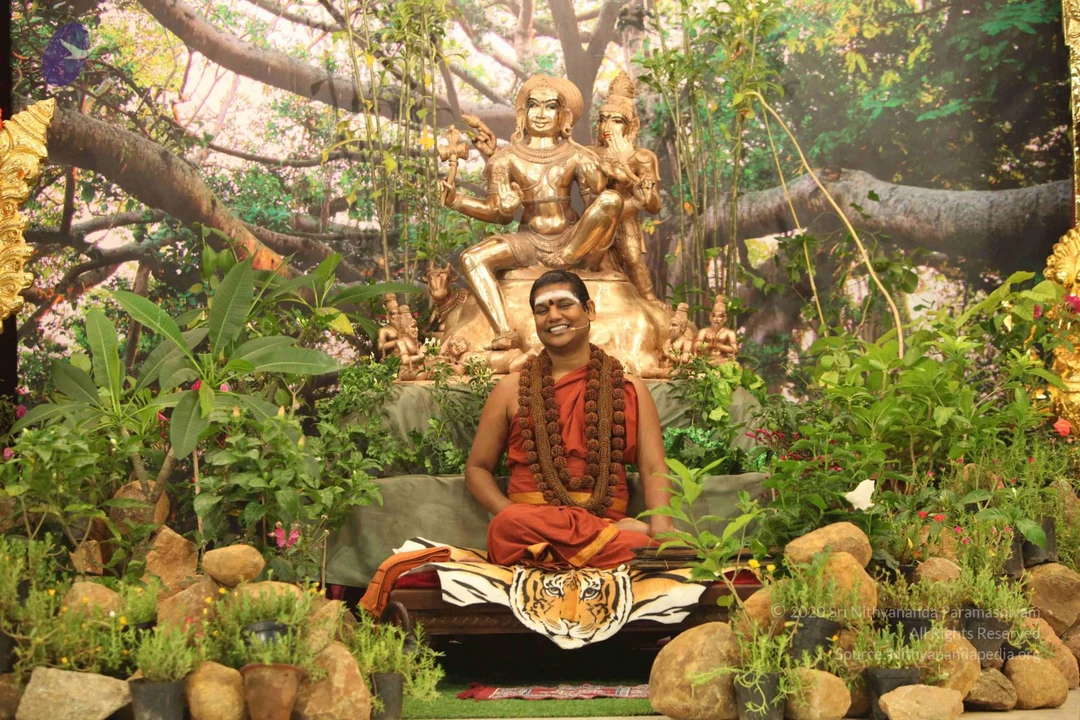
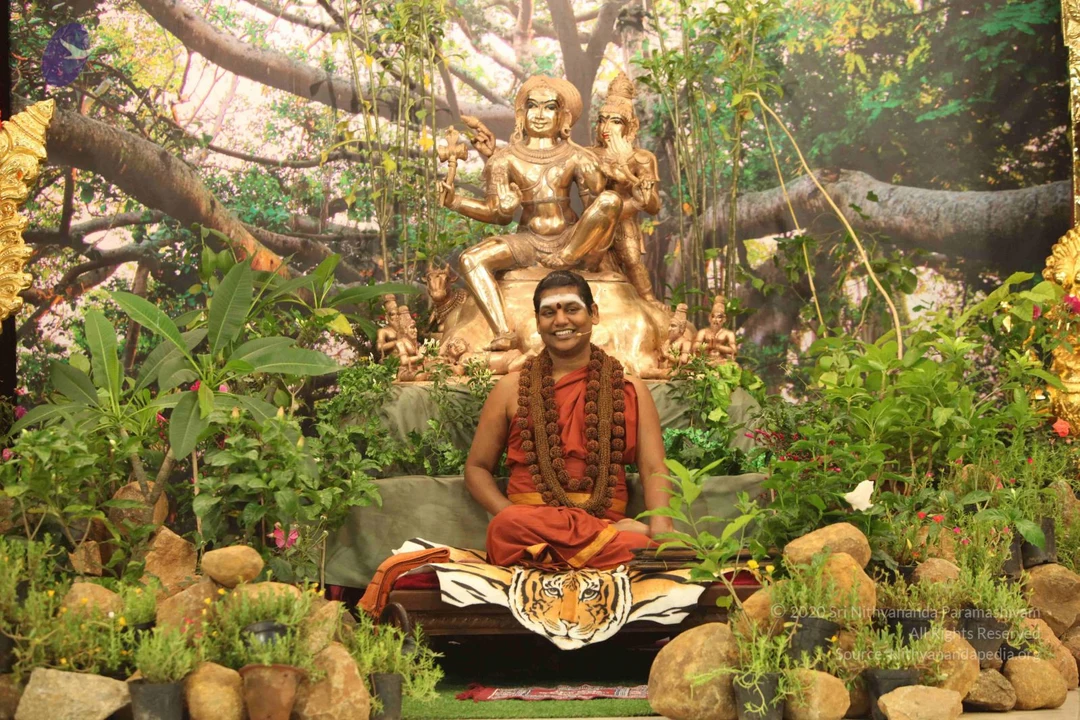
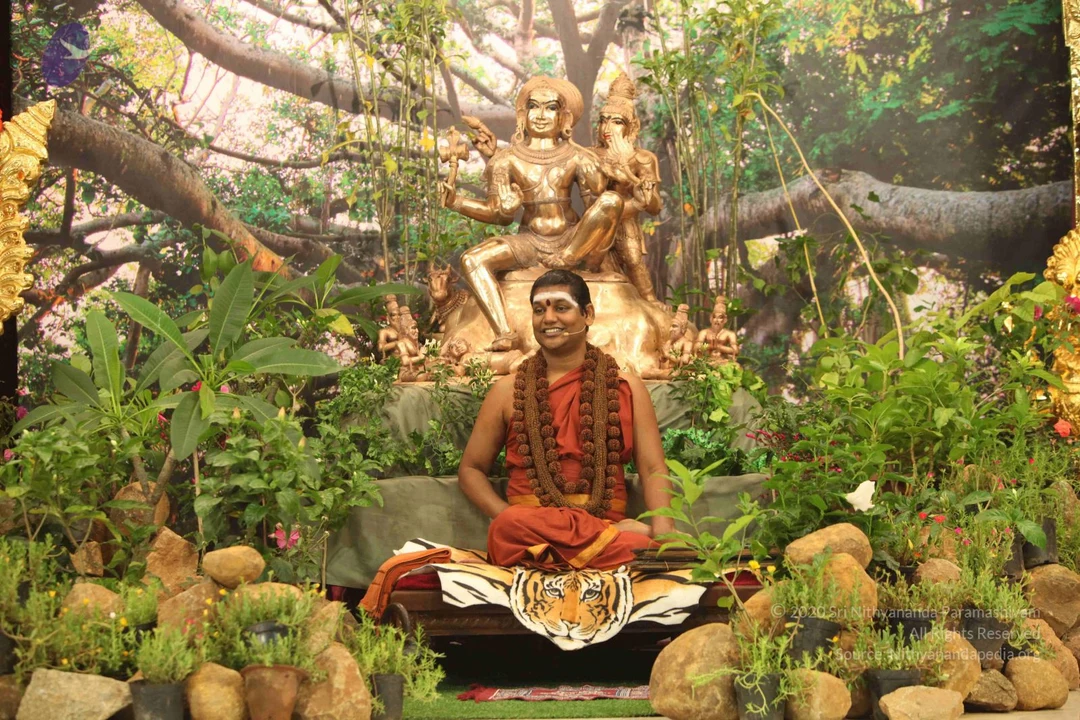
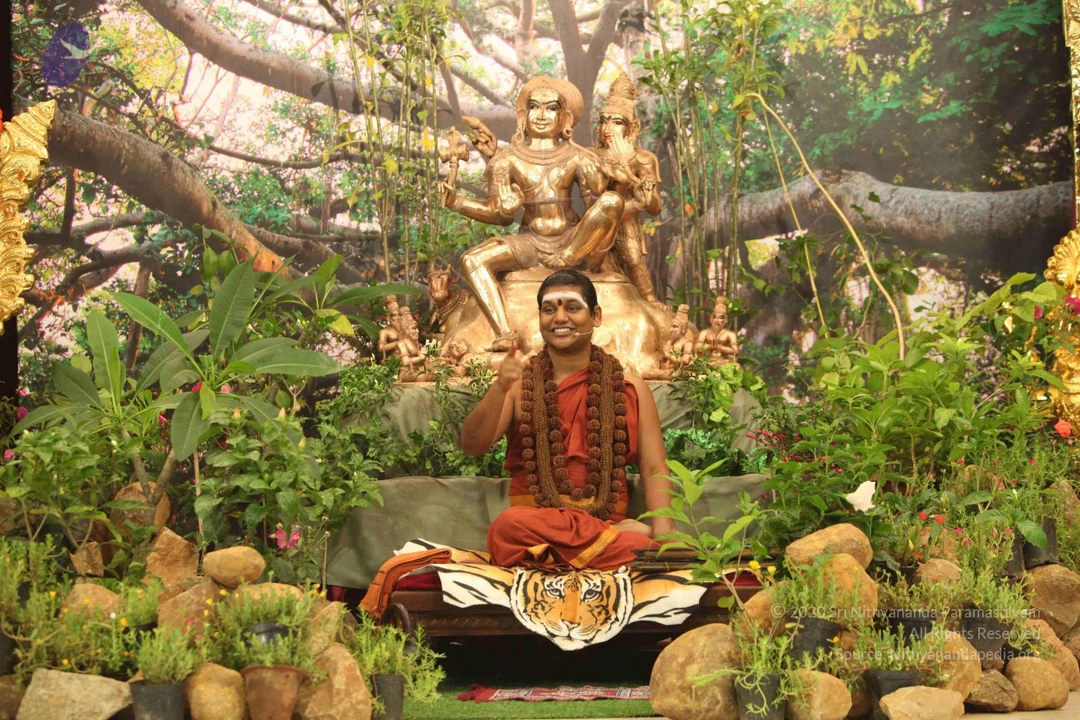
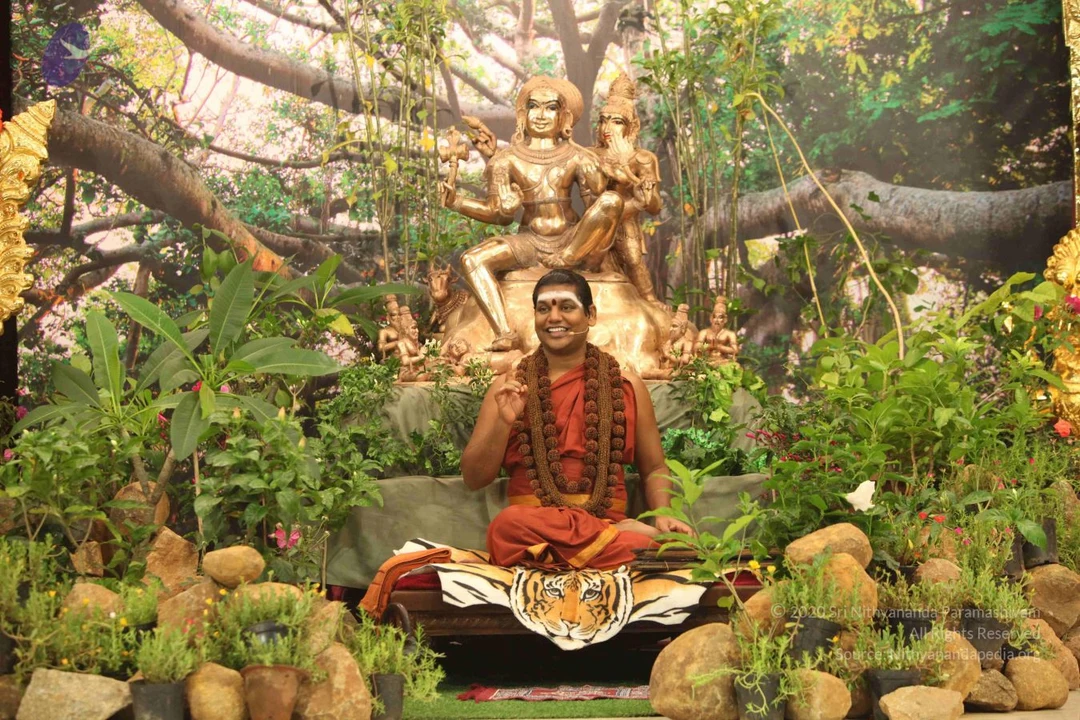
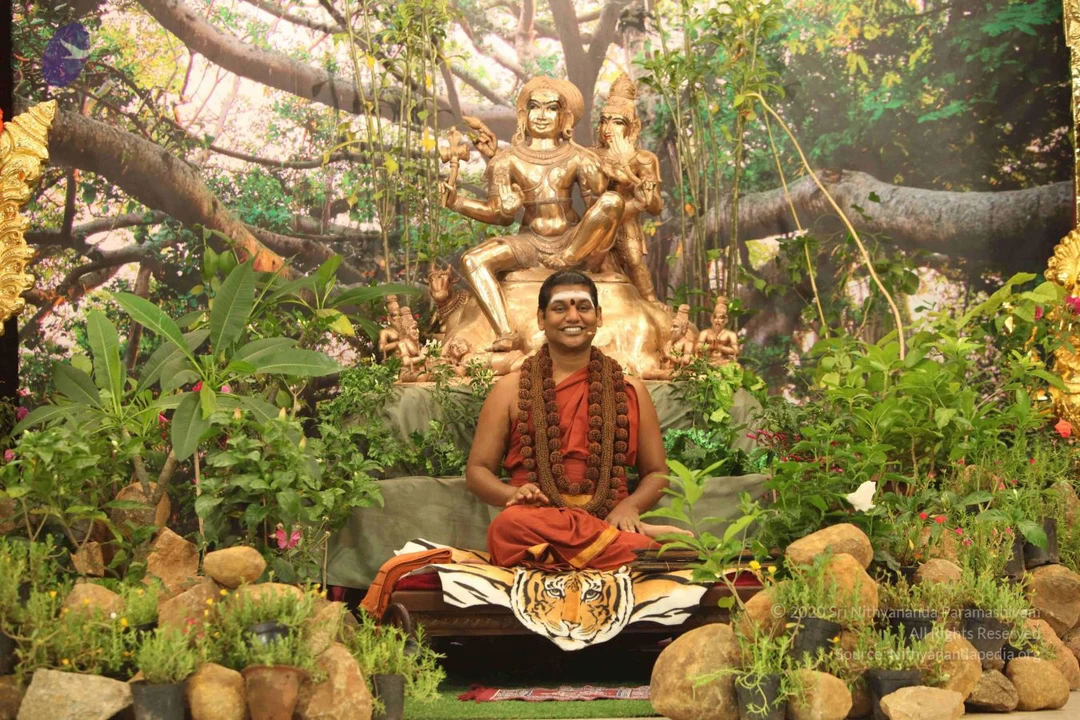
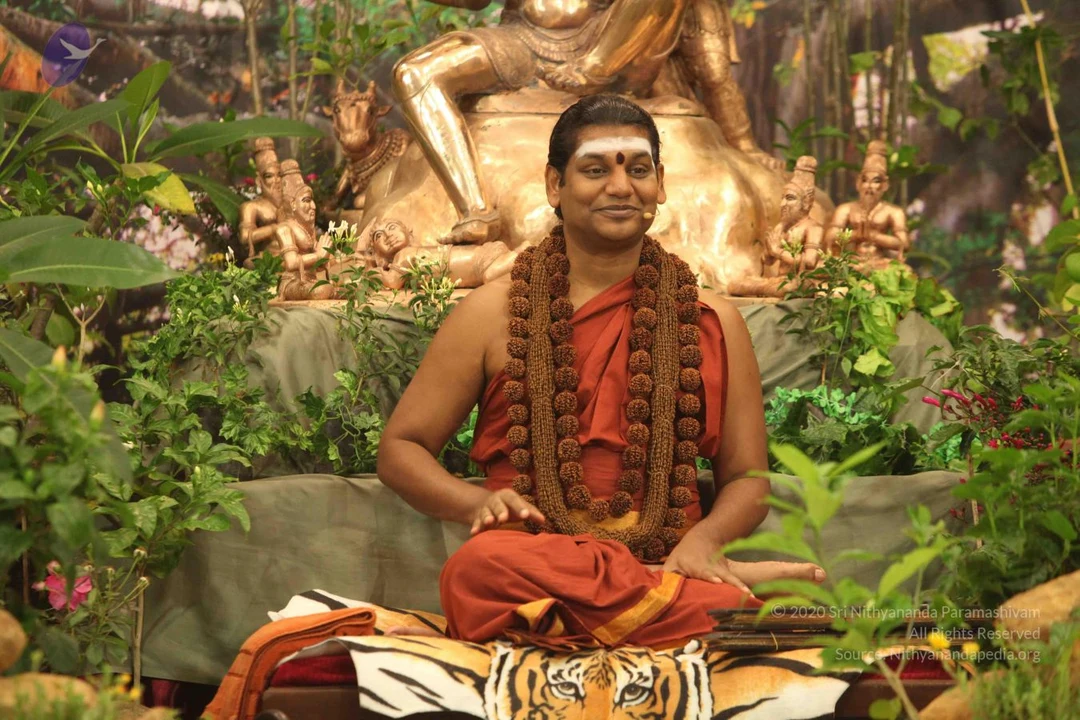
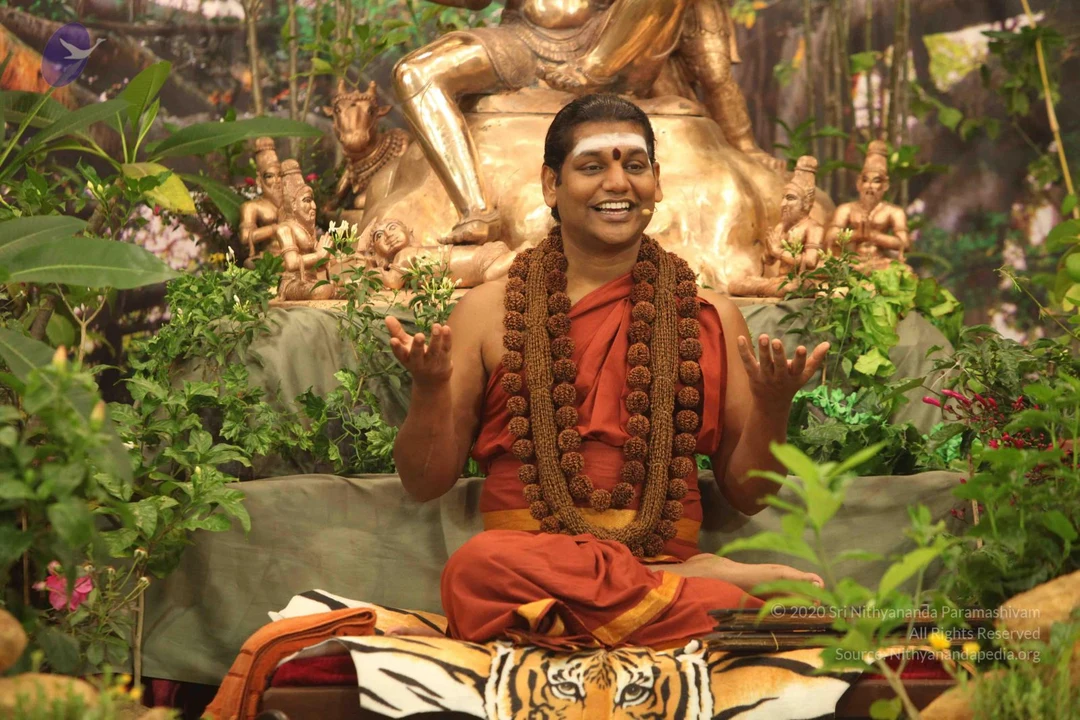
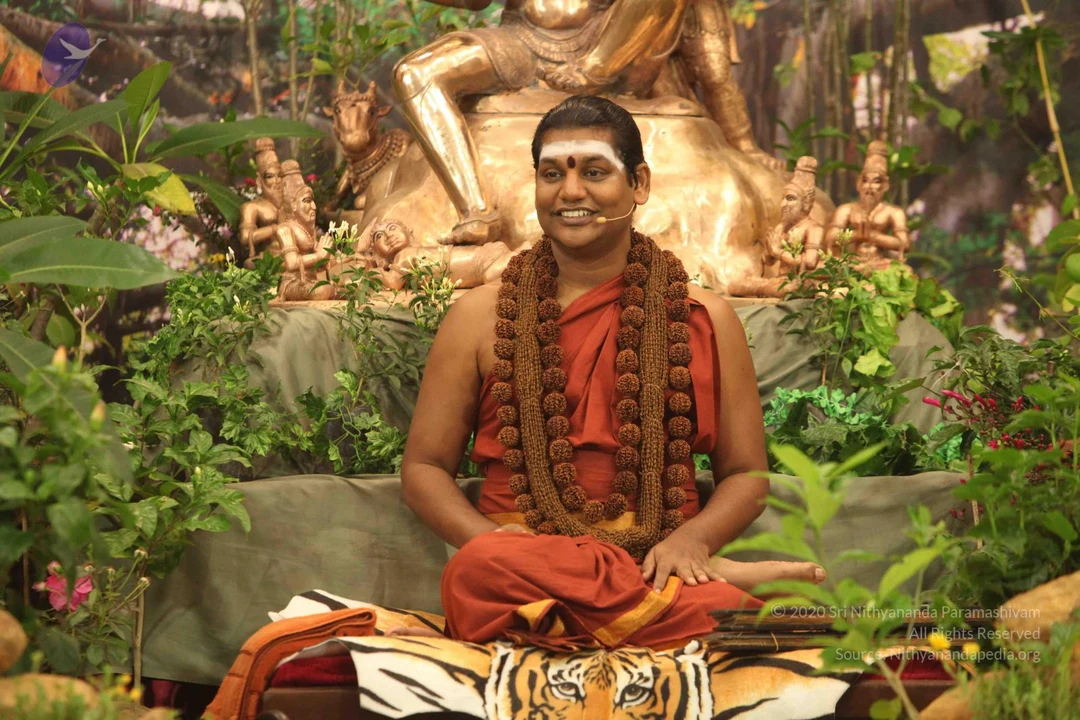
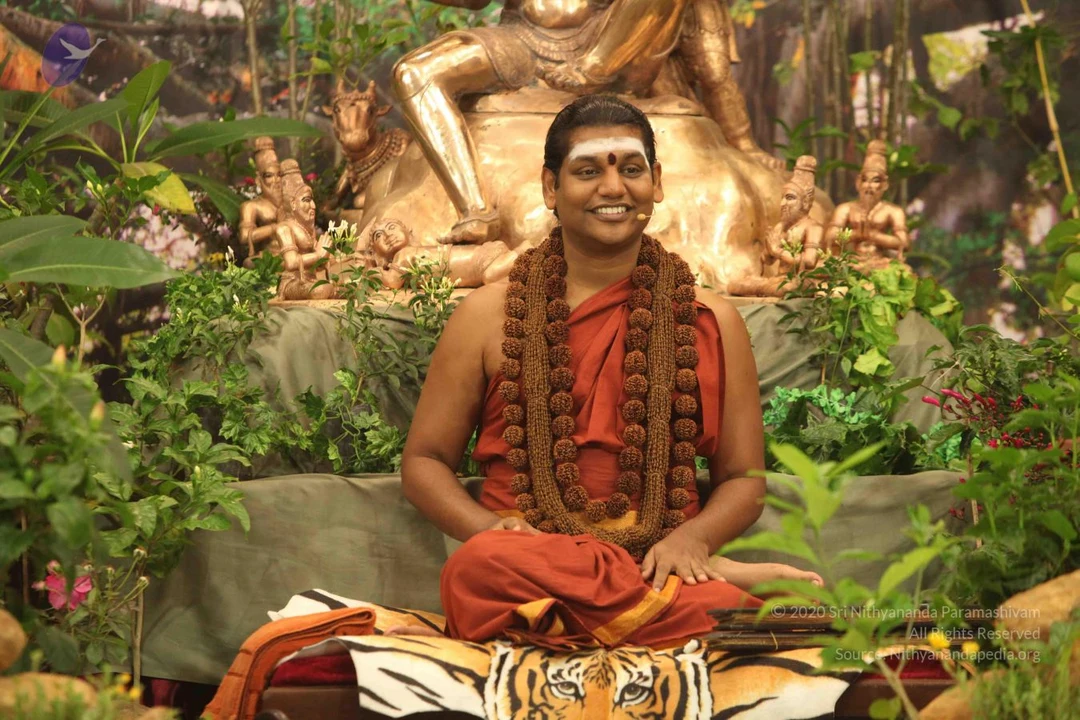
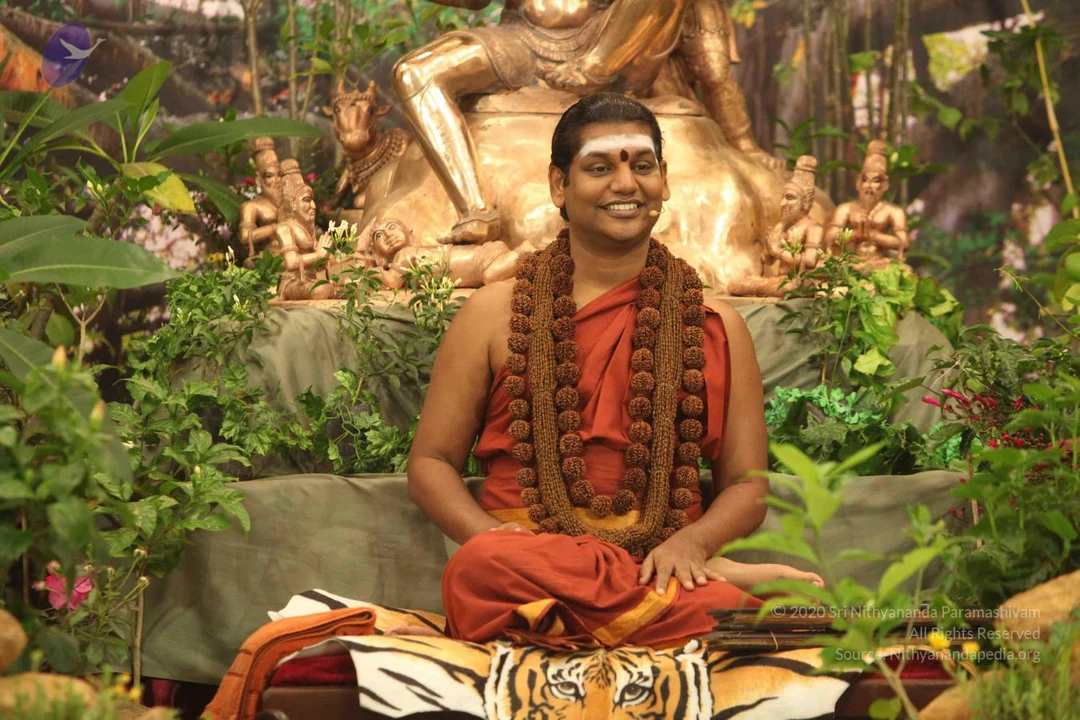
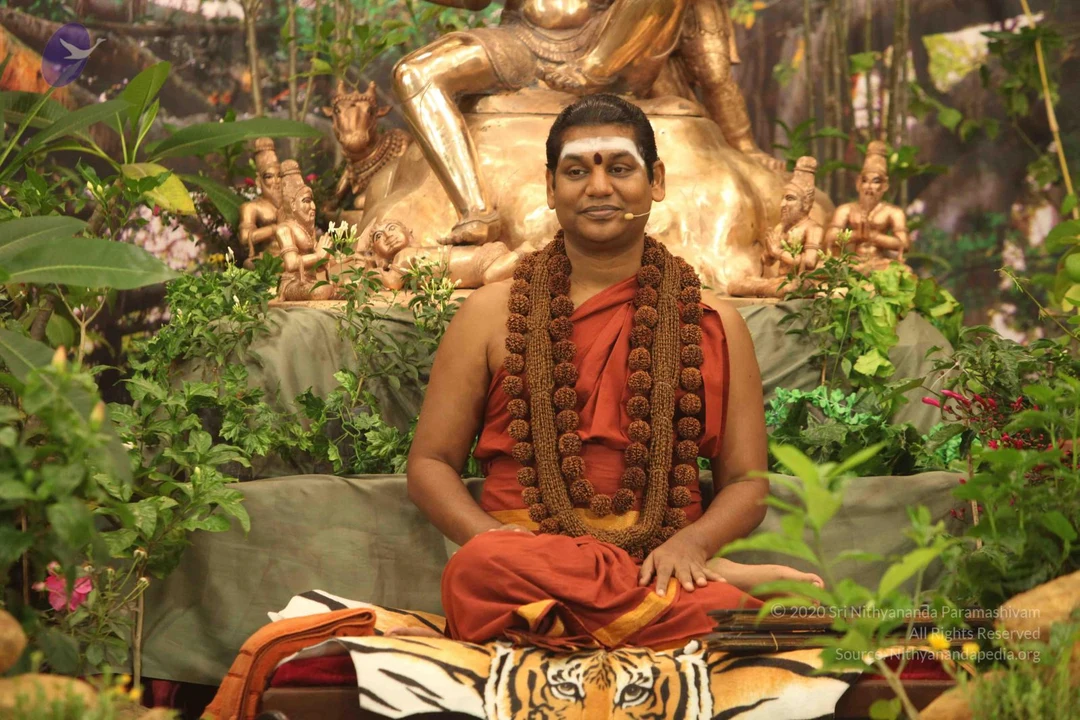
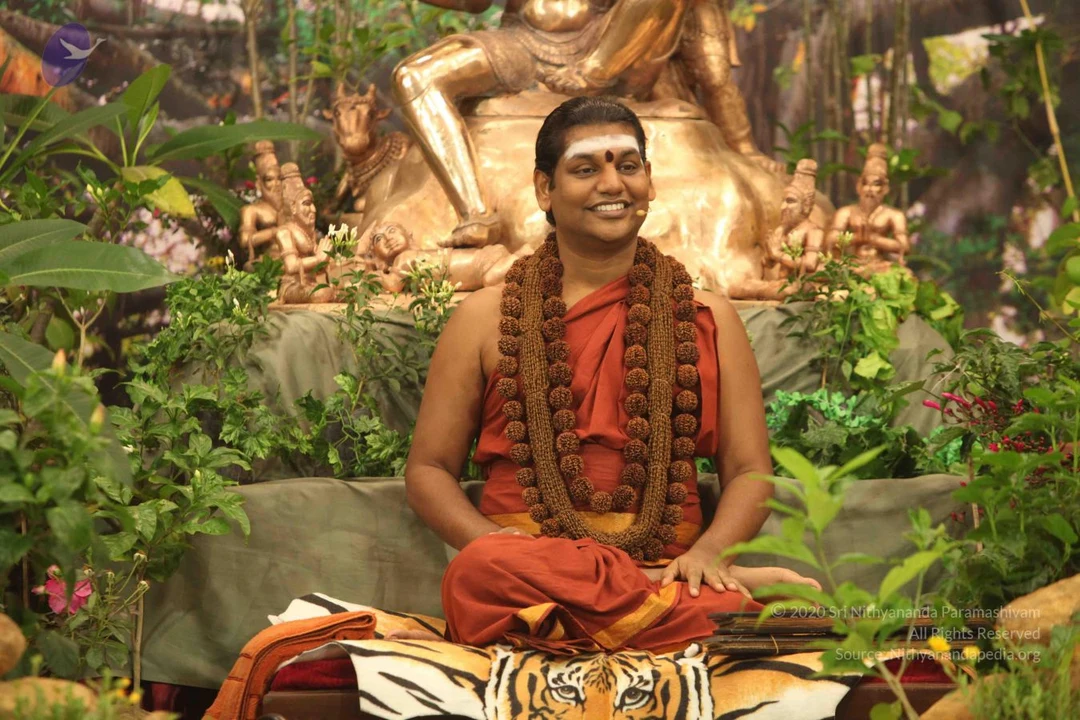
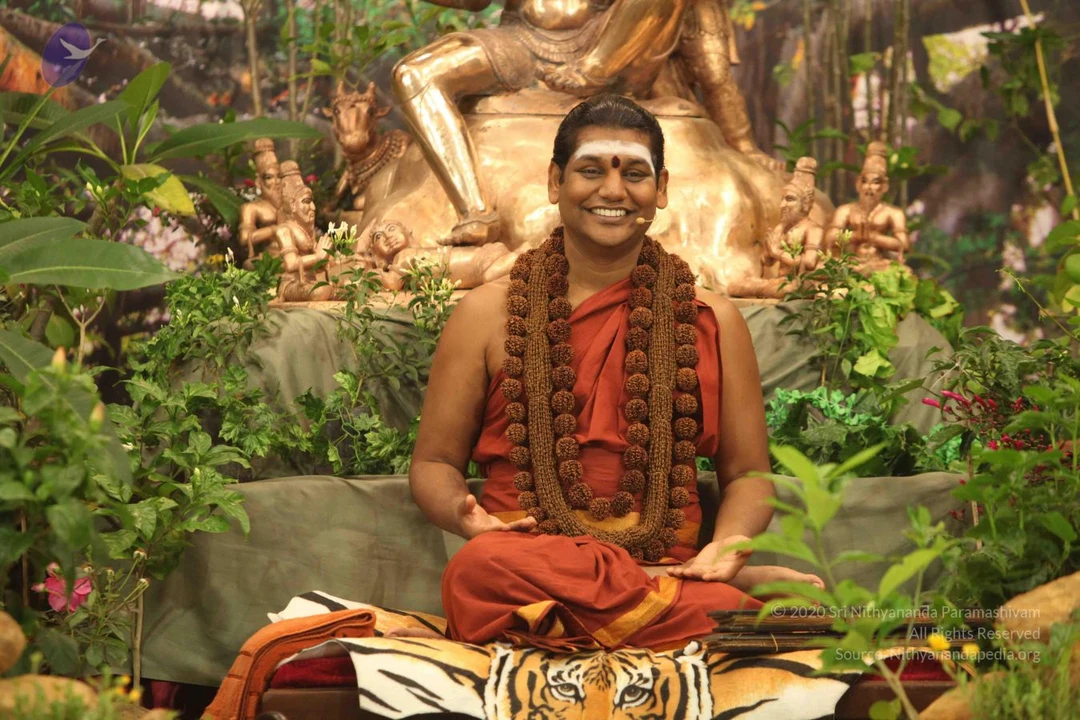
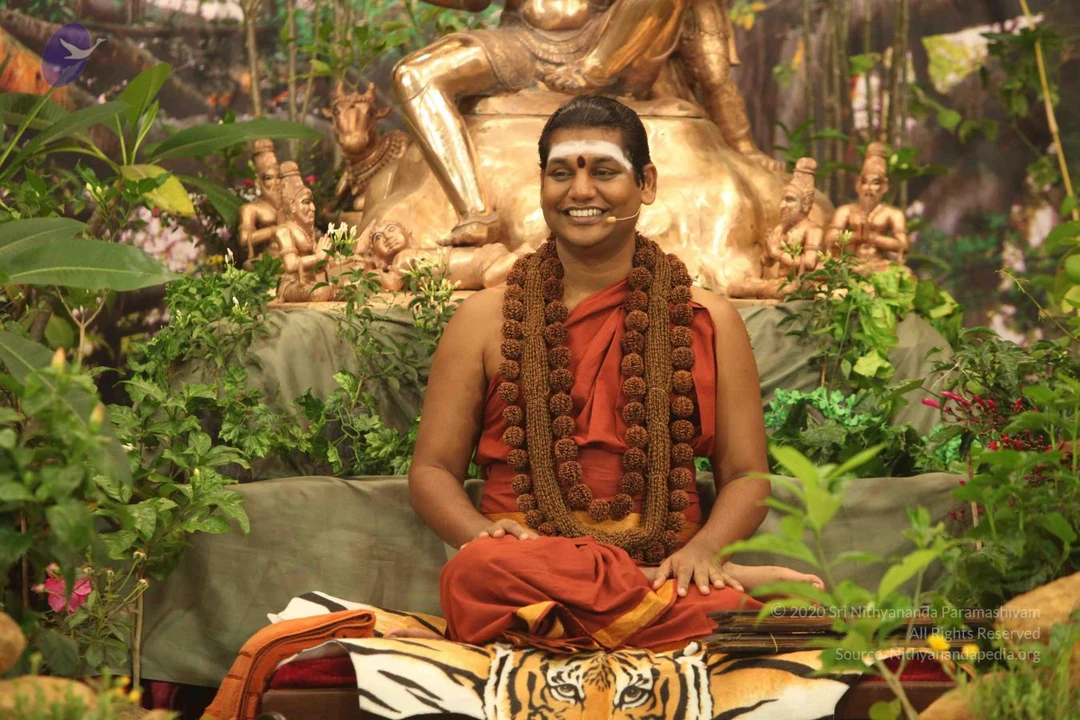
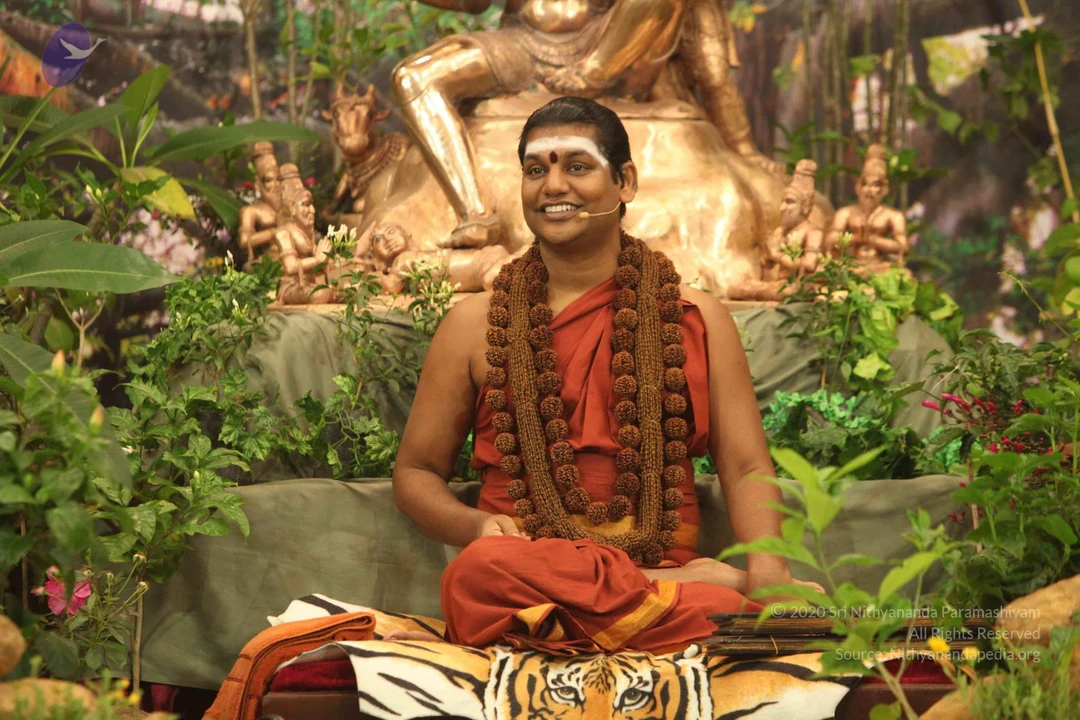
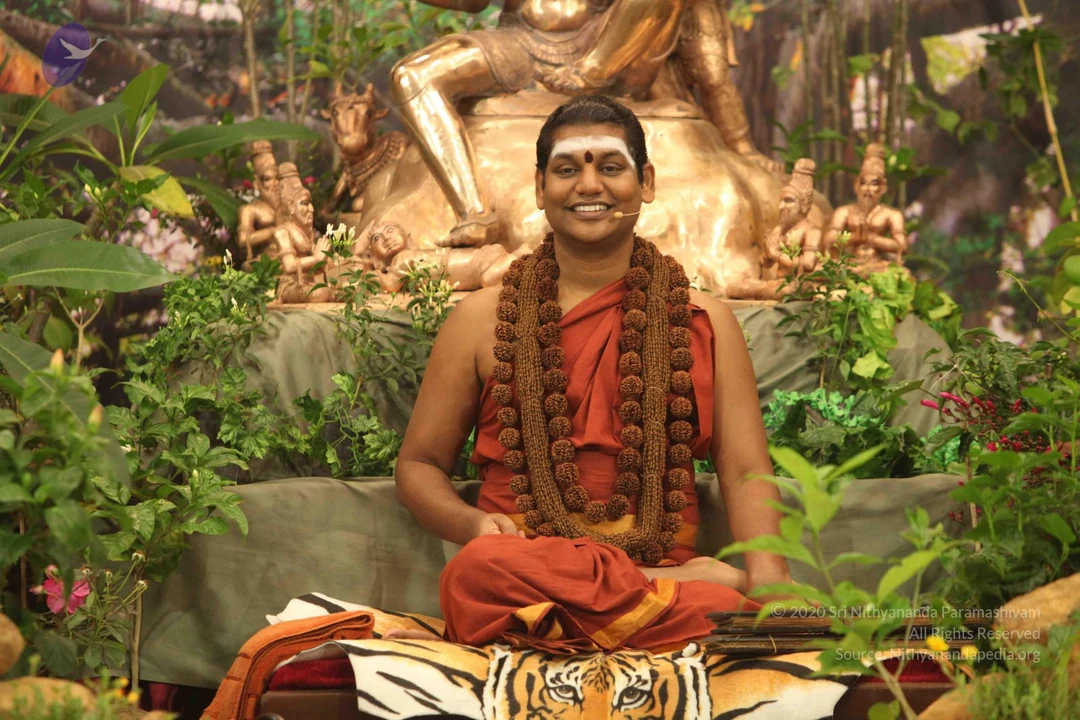
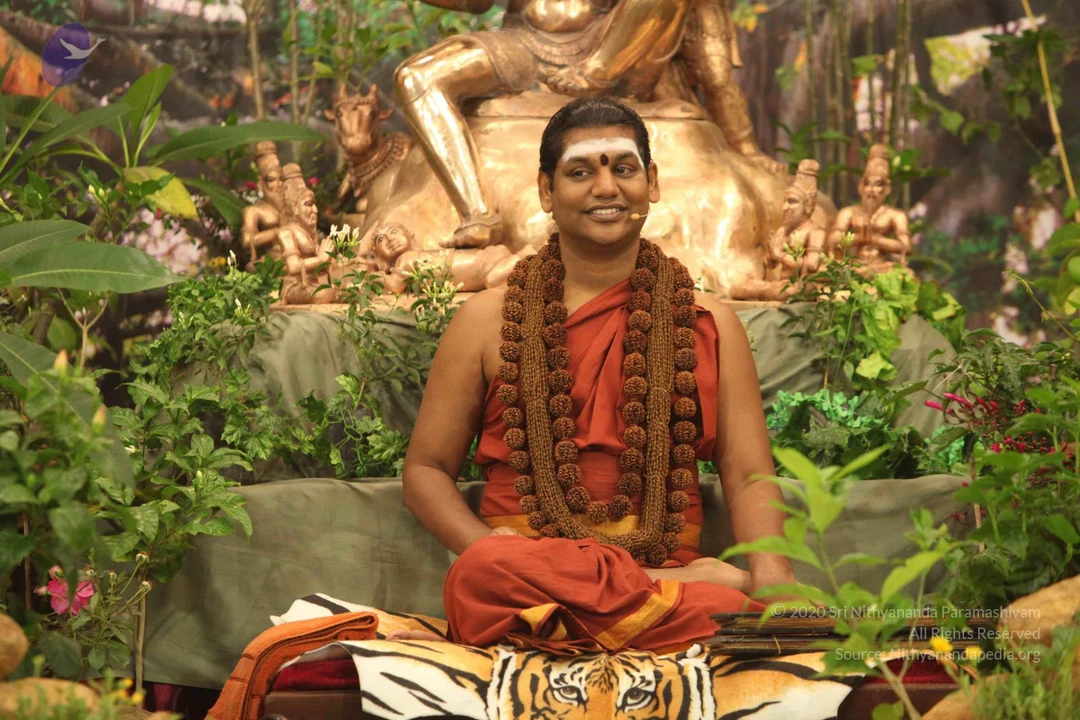
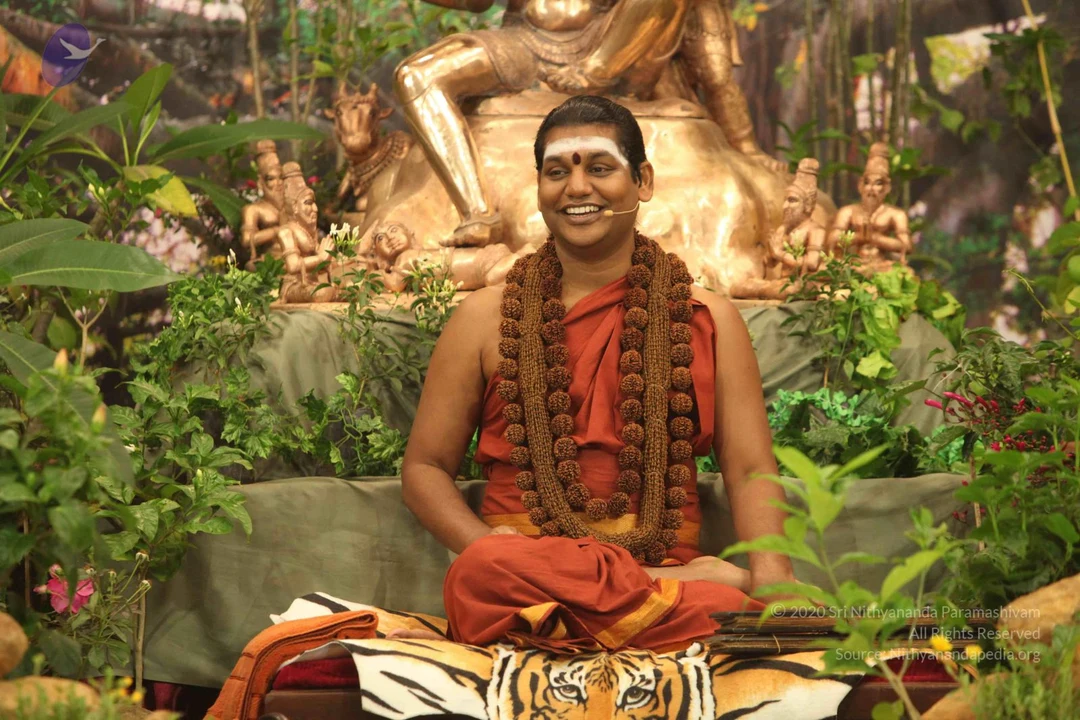
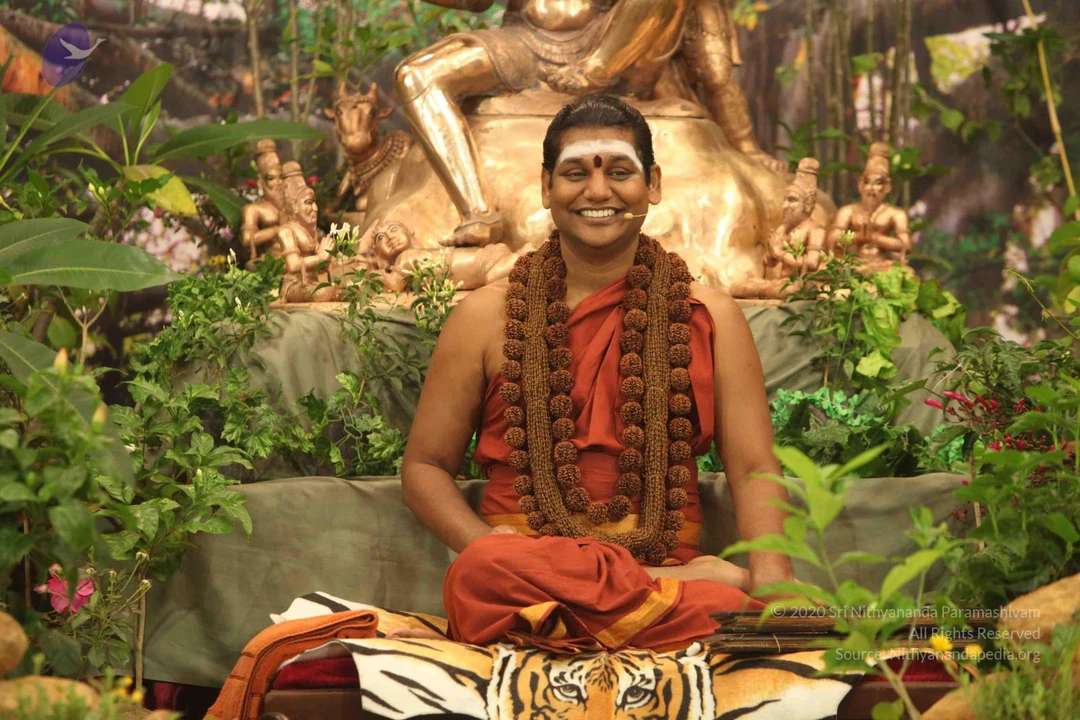
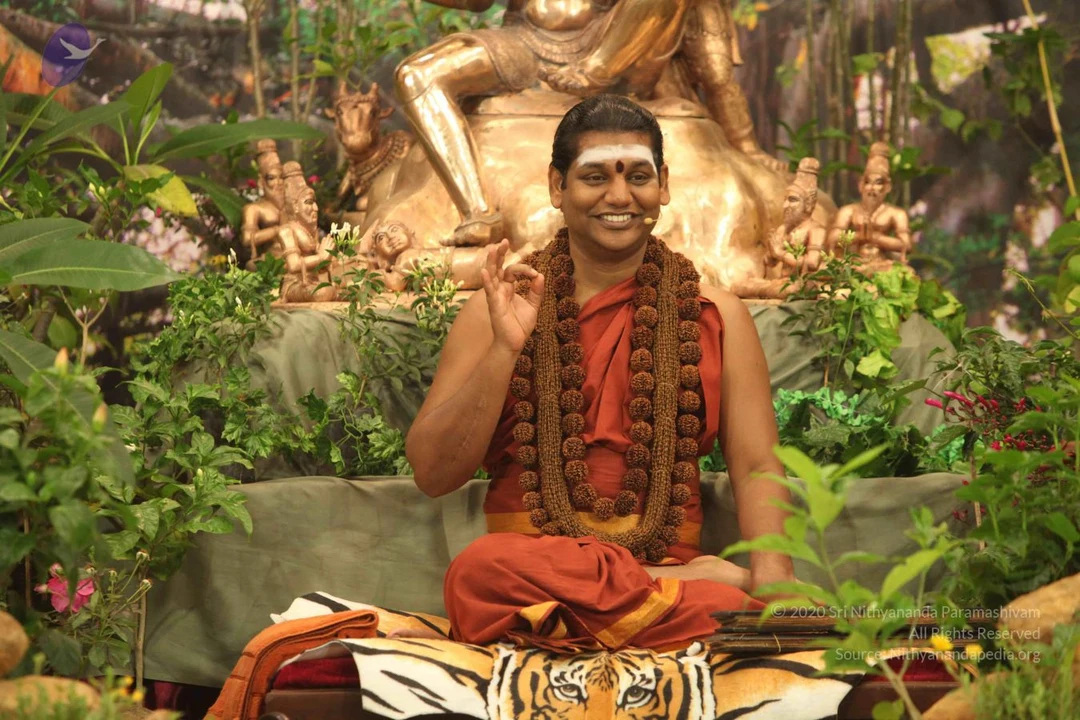
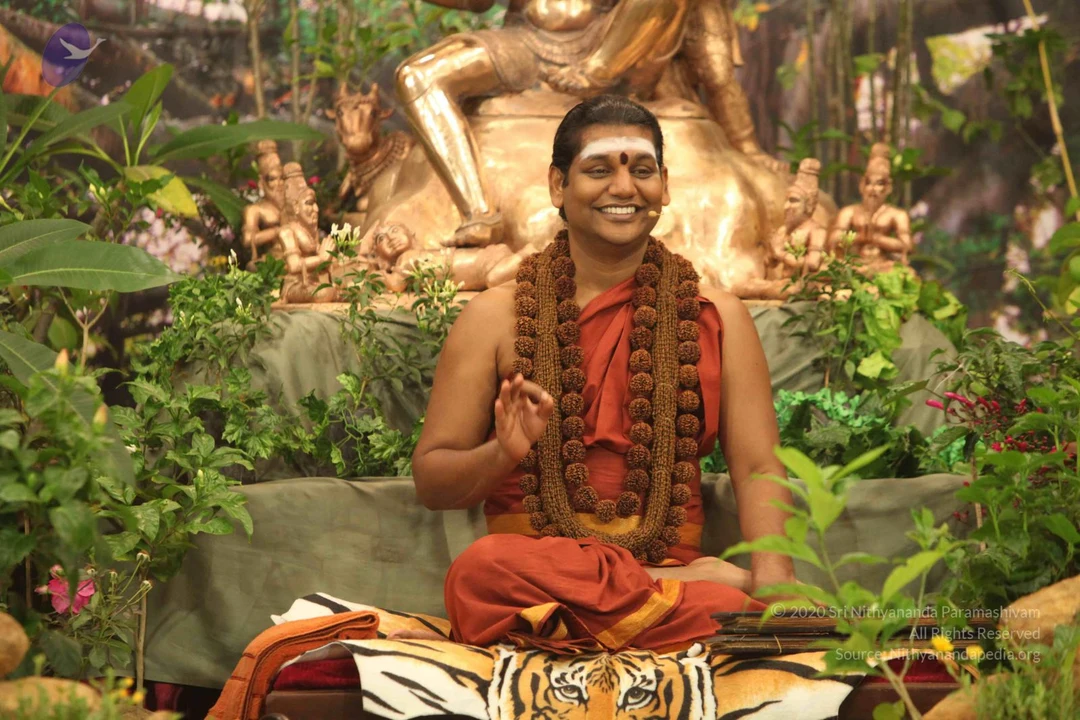
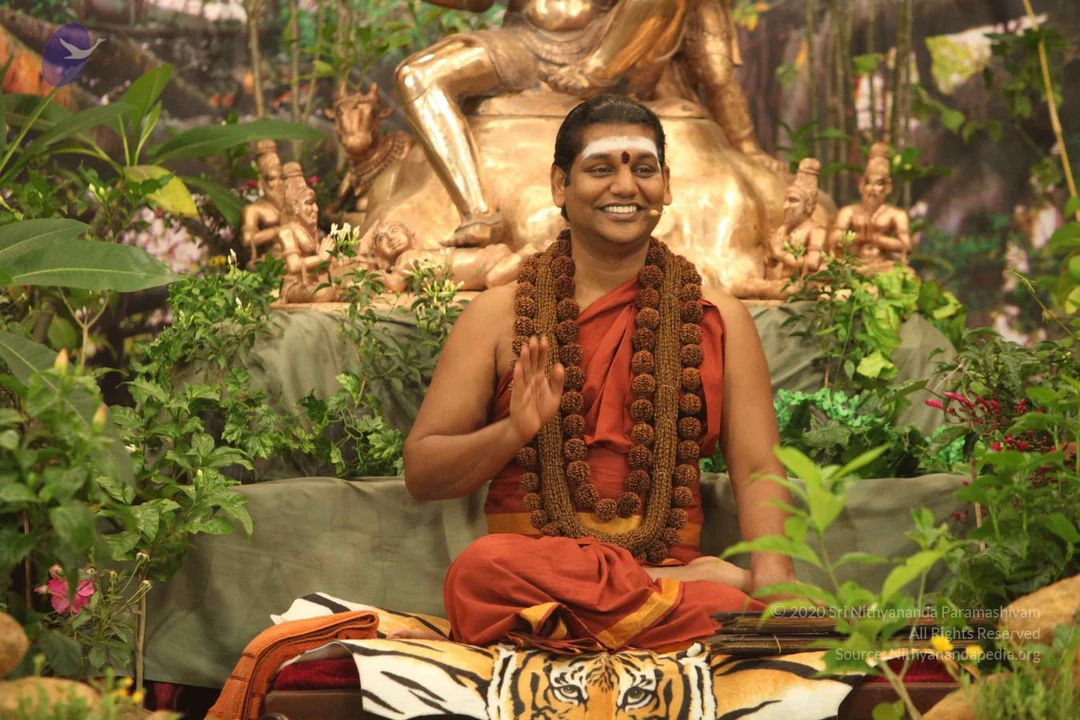
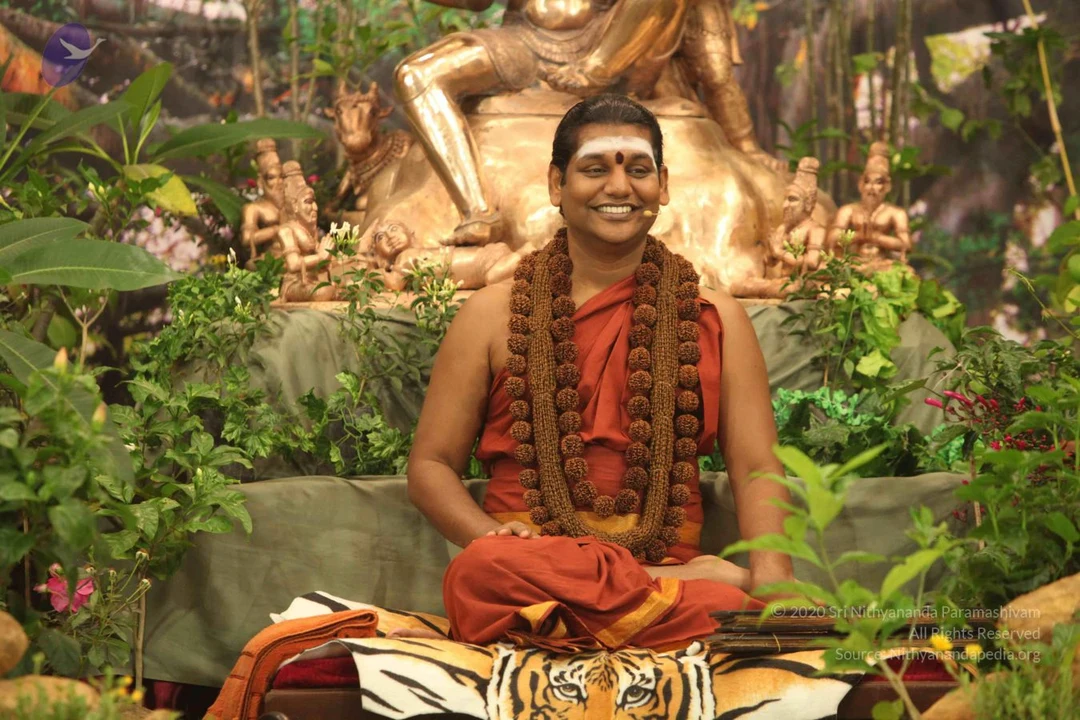
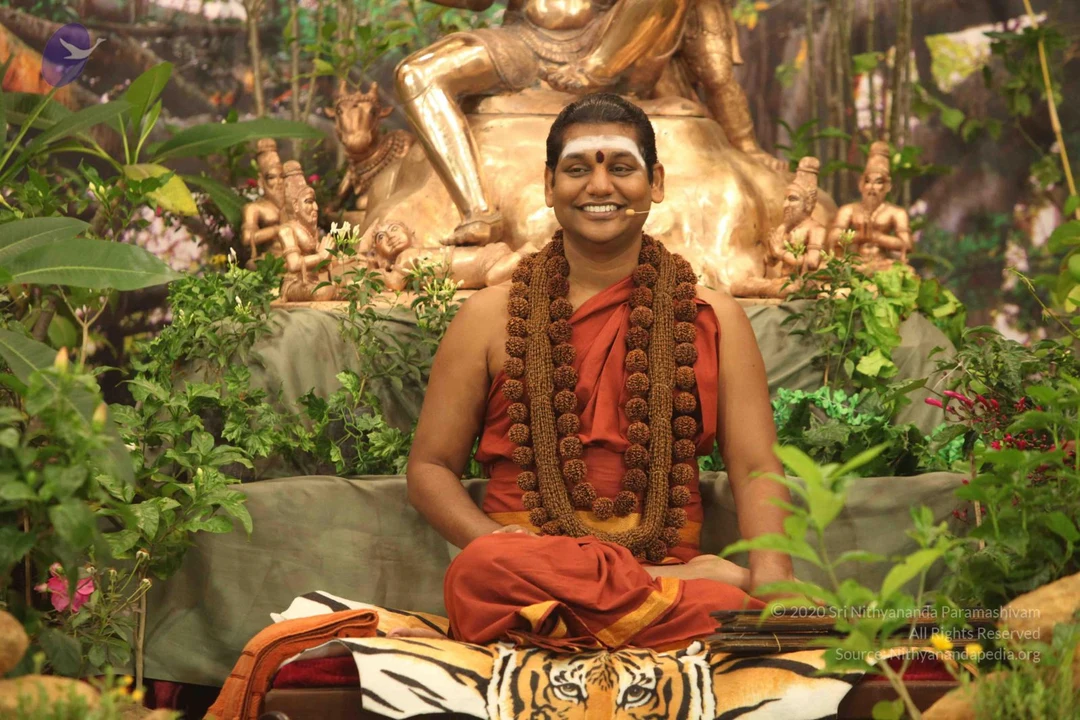
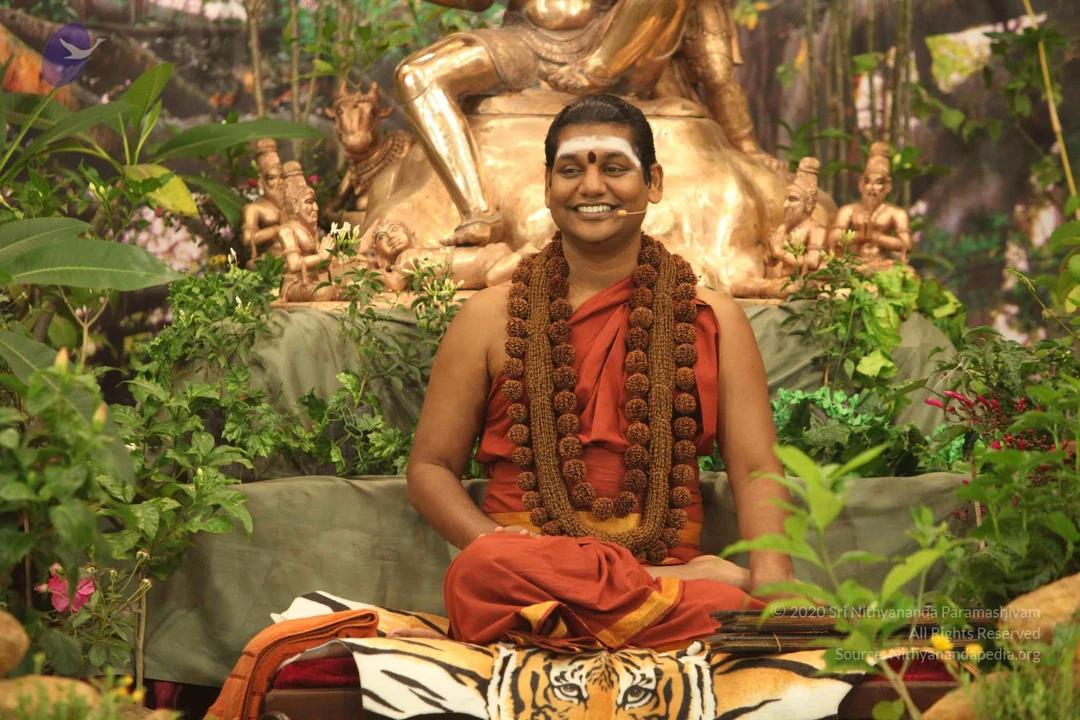
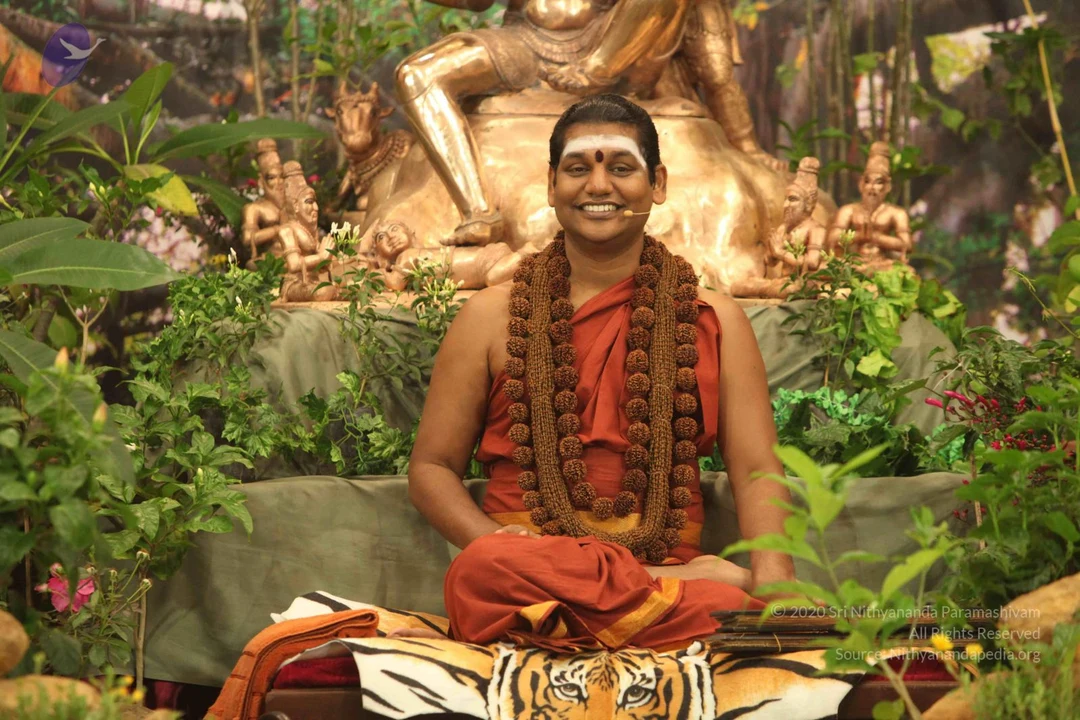
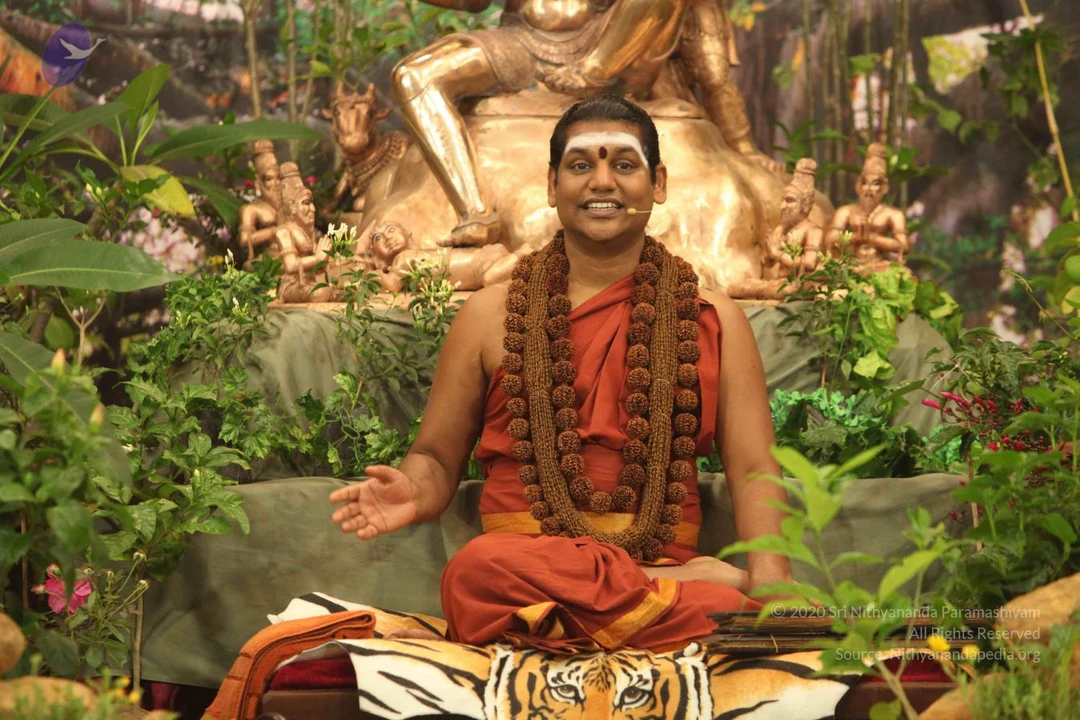
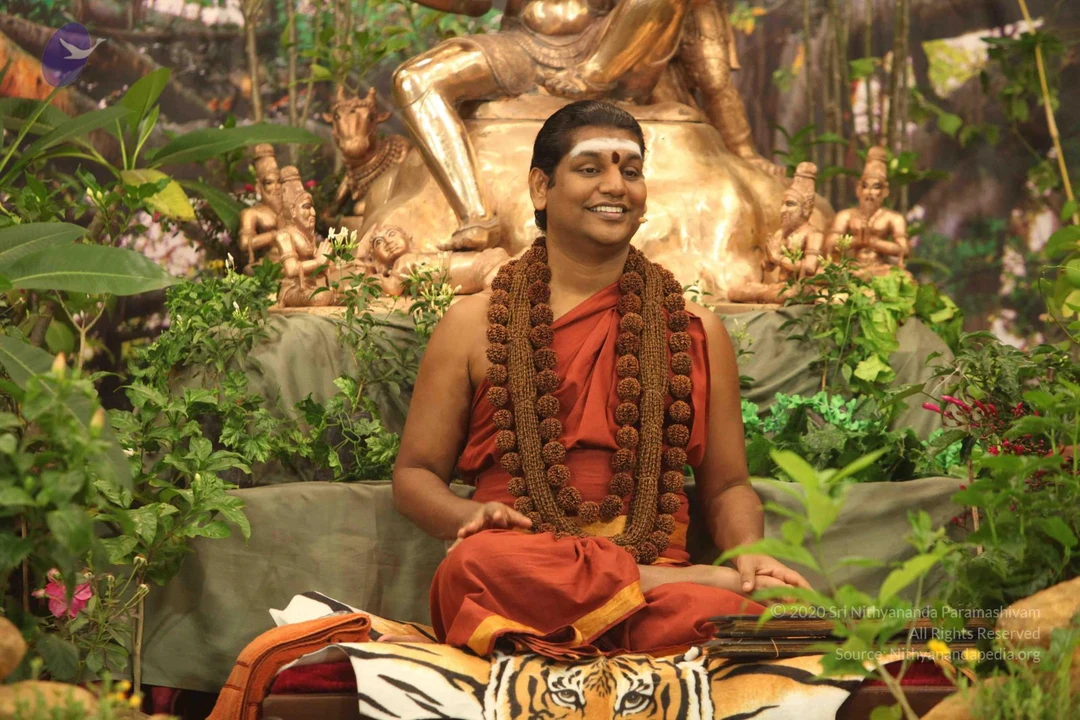
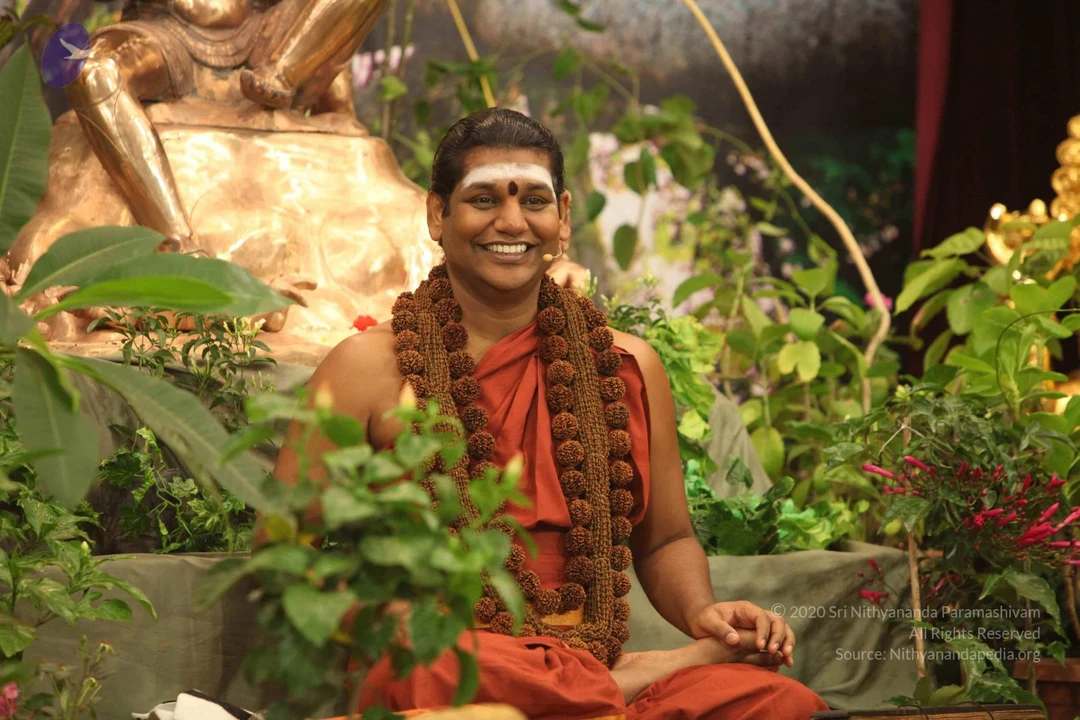
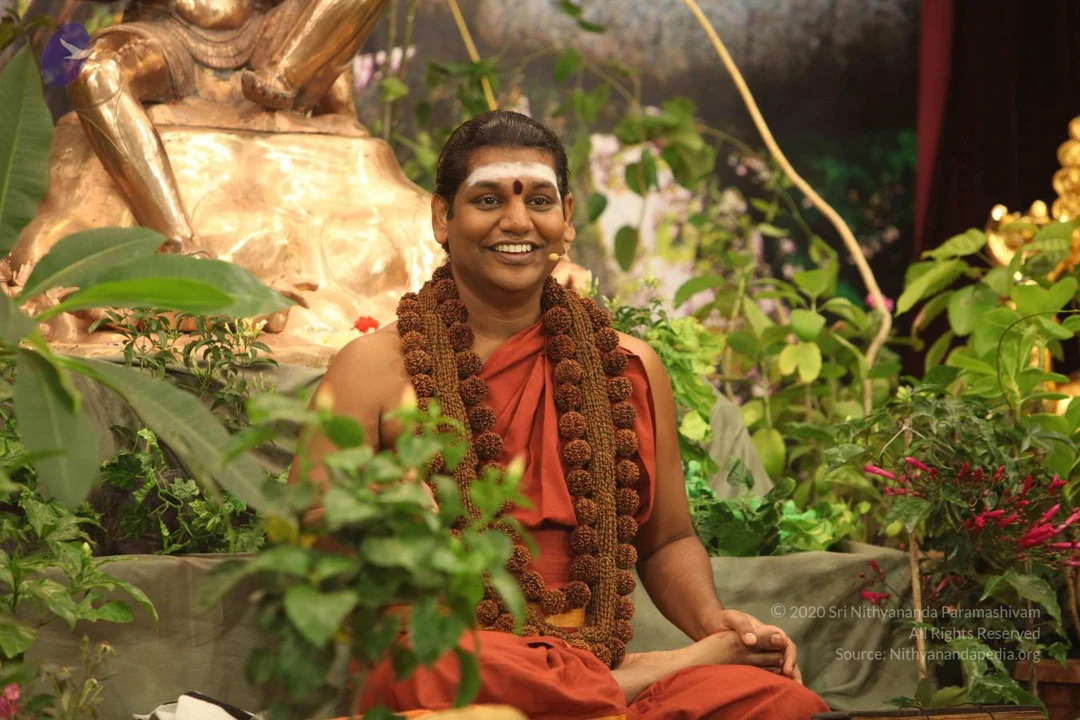
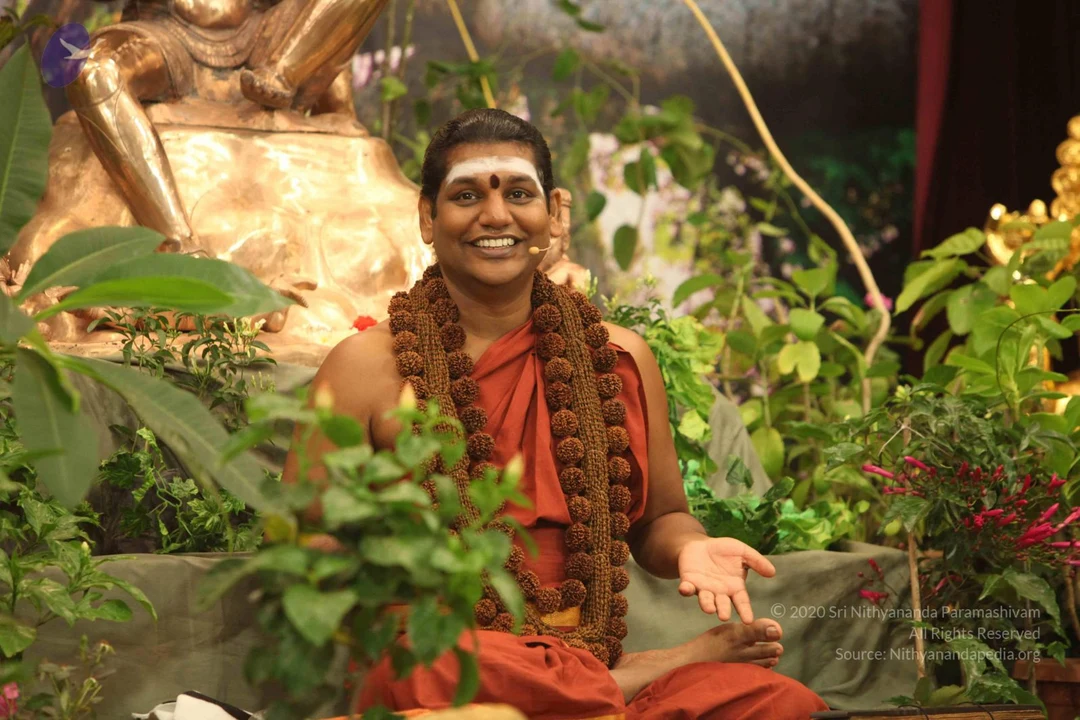
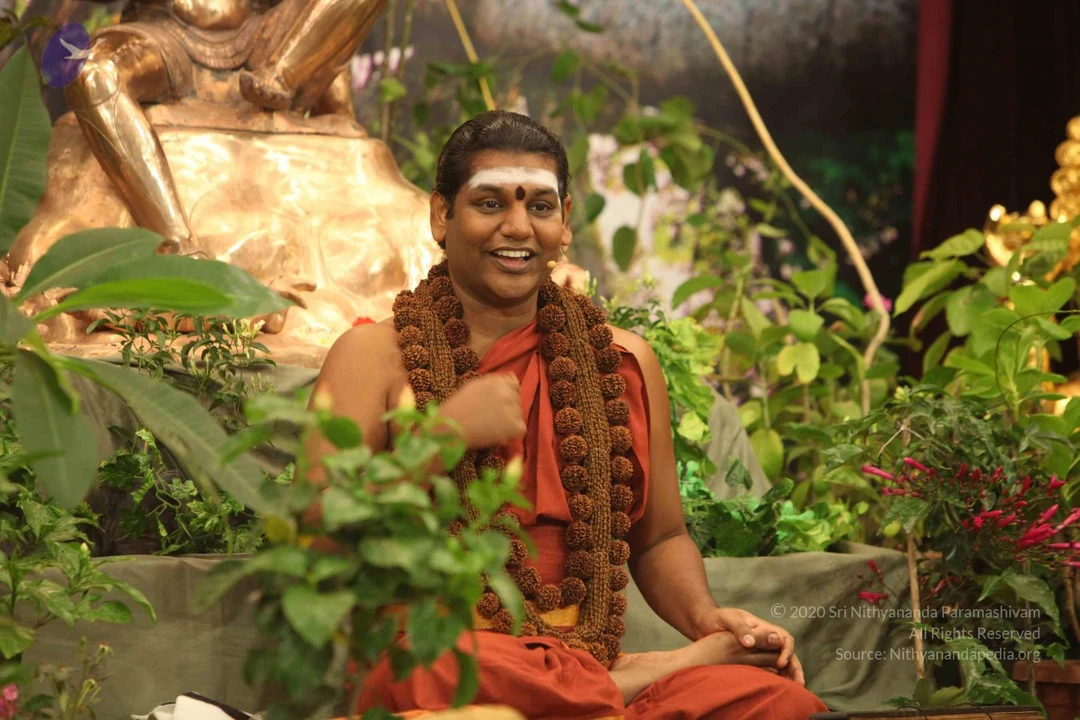
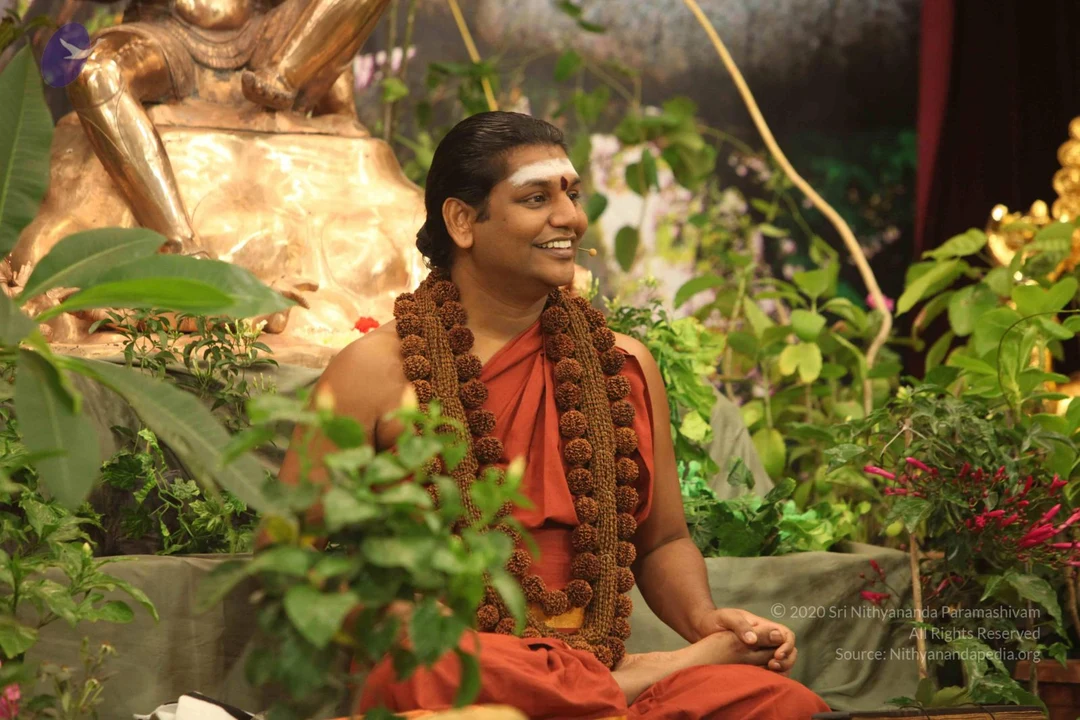
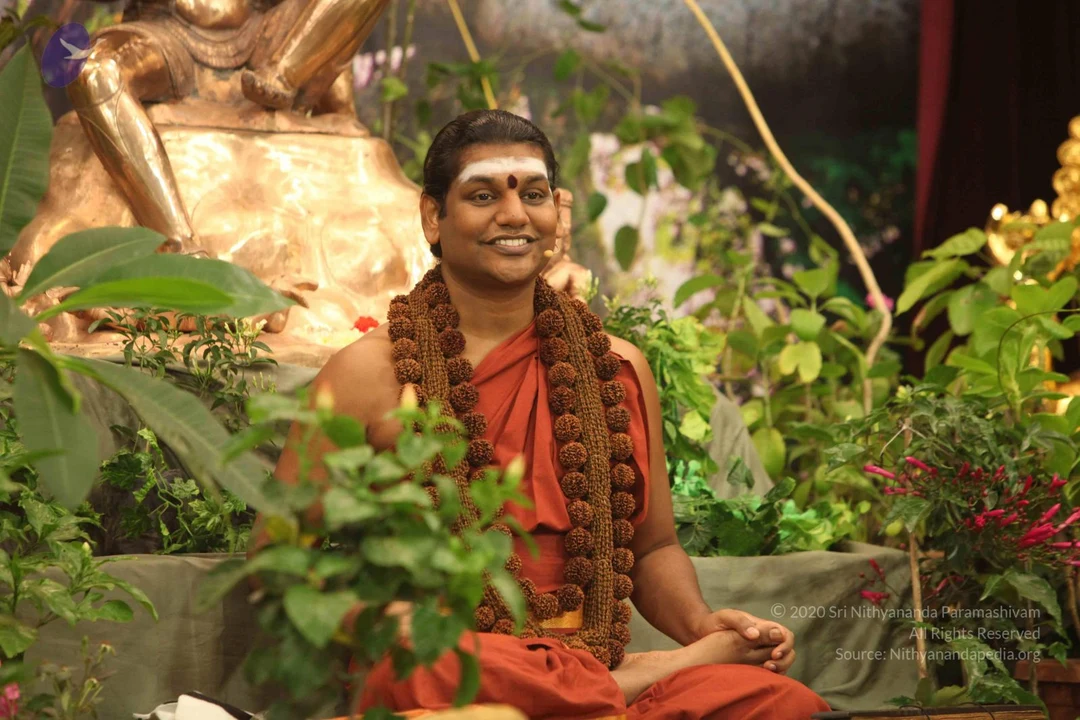
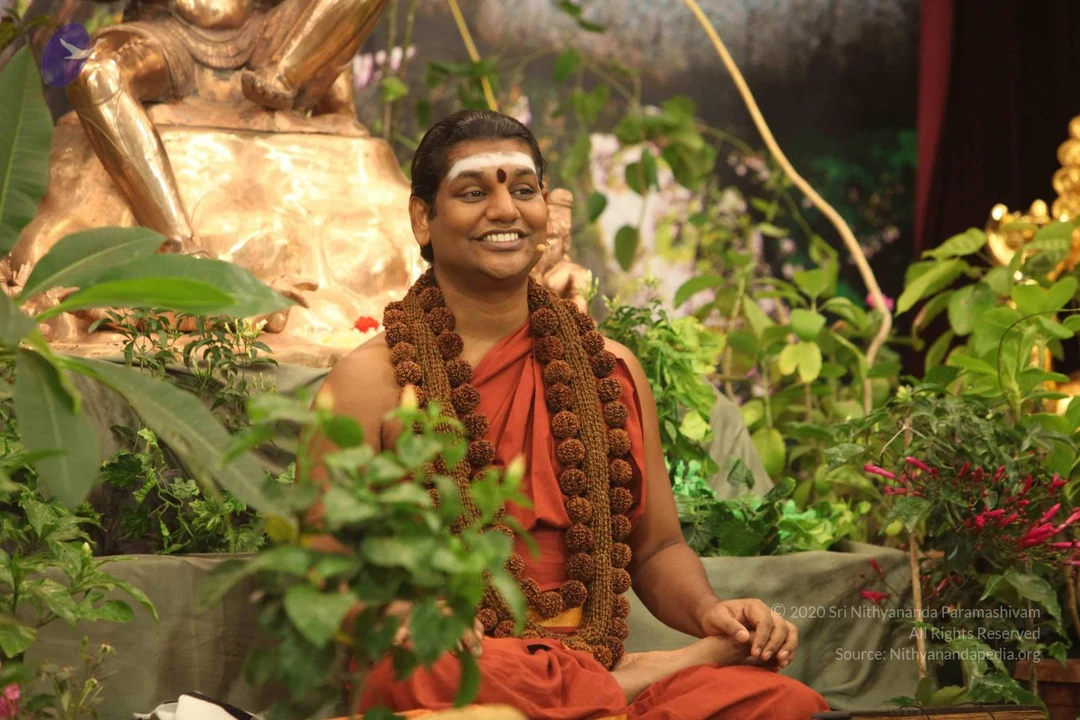
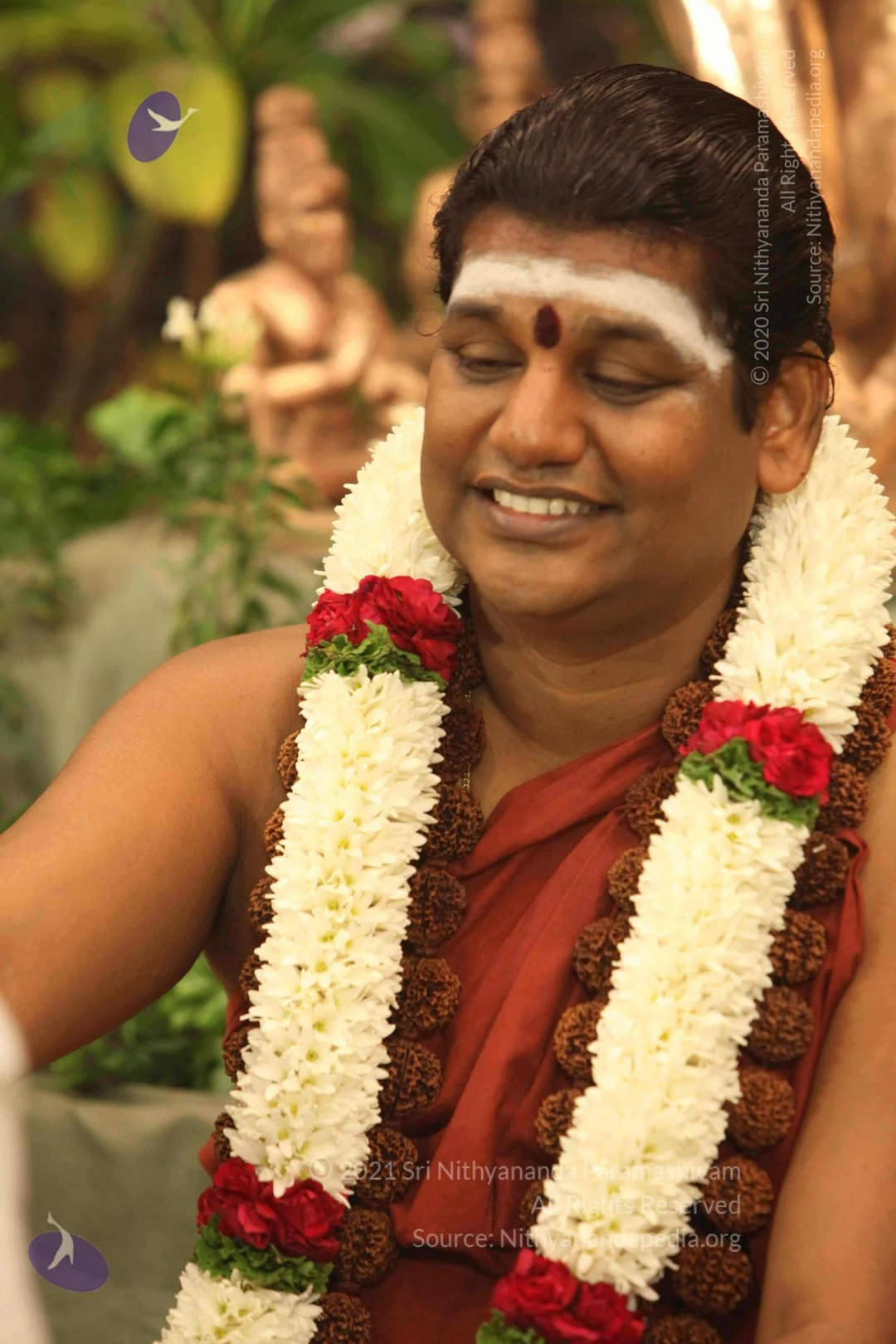
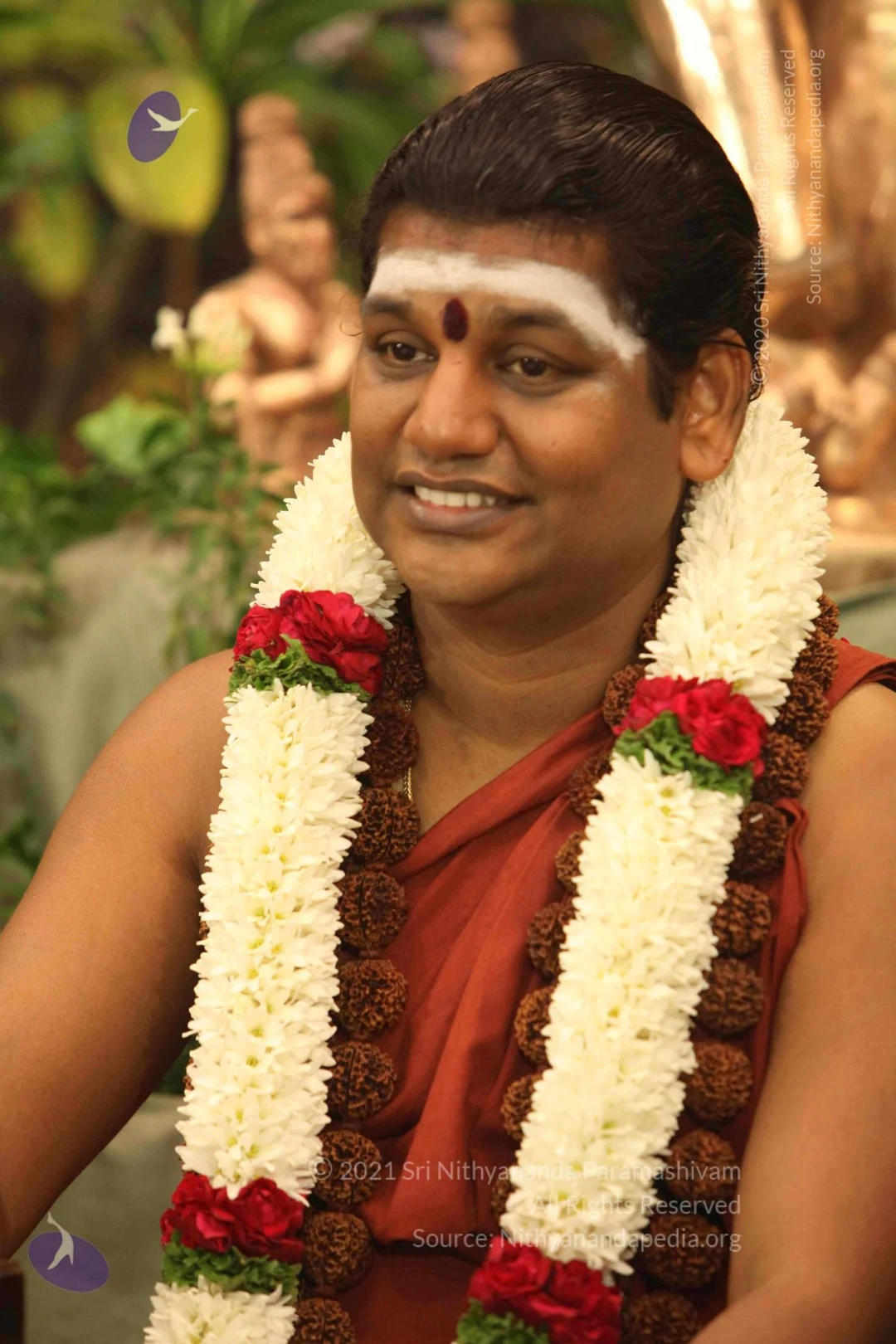
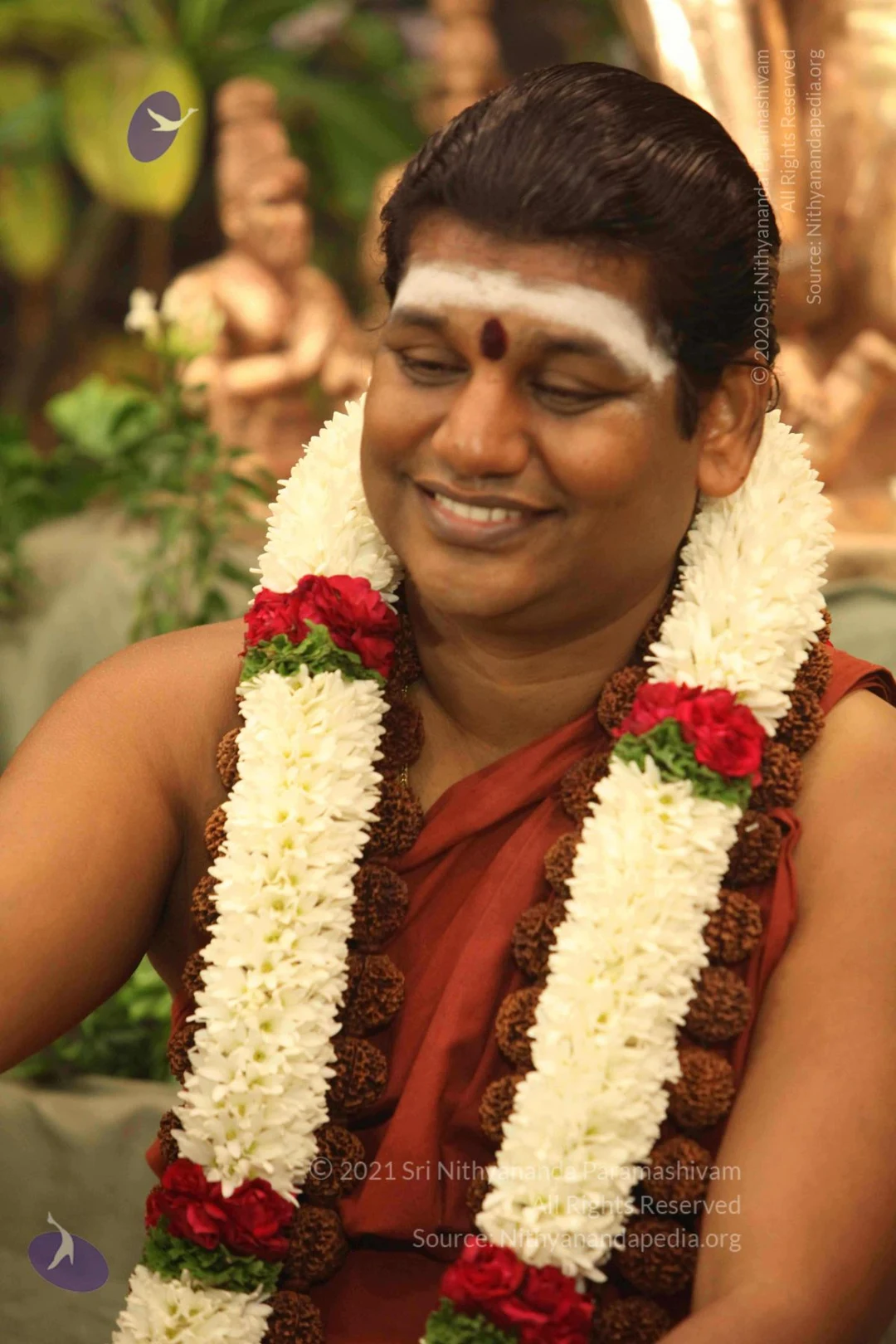
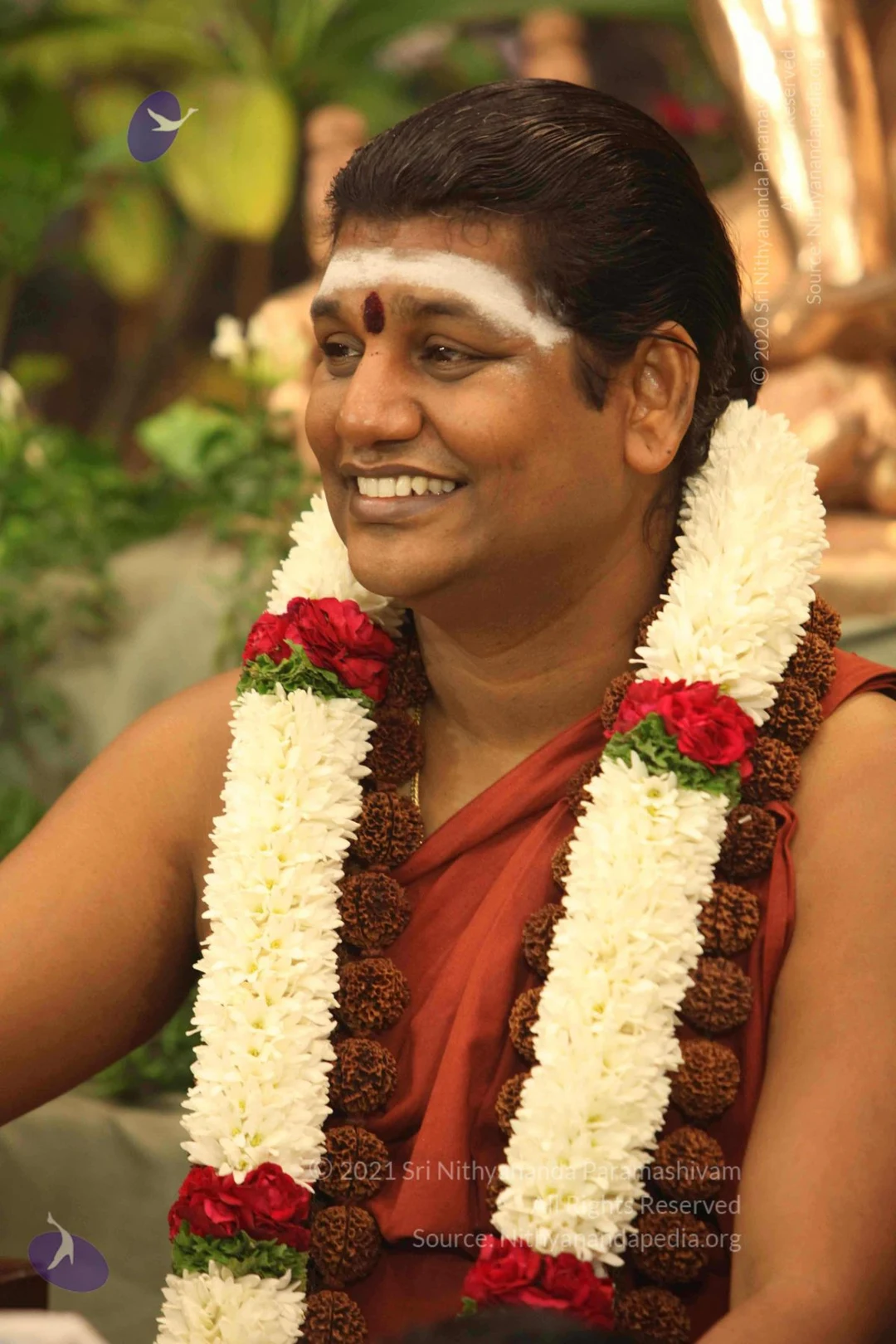
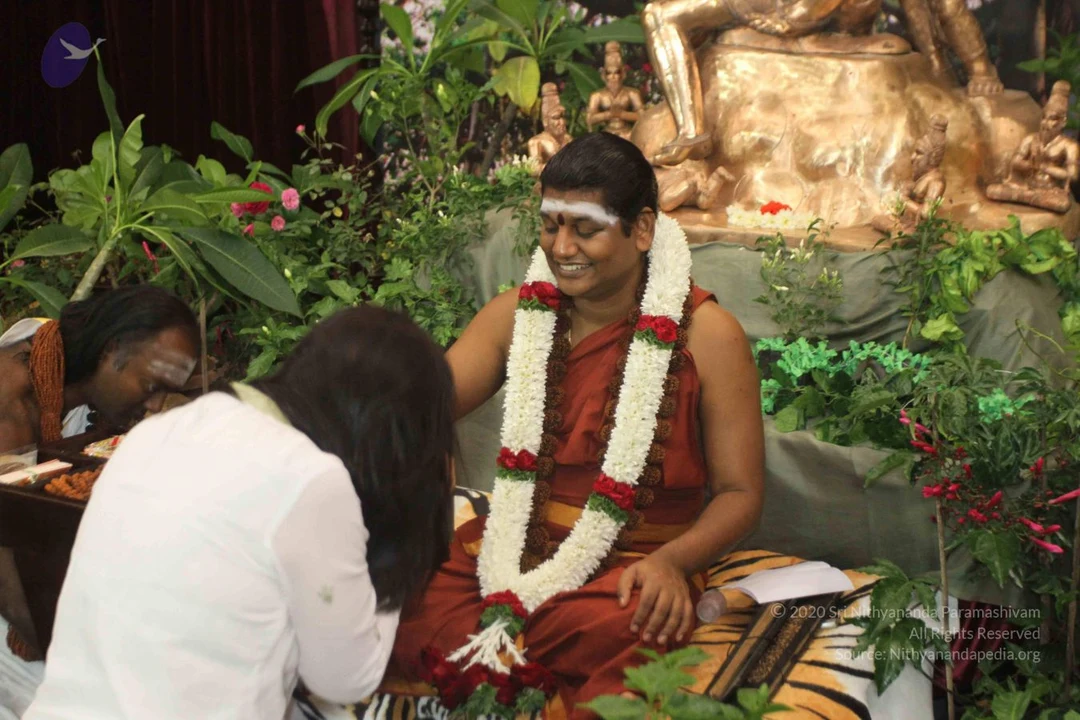
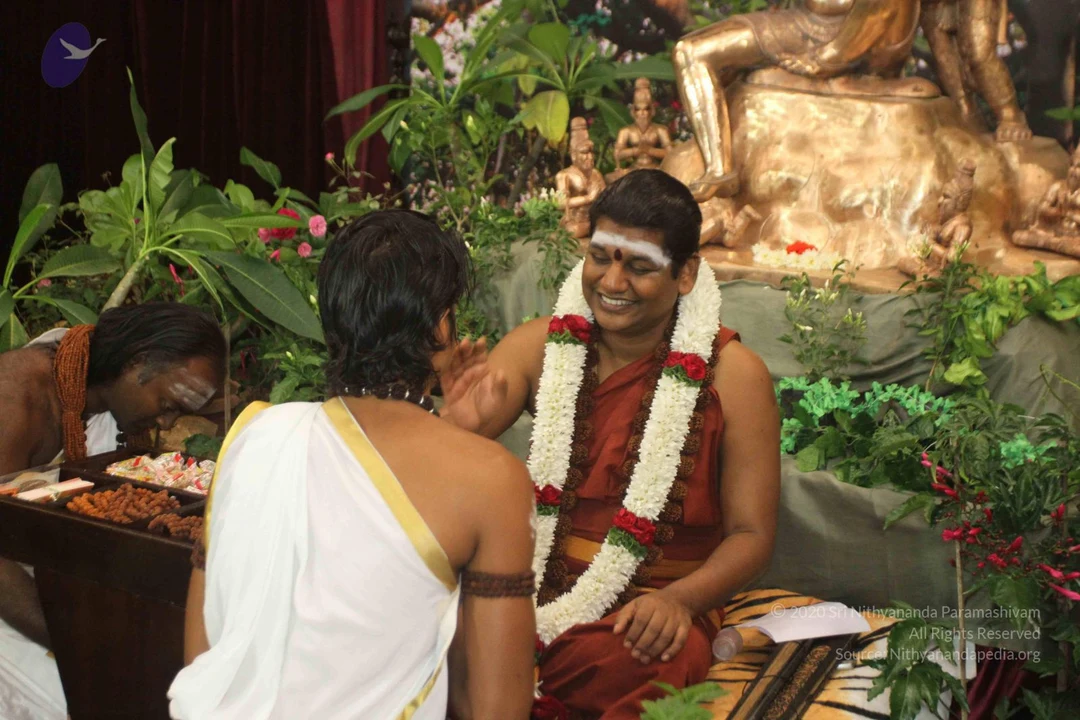
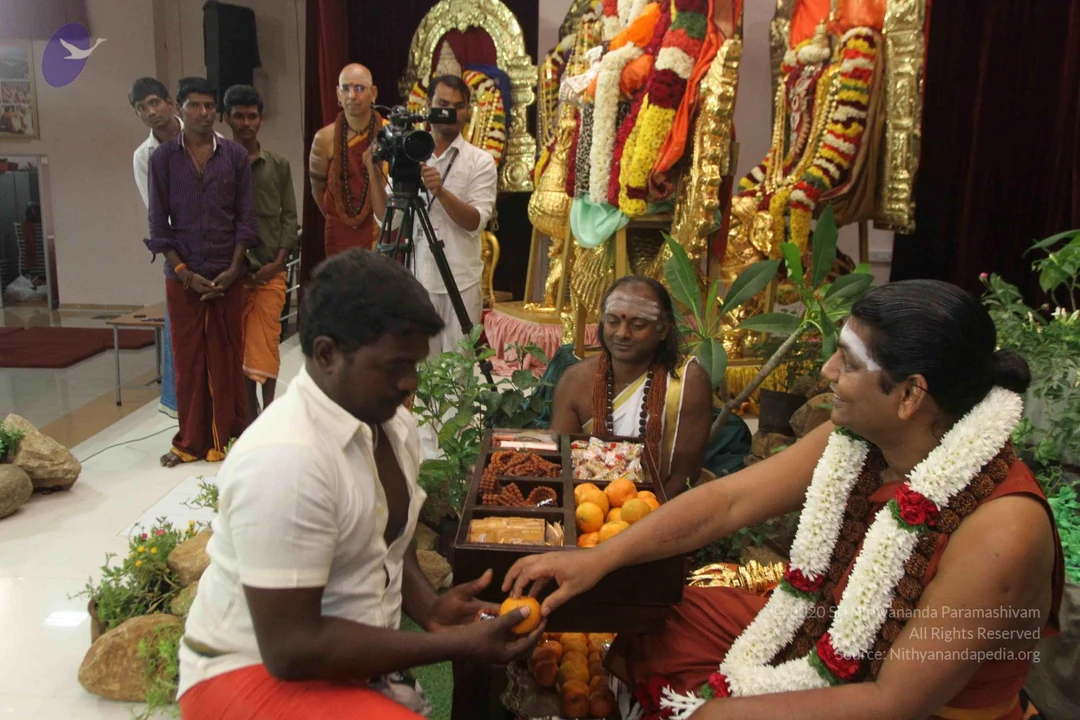
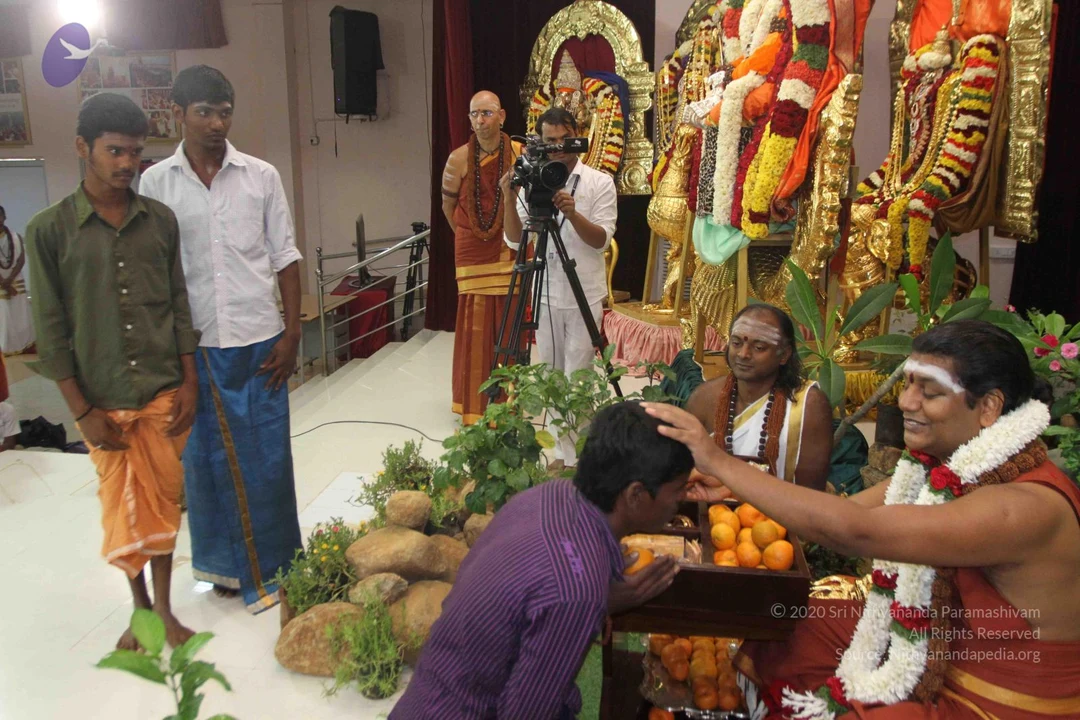
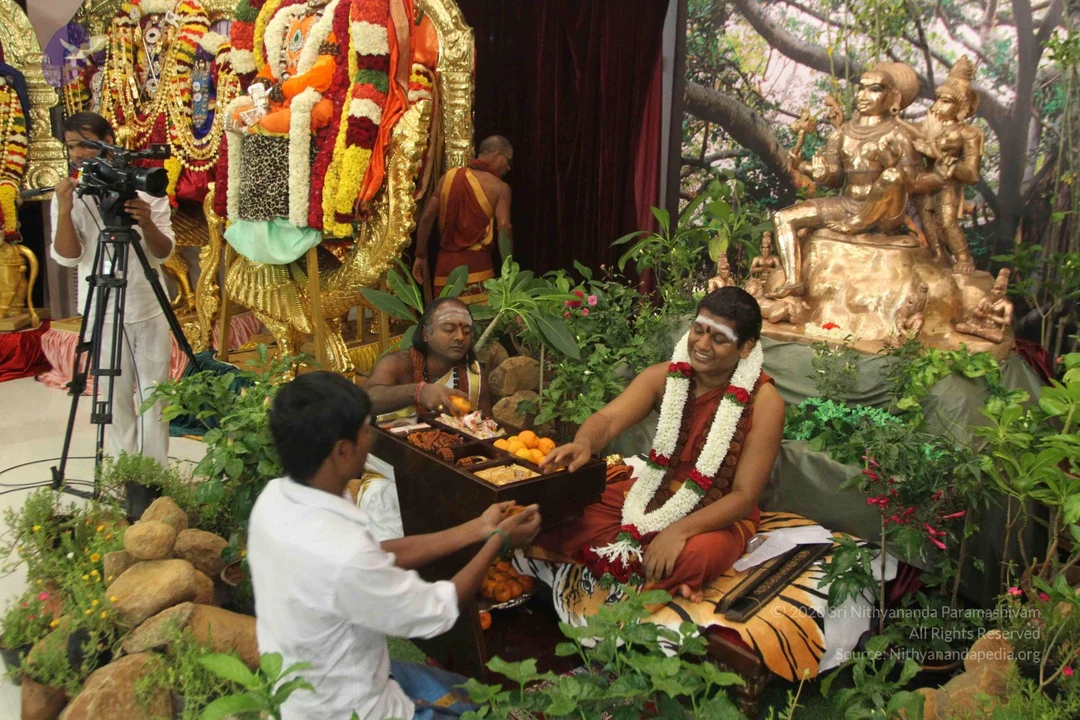
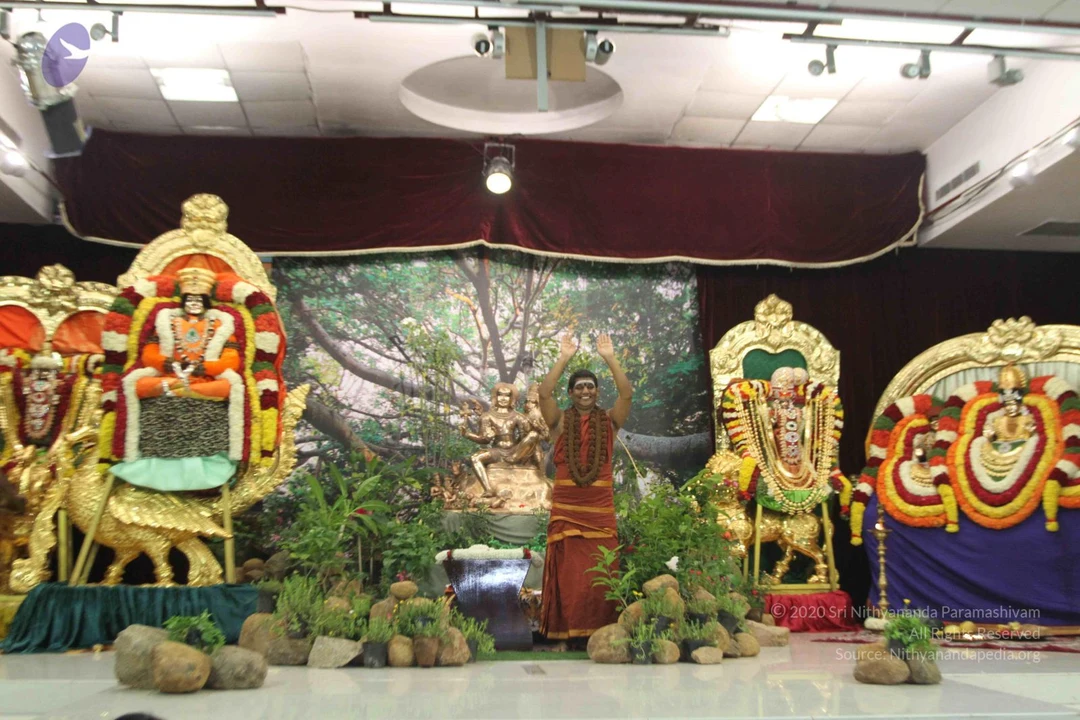
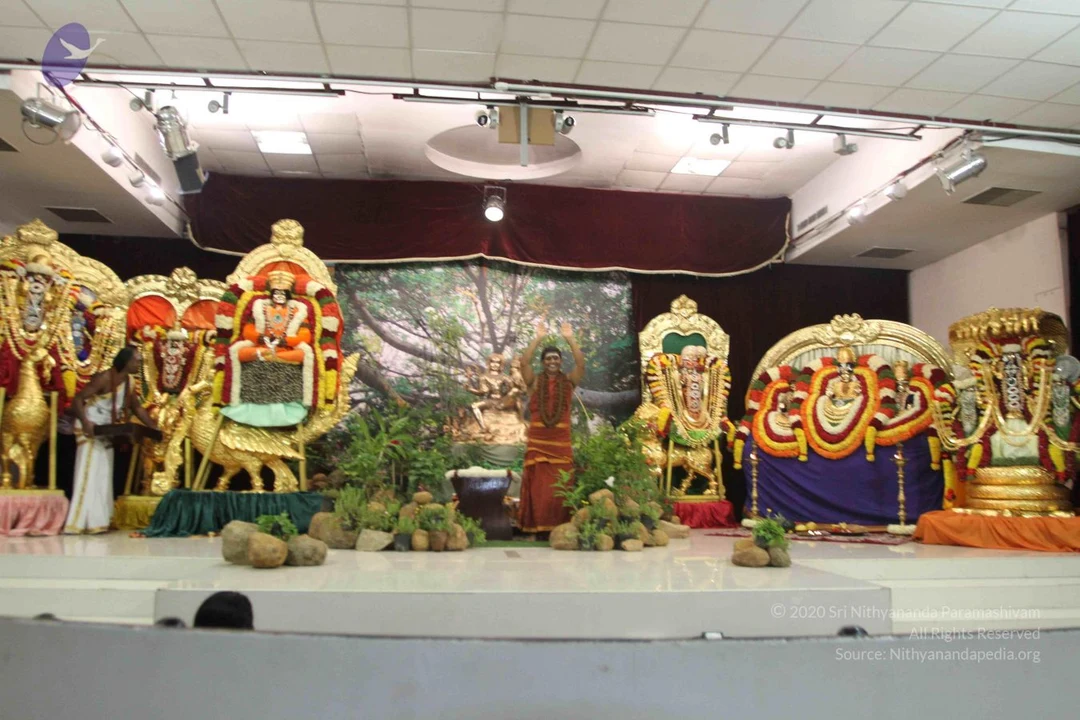
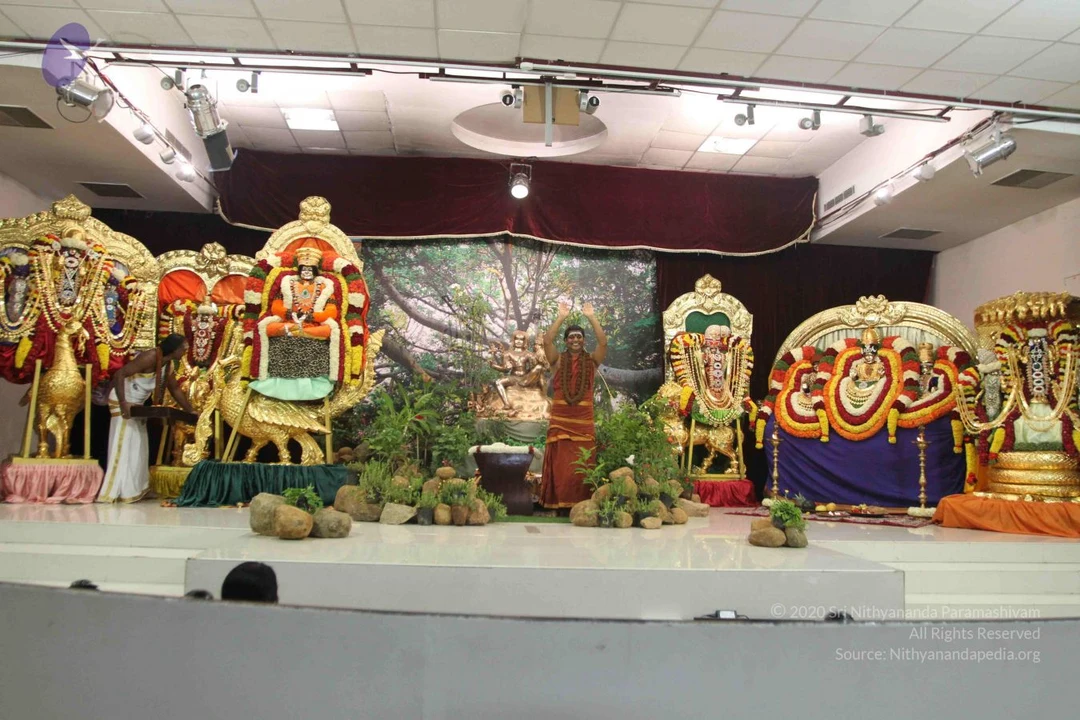
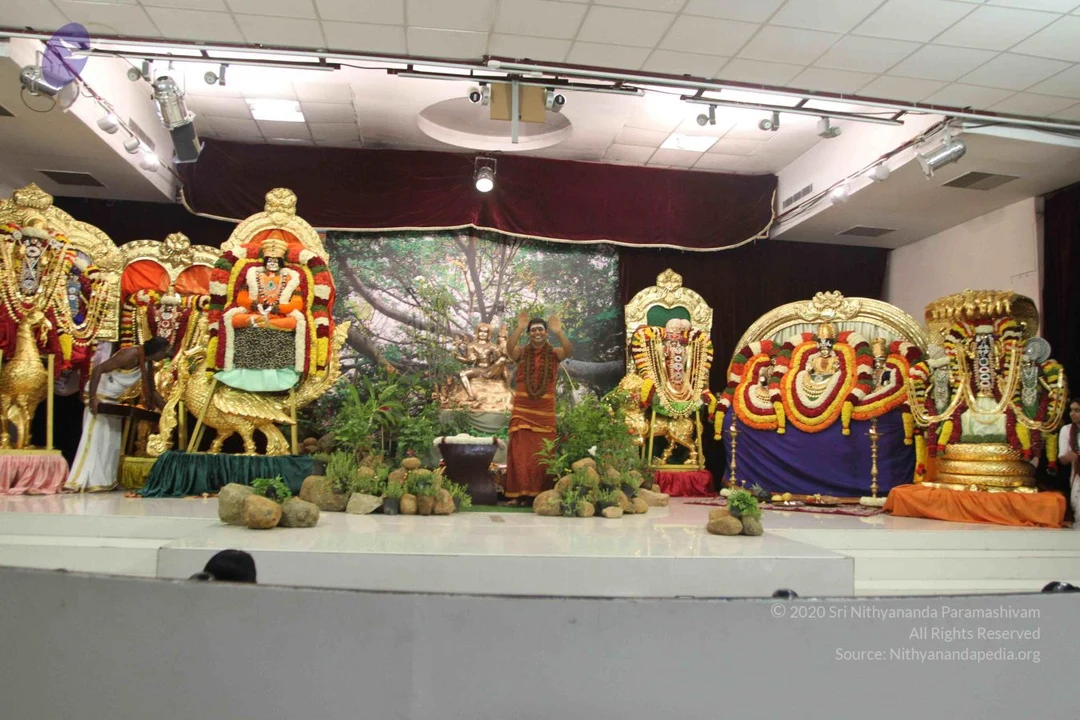
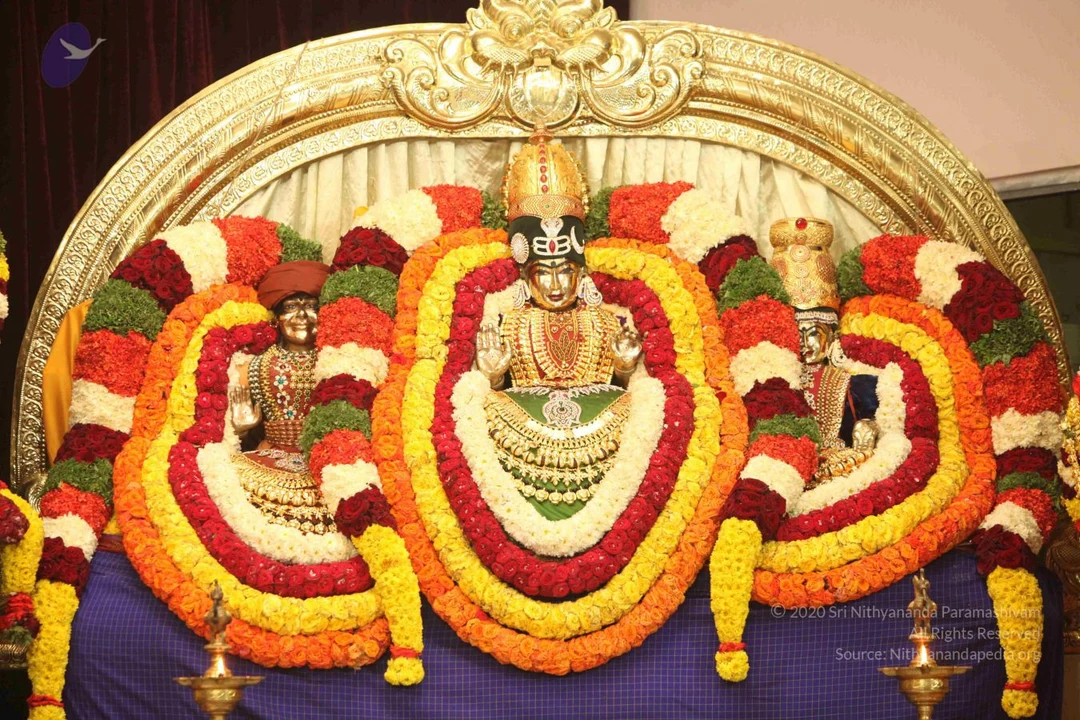
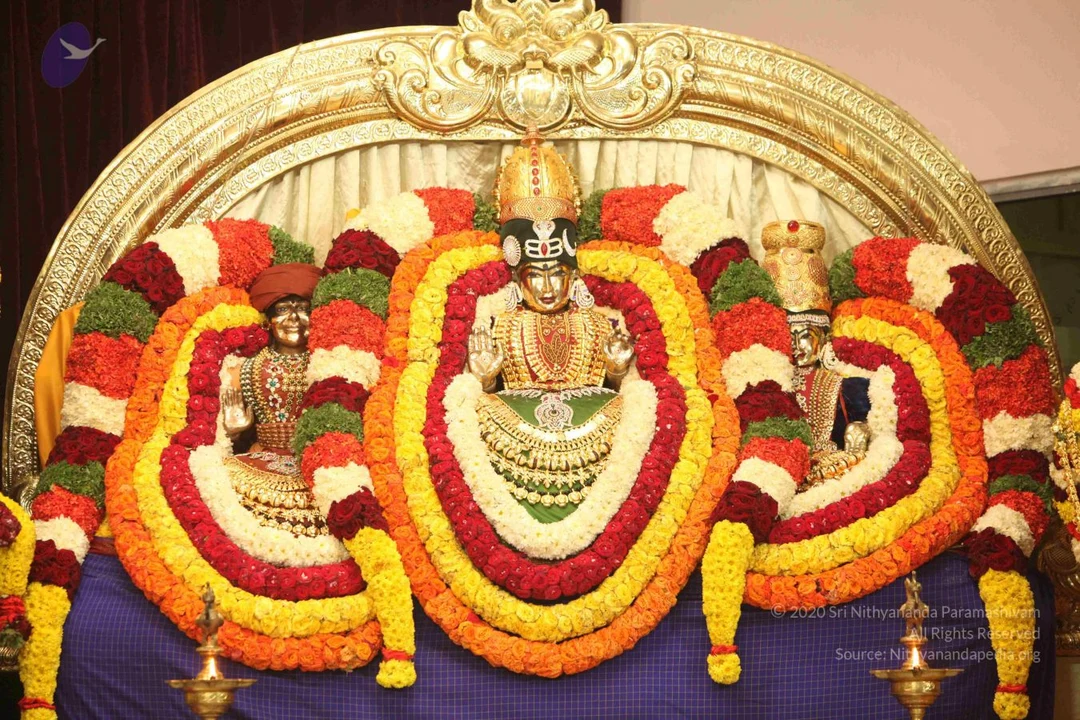
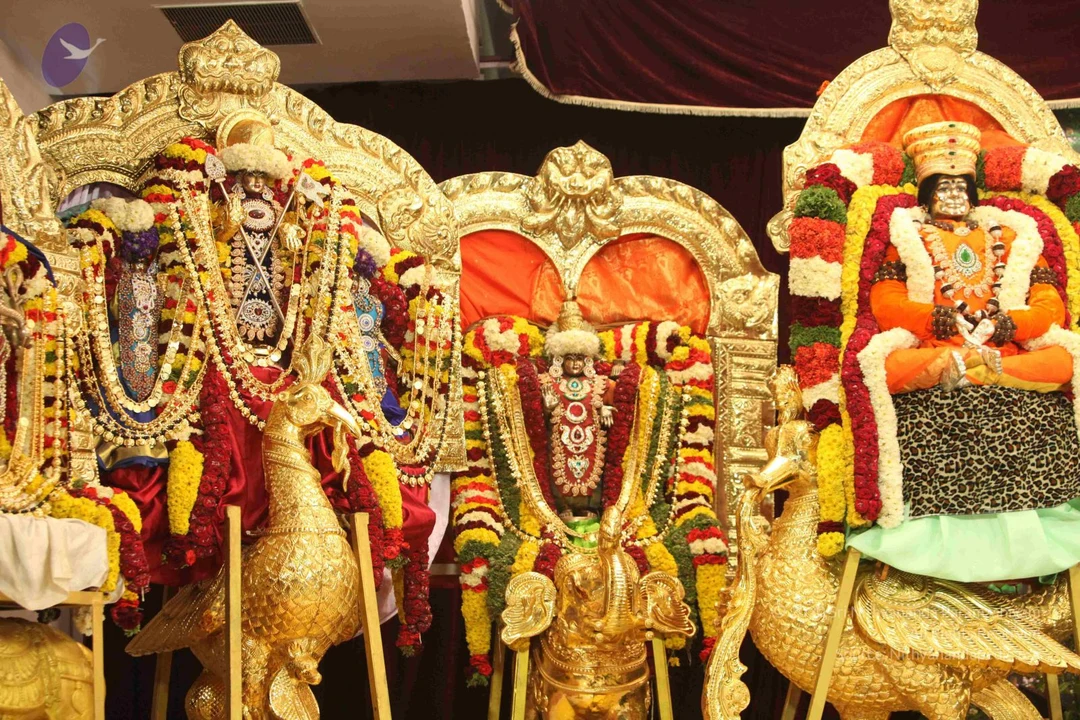
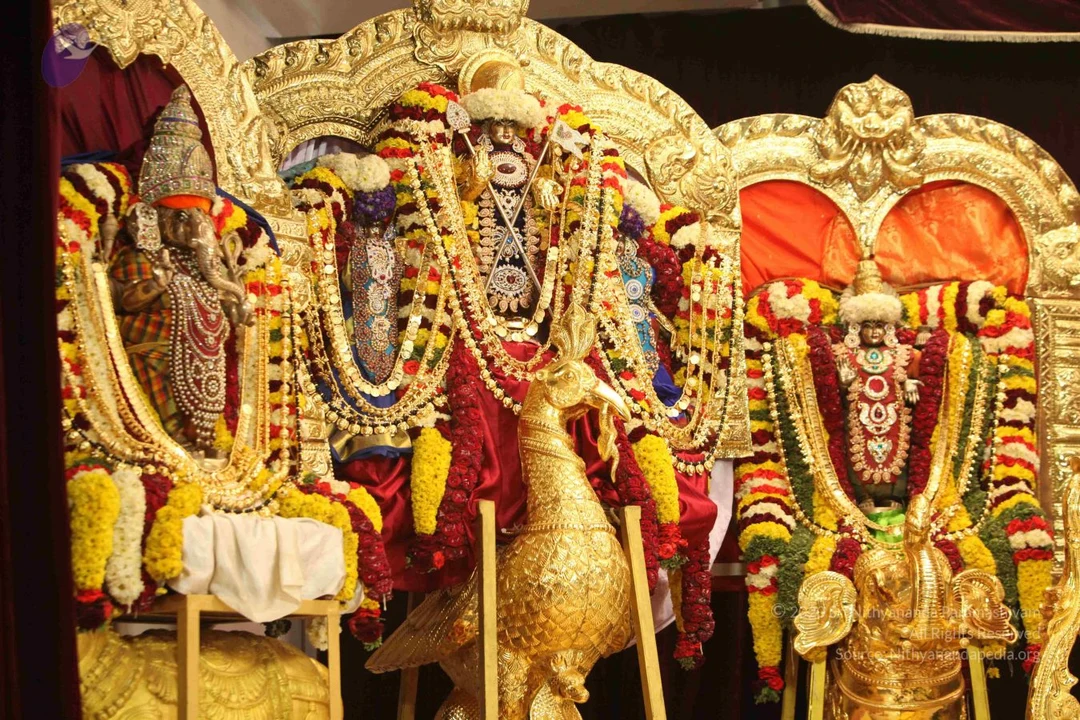
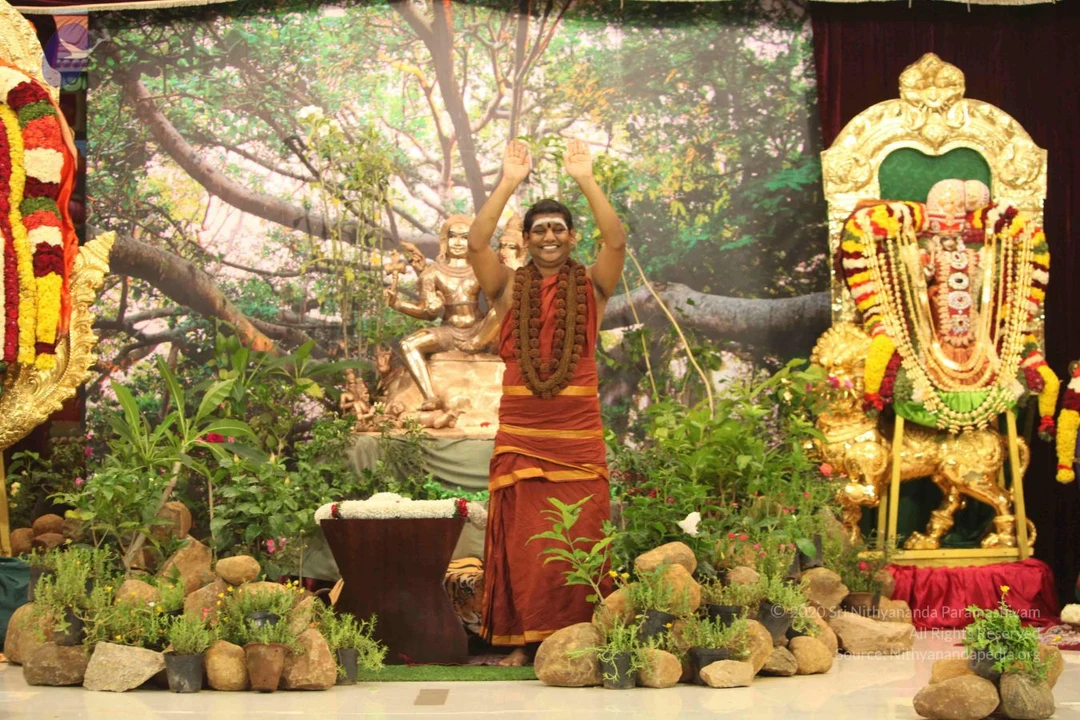
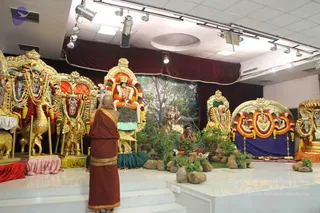
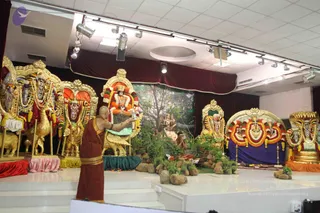
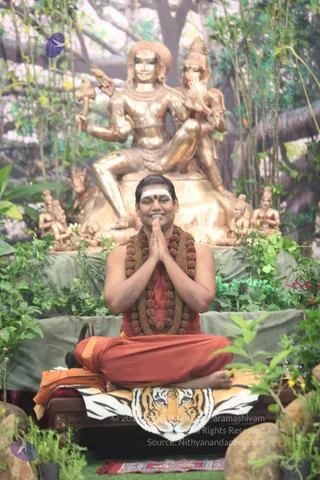
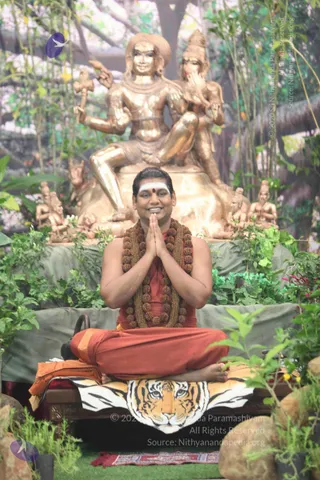
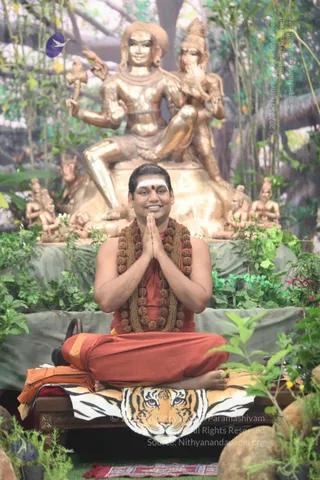
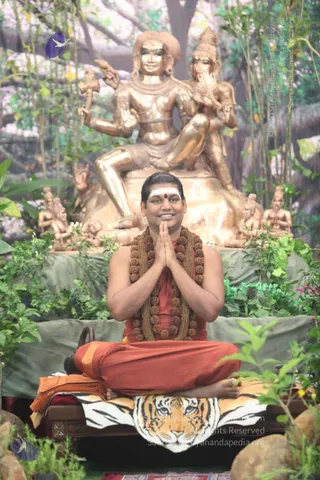
Today, fifth day of the Nithyananda Brahmotsavam! Today My deity has been decorated as the representing, depicting the enlightenment experience in Pavizhakundru, Thiruvannamalai, the “Pavizhakundru Anubhava Leelai”. On that day, I had a enlightenment experience at the age of twelve on Vaikasi month, Poornima Thithi, Vaikaasi Vishaakham. And all the gods and goddesses are also still present for Thiru Kalyanotsava. So, all the Saptha Moorthis are gracing, blessing all of us. Let us receive their blessings and then enter into the satsang.
(4:56)
Today I will expand on the main theme of Upanishads. Please understand, listen, yesterday I was expanding on Jnana, Bhakthi, Vijnana. Having all the necessary intellectual understanding to live Advaita is “Jnana”. Having all the intellectual understanding, listen, having all the necessary intellectual understanding is “Jnana”. Having all the necessary feeling-connection strength to live Advaita is “Bhakthi”. Having all the necessary cognitions to live Advaita is “Vijnana”.
Listen! Having all the intellectual understandings which is necessary to live Advaita. “Living Advaita means radiating, all powerful, all knowledge, always blissful, Satchitananda Maya. The Satchitananda is not a fantasy, please be very clear. It is not a fantasy of the Hindu brain. No! It is not a fairy tale from some old rishis of Taraka Vana or Naimisharanya. No! Listen. Listen. Satchitananda is not fantasy. It is reality. Satchitananda is reality. I am not interested in debating with the people who call this as a fantasy. I am only interested in giving this experience to people who want to receive it. With more debates, more time will be wasted. I am not interested in that. I am not interested in leading to unnecessary debate; but I am always ready to clarify all the possible doubts.
(8:32)
Upanishads...Upanishads...Upanishads are the most powerful expansion on Living Advaita. Listen. I just feel in front of Me each concept is sitting like a huge hill; I have to climb each hill, explain that and come down; and climb the next hill, and explain that and come down. Because, the way the Jnana, whatever is required for you to live Advaita is explained in the Upanishads, Oh God! Such brilliant brains cannot have fantasies, please understand; cannot have delusions. You can never think the brains of the rishis having delusions or fantasies. No! Somebody can grasp, understand and poetically present such an high truths; huh in no way you can accuse them of having fantasies or delusions. That is why I am telling you, Satchitananda is not delusion. It is as true as your breakfast and good night’s sleep. If you come and tell Me you had your breakfast just now, I am not going to accuse you of delusion, illusion. I know it is a reality. Because, breakfast is possible; you can eat it. It would have happened. It is that simple! Please understand, it is that simple! If you come and tell Me, “I had a peaceful sleep, good night’s sleep.”, I am not going to accuse you, “Oh, you must have been deluded. Maybe you are in delusion, you are in fantasy. How can you have a good night’s sleep?” No! A good night’s sleep is simple possibility.
(11:47)
I am telling you, Satchitananda, the all-knowing, all-powerful, always blissful, is such a simple possibility. It is pathetic, really, really, really pathetic – that is the word I will use: “pathetic” – to deny the existence of your very higher possibility. Arrey, denying the higher possibility, denying your higher possibility is denying your future! Understand, if you deny that you can ever become rich, happy, comfortable, you are denying your whole future. Same way, denying your possibility of Satchitananda is denying your spiritual future. It is spiritual suicide. Do not allow people to force you to commit spiritual suicide. And, I am telling you, there are tons and tons and tons of people are forcing you to commit spiritual suicide through their direct, indirect teachings and preachings. Through the TV serials, cinemas, books, entertainment shows, media, internet, what not, people are constantly forcing you to deny your future spiritual possibility. Guru is the death bell for all those ignorance. Listen! Guru is the powerful wake-up call towards your spiritual possibility, waking you to your spiritual possibility, waking you to your spiritual future! Waking you to your spiritual future, waking you to your spiritual possibility. Waking you to your spiritual future, waking you to your spiritual possibility is the job of the Guru.
(15:45)
Satchitananda is not delusion or illusion or imagination. Satchitananda, living Satchitananda is possible. That is the first statement I want to give about Living Advaita.
Second: The understandings you need, understandings you need for the spiritual possibility, understandings you need for the spiritual possibility, listen, the understandings you need for the spiritual possibility is “Jnana”, Sacred Knowledge.
Sacred Sentiments you need to have, you need certain kind of a emotional strength when you go through the transformation. When you start living Advaita, certain emotional strength is required, and the intensity of the passion and emotion can be used to explode into Living Advaita, to take you to the next, next, next level.
Understand, never a person has taken a decision, to live sannyas, intellectually, after intellectual conclusion, after intellectual analysis and conclusion. No! Anybody who has taken sannyas after the intellectual analysis and conclusion was never successful; only a person who used his emotional passion and depth. Your emotion is a pure power which can just transmit you from one space to another space. Only the people who used that power, that strength, the pure emotion and power of devotion, took the decision of sannyas and were successful. Only they were successful! I am telling you, after seeing thousands and thousands of sannyasis of different religions, and after being respected, revered by so many sannyasis, and after respecting, revering so many sannyasis – understand, I have also revered, respected, bowed down to thousands of sannyasis, and thousands have bowed down to Me – with all this experience I am telling you, only people who used the strength and power of emotion, devotion, are successful sannyasis, never the intellectual analysis.
(20:14)
See, if I am living in one corner of Himalayas, on the banks of the Ganga, in a small hut, having a small garden just for food, and living in that Himalayan hut, and if you are given a chance, only one person is going to be there, that is you, who will say ‘No’? No one is going to say ‘No!’ That is intellectually analyzing and taking decision. ‘Wow! Only Swamiji! Nobody else! I can have Swamiji all for myself!’ That is intellectual decision. You will never be successful in sannyas with intellectual decision. If you understand this Sangha is the Ganga, and still I am sitting, not some remote corner of Himalayas, I am sitting actually in a remote corner of Kailasa. Still you are ready to live Advaita with the Sangha, that, that really is the strength! That can happen only if you use your emotional and devotion strength. That is life.
I am telling you. I think many are still floating in visualization of them being alone with Swamiji in Himalayan hut! Yet to come back. Settle down! Settle down! This Sangha is the Ganga, and the strength of your pure devotion..... See, when you have that pure devotion, you are always alone with your Master. No one else will be there. Only when the devotion comes down, you will see others. It’s like only when flood comes down you will see the rocks on the bank. If it is flooding, you won’t see any rock, tree, anything. So, when that devotion strength is flooding you, you won’t see anybody around you. You know it is only you and the Master; nothing else, nobody else exists. Only when the devotion comes down, you will see, ‘Oh, why is she all the time shouting at me? Why is he looking at me like that? Why is he trying to snatch my pencil? Why is he taking away my laptop? He is not talking to me properly.’ No, all that starts when the devotion comes down. All that starts when the devotion comes down.
(24:18)
Understand, the necessary sacred sentiments for you to experience Living Advaita is “Bhakthi”. And the necessary cognitions, that means, beyond doubt there are some basic understanding.
When I started listening to some of these stories from My grandfather, Markandeya’s story, and Kannappa’s story, all these great saints’, saintly figures’ stories, Prahlada’s story; somehow it became part of My cognition that Mahadeva is available to you. Mahadeva is available to you. Understand, I used to go and sit with Annaamalai Swamigal. In his presence they will read Ribhu Gita sometimes. When I heard those Ribhu Gita, many of the verses automatically became part of My cognition. Same way when I read this Upanishads first, they just became part of My cognition. Understand, reading spiritual books or listening to the satsang is allowing the possibility of having spiritual cognition. Please understand, if you listen ten ideas from the Master’s mouth, two ideas you may be debating, but suddenly the four-five will just sit and go inside in your cognition and it will become unshakeable cognition! Even you will forget to question them! Whatever you forgot to doubt, hate, deny...... See, when your SDHD – Self-Doubt, Self-Hatred, Self-Denial – was busy in fighting with two-three ideas, other three-four ideas will just go and sit inside your being. Satsang is always for that purpose. Satsang is actually for that purpose. I will be throwing some twenty ideas. Your logic is not capable of fighting with all the twenty ideas. Your SDHD, your Self-Doubt, Self-Hatred, Self-Denial, it will be fighting in two-three front with four-five ideas. ‘Oh, what is there? For Swamiji, enlightenment happened at the age of twelve. He had great Masters like Annaamalai Swamigal, Isakki Swamigal, Raghupathi Yogi. They were all, all the time with him. He was all the time with them. He had It (enlightenment). What can we do?’ Yes, your Self-Doubt, Self-Hatred, Self-Denial will be doing all this drama; I am not saying no. But it can be doing this drama only with a few concepts and thoughts; not with all. By the time it does this drama, the other two thousand ideas, two thousand truths which I am giving, will become part of your cognition. That is the purpose of satsang: raising your spiritual cognition higher and higher and higher every day, beyond your SDHD, is the purpose of satsang. Listen! Raising your cognition, spiritual cognition every day, beyond your SDHD, is the purpose of satsang.
(29:34)
The main theme of Upanishads is to make you live Advaita by giving you the “Jnana” – Sacred Knowledge, understandings, and Sacred Sentiments, emotional strength, Sacred Cognition – “Vijnana”. Sacred Sentiments is “Bhakthi”, Sacred Cognition is “Vijnana”. Truths, Sacred Sentiments, Sacred Cognitions. Once, actually, I landed upon a very deep, strong Sacred Cognition in My life that, ‘I cannot be hurt. I cannot have any pain. I am the Atma. Atma cannot have any pain, suffering, nothing. It is pure space.’ It was so powerful and so strong, I went and took a knife and cut My thigh to check it! A child will not have the guts to take a knife and cut himself to check. Understand, I tell you, the power of the cognition was so much, I could not control Myself from testing it on Me because I was too excited. Of course, I needed a few more understandings. See, when I am not the - I am the Atma, Soul, I am not the body, and I cannot be destroyed, I don’t have pain, I am beyond sufferings, then I should have tested that on My Atma, not on My body. I have tested it on which I am not. See, the experience is sitting in the Atma, the cognition is sitting in the consciousness, but the experimenting I am doing it on My body! That understanding I gathered little later. But the cognition was so powerful, even when there was pain in the body, I did not feel bad for what I did, I did not feel bad about testing it. It was such an ecstasy! ‘Wow! Abbaaa! Like a long journey is over! Now I don’t need to run around anywhere here and there! I am That!’ That rest, that restful awareness, that cognition was such an ecstasy! Gathering these cognitions into your being is what I call “Living Advaita”. Living Advaita!
(33:15)
आत्मौपम्येन सर्वत्र समं पश्यति योऽर्जुन । सुखं वा यदि वा दुःखं स योगी परमो मतः ॥६- ३२॥ Athmaupamyena sarvathra samam pashyathi yo ’rjuna | Sukham va yadhi va dukham sa yogi paramo mathah ||
He who, through the likeness of the Self, O Arjuna, sees equality everywhere, Be it pleasure or pain, he is regarded as the highest Yogi. (6th Chapter, 32nd Verse of the Bhagavad Gita) आत्मौपम्येन सर्वत्र समं पश्यति योऽर्जुन । सुखं वा यदि वा दुःखं स योगी परमो मतः ॥६- ३२॥
Athmaupamyena sarvathra samam pashyathi yo ’rjuna | Sukham va yadhi va dukham sa yogi paramo mathah || I’ll continue to expand on Upanishads.
With this, I bless you all! Let you all radiate with Integrity, Authenticity, Responsibility, Enriching, and Causing, Living Advaita, eternal bliss, Nithyananda! Thank you! (34:34)
Photos
Aarti
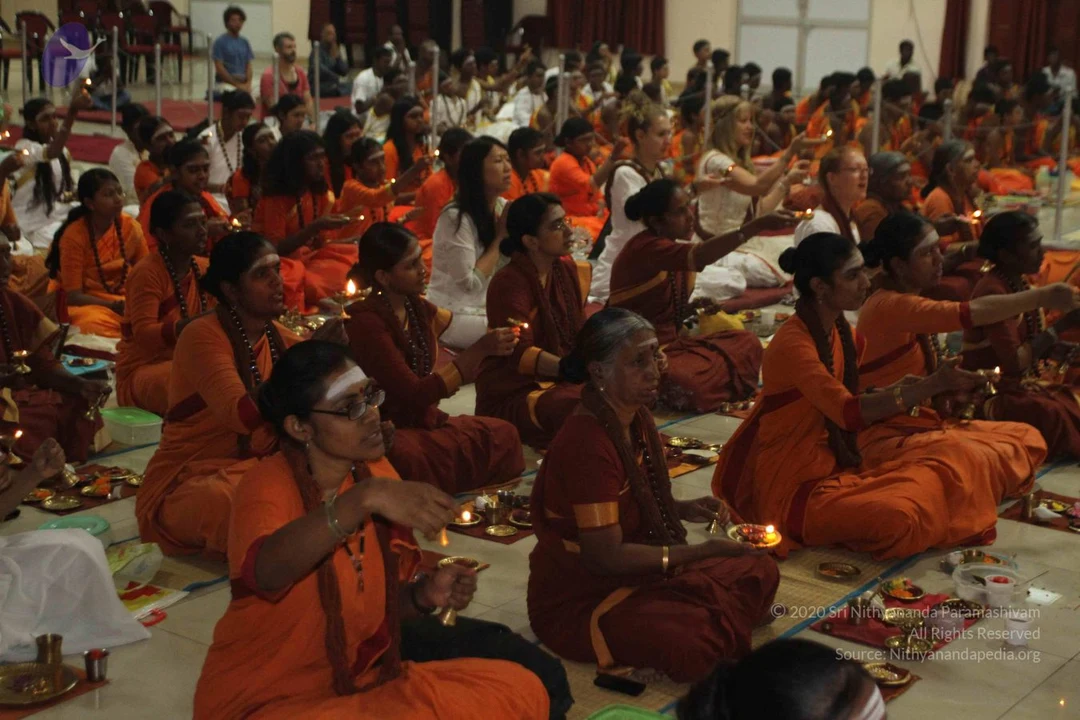
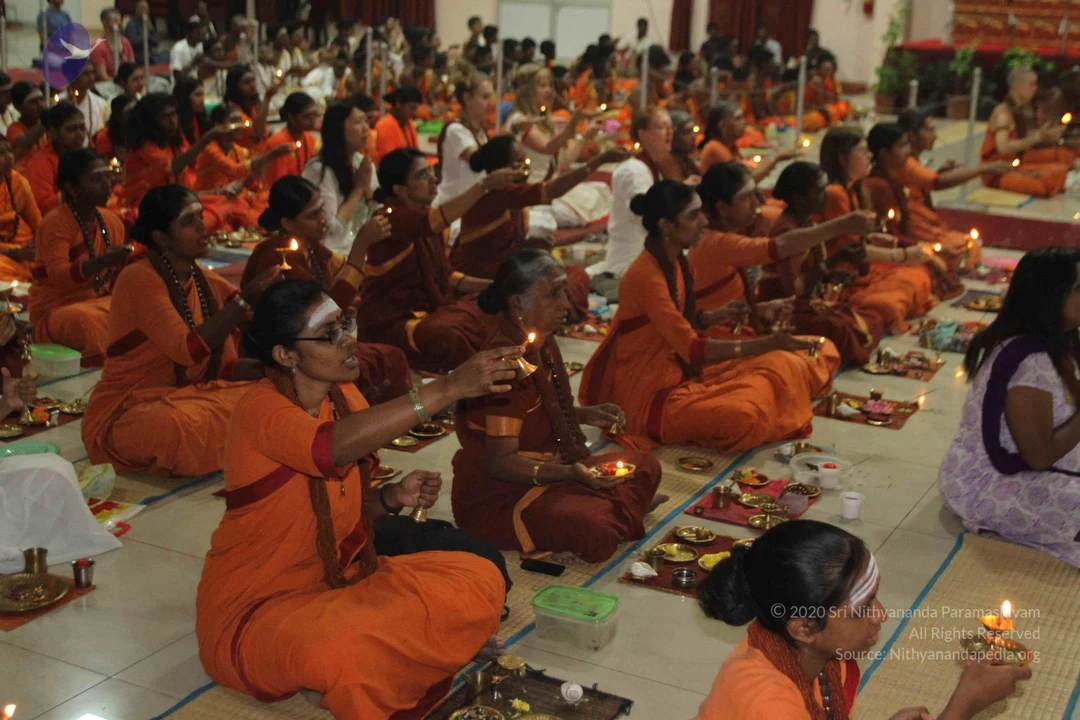
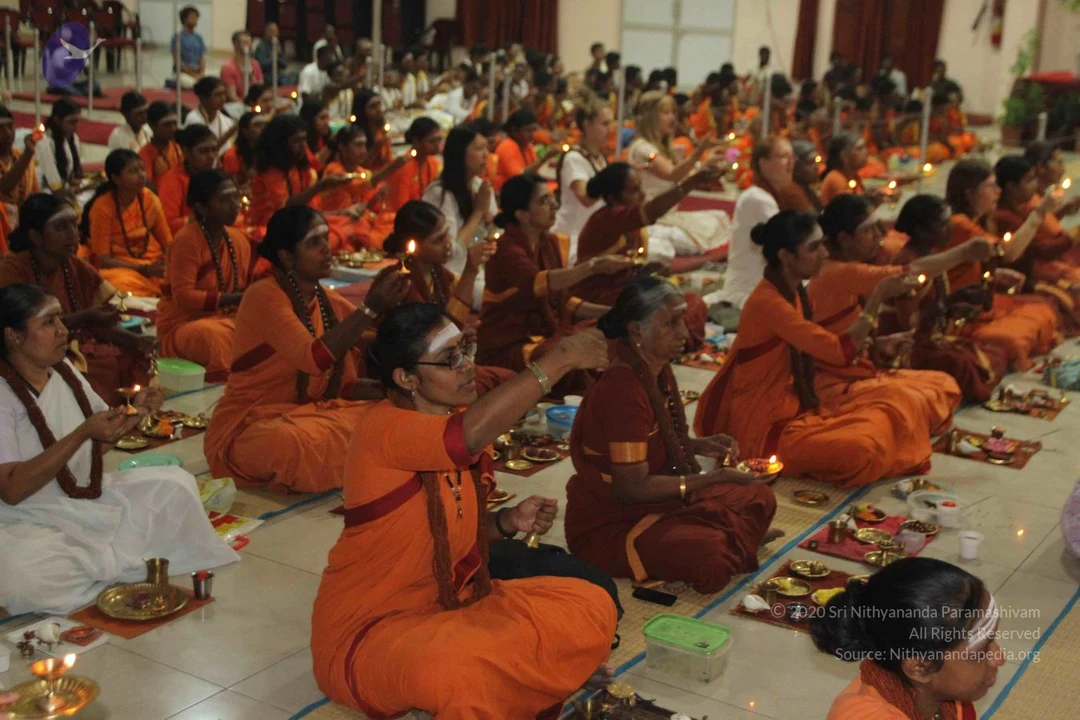
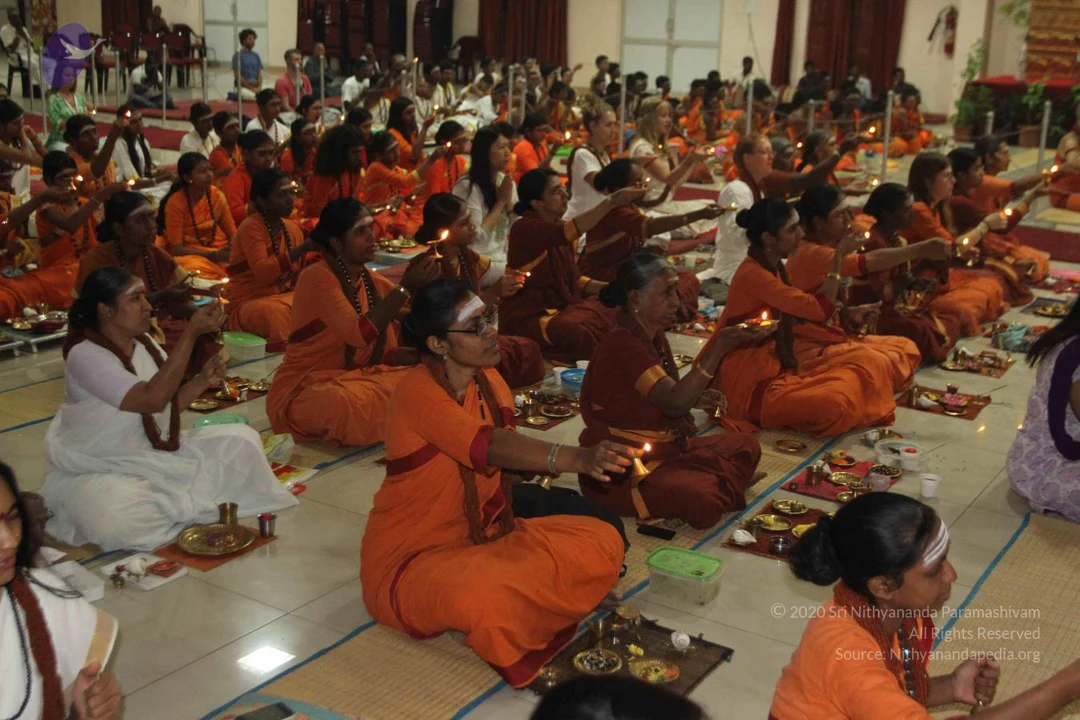
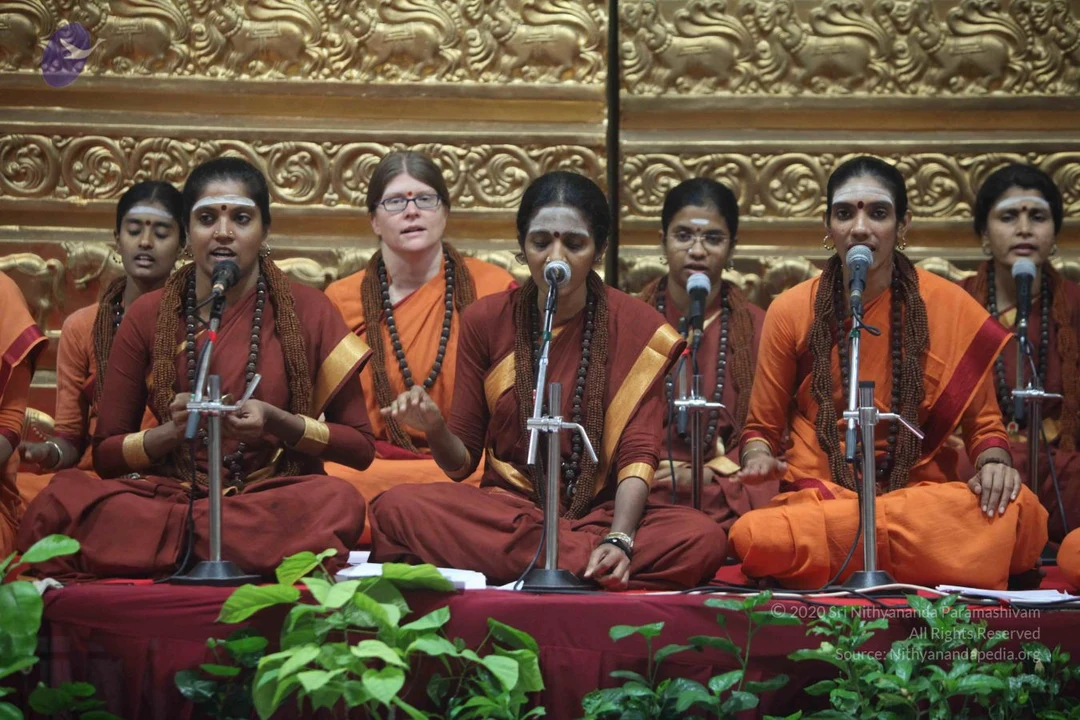
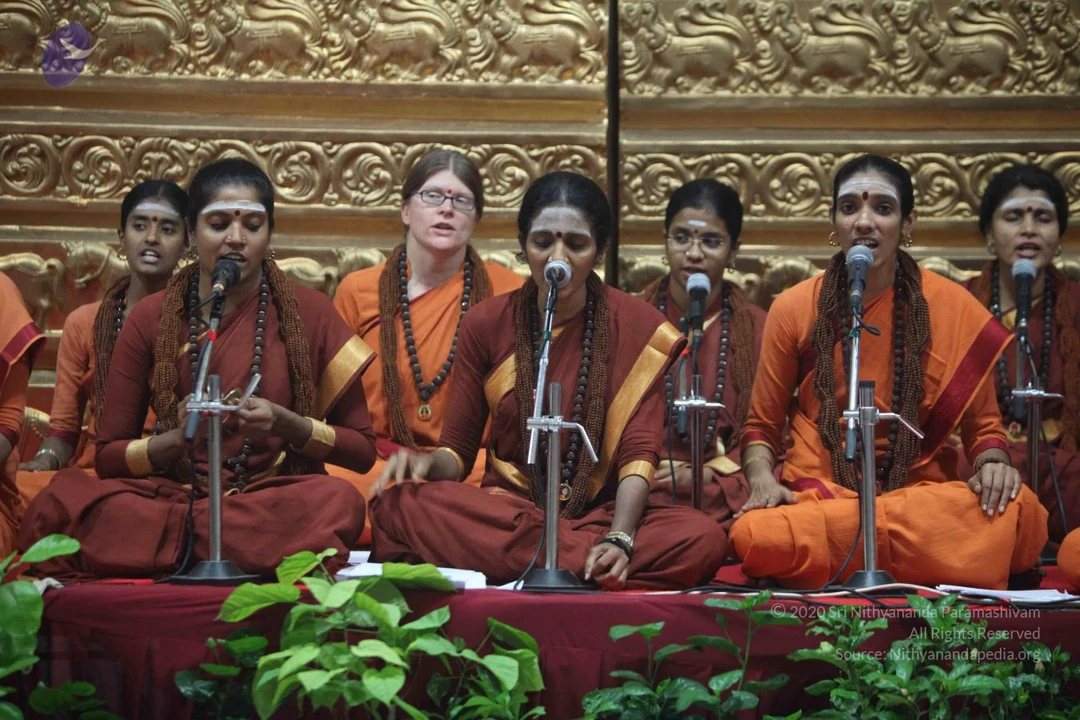
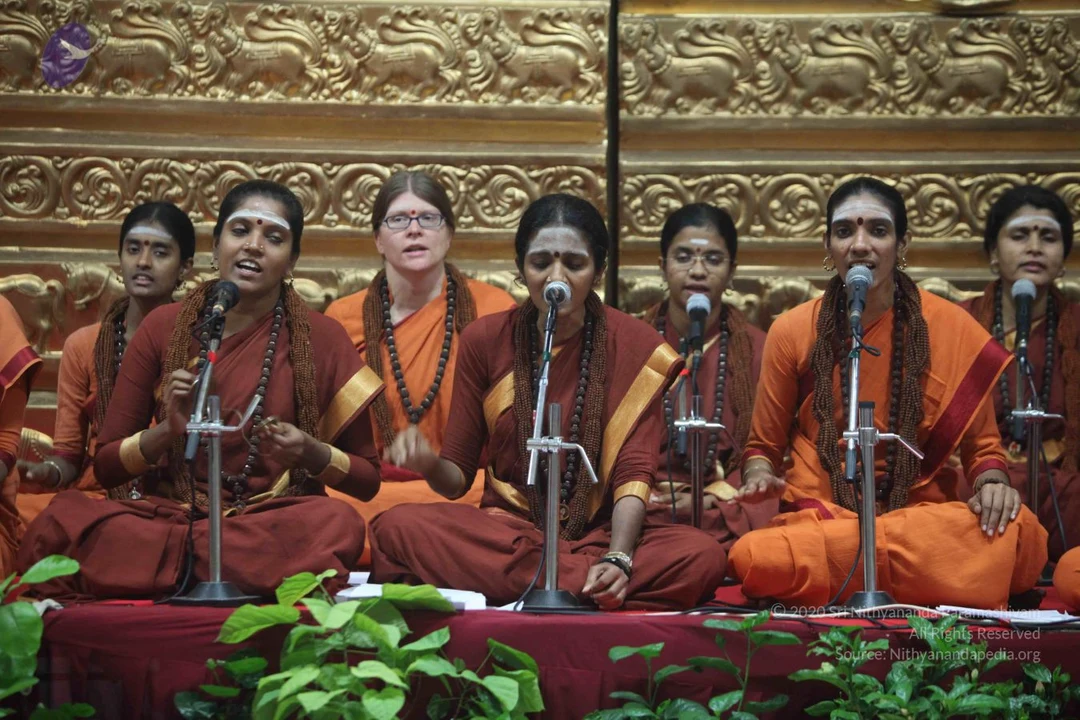
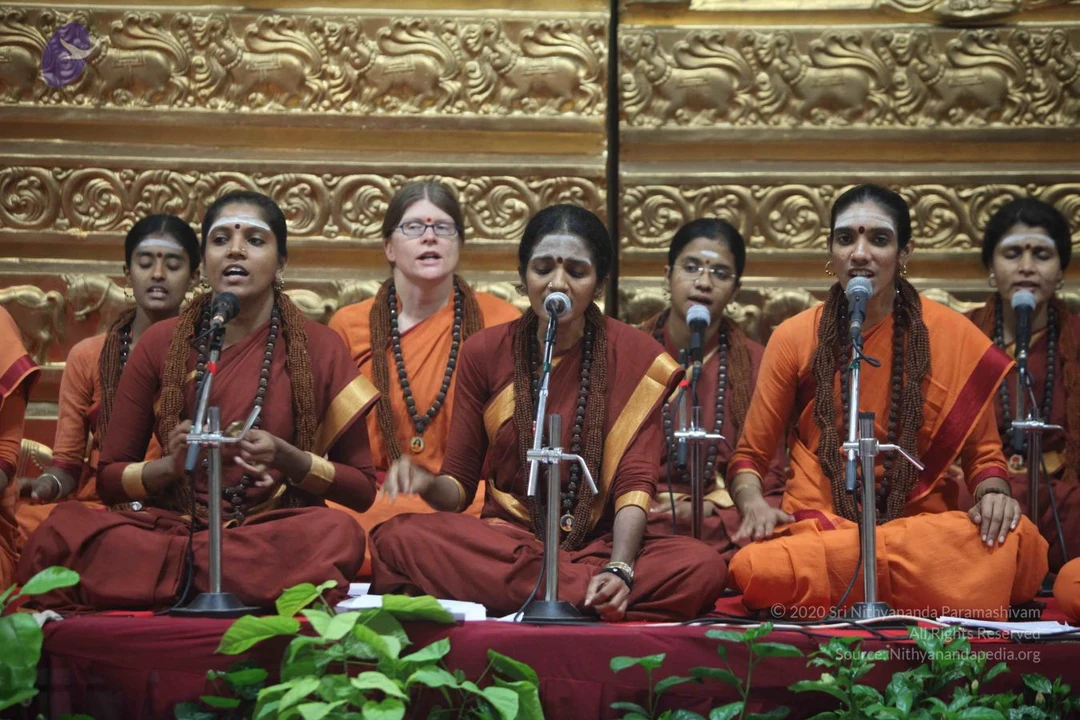
Bhajans
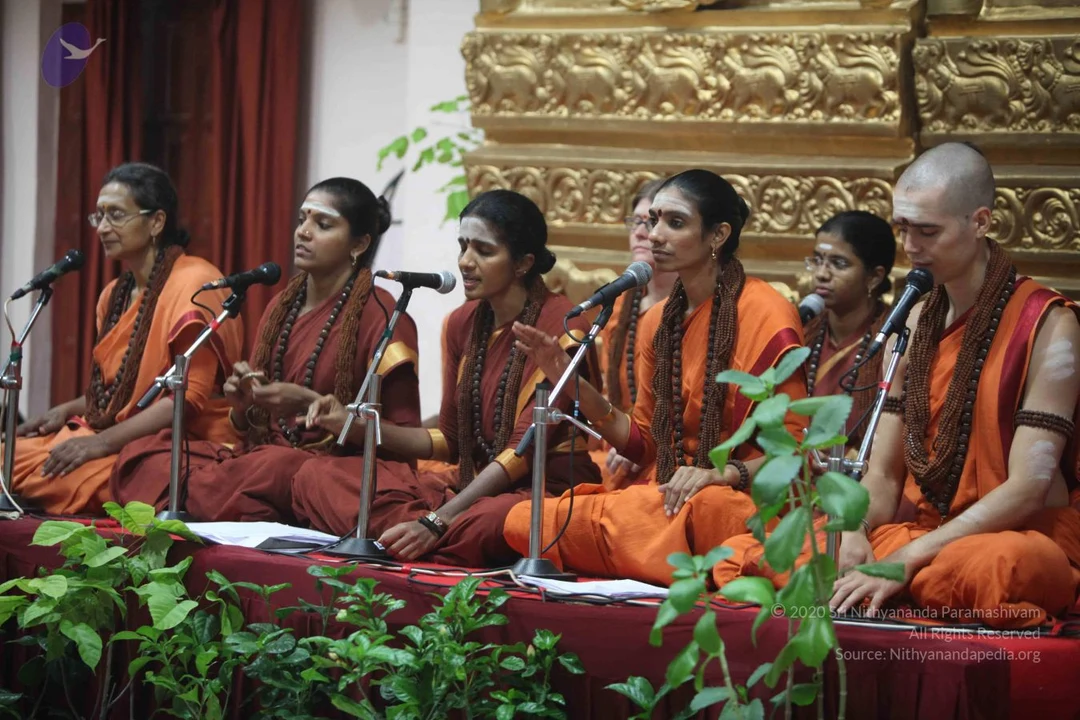

Satsang
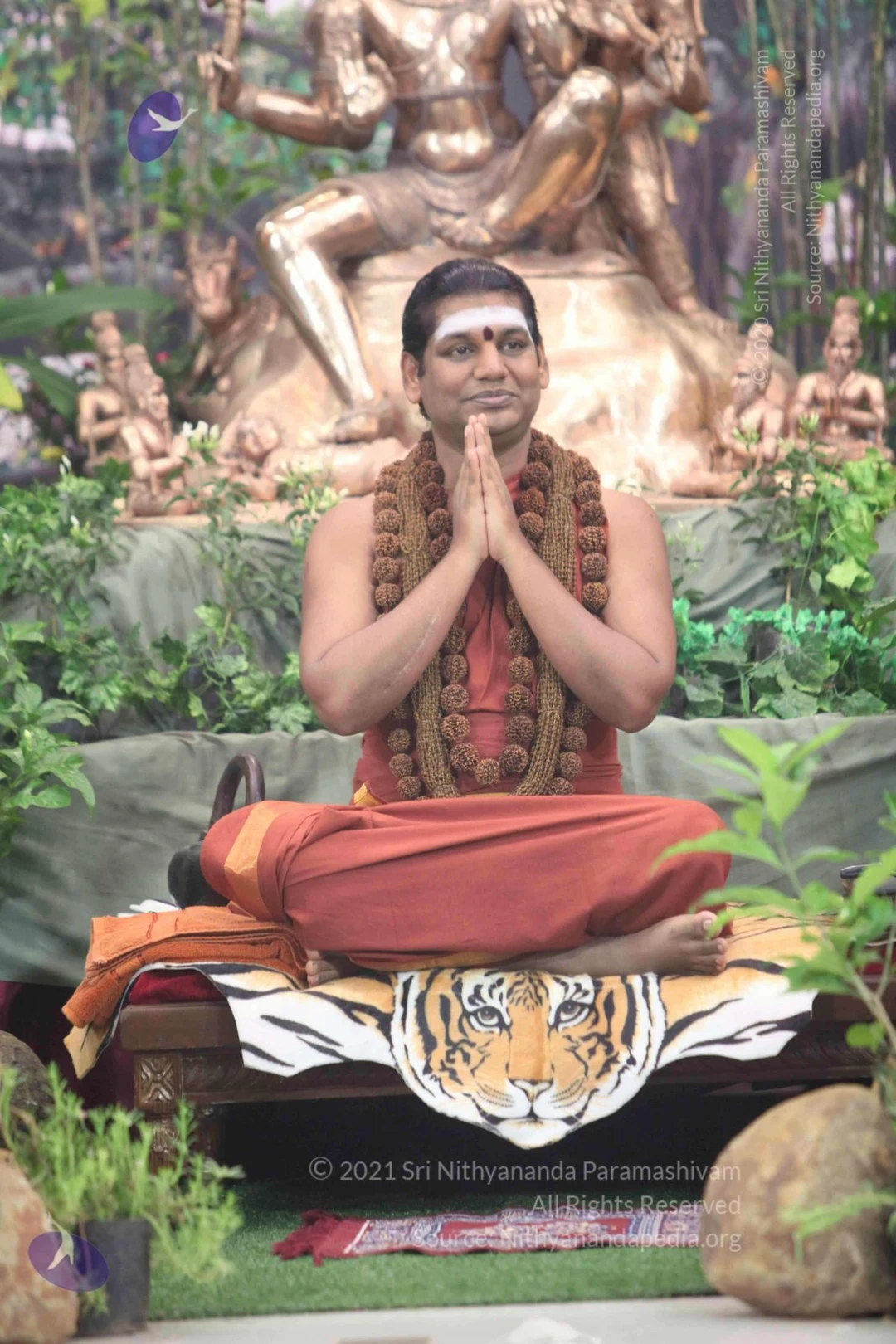
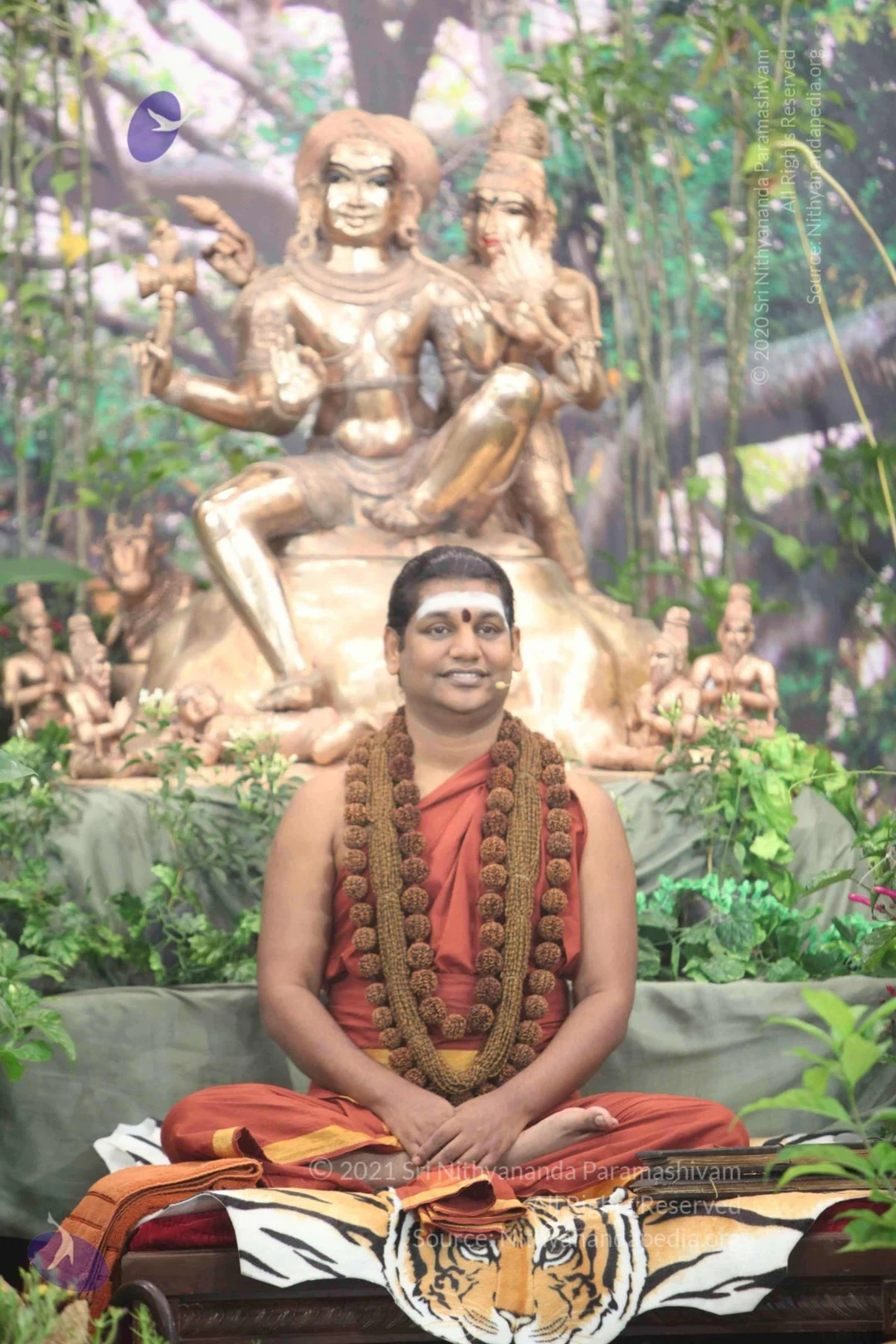
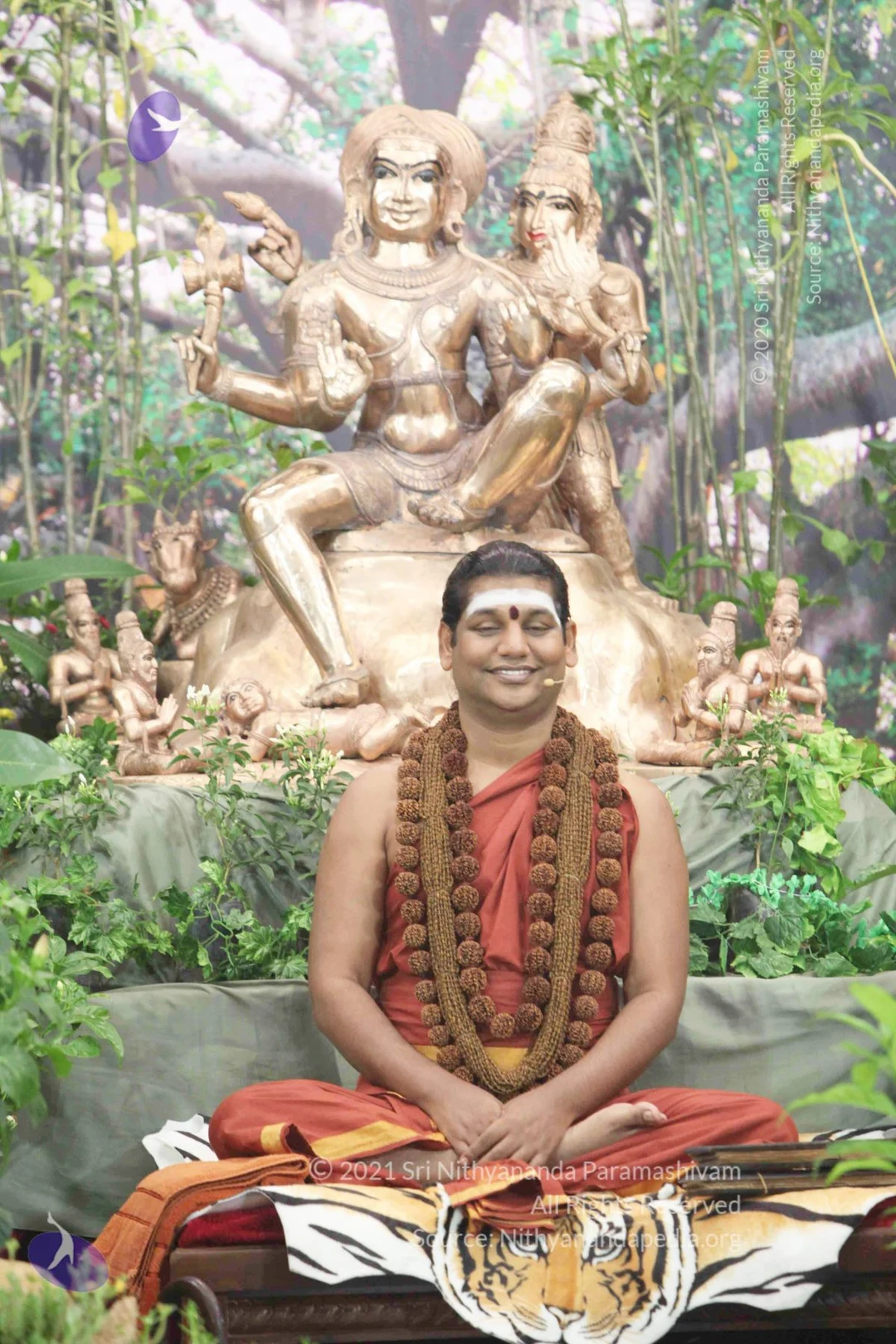
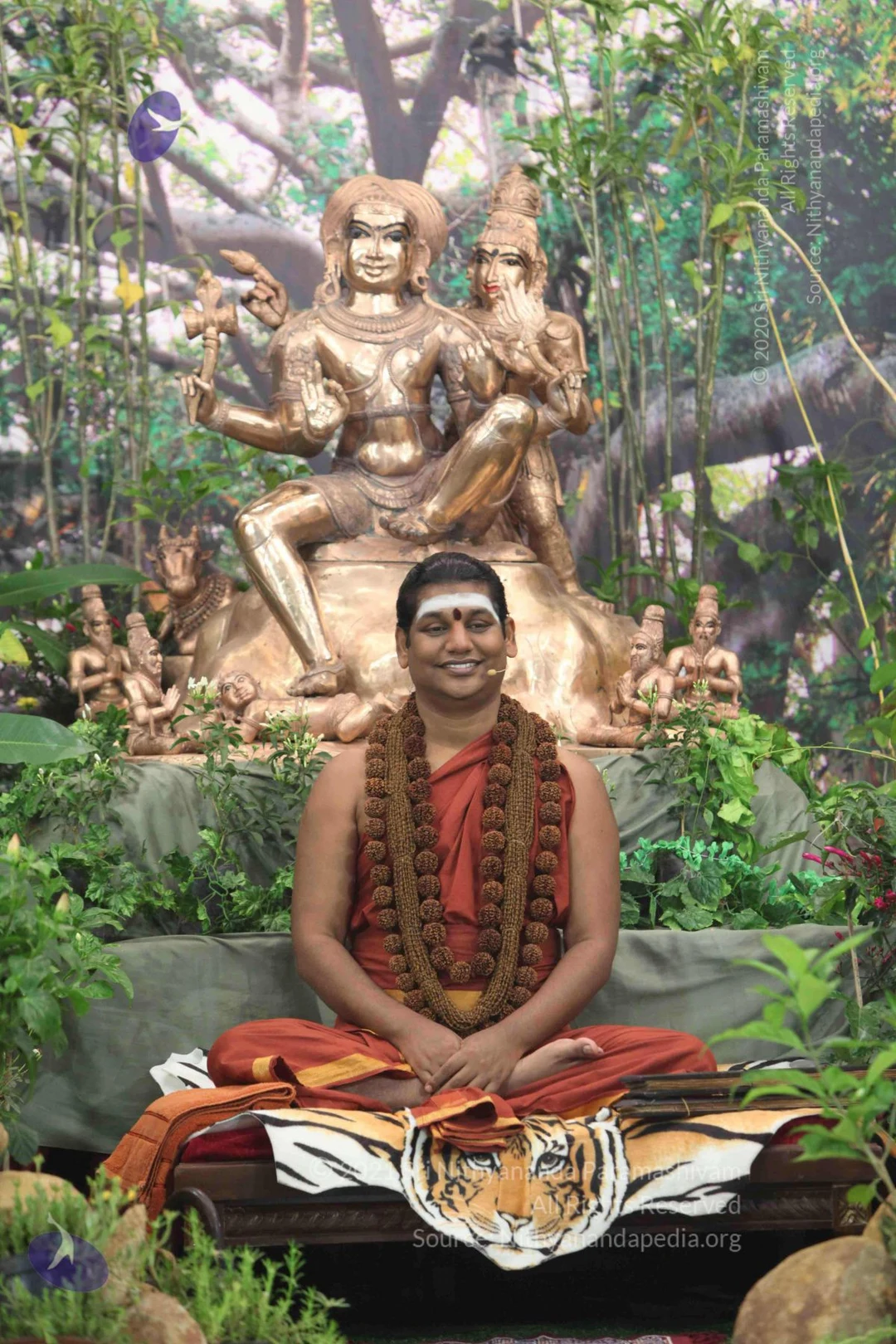
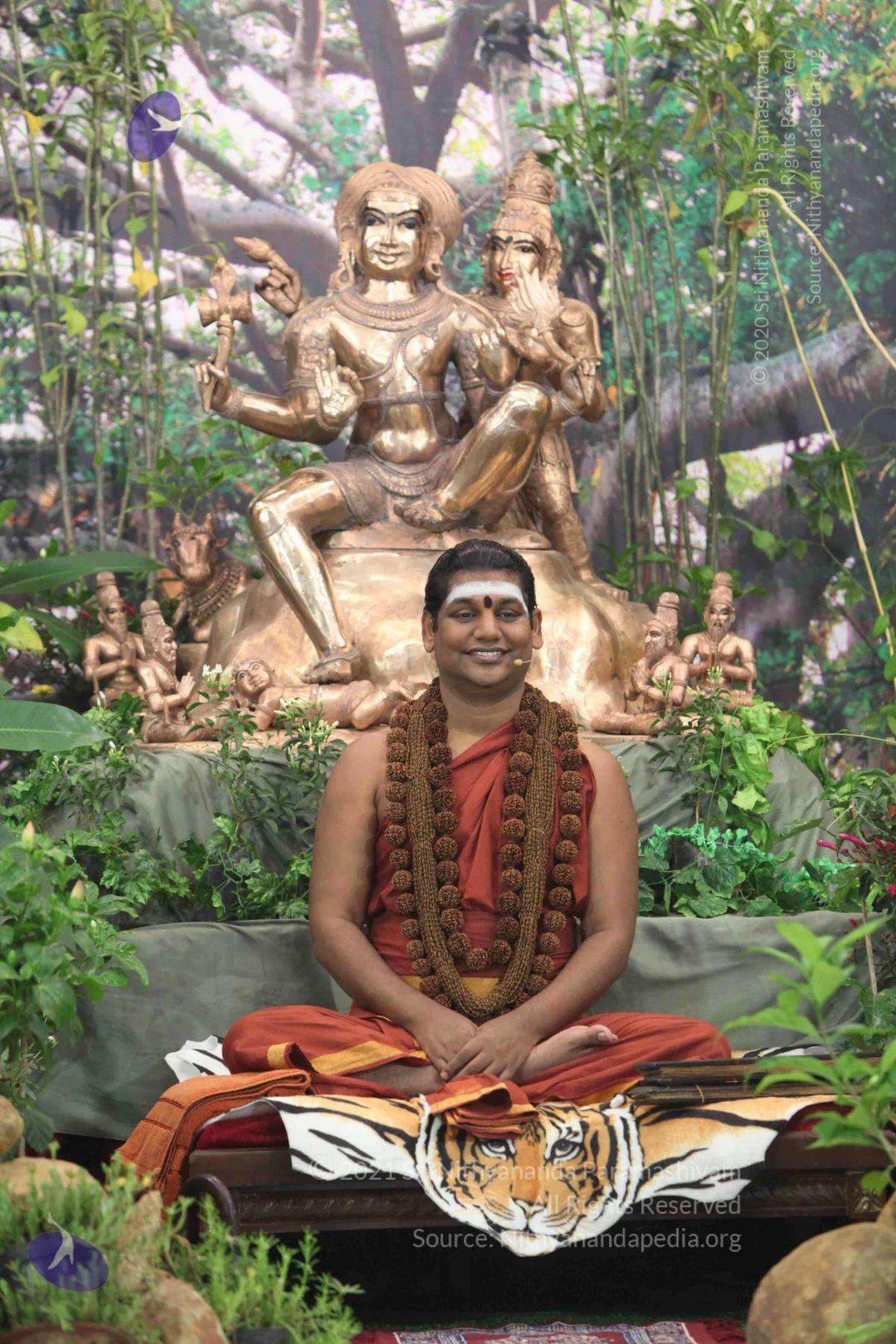
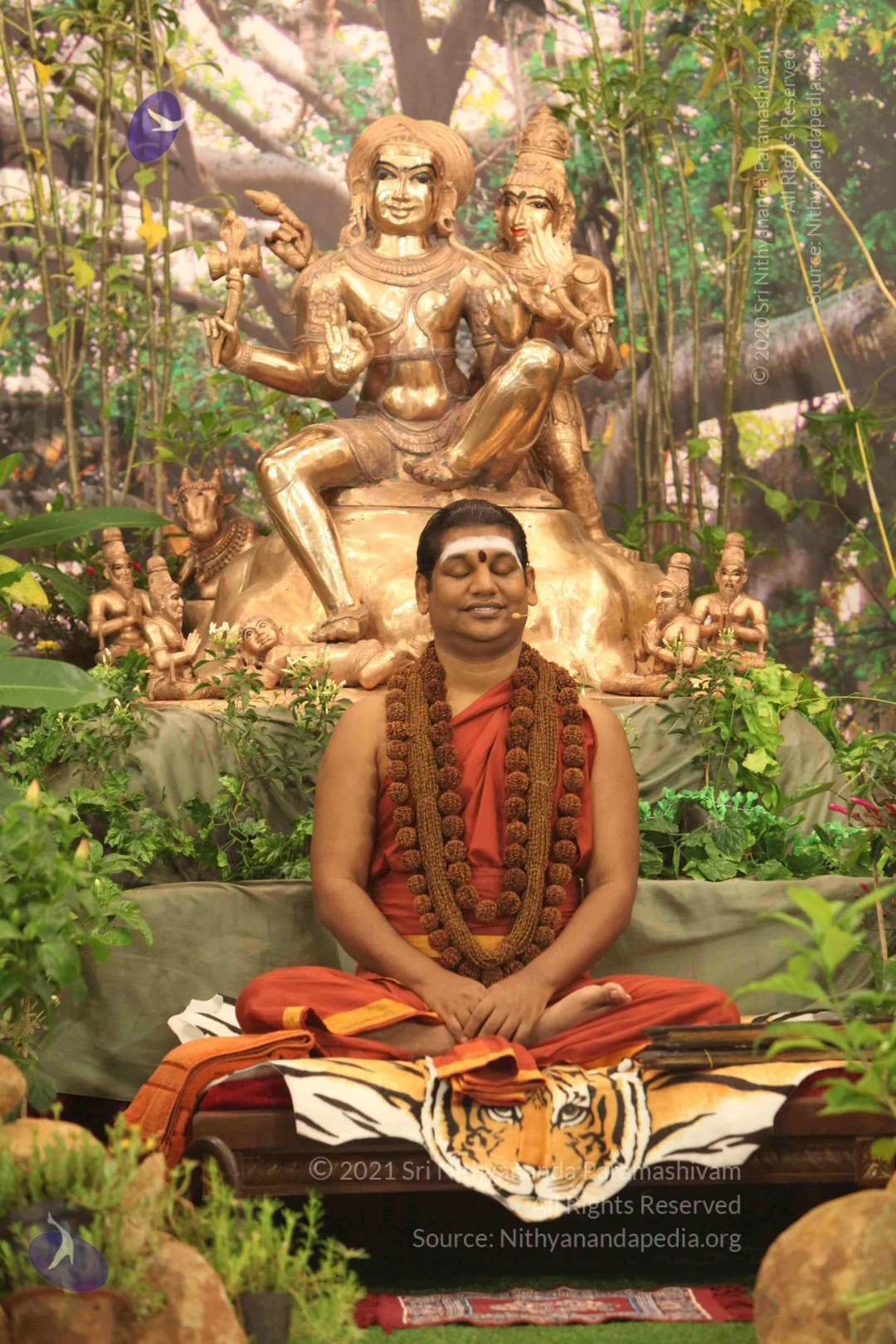
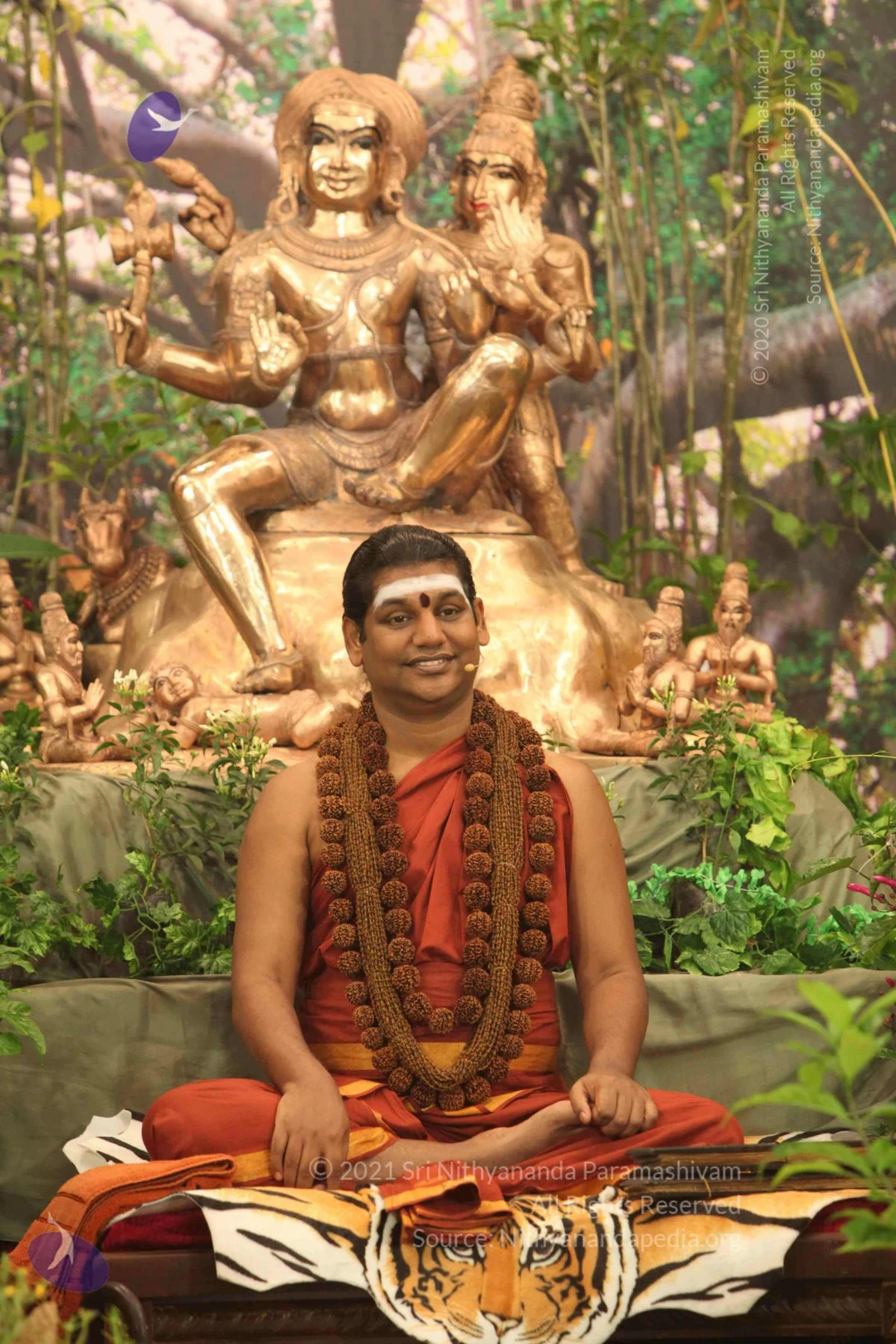
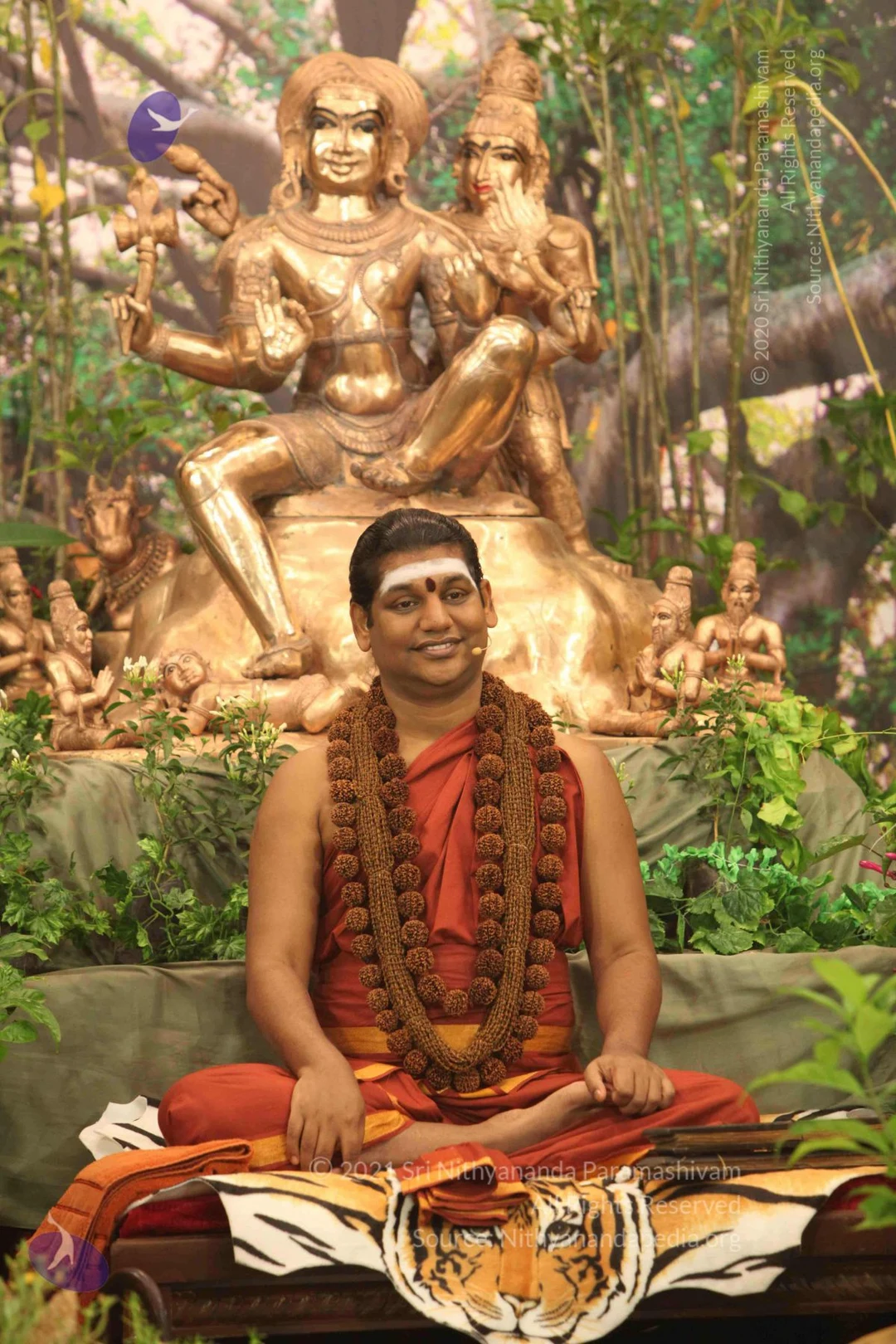

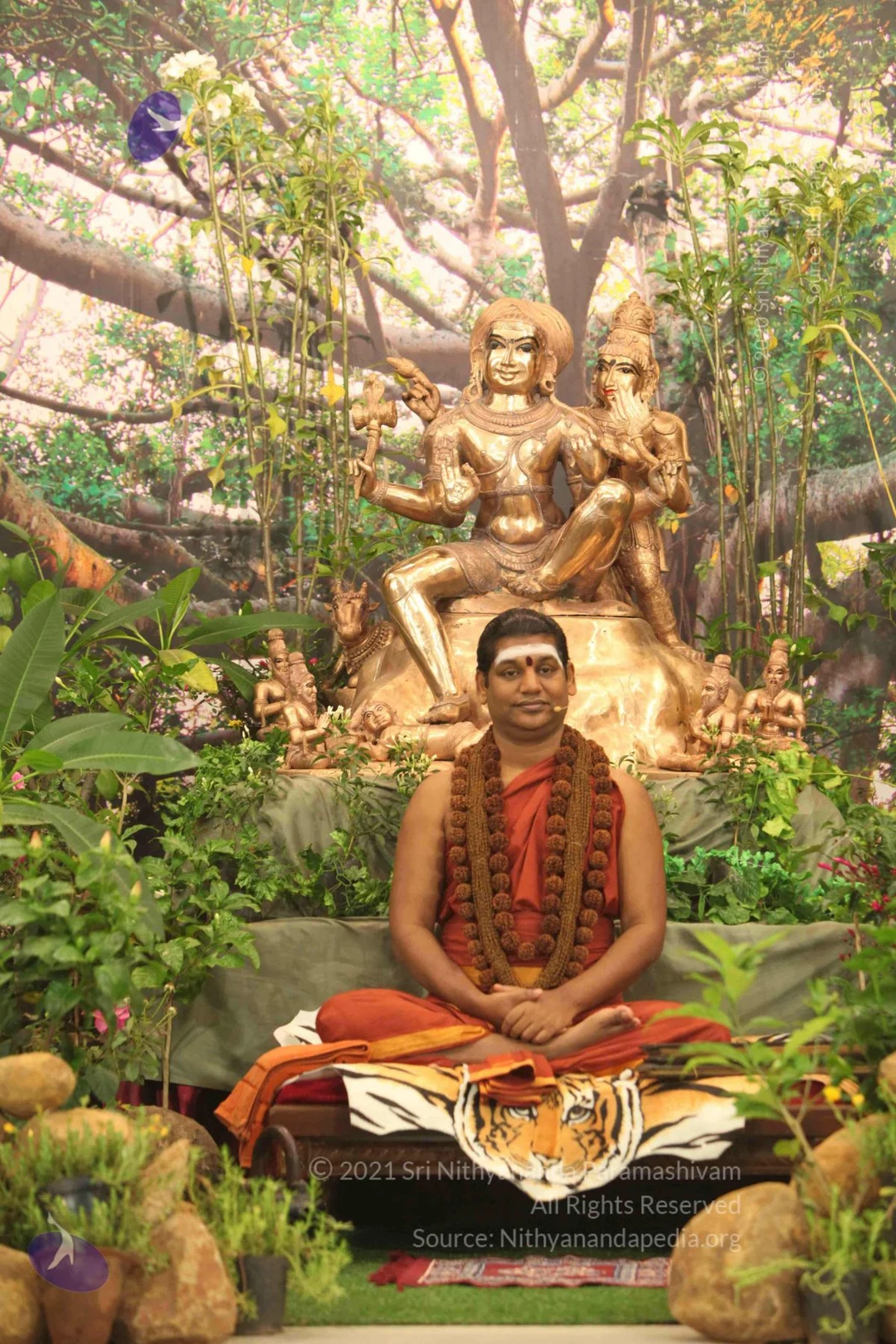
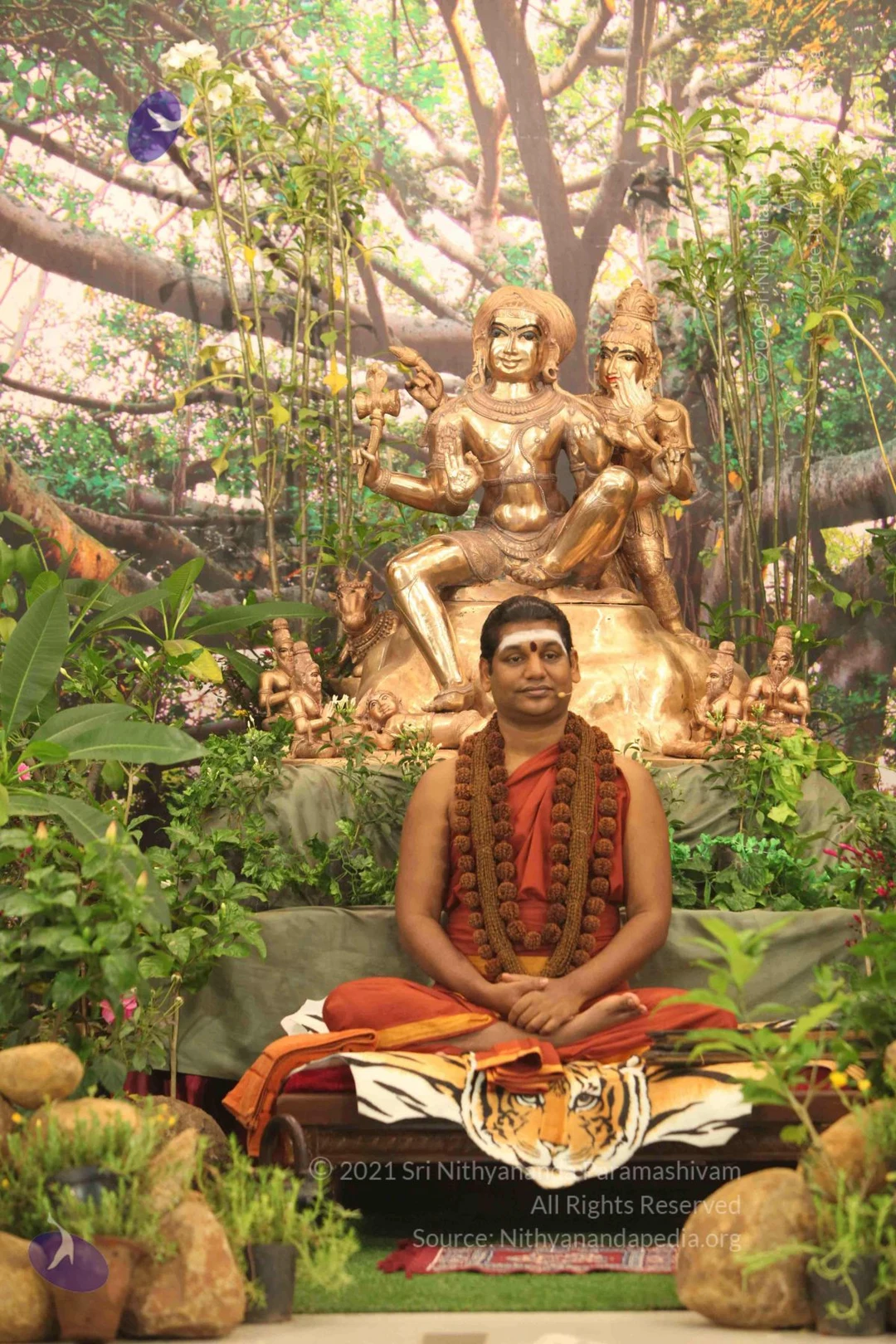

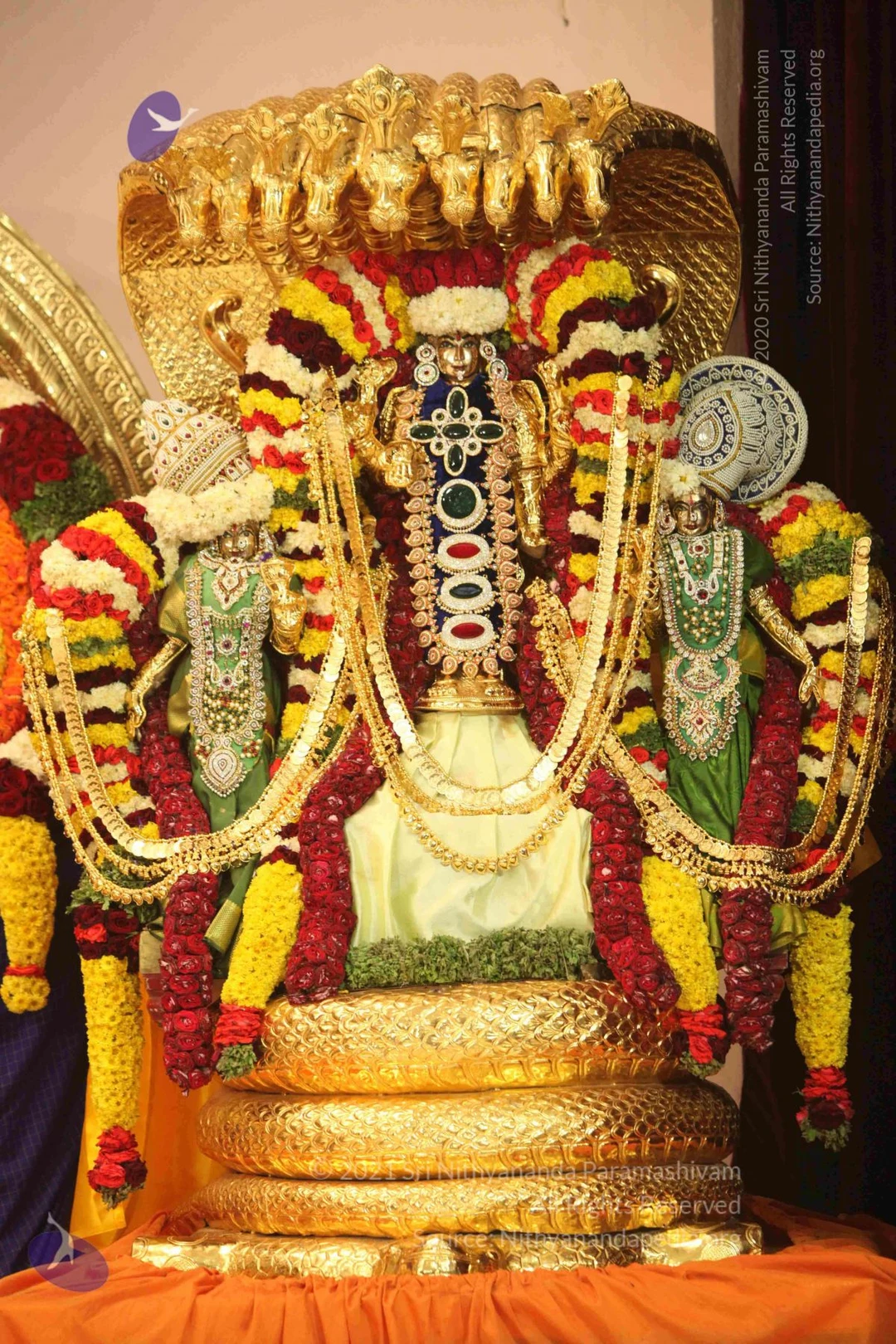
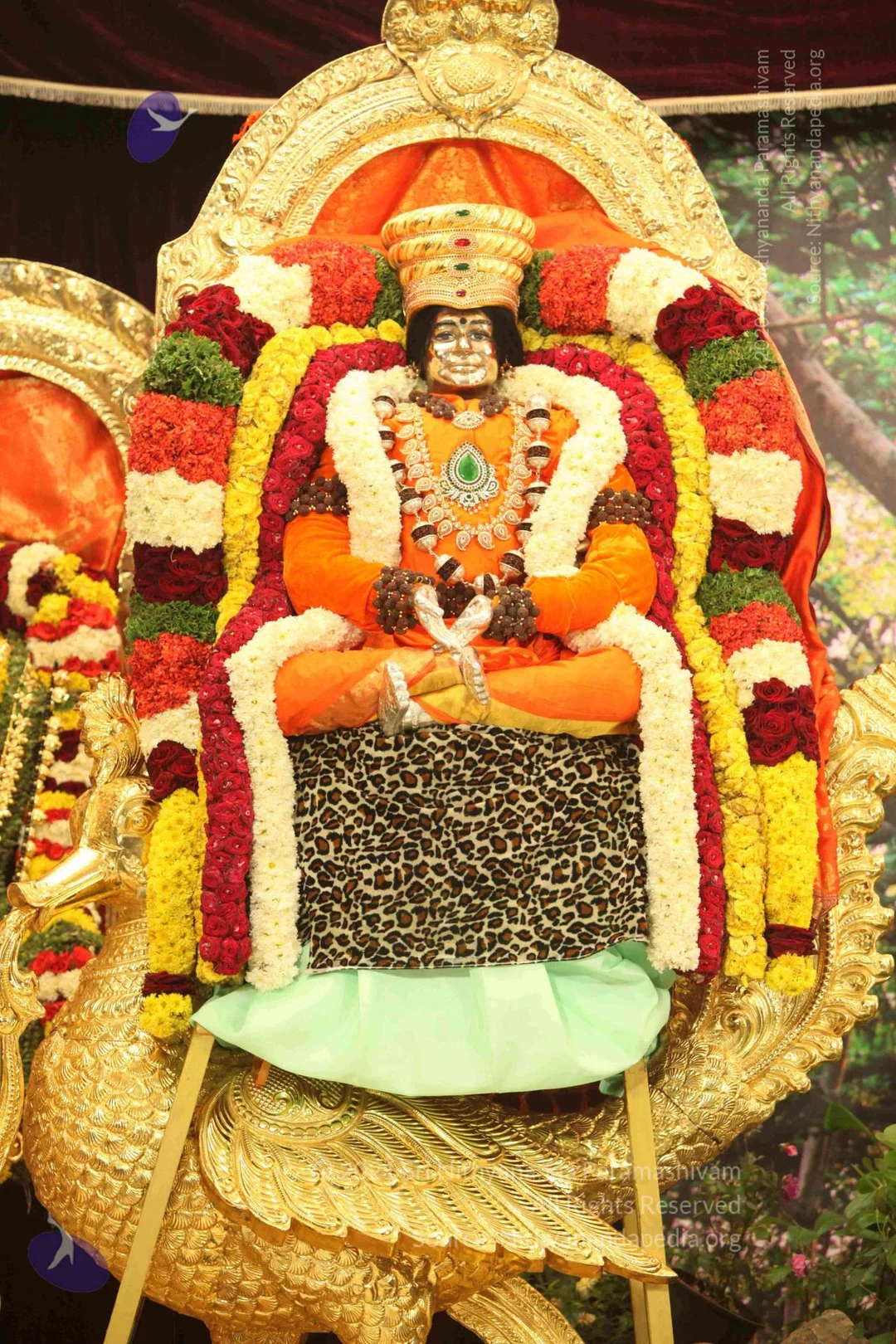
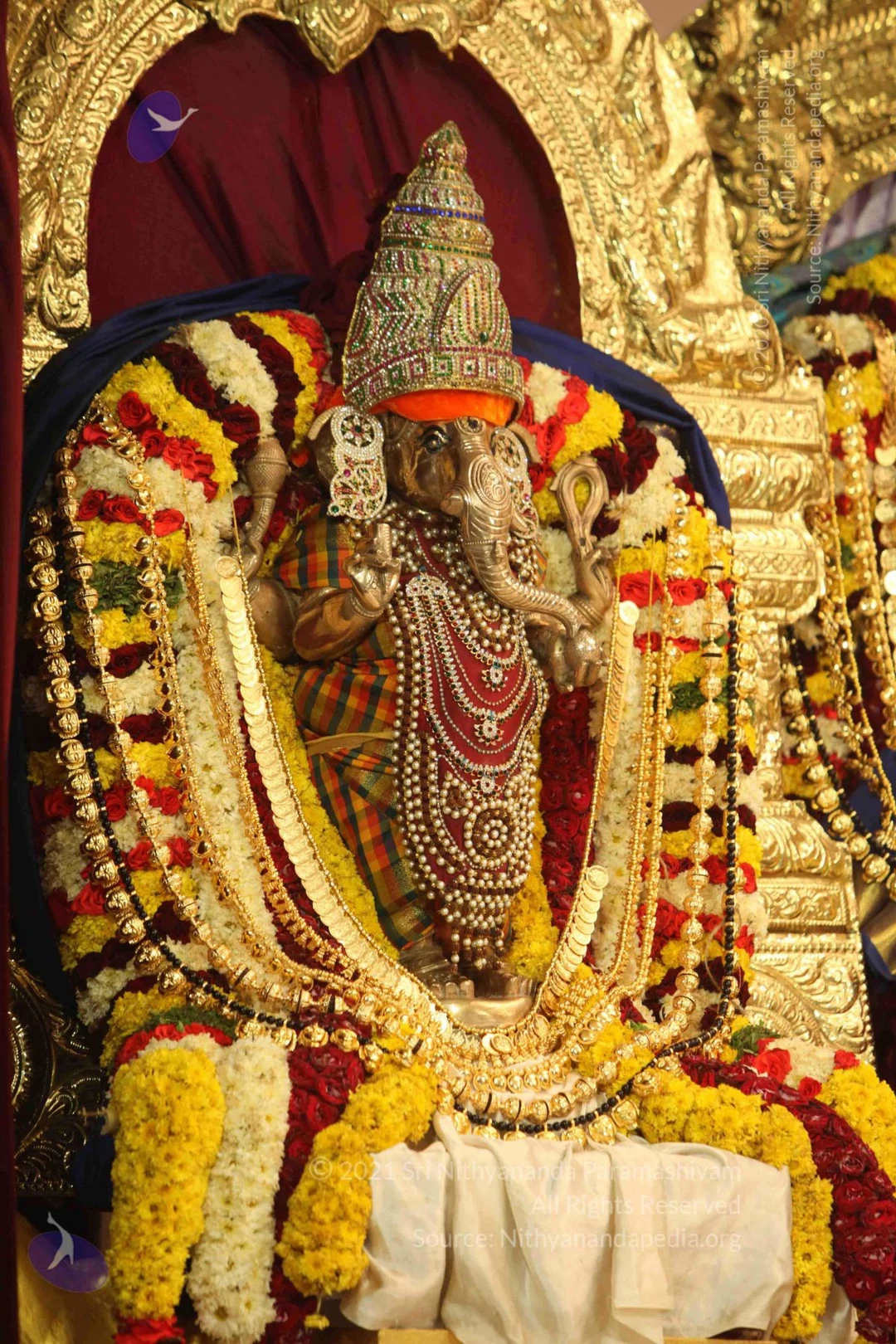
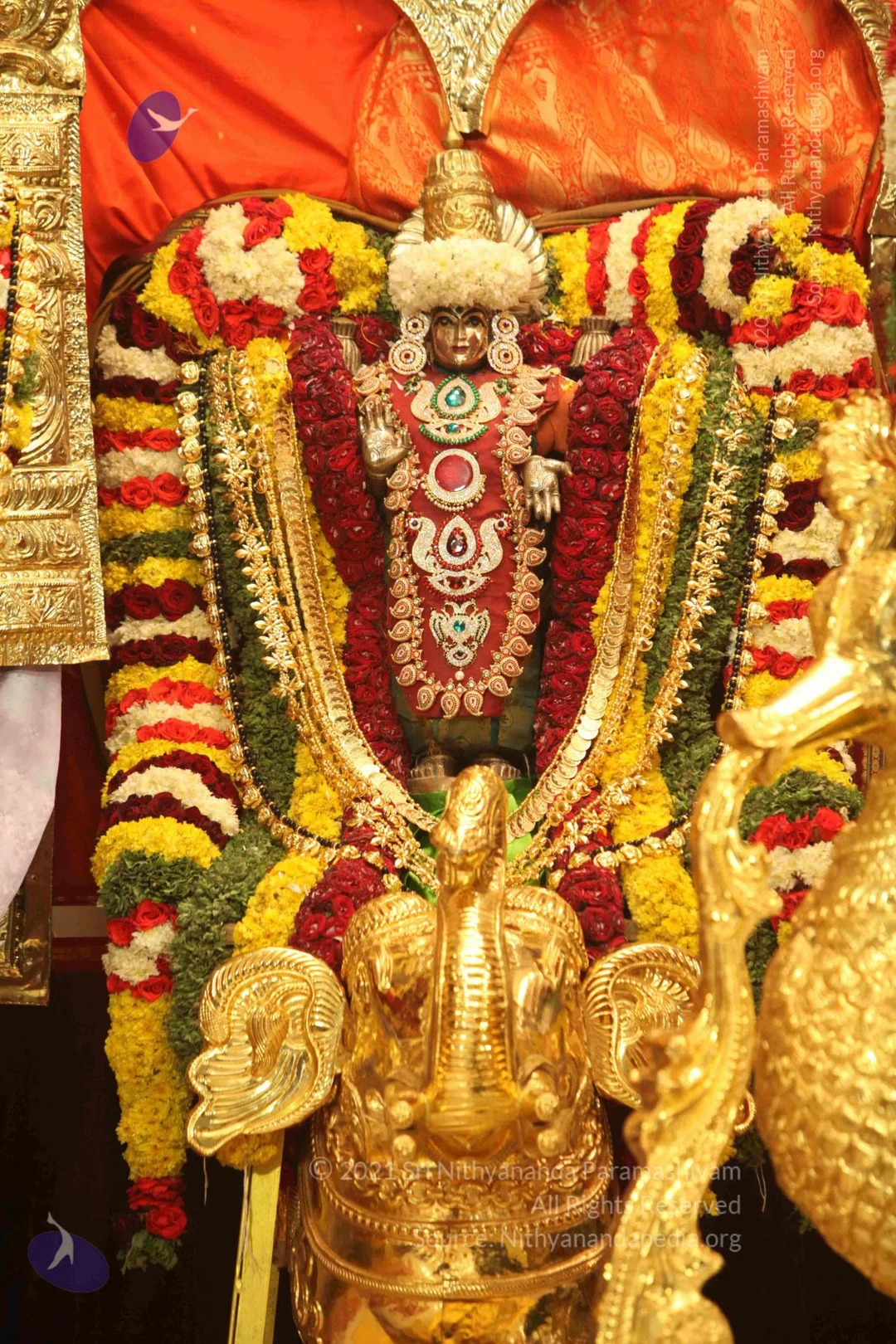
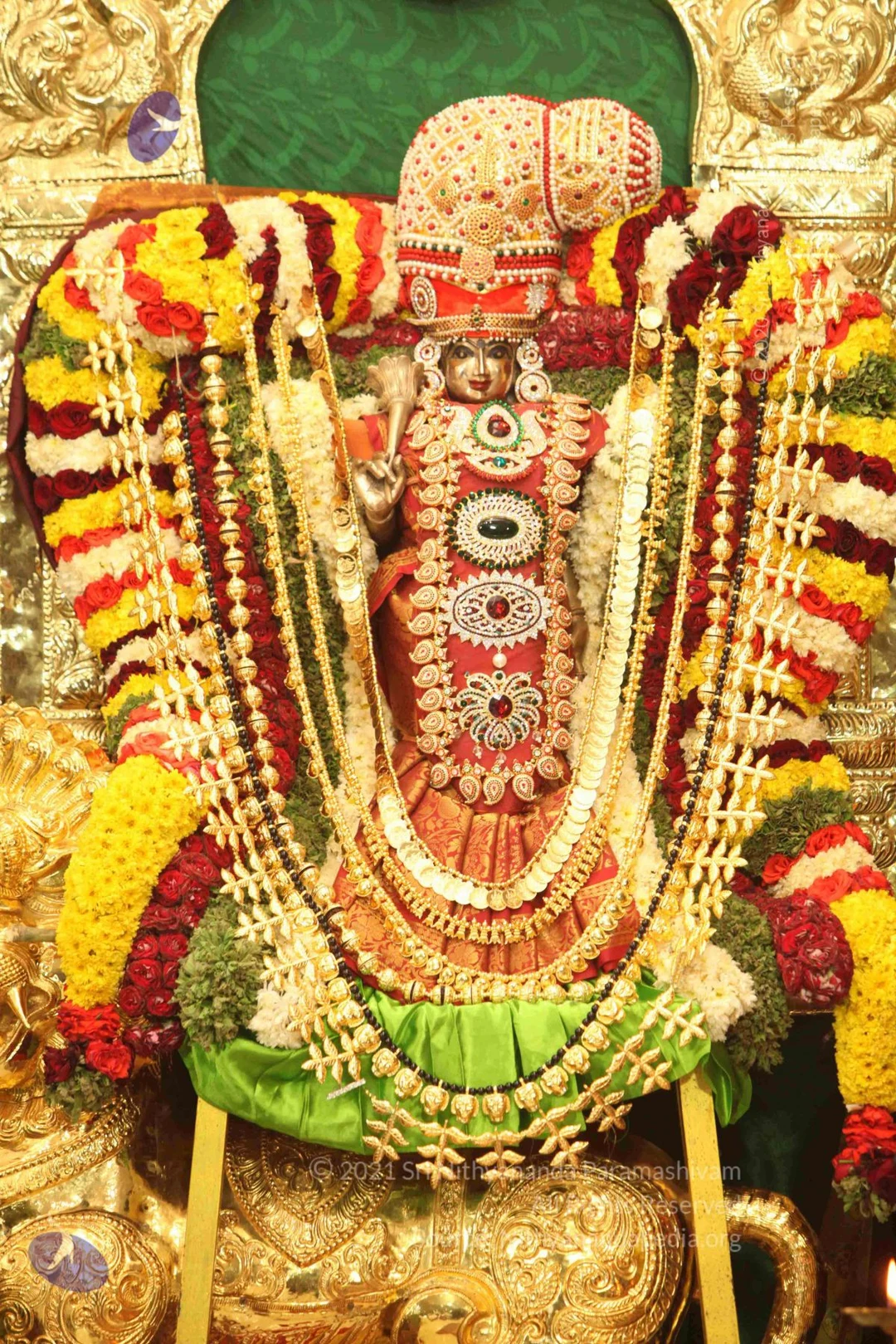
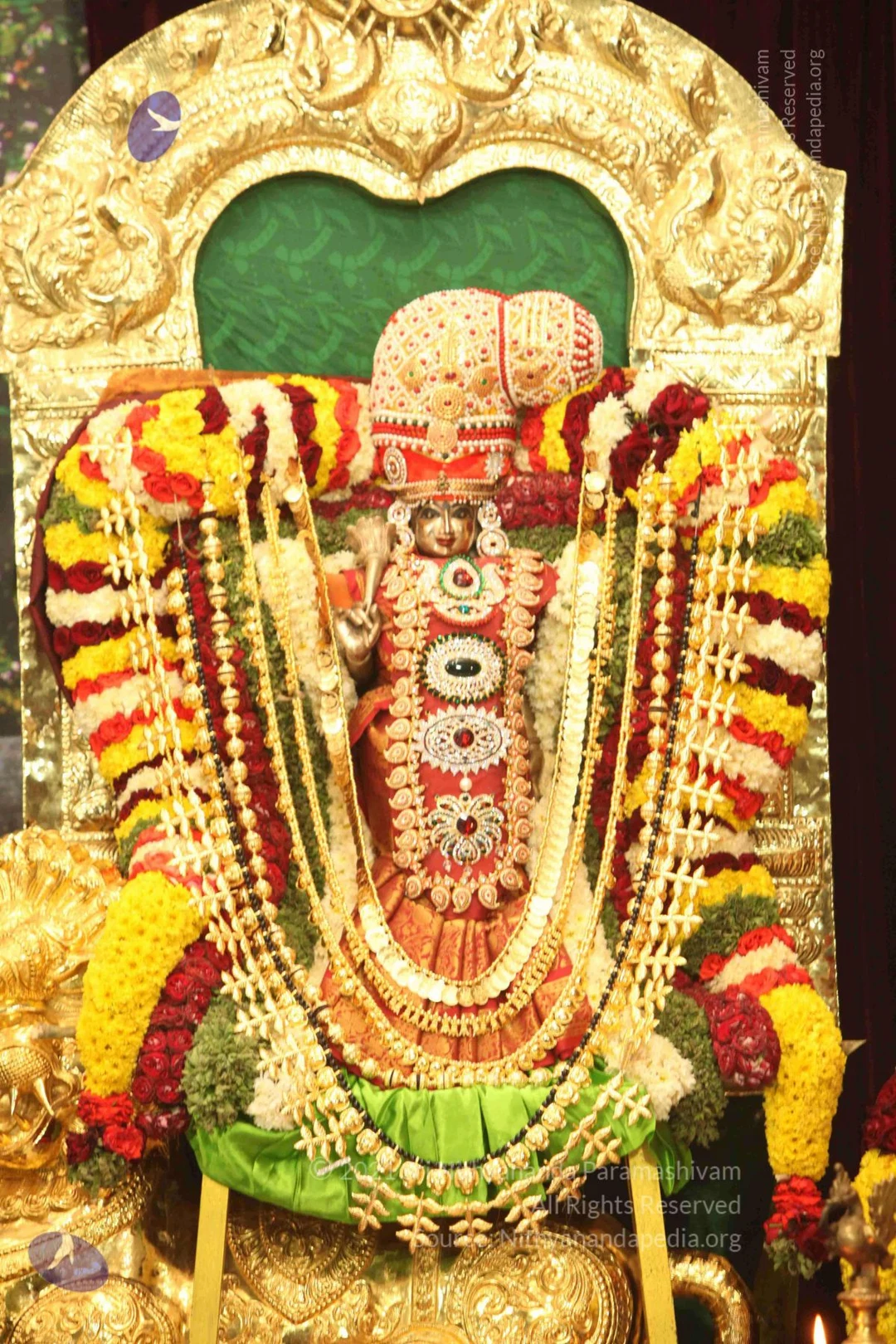

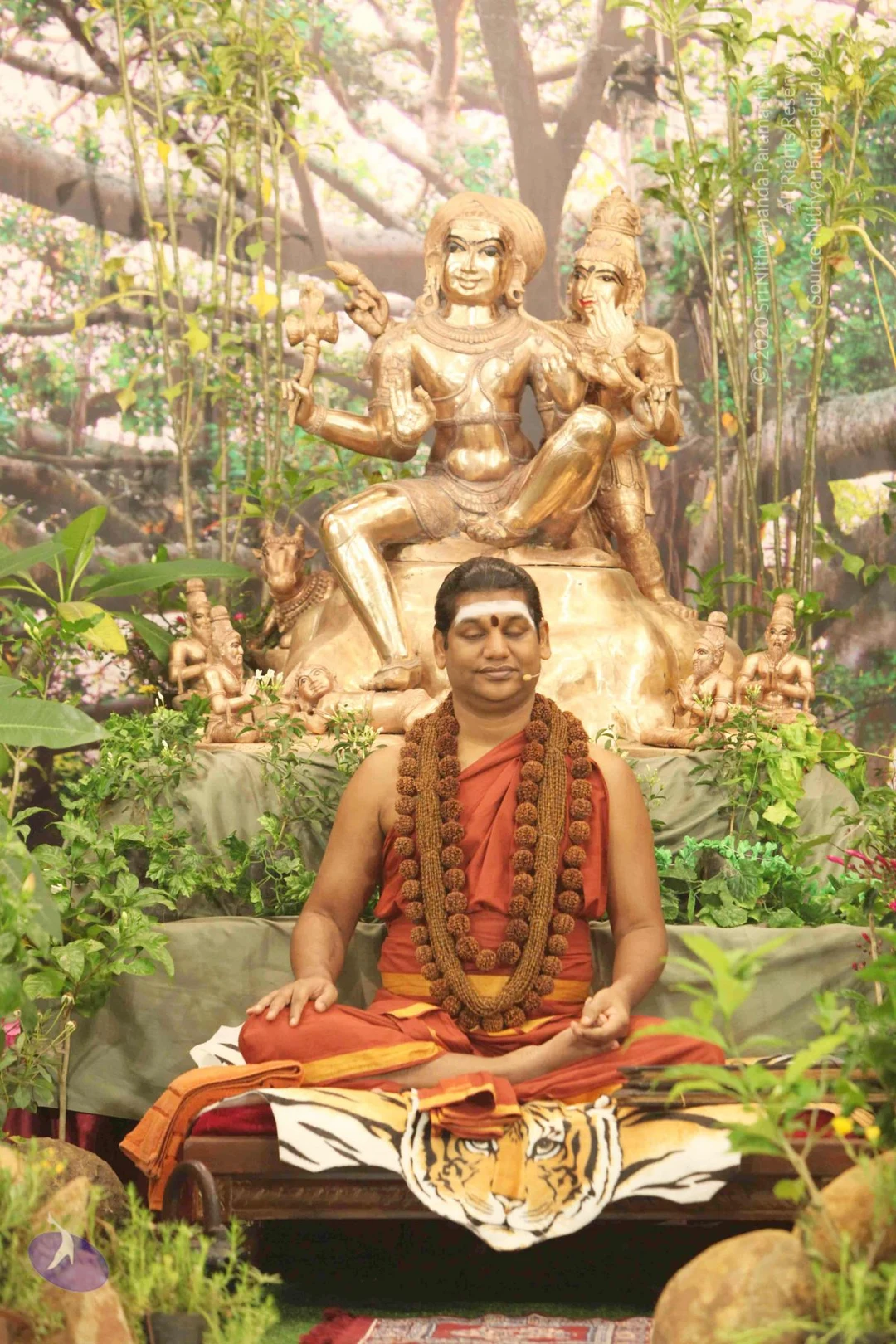
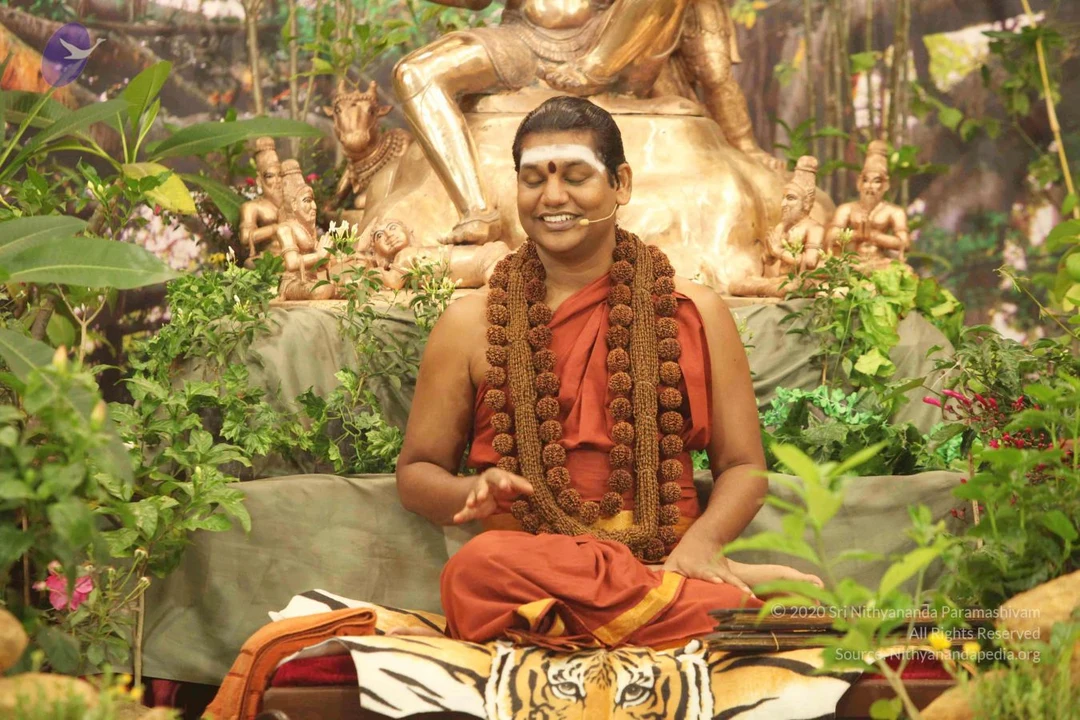
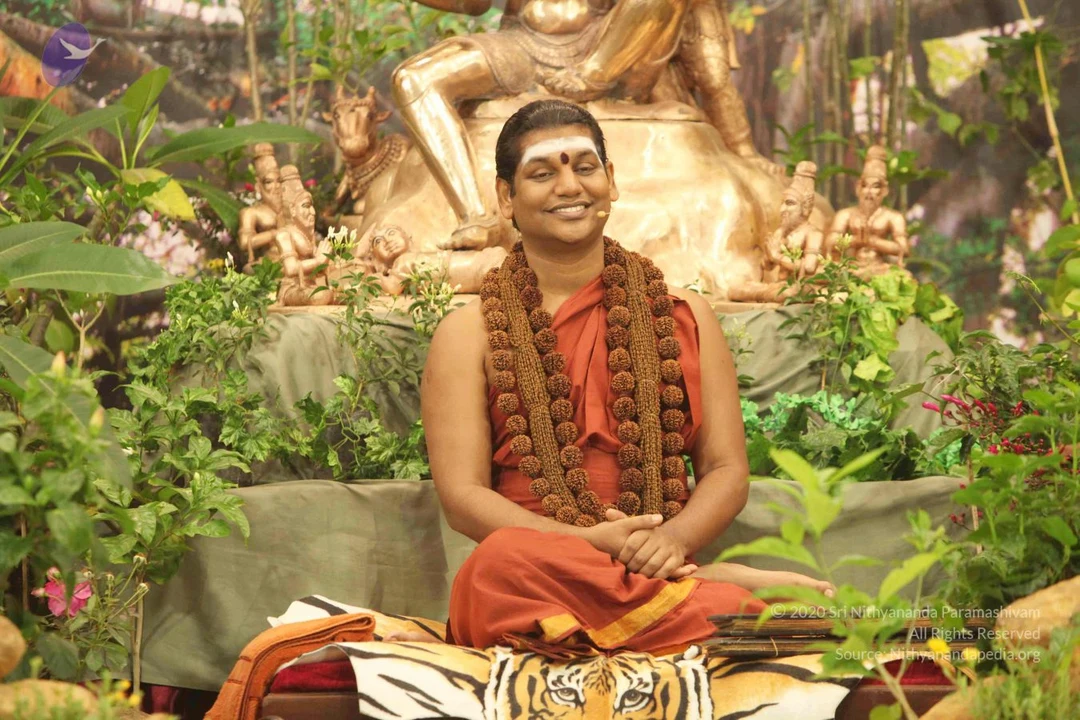
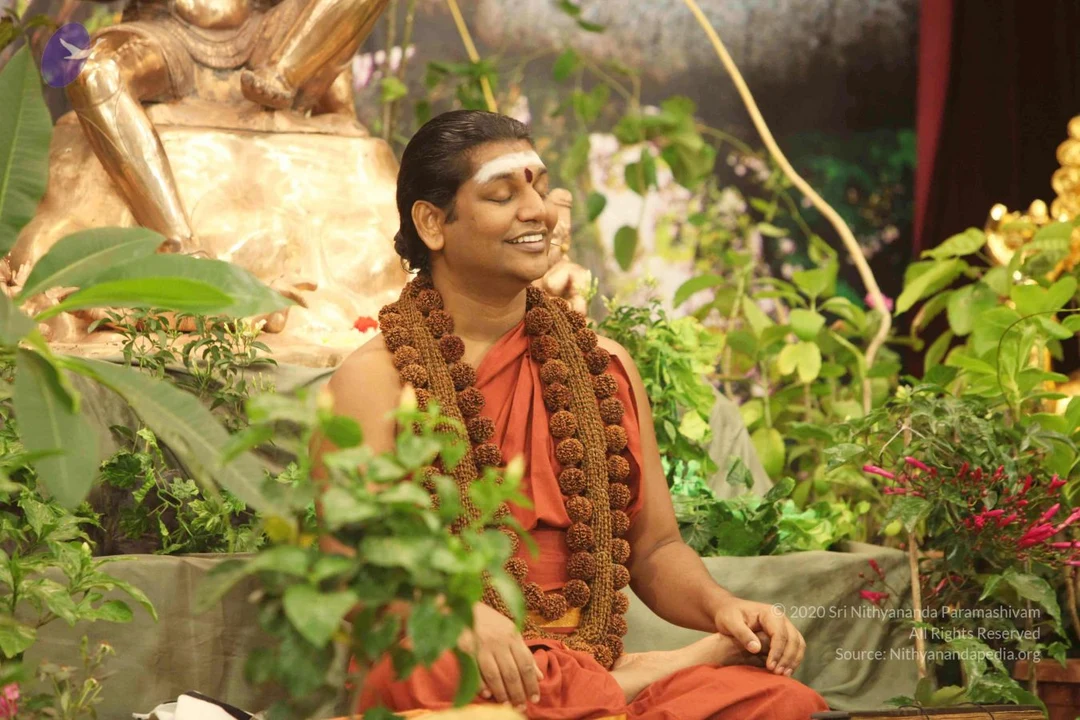
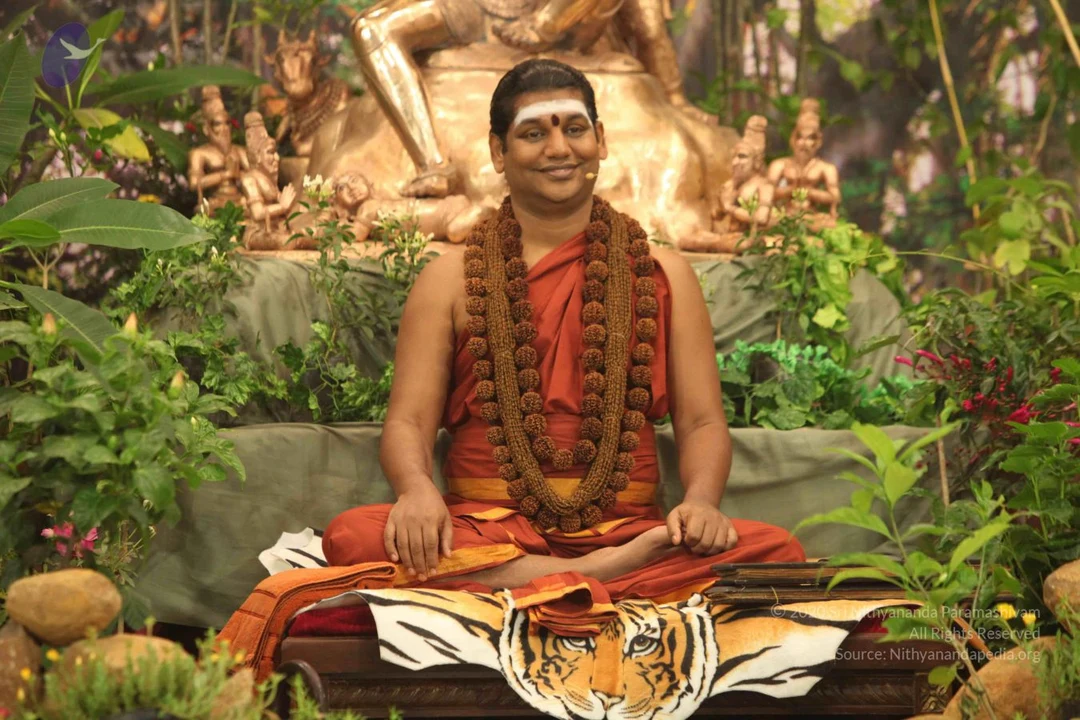
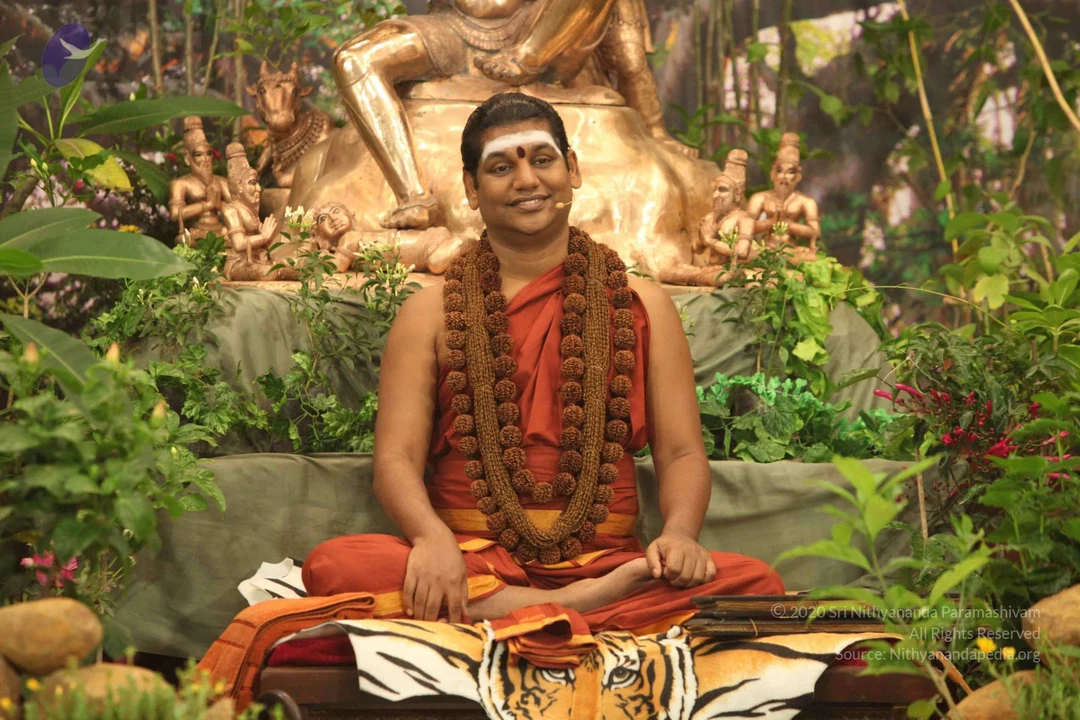
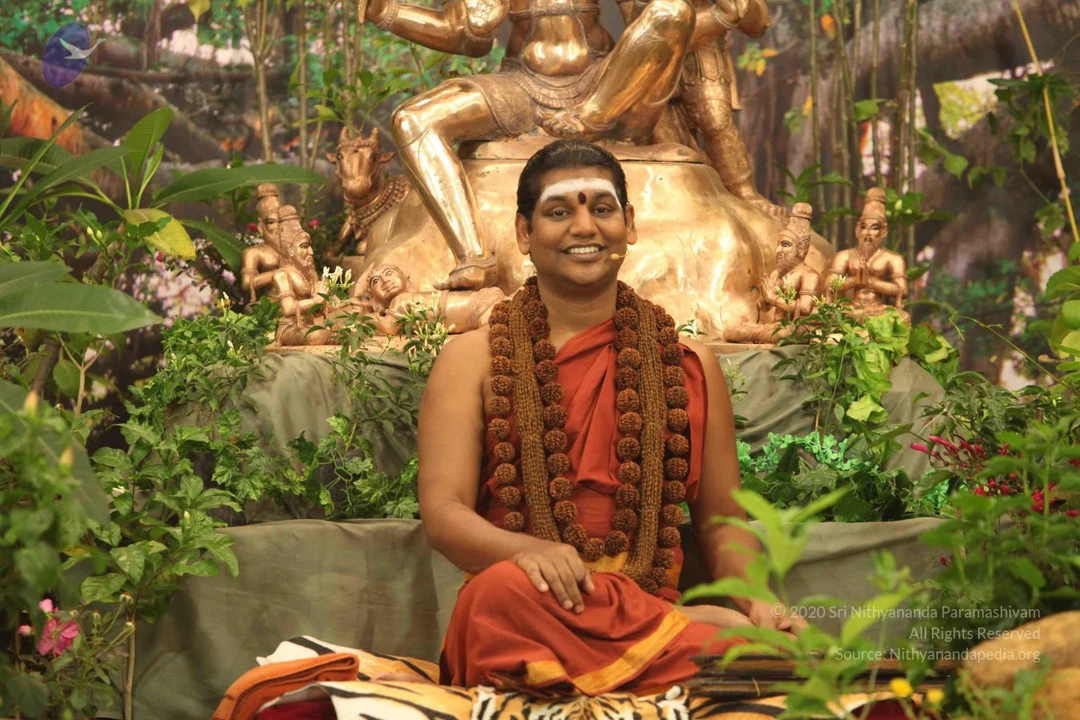
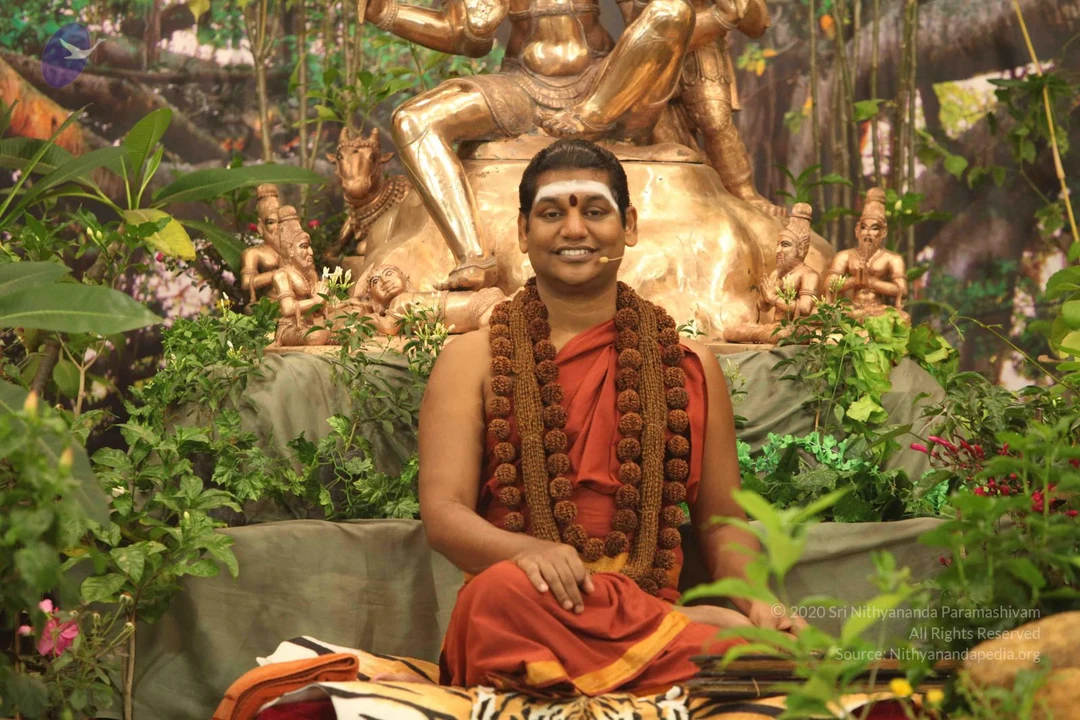
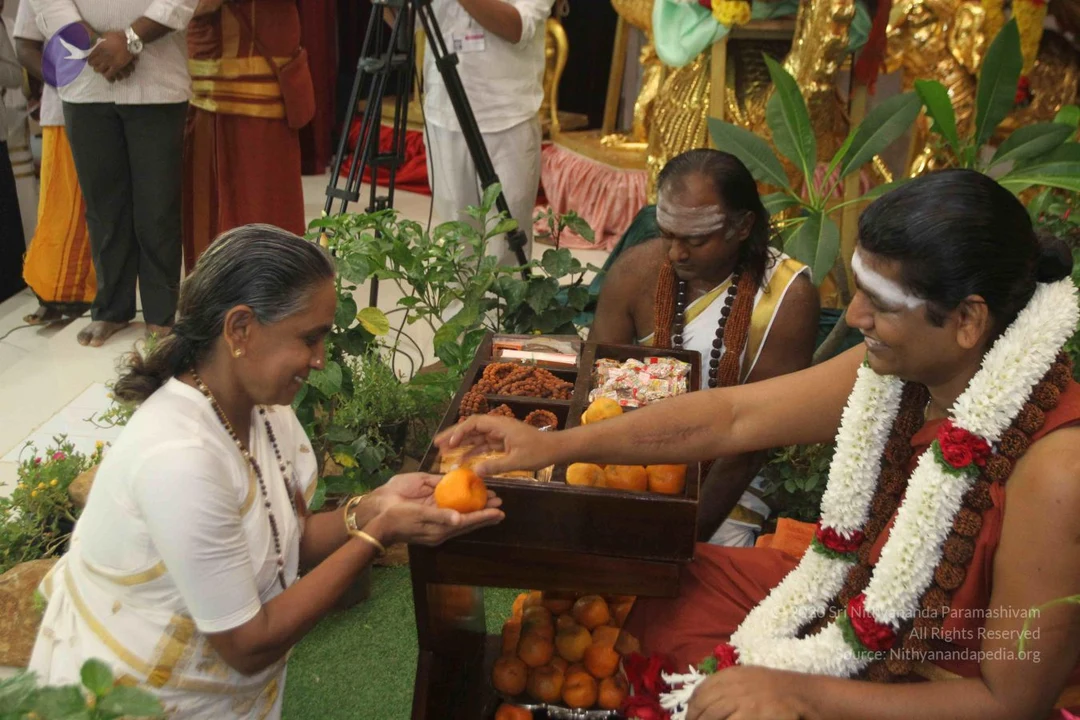
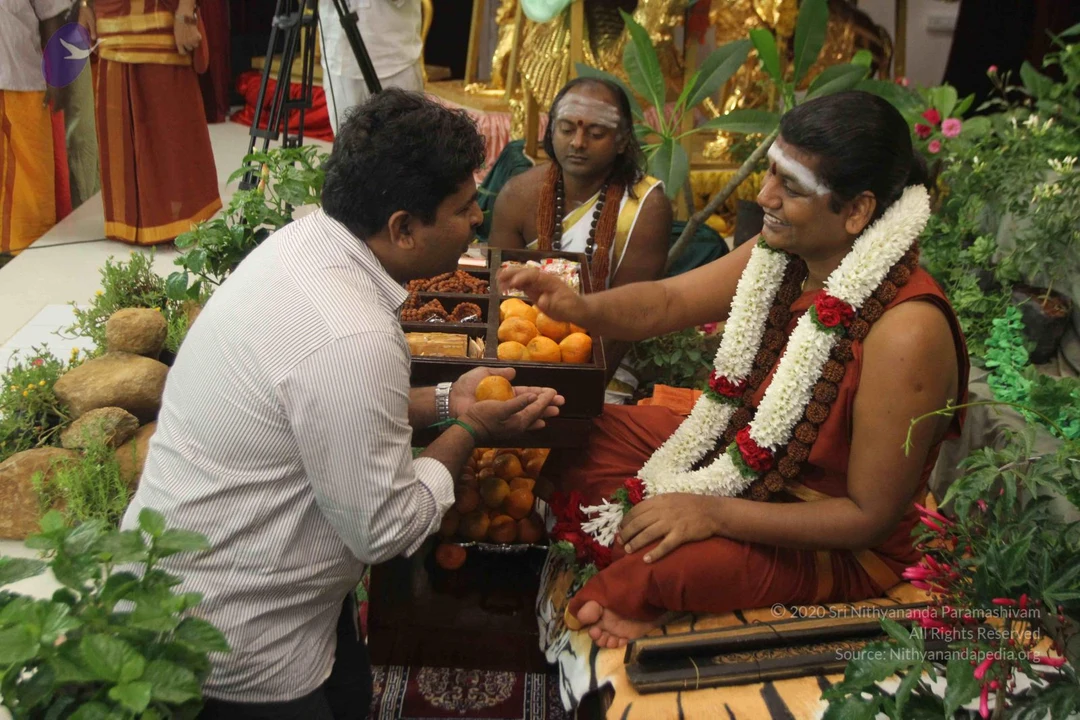
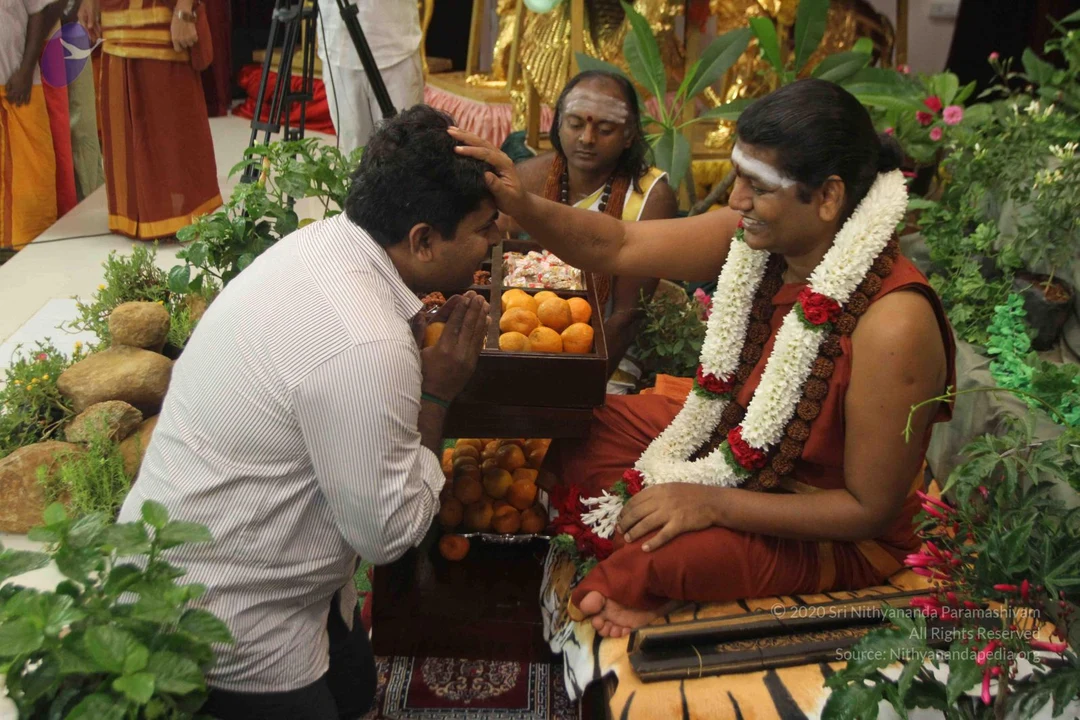
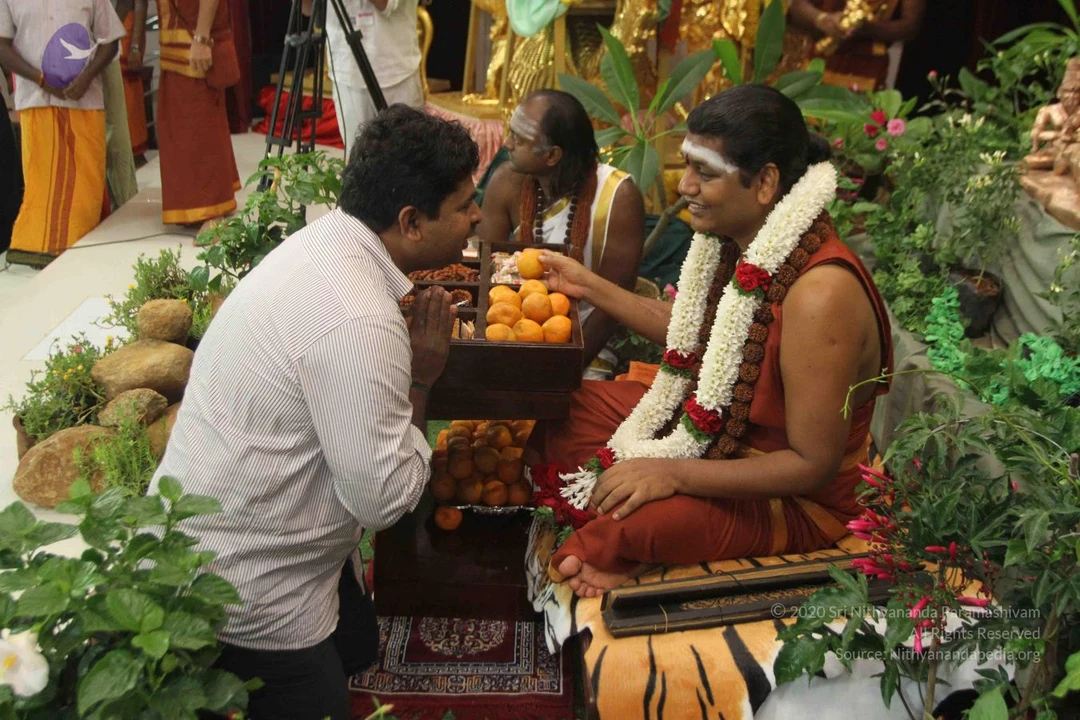
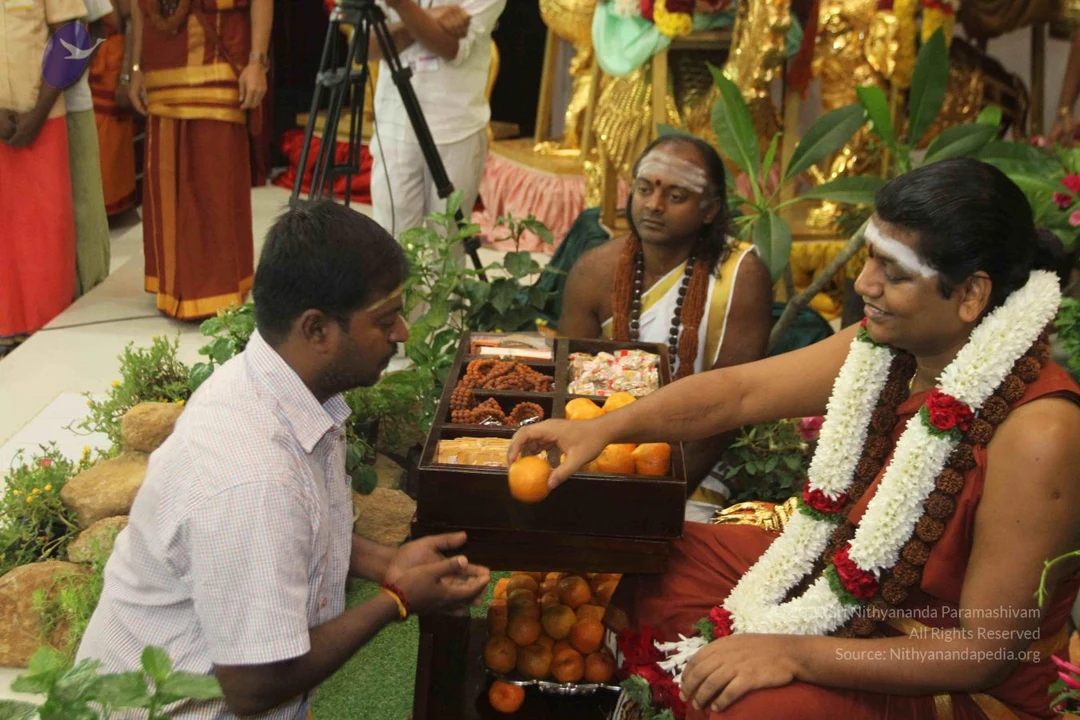
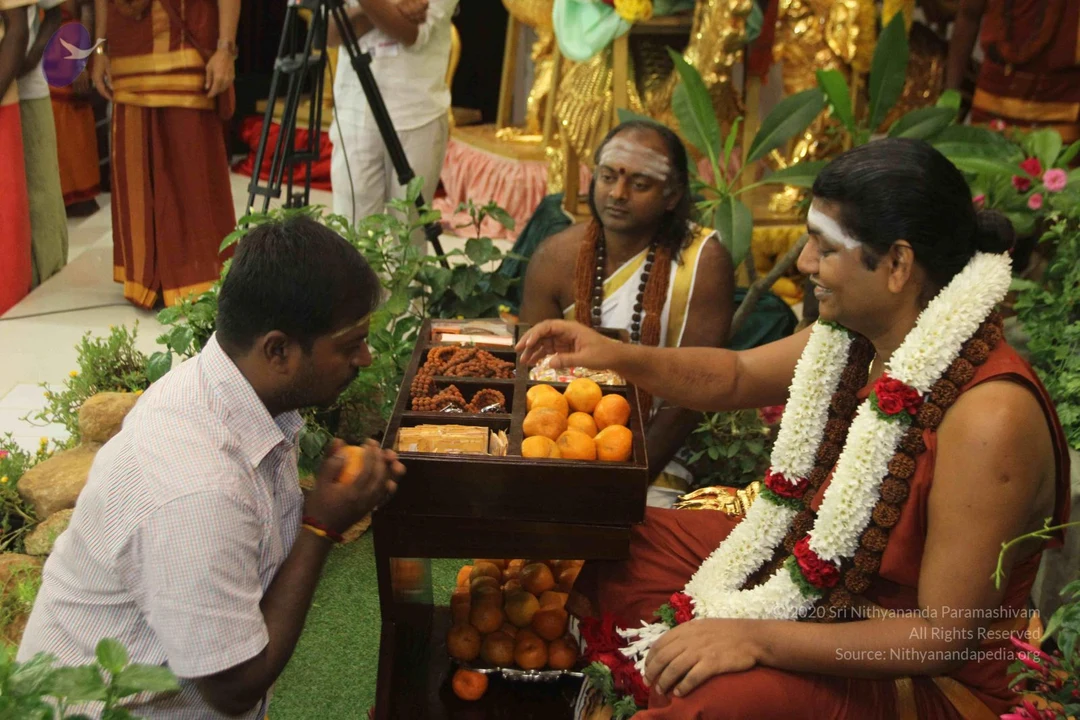
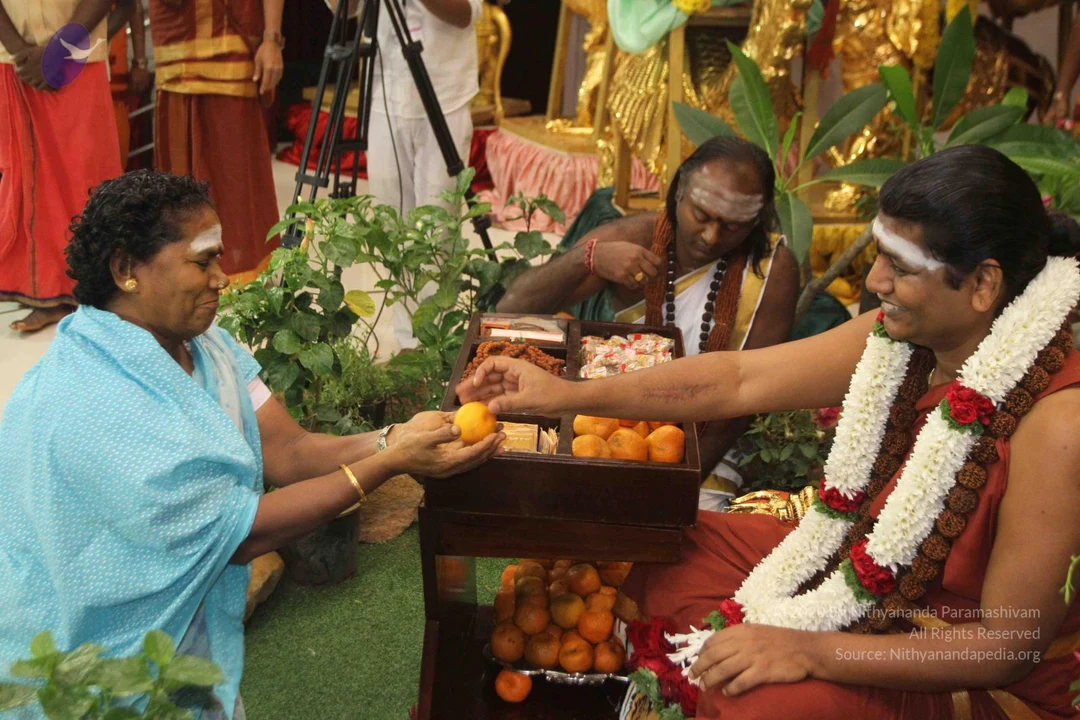
Darshan-and Blessings

Nithyananda Times
Link to Facebook Post
https://www.facebook.com/ParamahamsaNithyananda/photos/a.321615927926264/771274486293737
Tags
Advaita, Upanishads, Paramahamsa Nithyananda, sacred, knowledge
Photos Of The Day:
FB-Photos-of-the-Day
Photos from this day
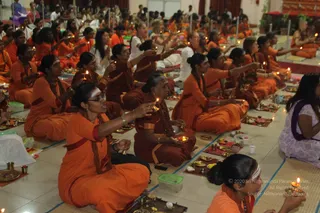
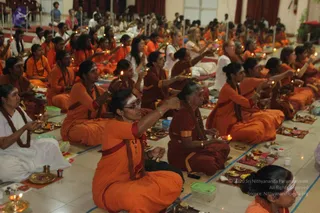
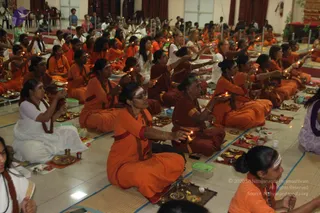
View all 134 photosAarti
18 photosSource gallery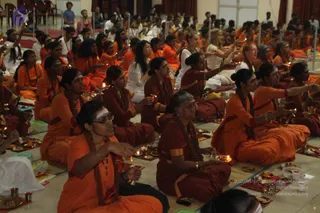
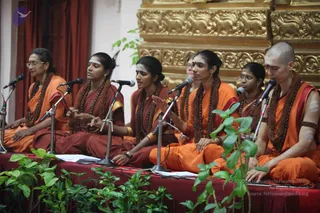
Bhajans
11 photosSource gallery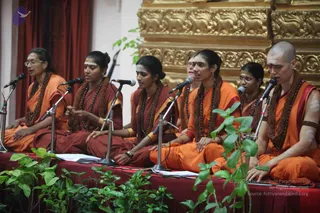

Satsang
59 photosSource gallery
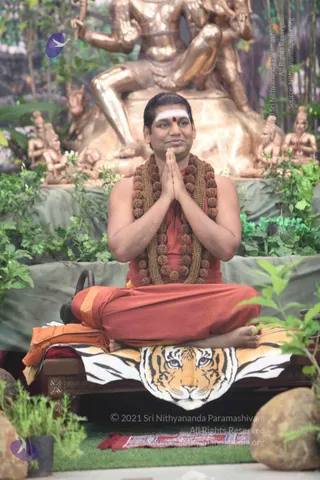
Darshan-and Blessings
45 photosSource gallery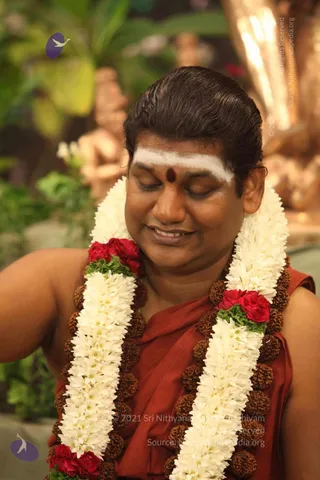
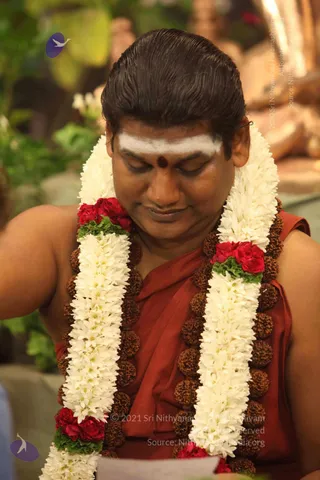
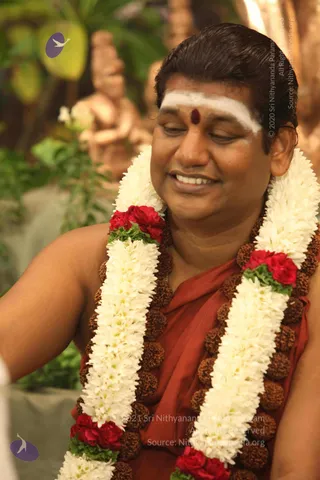
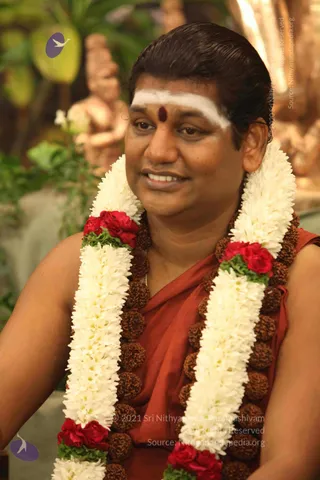
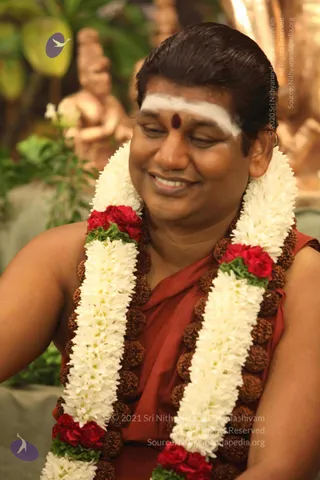
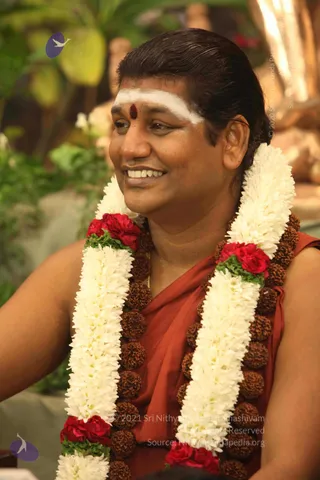
FB-Photos-of-the-Day
1 photoSource gallery