Wednesday
7 January 2015
Upanishads - Receive the Sacred Cognition
- Dated photos
- 171
- Source pages
- 1
- Media
- 3
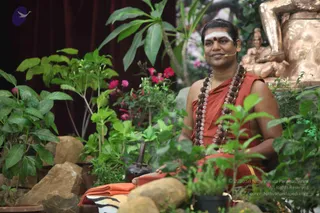
January 07 2015
Original wiki pageTitle
Upanishads - Receive the Sacred Cognition
Description
Video and Audio - Recieve the Sacred Cognition
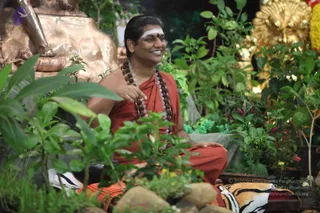
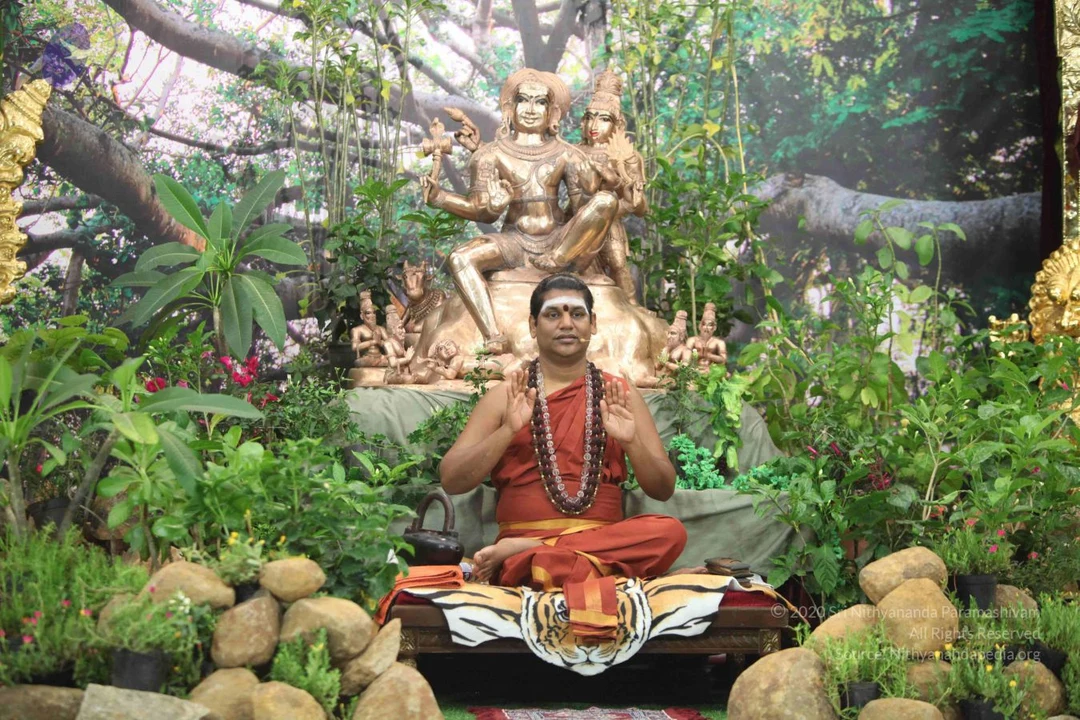
Today’s (07th January, 2015) Morning Satsang continues with the Living Advaita series on Upanishads. Paramahamsa Nithyananda assures us that we can all experience the Upanishads; we just need openness. With this openness, we will accumulate the ultimate wealth in our life directly from the Upanishads – sacred knowledge, sacred sentiment and sacred cognition.
| Video | Audio |
Transcript
(00:16) nithyānandeśvara sadāśiva samārambhām nithyānandeśvari ādiśakti madhyamām | asmatāchāryaparyantām vande guru paramparām ||
(00:44)
I welcome all the devotees, disciples, Samajis, Satsangis, Sri Mahants, Mahants, Thanedars, Kotharis, visitors, viewers, devotees, disciples, sitting with us all over the world through Nithyananda TV, Sadhana TV and through two-way video-conferencing having nayanadeeksha all over the world. Cities sitting with us, through two-way video conferencing having nayanadeeksha: Scottsdale-Arizona, Hyderabad-Gupta Kashi, Oklahoma-Somanatham, Toronto-ThiruKailayam, Los Angeles-Arunachalam, Seattle-Chidambaram, Houston-Kalahasti, Singapore -Singapuram, Ohio-Prayag, Hyderabad, Enriching Temple-Bidadi, Ohio-Ma Shivananda, London-Kashi, LosAngeles-Hollywood, Oman-Sivagangai, Warrington-UK, Guadeloupe-Rameshwaram, SanJose-Madurai, Colombo-Sri Lanka, Vancouver-Canada, Hong Kong-Sirkazhi, Dakota Dunes, Jorpati-Nepal and some more cities joining. I welcome all of you with My love and respects.
(02:18)
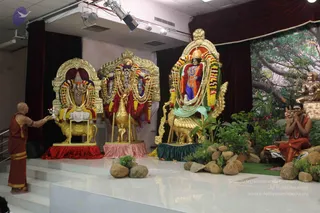
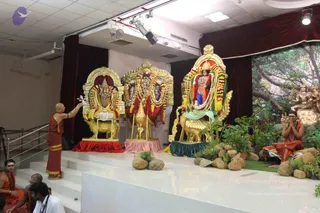
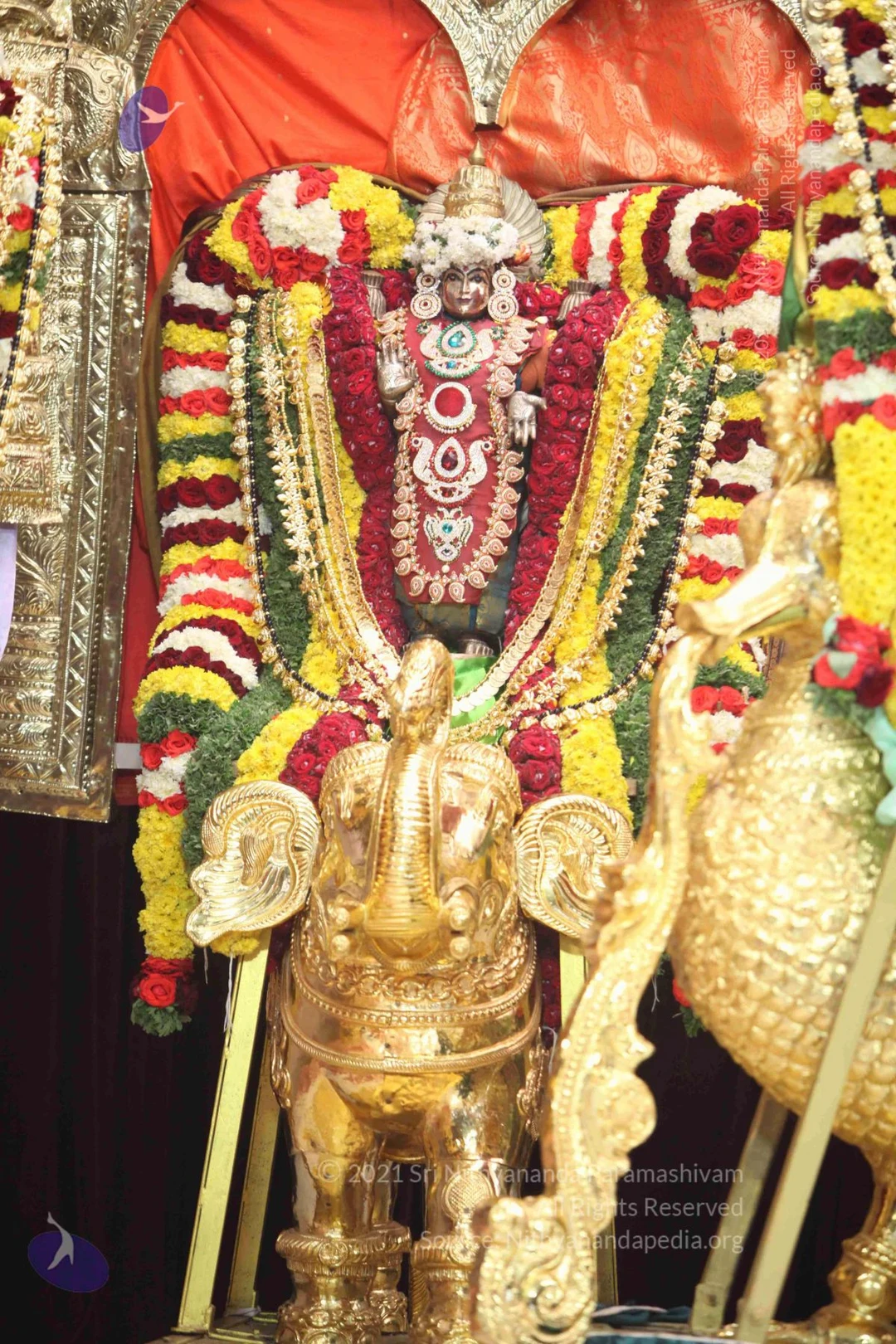
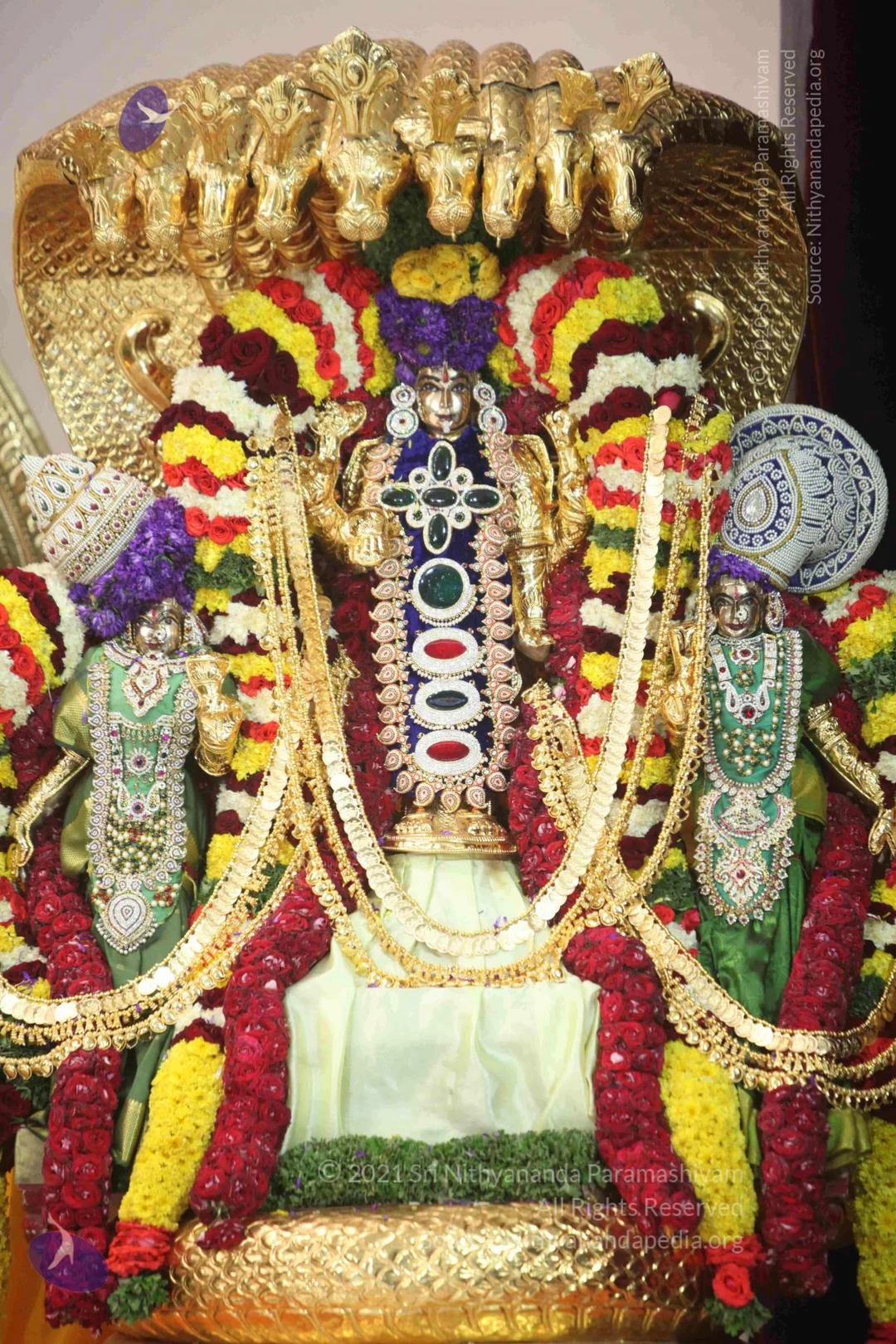
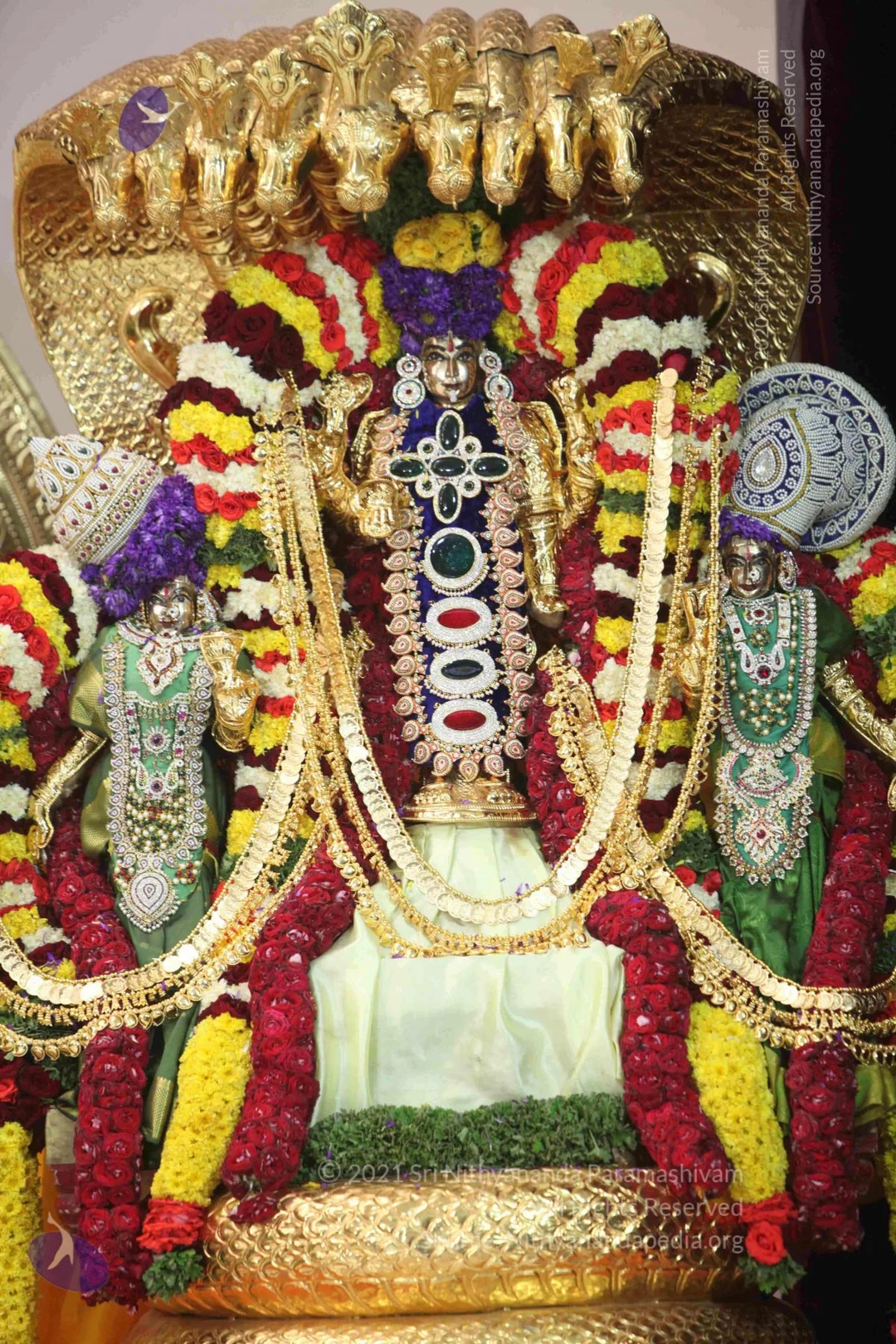
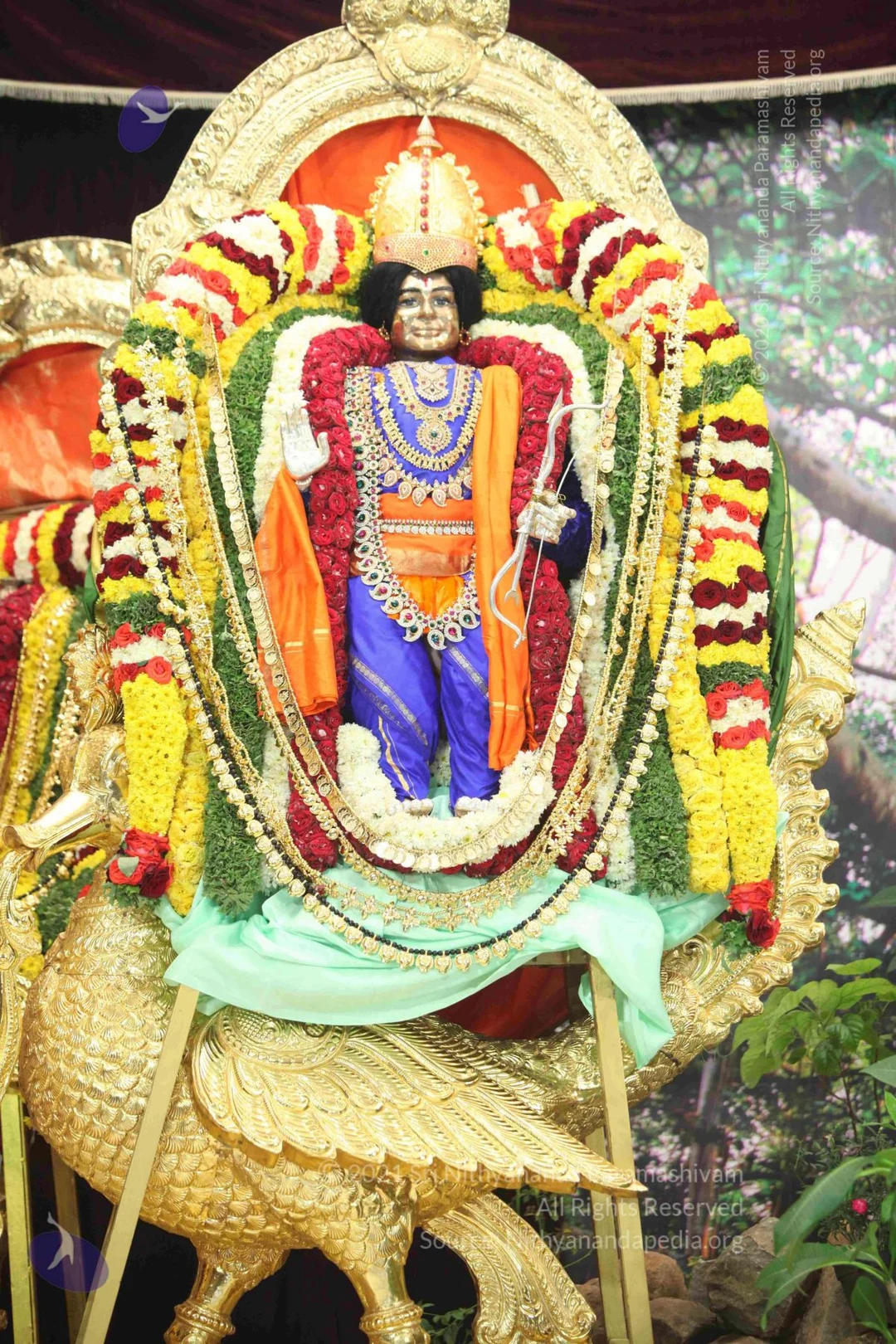
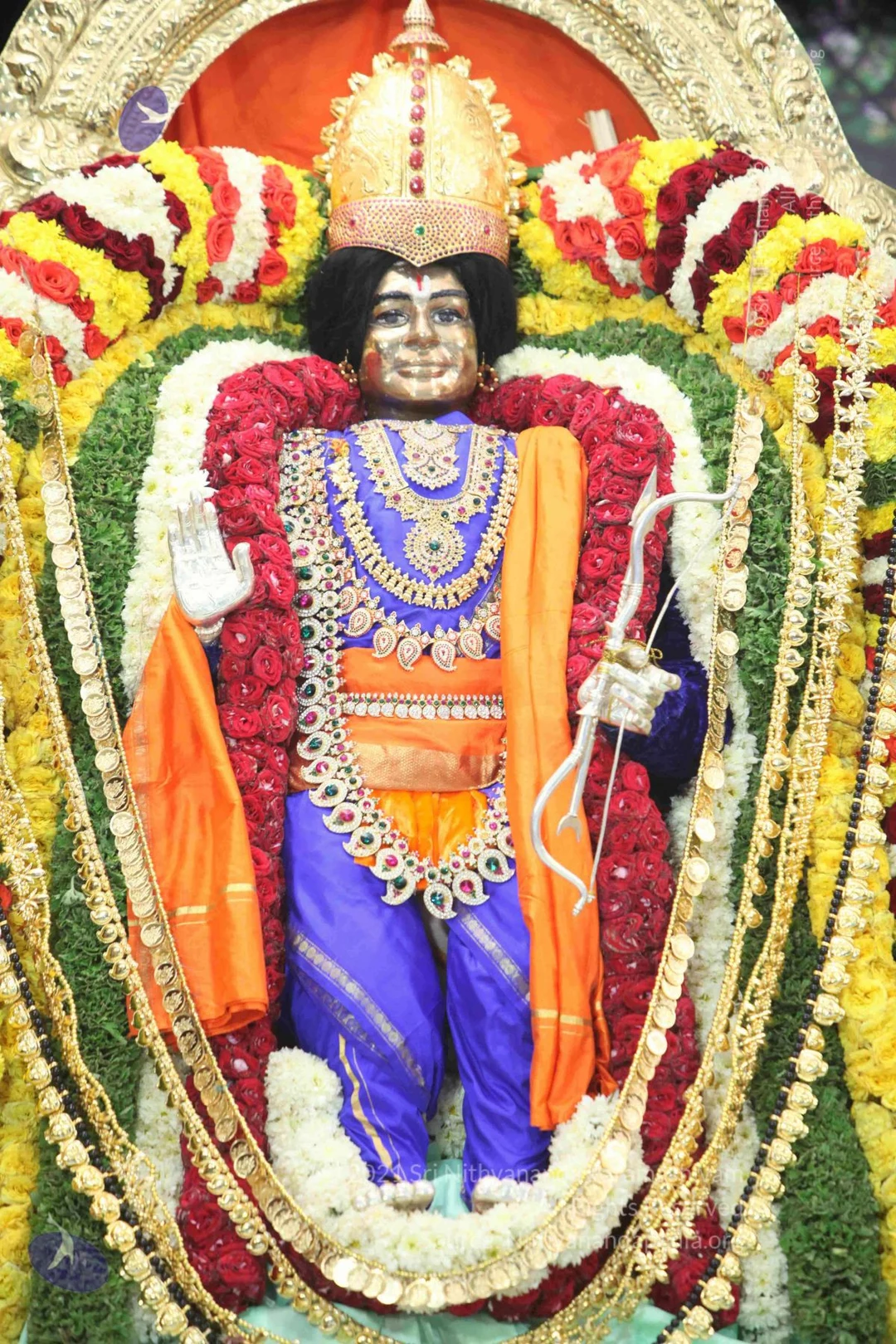
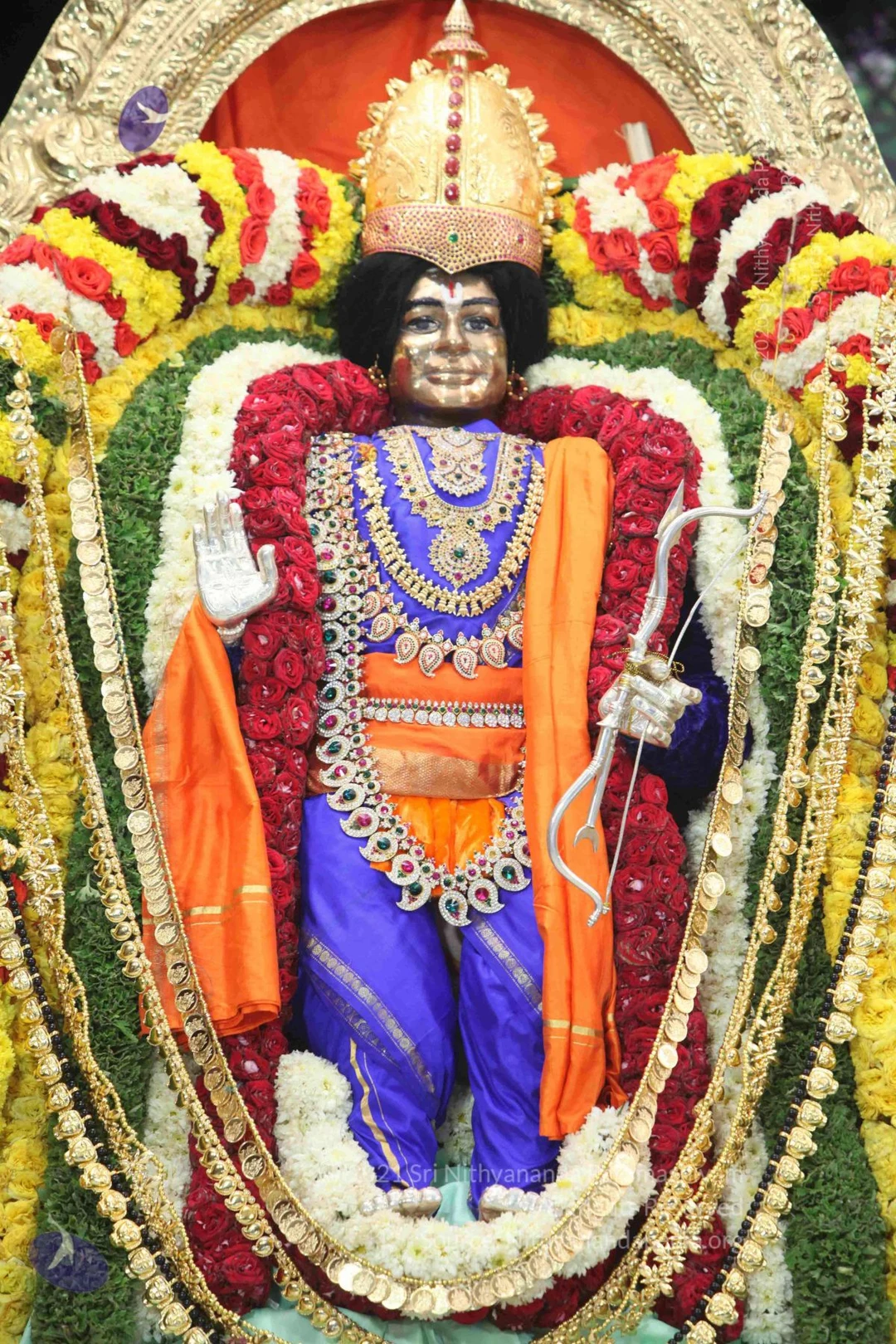
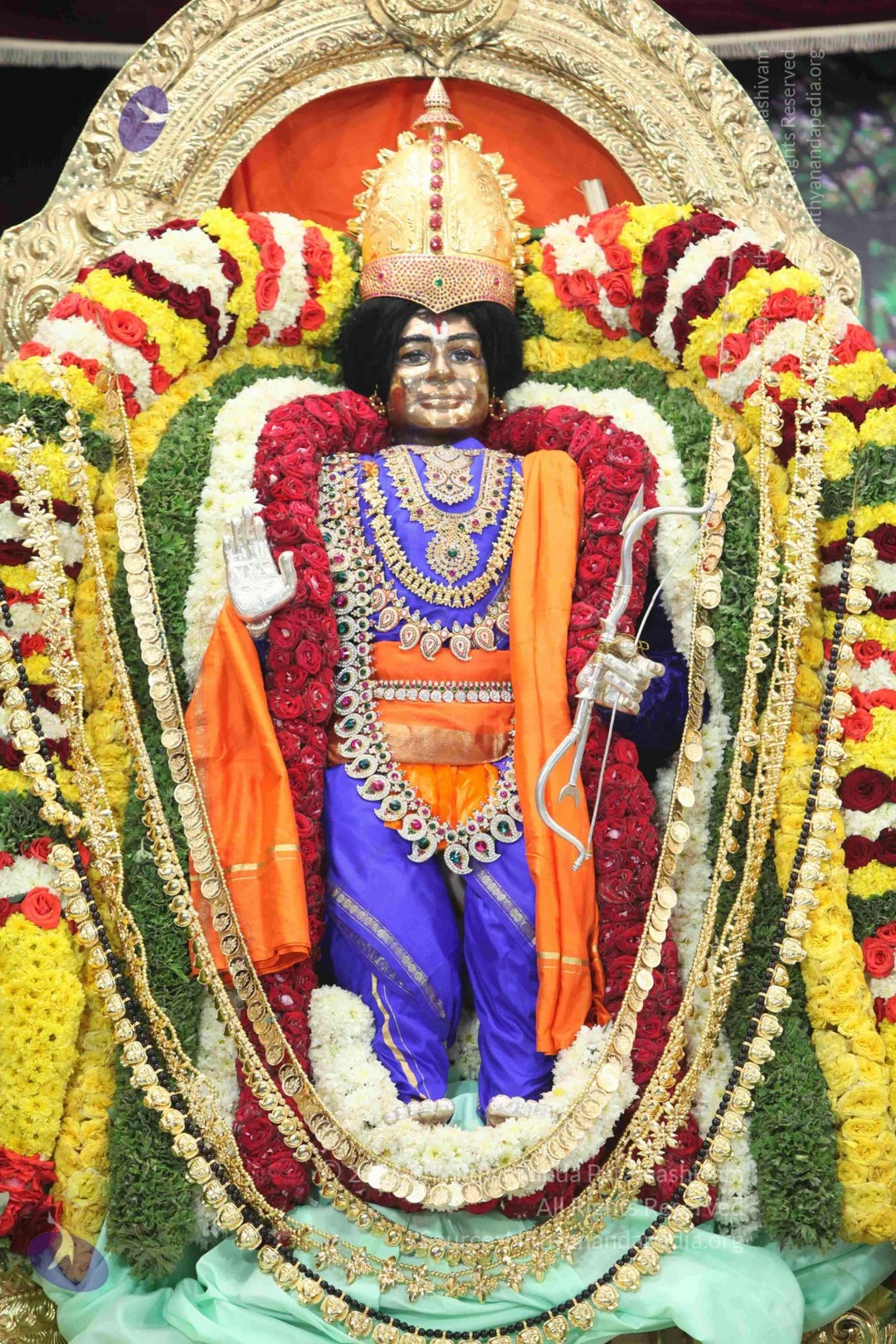
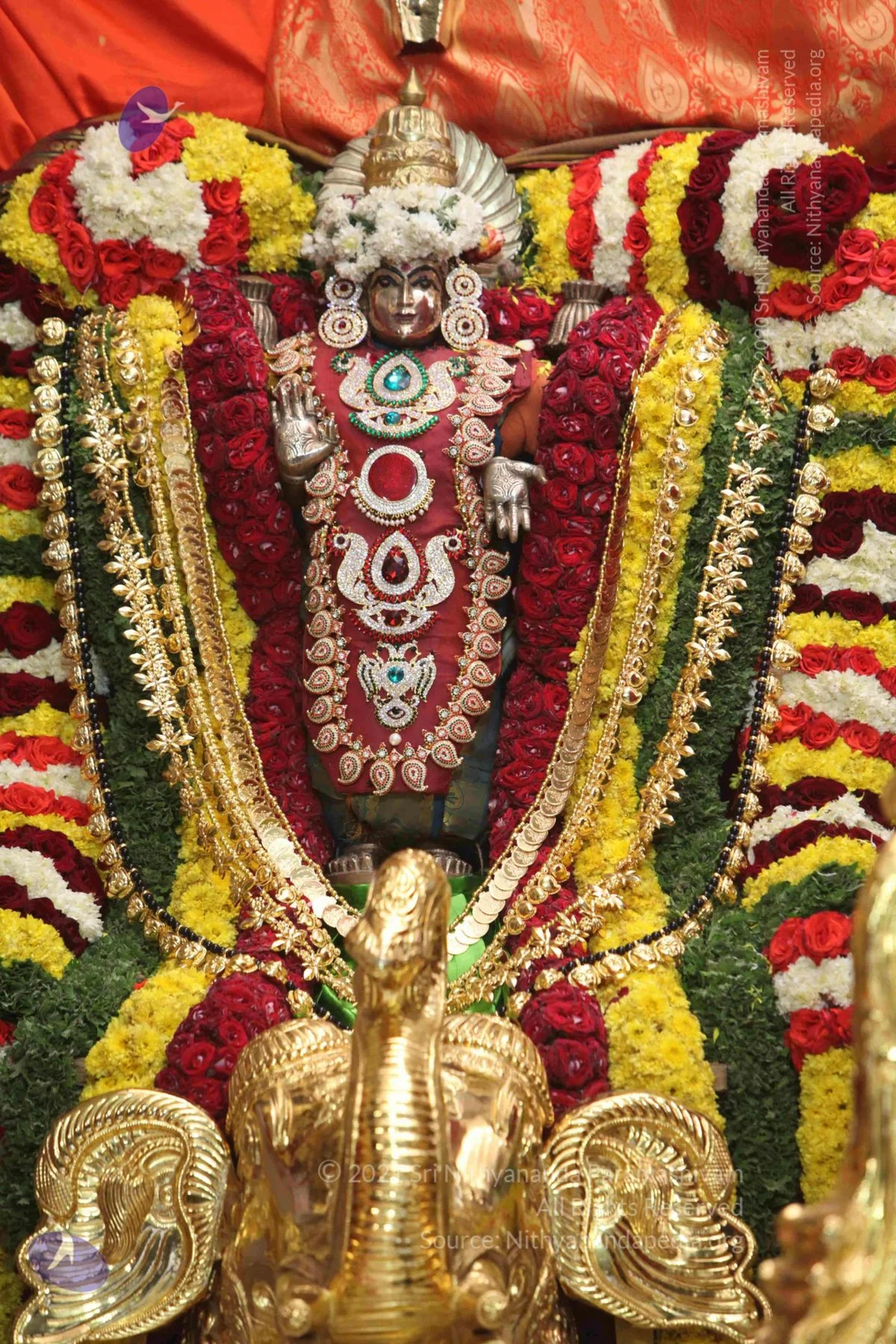
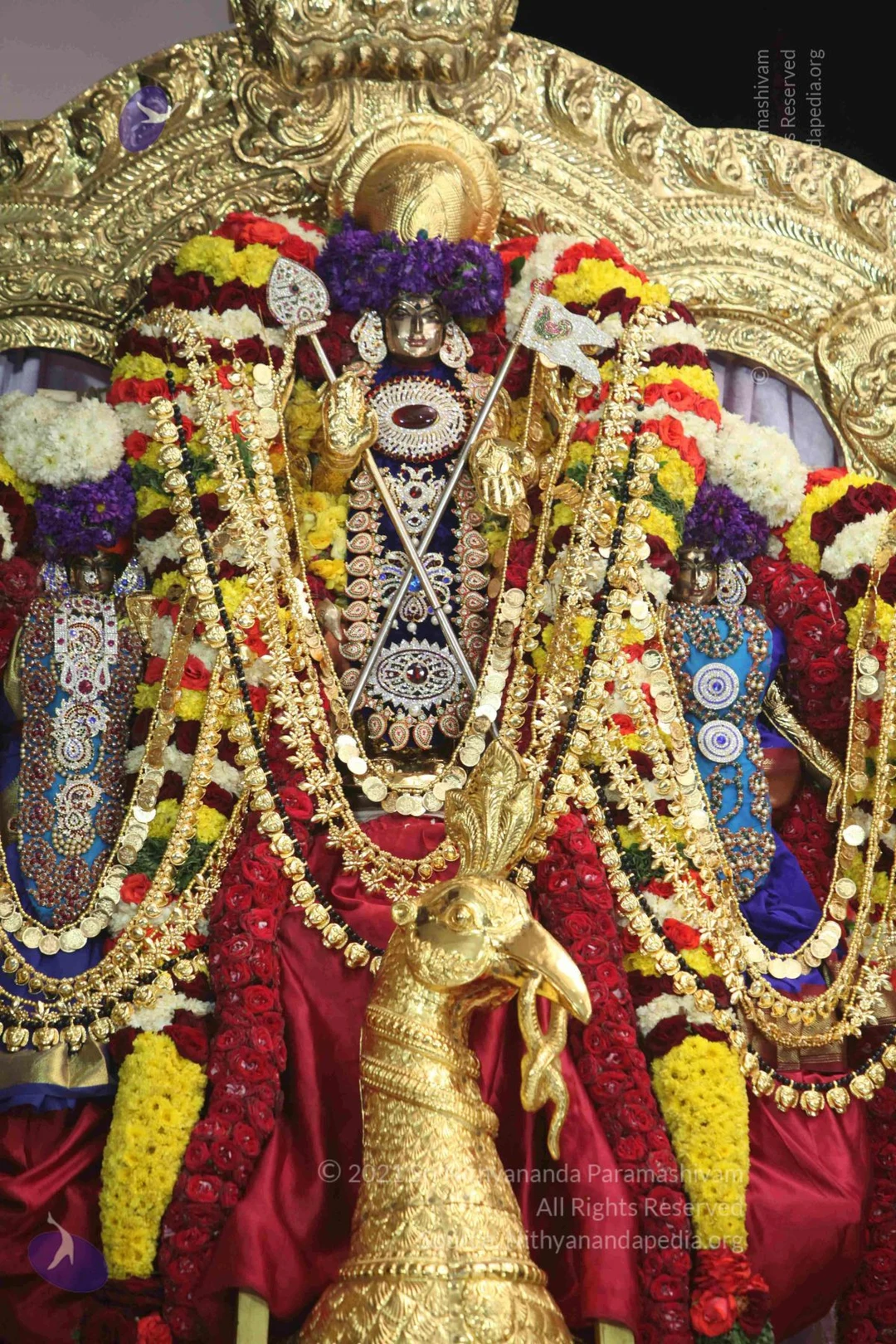
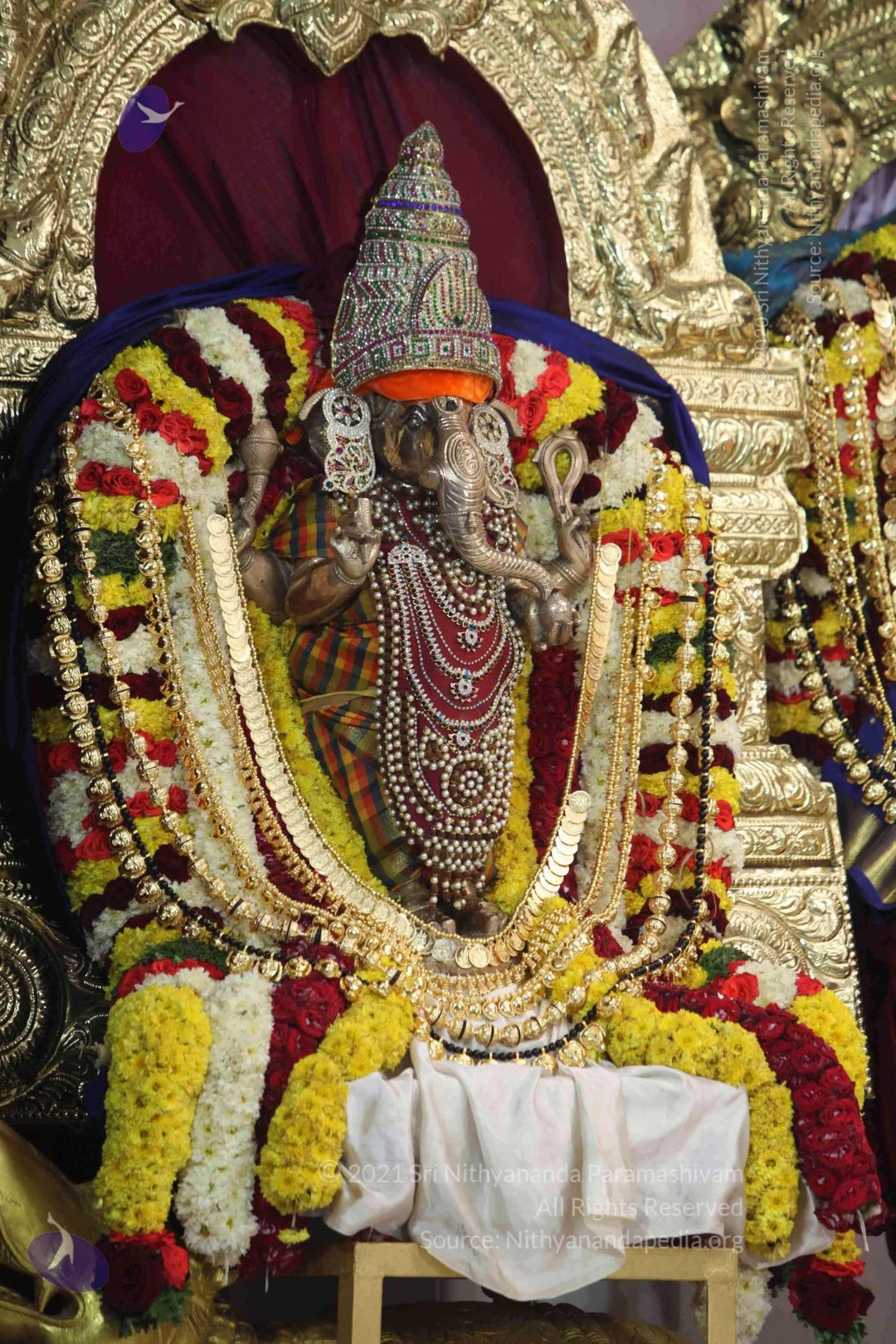
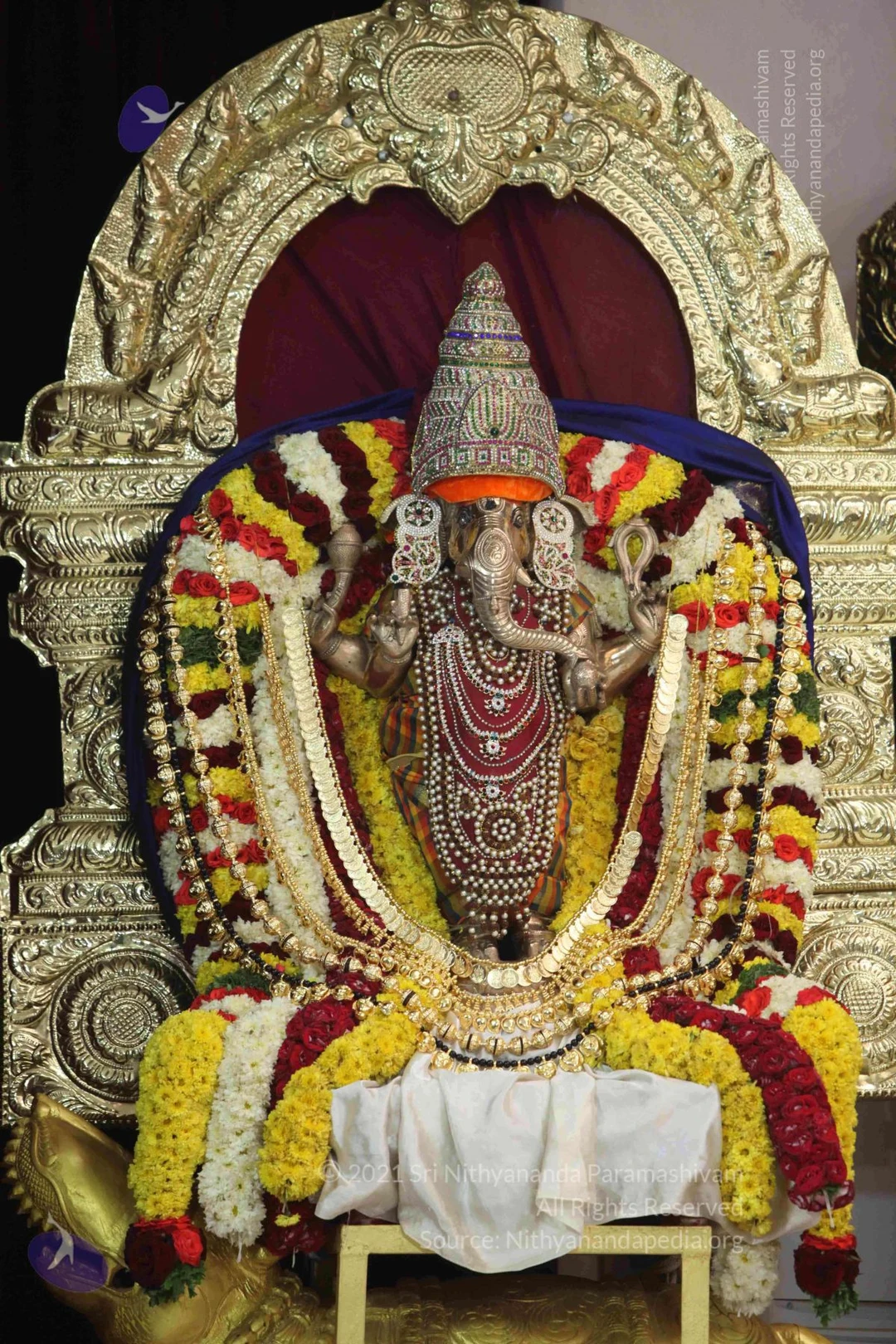
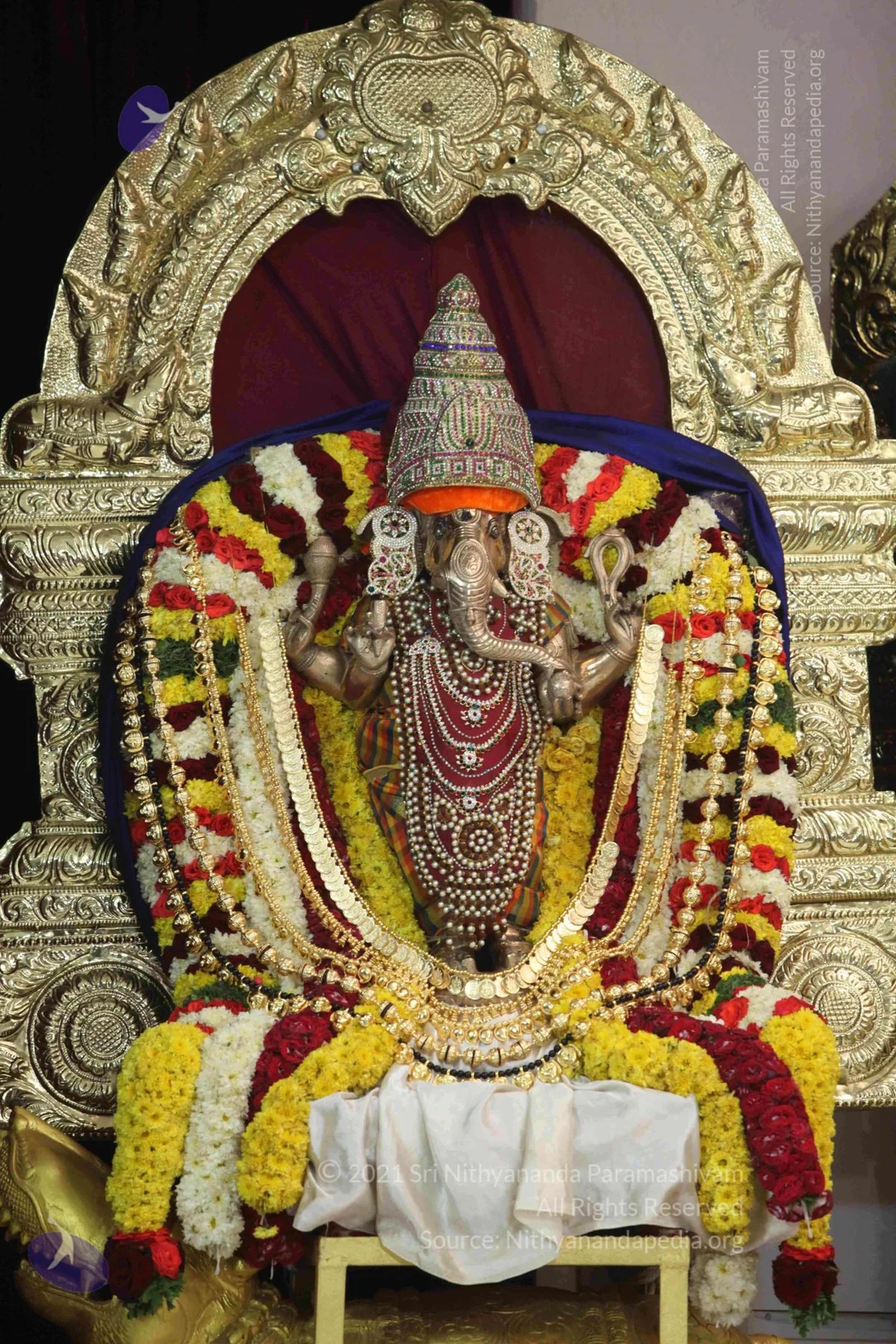
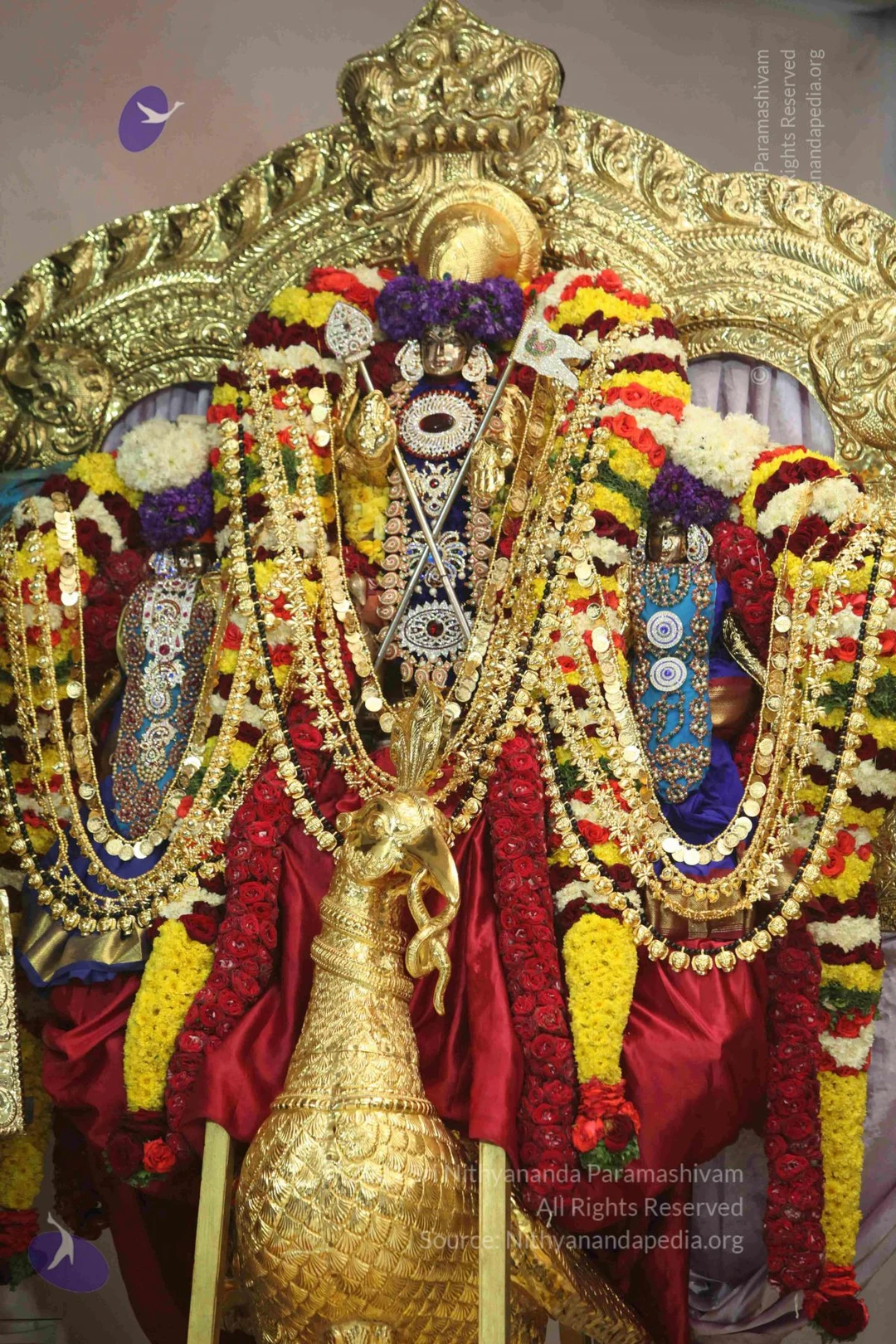
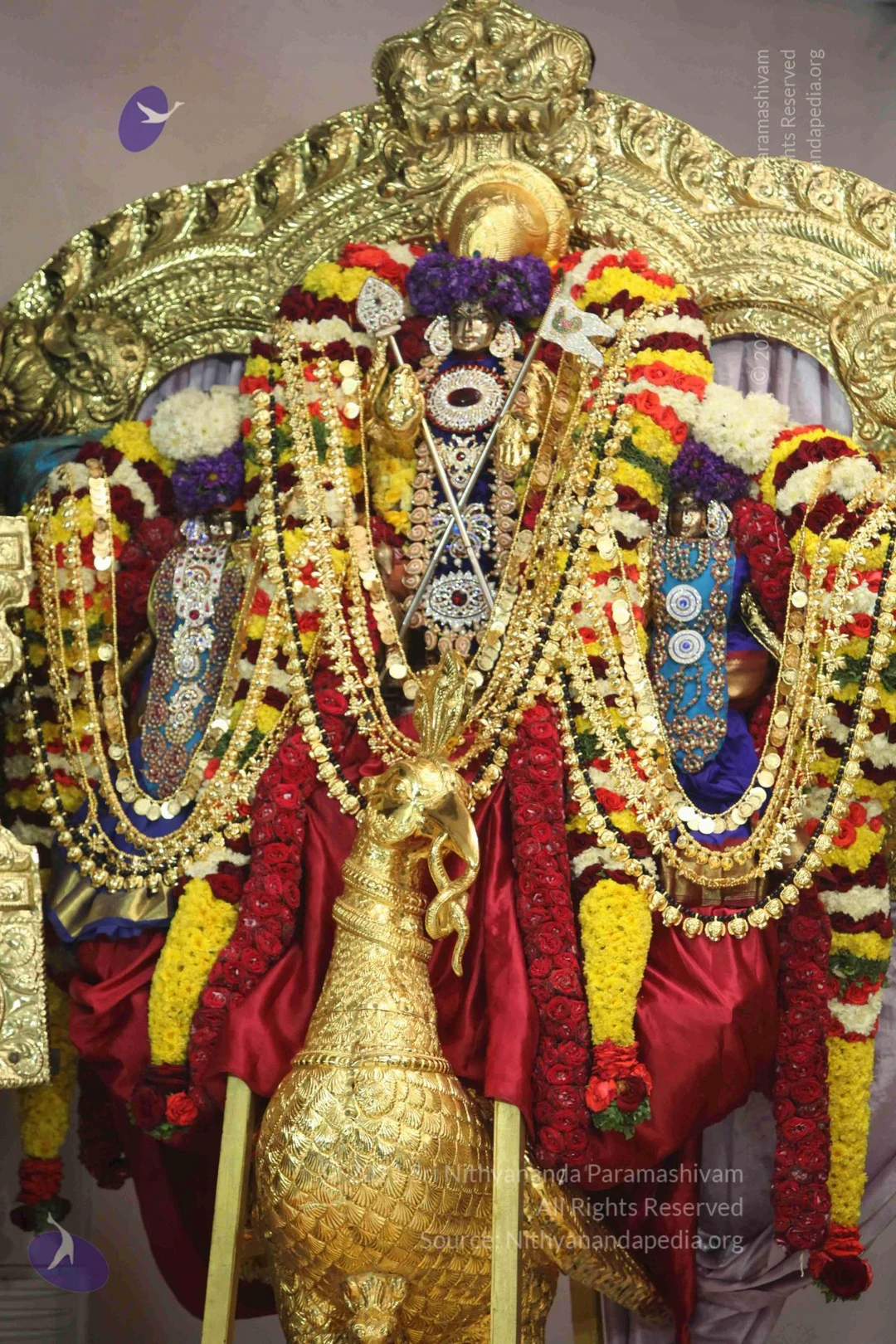
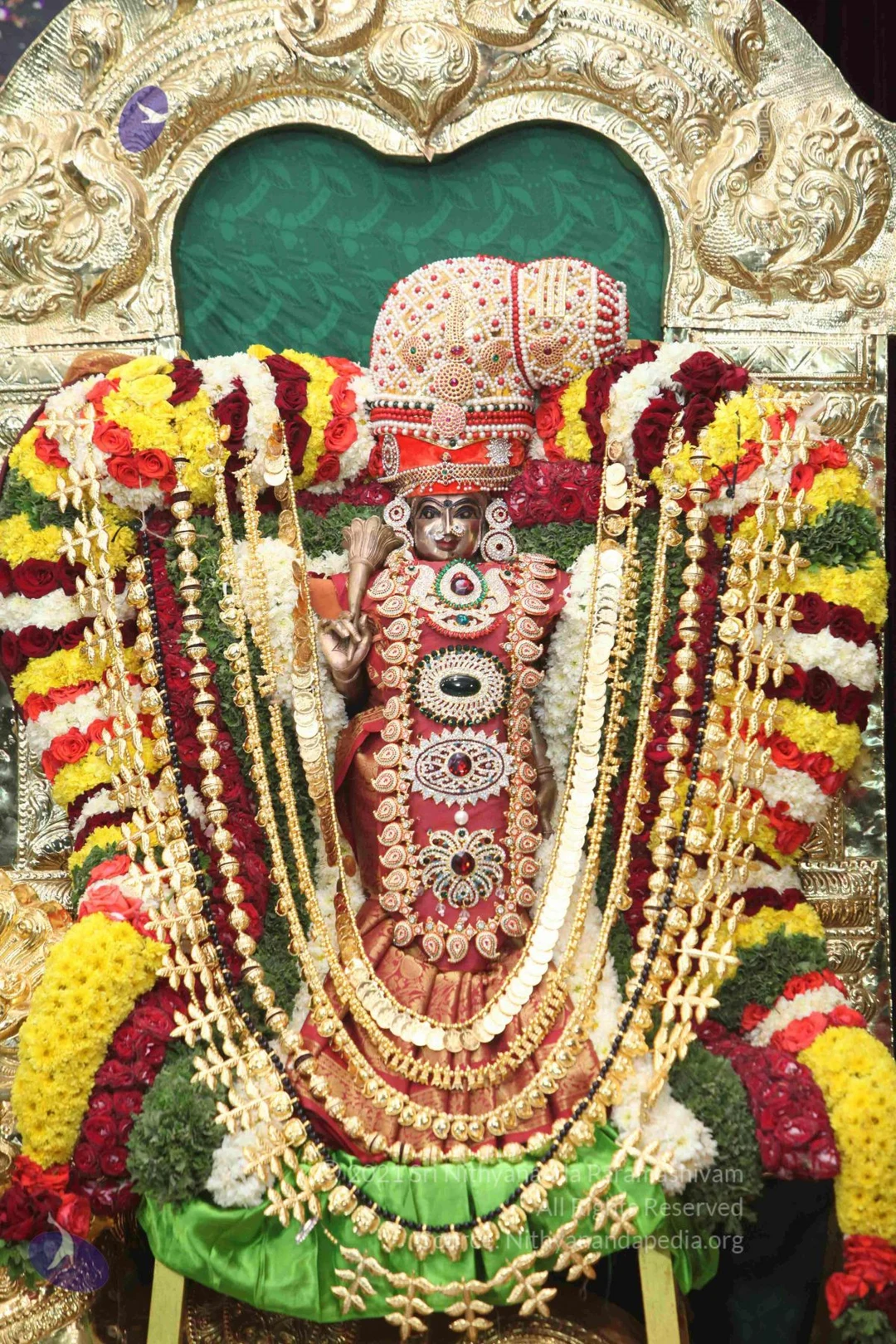
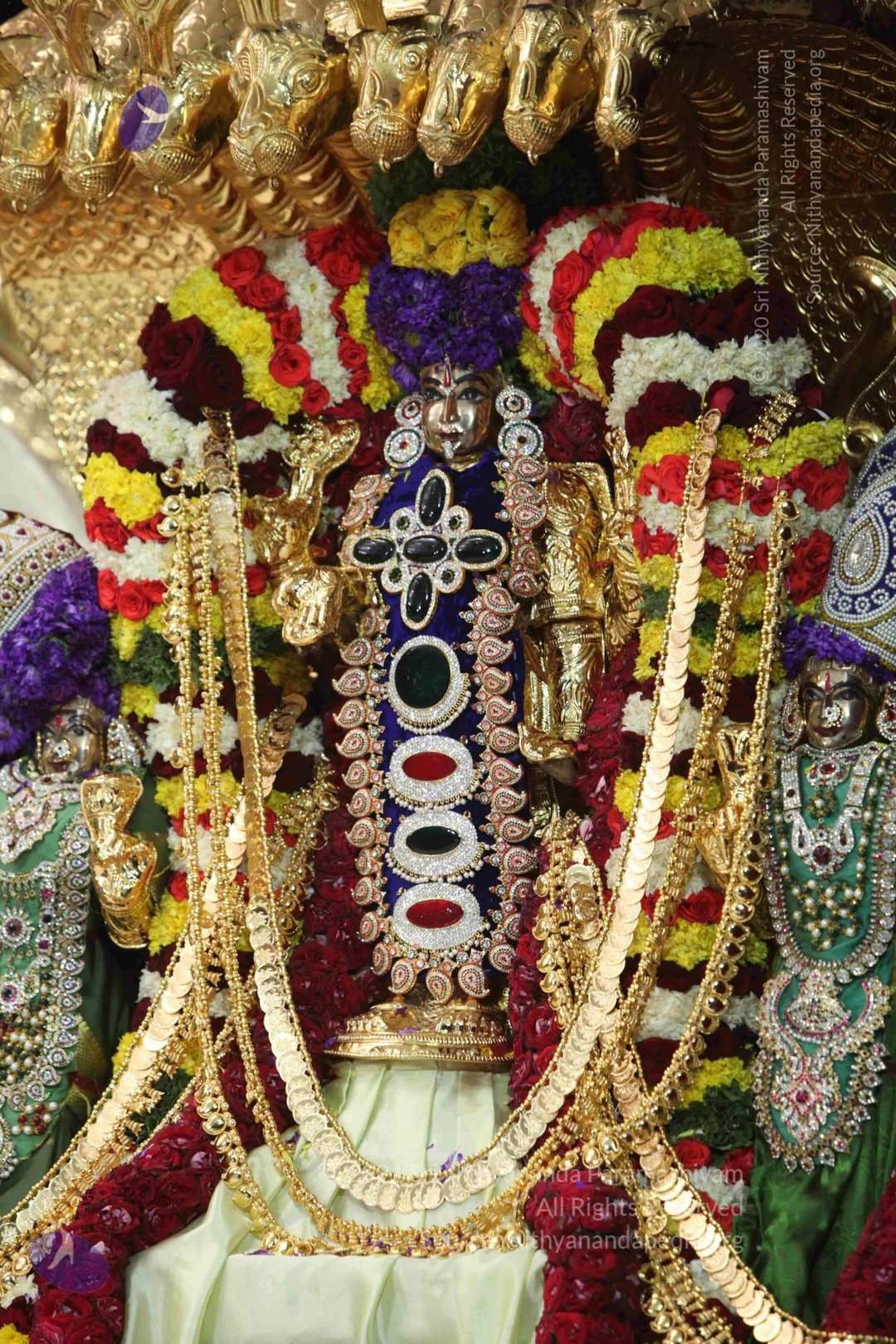
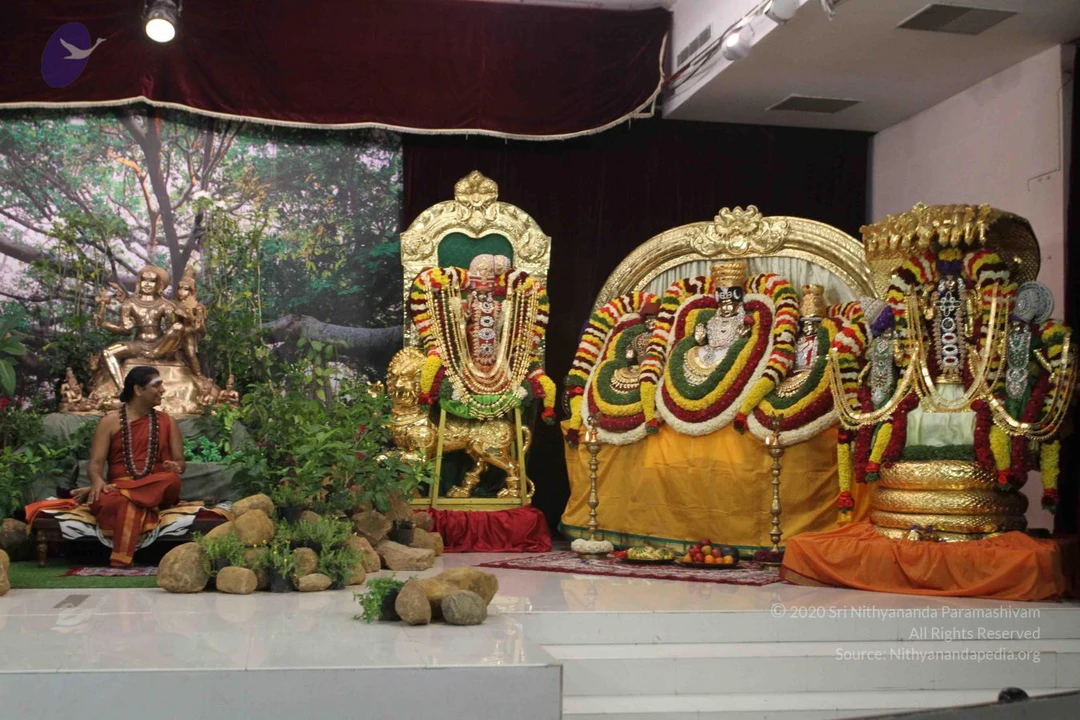
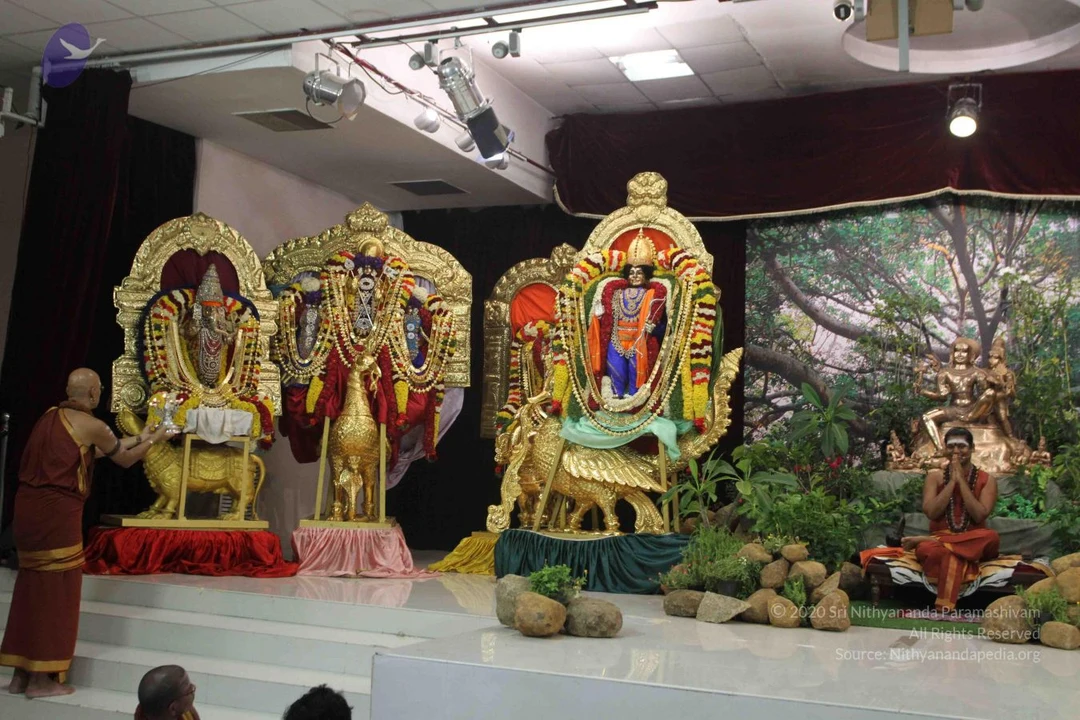
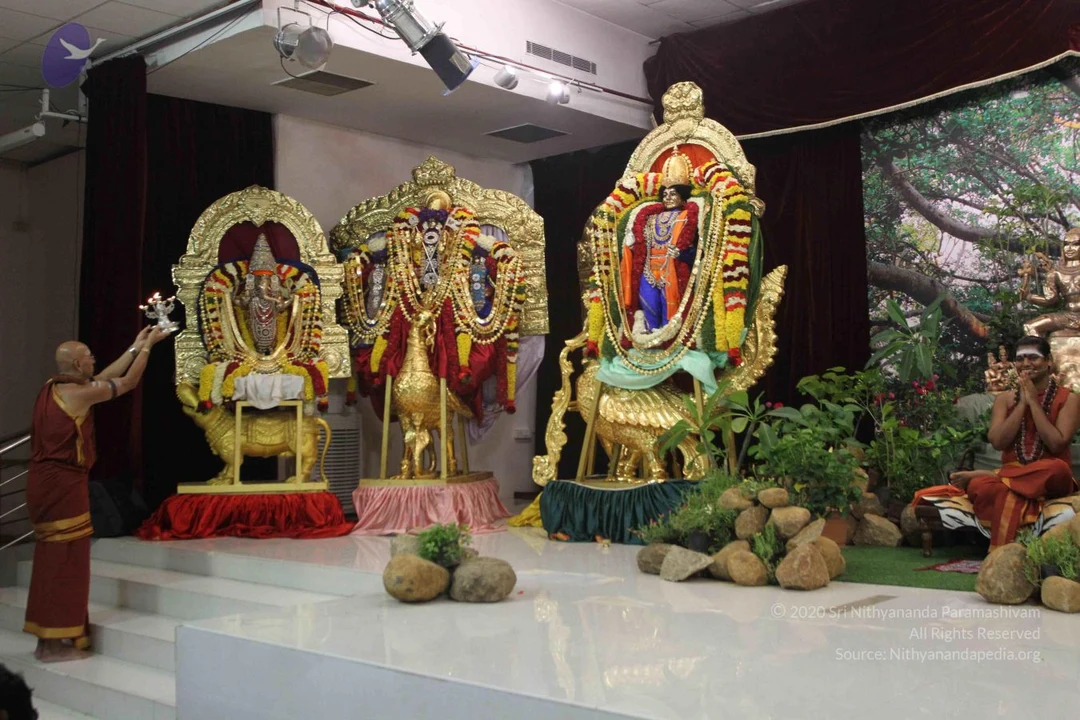
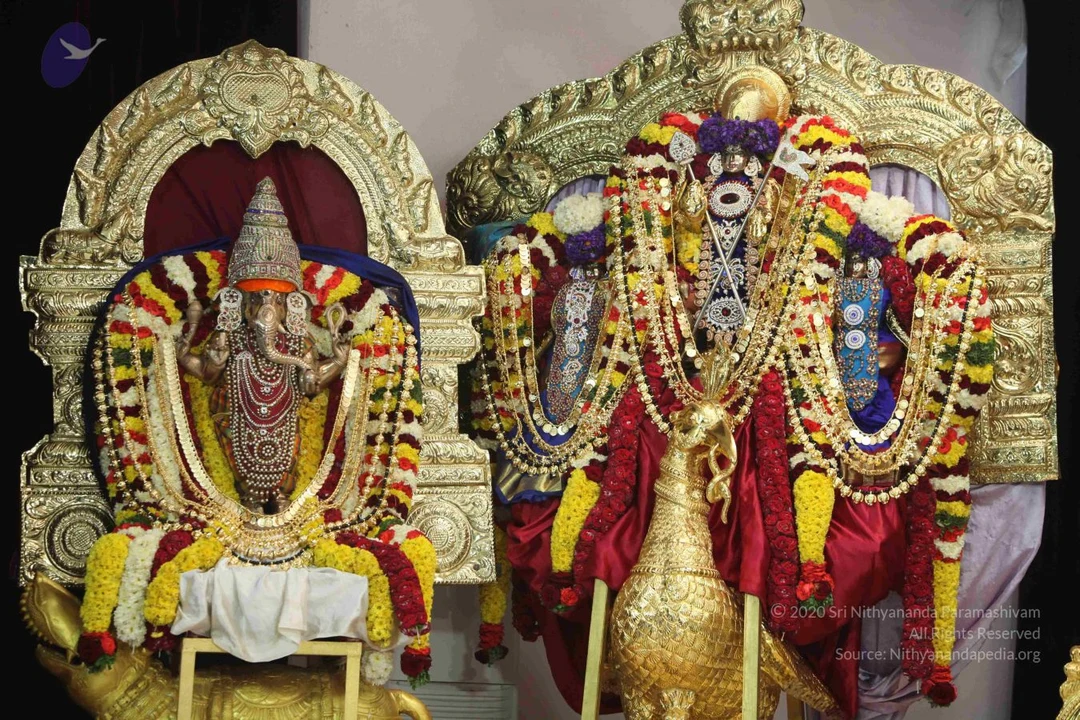
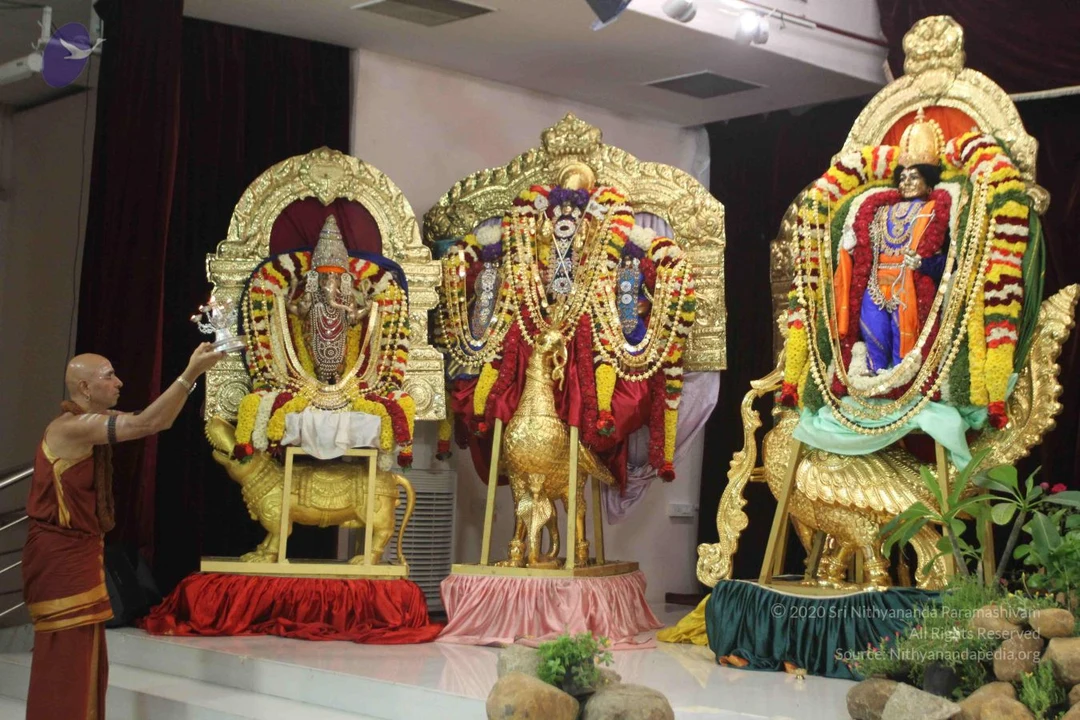
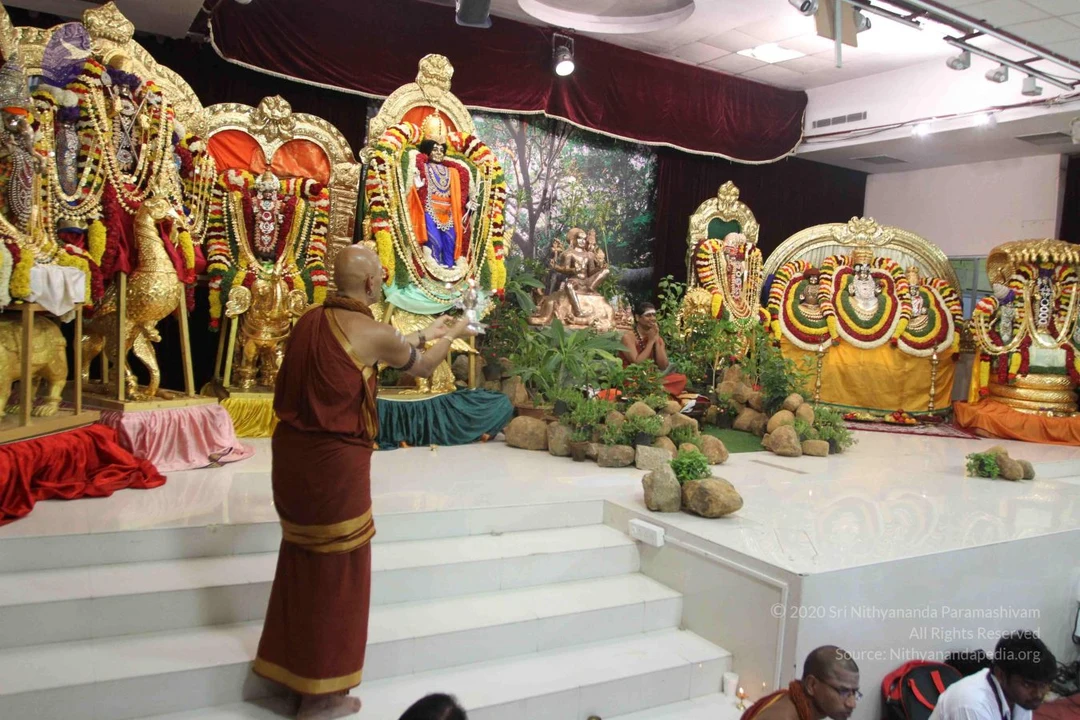
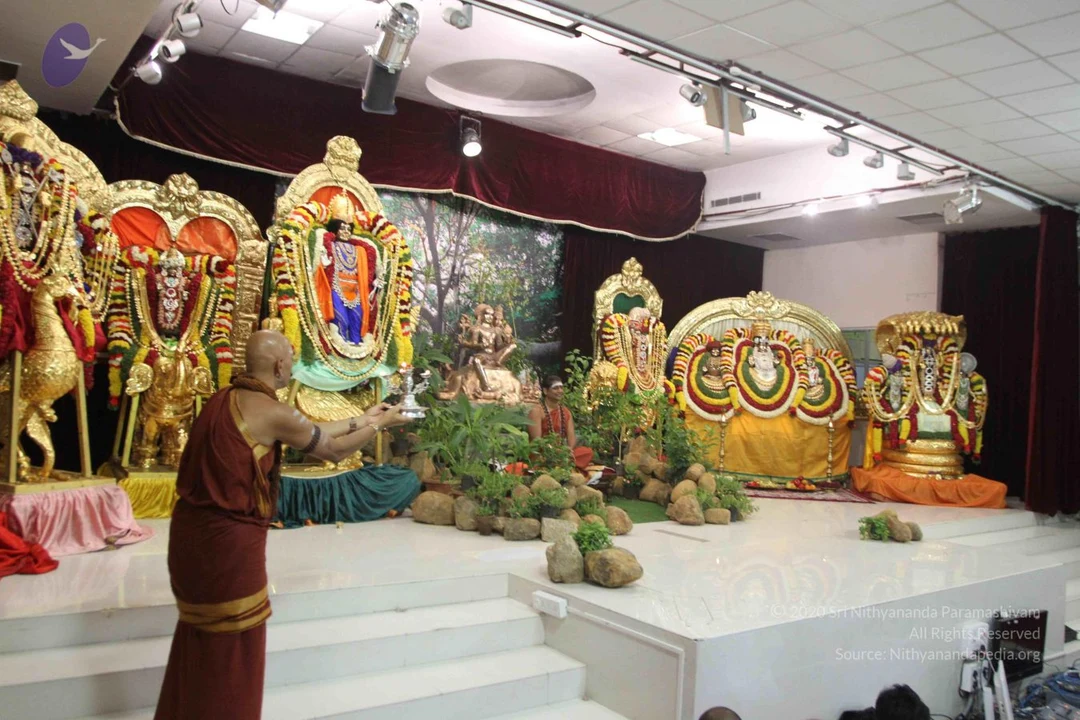
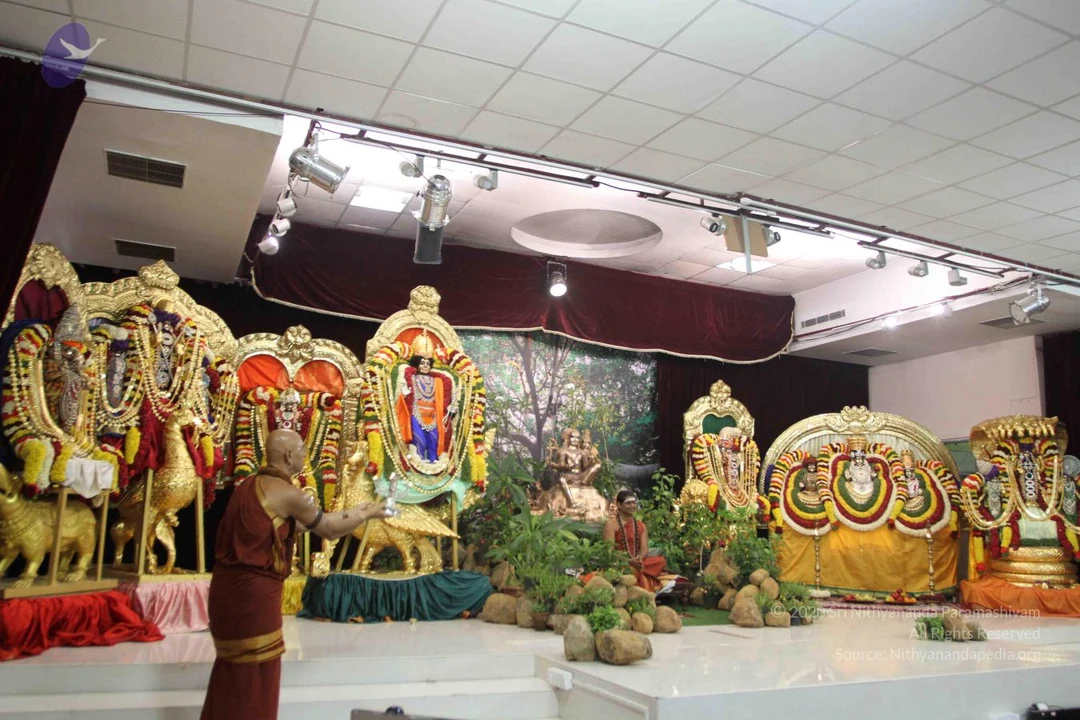
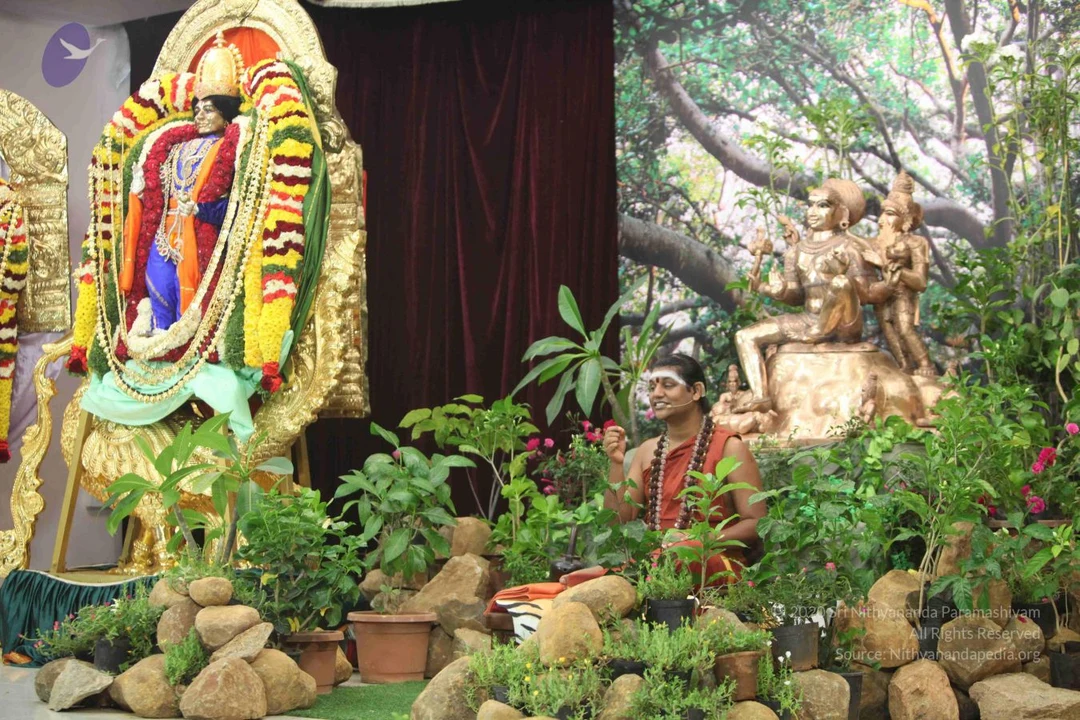
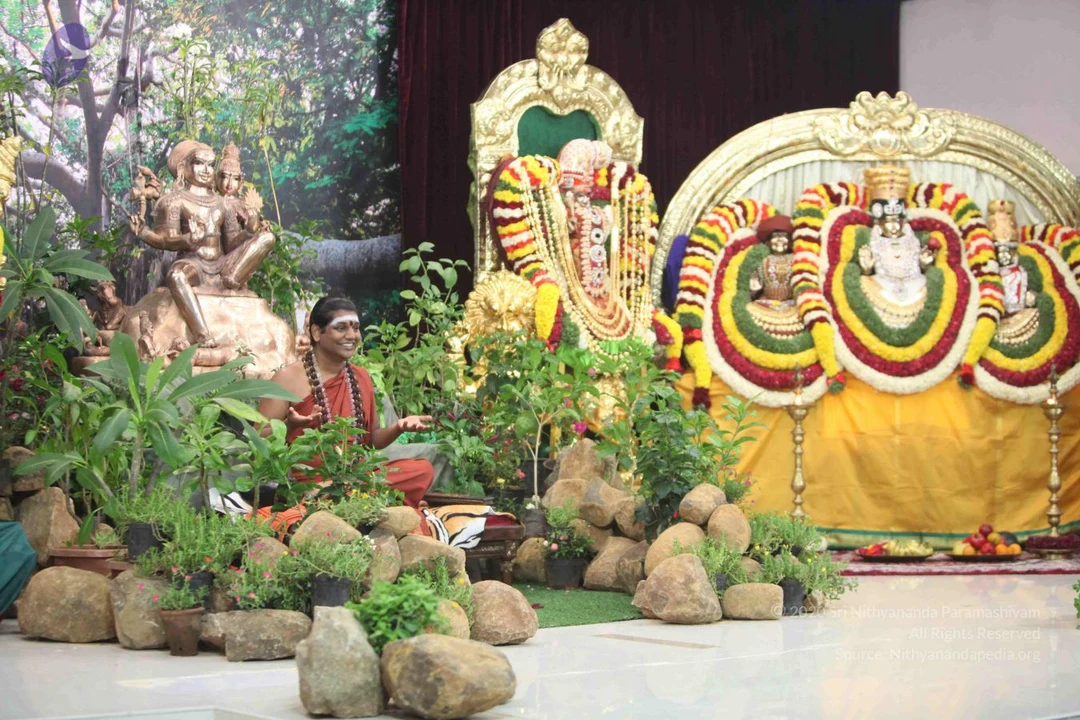
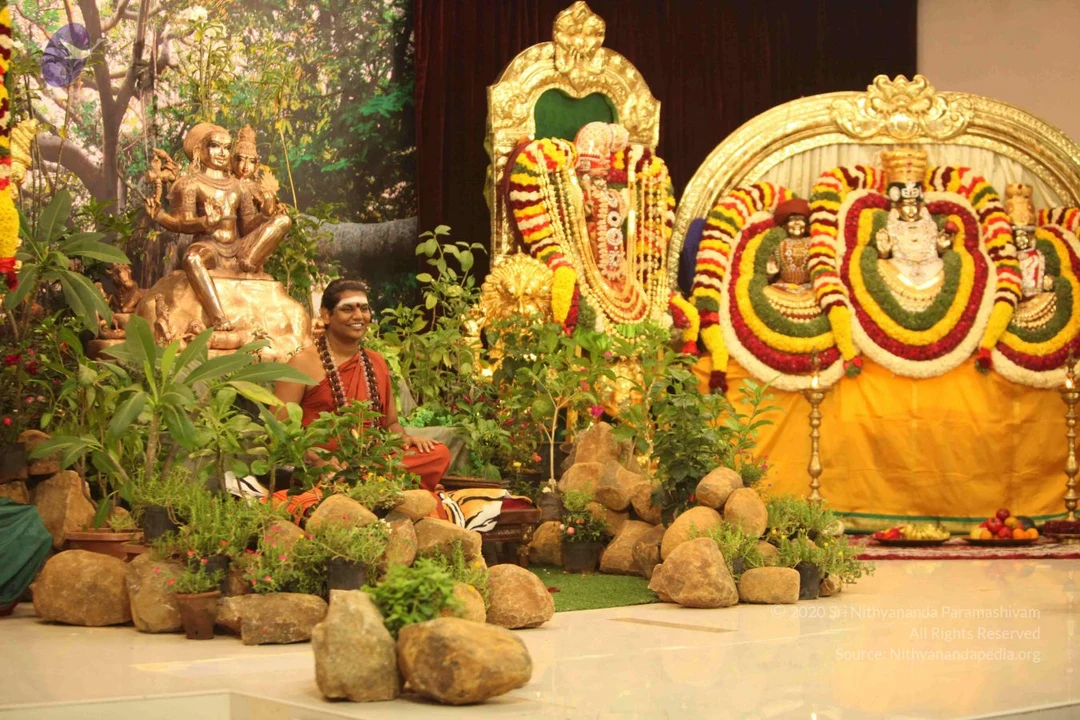
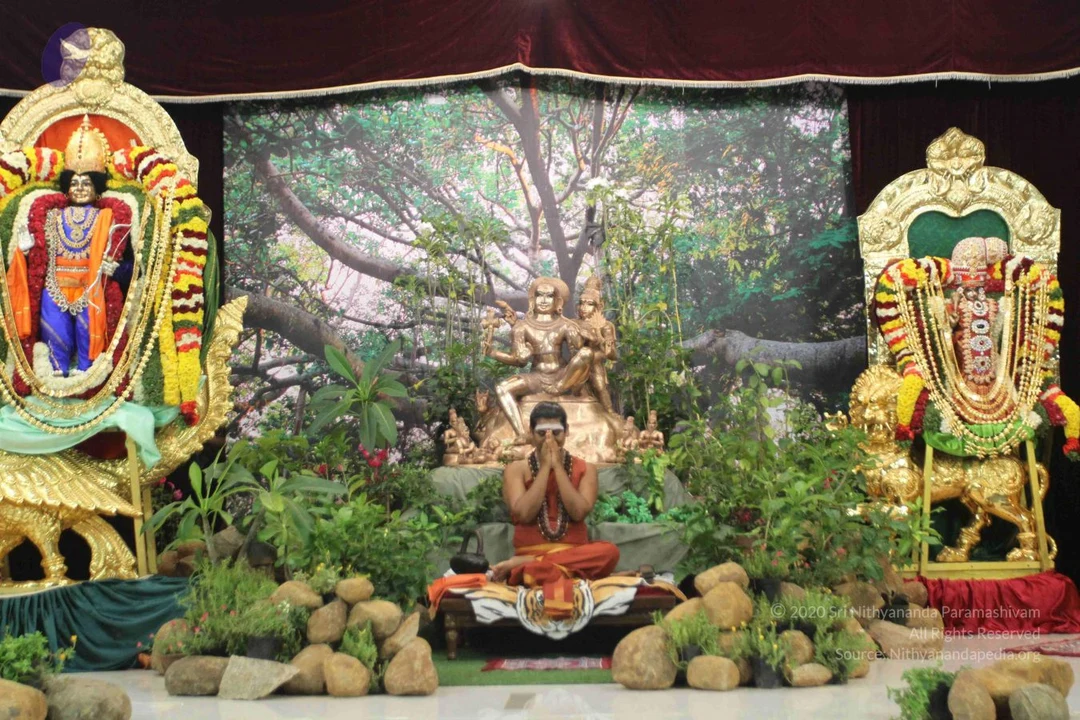
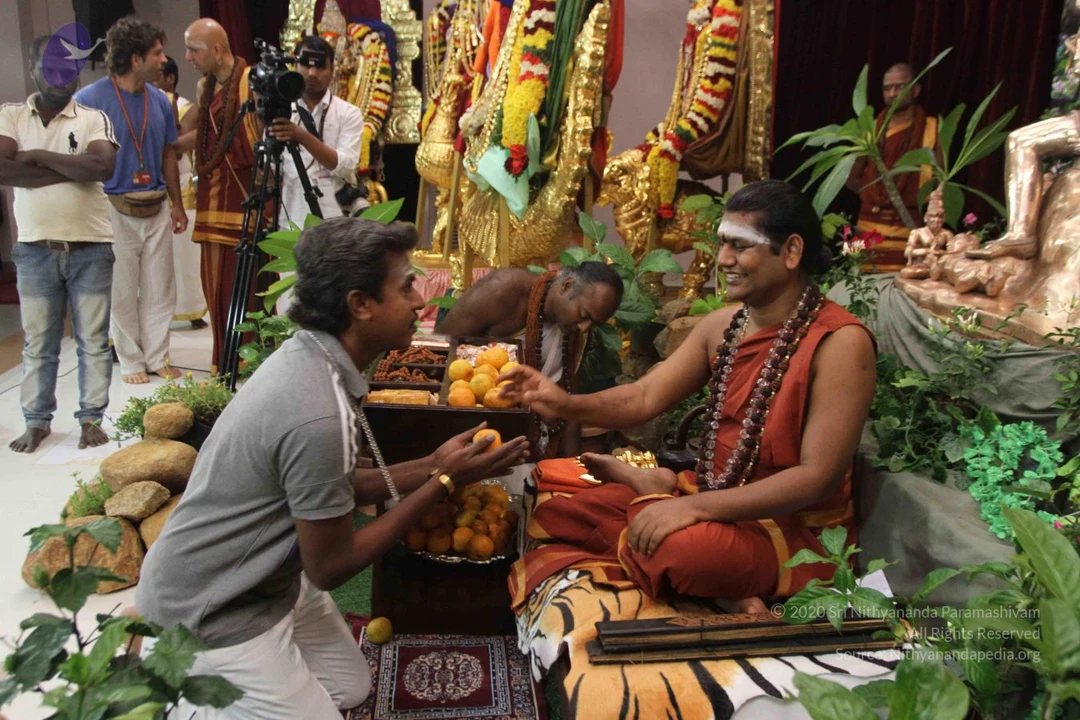
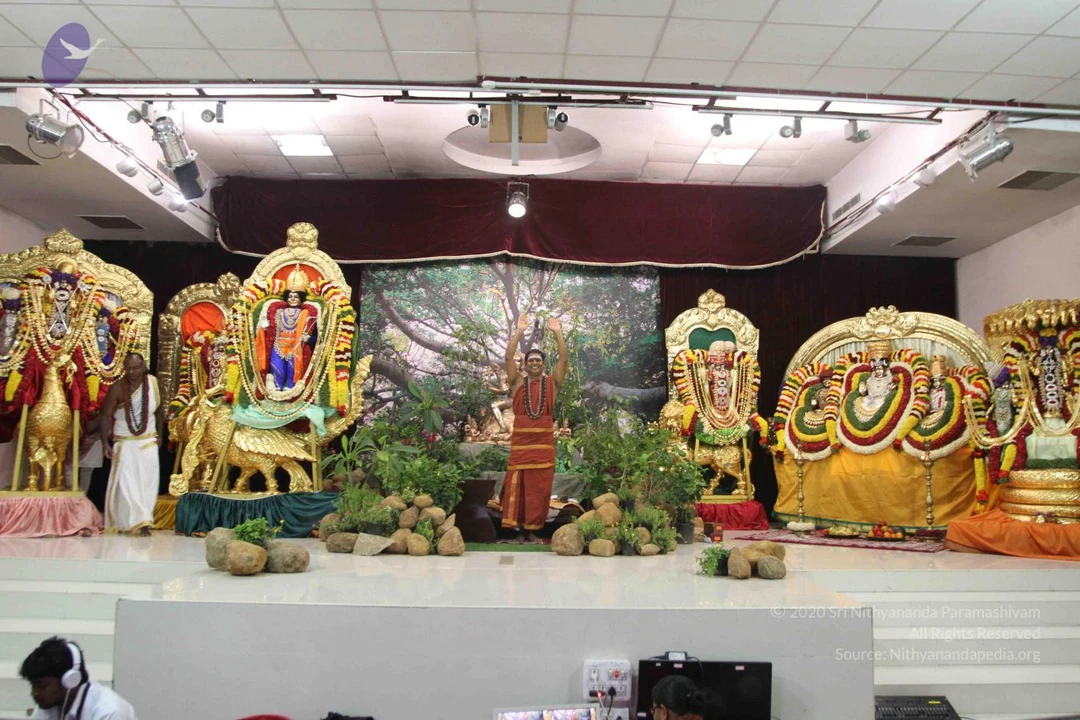
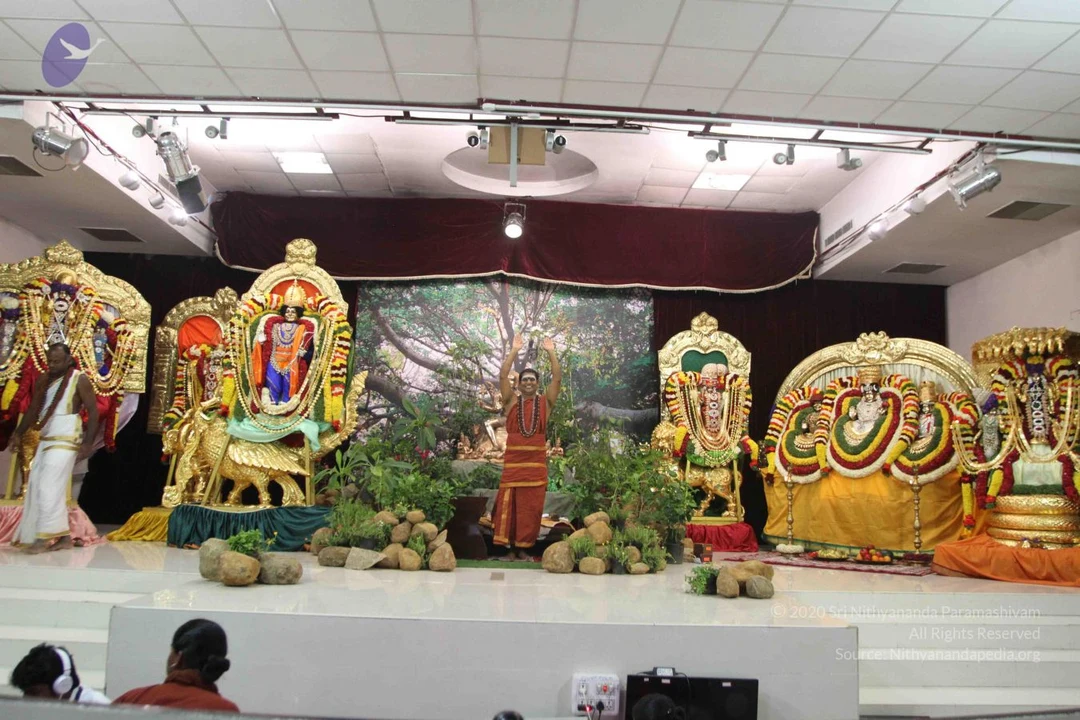
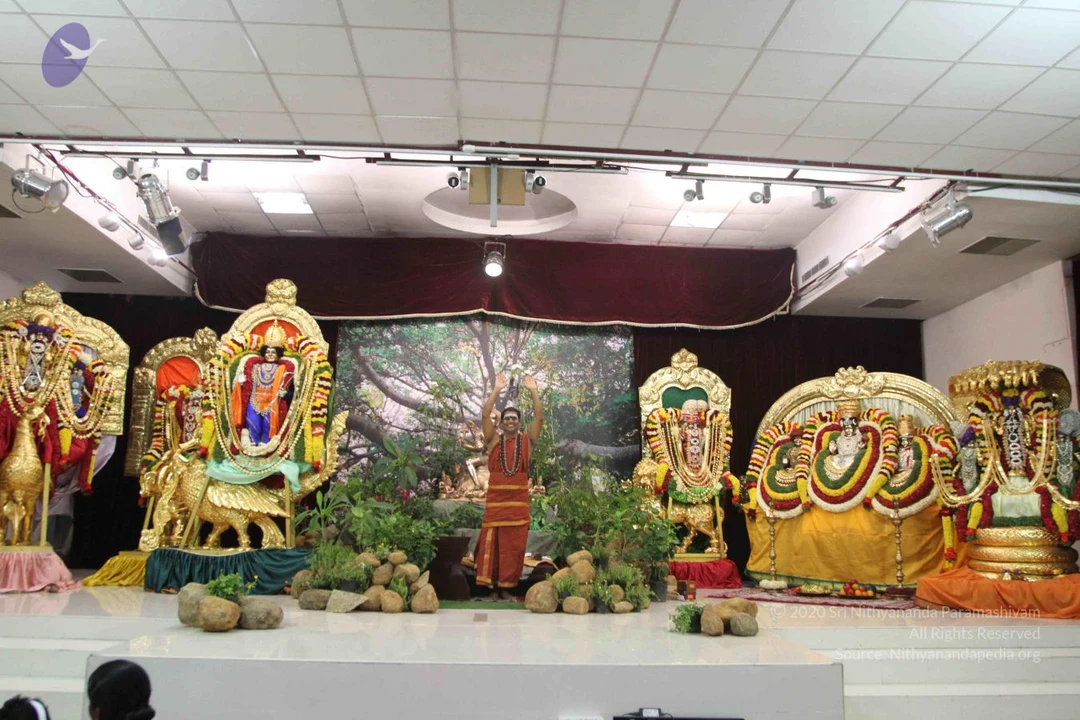
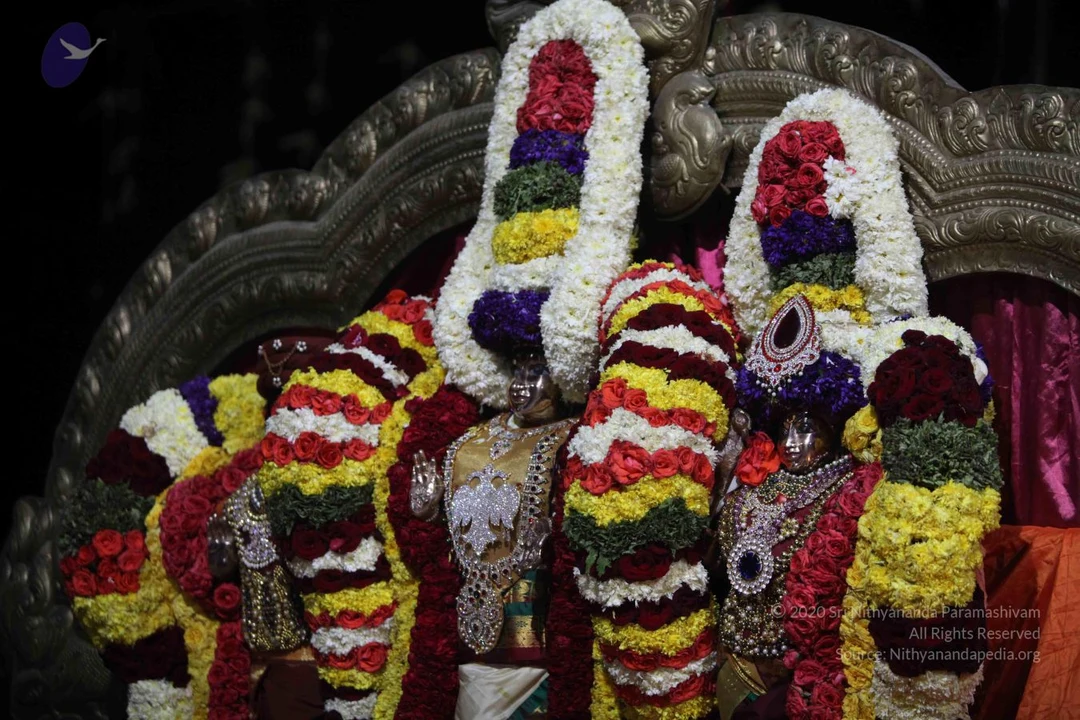
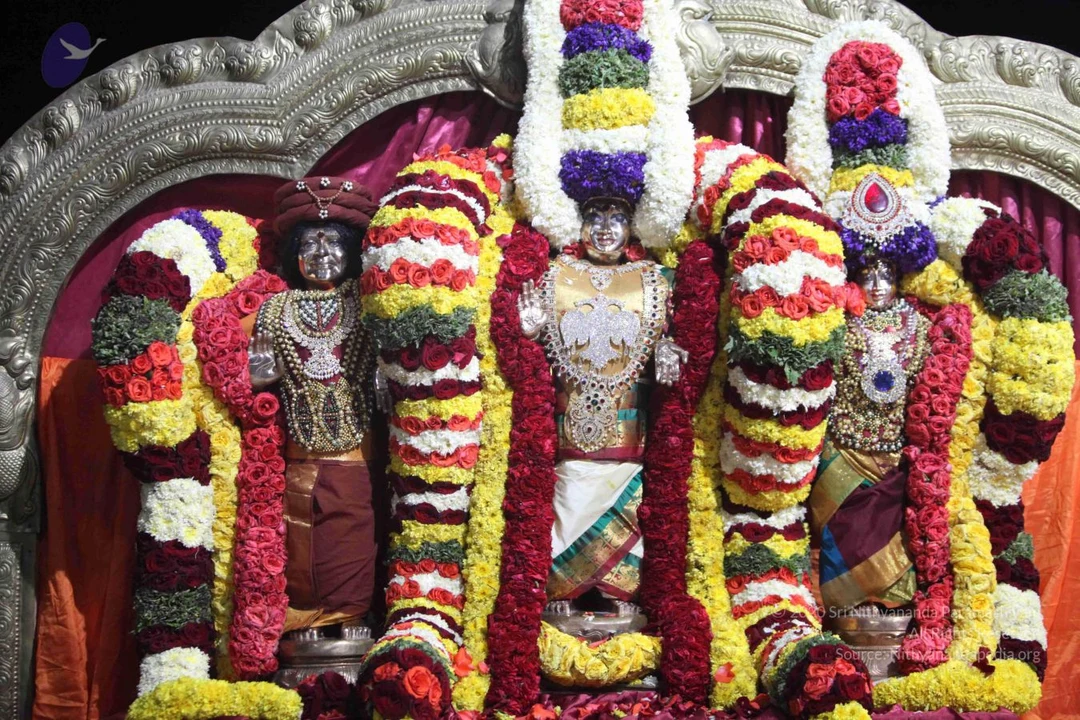
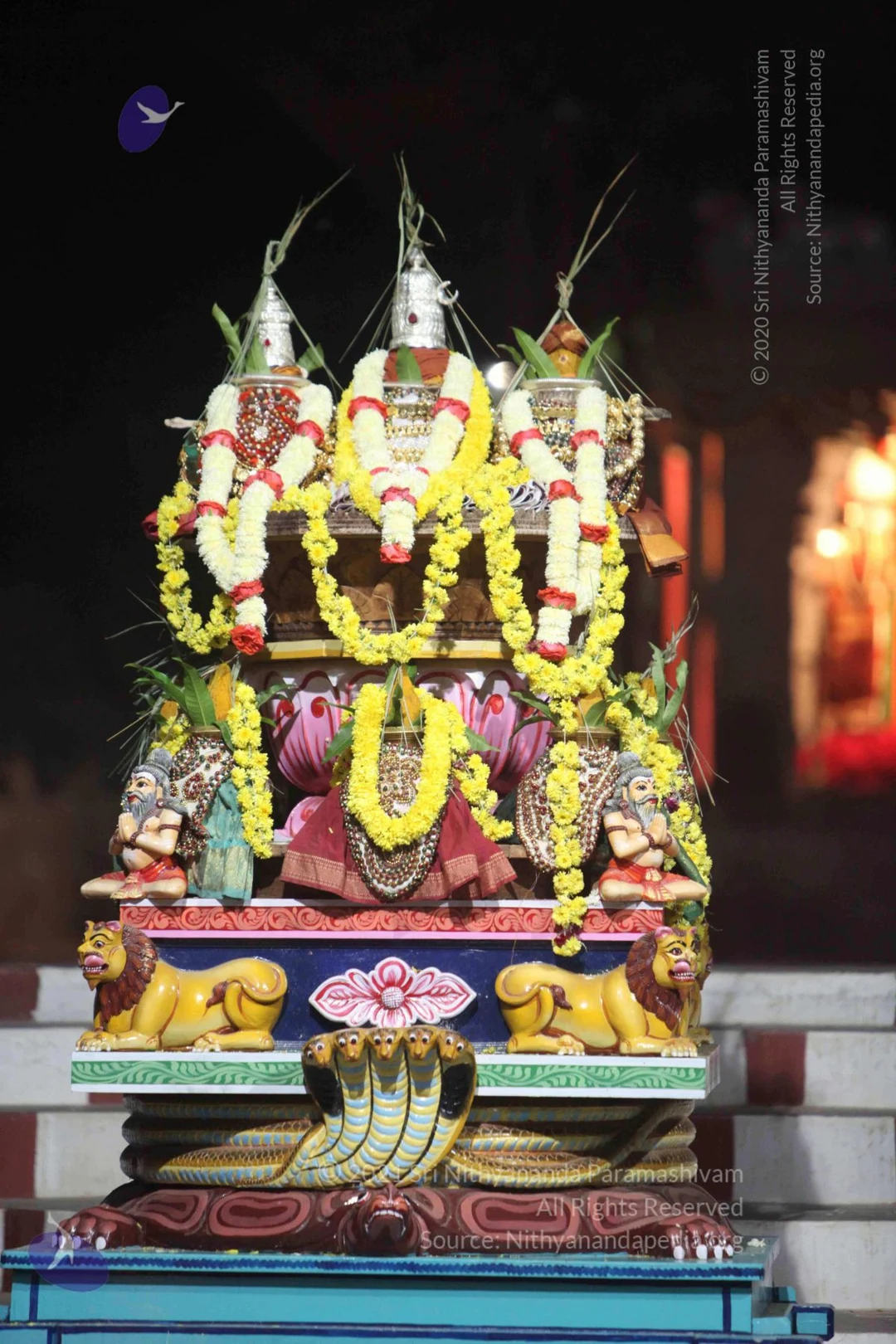
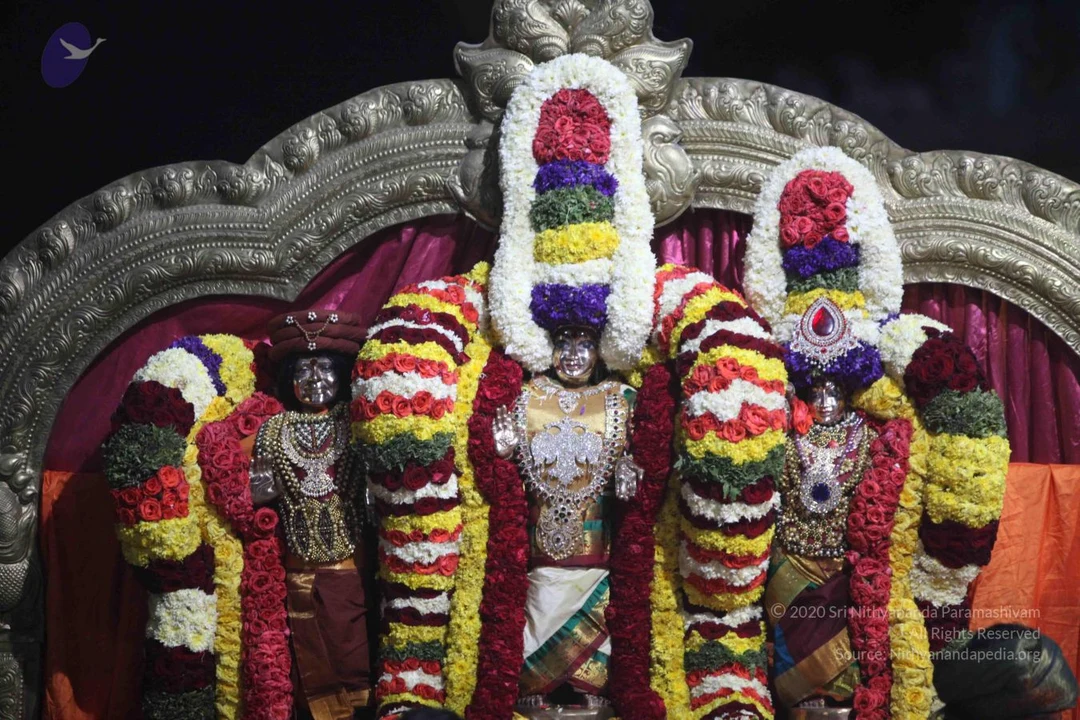
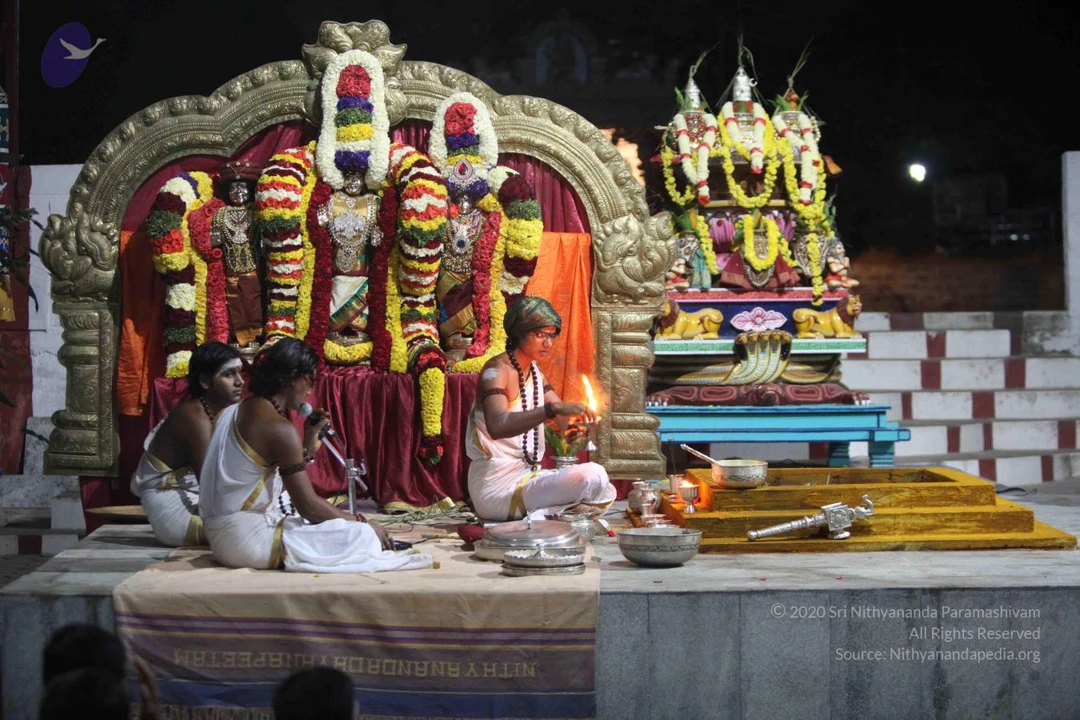
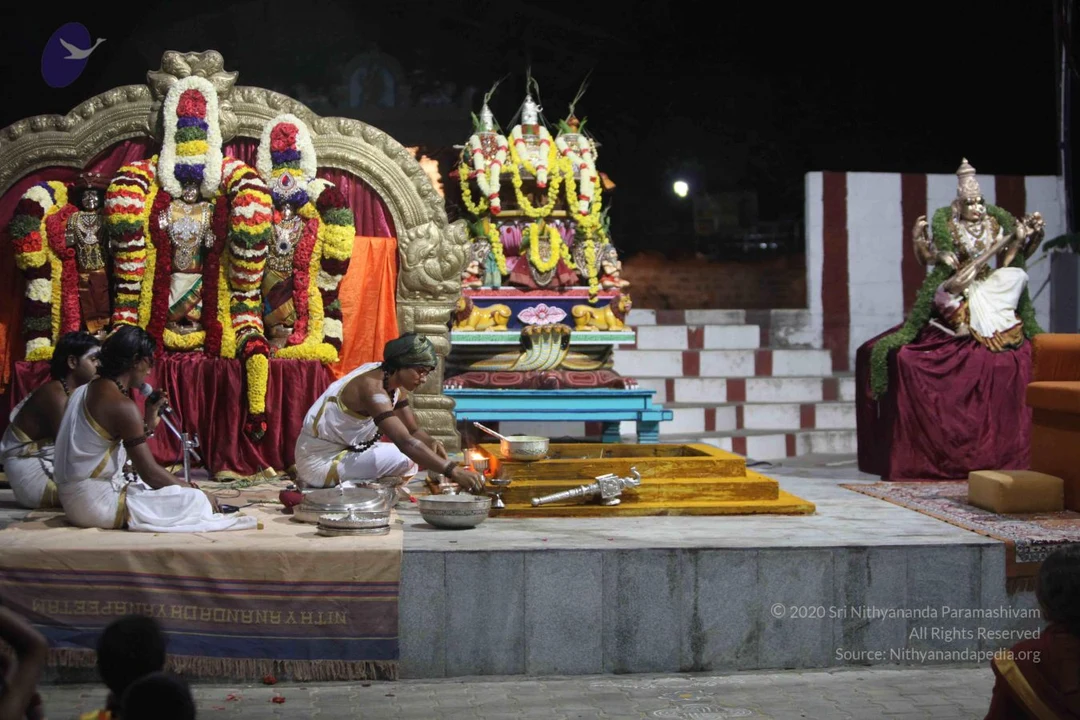
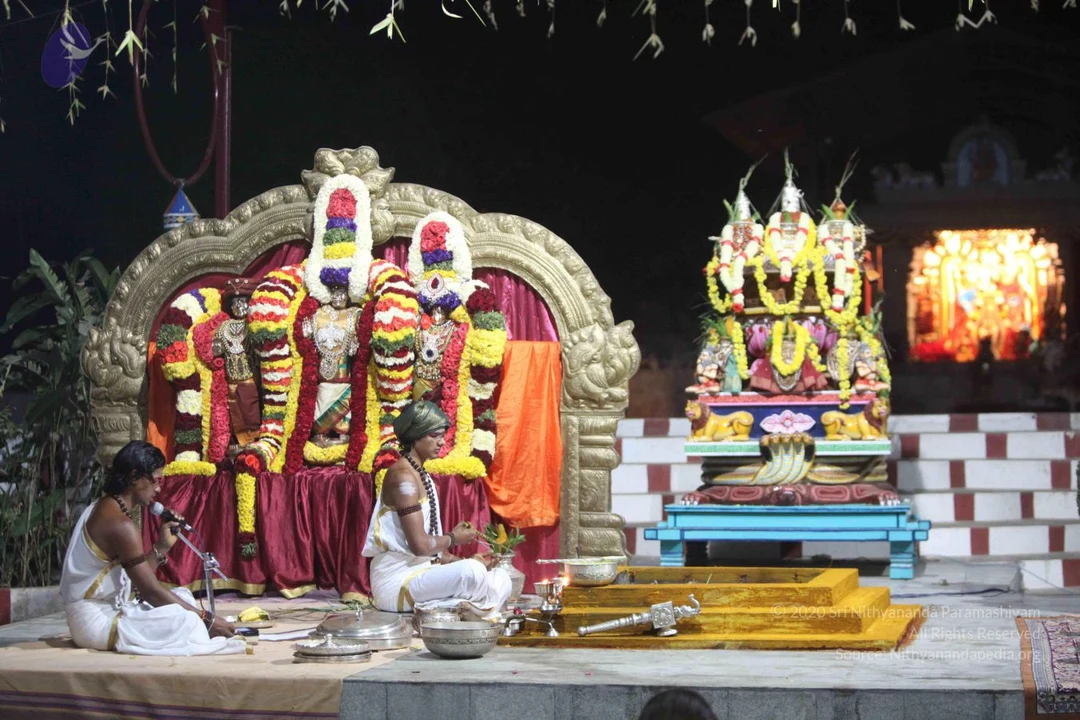
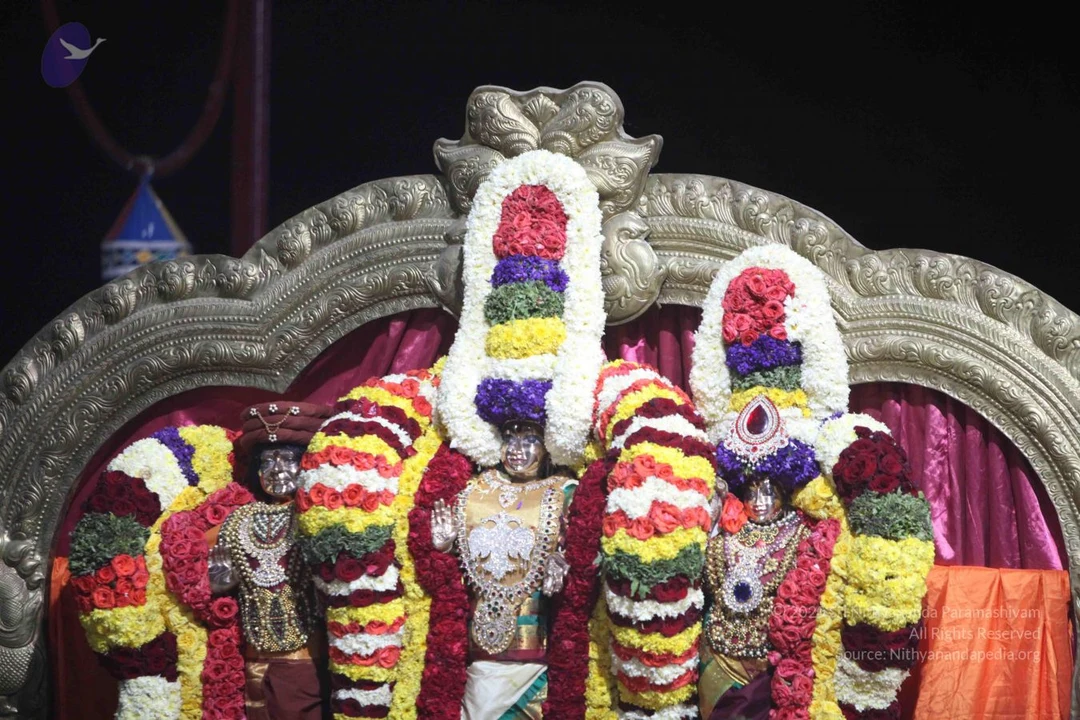
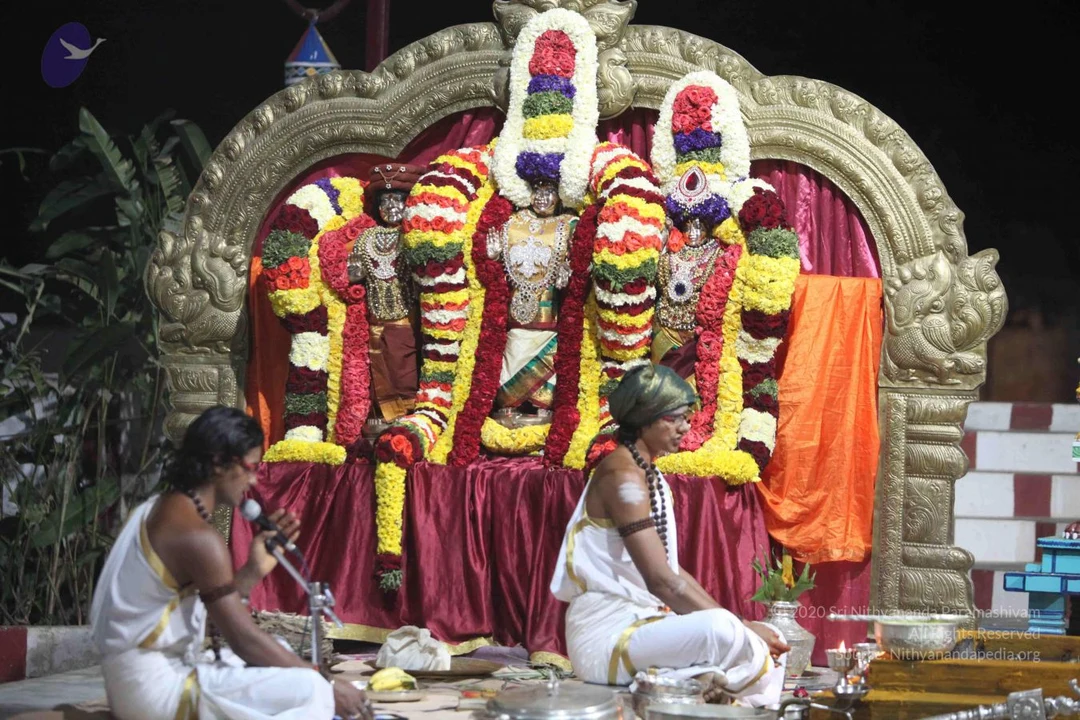
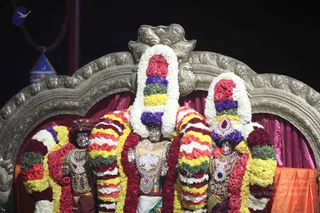
Today, Nithyananda Brahmotsavam, 4th day. All the Sapta Moortis are giving Darshan today. The ThiruKailaya Darshanam, Darshan of Kailasa, Ganesha, Karthikeya, Surya and Swamiji’s Moorti and Nithyanandeshwara, Nithyanandeshwari, Nithyananda and Meenakshi and Venkateshwara with Sridevi and Bhudevi. All the Sapta Moortis with “Anga Aabharana Devatas” giving ThiruKailaya Darshanam, darshan as they are in the Kailasa.
(04:25)
In Vedic tradition, six deities are worshipped as the direct representation of Cosmos. Ganesha, Subramanya, Surya, Shiva, Devi and Vishnu and Guru, your own Guru. So, these are the seven major Sampradayas in Vedic tradition. Six Sampradayas worshipping that six Gods, and seventh Sampradaya worshipping your own Guru. This six Sampradayas worshipping six gods is “Shanmata”, is called “Shanmata”. The Vedic tradition is the totality of this Shanmata. All the six Gods are worshipped as the representation of the Supreme Brahman, Cosmos. See, like Mahadeva is worshipped as embodiment of all the Gods and Goddesses. Ganesha is worshipped as the embodiment of all Gods and Goddesses. The Ganesha Purana, Vinayaka Purana declares it is Ganesha who created Brahma, Vishnu, Rudra; and he is a Brahmanda, this whole Cosmos is in his belly. Same way, Subramanya Purana declares him as a superior and Devi Bhagavatam declares Devi as a superior. Vaishnava scriptures declare Vishnu as superior. Same way, Guru Gita declares Guru as the superior and Surya Purana, there are descriptions about Surya and some parts of the Brahmanda Purana describes Surya as a source of everything. Totally, this six Gods and your own Guru, all the seven are worshipped as the superior representation or supreme representations of the Cosmos. All the seven are worshipped as a “Poorna Brahman”. In Vedic Tradition, if you are a follower of any one of this seven traditions, you are… you belong to Vedic Tradition, you are a Hindu. This wide variety provides choice. Please understand. As I said, the choice is not because of confusion, but because of intelligence, but because of possibilities. Looking at the possibilities.
(07:51)
Let’s enter into today’s Satsang Upanishads. Upanishad, still I feel I have not introduced 80% of what I wanted to say about Upanishads. Today, I am going to look at Upanishads from various Masters views. Eastern and Western, even the modern day Teachers, Professors, Translators, Historians, they were all shocked to see Upanishads. Some accepted the greatness and praised, some tried to distort so that the glory is reduced, some tried to say these are all written very recently, very recently, copying the ideas from western spiritual books. No, some tried to say that. See, when something extraordinary, mind blowing is in front of you, either mind surrenders, bows down to its glory and enjoys its presence and dissolves into it or tries to deny its existence to ascertain, tries to deny its existence to ascertain, to assert. So understand, Upanishads are too big. Just by reading and understanding, it refines the sacred understandings, sacred sentiments, sacredness of your existence.
(10:44)
Please understand, there are some books which can refine your understanding, there are some books which can refine your sacred sentiments, but only Upanishads can refine your understanding, sentiments and your sacred Being-ness. “Being-ness” means experiencing liberation as your existence of the future, present and past. Liberation as your future, present and past. Liberation as your future, present and past. Refining your “Being”.
(11:53)
Please understand, the understandings which becomes part of your being, which stays in your being as cognition, which is a powerful existential and experiential truth. I think so many words I am putting it. I will try to convey it in a very simple words, straight forward words. Listen, see for example, if you have a strong belief inside you about you, that you are a blessed being. God is supporting you and he is constantly taking care of you, you can pray to him and he supports you. That is one of the very fine, subtle, sacred, experience, you having about you. And, same way if you have that feeling connection, whenever I call upon my God or Guru, immediately he responds to me, he is available to me. If you have that, as part of you. Please listen, these all are not faith. No, not belief. No… No. These are more solid, more real than the so called reality, you are perceiving around you. If you feel the moment you pray, you call your “Ishta” or “Guru”, “Ishta Devata” or “Guru” immediately responds, he is available to you. That is the most subtle, sacred sentiment. And, ultimately I know I am going to become enlightened and relax into the cosmos. No question of suffering in the birth and death cycle.
(15:07)
Sometime people get this very strongly into them. It is not faith. Be very clear, faith is… I am defining, faith is which comes up and goes down, along with the Sun-Moon cycle. Anything comes up and down with the Sun-Moon cycle is faith. But, there are some things in you, Sun-Moon cycle cannot change. See in the morning, you feel “Yes, Yes, Yes”, everything is great and in the night you feel “No, No, No”, then it is faith. Purnima, Full-Moon time, you feel everything goes well, “Wow, life is great”. Then, during Amavaasya, you feel, “No, hmmm hmmm hmmm, I don’t know what is happening”, then it is faith. Which comes and goes with the Sun-Moon cycle, is faith. But, sometimes beyond this coming and going and faith, certain understandings becomes part of your Bio-Memory. It is just there forever, through the thick and thin. Those things only I am saying subtle, sacred sentiments, understandings and the truth of the being.
(16:47)
Listen, sacred sentiment, truth of the being and the sacred understandings, does not change based on the Sun and Moon, coming and going. If you have the understanding intellectually. Anyhow, all this is going to dissolve into from where it came. That’s all. Whether I had 2000 acres, when it is all dissolving or 1000 acres when it is all dissolving or homeless. When it is all going to dissolve, what matters? If this understanding does not change by the Sun and the Moon, coming and going. It is called “Jnana”, sacred knowledge. Same way, how much ever I have SDHD about me. Self-doubt, self-hatred, self-denial about me. The source from which I happened, cannot have denial towards me. So, he is the source. Today or tomorrow, I have to dissolve in him only. He only has to protect me, dissolve myself into him. So, he is the ultimate. If this understanding happens in you, if this feeling connection happens in you, which does not change by Sun and the Moon, coming and going. I call this as sacred sentiment - Bhakti. And, being whether I feel now, bound or liberated? Ultimately, I can never be bound. Because I am the reflection of the cosmos. Neither Cosmos nor reflection can be bound. Not only you cannot bind the Sun, even the Sun’s reflection in the water, can you bind it? In the mirror, can you bind it? You can bind the mirror. You can bind the water in the pot, but not the reflection. If you have this understanding in your very core being, which does not come and go with the Sun and the Moon, up and down. I call this Vijnana, Cognition, Sacred Cognition, Cosmic Cognition.
(20:27)
Some books can awaken Jnana in you; some books can awaken Bhakti in you; but only Upanishads can awaken Jnana, Bhakti, Vijnana, all the three in you. Upanishads, only Upanishads are capable of all the three in you. Only Upanishads are capable of awakening all the three in you completely. As I said, it’s a gift of Ganga mata and Saraswati mata. Between the Saraswati and Ganga, in that valley, the civilization happened. The civilization which does not need to wage wars, defend, does not have enmity or possessiveness, which never bothered about the outer world or its comforts. I don’t want to say, our ancestors are ignorant about the outer world. No, they did not bother. That great civilization, which gave the tremendous peace naturally, by fulfilling all the needs. In that space, in that space Upanishads have happened. Upanishads have happened in that space. Understand, the most important, ultimate wealth you can accumulate in your life. Important, ultimate wealth you can accumulate in your life is Sacred Knowledge, Sacred Sentiment, Sacred Cognition. Jnana, Sacred Knowledge. Bhakti, Sacred Sentiment. Vijnana, Sacred Cognition. Jnana, Bhakti, Vijnana. Understand, the cognition you need to have, to experience Upanishads is just openness, nothing else. The Jnana, Bhakti, Vijnana - all the three can happen in you just by receiving it openly. That’s all. That’s all. That’s all.
(25:06)
With this, I move to the next segment for the morning Satsang. I bless you all. Let you all radiate with Integrity, Authenticity, Responsibility, Enriching, Causing, Living Advaita, the Eternal bliss - Nithyananda
Thank you. Be blissful. (25:35)
Photos
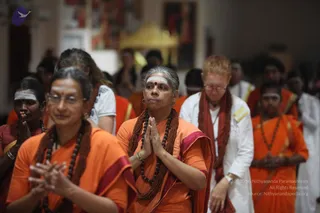
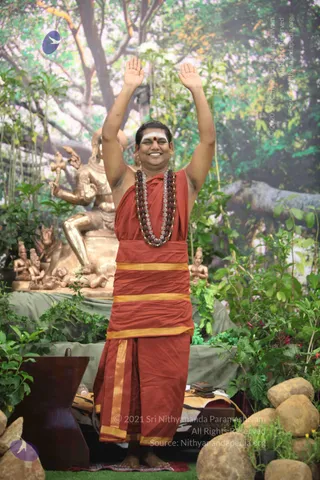
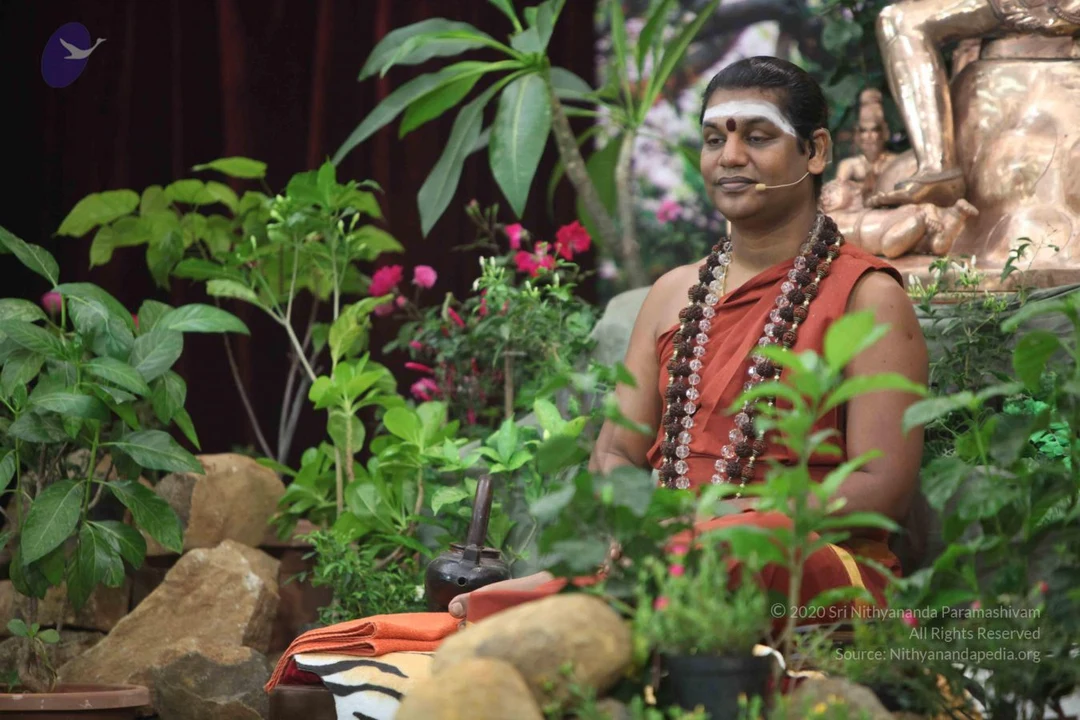
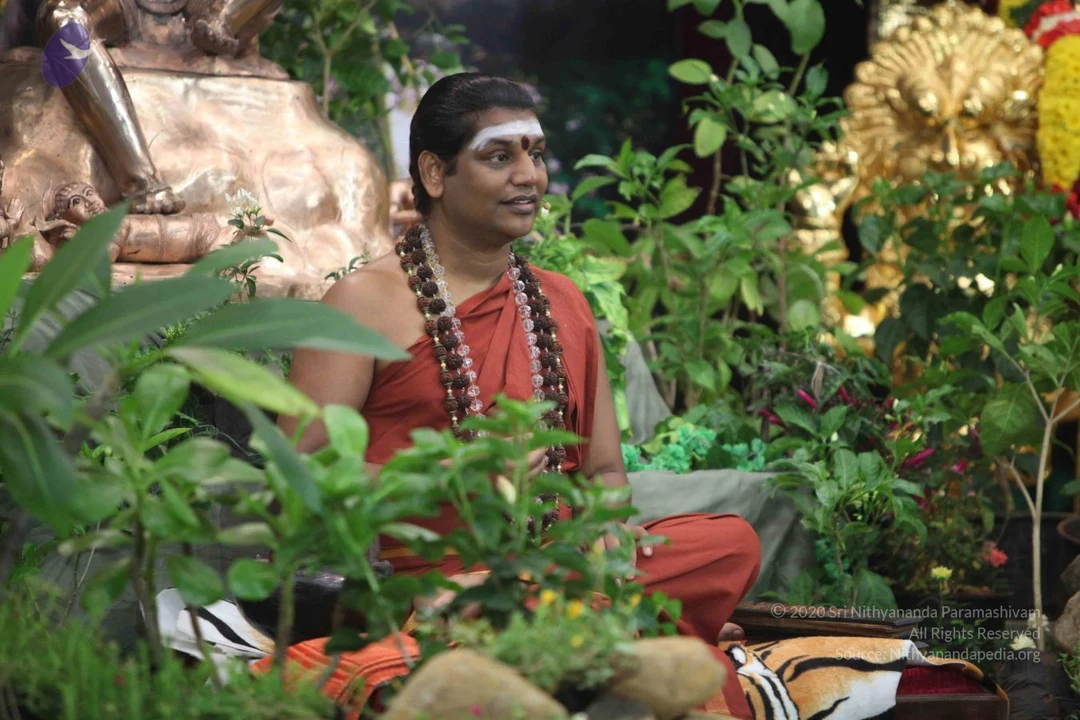
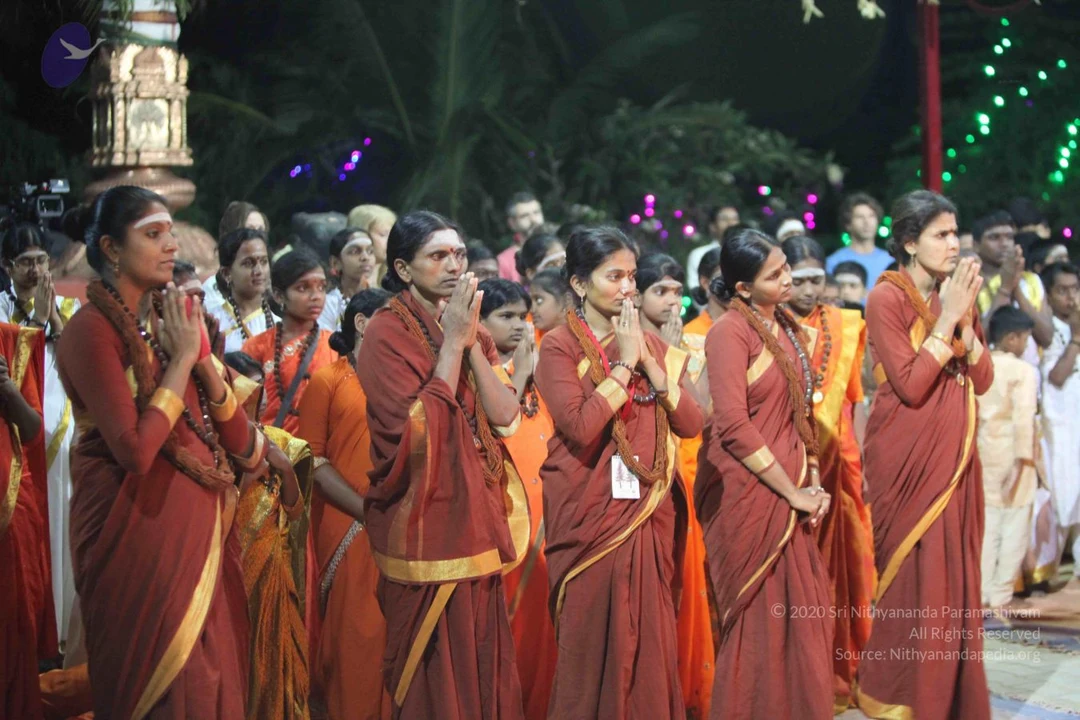
Nithyananda Satsang at Aadikailasa, Bengaluru, India
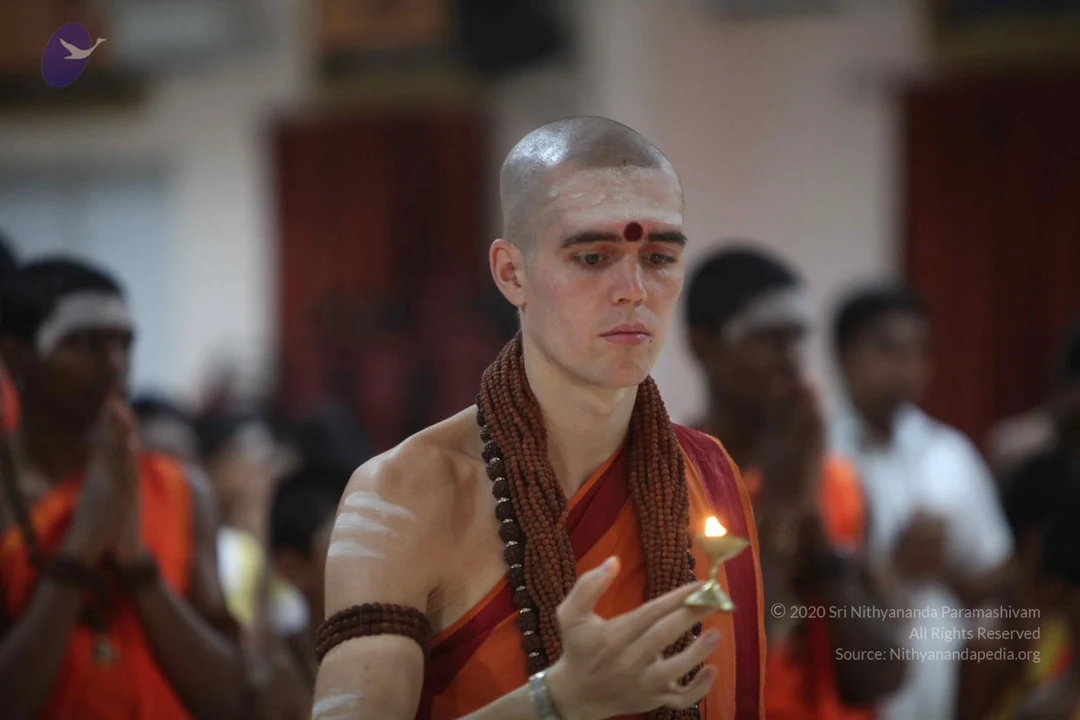
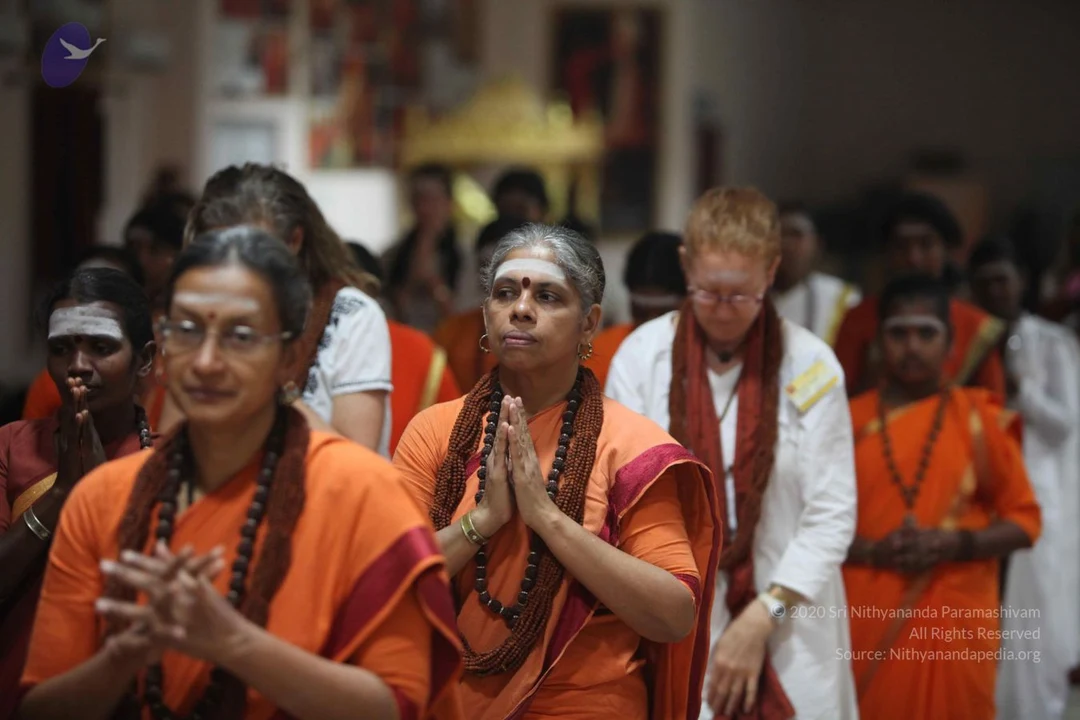
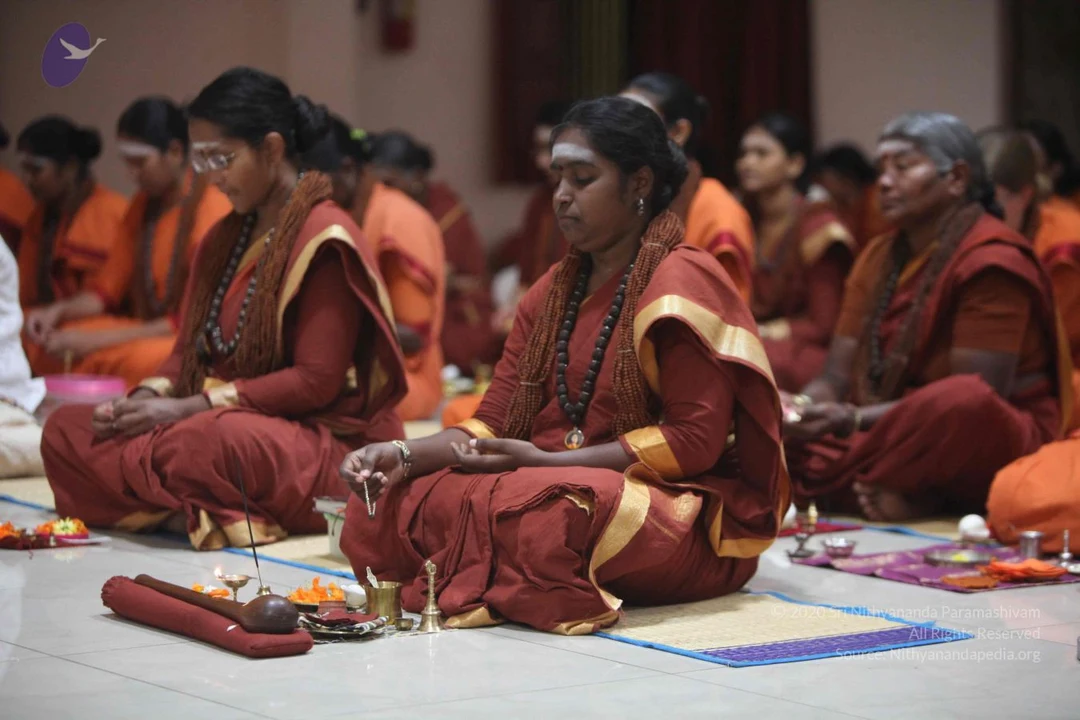
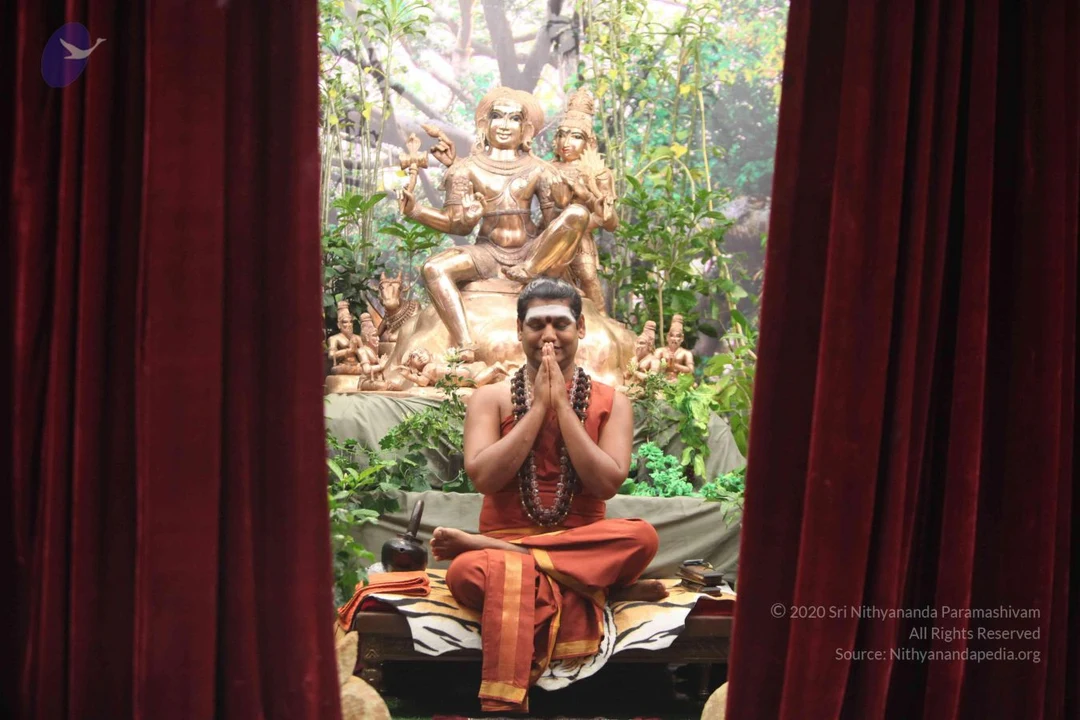
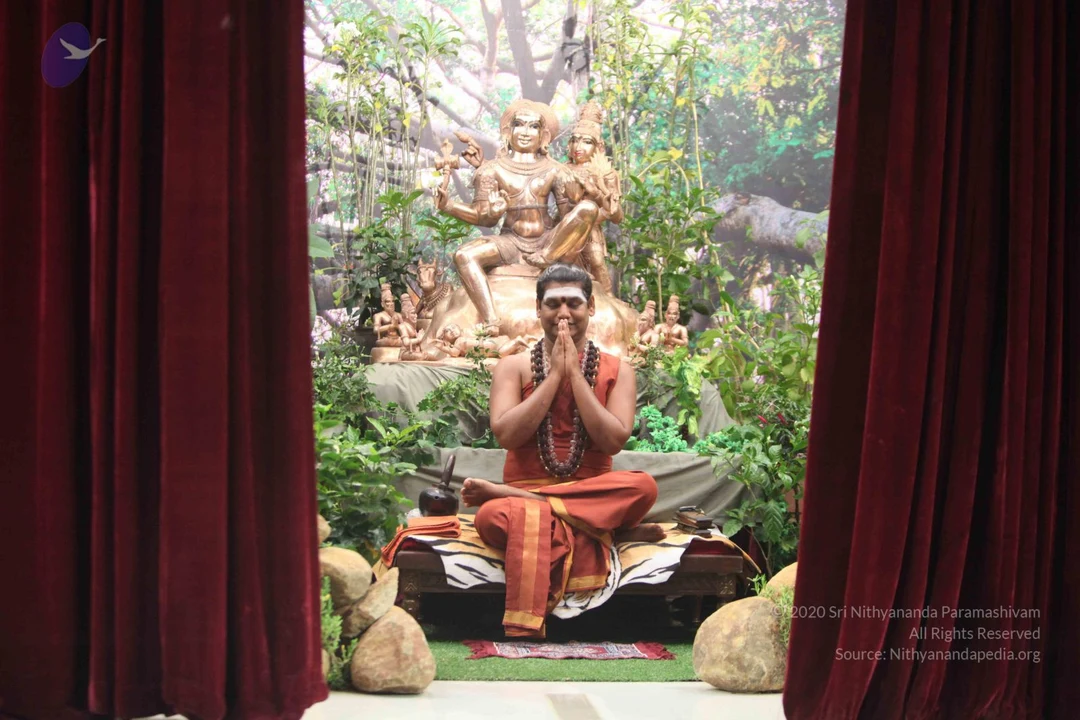
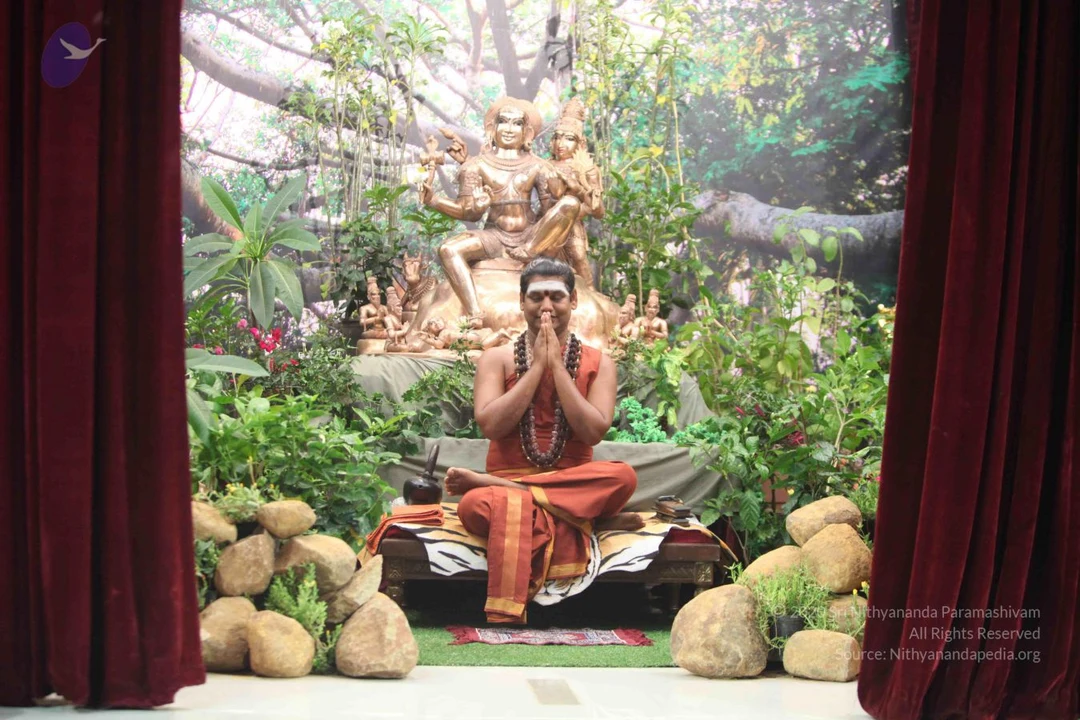
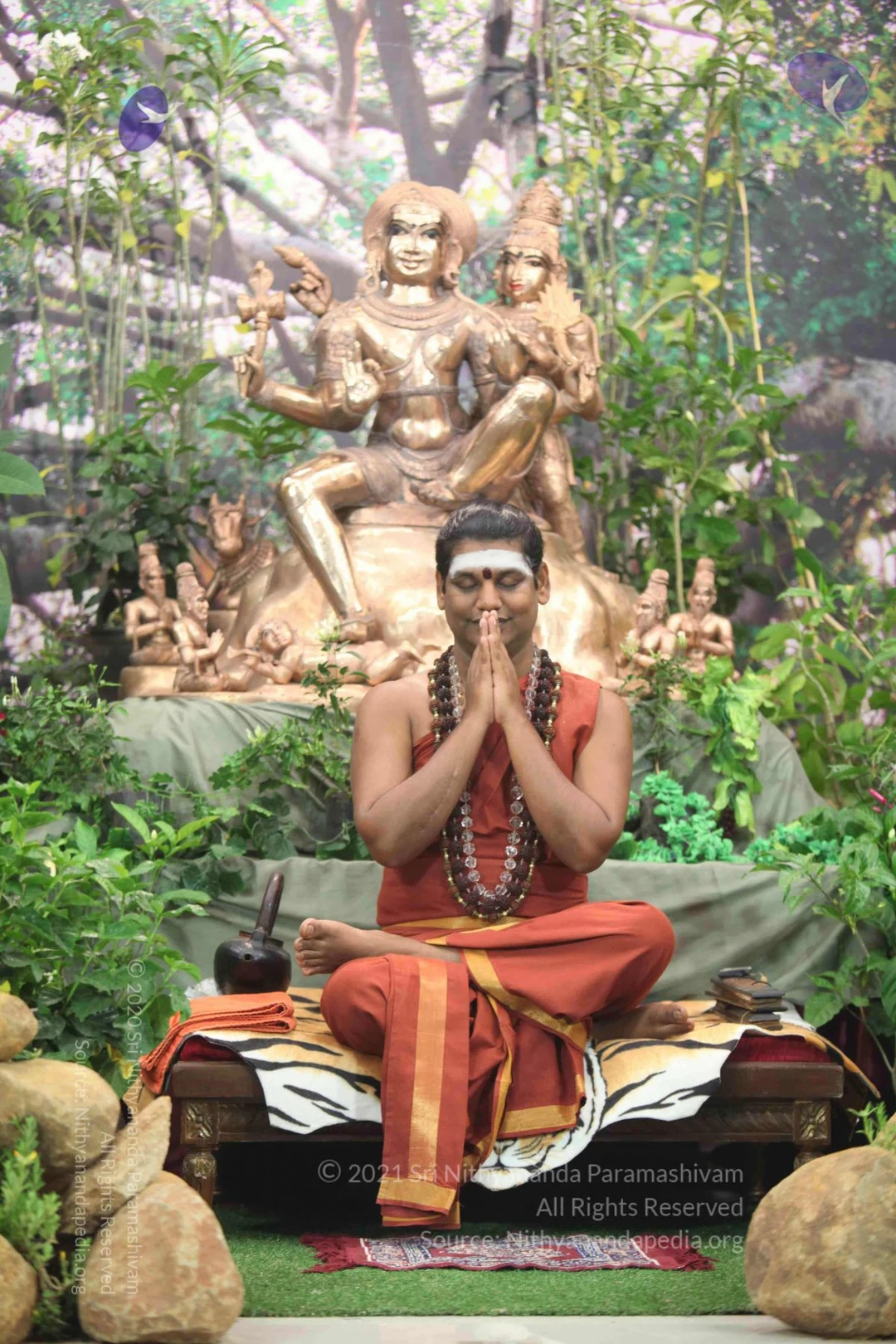
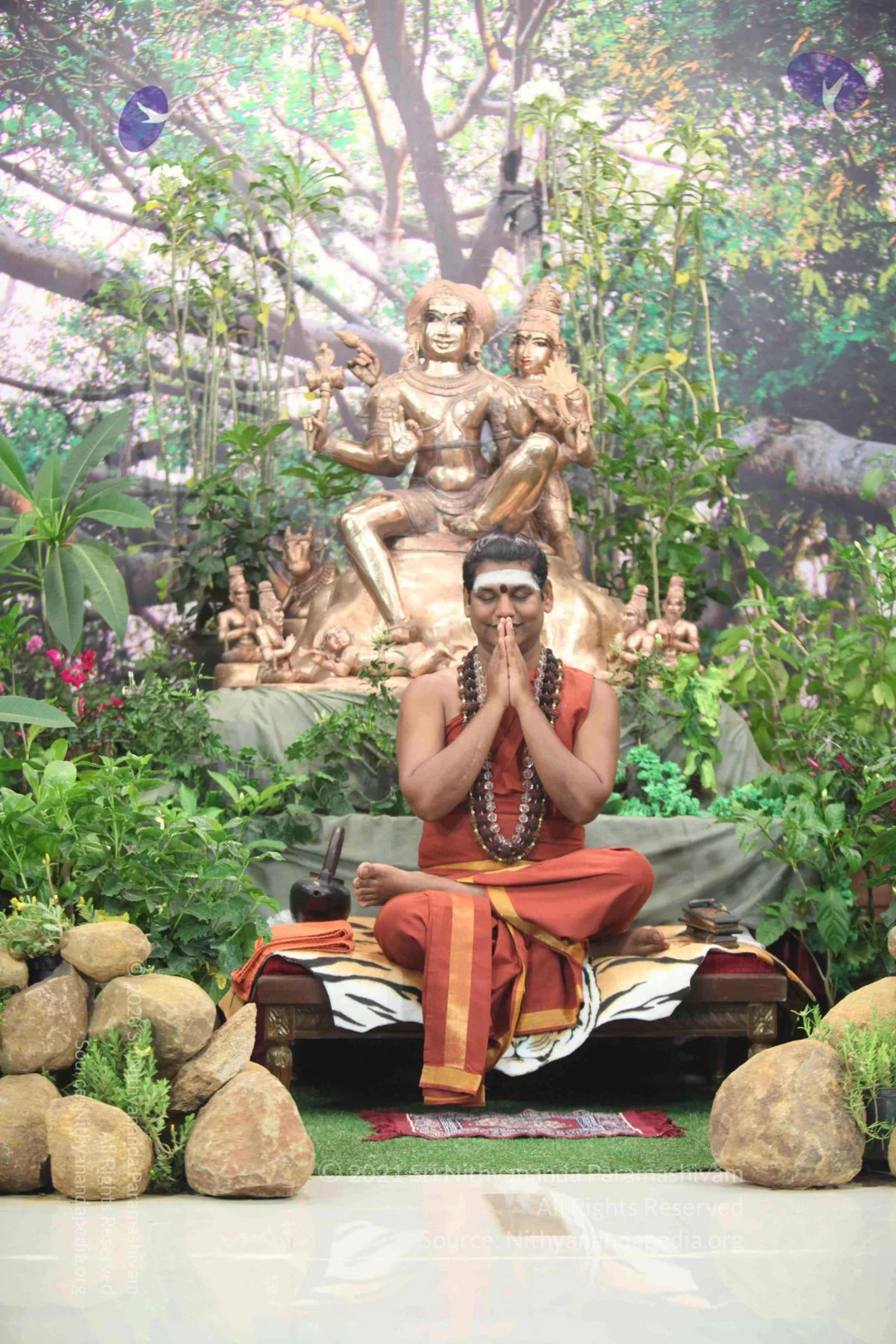
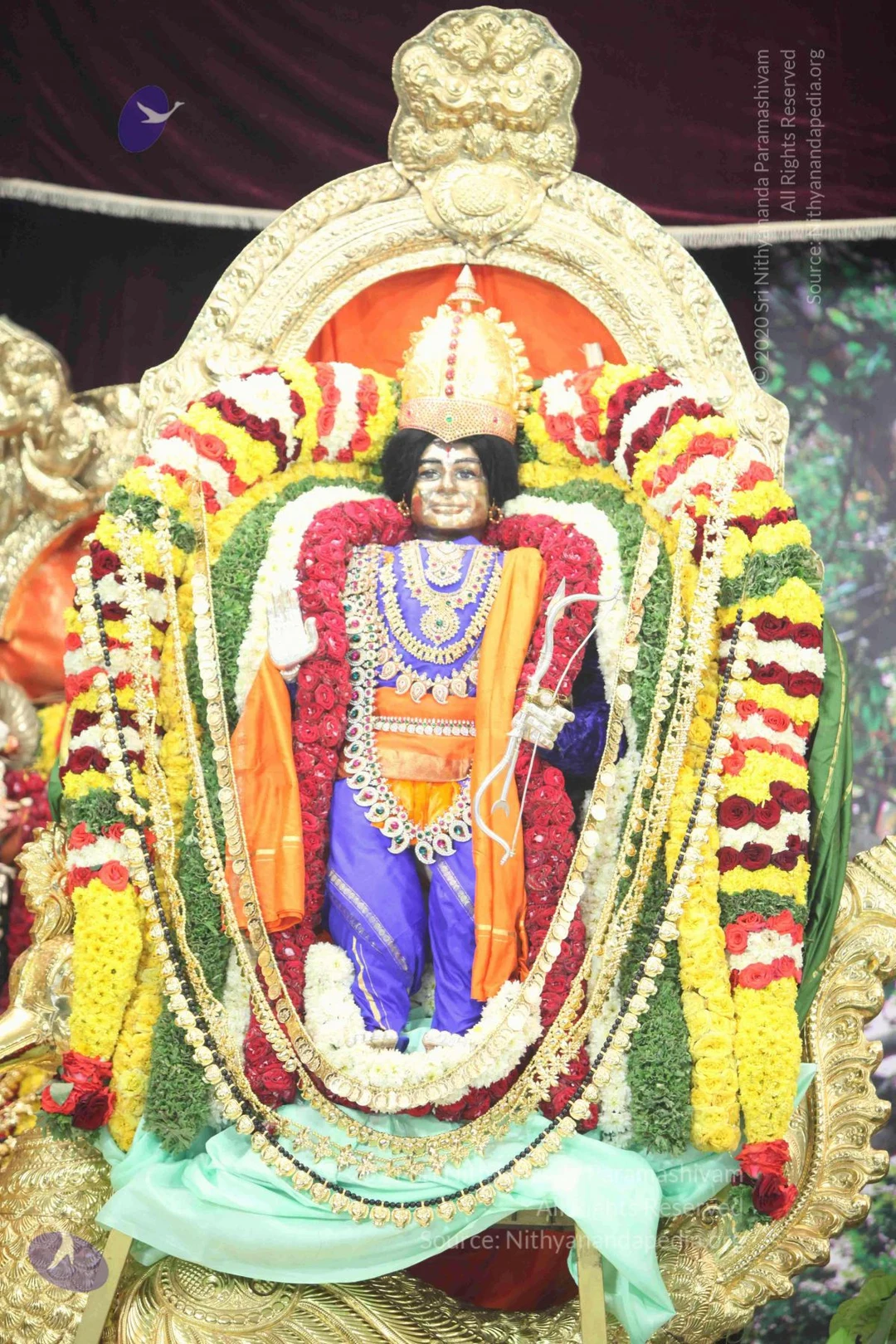
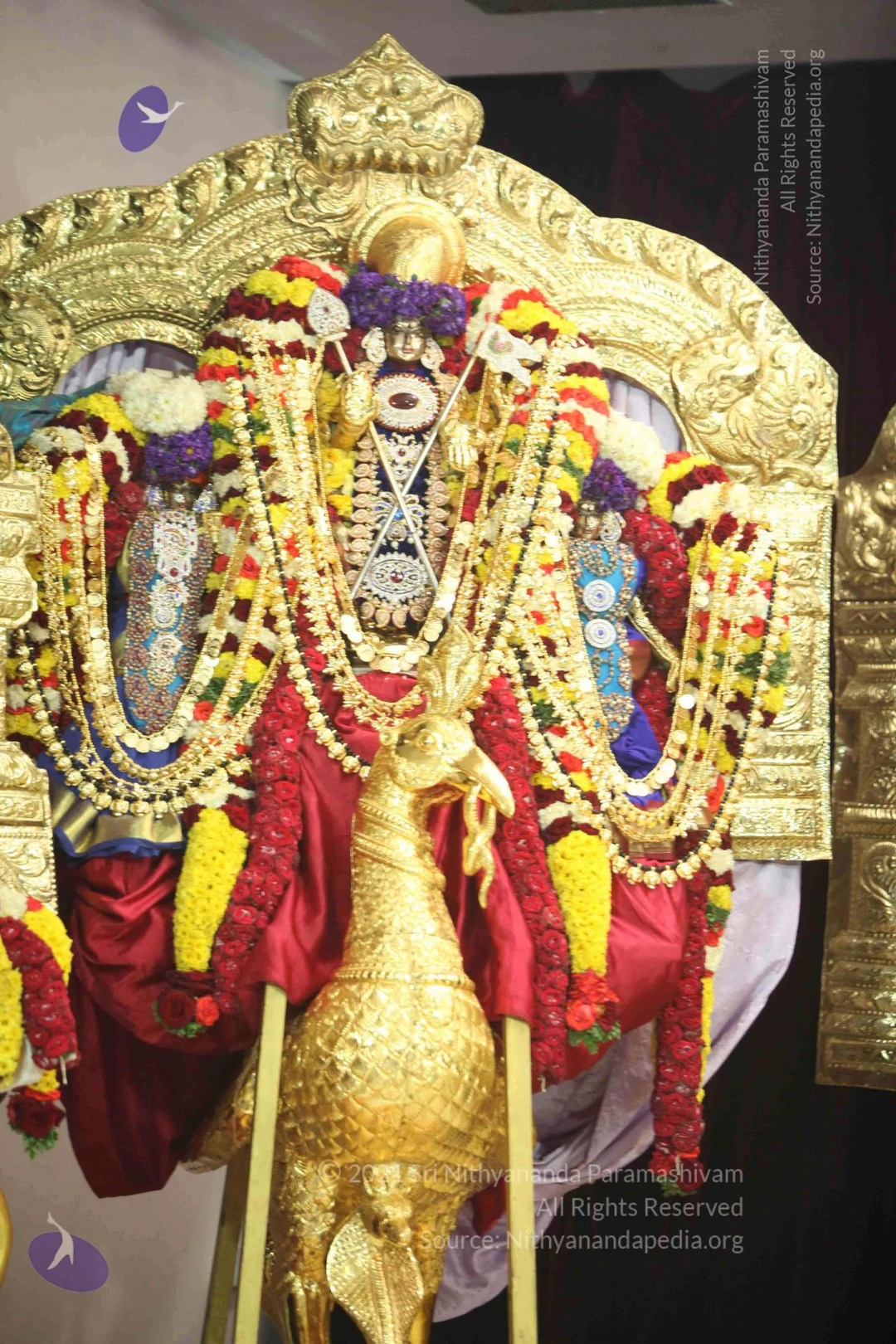
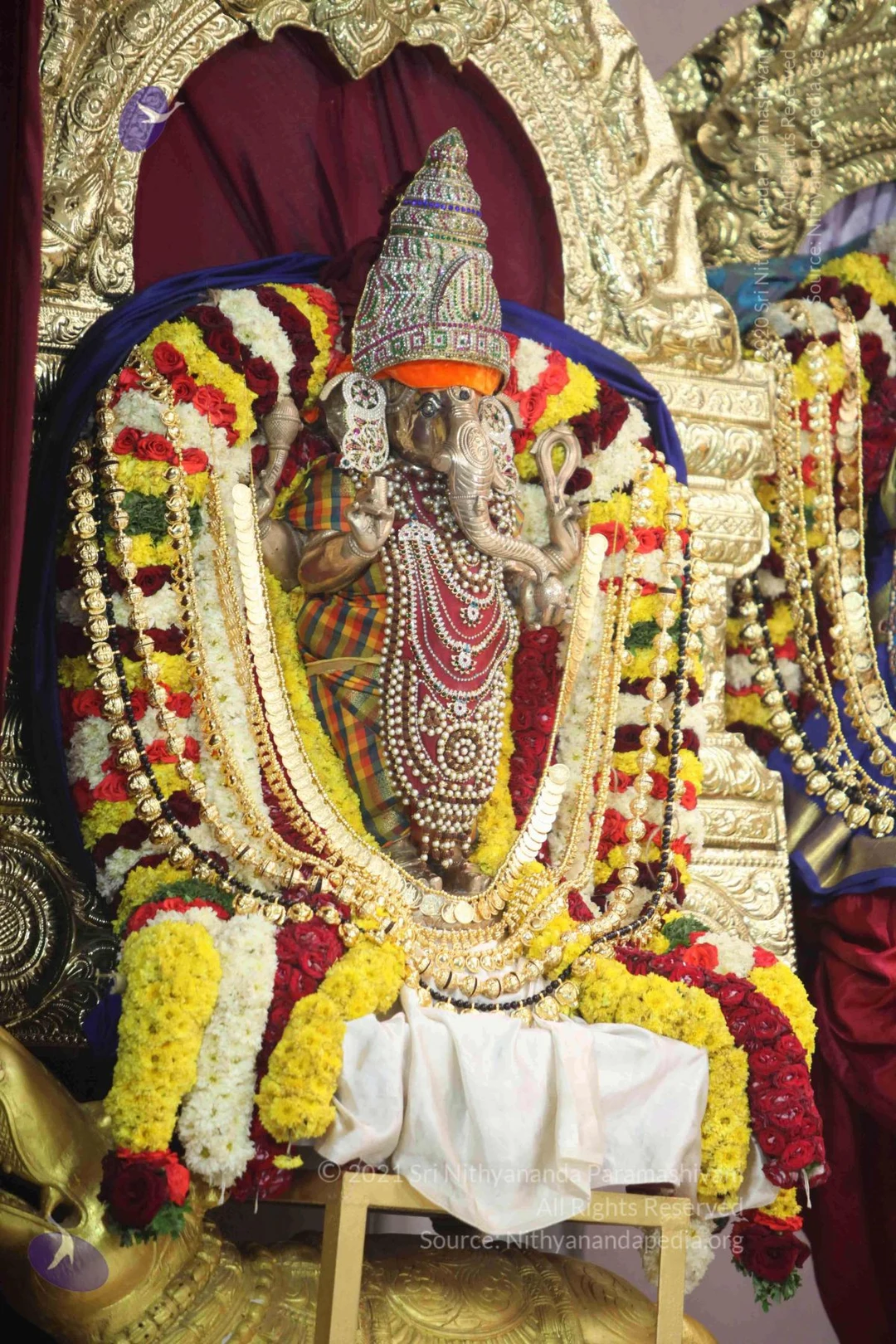
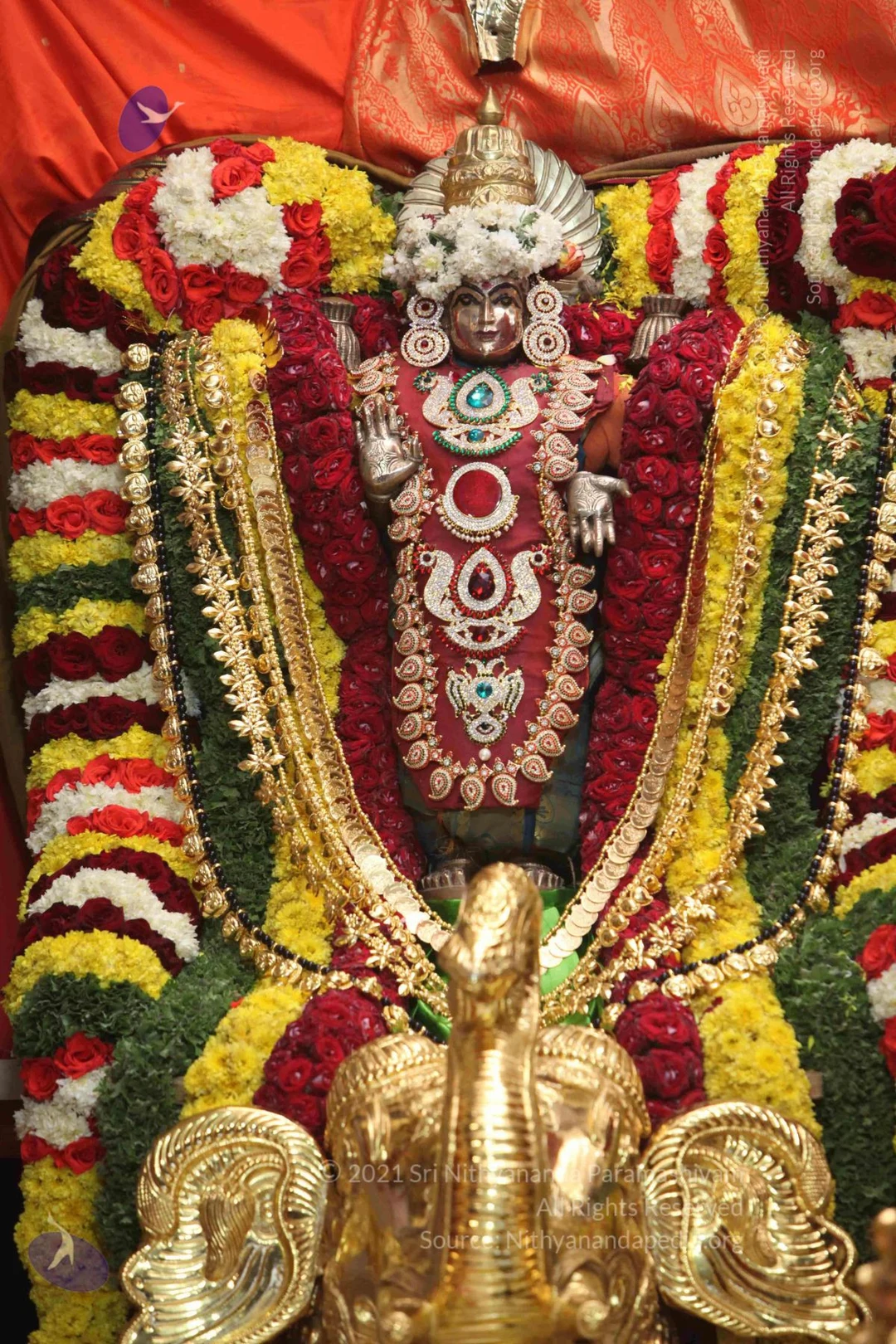
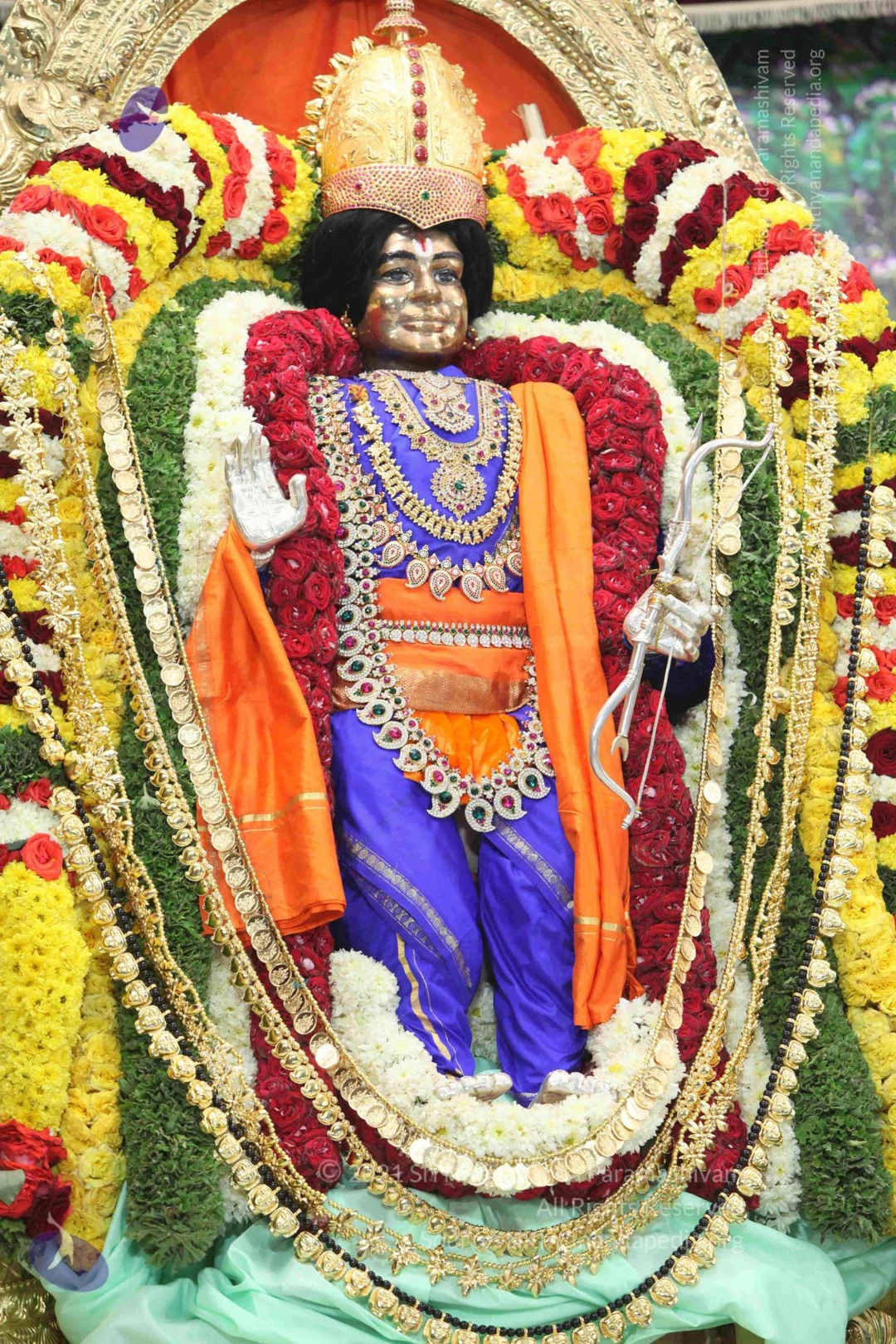
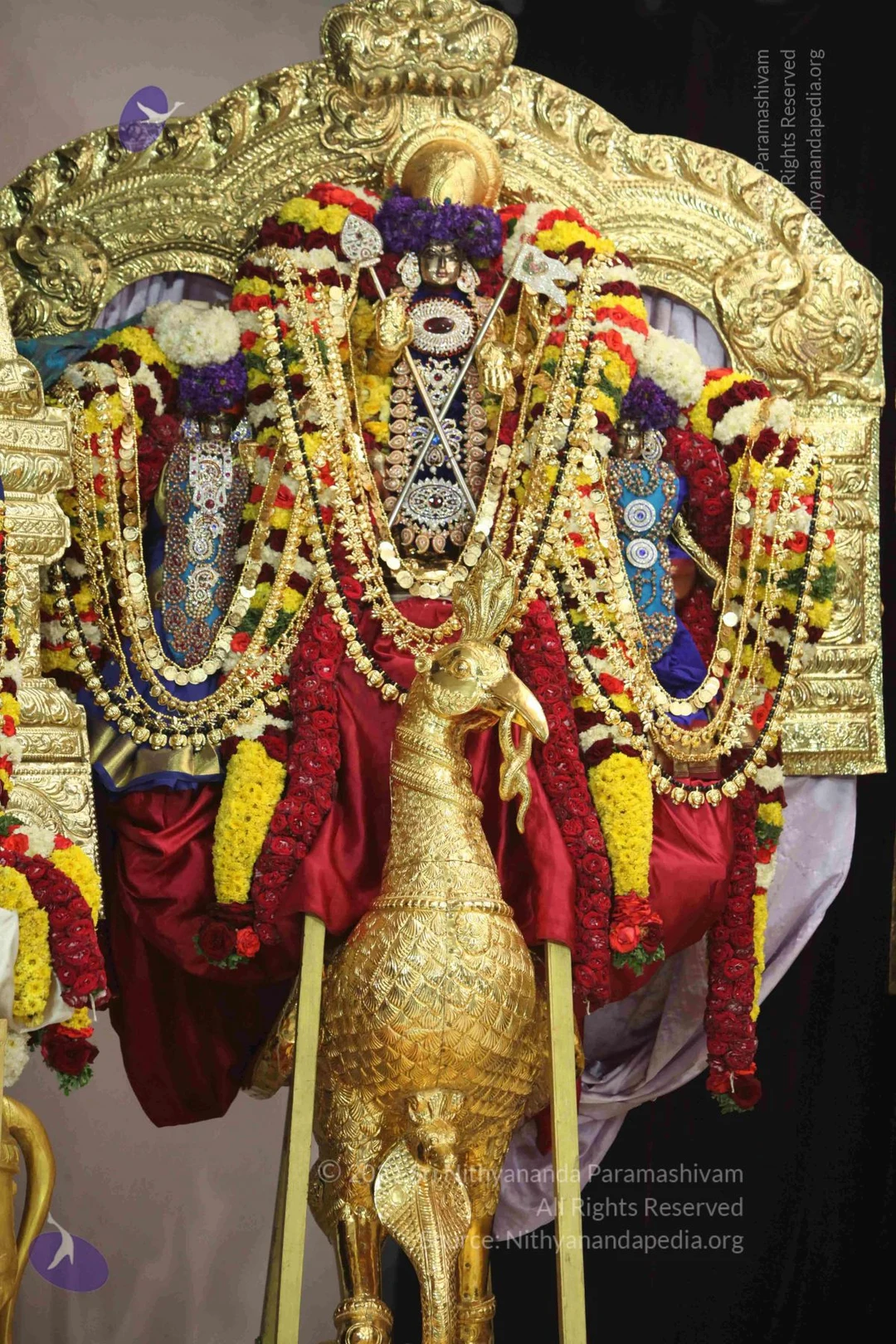
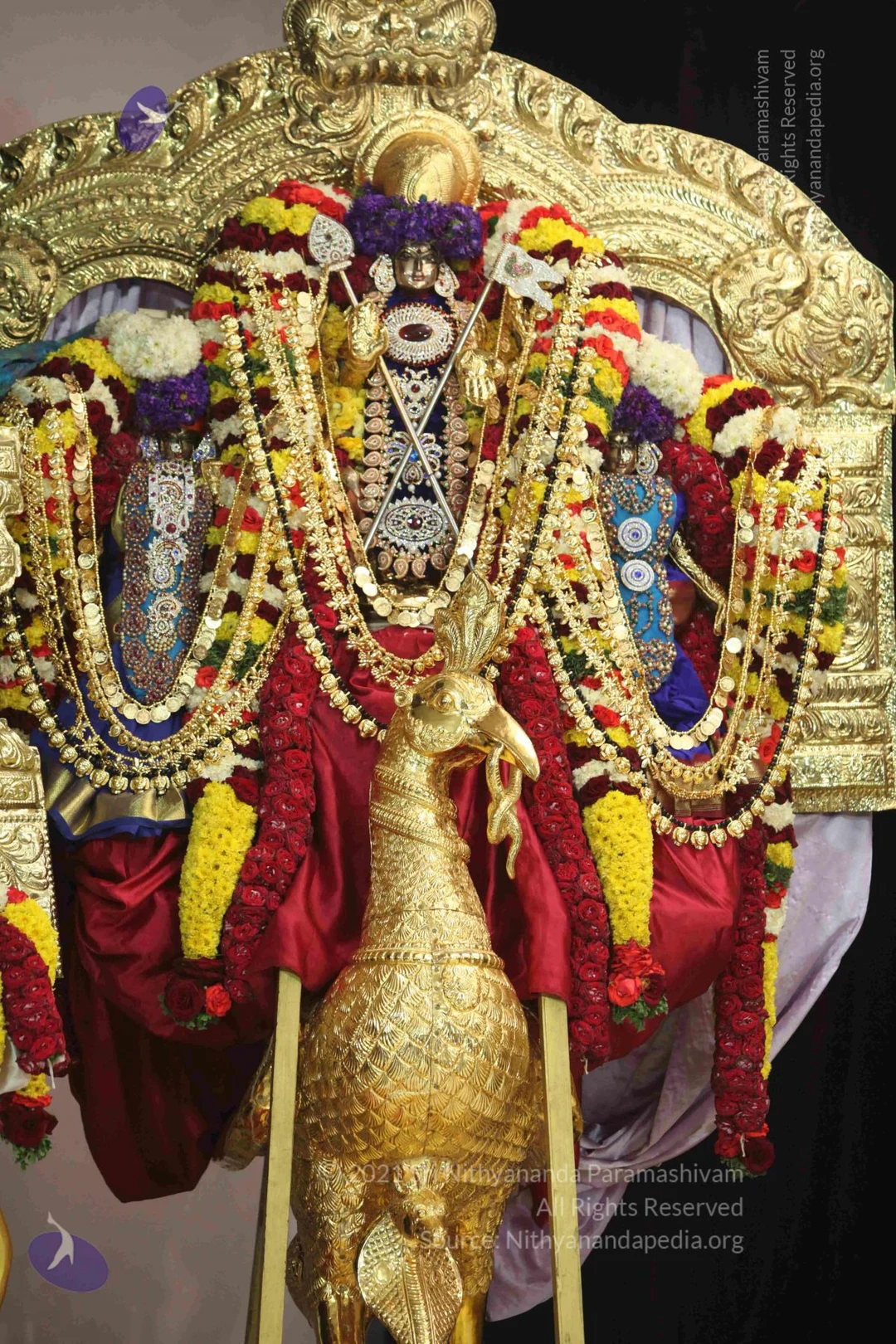
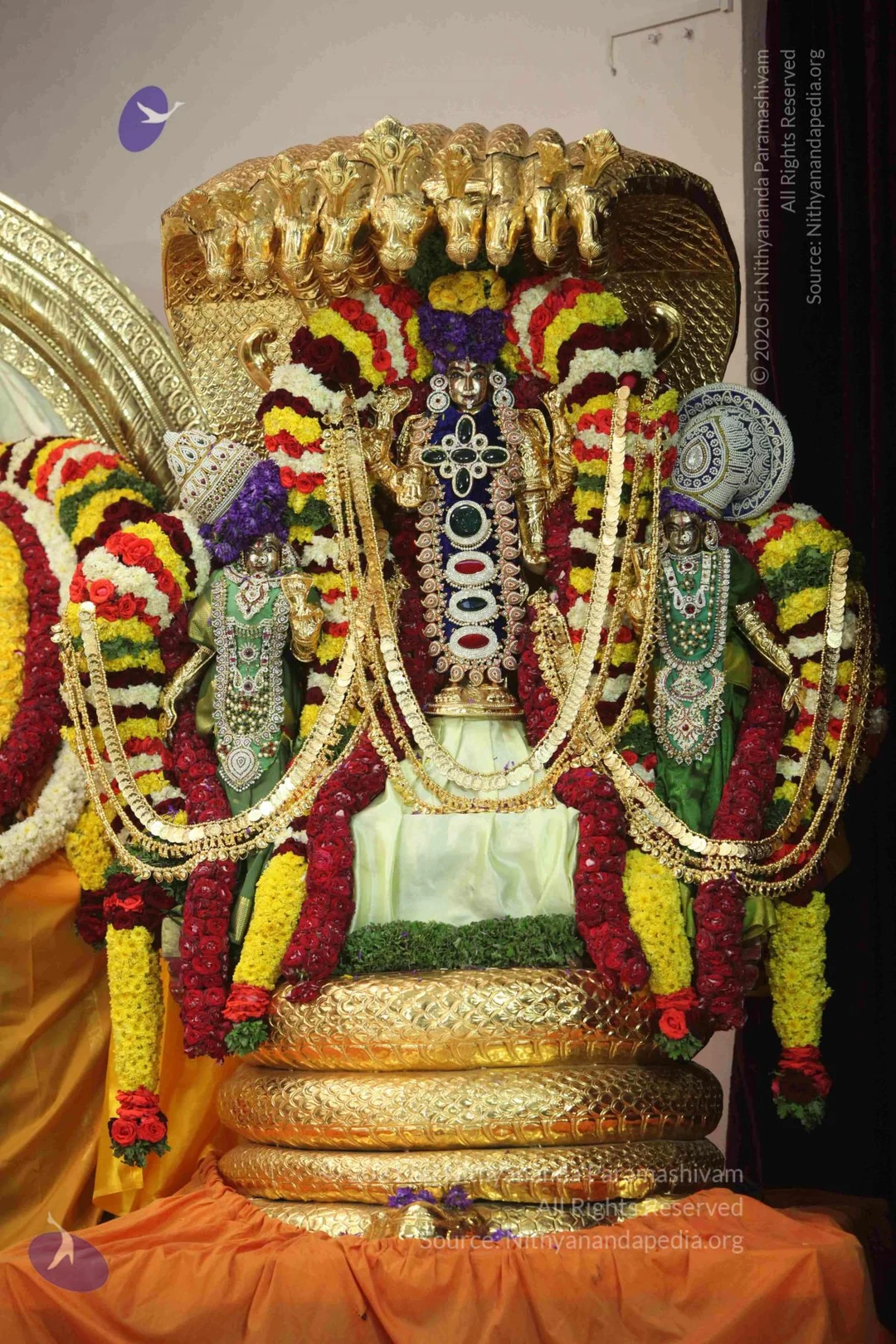
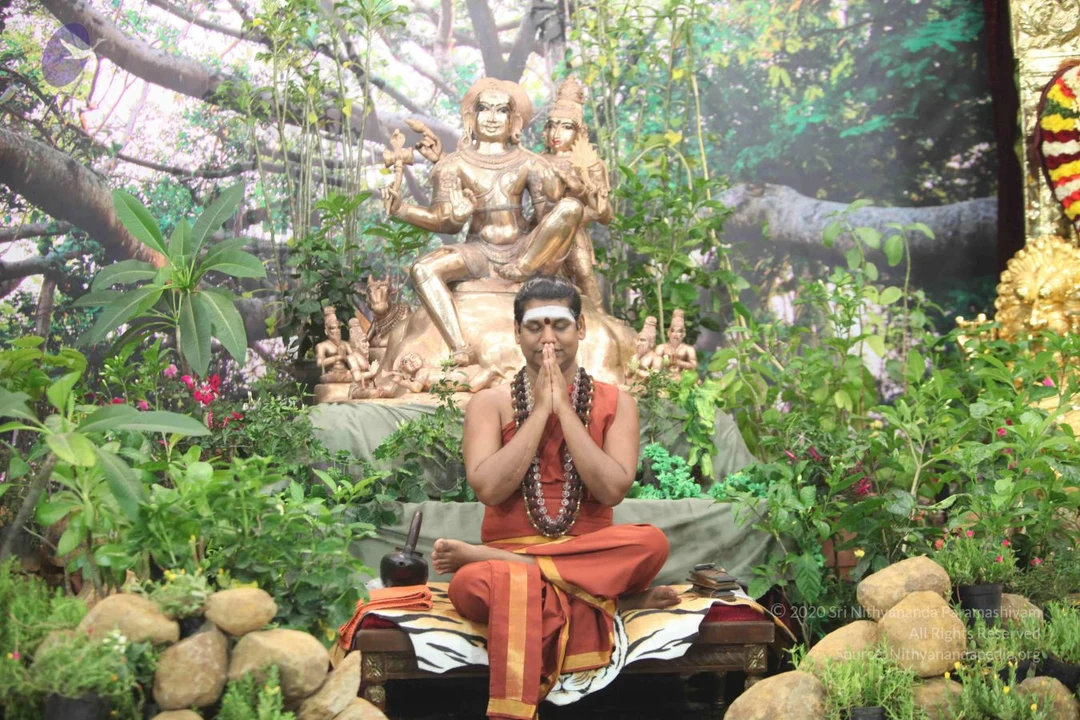
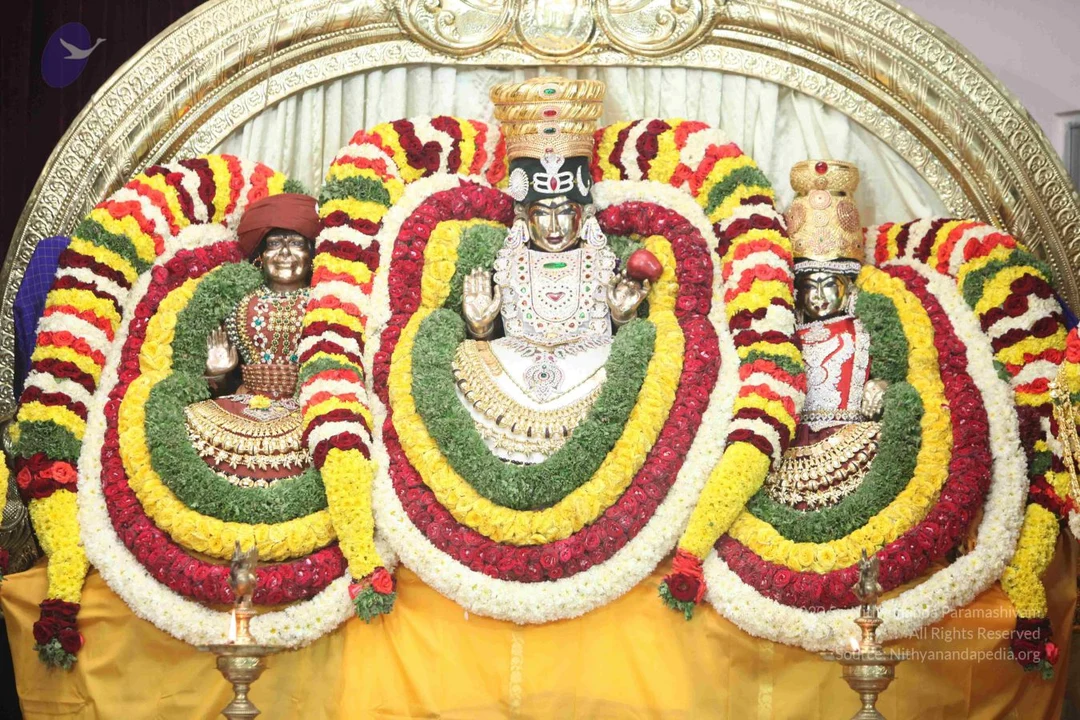
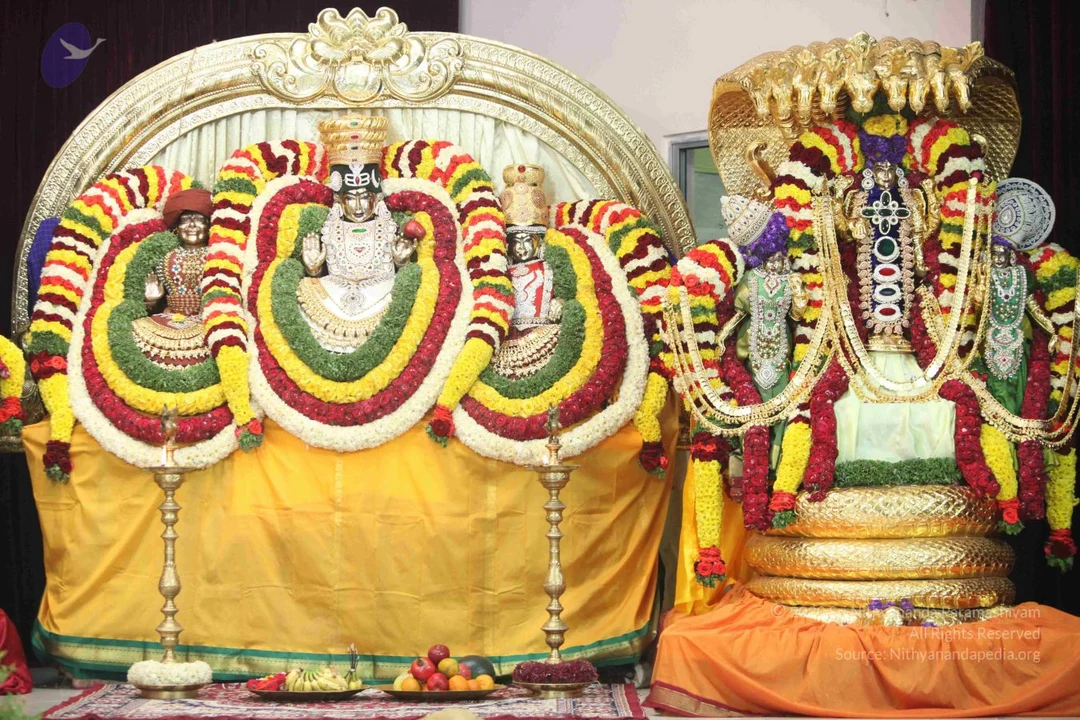
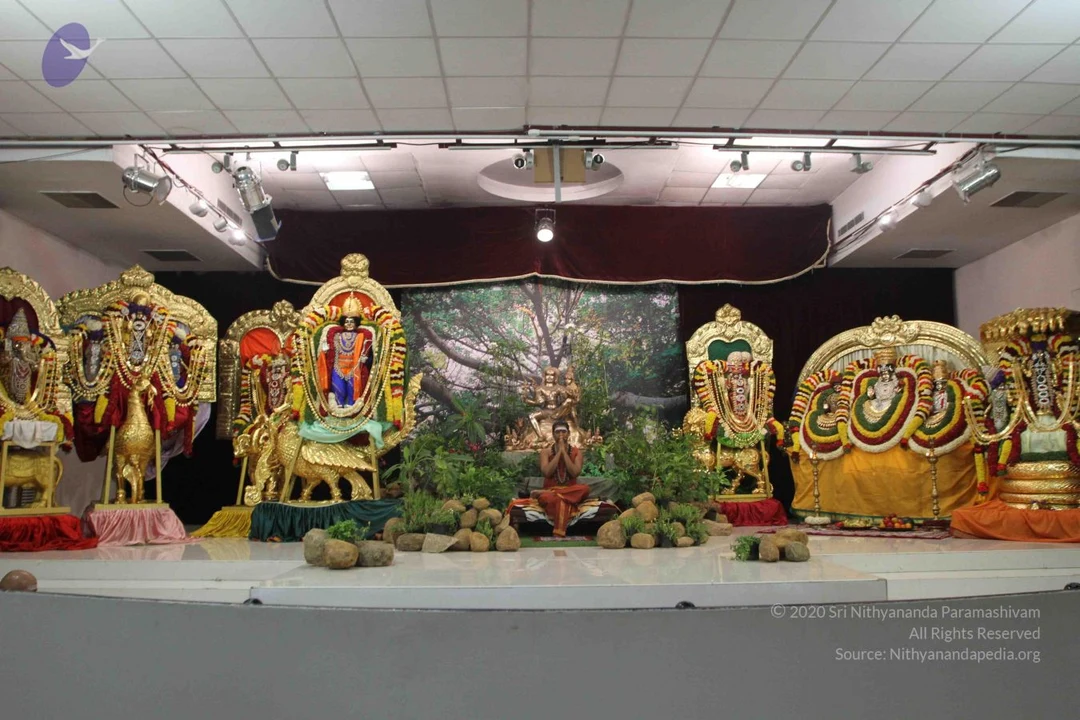
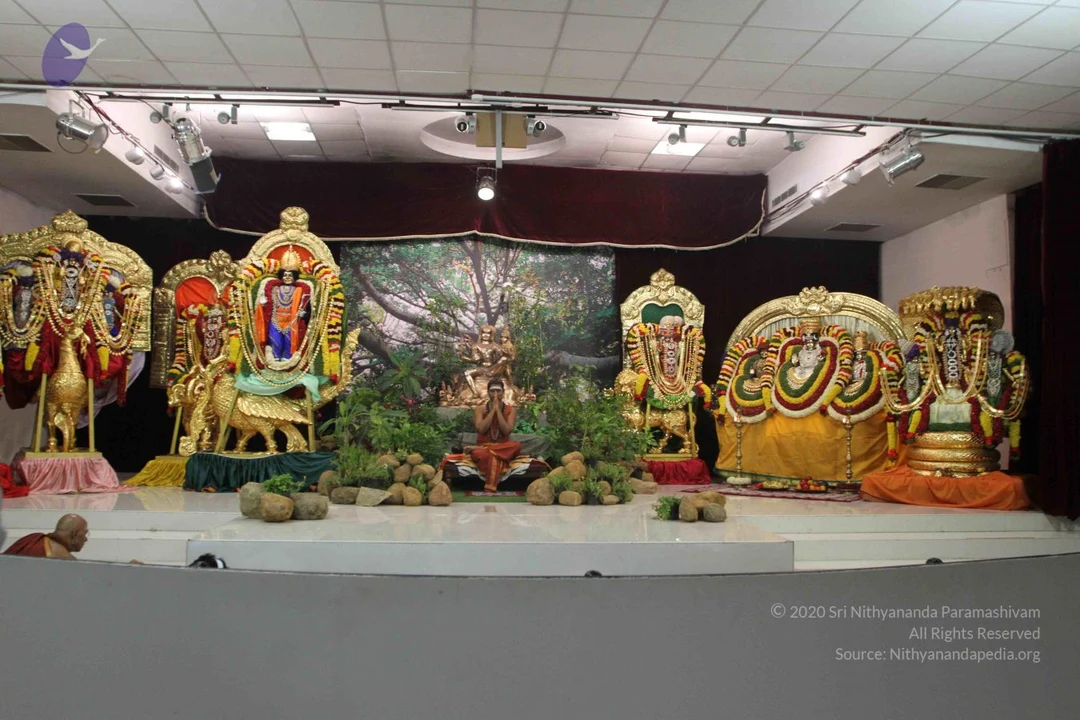
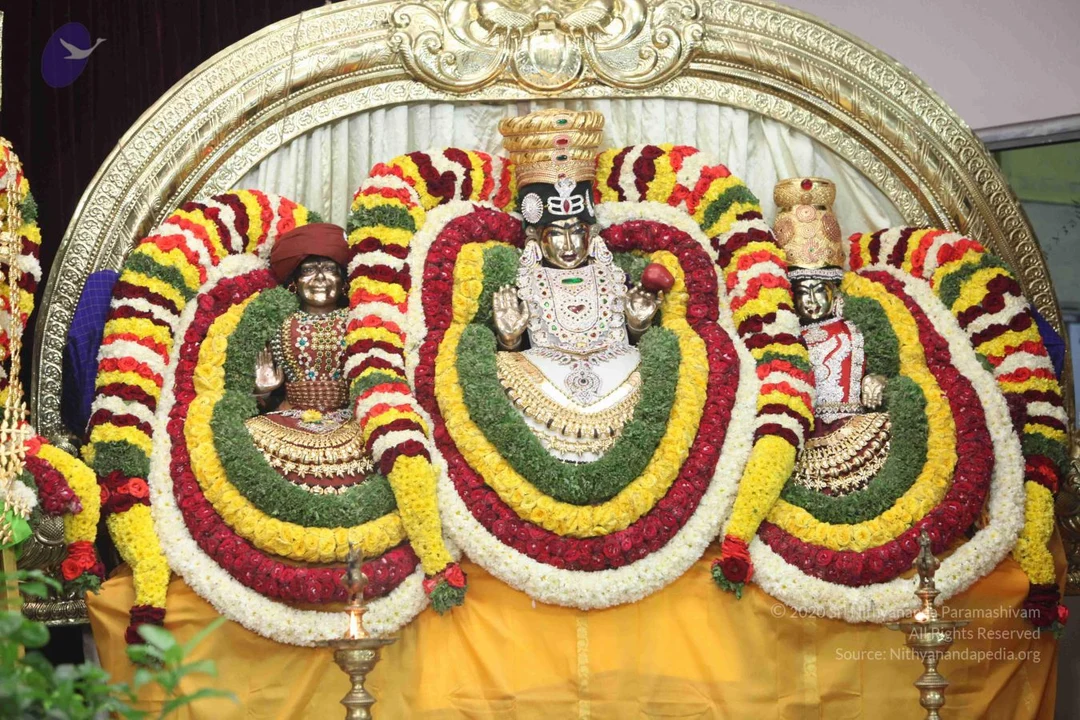
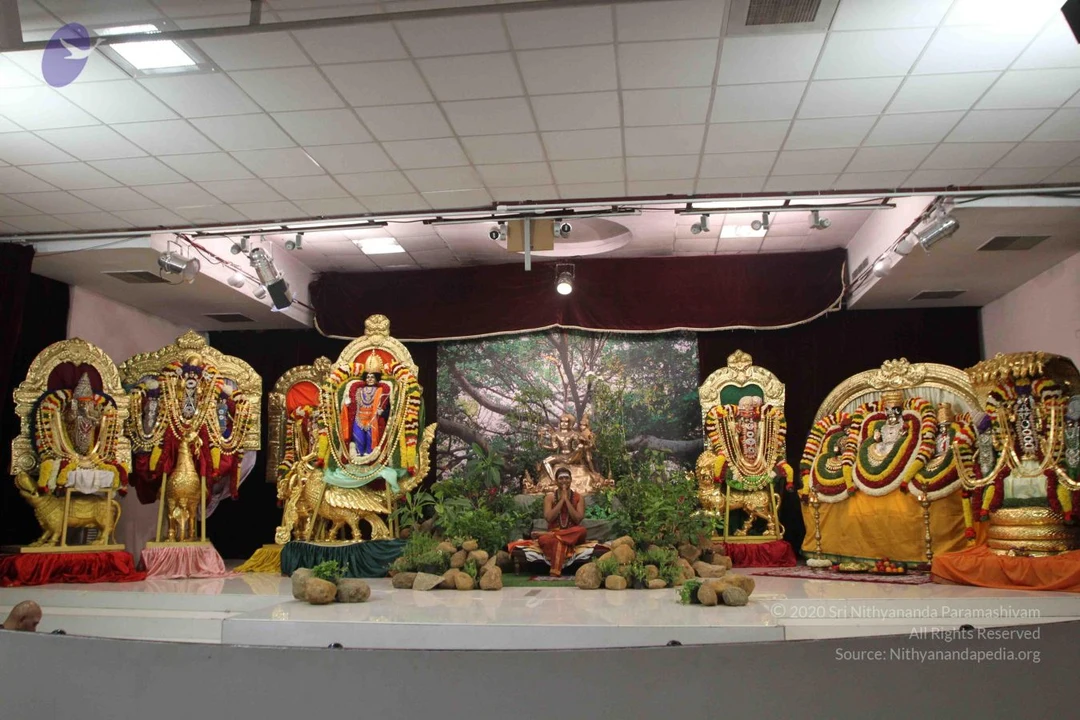
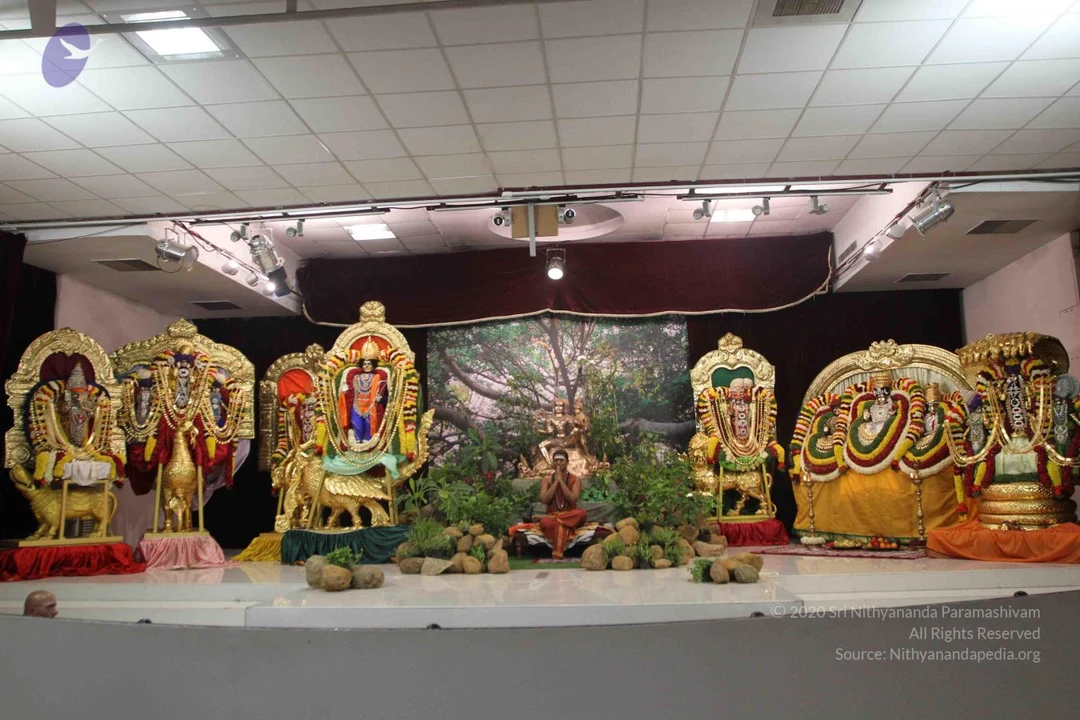
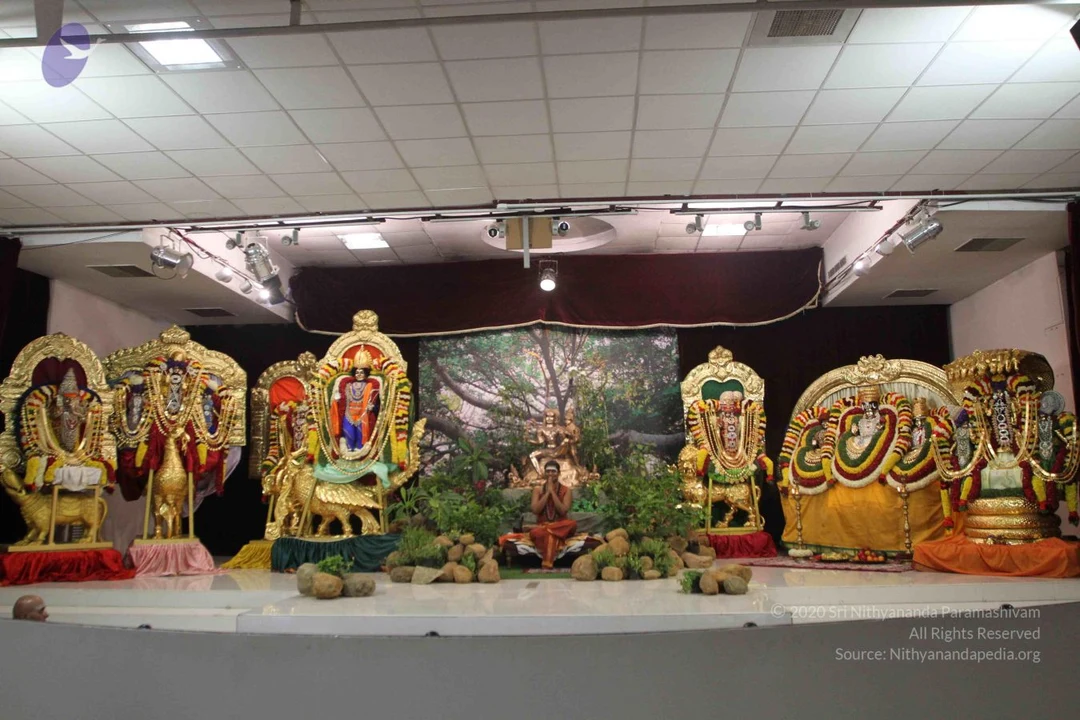
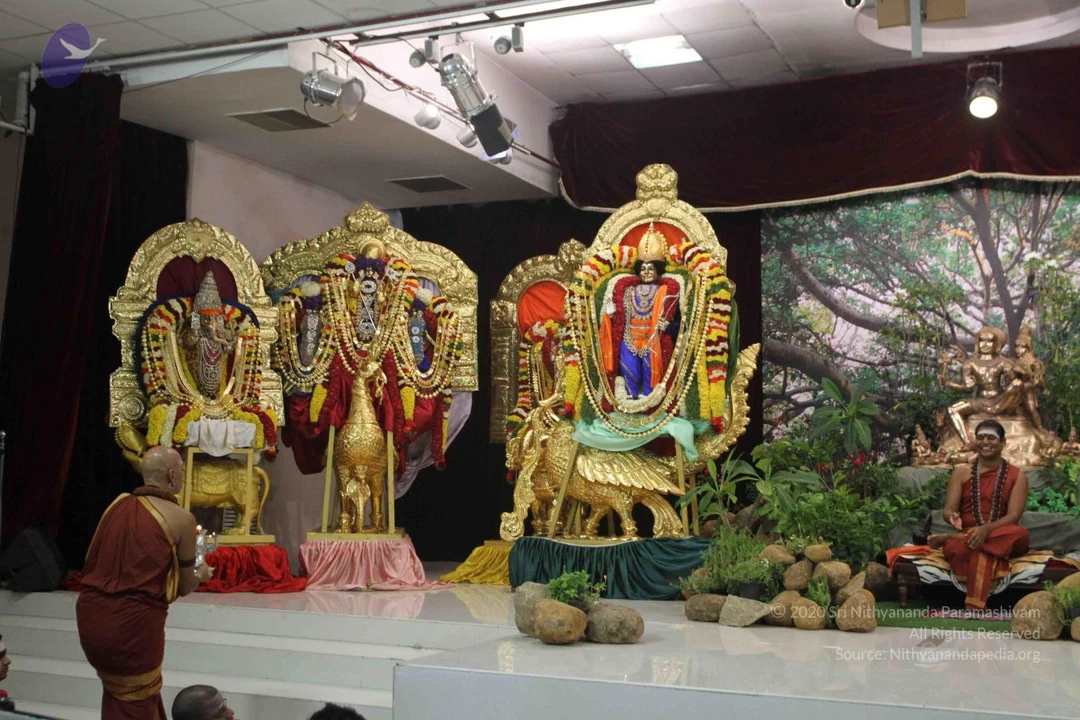
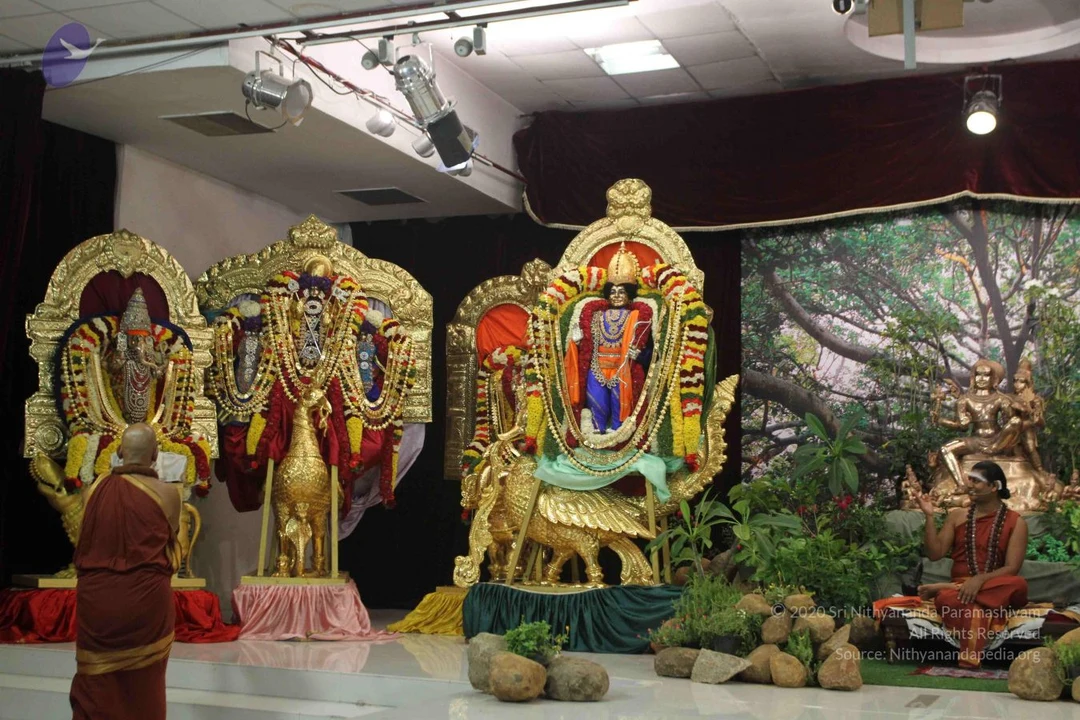

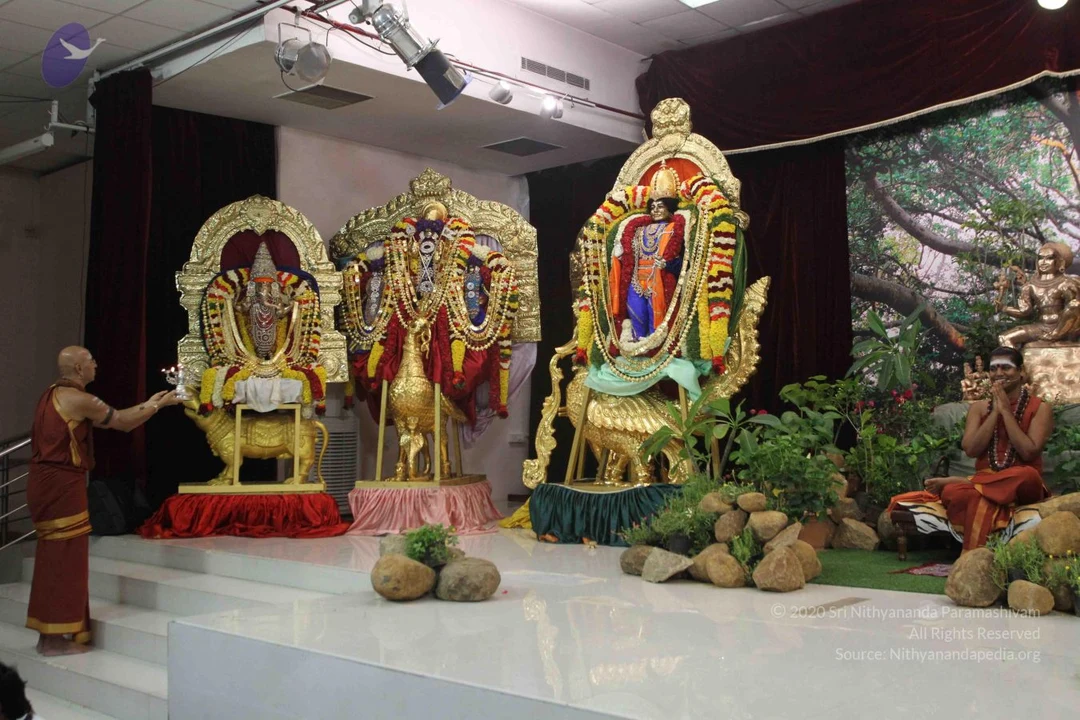
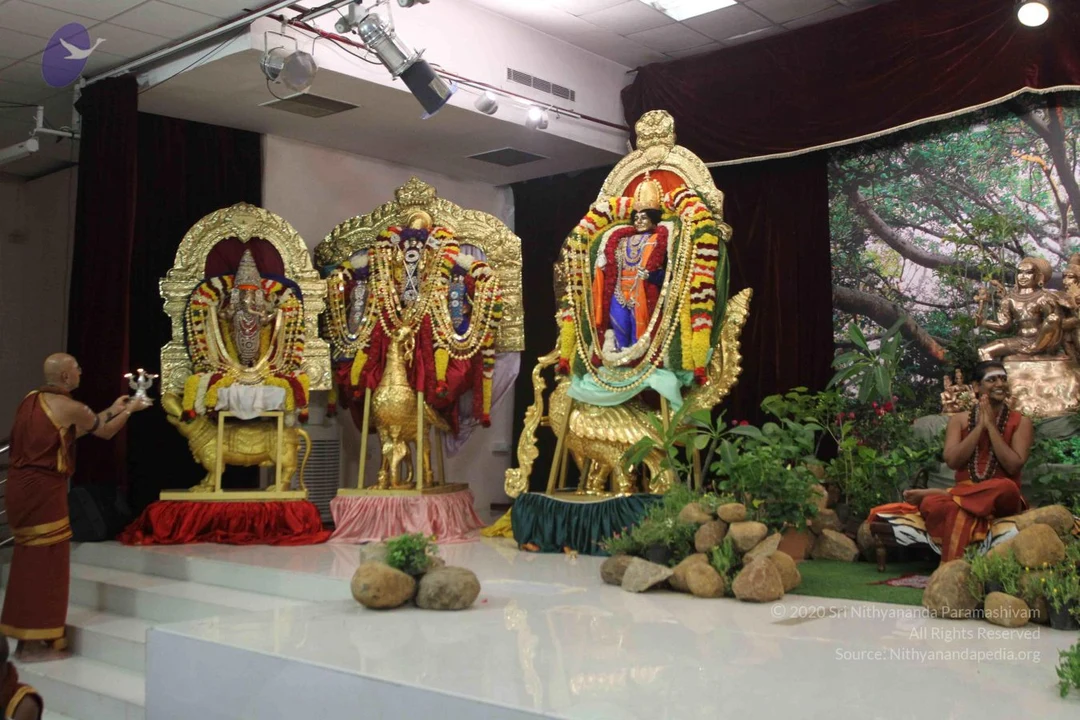
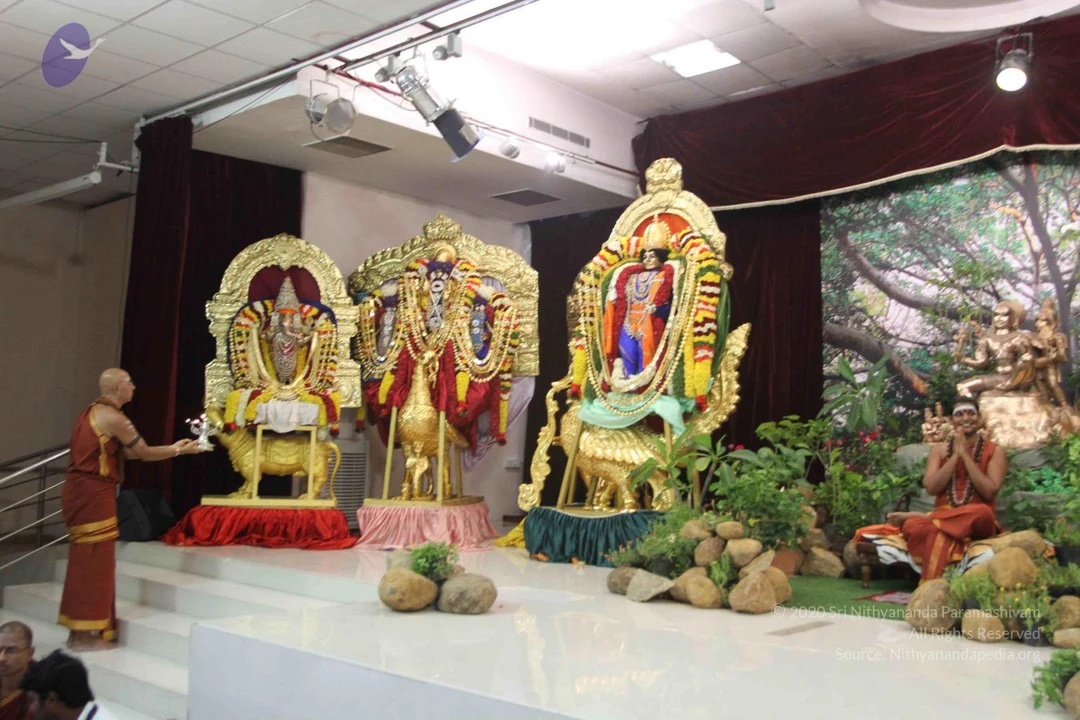
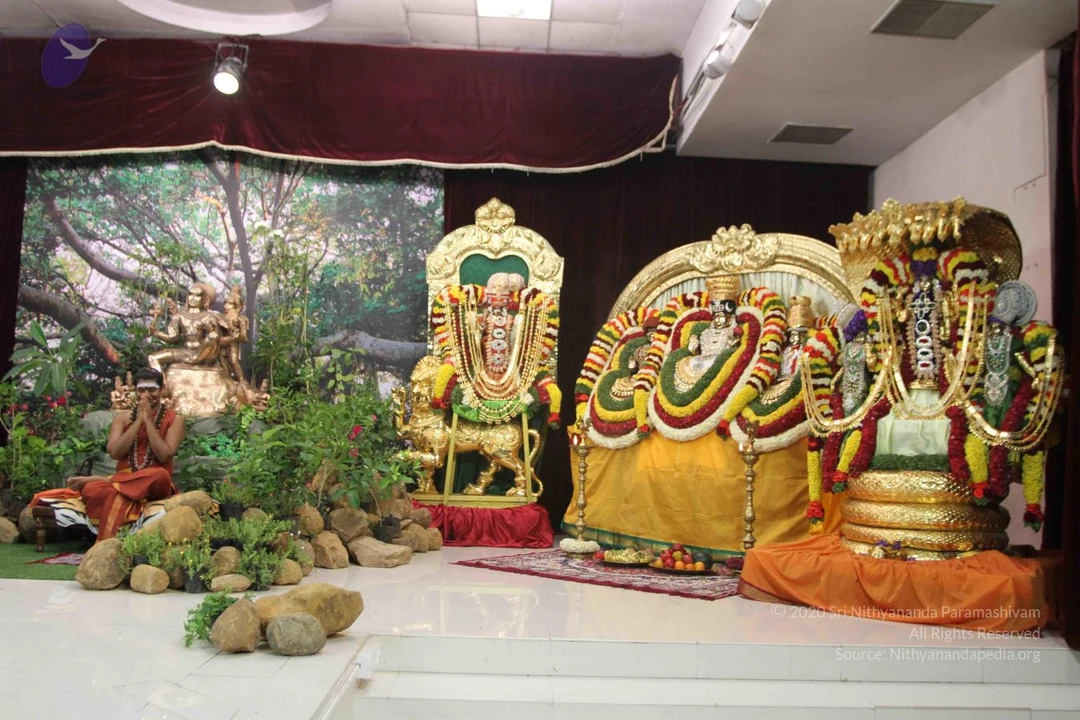
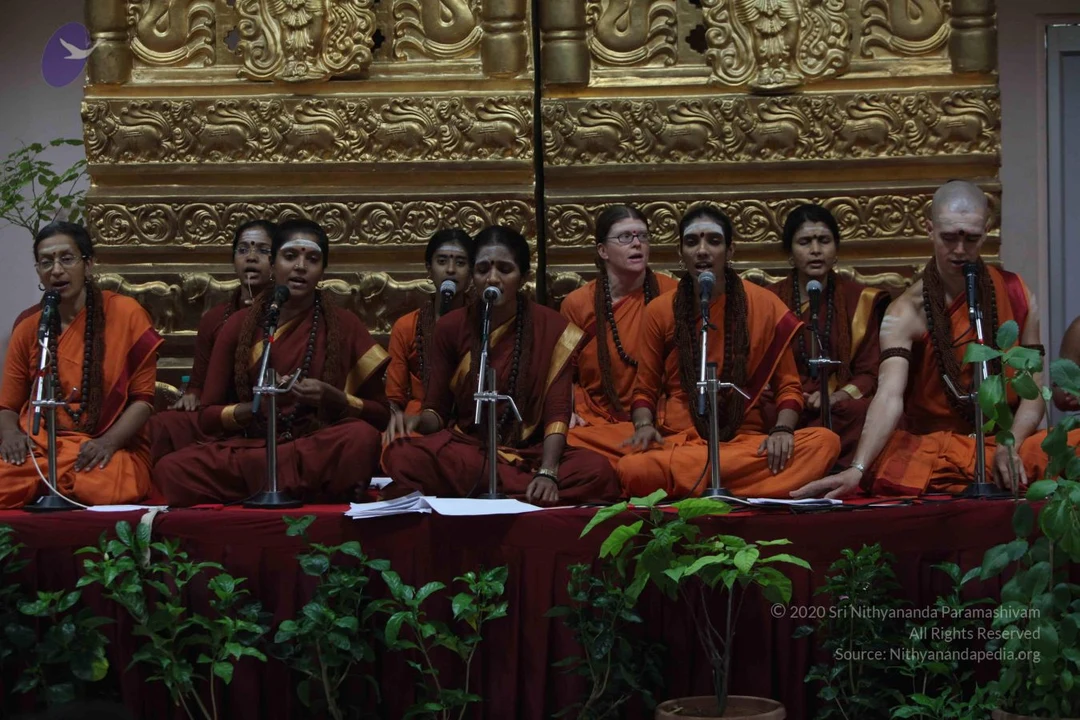
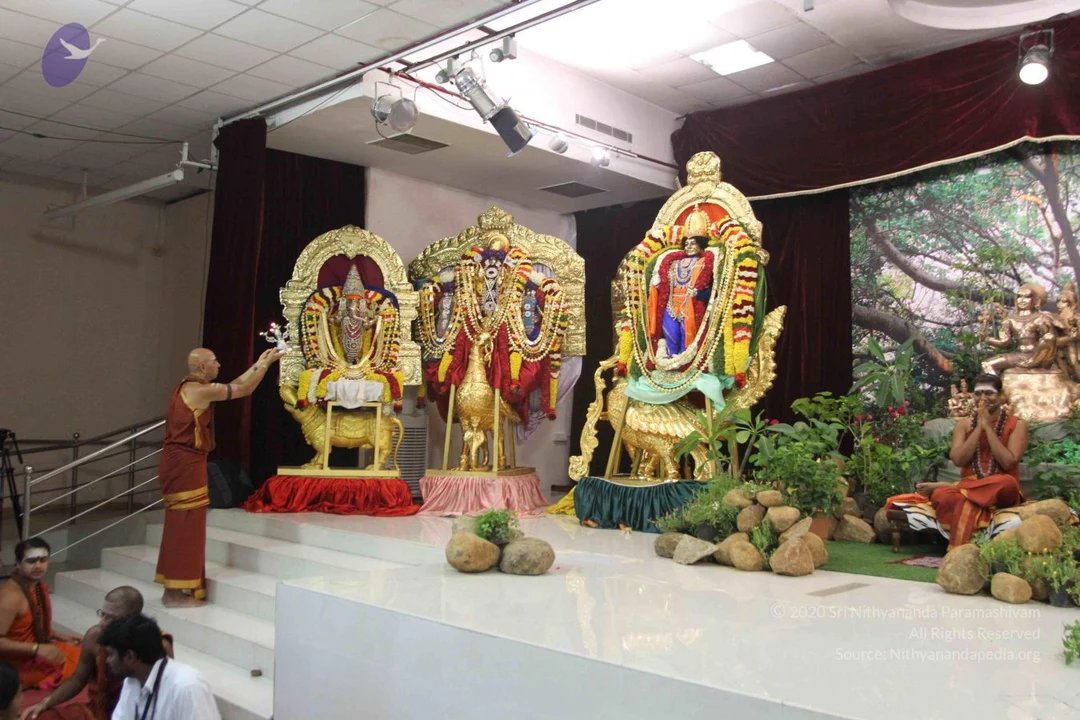
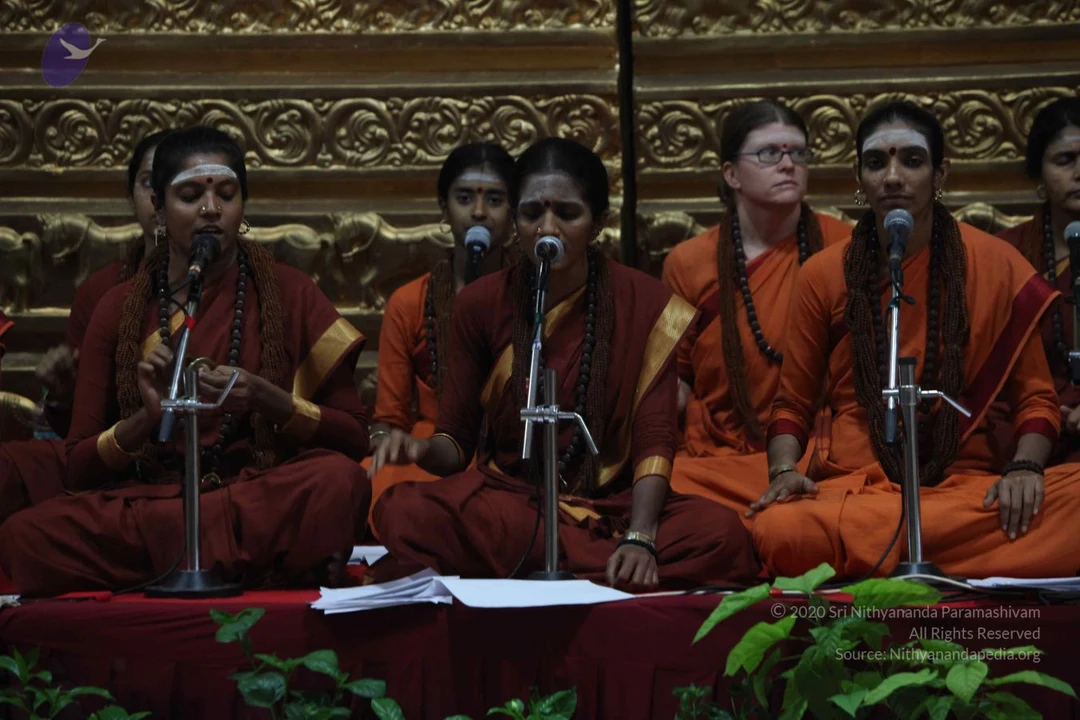
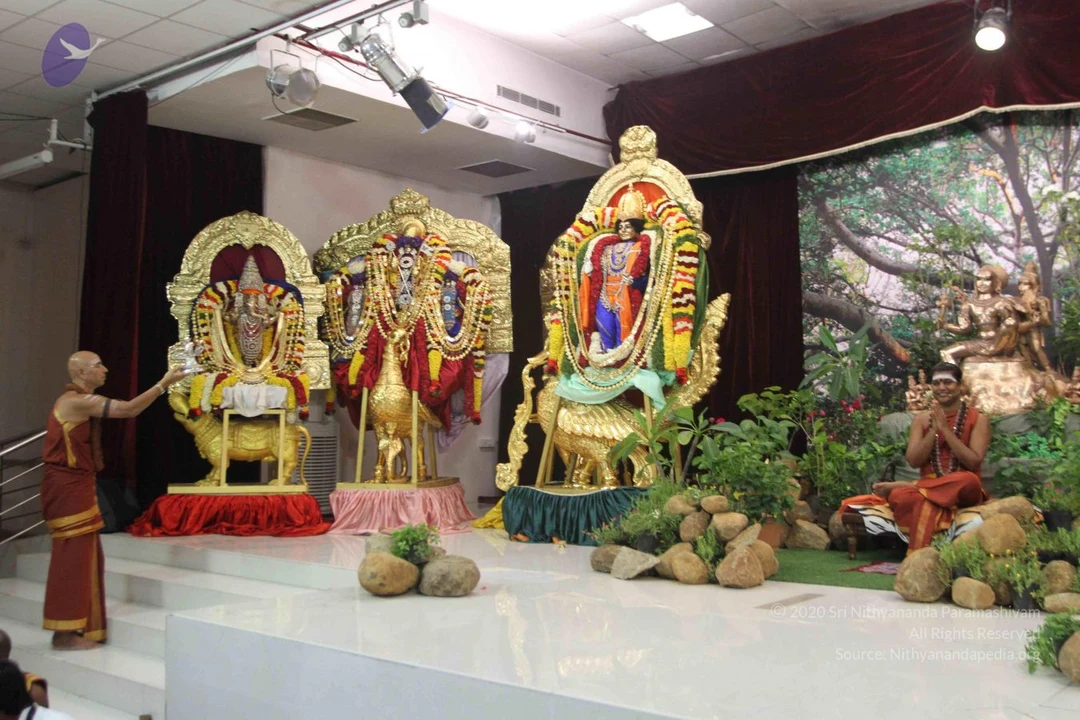

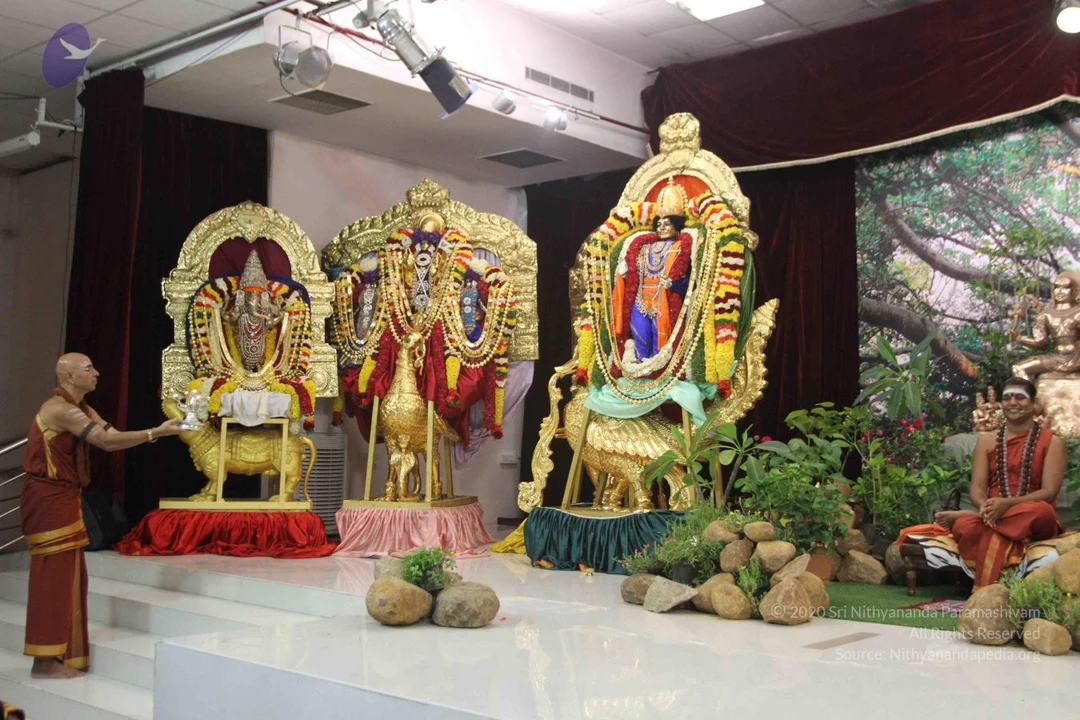
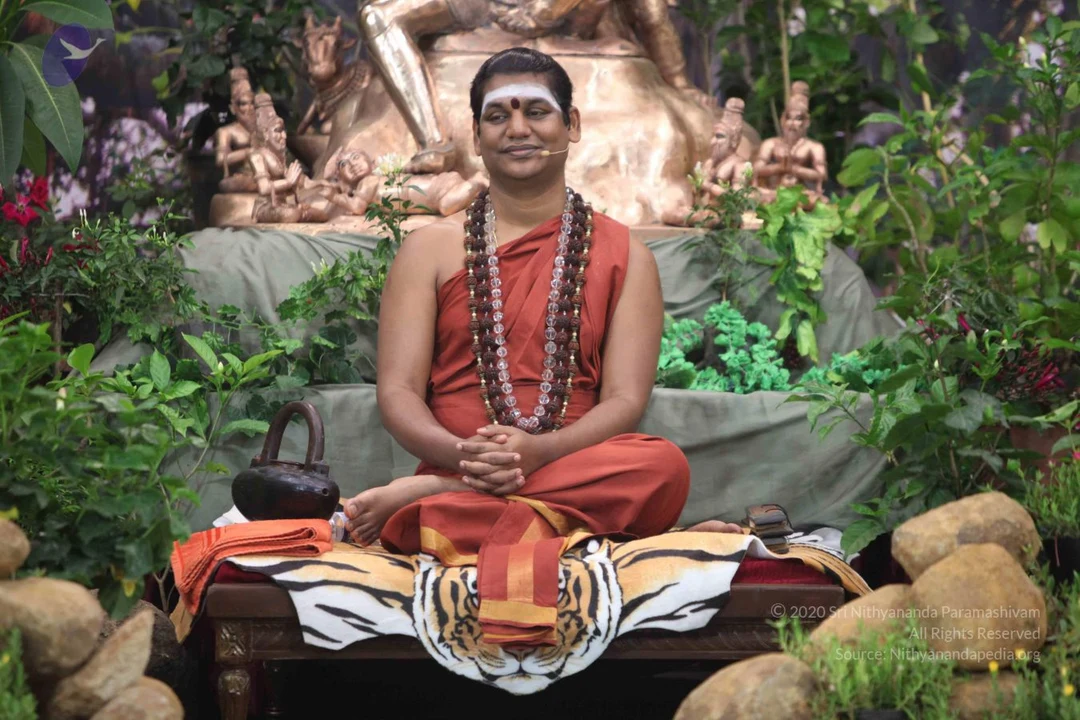
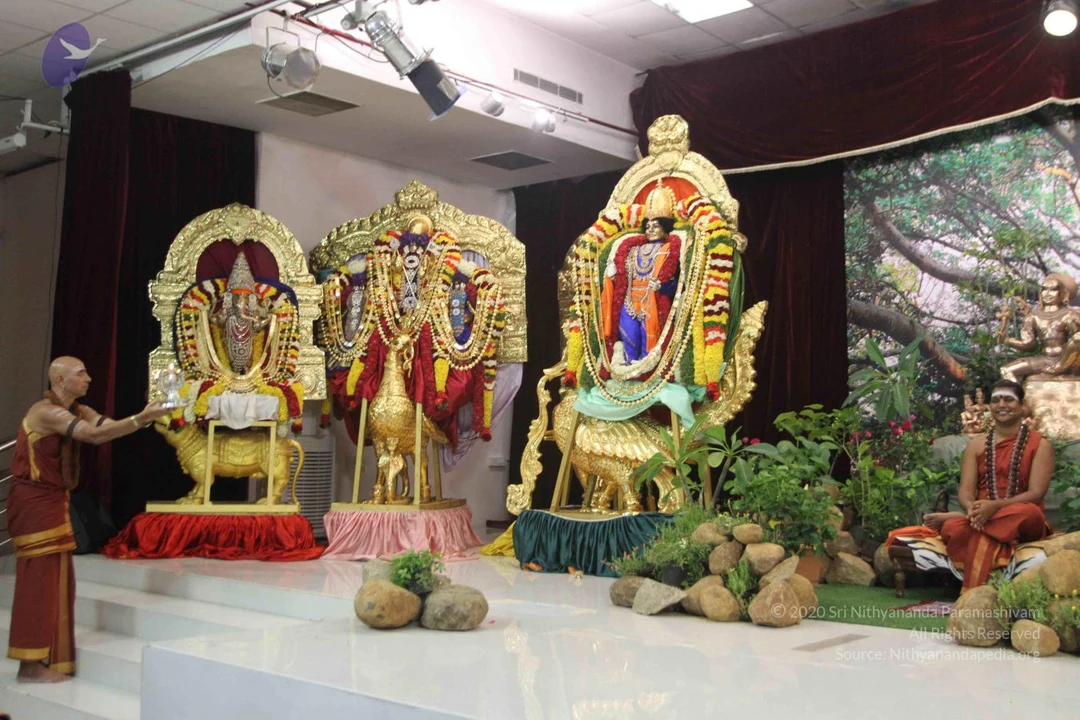
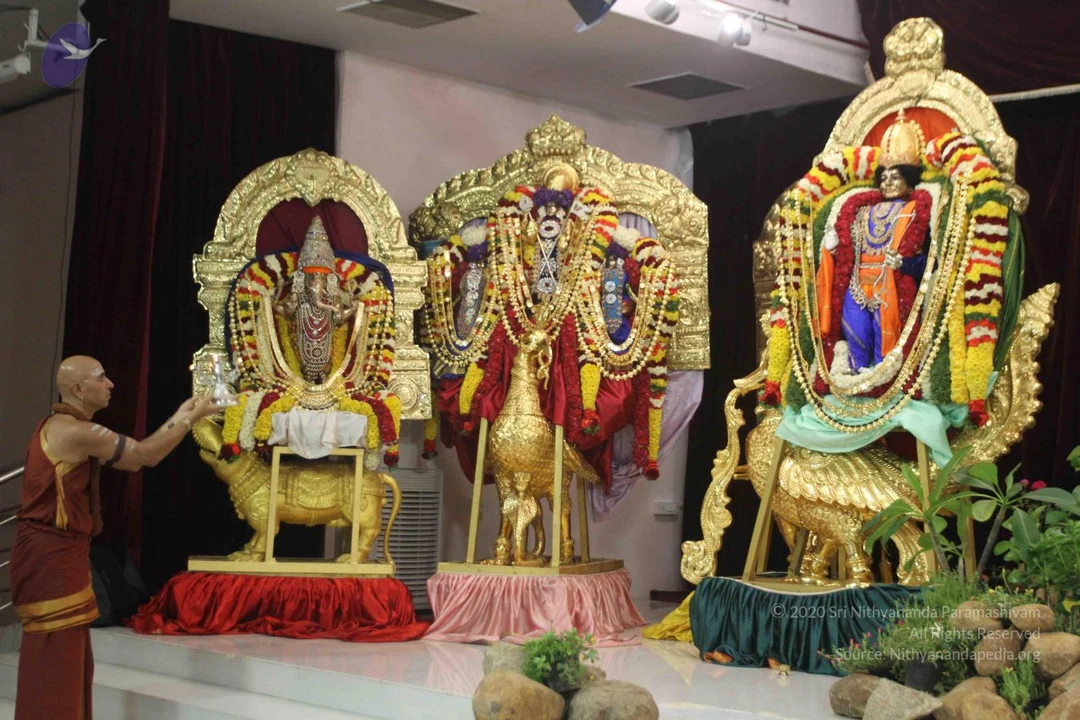


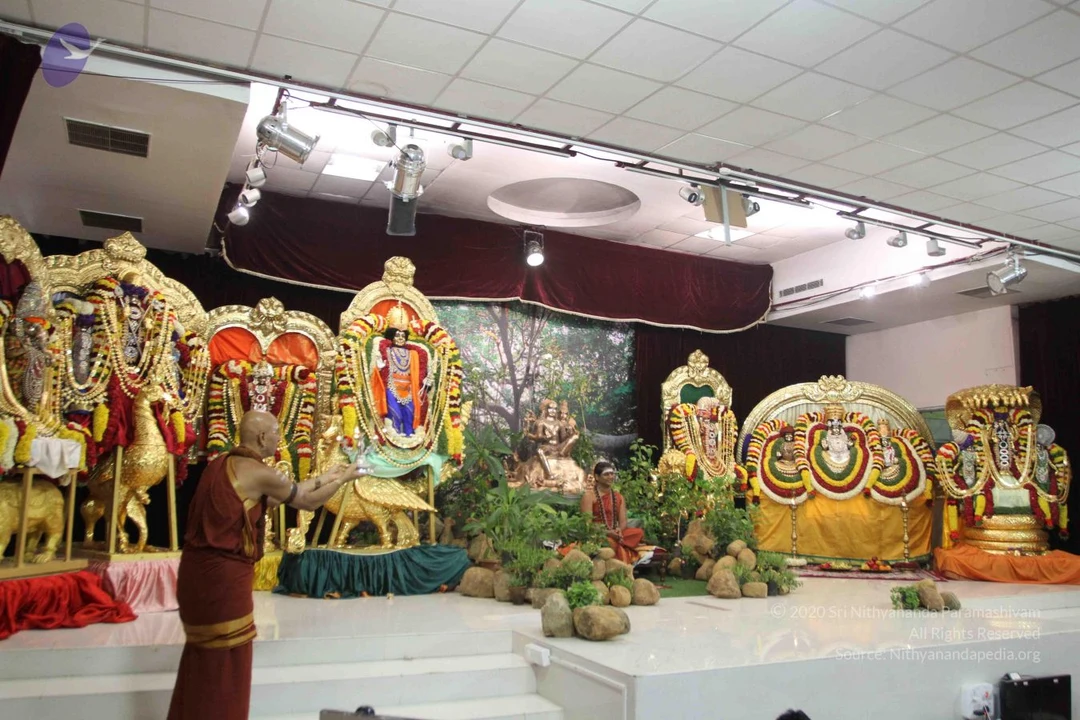
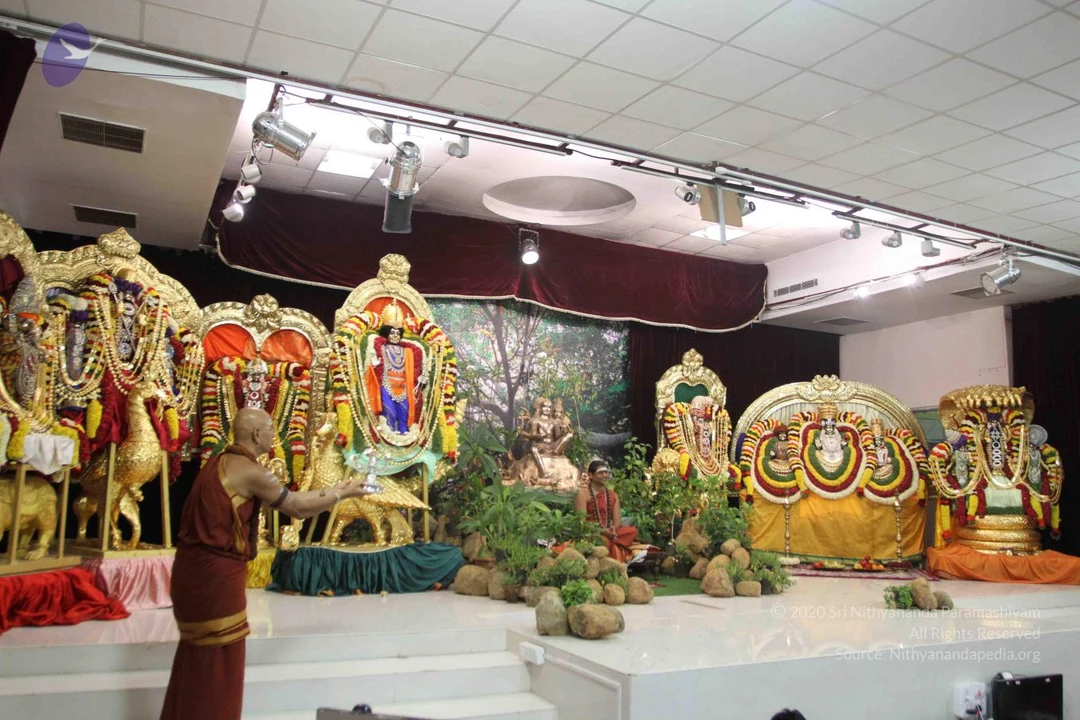
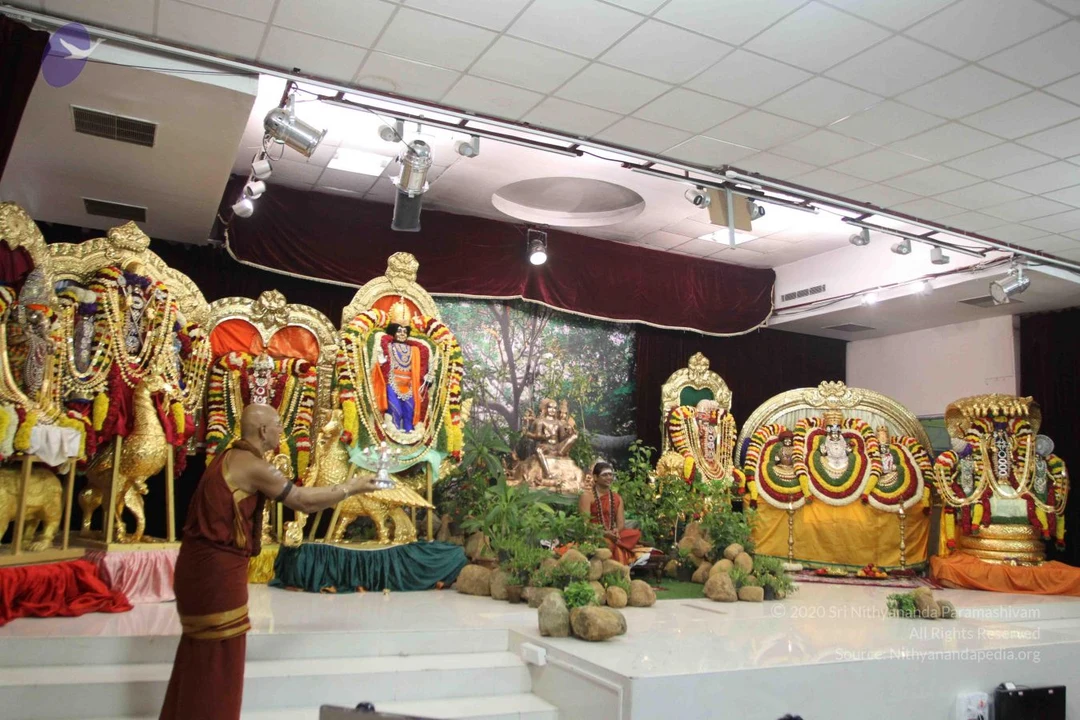
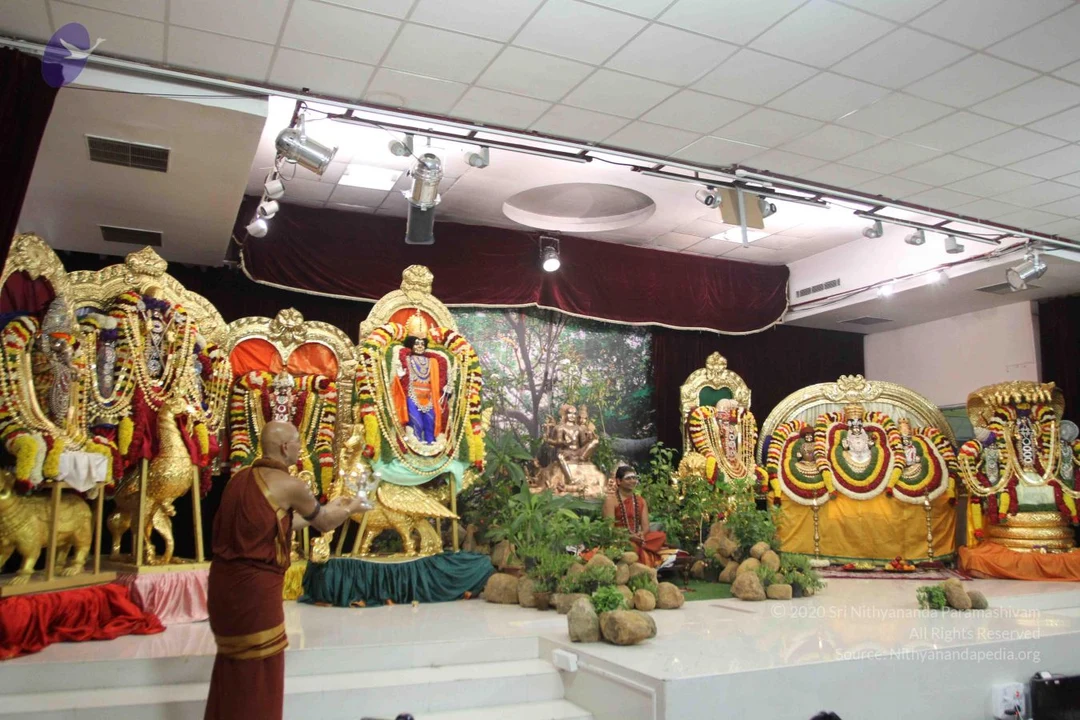
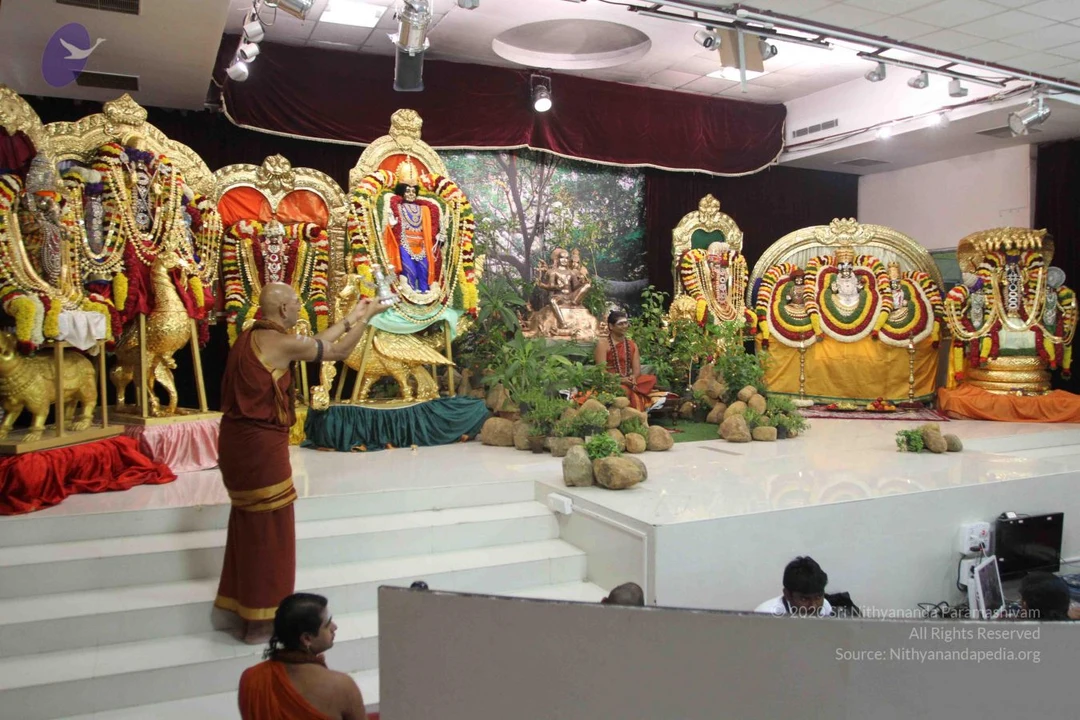
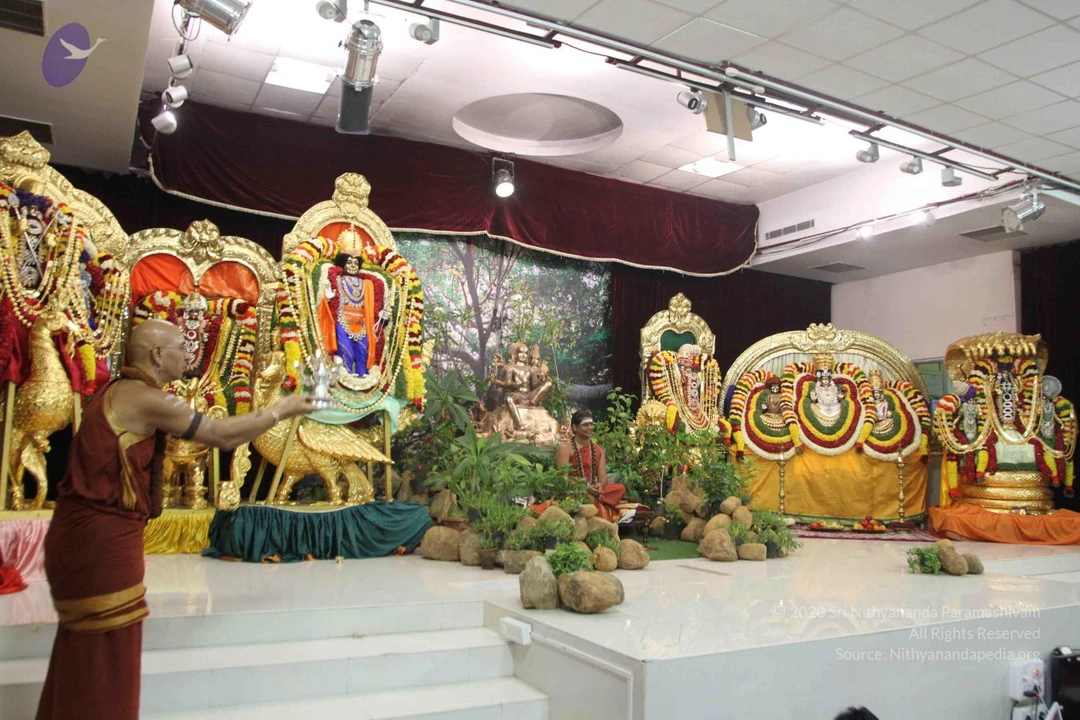
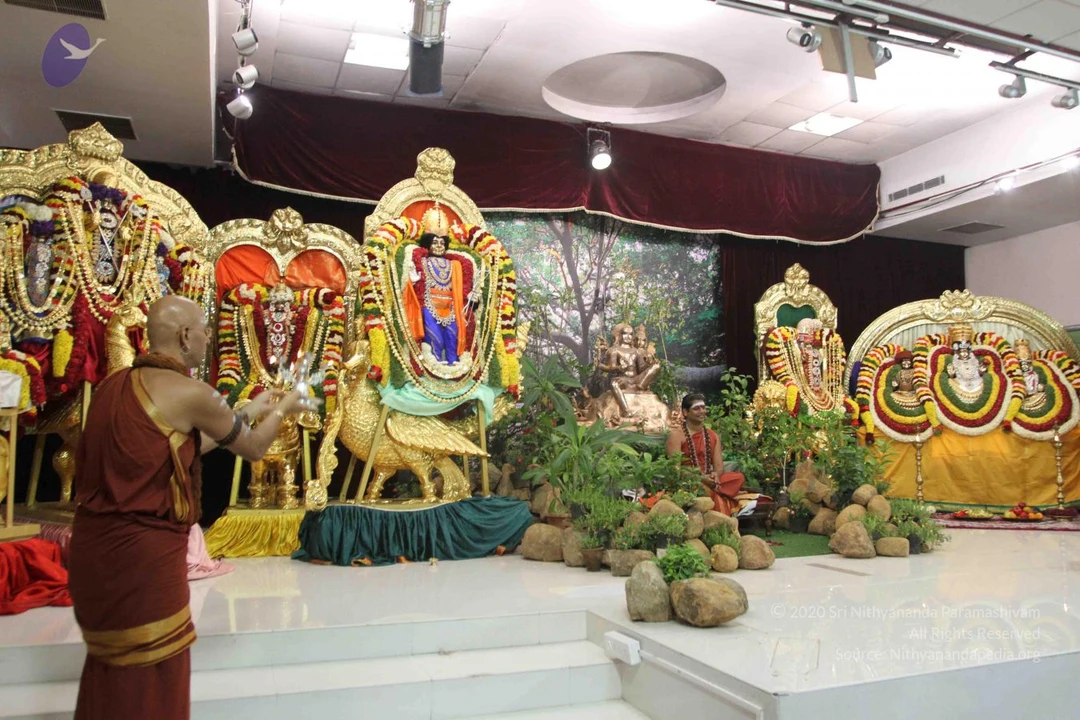
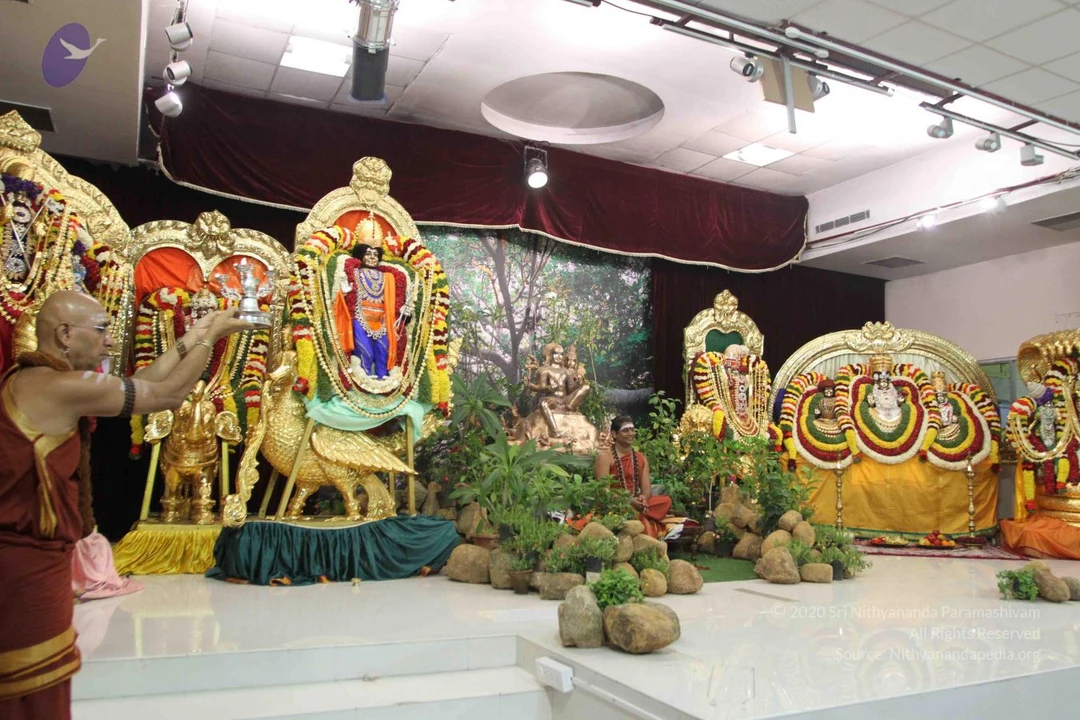
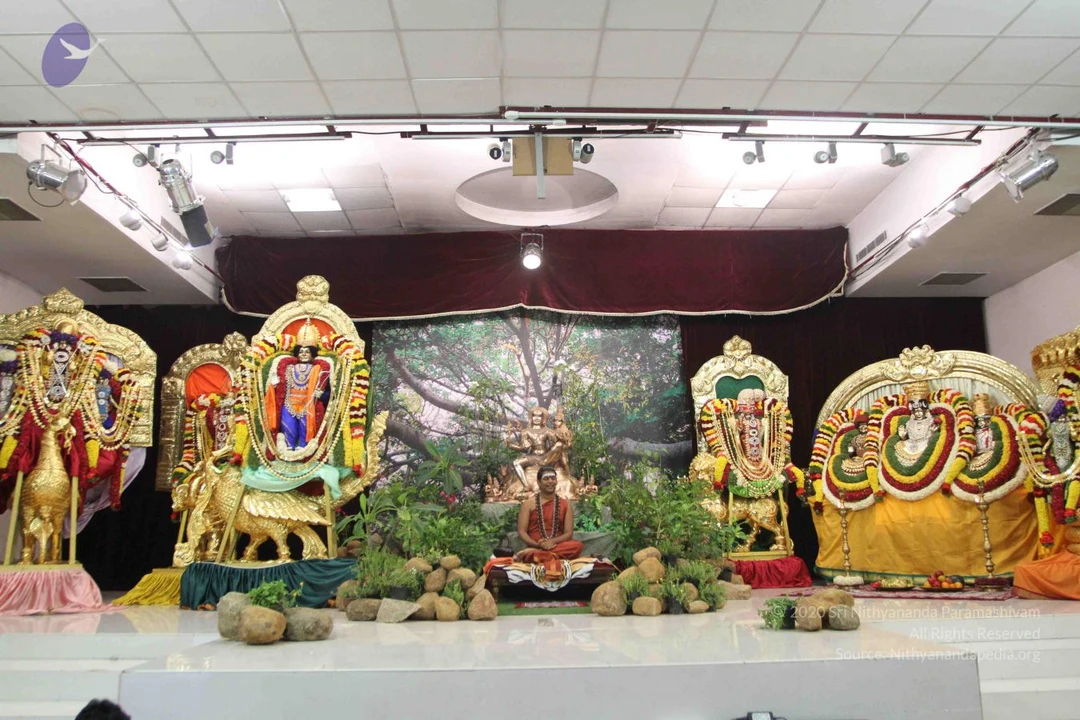

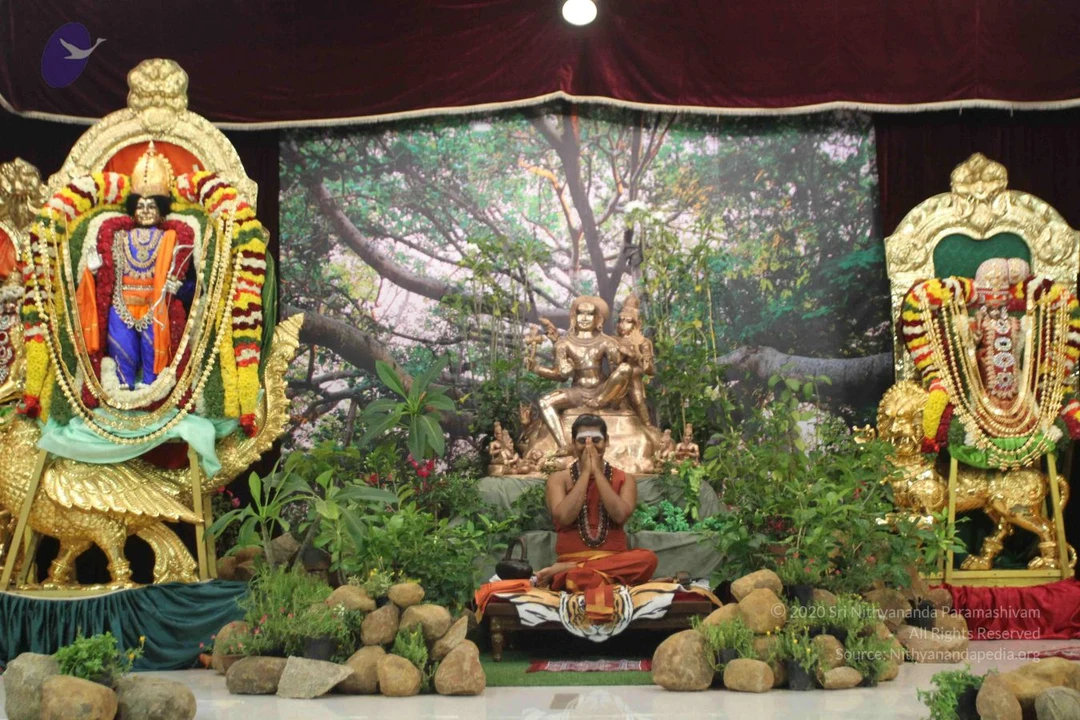
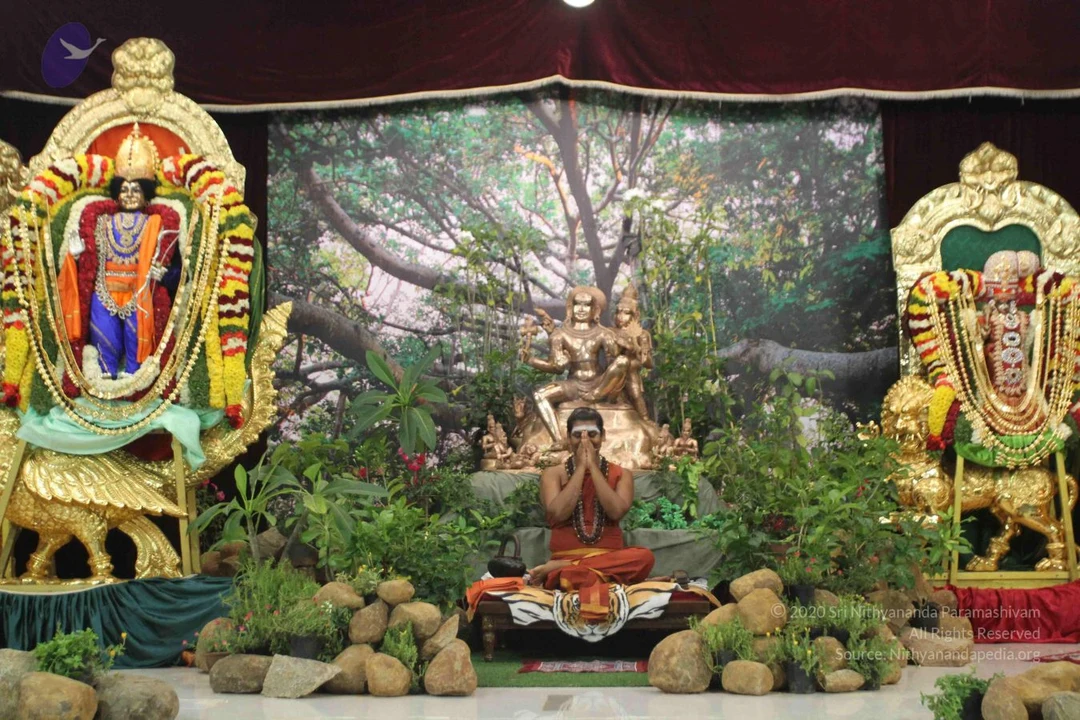
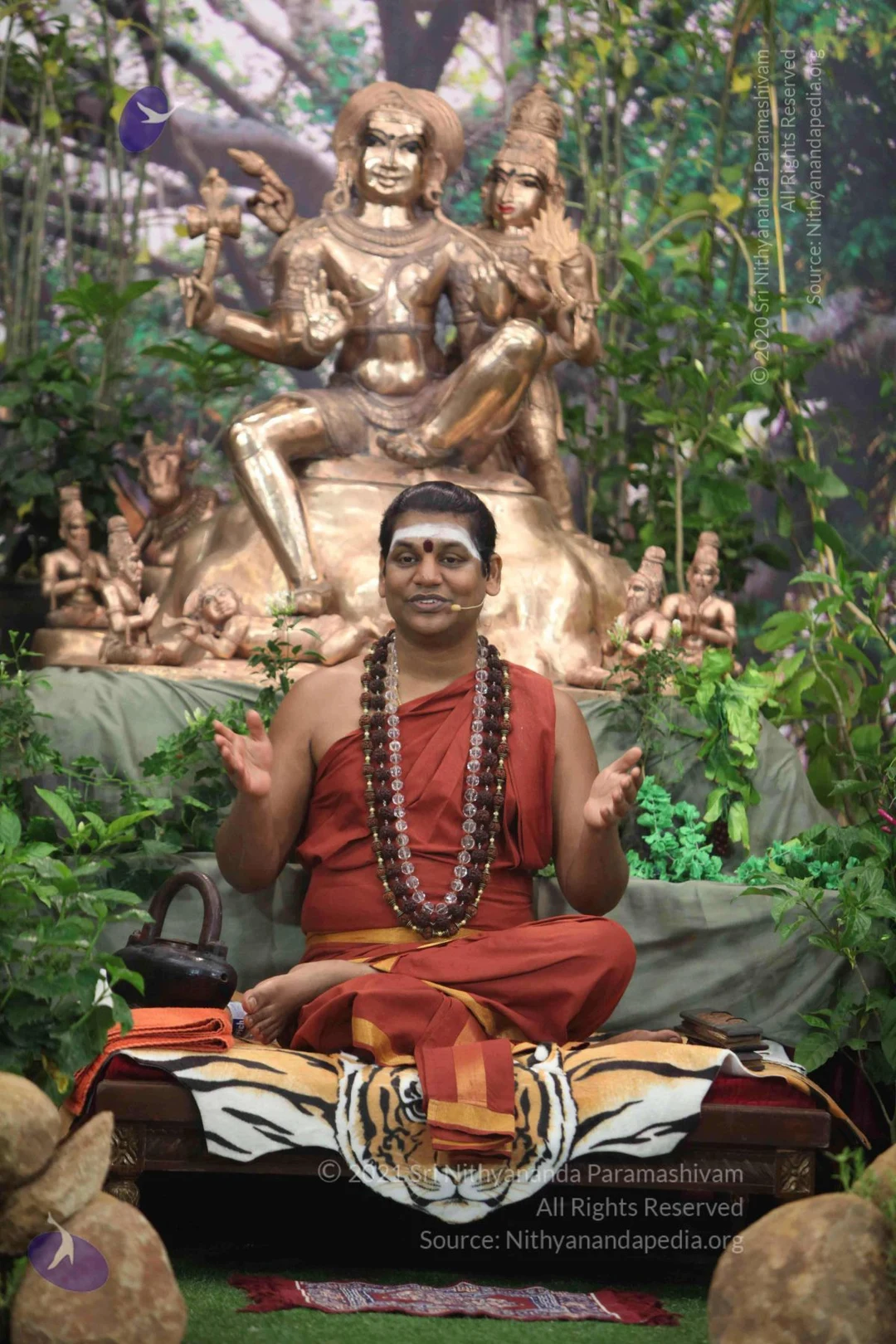
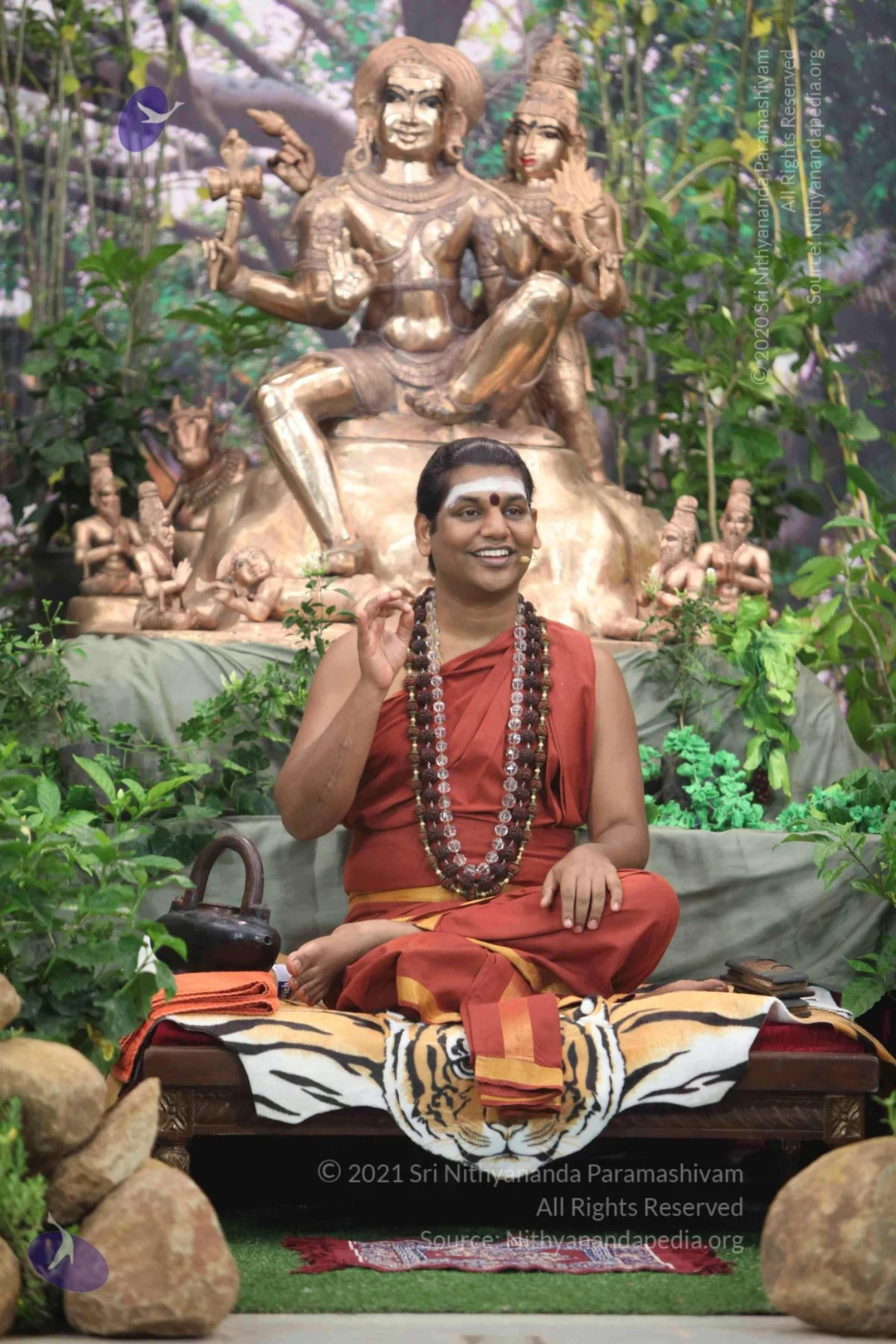

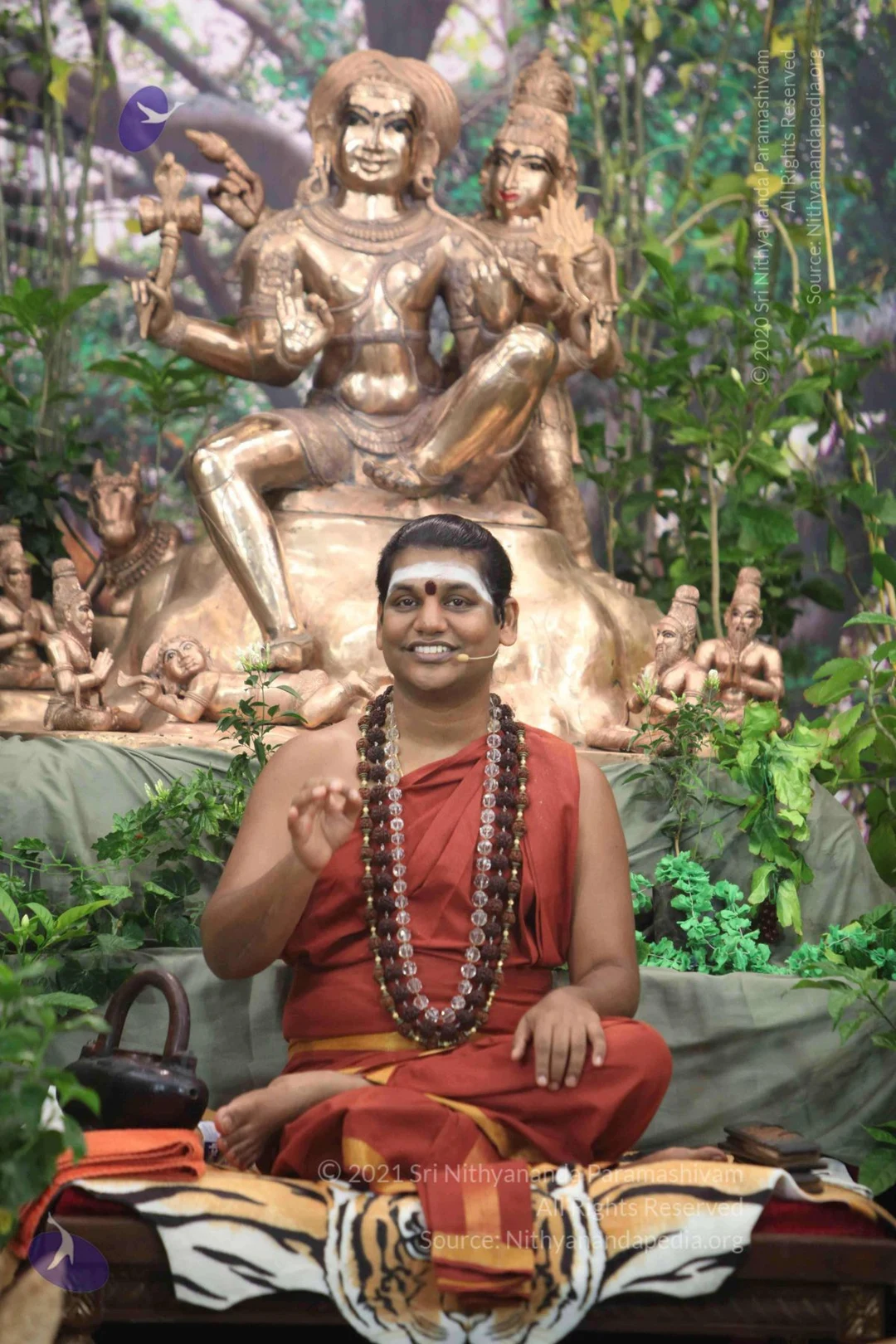
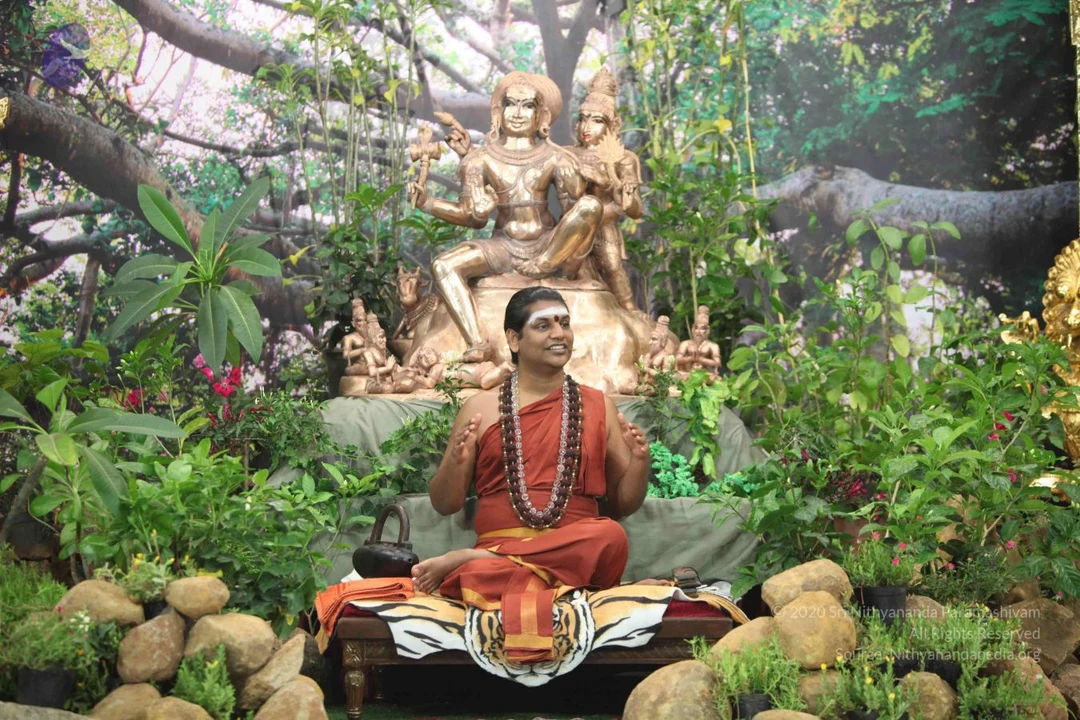
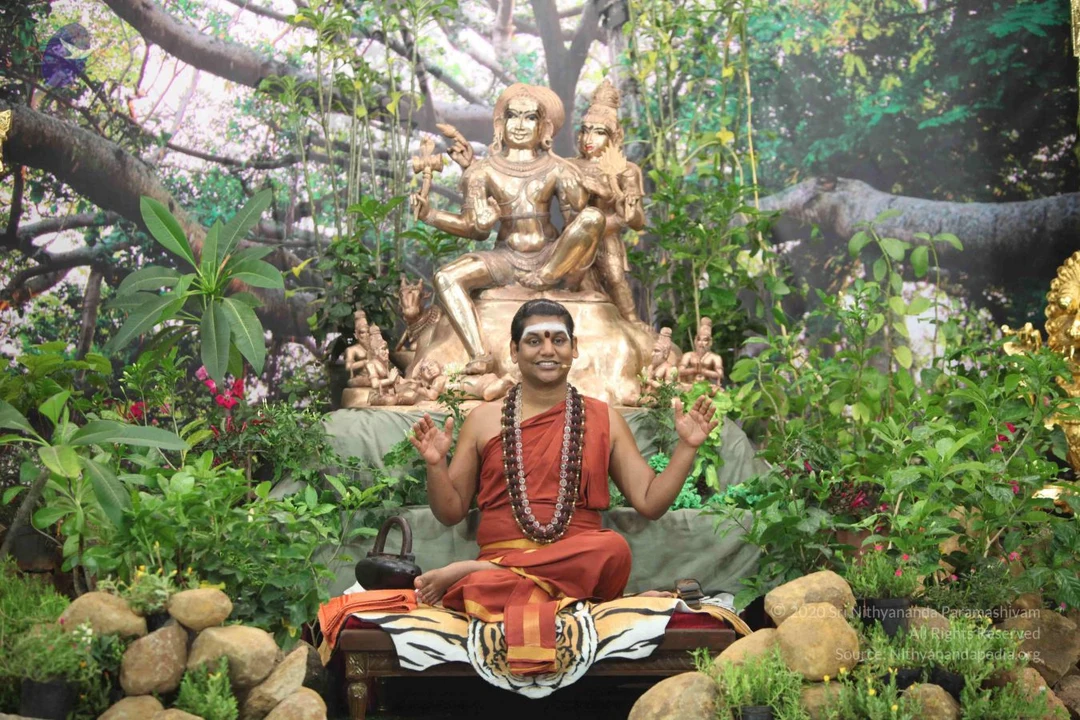
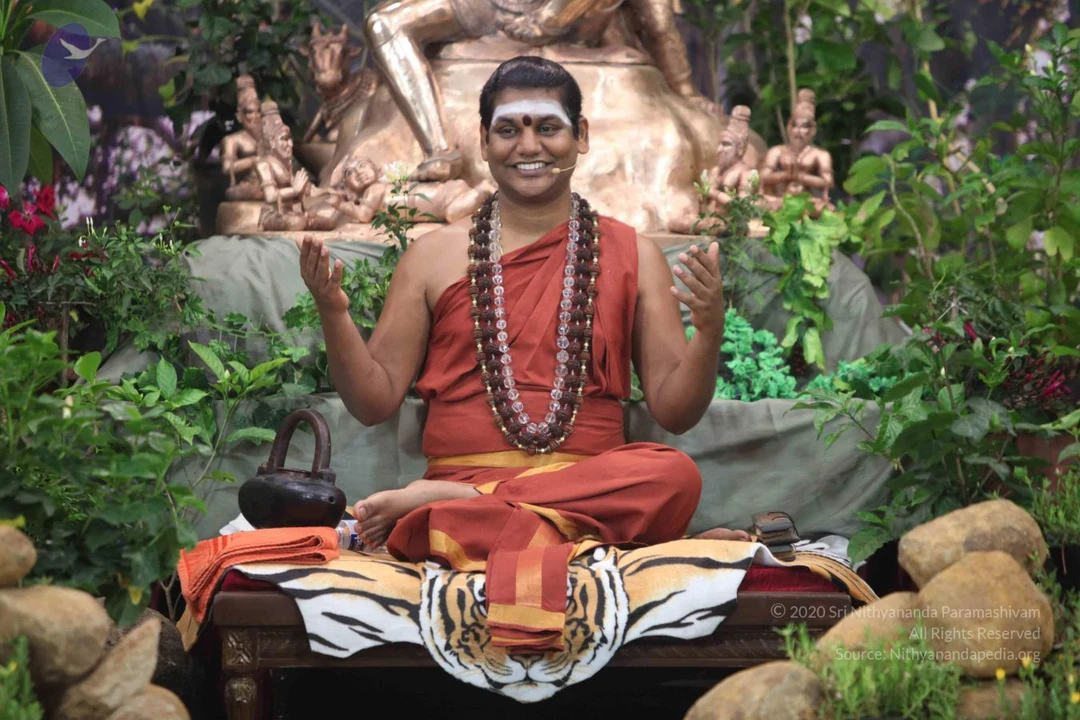

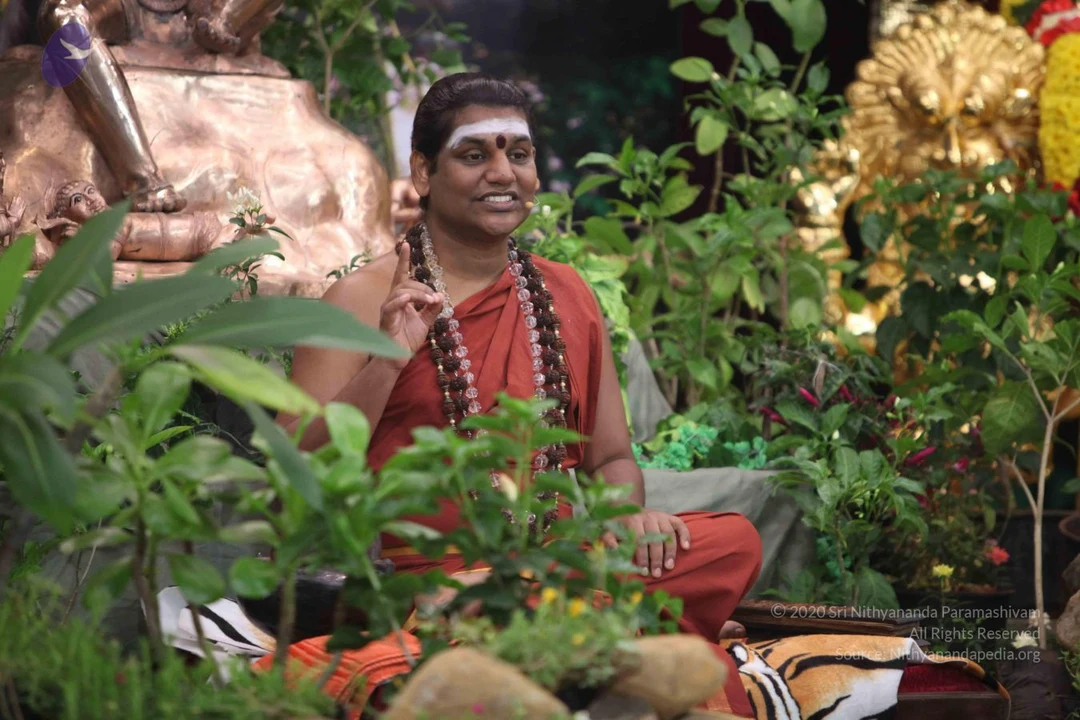
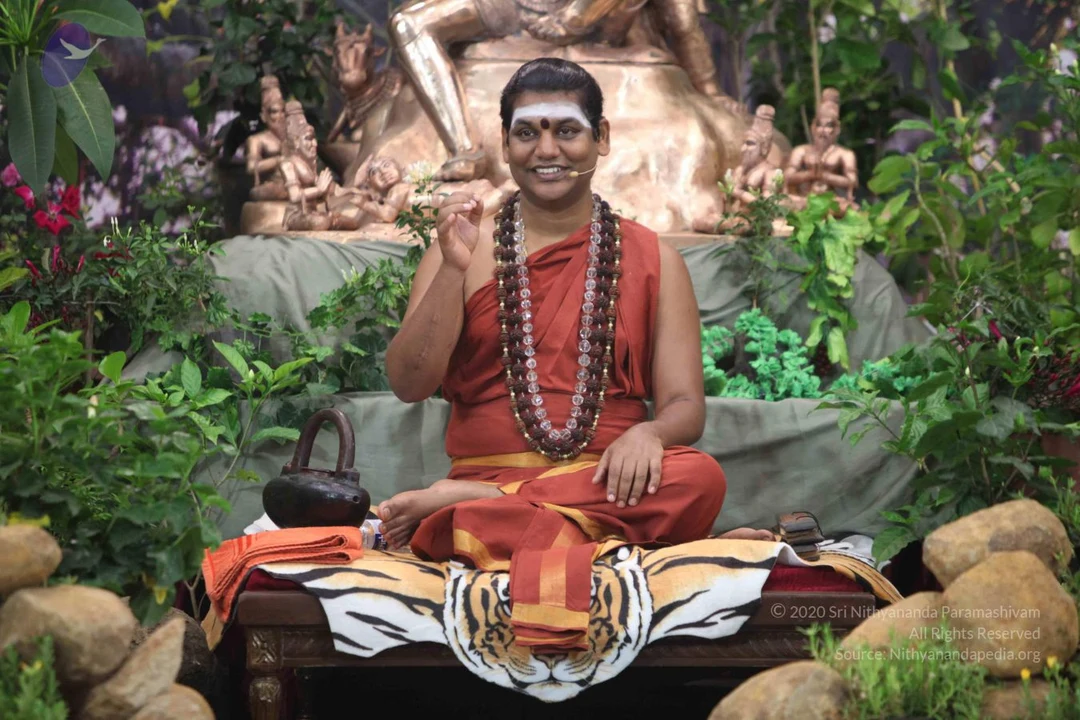
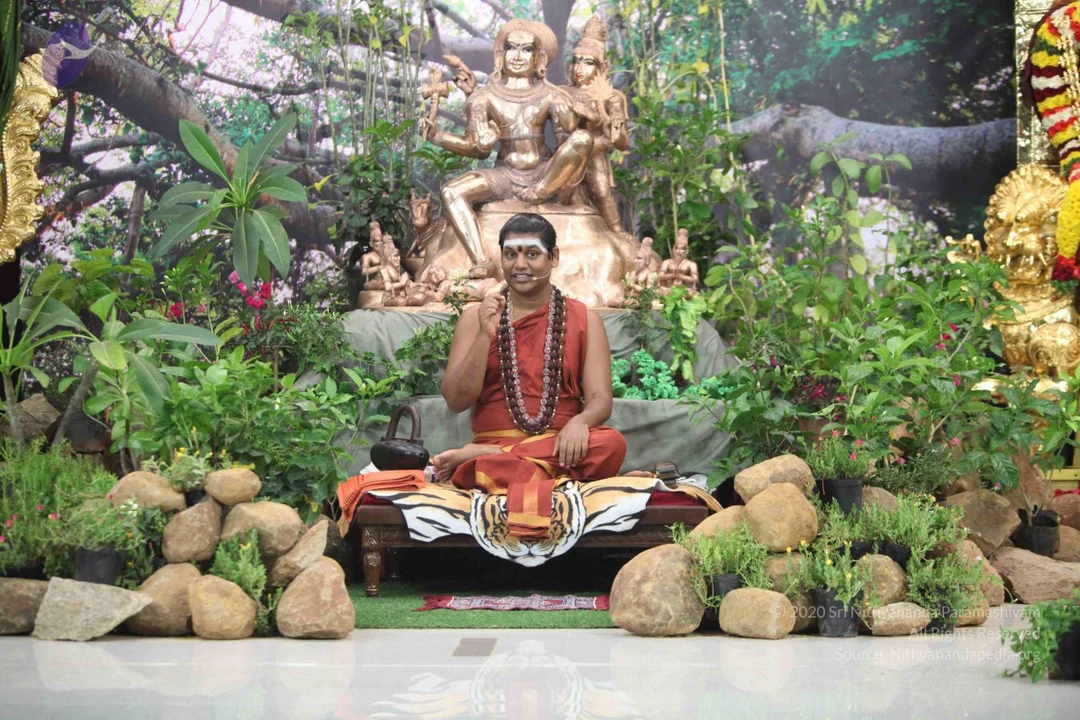
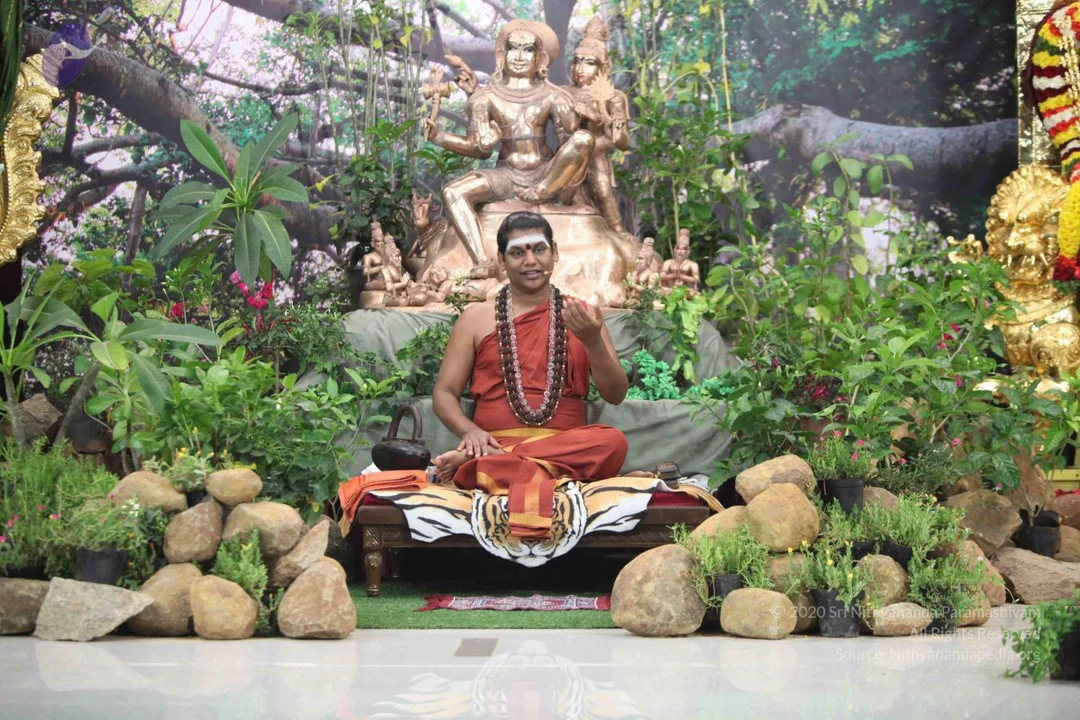
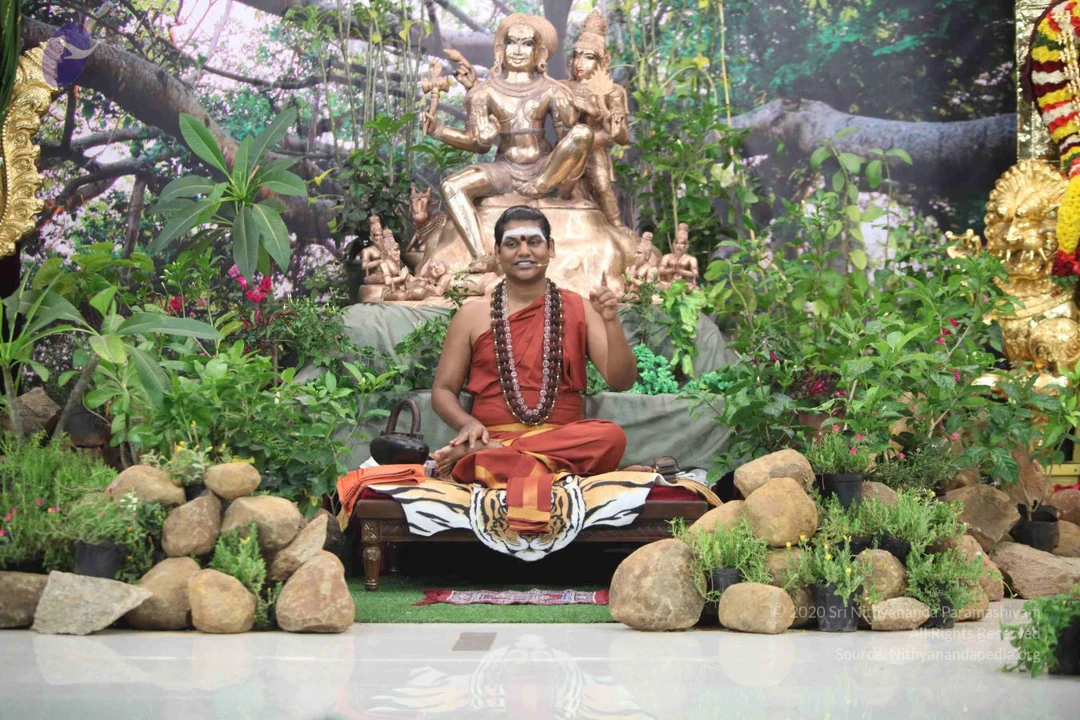
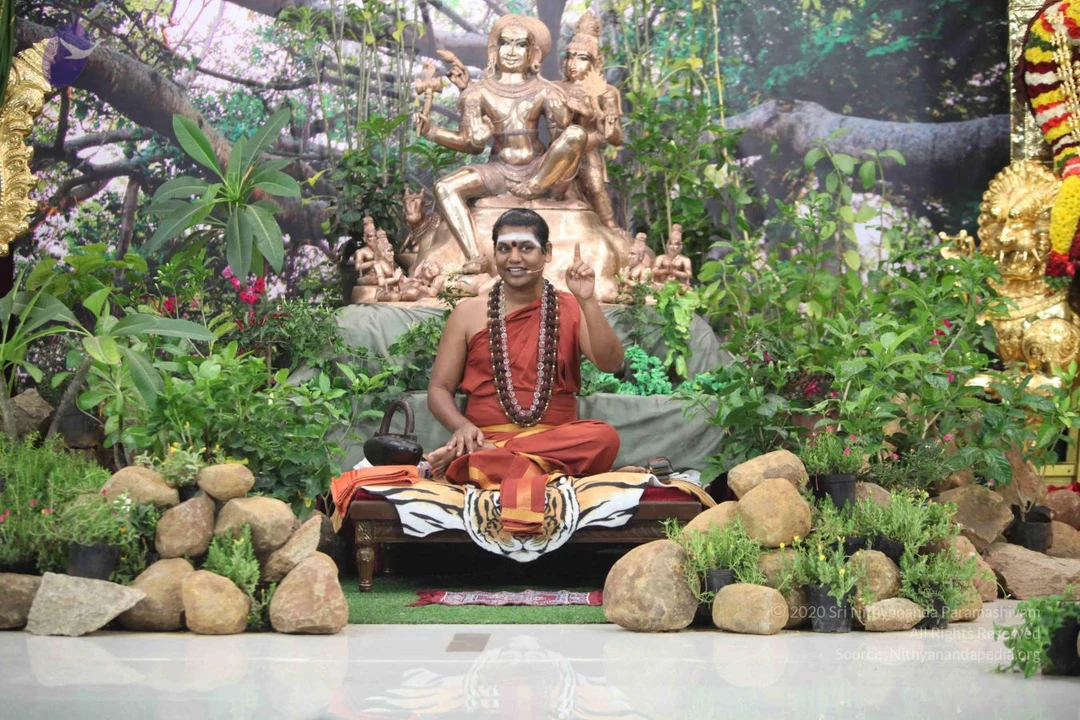
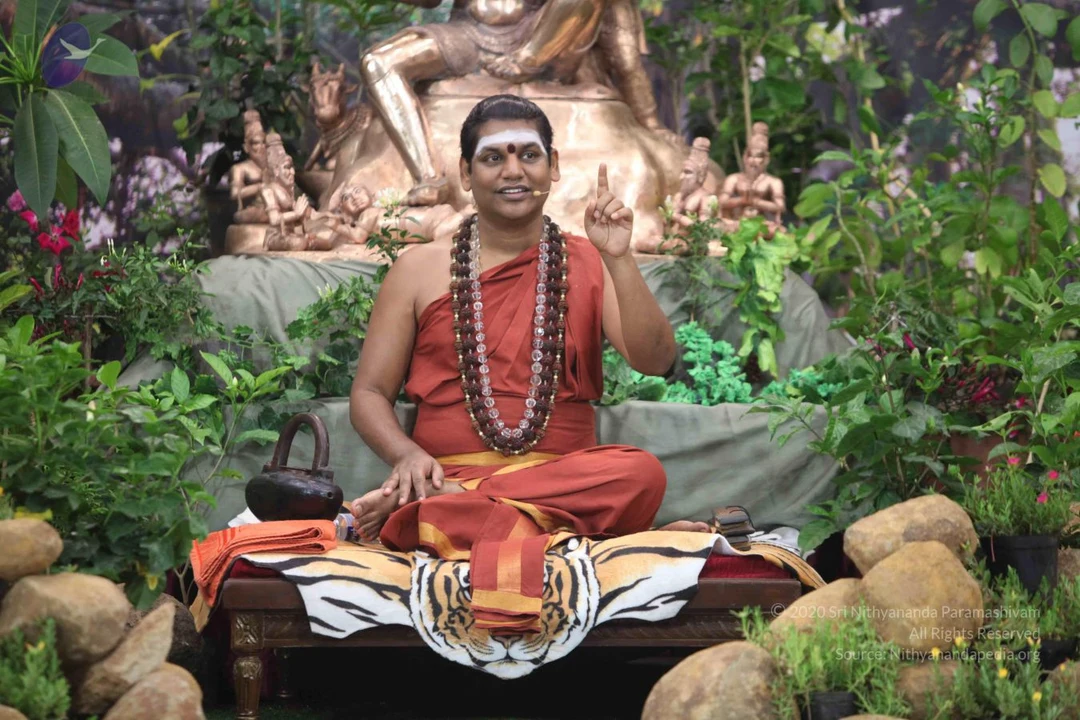
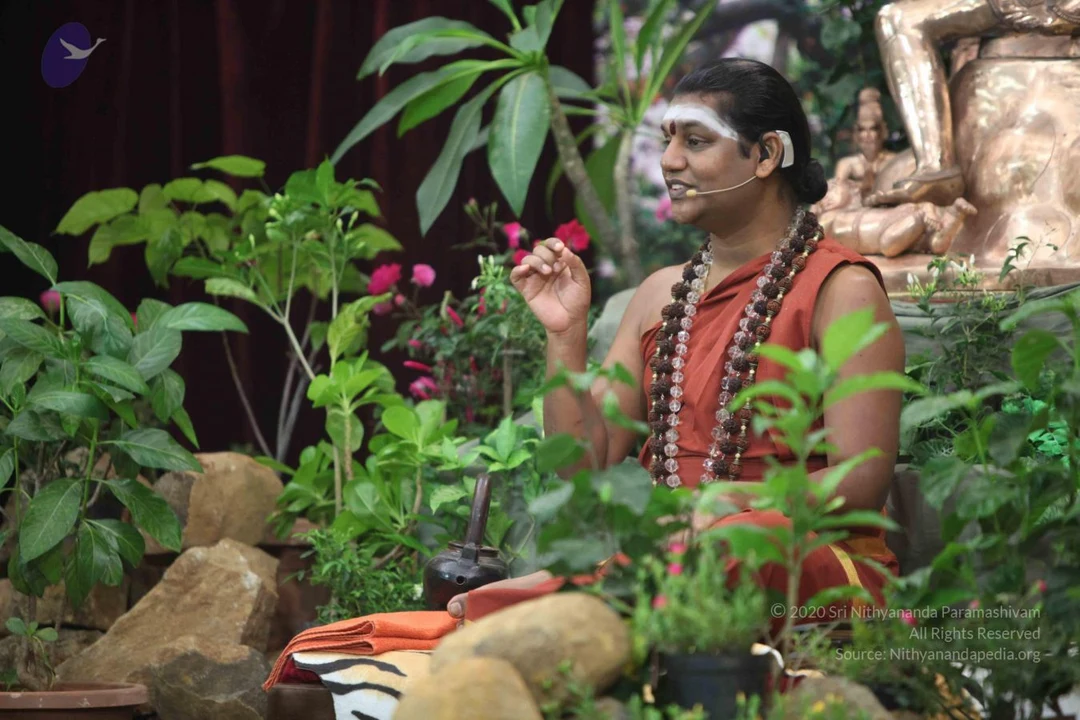
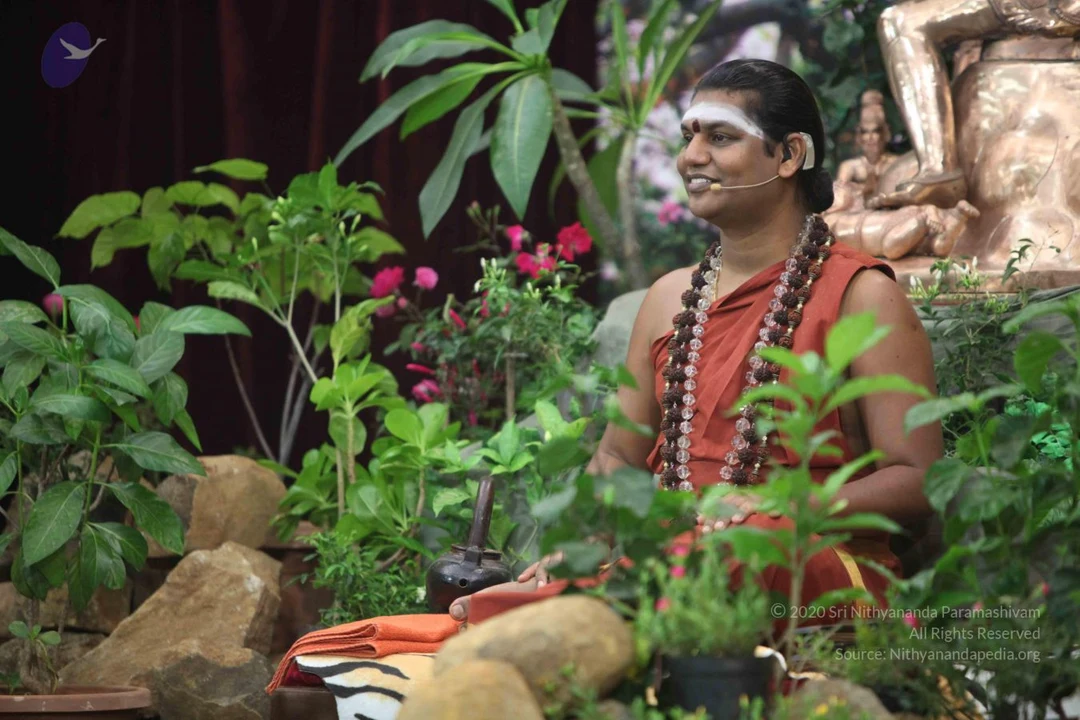
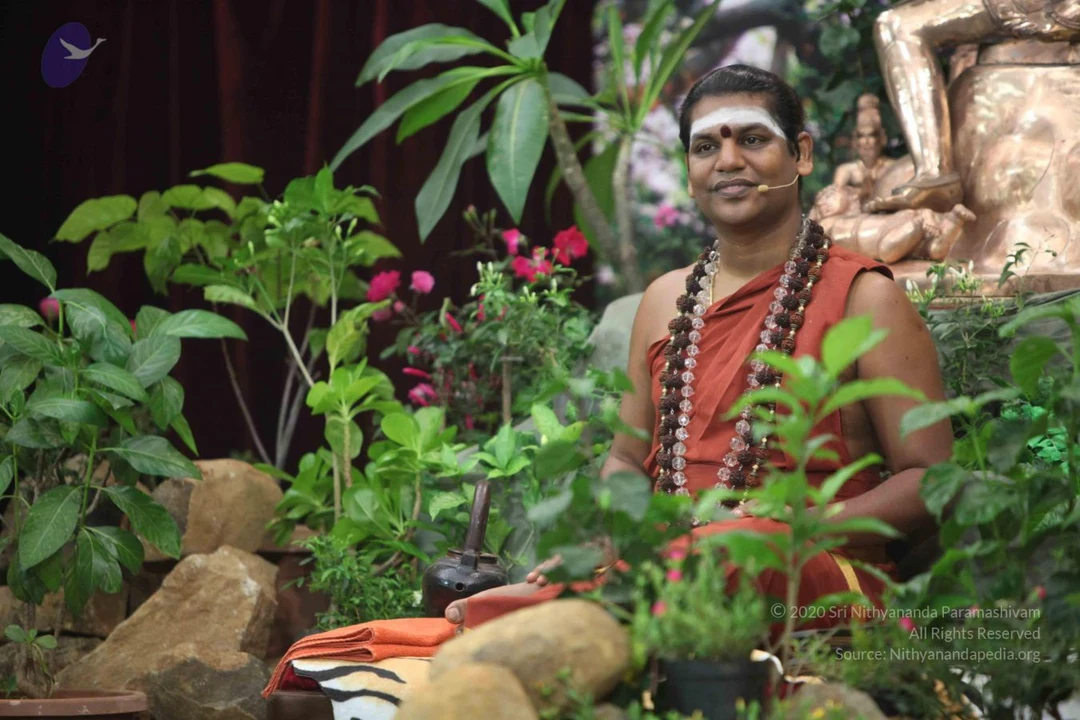

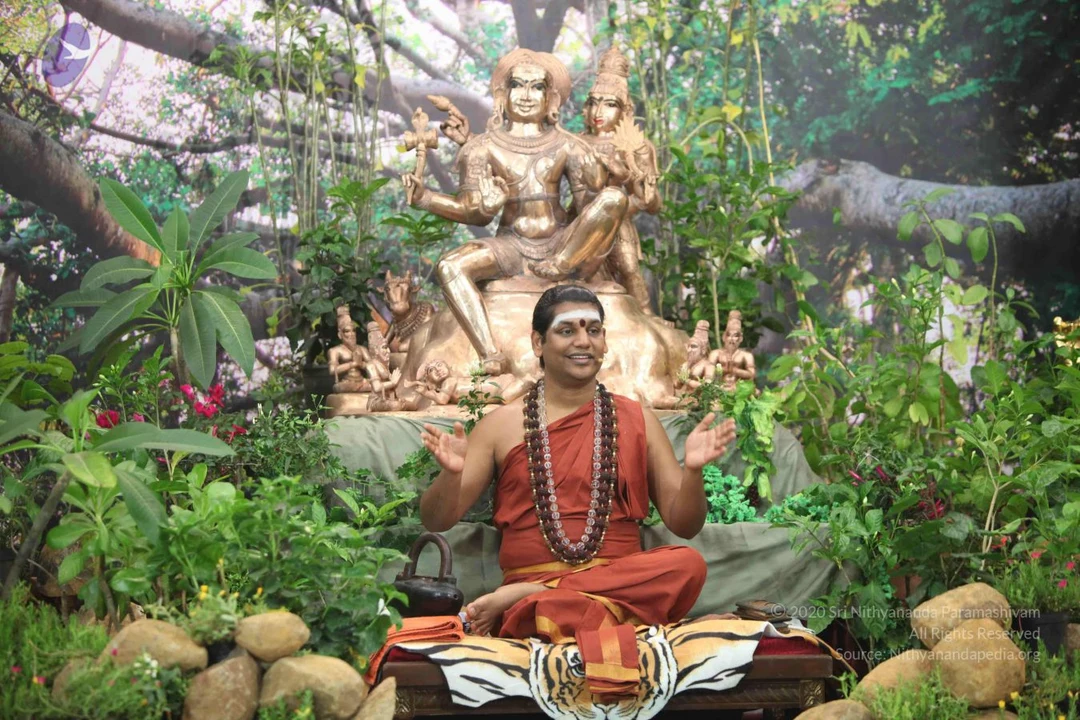

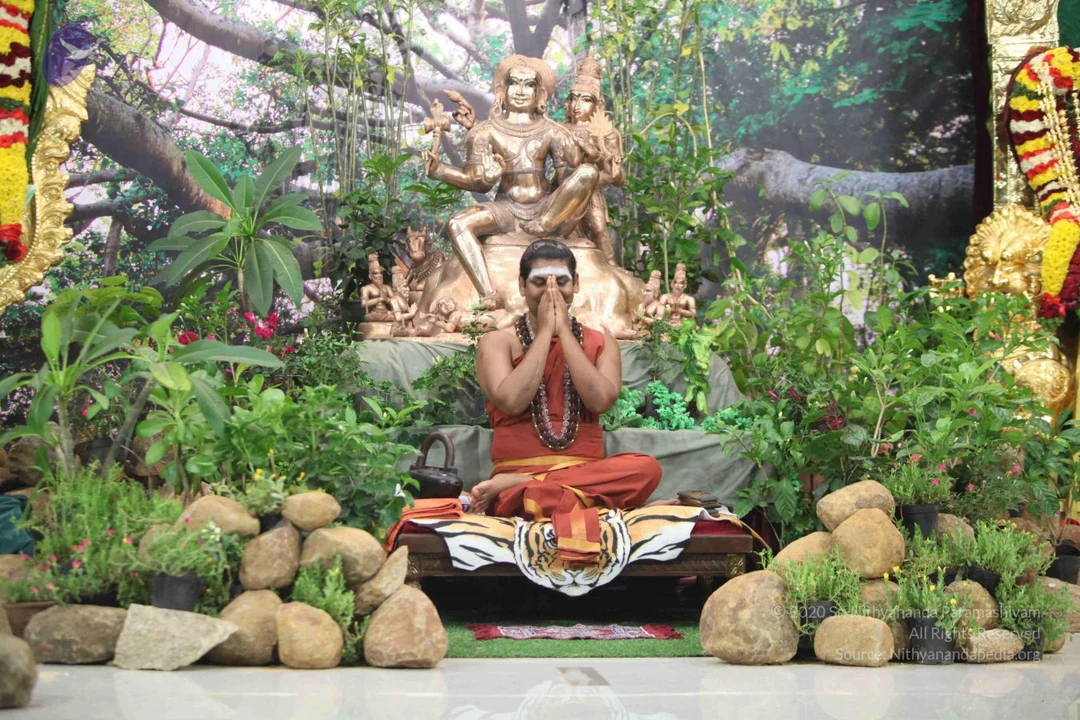
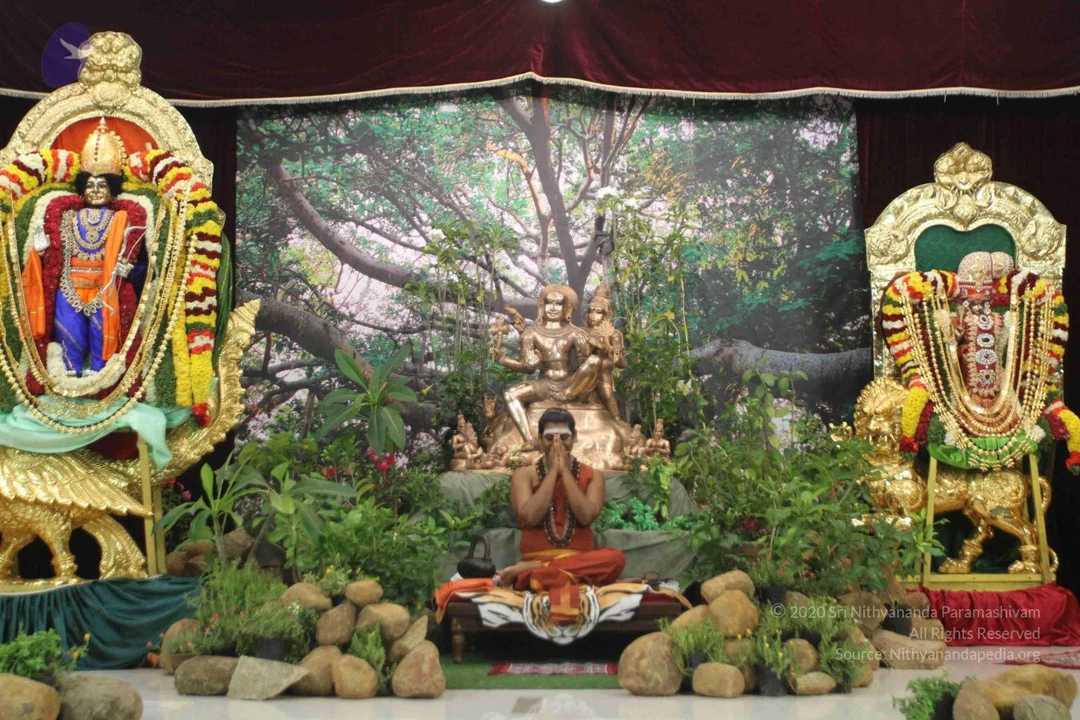
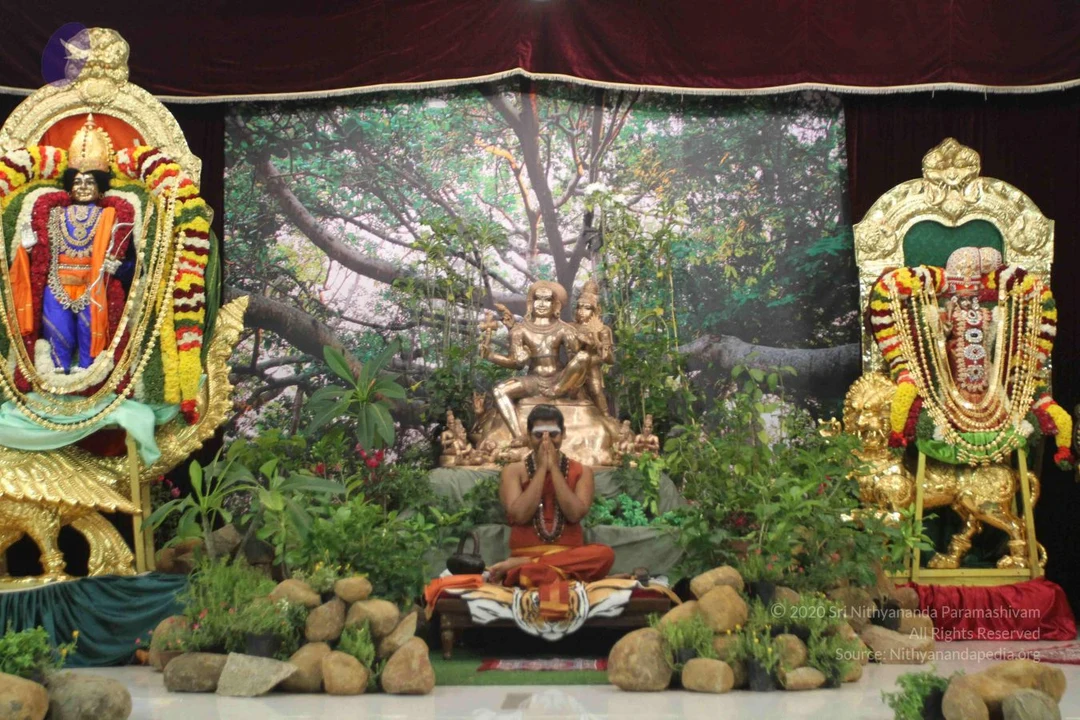
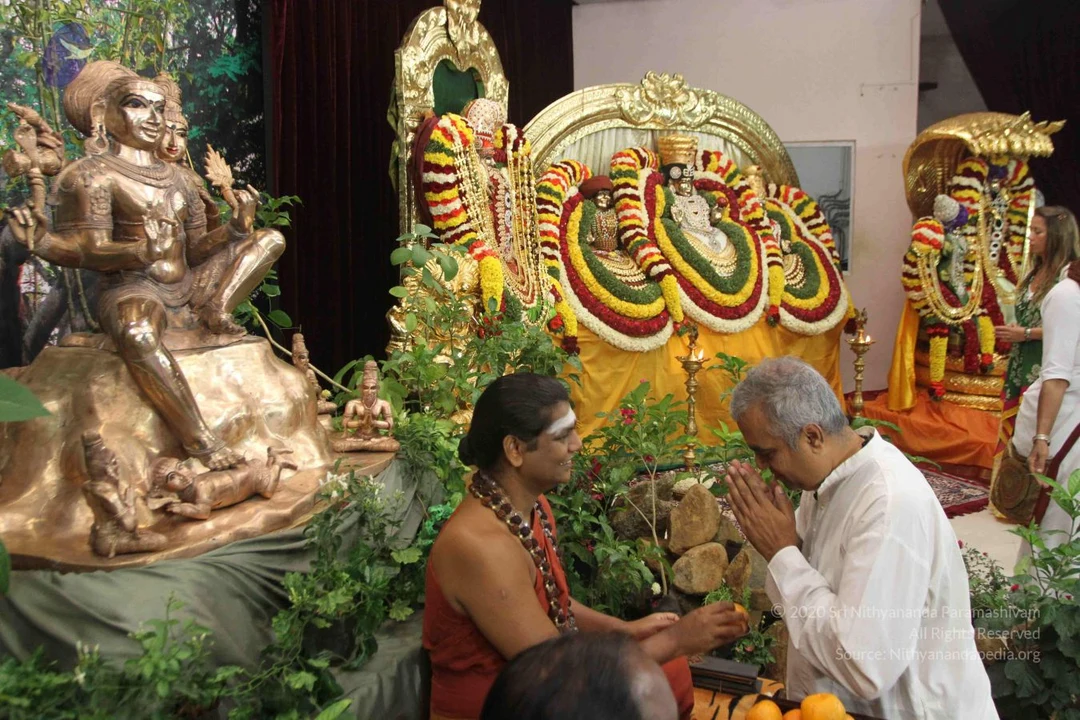
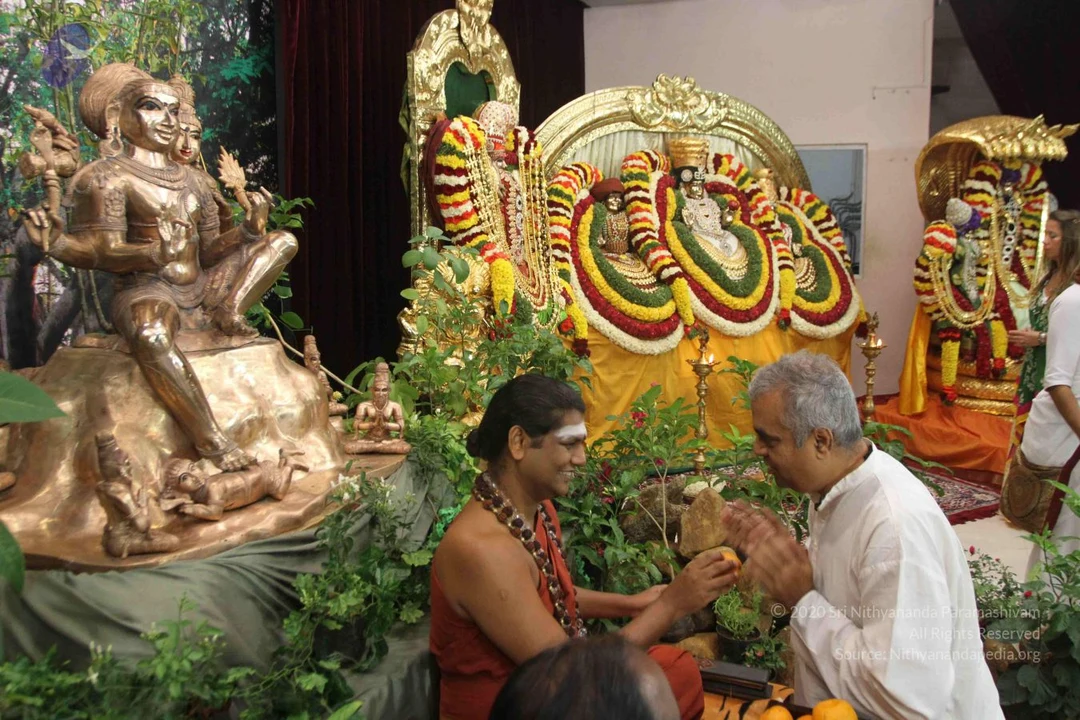
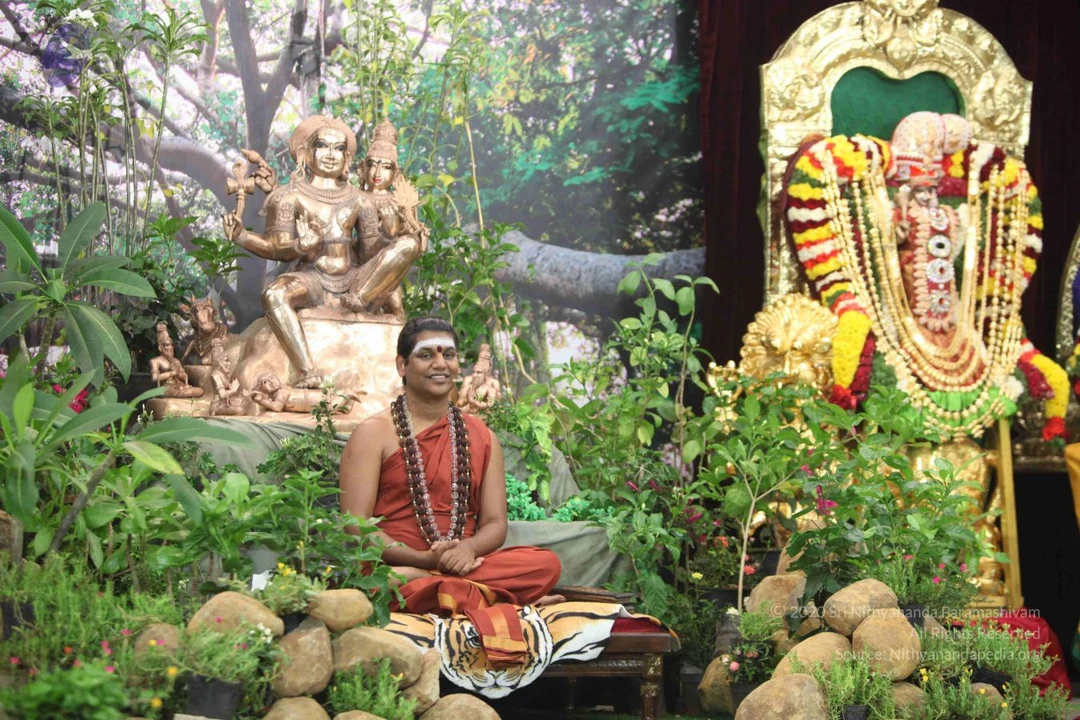
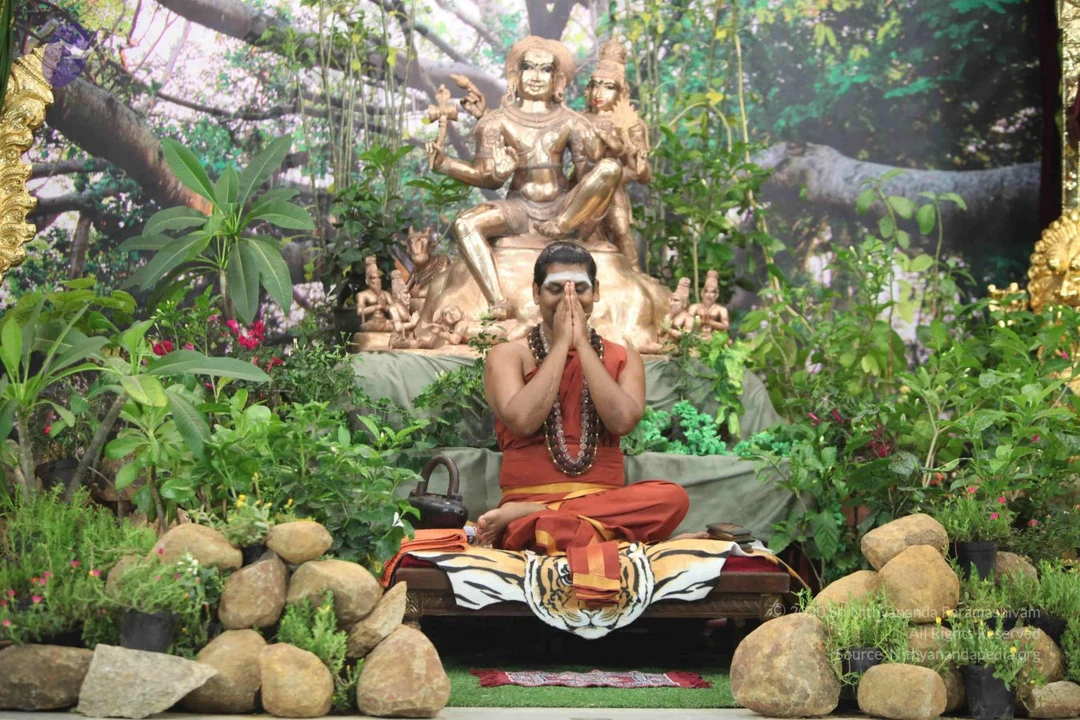
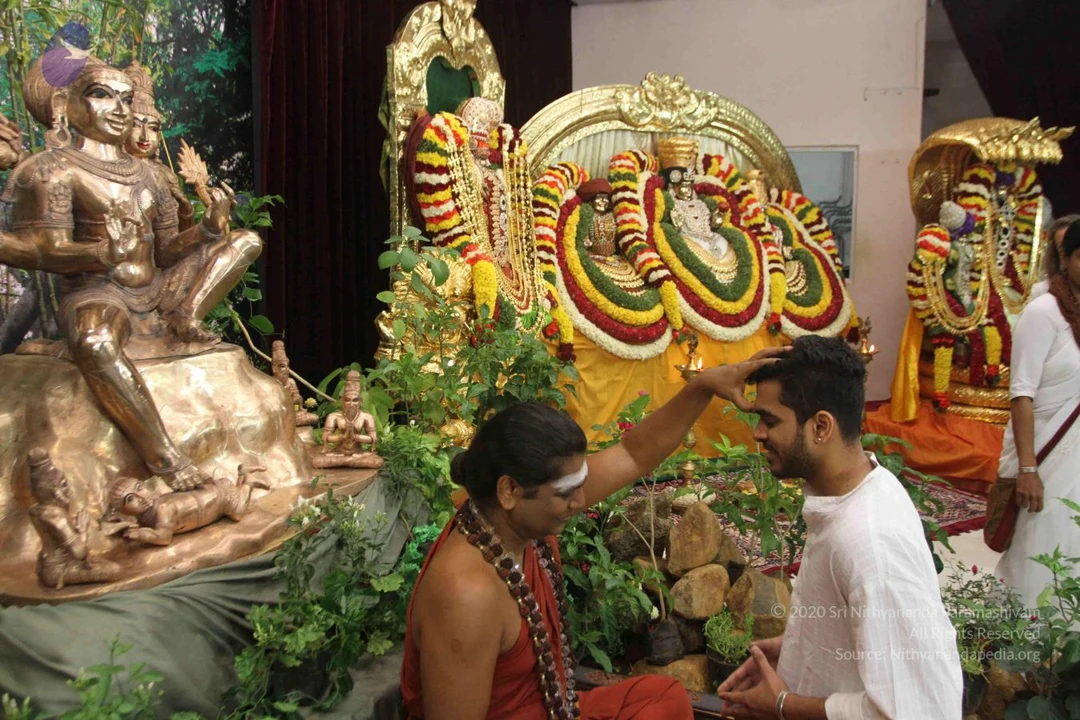
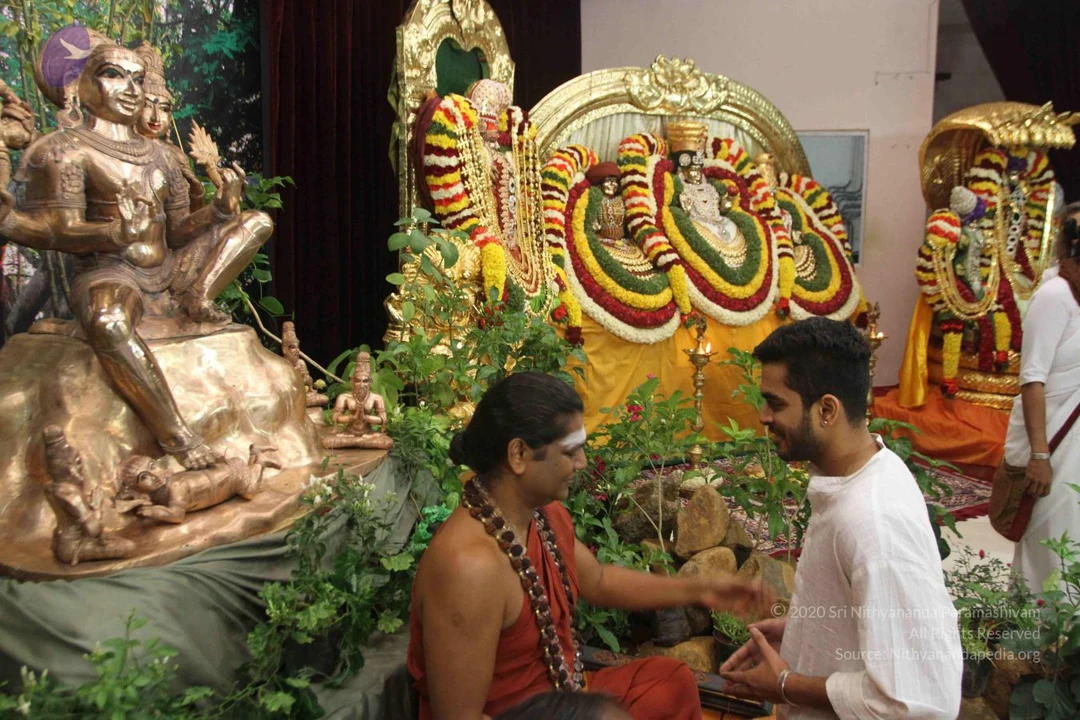
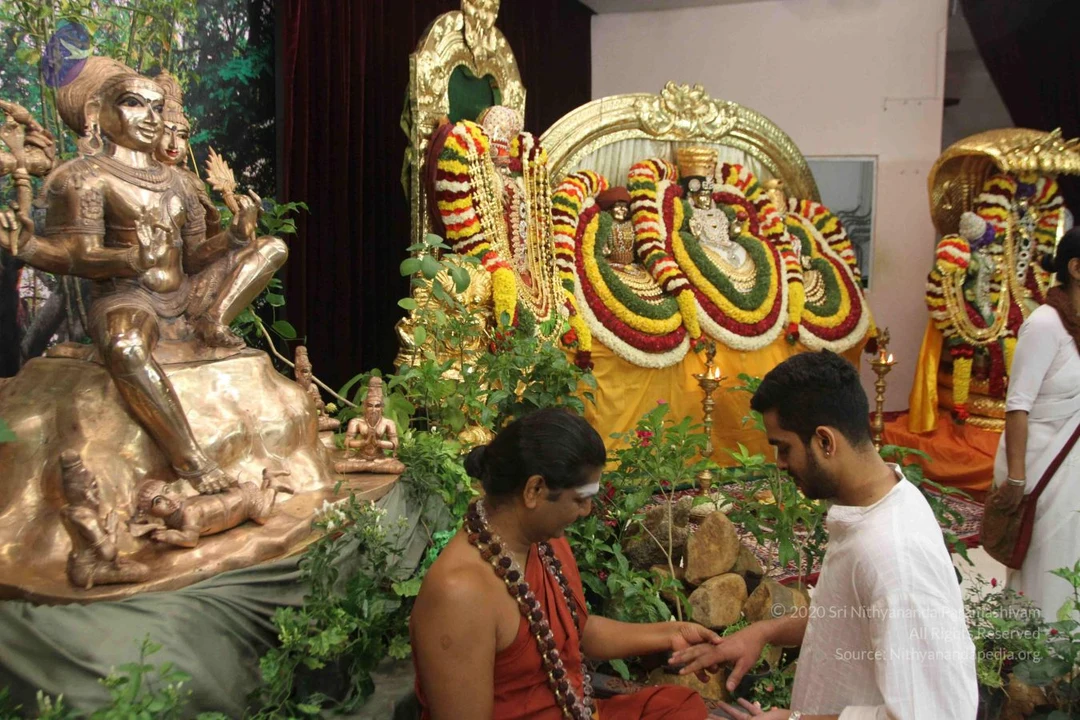
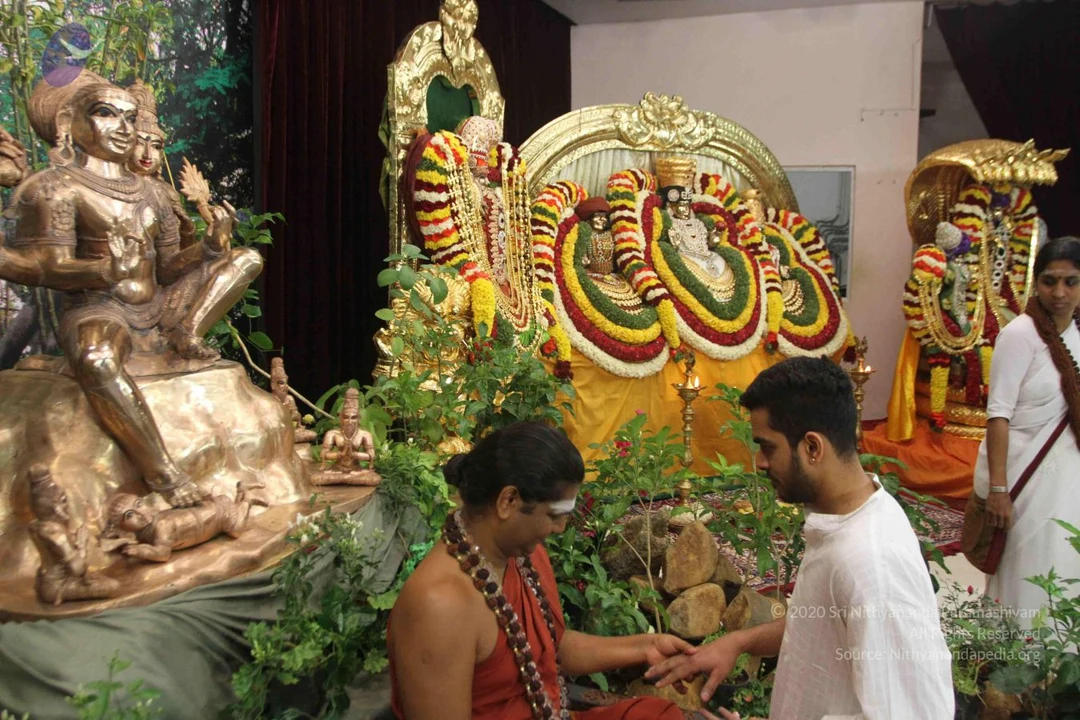
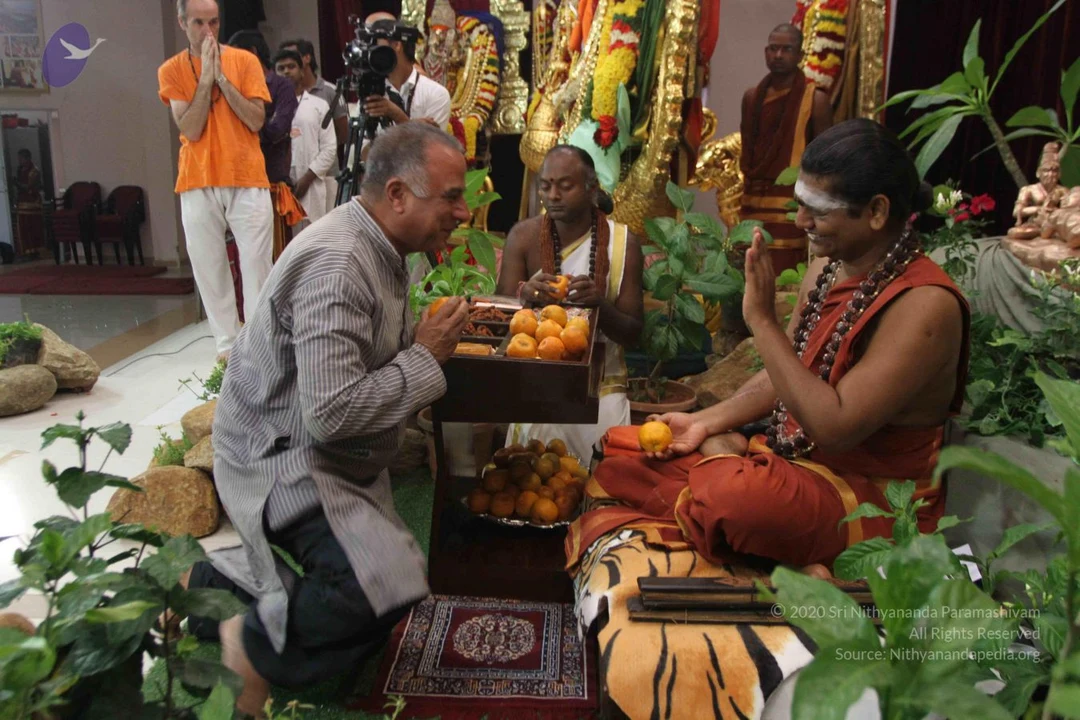
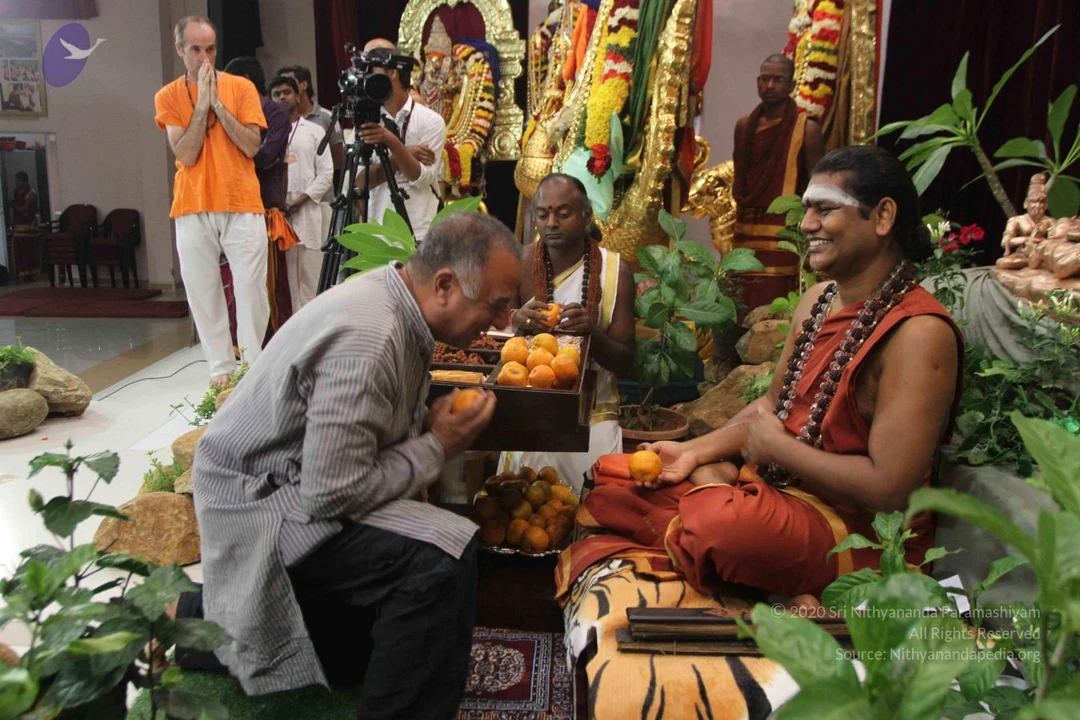
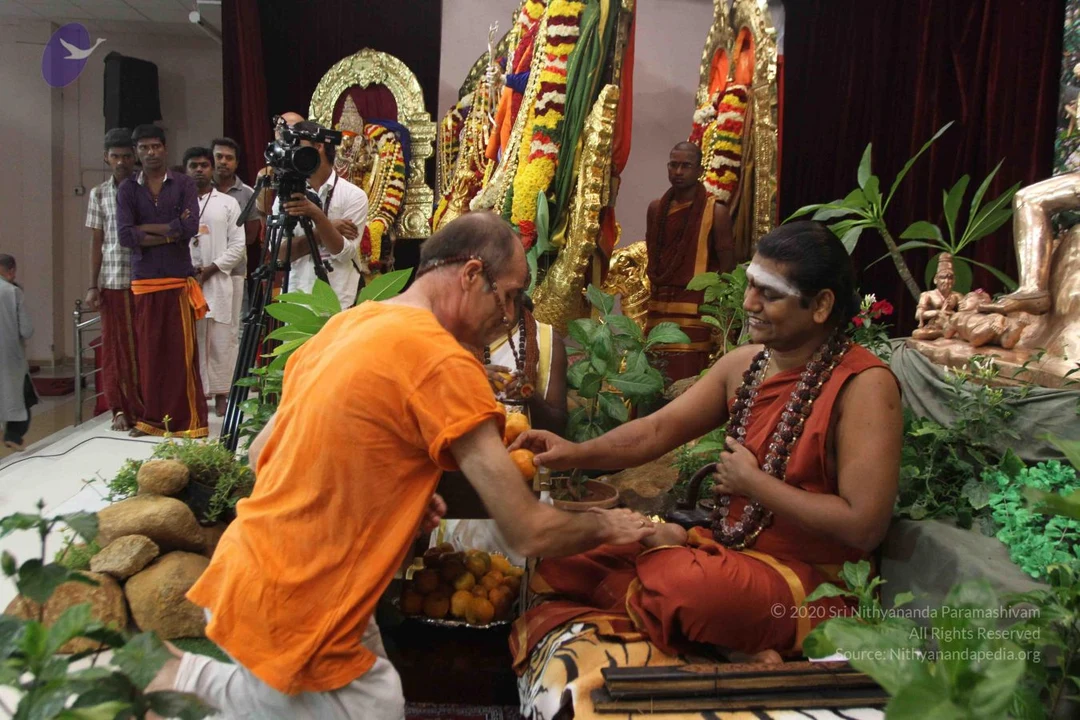
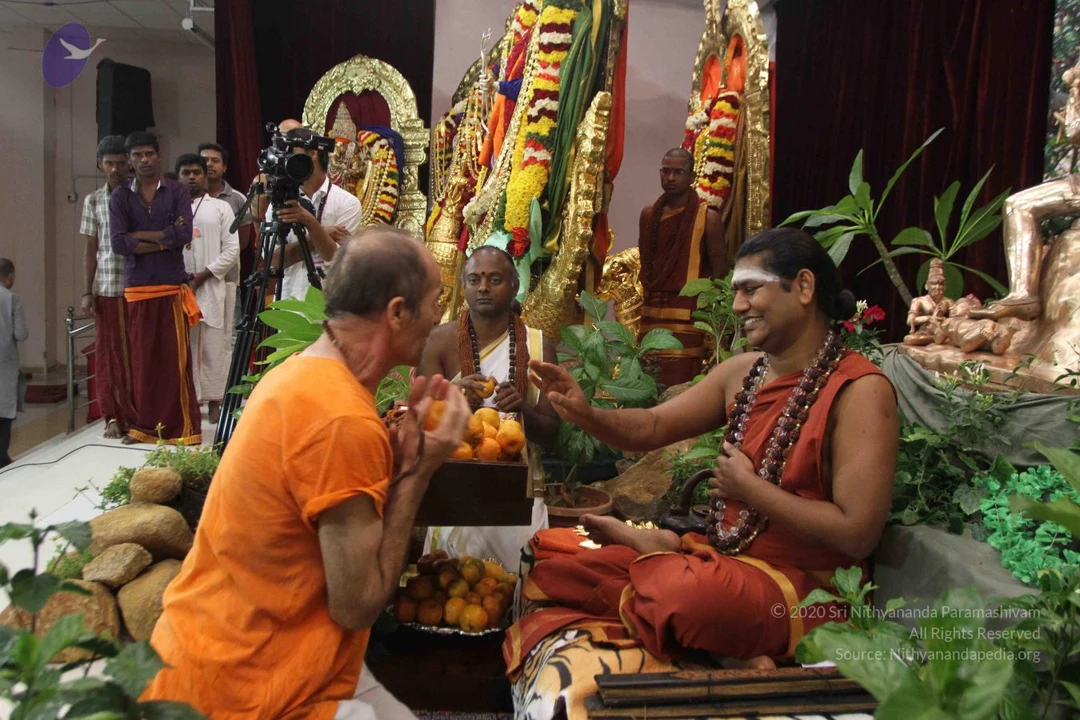
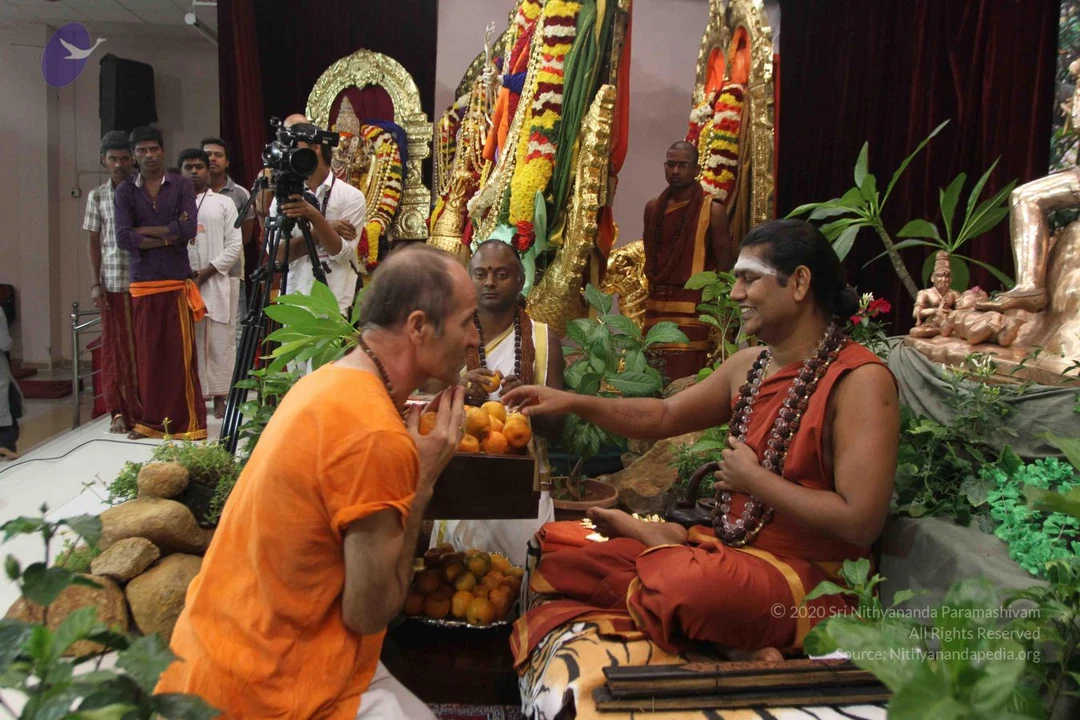
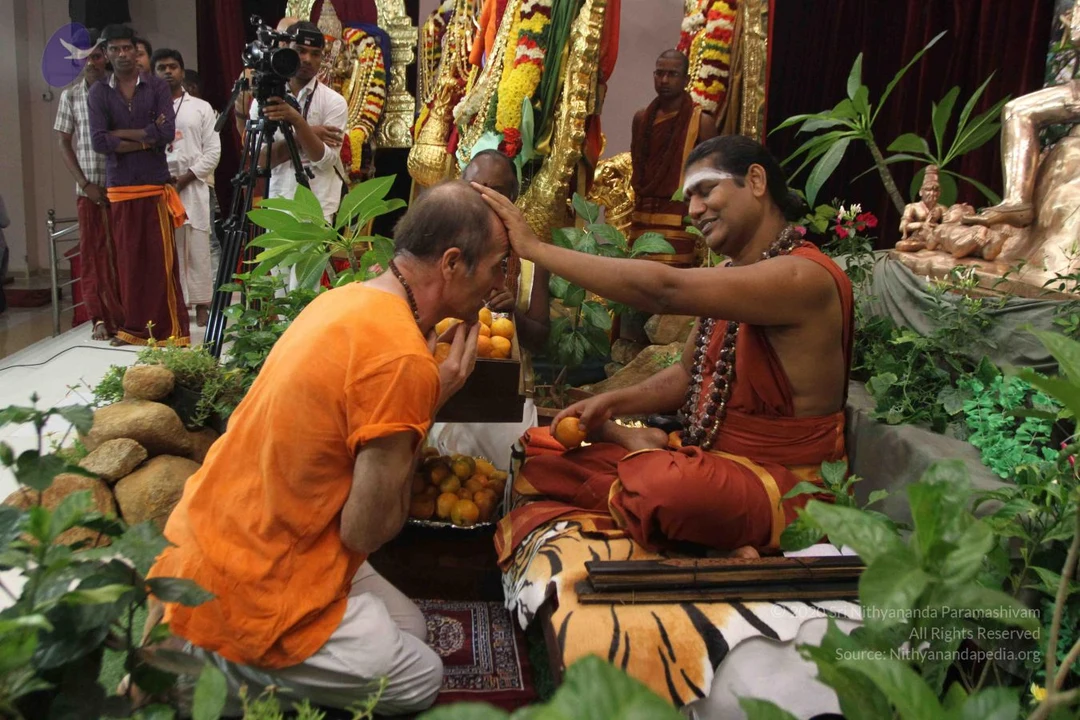
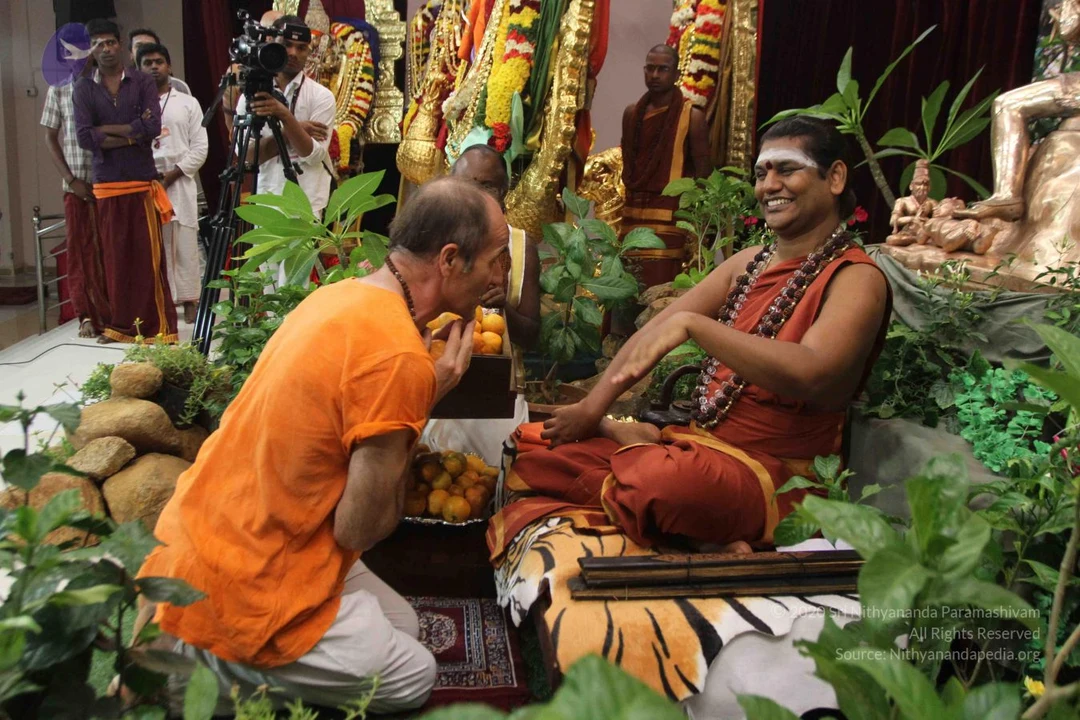
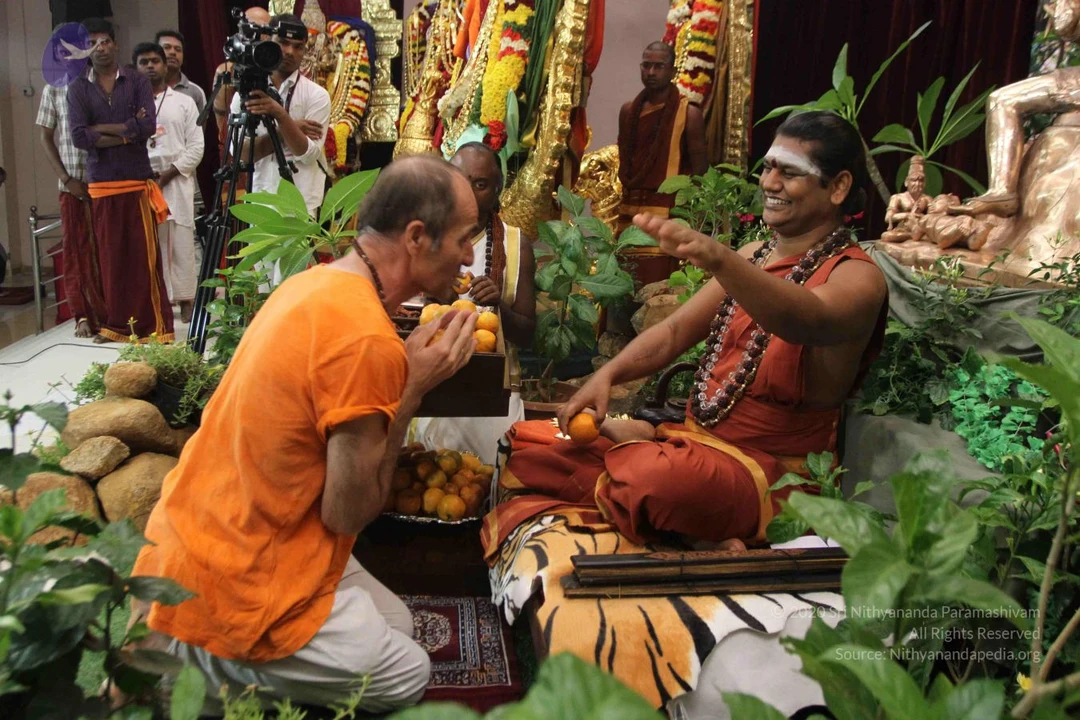
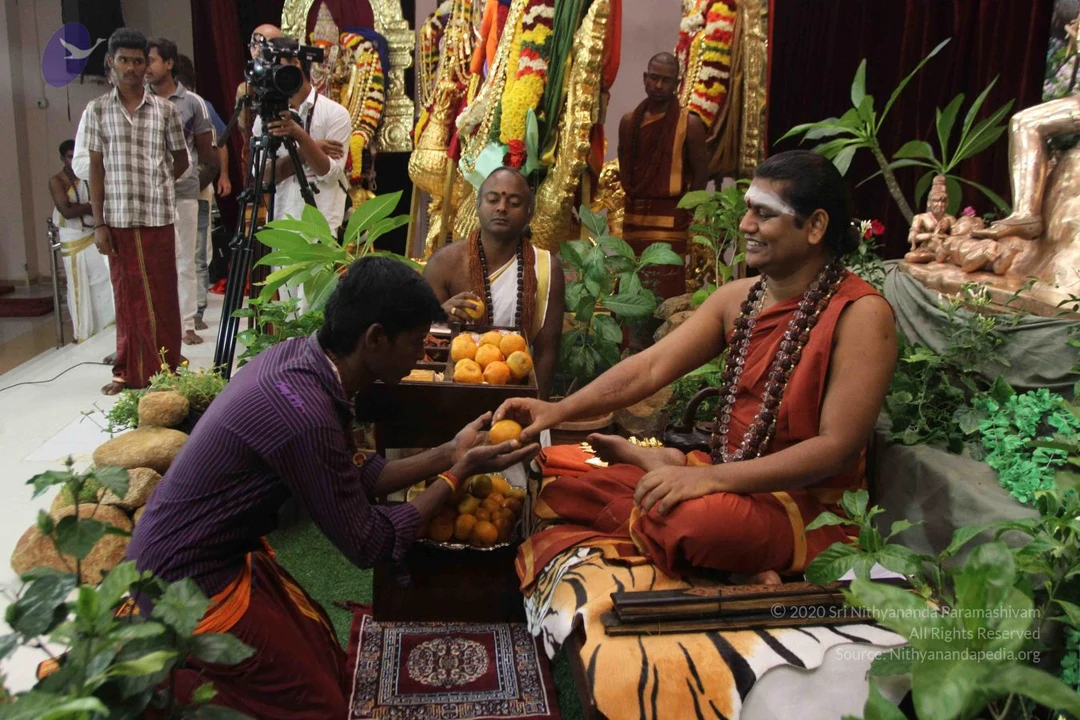

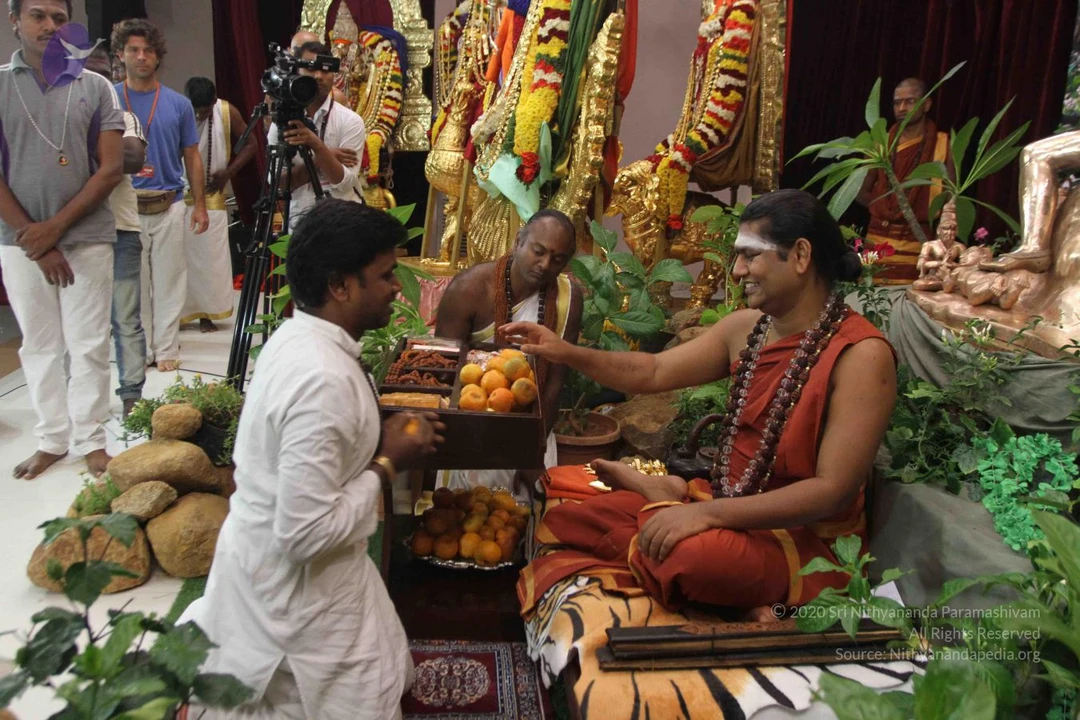
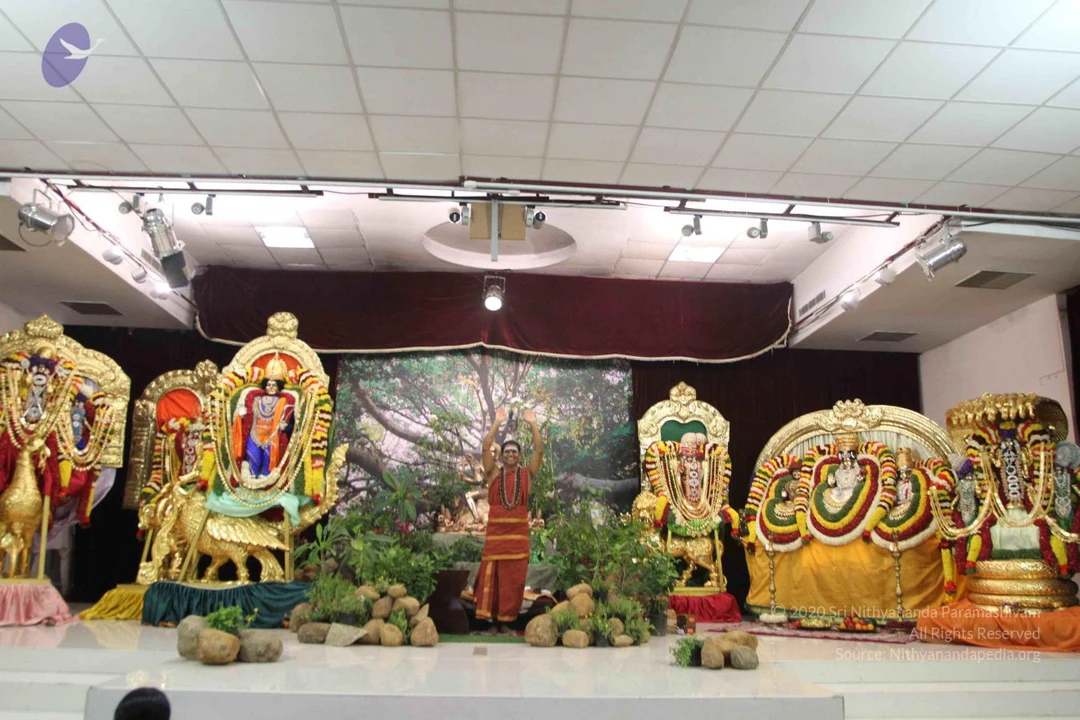
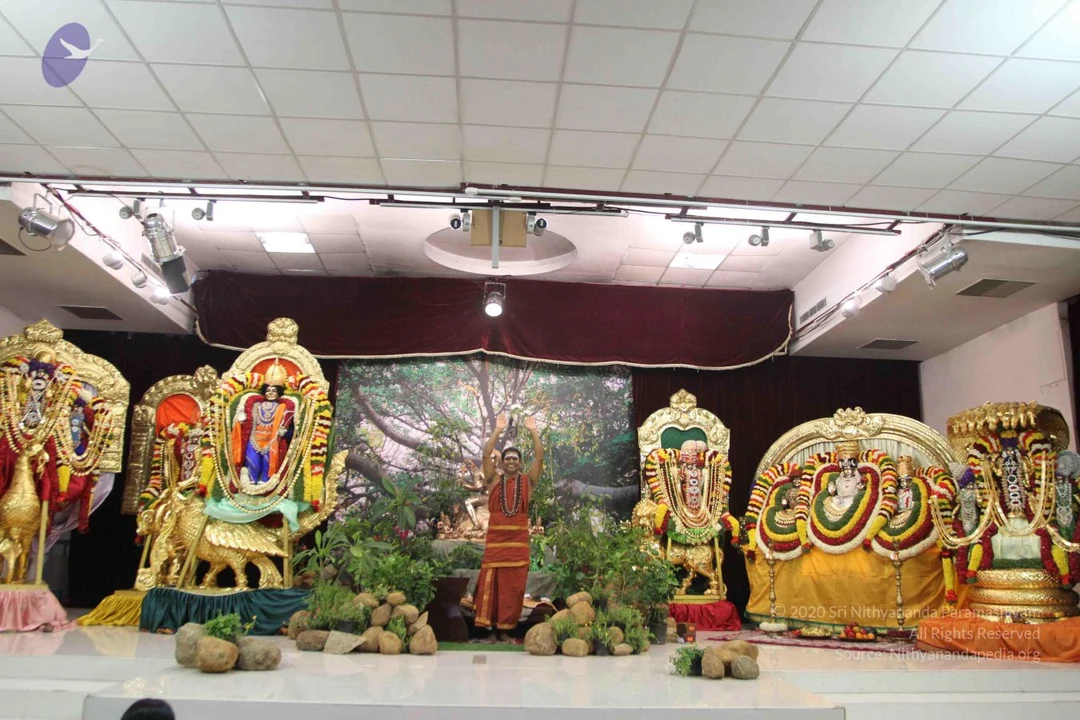
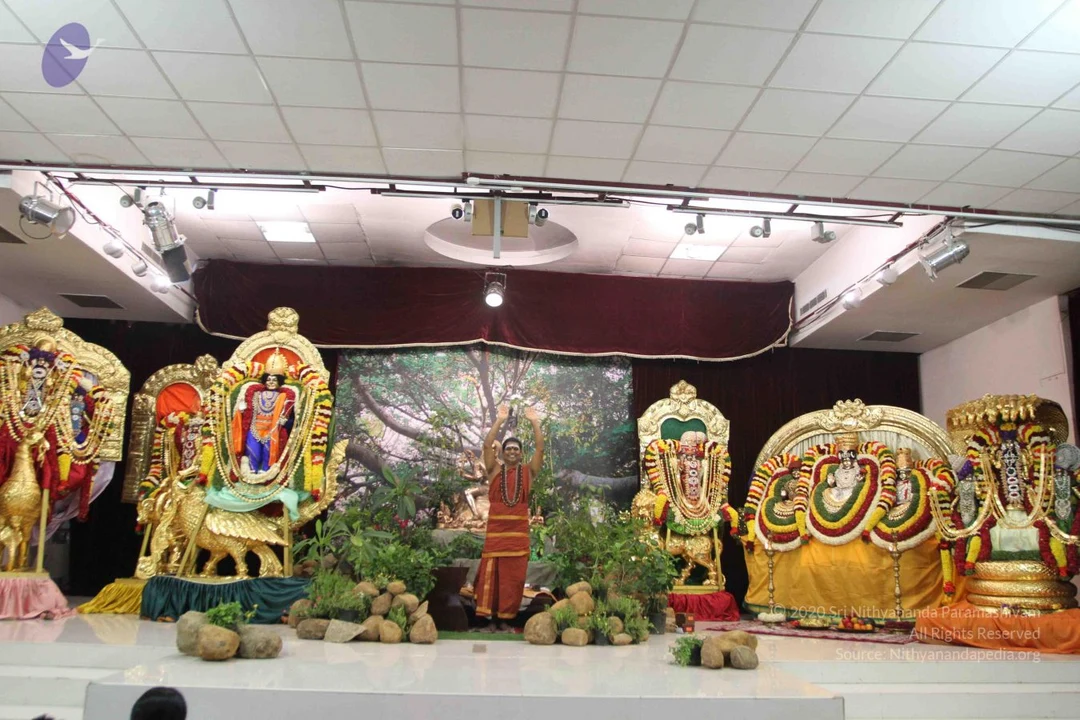
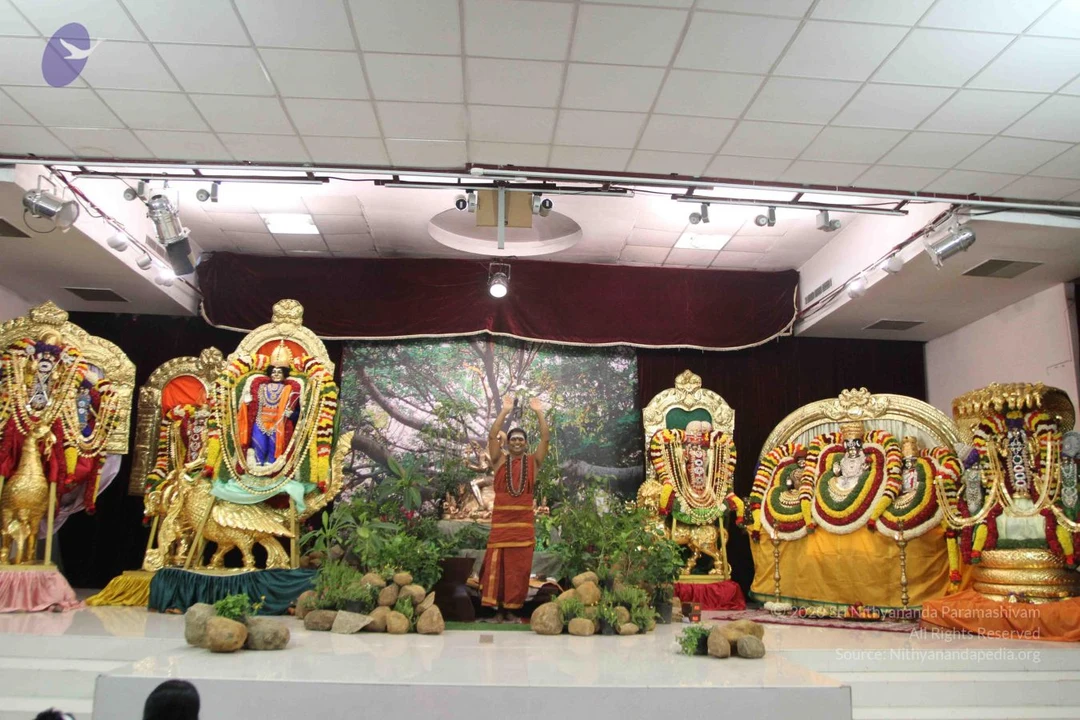
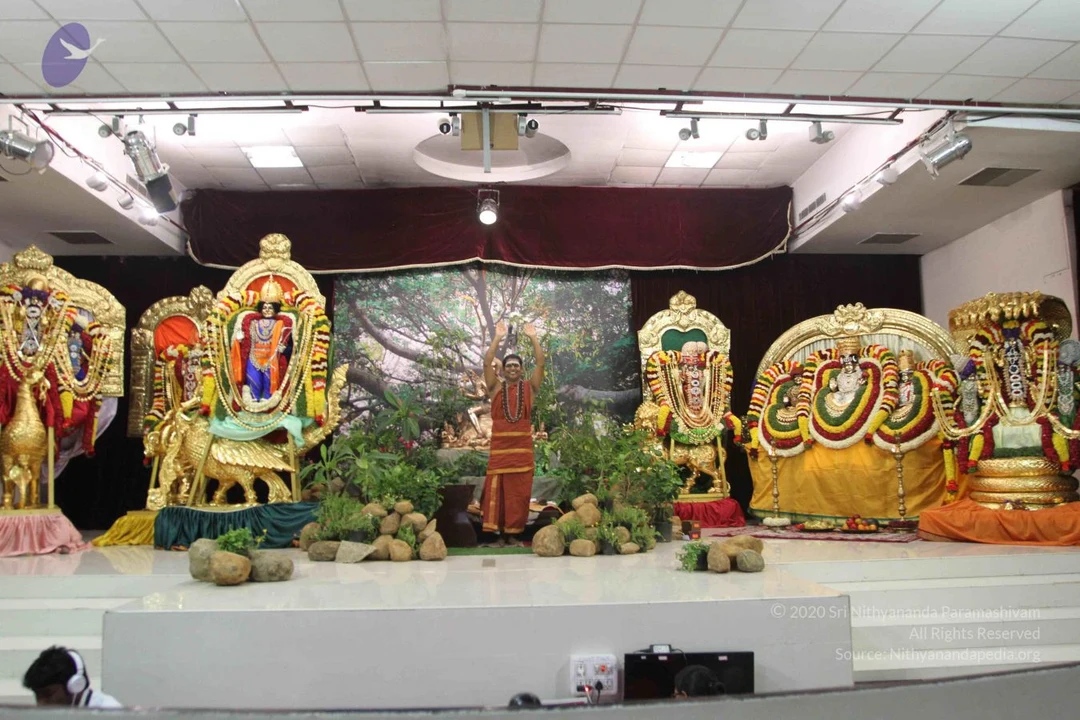
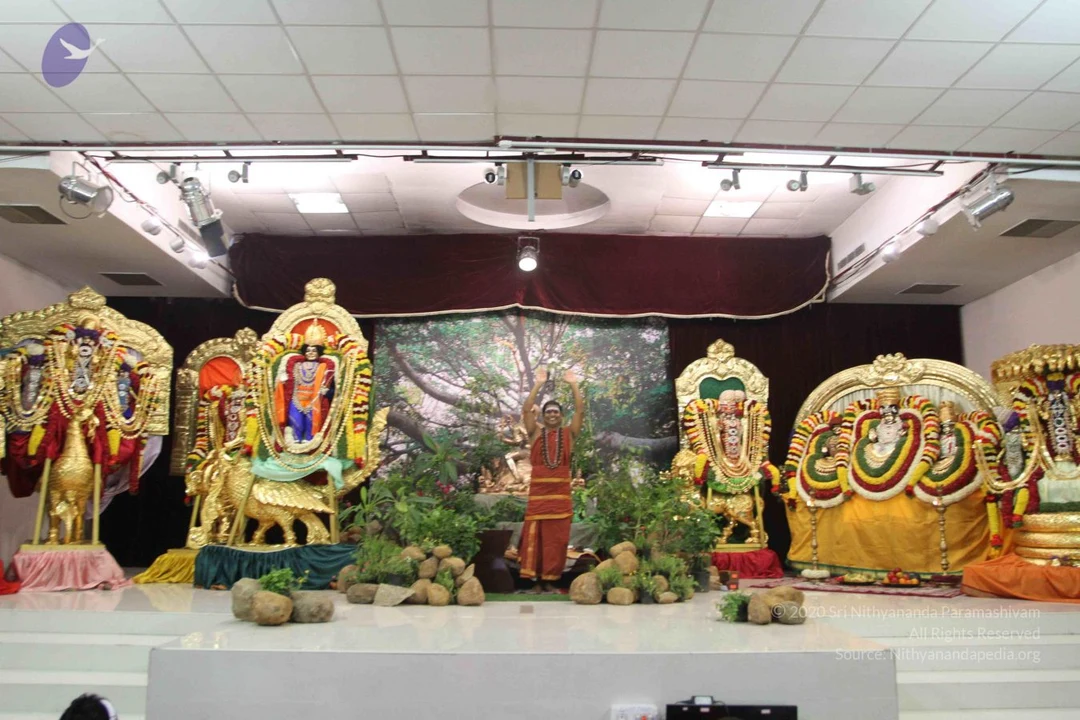
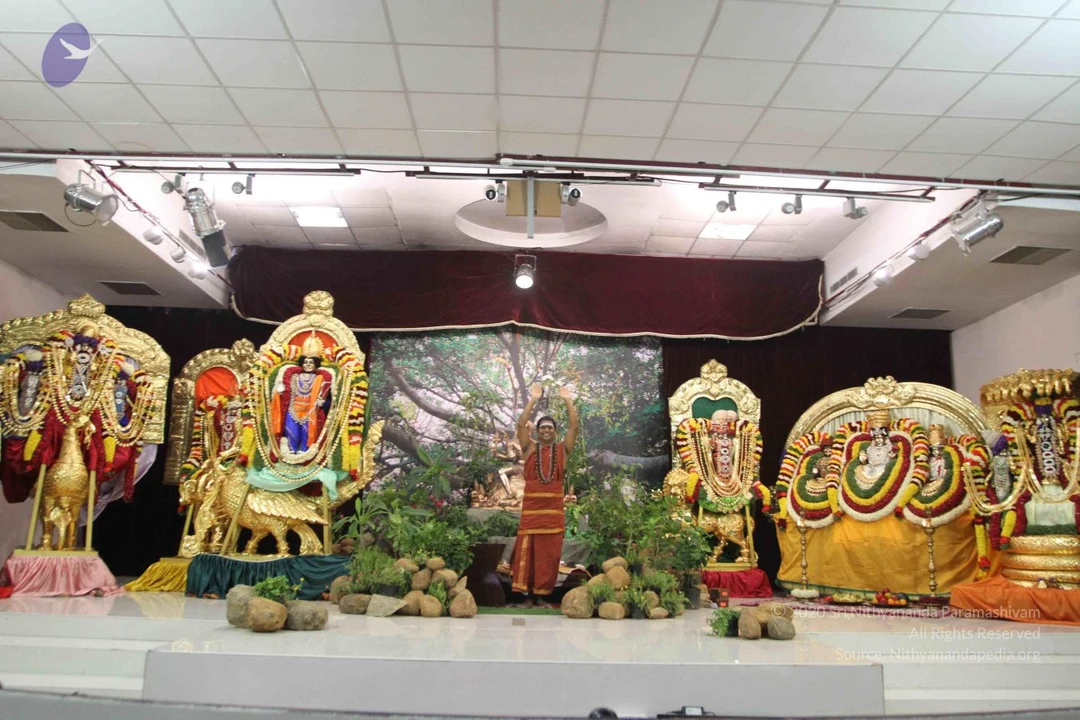
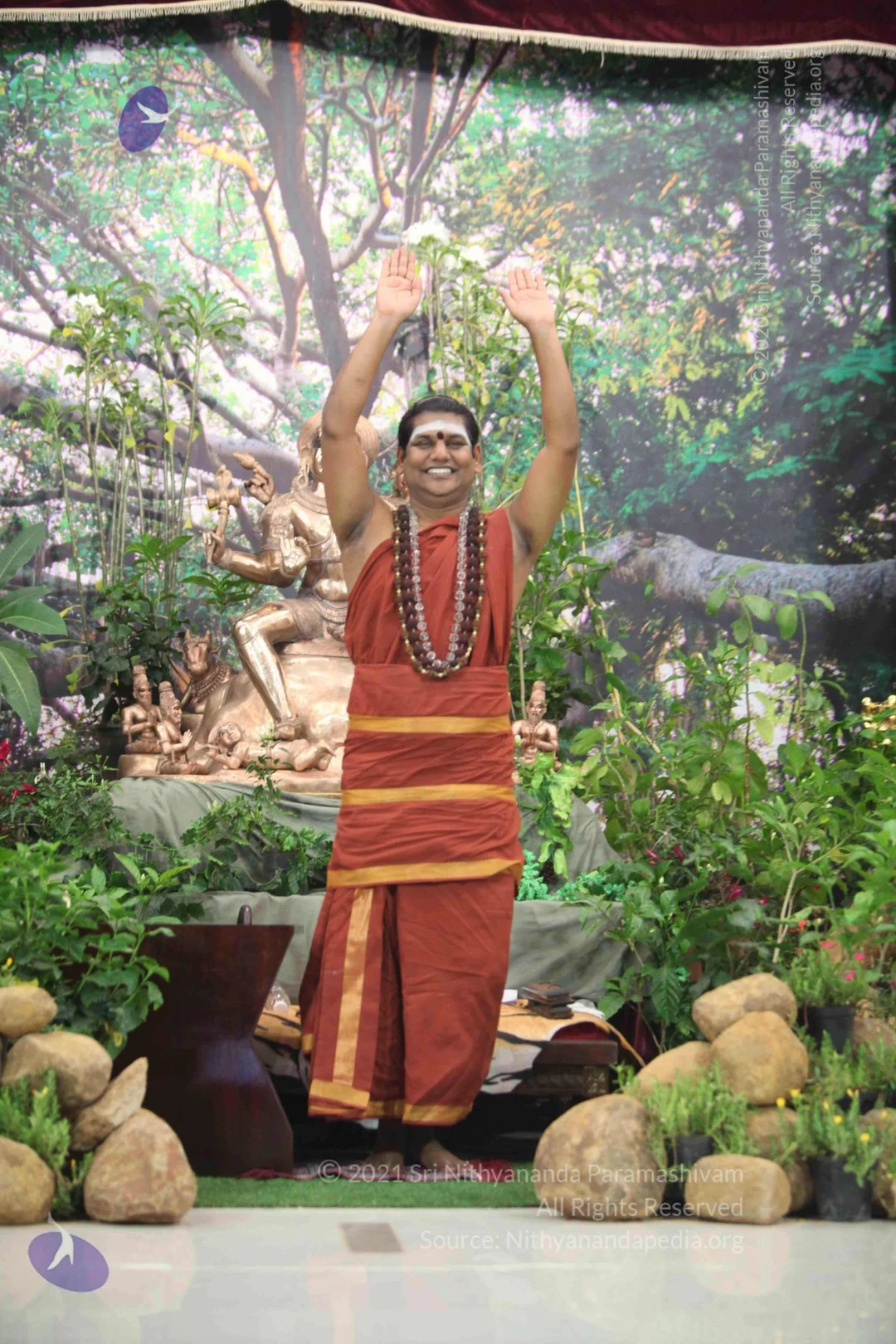
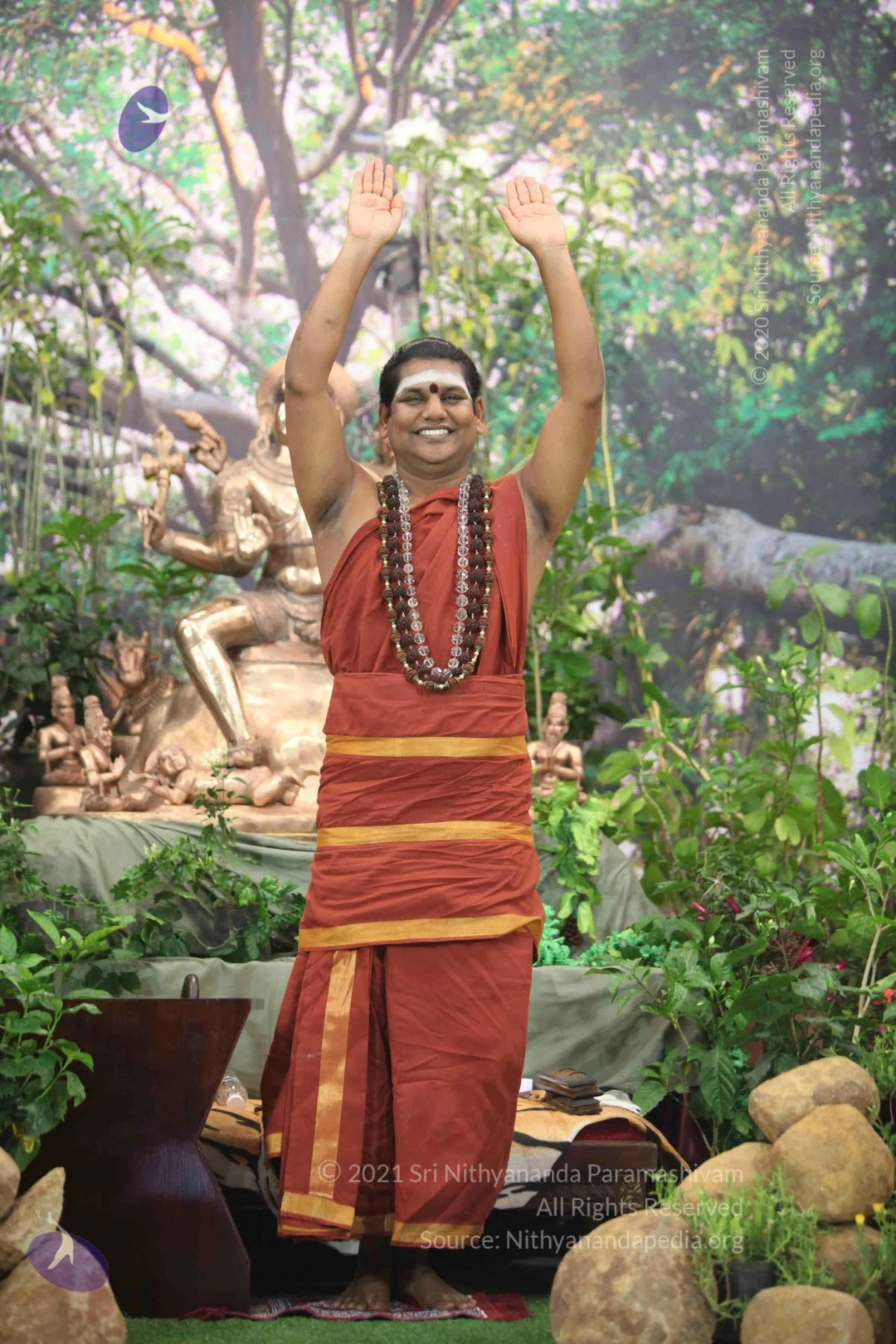
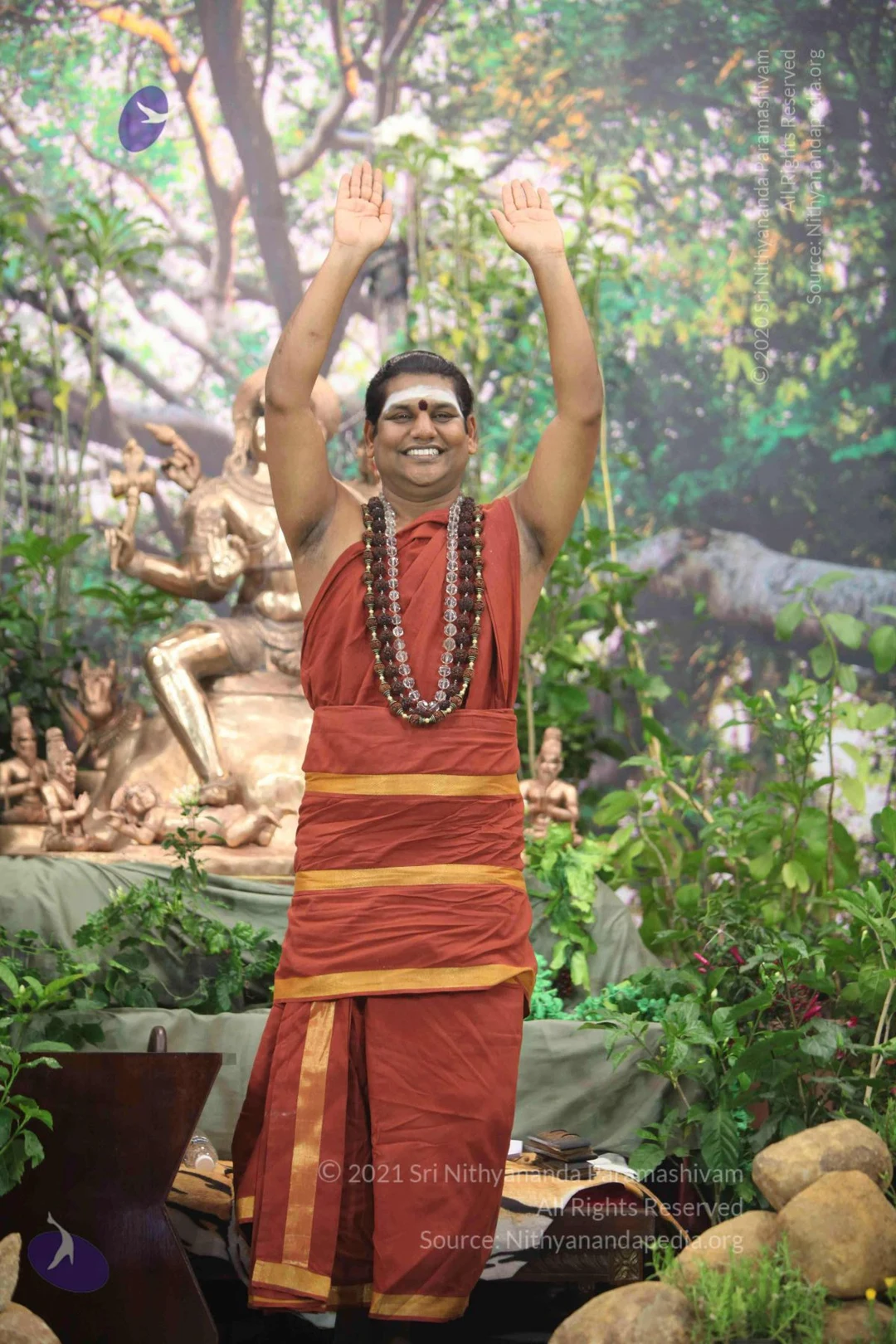
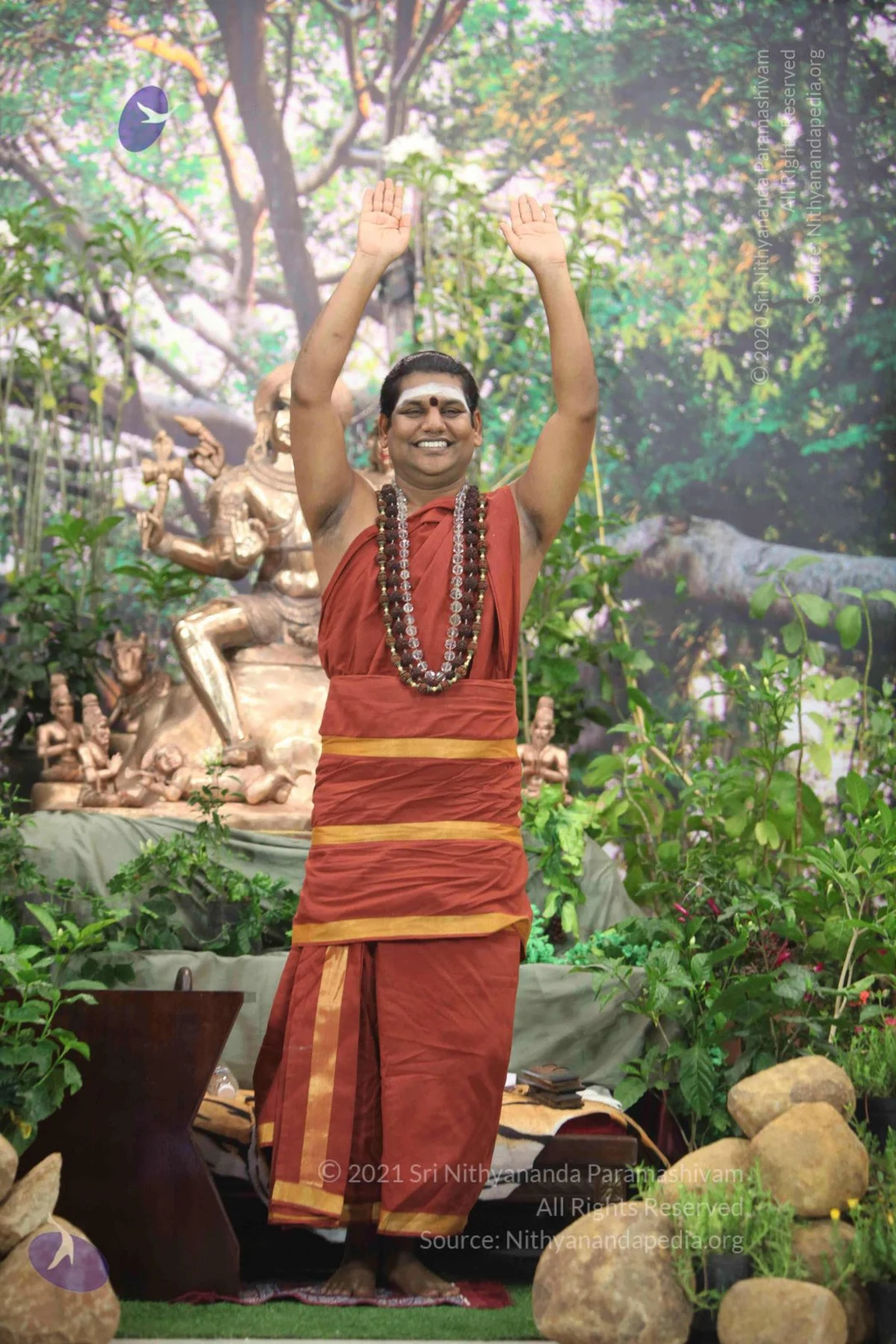
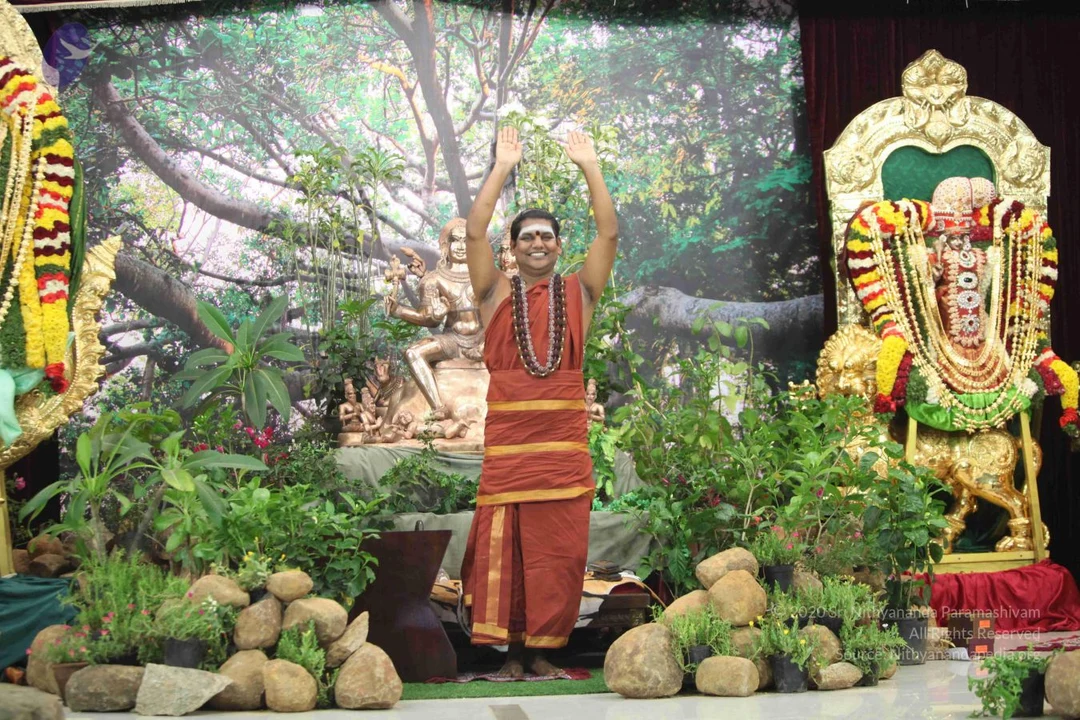
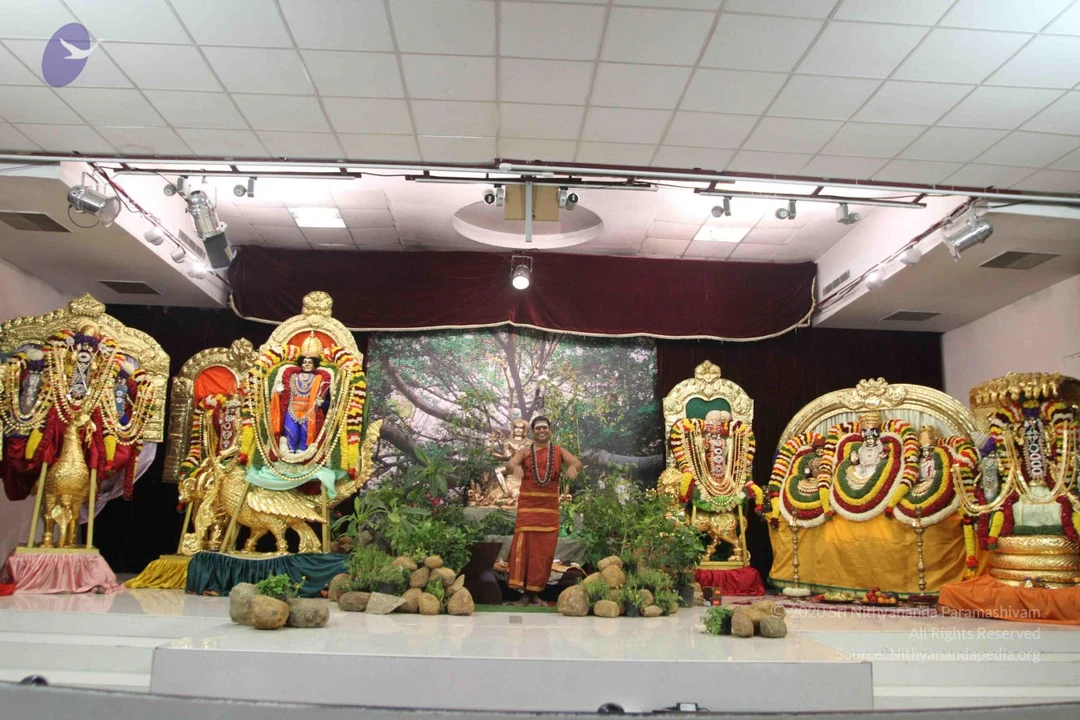
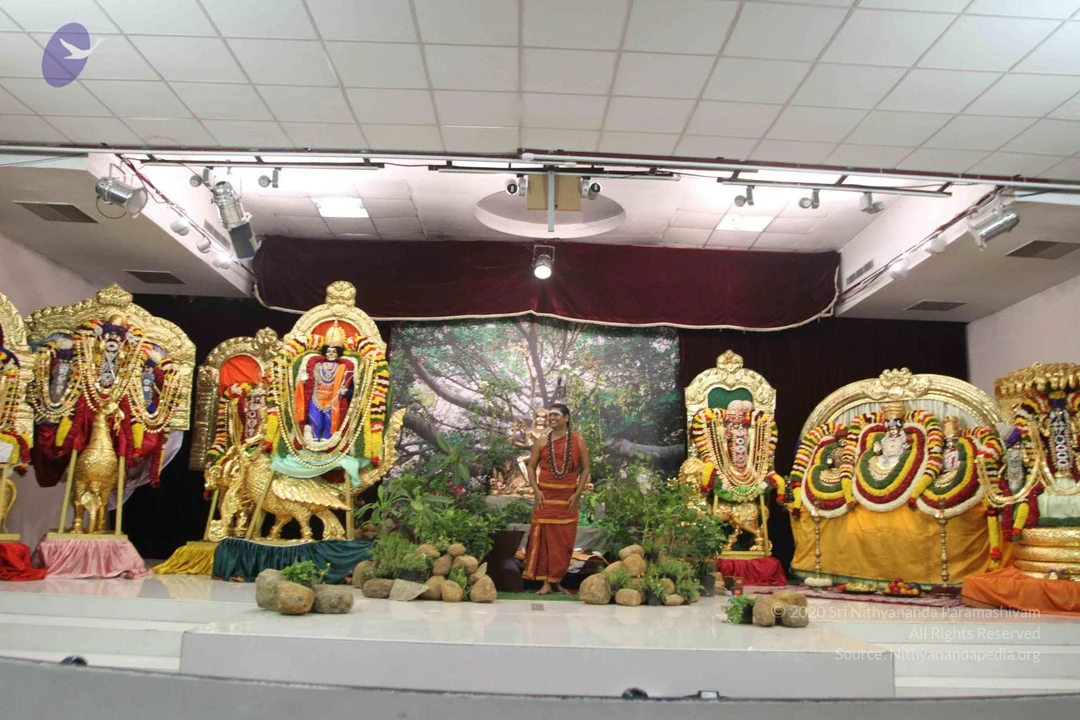
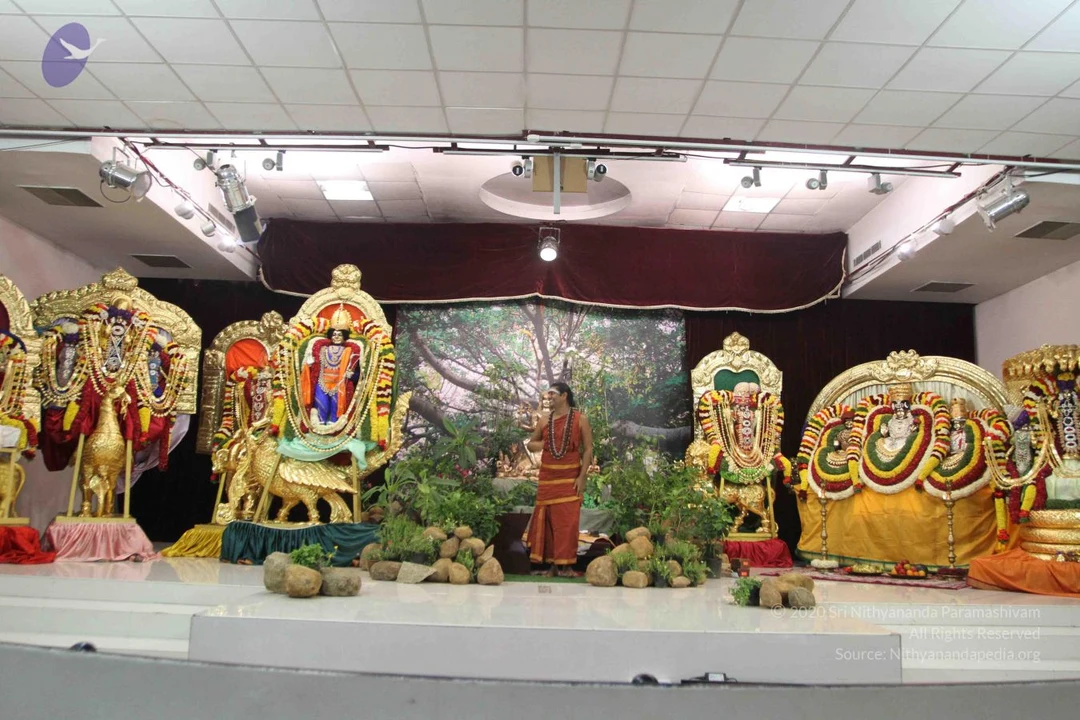
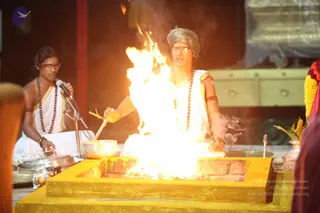
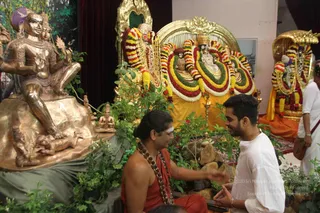
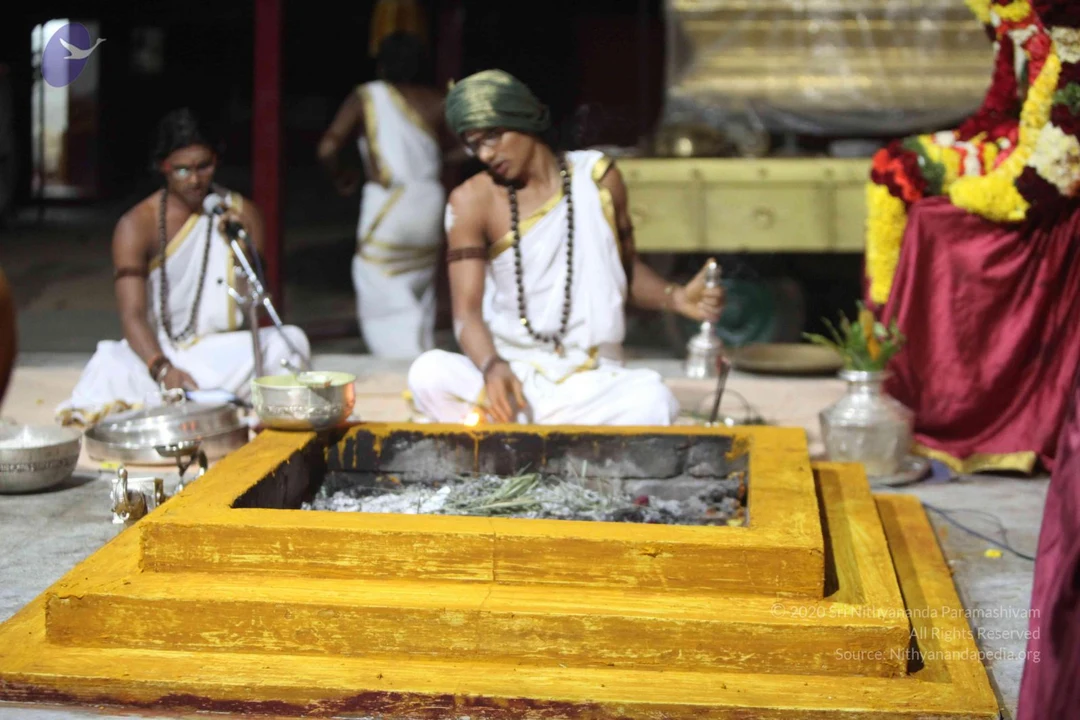
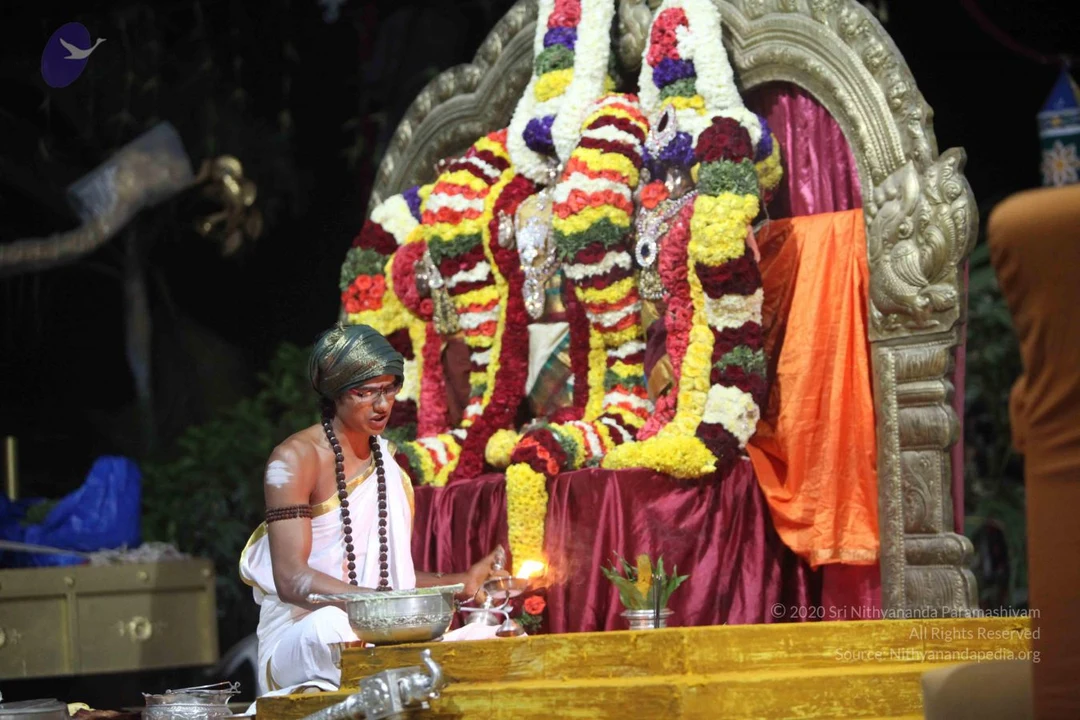
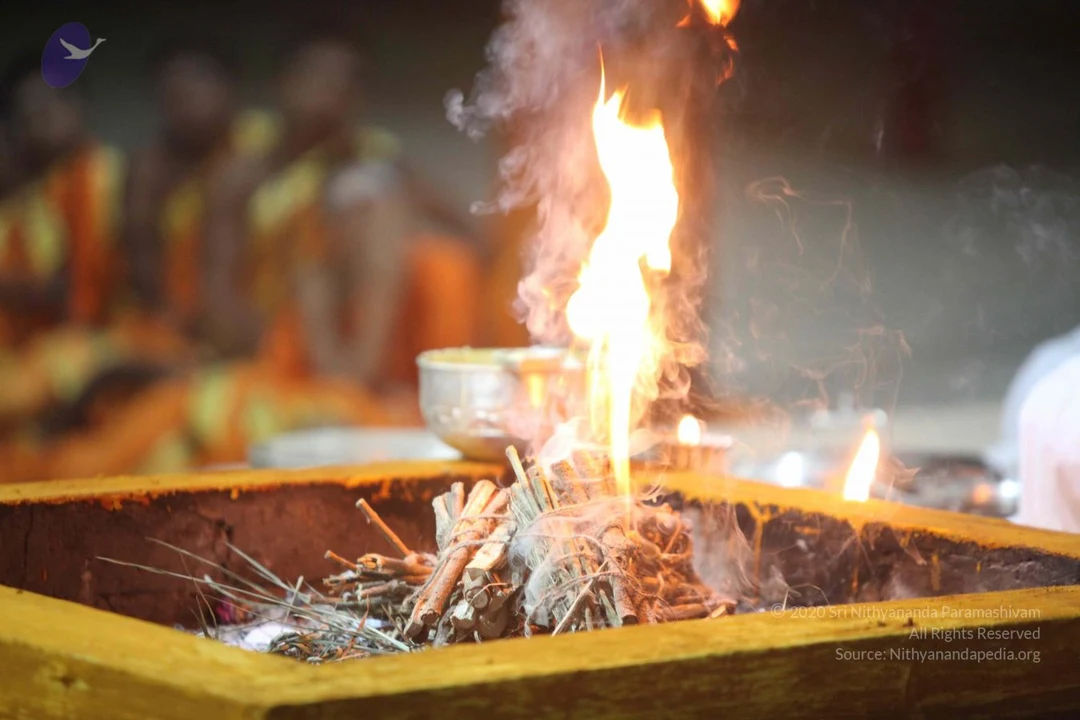
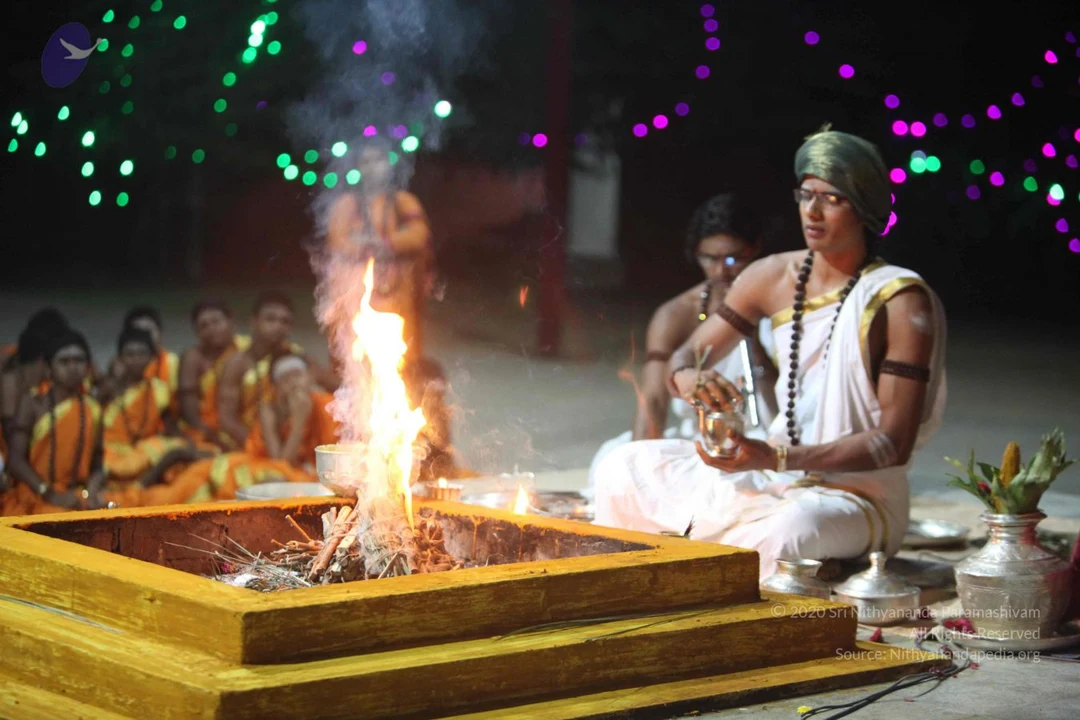
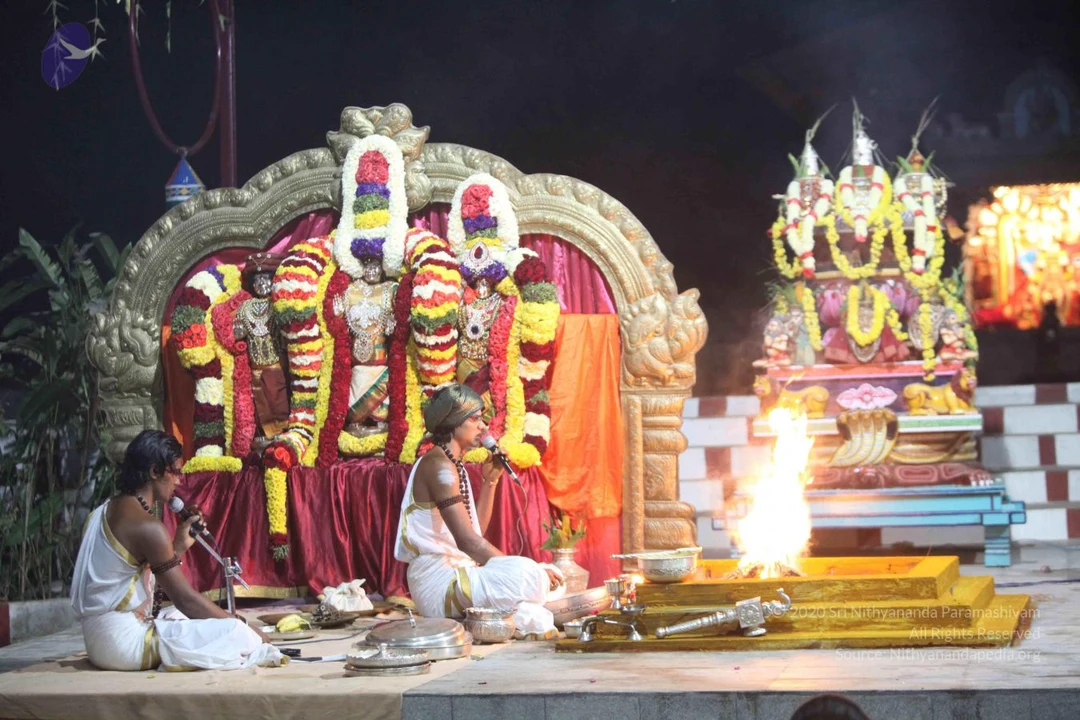
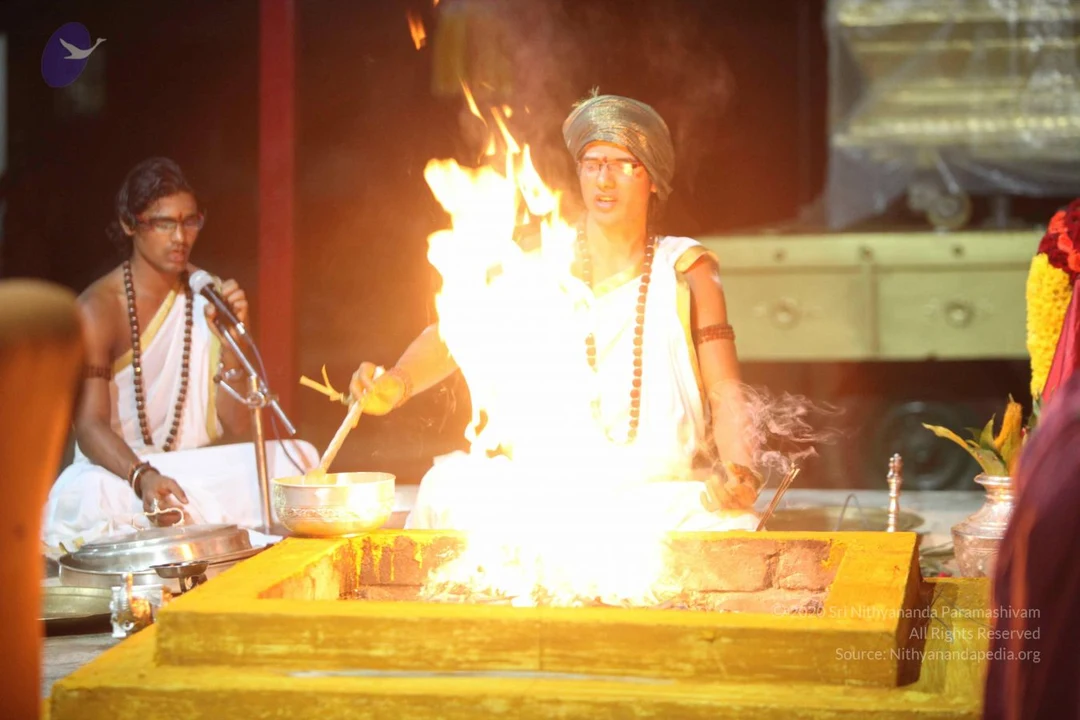
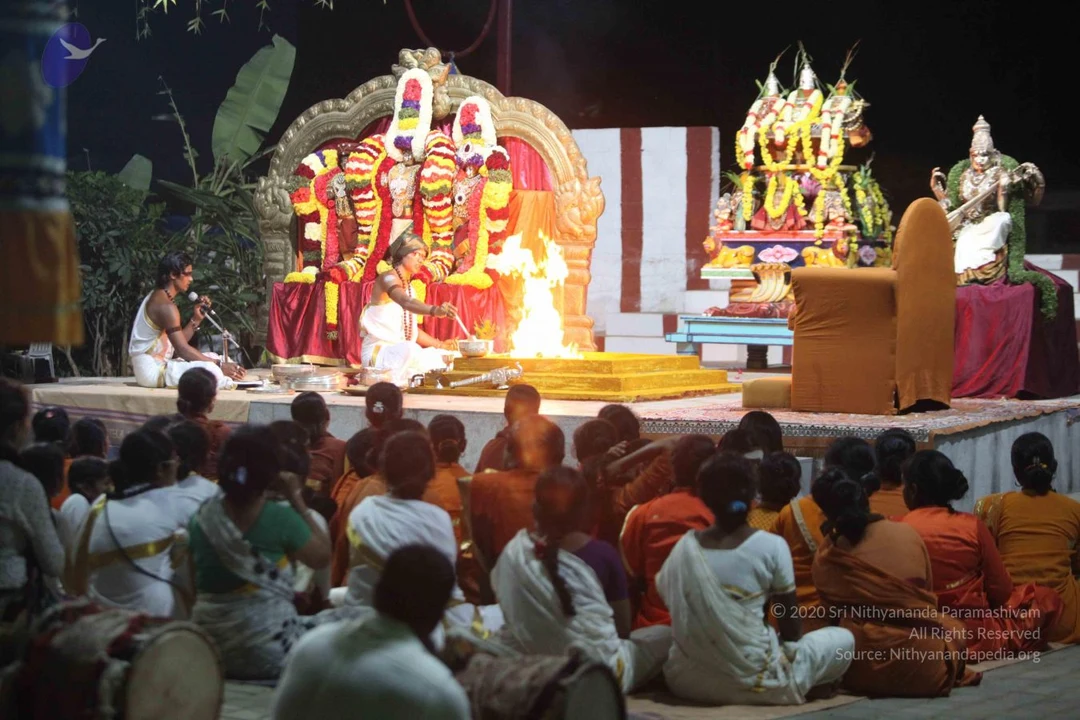
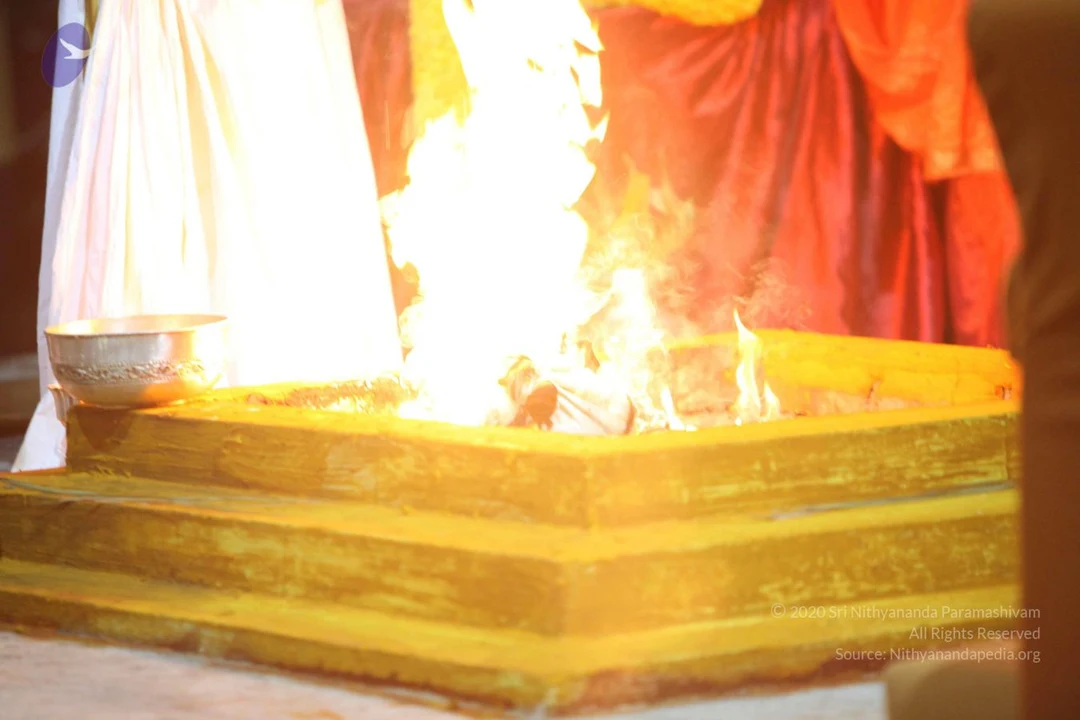
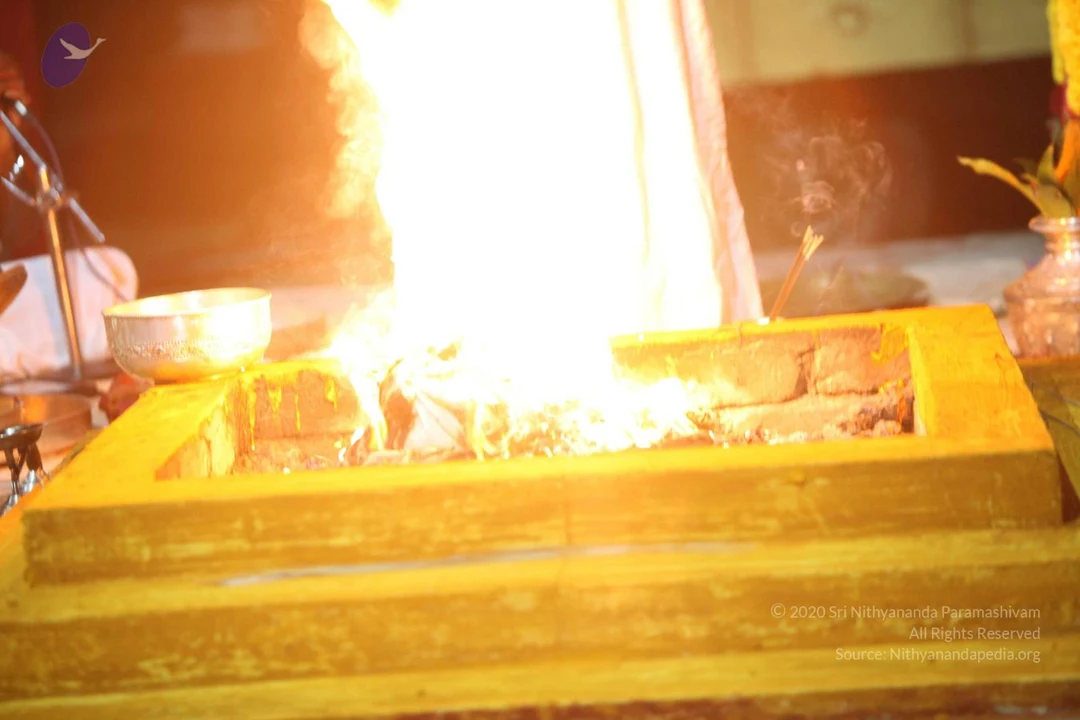
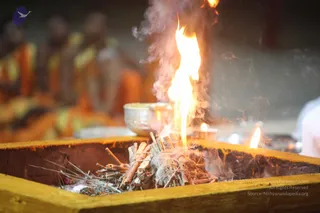
Vaidheeshwara Homa Aadikailasa, Bengaluru, India



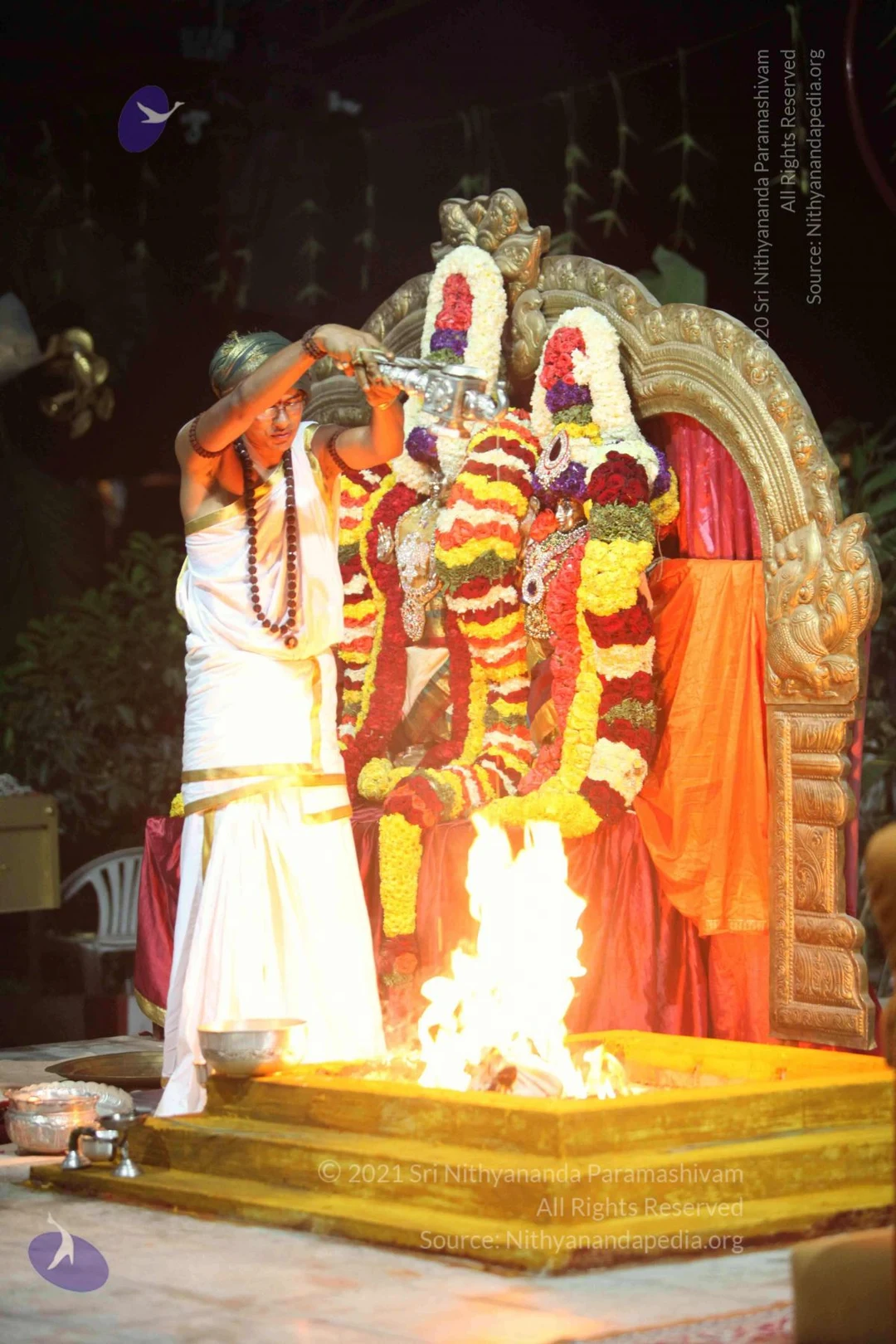
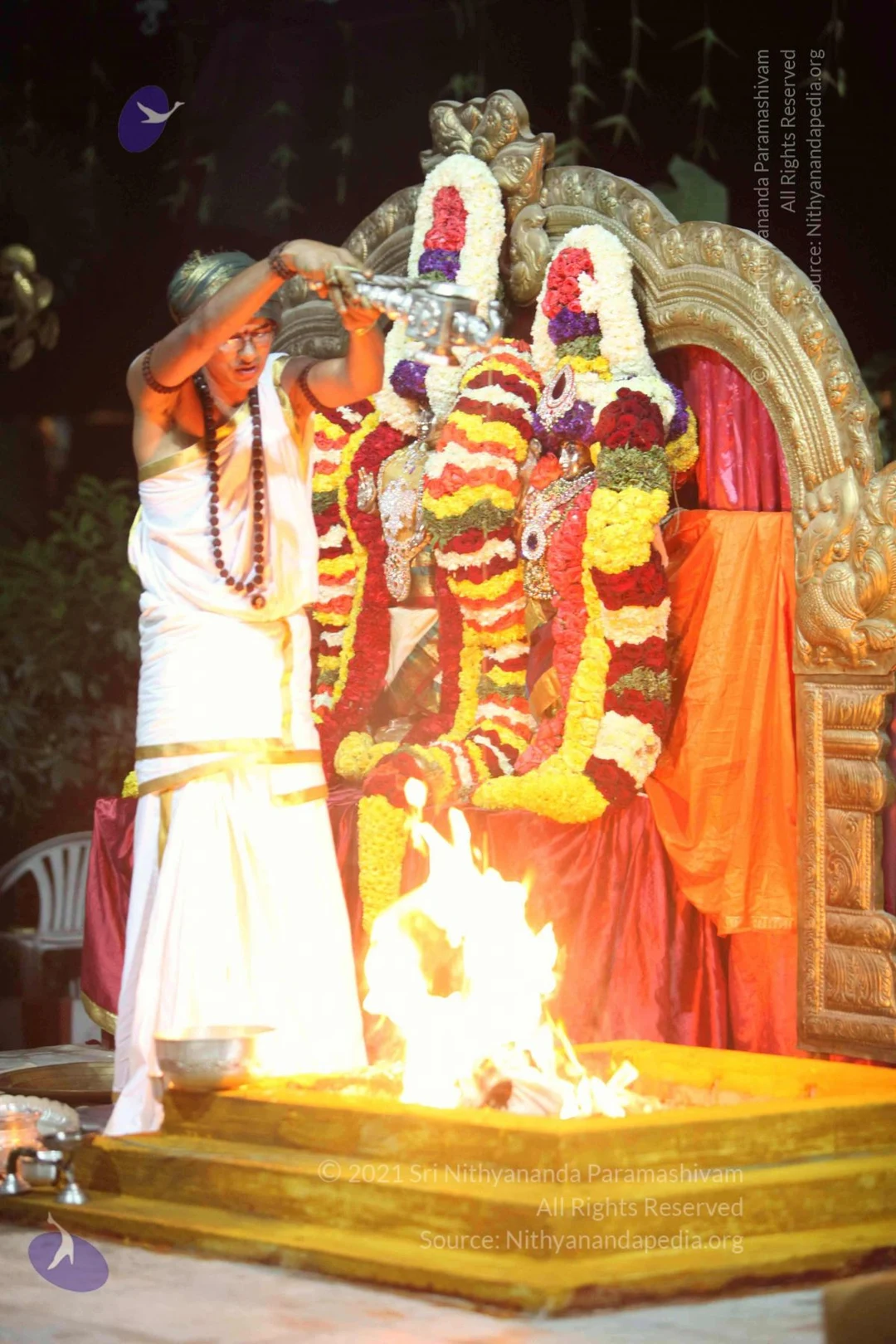

Nithyananda Times
Tags
Paramahasma Nithyananda, Upanishads, rishis, individuality, cosmos, truths, world, sacred
Photos from this day
View all 171 photosNithyananda Satsang at Aadikailasa, Bengaluru, India
94 photosSource gallery
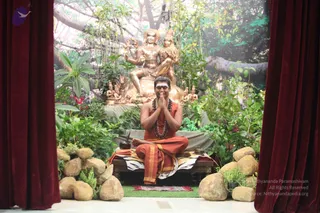
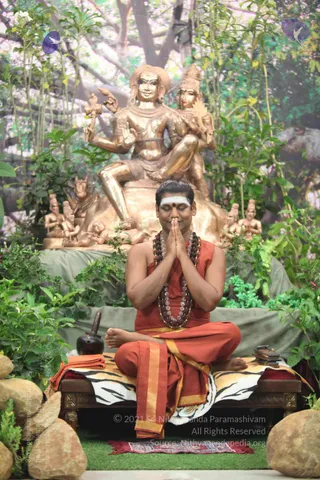
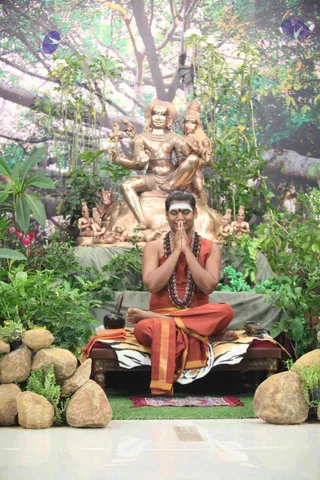
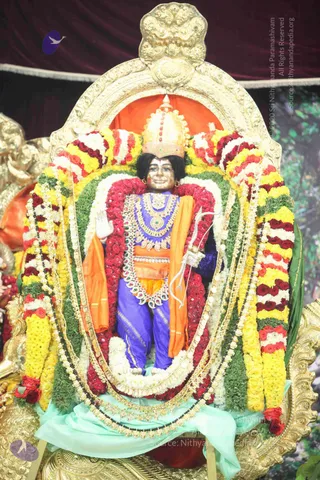
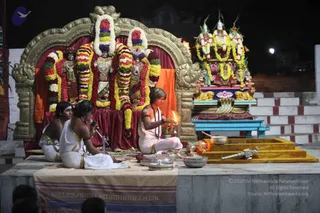
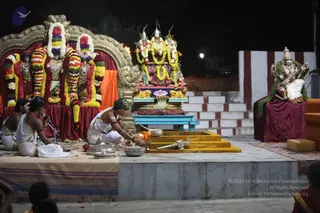
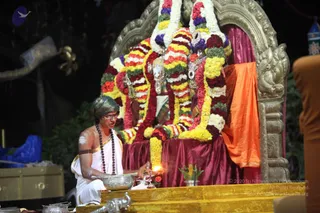
Vaidheeshwara Homa Aadikailasa, Bengaluru, India
12 photosSource gallery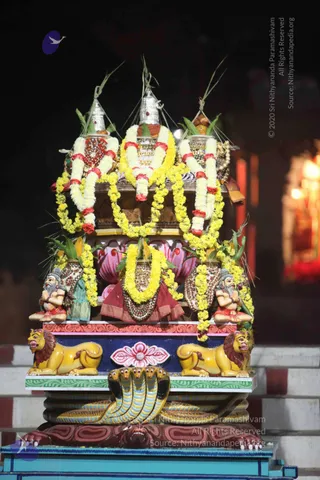
January 07th 2015
65 photosView all