Skip to content
Sunday

7 January 2018

Revelations about Anti-Matter & the 11 Dimensions of the Universe Nithyananda Peetham, Bengaluru Aadheenam | Mahasadashivoham Day 23 | Shiva Deeksha & Kalpataru Darshan - Kalpataru Yogam

Dated photos
220
Source pages
1
Media
6
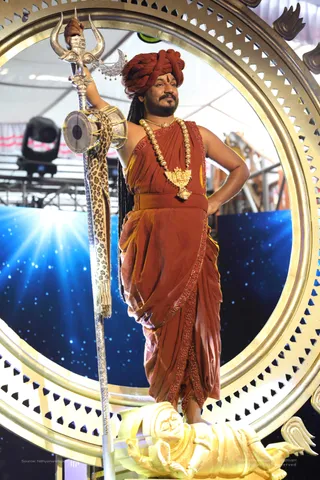
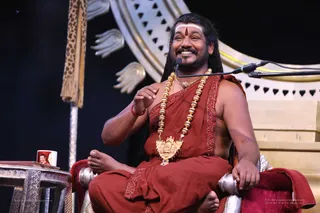
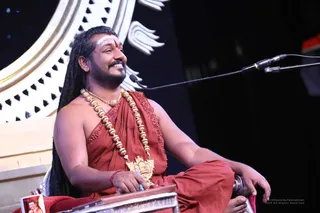
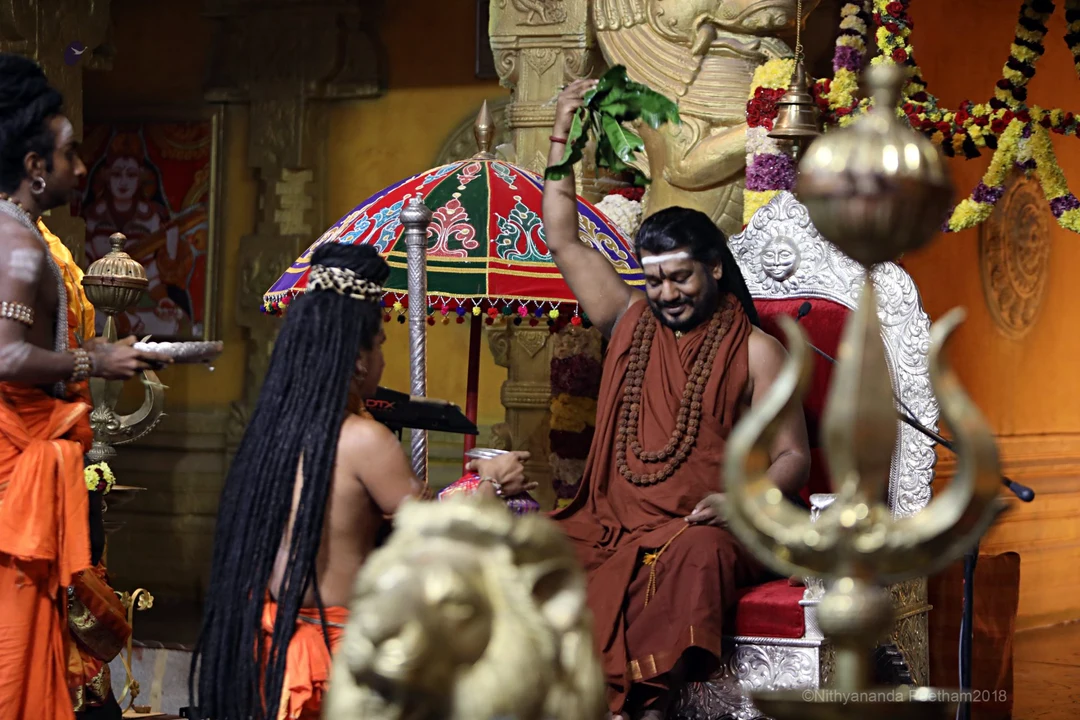
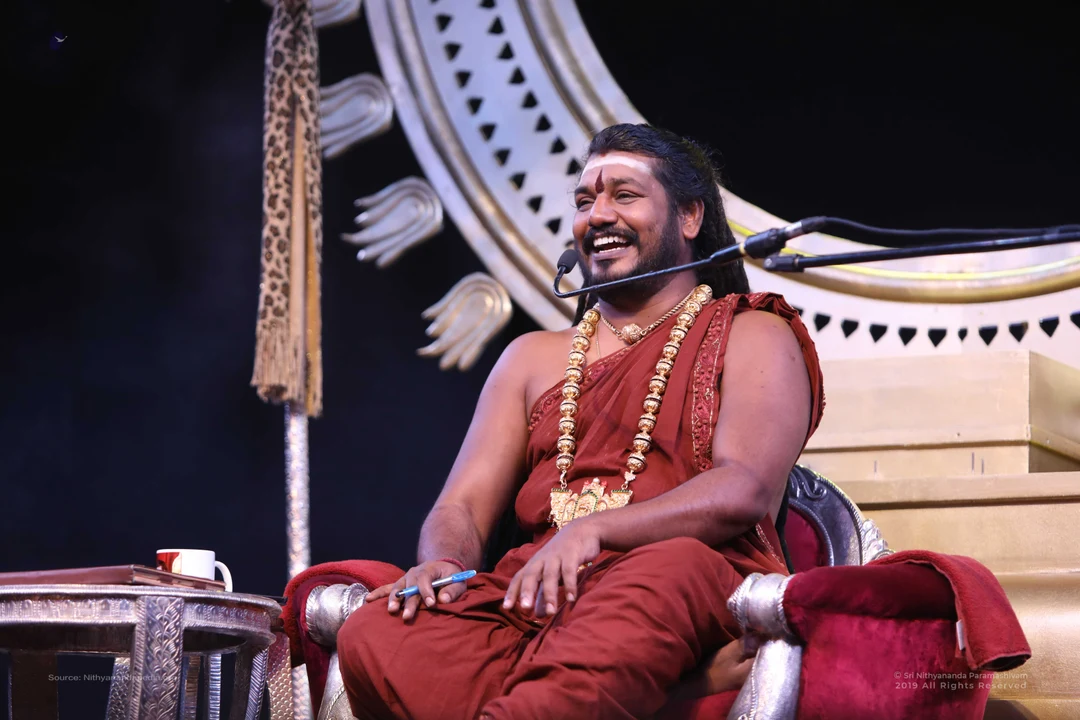
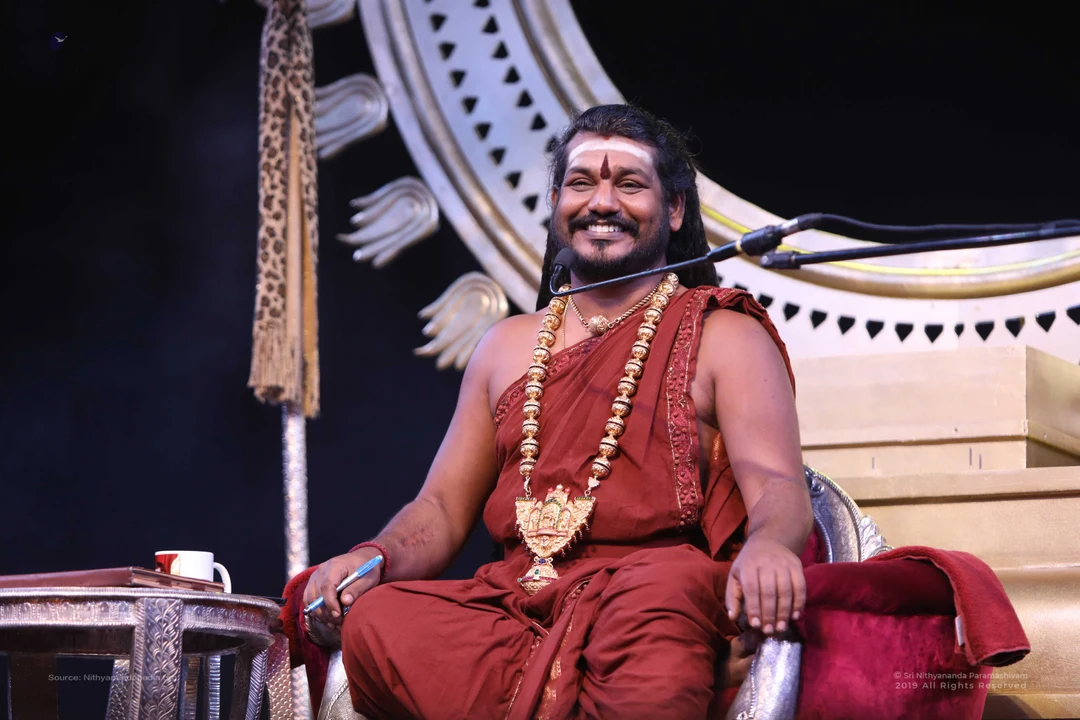
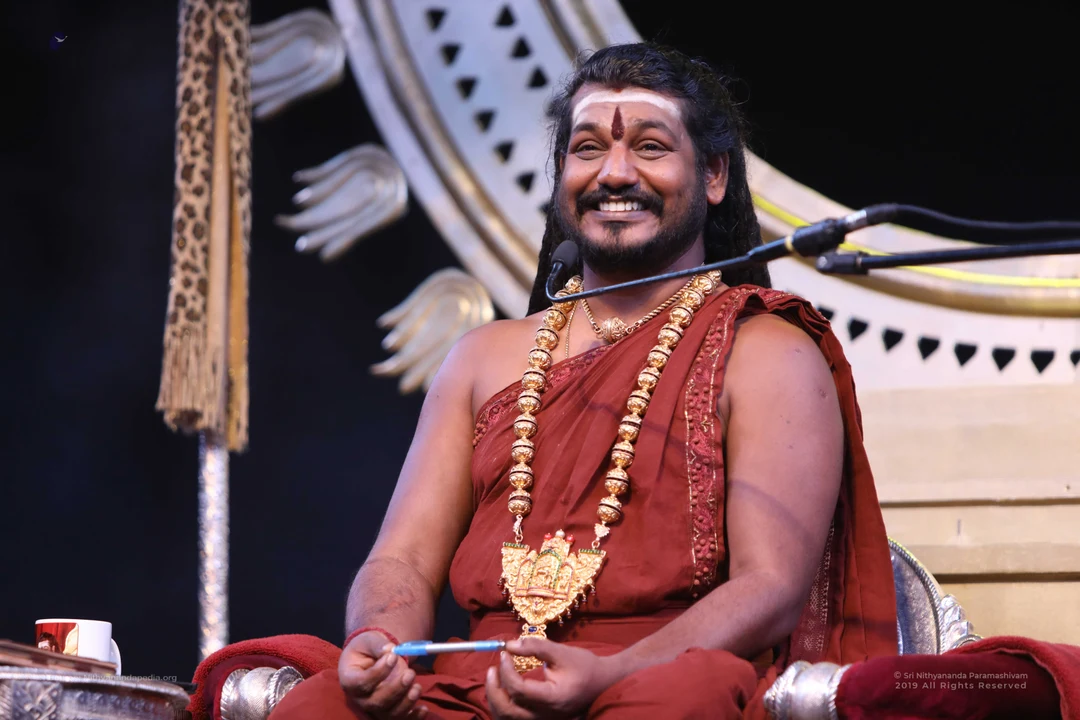
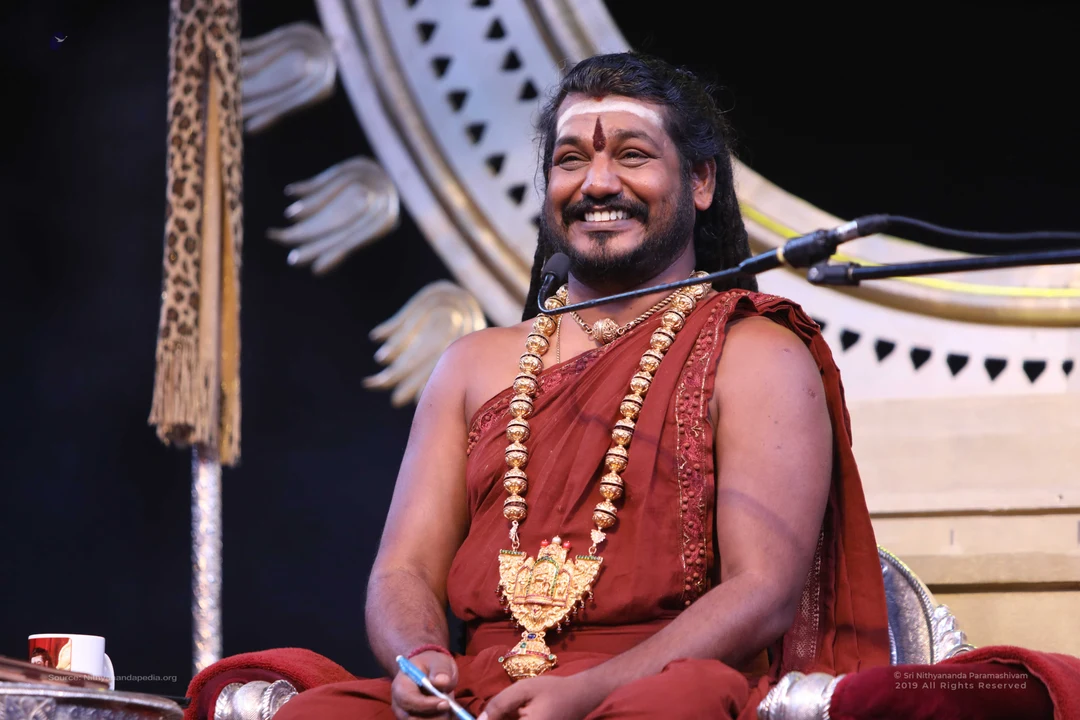
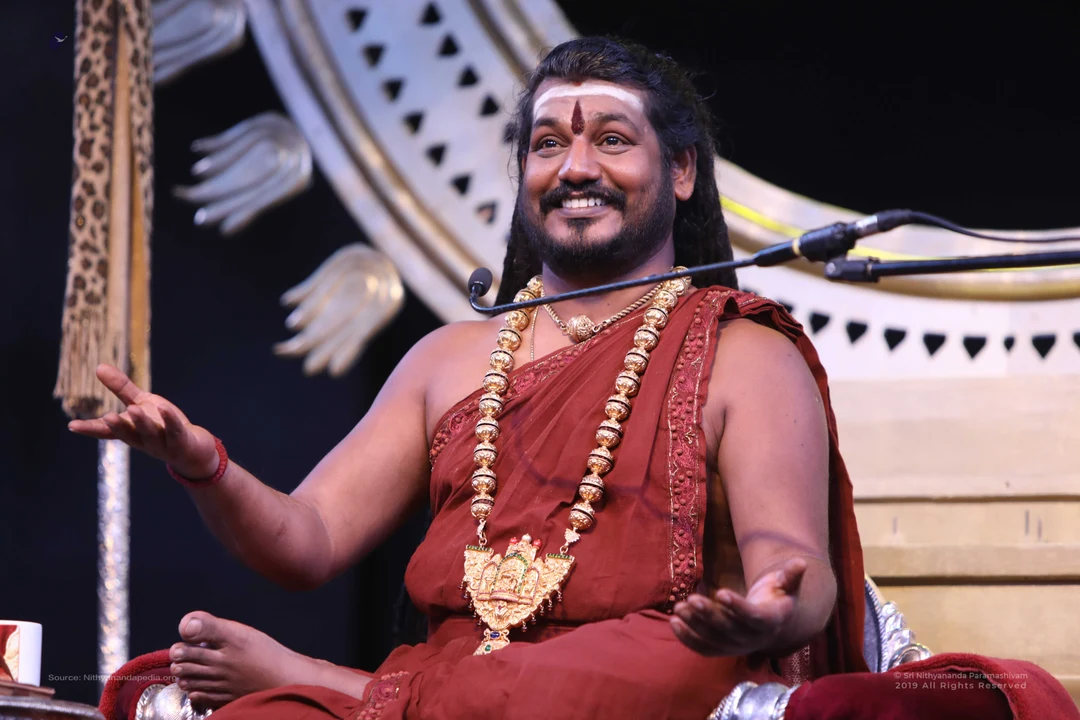
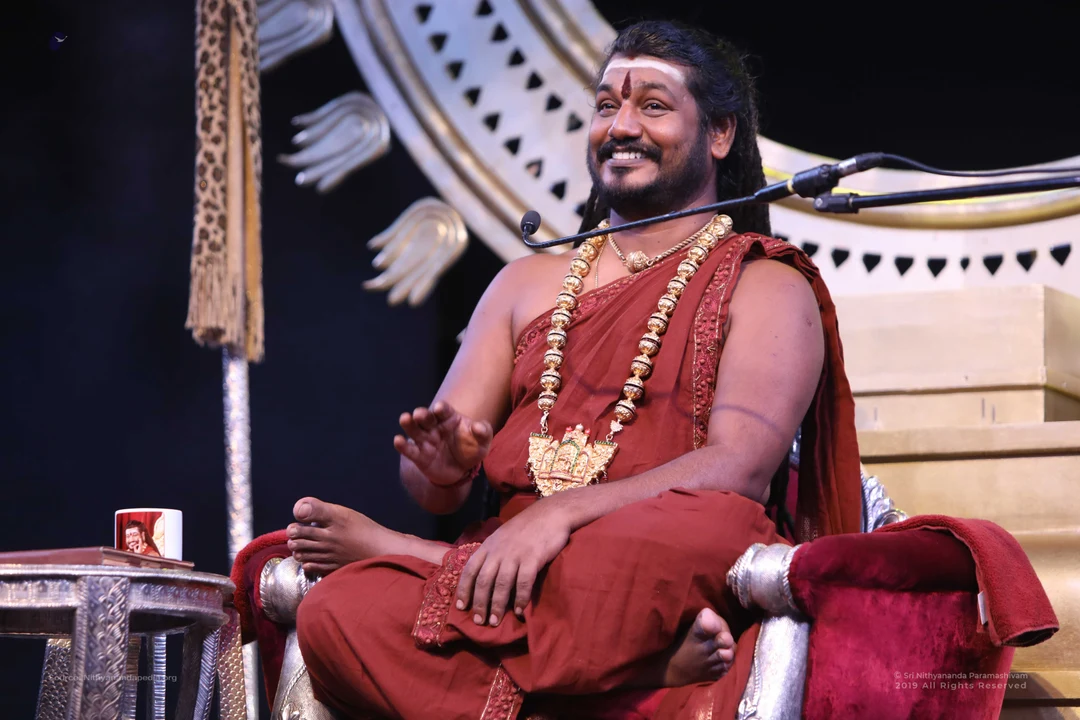
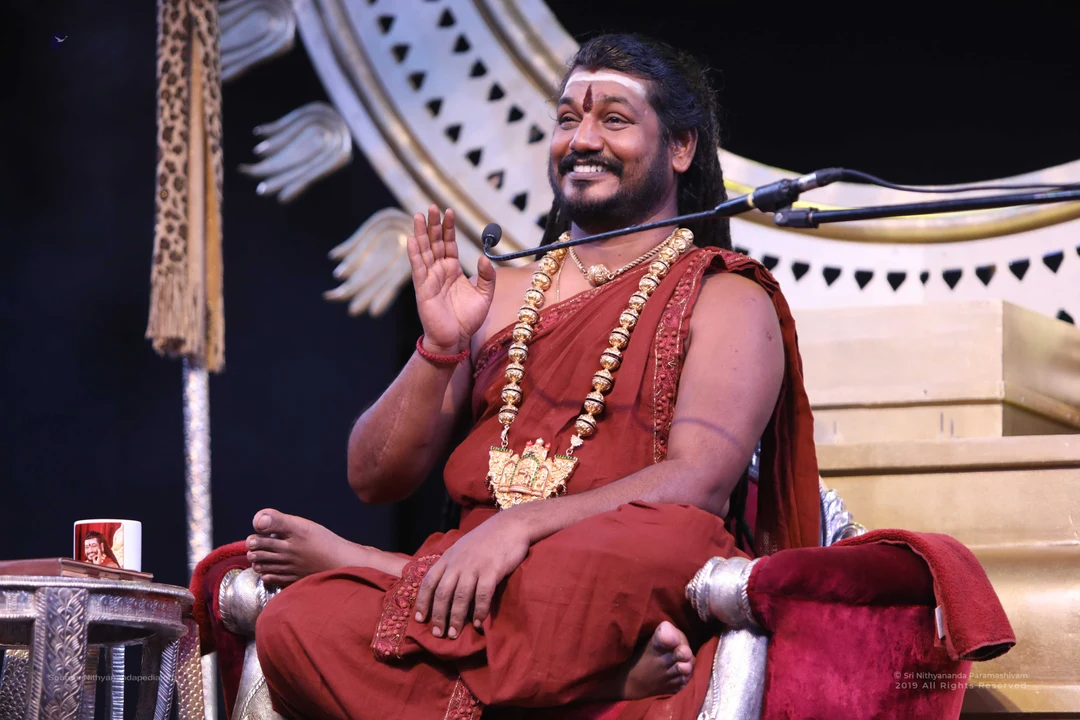
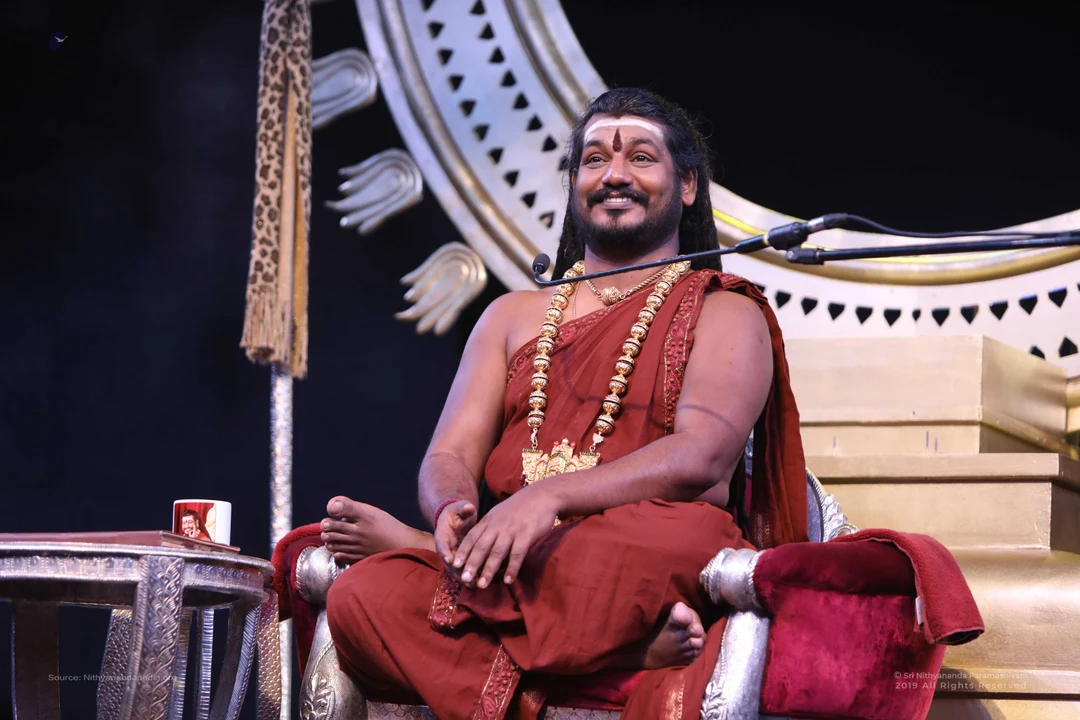
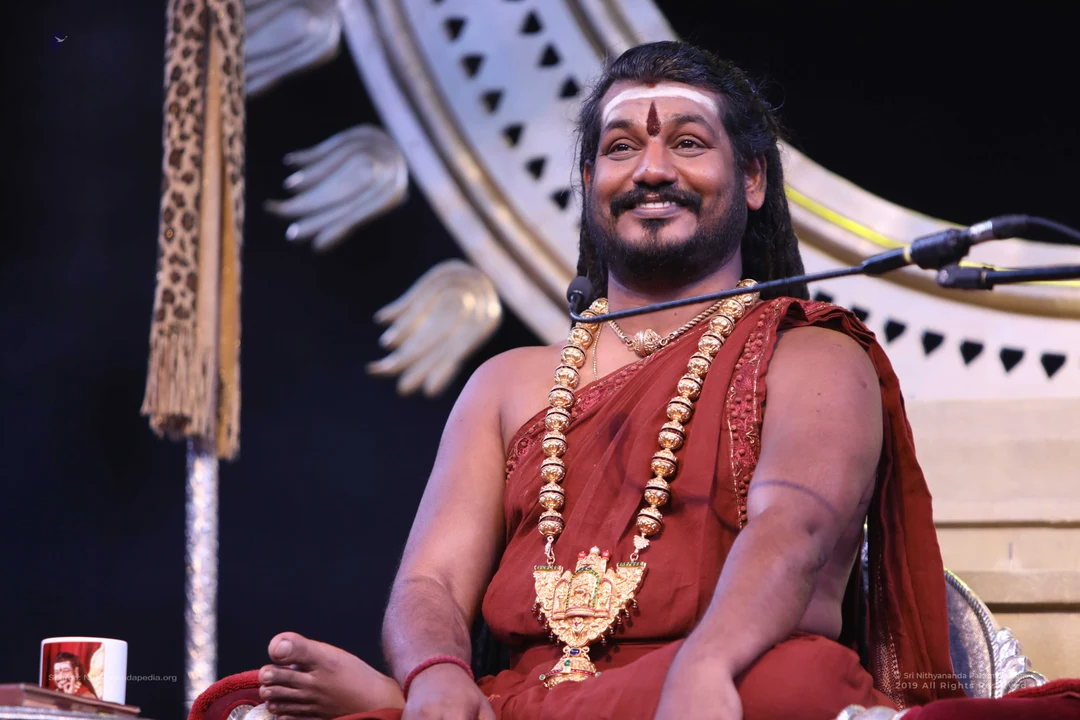
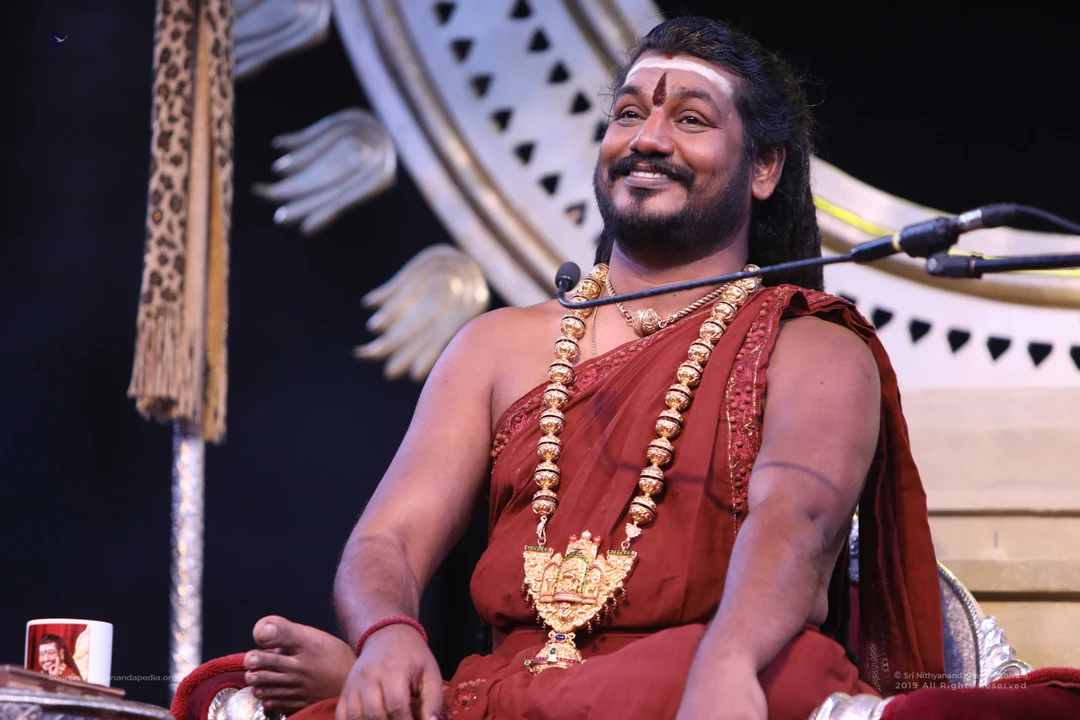
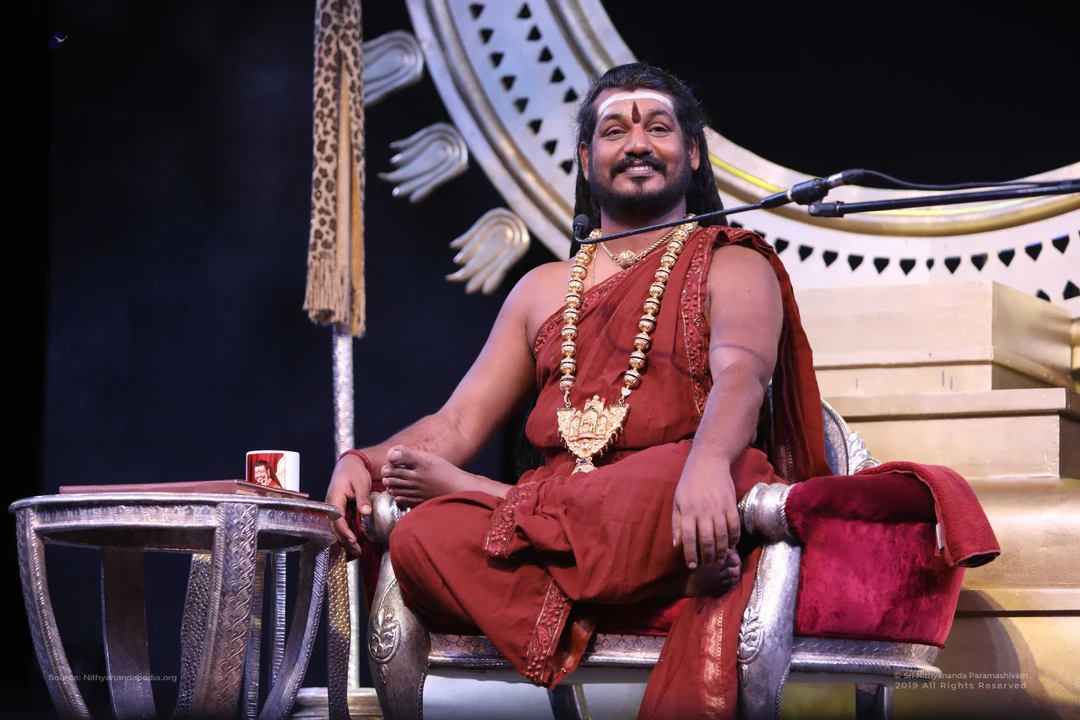
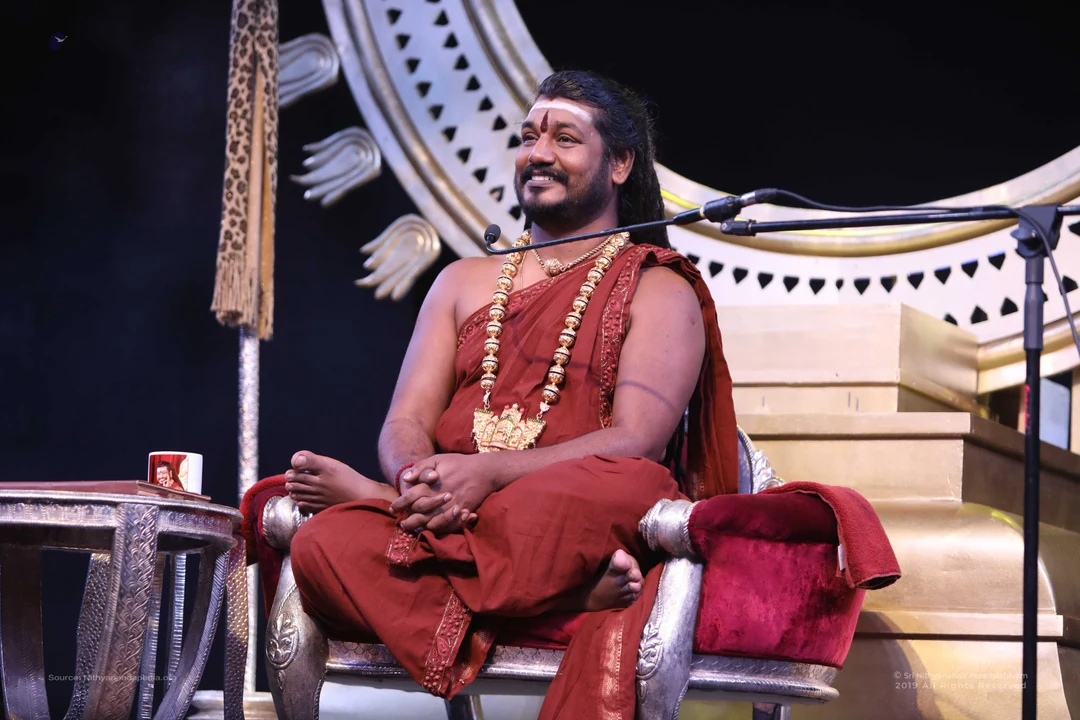
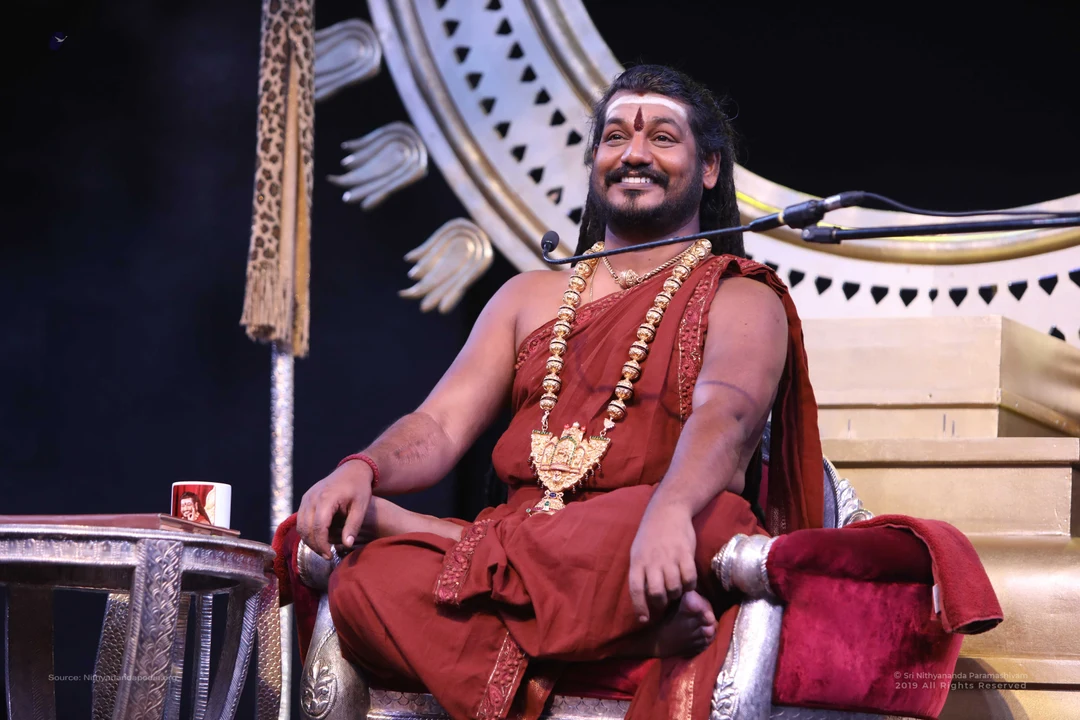
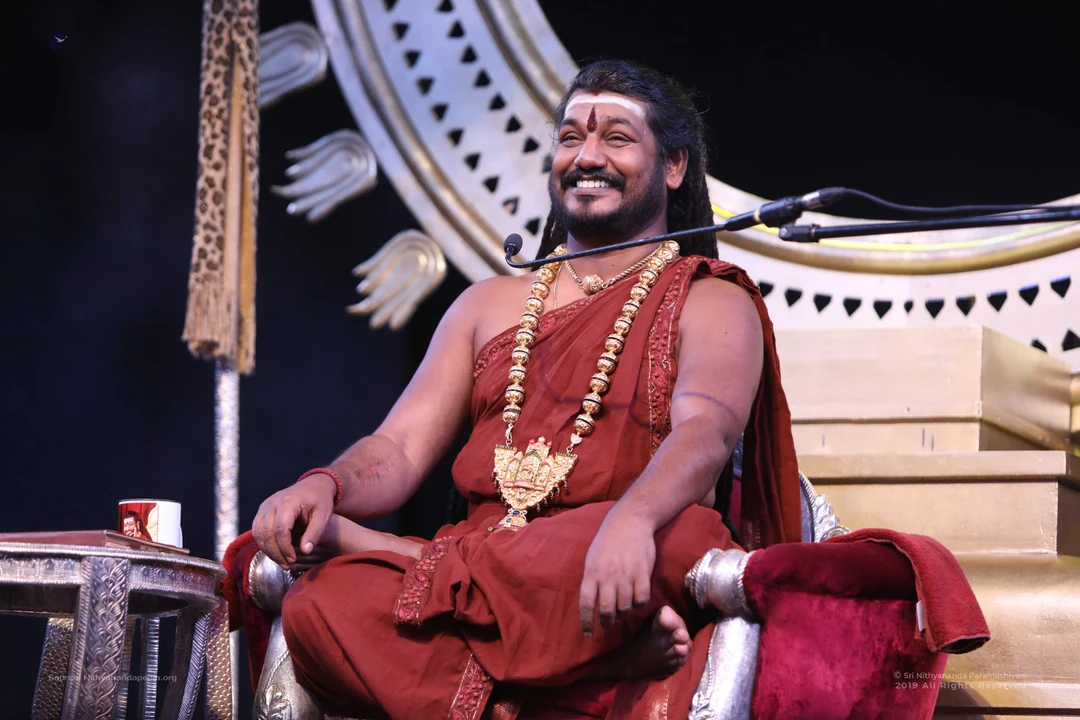
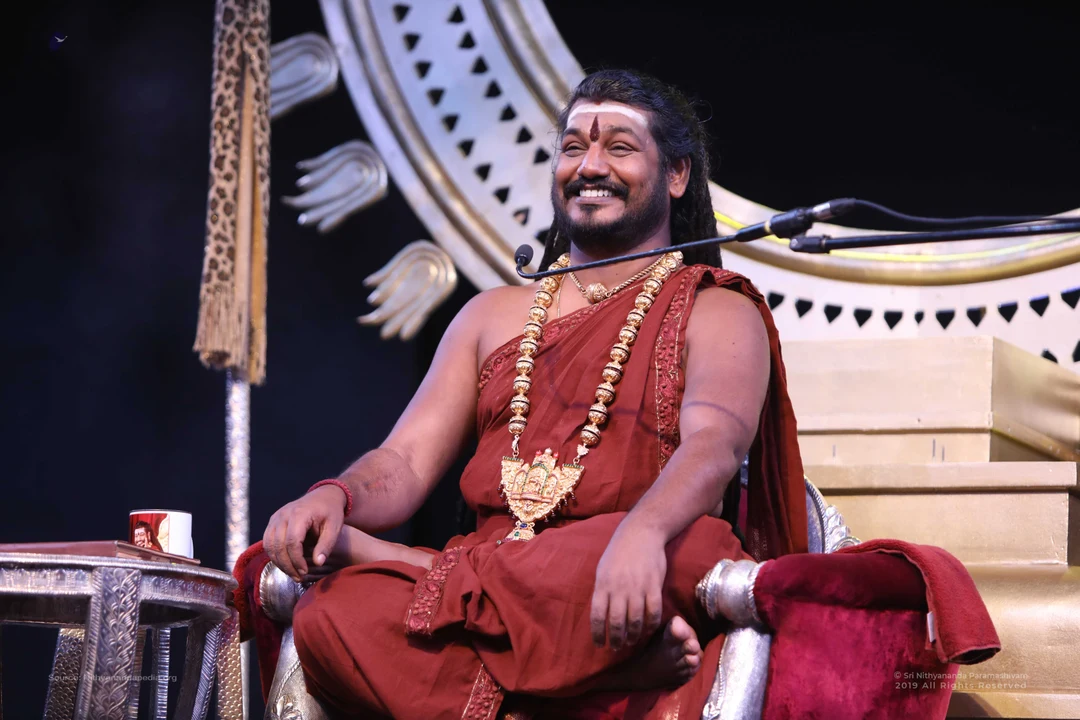
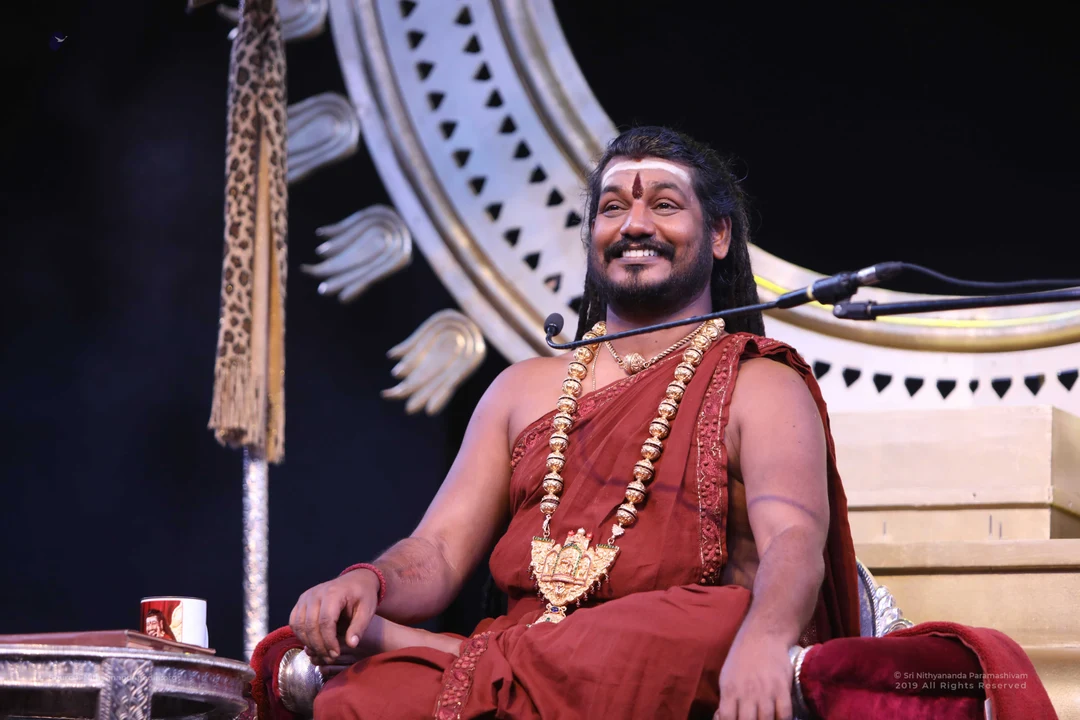
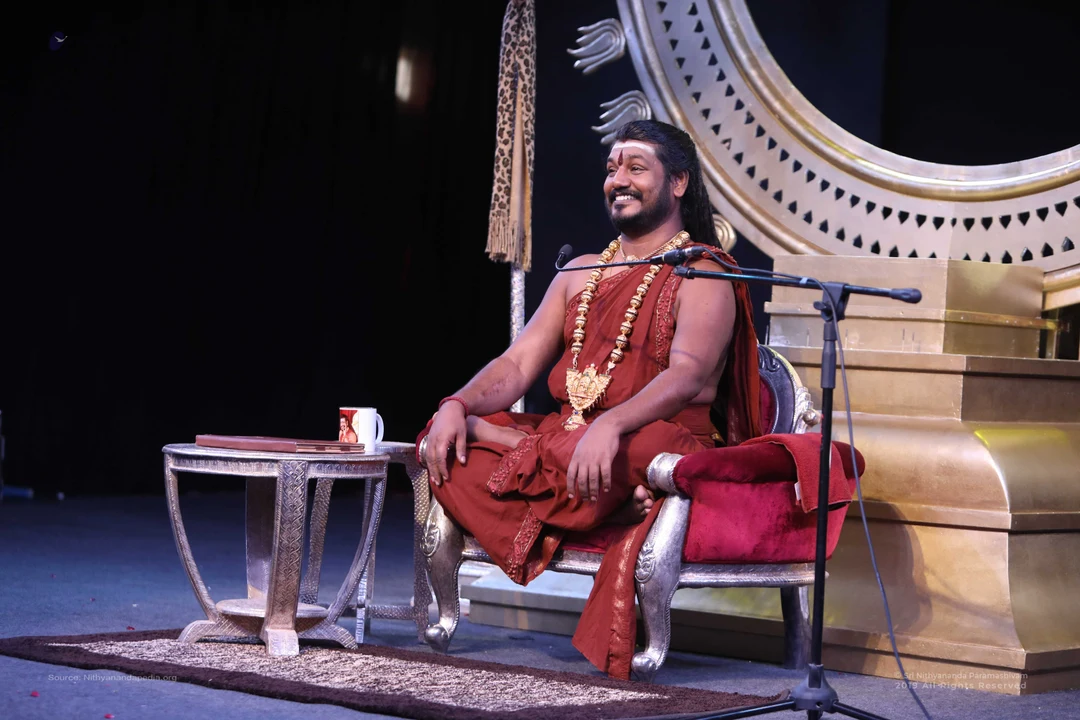
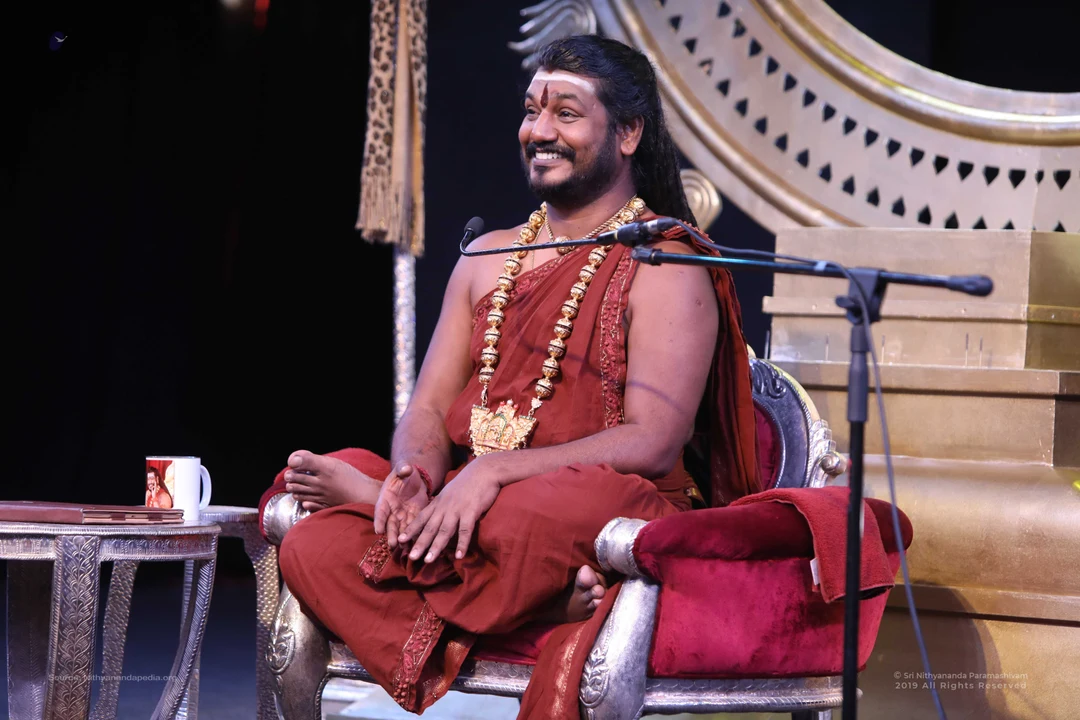
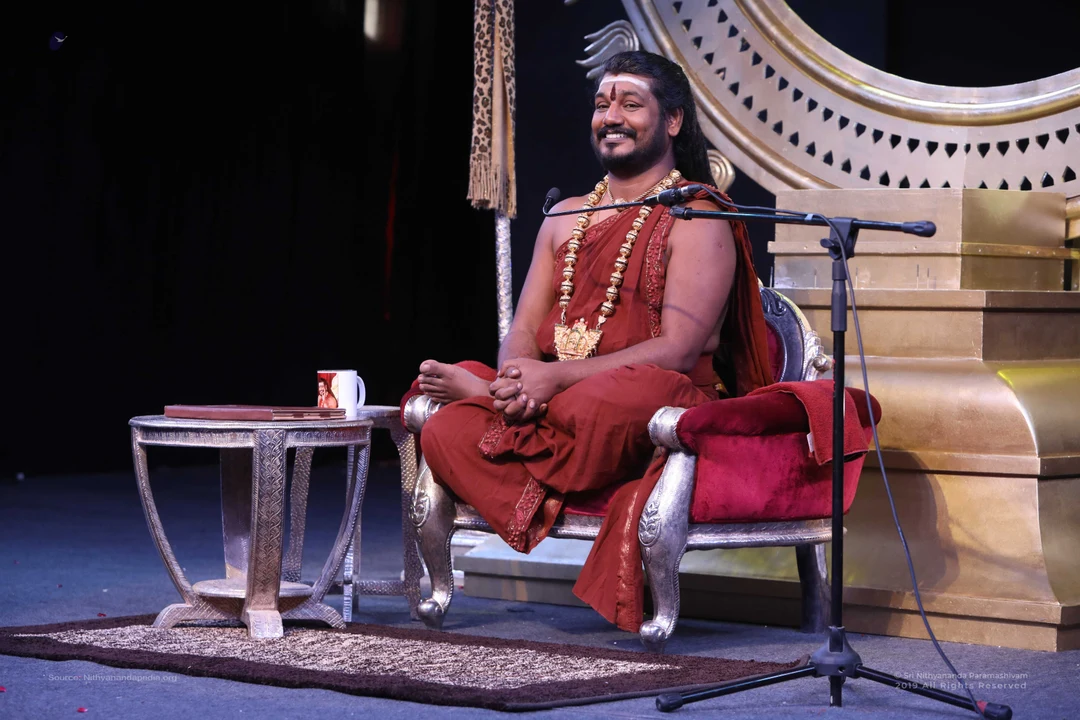
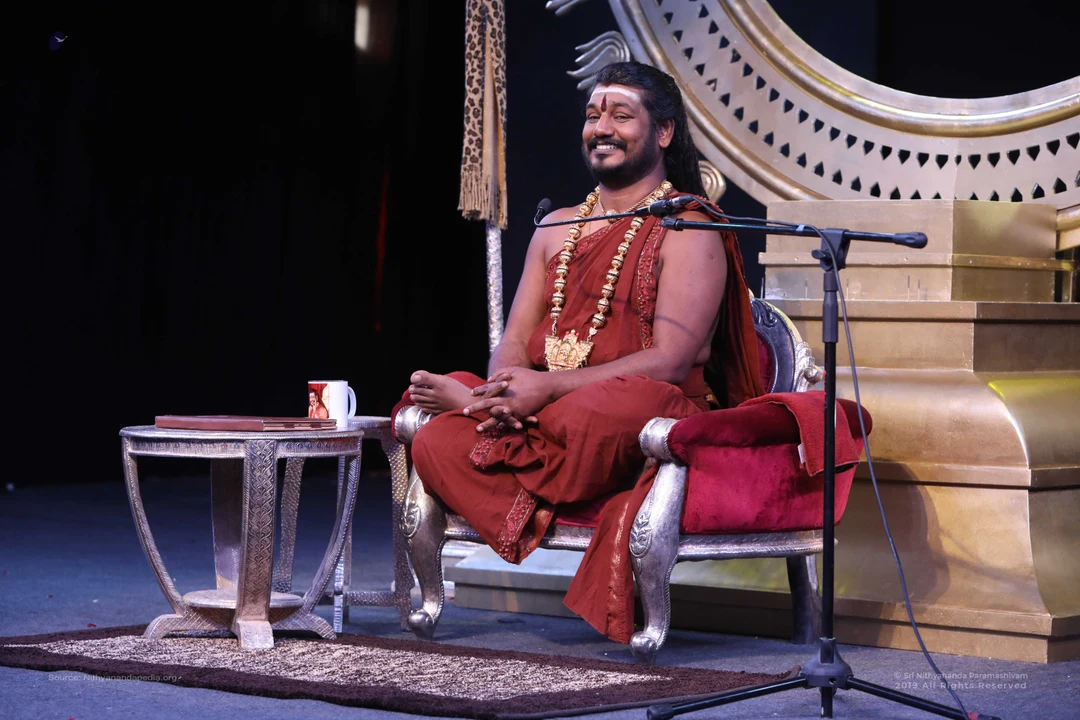
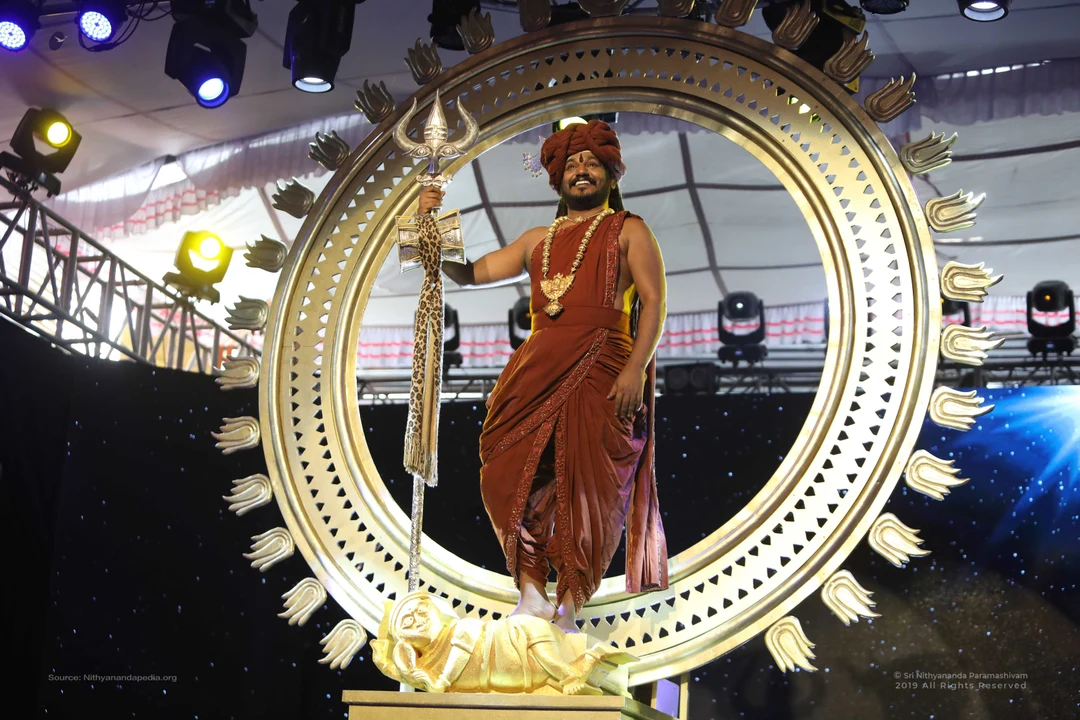
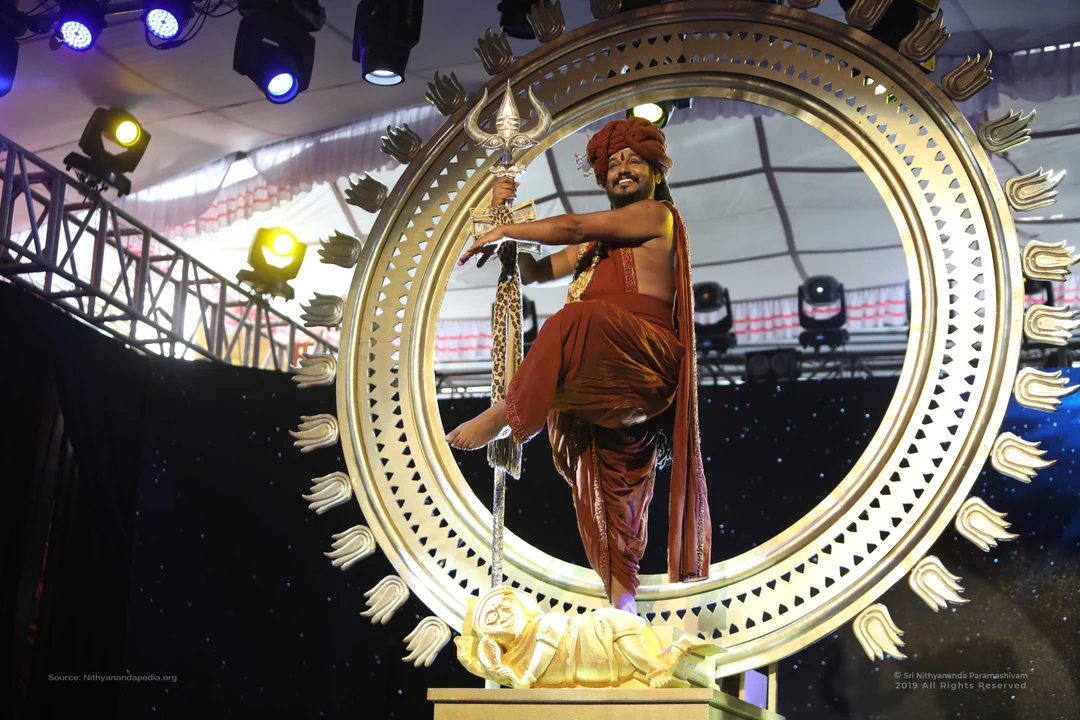
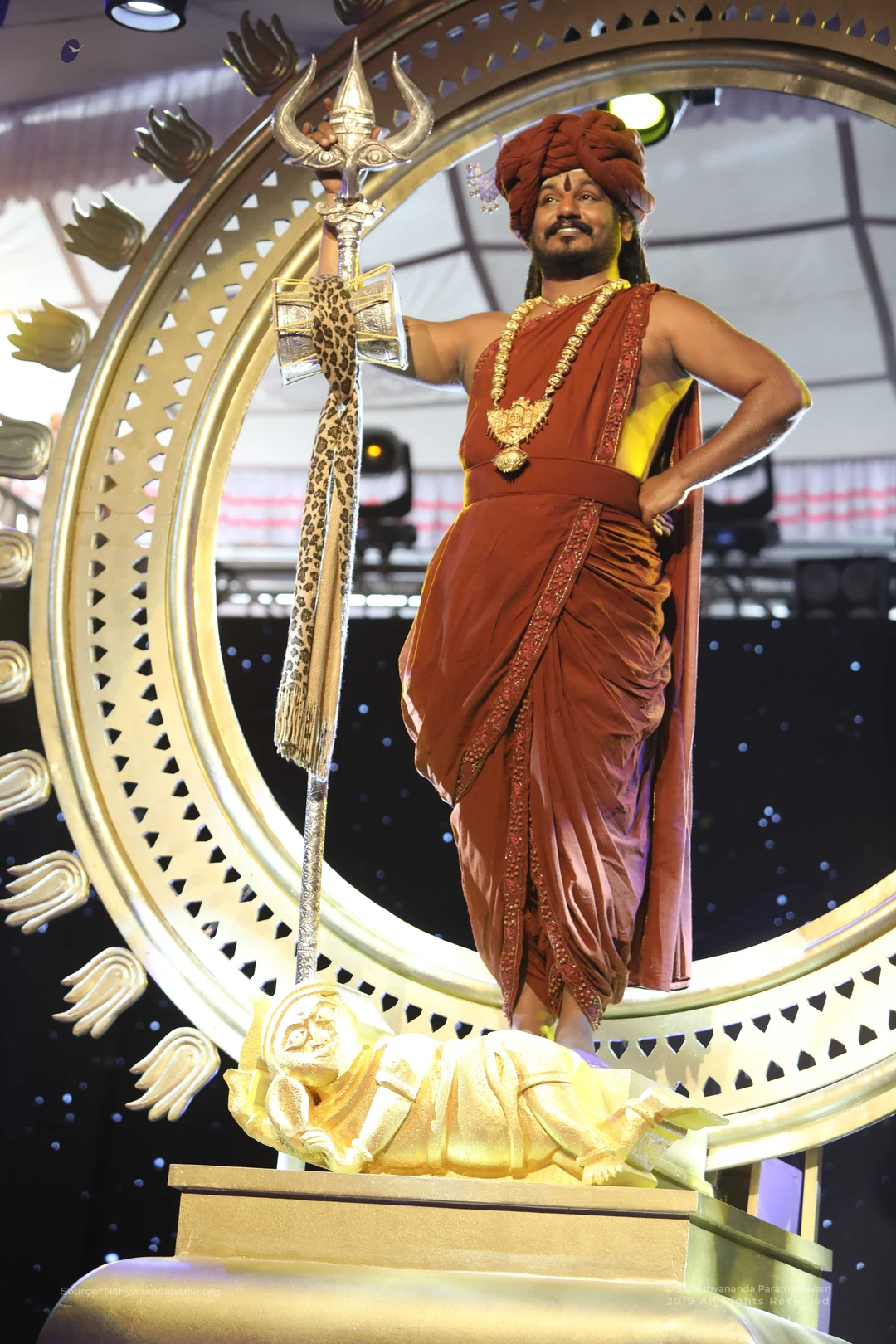
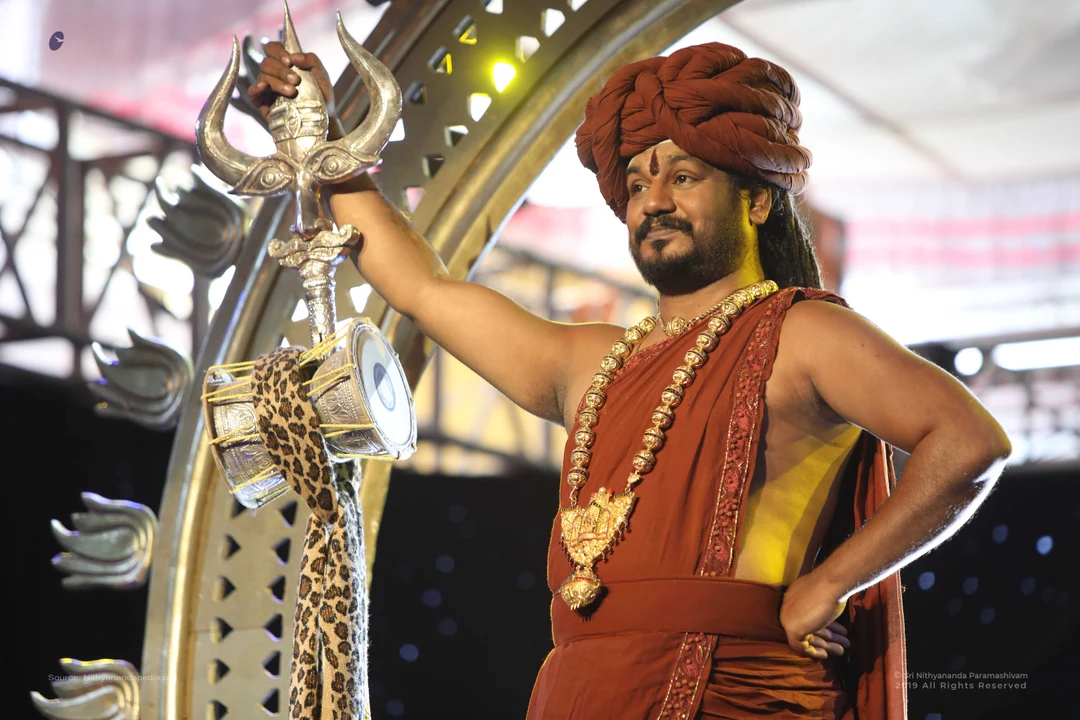
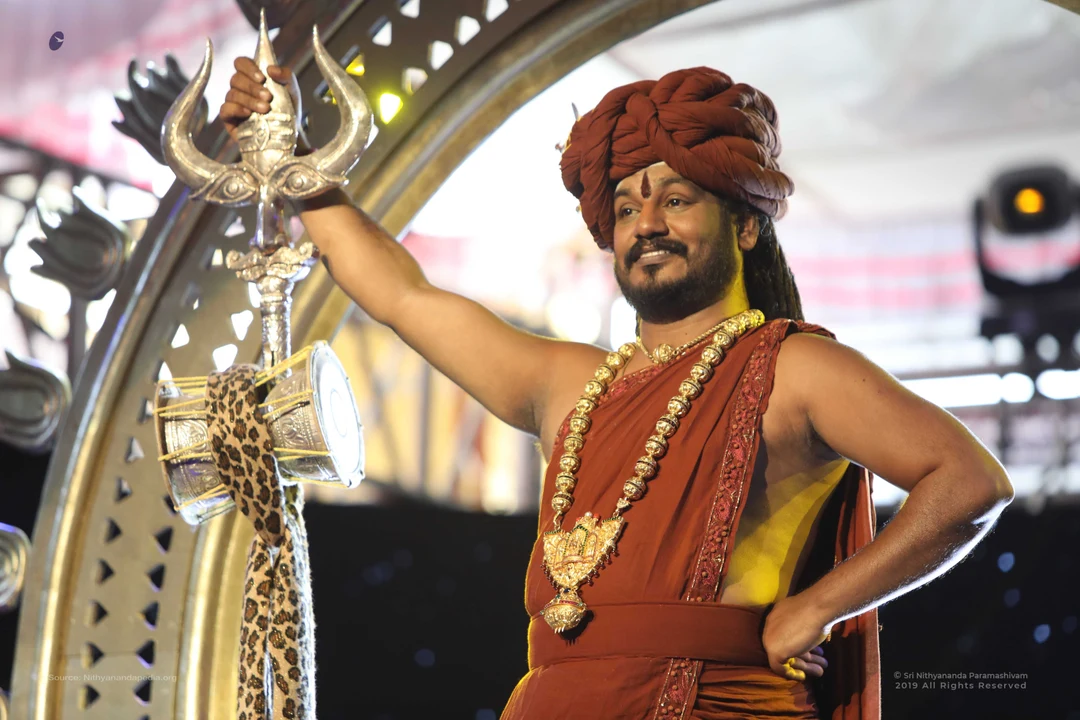
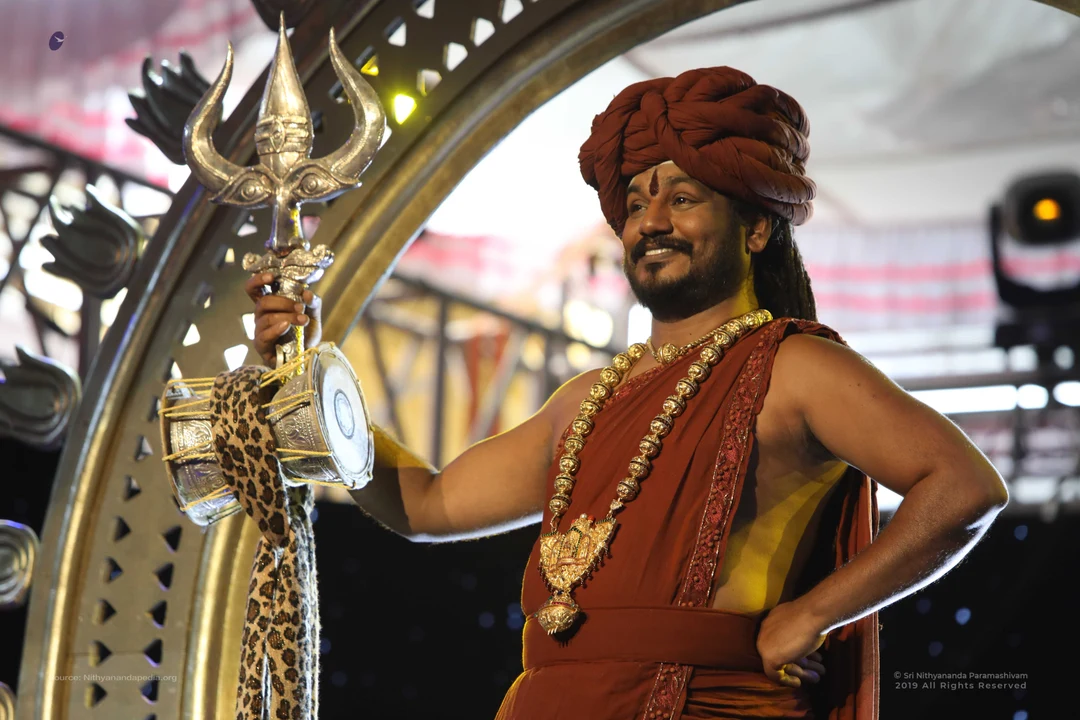
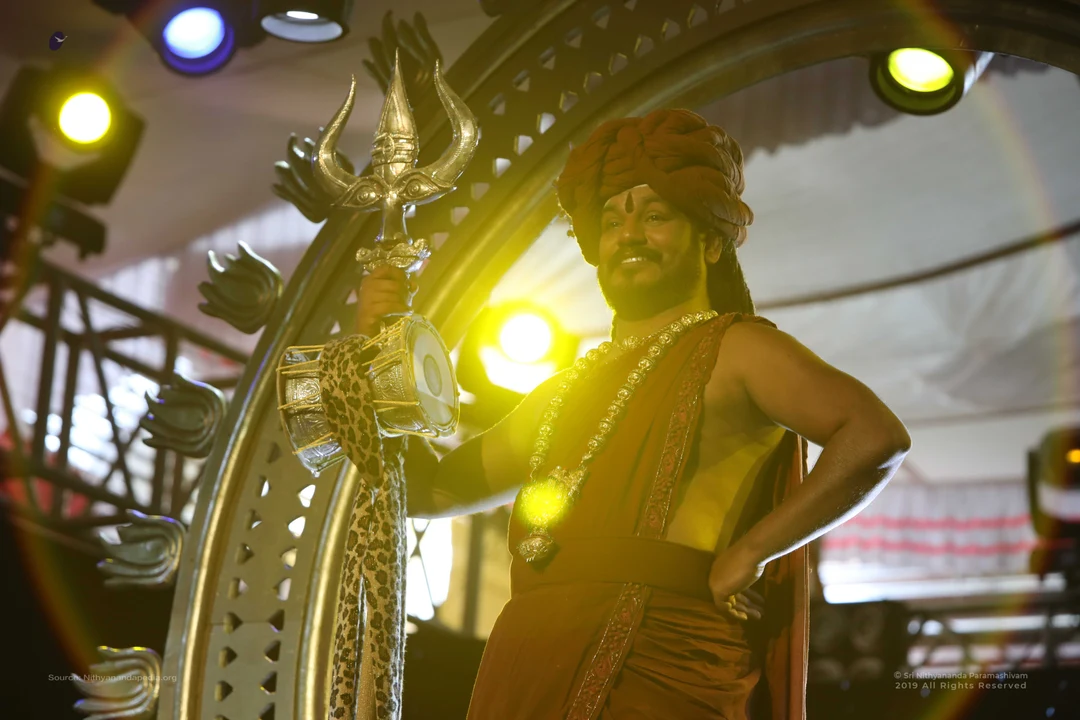
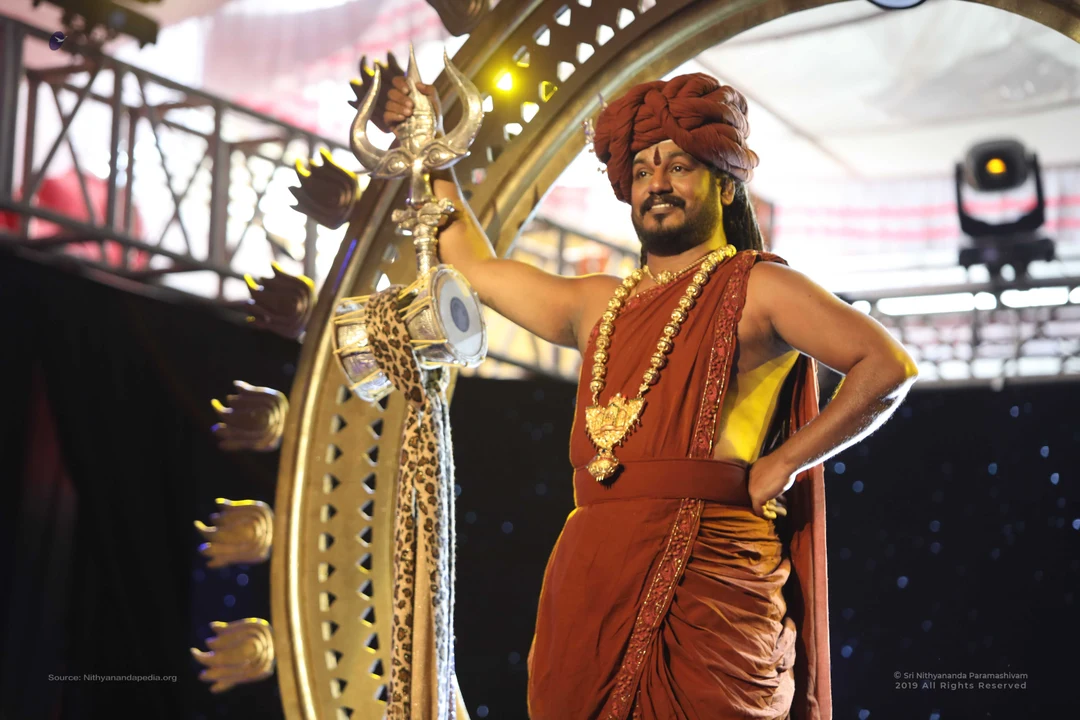
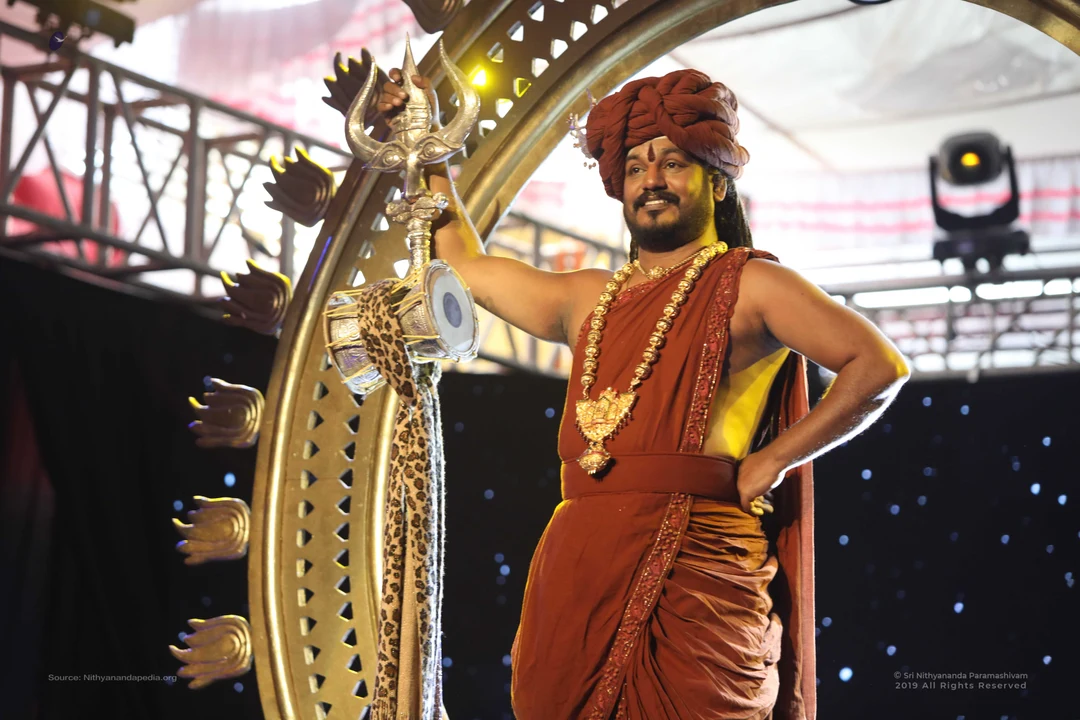
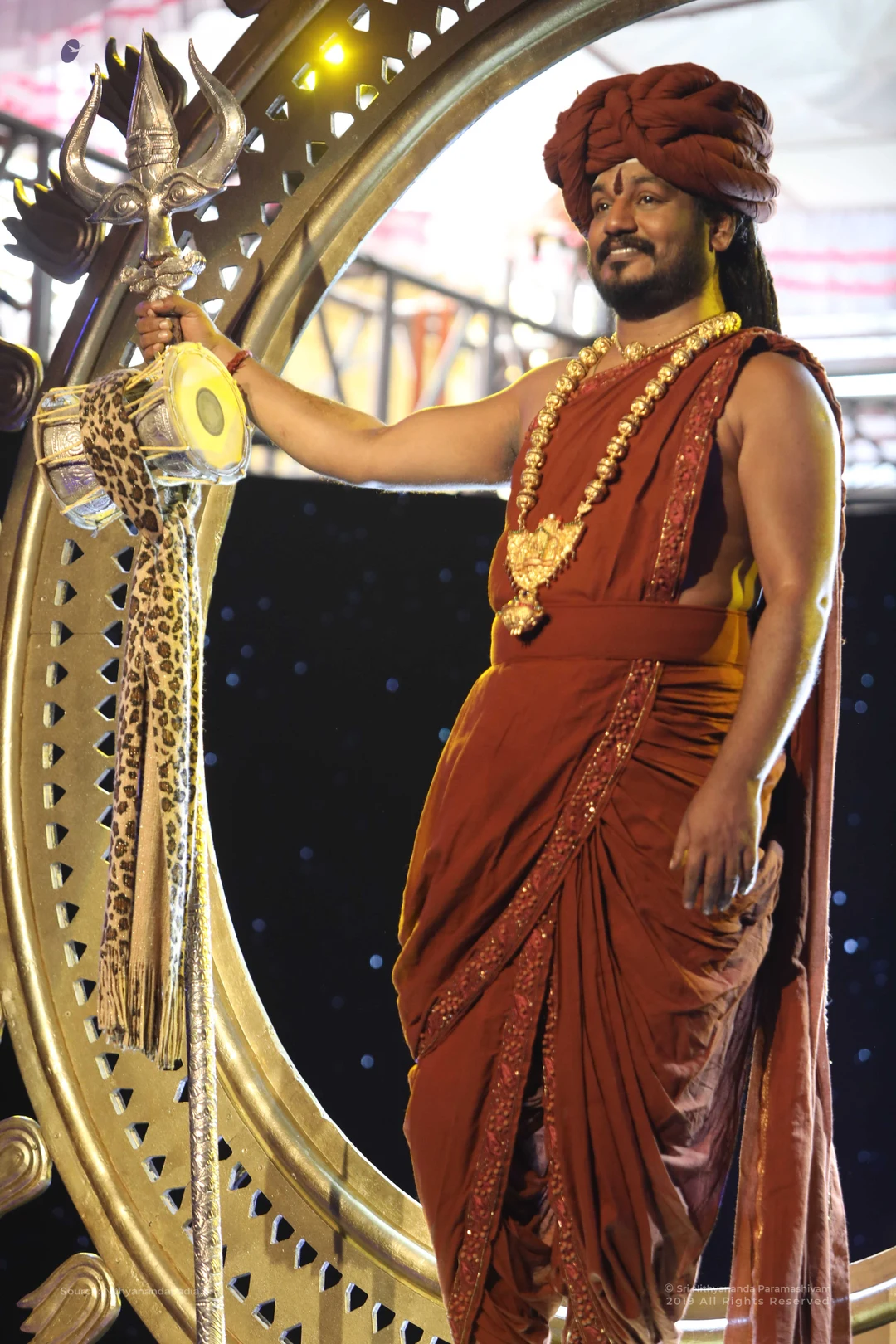
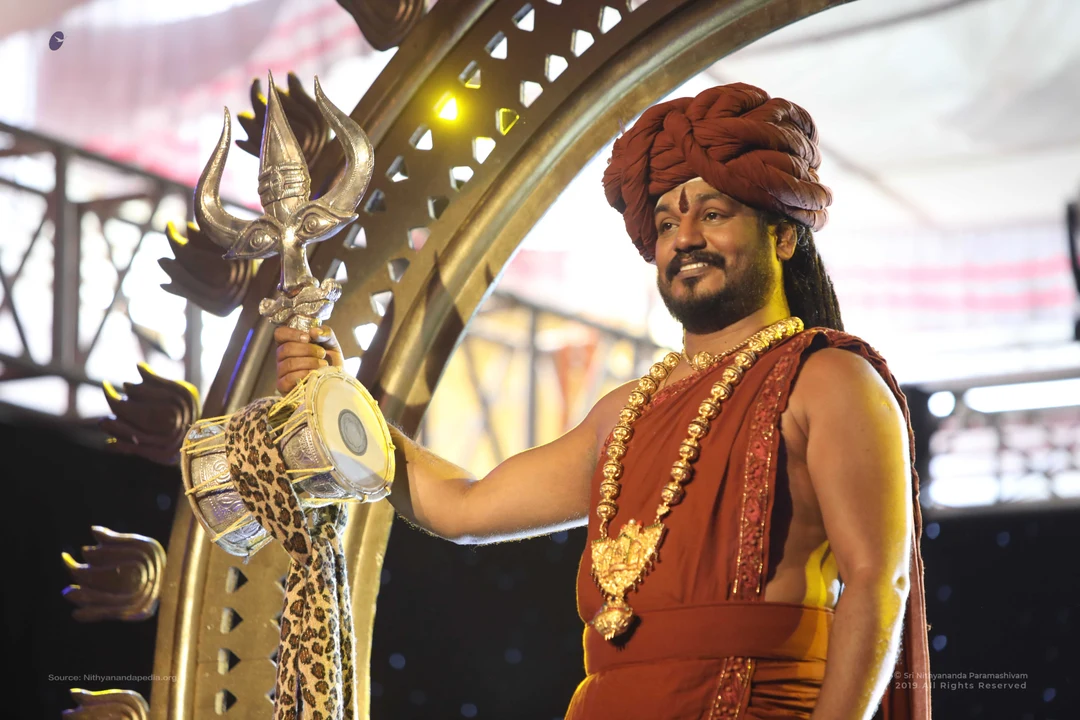
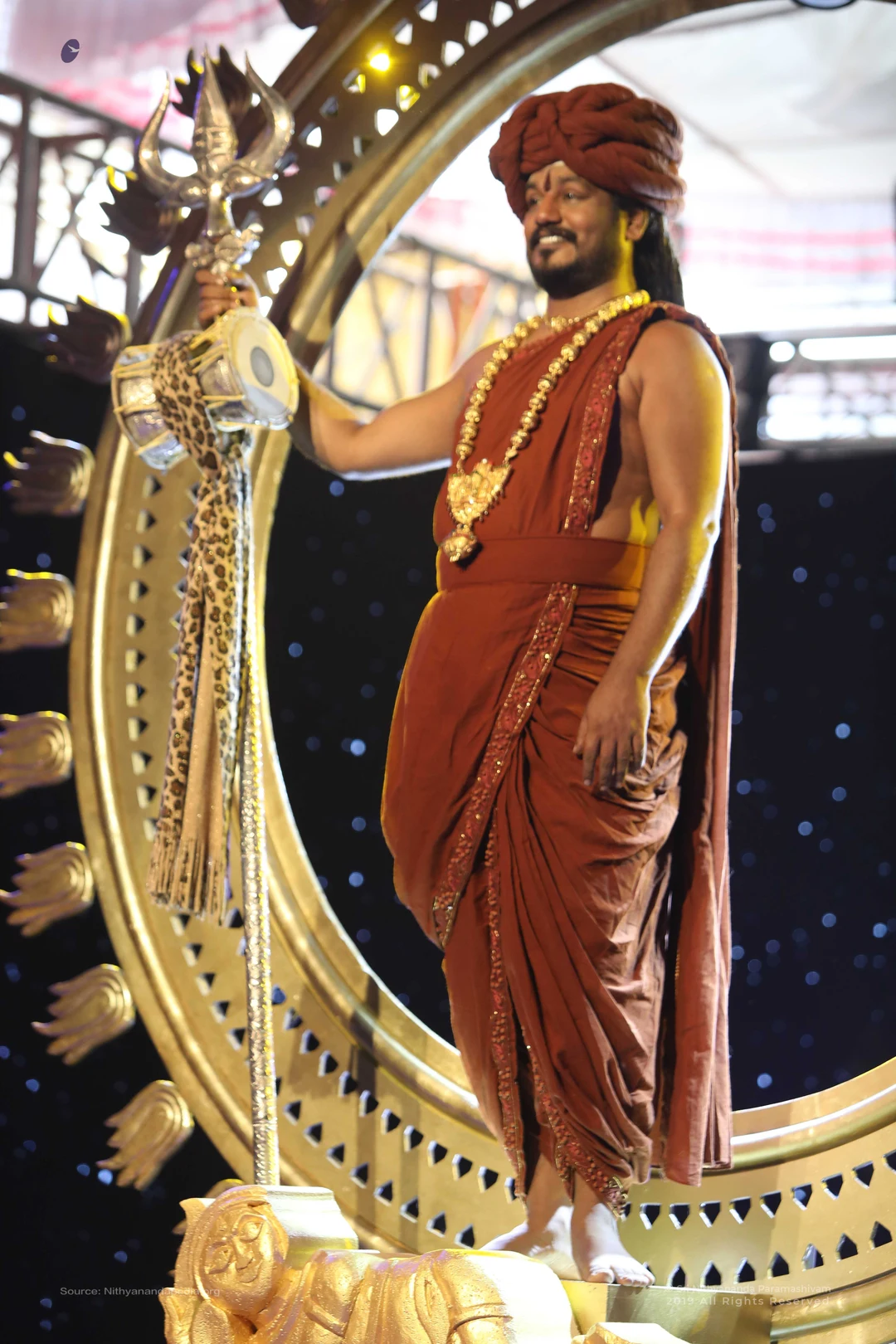
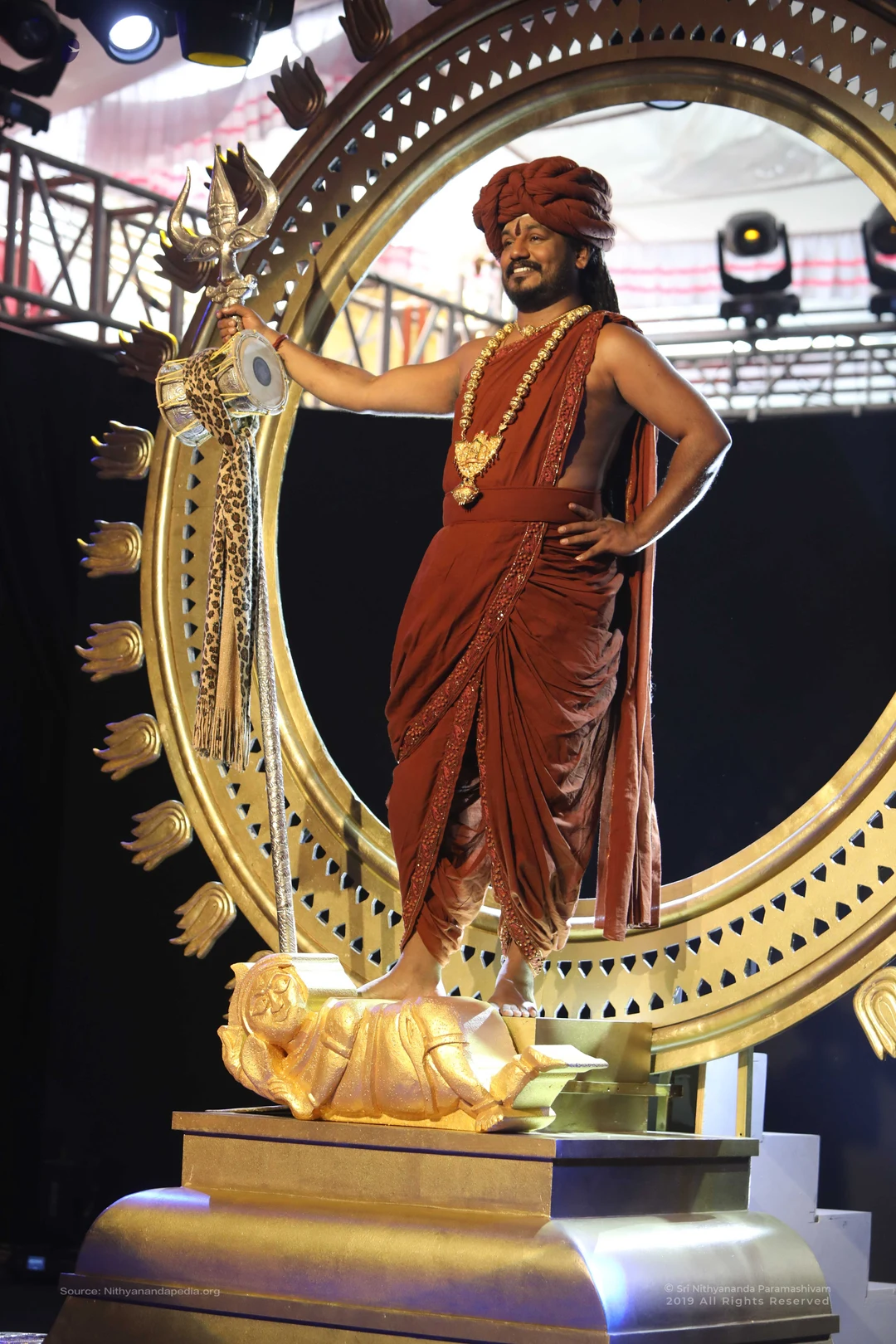
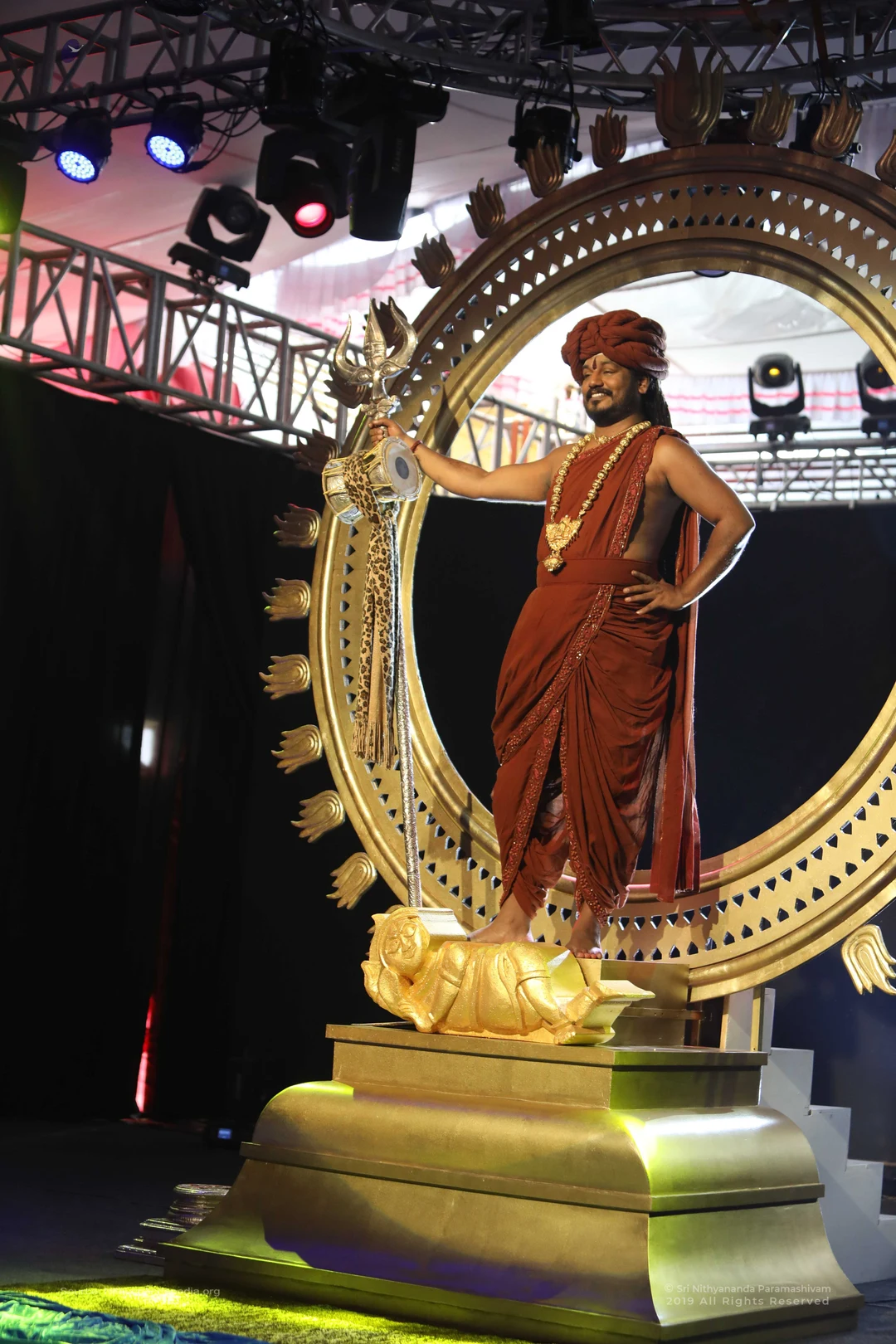
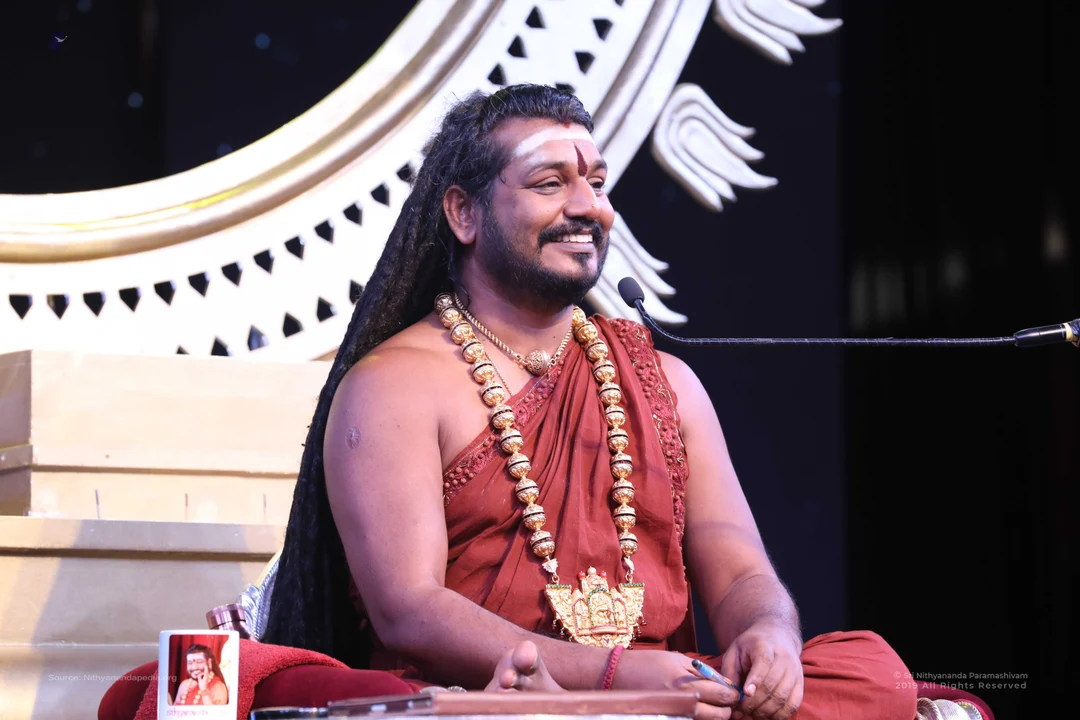
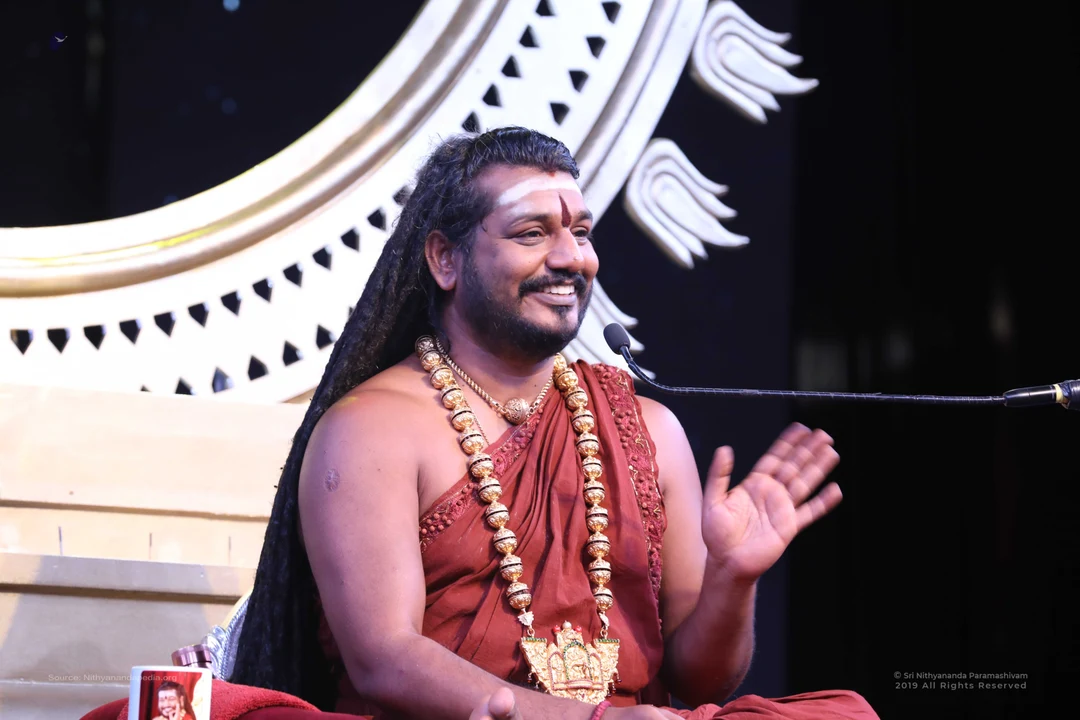
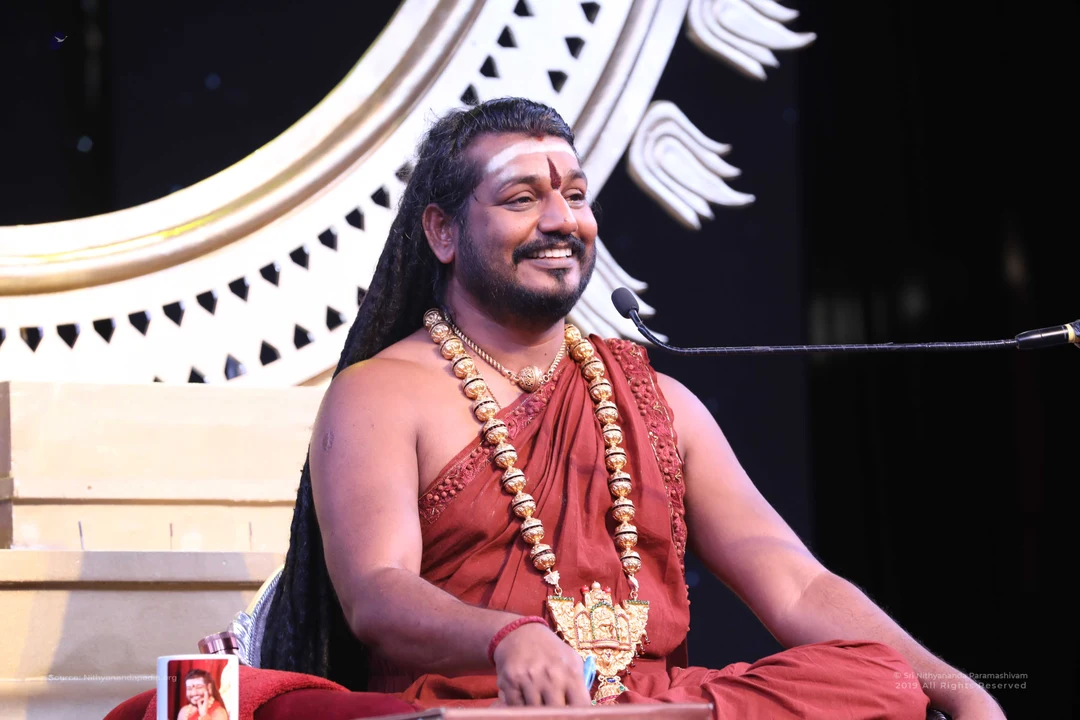
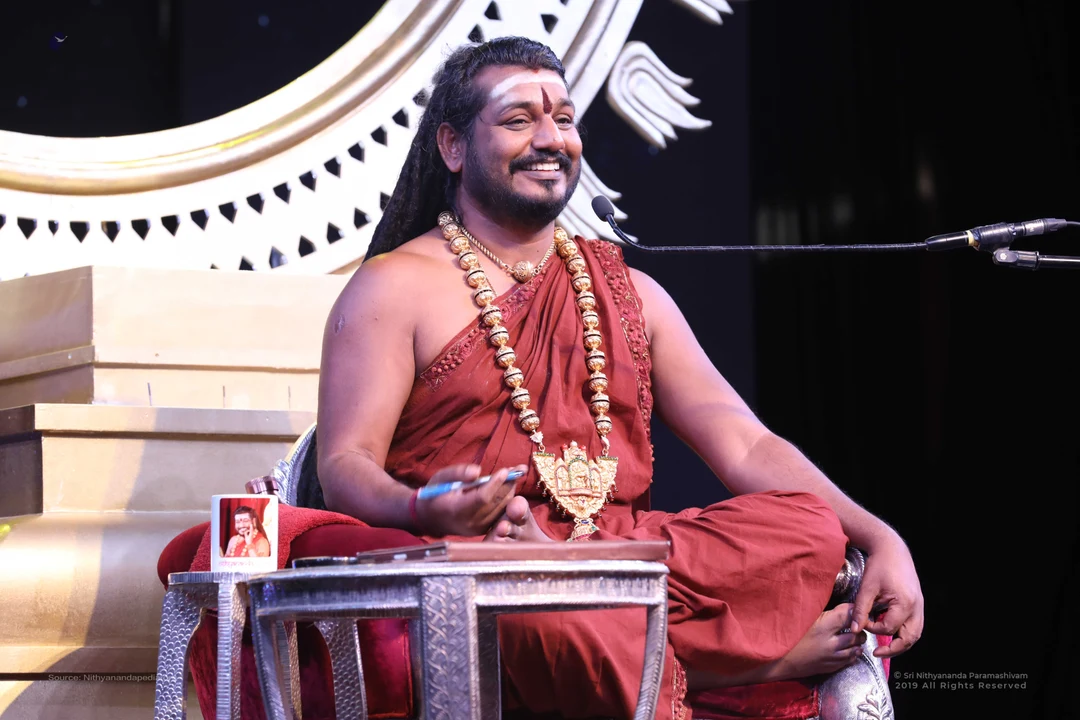
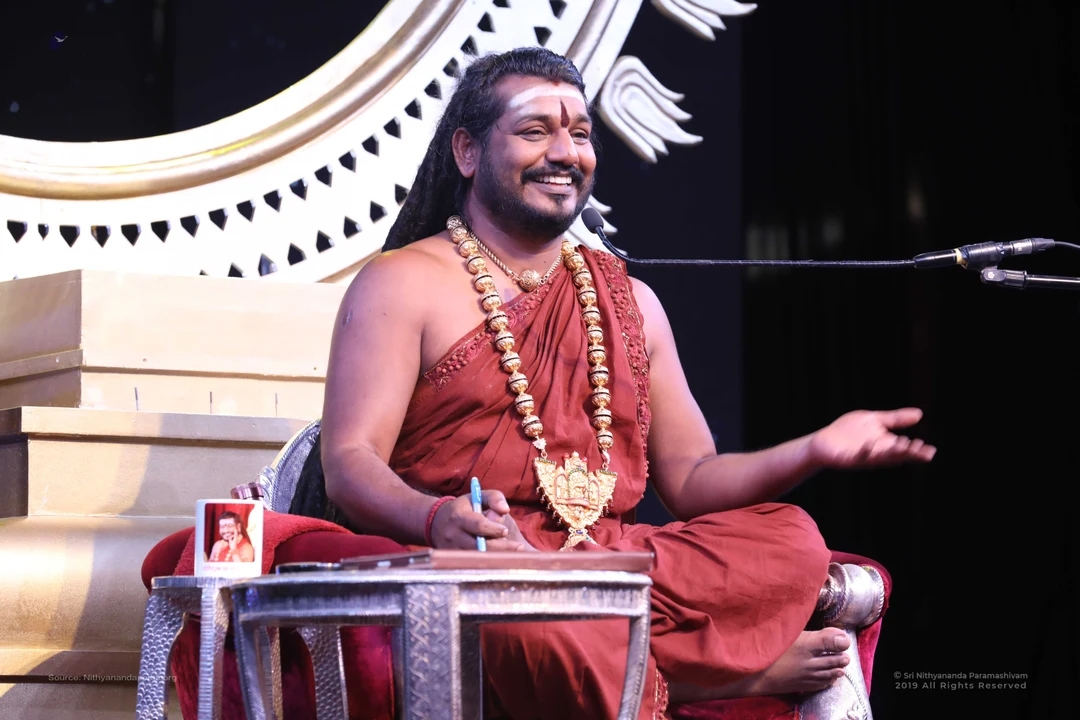
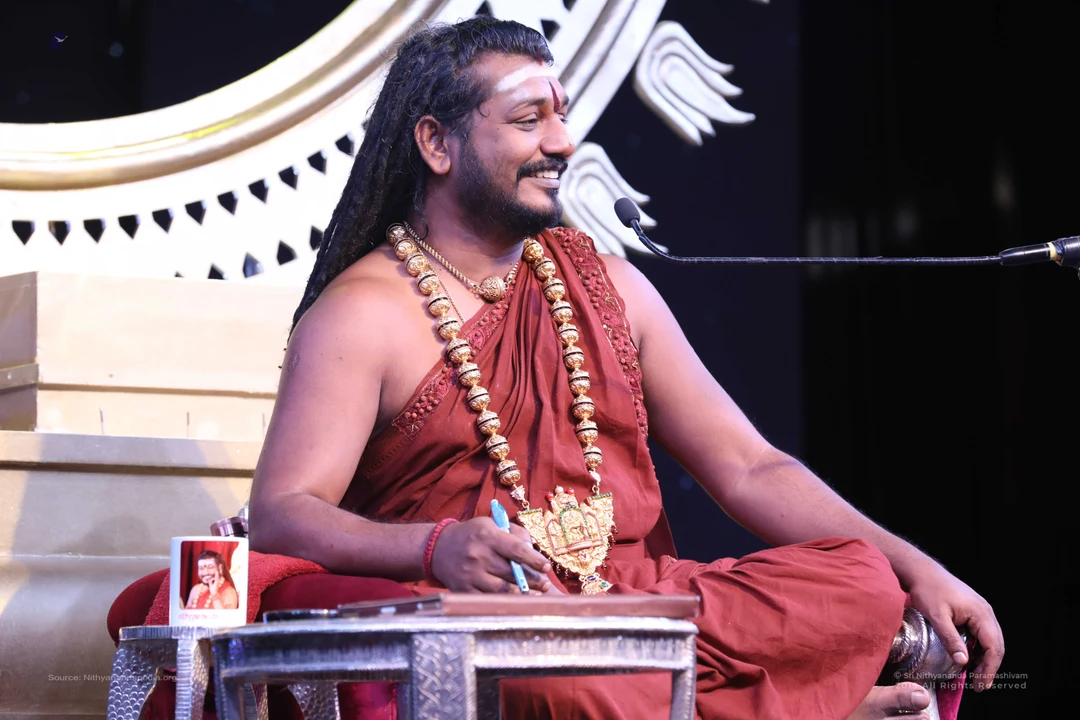
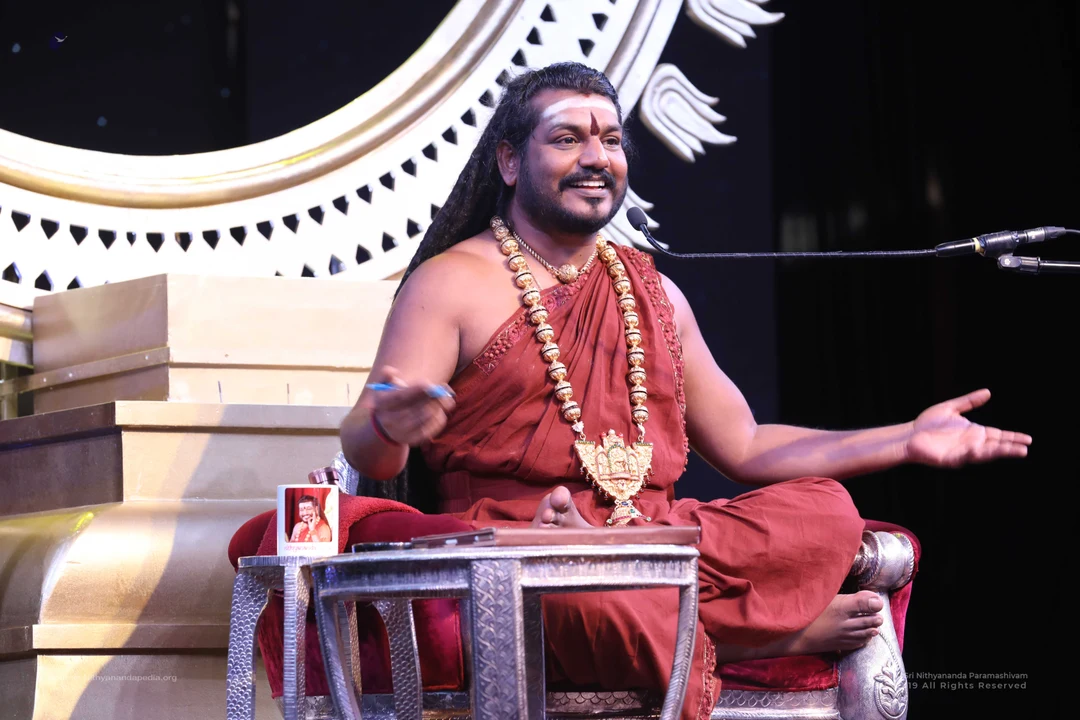
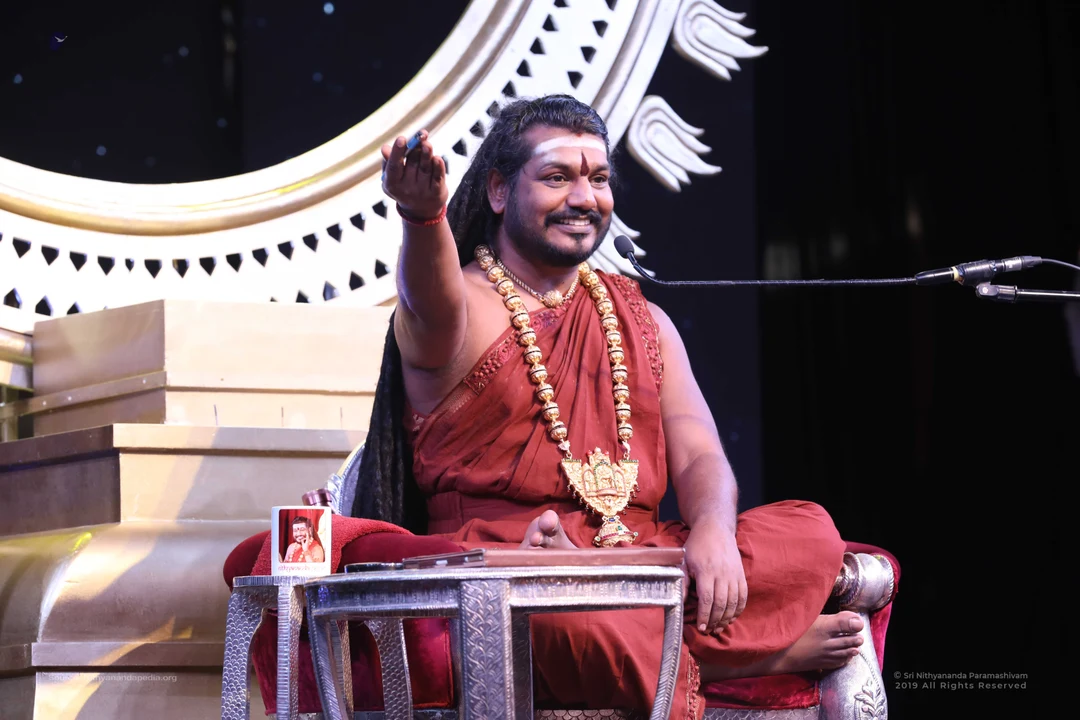
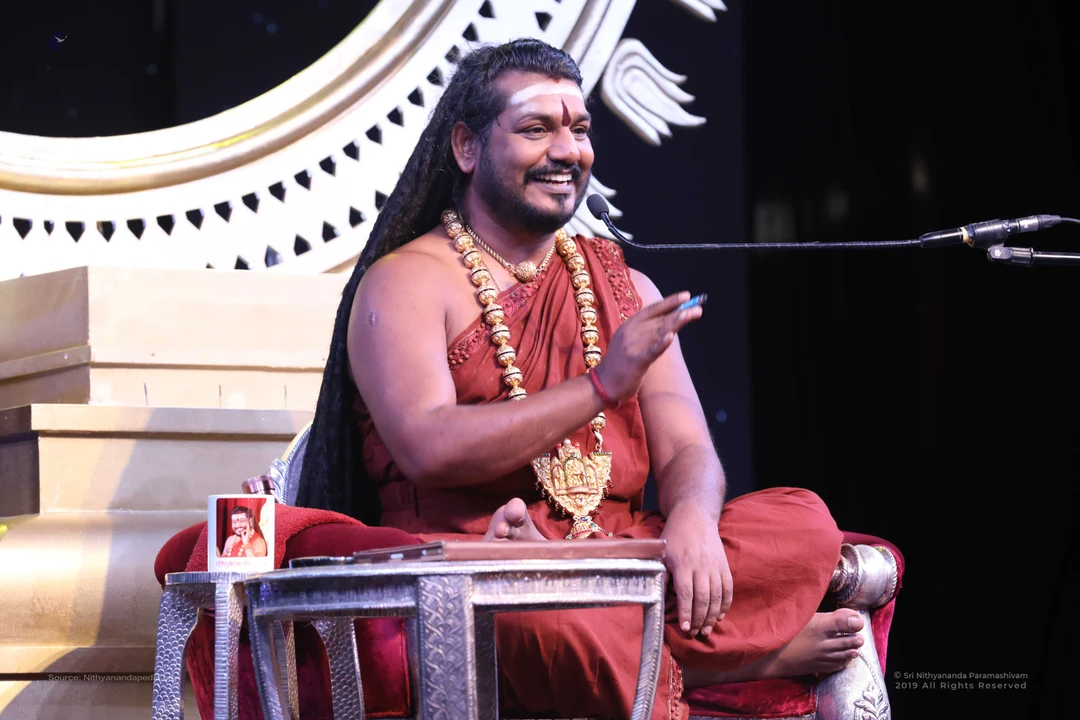
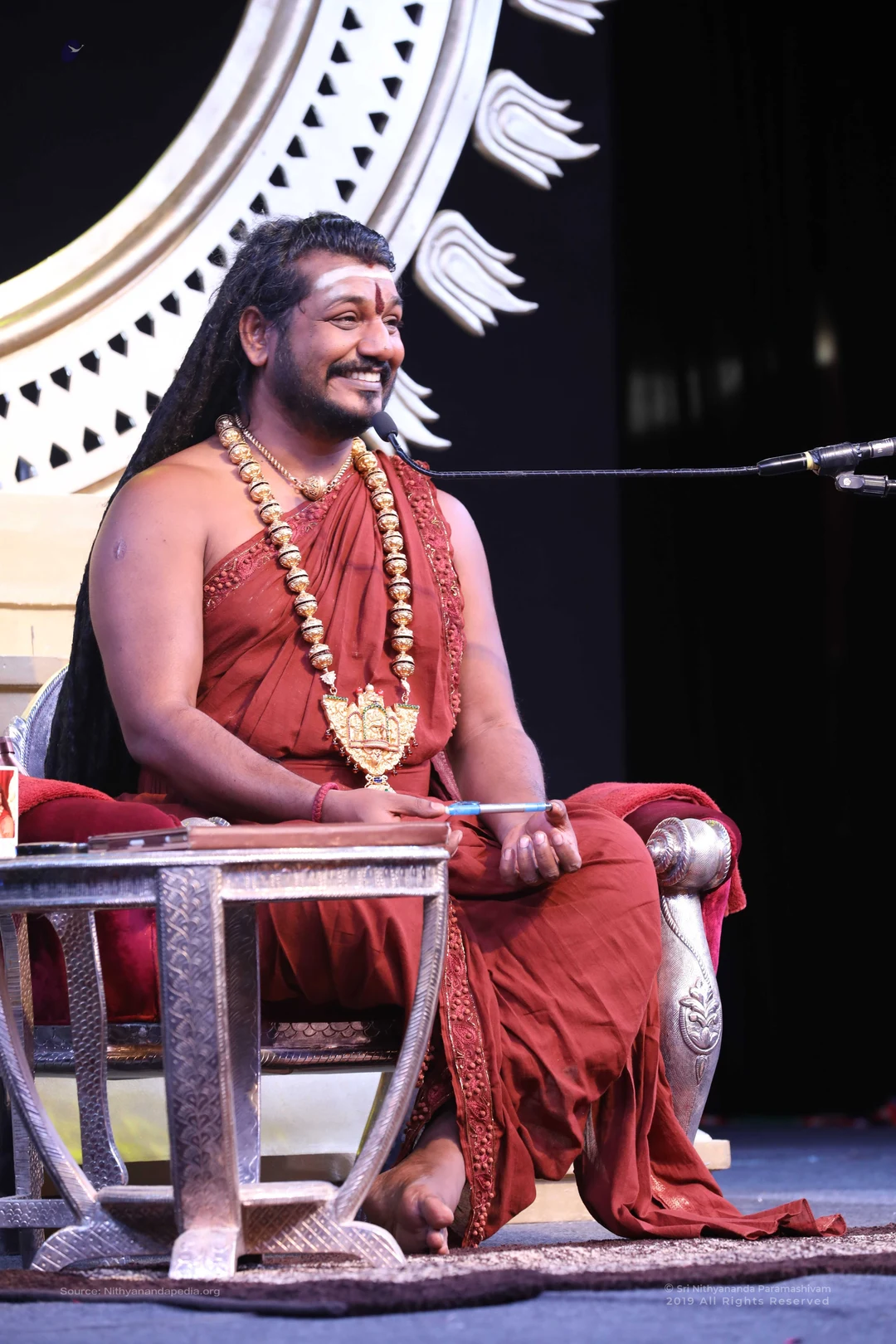
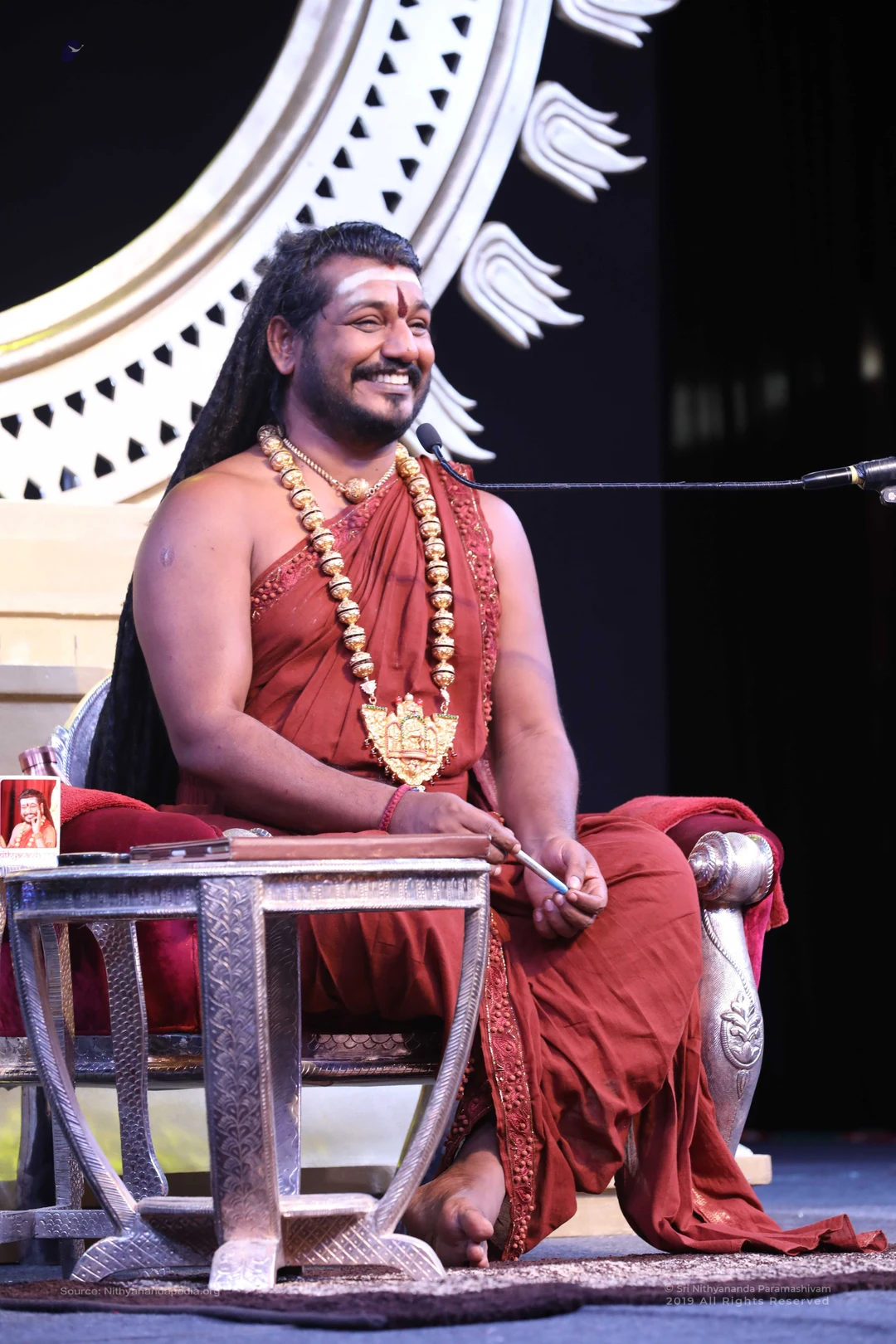
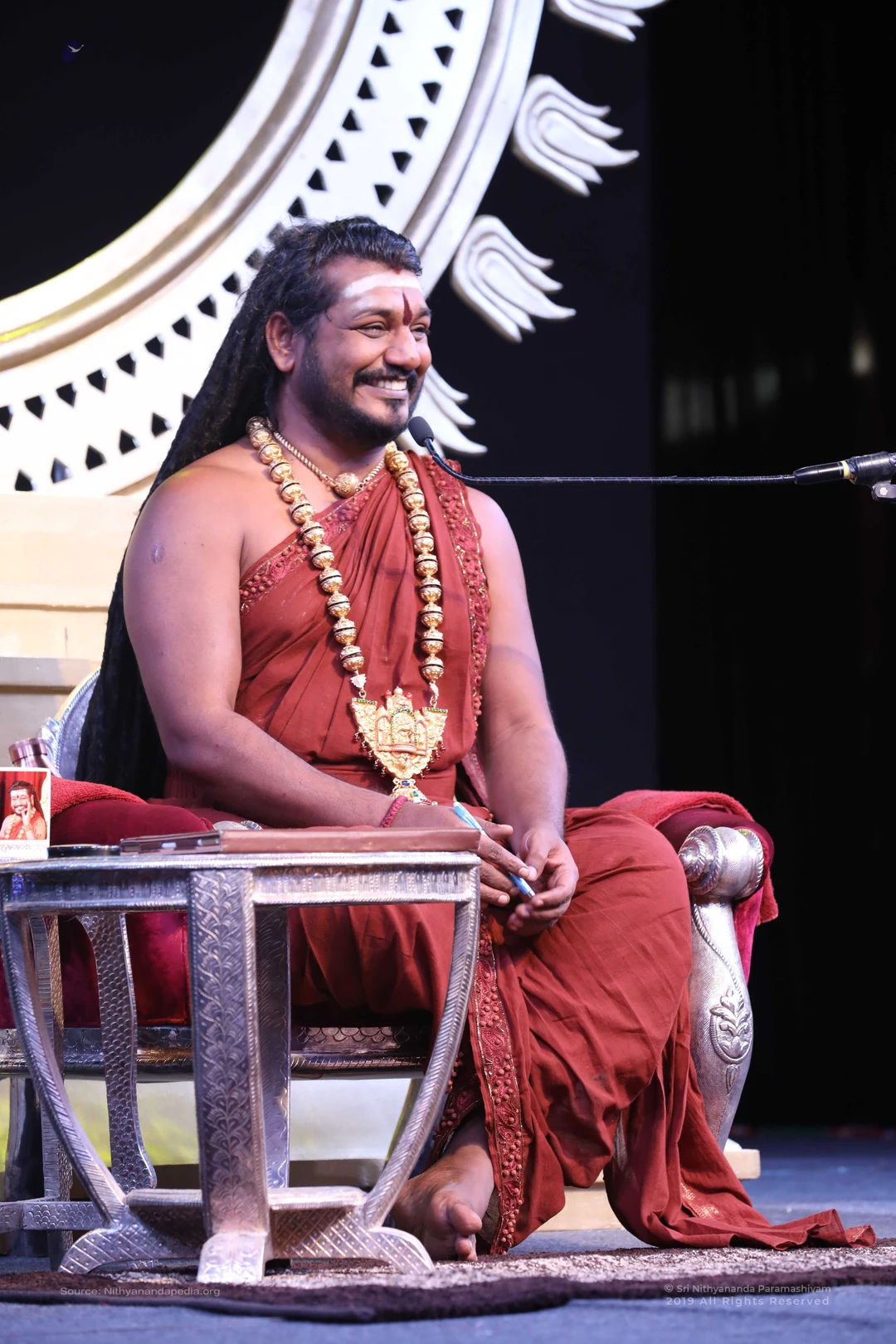
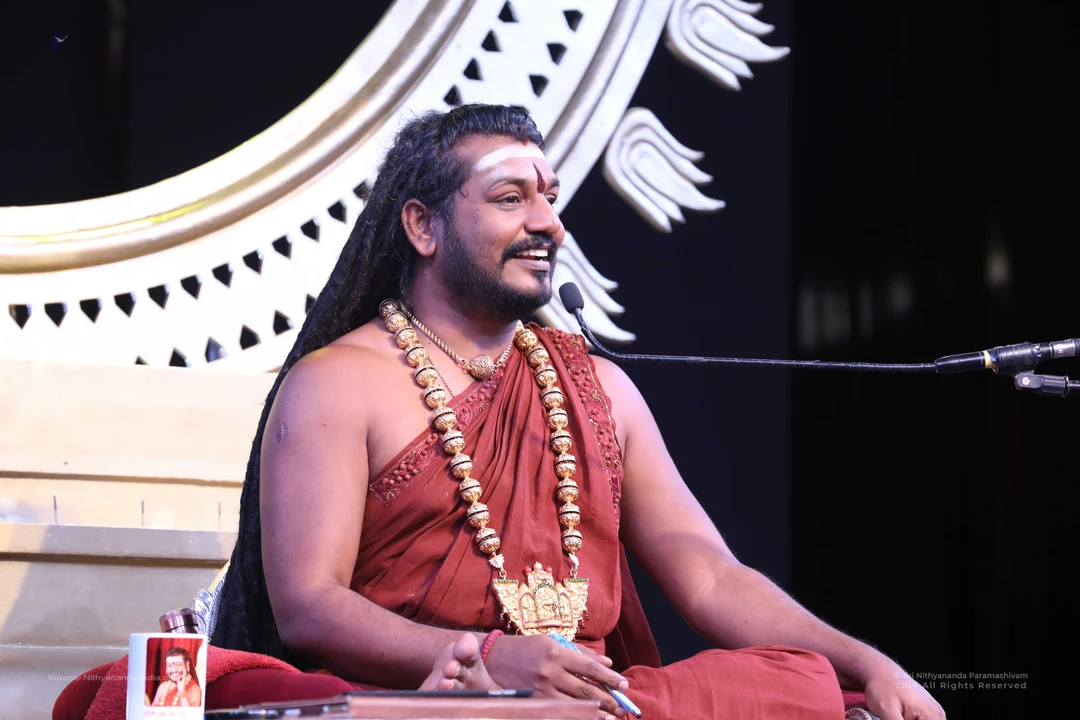
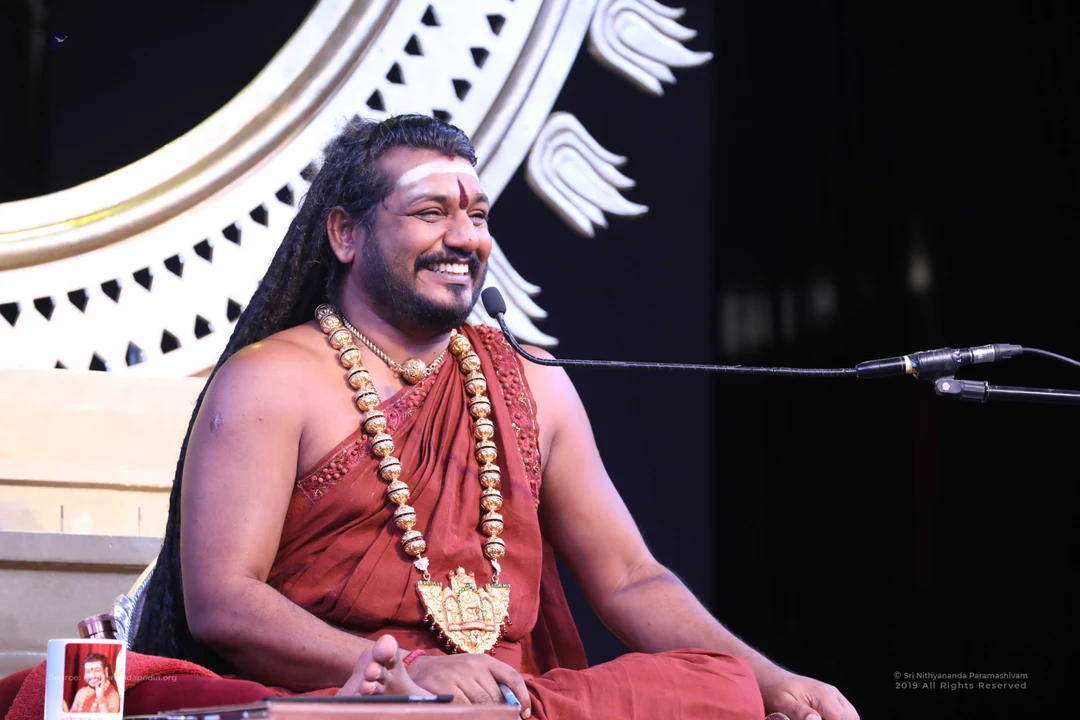
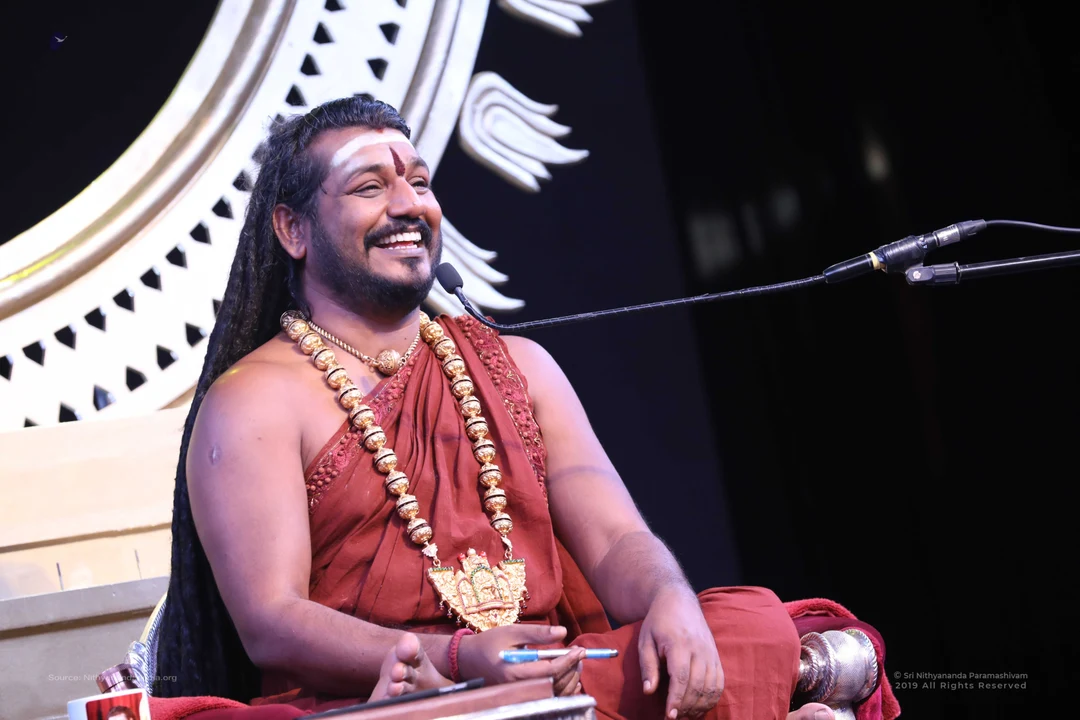
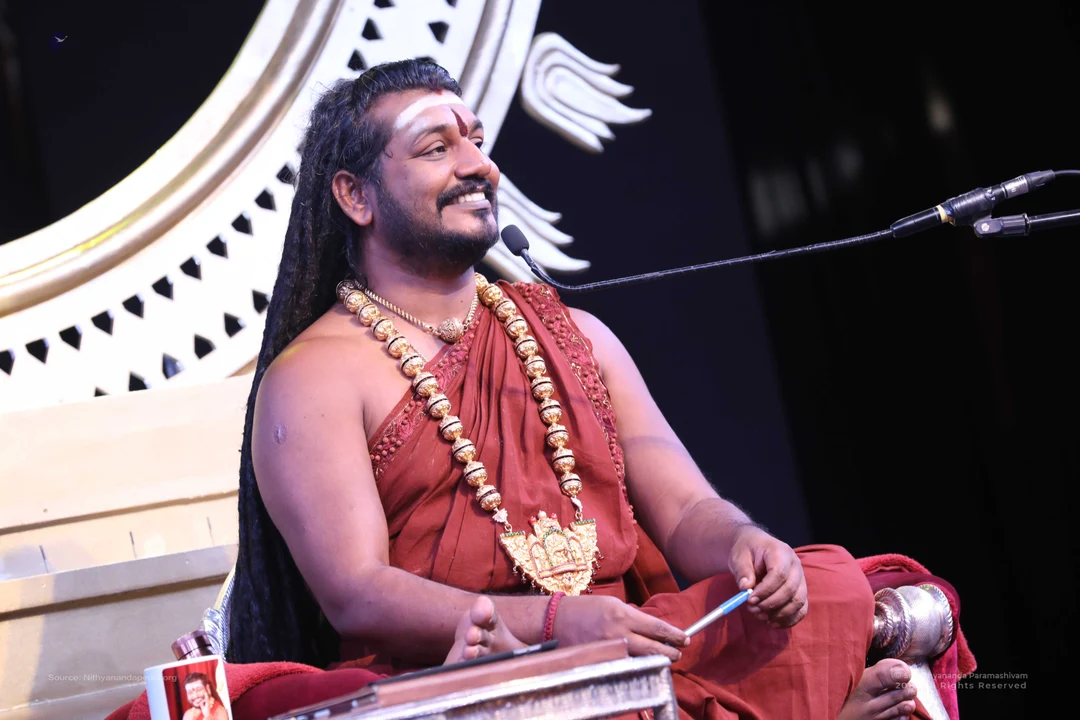
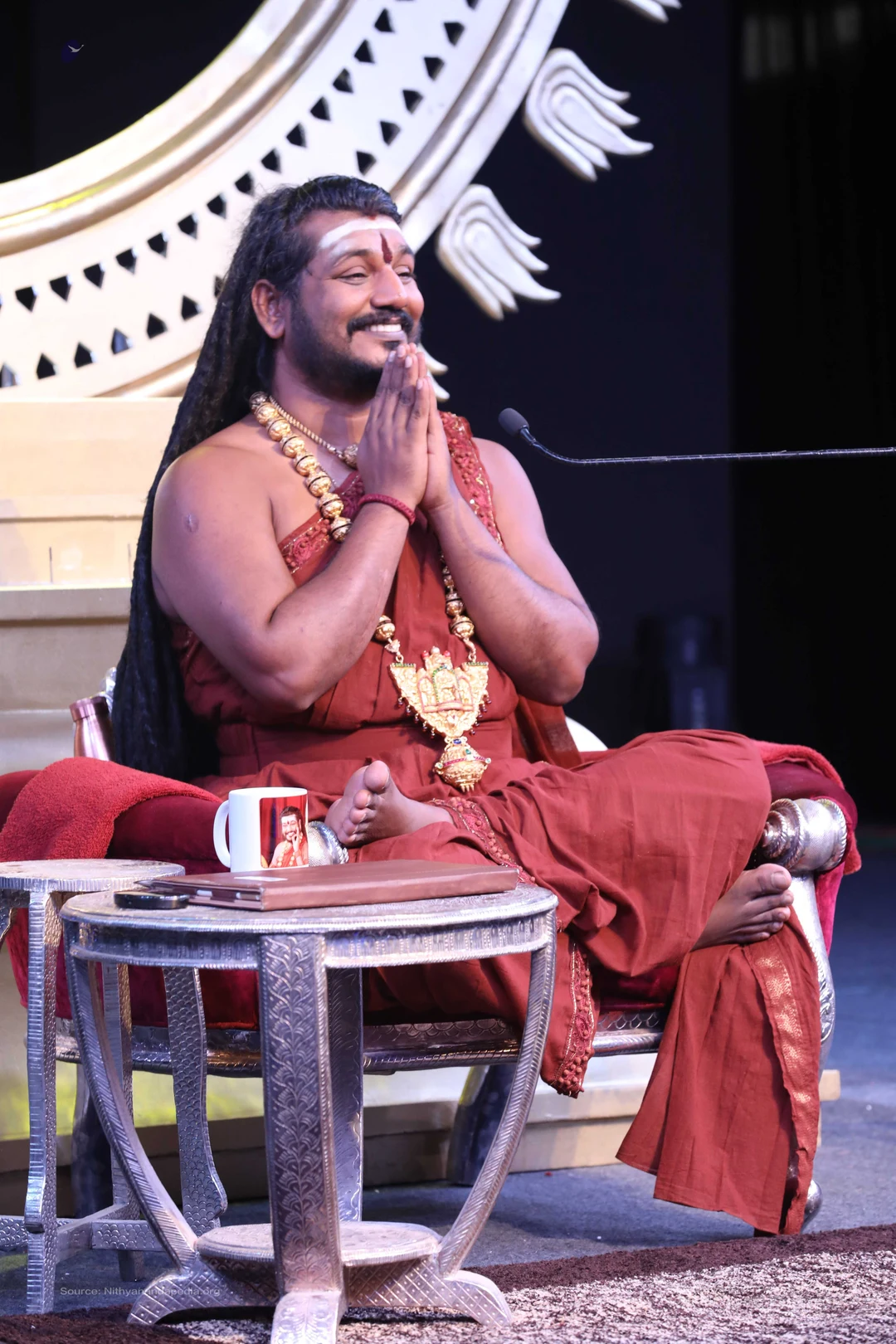
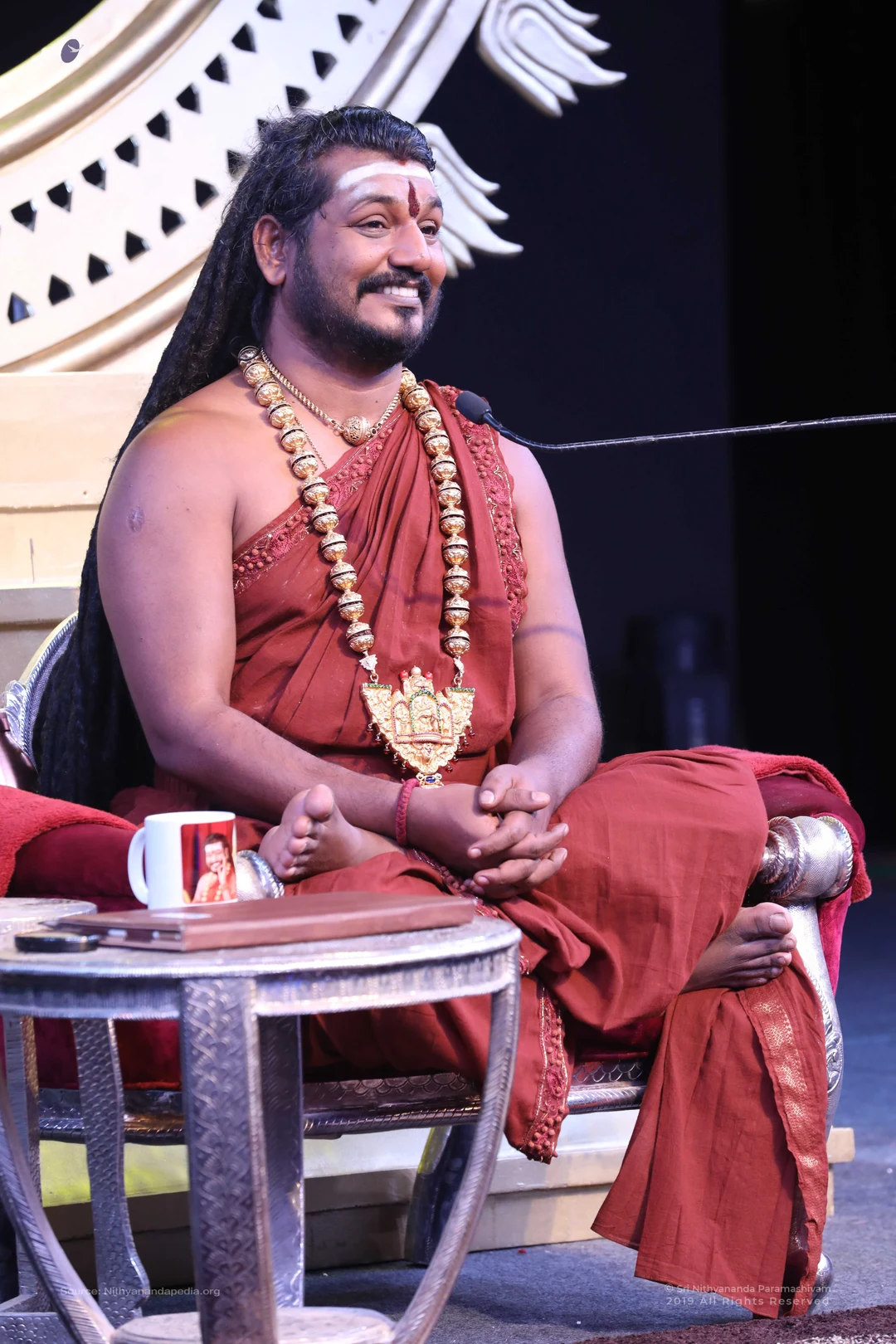
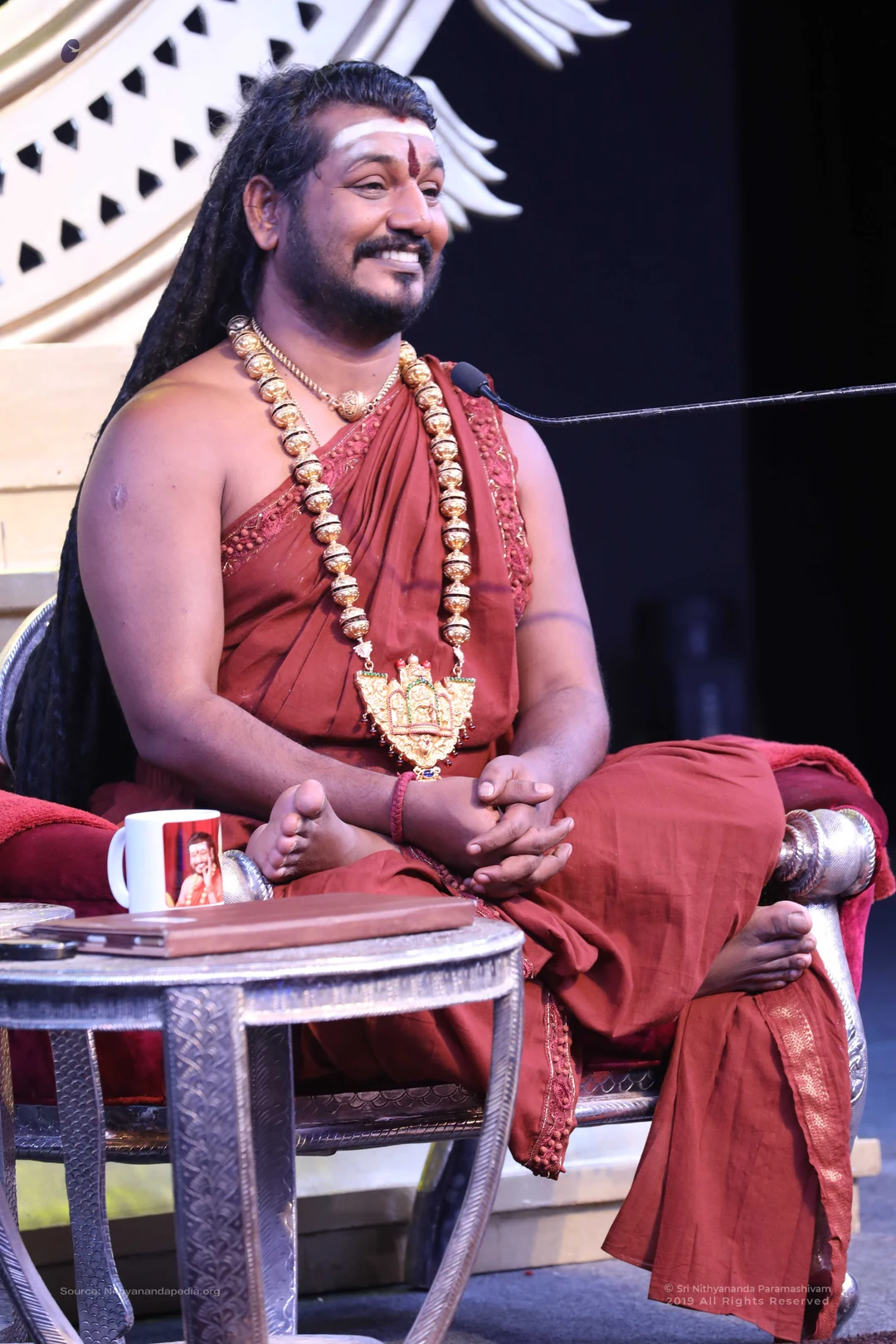
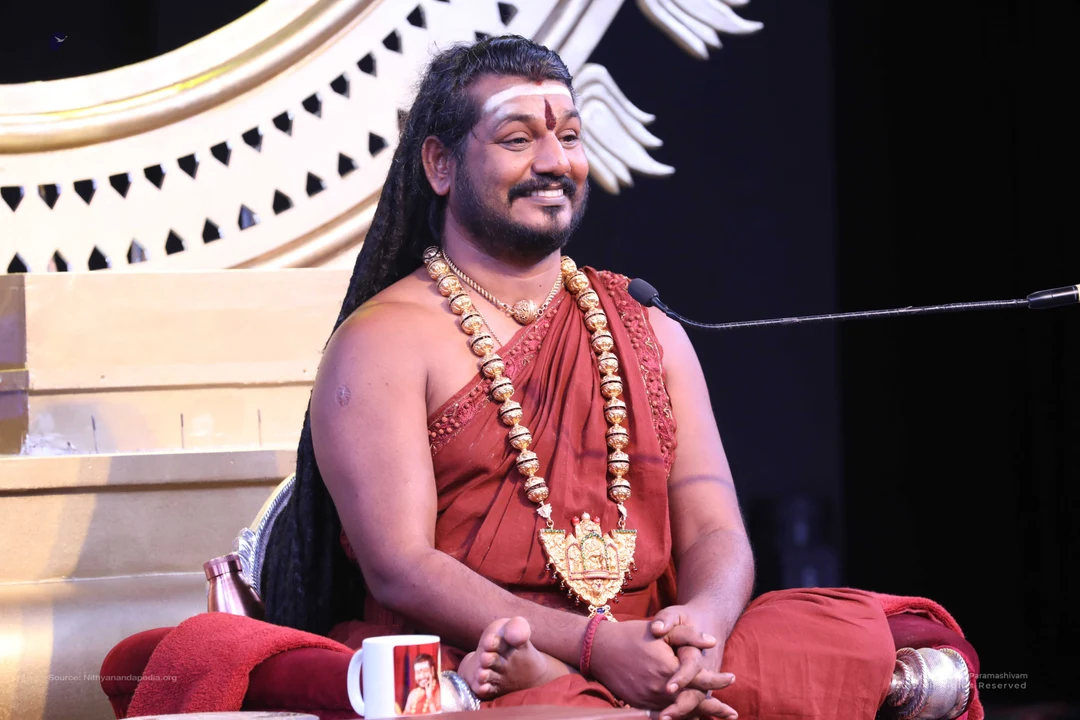
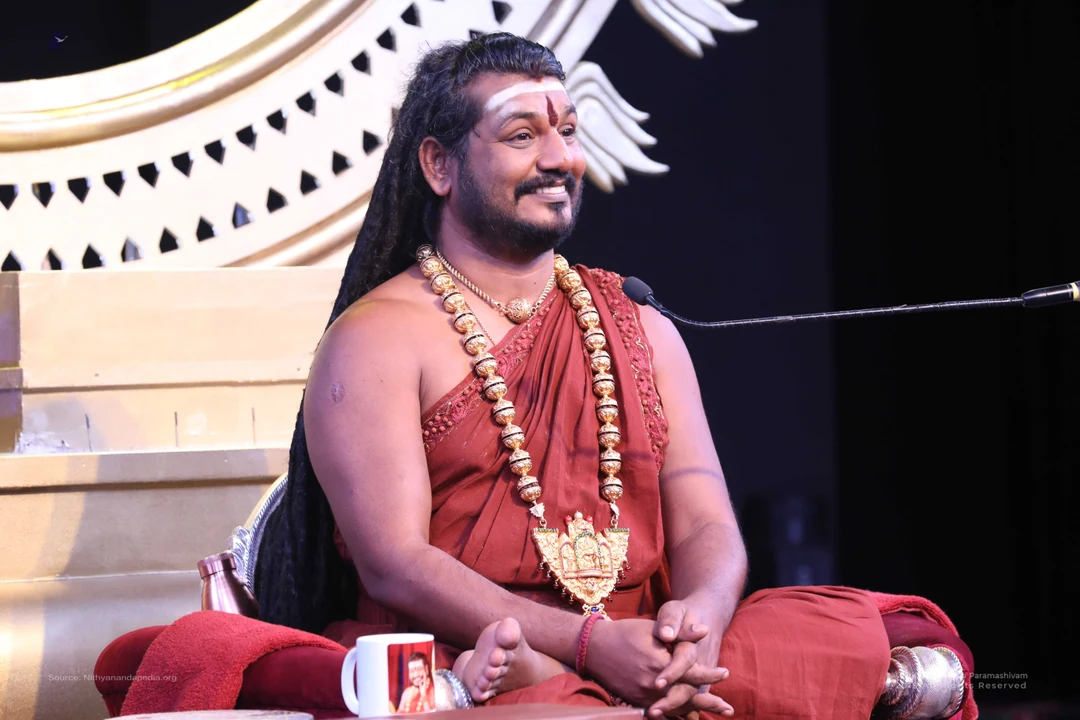
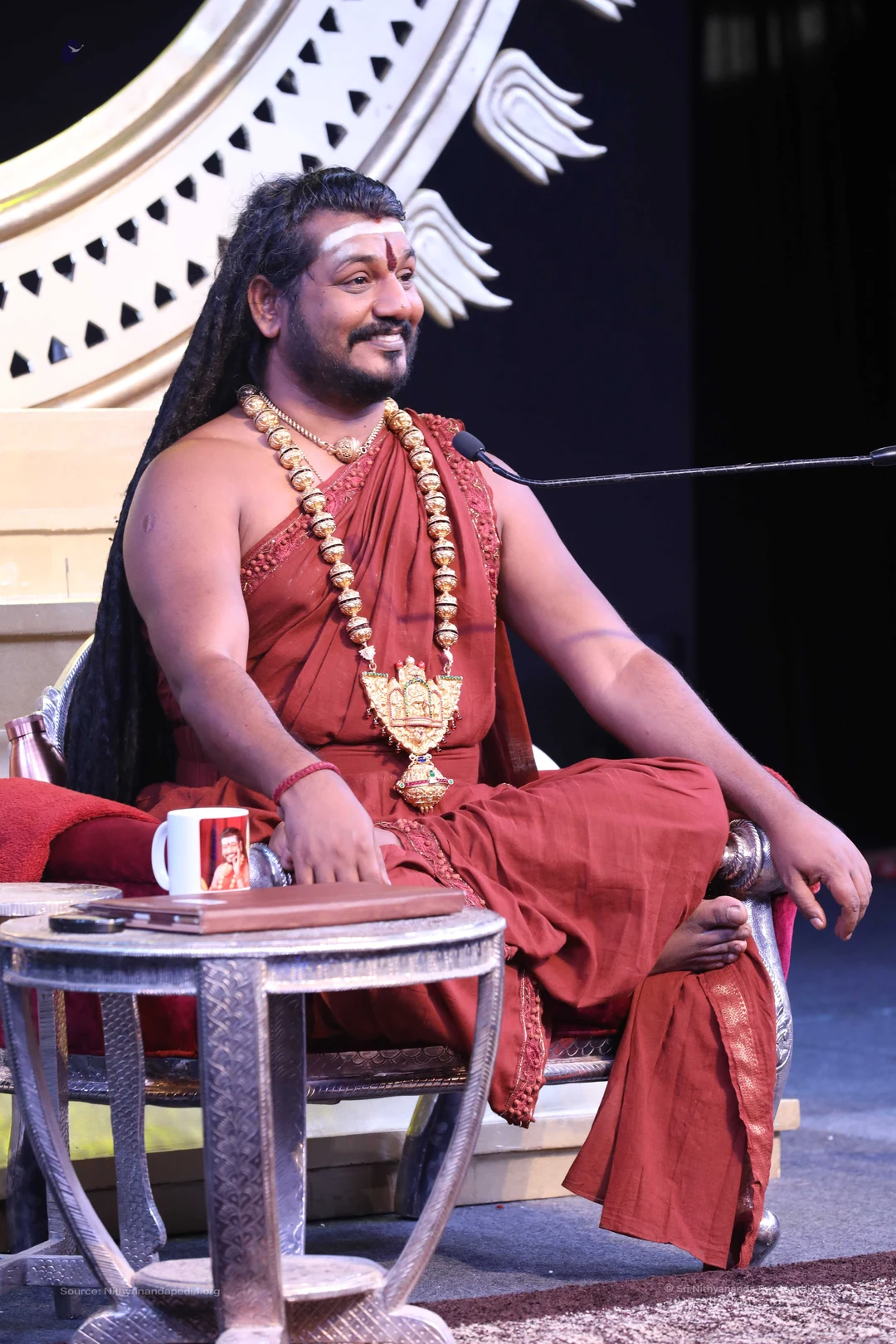
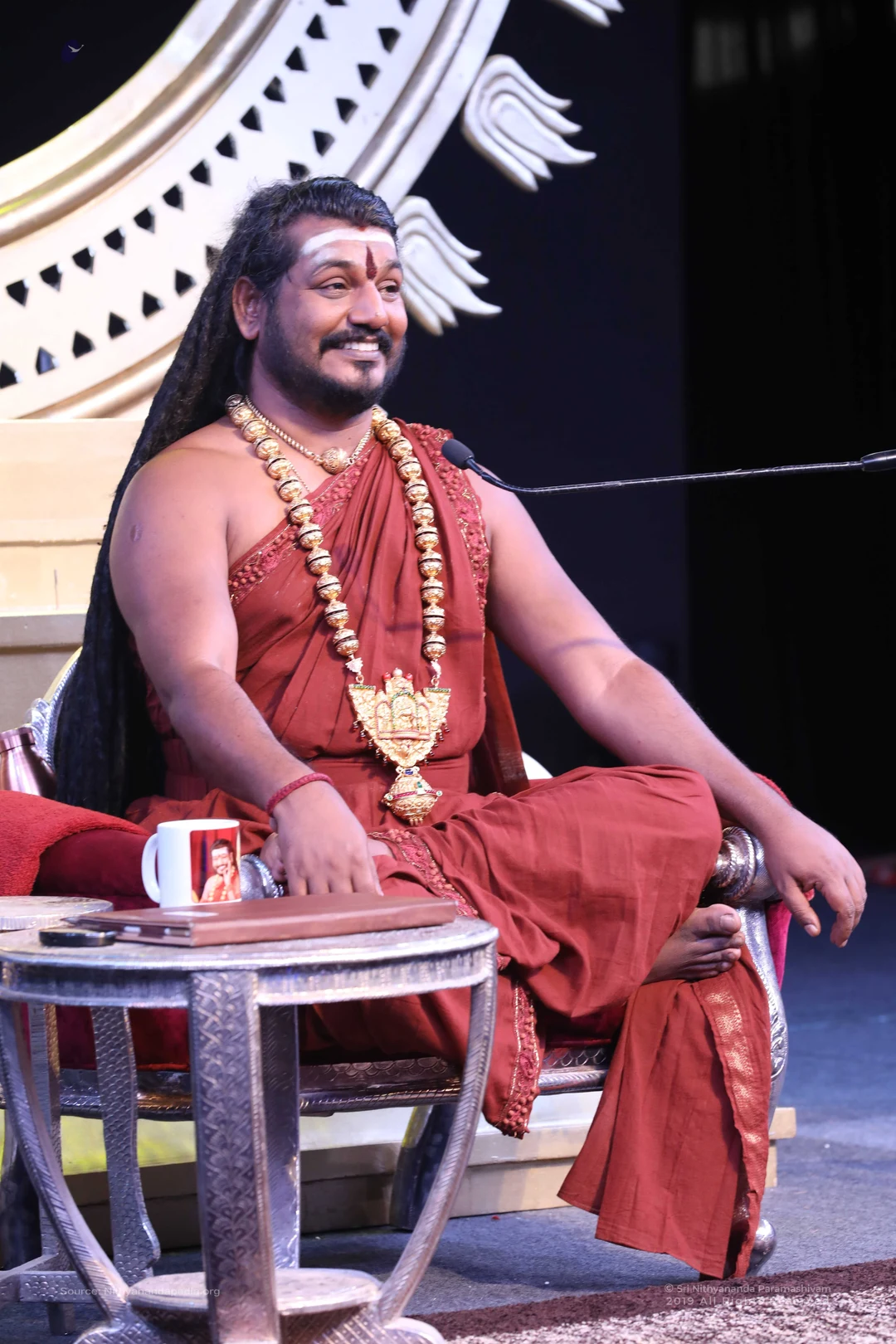
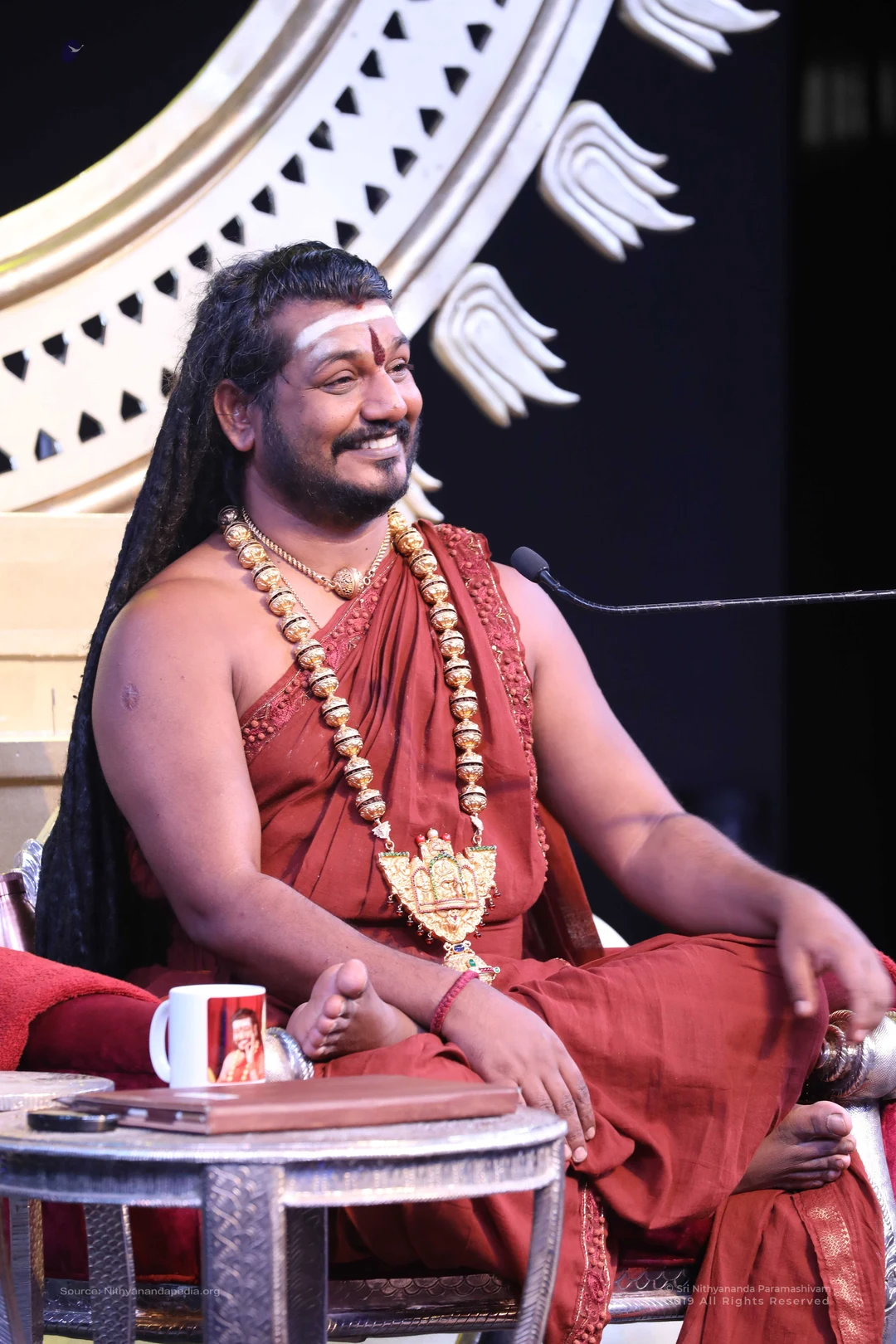
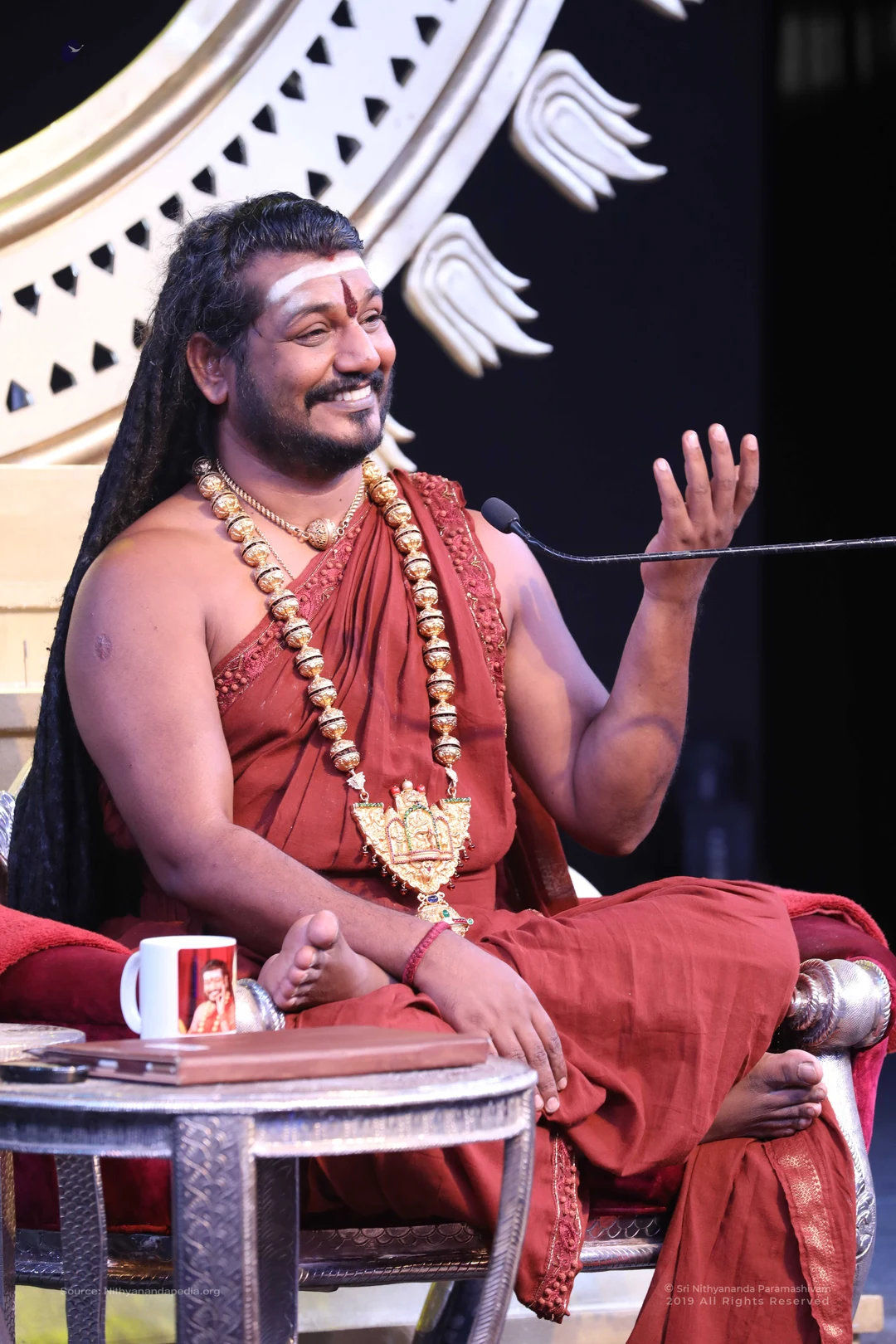
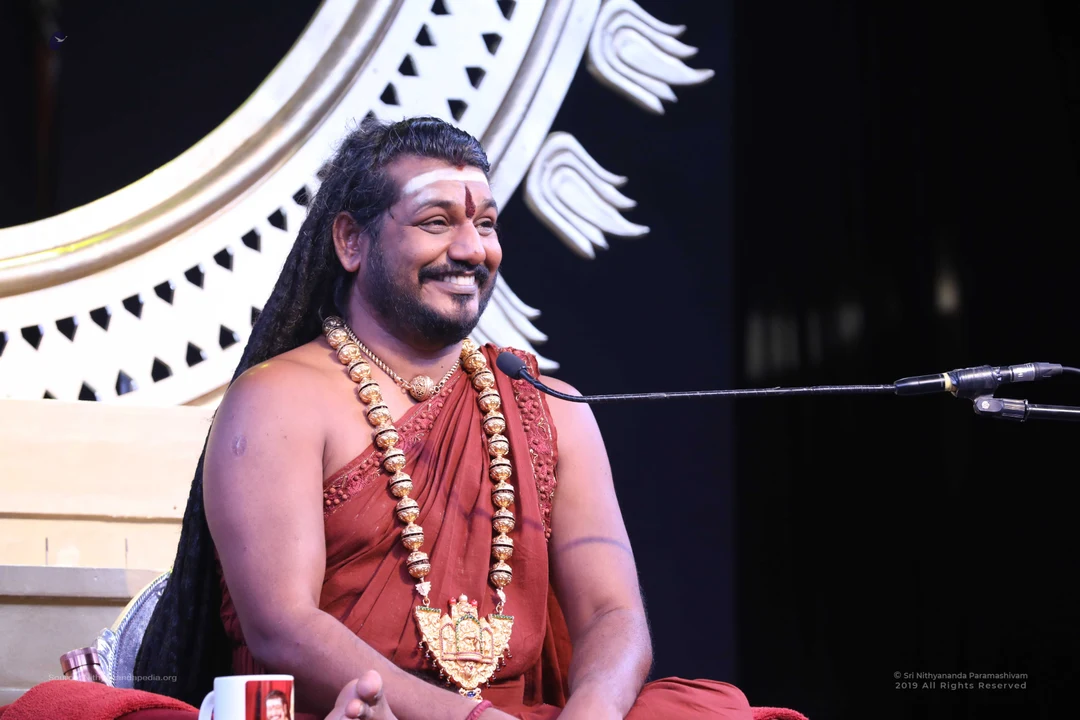
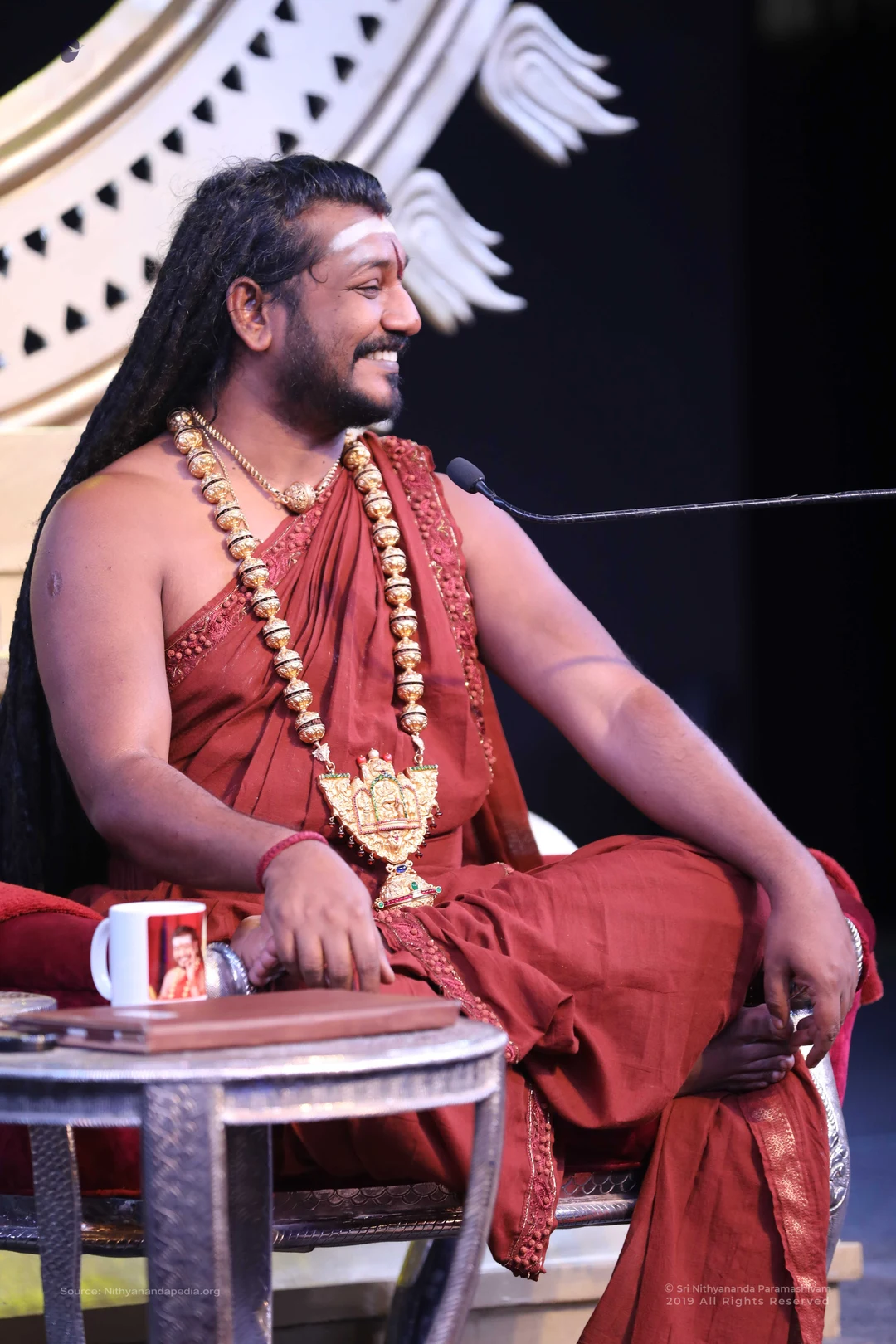
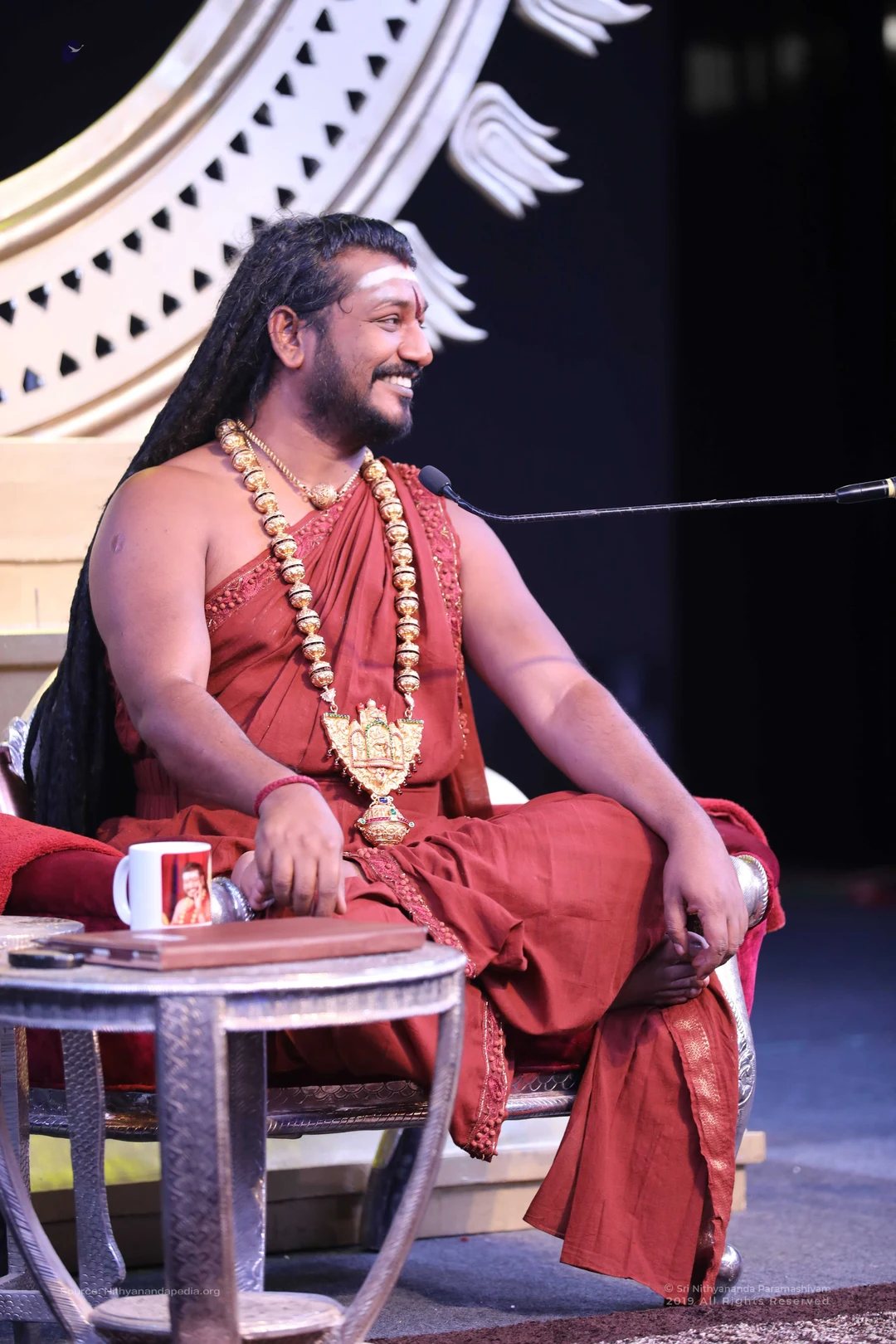
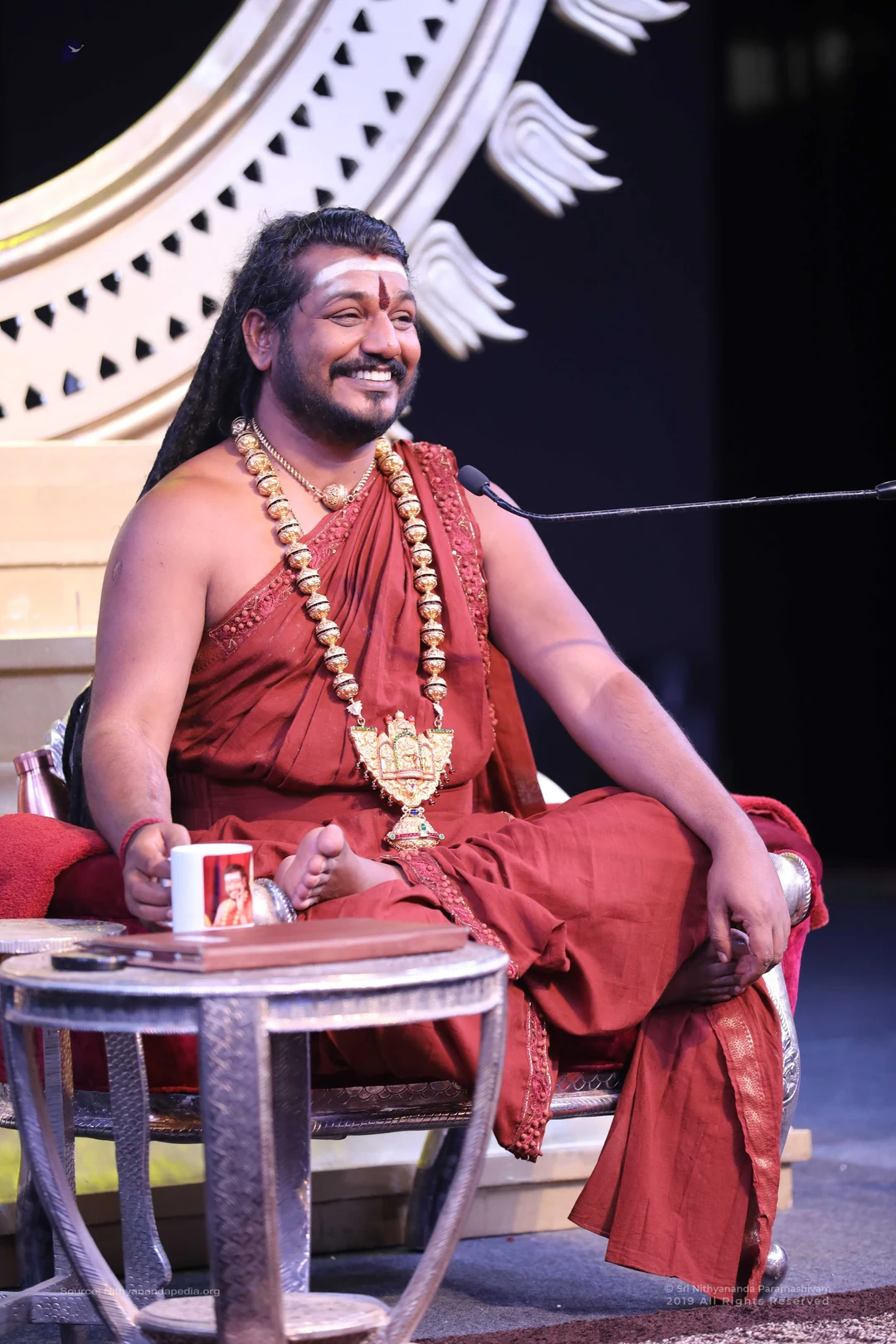
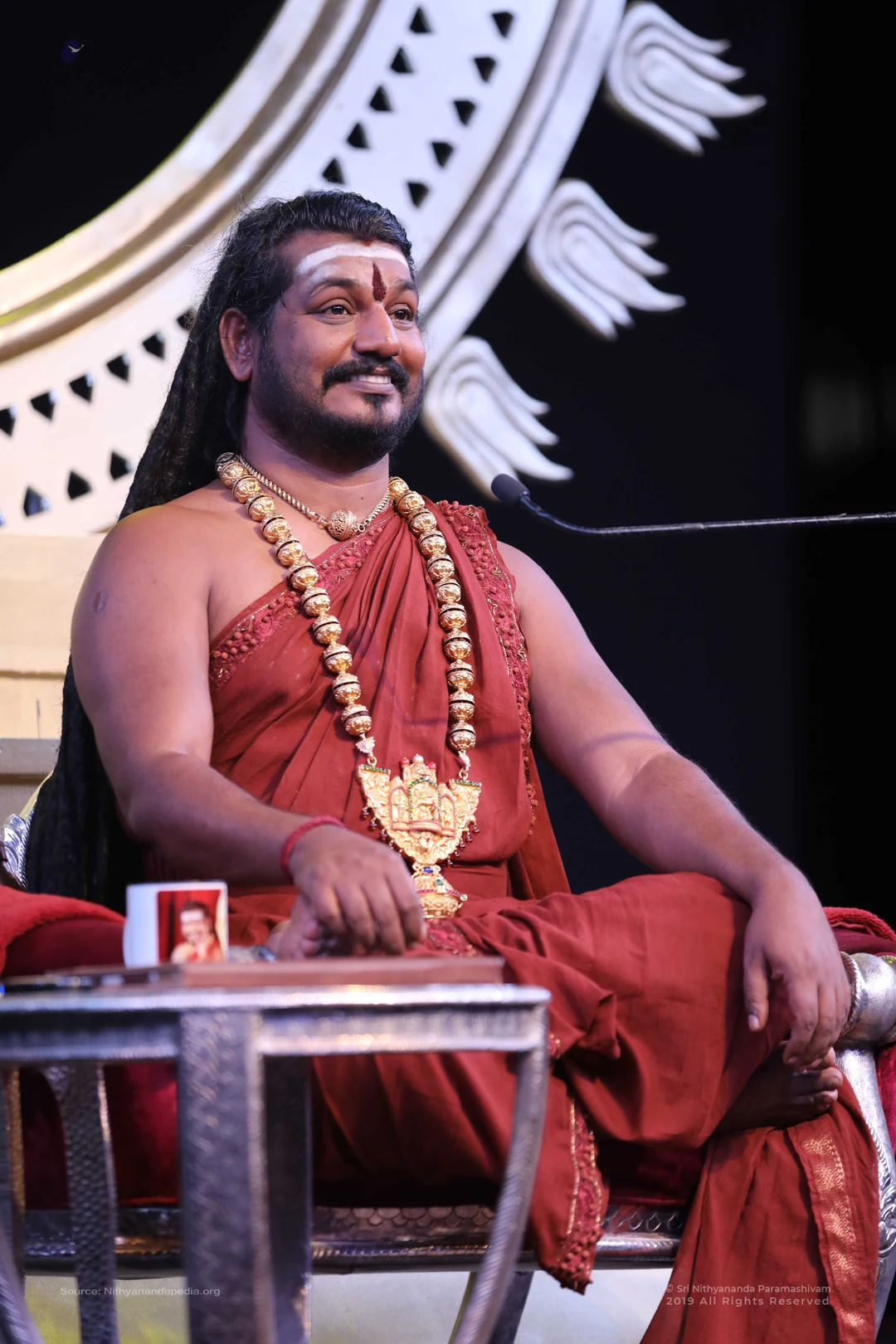
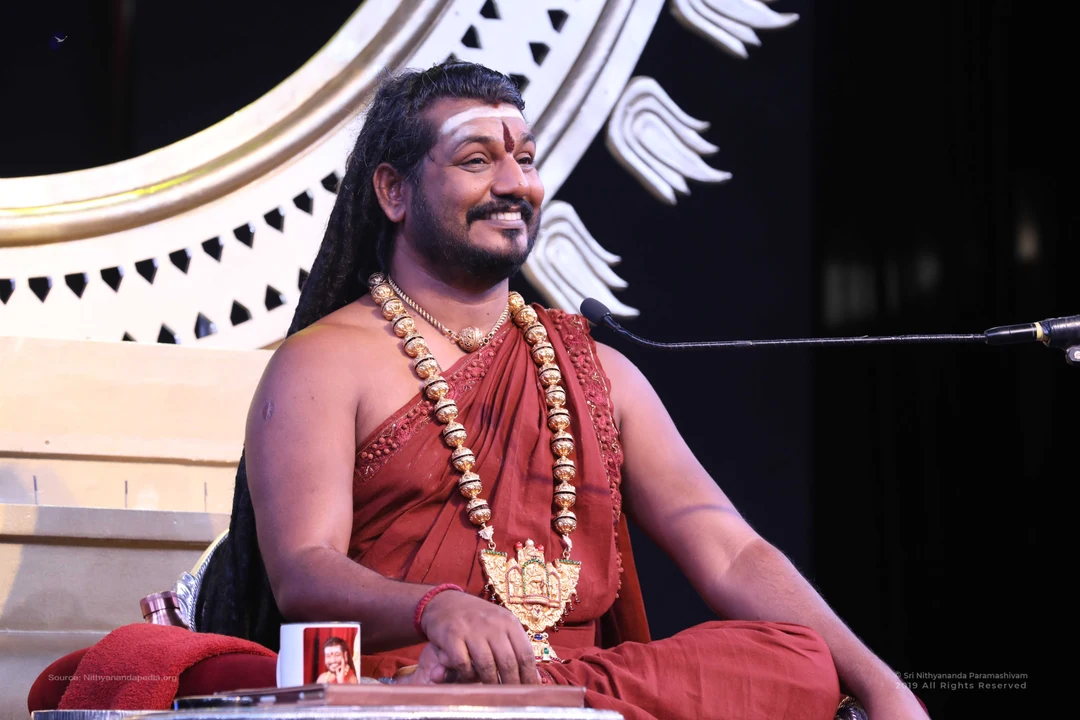
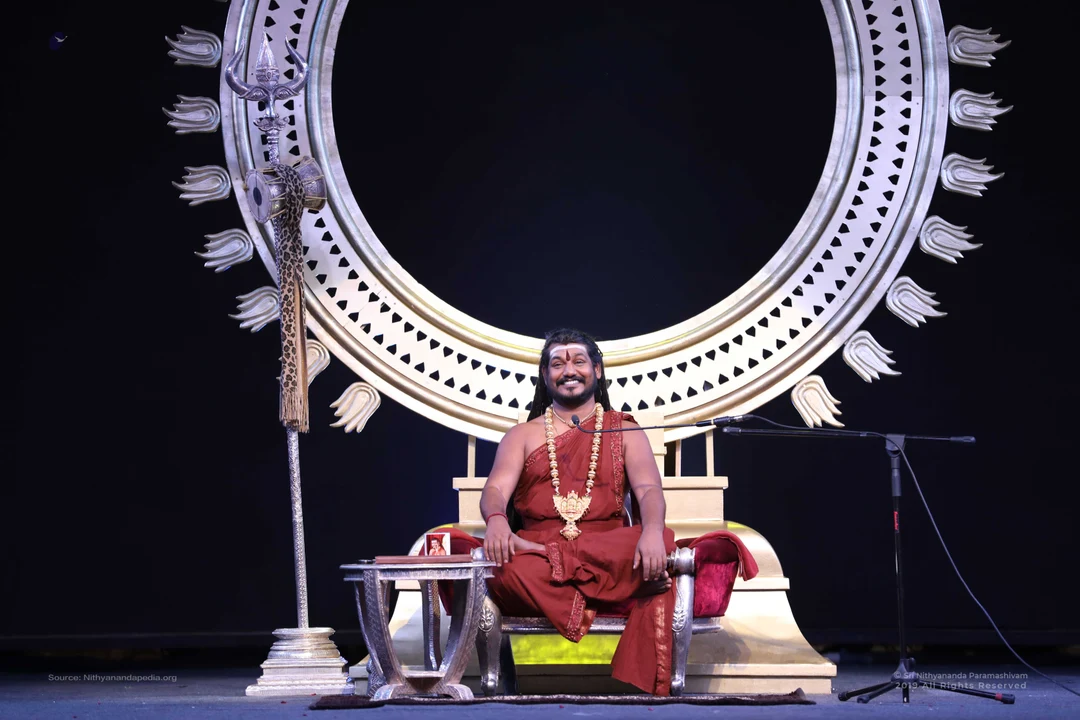
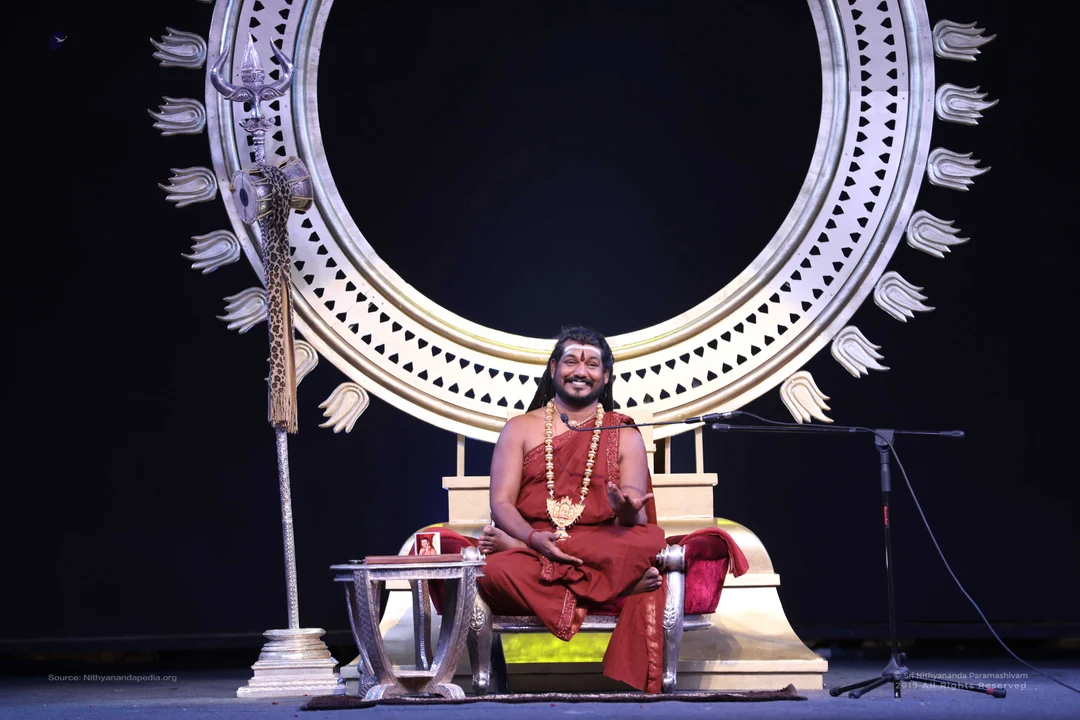
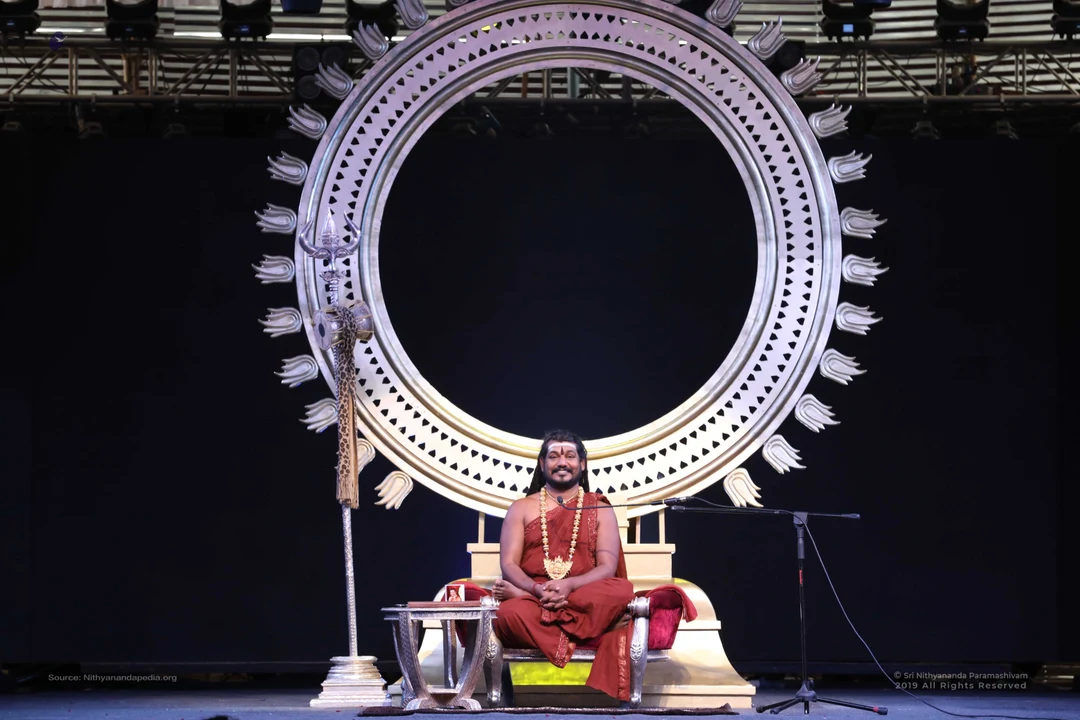
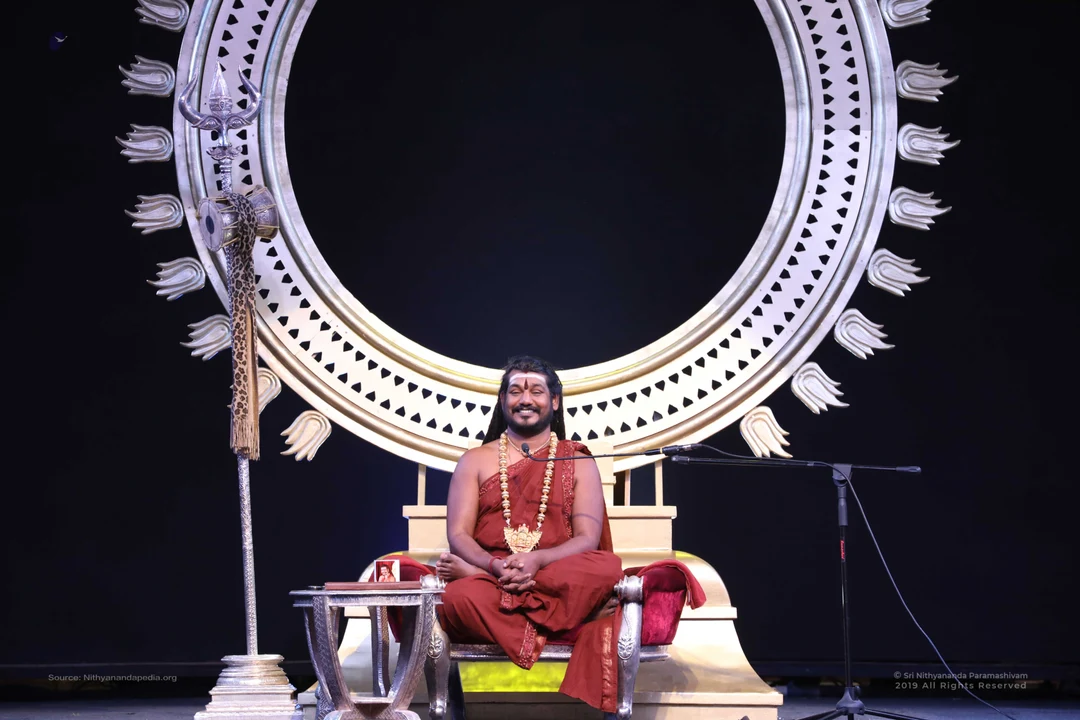
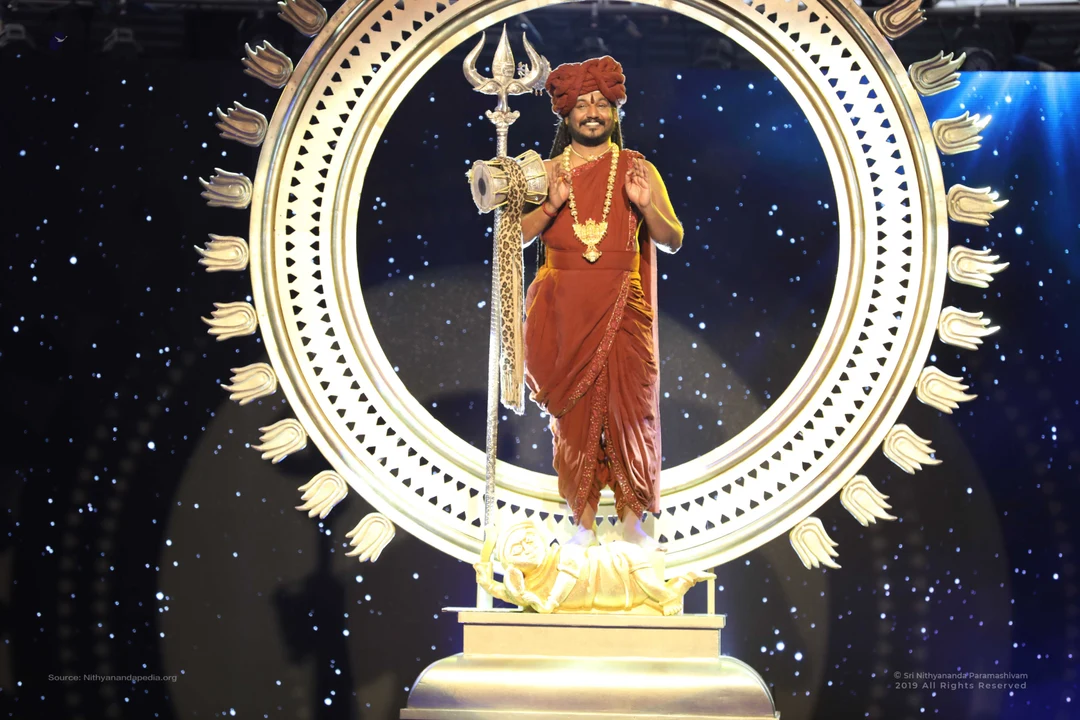
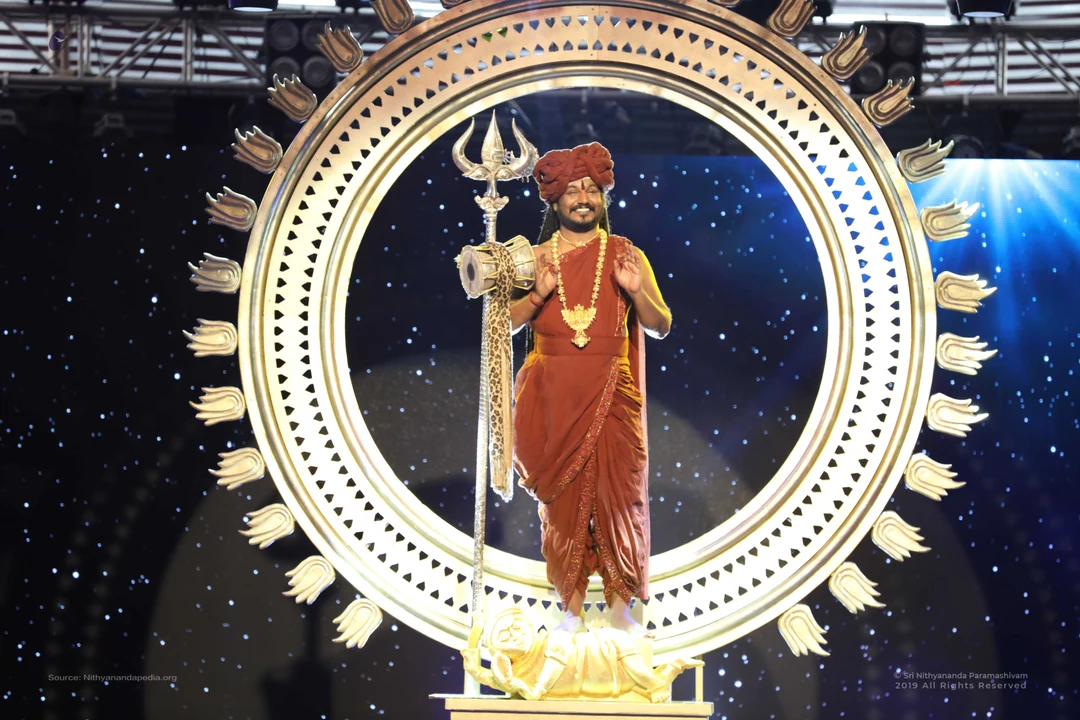
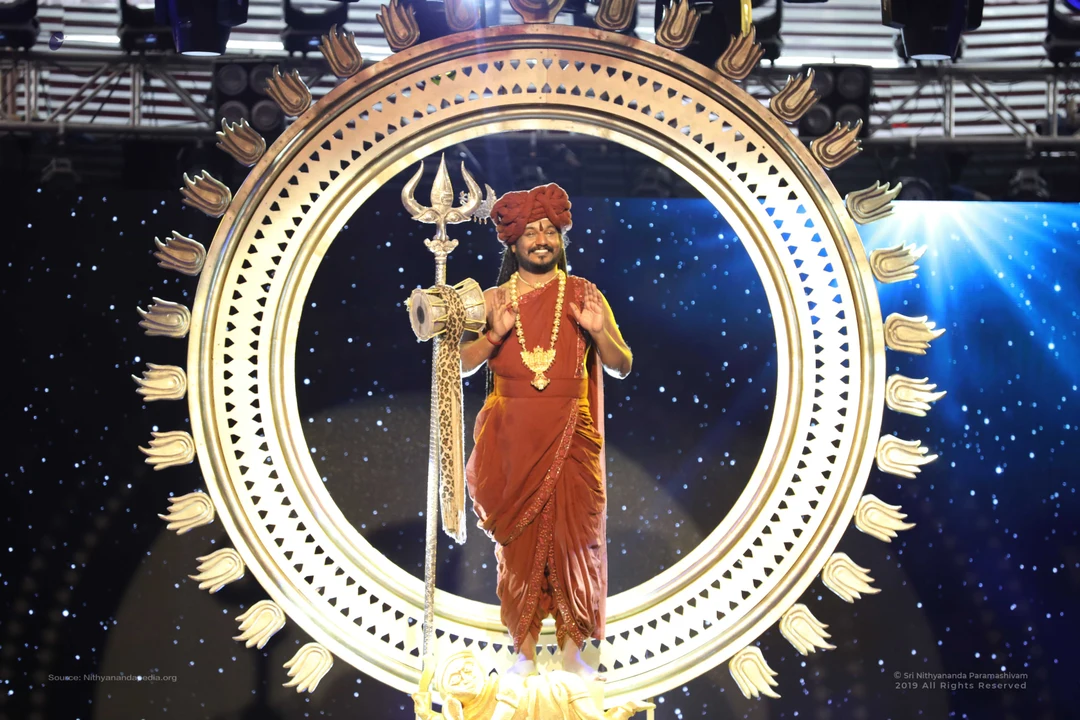
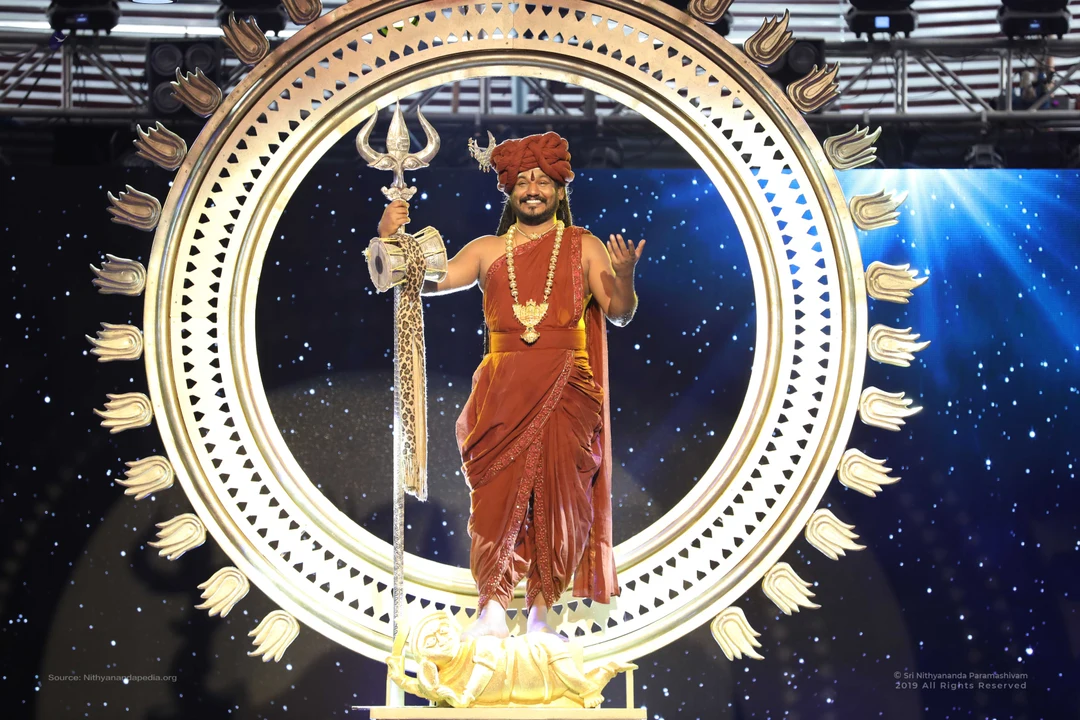
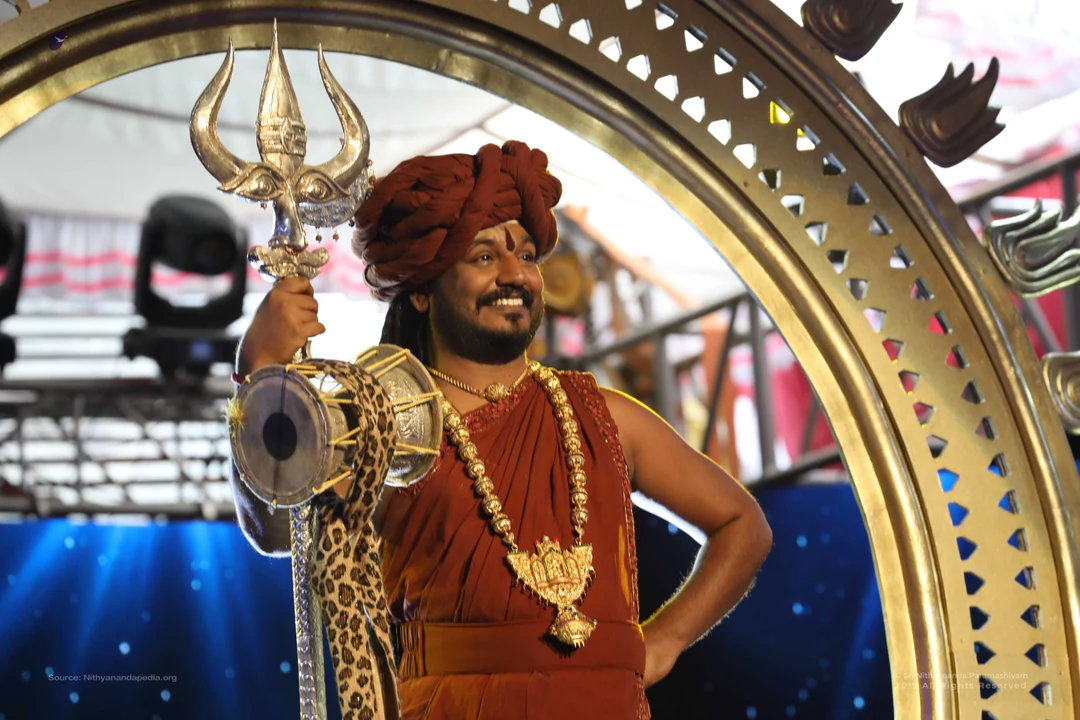
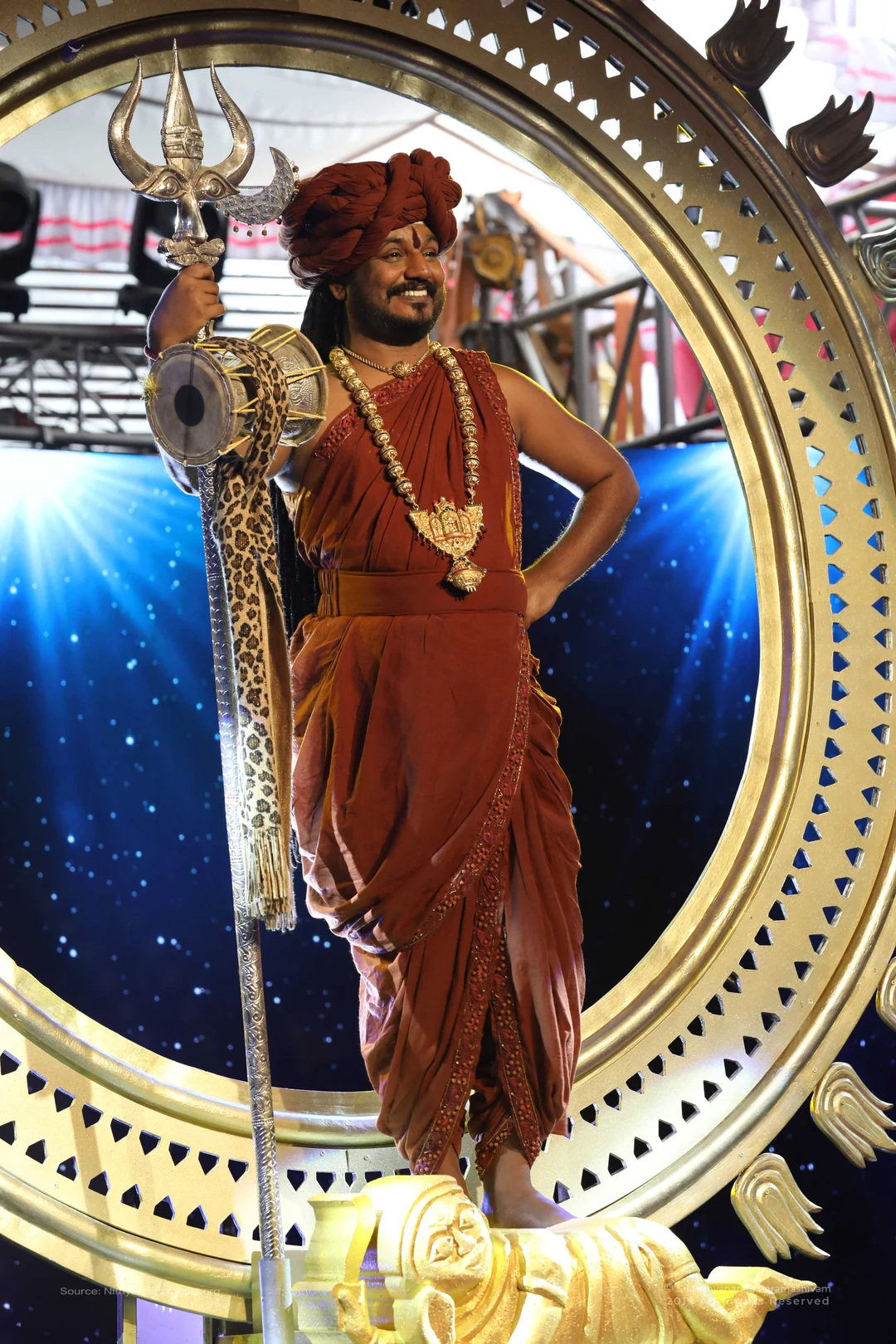
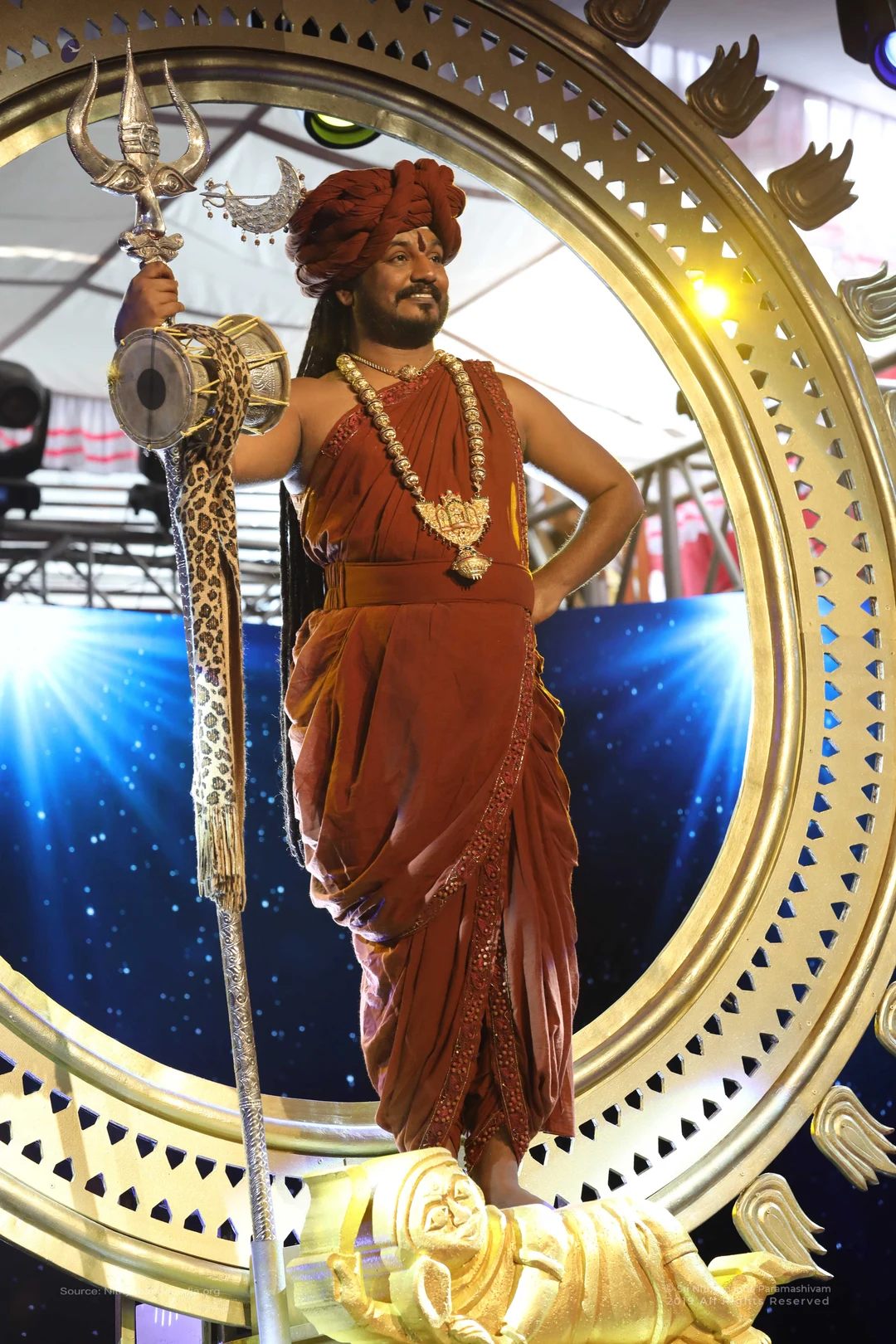
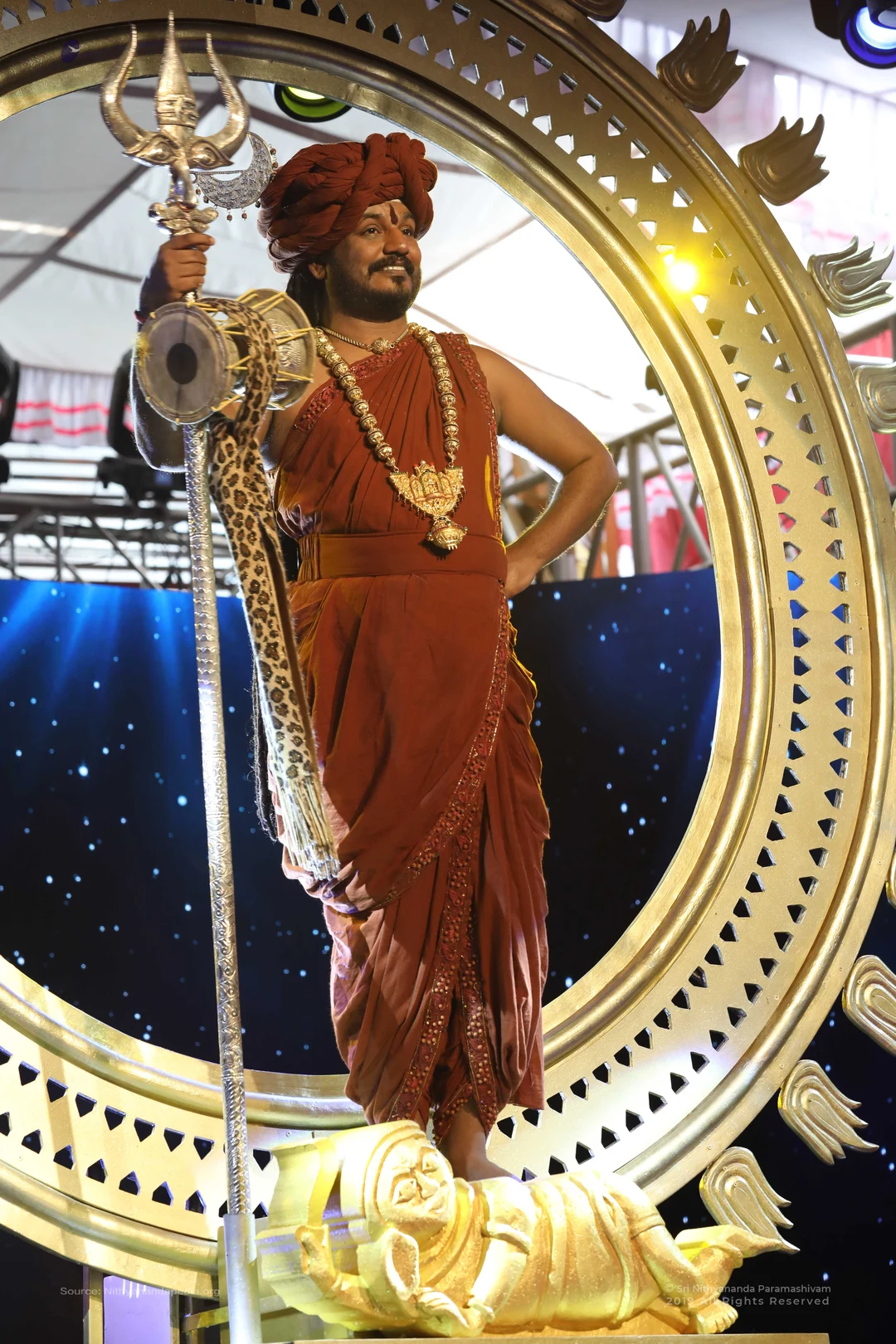
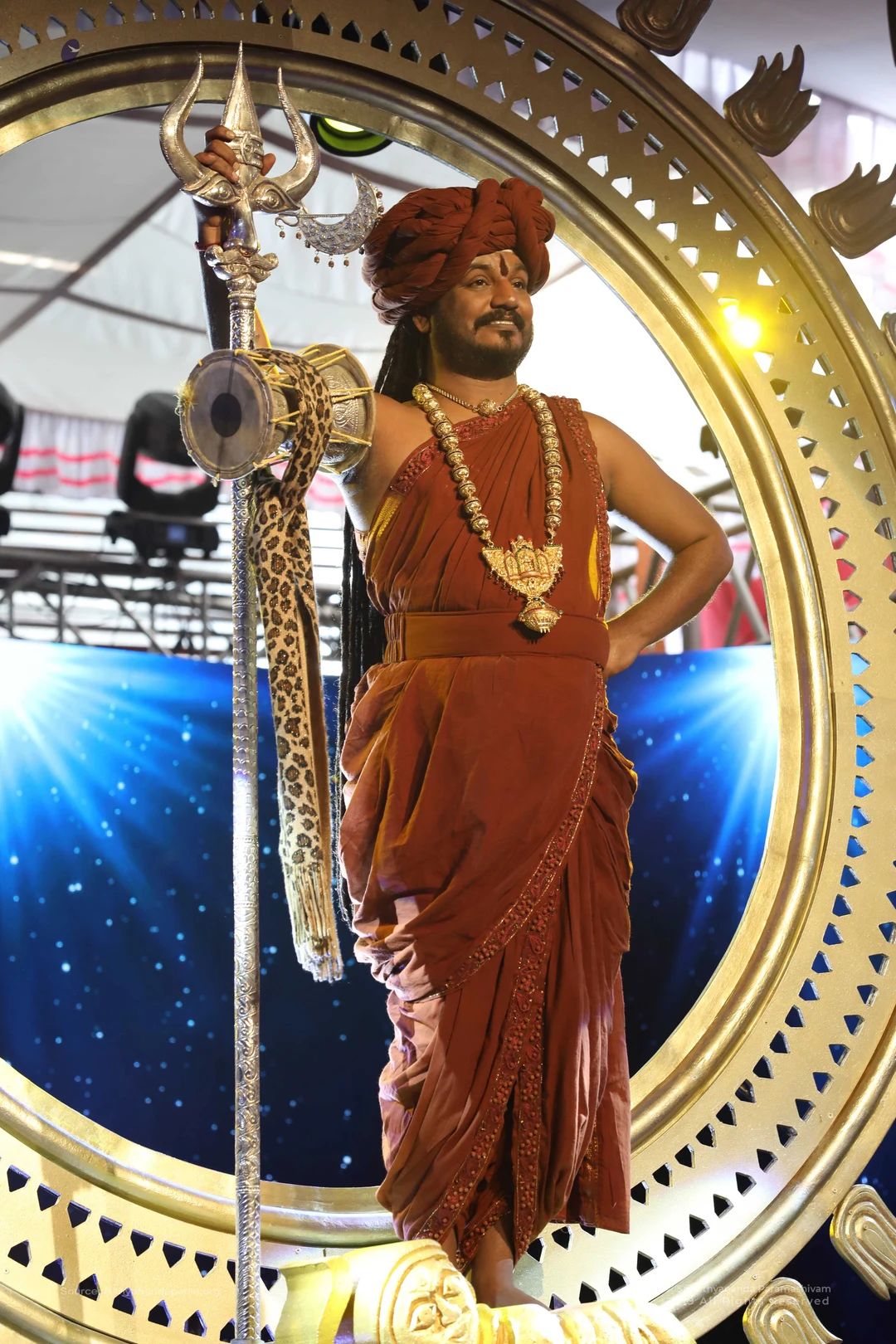
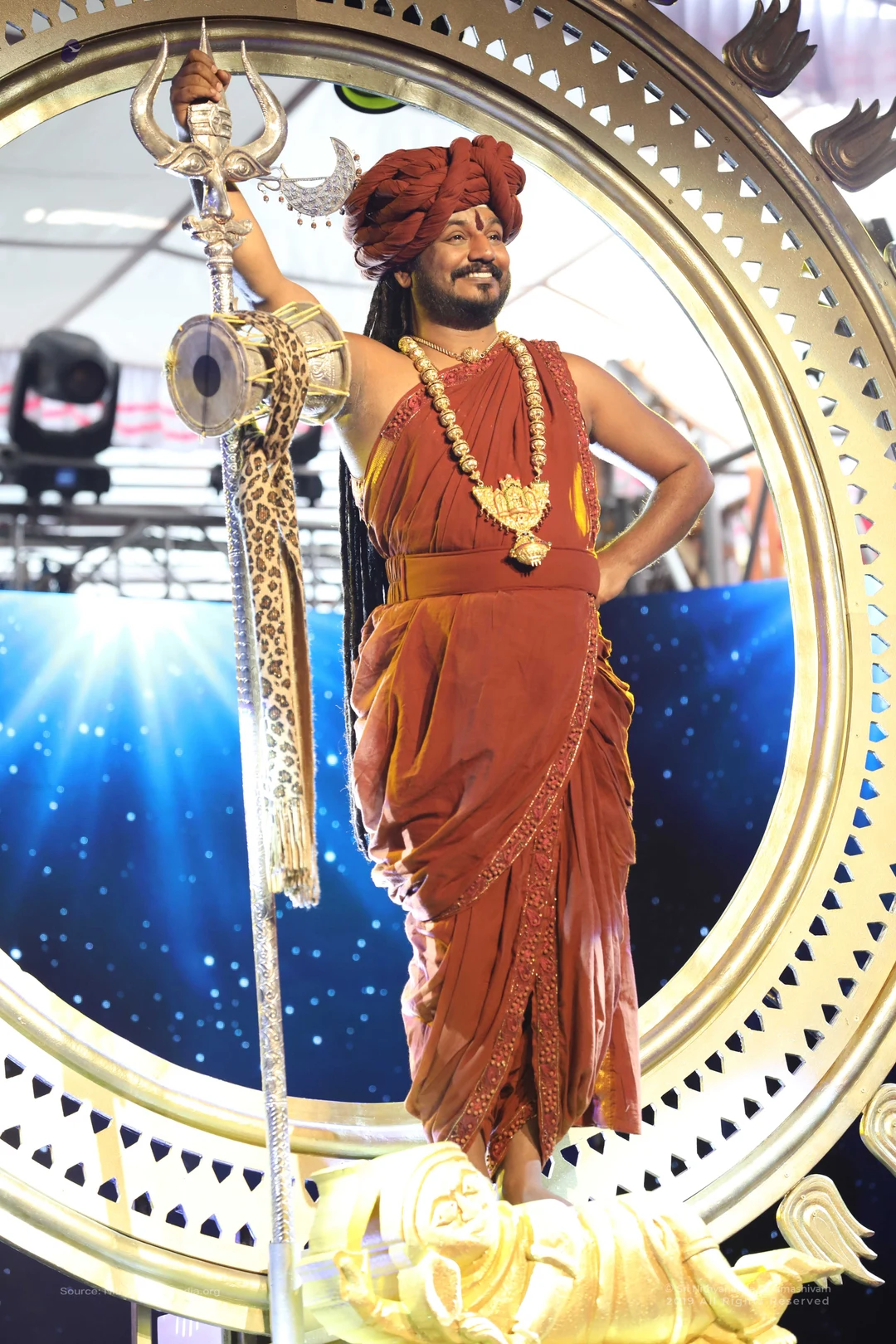
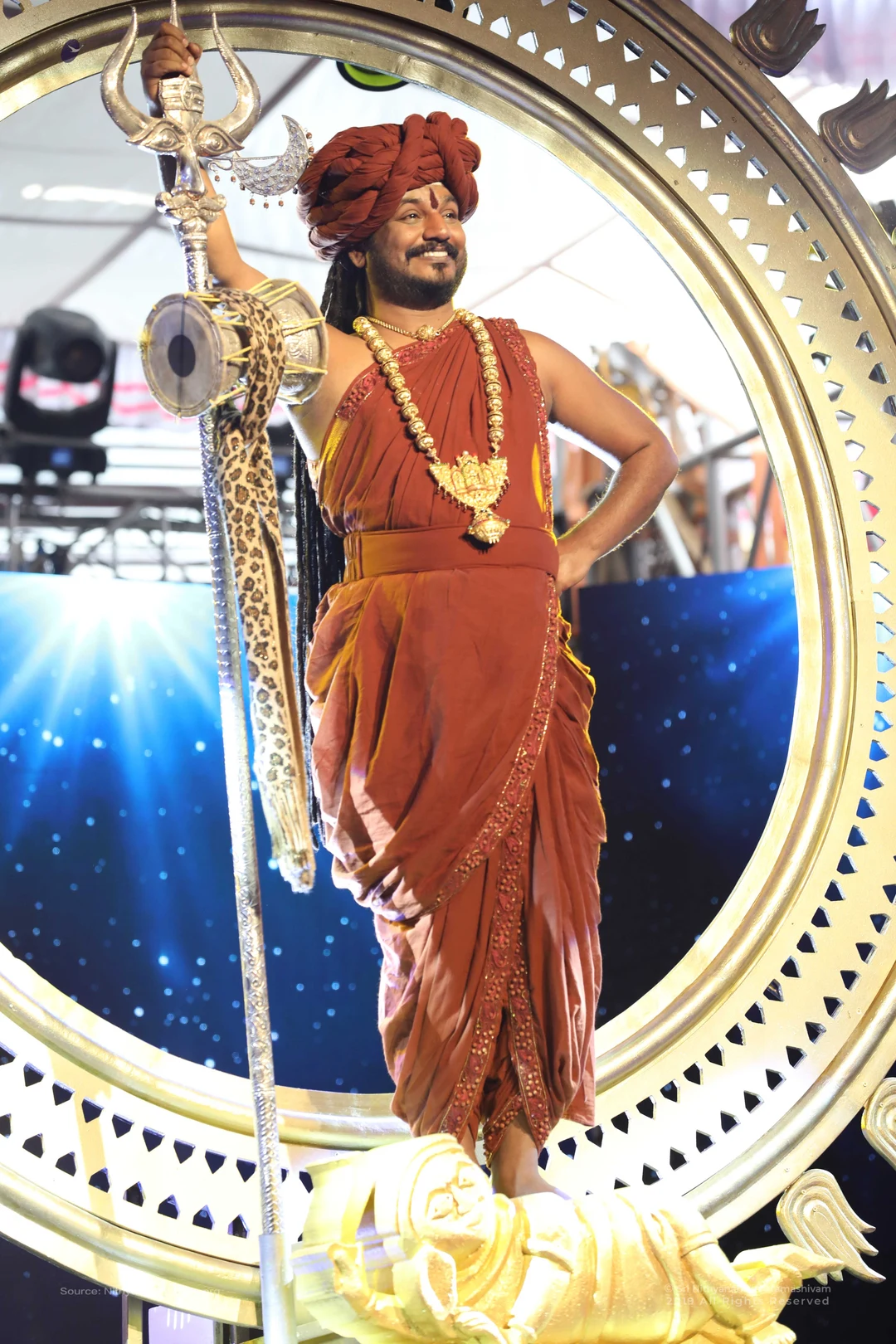
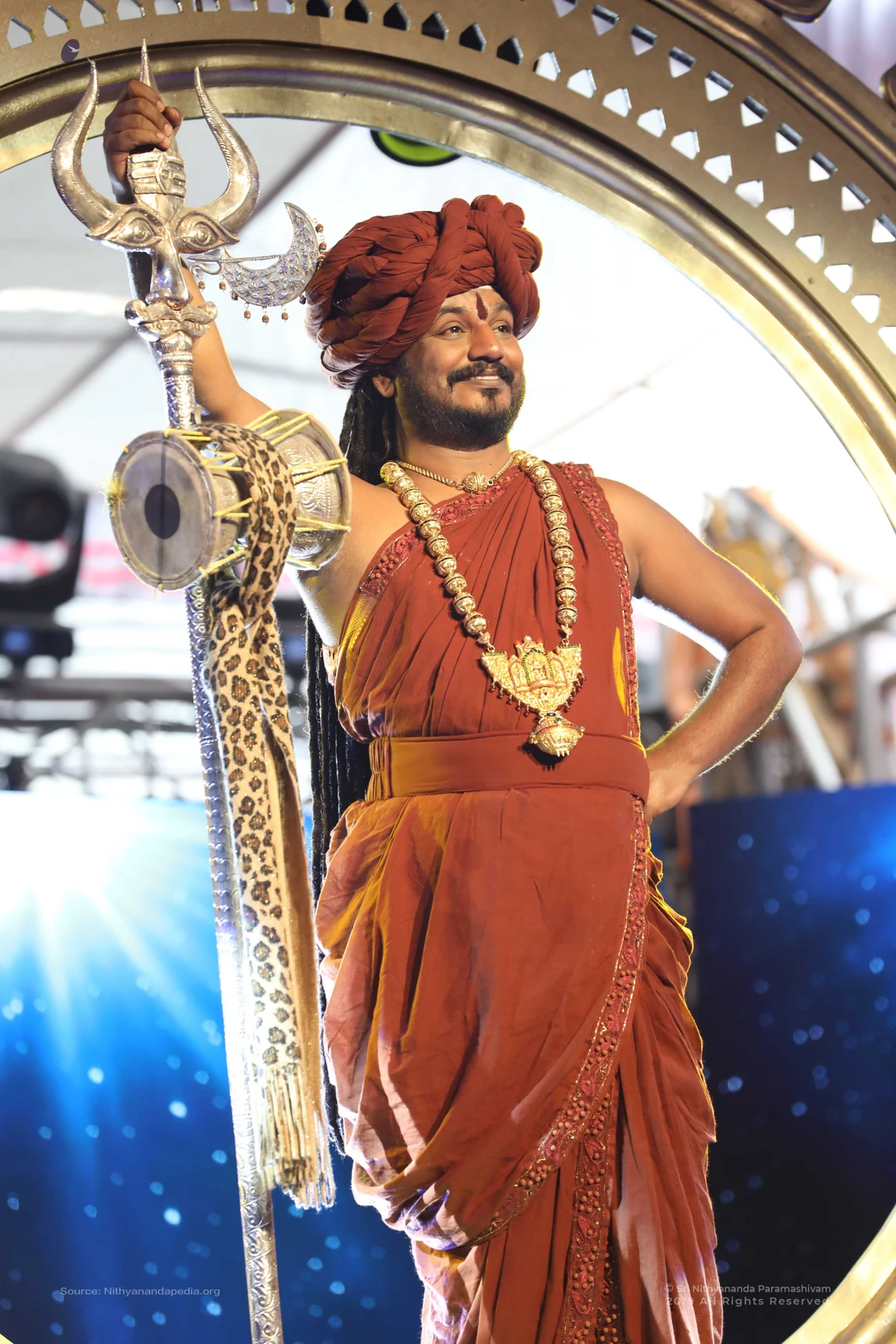
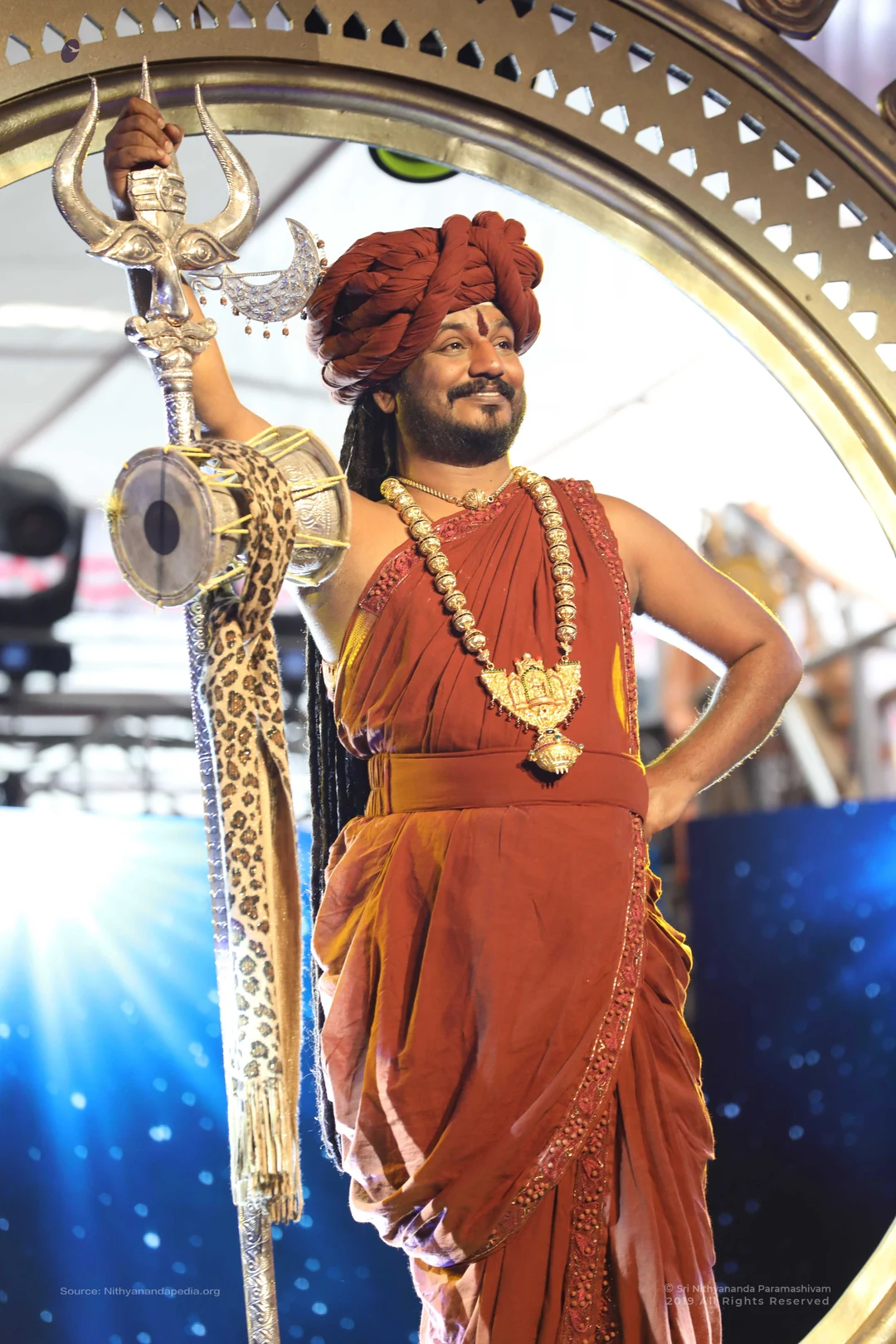
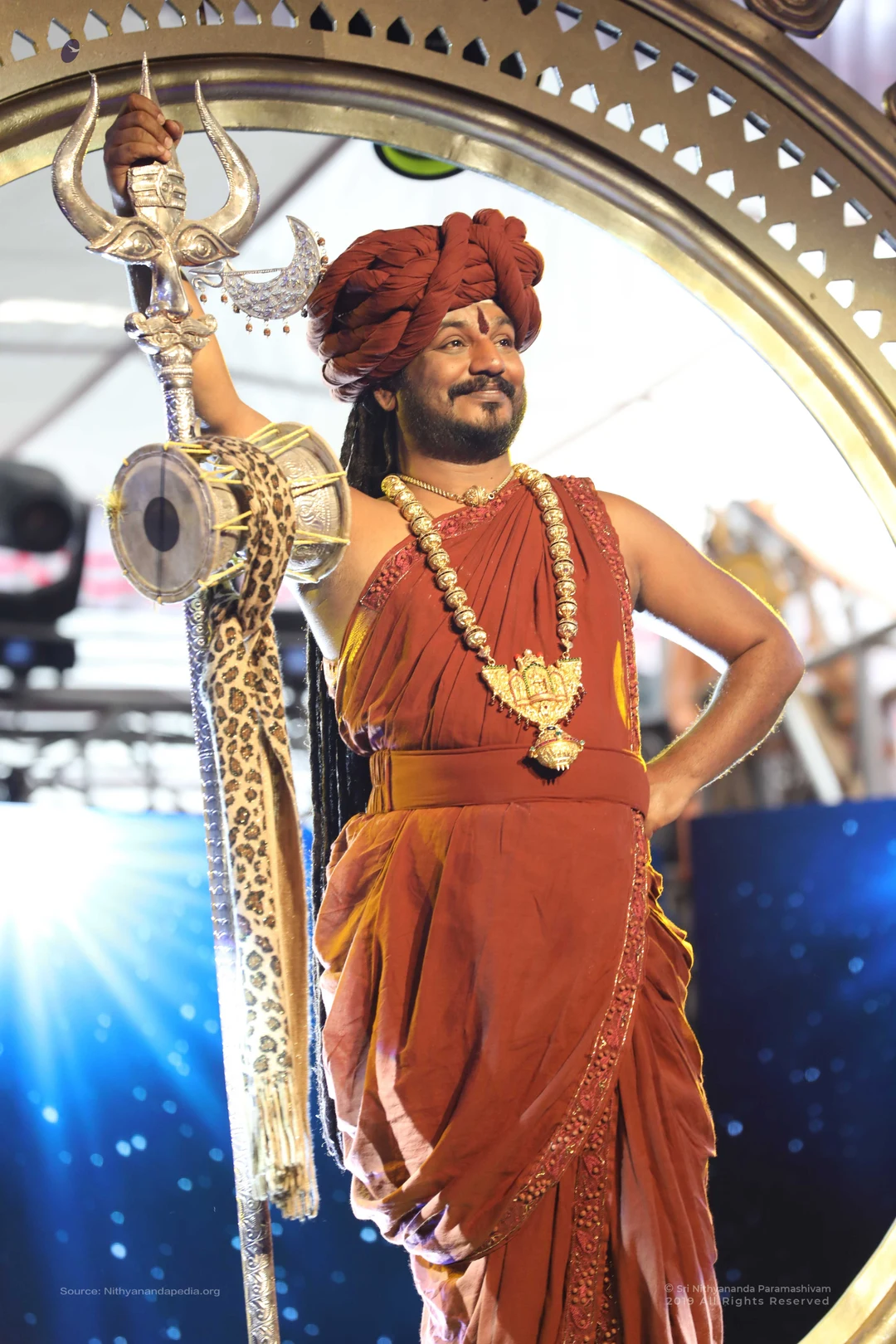
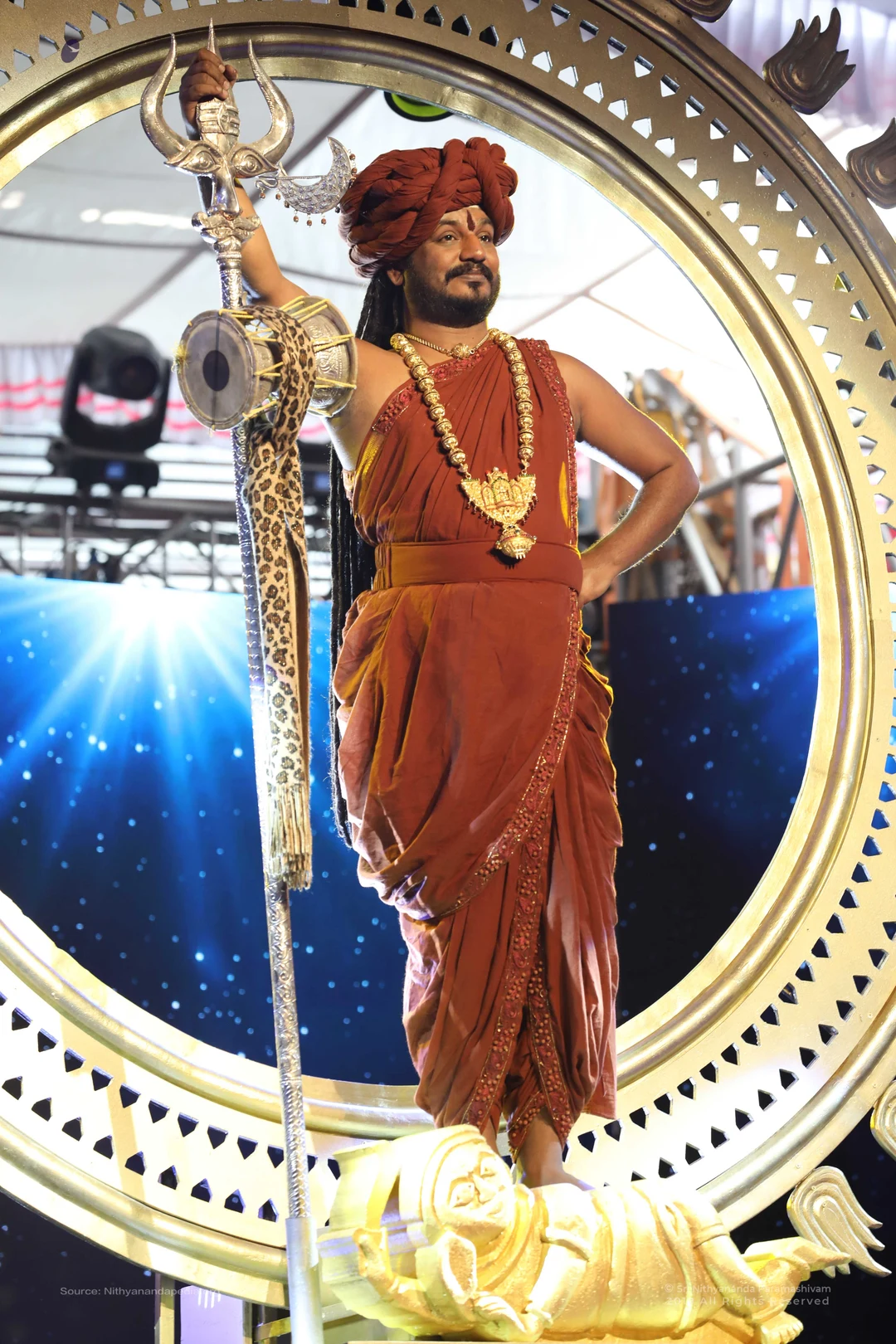
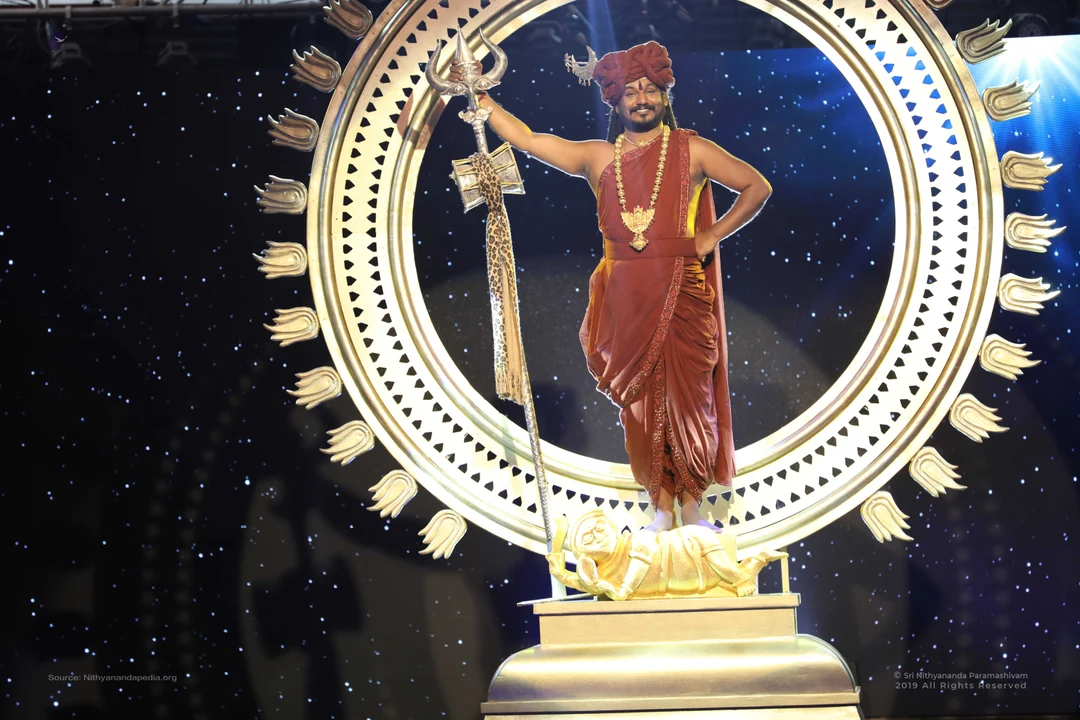
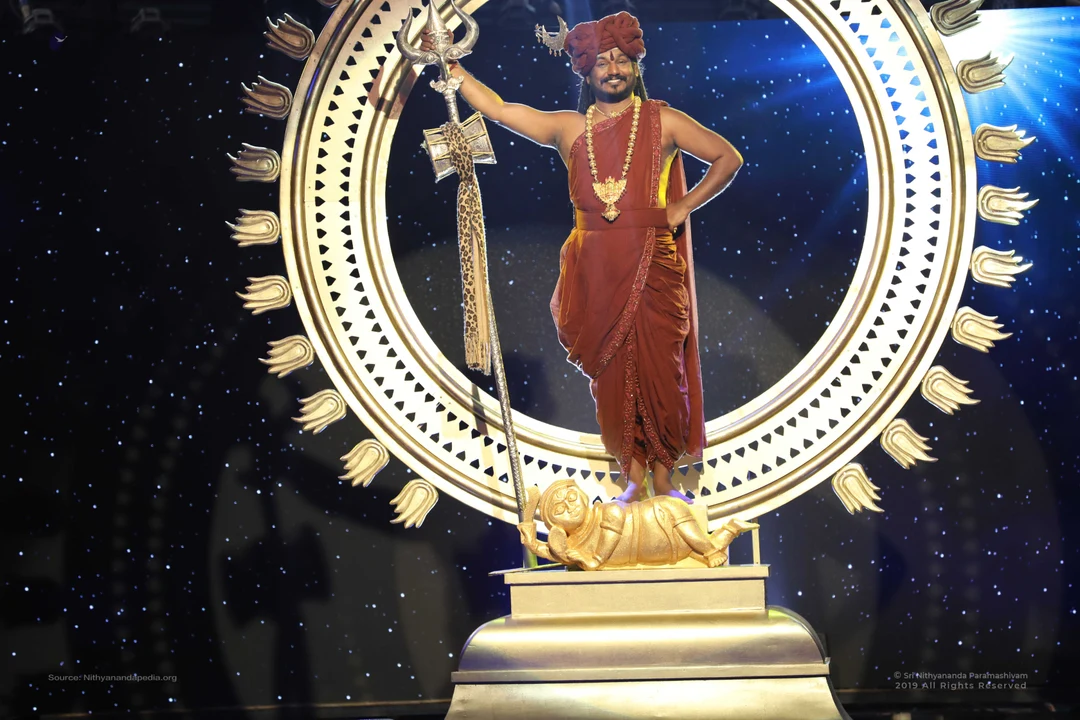
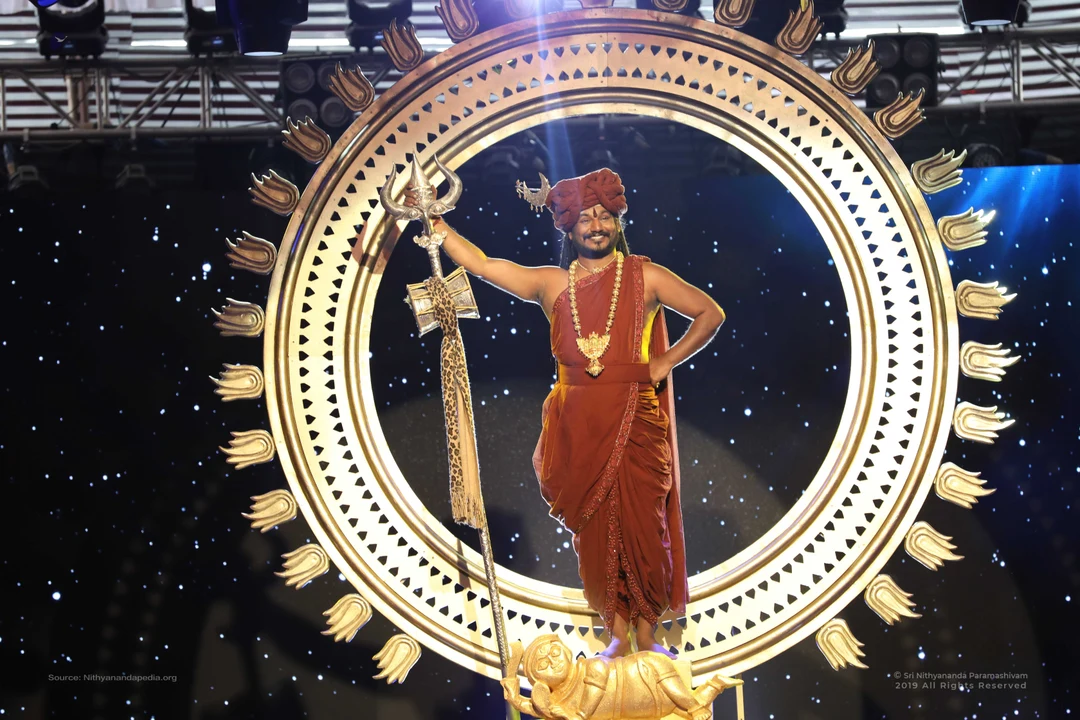
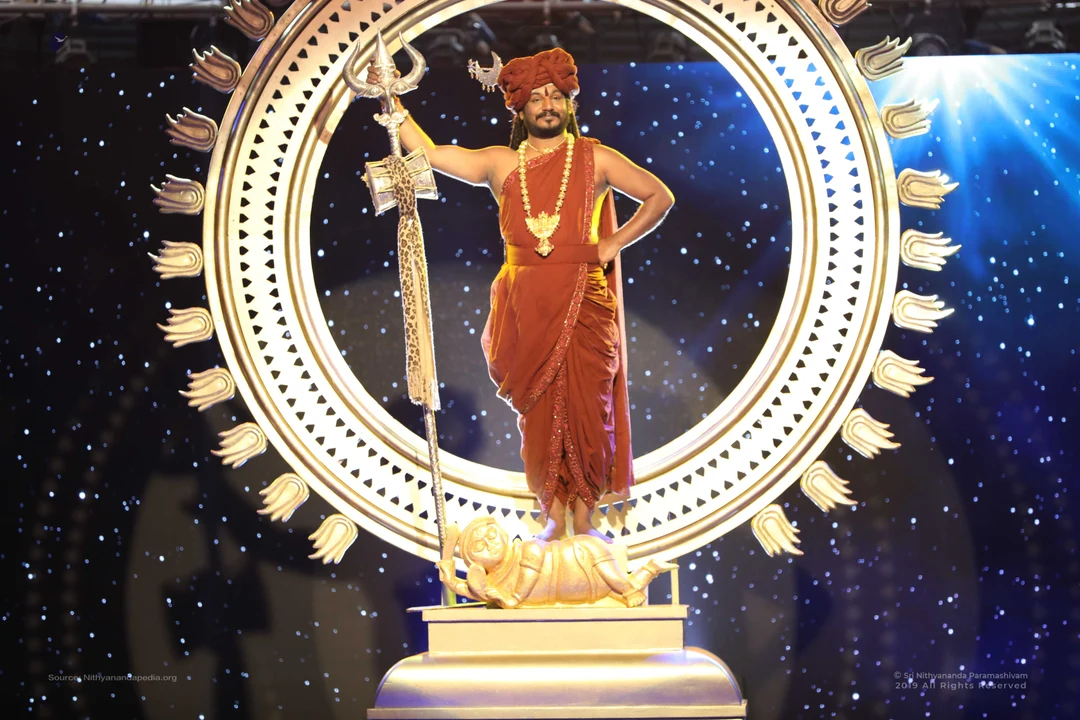
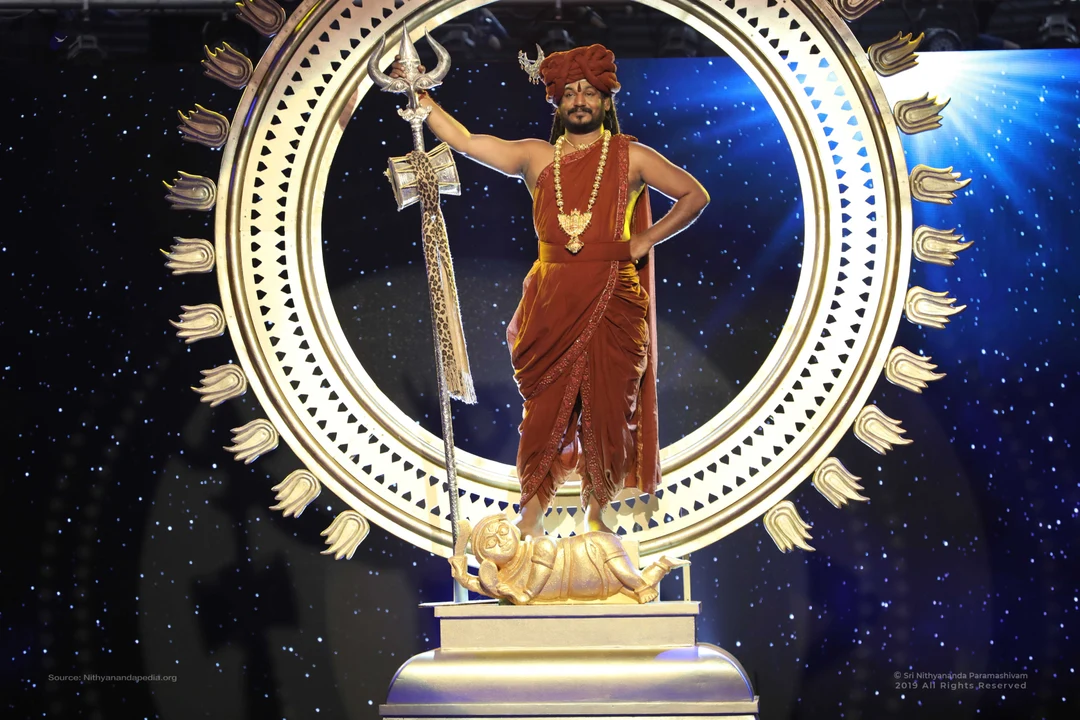
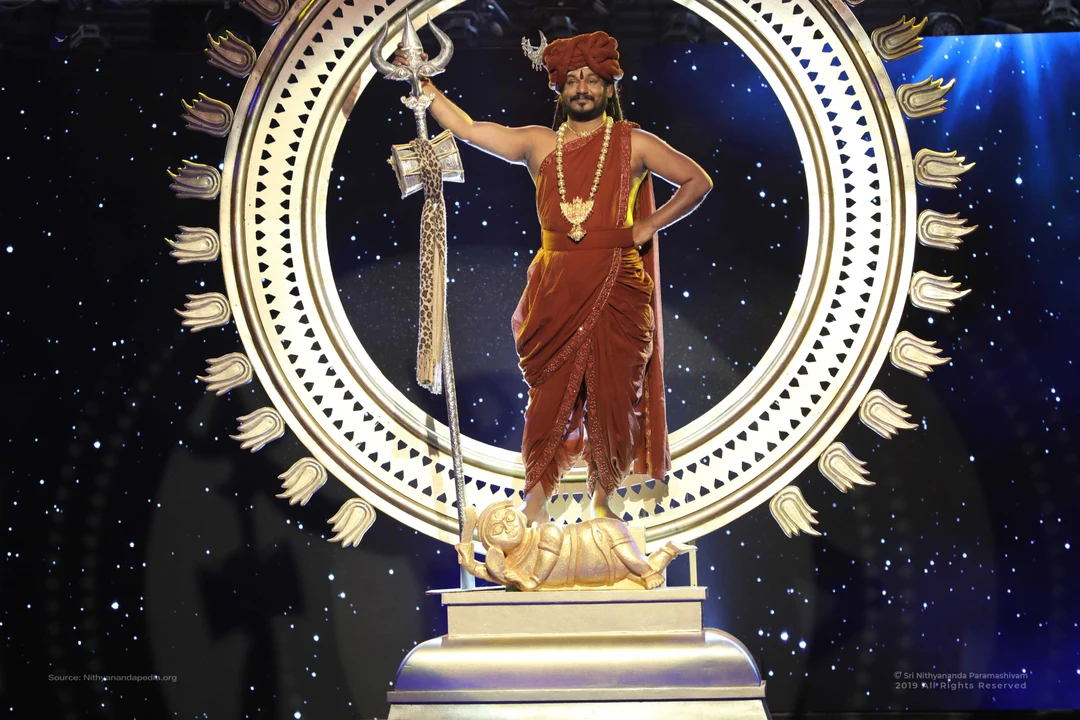
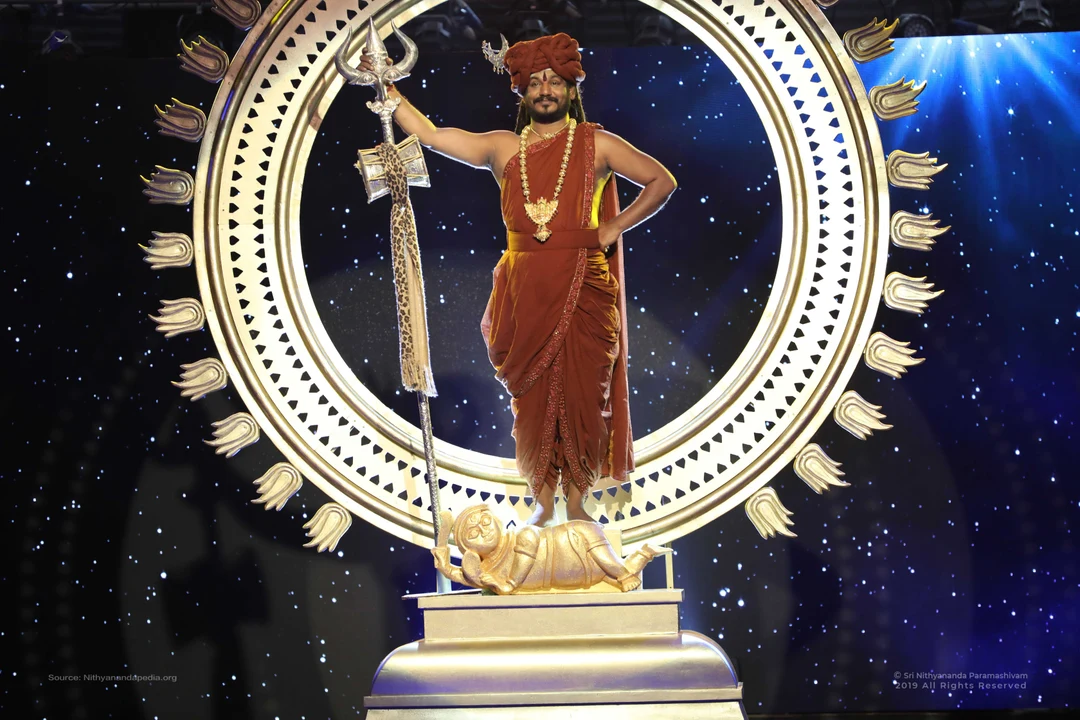
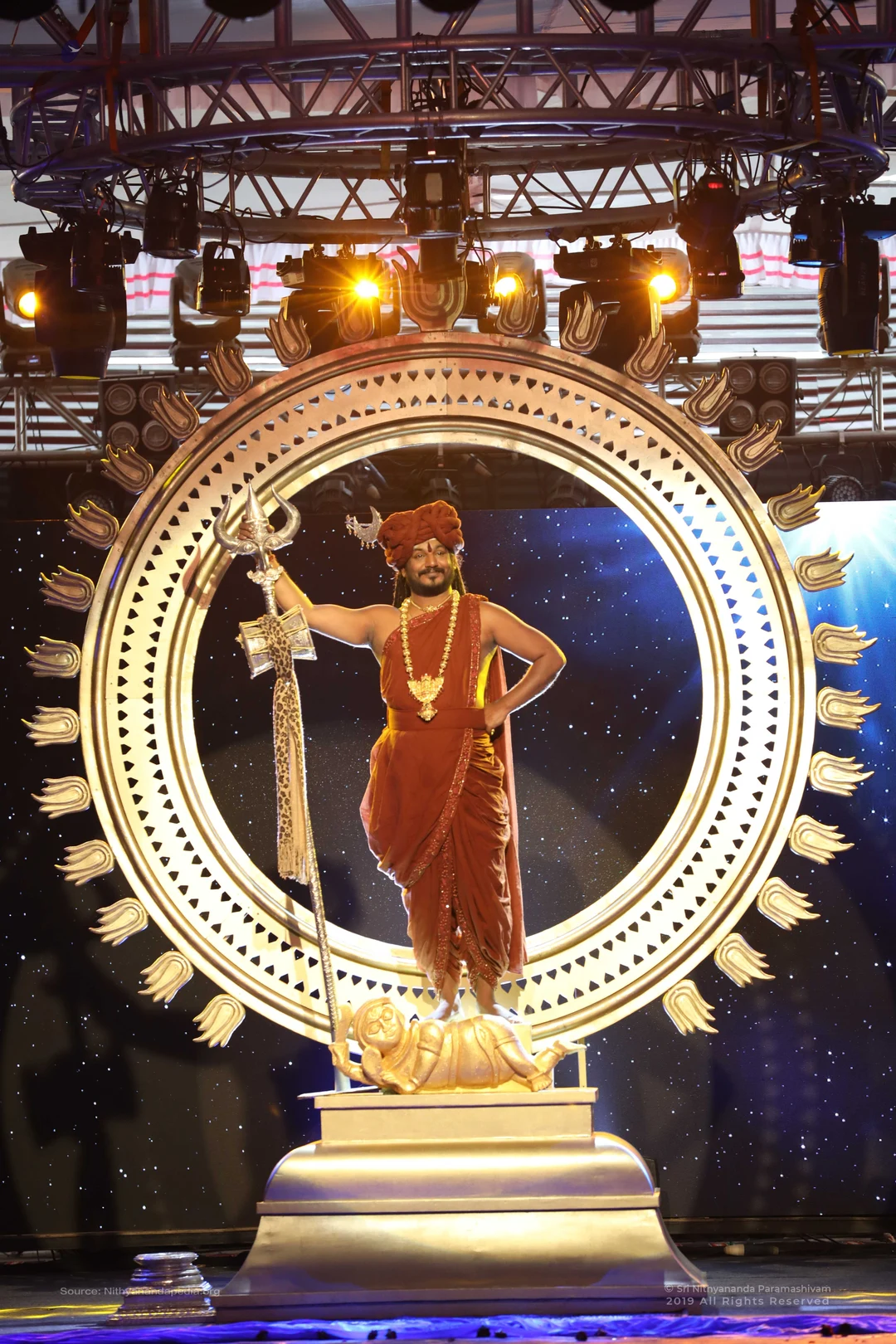
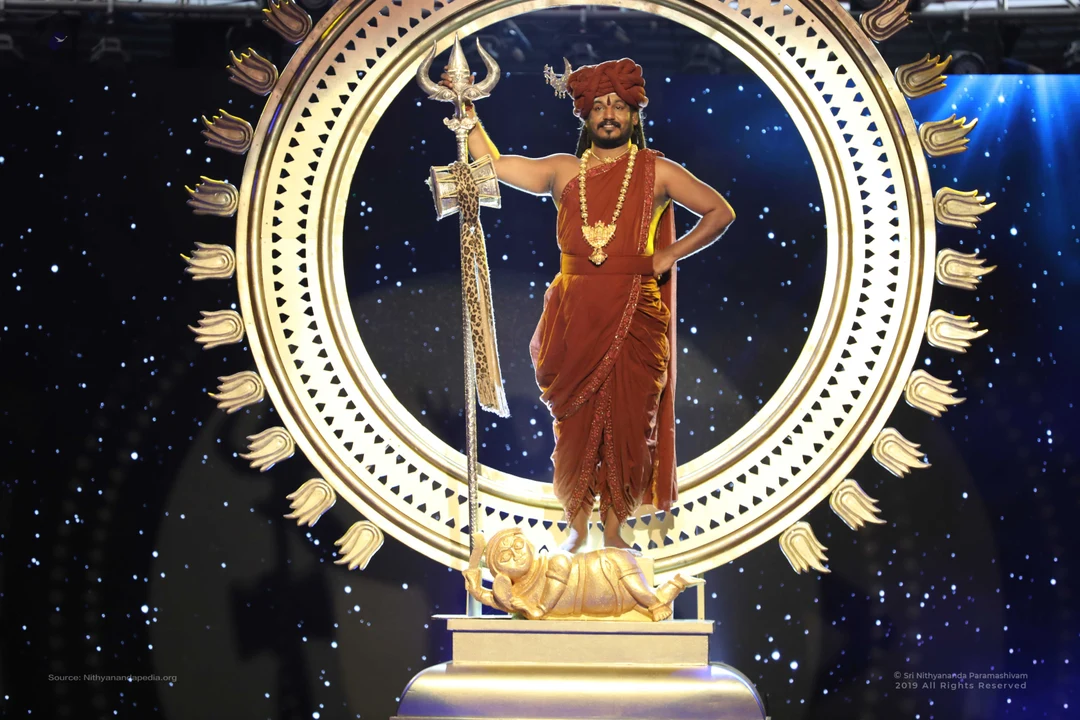
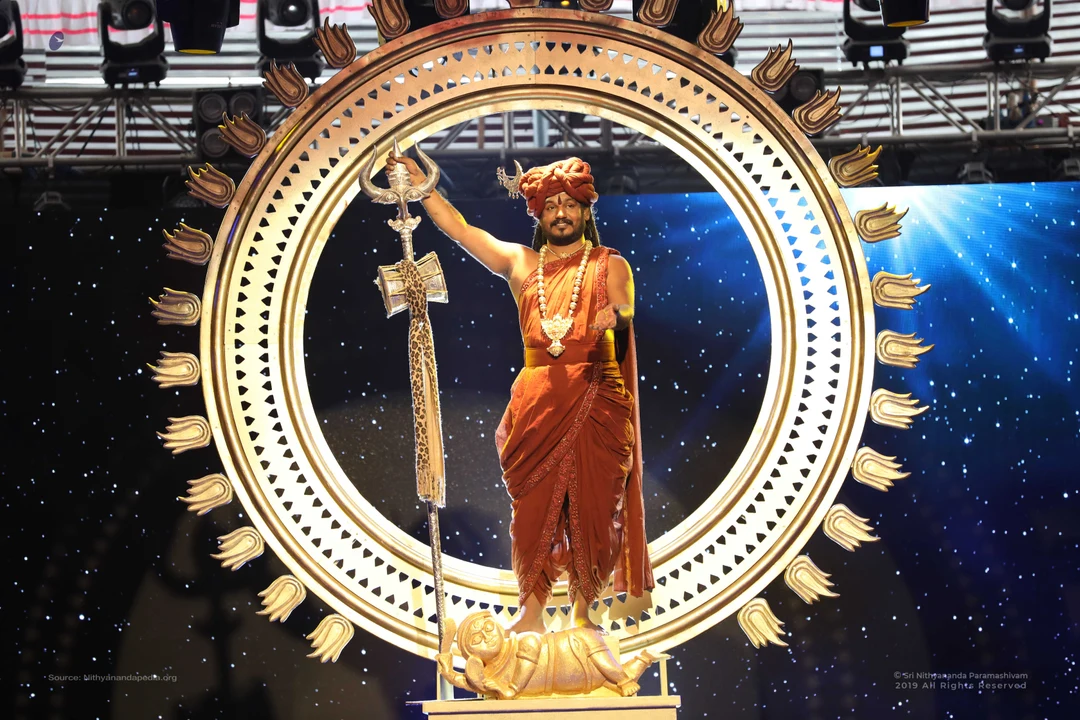
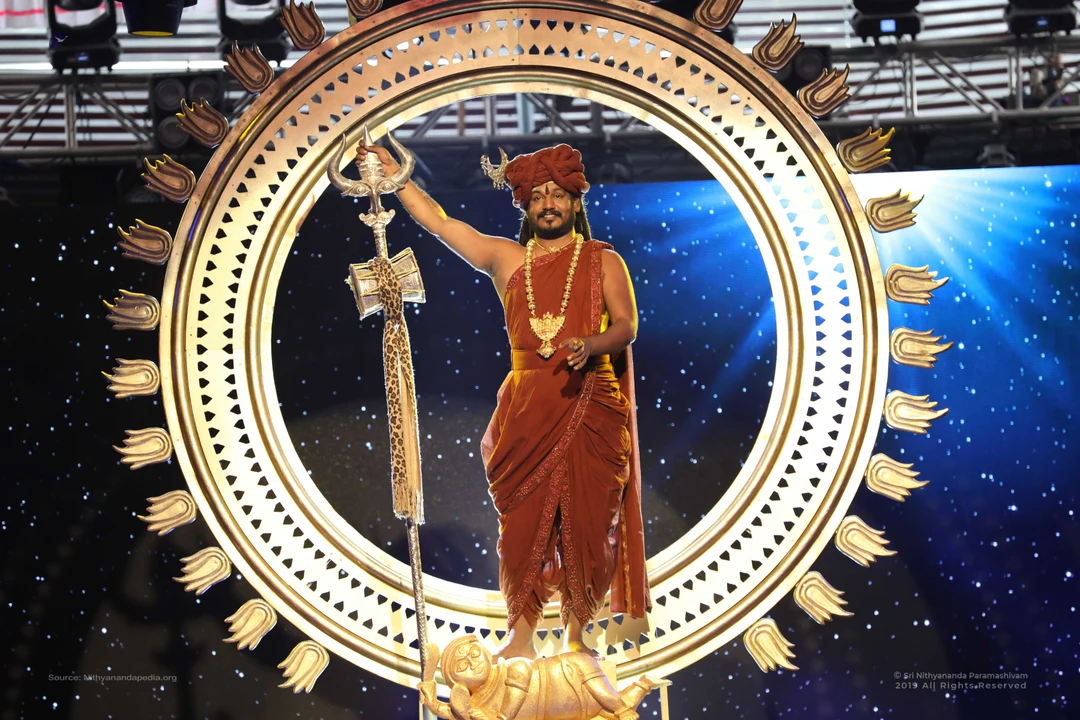
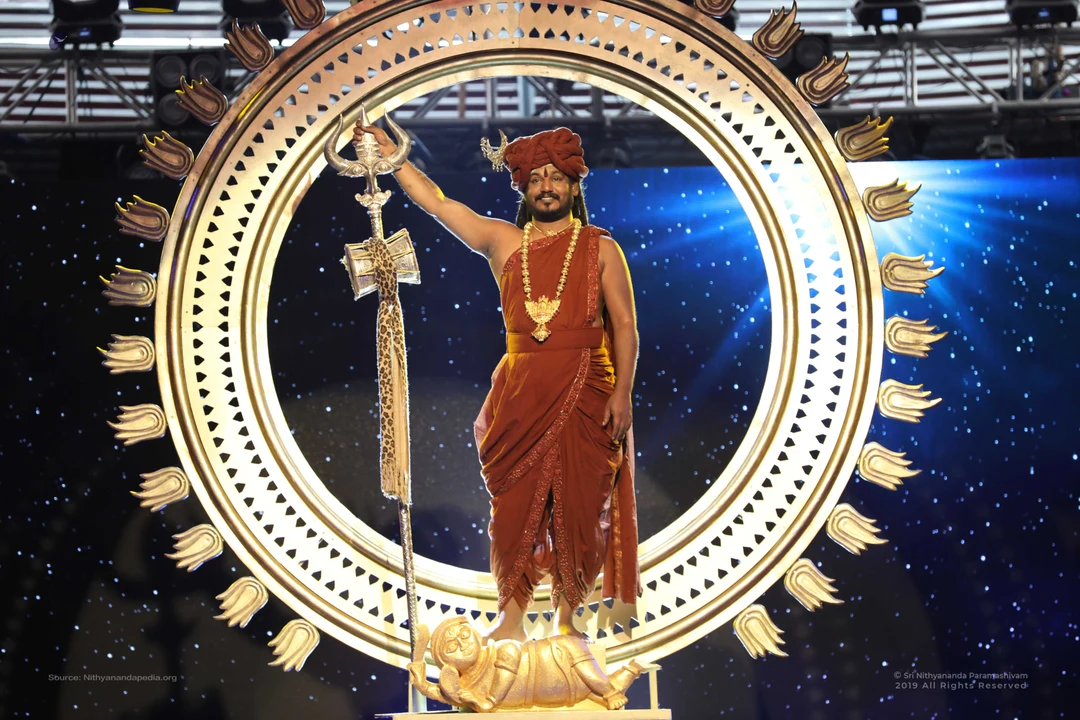
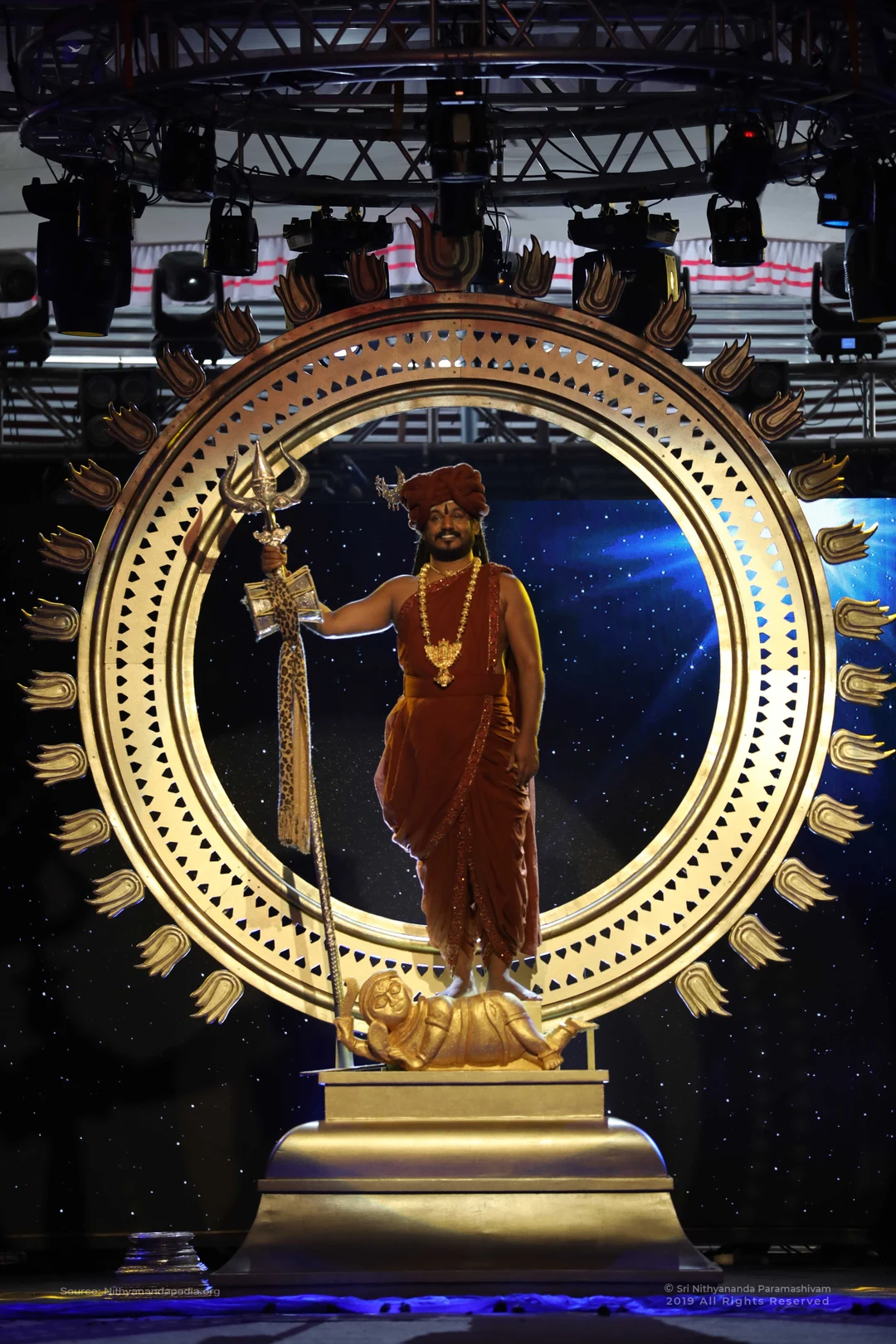
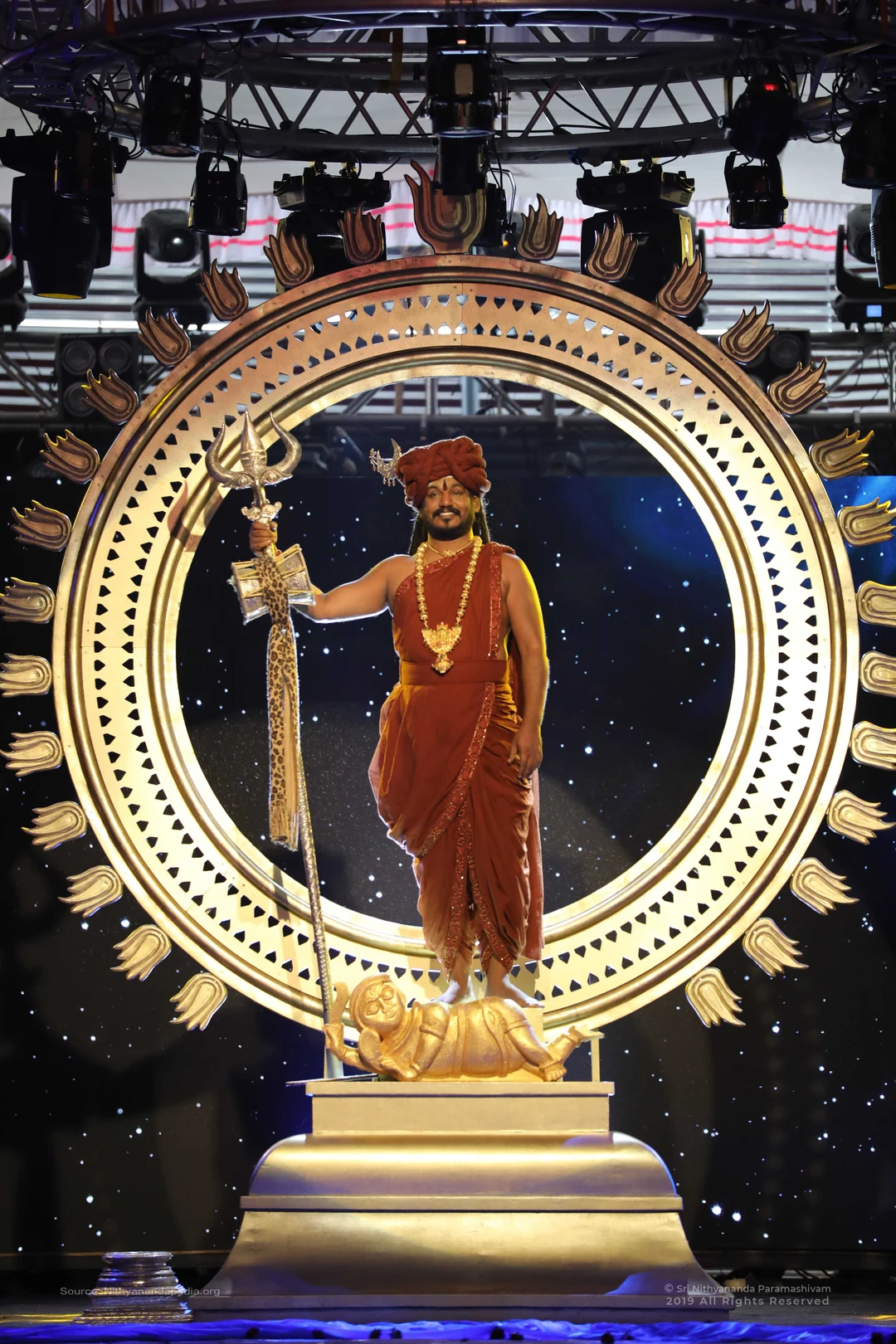
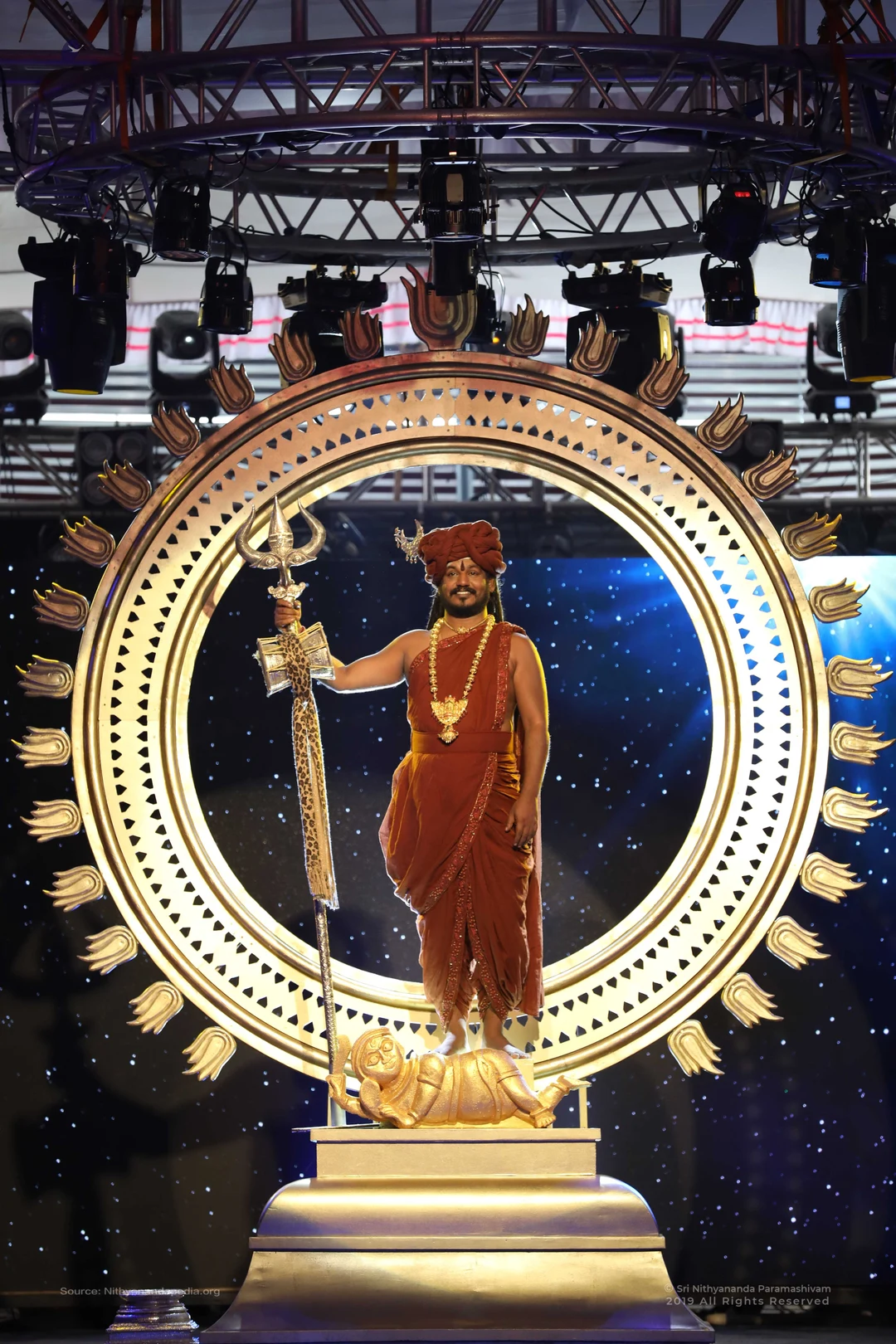
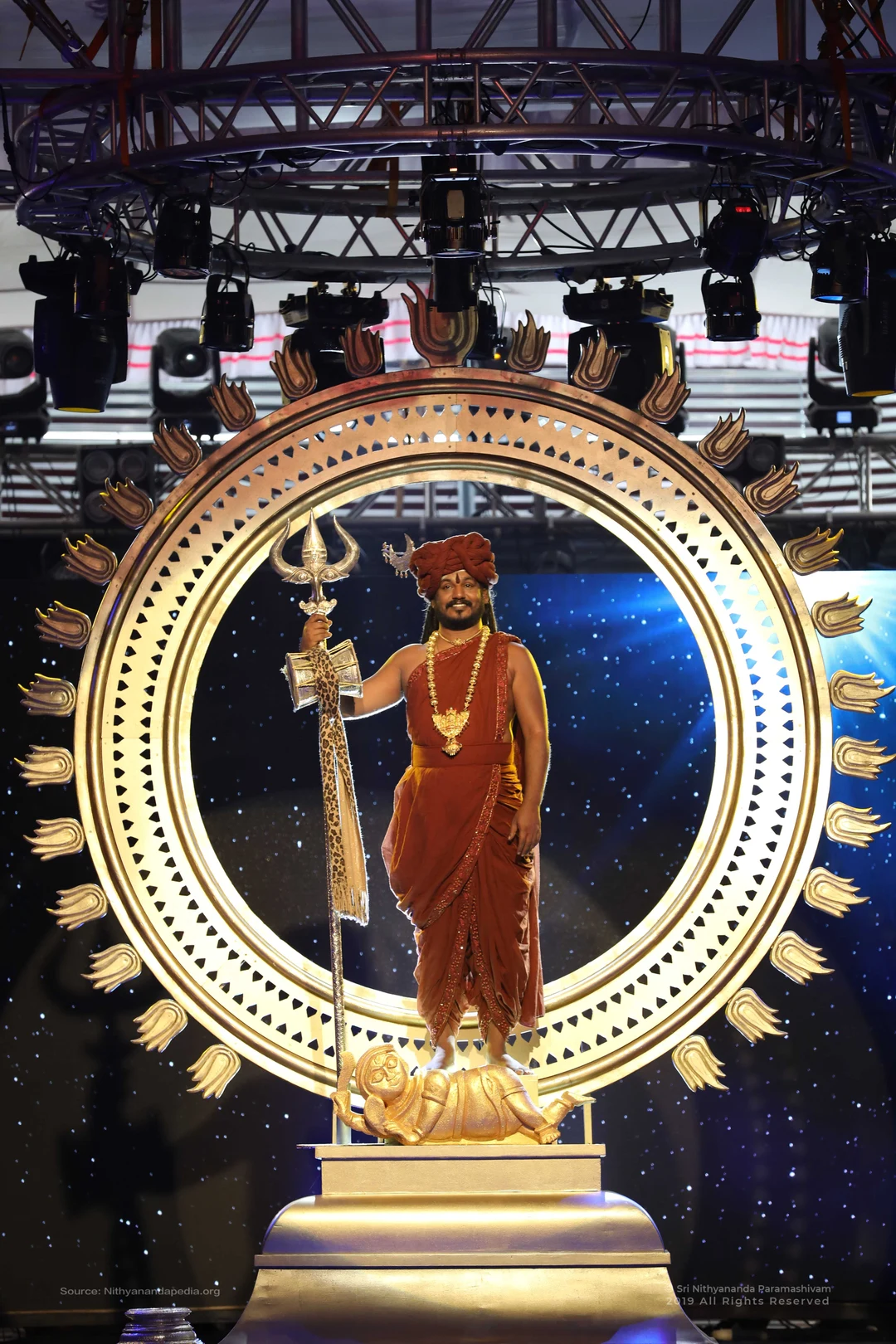
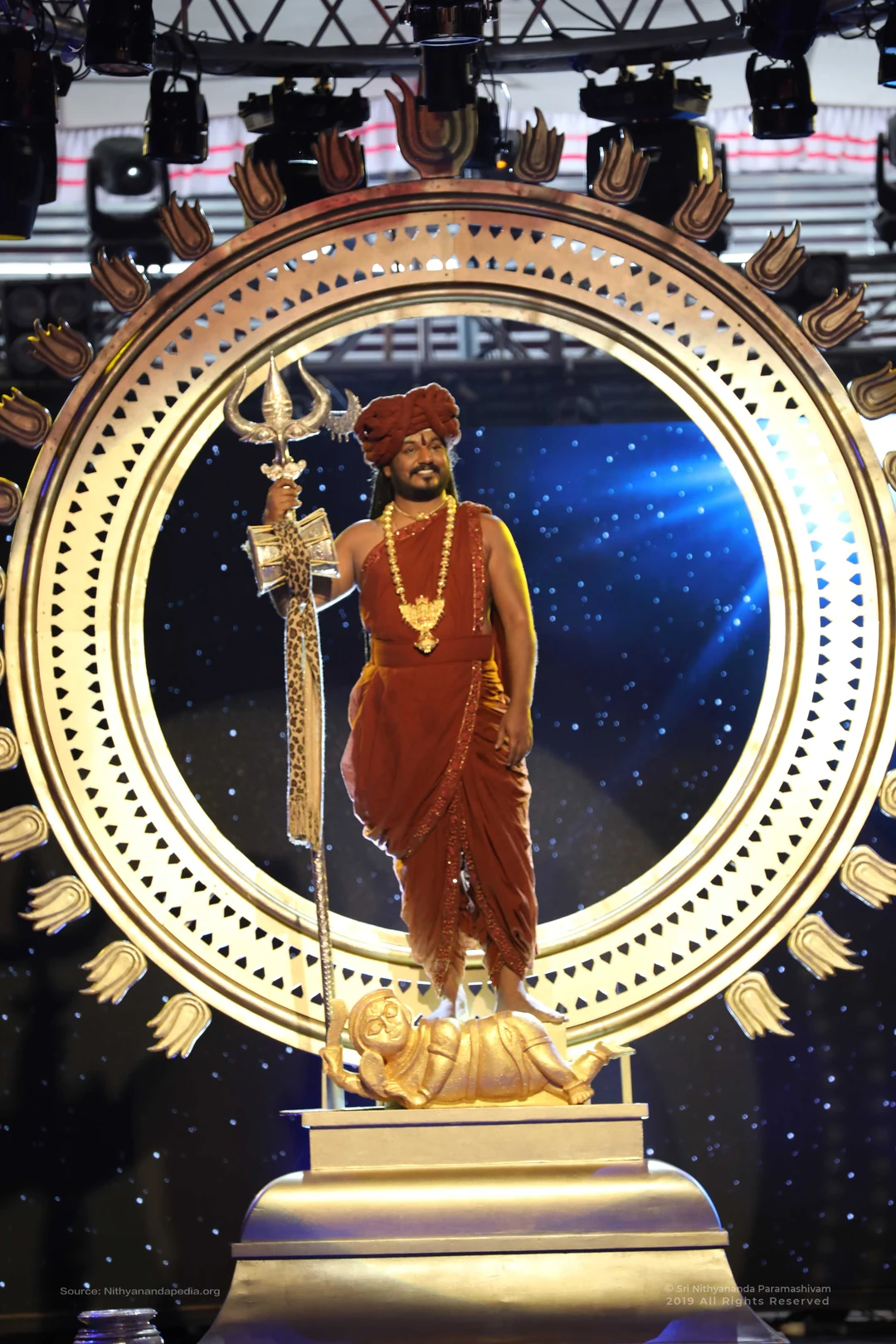
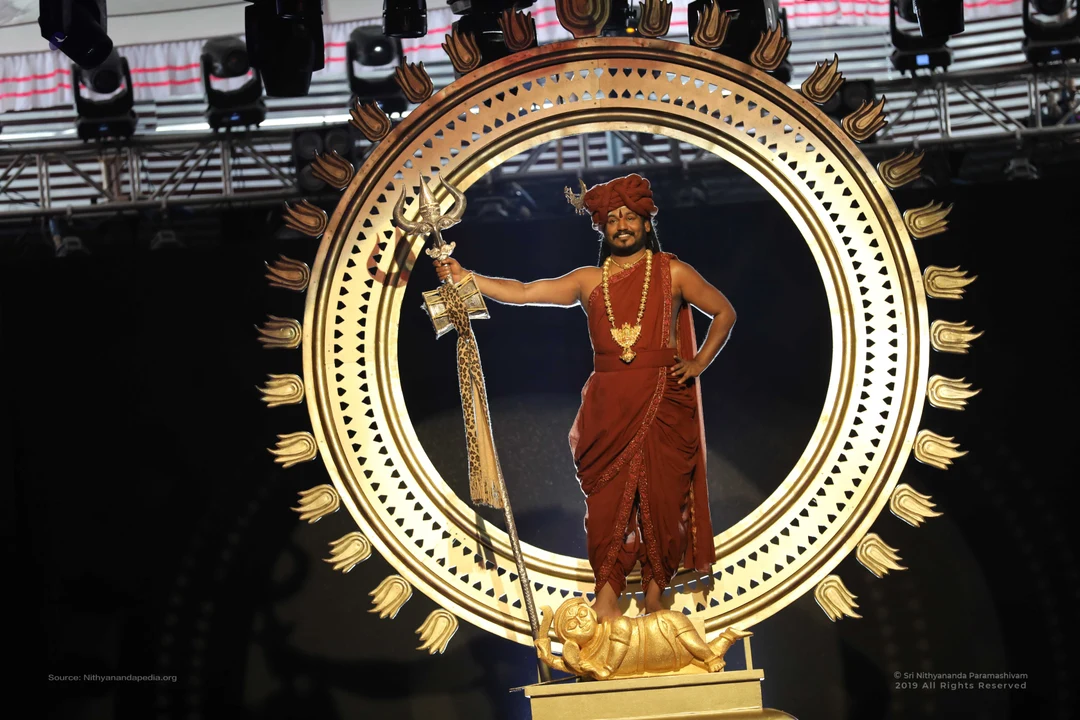
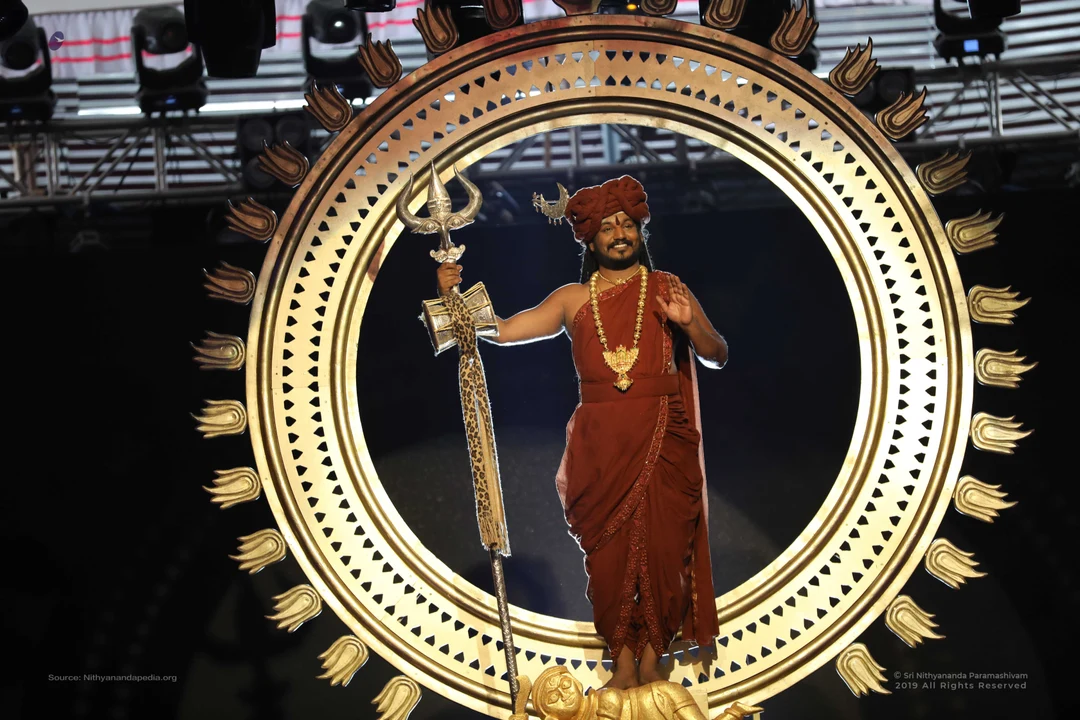
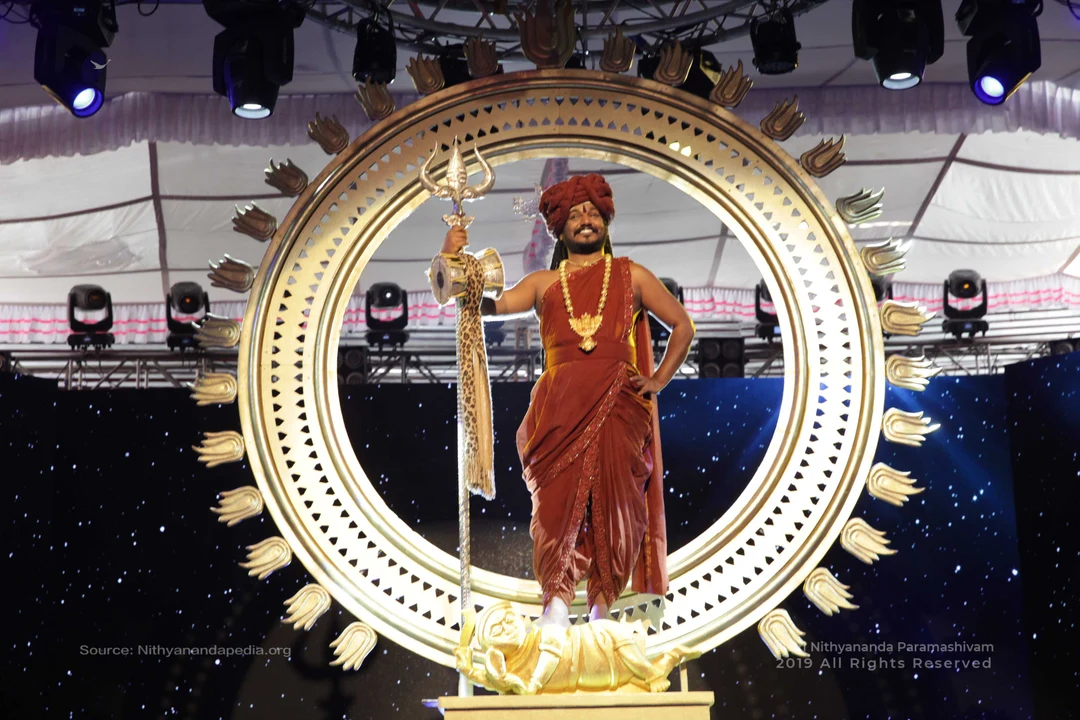
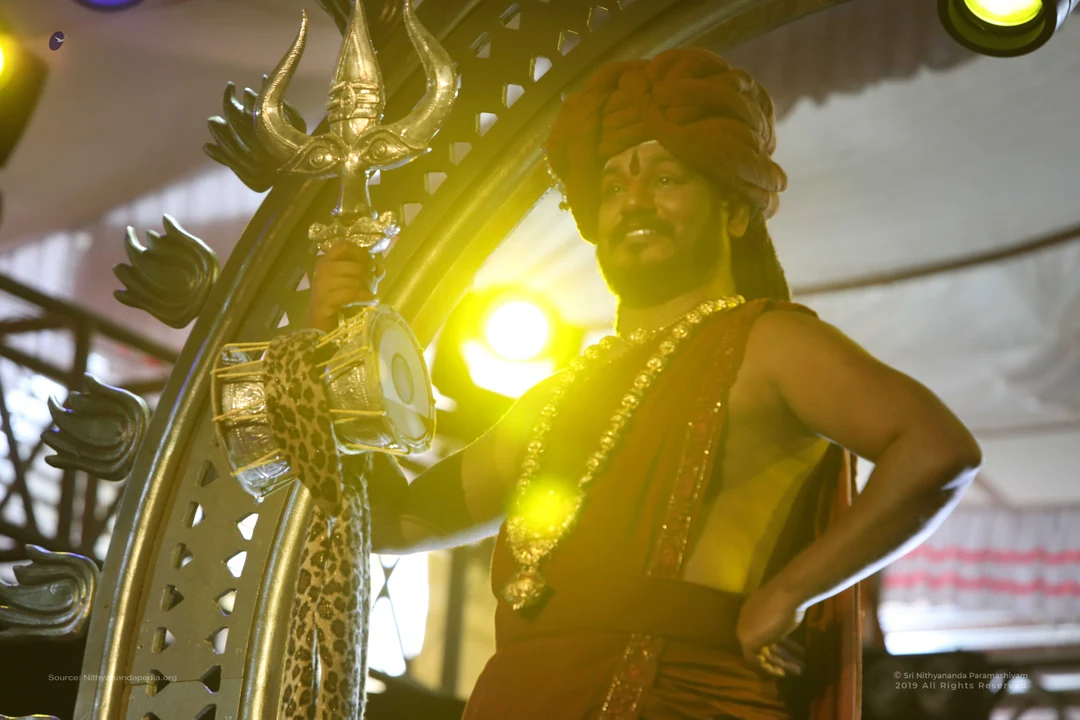
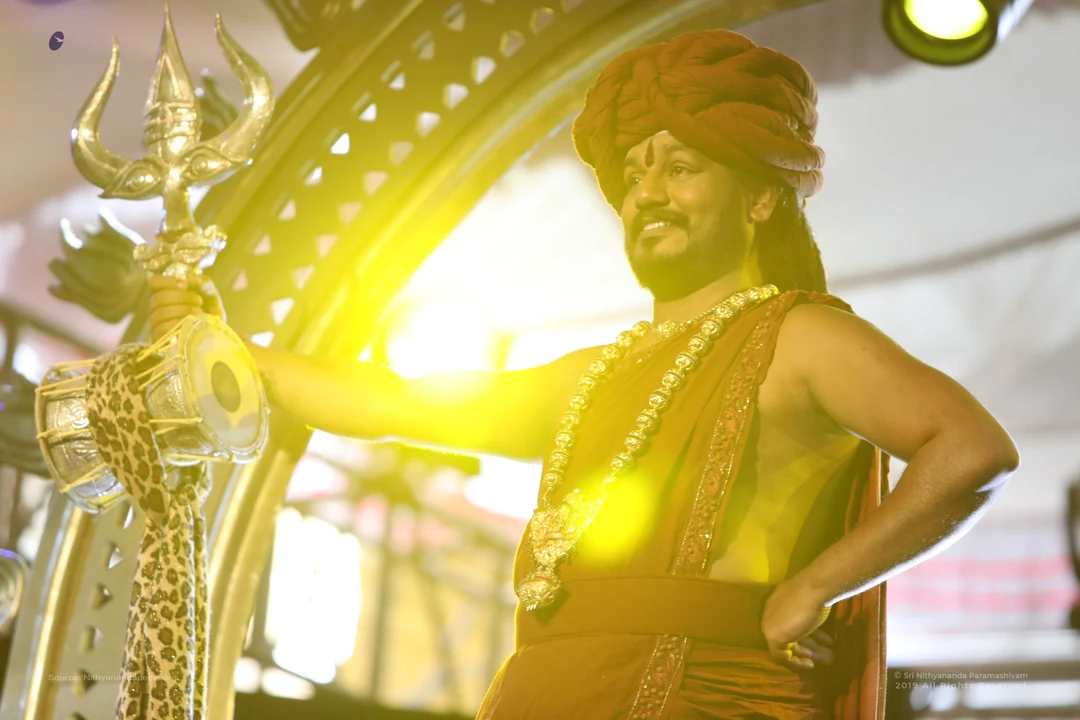
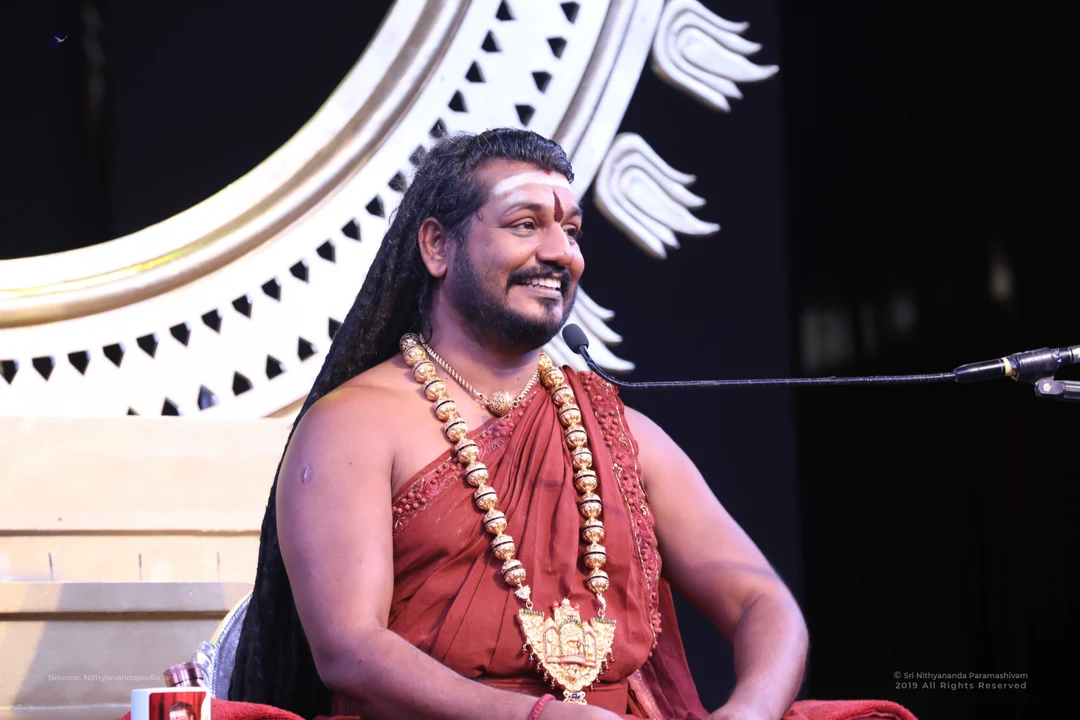
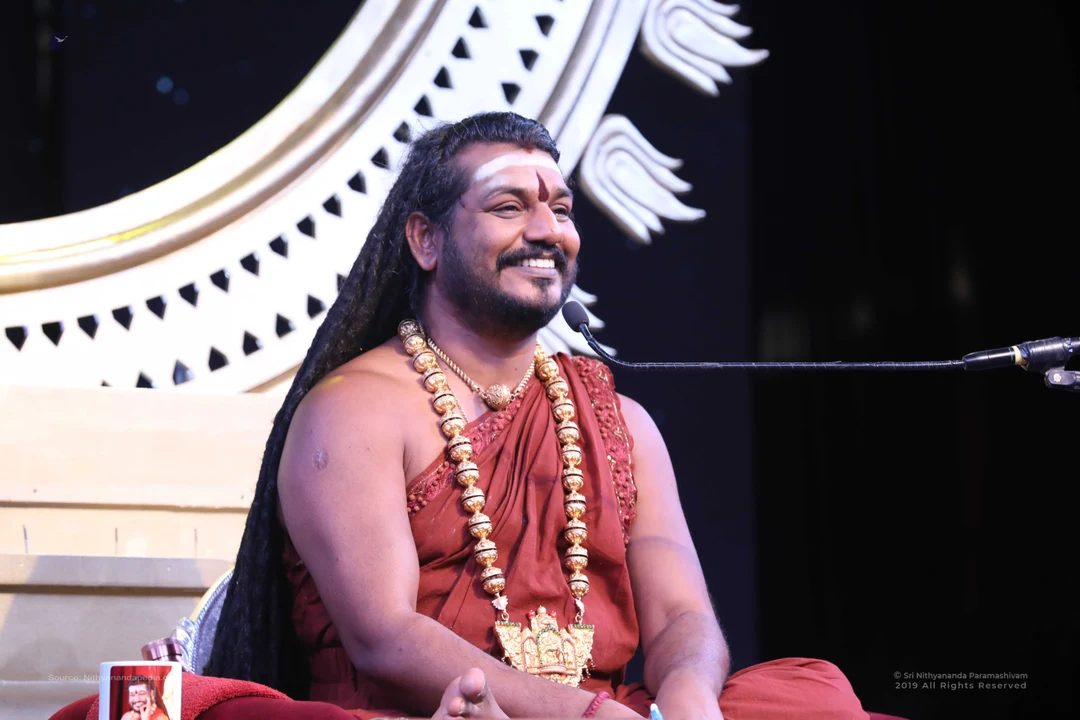
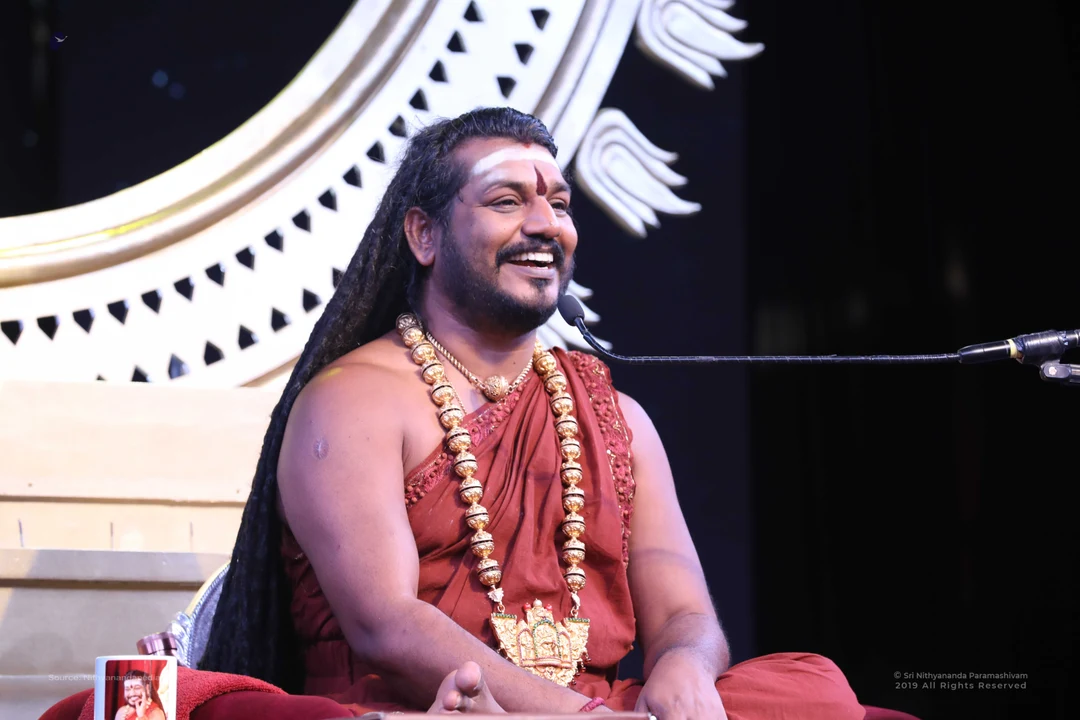
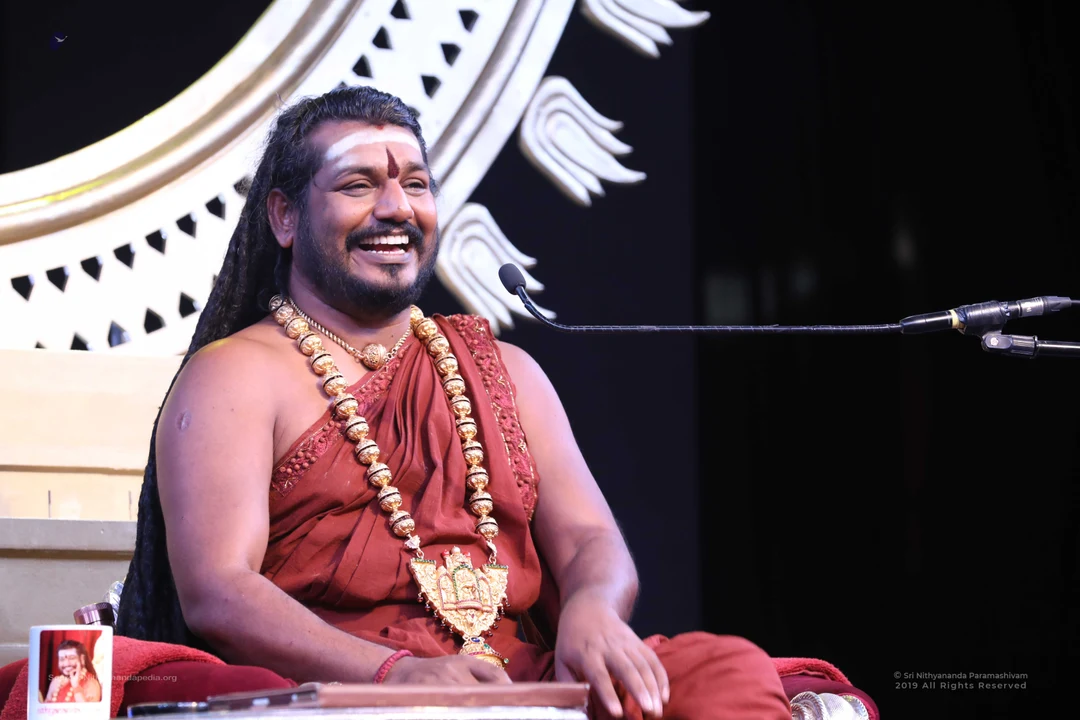
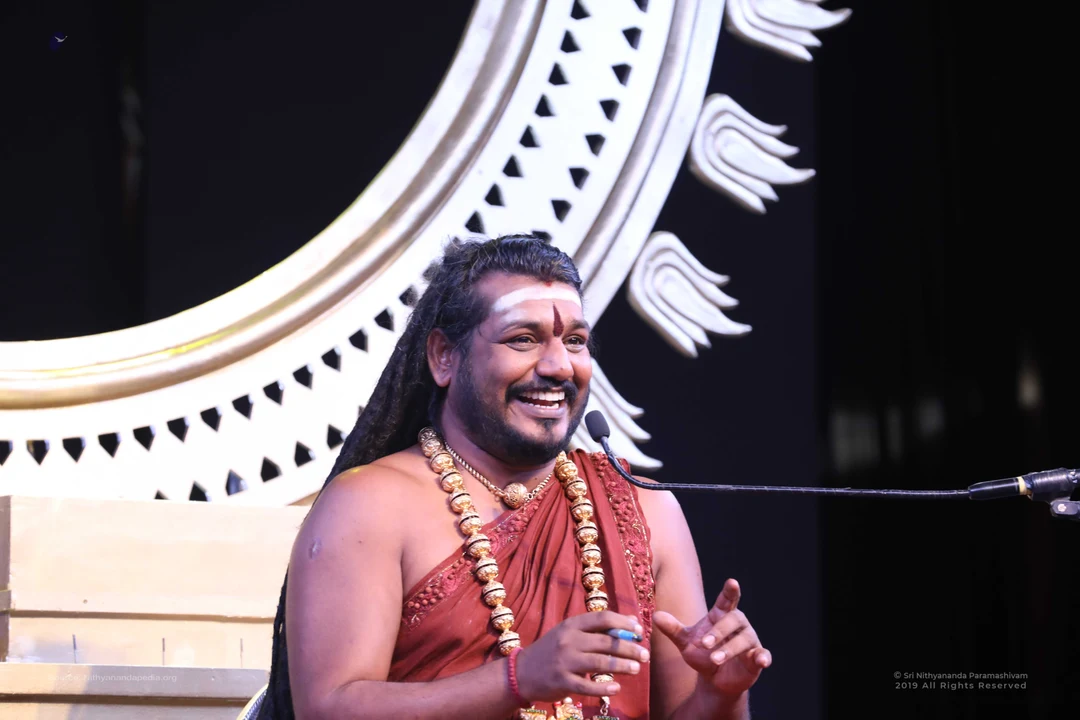
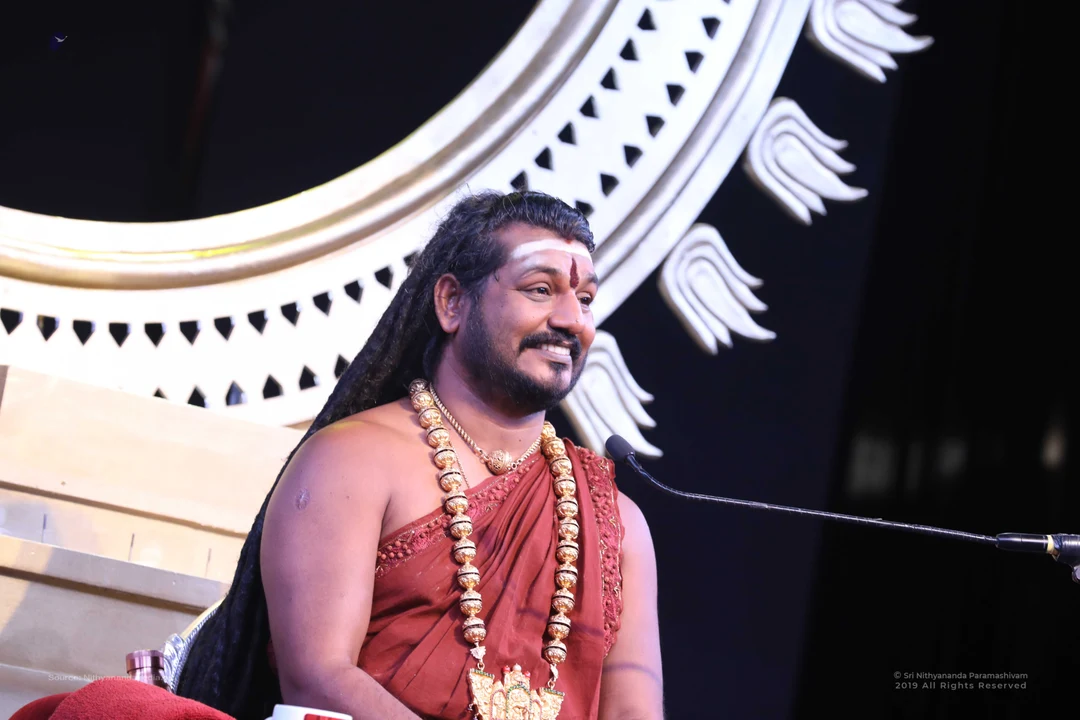
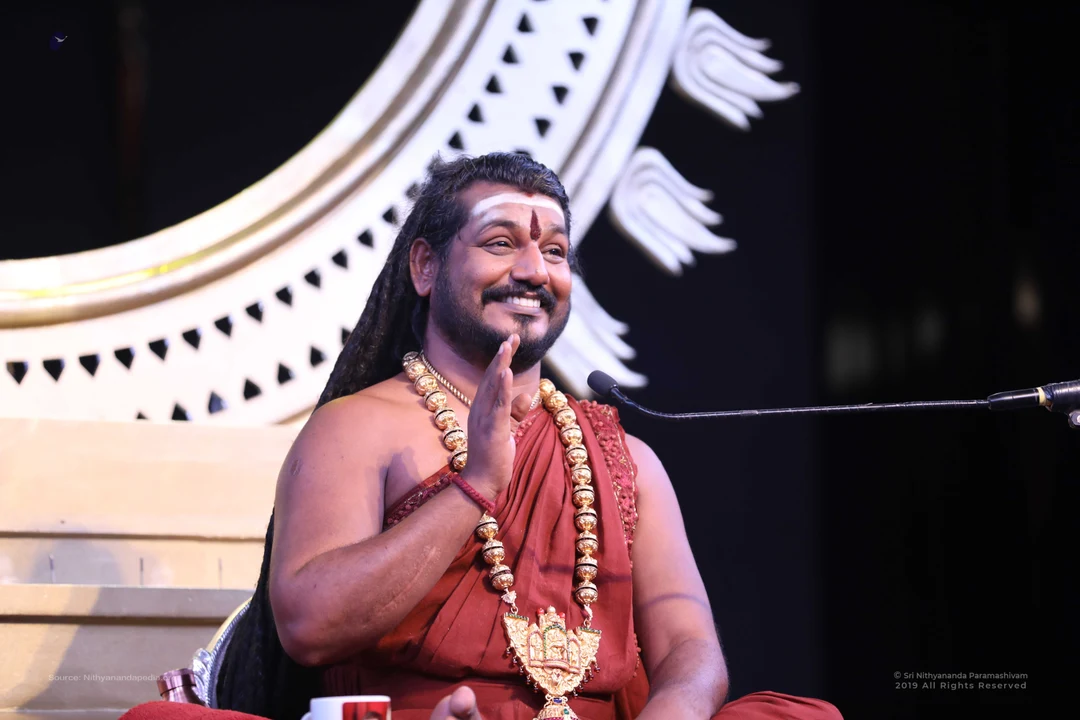
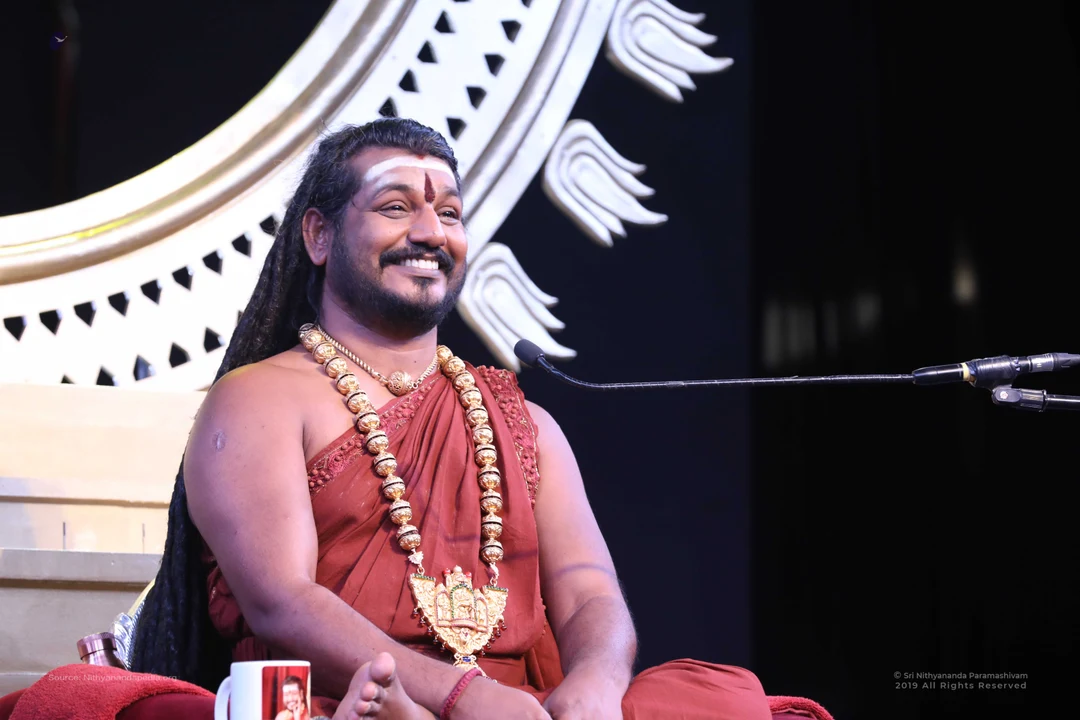
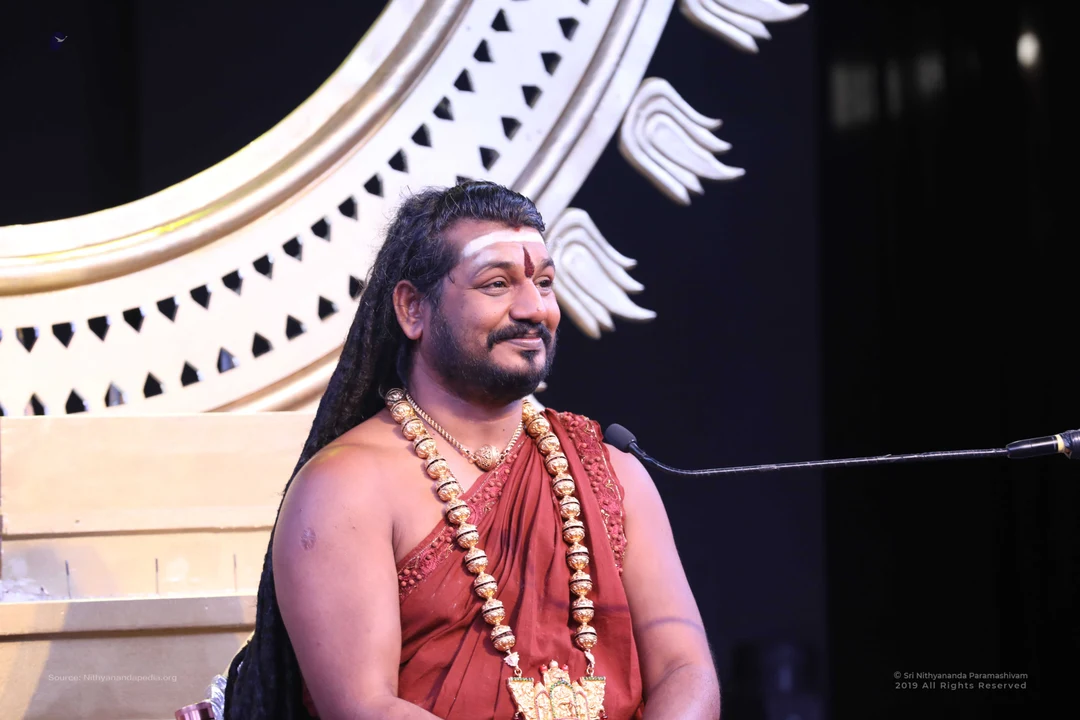
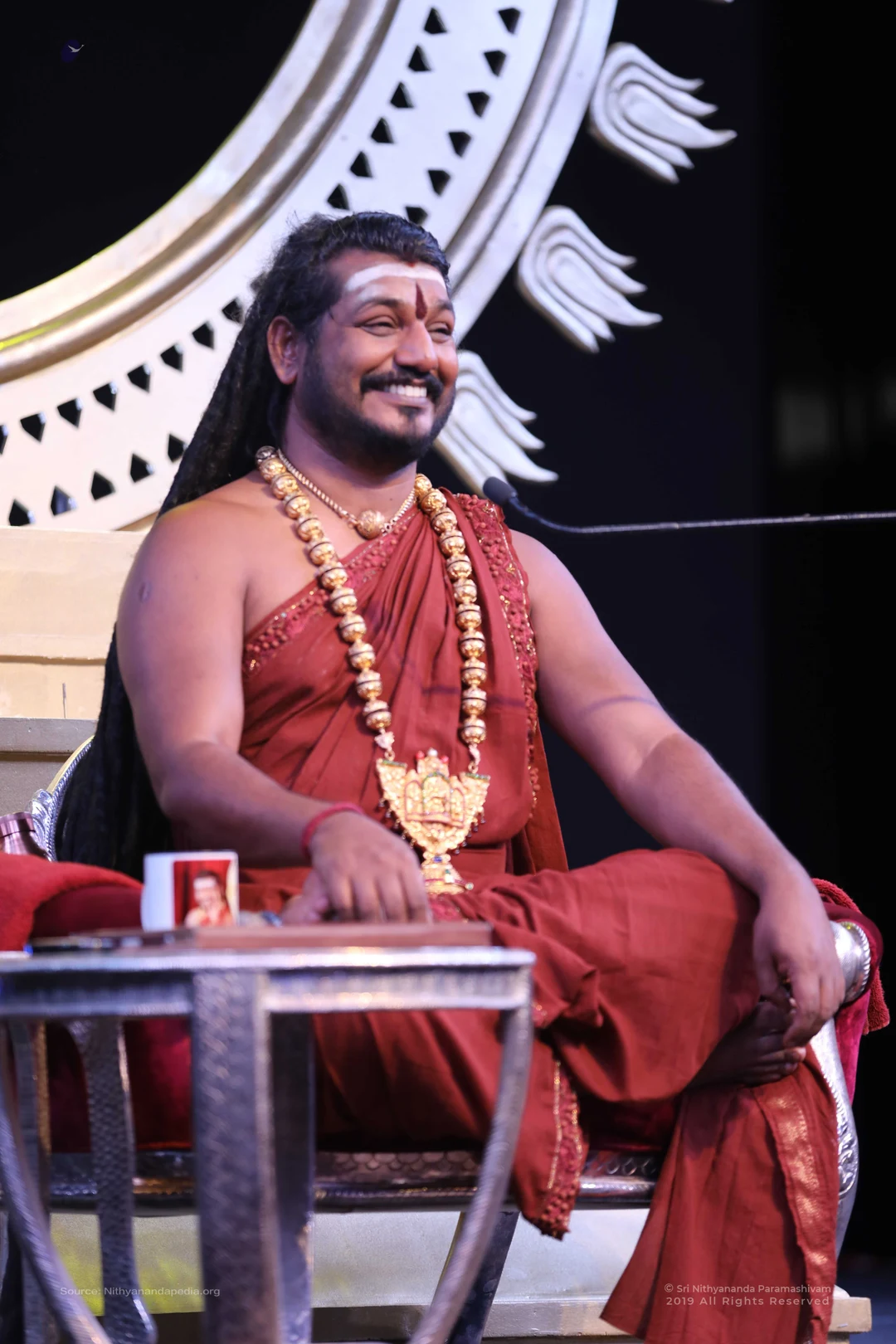
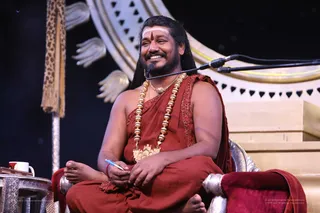
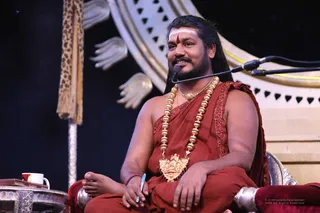
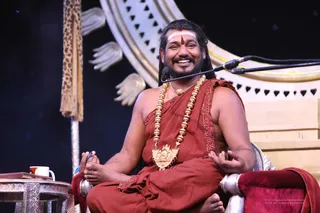
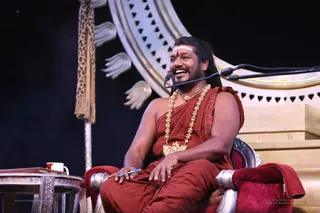
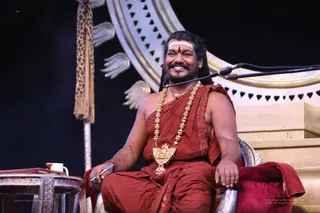
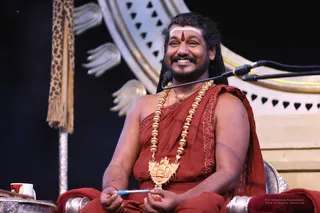
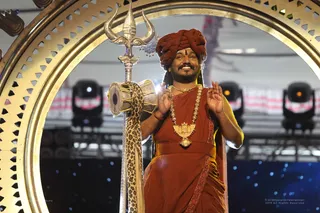
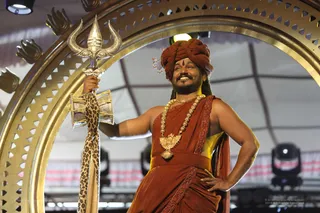
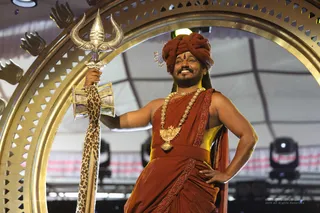
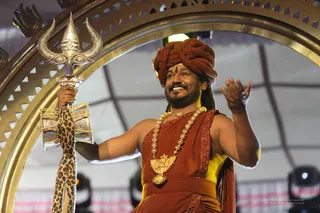
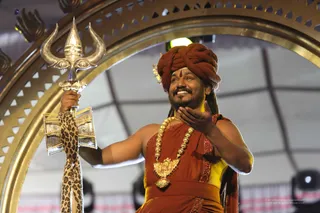
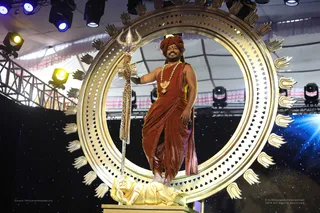
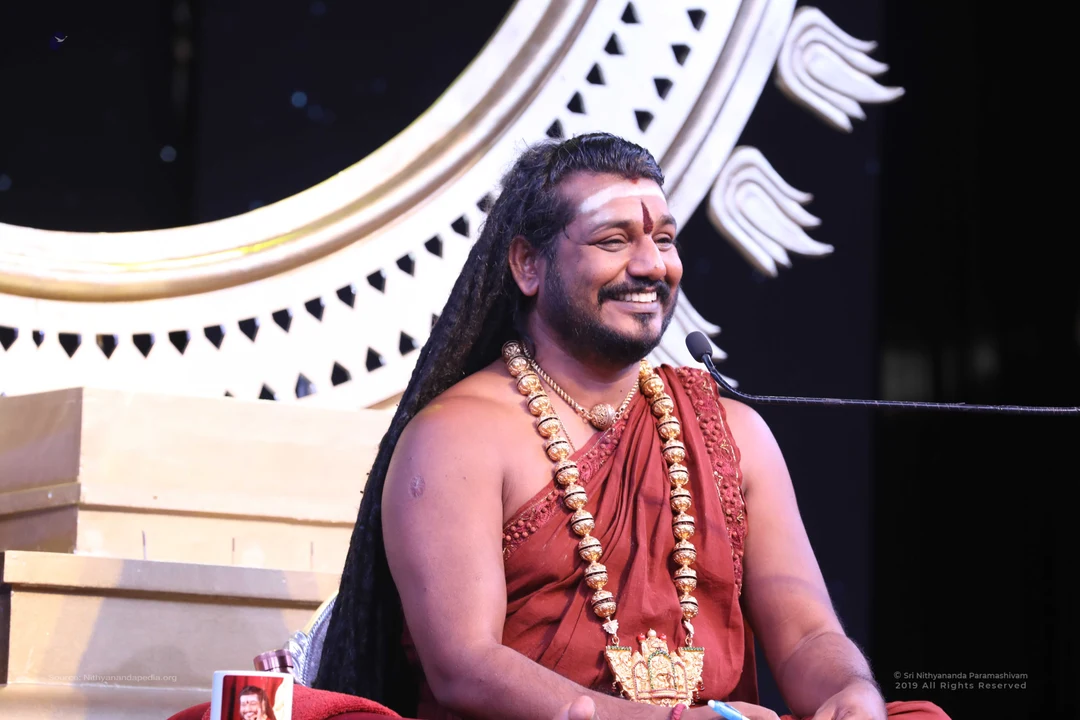
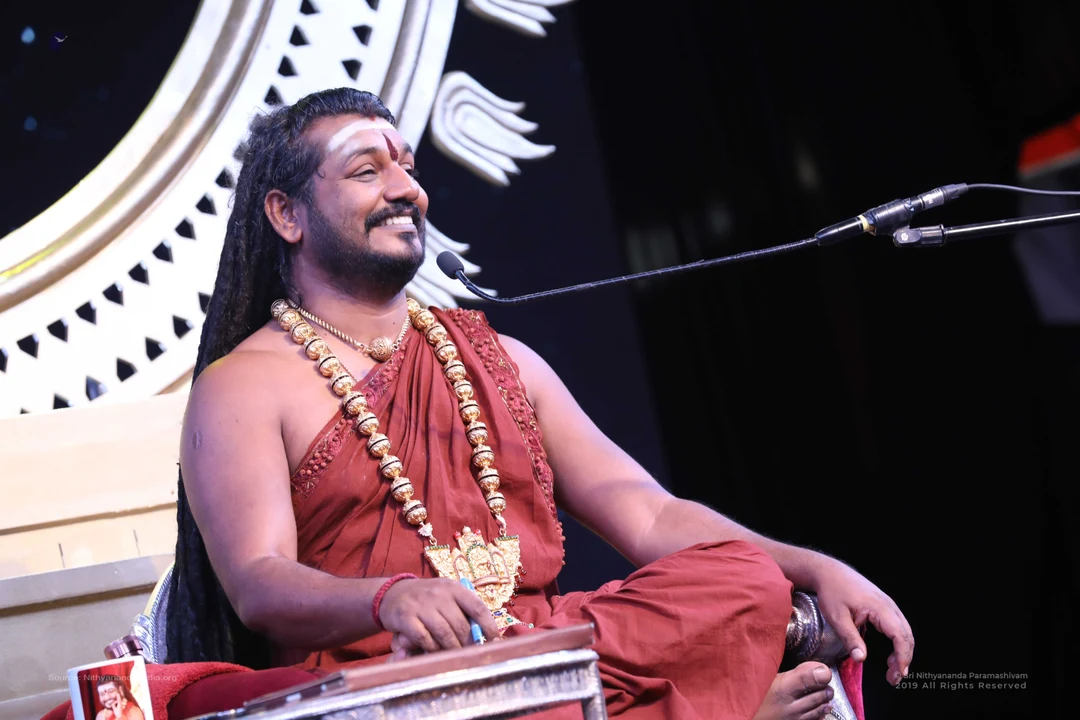
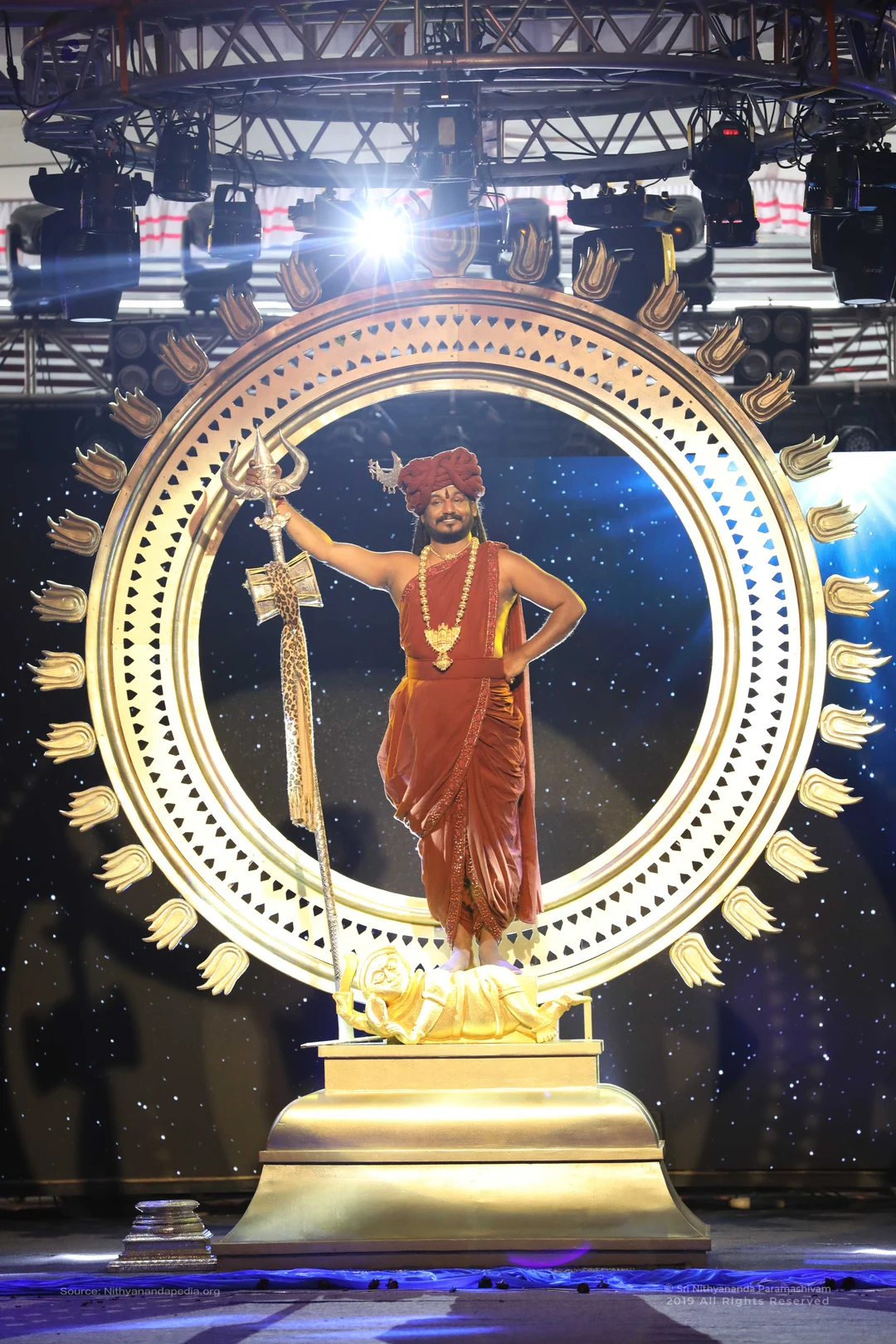
A man stands on a golden ornate frame, one foot on a pale yellow carved figure at the base, raising a silver trident with a crescent moon and a damaru drum attached near its top, with a leopard-print shawl hanging from the trident. He wears a rust-red turban, a rust-red draped garment with gold border and belt, and a heavy gold necklace with a gold pendant. Behind him is a blue starry backdrop and stage lighting.A smiling man sits on an ornate gold-and-red throne on a stage, speaking into a microphone on a stand. He wears a red-orange dhoti-style garment draped over his bare chest, a heavy gold bead necklace with a large gold pendant, and a red thread bracelet. He has long dark hair and a white tilak with a red mark on his forehead, and his bare feet rest on the throne's red cushion. Behind him is a large gold wheel-like backdrop with black triangular motifs, and a small framed photo sits on a side table beside a cup. Swamiji (probable): long hair, orange-red saffron-style clothing, ceremonial gold necklace and pendant, seated on a throne.A photograph of a smiling man seated on an ornate white and gold throne-like chair in front of a dark stage backdrop, speaking into a microphone on a boom stand. He has long dark hair swept back, a short beard, and a white vertical tilak on his forehead. He wears a rust-red draped garment with embroidered edging, a heavy necklace of large gold beads with a gold pendant bearing a deity figure, and a smaller gold chain. A red thread is tied on his wrist and he rests his hand on a small wooden stand beside a red-covered book. Swamiji (probable): the long swept-back hair, rust-red saffron-toned clothing and gold beaded malas match the appearance cues, shown in person on stage at a satsang-style public address.

January 07 2018

Original wiki page
Contents

Title

Revelations about Anti-Matter & the 11 Dimensions of the Universe
Nithyananda Peetham, Bengaluru Aadheenam | Mahasadashivoham Day 23 | Shiva Deeksha & Kalpataru Darshan - Kalpataru Yogam

Narration

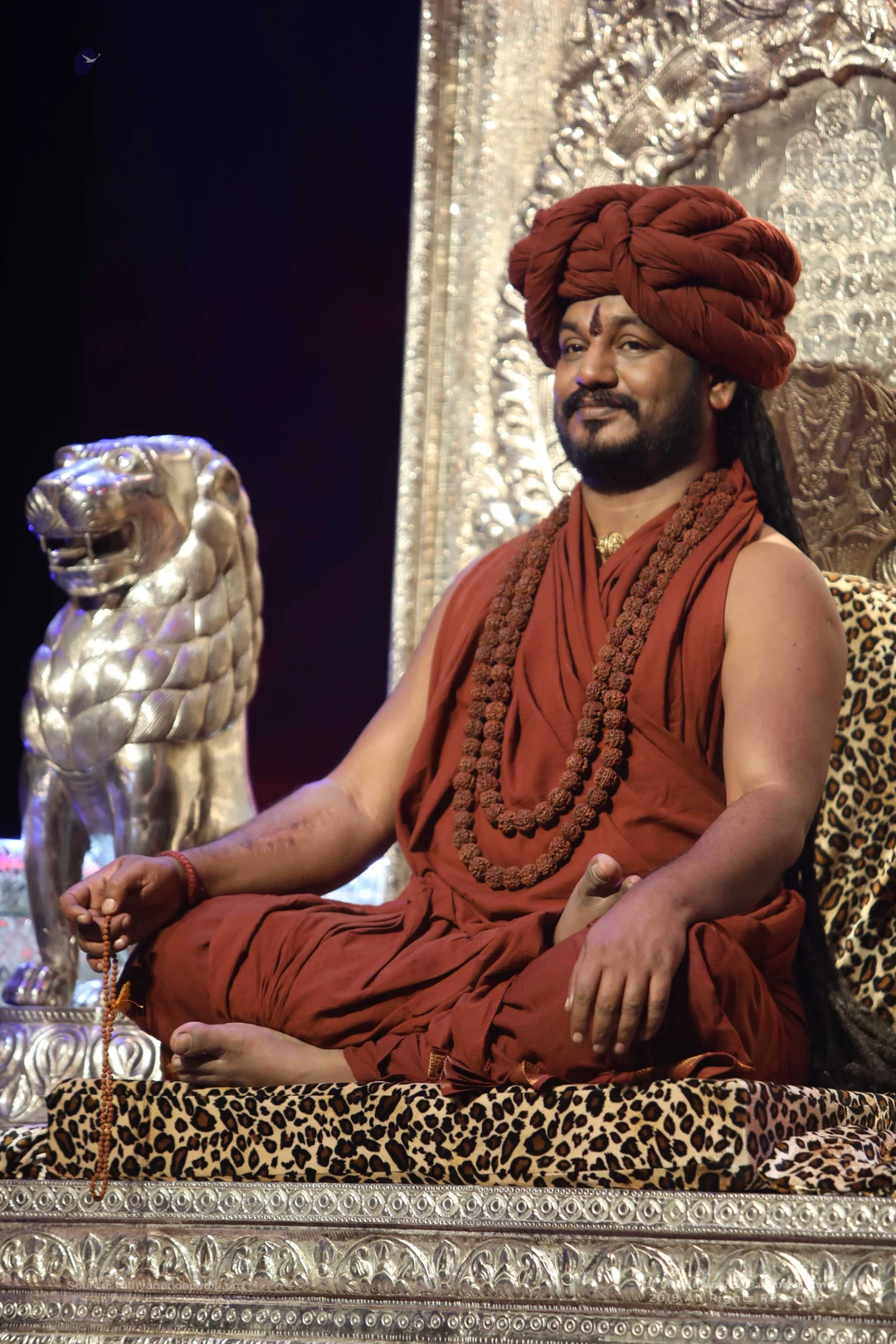
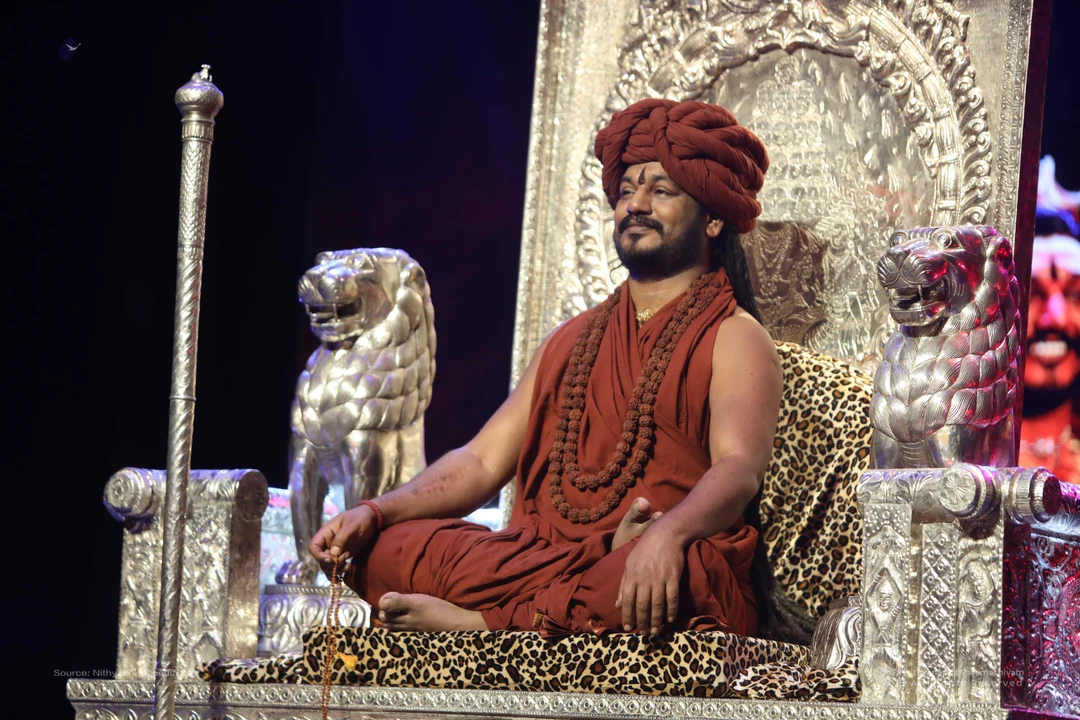
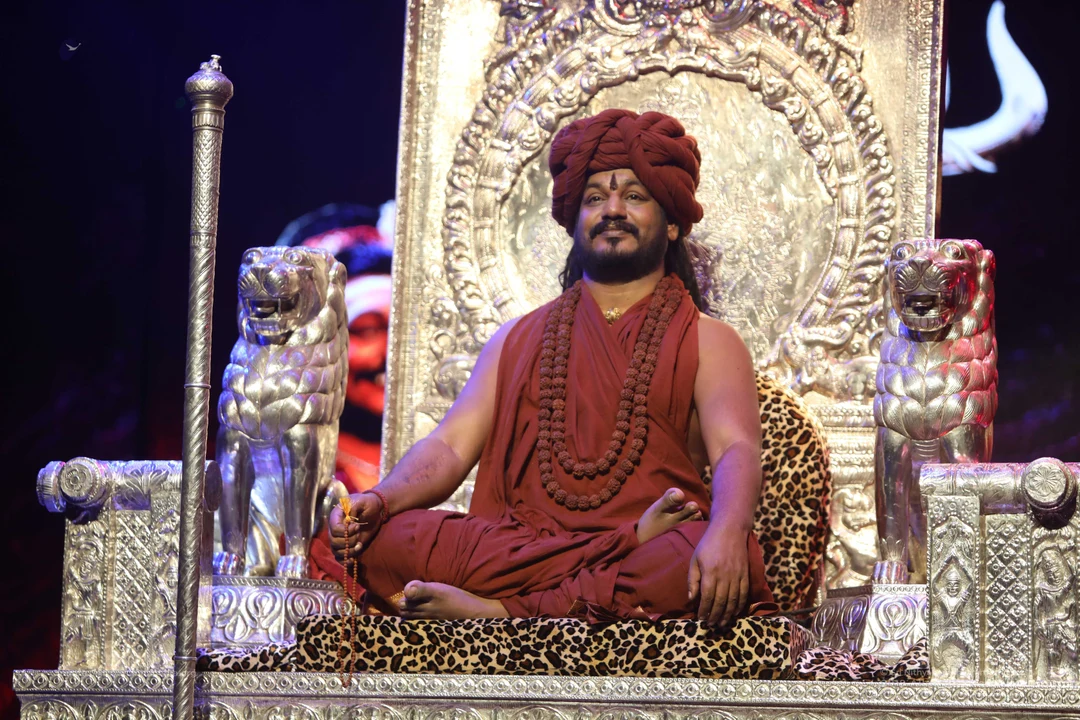
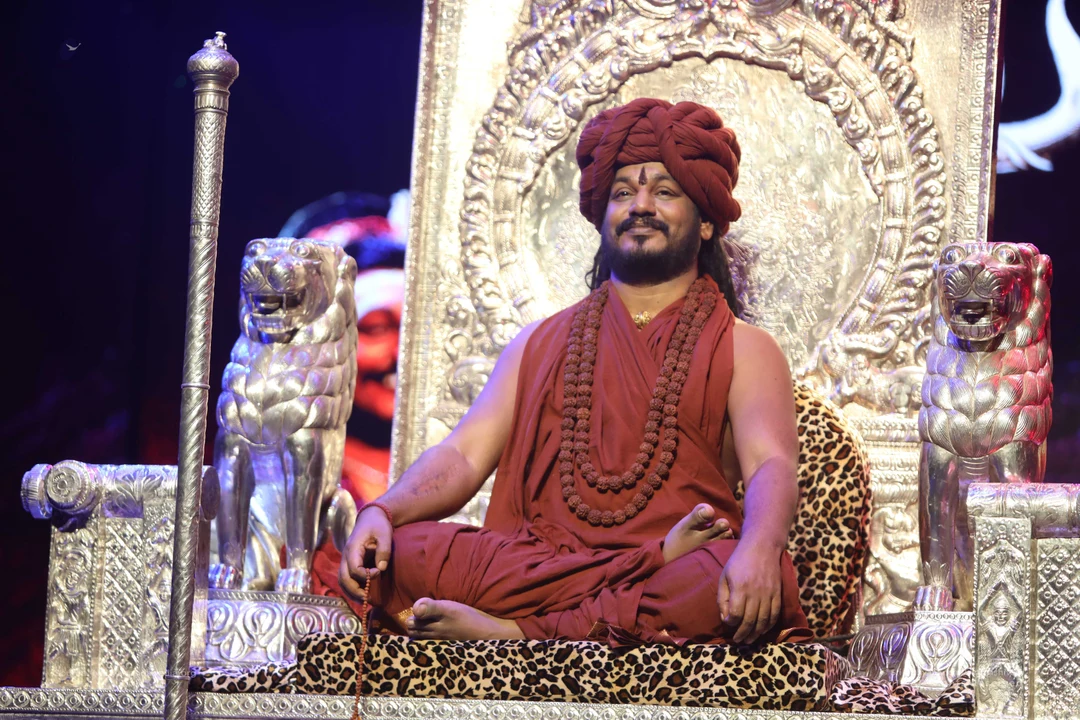
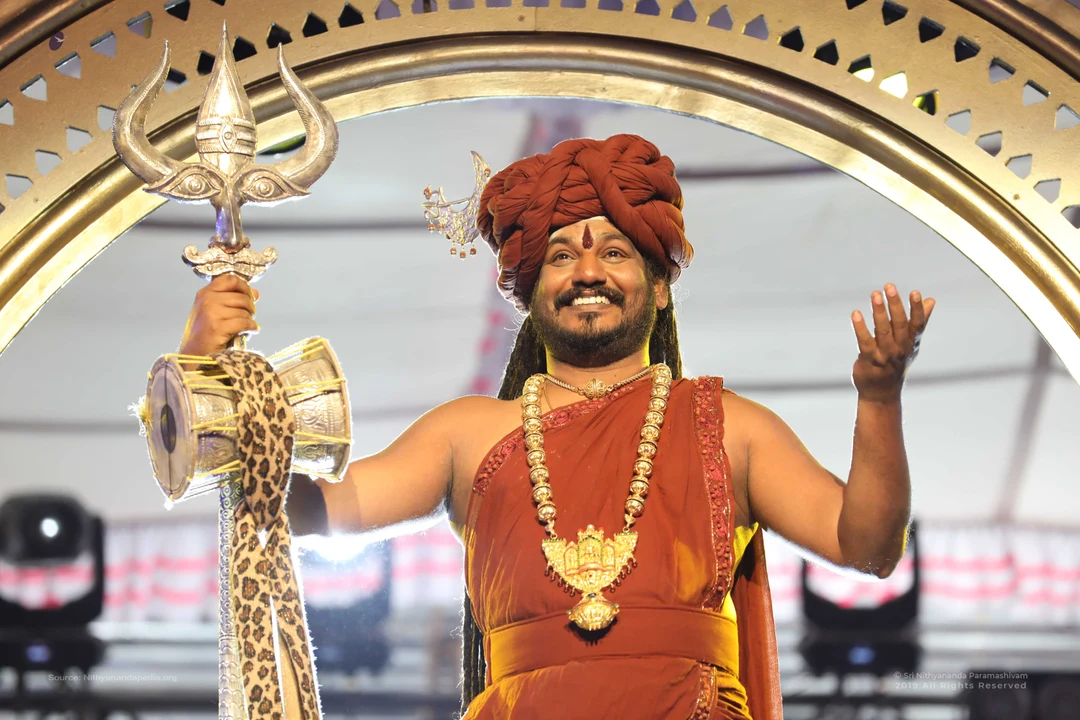
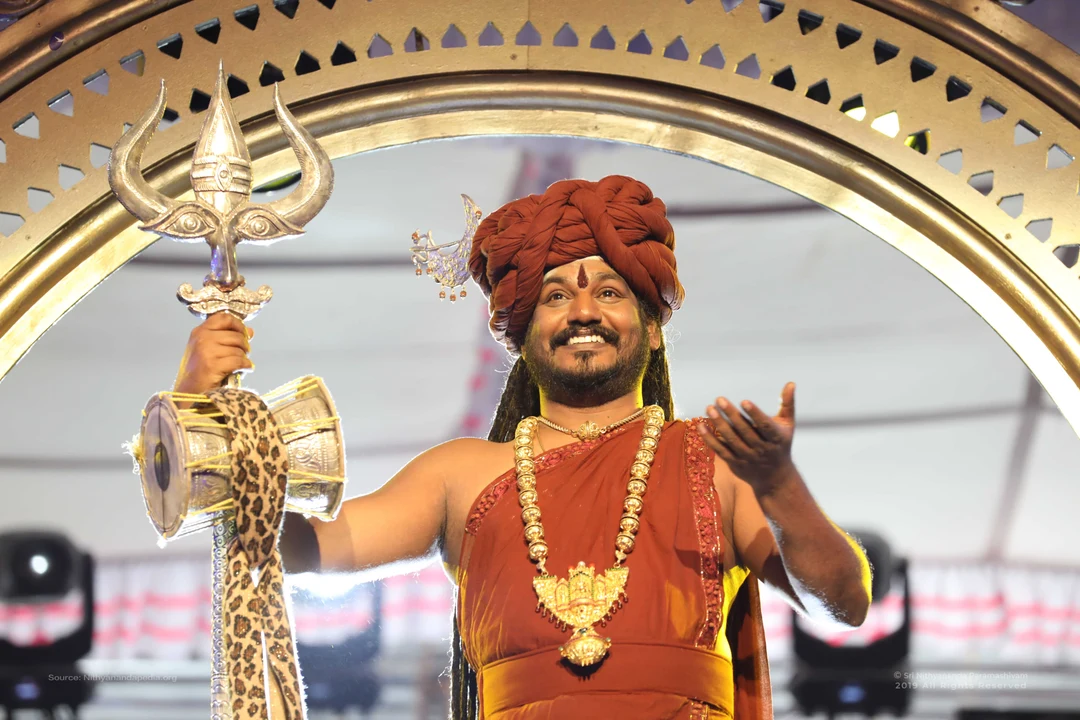
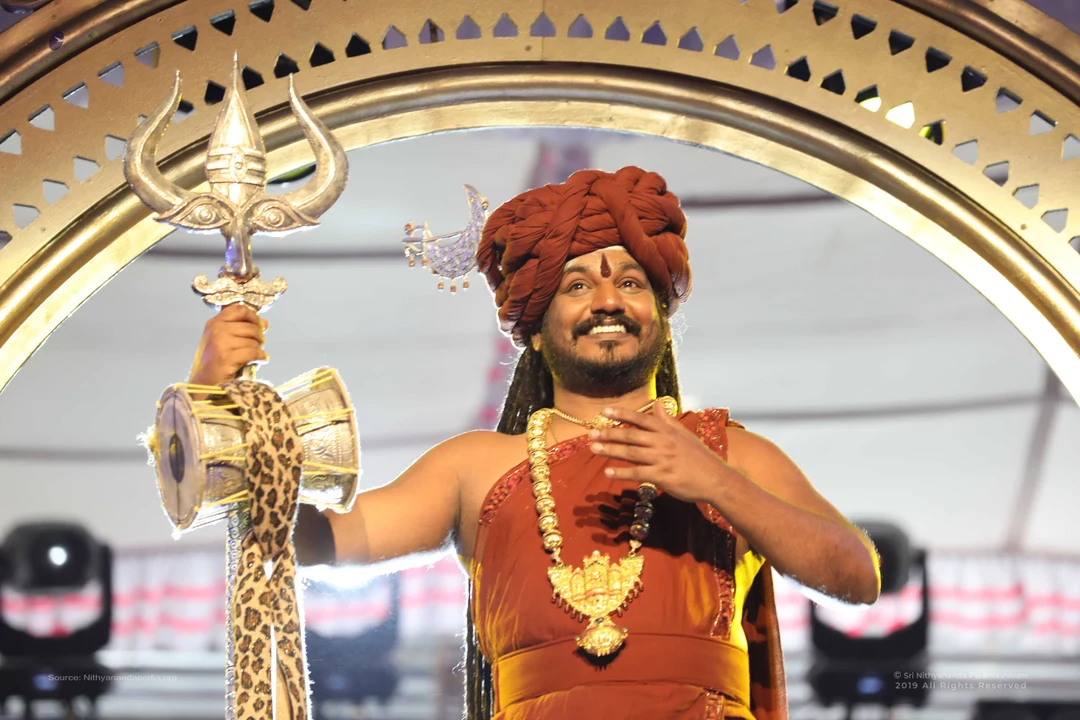
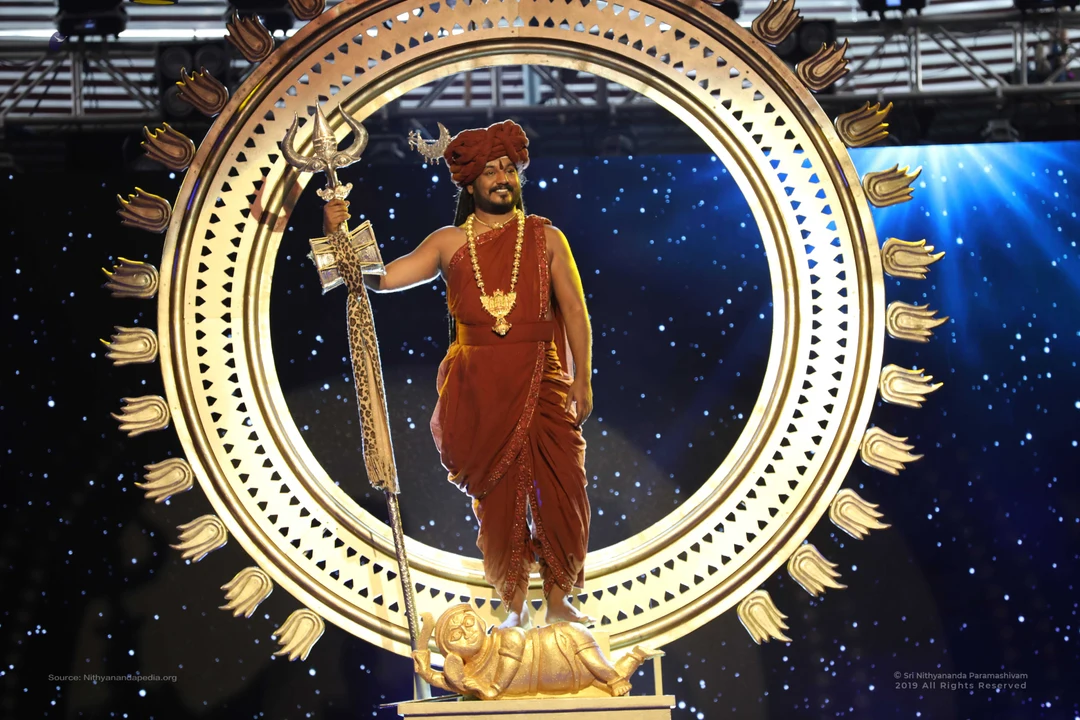
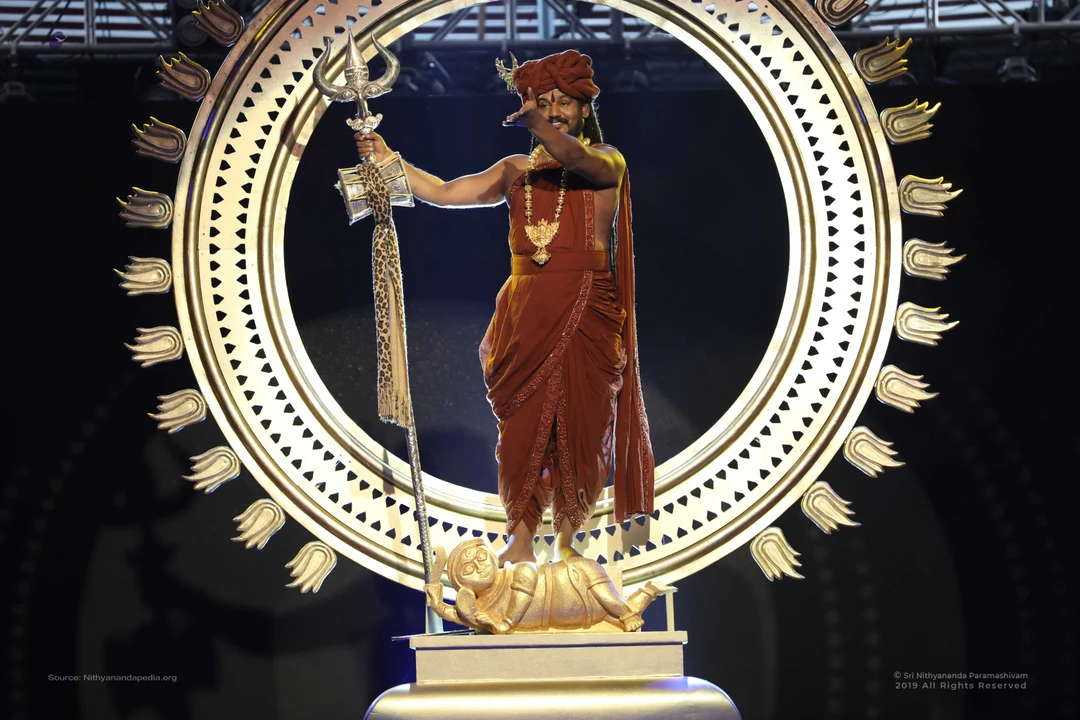
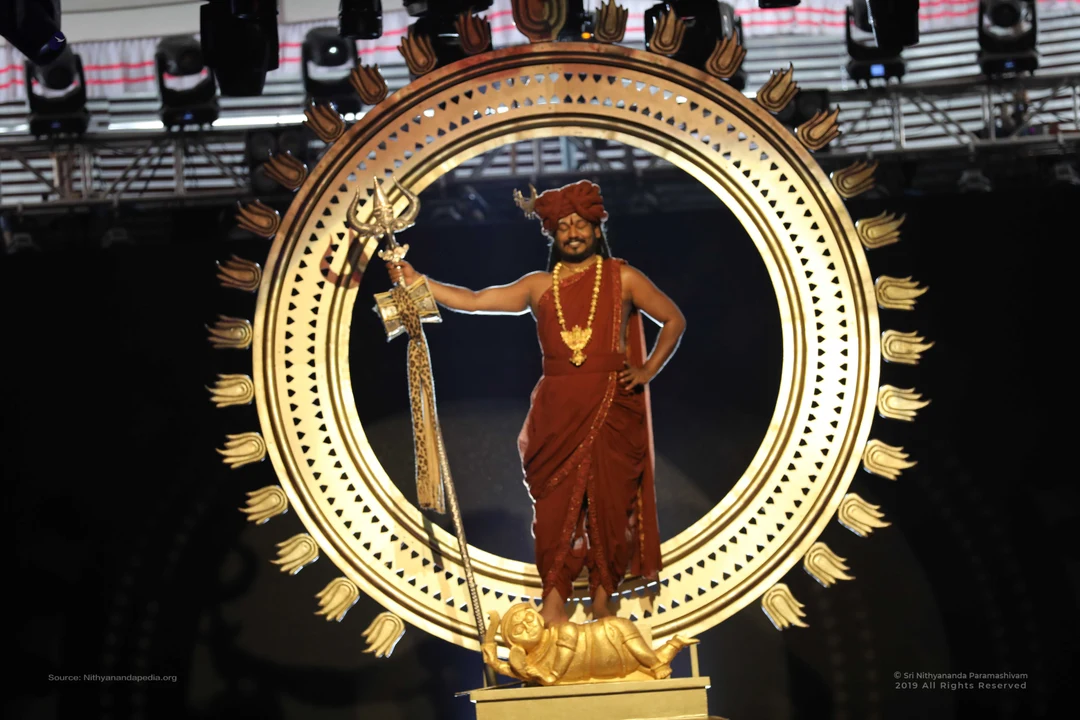
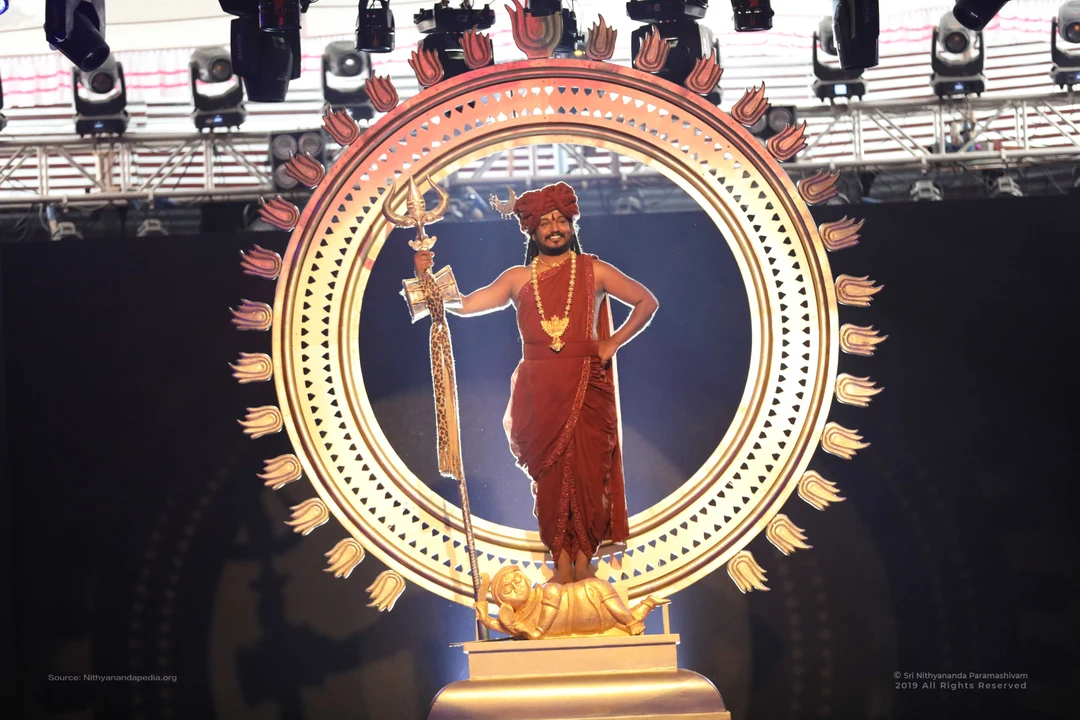
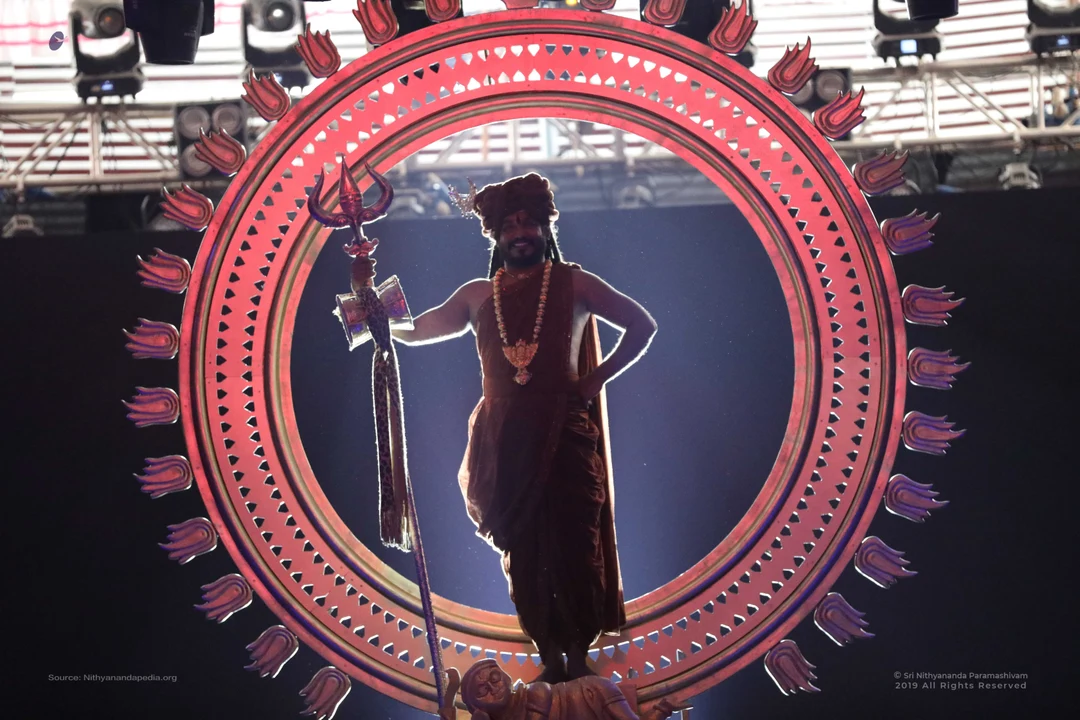
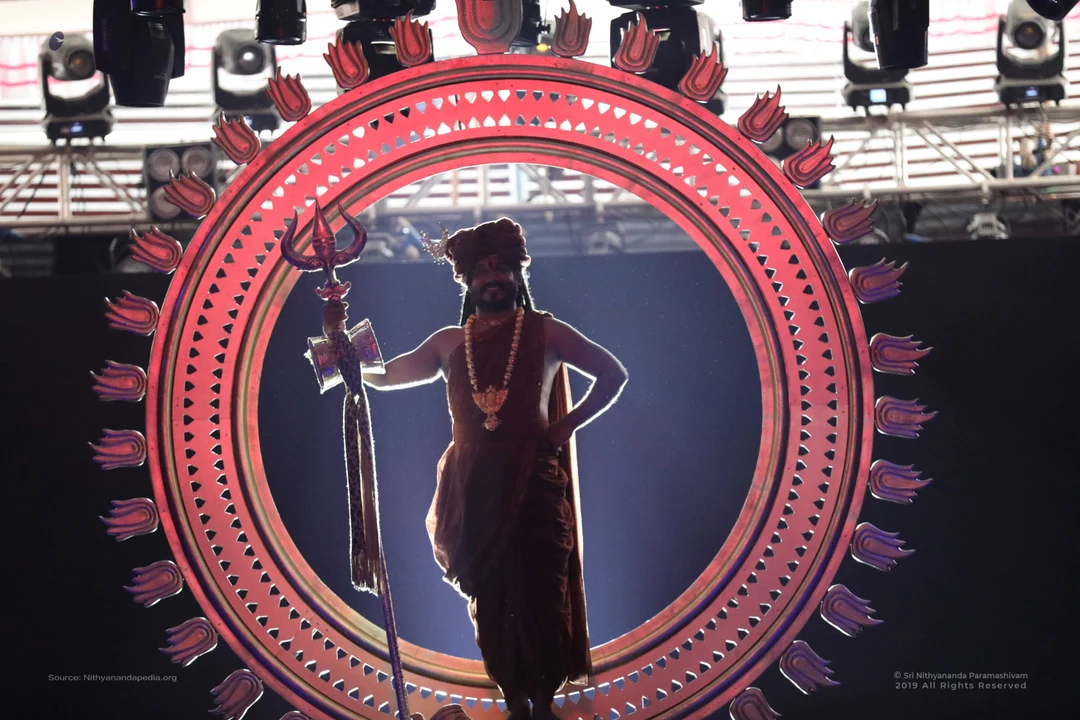
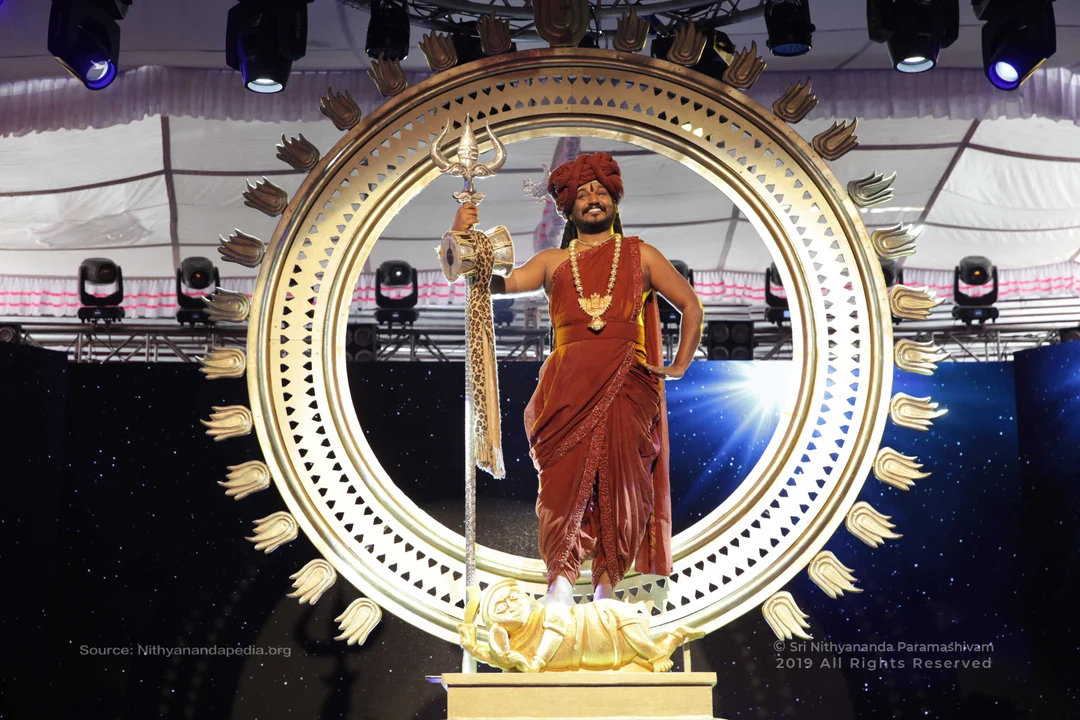
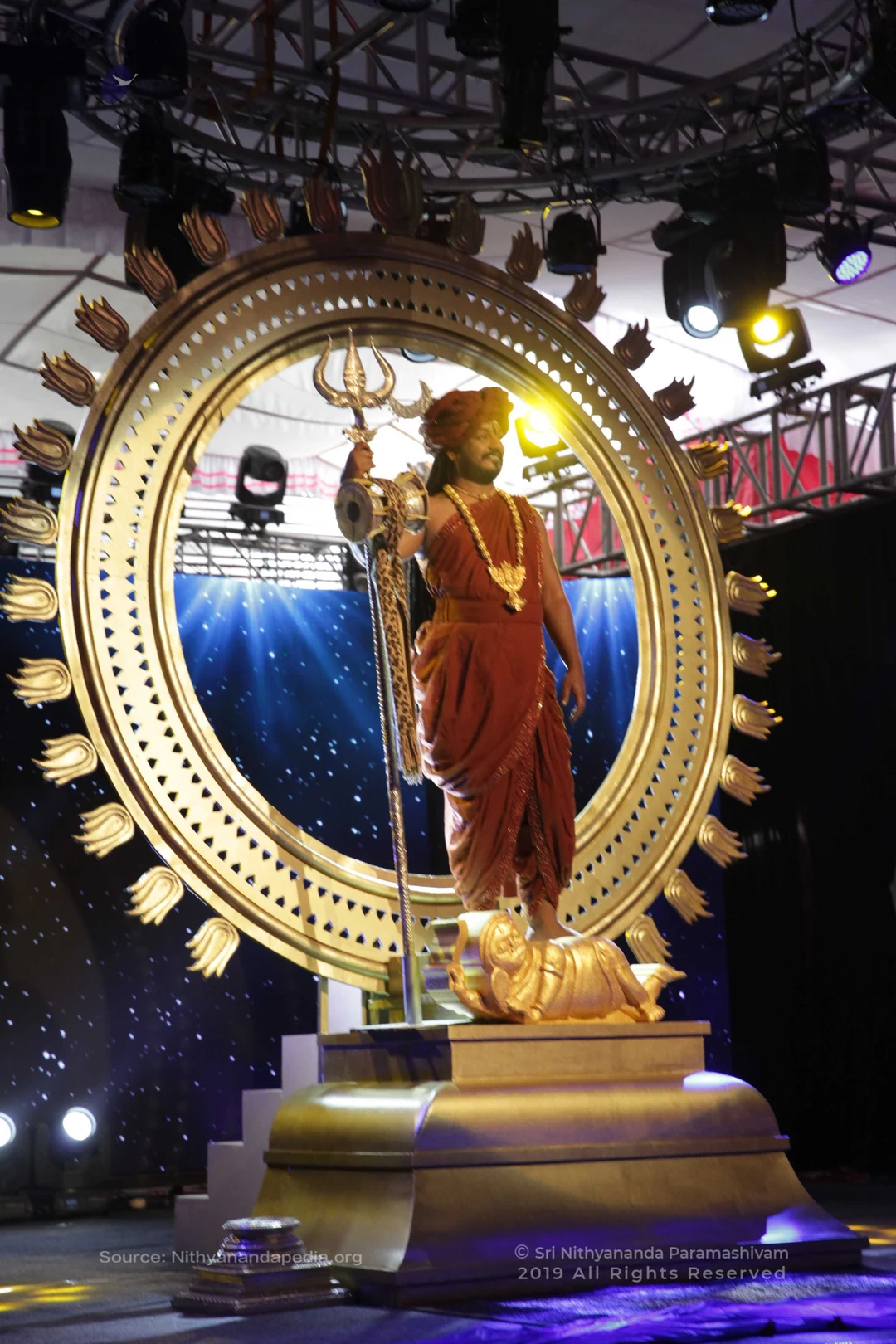
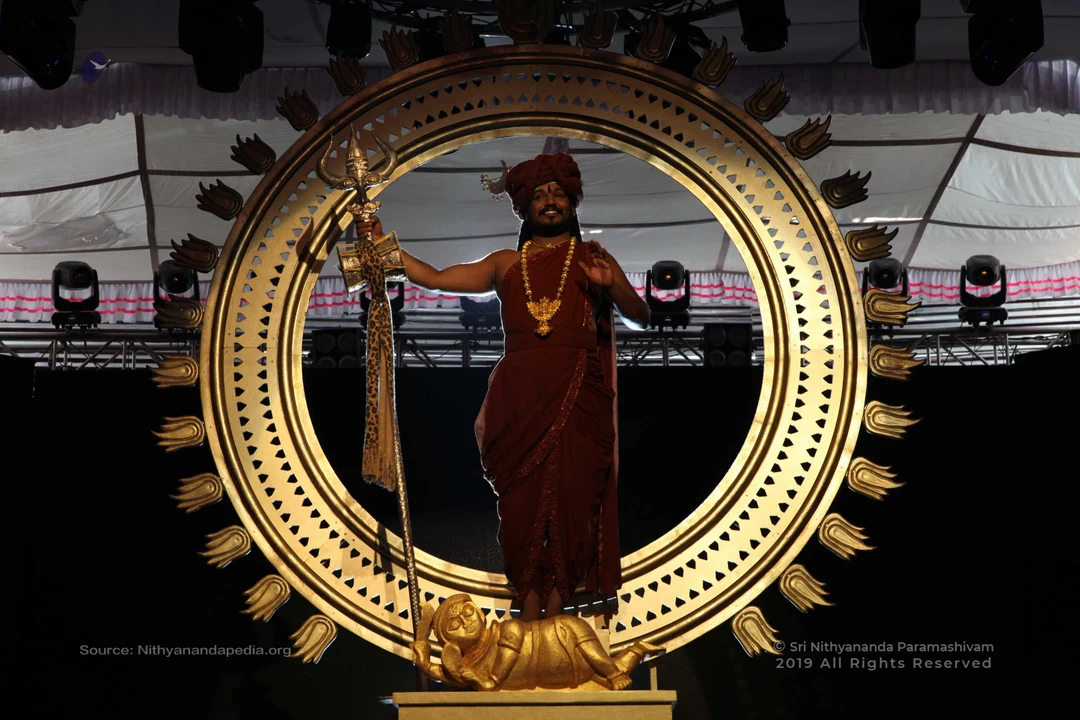
The Supreme Pontiff of Hinduism, Jagatguru Mahasannidhanam, His Divine Holiness, Bhagavan Nithyananda Paramashivam expounded in today’s live public address Nithyananda Satsang on the Cosmic Principle of Revelations about Anti-Matter And the 11 Dimensions of the Universe. HDH described Avyaktha, Antimatter and Vyaktha and revealed the Dakshinamurthi Mudra. After completing Vidya tattva and Shiva Tattva, He explained about the 11 Dimensions and 14 Lokas of the Universe. His Divine Holiness Blessed all with a very unique and powerfulNataraja Darshan.

Mahasadashivoham delegates were initiated into Shiva Deeksha and participated Kalpataru Yogam. Nithyananda Yoga Teacher training was announced and the Nithyananda Brahmotsavam Procession was conducted.

Video and Audio - Revelations about Anti-Matter & the 11 Dimensions of the Universe

VideoAudio

Transcription

(0:27)

My next commitment to all of you – I will make you experience Kailasa. The very light of Kailasa removes all the blind spots in the Beings. Now I will complete Vidya tattva and Shiva Tattva, both, and make you experience the 11 dimension. It is actually a game to make you understand and visualize each dimension... what all it consists, what it takes to generate and what it takes to sustain, what it takes to evolve. When shabda is generated, how it is sustained as nada and evolved as nada kala; it is just a contemplation game to make you understand, to make you engage with the infinity. I will just show you a simple video. How many of you saw that anti-matter I just shared in my Facebook page. I will just show you and then I will talk to you guys about it.

(2:12)

[Video on Anti Matter played]

(4:20)

How many of you teleported successfully at least once, raise your hand. All of you already produced anti-matter!! Understand, only if the vibhooti here, bhasma here, becomes anti-matter, it can travel and settle down in any place and become matter. Listen, I will project now.

[Slide projected]

This other side is just anti-matter. How many of you are catching? The other side of all the heads ... avyaktha; understand, now I have given one side, the other side is avyaktha. Avyaktha means anti matter, unmanifest; which exists but does not have any of the positive perceptive qualities of this vyaktha. Listen, vyaktha means - which exists and can be perceived with a positive definition; with a positive definitiveness which you can perceive, is manifest - vyaktha.

I know many are thinking, “Anyhow vyaktha itself I have not understood forget about avayaktha”.

“Enda, mathsla 100 mark vangina, englishla enda 20 mark vangiruka?” “Enda, Athu pakkathula utkanthu erukaravana keluda, Enna enda kekkura?” Means, one father is asking his son, “In Maths you took 100 mark, why in English only 20 mark?” “Father you should ask that to the fellow who was sitting next to me and writing the exam not to me”☺ So vyaktha itself we have not understood anything... avayaktha!!

(6:55)

Listen, what we call Parallel Universe - unmanifest – avyaktha, the delusion component of Mahadeva – Trobhava.... cannot be exactly translated as delusion, it should only be translated as un-understandable, un-understood or unknown. Trobhava is not, the precise word is not delusion; precise word is unknown.

[Slide projected]

The various permutation combinations of the 5 units... 5 unit principles is length, breadth, depth, time, space. 5 tattva, principle tattvas... the various permutation combination of this 5 principles forms11 dimensions. Length Breadth, Depth - this three dimension operate in Bhu. The pure space where all other things merge into the space is Kailasa. The 14 lokas - atala vitala sutala talatala paatala bhur bhuva suvah tapa satya, all those 14 lokas come under this 11 dimensions. Understand this 11 dimension then I will initiate all of you; not just educating, I will initiate also. Just I need to change the fuel in your body; the fuel with which you are functioning now needs to be changed. You will automatically have your eyes pulled by the third eye during the initiation. I will also teach you guys to teleport and materialise anti-matter. See, all teleportation has to happen only through the anti-matter. Vibhooti has to become anti-matter only then it has to become a vibhooti again. So if I just ask you guys to stop in between, that’s all, you have anti-matter and billions of dollars. No I am really going to work with them and give them anti matter; that NASA or whoever is doing it.

(9:50)

Understand, now I uttered the words - this 11 dimension, in this exists 14 lokas. It’s all word for you, I know. atala vitala sutala talatala paatala What will you understand? I know. Very rhythmic tala tala...that’s all. bhur bhuva suvaha tapa satya again...more or less words. I am actually going to change the fuel in you into the pure prana which raises you to Kailasa. Understand, I am not expecting all of you will experience Kailasa now itself. I am just going to change the fuel and infuse that fuel, the breathing of Maha Sadashiva into you literally. Literally Maha Sadashiva is going to breathe in you now. I am expecting it will take one or two muhurtha. Muhurtha means - 1and ½ hours is one muhurtha. At least 2-3 muhurtha it will take for this fuel to spread into your subtle body and give you the experience. But for some people it can even raise now.

Decide to put both your eyes into your third eye. Both your eyes are just identity, understand, it’s not an organ; only when you open it, you operate. How many of you are understanding eyes are not just organ; it’s through which you communicate with the whole Universe. That’s why many time when you close your eyes mind stops suddenly. Decide to put your, both your eyes into third eye. If your eyes get closed its ok, if your eyes don’t get closed its ok. That is what is Dakshinamurthi mudra. Dakshinamurthi puts both the eyes on the third eye; so half eyes will be closed and half eyes will be open. Put both your eyes into your third eye. Hum Mahavakya intensely along with me.

(12:45)

Process starts Aum Nithyananda Maha Sadashivoham....

(20:56)

Video - Anti Matter Access to Kailasa || Part 1 || MSS

In this video Supreme Pontiff of Hinduism HDH #Nithyananda Paramashivam reveals how anti-matter is made and how it is related to the 11 dimensions of the universe. He cites recent examples of NASA and CERN's research on anti-matter and states that the Shakti of teleportation is proof of creation of anti-matter.

Transcript

(00:23)

My next commitment to all of you: I will make you experience Kailasa. The very light of Kailasa removes all the blind spots in the beings. Now I will complete the Vidyapatha and Shiva - Vidya Tattva and Shiva Tattva - both, and make you experience 11 dimension.

(01:21)

How many of you walked on fire and really helped you, it really helped? By the time next MSS we will - I will finish all the legal paperwork properly. See, actually there are organizations who have university campus in Mexico, they are doing firewalking. One guy is doing in Mexico and Canada, he is doing. People from US go and participate and come back. I have found out how they are doing, he has a education institution in US, and his extended campus is in Mexico and Canada - he is doing it there, and legally it is allowed. So I am doing the same paperwork, I am doing the same paperwork. So by the time next time, you will be able to do it legally, without any difficulty, complication. And by the time we will also be little more matured to have first aid, if any of you need and all that.

(02:32)

And that guy who came to that lemon piercing, somebody standing next to Me said, “Eh, do it very safely.” He made a comment, “ Ah, etuvaththanchu varusaththukku munthi eaththeny thadava kuththi erukane evruku ennada solurai" - means 25 years before I have done this to him. Because in the young age I used to go to the temple, there is a family deity temple where they do this every year, and he and his family used to do, his father. This guy was a small guy, small kid those days, but he will come and sit with the father and do all that. That village's stability still surprises Me. You know? In, now when you guys came, that person who played the nadaswaram, his father only is playing for My father and mother's marriage. In the wedding photograph I saw, his father only is playing. And you know that light and sound, he’s a Muslim person, his fathers name is Shamim, My father and mother's that - what do you call, bhaarat? That before marriage they do the procession? In that procession, I saw in that light sound system, his fathers name is there - Shamim. Stability of that village - like for generations. And the chief priest, he was there in our ashram that day whole day - for generations they dedicated their life.

(04:06)

Still in My family, at least one person per family will not go out of city and accept any job. They will stay in the city to maintain the temple - to take care of the temple responsibility. 16 communities have a responsibility in temple - all those communities, one person per family will not accept any job outside city - the outside village. They will stay in the - any one person in the family - they will not go out because the temple responsibility is not disturbed; they maintain the temple responsibility. The whole temple is volunteer run, and when I look back it is a really very overwhelming - last 23 days.

(05:05)

As far as the intensity of the program and power manifestation - this is the best. This is hundred times more than Sadashivoham - nothing like Mahasadashivoham. Especially this science of aushada has done a - given a very big breakthrough. Understand, the intensity with which you are manifesting powers, I will put the whole credit - I will give the whole responsibility to this science of aushada and detoxification process.

(06:02)

Especially detoxification using aushada - that has done a job. That has really cracked the code. And I will also continue to send some more aushada for you guys. And continue to have this continuous education classes and sessions for all the MSS participants. And, it will all be absolutely free, it’s part of the MSS program - it's like a extension, because - see, this 25 days I can only put certain amount of energy and initiation into your system, you need to digest and manifest. Only then I can put more. Anyhow, I cannot have 3 months program, if I have - and I am also evolving the next level of aushada, aushada which you can take inside. But for that I need to go through the, all the medical trial and IMA approval, Indian Medical Association approval - I am working on all that. Maybe by Guru Poornima, we will be ready with all that.

(07:24)

That will give a next level breakthrough, altogether. Anti-aging, amritattva aushada, all that is going to be in that level. Because it needs to be taken in. Let Me project, "Eh, project this, Ma." I will just show you a simple video. Any of - how many of you saw that antimatter? I just shared in my facebook page. I’ will show you and then I will talk to you guys about it.

(07:55)

Video clip.

(10:02)

I want all of you to see again - especially these number: trillion, billion, zillion and...

(10:13)

Video clip.

(12:12)

All of you understood this? How many of you teleported successfully at least once, raise your hand? All of you already produced antimatter. Understand. Only if the vibhooti here - bhasma here becomes antimatter, it can travel and settle down in any place and become matter. Listen, I will project now. This other side is just antimatter. How many of you are catching - the other side of all the heads, avyakta.

(13:07)

Understand. Now I have given one side, the other side is avyakta. Avyakta means antimatter, unmanifest - which exists but does not have any of the positive perceptive qualities of this vyakta. Listen. Vyakta means which exists and can be perceived with a positive definition, with a positive definiteness which you can perceive, is manifest; vyakta. I know many are thinking, “Anyhow, vyakta itself I have not understood, forget about avyakta.”

(14:15)

What we call parallel universe, unmanifest, avyakta - the delusion component of Mahadeva - throbhava, cannot be exactly translated as delusion - it should only be translated as 'un-understandable' - 'un-understood' or unknown. Throbhava is not, the precise word is not delusion, precise word is: unknown.

(15:09)

Some people have put Facebook comments I saw, “We want some more casual session with Swamiji.” Mahasadashivoham is not casual - understand. Here we just need to do the job. Yes, please listen. The various permutation combinations of the five units, five unit principles is length, breadth, depth, time, space - five tattva, principle tattvas. The various permutation combination of these five principles forms 11 dimensions. Now, no games, but only just note down this column. Just for all of you to understand, then I will explain the various lokas.

(16:13)

Length, breadth, depth these three dimensions operate in bhu. Breadth - just pen down this whole thing. The pure space where all other things merge into the space is Kailaasa. The 14 lokas: athala, vithala, suthala, thala thala, patala, bhur, bhuvas, suva, tapas, satya. All those 14 lokas come under these 11 dimensions. Understand this 11 dimension, then I will initiate all of you - not just educating, I will initiate also.

(17:10)

Just I need to change the fuel in your body - the fuel with which you are functioning now needs to be changed. I am going to initiate all of you - this process is such automatically your eyes will be closed but I don’t want you to sleep. Can you all pick up your cup of coffee and then settle down. You will not go out, no going out. Because - you see, you will automatically have your eyes pulled by the third-eye during the initiation, but I don’t want you to sleep. I will also teach you guys to teleport and materialize antimatter. See, all teleportation has to happen only through the antimatter. Viboothi has to become antimatter, only then it has to become a viboothi again. So, if I just ask you guys to stop in between - that’s all, you have antimatter and billions of dollars.

(18:20)

Video - Glimpses of Maha Sadashivoham Initiation || MSS

In this video, we see the Supreme Pontiff of Hinduism HDH #Nithyananda Paramashivam initiating delegates present at the convention and participant from around the world via an online into an extra ordinary Shakti of Maha Sadashiva. The session was guided by Kailasian Ma Mahayoga. She guided the delegates and participants into the humming of Mahavakya "Om Nithyananda Maha Sadashivoham" . This beautiful and extremely powerful chant was hummed as a vibration, where the words will be felt in the heart but the vibration will be felt in the mouth.

Nithyananda Times

Paramashivoham Oneness Capsule 96 (Nataraja Darshan Mahasadashivoham)

Photos

Shiva Deeksha and Kalpataru Yogam
Glimpsesofmahasadashivohaminitiation

Session On 11 Dimensions

Nataraja Darshan

Shiva Deeksha

Link to Facebook Post

https://www.facebook.com/ParamahamsaNithyananda/posts/1614052545349256
https://www.facebook.com/ParamahamsaNithyananda/posts/1613770058710838,

Photos from this day

View all 220 photos

Shiva Deeksha and Kalpataru Yogam
10 photosSource gallery
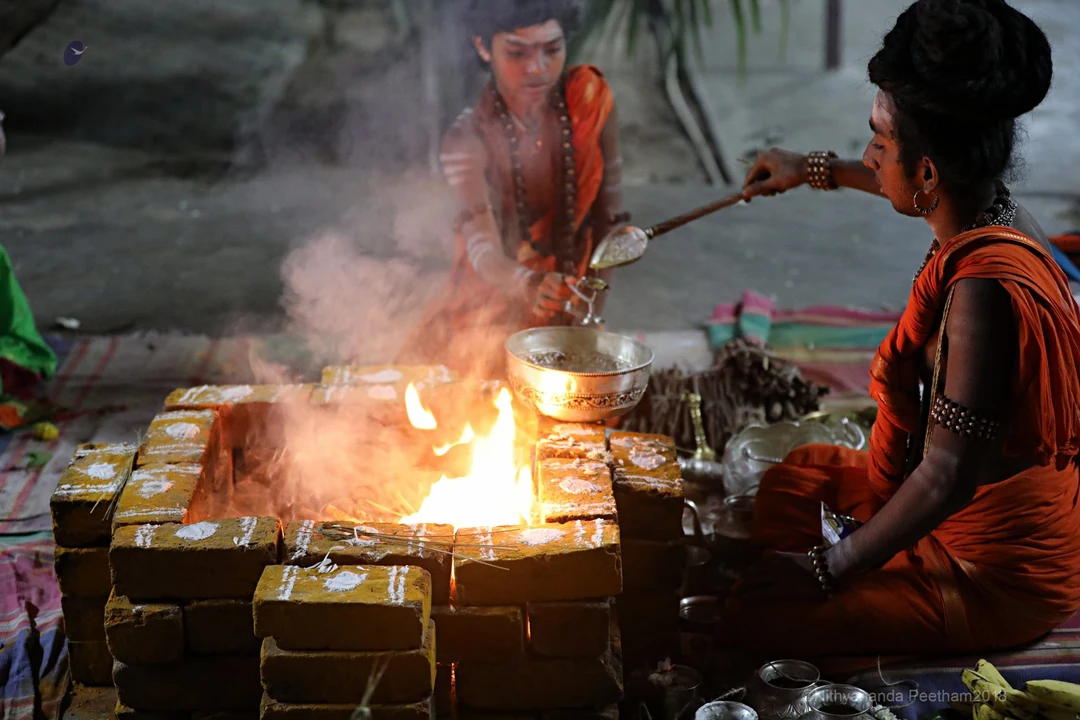
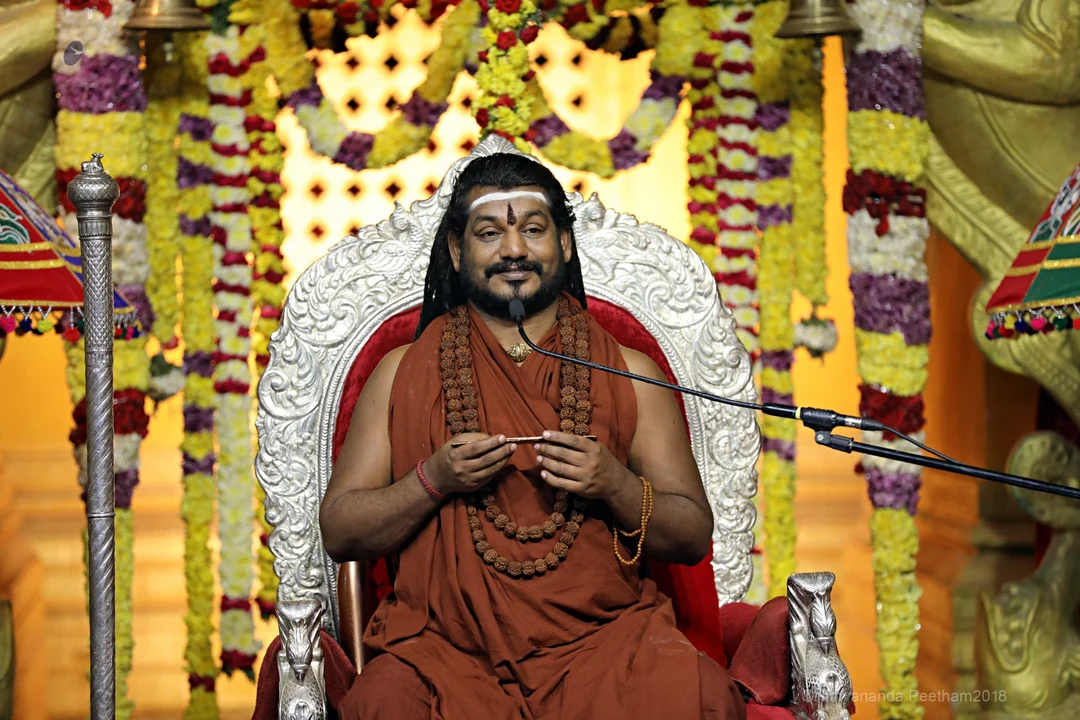
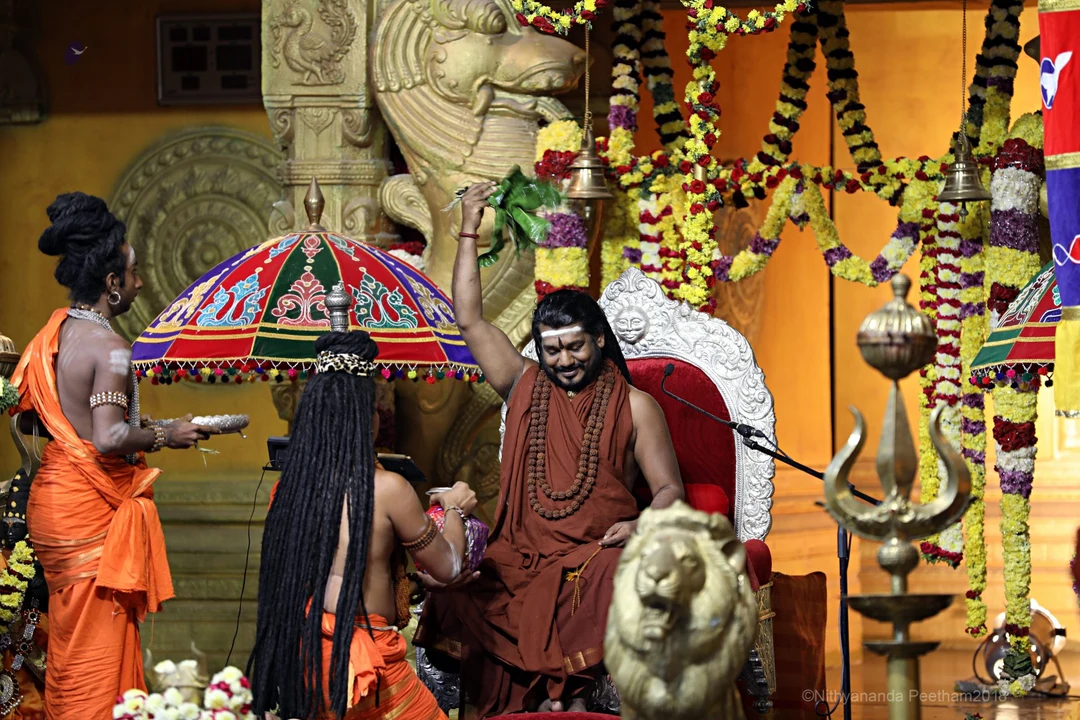
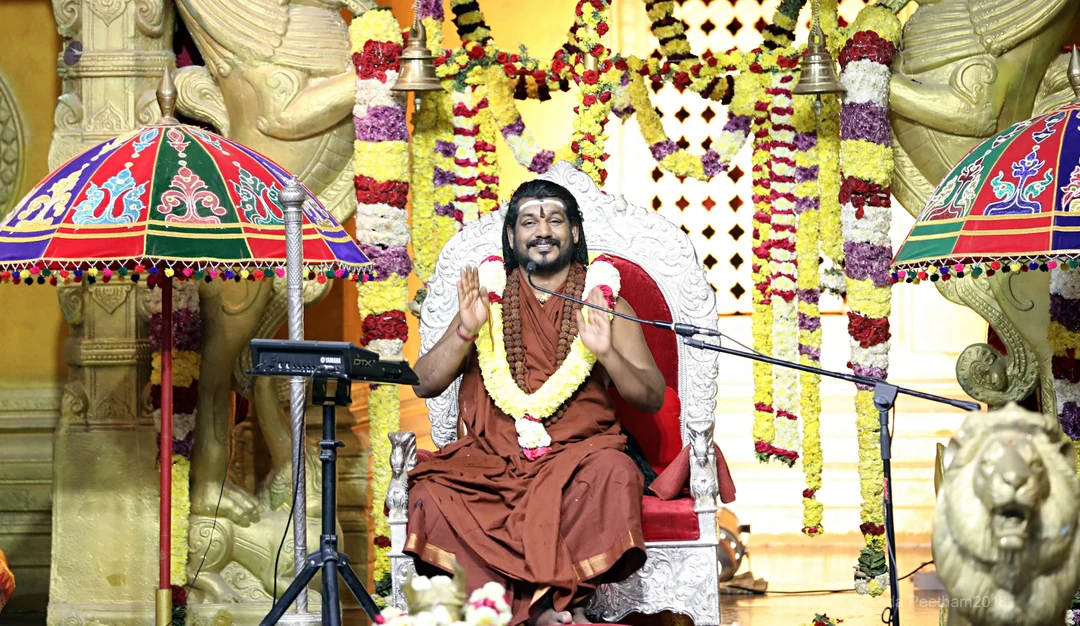
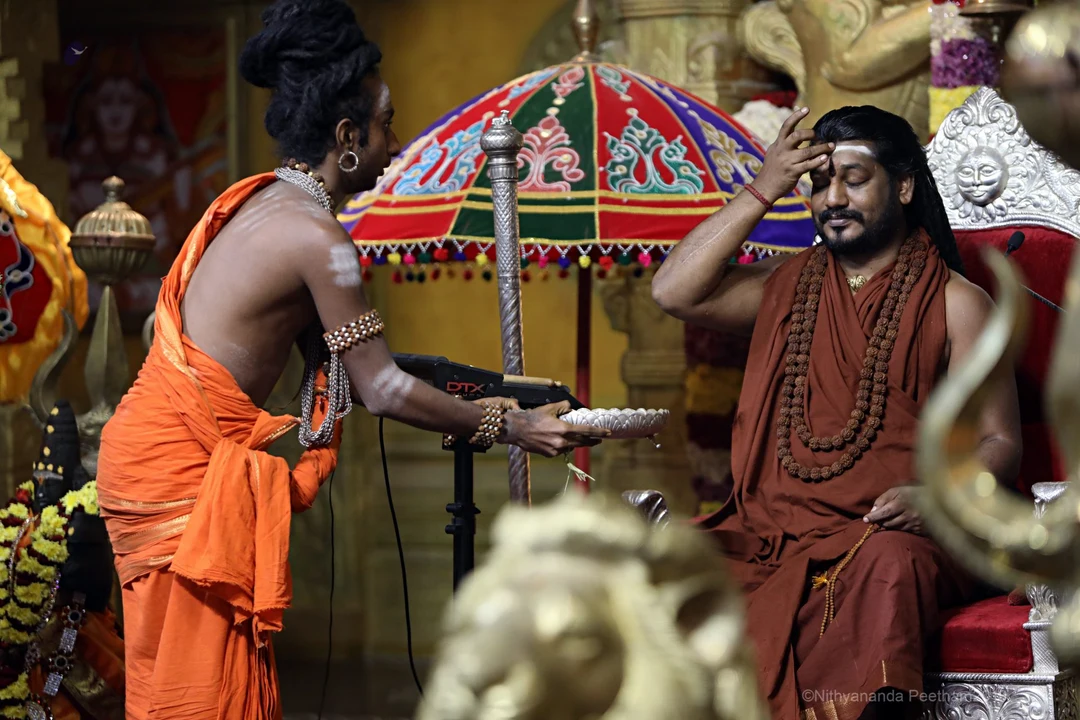
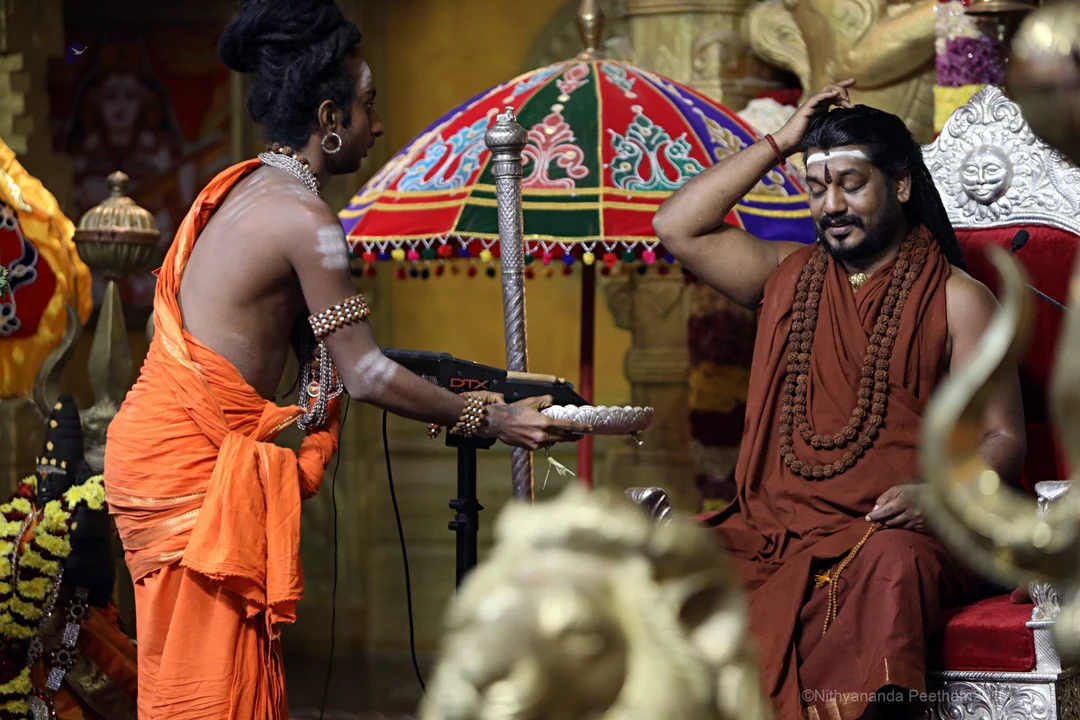
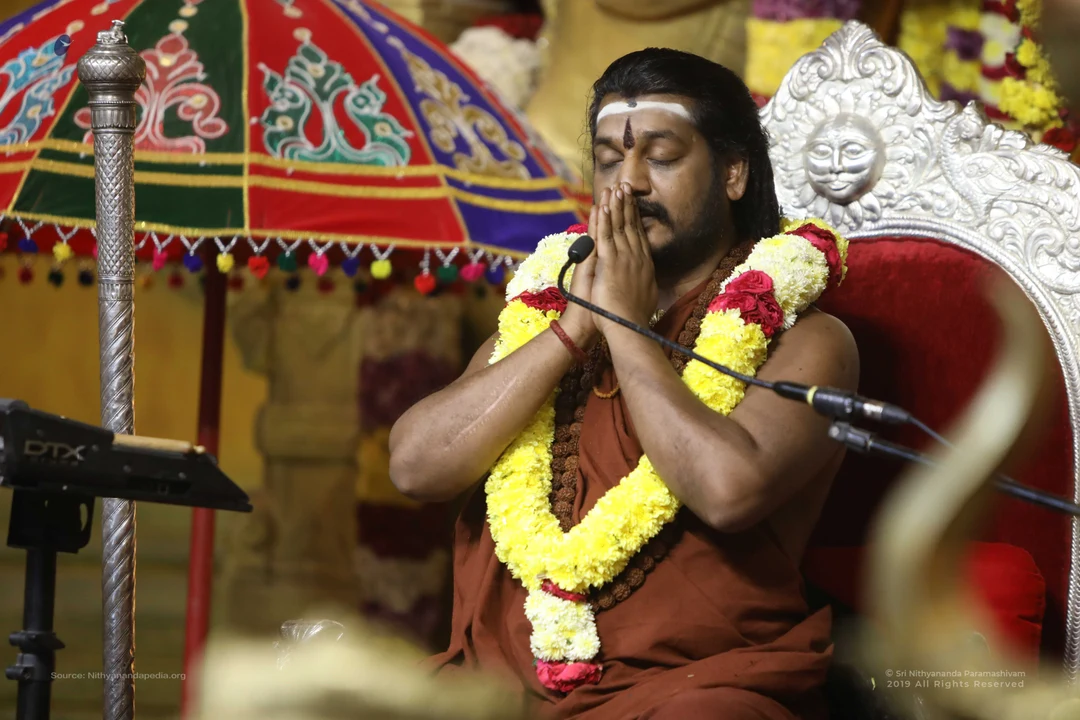
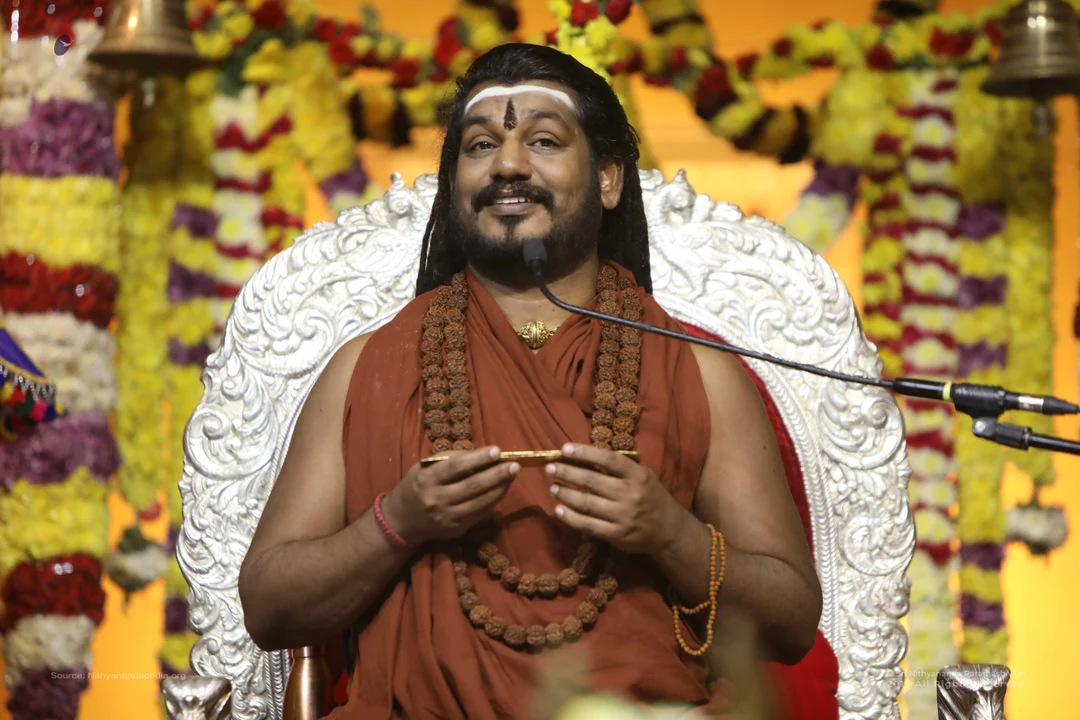
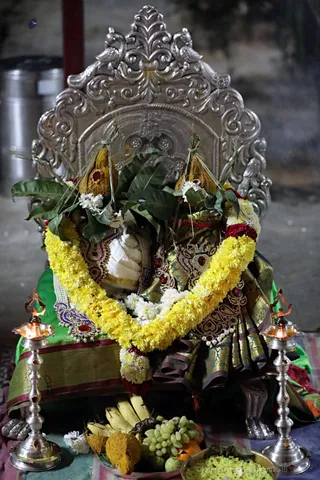
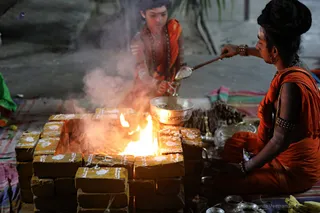
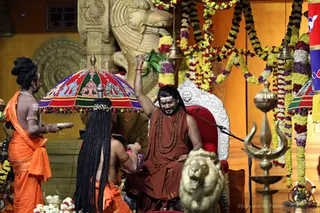
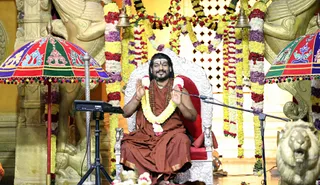
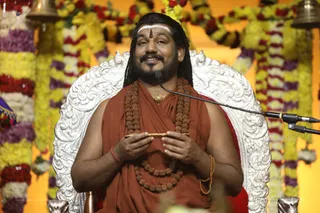
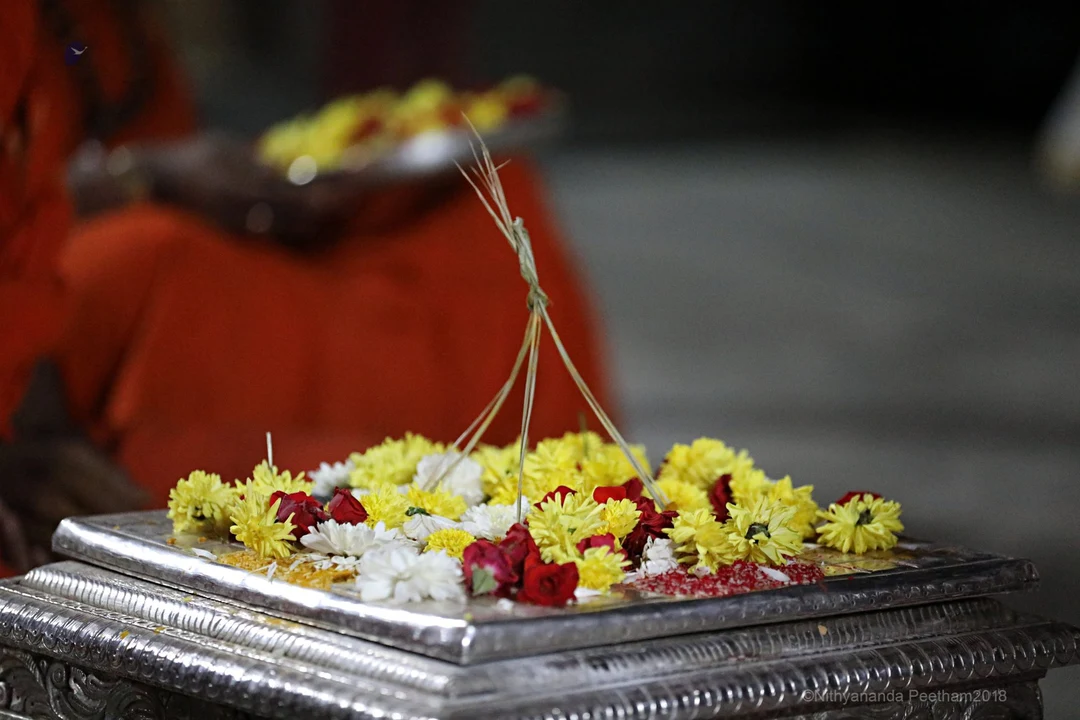
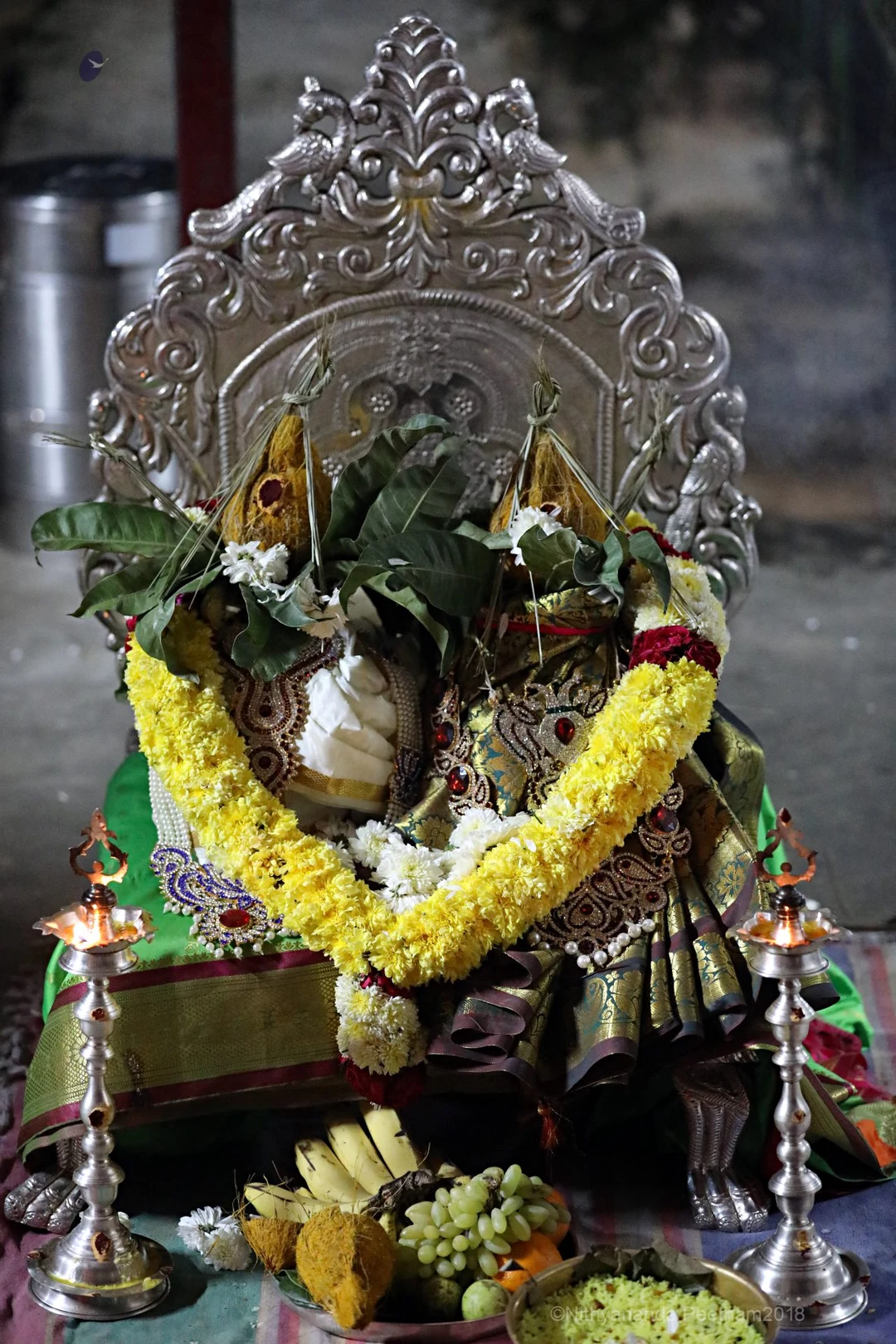
Close-up photograph of a silver tray atop an ornate silver pedestal, heaped with yellow marigolds, red roses and white flowers, with a small bundle of dried grass or straw stems tied with twine standing upright in the centre. A red powder. Blurred in the background, a figure in orange-red robes sits beside another tray of yellow and red flowers. No people's faces are visible; the setting suggests a puja or ritual offering.A decorated silver throne-like seat with ornate scrollwork and carved birds at its top is adorned with yellow and white flower garlands, mango leaves, and coconuts tied with leaves. Draped in a green and gold brocade cloth with red-stone ornaments, the seat is set before two silver oil lamps lit with flames, and a tray of bananas, grapes, a coconut piece, and rice-based offering stands in front. No people are visible; the image shows a ceremonial seat prepared for worship, consistent with a puja setting.A homa fire ritual is underway on a floor covered with a striped cloth. A square fire pit built from stacked clay-brown bricks, each marked with white dots, burns with bright flames and rising smoke. A young boy in orange robes with a rudraksha mala stands behind the pit, pouring from a long-handled ladle into a silver bowl set on the fire. Seated to the right, a woman in orange robes wears a high bun, hoop earrings, a beaded necklace and beaded bangles, and holds a brass vessel near brass and steel pots and a small bundle of sticks. Banana leaves are visible at the lower right.A man seated on an ornate silver throne with red cushioning, wearing a saffron-orange robe, multiple rudraksha malas, a white forehead stripe with a red mark, and a gold pendant. He holds a small object in both hands in front of a microphone on a stand. Behind him are garlands of yellow, purple, white and red flowers hanging against a warm golden backdrop with a golden deity figure visible at the right edge.Photograph of a ceremonial stage at Nithyananda Peetham, Bengaluru Aadheenam. A bearded man in a rust-red robe and a rudraksha mala sits on an ornate white-and-red throne, raising one arm and holding a green leaf aloft. Two attendants stand beside him: one on the left in orange dhoti and shawl with silver armbands and a long necklace, holding a tray; another in the centre with long braided hair, bare-chested with silver armbands, holding a small vessel. A multicoloured parasol with floral embroidery stands above the seated figure. Behind them are strings of marigold and rose garlands, a golden carved lion sculpture in the foreground, a brass trident, and a brass oil lamp. The seated man is an appearance-based a person candidate with rudraksha mala and ceremonial setting, shown in person on the dais.A seated man on a white, ornately carved throne with red upholstery is delivering a satsang on a decorated stage. He wears a rust-orange saffron robe, a rudraksha mala, a white garland of flowers and a tilak on his forehead, with palms pressed together in greeting. Behind him hang garlands of yellow, red, purple and white flowers, and a golden lion sculpture sits at the lower right. Two colourful striped umbrellas stand on either side, and a microphone and keyboard are set up at his side. The sign of this image's caption identifies the event as a Bengaluru Aadheenam satsang. Only one person is visible.

Glimpsesofmahasadashivohaminitiation
19 photosSource gallery
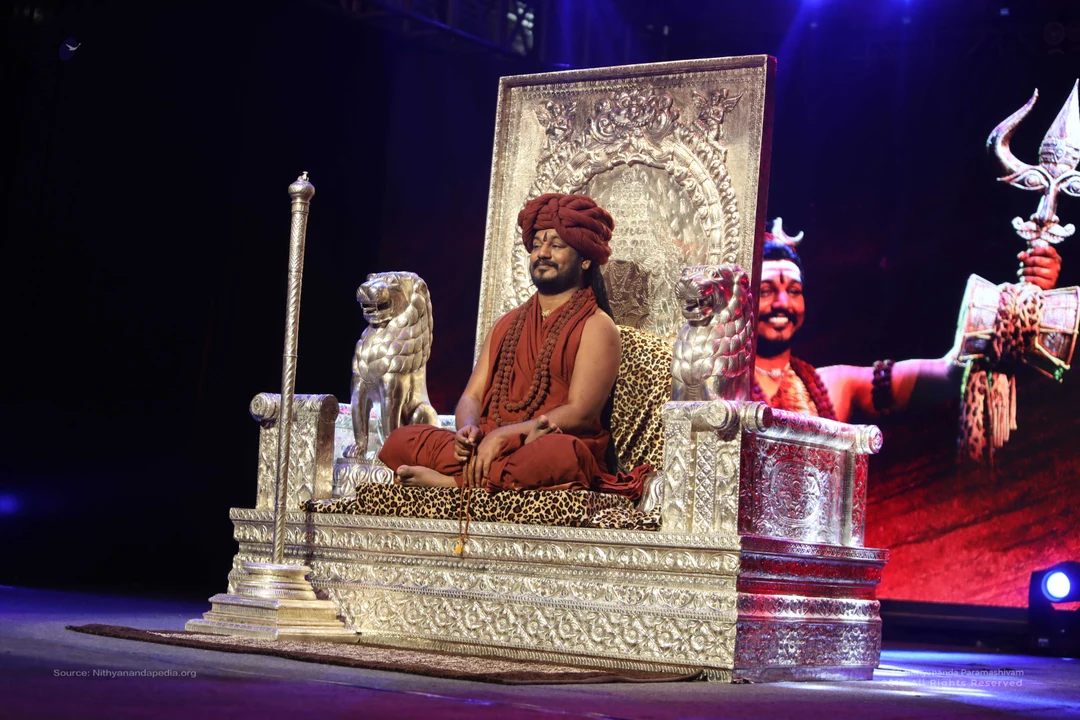
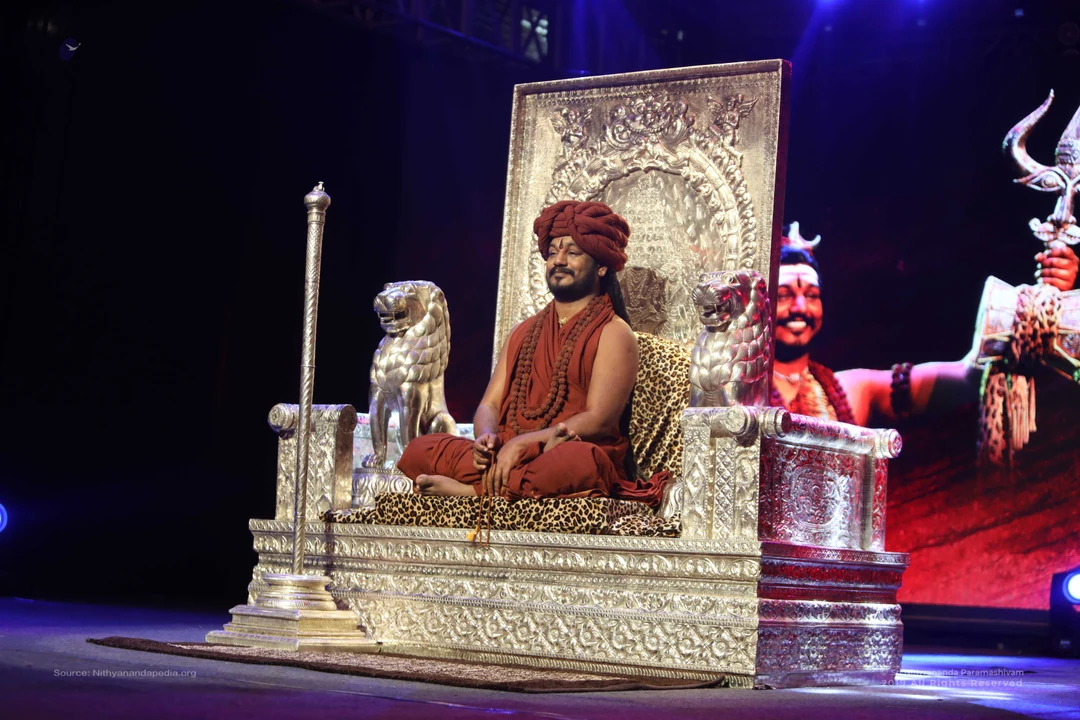
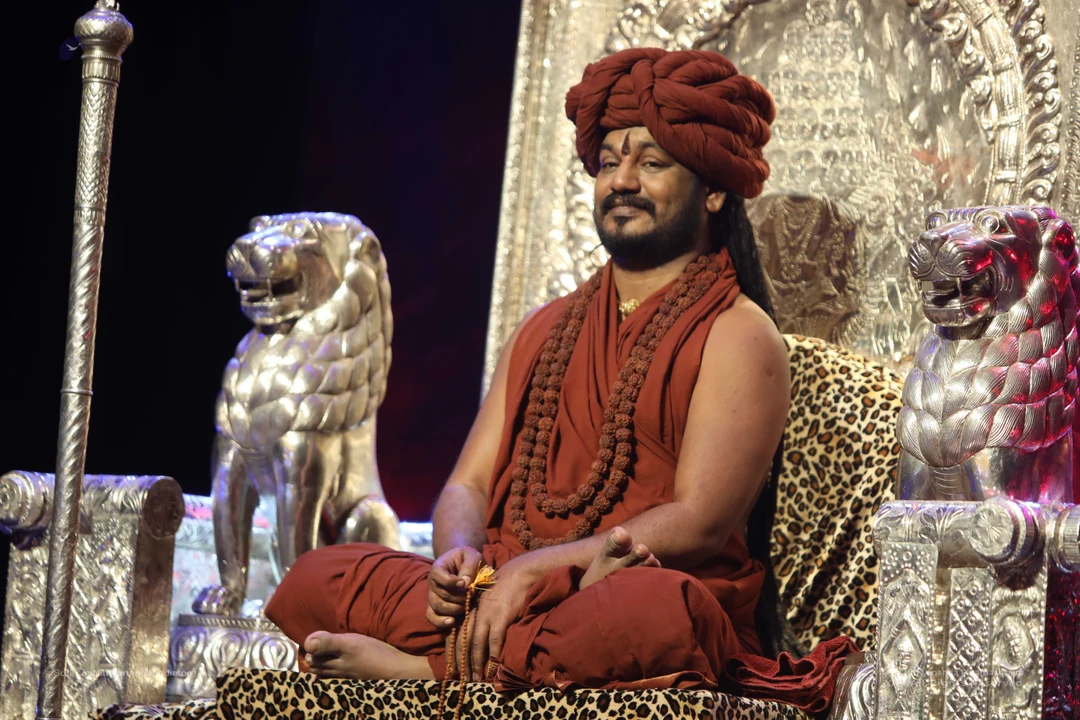
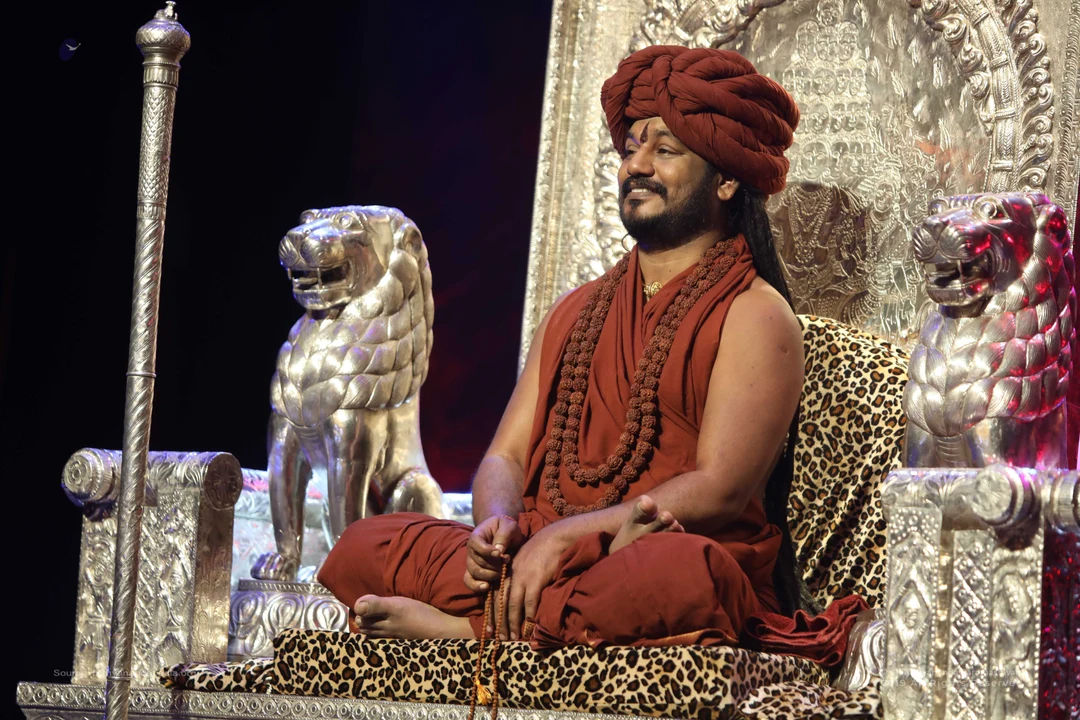
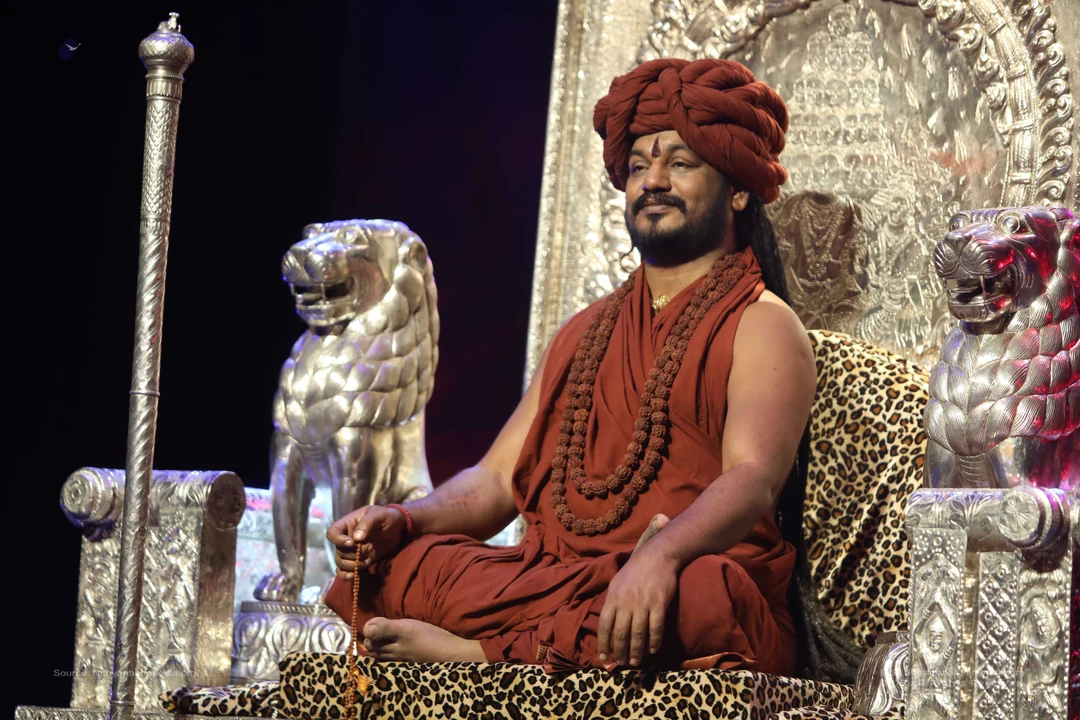
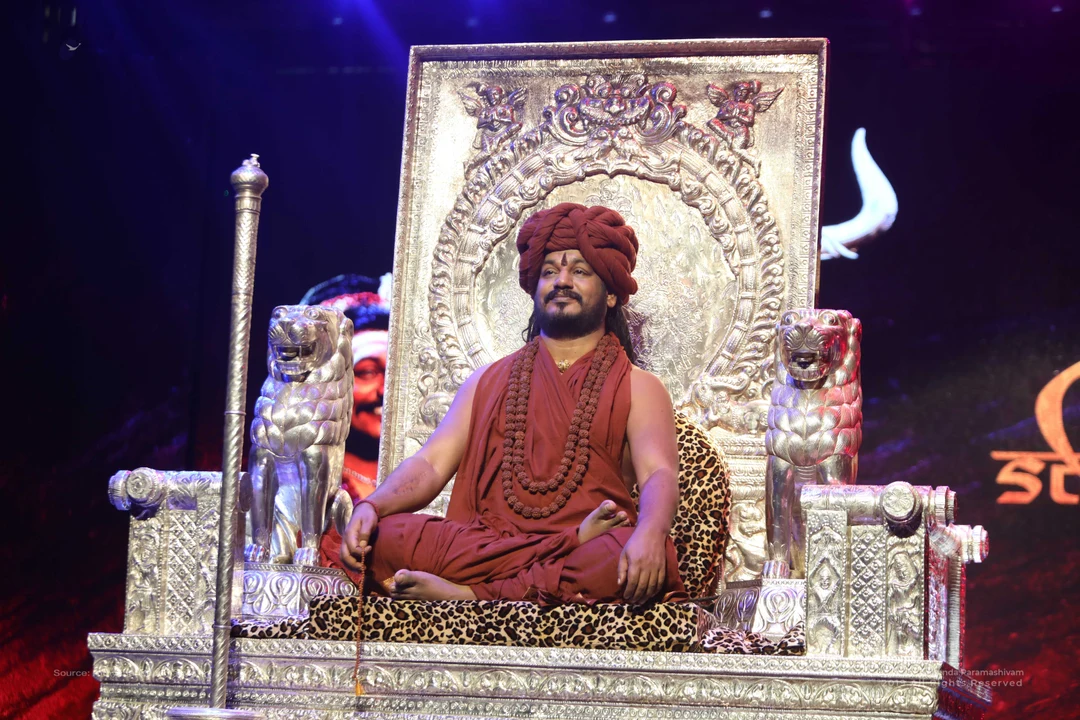
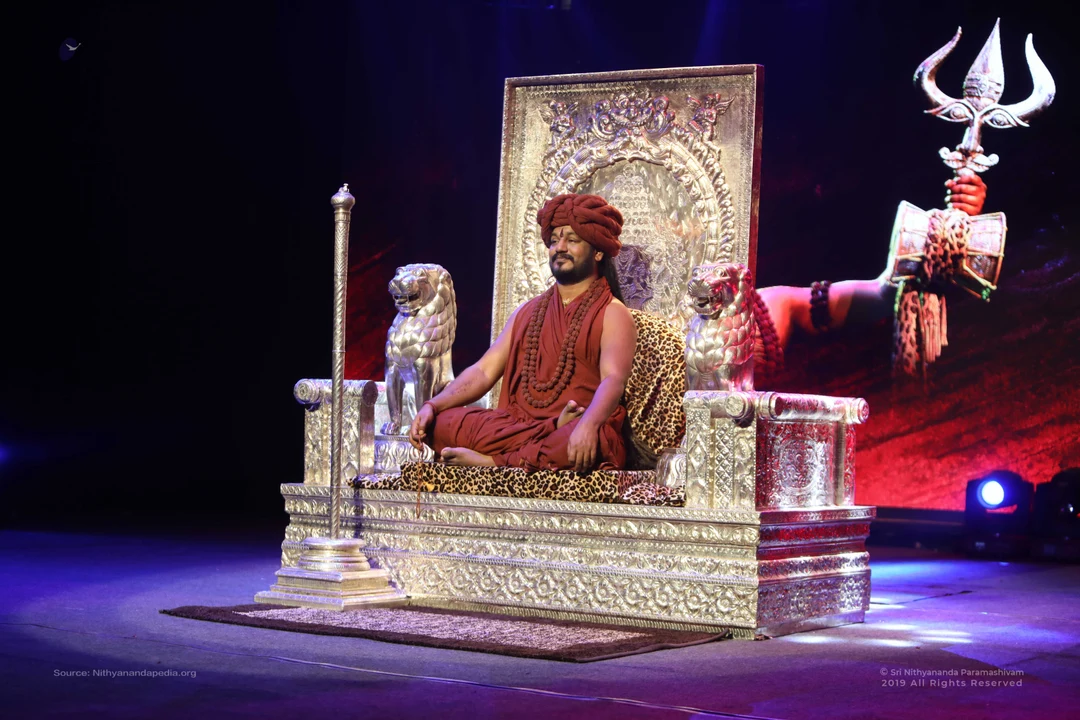
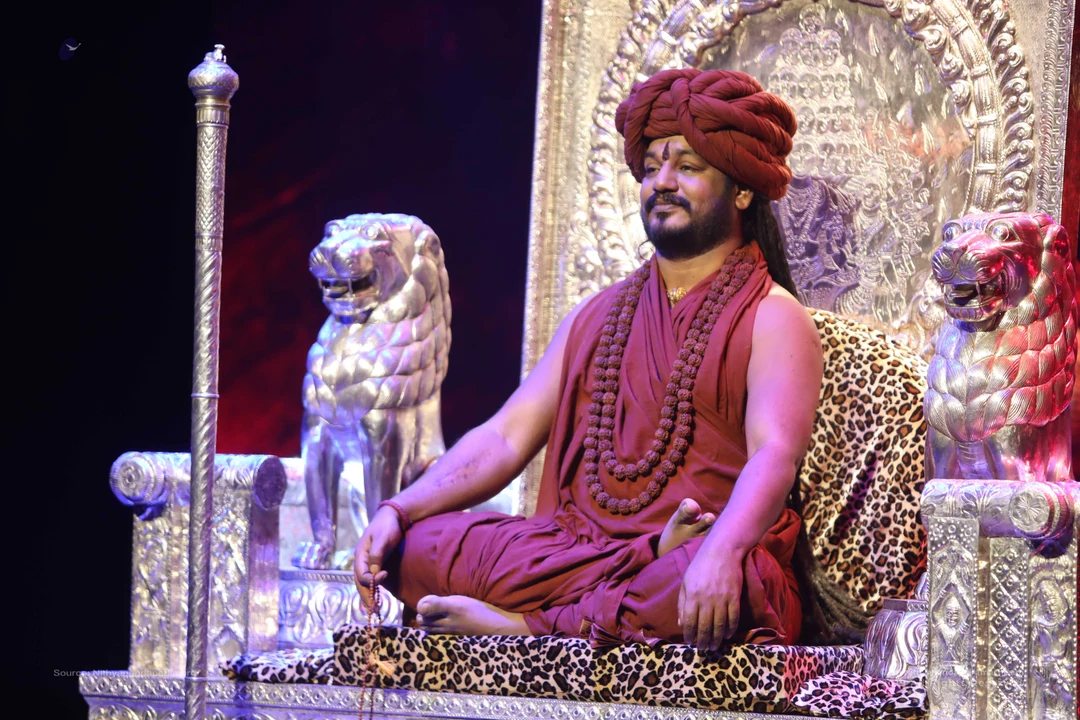
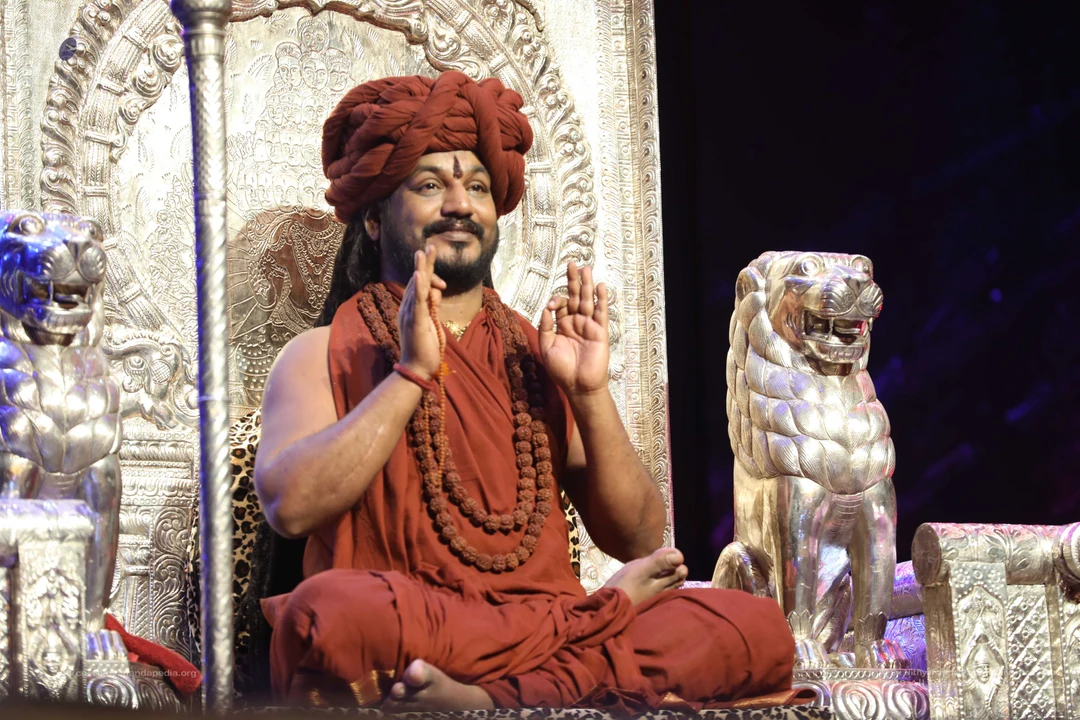
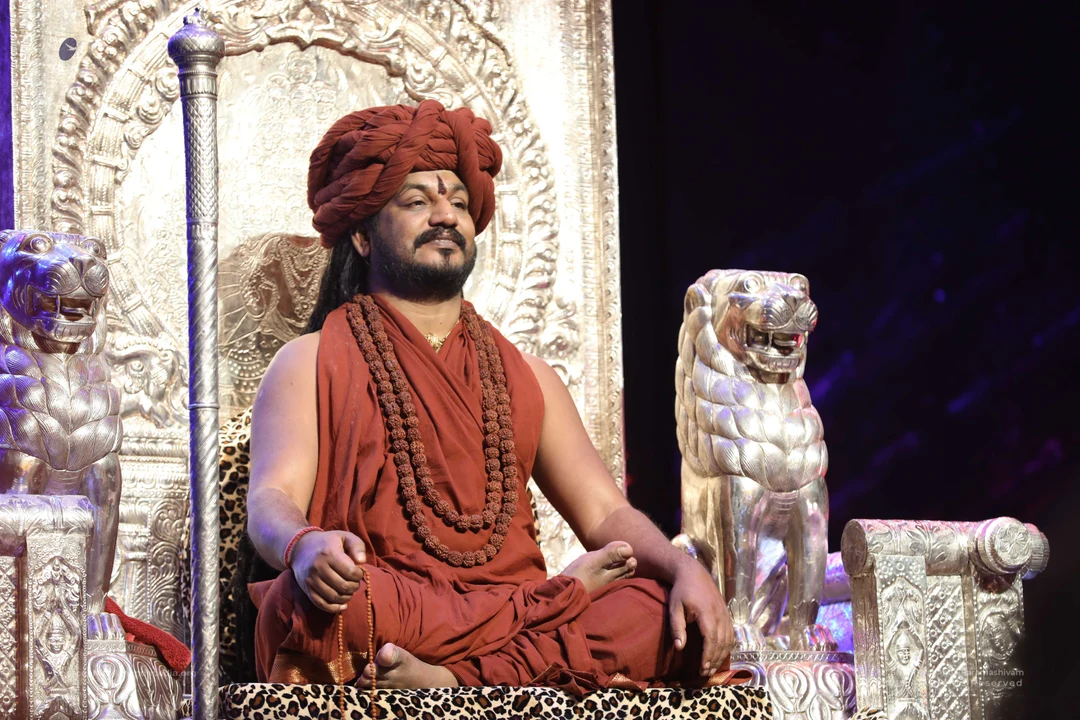
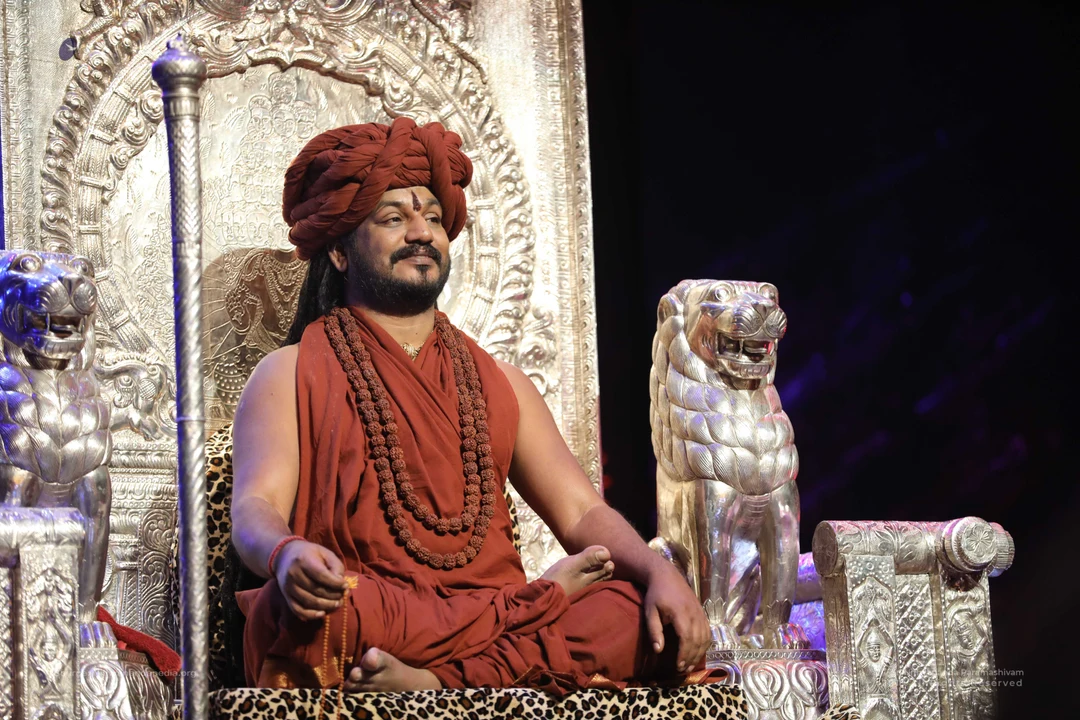
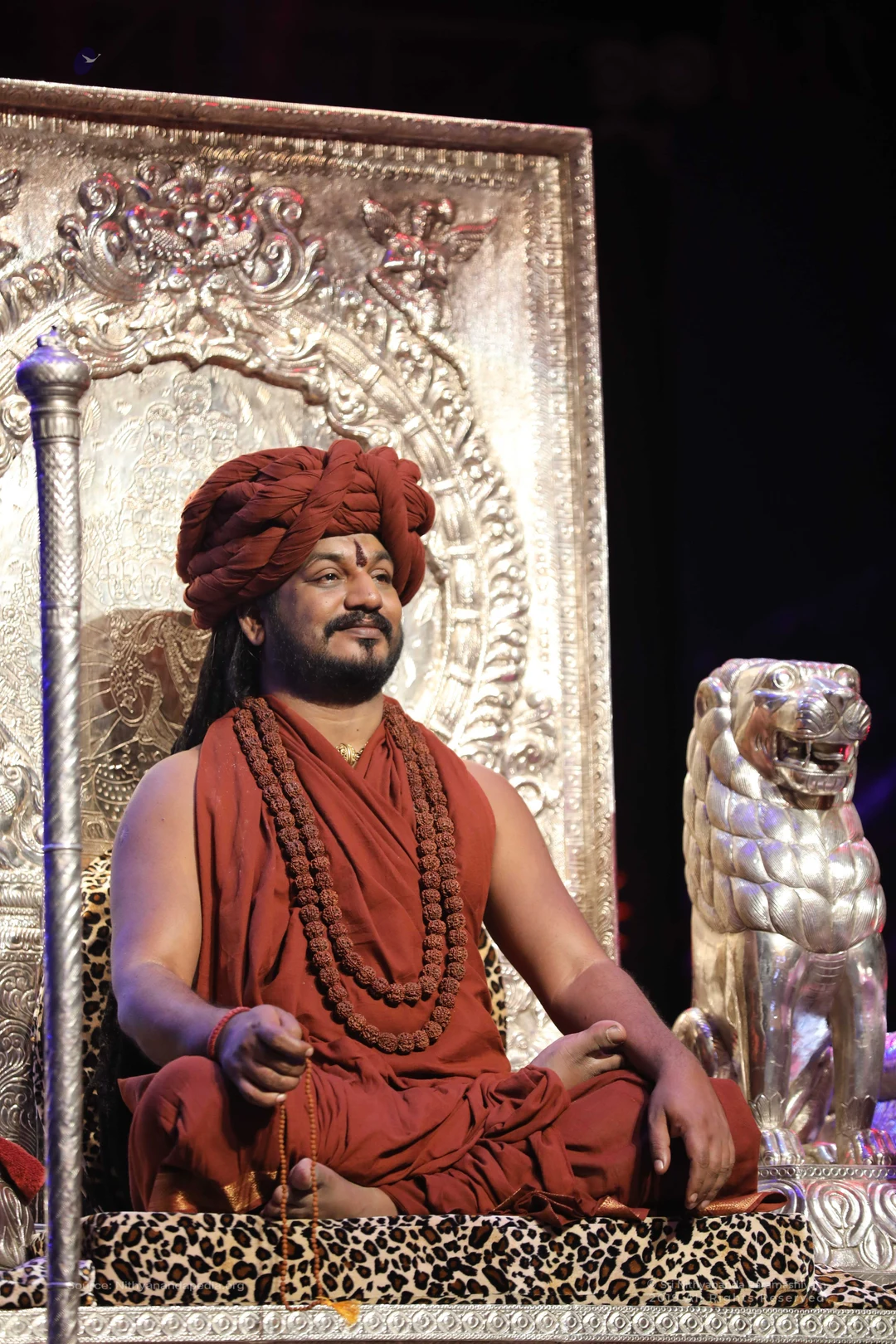
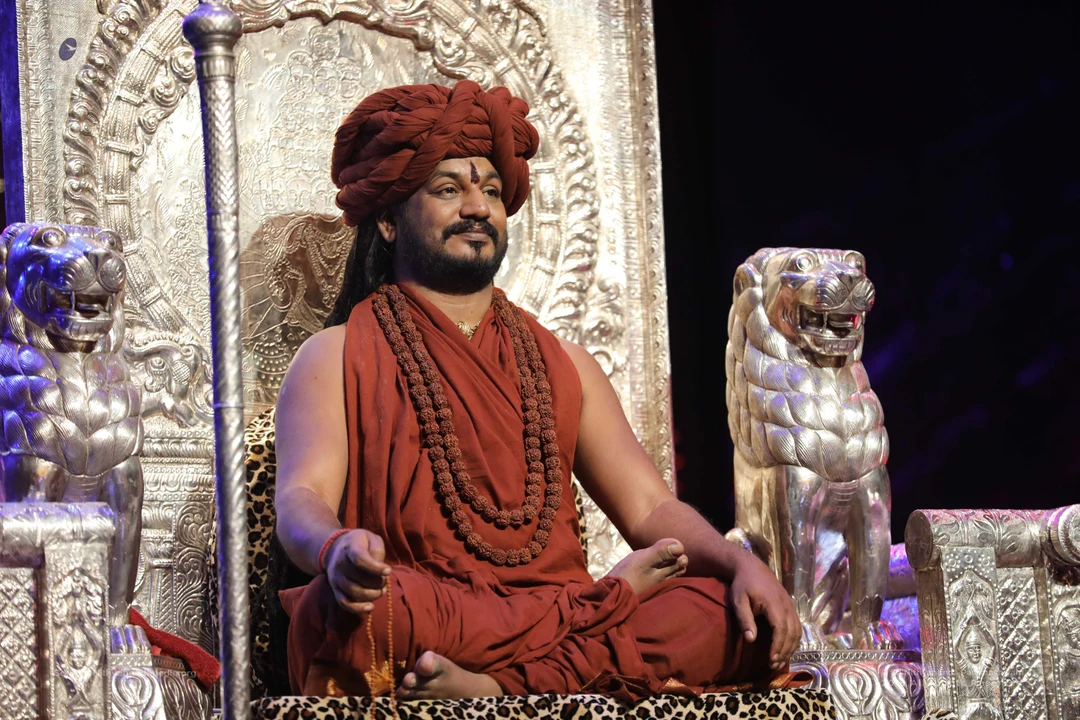
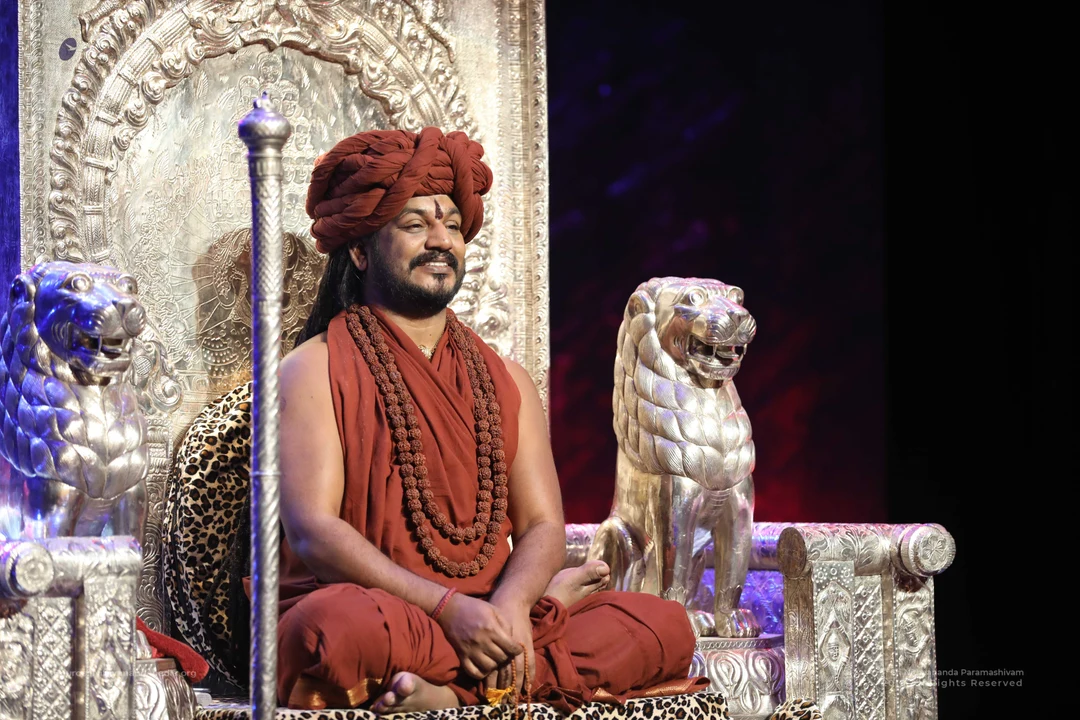
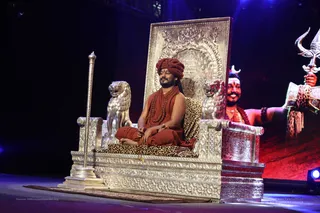
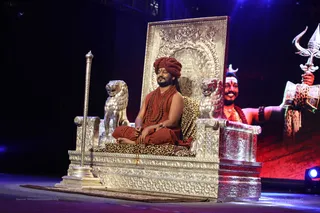
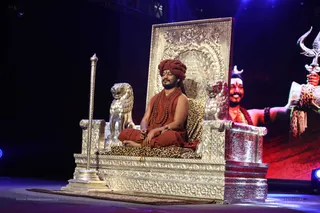
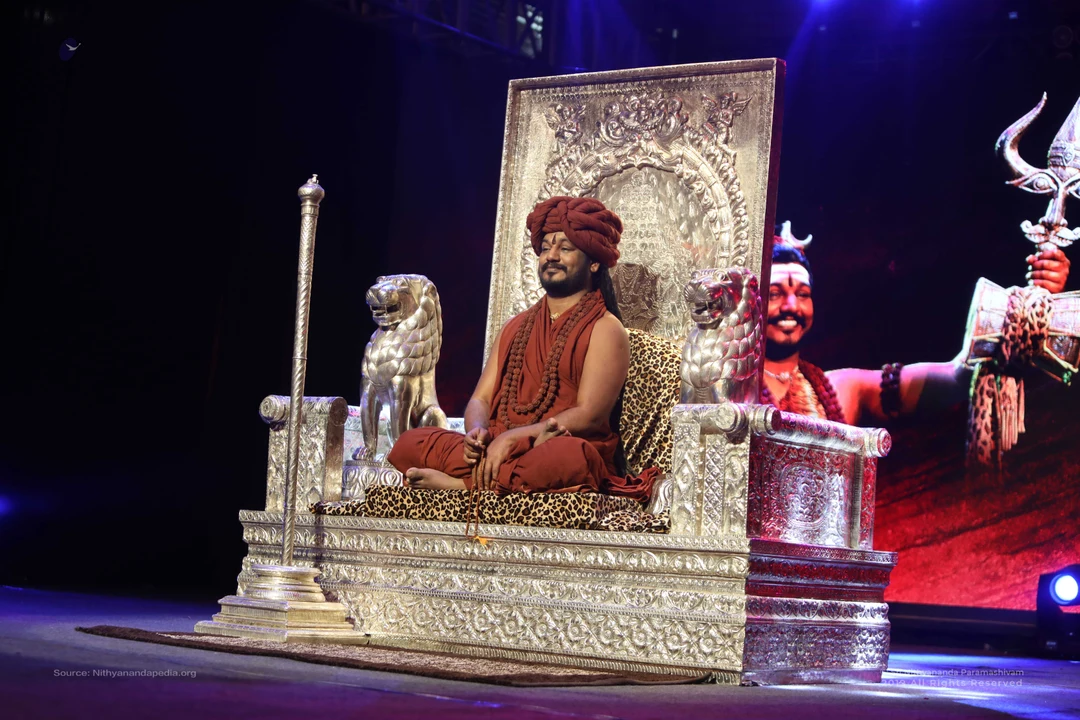
A photograph of a man seated cross-legged on an ornate silver throne on a stage with dark blue lighting. He wears a rust-orange turban, orange-red robes, and a rudraksha mala with a bead necklace, holding the mala in his hands. Two silver lion figures flank the throne, and a leopard-print cushion lies on the seat. A tall silver staff stands at the left. Behind him a large screen shows an image of a smiling man with a crescent-marked forehead holding a trident. Swamiji (probable): the seated man wears a saffron turban, rudraksha mala and orange robes on a ceremonial throne, consistent with the page's reference to Swamiji at this satsang.A man in saffron-orange robes and a matching orange turban sits cross-legged on an ornate silver throne with carved lion armrests and a leopard-print cushion on a stage. A rudraksha mala hangs around his neck and his hands rest in his lap. Behind him a large screen shows a smiling bare-chested figure with a trident, wearing rudraksha and adornments, and bright red lighting. The silver throne has a carved backrest and a tall silver staff stands at the left. The scene is an event stage with a spotlight at lower right.A seated man in saffron-orange robes and an orange turban sits cross-legged on an ornate silver throne with carved lion armrests and a leopard-print cushion on a stage. He wears a rudraksha mala around his neck and holds his hands in his lap. Beside the throne a tall silver staff stands on a base. To the right, a large screen shows a smiling man with long hair, rudraksha beads and a trident, and a painted Shiva-style image. Swamiji (probable): the seated man wears a saffron robe, orange turban and rudraksha mala, and sits on the ceremonial throne. A stage with dark lighting and a red background completes the scene.A man seated cross-legged on an ornate silver throne with lion-head armrests and a leopard-print cushion, on a dark stage. He wears a rust-red turban, rust-red robes, a long rudraksha mala and a gold pendant, with a tilak on his forehead and long hair falling over his shoulder. He holds a rudraksha mala in his hands. Behind him a silver-embossed backdrop and a silver staff stand beside the throne. Swamiji (probable): the man has long hair, a turban, saffron-toned clothing and rudraksha malas, seated on a throne.A seated man in a rust-orange turban and matching orange robe sits cross-legged on an ornate silver throne with silver lion sculptures on each side and a leopard-print cushion. He wears multiple strands of rudraksha beads and a gold chain, with a tilak on his forehead, and holds a mala in his hands while smiling. A tall silver staff stands to the left against a dark background with an elaborately carved silver backrest behind him. Swamiji (probable): the figure wears a turban, orange clothing and rudraksha malas on a throne-like seat, matching the page's claim of Swamiji present. No other people are visible, and the scene appears to be a stage or public discourse setting.A seated man in rust-red saffron robes and a matching rust-red turban sits cross-legged on an ornate silver throne with silver lion heads on both sides and a leopard-print cushion. He wears a long rudraksha mala draped over his chest and a small gold necklace, a tilak mark on his forehead, and holds a prayer bead strand in his right hand. A tall silver staff stands at the left edge of the throne against a dark stage backdrop.

Session On 11 Dimensions
27 photosSource gallery
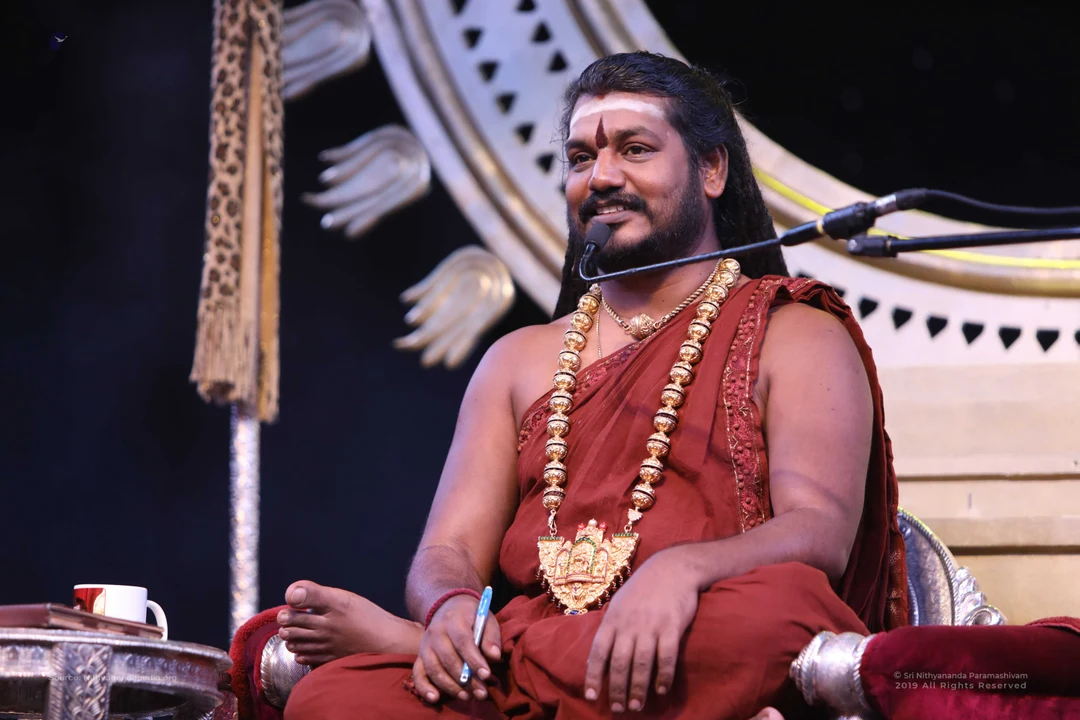
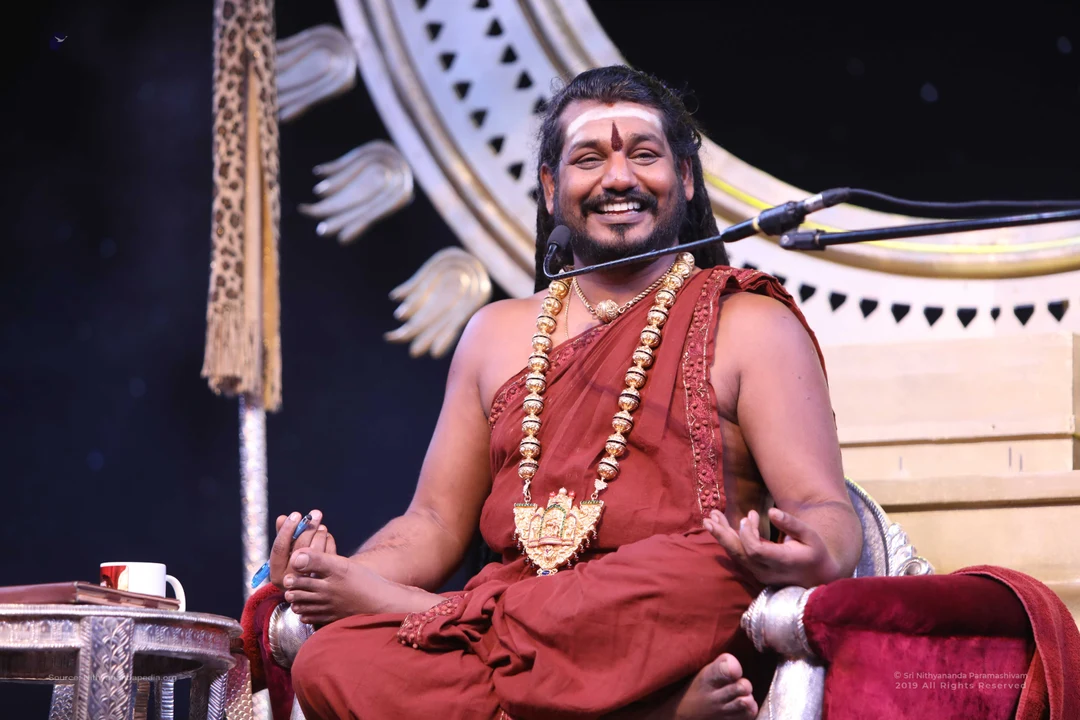
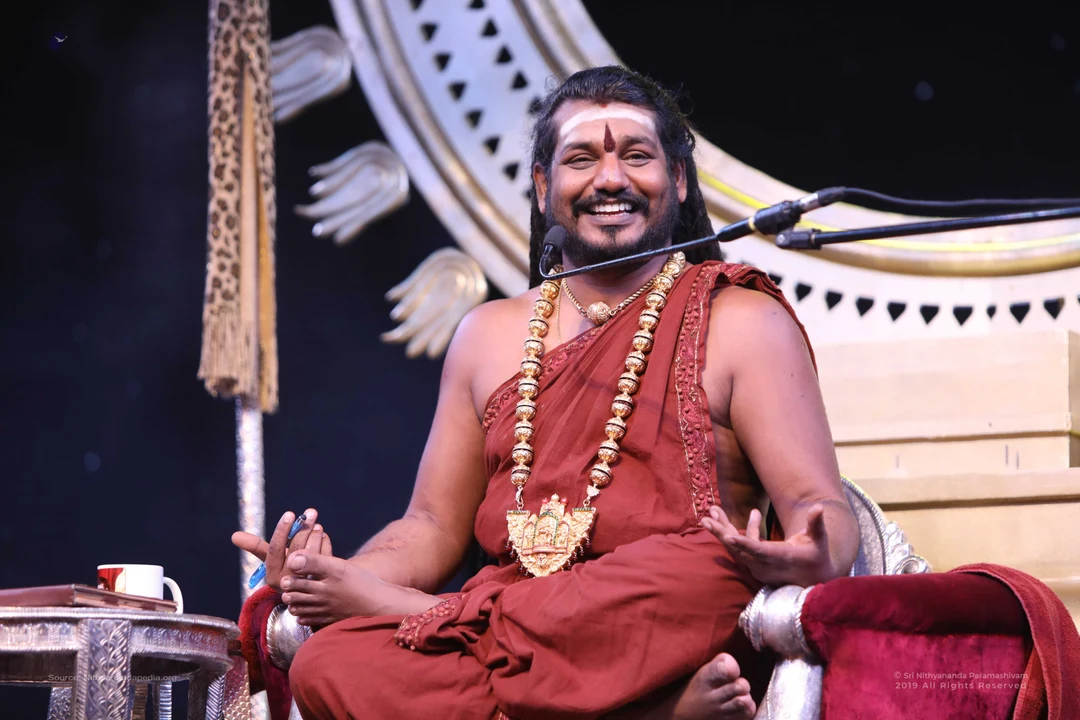
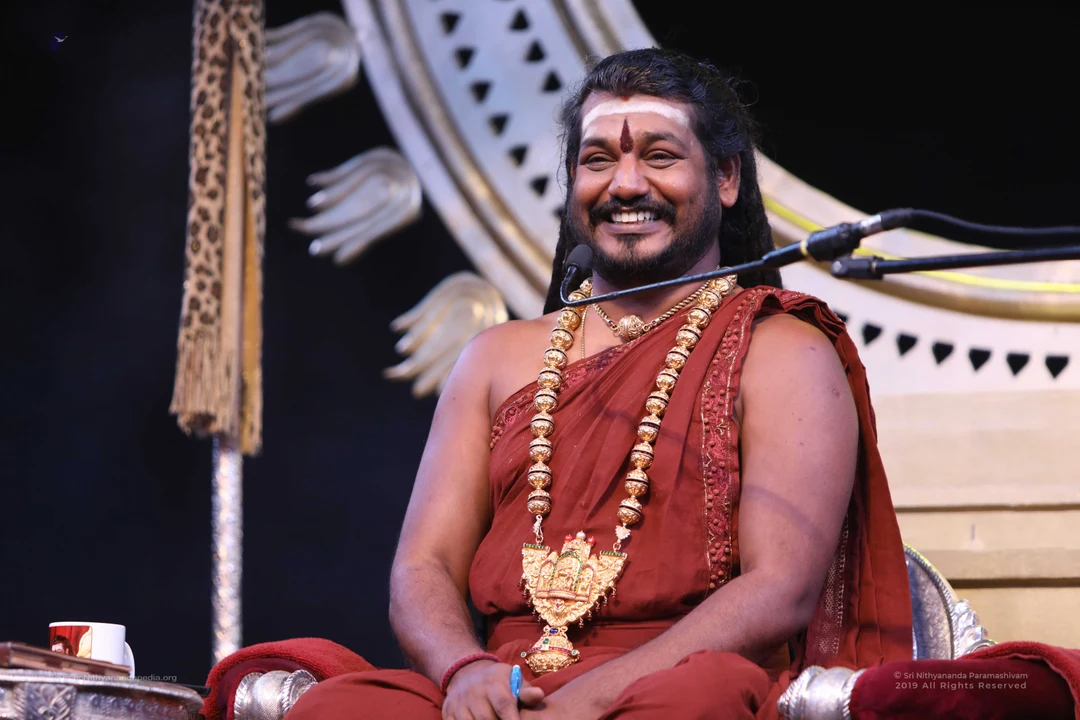
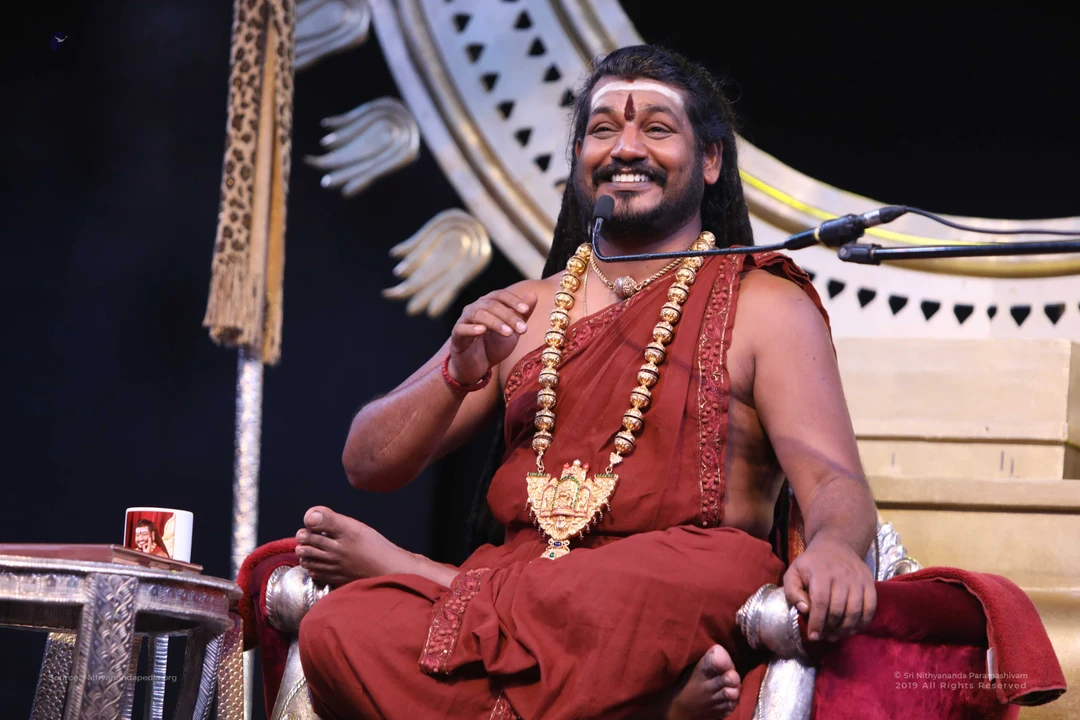
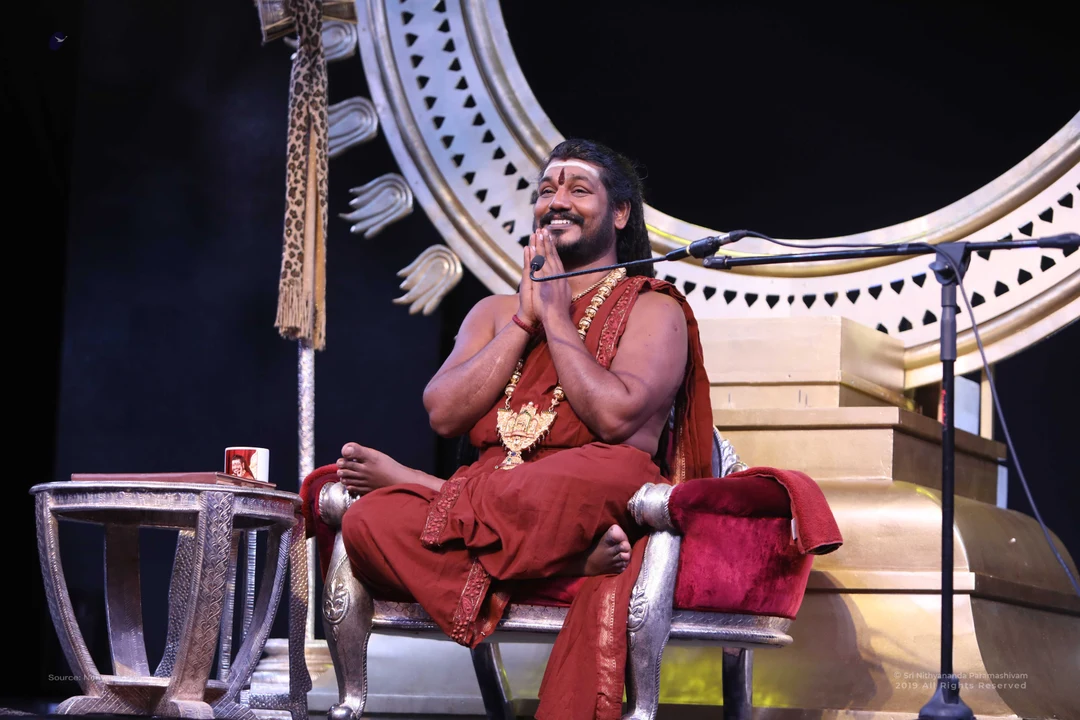
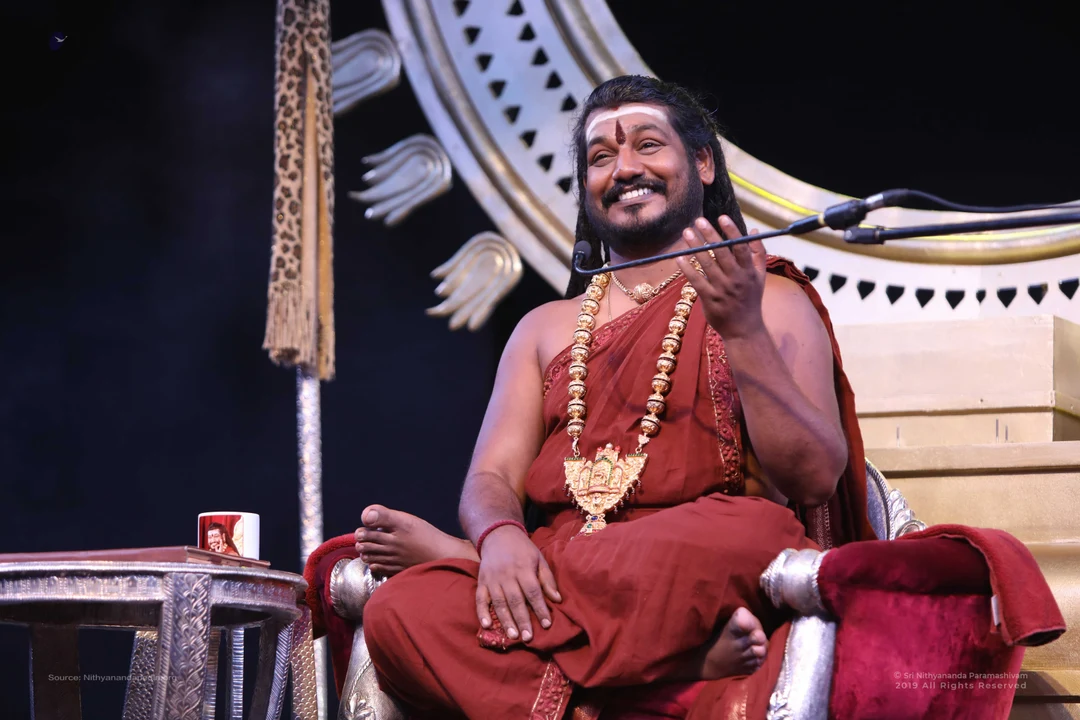
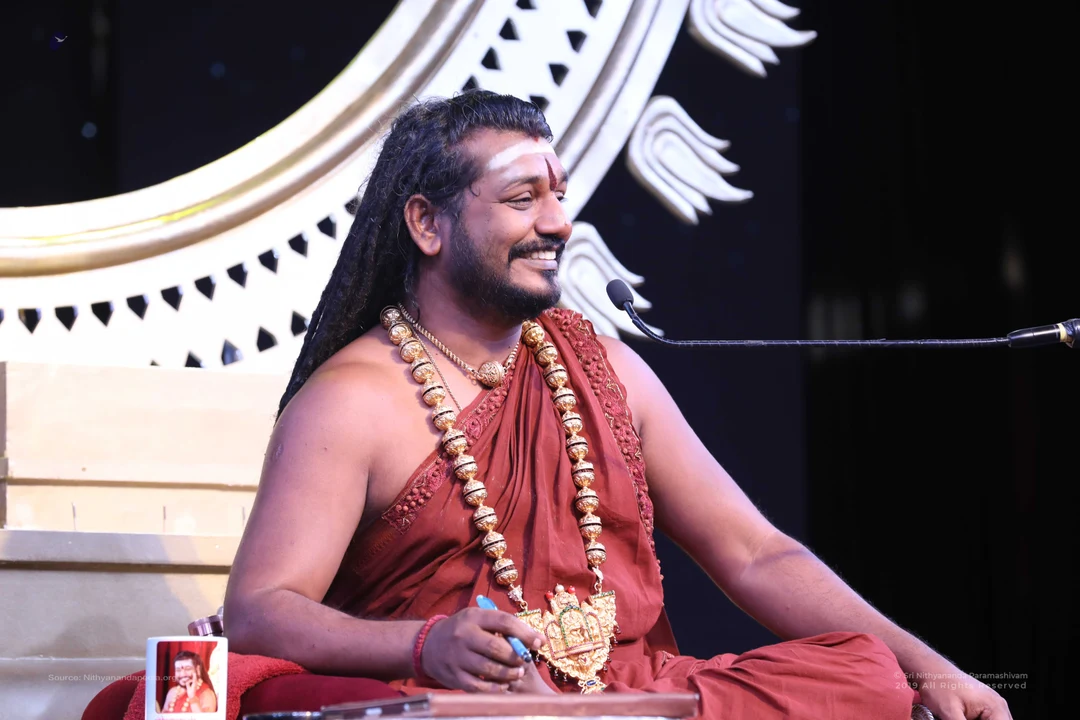
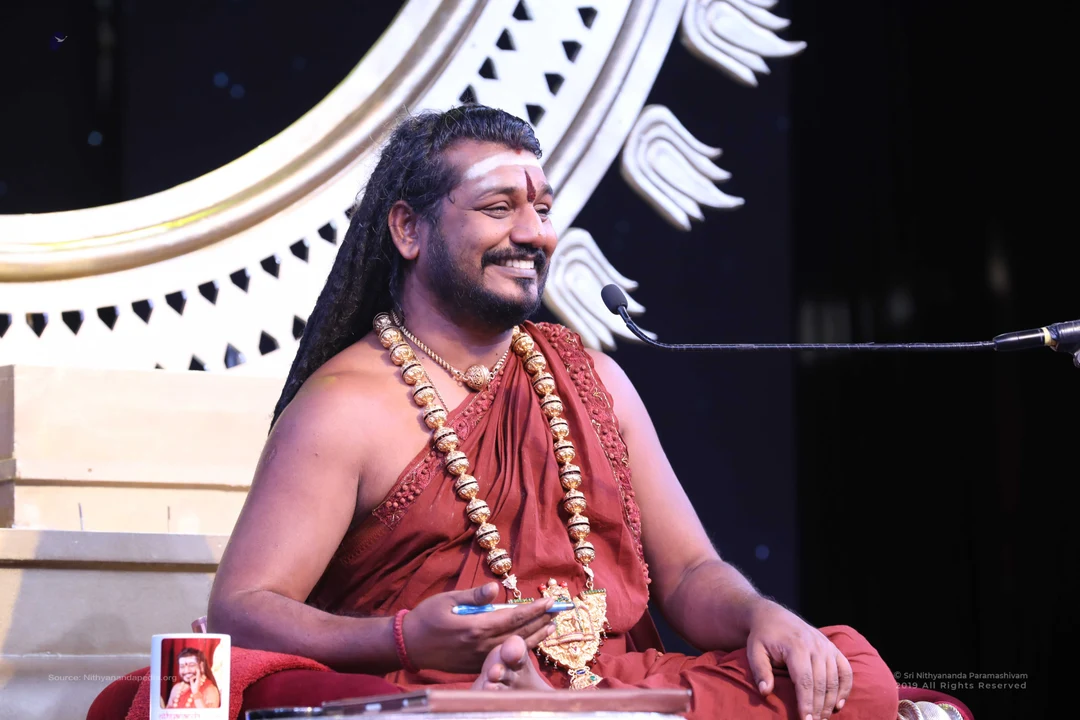
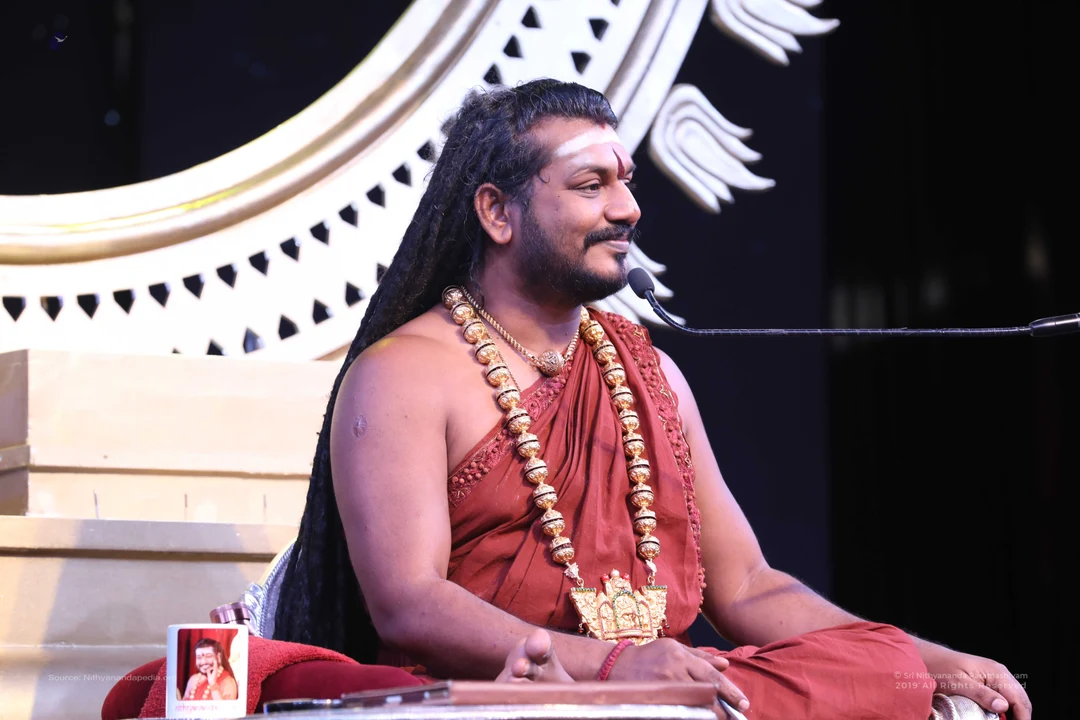
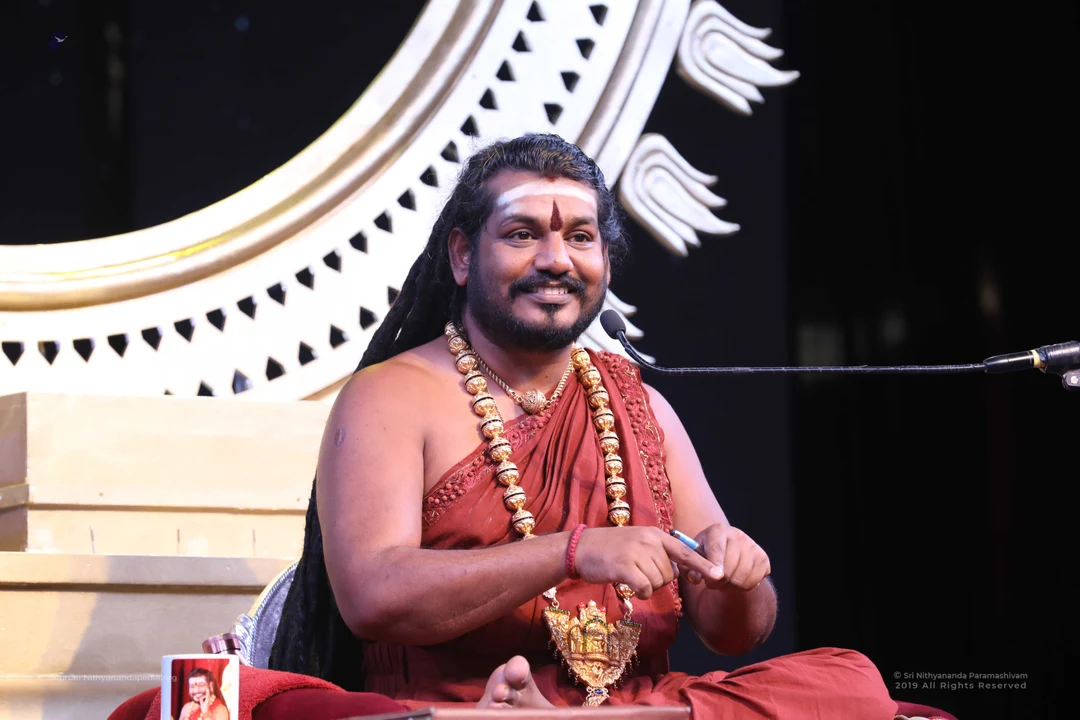
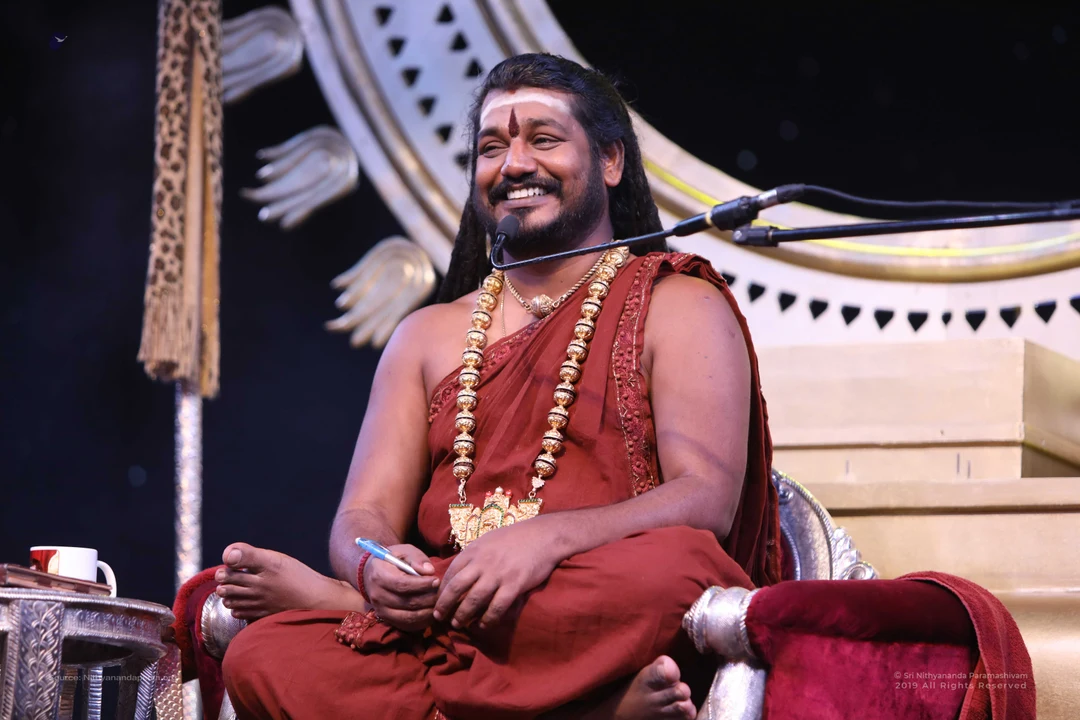
Photograph of a smiling man with long dark hair and a beard, seated cross-legged on an ornate silver-and-red throne-style chair on a stage. He wears a horizontal white tilak with a red mark on his forehead, a red-orange draped garment over his bare shoulder, and a heavy necklace of large gold beads with a gold pendant. A microphone on a stand sits before him, a blue pen rests in his hand, and a white cup sits on a small carved side table at left. Behind him is a large cream-and-gold decorative backdrop with dark triangular motifs. A Swamiji (probable) candidate is physically present, identified by the long swept-back hair, the ceremonial gold beaded necklace and the saffron-orange garment; the page states he is at this event, but the appearance cues are moderate.A man seated cross-legged on an ornate silver-and-red throne-style chair speaks into a microphone on a stage with a decorative gold-and-white backdrop. He wears a red-orange unstitched cloth draped over his bare shoulder, a long multi-strand gold bead mala with a large gold pendant, and a white tilak with a red vertical mark on his forehead. A blue pen is in his right hand and a white cup with red trim sits on a silver side table. Long dark hair falls past his shoulders. Swamiji (probable): the long swept-back hair, saffron-red clothing, rudraksha-style gold mala and ceremonial pendant support this as a candidate for the speaker in person.A smiling man sits cross-legged on a red upholstered chair on a stage, bare-chested under a rust-red saffron-toned cloth draped over his shoulders. He wears a long multi-strand necklace of gold beads with a large gold pendant, a rudraksha-style bead mala, and a white tilak with red kumkum on his forehead. His hands rest in front of him, one holding a small object. A microphone stand is at his right, a white cup on a metal side table to his left, and a large ornate golden sun-like disc with triangular motifs stands behind him. A cream-coloured stage backdrop and a dark sky-like backdrop complete the scene. A probable Swamiji (Nithyananda Paramashivam) is shown with long swept-back hair, distinctive gold ceremonial necklaces, rudraksha beads and saffron-toned clothing, seated as a speaker during a satsang discourse.A smiling man with long dark hair and a short beard sits on an ornate silver-and-red throne chair on a stage, laughing with his head turned to one side. He wears a rust-red saffron-toned garment draped over his shoulder, a rudraksha-style gold bead mala with a large gold pendant, and a white tripundra mark on his forehead. He holds a blue pen in one hand, and a microphone on a stand is near his face. A small side table holds a white cup and a book. Behind him a large ornate cream-and-gold arched backdrop with heart-shaped cutouts and a leopard-print fabric hanging from a staff complete the stage setting.A smiling man with long dark hair and a white-and-red tripundra forehead mark sits on a silver and red velvet chair on a stage. He wears a red-orange saffron-toned robe, a multi-strand gold bead mala with a large gold pendant, and holds a pen. A microphone stands beside him, a white cup rests on a small silver side table, and a gold and white circular stage backdrop with leopard-print drape frames the scene. a person: the long hair, tripundra, saffron robe and ornate gold mala match the page's a person reference for this satsang, but the appearance cues are only moderately distinctive. A printed 2018A smiling man with long dark hair and a full beard sits cross-legged on a silver-framed throne at a stage microphone, wearing a red-orange ochre cloth draped over his shoulder and a red sash with gold embroidery. A heavy gold multi-strand necklace with a large gold pendant hangs on his chest, and a white and red tilak marks his forehead. He holds a small blue pen in his hands. A tea cup sits on a silver tray at left, and a large white ornamental wheel-like backdrop with black triangular motifs fills the background behind a leopard-print fabric hanging on a silver pole. Several cues are distinctive: long swept-back hair, ornate gold jewellery and saffron-toned clothing, consistent with the Swamiji (probable) label for an in-person speaker at a satsang.

Nataraja Darshan
158 photosSource gallery
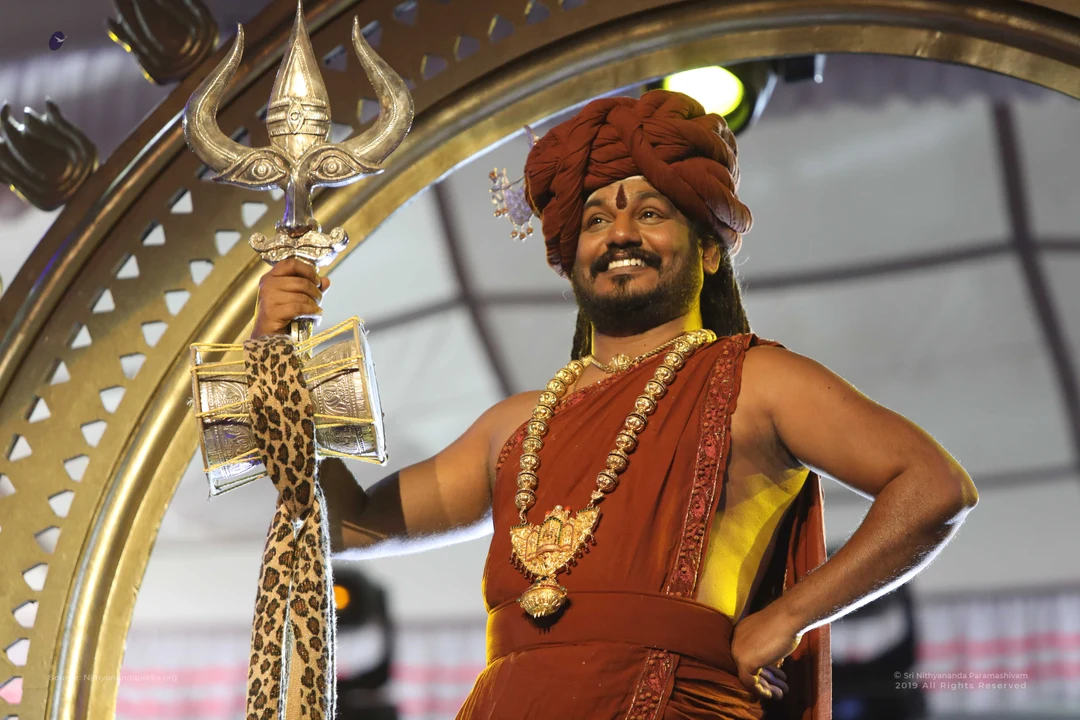
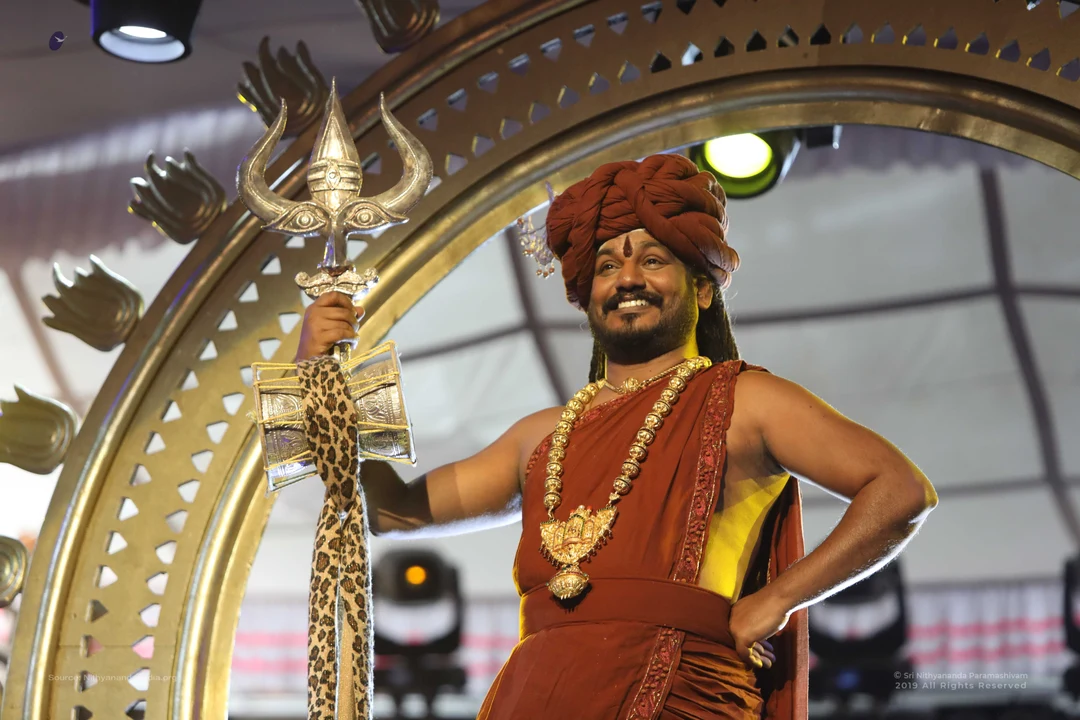
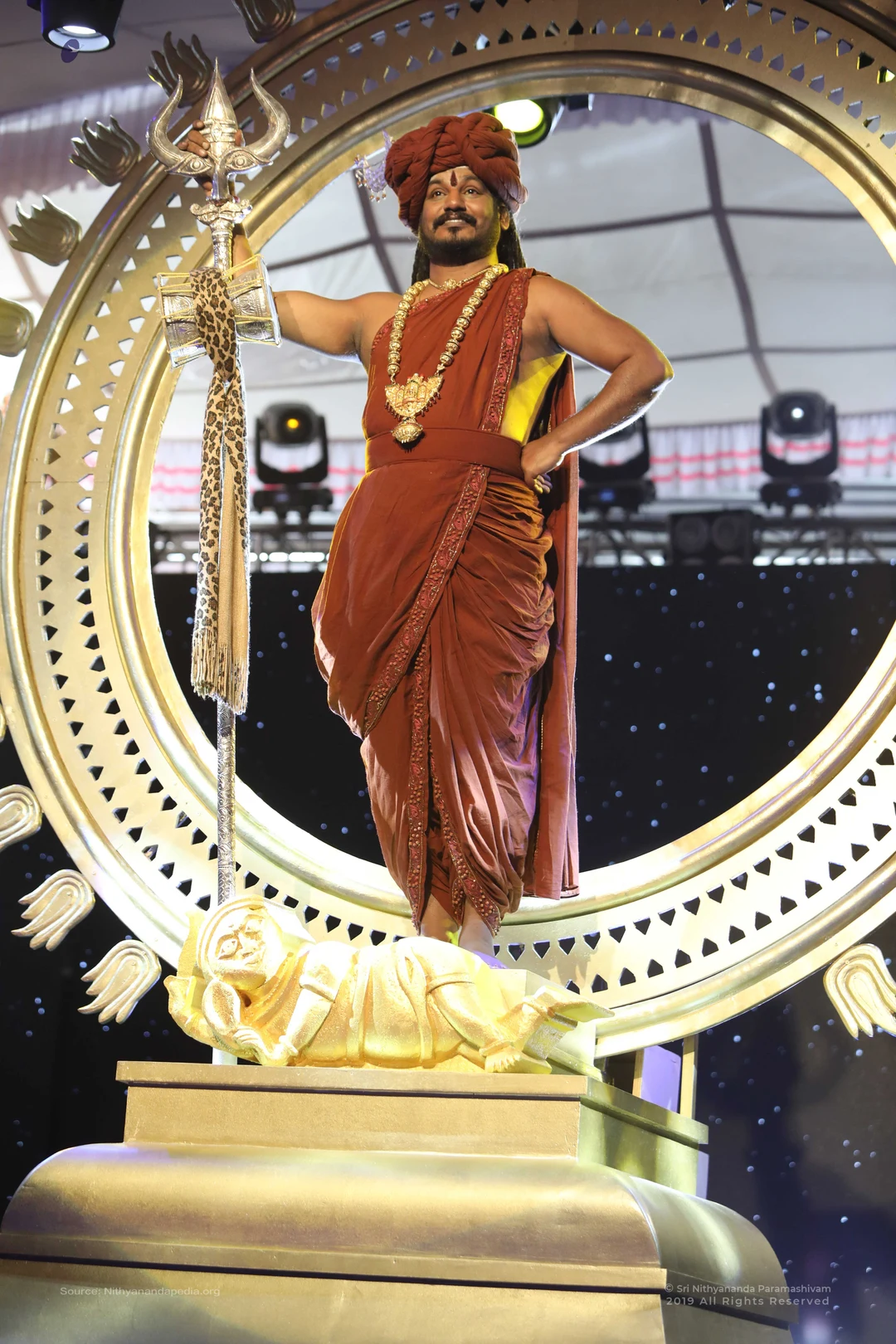
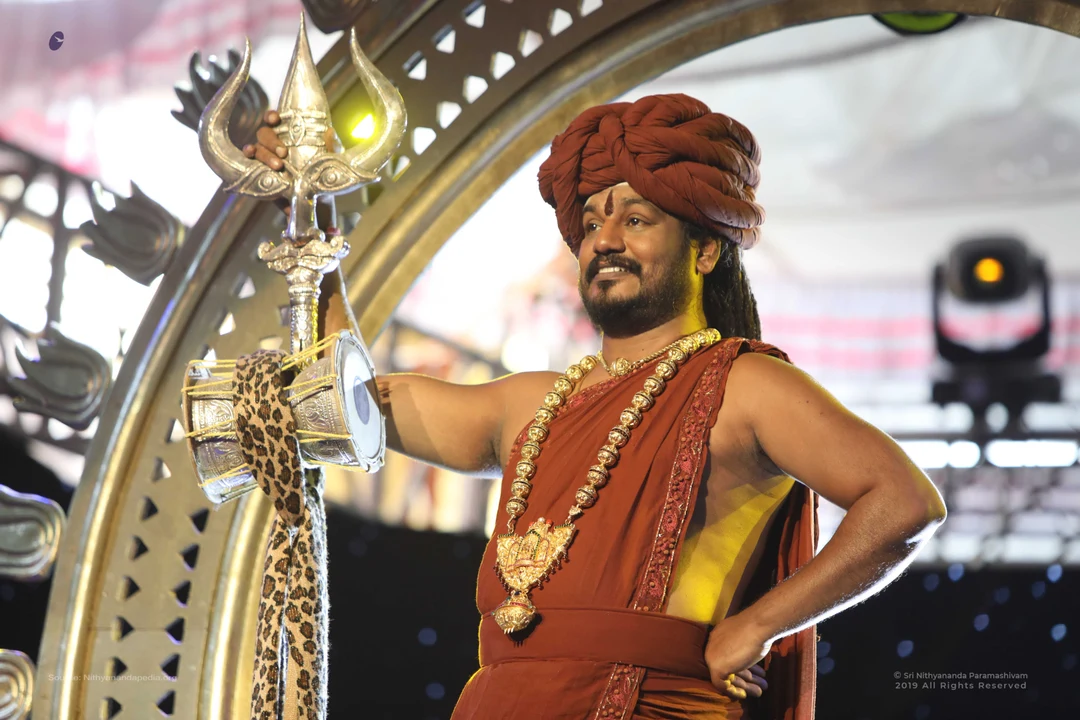
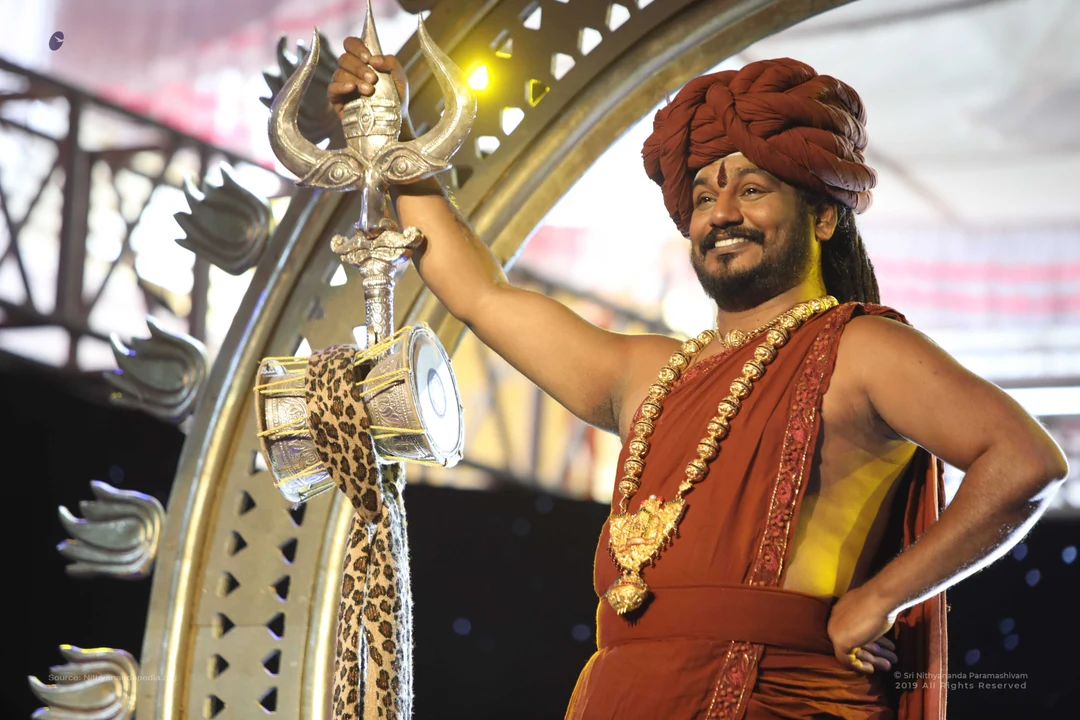
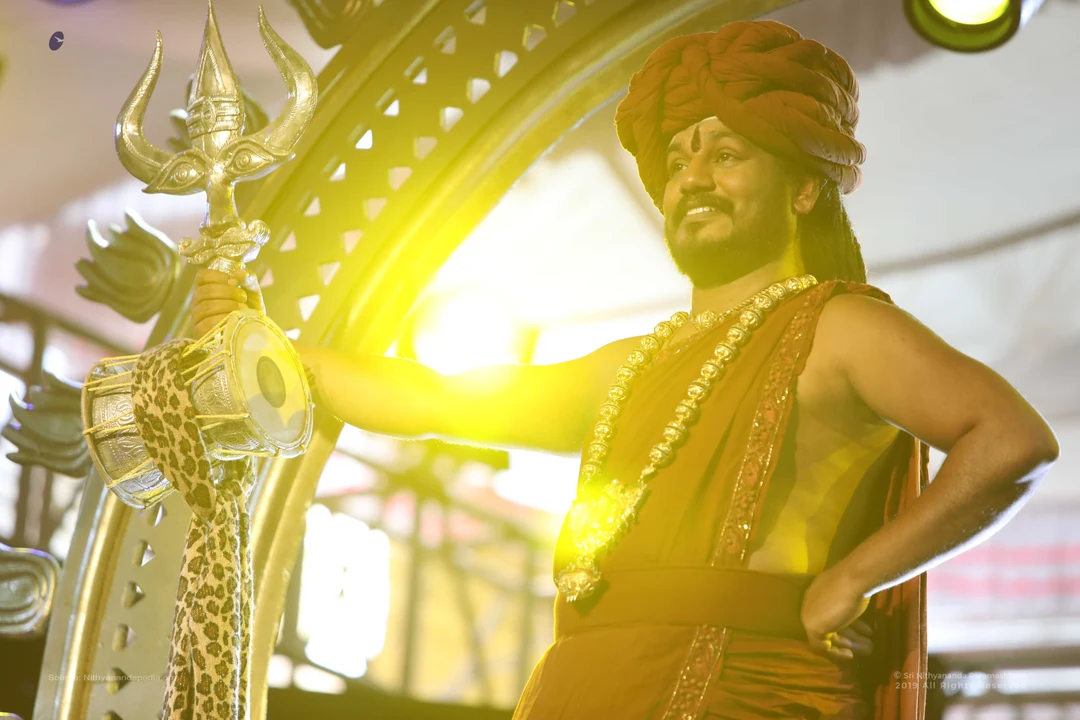
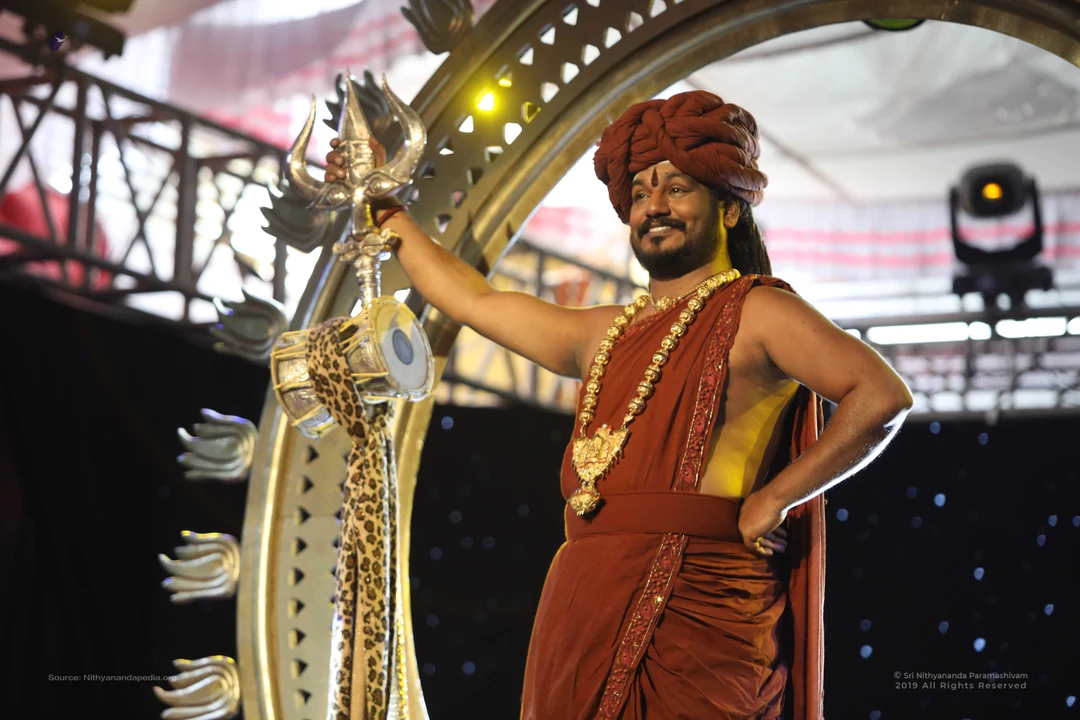
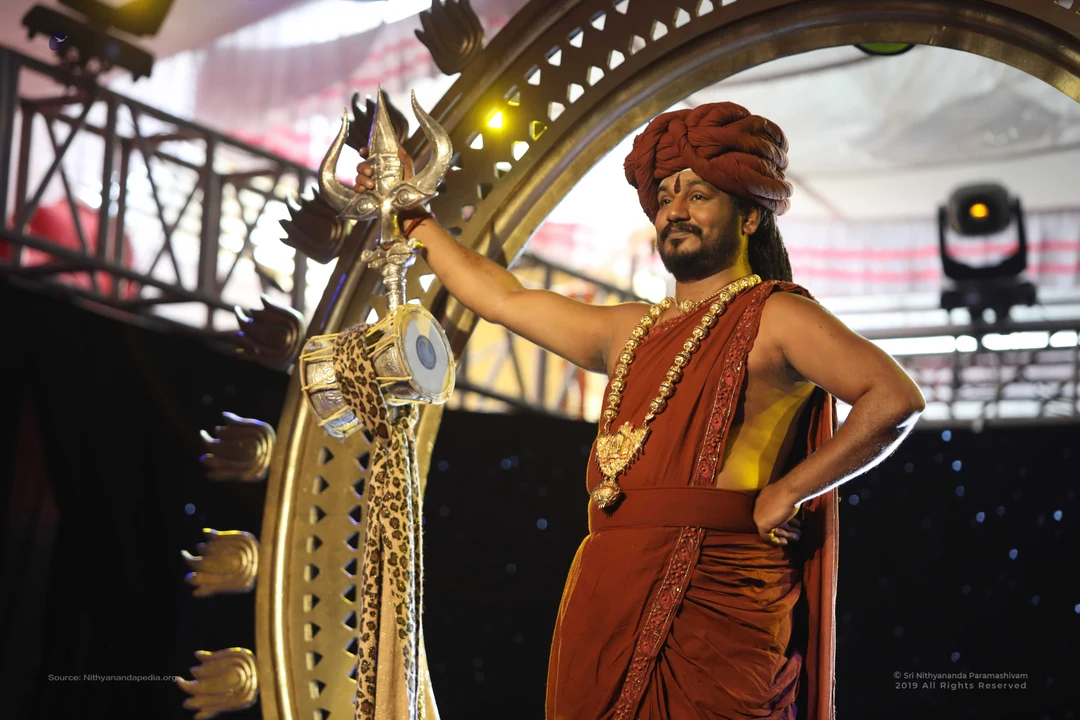
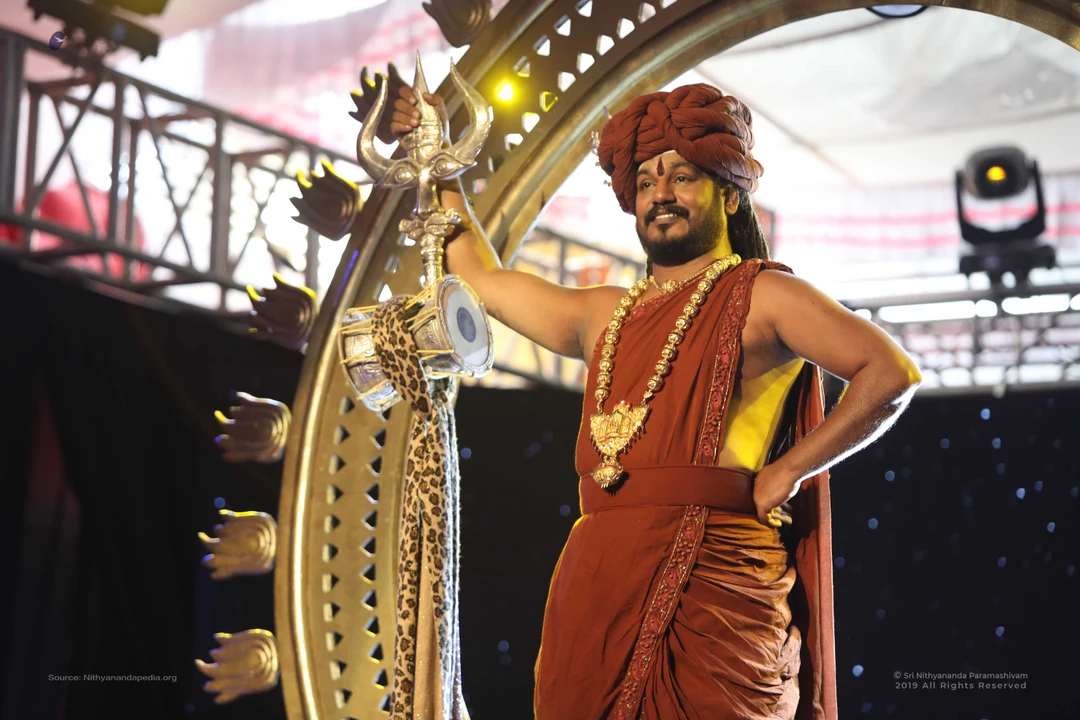
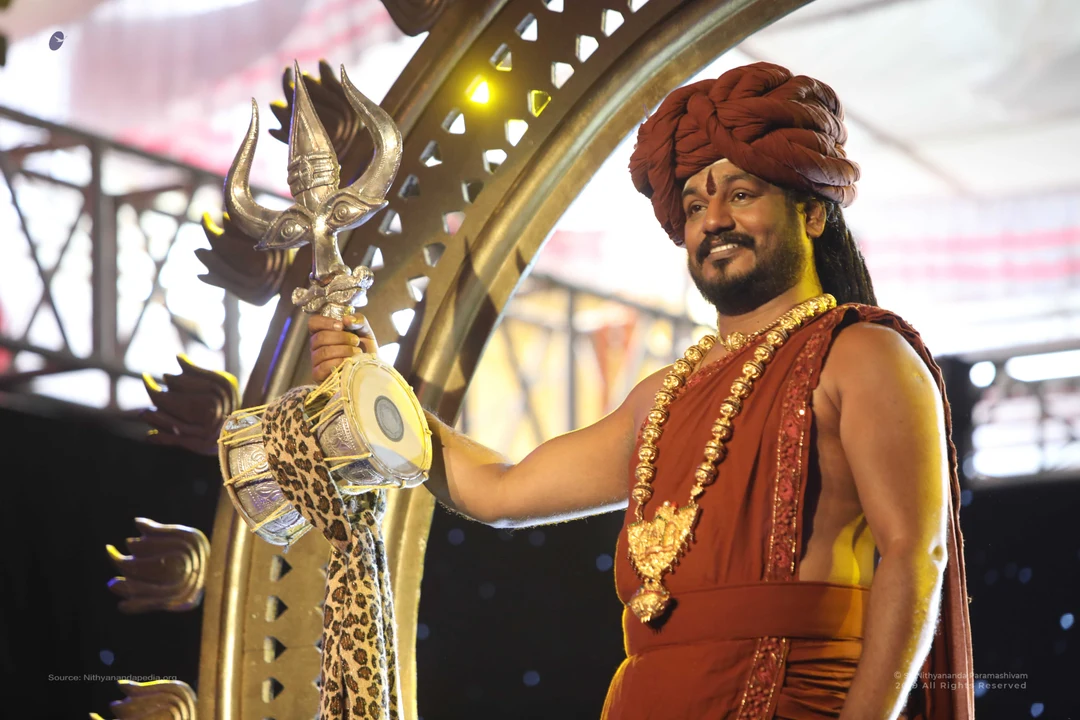
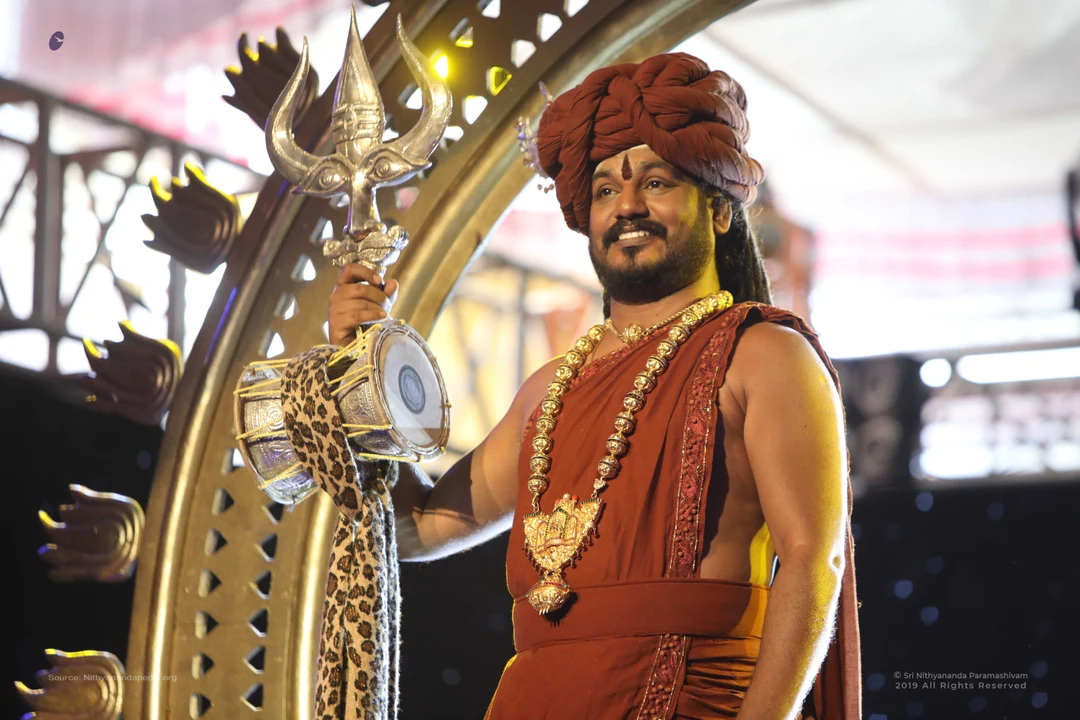
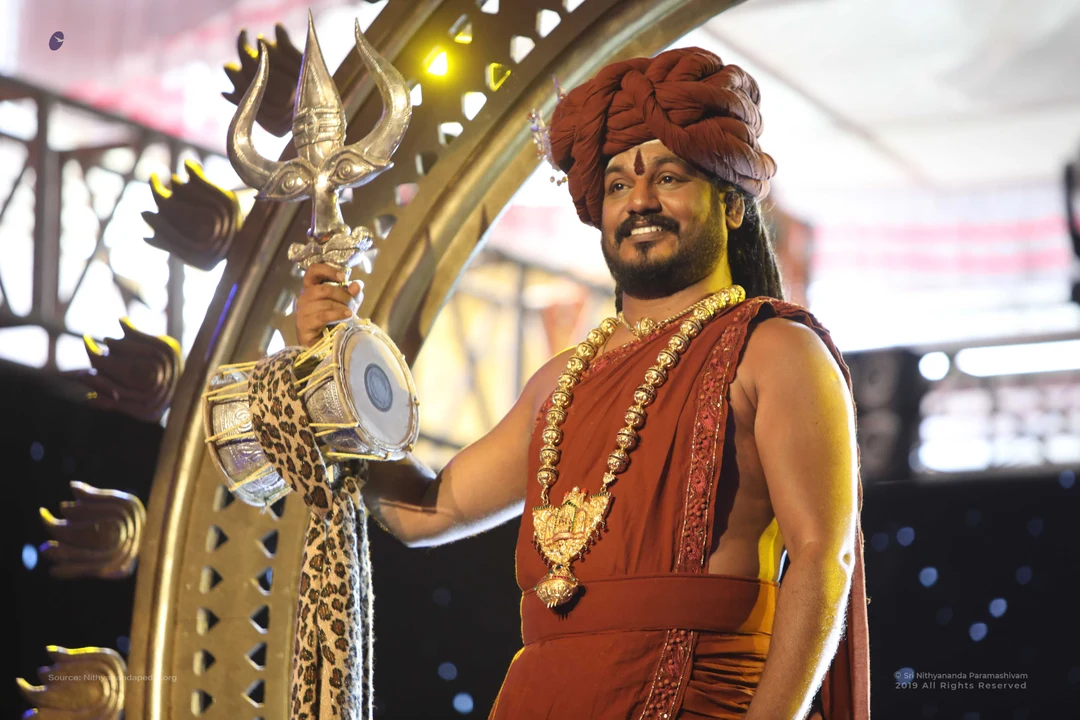
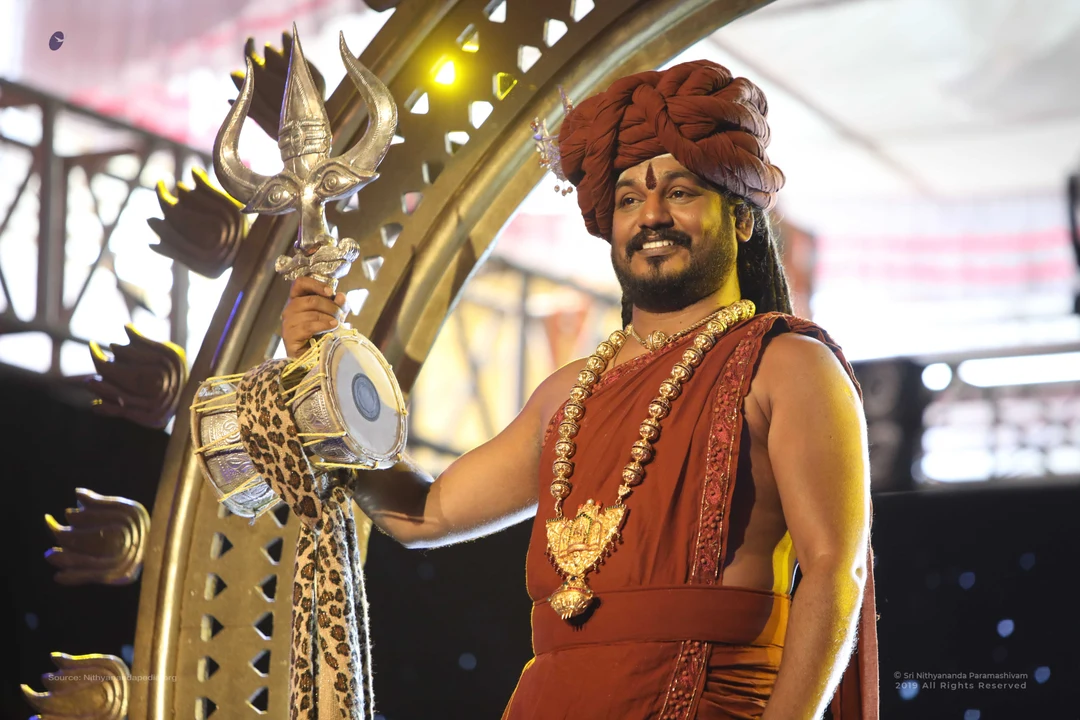
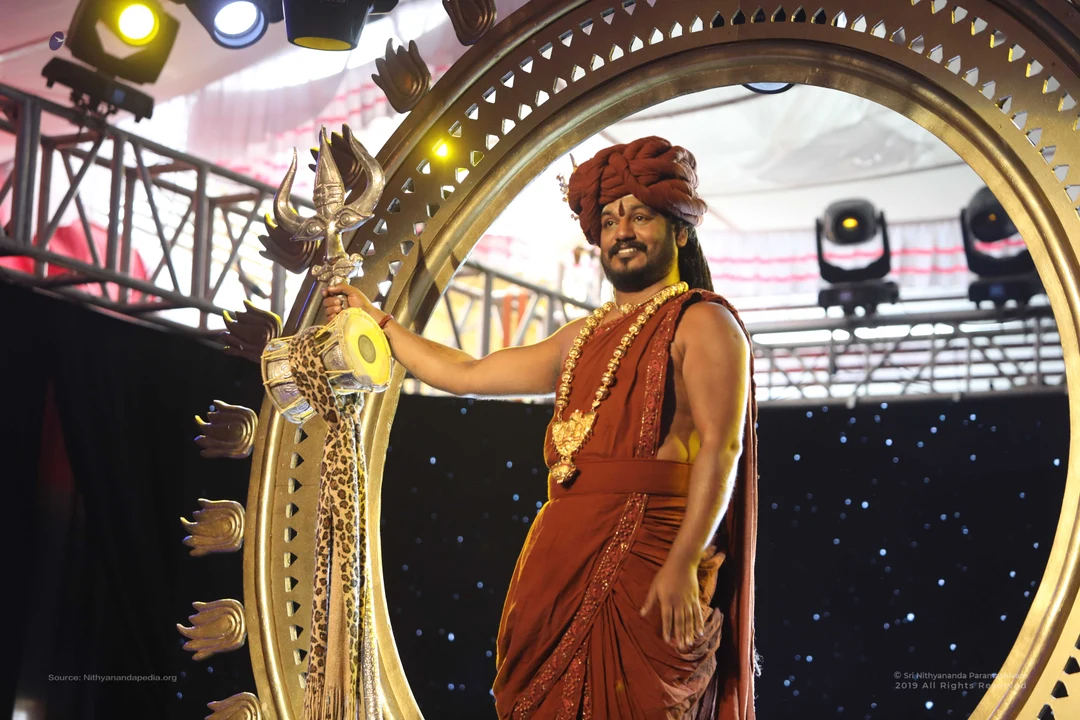
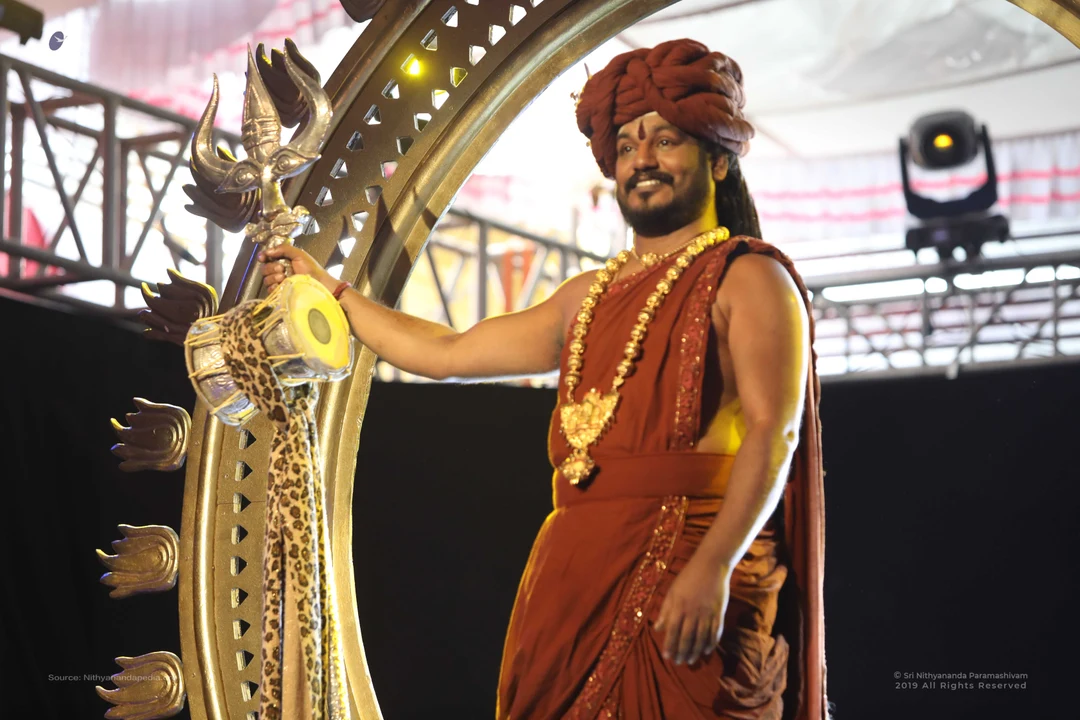
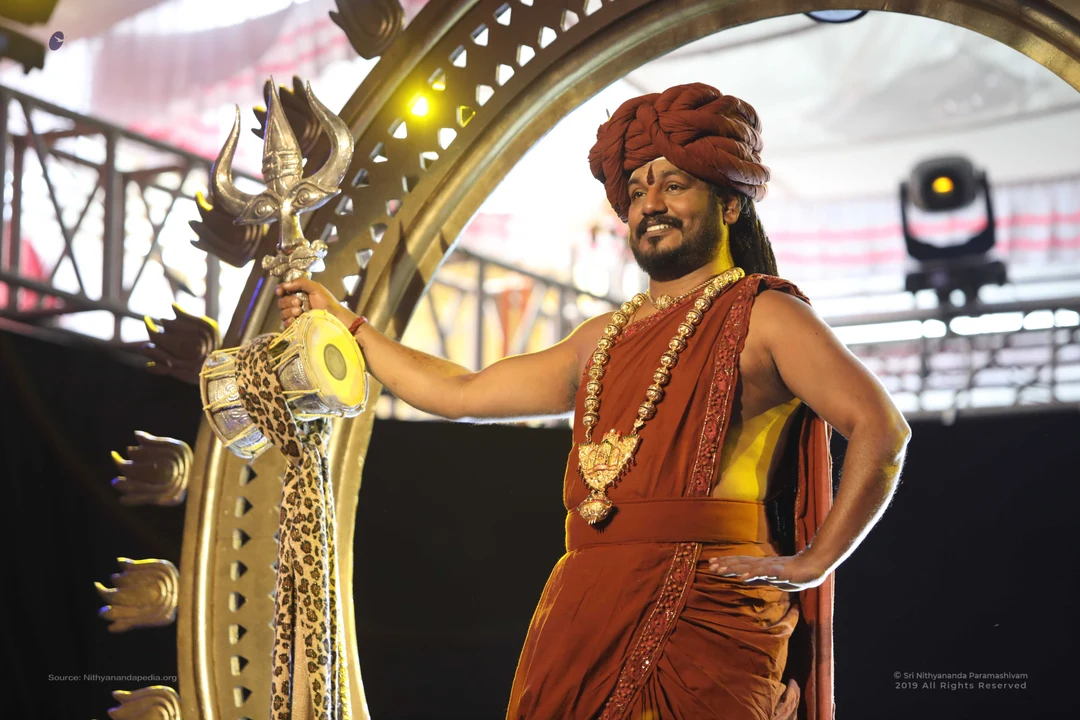
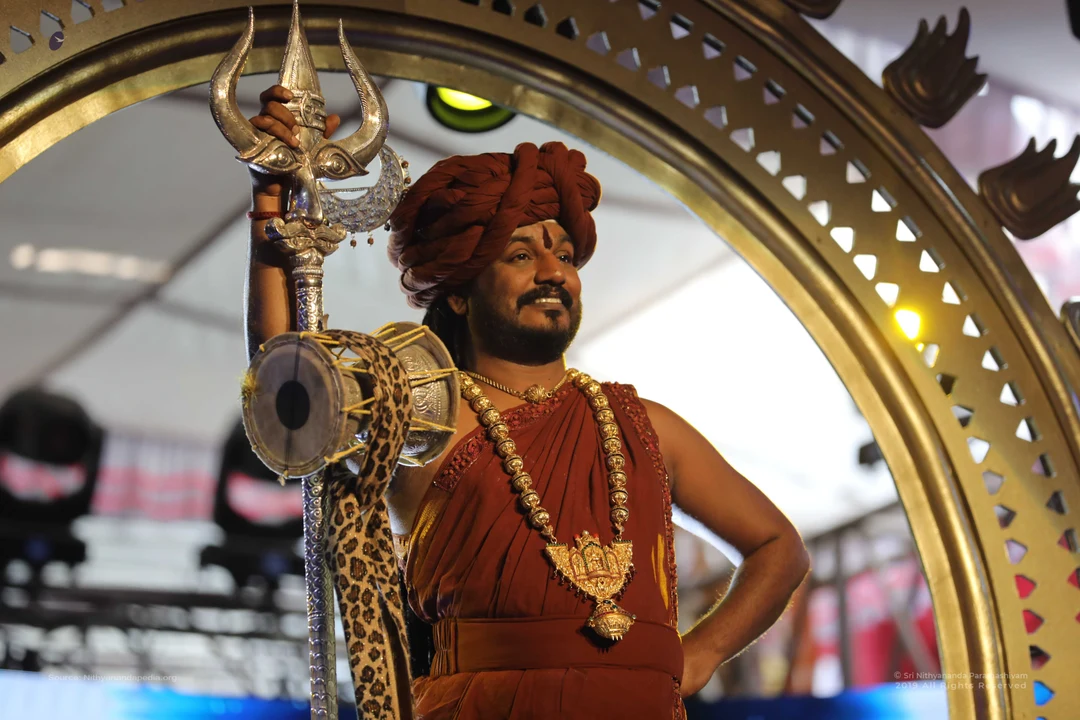
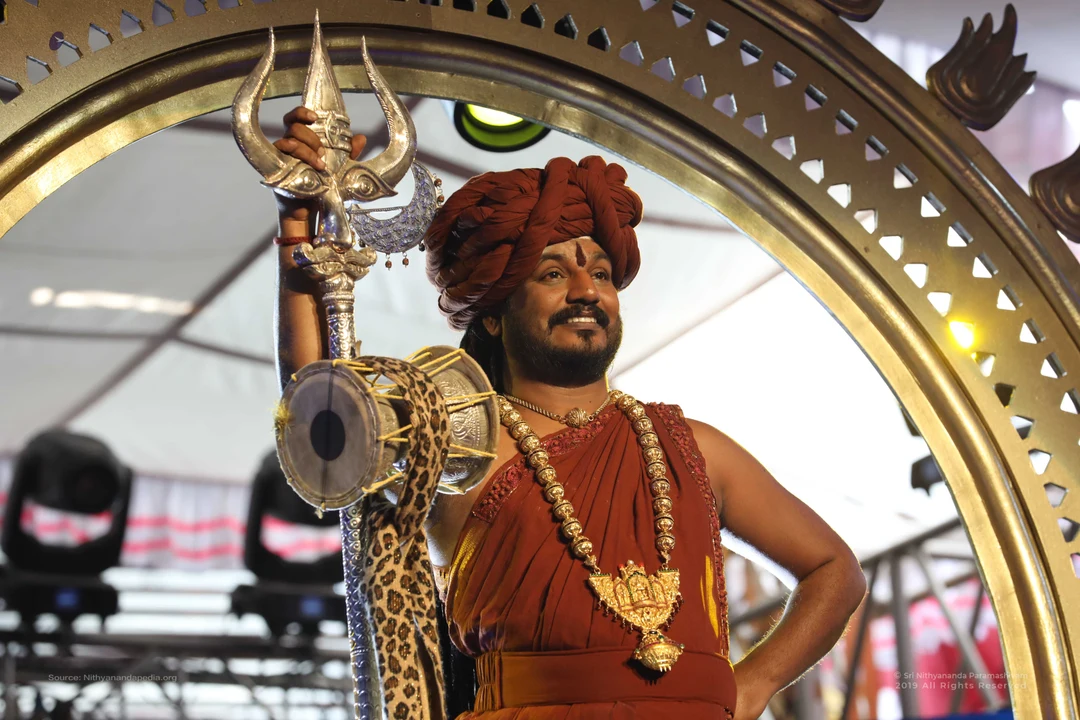
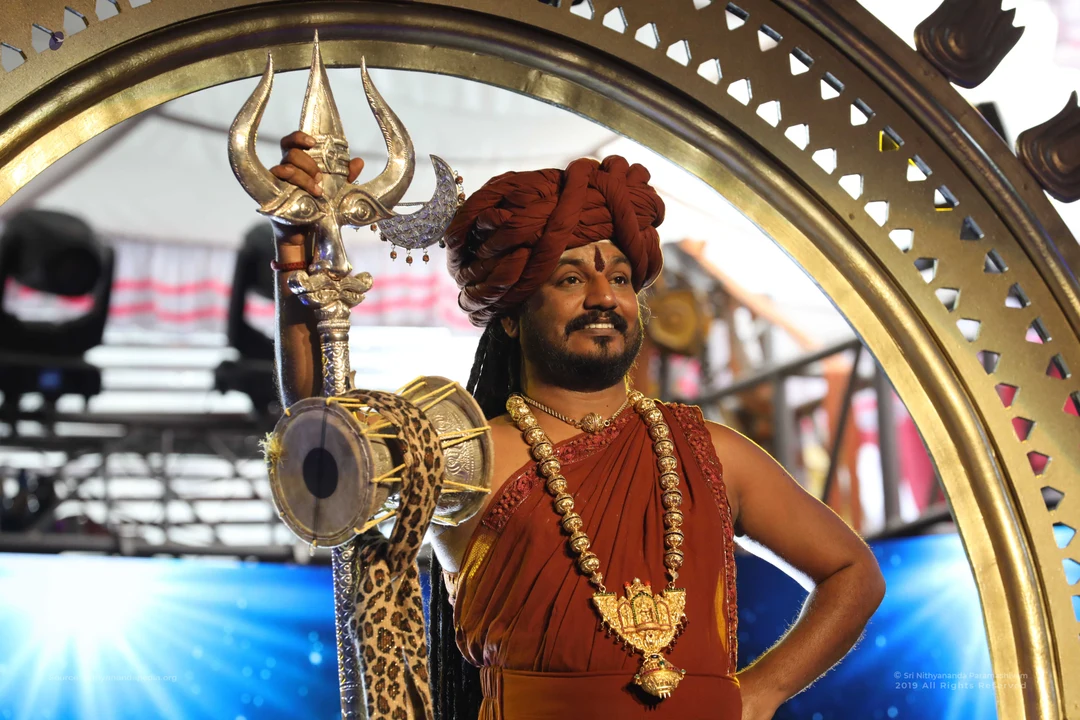
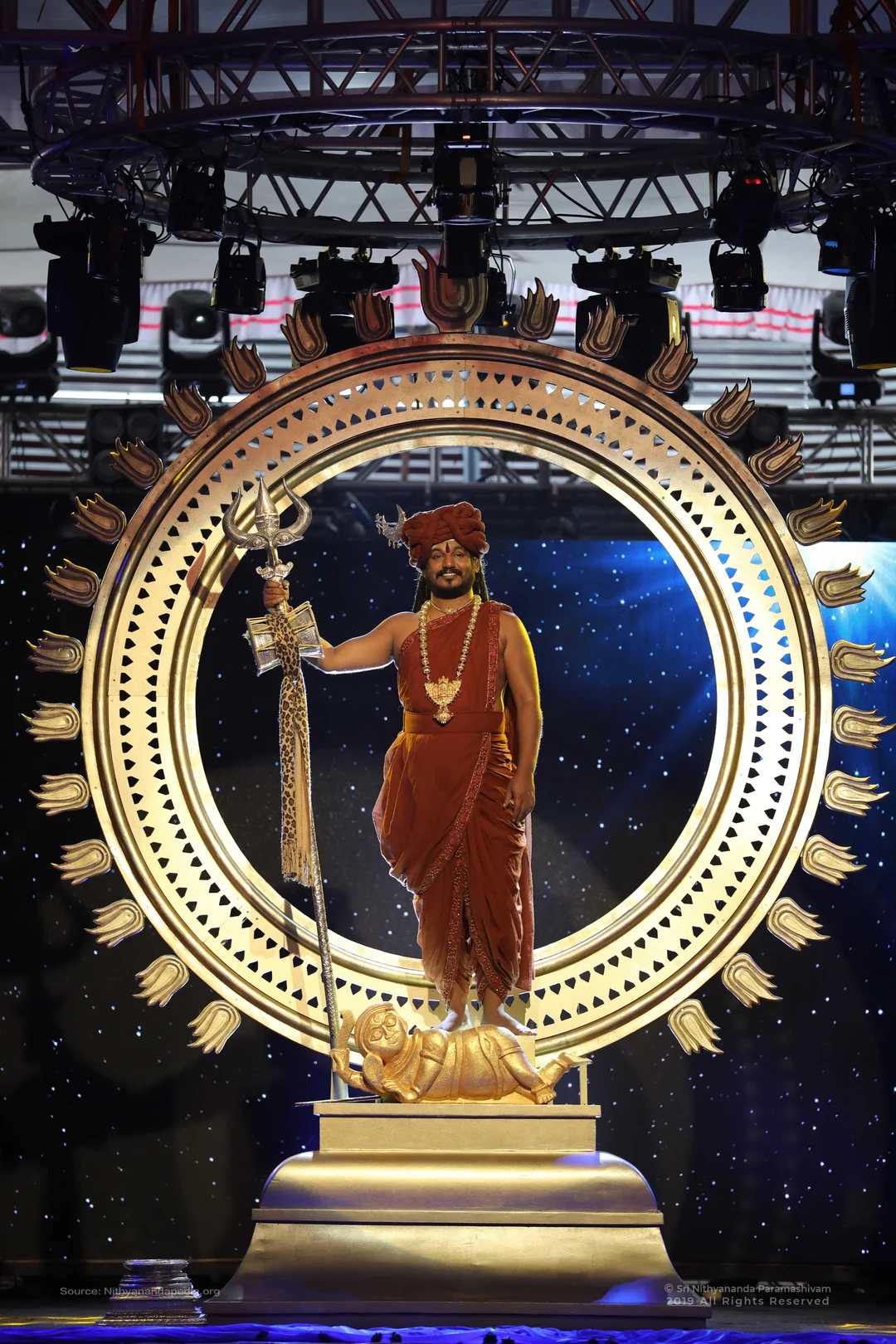
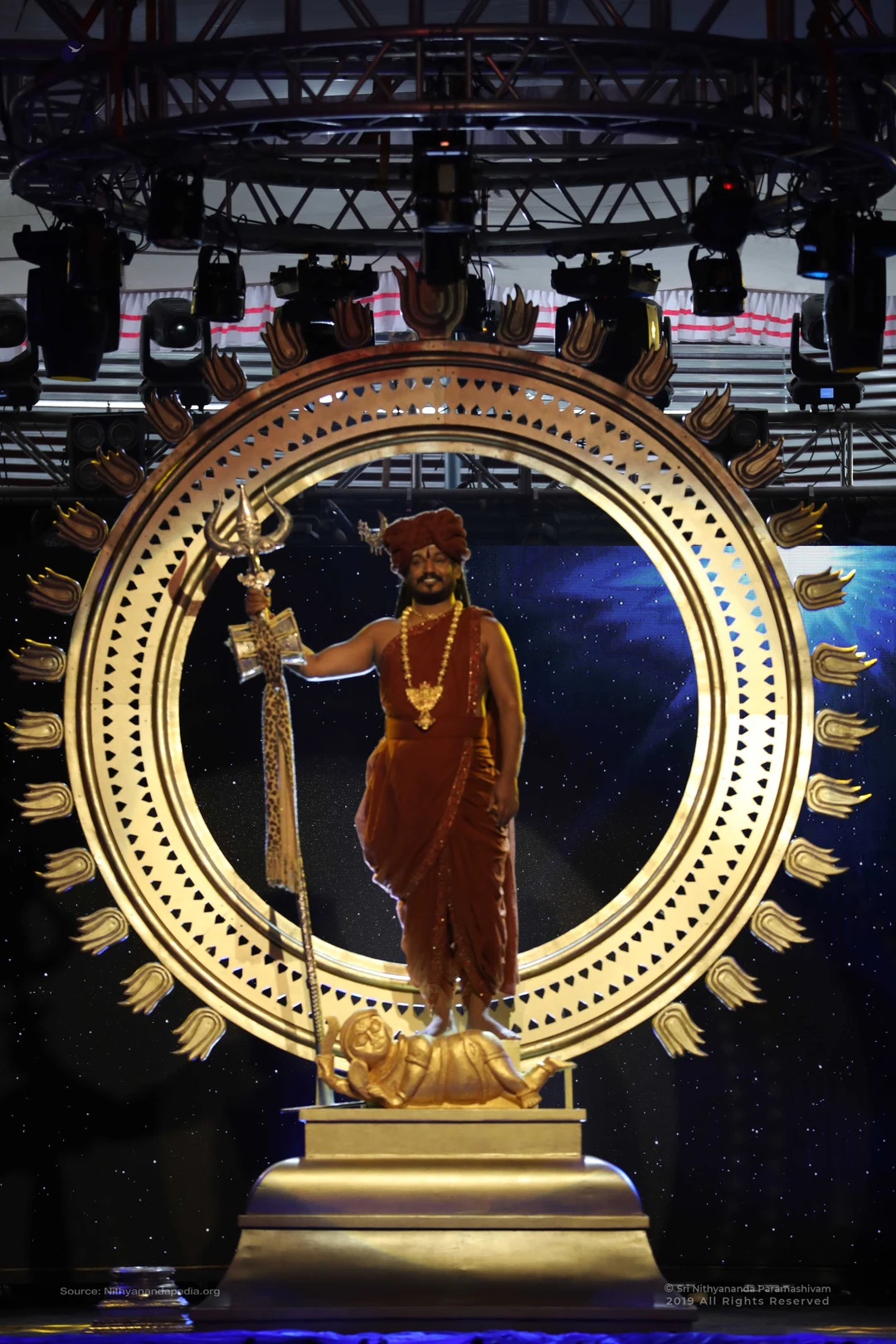
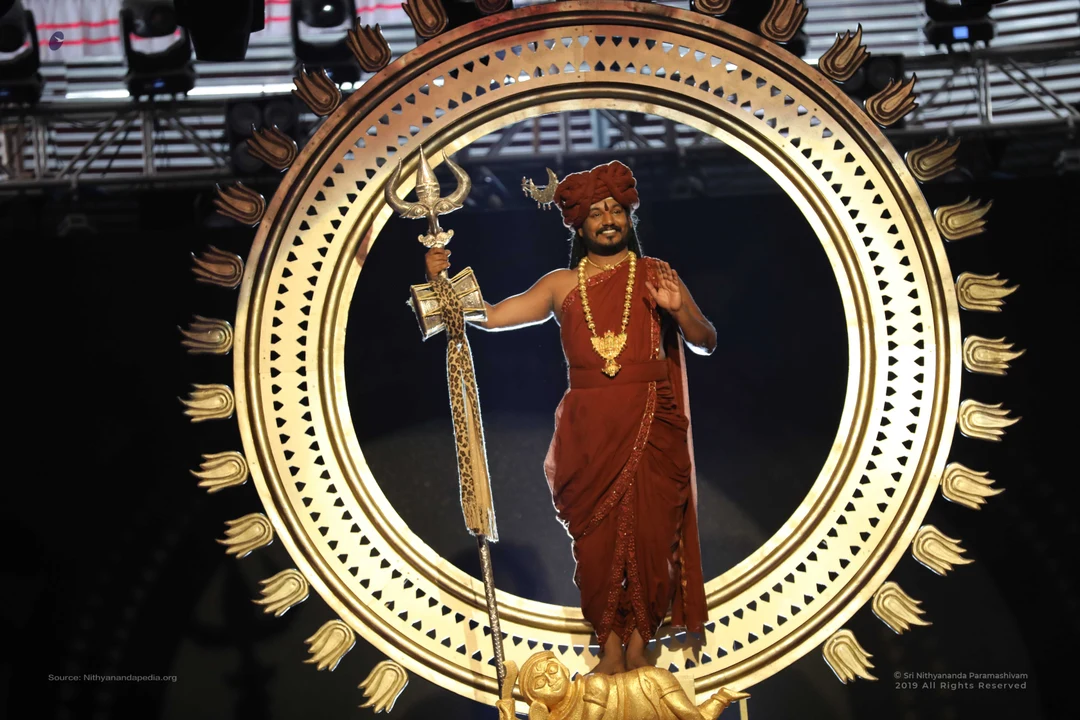
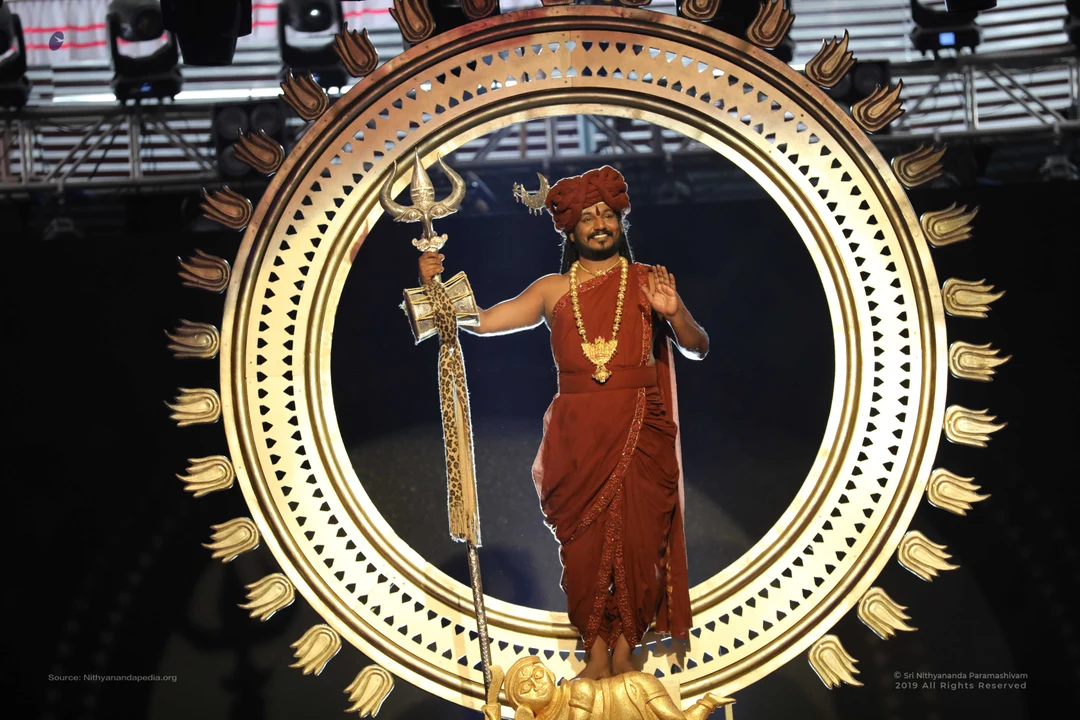
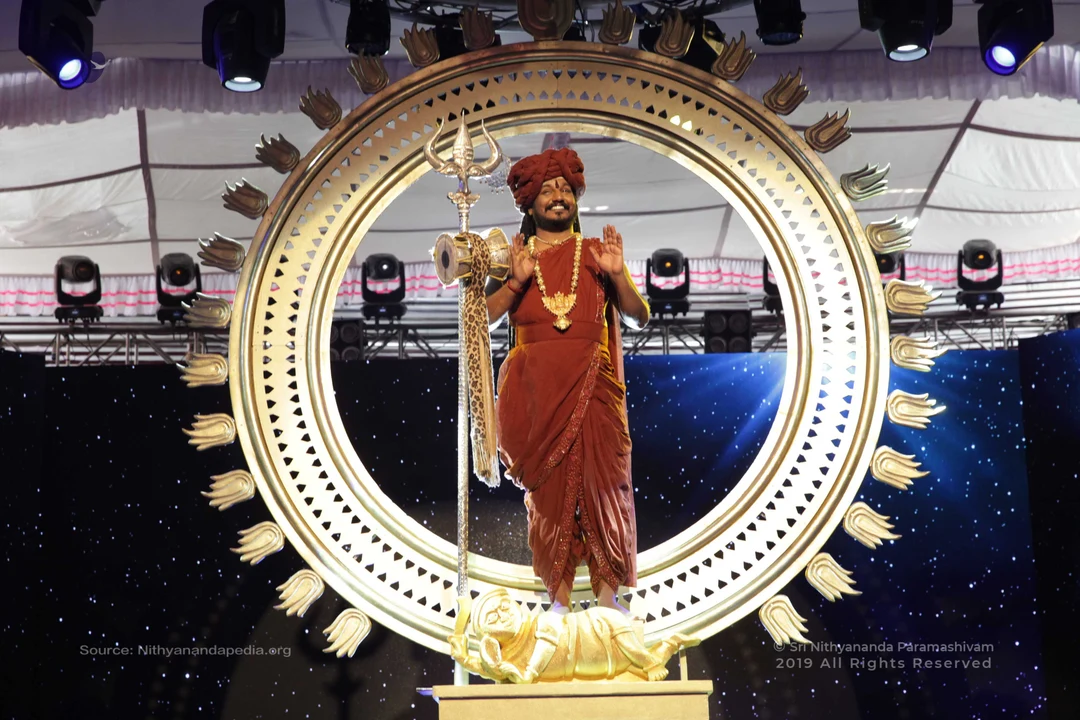
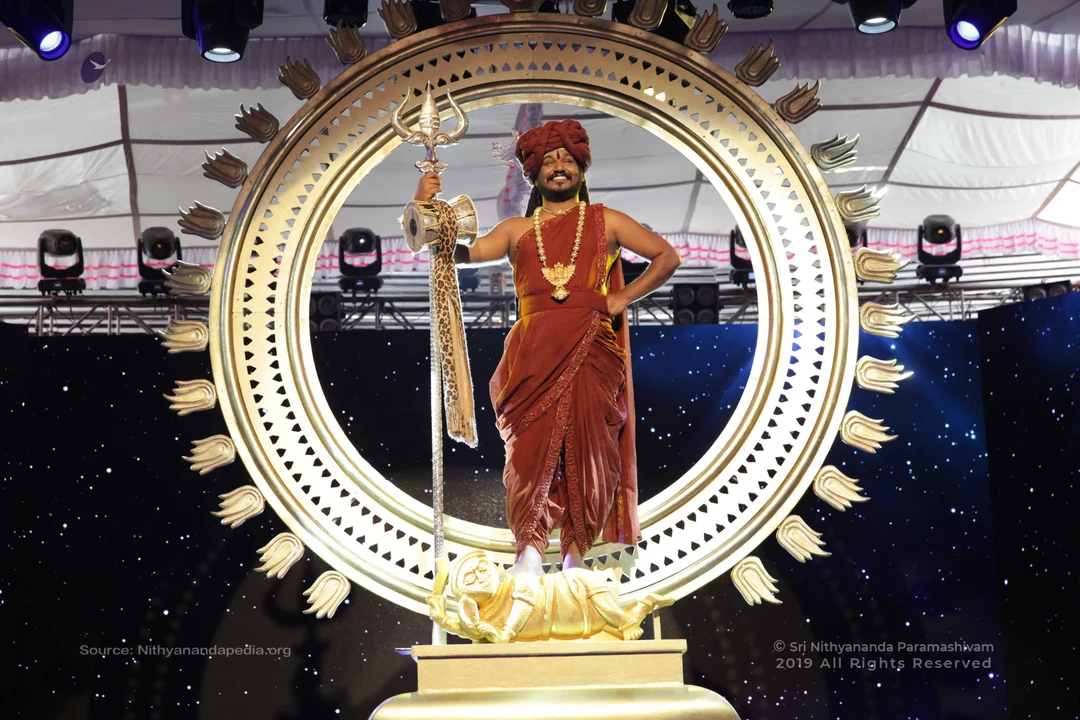
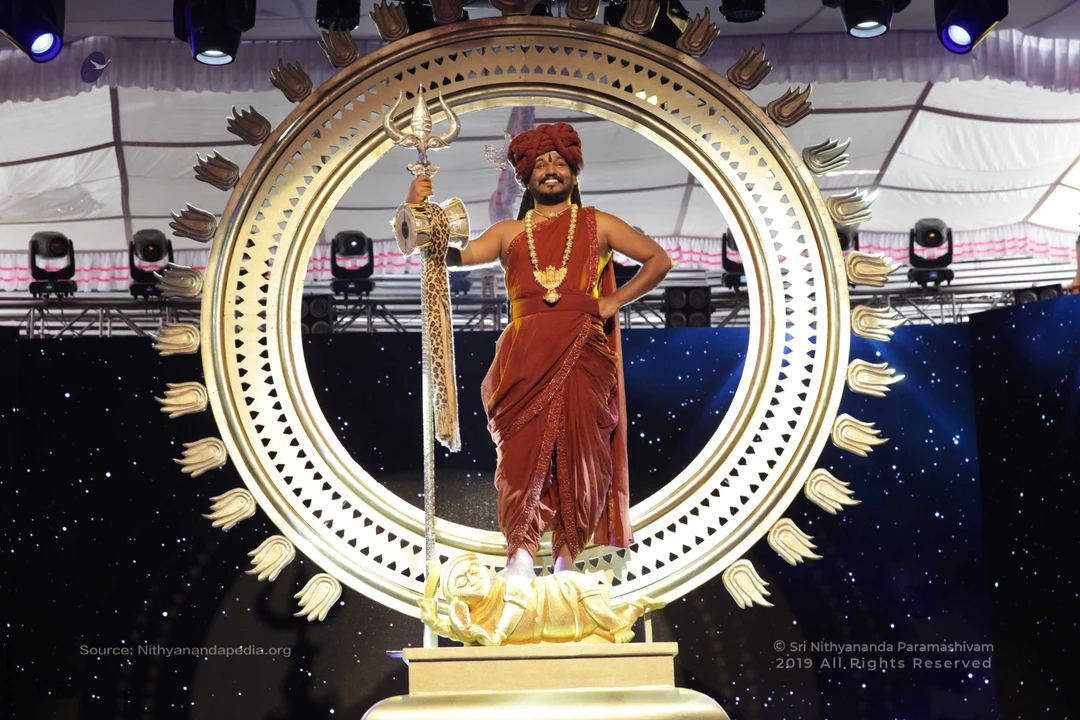
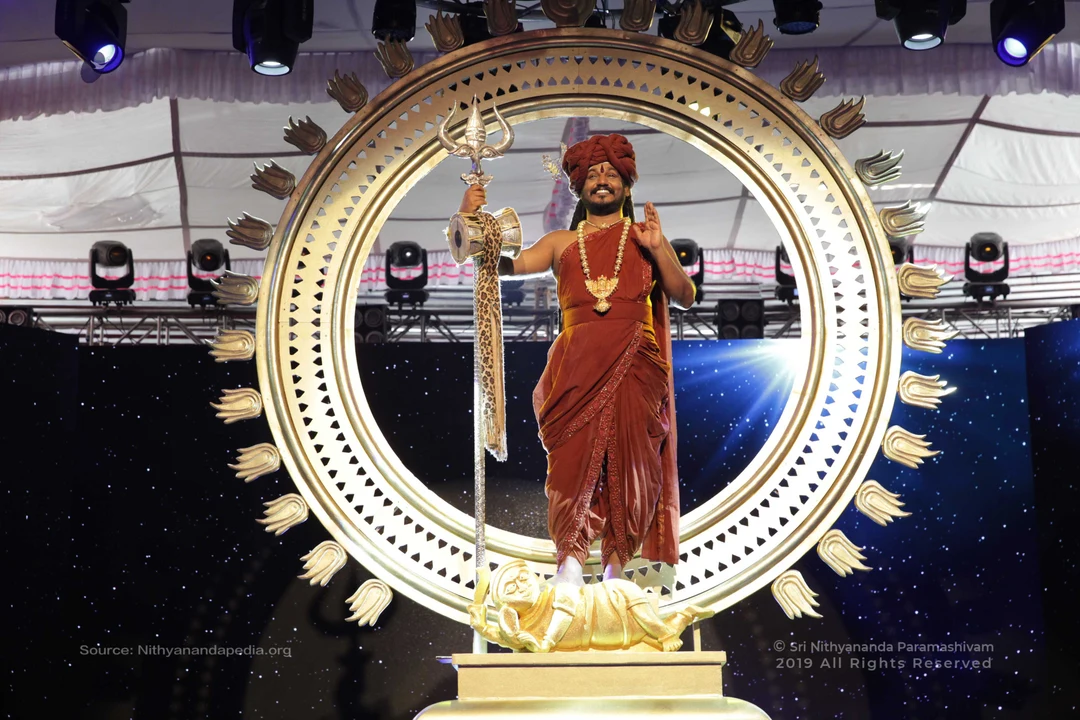
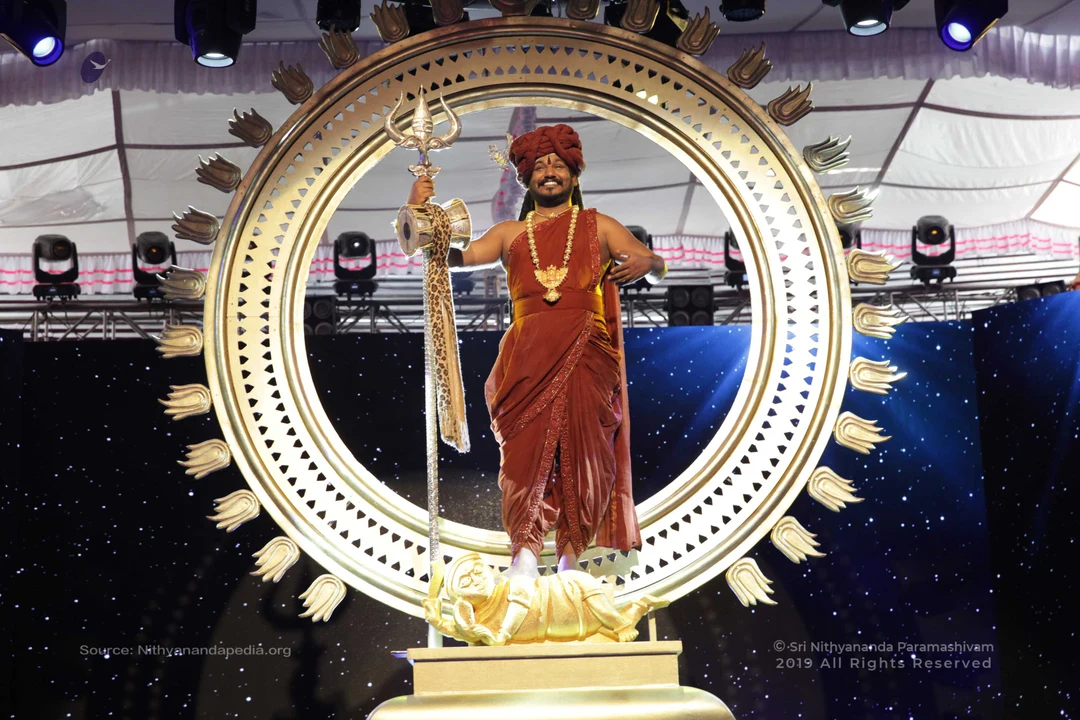
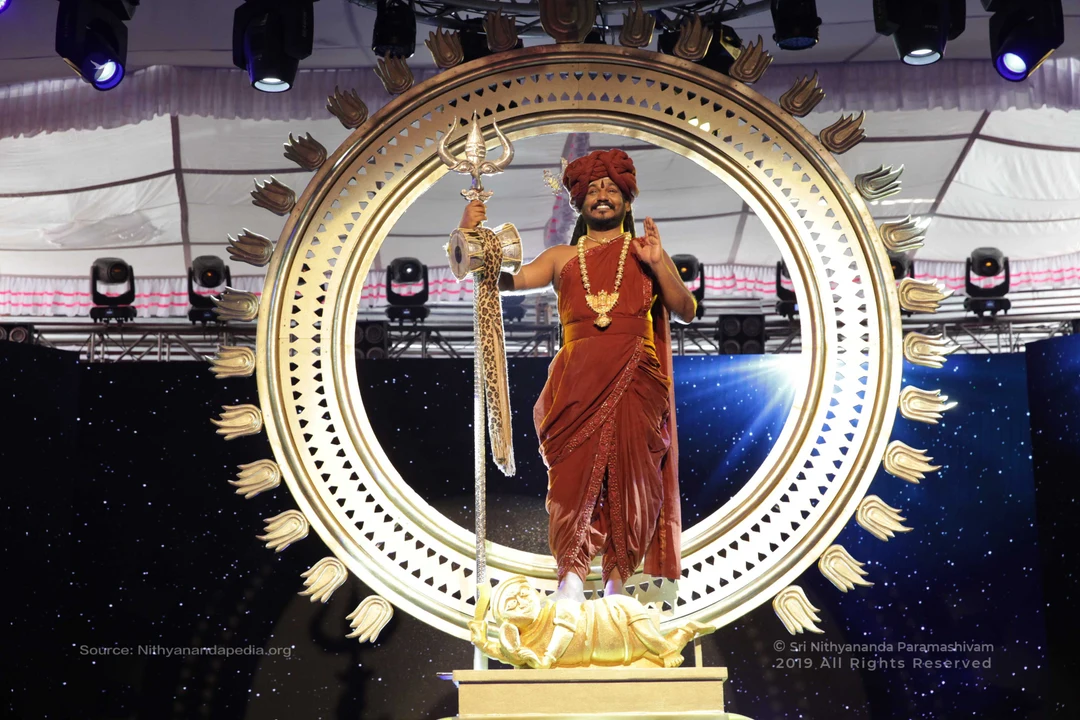
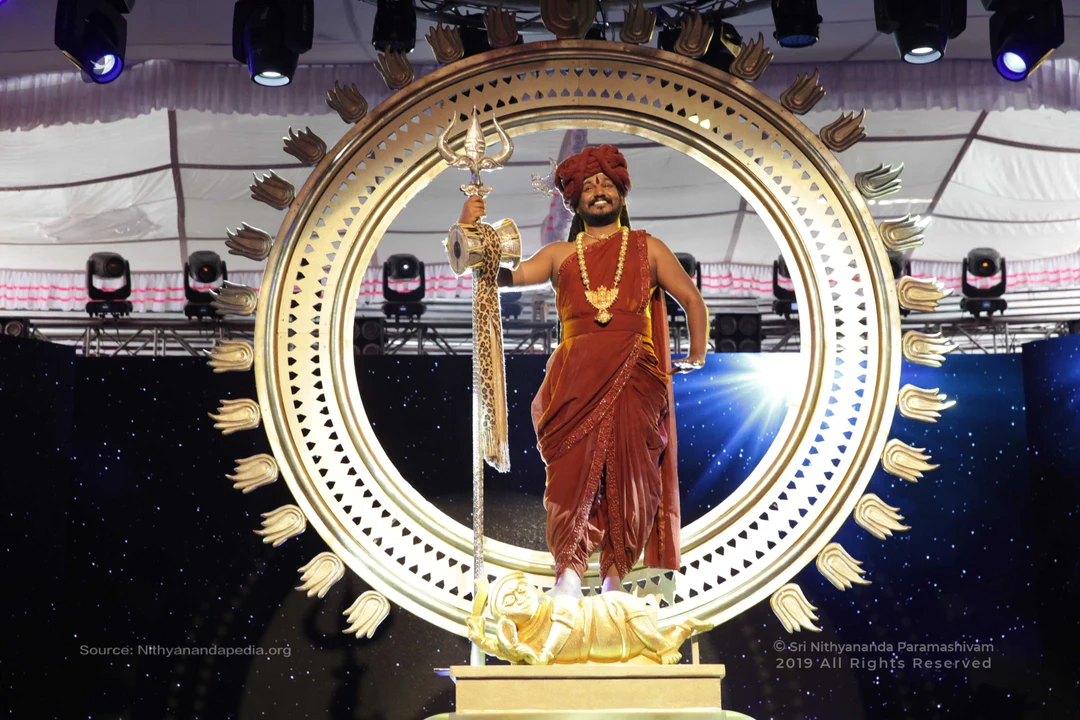
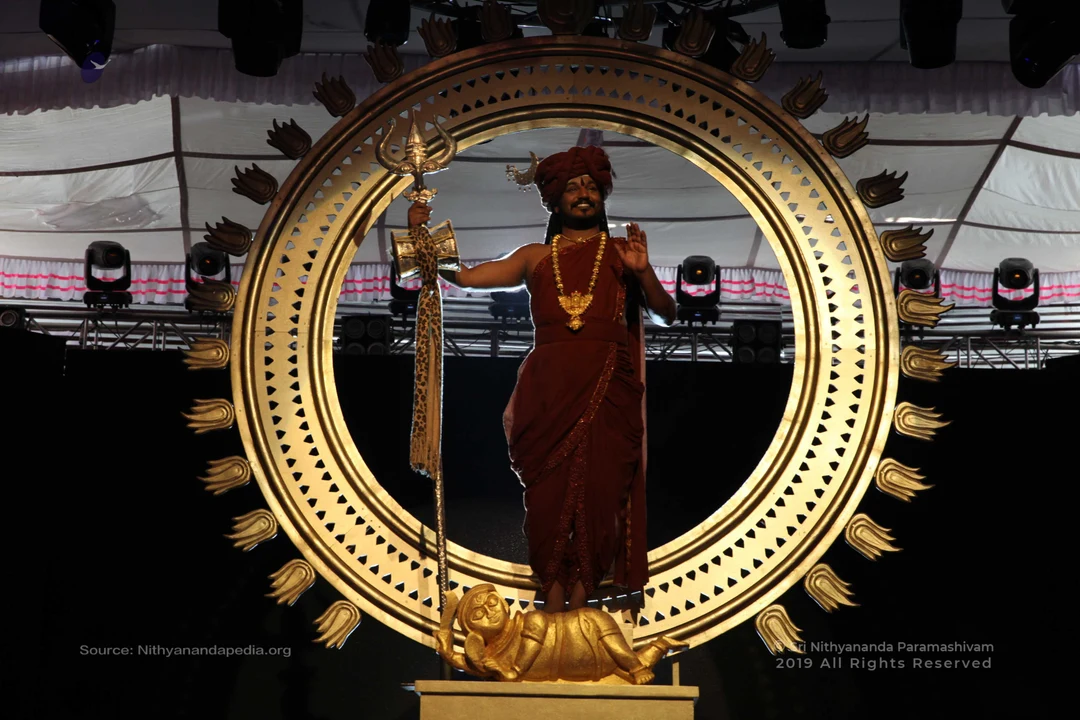
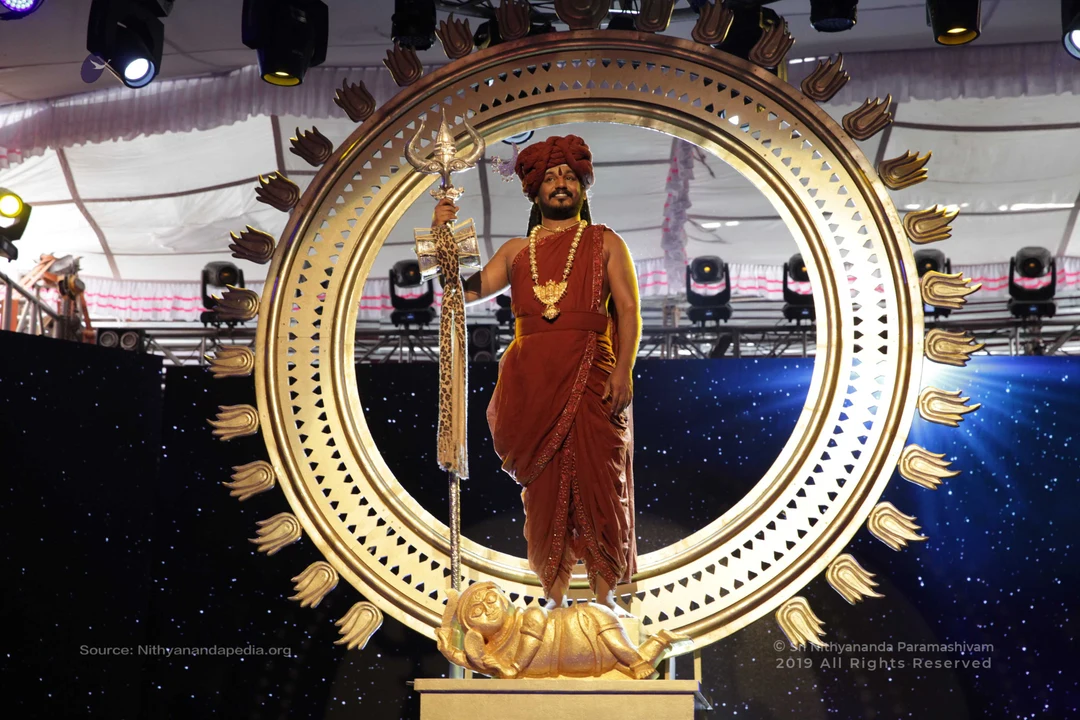
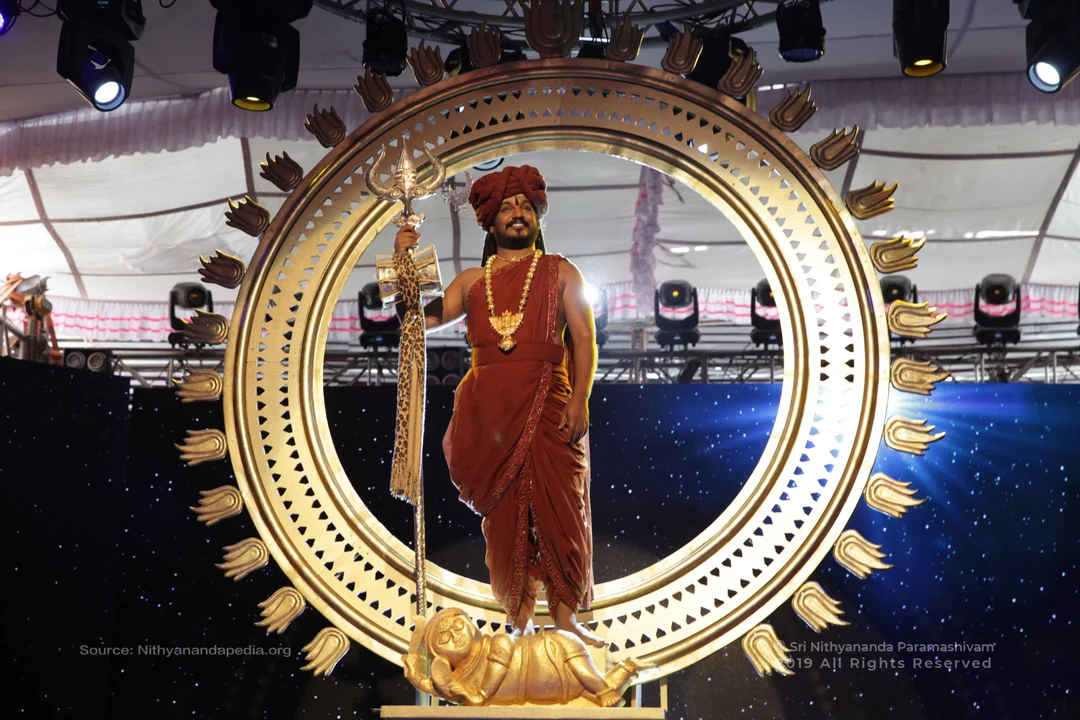
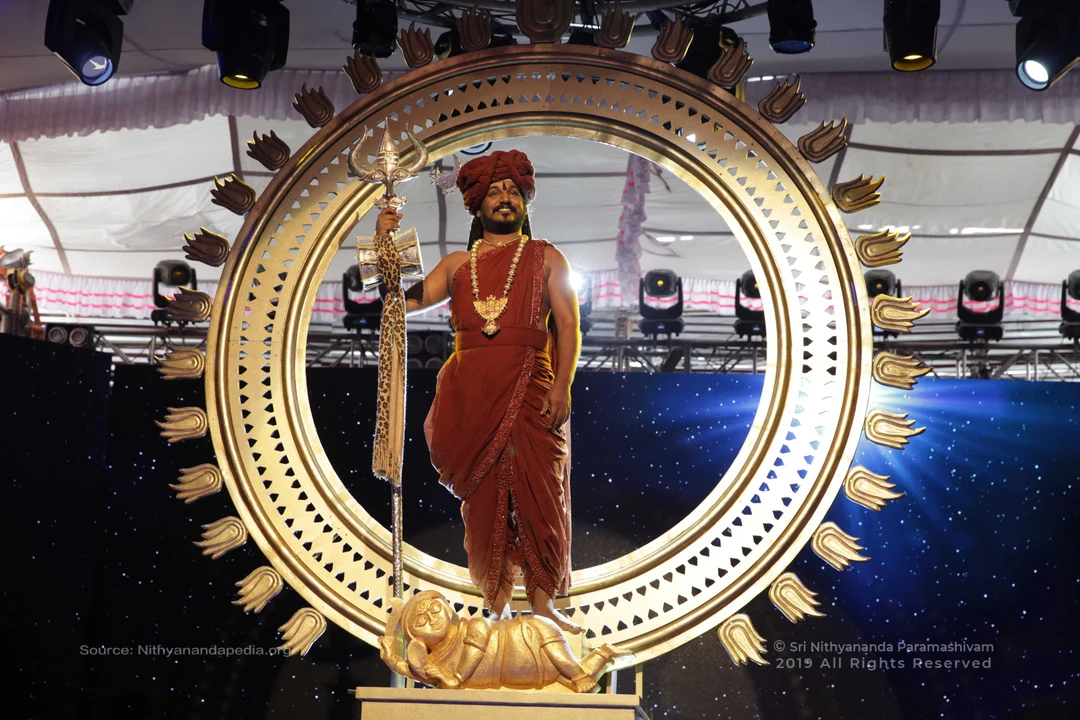
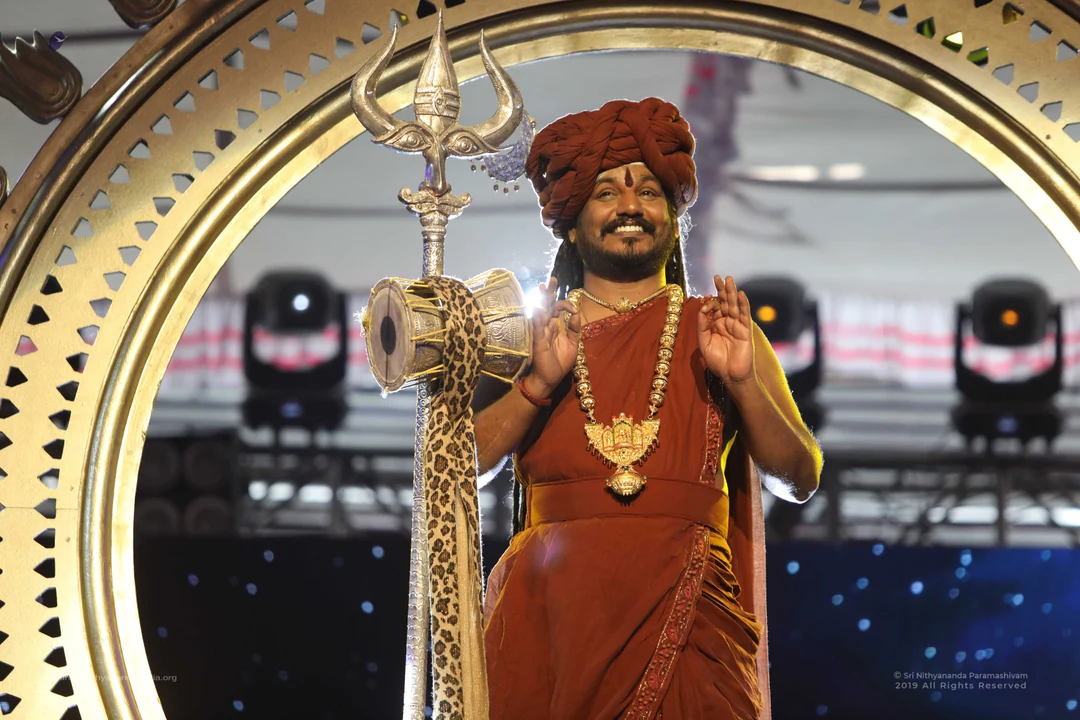
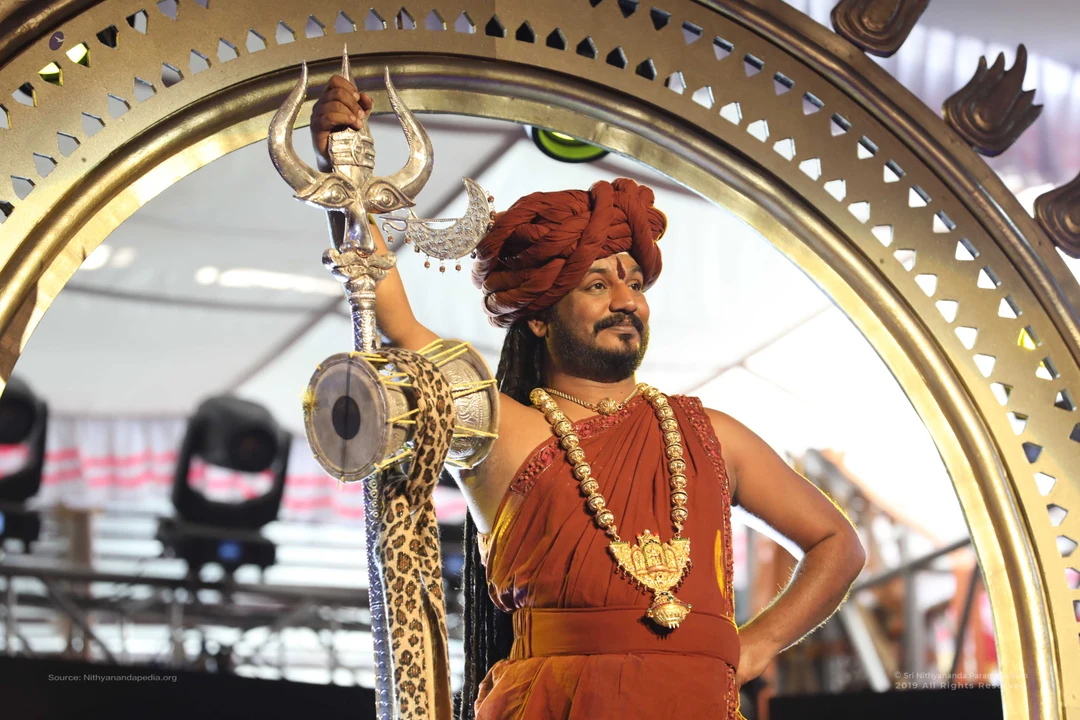
A smiling man in a rust-orange robe and matching orange turban stands inside a large ornate gold circular frame on stage, raising both open palms. He wears a heavy gold necklace with a pendant, a rudraksha-style mala, and holds a silver trident wrapped with a leopard-print cloth; a small damaru drum hangs near the trident's base. Behind him are stage lights and red-and-white striped drapery under a dark blue starry backdrop. One physical person is visible.A man stands in front of an ornate golden circular arch on a stage, smiling and looking to the side with one hand on his hip. He wears a rust-orange turban with a small red bindi on his forehead, a rust-orange draped robe with a gold-embroidered border, and a heavy gold necklace of beads with a large gold pendant. In his raised left hand he holds a gold trident (trishul) wrapped with a leopard-print cloth. Behind him are stage lights and a white canopy with pink stripes. Long hair and orange robes with a trident and beaded gold necklace are visible cues for the Swamiji candidate, so this is a probable in-person depiction of Swamiji (probable) performing on stage.A man in a rust-orange turban and rust-orange draped garments stands on a stage beside an ornate gold circular frame with cut-out patterns. He smiles broadly and holds a tall golden trident with a leopard-print cloth wrapped around its shaft. He wears a heavy gold necklace with a large pendant and a bead mala. The tented ceiling and stage lights are visible behind him.A smiling man in a maroon-red turban and a red-orange dhoti-style garment stands on a stage beneath a gold arch, holding a silver trident (trishul) in his raised left hand while his right hand is open and lifted. He wears a heavy gold bead necklace with a gold pendant and a leopard-print cloth draped over the trident. A red tilak marks his forehead and he has a full beard and long hair. Stage lights and a white canopy frame are visible behind him. a person: the figure wears a red turban, ornate gold beaded necklaces and a saffron-toned garment, cues consistent with the page's description of the speaker.A man stands on a stage beside a large gold circular arch with cut-out triangular patterns. He wears an orange-red turban with a small gold ornament, an orange-red wrap over bare shoulders, and a heavy gold necklace with a large pendant. He holds a silver trident with a leopard-print cloth wrapped around its shaft in his right hand and gestures with his left hand near his chest, smiling. A forehead tilak mark is visible. The appearance matches the swamiji candidate with several cues: orange-red ceremonial clothing, a turban, rudraksha-style adornments and a trident, so this is a probable Swamiji (probable) in person on stage.A photograph of a man standing on a raised golden pedestal within a large golden circular frame edged with flame-like petals, on a stage lit by overhead spotlights under a white tent canopy. He wears an orange-red turban, a rudraksha-style gold necklace with a large pendant, and a reddish-orange draped garment with a golden border. He holds a silver trident with a leopard-print cloth wrapped around its shaft. At his feet lies a golden reclining figure. The dark stage backdrop is speckled with light. The figure appears to be a person by appearance, given the turban, saffron-toned clothing, and ornate gold necklace, though this remains uncertain.
Shiva Deeksha
6 photosSource gallery
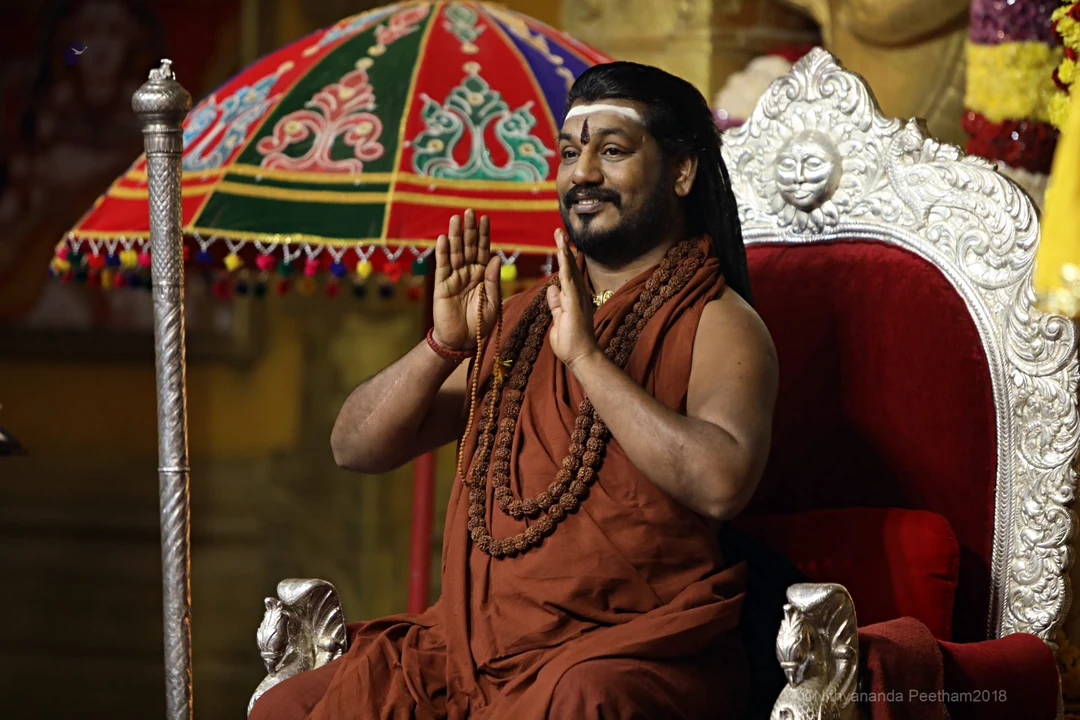
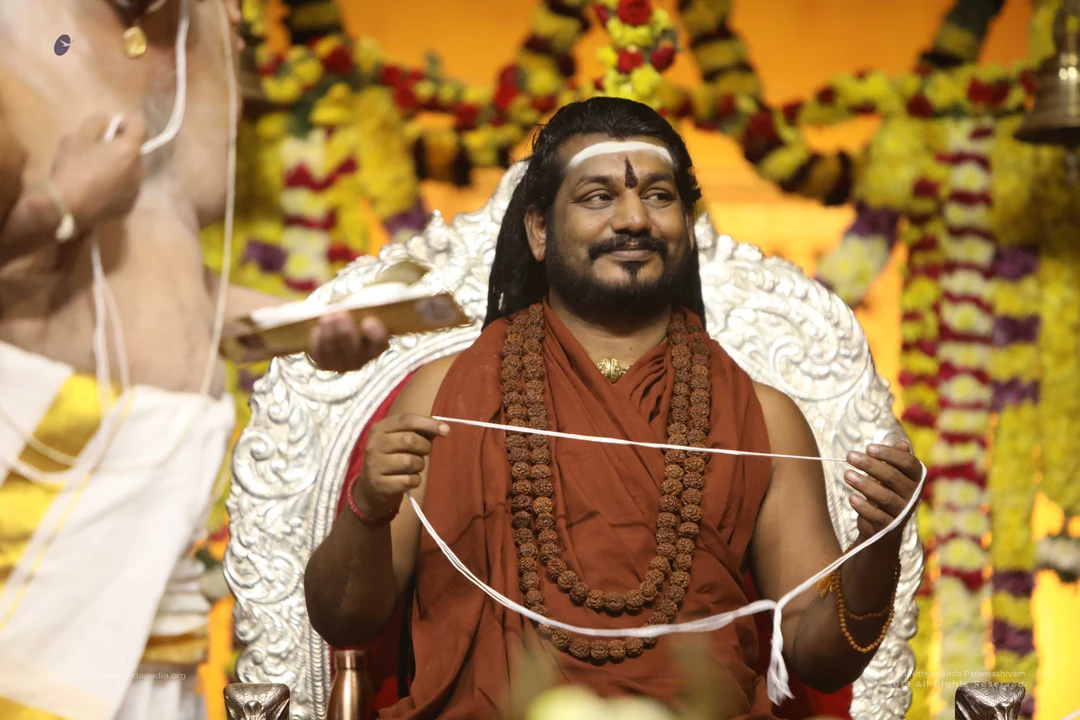
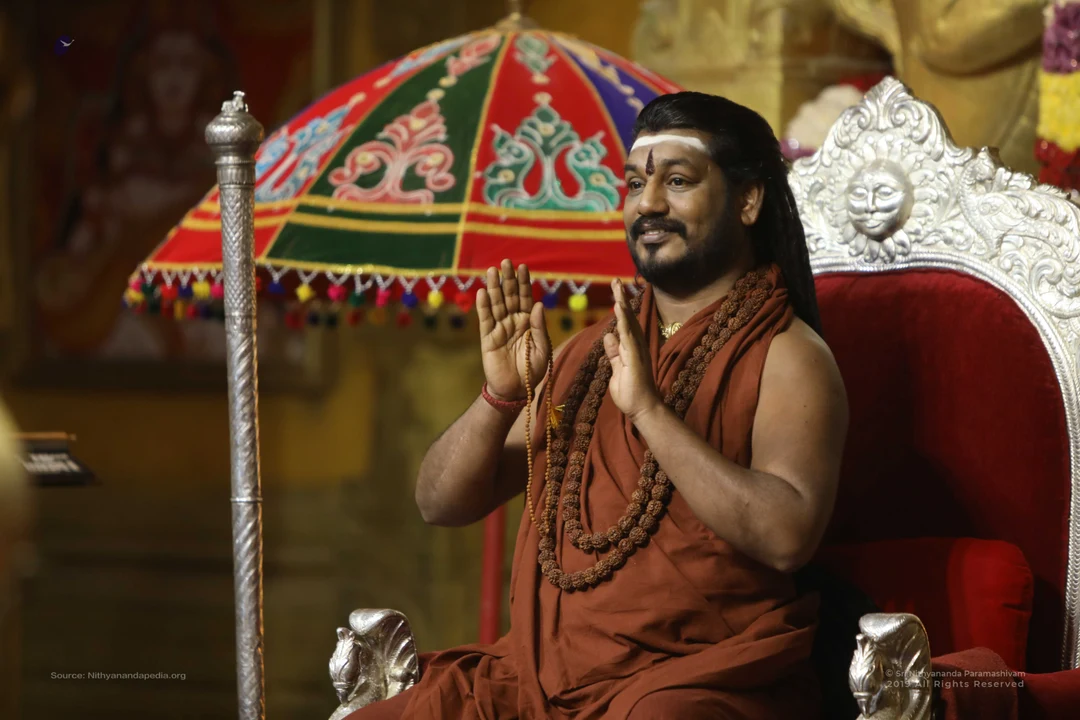
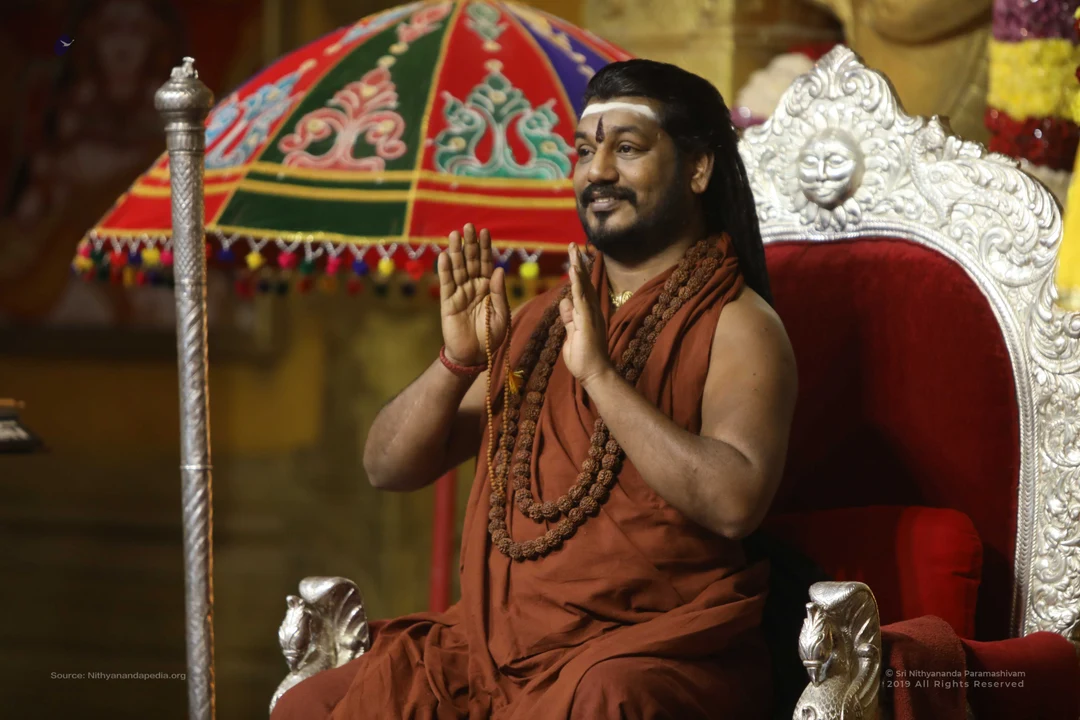
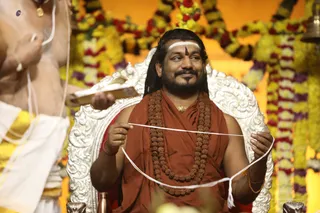
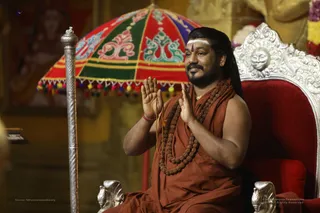
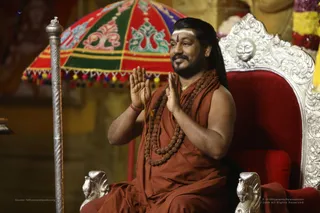
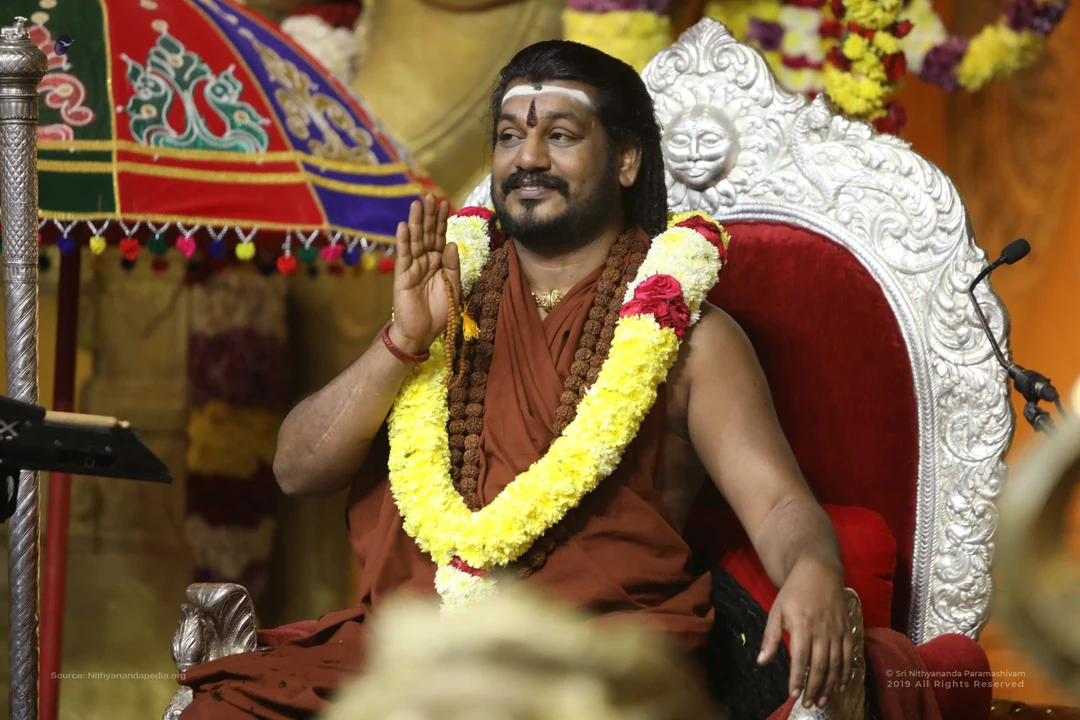
A man seated on an ornate silver-and-red throne raises his right hand in blessing while smiling. He wears a rust-orange robe, a rudraksha mala, a yellow and red flower garland, a white forehead band with a red tilak, and a gold chain. A microphone stands at the right and a colourful embroidered canopy hangs behind him. The rust-orange robe and throne are clearly visible. Swamiji (probable), seated on a throne in a satsang setting, wears a long swept-back hair style, saffron robe, rudraksha mala and a gold necklace.A seated man in saffron-orange robes sits with eyes closed and palms pressed together in namaste on a red and silver ornate throne. He wears a white forehead band with a red bindi, a rudraksha mala, and a garland of yellow and red flowers draped over his shoulders. Behind him stands a silver ceremonial staff beside a colourful embroidered canopy with tassels, and a microphone is positioned in front of him. The setting appears to be a satsang or discourse stage. A figure matching the Swamiji appearance cues (long swept-back hair, saffron robes, rudraksha mala, garland) is present, so the identity is recorded as a probable candidate.A man seated on an ornate silver throne with carved floral detailing, in front of a backdrop of garlands of yellow marigolds and red and purple flowers, with brass bells visible at the top corners. He wears a saffron-orange robe, a long rudraksha mala draped across his chest, a gold pendant, an orange bead bracelet, and a white forehead band with a red bindi. He holds a small brass object in both hands and smiles while a microphone on a stand is positioned near his face. Swamiji (probable): long hair swept back, saffron robe, rudraksha malas and gold pendant, seated on a throne.A seated man in saffron-orange robes sits on an ornate silver throne before a backdrop of marigold and rose garlands. He wears long hair, a white forehead band with a red tilak, a thick rudraksha mala with a gold pendant, and smiles while holding a long white thread stretched between his hands. A bare-chested priest in white dhoti with a yellow border stands at left, holding a wooden tray and thread. Swamiji (probable): the seated man has long hair, saffron robes, a rudraksha mala and a ceremonial gold necklace on a throne, consistent with the page's event description of a satsang with Swamiji present. Setting appears to be a temple-style stage with garlanded decorations and brass lamps.A man in a saffron-orange robe sits on a red upholstered throne with ornate silver carved armrests and a silver sun-face motif. He presses his palms together in a namaste greeting, wears a white vertical tilak with a red dot, a long rudraksha mala and a second rudraksha necklace, and has long hair swept back. Behind him stands a red, green and blue ceremonial parasol with tassels and a silver pole, with a painted deity mural and flower garland at the edge. Appearance-based candidate: Swamiji (probable), seated in a saffron robe with rudraksha malas, long swept-back hair and a ceremonial throne.A photograph of a seated man in orange-saffron sannyasi robes draped over his shoulders, wearing layered rudraksha malas and a sacred white band with a red tilak on his forehead. He sits on an ornate silver-and-red throne with carved lion-head armrests, palms pressed together in greeting and a smile. Behind him a red, green and yellow canopy with tasselled edges shelters the seat, and a silver staff stands at left. a person appears in person, identified only by the appearance cues of saffron robes, layered rudraksha malas and a sacred band on a throne.