Skip to content
Monday

9 January 2017

41st Avatar Dinotsava Celebrations at Nithyananda Peeta Worldwide Bidadi, Bengaluru, 9th Jan 2017

Dated photos
51
Source pages
1
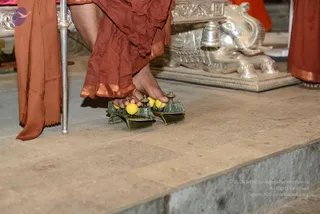
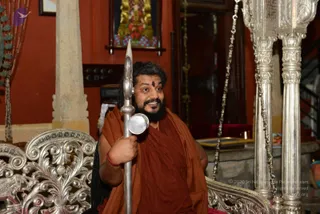
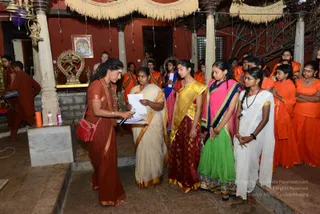
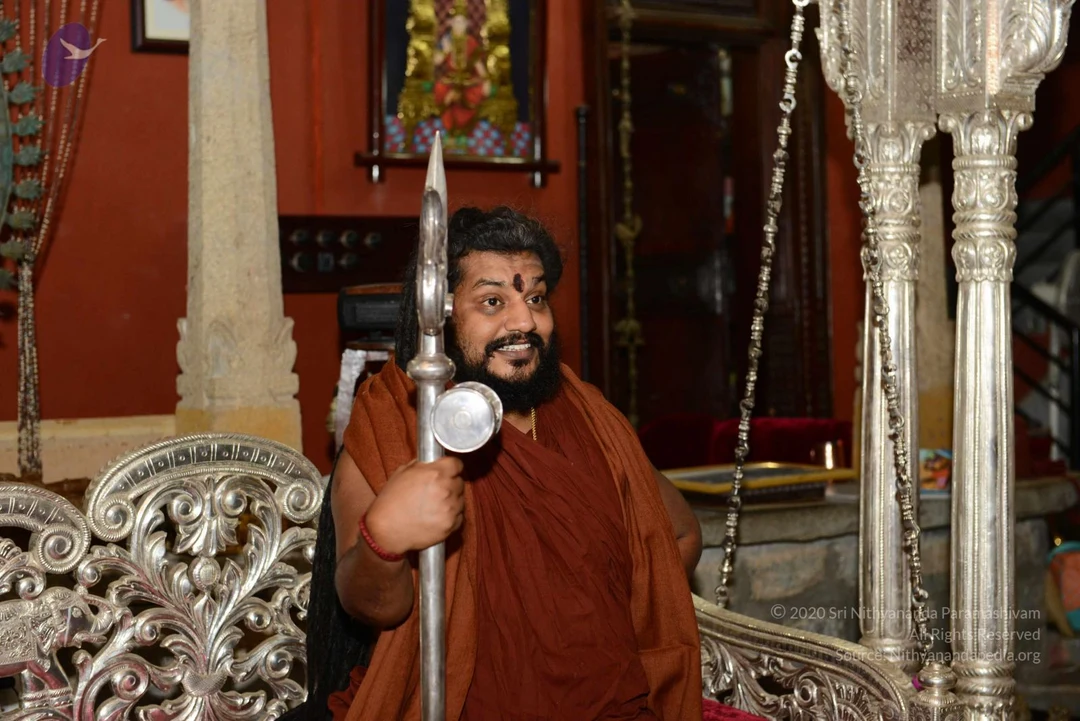
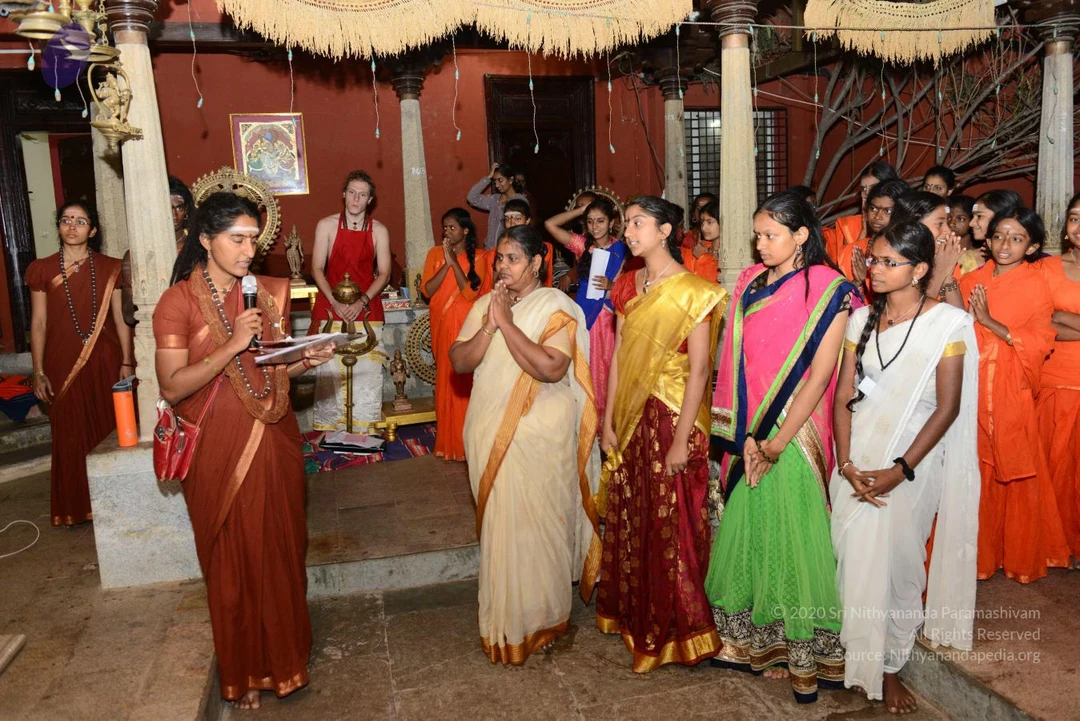
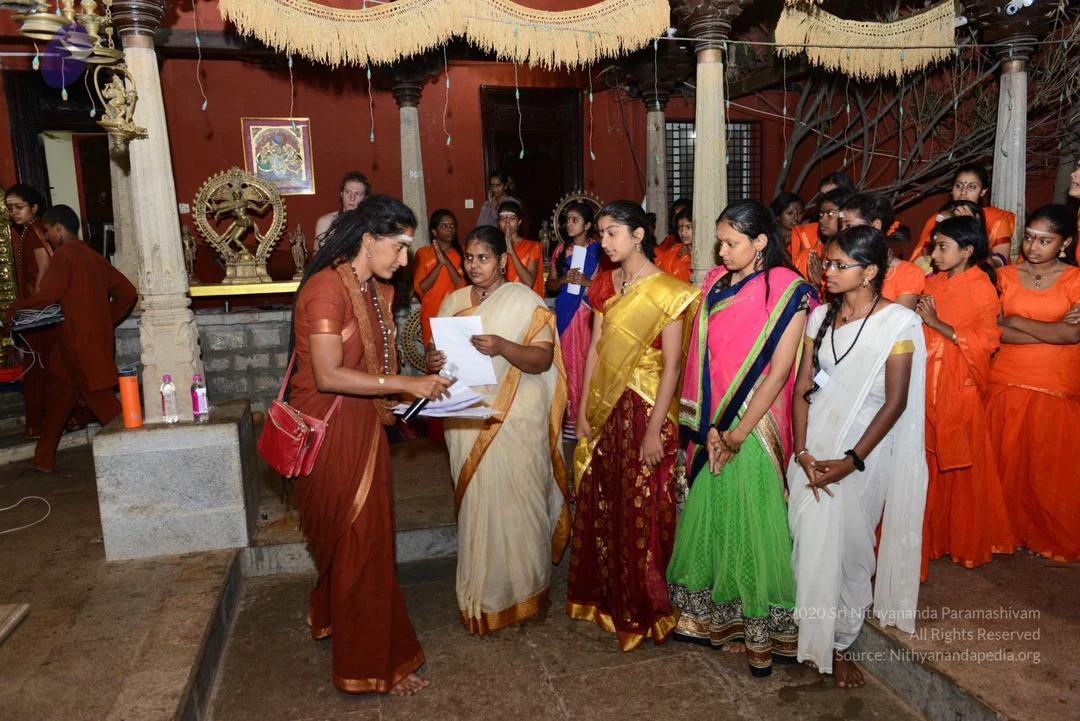
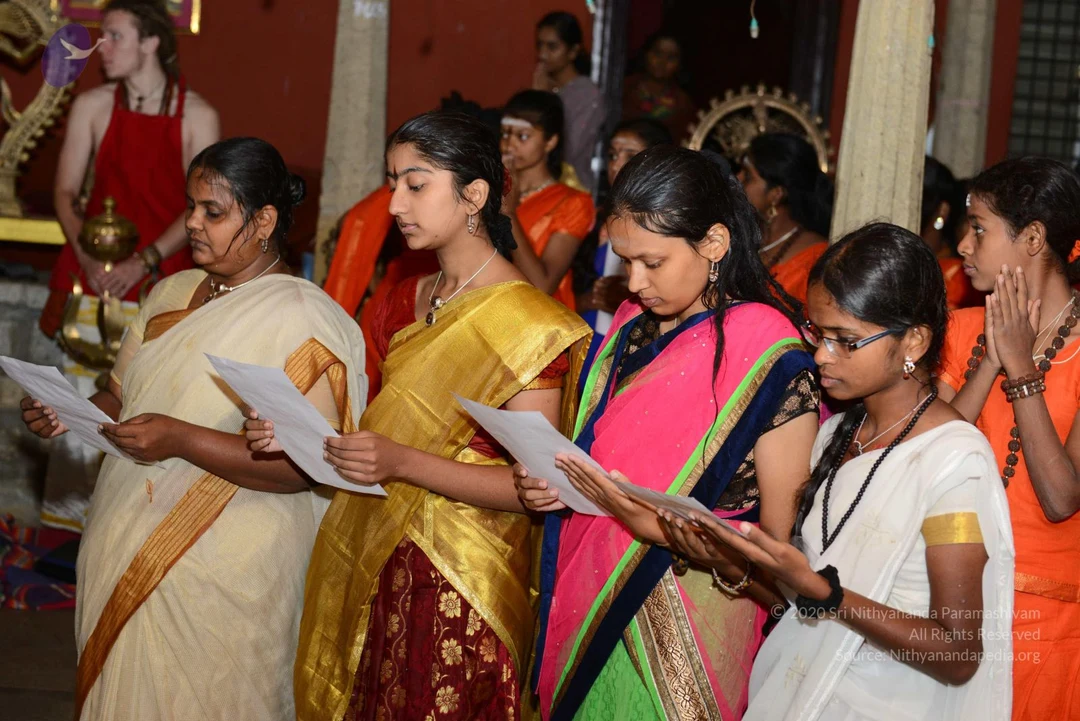
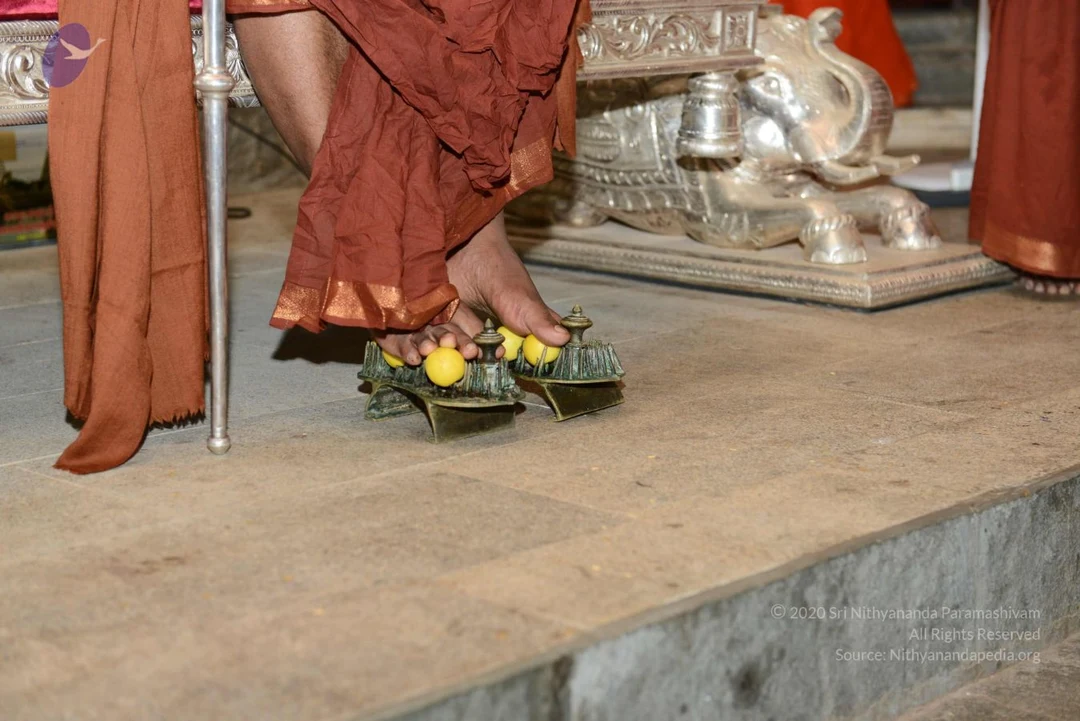
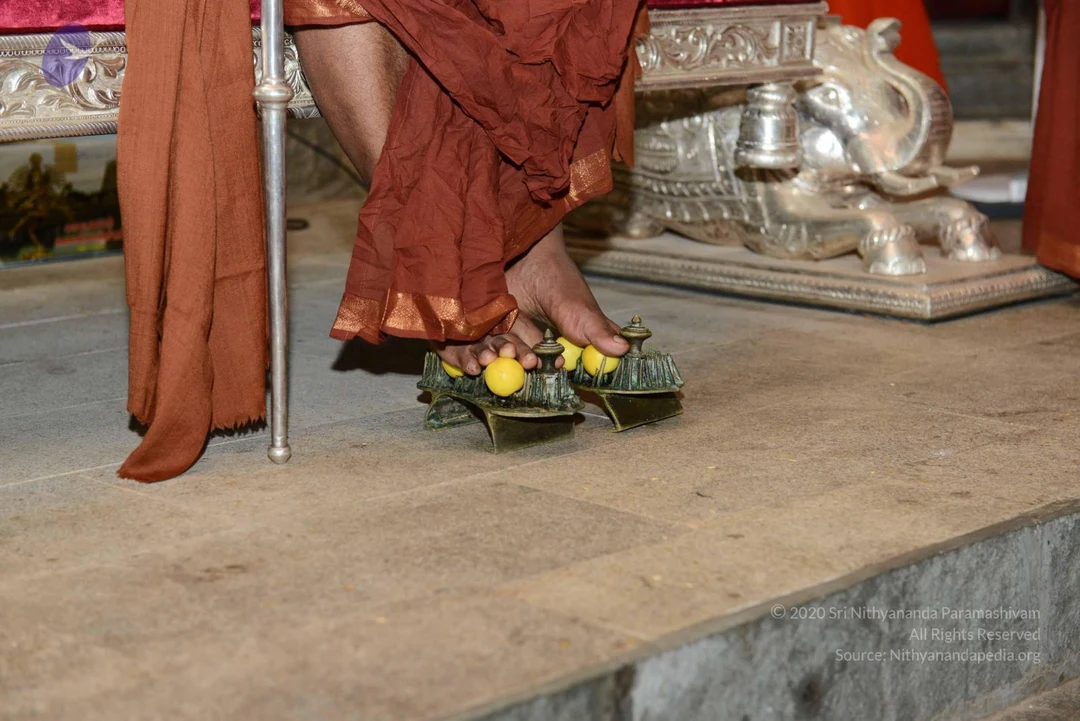
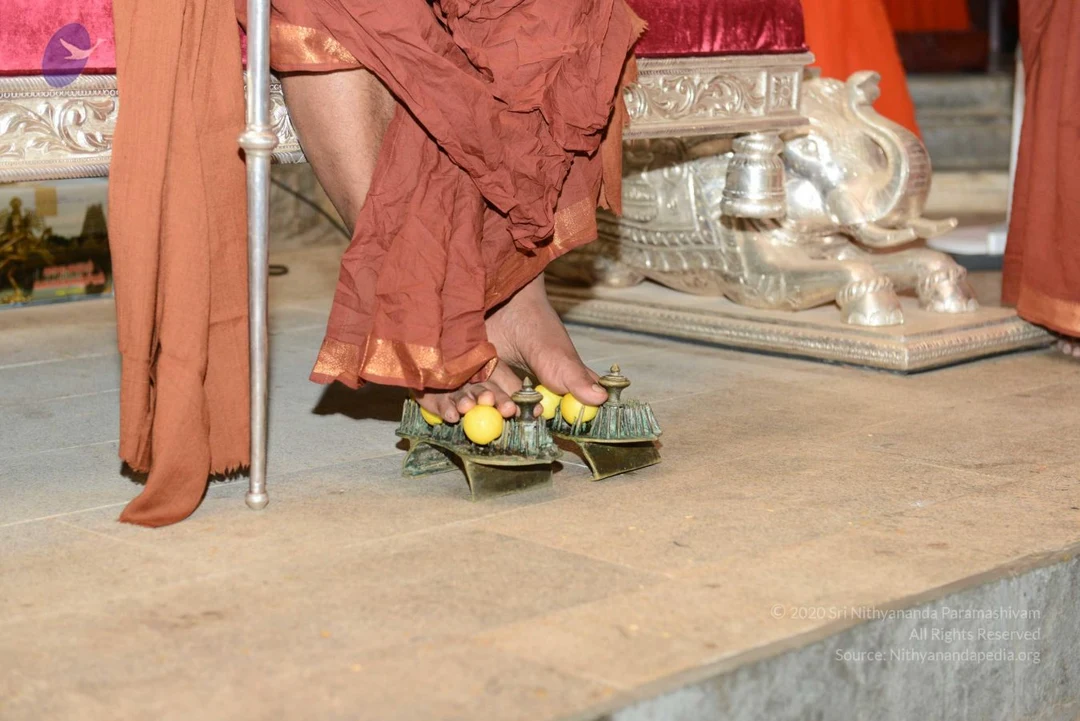
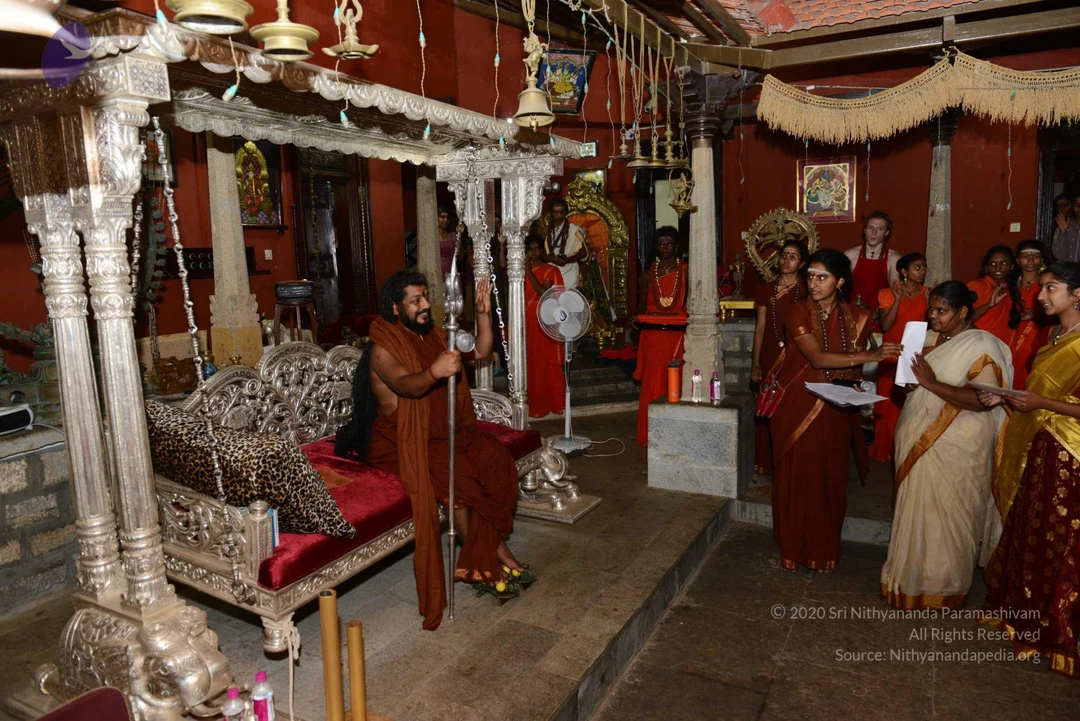
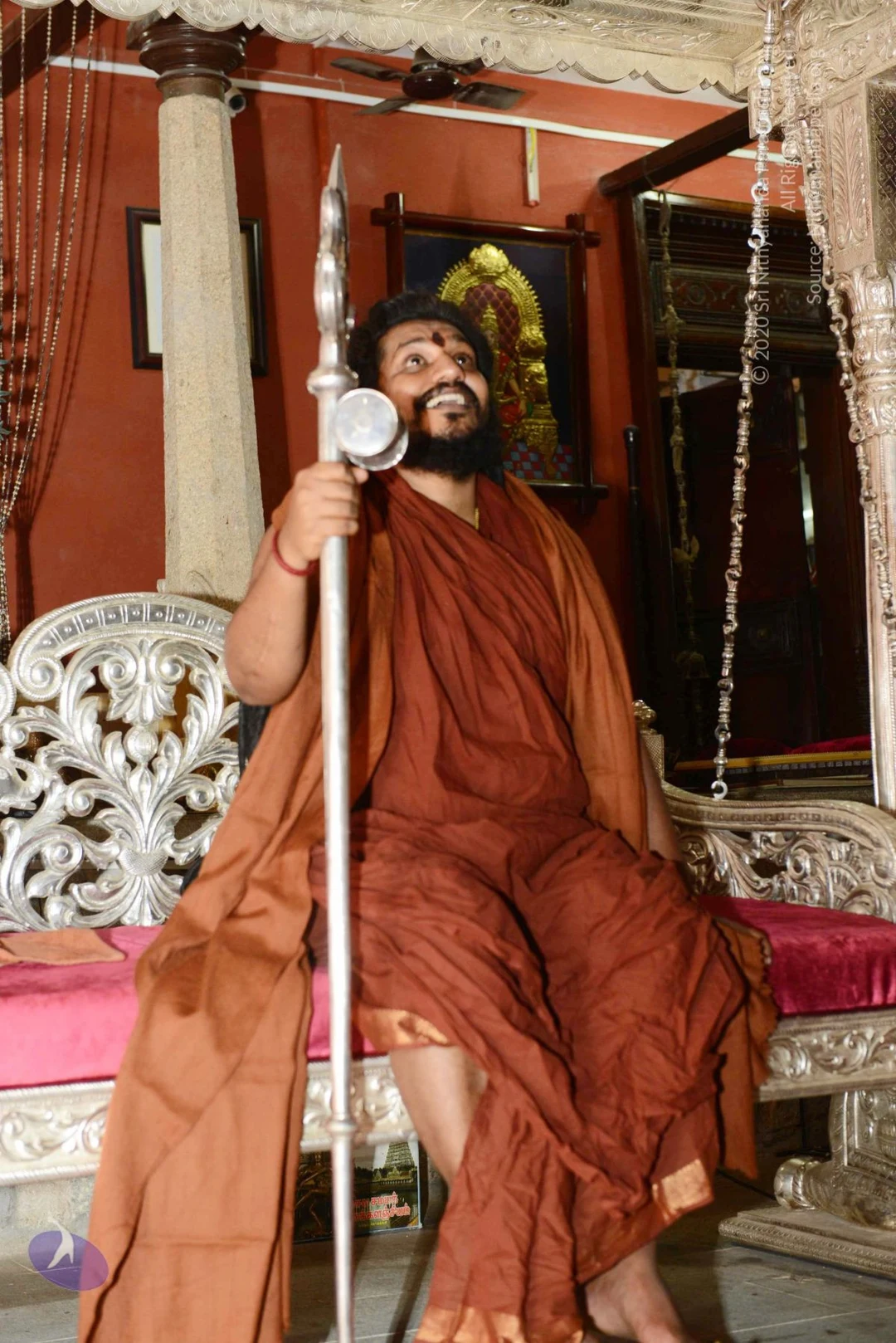
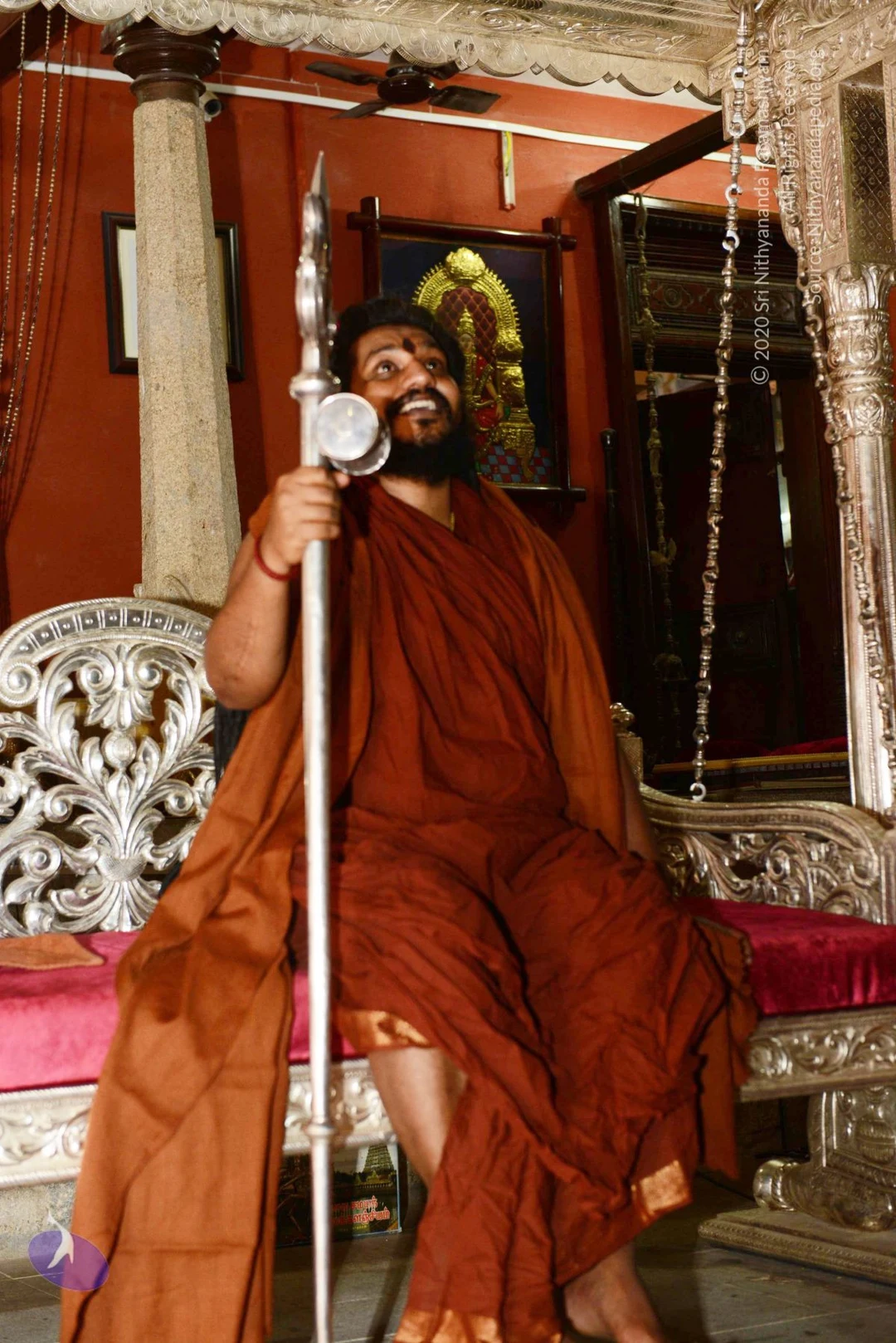
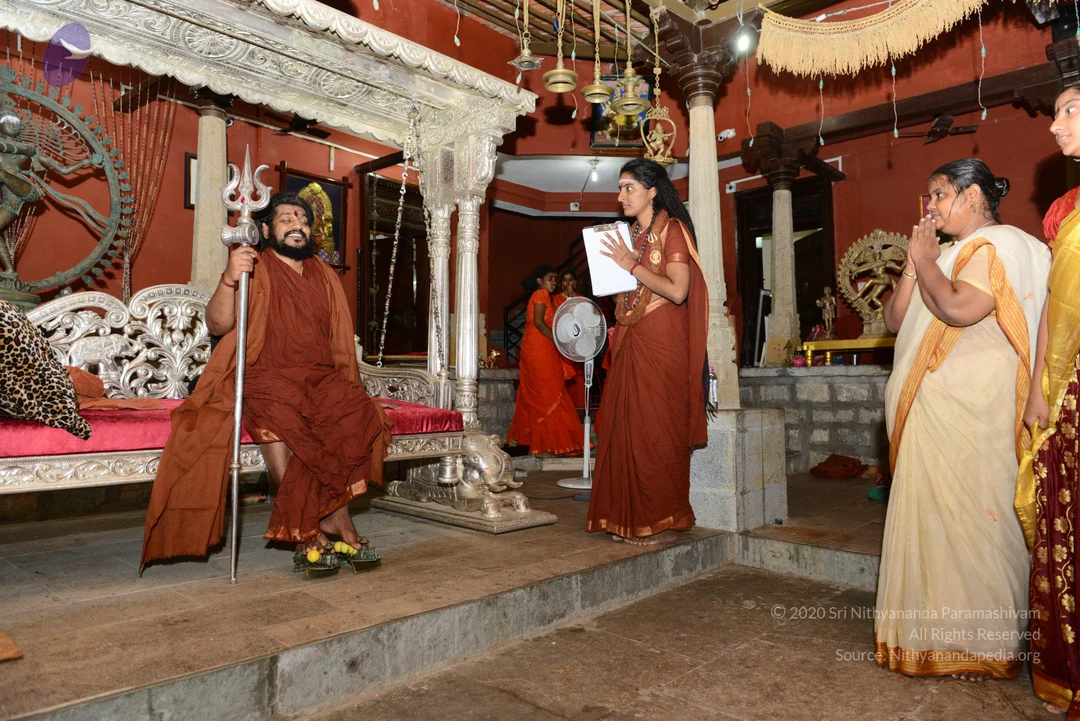
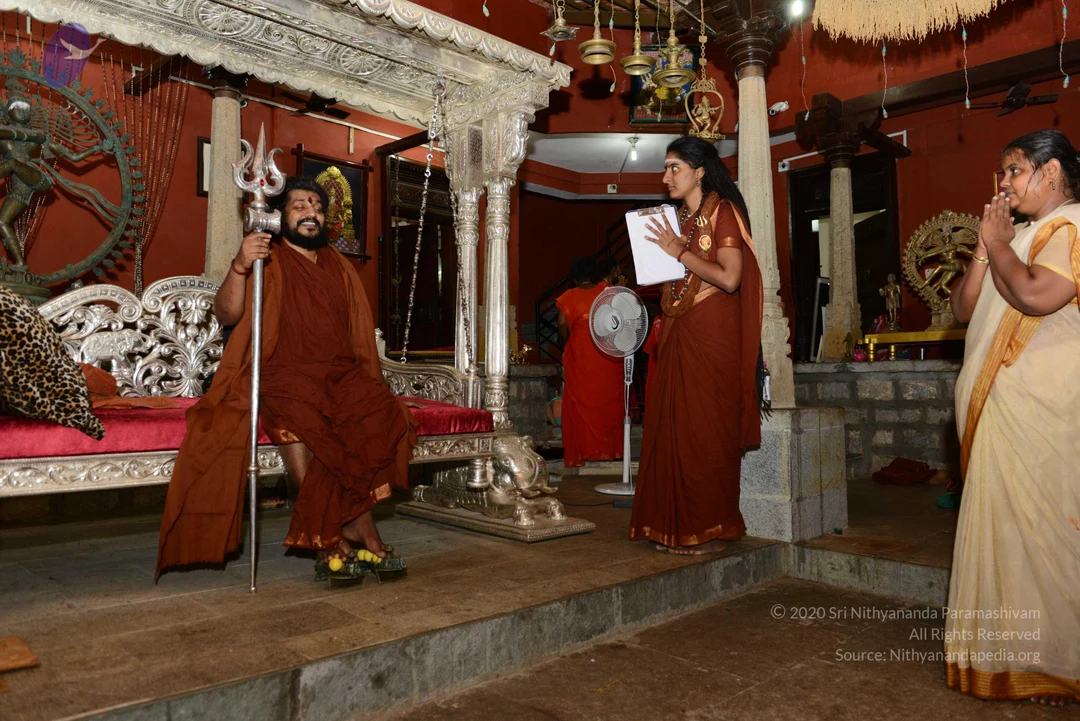
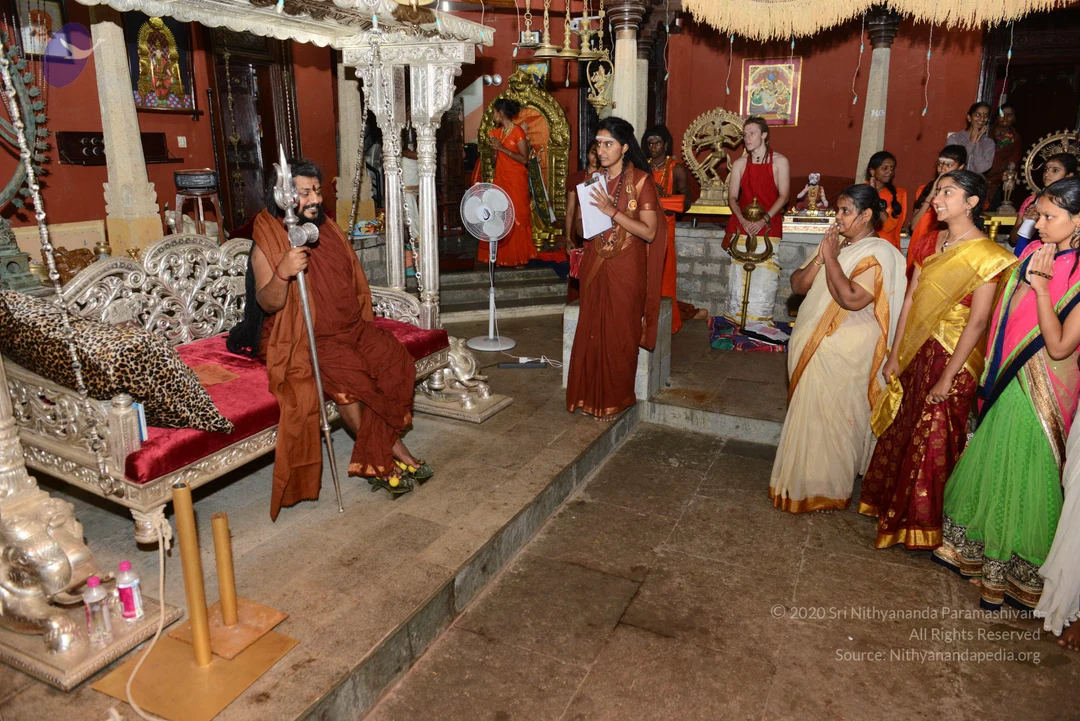
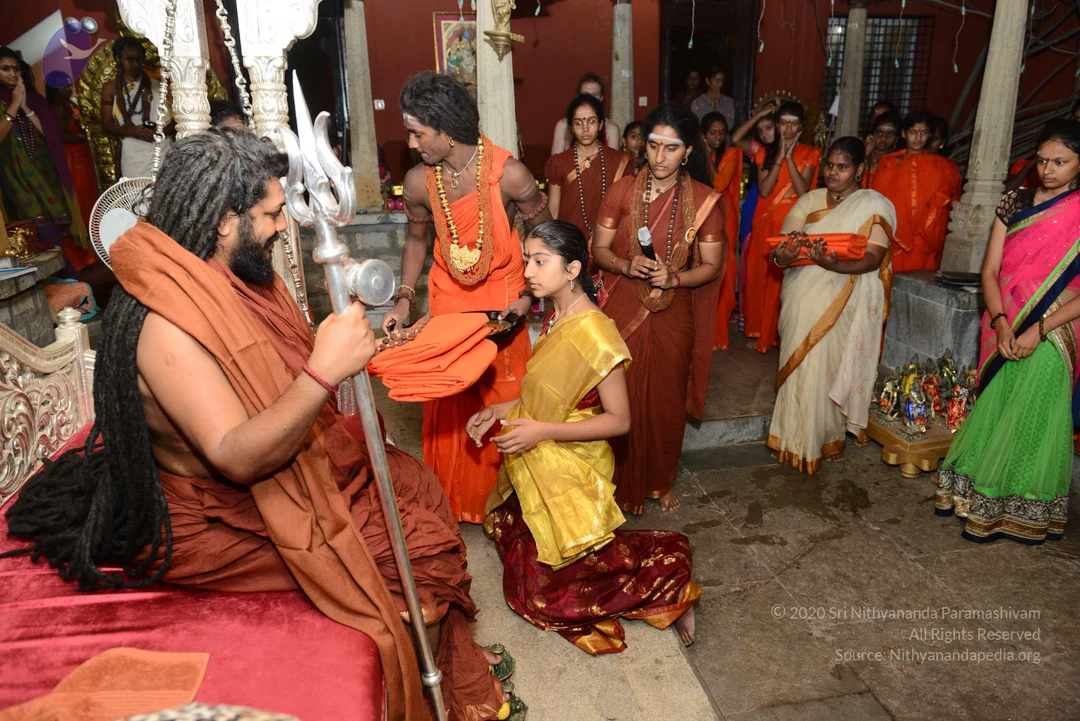
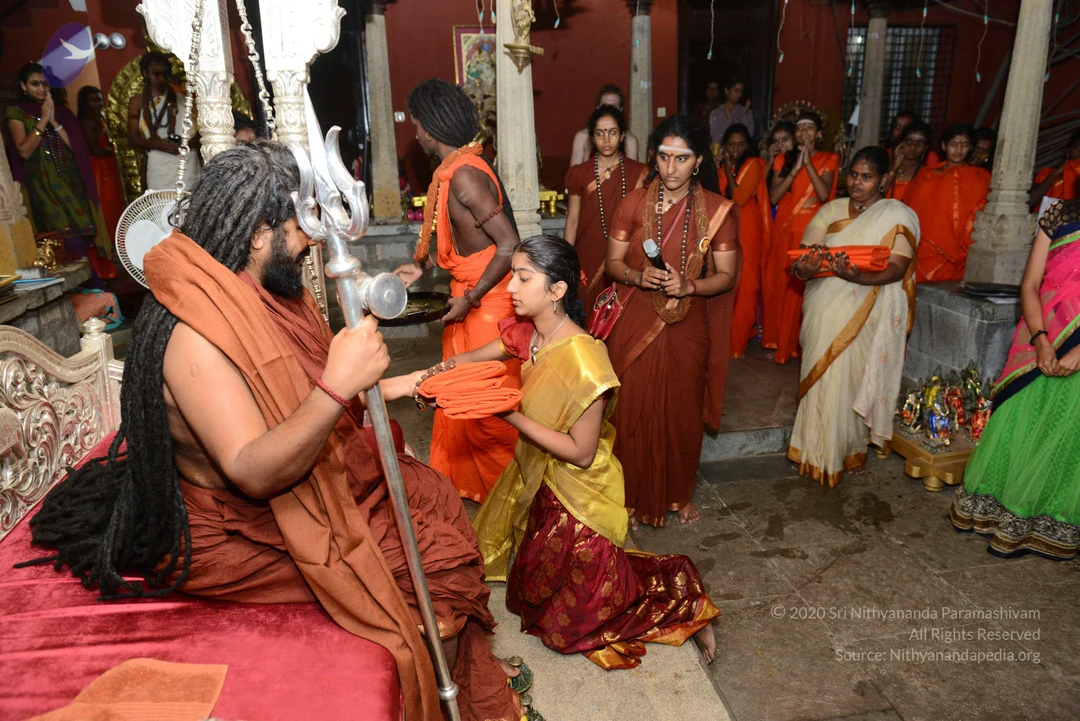
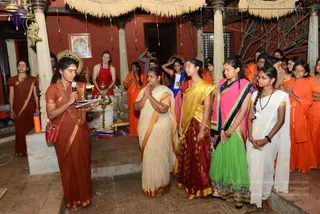
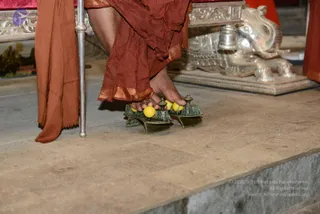
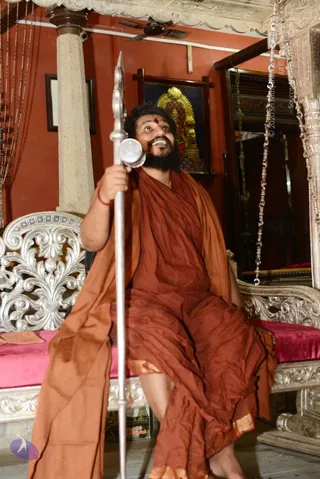
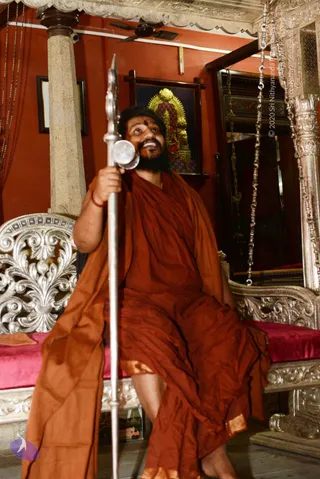
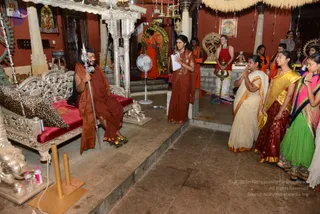
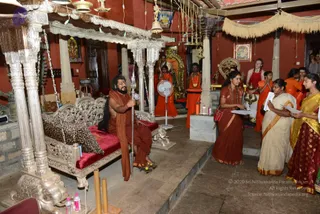
Close photo of bare feet in orange-red robes with gold border resting on a pair of brass lamps holding yellow citrus fruits, placed on a stone floor beside a silver elephant-shaped base and a silver chair leg. Only feet and lower legs of a seated person are visible; the lamps appear to be lemon-lamp (nimbu) offerings used in ritual. No faces are shown, and the a person identity cannot be confirmed from appearance alone.A photograph of a bearded man seated on an ornate silver throne-style chair with carved floral filigree. He wears a saffron-orange robe draped over his shoulder, a red thread bracelet on his wrist, a red tilak on his forehead, and a thin gold chain. He holds a tall silver staff topped with a silver finial and a round silver disc, and he looks off to one side and smiles. Behind him are silver pillars with a hanging chain, a red wall, and a framed colourful deity image. a person, seated in a saffron robe with a ceremonial staff, a throne-like seat, and a red tilak.A photo inside a temple hall with red walls and stone pillars, with a golden Nataraja statue on a shelf at left. A woman in a rust-red sari holds a microphone and a sheet of paper, speaking to a row of young women in colourful saris: a cream sari with gold border, a maroon and gold sari, a bright pink and green sari, and a white sari with a black thread. Behind them, several people in orange robes stand with hands joined. Water bottles sit on a stone ledge in front. No clear a person candidate is visible in this frame.

January 09 2017

Original wiki page
Contents

Title

41st Avatar Dinotsava Celebrations at Nithyananda Peeta Worldwide Bidadi, Bengaluru, 9th Jan 2017

Narration

The auspicious birth anniversary celebrations of His Holiness Paramahamsa Nithyananda, the Avatara Dinotsava, started with the offering of four Homas (sacred fire rituals) at the Nithyanandeshwara Hindu temple. These included the powerful Ayusha Homa, the Mahamrityunjaya Homa, Nakshatra Shanthi Homa and the Navagraha Homa, performed in the authentic Hindu way. His Holiness Paramahamsa Nithyananda Swamiji was led in procession by jubilant devotees to the temple, where He performed aarti to all the Nithyanandeshwara Sadashiva and Nithyanandeshwari Adi Shakti, then, to mark the beginning of the day’s festivities, He offered ahuti to conclude the blessed homas.

The day saw thousands coming to Nithyananda Peeta, Bengaluru Aadheenam, as well as to hundreds of centers and aadheenams worldwide. Kalpataru, a free one day meditation and yoga program to especially awaken the extraordinary shaktis, superpowers of the third eye, latent in each of us, was attended by people from across the world.

This Avatar Dinotsava was also the graduation day of the breakthrough program MahaSadashivoham which was offered for the very first time and was a huge success. All the 1000 participants from over 30+ countries, who gathered from around the world, were successfully initiated into and are manifesting over 70 mind blowing powers described in the Agama Shastras. Living avatar Paramahamsa Nithyananda gave in-depth teachings from the Vedagamas on various spiritual sciences from life solutions to cosmology.

On the auspicious occasion of his Jayanti, Paramahamsa Nithyananda gave a powerful mahasatsang, declaring to all his devotees worldwide the need for humanity to have a superconscious breakthrough. Swamiji said that human beings need to move to the next level. The time spent to move from amoeba to fish, from fish to monkey and monkey to man, we have spent 10 times more time than that just as a man without a breakthrough. Something, he said, is seriously wrong and that it is time we have a superconscious breakthrough.

Defining the term Superconscious breakthrough, Swamiji said “The consciousness that embodies this body and mind needs to operate in the next level. So a new kind of body, new kinds of mind, new kinds of intra organs are being built. The new kind of being needs to manifest.” He went on to say “The Vedagamic ancient sacred secrets revealed by Mahasadashiva himself to the universe: manifesting the state, space and powers of Mahasadashiva is a direct way to give superconscious breakthrough to yourself and to humanity.”

Devotees partook of the overflowing, plentiful and delicious Annadaan - offering of food to devotees and visitors - a hallmark of Nithyananda Temples and centres worldwide. The food is fully organic and prepared as per the Bhaaga Shastras, the original scriptures where Mahadeva Himself reveals the art and science of food and cooking that will keep you established in His space and manifesting the Shaktis, Superpowers.

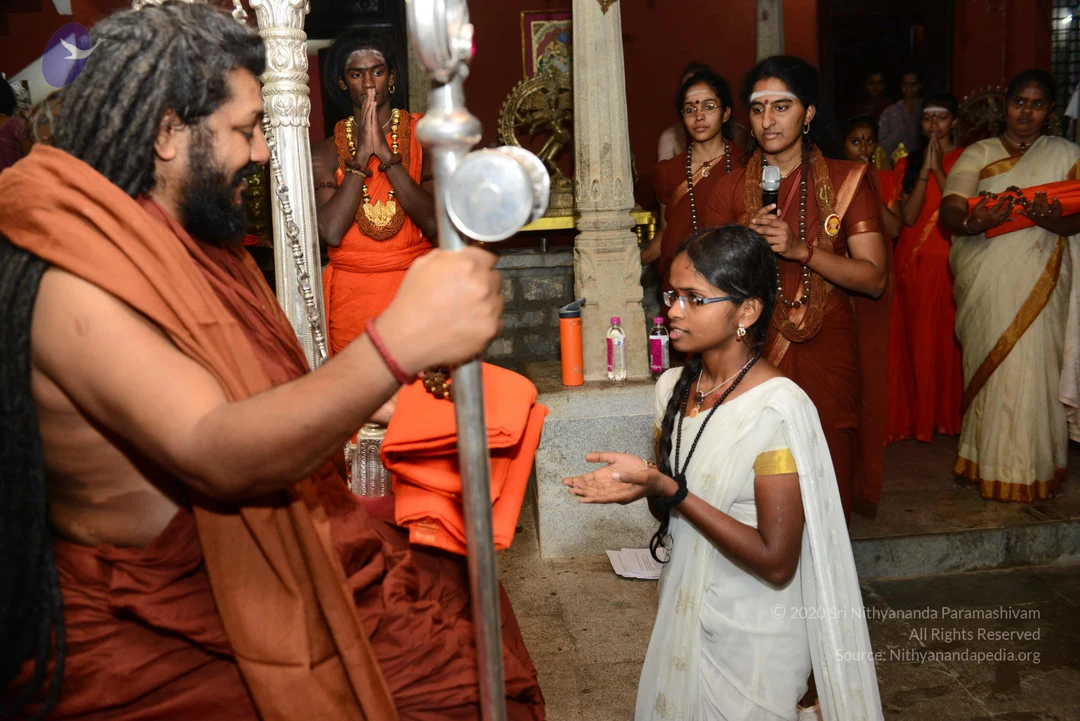
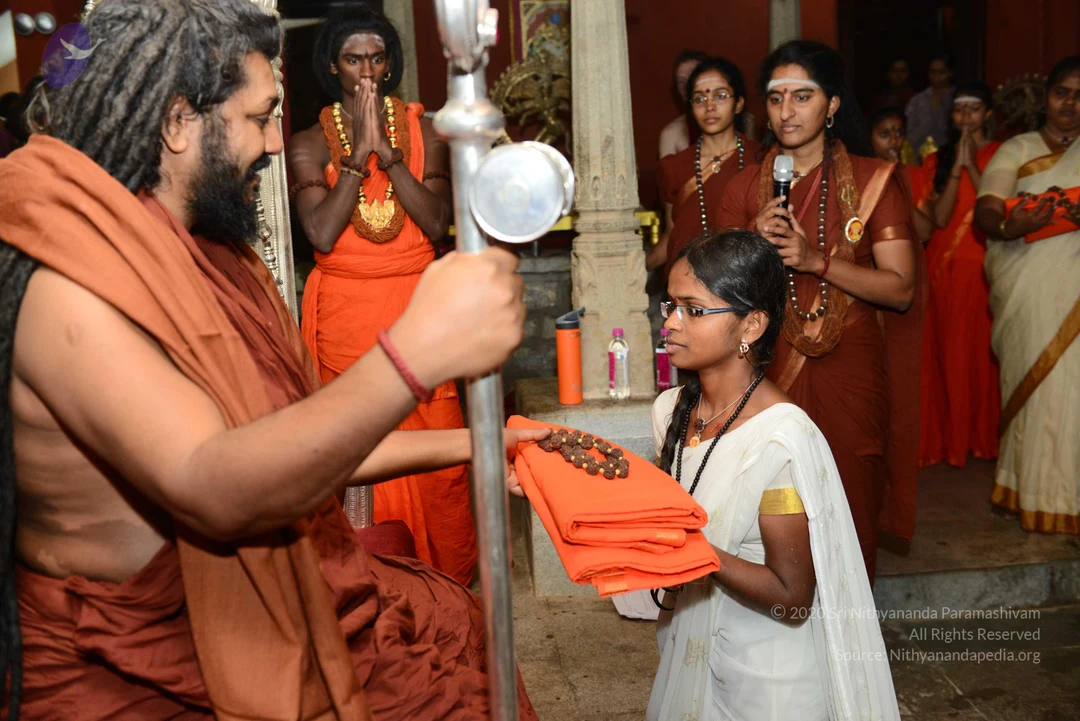
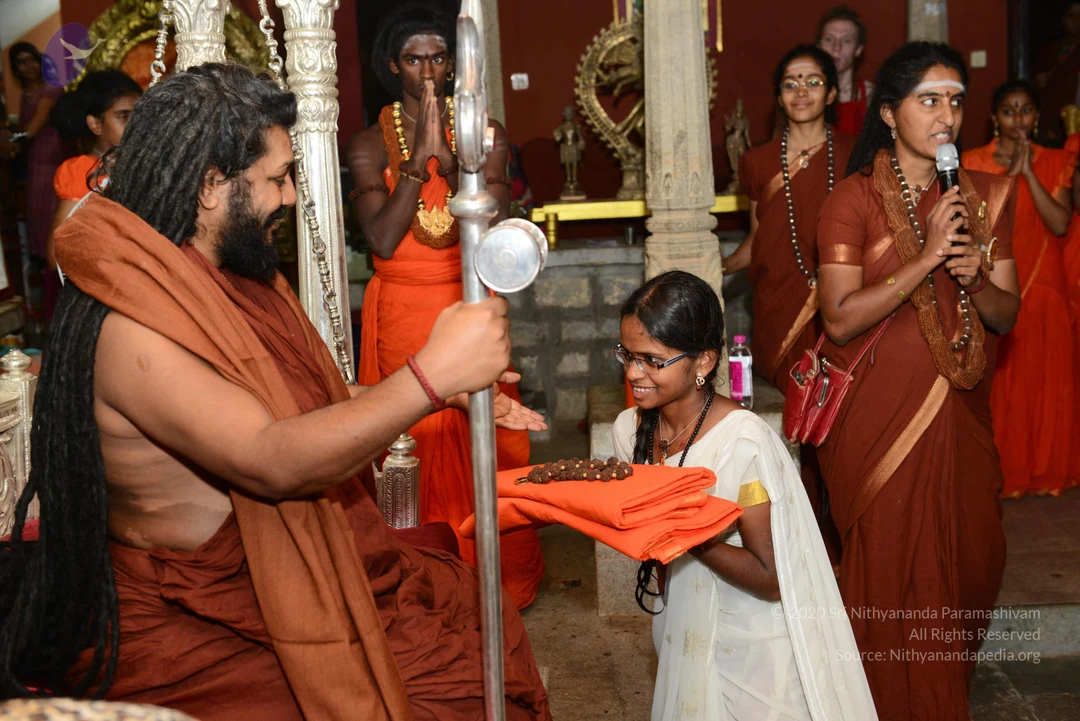
The evening saw yet another powerful Initiation into Sanyas, where initiates from all over the world chose this royal committed path to enlightenment, where the initiation by the avatar powerfully establishes one into the state, space and superpowers of Sadashiva. The night was then lit up by the lights of the joyous procession of the rathotsava, celebrating the happening of the avatar in the traditional way of Sanatana Hindu Dharma. The festivities of the day were followed by direct darshan, where everyone received personal blessing from His Holiness Paramahamsa Nithyananda.

Earlier in the day, devotees from various parts of India arrived in the padayatra walking hundreds of kilometers over the past 10 days from the sacred temple town of Tiruvannamalai, the birthplace of Paramahamsa Nithyananda. The padayatris touched dozens of villages along the way, providing spiritual healing and counseling, doing daily puja, enriching the people enroute with the life solutions and blessings of HH Paramahamsa Nithyananda. Pada Yatra - pilgrimage by foot - is a sacred Hindu practice where devotees undertake a journey on foot to visit their Ishta devata or a sacred place and receive blessings of the divine. This practice provides devotees relief from the challenges of their regular lives, and rejuvenates them with fresh purpose and spiritual power. Sanyasis & Aadheenavasis of Nithyananda Peetham, Bengaluru Aadheenam welcomed and honored the padayatris with love and amidst festivities.

Photos

Rudrabhishekam
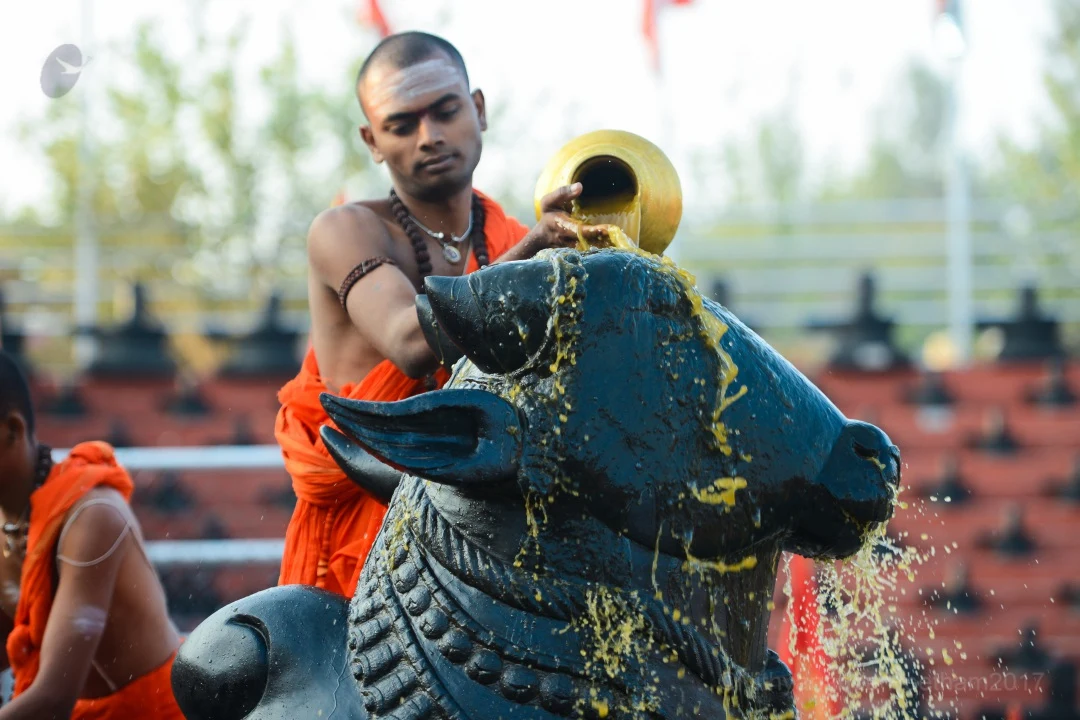
41st Avatar Dinotsava Celebrations at Nithyananda Peetha

Enriching Material

Nirahara Samyama

Nirahara Samyama

Link for Facebook Post

<https://www.facebook.com/ParamahamsaNithyananda/posts/1615832925171218>

Photos Of The Day:

Karma-Initiation

Photos Of The Day:

Karma-Initiation

01-krama-initiation

,

Photos from this day

View all 51 photos

Rudrabhishekam
21 photosSource gallery
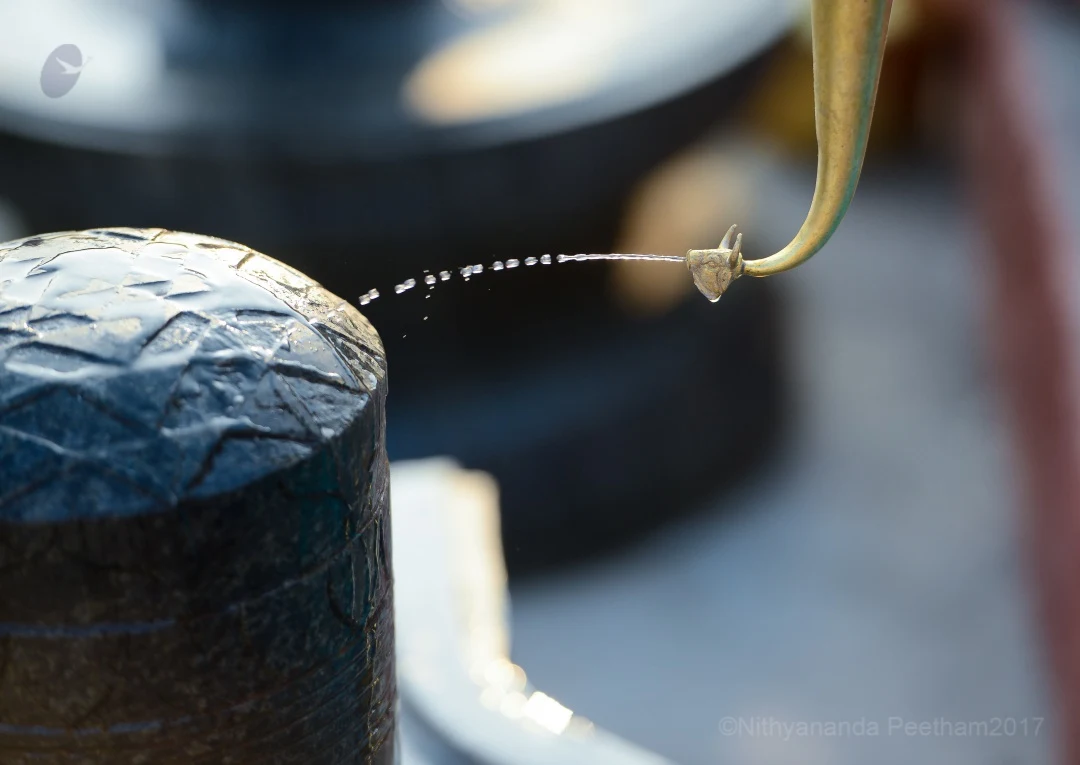
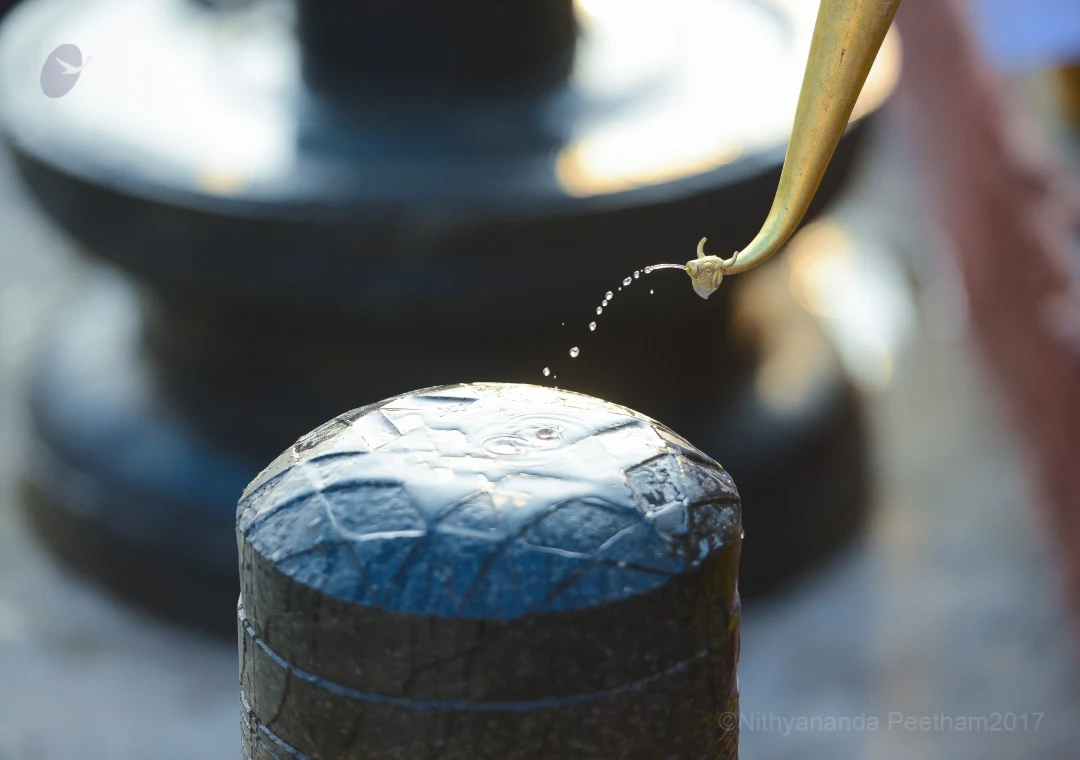
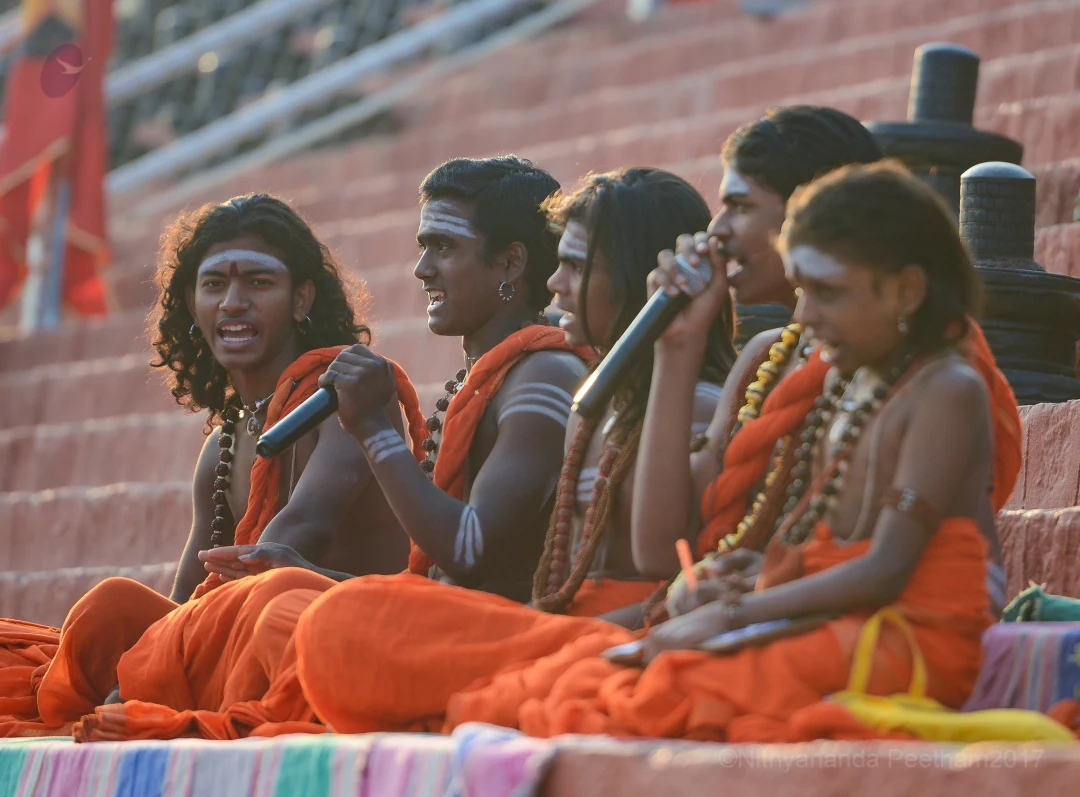
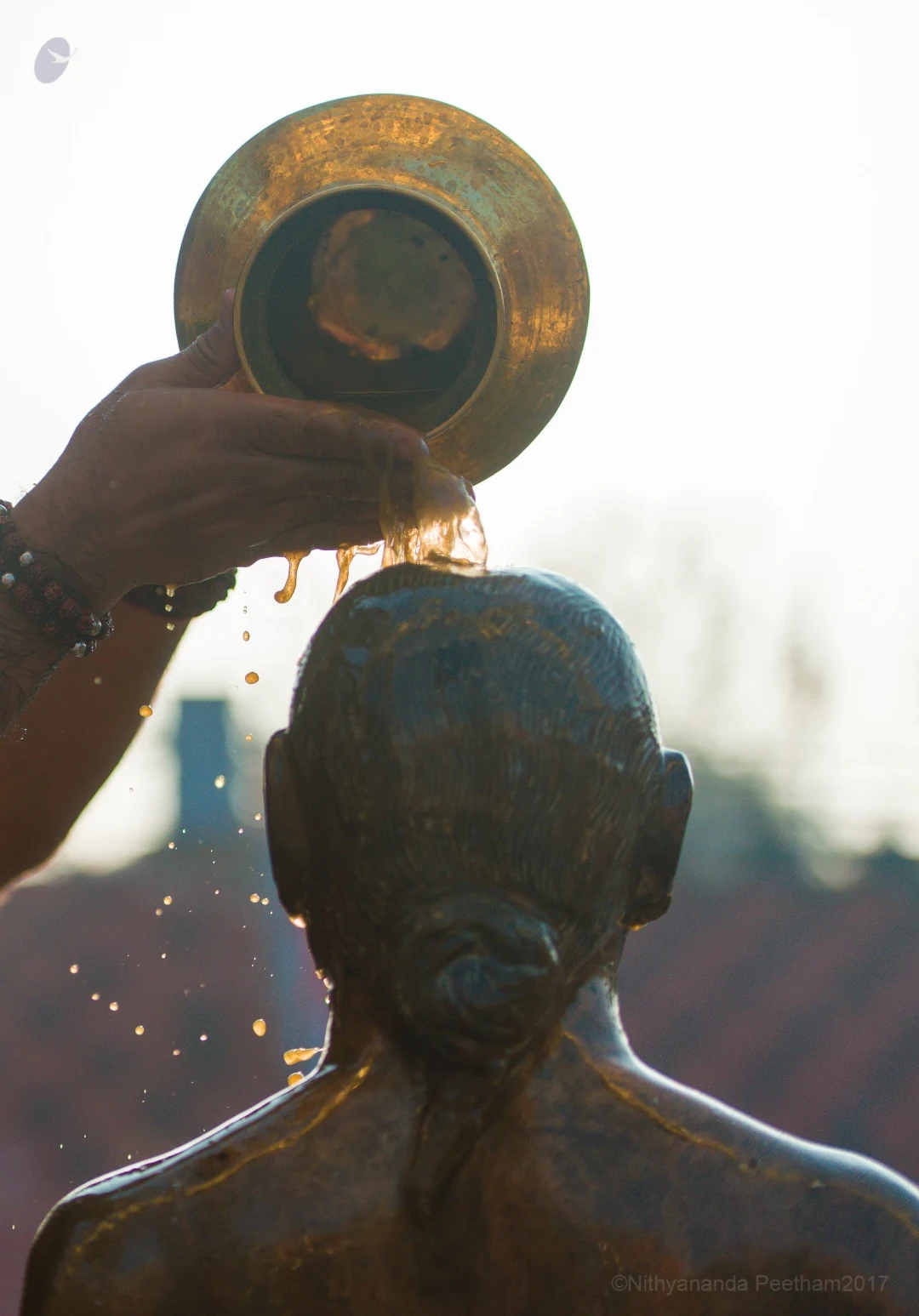
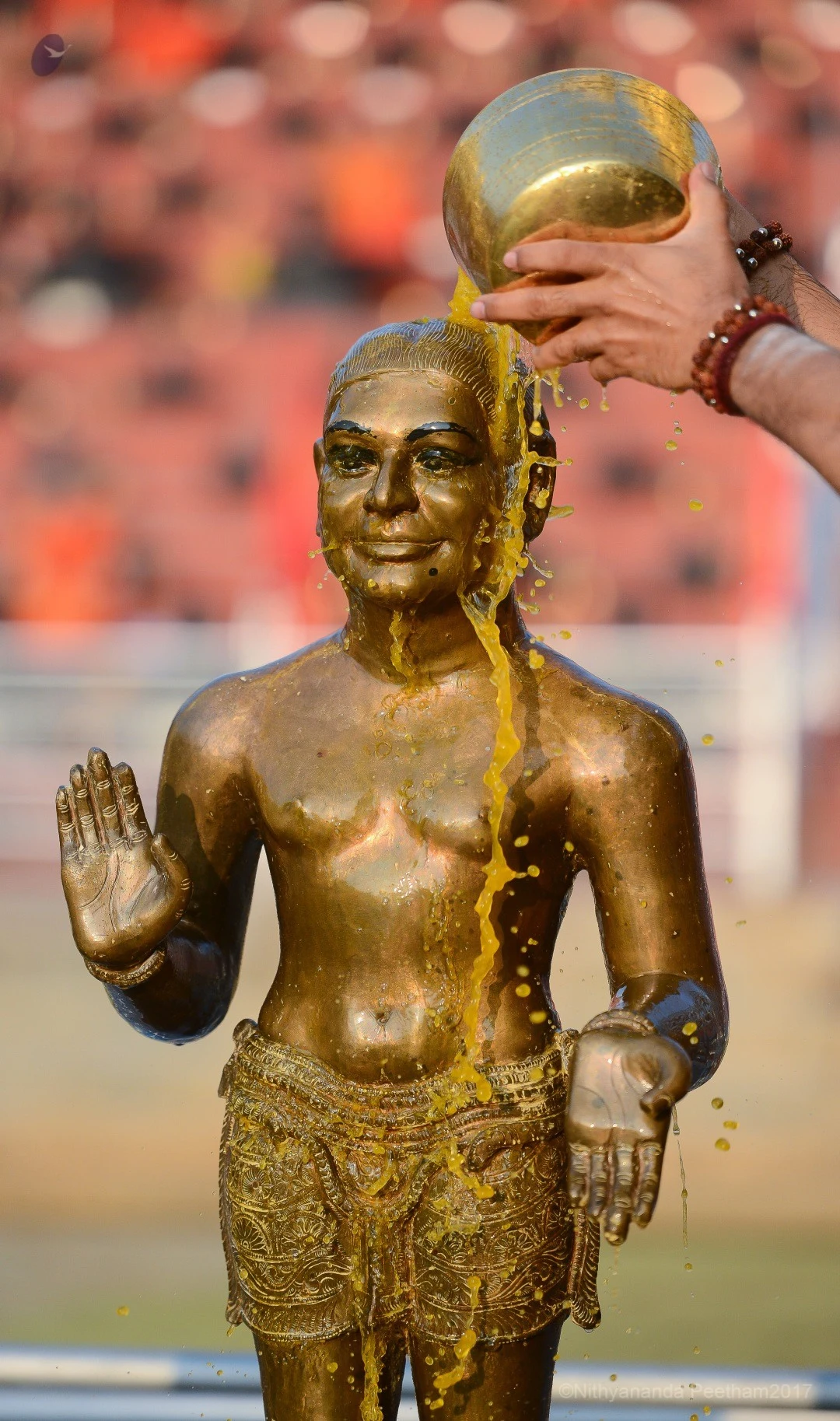
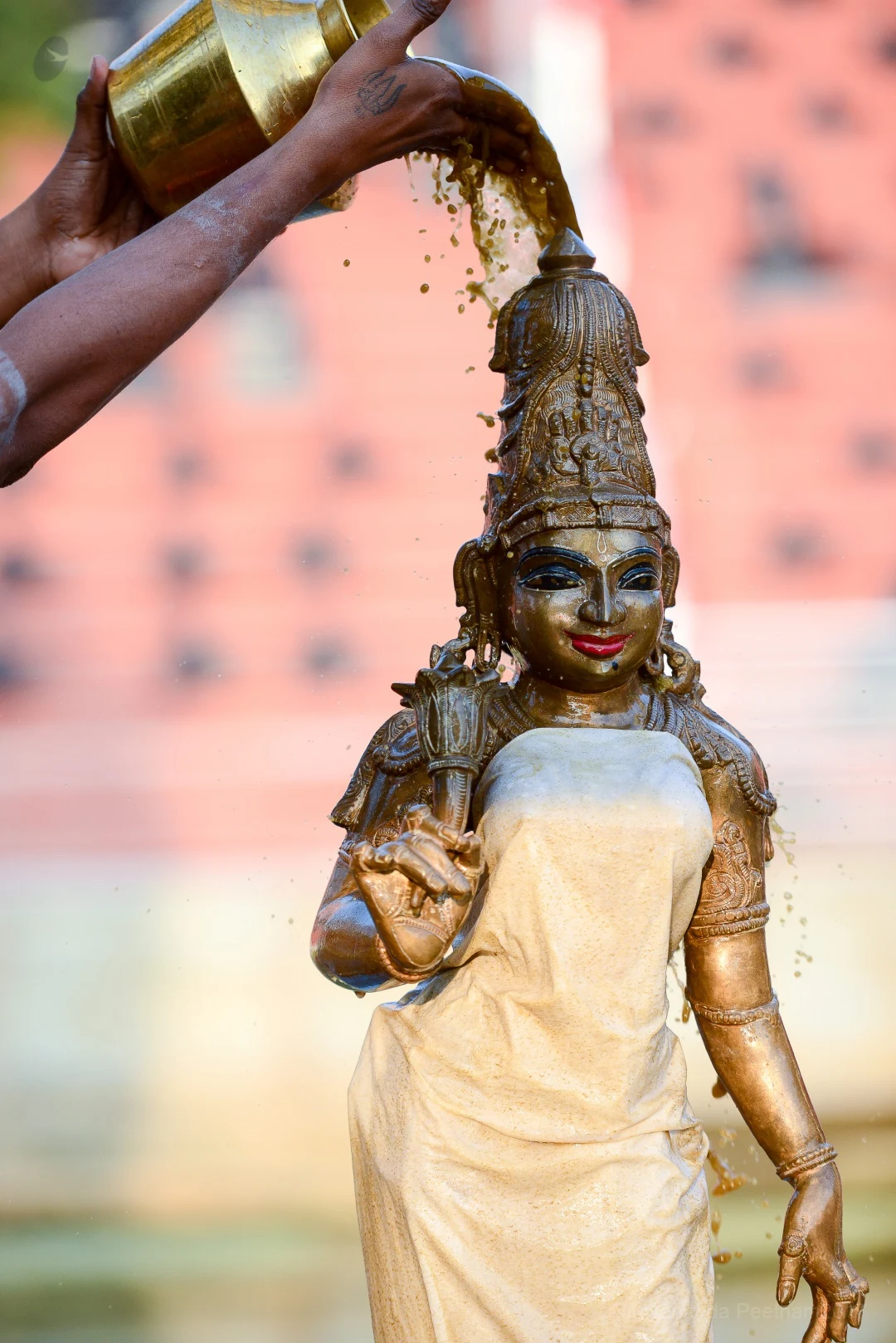
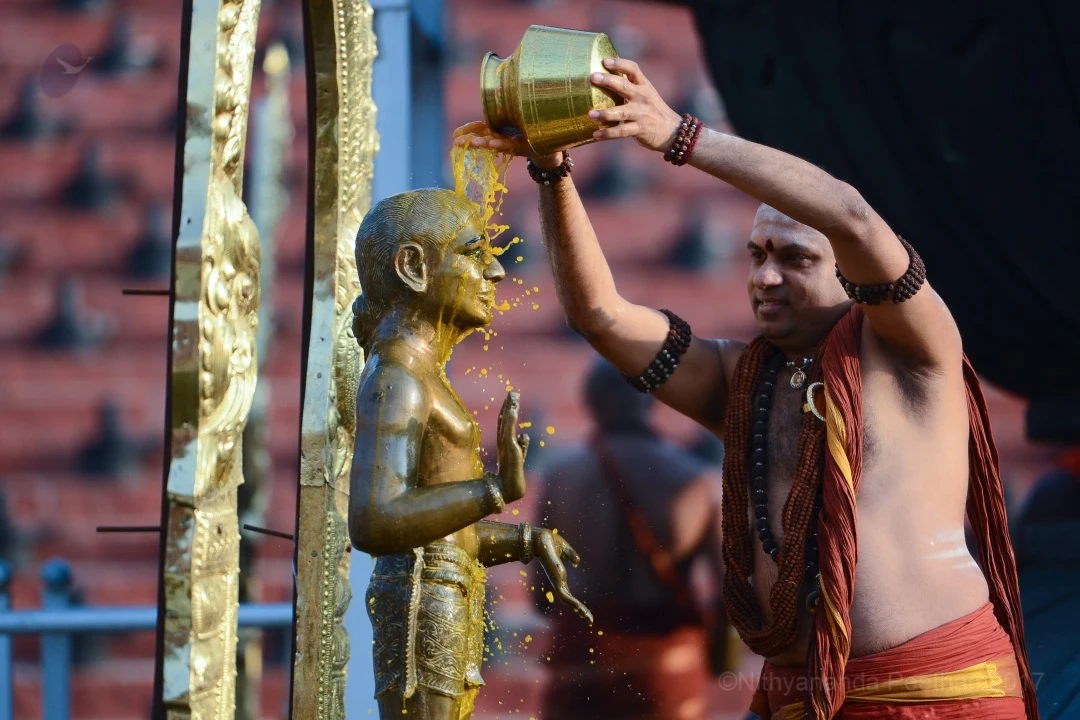
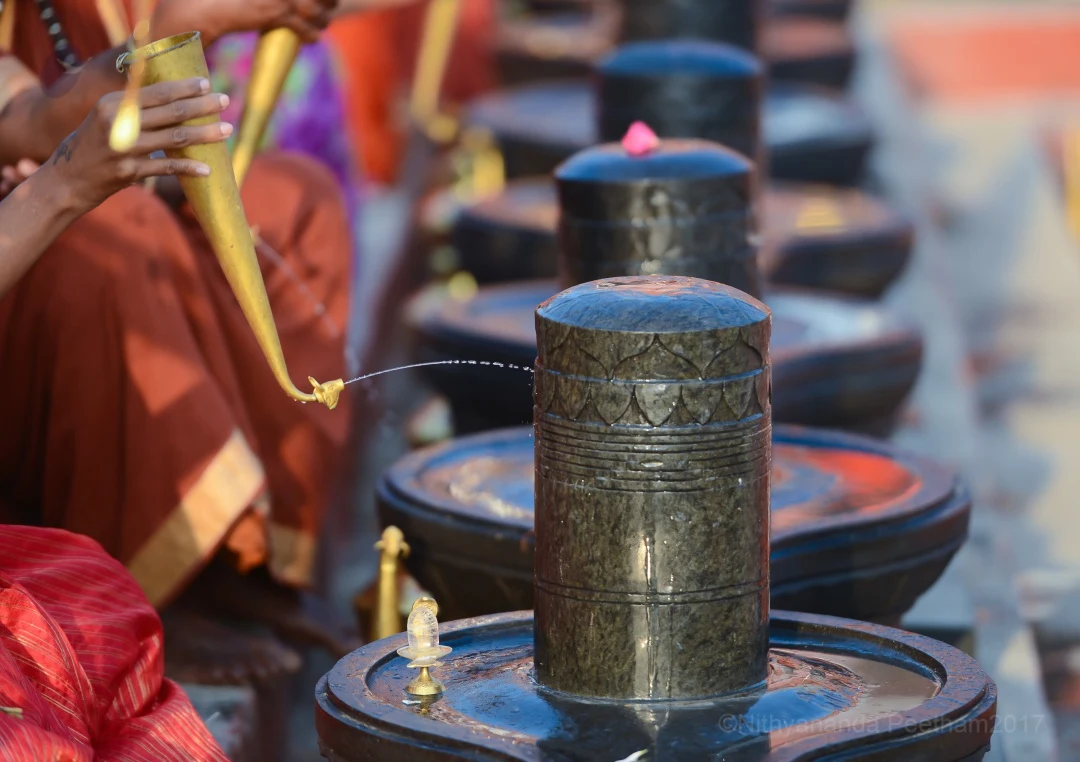
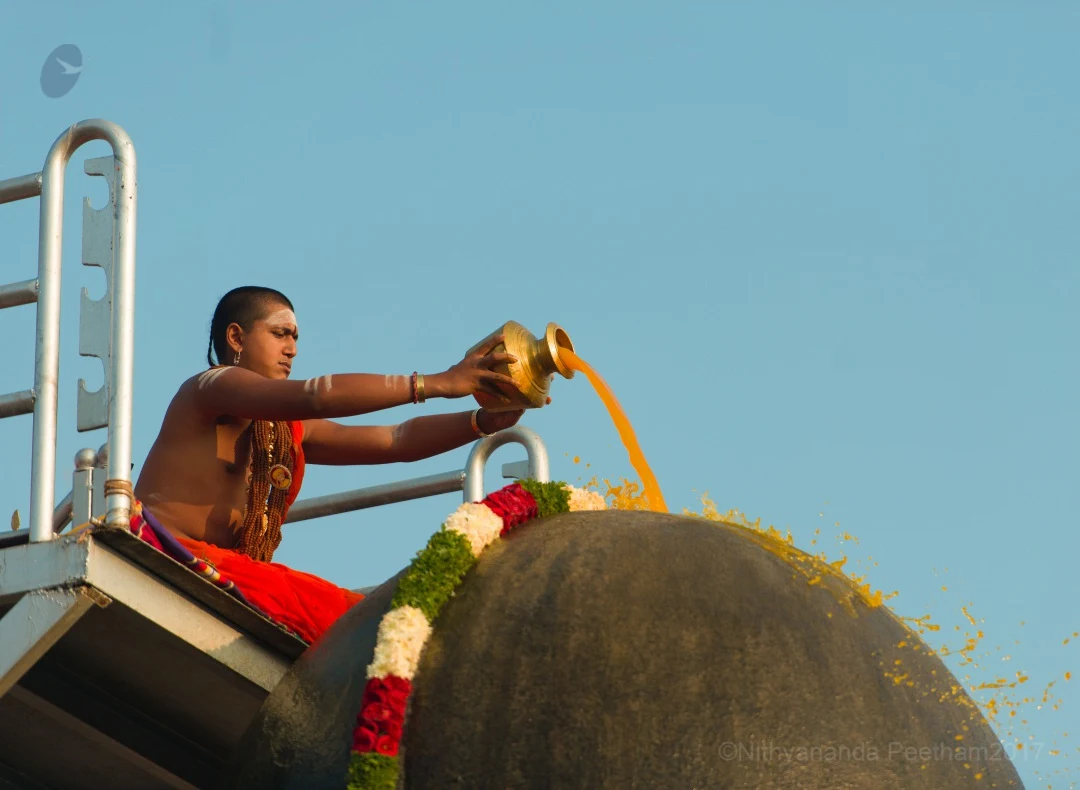
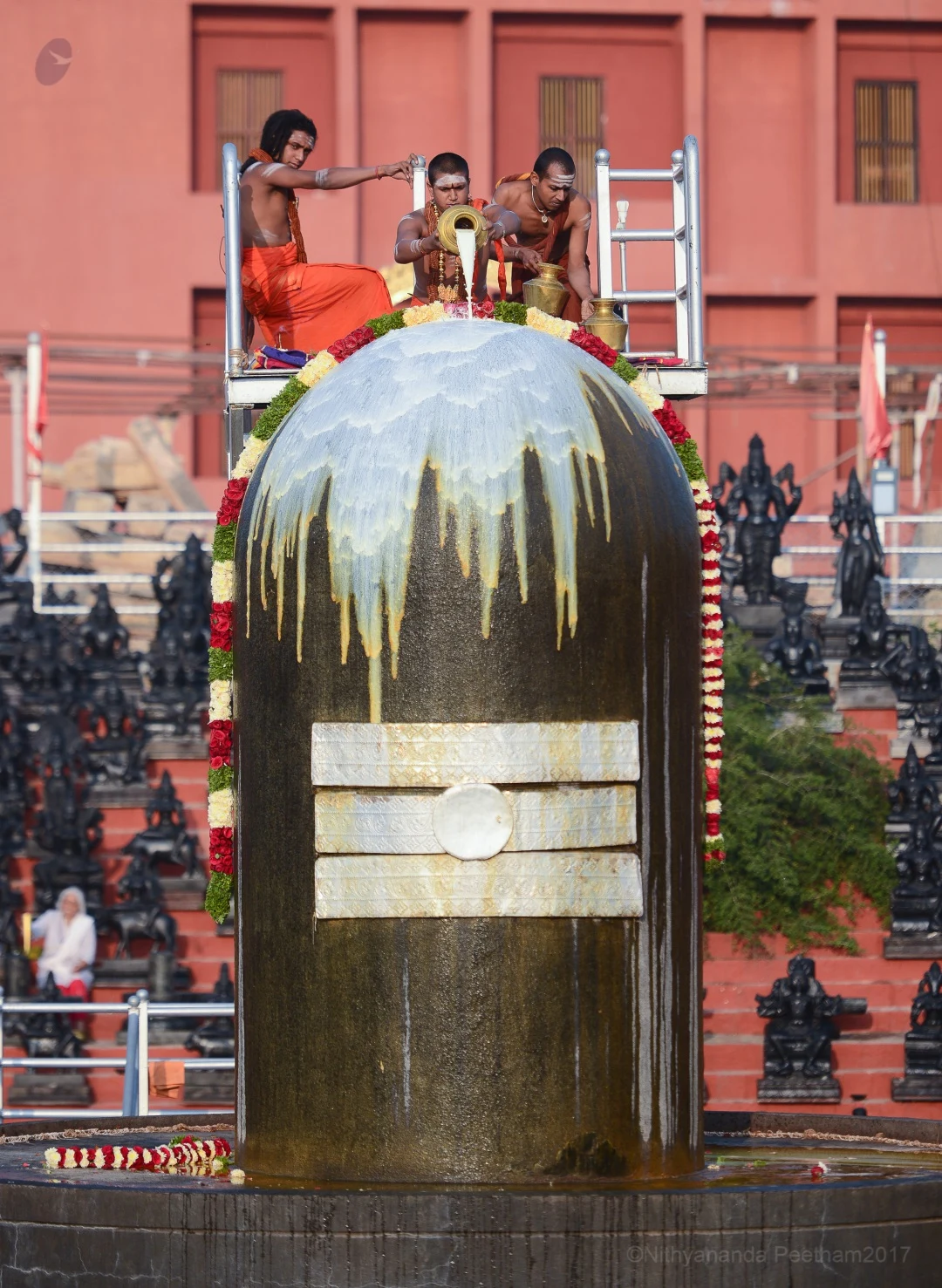
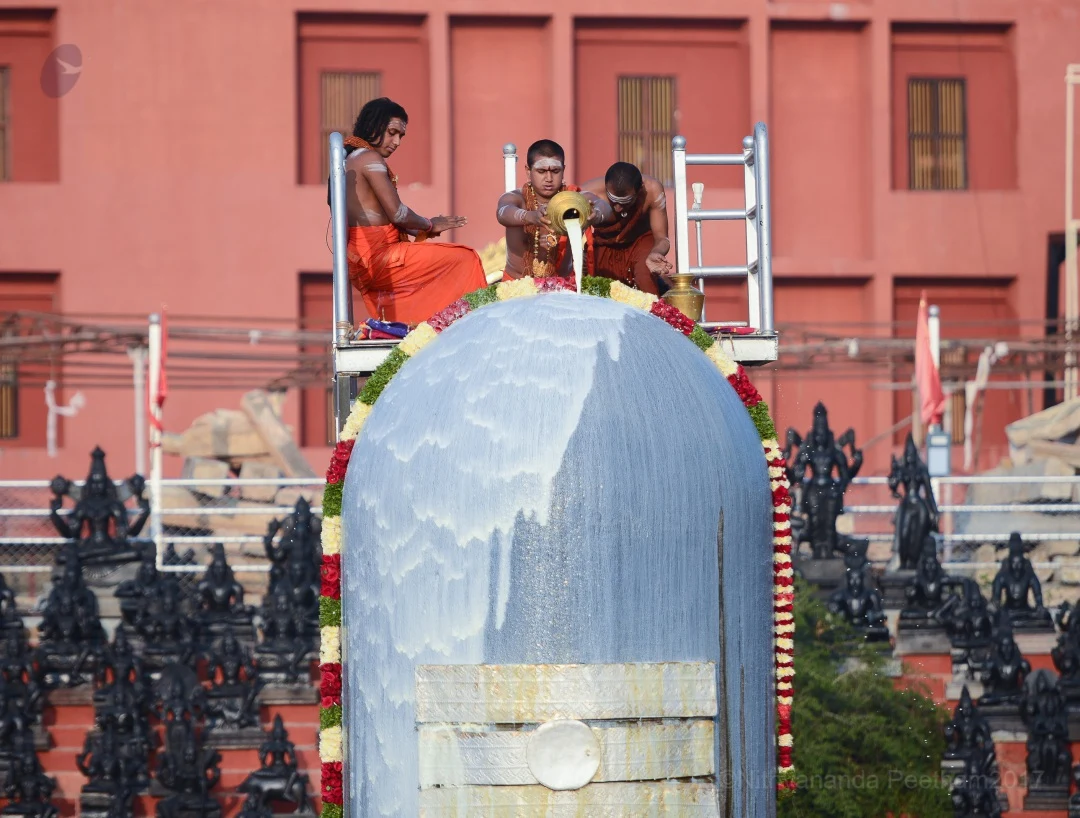
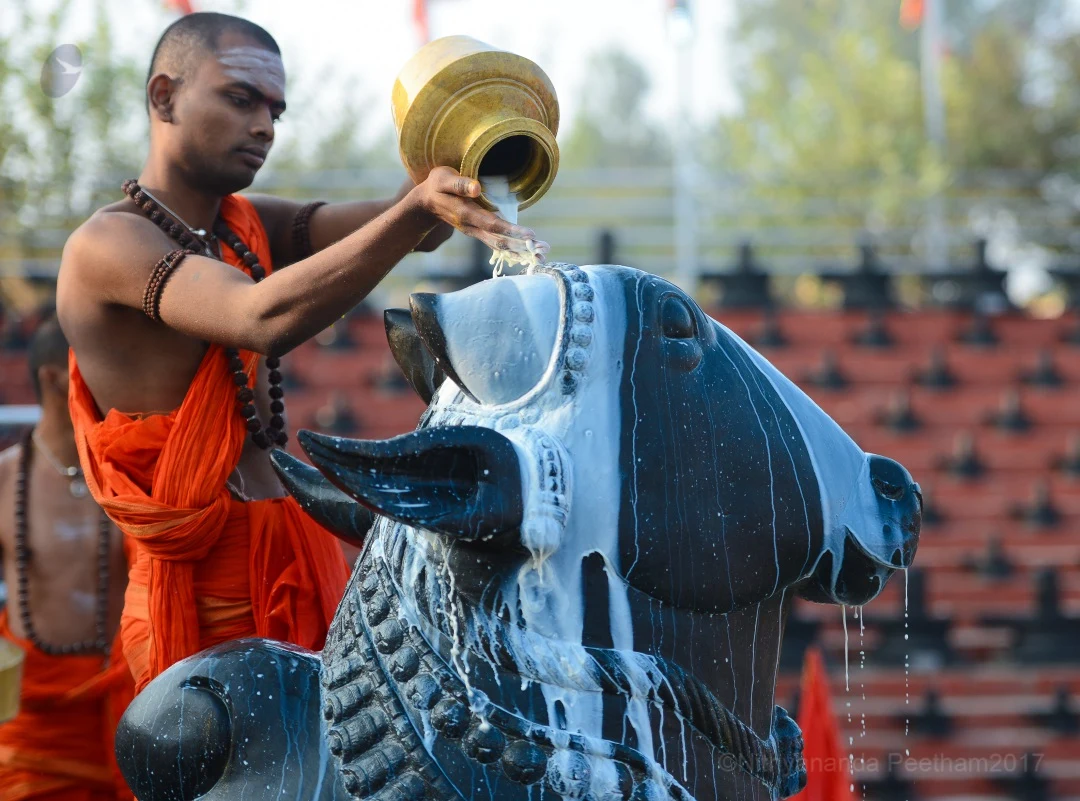
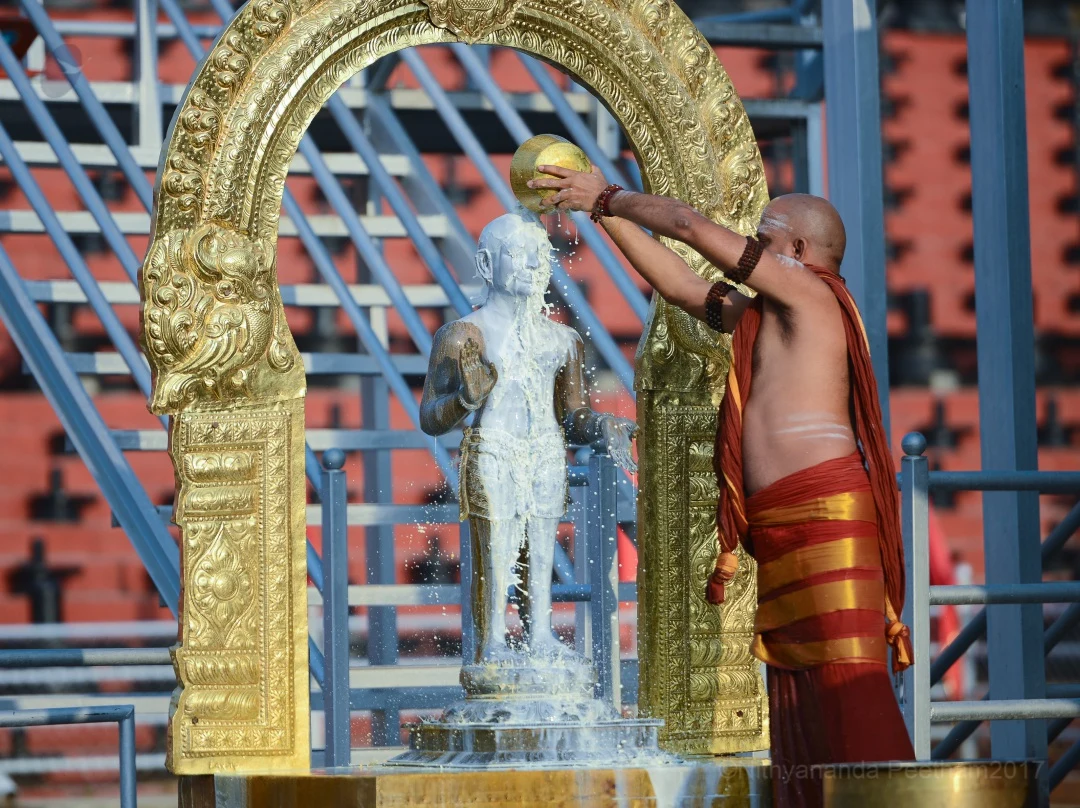
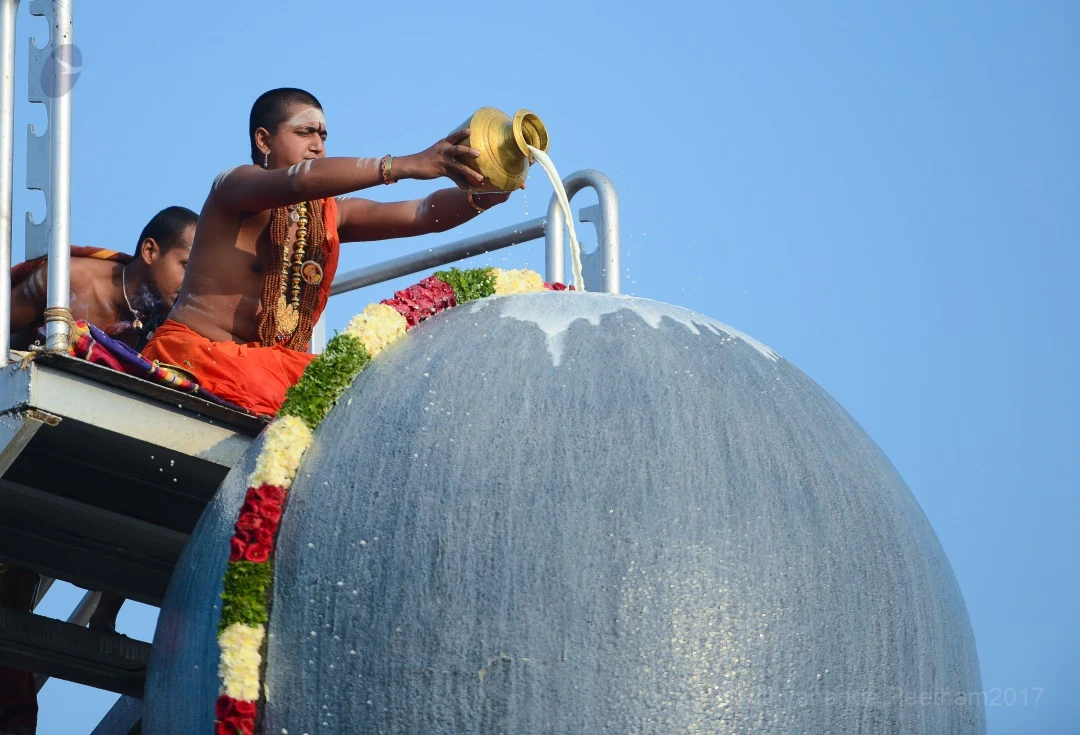
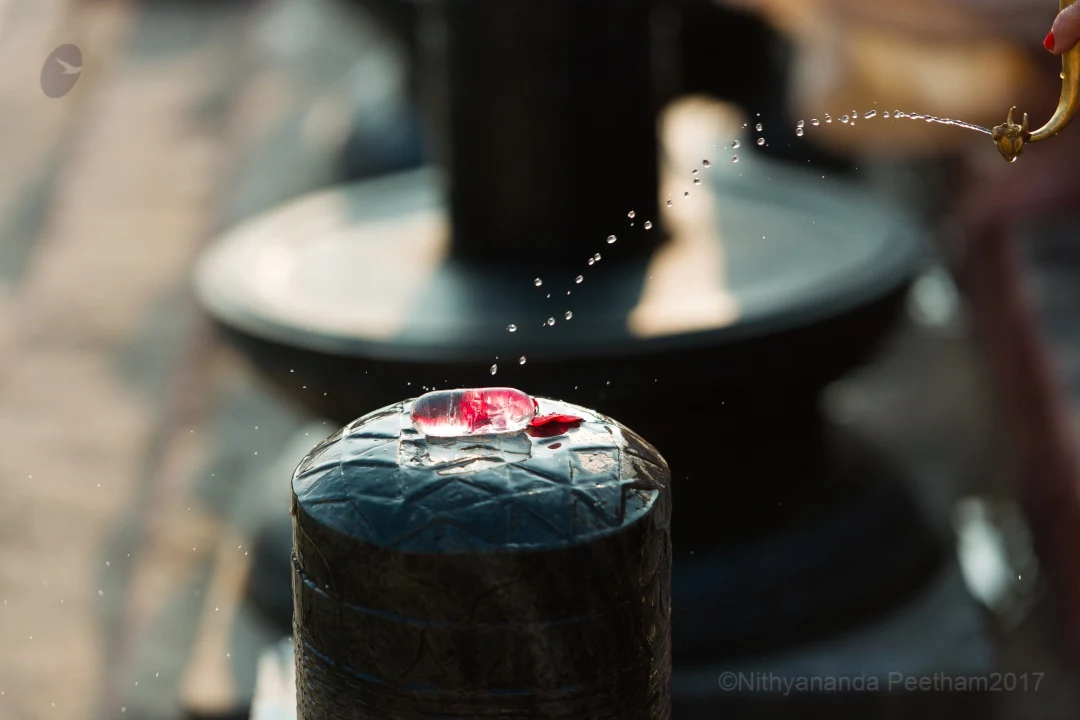
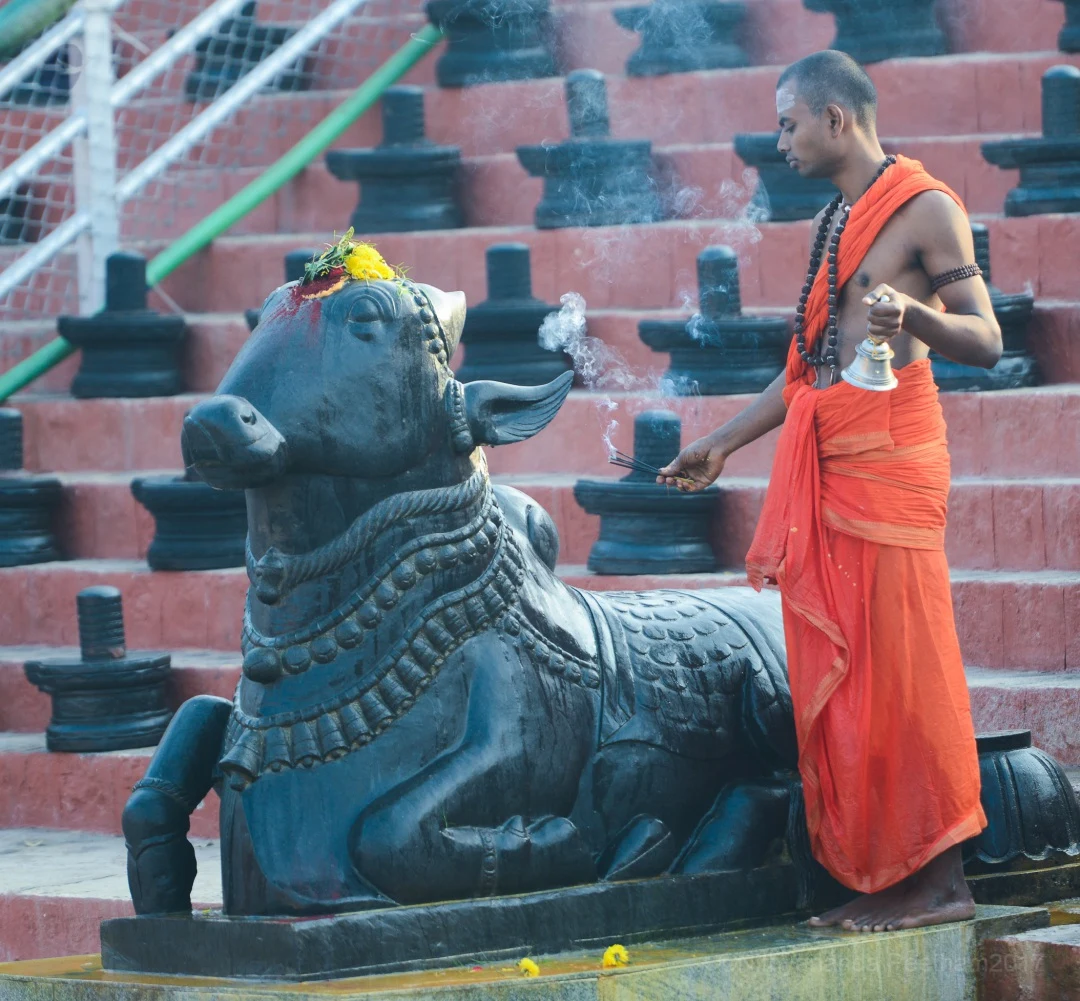
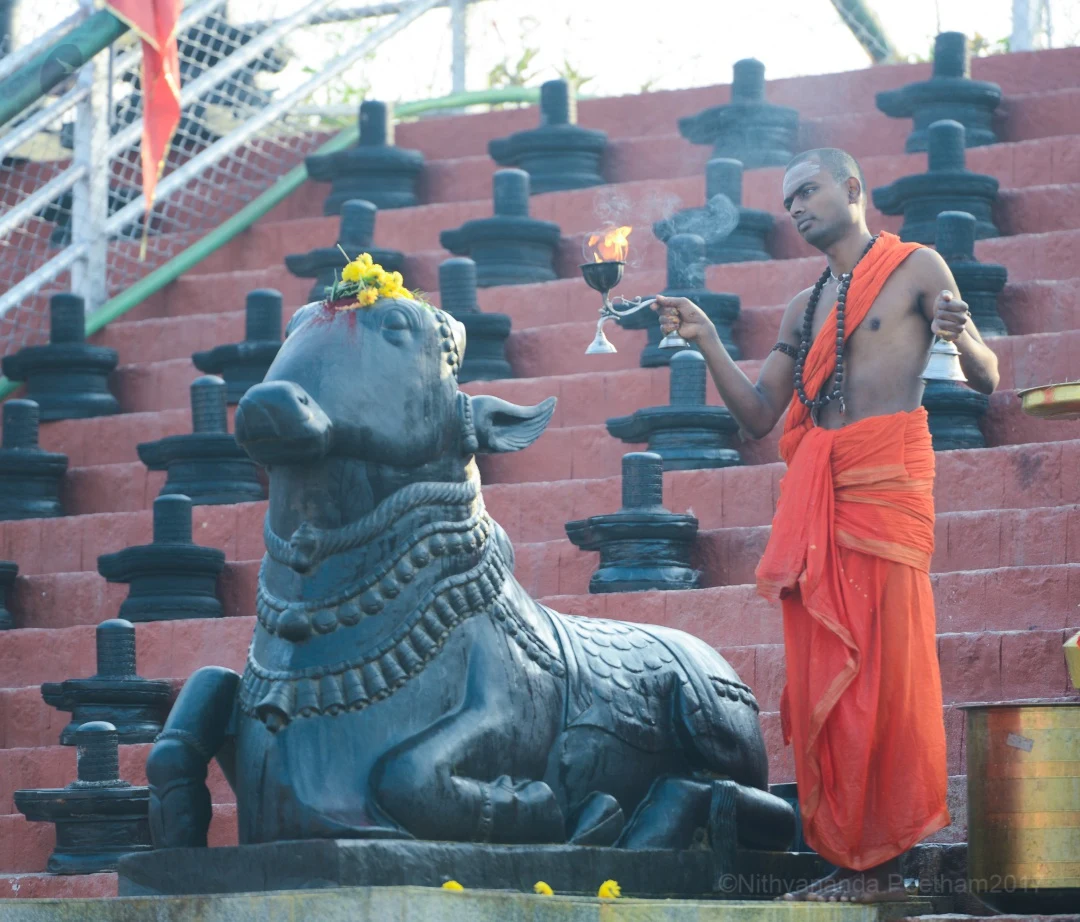
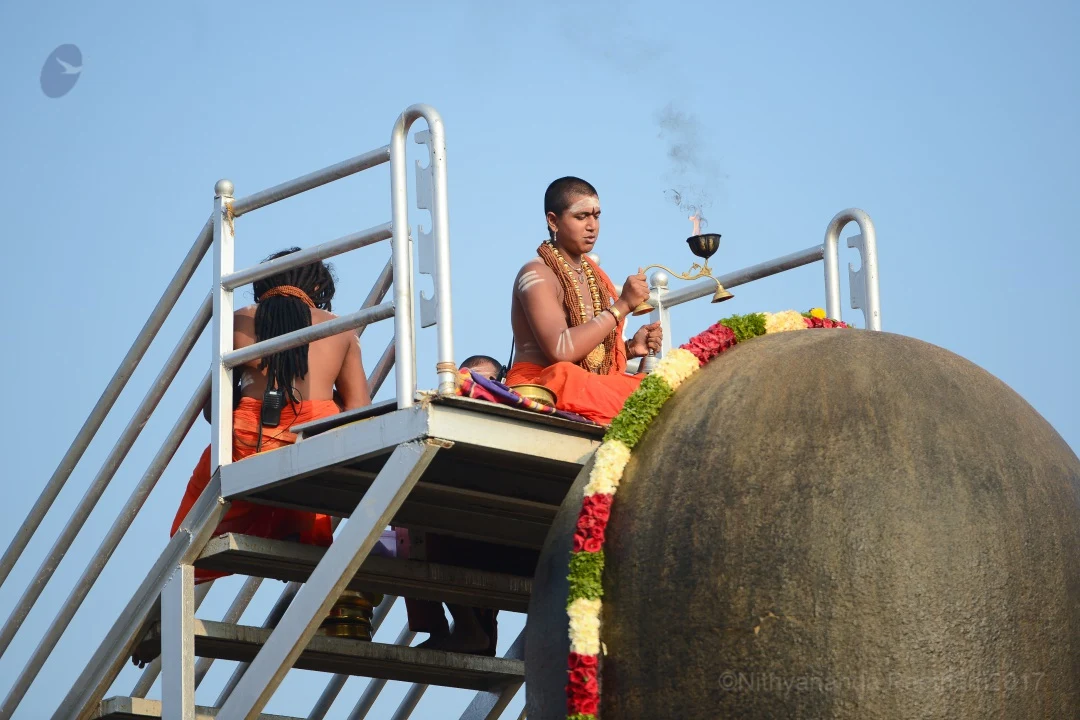
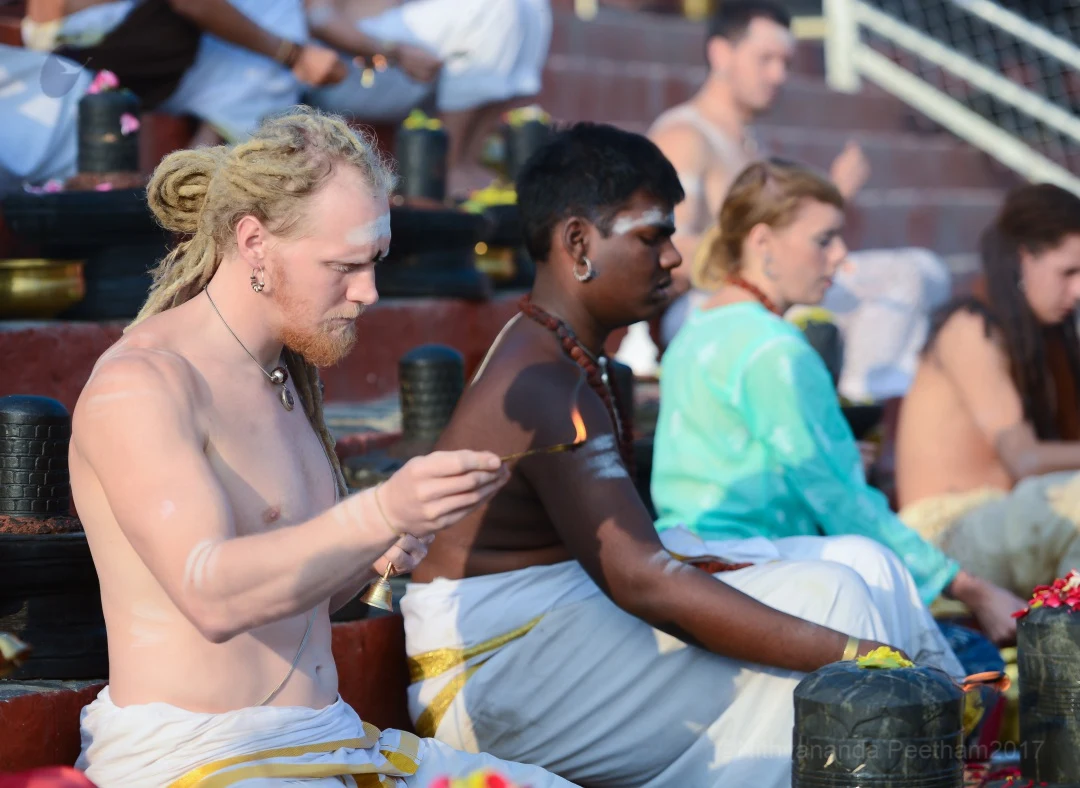
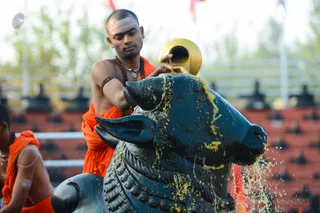
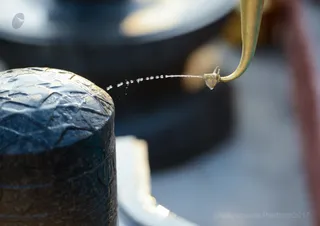
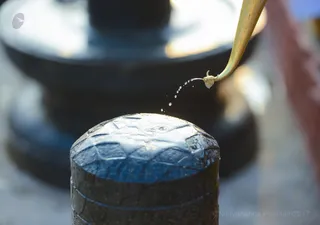
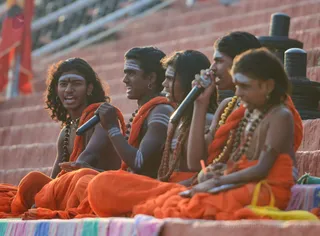
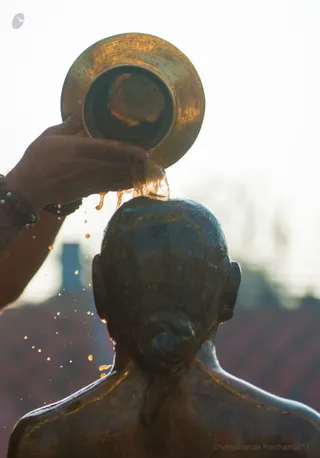
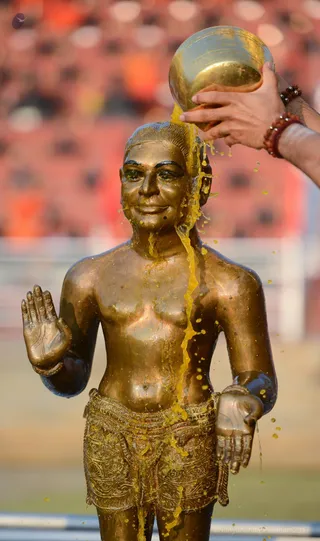
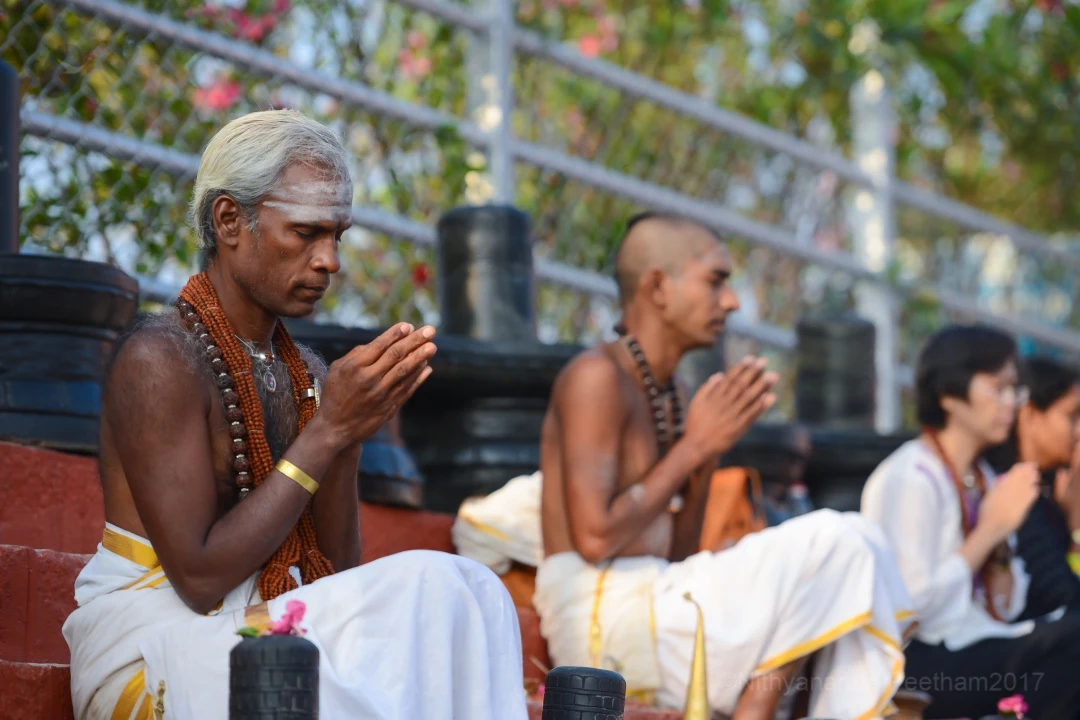
A young shaven-headed priest in orange saffron cloth and a rudraksha mala stands bare-chested and pours a yellow liquid from a golden pot onto a large black stone Nandi bull statue during an abhishekam. The liquid splashes over the bull's horns, face and neck. Another person in orange cloth is partly visible at the left edge, and red-brick structures with dark stone pieces fill the blurred background.Close-up photograph of a water stream pouring from a golden spout onto a dark black stone shivalingam with a textured, faceted surface. The stream arcs left through the air in beaded droplets. The background is blurred dark and grey with warm light. No people are visible.Close-up photo of a dark stone Shivalinga being bathed with water poured from a brass vessel with a spout, the thin stream falling onto the top of the lingam with droplets splashing. The lingam's polished black stone sits on a blurred dark pedestal in the background. No people are visible; the image shows only the ritual water offering to the deity murti.Five young male devotees in saffron-orange robes sit on red sandstone steps, singing into microphones. Several have white vertical tilak marks on their foreheads and white stripes painted on their arms and torsos, and wear rudraksha and bead malas around their necks. Two have large hoop earrings. Colourful striped cloths and a bundle lie on the steps in the foreground, and a red flag hangs at the upper left beside a dark stone pillar. Warm late-afternoon light falls across the scene.Backlit photograph of a bronze statue of a bald, bare-shouldered figure seen from behind, its head being bathed by a hand pouring liquid from a brass vessel. Golden droplets scatter in the sunlight against a blurred pale sky and rooftops. A beaded wrist mala is visible on the pouring hand. The statue is a murti, not a living person, and the scene reads as an abhishekam offering.A golden-bronze statue of a bare-chested figure in ornately engraved short dhoti-style lower garment is being anointed. A hand holding a brass vessel pours yellow liquid. The statue has one hand raised in abhaya mudra and the other hanging open at its side. A hand wearing red and beaded rudraksha-style wrist malas is visible. The blurred background shows orange-red seating. No physical people are clearly the focus beyond the pouring hand.

Karma-Initiation

10 photosSource gallery
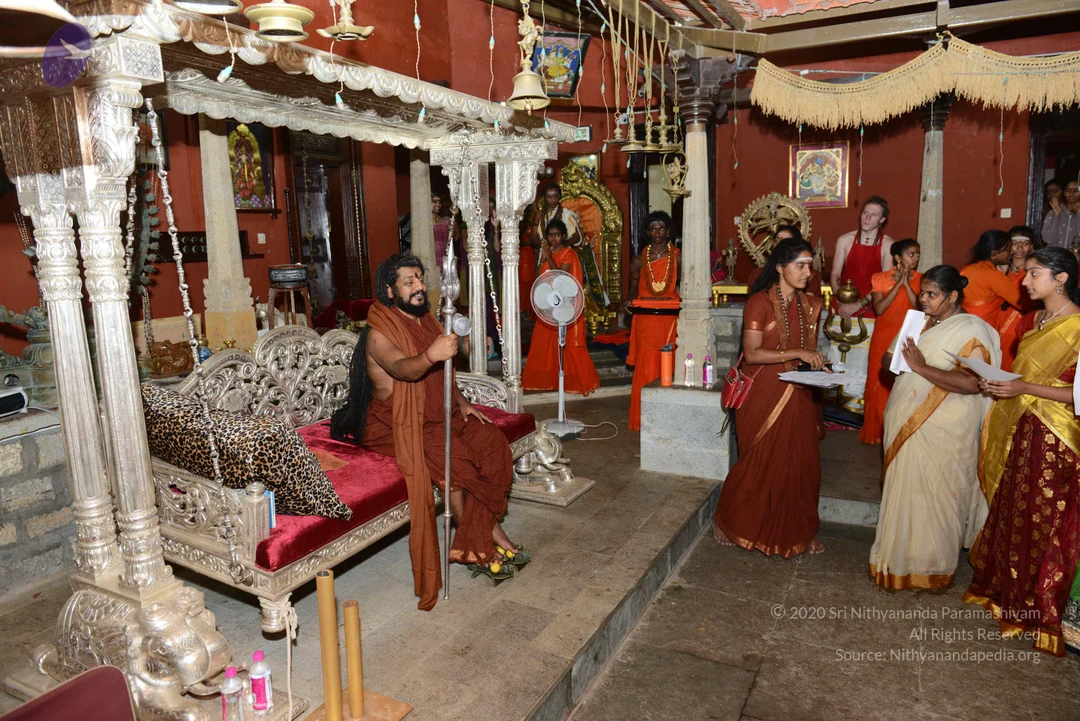
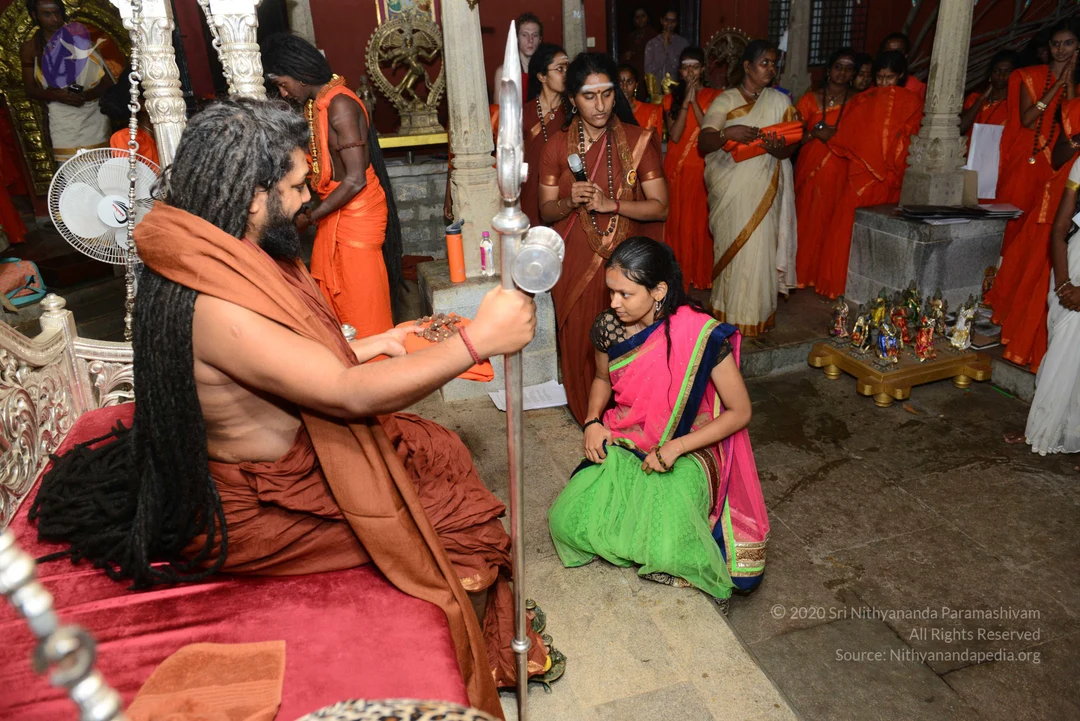
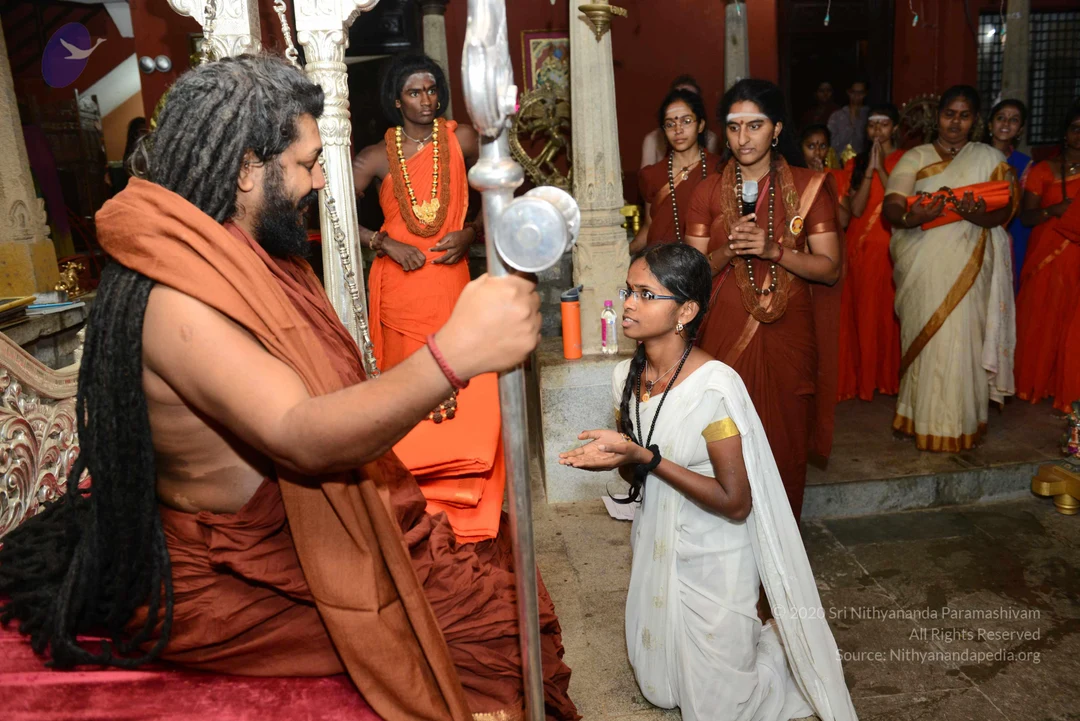
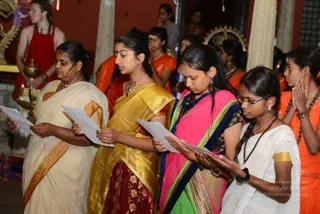
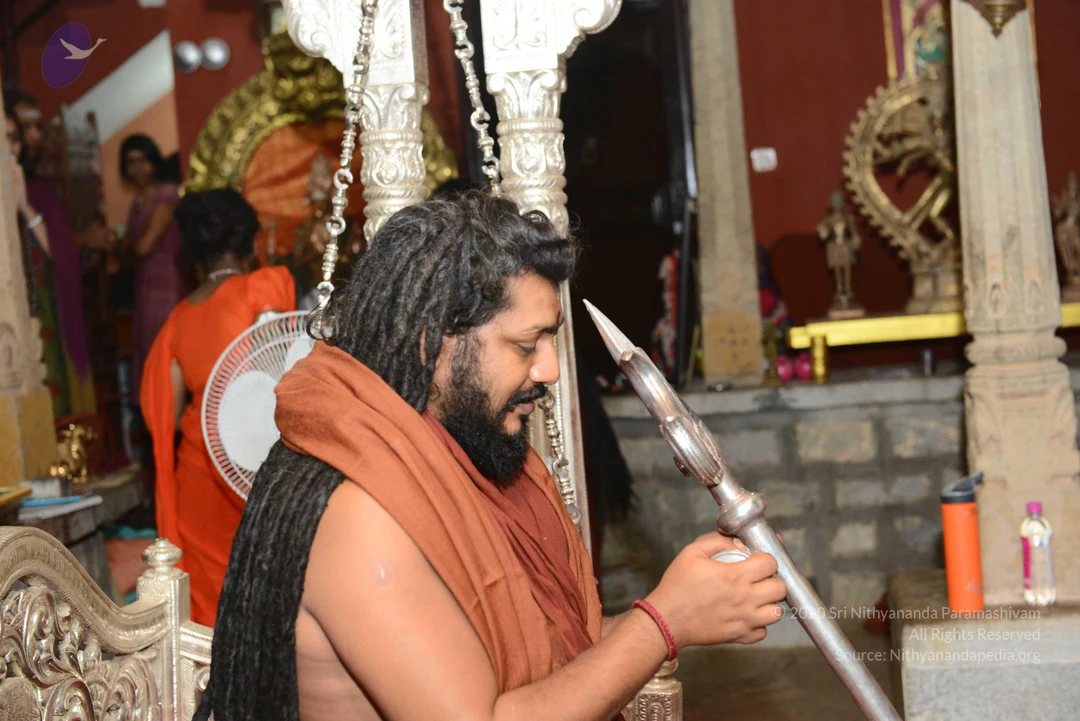
A photograph of a bearded man seated on an ornate silver throne-style chair with carved floral filigree. He wears a saffron-orange robe draped over his shoulder, a red thread bracelet on his wrist, a red tilak on his forehead, and a thin gold chain. He holds a tall silver staff topped with a silver finial and a round silver disc, and he looks off to one side and smiles. Behind him are silver pillars with a hanging chain, a red wall, and a framed colourful deity image. a person, seated in a saffron robe with a ceremonial staff, a throne-like seat, and a red tilak.Photograph of a devotional gathering in a red-walled temple courtyard with stone pillars and a hanging woven canopy. A woman in a rust-red sari holds a microphone and reads from a sheet, standing before a small shrine area with brass lamps and a framed deity picture. Behind her, a man in a red apron stands near brass items, and to the right a row of women and girls in cream, gold-bordered yellow, pink and green saris, and white saris with folded hands stand in a line. Several young women in orange robes stand in the background with hands joined in namaskar. Their stance suggests a satsang or group prayer, with a brass oil lamp visible on the floor.A photo inside a temple hall with red walls and stone pillars, with a golden Nataraja statue on a shelf at left. A woman in a rust-red sari holds a microphone and a sheet of paper, speaking to a row of young women in colourful saris: a cream sari with gold border, a maroon and gold sari, a bright pink and green sari, and a white sari with a black thread. Behind them, several people in orange robes stand with hands joined. Water bottles sit on a stone ledge in front. No clear a person candidate is visible in this frame.A photograph inside a temple hall with red walls and stone pillars. Five women and girls stand in a row holding white printed sheets and reciting or chanting. From left: an older woman in a cream saree with an orange border, a young woman in a gold saree with a red skirt, a young woman in a pink and green saree with a blue border, a girl in white with a black rudraksha mala and glasses, and a girl in an orange top with a rudraksha mala with her palms joined in namaskar. Behind them, other devotees in orange and red garments stand near brass lamps and a golden decorative arch. A partially visible man in a red garment stands at left beside a brass vessel. No a person candidate is visible.Close photo of bare feet in orange-red robes with gold border resting on a pair of brass lamps holding yellow citrus fruits, placed on a stone floor beside a silver elephant-shaped base and a silver chair leg. Only feet and lower legs of a seated person are visible; the lamps appear to be lemon-lamp (nimbu) offerings used in ritual. No faces are shown, and the a person identity cannot be confirmed from appearance alone.Close photograph of a bare foot in an orange-brown dhoti or robe with gold-bordered hem, resting on two ornate brass padukas or footwear stands with a kalasha-like finial, with yellow flower petals or fruit on the stand and a silver elephant-shaped throne base in the background. The person's face is not visible; the foot is shown in the act of being washed or honoured with pooja items.

Karma-Initiation

4 photosSource gallery
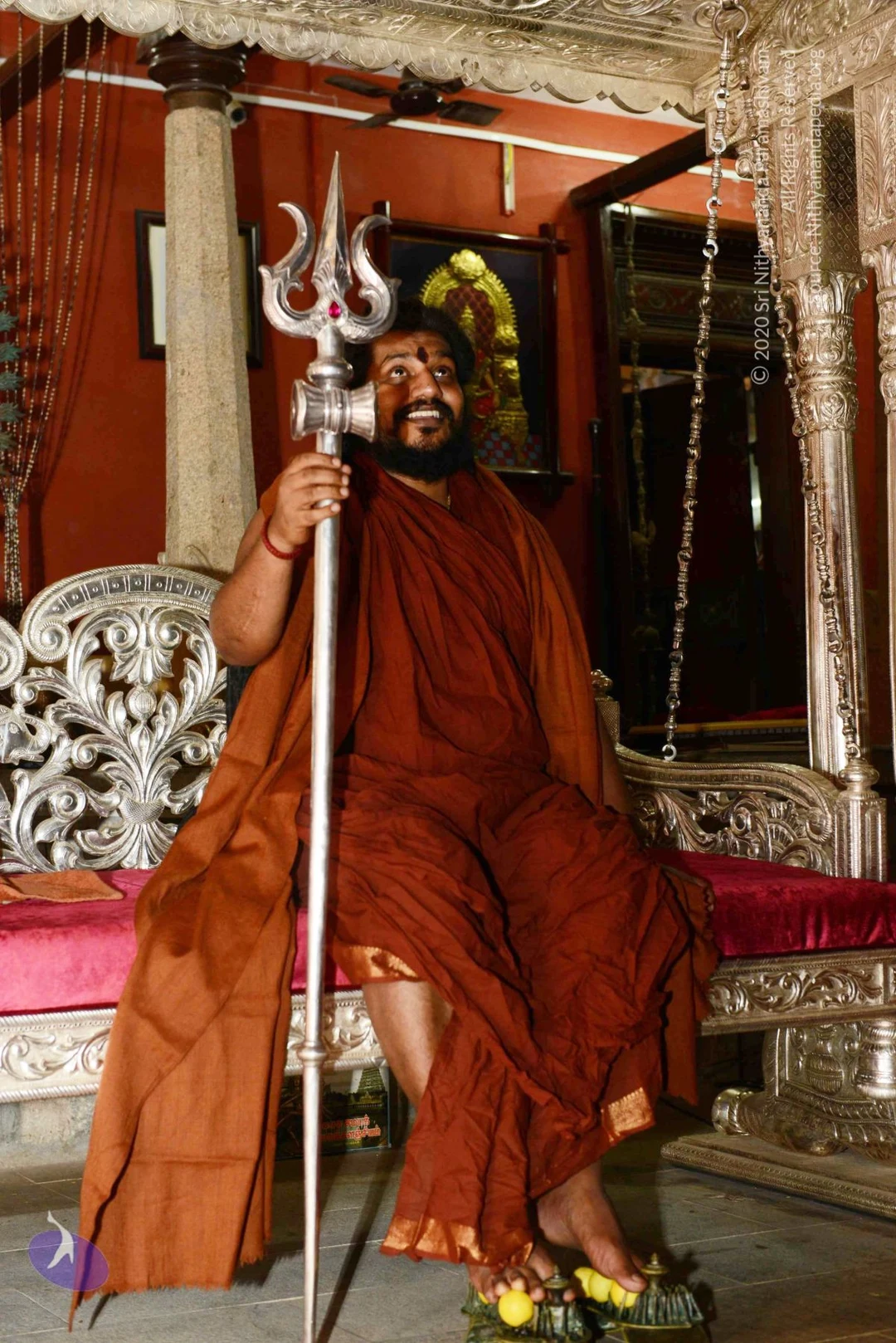
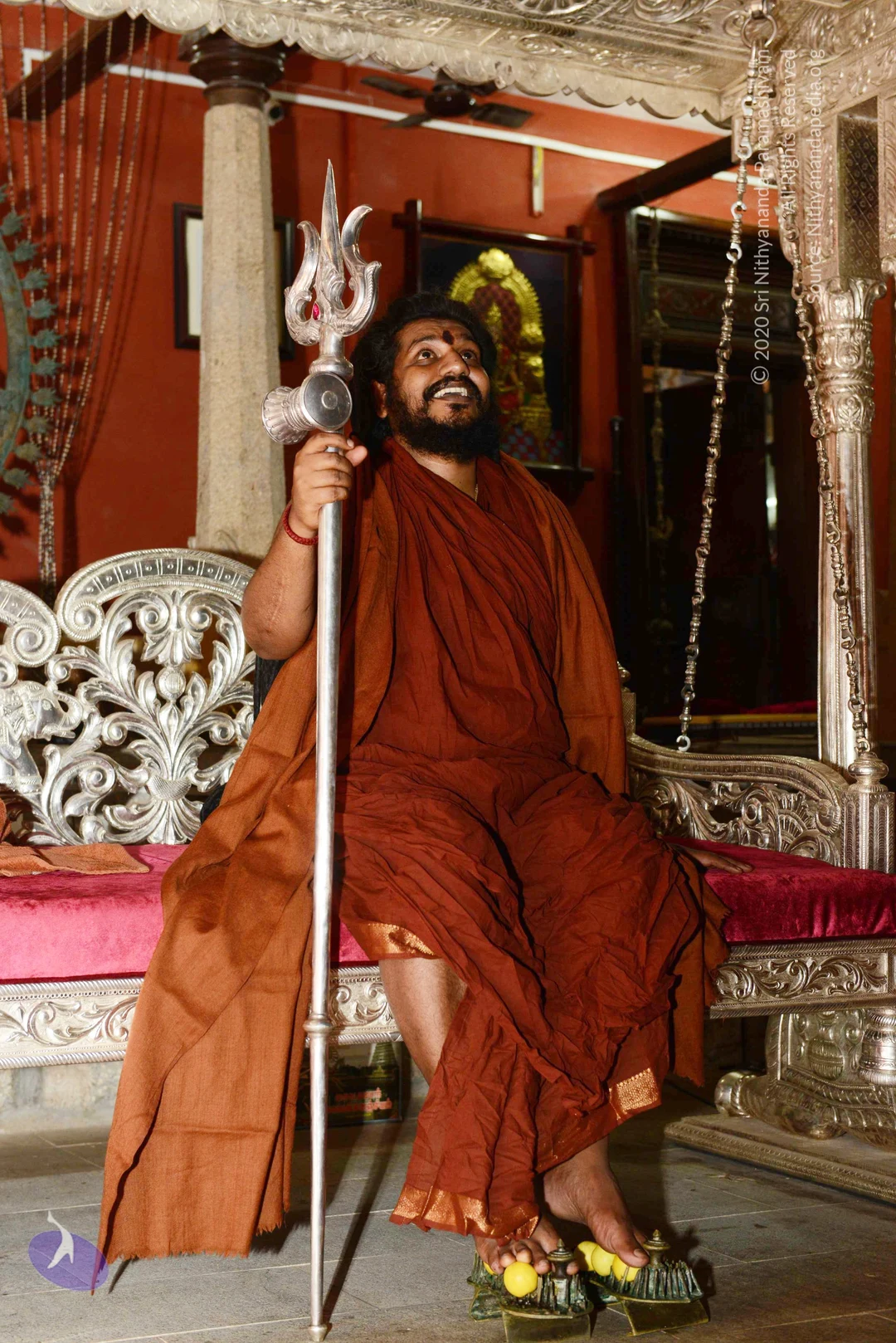
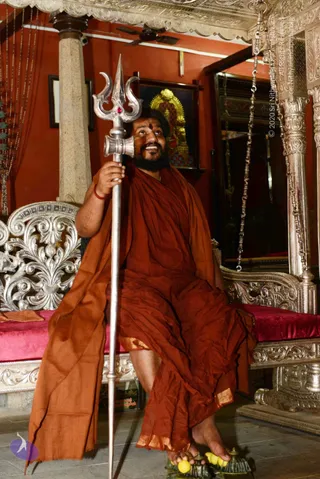
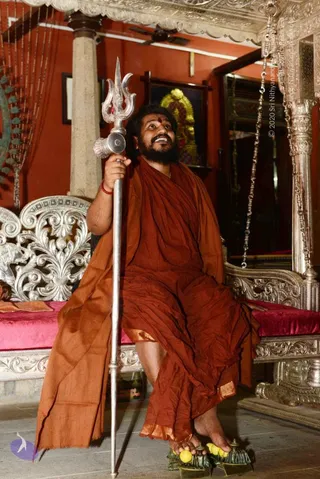
A bearded man with long dark hair and a red tilak on his forehead sits on an ornate silver throne with carved floral scrollwork and red velvet cushions, smiling and looking upward while holding a tall silver staff with a round finial. He wears a rust-orange ochre robe with a gold-bordered hem and a matching shawl draped over one shoulder. A red thread is tied on his wrist. Behind him a framed deity image and a silver canopy with hanging chains are visible in a red-walled room.A bearded man in a rust-orange sannyasi robe sits on an ornate silver throne with red velvet cushions, holding a tall silver trident-staff with a round finial in his right hand while looking upward and smiling. A small red tilak mark is visible on his forehead. Behind him hangs a framed deity image with a gold arched frame in a red-walled room, and a silver-chain swing is visible at right. The seated figure has long swept-back dark hair and wears a saffron/orange shawl and ornate silver-carved throne setting, which align with the page's a person reference, though the appearance is only partly distinctive, so the identification is uncertain. Photograph of a seated person on a throne with a trident-staff.A bearded man in rust-orange robes sits on an ornate silver throne with red velvet cushions, holding a tall silver trident with a red gem upright in his right hand and gazing upward. A red tilak marks his forehead and a red thread is tied on his wrist. Brass lamps with yellow flowers rest at his bare feet. Behind him hangs a framed gold-toned deity image on a red wall, and a silver canopy with chains frames the seat.A photograph of a bearded man seated on an ornate silver throne-like seat with a red velvet cushion, wearing a rust-orange draped robe with gold border and a red thread on his wrist, holding a tall silver trident with a red gem, looking upward and smiling, his feet resting on brass lamps with yellow balls. Behind him is a red wall, a stone pillar, a framed painting of a deity and a silver canopy with hanging chains. The appearance is consistent with a person candidate in saffron-orange robes with a trident, but the identity is uncertain from appearance alone.

01-krama-initiation
16 photosSource gallery
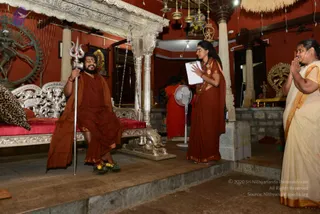
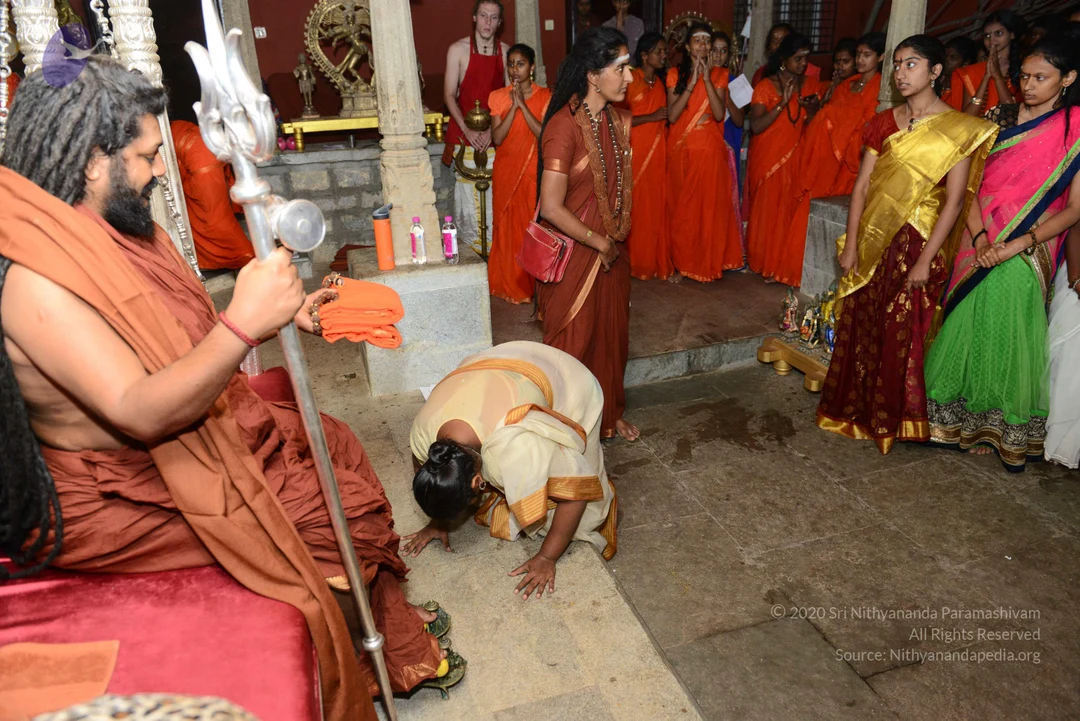
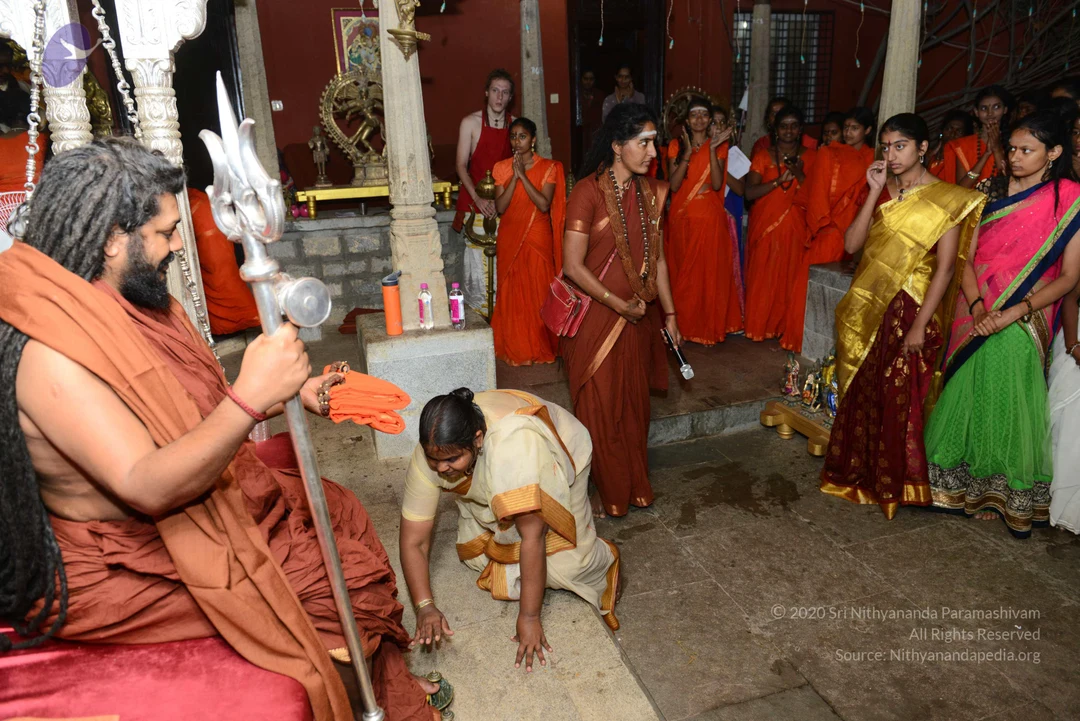
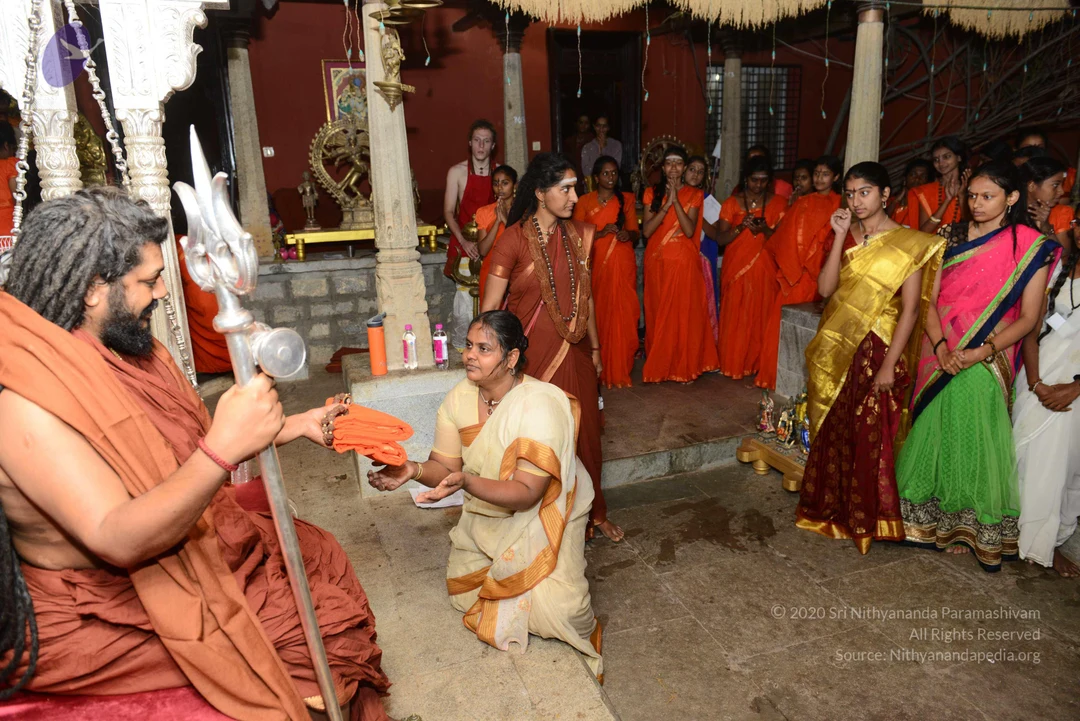
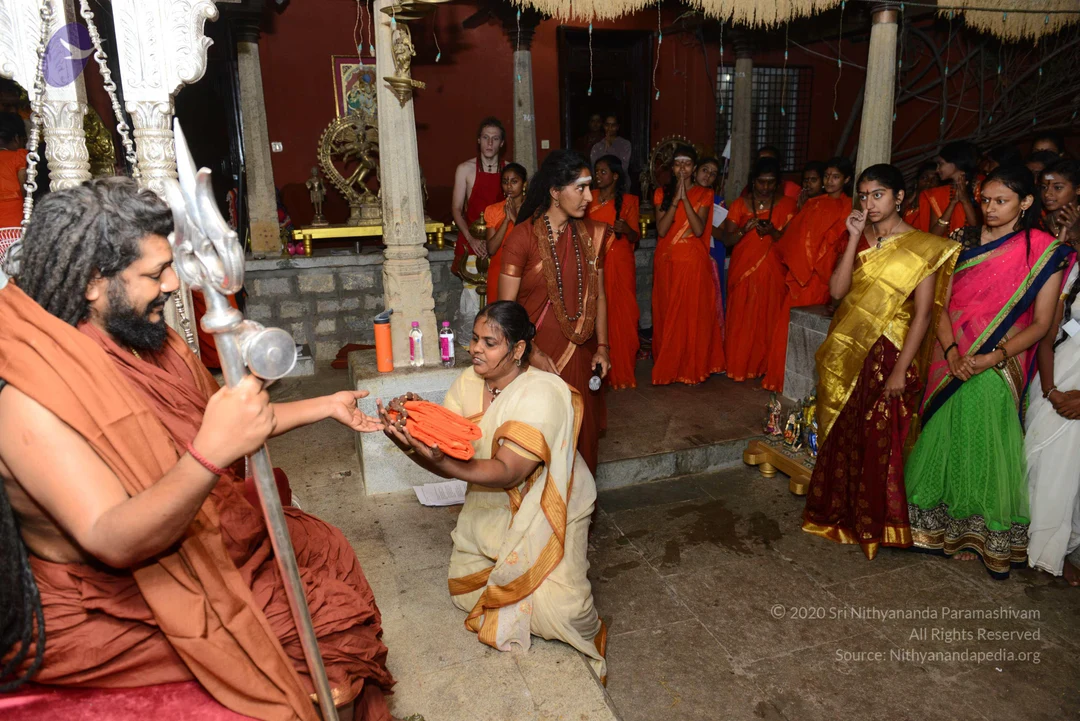
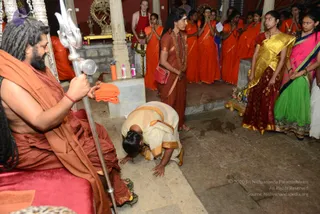
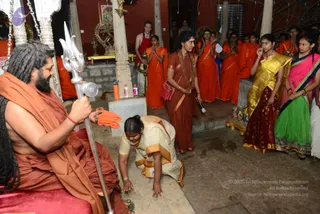
Indoor photo in a red-walled hall with a carved silver swing-throne. A bearded man in orange-red robes sits on the silver seat holding a silver trident, with sandals on his feet and a leopard-print cushion beside him. A woman in orange-red sari with rudraksha beads stands at center holding a clipboard. Two women in cream and yellow saris stand at right, one with hands folded in namaste. A fan and a Nataraja bronze appear in the background, with a second robed person behind. Seated figure is a person, identifiable by the throne, trident and orange robes, with the page indicating his presence at the event.A seated bearded man in rust-orange robes holds a silver trident and sits on a carved silver couch with red cushions, smiling, with a leopard-print cushion at his side. Beside him a woman in rust-orange sari stands holding a white clipboard and a cloth-covered object, while a woman in cream sari with an orange border stands at right with palms pressed together in namaskar. Behind them are red walls, a silver canopy, hanging brass lamps, a bronze Nataraja statue on a stand, and a standing fan. A second woman in red moves in the background. The setting appears to be a temple-like hall.A photograph inside a red-walled temple hall showing a bearded man in saffron-orange robes seated on an ornate silver throne with a red cushion and leopard-print pillow, holding a silver trident-like staff. Before him a woman in a dark red sari reads from a sheet of paper, while a row of women in cream, gold-bordered, maroon and bright green saris stand with palms pressed together in greeting. Behind them, devotees in orange and red attire stand near a golden deity image and a brass lamp stand, with a standing fan and a framed painting on the wall.A photograph inside a red-walled temple hall with a silver canopy bed-throne. A bearded man with long hair, wearing a rust-orange shawl and bare chest with adornments, sits on a silver-framed red-cushioned seat with a leopard-print pillow, holding a long silver staff. Probable Swamiji (long swept-back hair, bare-chested with ornate adornments, rust-orange shawl, seated on a throne). Around him, several people in saffron-orange robes and a woman in a maroon sari stand near a shrine with a silver lamp and a deity murti; a woman in a cream sari and a young woman in a yellow-and-red sari hold papers. A fan stands nearby, and hanging brass bells and lamps decorate the ceiling.A photograph inside a temple hall with red walls and a carved stone pillar. A bearded man with long dreadlocks sits on a red-cushioned seat in an orange-saffron robe, holding a silver trident and a rudraksha mala, and appears to be the seated figure receiving honour. A woman in a brown-orange sari kneels with her forehead near the floor before him, while a woman in an orange-saffron sari stands behind her with hands pressed together. Several women and young girls in orange and in silk saris, one in yellow and maroon and another in pink and green, stand watching with folded hands. A brass lamp and small offerings sit on a stone platform, and a dancing Nataraja statue appears in the background. Appearance-based candidate present but uncertain, so unsure.A photograph inside a temple hall with red walls and pillars. In the left foreground, a long-haired, bearded man in saffron-orange robes sits on a red-cushioned seat, holding a silver trident and smiling; he has long swept-back dreadlocked hair and a rudraksha-style red wrist band. He is an appearance-based a person candidate with distinctive long hair and saffron robes, seated in a position of honour. A woman in a cream and gold sari kneels and bows low, hands on the floor, offering obeisance before him, while he extends an orange cloth. Behind them, women in orange and maroon saris stand with hands folded, a woman in a brown sari wears a rudraksha mala, and young women in gold, pink and green silk saris watch. A dark-skinned woman devotee in orange kneels near a brass lamp. A carved stone pillar and a dancing Nataraja-style bronze figure appear in the background.