Skip to content
Monday

24 March 2014

Karma is Just your Belief in Impossibility

Dated photos
280
Source pages
1
Media
2
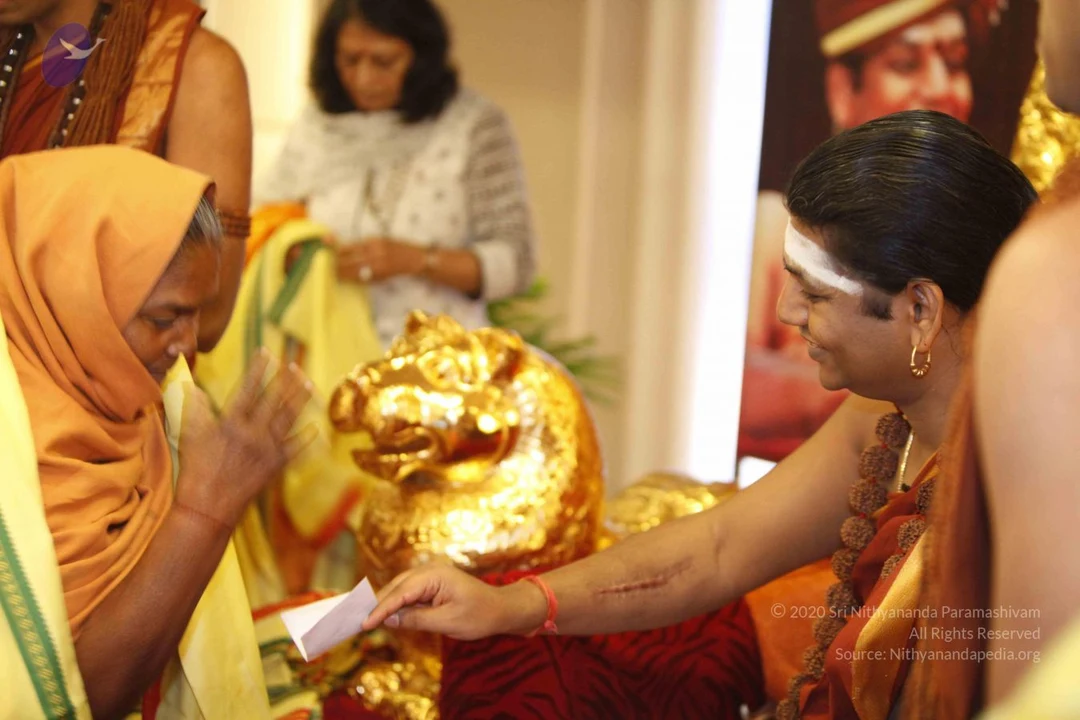
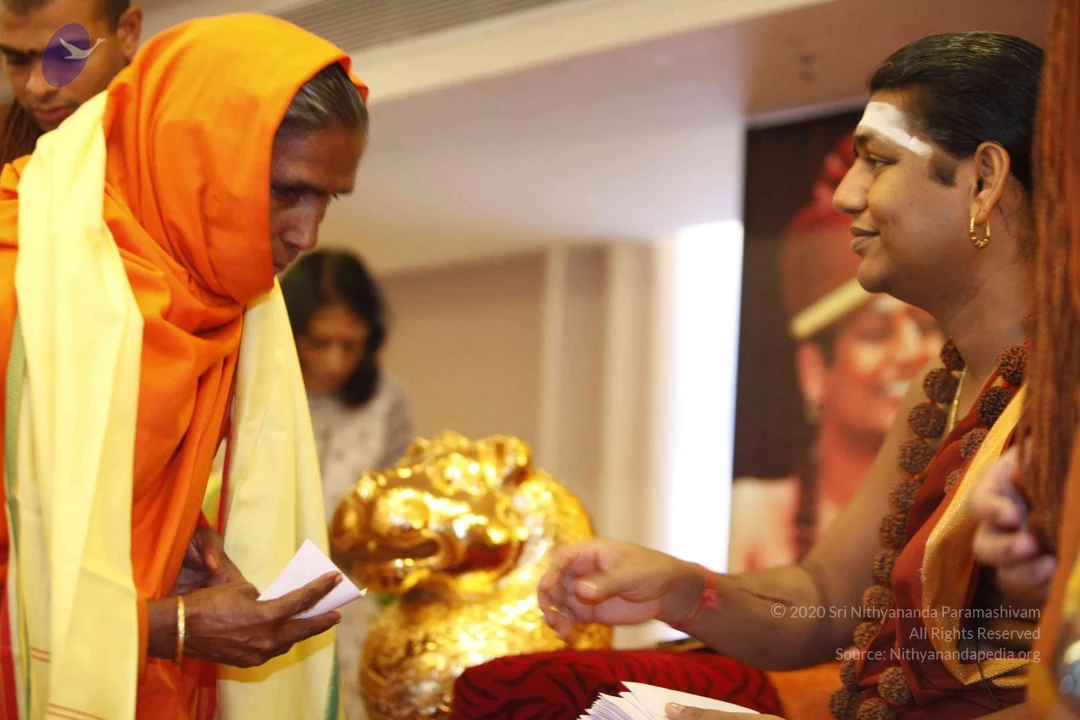
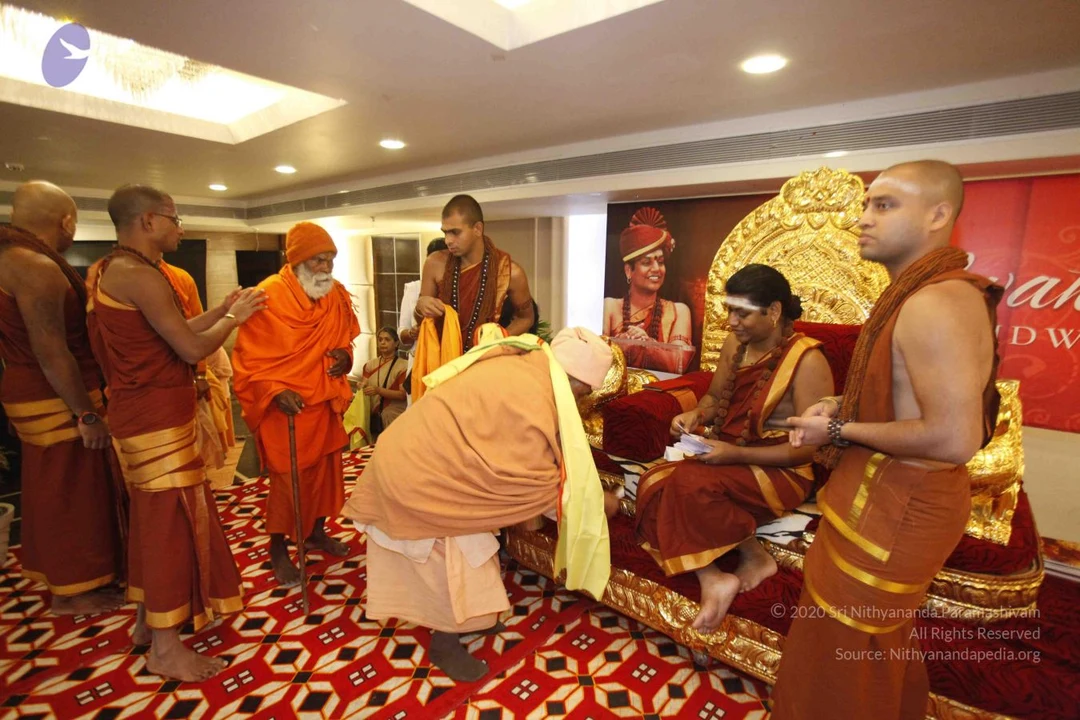
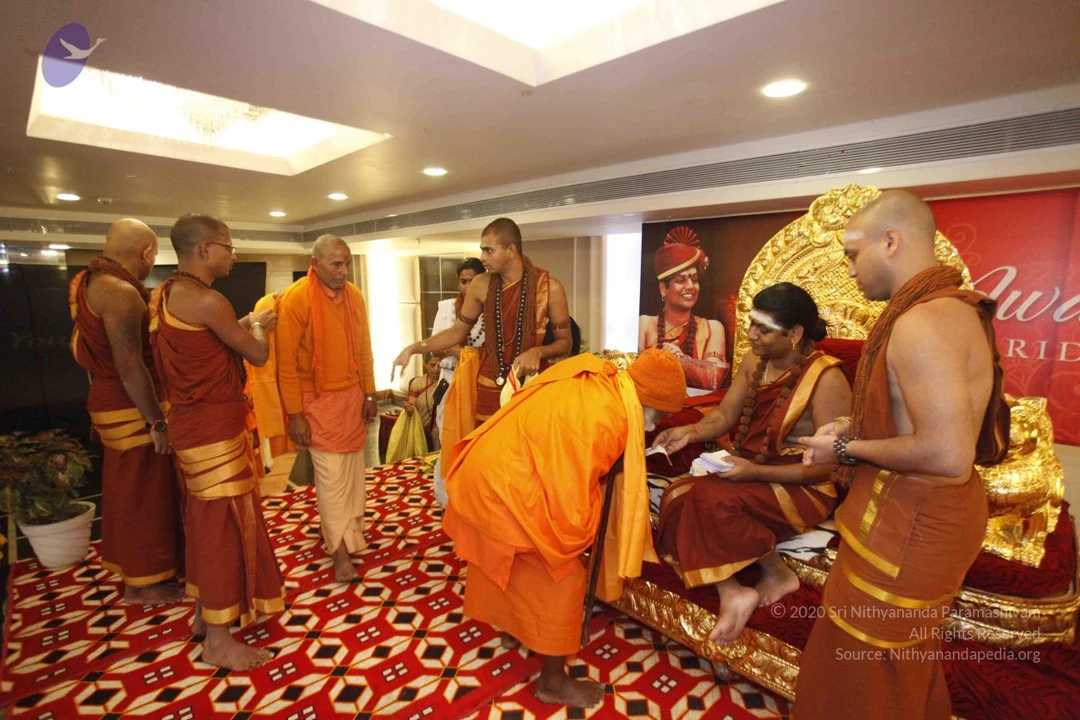
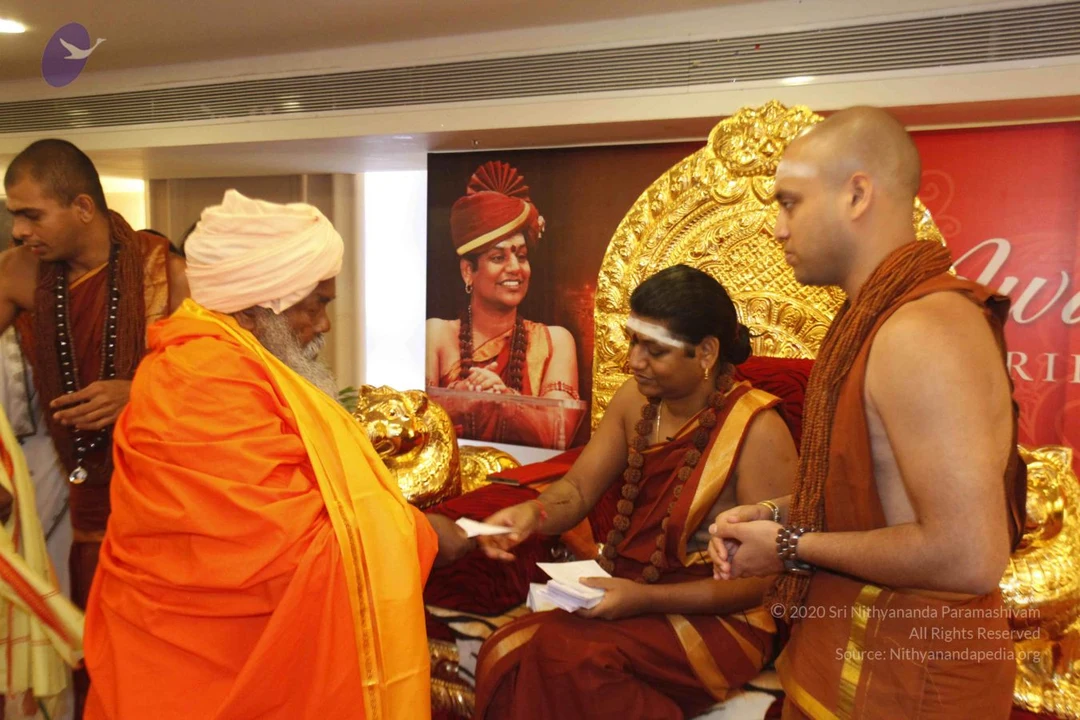
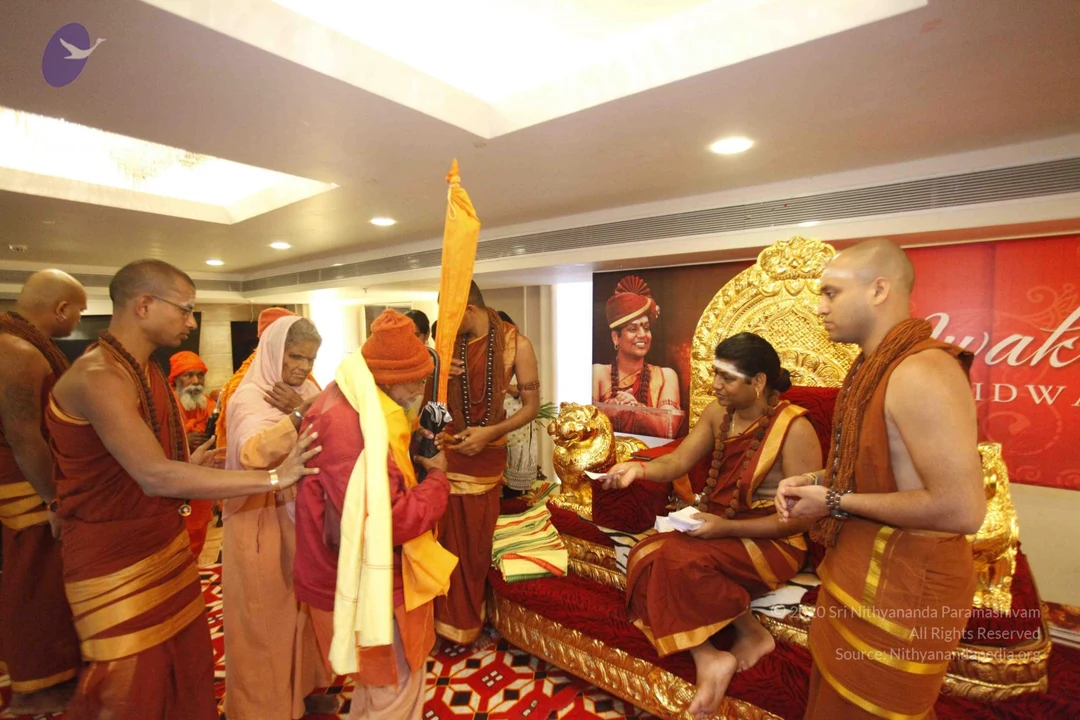
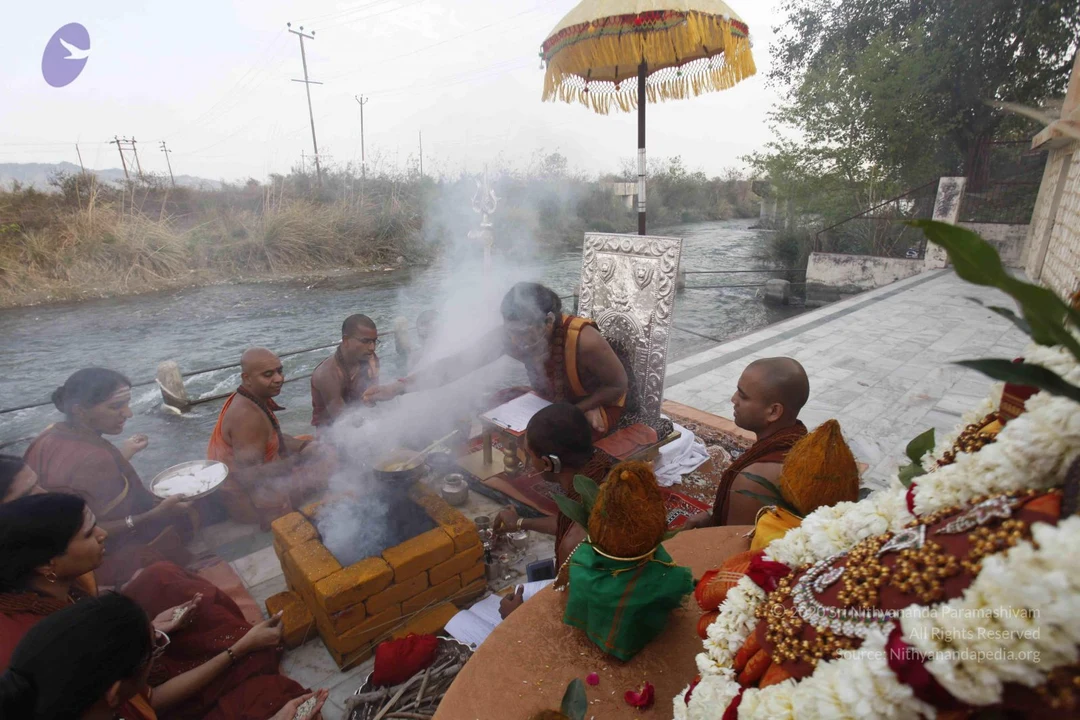
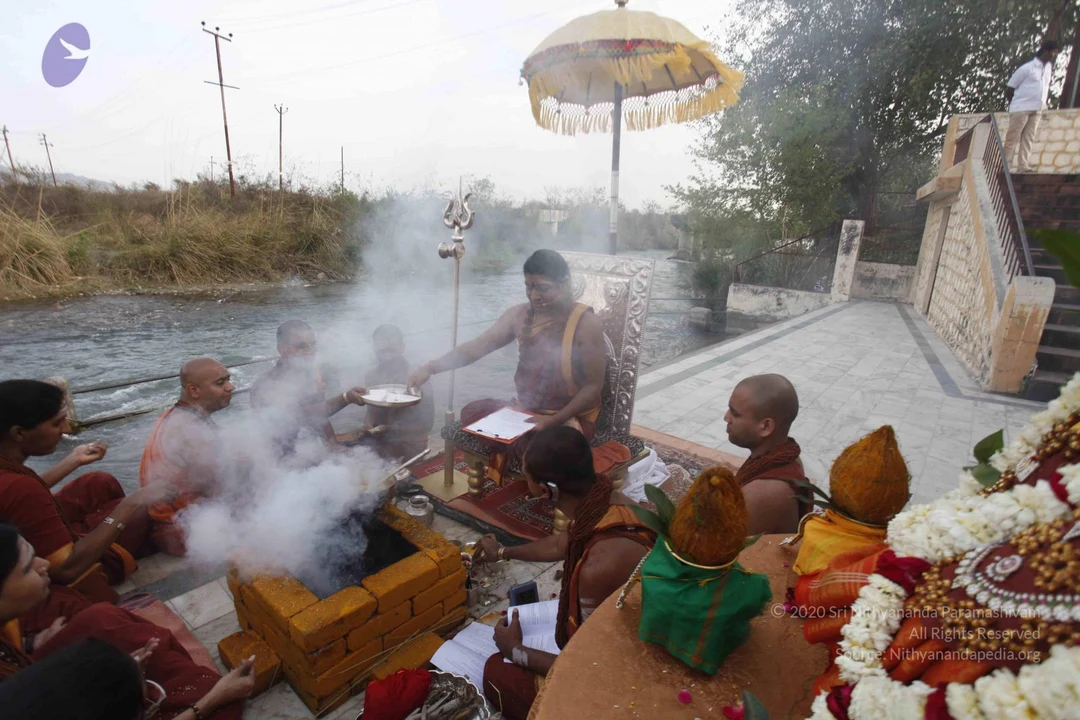
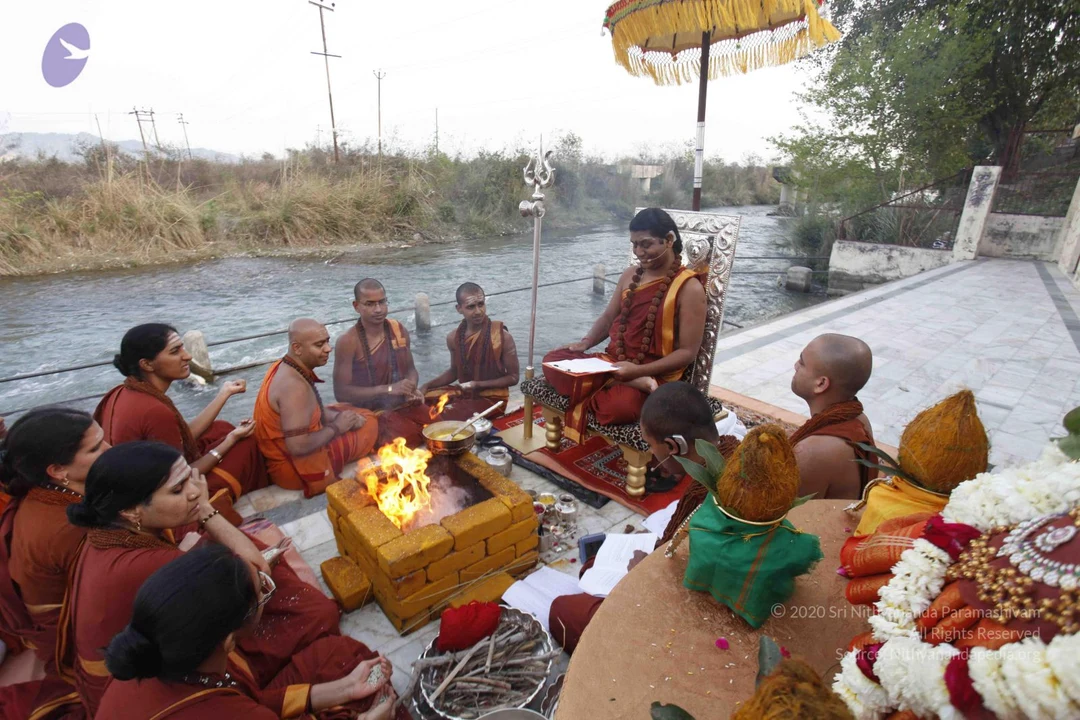
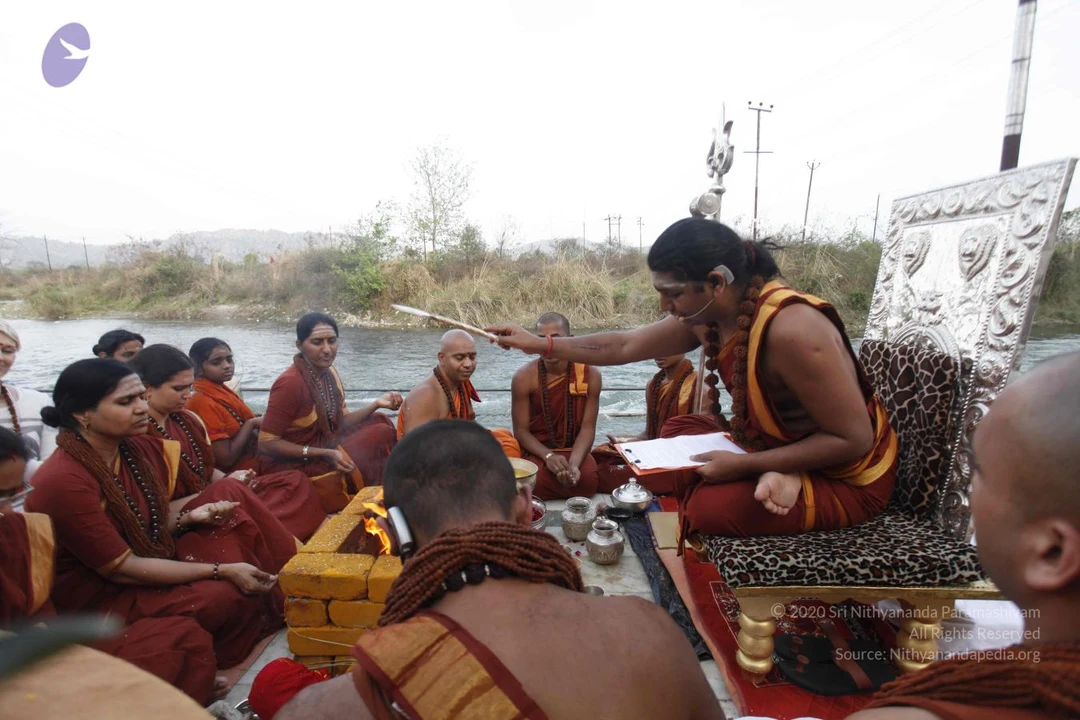
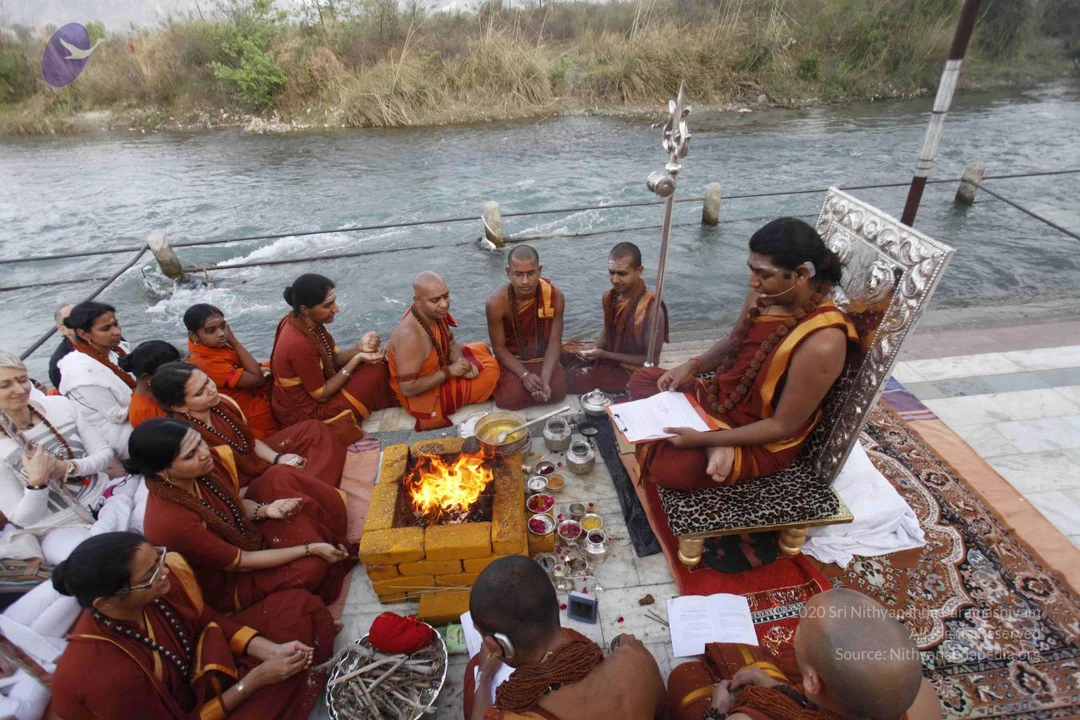
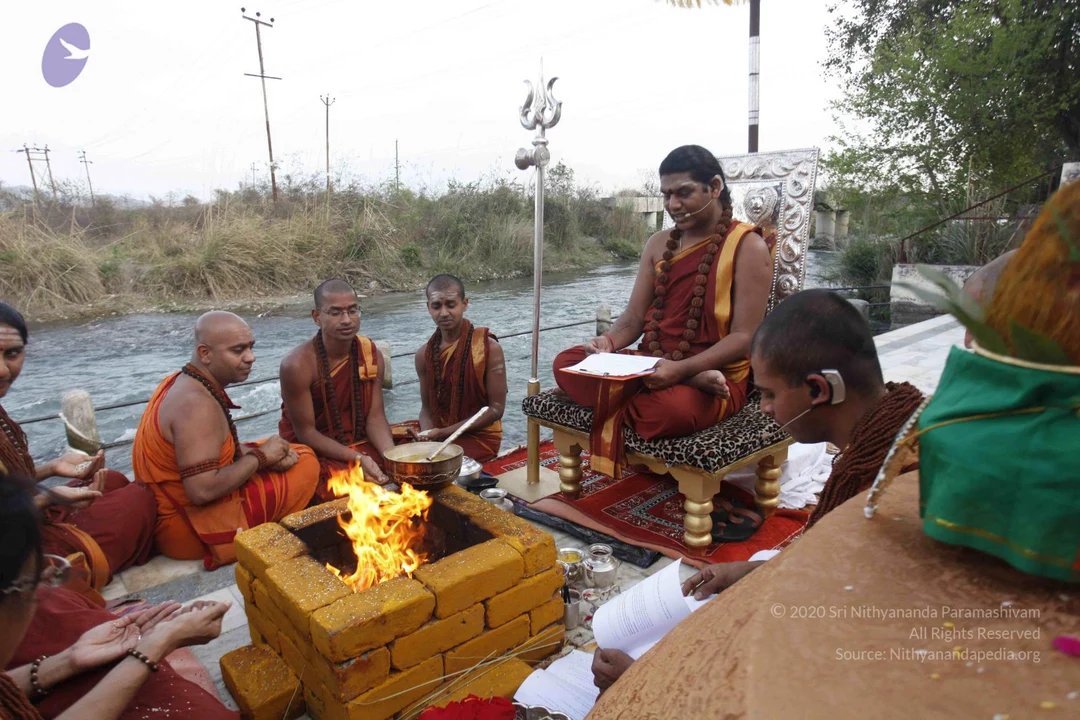
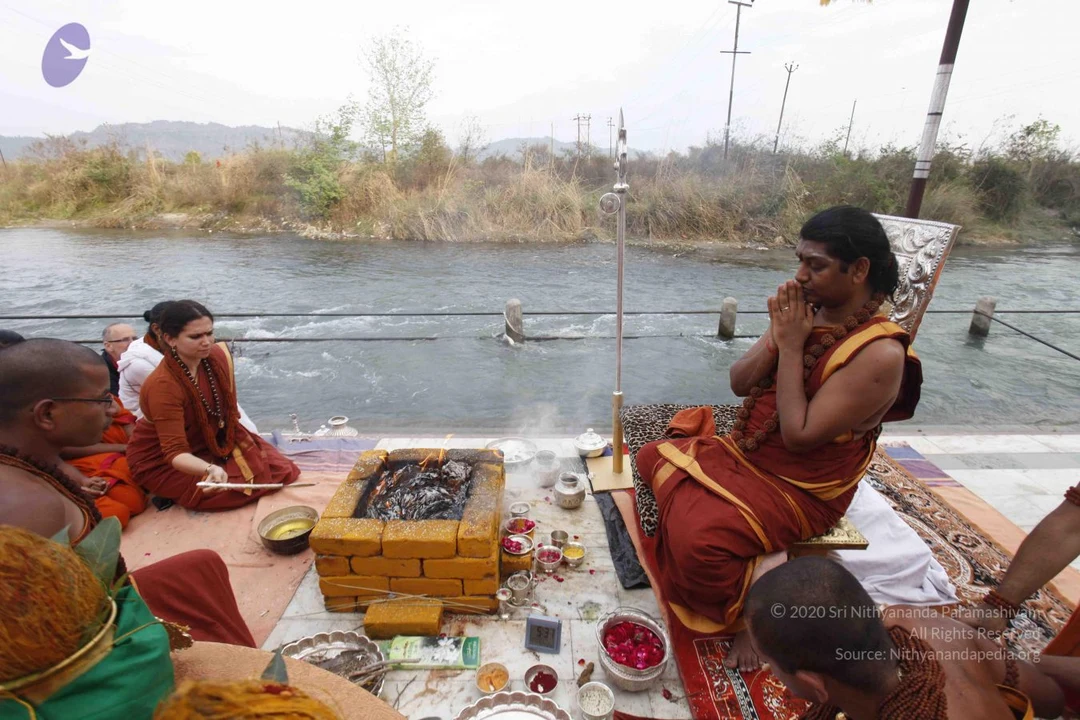
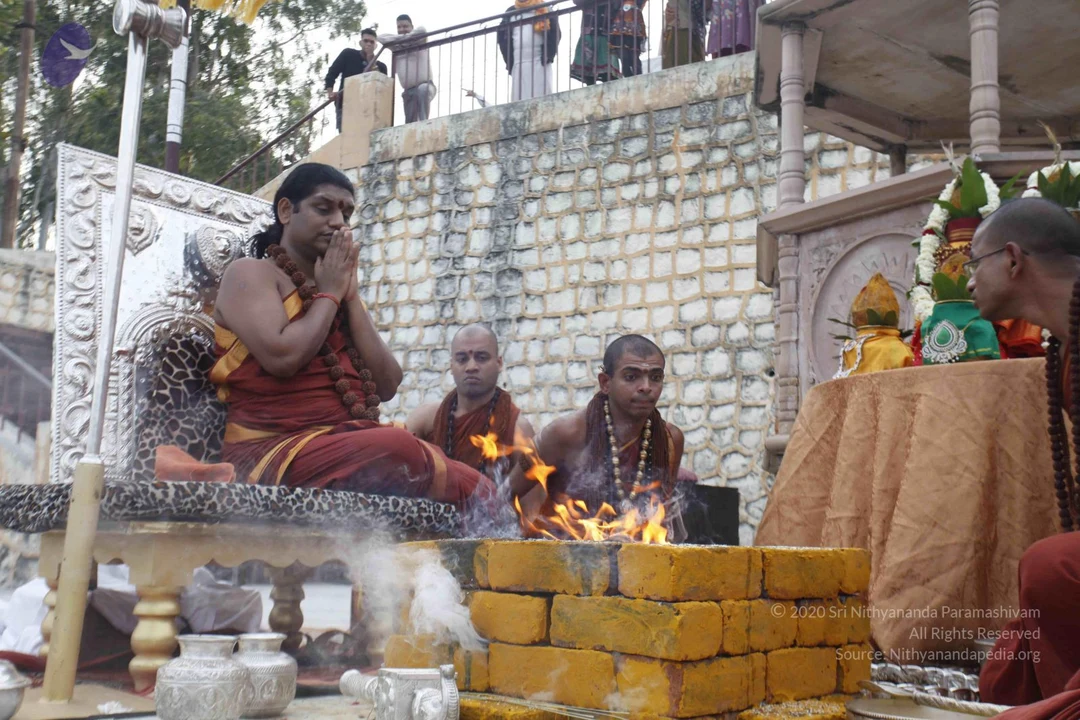
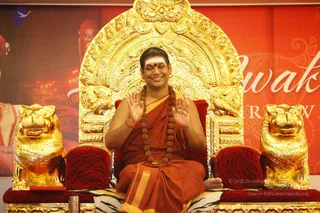
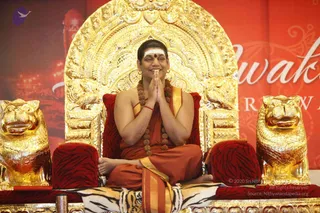
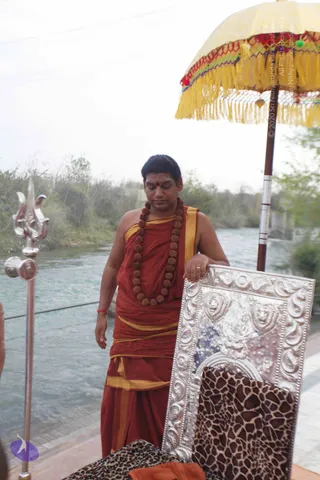
Outdoor river ritual at a riverbank ghat beside flowing water. A smiling man in saffron-orange robes with a long rudraksha mala stands centrally, one hand raised in greeting, his long dark hair swept back. Behind him a bald priest in orange kneels on the stone steps, holding a tray. In the foreground a trident stands beside a brass pot, a brass plate of fruit, a bowl of offerings and a metal vessel on a cloth. Smoke rises from a fire at left, and several white-clad devotees and robed attendants stand on the bank under bare trees and distant hills.A photograph of a devotee in an orange saffron shawl over a cream-and-gold dhoti-style garment, bending forward and holding a folded white paper in his right hand. Facing him is a woman with a white vertical tilak on her forehead, gold hoop earrings, a rudraksha mala necklace and a maroon-and-gold sari with a red sacred thread on her wrist, extending her hand to receive or hand over papers. Between them sits a large golden lion-headed figure and a stack of white papers on a red cloth. Behind them a large banner shows a smiling woman in red with a white forehead mark. Two more people are partially visible in the background, and a wall of white panels frames the room.Outdoor ritual on a riverbank beside a flowing river with bare shrubs and distant hills. Near the water, a fire burns in a rectangular pit lined with bricks, with copper-coloured pots and offering vessels on a red cloth. Several people sit in a semicircle in saffron and maroon robes with rudraksha malas, some with bare shoulders and shaved heads. A man on the right, seated on an ornate silver-backed throne with a leopard-print cushion, wears an orange-saffron shawl over his shoulders, long swept-back dark hair, a rudraksha mala and a gold ornament; he holds a long white ritual stick extended toward a seated devotee's head, apparently performing a blessing during a homa-style fire ritual. Women in red and orange robes sit to the left with hands folded. Swamiji (probable) is the seated figure on the throne, identified by long swept-back hair, saffron shawl, rudraksha mala and ceremonial gold ornament, in the role of the officiating presiding teacher.

March 24 2014

Original wiki page
Contents

Title

Karma is Just your Belief in Impossibility

Narration

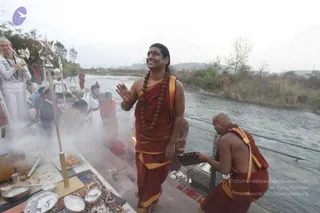
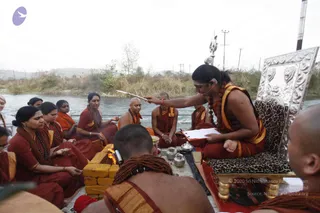
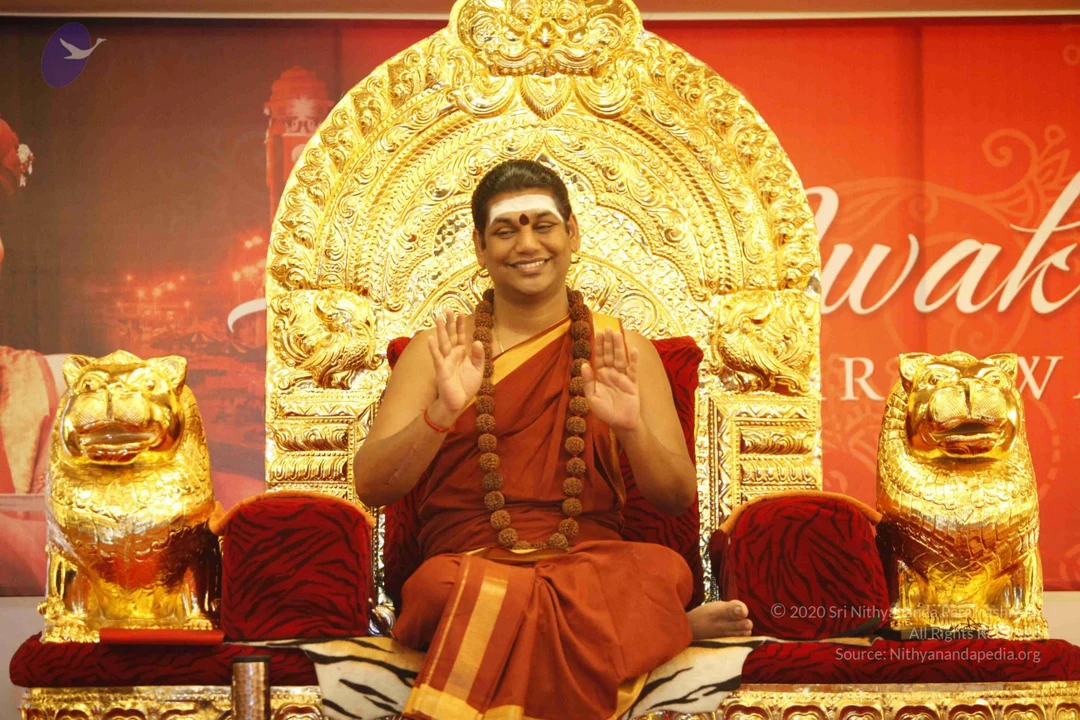
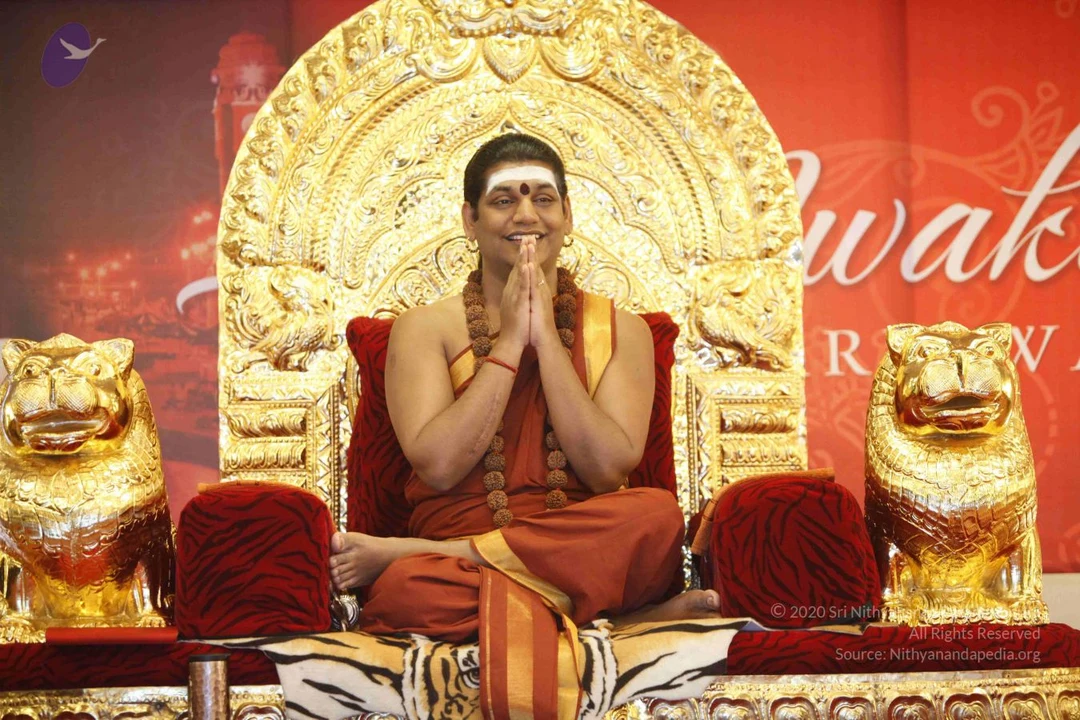
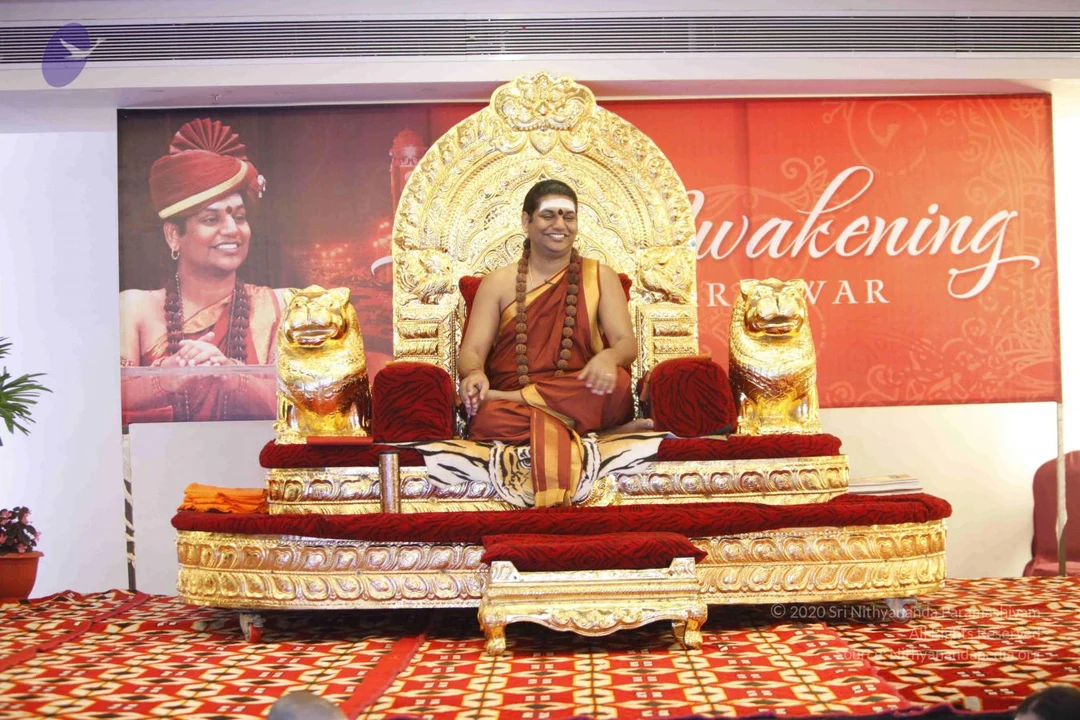
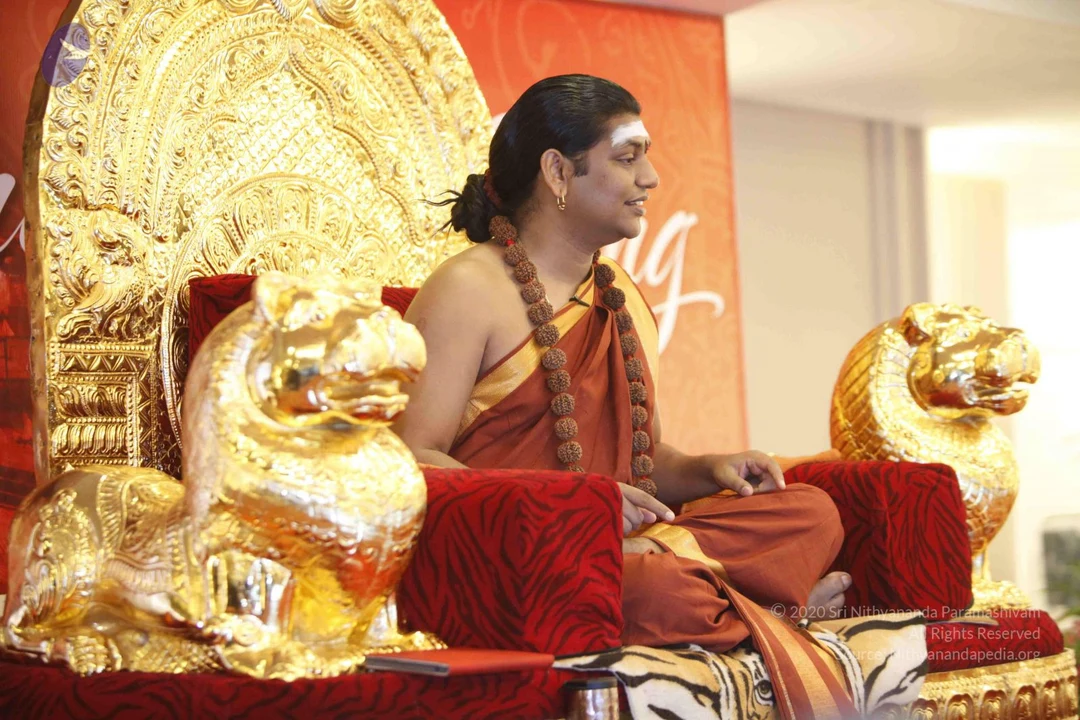
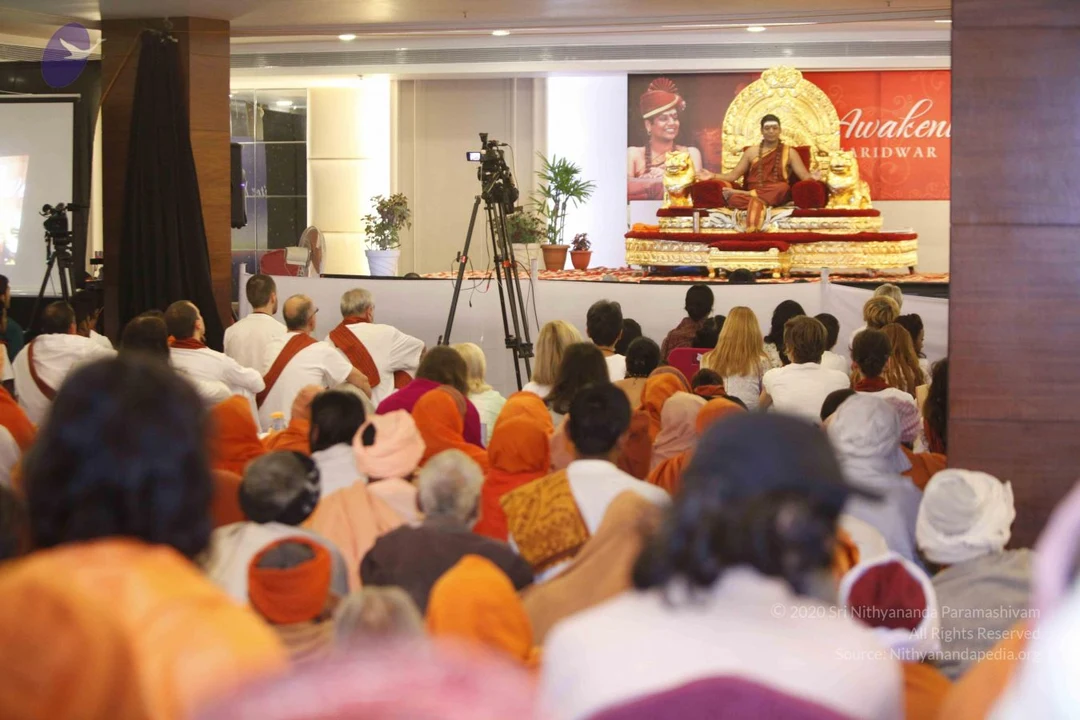
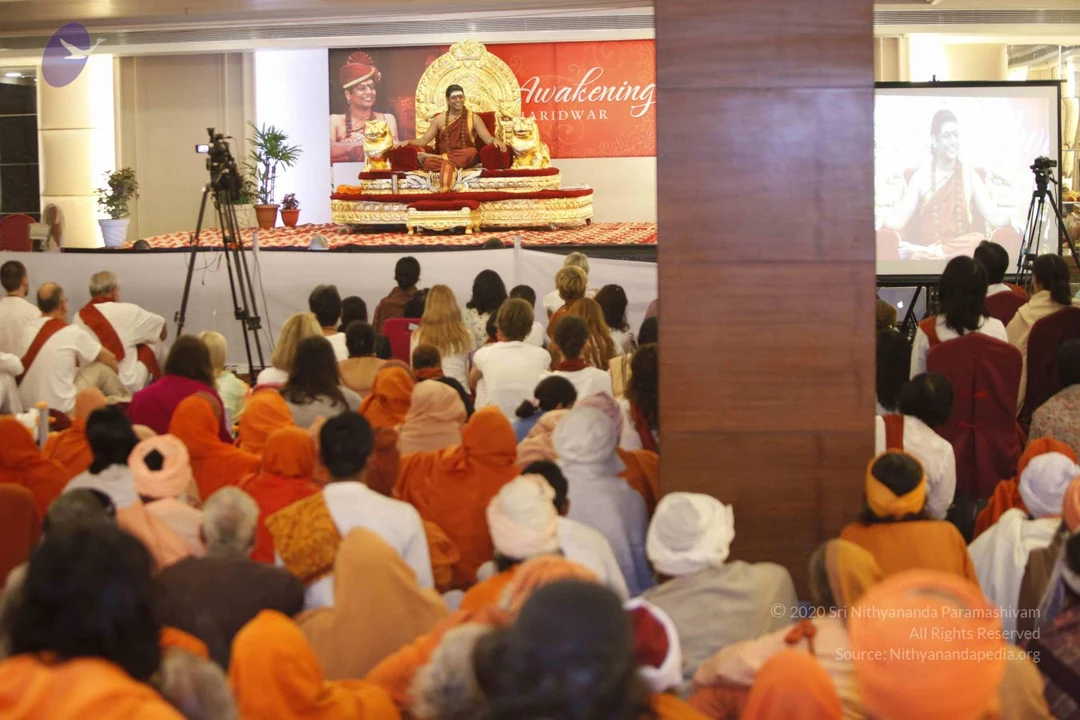
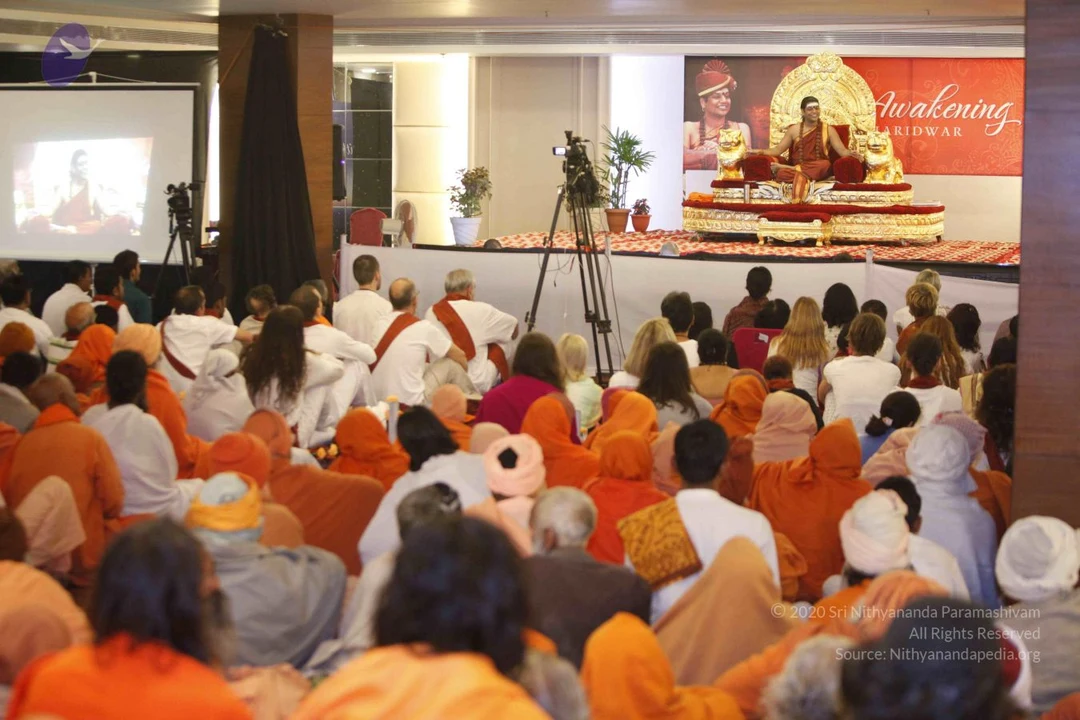
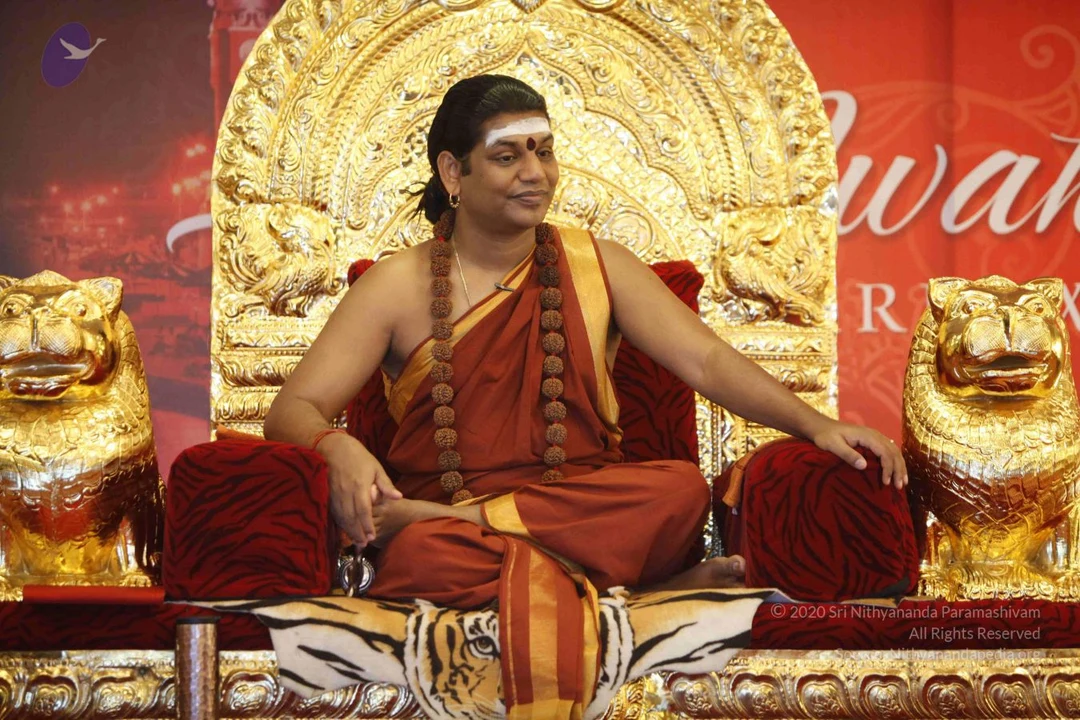
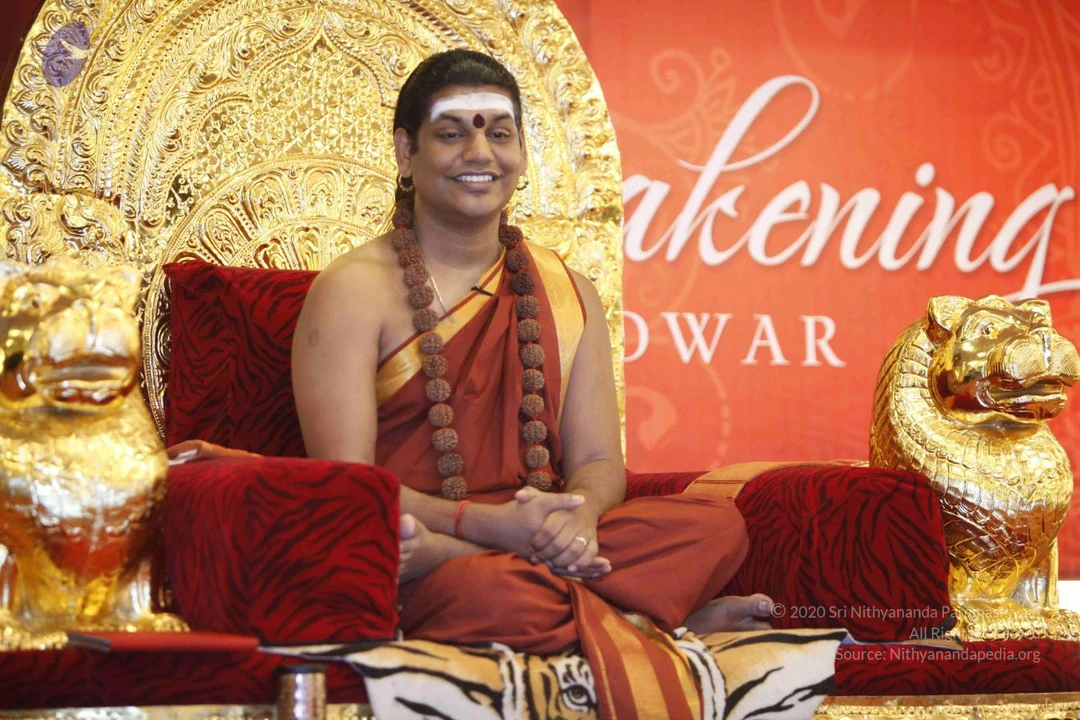
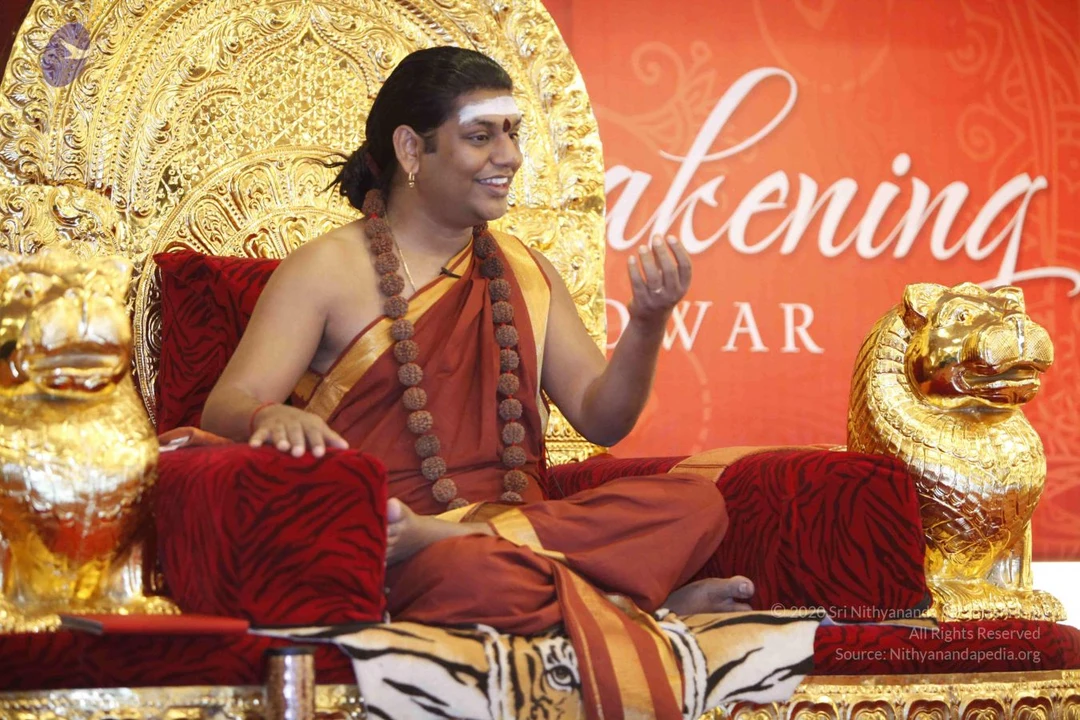
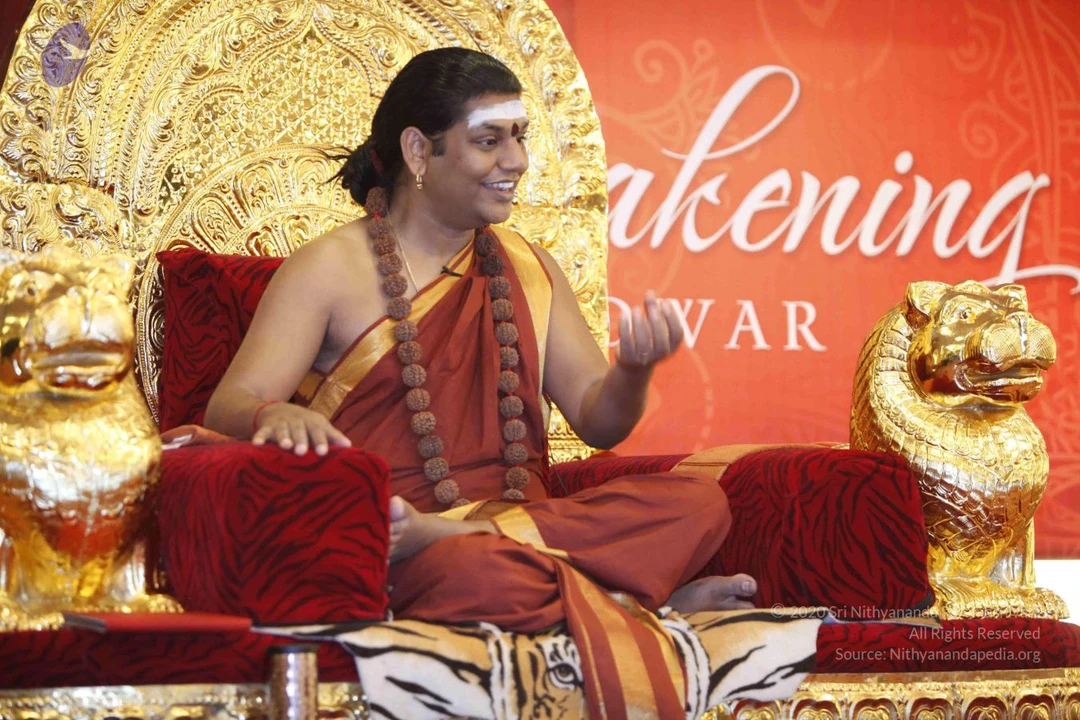
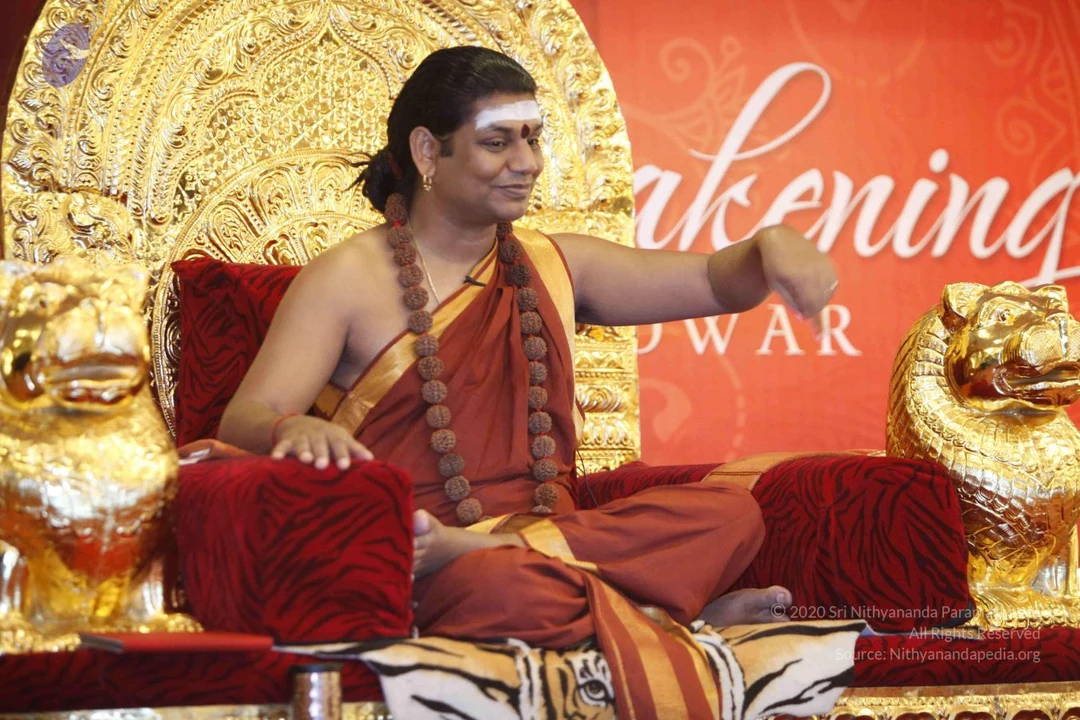
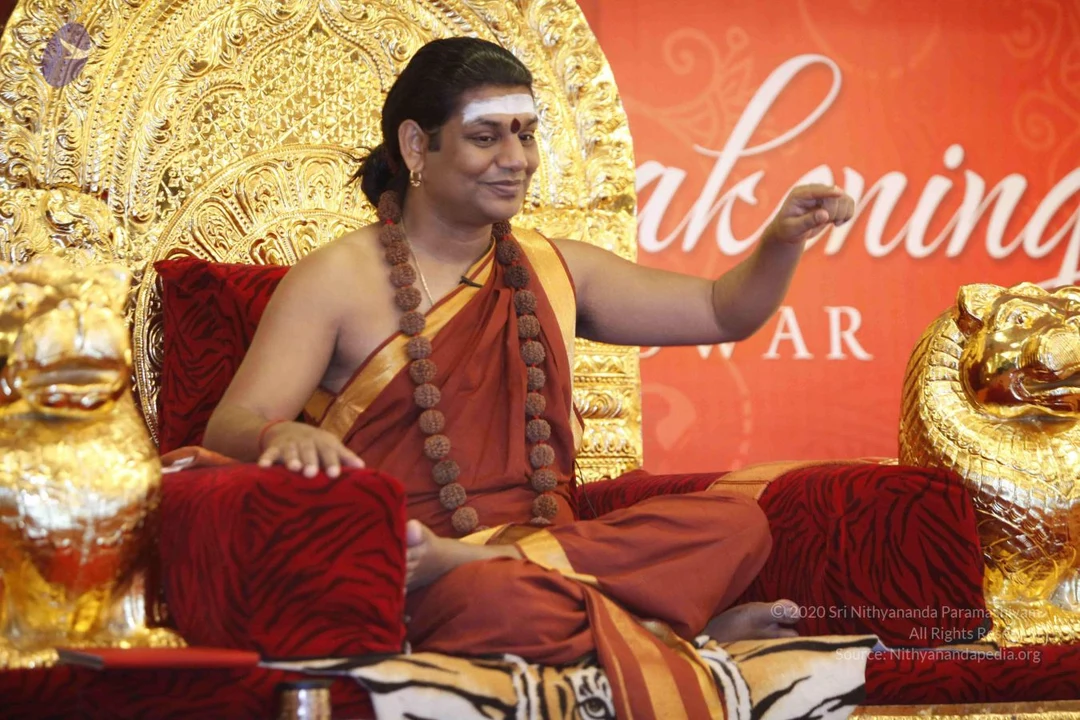
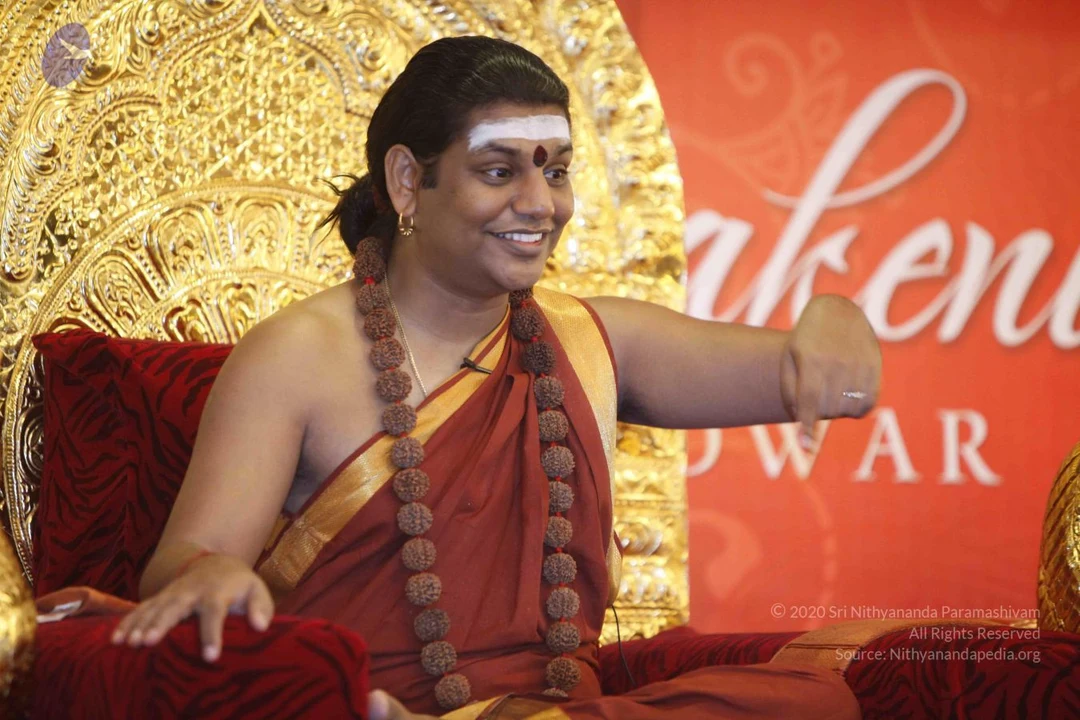
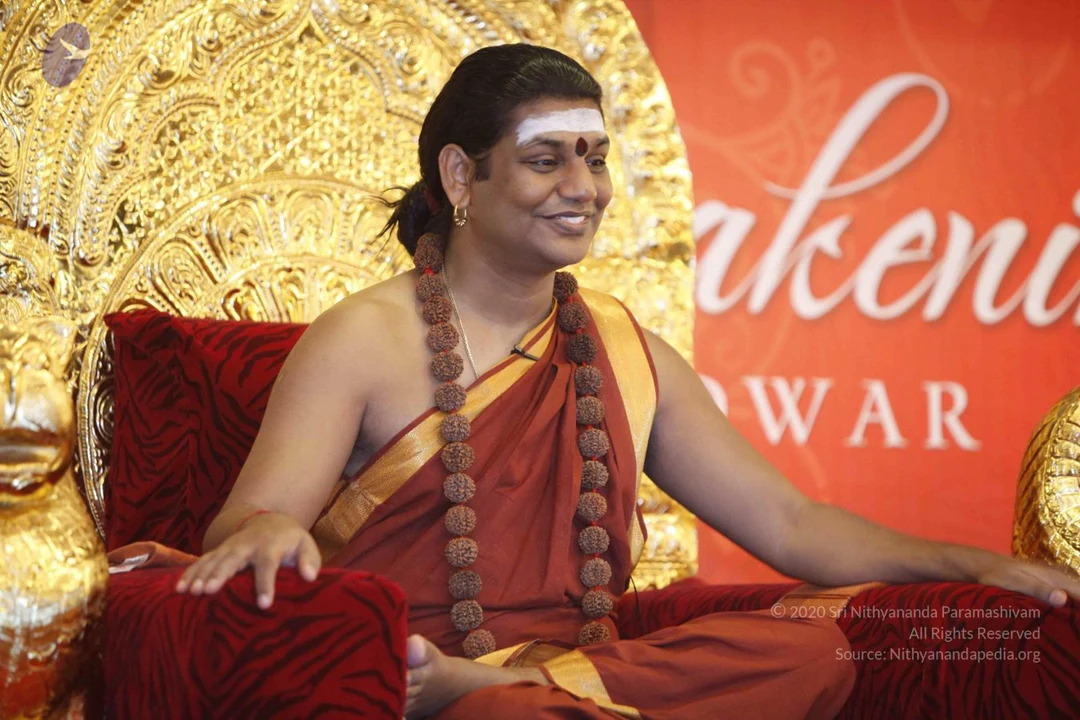
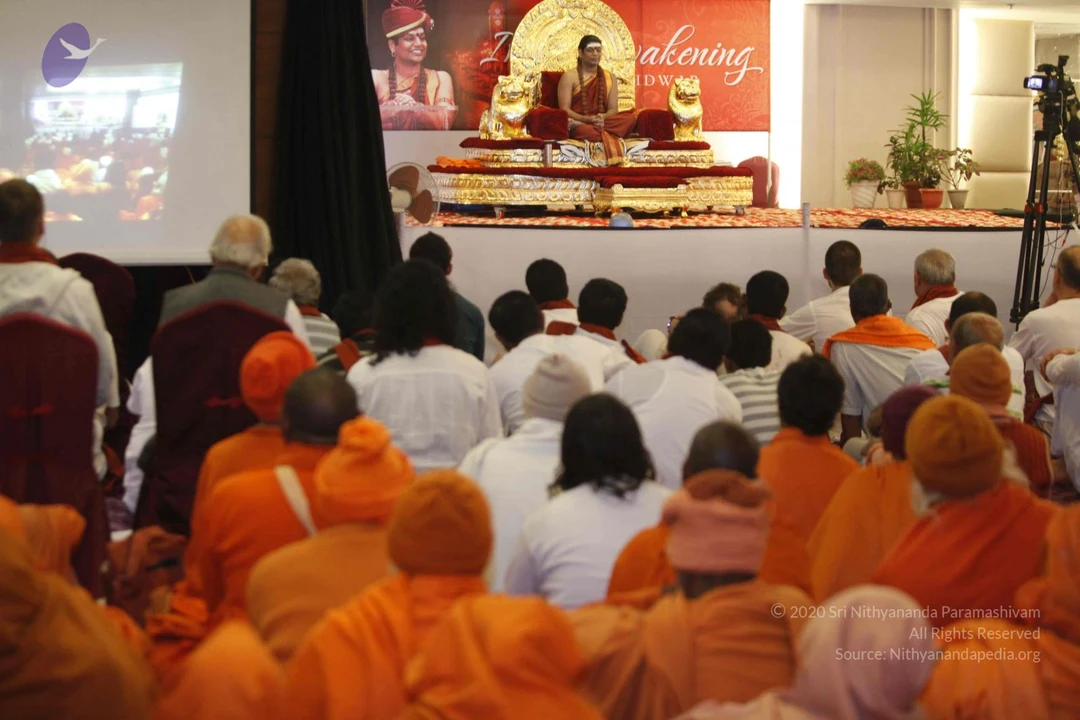
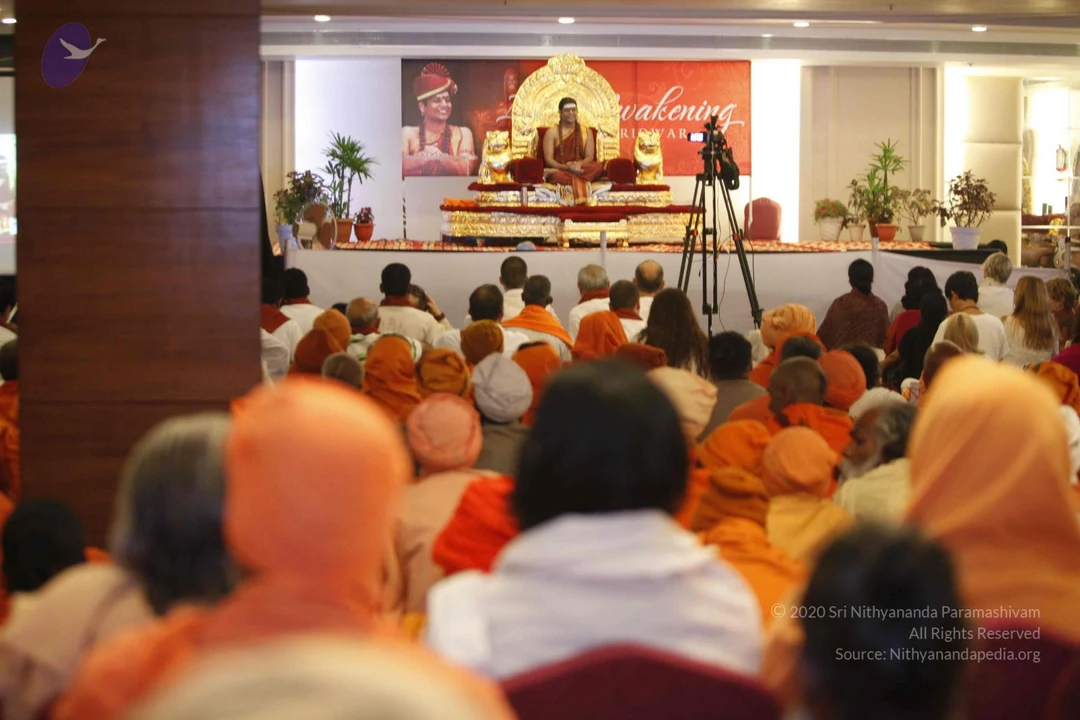
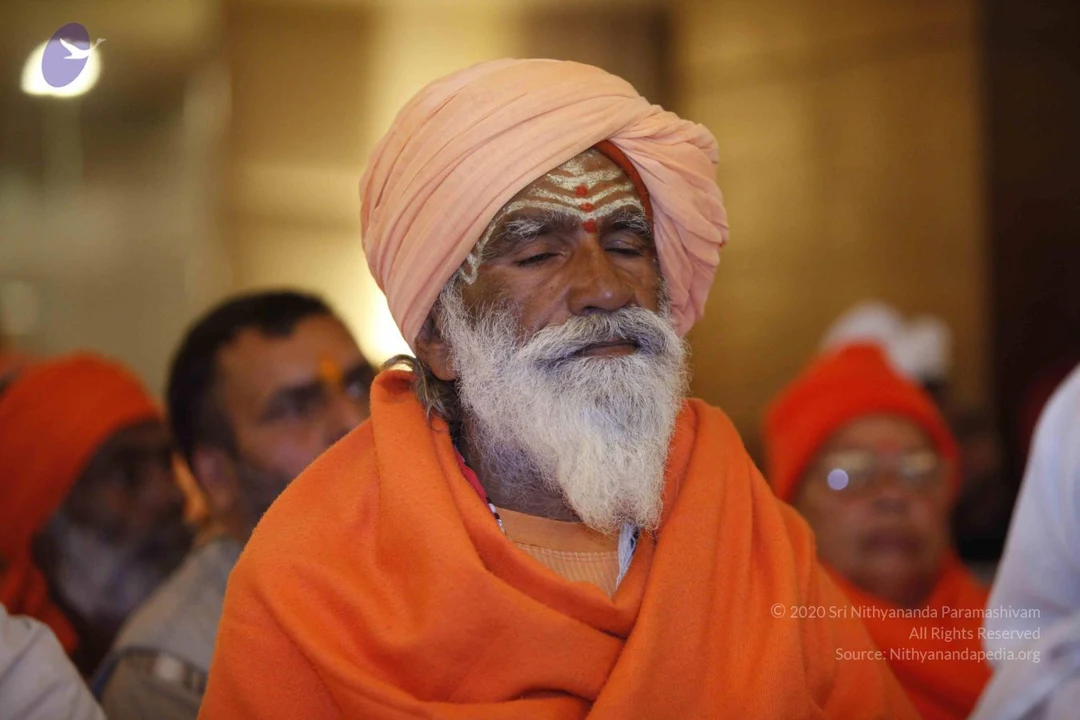
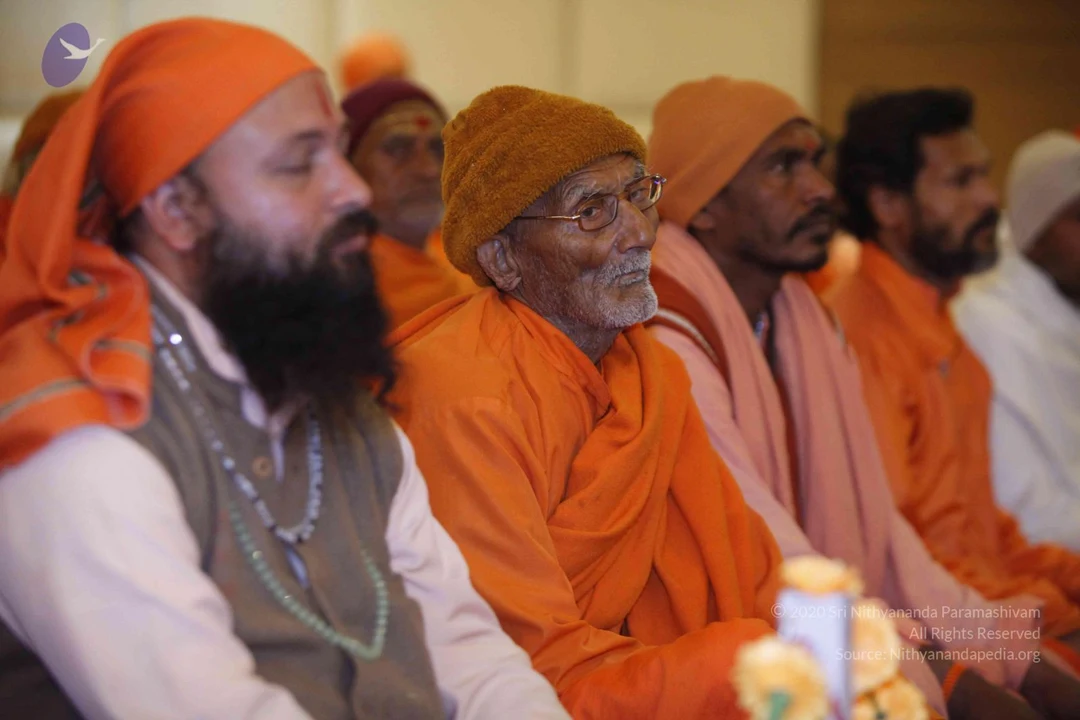
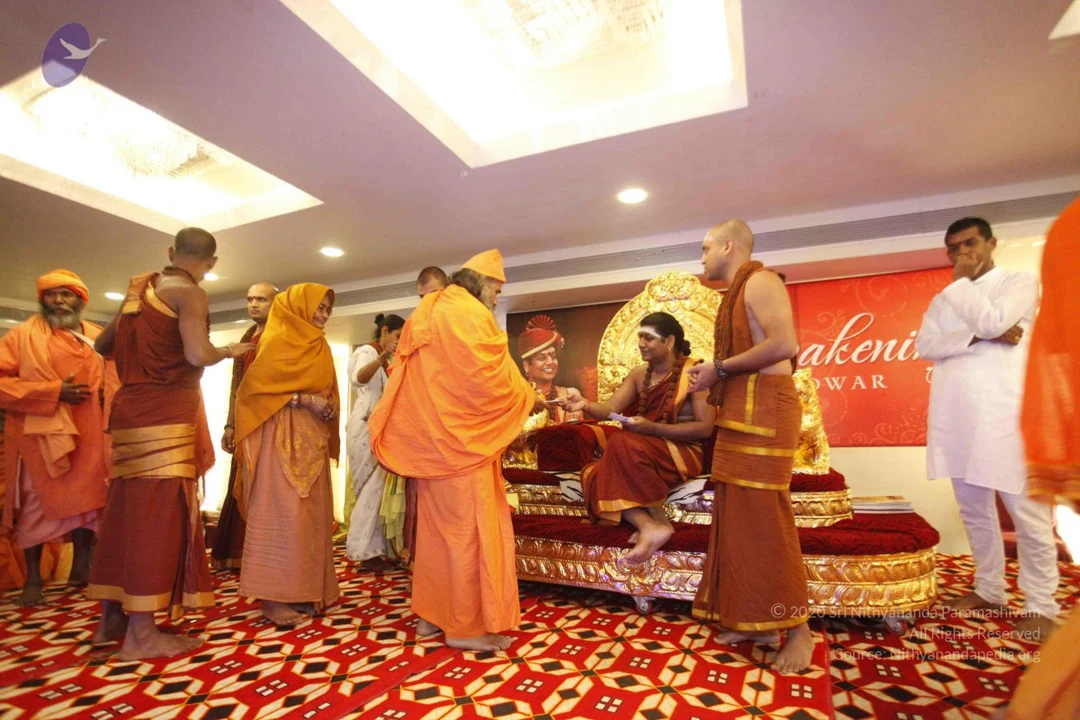
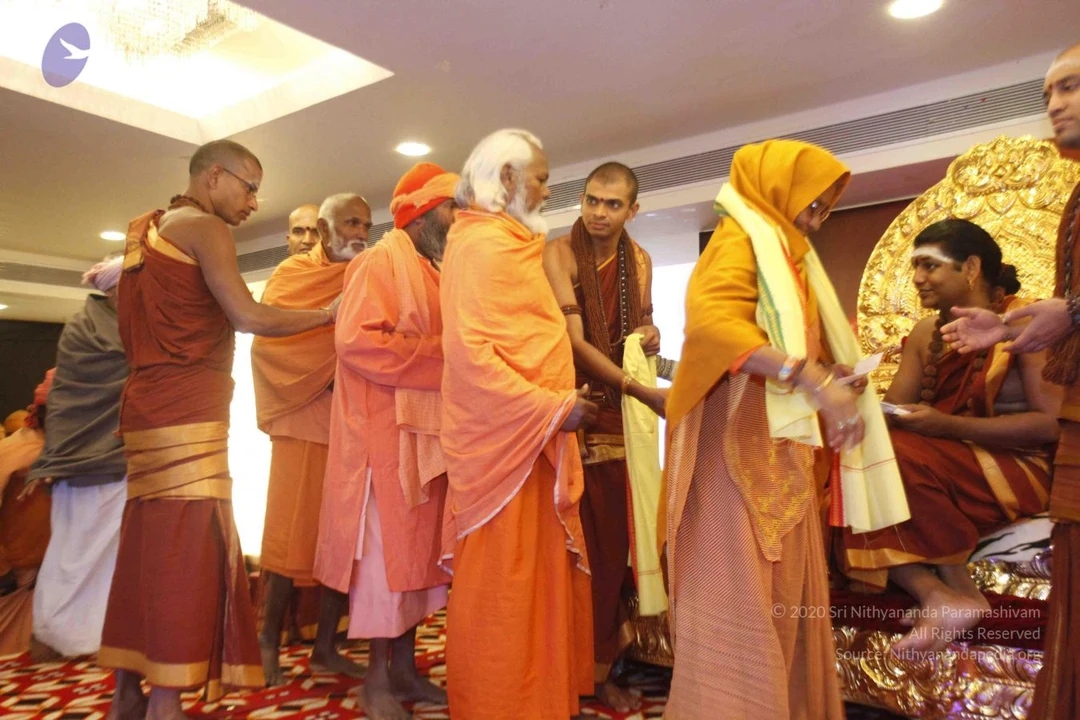
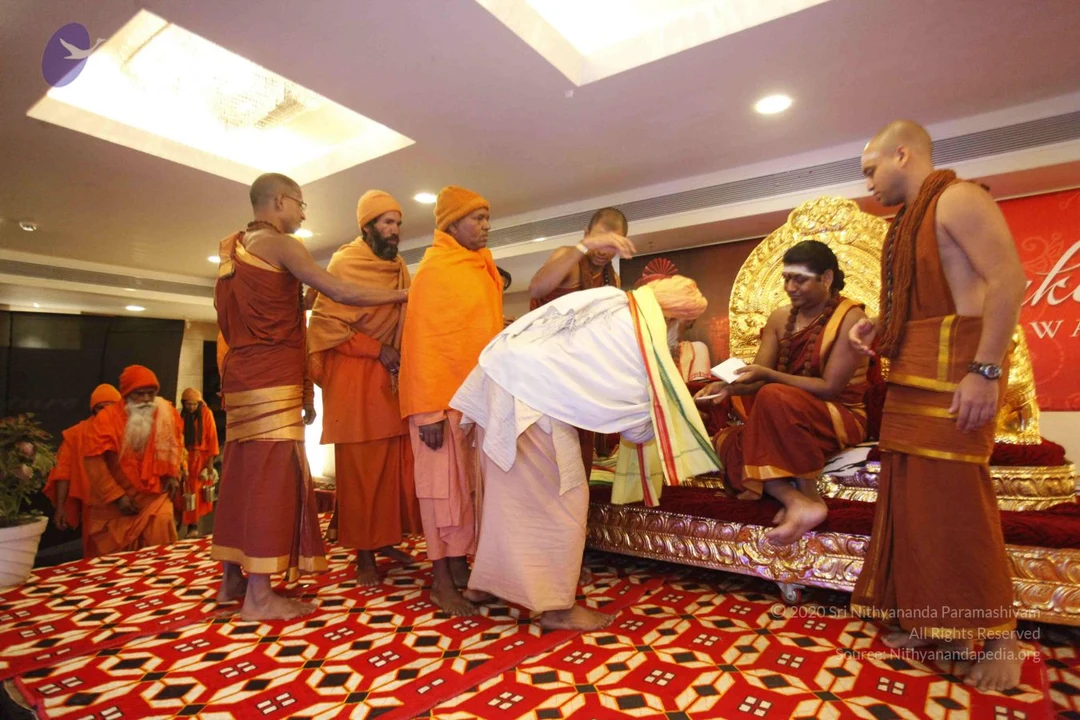
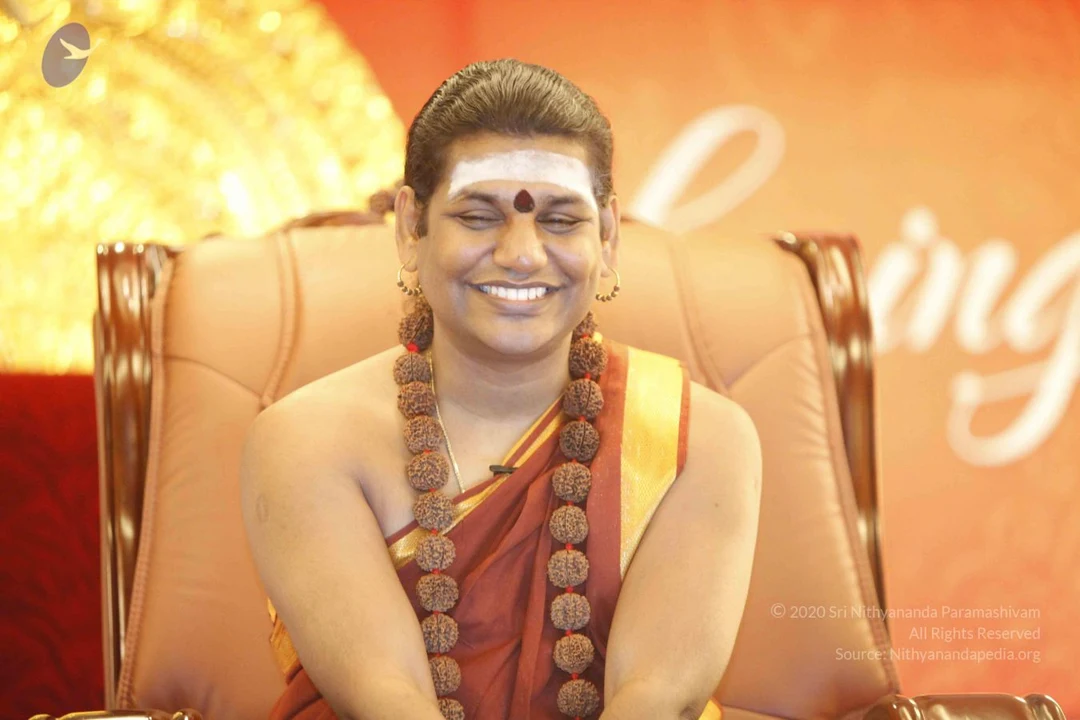
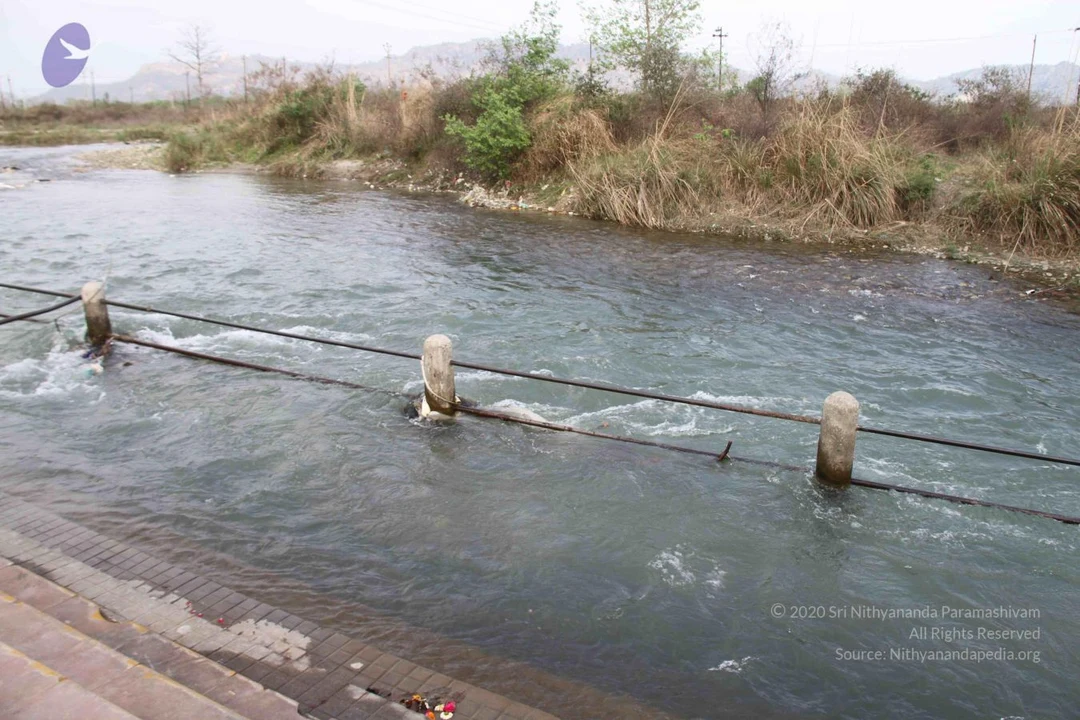
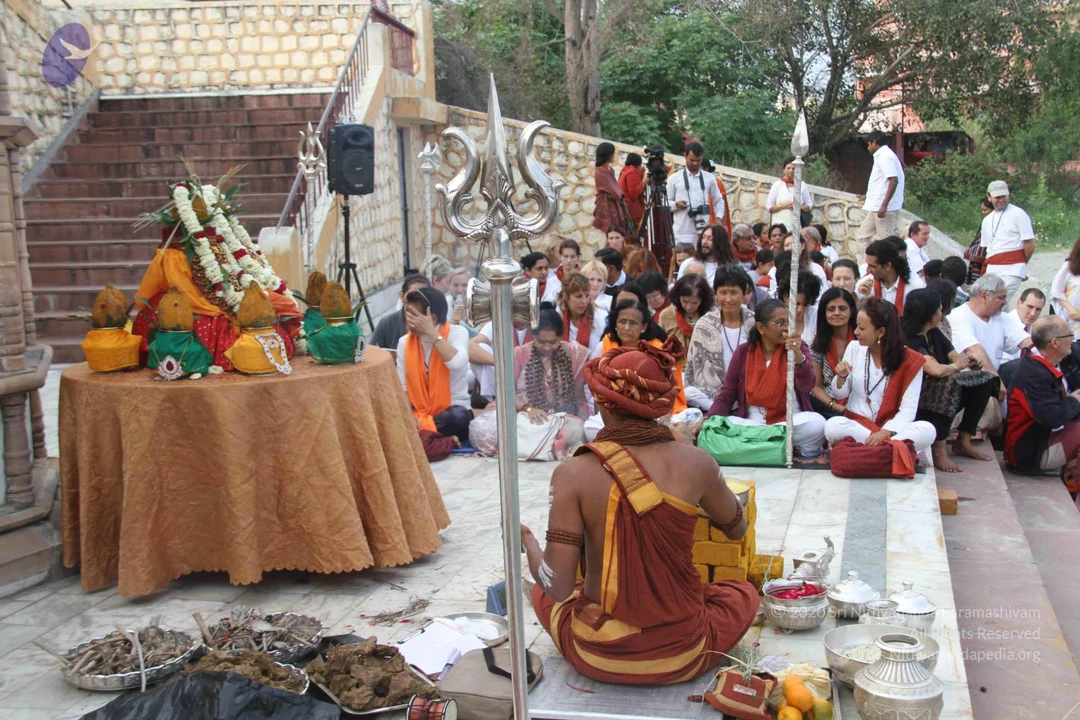
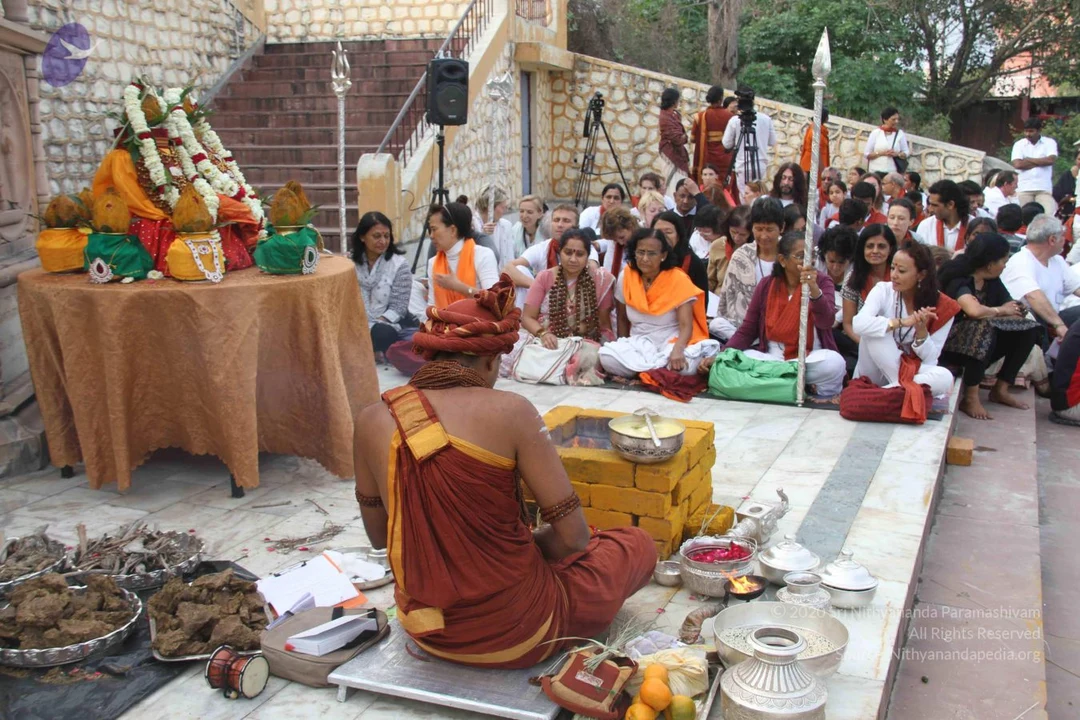
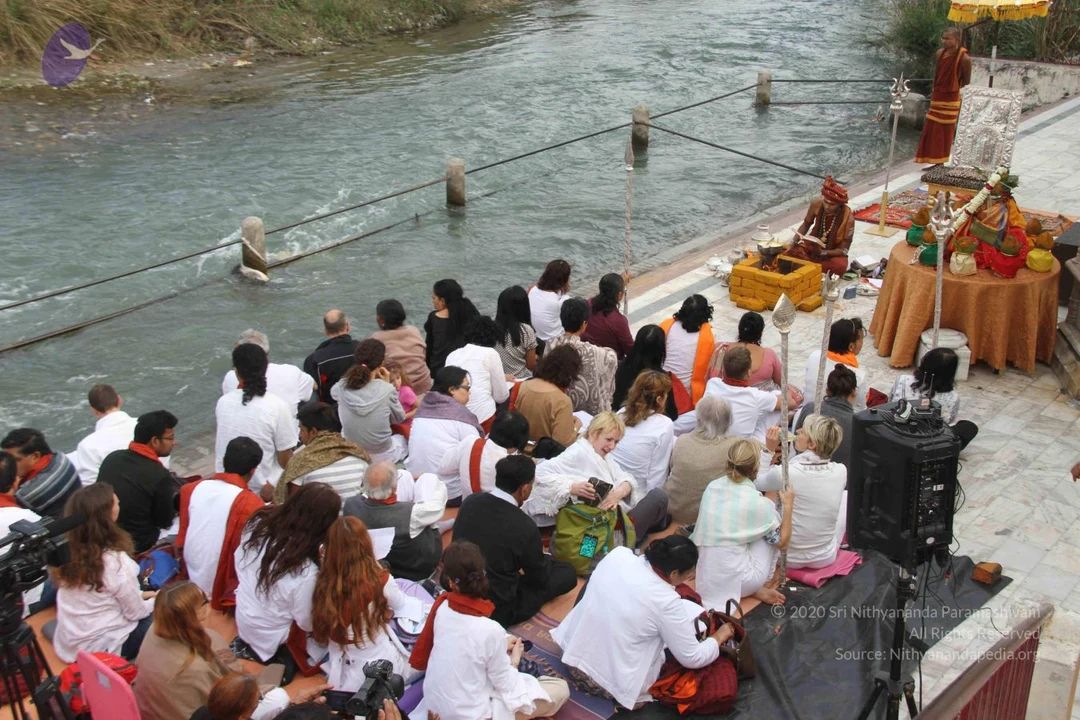
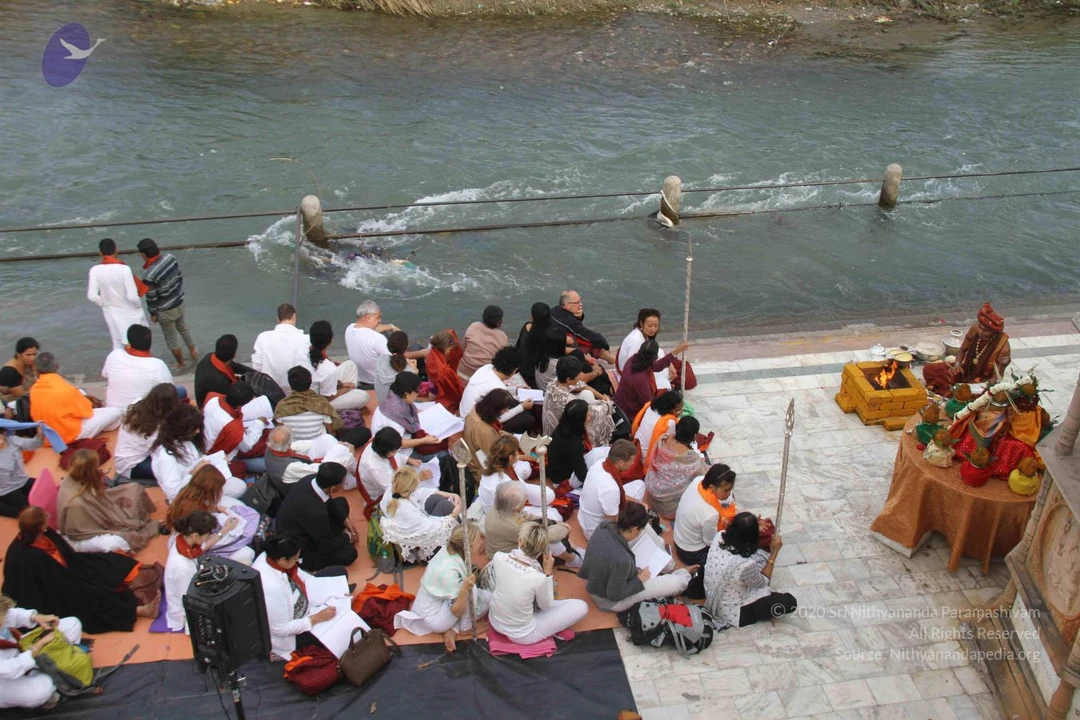
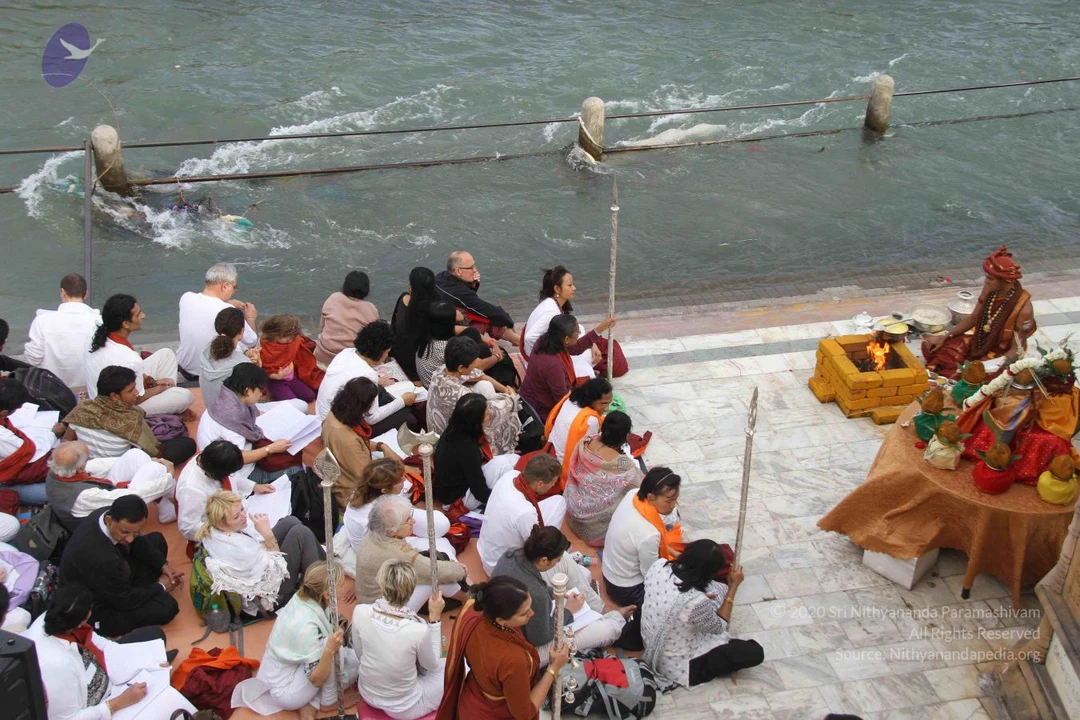
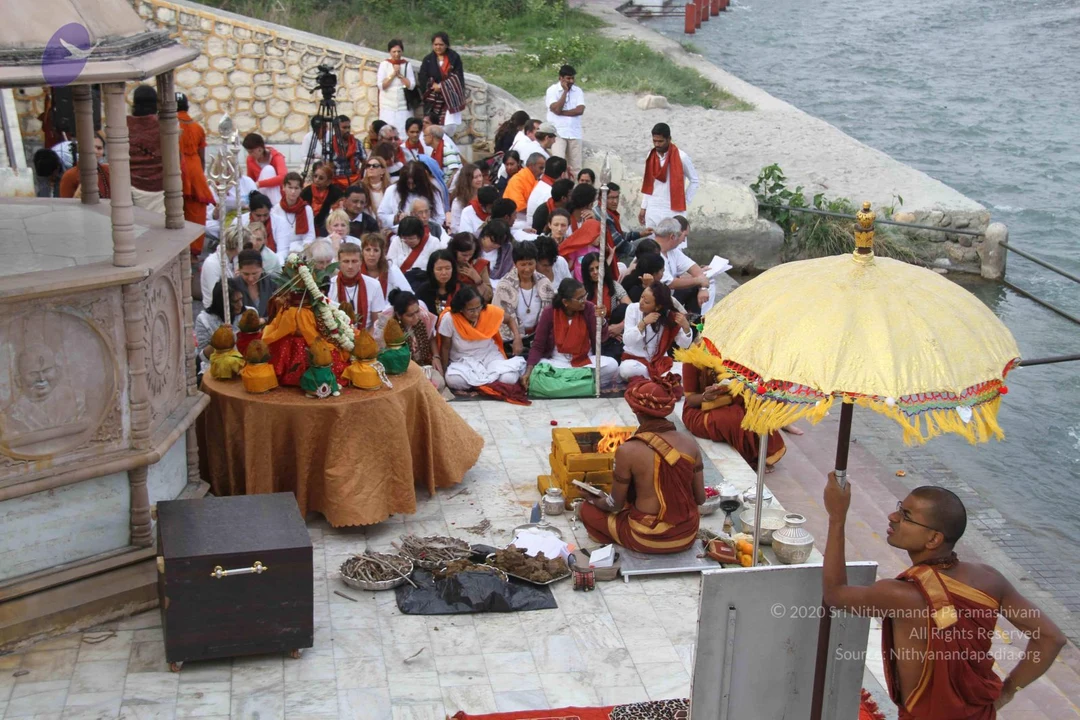
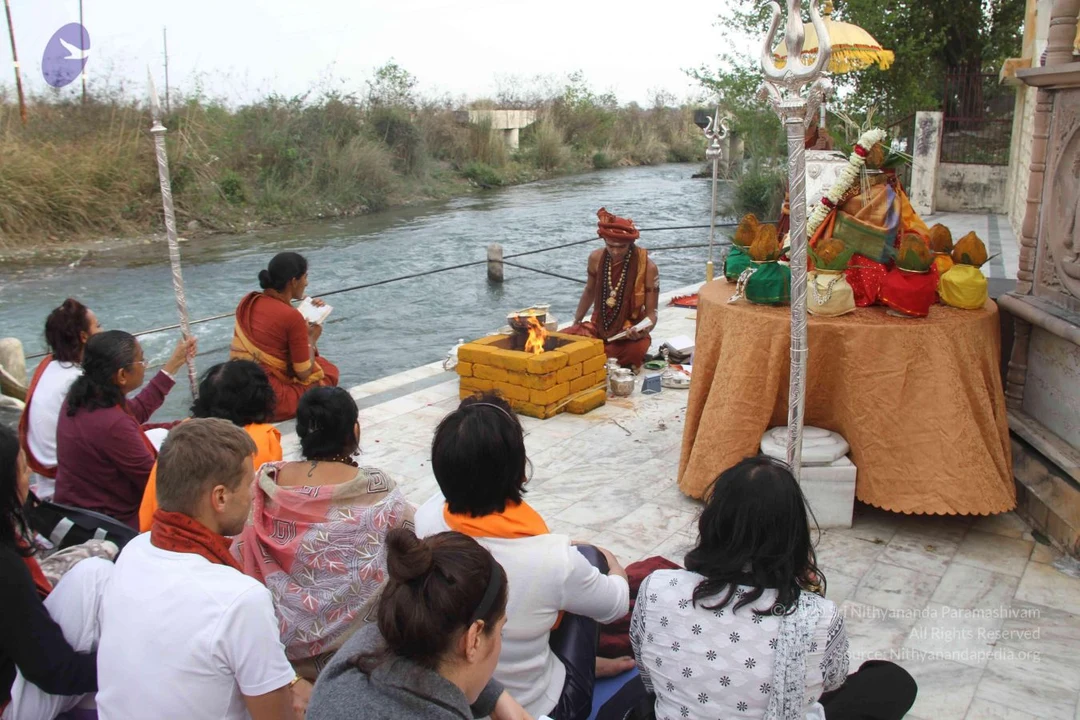
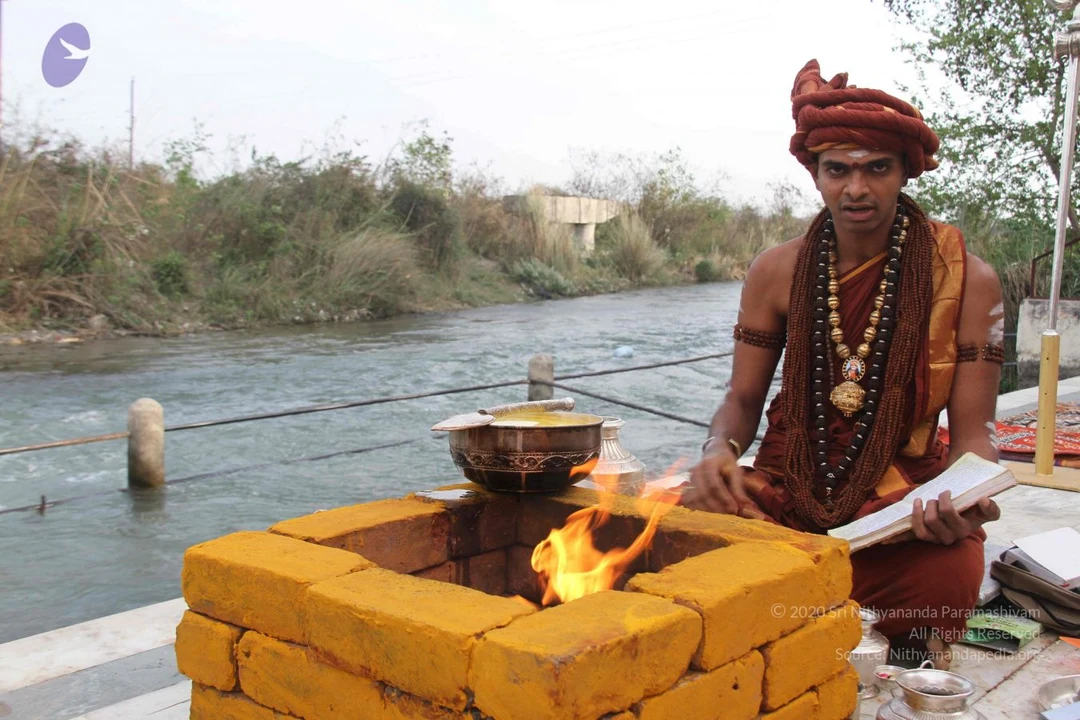
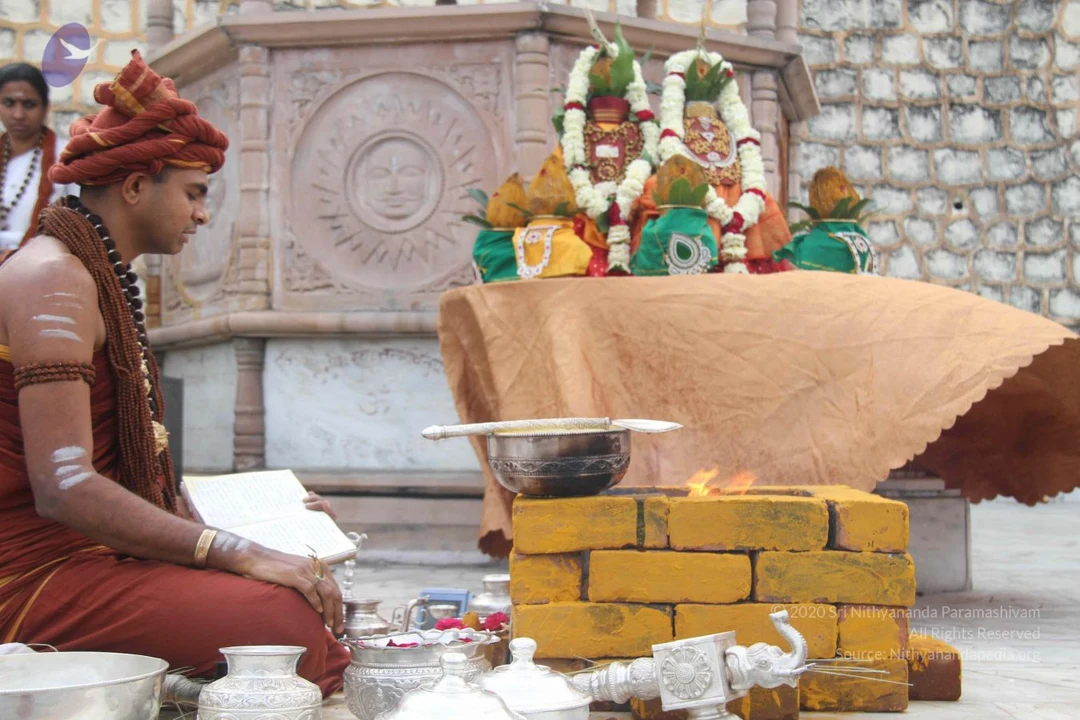
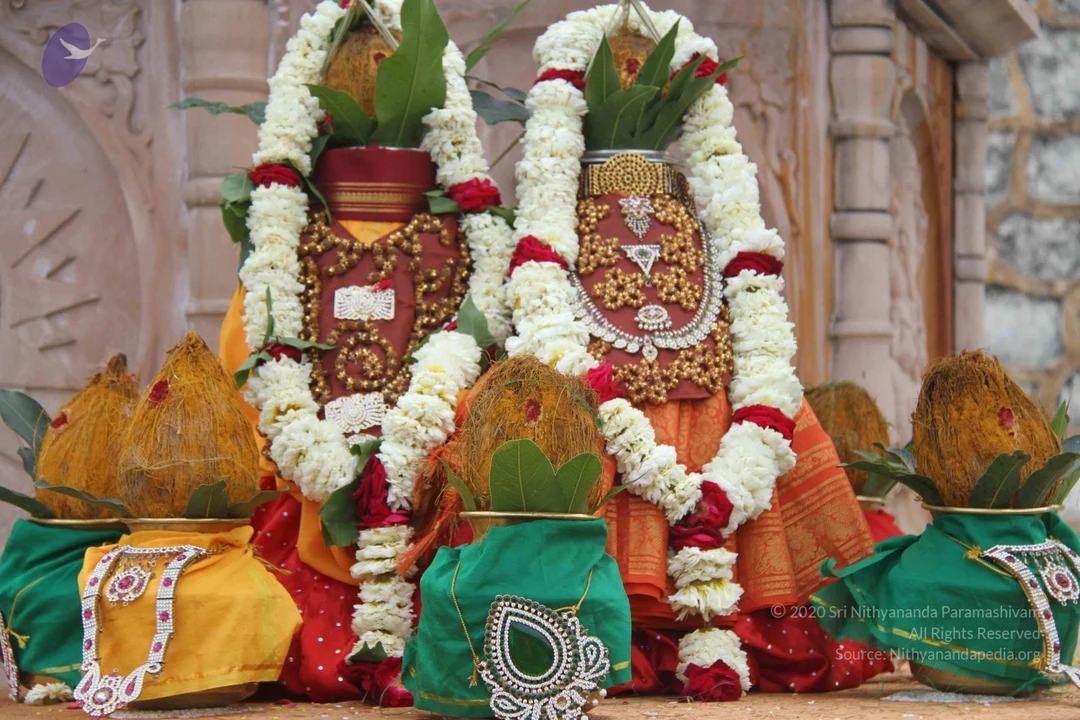
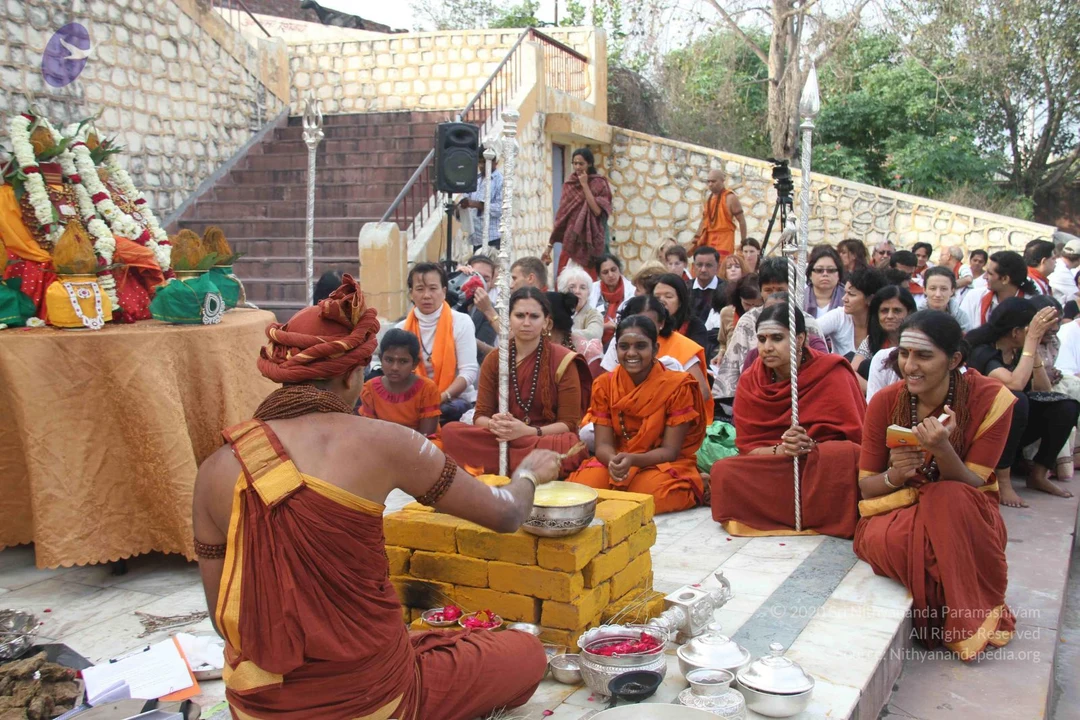
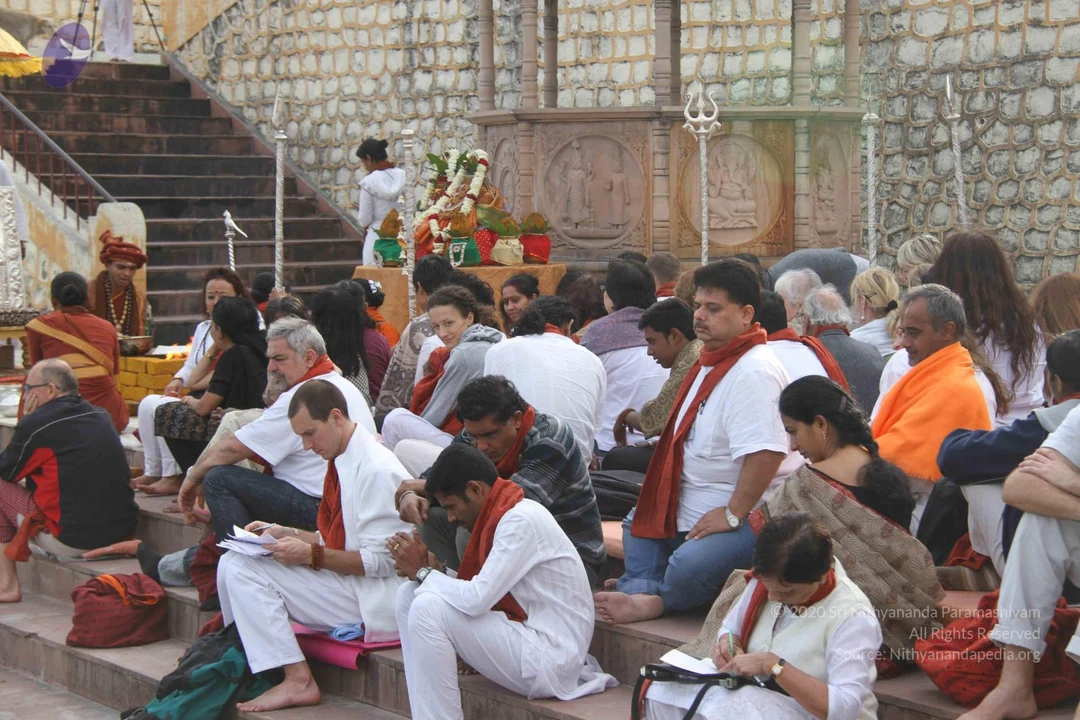
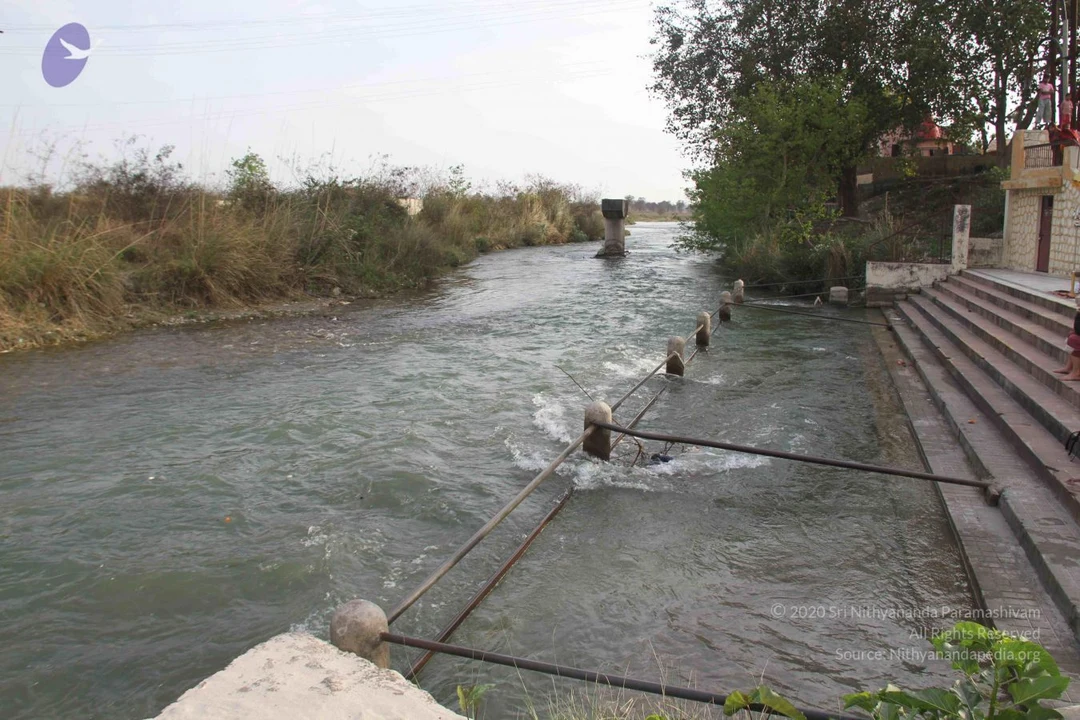
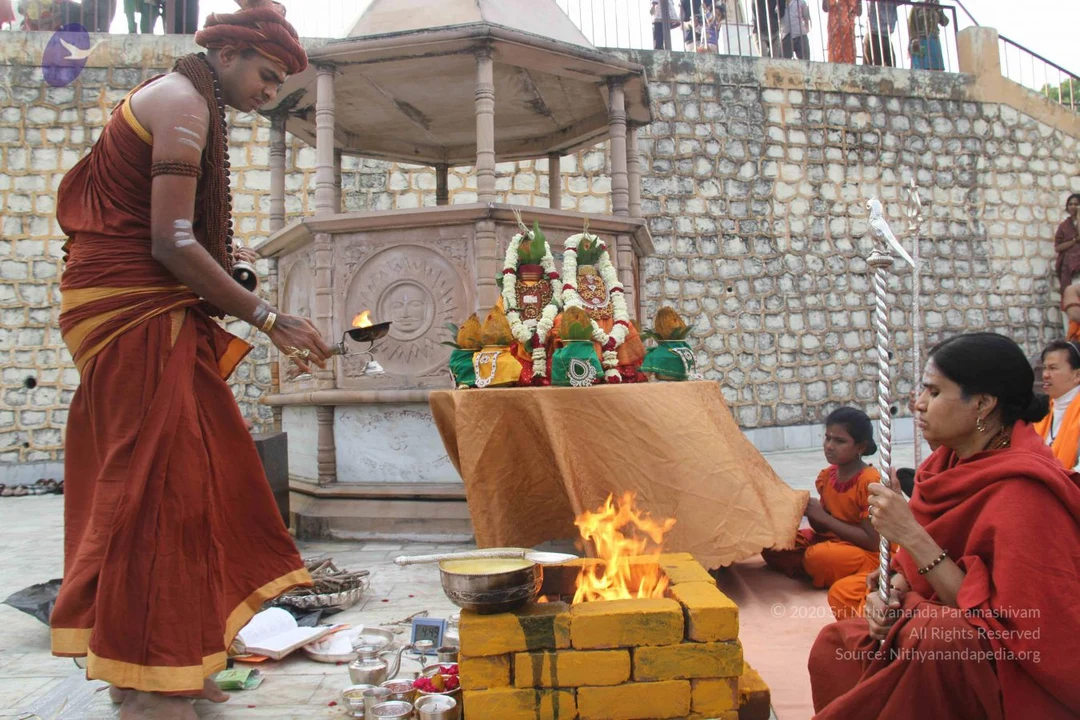
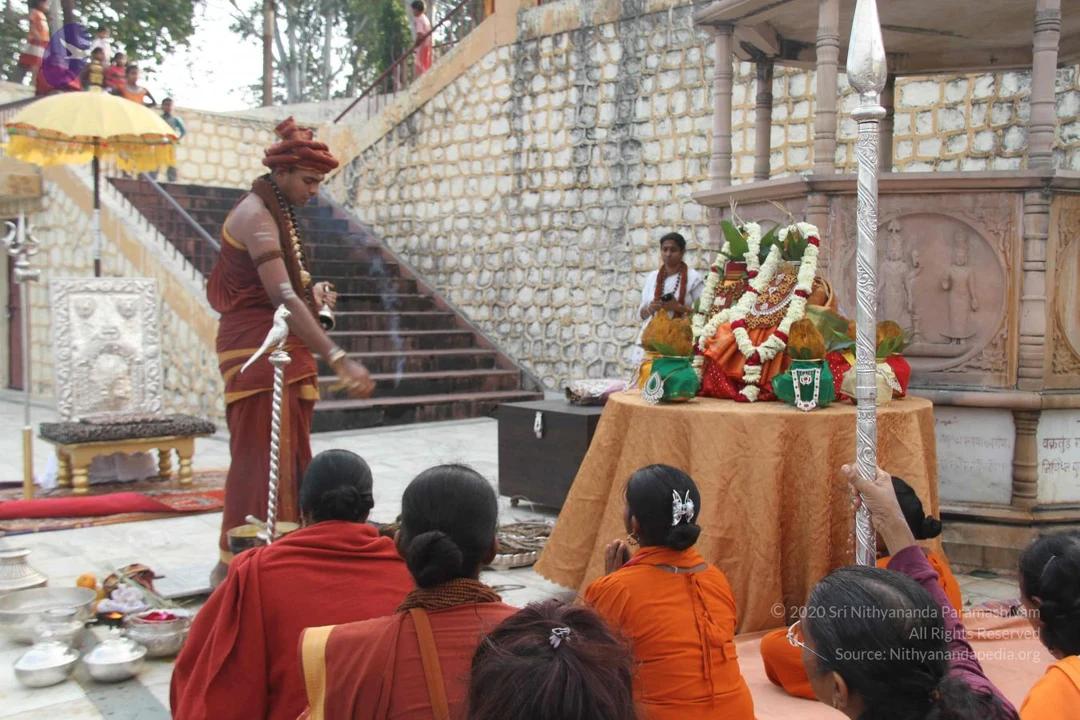
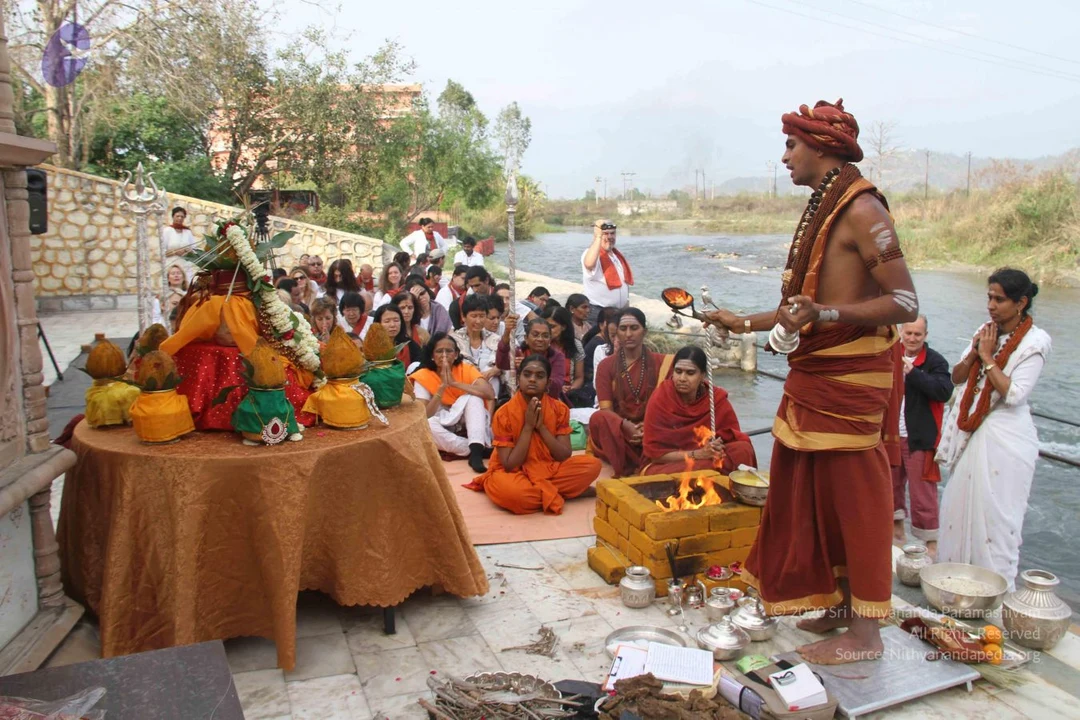
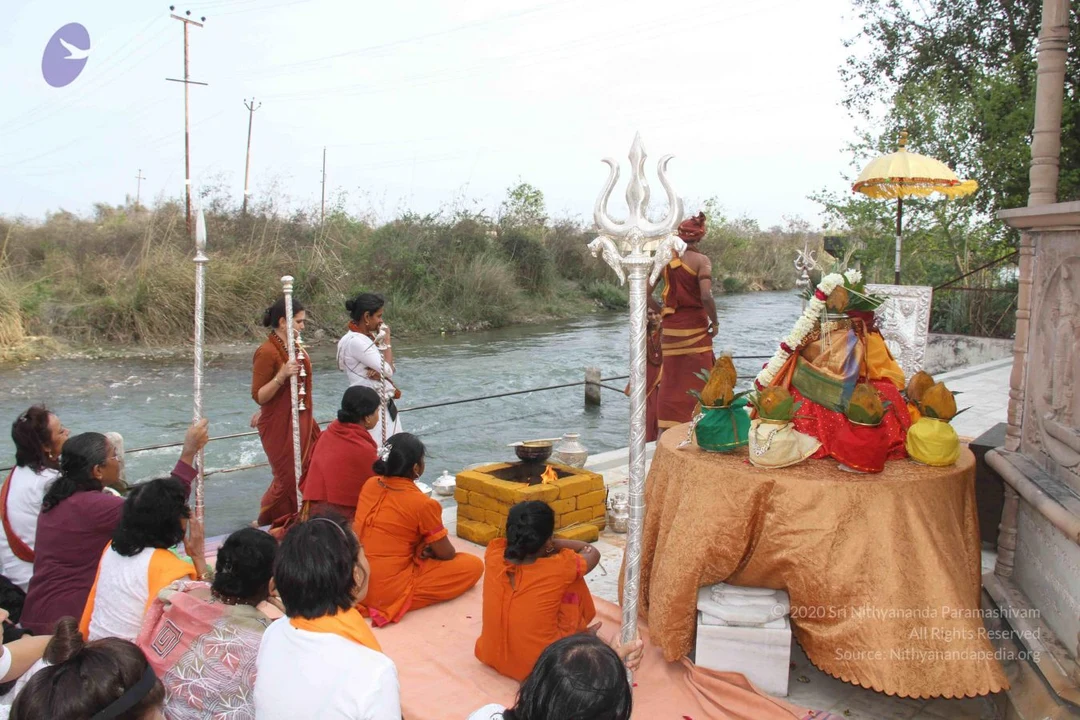
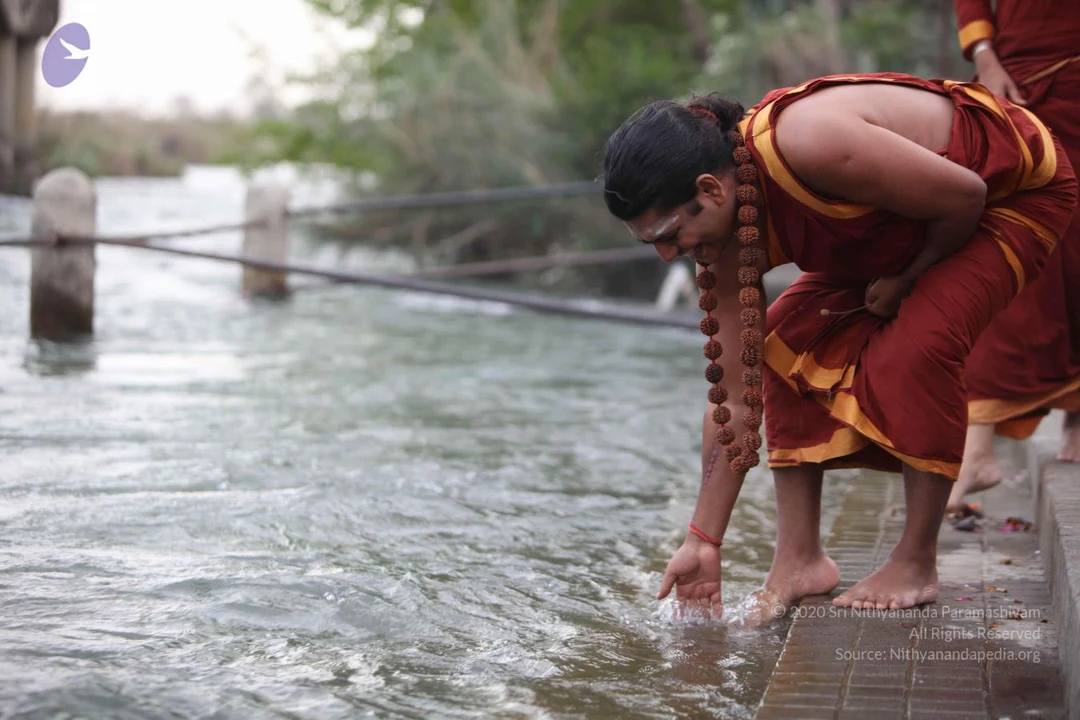
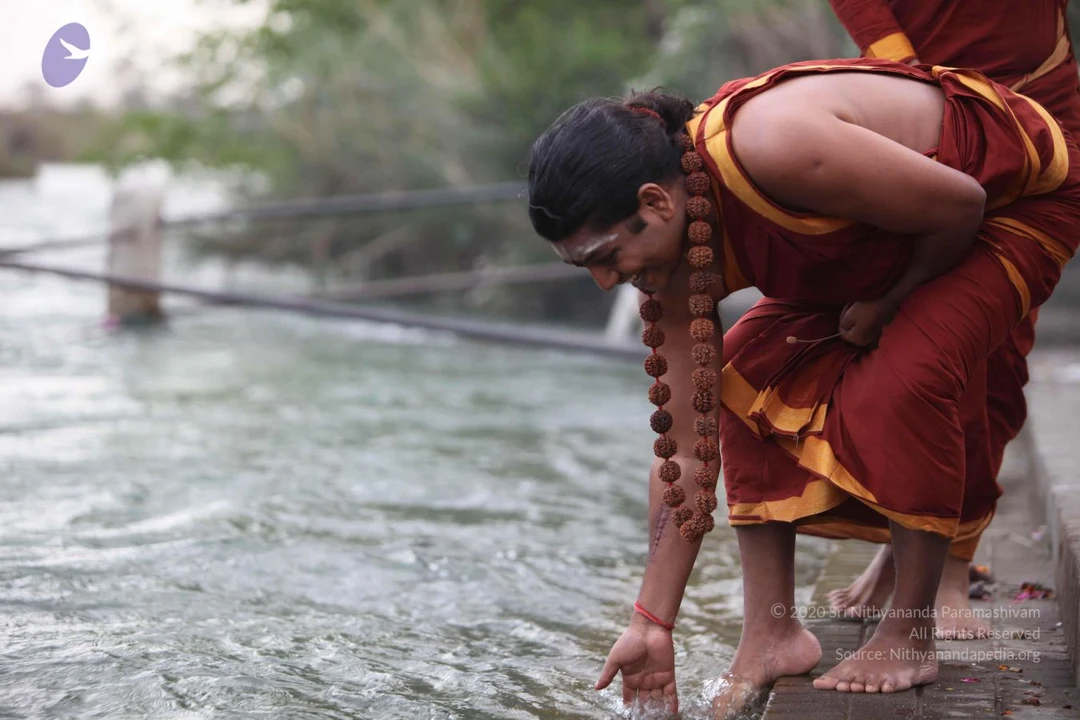
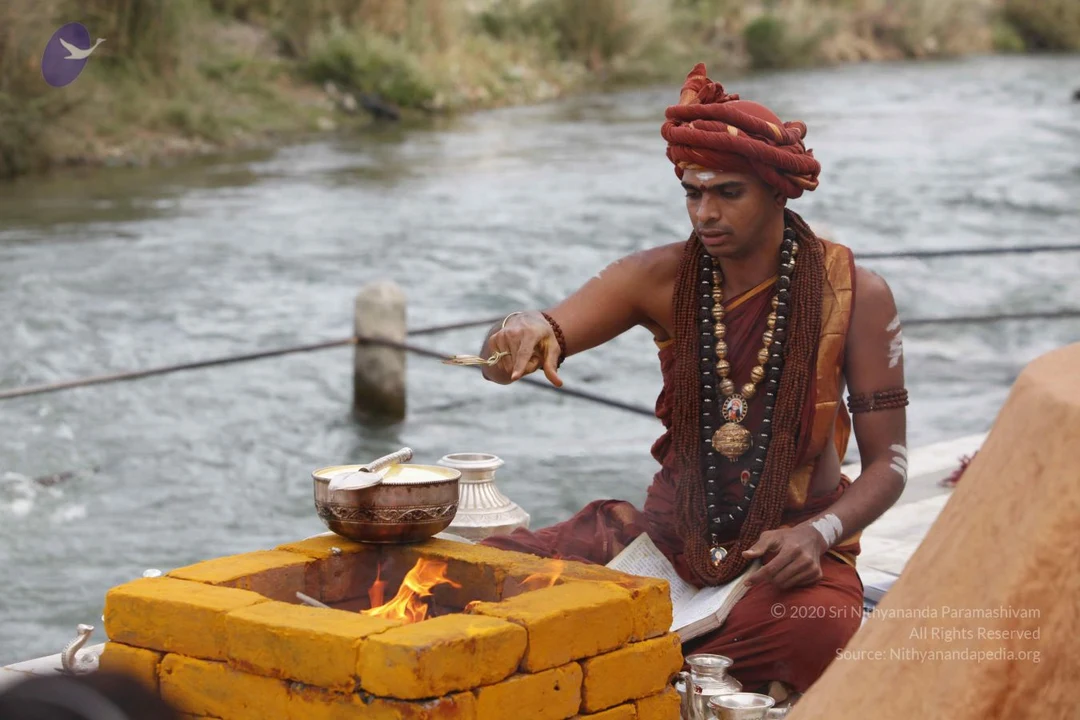
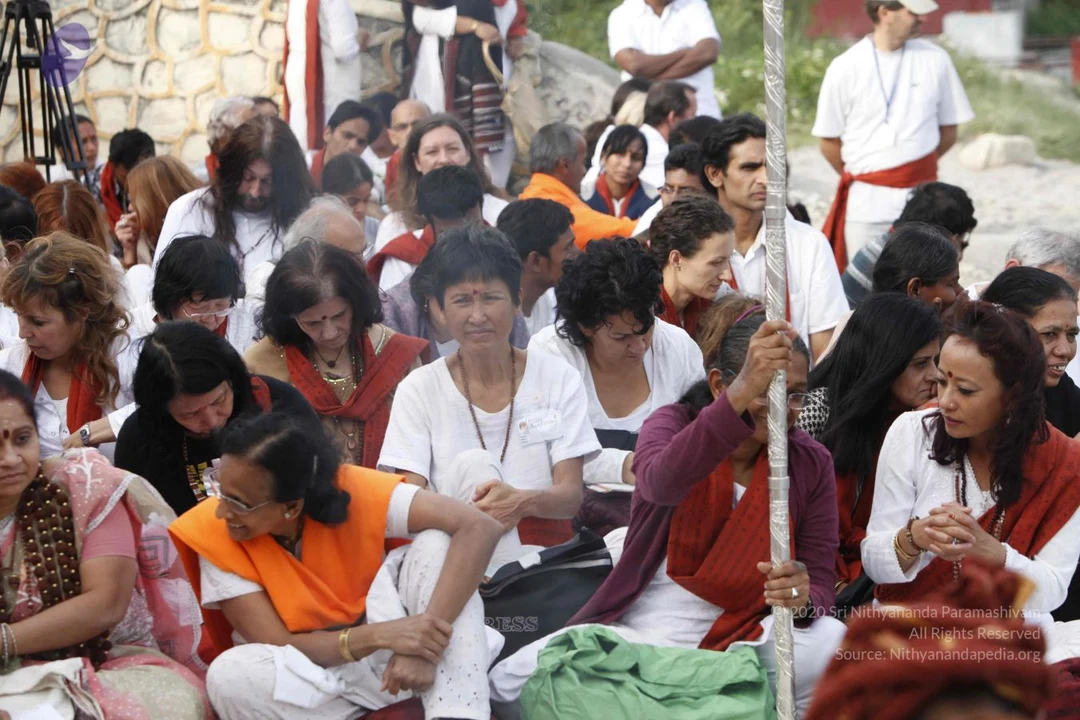
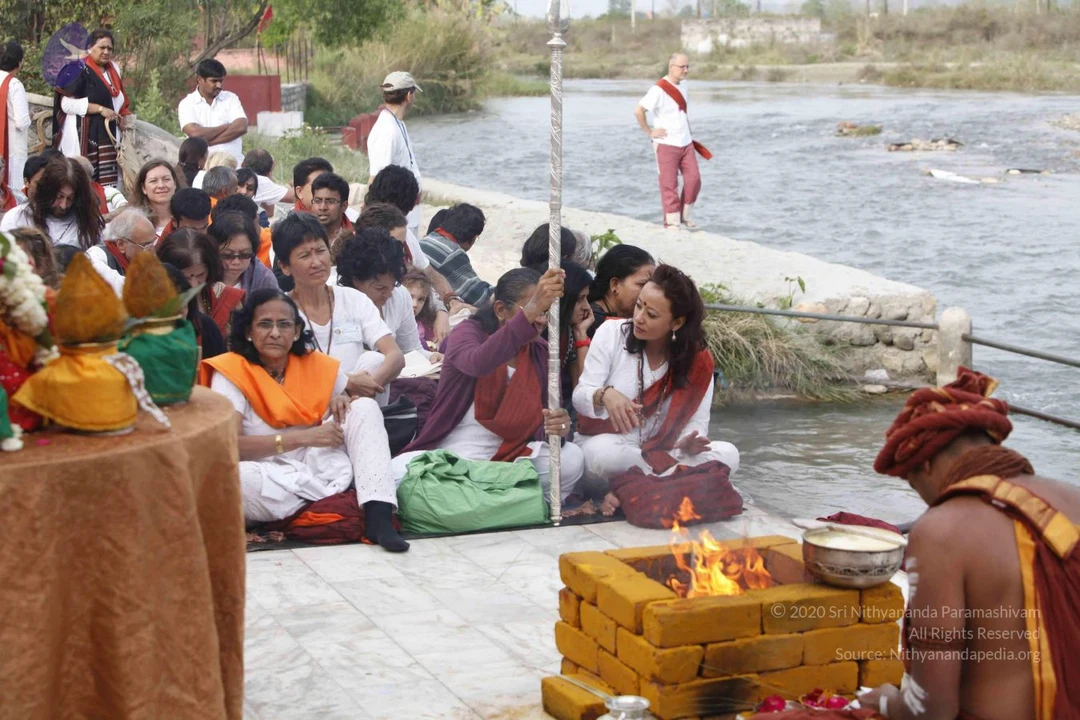
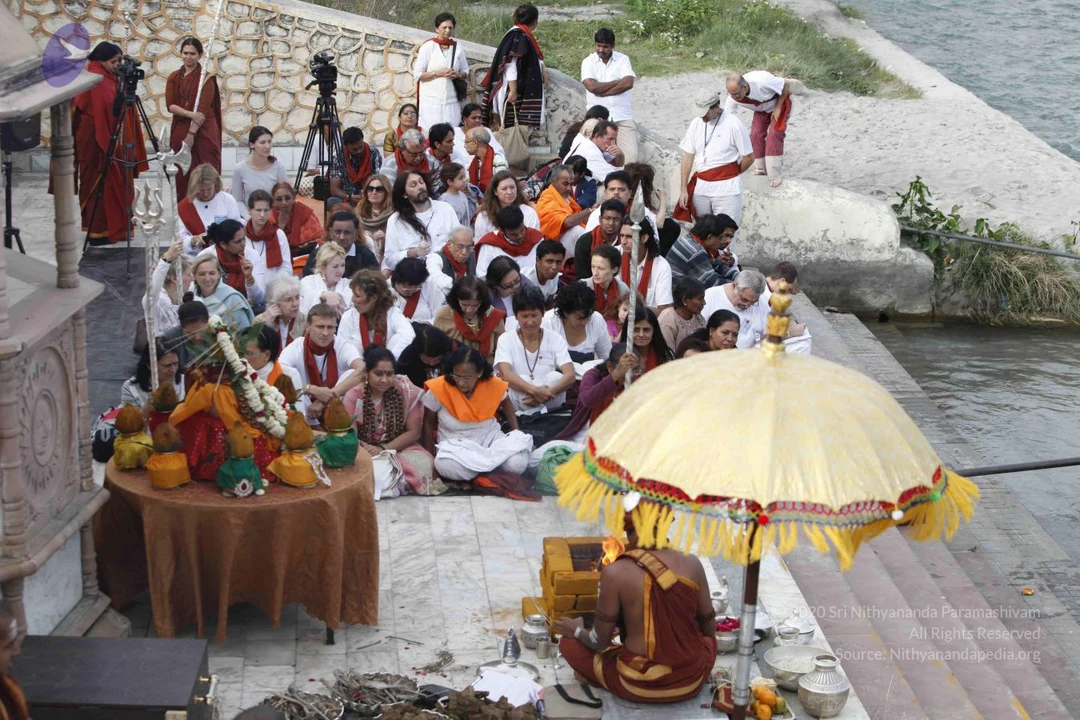
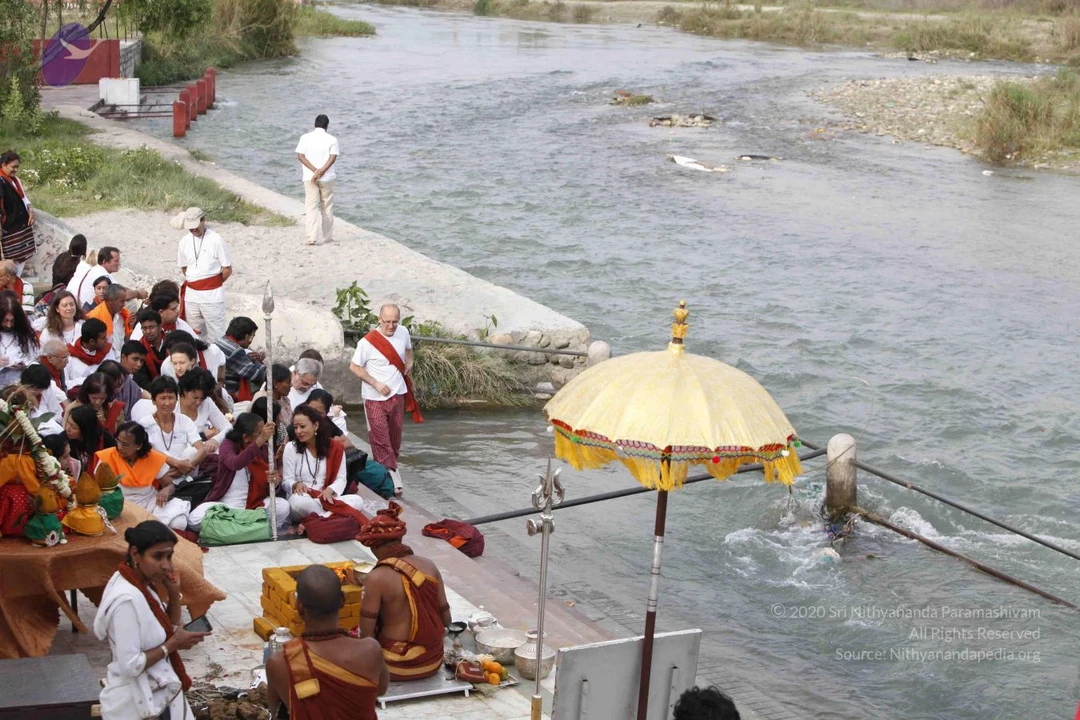
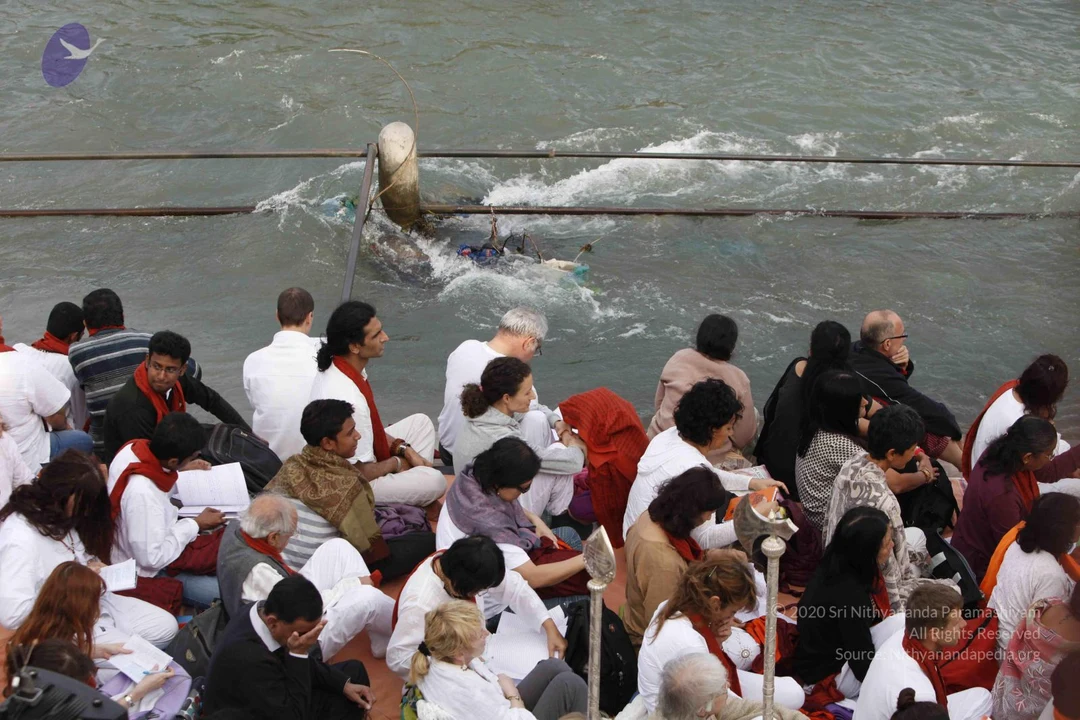
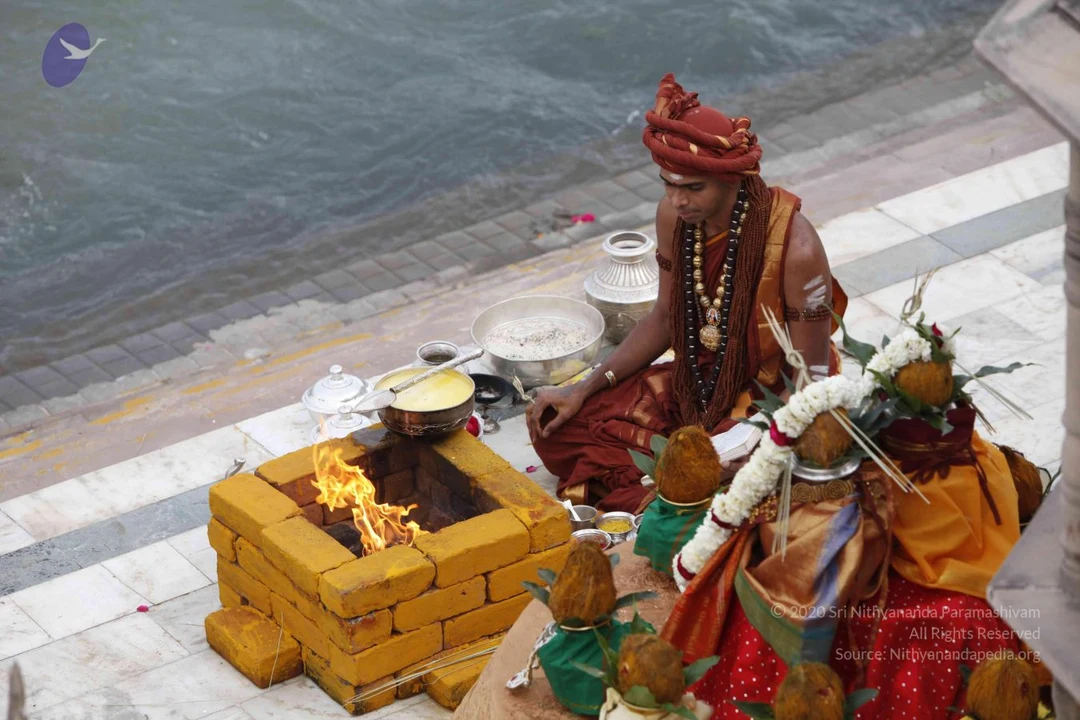
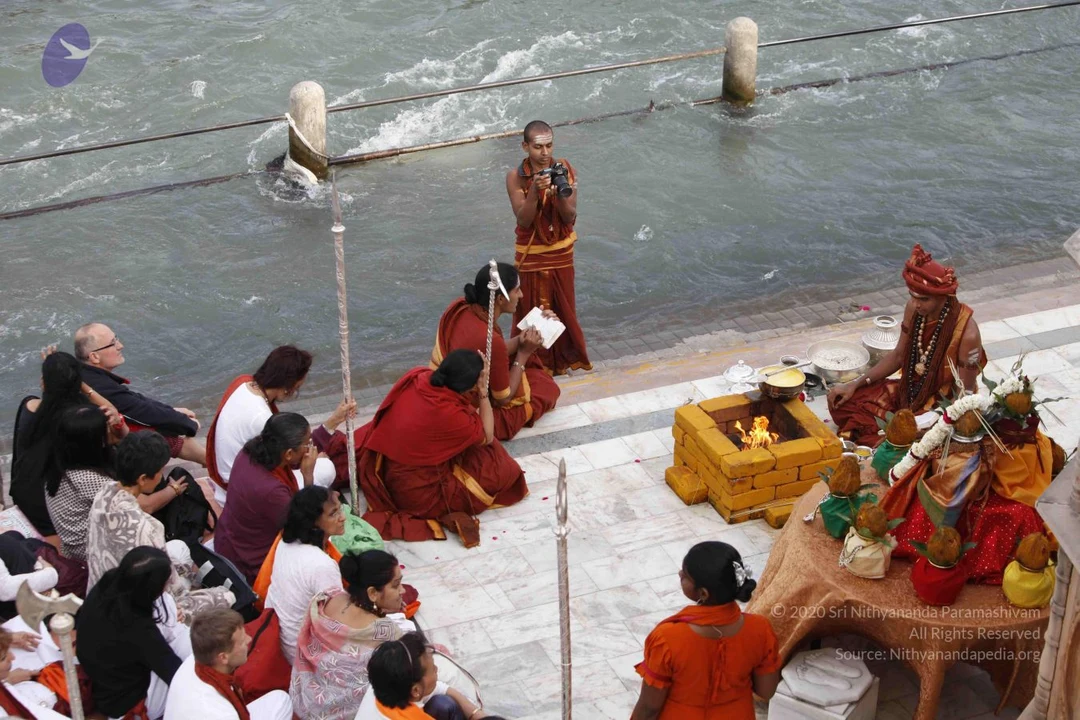
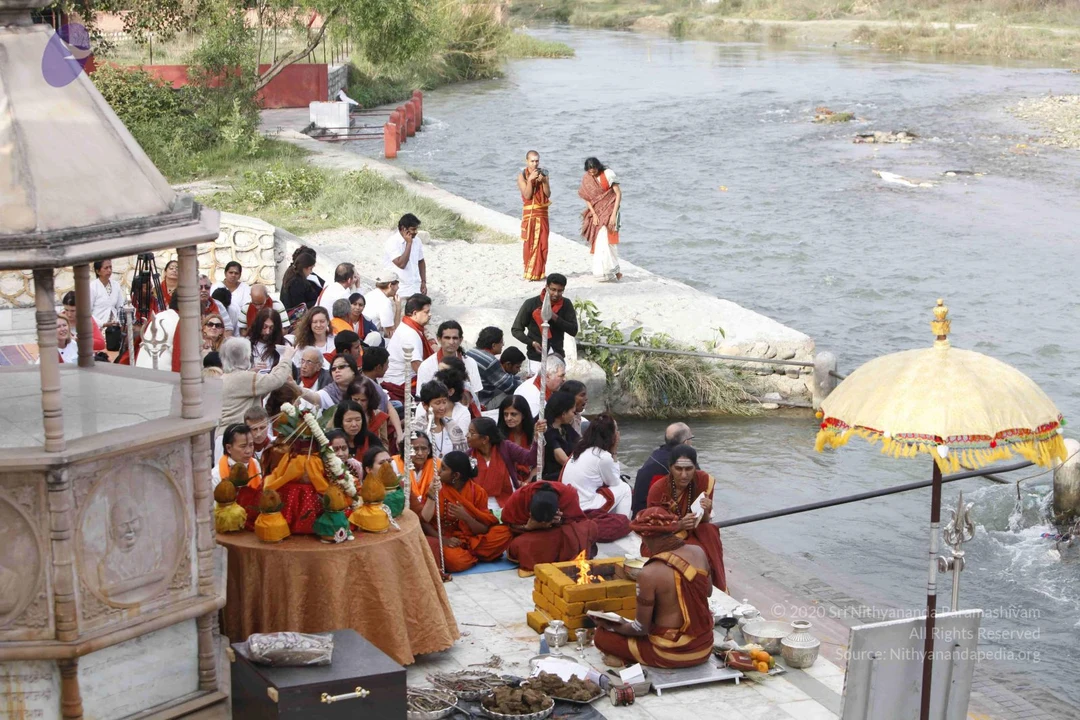
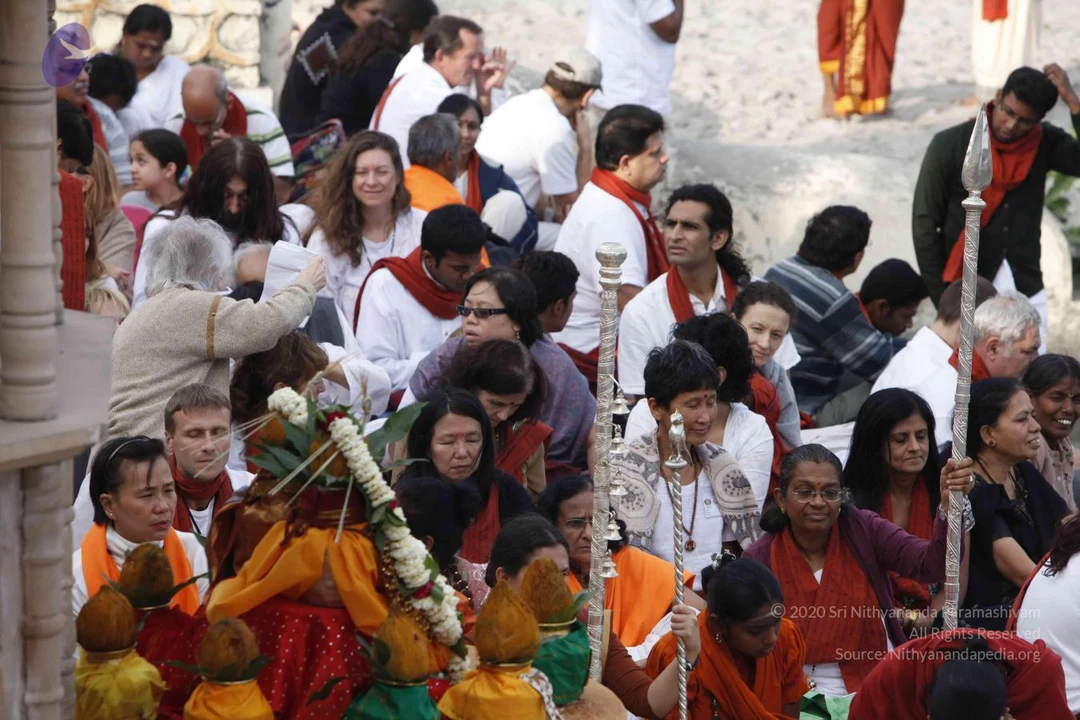
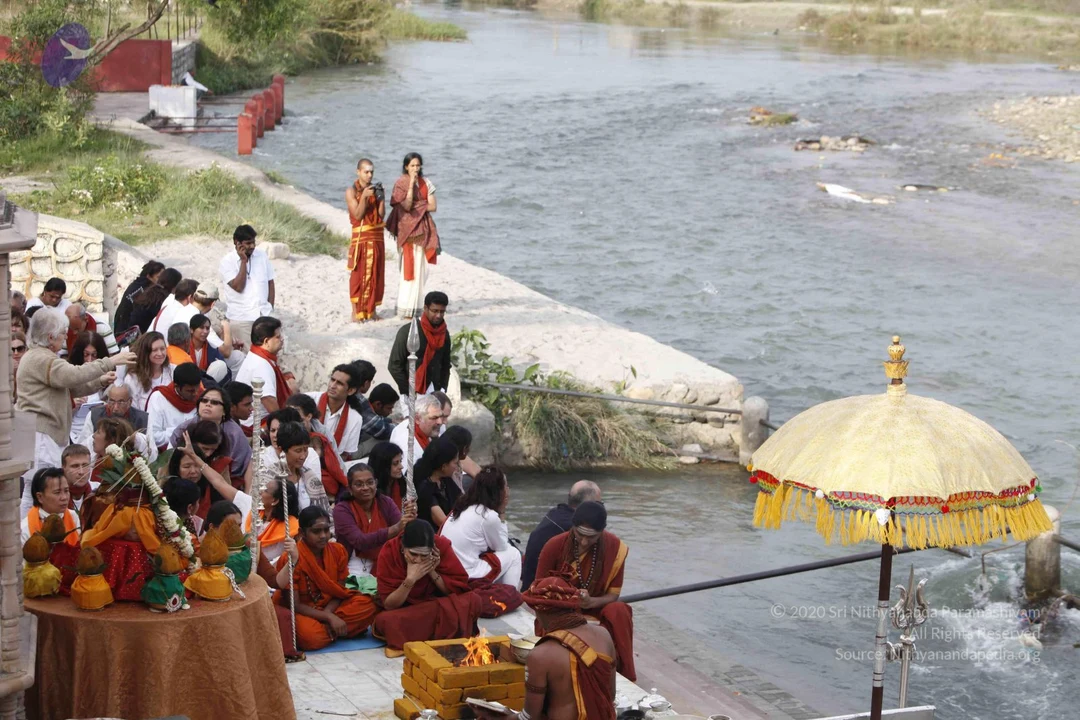
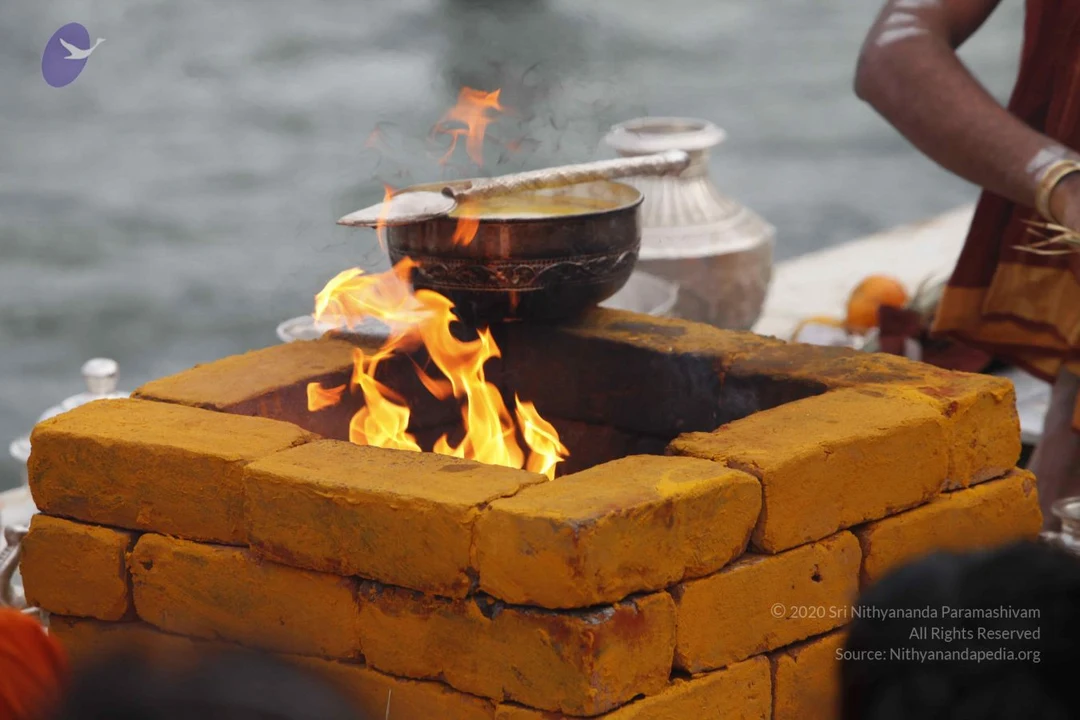
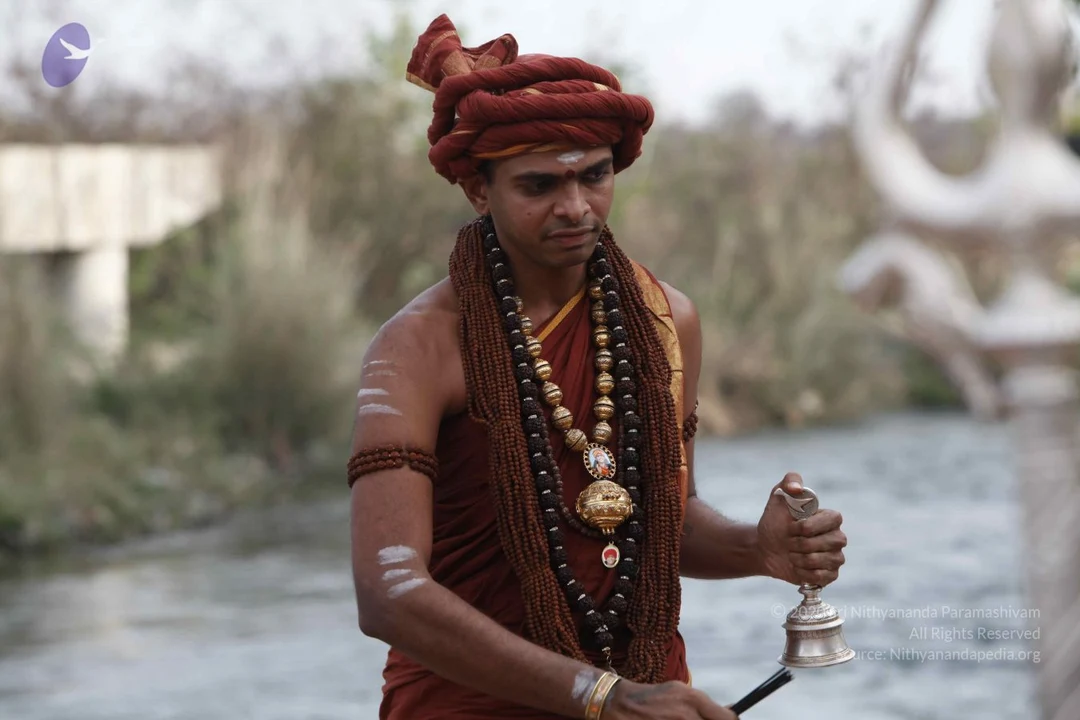
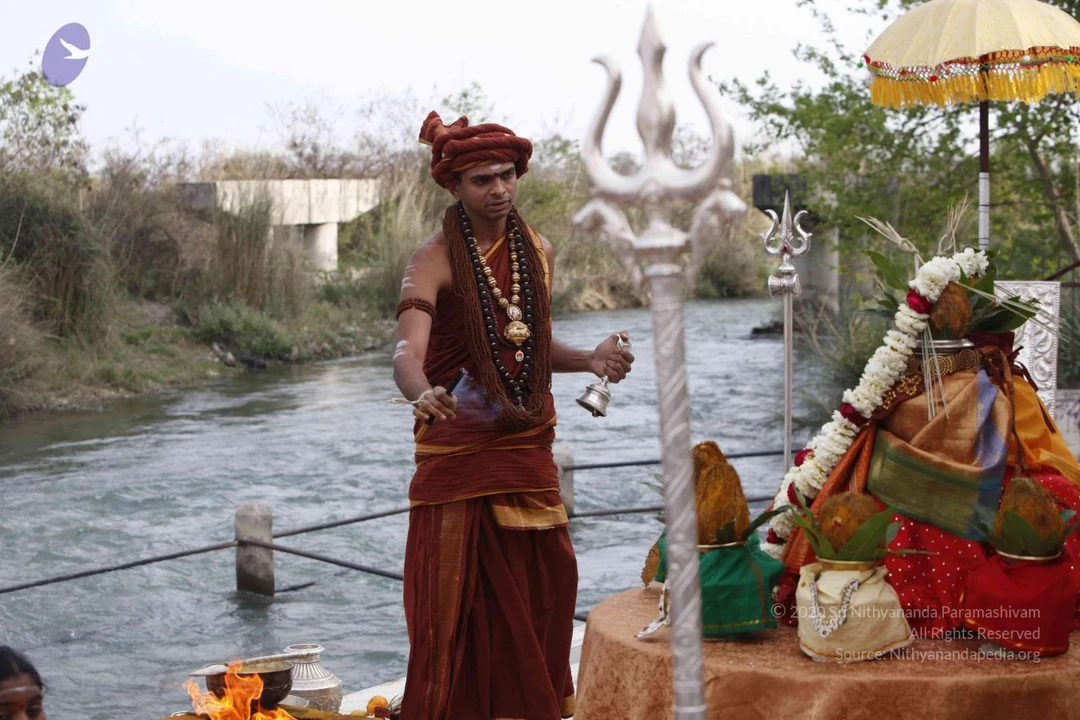
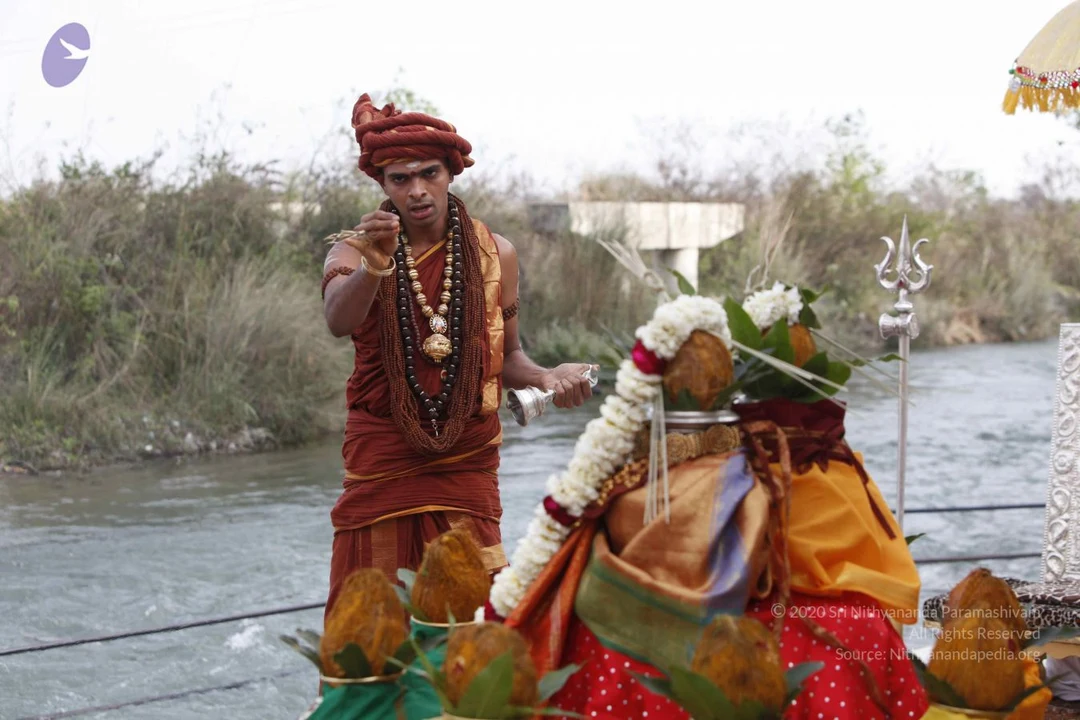
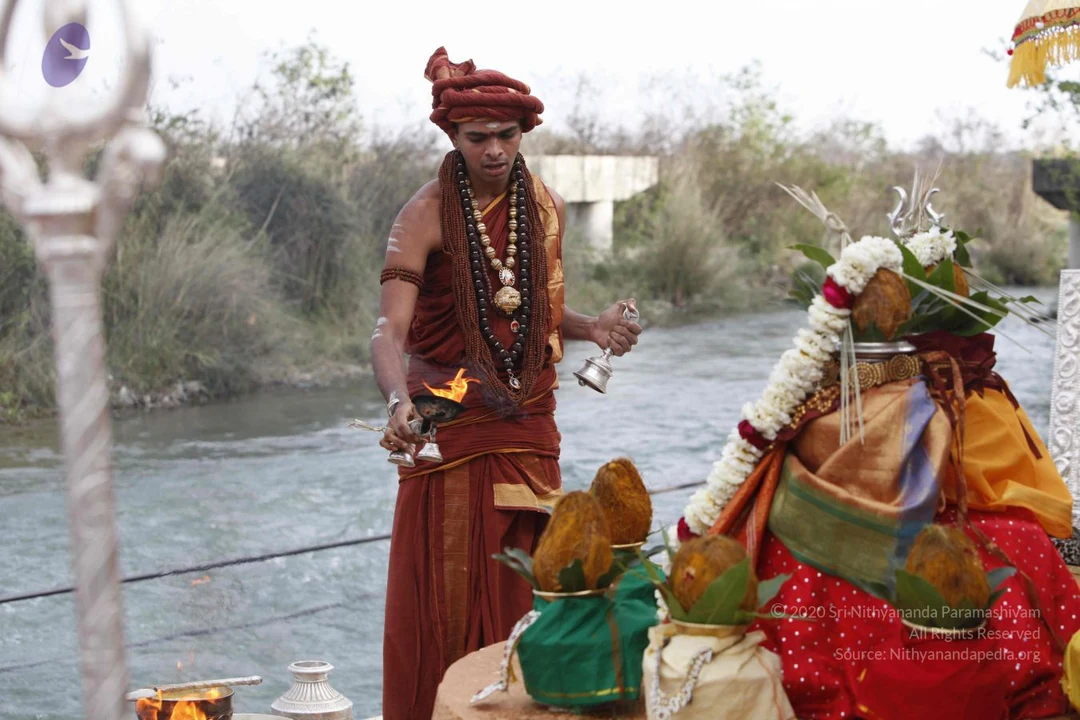
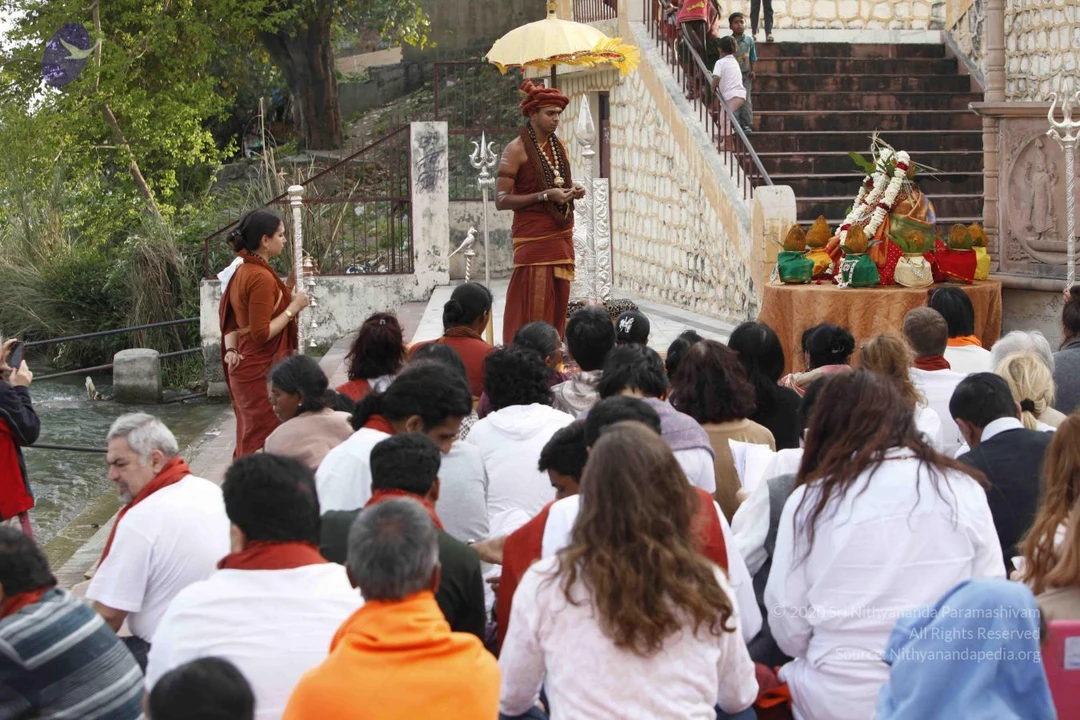
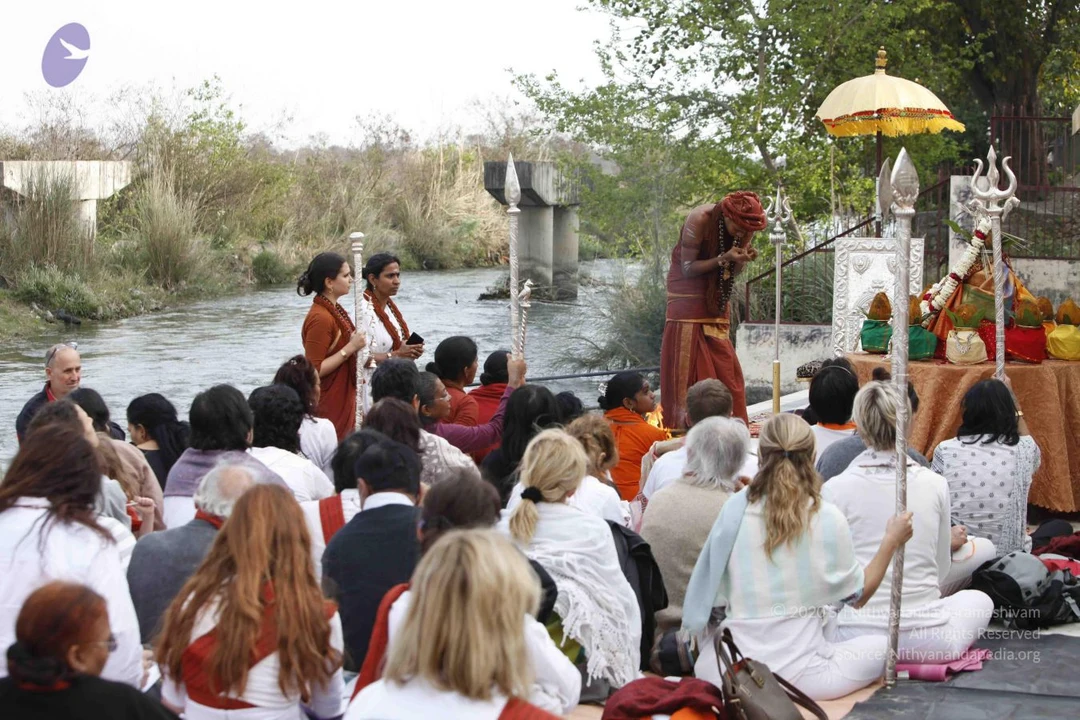
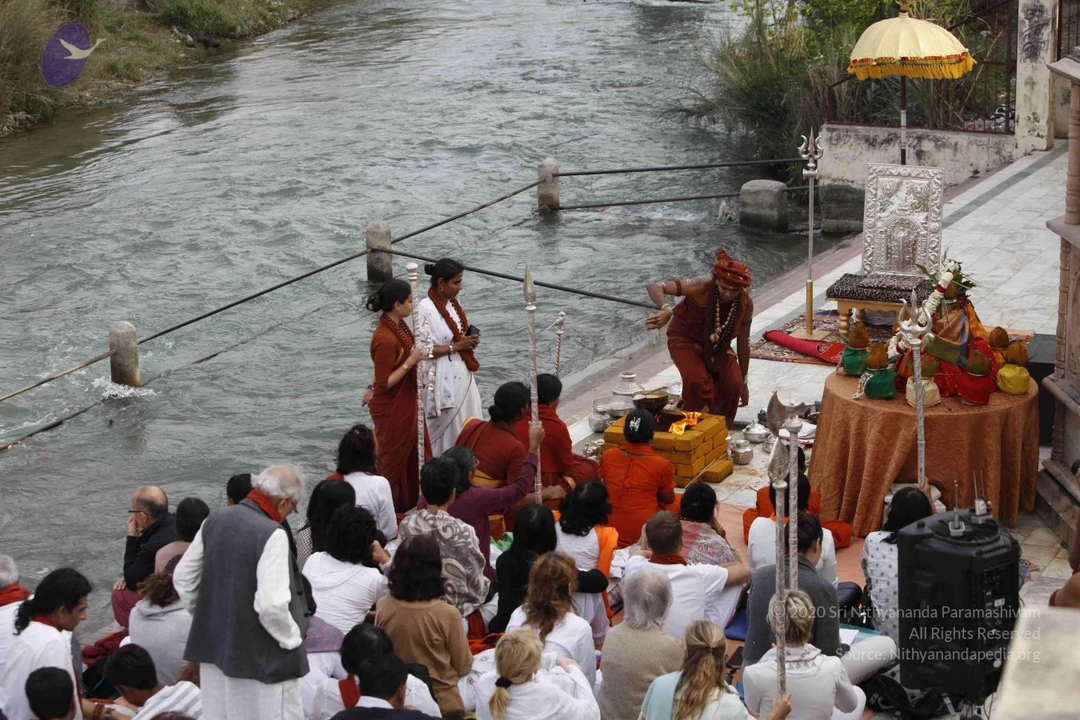
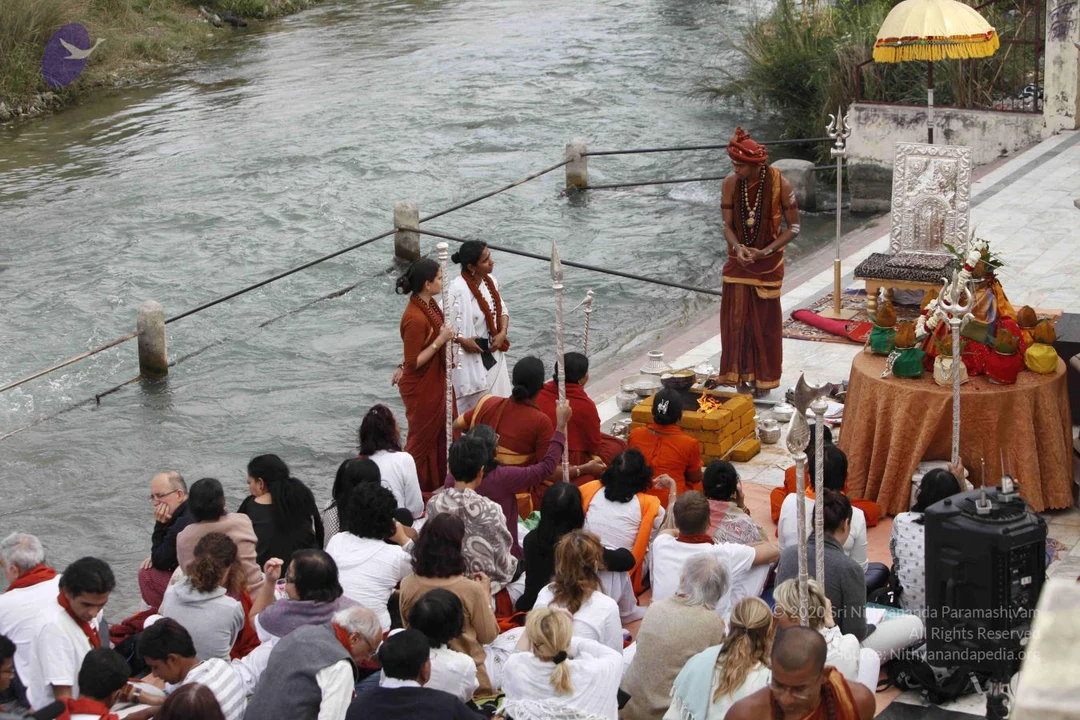
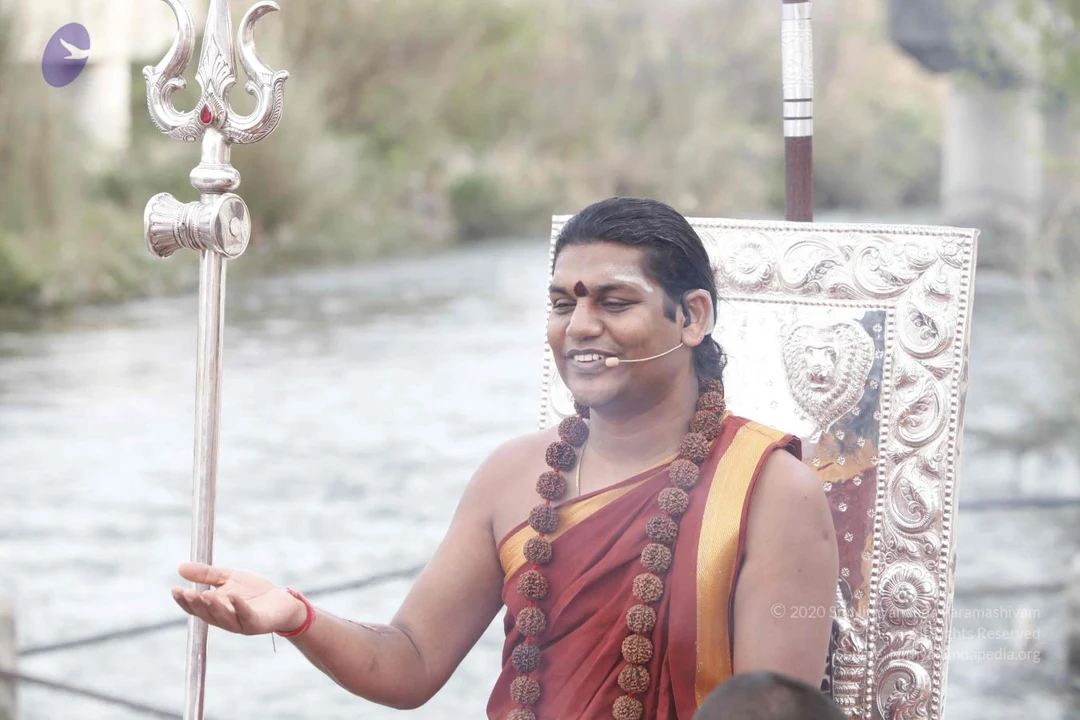
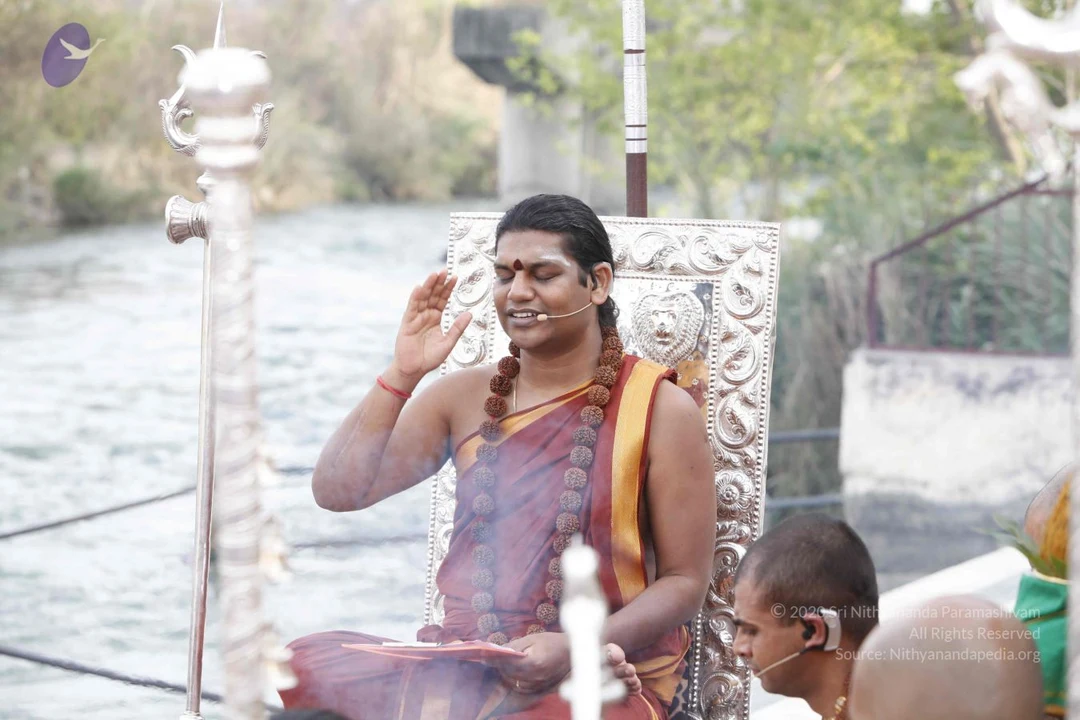
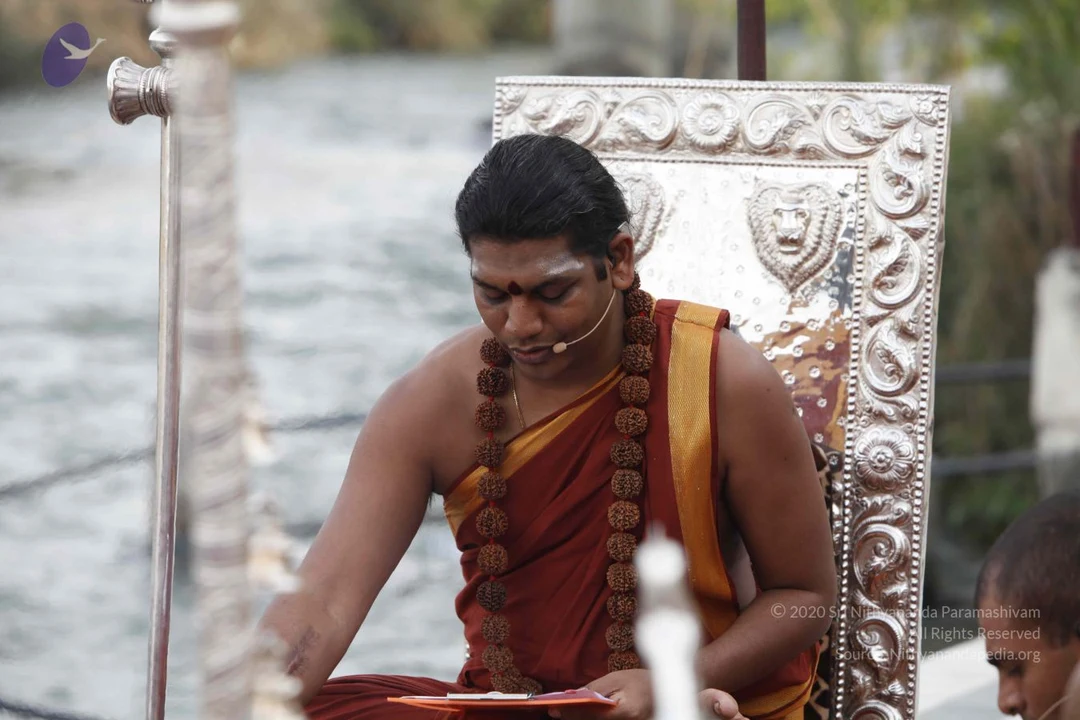
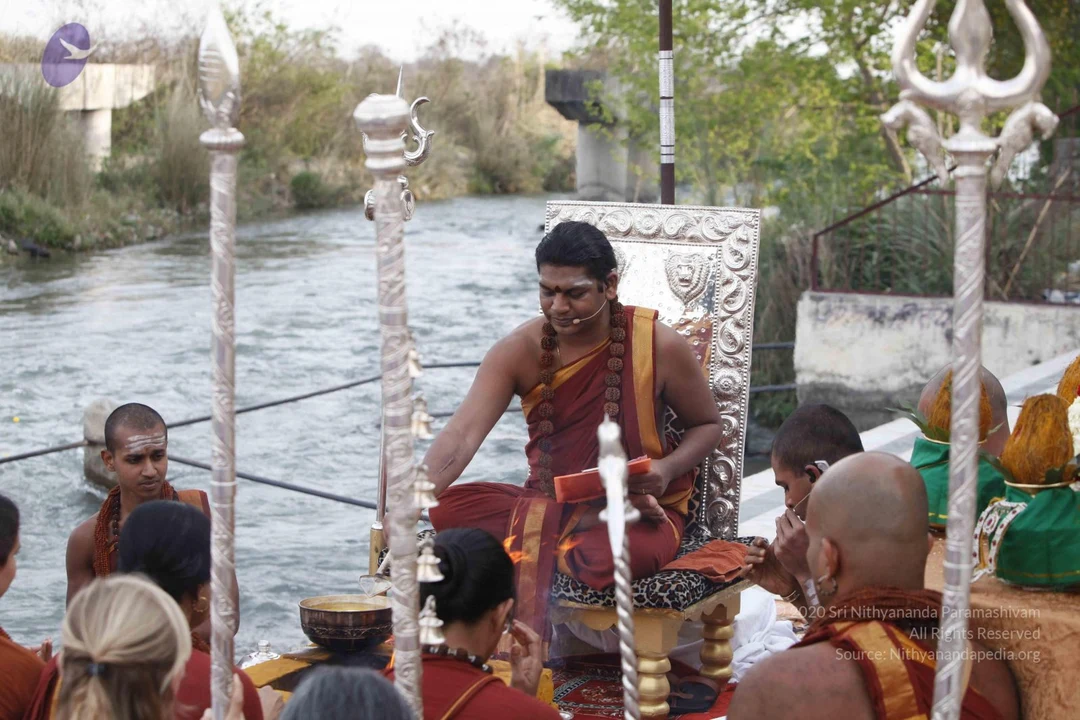
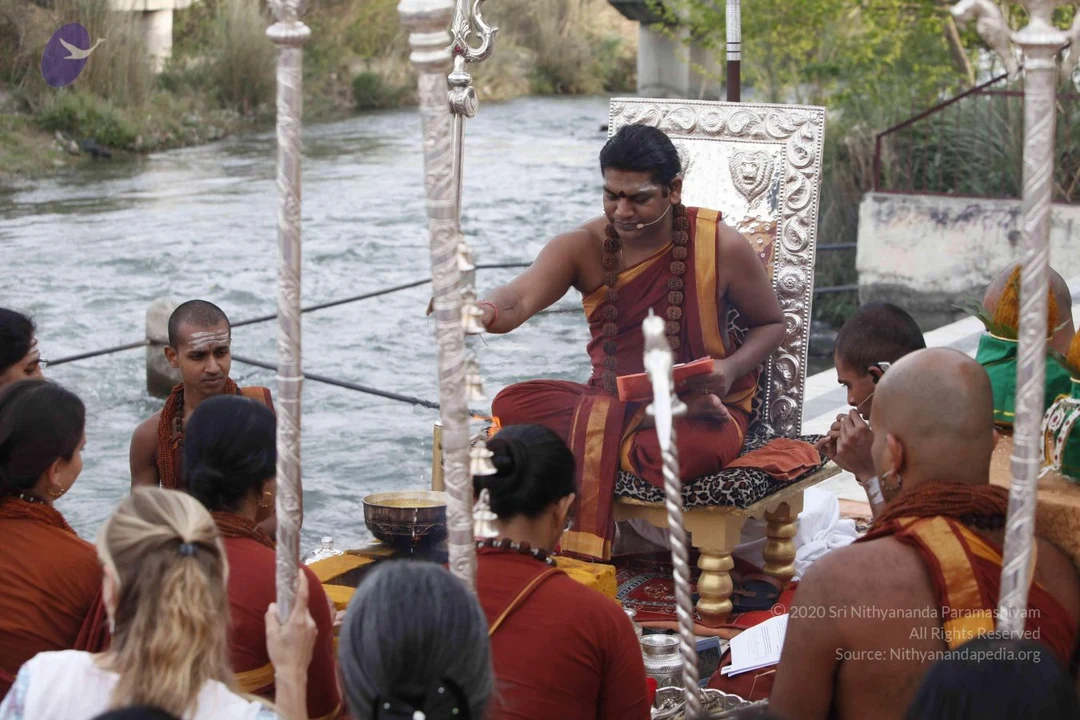
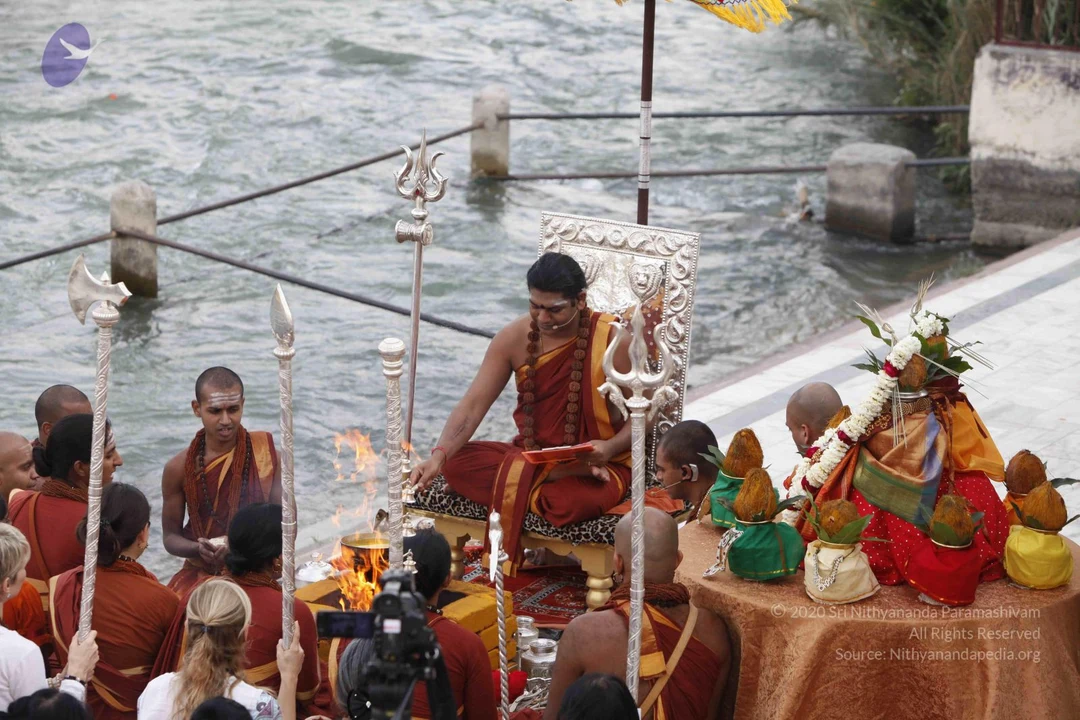
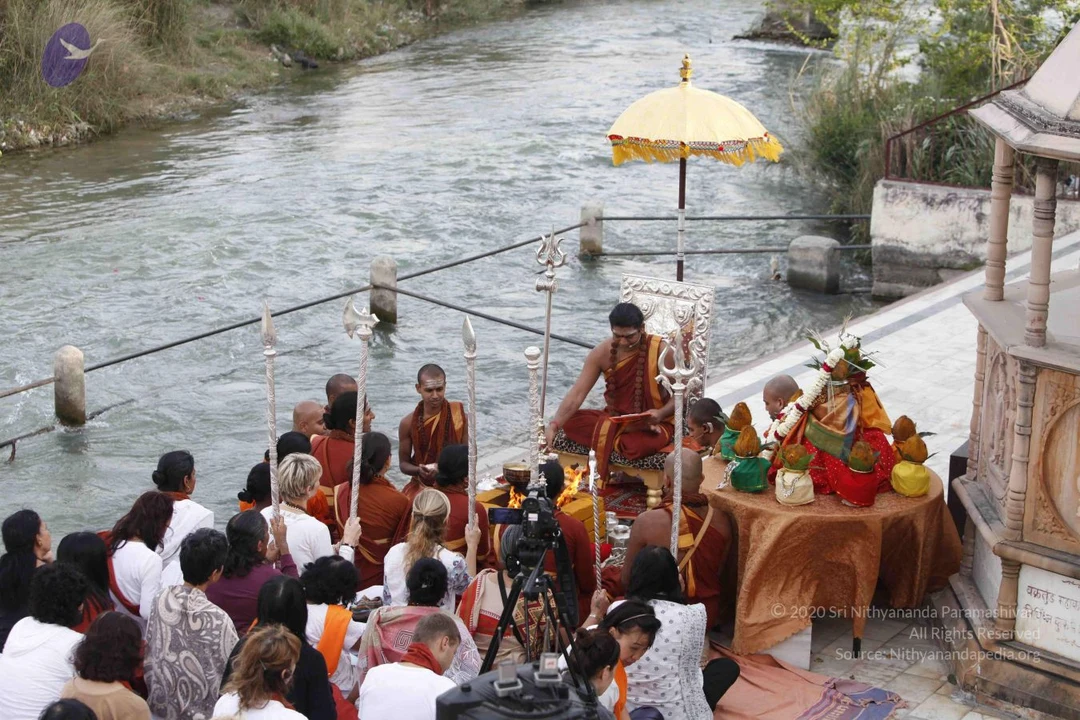
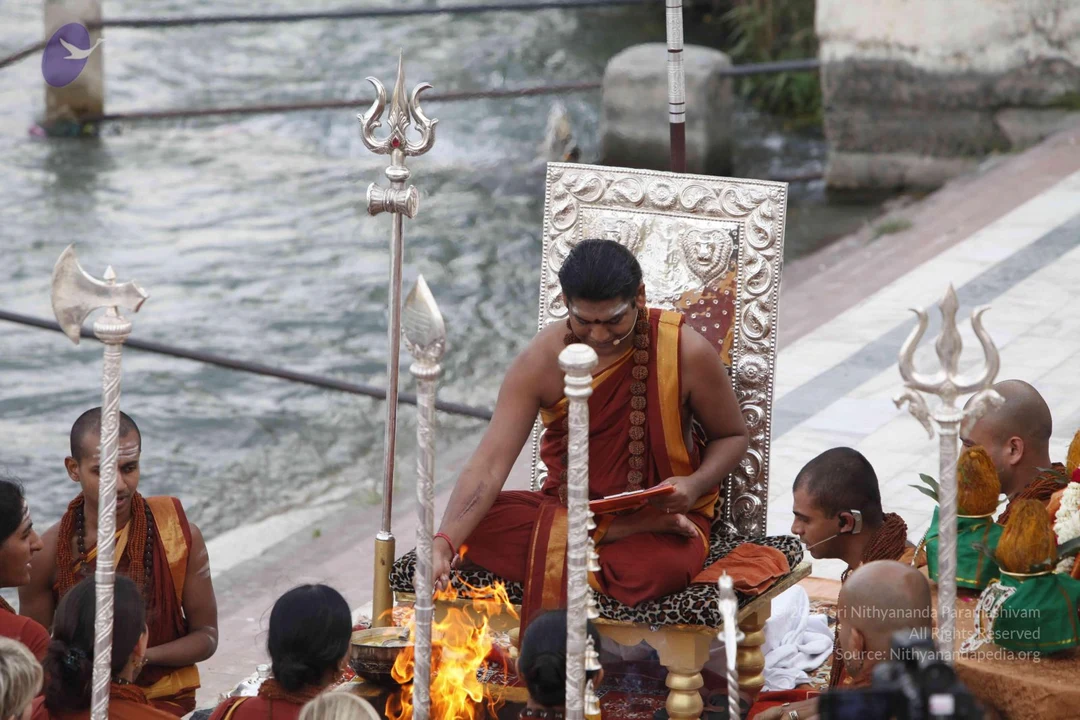
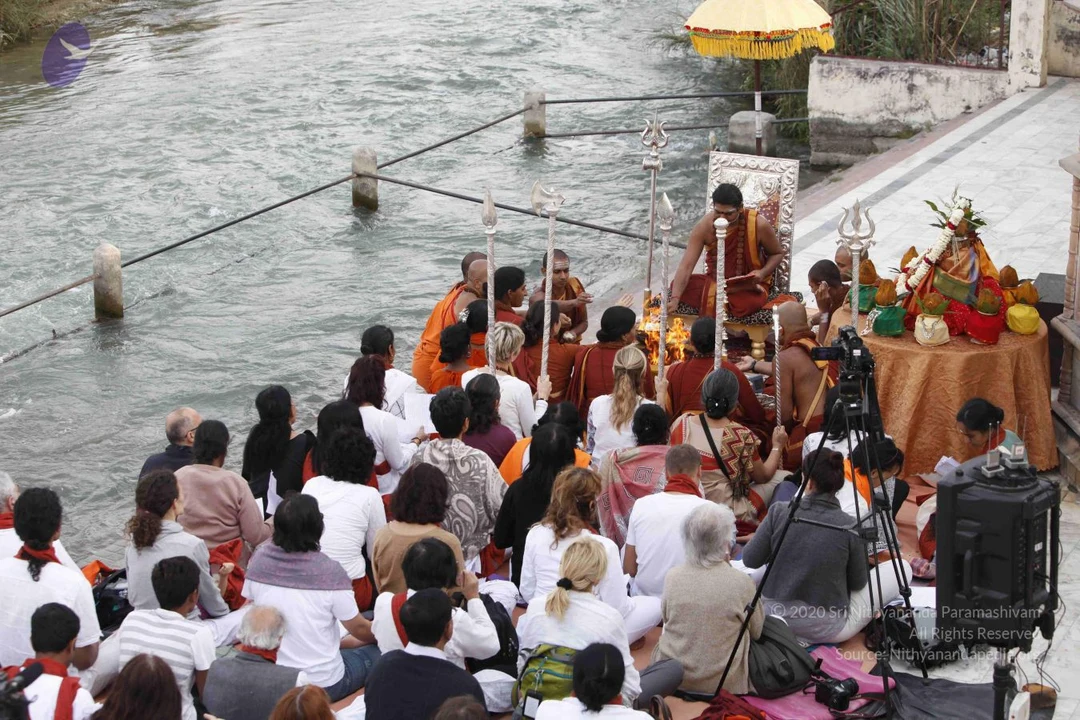
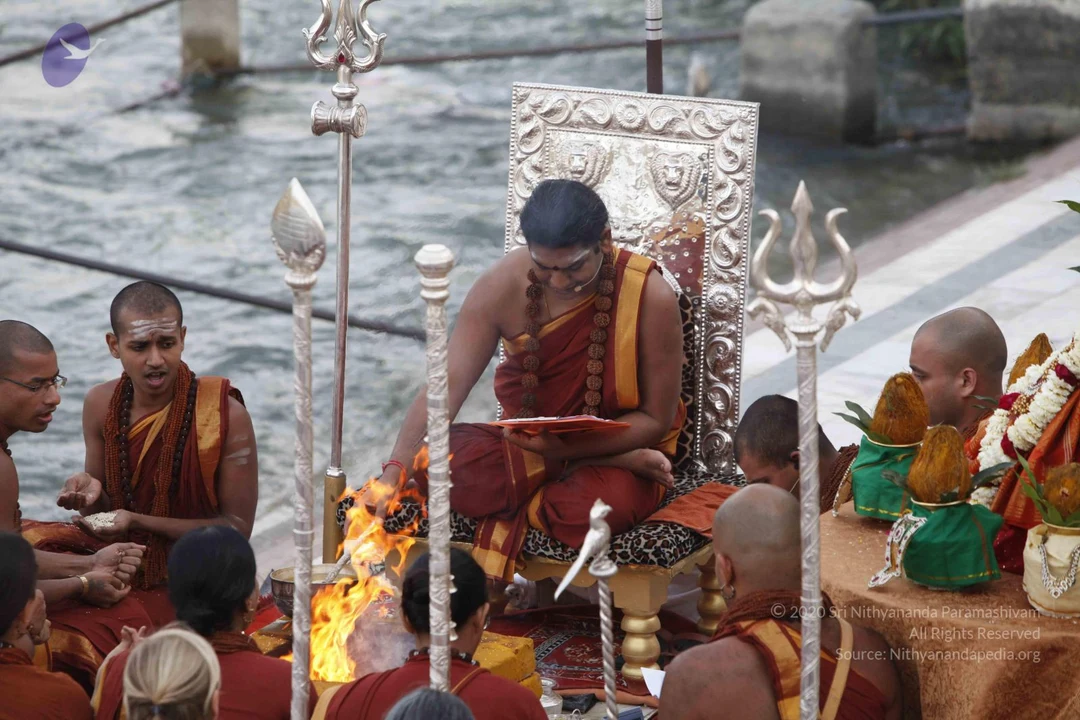
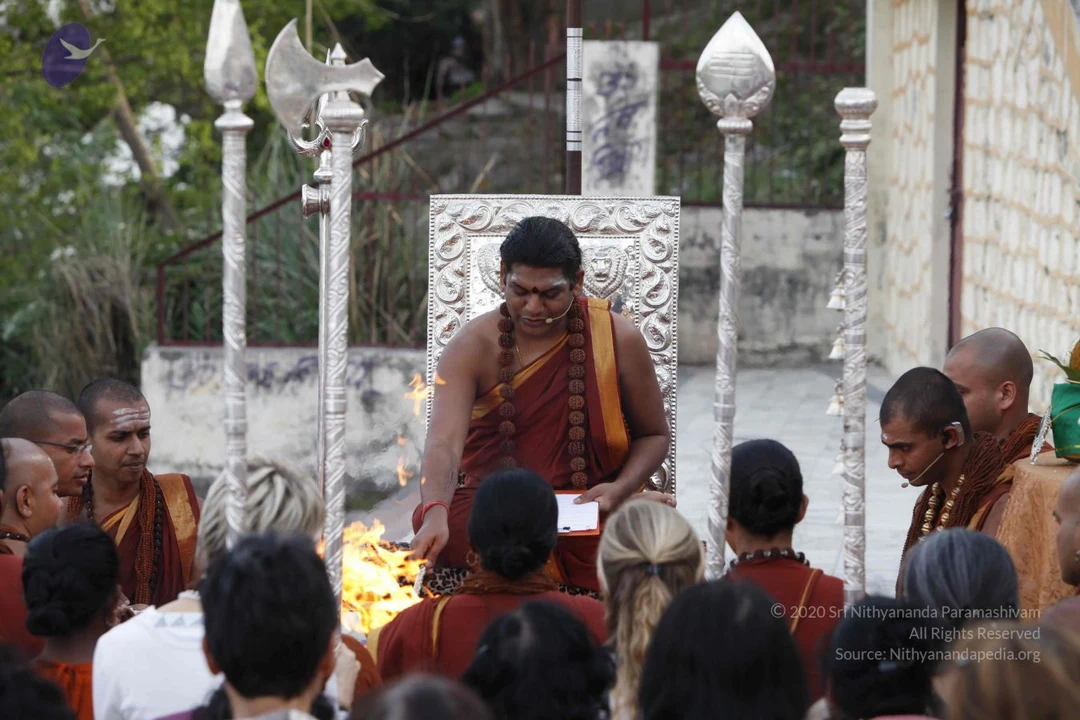
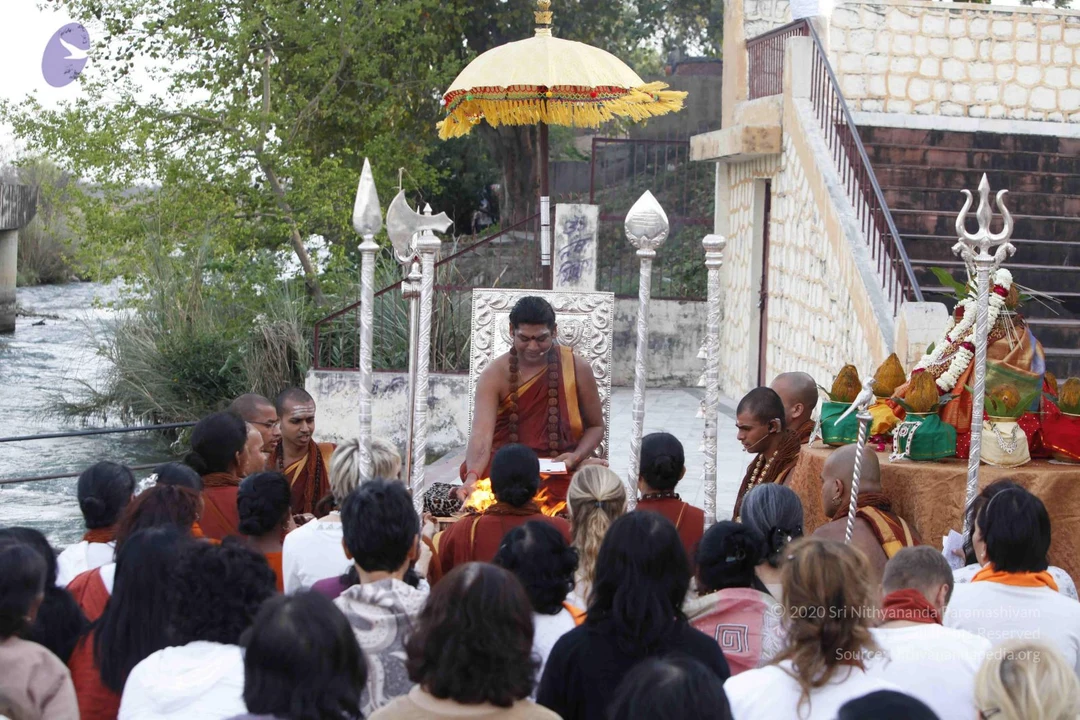
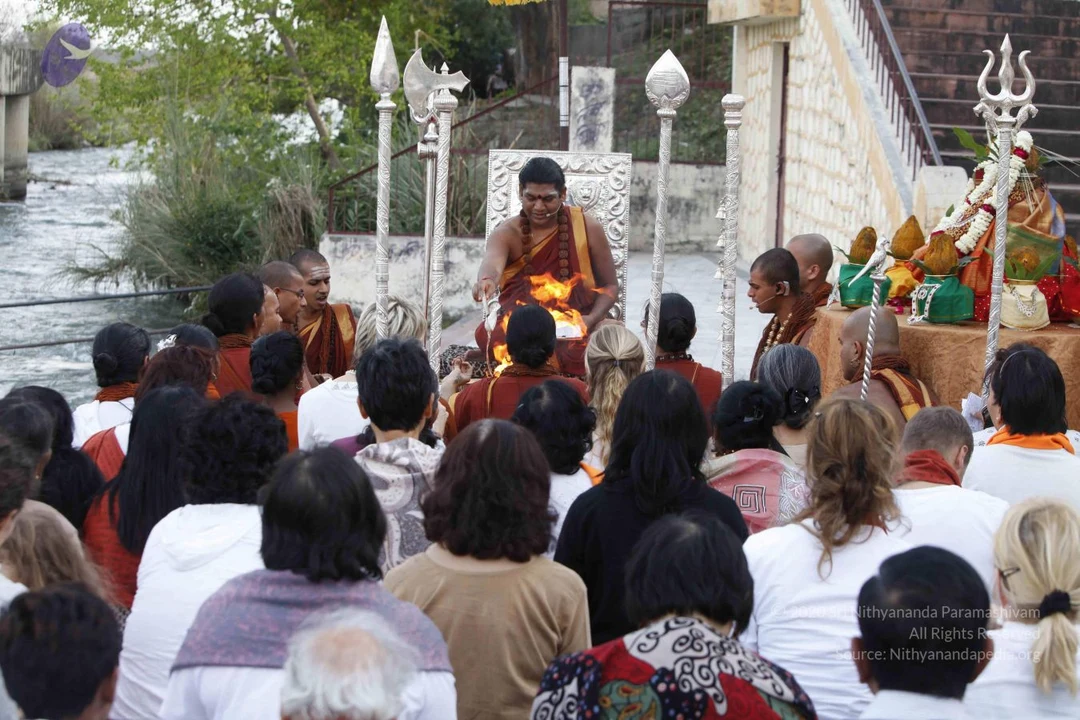
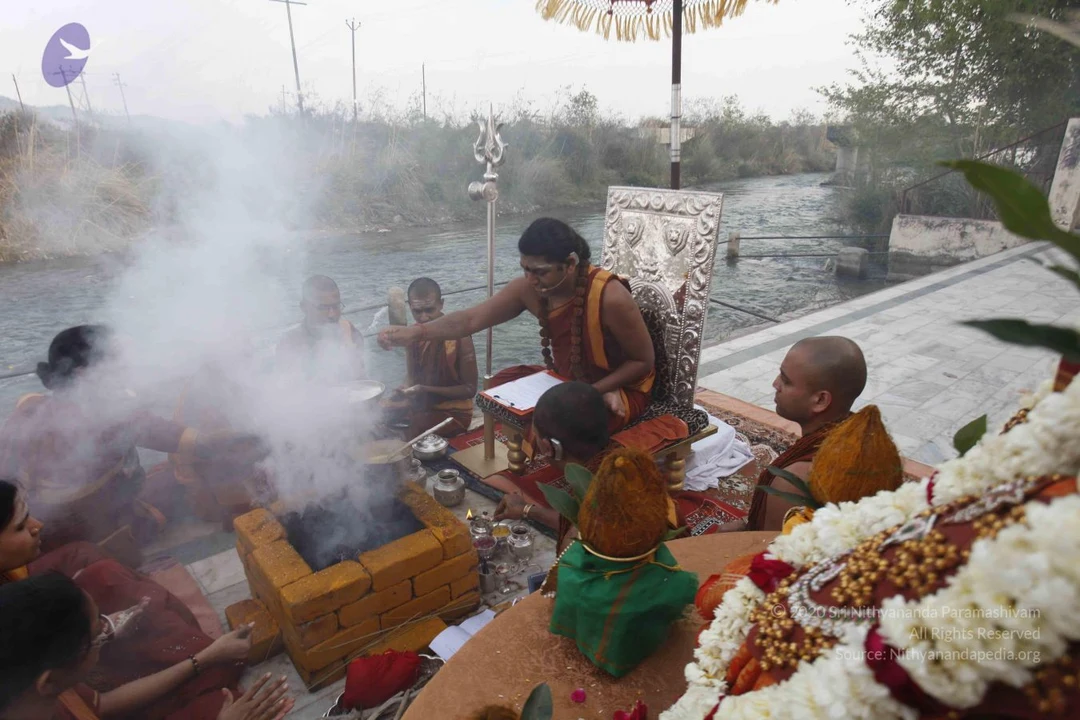
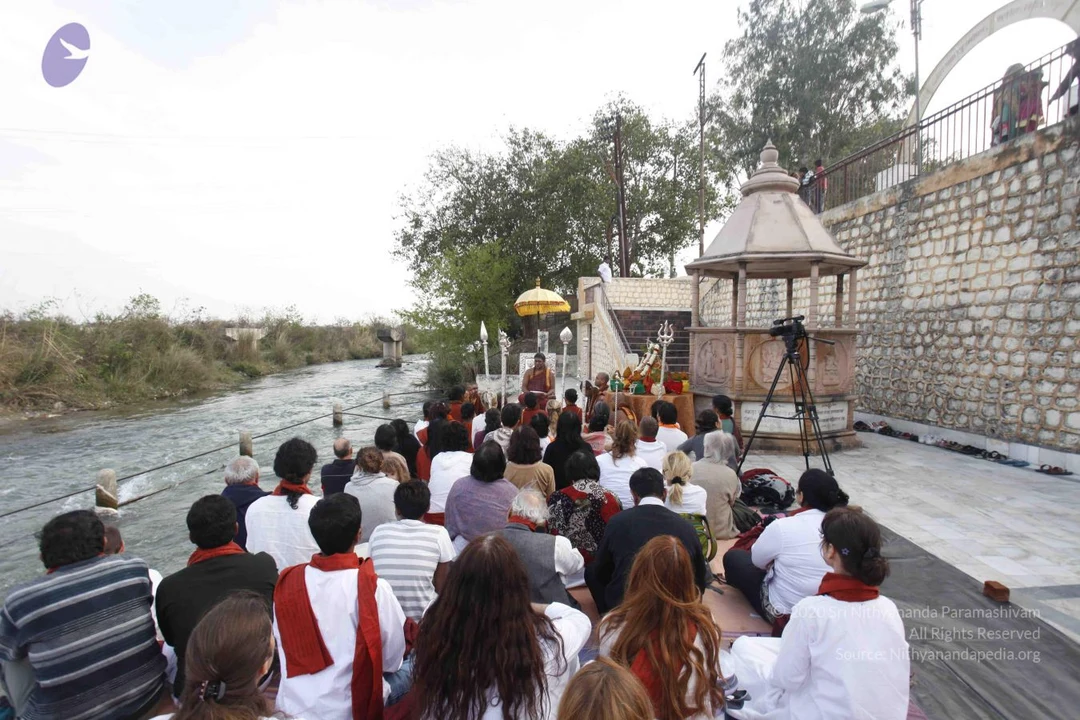
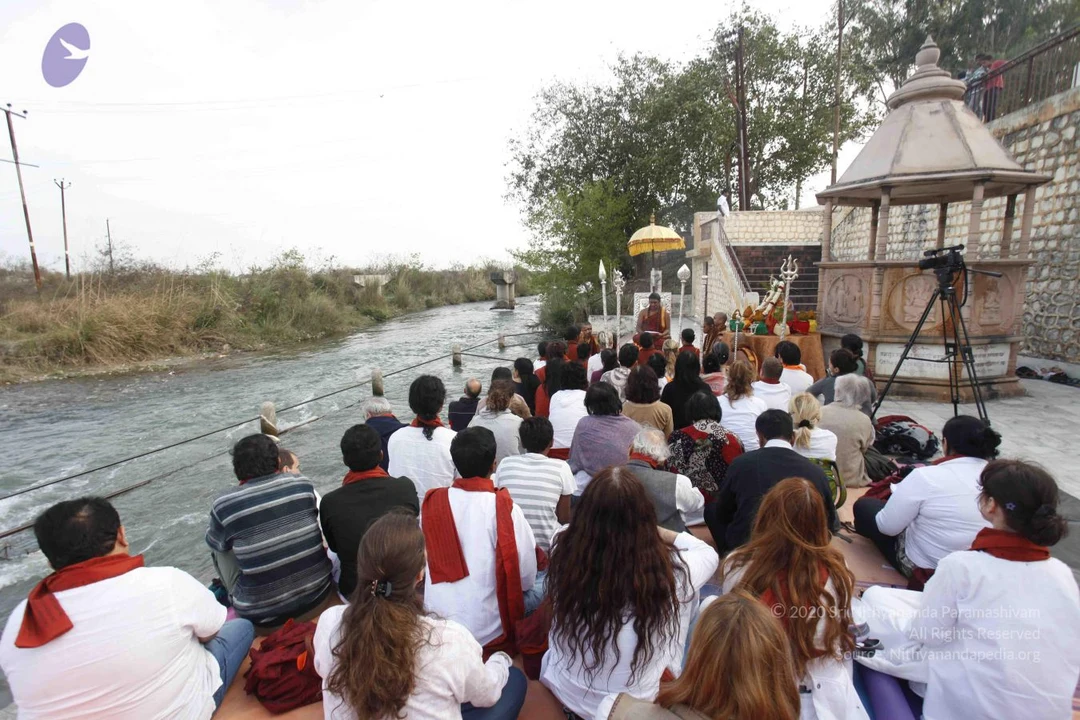
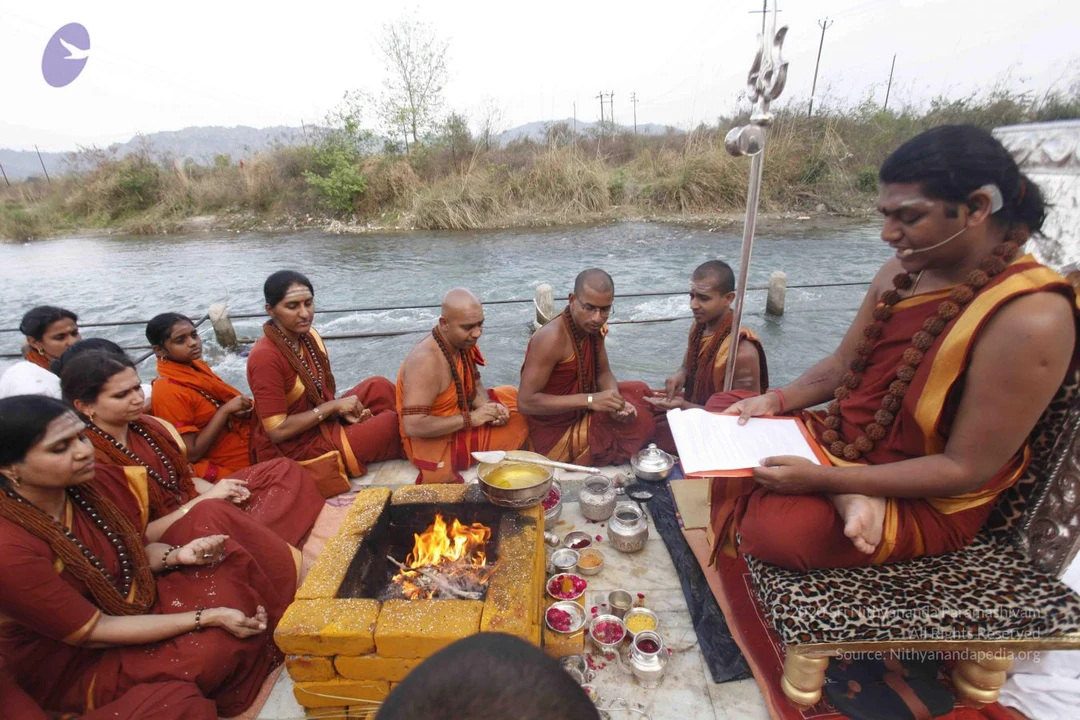
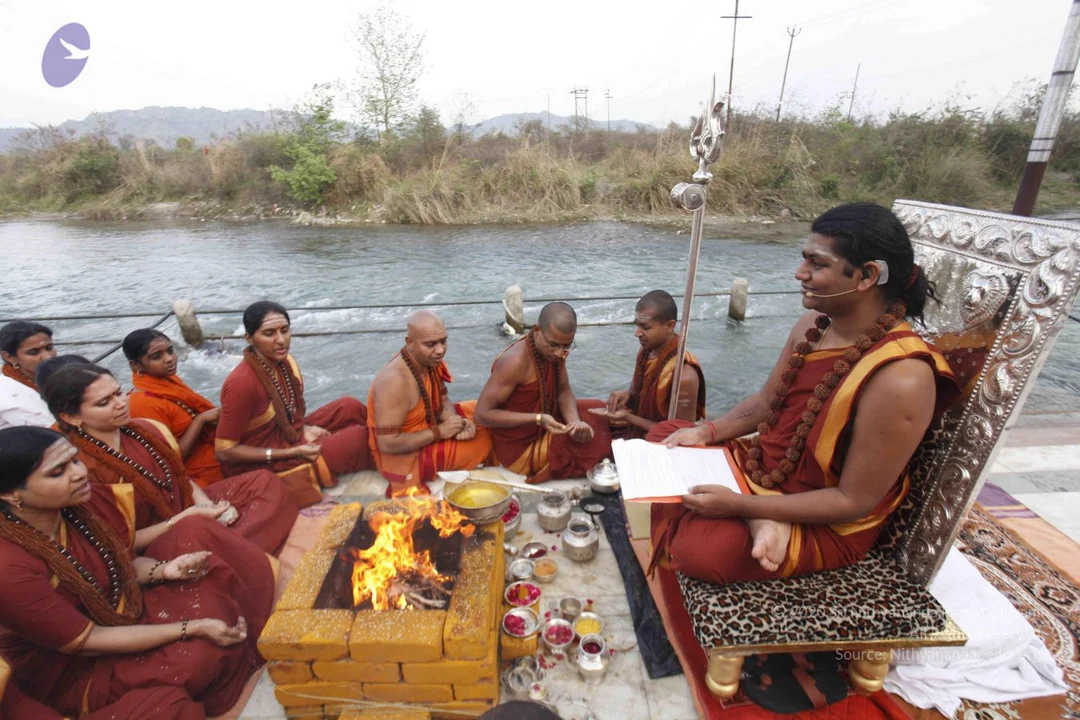
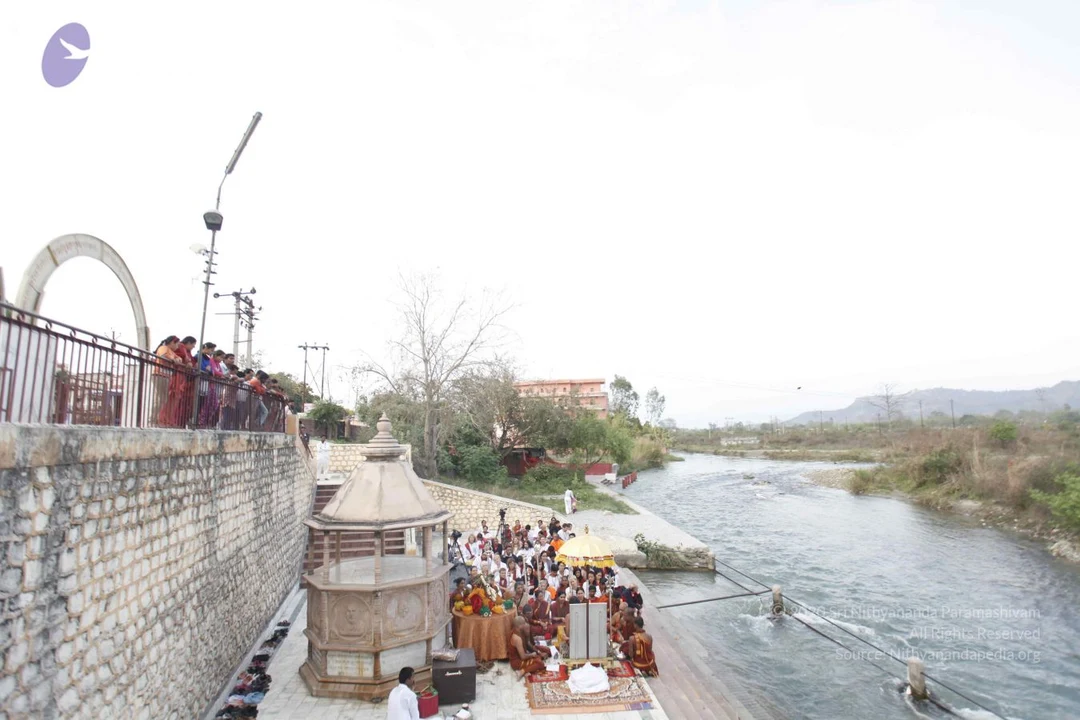
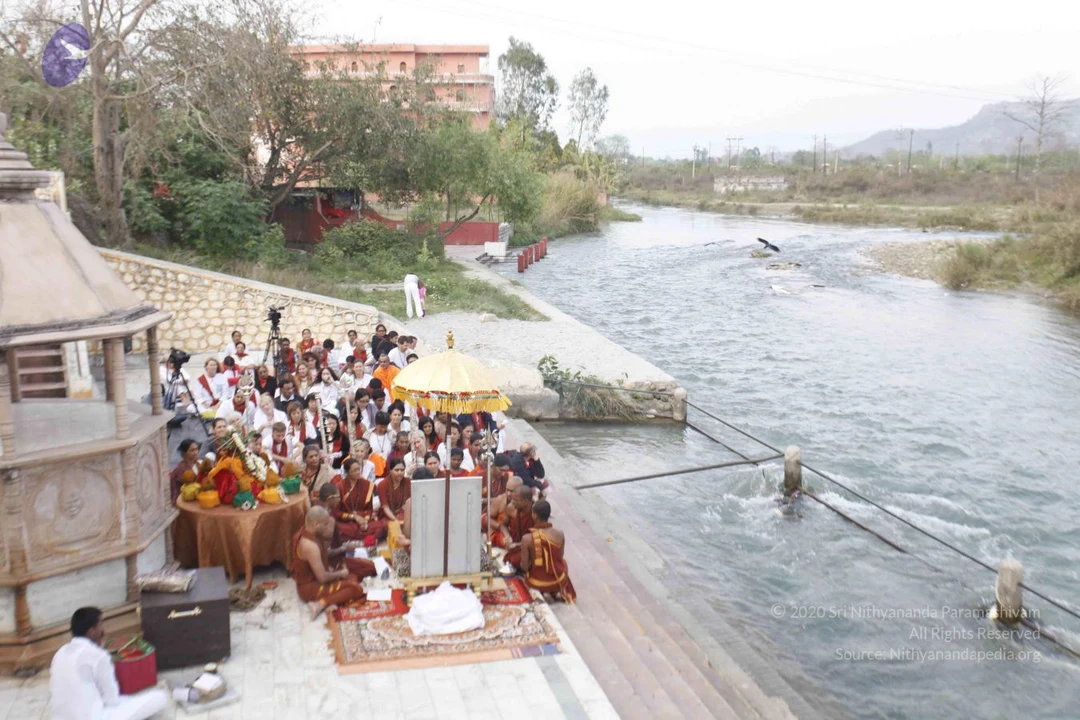
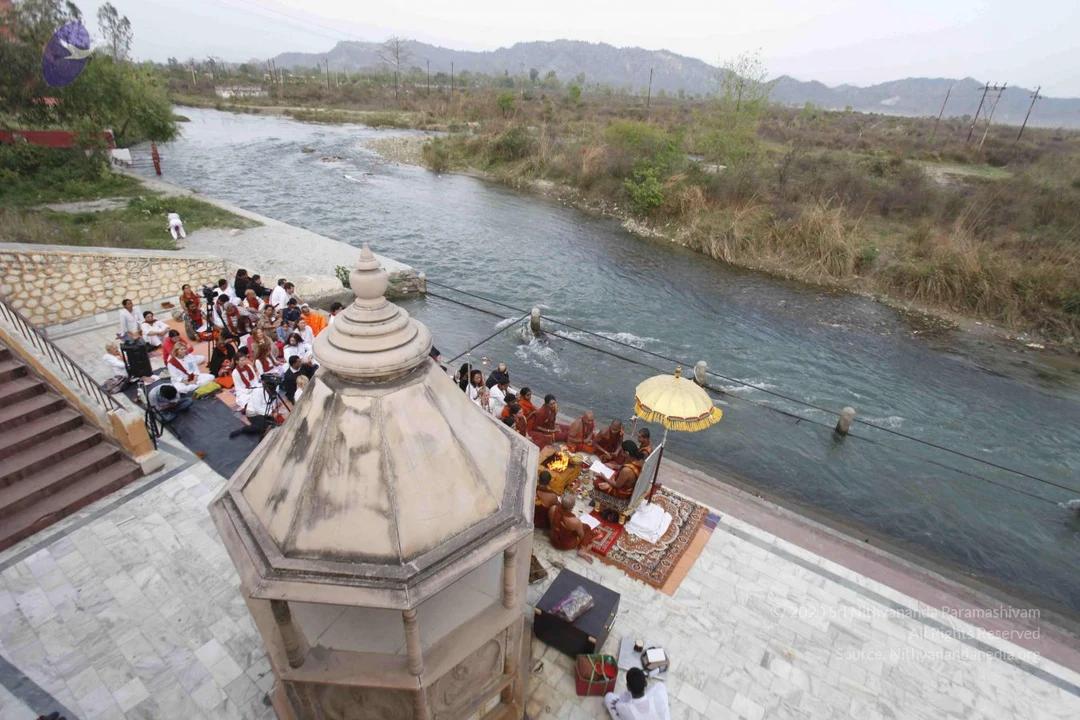
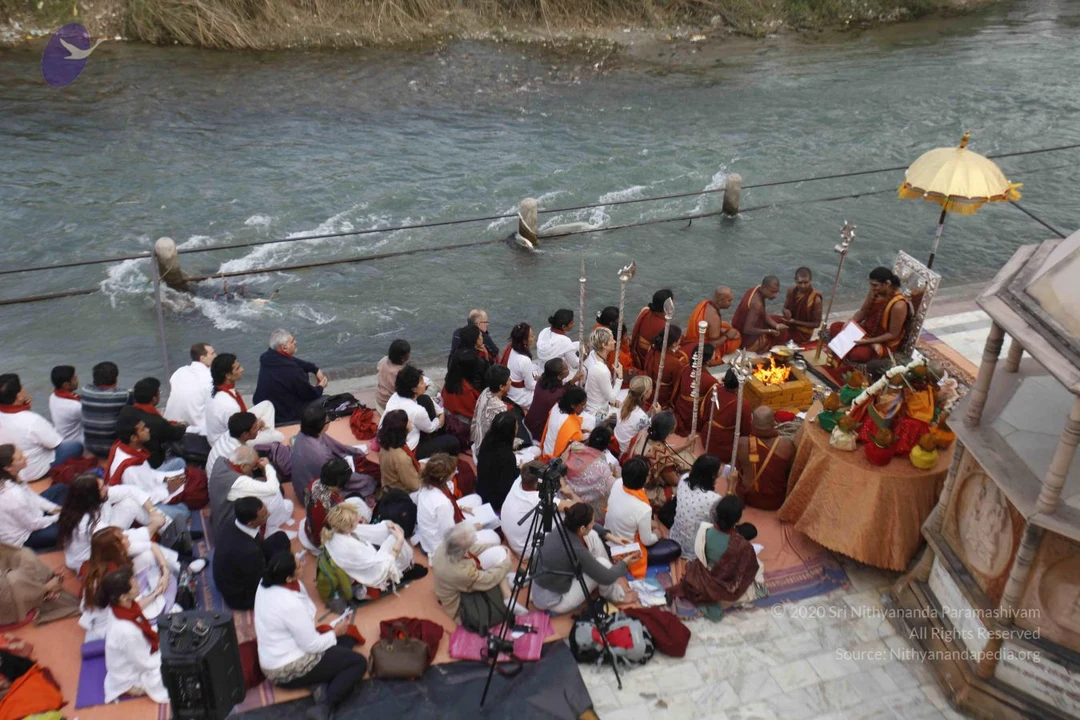
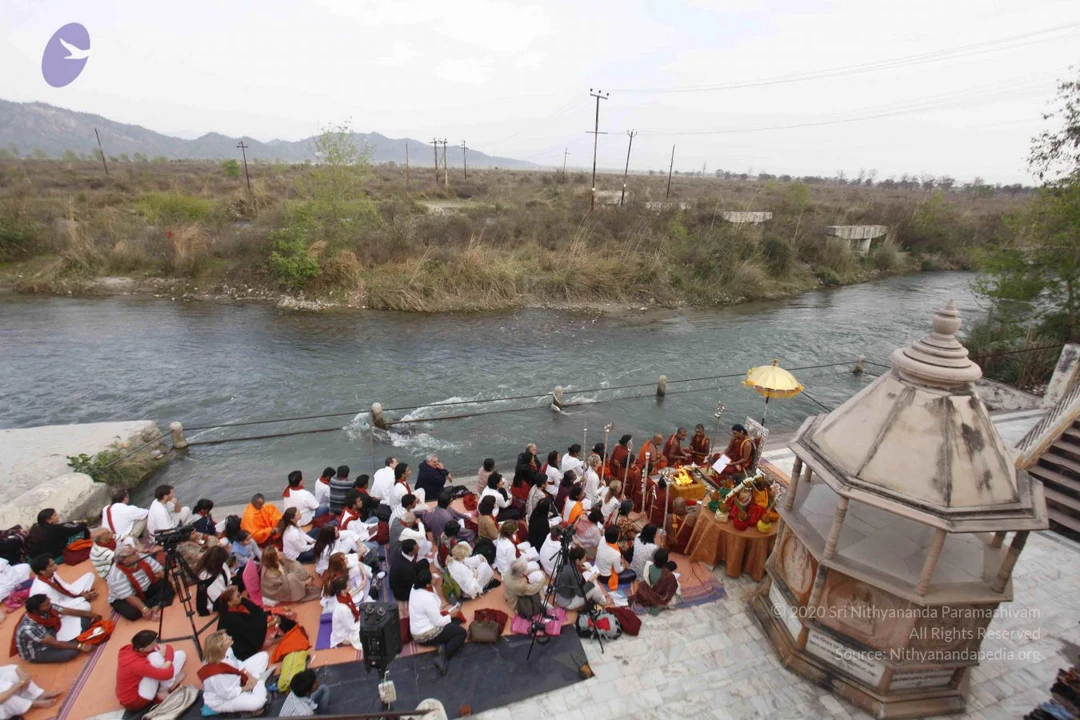
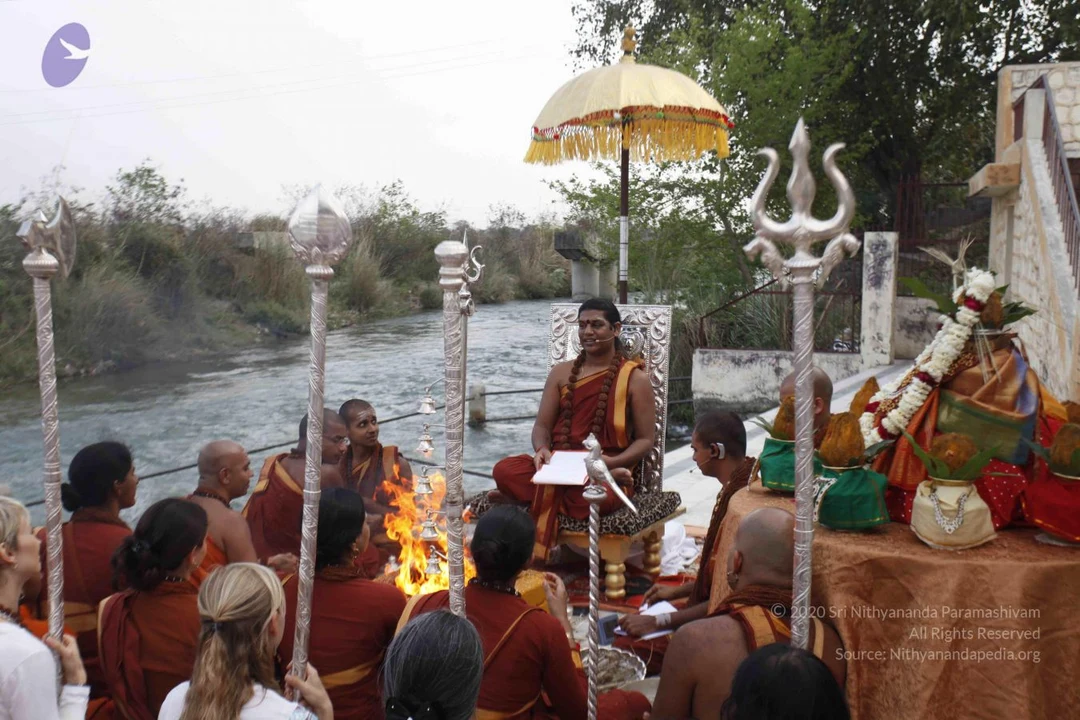
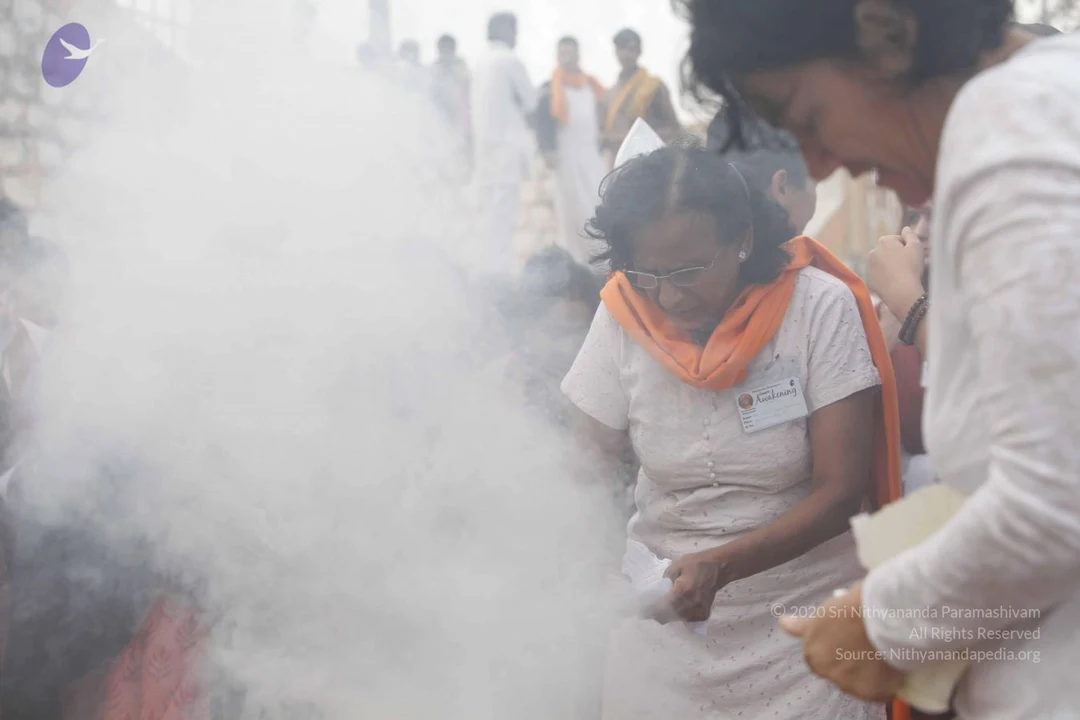
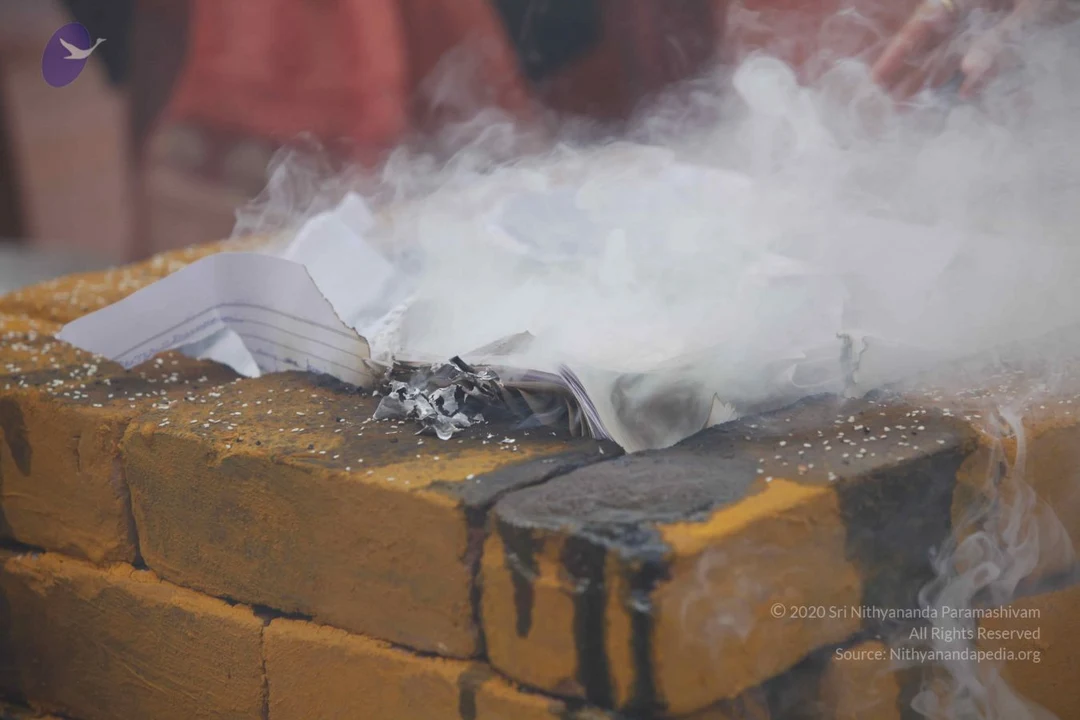
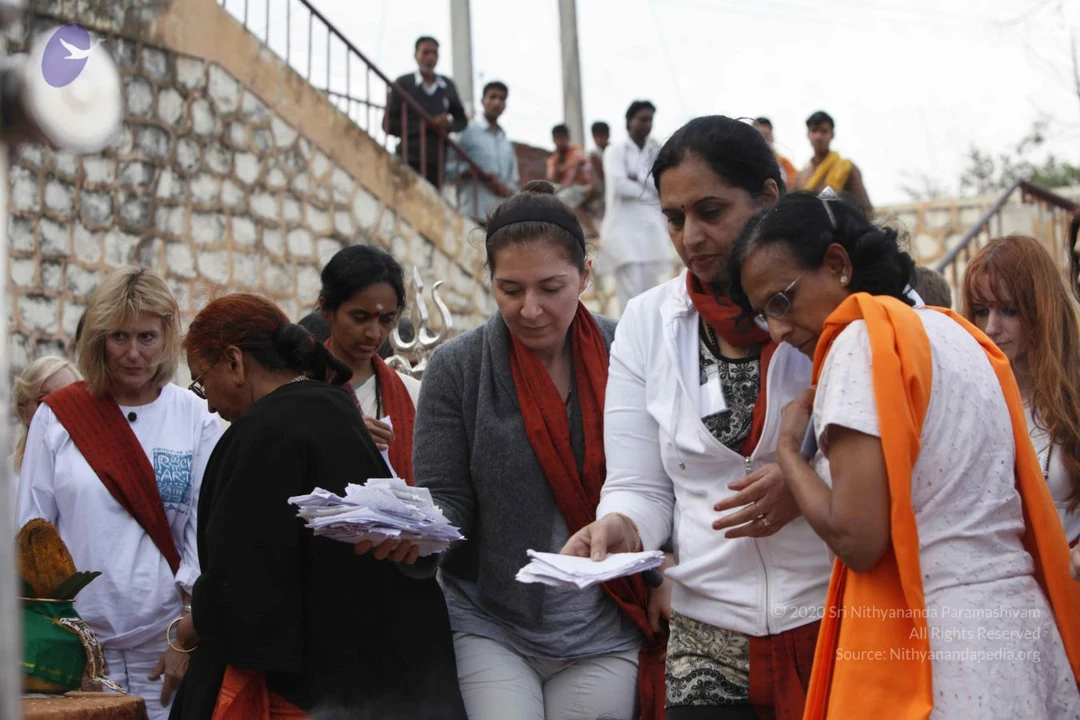
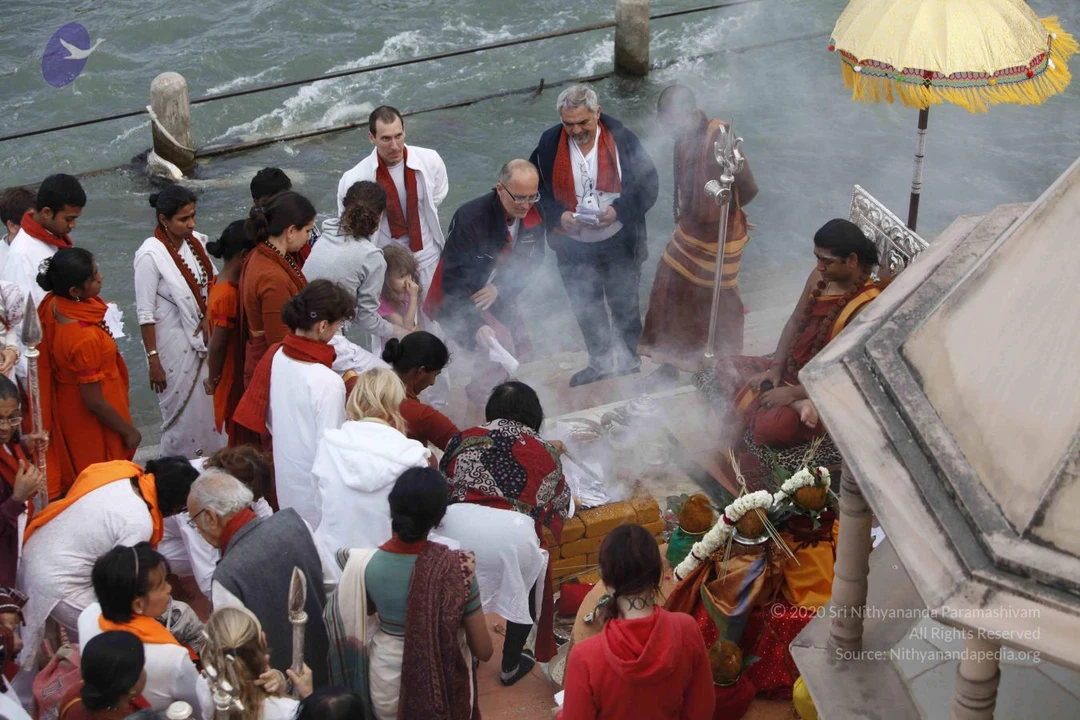
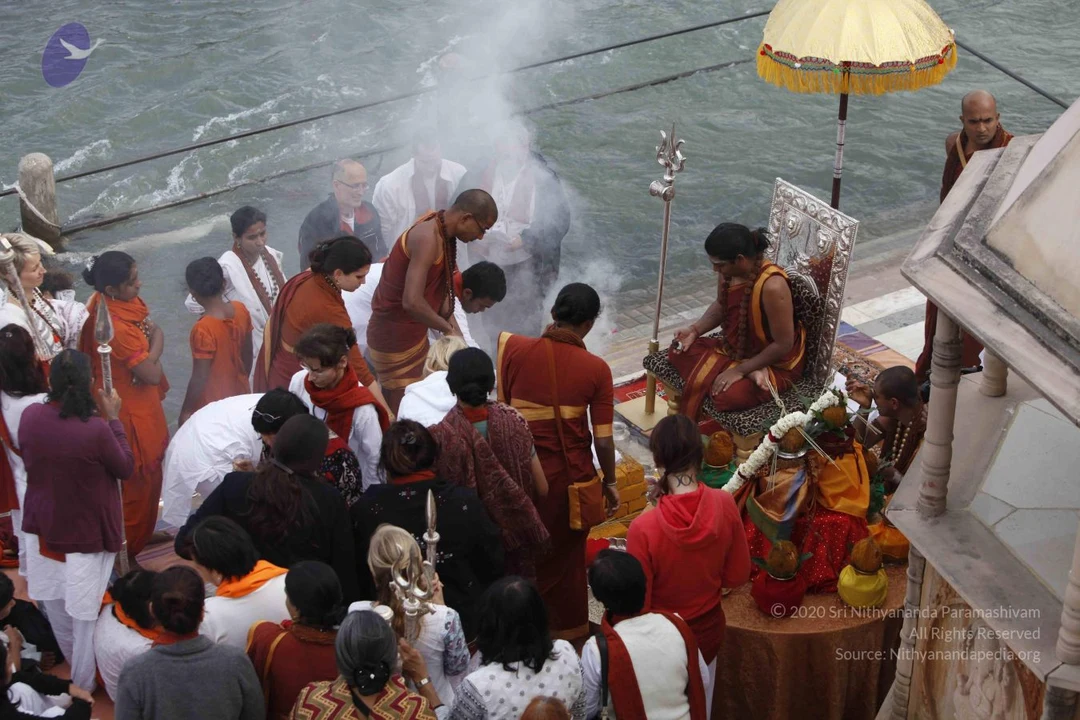
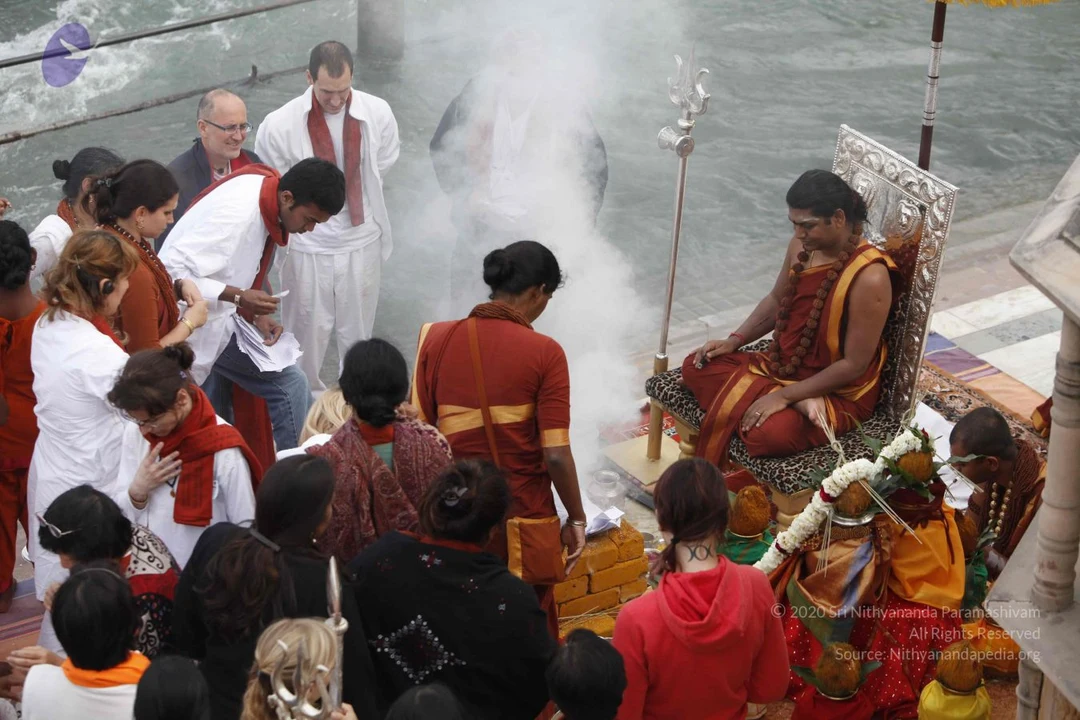
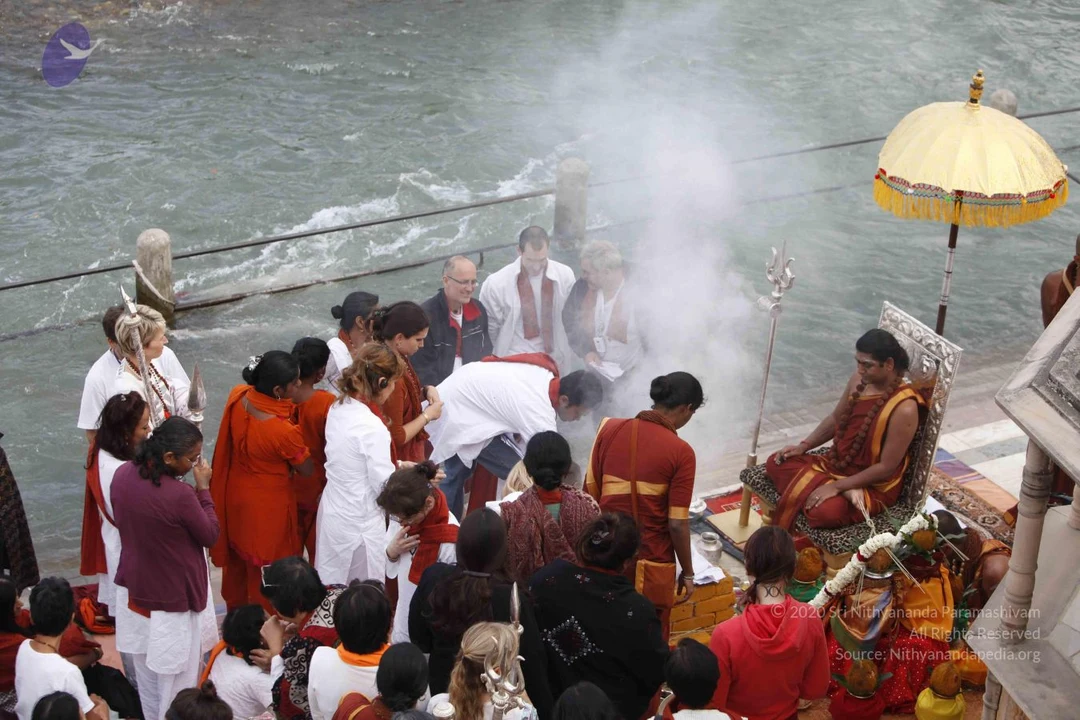
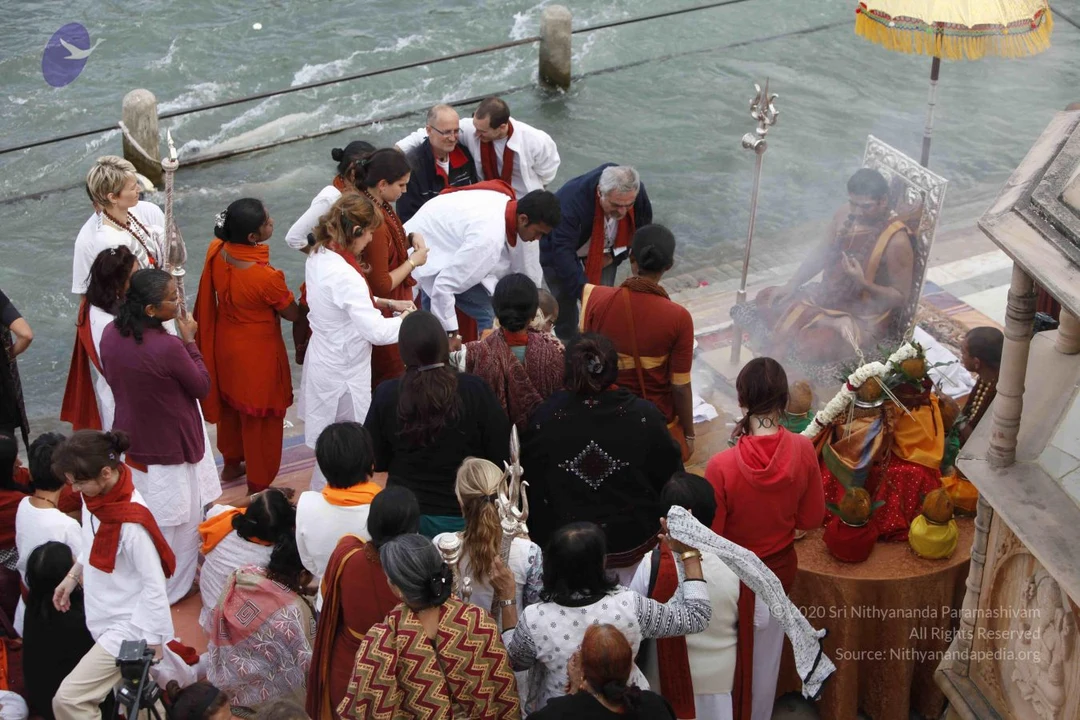
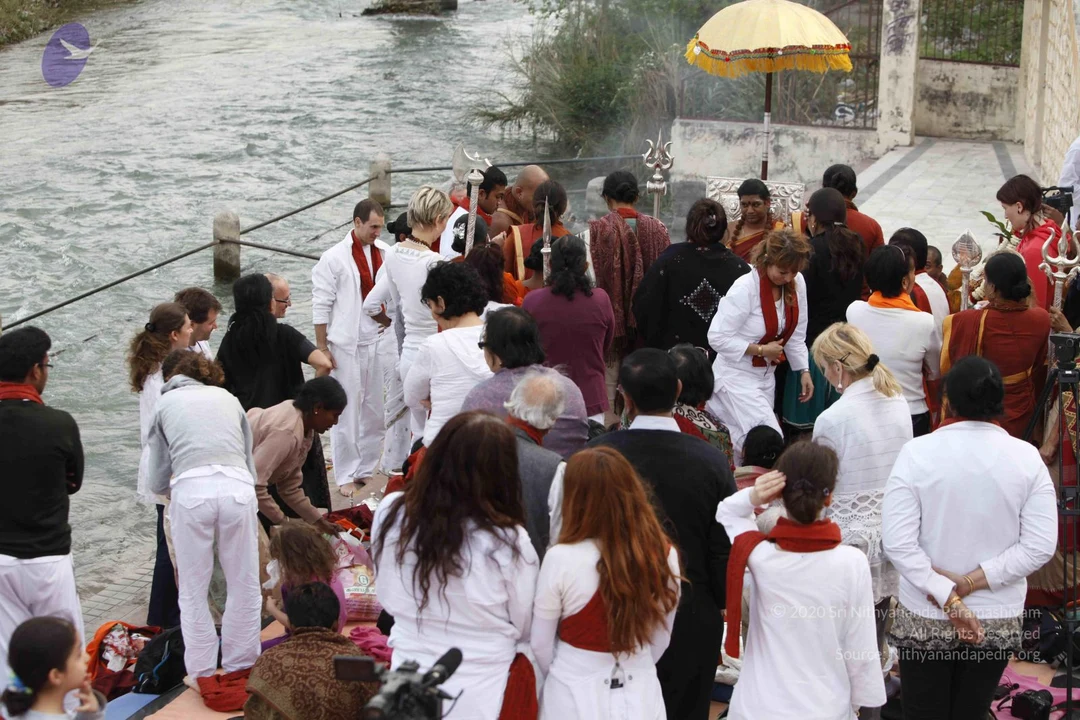
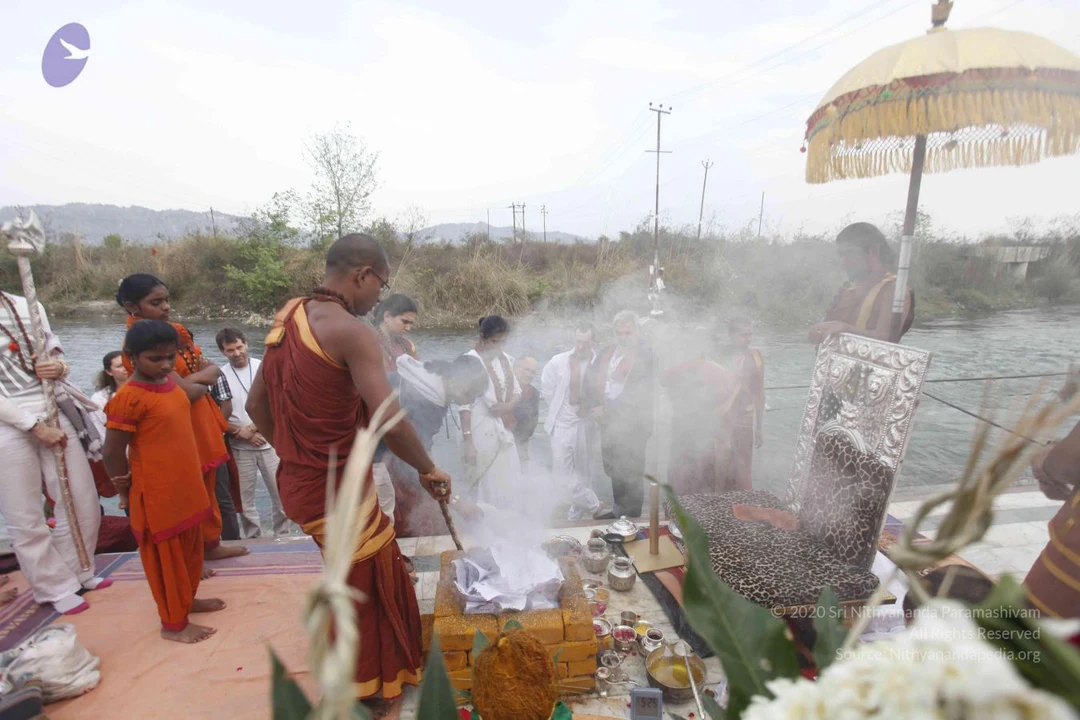
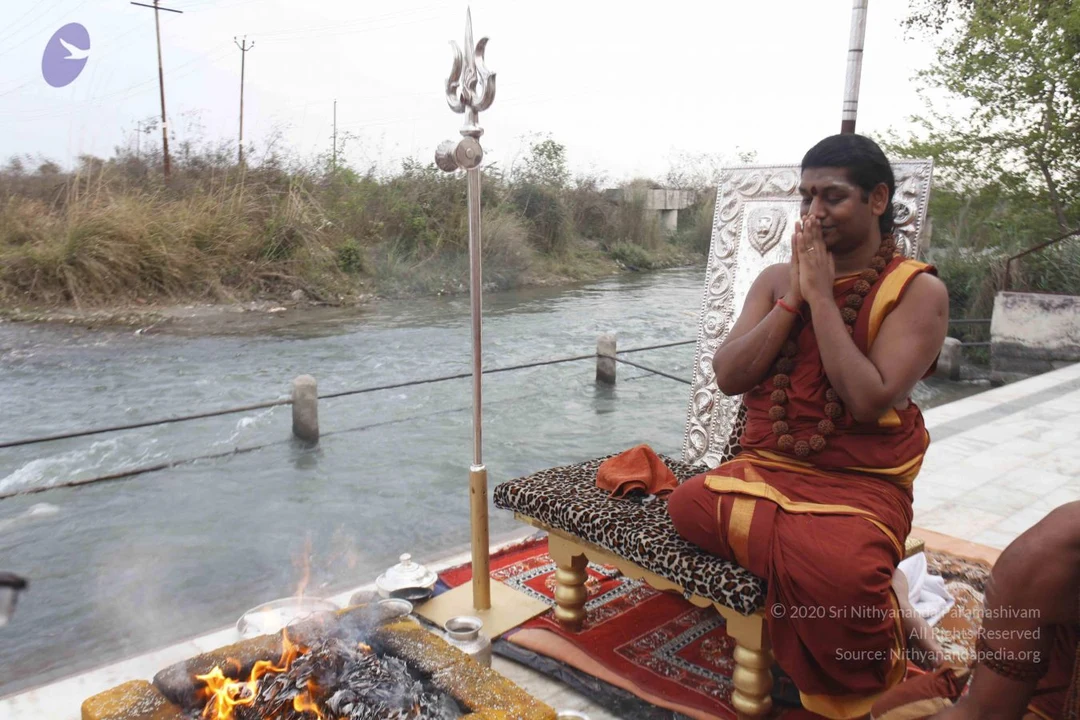
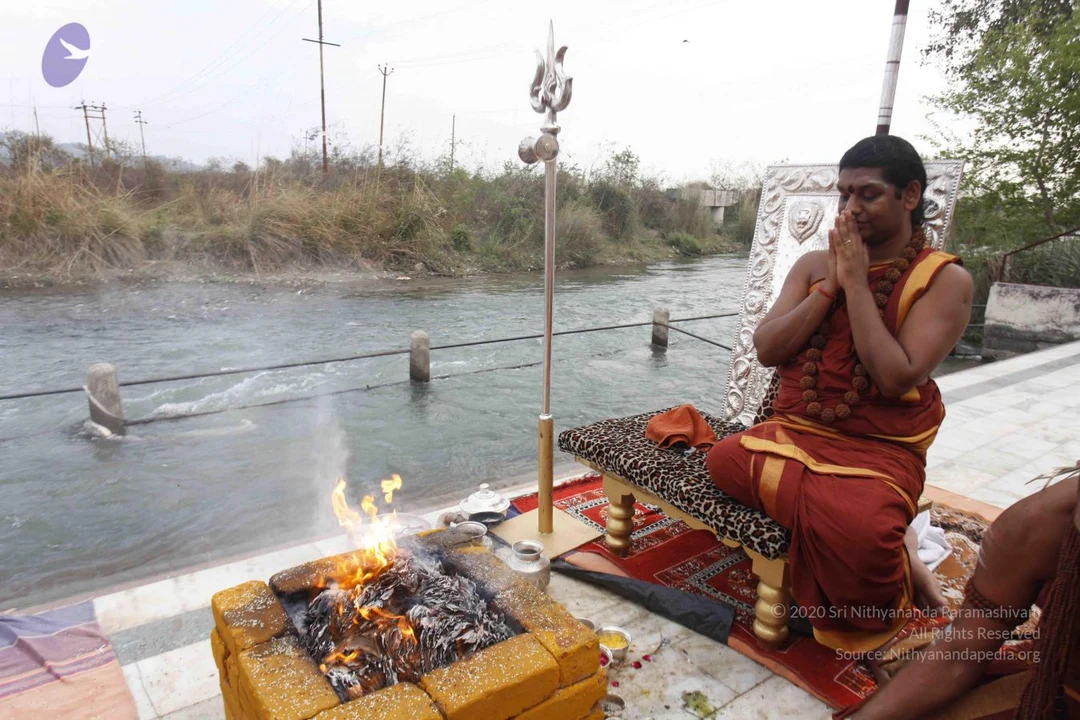
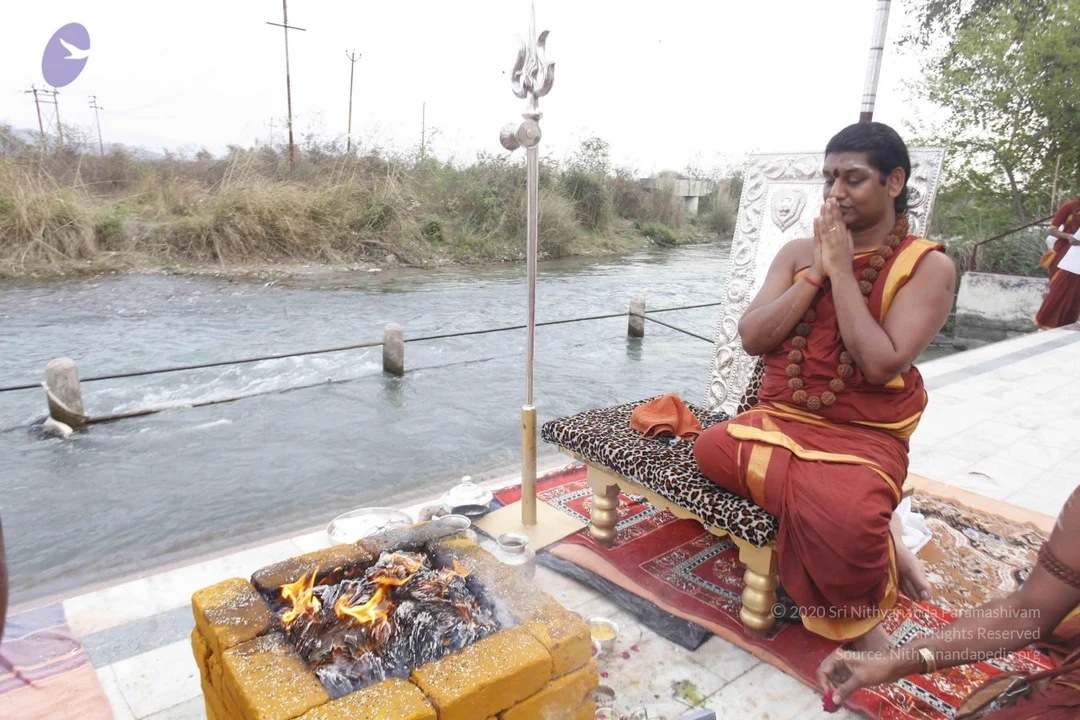
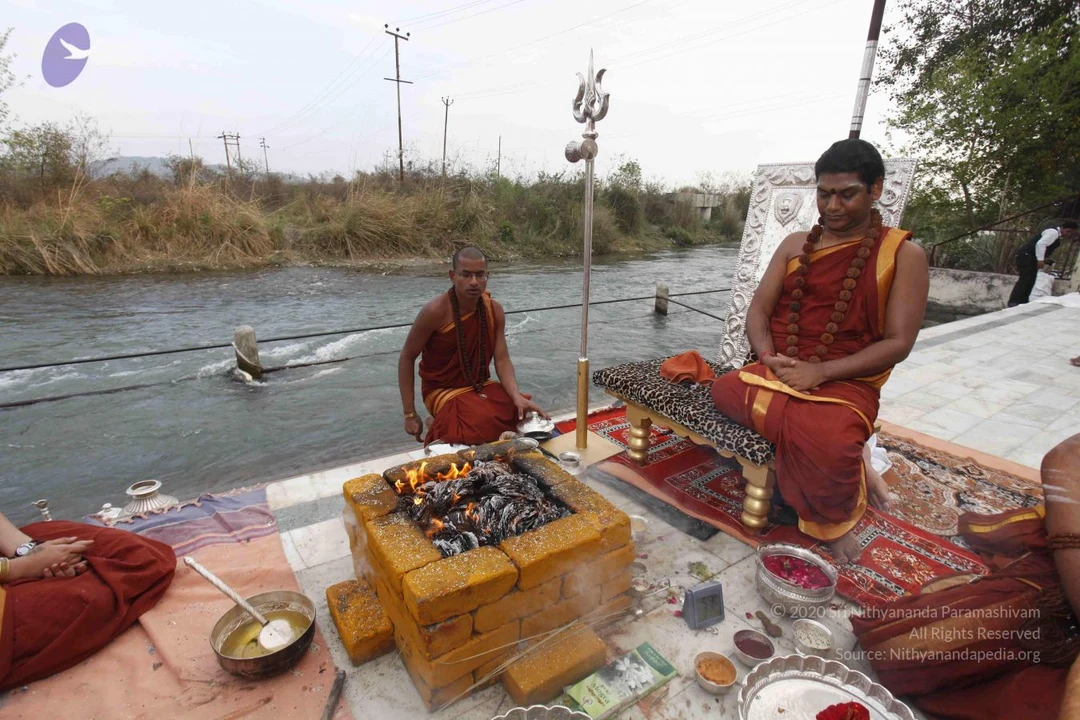
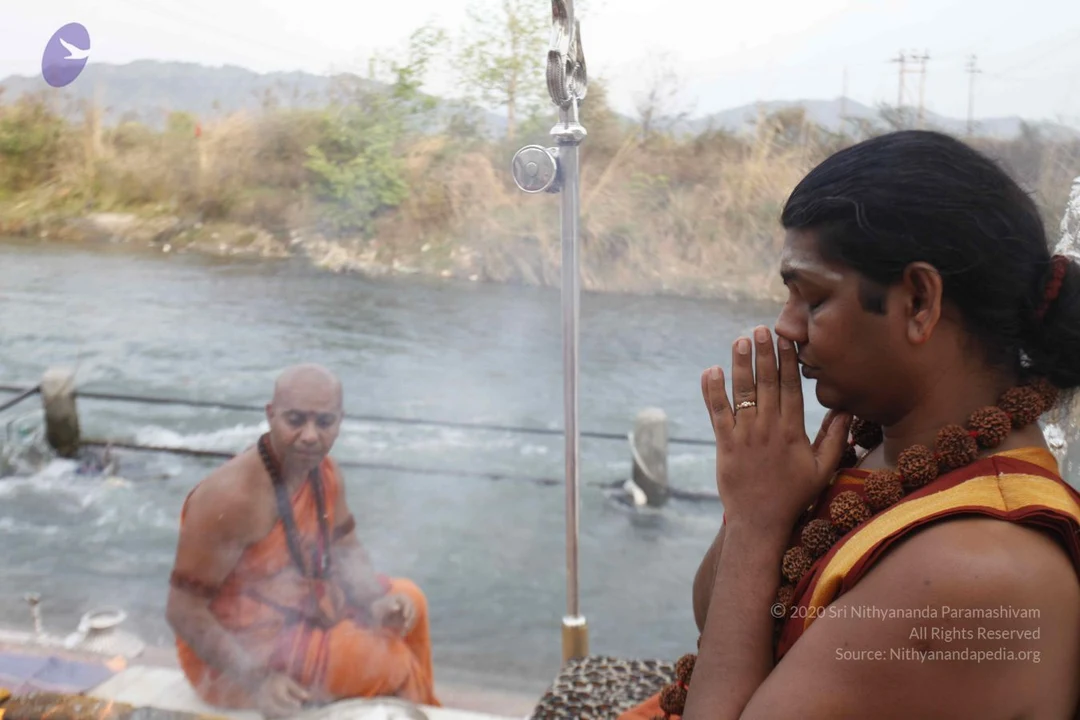
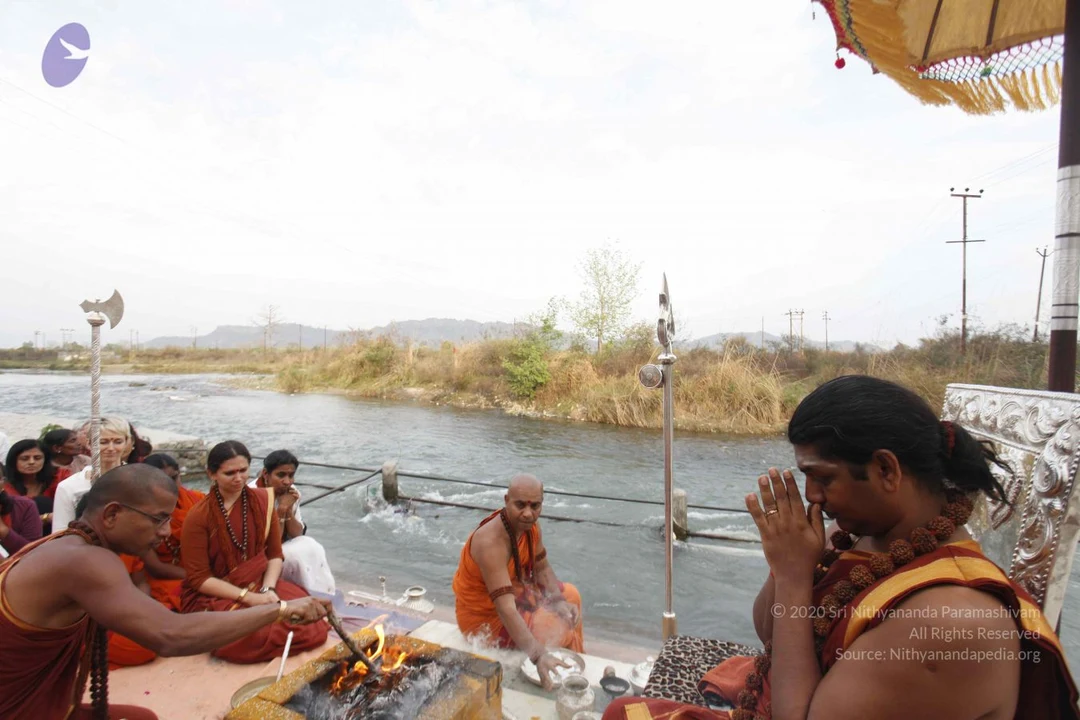
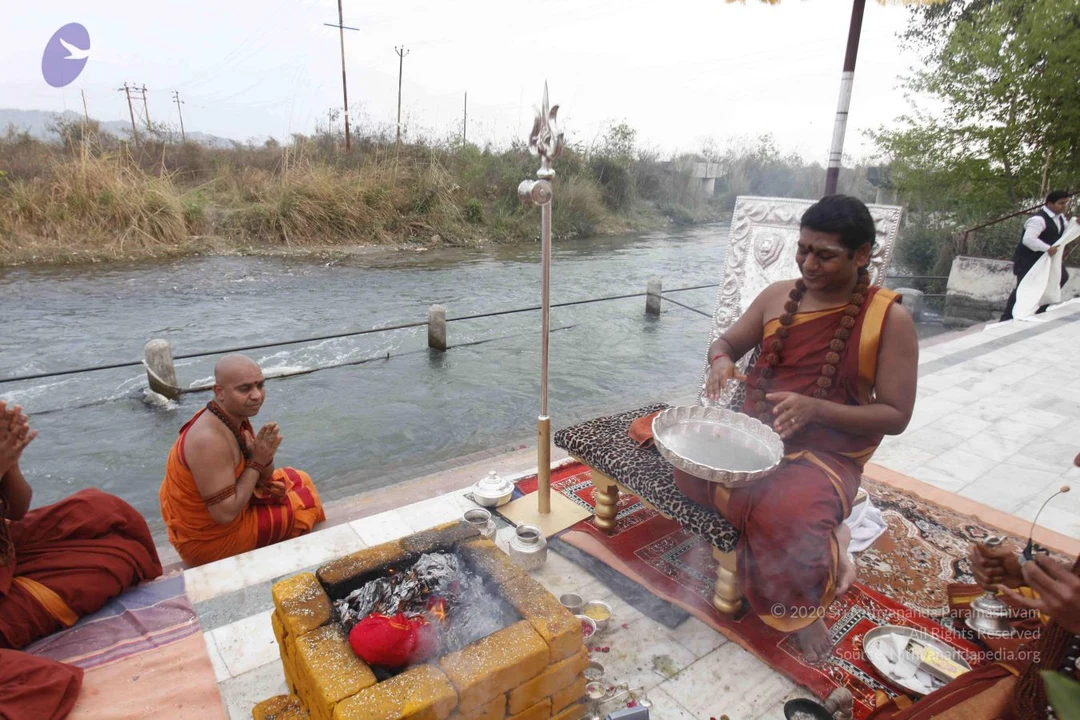
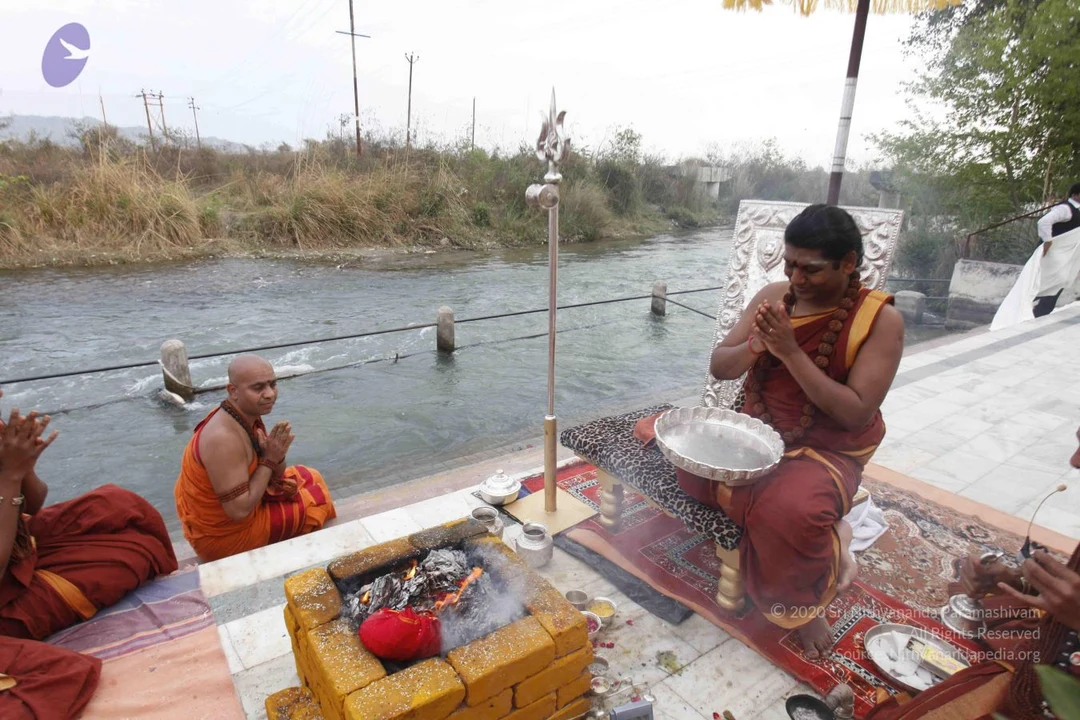
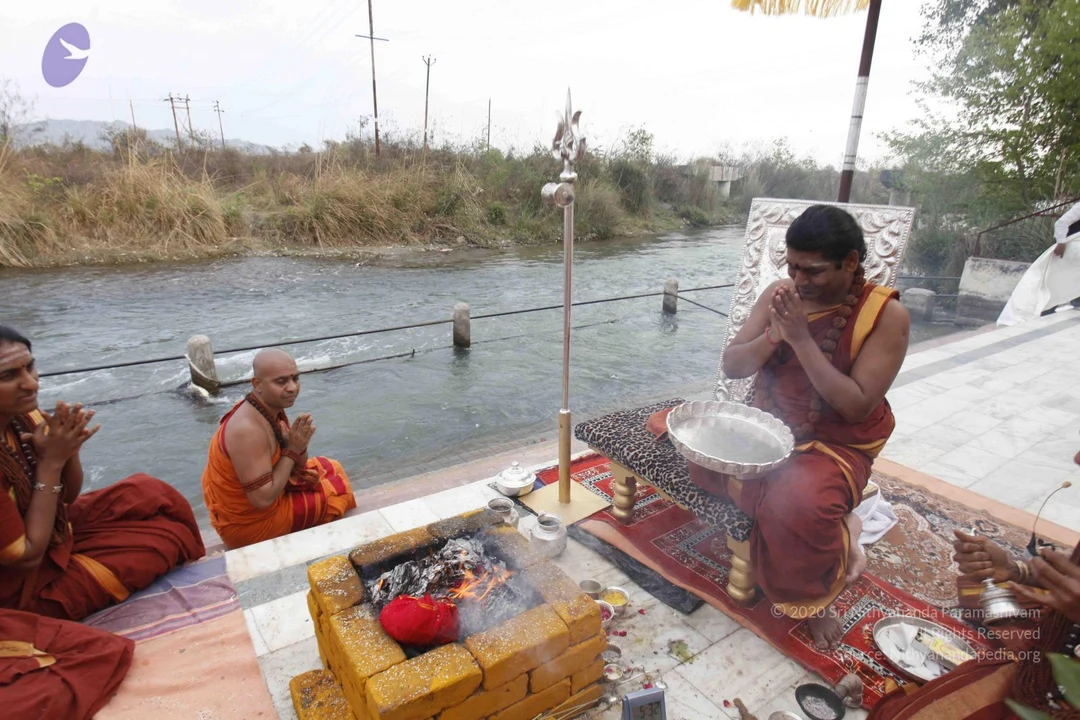
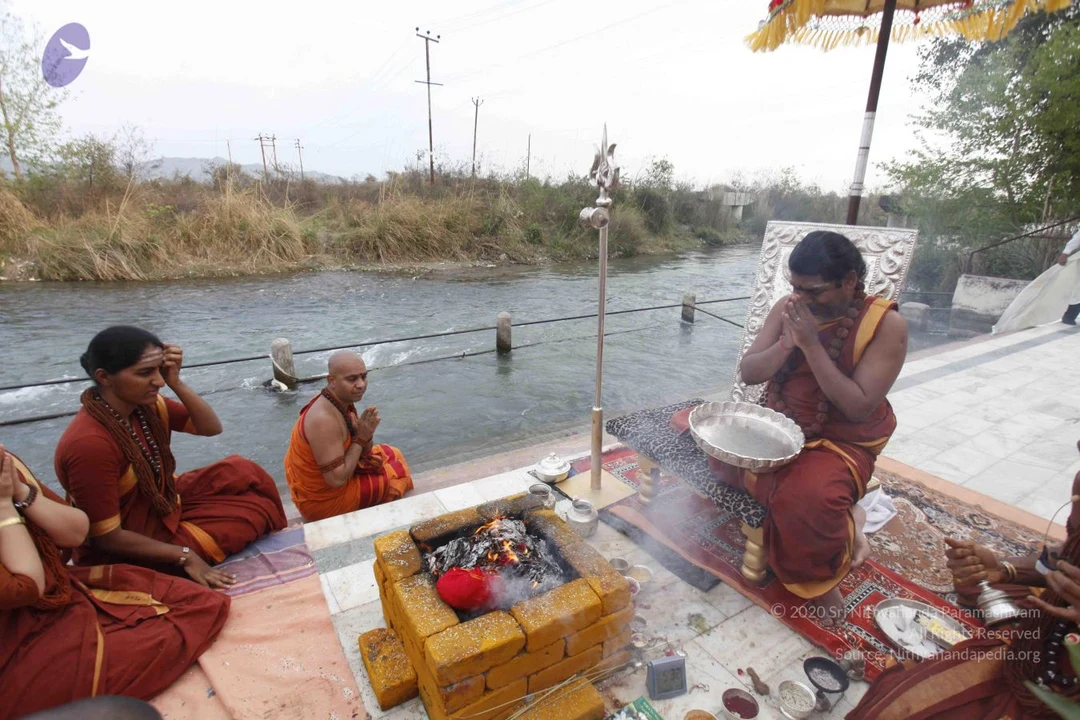
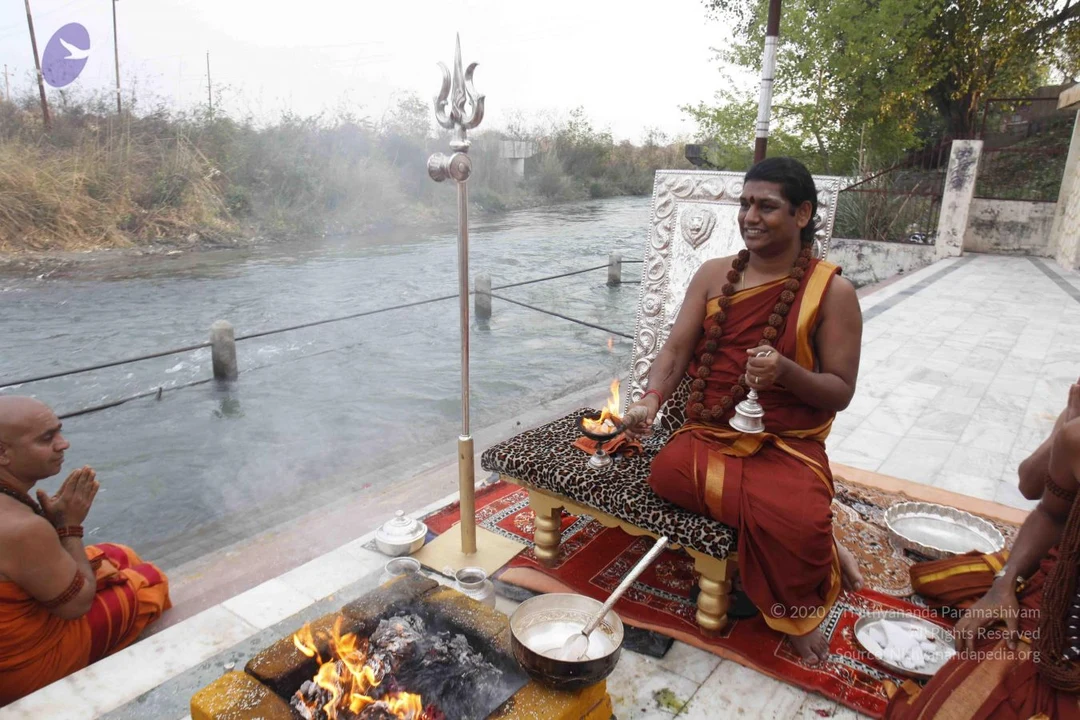
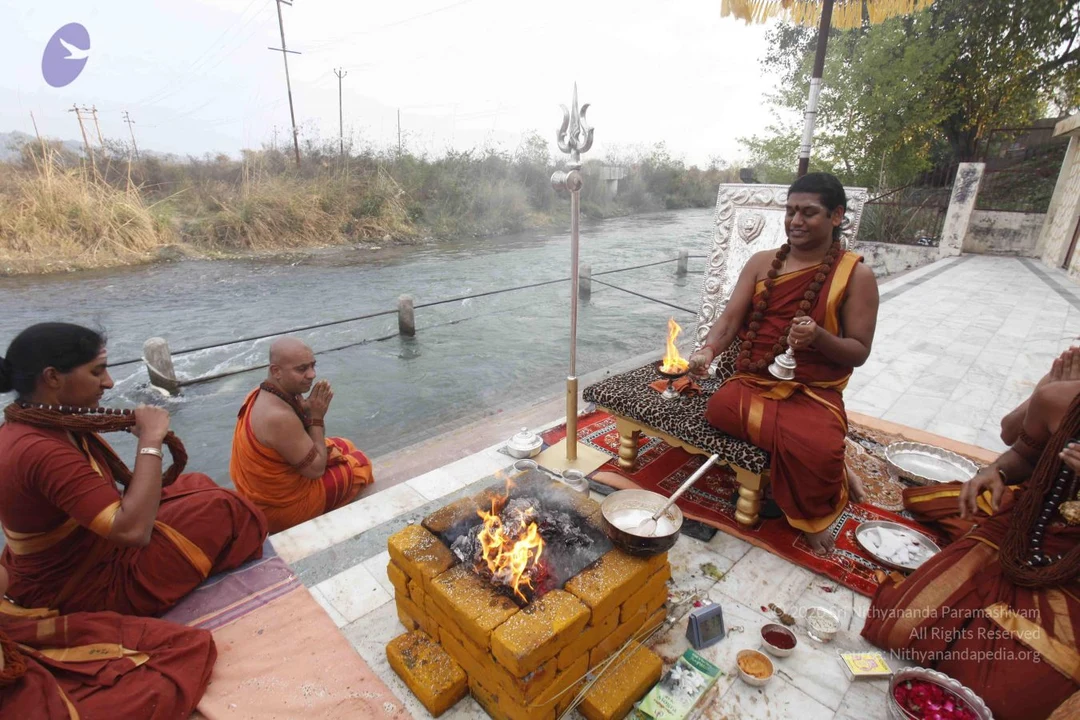
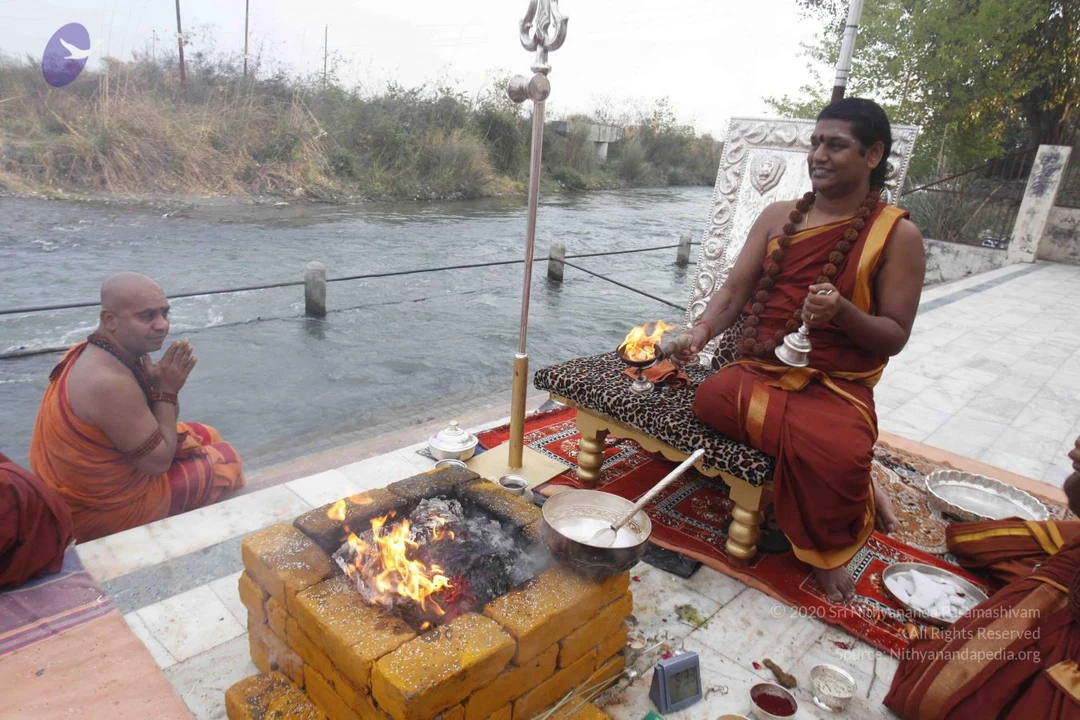
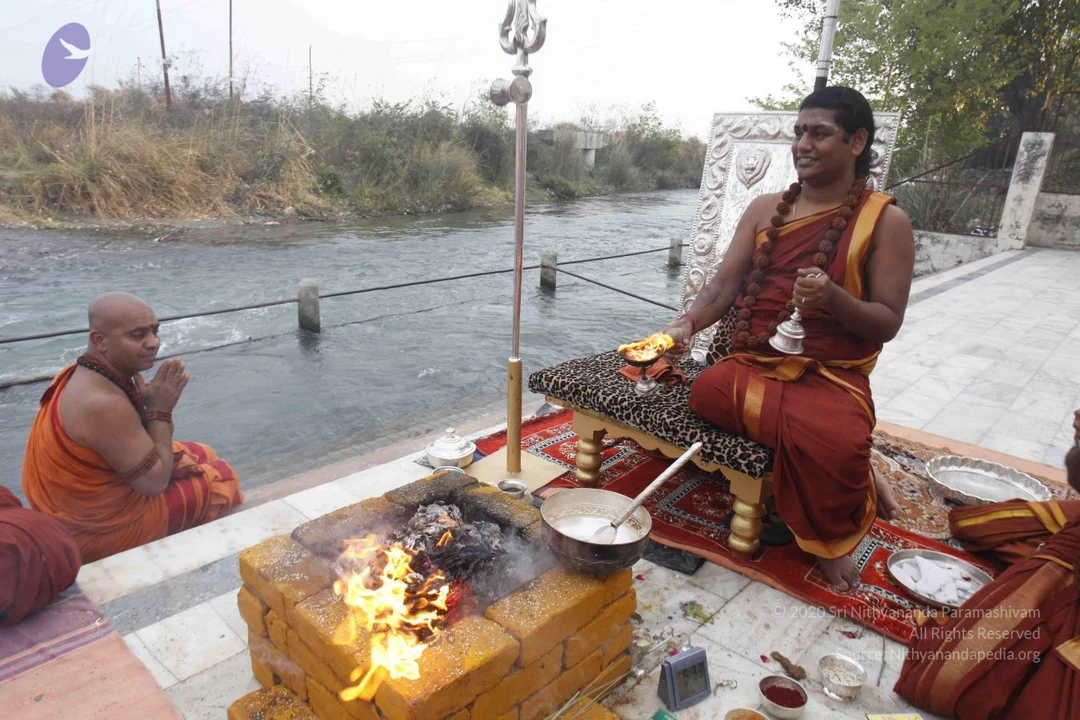
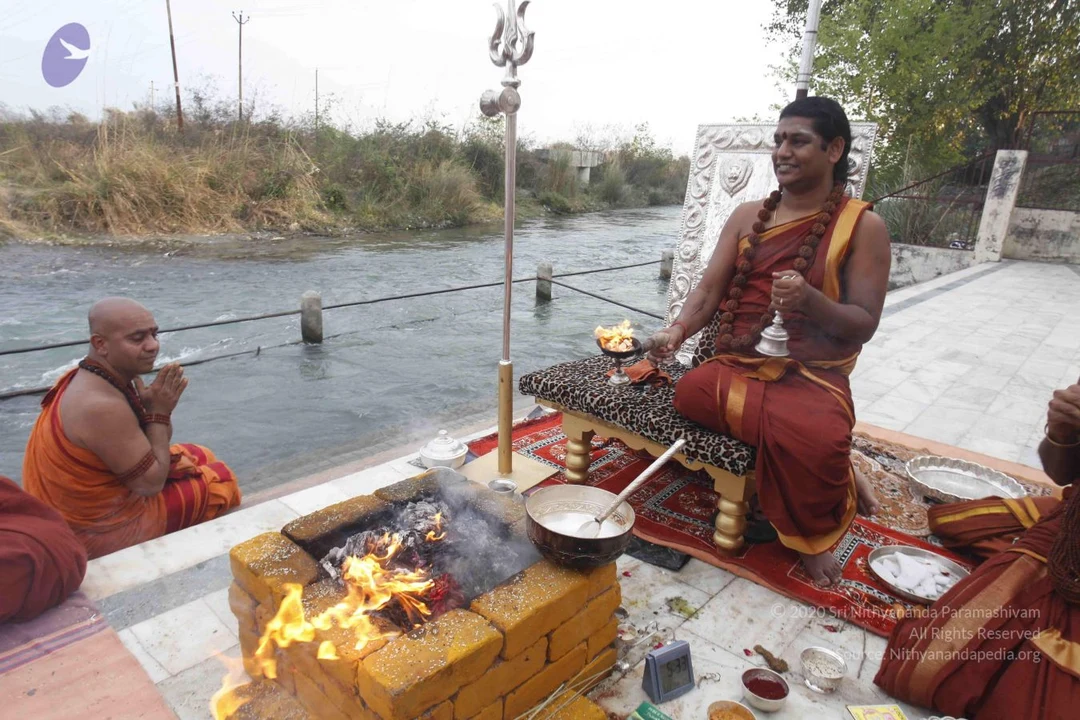
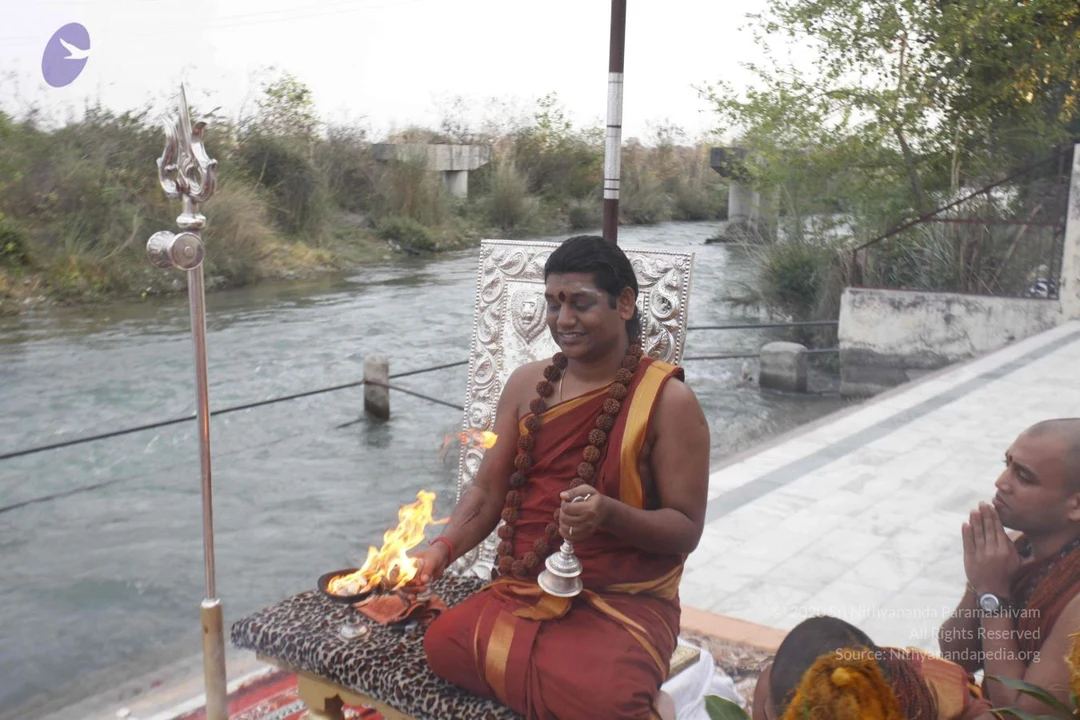
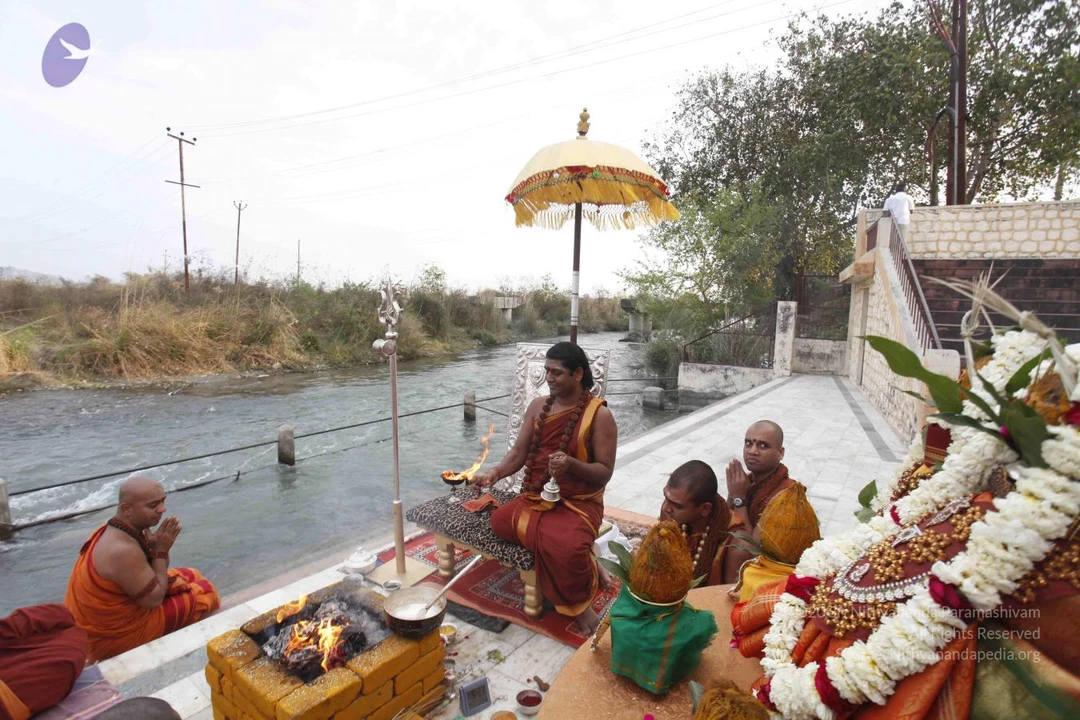
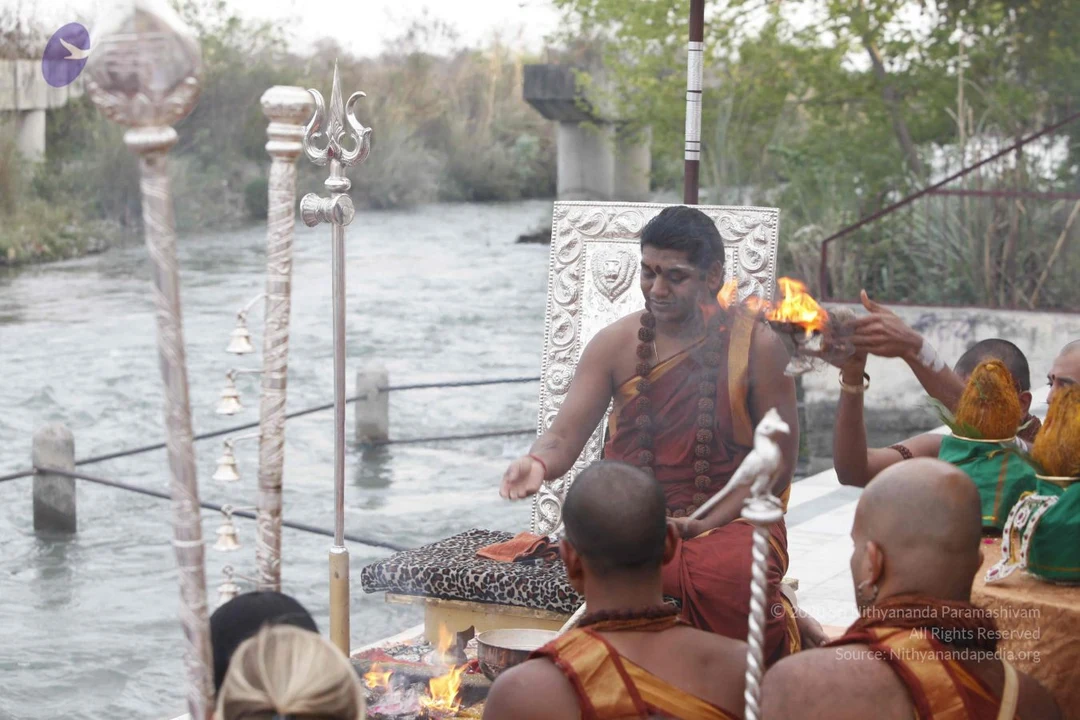
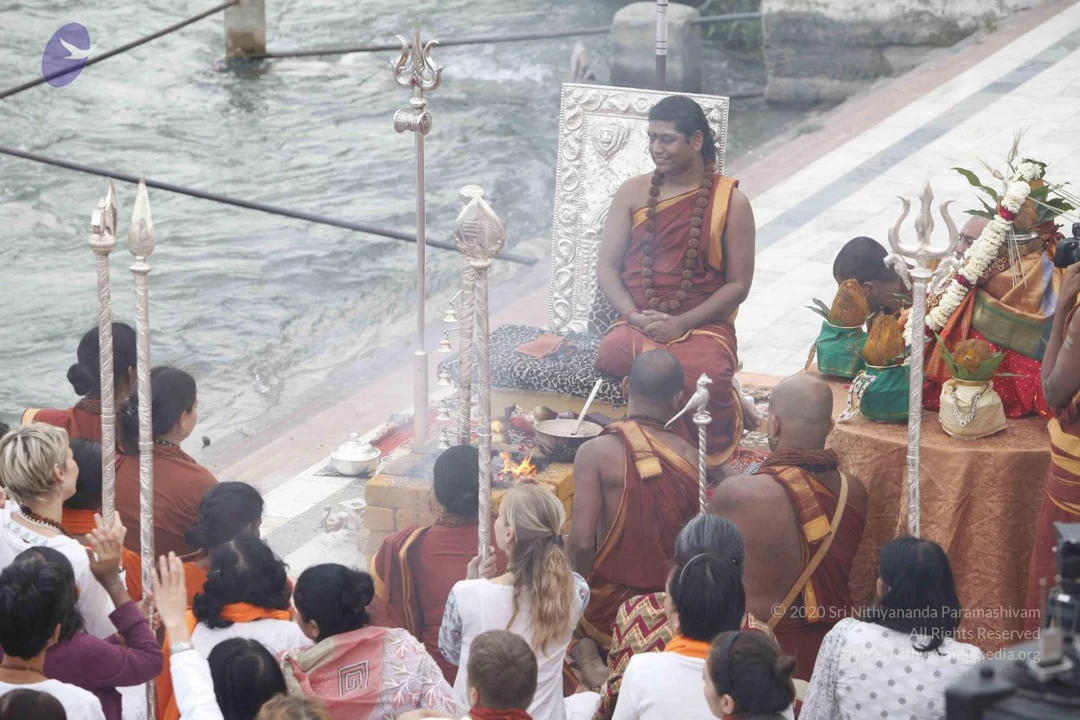
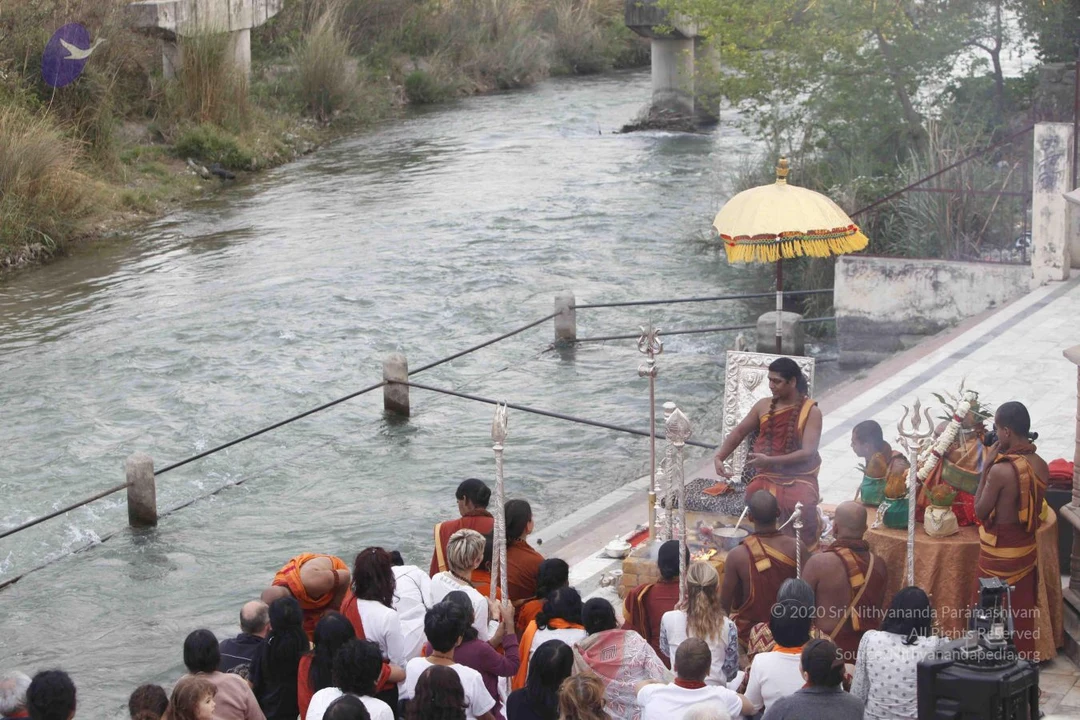
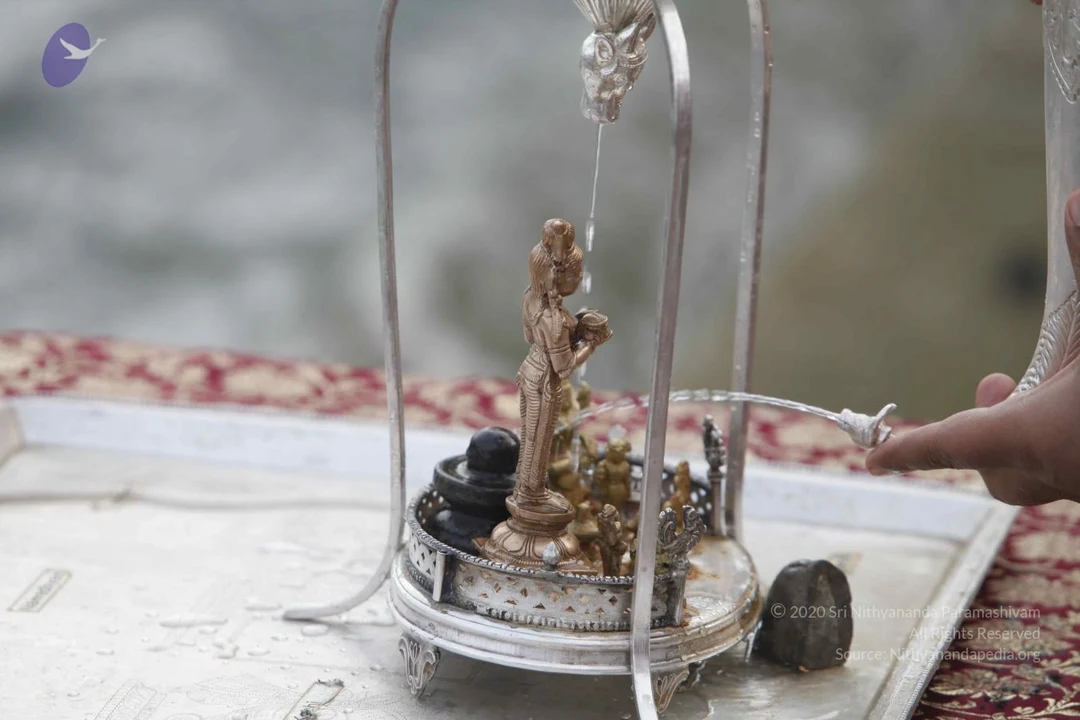
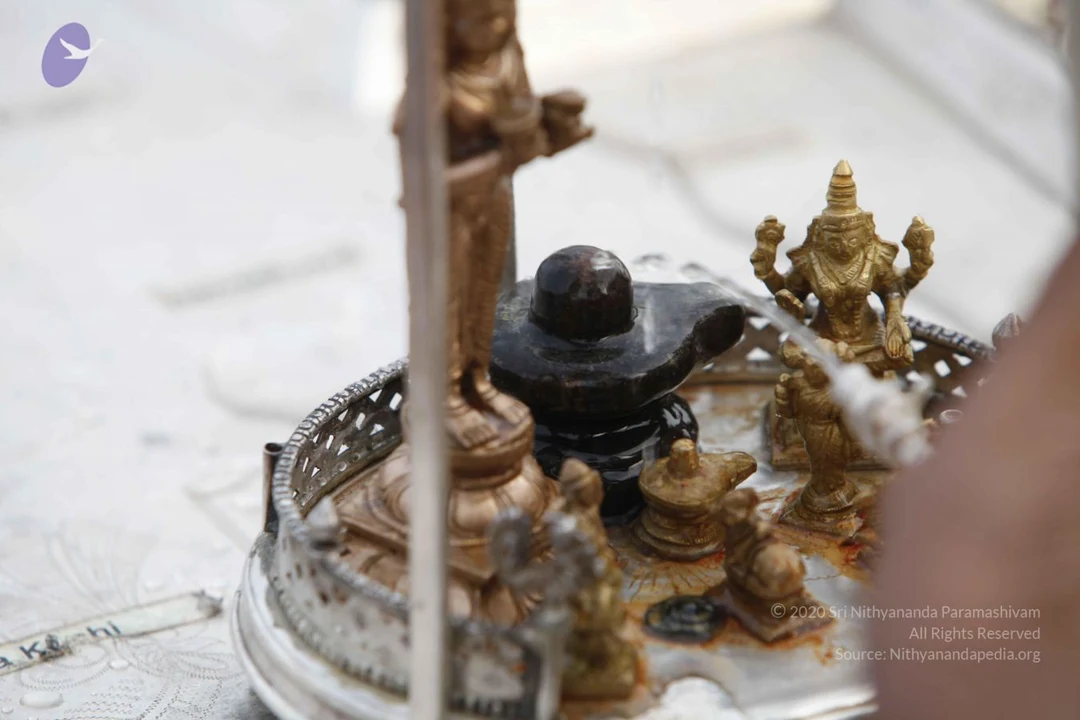
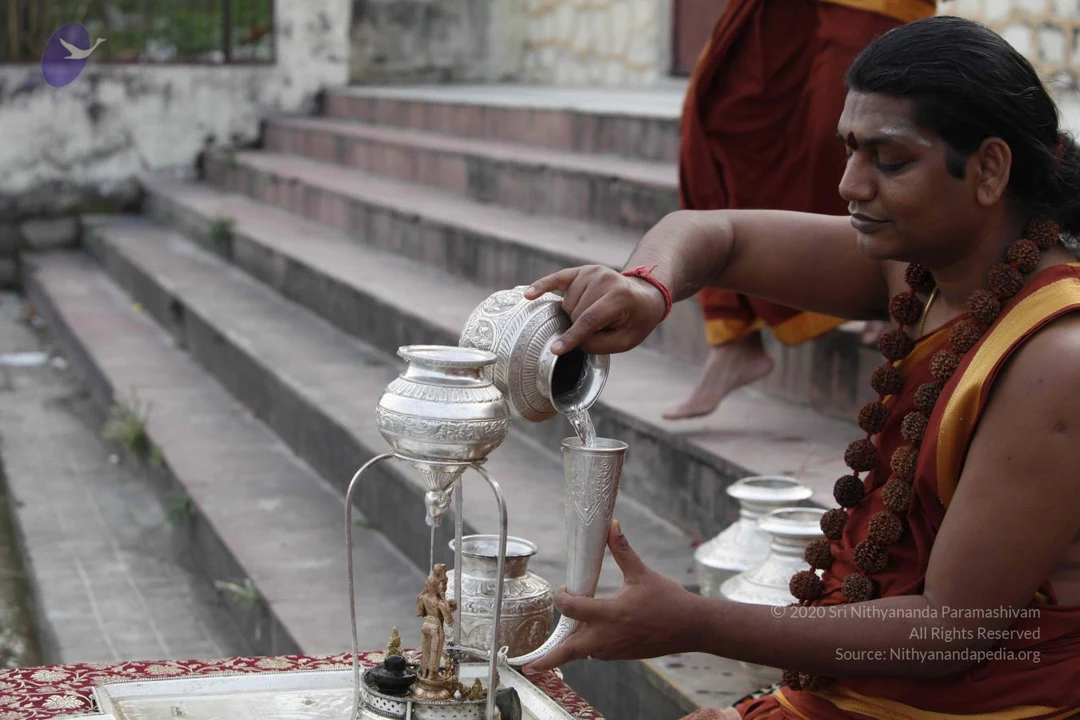
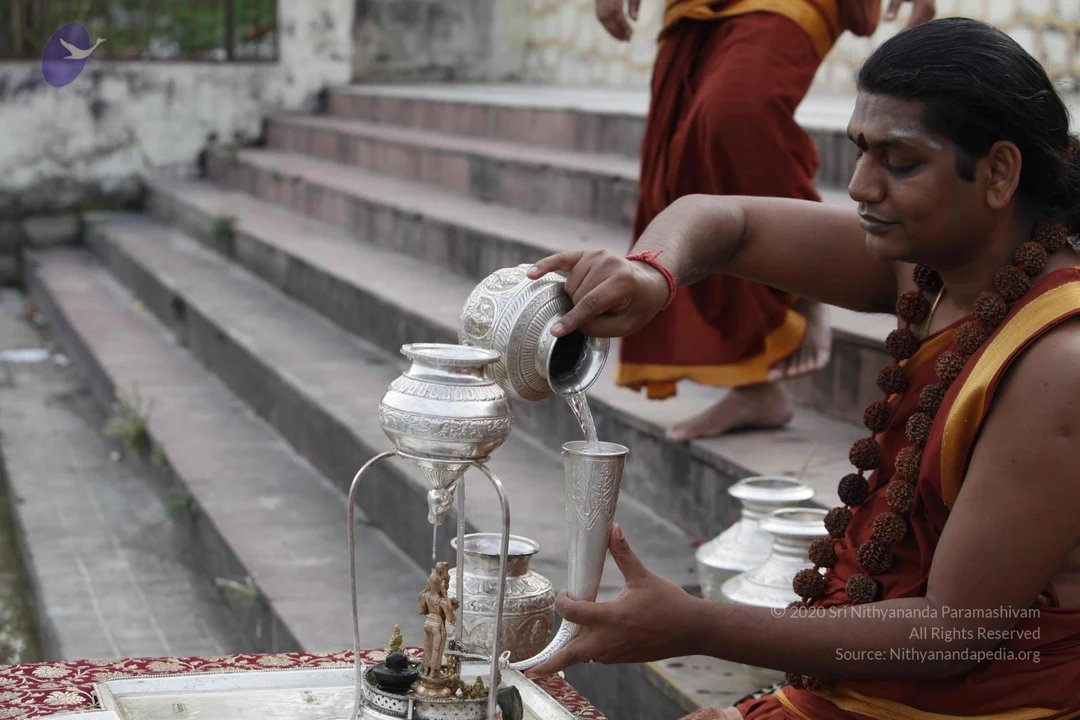
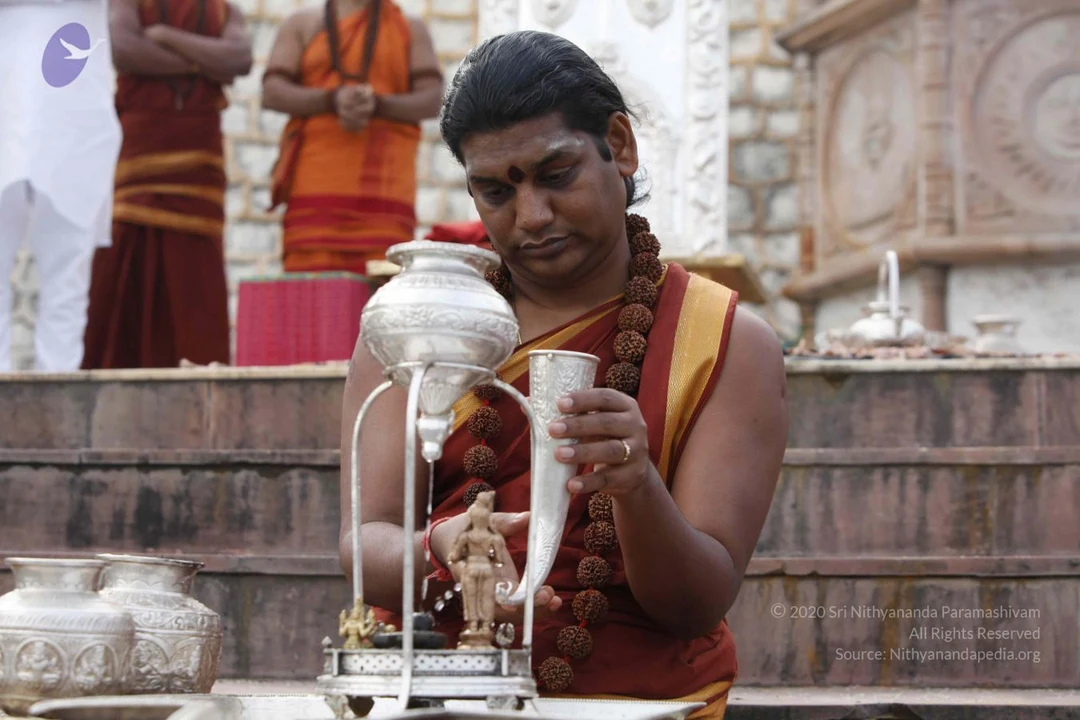
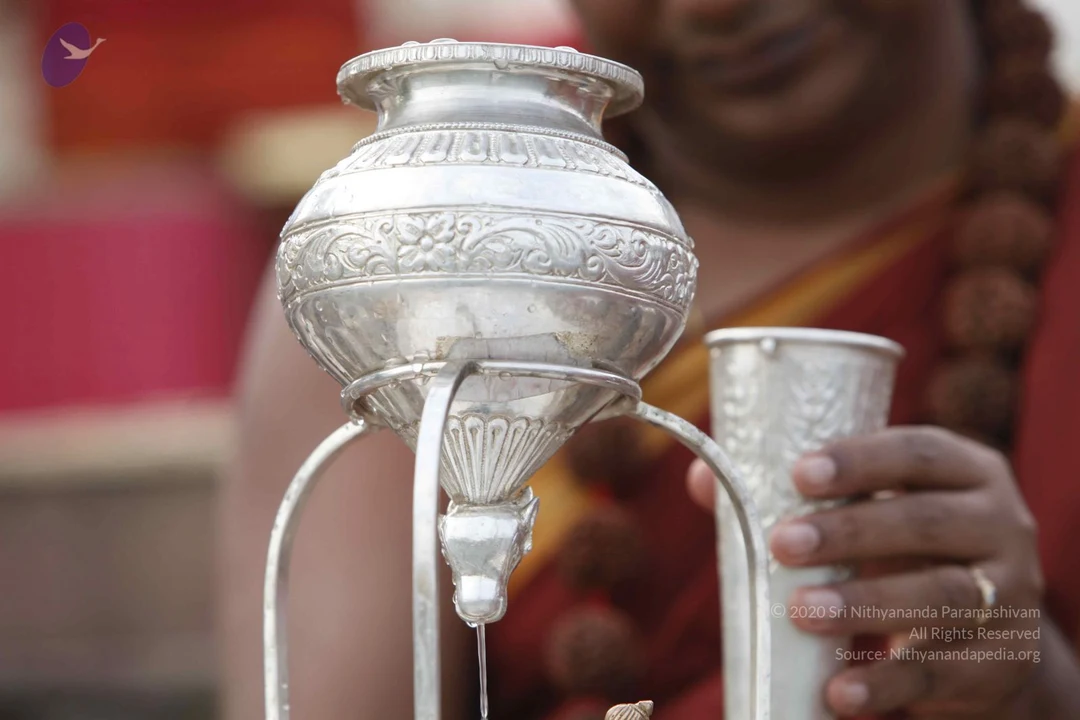
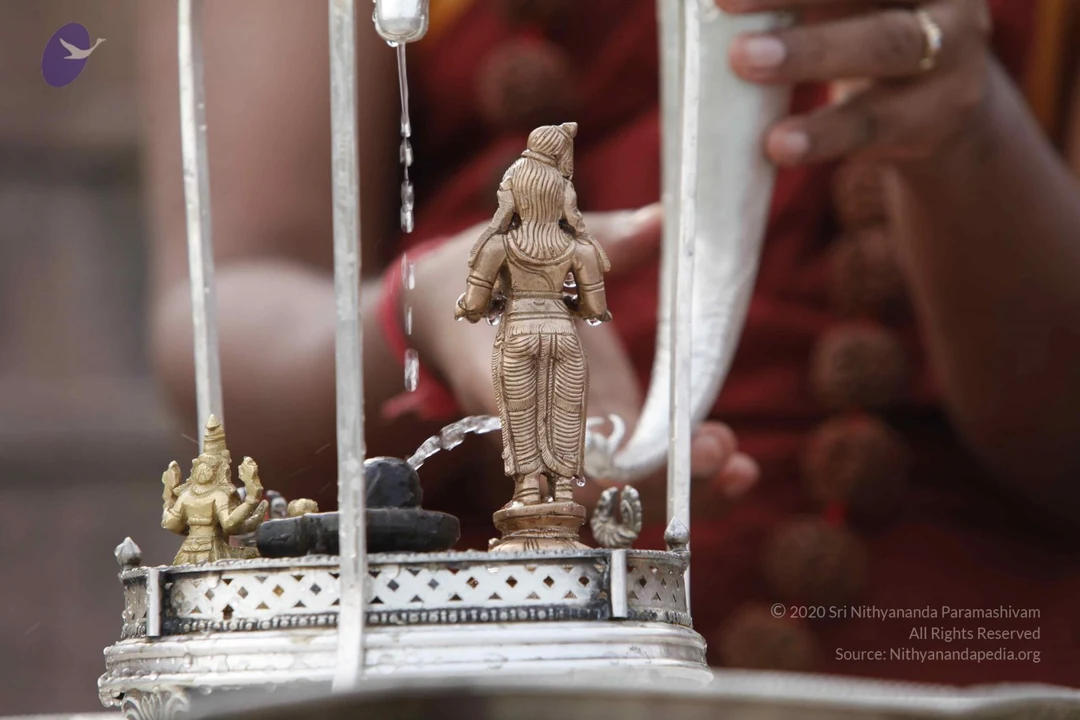
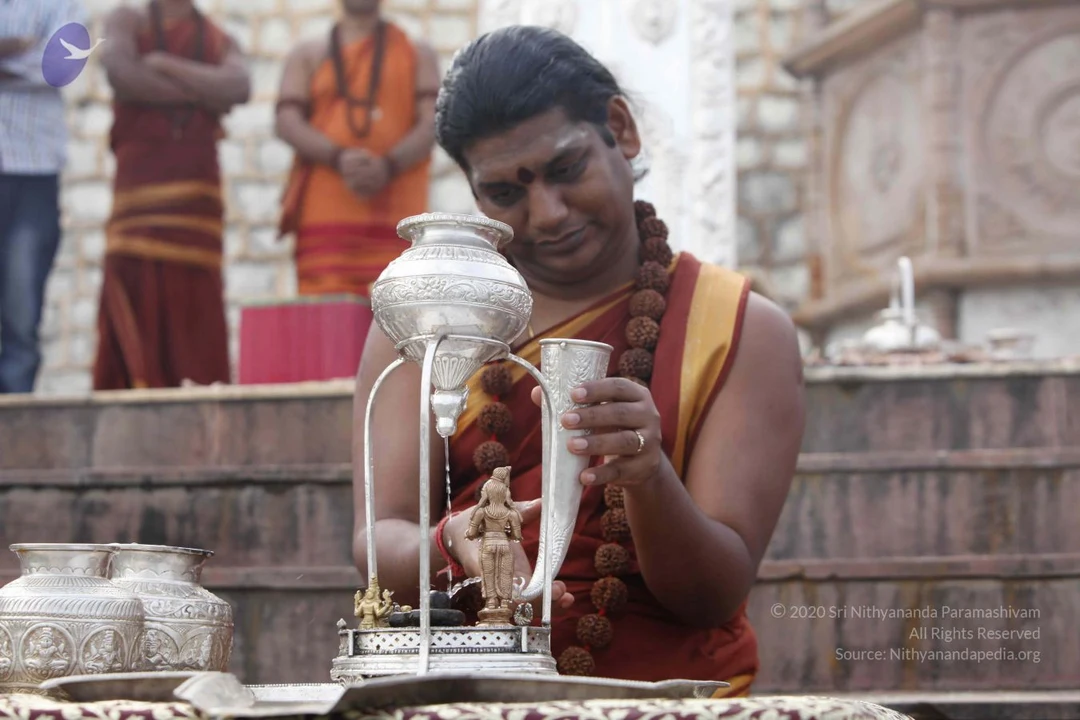
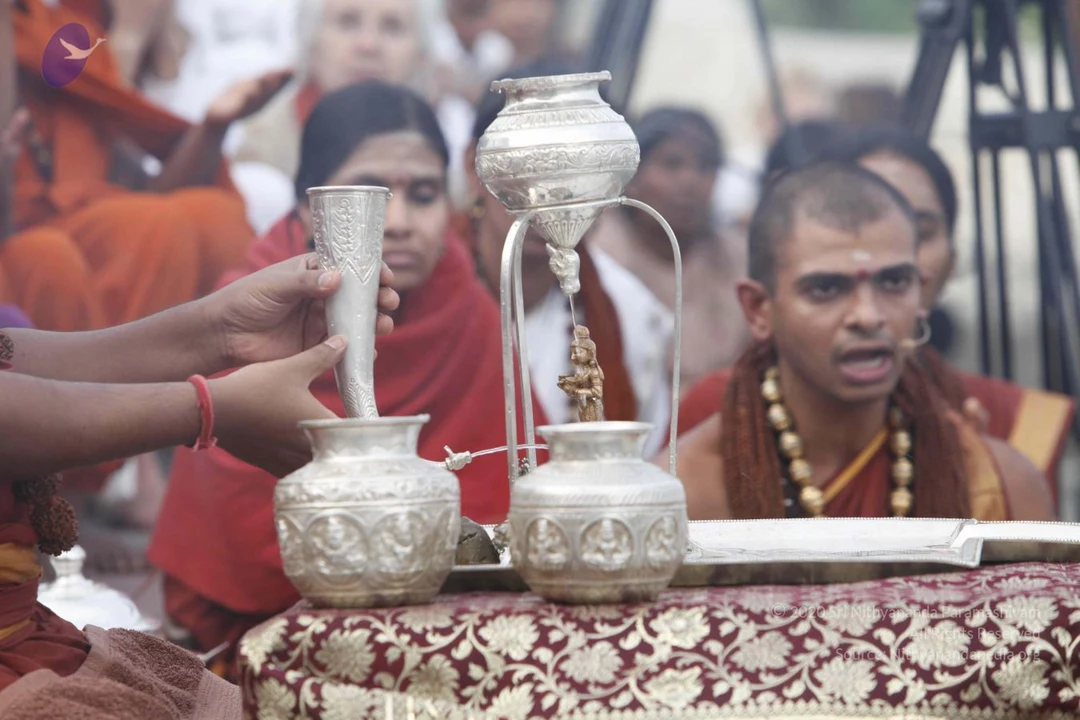
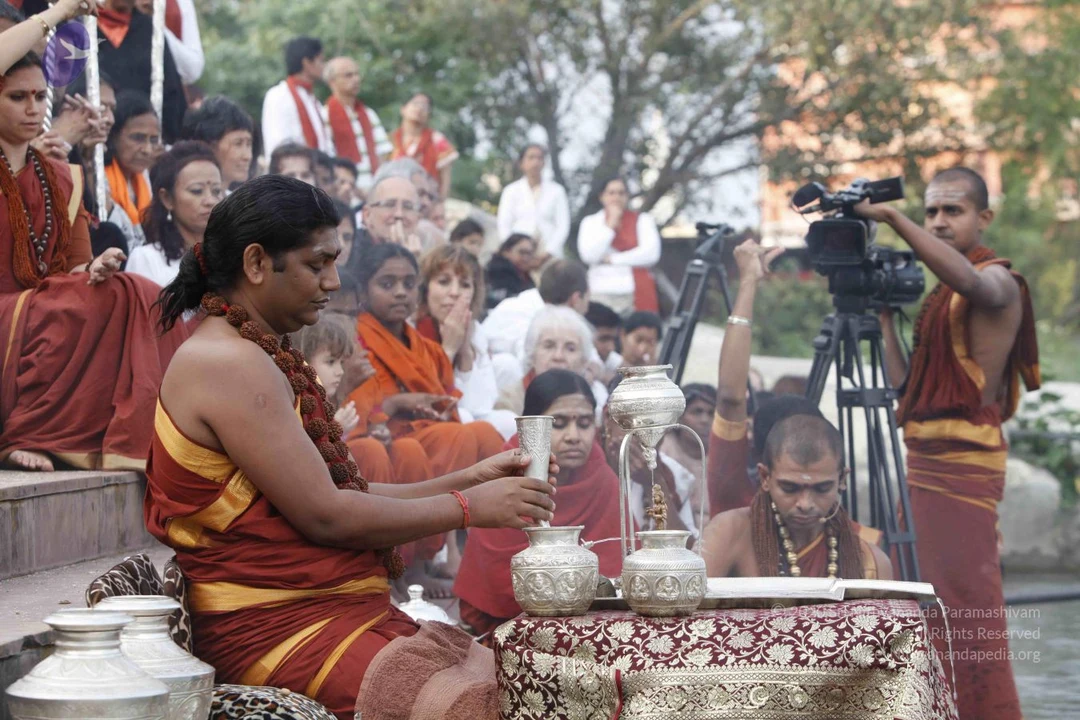
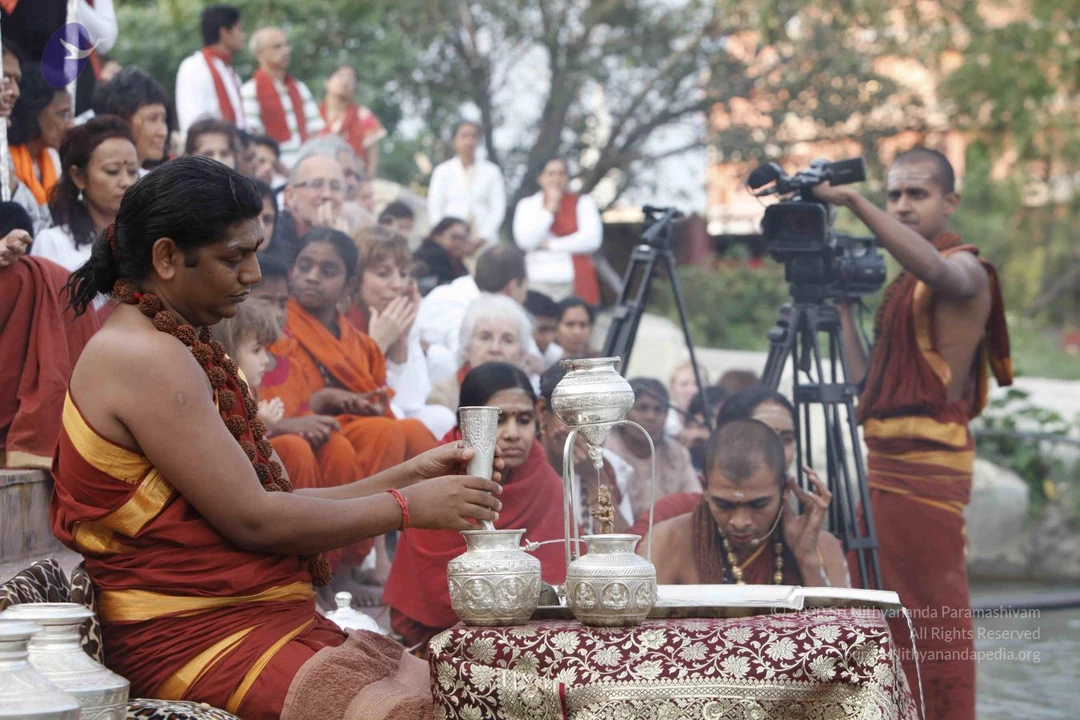
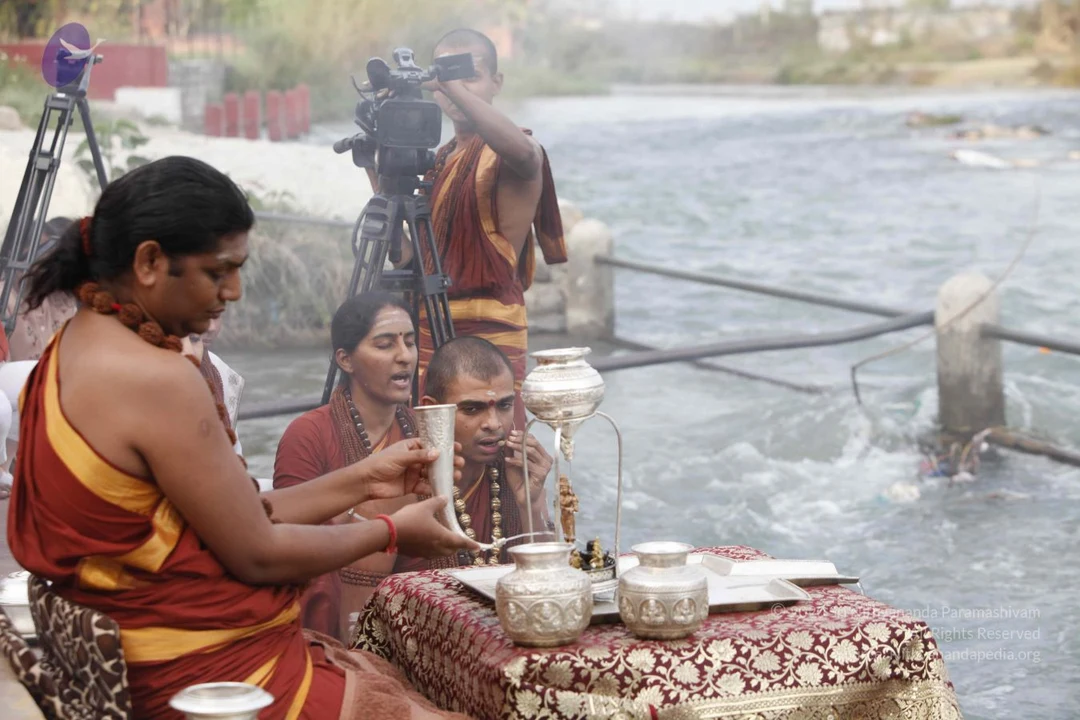
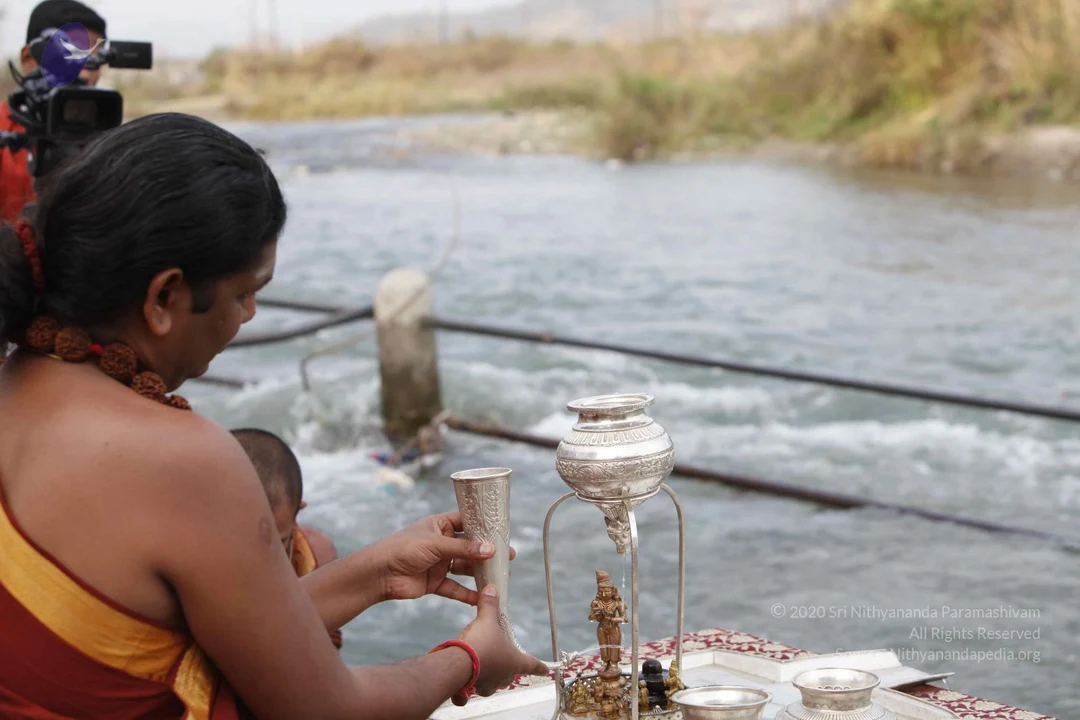
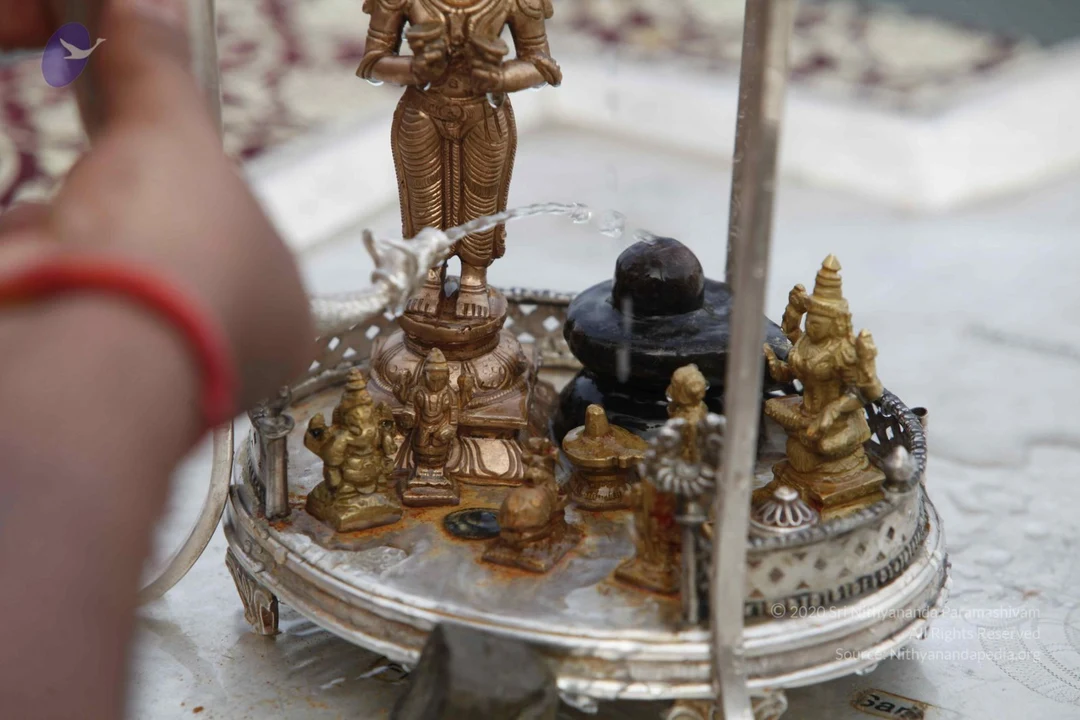
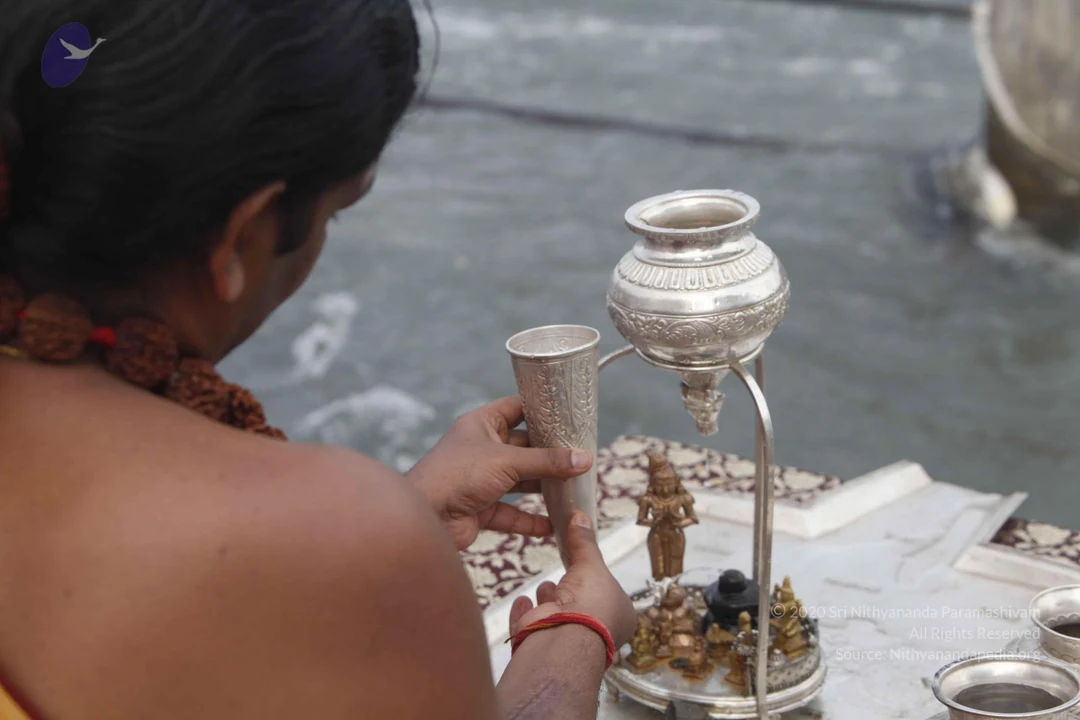
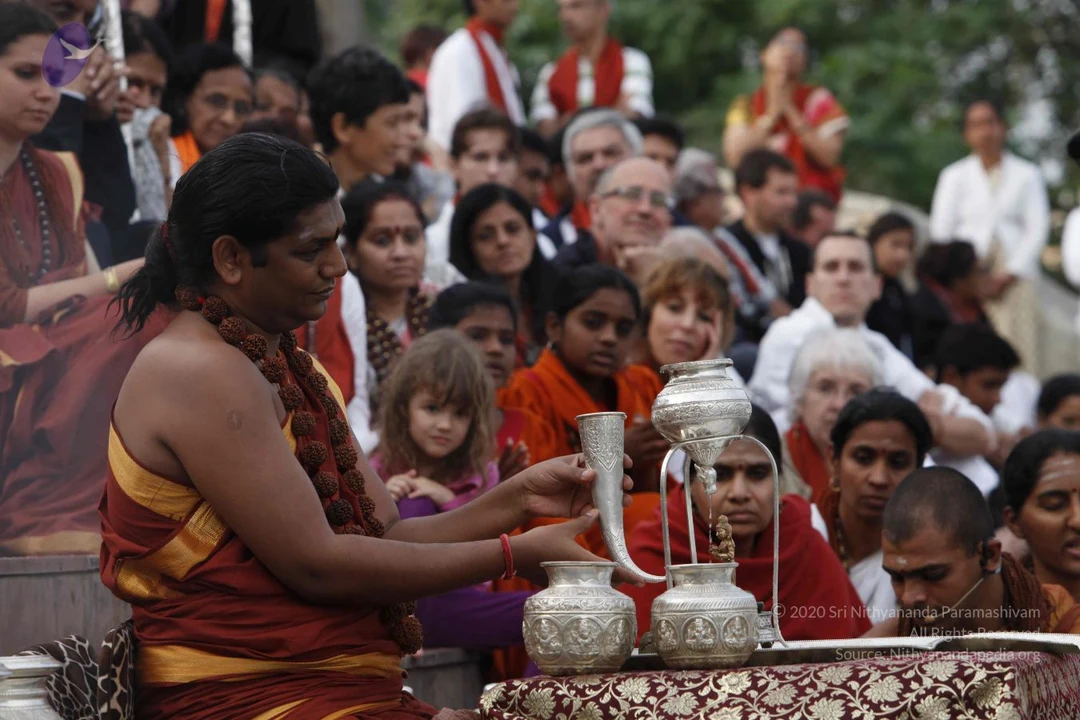
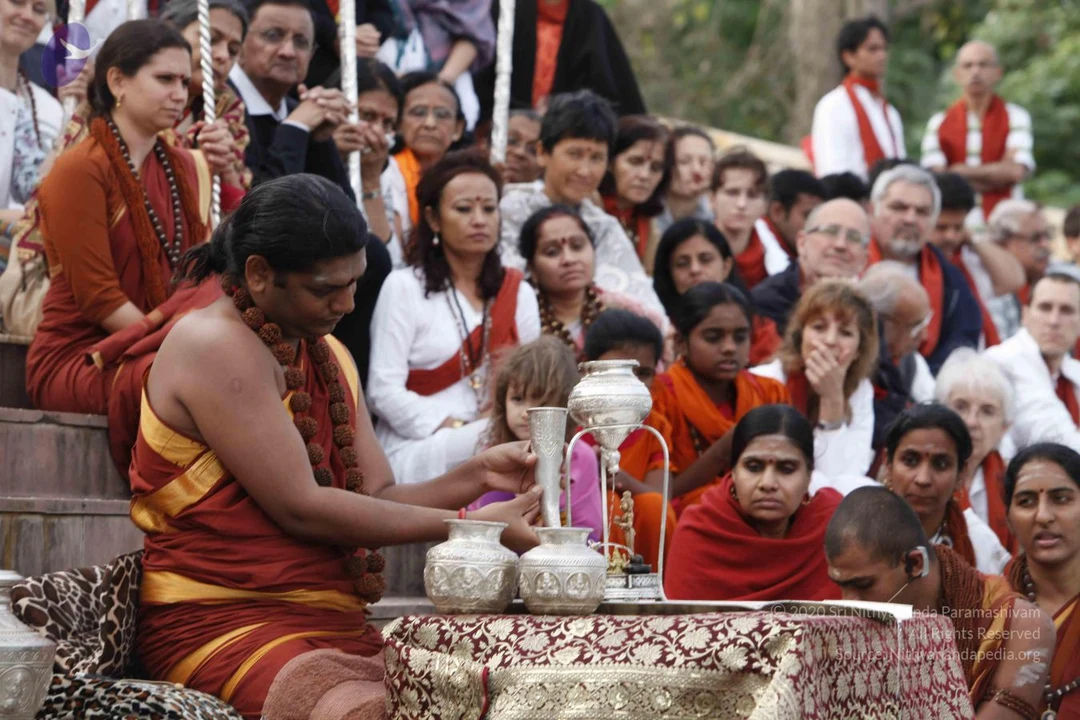
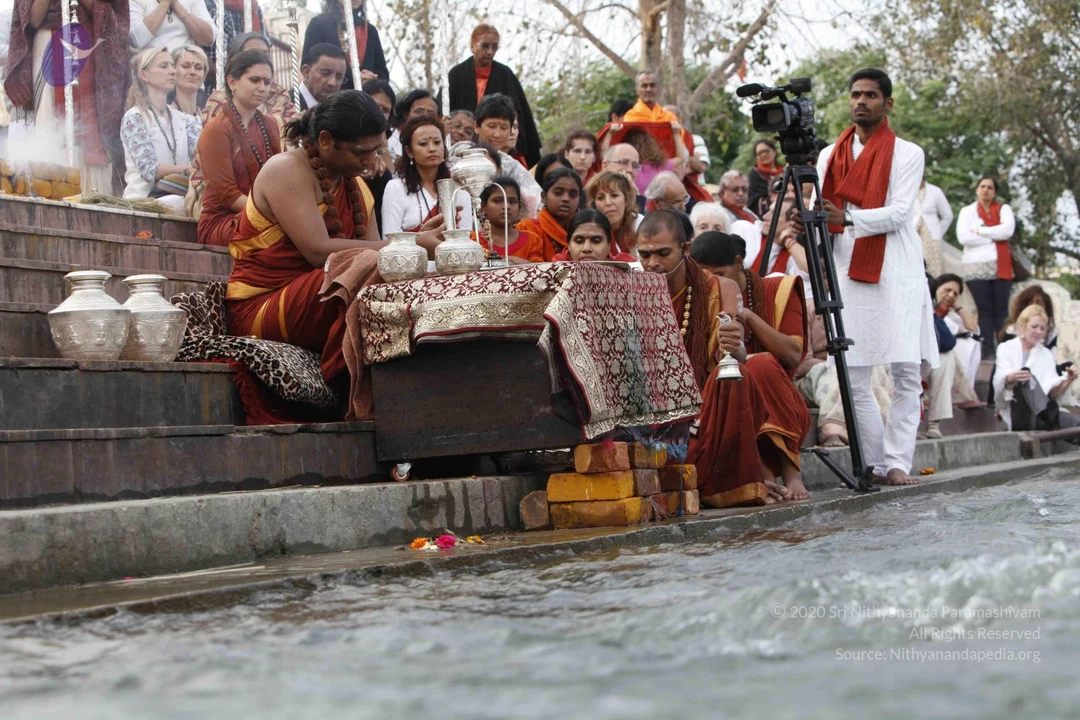
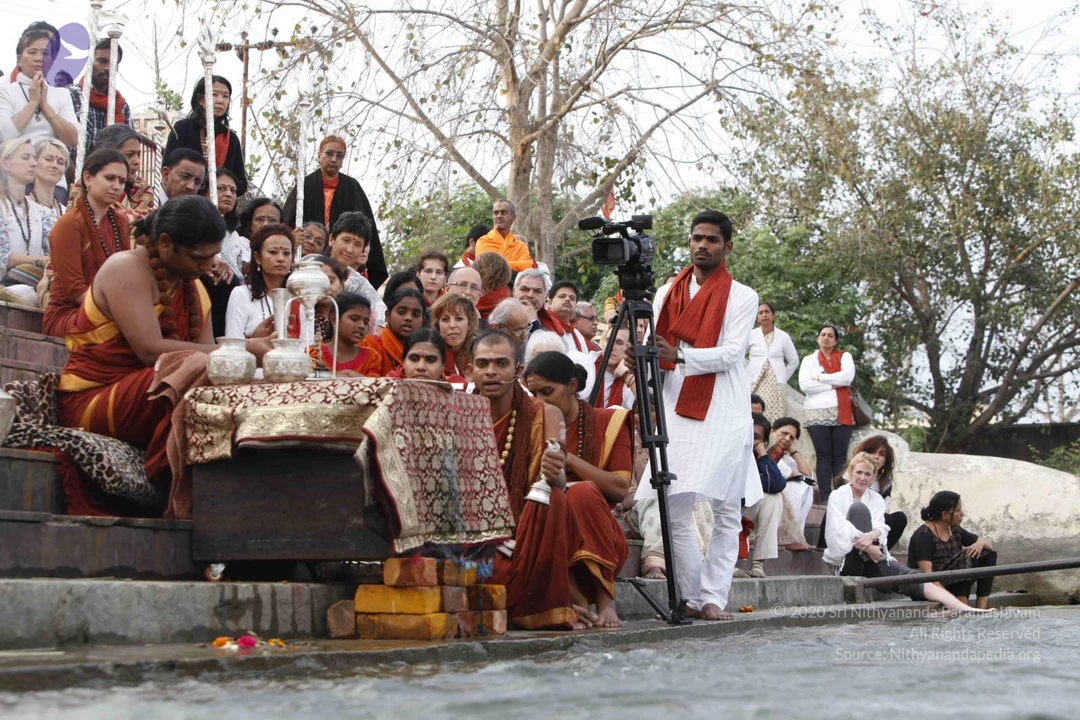
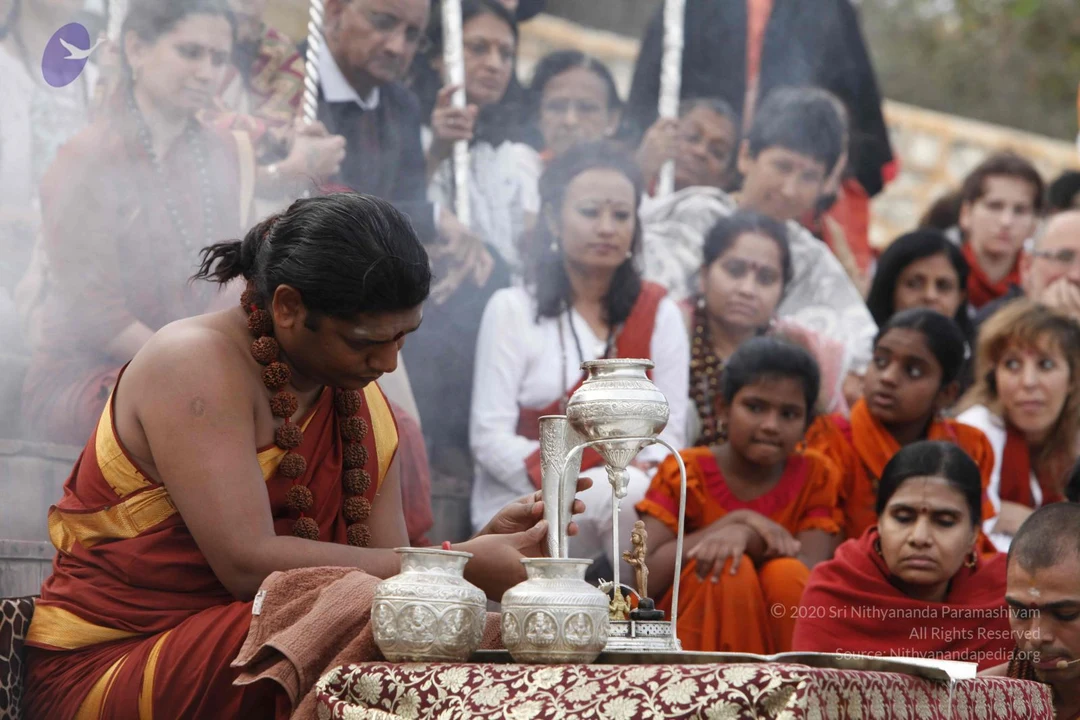
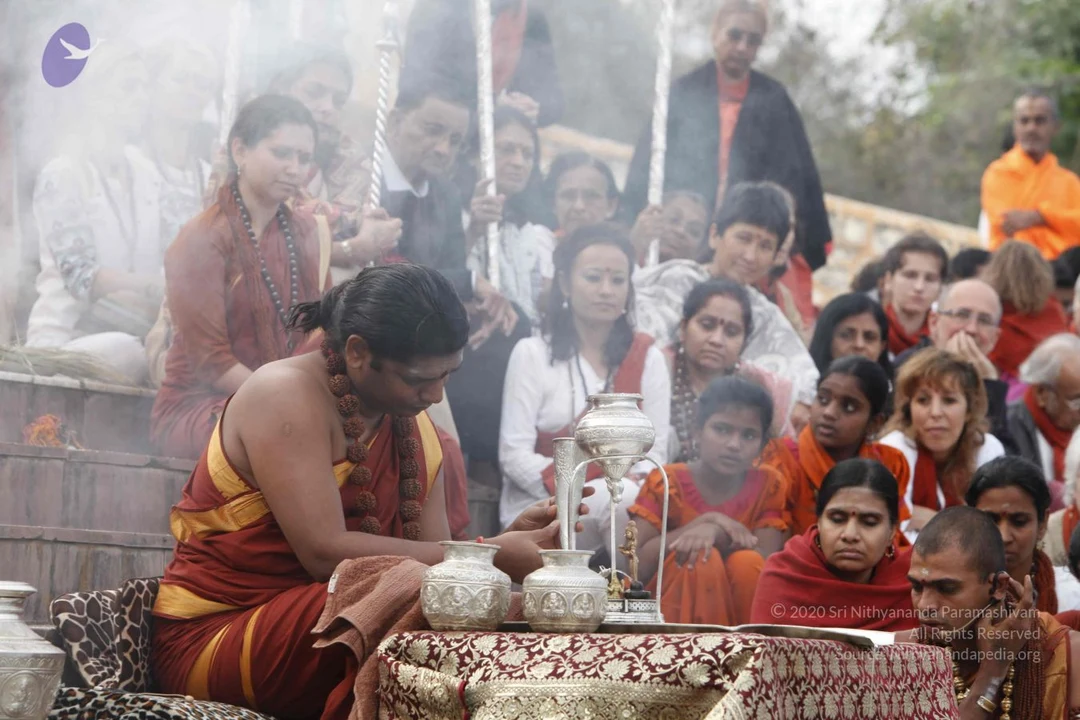
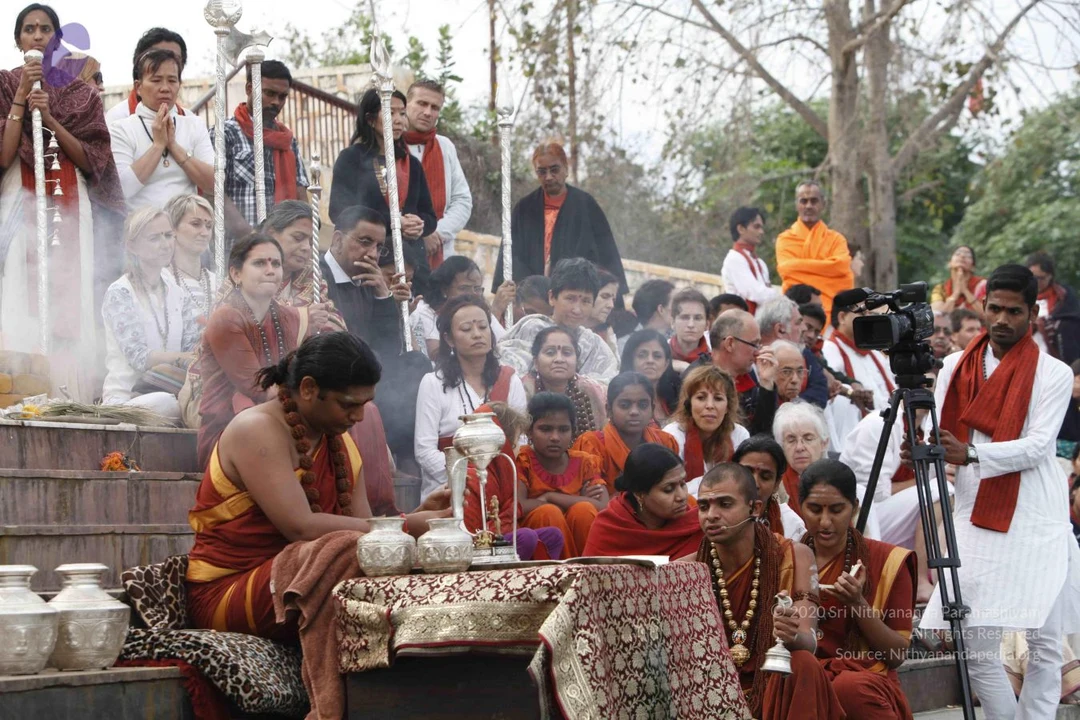
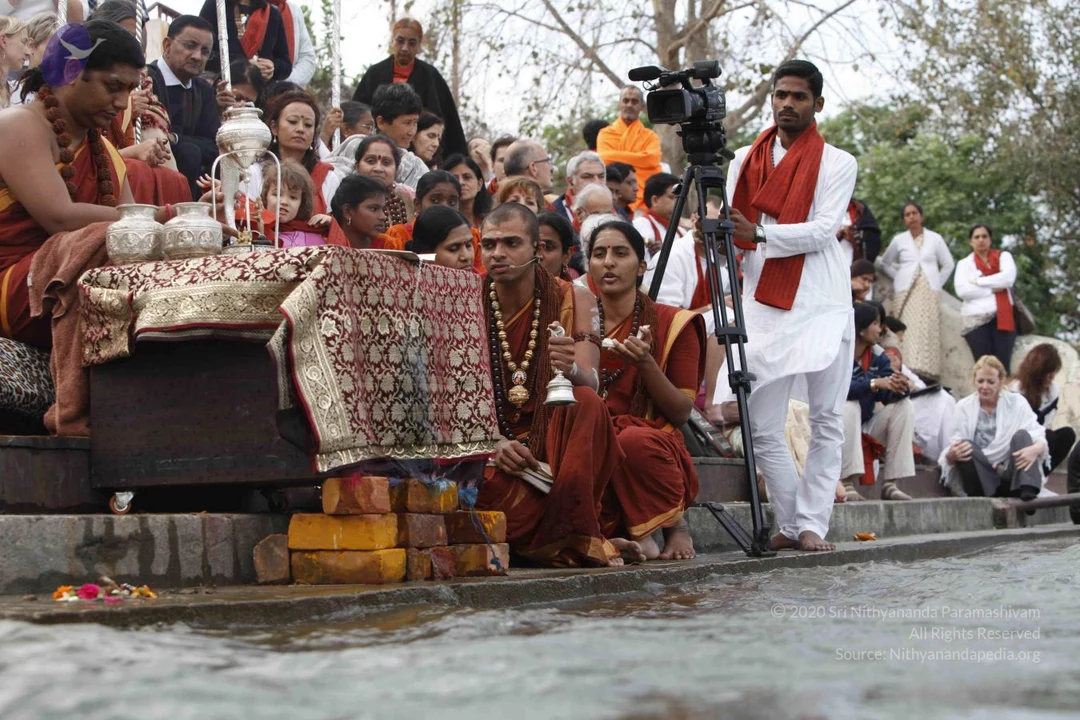
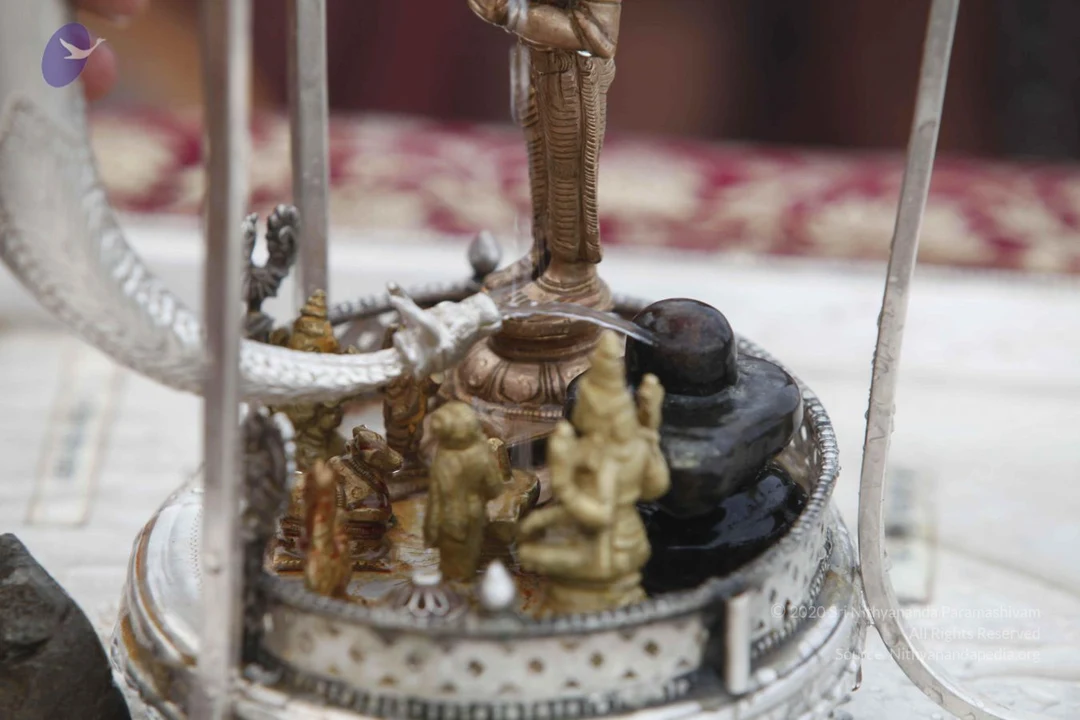
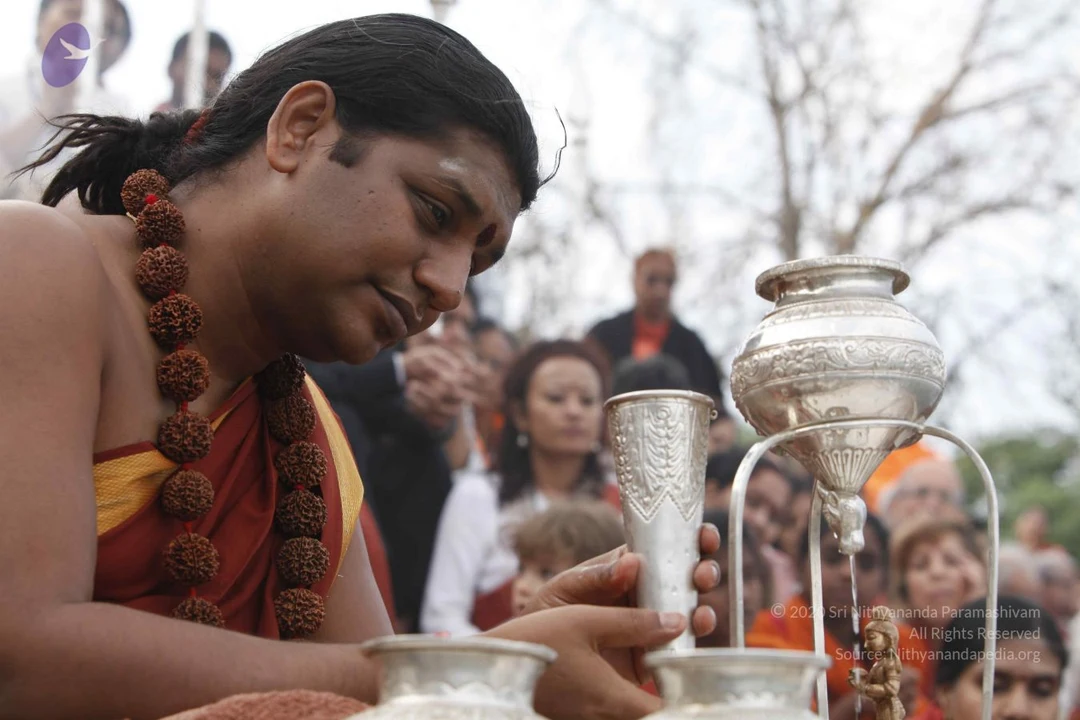
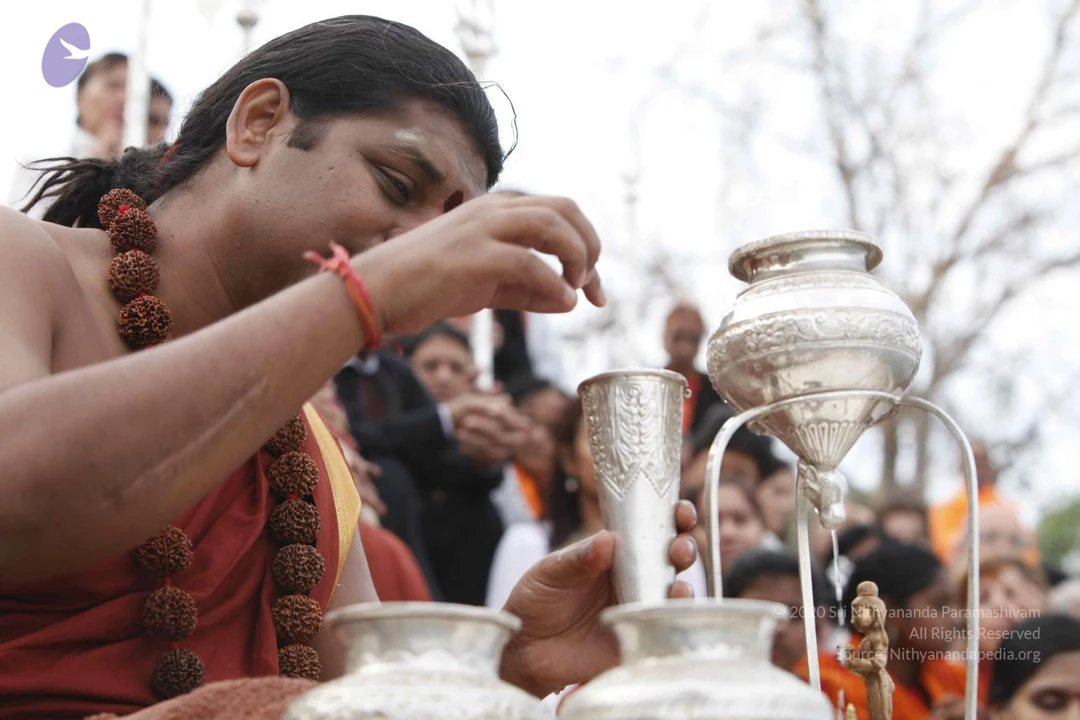
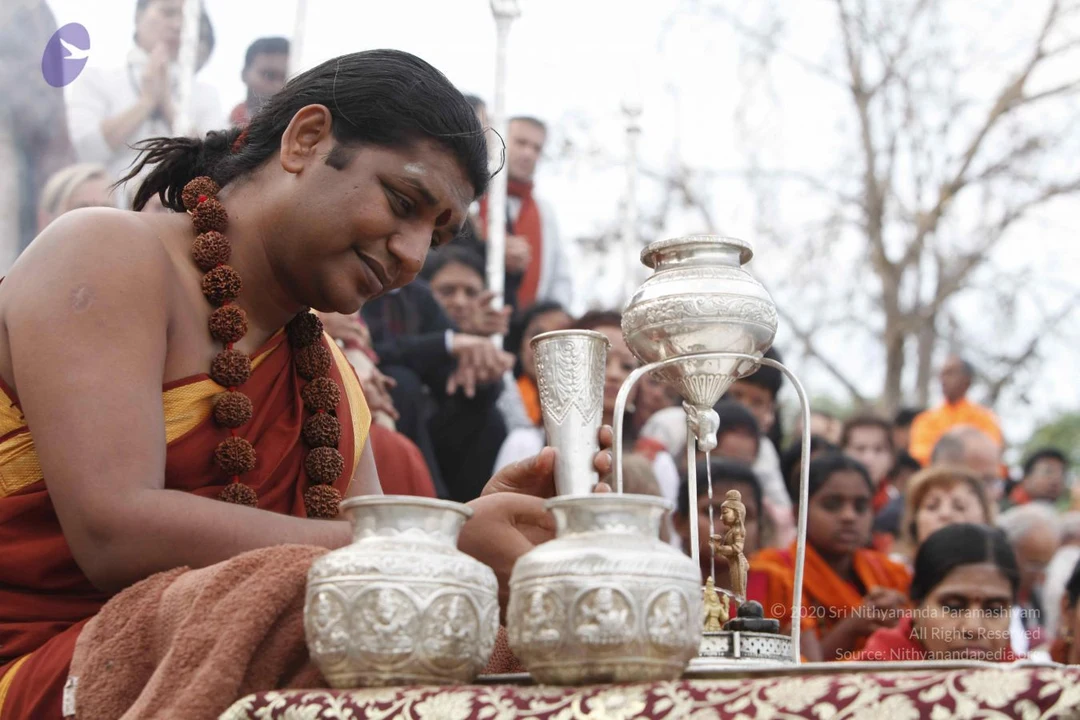
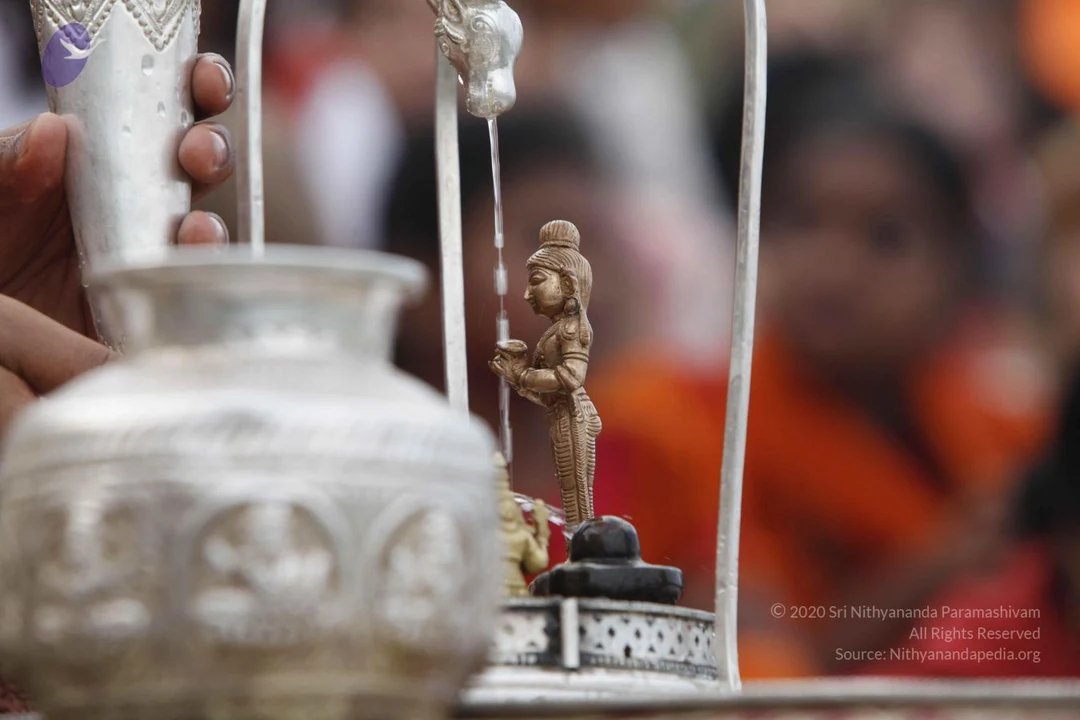
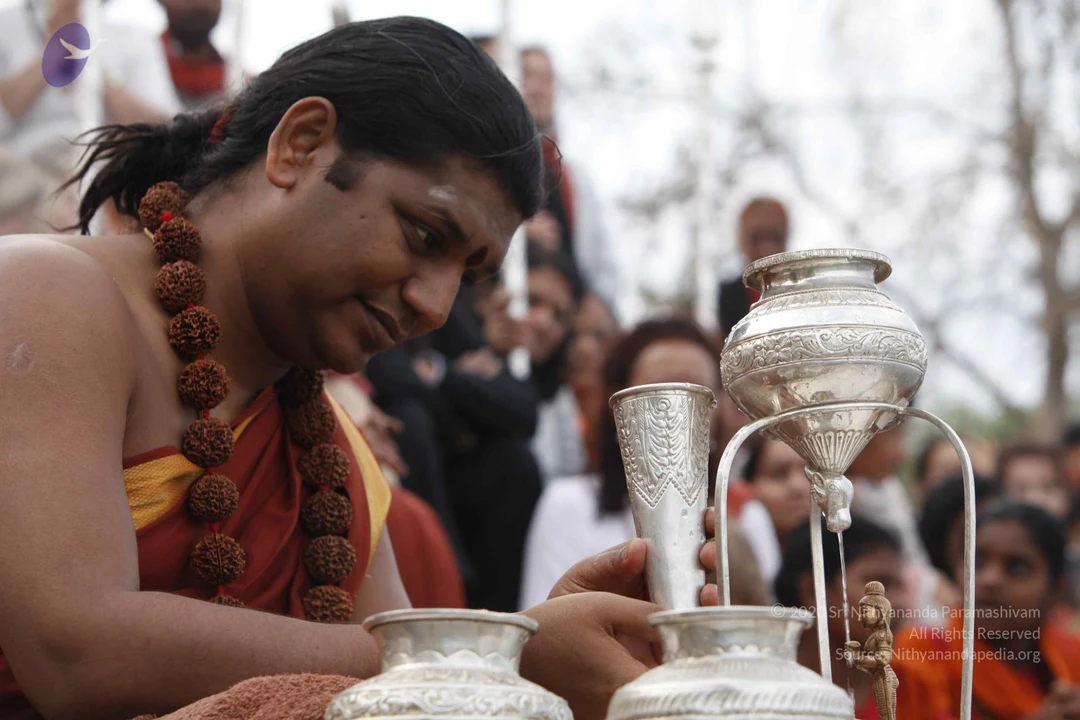
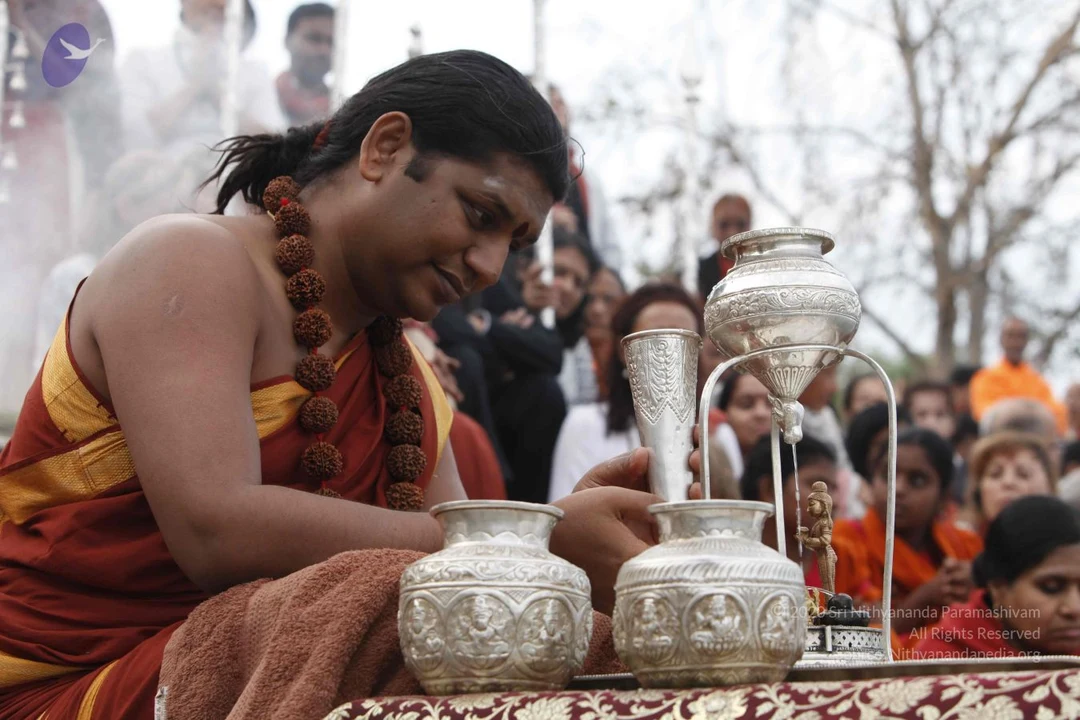
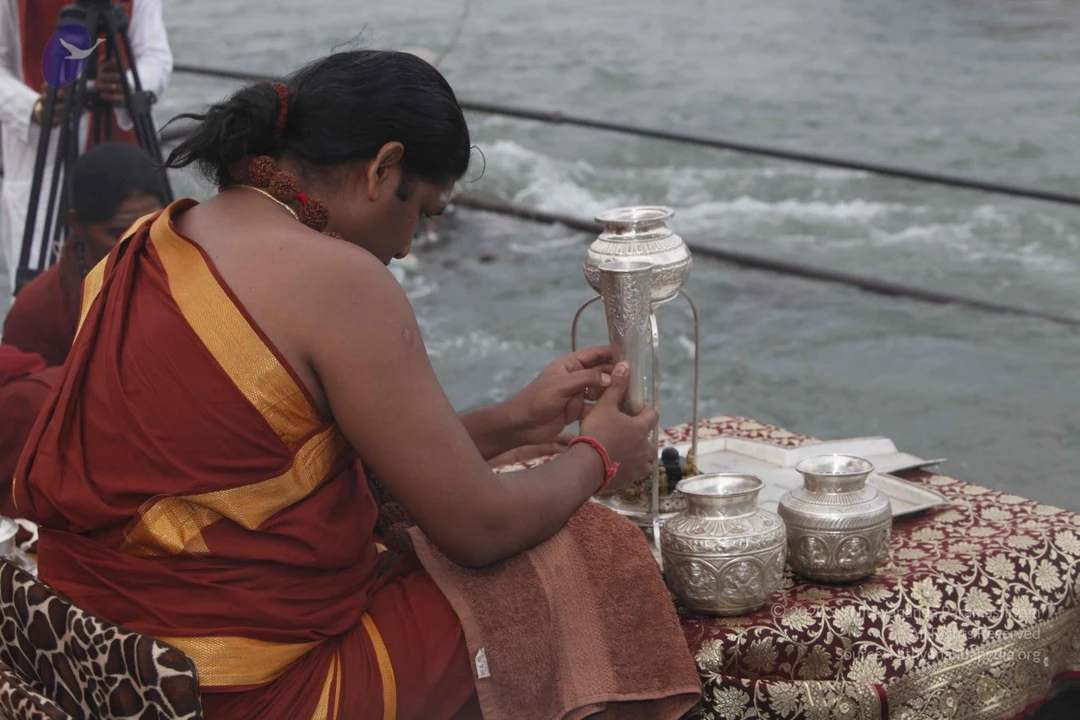
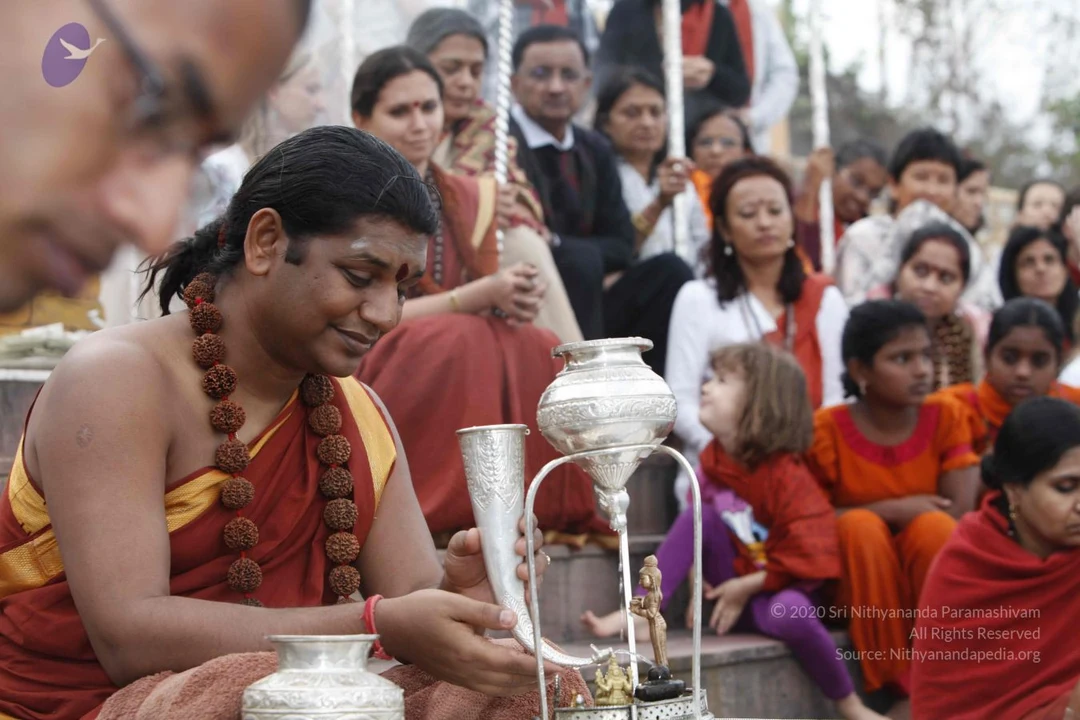
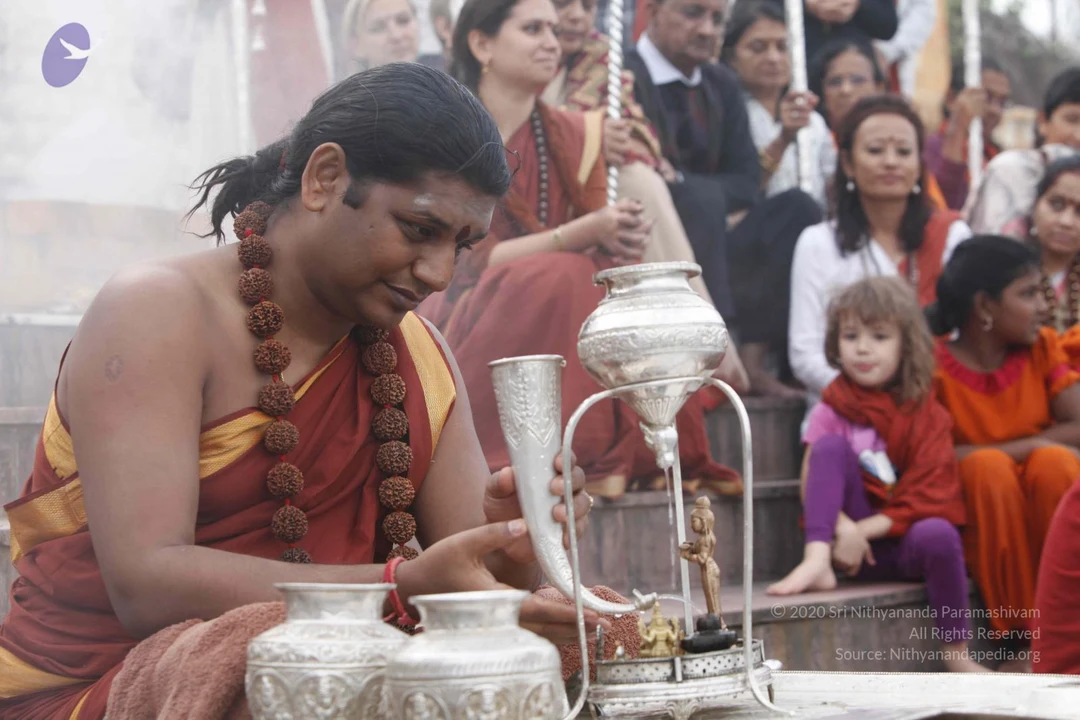
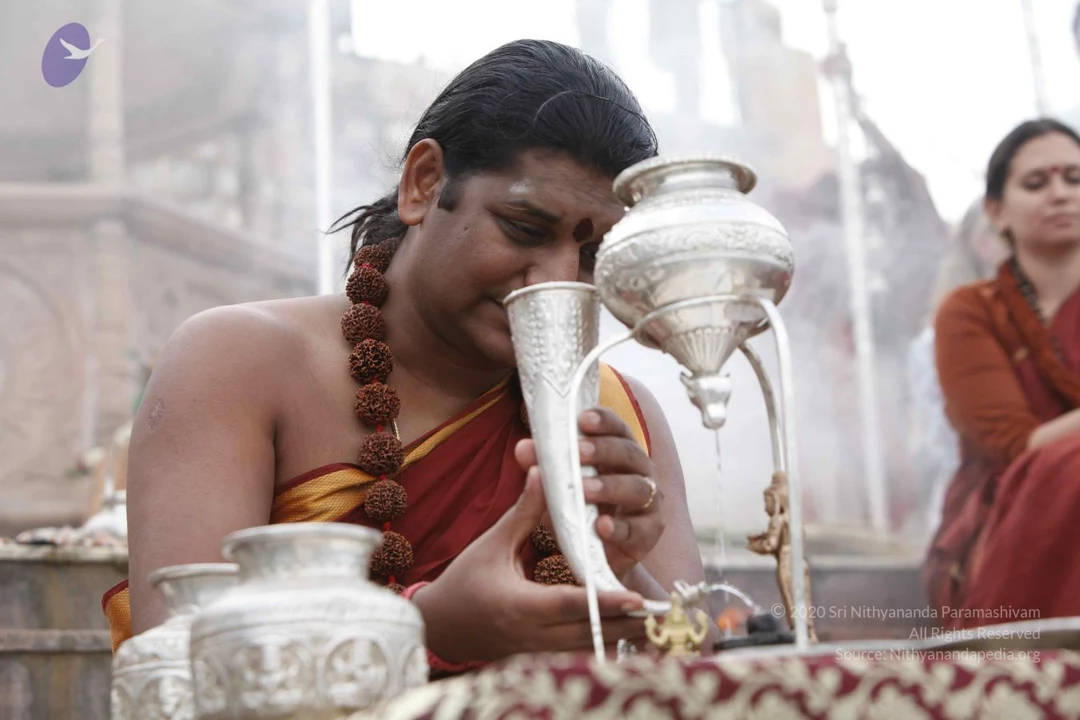
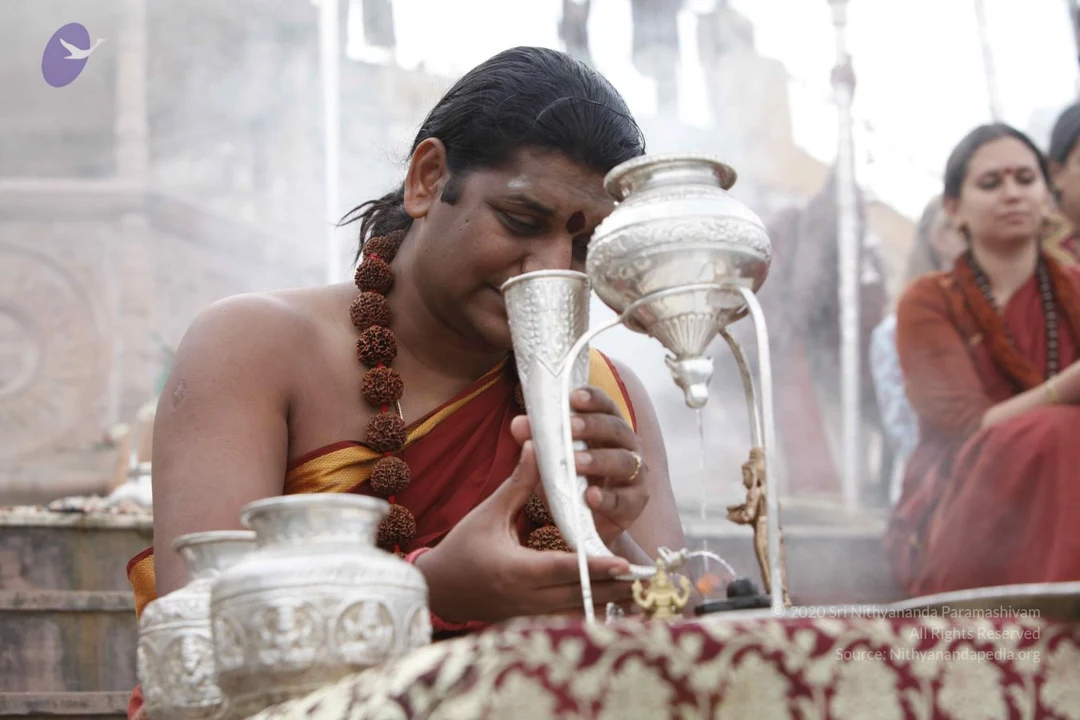
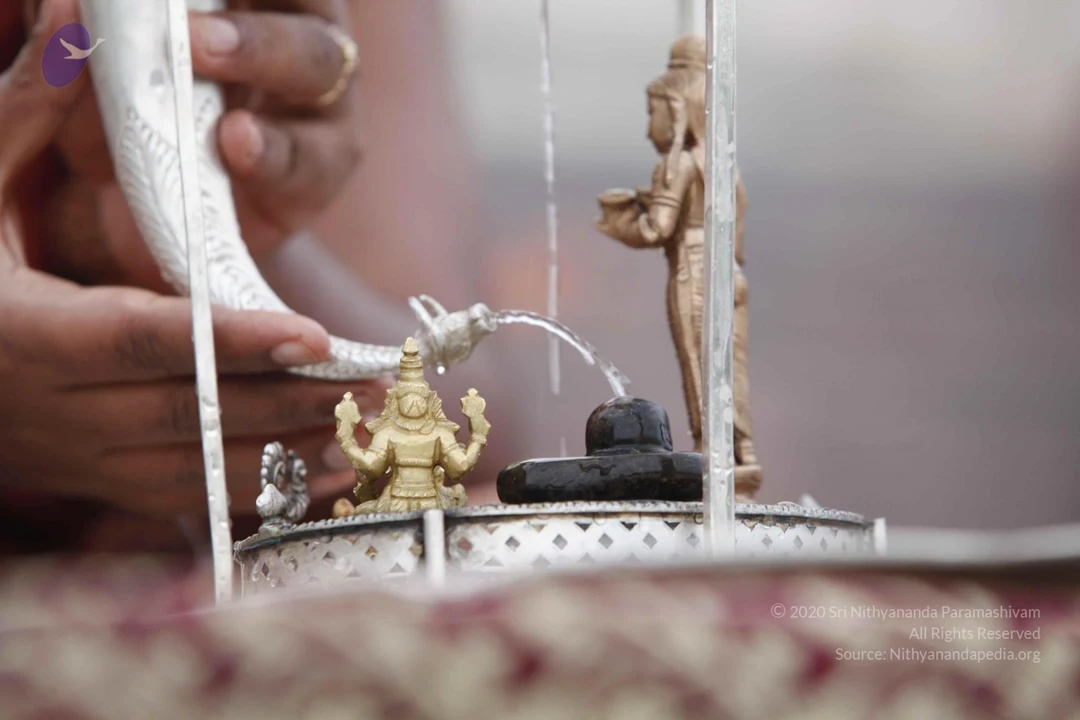
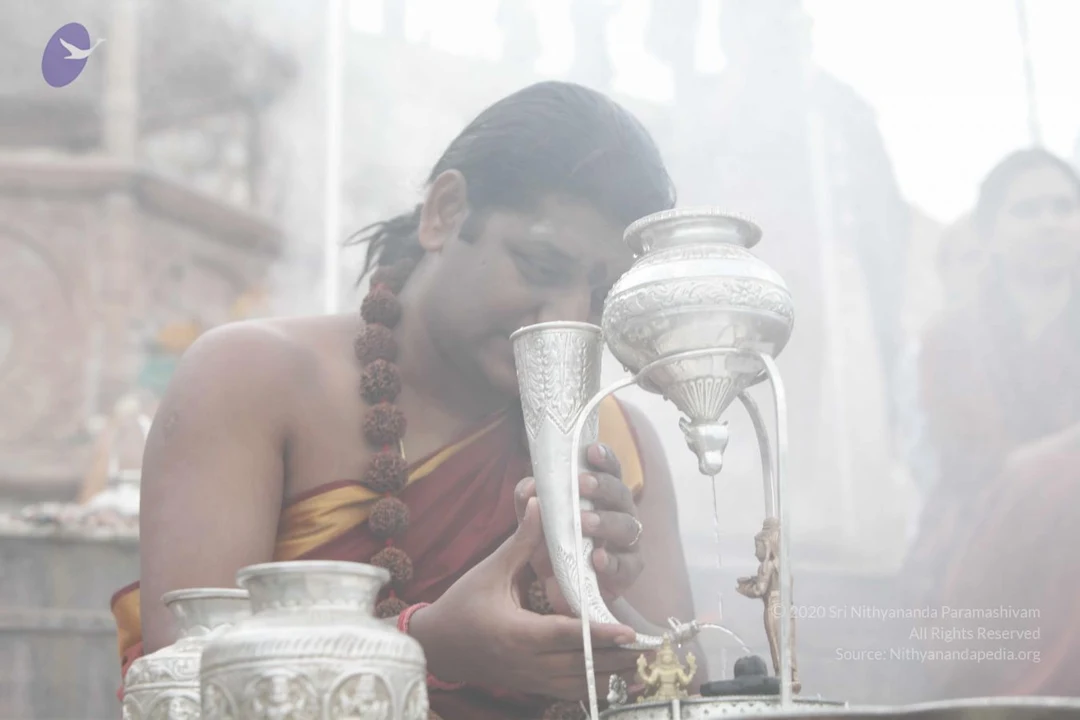
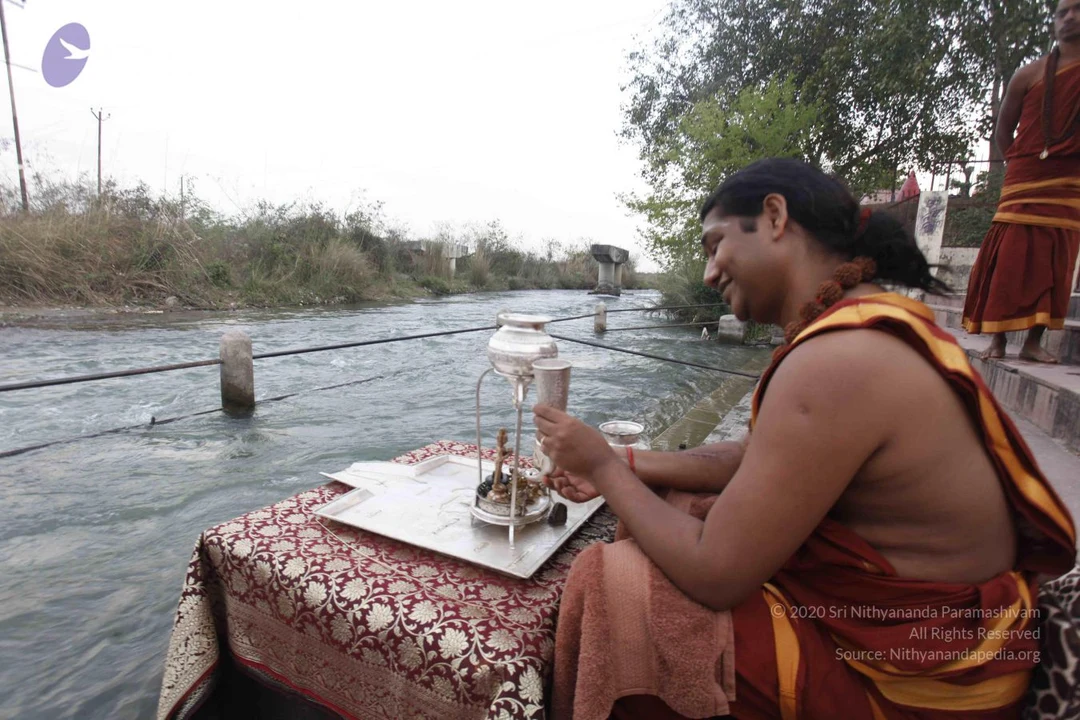
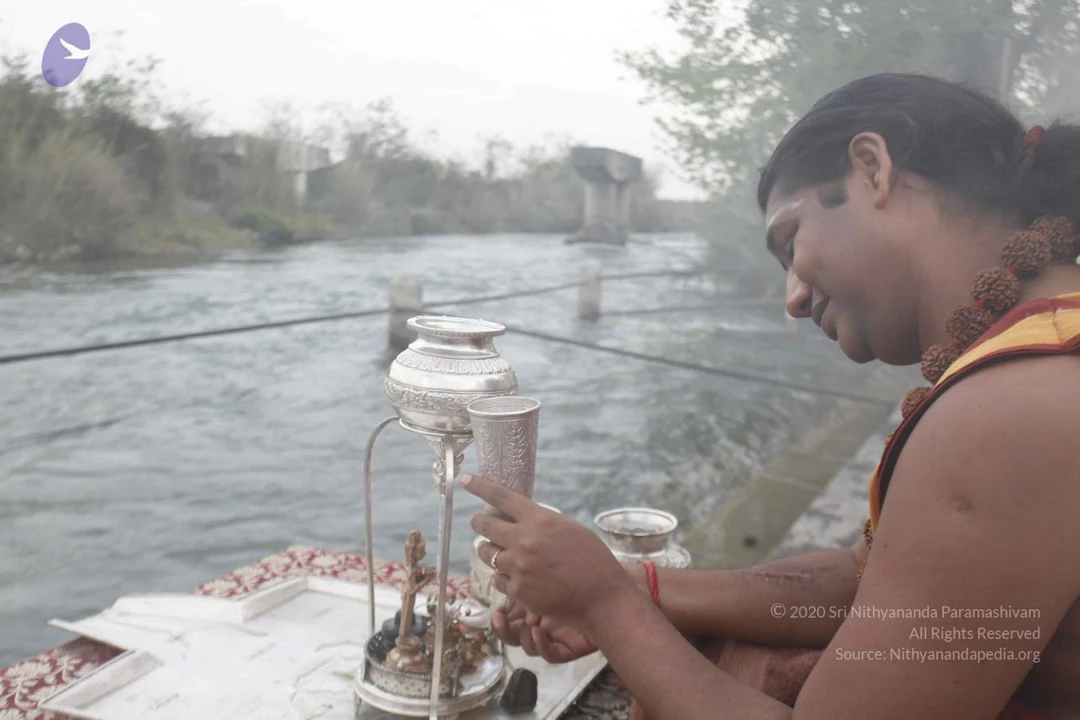
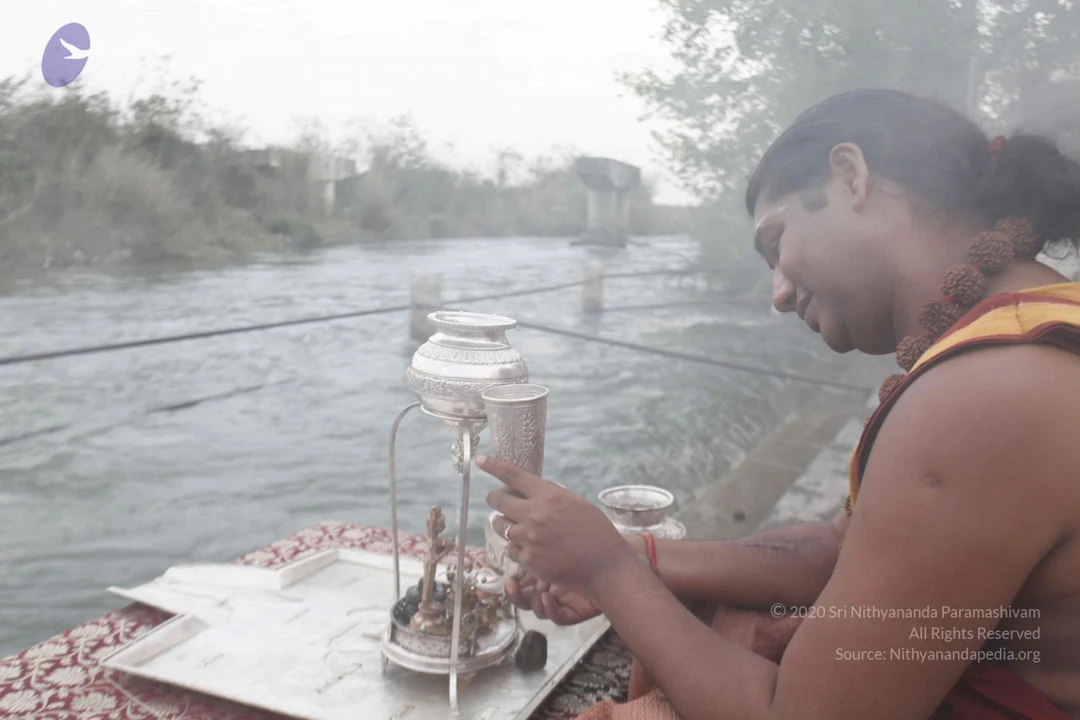
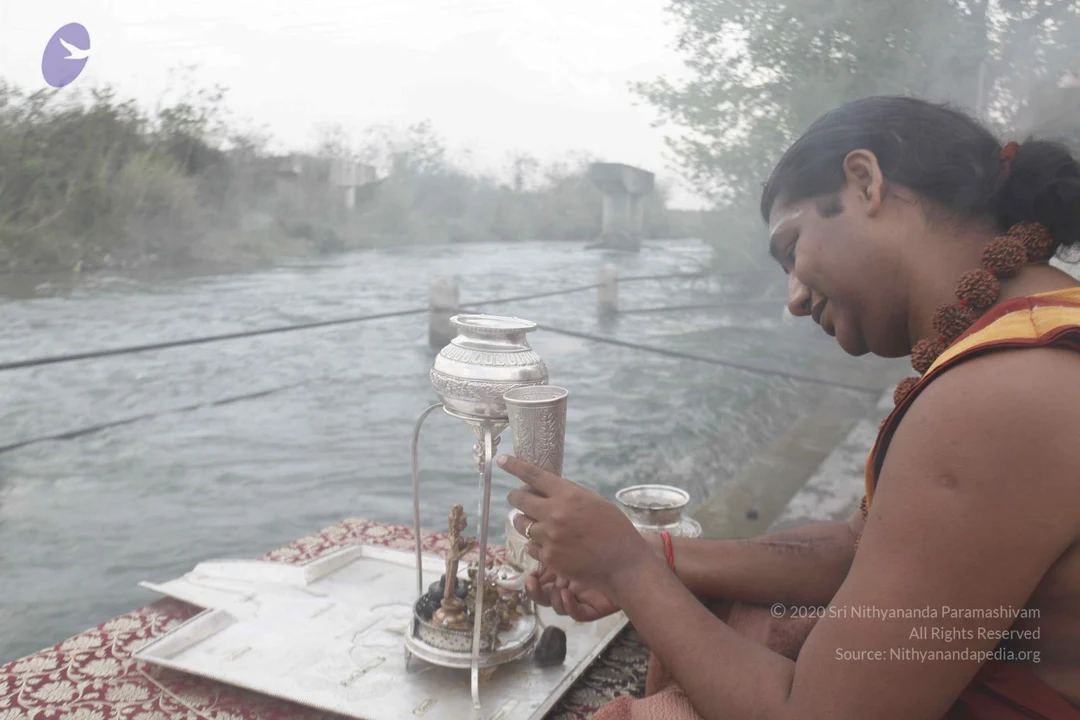
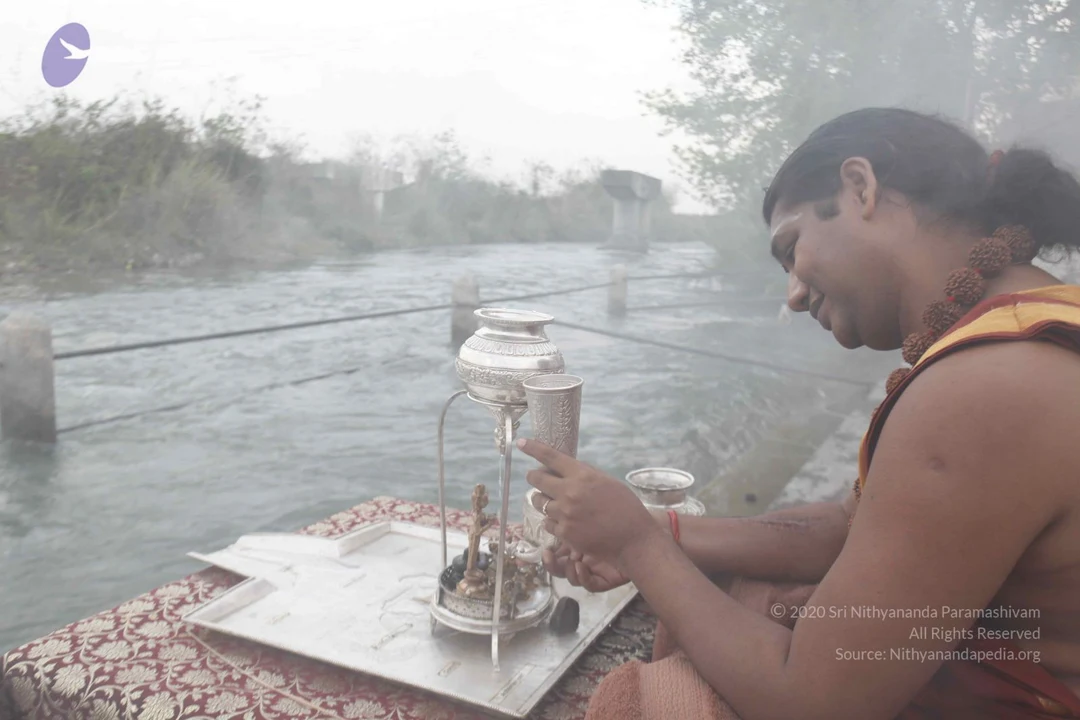
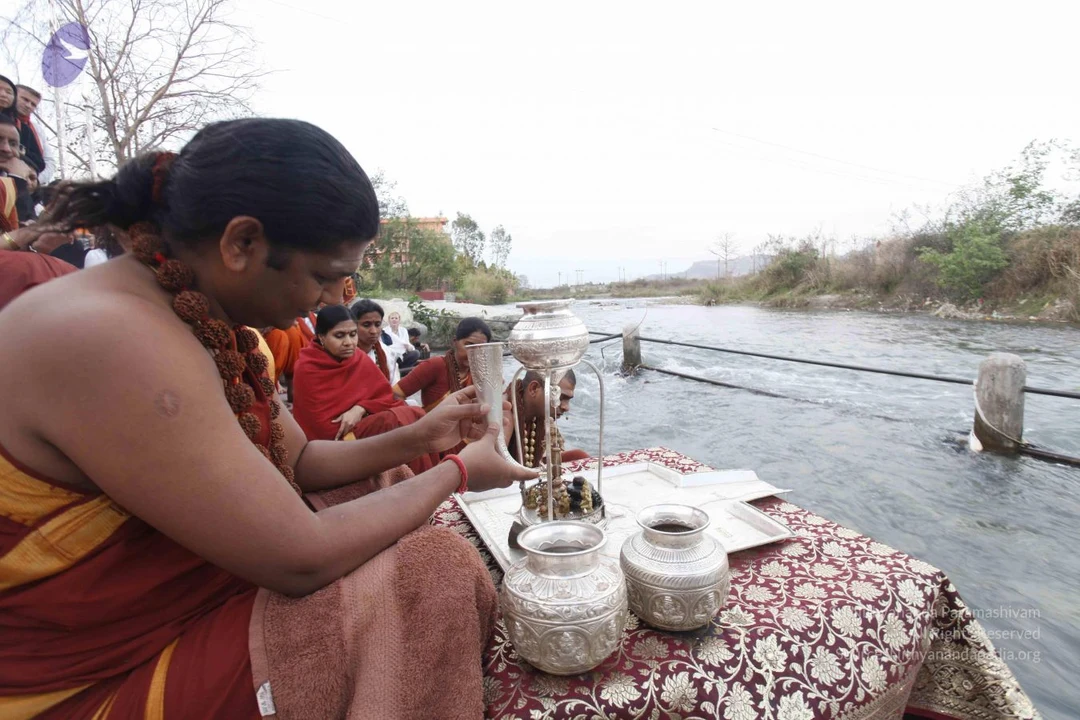
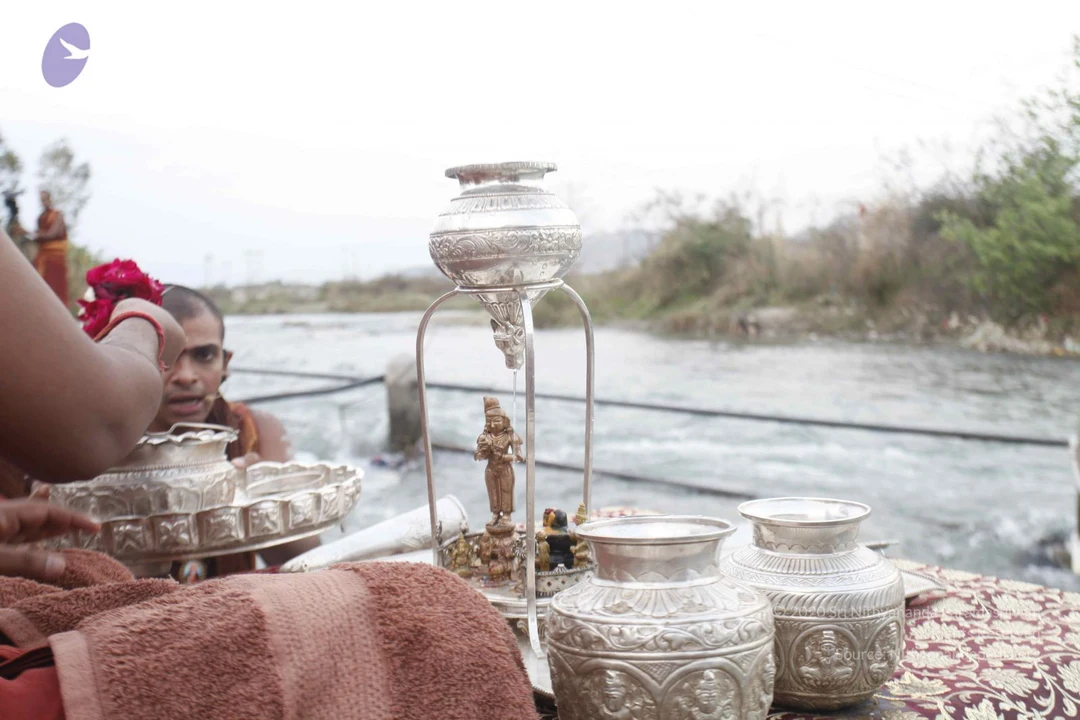
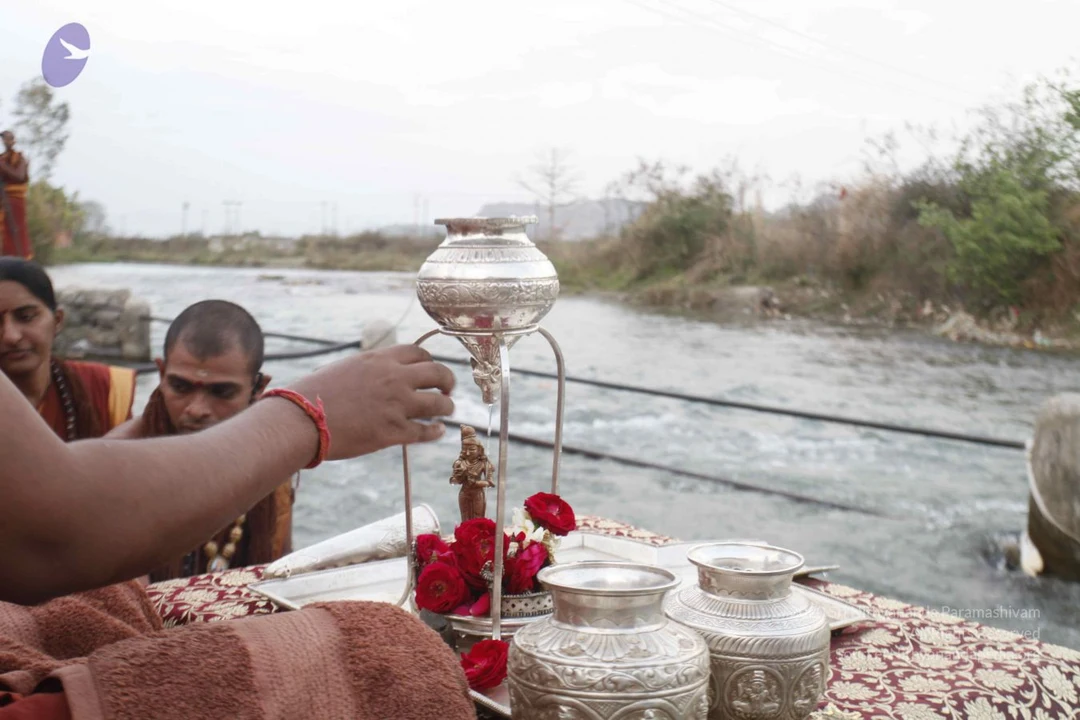
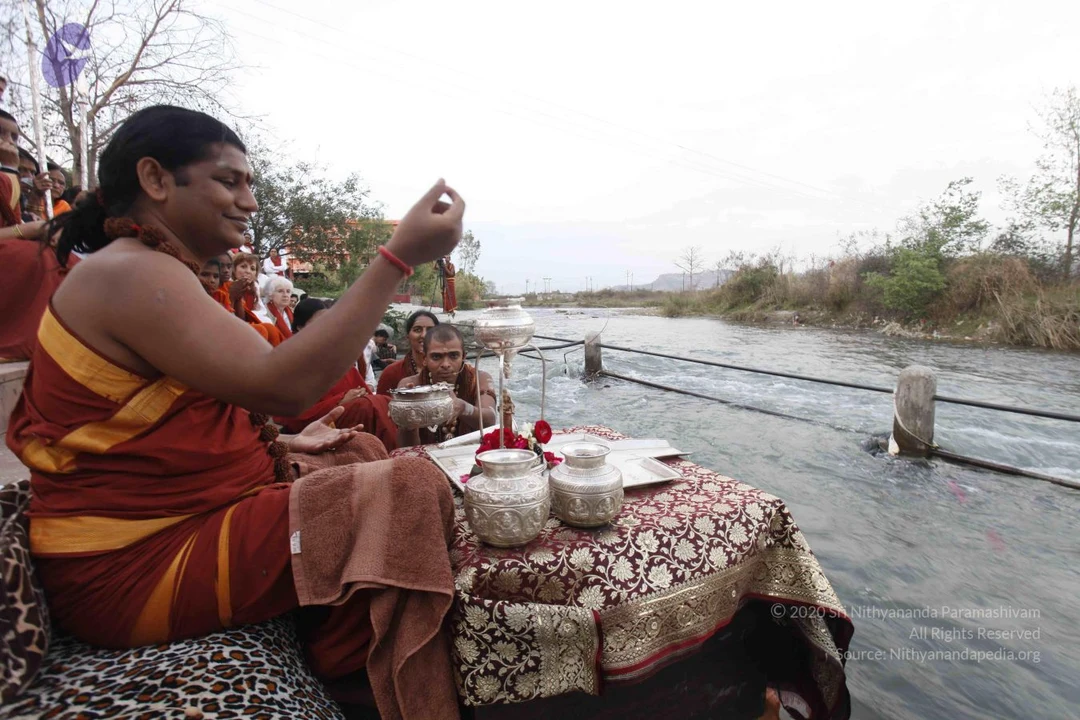
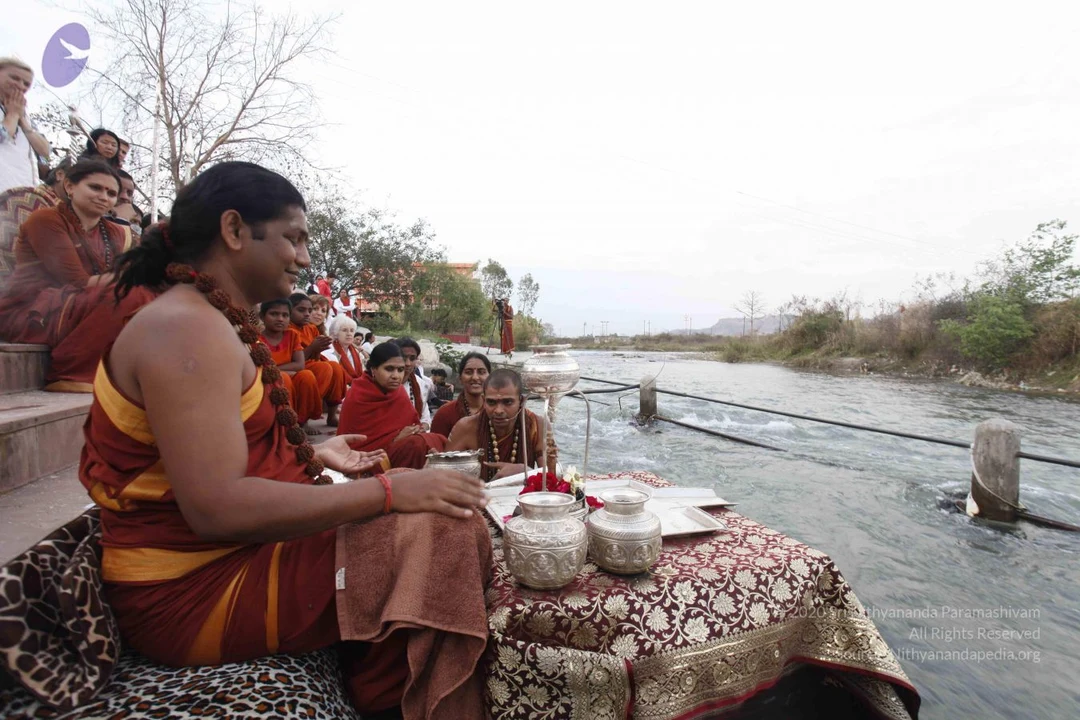
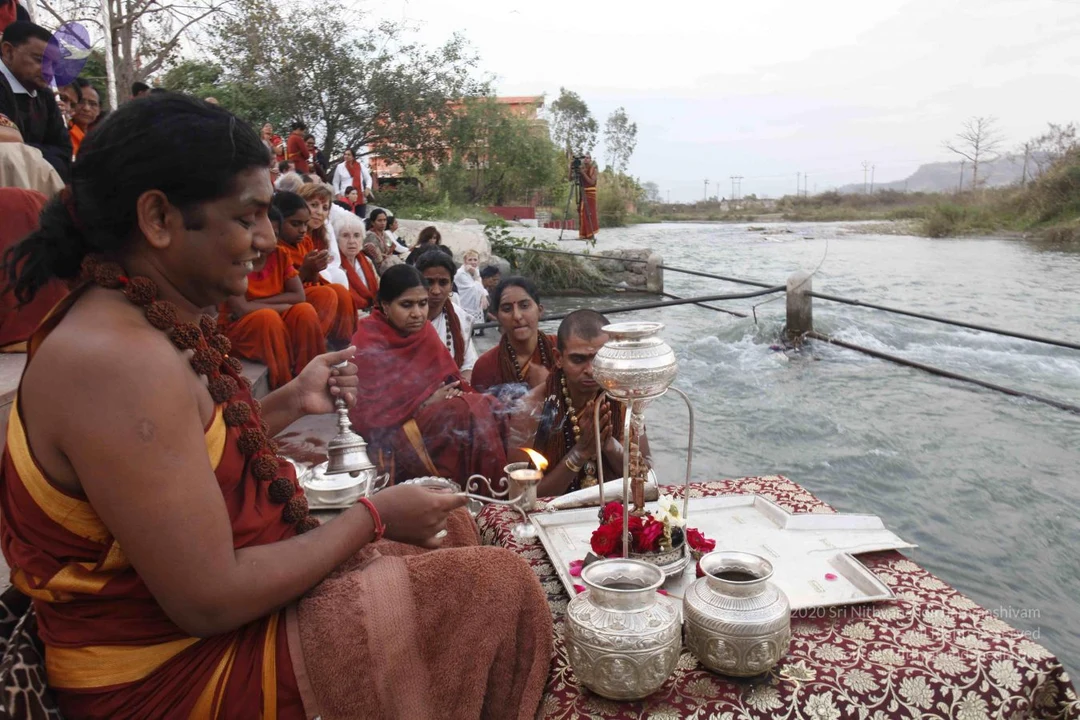
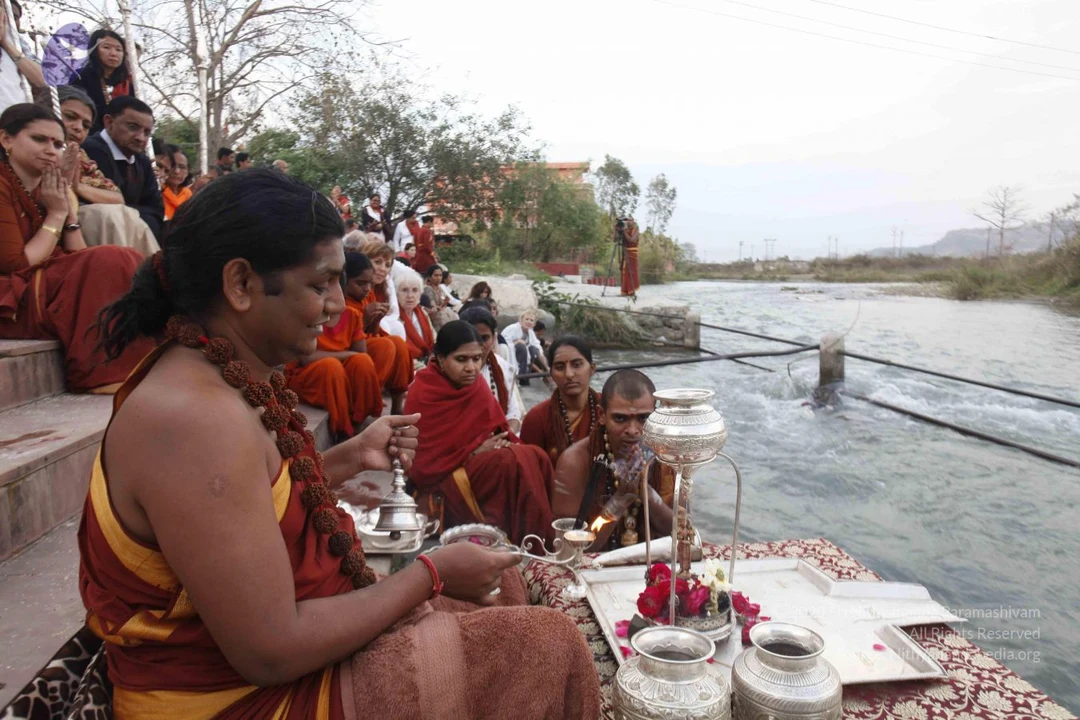
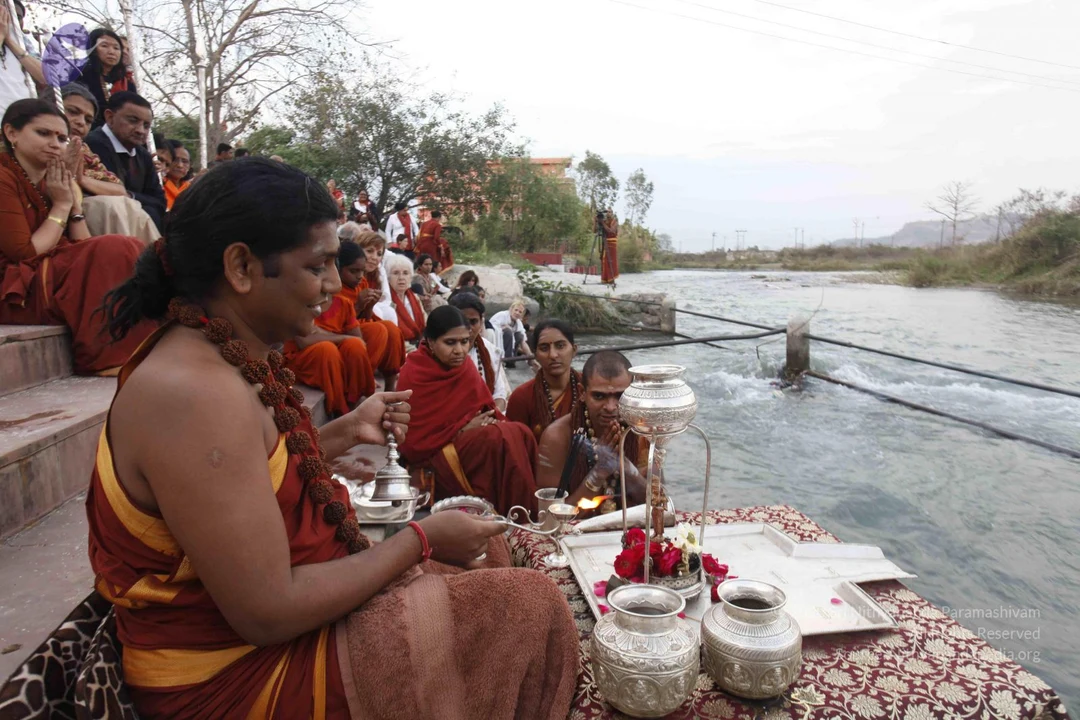
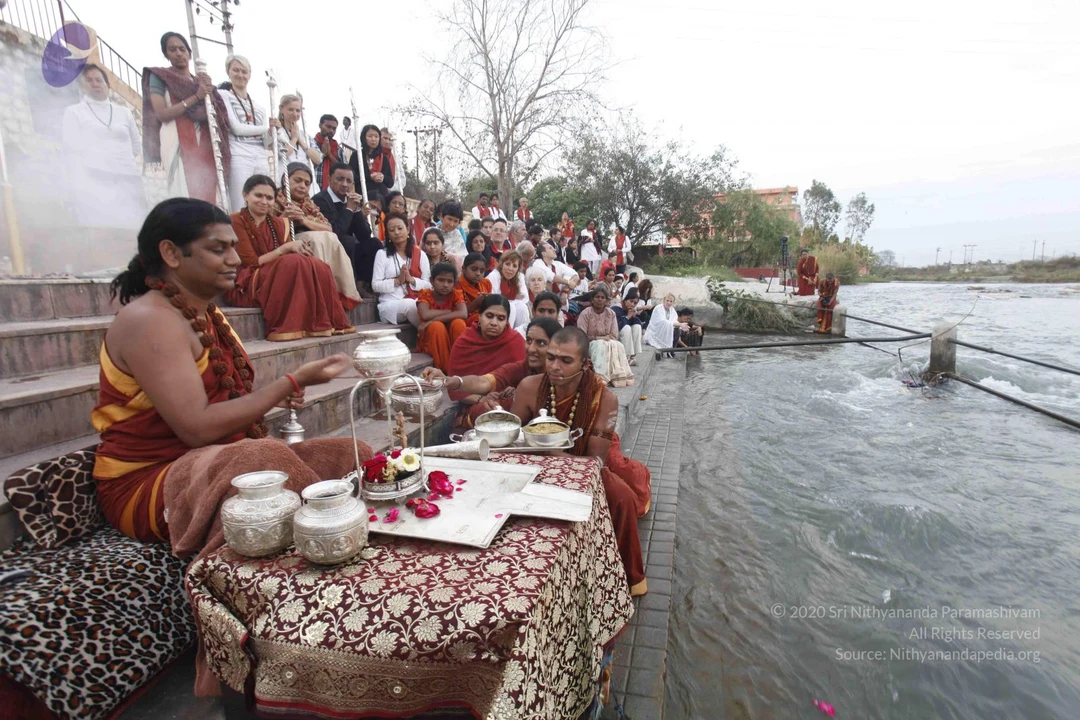
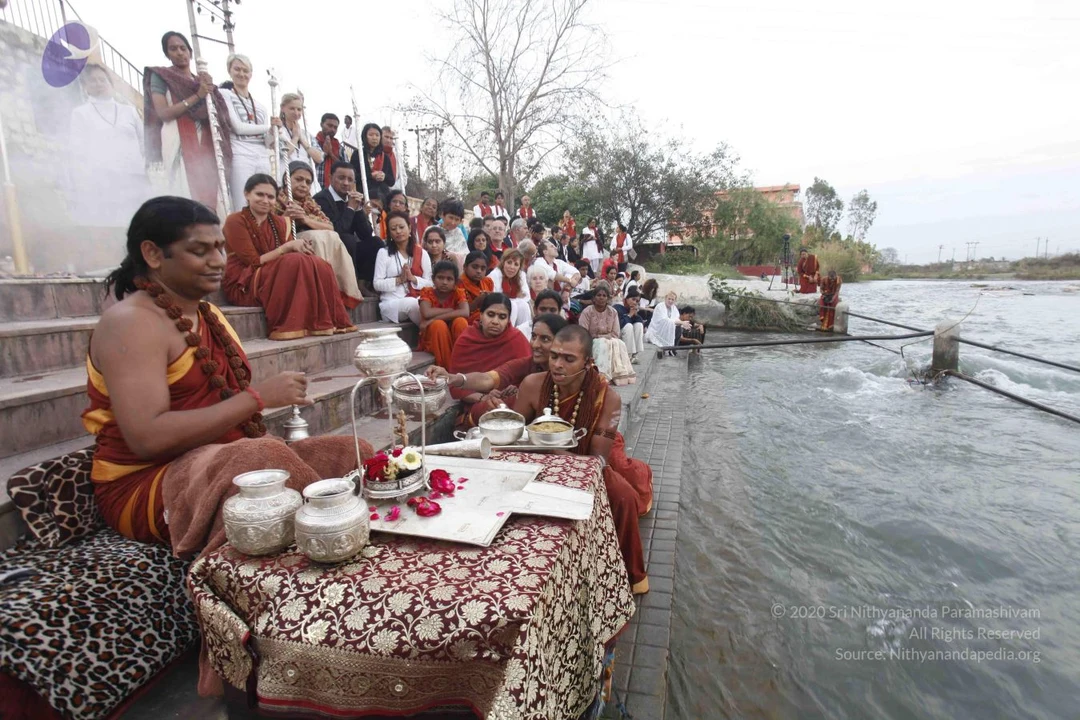
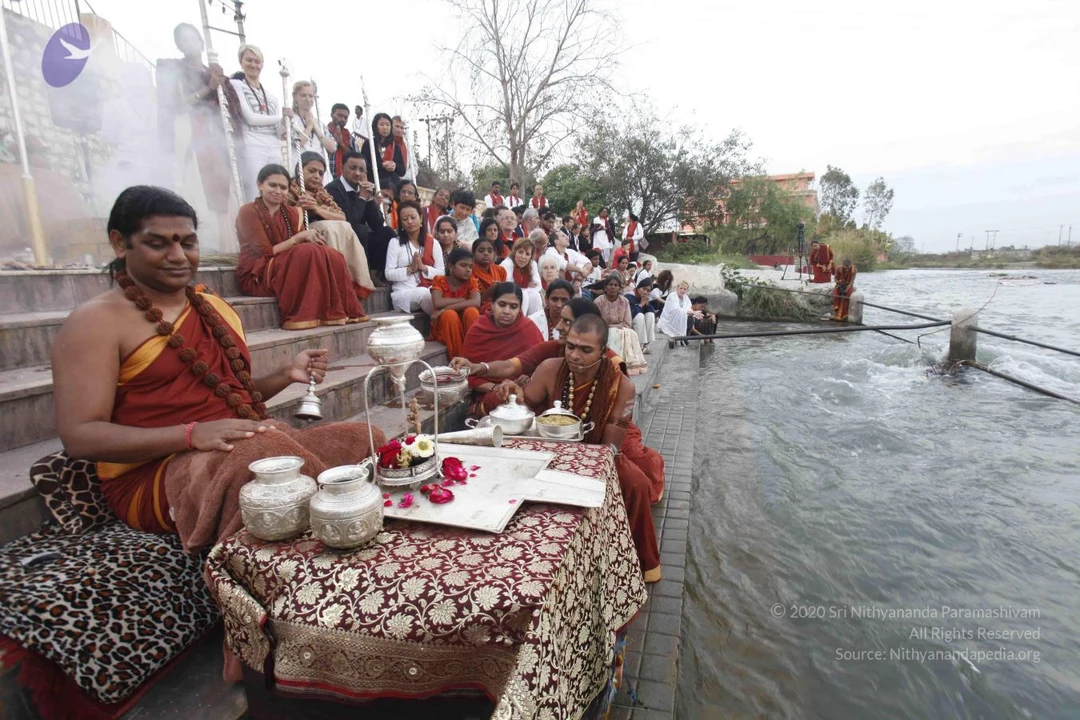
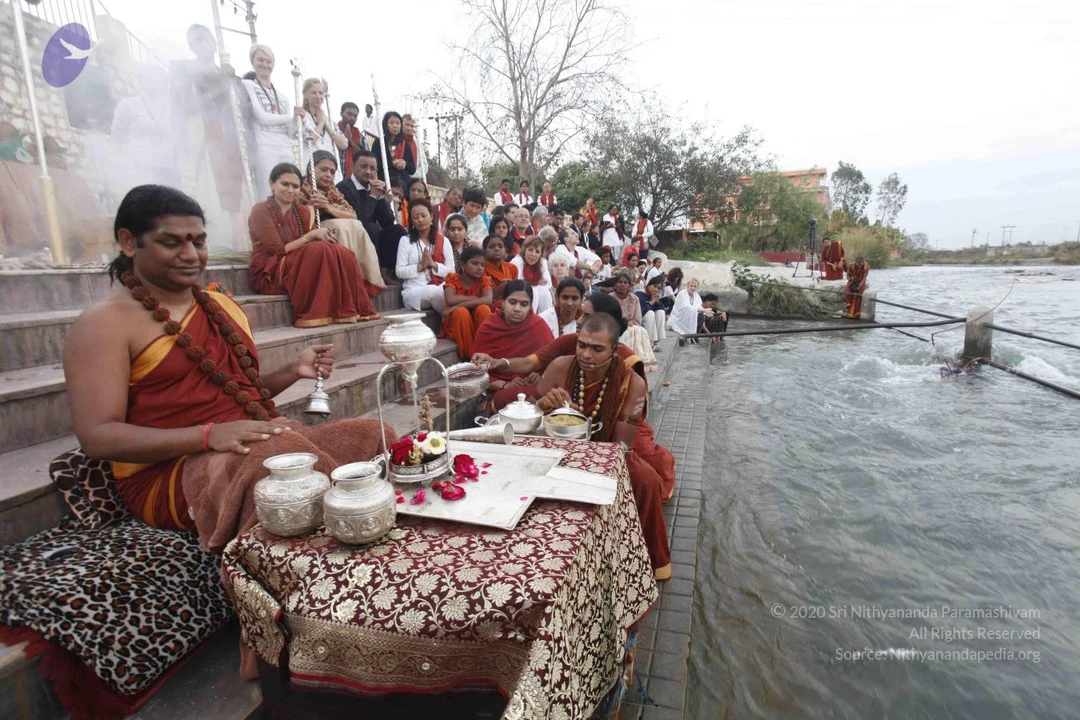
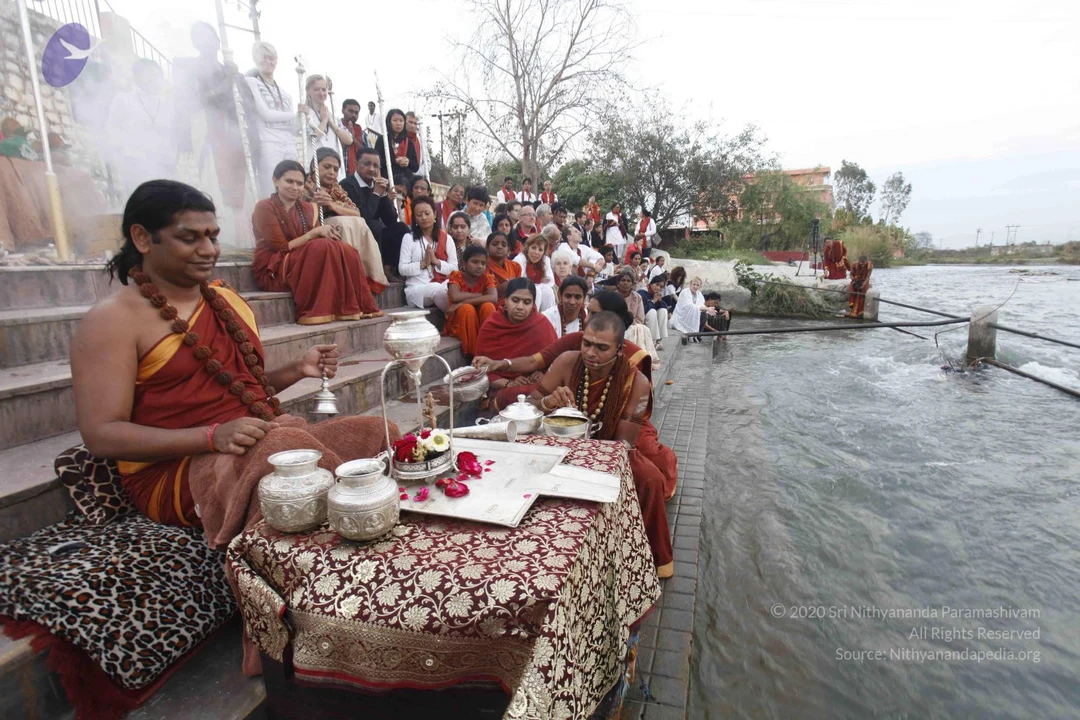
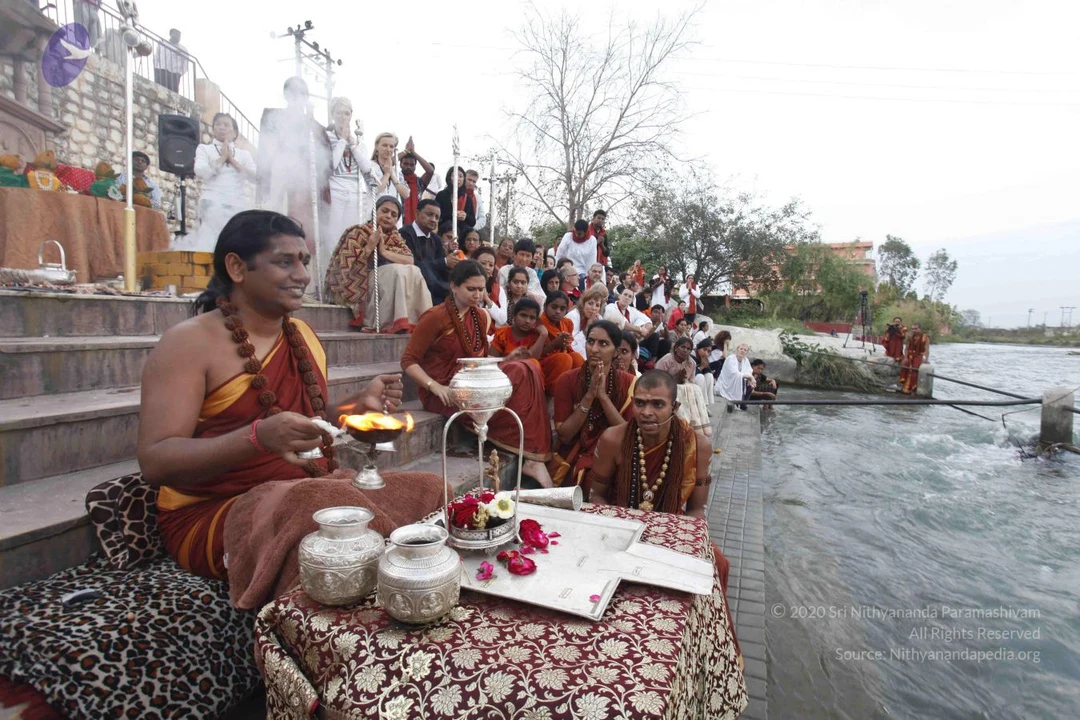
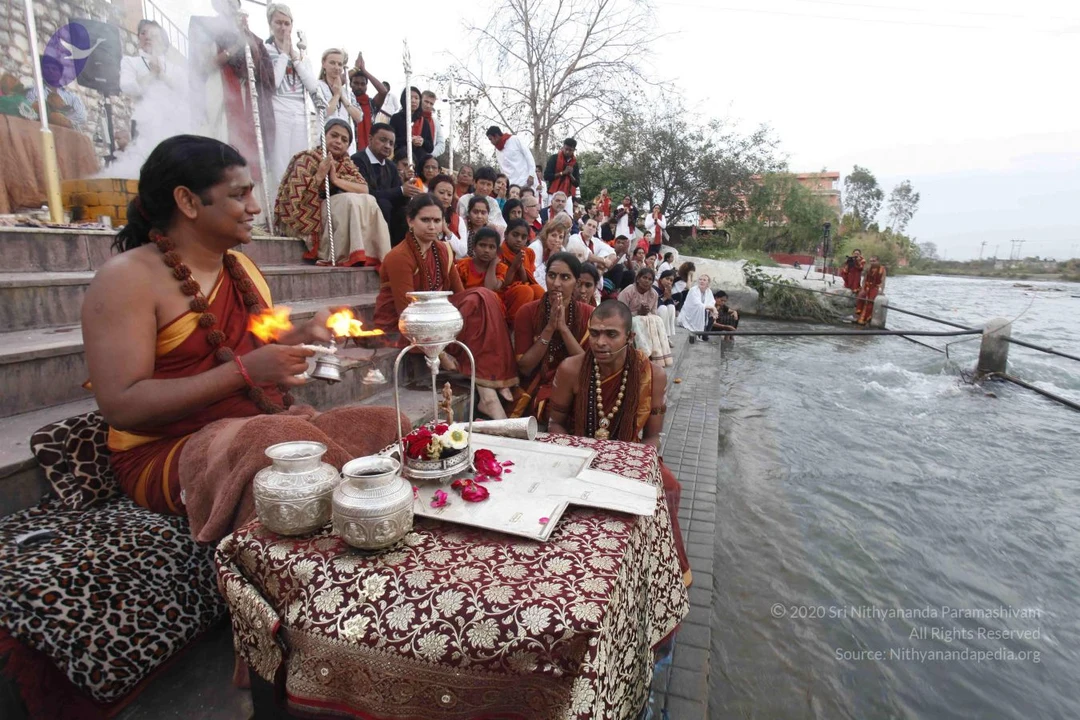
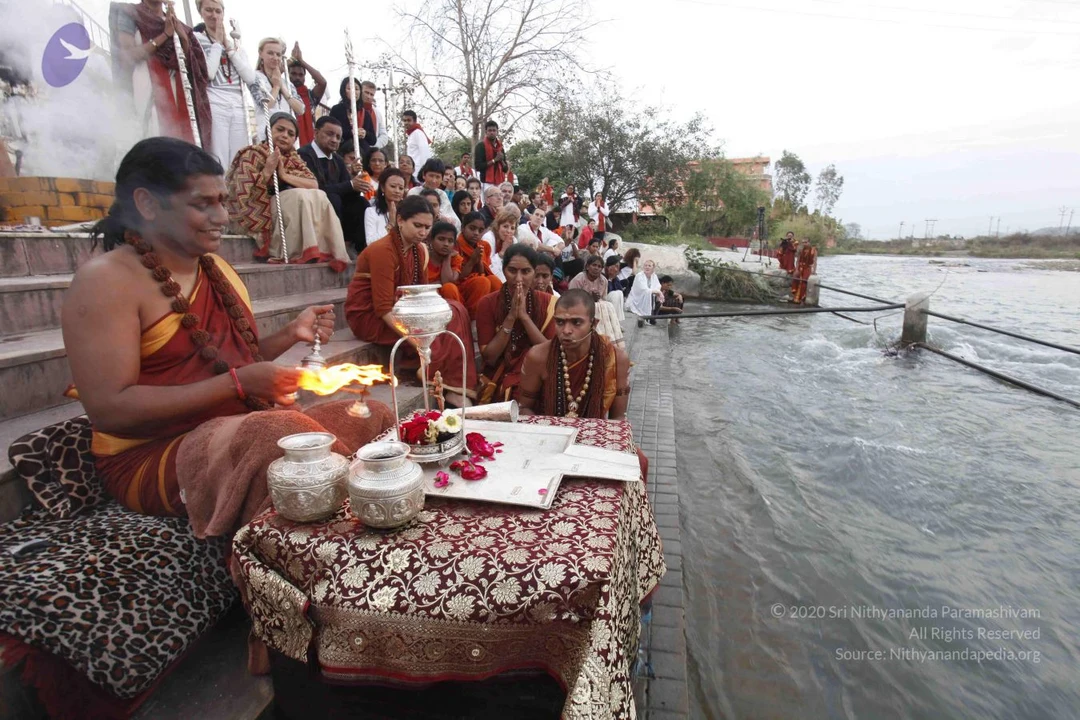
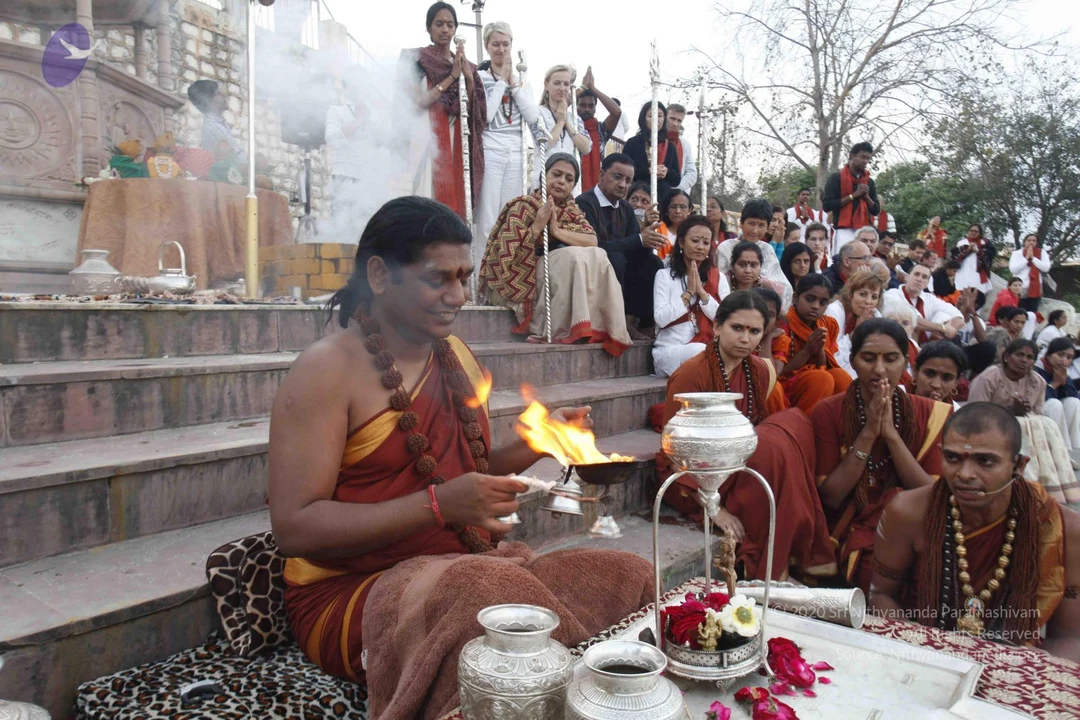
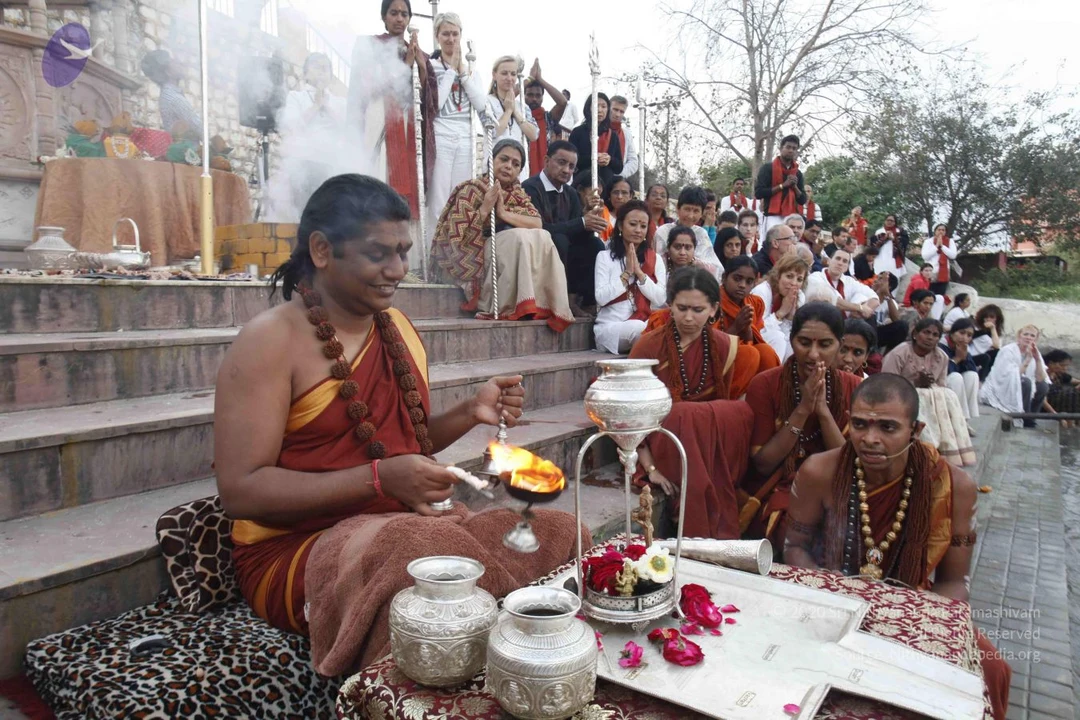
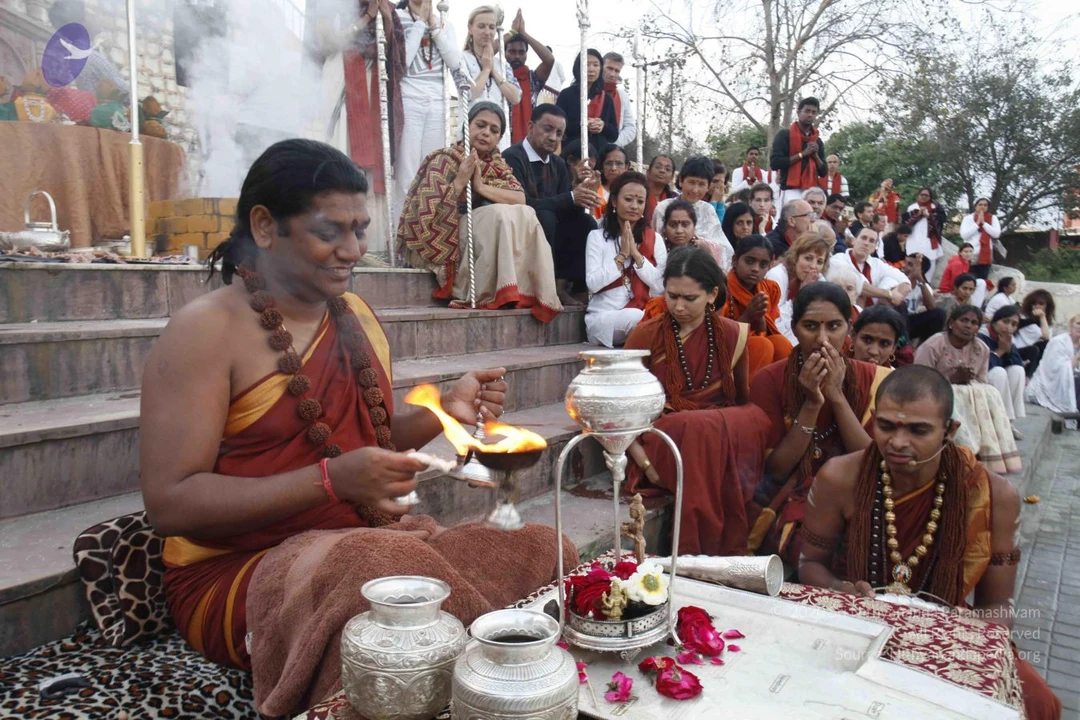
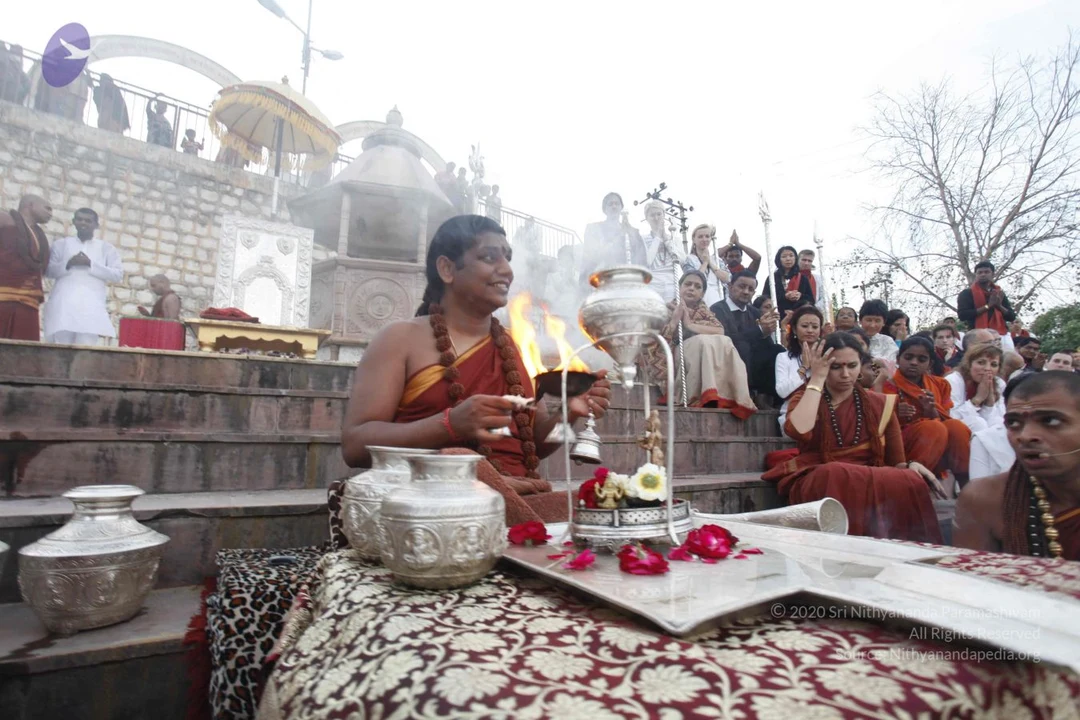
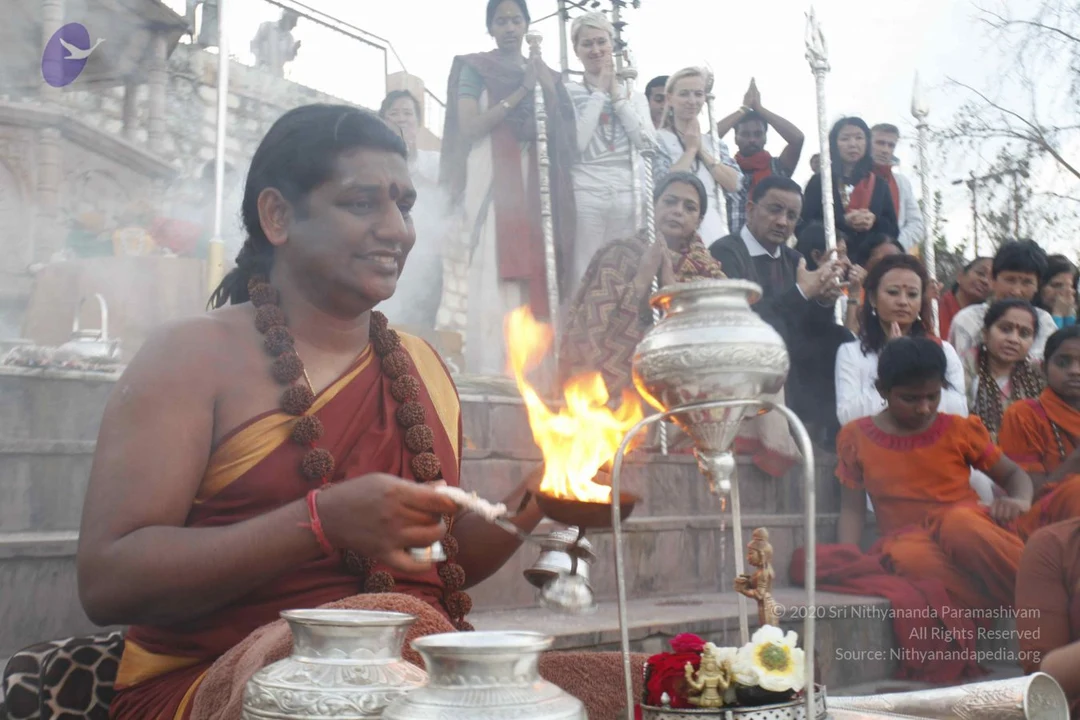
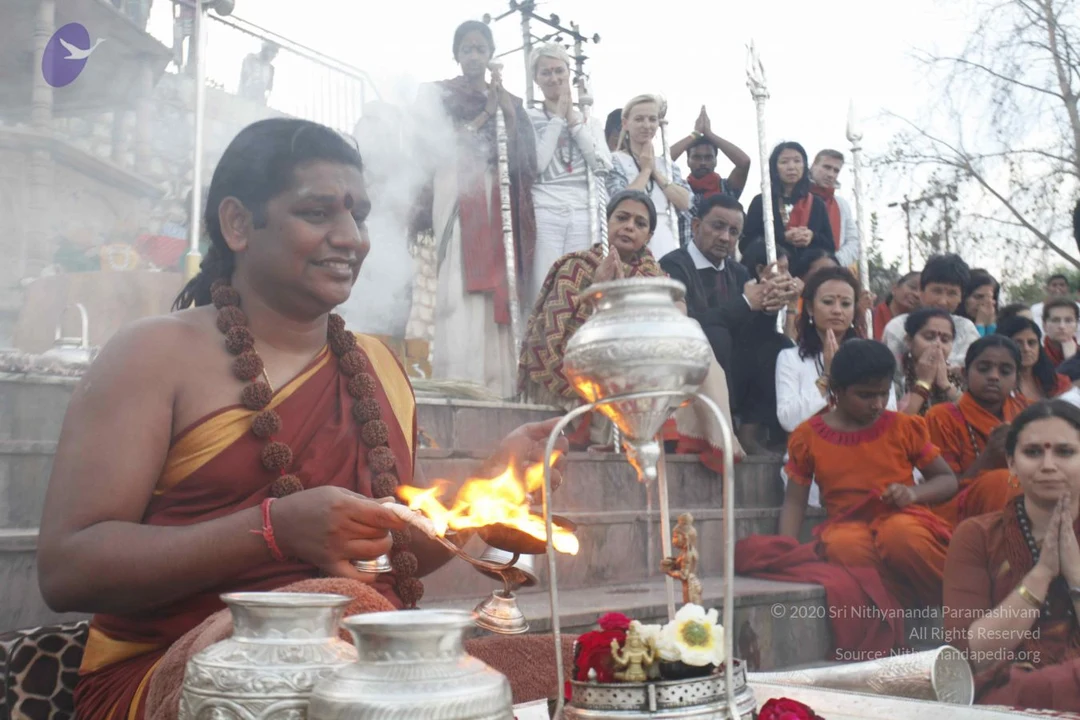
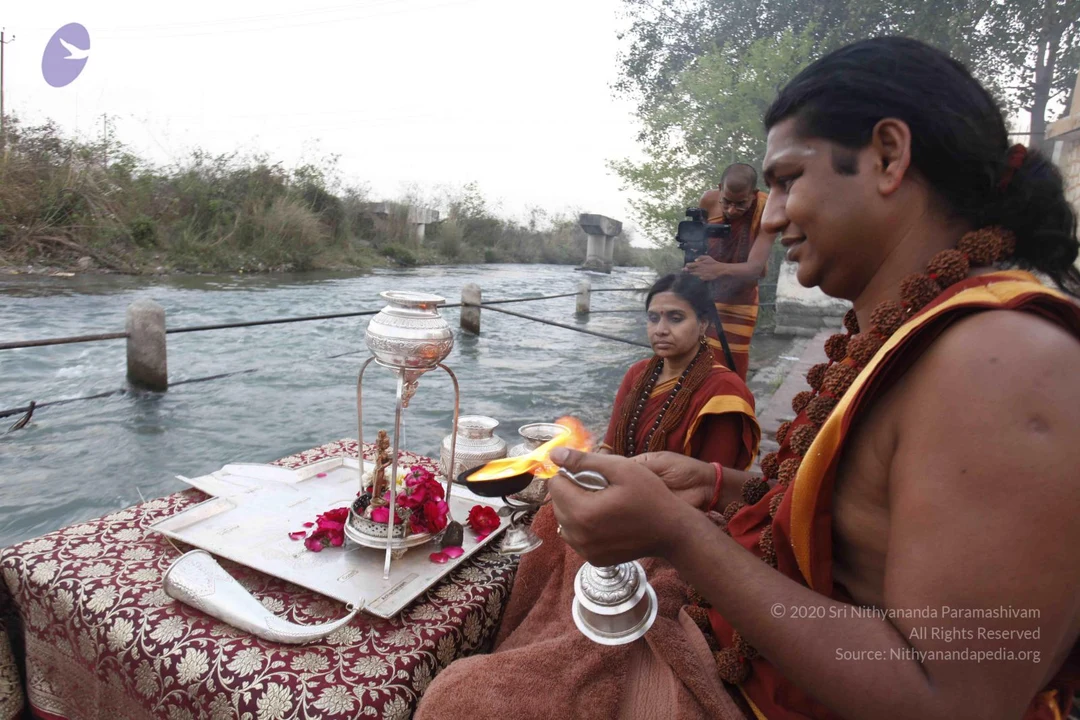
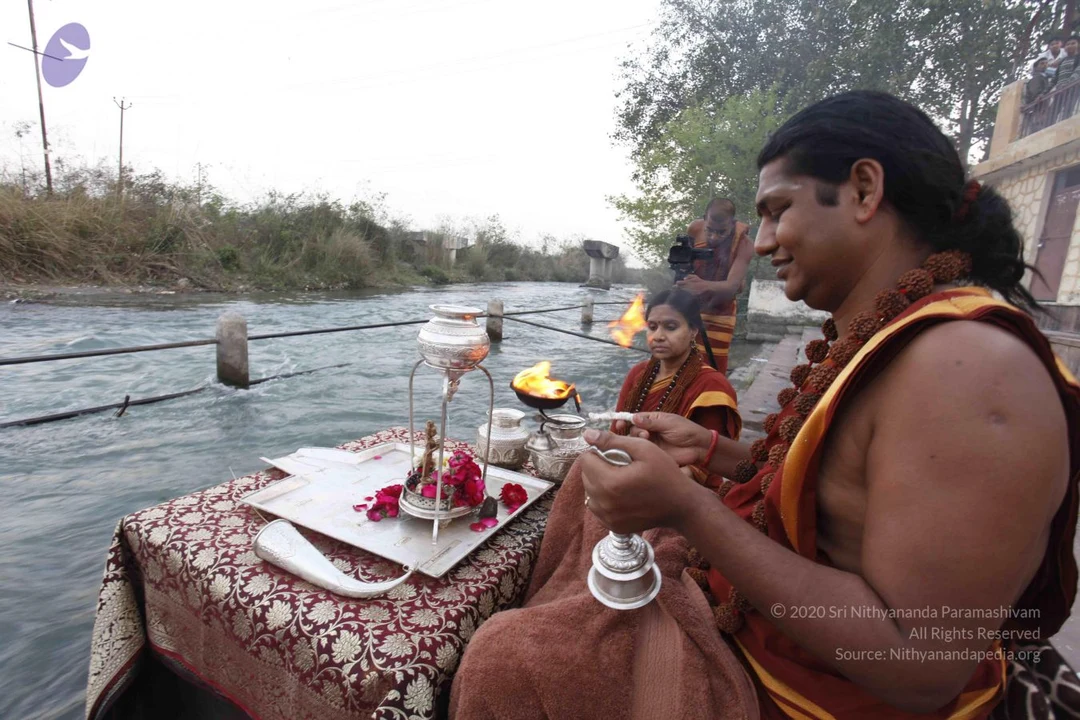
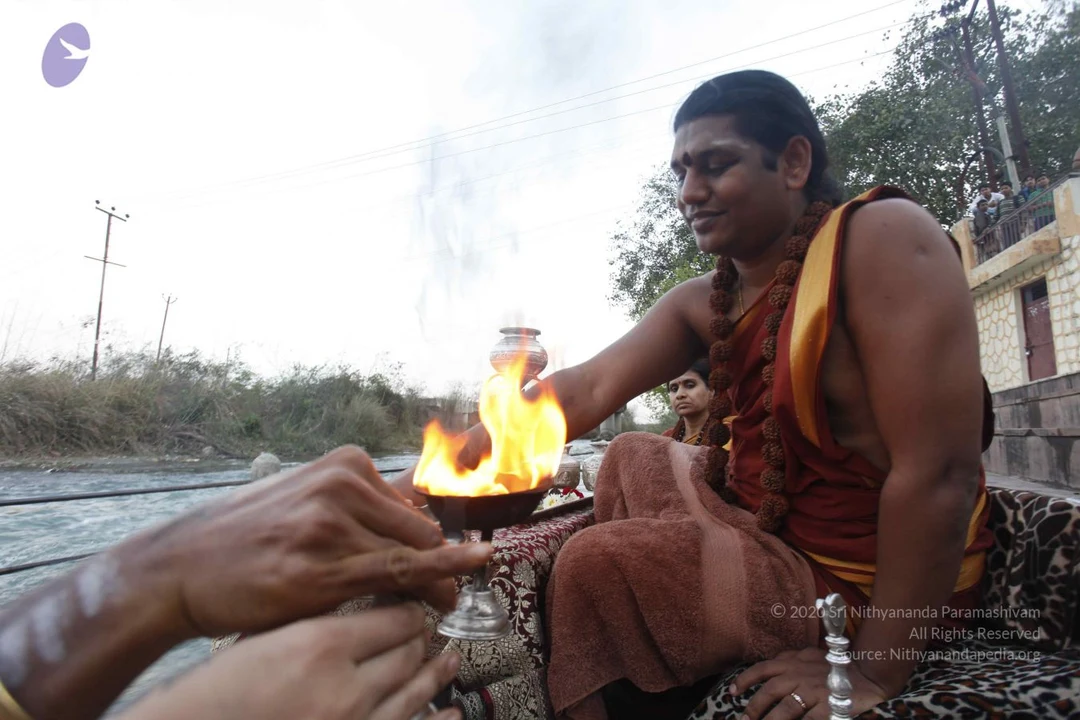
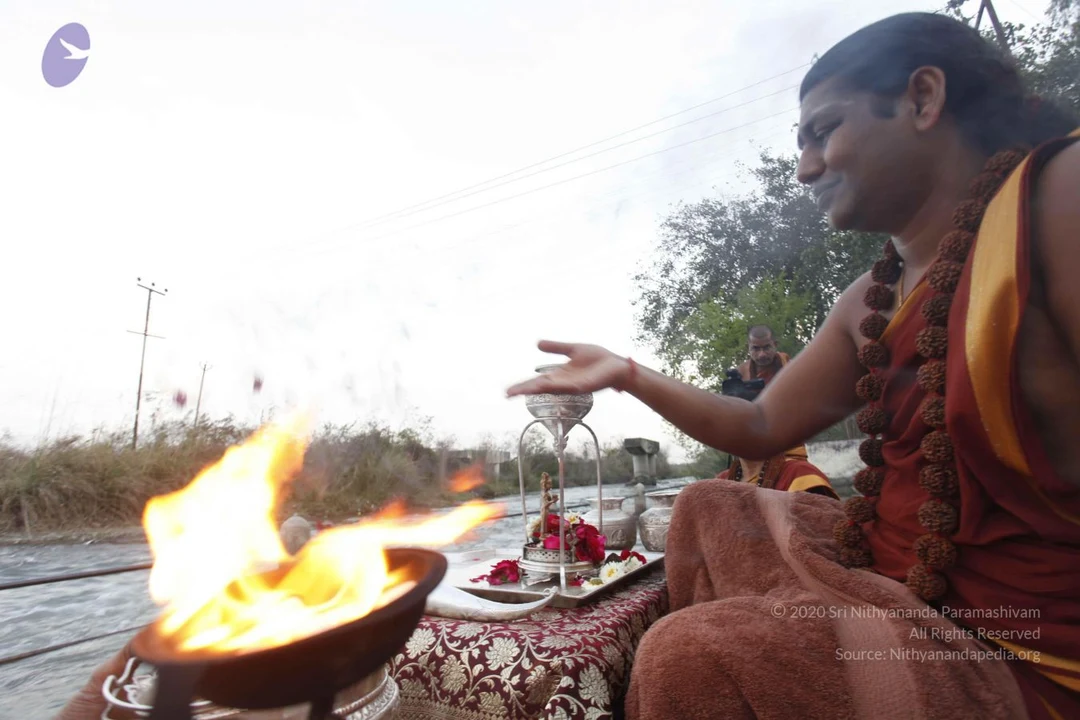
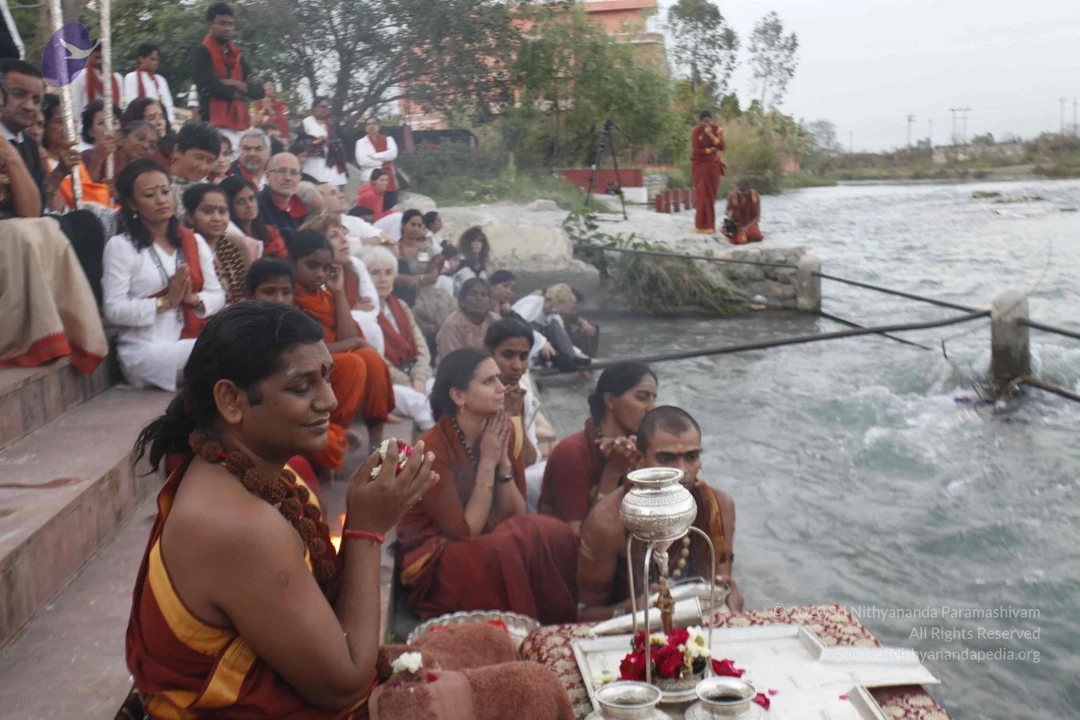
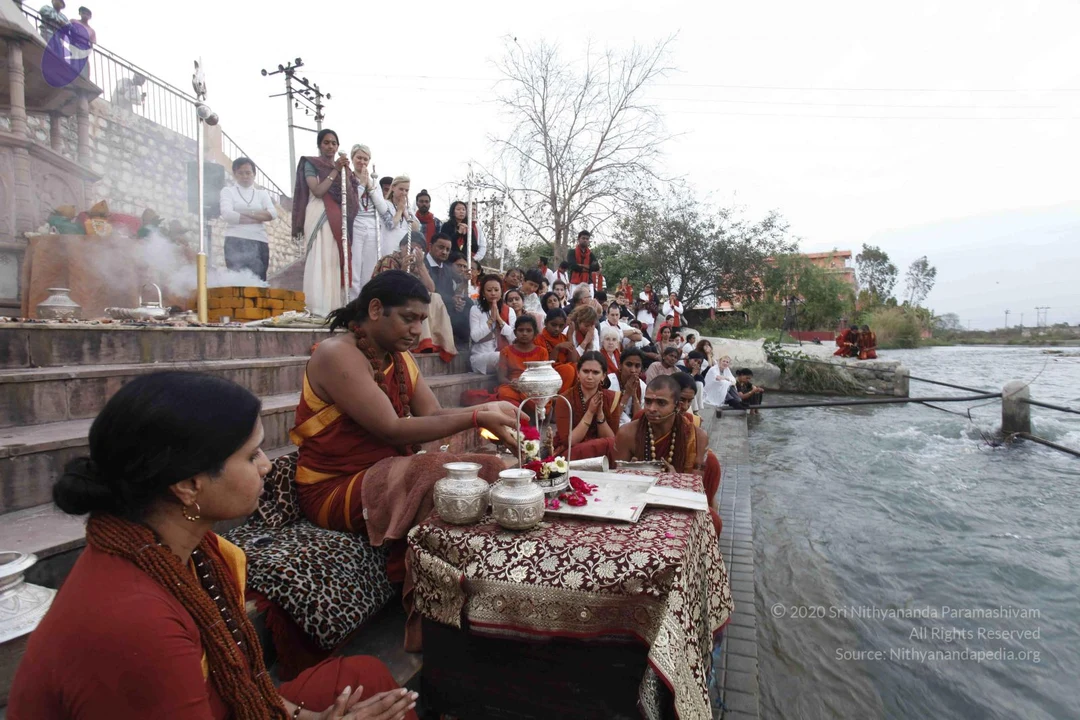
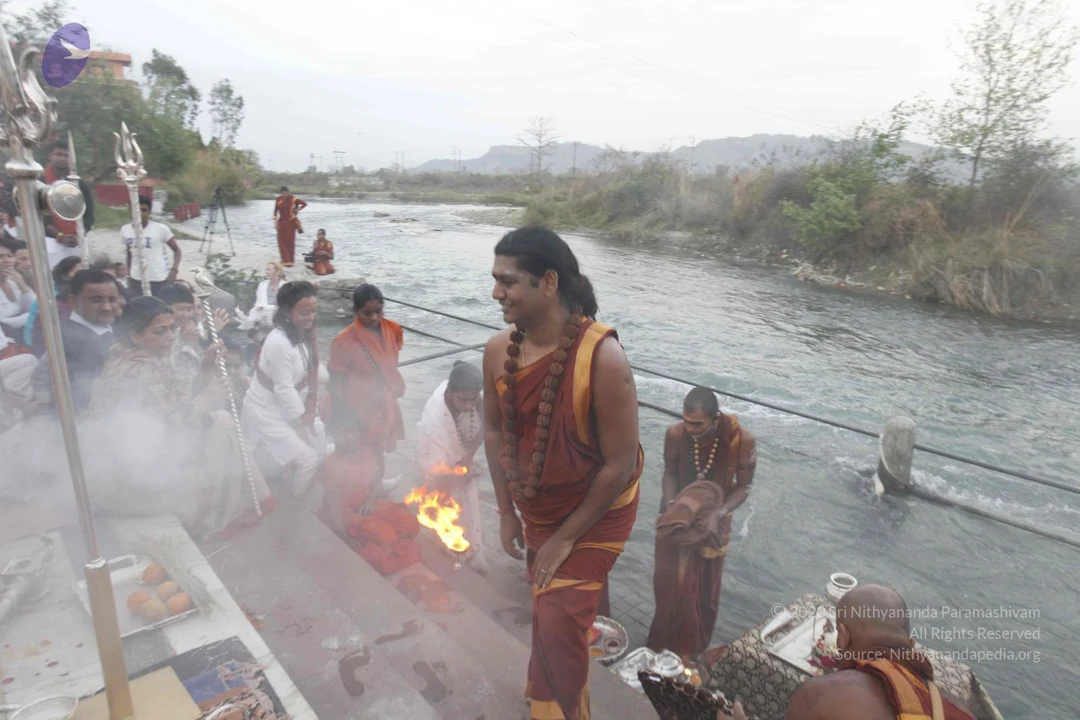
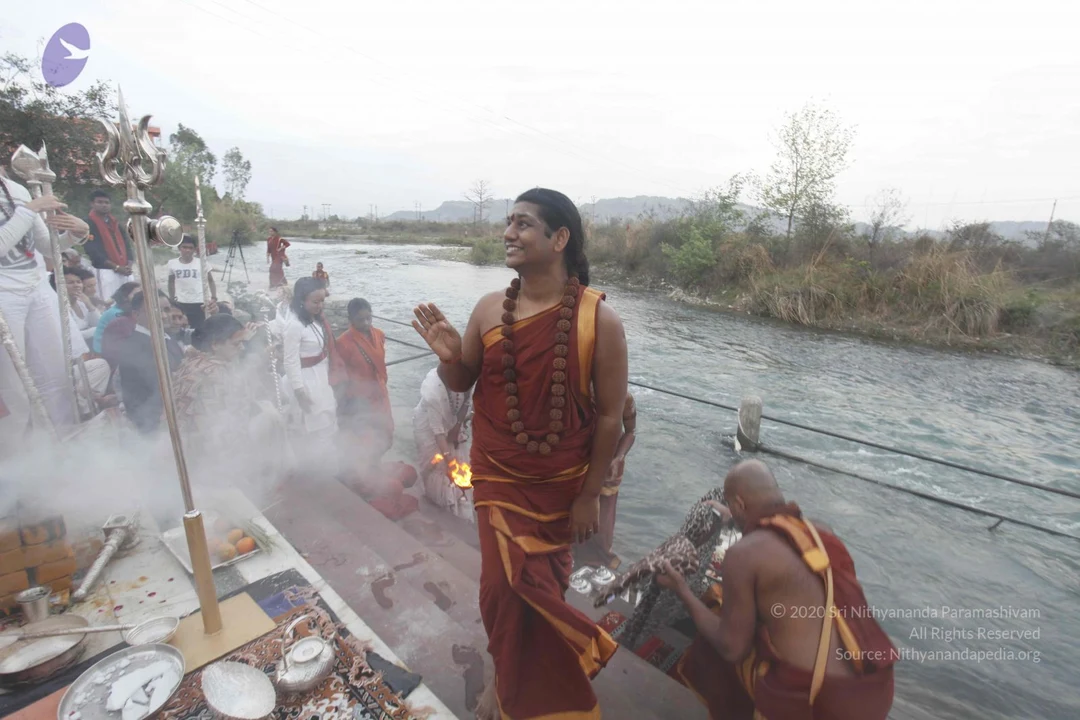
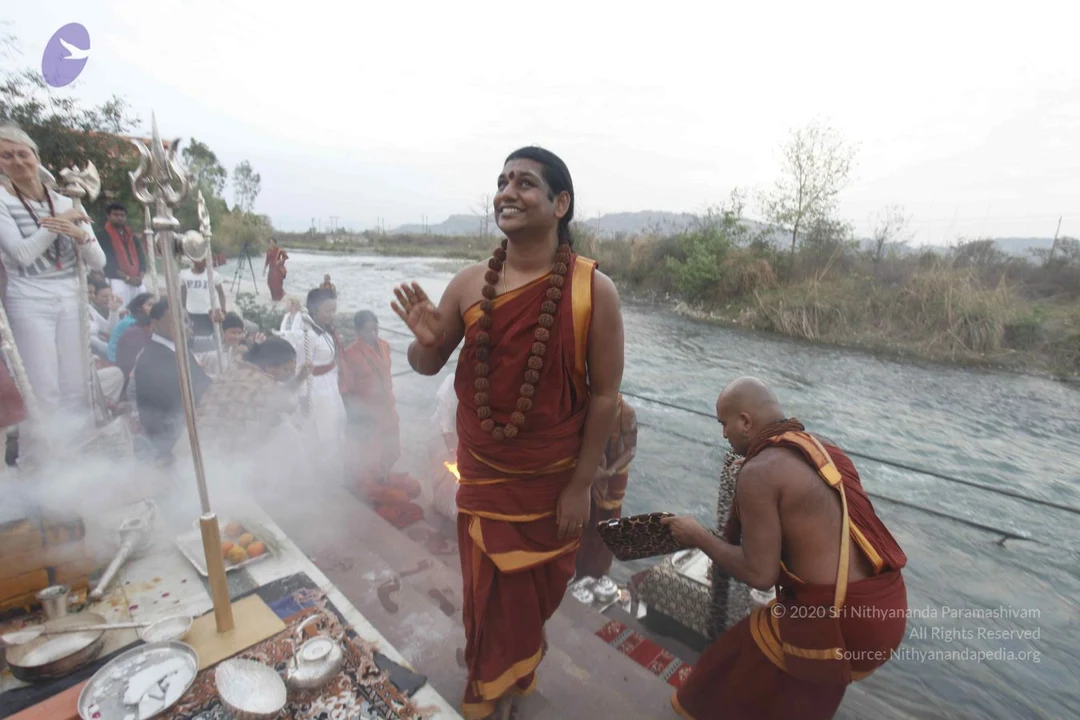
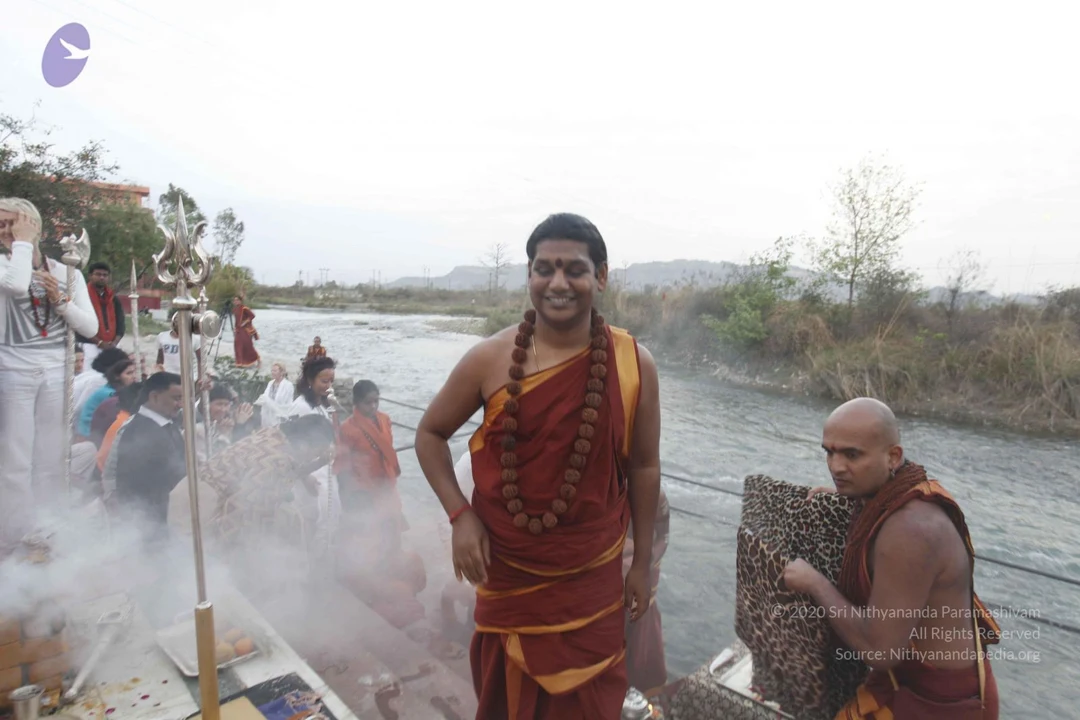
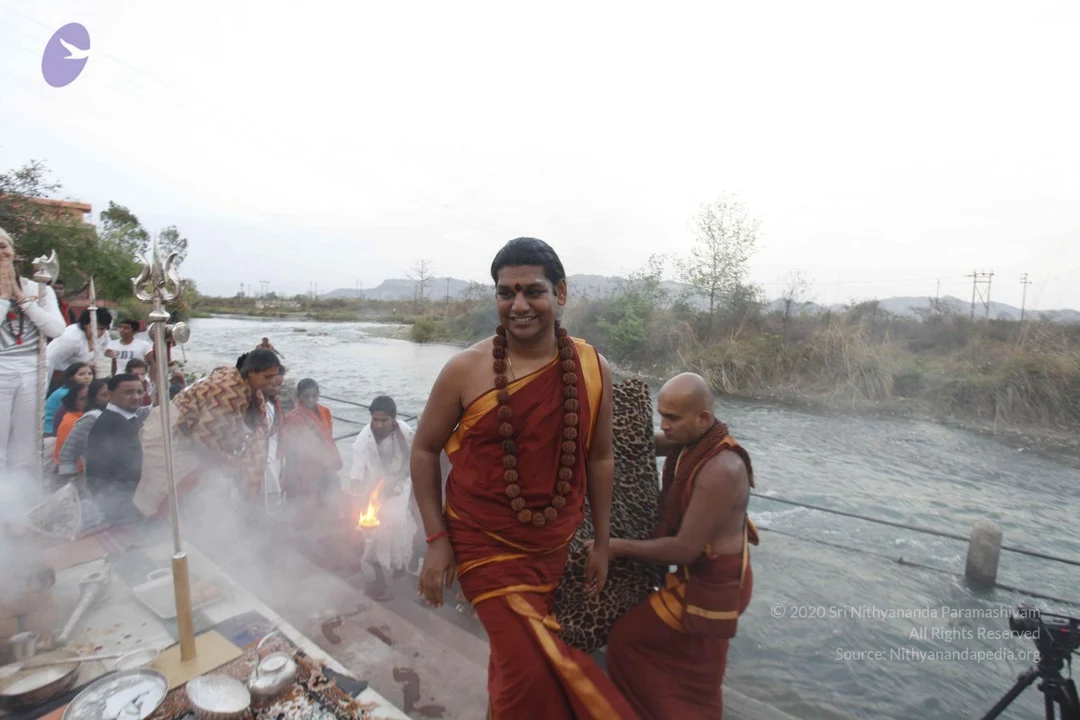
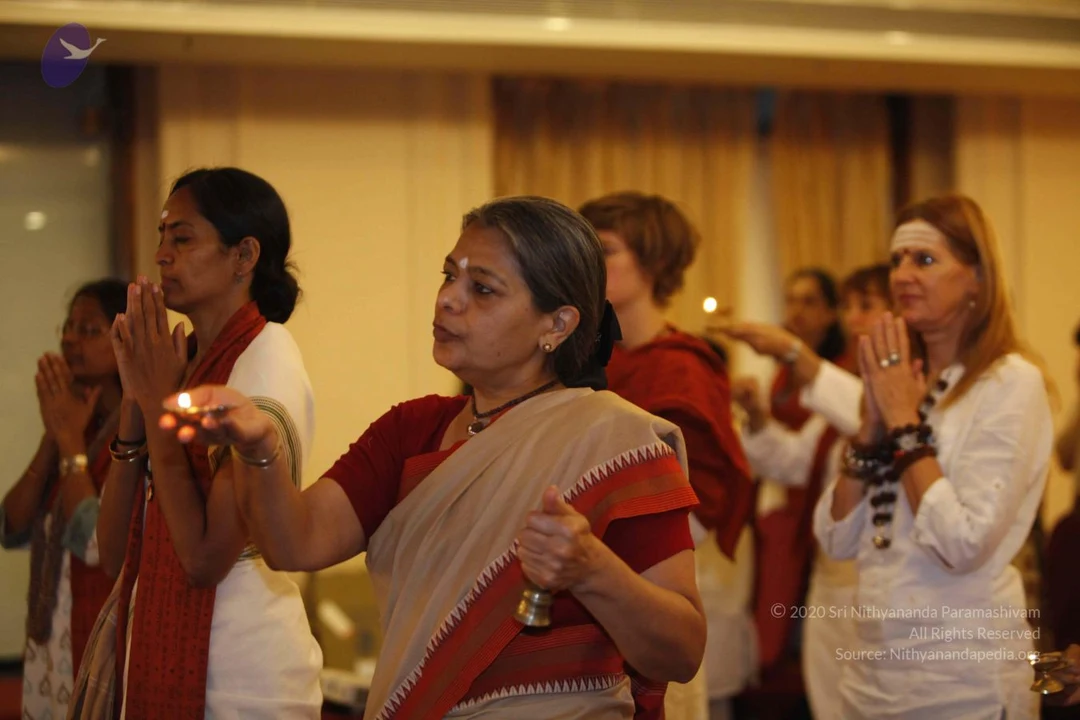
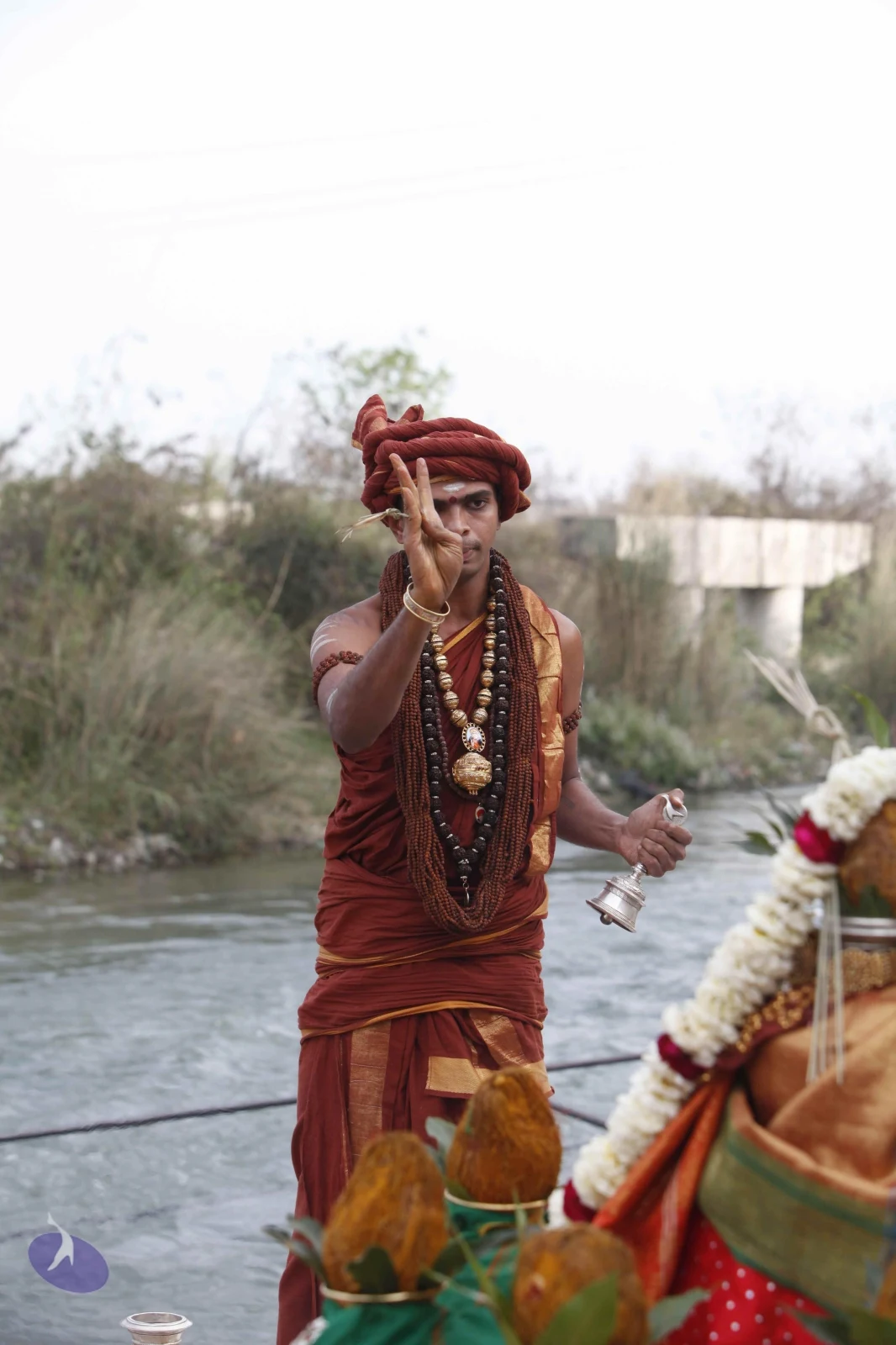
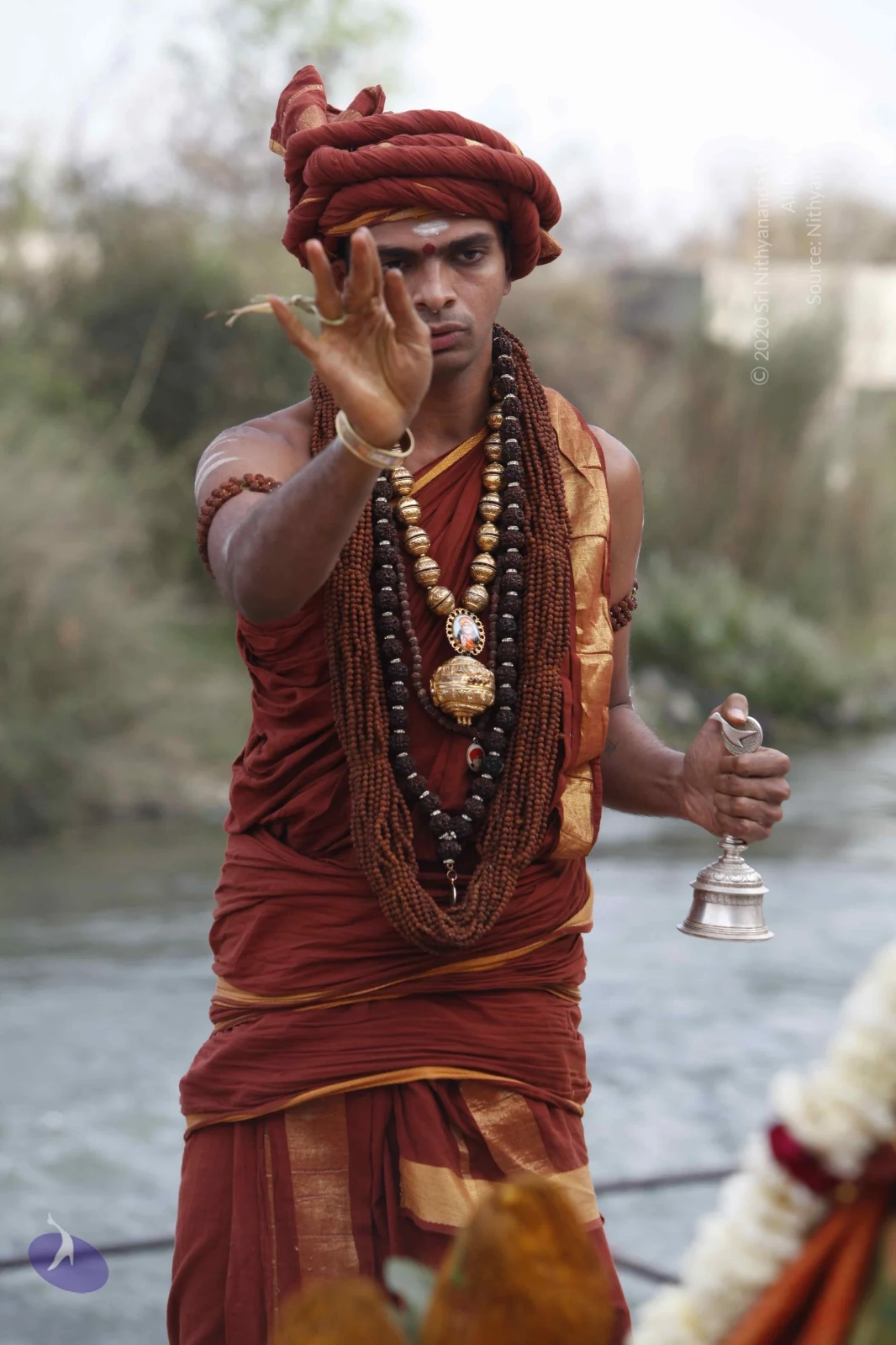
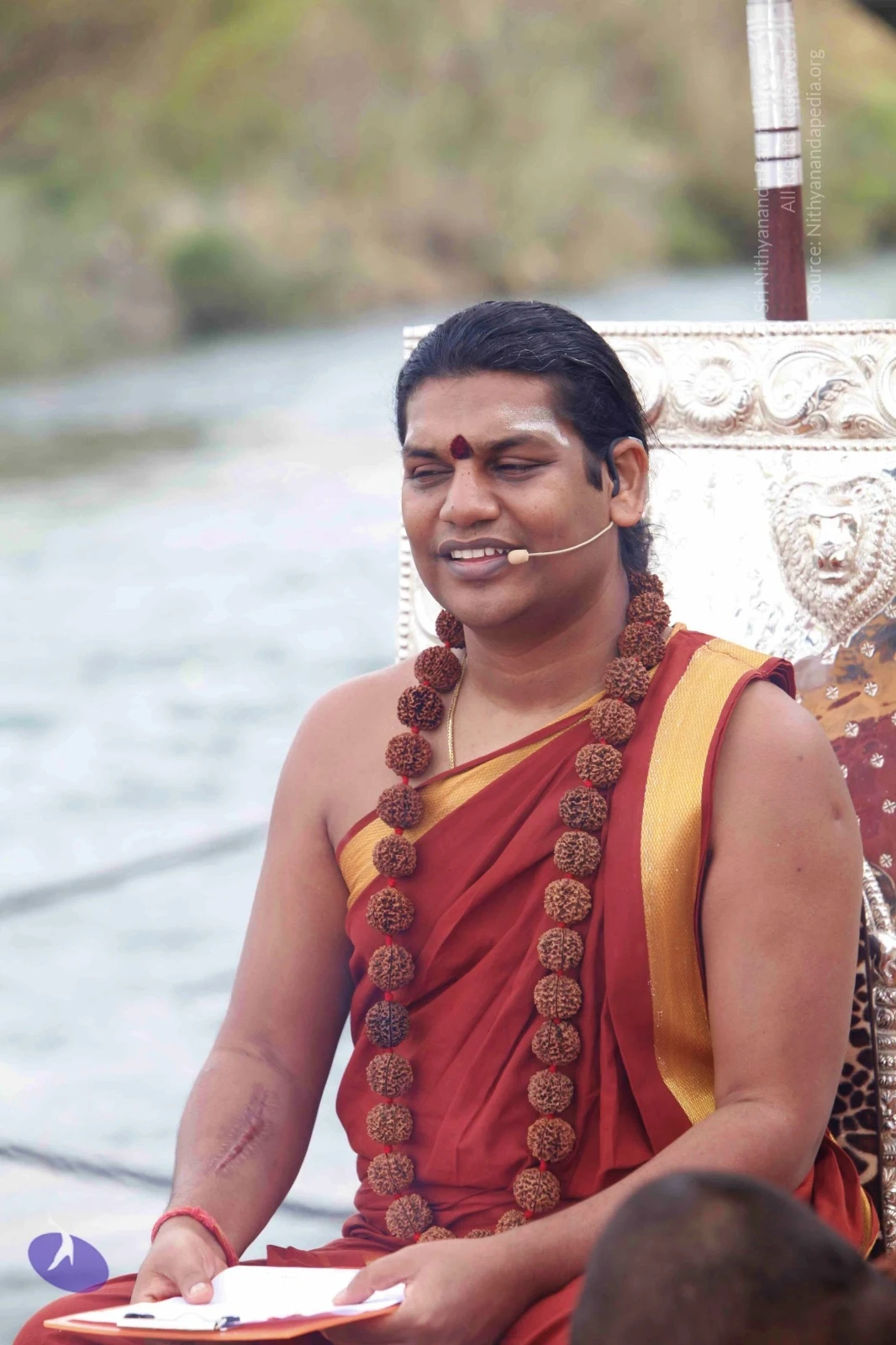
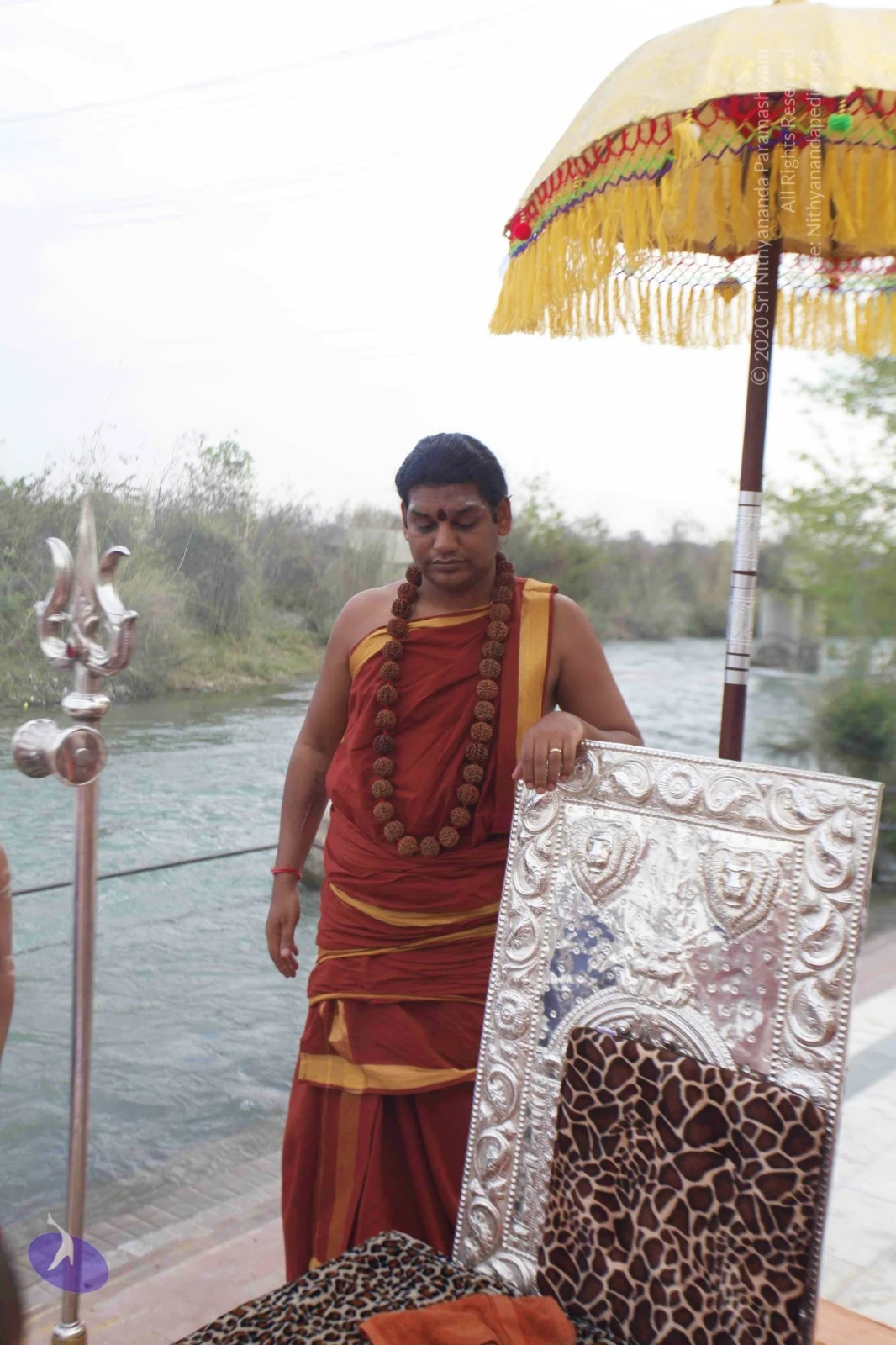
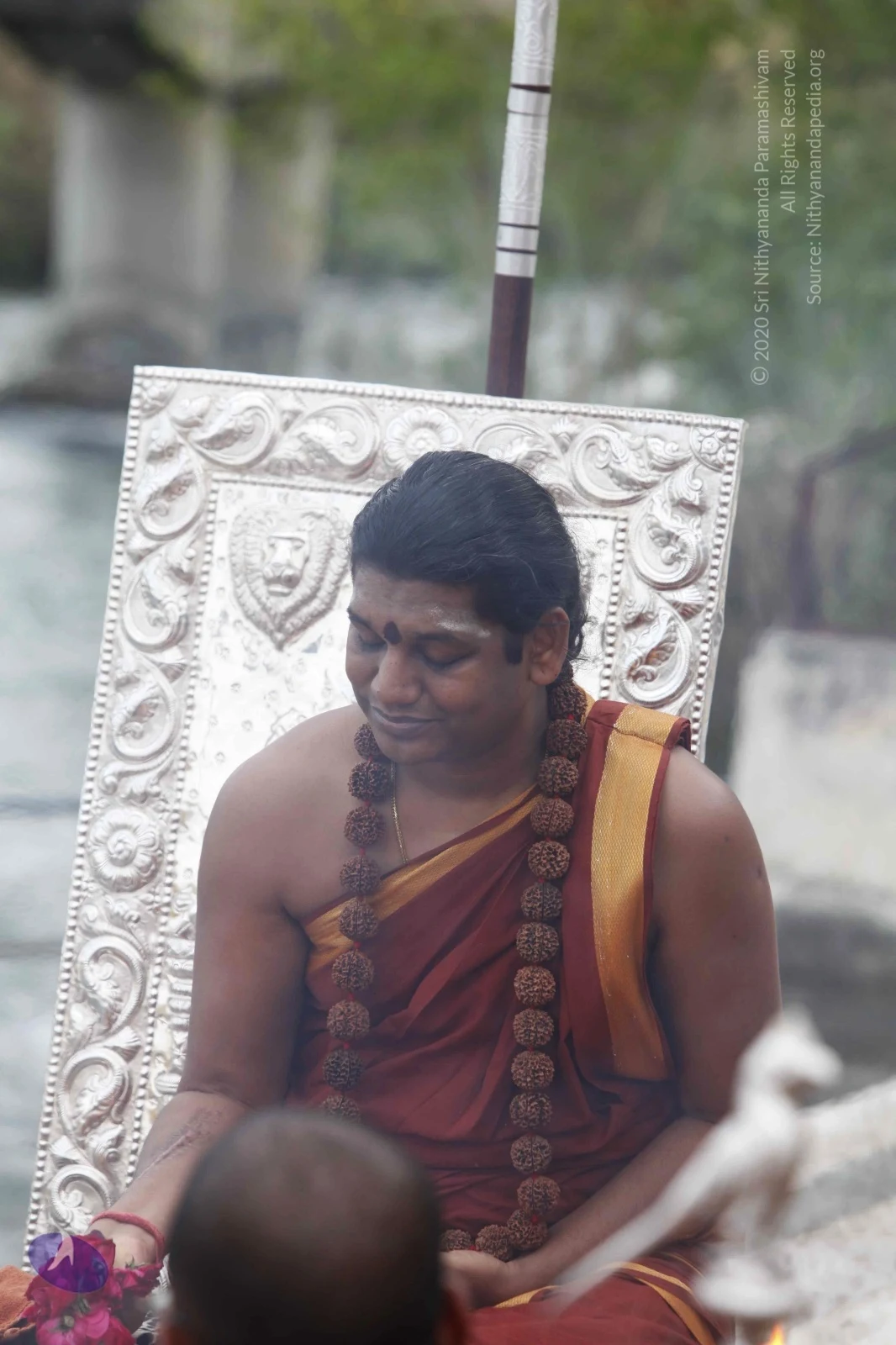
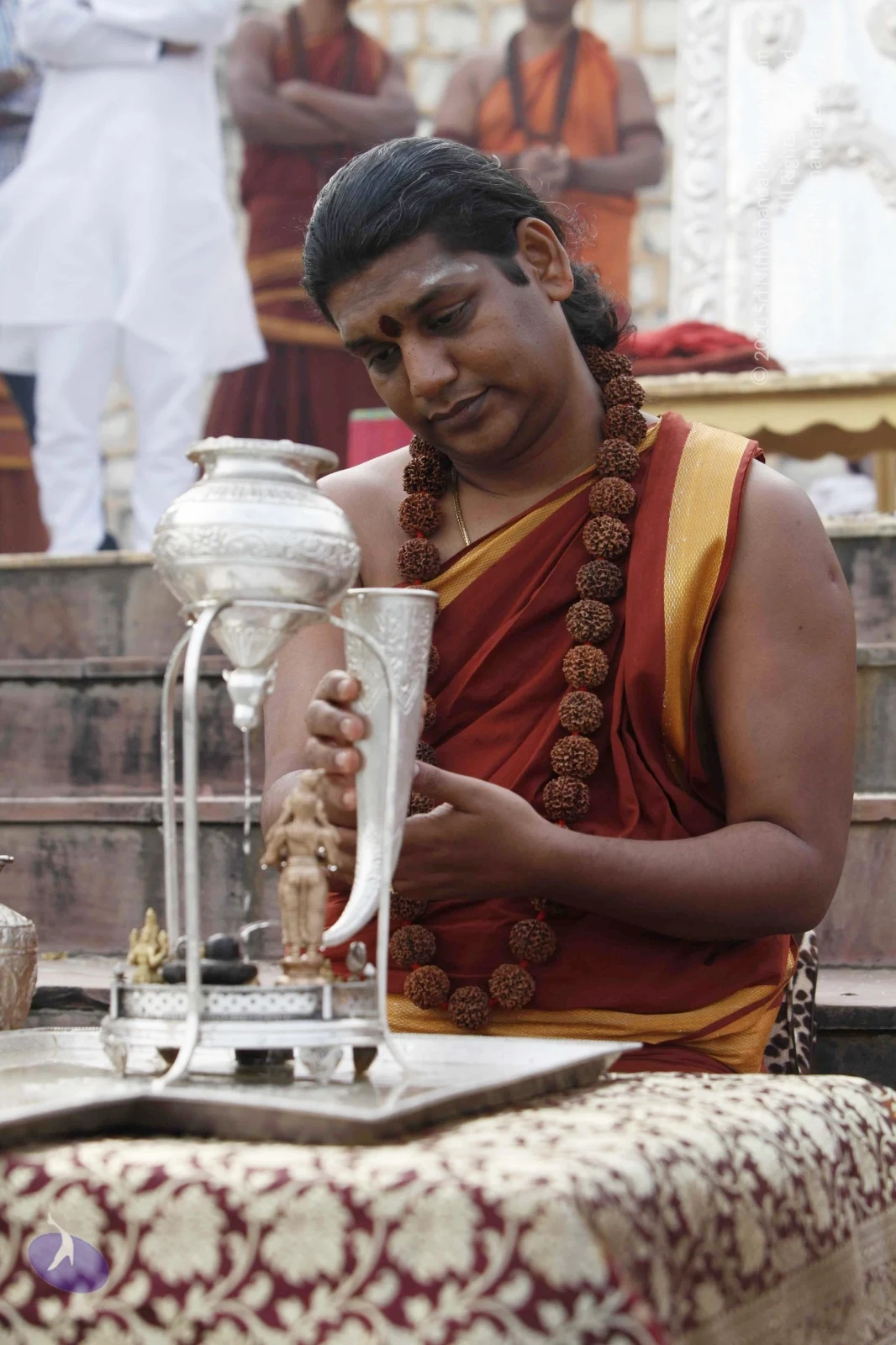
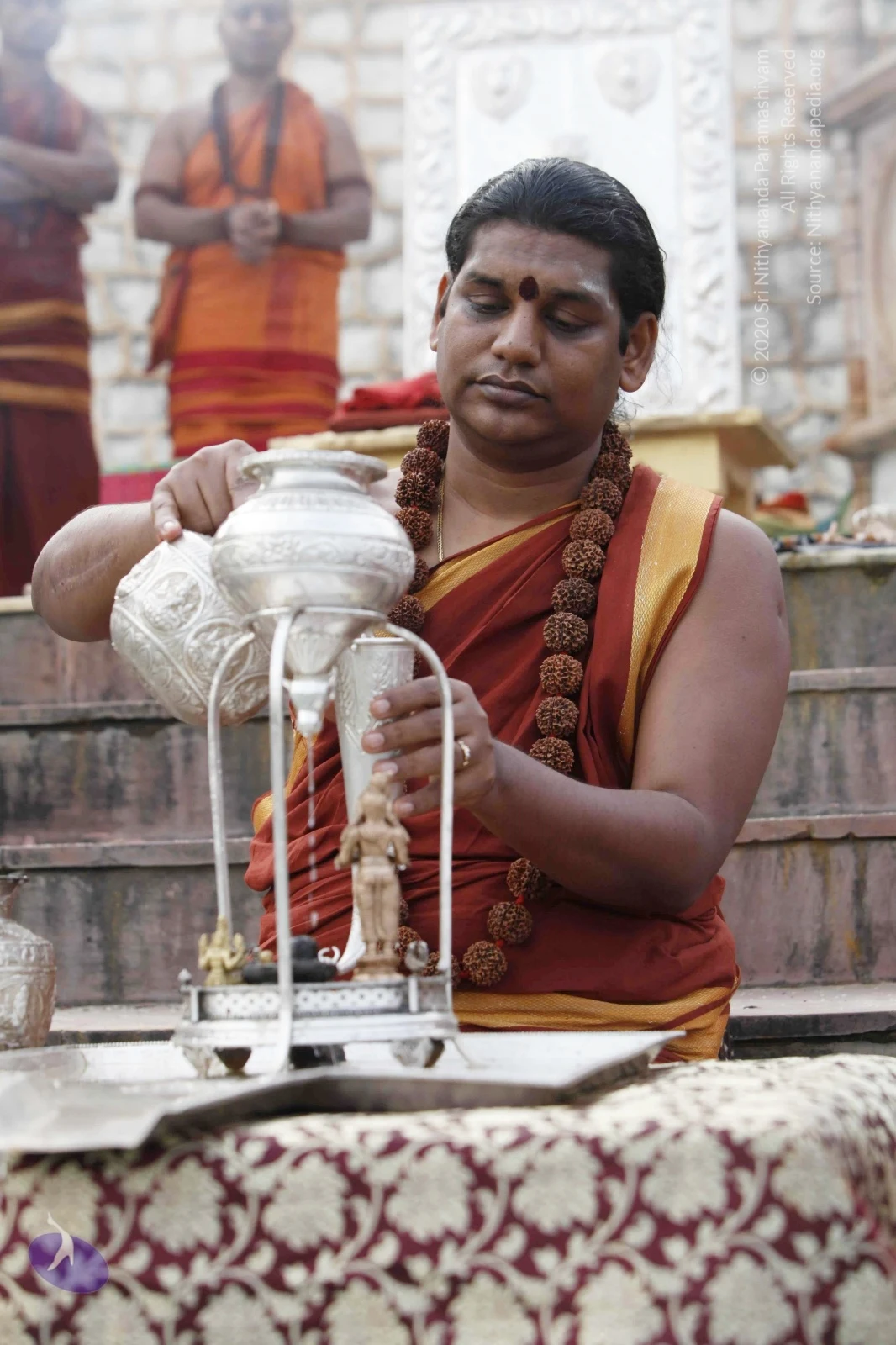
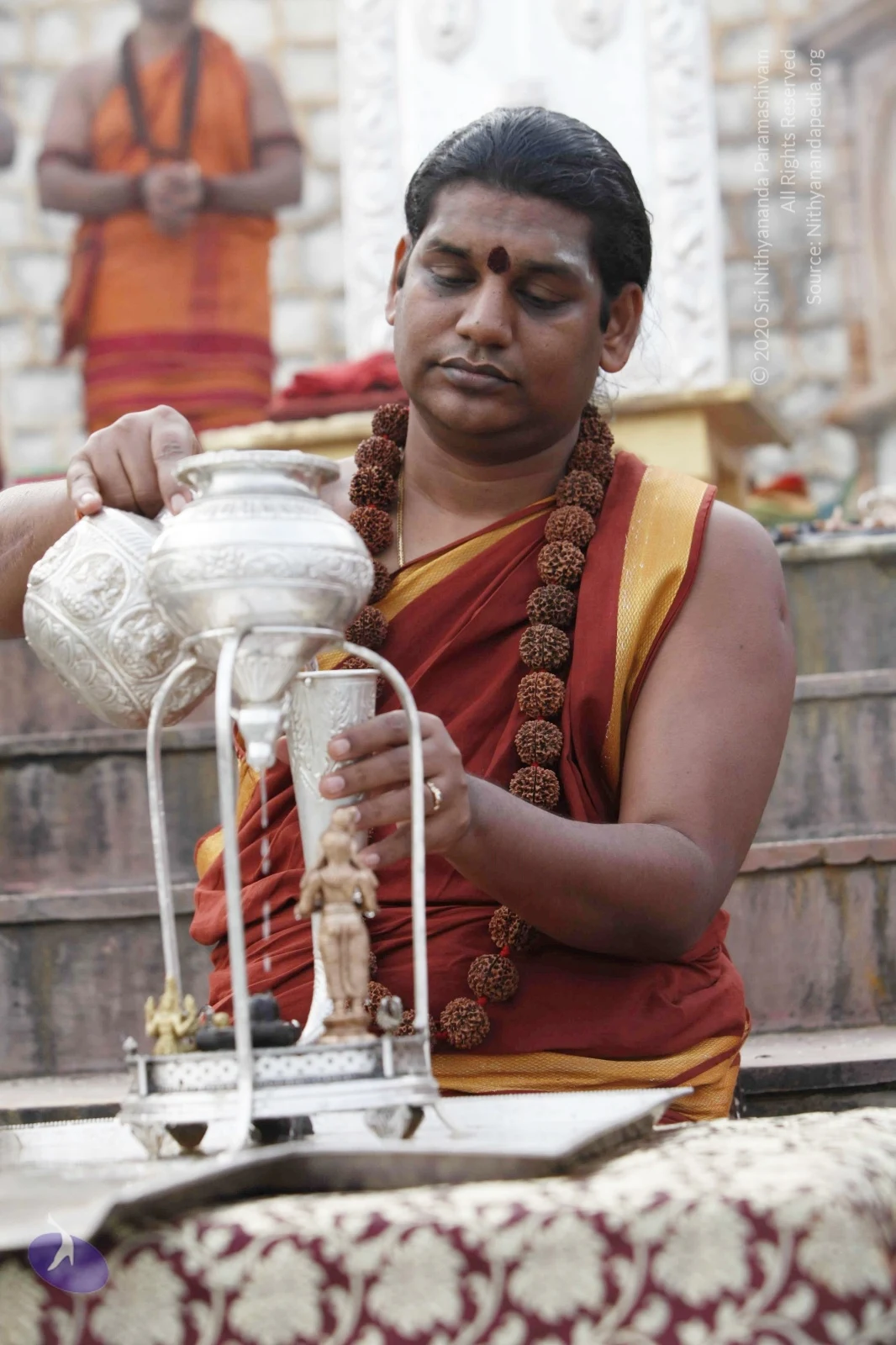
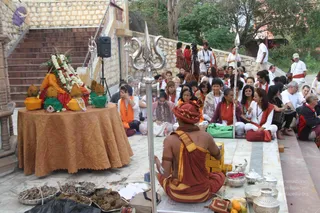
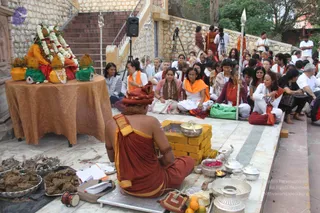
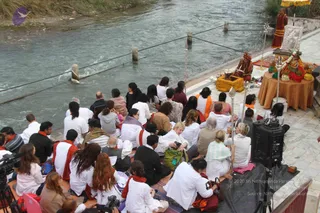
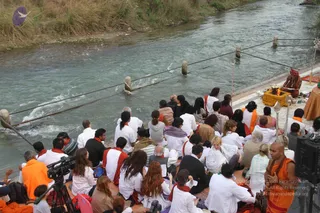
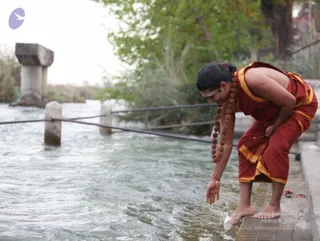
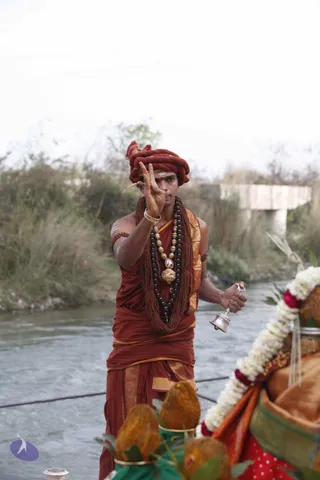
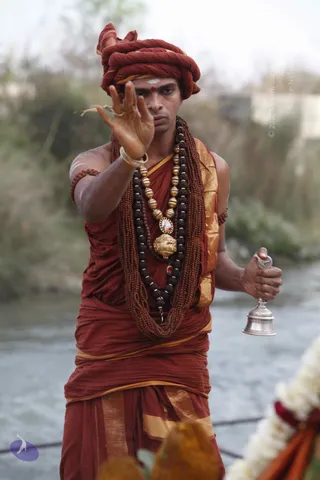
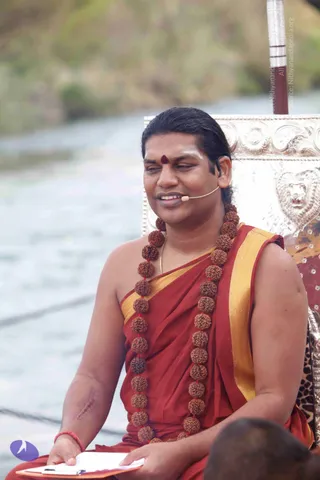
On this day, the Supreme Pontiff of Hinduism Bhagavan Sri Nithyananda Paramashivam conducted the Day -19 of the Inner Awakening Convention at Haridwar, Uttarakhand, India. During that day’s Presidential Address-Nithyananda Satsang SPH advised us to spend some time in the company of a Master, only then we can get real transformation. Advaita can be like over-the-counter medicine, it can give some truths for us to live by, but it is not the Source of the truth. To get to the Source, we need to spend time around a Master who can perform the spiritual surgery needed to make the truths part of our inner space. Only then transformation really happens and becomes our Reality! Later that day SPH visited the Ganga Ghat along with the most blessed delegates of the IA Convention which had the rarest of the opportunitiesto observe a Rudrahoma,VirajaHoma and Rudrabhishekam at the the Ganga Ghat in the pressence of the greatest happening of our time, Paramavatara - the Ultimate Incarnation of Paramashiva, the Supreme Pontiff of Hinduism (SPH), Bhagavan Nithyananda Paramashivam in the banks of the Ganga Mata.

That day’s Presidential Address-Nithyananda Satsang was conducted by the Supreme Pontiff of Hinduism Bhagavan Nithyananda Paramashivam on 24 March 2014, in Haridwar, Uttarakhand, India.

Description:

At today’s morning Satsang in Haridwar, Paramahamsa Nithyananda advises us to spend some time in the company of a Master, only then we can get real transformation. Advaita can be like over-the-counter medicine, it can give some truths for us to live by, but it is not the Source of the truth. To get to the Source, we need to spend time around a Master who can perform the spiritual surgery needed to make the truths part of our inner space. Only then transformation really happens and becomes our Reality!

Link to Video:

VideoAudio

Transcript:

[00:15]

Nithyānandeśvara samārambhām Nithyānandeśvari madhyamām | asmat āchārya paryantām vande guru paramparām ||

Iss samay hamare sath upastith sabhi darshakon, bhakton, sanyasiyon aur shishyon ka prem evam aashirwad sahit swagat karta hun.

[00:51]

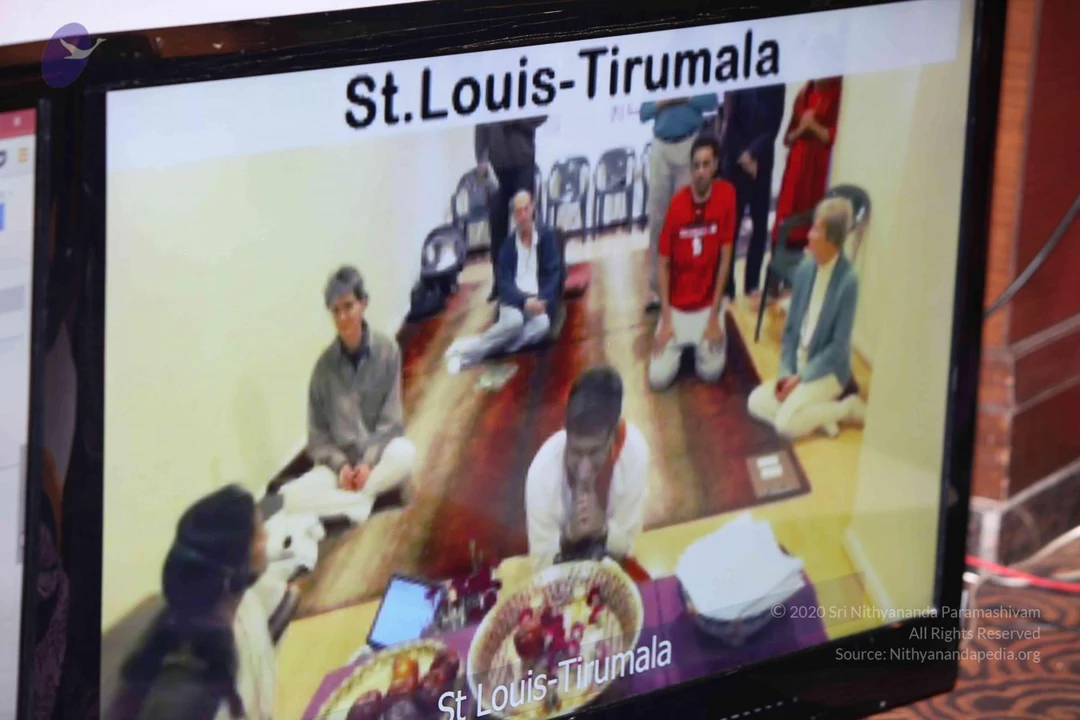
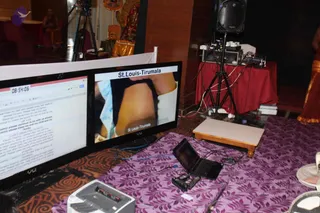
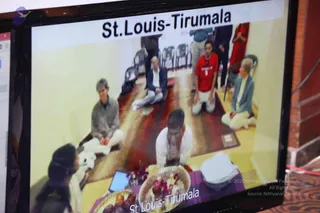
I welcome all the devotees, disciples, samajis, satanghis, Shrimahants, Mahants, Kotharis, Thanedars, sitting with us all over the world at this time through Nithyananda TV, Lotus TV, Sadhna TV, Janashree TV, Eshwar TV, and through two-way video-conferencing having Nayana deeksha in many cities, in many countries, around the world. The cities sitting with us having Nayana deeksha through two-way video-conferencing: Seattle-Chidambaram, Jorpati-Nepal, Santa Fe-New Mexico, High Point-North Carolina, Guadeloupe-Rameshwaram, Nithyananda Nagaramu-Hyderabad, San Jose- Madurai, New York-Varanasi, Mill Valley-Vairavan Koil, Hyderabad-Gupta Kashi, Johor Bahru-Tiruchendur, Jenkin Town-Pennsylvania, Port Washington-New York, Dakota- Dunes, Devon-UK, Indrani-New Jersey, Nithyananda Nagara-Bidadi, Los Angeles- Arunachalam, Varanasi-Poojananda, Torrance-California, Singapore- Singapuram, Charlotte-Srisailam, Ohio-Ma Shivananda, Oklahoma-Somanatham, Scarborough- Ontario-Canada, Ohio-Prayag, Toronto- Kailasam, St. Louis-Tirumala, Los Angeles- Arunachalam, Washington DC-Sripuram, Thiruvanmiyur-Chennai, Jenkin town-Pennsylvania, Seremban-Sivakasi, High Point-North carolina, Houston- Kalahasti, Dakota-Dunes, Guadeloupe-Rameshwaram, Kulim- Tiruttani, Coimbatore Dhyanapeetam, Oman-Sivagangai, Colorado Springs-USA, Obrack-Slovakia. I welcome all of you with My love and blessings. After a powerful webinar! If yesterday’s webinar is good news, the next webinar will be great news!

[03:54]

Today, I will continue to expand on the space of advaita. Please understand. Even though in the modern world advaita is branded as a very powerful theology, a very powerful philosophy, originally advaita was not developed as a philosophy. It evolved as a sweet personal instruction between a disciple and Master whose love circle is complete. Please understand, it reached its perfection, it reached its peak possibility..... Please understand a ayurvedic medicine may be sold in any small shop. It might have been available to you in some small shop, in some small gully (lane). Because it is available in a small shop in a small village in a small gully, don’t think it is produced there. Where R&D (Research & Development) is done and perfection has been arrived is a different place. Now advaita has become a philosophy, well-known theology. I can say, in a way, most promoted theology of Hindu Tradition has become advaita. Of course, advaita is worthy to have that space, because, THE truth Vedic Tradition wanted to share, THE truth towards which the tradition is showing is advaita Satya. It is neither Siddhanta nor Vedanta, it is Satya. Vedanta or Siddhanta, both developed later on in course of time. That is why I wanted to tell all of you, the advaita I am sharing with you, the truths of advaita I am sharing with you, are revived by Shankara, but originally shared by Mahadeva and Kapila. It is from the time of Mahadeva, from the time of Kapila. Shankara revived it.

[07:02]

How I am making the advaita user-friendly to this modern day humanity, sameway, Shankara made it user-friendly for his time. But don’t ever make the mistake of thinking Shankara developed the advaita system. No! Advaita Satya existed, exists forever. What I am doing, I am doing a practical liberated thinking which makes you experience the truth of advaita, which makes you operate from the space of advaita. That is exactly what Shankara did during his lifetime making advaita as a operating space, liberated thinking as a day-to-day thinking, the space of advaita as a cognition from which you will operate, that is what Shankara did in his time. So, I wanted every one of you to be very clear, the truths I am sharing with you is directly from the inner-space of Mahadeva. Please understand. Research and development and perfection of these great truths: the way they are lived, they way they are transmitted, the way they are contemplated, the way they are listened, this perfection, the research and development and the perfection has happened in a great loving space of Mahadeva. That is why I insist on coming down, staying around the Master, spending little time around Him, and allowing this perfection happen in you. In the love of the Master, all these teachings become part of your very bio-energy. Love of the Master is from the space of bio-energy, pure Kundalini Shakti, unpolluted. So, naturally, that awakens your Kundalini Shakthi; your core opens up.

[10:11]

A few days before, I received a message from a devotee in Mumbai. In Facebook she writes: ‘I always had tremendous fear to open up to you; the feeling scared about being open to you. Because the moment I come to see you, or come near you, you are such powerful addictive space, I feel I will be lost in it.’ I tell you, you will find you in it, you will never be lost in it. Please understand when you are afraid of your own core being, you are afraid of the love comes from the core being of the Master. I have never seen a Master’s love making you lose you. I have always seen Master’s love making you find you. This great truth is perfected in the space of advaita, in the space of advaita, in the presence of the Master. Please understand that is why I insist on coming down and spending time with the Master in the physical presence where this truth is transmitted to you in a supportive, protective, caring, loving ambience, energy field of the Master. At least, the initiation should happen in the physical presence. The initiation should happen in the physical presence.

[12:49]

[Understand] the truth of advaita… [It is like] medicines across the counter. You can get it from wherever you are just through two-way video-conferencing. But for surgery, you have to go to the operation theater. So, for the real transformation, you have to go to the presence of the Master where the transformation becomes your reality. It is just part of your inner-space. The story of Padmapada, one of the great disciple of Adi Shankaracharya, proves clearly just by the feeling-connection with him, feeling-connection to Adi Shankara, he has mastered the Nature. He was so powerfully in tune with the nature, he was so beautifully in sync with the nature. You may or may not know the story. There was a great disciple of Adi Shankara, who is not that intellectually capable, but highly devoted, dedicated, integrated to the Master, integrated to his disciple-hood. One day, he went to wash the clothes of the Master to the other banks of the river. He was washing there. Some of the other disciples of Shankara were discussing, and they were making fun of Padmapada. ‘What is this? This fellow is all the time washing the clothes and cleaning. Did he come here to become a laundry man? If he is not learning any scriptures and not studying, contemplating, when is he going to get enlightened, master the Nature, Prakriti, life?’

[15:22]

Shankara was just laughing. He (Padmapada) may be little less capable in intellectual way, but he is a amazing intelligent being who is doing what needs to be done first, who is putting first things first. Shankara wanted to show this to other disciples. So, he just sits up and calls from where he is: ‘Padmapada, please come.’ Actually he uses the word first time – Padmapada (Lotus Feet). Earlier, his name was different. He just calls his disciple. The moment Master called, the disciple forgot everything. He just starts walking on the river. And the river, ‘Oh, God, now I have to protect him. When somebody is in such a deep space of trust with the whole Cosmos.’ Master is a representation of the whole Cosmos – ‘I cannot allow him to suffer. I cannot let him down.’ So, the river just makes lotus flowers and holds his feet wherever he puts his feet. Please understand Lotus will never happen in the river, because river is flowing water. It happens only in pond, stable water. But here, river produces the lotus and holds his feet the … when he walks and makes him cross the river. Usually, people will be anxious when they cross the river. Maybe first time, river would have been anxious when a person is crossing the river, that she has to safely reach him the other side.

[17:28]

Because every feet, every .. his every step is held by a lotus, he was called - Padmapada. Shankara demonstrates to all his disciples the need for the loving space for the transmission of the advaitic truth to happen. Because, your birth itself has happened when you denied the Self, advaita. Something that deep which is able to make you assume a human body and broken mind can’t be transcended unless you trust somebody more than your human body and broken mind. So, Master makes himself available for you to experience the Completion of the love circle. He makes it possible for you to experience the Completion of love circle. Constantly reminding you the context of advaitic space is the constitution of Master’s space. Please understand whatever He does, He stands for constantly reminding you the context of advaita, constantly reminding you to stand in the space of cosmic non-duality.

[19:47]

Karma, the hangover of the past. Please listen! We always feel, whenever we start anything, things are impossibe, because in the past we failed. But we forget why we failed in the past. We may not have had intelligence, we may not have had what all is required. Because you did not have whatever is required and we failed, does not mean we are going to fail forever. But unfortunately, illogical belief of impossibility in your inner-space is Karma. Illogical belief of impossibility. Please catch it. This is the Facebook statement today for all of you - Illogical belief of impossibility is Karma. In your inner-space, illogical belief of impossibility, when it becomes pattern, that is Karma. If you build self-doubt when you grow up, you are like Dhritarashtra. Please listen!

[21:50]

asambhav ki aadhaar rahit avadharana hi karm hai Developing self-doubt in the course of growing up is accumulating the Karma, Agamya. Encouraging the self-hatred with which you happened is Prarabdha Karma– like Shakuni. Coming down to the human body with self-denial is Sanchita Karma – like Duryodhana. Understand. Self-Denial is given birth by Self-Doubt, and nourished, nurtured by Self-Hatred. All impossibility is combination of these three being held together by Self-Blackmailing – Gandhari. Gandhari held all the three together – Dhritarashtra, Shakuni, Durodhana – because she is blood-relative of all three. She is the head of the family of all three. The self-blackmailing pattern – Gandhari keeps Dhritarashtra, Shakuni, Duryodhana together. If Gandhari was not there, at least Shakuni would not have stayed with Duryodhana, Dhritarashtra would not have allowed Shakuni to stay.

[24:06]

Understand, even in you, the constant self-blackmailing pattern... Let Me define self-blackmailing pattern: ‘If the same way things go on, then what will happen to my identity? I will become nobody. Where will I end my life? I will have to put my foot down.’ Which forces you to put your foot down. But, unfortunately, whenever you want to put your foot down, you put it in your mouth. Putting the foot down is what I call self-blackmailing pattern. You always think, ‘No, if I don’t put my foot down, it will go in a different direction, it will go in a different way. What will happen to my identity’? Constantly, everywhere you think, ‘I will have to be living in the same way.’ Understand nothing, nothing needs to be lived in the same way. You don’t need to worry. Self-Doubt, Self-Hatred, Self-Denial, held together by Self-Blackmailing pattern, leads to destruction. Only in the pure, beautiful advaitic space, you will even understand, look beyond the self-blackmailing patterns with which you are suffering. Self-blackmailing does not need to be your lifestyle. Self-blackmailing does not need to be the way you are approaching, cognizing your life.

[26:31]

I will give the essence of today’s satsang in Hindi. The medicine for the great wound of Self-Doubt, Self-Hatred, Self-Denial, Self-Blackmailing is Master’s love. aaj mein advaith ke upar vistar se baath karunga. adavaith kisi siddhant ki tarah nahi banaya gaya tha. prarambh mein advaith guru aur shishya ke beech ka prempoorna samvaad tha. advaith aaj sabse uch satya ban chuka hai. na toh ye vedant hai na yeh siddhanth hai. yeh tho keval satya hai. advaith mahadev ke samay se hai. kapil muni ke samay se hai. shankaracharya ne iska punah jaagran kiya tha. shankar ne advaith ko nirmith nahi kiya ha. unhone usko samay ke anusaar banaya matra tha. advaith ki stithi ko aap ki mool vichar dhara banane ka karya shankaracharya ne kiya tha. mein chahtha hun aap log ye jaane ke advaith ke satya mahadev ke dwara diye gaye hai. mein isiliye kehtha hun ke guru ke paas aakar rehna aur unke prem ke dwara ye sabhi shiksha apne astitva ke bhag ke roop mein nirmit karna bahut avashyak hai. maine kabhi nahi dekha ke guru ke prem dwara shishya khudh ko kho de. maine hamesha yahi dekha hai ki guru ke prem dwara shishya apne aap ko prapt kar leta hai. isi liye guru ke samip rehnese yeh satya apko aasani se sahayogi vatavaran mein prapt ho jayenge. dhyan se suniye aap jaha kahin bhi hai, aapko satsang aur video conferencing dwara yeh satya prapt ho saktha hai kinthu agar aap rupantaran chahte hai, toh apko guru ke samip rehna hoga aur aatma satkar karna padega. padmapad ki kahani se pata chalta hai kaise unhone shankaracharya ke sameep rehne se hi prakriti ke upar siddhi prapt karli thi. padmapad shankar ke shishya the aur bahut gyani prakar ke nahi he. anya shishya unke upar upahas karthe the. shankar ne anya shishyon ko shiksha deneke liye ek din padmapada ko pukara. padmapada nadi ke doosre kinare par the. guru ki awaj sunthe hi vah nadi ke upar chalte huye aagaye. pehli baar behte huye jal mein bhi kamal khil gaye. jahan jahan padmapad ne charan rakhe vah vah kamal khil gaye jisse vah nadi ke paar aa sake. guru aapko prem ki poornata prapt karna sambhav banata hai. lagatar aapko advaith ki sthiti ka abhaas karaathe rehna, guru ka karya hai advaith ke drishtikon ko punah punah aapko smaran karte rehna. hum humesha sochte hai ki koi bhi kaarya sambhav nahi hai kyunki pehle hum asafal ho chuke hai. hum yeh nahi dekhte ki aisa kyun hua gaya tha, aur ab humne kya shiksha prapt ki hai. asambhav ke adharit avadharana hi karam hai. saari asambhav lagne wali cheez, atma sandeh atma virodh aur atma nished par hi adharith hai. aapke bhitar bhi asambhav lagne vale vichar isi karan se rehthe hai. yeh vichar aapko nasht kar dete hai. advaith ki stithi mein aakar hi aap samaj sakte hai ki yeh vichar kaise aapke bhitar aa rahe hai aur kya kar sakte hai.

[31:51]

I bless you all. Let you all radiate with Integrity, Authenticity, Responsibility, Enriching, Causing the eternal bliss, Nithyananda. Thank you.

Tags:

Paramahamsa Nithyananda, Haridwar, Master, transformation, Advaita, over-the-counter, medicine, live, source, truth, spiritual, surgery, inner space, reality.

Photos Of The Day:

MorningSatsang
Ganghaghat-Rudrahoma-VirajaHoma-Rudrabhishekam

KalabhairavarDarshan

Photos Of The Day:

FB-Photos-of-the-Day

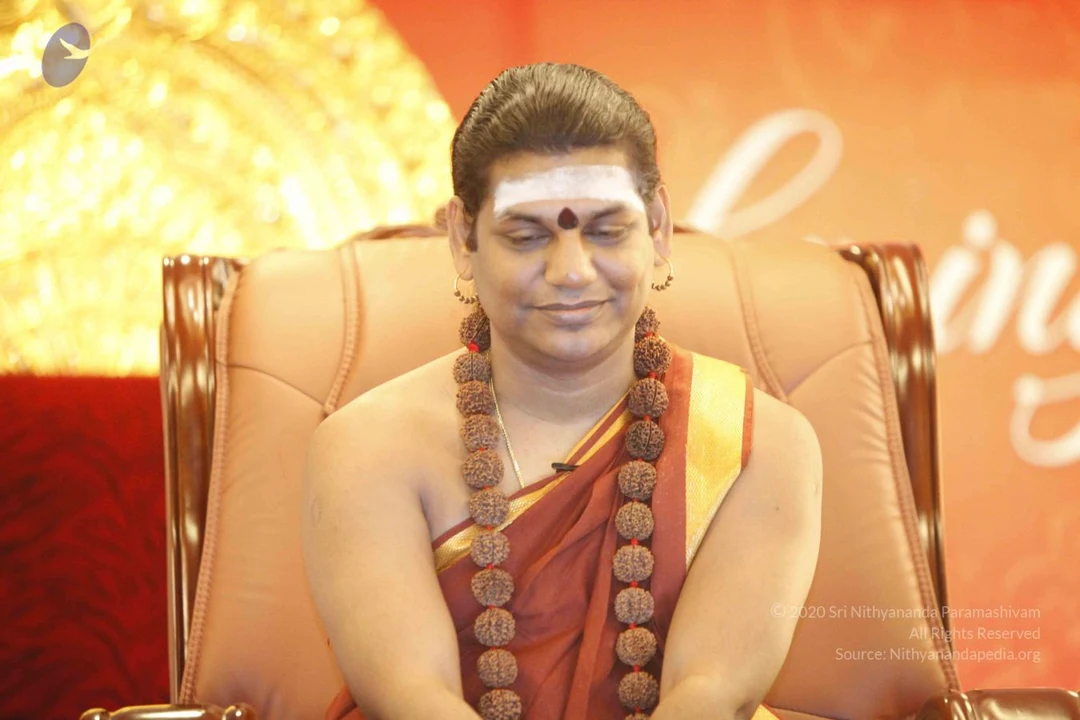
01-Morning-Satsang

02-Ganghaghat-Rudrahoma-VirajaHoma-Rudrabhishekam

Photos from this day

View all 280 photos

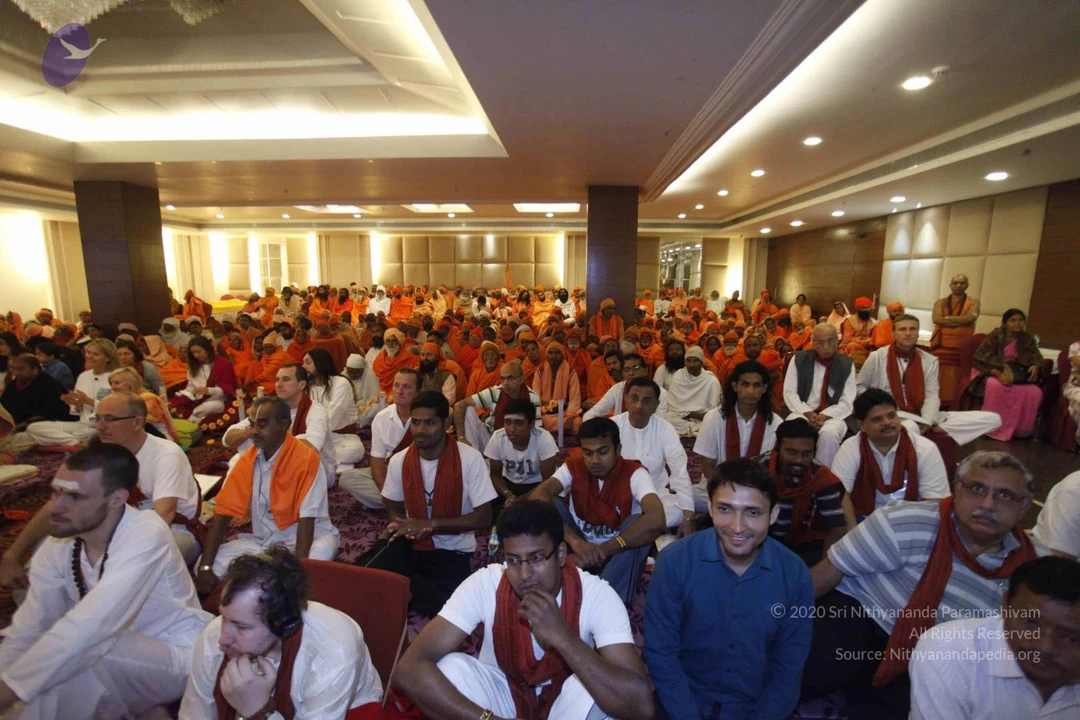
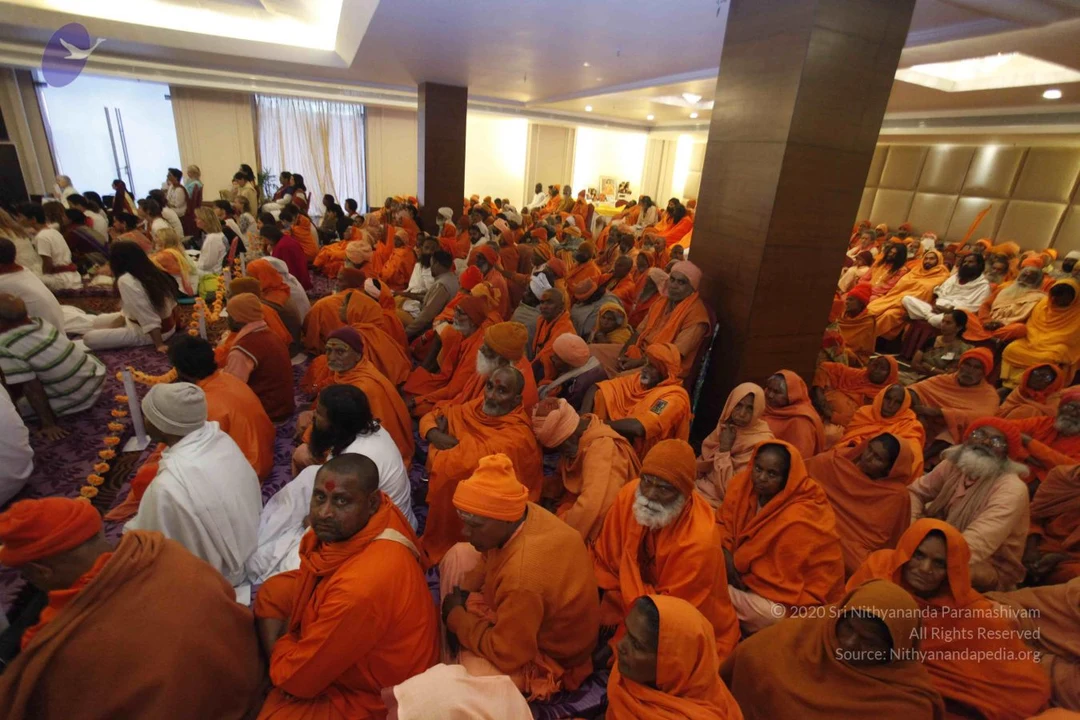
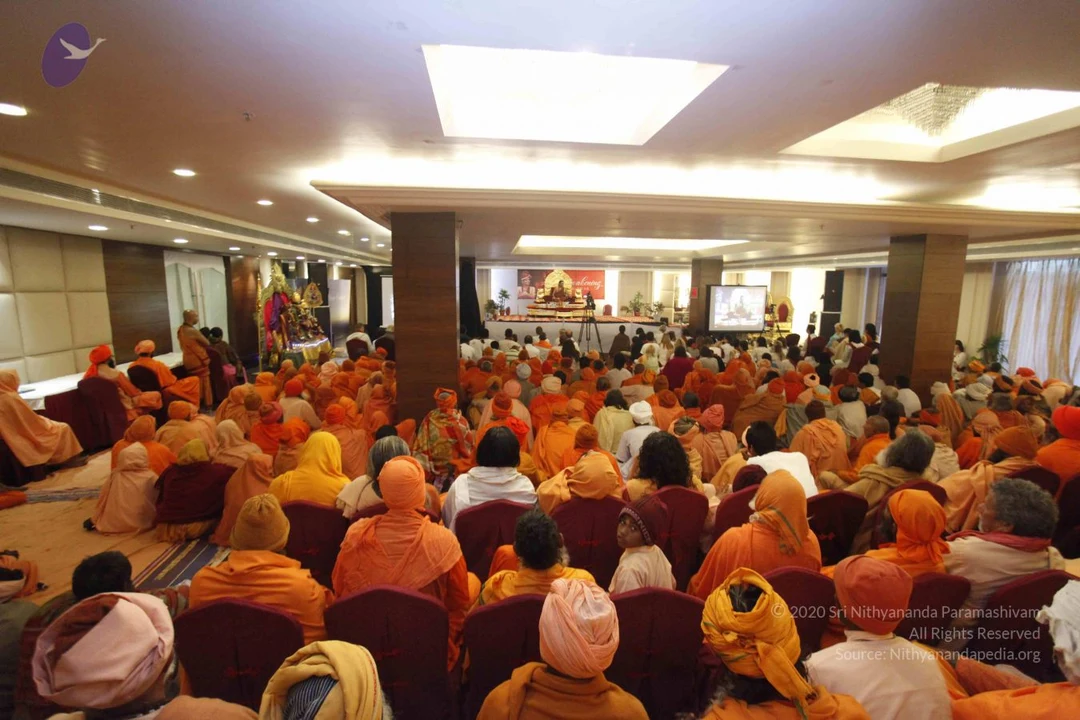
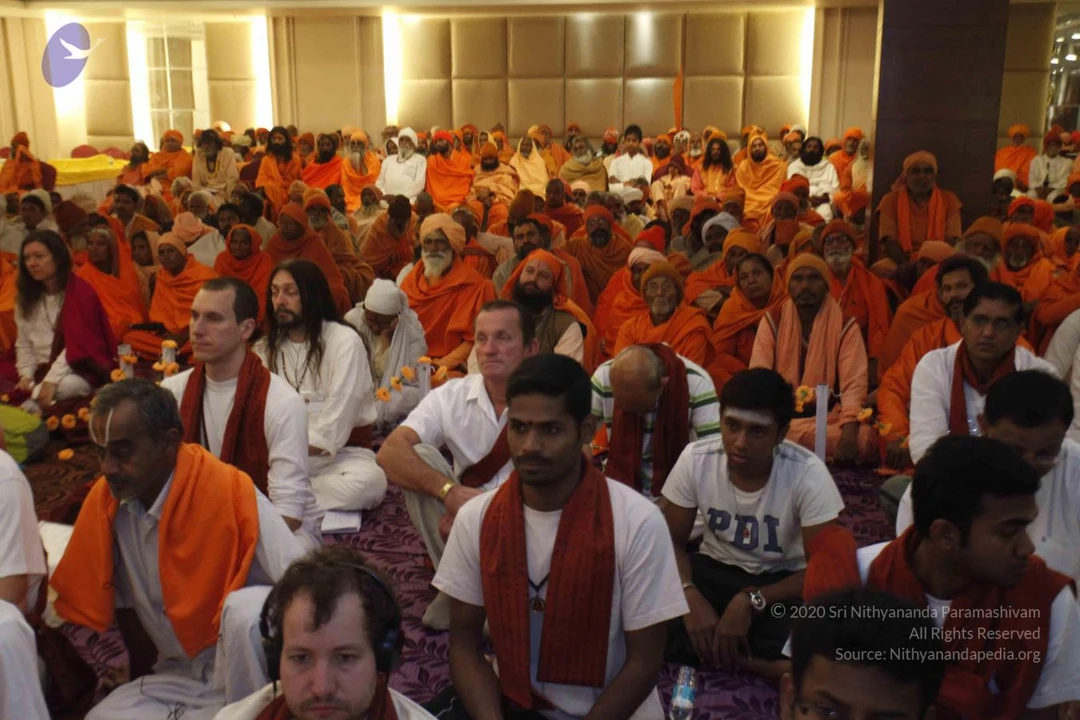
MorningSatsang
59 photosSource gallery
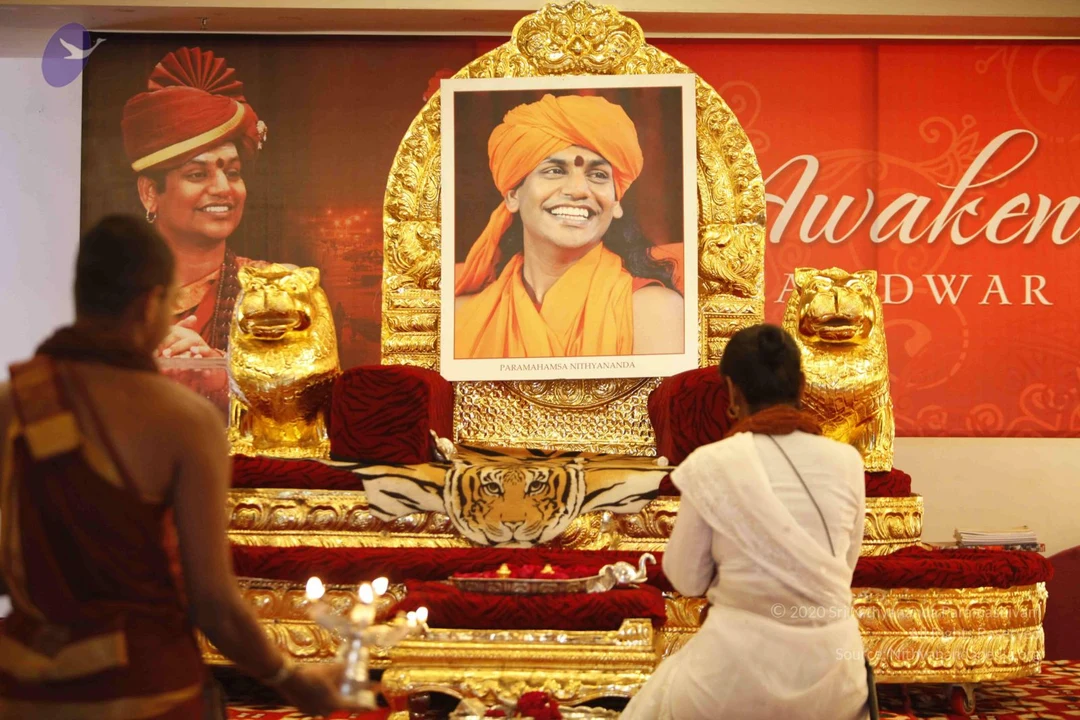
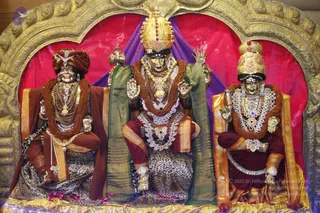
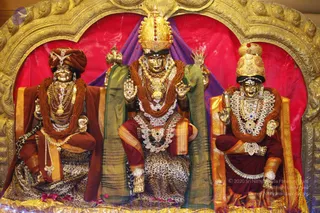
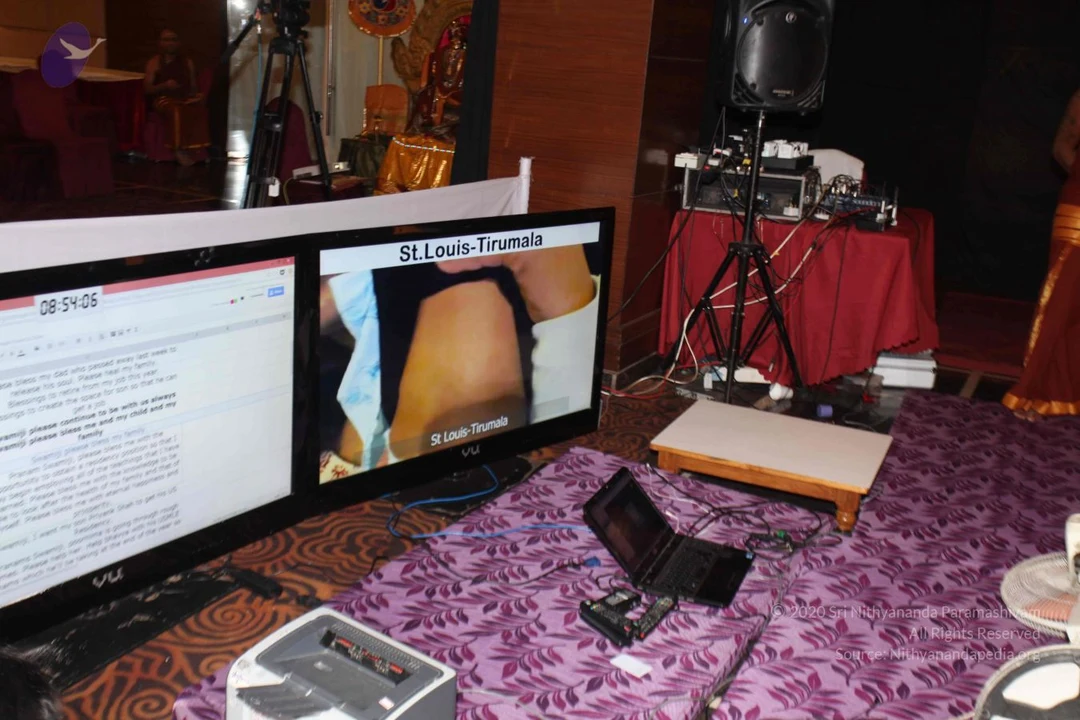
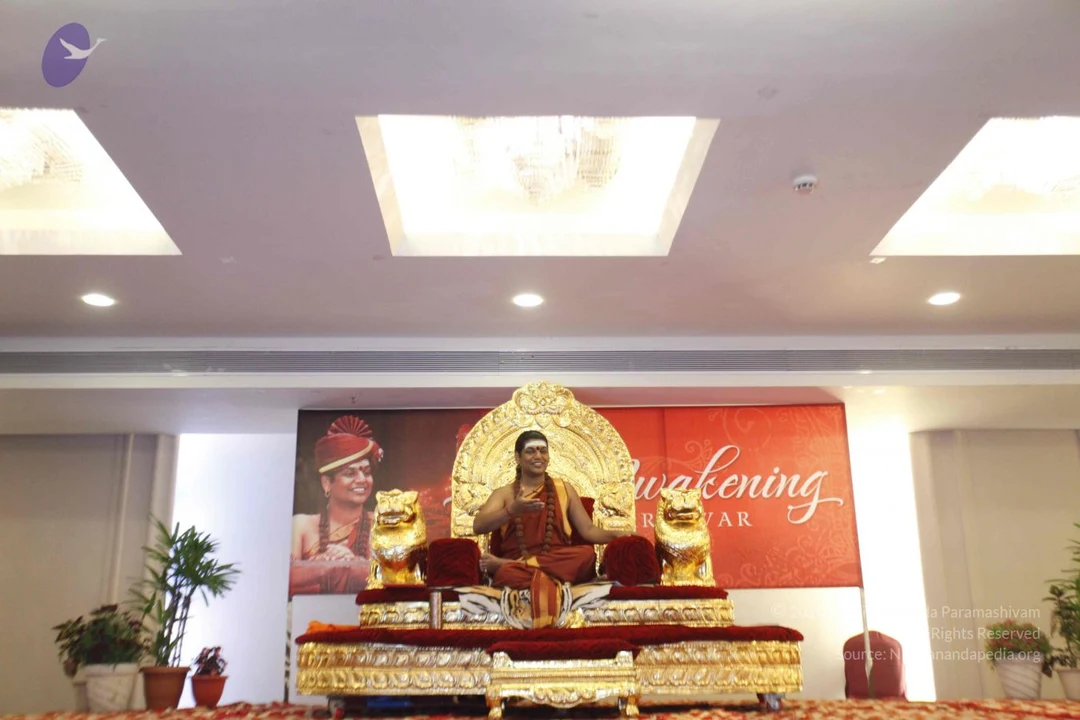
A photograph of an event technical setup. Two monitors on the left show a text document and a live video feed labelled "St.Louis-Tirumala" in white banners, the feed showing a close-up of a person's torso wrapped in dark and light fabric. In the foreground a purple patterned tablecloth holds a small laptop, cables, and a wooden low platform. A tall black speaker stands on a stand behind a red-draped table with audio equipment. In the background a seated figure in orange clothing sits near a golden deity murti and a tripod-mounted camera. A woman in an orange-and-gold sari stands at the right edge. No clear identification of the seated figure is possible from appearance.A photograph of a monitor screen showing a photo of a group seated on a wooden floor in a room with a purple-draped low table bearing a fruit platter and a laptop. Printed at the top of the screen is a title reading "St.Louis-Tirumala", repeated at the bottom. A man in a grey-green shirt sits cross-legged at left, an older man in a dark jacket sits in the centre, a man in a red t-shirt kneels at right, and a woman in a light blue jacket kneels at far right. In the foreground, a person in white with a saffron shawl bends over the table.Three gilded metal murtis seated together on a golden throne-like altar against a red and purple backdrop inside an ornate gold arch. The central figure wears a tall golden crown set with red stones, a green silk sash, rudraksha malas and layered ceremonial necklaces, with hands raised in blessing. The figures on either side wear turbans or jeweled crowns, rudraksha malas, heavy gold and jeweled necklaces and bracelets, and draped brown and orange garments. Rose petals are scattered on the golden base.Three gold-faced deity murtis sit on a raised dais before a red and purple backdrop framed by ornate gold carved arch. The central murti wears a tall golden crown set with red stones, a green and gold shawl, a rudraksha mala, and layered jewelled necklaces, with hands in mudra. Flanking figures wear reddish-brown turbans or crowns, rudraksha malas, gold necklaces, and leopard-print cloth on their seats, with flower petals scattered at their feet. Murtis are statues, not physical people.A seated man smiles broadly on an ornate gold throne with carved lion heads at its arms, draped in red and tiger-striped cushions. He wears an orange-saffron robe with a gold border, a long rudraksha mala, a white tripundra with a red bindi on his forehead, and bare feet. He raises both palms in a blessing gesture. Behind him is a red backdrop with gold script and a faint city-scene graphic. The figure matches the page's a person reference through a long rudraksha mala and saffron robe, so the identity is an appearance-based probable match, though the lighting and framing leave some uncertainty.A seated man in saffron-orange robes sits on an ornate gold throne with carved lion-head armrests and red cushions, draped with a zebra-striped cloth. He wears a long rudraksha mala with a white forehead marking and red bindi, palms pressed together in greeting and smiling. Two large gold lion sculptures flank the throne. Behind him a red backdrop shows partial lettering reading 'wake' and 'ROWN'.

Ganghaghat-Rudrahoma-VirajaHoma-Rudrabhishekam

195 photosSource gallery
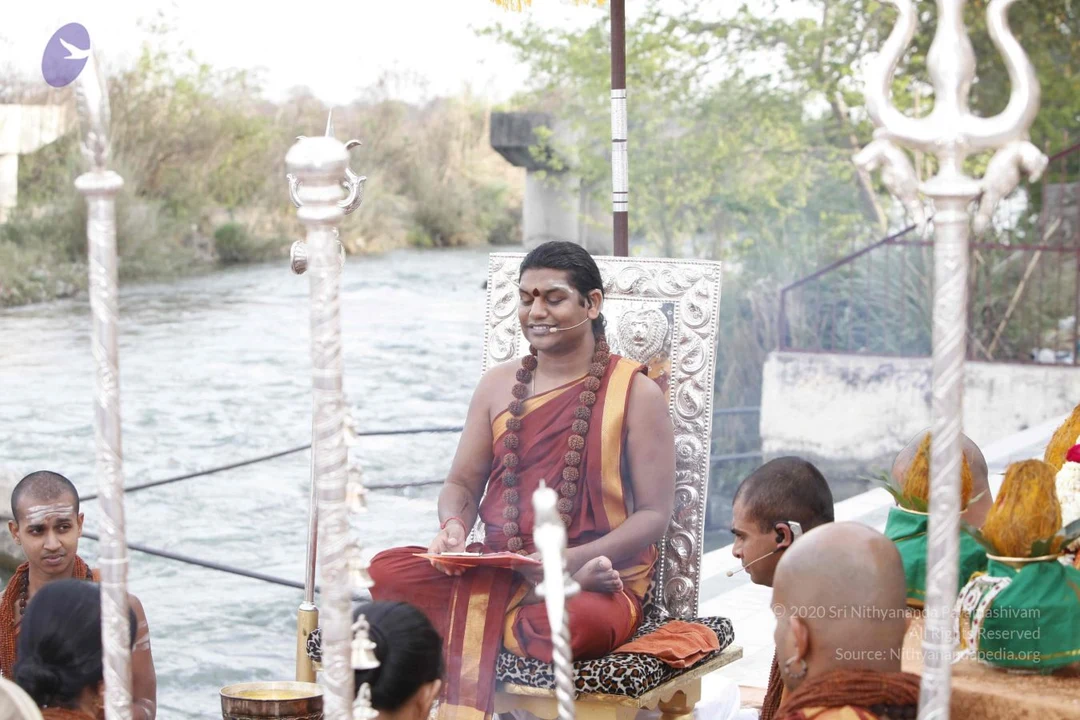
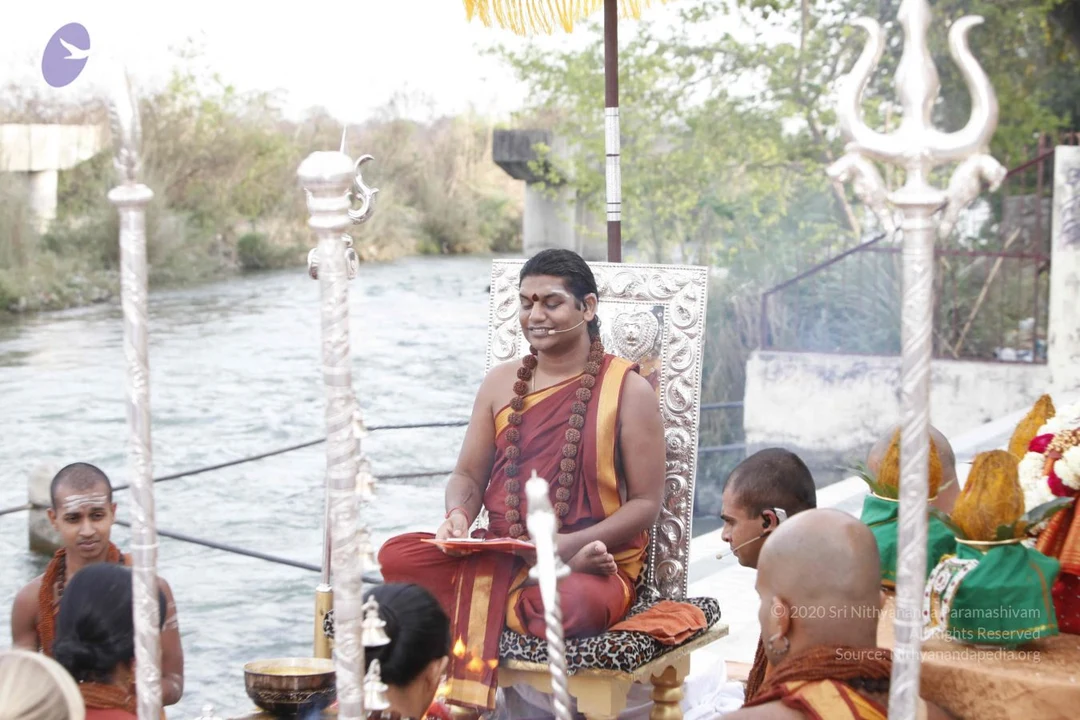
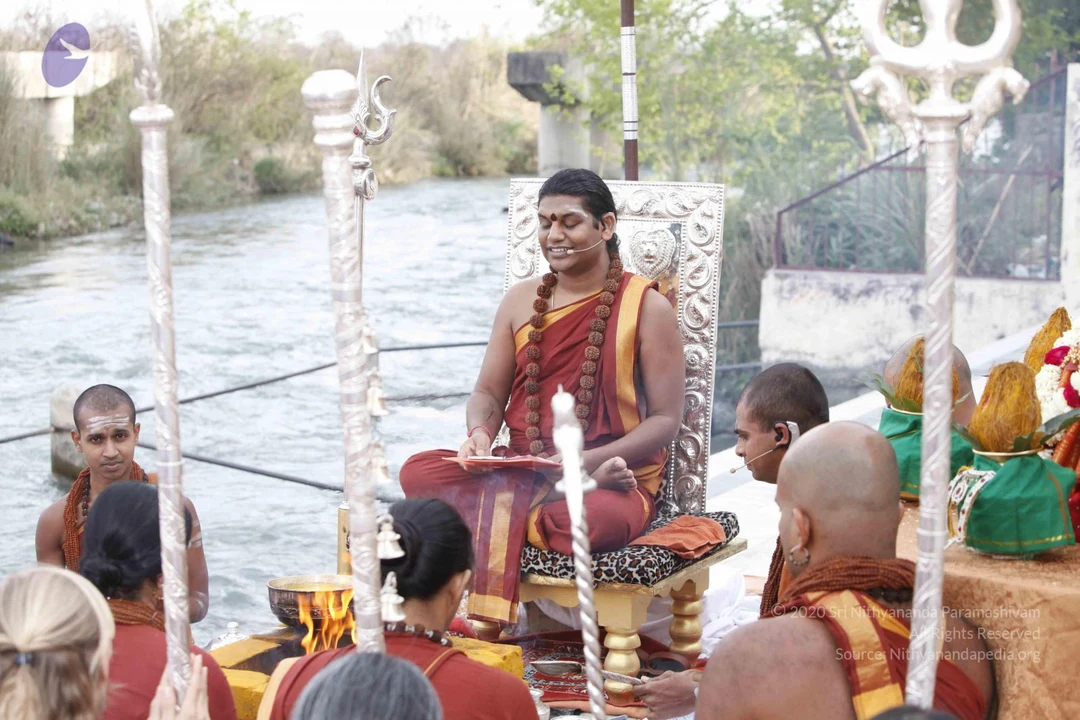
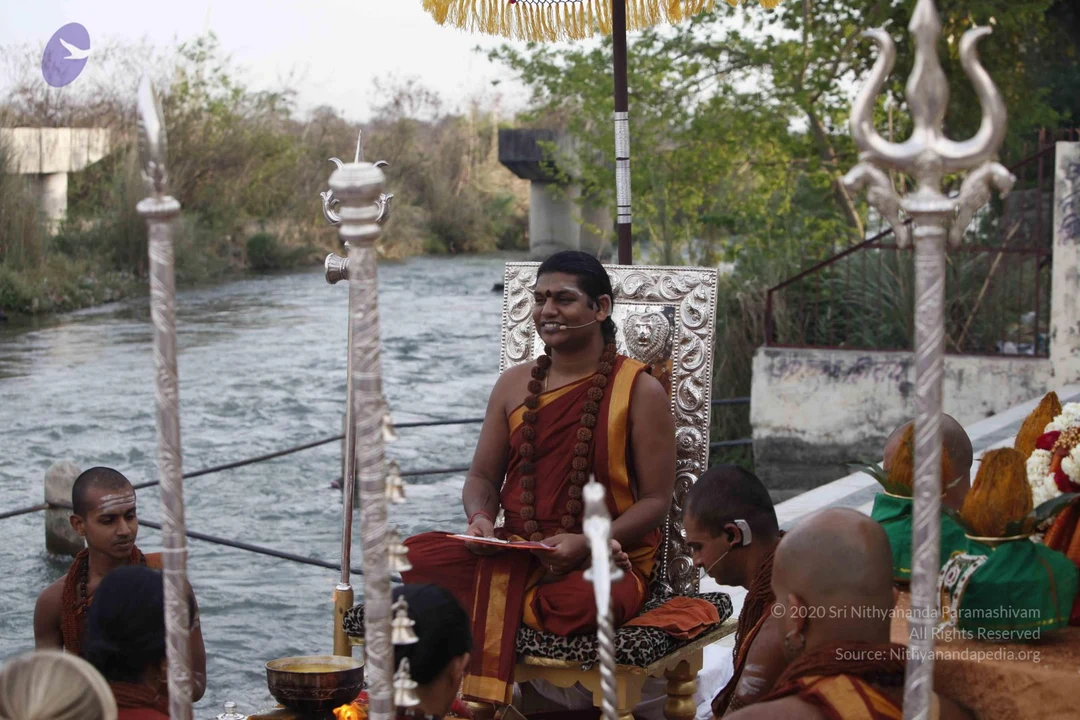
A photograph of a fast-flowing river at a ghat in Haridwar, with a stone-paved step edge in the lower left. Three weathered stone pillars rise from the water, linked by a horizontal metal rod or rope, and marigold-type flowers and offerings lie on the steps. Dry grass, shrubs and distant hills line the far bank under a hazy sky. No people are visible.Outdoor ritual on stone steps by a riverside structure. A priest with a bare chest, rust-orange dhoti and a rust-orange turban sits with his back to the camera, facing a seated group. Before him stand a trishula and a silver kalasha-style vessel set on a bronze-cloth-covered table decorated with white and orange garlands and coconuts wrapped in orange and green cloth. Brass and steel bowls hold offerings, fruit, and grey-brown ash or dried herbs on trays. Behind, a crowd of devotees in orange shawls, white kurtas and red stoles sits in rows, with a few standing near a camera on a tripod. Most seated devotees wear saffron or orange stoles. Pujari-style ritual items suggest a homa or abhishekam setting.A photograph of an outdoor homa ceremony on stone steps beside a river ghat. In the foreground a priest with a red-and-gold turban and red-orange dhoti sits with his back to the camera before a small yellow brick fire pit with a flame and a brass vessel. Nearby stand silver kalashas and a brass bowl of rose petals, and trays hold wood pieces and cow-dung cakes. Behind them a row of devotees sits on the steps, several women in white with saffron-orange shawls and one in pink, with a standing man in a red shawl holding a tall trident-topped staff. Orange-wrapped kalashas decorated with white flower garlands sit on a draped table to the left, and a camera on a tripod and a speaker stand are visible in the background. Around 20 people are visible.Outdoor riverside ceremony at a ghat beside a fast-flowing river, with a crowd of mostly seated devotees in white clothes and some in orange or red shawls. In the foreground a seated priest in a red-and-gold garment and red turban performs a fire ritual at a yellow-tiled homa pit with lit oil lamps. To the right a deity murti or figure is adorned with garlands and fruit on an orange-draped table under a yellow umbrella, with a metal stand and ceremonial items nearby. A black PA speaker and camera equipment sit in the lower right. Wooden posts and a rope line the river edge. A watermarked archive credit appears in the corner.Outdoor photograph on a riverbank ghat where a homa fire pit with burning flame sits on a yellow base, and a priest in orange-red cloth with a red headwrap and bare chest sits cross-legged performing the ritual beside it. Brass vessels and a tall brass lamp stand near the fire. Behind them a large crowd of devotees in white clothes, some in orange and red shawls, sits on steps and ledges facing the flowing Ganga river, with a film camera on a tripod and a rope-and-post railing across the water. Around 60 people are visible.A wide daytime photograph of a river flowing through a hazy valley at Haridwar. The murky green-grey water runs across the frame, with a concrete ghat ledge in the lower left. Dry brown grasses, green shrubs and a leafy tree line the far bank, and a utility pole with wires crosses the upper area. Low, dusty brown hills rise behind. Two or three people sit on the ghat edge at the bottom, seen mostly from behind and partly cut off by the frame.

KalabhairavarDarshan

9 photosSource gallery
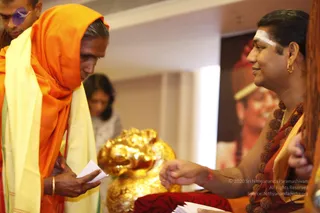
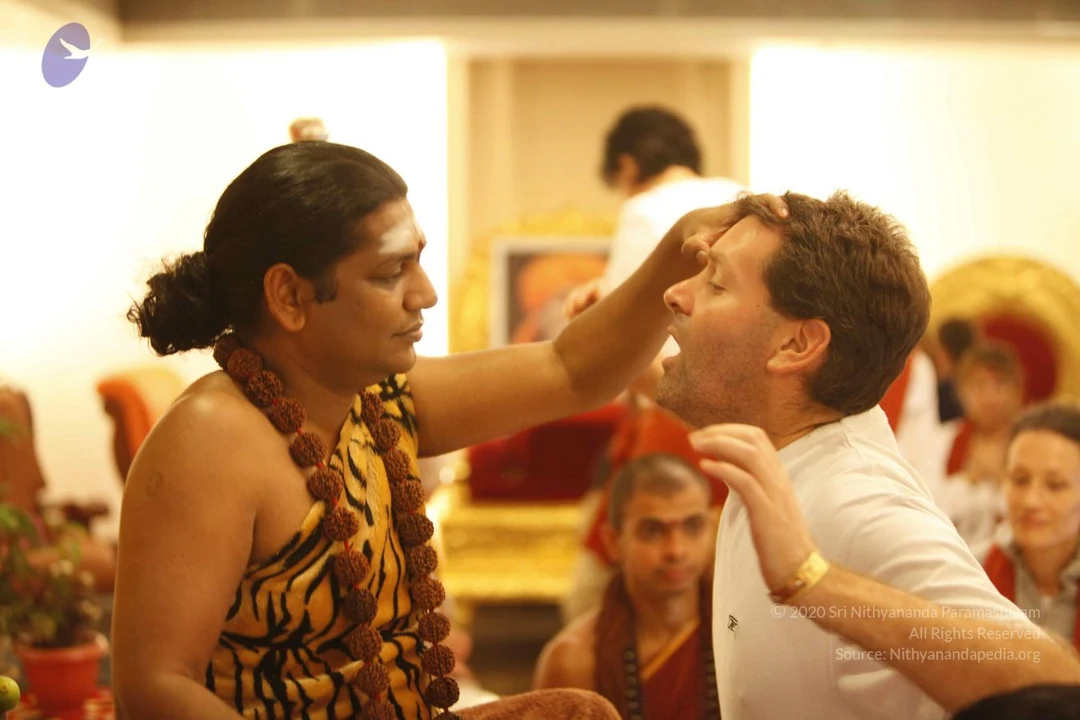
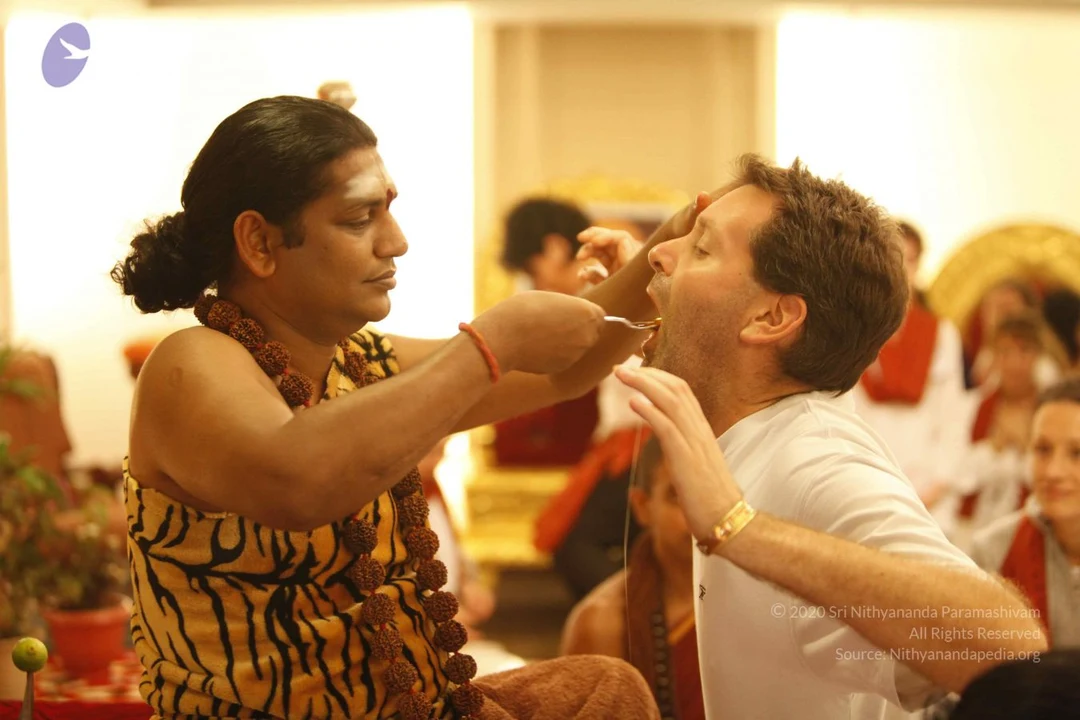
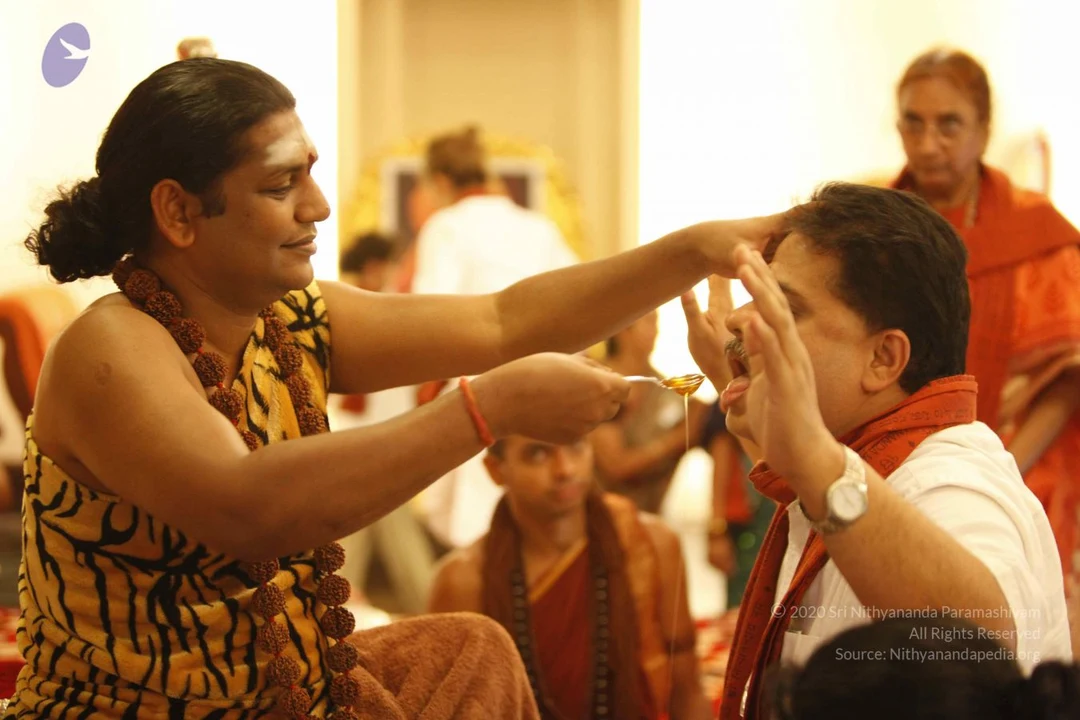
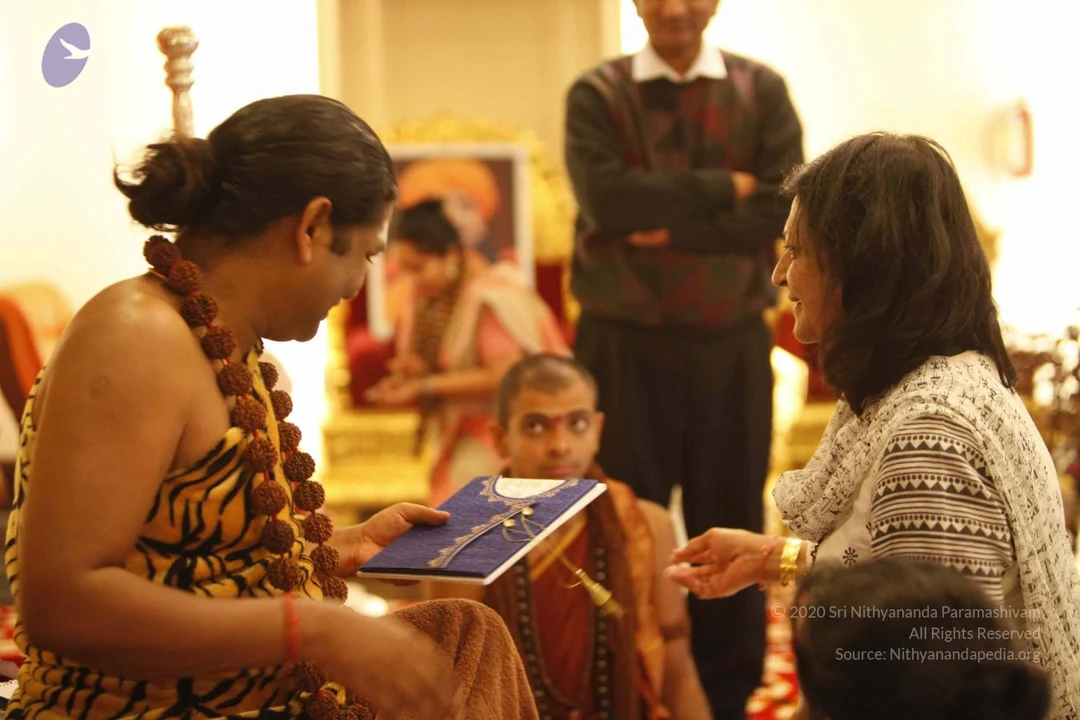
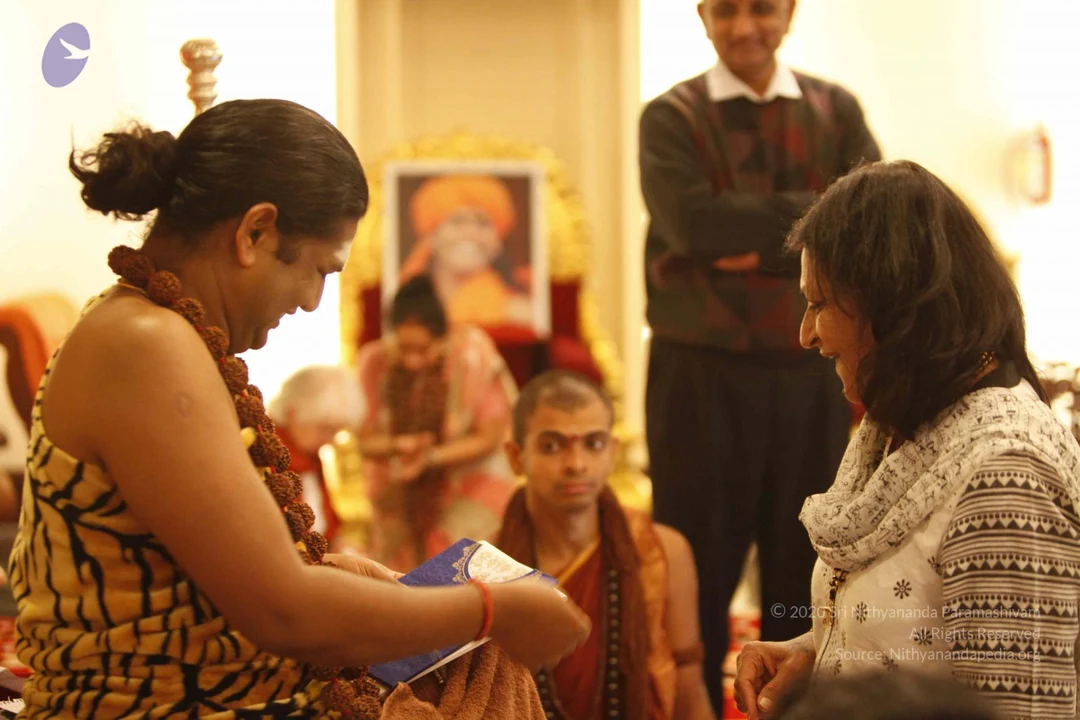
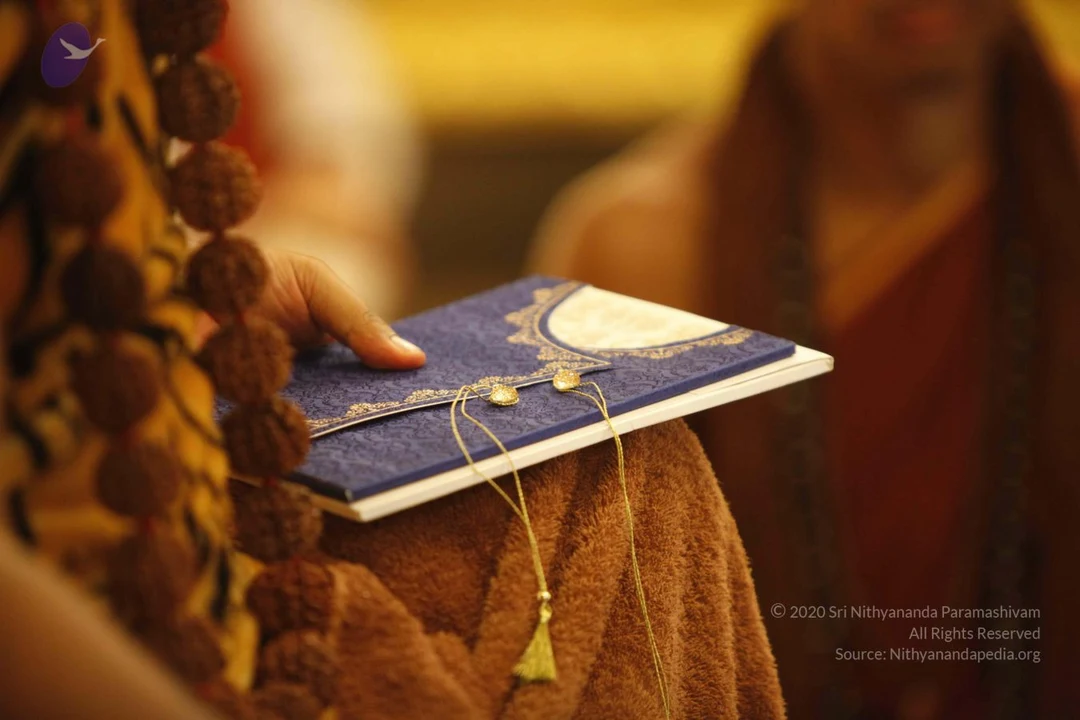
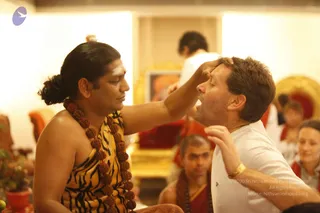
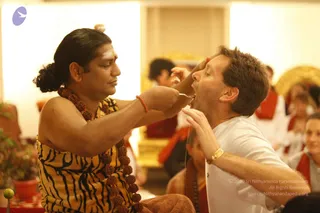
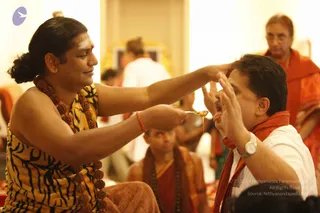
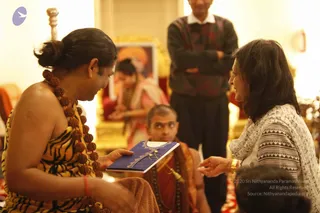
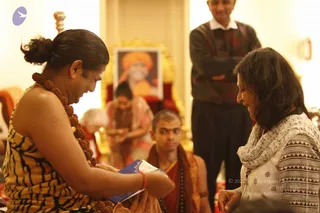
Close-up photograph of a ritual offering being prepared. A hand in the upper left holds a small silver spoon dipping into a silver bowl filled with golden liquid. The person wears brown or rust-coloured cloth draped over the arm. The background is softly blurred warm light. No face is visible and no identifiable person is shown.A photograph of a man with dark hair pulled into a bun, wearing a yellow-and-black striped garment and a long rudraksha mala with a white tilak on his forehead, lifting his hand to apply a mark to the forehead of a man in a white t-shirt with a gold wristwatch, who has his eyes closed. Behind them, devotees in white and saffron sit in a warmly lit hall with a gold-framed image and a red cushioned seat. A small potted plant sits at the left edge.A man with a shaved head and white vibhuti tripundra on his forehead, wearing a tiger-striped yellow-and-black wrap and a long rudraksha mala, feeds a spoonful of substance into the open mouth of a man in a white t-shirt with a gold wristwatch. Behind them, seated devotees in red and orange shawls and a golden backdrop suggest a ritual or satsang setting.A man with long dark hair tied in a bun, a white tilak on his forehead, and rudraksha mala beads around his neck, wearing a yellow and black patterned shawl over bare shoulders, leans forward to place a spoon of liquid to the mouth of a seated man in a white shirt with an orange-red shawl and a wristwatch. Behind them, other people in orange and white robes sit and stand in a warmly lit hall, with a gold-framed image visible in the background. Appearance-based label: a person, the man with the bun and rudraksha mala, giving prasad or ritual offering to a devotee.Indoor photo of a seated figure with a bare-shouldered yellow and black tiger-striped wrap and a long rudraksha mala holding a blue folder with gold trim toward a smiling woman in a white and black patterned top and gold bangles. Behind them a child with a shaved head and an orange shawl sits near a standing man in a dark sweater with arms folded, and a framed portrait of a saint with an orange turban hangs on the wall beside a woman in a pink sari seated near a golden throne-like seat. The a person cue of a long hair bun, rudraksha mala and tiger-striped wrap is visible on the seated figure, but identity remains uncertain from appearance.Indoor photo of a ceremony in a room with a golden-framed portrait of a figure in orange turban and robes on a red-cushioned seat behind. A man with pulled-back hair, rudraksha mala necklaces and a striped yellow-and-black garment holds a blue-covered book and a small object over a brown cloth, bending toward a woman in a white patterned shawl with a dark tikka who stands at right. Behind them a shaved-headed young man in orange-brown robes kneels, a standing man in a dark sweater watches, and a woman in pink sari with a mala sits at left. Golden ornamental pillars and white walls frame the scene.

FB-Photos-of-the-Day

1 photoSource gallery
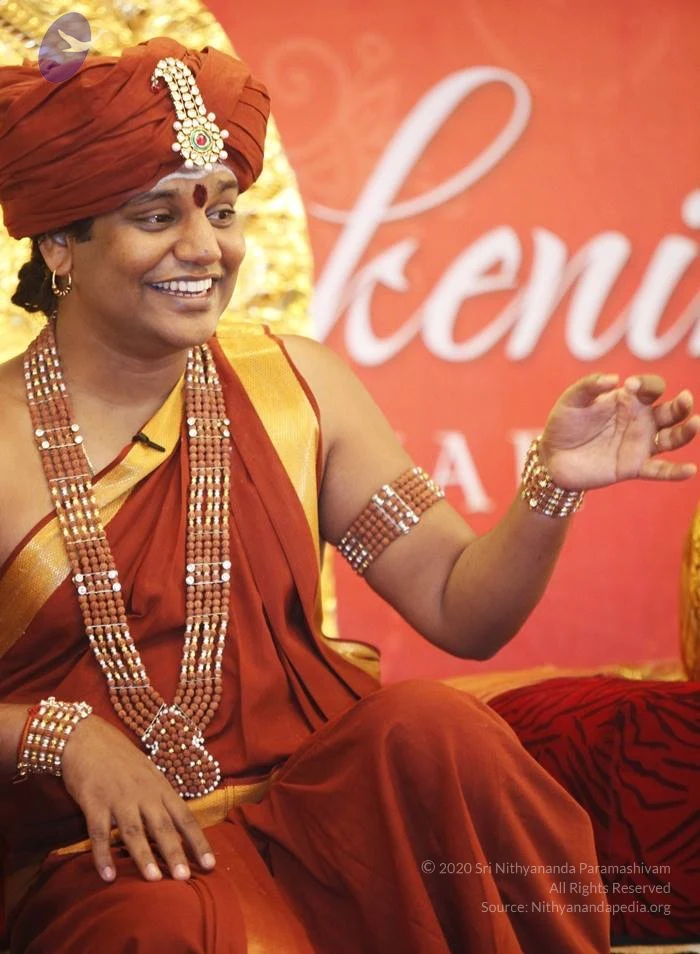
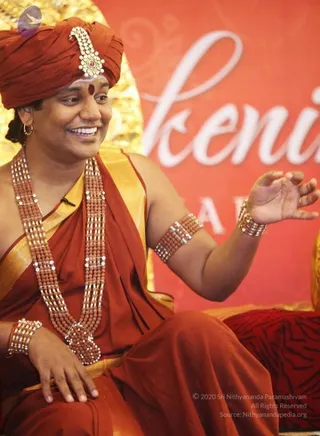
A smiling person seated on a golden throne-like chair against a red backdrop with large white script lettering partly visible. The person wears an orange-red turban with a jeweled gold ornament at the front, a red tilak on the forehead, and an orange-red saffron-toned robe edged with gold. Multiple rudraksha malas with silver spacers hang on the chest, along with rudraksha and silver bracelets on both wrists. One raised hand gestures mid-speech while the other rests on the knee.

01-Morning-Satsang
6 photosSource gallery
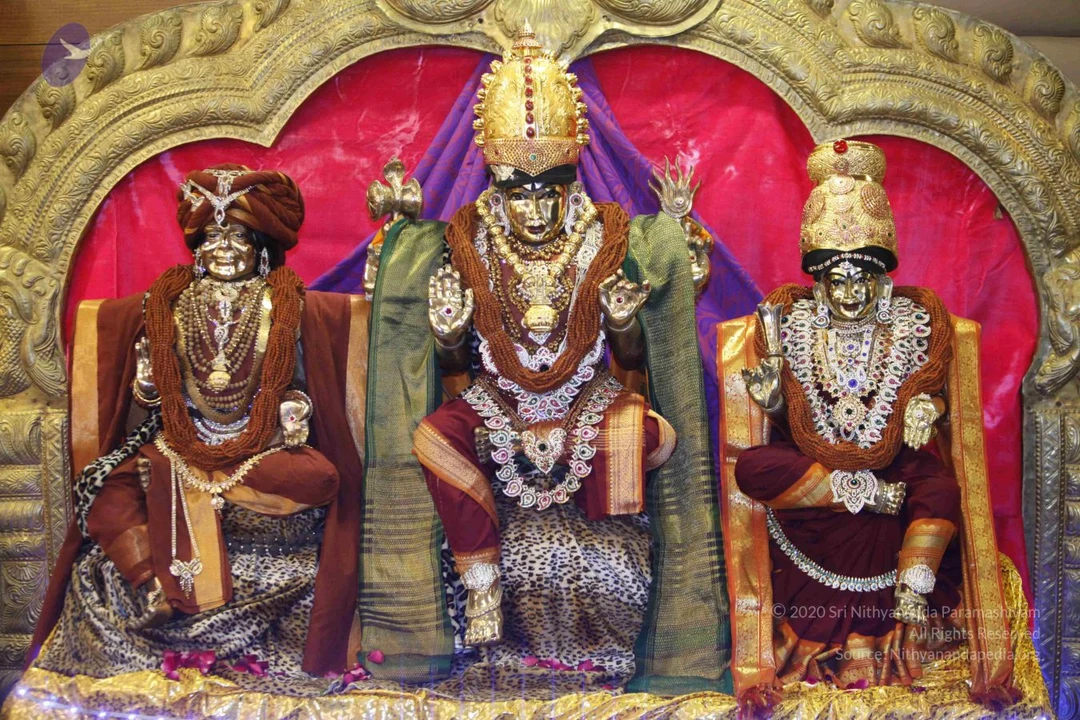
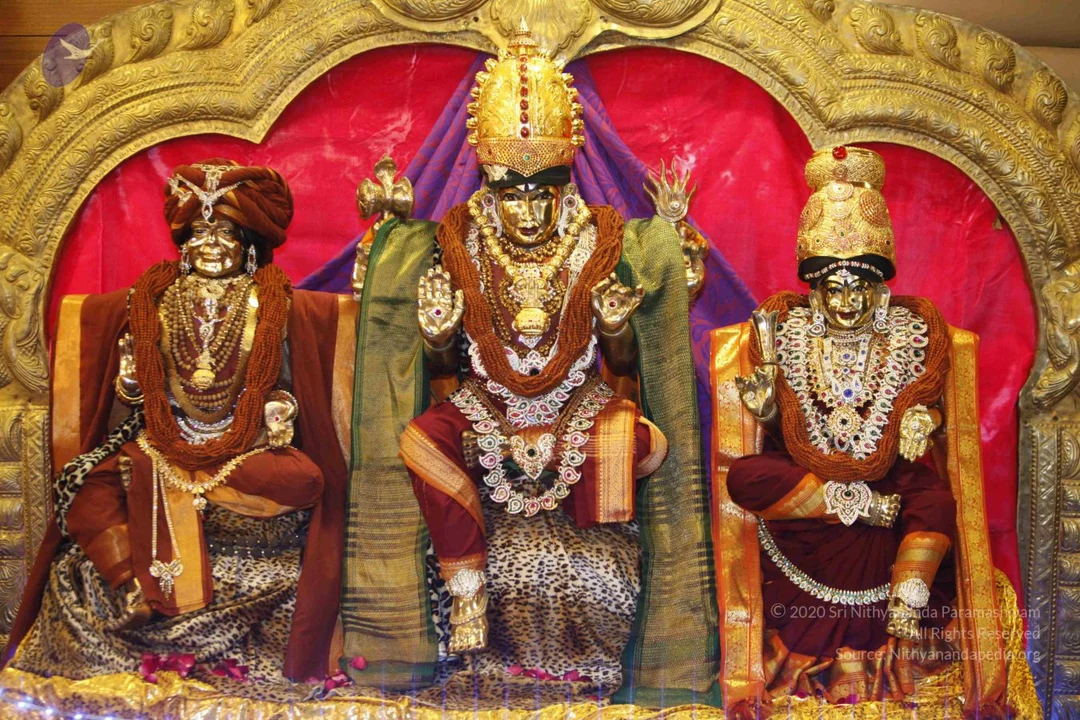
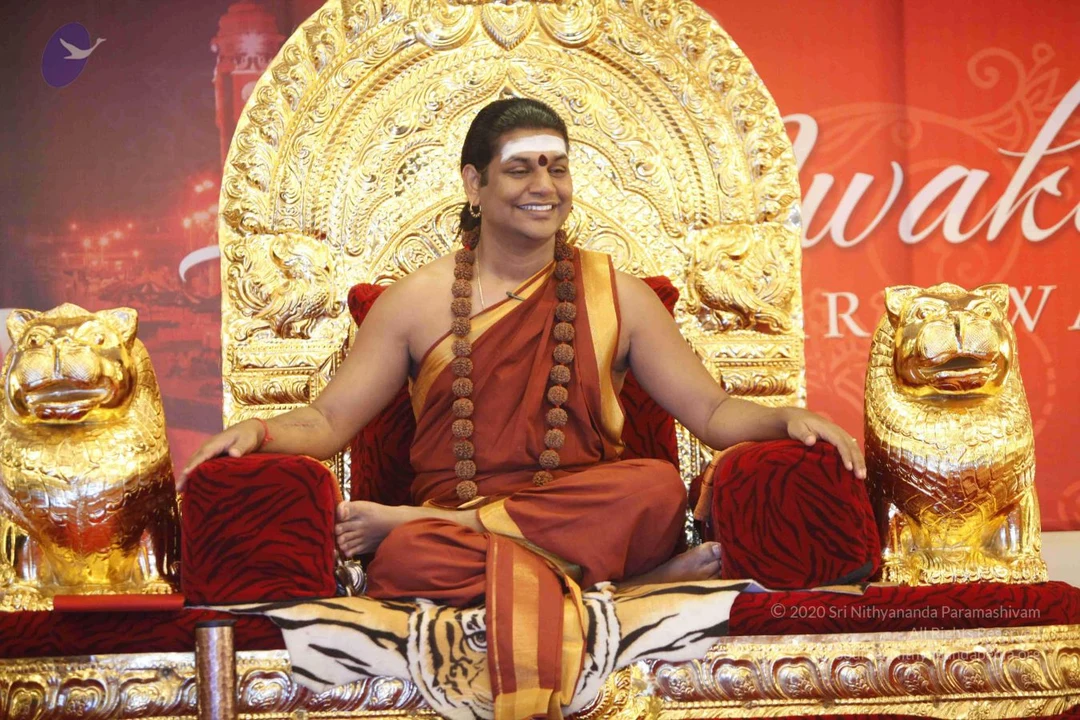
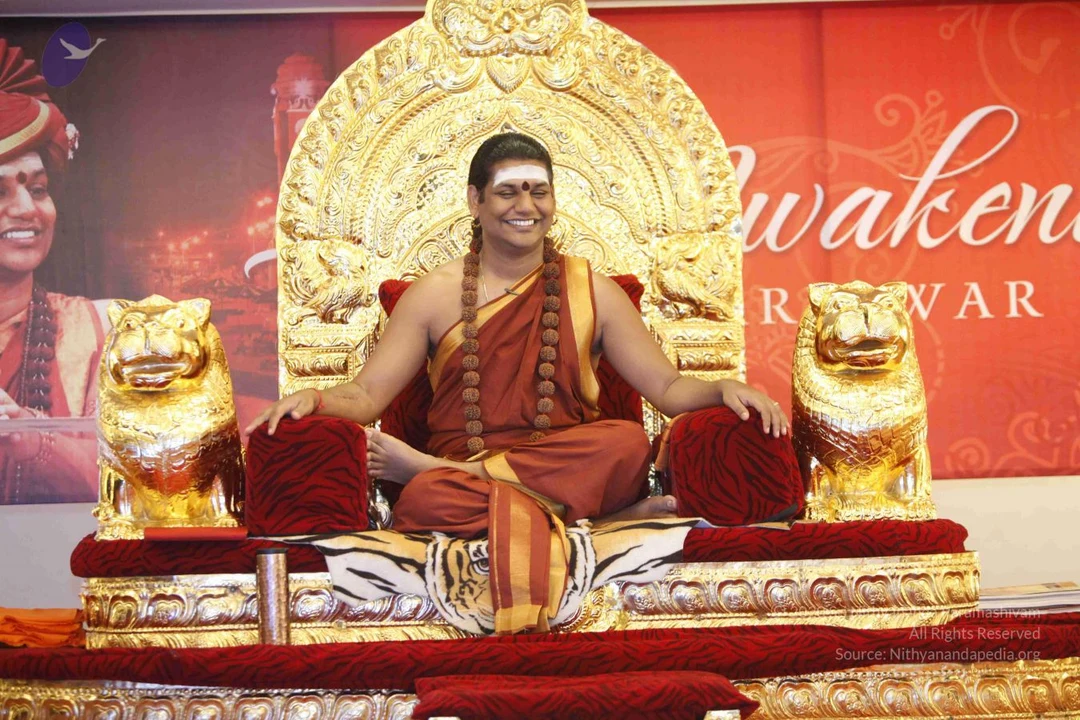
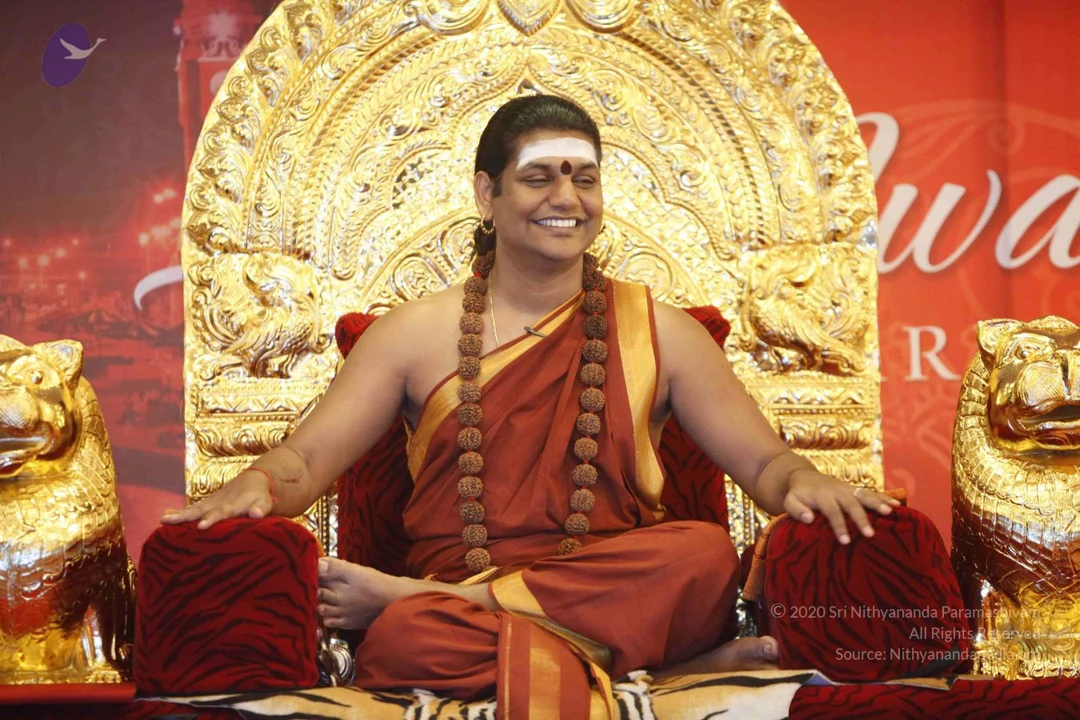
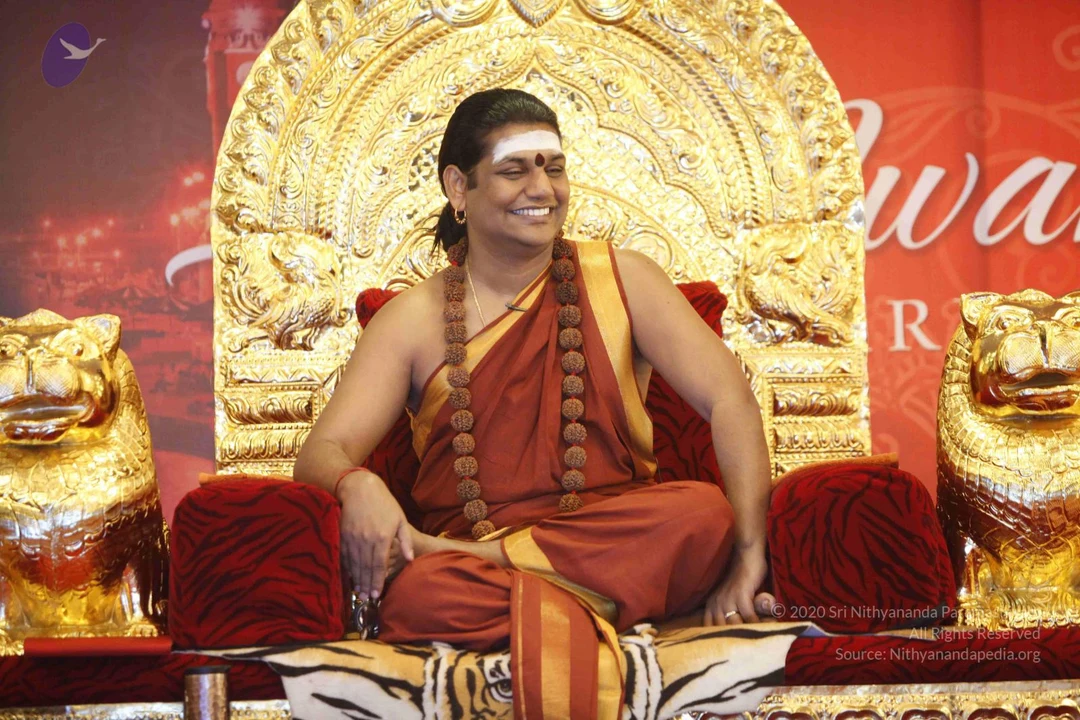
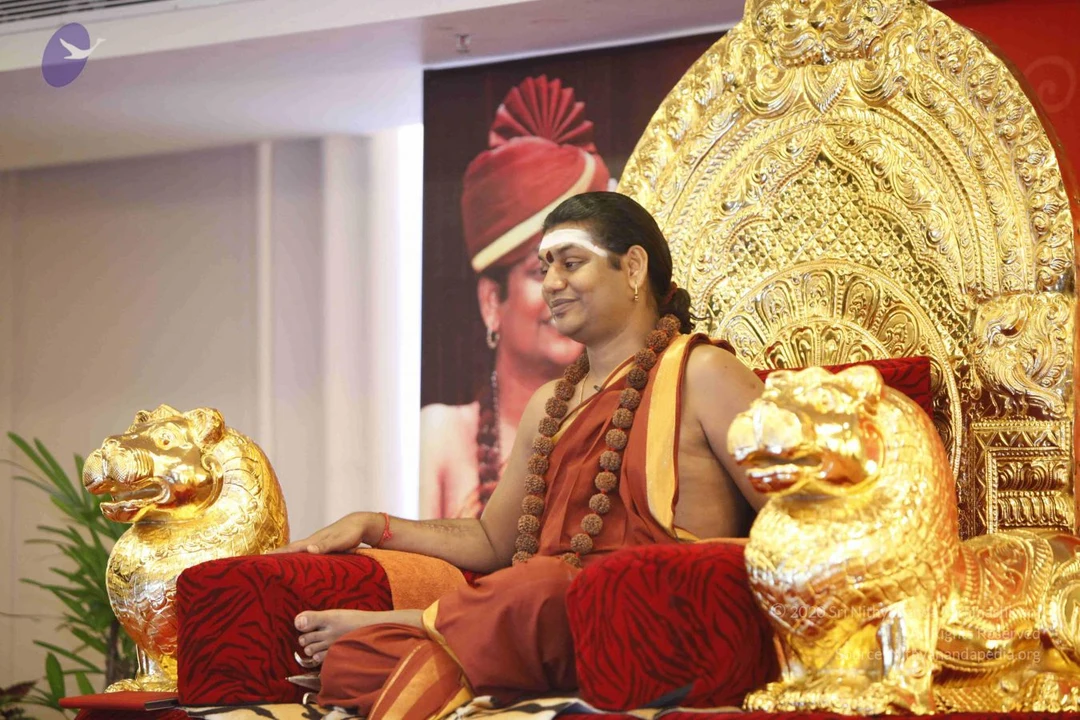
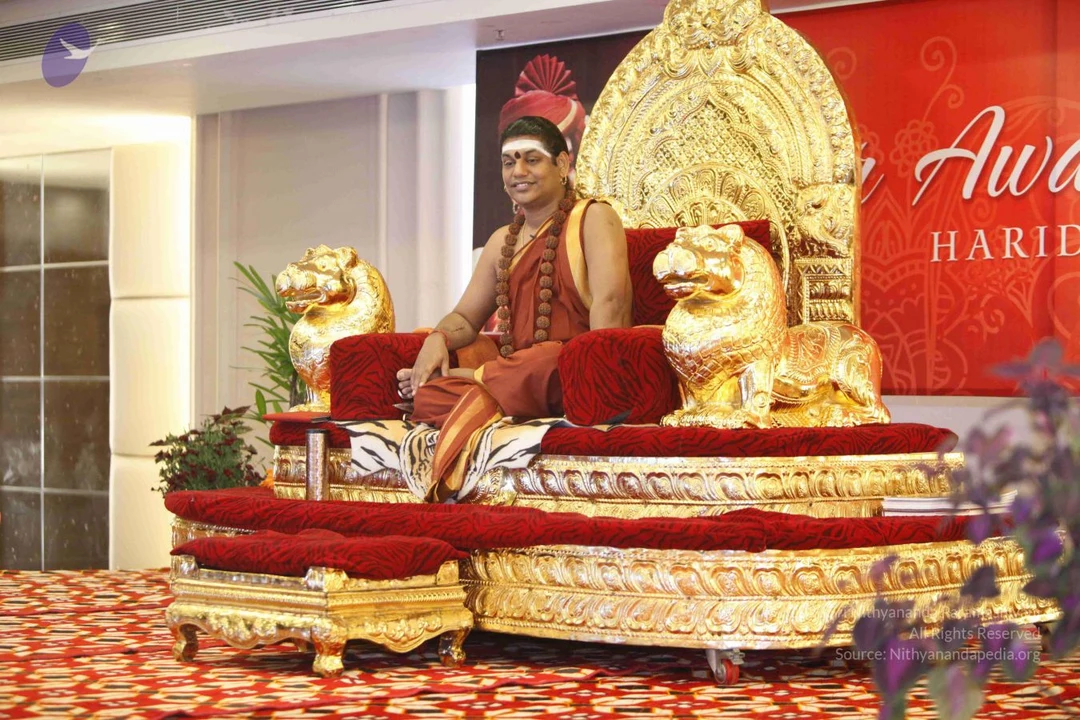
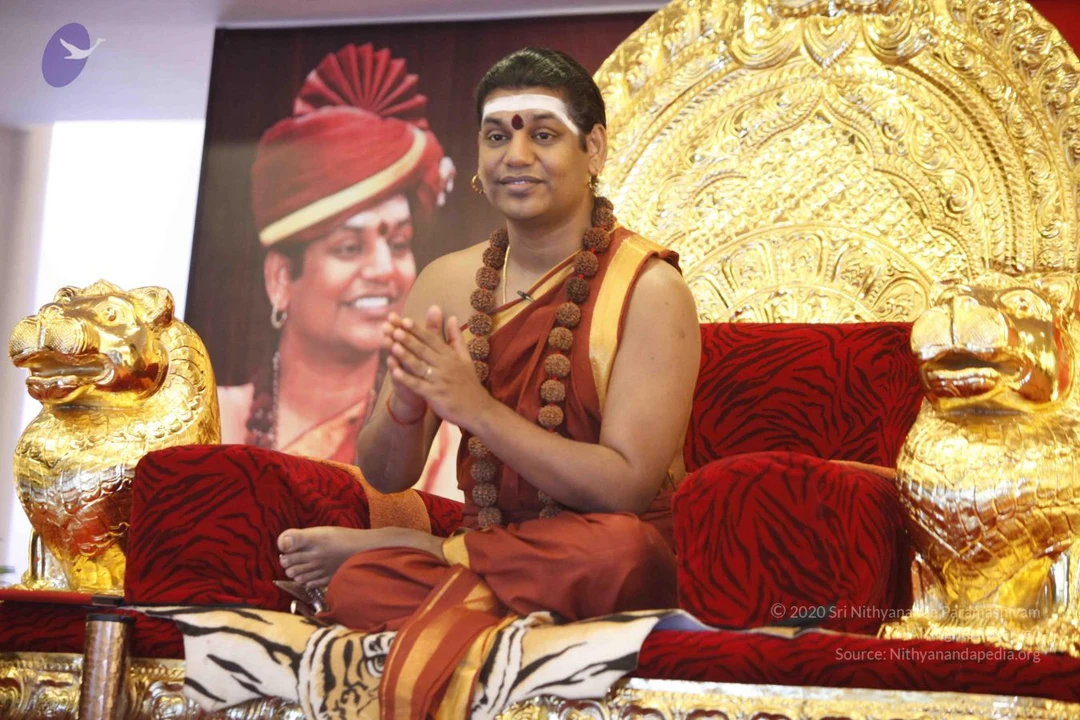
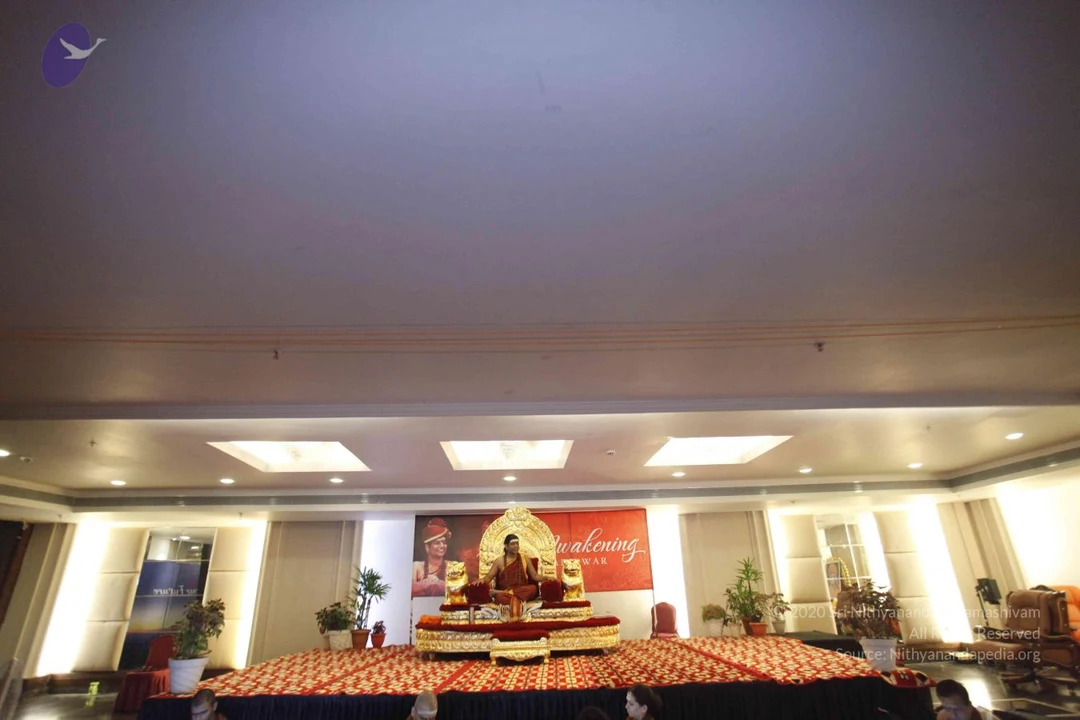
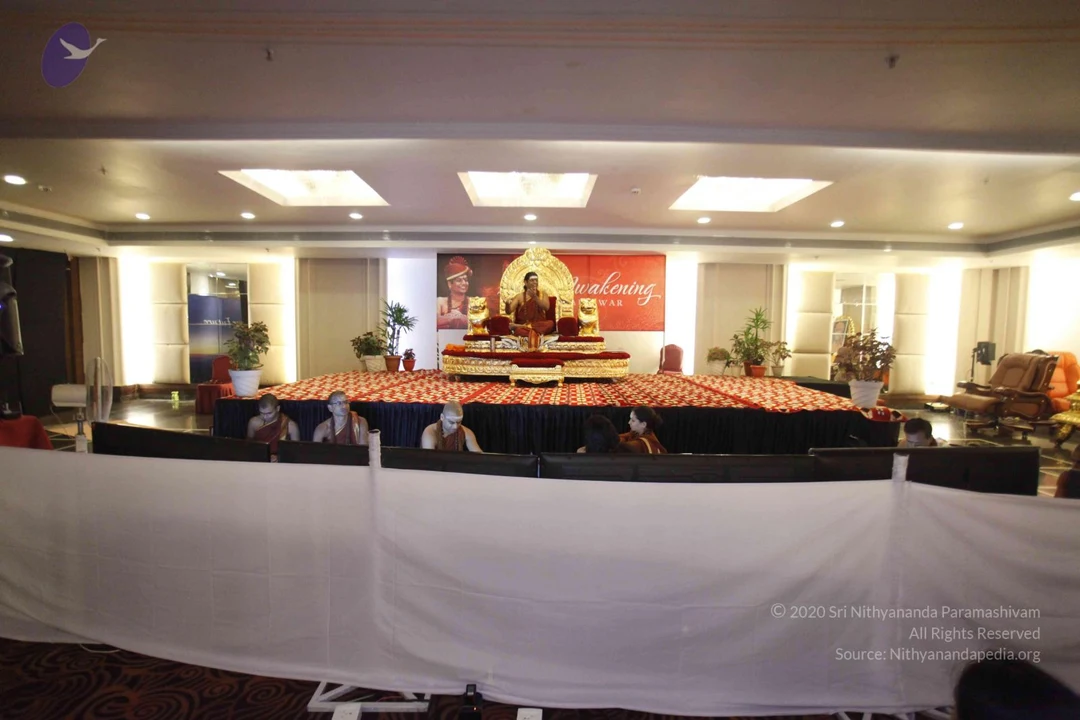
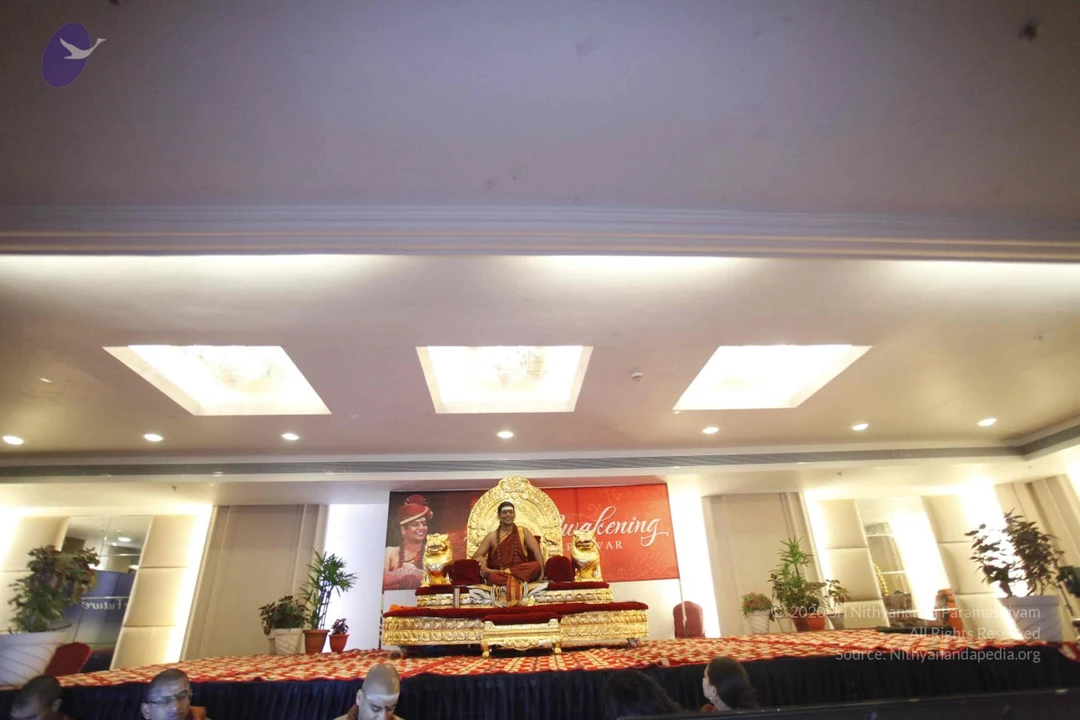
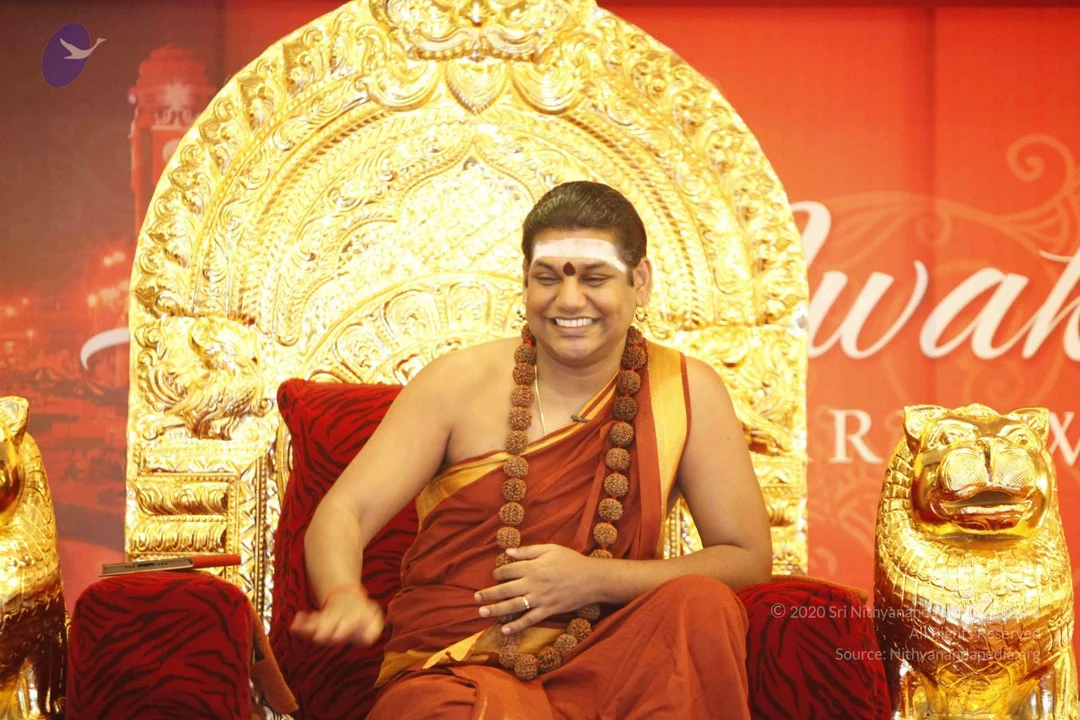
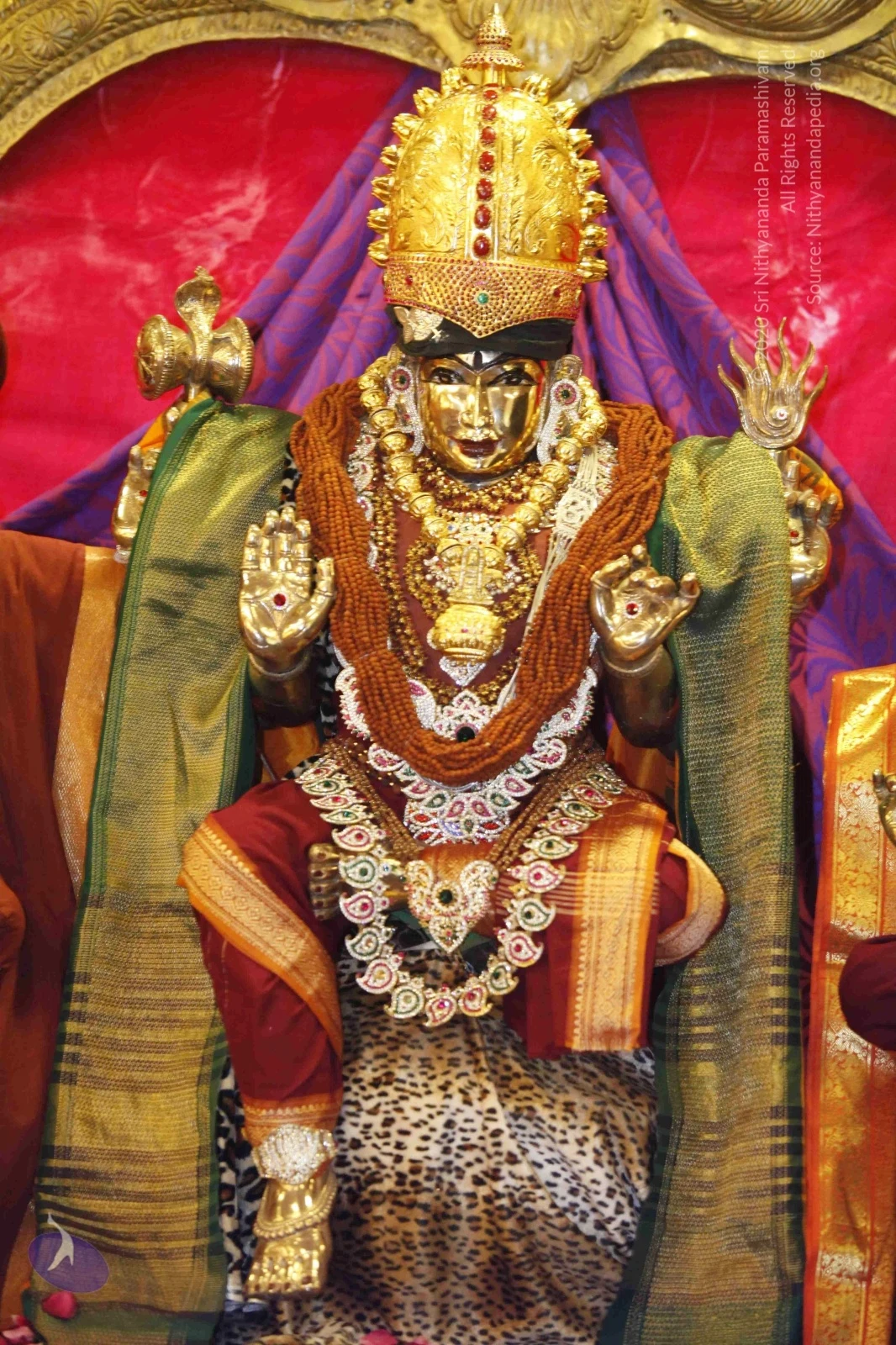
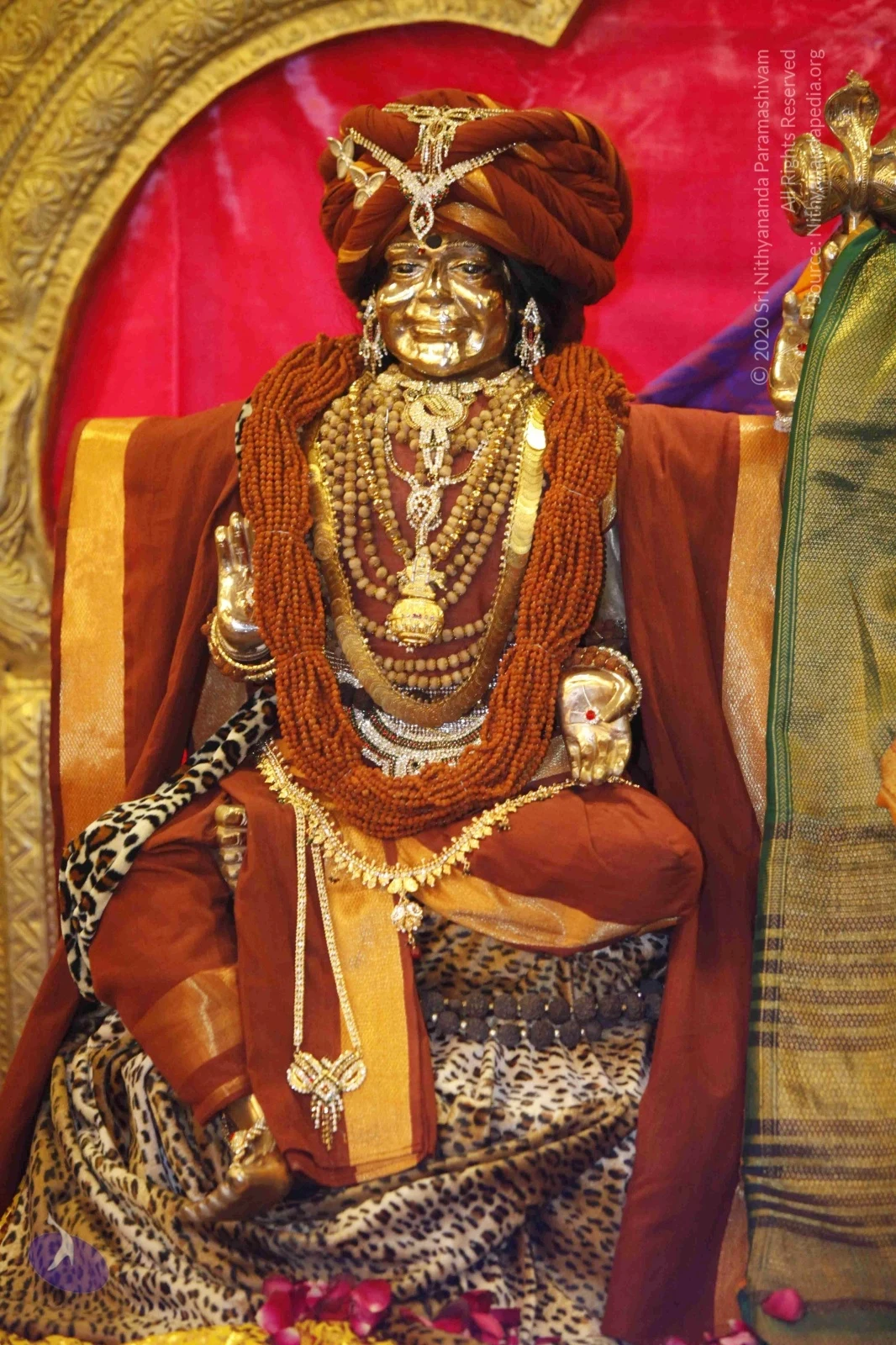
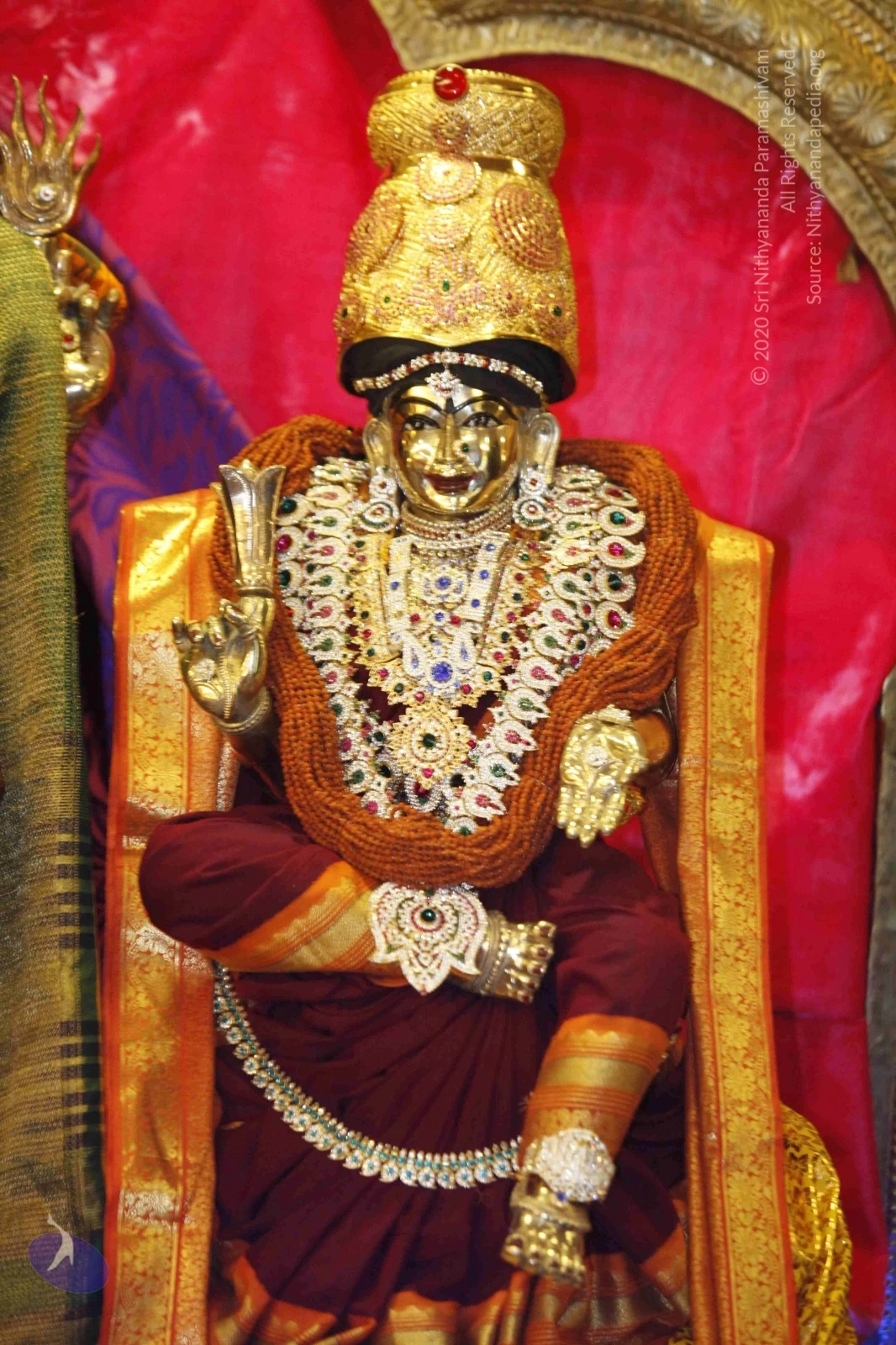
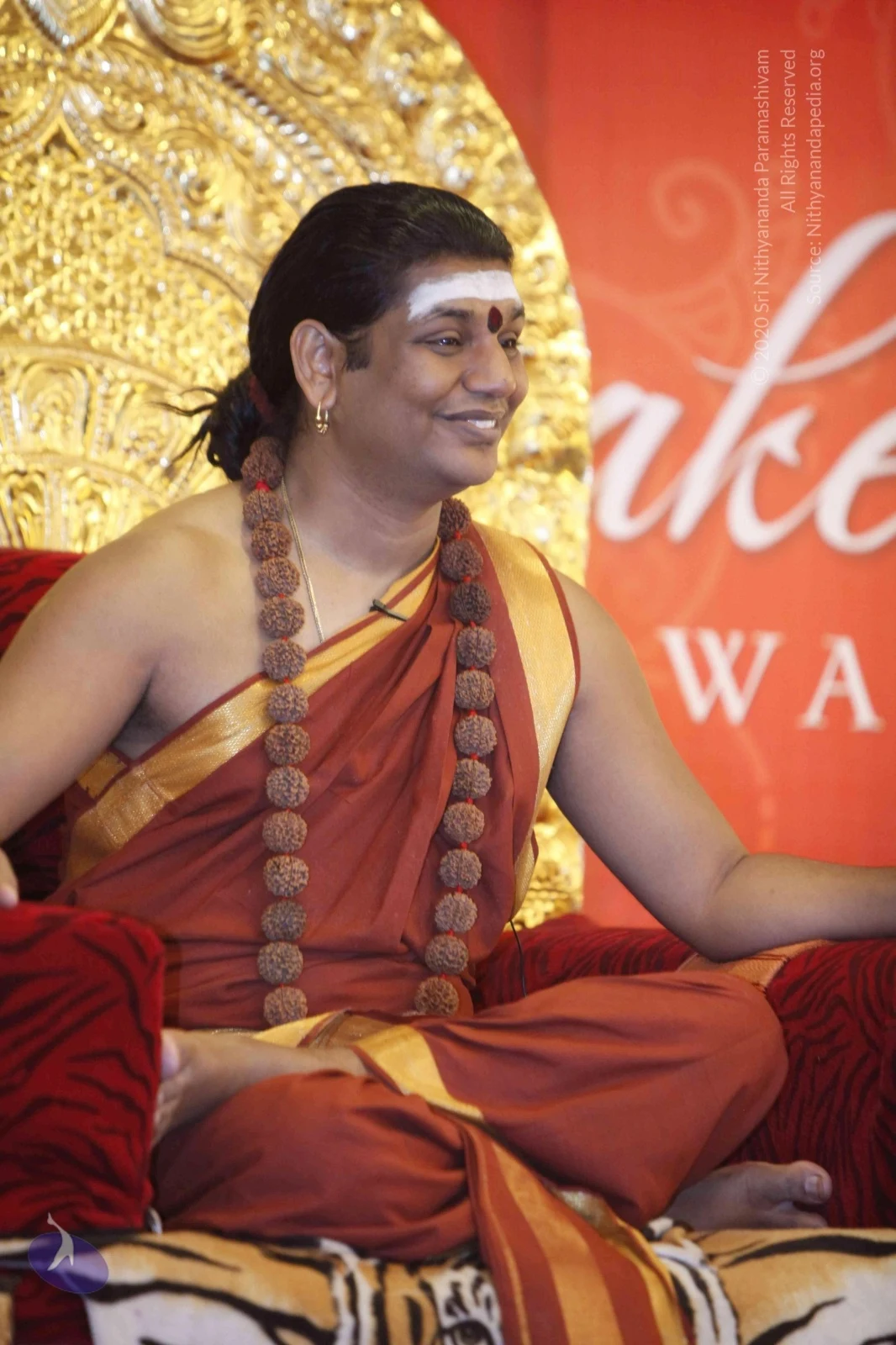
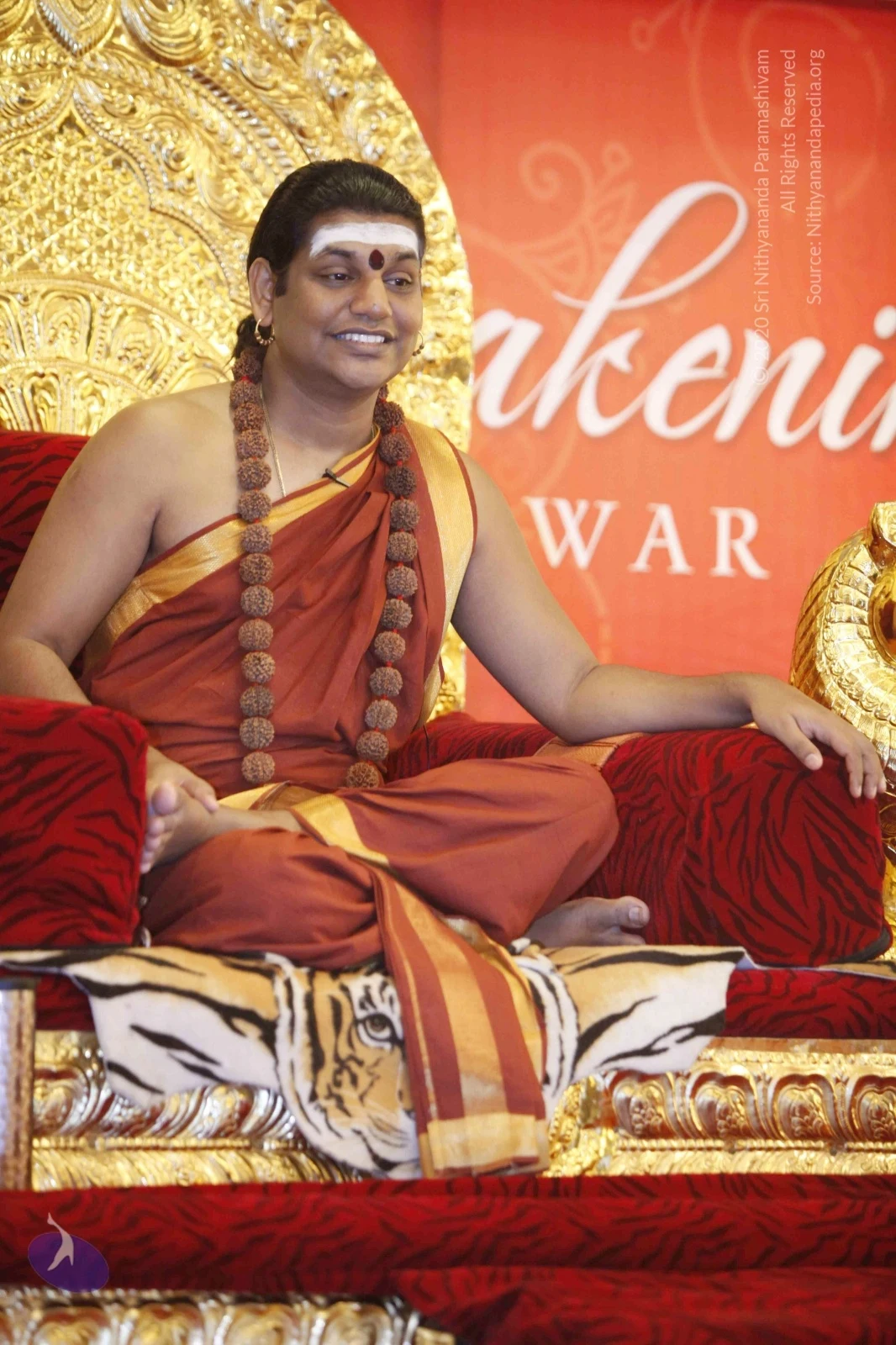
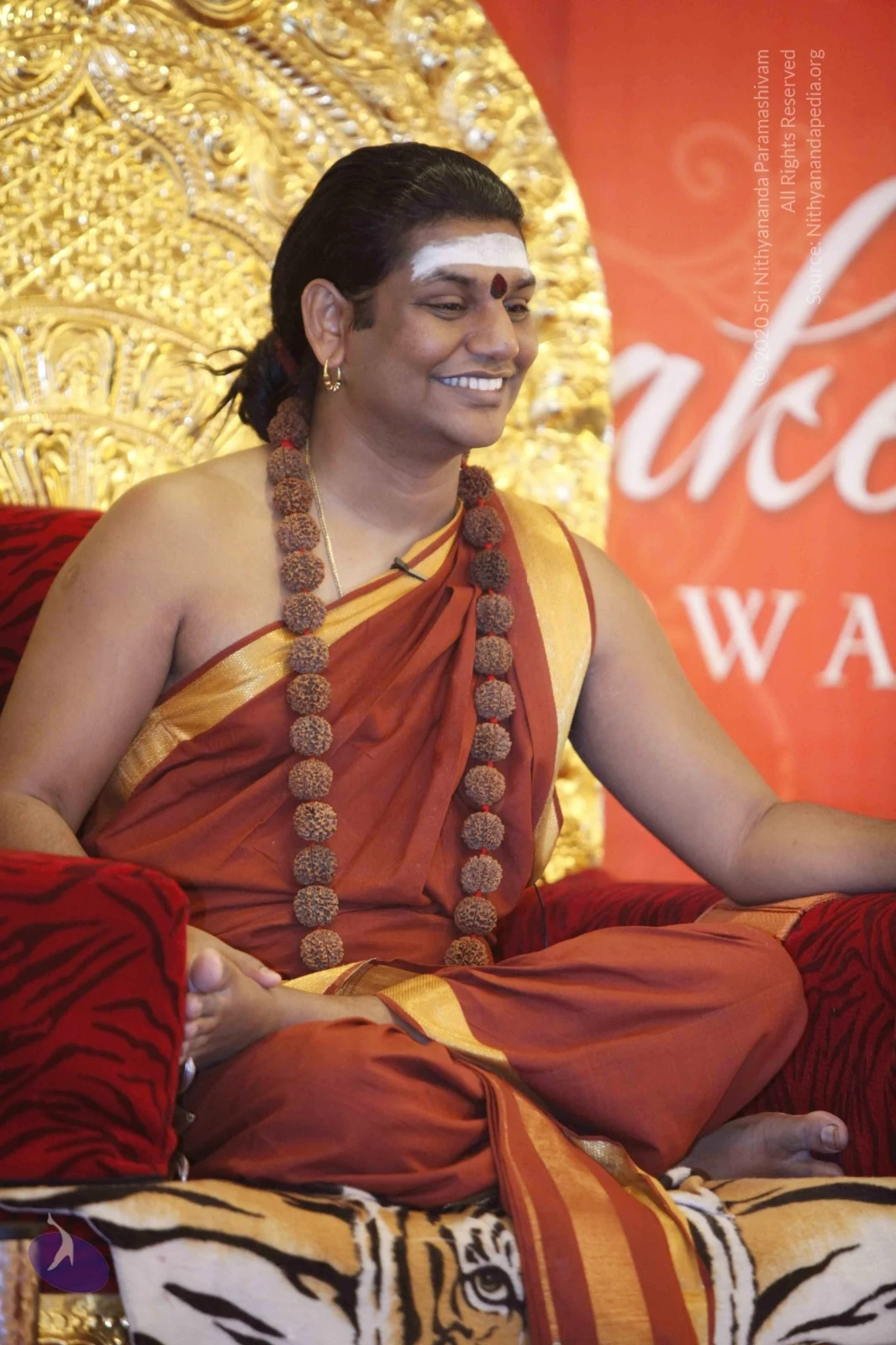
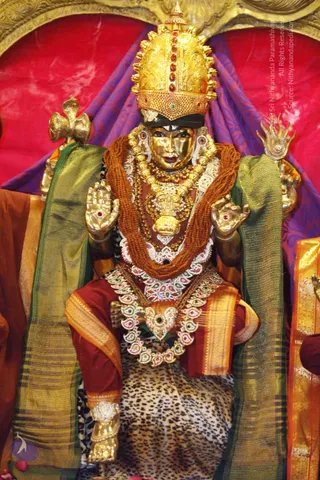
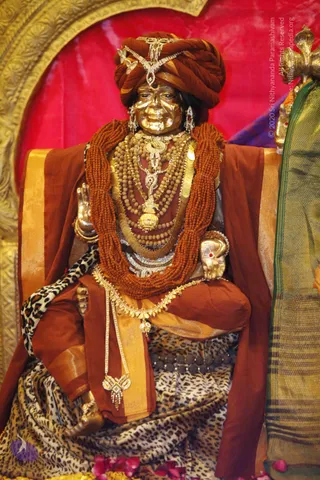
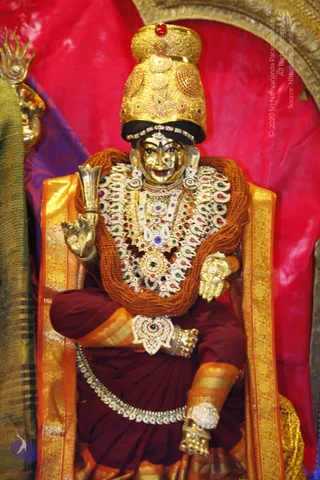
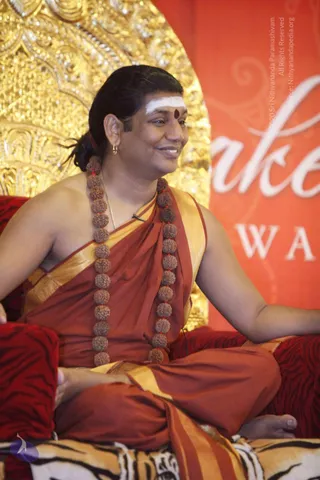
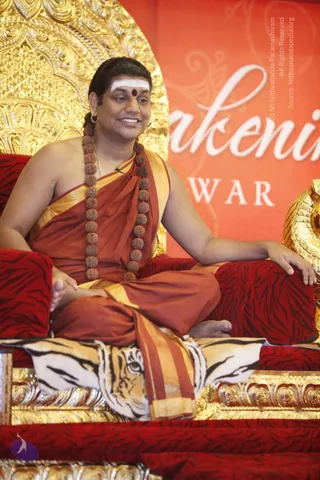
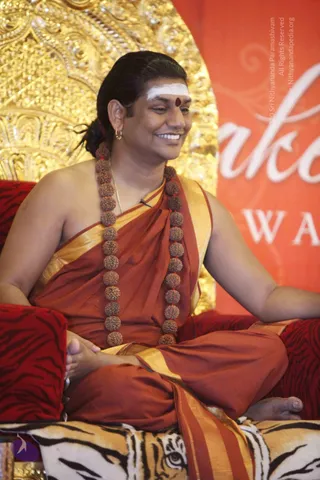
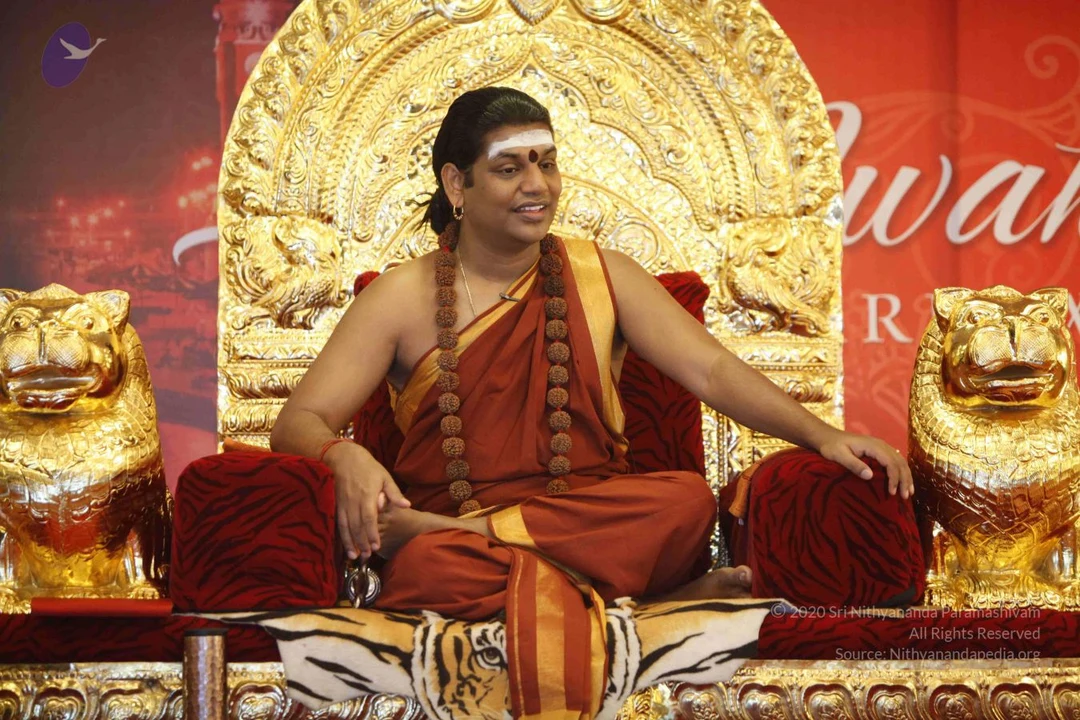
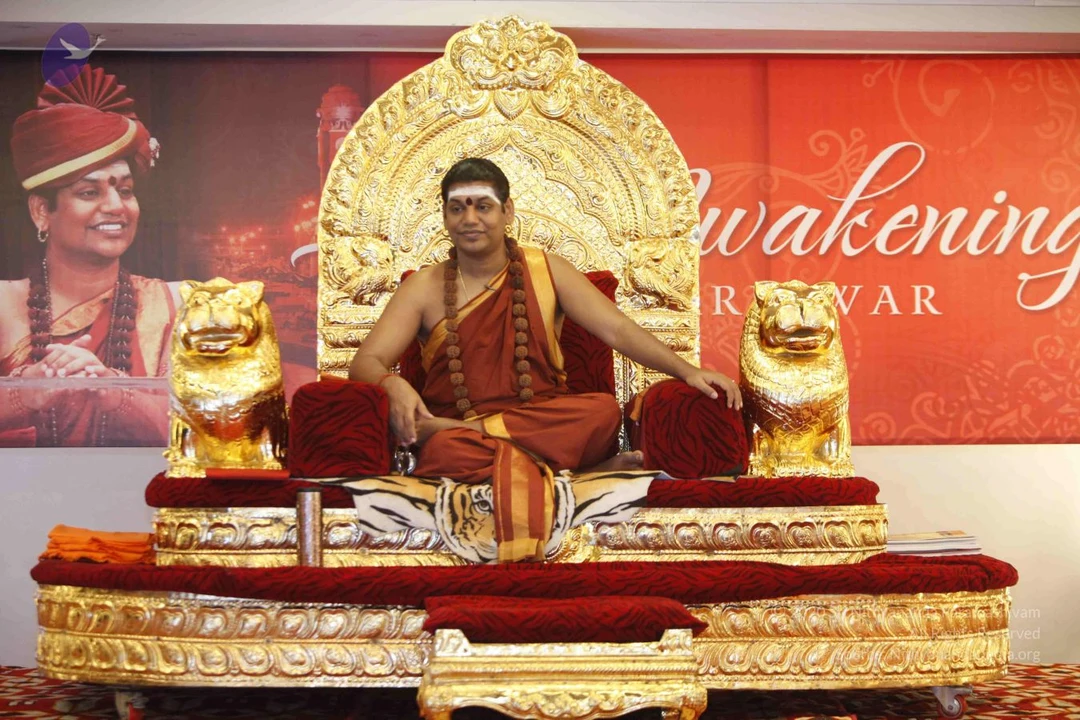
A gilded deity murti seated on a leopard-skin cloth before a red and purple drape. The golden figure wears an ornate gold crown set with red stones, a rudraksha mala of brown beads, layered gold necklaces and jewelled pendants, and a green and gold silk shawl. Its raised right hand holds a trident and its left hand shows a mudra. Gold anklets and a red and orange garment complete the dressing. Gold-edged framing and a partial figure at the left edge are visible.A golden statue of a seated figure in a rust-orange turban with a jewelled ornament and red bindi, wearing a long rudraksha mala draped over the shoulders, layered beaded and gold necklaces, earrings and bangles, with a raised right hand in blessing and left hand resting on the lap. The figure sits on a leopard-print cloth against a red backdrop with an ornate gold arch. Rose petals lie at the base. A green and gold embroidered cloth and a cobra-hooded gold finial appear at the right edge. The statue is a depiction, not a physical person, and no people are present.A gilded deity murti seated on an ornate golden throne against a bright red draped backdrop. The figure wears a tall golden crown set with a red stone, heavy jeweled necklaces in green, red and blue stones, a rudraksha-style orange-brown beaded collar, and a deep maroon garment with orange borders. One hand is raised in a blessing gesture. This is a statue, not a living person, so no physical people are present.A photograph of a seated man in rust-red and gold-bordered sannyasi robes, wearing a long multi-row rudraksha mala over the shoulders and a gold chain at the neck. He has long dark hair tied back, a white tripundra with a red bindi on the forehead, and a small gold earring, smiling as he sits cross-legged on a red tiger-striped cushion in front of an ornate gold throne. Behind him is a large orange banner with white script lettering. Based on the presence of the rudraksha mala, long swept-back hair, gold ornamentation and ceremonial robes, this is a probable Swamiji (probable) seated in a satsang setting.A man sits cross-legged on an ornate golden throne draped with a tiger-print cloth and red tiger-striped cushions. He wears a rust-red and gold-bordered dhoti and shawl, a long necklace of rudraksha beads, and gold earrings, with a white vibhuti line and red kumkum dot on his forehead. He smiles and gestures with one hand. Behind him an orange banner bears large white script lettering reading 'akenin' and 'WAR', part of the Inner Awakening Convention backdrop. Appearance-based a person seated in the presiding position, with distinctive rudraksha mala, rust and gold ceremonial clothing and gold earrings. No other people are visible.A man seated cross-legged on an ornate gold-carved throne draped in red and tiger-striped cushions, smiling at something off-frame. He wears a rust-red and gold-bordered dhoti and shawl, a long multi-strand rudraksha mala of brown beads, and a small gold chain and earring. A white horizontal forehead mark with a red dot sits on his brow, and his long dark hair is tied back. A red banner with white script stands behind him. a person appears in person, seated in ceremonial regalia with saffron-red robes, rudraksha beads and a long tied-back hair cue, consistent with the page's attribution.
02-Ganghaghat-Rudrahoma-VirajaHoma-Rudrabhishekam

10 photosSource gallery
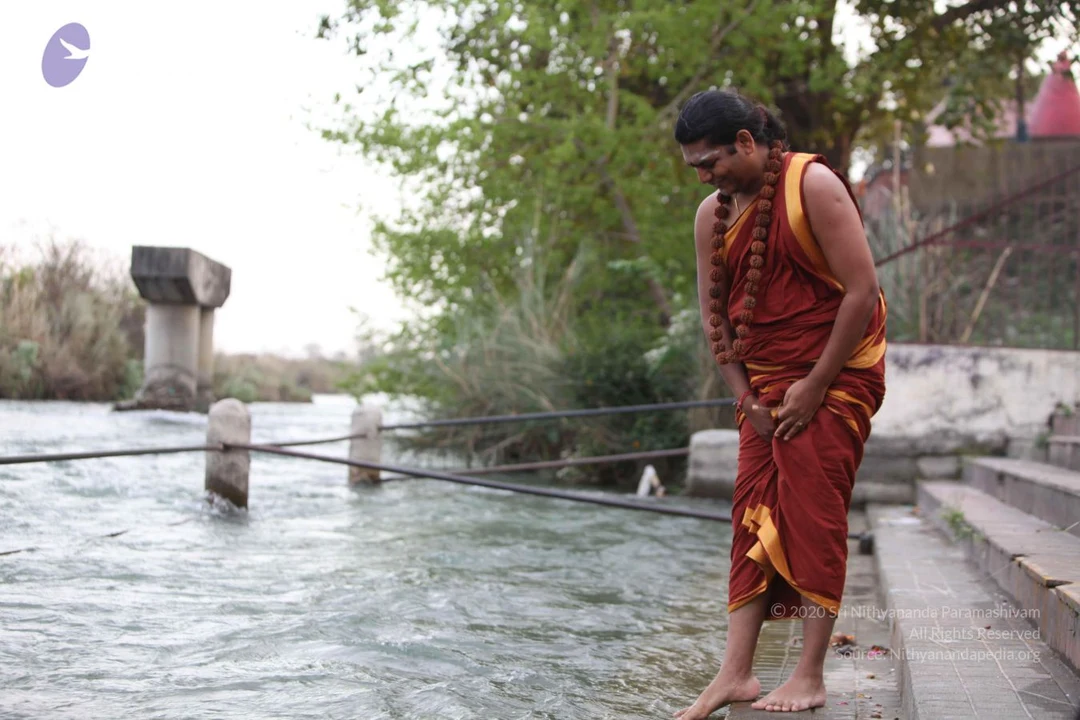
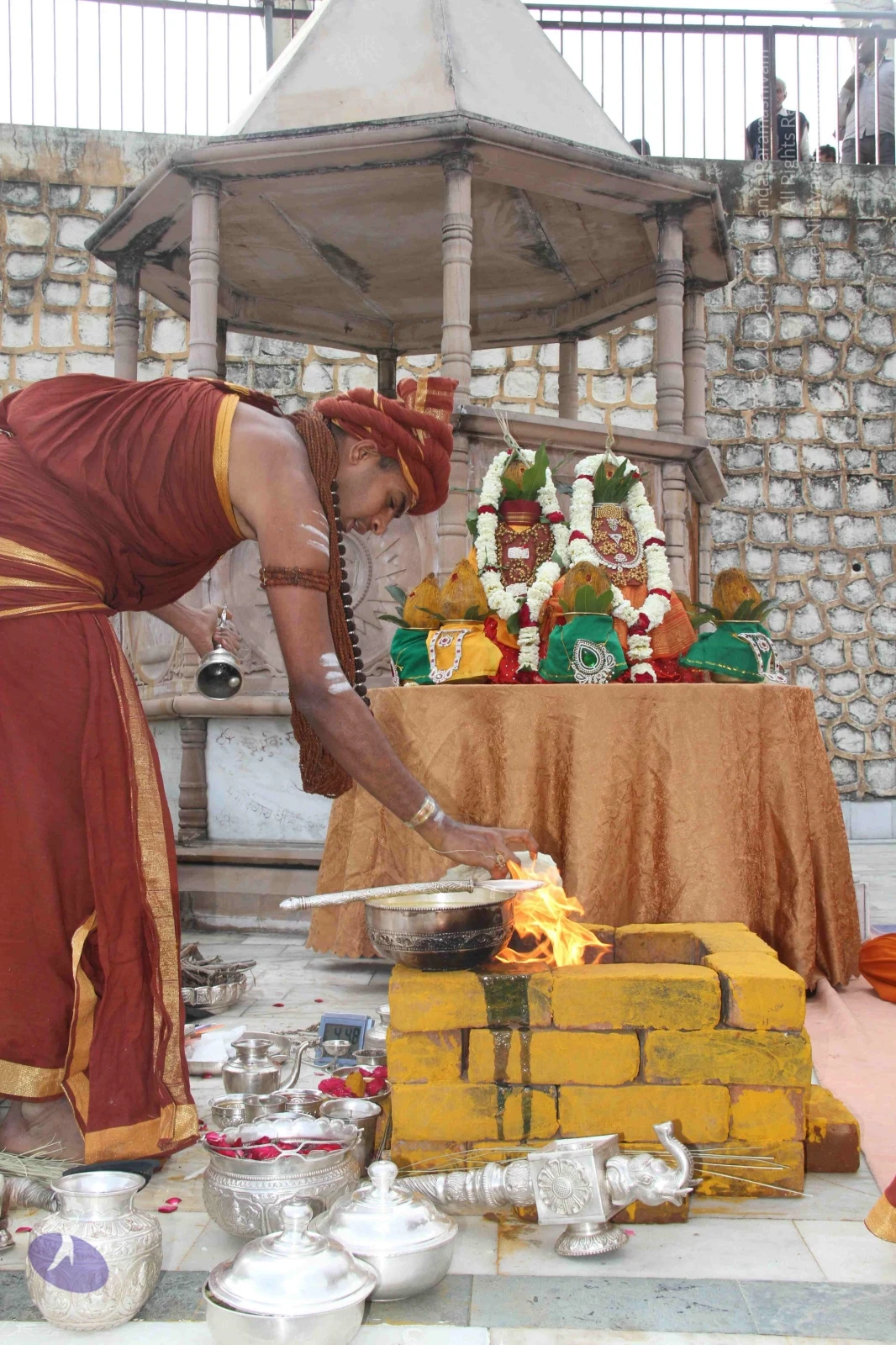
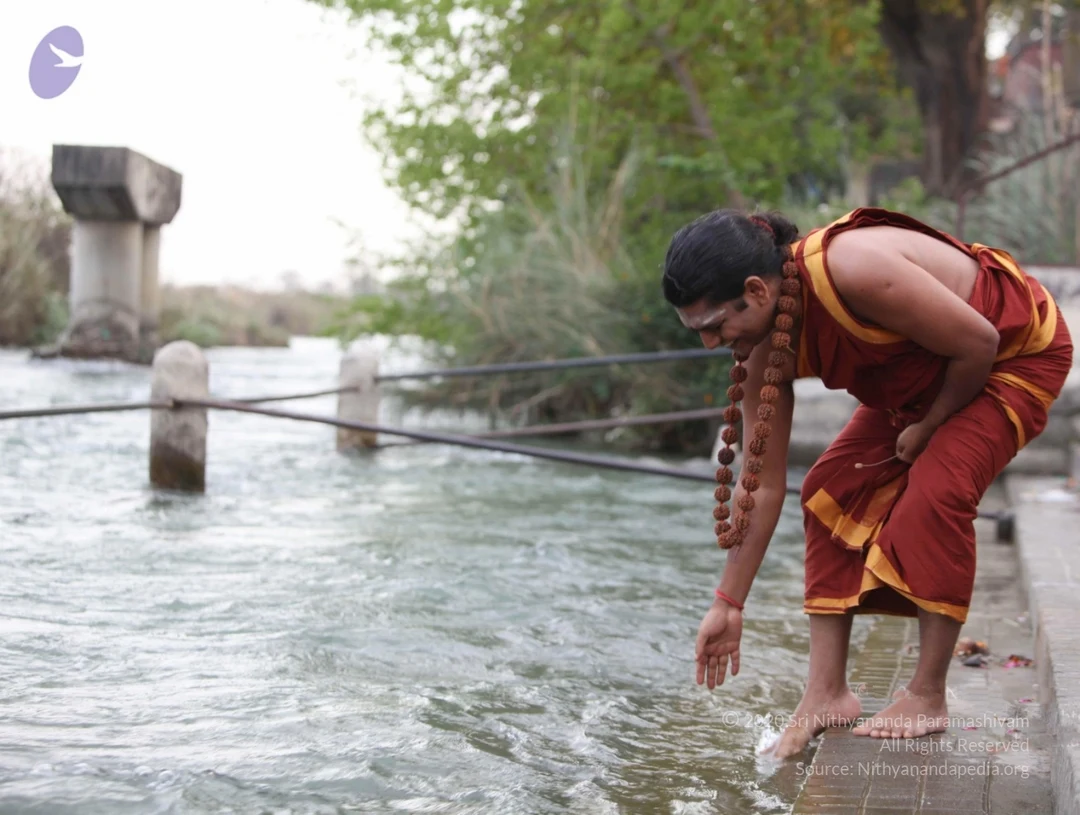
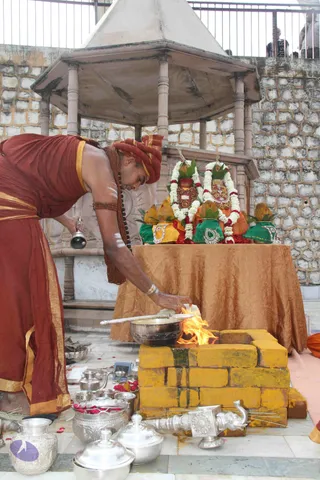
A photograph of a homa ritual at an outdoor ghat-side pavilion. A priest in a rust-red dhoti and matching red-orange turban leans over a yellow brick fire pit, pouring from a silver ladle into a bowl above flames. He wears a rudraksha mala and white ash markings on his arms. Behind the fire, a brown draped table holds two kalasha pots wrapped in green and orange cloth, garlanded with white and red flowers and mango leaves. Silver puja vessels, a bowl of rose petals and a silver ritual implement sit on the stone floor. Stone walls and a pillared canopy frame the scene, with a few onlookers visible at the top edge. The priest is not clearly identifiable as a person from appearance.A man in a rust-red and saffron-yellow sannyasi robe bends forward at a riverbank step, reaching his right hand toward flowing green-grey water of the Ganga. He wears long rudraksha mala strands across his chest and shoulder and has a white tilak on his forehead; his hair is tied back. Concrete posts and a metal rope railing run along the river, with green trees and reeds behind. The scene suggests a ritual dip or offering at a ghat.A priest stands on a riverbank beside flowing water, wearing a rust-red turban and rust-red cloth wrapped around his body with gold-bordered edges. He wears multiple strands of dark rudraksha beads and a large gold pendant at his chest, plus gold bangles on his wrist, and has a small tilak on his forehead. He raises one hand in a mudra while holding a silver bell in the other. In the lower right foreground, a woman in a red sari with a white flower garland and gold-trimmed clothing is partly visible, and several coconuts with green leaves sit in front of the frame. A concrete bridge pier and green shrubs are behind him under an overcast sky.Photograph of a priest standing outdoors by a river. He wears a rust-red turban, a rust-red cloth wrapped over the body with gold-bordered edges, and many strands of rudraksha beads with gold beads and a gold pendant. He holds a silver bell in his right hand and raises his left palm toward the viewer. A white and red forehead mark is visible, and a white-painted arm is visible with rudraksha bracelets. Blurred green foliage and flowing water fill the background, with the edge of a white floral garland at the lower right.A seated man in a red-orange robe with a gold border speaks on a riverside stage, wearing a long rudraksha mala necklace and a red bindi on his forehead. He wears a headset microphone, holds a white notepad, and sits in front of an ornate silver-and-brown chair decorated with a lion motif. Flowing water and green bank are behind him. A partial head of another person is visible in the lower right foreground. Swamiji (probable) appears in person, presenting at the satsang setting, with long swept-back hair, saffron-red robe with gold trim, and multiple rudraksha malas.A man stands on a riverbank beside a flowing river, wearing an orange-red robe with gold borders over bare shoulders and a long rudraksha mala with a red tilak on his forehead. He leans one hand on an ornate silver-embossed seat draped with leopard-print cloth, and a yellow fringed parasol with red and green trim stands behind him. A silver trident is planted at the left edge, and green shrubs line the far bank.