Skip to content
Sunday

24 March 2013

THE SUPREME PONTIFF OF HINDUISM HDH BHAGAVAN NITHYANANDA PARAMASHIVAM

Dated photos
120
Source pages
1
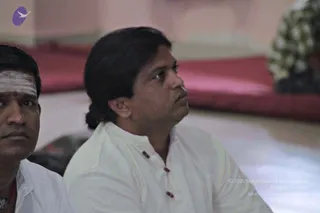
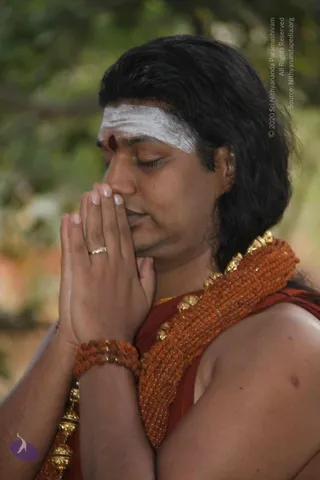
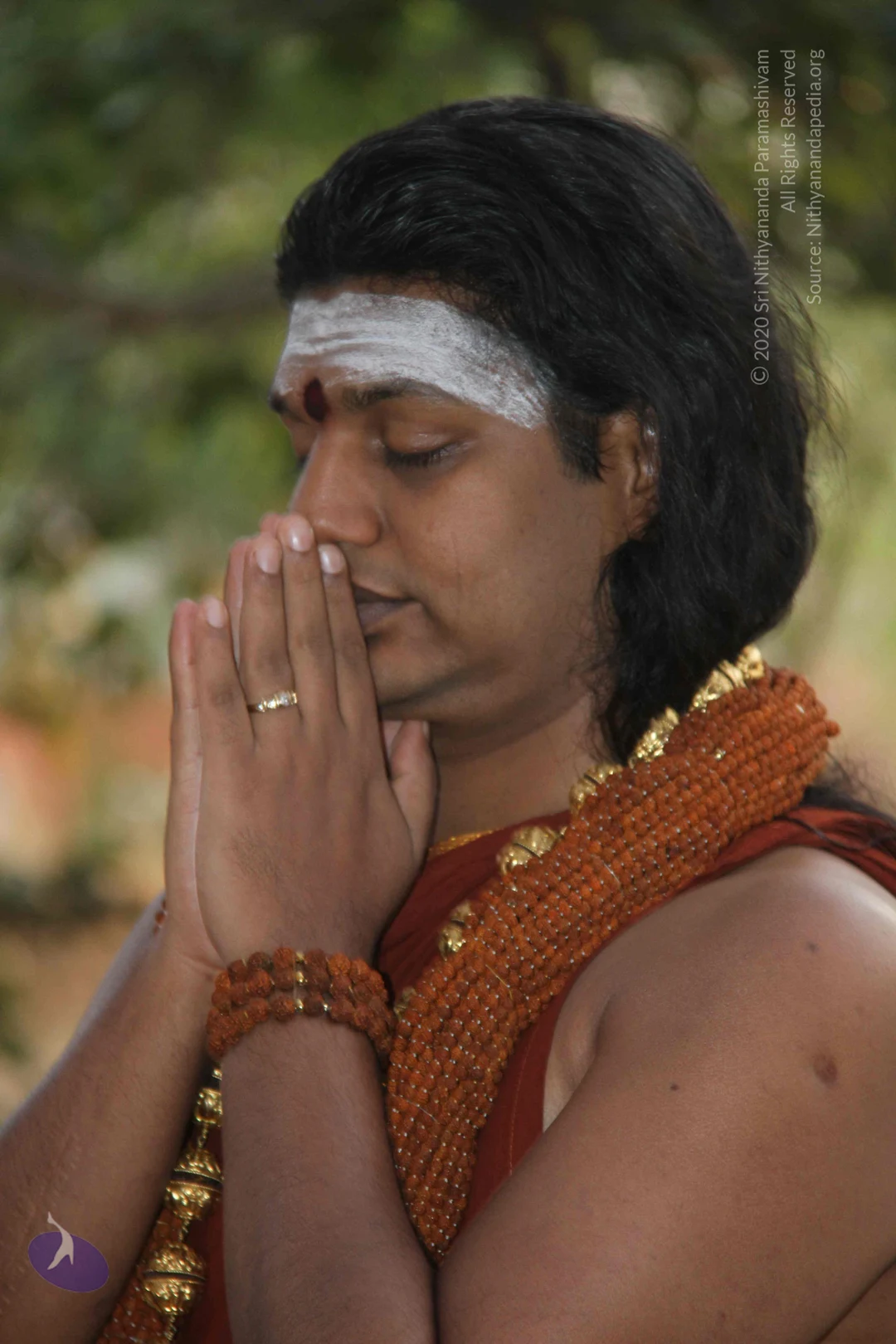
Close photograph of two seated men at an indoor event with pink and maroon cushions behind them. On the left, a man with a white horizontal tripundra mark on his forehead wears a white shirt. In the centre, a man with long dark hair tied back wears a plain white kurta with wooden buttons and looks upward. A blurred person in a patterned garment sits at the upper right.Close photograph of a potted plant with long, slender compound leaves in cream, pale yellow and green variegation on thin pale stems. Behind it sit more leaves and a terracotta-red pot. No people are visible in the frame.Close-up photograph of a man with long, swept-back dark hair, eyes closed, palms pressed together in anjali mudra at his face. He wears a white horizontal tilak with a red bindi on his forehead, a rust-red garment, a thick orange rudraksha mala with gold bead accents draped over his bare shoulder, and a rudraksha bracelet on his wrist. The background is a soft-focus green outdoor setting.

March 24 2013

Original wiki page
Contents

Title

THE SUPREME PONTIFF OF HINDUISM HDH BHAGAVAN NITHYANANDA PARAMASHIVAM

Narration

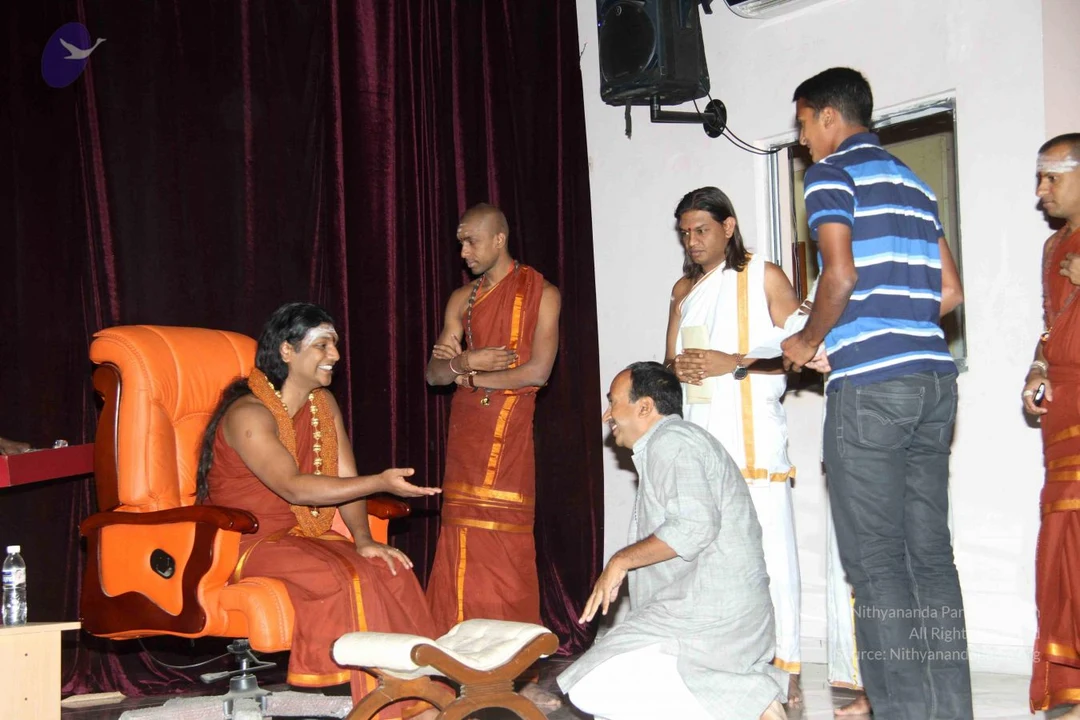
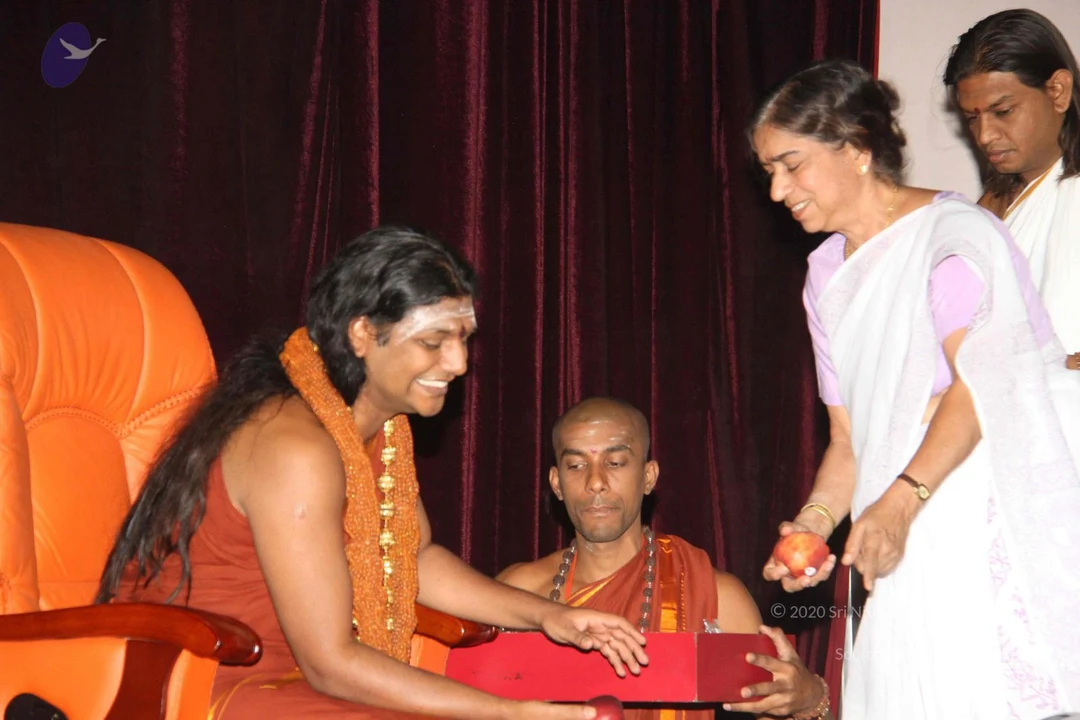
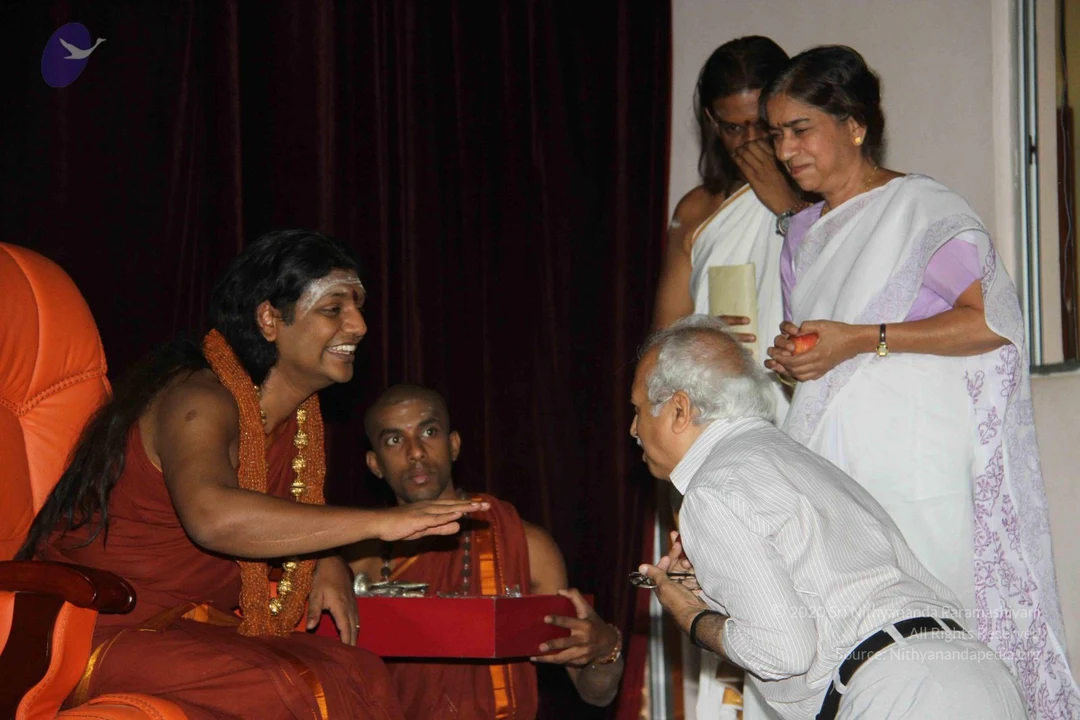
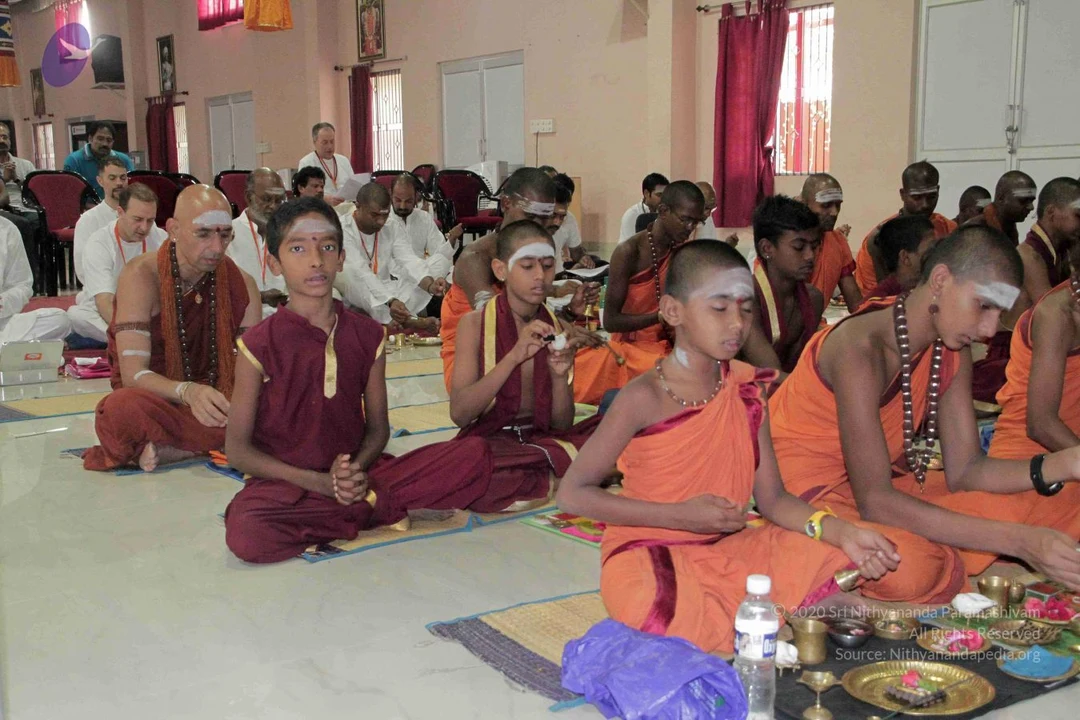
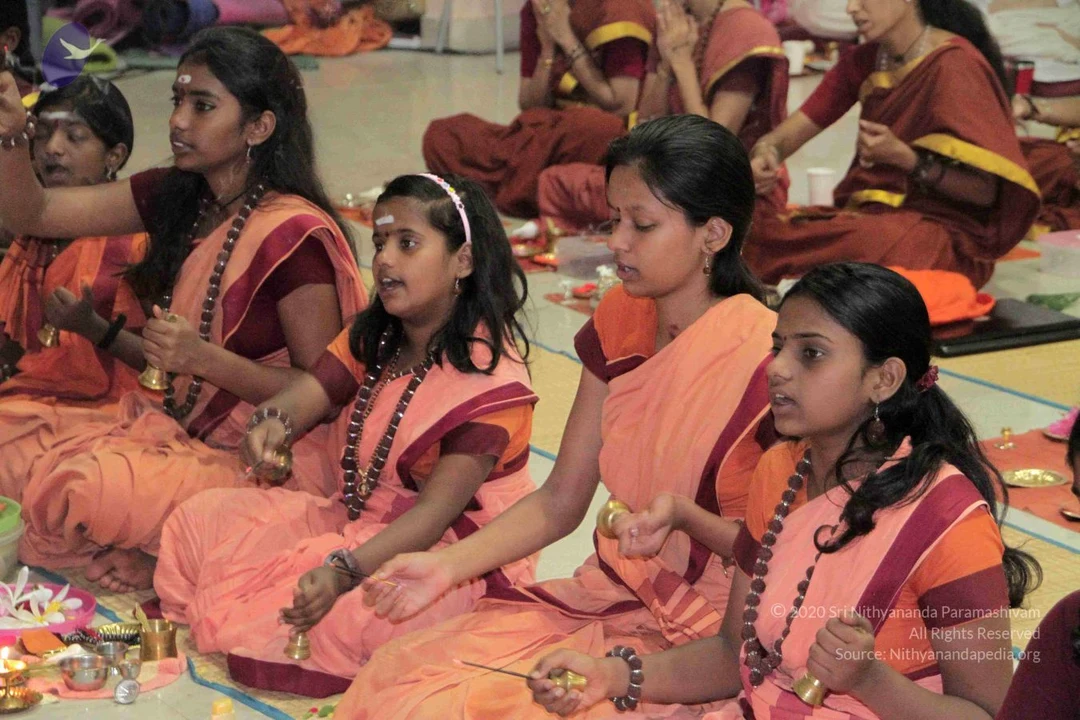
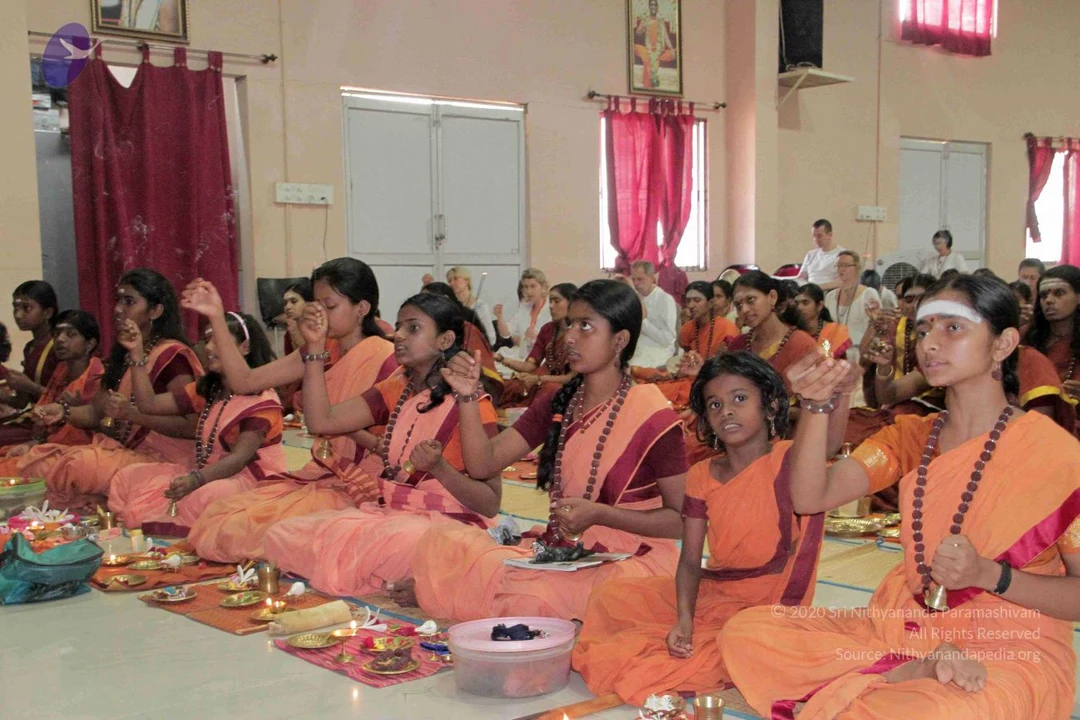
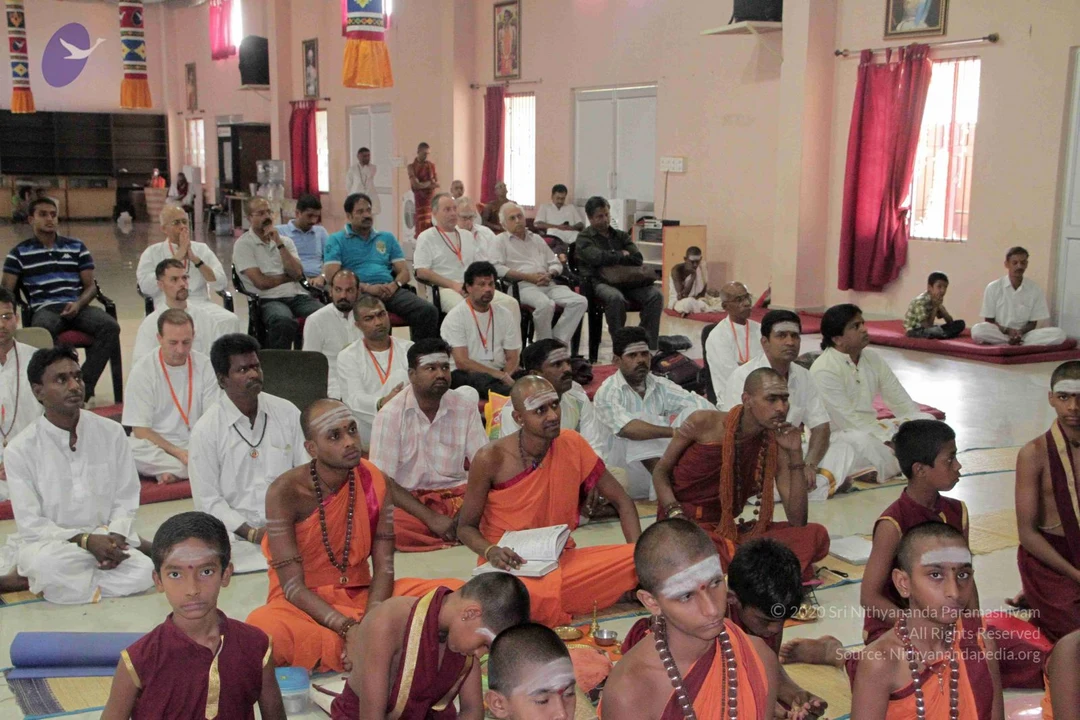
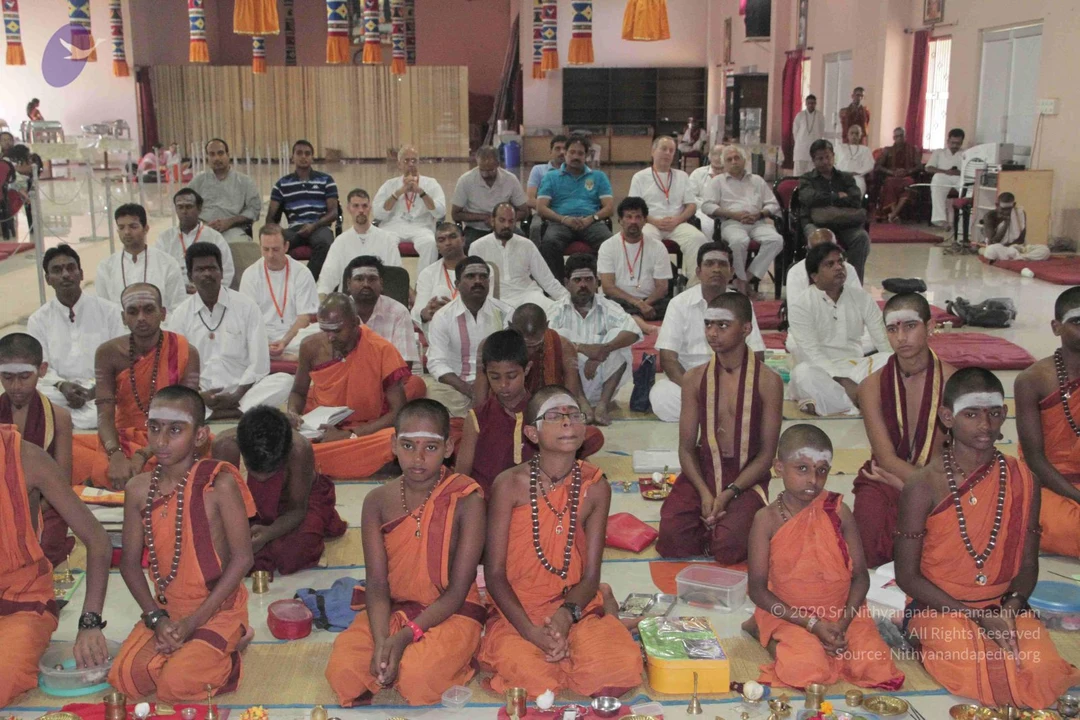
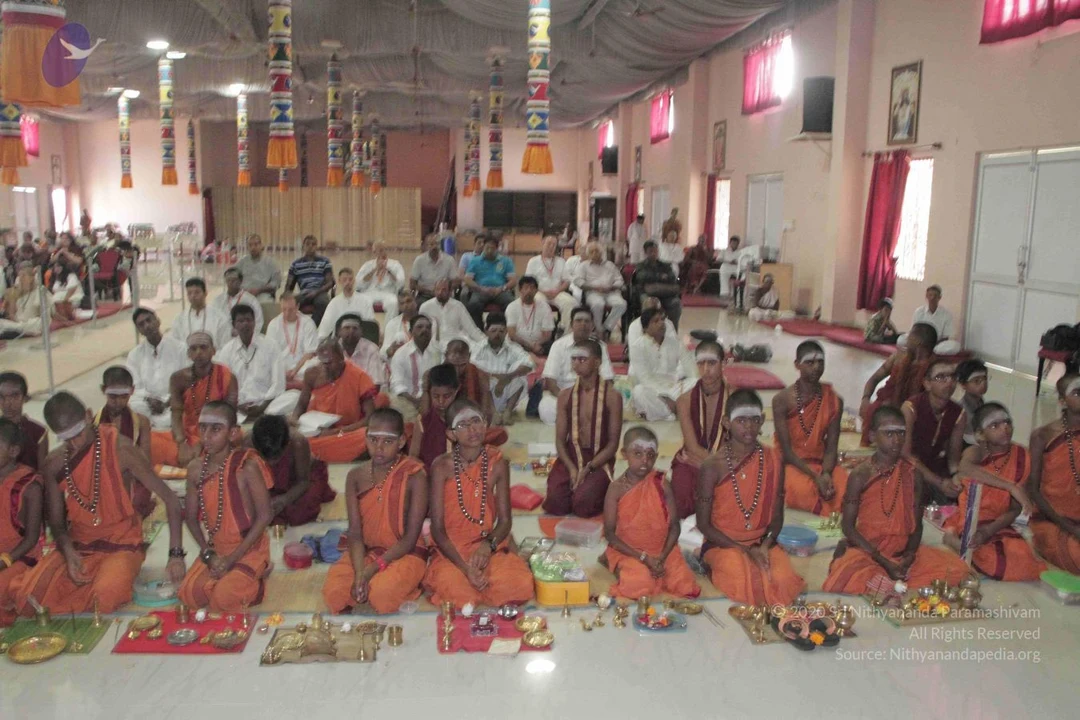
On this day, the Supreme Pontiff of Hinduism Bhagavan Sri Nithyananda Paramashivam conducted the Day 12 of the Inner Awakening Convention. Throughout the Inner Awakening Convention SPH personally addressed each of the delegate's doubts, questions and problems, leading them to immense clarity, understanding, and awareness. He awakened the Kundalini energy of the delegates and made them experience 1000% increase in mitochondrial energy. He also awakened the Third Eye of the delegates making them experience and express the extraordinary powers. SPH devoted special Darshans and sessions in order to heal the delegates at the physical, emotional and mental levels. Furthermore SPH activated new neural pathways in the delegates leading them to heightened clarity and problem-solving capability and led them to experience the bliss consciousness, the deep silence – a conflict-free experience of Life.

That day’s the Day 12 of the Inner Awakening Convention was conducted by the Supreme Pontiff of Hinduism Bhagavan Nithyananda Paramashivam on 24 March 2013, in Adi Kailasa, Bengaluru, Karnataka, India.

Photos From The Day:

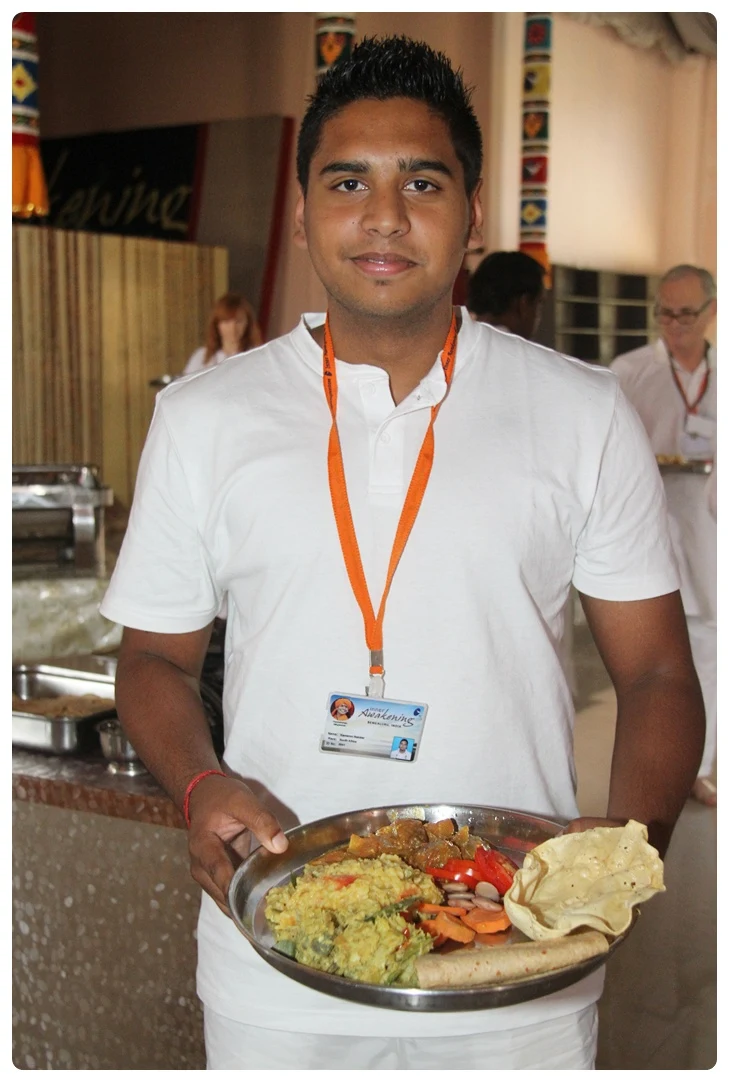
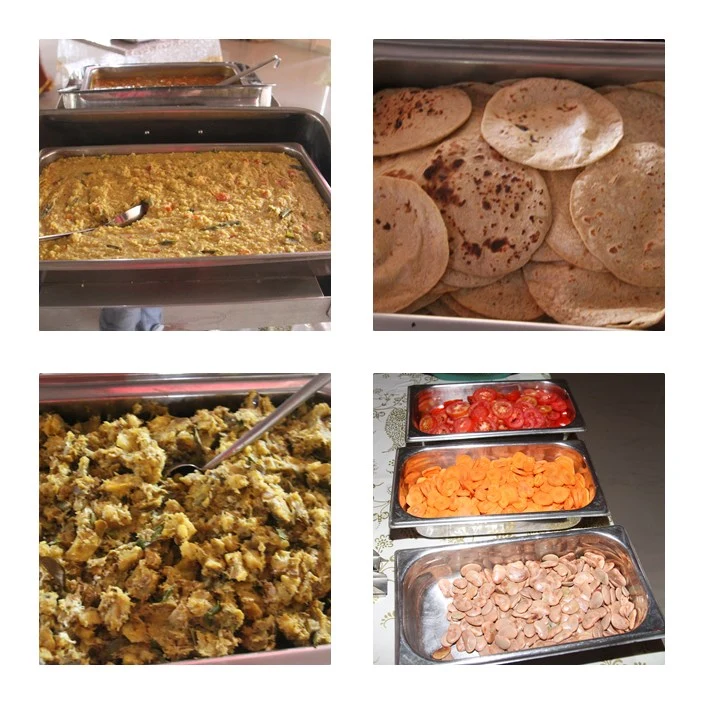
Uttamotama Seva
Photos Of The Day:

TempleTour-NithyaSatsang
PadaPuja

Darshan

Photos from this day

View all 120 photos

Uttamotama Seva

13 photosSource gallery
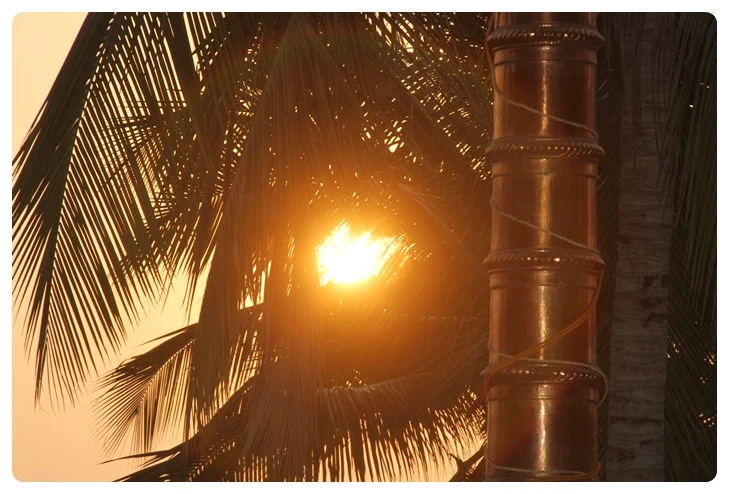
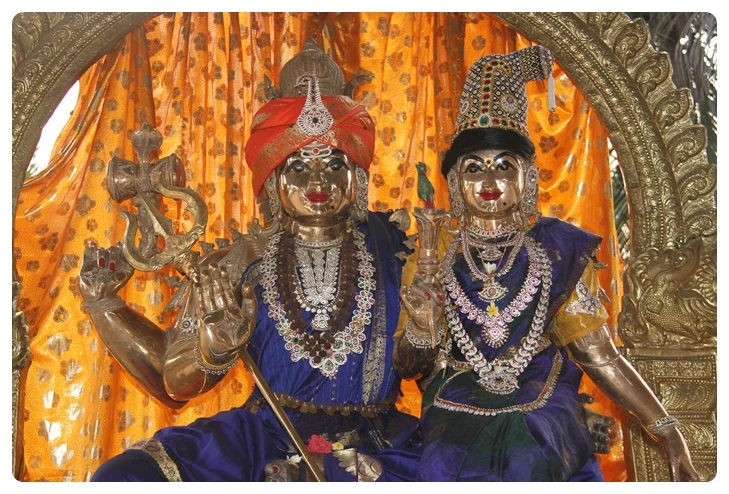
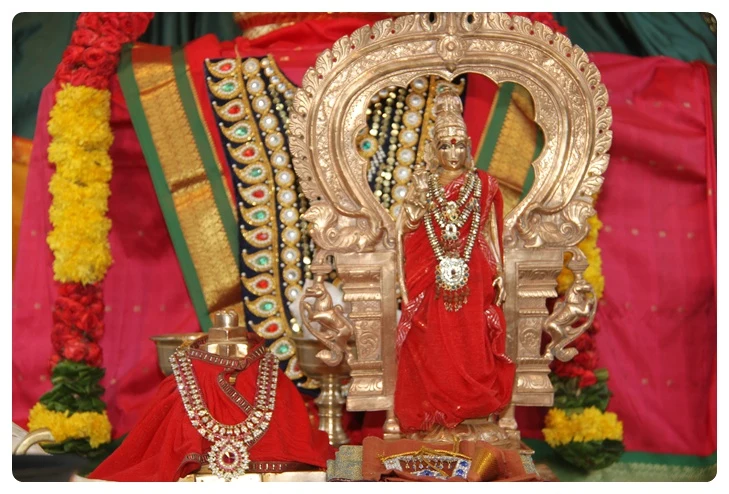
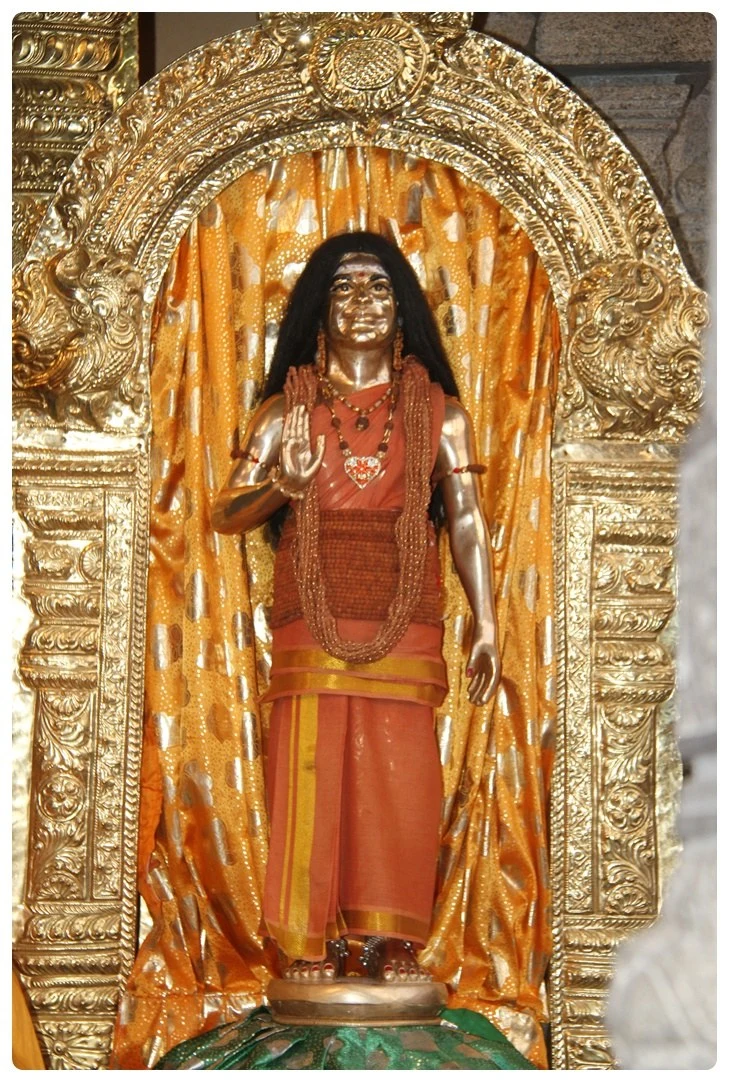
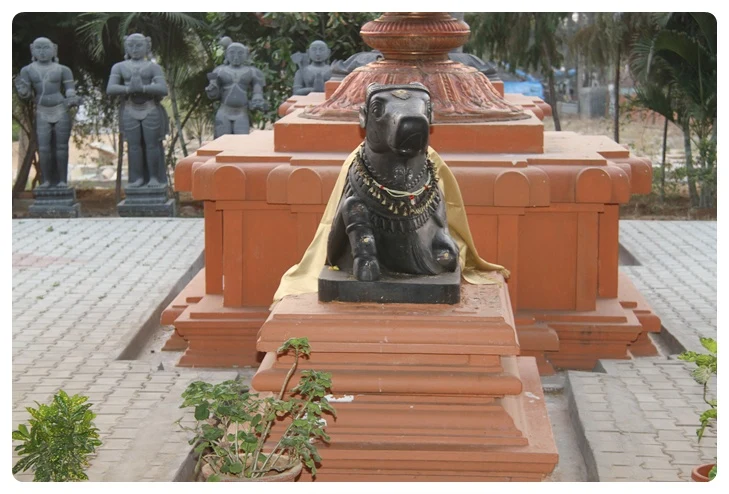
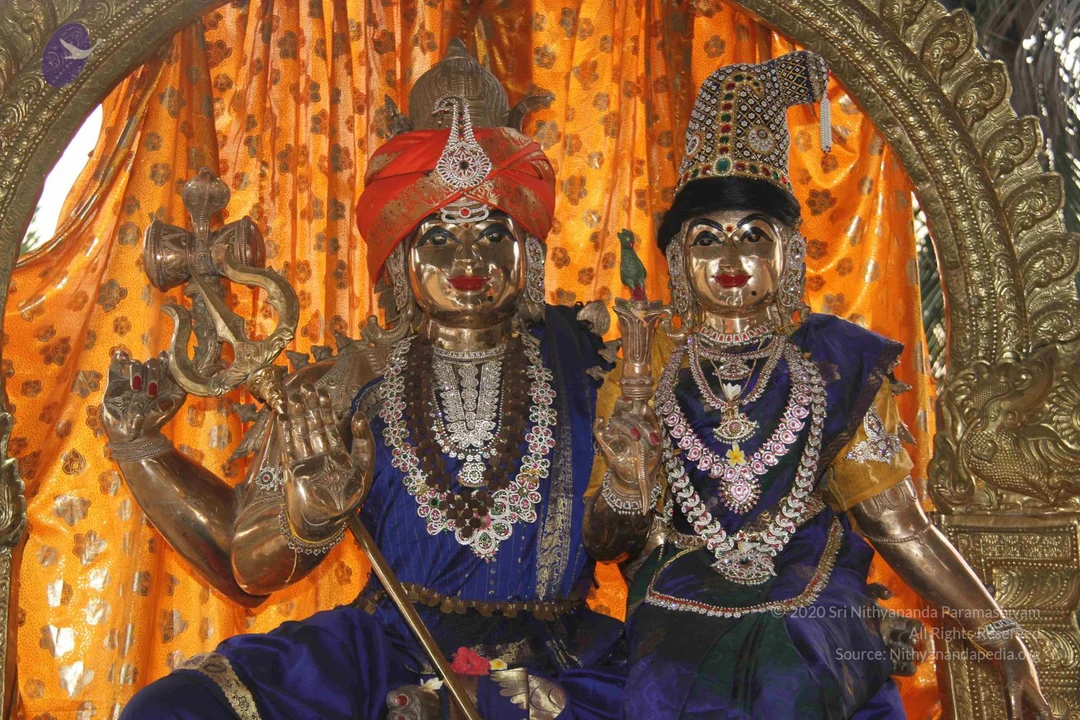
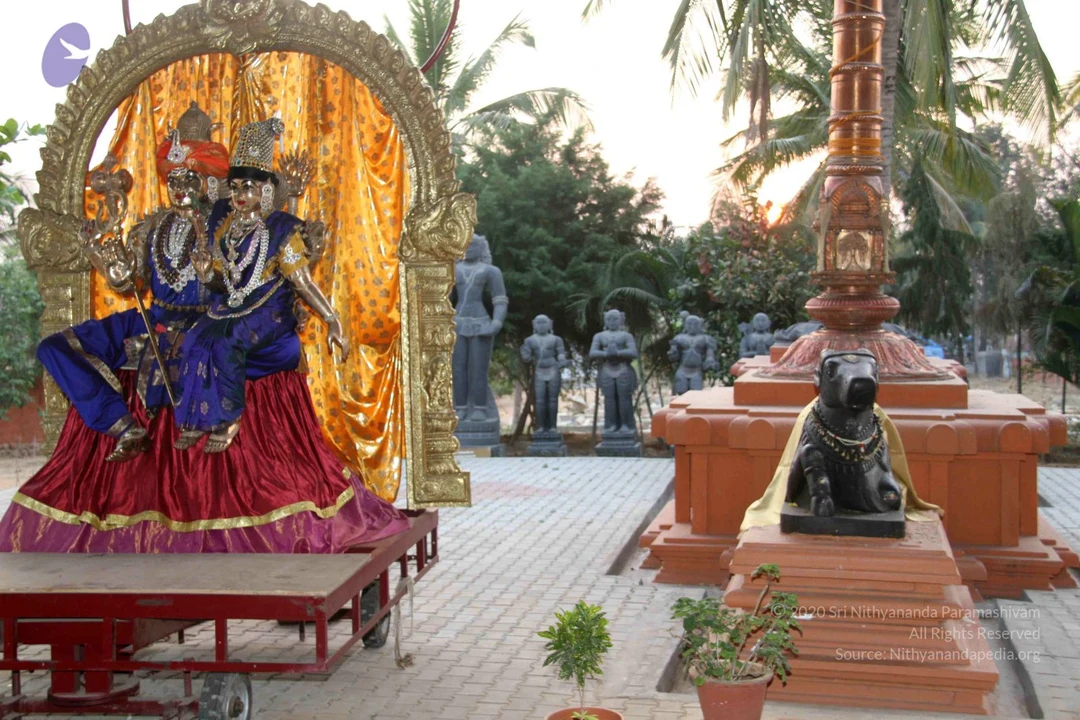
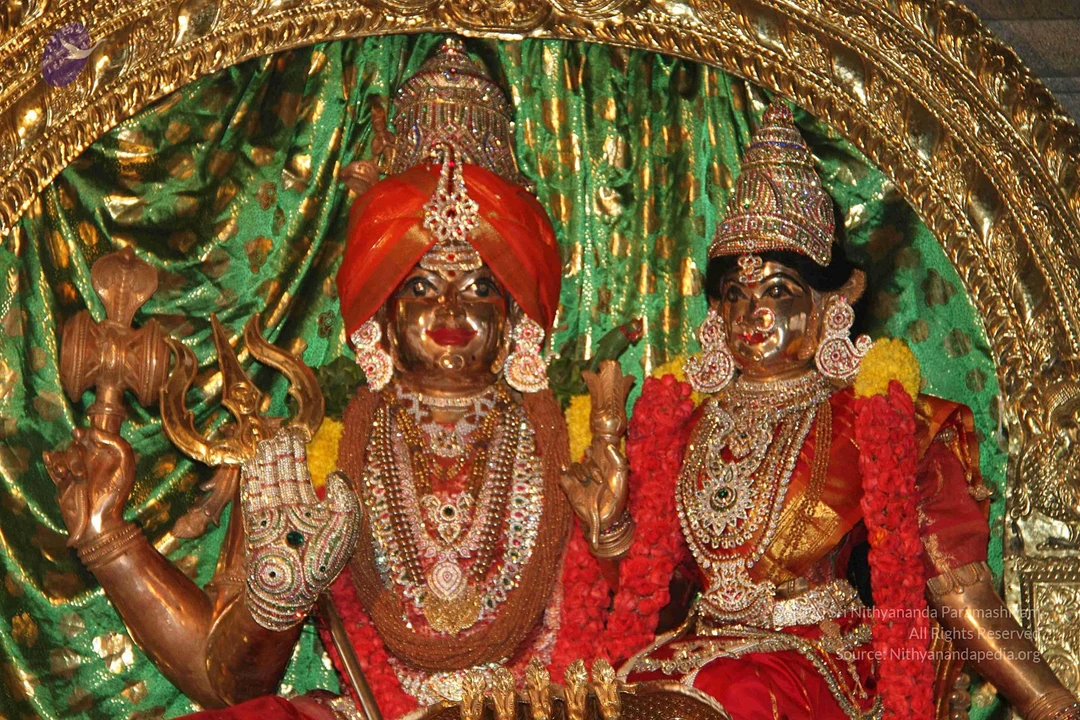
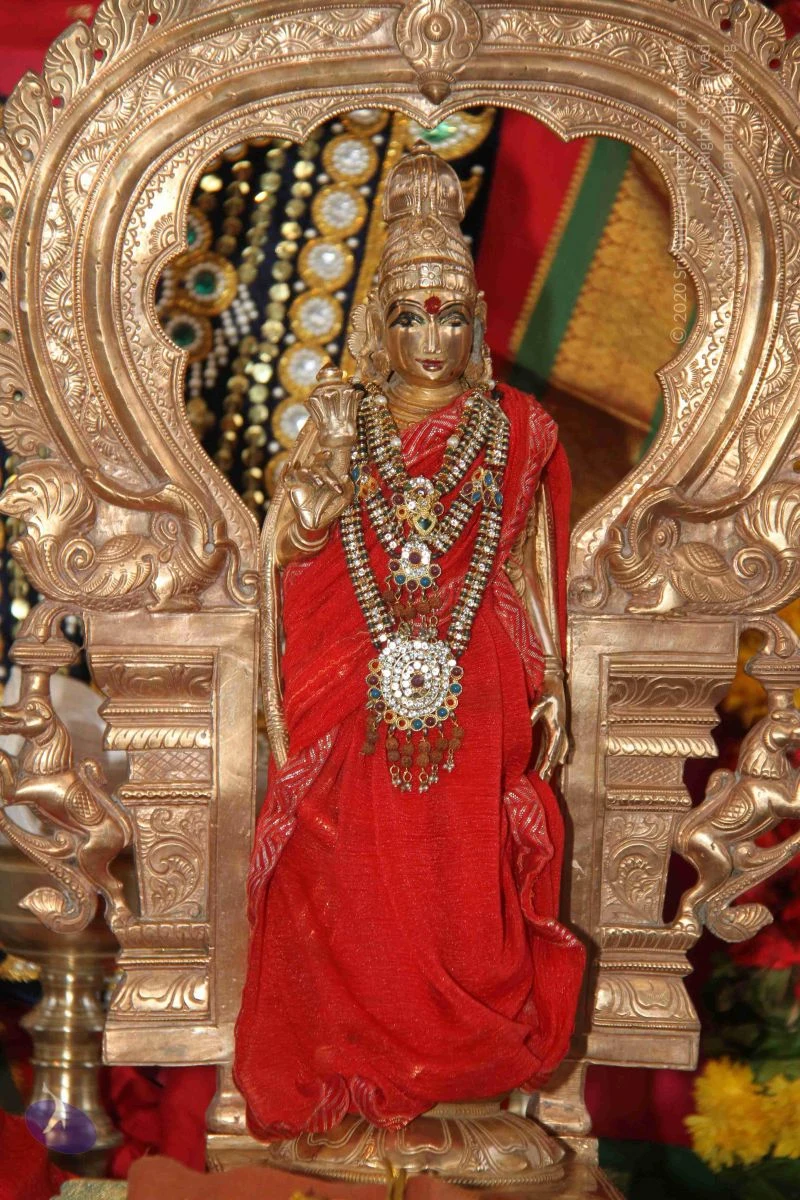
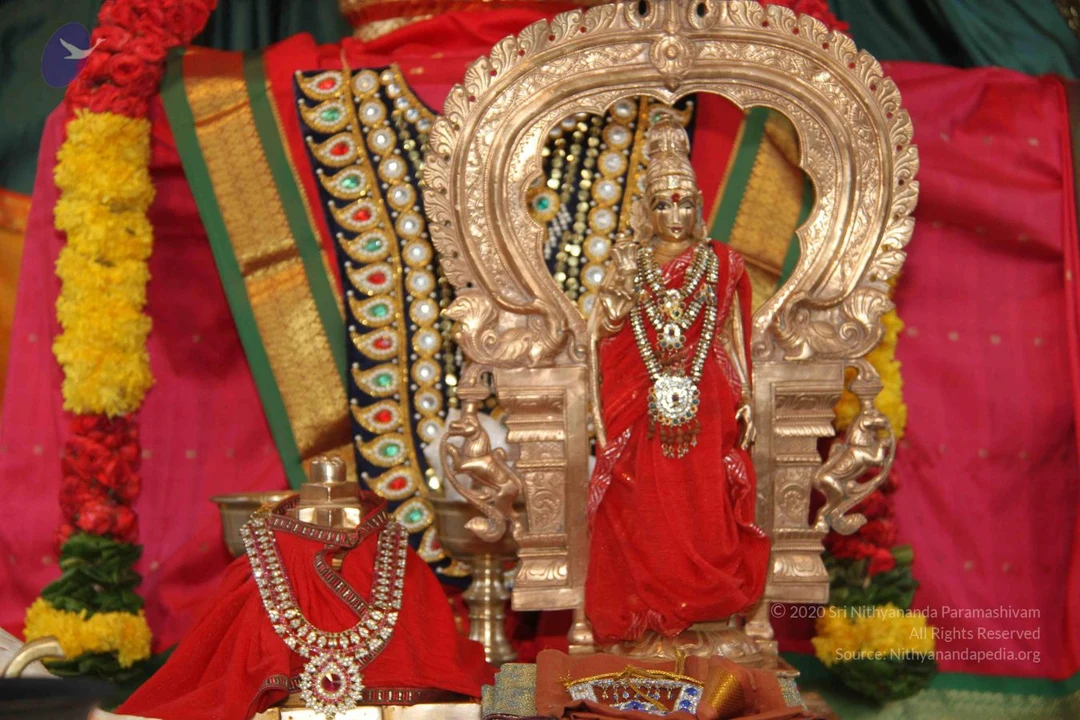
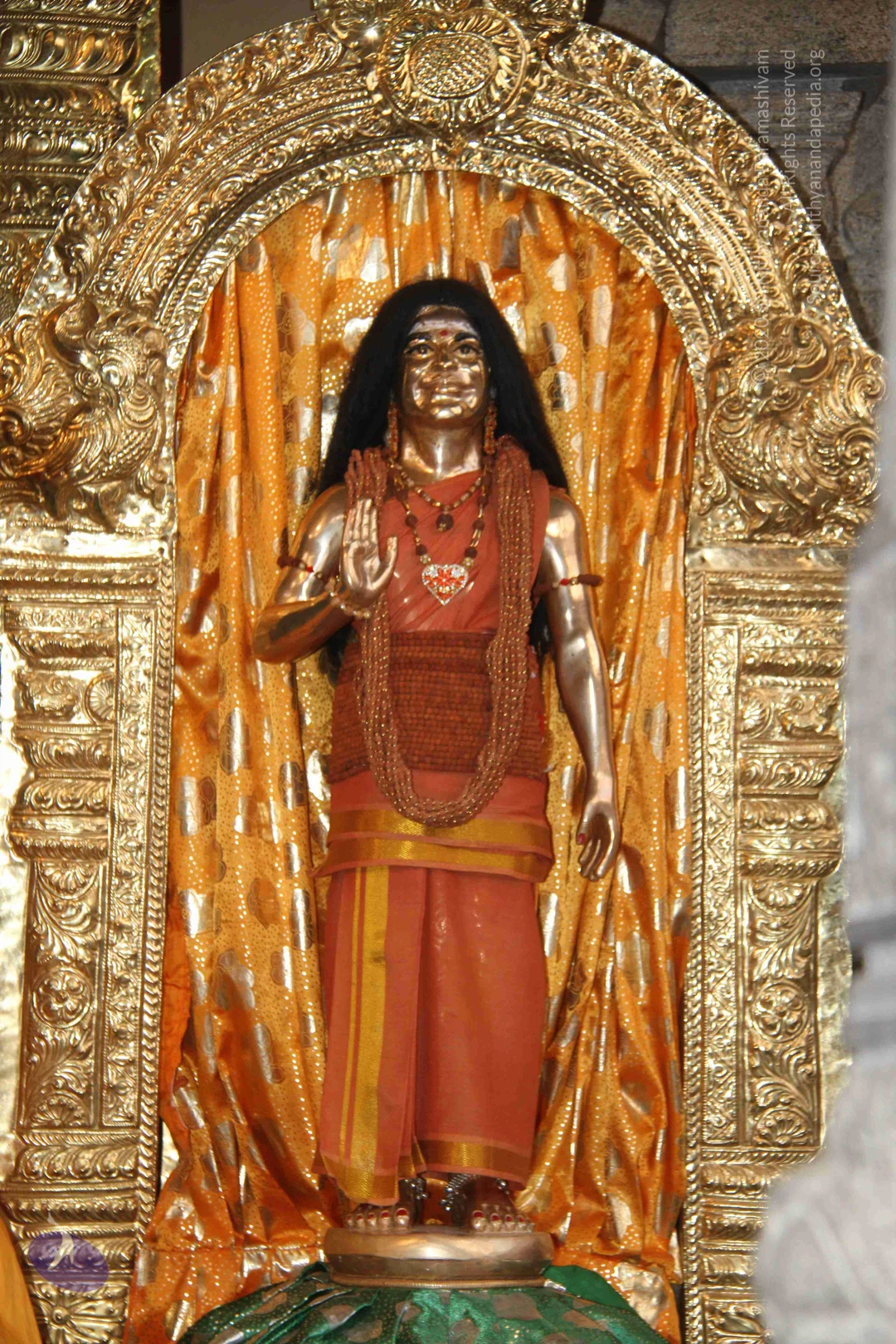
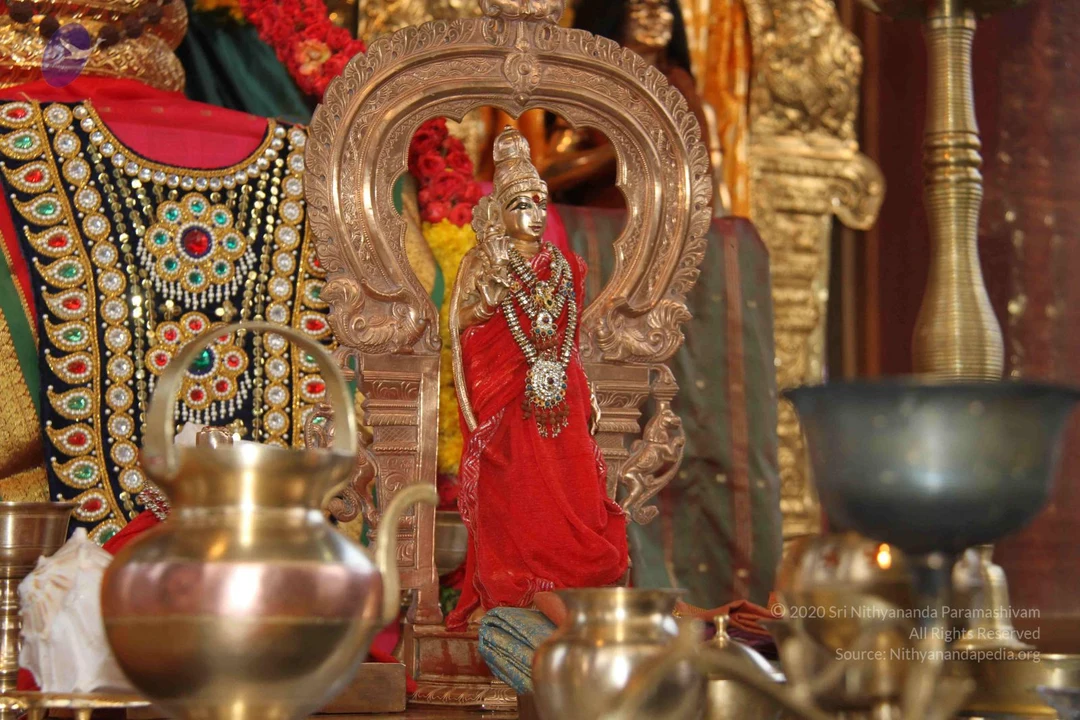
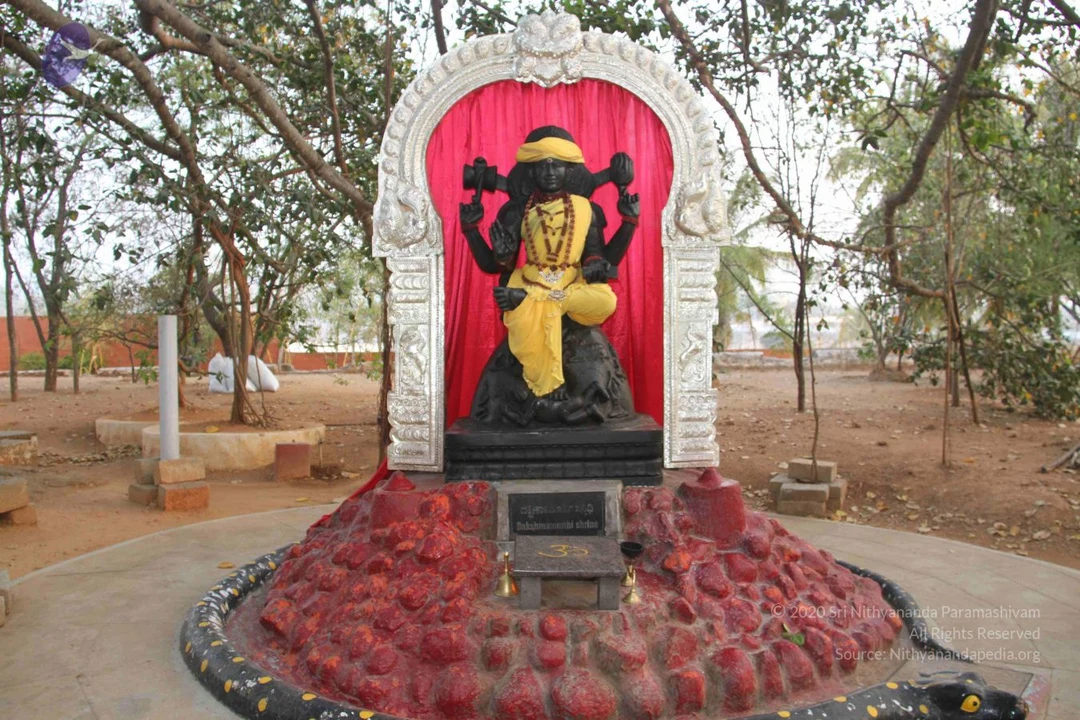
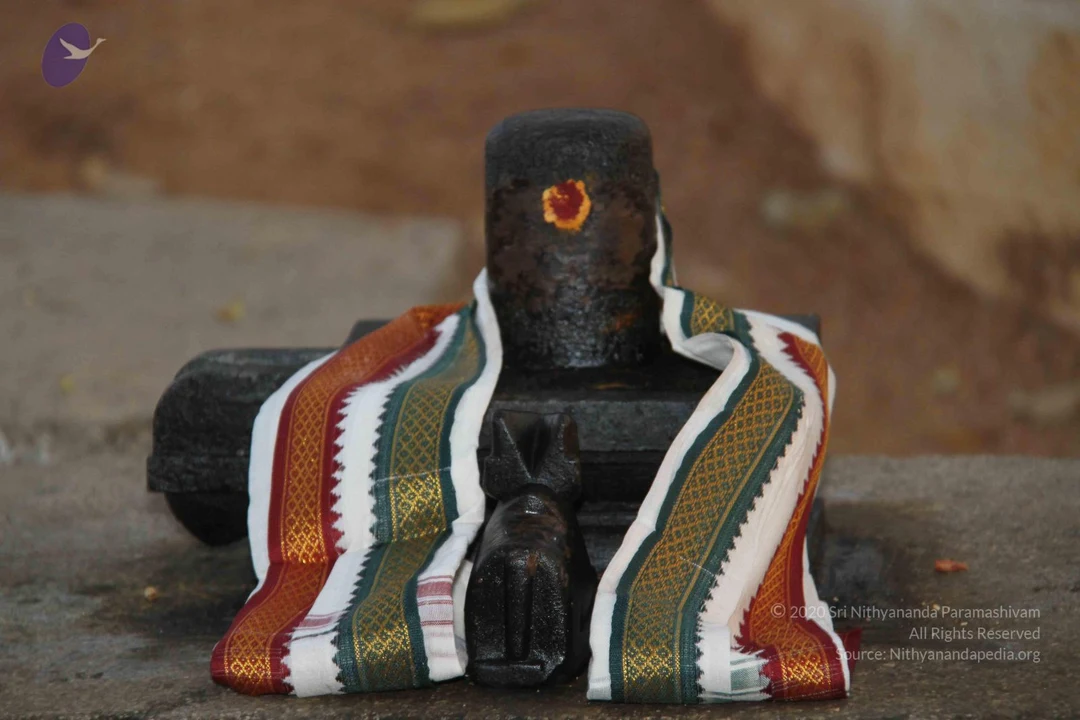
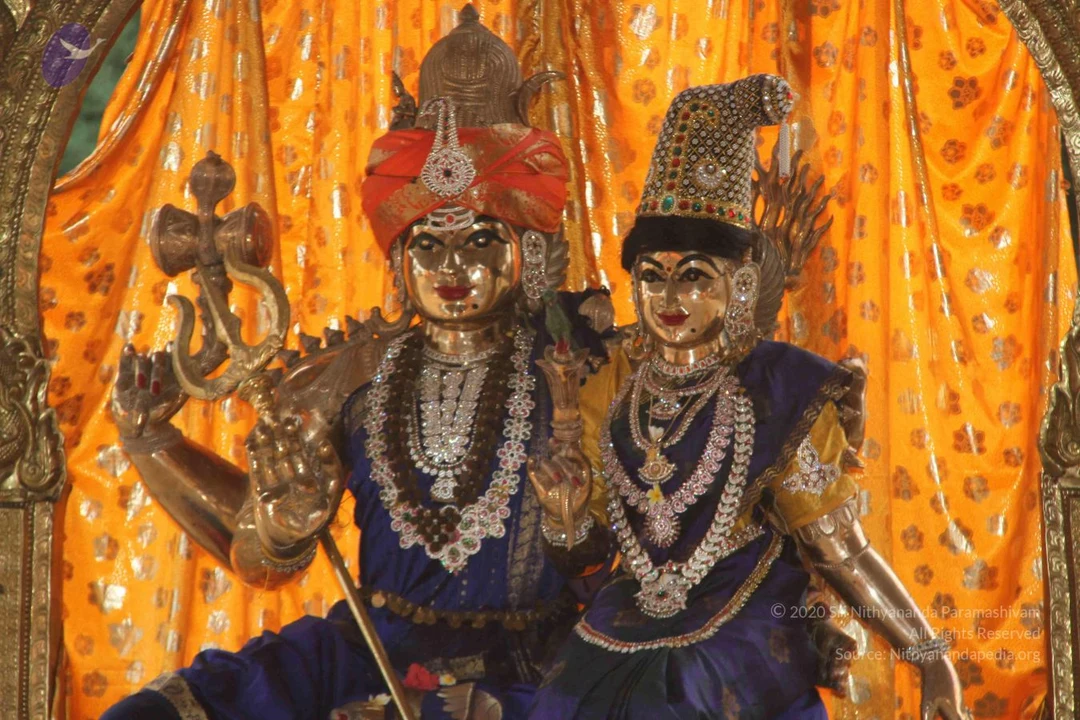
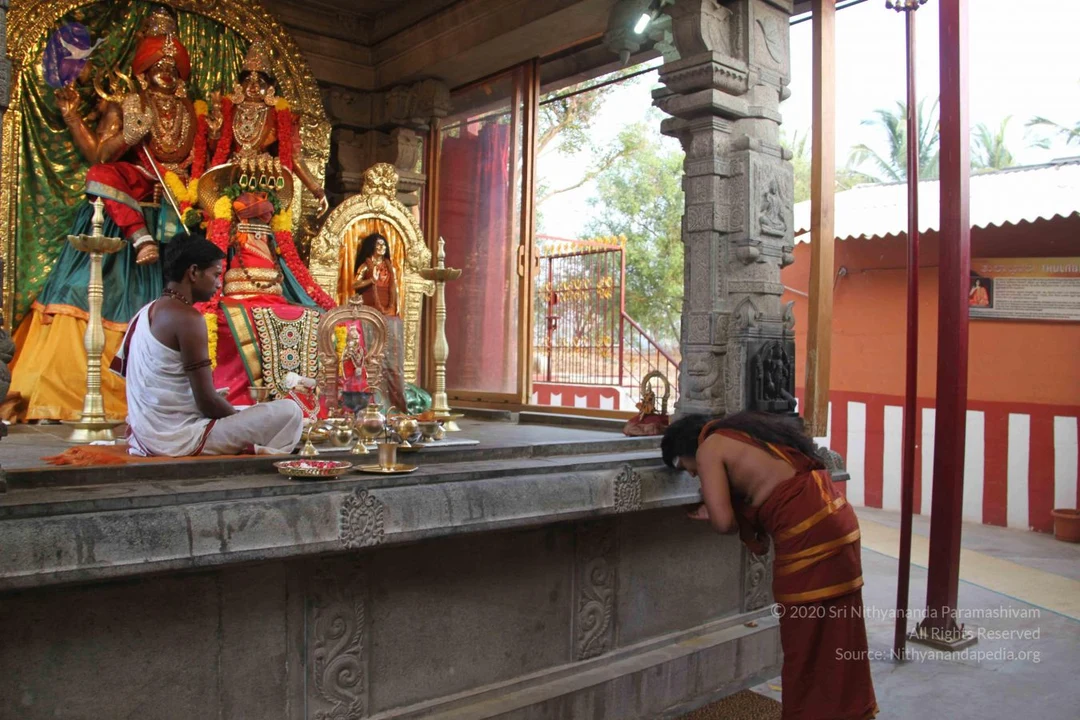
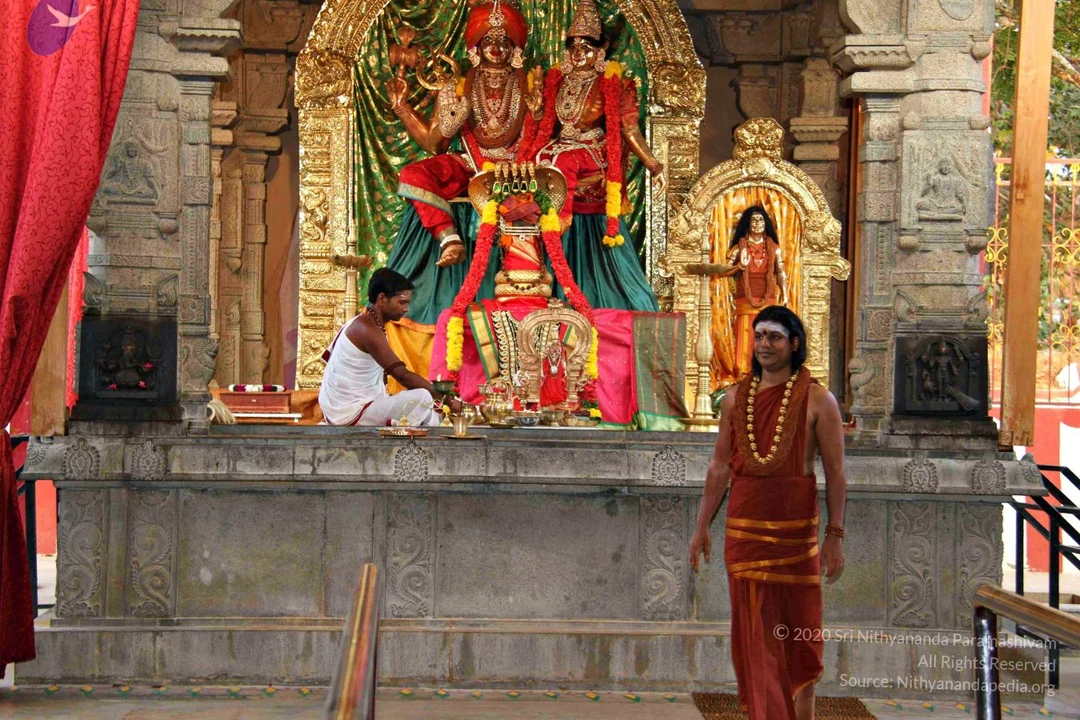
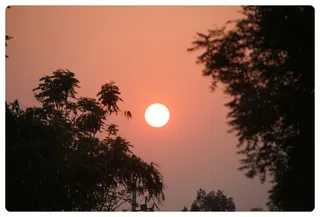
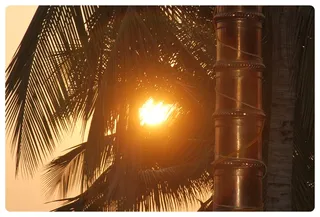
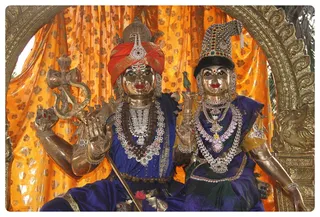
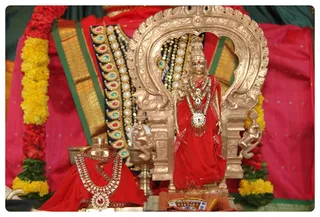
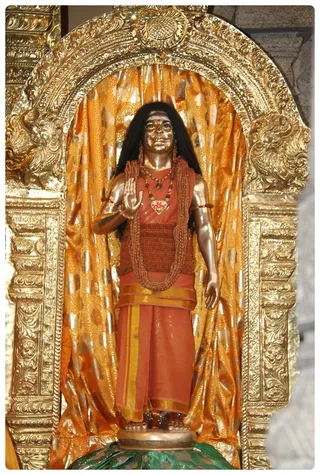
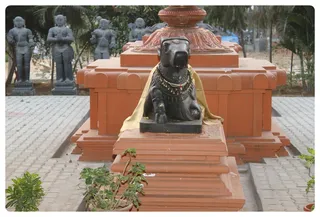
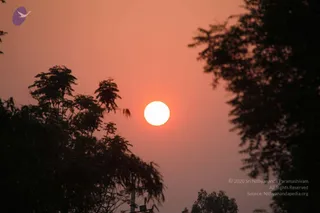
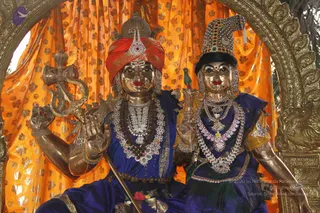
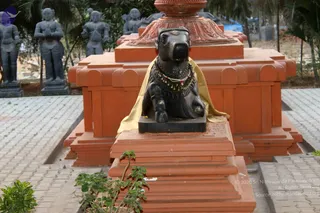
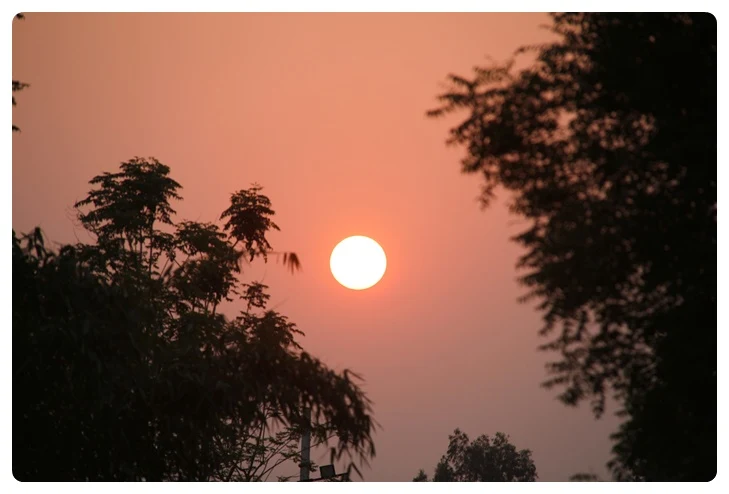
A photograph of a hazy orange sunset with a pale white sun low in the sky, framed by dark silhouetted tree branches on both sides and a faint street light pole at lower left. No people are visible; the scene is an outdoor landscape at dusk.A photograph of a low sun glowing orange through the dark fronds of a palm tree at dusk. On the right, a tall polished copper cylindrical pillar with decorative ring bands and a wrapped twine stands against the trunk. No people are visible. The sky is pale golden and hazy around the sun.Two golden metallic deity murti statues are seated side by side against a backdrop of orange and gold brocade drapes with an ornate gilded frame. The figure on the left wears a red turban, dark blue silk garment, layered silver and jewelled necklaces and holds a trident-like staff and a small ceremonial implement. The figure on the right wears a jewelled crown-like headdress, a dark blue sari with green border, multiple strands of pink and gold jewelled necklaces and holds a small parrot-shaped ornament. Both are heavily adorned with ornaments and decorative jewellery. No living people are visible.A photograph of a decorated deity murti standing in a gilded arched niche against a backdrop of pink and green draped fabric. The murti wears a red sari, layered gold necklaces with a central medallion, and a jewelled crown. Yellow and red marigold garlands frame the niche sides. In the foreground, a silver tray holds a red-cloth-draped mound of gold and ruby necklaces beside a brass vessel. No physical people are visible.A metallic statue stands in a gilded arched niche draped with orange and gold brocade curtains. The figure has long dark hair, a red tilak mark on the forehead, and wears a rust-orange dhoti with a gold border, a bead-and-rudraksha style mala across the chest, and a red-orange shawl. The right hand is raised in abhaya mudra, and the statue is set on a pedestal above a green cloth. A statue of a sacred figure is a depiction in a shrine setting, with no living people visible. The statue has no printed name, so no name is attributed.A photograph of an outdoor shrine at Adi Kailasa. A black stone Nandi bull sits on a tiered terracotta-coloured pedestal, draped with a yellow cloth and adorned with a beaded garland and necklace. Behind it stand several grey stone figures of deities with hands folded in anjali, and palm trees and greenery fill the background. Small green plants grow in front of the base on a paved brick walkway. No people are visible.

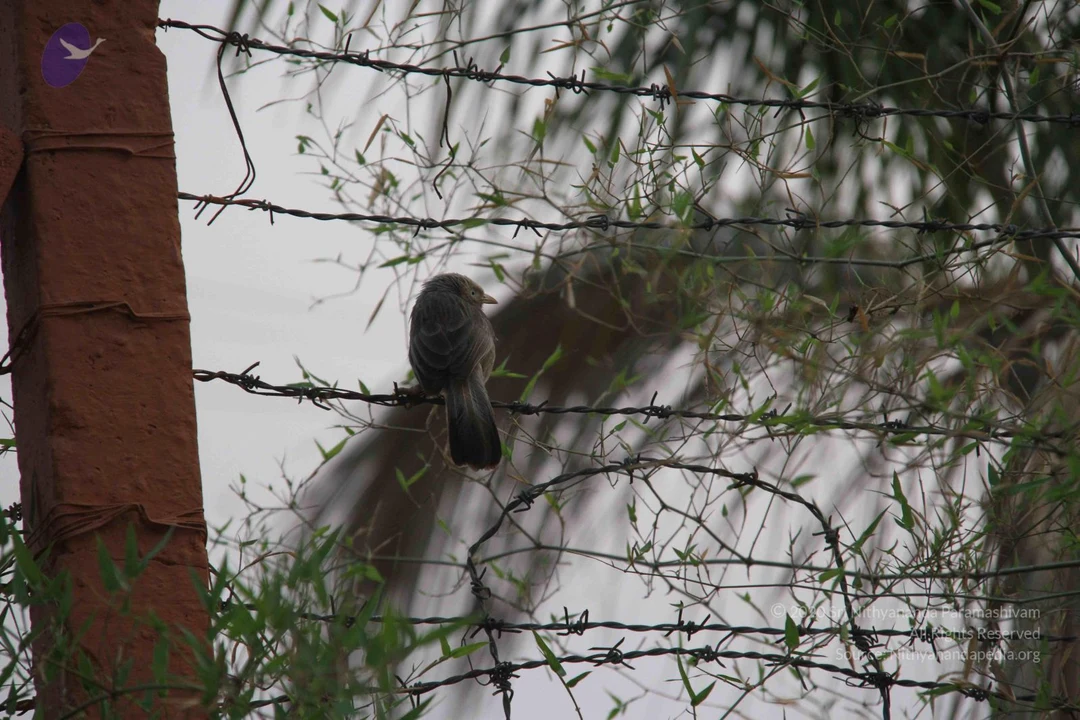
TempleTour-NithyaSatsang
66 photosSource gallery
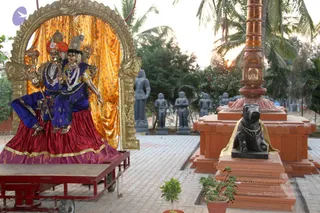
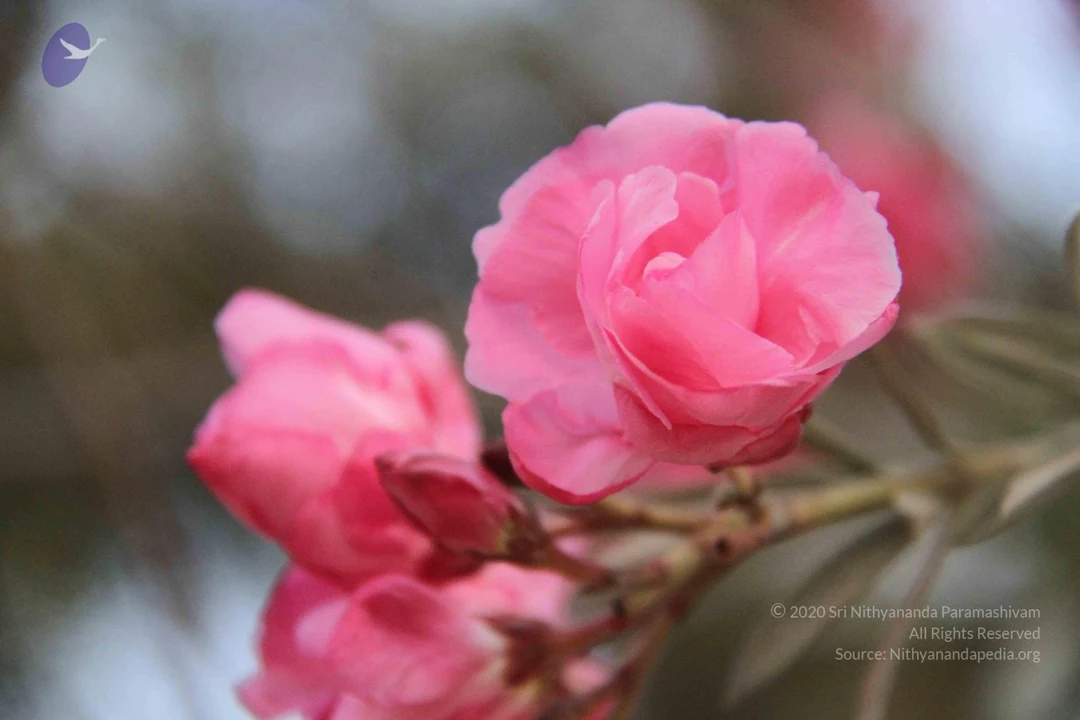
Close-up photograph of pink oleander blossoms on a branch with narrow green leaves and unopened buds. The soft-focus background is blurred grey and pale, with a bokeh effect. No people, deities or ritual objects are visible.A photograph of a small grey-brown songbird perched on a strand of rusty barbed wire fence. Behind it, thin green bamboo leaves and branches blur across the frame, with a brick pillar on the left edge. No people are visible in the scene. The bird faces right with its long tail hanging down. The background is pale and overcast.A photograph of a hazy orange sunset with a bright white sun low in a pinkish sky, framed by dark silhouetted tree branches on the left and right. A utility pole and a small light fixture appear near the bottom edge. No people are visible in the scene.Golden metal murti of a seated Shiva and Parvati on an ornate golden throne-like backdrop draped with orange fabric printed with floral motifs. The Shiva figure wears a red turban with a crescent-and-tilak ornament, a rudraksha mala and layered silver-and-jewelled necklaces, and a blue garment, holding a trident-like staff in one hand and a drum in another. The Parvati figure wears a jewelled crown-like headdress, multiple ornate necklaces, a blue sari, and holds a lotus-stem flower; a small green parrot perches on the throne near her. Decorative garlands and a red flower appear below. No physical people are visible.A black stone Nandi bull statue sits on a terracotta-red tiered plinth in an outdoor temple courtyard. The bull wears a yellow cloth draped over its back, a beaded necklace with red and white threads, and a red-and-white decorative forehead ornament. Behind it stands a red sandstone structure with a rounded kalasha-style top. Grey stone standing figures with folded hands flank the scene under trees, and paved brick tiles surround the platform. No people are visible.Outdoor photograph of a large painted deity murti pair on a red wheeled cart in a garden, a male figure with crown and trident beside a female figure in blue and maroon garments with garlands, set before a golden arch and orange drapery. To the right, a tall copper kalasha-style pillar stands on a brick base beside a black Nandi bull statue draped in yellow cloth with a necklace. Grey stone statues stand in the background among palm trees at dusk. No physical people are visible.

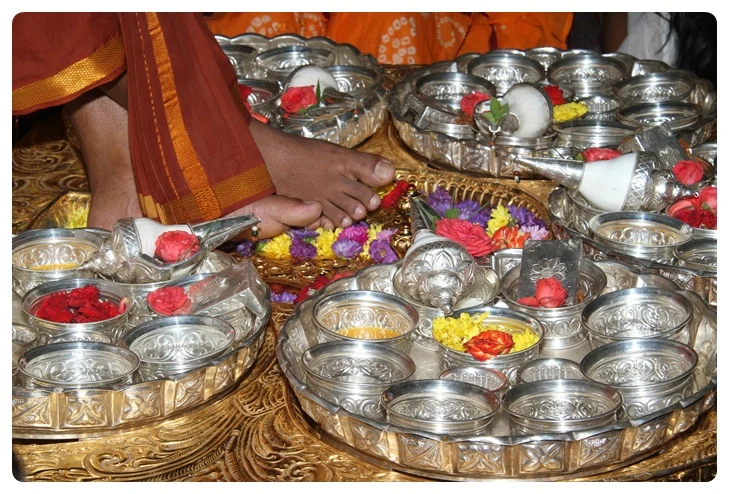
PadaPuja

33 photosSource gallery
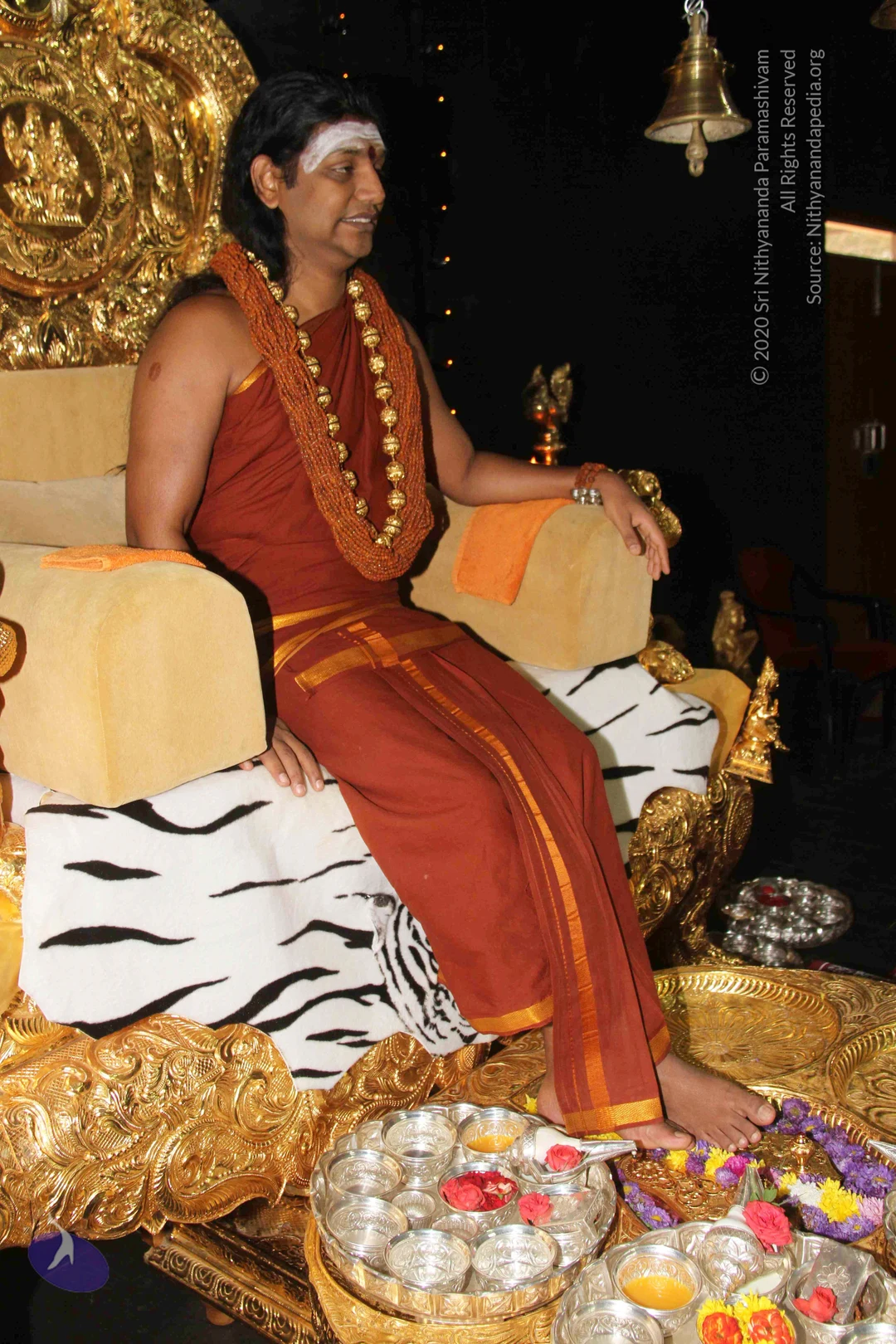
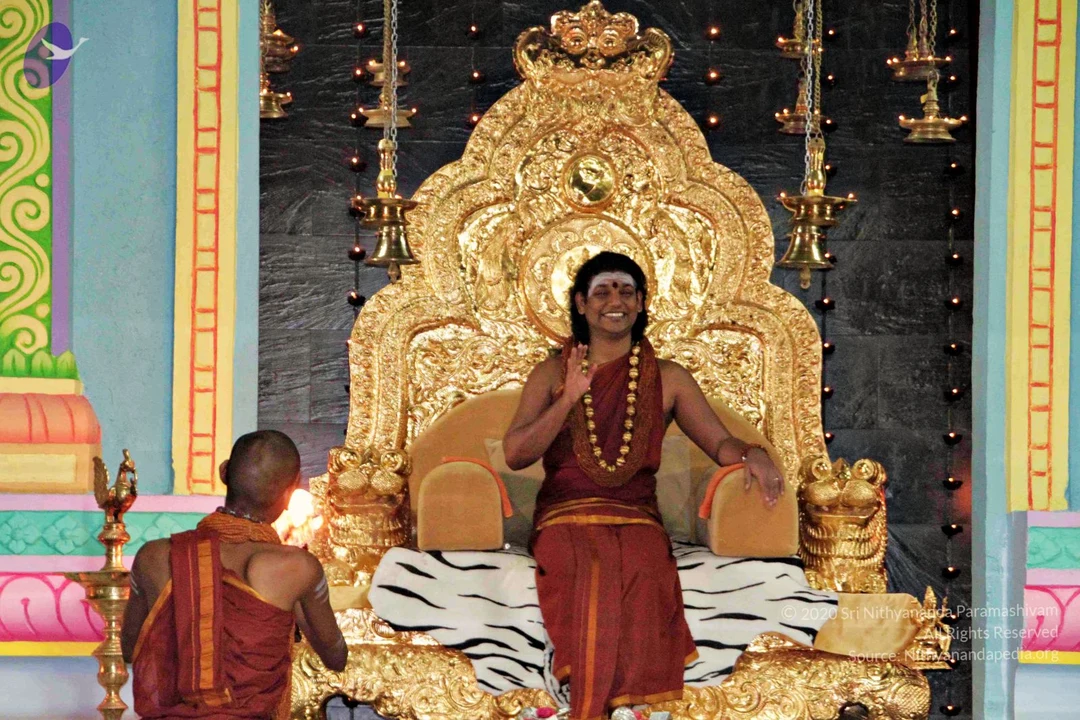
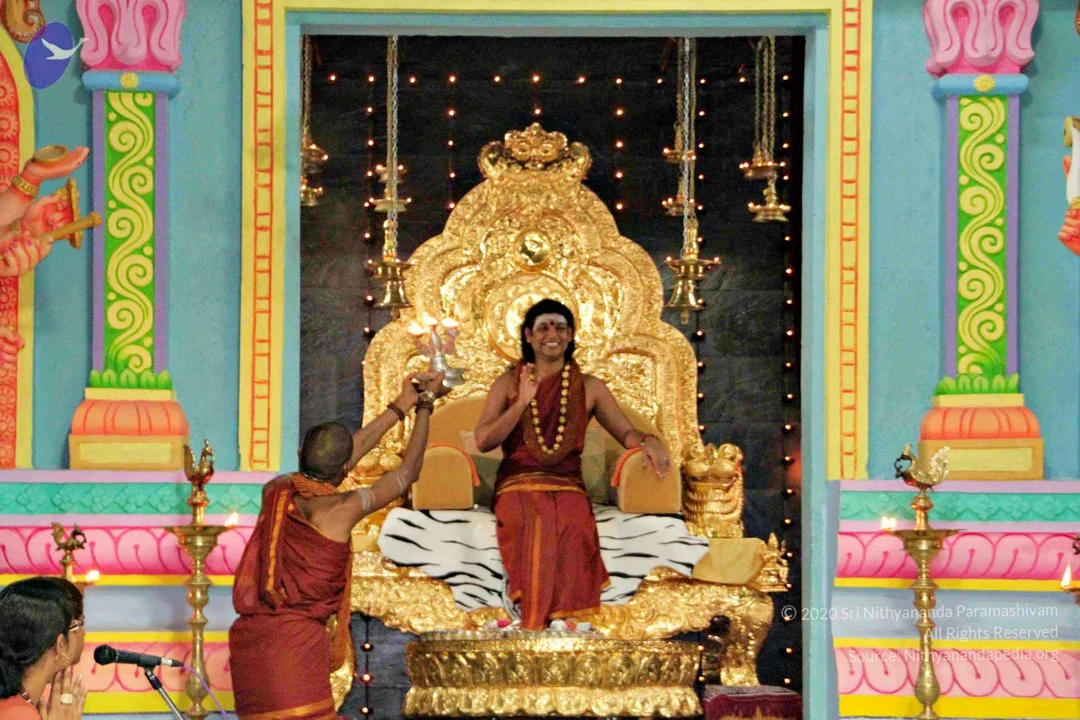
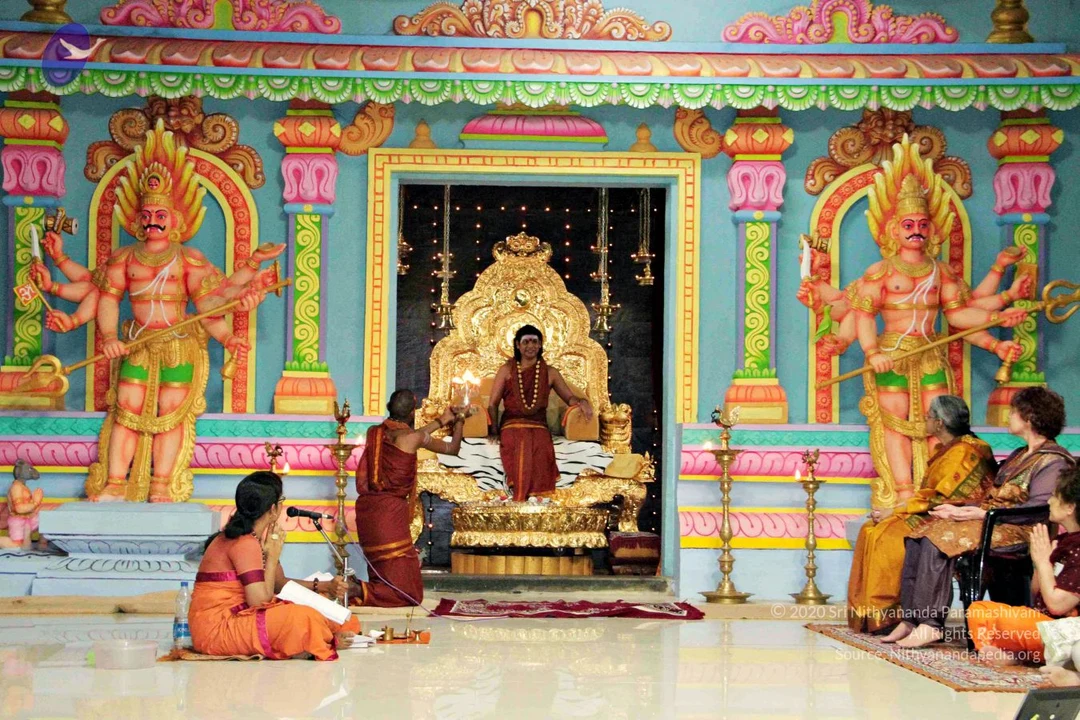
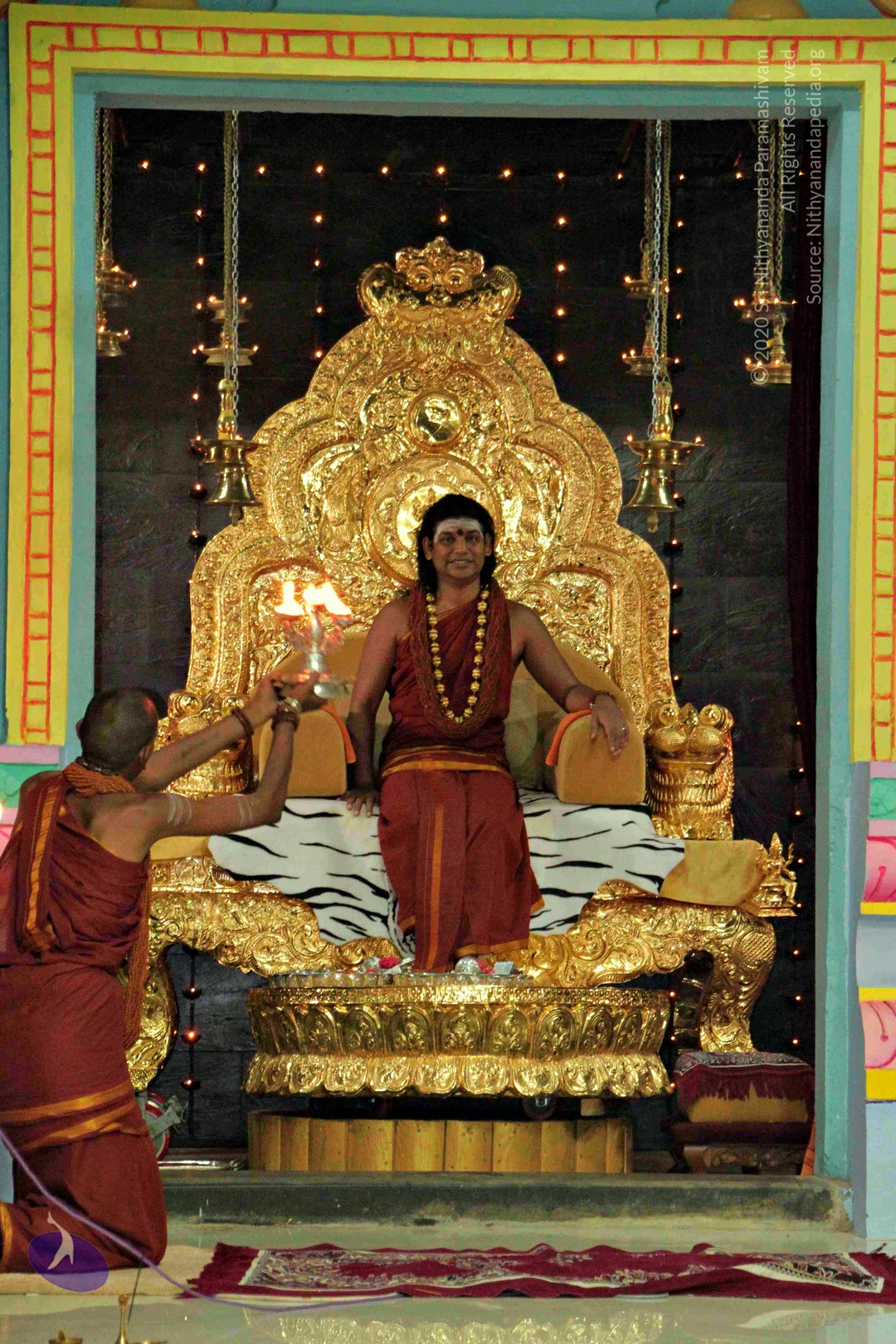
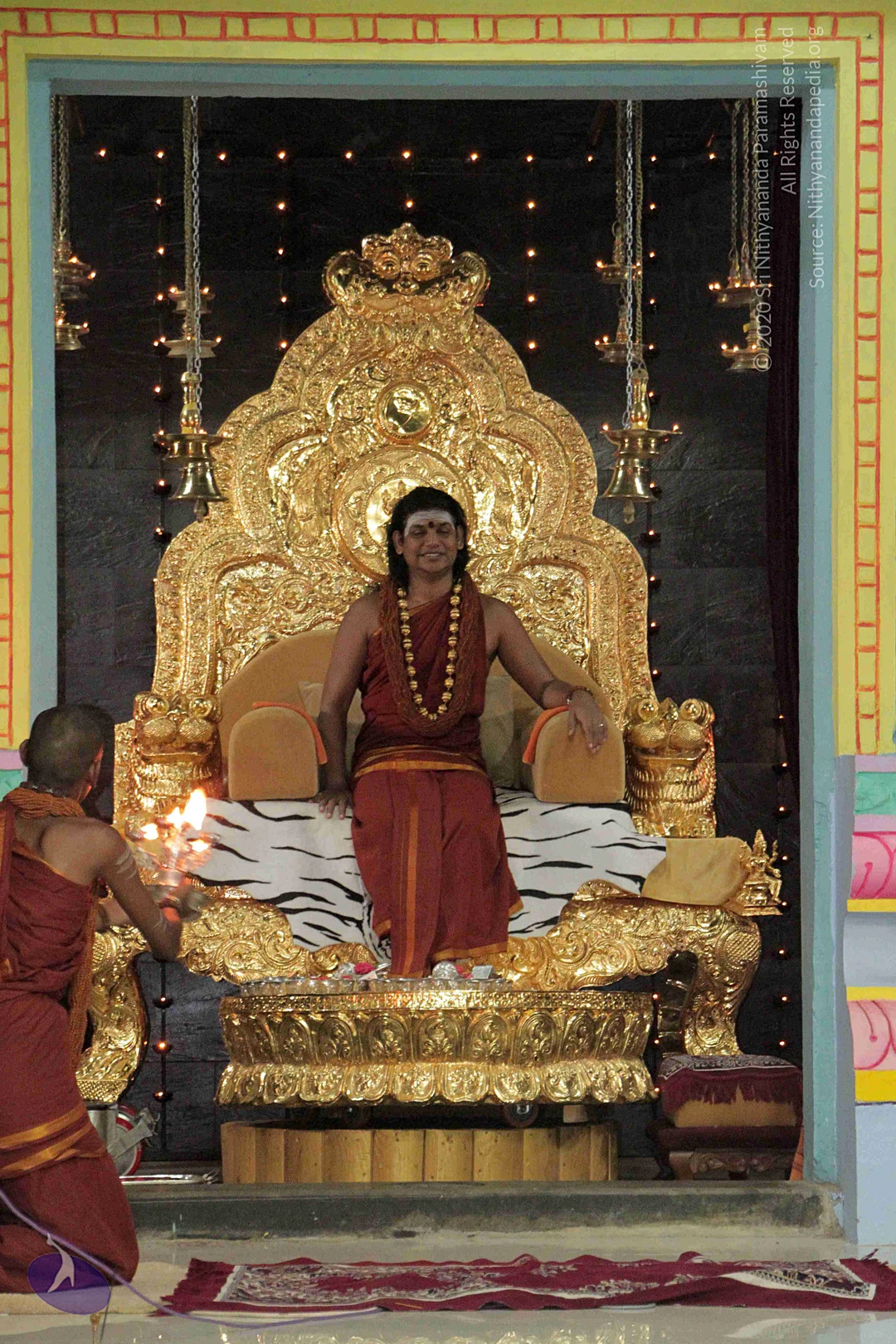
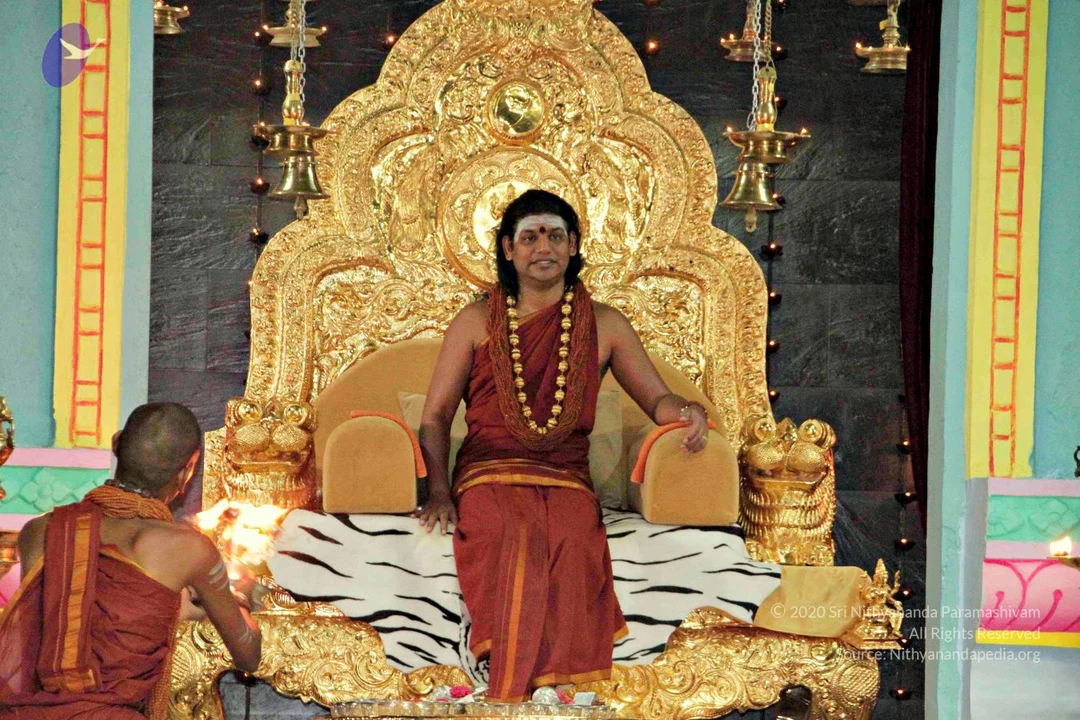
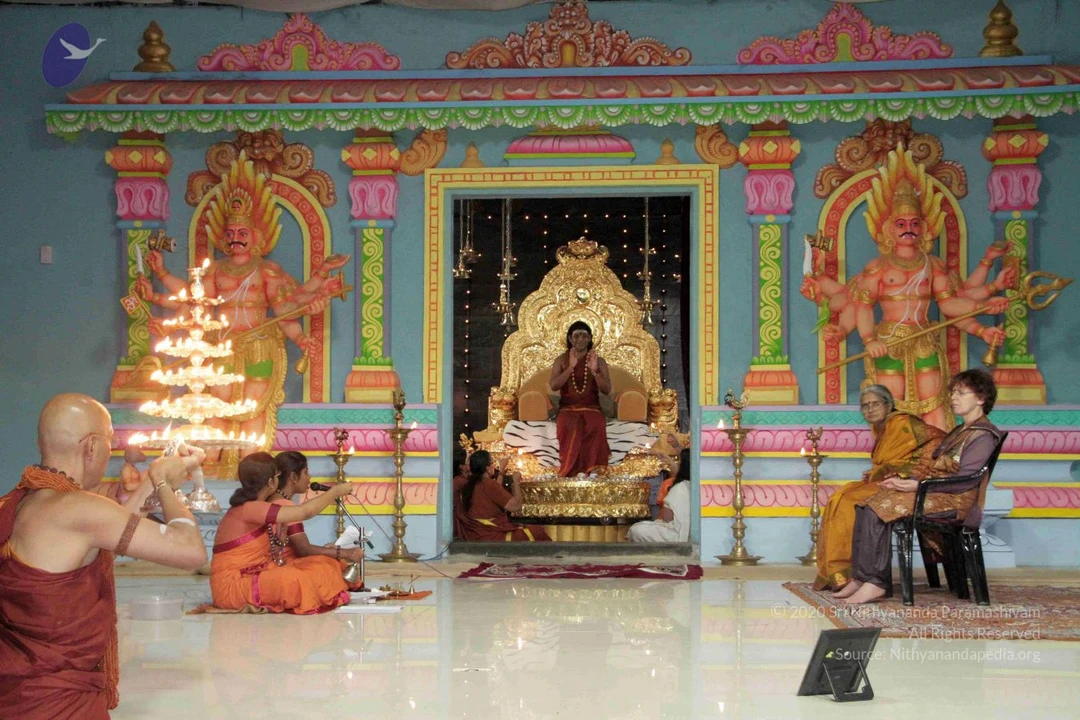
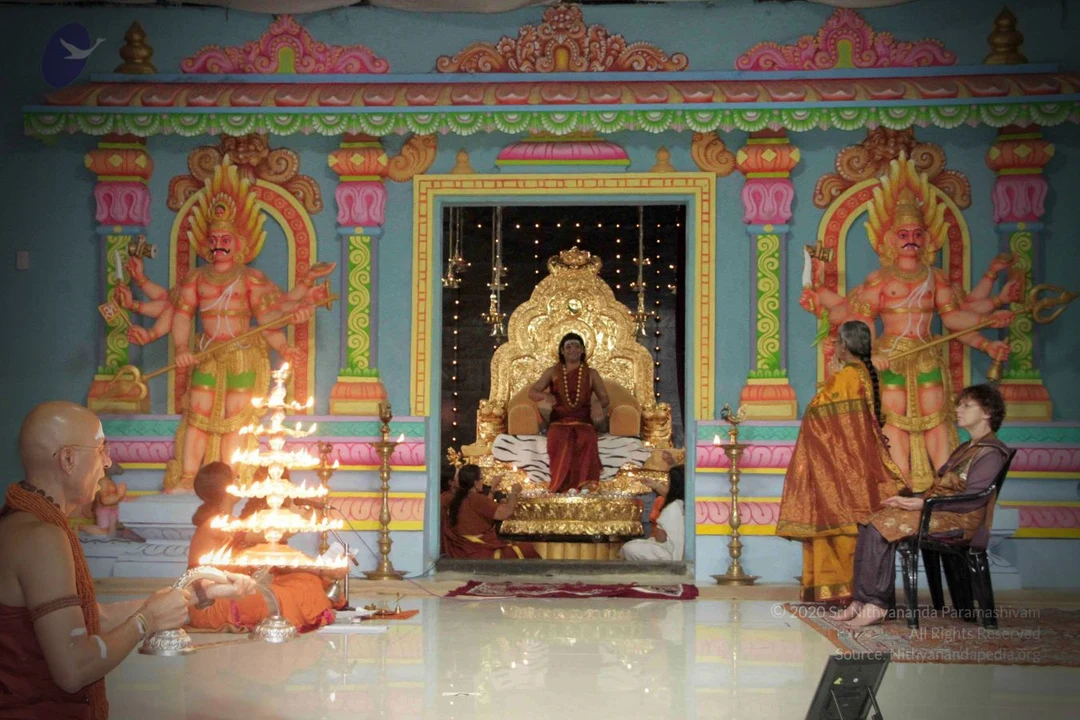
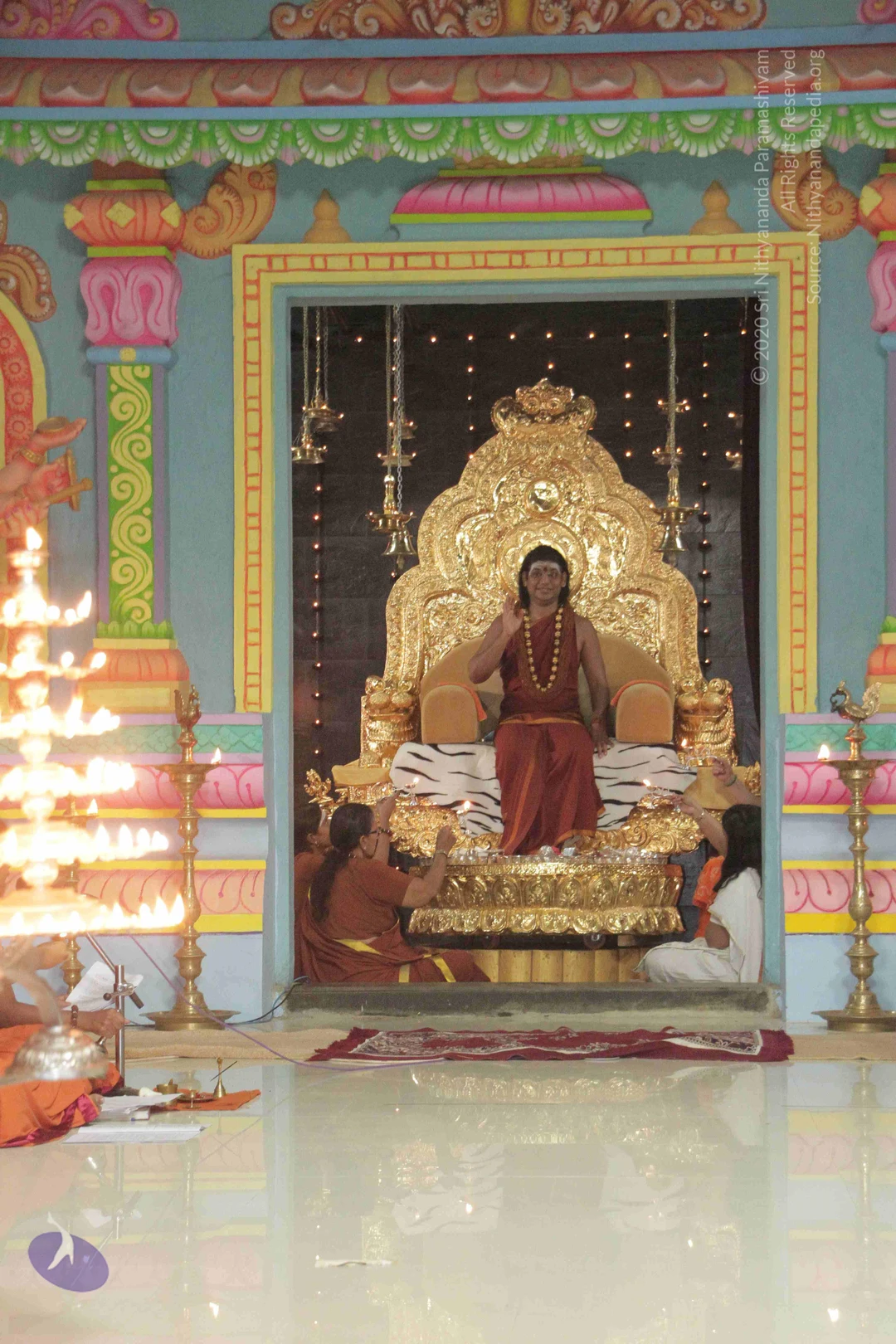
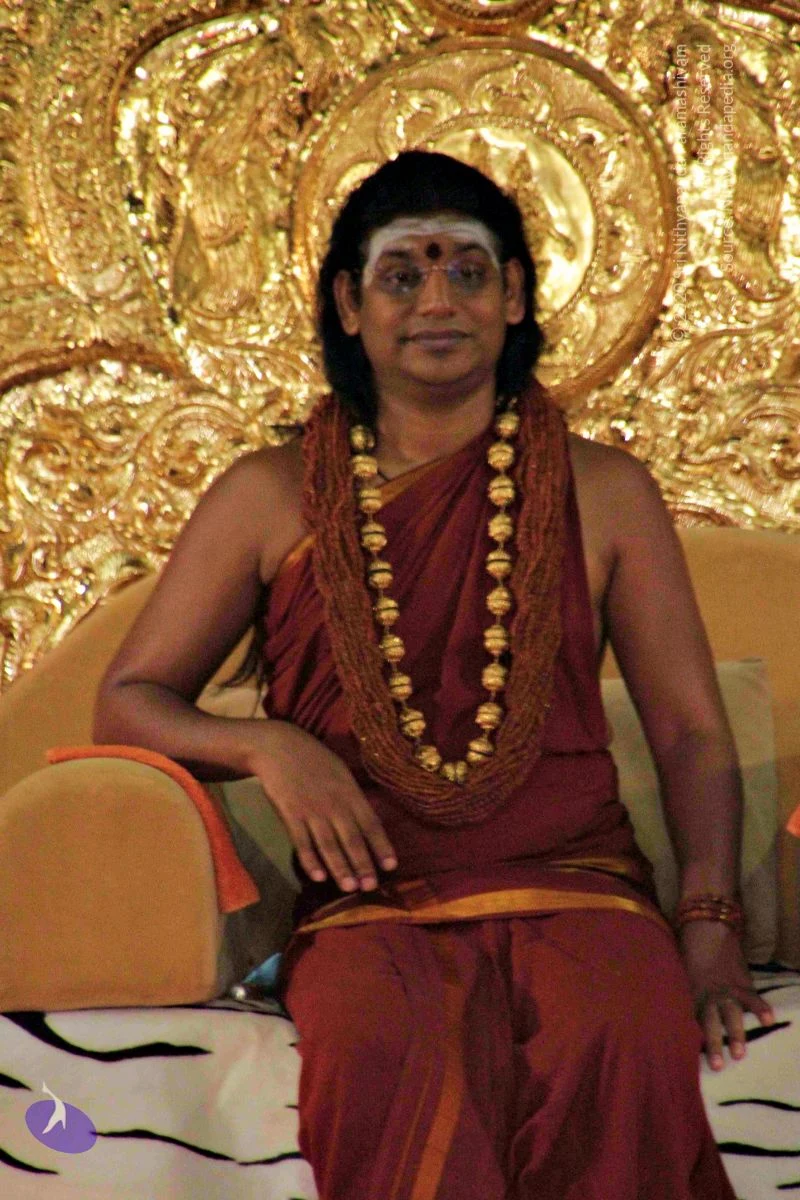
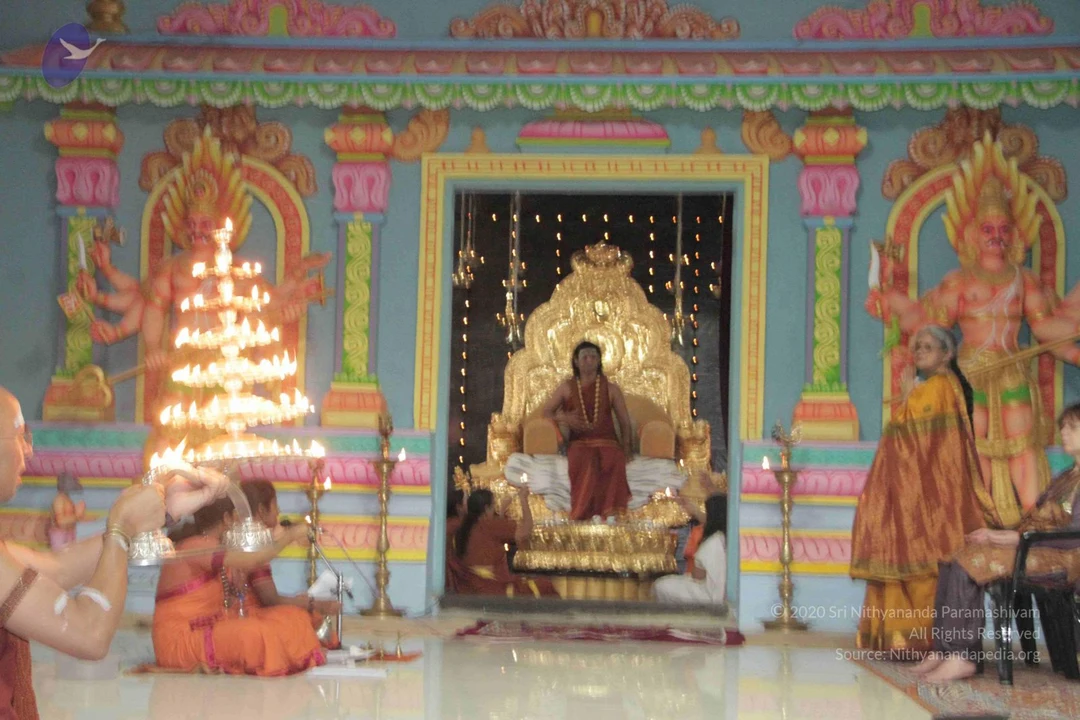
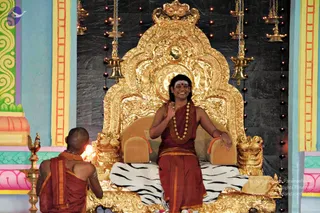
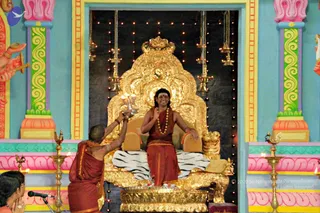
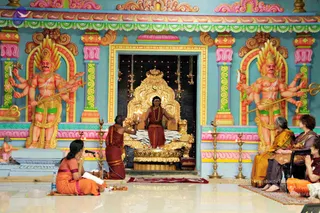
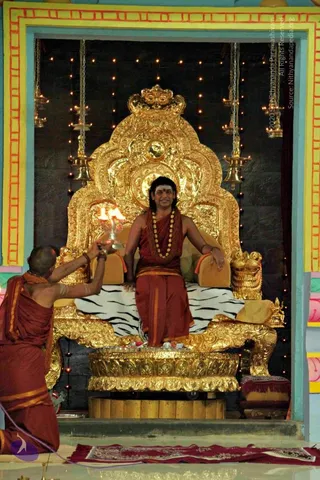
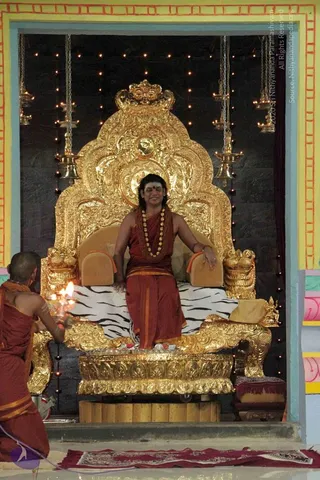
A photograph of a seated man on an ornate gold throne with a carved crown-like backrest and a tiger-striped cloth draped over the seat. He wears a red-orange robe, a red-orange shawl, a long beaded gold-and-bead garland, a red tilak on his forehead, and bangles, and he raises one hand in greeting while smiling. A younger monk in red-orange robes sits cross-legged on the lower left, facing him. Behind them hang brass oil lamps and bells from chains against a dark panel, flanked by painted blue, green and yellow pillars. Swamiji (probable) is shown on the throne, with the appearance cues of a long swept-back hair style, orange robes, a beaded garland and a ceremonial throne, and the monk is a disciple attending him.A photograph of a seated man on an ornate gold throne with a tiger-striped cloth draped over the seat, dressed in a red-orange robe and a beaded rudraksha mala, smiling and gesturing with a raised hand. A shaved-headed priest in a red-orange cloth kneels at left and holds a lit oil lamp toward him, while a woman with folded hands sits beside a microphone at the lower left. Brass oil lamps stand on the pink-and-green painted pedestals of a shrine-like stage, with hanging brass lamps above the throne.A photograph inside a brightly painted temple-style hall with pink, green and blue ornamentation. Two large dvarapala-style guardian figures with multiple arms, red bodies, moustaches and crowns flank a central doorway. A seated figure in a golden throne with a tiger-skin cushion wears orange-red cloth and a rudraksha mala, with hands raised in a blessing gesture. In front, a man in orange-red robes holds a lit lamp toward the throne, and a woman in an orange sari sits on the floor beside a microphone and papers. Two women in saris sit on a carpet at the right, watching. Brass lamp stands and a kalasha-style arrangement are on the floor.A seated man on an ornate gold throne with a tiger-striped cloth and gold-carved backrest, wearing a rust-red dhoti and shawl with a long gold-bead necklace and a red tilak on his forehead. A kneeling priest with a shaved head, in rust-red robes and a rudraksha-style necklace, holds a silver aarti lamp with lit flames toward him. Oil lamps hang from chains and string lights glow on a dark backdrop, with a red patterned mat on the floor. The seated man has long dark hair and a crown-like gold finial atop the throne; the setting resembles a temple-style hall. Two physical people are visible. The lamp-holding ritual is an aarti, and the seated figure's appearance is consistent with the page's a person label, though the ornate throne is not sufficient to confirm identity.A photograph of a seated figure on an ornate gold throne in a hall lined with hanging brass oil lamps and small lights. The man wears a saffron-red shawl and dhoti, a long gold-bead necklace, and a red-and-white tilak on his forehead, and sits on a zebra-striped cloth atop a golden lotus base. A shaven-headed attendant in red robes kneels at the lower left, holding a lit oil lamp for an aarti offering. A red-and-gold patterned rug lies in the foreground. A portrait medallion is set into the throne's backrest.A photograph of a seated figure on an ornate gold throne with a tiger-skin cloth draped over the seat, set against a dark stone-patterned backdrop with hanging brass oil lamps and bells. The central figure wears a maroon-red robe with a matching shawl, a long rudraksha-style bead necklace with gold ornaments, a red tilak on the forehead and long dark hair, with hands resting on the gold armrests. At lower left, a shaved-headed attendant in orange-red robes holds a bright flame. Small lit oil lamps and offerings sit on the floor in front. The central figure matches the appearance cues of the a person and is shown seated in a ceremonial setting with a ritual attendant.
Darshan
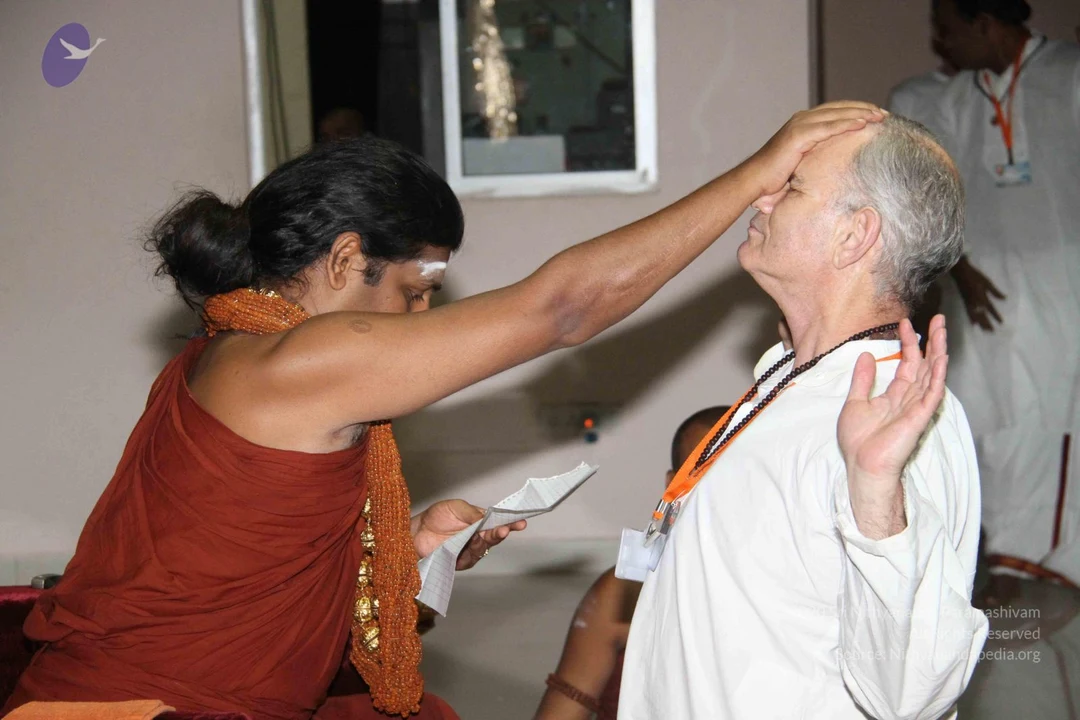
8 photosSource gallery
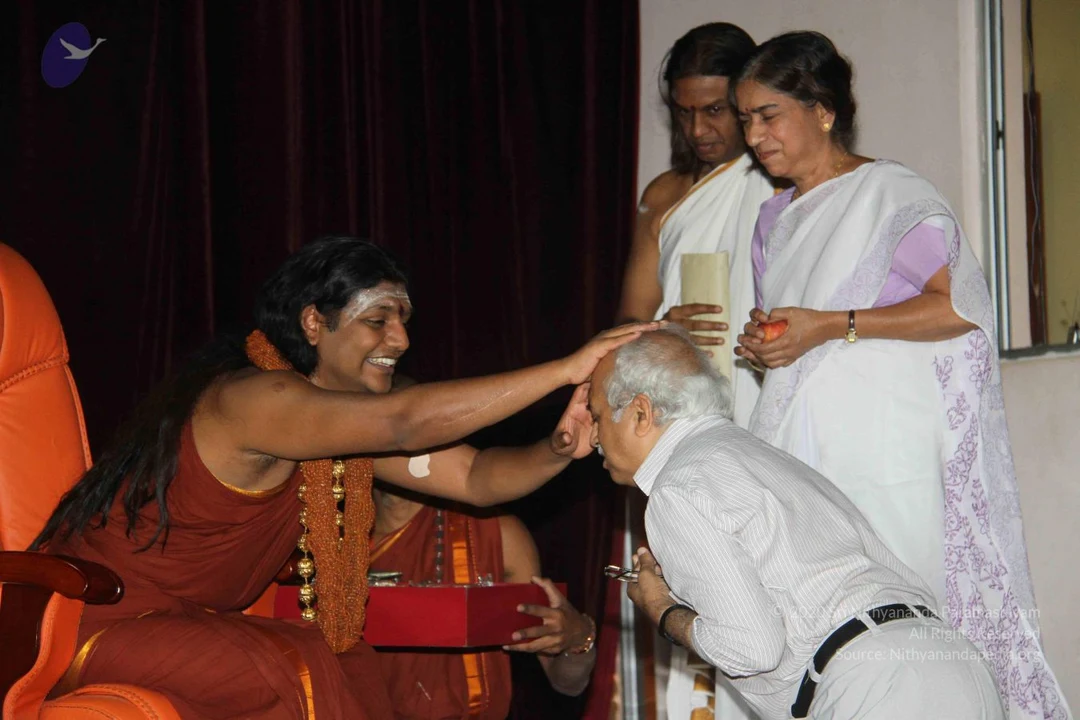
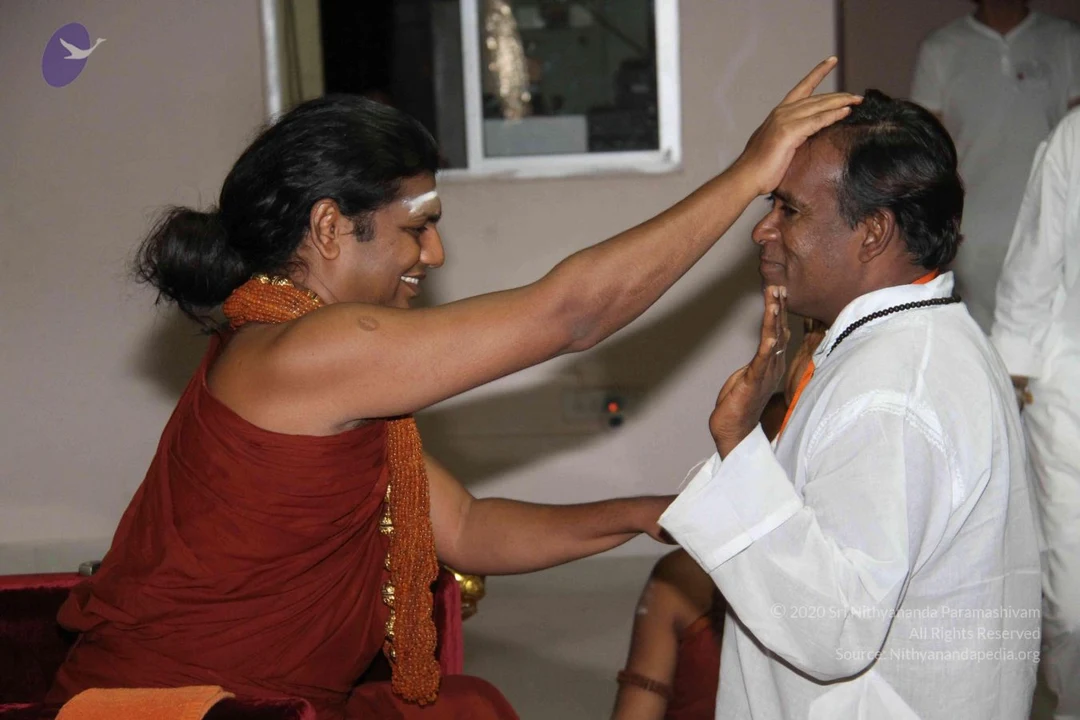
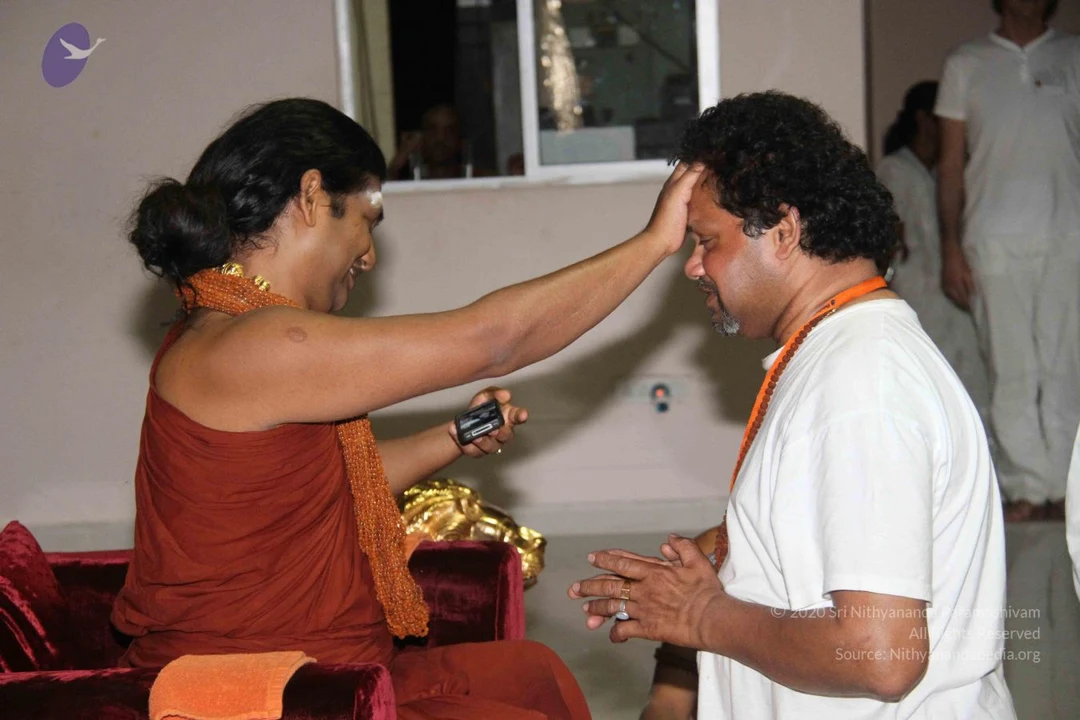
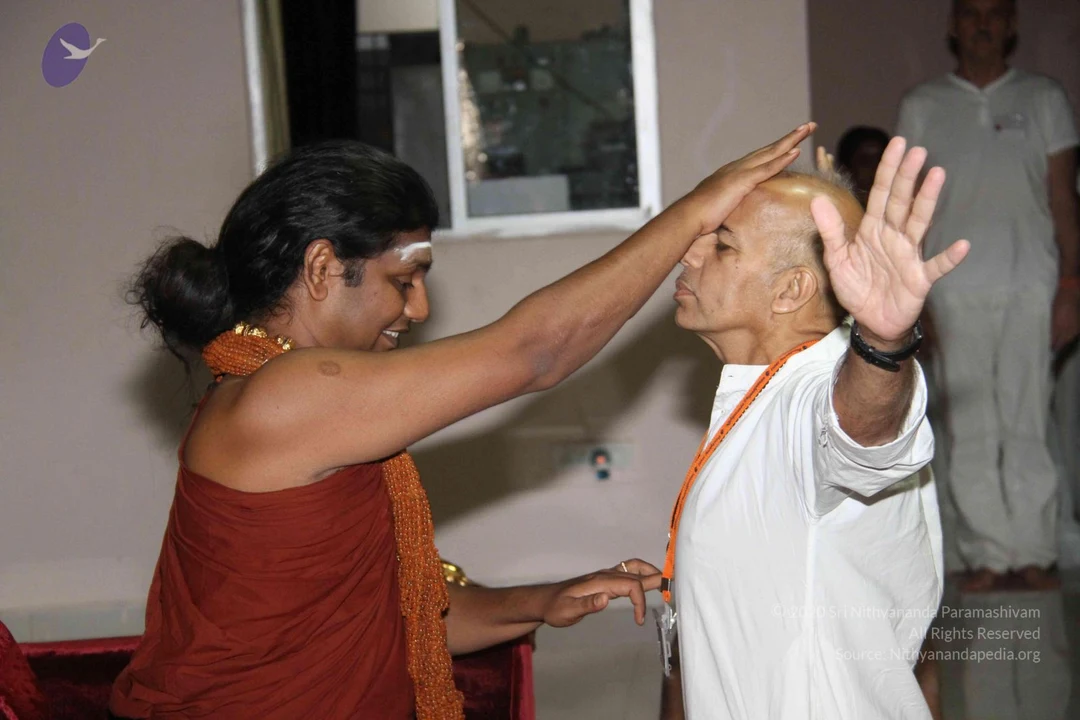
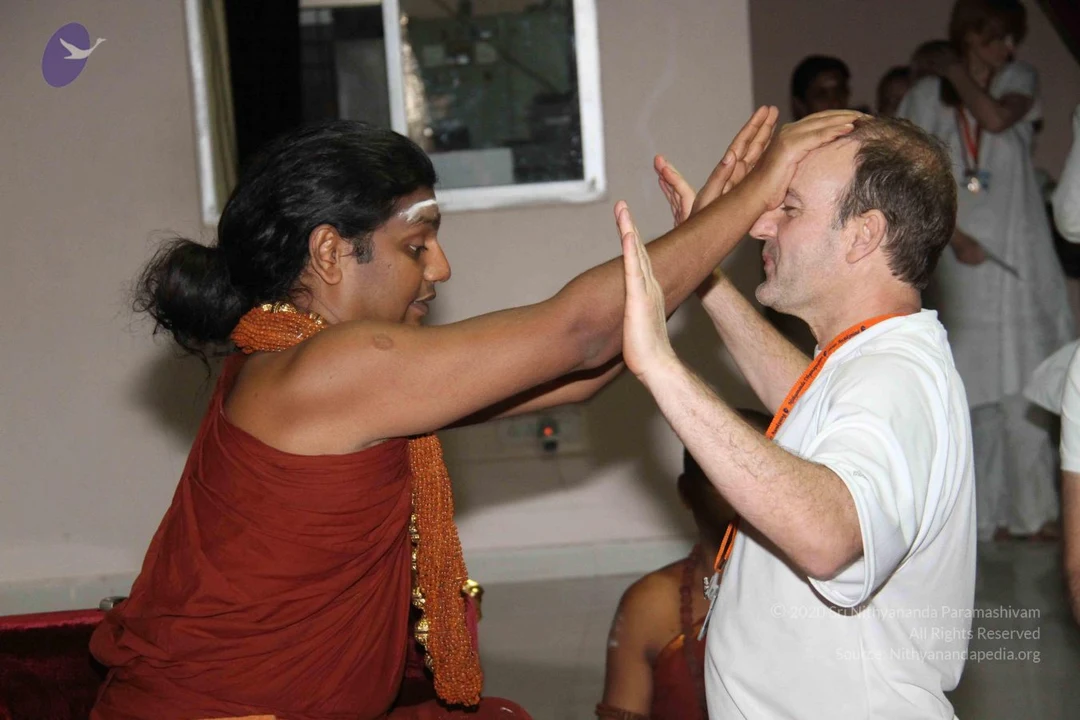
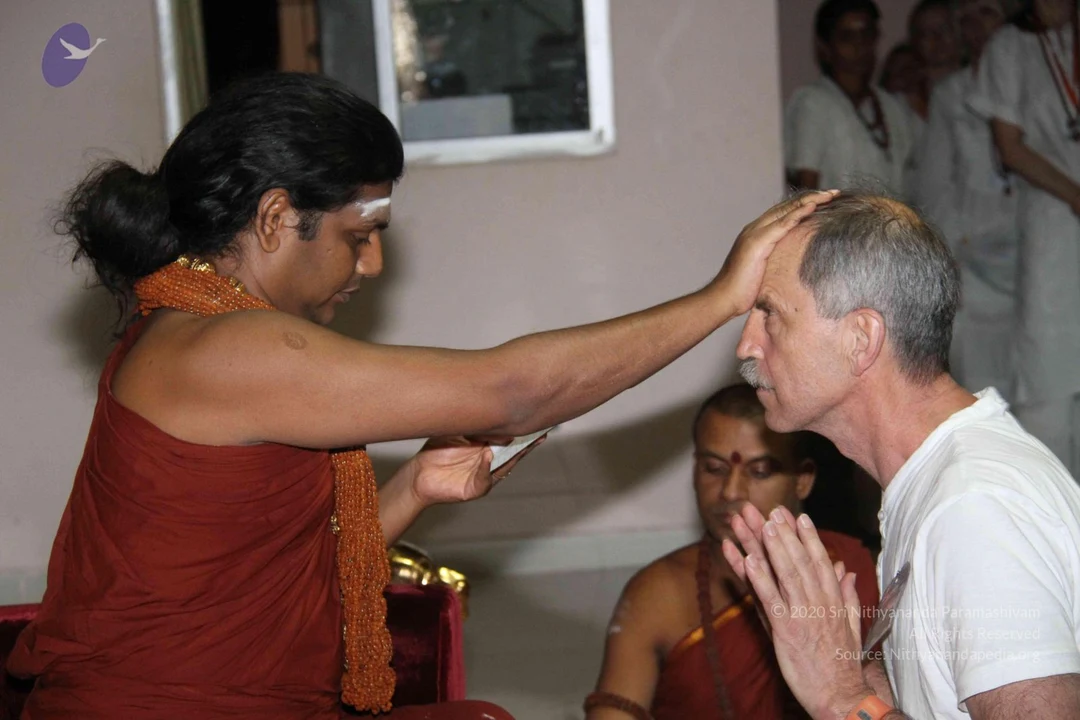
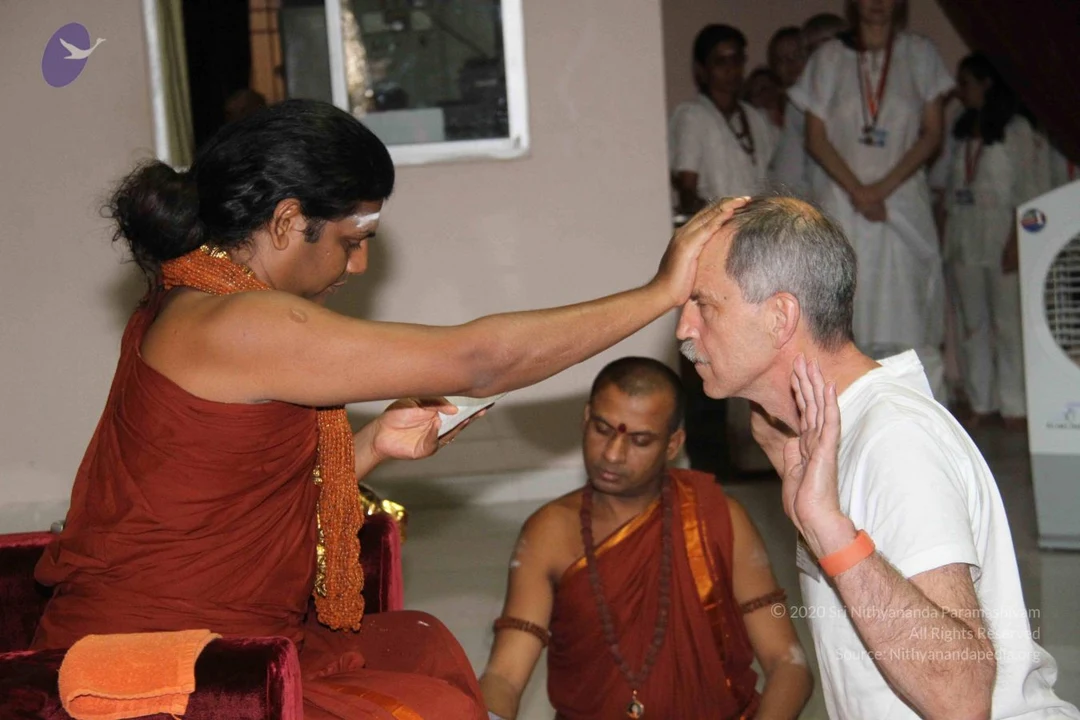
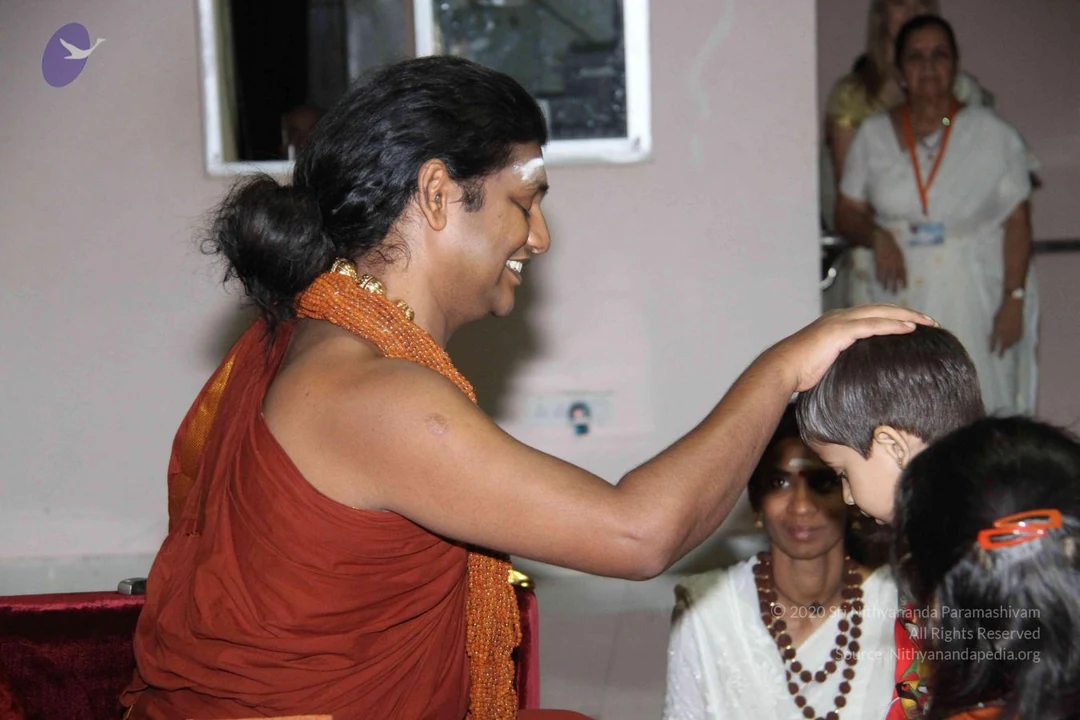
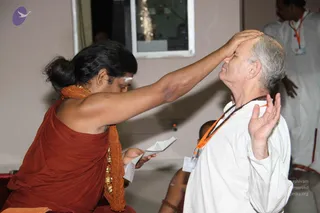
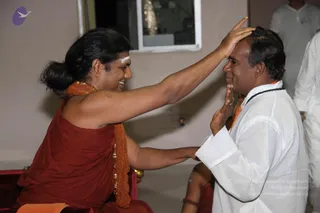
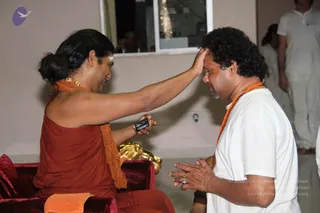
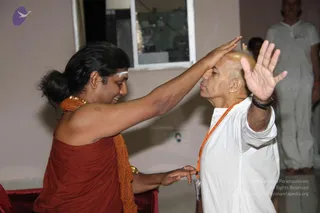
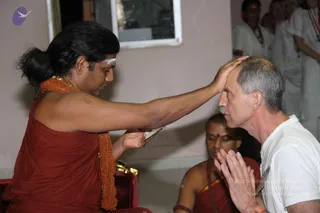
A photograph of a seated figure in a rust-red robe with a thick orange-gold beaded shawl and gold-coloured beads, a white tilak on the forehead and hair tied up in a bun, placing his right palm on the forehead of an older man with short grey hair. The older man wears a white kurta, a rudraksha mala and an orange lanyard badge, eyes closed with head tilted back, left hand raised open. The figure holds a folded white paper in the other hand. A second person in white is partly visible at the upper right, and a small figure sits at the lower centre. Plain pale walls and a window behind.A photograph of a seated man in a rust-red draped garment with a long orange-beaded necklace and a white tilak on his forehead, his hair tied back, placing his right hand on the forehead of a smiling man in a white kurta with an orange shawl and a dark beaded mala. The seated man's left hand rests on the other man's arm. Another person in white stands at the right edge, and a window and pale wall fill the background. The scene suggests a blessing or darshan exchange.A photograph of a seated figure in a rust-red robe and orange beaded mala, with a vertical white mark on the forehead, leaning forward to place a hand on the forehead of a kneeling man in a white shirt with an orange rudraksha-style mala and folded hands. A red velvet armchair and a golden object sit at left, and other people in white clothes stand in the background near a window. a person: the seated robed figure has long swept-back hair, orange beads and a shawl-style robe, consistent with the page's claim of a person at the Inner Awakening Convention.Indoor photograph of a darshan blessing. A seated figure in a rust-red shawl with a long orange-brown bead mala and a gold chain, with a white tripundra mark on the forehead and hair tied in a bun, extends his right hand onto the forehead of a bald, white-clad devotee wearing a white kurta and an orange lanyard. The devotee holds his right palm open outward. A standing man in a white shirt watches at the right, with a plain pale wall, window and a red-cushioned seat behind.A photograph of a seated guru in a rust-red saffron wrap with a long orange rudraksha mala and gold ornaments, a white tilak on his forehead and long hair tied back, placing both palms on the forehead of a man in a white t-shirt with an orange lanyard. Behind them, a few other people in white clothing and devotees stand in a plain room with a window. The guru, wearing distinctive rudraksha and saffron clothing, appears to be the a person, performing a blessing on a devotee.A seated man in a rust-red saffron-toned garment with an orange-beaded mala and a gold-toned necklace places his right hand on the forehead of an older, grey-haired Western man in a white shirt who bows with palms pressed together. The blessed man wears a lanyard-style badge. Behind them a seated monk in red robes with a red bindi and a rudraksha-style mala waits, and several people in white clothes stand in the background near a window. The white forehead marking on the standing man matches the blessing gesture. Pale pink walls and a red cushioned seat complete the room.