Skip to content
Saturday

8 March 2014

Dated photos
173
Source pages
1
Media
2
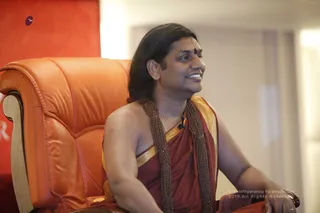
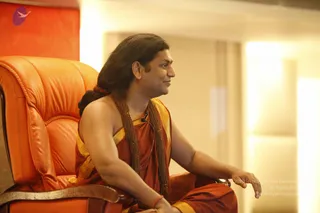
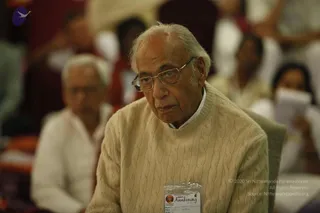
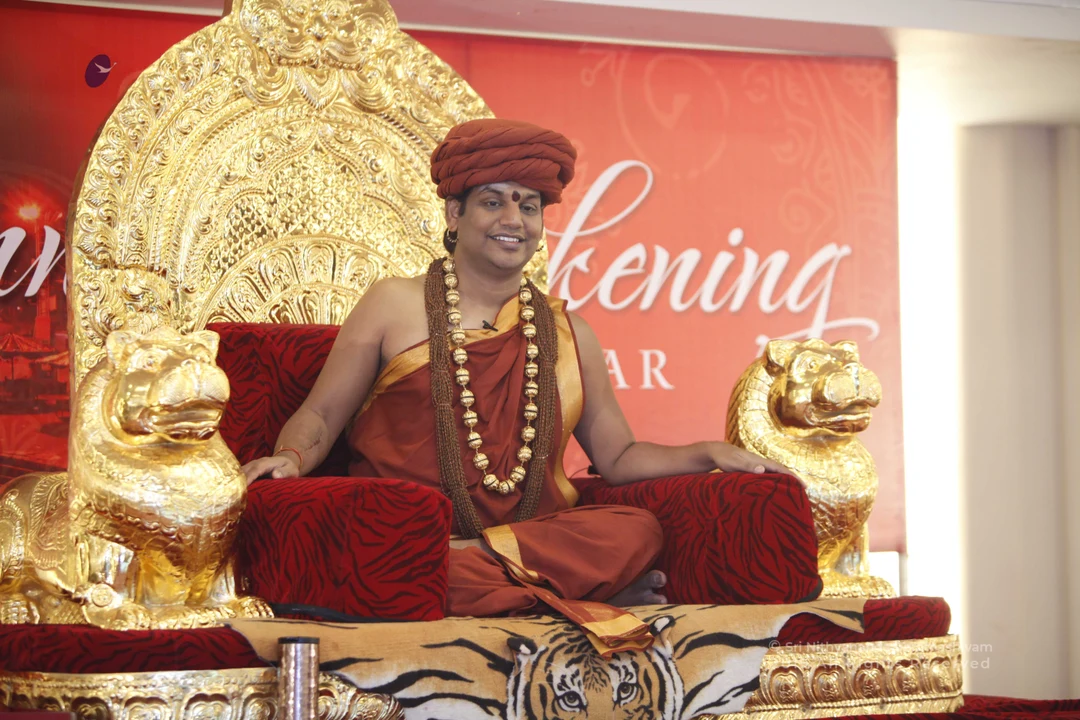
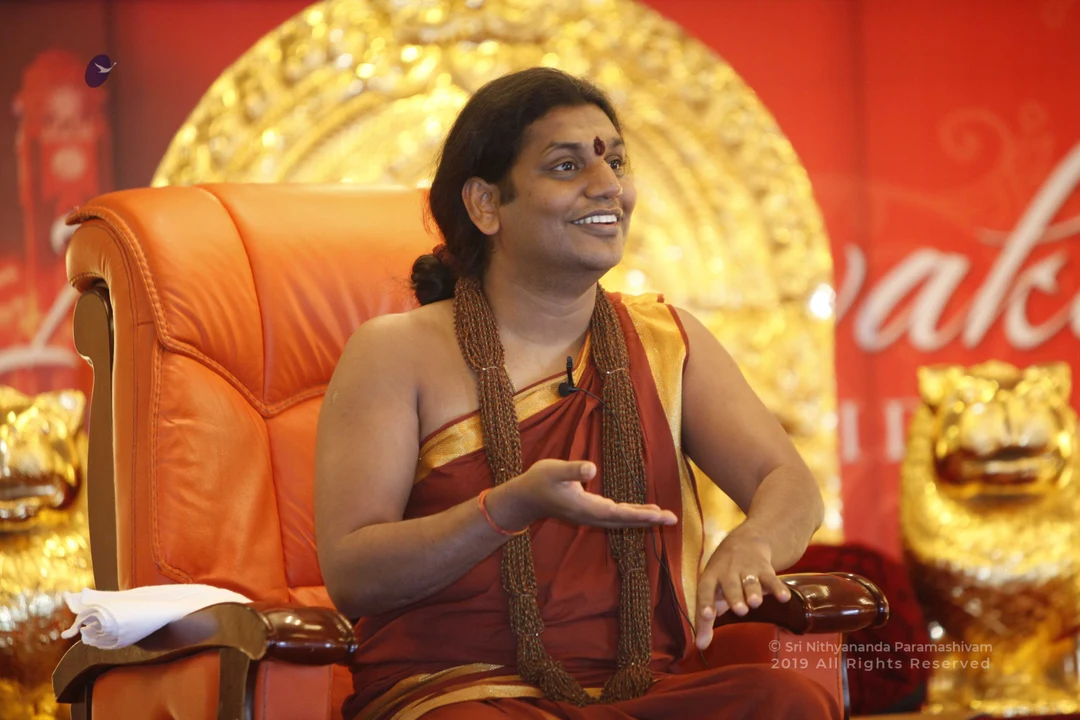
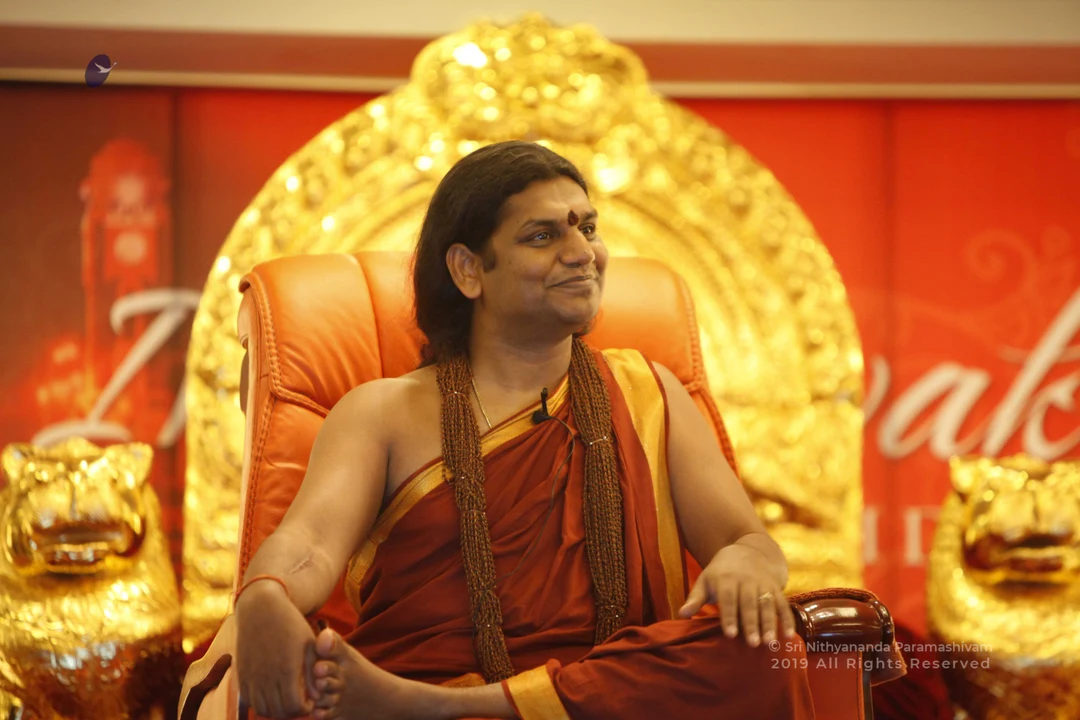
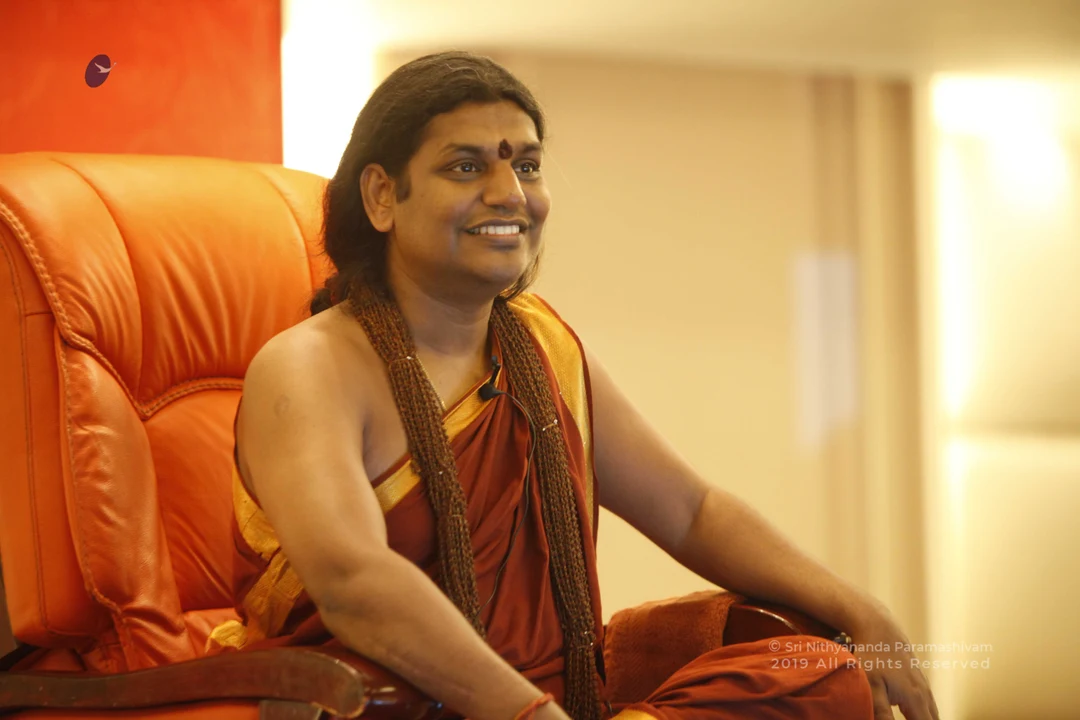
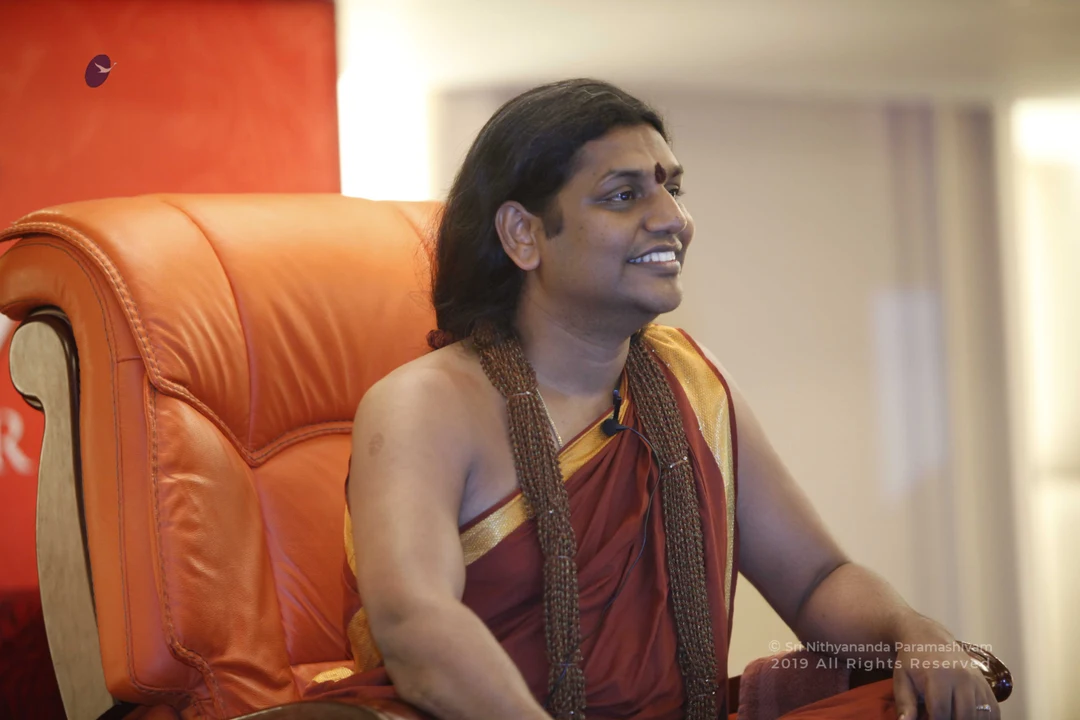
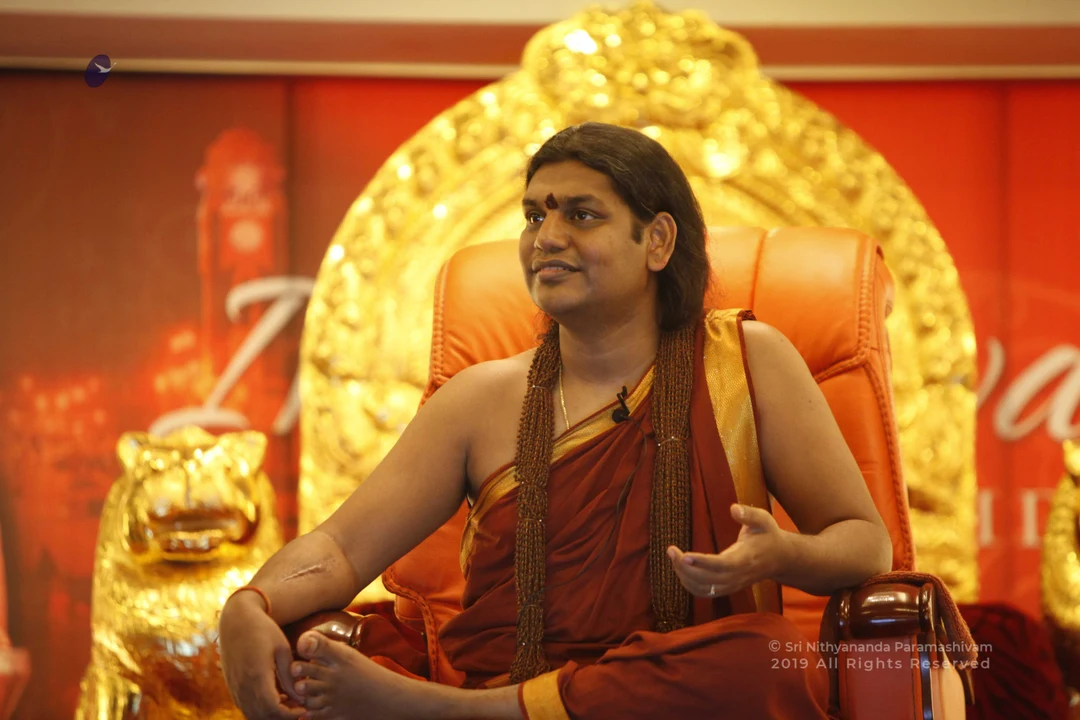
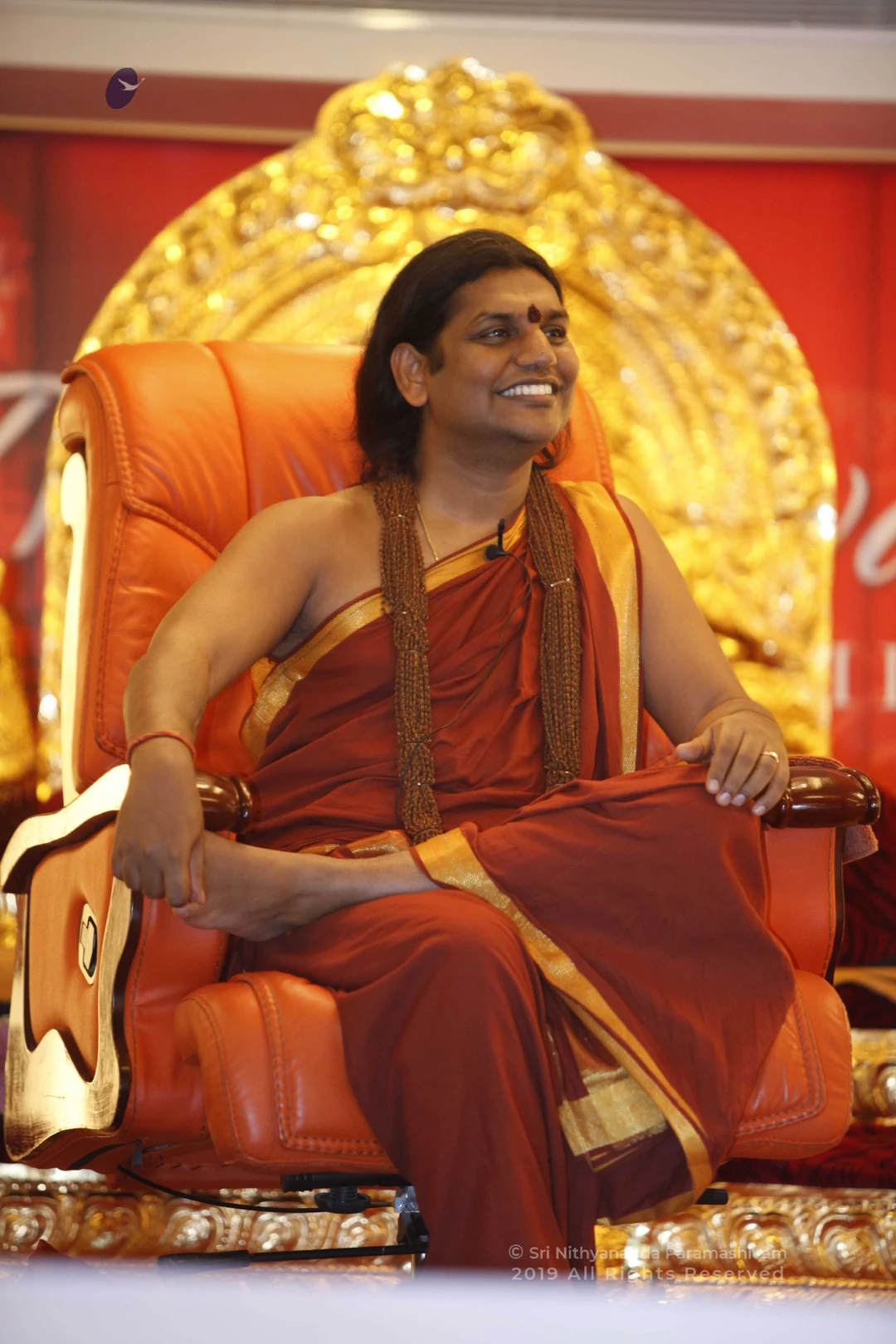
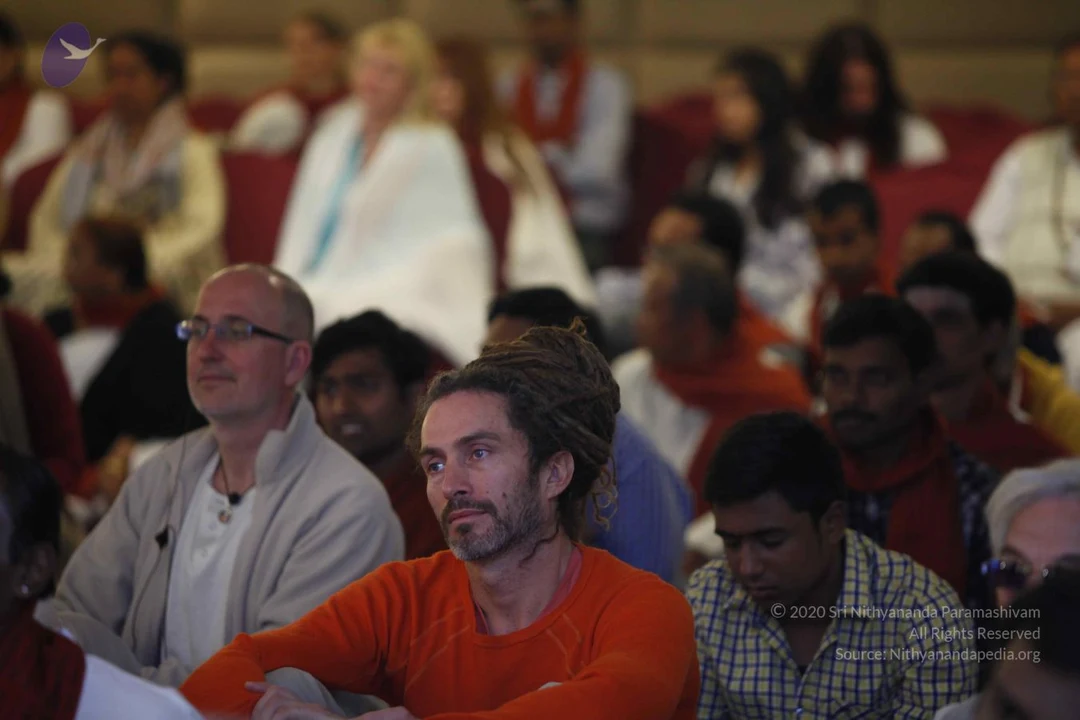
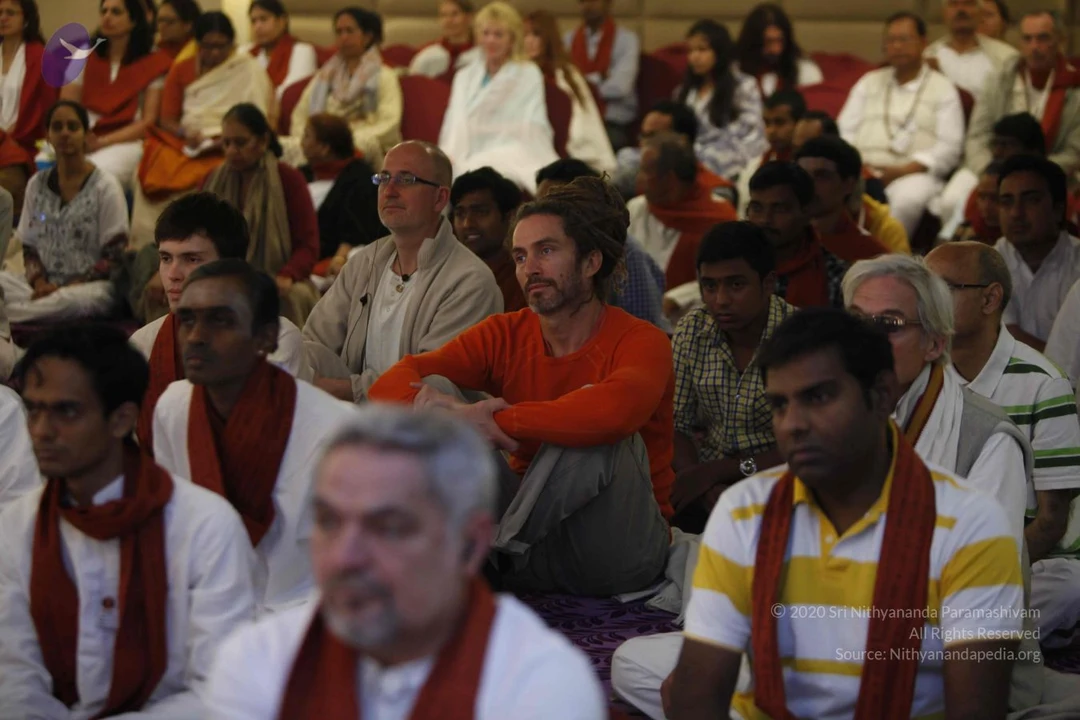
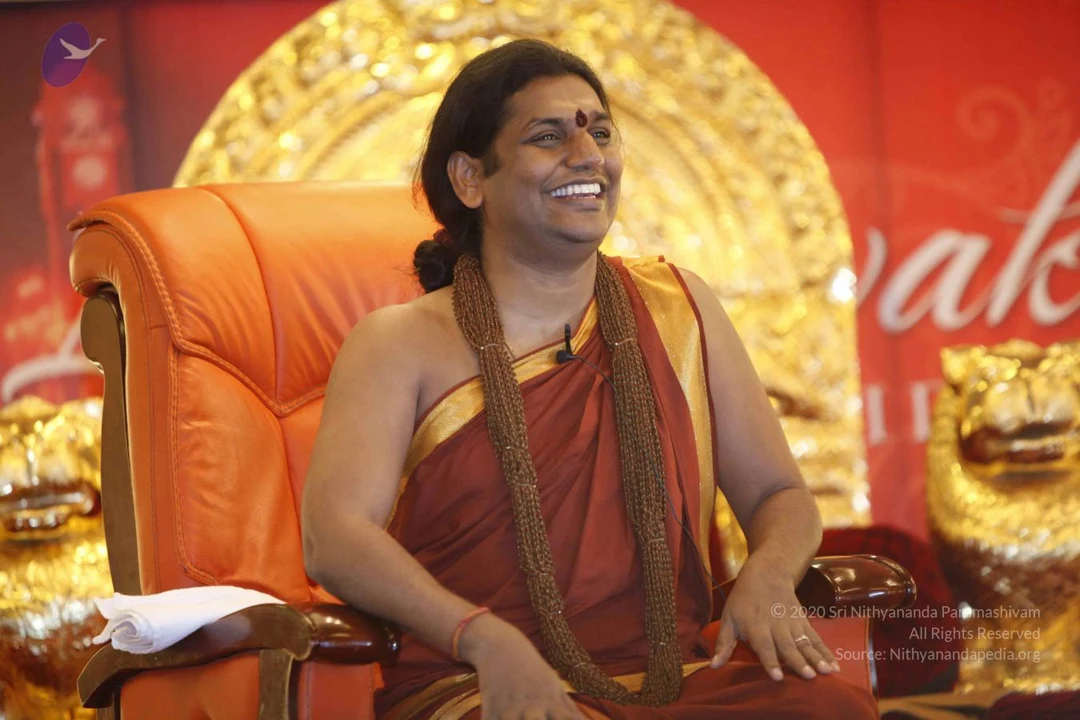
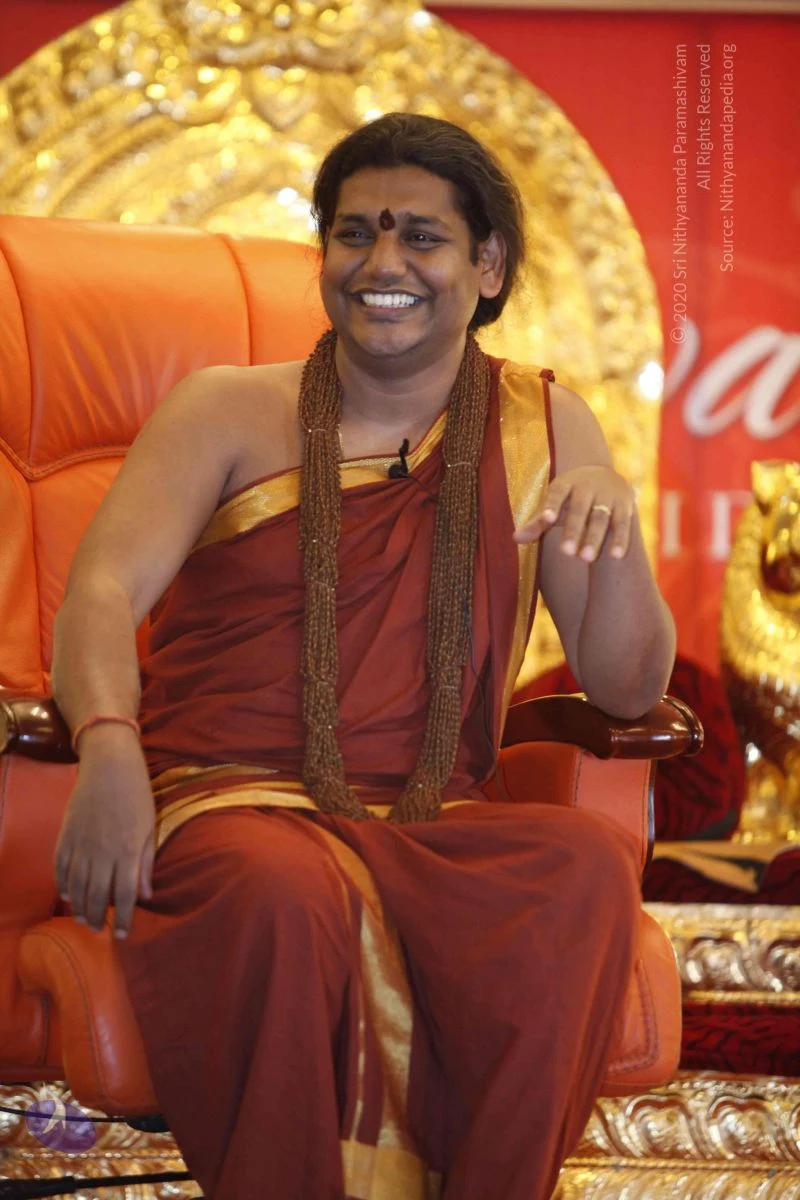
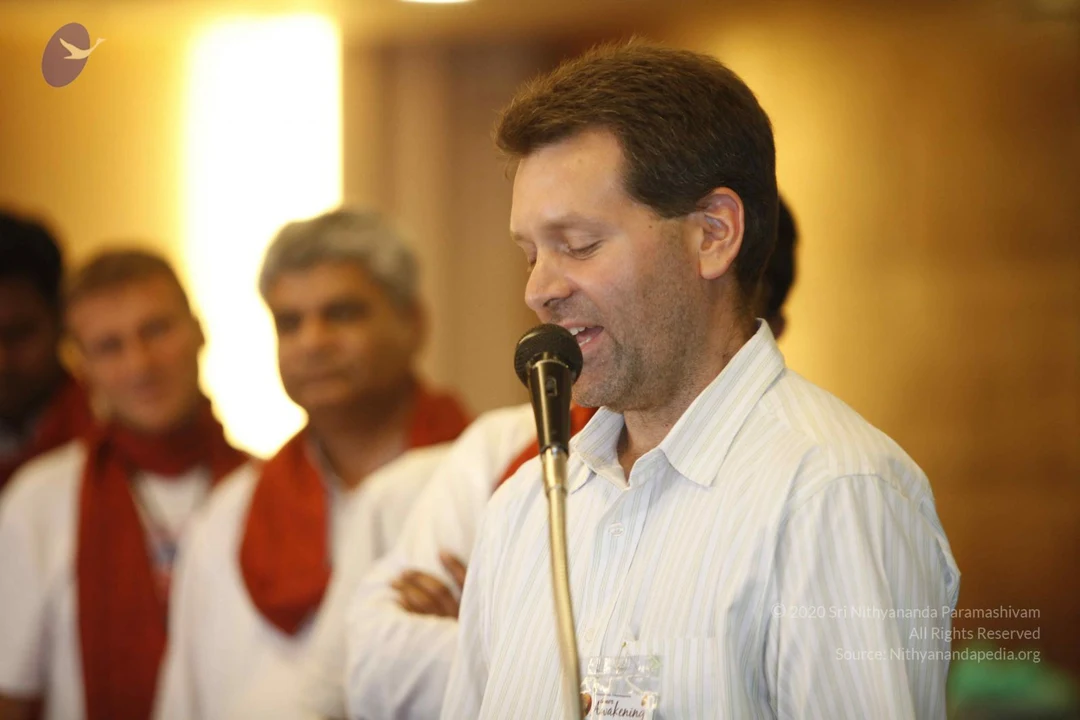
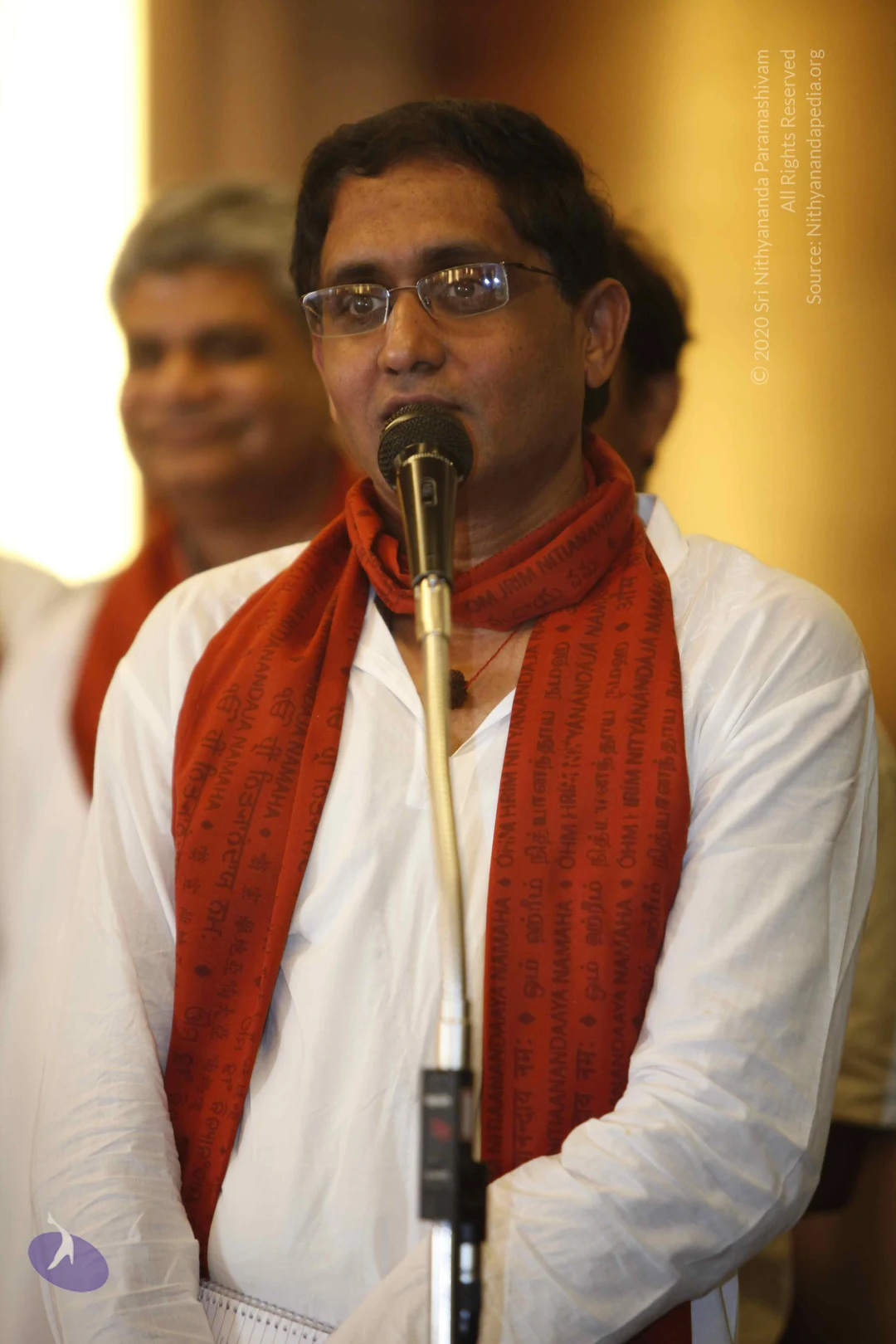
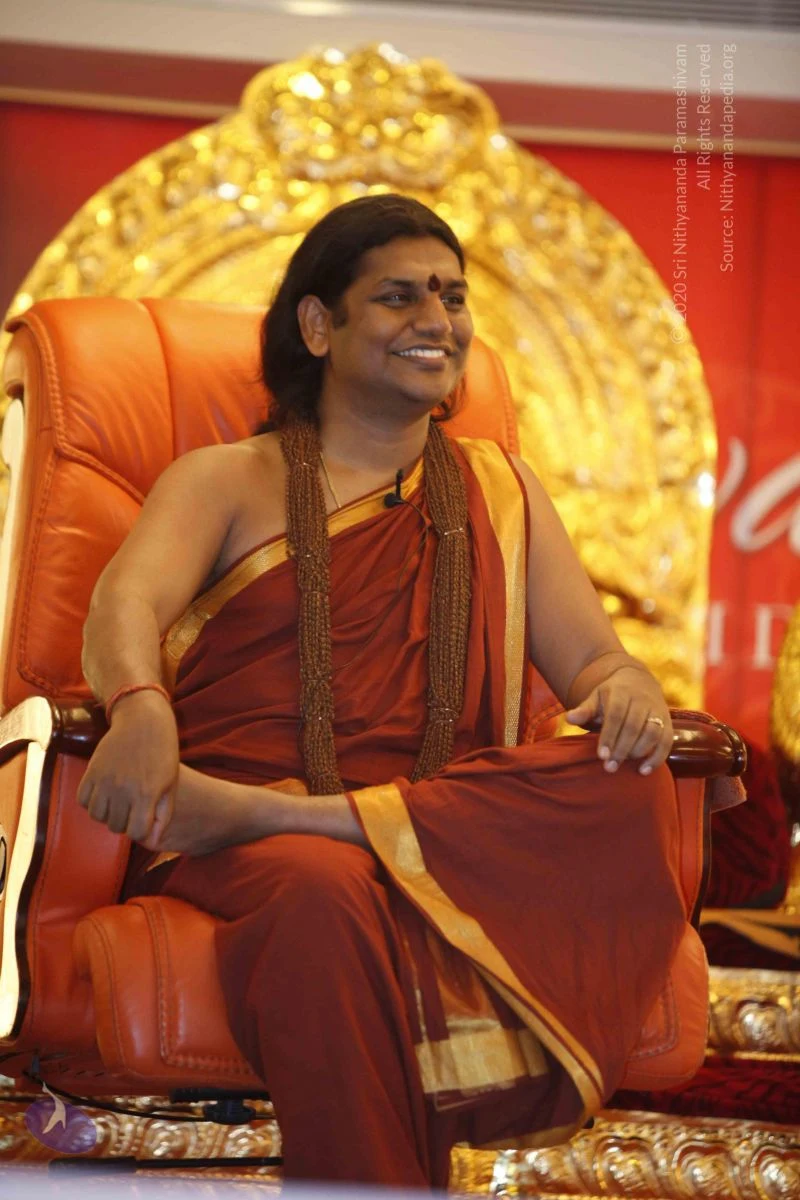
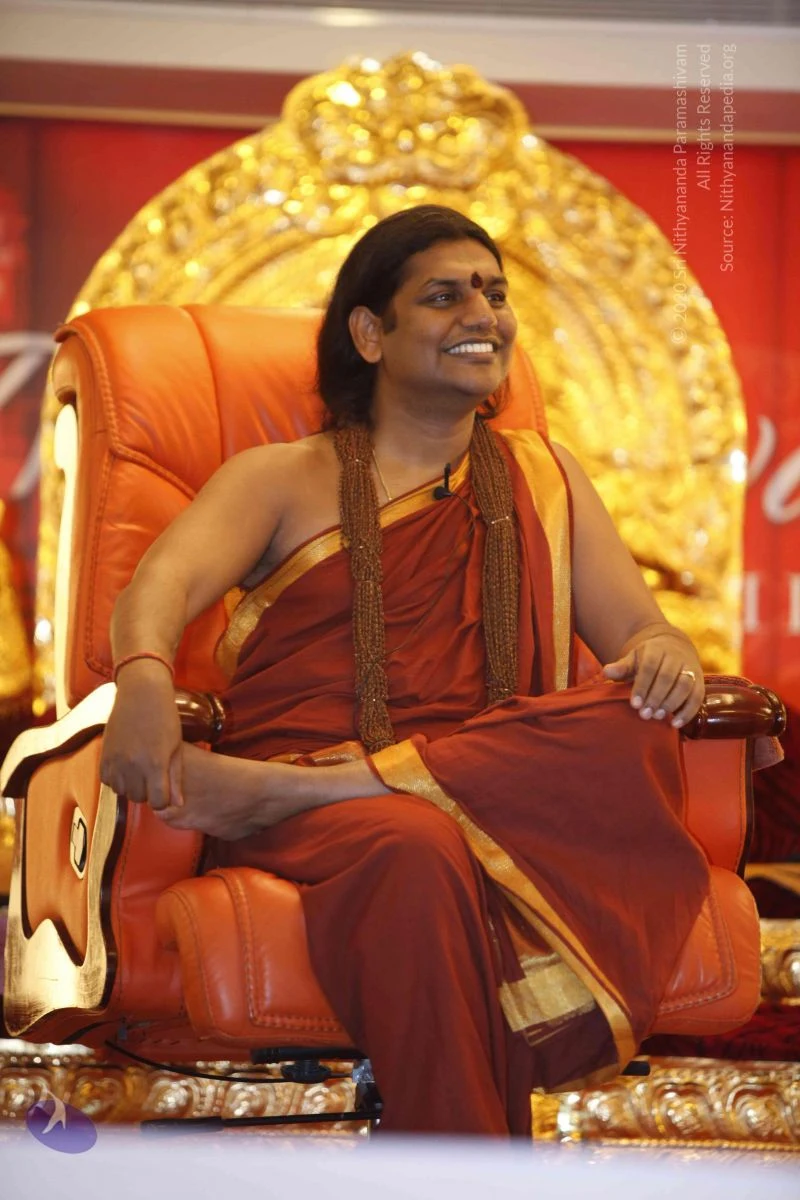
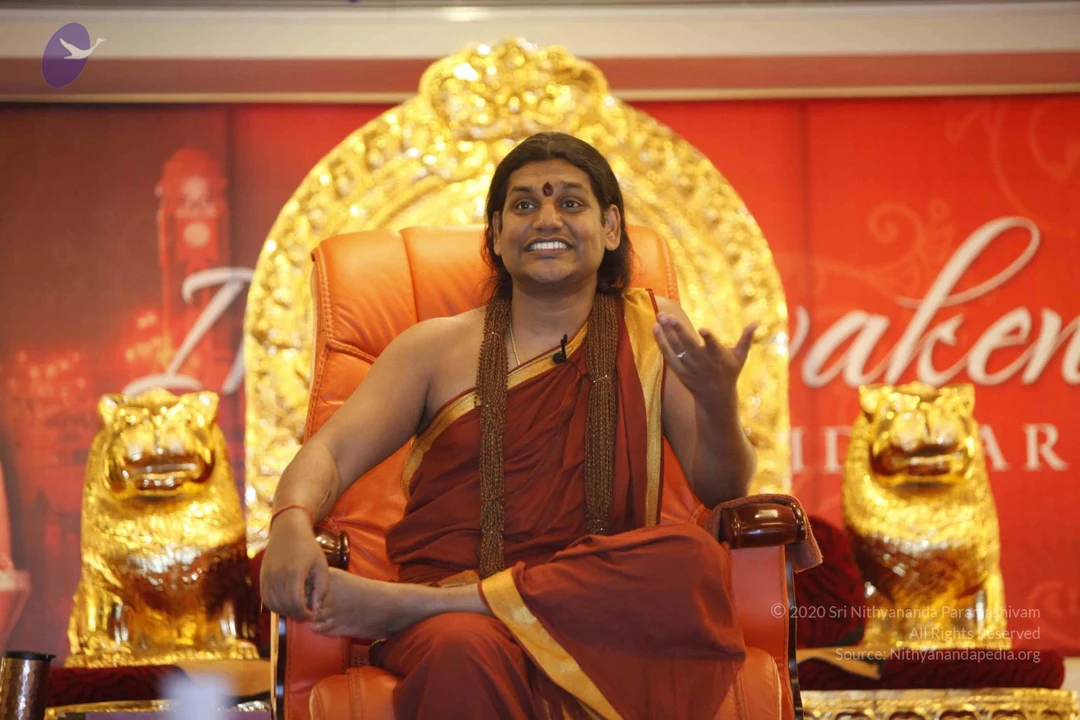
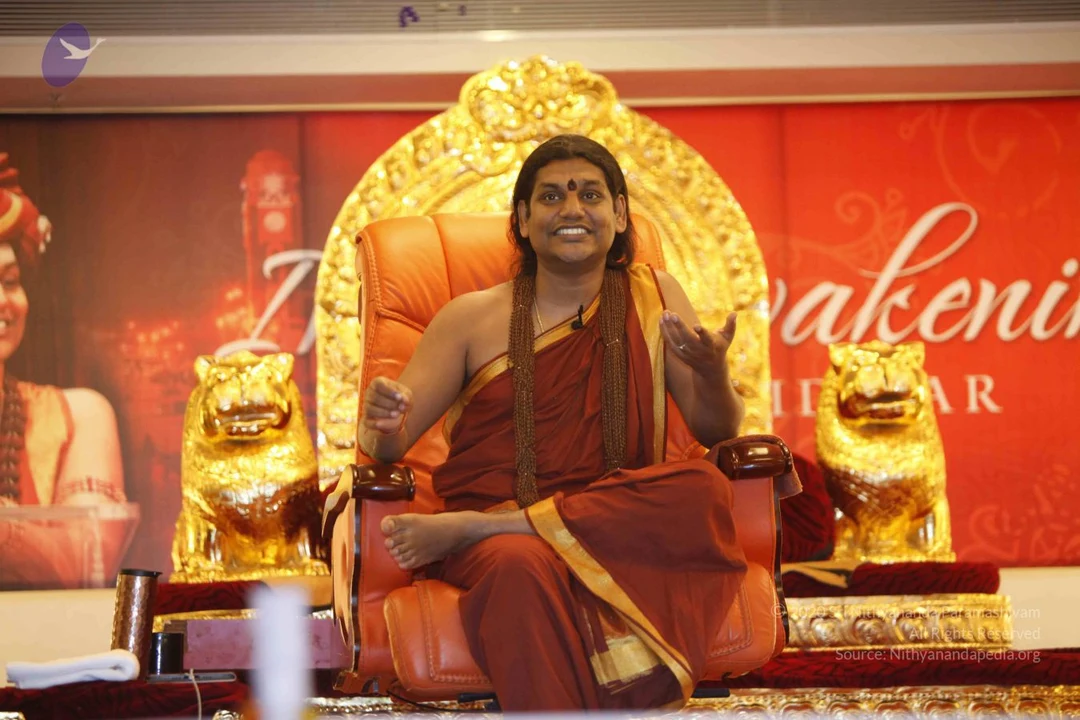
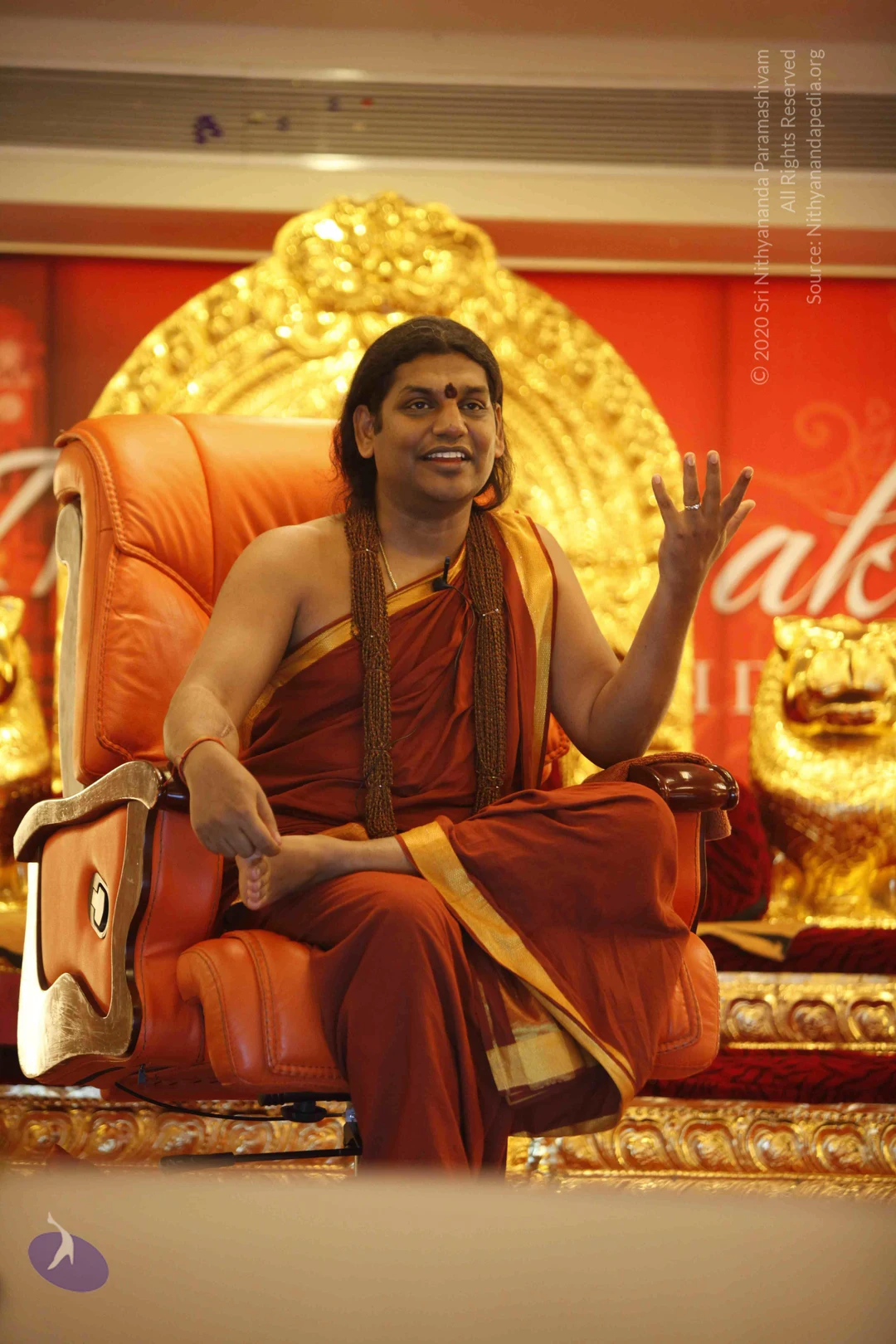
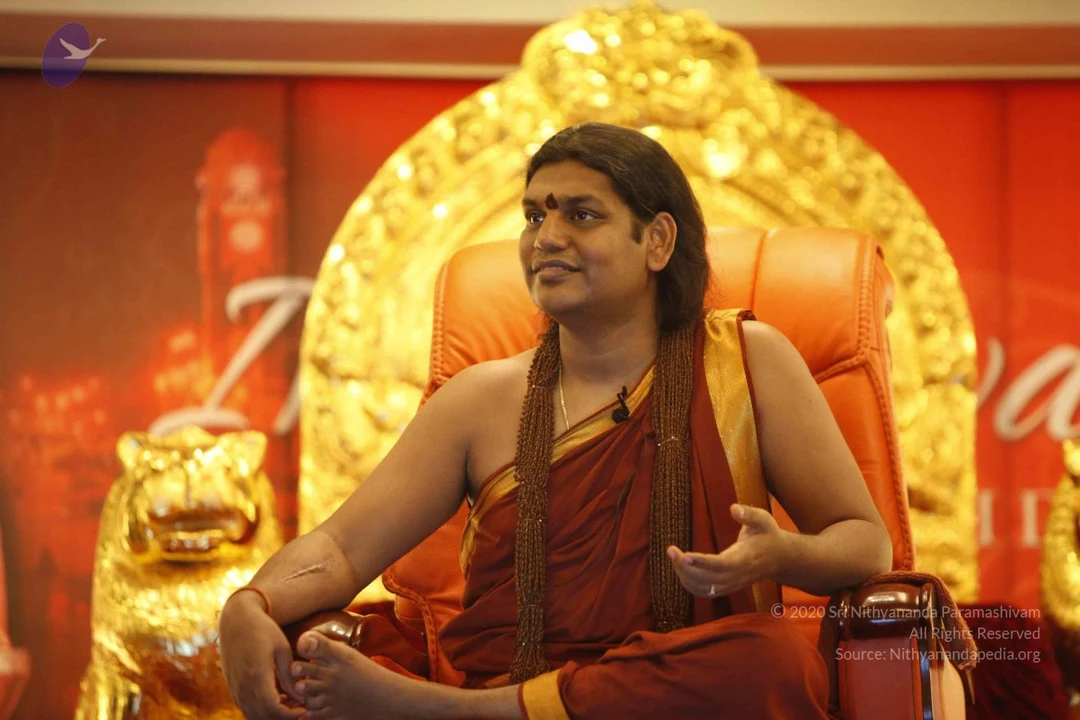
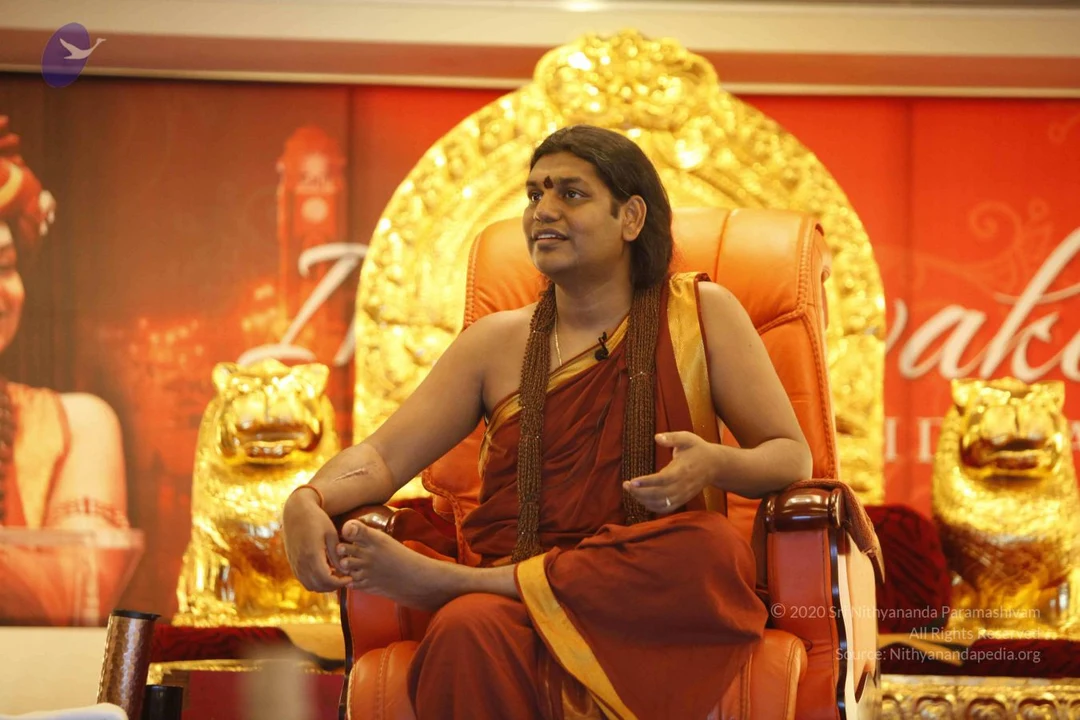
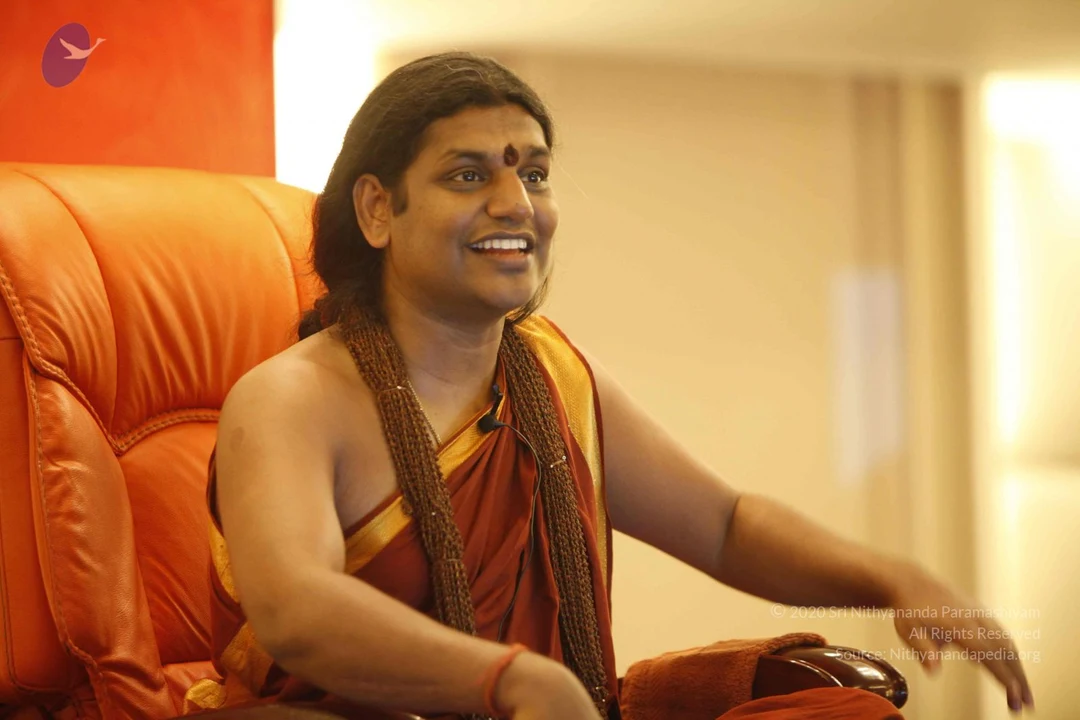
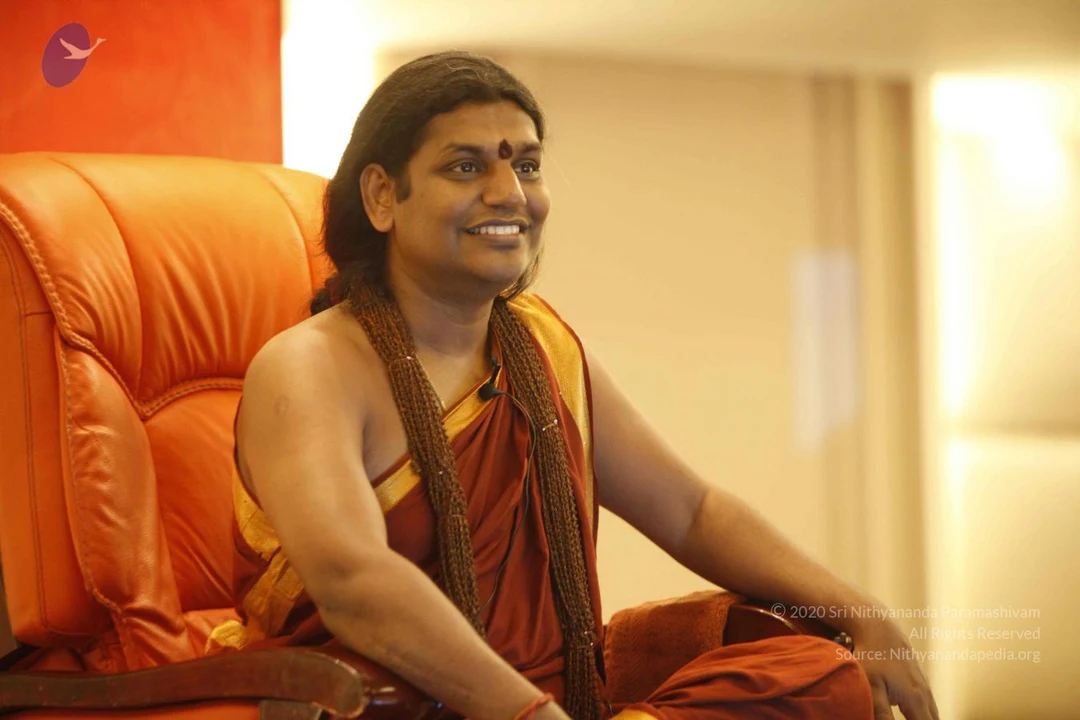
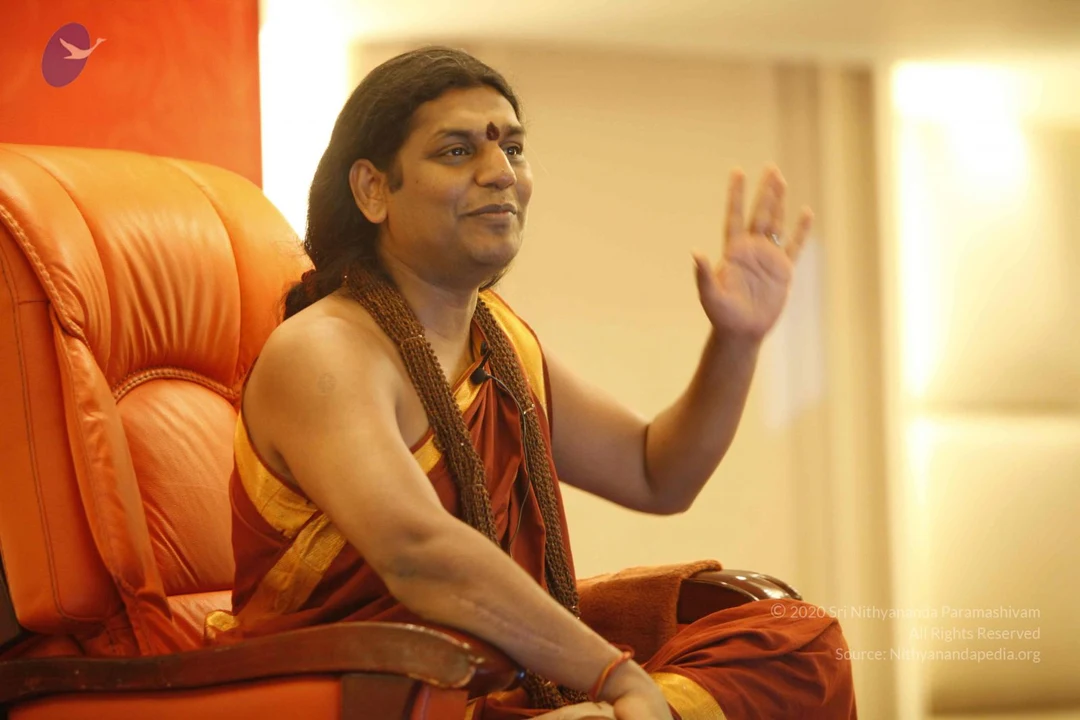
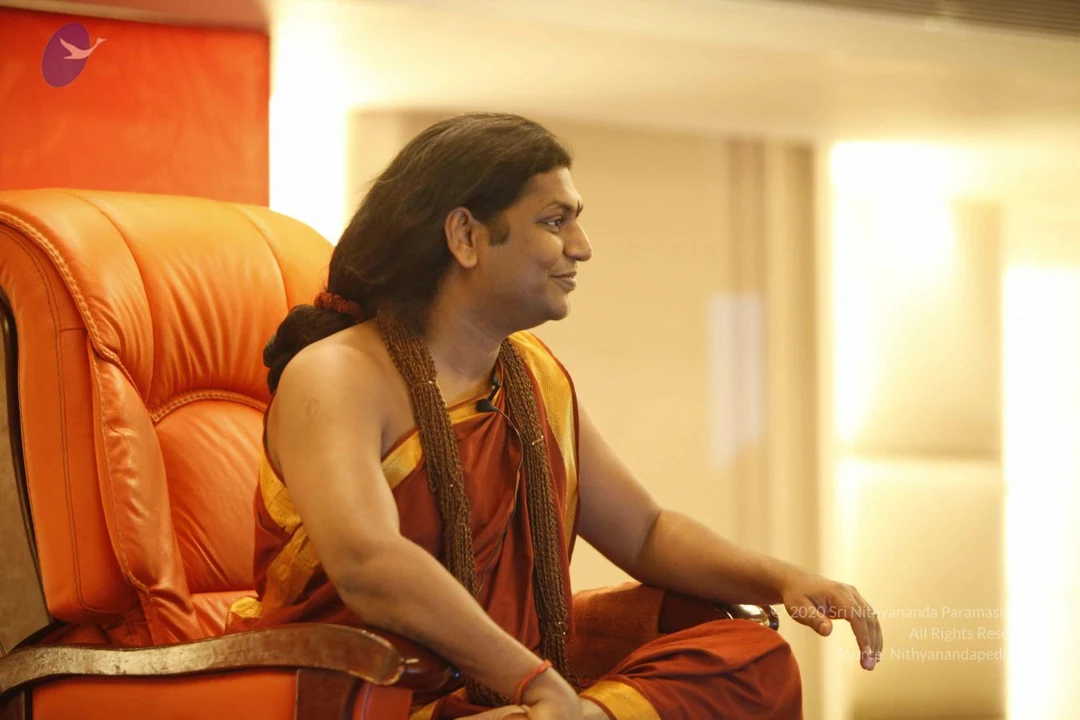
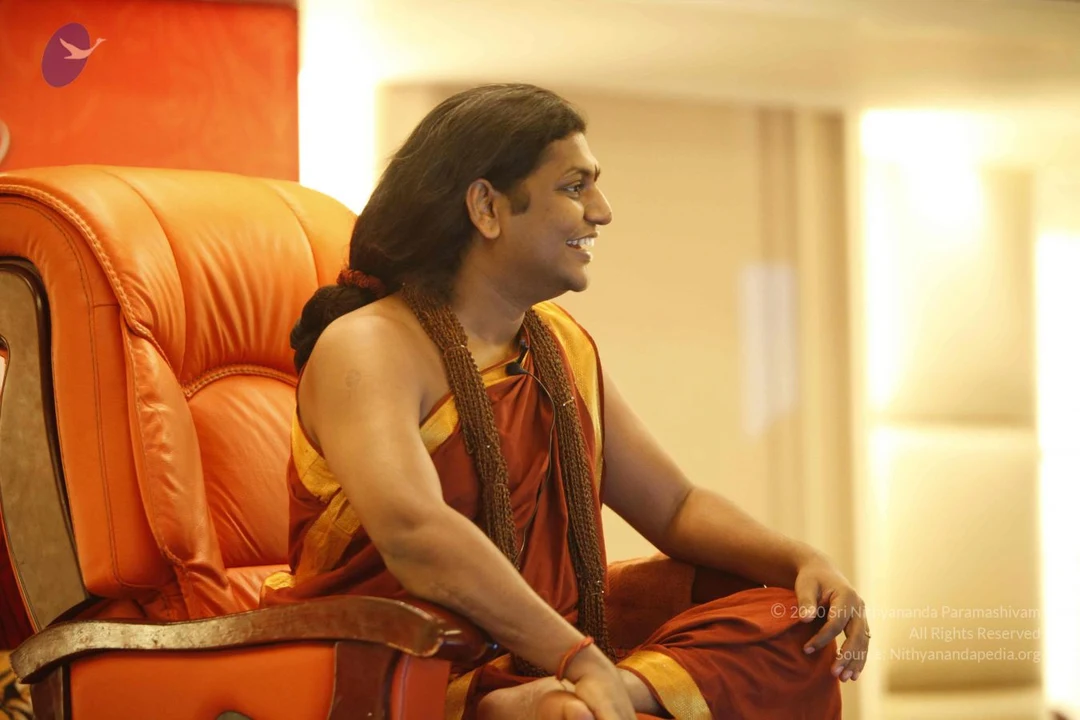
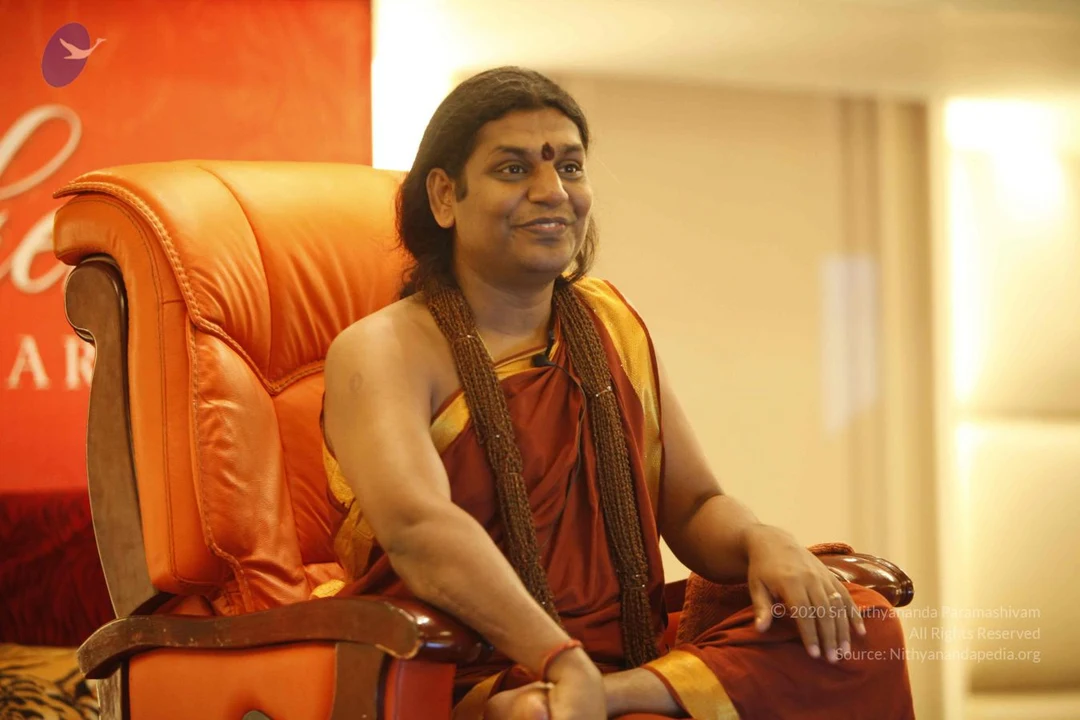
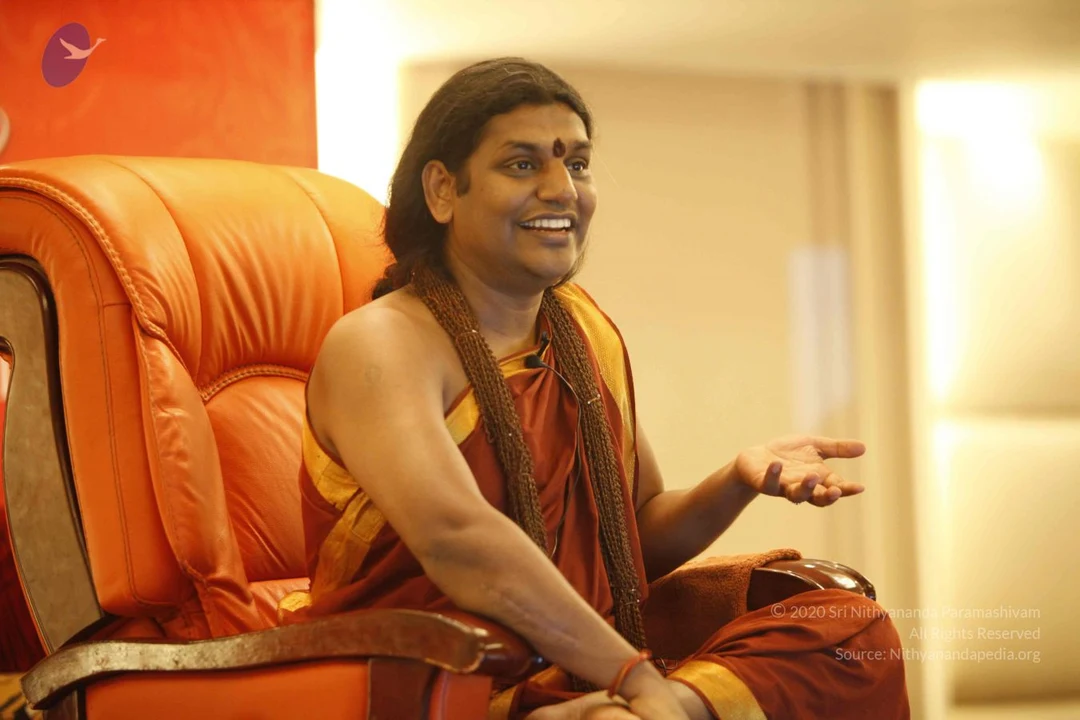
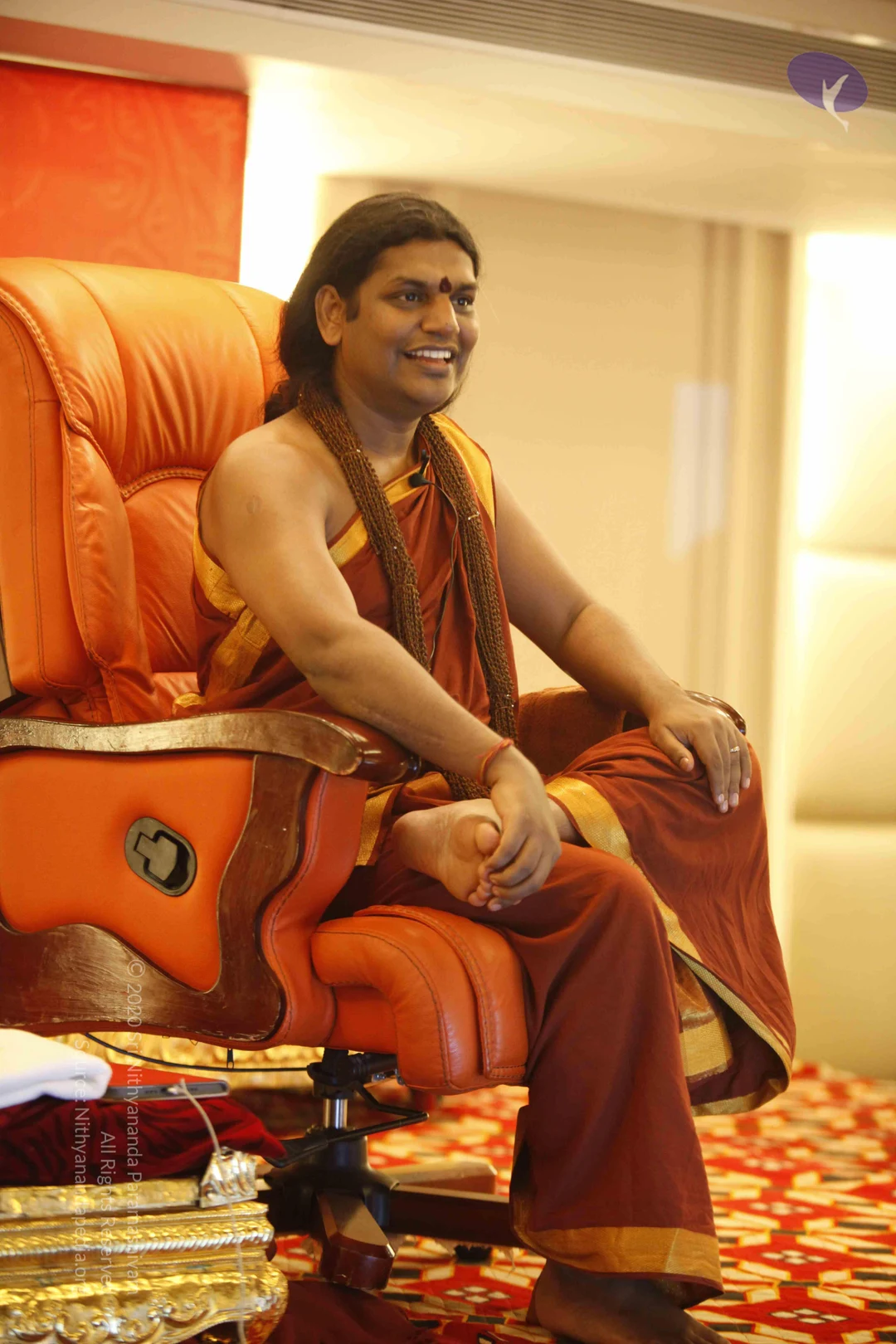
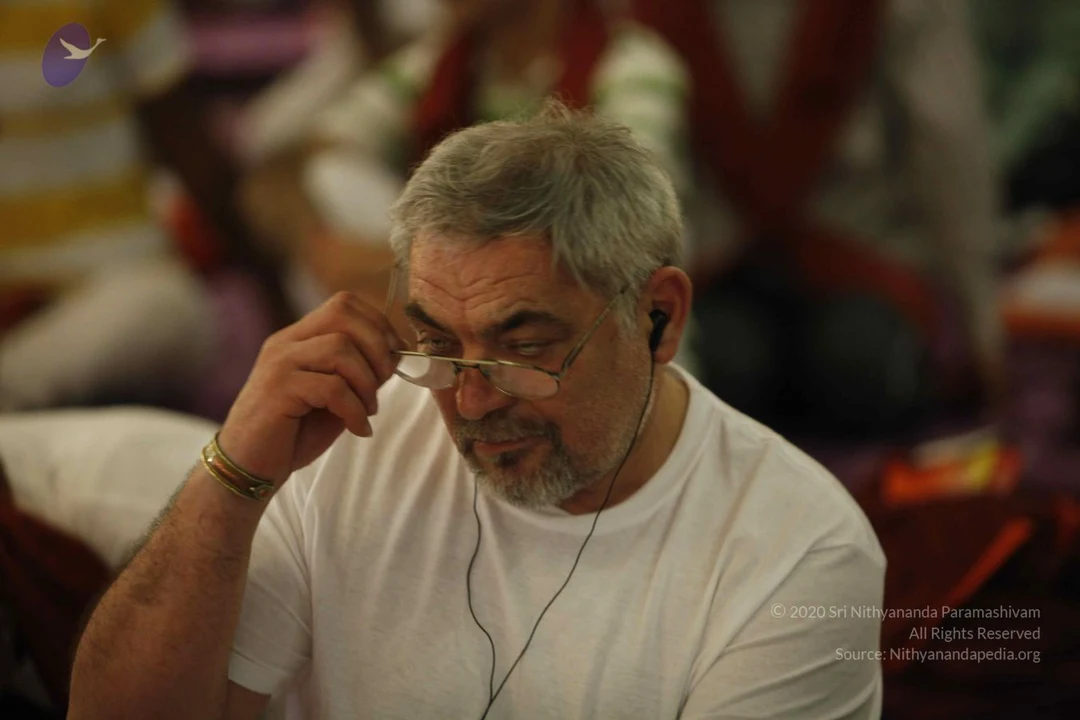
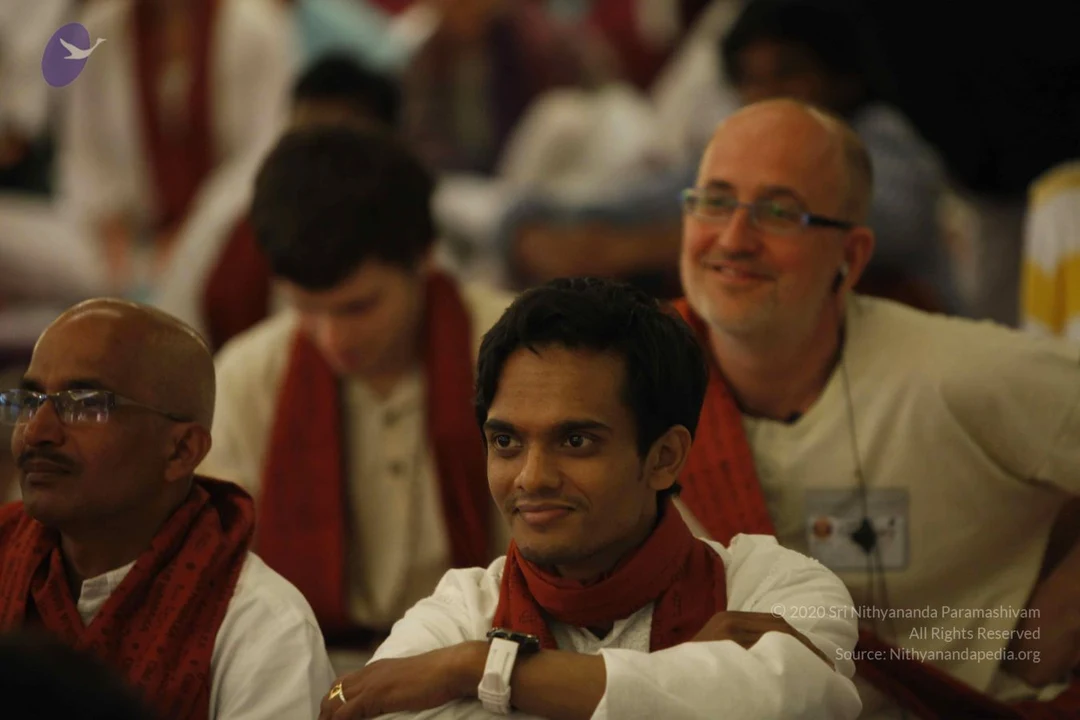
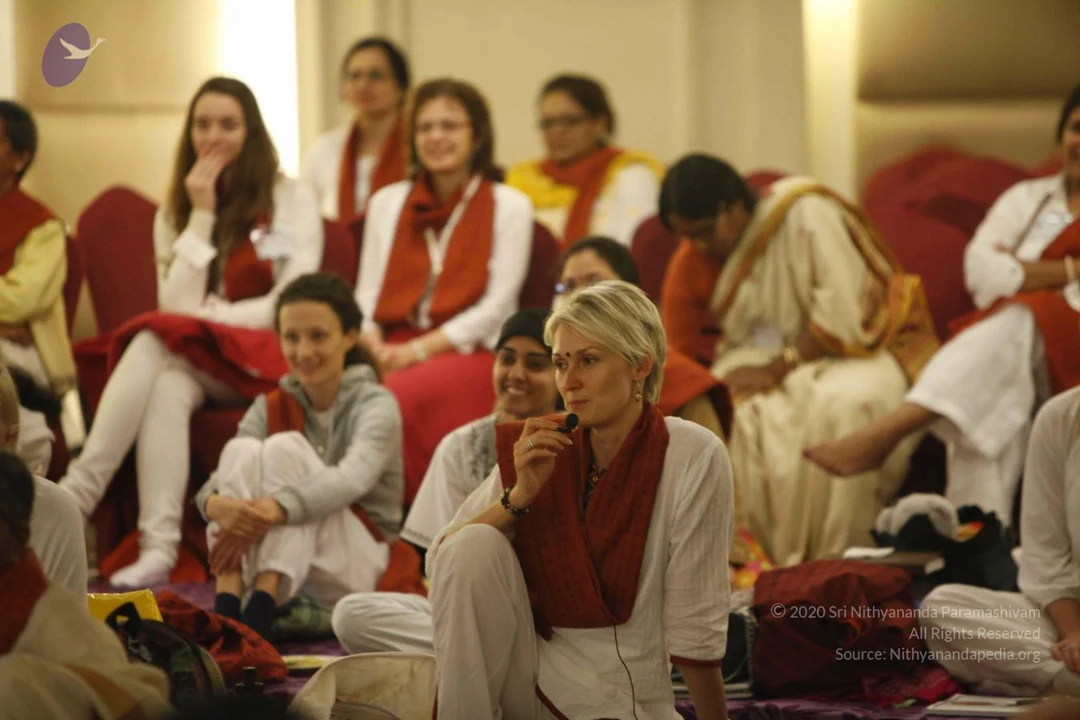
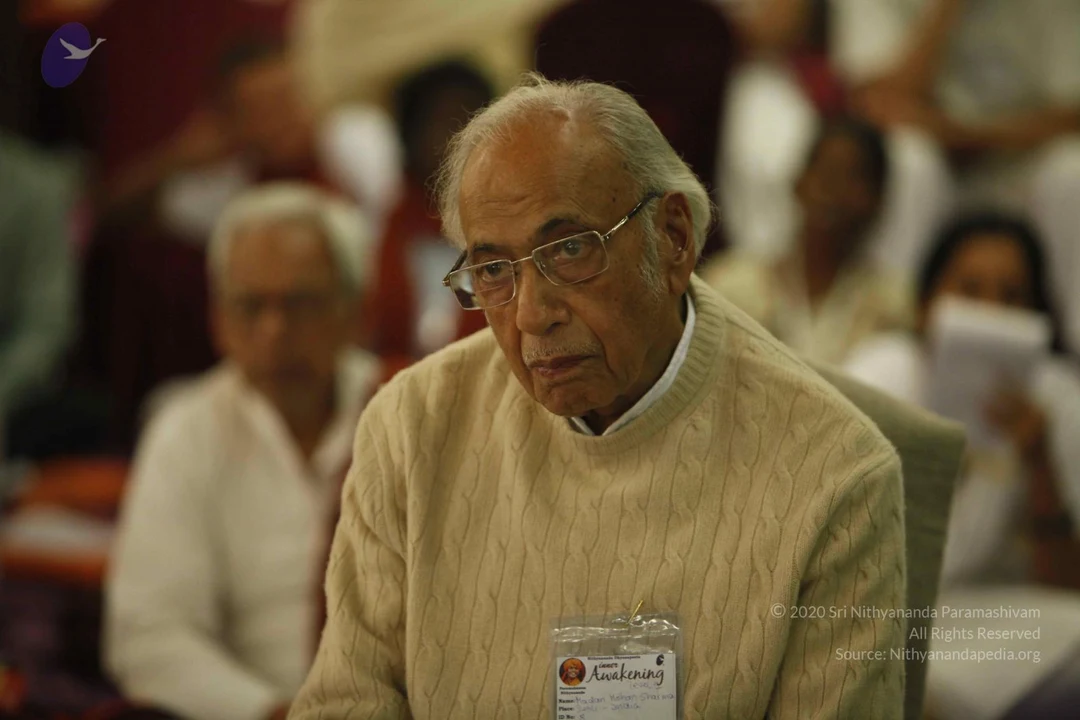
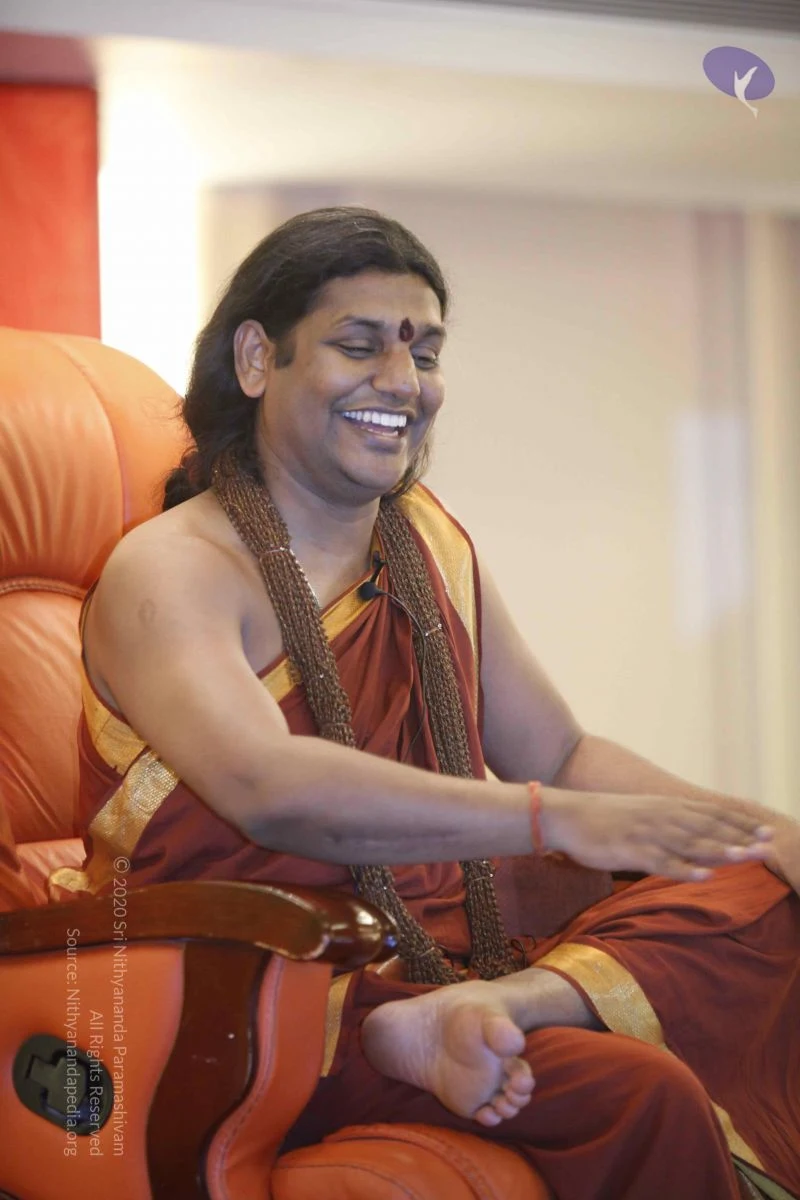
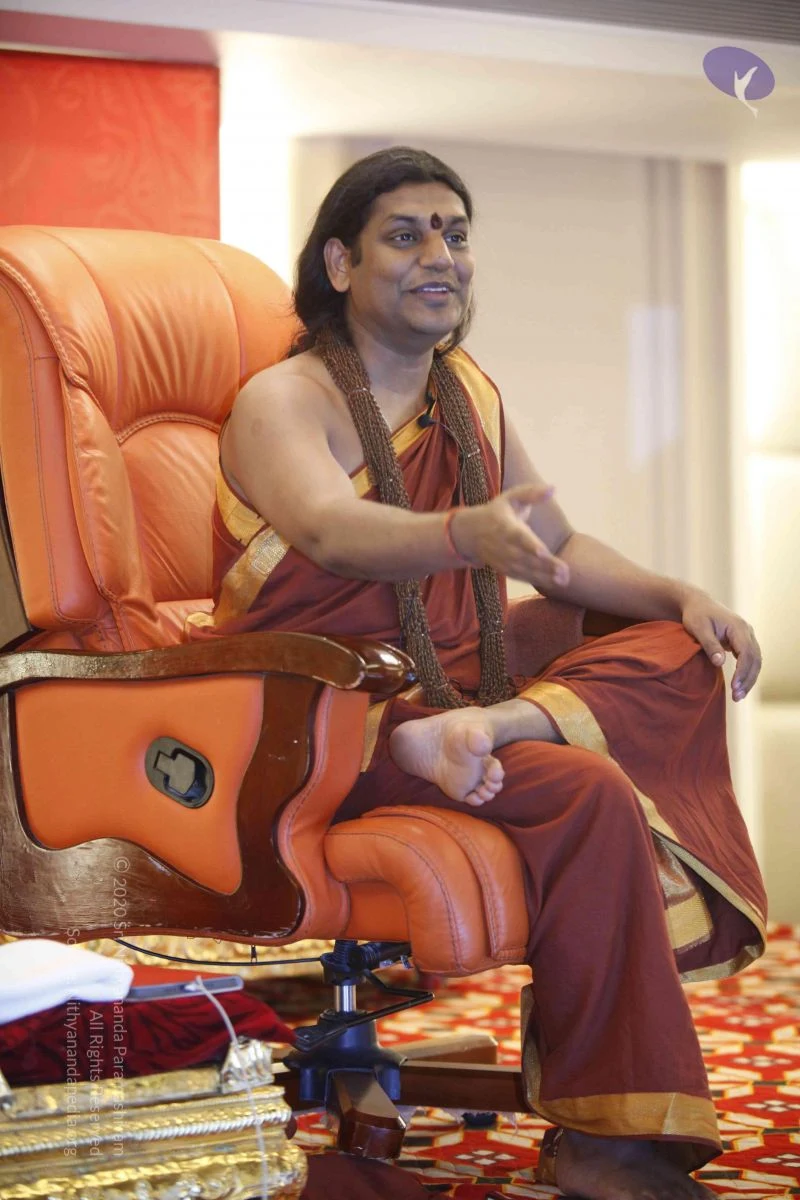
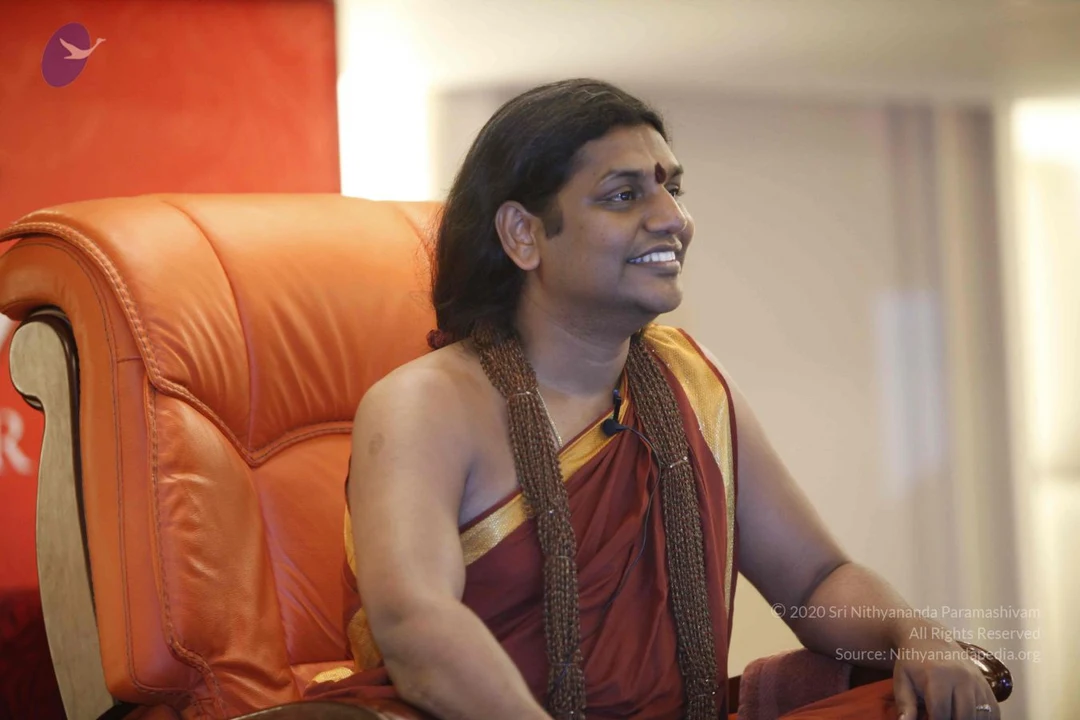
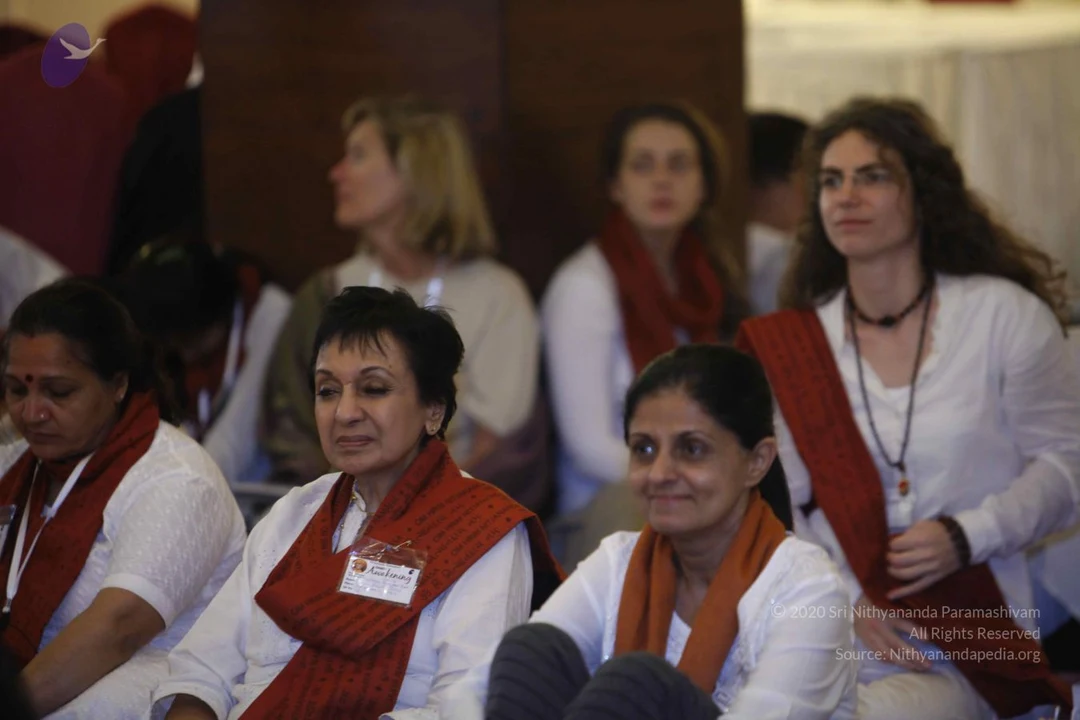
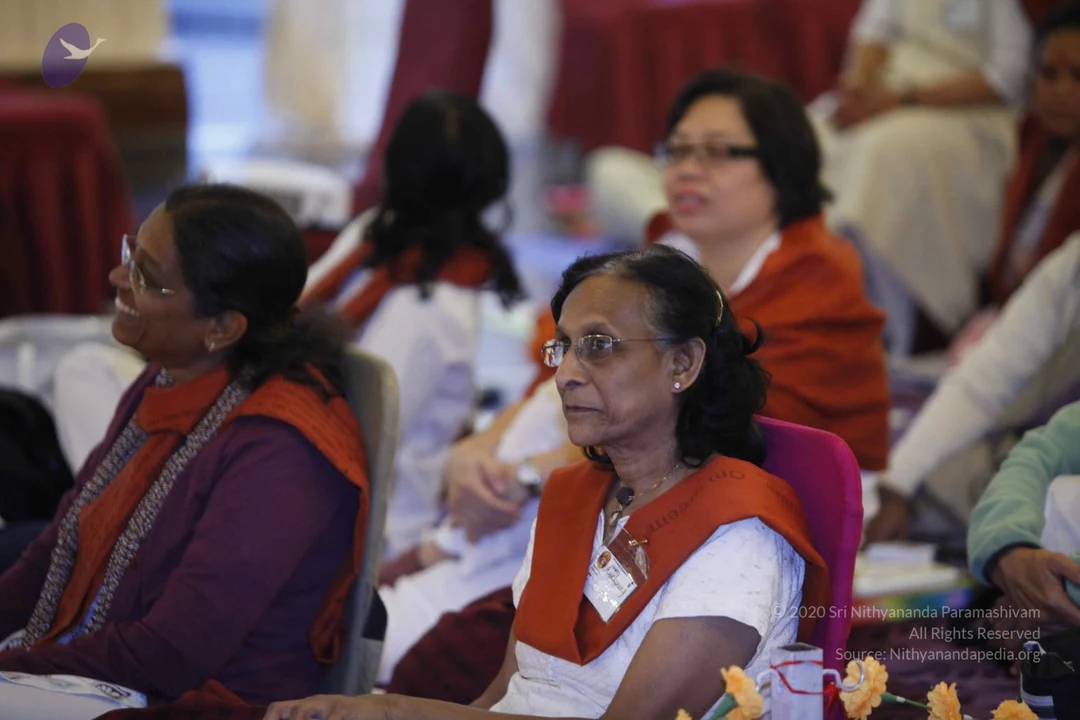
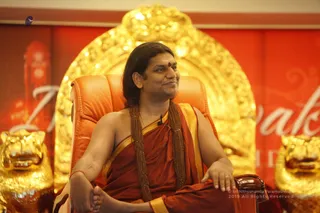
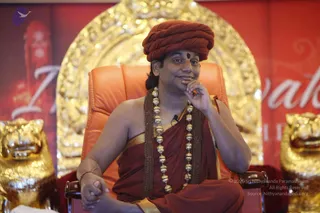
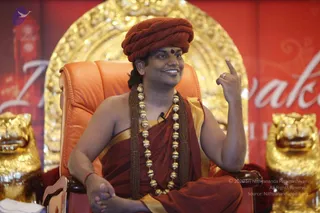
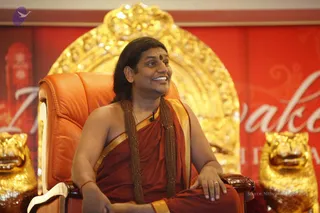
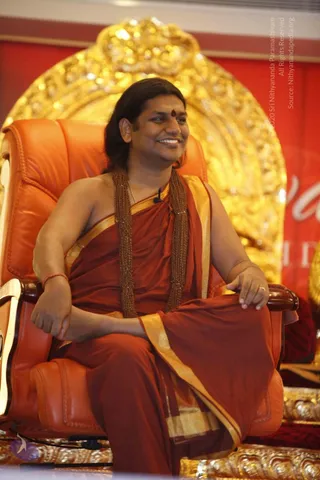
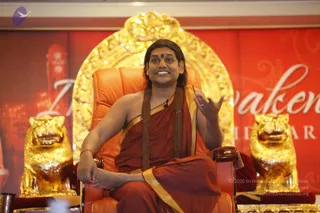
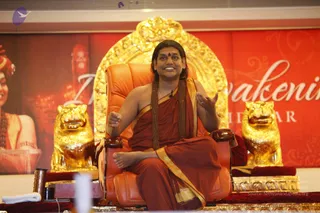
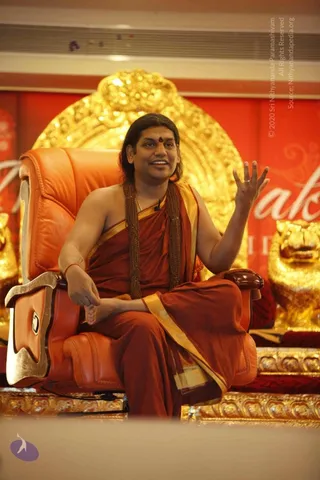
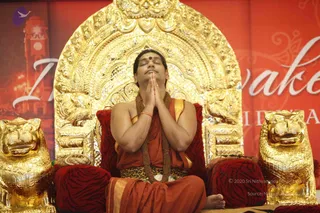
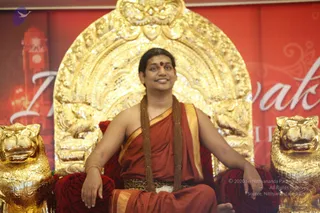
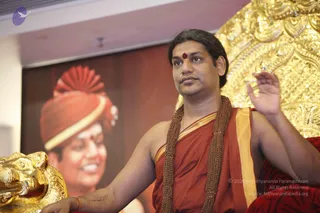
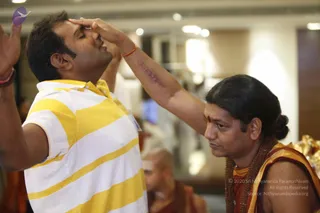
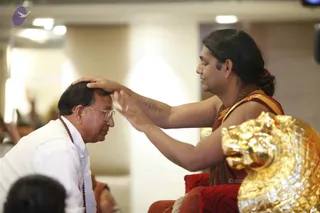
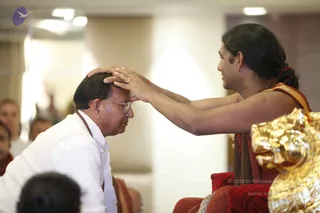
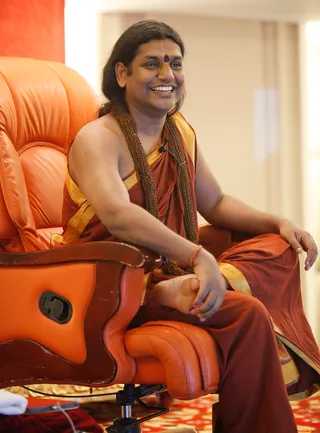
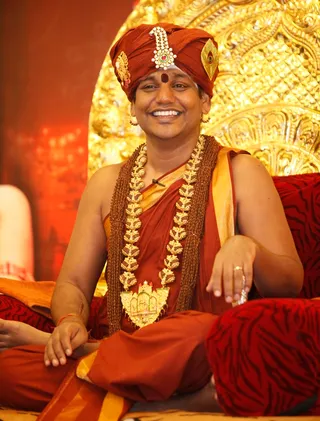
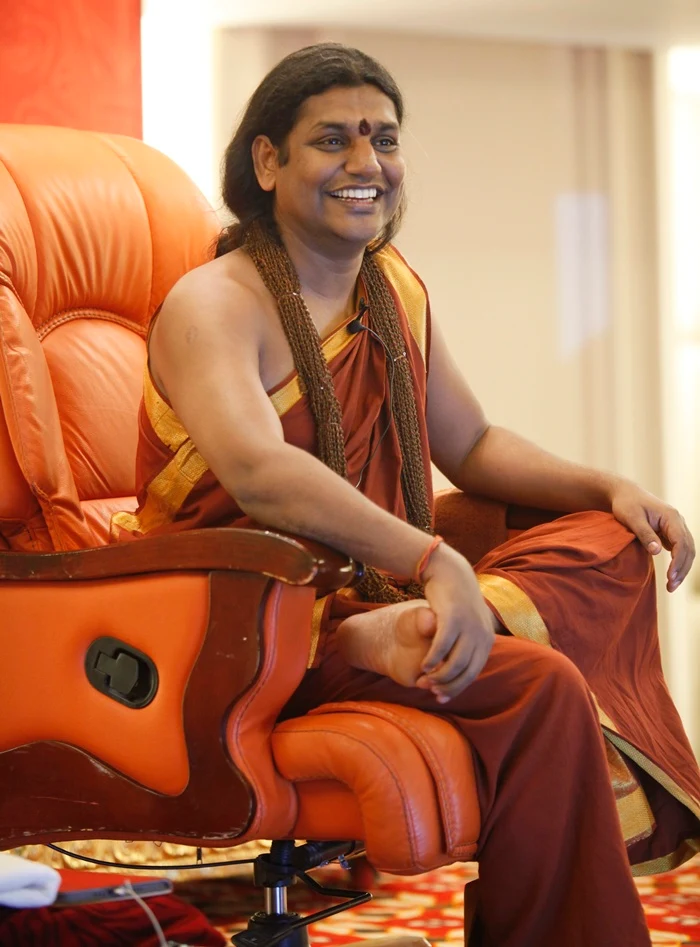
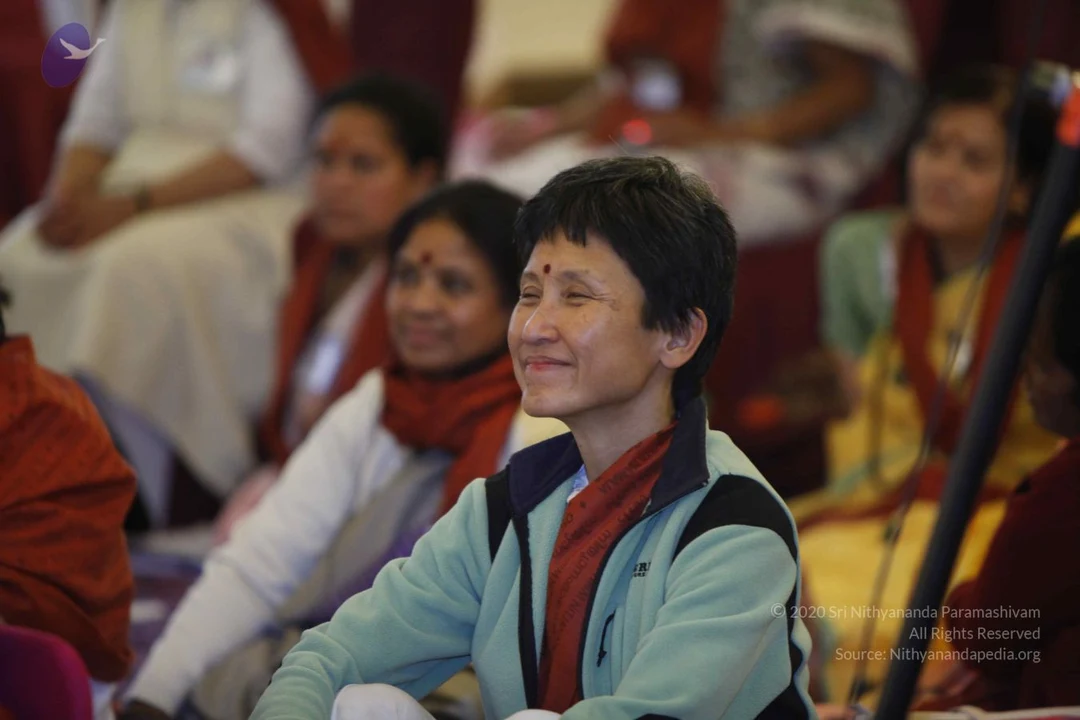
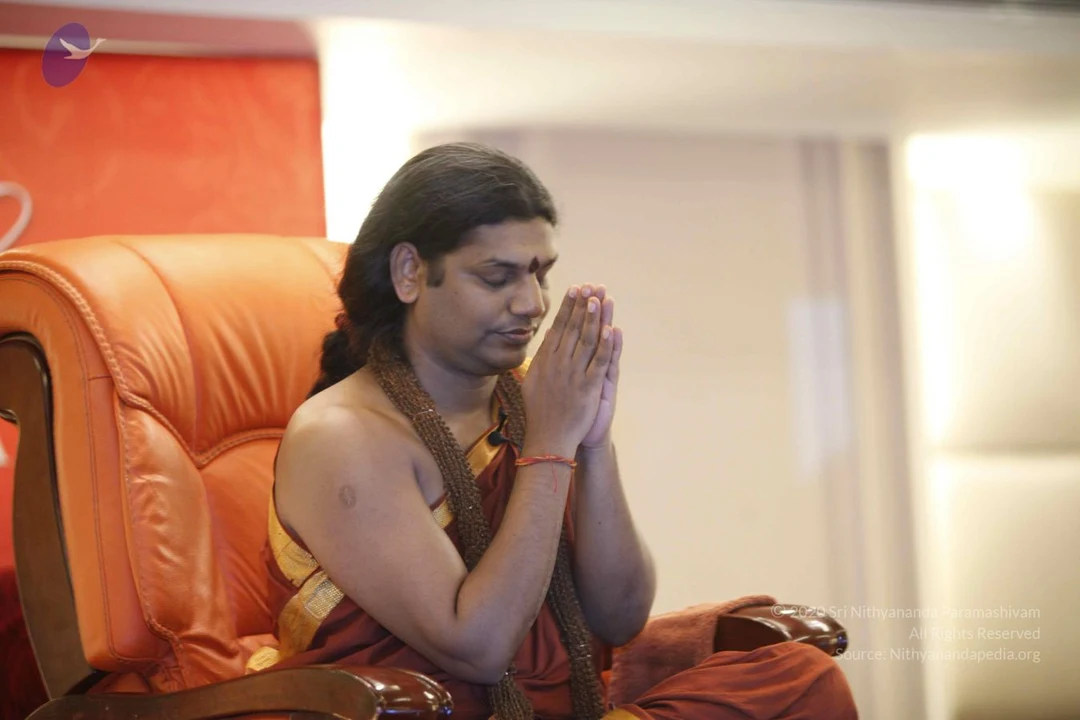
A man with long dark hair and a red bindi sits in a large orange leather armchair, smiling and looking off to his right. He wears a maroon wrap with gold border over bare shoulders and a long double-strand rudraksha mala around his neck, with a small clip-on microphone at his chest. Behind him a red panel and soft white curtains fill the background. Swamiji (probable): long swept-back hair, saffron-red ceremonial clothing with gold border and a rudraksha mala, seated in a throne-like chair as a speaker.A man seated in profile on an orange leather armchair with wooden armrests, in a warm, softly lit room with cream walls. He wears a rust-red and gold-bordered robe draped over one shoulder, with a long brown rudraksha mala hanging across his chest and a red thread on his wrist. His long dark hair is tied back, and his right hand rests on the armrest. Swamiji (probable): long swept-back hair, rudraksha mala and saffron-toned robe with gold border, seated on an ornate throne-like chair in a satsang setting.An elderly man with white hair and rimless glasses sits in the foreground wearing a cream cable-knit sweater over a white collar, with a clear plastic badge clipped to his chest that reads "Awakening" and carries a name label. Behind him, blurred seated attendees in white and maroon clothing fill the hall, and another white-haired person sits to the left. The man appears attentive, gazing toward the front of the room during a satsang gathering.

March 08 2014

Original wiki page
Contents

Description:

n today’s morning Satsang, Paramahamsa Nithyananda expresses the essence of all spirituality, the science of causing our reality and the formula for enlightenment is LOVE! Let us hold on and allow transformation to happen, no matter what, because only when we open our heart to the Master’s love is he able to remove all our tumors, revealing fulfillment, completion and liberation. Let us allow the circle of Love to happen and reach the Ultimate!

Link to Video:

VideoAudio

[00:19]

nithyānandeśvara samārambhām nithyānandeśvari madhyamām | asmat āchārya paryantām vande guru paramparām ||

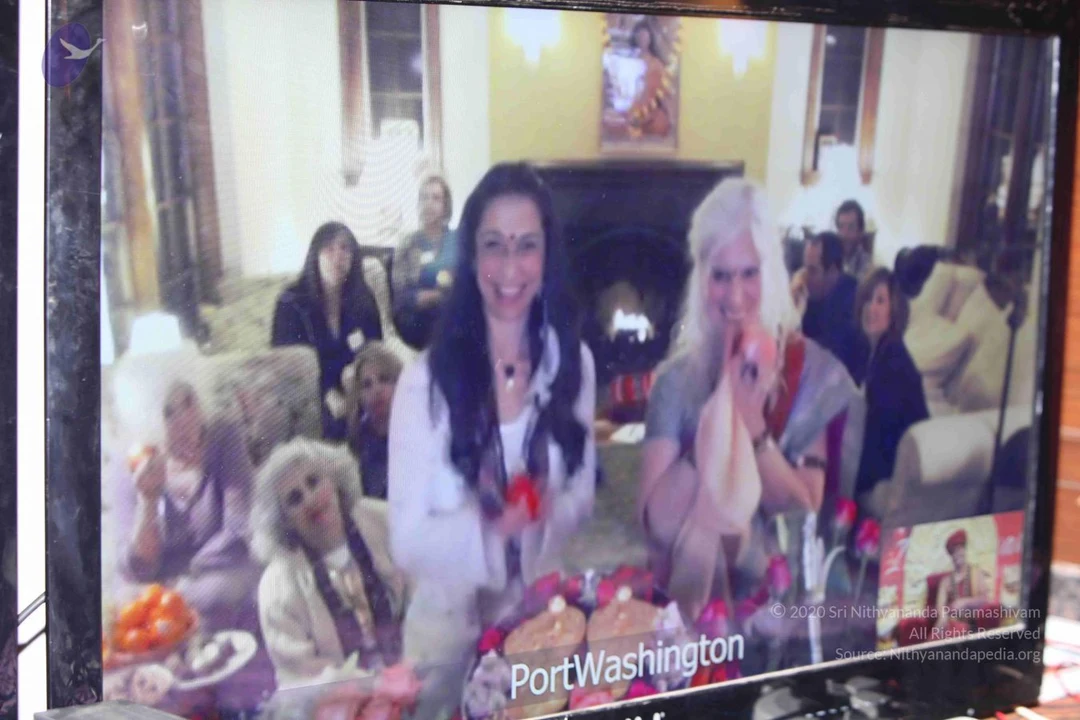
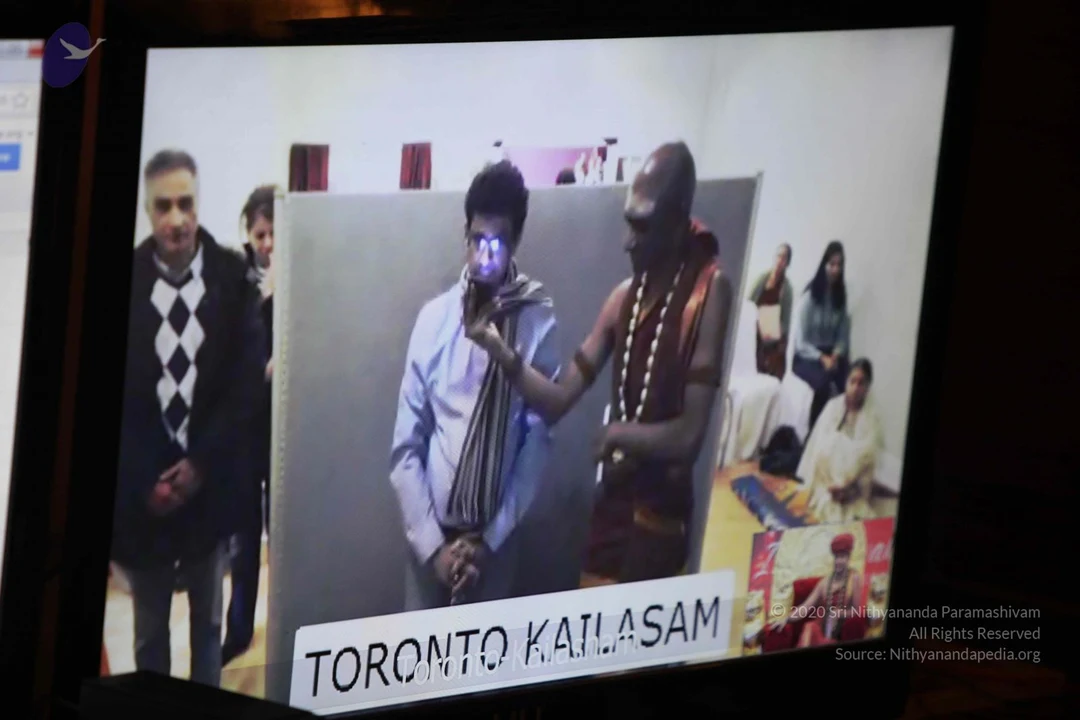
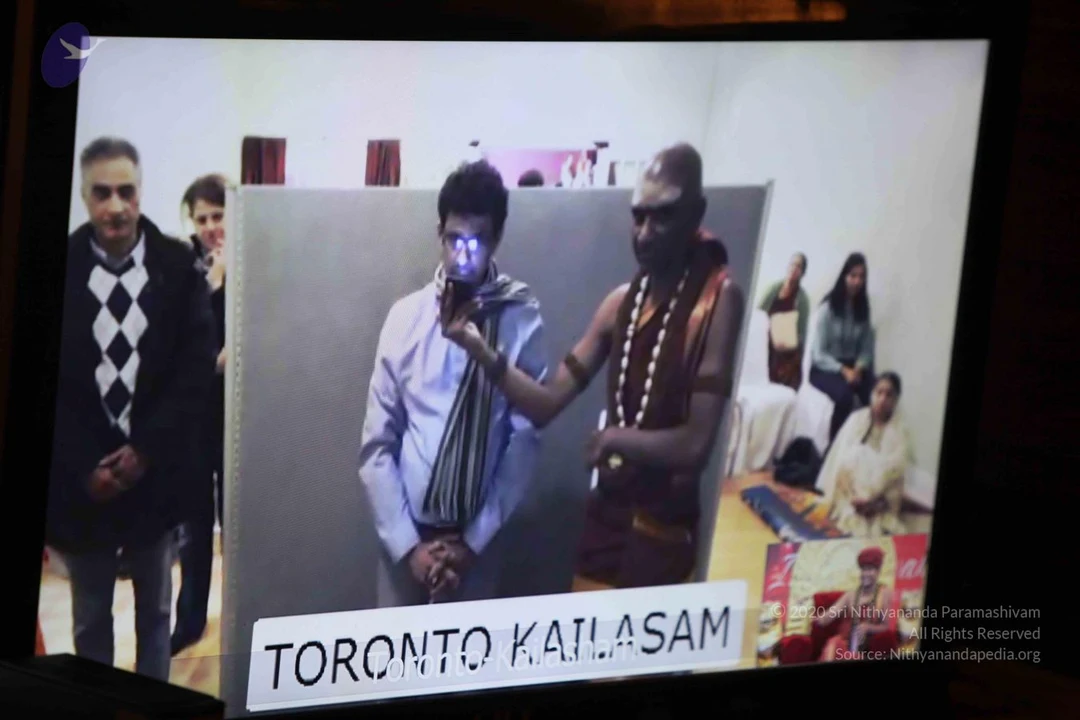
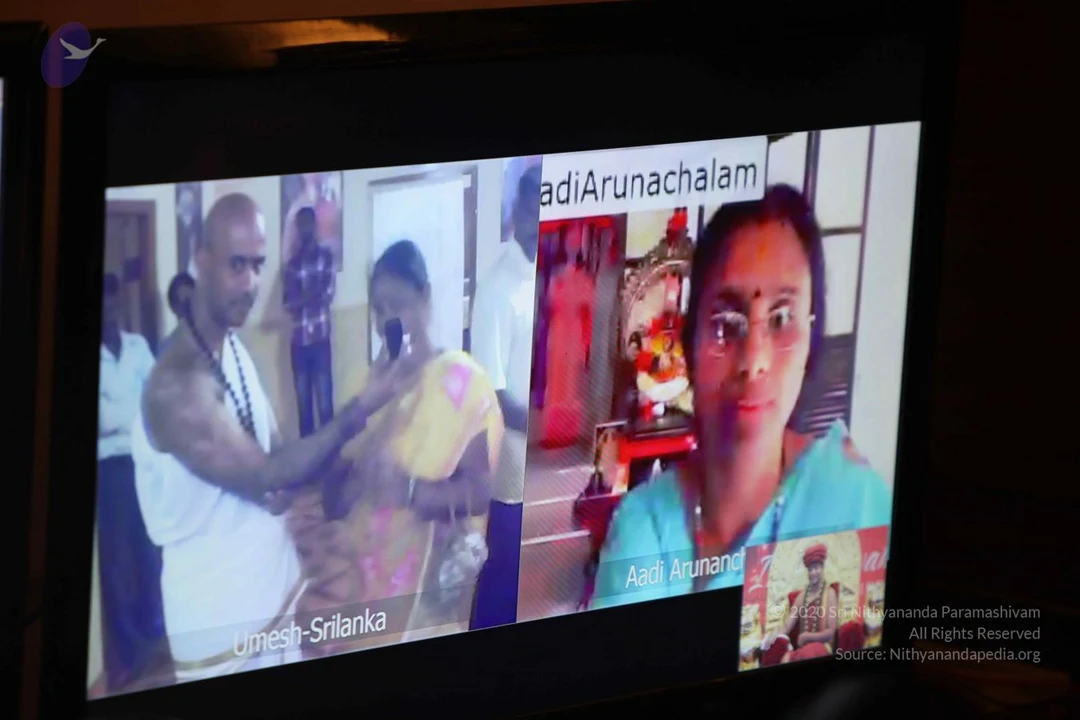
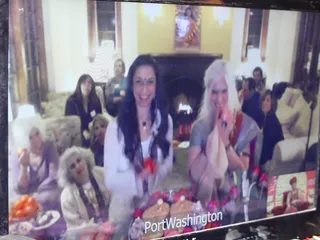
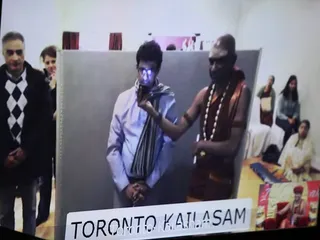
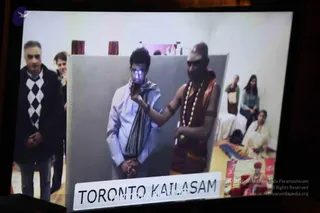
Is samay hamare sath upasthit sabhi darshakon aur bhakton ka main prem evam aashirwad sahit swagat karta hun. I welcome all the devotees, disciples, samajis, satsangis, Mahants, Sri Mahants, Kotharis, Thanedars sitting with us all over the world this time through Nithyananda TV, Lotus News Channel, Sadhna TV, Janashree TV, Eshwar TV, two-way video conferencing having Nayana Deeksha in many cities, many countries around the world. Cities sitting with us in two-way video conferencing: Hyderabad - Gupta Kashi, Singapore - Singapuram, Warrington - UK, New Zealand - Adi Arunachalam, Bangalore - Hebbal, San Jose - Madurai, Auckland - New Zealand, Nithyananda Nagara - Bangalore, Newfoundland - Canada, Coimbatore Dhyanapeetam, Kuala Lumpur - Palani, Dubai - Vaidyanatham, Northumberland - UK, Paris - Home Temple, New York - Varanasi, Houston - Kalahasti, Redondo Beach - California, Seattle - Chidambaram, Guadeloupe - Rameshwaram, Ohio - Prayag, Los Angeles - Arunachalam, Nithyananda Nagaramu - Hyderabad, Vancouver - Bhubaneshwar, Port Washington DC - New York, Port Washington - New York, Toronto - Canada, Kilinochchi - Sri Lanka. I welcome all the participants who have gathered for Kalpataru Darshan in Kilinochchi - Sri Lanka, Toronto - Canada, Port Washington - USA. I welcome all of you with My love and respects.

[02:45]

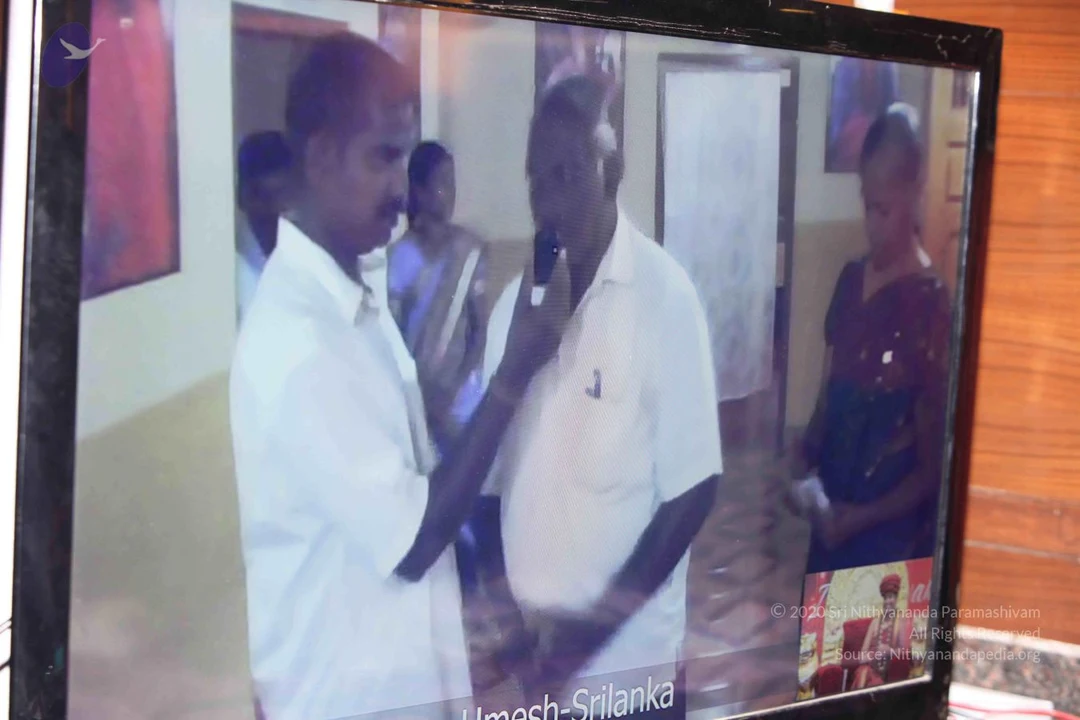
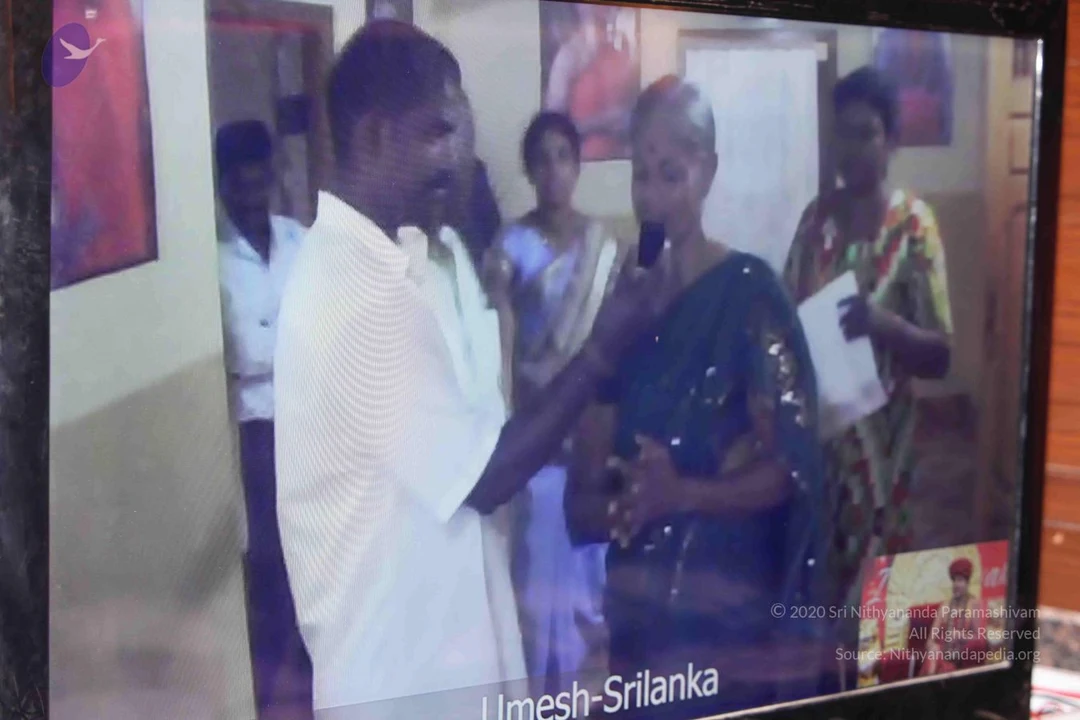
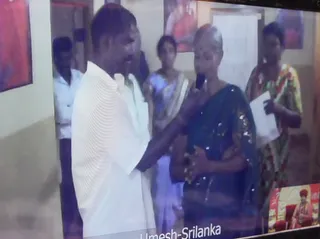
(Swamiji speaks in Tamil welcoming Kilinochchi - Sri Lanka) கிளிநொச்சி இலங்கையில் கல்பதரு தரிசனத்திற்காக ஒன்றுகூடியிருக்கும் அன்பர்கள், பக்தர்கள் அனைவரையும் வணங்கி வரவேற்க்கின்றேன்.

[03:02]

Today, in the Inner Awakening we are going to experience the genesis of identity. Means, the components out of which your identity is made, dismantling it, oiling it, lubricating it and assembling it back. Please understand, due to the dust called incompletions, different parts of you started getting into friction, wear and tear, dust and rust, and many time the whole mechanism collapses. Lubricating your inner space: completion is the lubricant, with which we will clean, overhaul the whole inner space. It has to be done with a tremendous love and care. You will open your being only when there is a complete security for you, only when you feel your whole being will be safe. See, only when you know the spare parts will not be destroyed or disturbed or lost, you will open yourself. I know in the young age, all of us would have done, I have done it, with a lot of vigour and enthusiasm, excitement - dismantling the whole alarm clock, and then hanging it over in a carry bag. How many of you done it? I have done it.

[05:06]

Dismantling anything in the house, whether it is a alarm clock or a watch, or something, you dismantle with all your excitement and joy, and finally when somebody comes to your house, some guests, or the parents who have gone out, they come back, you don’t know what to do, you put the whole thing in carry bag and hang it. You can’t open you unless you are sure the spare parts will not be lost, you will be able to put it back. The person who dismantles can put it back. He doesn’t need to put you in a carry bag, and hang it in the wall.

There was a time, the house in where I was born and brought up, in the wall every nail will have one carry bag. Those days there was a watch in there, there was a clock there. Now only the carry bag is hanging with that clock sleeping inside, or maybe you can consider the clock dead inside. So you can’t dismantle your being in that space. It can be dismantled only in a very deep loving space, a powerful loving space, and lubricated, assembled back for the smooth functioning of ever and ever and ever.

[06:49]

Please listen. Now I am going to, going to make a very important sacred secret, going to make a very important statement. Please listen. Now I am going to make a very important statement. Love of the Master enters into you, completes you, fulfils you, and turns back as love for the Master and enlightens you. Listen. Love of the Master enters into you, fulfils you, completes you, turns around and flows as love for the Master and liberates you. Blessed are those who taste love of the Master. Whether it is a benign look, benevolent look, or a serious look of a surgeon. When a surgeon looks at the tumor, remember he looks at the tumor, not you. Unfortunately, when I look at the tumor to terrorize the tumor, you mistake I am looking at you. Understand, decide clearly to hate what Master hates, to love what Master loves. In every one of you, there’s a part Master loves. Love that part, cherish that part, nourish that part, entertain that part, enrich that part - that will enlighten you. In every one of you, there’s one part Master hates. Hate that, destroy it, complete it, drop it - that will be a great liberation for you.

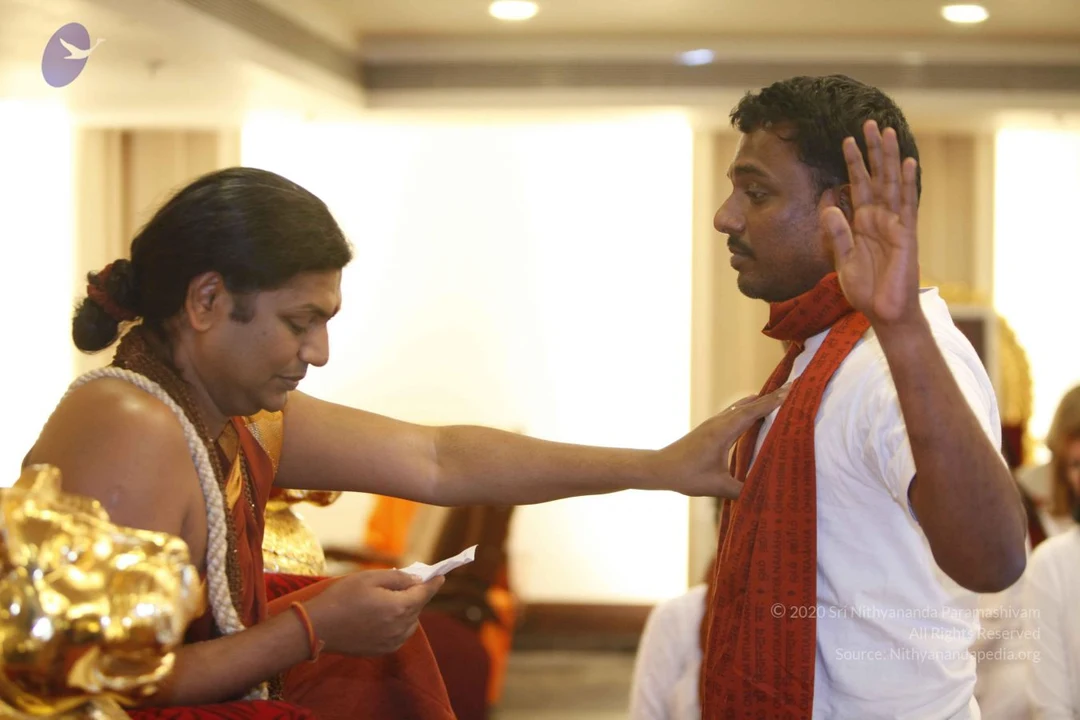
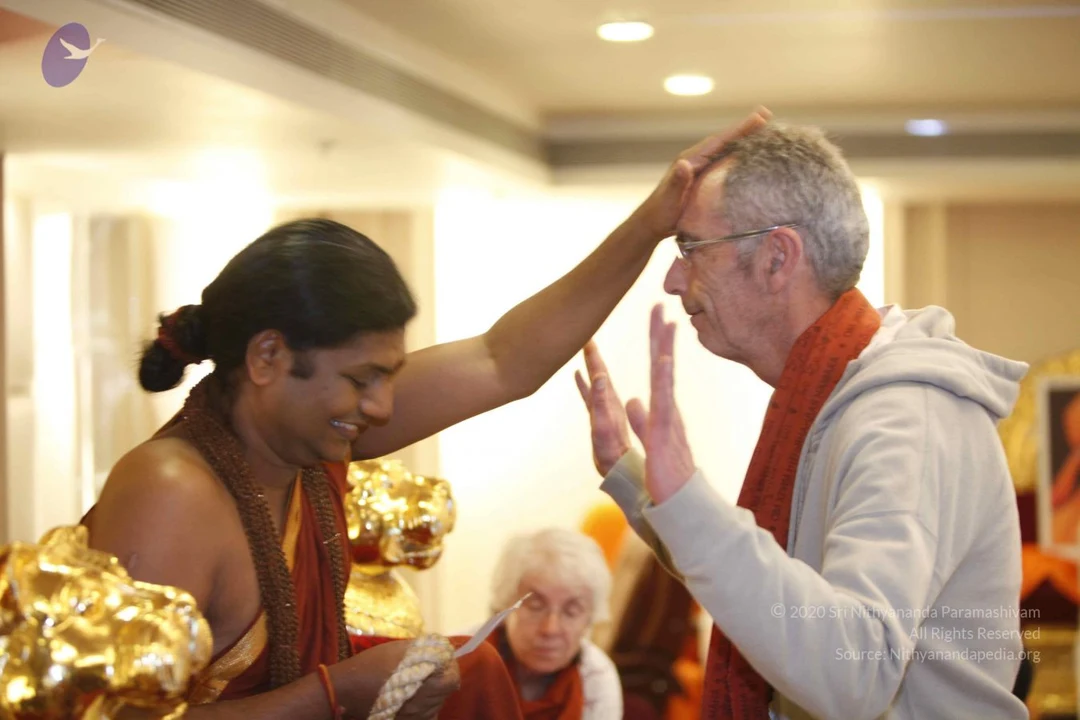
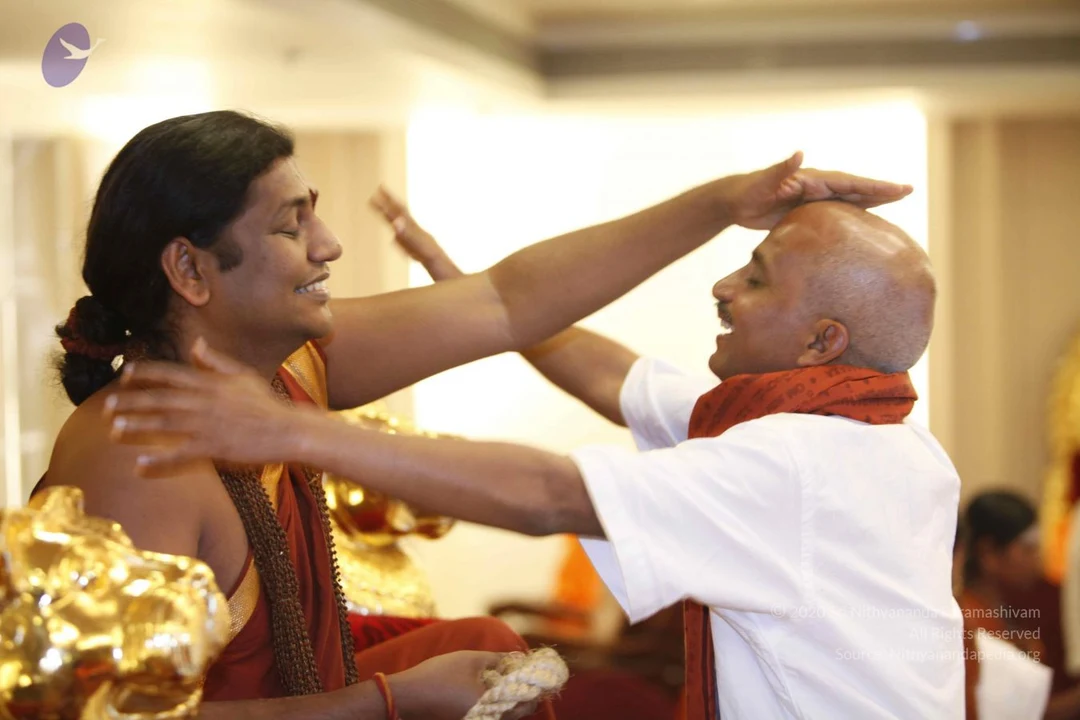
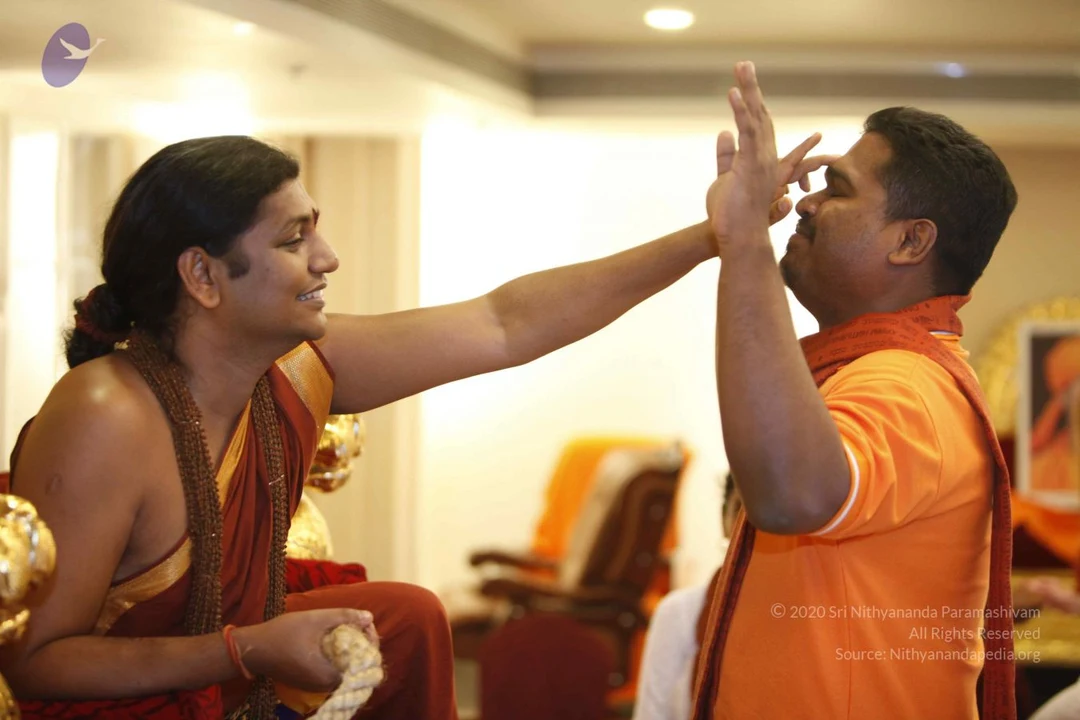
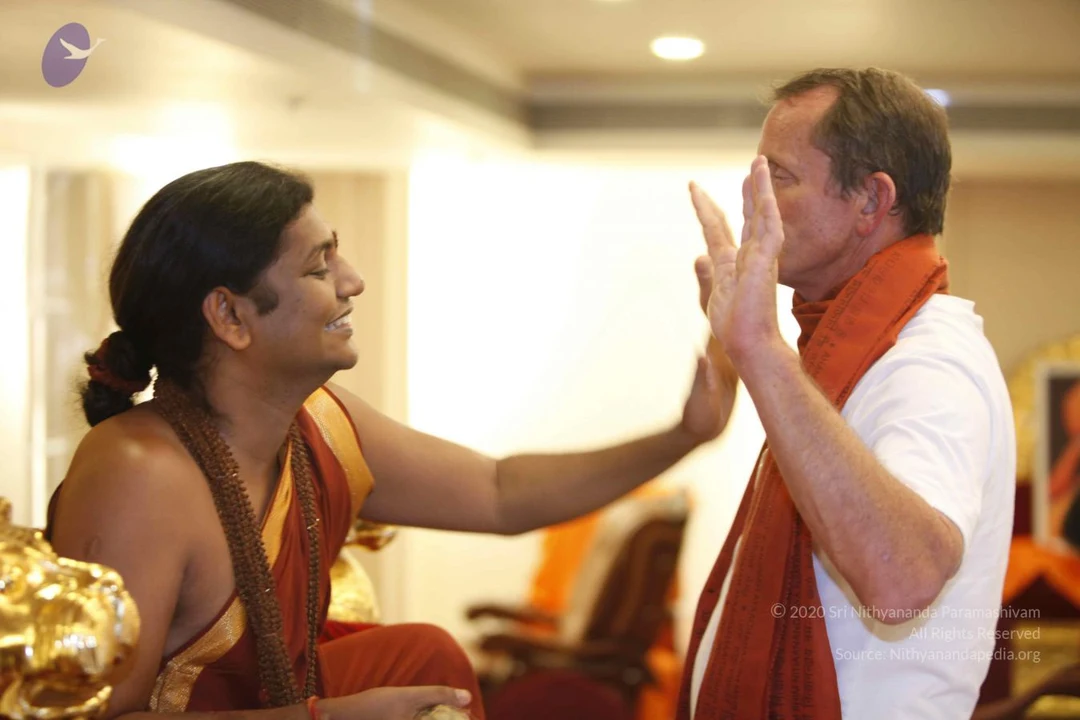
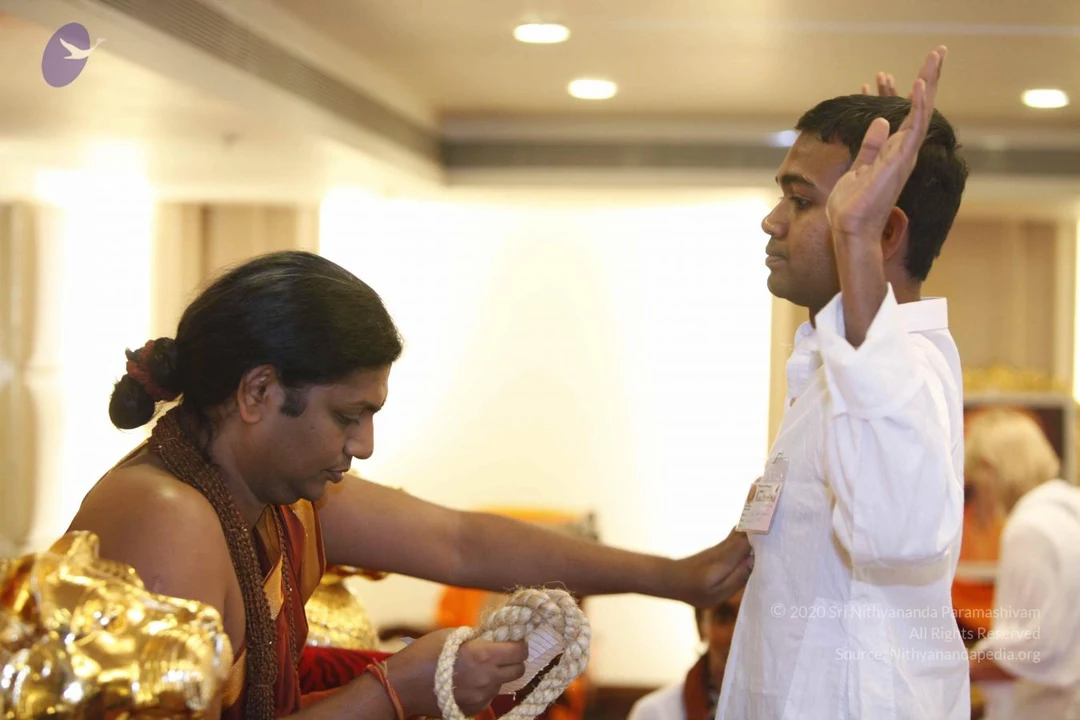
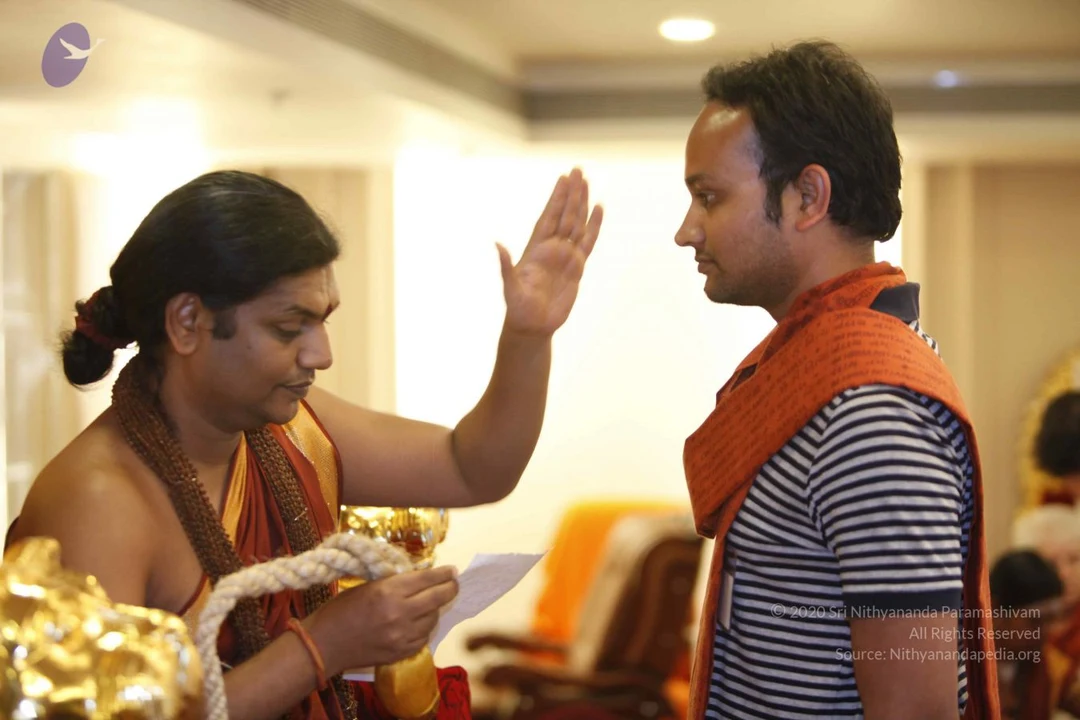
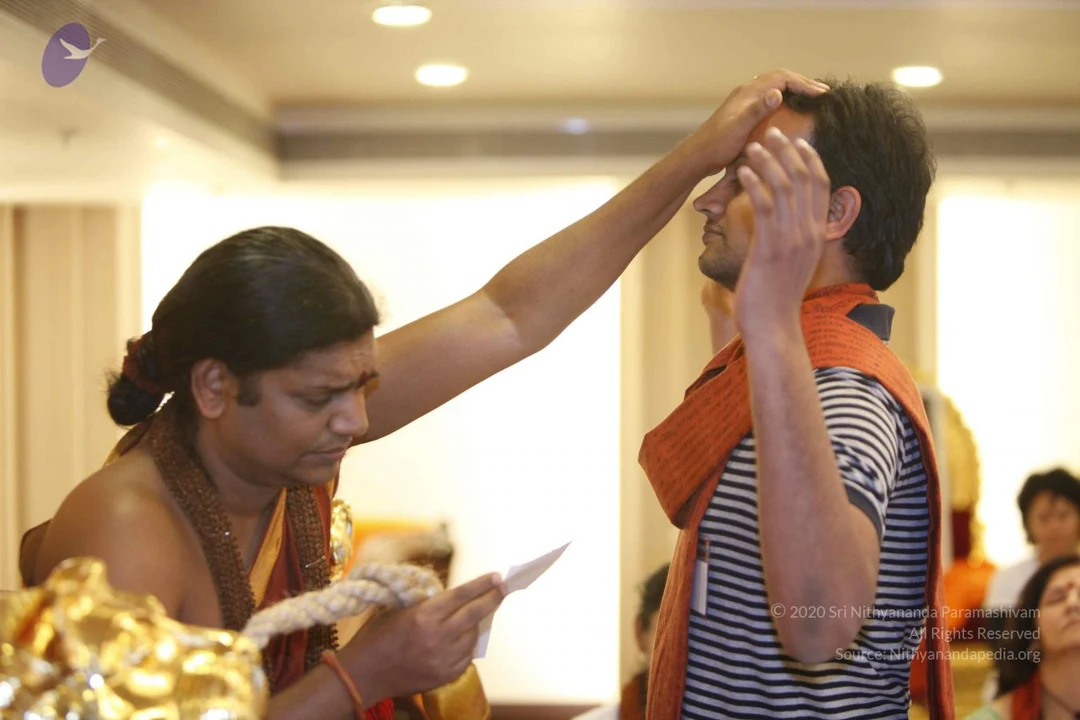
[09:34] Listen. It is love of the Master enters into you. It can be as simple as Nayana Deeksha - his eyes falling on you. I have created a new deeksha, new initiation with which successfully I have initiated millions. I have to give a new name for it - “Smiling Deeksha.” Just a smile, it goes and does the job, and, it never comes back empty handed, brings that person alive. Understand, the Vishnu Sudarshana goes, kills the person, and comes back. Shiva’s trishul goes and kills the person and comes back. Subramanya’s spear goes and kills the person and comes back. The Master’s smile goes and brings the person alive, more alive. We can come up with a new, new name. Smiley Deeksha. It can be as simple as a look, smile, or a blessing - “Tathastu.” Or as simple as a “like” in the Facebook. We have to create all these new deekshas - “Like Deeksha.” It enters into you through this as simple actions as just a “like,” or a smile, or a look - works in you. As I said, love of the Master enters into you as a “like” in the Facebook, or as a look, or as a initiation, or as a energy darshan, or as a word, or as a “Tathastu,” or sometime darshan in the dream.

[12:24] In various forms he enters in your life, and goes on working in you. When he works, when the love of the Master works in you, all the tumor automatically starts melting down, incompletions melt down, anger melts down. Many time you know you are transforming, but you are not able to tolerate your own transformation, because you had lot of vested interests, pay off with your ignorance. Many time, with your ignorance you are in a known comfortable cozy zone. But Master’s love melts all that. You know your transformation, your own transformation is too much for you. And you even try to escape. But his love is so powerful, he continues to work, continues to work, continues to work. Only one thing - don’t shut the pipeline through which he is supplying the love. Shutting the pipeline means, either escaping, running away, disappearing, or never allowing him to train you.

[14:27]

I have seen few people, you can’t train them - they will fall into depression or they will run away, always their one leg is outside. Always when they have one leg outside, and I also, “Leave it, okay, do what you want. What is there?” The tumor has become more heavier than their body weight in them. See, when your body weight is, the good muscles, good organs - weight is fifty kg, and tumor is twenty kg, you can remove the tumor and throw away and have the body - living, alive, kicking around. But if the body weight, good part is fifty kg and the tumor has become eighty kg, then what to do? Naturally you feel tumor is you. When I try to do surgery on the tumor, “Haaa… Don’t touch me! Touch me not!” Then I say, ‘Alright, come back with a new body. Okay.” Don’t become untrainable.

[15:54]

I tell you, I really tell you, you will find crores of temples, lakhs of monasteries, thousands of Gurus, but only very few Incarnations. When you find an enlightened being’s love, when you are fortunate enough to taste, and get to be around the enlightened being - don’t miss the amazing possibilities, the amazing space can happen in you, the amazing depth which can happen in you. Please understand, allow the Master’s love to work inside you with joy, with love, with cooperation - training becomes much easier and simple, straightforward.

When you celebrate Master’s presence, he also celebrates your presence. Understand, when you celebrate Master’s presence, he also celebrates your presence. When you allow the Master’s love fill you, when you allow yourself to be soaked in his love, in his presence, it fills you, and overflows through you as a love for the Master.

[18:09]

Please understand, if you have any love for Me, it is never yours - it is Mine. Love of the Master only can become love for the Master. If you have any love for Me, be very clear - it is Mine. It is not yours. Only the love of the Master can fill you, and overflow through you as the love for the Master. When you allow love of the Master fill your inner space, first it does is the job of the scavenger - cleaning it, cleaning you, cleaning all your incompletions, cleaning all your powerlessness. Like how water goes only to the pits first and fills, love of the Master goes only to your incompletions first and fills it, completes it. Just, just if you are in integrity with the Master, that’s enough. Nothing else. Just integrity with him. Because, integrity with him will pour more and more his love into you. Please understand, Master is also a very powerful energy. When he pours love of the Master in you, he will naturally make it as love for the Master and make it flow it back.

[20:24]

When the love of the Master gets poured in you and turns into the love for the Master, and connects back with him - you are enlightened. Now nothing more is there in you which you can call as you. When the circle is complete, you are complete, he is complete. That is what I call Advaita Svarupa, the Advaita. When you are experiencing love of the Master, it is Vishishta Advaita. When you are experiencing love for the Master, it is Dvaita. When the circle is complete, it is Advaita.

When you are experiencing love of the Master, it is Vishishta Advaita, means, you are part of the Whole. He makes you feel so complete, you feel you are part of the Whole. That is exactly the truth of Vishishta Advaita. You are part of the Whole.

[21:44]

When you are experiencing love for the Master, suddenly you will see nothing matters other than you and the Master. In the whole world only you both are there. Only you both are in the colour, everyone else is in the background frame. Almost like how the duet songs are portrayed, other than the hero and heroine, everyone else is in the background, immaterial, the whole world becomes immaterial, everything becomes background. That is what is Dvaita. Other than you and the Master, nothing else exists. When the circle becomes complete, that is Advaita.

Love of the Master will naturally come back to him as love for the Master, because now it has to go for the next allotment, next job. The love poured on you has to come back, not because I don’t have enough love, but because you can’t be, in the, from the distance you can’t experience incompletion and distance for a long time.

[23:10]

I tell you, essence of the whole spirituality, the Science of Causing Your Reality, Science of Enlightenment, I have put it in these three word - when the love of the Master enters into you, and fulfils you, it is Vishishta Advaita. When the love for the Master radiates through you, it is Dvaita. When the circle is complete, the love of the Master simply becomes love for the Master, and now “of” and “for” disappears, only the love exists, it becomes Advaita. “Of” and “For” is two directions. Love has no direction, because it fills everything, everything, everything. I tell you, I will be remembered forever just for this today’s definition. Because, this definition breaks, this definition breaks so many questions, gives clarity to so many philosophical arguments, takes away the basis for so many fights.

[24:55]

You being a Vishishta Advaiti, Dvaiti or Advaiti, is neither high nor low. It just shows the space you are experiencing. A Vishishta Advaiti or Advaiti or Dvaiti can never be inherited. Just because your Guru was Advaiti, you can’t be Advaiti. Just because your guru was Dvaiti, you can’t be Dvaiti. Just because your Guru is Vishishtadvaiti, you can’t be Vishishtadvaiti. You have to discover it. Ramanuja, the great Vishishta Advaiti, his Guru was Advaiti! His guru was Advaita Acharya. Shankara, a great Advaiti, his Guru - Govindapada is a great Dvaiti! So be very clear, you have to discover it. If you have inherited Dvaita, Vishishta Advaita or Advaita from your Guru, just like the property you inherited which you are going to leave it and go away, that philosophy also you will inherit and you will leave it and go away. It is not going to enrich you or others. Only if you discover it, it’ll enrich you and others.

[26:14]

If you have studied a little bit of Hindu philosophy, and contemplated on these conflicts and controversies, and contemplated on these confusions, then you will understand the value of this word today I uttered. When you are getting filled by the love of the Master, you are Vishishtadvaiti. When your love of the Master turns into love for the Master, and flowing towards him, you experience Advaita. When the love of the Master flows towards him as the love for the Master, you experience Dvaita. When that circle is complete, love “of the” and “for the” becomes just love, it is Advaita. Whether it is a Kalpataru Darshan or just a simple “like” from Me in the Facebook, or as great as energy darshan - physically receiving, or the whole Inner Awakening program or life, Living Enlightenment Process, or Life Bliss Engineering, or becoming a brahmachari or a sadhu or a sannyasi of My order, whatever - the whole thing is just these three statement.

[27:52]

Love of the Master entering into you, completing you, flowing towards him back as the love for the Master, completing the circle, just becoming love. When the circle is complete, love of the Master enters you, completes you, fills you, overflows as the love for the Master, and the circle is complete - you disappear in him, he disappears in you. It is not just you become drop in the ocean, you become the whole ocean in the drop. Understand, it is not that just you become drop in the ocean, the whole ocean becomes a drop in you. When you become the drop in the ocean, the whole ocean becomes drop in you. When you become the ocean in the, when you become the drop in the ocean, the whole ocean becomes a drop in you, whole ocean becomes part of you, the drop. Everything is just this circle. You are in the various stage, that’s all.

[29:32]

When the love comes, you may be in the mood of allowing it to happen, or sometimes you may be in the mood of resisting it. Sometime you may be using… choosing and using. That is also okay. Even if you are choosing and using - choosing all the hugs, smiles, and using only those parts, even then you don’t know you are a fool. Even the part which you choose is so powerful, it’ll just enchant you. You may be thinking, “No, no, I’ll choose just this part so that I don’t lose myself. And I’ll play a safe game. I know he is a great guy, but I don’t want to get into too much. This are all too much. People around him are mad after him. They wear his dollar, they wear his locket. Aahh...! But I’ll choose whatever.” When you choose and use also, you will lose in him. You will lose yourself in him. Understand, if his love wins, you won the game of the life. You won the game of the life. Nothing else matters. Nothing else matters.

[31:23]

This money, this infrastructure, this organization, everything is just for this drama. Love of the Master entering into you, completing you, and flowing back as the love for the Master, and completing the circle - you disappearing into love, he disappearing into love. That’s all. Even if a meal is served in our annalaya, it is nothing but the love of the Master entering into you. Whether it is a meal served in annalaya, or a flyer handed over to you about Kalpataru Darshan, or the joy and the space, presence you feel in our temples all over the world - everything, everything, everything is just love of the Master entering into you, completing you, and flowing back as love for the Master. You are in various stages, that’s all. Each one of you are in various stages. Someone quickly allows that to happen. If you had a great childhood, means, either one person - your mother or father is a fulfilling being in your life, I tell you, it is very easy for you to experience the completion with the Master’s love. I have always seen that. Because now, you will not have the fear to allow the love to fill you.

[33:23]

Understand, whenever love of somebody enters into you, will naturally go back to that person as love for that person. Because love is such an energy, can never be just stored, possessed, locked inside you. You can never do this - you receive love from somebody and lock it inside. No! A sincere love will make you filled and it’ll overflow and go towards that person. If you have love for Me, I am responsible. It is love of Me comes back to Me as love for Me. And if you don’t have enough love for Me, I am responsible, because that much only love of Me was given to you. [I don't want to] blame you. Because the power of love is such, when the honest love is, “love of,” when it comes, it cannot just be locked or possessed inside you. It has to complete the circle by coming out as “love for.” The “of” has to become “for.” Because love is a power. Love is a power. When the “of” flows into you and becomes “for” and completes you, that is what is infinity.

[35:07]

If the love between normal two persons, it becomes zero - a complete circle, zero. Both of you lose yourself in each other. When the love is from an enlightened being... Please understand, when the love is between normal two human beings, it starts from one’s Muladhara and enters into other’s Muladhara, comes through the other’s Sahasrara, touches the other’s Sahasrara - it becomes circle. That is also great. I am not saying it is wrong. It is much better than the dead human beings. I don’t even want to use the word “zero” in ordinary sense - it becomes complete, the circle is complete. That’s what I’ll say.

But the love of the Master does not come from Muladhara. It comes from Sahasrara, and enters your Muladhara and completes everything! All your incompletions comes out of your Sahasrara as the love for the Master. That’s why I say, it is infinity. Whether it is a initiation, or Completion Process, Upanishad, techniques, everything is just to enhance this process - love of the Master entering into you and overflowing as love for the Master and completing the circle (Swamiji draws the infinity sign with his hand).

[37:05]

Don’t lock the source of your energy, which is love of the Master, to complete you, to train you, to fulfil you. All this infrastructure is the drama he does to fulfil you. I tell you, building this whole organization is nothing but one of My leela, drama, to complete you, to fulfil you. Not to let you be rusted, fall into the dust of laziness, powerlessness and incompletions. Whether this sangha happens or not, I’ll continue to shine as a great spiritual sun in the sky of the Cosmos. See like Ramana Maharshi, there is no organization around him. But, he continues to shine as the star. But unfortunately, only he continues to remain as a star. I am not just a sun to shine as a star in the Cosmos, I have come to make billions of suns to fill the whole Cosmic sky, the Cosmic space.

This whole sangha is nothing but the Leela I am doing for everyone of you to experience powerfulness, experience joy, experience completion, get out of this constant powerlessness blanket every day which you pulls up, pull on you and sleep cozily. Every night when you pull your blanket, you pull the powerlessness. That’s why, early morning when you wake up, you feel nothing is going to work, all has gone down the drain.

[39:36]

This truth which got revealed today through Me will one of the… will be one of the milestone contributions to Hinduism. Because… this conflict of Vishishta Advaita, Dvaita and Advaita has costed too much for our Hindu tradition. Sanatana Dharma has suffered, struggled a lot because of this conflict. Understand, this is not a conflict. It is just the different parts of the circle. When you are going through certain process and completing the circle, it’s just various points. Vishishtadvaita is not lower than Advaita, Advaita is not higher than Vishishtadvaita. It is just a journey. Anything can be given up in the life for the love of the Master. Don’t give up that for anything. It’s the love of the Master completes you, flows as love for the Master. When that circle is complete, you achieve the state of Advaita, you become the Advaita Ananda - should be lived. A real Advaiti should have lost himself in this circle.

[41:43]

Love of the Master, when it enters into you - don’t worry, it is powerful enough to complete you. That is powerful enough to complete you! It is actually love of the Master gives you kind of a space and security to remove each spare parts of you, and, remove the friction, remove the dust, overhaul it and pour the completion lubrication, and assemble you back and radiate love for the Master. The place where the love of the Master completes you and turns as love for the Master, that place is called sangha. That space is called dhamma. The place where the love of the Master turns into love for the Master is sangha. The space where love of the Master turns into love for the Master is dhamma. Please understand, the space where love of the Buddha becomes love of the dhamma, love of the Buddha becomes love for the Buddha - that space is dhamma. The place where love of the Buddha becomes love for the Buddha - that place is sangha. Don’t miss the space and place, both.

[43:36]

When Master’s love enters into you, love of the Master enters into you, it exposes all your incompletions to you. It awakens all the incompletions in you. It awakens you to all your incompletions. But, it does not leaves you alone with your incompletions. No. It fills you, it completes you, it surrounds you. The completion overflows as love for the Master. And when that overflows, the circle is complete - Advaita becomes reality. All the spiritual truths become reality, understand. When the love of the Master enters into you, it’s called initiation. When it fills you, it is completion. When it overflows in you, it is miracles. When it flows towards the Master as love for the Master, it’s called Purna Bhakti. When the circle is complete, it’s called Advaita.

At various stages, it can be called with various names. Initiation, completion, miracle powers, feeling connection, and ultimately enlightenment - all these are various points, various spots of the same journey. Only thing, don’t get down anywhere on the way. Sit in the train. Stick yourself to the train. Whether it is by declaration Fevicol, or by the clear conscious decision, just decide not to get down on the way.

[46:29]

Love of the Master becomes love for the Master. It’s powerful enough. When My love enters into you, I know the power of it. I know the power of it. It just completes you completely. All the incompletions are lost! Ultimately, you yourself become one with that love, when it flows towards the Master, love for the Master. Love of the Master, when it becomes love for the Master - be sure, you are now directly entering into the space to achieve and radiate enlightenment. I feel job satisfaction, that I uttered some of the very powerful sacred secrets, most important philosophical clarification for Hinduism. I feel I have added something great, not just to My Nithyananda Sampradaya - to the whole Hinduism. I can say in a way to the whole spiritual Universe.

[48:41]

It is his love. Love of the Master fulfils whatever boons you ask. Love for the Master fulfils, causes the reality of others around you. Please listen. Love of the Master is a... love of the Master causes your reality. Love for the Master causes others’ reality around you. When love of the Master flows into you, it causes your reality. When the love for the Master flows from you, it causes others’ reality. When I speak about love, I can see very clearly this whole space, I can touch the air and feel that love as a energy; whether you are there thousands of kilometers away, or here physically in My breathing space - you are in My breathing space. Understand. You are in Newfoundland - Canada, or San Jose - Madurai, or Redondo Beach, or South Africa - you are in My breathing space, or Dubai you are in My breathing space.

[50:40]

Photos

Pada Puja and Nithya Satsang
e-Kalpataru

Inner Awakening Session - Introduction To Root Pattern

Swamiji During Inner Awakening Session

Tags:

Paramahamsa Nithyananda, spirituality, science, reality, enlightenment, love, transformation, heart, Master, fulfillment, completion, liberation, ultimate.

Photos Of The Day:

paduka-puja

nithya-satsang

kalpataru-darshan

ia-introduction-to-root-pattern

ia-root-pattern-participants-sharing

ia-darshan

Photos Of The Day:

FB-photo-of-the-day

Photos from this day

View all 173 photos

Pada Puja and Nithya Satsang
2 photosSource gallery
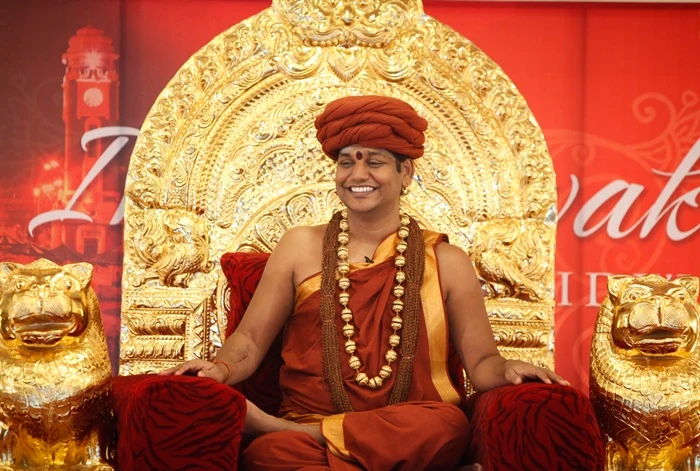
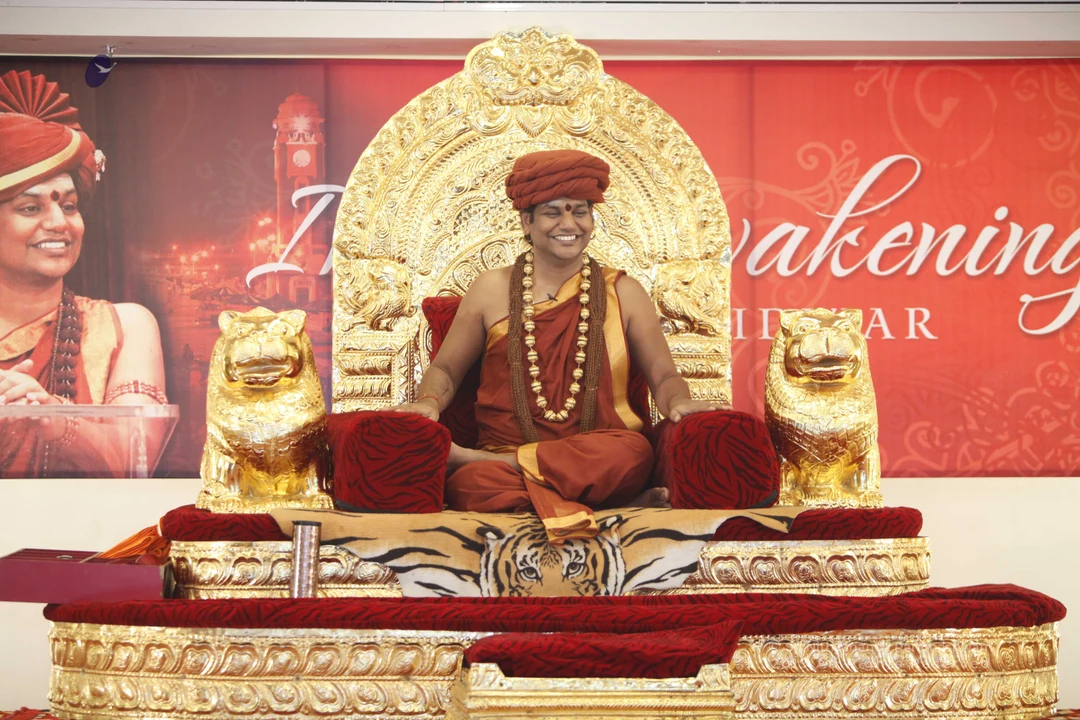
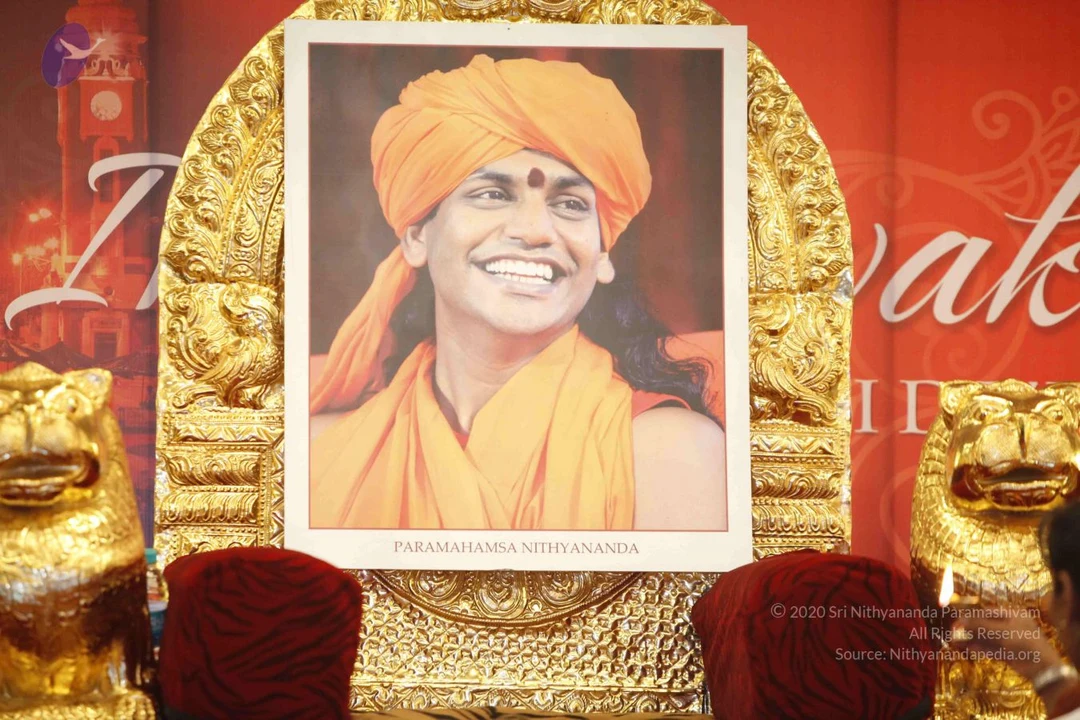
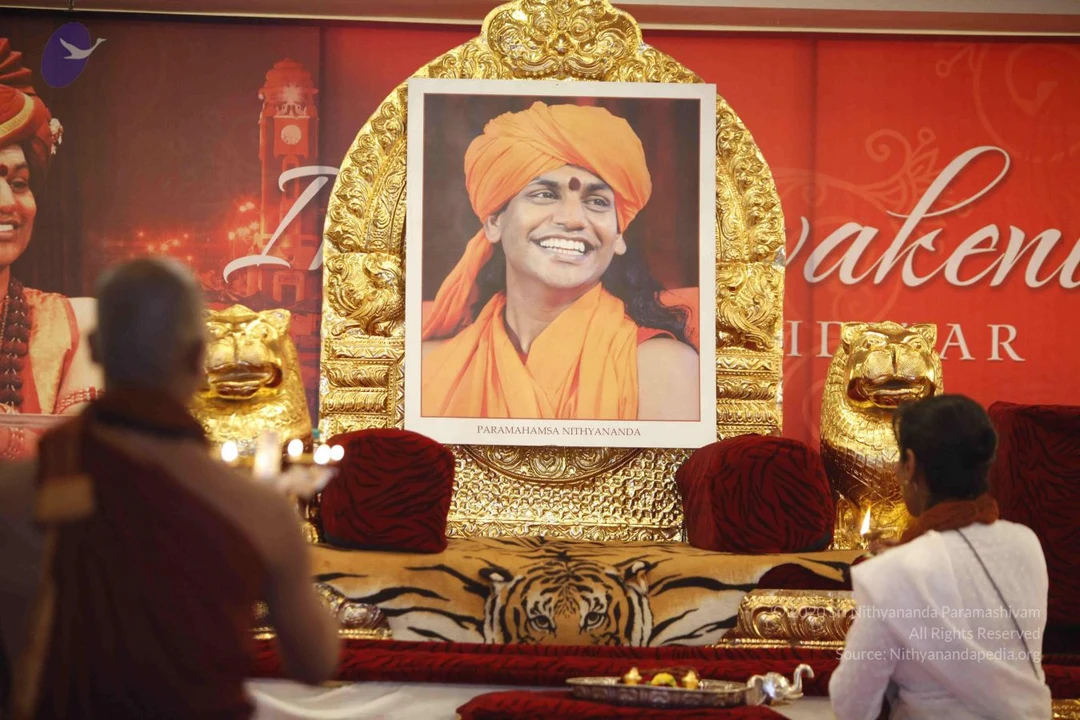
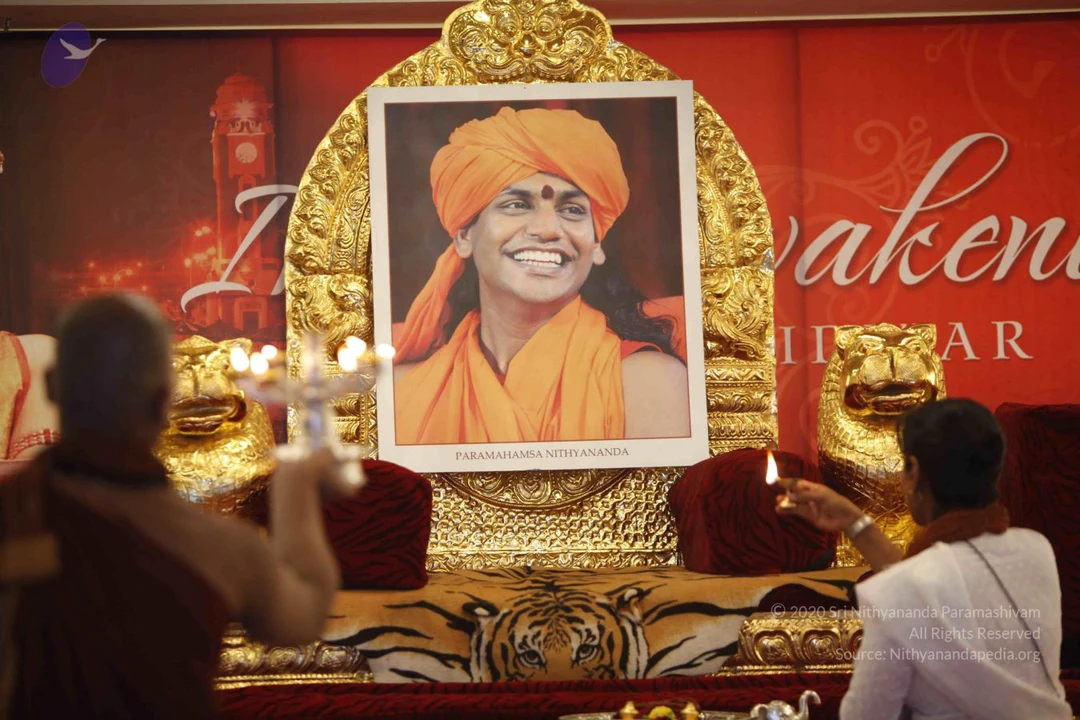
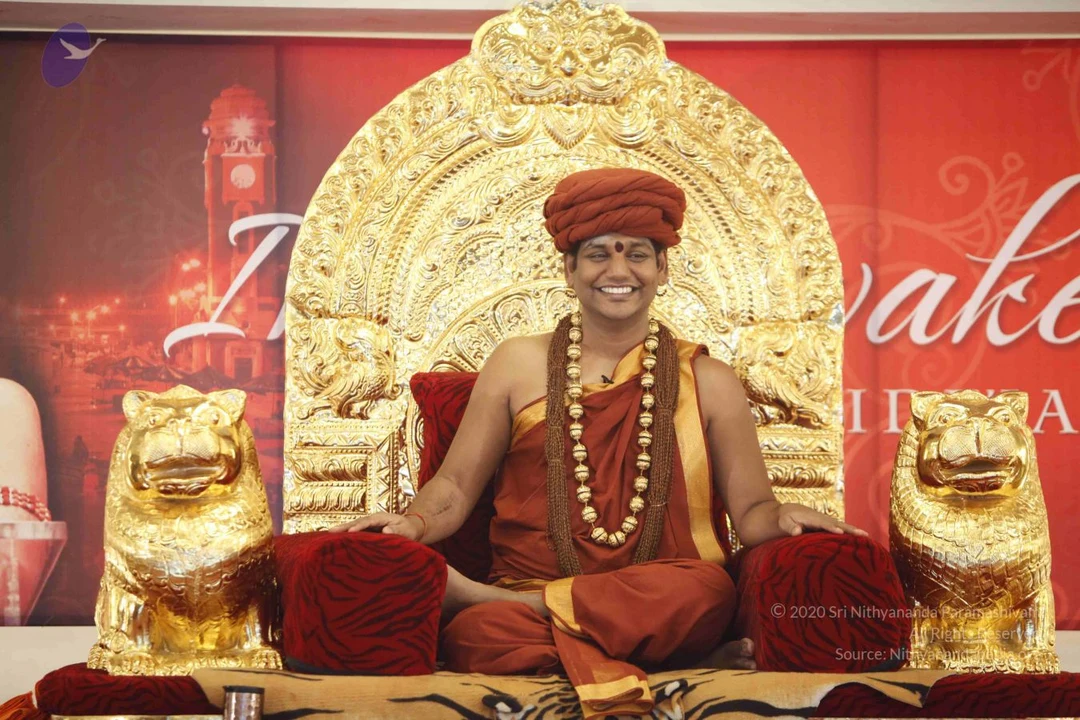
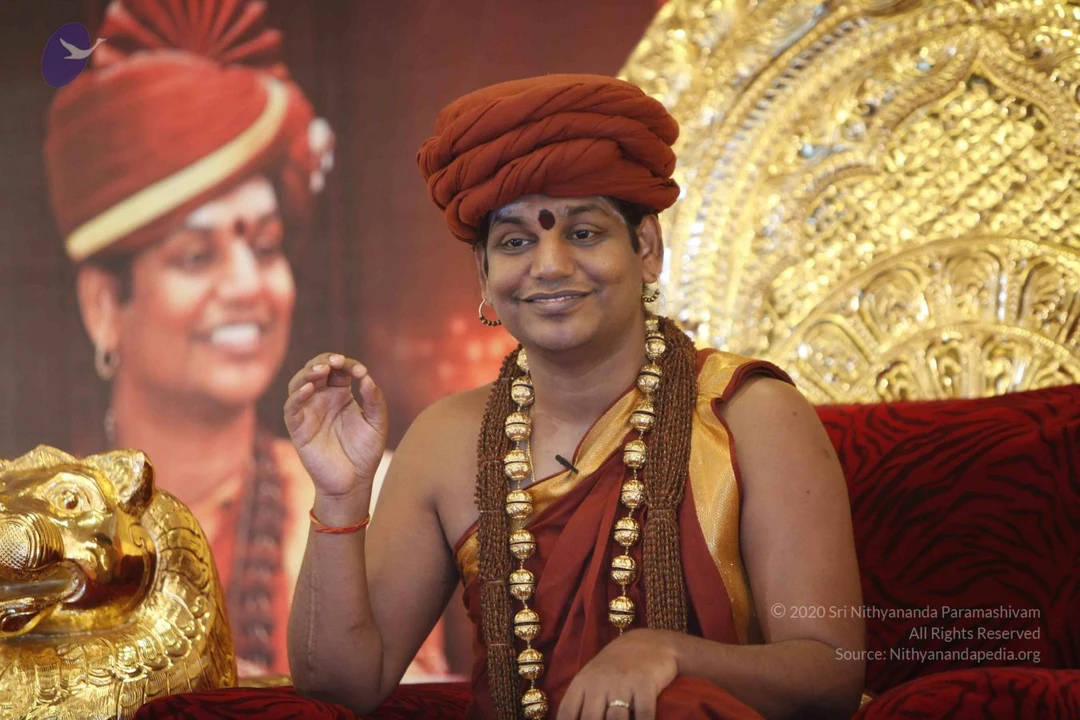
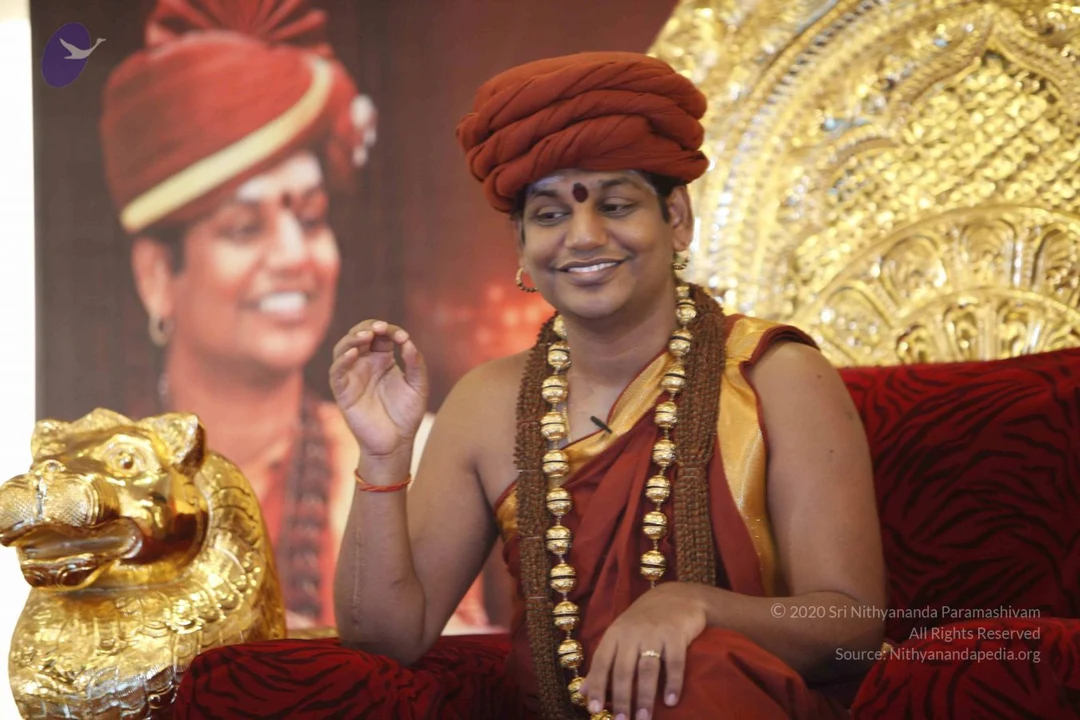
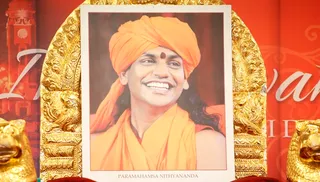
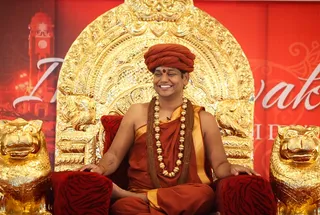
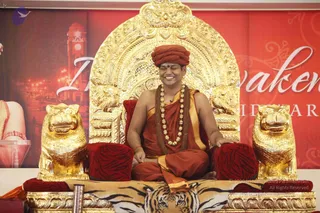
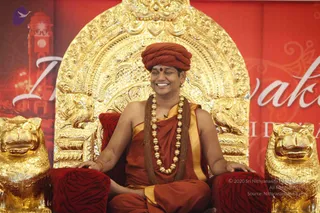
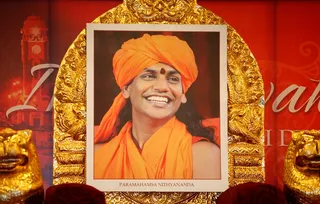
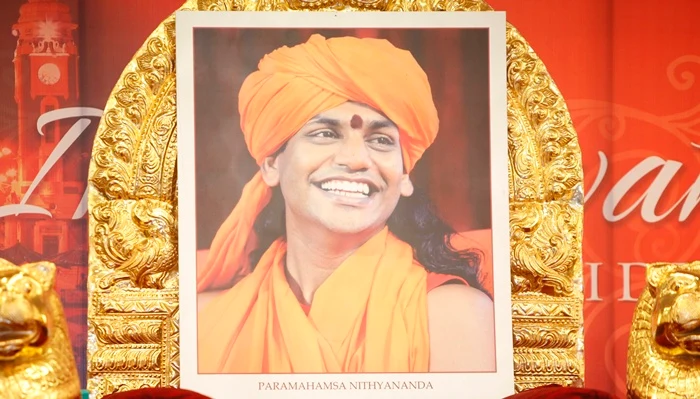
A printed portrait labelled "Paramahamsa Nithyananda" at the bottom stands on a gold-carved ornate throne-like frame against a red backdrop. The portrait shows a smiling man in a saffron-orange turban and saffron robe with a red bindi, with long dark hair visible at the shoulder. Gilded lion-head ornaments flank the frame, and red cloth is visible at the lower edge. No physical people are present in the scene; the figure is a printed portrait.A smiling man in an orange-red turban and orange-red robe with a gold trim sits cross-legged on a red cushioned seat in front of an ornate gold throne with carved lion heads on its armrests. He wears a long brown rudraksha mala and a gold necklace, with a red bindi on his forehead, and his hands rest on the cushions. Behind him a red backdrop shows a partial logo and a red clock tower graphic. Appearance-based identification is uncertain, so the central figure is described by role only.

e-Kalpataru

3 photosSource gallery
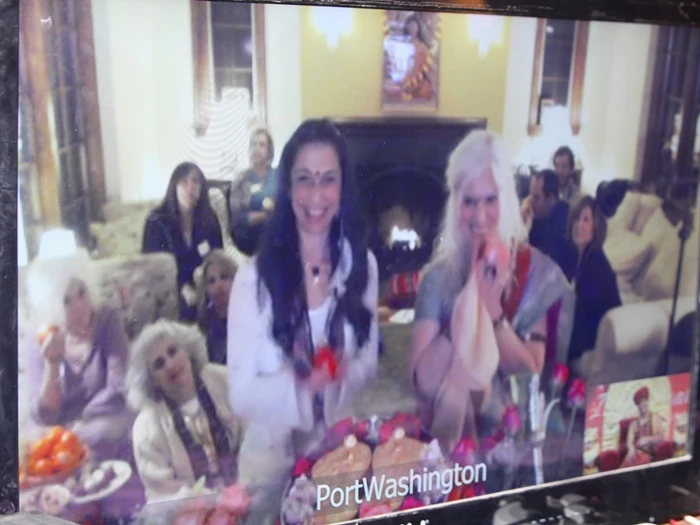
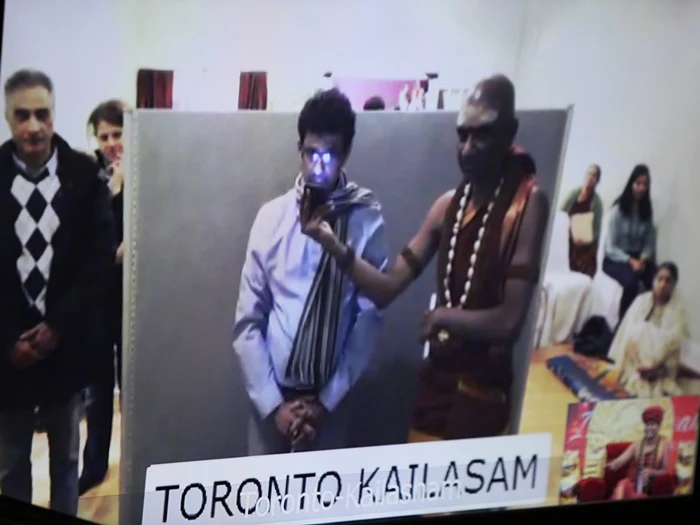
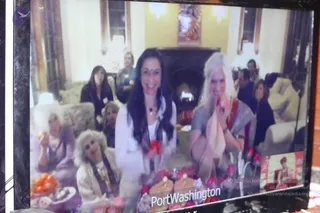
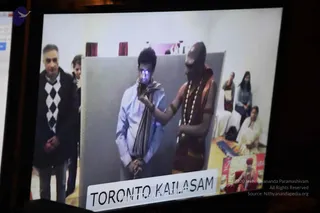
A screen photograph of a video-conference feed labelled PortWashington, showing a formal living room with a fireplace, framed painting and armchairs. Two women in front smile and hold small red flowers, a central woman with long dark hair in a white jacket and a woman with white hair in a grey-blue sari; a table below holds pink flowers and trays of food. Several other seated women and men are visible behind them. A small inset in the lower right shows a separate screen with a seated figure in a red-and-white garment, too small to confirm identity. No a person candidate is clearly identifiable in the main scene.A photograph of a video screen showing a live link with a caption reading TORONTO KAILASAM. Standing in the centre, a man in a light blue shirt and striped grey scarf holds his hands together while a bald, dark-skinned man in a rust-coloured garment with a long white bead necklace stands beside him, touching a small object. On the left, a man in a black jacket with a white-and-grey argyle sweater watches. On the right, seated women in a white sari and other attendees sit on a floor with a red and orange cloth. A framed portrait in the lower right shows a figure in red and gold seated on a throne. The screen shows the image through a camera, with a blue glare on the centre figure's glasses.A photograph of a television screen showing a video link with a man in a white striped shirt and white dhoti holding a microphone toward a woman in a teal sari with gold embellishment. Behind them, a woman in a blue-and-white sari and a woman in a multicolored patterned top stand in a room with framed pictures on the wall. A lower caption reads Umesh-Srilanka, and in the bottom right corner a small inset shows a figure in red and gold seated on a throne, shown on screen as a depiction.

Inner Awakening Session - Introduction To Root Pattern
2 photosSource gallery
A man with long swept-back dark hair and a red bindi sits smiling in an orange leather chair before a large gold ornate arch and gilded lion heads. He wears a rust-red robe with a gold border, a long rudraksha mala draped over his shoulder, and a small clip-on microphone. His hands rest on his knees and his right arm is on the chair arm. Behind him are red panels with partially visible white script lettering. The long hair, saffron-toned robe, rudraksha mala and ornate gold setting match the Swamiji (probable) appearance cues, seated in a throne-style chair as a teacher during a satsang setting.A man with long dark hair and a red bindi sits in a large orange leather armchair, smiling and looking off to his right. He wears a maroon wrap with gold border over bare shoulders and a long double-strand rudraksha mala around his neck, with a small clip-on microphone at his chest. Behind him a red panel and soft white curtains fill the background. Swamiji (probable): long swept-back hair, saffron-red ceremonial clothing with gold border and a rudraksha mala, seated in a throne-like chair as a speaker.

paduka-puja

17 photosSource gallery
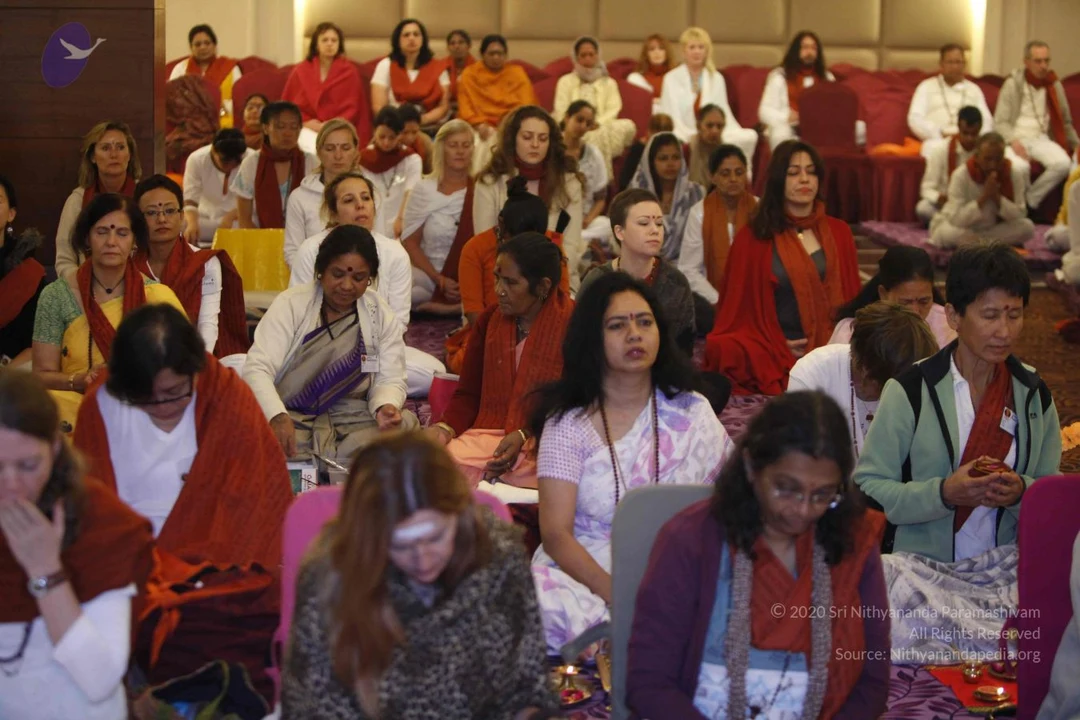
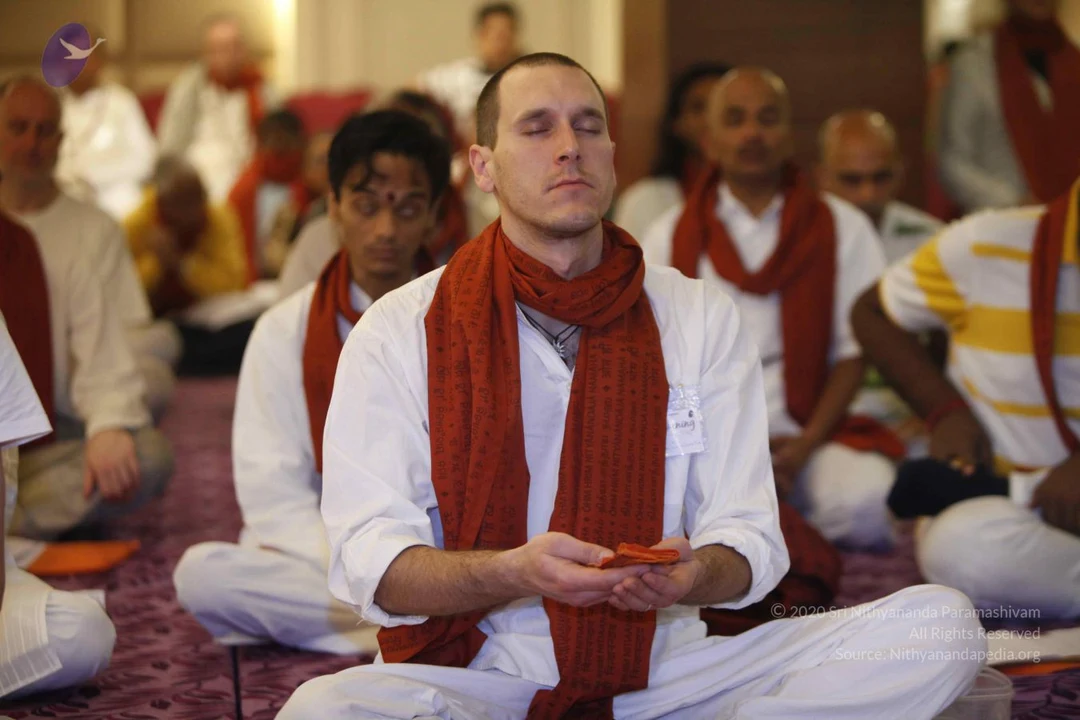
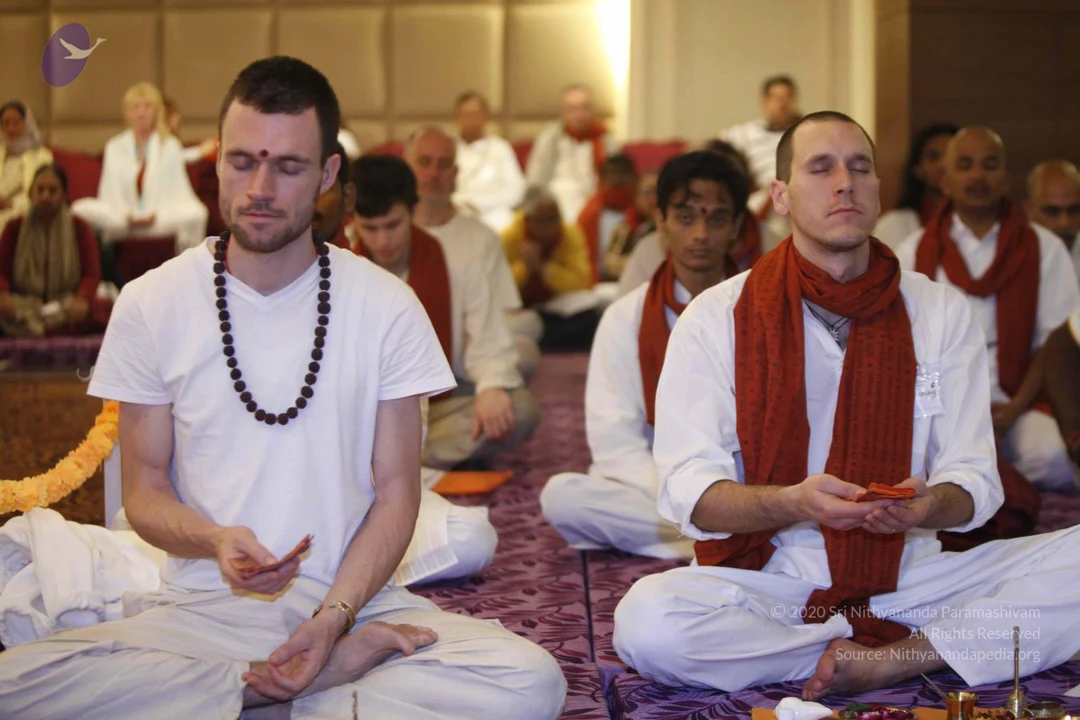
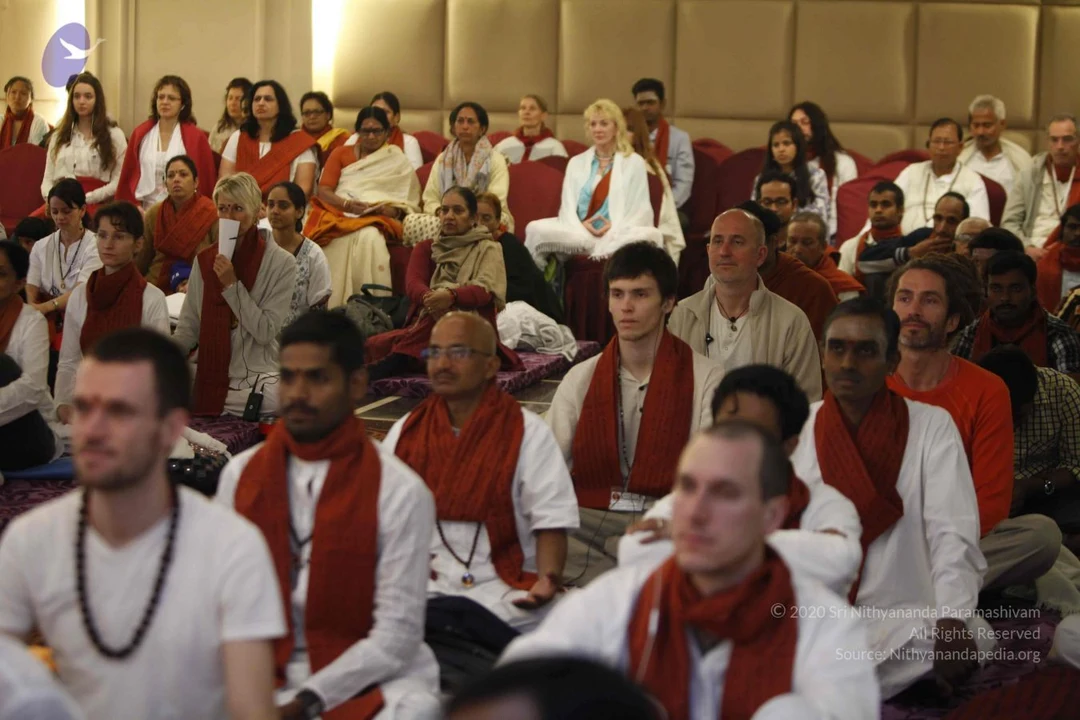
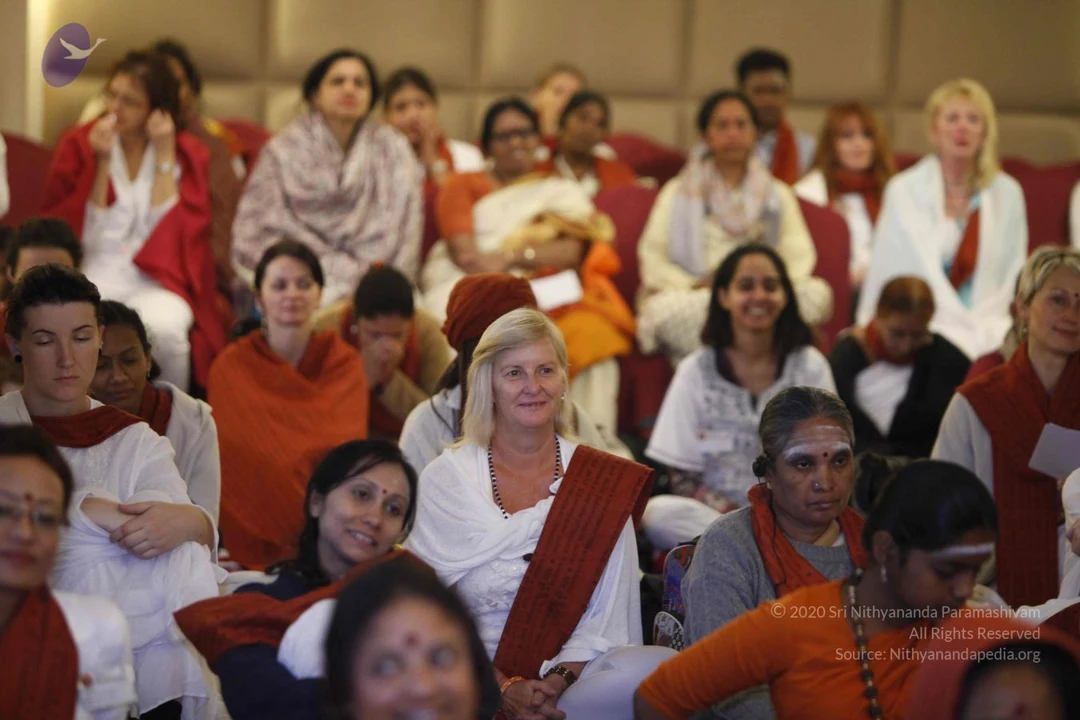
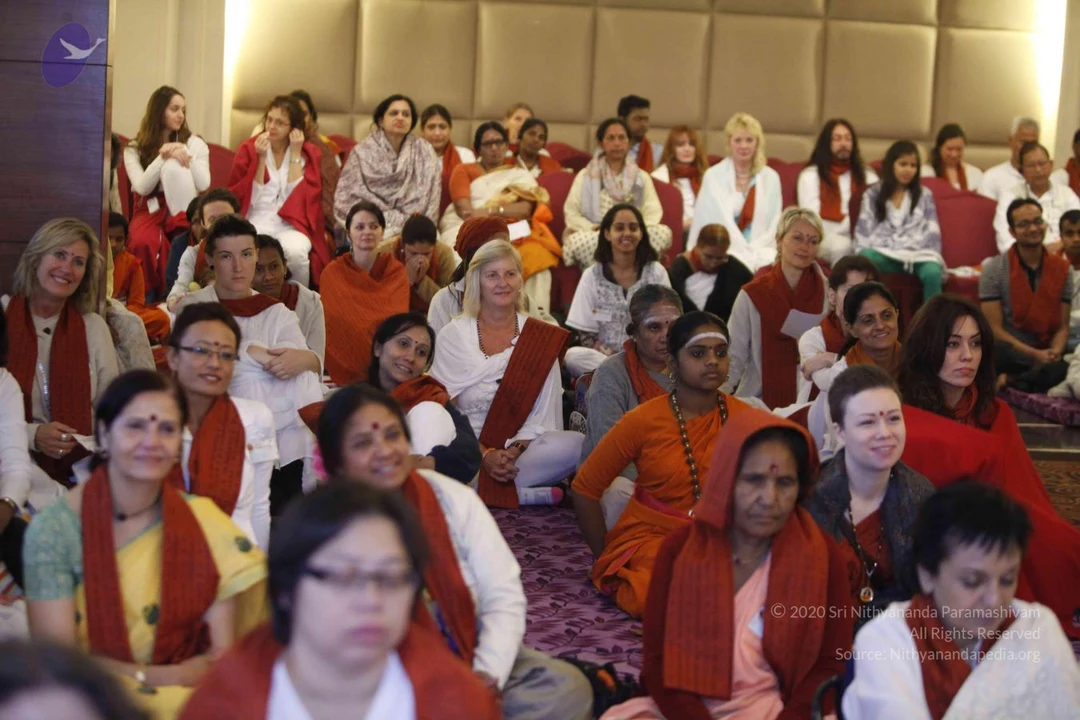
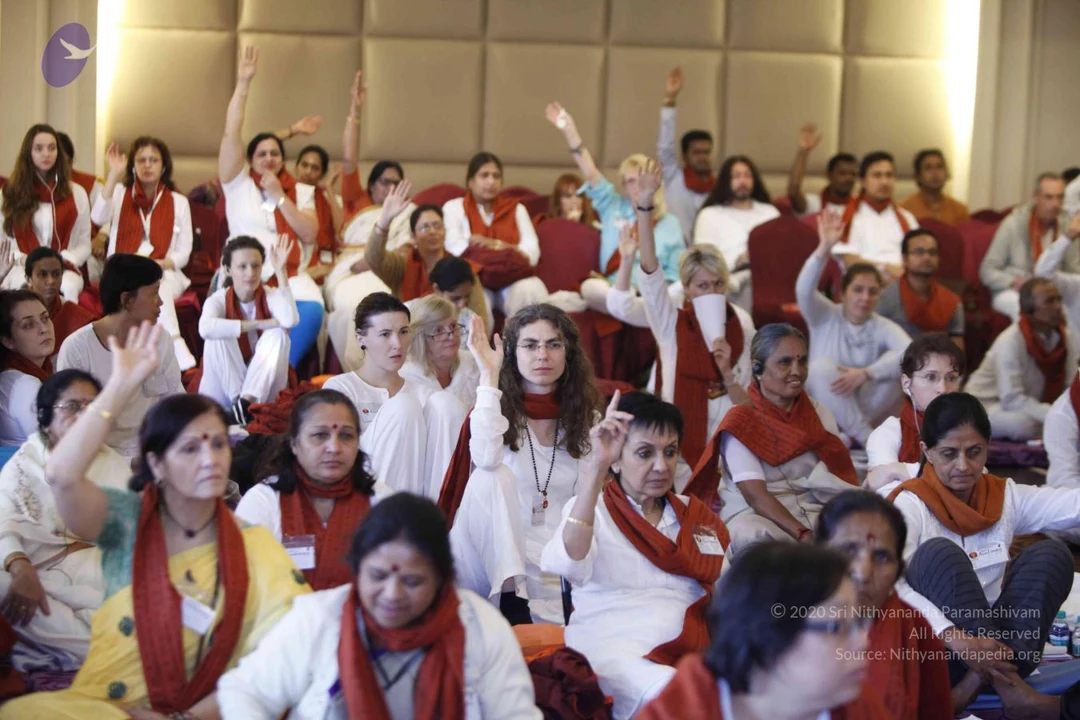
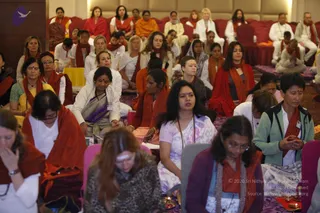
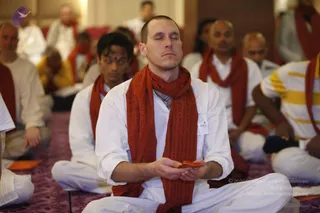
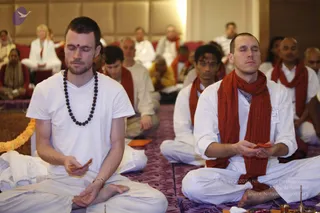
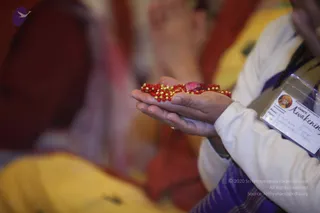
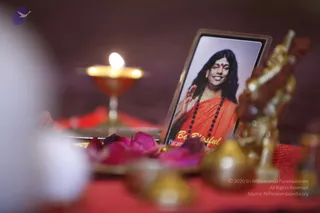
A seated satsang audience fills a hall with dark red cushions and wall panels, many people wearing orange-red shawls and white or cream clothes. In the foreground a woman in a light lavender sari with a red bindi and a mala holds her hands together, while other devotees sit with eyes closed. Small oil lamps and offerings sit on a tray at lower right. The room is full of seated devotees, with a purple logo visible on the wall at upper left. No a person candidate is clearly visible in the frame.A seated group meditation or satsang in a hall with a patterned maroon carpet. In the foreground a young man in white clothes and a rust-orange scarf printed with script sits cross-legged with eyes closed, hands together holding a folded orange cloth. Around him devotees in white with orange-red shawls sit in rows, a man in a yellow-and-white striped shirt appears at right, and an older bald man in white is at left. A badge is pinned to the foreground man's shirt. Several people are fully or partially visible, all seated in quiet meditation.A seated group meditation or satsang in a carpeted hall with purple floor covering. In the foreground, two young men with closed eyes sit cross-legged in white clothes; the left man wears a dark rudraksha mala necklace and a red bindi, and holds small reddish items in his hands. The right man wears a red-orange shawl over white and holds folded orange items. Behind them, many devotees sit in white and red-orange shawls, some with eyes closed, and a brass lamp and offerings are visible at the bottom right. A yellow-orange marigold garland hangs at left.Close photograph of a woman's cupped hands holding a red and gold beaded mala with a pink flower petal resting on it. She wears a white top and a purple patterned shawl, and a clear badge lies at her side. Blurred figures in red, orange and yellow garments sit in the background of what appears to be a satsang or gathering. The badge shows a small portrait and handwritten text reading an Inner Awakening participant name and location in Nepal.Close-up photograph of two dark incense sticks with pink-tipped ends burning and sending up thin wisps of smoke. A small golden oil lamp with a bright flame sits at the lower right, with a red cloth visible in the foreground and a blurred warm background. No people are visible; the image shows a ritual lamp and incense offering in an ashram-style setting.A framed photograph card on a red cloth stands among a brass puja setup. The card shows a smiling woman with long dark hair, a red dot on her forehead, an orange garment and a dark rudraksha mala, her right hand raised in blessing. Printed text on the card reads "Be Blissful" and "Paramahamsa Nithyananda". Beside it sit a lit oil lamp on a brass stand, scattered pink rose petals, and brass ritual objects with a small brass bell and a kalasha-like vessel in the foreground. No physical people are visible. The printed portrait is a depiction, not a person present in the scene.

nithya-satsang

26 photosSource gallery
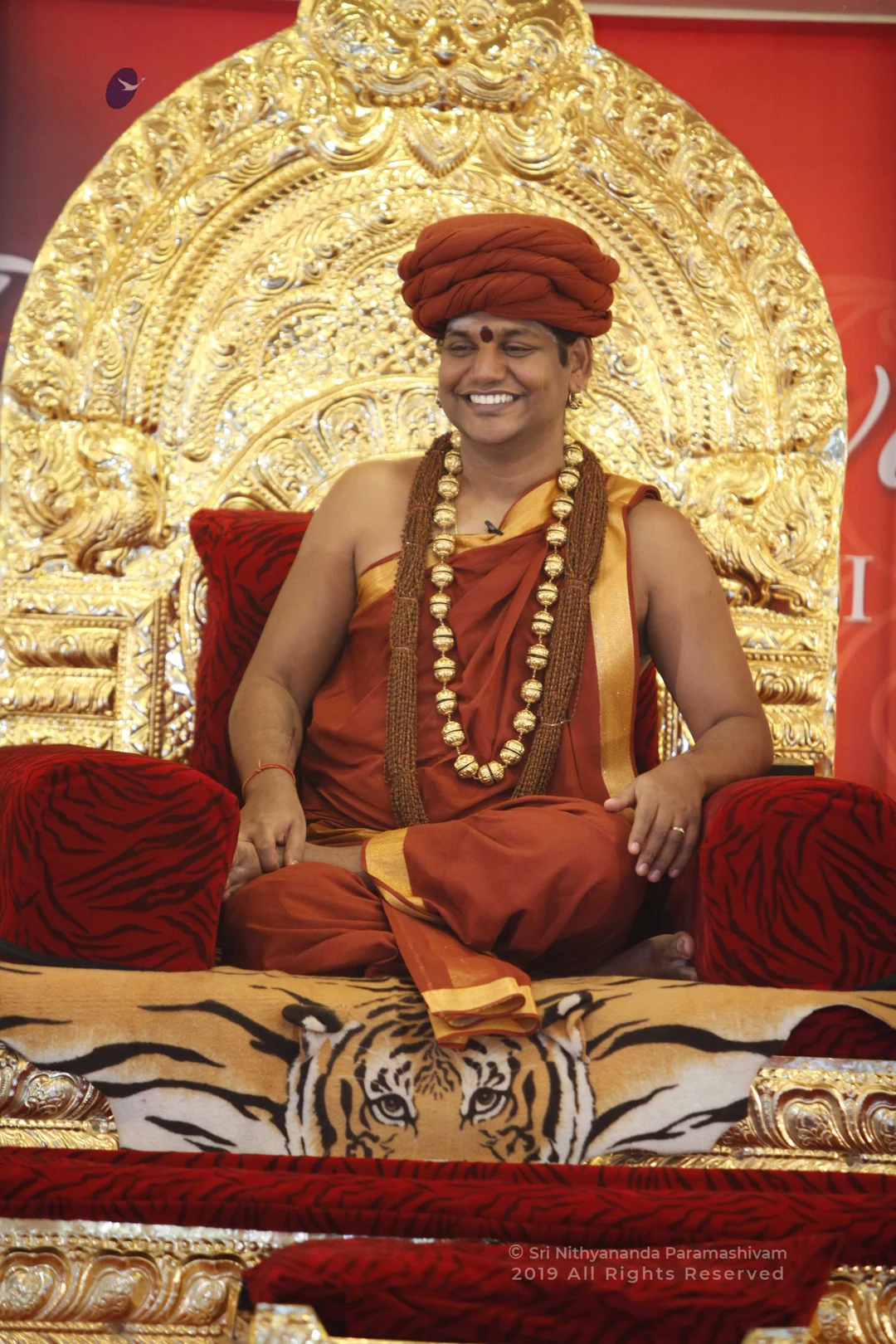
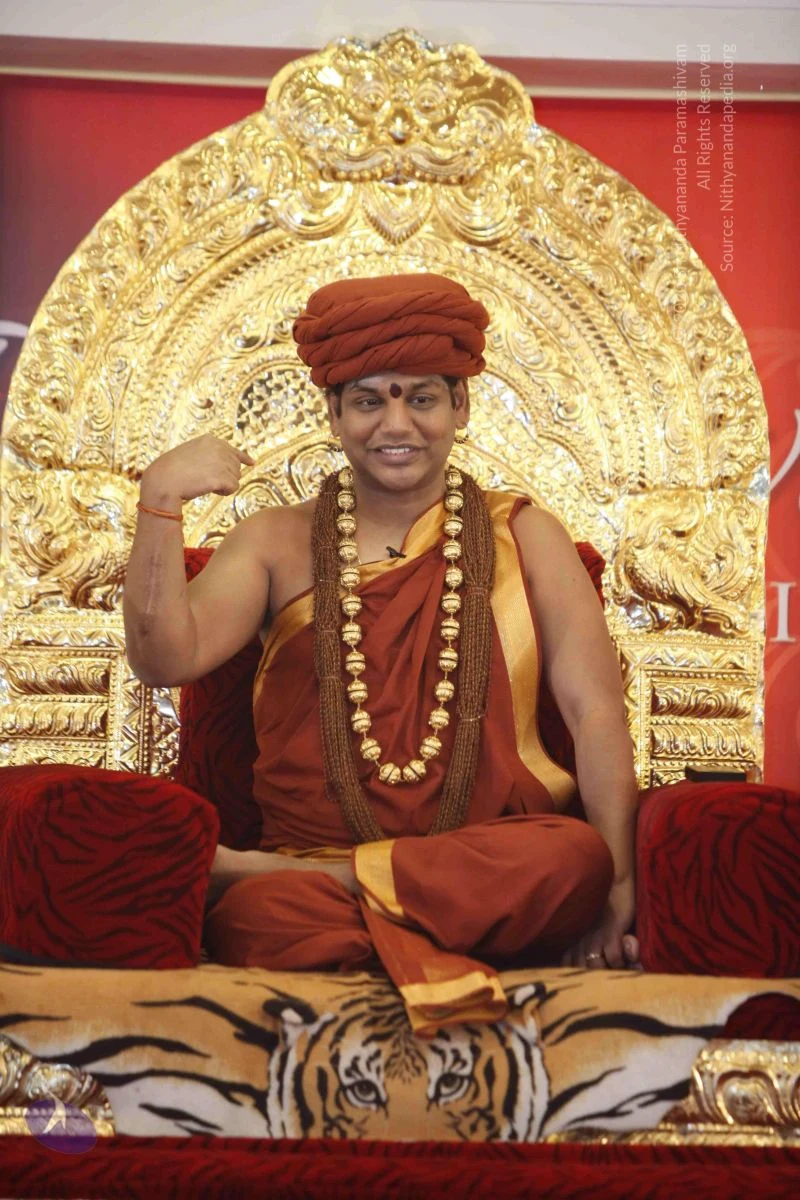
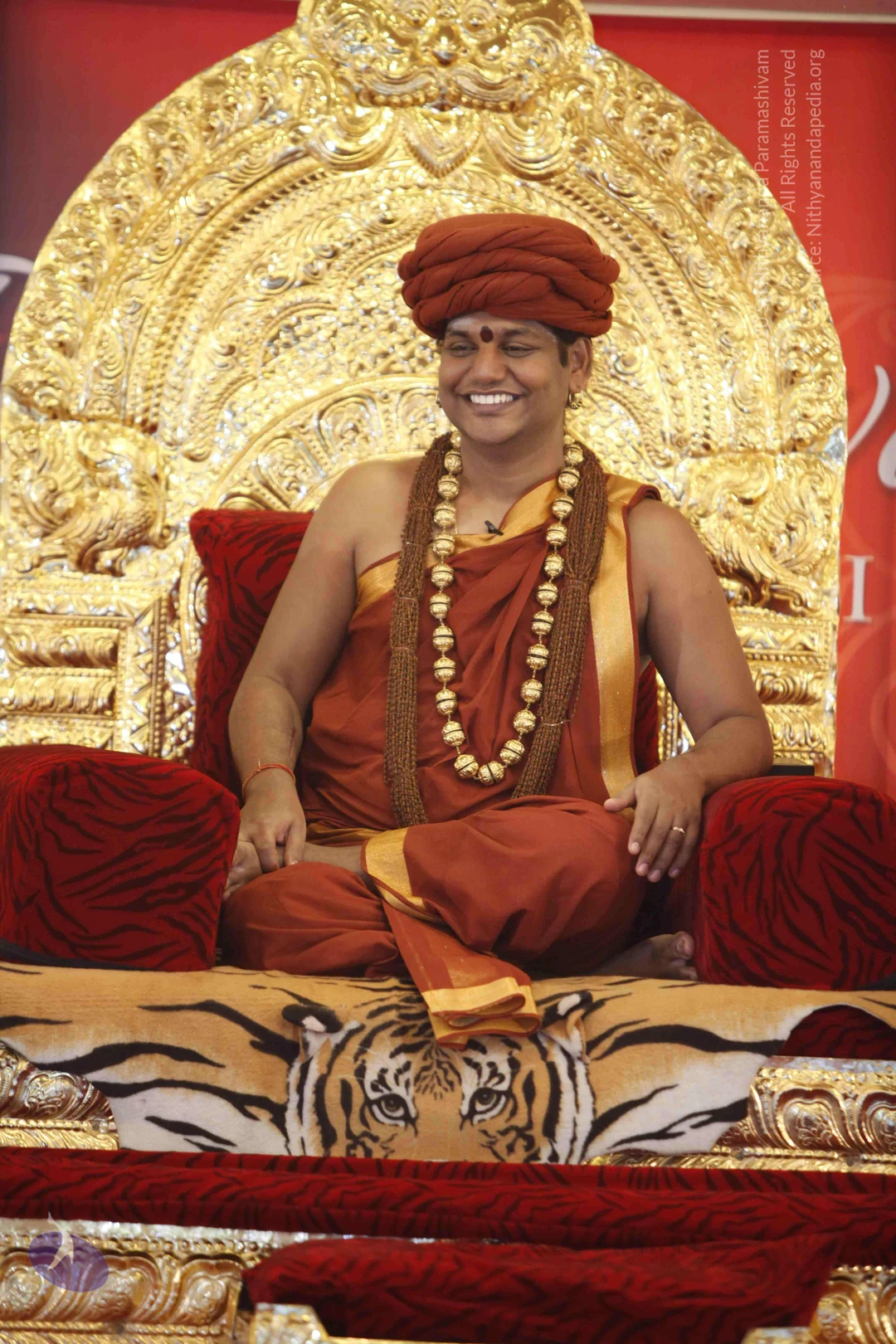
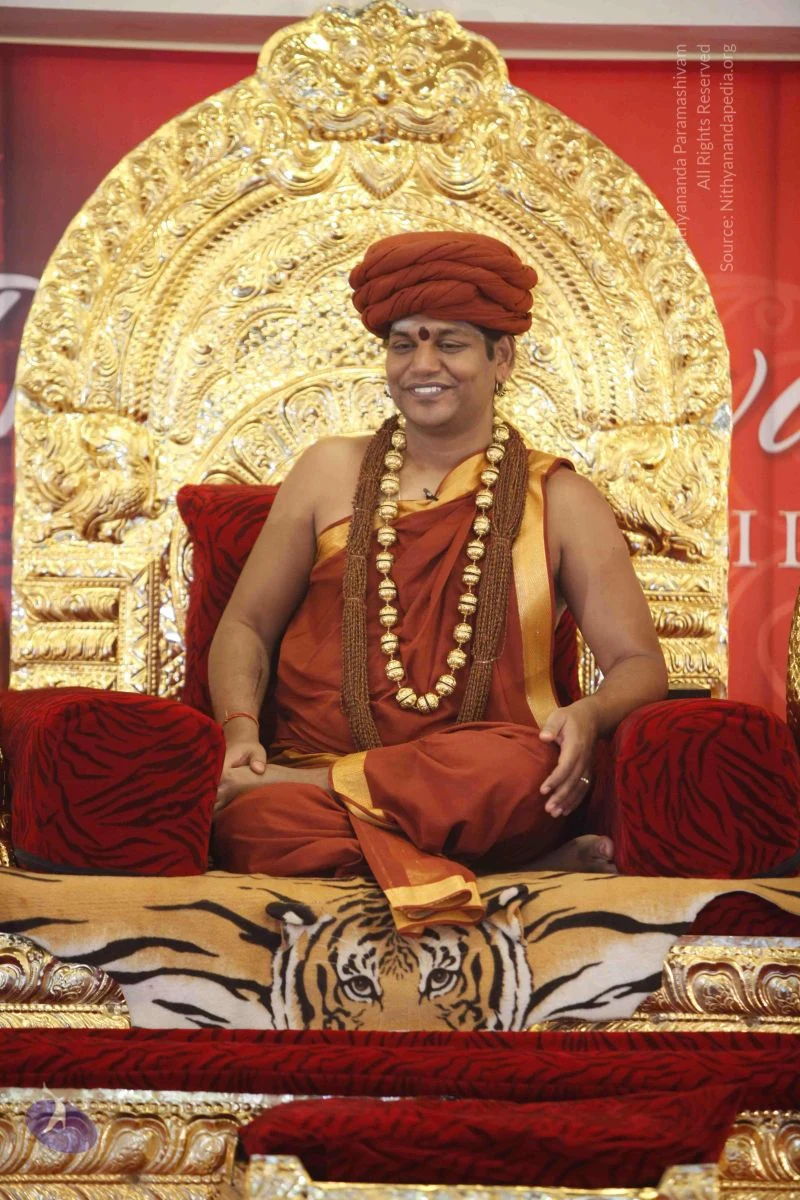
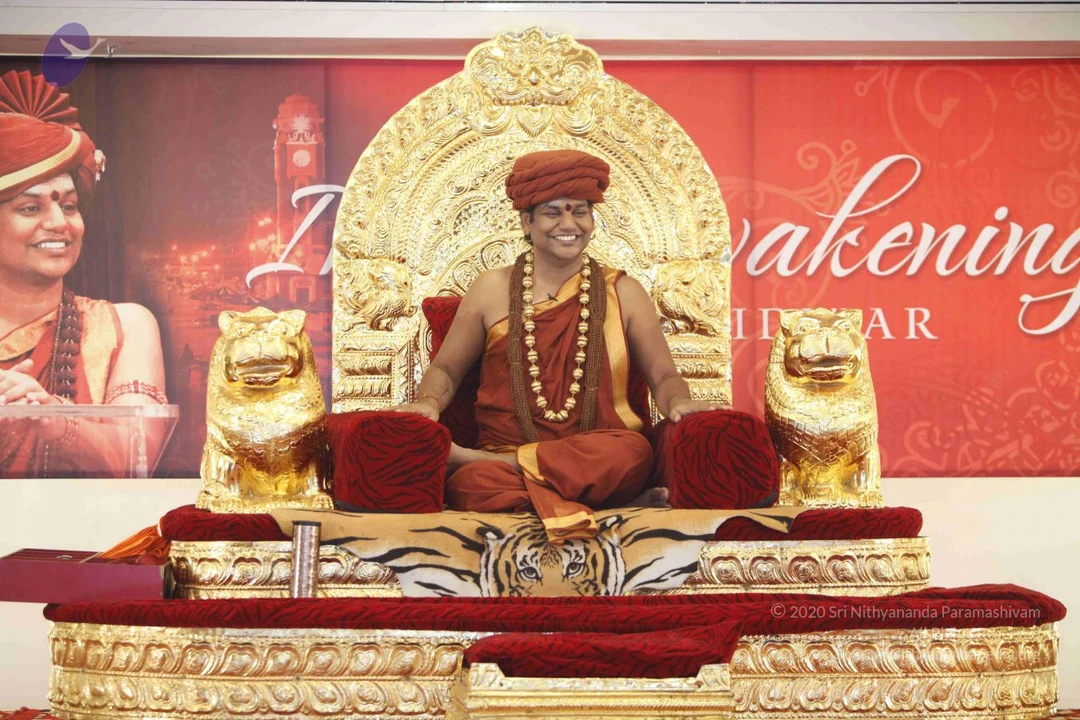
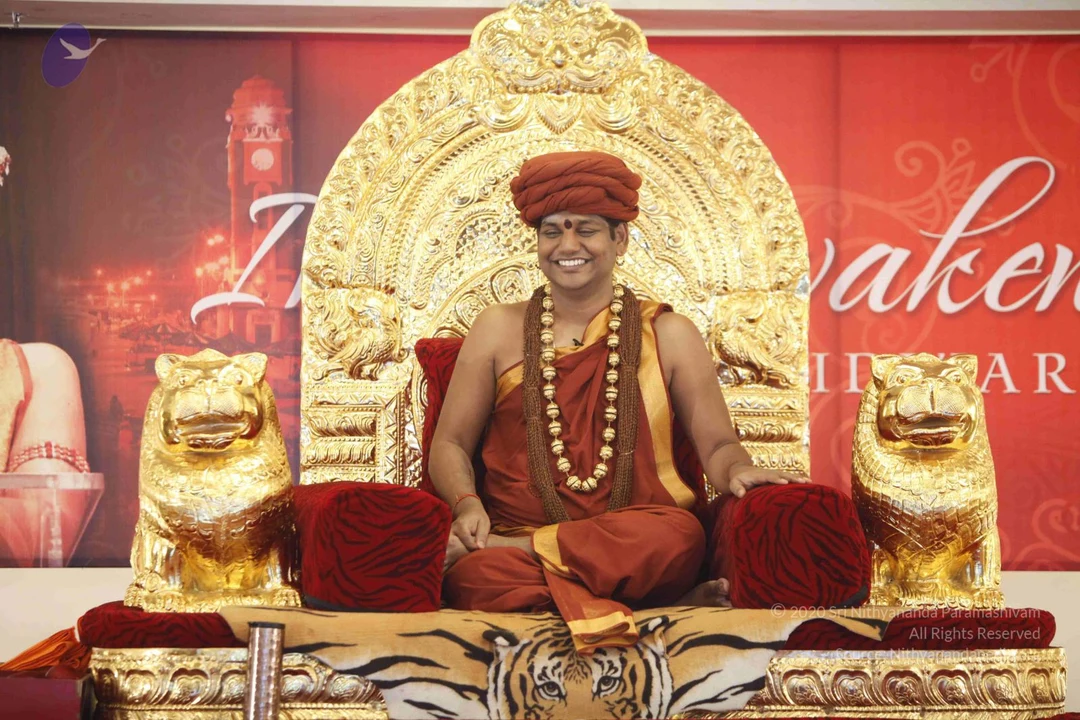
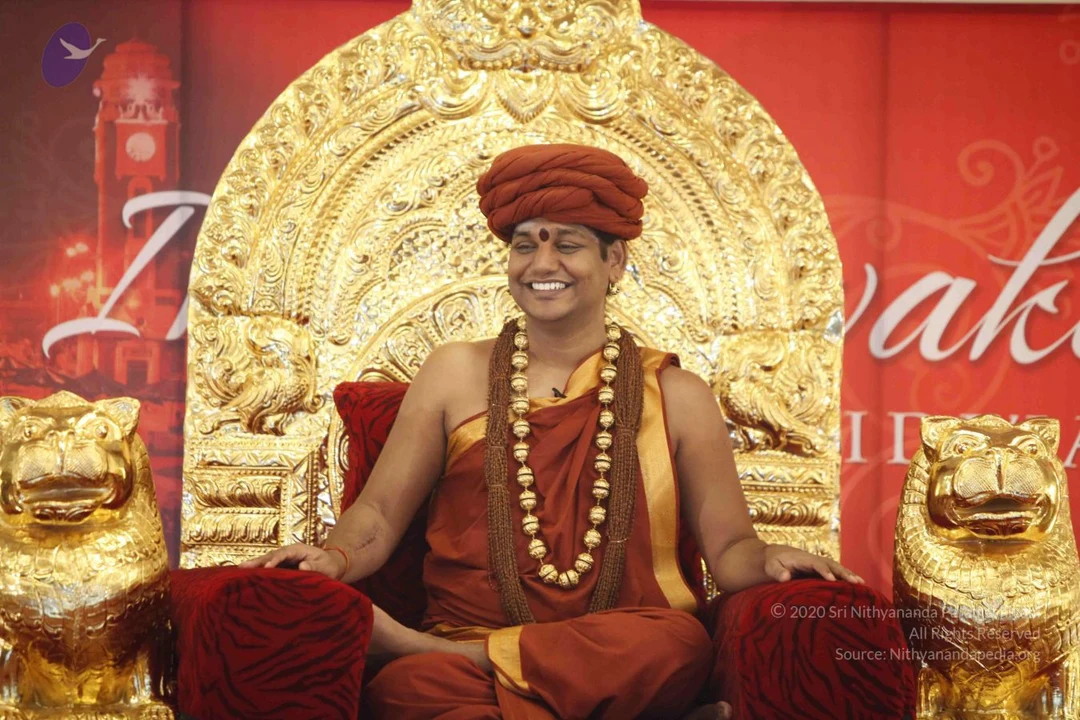
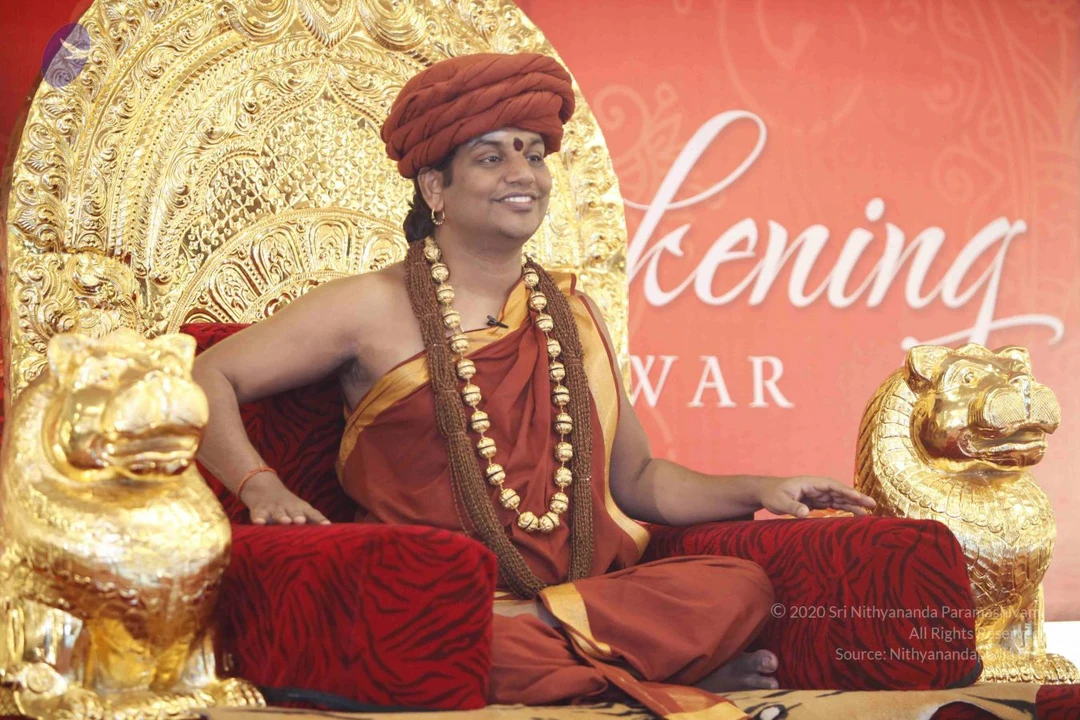
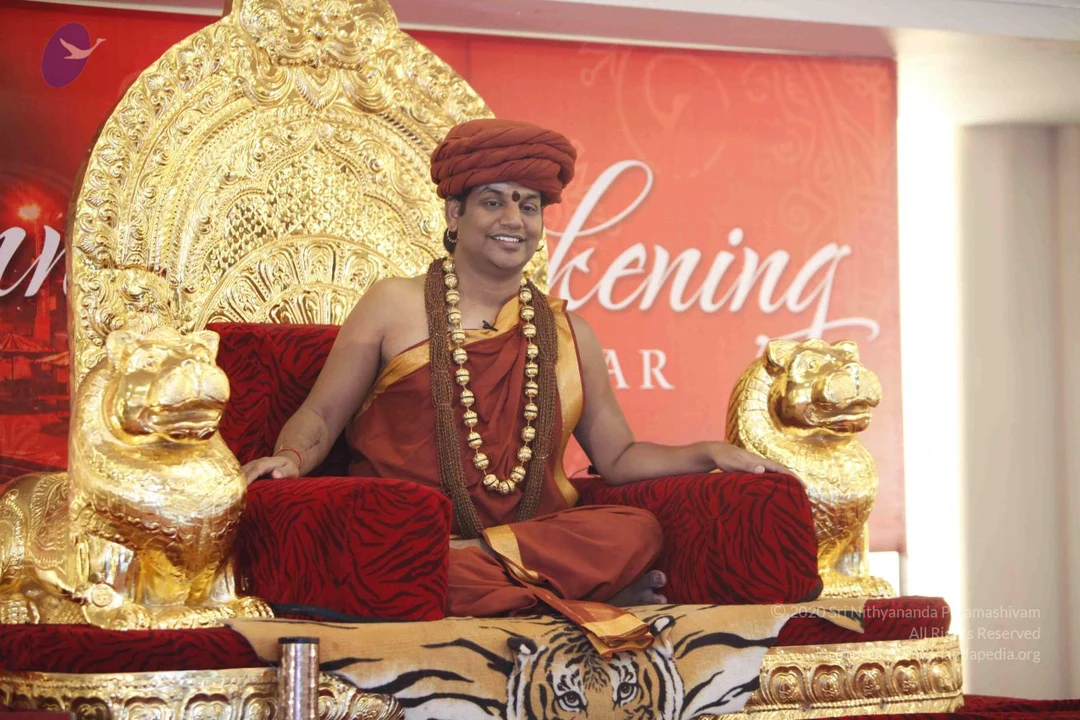
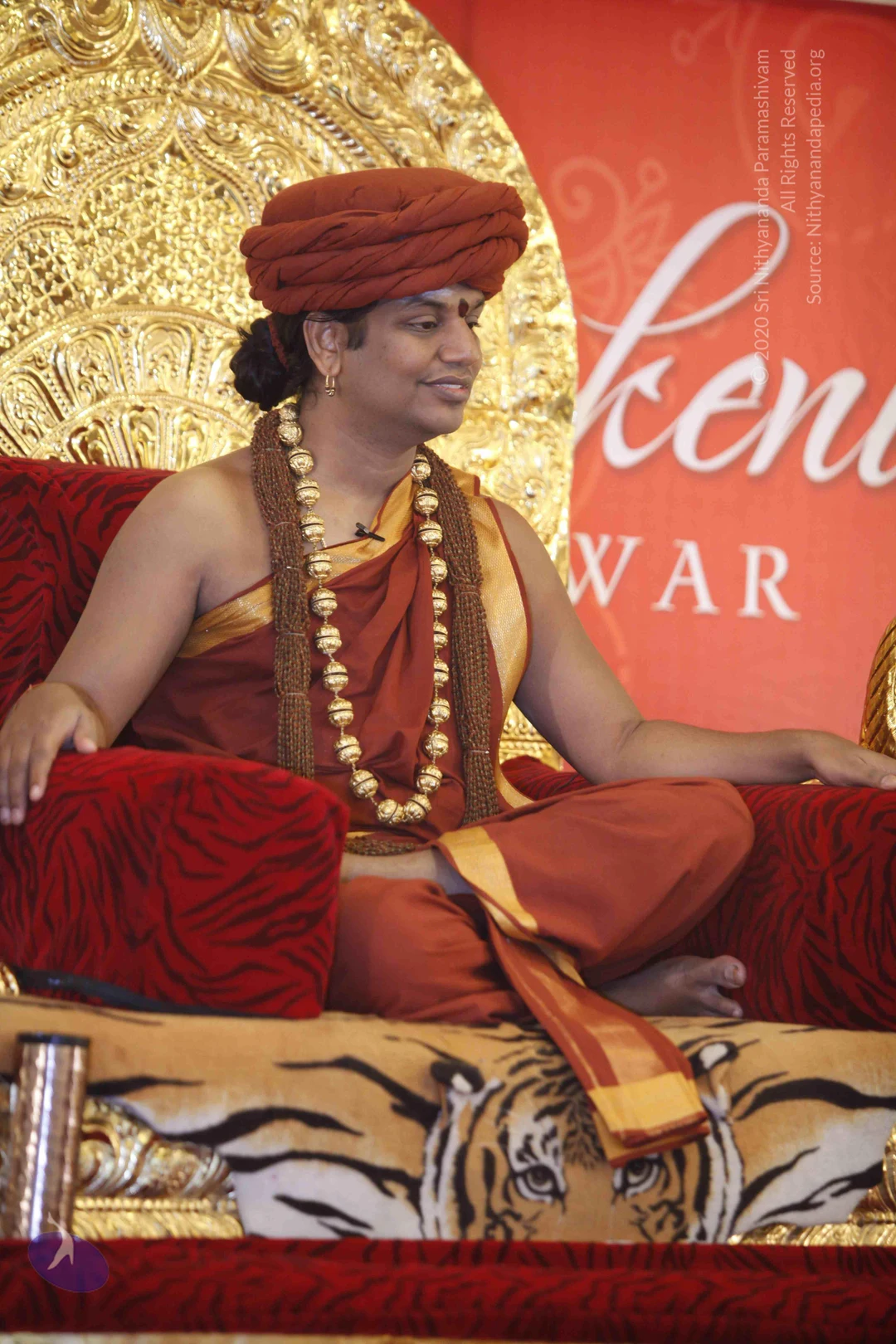
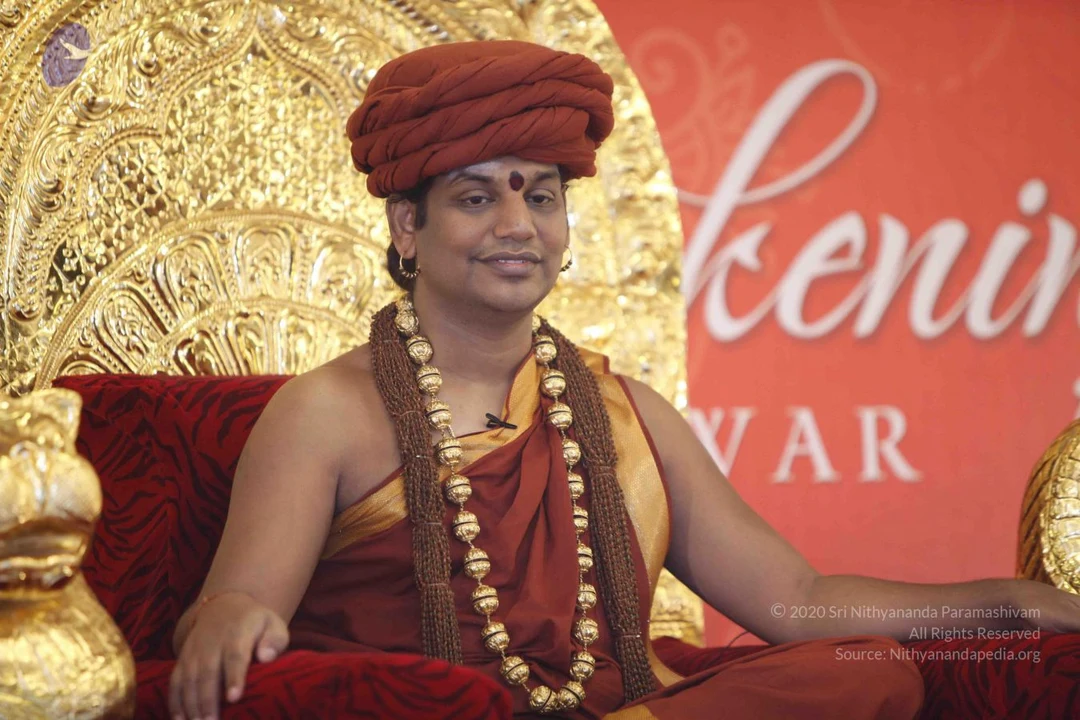
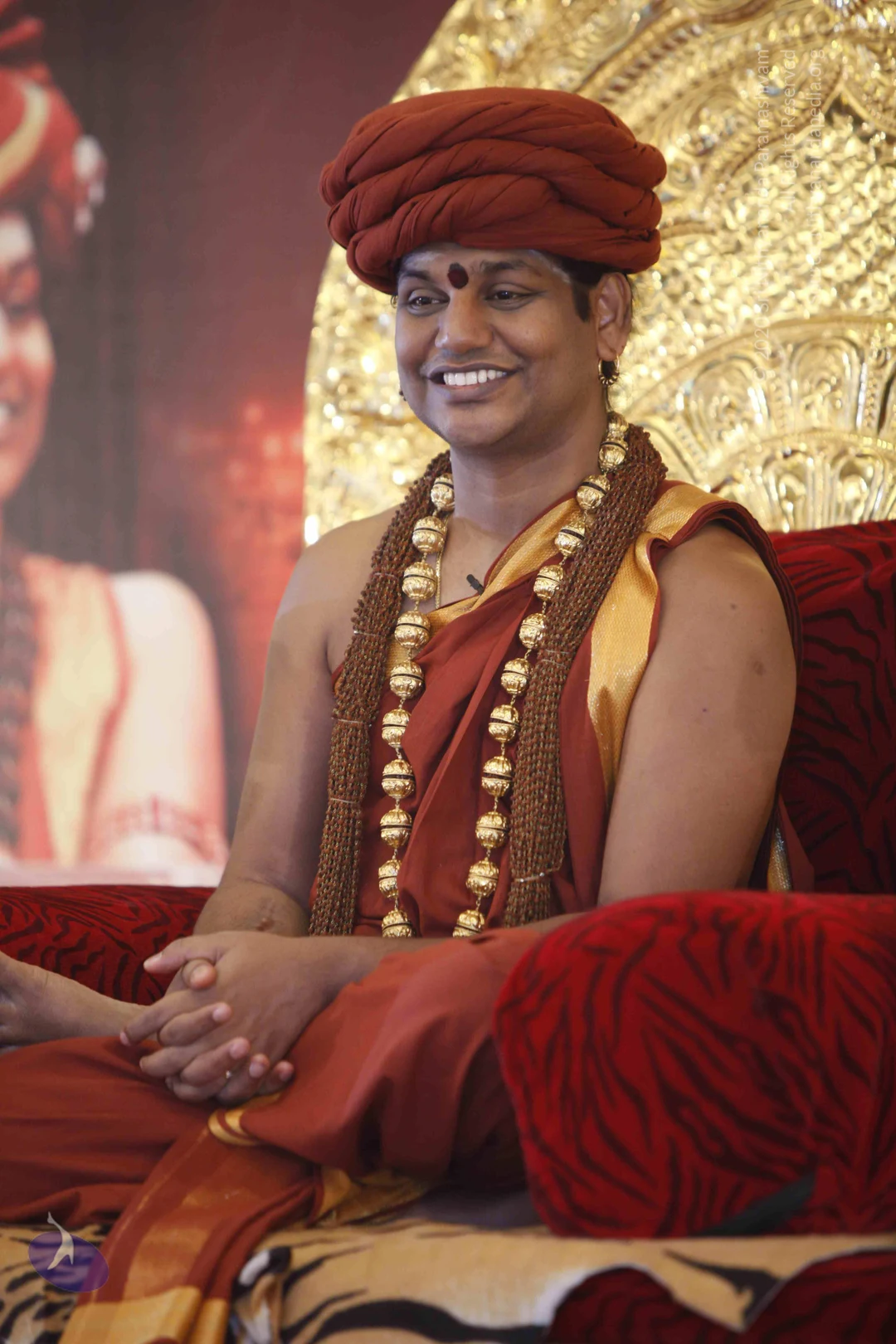
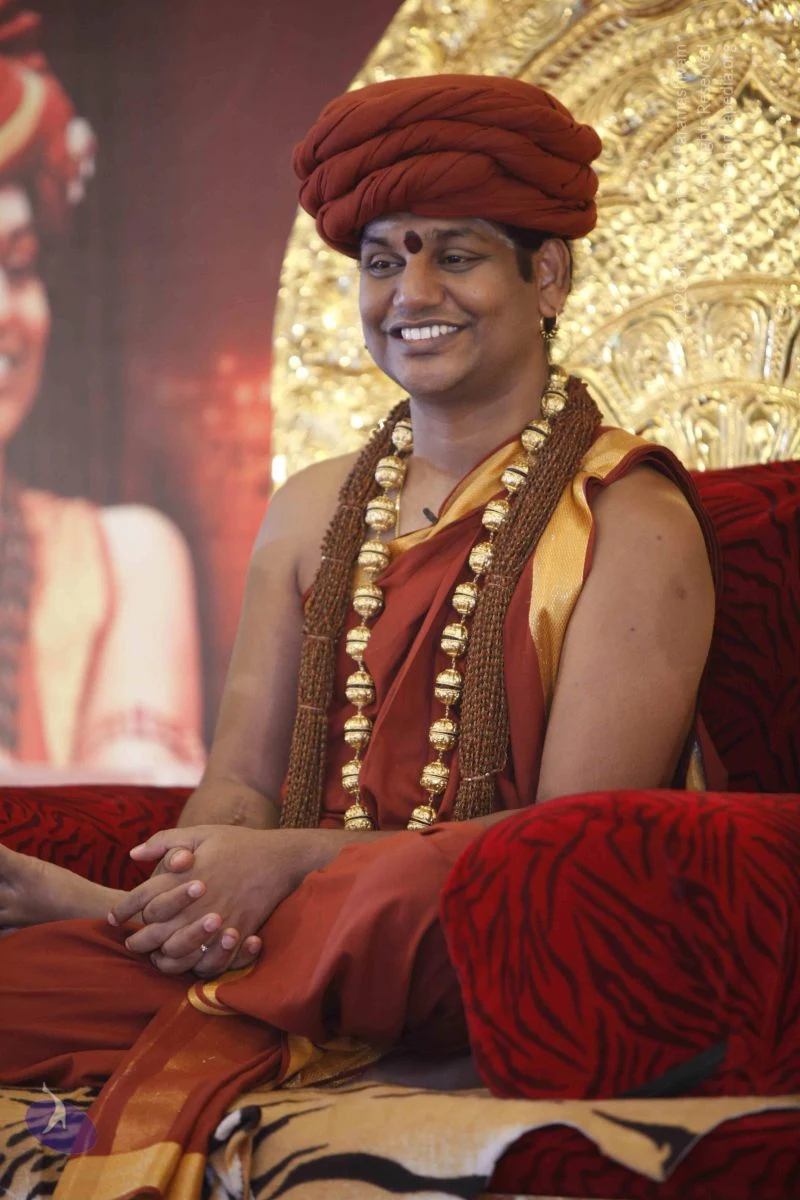
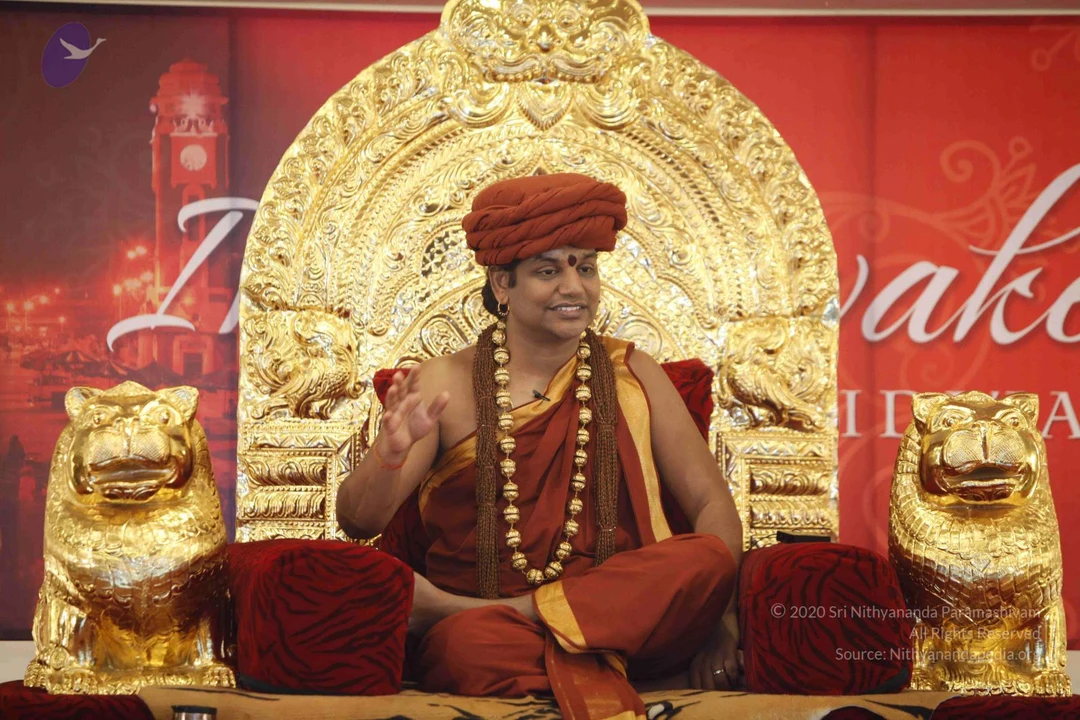
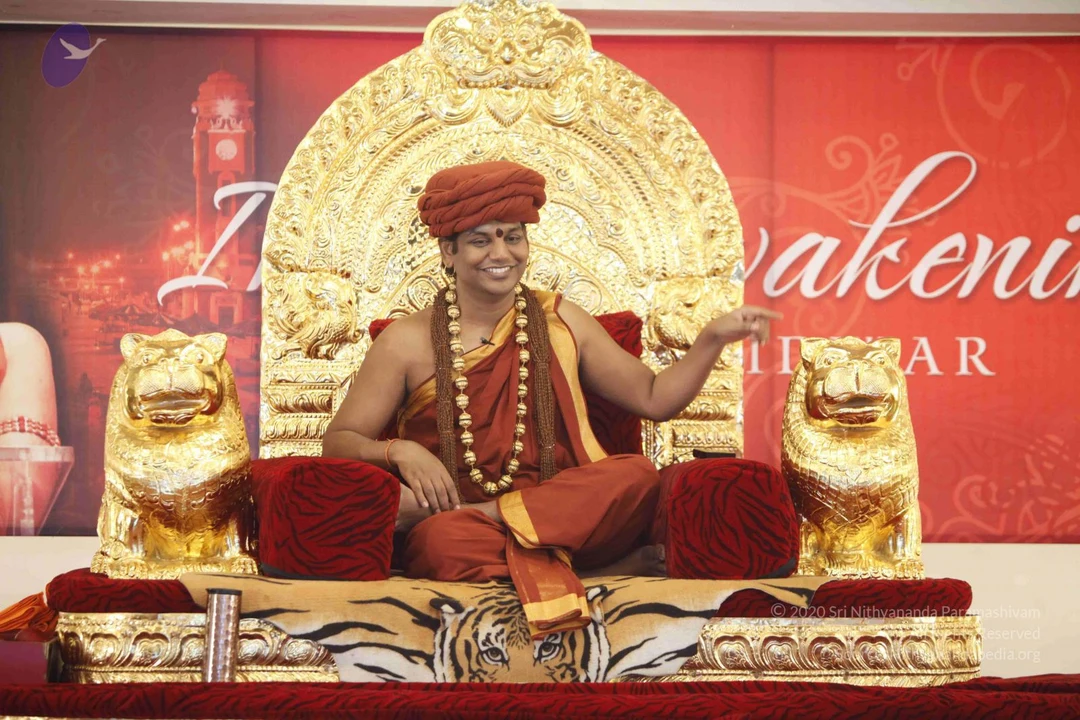
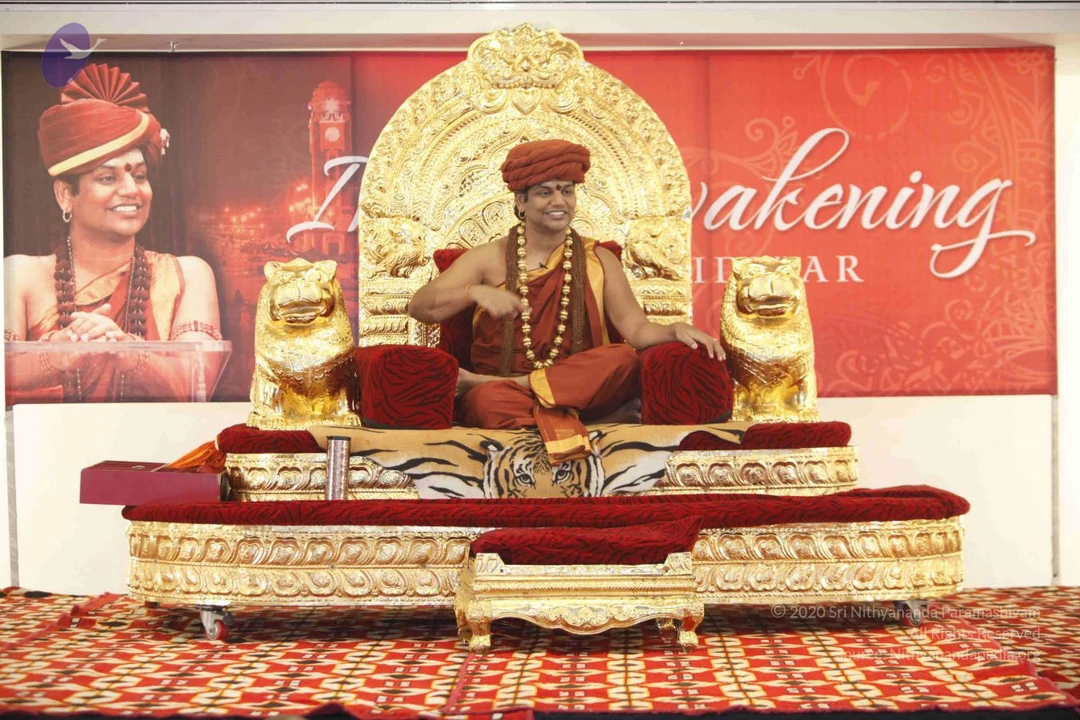
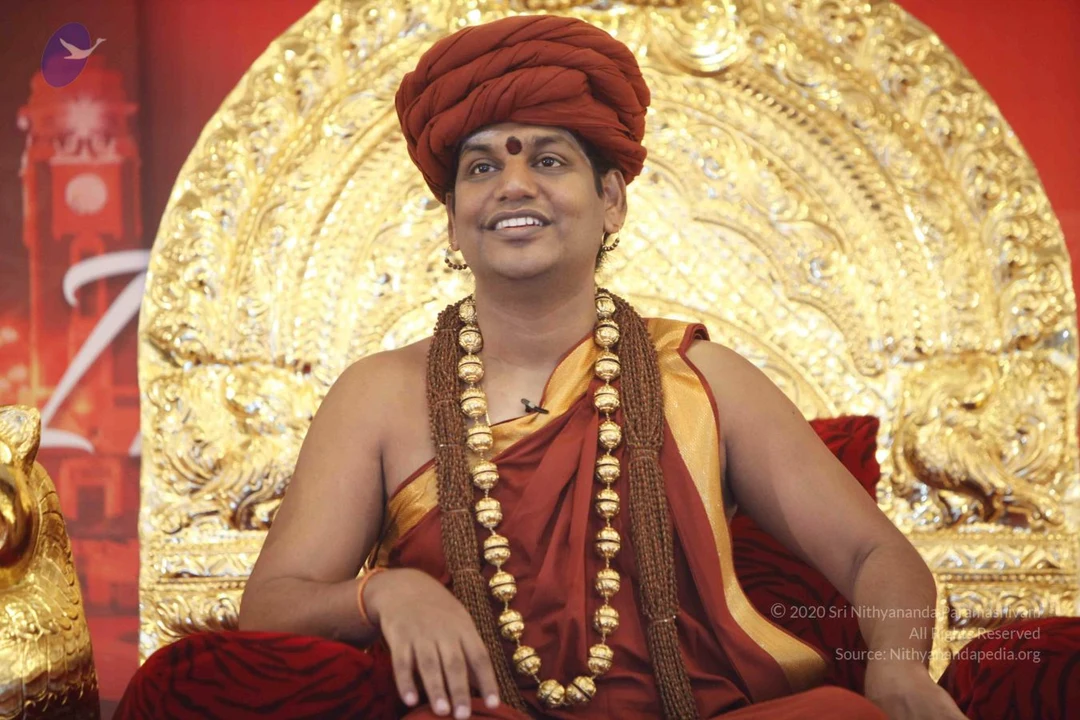
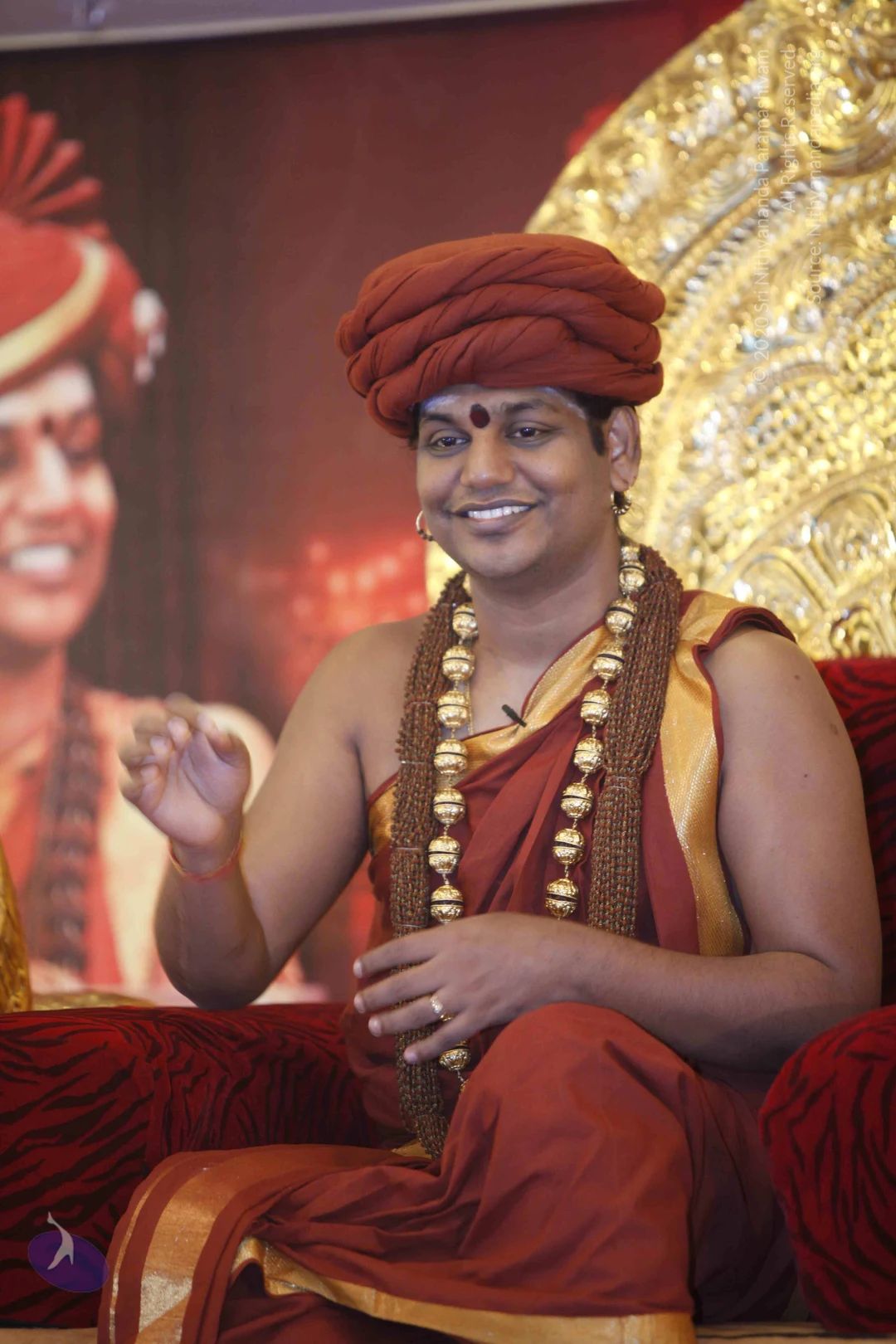
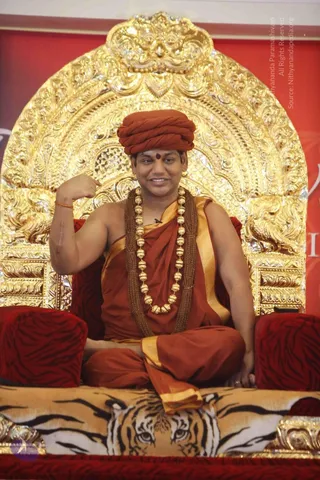
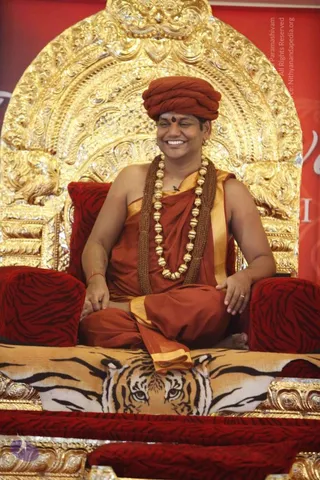
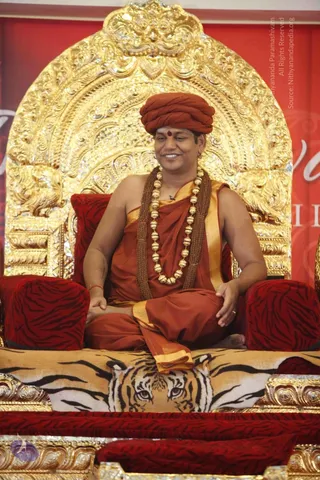
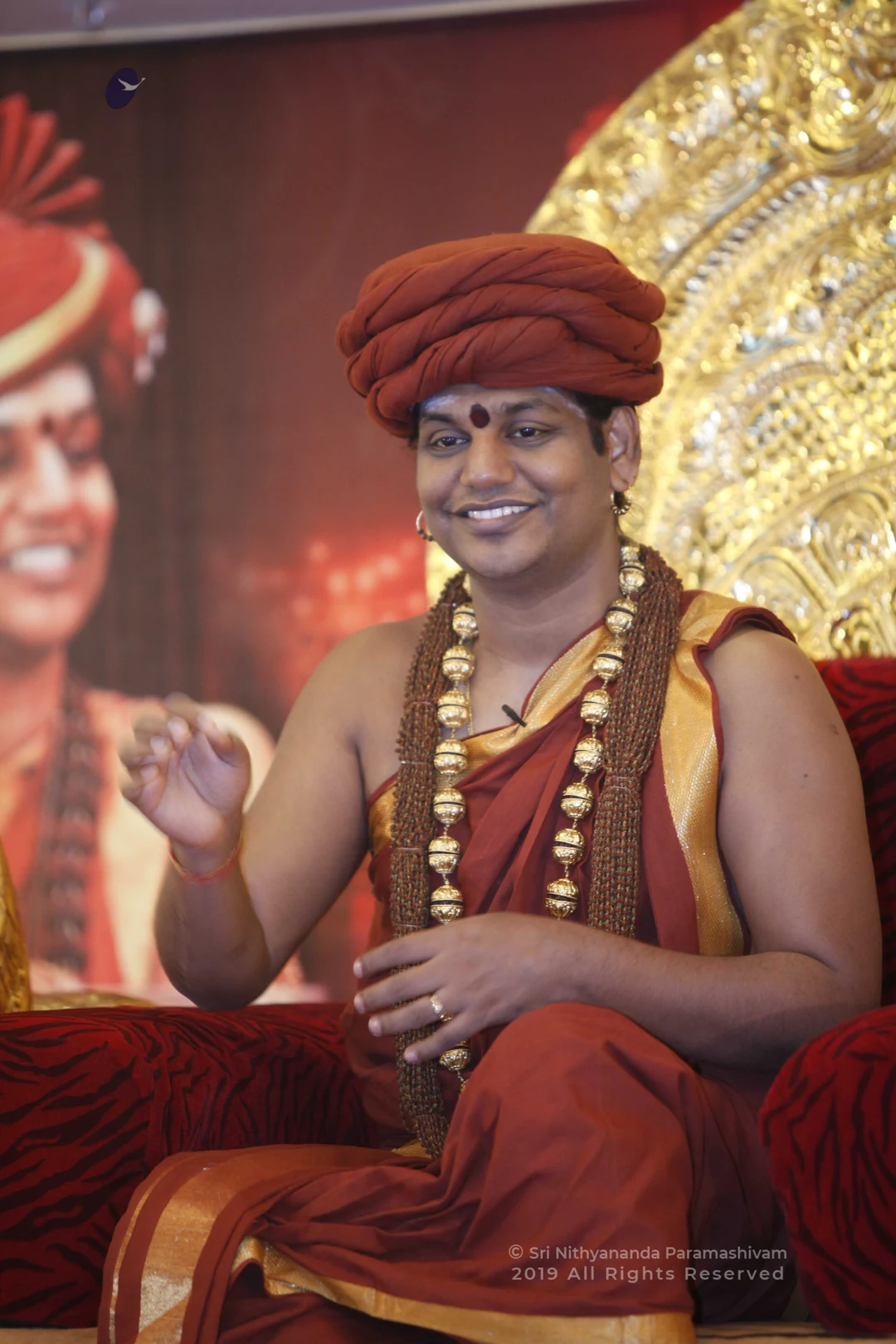
A seated man on an ornate gold throne with a carved arched back and red cushions, draped over a tiger-striped throne cover. He wears a rust-orange turban, rust-orange robe with gold border, and a long rudraksha mala with large gold beads, with a red bindi on his forehead. He smiles and flexes one bare arm with a raised fist, legs crossed in lotus position. A red backdrop is behind the throne. Swamiji (probable) by appearance cues: turban, orange robe, rudraksha mala and gold beads, seated on a throne in a satsang setting.A smiling man sits cross-legged on an ornate gold throne with a red velvet cushion and tiger-striped throne cloth. He wears a rust-orange turban with a red bindi, an orange-saffron robe with gold border, and a long gold bead necklace over brown rudraksha malas. Swamiji (probable) fits the appearance cues: red turban, saffron robe, rudraksha malas and ornate gold necklaces seated on a throne.A smiling man in a red-orange turban and matching saffron-orange robes sits cross-legged on an ornate gold throne with red velvet cushions and a tiger-print cloth draped over the seat. He wears a rudraksha-style necklace of large gold beads and a red tilak on his forehead. Swamiji (probable): the orange turban, saffron robes, multi-strand gold bead necklace and ornate gold throne are the cues; he is seated before a red backdrop with partial lettering. Only one person is visible in the photograph.A smiling man in saffron-orange robes and an orange turban sits cross-legged on an ornate gold throne with red velvet cushions and gold lion-head armrests, draped with a tiger-striped cloth. He wears a long beaded mala around his neck and red bindi markings, and rests his hands on the armrests. Behind him a red banner reads Nithyananda Dhyanapeetham-style event text with a woman in saffron and red-and-gold attire partly visible at left. The scene is a stage setting for an indoor event with no other people visible. Appearance-based cues are present, so this is a person seated on the throne.A smiling man in saffron-orange robes and a matching orange turban sits cross-legged on an ornate golden throne with a carved arched back and golden lion-head armrests. He wears a long ceremonial beaded necklace of rudraksha-style malas and a red bindi, with his hands resting on red velvet cushions. The throne sits on a tiger-striped cloth. a person seated in a satsang setting. No other people visible.A smiling man in a rust-orange turban and orange-red robes sits cross-legged on an ornate gold throne with a tall, intricately carved arched backrest. Gold lion-head armrests flank him, and he rests his hands on red velvet cushions with tiger stripes. He wears a dark rudraksha mala and a heavy gold bead necklace, with a red bindi on his forehead and a small red thread on his wrist. Behind him is a red backdrop with gold decorative lettering and a red clock tower graphic. The scene suggests a satsang setting.

kalpataru-darshan
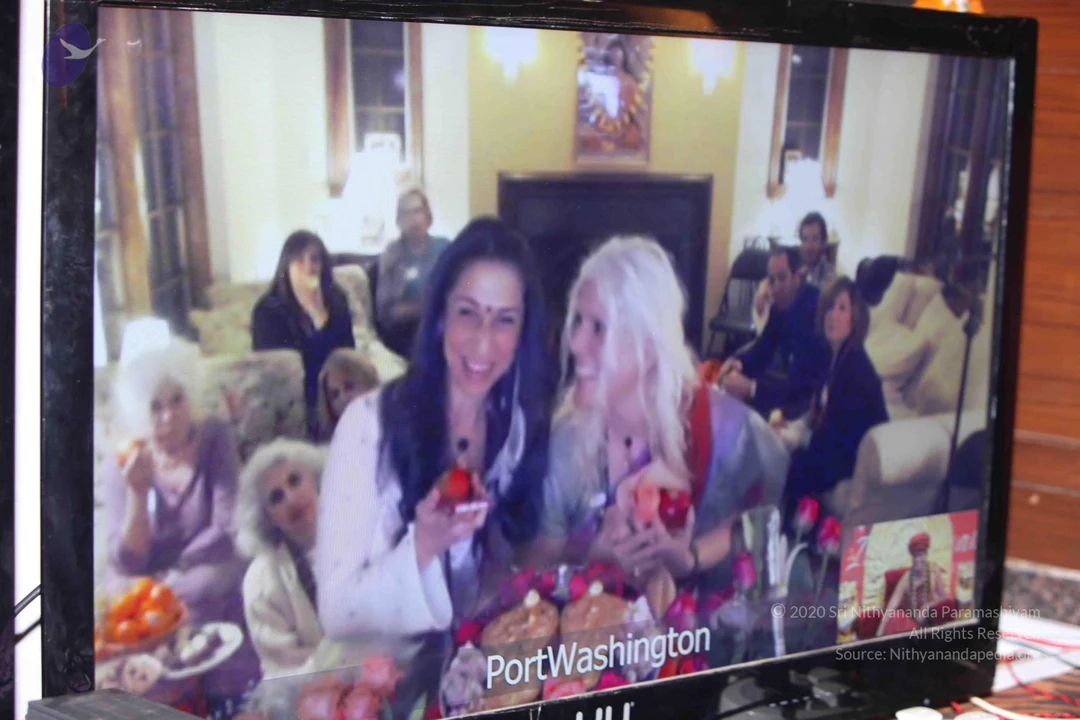
12 photosSource gallery
A flat-screen monitor displays a video conference feed of a living room gathering labelled PortWashington. In the foreground two women smile at the camera: one with long dark hair wearing a white top and a red bindi, the other with long blonde hair in a grey patterned top, both holding red fruit. Behind them several seated guests on sofas, some eating fruit, and an older woman with white curly hair on the left. A framed religious picture hangs above the fireplace.A photograph of a monitor displaying a video-conference feed labelled PortWashington. Inside a formal living room with a yellow wall, a framed deity picture and a fireplace, two smiling women sit in the foreground: a woman with long dark hair in a white top with a red bindi, and a woman with long white hair in a grey top with a red-and-white shawl, holding a flower. Several other women and men sit on sofas behind them, and a plate of oranges and sweets sits in front. Garlands of red flowers and rose-coloured petals lie on the table. In the lower right corner of the screen, a small image shows a man in saffron robes.A photograph of a large monitor screen showing a two-way video link. On screen, a man in a light blue shirt and grey striped shawl stands with his eyes closed while a bare-chested, shaved-headed man in a rust-brown wrap and white beaded necklace touches his forehead. A man in a dark jacket with a grey argyle sweater stands at left, and women sit on a floor at right. A red-and-gold cloth lies on the floor near a seated figure in red. A white banner reads TORONTO KAILASAM. The monitor is the subject, with the people visible only through the screen.A photograph of a large screen showing a video link to Toronto Kailasam. In the feed, a bald man in a brown-and-saffron shawl with a white bead necklace stands beside a younger man in a light shirt and striped scarf, touching his forehead. Two people stand at left, and women sit on the floor at right in a room with white walls. A small framed portrait of a seated figure in red appears in the lower right corner, labelled as a portrait. The screen's caption reads TORONTO KAILASAM.A photograph of a television or monitor screen showing a live two-way video link. On the screen, two men in white short-sleeved shirts stand in a room; the man on the left gestures toward the man on the right, who holds a black microphone near his mouth. A woman in a patterned sari stands behind them, and a woman in a dark red top stands at the right edge. A caption in the lower corner reads Umesh-Srilanka. Lower right of the screen shows a small inset of a figure with red and gold adornments. The monitor sits in a wooden frame in front of a wooden surface.A framed television screen shows a live two-way video link. On the screen, a man in a white shirt and white dhoti holds a microphone toward a woman with short hair wearing a teal sari with sequin detailing. Behind them, a woman in a pale sari and a woman in a multicoloured patterned top, one holding a sheet of paper, stand in a room with framed pictures on the walls. A lower-third caption reads Umesh-Srilanka, and a small red-and-yellow banner appears in the corner.

ia-introduction-to-root-pattern
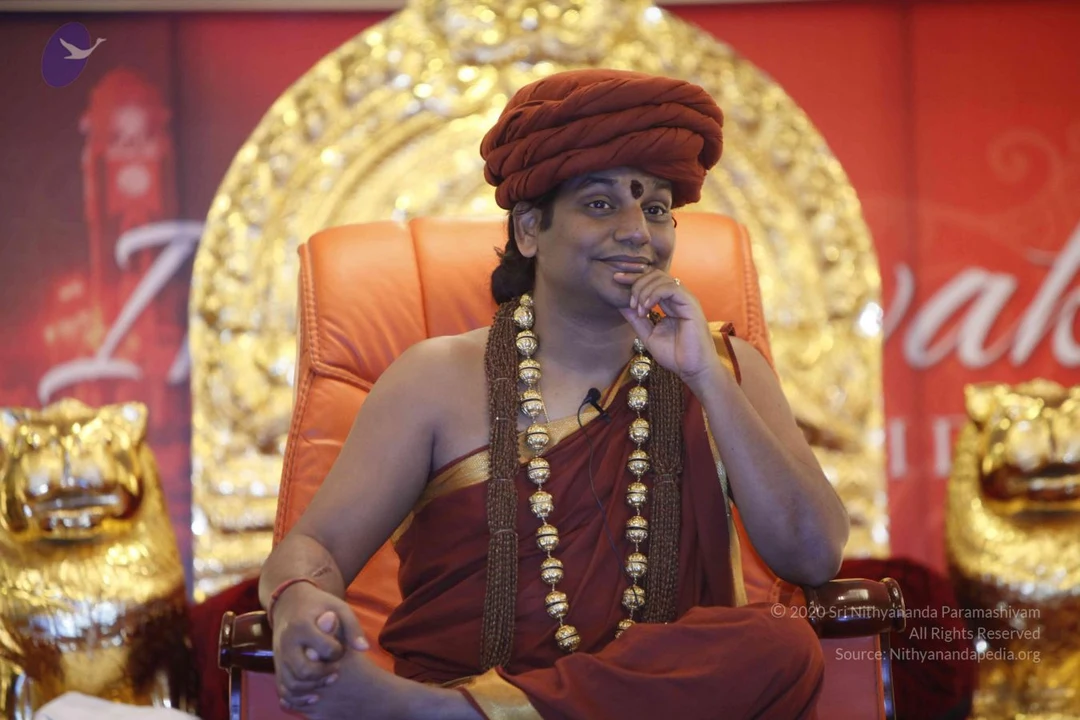
15 photosSource gallery
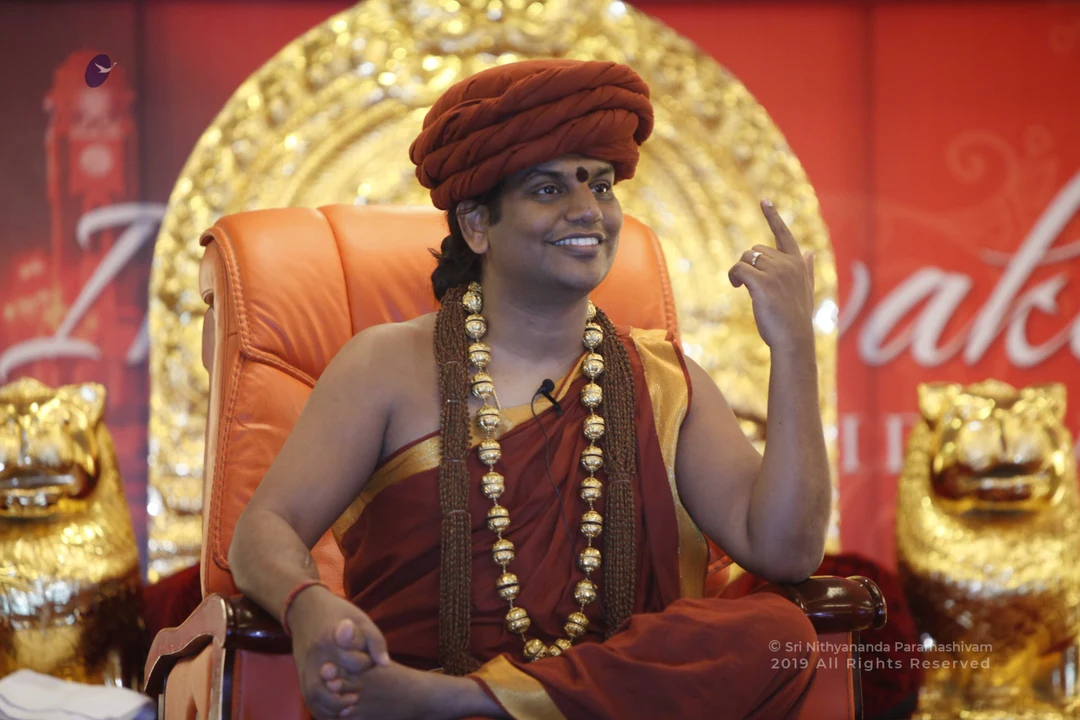
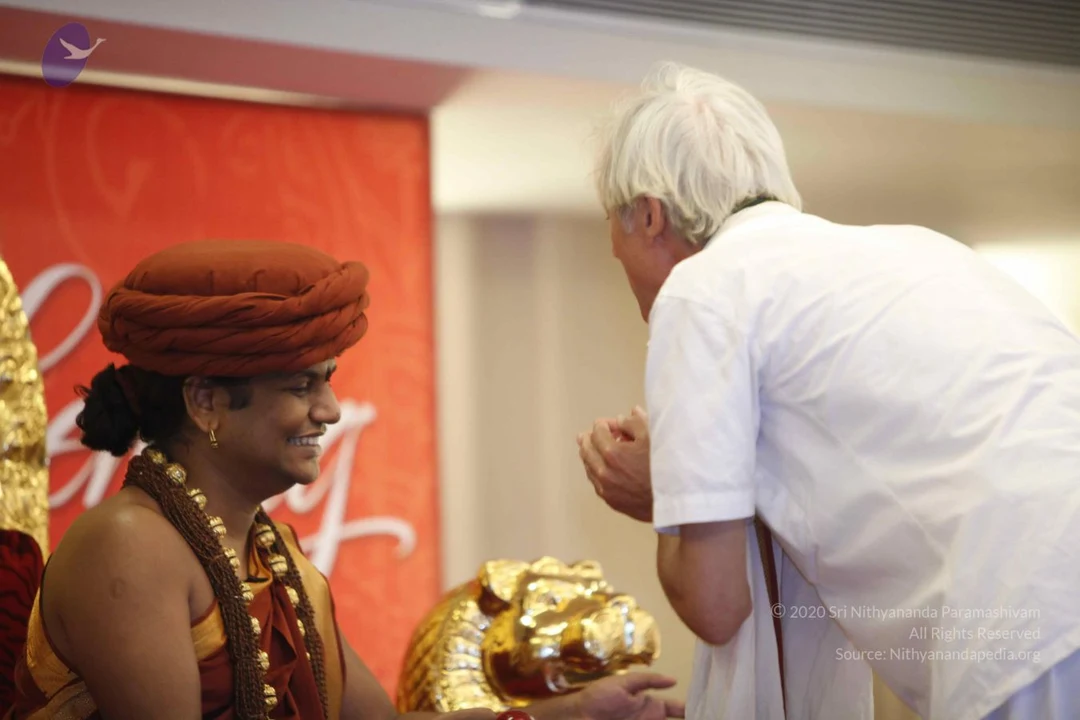
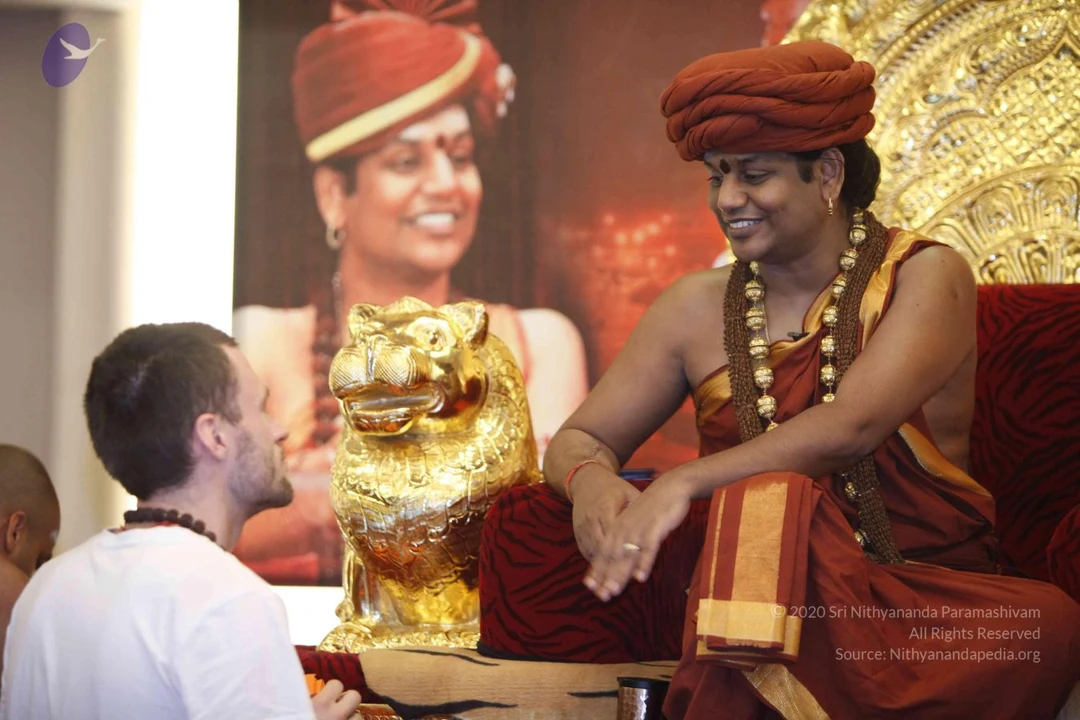
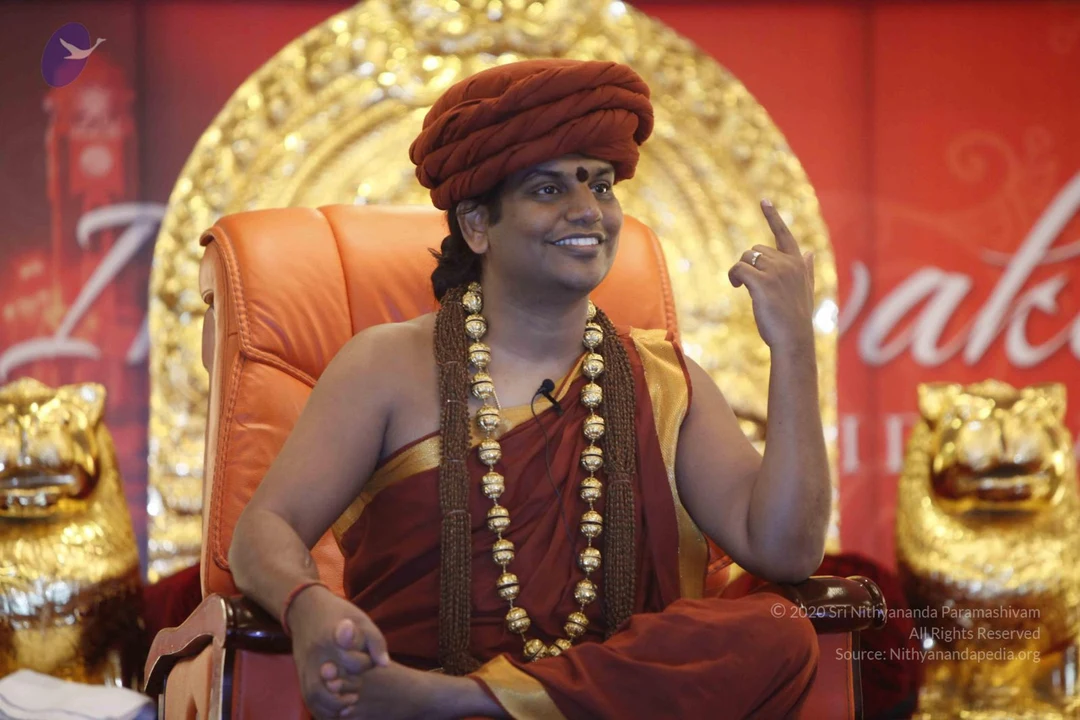
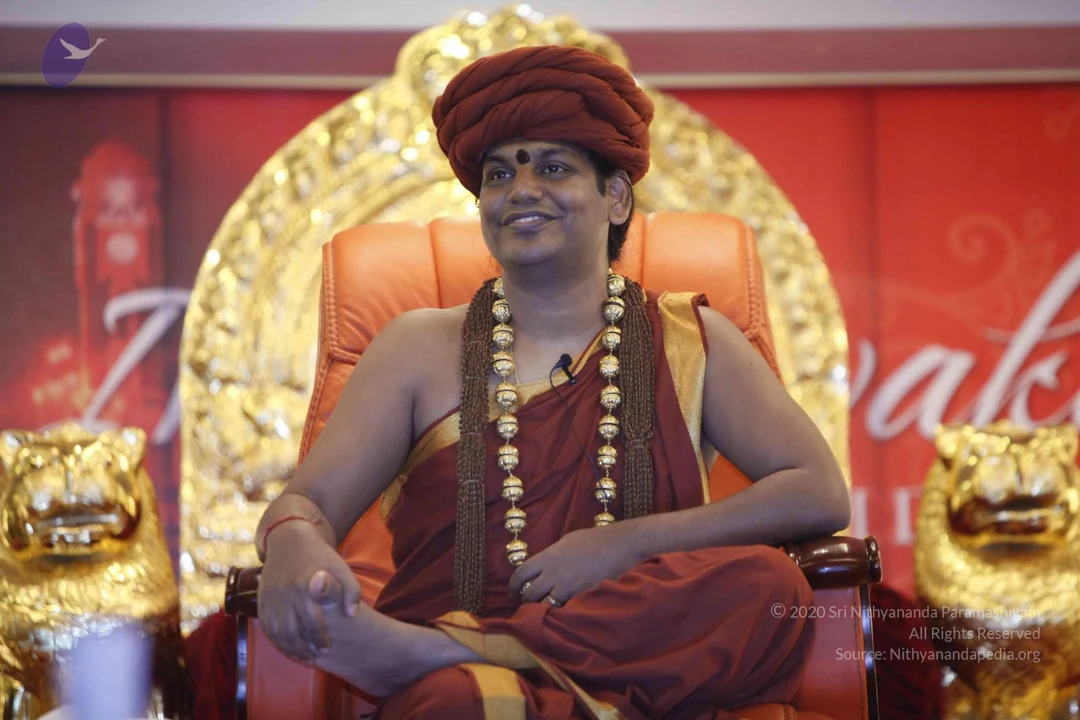
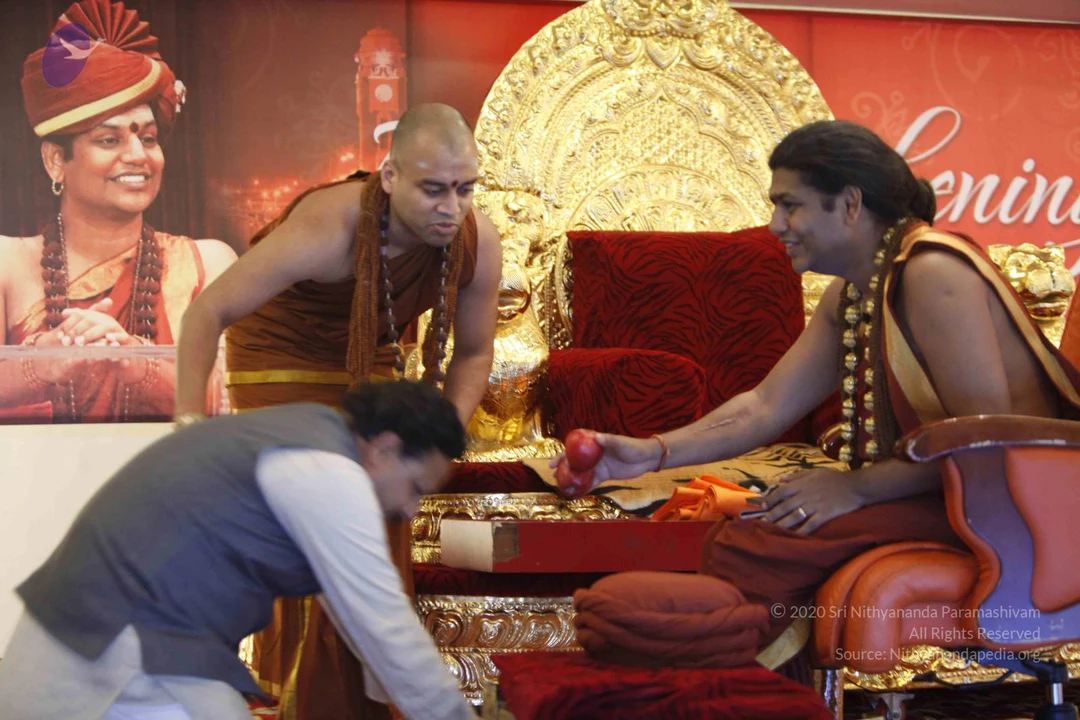
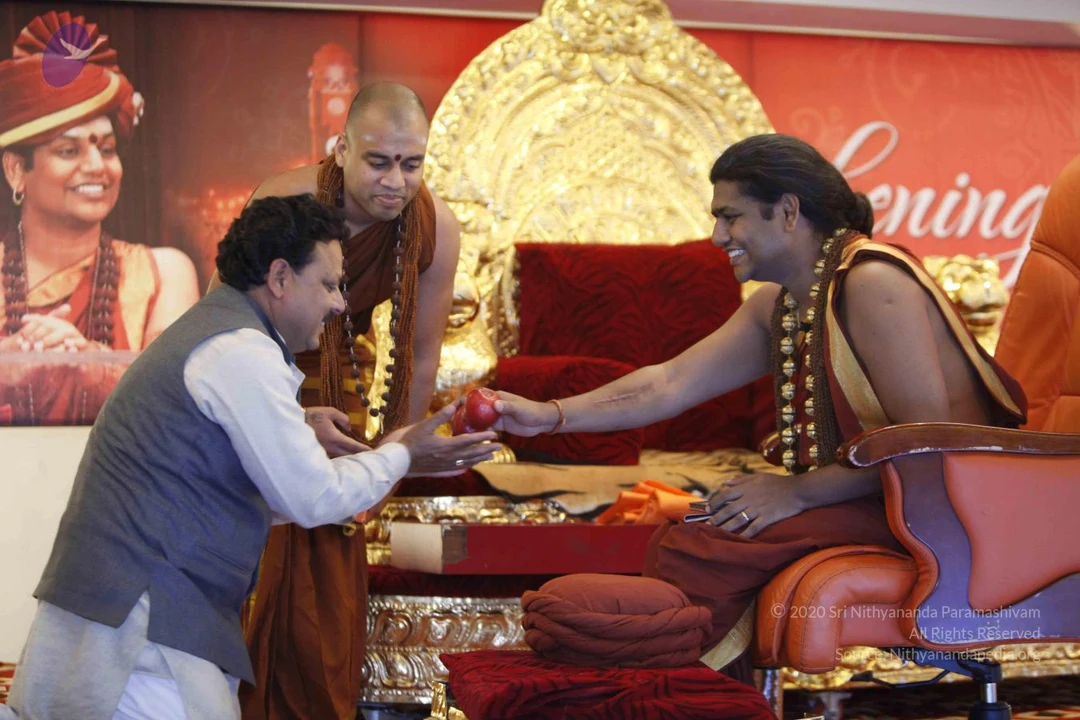
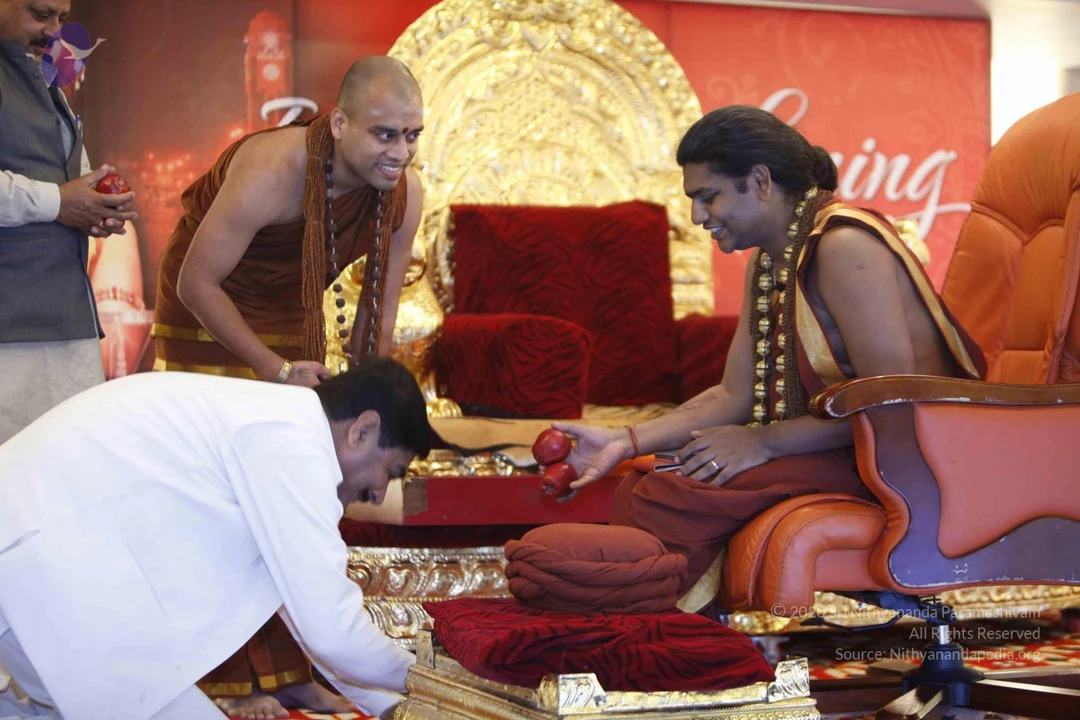
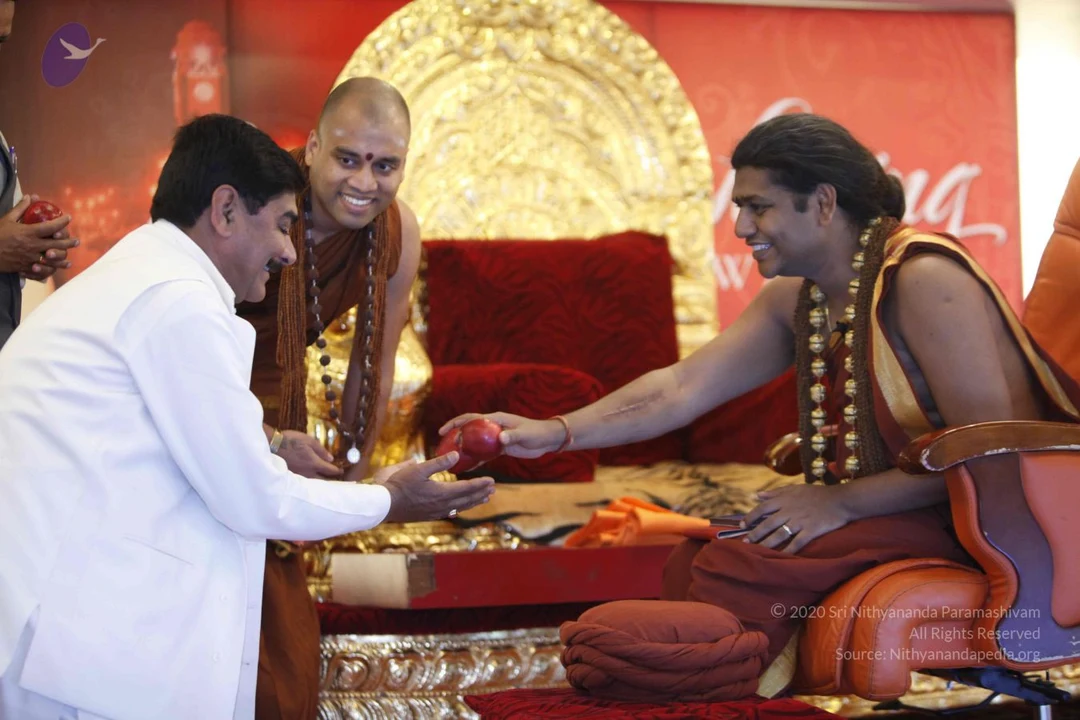
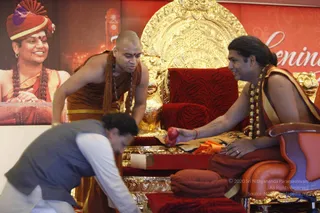
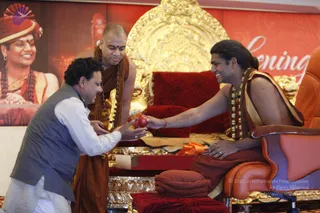
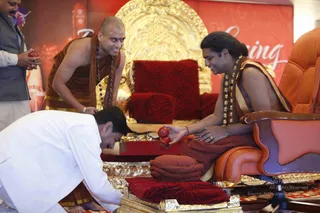
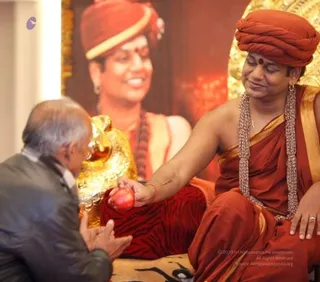
A man seated in an orange leather throne-style chair before a red backdrop with large gold relief carving and golden lion statues on either side. He wears a rust-red turban, a red-brown robe with a gold border, a long braided rudraksha mala with gold beads, and a red thread on his wrist, and rests his chin on his hand while smiling. A small lapel microphone is clipped to his robe. Swamiji (probable): the rust-red turban, layered gold-bead mala and ceremonial robe are the qualifying cues for the central figure, who is seated and speaking to an audience. A partial red banner with white script is visible at right.A man seated in an orange leather chair before a gold ornate backdrop and red banner with a gold lion statue on each side. He wears a rust-red turban with a small red bindi, a red and gold shawl, and a long gold rudraksha-style bead necklace with a clip-on lapel microphone. He smiles and raises one index finger while resting his other hand on the armrest.A smiling man sits on an orange leather throne-style chair with a gold filigree backrest, flanked by two golden lion statues, in front of a red banner with partial white script. He wears a rust-red turban with a small bindi, a rust-red and gold-bordered garment draped over his shoulders, and long strands of golden bead and rudraksha-style malas around his neck. A small clip-on microphone is attached to his garment and he rests one hand on his knee. The setting resembles a satsang stage. Swamiji (probable): the figure wears a turban, saffron-toned clothing and ornate beaded malas, consistent with the page's reference to Swamiji.A photograph in a gilded, red-and-gold ceremonial hall. A seated man in a maroon-and-saffron robe with a long swept-back hairstyle, rudraksha malas and a gold necklace reaches out to take a red apple from a bowing devotee. A shaved-headed man in saffron robes with a brown shawl and rudraksha mala leans in to assist, and a third man in a grey waistcoat over white clothes bends low in the foreground. Behind them stands a large gold-and-red throne with red velvet cushions and gilded lion-like armrests. A backdrop banner shows a smiling figure in an orange turban with rudraksha malas, and the banner text reads partly "Lenin...". The seated man's appearance matches a person with distinctive long hair, rudraksha and gold ornaments, presented as a sannyasi receiving an offering.A photograph in a red-and-gold hall. A man in a grey vest over white kurta bends forward and offers a red fruit or apple to a seated figure in a dark-brown robe with long swept-back hair, a rudraksha mala and a gold-beaded necklace, who reaches to accept it from an orange chair. A shaven-headed monk in brown-orange robes and a beaded mala stands between them, smiling. Behind them is a large gilded throne with red cushions, and a framed portrait of a woman in an orange sari with rudraksha beads. Wall text partly reads "...ening".A seated figure in a saffron-orange robe with a swept-back long hair, multiple beaded necklaces, and a gold-edged shawl sits on an orange leather armchair, holding two red apples extended toward a man kneeling at the front. The kneeling man wears a white shirt and trousers and bows low over a gold-and-red footstool. Beside them a shaved-headed attendant in brown-orange robes with a beaded mala stands smiling. Behind them is a large gold ornate throne with red velvet cushions and a red banner. a person seated on a throne-like chair, with his long hair, ornate beads and shawl as cues; the other figures are devotee, attendant and a man in a grey vest standing at left.

ia-root-pattern-participants-sharing
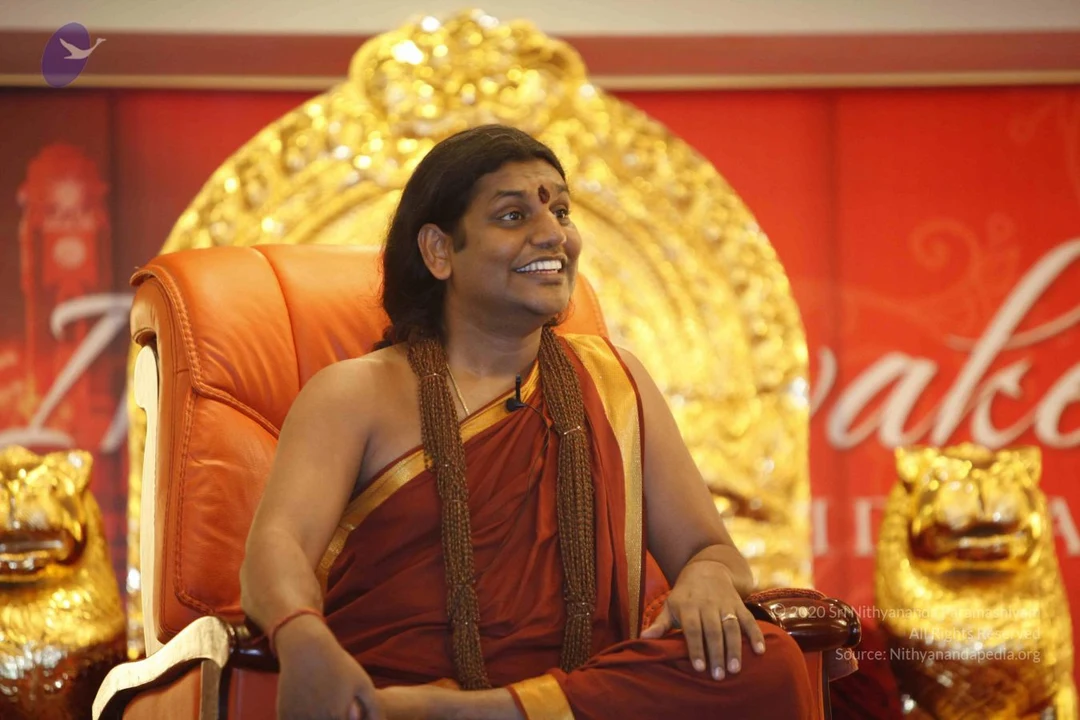
36 photosSource gallery
A man seated in an orange leather chair before a golden ornate arch and a red backdrop with partial lettering. He wears a maroon-red robe with a gold-bordered shawl, a long rudraksha mala draped over his shoulders, a red bindi on his forehead, and a small lapel microphone. He smiles and gazes to the side, one hand resting on the armrest. Gold lion sculptures flank the chair on both sides. a person is seated in the centre, identified by the robe, malas and gold-bordered shawl.A man with long dark hair and a red bindi sits smiling in a large orange leather armchair in front of an ornate gold carved backdrop. He wears a rust-red saffron-toned garment with a gold border draped over his shoulder and wrapped at the waist, and a long rudraksha mala of brown beads hangs to his waist. A small clip microphone is pinned to his chest. His left arm rests on the armchair and his right hand rests on his leg. A red cloth backdrop with partial white lettering and gold ornamental seats appear at the edges. Swamiji (probable) is seated in a throne-like chair, with long hair, rudraksha mala and saffron clothing as the qualifying cues.A smiling man with long swept-back dark hair and a red bindi sits in an orange leather throne chair with a gold ornate backrest. He wears a rust-red and gold-bordered robe, multiple brown rudraksha mala strands across his chest, and a red thread on his wrist. A small lapel microphone is clipped to his robe. The background is red with gold ornamentation. a person, identified by long swept hair, rudraksha malas and saffron-toned robes in a seated presentation setting.A man with long dark hair and a red bindi sits on an orange leather throne-style chair in front of a large gold ornate backrest. He wears a rust-red robe with a gold border and a long rudraksha mala draped over his shoulders, and gestures with his right hand while smiling. Two gold lion statues flank the chair on a red backdrop with partial script. A small lapel microphone is clipped to his robe. Probable Swamiji is seated as the speaker, with his distinctive long swept-back hair, rudraksha mala and saffron-red robe with gold trim.A man with long swept-back hair and a red bindi sits in an orange leather armchair on a stage, gesturing with both hands while smiling. He wears a rust-red robe with gold border and a long rudraksha mala around his neck. Behind him are golden lion sculptures and a gold-framed arch on a red banner with large white script. Probable Swamiji, seated as a teacher on the dais; the seated figure's long hair, ornate rudraksha mala and red-and-gold robe fit the candidate cues. A small microphone is clipped to his robe. Photo taken at an event with no visible audience.A man with long swept-back dark hair and a red bindi sits in an orange leather armchair, speaking and raising one hand with fingers spread. He wears a rust-orange garment with gold border, a thick brown rudraksha mala, and a thin necklace. A golden ornate backrest and gold lion figures flank him against a red wall with decorative lettering. Swamiji (probable): long swept-back hair, saffron-orange clothing and rudraksha mala cues mark a.

ia-darshan

51 photosSource gallery
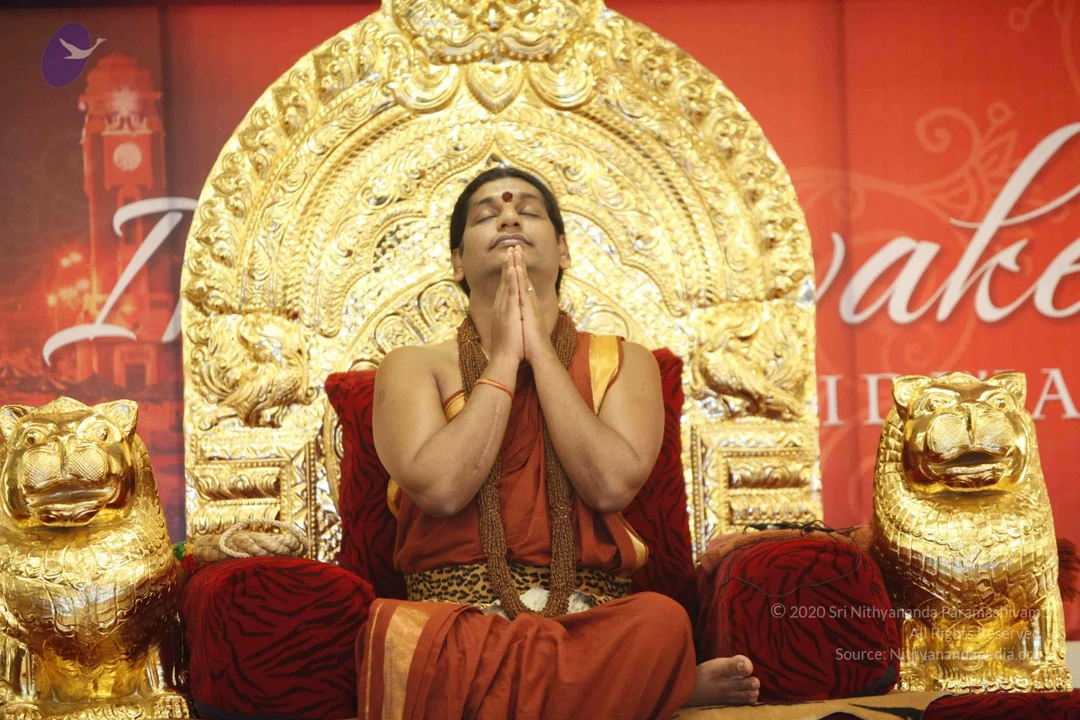
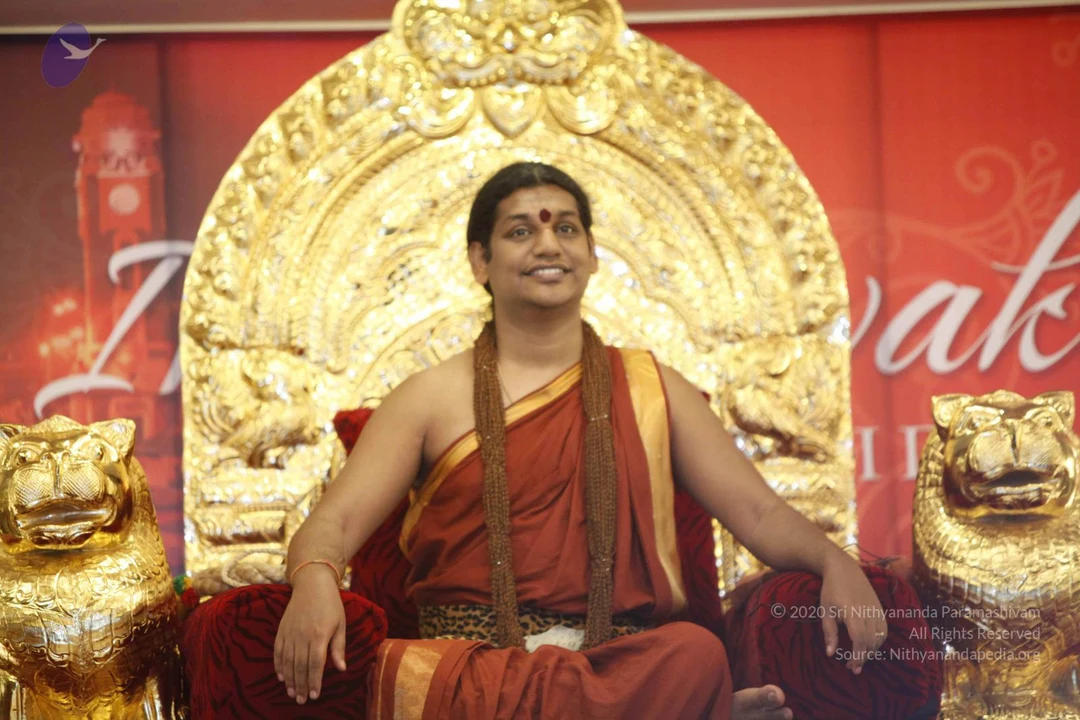
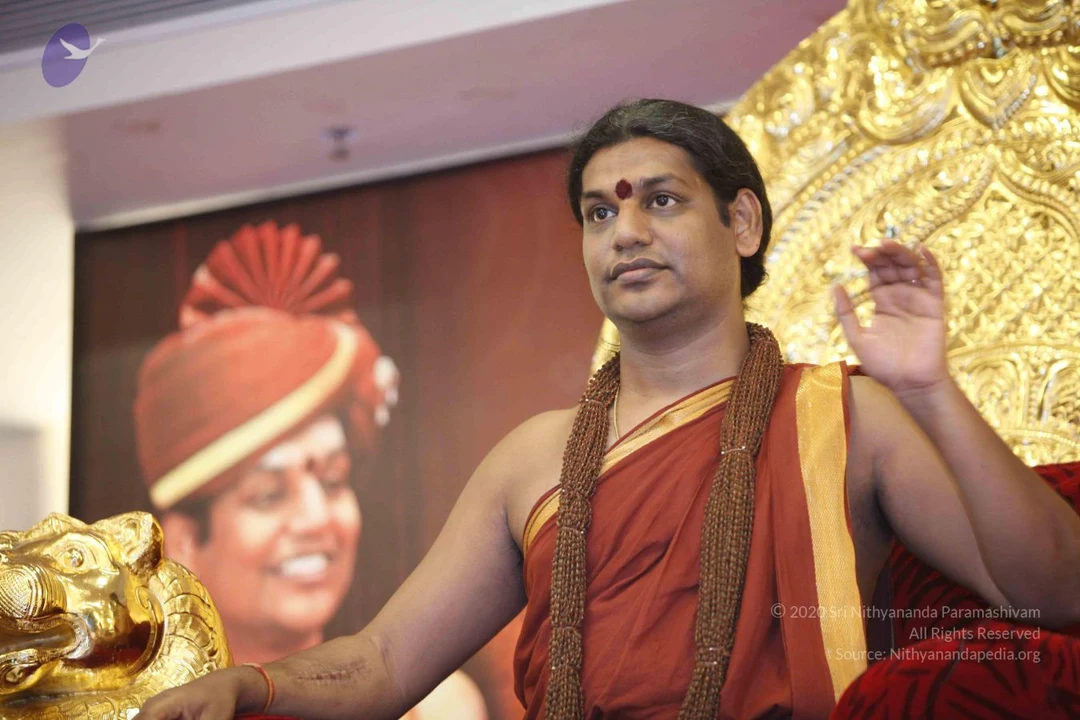
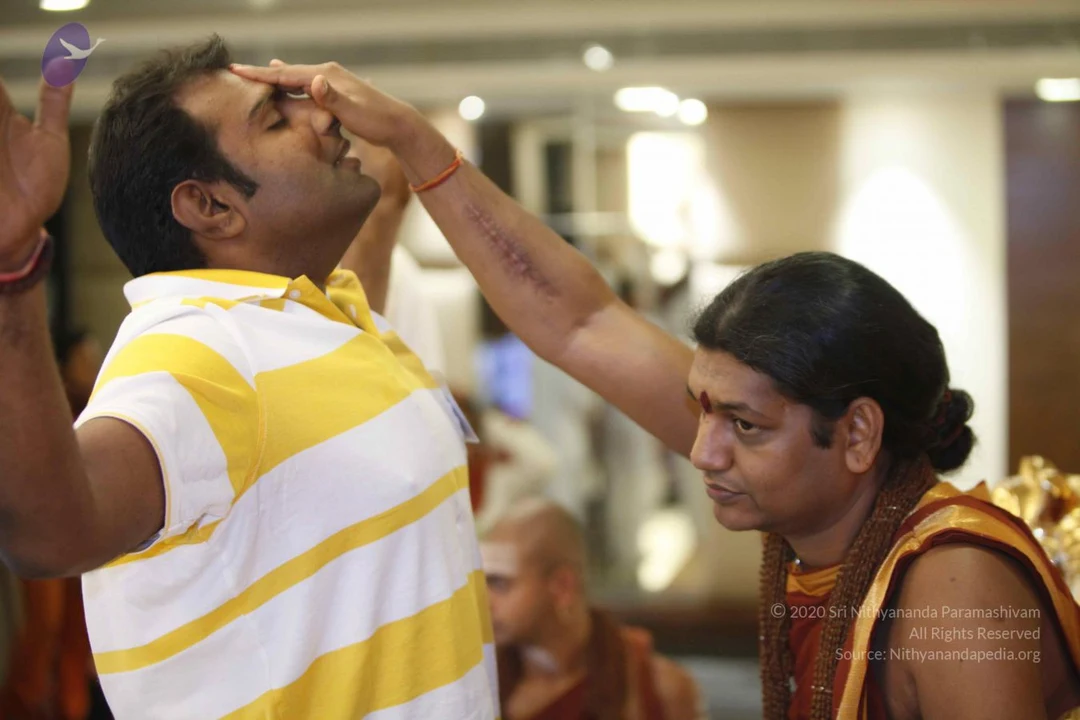
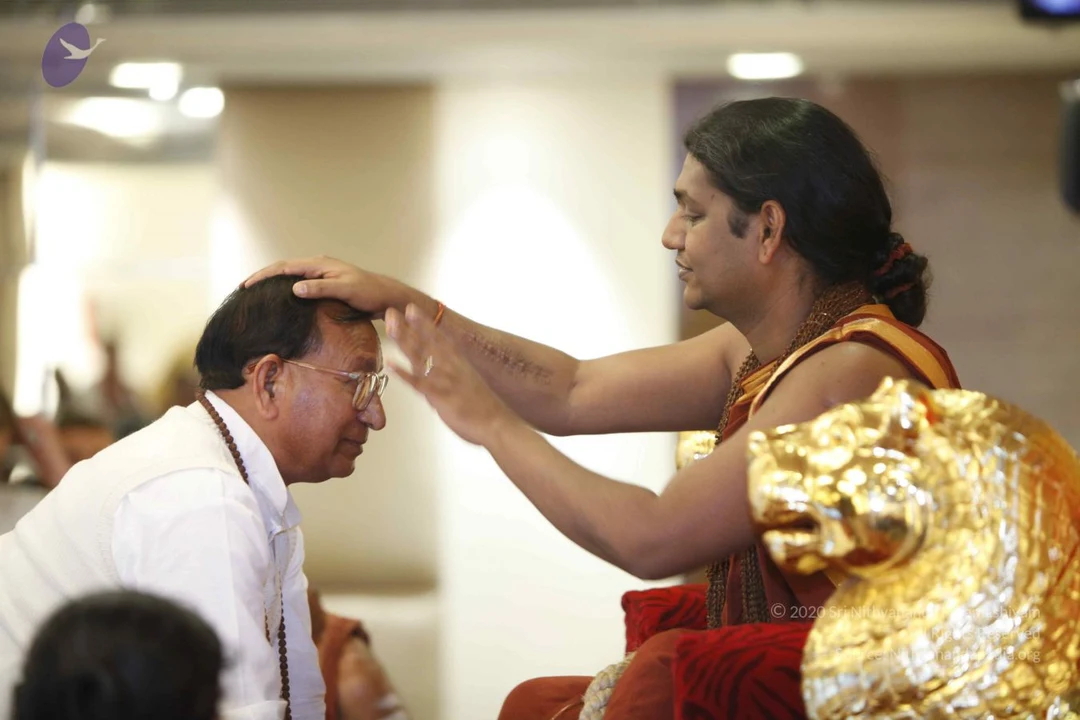
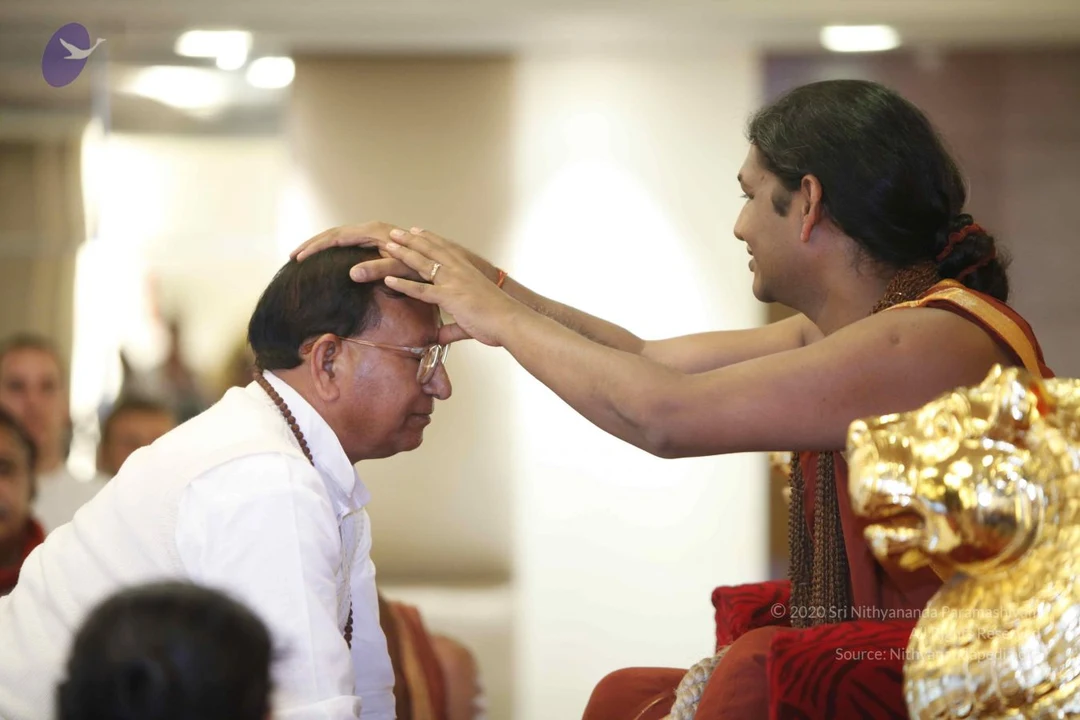
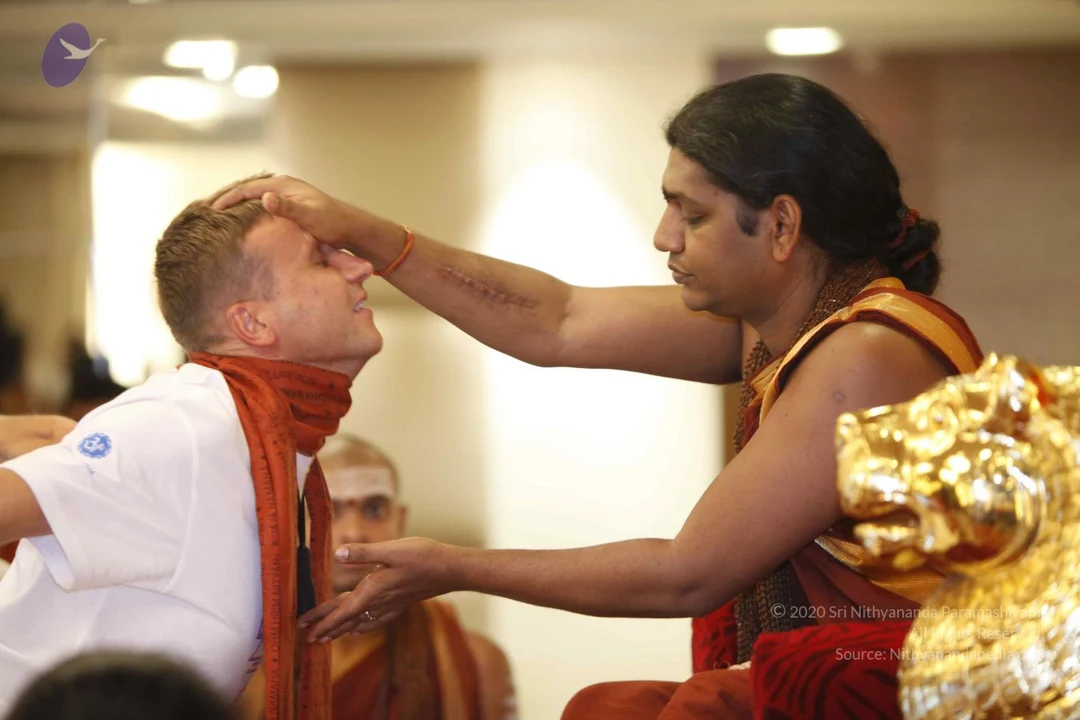
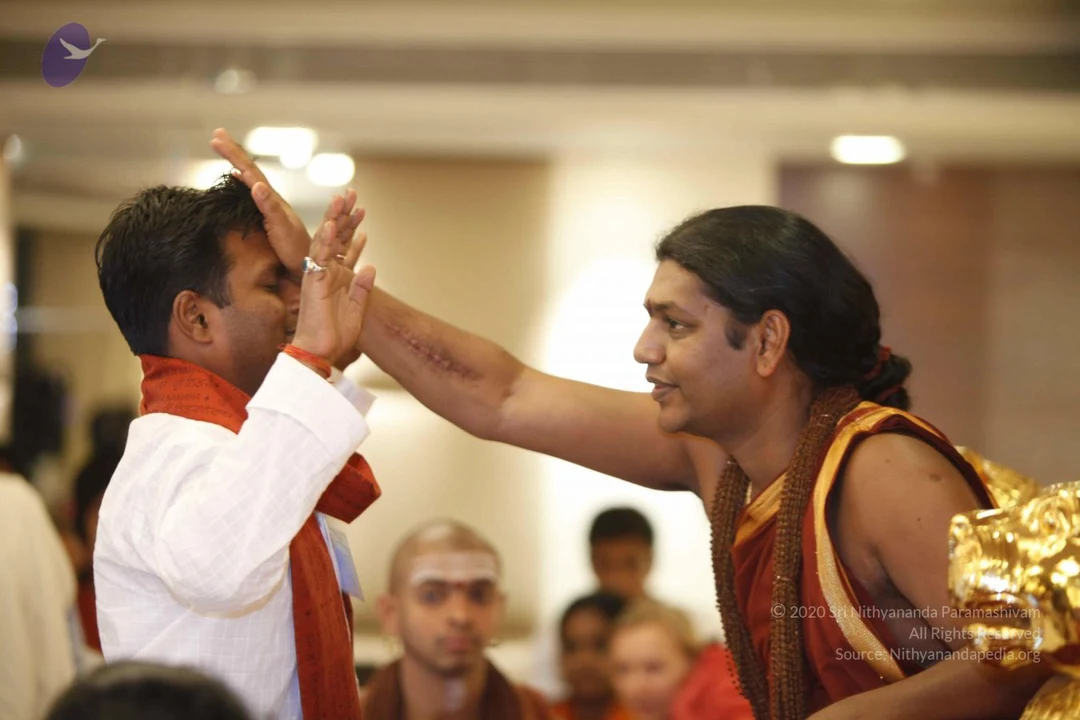
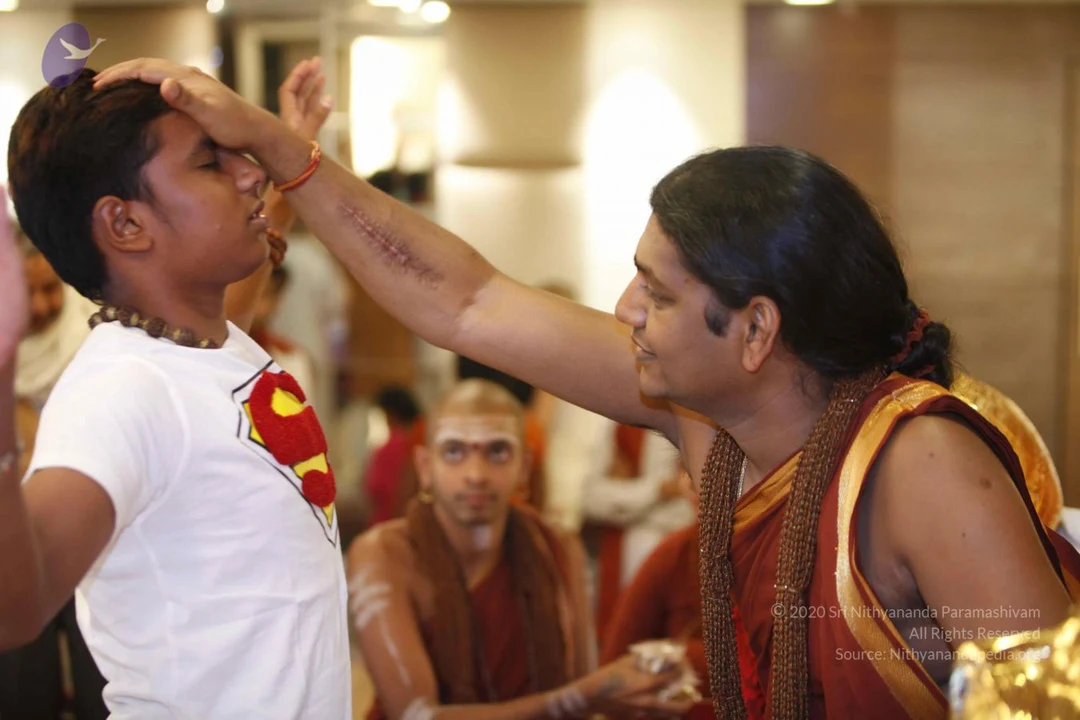
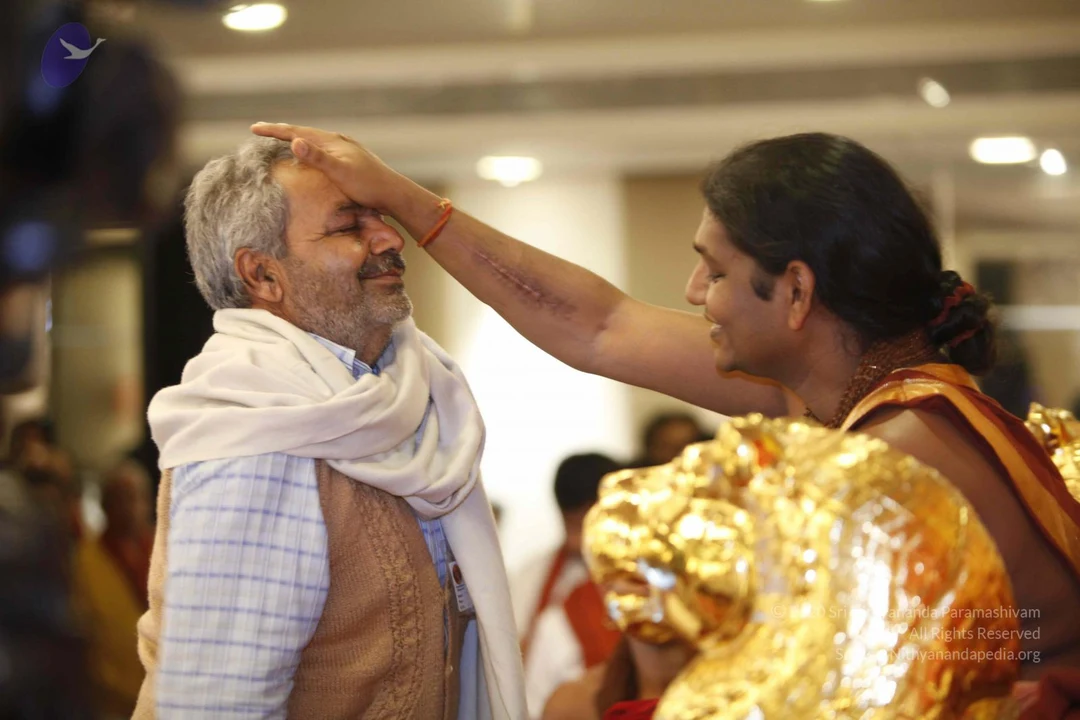
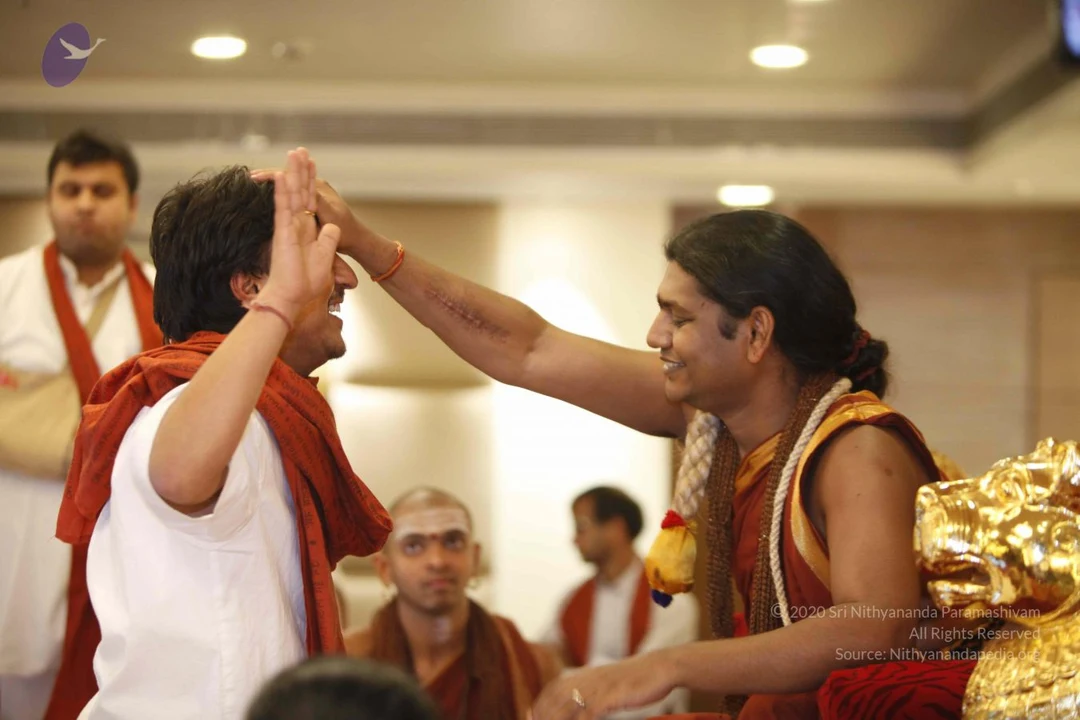
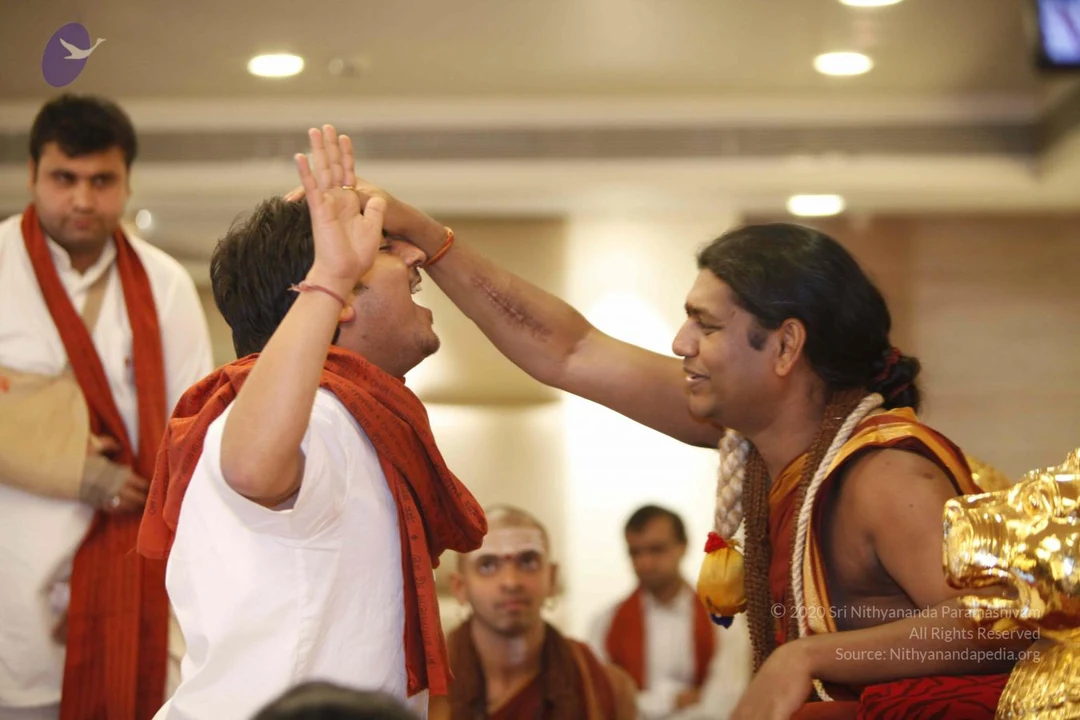
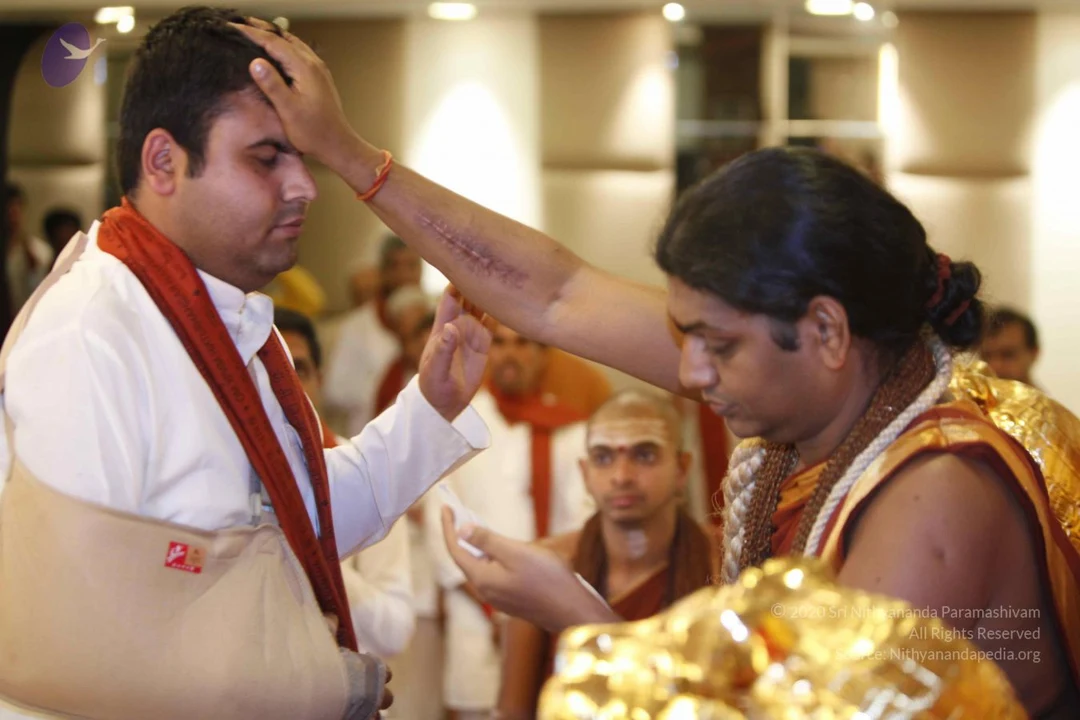
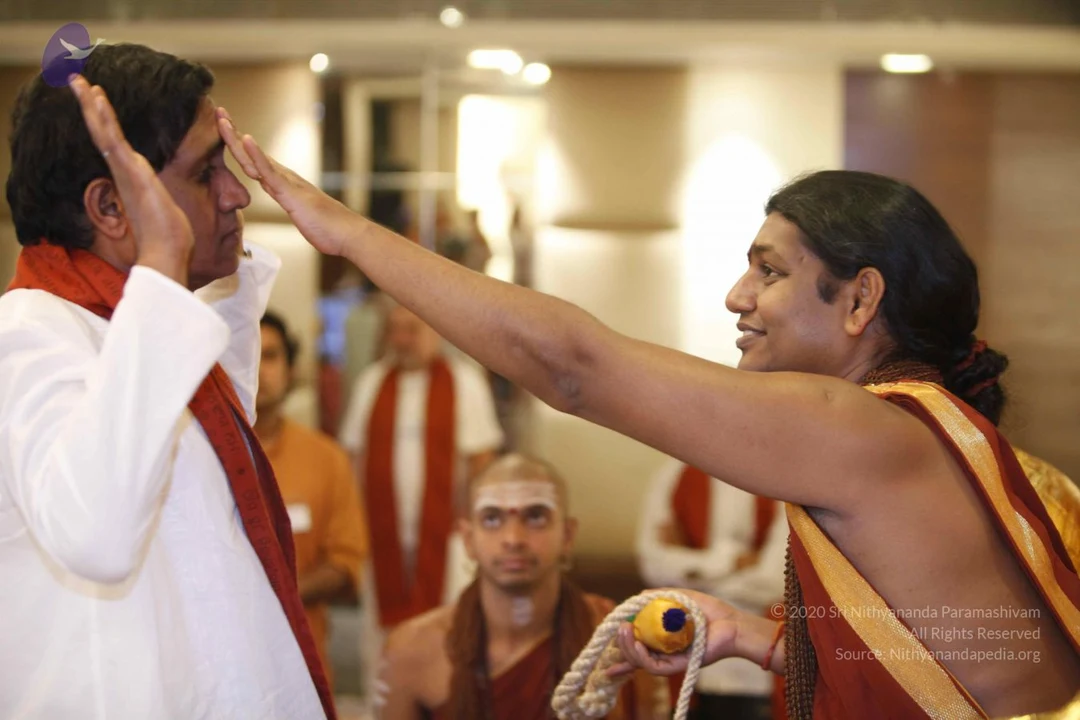
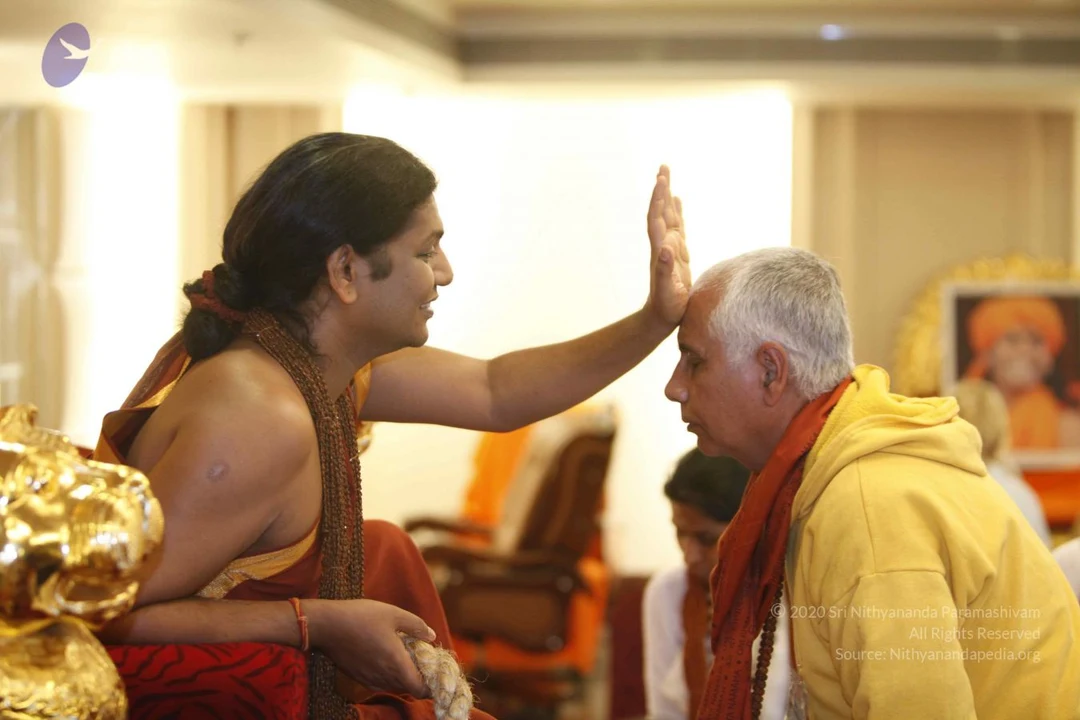
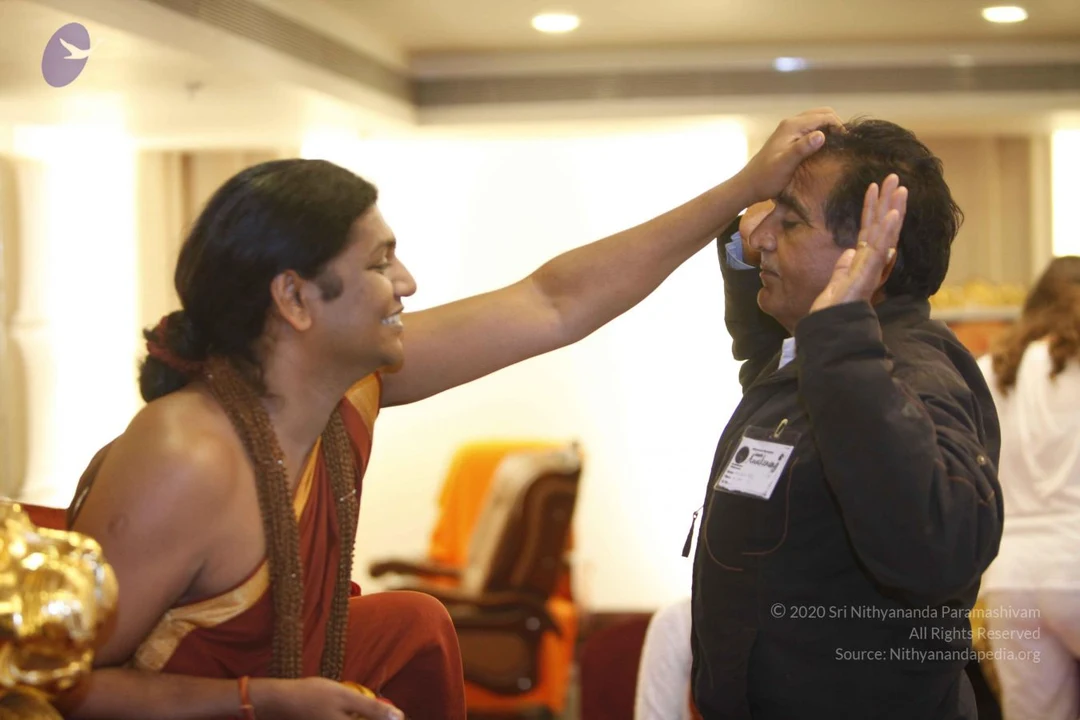
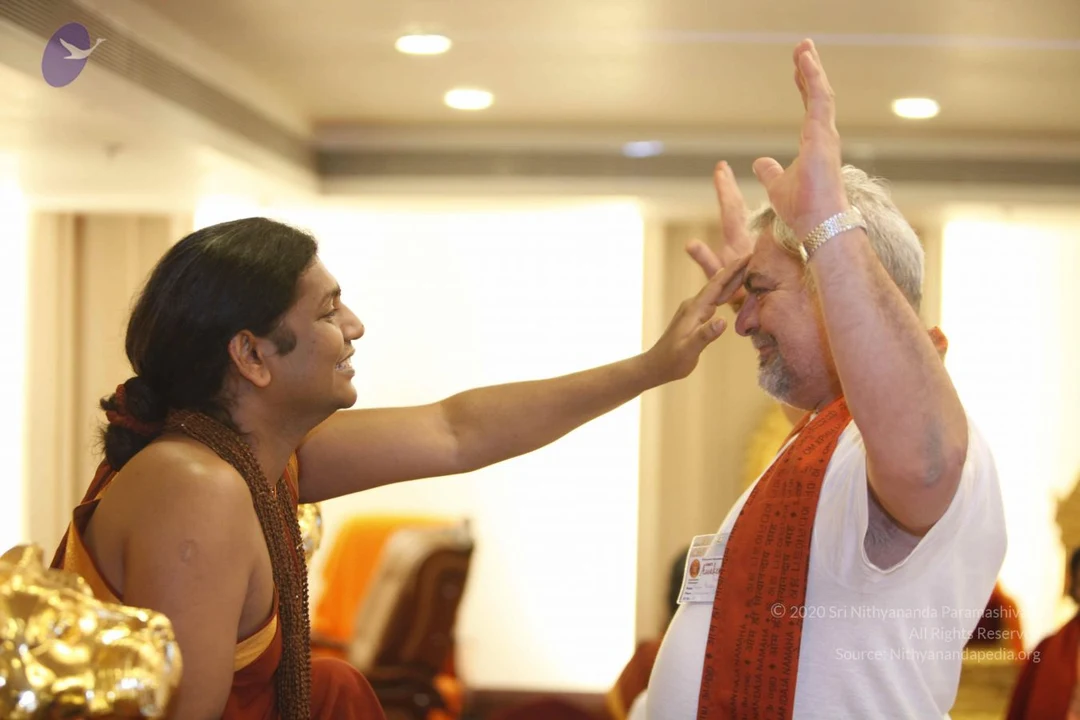
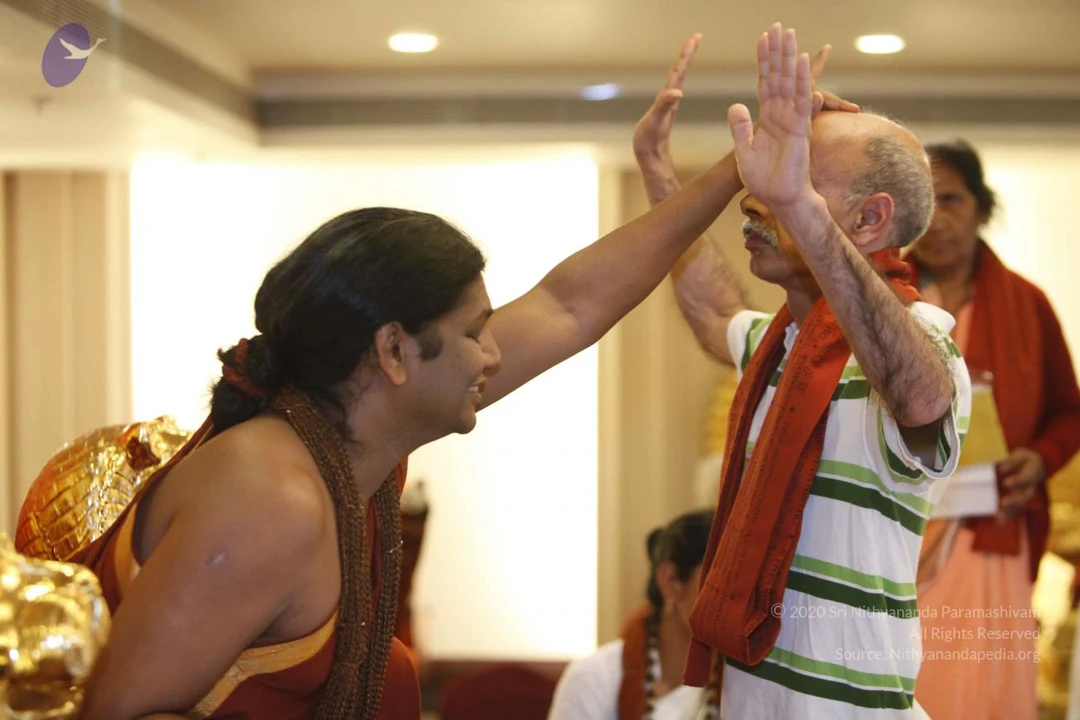
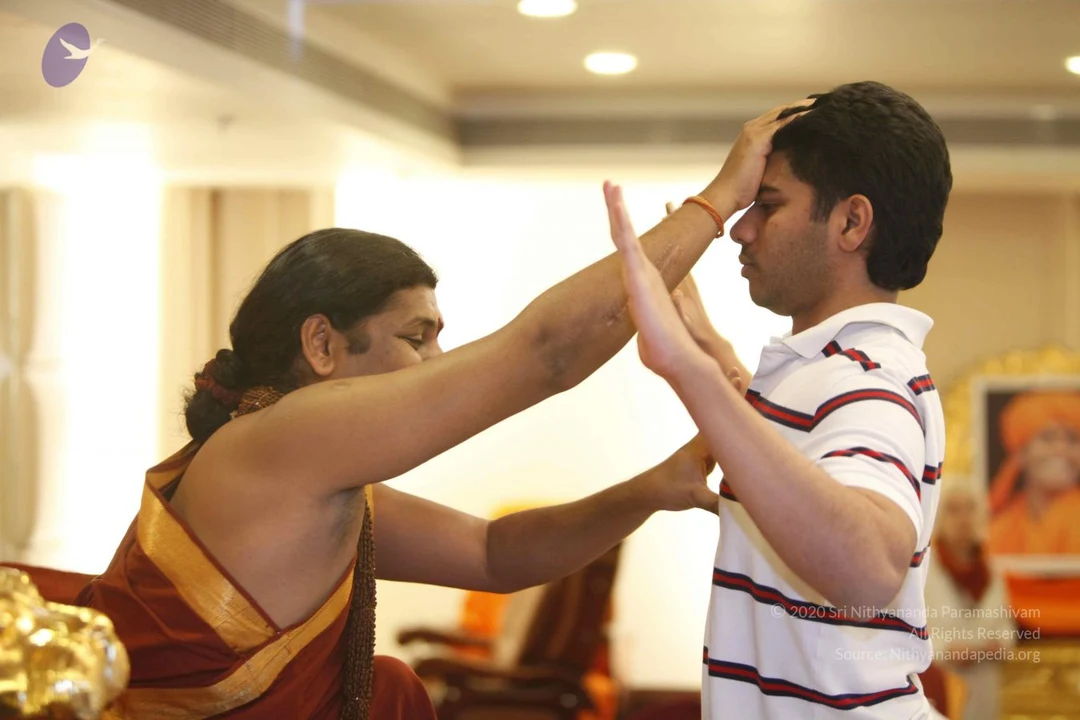
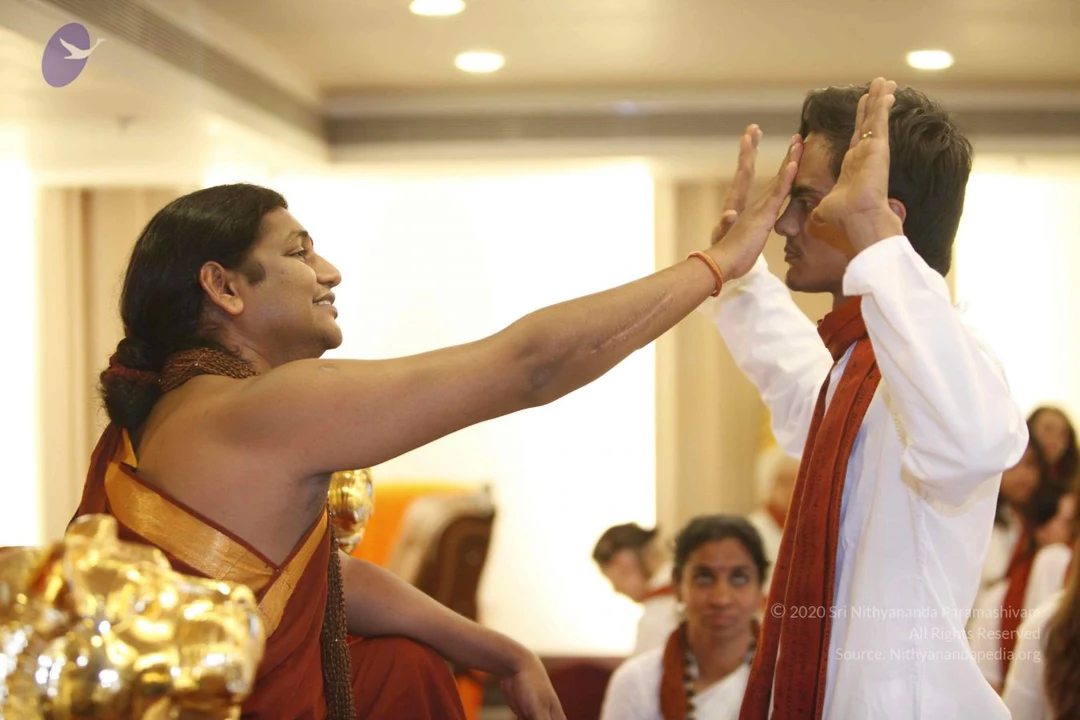
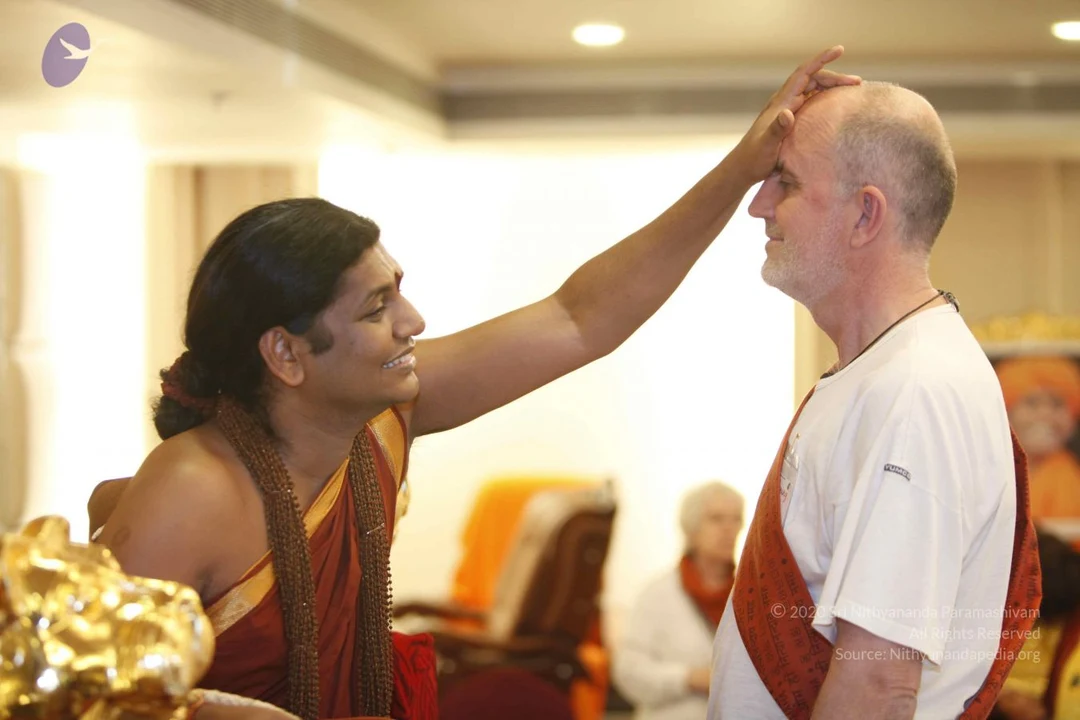
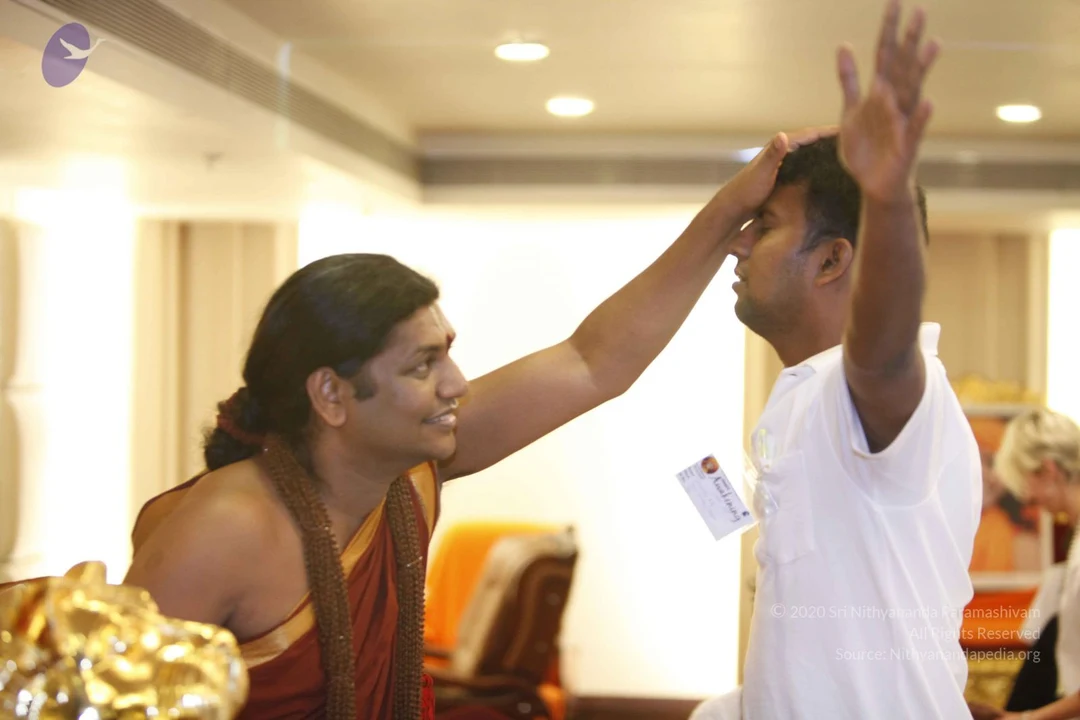
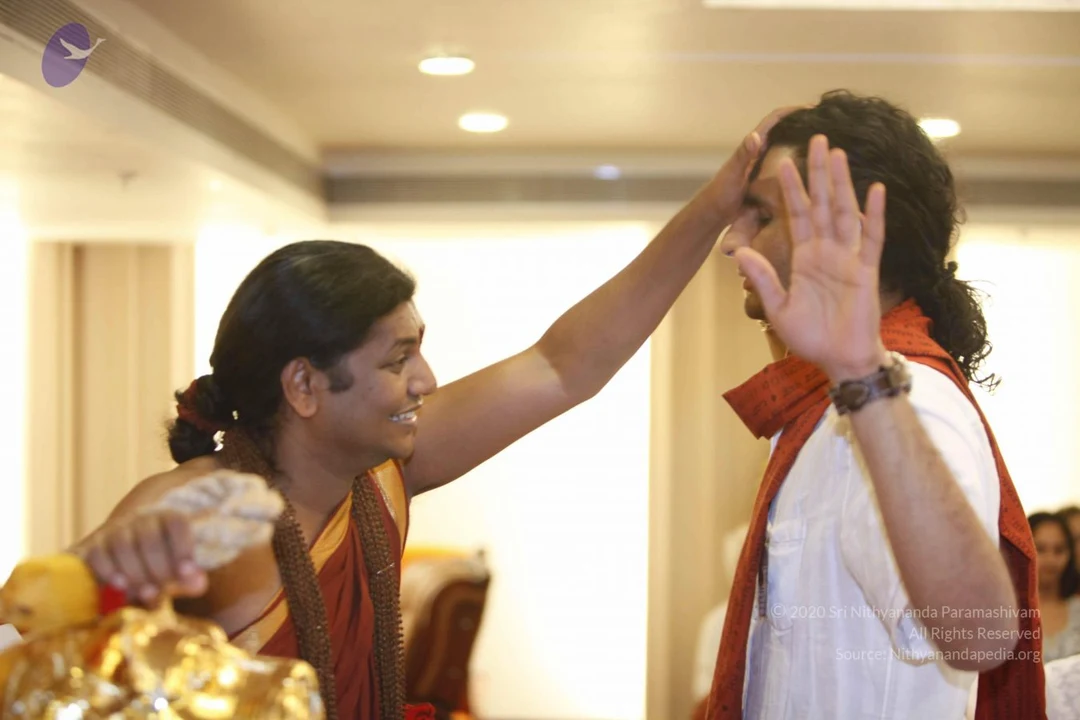
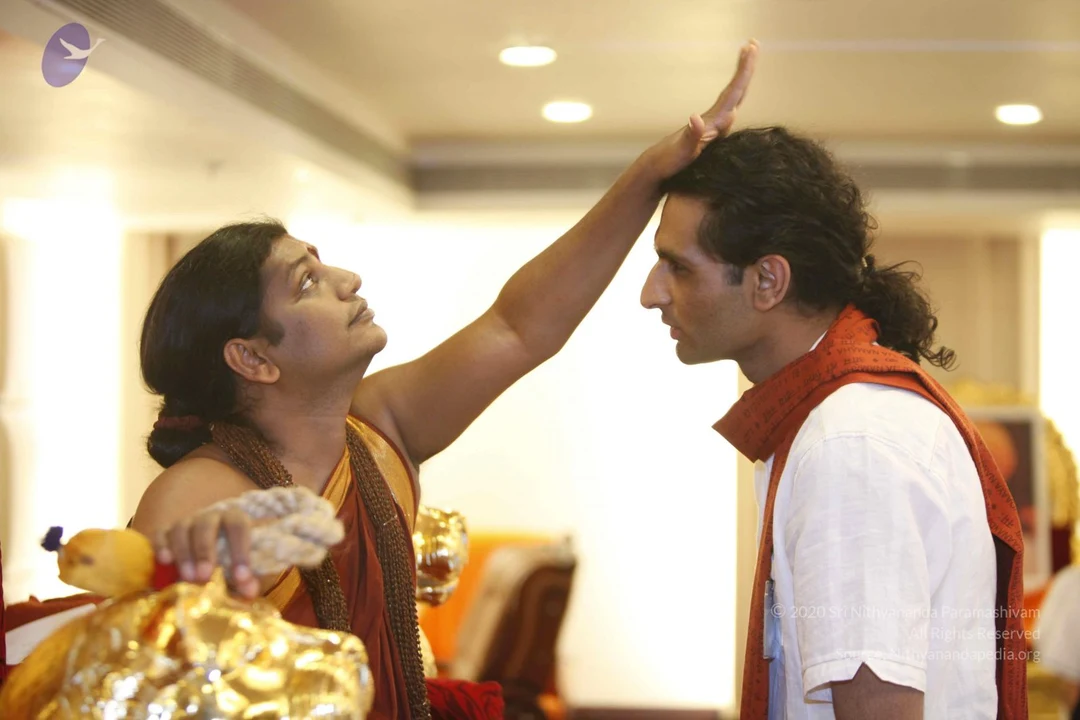
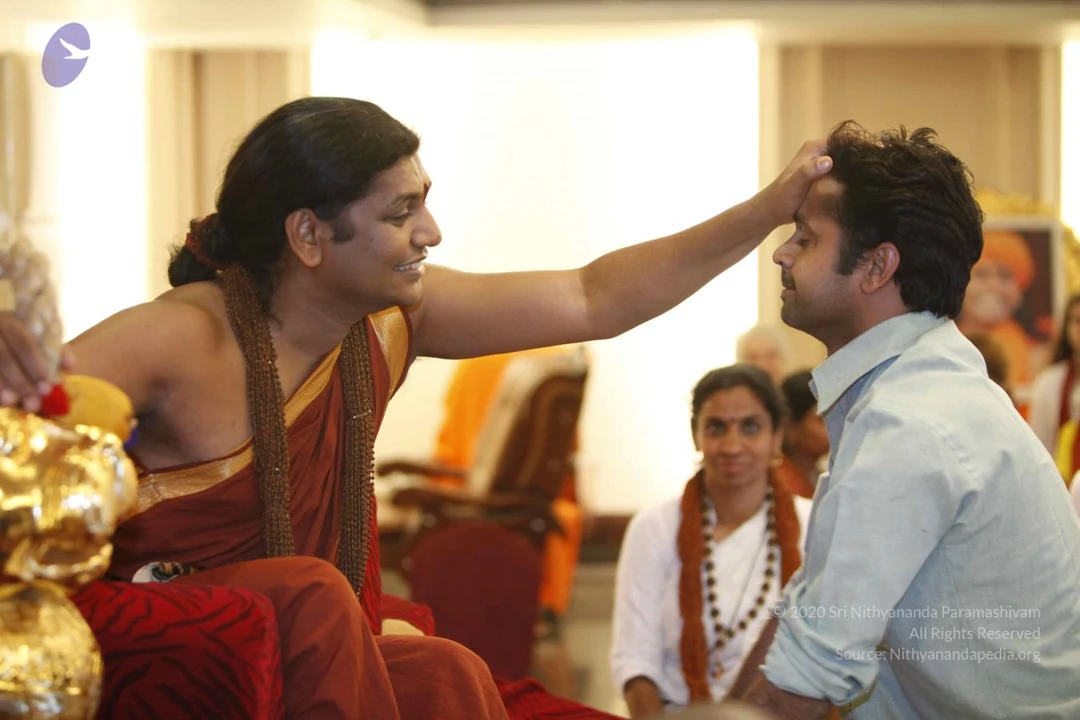
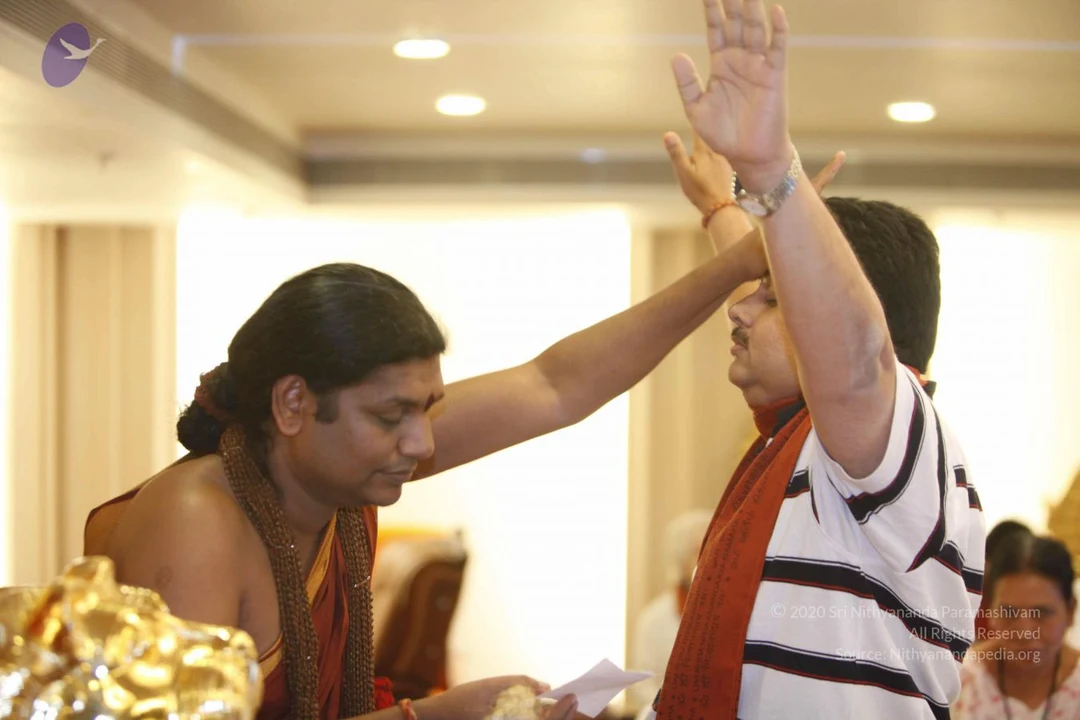
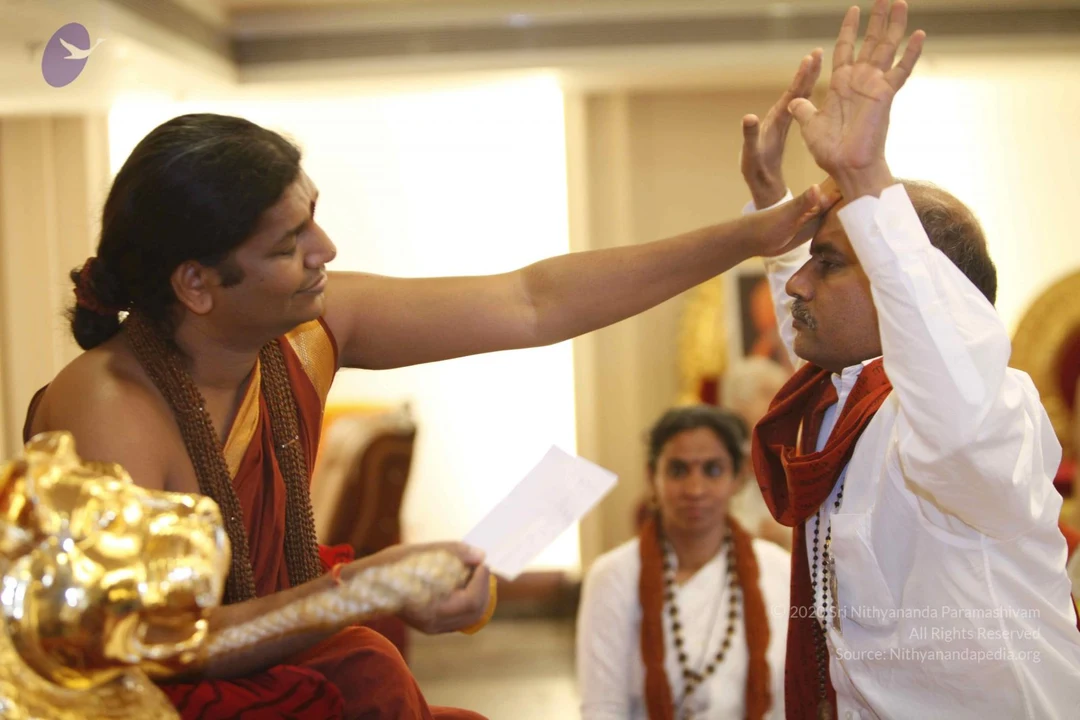
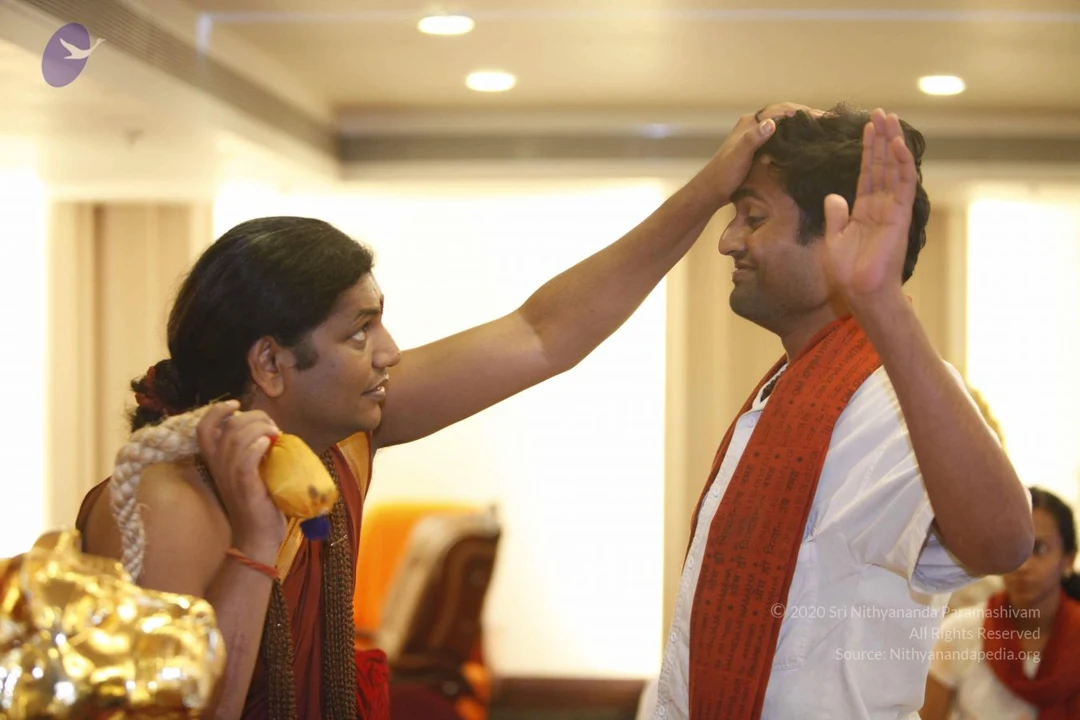
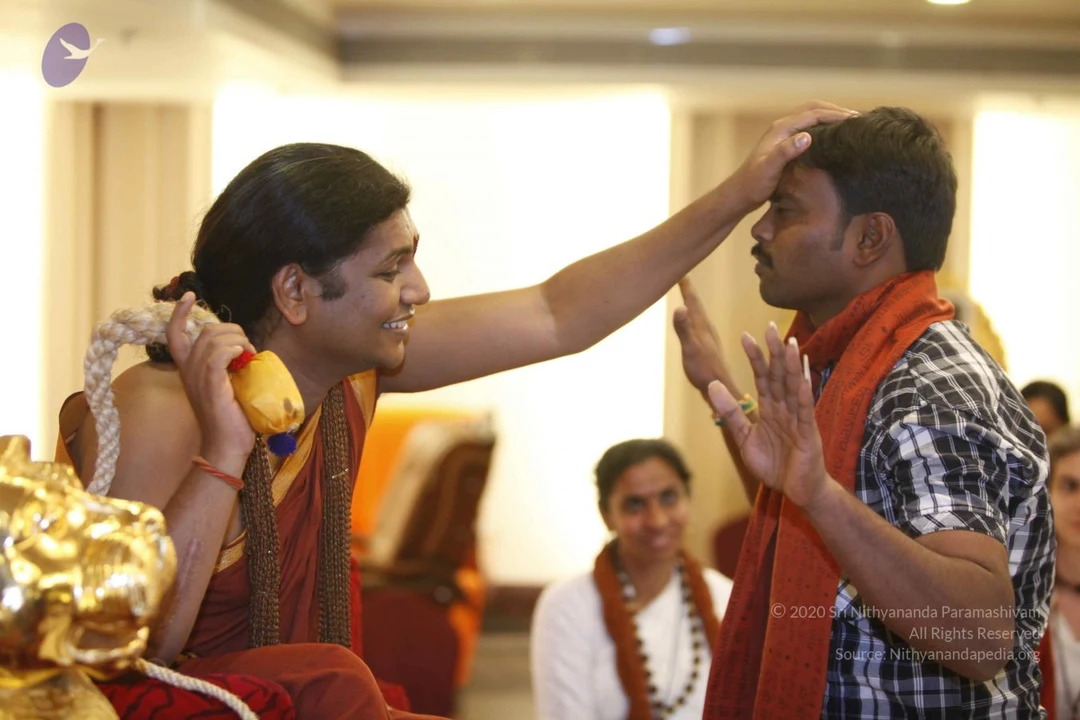
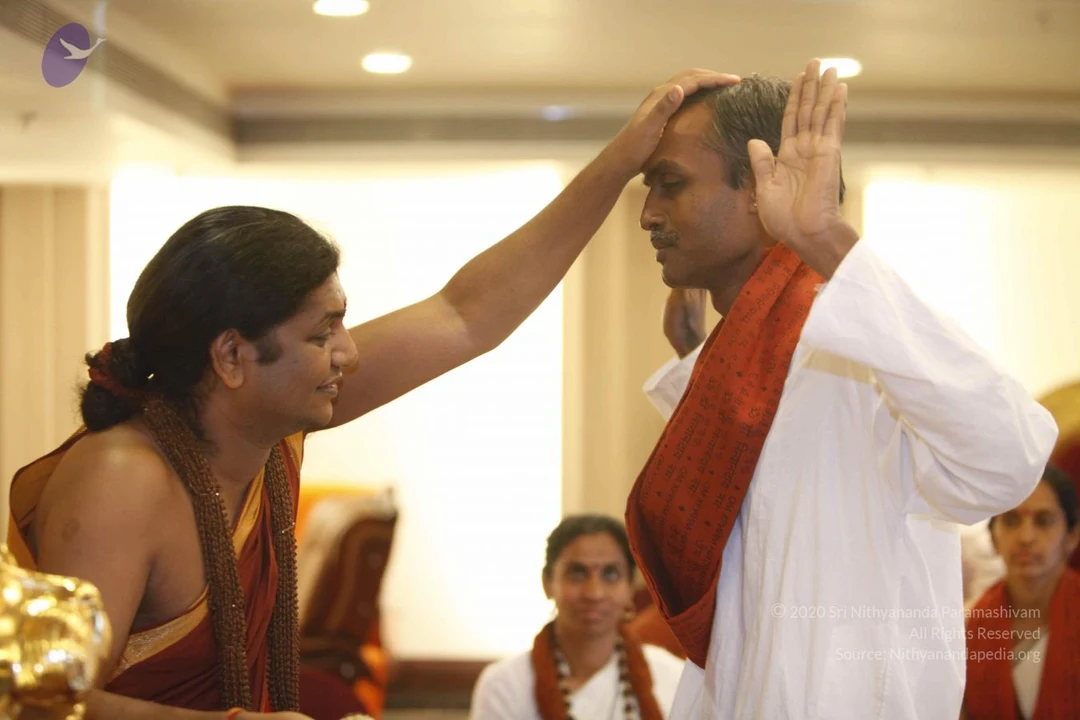
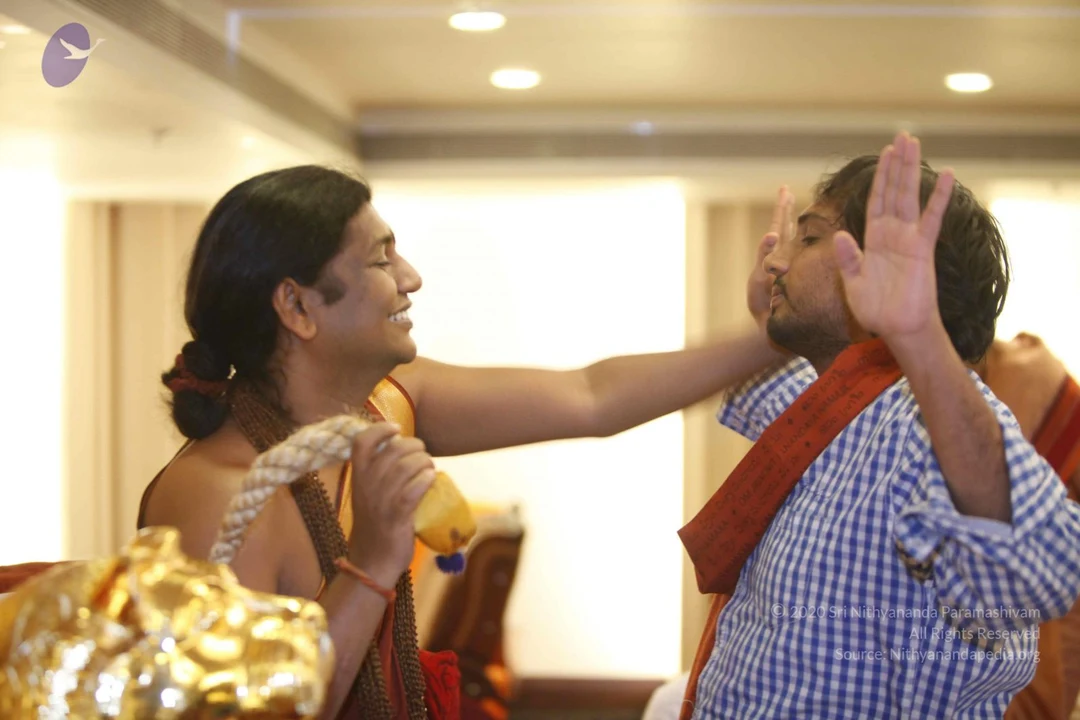
A man seated cross-legged on an ornate gold throne with carved lion heads and red cushions, eyes closed, palms pressed together in namaskar. He wears an orange-red shawl over bare shoulders, a leopard-print cloth at the waist, a red tilak on his forehead, a long beaded mala around the neck and orange wrist threads. Two large gold lion statues flank the throne against a red backdrop with partly visible decorative lettering. Swamiji (probable): long dark hair, a red bindi and a rudraksha mala, with the saffron-red shawl and gold throne as his cues; the figure is seated in devotional posture with no visible audience.A man with short dark hair and a red bindi sits smiling on an ornate gilded throne backed by a large golden arch carved with floral and scroll motifs. Golden lion sculptures flank the throne on both sides, and red cushions with tiger-stripe patterns are beneath him. He wears a red-orange robe with a gold-edged sash, a leopard-print undergarment, and a long beaded rudraksha-style mala around his neck. The red backdrop behind him shows a partial red logo and large white script lettering.A man in a saffron-orange robe with a gold border and a long rudraksha mala seated before a large ornate gold throne-back, gesturing with his raised right hand while his left hand rests near a gold lion-headed armrest. A red-turbaned portrait of a smiling man hangs behind him on a wooden-toned wall. A red bindi marks his forehead. a person, seated as a speaker, in a satsang setting.A photograph of a devotee in a white shirt with yellow horizontal stripes having his forehead touched by a man in saffron-orange robes with a gold-bordered shawl and a rudraksha mala. The robed man, with hair tied in a bun and a small red tilak on his forehead, extends his right arm to press his palm on the devotee's brow, while the devotee stands with eyes closed and a red thread on his wrist. Behind them, a shaved-headed monk in orange robes and other people are blurred in a bright interior. The scene appears to be a blessing given in a Nithyananda Dhyanapeetam setting. a person identity is uncertain from appearance; the robed man is described by role only.A photograph of a seated man in a white shirt and glasses with a mala draped over his shoulder bowing forward as a man in saffron-orange and red robes with long dark hair tied back and many beaded rudraksha-style necklaces places his right hand on the bowed man's head in a blessing gesture. Behind the blessing figure is a golden ornamented seat or lion-shaped throne with red cushions. The setting appears to be an indoor satsang hall with soft light and blurred background figures, one partly visible at the lower left corner. Swamiji (probable) is the blessing figure, identified by long swept-back hair, saffron-orange clothing and multiple rudraksha necklaces, seated on the golden throne giving darshan to a devotee.A seated man in a white shirt and white vest, wearing round glasses and a rudraksha mala, bows his head while a man in an orange-red garment with a long ponytail and a rudraksha mala places both hands on his forehead in a blessing. The blessing man sits on red cushions beside an ornate gold lion-headed armrest. Blurred onlookers stand in the background of a bright hall. Swamiji (probable): the blessing man has long swept-back hair, an orange-and-gold garment, and rudraksha beads, and is giving darshan blessing to a devotee.
FB-photo-of-the-day

1 photoSource gallery
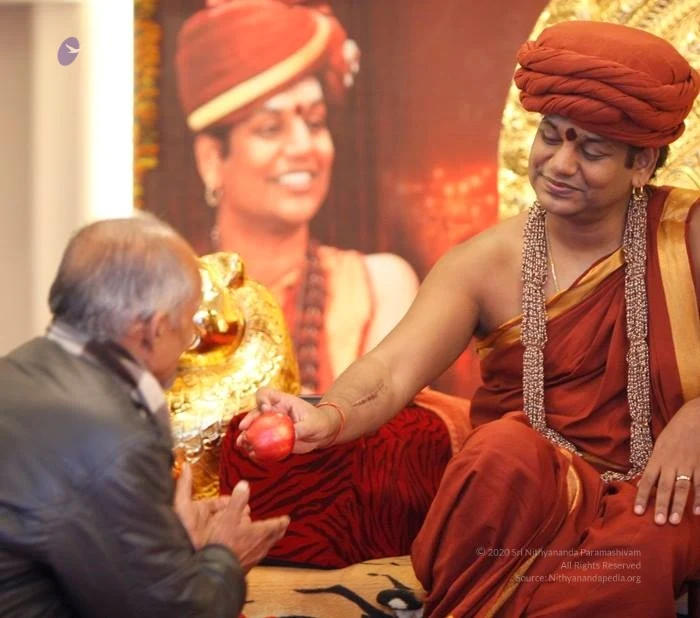
A seated man in an orange-red turban, orange-red robes with a gold border, and layered beaded necklaces holds out a red apple toward an older man in a grey suit who kneels at left, hands pressed together. Behind them a large portrait of a smiling figure in a red turban and orange robes hangs on a dark red backdrop beside a golden ornate chair. The seated man has a red bindi and red wrist thread, and wears a bead garland. The setting is an indoor satsang-style gathering with warm lighting.
March 08 2014

1 photoView all
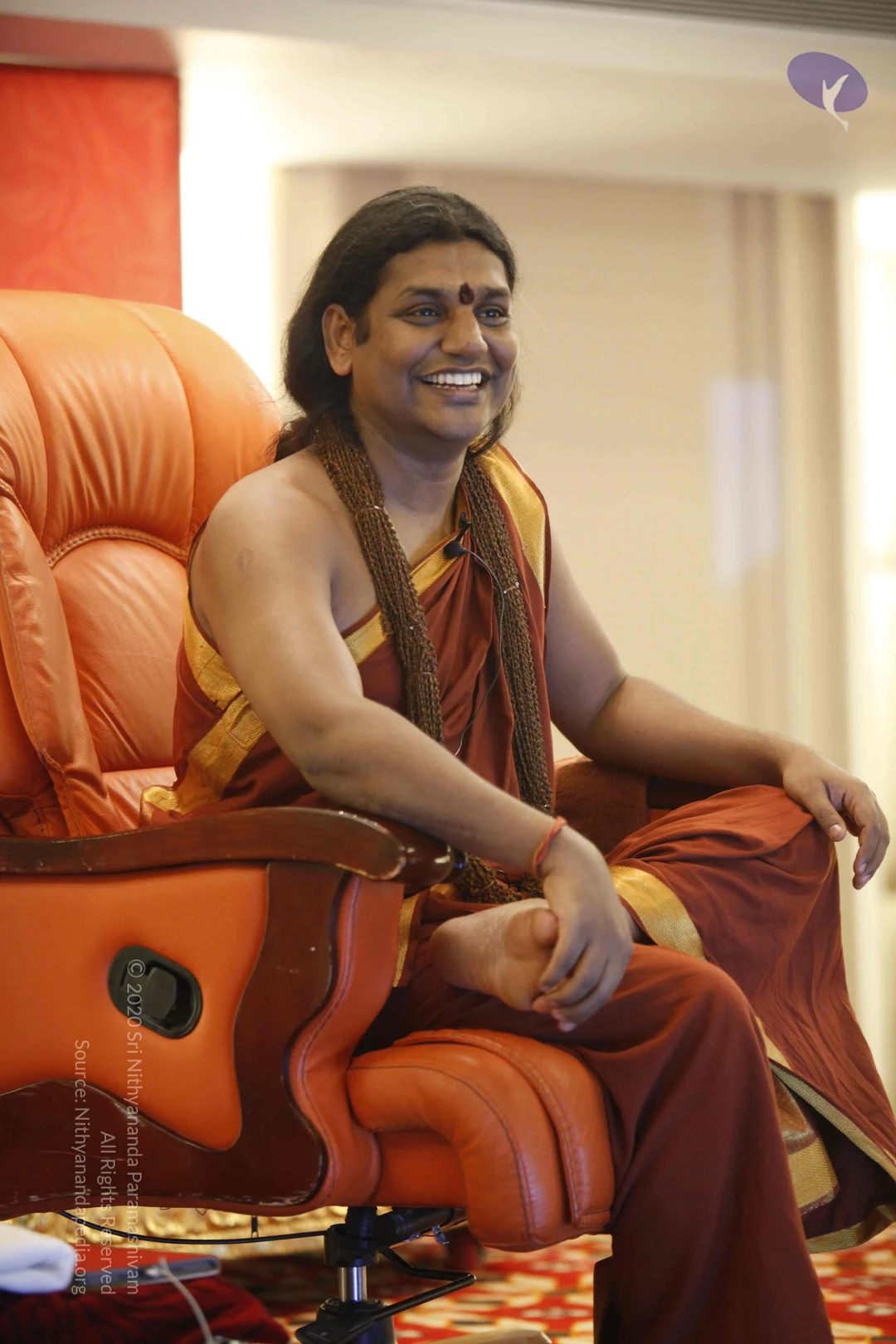
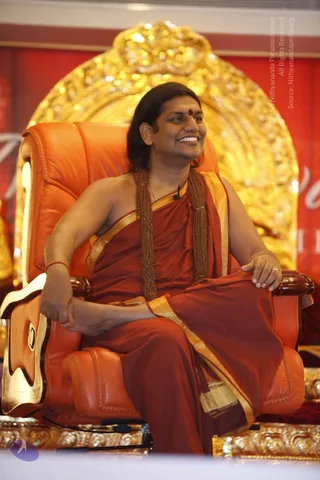
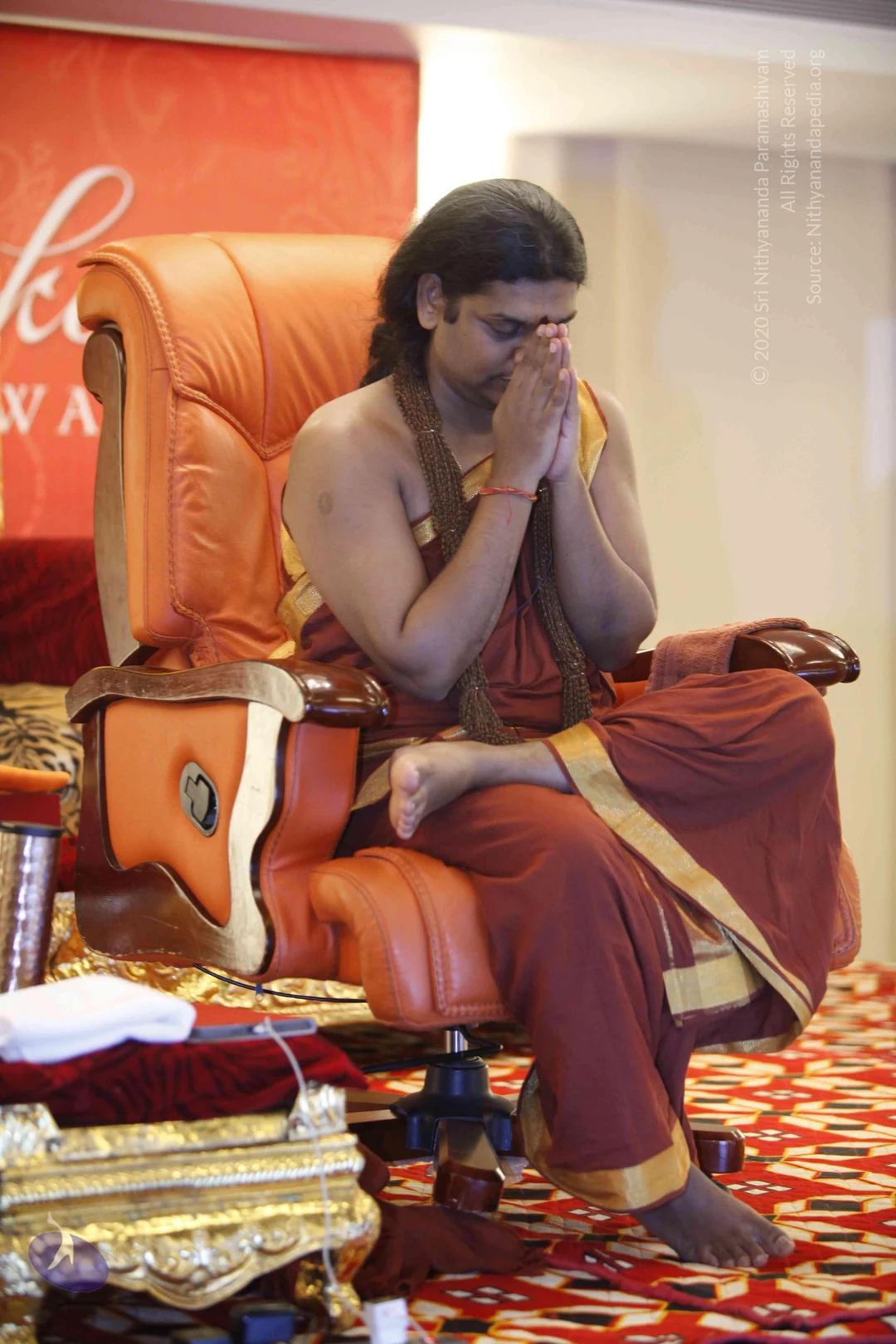
A smiling man with long dark hair and a red bindi sits in a large orange leather recliner chair, leaning slightly forward with one bare foot resting on the seat. He wears a rust-red garment with a gold-bordered wrap draped over his shoulder, a long wooden-bead mala hanging on his chest, and a red thread bracelet on his wrist, with a small clip microphone on his clothing. The room has a warm red and gold patterned carpet and soft cream walls. Swamiji (probable) is seated as the speaker; the appearance-based cues are long swept-back hair, a rudraksha-style mala, and saffron-toned ornate clothing.
More photos

7 photosView all
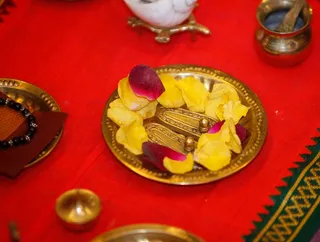
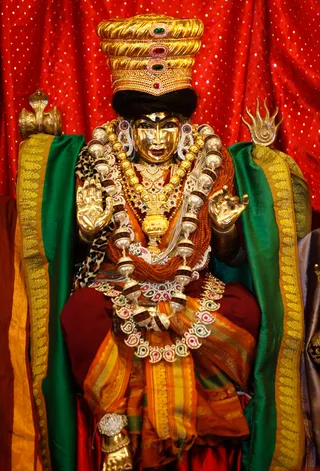
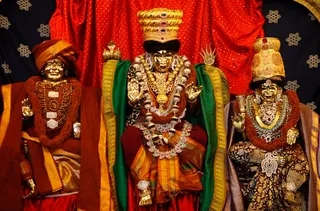
A golden statue of a seated guru figure on a decorated throne against a navy backdrop with gold motifs and red sequined drapery. The figure wears an orange-and-gold turban with a jewelled ornament, gold drop earrings, a red-brown robe with gold border, a long rudraksha mala draped to the lap, and a gold ornate necklace with silver-toned plaques. The right hand is raised in blessing and the left rests on the lap. A gold-tipped ceremonial staff stands at the right edge. The statue is a depiction, not a physical person, so no in-person candidate is present.A photograph of a ritual table draped in red cloth with a green and gold woven border. At the centre, a brass thali holds yellow and magenta flower petals arranged around a pair of ornate brass sandals or padukas. Nearby are a brass cup, a small brass oil lamp, a white ceramic vessel with a figure, and a dark wooden tray beside a black bead mala. No people are visible. Items suggest a puja or padapuja offering.A golden deity murti seated on a red sparkling backdrop, wearing a tall jewelled golden crown set with red and green stones, a dark hair-like crest beneath it, and layered gold and rudraksha necklaces with pendants. It holds a trident-like emblem at the shoulder and a hand gesture in front of the chest, draped in a green and gold bordered shawl over orange and maroon garments. No physical people are visible; the figure is a statue.Three golden-faced murti figures are seated side by side in a temple alcove against a red draped backdrop with white dots and black panels with gold motifs. The central deity wears a tall gold crown set with red stones, a garland of beads and jewelled necklaces, a green and gold shawl, and holds ritual objects in raised hands. The figure on the left wears an orange turban, rudraksha beads, a red shawl and gold ornaments, while the figure on the right wears a tall gold headdress, rudraksha mala, red shawl and an ornate brocade garment. These are statues, not physical people.A large printed portrait labelled "Paramahamsa Nithyananda" is displayed within an ornate gold-embossed frame with lion-head ornaments on a red backdrop. The portrait shows a smiling man wearing an orange turban with a red bindi, and an orange shawl draped over his shoulders. No physical people are visible; the figure is depicted in print. The printed caption and his orange turban and shawl are the visible cues for the appearance-based label Swamiji (probable).