Skip to content
Sunday

9 March 2014

Friendliness is Essence of life

Dated photos
166
Source pages
1
Media
2
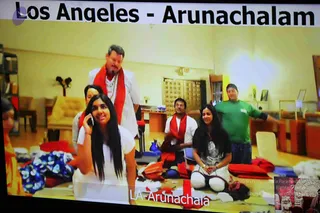
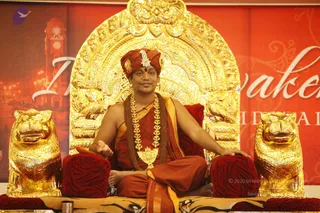
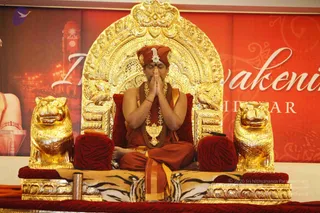
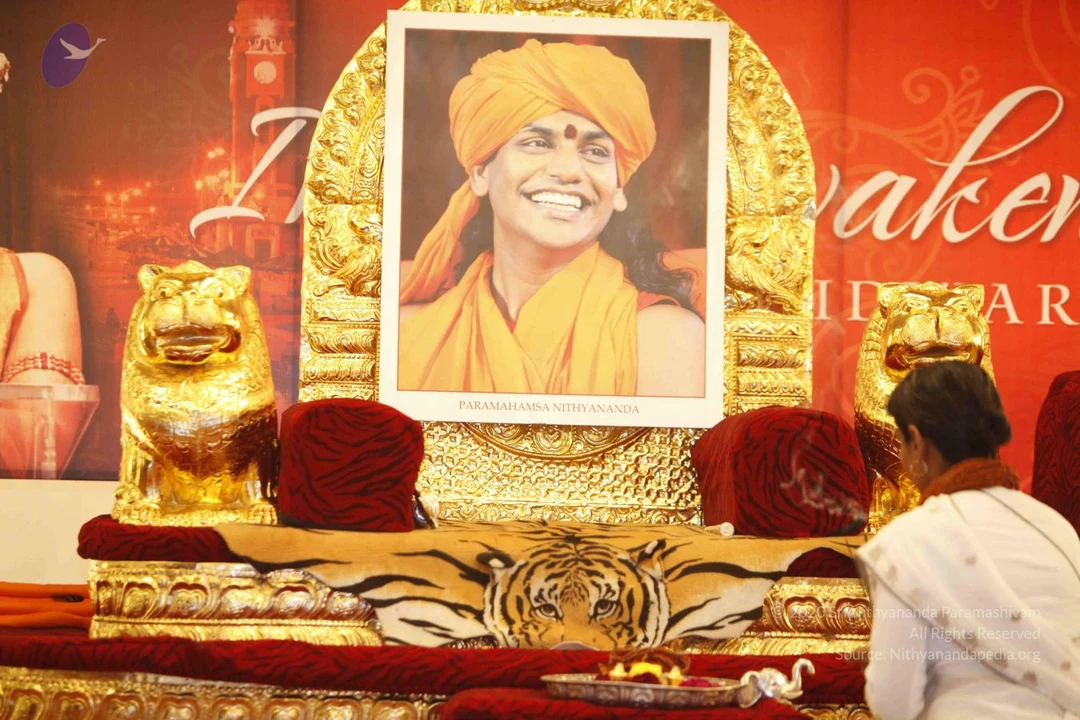
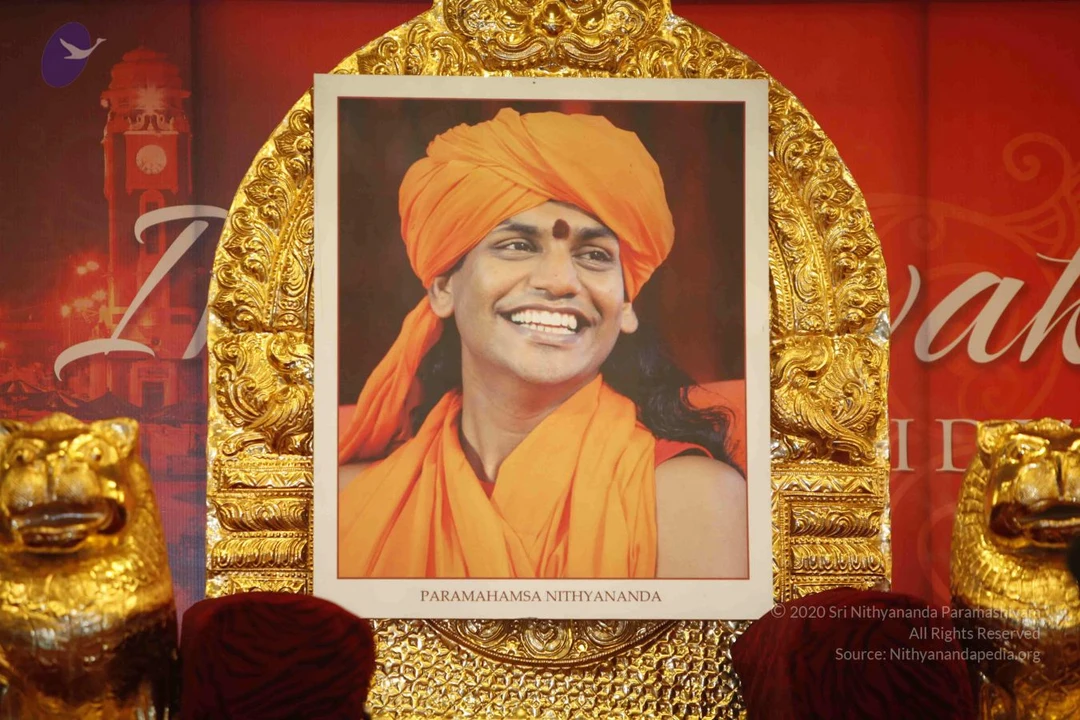
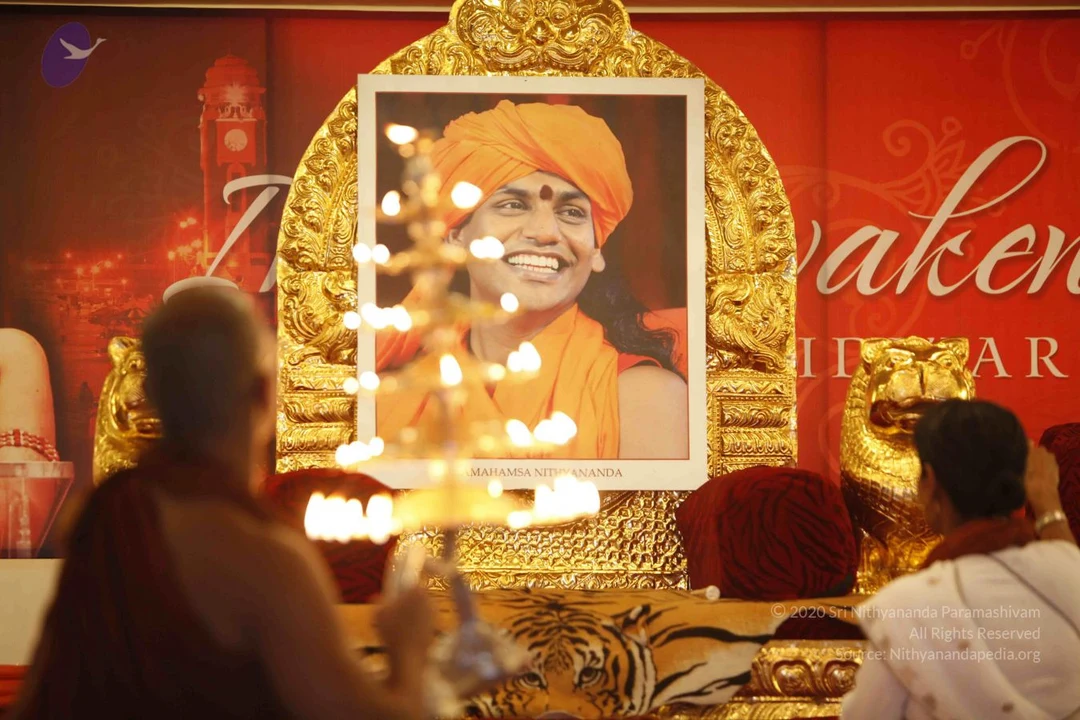
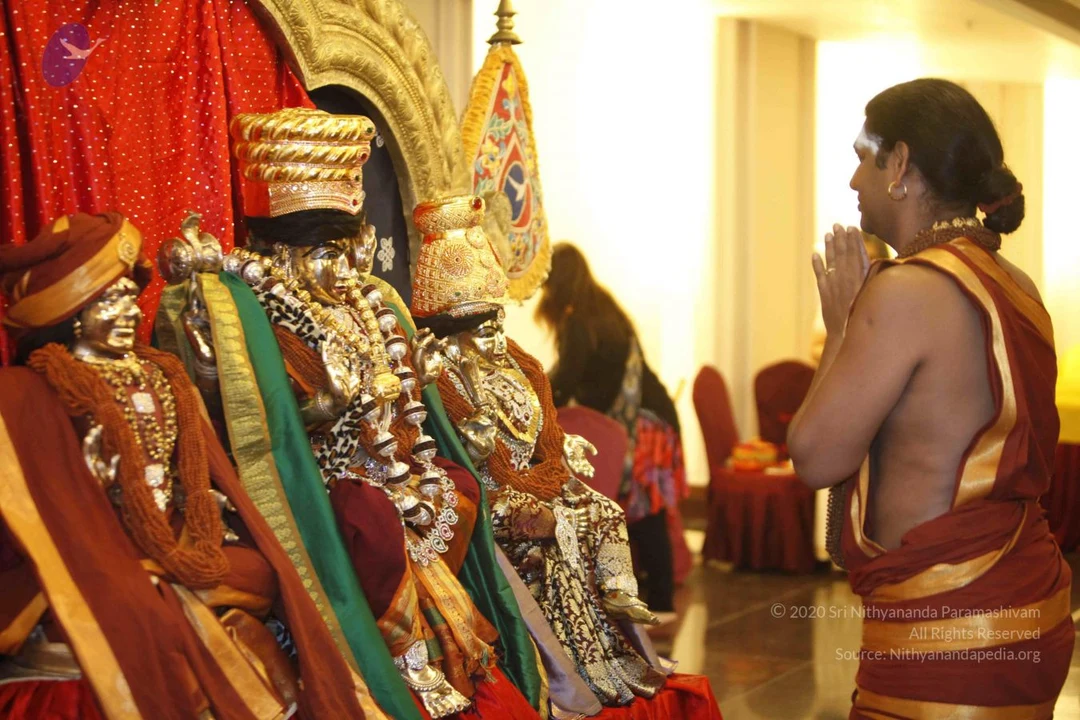
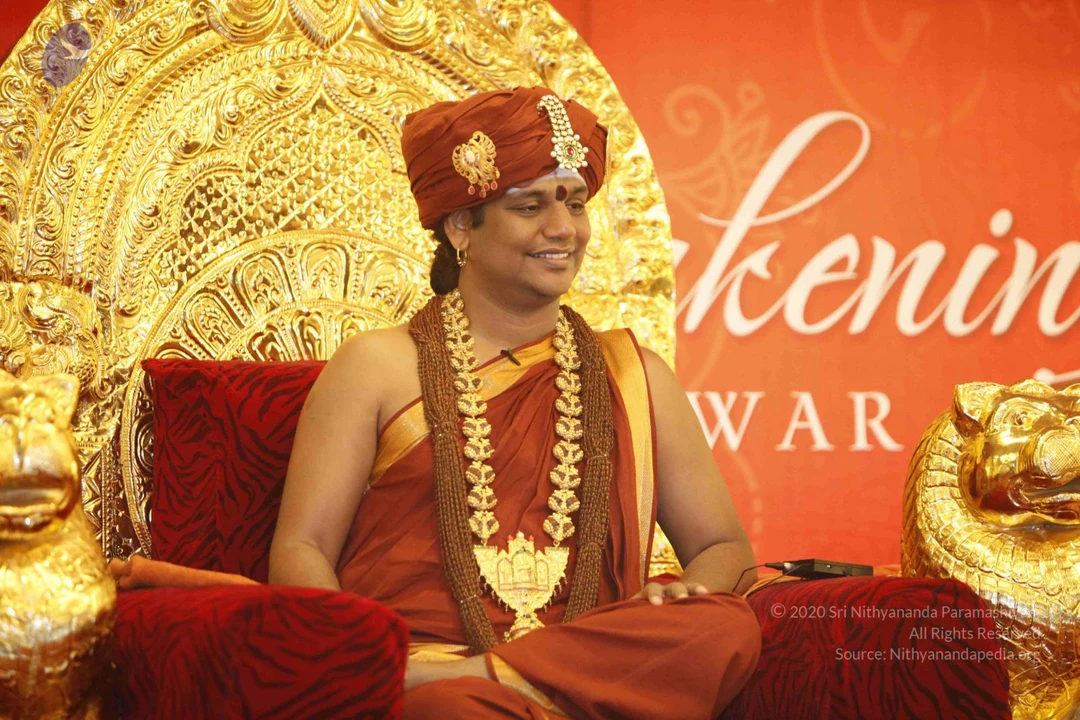
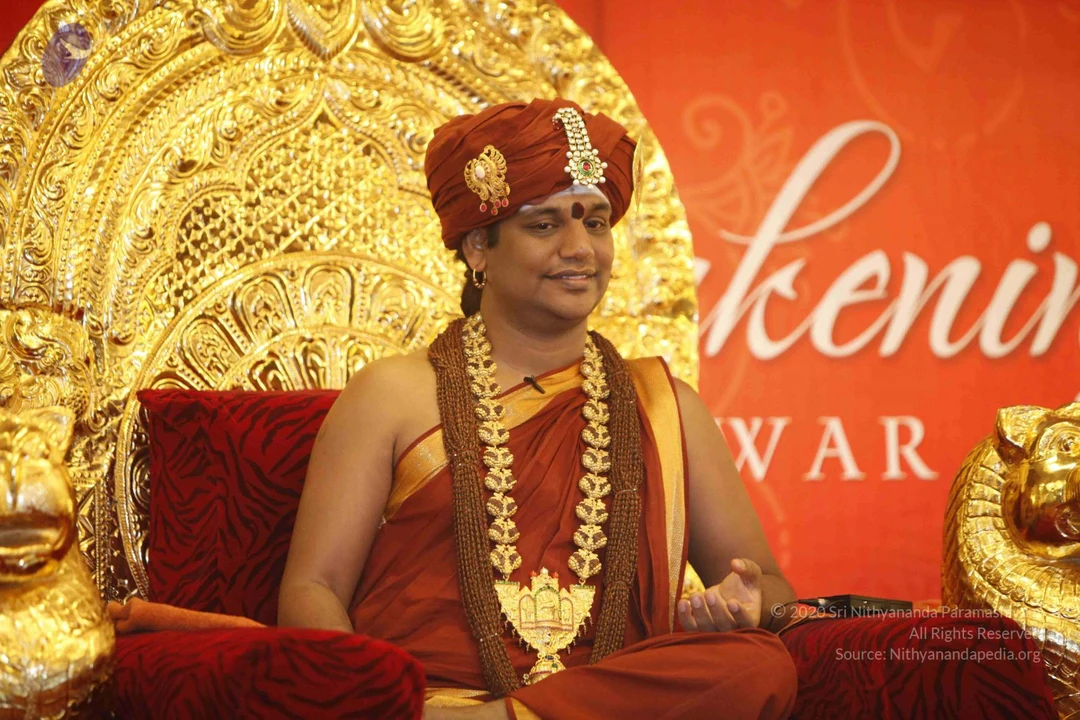
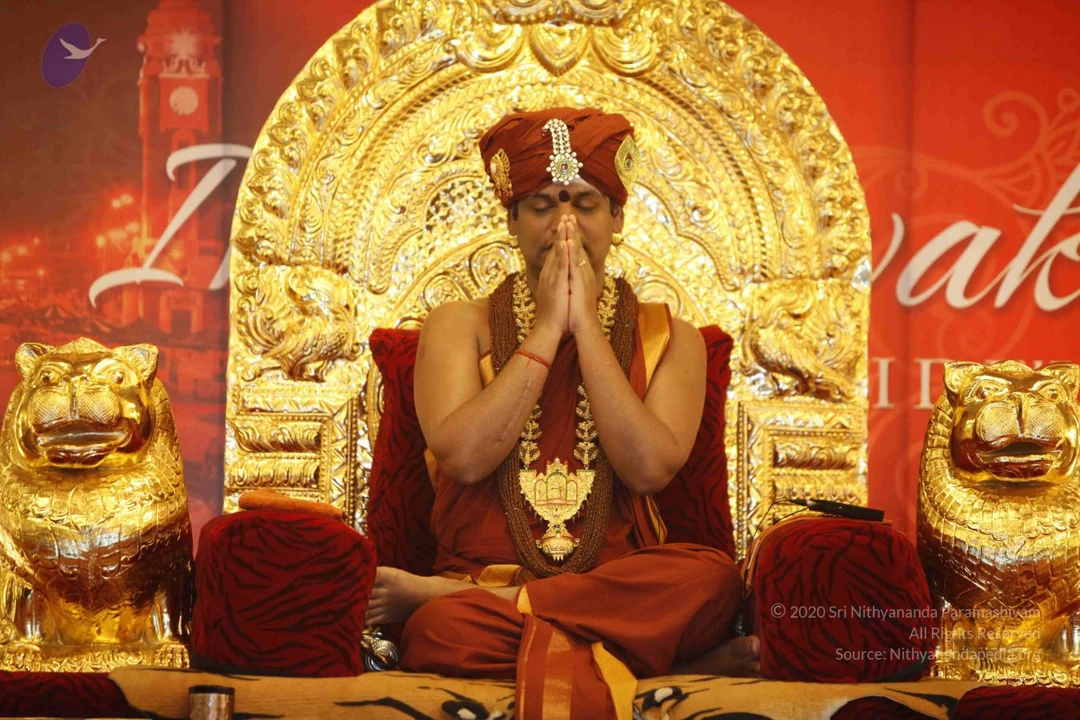
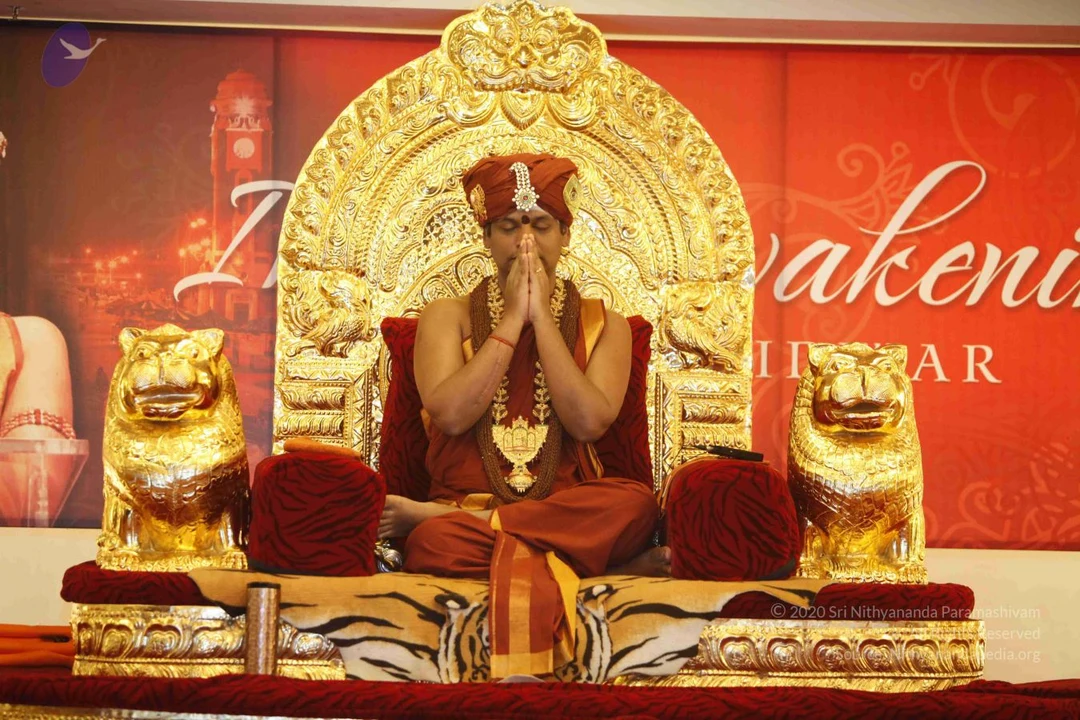
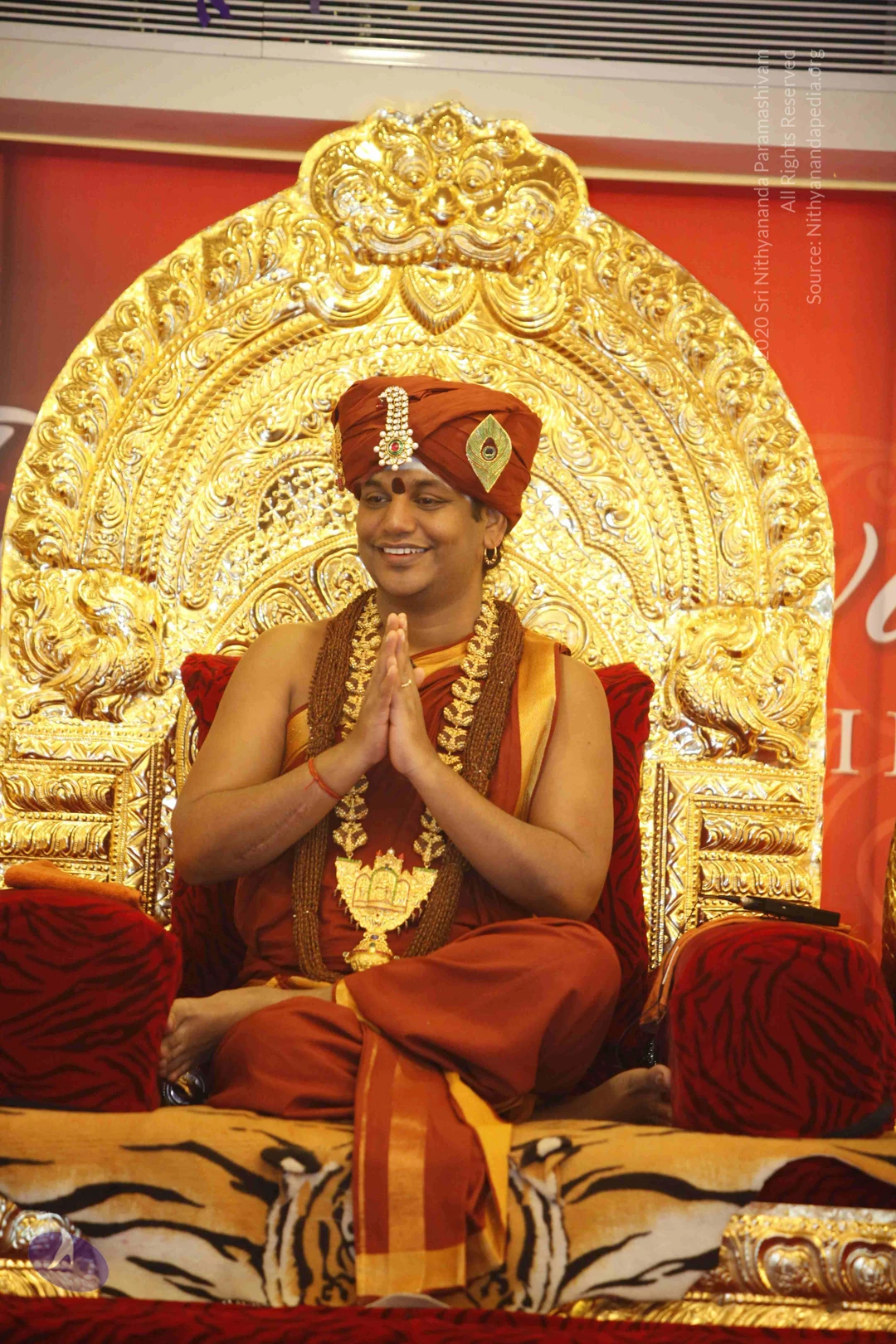
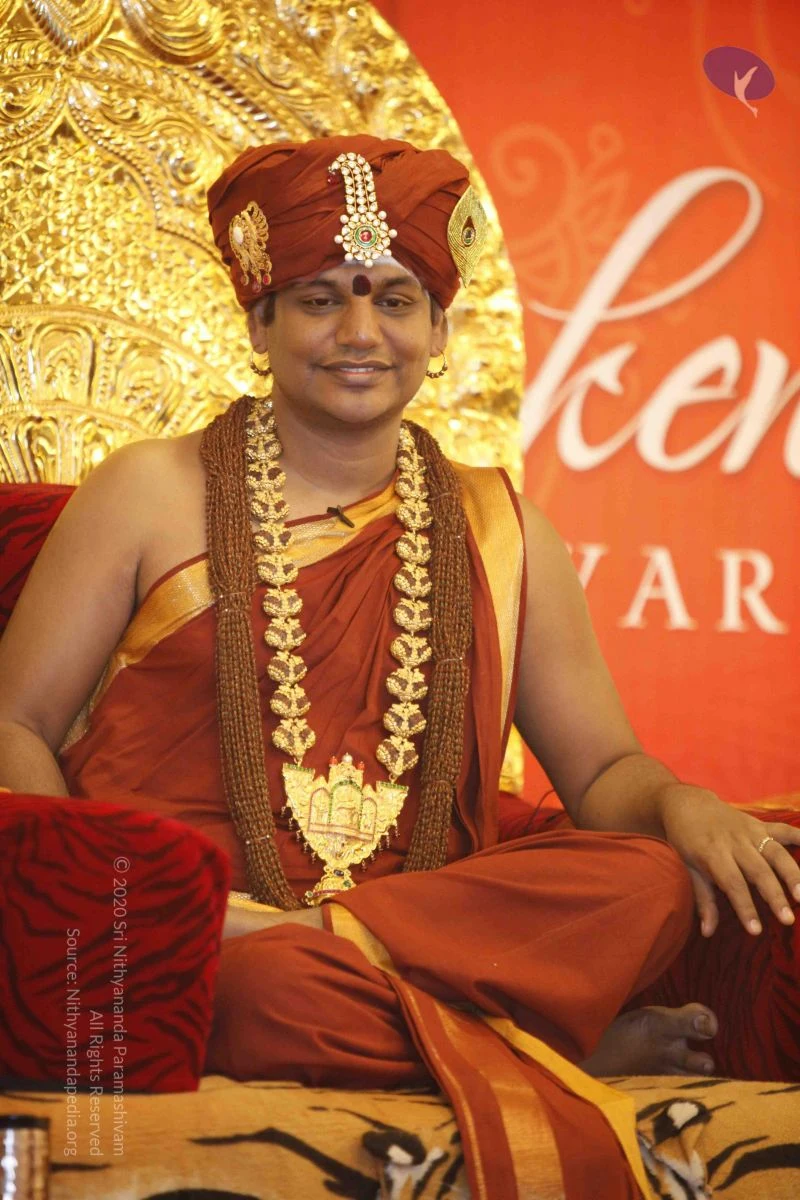
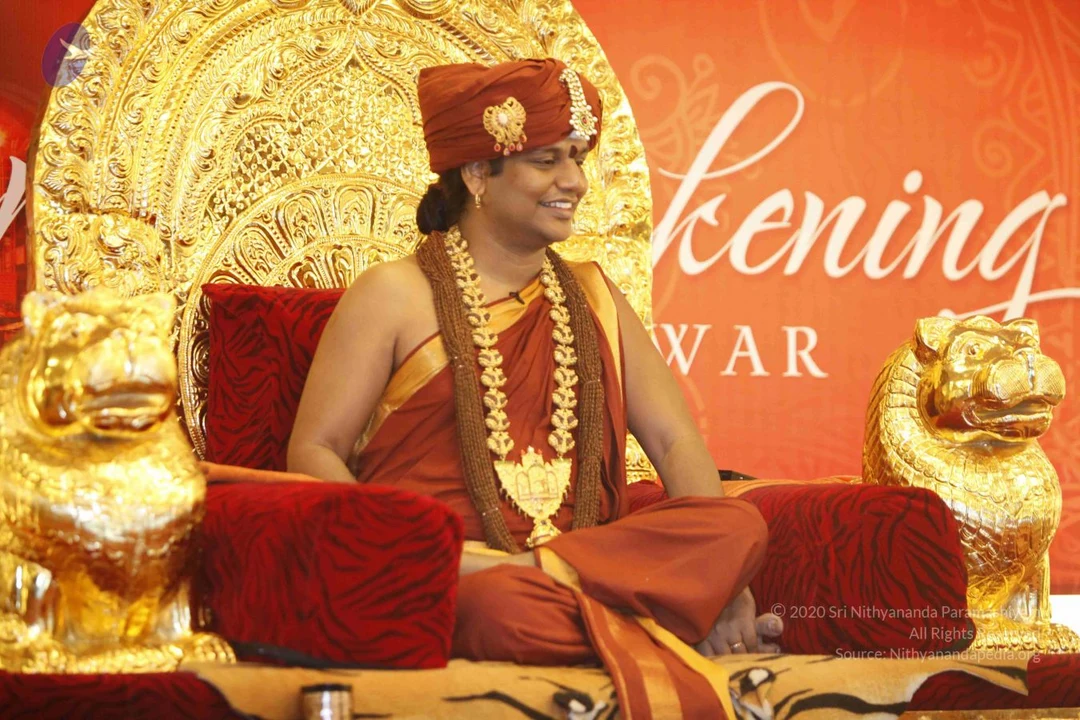
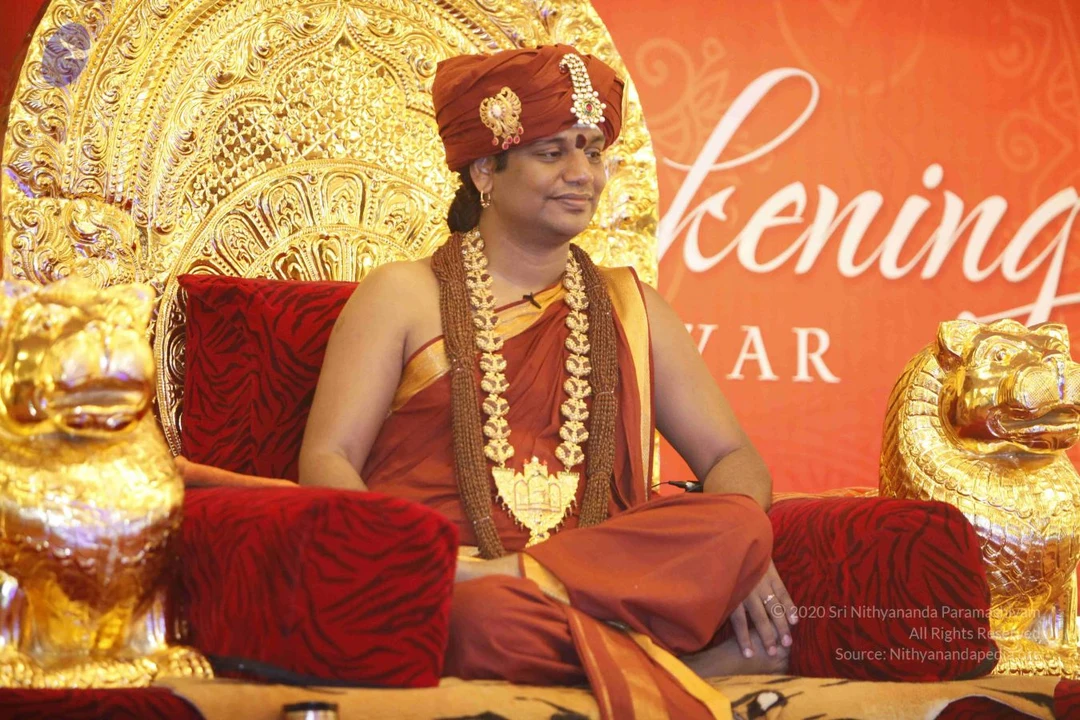
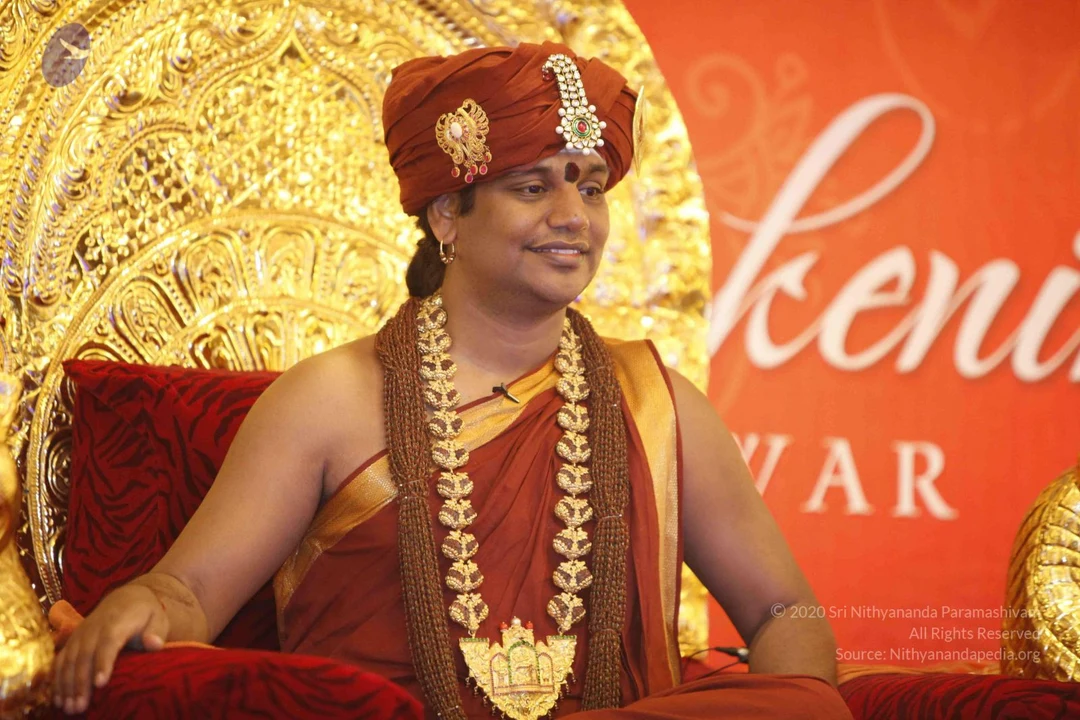
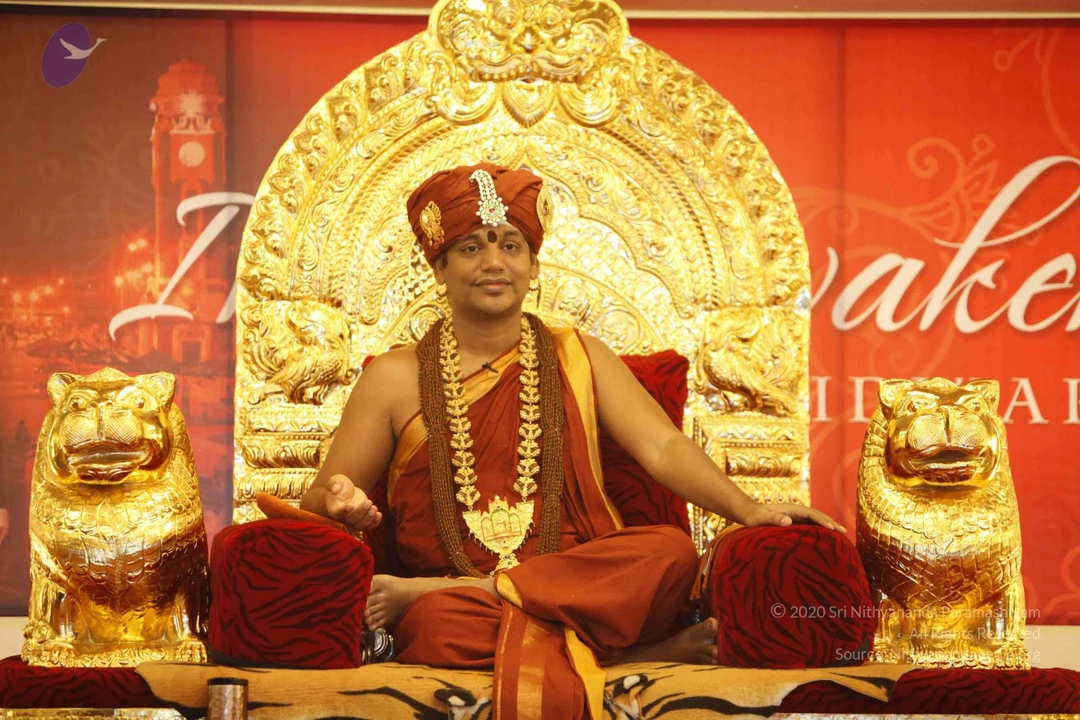
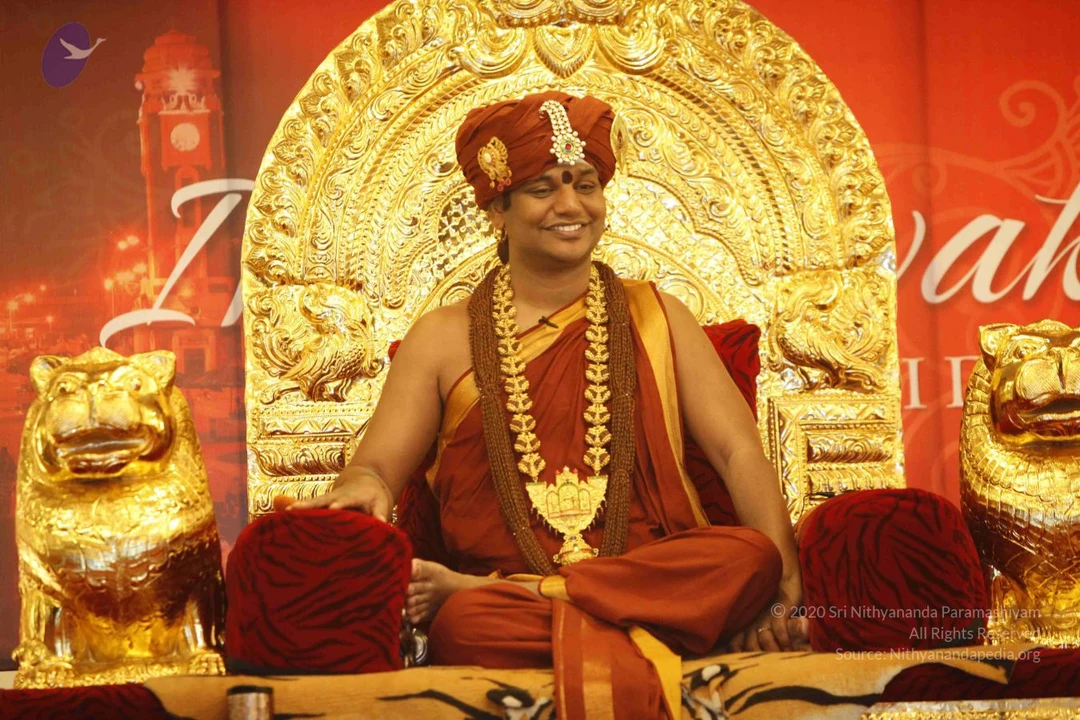
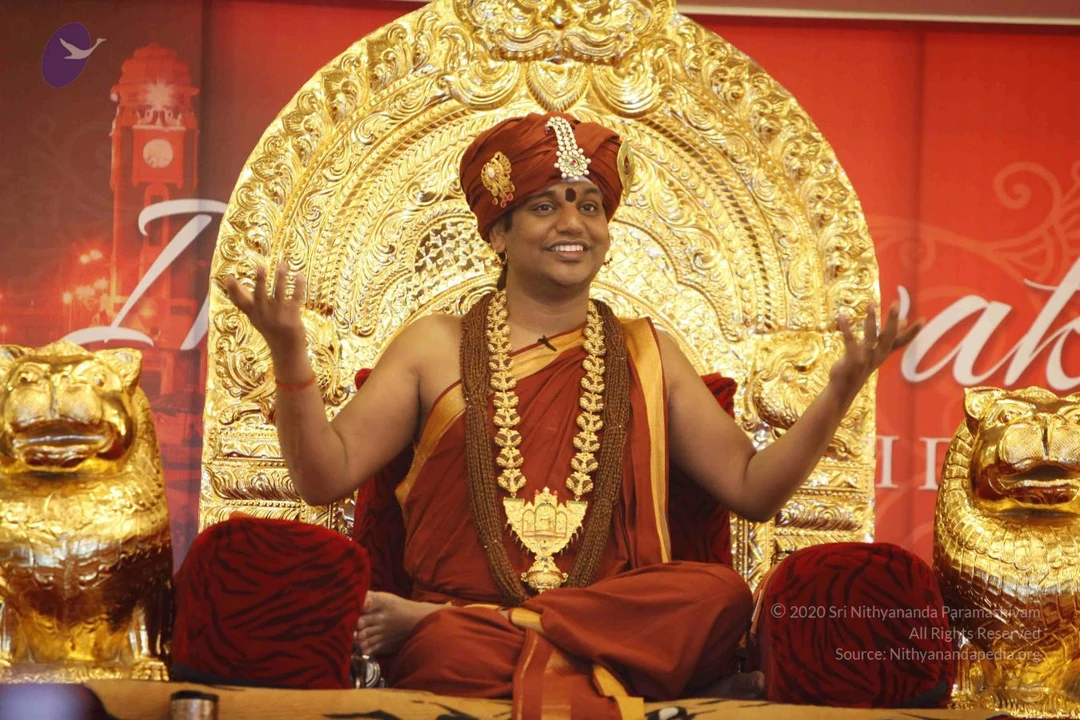
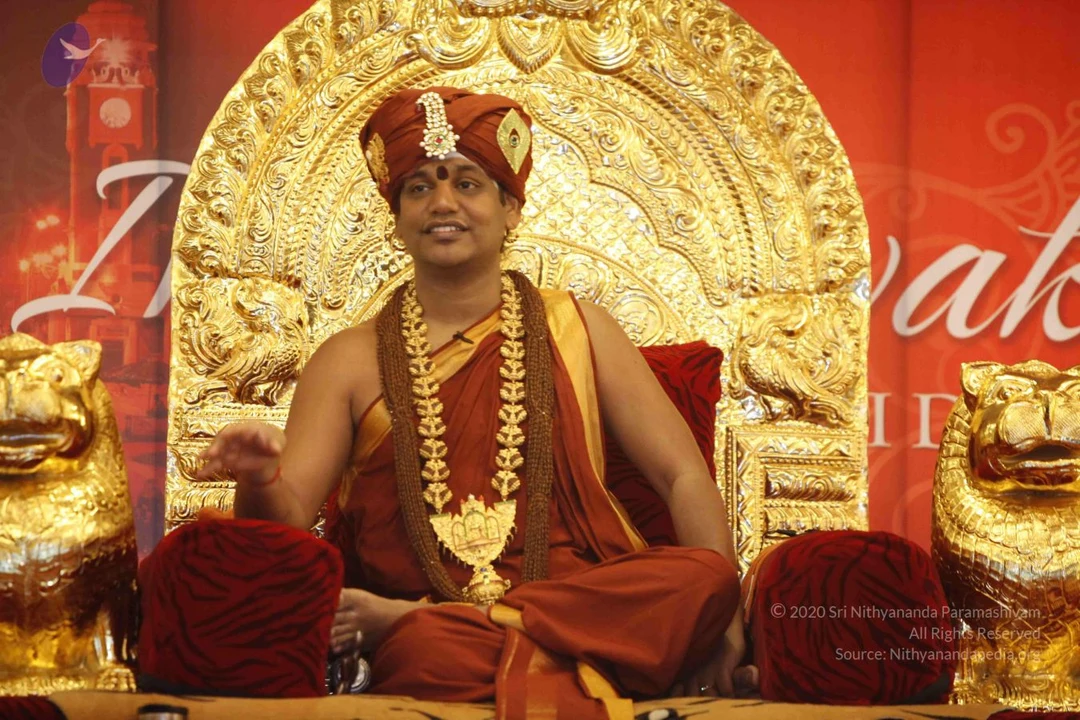
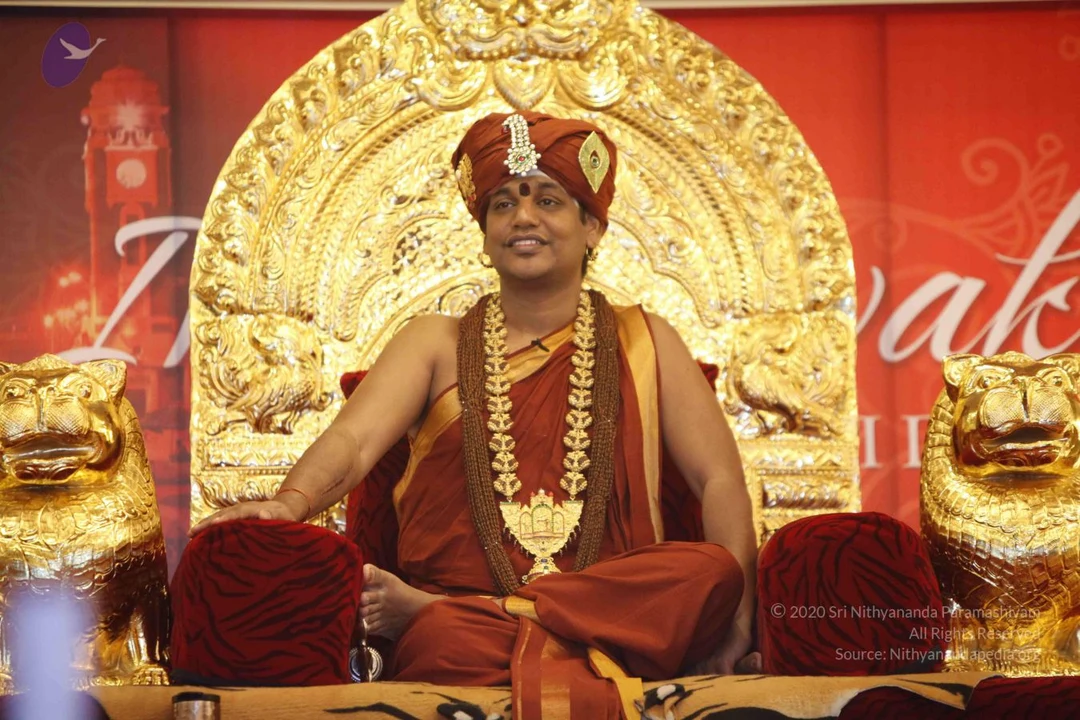
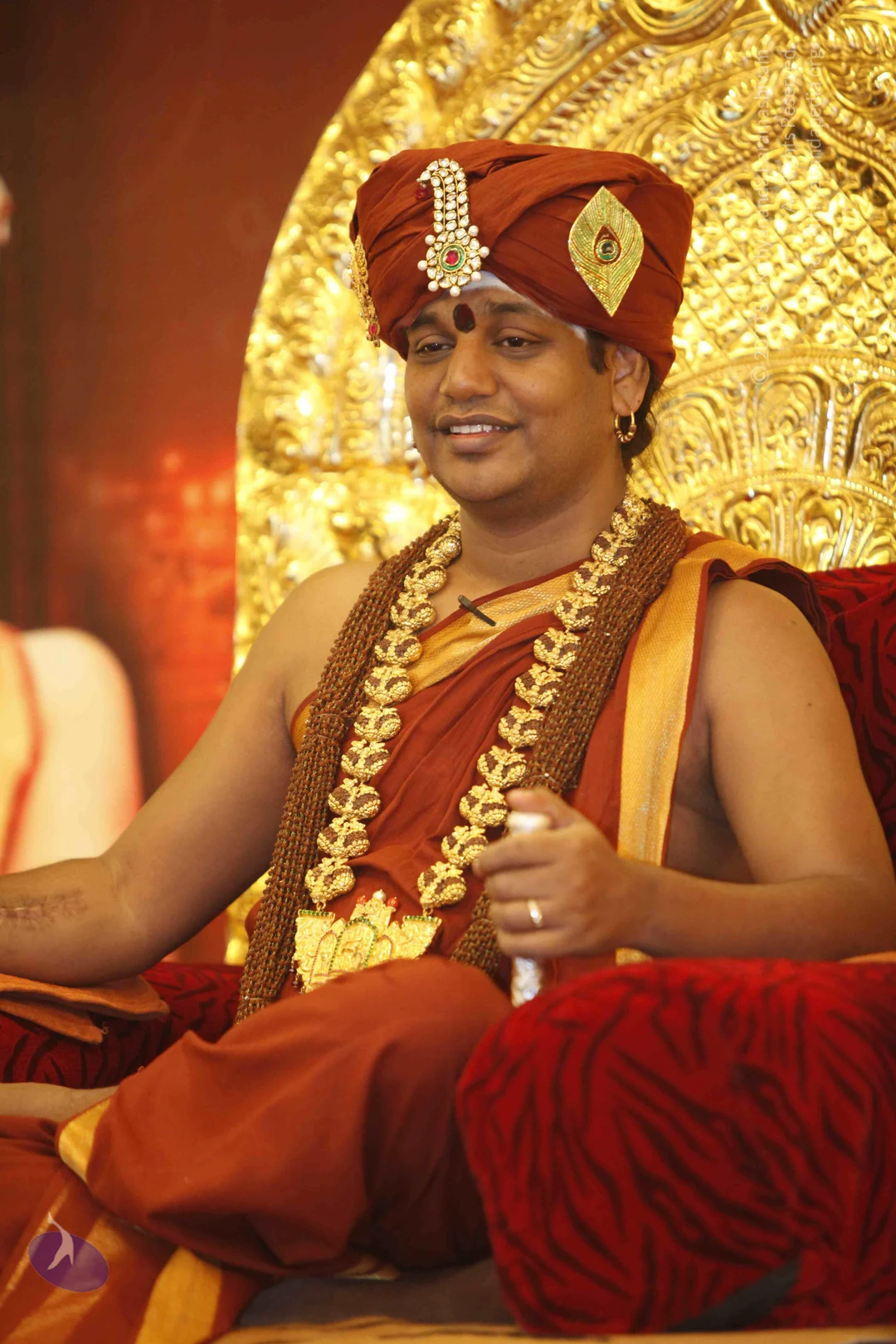
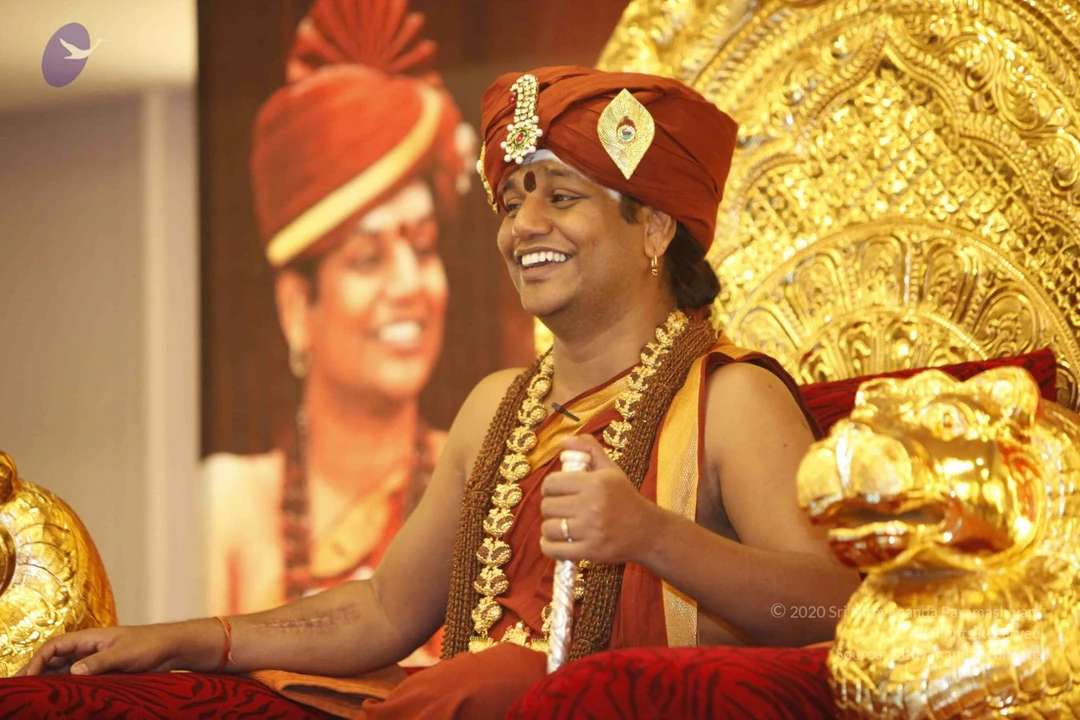
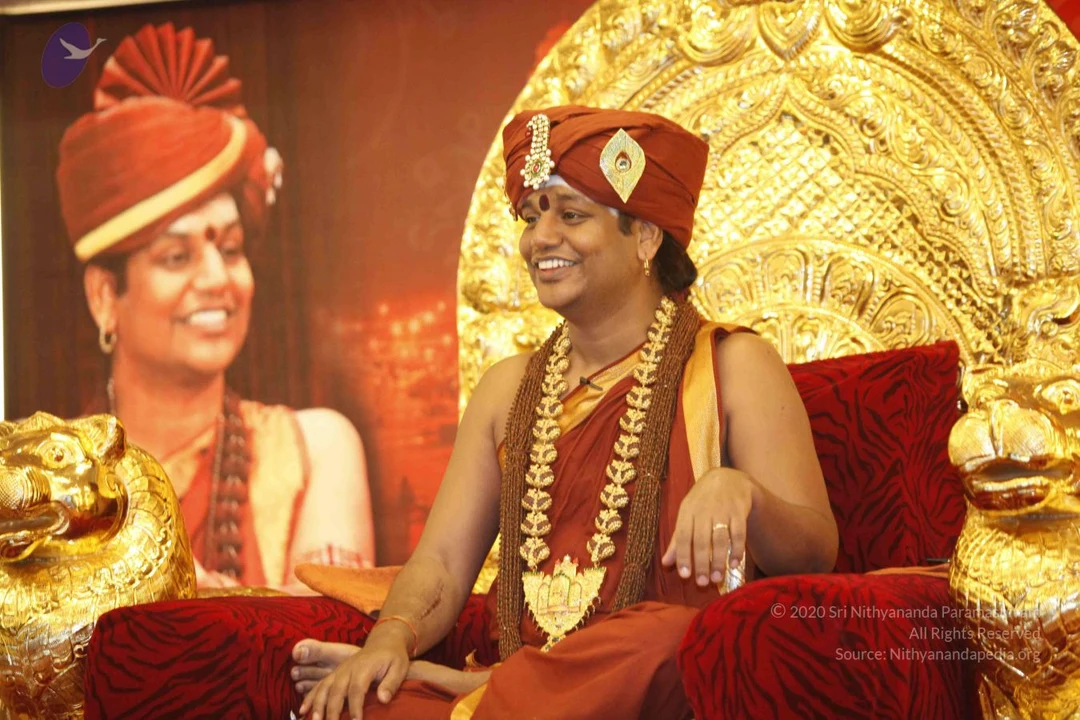
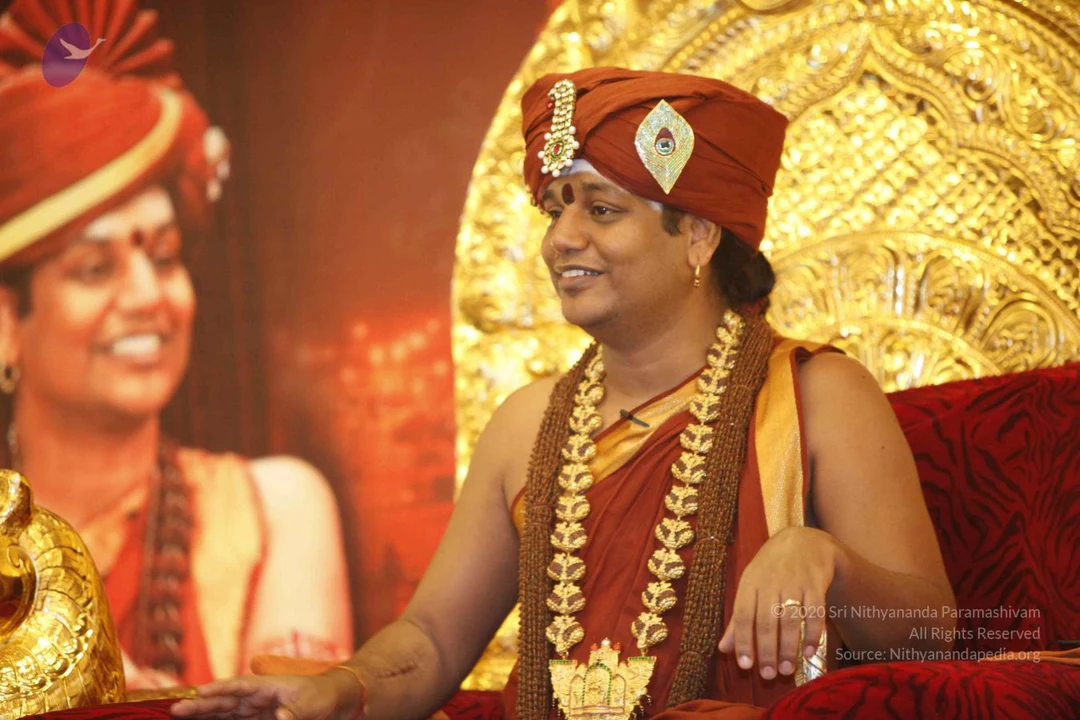
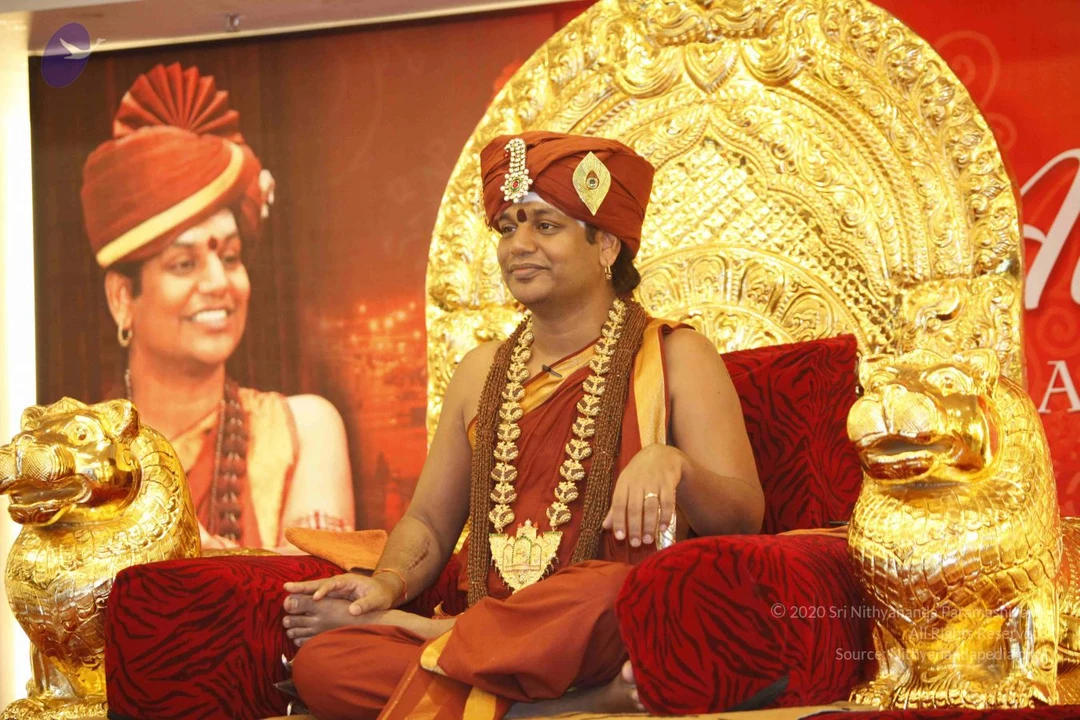
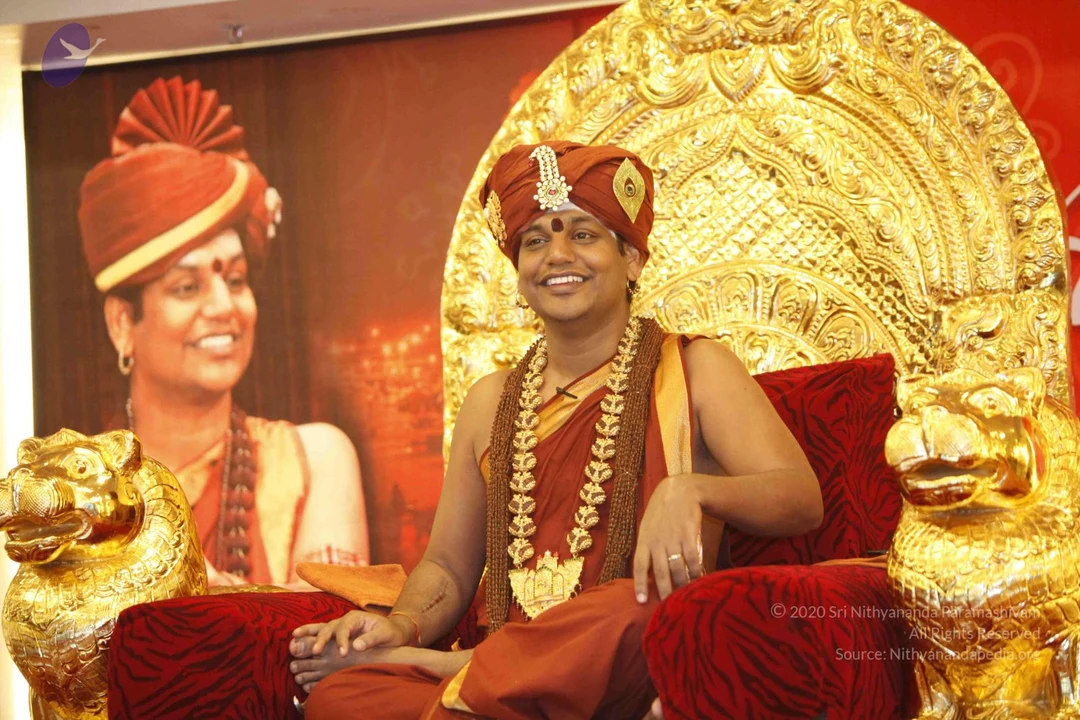
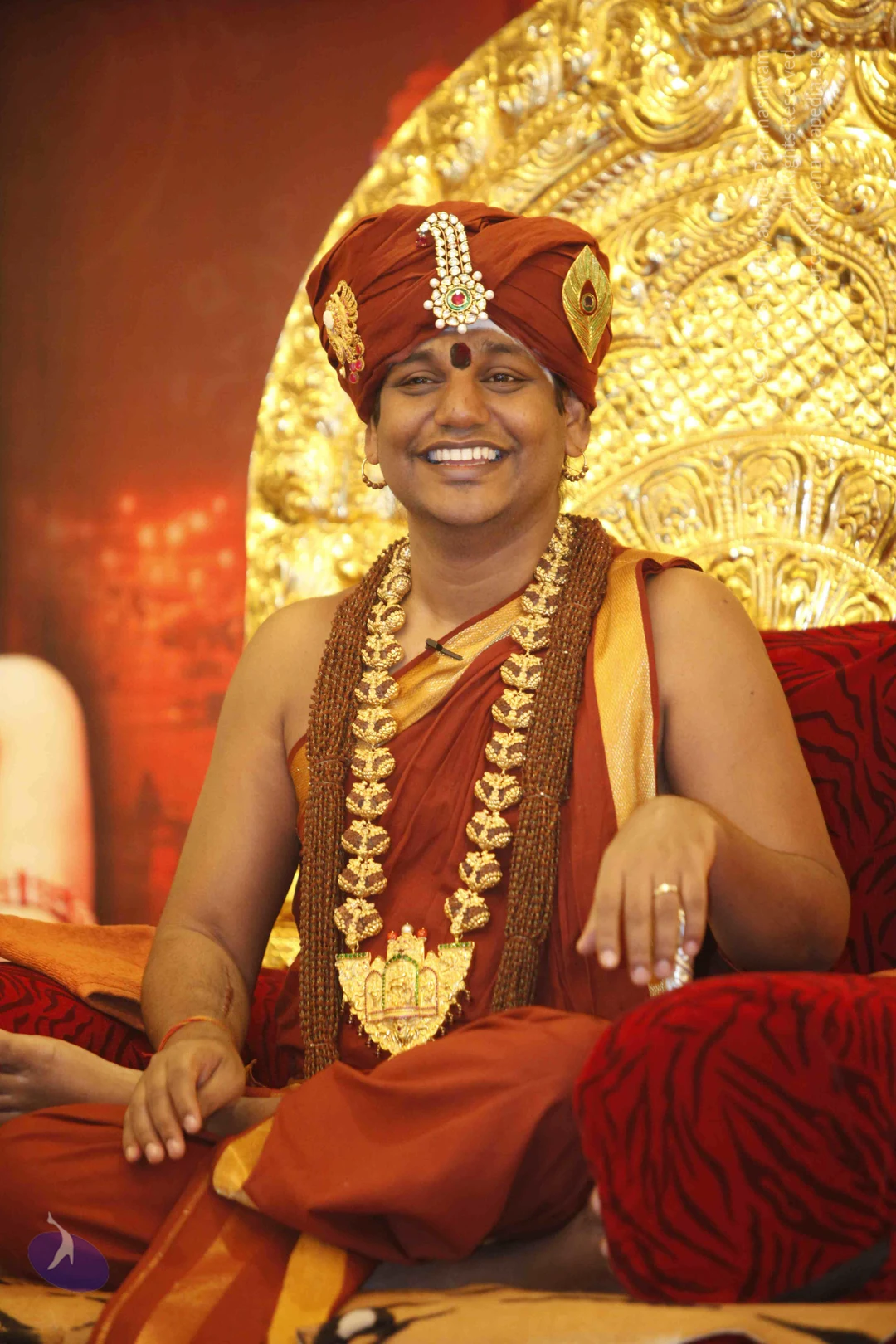
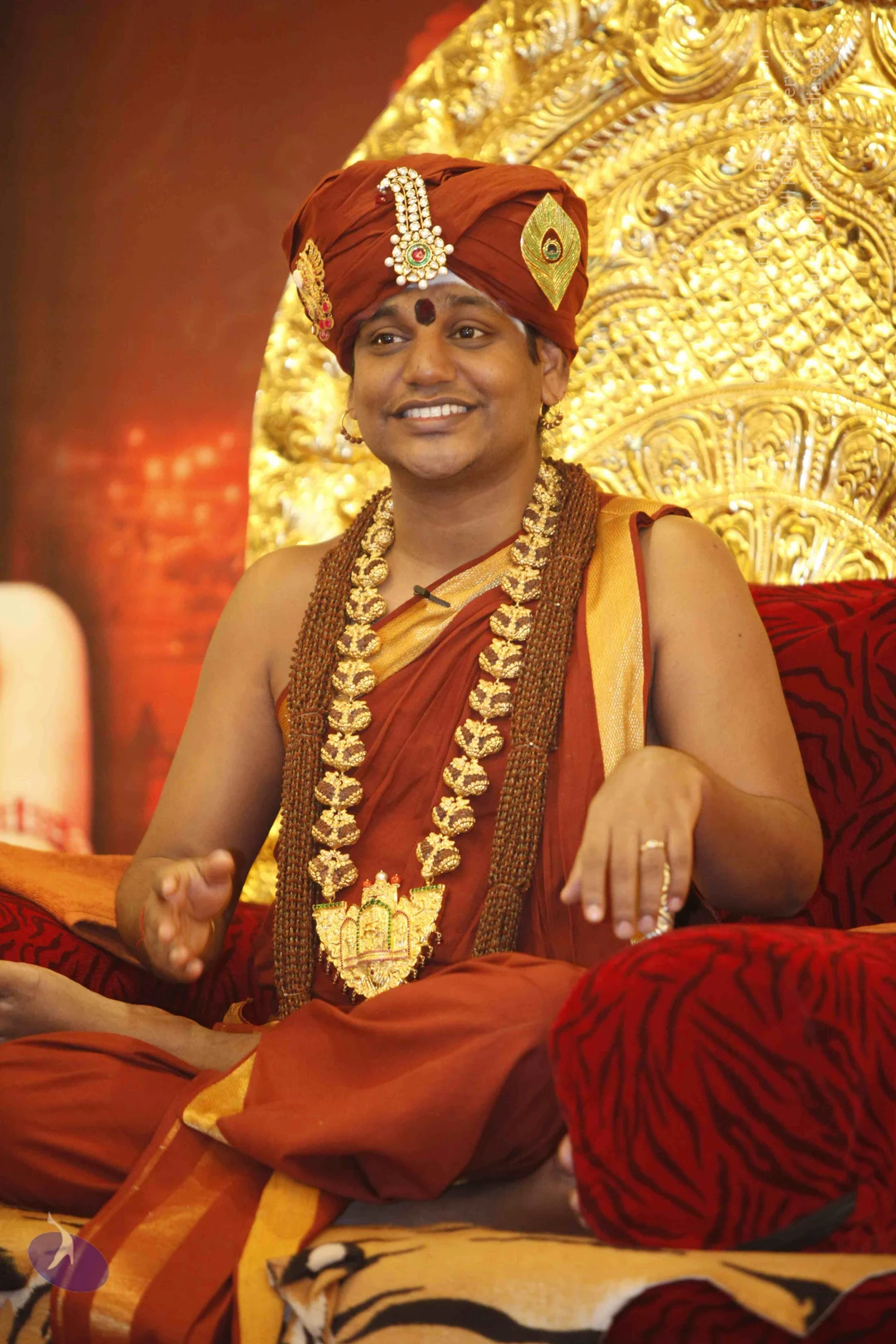
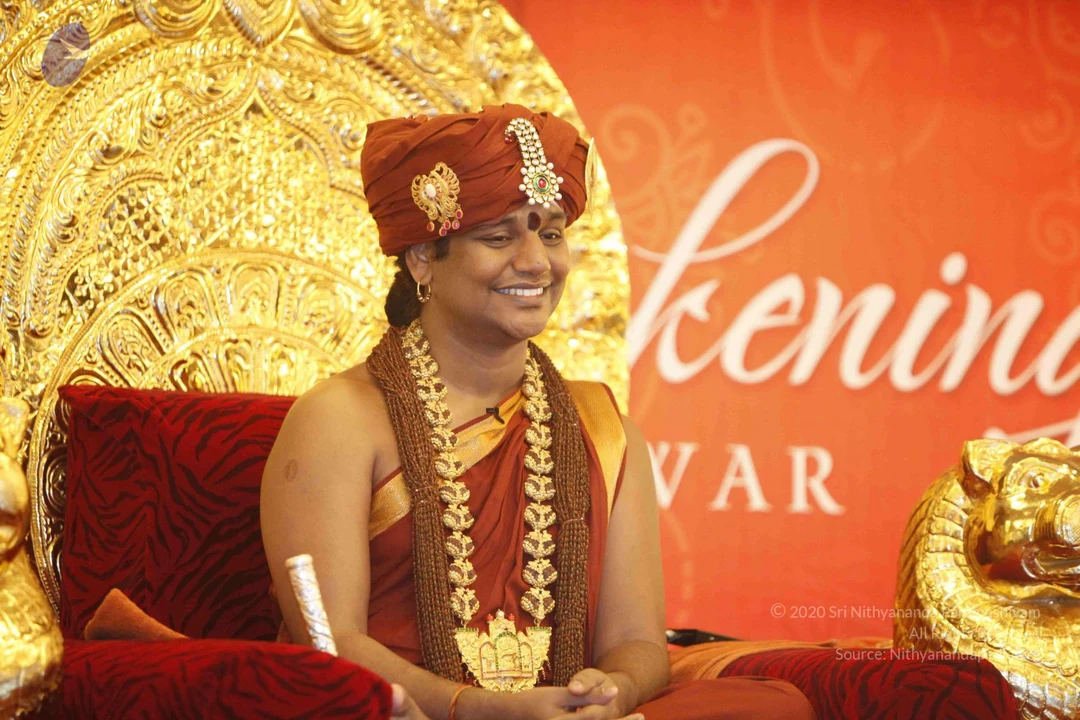
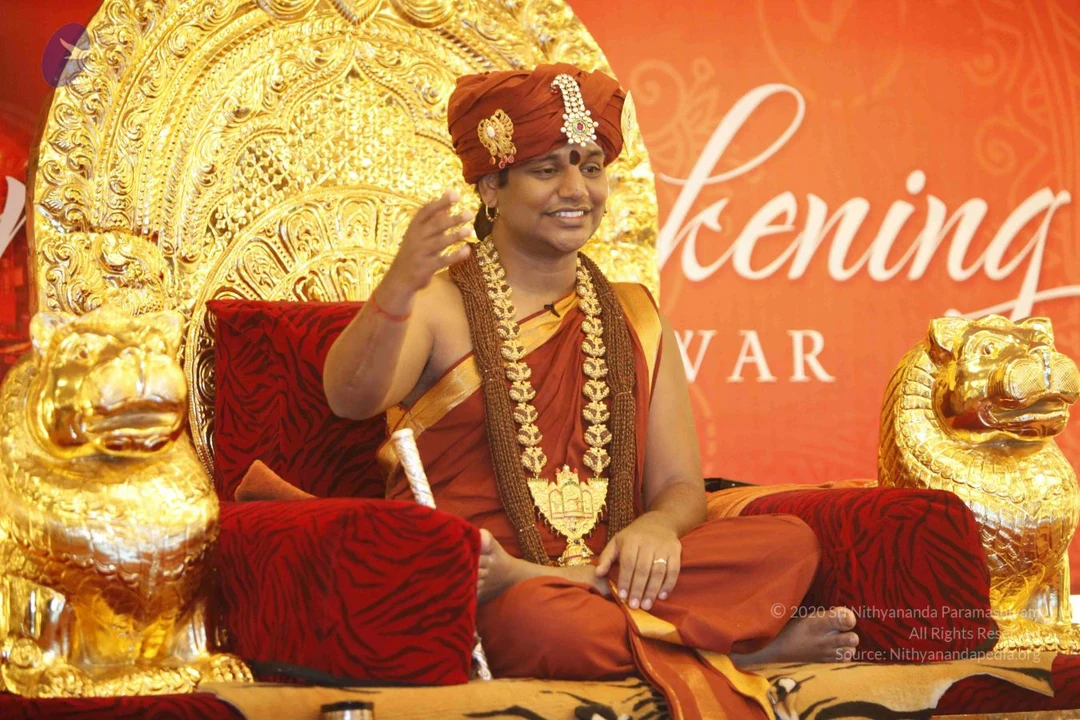
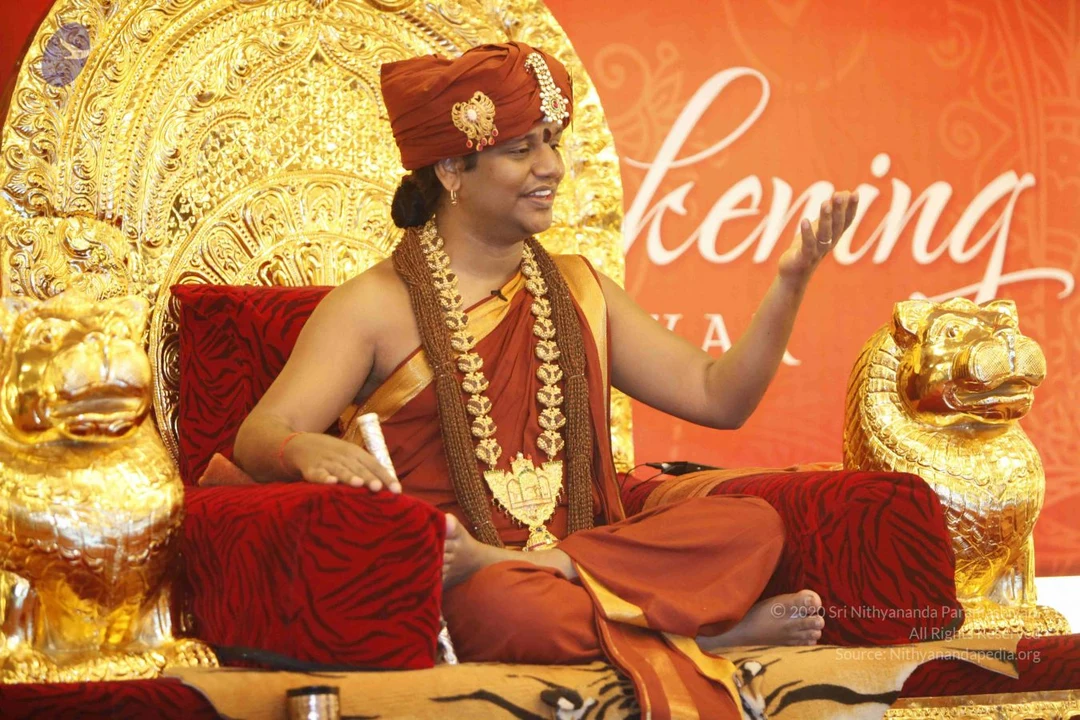
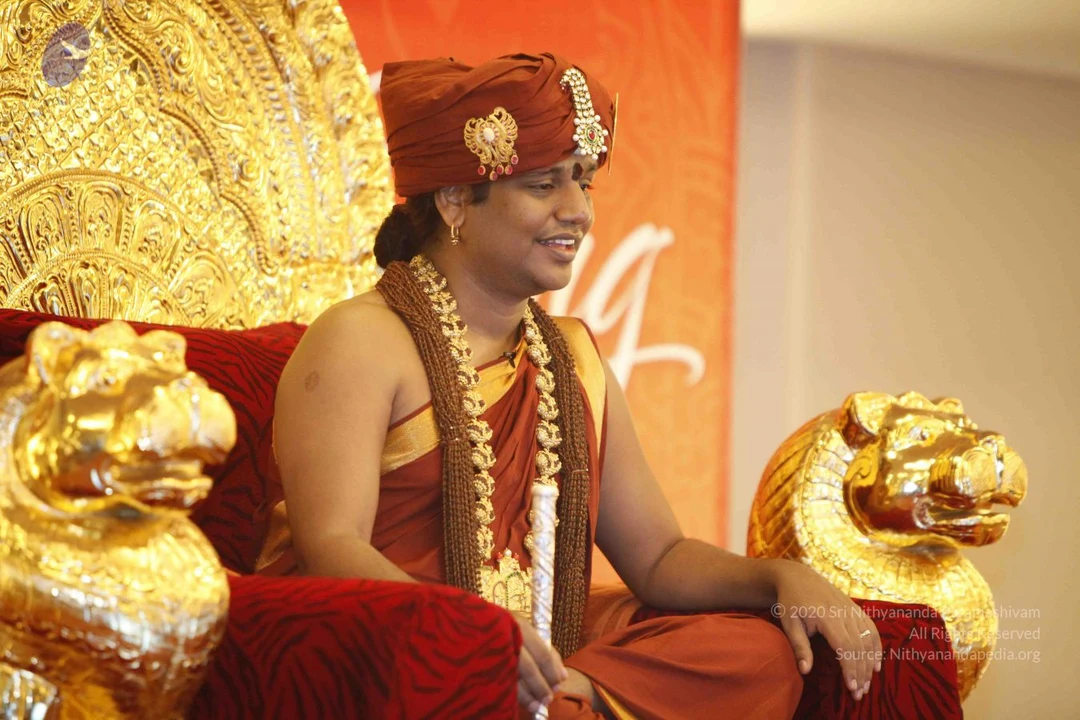
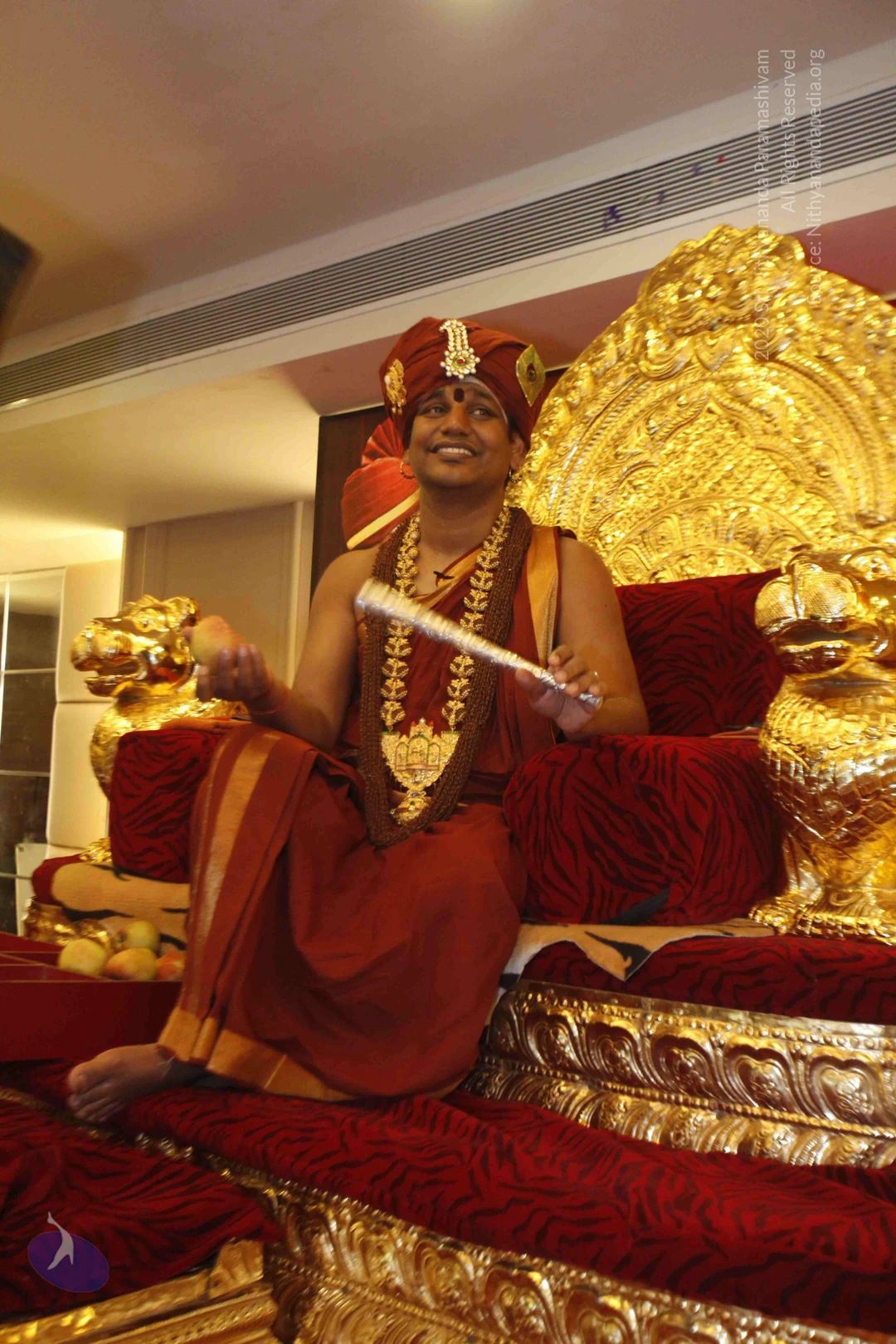
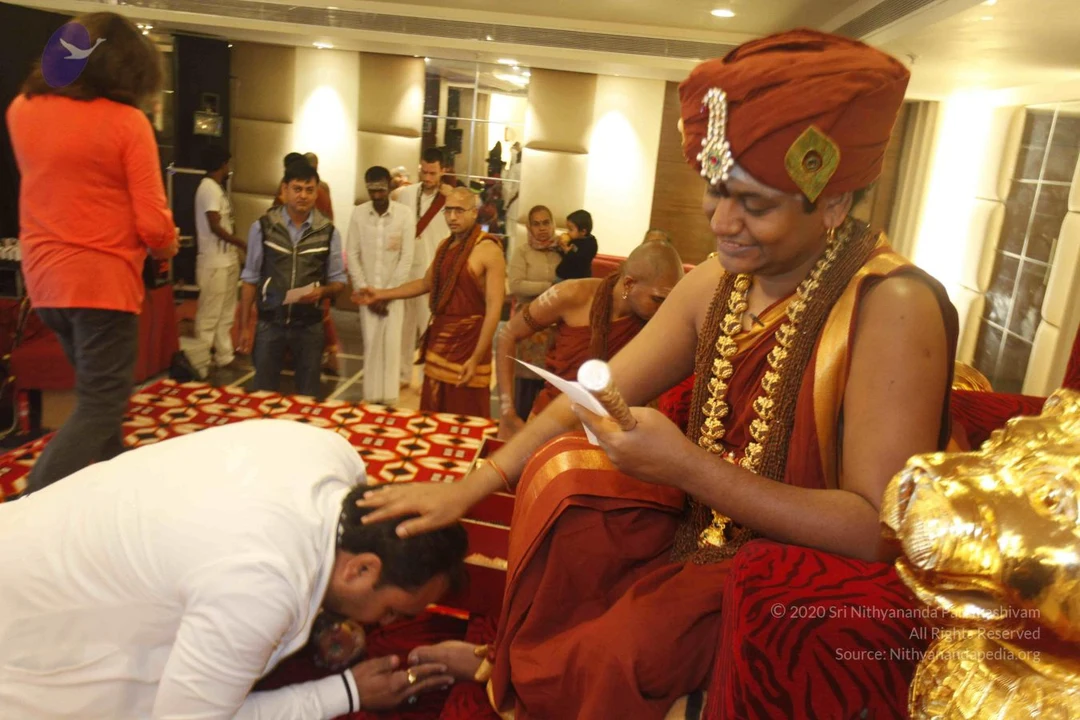
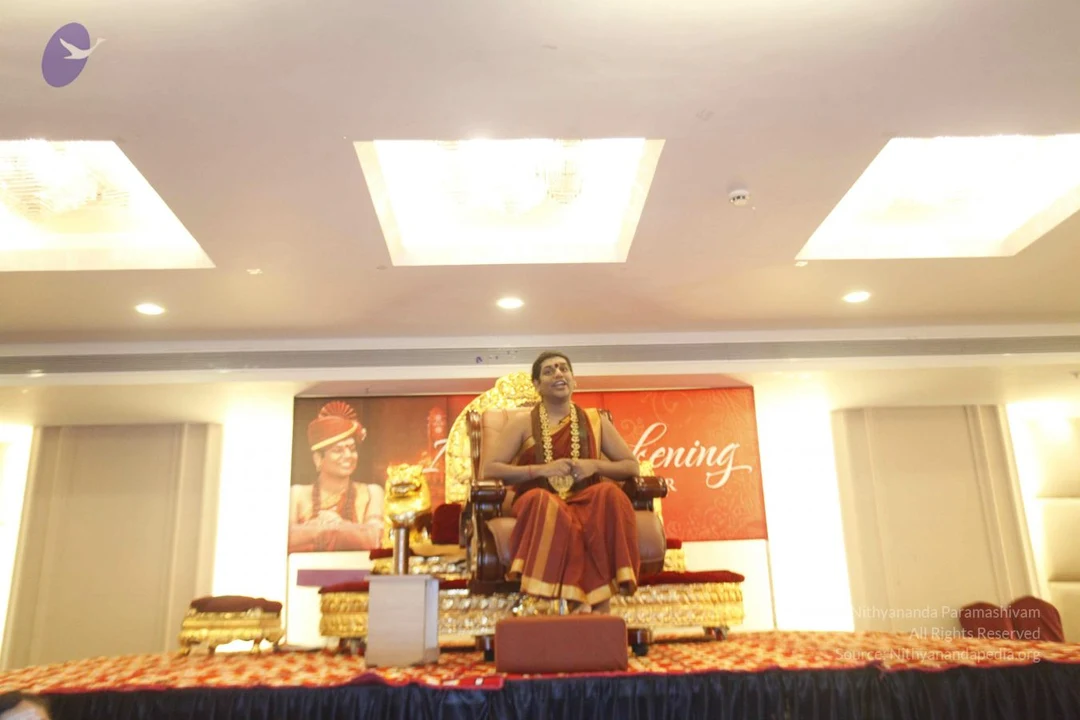
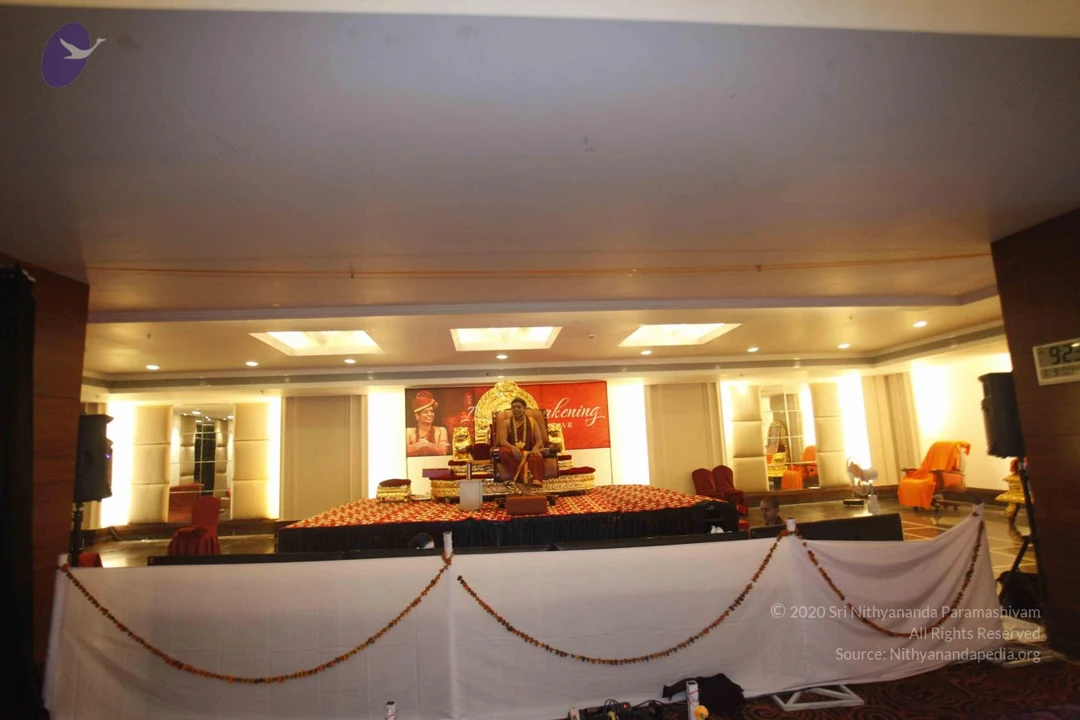
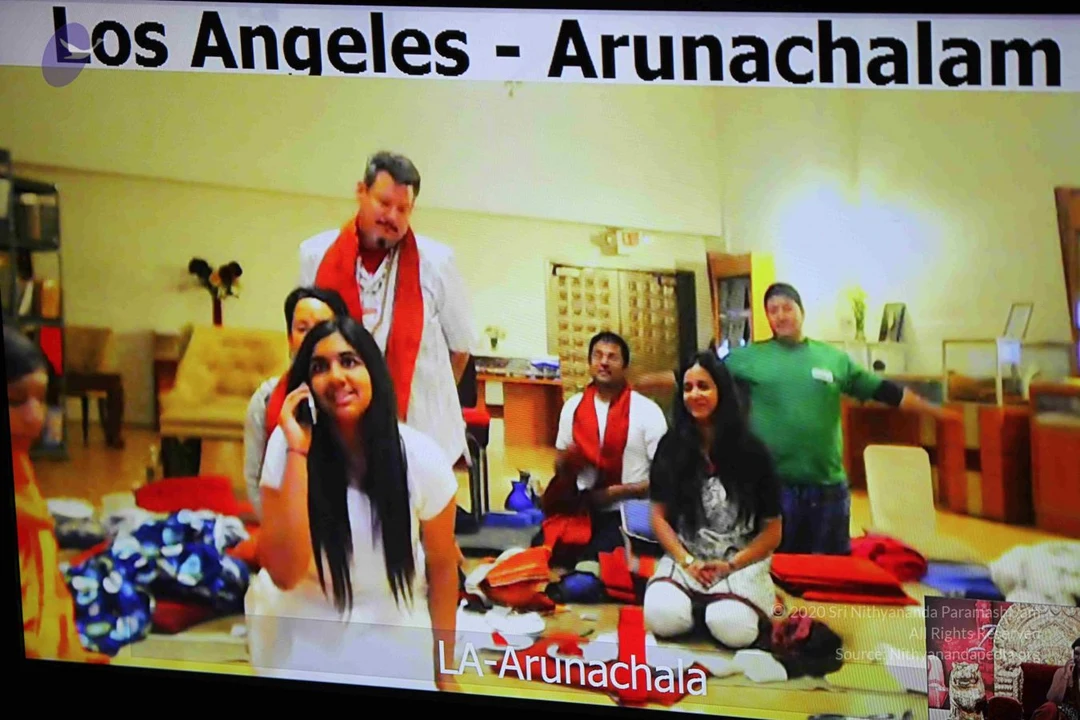
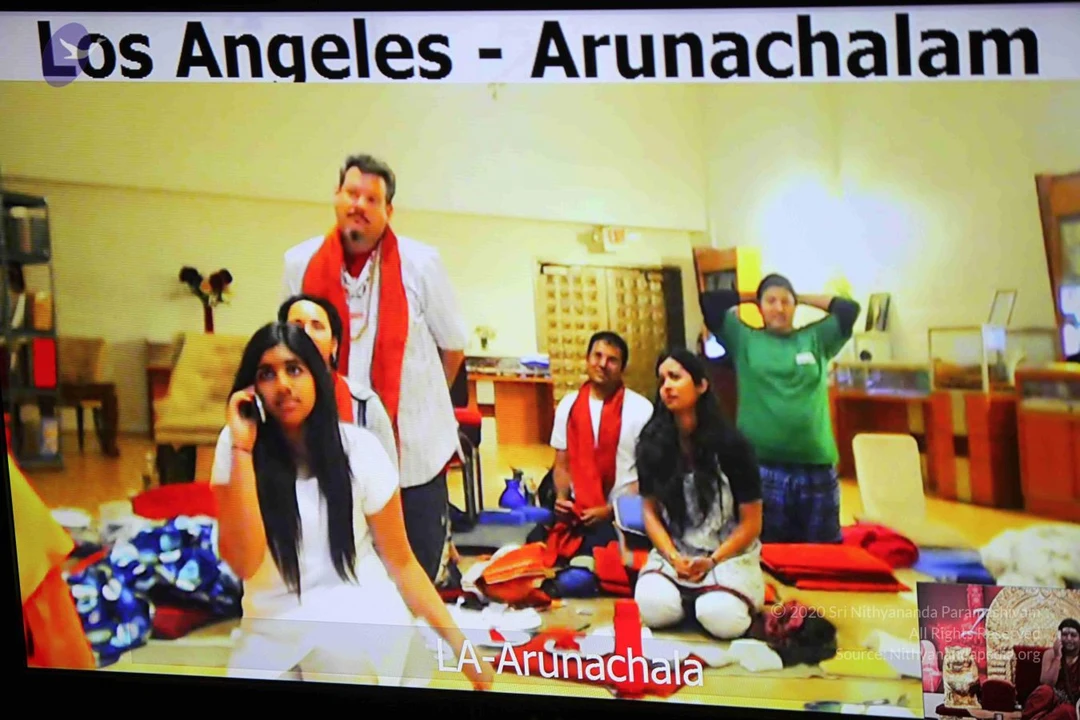
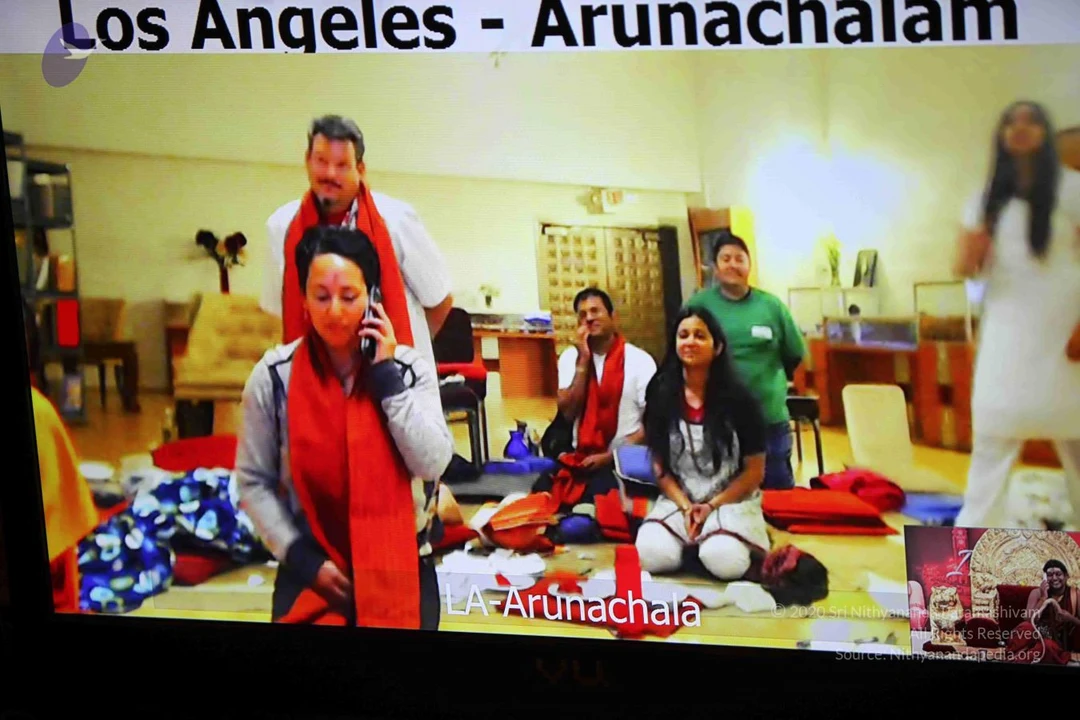
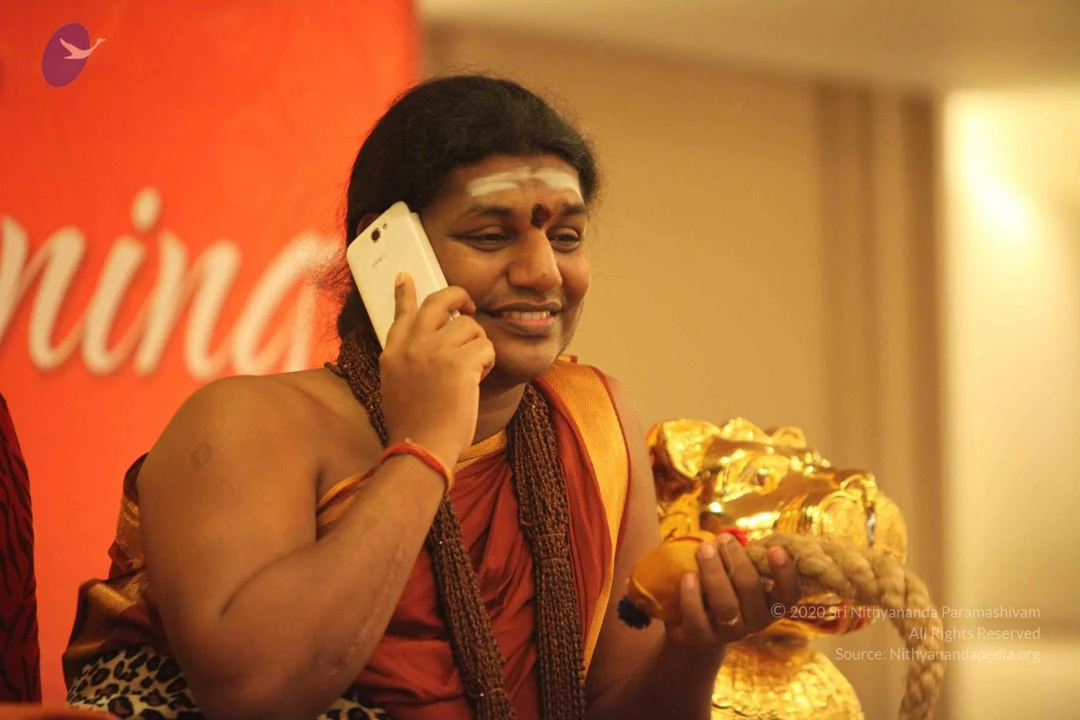
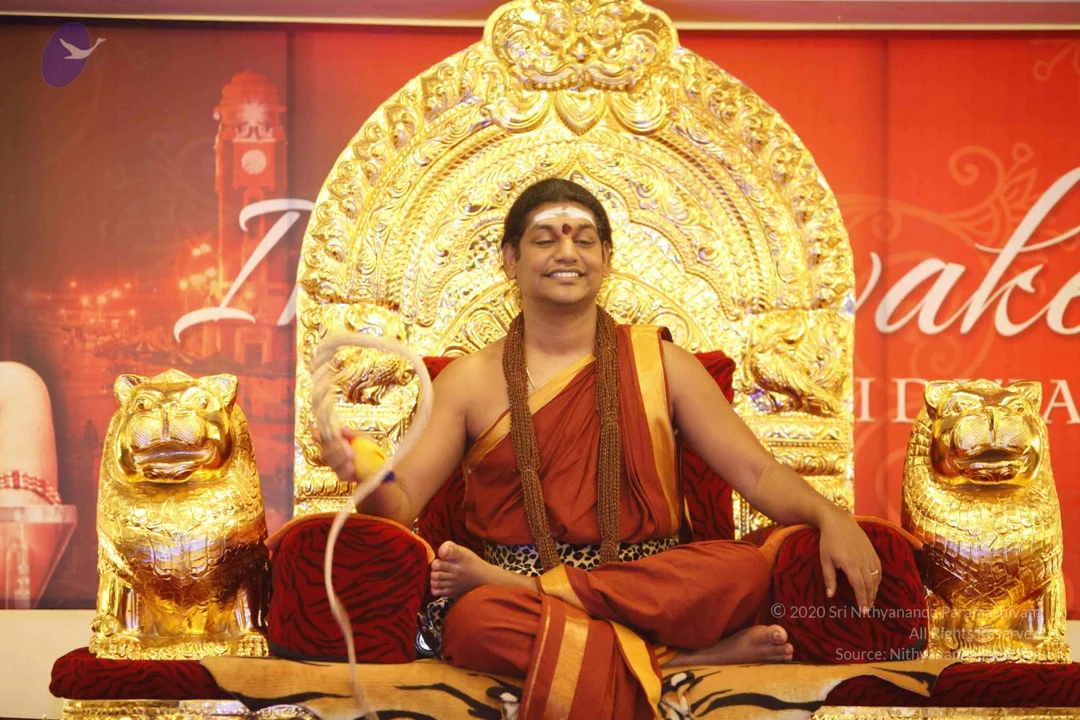
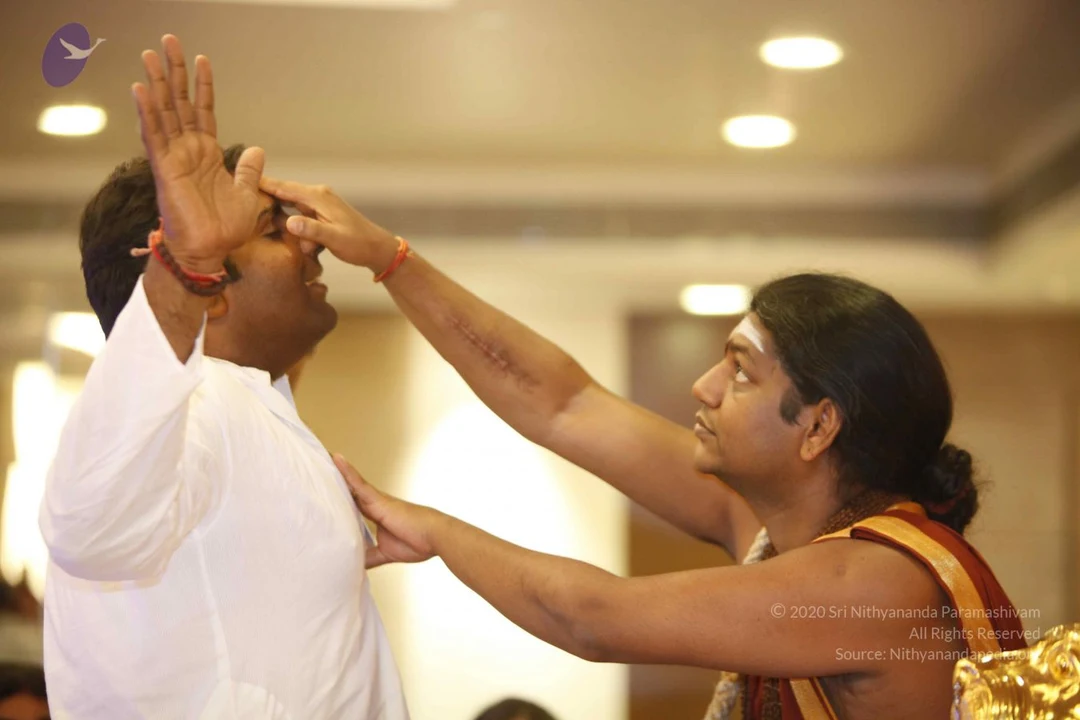
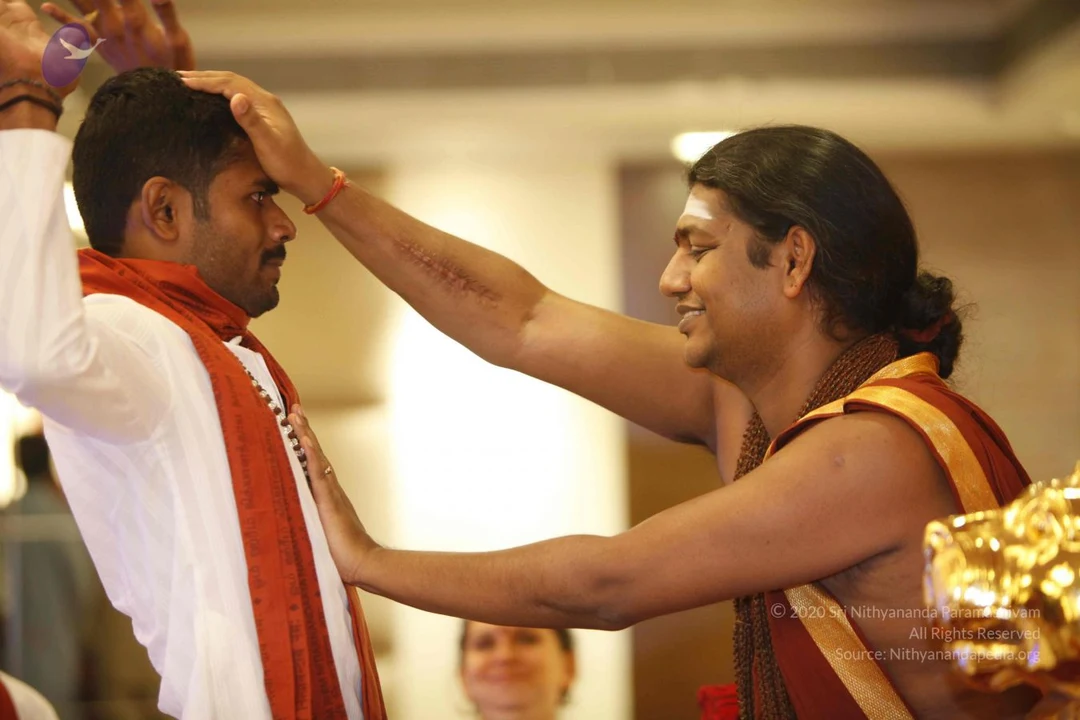
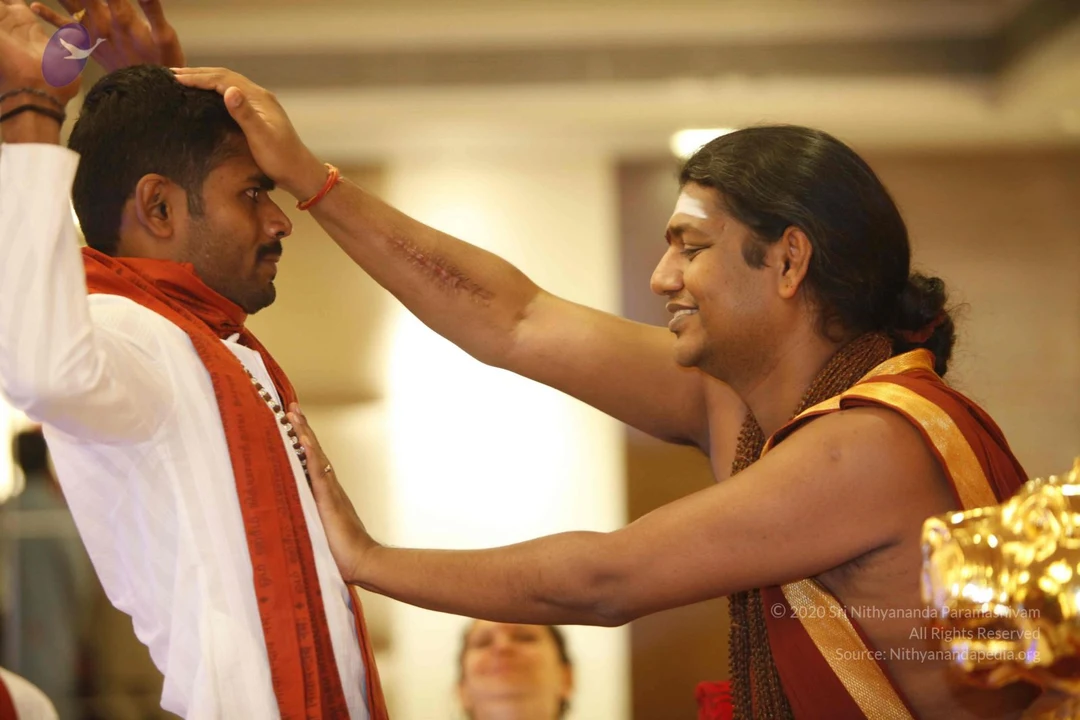
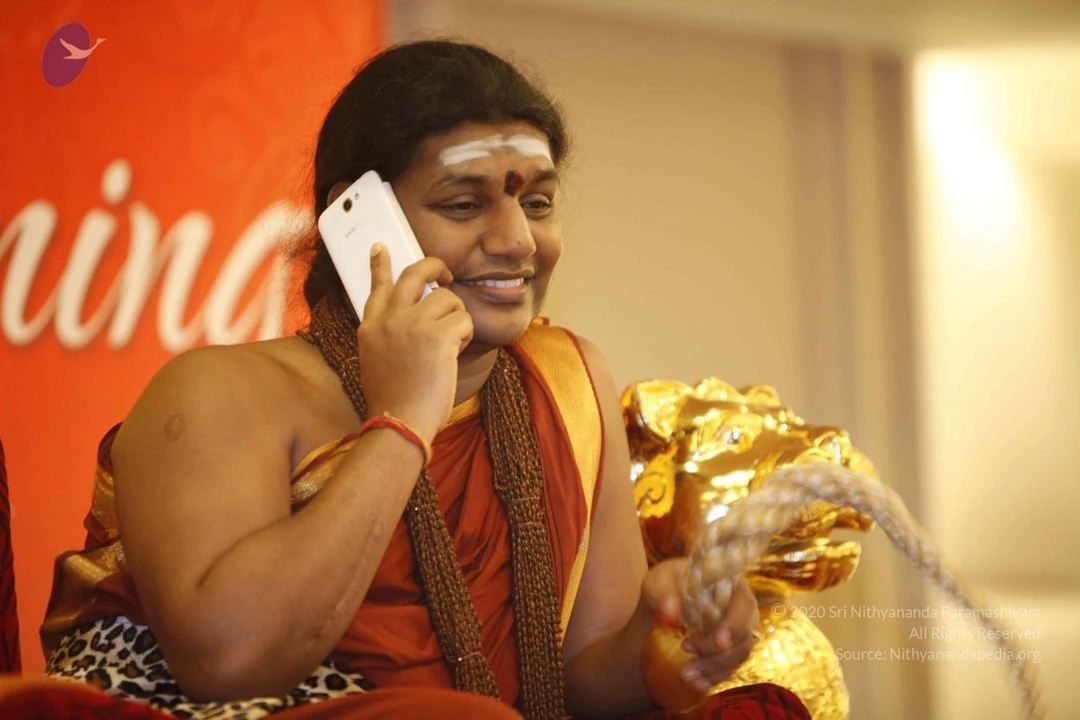
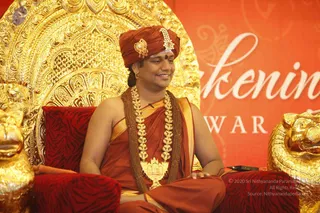
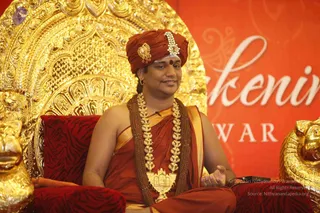
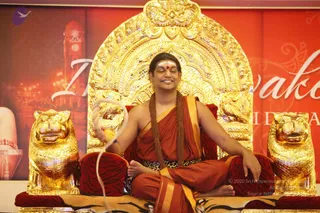
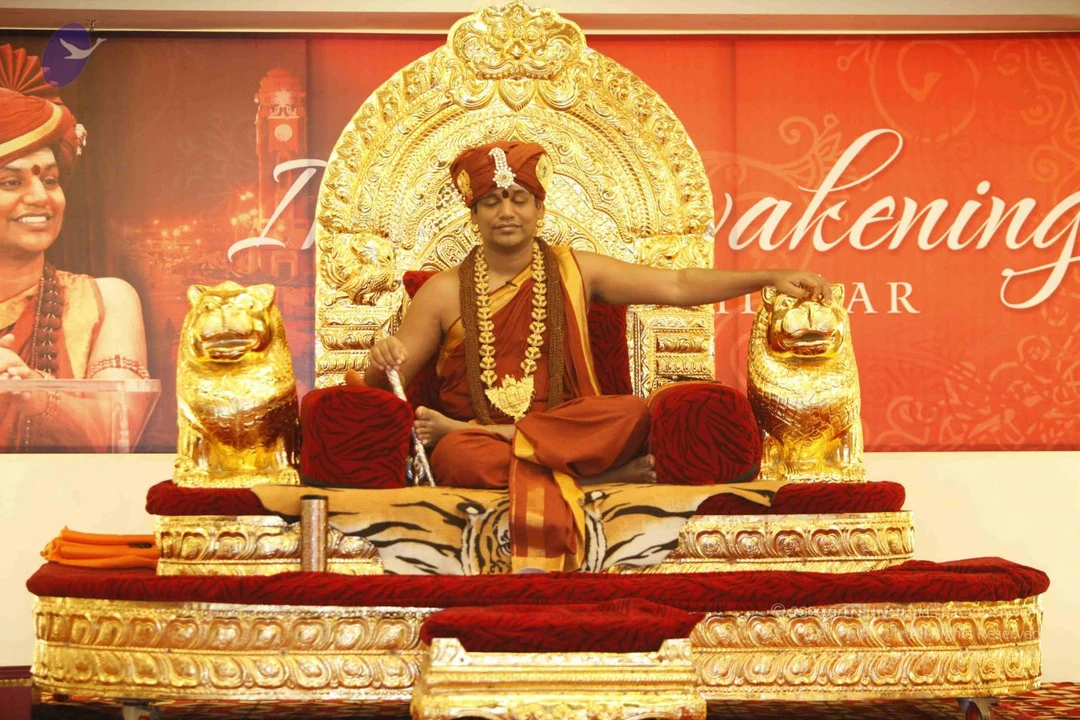
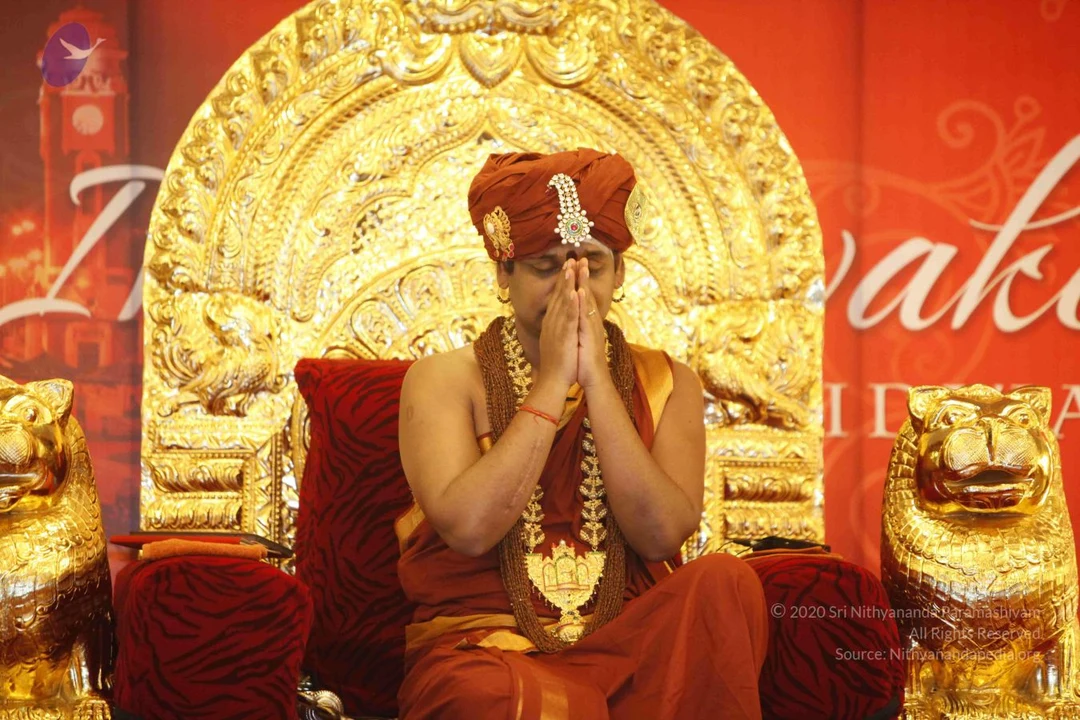
A screen capture of a live video link titled "Los Angeles - Arunachalam" showing a group in a bright room with cream walls, wooden cabinets and a dark sofa. A woman with long dark hair in a white top holds a mobile phone to her ear and smiles. Behind her a man in a white shirt with a red shawl stands, and another man in a white kurta and red shawl sits cross-legged on the floor beside a smiling woman in a dark outfit. A man in a green polo shirt stands at right. Red and blue cloths and folded fabrics lie on the floor. A small on-screen caption reads LA-Arunachala, and a corner inset shows a deity image.A seated man in a golden-ornate throne, flanked by two gold lion sculptures, sits cross-legged on a tiger-striped rug. He wears a red-orange turban with a white jewelled ornament, a red-orange robe with a gold-yellow border, a long beaded mala with gold ornaments and a large gold pendant. Red-and-gold backdrop with partial lettering and a clock tower image. Appearance-based cues (distinctive turban, ornate robes and ceremonial necklaces) are consistent with the page claim, so this is a probable Swamiji (probable) seated on a throne during a presentation. Other visible text is partial and not clearly legible.A seated figure in saffron-orange robes and a red turban with a jewelled ornament sits in padmasana on an ornate gold throne flanked by two gold lion sculptures, with a tiger-striped cloth on the seat. He holds his palms together in anjali and wears a long rudraksha-style mala and a ceremonial gold pendant. Behind him a red banner shows a clock tower and partial script reading 'Awakening' and 'Haridwar'. Appearance cues are consistent with a person on the throne, and the page identifies this as a Haridwar satsang event.

March 09 2014

Original wiki page
Contents

Title:

Friendliness is Essence of life

Description:

On this day,the Supreme Pontiff of Hinduism (SPH) Bhagavan Nithyananda Paramashivam shared that the sure-fire way to Completion was to practice friendliness. SPH explained that when we carry friendliness, we can automatically start operating from the space of Completion, because when we decide to be friendly, we will not carry any hangover of a person or place. Instead we will choose to carry a positive self-fufilling prophecy about the person, creating a positive outcome. The Paramavatara of Paramashiva, the Supreme Pontiff of Hinduism, Bhagavan Nithyananda Paramashivam further shared that anything which makes us decide to respond positively towards the whole life is Completion.

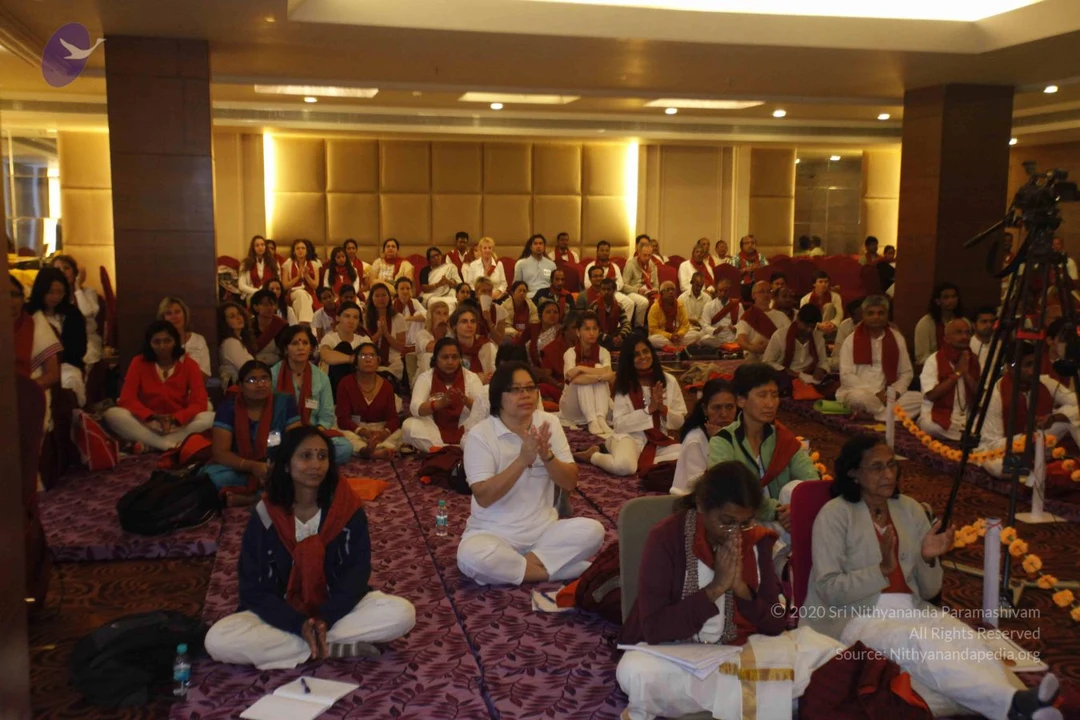
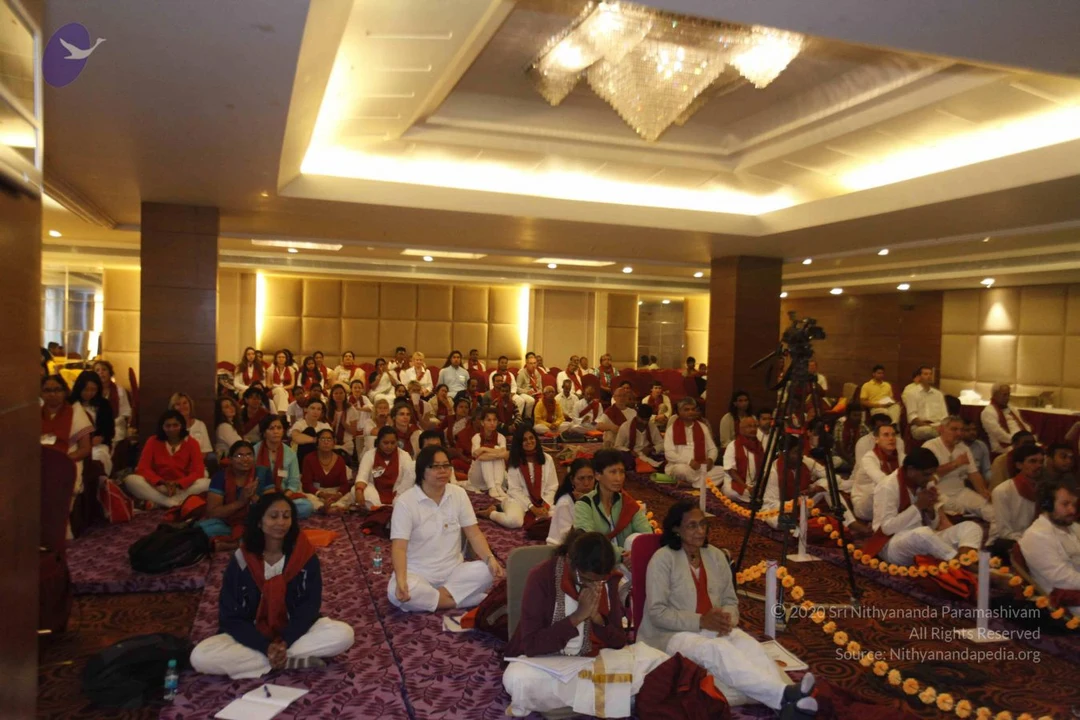
That day's Presidential Address-Nithyananda Satsang and Inner Awakening Convention were conducted by the Supreme Pontiff of Hinduism Bhagavan Nithyananda Paramashivam on 09 March 2014 in Haridwar, Uttarakhand, India.

Link to Video:

VideoAudio

Transcript:

[00:16]

Nithyānandeśvara samārambhām Nithyānandeśvari madhyamām | asmat āchārya paryantām vande guru paramparām ||

[00:38]

Hindi greetings: Main aaj upasthit sabhi bhakto, samajiyo, sanyasiyo, mahant, shri mahant, kotari, aur thanedaro ka prem aur aashirwad ke saath ashirward karta hun.

[00:56]

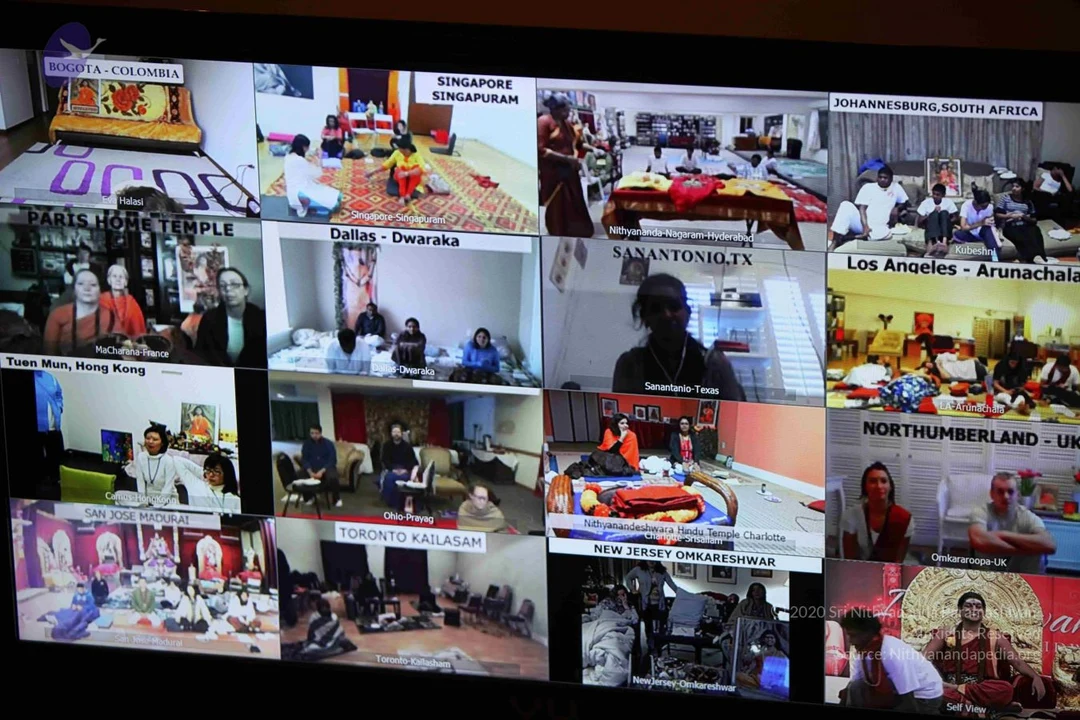
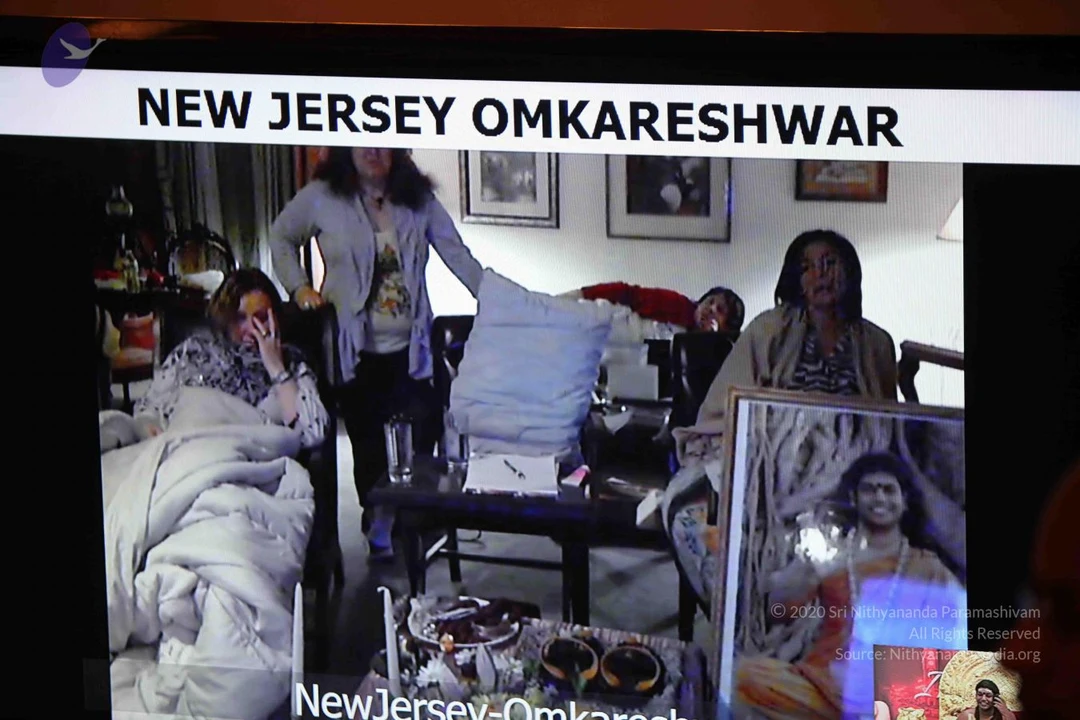
I welcome every one with My love and respects, all the devotees, disciples, samajis, satsangis, sitting with us all over the world through Nithyananda TV, Lotus News Channel, Sadhna TV, Eshwar, Janashree TVs, and two-way video-conferencing. Cities sitting with us through two-way video-conferencing: Dubai-Vaidyanatham, Bangalore-Malleshwaram, Hyderabad-Gupta Kashi, Bogotá-Colombia, Jorpati-Nepal, Northumberland-UK, Scottsdale-Arizona, Indrani- New Jersey, Wellington-New Zealand, Bangalore North, Tun Moon-Hong Kong, Devon-UK, Scottsdale-Arizona, Dallas-Dwaraka, San Diego-Tirualavai, North Cumberland-UK, Charlotte-Srisailam, St. Louis- Tirumala, Coimbatore Dhyanapeetam, Nithyananda Gurukul, Kuala Lumpur- Palani, Ohio-Ma Shivananda, Ohio-Prayag, Los Angeles-Arunachalam, Vancouver- Bhubaneswar, Toronto-Kailasam, Washington DC-Sripuram, NewYork-Varanasi, Redondo Beach-California, Nithyananda Nagaramu -Hyderabad, Killinochi-Ilangai, Guadeloupe-Rameshwaram, Madurai Dhyanapeetam, Sun Prairie-Wisconsin City, Tallahassee-Florida Prettiness, Newfoundland-Canada, Bangalore-North, Singapore-Singapuram, Oh Singapore New Center and Old Center, Paris home temple, Redmond-Washington, Rajapalayam Dhyanapeetam, Oman- Sivagangai Melbourne-Australia. I welcome all of you with My love and respects.

[03:42]

Today I wanted to expand on the Space of Completion and Friendliness. After quite a long time I took four hours continuous session yesterday. Sometimes I do take four hours session, but it will not be like a all the four hours I will be speaking; I will be guiding them into some contemplation, intranalyzing, they will be doing that. That way it will be. But now, yesterday, it was like a whole four hours I was literally talking to them, other than some small breaks, small gaps. Yesterday itself I thought that today I will expand on this, give more insights to IA participants, and give the essence of Inner Awakening to all the satsangis, doing both. I will expand on the Friendliness and Completion. Please listen! The Completion you carry inside you, the space of Completion you carry inside you, however it comes in contact with whoever, it expresses only as friendless. Understand when there is a pot full of nectar, whether you pour it this way or that way, you put your hand and drink it or you put your mouth directly and drink it, or you break the pot, only nectar will come out. Same way, when you carry the space of Completion, with whoever you come in contact, in whatever form, you will ooze friendliness, you will radiate friendliness.

[06:13]

Yesterday, in the session I was expanding on different bhavas like Mathru Bhava, Dasa Bhava, Sakha Bhava – means the attitude of… attitude you have towards the mother, attitude you have towards the Lord, Master, attitude you have towards the friend and Vatsalya Bhava, attitude you have towards a child… various bhavas. Somebody asked Me, “Can there be friendliness between husband and wife”? Please understand. In any bhava, juice is friendliness. Mother and son becomes good mother and son when there is a friendliness between both of them; father and son become good father and son when there is a friendliness between both of them; husband and wife become a great couples when there is friendliness between both of them; Lord and the servant, Master and the disciples, they become great Master and disciple when there is a friendliness between them. In any bhava, any attitude, the friendliness between them makes relationship.

[08:40]

Please understand. It is the friendliness that is essence of life. It is friendliness that is the essence of life. Friendliness is nothing but positive self-fulfilling prediction about the other person. Listen, I am defining: Whenever you have a self-fulfilling negative prediction about the other person, you are waiting to break it. When you are waiting to break it, all your attitude, everything will be fuming with anger, agitation, irritation. Friendliness is self-fulfilling positive prophecy about the other person. All your prophecies are powerful enough for self-fulfilling. Means, if you decide today your day is going to be very bad day in the morning, it is going to be bad day. Because you know how to pick up the bad things, assemble and see ‘today is a bad day’. You are capable of it. You will even make it and do it. There are some blackmailing media in India, just for the news, if they want to show somebody as bad, they make news as bad, and portray that person as bad. If you decide today is going to be a good day, you know how to make good day. Even if there is something wrong, you will stand and struggle, and that struggle you will make it as a.. “See, how I responded. So, it is a good day.” You know how to make a good day or bad day. Any prophecy you create, it is powerful enough to fulfill itself. All prophecies are self-fulfilling.

[11:00]

Listen! Dhyan se suniye. When you see a person, if you have self-fulfilling positive prophecy about him – “This person is going to be part of my life for quite a long time.” – only then the attitude you radiate towards that person is friendliness. Friendliness is an attitude you radiate towards a person with whom you take a positive decision. Completion makes you take positive decision towards whole life. Understand. Completion is something which makes you cognize, decide positively towards the whole life. Anything which makes you to decide positively towards the whole life is Completion. Because life is complete, Completion makes you decide FOR life. Listen! Because life is complete, Completion makes you decide FOR life. Because life is complete, Completion makes you decide FOR life.

[12:49]

All of us have this one vague pattern that ‘Everything should be done by somebody for me.’ Whether it is pushing inside or pulling outside, brushing the teeth or taking bath, including our transformation, enlightenment; if somebody does it and just ready-made inserts into us, like ready-made complete software, tadak..! And then you open your eyes and see, “Yes, I am enlightened! What happened? I went to that Nithyanand Swami’s program. Yesterday He touched me and I became …..” 😄 Everyone expects that everything should be done by others for us. But who is that others? Nobody knows. Please understand. When others do it, they will do it as per their specifications which is enlightenment for me may not be enlightenment for you. So, I can only give you the tools; the final painting has to be done by you. Understand. I can give you the tools and knowledge, but the final painting has to be done by you. Otherwise My portrait cannot be your portrait.

[14:45]

I still remember, one of My schoolmate, he was…we both were studying till the class one to five, then from class six to ten, that new school, in the entrance examination, very simple questions. So, he sat next to Me and wrote the examination. During the exam, he was asking Me to show the papers; he can see and write. And after two days, the Head Master calls both of us and starts slapping, beating that fellow left and right. I didn’t understand what happened and asking that fellow “Hey, did you copy”? He said, “No, no, no, no, no Sir....” and he started beating left and right. I was wondering, “Arrey, how did this HM come to know that he was copying from My paper? Maybe that teacher who was in the class would come and reported. But I was watching, that teacher who was almost half asleep and how did the teacher find out”? All that I was thinking. Only then the HM showed the paper. The questions were: “What is your name?; “What is your father’s name”? And this bloody fellow, this foolish fellow did not even know that he has to write his name and he simply wrote My name. 😄 Where are you born? What is your grandfather’s name? He was so dull, so dumb, he just wrote exactly as I wrote.

[16:57]

So, understand if you try to take the whole enlightenment from Me, it will be like this only. I will give you the tools, I will give you the methodology, but you have to make the final portrait of you. Only then it will be yours. Otherwise we both will be standing in front of the Cosmic Headmaster, Mahakala! Understand. 😊 Completion is the tool. Friendliness is the base material. I tell you, whole day whatever you come in contact, decide you will be friendly with it; means, the ground on which you are putting your feet, the seat on which you are sitting, the things you are seeing, the persons you are seeing. I tell you, this is one of the very important practice I personally practiced when I was doing My spiritual pilgrimage. Please understand. Practicing friendliness whole day with everything, try just for twenty one days. I am not saying break it after twenty one days, within that twenty one days, you will have a taste of it. You will bring such a grace into your walking, talking, living, everything. People will simply ask you, “Are you going to this Nithyanand Swami”? Really, I tell you, when you carry this grace, the grace of friendliness, when you put your feet, you… you are a blessing for the Earth and Earth blesses you. Only when you are a blessing for the Earth, Earth blesses you. Only when Earth blesses you, you are a blessing for the Earth.

[19:40]

All My sannyasis, disciples, devotees, followers, gurukul kids, please practice this carrying friendliness towards everything you see in the life. I tell you, without even knowing you will start carrying Completion in you. You don’t need to be sitting and staring at that mirror planning for your threading of your eyebrows or the new skin toner. Listen. Carrying friendliness is a effortless effort to be complete. Carrying friendliness is a effortless effort towards Completion. Carrying friendliness is a natural flow of friendliness. And when you carry friendliness, you won’t have a hangover about a place, person. Understand, I have seen so many thousands of places, much more greater than any description of any heaven. Same way, I have seen amazing people, much more greater than any description of any God. But I have never had even once hangover of a place or a person. Because, when you carry friendliness, you are complete; you are complete when you are living and when you are leaving. Carry friendliness, you are complete when you are living, when you are leaving. Carry friendliness when you are living and when you are leaving.

[22:19]

When you carry friendliness, there can’t be any incompletion; automatically you will start operating from the space of Completion. Your cognition, your response, your space, your joy, everything will be automatically friendliness. I wanted to give this as My message today for everyone gathered all over the world: Let carrying of the friendliness be your lifestyle. The smell of the presence of the Ultimate in you is friendliness. I tell you, when you meditate on friendliness inside, do Samyama on friendliness inside – I really wanted to create a Samyama, - Sakha Bhava Samyama when you carry that space of Sakha Bhava inside, when you do that Sakha Bhava Samyama inside, the way you move your hands and legs and the feet, and the way you dress, and the way you smile, the way you carry yourself, the whole thing will radiate such a grace, such a grace! Friendliness is grace! Friendliness is Completion! Friendliness is joy!

[24:51]

I will give the essence in Hindi. aaj ke satsang mein, main kal ke inner awakening ….. ka saar bataunga. aap ke bheetar jo purnatva ki stithi hai vah bahar mitrata ke roop mein hi prakat hoti hai, jaise amrut bhara kumbh ho usme se amrut hi milega. kal mein bata raha tha matru bhav, sakha bhav, dasa bhav, vatsalya bhav, adi ke vishay mein. kisi bhi bhav mein jab mitrata aa jati hai tabhi vah bhav poorna hota hai. mitrata hi jeevan ka saar hai. mitrata aur kuch nahi dusro ke prati sakaratmak drishti rakhna hai. agar aap kisi ko galat dikhana chahte hai toh ye bahut saral karya hai. dhyan se suniye. jab aap kisi vyakti ko dekhte hai aur aapko anubhav hota hai ki yah vyakti mere jeevan ka bhag banega tab aap uske prati sakaratmak mitrata ki drishti rakhte hai. purnatva aapko jeevan ke nirnay lene me sahayak hota hai. ham sabhi logon mein ek sanskar hota hai ki hamara sabhi kaam doosron dwara agar diya jaye atma roopantaran bhi agar bana banaya diya jaaye tabhi log lena chahte hai. kintu vah dusre vyakti kaun hai ye koi bhi nahi jaanta. krupaya samjhiye ek vyakti ka karya doosre ke liye purna upayogi nahi ho sakta. usme aapko swayam ke anusaar parivarthan karna padega. mein aapko rupantaran ke marg dikha sakta hun kintu aapko swayam hi karya purna karna hoga. pure din aap jiske bhi sampark mein aate hai uske sath mitrata ka vyavahar kare. jab aap mitrata ke soumyata ko rakhte hai aap prithvi ke liye ashirwad swaroop hai aur prithvi aap ke liye ashirwad hai. mere sabhi sanyasi shishya sabhi log iska abhyas kare. mitrata rakhna chesta rahit kaarya hai. ek prakritik purnata ka marg hai. mitrata rakhne se aapme kisi bhi sthan ya vyakti ka moh nahi rahega. jab aap ke bhitar mitrata ho aap purnata mein rehte hain. dhyan se suniye jab aap mitrata rakhte hai aapke bhitar apurnatva rahi nahi sakta. mein isko aaj ka sandesh banana chahoonga vishwa mein sabhi logon ke liye: mitrata ko apni jeevan shaili bana lijiye.

[28:45]

When you radiate friendliness towards human-beings, it becomes - Amazing Relationship. When you radiate friendliness towards the Cosmos, it becomes - Bhakti. When Cosmos radiates friendliness towards you, it becomes - Miracles and Enlightenment.

[29:08]

Tags:

Paramahamsa Nithyananda, completion, friendliness, space, positive, Prophecy joy grace.

Photos Of The Day:

Nithya Yoga
Paduka Puja
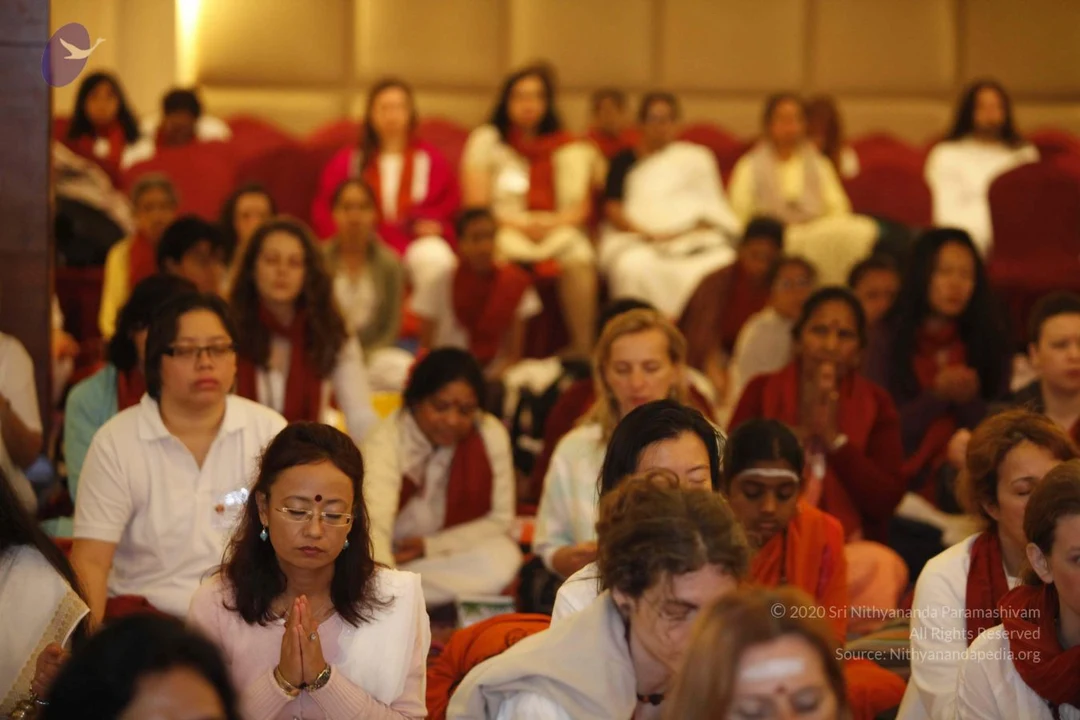
Nithya satsang
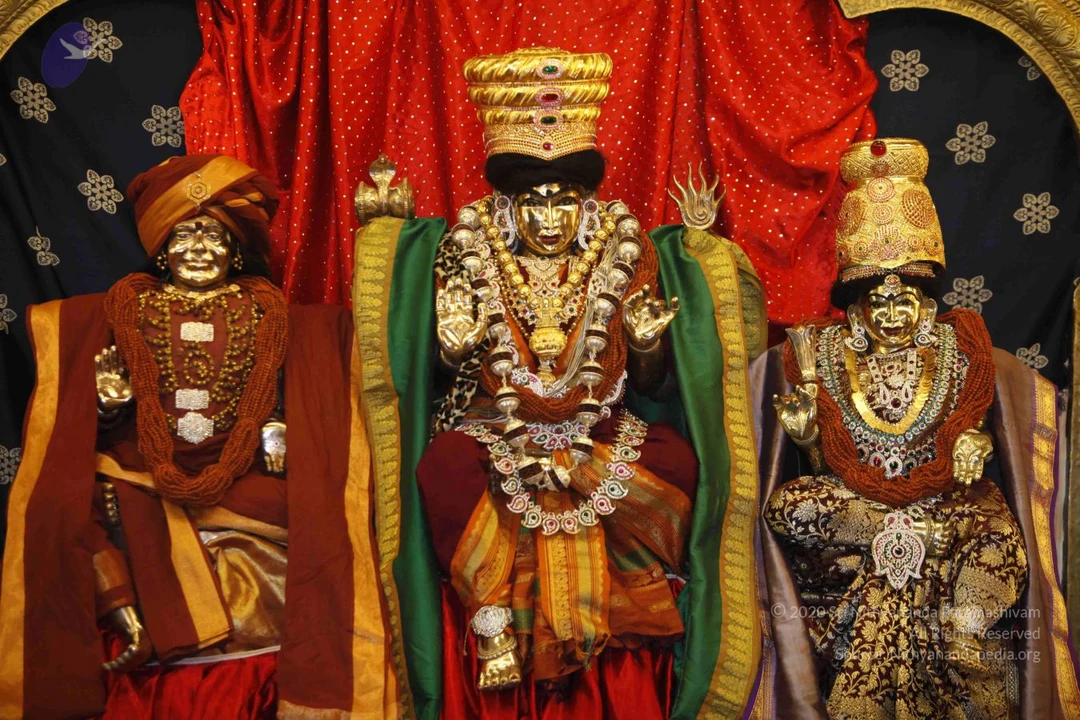
Kalpataru DARSHAN

Meeting with Dignitaries

Inner Awakening DARSHAN

Homa

Photos Of The Day:

FB-Photos-of-the-Day

Photos from this day

View all 166 photos

Nithya Yoga

9 photosSource gallery
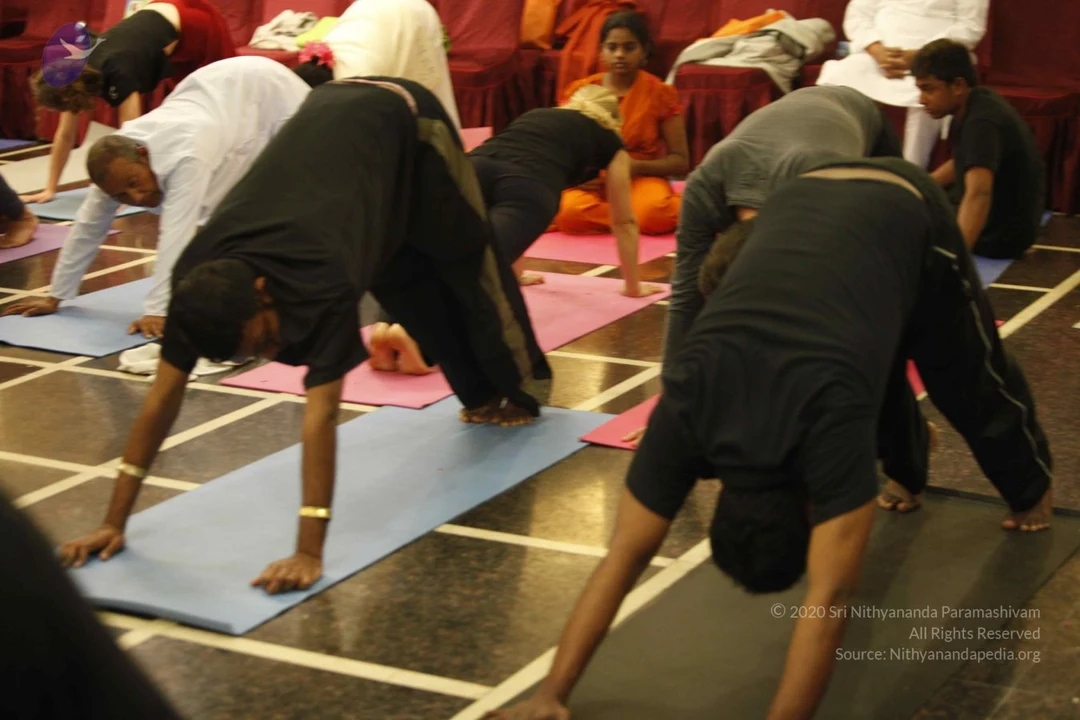
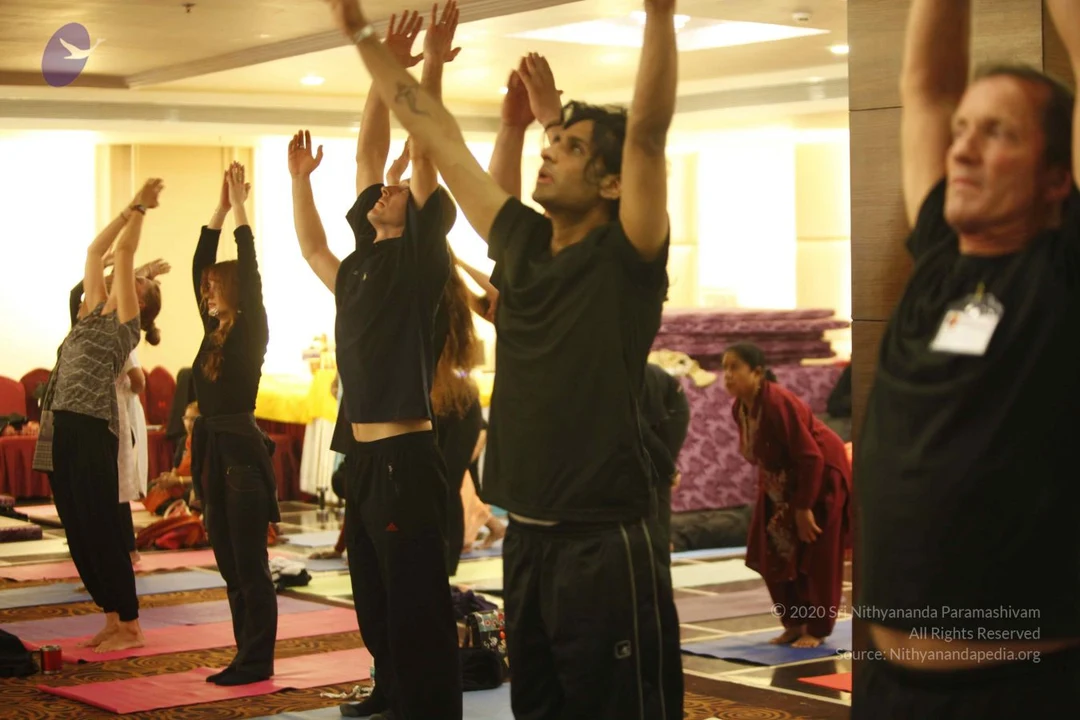
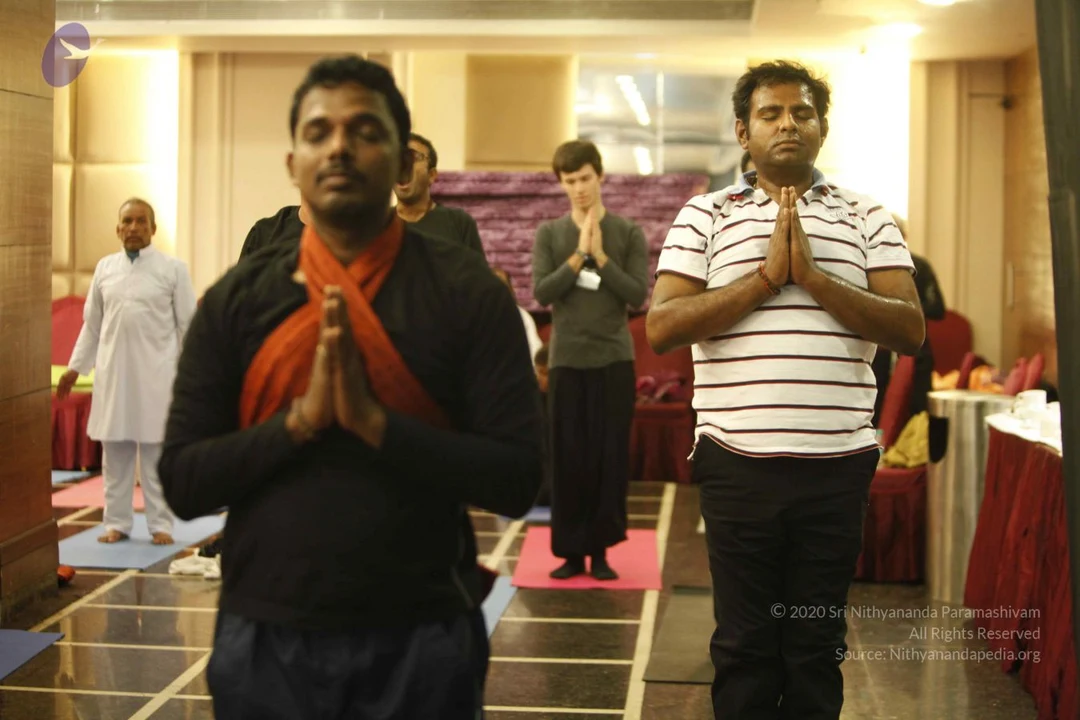
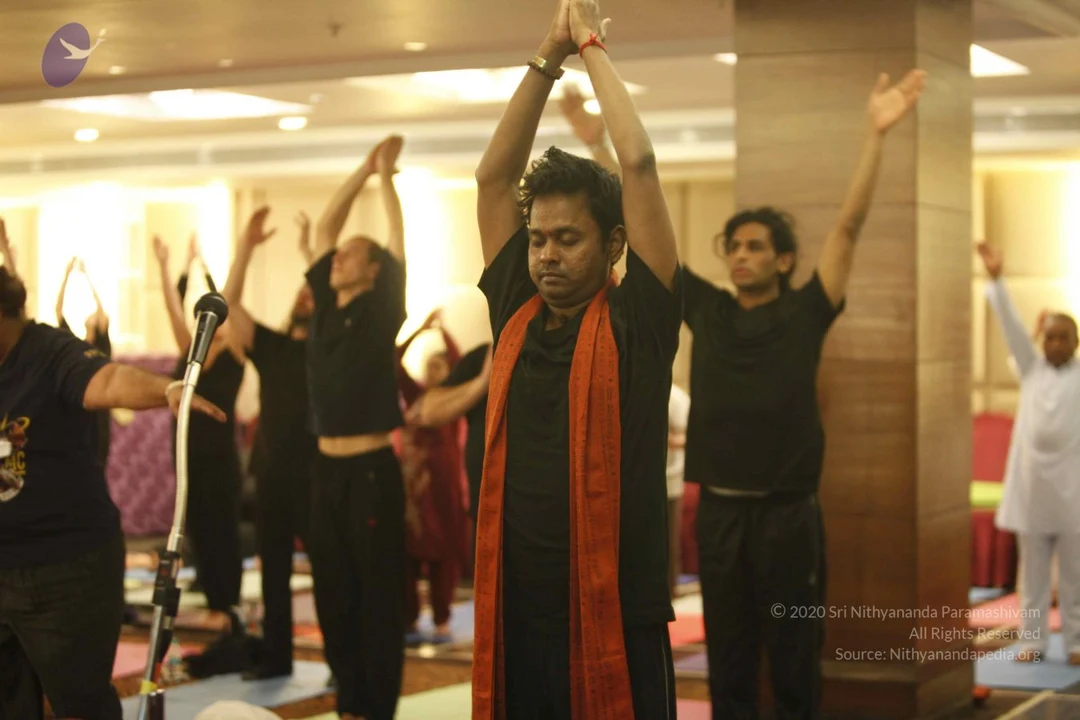
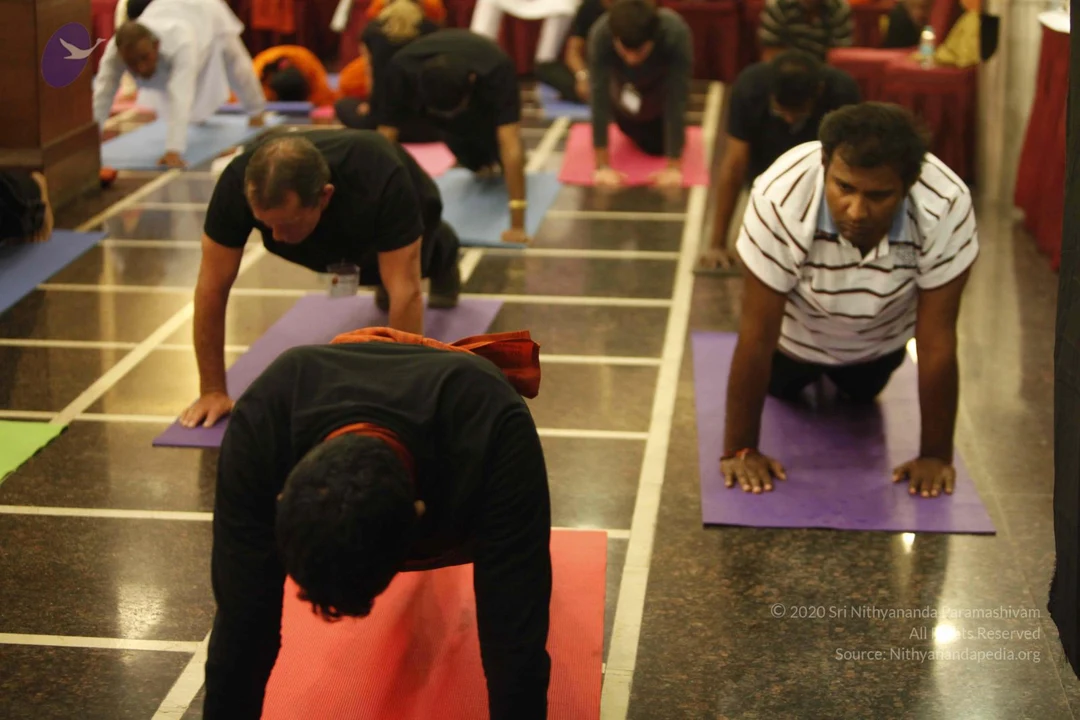
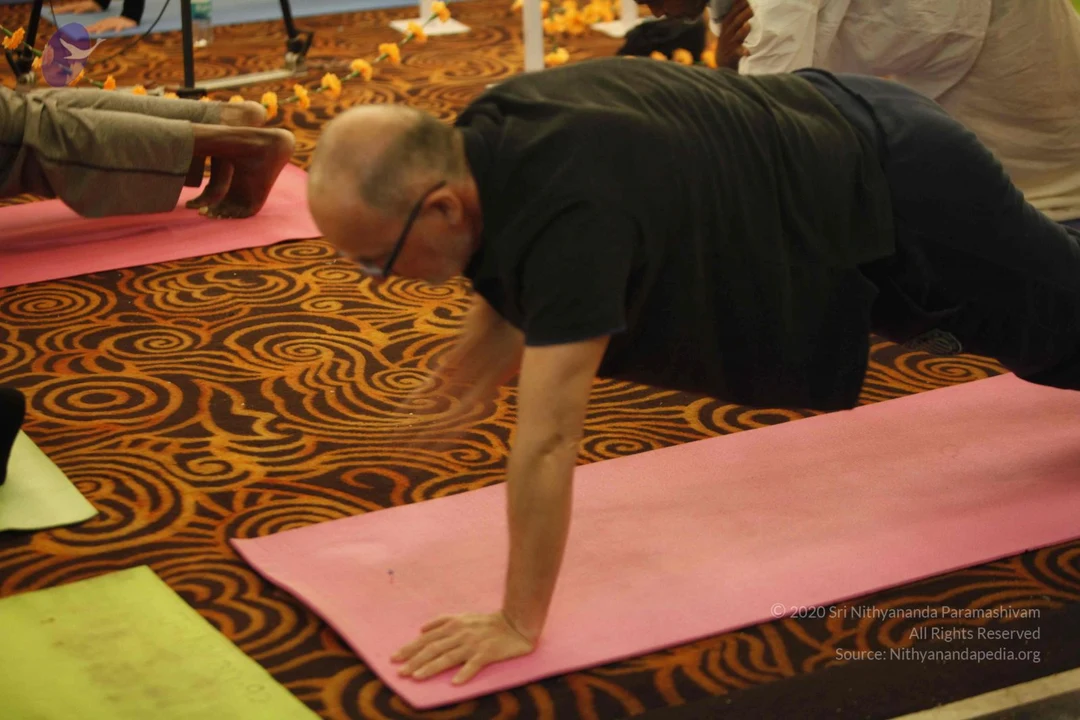
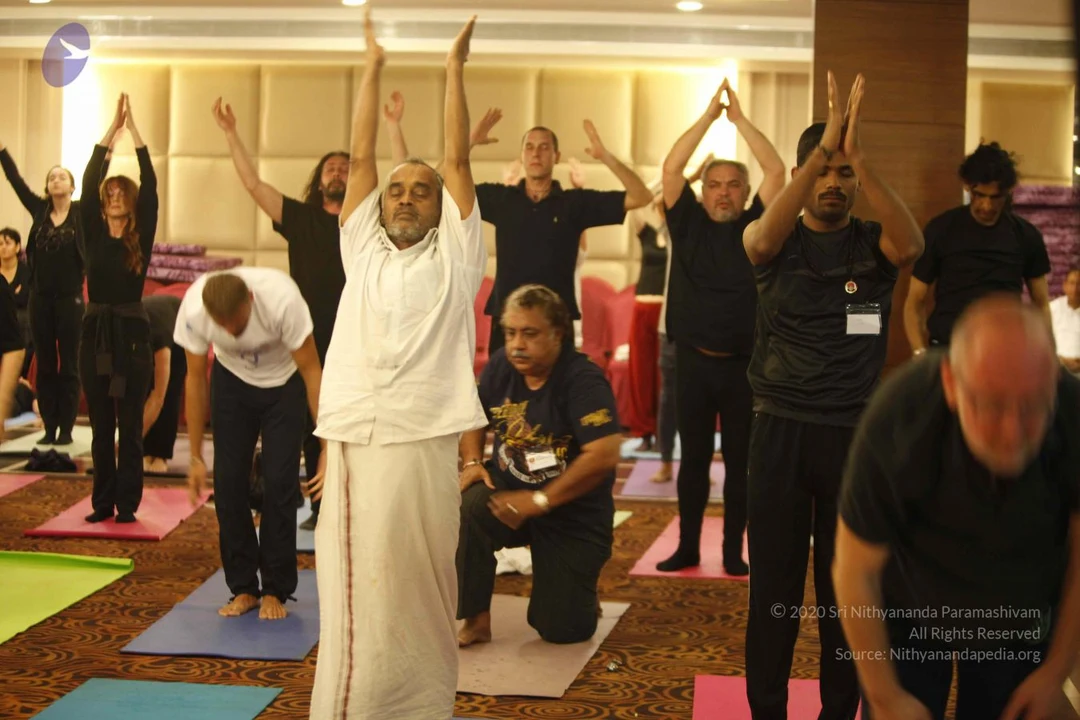
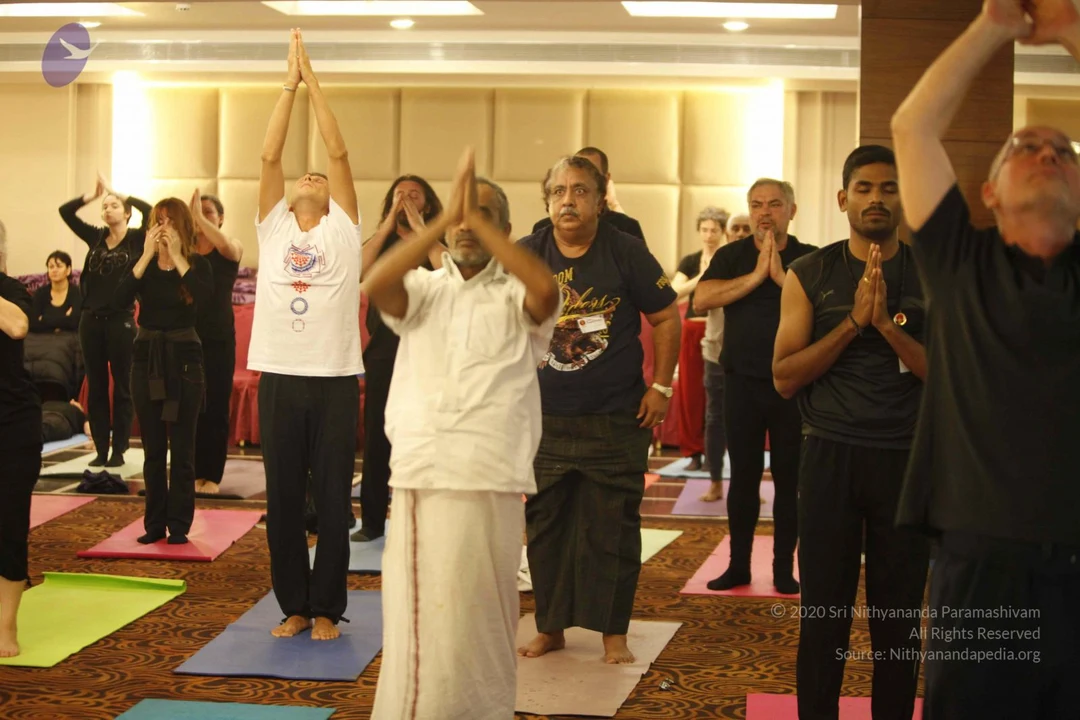
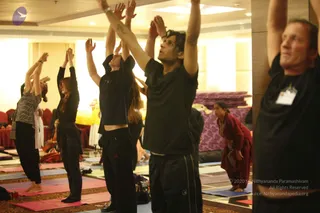
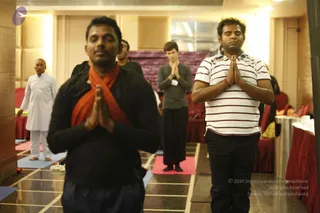
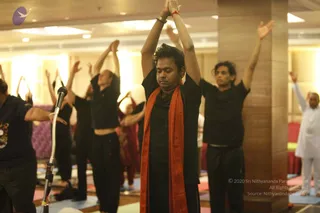
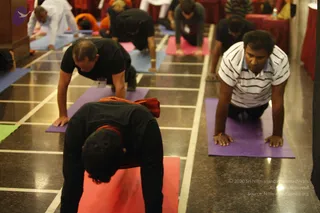
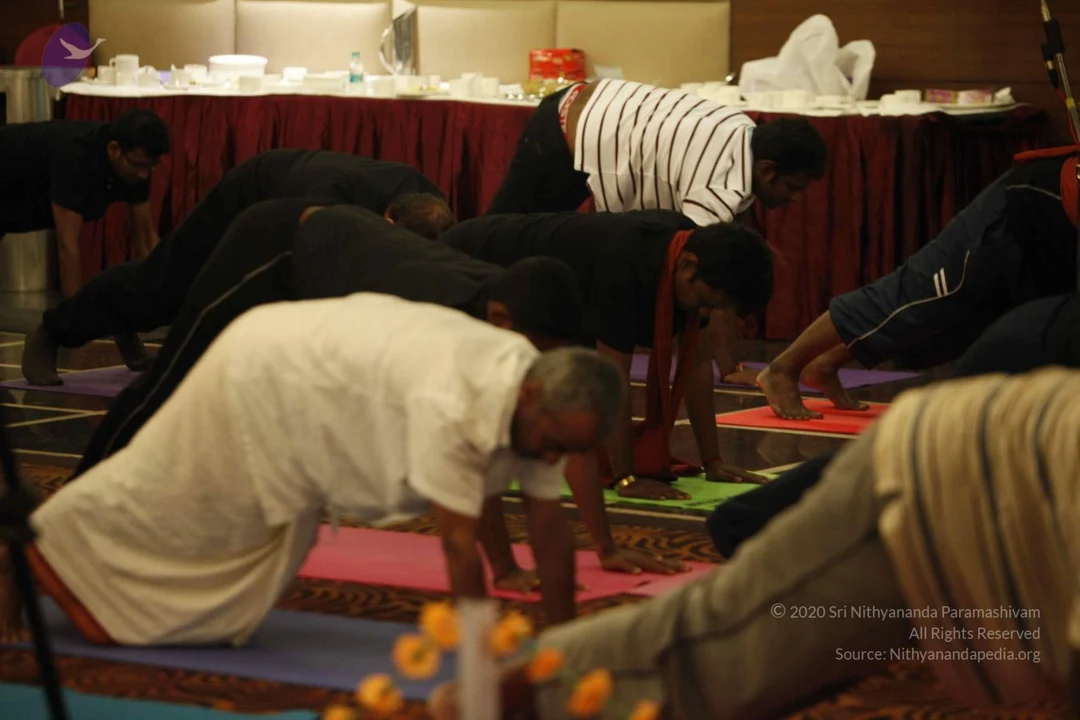
Several people practice a yoga pose on coloured mats in a hotel conference hall. In the foreground an older man in a white shirt and white dhoti leans forward with hands on a pink mat, while a man in a black top and red shawl bends low on a green mat beside him. Other participants in black and dark sportswear are also bent forward on mats of pink, blue and purple. Behind them a buffet-style table with white cups and a red tablecloth sits along the wall, and orange flower petals are scattered on the carpet.A group of people practise yoga on coloured exercise mats across a tiled hall, bending forward with hands on the mats in a forward-fold or downward-dog style. Several wear black tops and trousers, one older man wears white, and a young woman in an orange top sits on an orange cushion at the back, watching. Red-draped seating lines the background, and the floor has a grid of white lines.A group of practitioners in a hall with yellow-lit walls stands on colourful yoga mats with arms raised overhead and palms pressed together in a stretching or salutation posture. Most wear black athletic clothing; a man in a black top and dark track pants in the centre gazes upward, and a bearded man at right wears black with a name badge. Behind them a woman in a maroon outfit bends over a mat, and a purple-draped table stands in the background. No a person candidate is visibly present.A photograph of people standing with palms pressed together in anjali mudra with eyes closed, in a hotel-style hall with dark marble floor tiles and red-draped tables along the walls. In the foreground a man in a black long-sleeved top and an orange-red shawl prays. Beside him a man in a white-and-maroon striped polo shirt and dark trousers also prays with a red thread on his wrist. Behind them a man in gray with a white badge stands on a pink mat, and an older man in white kurta-style clothing stands on a light blue mat at the left. Yoga-style mats are laid out across the floor. No one in the scene is identified as a person.A indoor yoga session in a hotel-style hall with cream walls and recessed ceiling lights. A man in front centre wears a black t-shirt, black trousers and an orange-red shawl draped over his shoulders, with both arms raised overhead and palms pressed together, eyes closed. Behind and around him, a group of practitioners in black clothing stands with arms raised on blue-and-pink mats, and a man at right in white ritual clothing also raises his arms. A microphone stand stands at left. The people are in a standing posture of prayer or breathing exercise.Indoor yoga session on a grey speckled marble floor divided by white lines into lanes, with participants on coloured yoga mats in a downward-facing or cobra-like pose. In the foreground a person in a black top with a red-orange cloth draped over the shoulders leans forward on a red mat. To the right a man in a white-and-brown striped polo shirt presses his palms down on a purple mat. Behind them more practitioners in black and white clothing bend over mats of pink, blue and purple, with red-draped tables and a wooden podium at the edges. Several people are visible in the room.

Paduka Puja

18 photosSource gallery
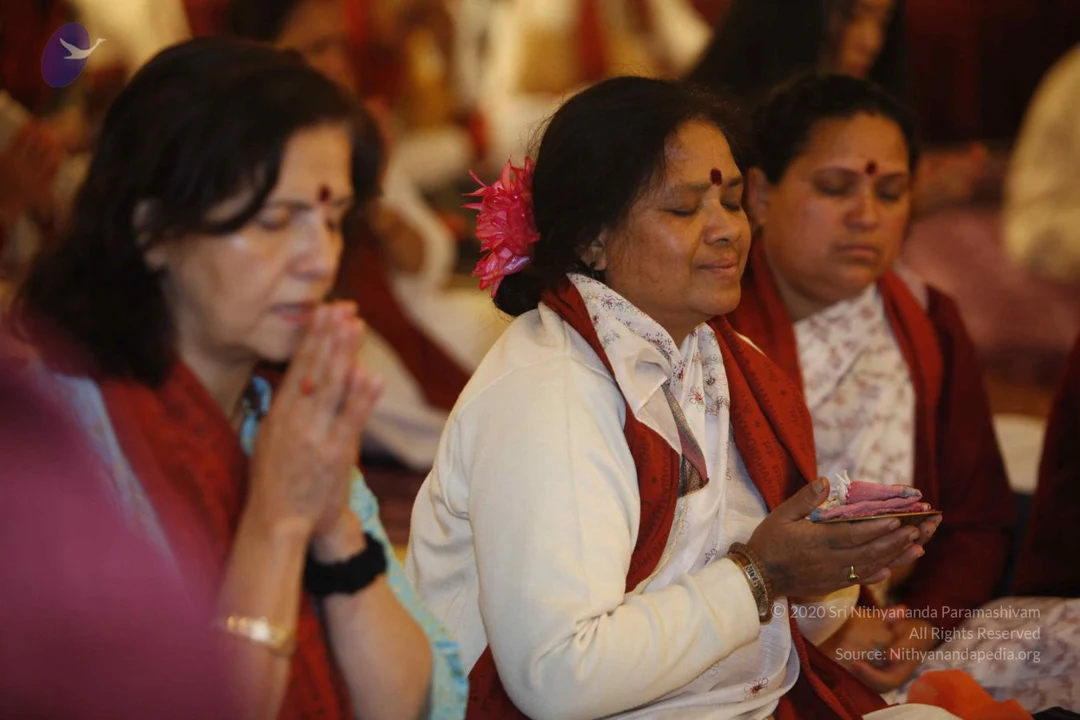
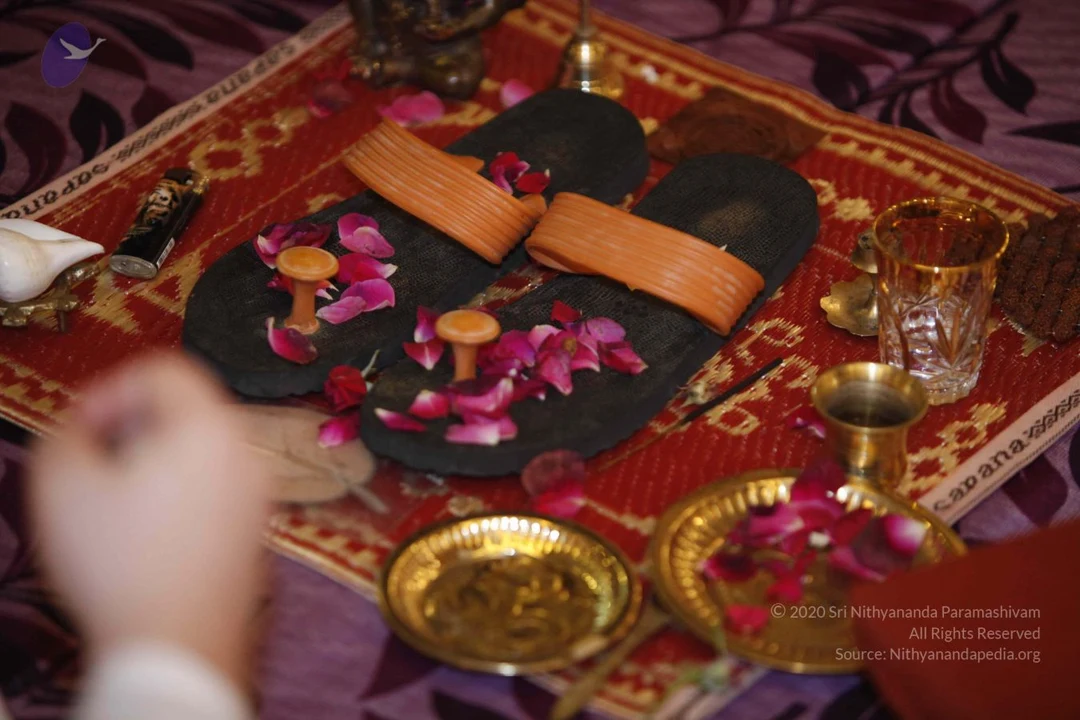
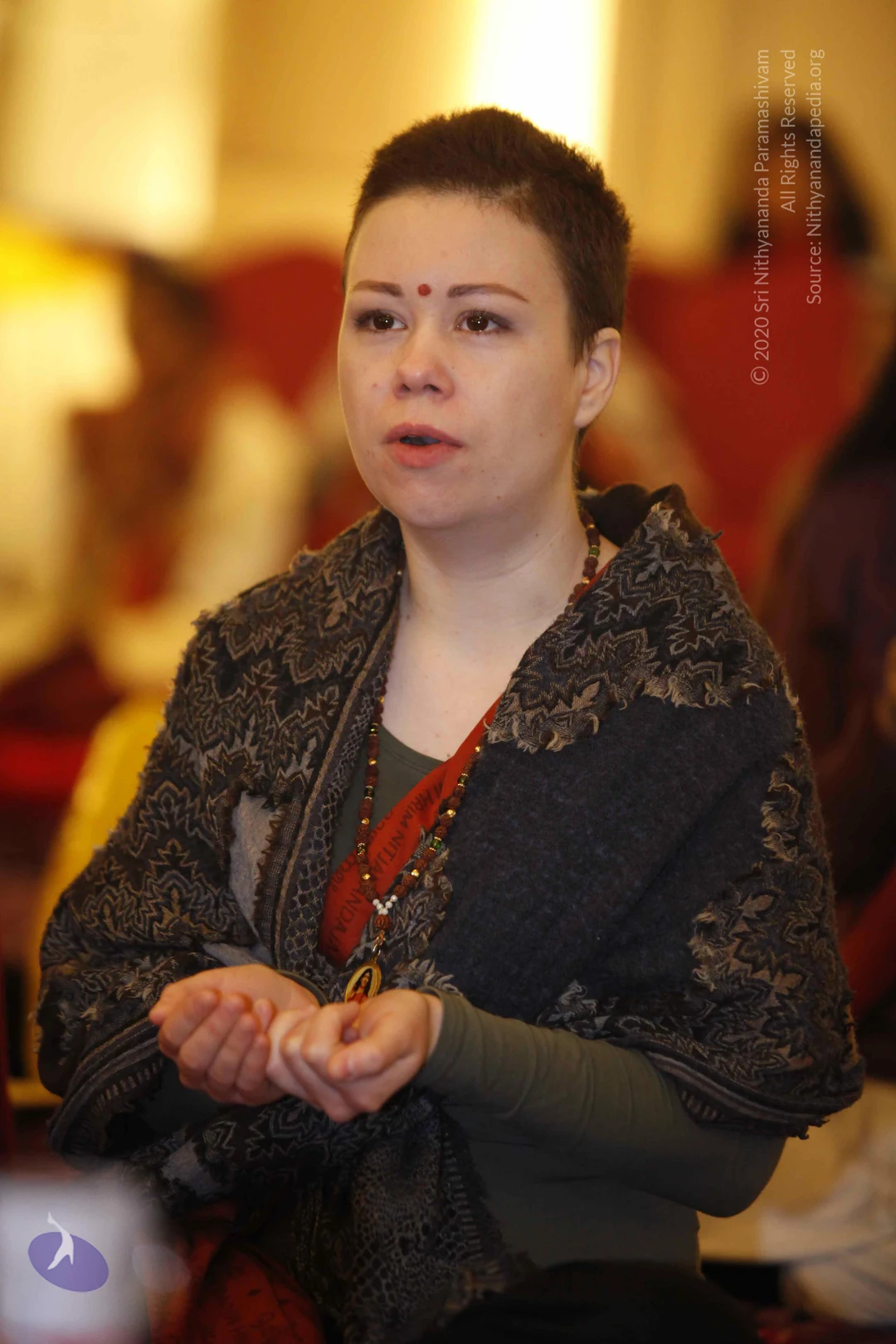
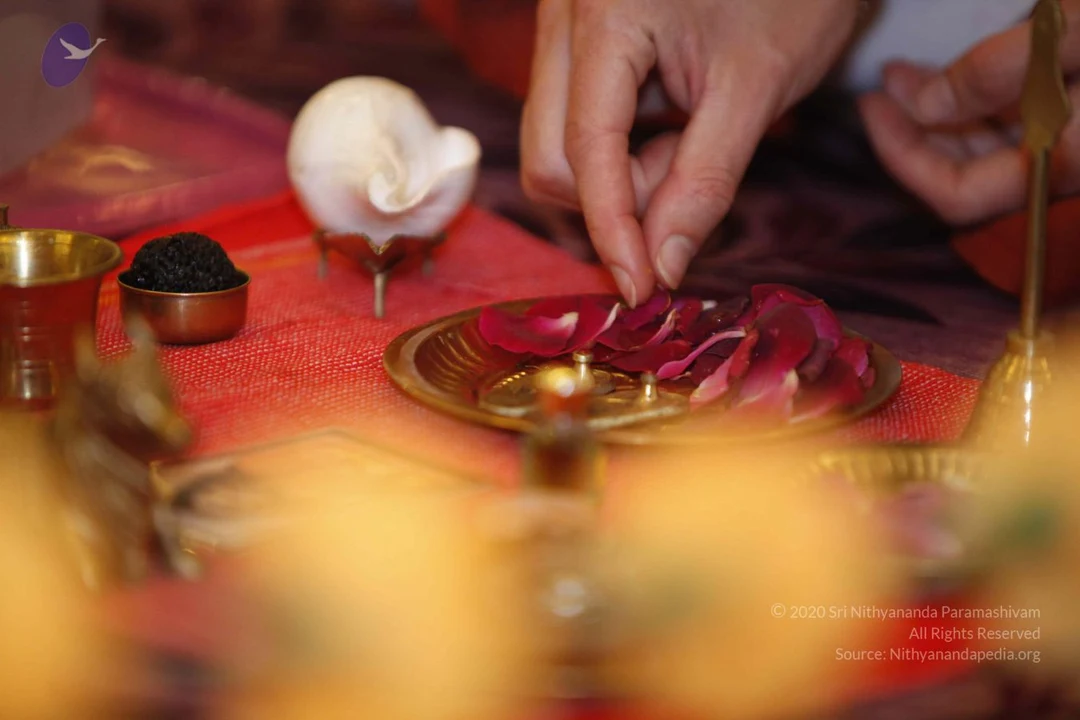
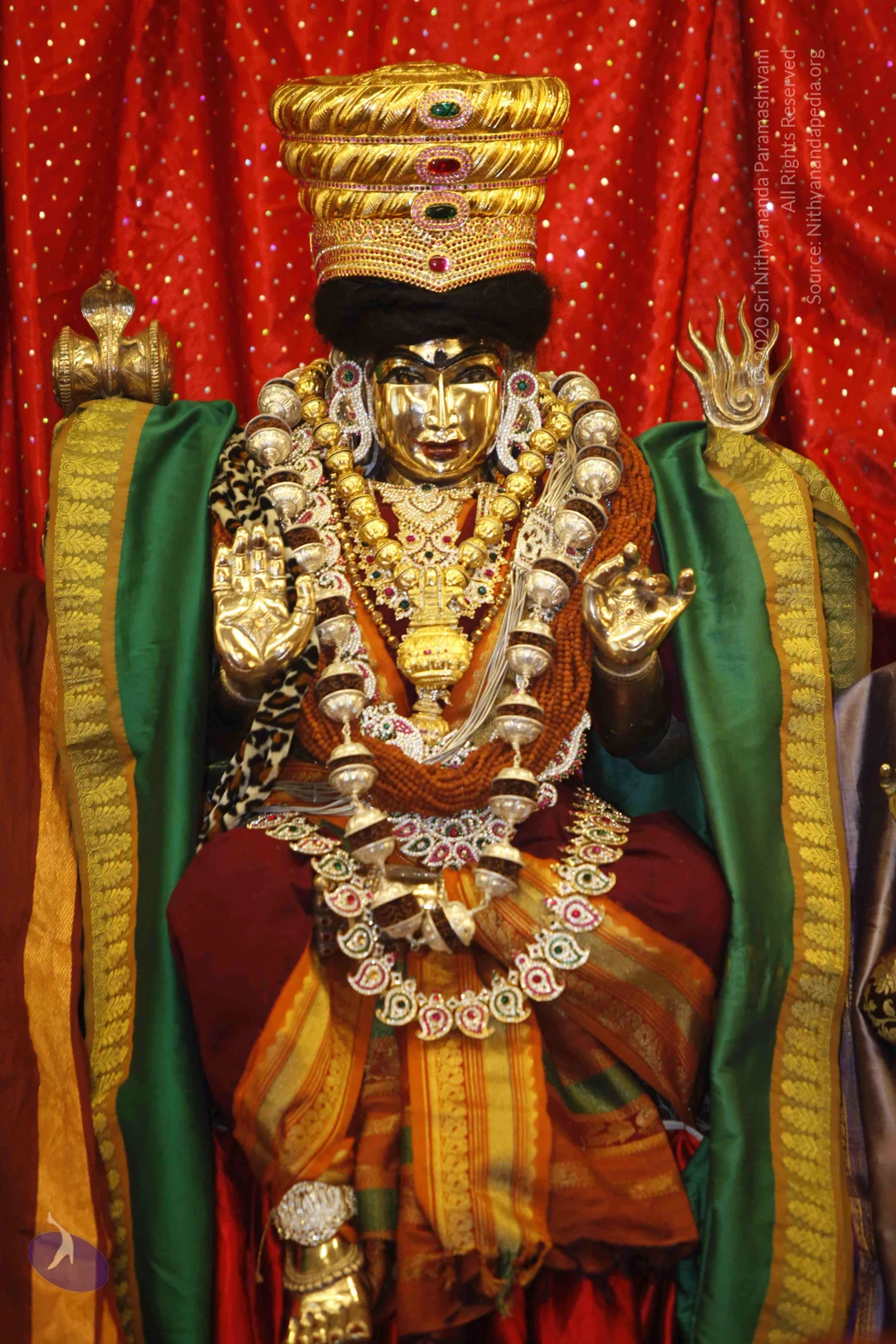
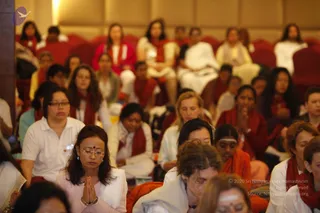
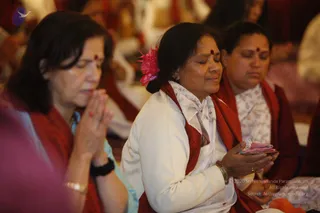
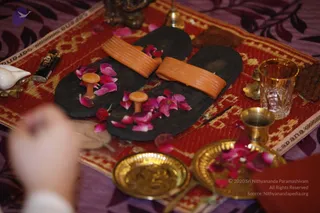
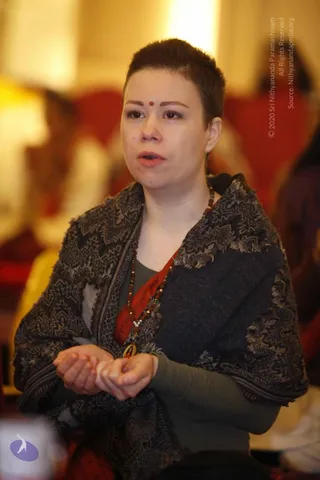
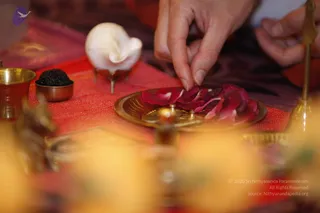
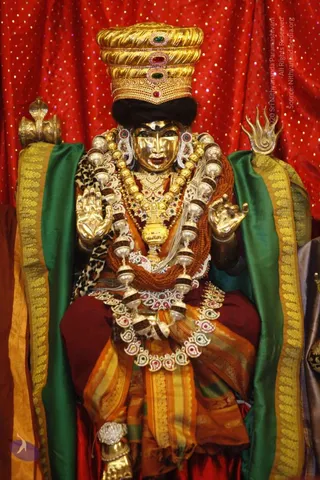
A seated audience at a satsang hall in Haridwar, many with palms pressed together in prayer or eyes closed. In the front row a woman in a pale pink top and glasses holds her hands in anjali mudra, and to her right a woman in a white shirt and glasses sits with hands folded. Many attendees wear red shawls over white or cream clothing, and a young woman in orange robes with a white forehead mark sits to the right. Behind them, rows of red-cushioned seats fill with more devotees in white and red. No a person is clearly visible in this crowd shot, so no in-person candidate is identified.Photograph of seated women devotees at a satsang gathering, eyes closed in meditation. The woman in front centre wears a white top with a red shawl, a pink flower in her hair and a red bindi, holding a small plate with pink cloth in her hands. The woman at left has palms pressed together in anjali mudra, wearing a red shawl over a light blue garment. A third woman at right wears a red shawl with a red bindi, eyes closed. Other seated devotees in red shawls fill the blurred background.A close-up photograph of a ritual arrangement on a red and cream patterned cloth. Two black wooden sandals with orange-wrapped straps rest at the centre, surrounded by scattered pink and magenta rose petals. Beside them are small brass dishes, a brass cup, a crystal glass with gold rim, a white conch shell and a folded brown cloth. A blurred hand, wearing a white sleeve, enters the frame at the lower left, and a red cloth edge appears at the lower right. No people are clearly visible as seated figures.Close photograph of a woman with very short dark hair and a red bindi, speaking while holding her cupped hands together in front of her. She wears a dark grey patterned shawl over a grey top, a rudraksha-style bead mala and a red lanyard with a small pendant. The background is a warmly lit hall with red seating, and other figures are blurred out of focus.Close-up photo of a ritual puja setup on a red cloth. A hand, with the sleeve of a light garment visible, sprinkles red rose petals onto a brass plate. A white conch shell rests on a small stand beside a brass bowl of dark granular offering. A brass lamp with a lit flame and a brass stand are visible, with blurred golden and brass objects in the foreground. No faces are shown and no person is clearly identifiable.A gilded deity murti seated on a throne-like seat against a red sequined backdrop. The figure wears a tall golden crown set with red, green and white stones, a gold face mask, a green silk shawl with gold border, and rudraksha malas with gold beads and jewelled necklaces. It holds a trident in one raised hand and a snake-headed staff in the other, with an orange and green dhoti below. No physical people are visible; the figure is a statue.

Nithya satsang
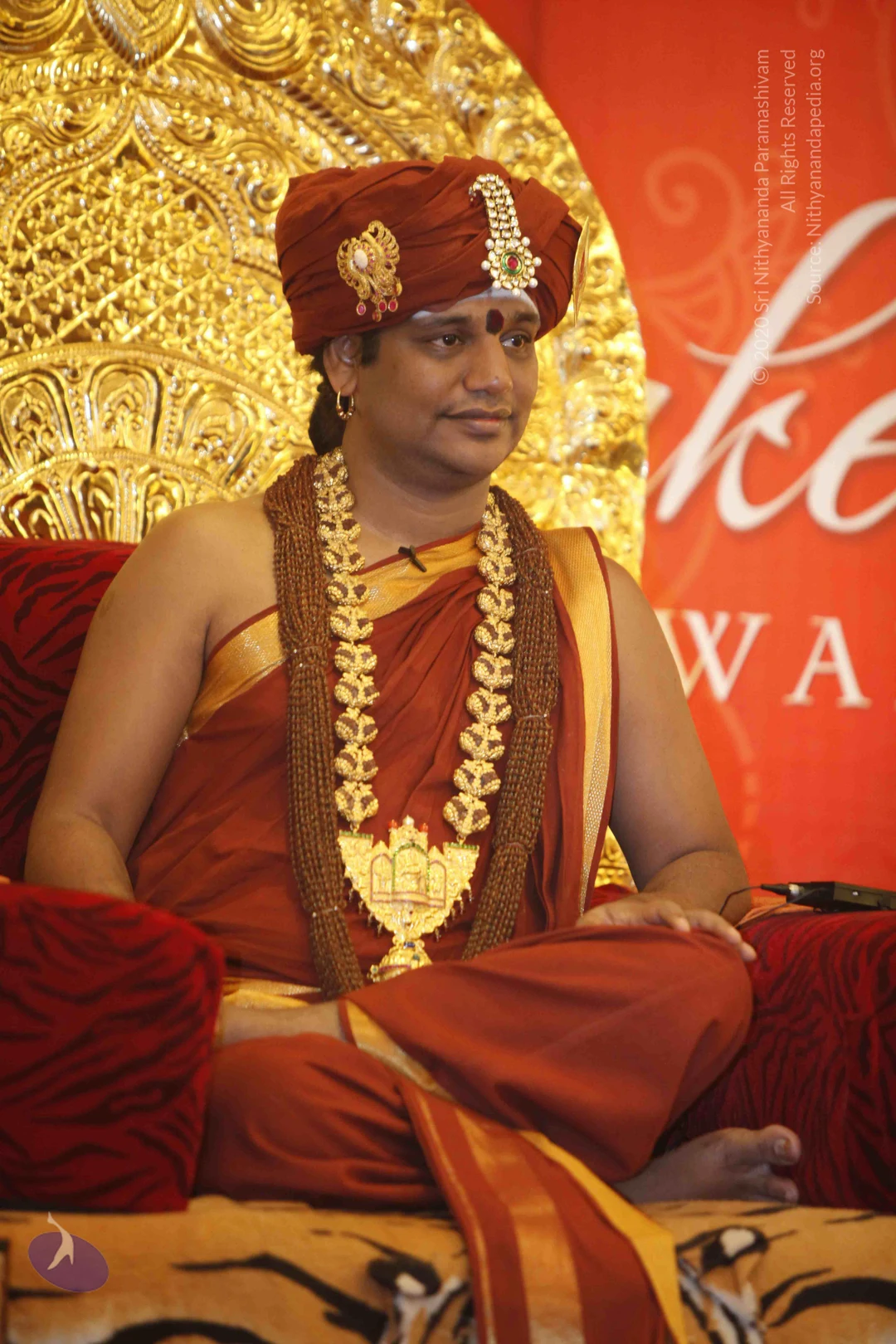
37 photosSource gallery
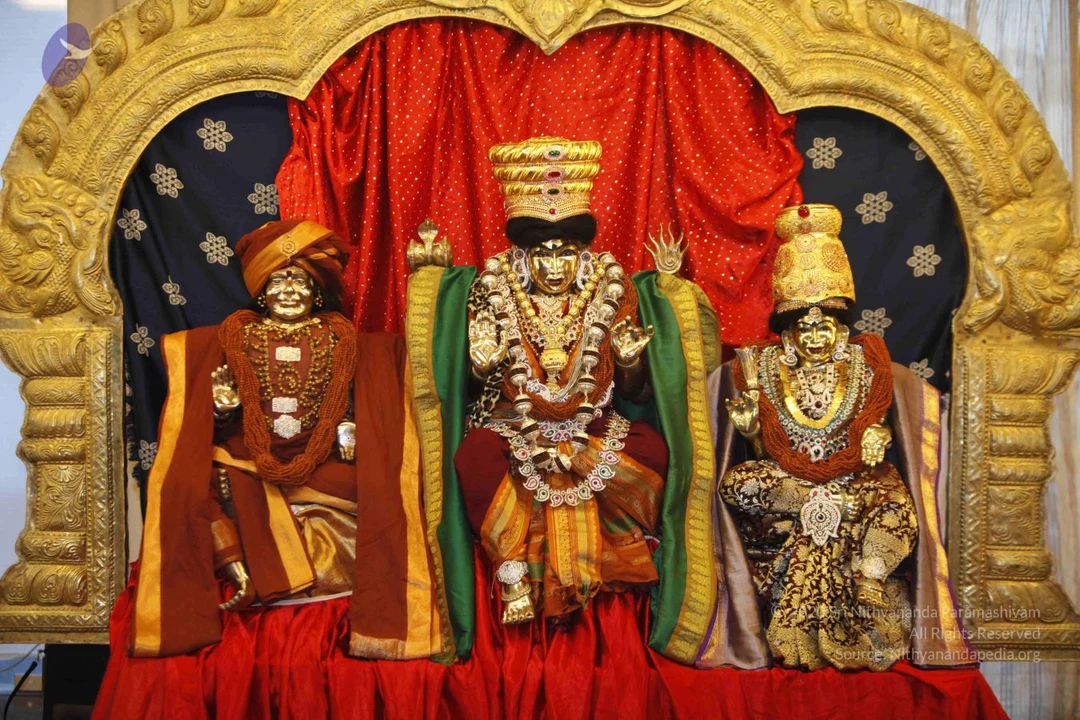
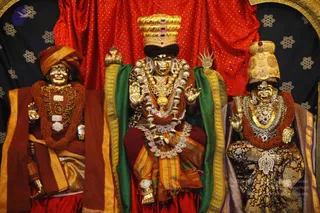
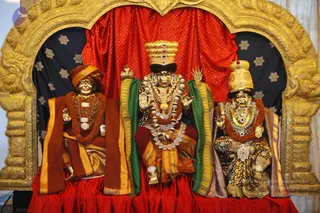
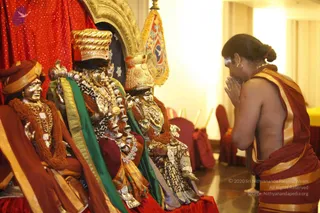
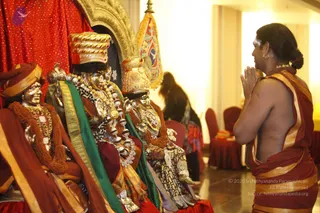
Three golden statues are seated side by side against a red sequined fabric backdrop with black panels and gold floral motifs. The central figure wears a tall ornate gold crown set with jewels, layered garlands, a green and gold shawl and an orange-and-red striped cloth, and holds its hands in blessing gestures; it is a deity murti. The figure on the left wears a red and gold turban, a red shawl and a heavy rudraksha mala, while the figure on the right wears a tall gold crown, a red garland, gold and jewelled necklaces and a dark brocade garment. These are statues, not living people.Three gilded statues sit together on a red-draped platform inside an ornate golden arch against a dark blue backdrop with white floral motifs and a red sparkly curtain. The central figure is a deity murti with a tall golden crown set with red jewels, a green and gold shawl, a long beaded garland, and raised hands holding ritual objects. The figure on the left wears an orange turban, a rudraksha mala with a small pendant, orange and gold robes, and an orange shawl. The figure on the right wears a gold crown, a heavy jewelled necklace, a gold brocade garment and an orange shawl. The statues are not living people; the image is a photograph of sculptures.A devotee in a reddish-brown and gold-bordered dhoti and shawl, bare-chested with hair in a bun and a white forehead mark, stands with palms pressed together in namaskar before three silver-finished deity murtis seated on a red-and-gold throne. The central figure wears a tall gold crown, a green and gold garment, a leopard-print cloth, and a long garland of beads. The side figures wear gold crowns or turbans, red-orange garlands and jewelled ornaments. Behind them hang a red sequined backdrop, a gold arch and a painted banner. Chairs with red covers and a yellow tablecloth fill the hall in the background.A devotee in saffron-red dhoti and shawl with gold border stands bare-chested at right, palms pressed together in anjali before a row of silver-and-gold deity murtis seated on a red-draped platform. The murtis wear gold crowns, garlands, rudraksha-like beads and ornate embroidered garments in green, red and gold. A kumkum-marked figure in white and red attire stands to the left of the platform, and a few other attendees move in a softly lit hall with red-covered tables behind.A man seated cross-legged on an ornate gold throne with carved golden lion armrests and red tiger-striped cushions. He wears an orange-red turban with gold and jewelled ornaments, a red-orange shawl over the shoulders, a rudraksha mala and a long ceremonial gold necklace with a gold pendant. A red bindi and tilak mark his forehead. Behind him is a bright orange backdrop with a partly visible printed word, and a small black device sits on the throne armrest. Swamiji (probable) is seated on the throne, wearing turban and rudraksha mala with gold necklace.A seated man in an orange-red turban decorated with a gold brooch and green-jeweled ornament sits on an ornate gold throne with a red zebra-striped cushion and gold lion-head armrests. He wears a rust-orange robe with gold border, a heavy gold and beaded ceremonial necklace with a gold pendant, and has a red bindi and vibhuti on his forehead. He sits cross-legged with one hand open in a gesture while smiling, with a small lapel microphone clipped to his robe. Behind him a red banner shows partial large white script reading 'akenin' and 'WAR'.

Kalpataru DARSHAN

39 photosSource gallery
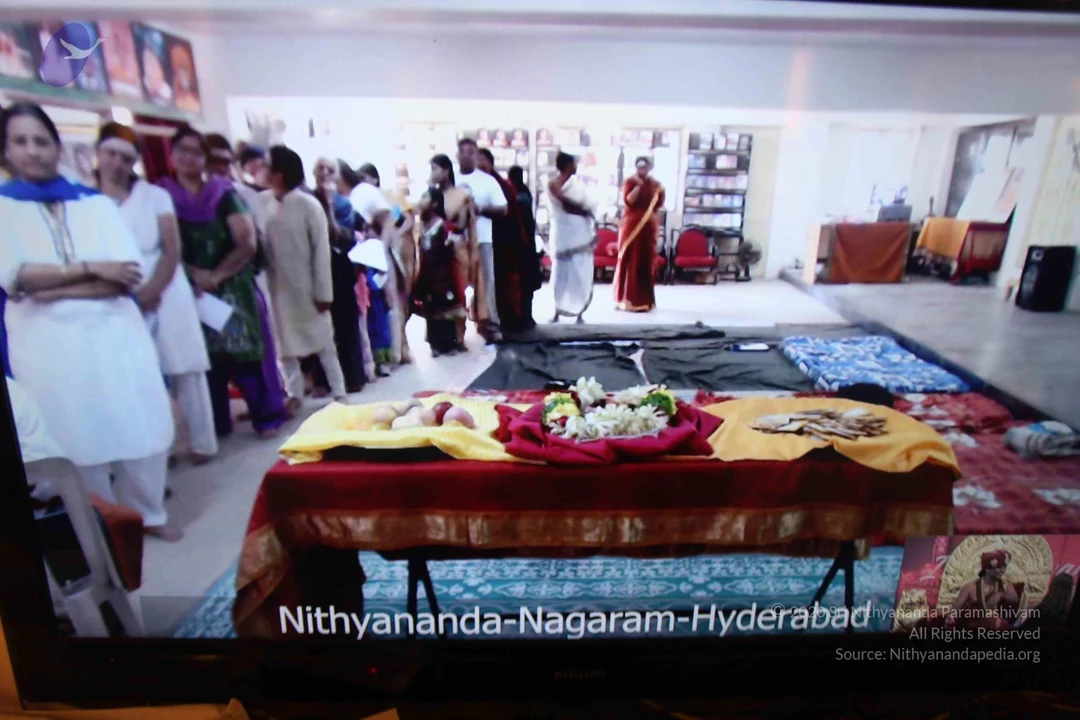
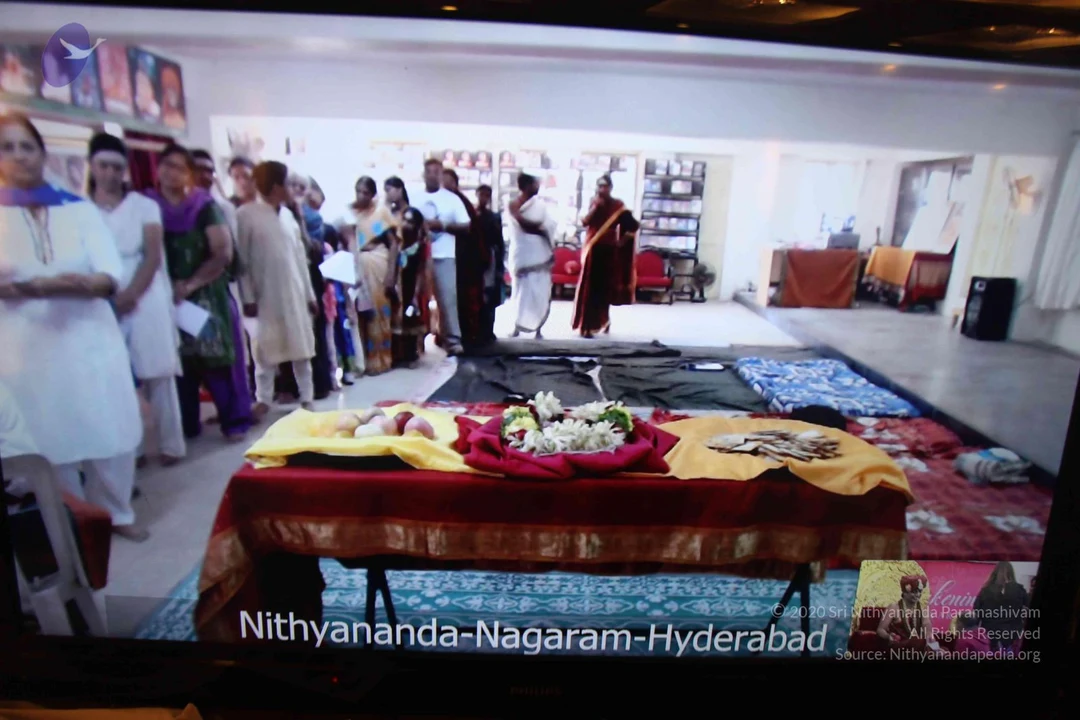
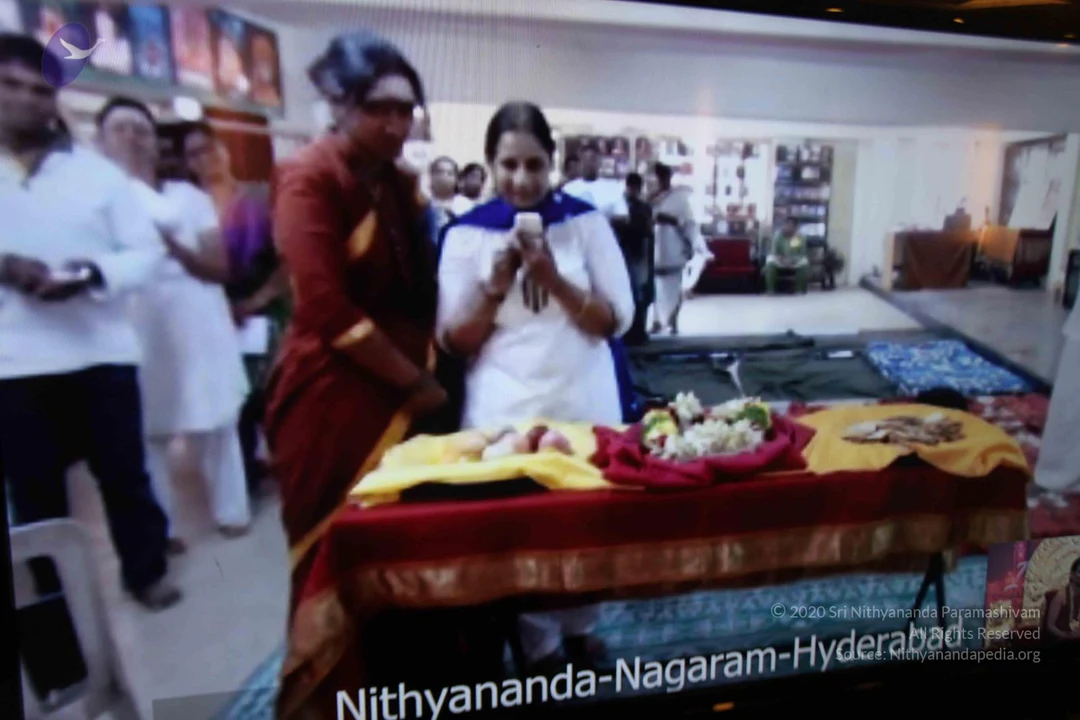
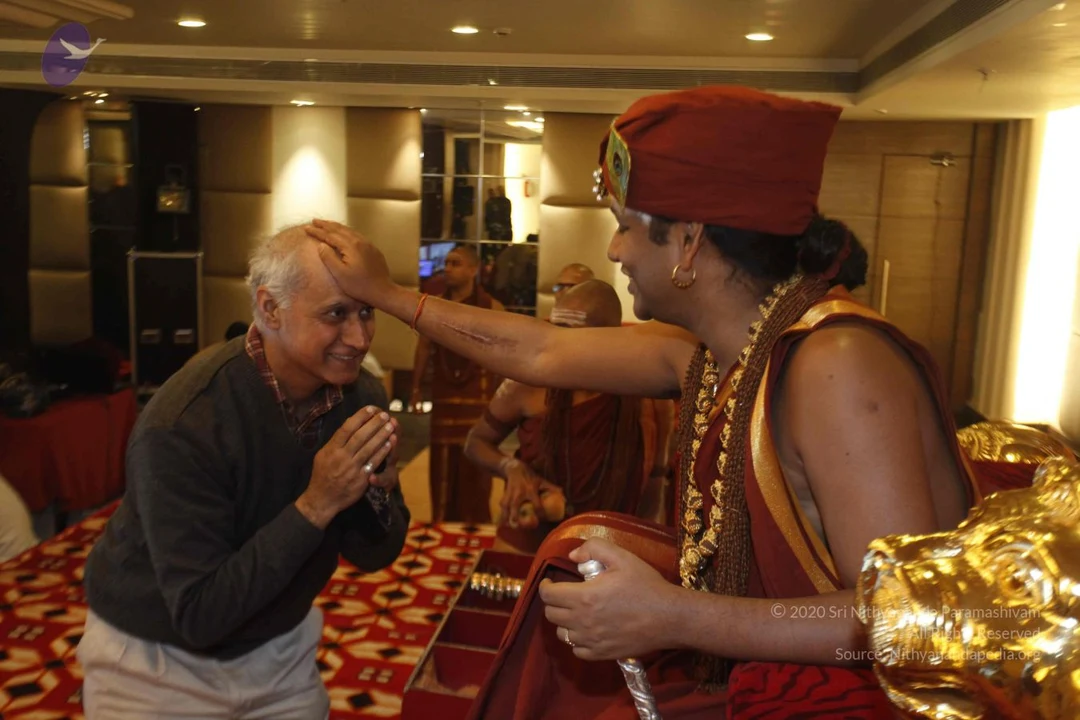
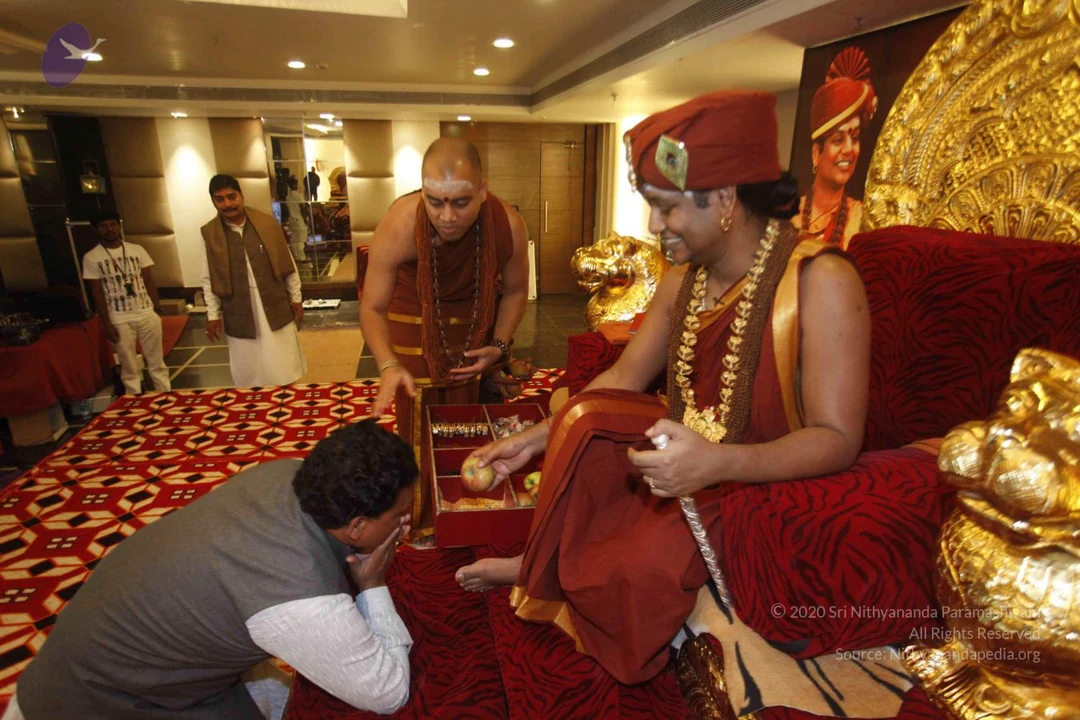
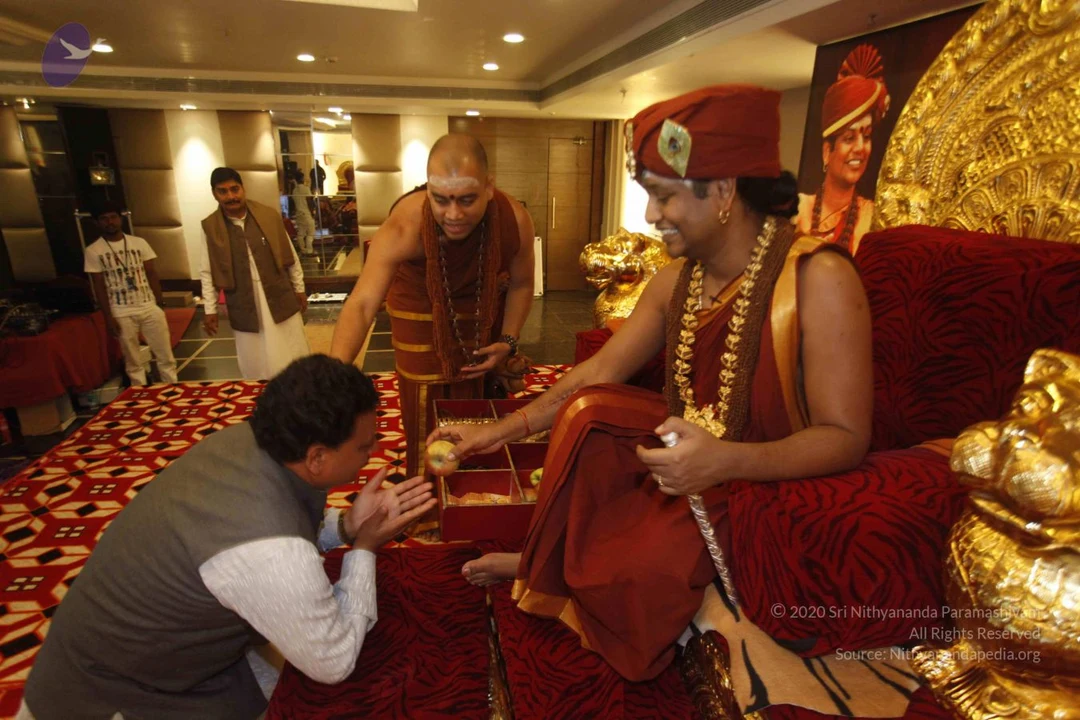
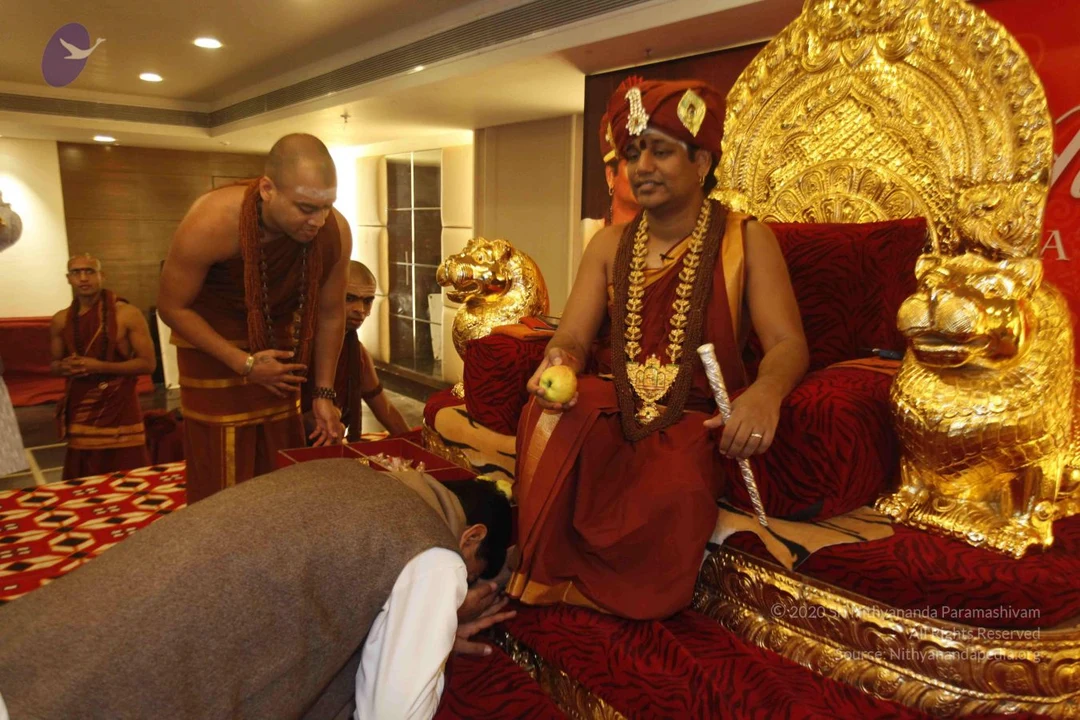
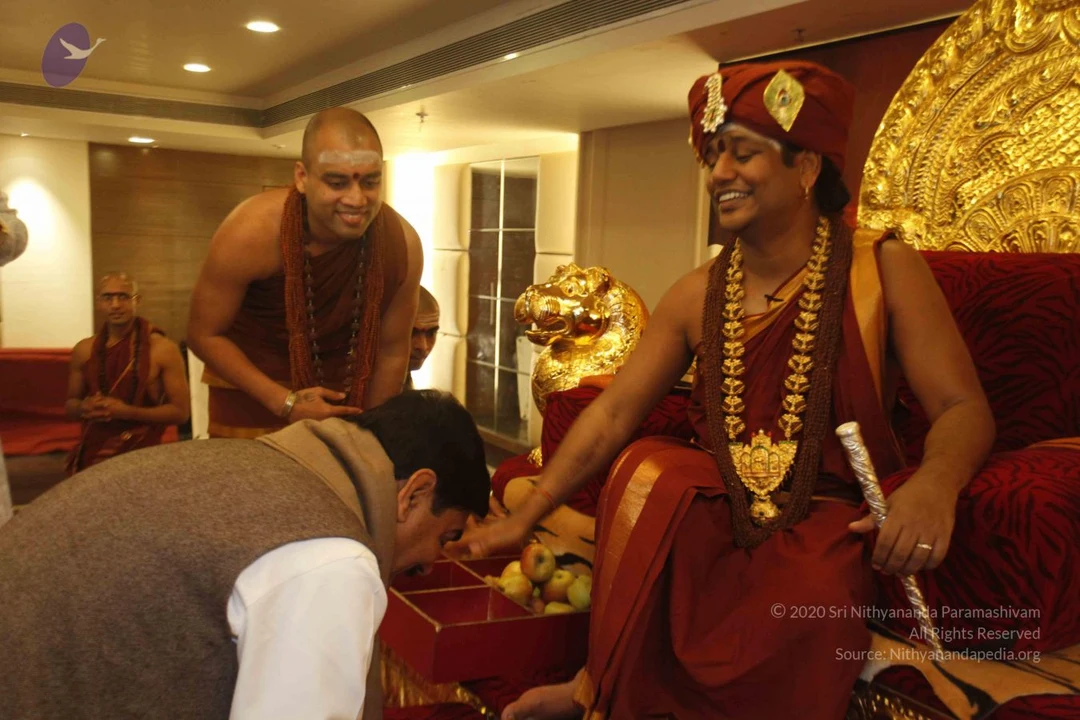
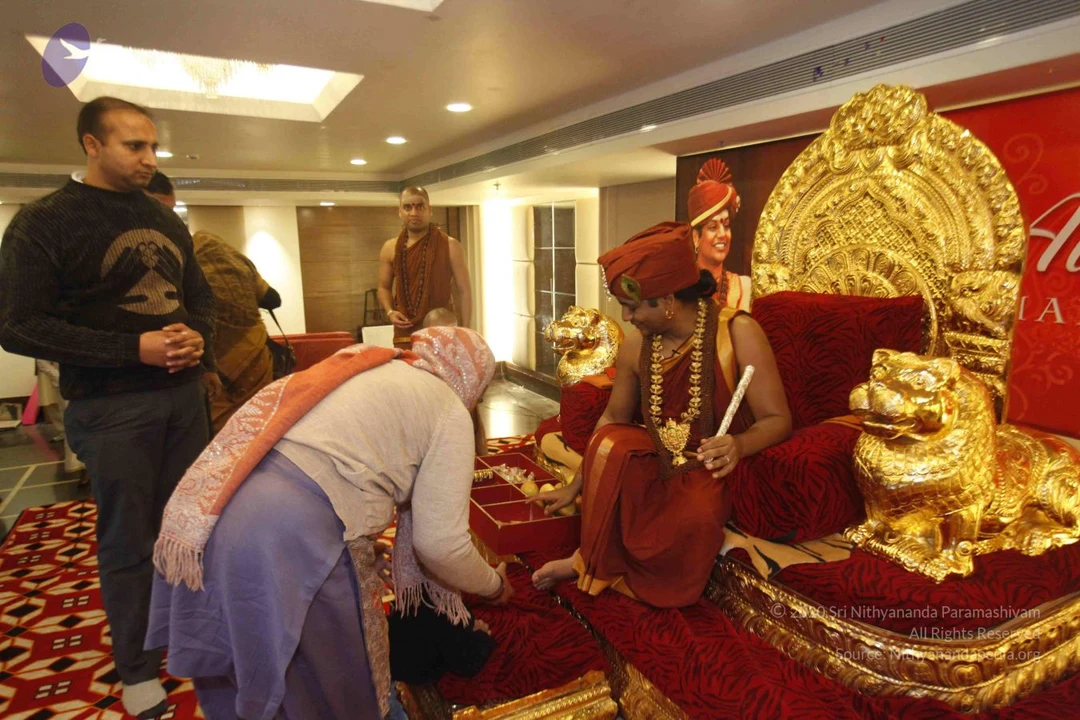
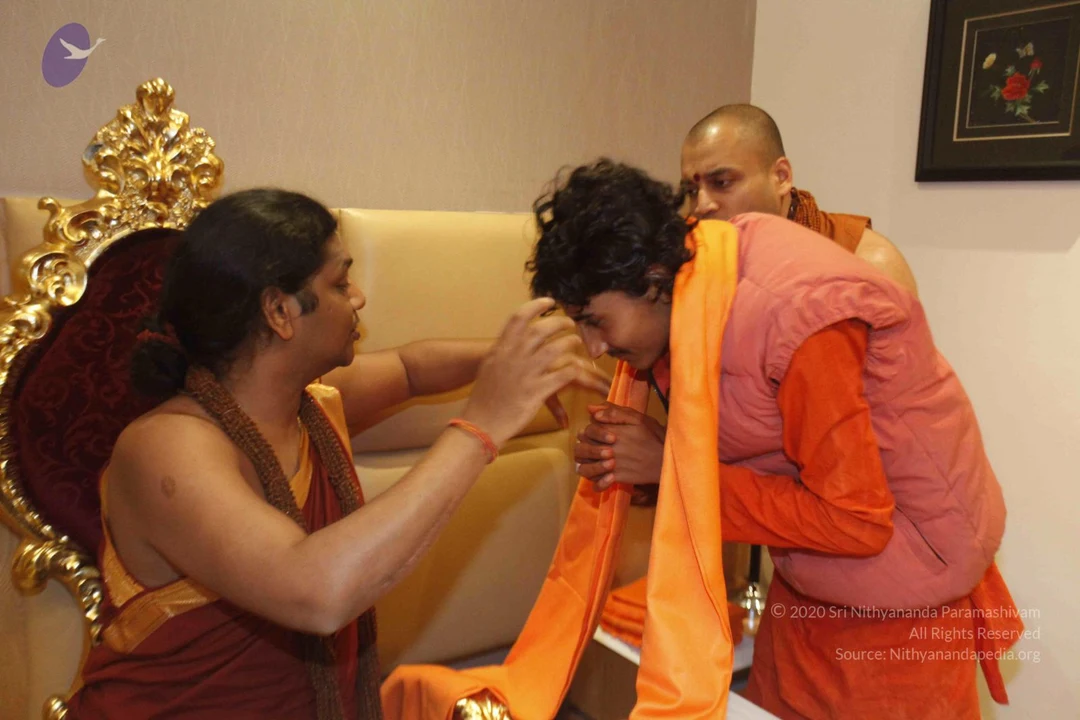
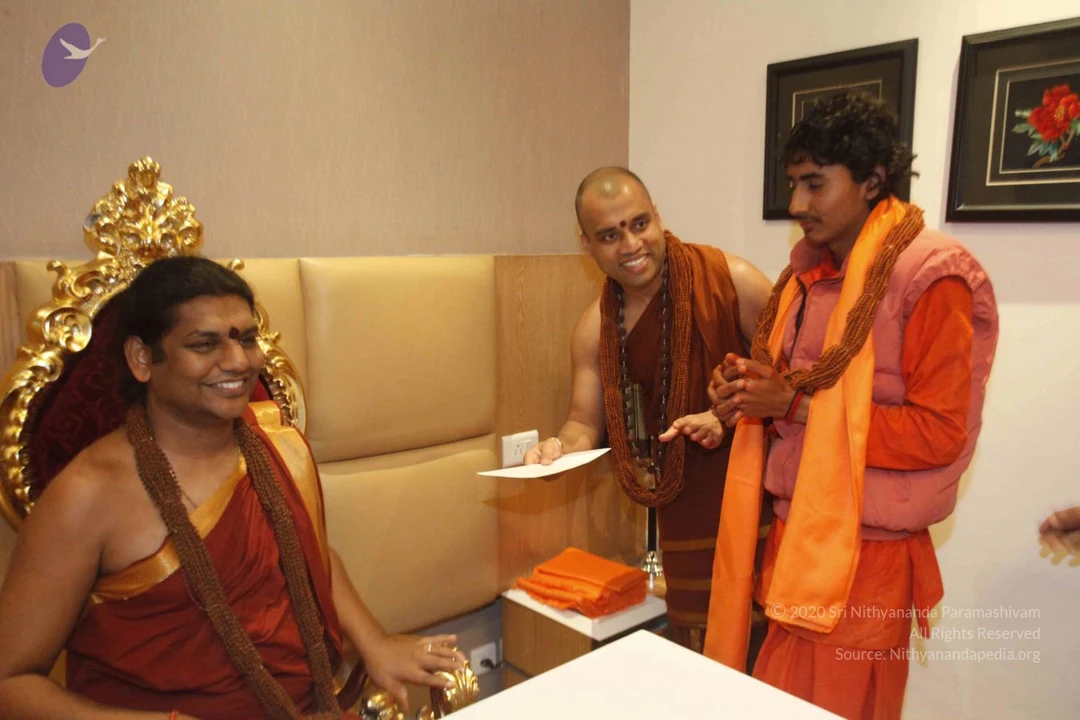
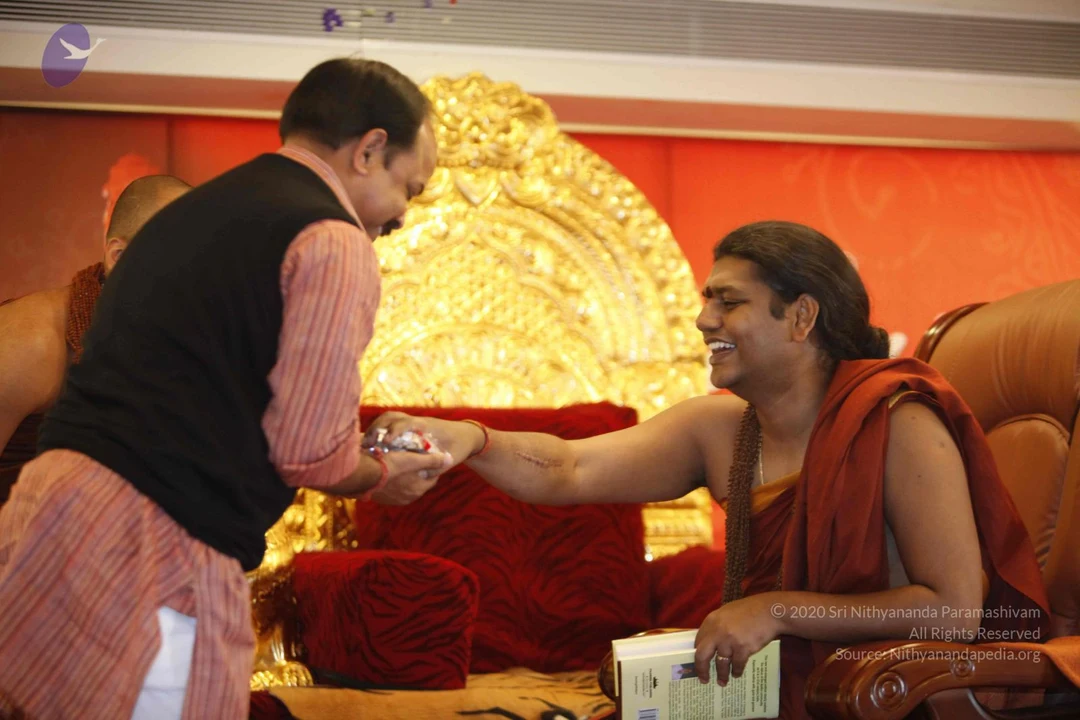
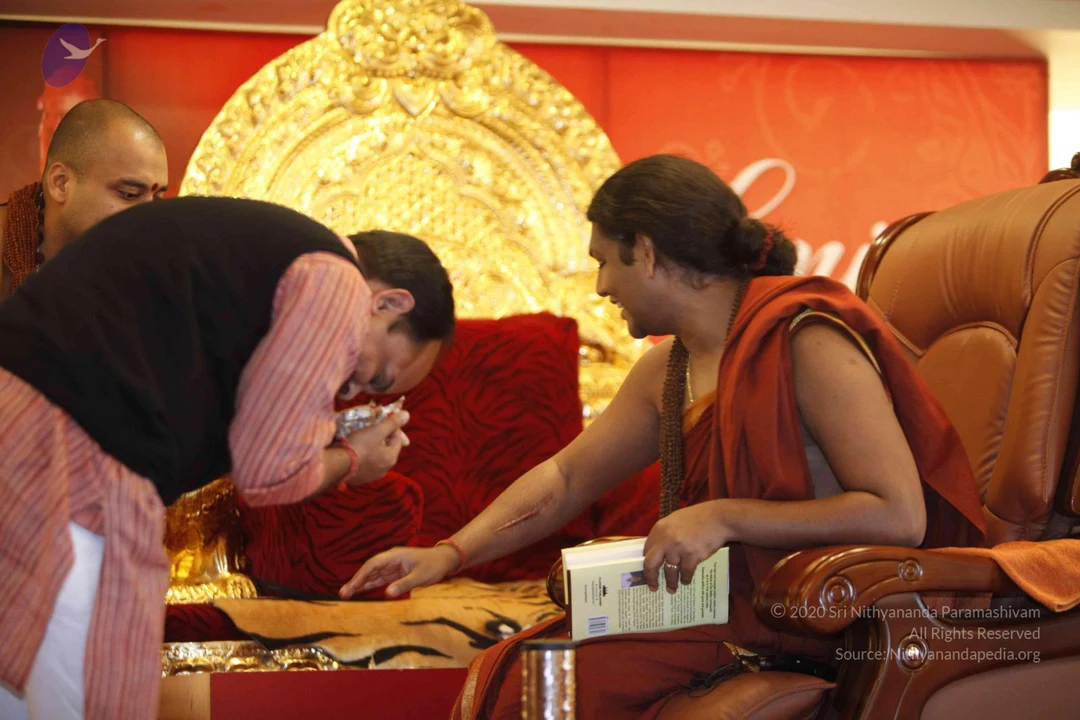
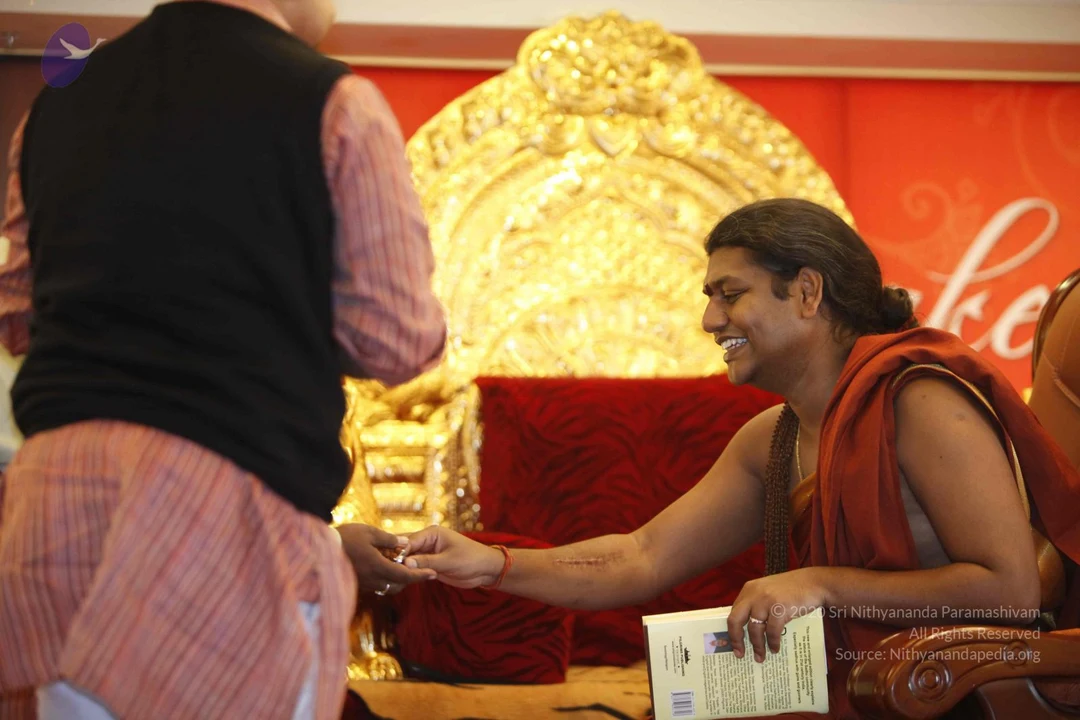
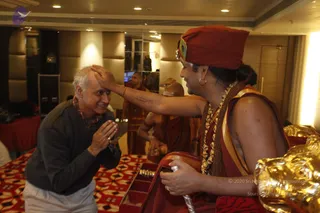
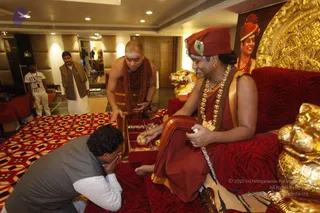
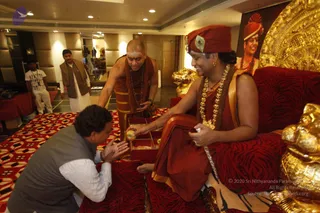
A photograph of a screen showing a hall at Nithyananda Nagaram Hyderabad with a queue of devotees on the left, many in white, blue and purple salwar or kurta. On the raised platform a woman in an orange sari with a white shawl stands with hands folded, and a man in white stands nearby. A long table in the foreground is covered with a red cloth and gold-bordered yellow cloths, holding bananas, a garland of white flowers and marigolds, and a tray of dry offerings. Bookshelves and red chairs fill the back of the room. A caption reads Nithyananda-Nagaram-Hyderabad.A photograph of a large screen showing a video frame of an indoor hall at a person Nagaram in Hyderabad. A long line of people in white, green, and blue salwar and kurta stands on the left, several holding papers. In the centre, a man in white kurta and a woman in an orange sari stand beside a red-cushioned seating area and bookshelves. In the foreground, a red table covered with gold-bordered cloth holds fruits, a red cloth with white flower garlands, and yellow cloths. Two blue and black mats lie on the floor, and a caption reads Nithyananda-Nagaram-Hyderabad.This is a screenshot of a live video feed showing an indoor ashram room. In the foreground, a woman in a maroon and gold sari stands beside a woman in a white salwar kameez with a blue shawl, who is holding a mobile phone in both hands. In front of them is a low table draped with a red and gold cloth, holding flowers, fruit and a small plate of offerings. Behind them, people in white clothes stand near shelves and a seating area, and a man in white stands at the left edge. A sun-like emblem appears in the top left corner and a banner caption reads Nithyananda-Nagaram-Hyderabad across the bottom. No a person is visible.Indoor photo in a hotel-style room with warm lighting and wood-panelled walls. A smiling man with short grey hair, wearing a grey sweater over a checked shirt and pale trousers, stands at left with palms pressed together in greeting. A robed figure in a deep red head covering, rudraksha mala with a large gold pendant, red-saffron wrap and gold trim, with a tilak on the forehead, places one hand on the greeter's forehead in blessing. Behind them, other robed figures in saffron and maroon stand near a red patterned carpet and a small wooden box of items. A gold balloon edge appears at right.A seated figure in a red-orange turban and matching saffron-red robe with a gold-edged shawl, wearing a long gold-and-beaded garland, sits on an ornate red throne-like sofa with gold carved armrests and a gold lion-head ornament. Holding an apple, they smile as a bald man in a saffron-brown robe with a rudraksha mala kneels and attends a red lacquered tray of fruit and offerings. Beside them, a man in a grey vest and white kurta bows his head and presses his hands to his face, kneeling on red patterned carpet. Two men stand in the background in casual and white clothing. A large framed portrait of a smiling woman in a red headdress hangs on the wall. The whole scene shows a devotional reception in an ornate hall. Swamiji (probable): the seated figure in red-orange turban, saffron robe and long garland on the throne.Indoor photo in a hotel-style hall with red patterned carpet and a gold ornate throne. A seated figure in a deep red-orange robe with a red turban, a gold-bordered garland and a beaded mala sits on a red velvet throne, smiling and holding a small round fruit or offering. A shaved-headed attendant in a rust-orange robe with a chain-like necklace and vertical tilak leans forward, holding an open red box of offerings. In front, a man in a grey vest over white kurta kneels with palms pressed together, receiving the offering. Standing men in the background wear a brown vest and white shirt. A large framed portrait of the same red-turbaned seated figure hangs on the right.

Meeting with Dignitaries

8 photosSource gallery
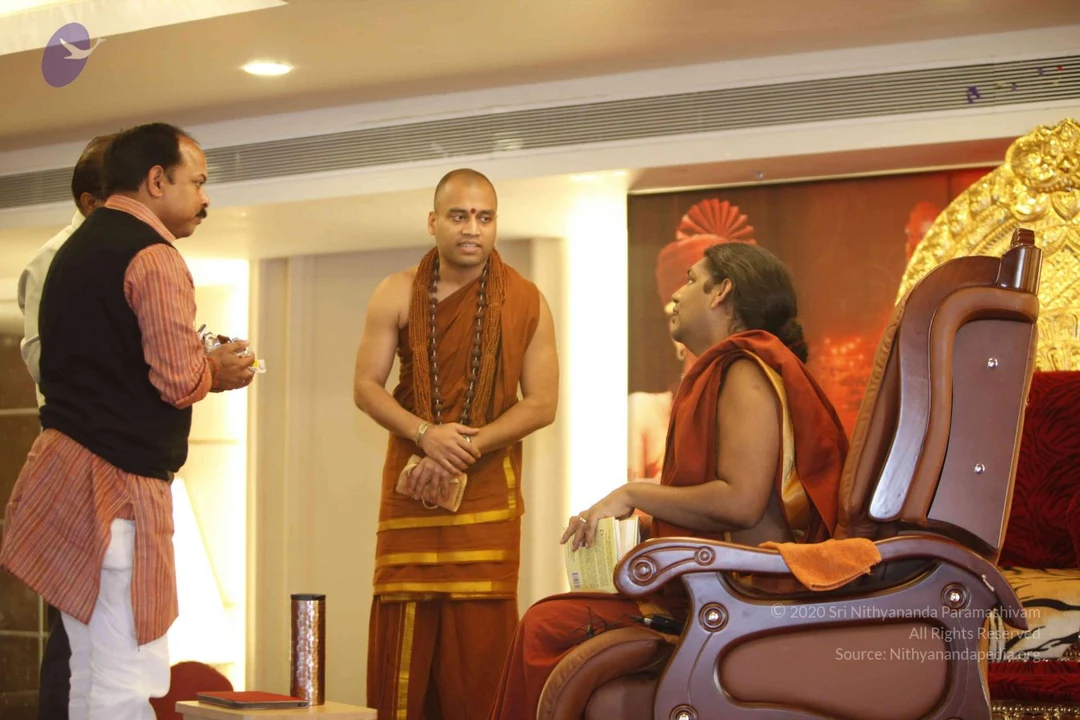
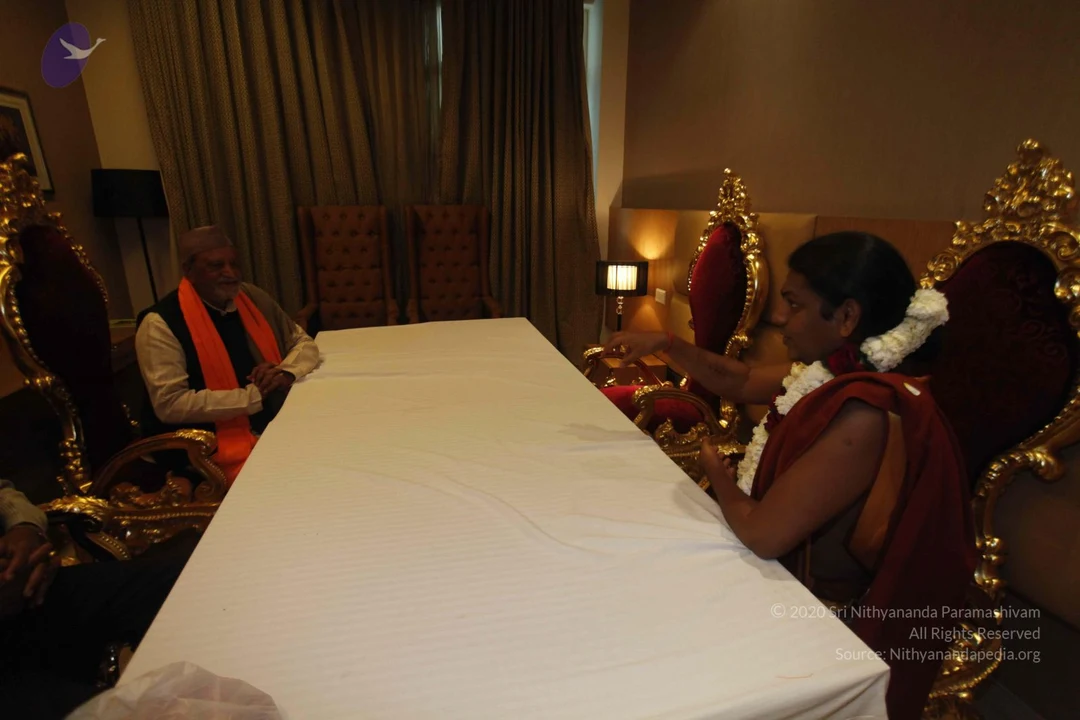
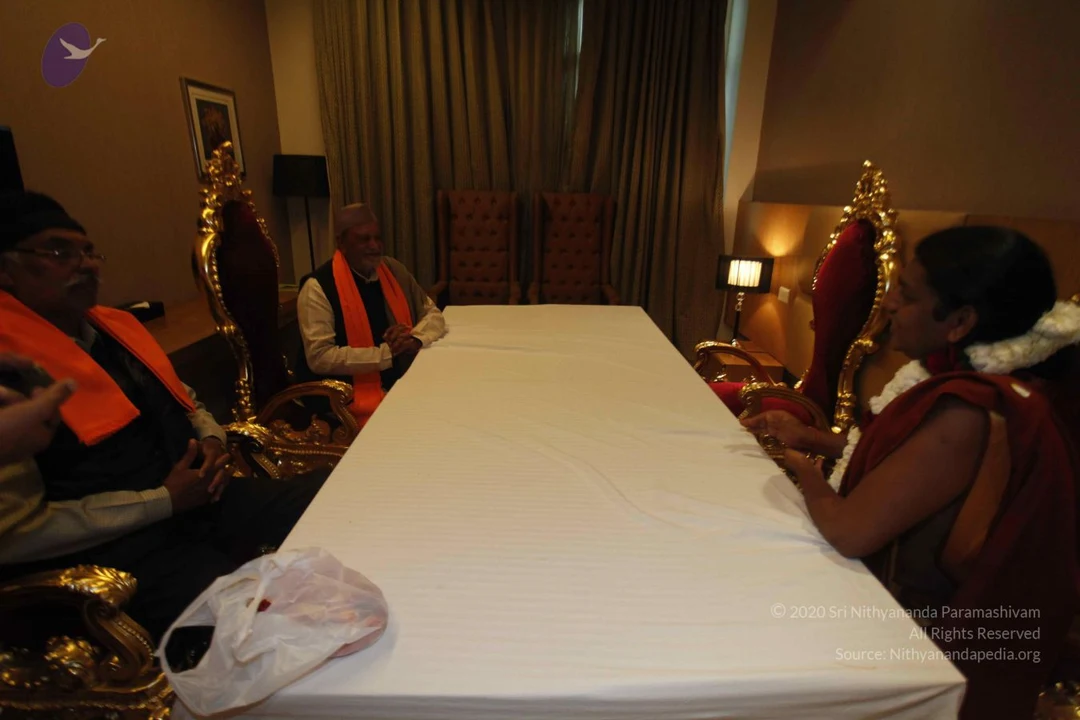
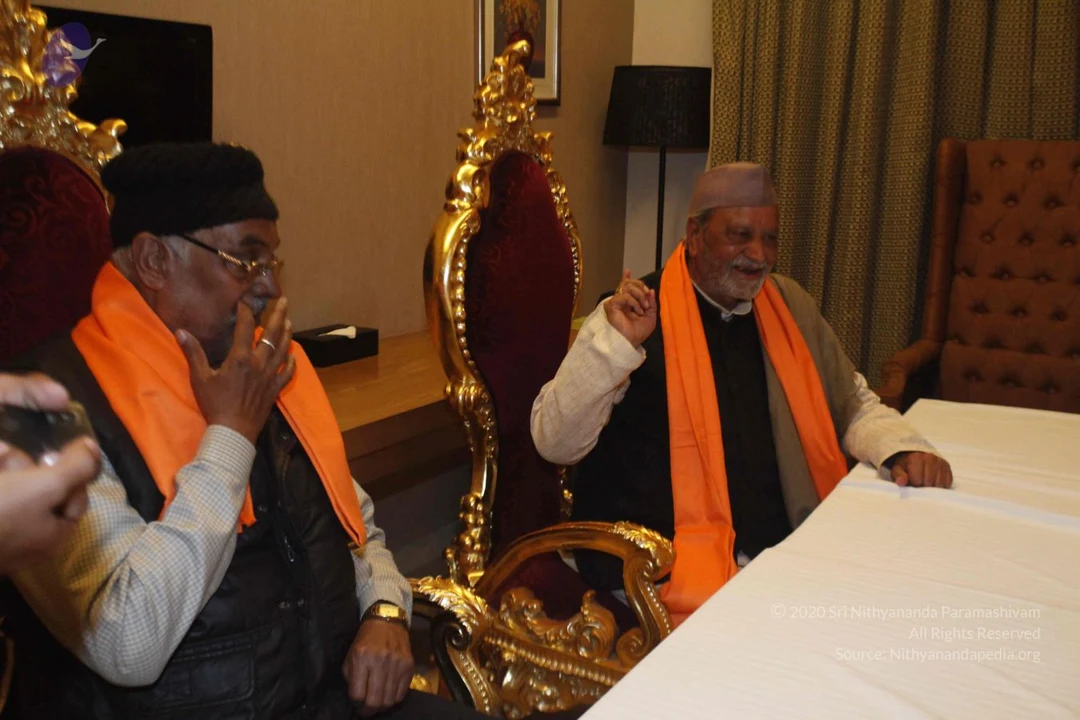
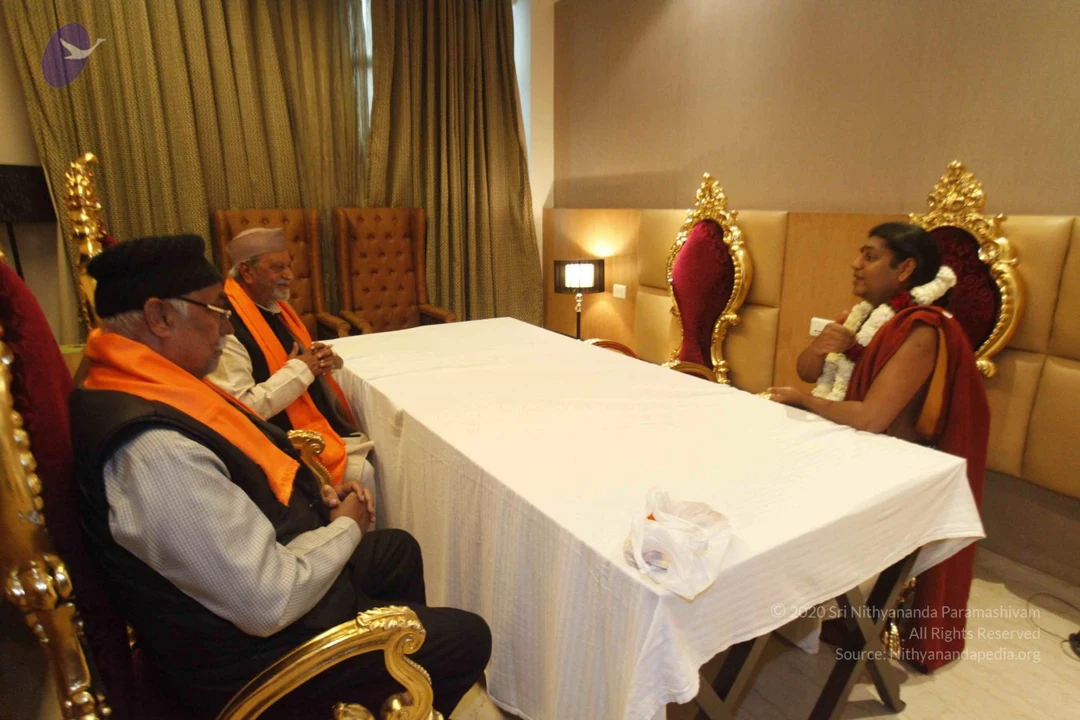
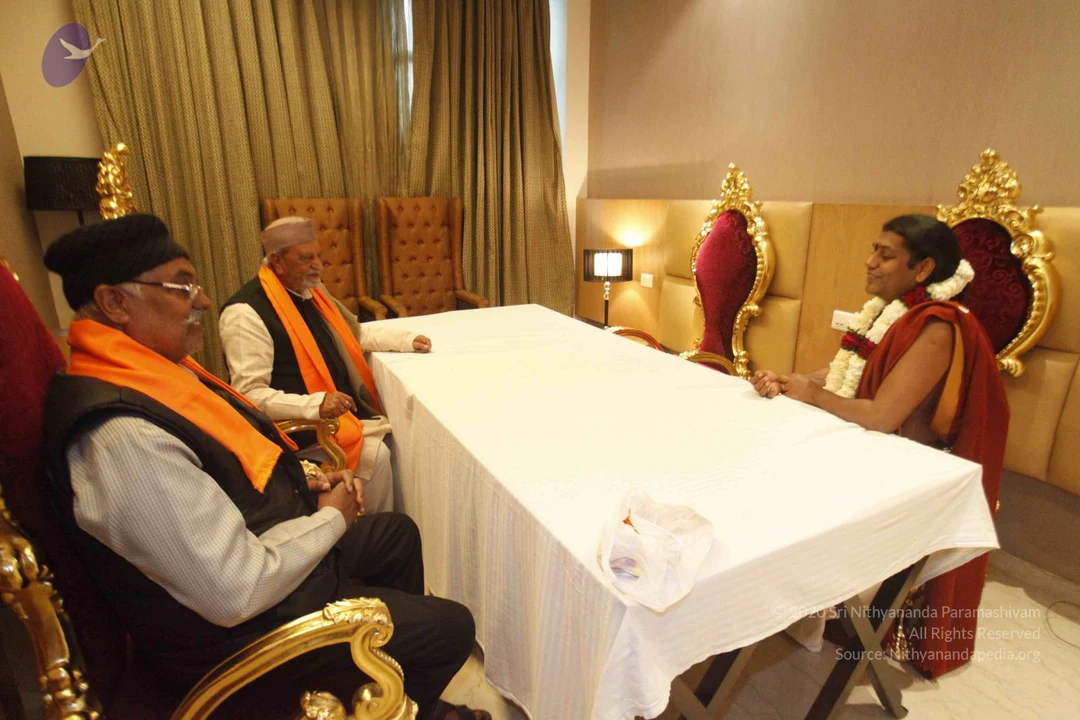
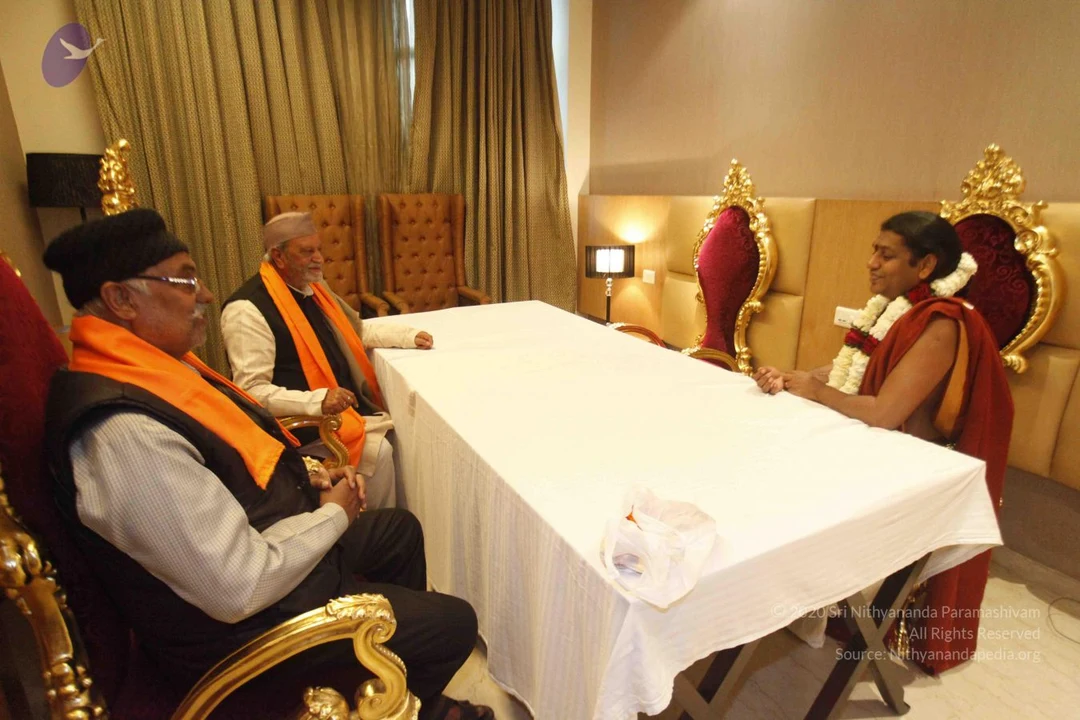
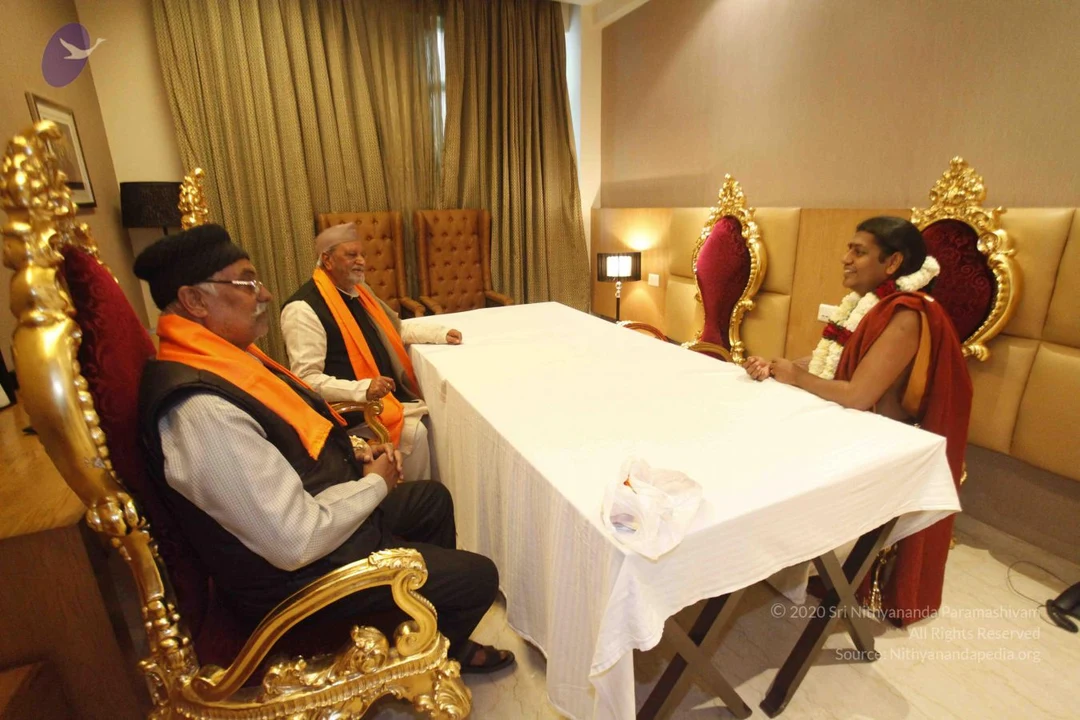
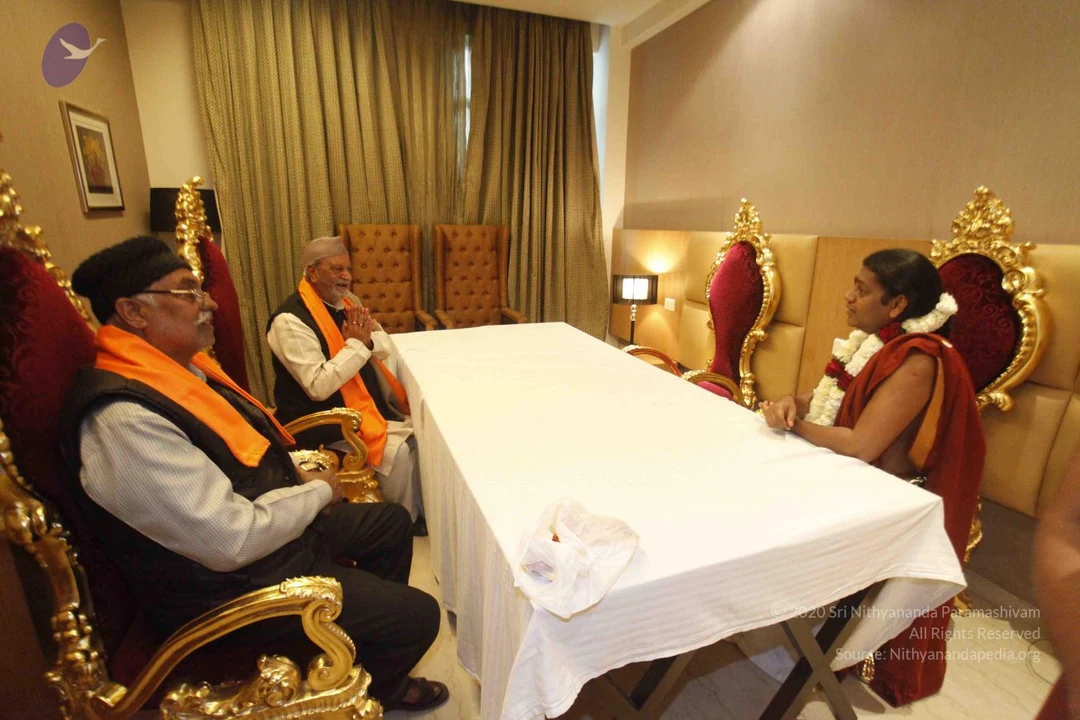
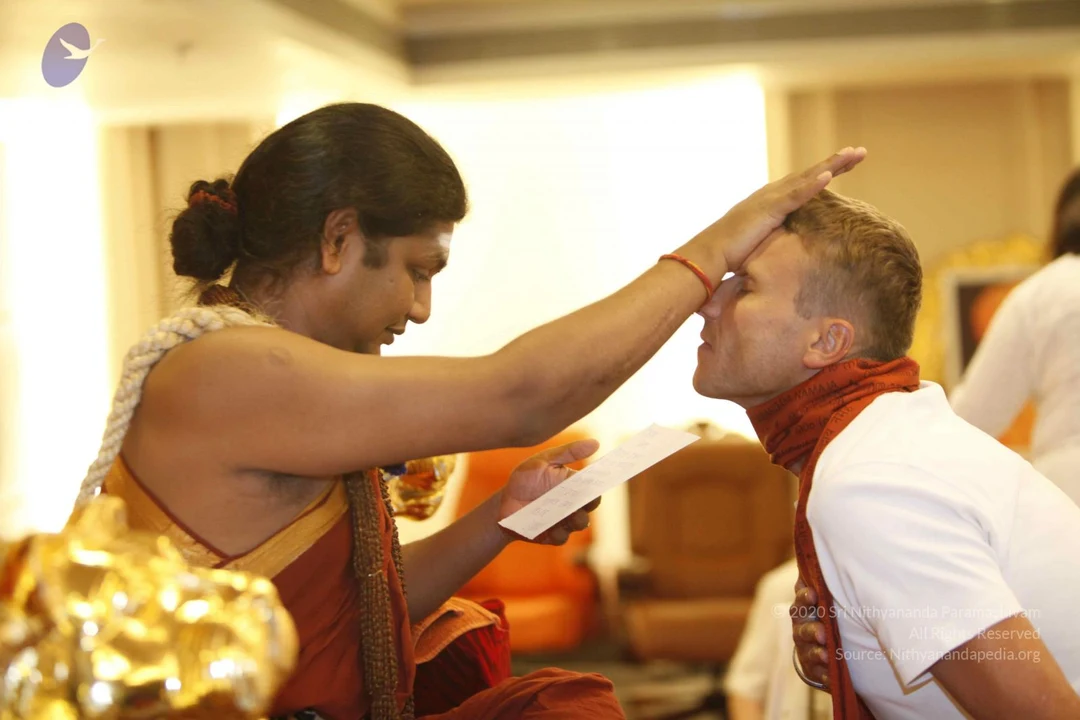
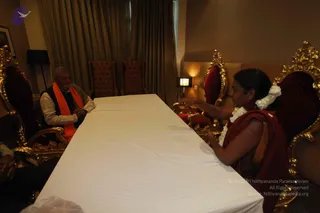
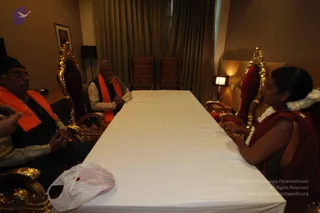
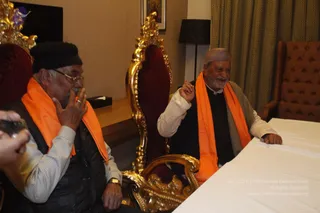
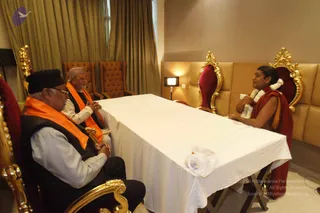
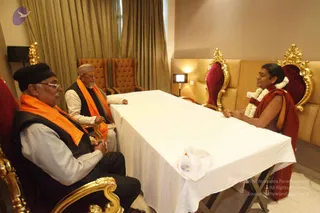
A photograph of a formal meeting in a hotel room with dark curtains and a long table covered in a white cloth. Two people sit facing each other on ornate gold-and-red throne-style chairs. On the left, an older man in a grey cap, dark vest and white kurta wears an orange saffron shawl and smiles. On the right, a robed person in maroon and saffron clothing wears a white flower garland in long dark hair and gestures with an extended hand toward him. A lamp stands on a side table.A photo of a long white-draped table in a warmly lit room with gold-framed red velvet thrones and tall tufted chairs. Three people are seated: on the left, a man in a dark cap and glasses wearing an orange shawl over dark clothing; in the centre, an older man with grey hair and a white shirt and dark vest wearing an orange shawl; on the right, a woman with a white flower garland and a maroon-red garment seated on a gold throne. A plastic bag sits on the table's left edge. a person candidate not clearly identifiable from appearance; the figures are shown as seated guests and a devotee with a garland.Indoor photo in a hotel-style room with a white-draped table in the foreground. Two older men sit in ornate gold-framed chairs with red velvet cushions. The man on the left wears a black knitted cap, glasses, a black vest over a checked shirt, and an orange shawl, and gestures with his hand near his face. The man on the right wears a light grey cap, a white kurta-style top, a dark sweater and an orange shawl, and raises one finger while smiling. A brown upholstered chair and dark curtains stand at the right. No deity murti, ritual items or readable event signage are visible. Appearance cues are not distinctive enough to identify a candidate, so the role is given as devotees seated for a meeting.Photograph of an indoor meeting in a warmly lit room with gold-framed red velvet chairs and a long table draped in white. On the right, a man with short dark hair wears a red-brown robe, a white floral garland and a white flower-garland necklace, seated in a gold-and-red throne-style chair and facing left. Across the table on the left, two older men sit in chairs: the nearer man wears a black cap, dark vest and white shirt with an orange shawl, and the other wears a white cap and an orange shawl over dark clothing. Curtains and a small table lamp are in the background, and a plastic bag rests on the table. The seated figures have their hands clasped or resting in their laps.Three men sit across a long table draped in a white cloth in an ornate room with gold-framed red velvet thrones and cream-padded walls. On the right, a figure in a rust-red robe with a white floral garland sits upright with hands clasped, facing two men on the left. The man nearest the camera wears a black cap, glasses, a dark vest over a checked shirt, and an orange shawl. The man beside him wears a white cap, white kurta, dark vest and orange shawl. A plastic bag sits on the table. Curtains, a floor lamp and a small table lamp are visible behind them.A photograph of a meeting in a hotel-style room with cream walls, beige curtains and a white-draped table. On the right, a man with short dark hair wears a white garland and a red-orange shawl over a dark robe, seated in an ornate gold and red throne-style chair and facing the table. On the left, two older men sit at the table wearing orange scarves; the nearer one wears a black knit cap and dark vest, the other a white cap, white kurta and dark vest. A lamp and a small white bag sit on the table.

Inner Awakening DARSHAN

47 photosSource gallery
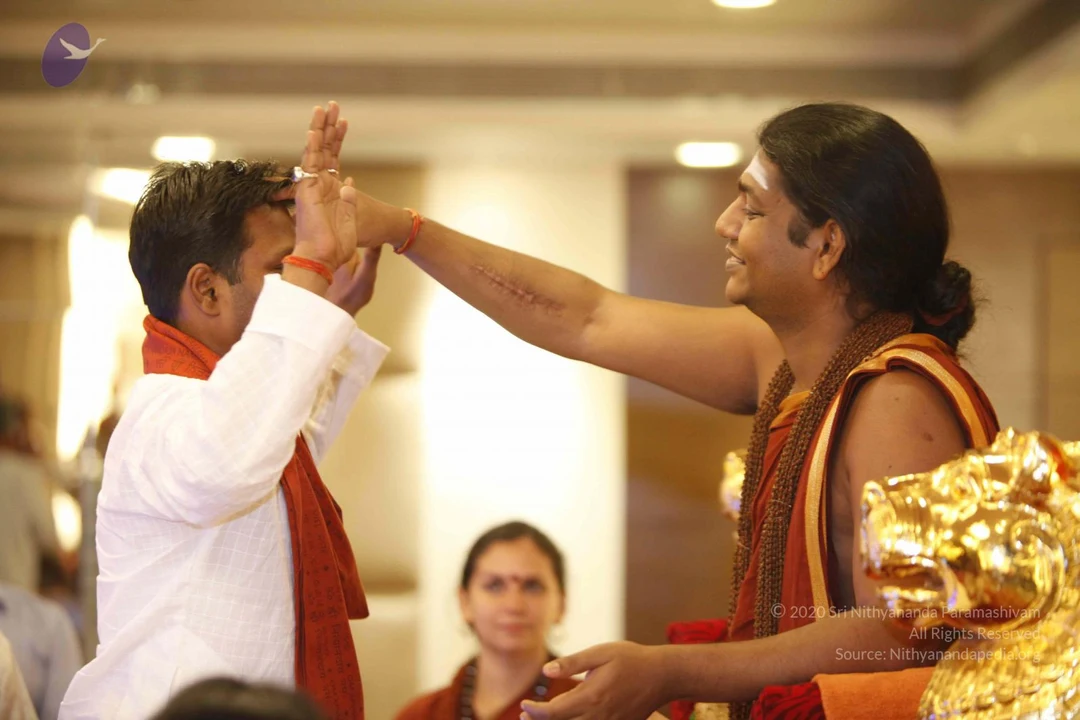
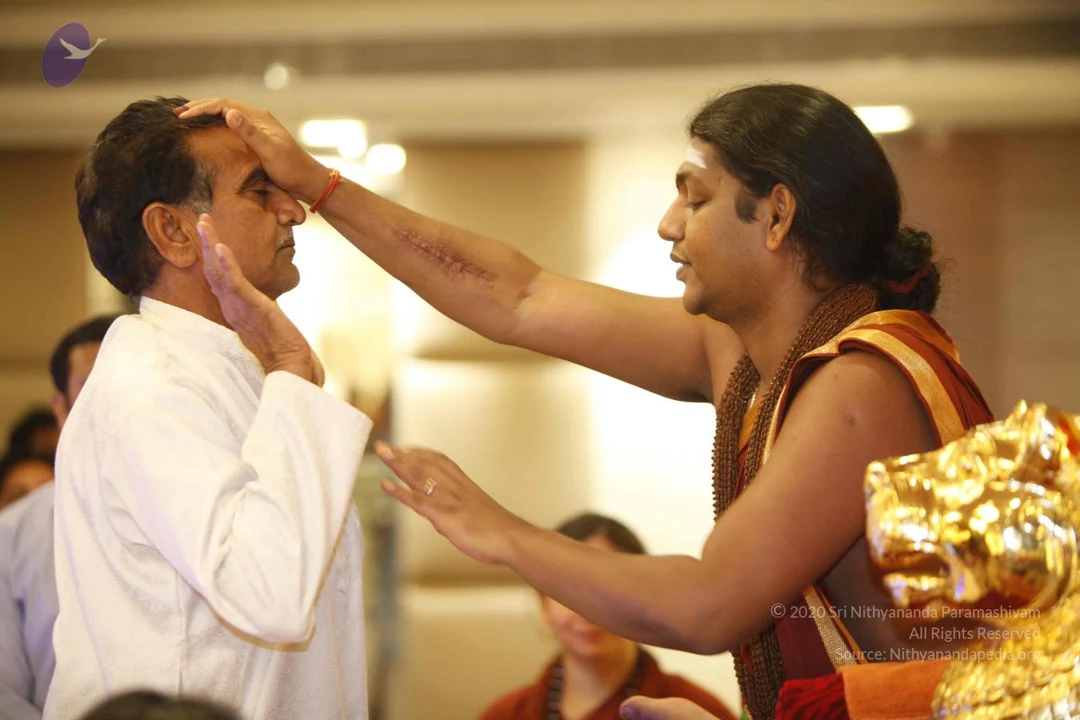
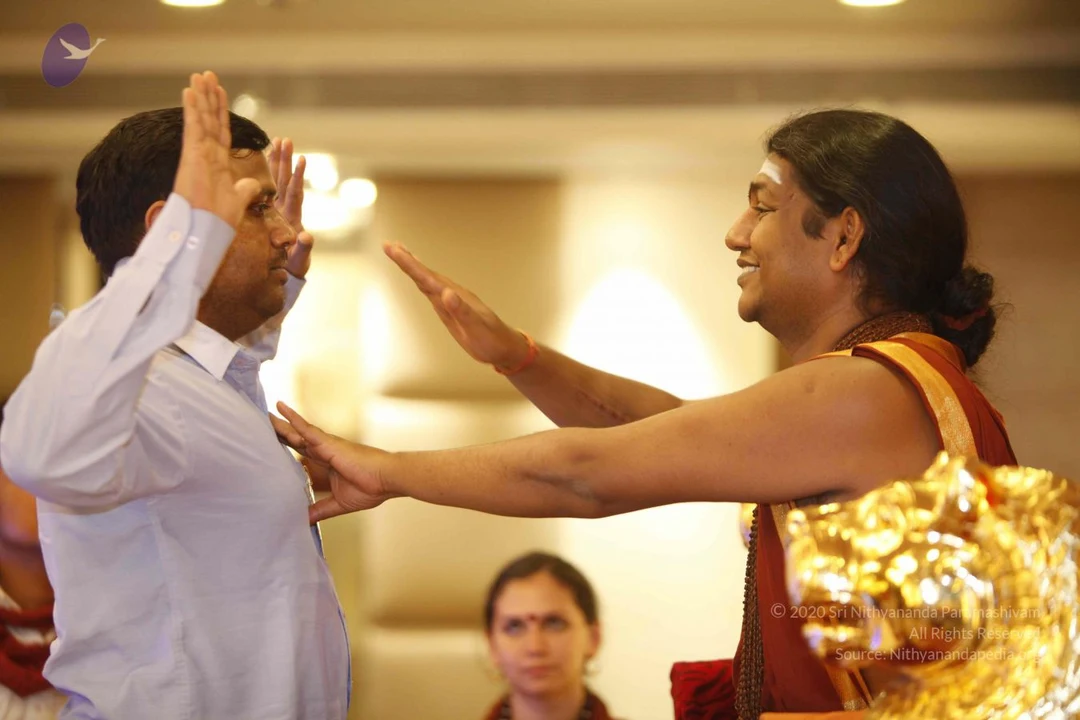
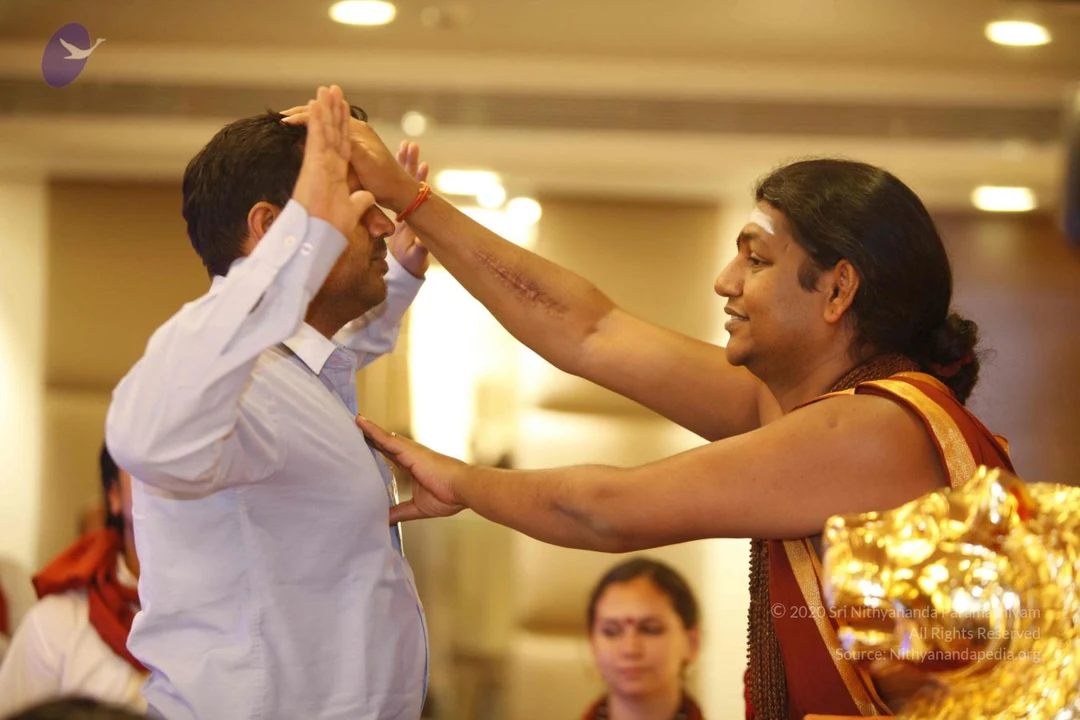
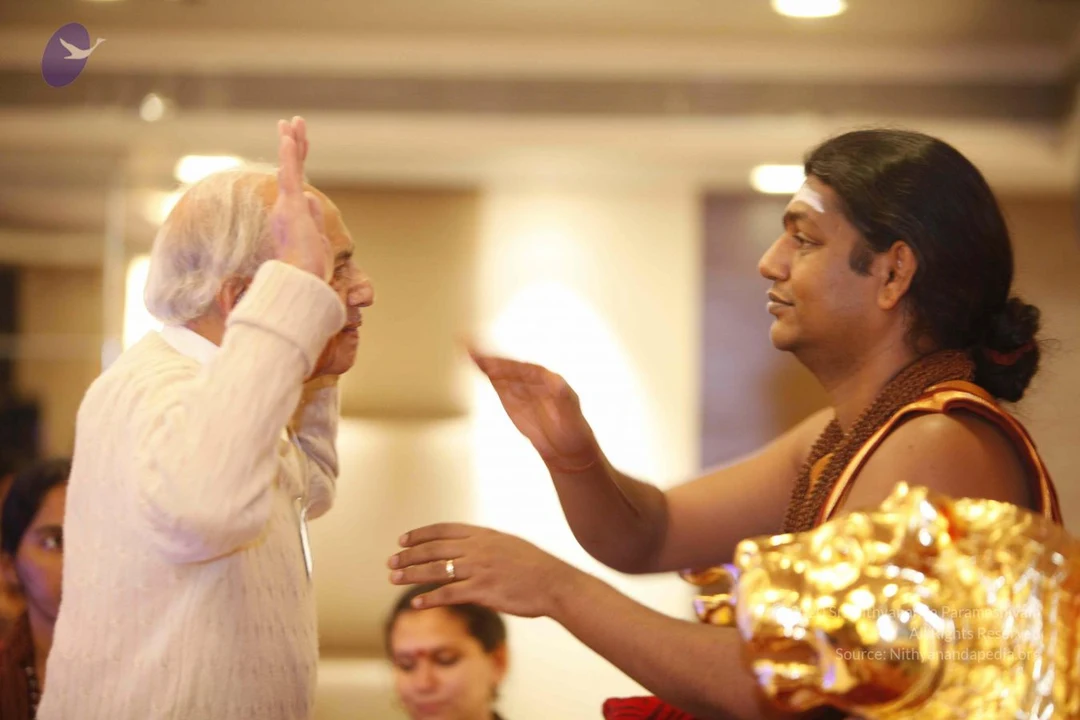
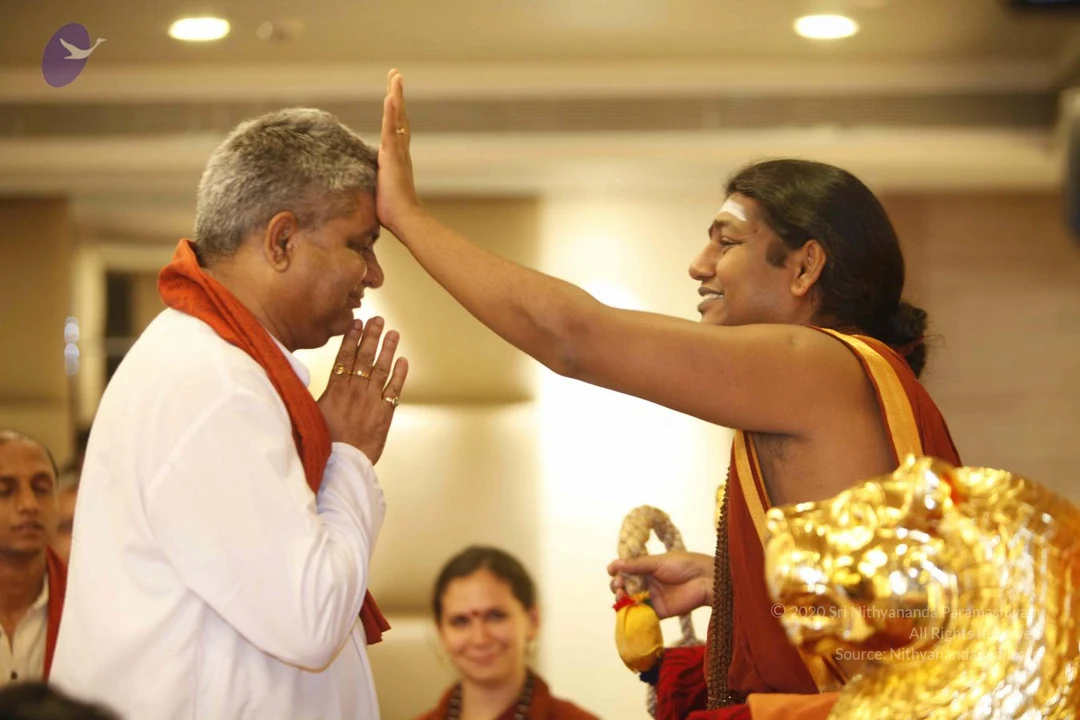
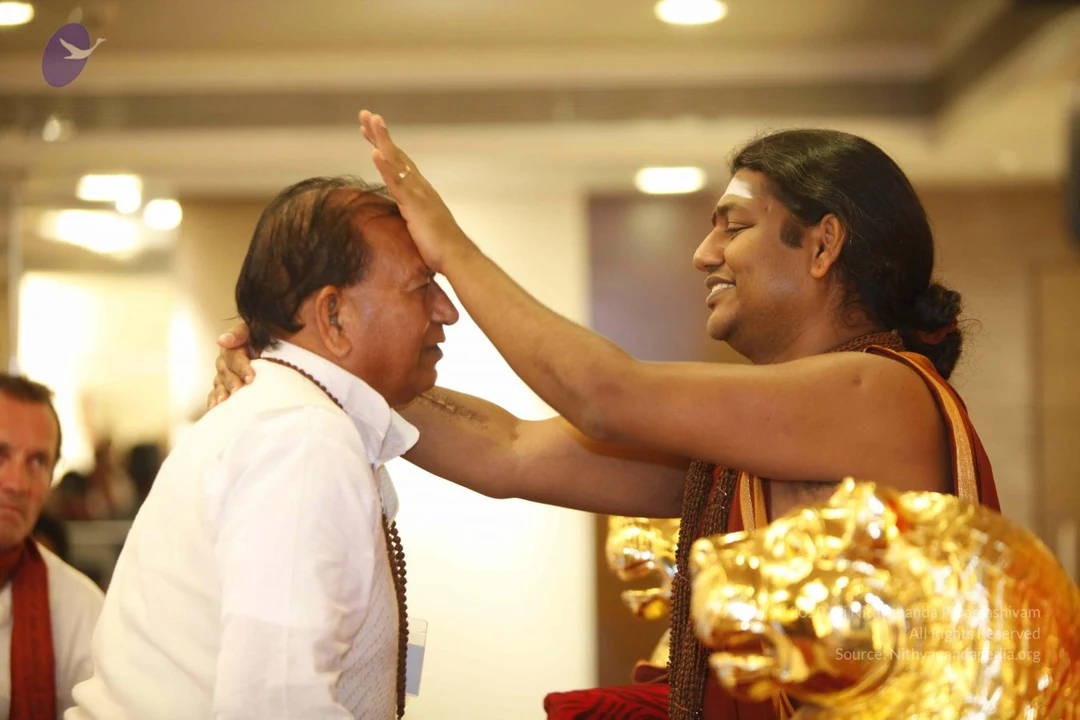
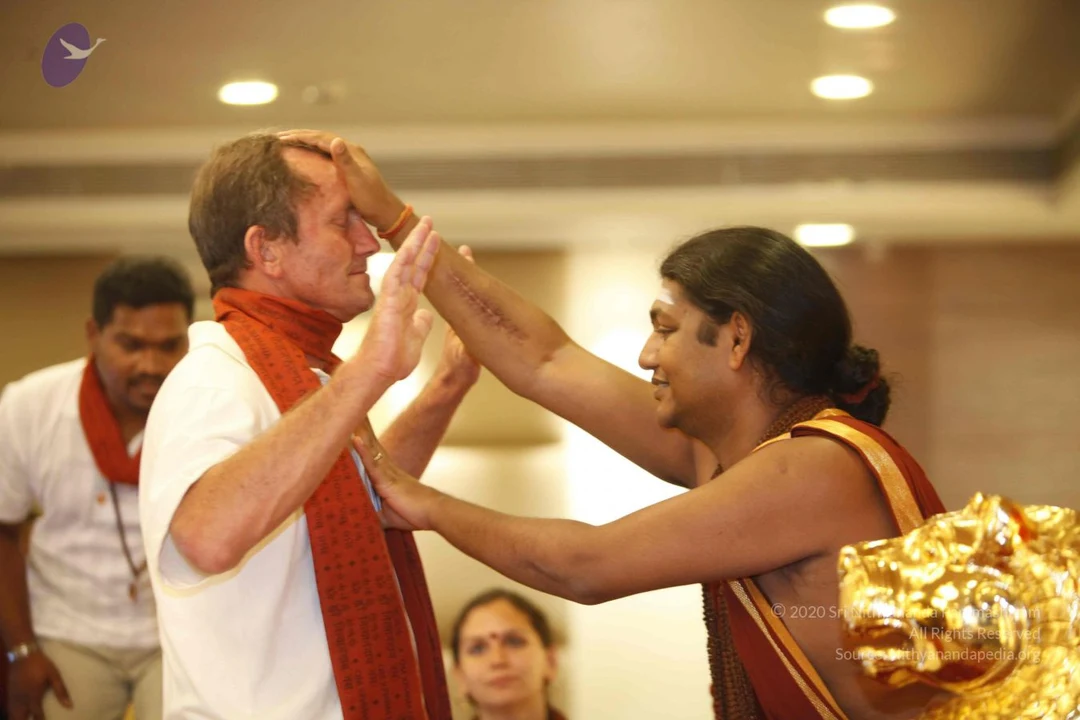
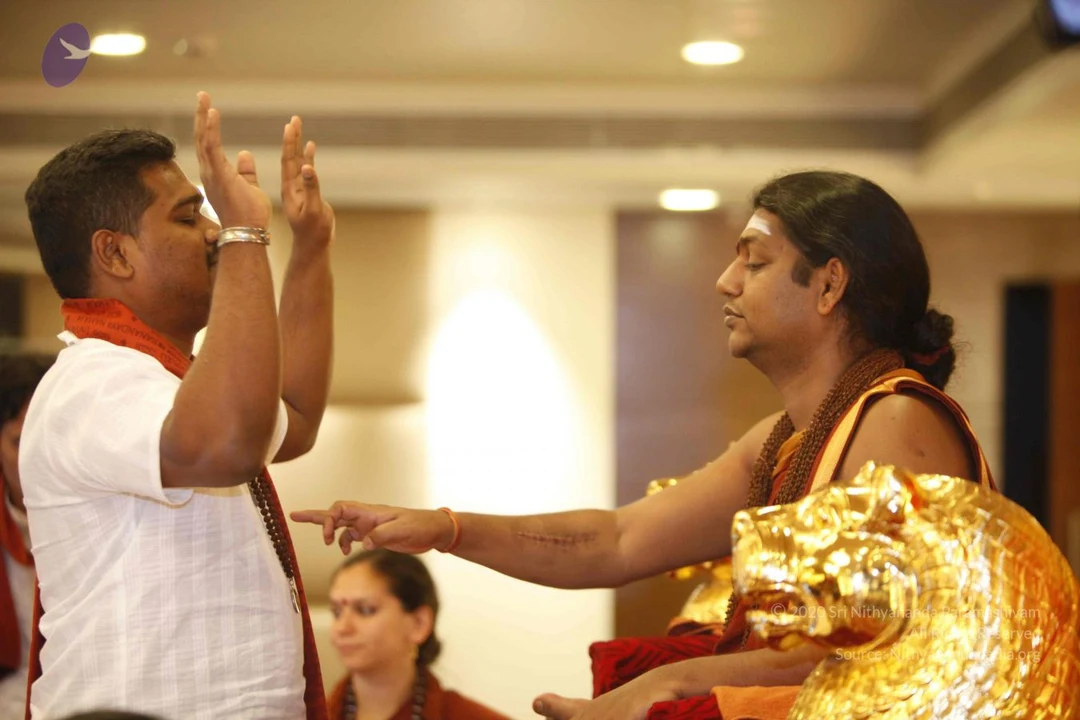
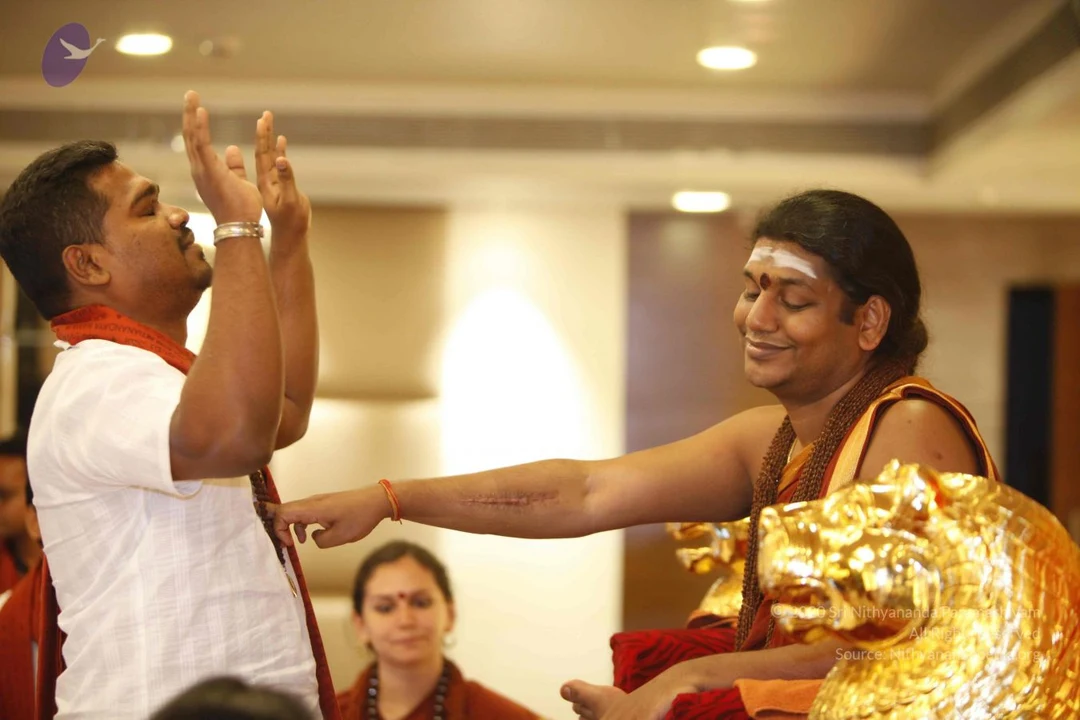
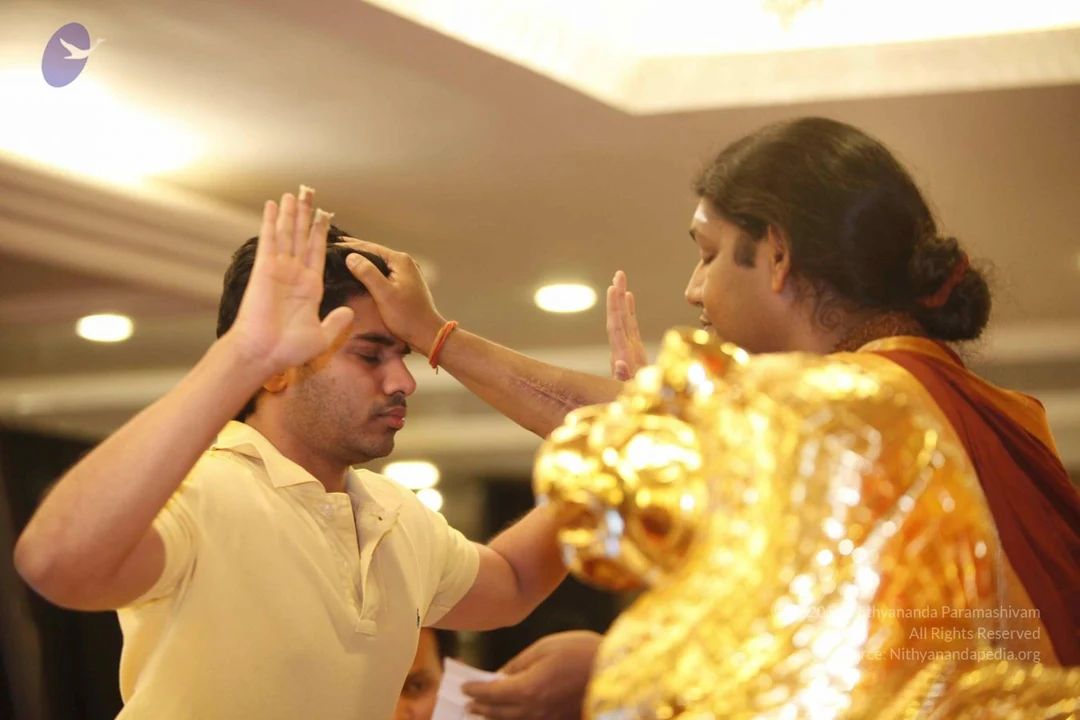
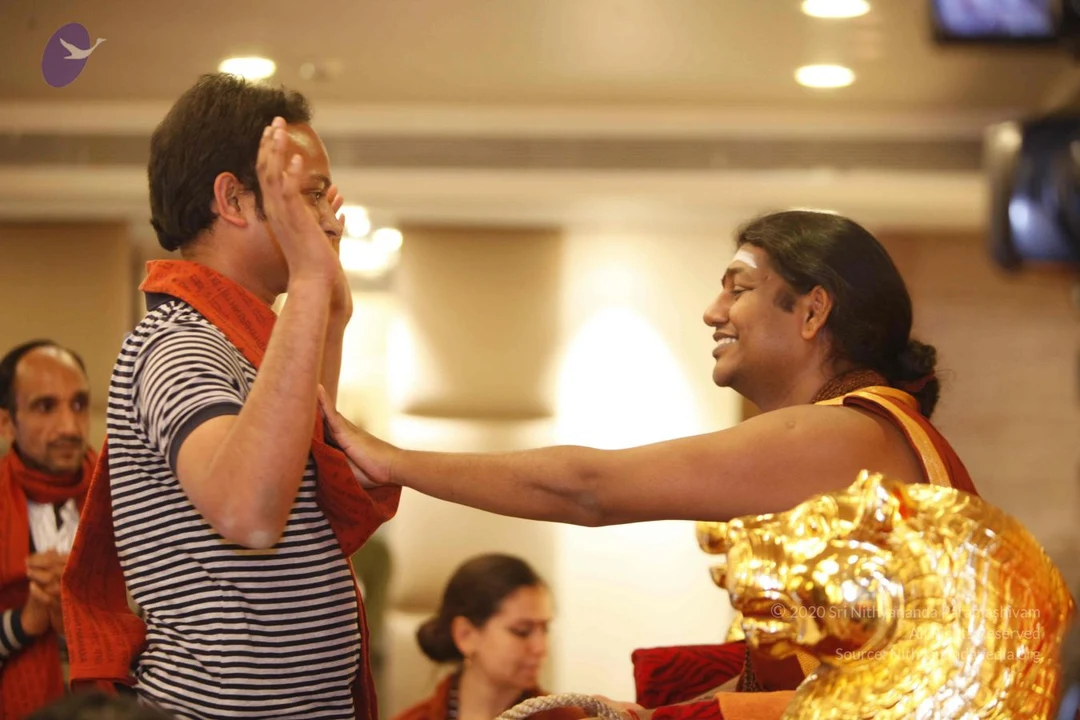
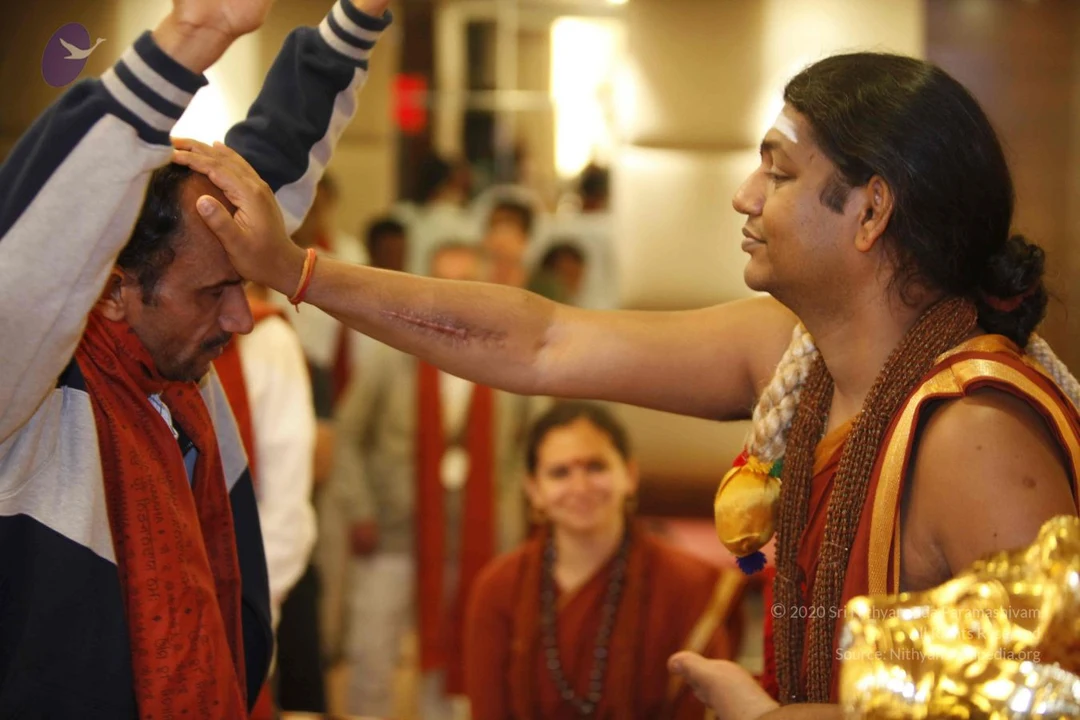
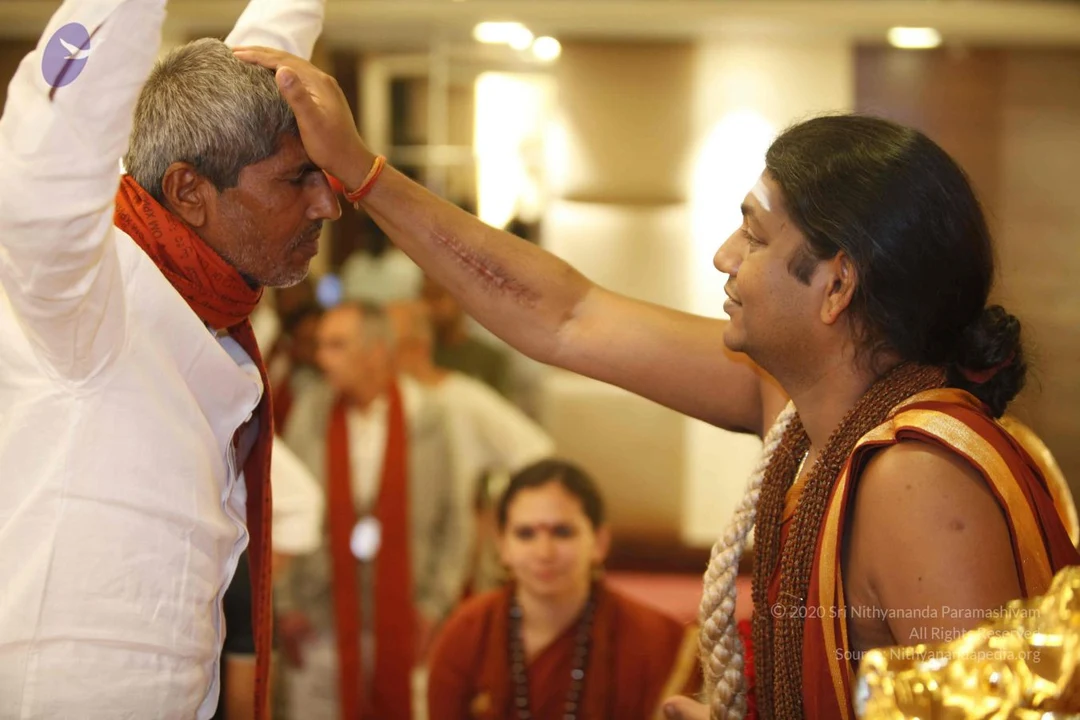
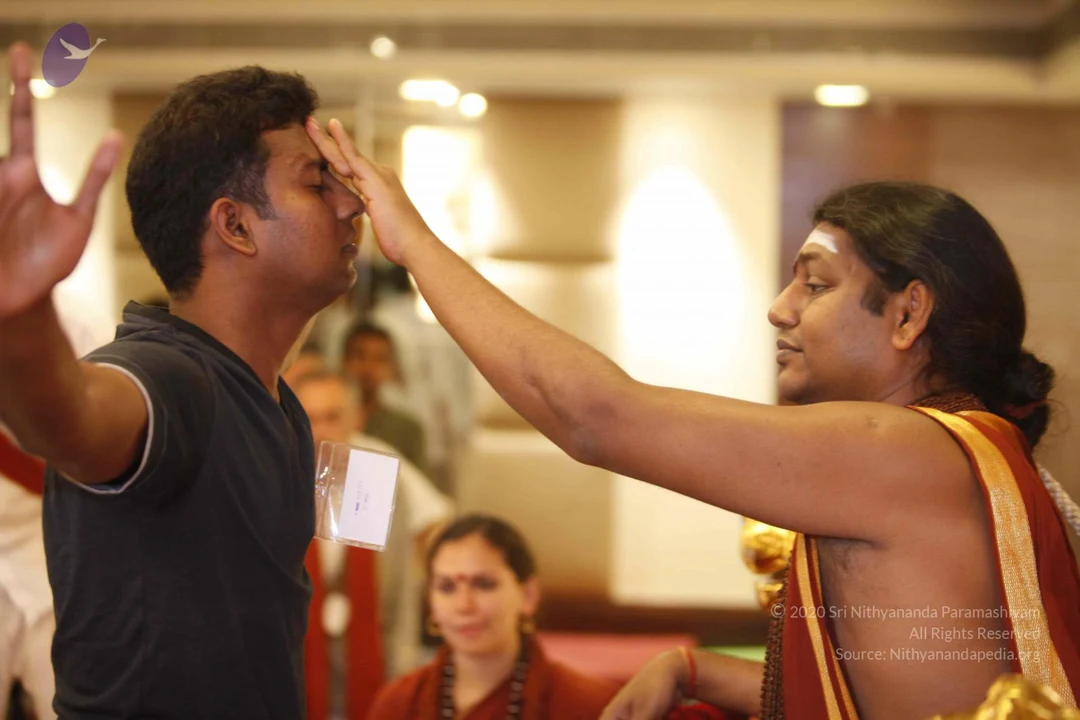
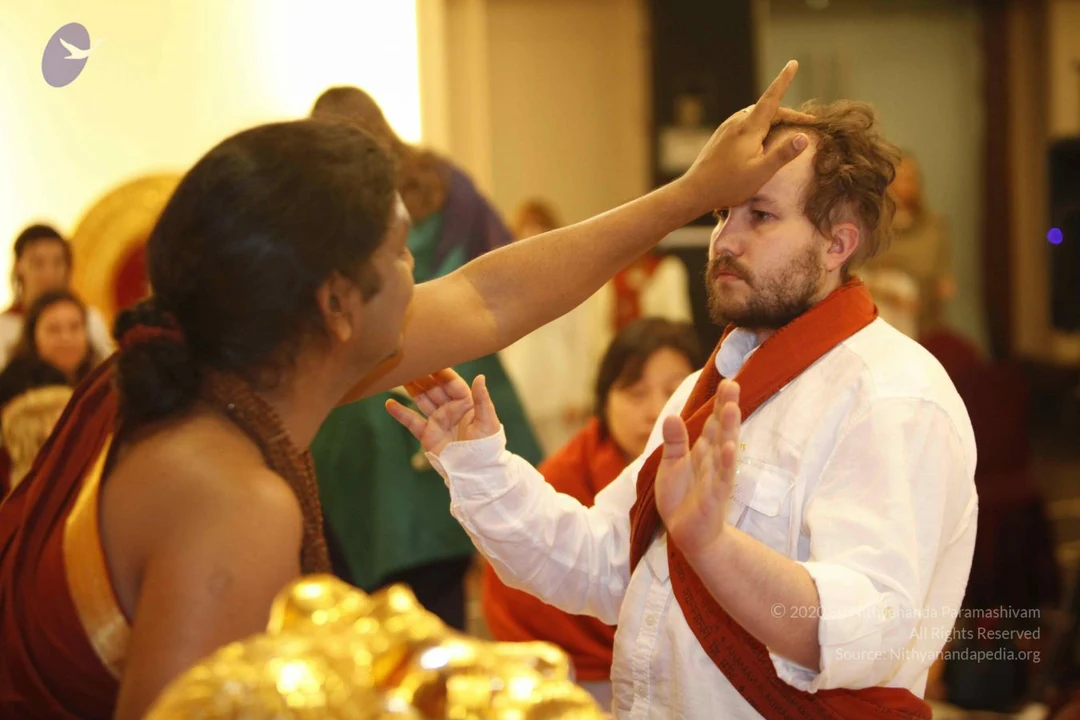
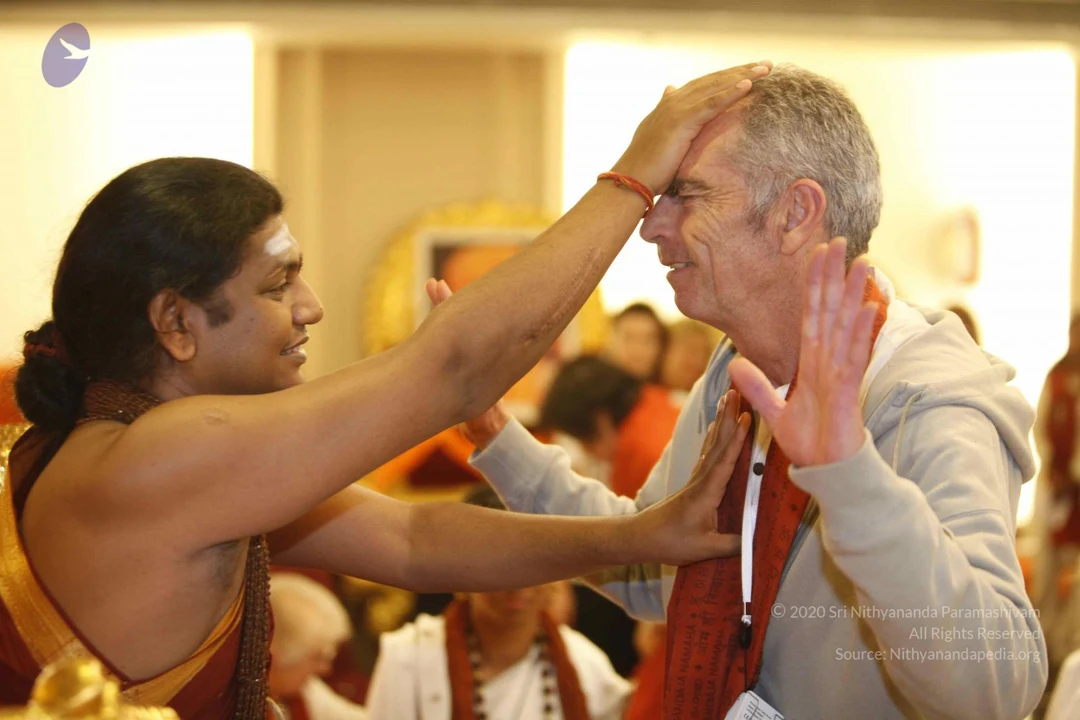
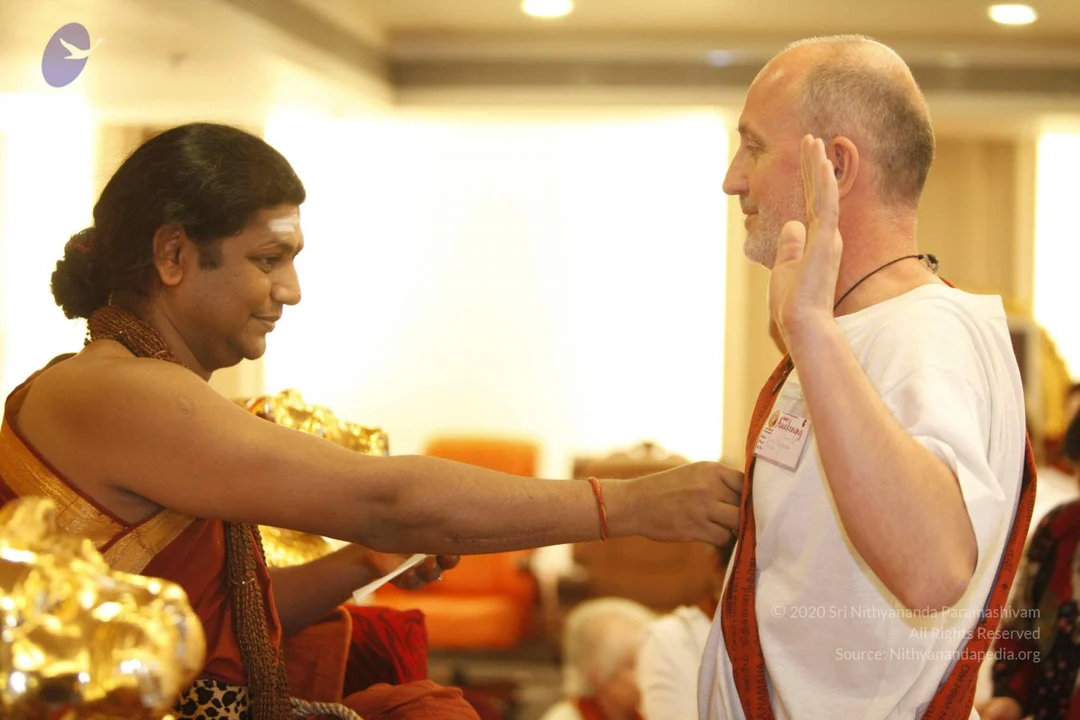
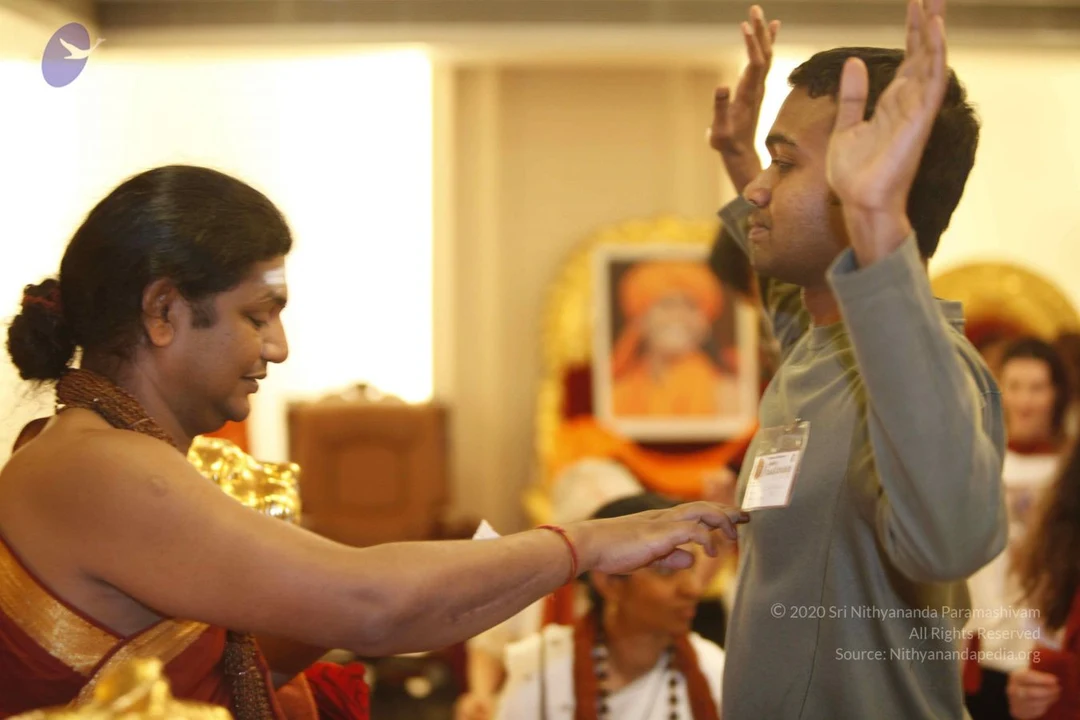
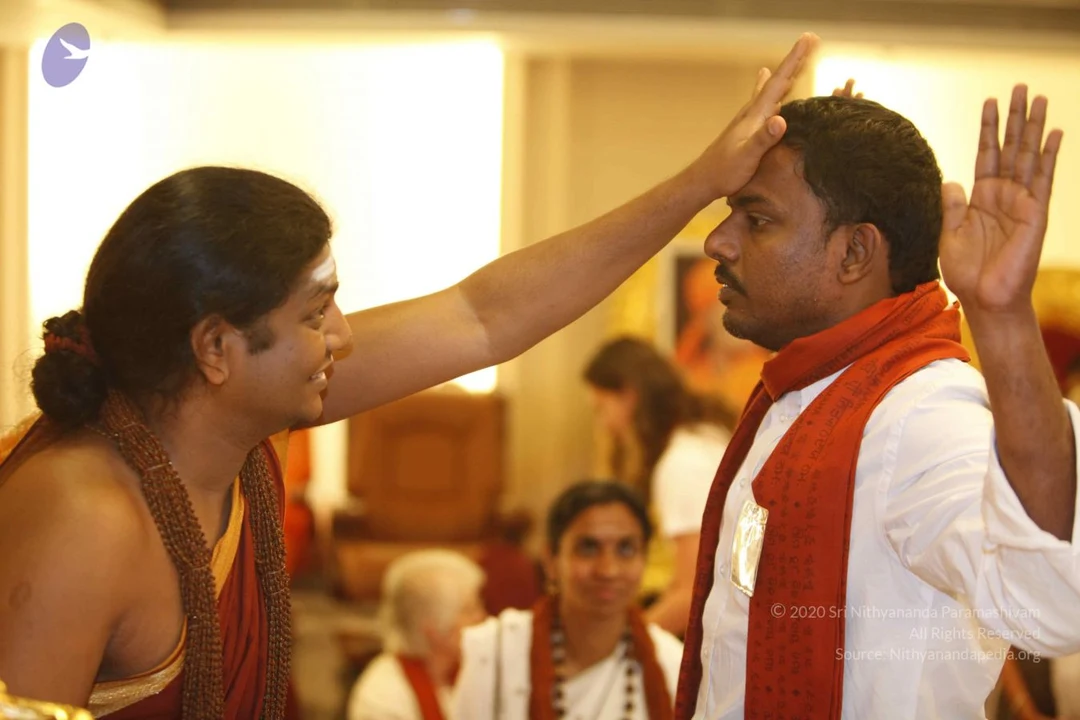
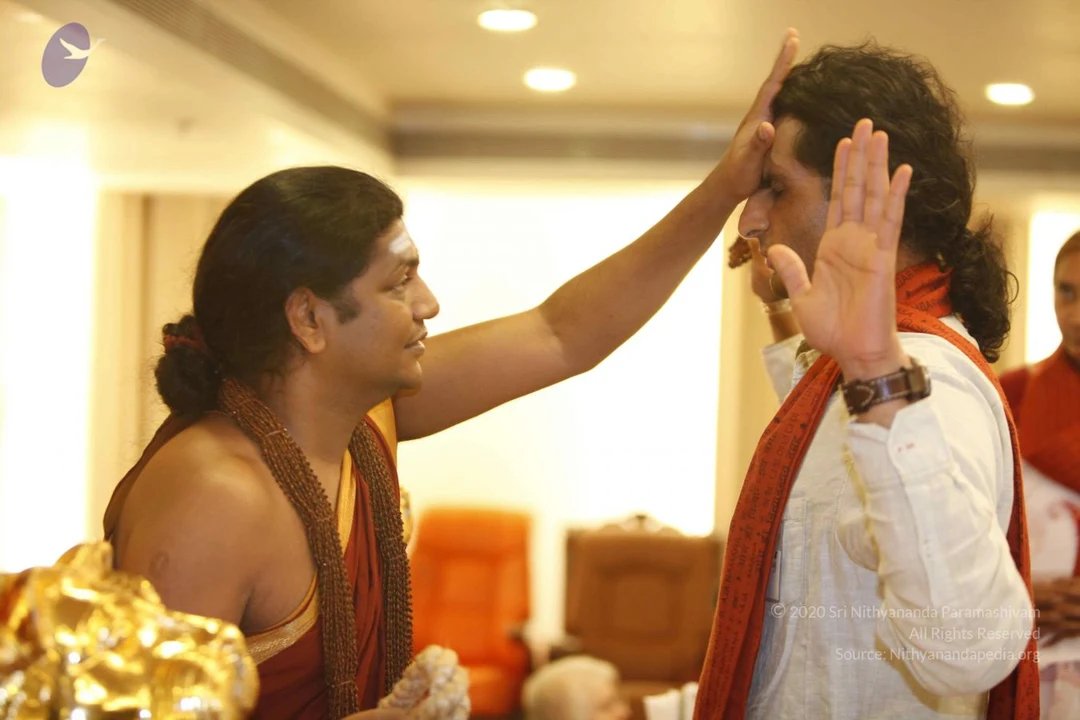
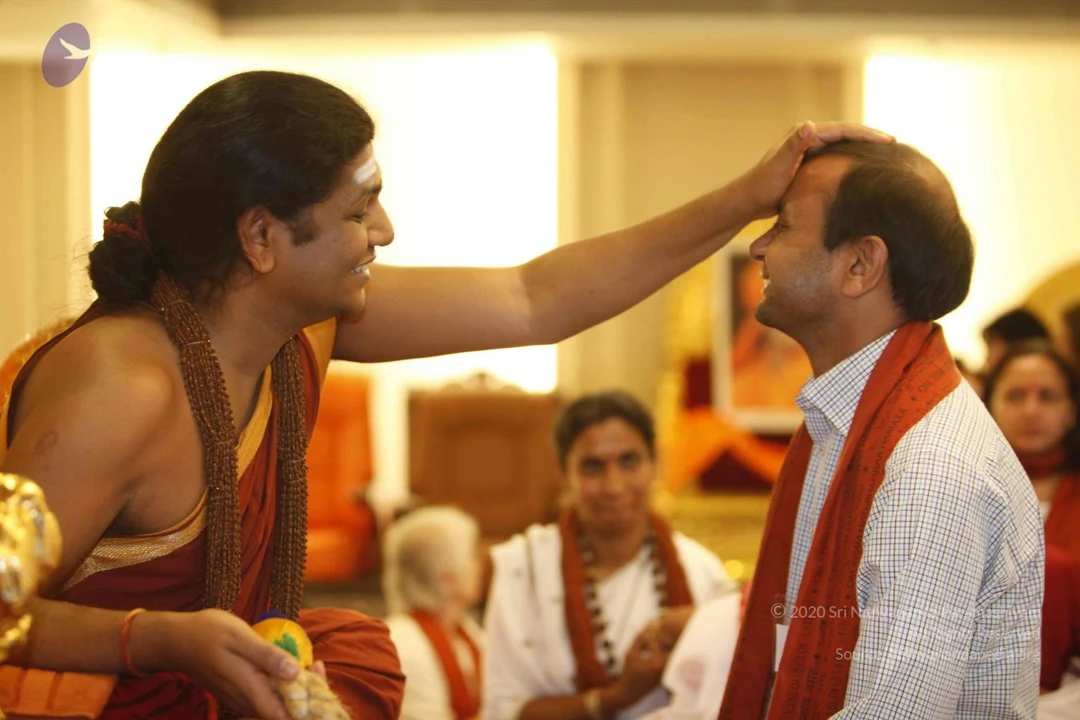
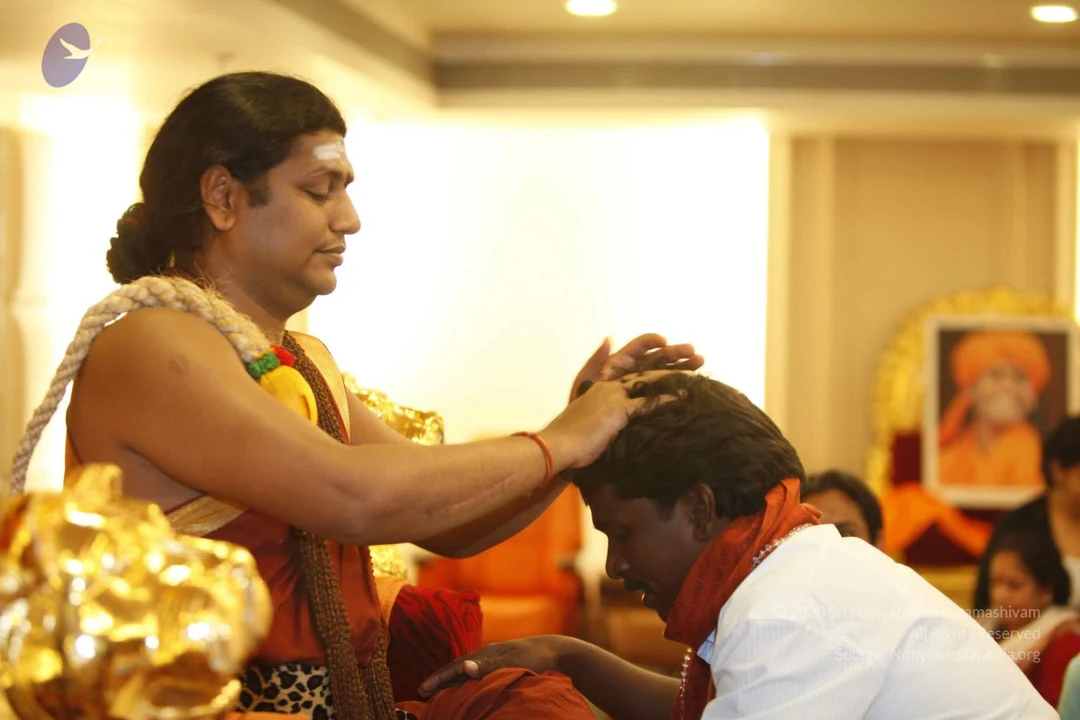
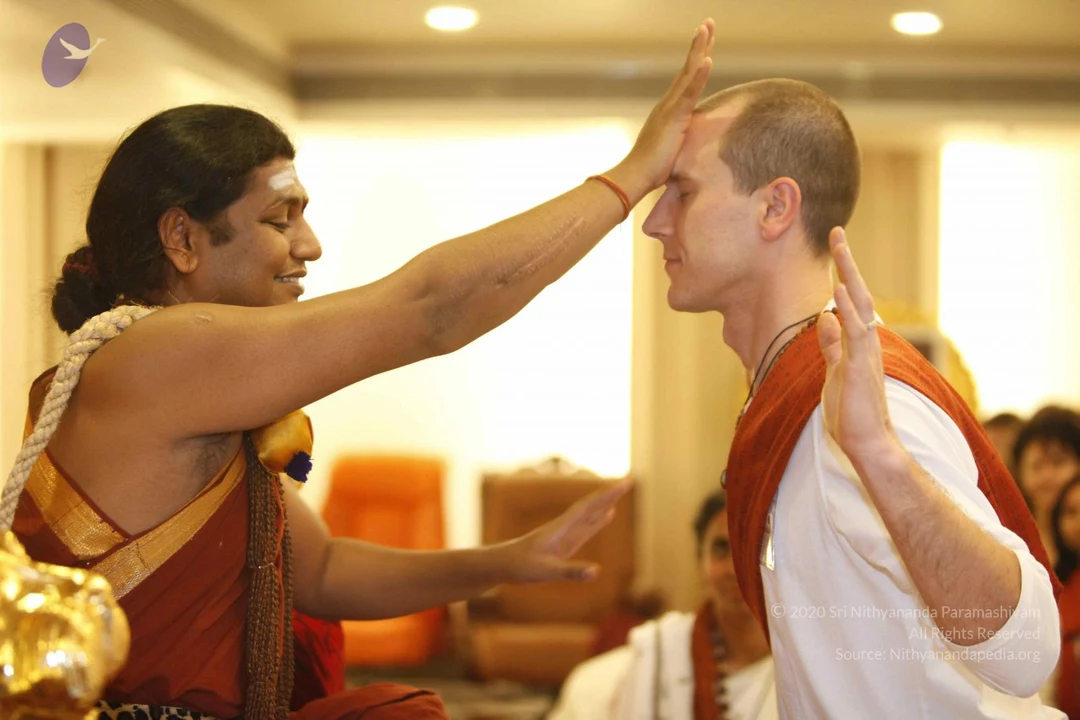
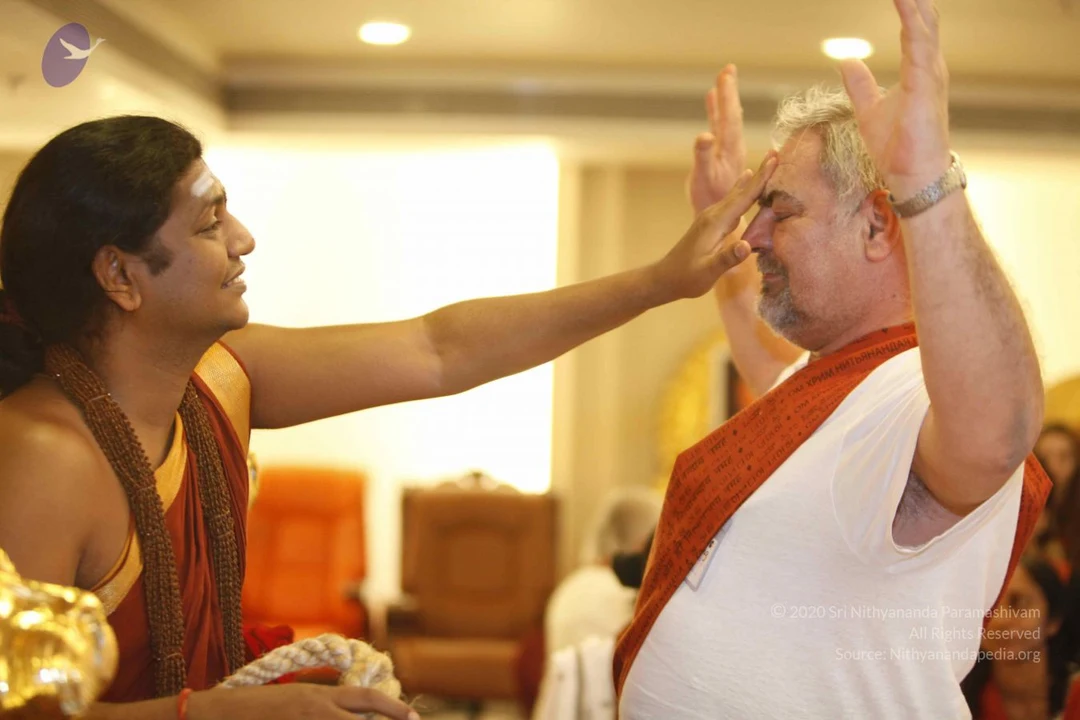
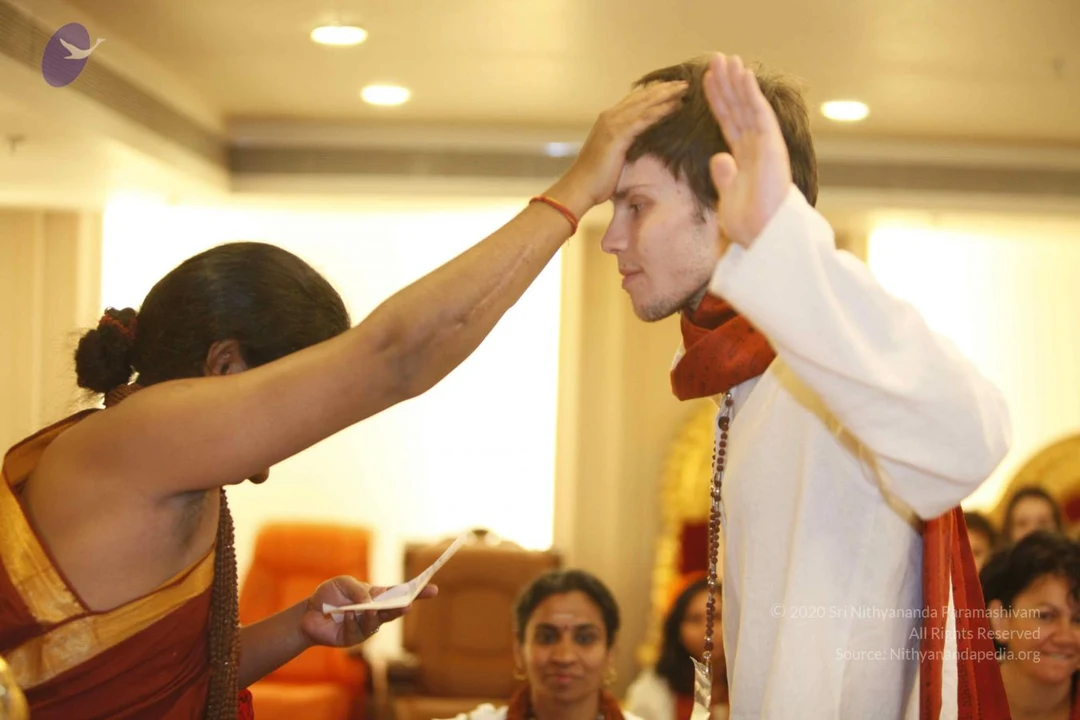
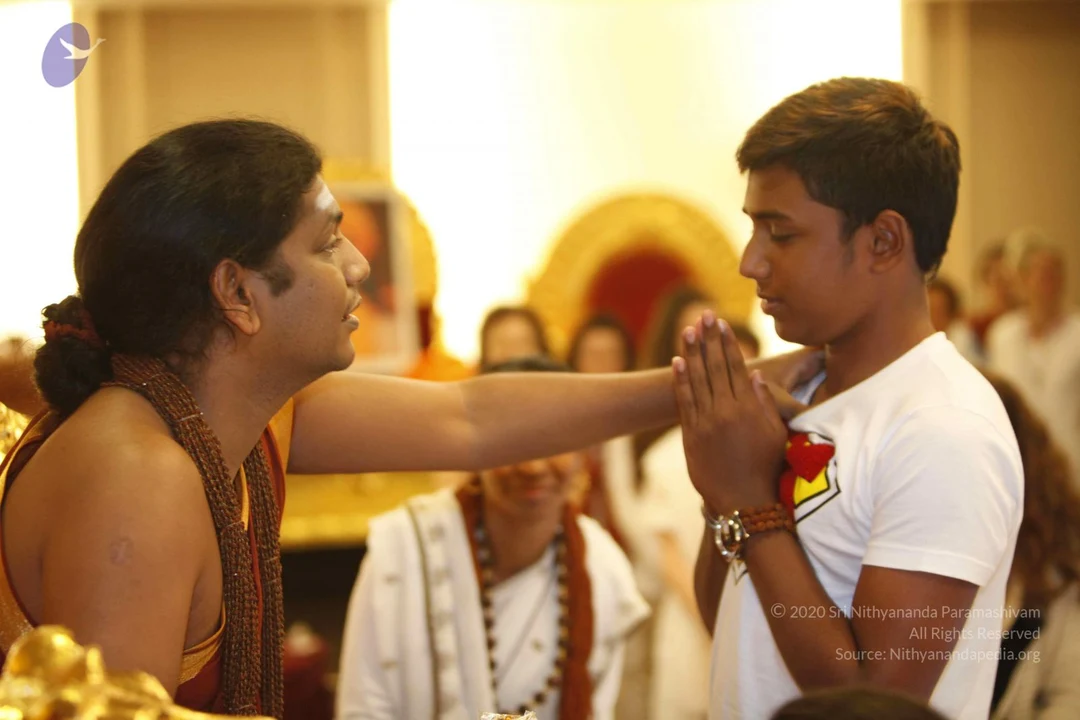
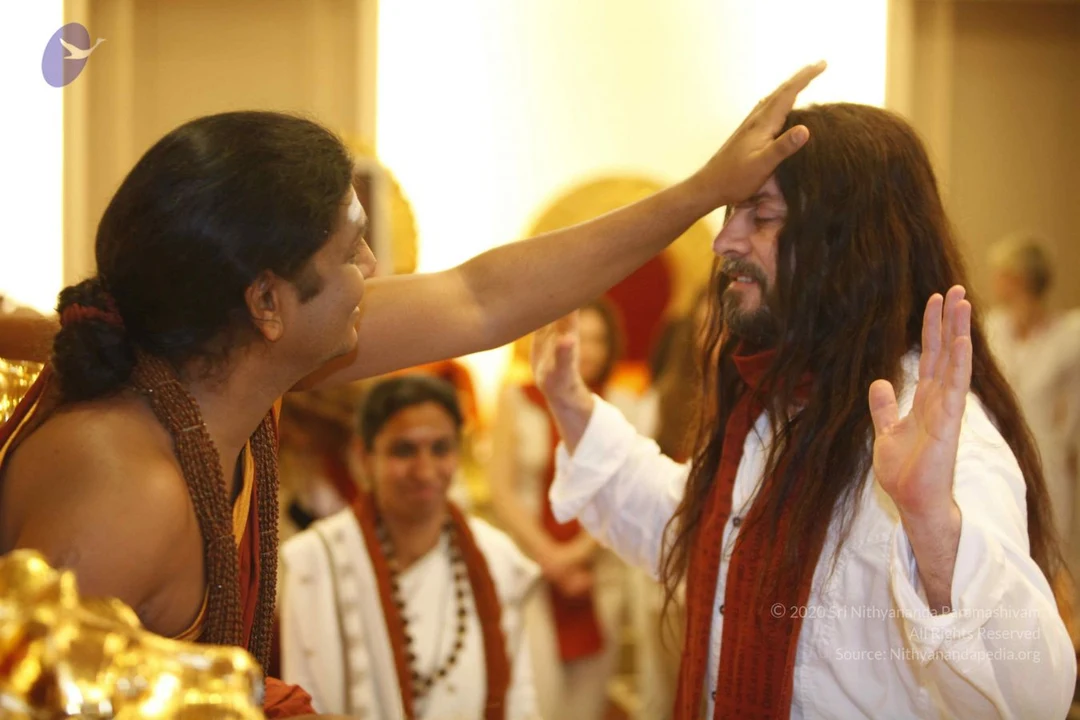
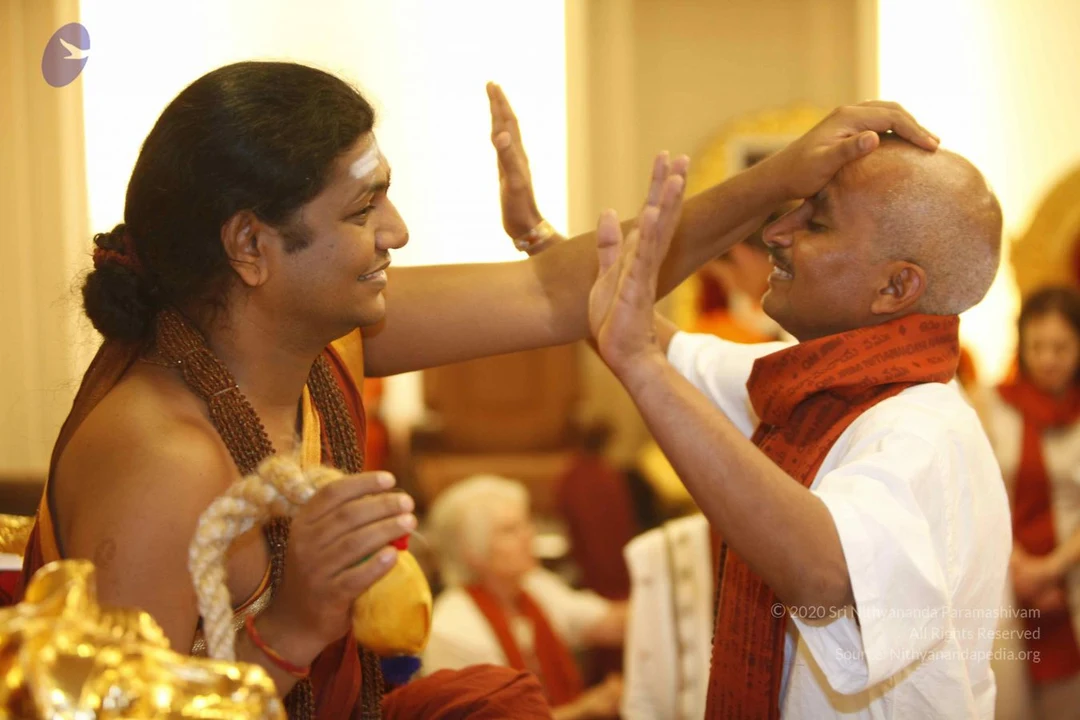
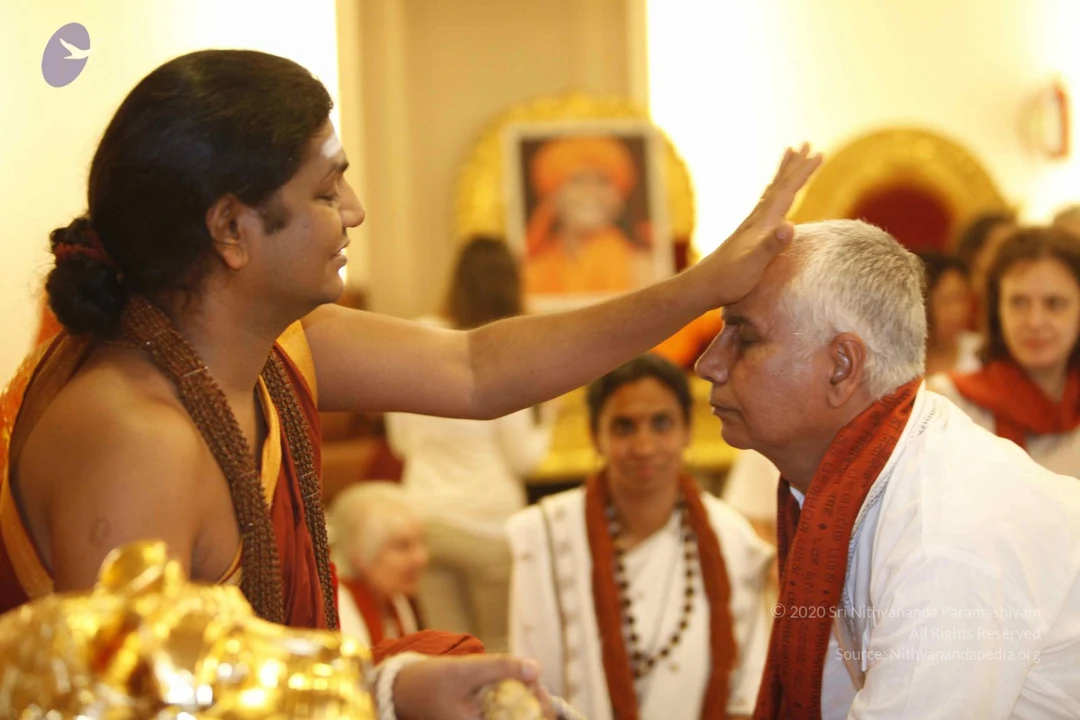
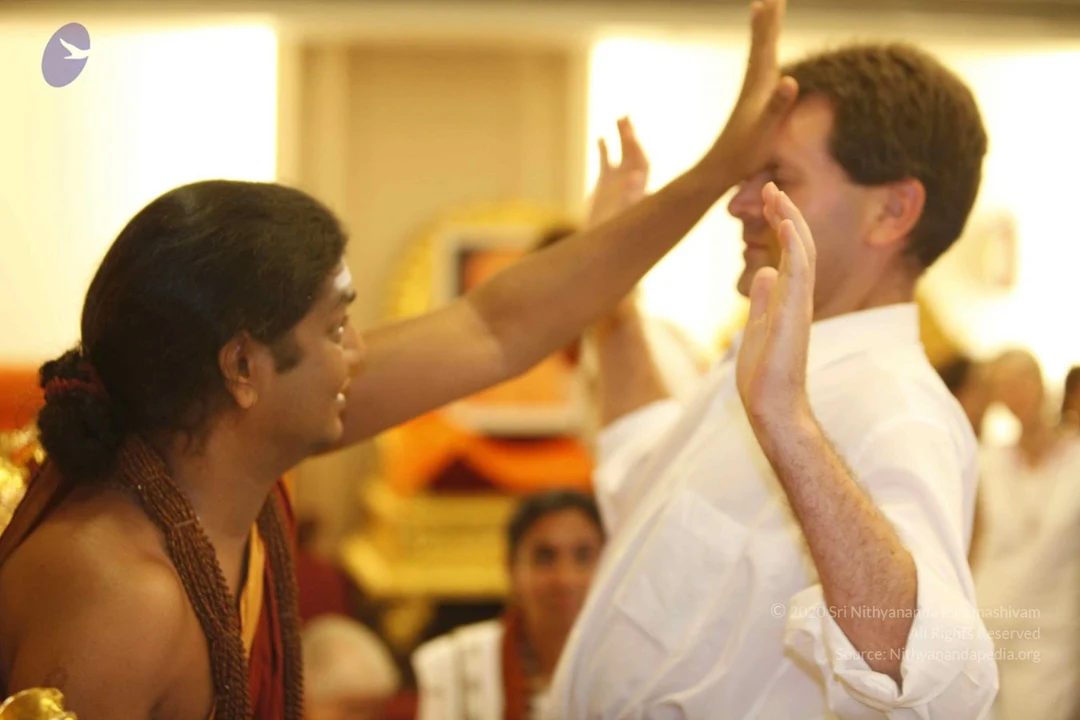
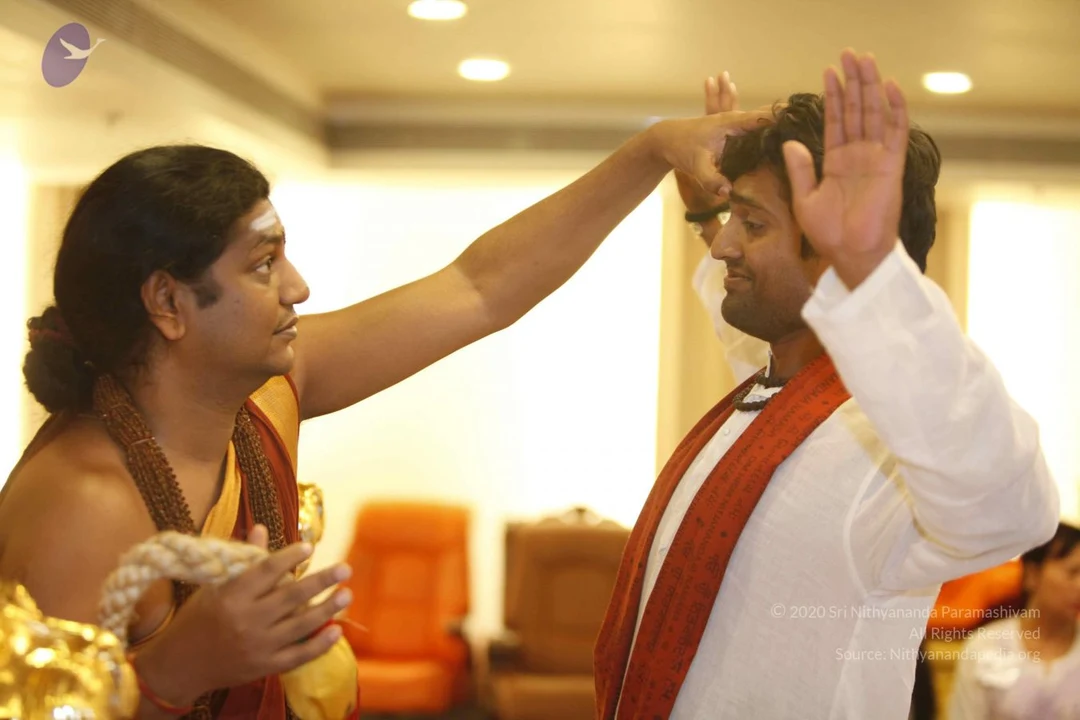
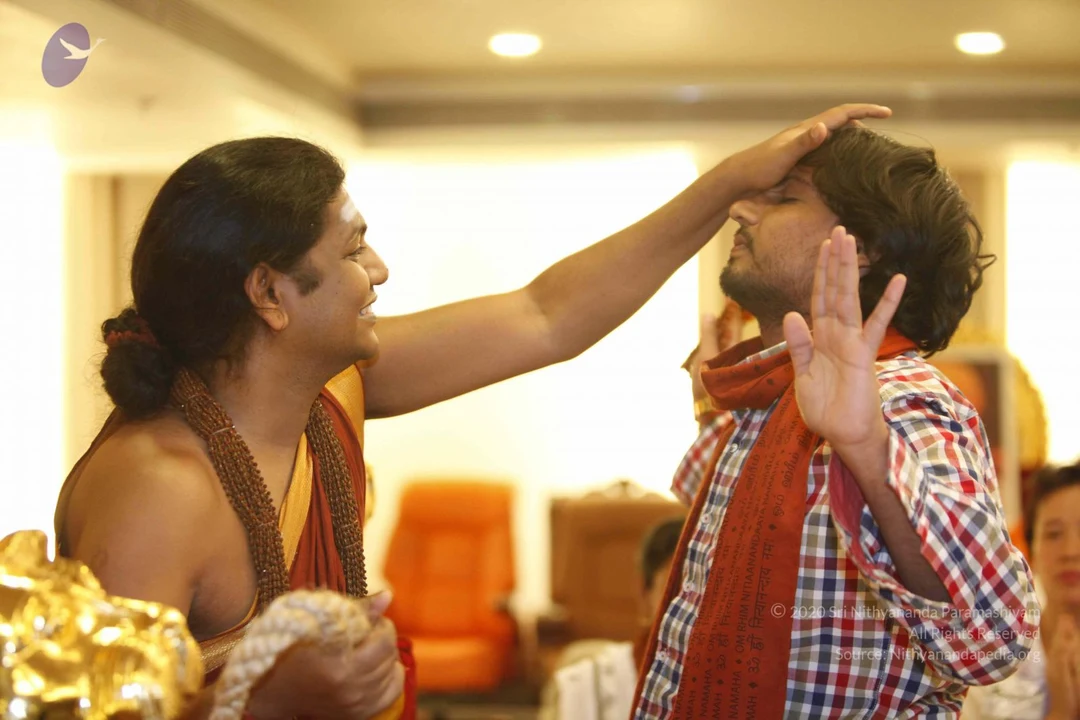
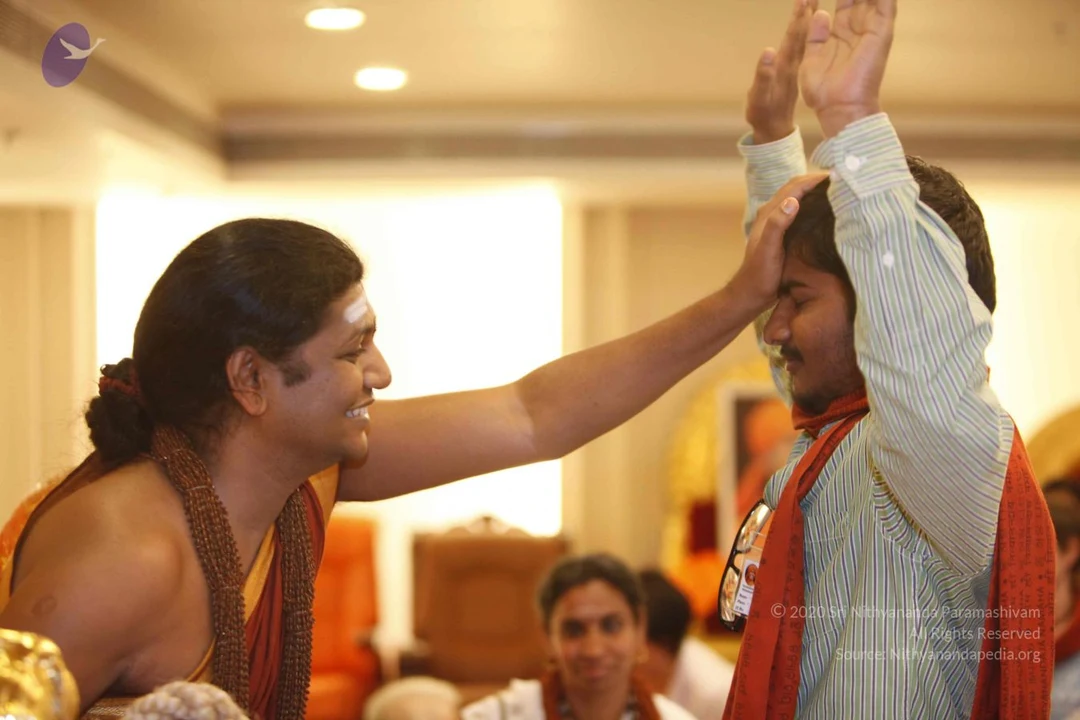
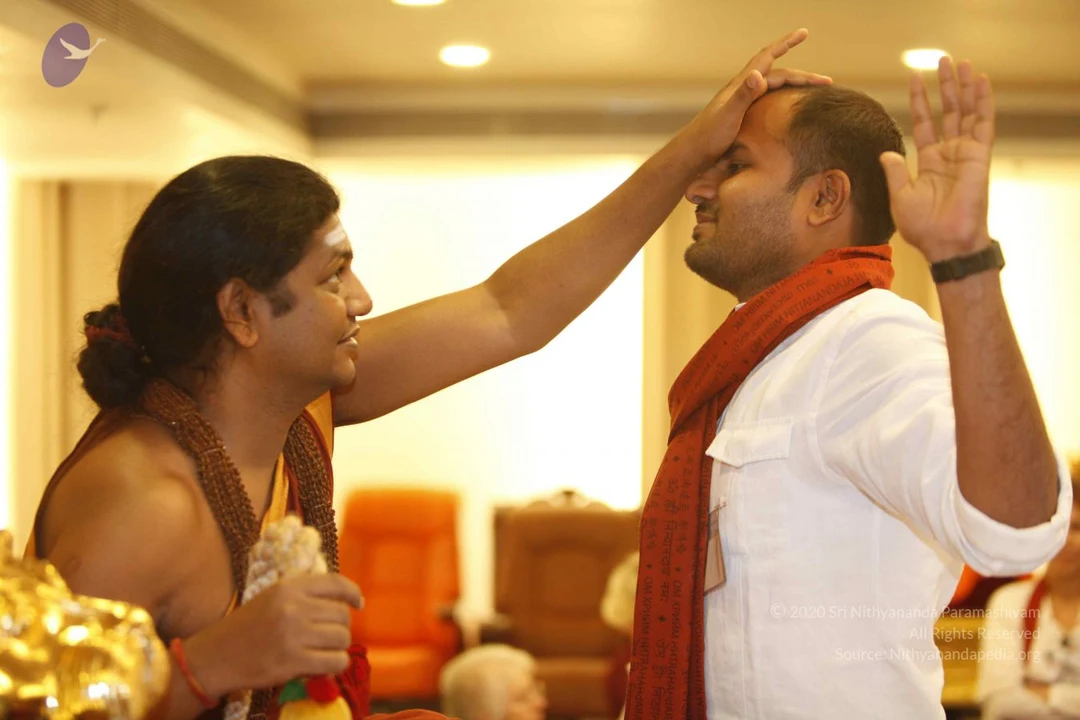
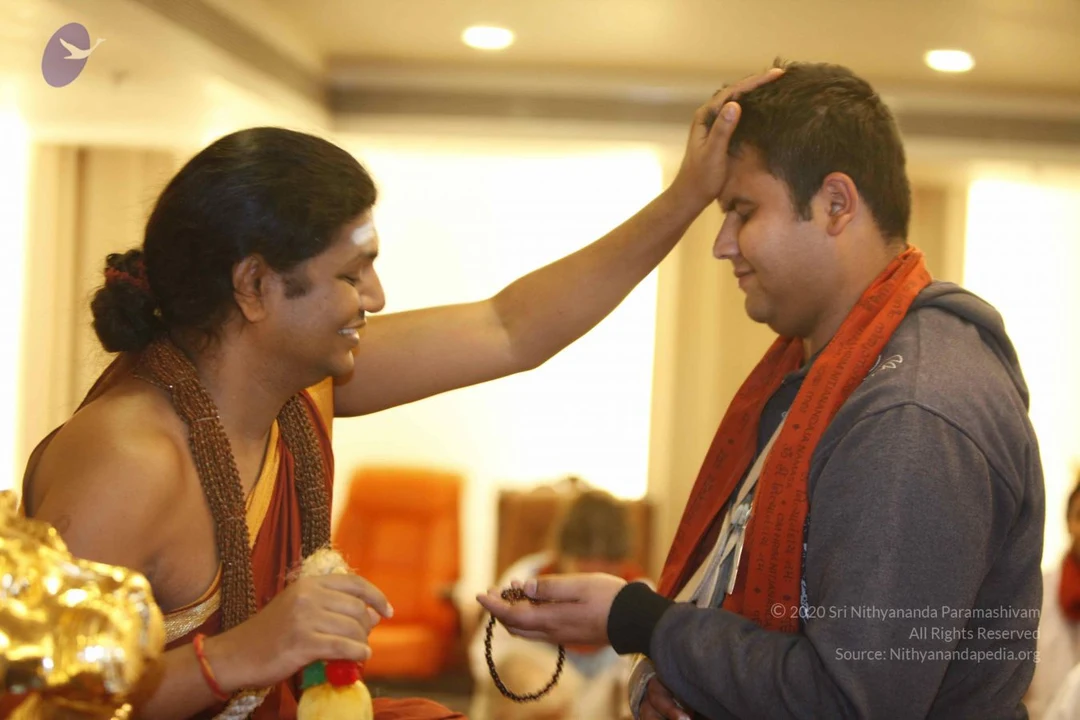
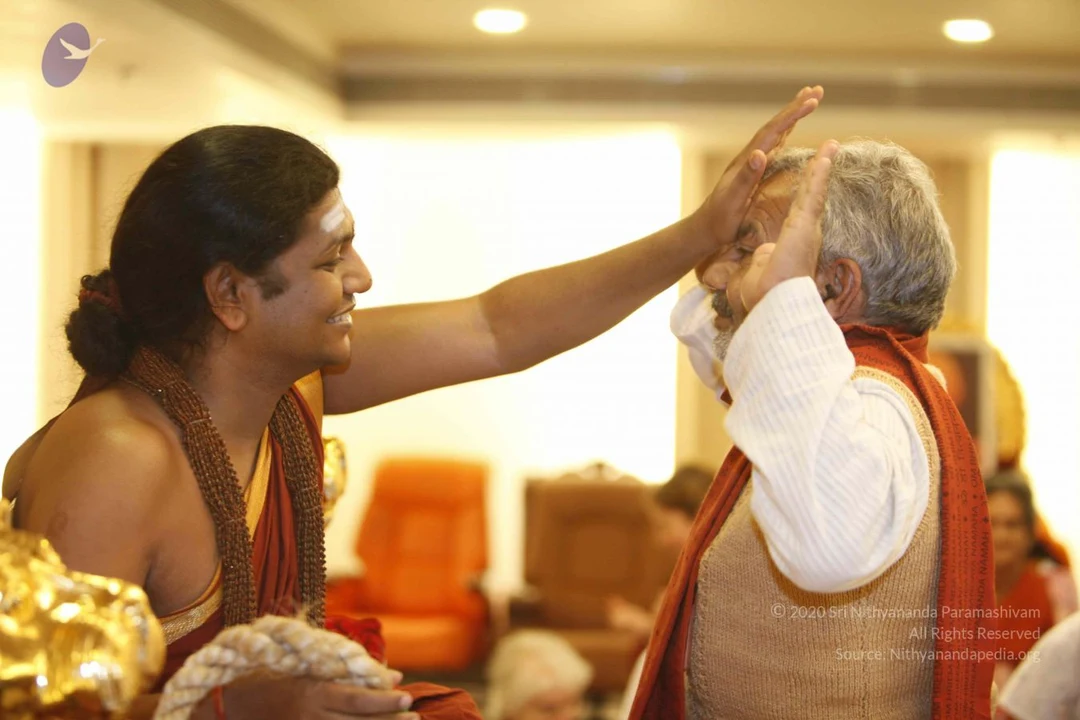
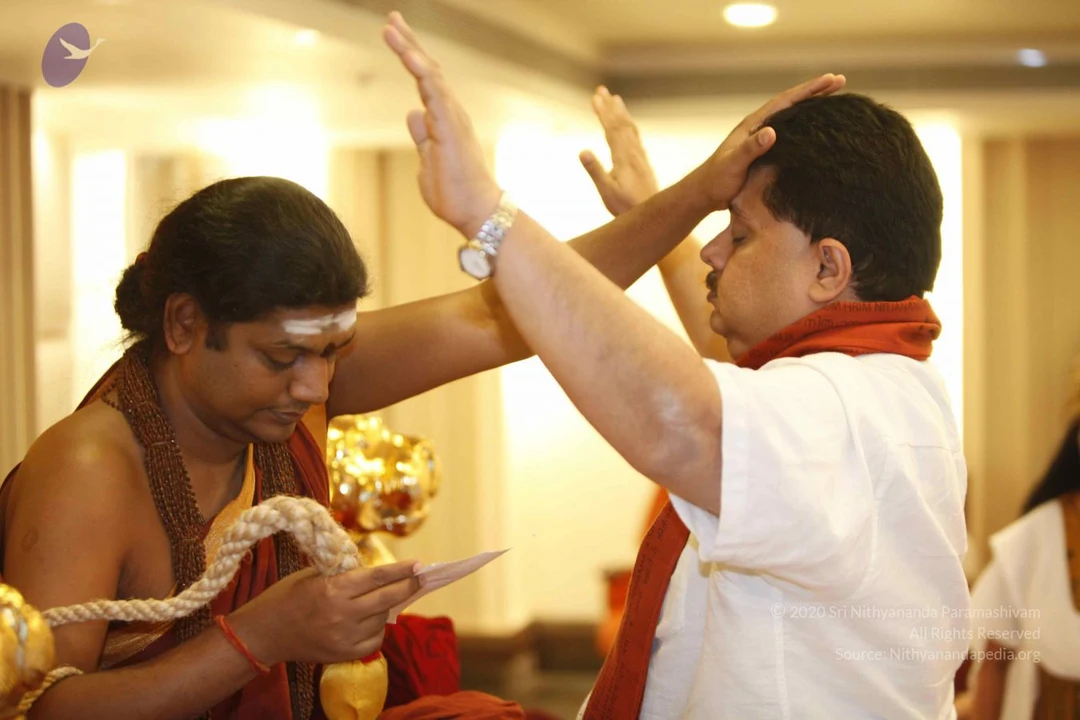
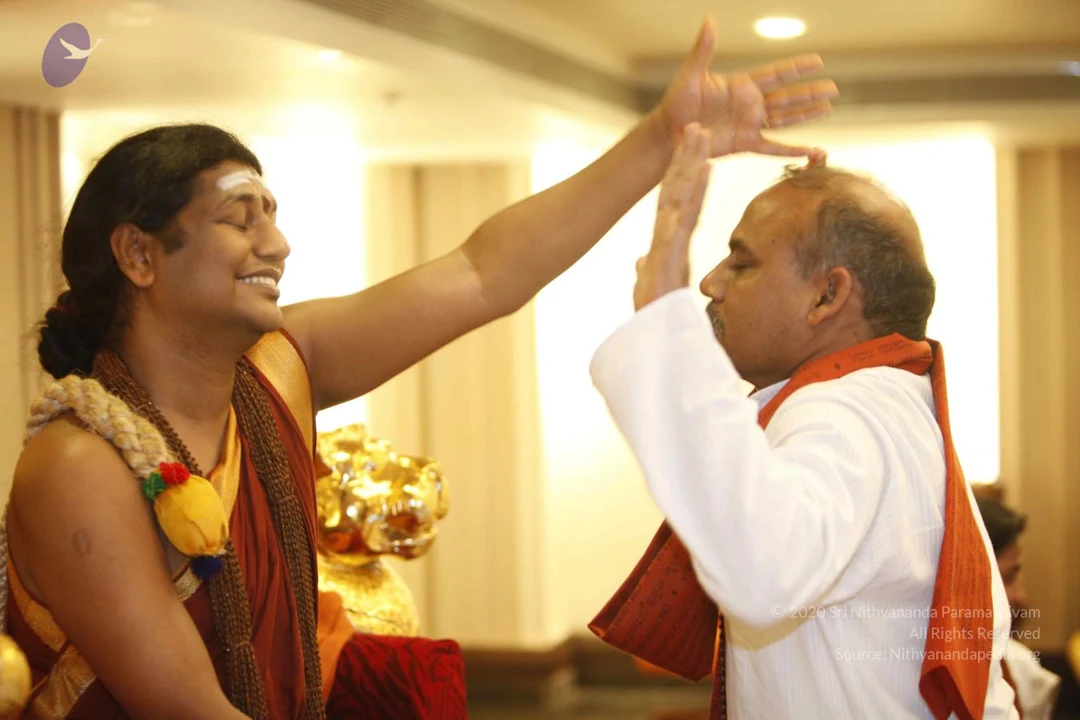
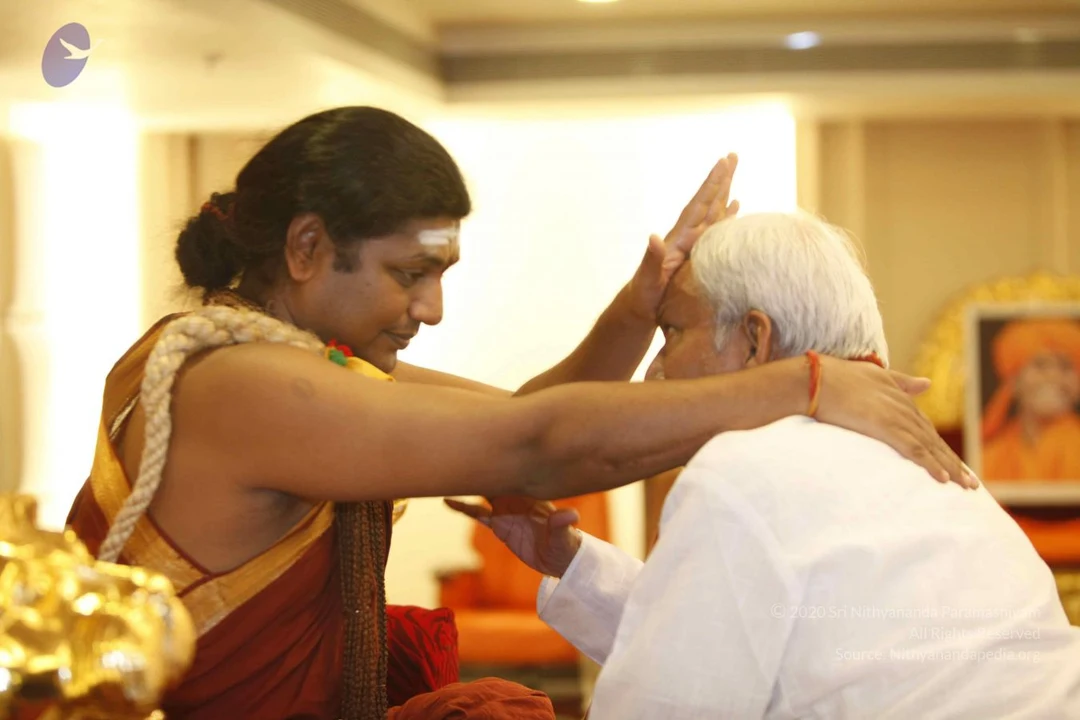
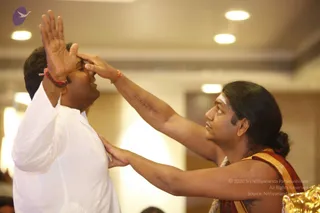
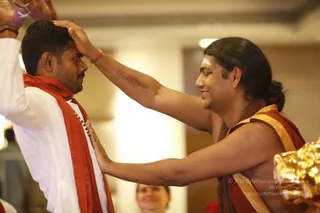
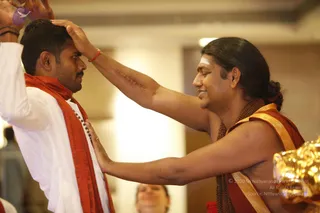
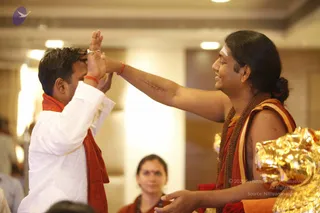
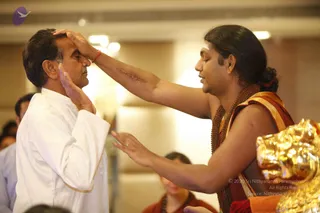
A seated man in saffron-orange robes sits cross-legged on an ornate golden throne with a tall arched back, flanked by two gold tiger-form armrests with red tiger-striped cushions. He wears a rudraksha mala, a white tripundra on his forehead with a red dot, and holds a white-and-orange cord or fan in one hand while smiling with eyes closed. A large red banner behind him shows a temple tower and a glowing waterfront scene. Swamiji (probable) appears in person, identified by the swept-back hair, rudraksha malas, saffron robes and ceremonial gold throne setting.Indoor photo of a guru placing his right hand on the forehead of a man in white kurta, who has his eyes closed and a red thread bracelet on his wrist. The guru, on the right, has a white tripundra mark on his forehead, long hair tied back, and wears a saffron-orange and gold-bordered shawl over bare shoulders. His left hand rests on the devotee's chest. Blurred ceiling lights and a warm beige hall form the background, with a gold-edged chair at lower right.A photograph of a man with long dark hair, wearing ochre-saffron clothing and a long rudraksha mala, placing his right palm on the crown of the head of a younger man with short hair and a neat moustache. The younger man wears a white kurta with an orange-red shawl draped over his shoulders and a thin beaded mala. The blessing man is bare-chested apart from a wide orange shawl with gold border and a sacred vibhuti mark on his forehead, smiling as he touches the younger man's chest. A partly visible woman in the background smiles, and a golden vessel is at the right edge. The setting is an indoor hall with warm lighting. Swamiji (probable) is the blessing man, identified by the long hair, saffron-ochre shawl with gold border, and rudraksha mala.Close photo of an initiation-style blessing. A man with long hair, a white tilak on his forehead, bare-chested, draped in a red-and-gold shawl with a brown rudraksha mala, rests one hand on the crown of another man's head and the other on his chest. The receiving man wears a white kurta and a red shawl with a beaded mala and looks forward with a serious expression. A golden ritual vessel is visible at the right edge, and a blurred figure sits at the bottom. Probable Swamiji (probable) is the blessing giver, identified by long swept-back hair, a rudraksha mala and a red-gold shawl.A man in a white shirt and red-orange shawl stands with his head bowed while a man in saffron and orange robes with a long dark hair knot and a rudraksha mala raises both hands to his forehead in a blessing gesture. A woman in orange clothing with a red bindi watches in the foreground. A gold ceremonial object is visible at the right edge, and the setting is a bright indoor hall with ceiling lights.Indoor photograph of a bearded-free older man in white kurta being blessed by a younger man in saffron-orange shawl with rudraksha mala and tilak on forehead, who places one hand on the devotee's forehead while the other hand hovers near his cheek. The blessing man has long hair tied back and a golden ceremonial ornament is visible at the right edge. Blurred figures in the background, one in orange clothing. Swamiji (probable): the blessing man shows long swept-back hair, rudraksha mala and saffron shawl, performing a forehead blessing for a devotee.

Homa

7 photosSource gallery
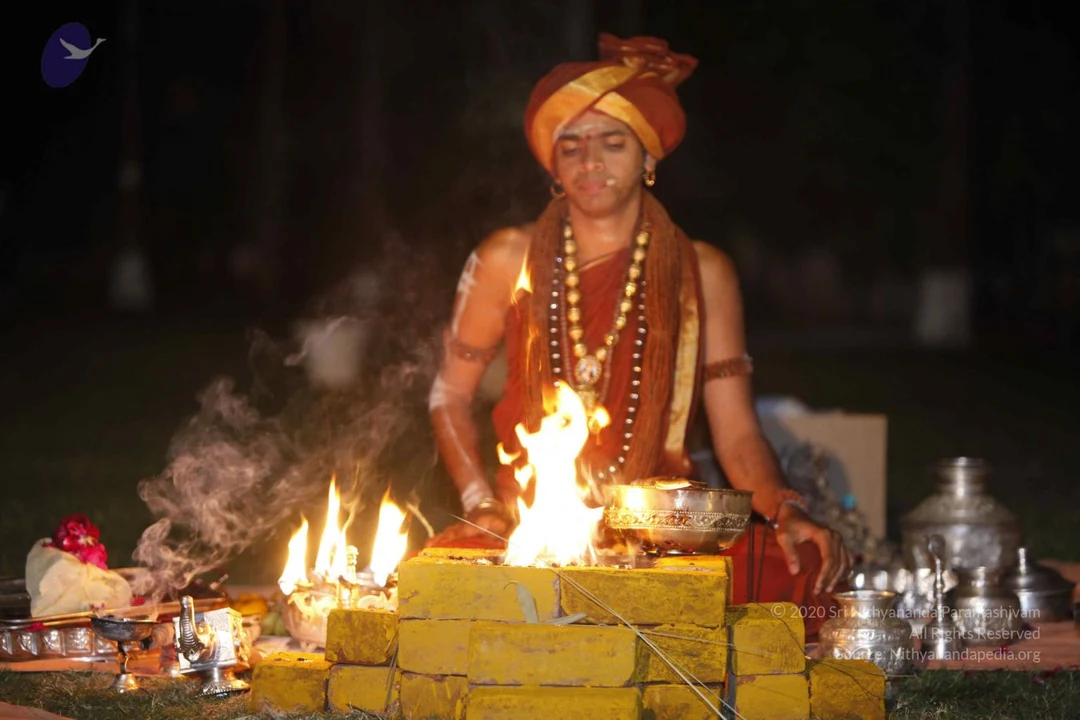
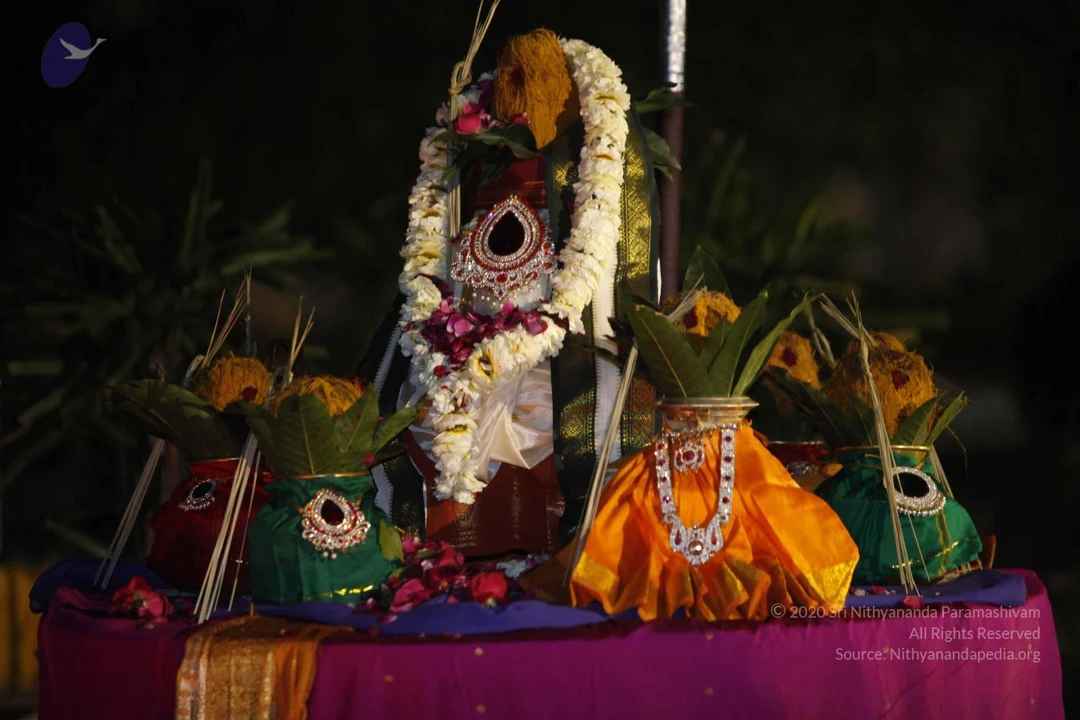
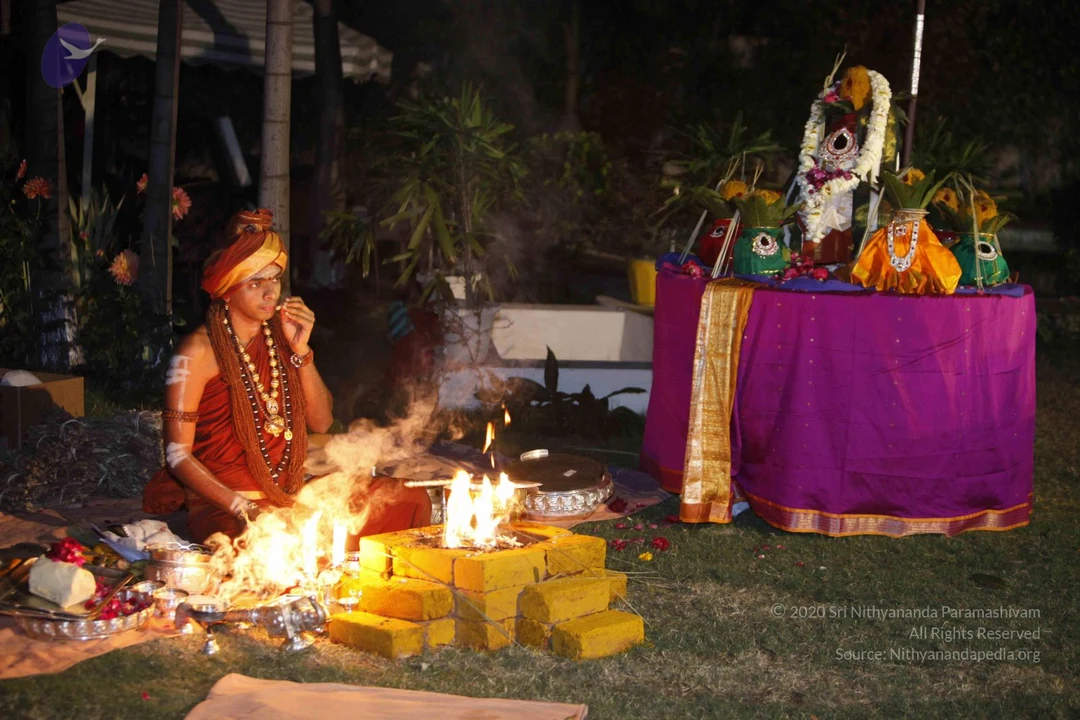
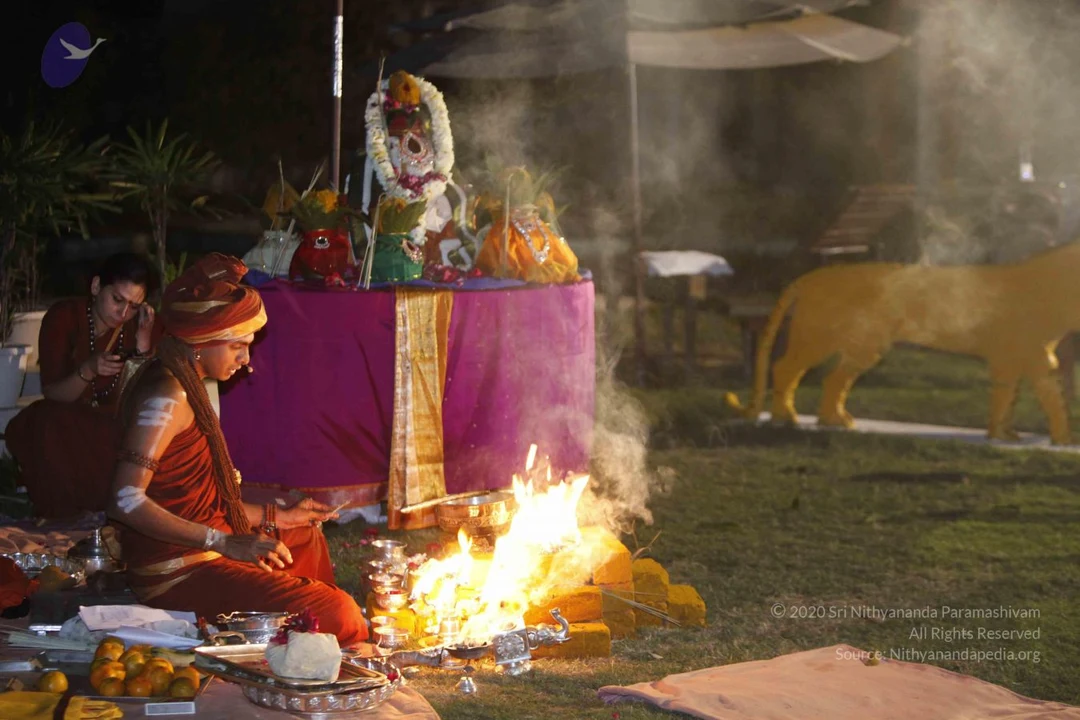
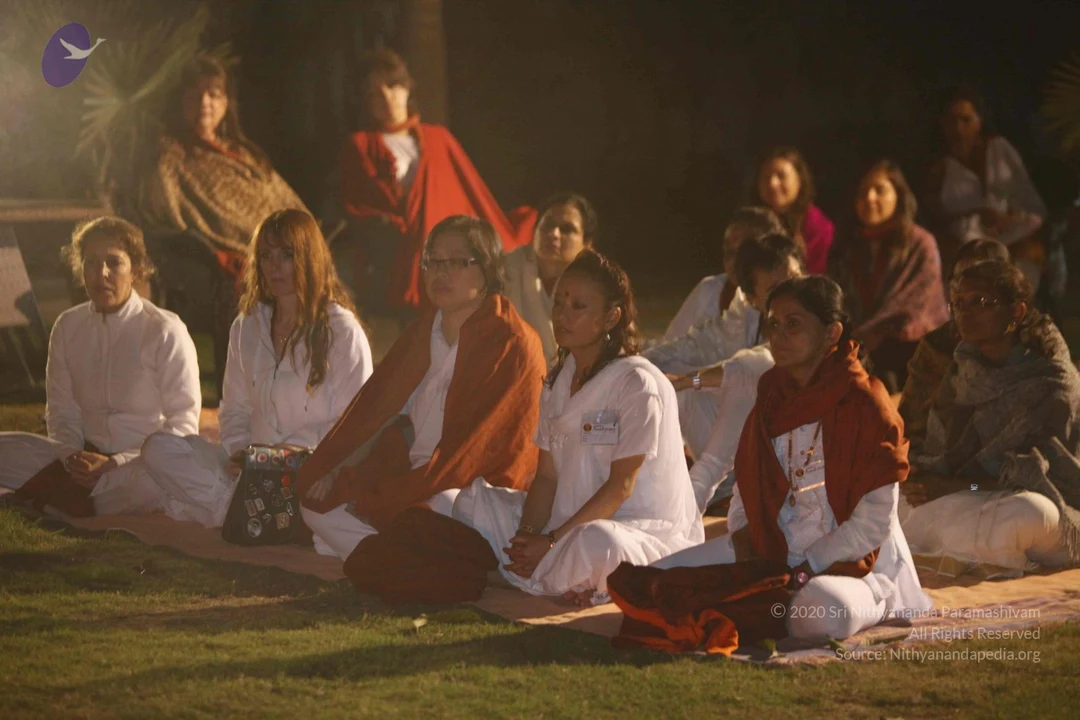
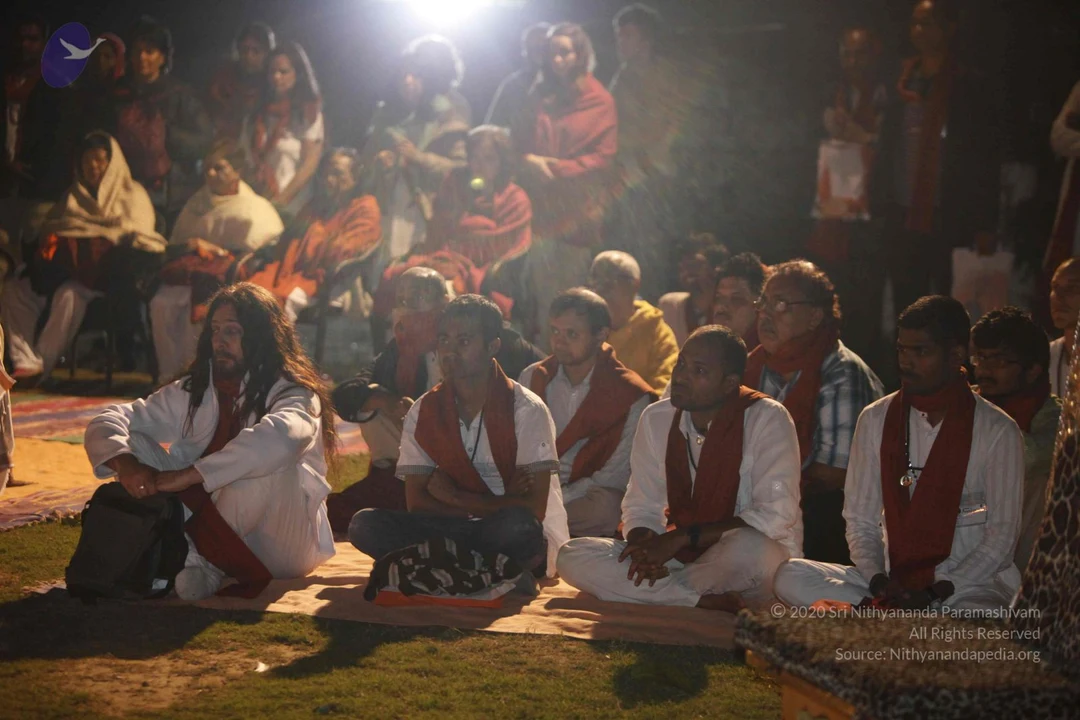
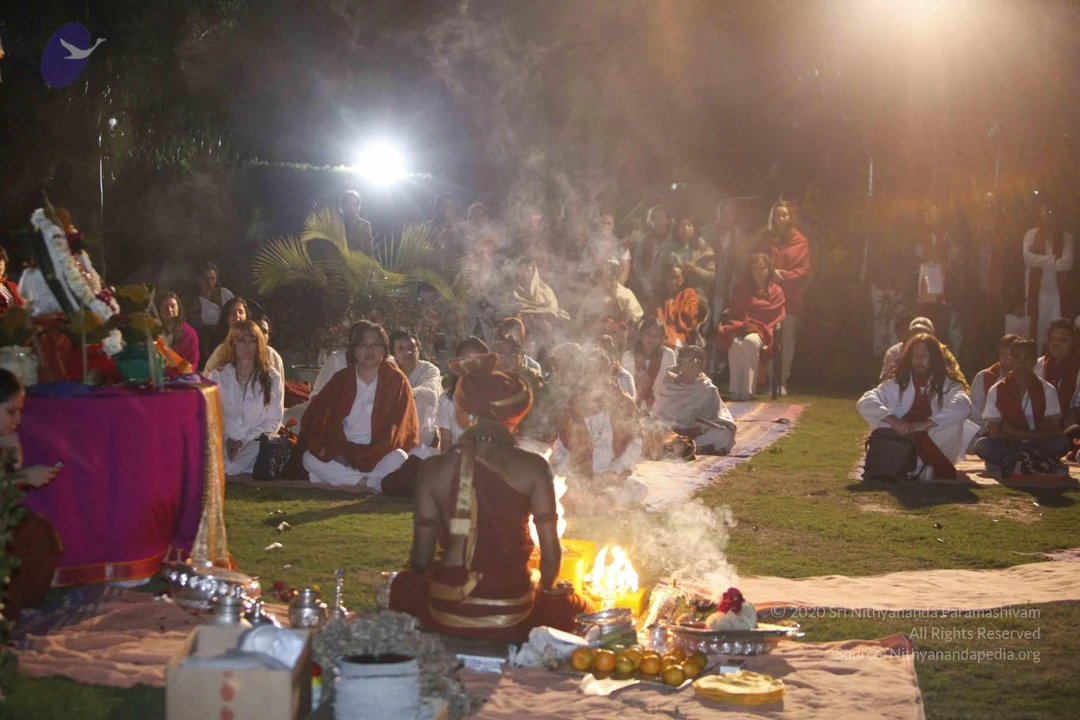
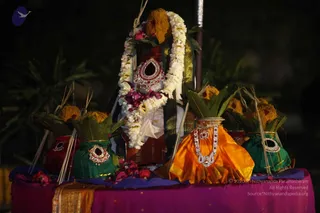
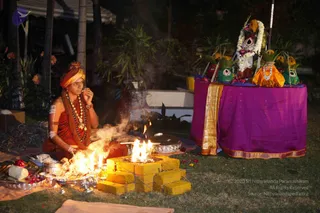
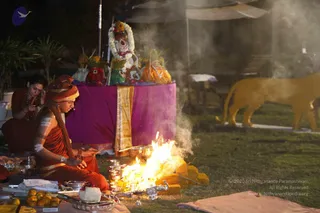
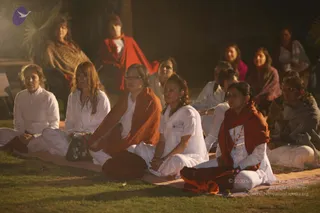
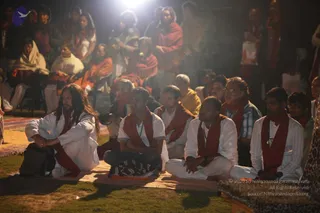
Night outdoor homa (fire ritual) on grass. A single man in saffron-orange dhoti and matching orange-yellow turban sits behind a fire pit built of stacked yellow bricks, with flames rising from a brass bowl and a burning lamp. He wears a long rudraksha mala with gold ornaments, a gold-trimmed shawl draped over the shoulders, and armlets, with white sacred markings on his arms and forehead. Silver and brass vessels, a kalasha-style pot, flower offerings and a small brass lamp stand on the ground around the fire. The page indicates a person was at this event, and the saffron and rudraksha cues are distinctive, so the figure is a person presence.A night photograph of a decorated ritual arrangement on a draped table with a purple and magenta cloth. At the centre stands a tall deity murti or ritual form draped in a white and green sari-like cloth with gold borders, wearing a long white and pink garland, a large jewelled silver-toned pendant and rose petals. Before it sit several green, red and orange cloth-wrapped coconuts with mango leaves and yellow marigold flowers, and a brass kalasha with mango leaves and a jewelled necklace draped over an orange cloth. Scattered rose petals lie on the table and a dark foliage background surrounds the scene. No people are visible.Night outdoor homa on grass: a seated priest in orange-red robes, orange turban, rudraksha mala and gold necklaces, marks painted on his arms, feeds offerings into a fire built inside a stacked yellow brick fire pit. Behind him, a purple-draped table holds a kalasha-style pot with flower garlands, marigolds and green-and-orange coconut-decorated vessels. Silver plates of fruit and flowers sit nearby, with a brass vessel and a drum-like object. Smoke rises from the fire and palm plants surround the scene.Night outdoor fire ritual on grass. A man in orange-red robes and an orange turban sits cross-legged before a blazing homa fire, with white ash marks on his arms and chest, holding ritual items. A woman in a red-brown sari sits to the left, hands joined near her face. Behind them a purple-draped table holds a garlanded deity murti, flower offerings and brass vessels, and a golden lion statue stands on the right. Smoke rises through the scene, and fruit, brass pots and a bell lie in the foreground.Evening outdoor satsang on grass at night, with a group of women seated on mats in meditative postures. In the foreground, a woman in white on the left sits cross-legged, and a woman in white with glasses wears an orange-brown shawl over white clothing, eyes closed. Next to her, a woman in white with a name badge sits with hands folded, and a woman in a red-orange shawl with a rudraksha-style necklace sits at the right. Behind them, more seated women in white and shawls, some in red and pink, are visible under dim lights. No one identifiable as a person is visible.Night outdoor satsang on grass with a bright spotlight above. In the foreground, a man with long dark hair and a full beard in white clothes and a red shawl sits cross-legged on a mat, beside seated men in white kurtas and red shawls. Behind them, a large crowd of devotees, some in red and white shawls and saffron-toned clothing, sits or stands in the darkness, with a woman in a light shawl at left. The scene suggests a seated gathering listening to a discourse.
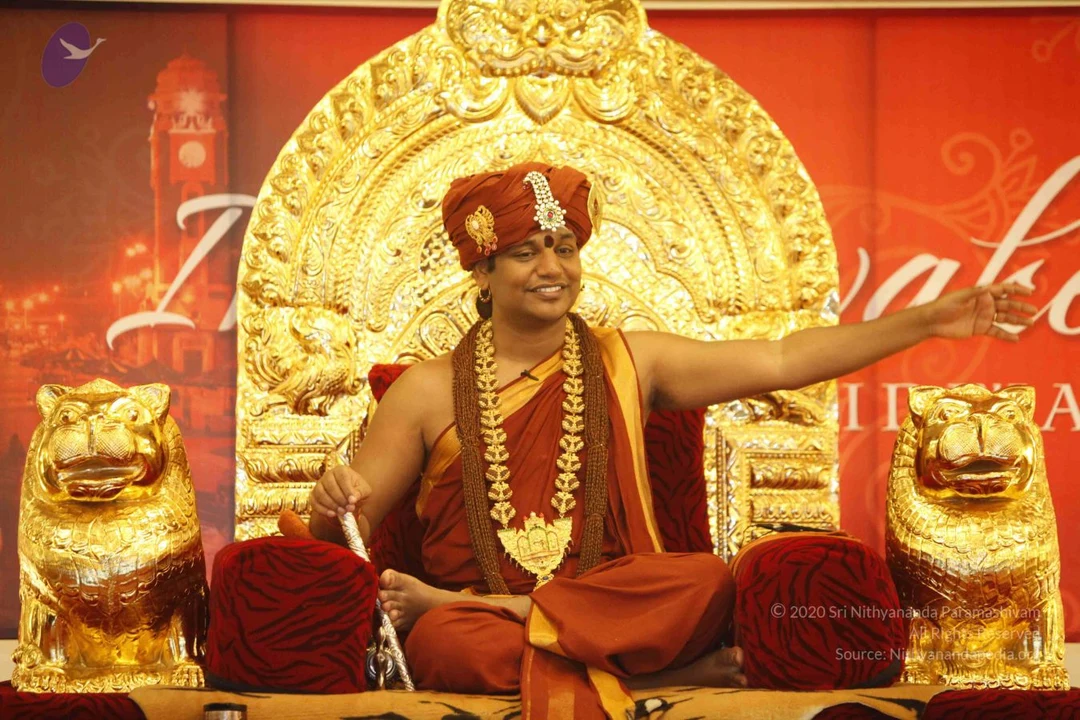
FB-Photos-of-the-Day

1 photoSource gallery
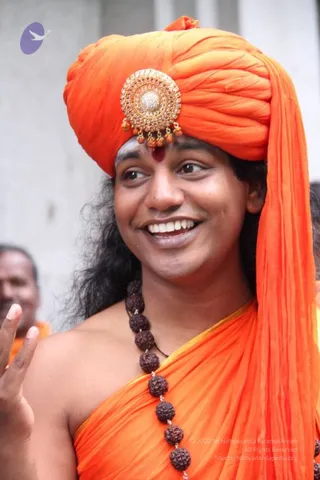
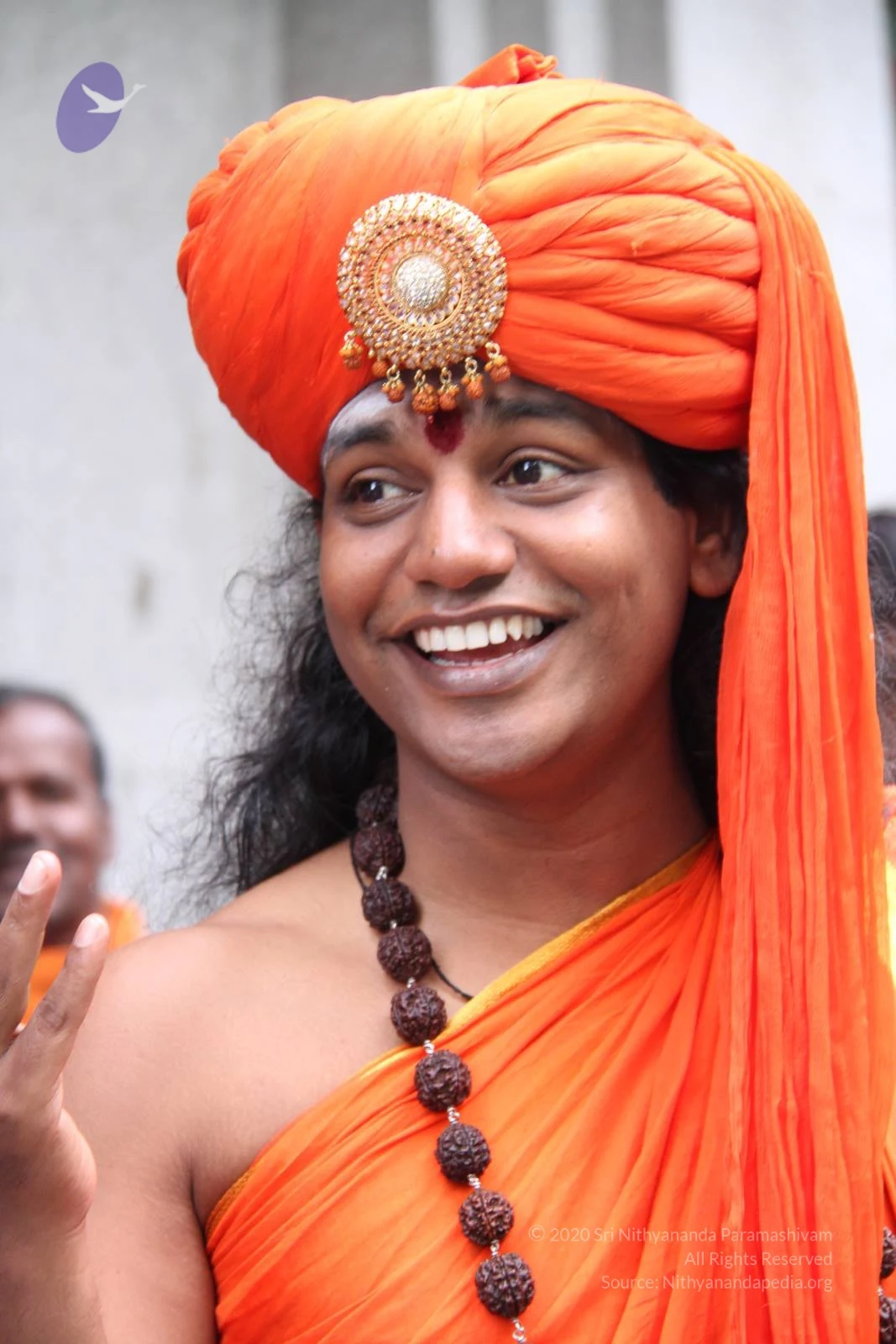
Close-up photograph of a smiling man wearing a bright orange turban with a large ornate gold-and-stone brooch at the front, a red kumkum mark on his forehead, and long dark hair falling behind. He wears an orange cloth draped over his shoulders and a dark rudraksha mala around his neck. He raises one hand with fingers spread in a gesture. A blurred man in orange stands at the left edge in the background, with a pale building wall behind them.