Skip to content
Saturday

4 May 2013

Dated photos
241
Source pages
1
Media
2
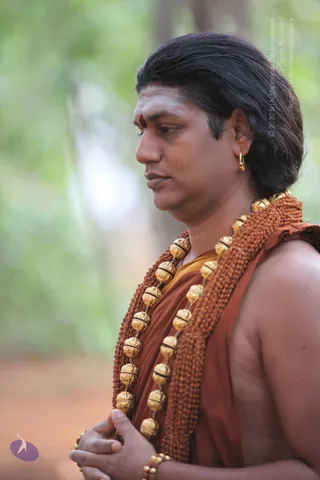
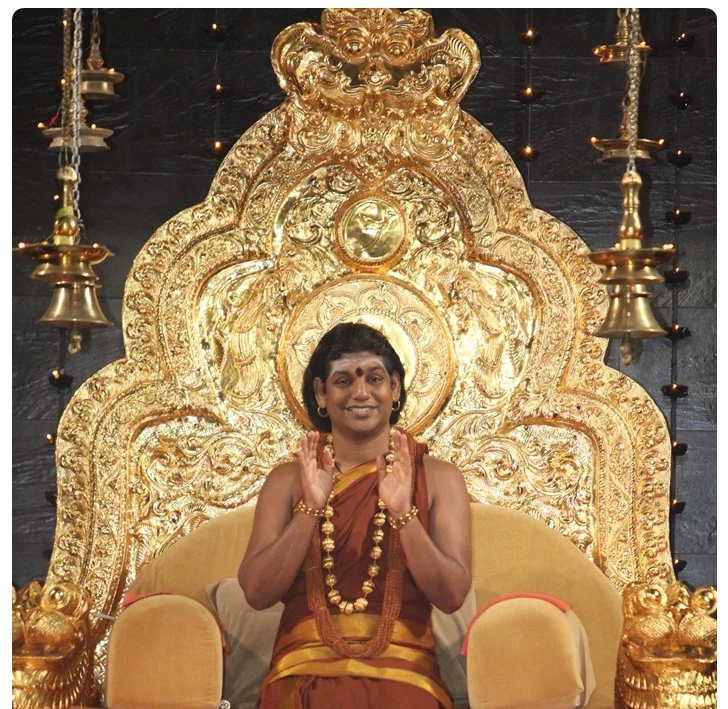
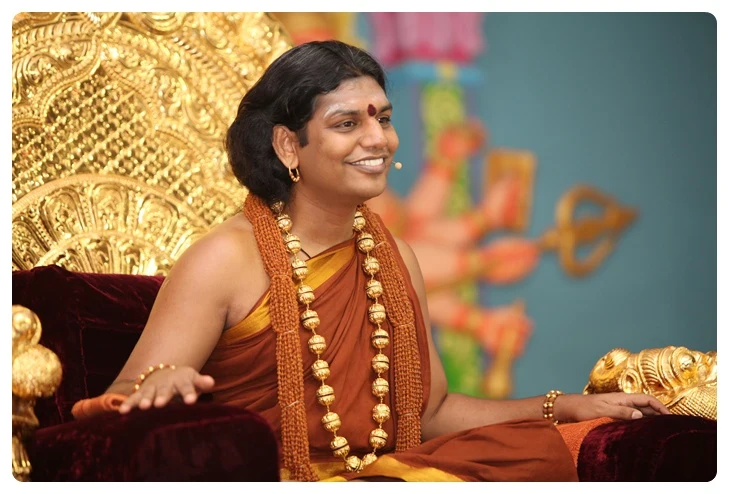
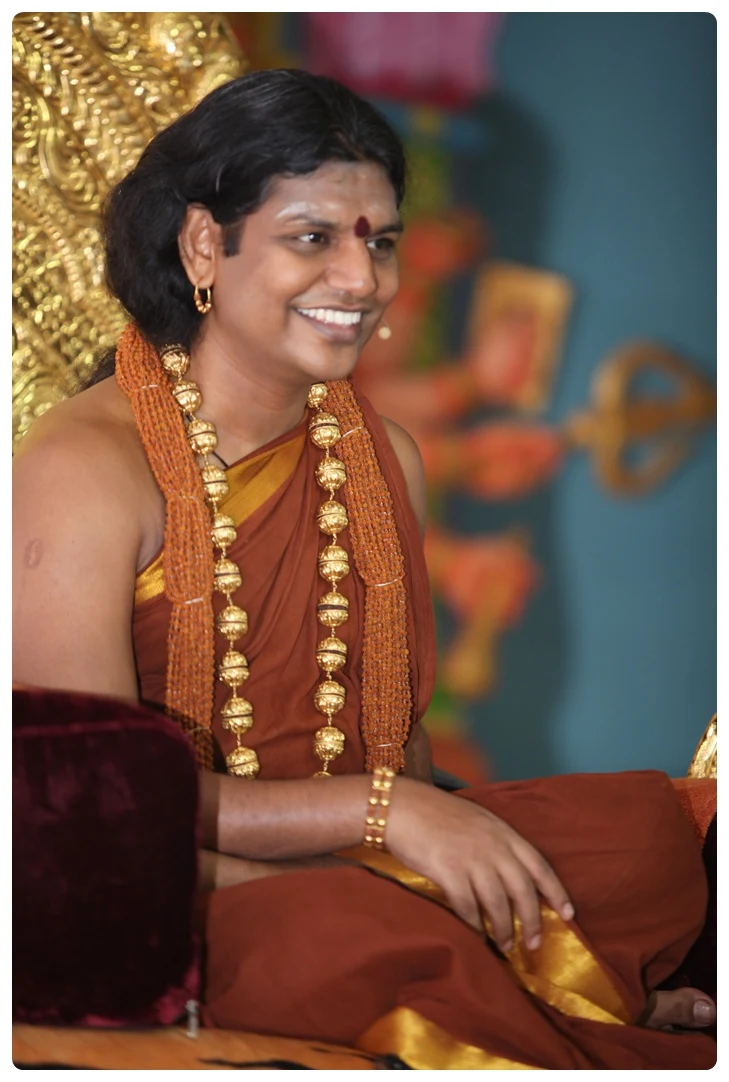
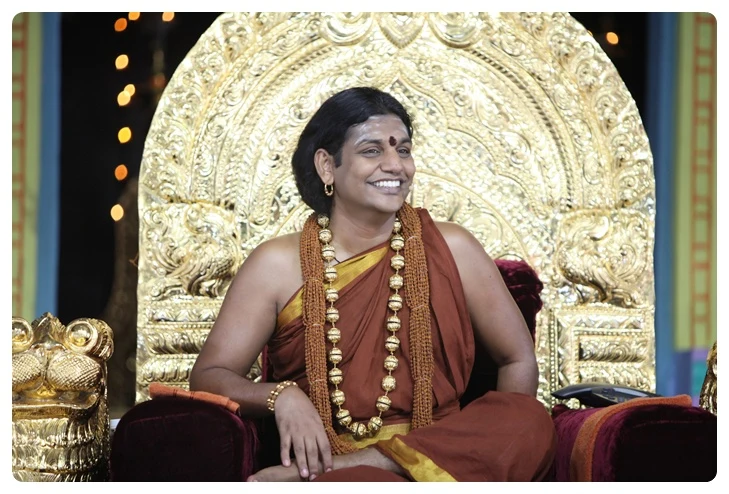
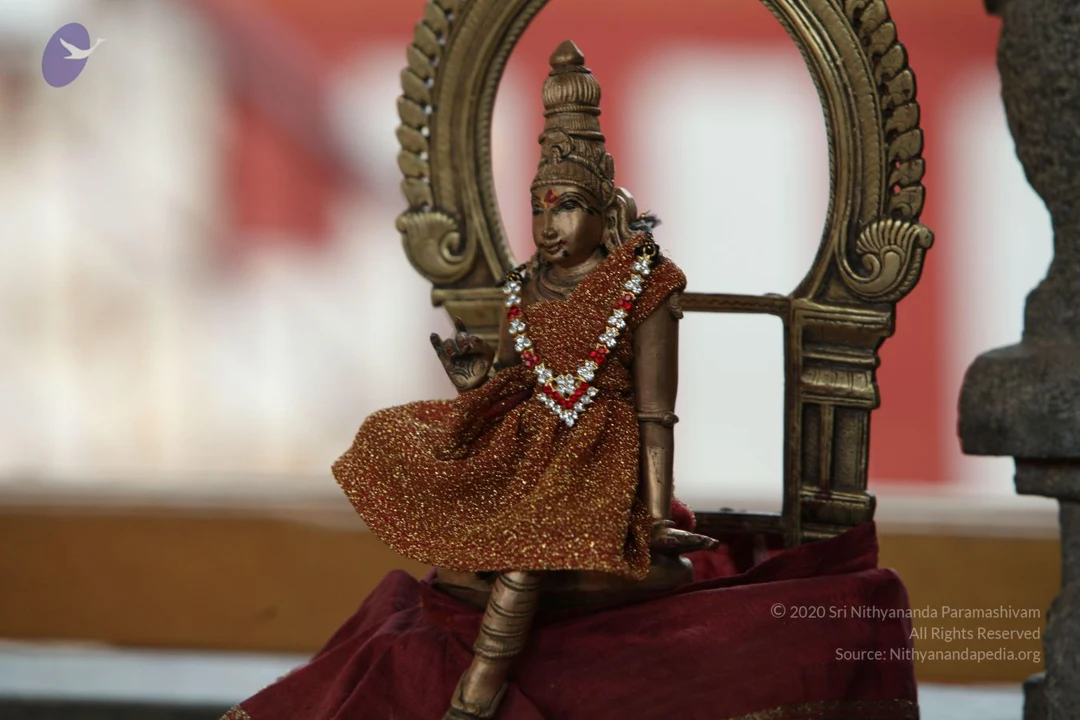
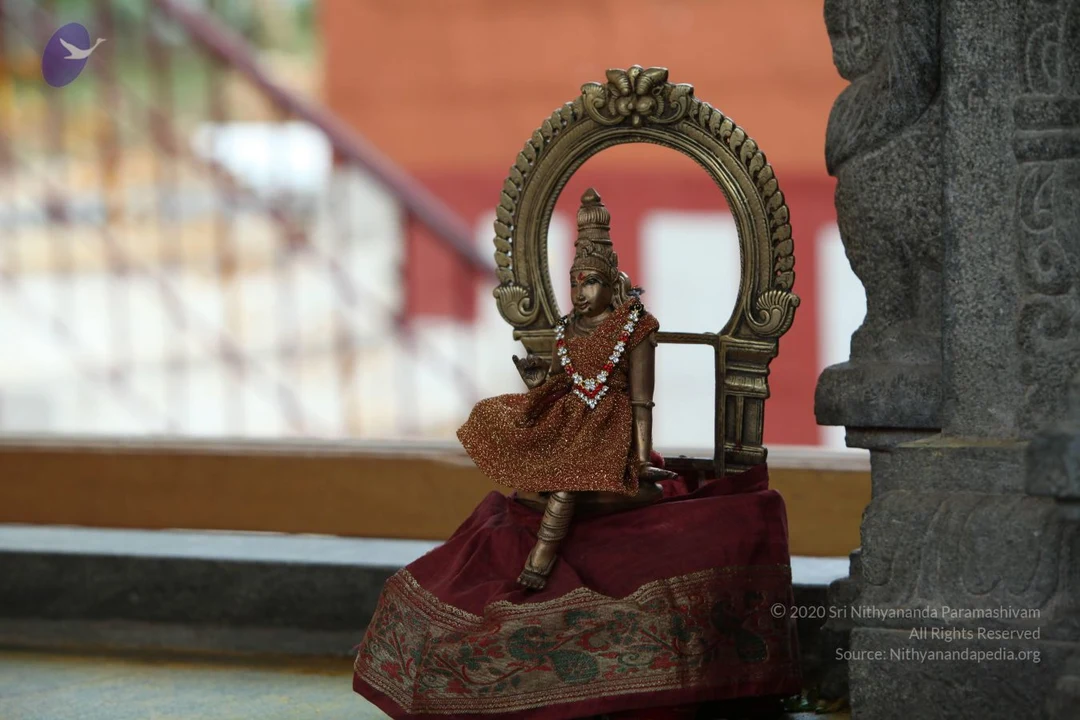
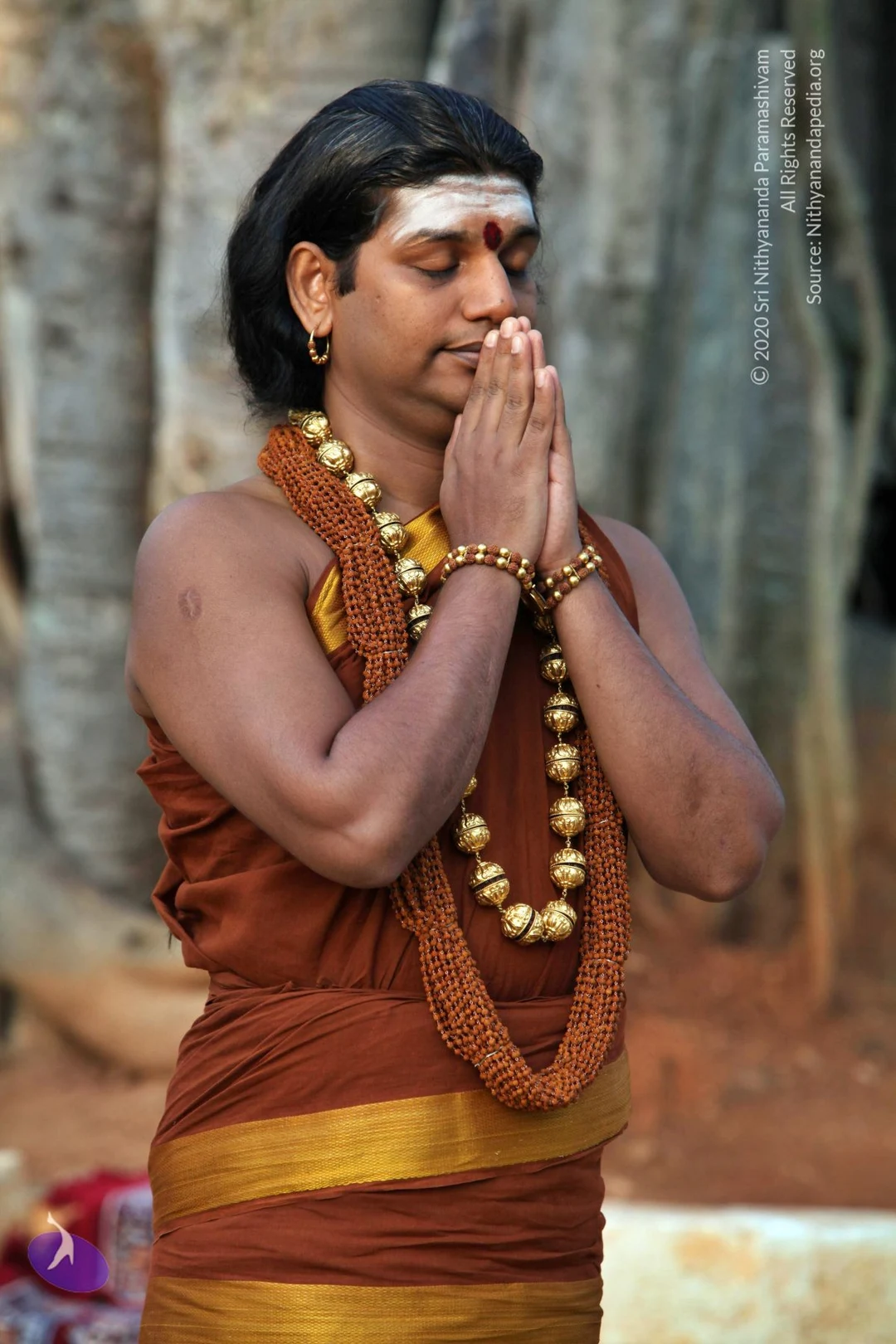
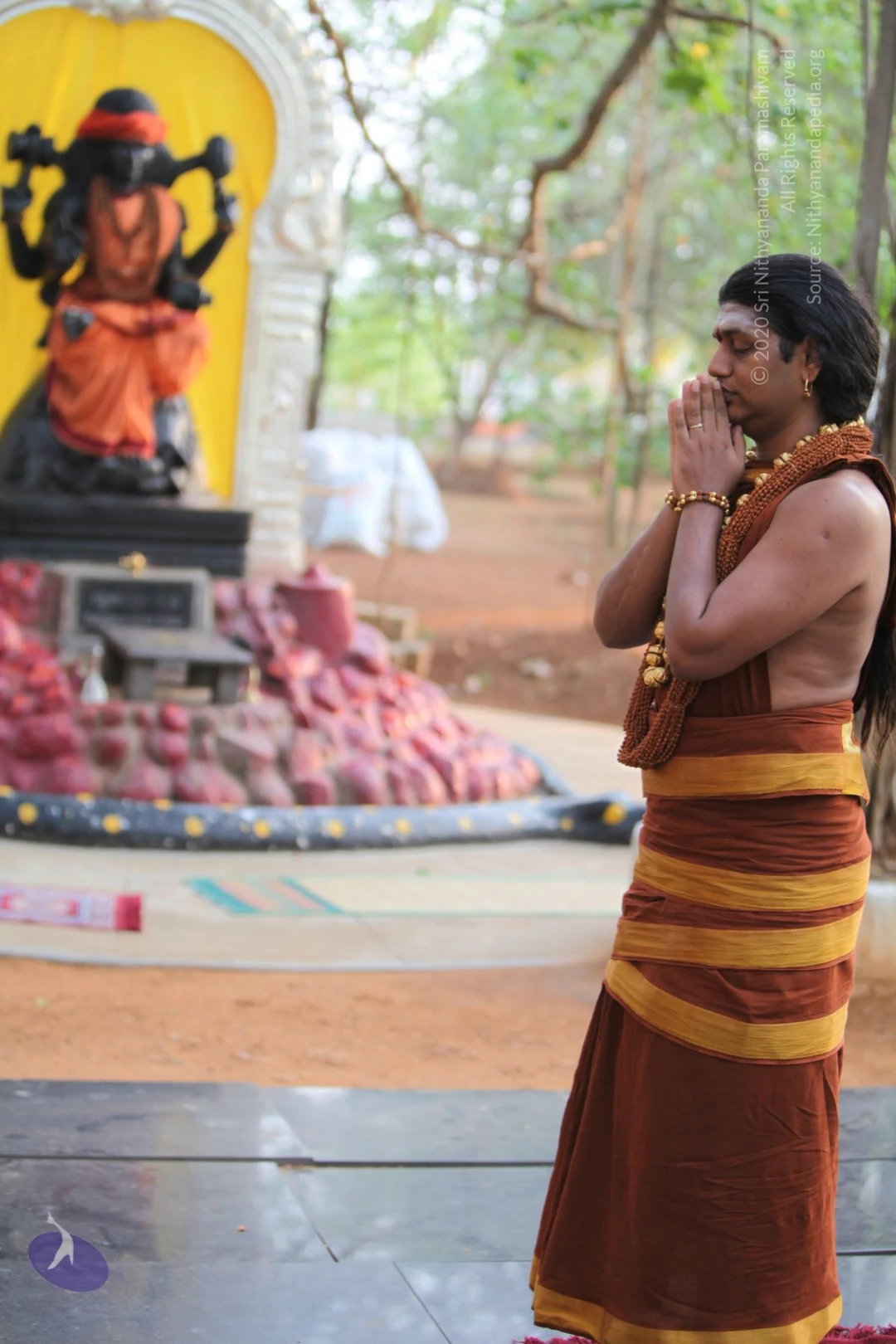
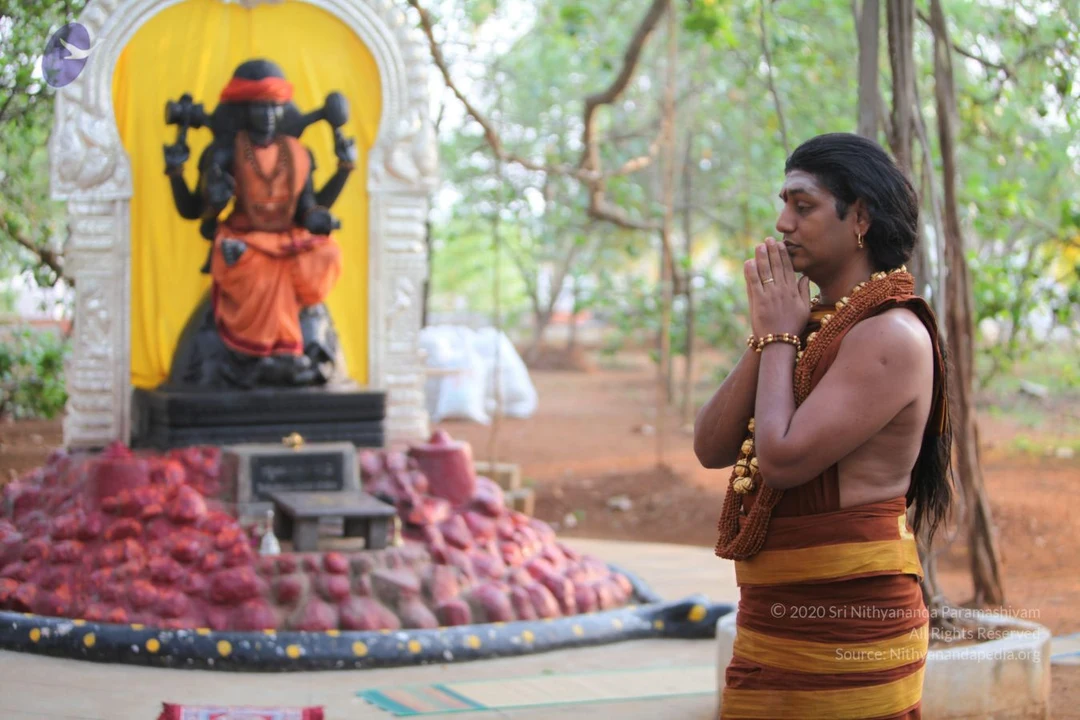
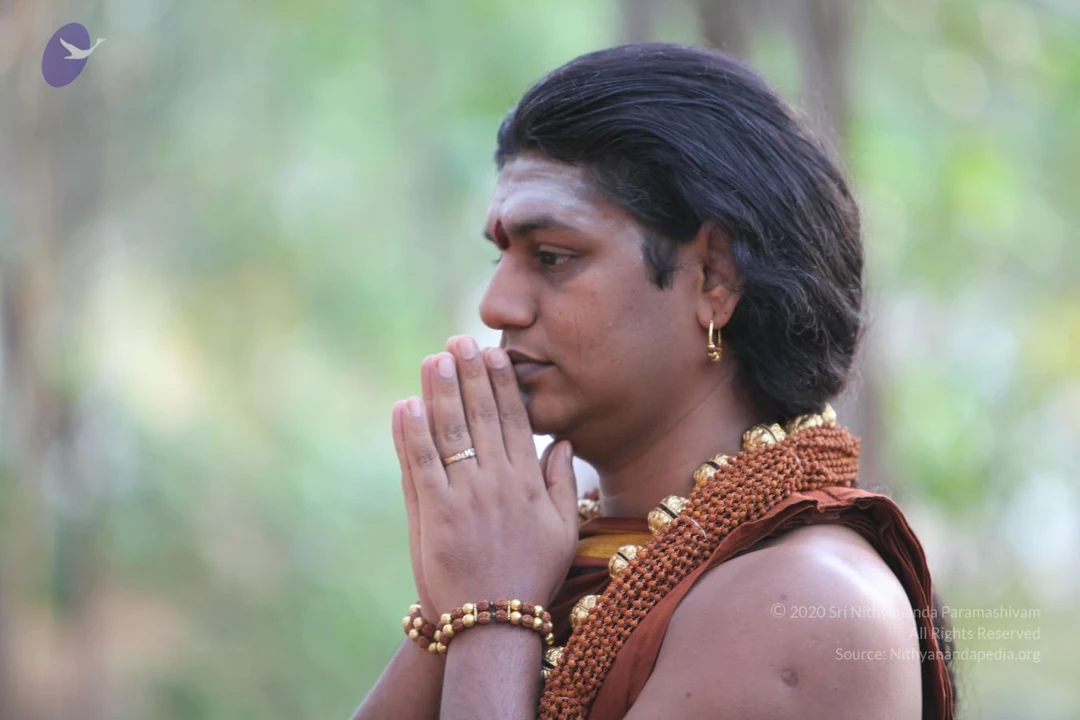
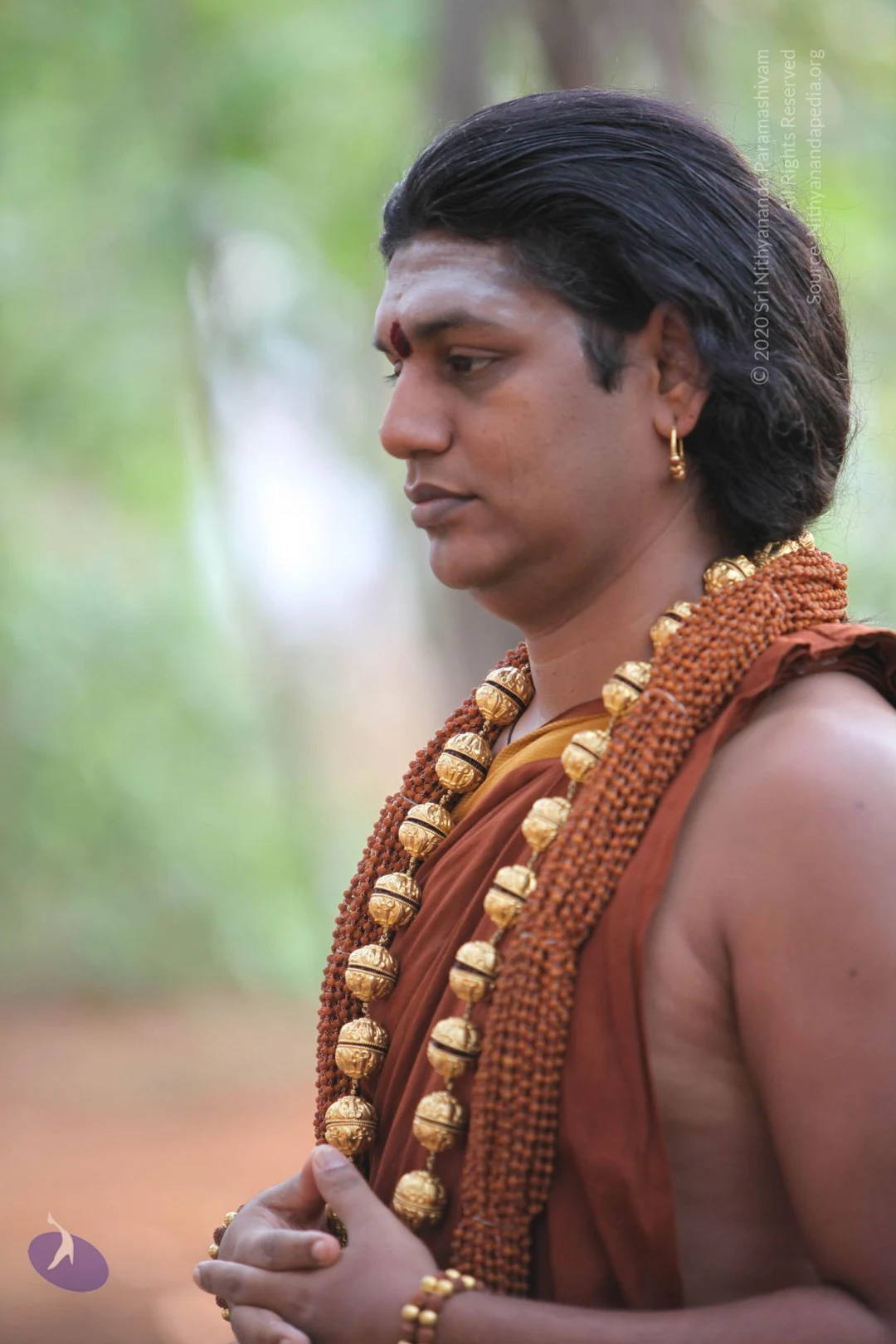
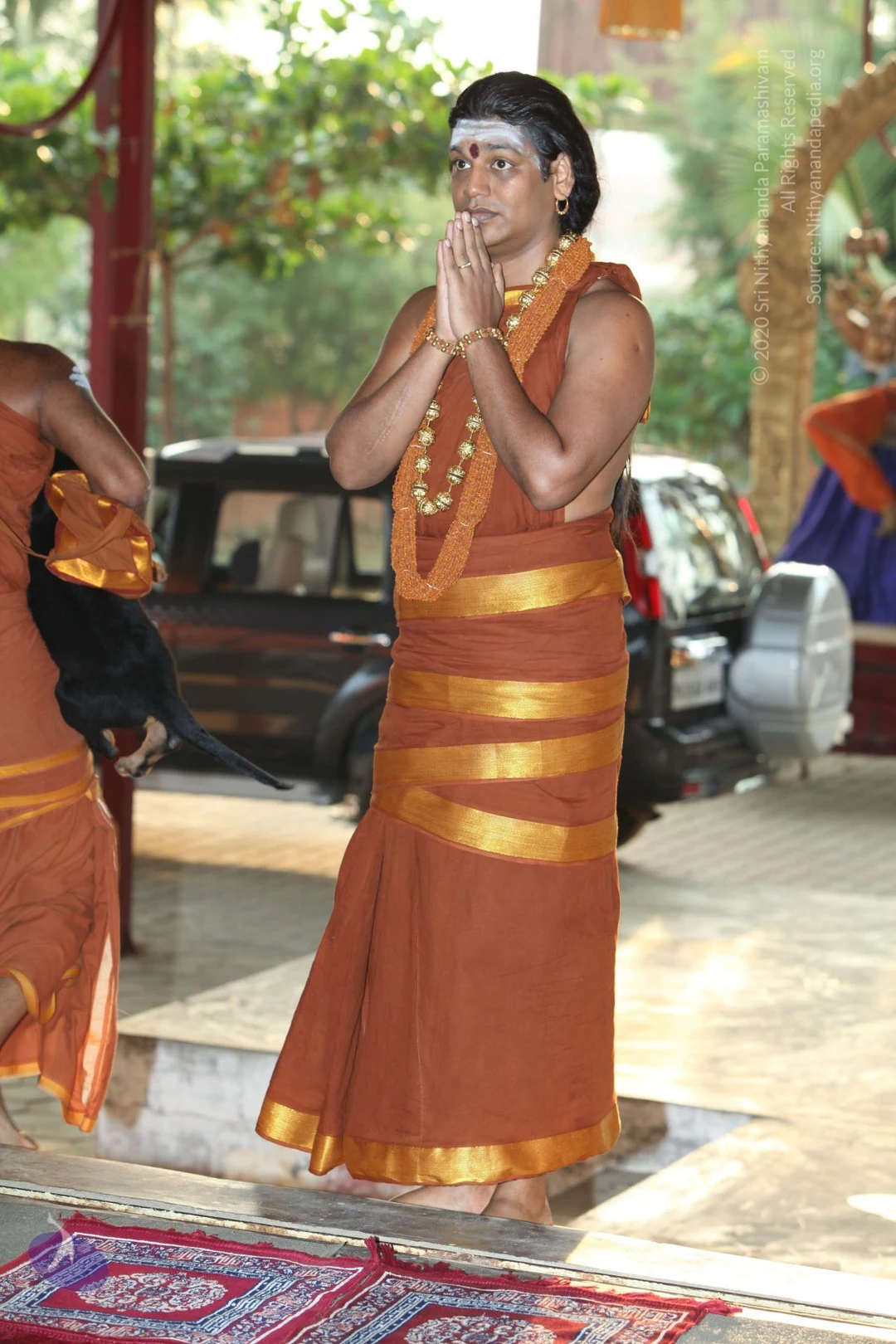
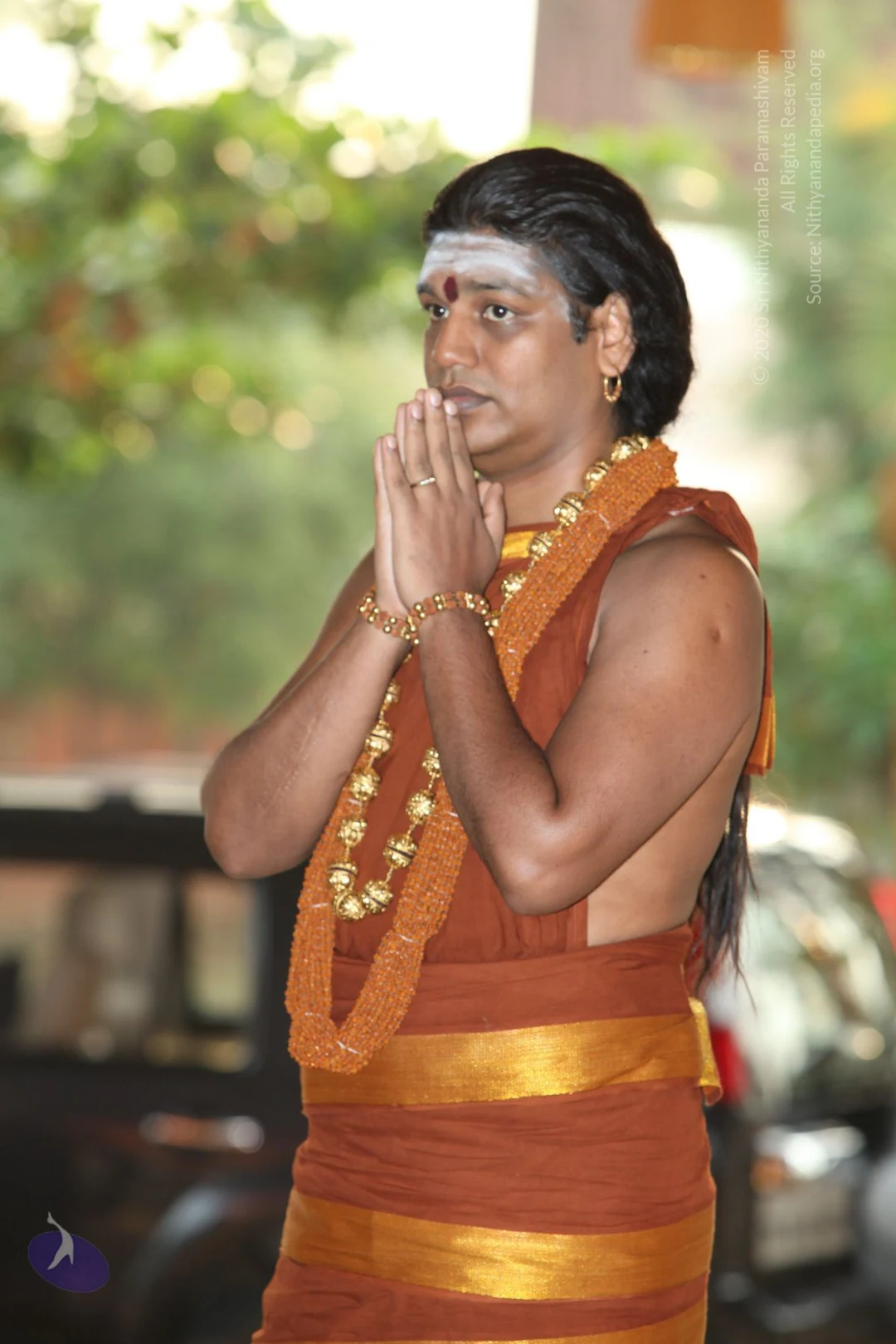
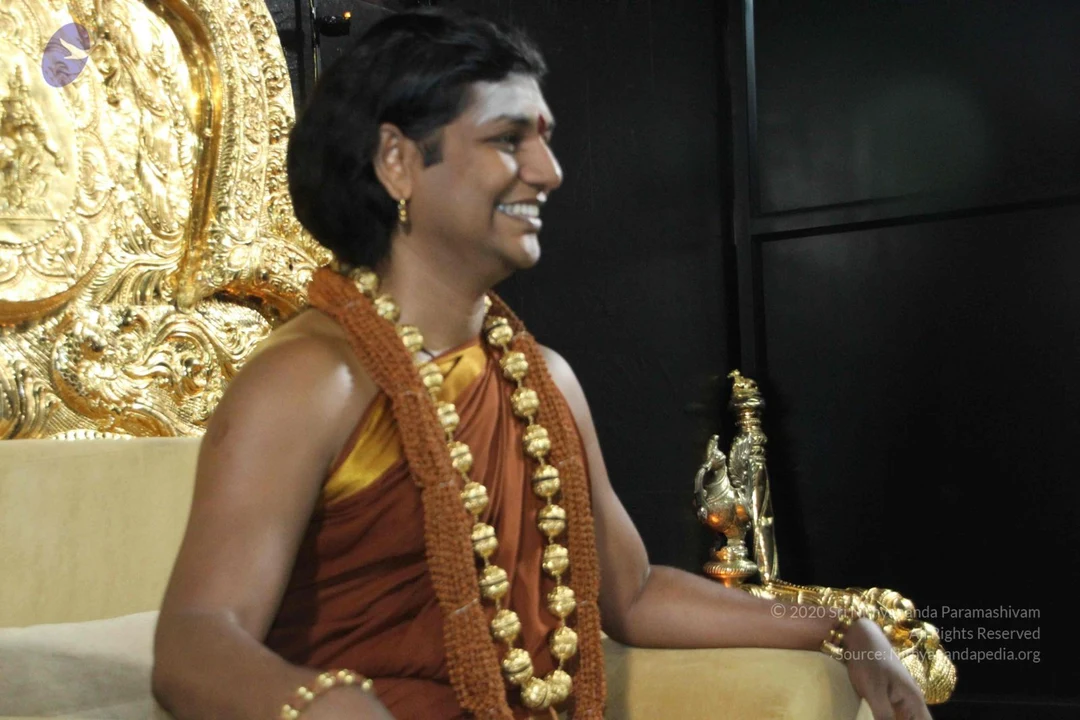
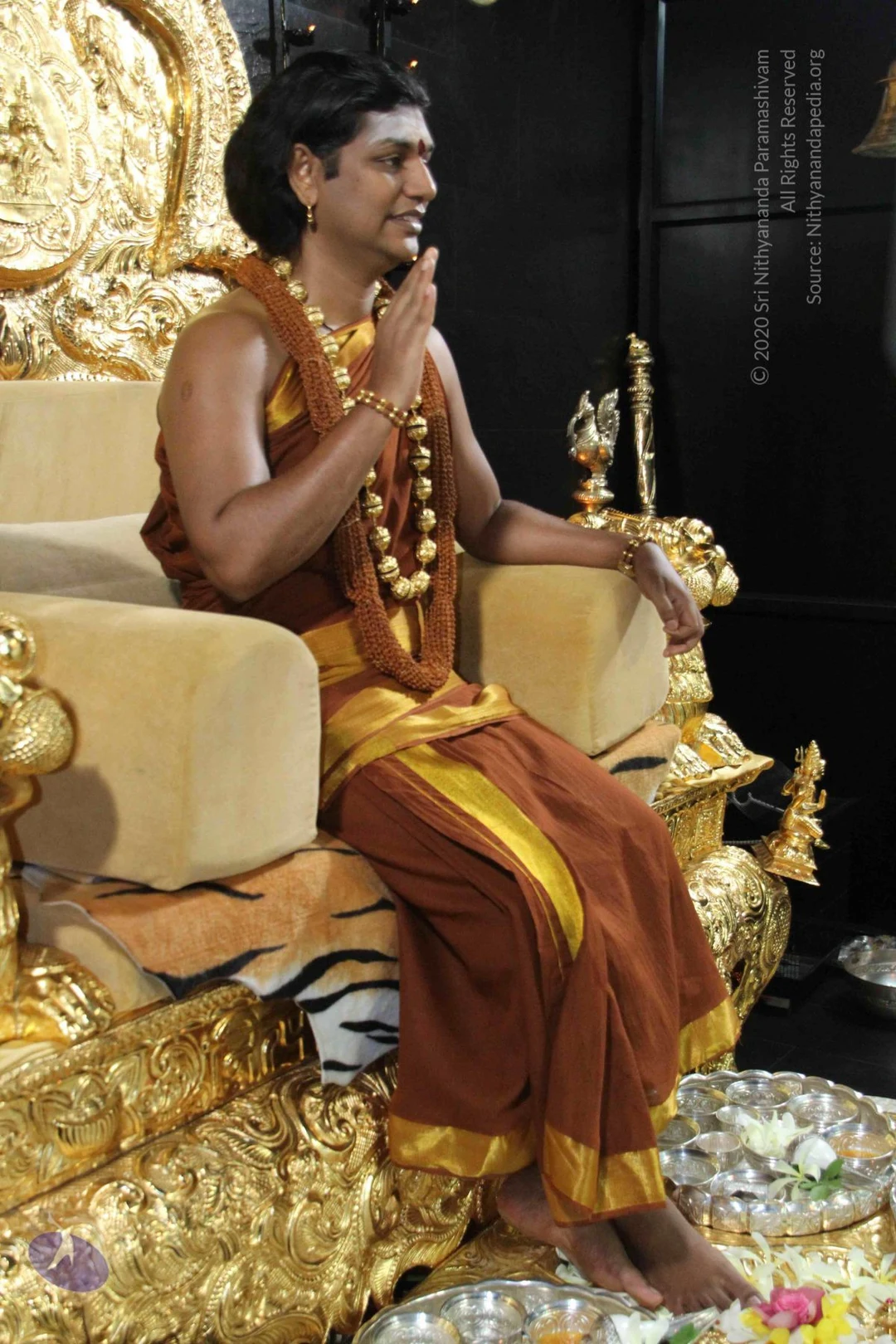
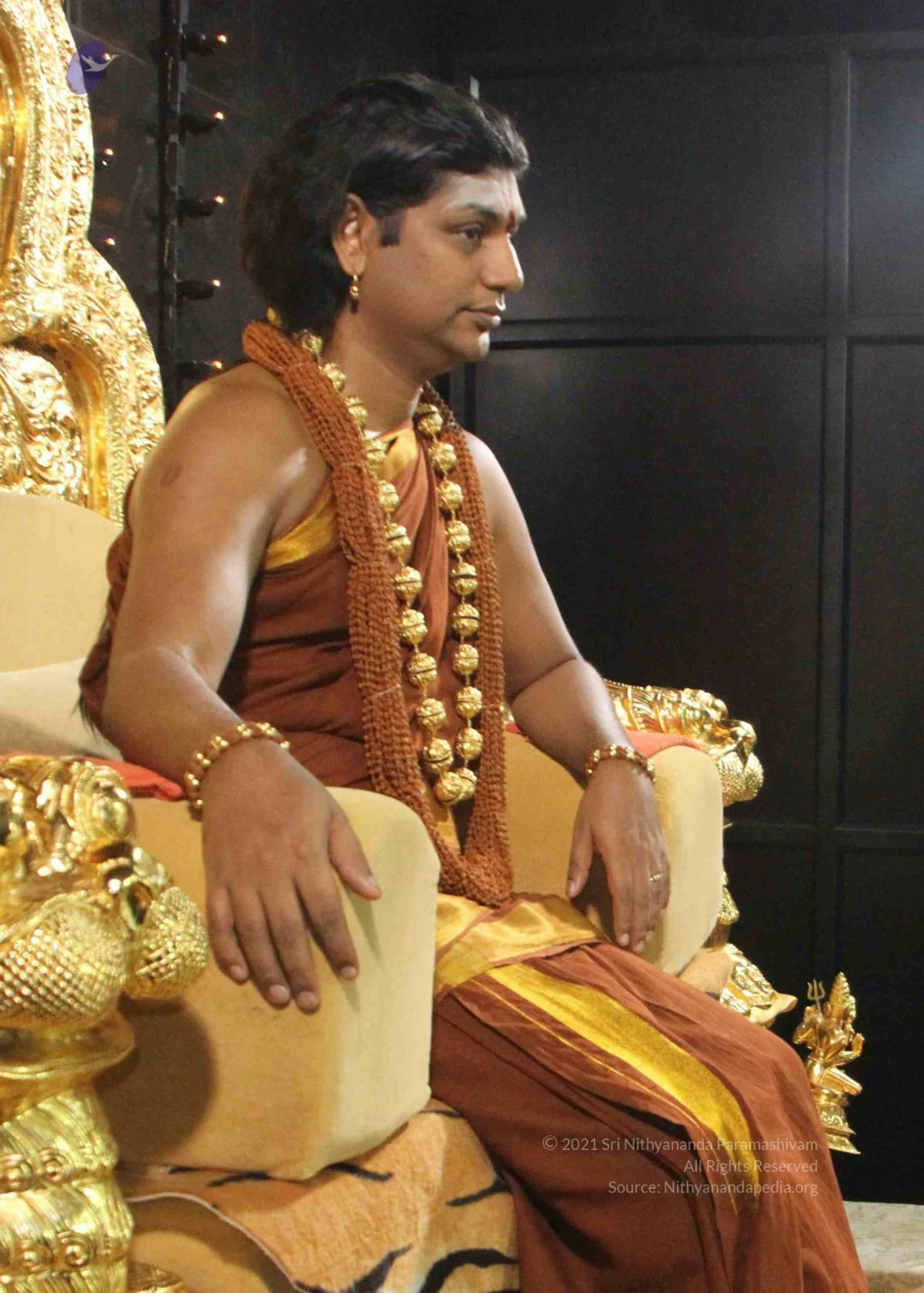
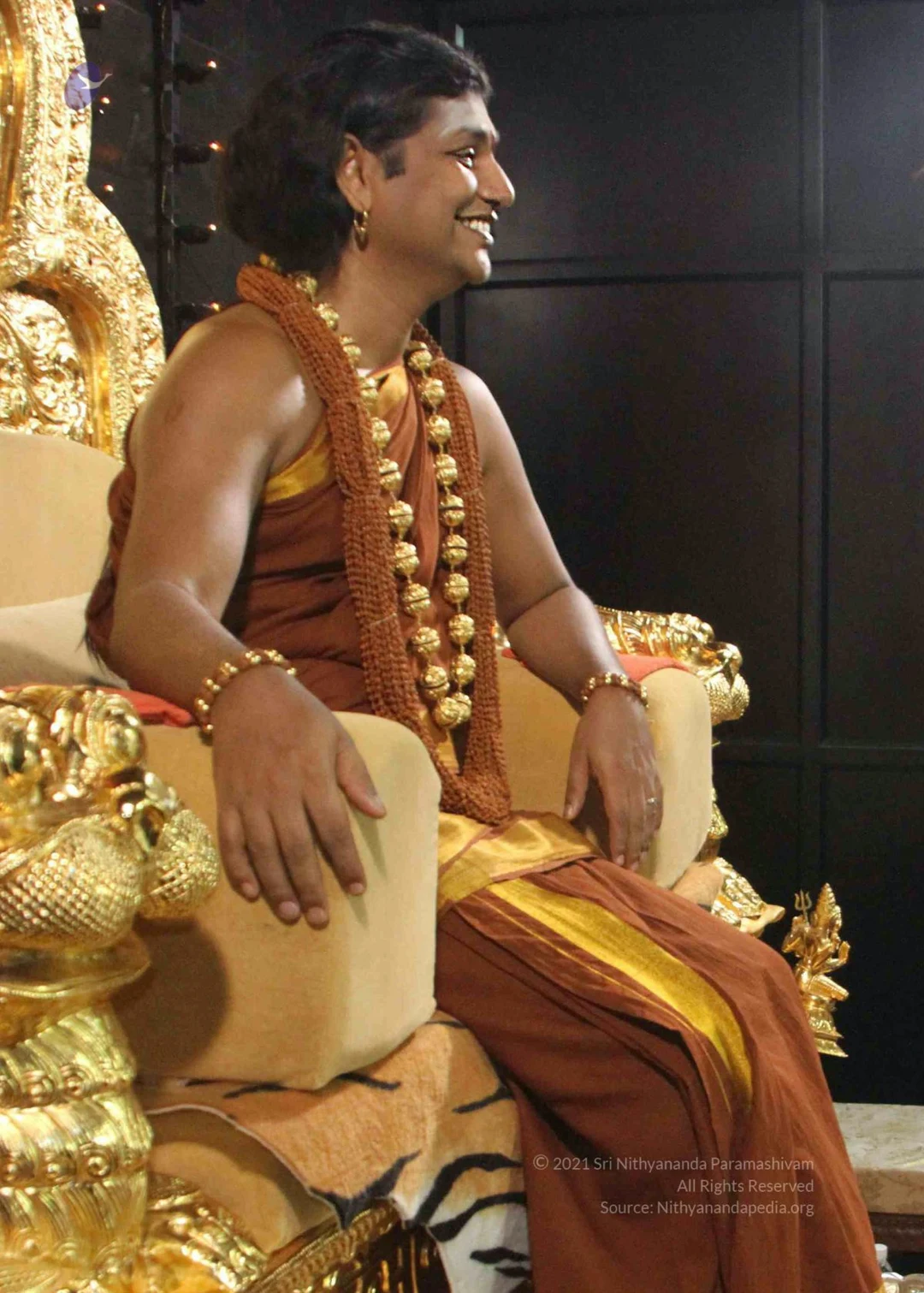
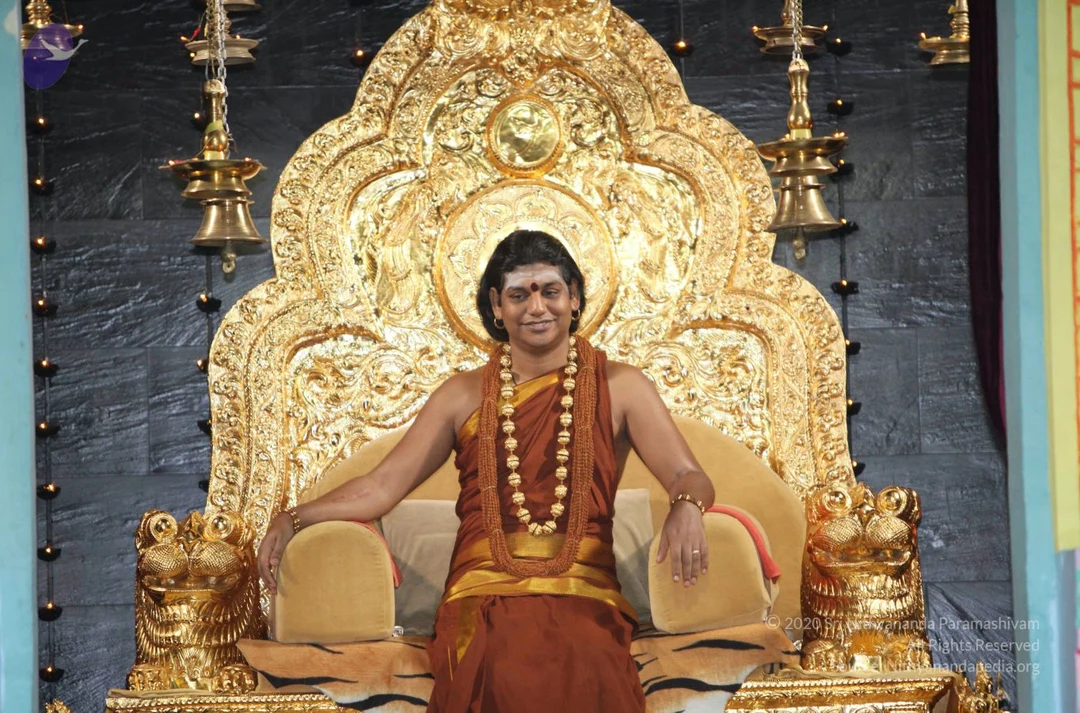
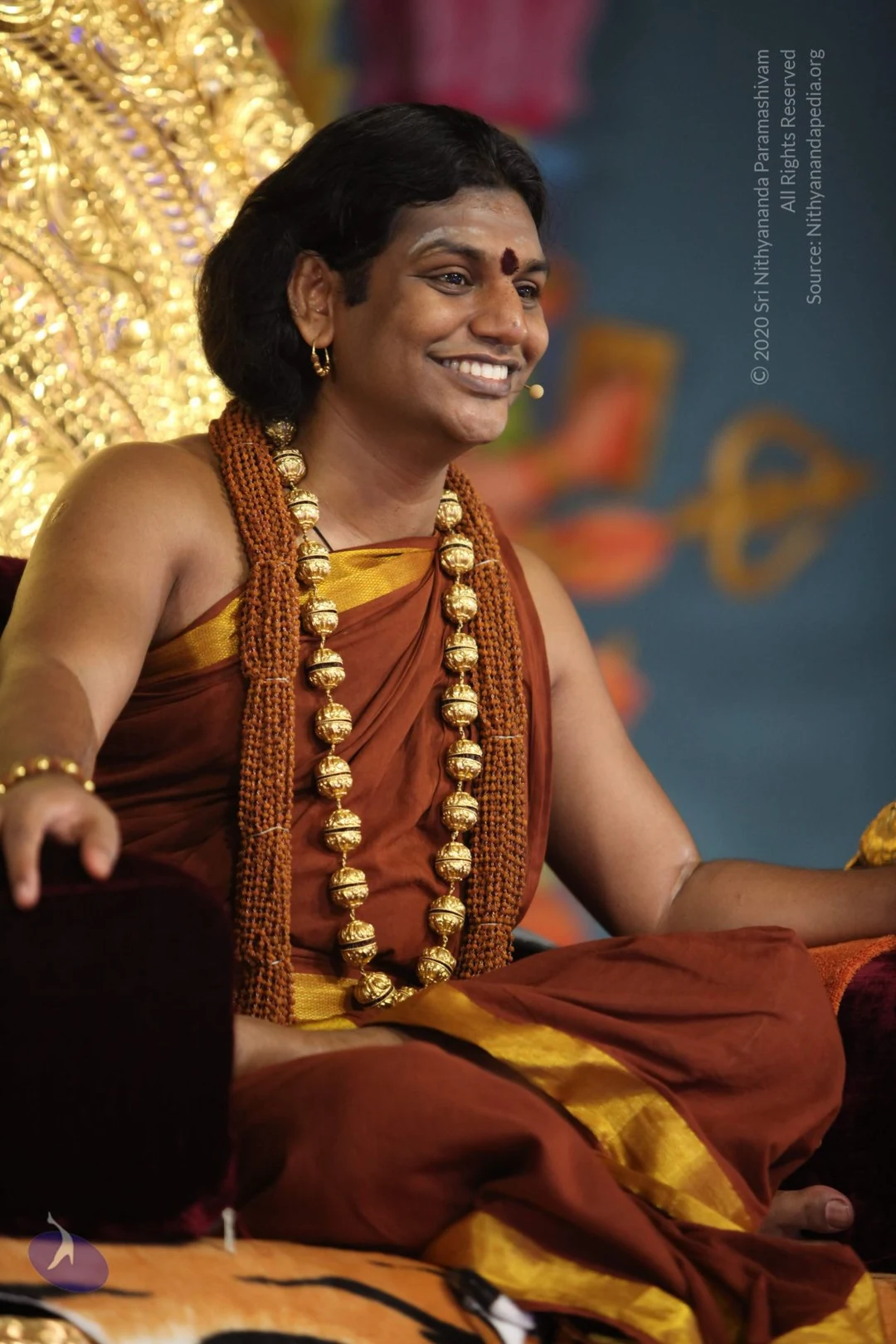
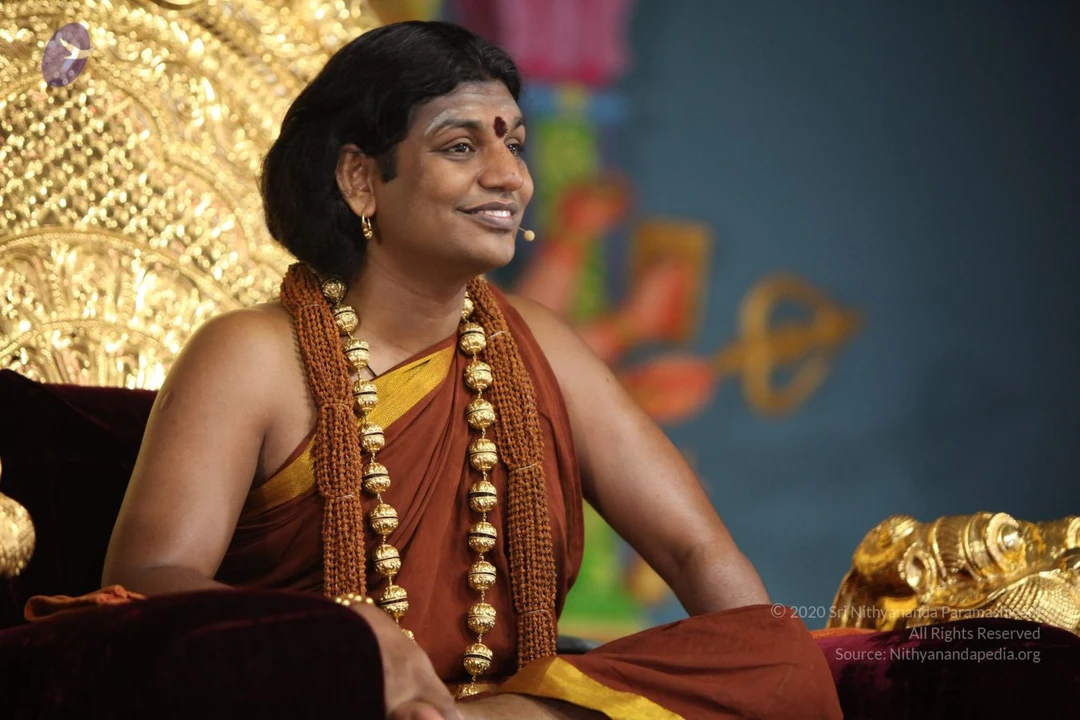
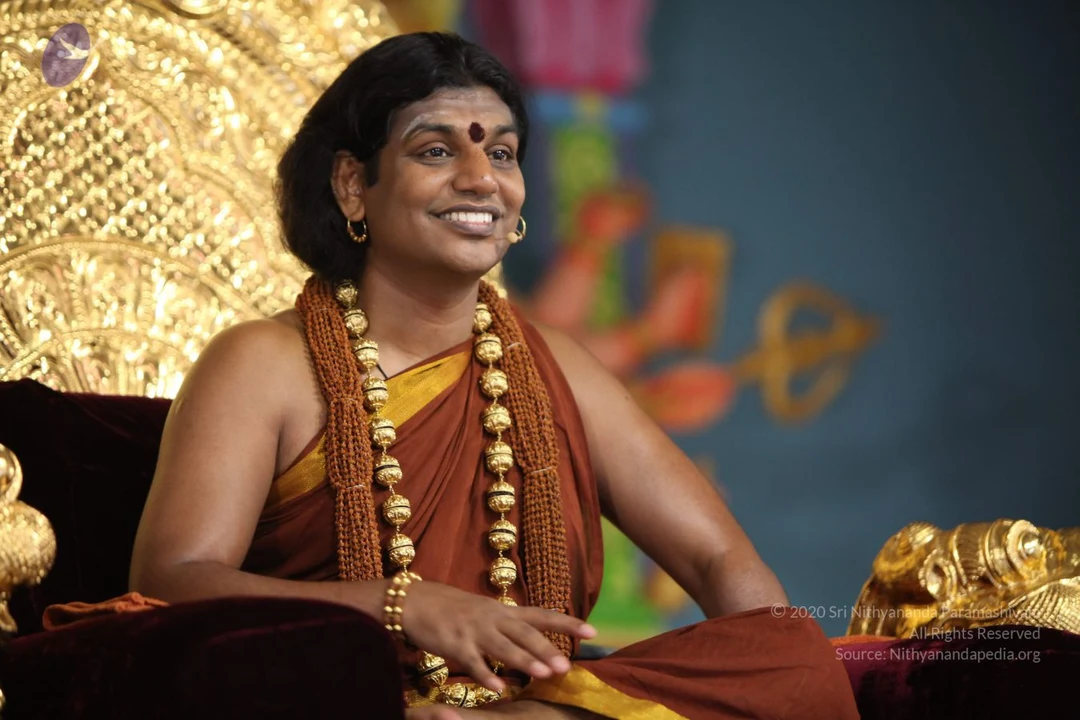
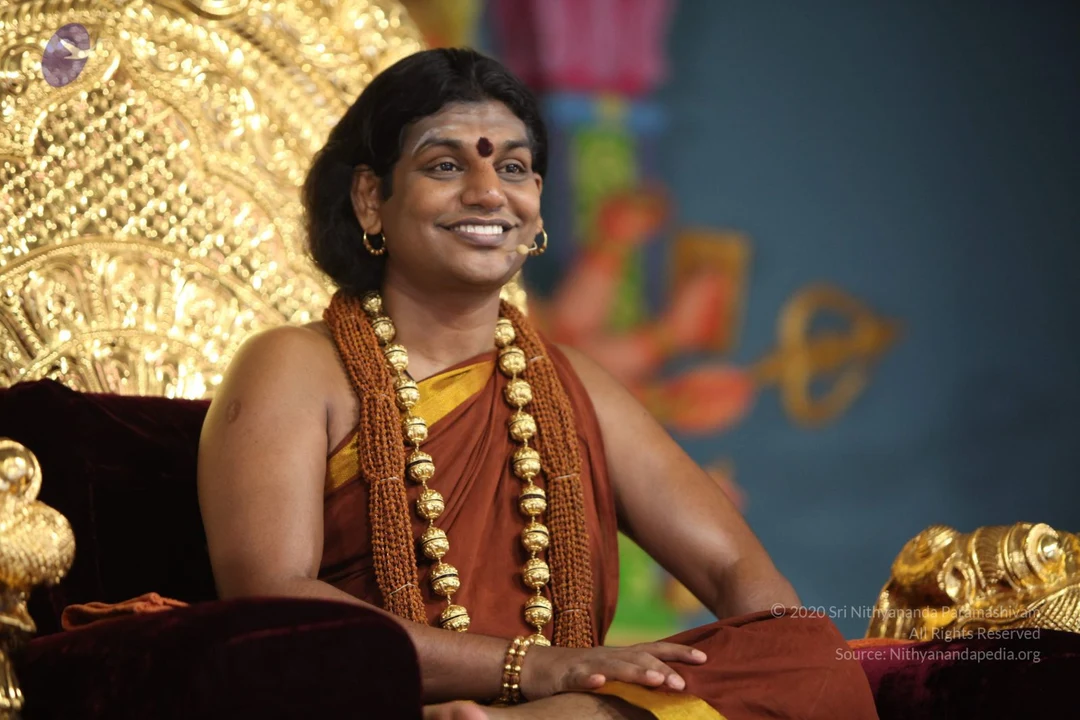
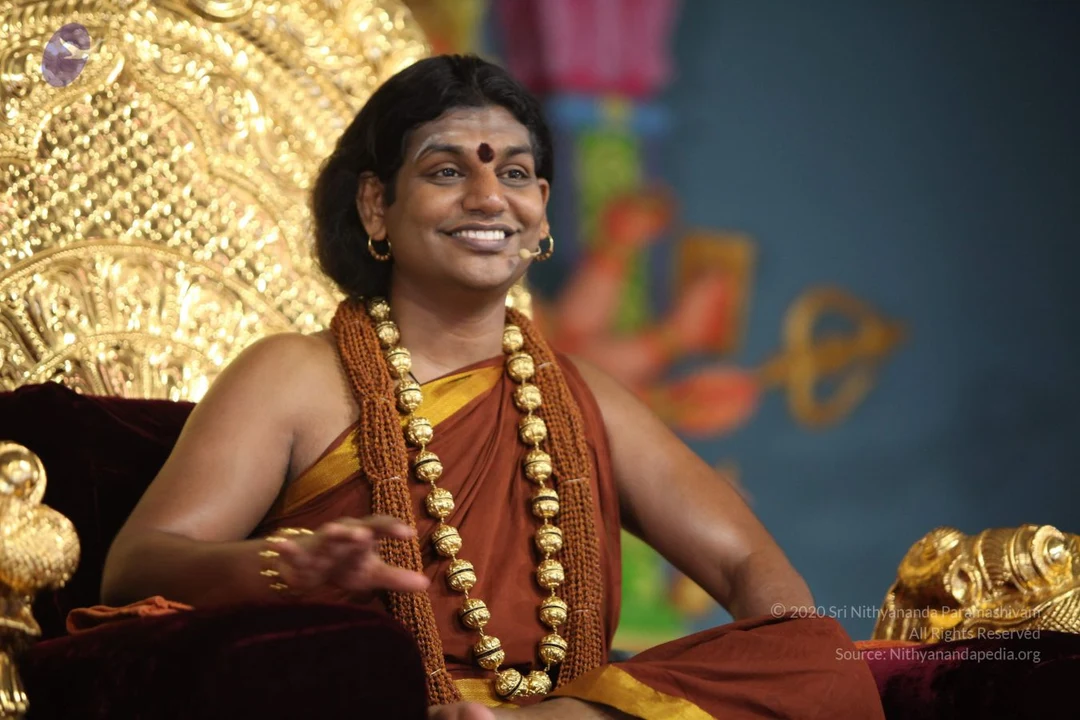
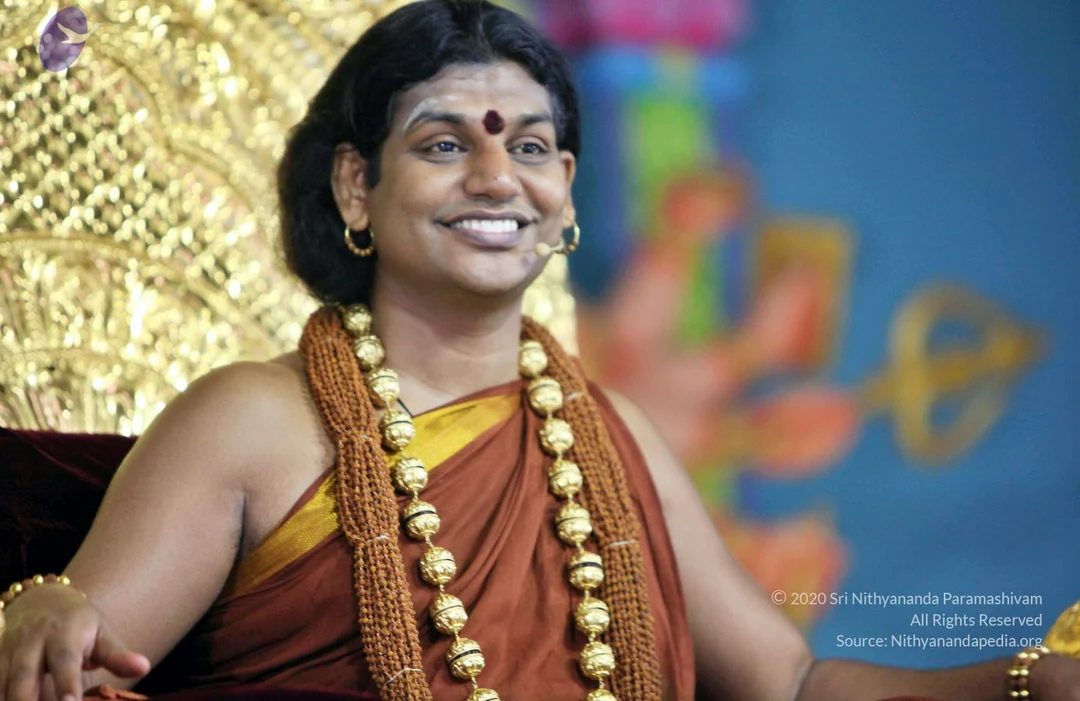
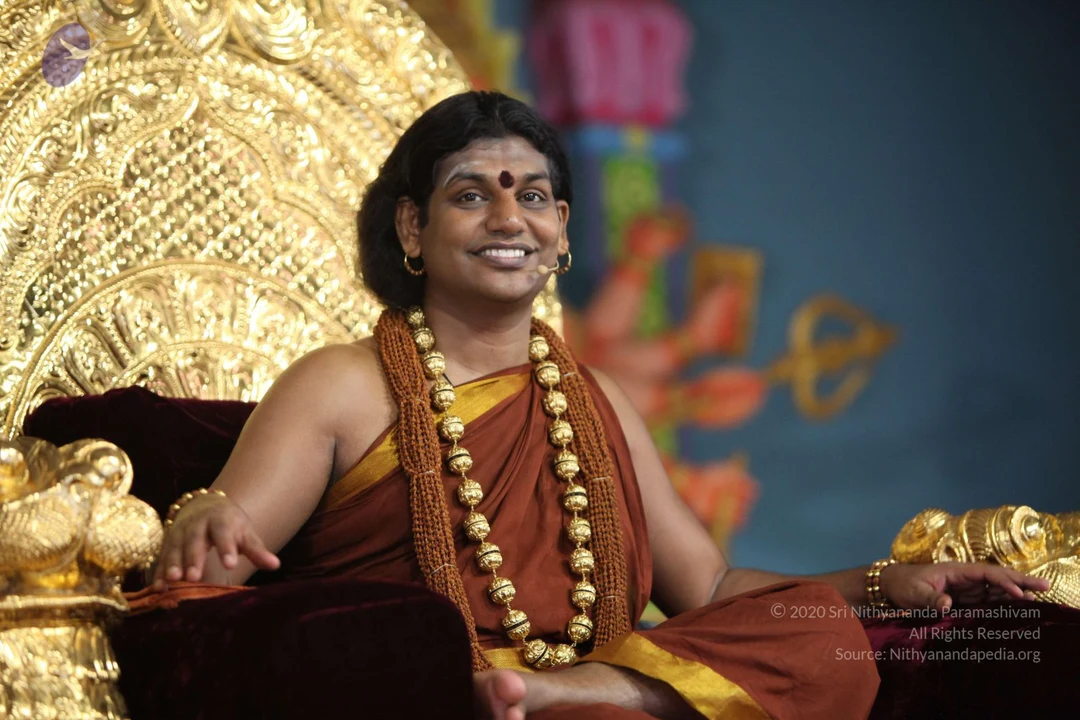
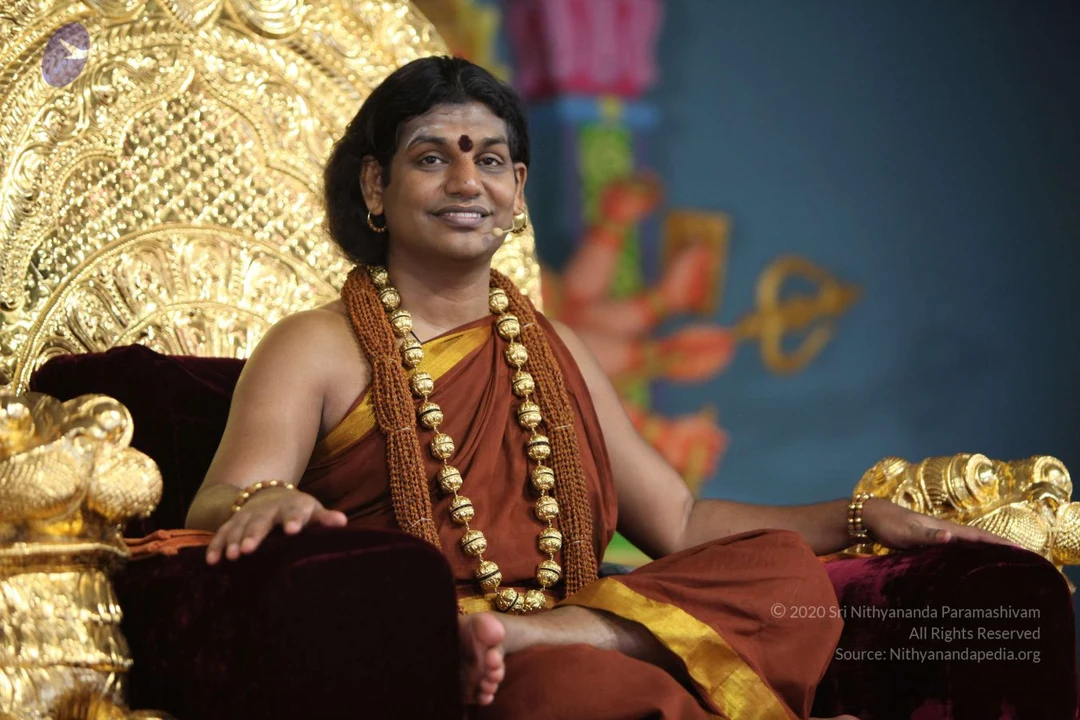
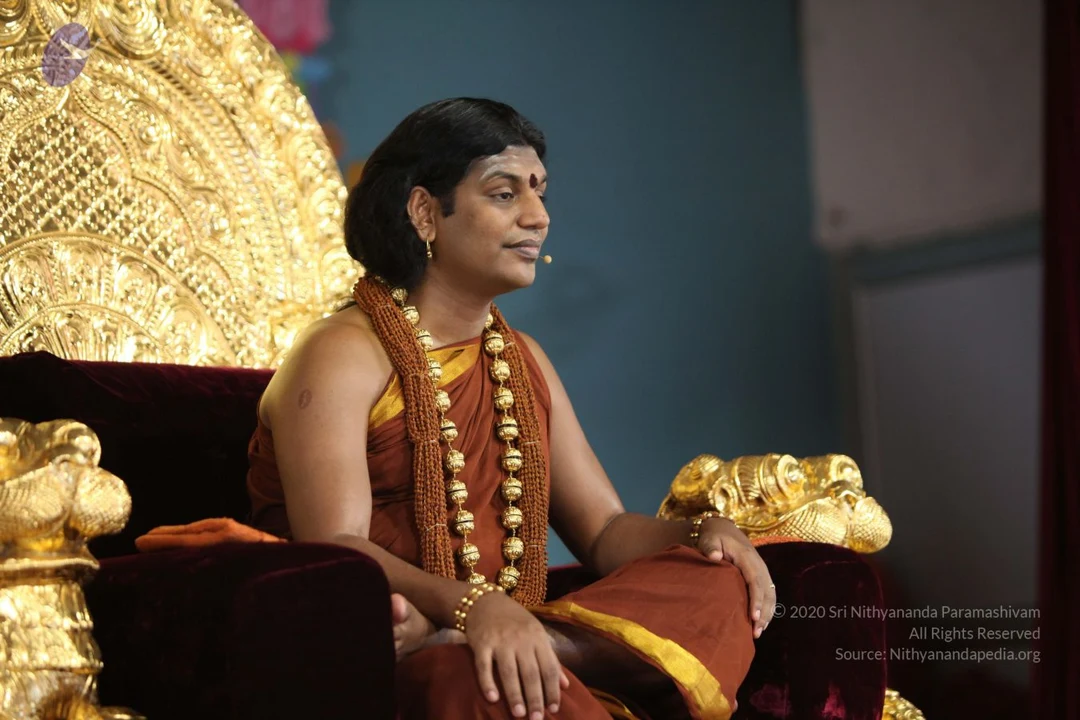
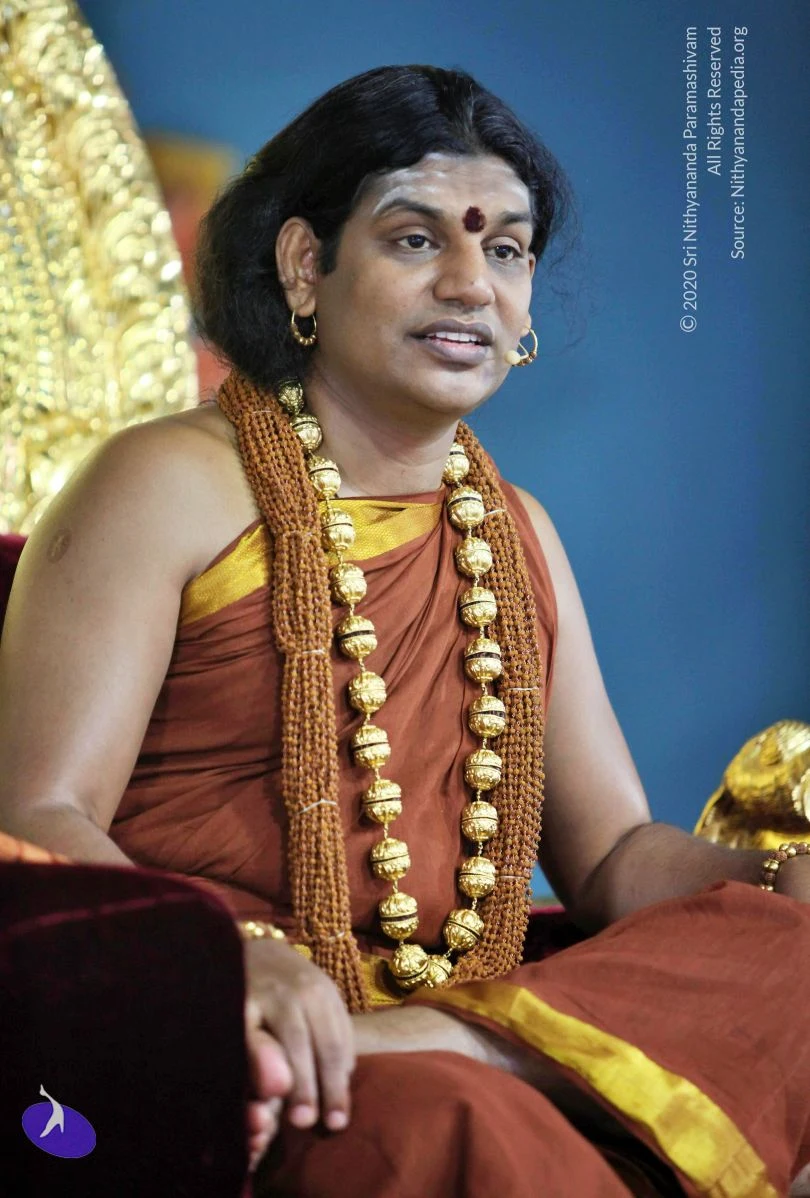
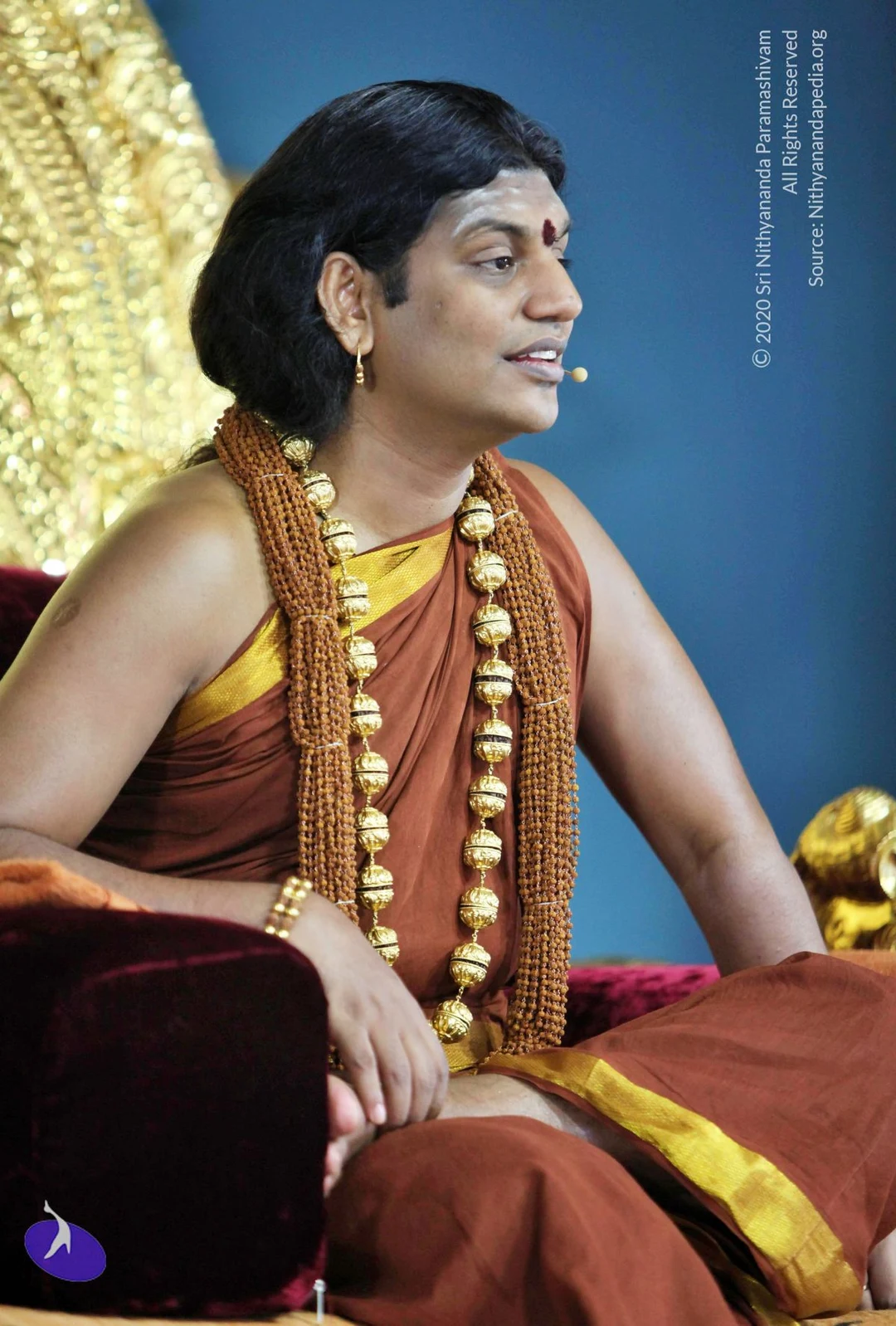
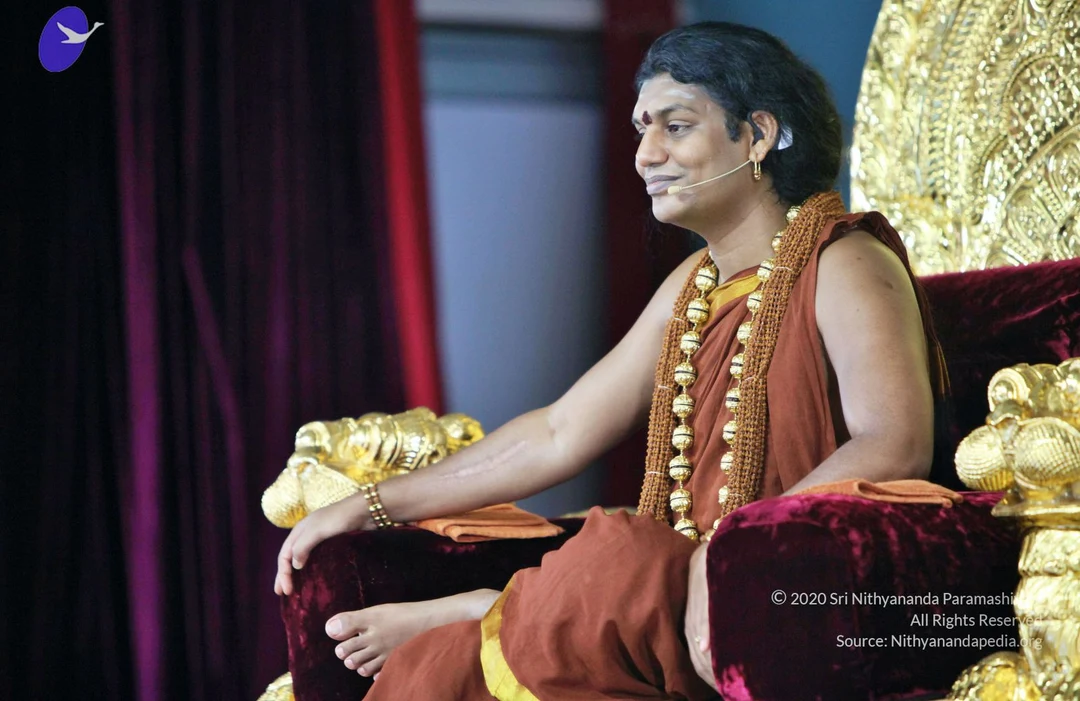
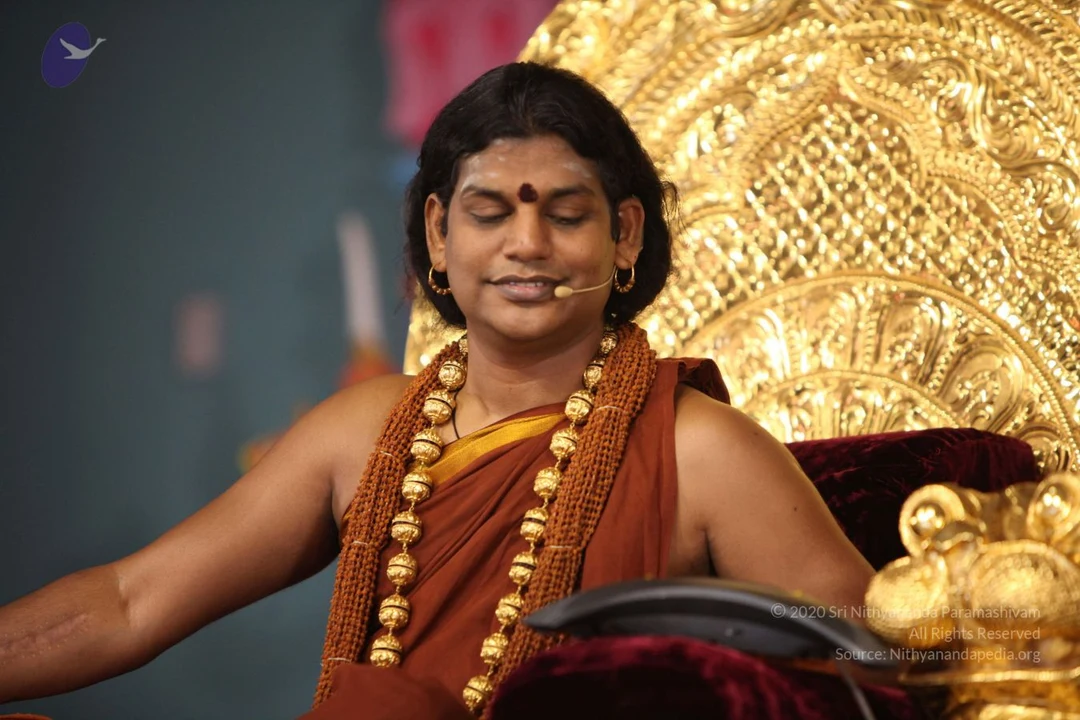
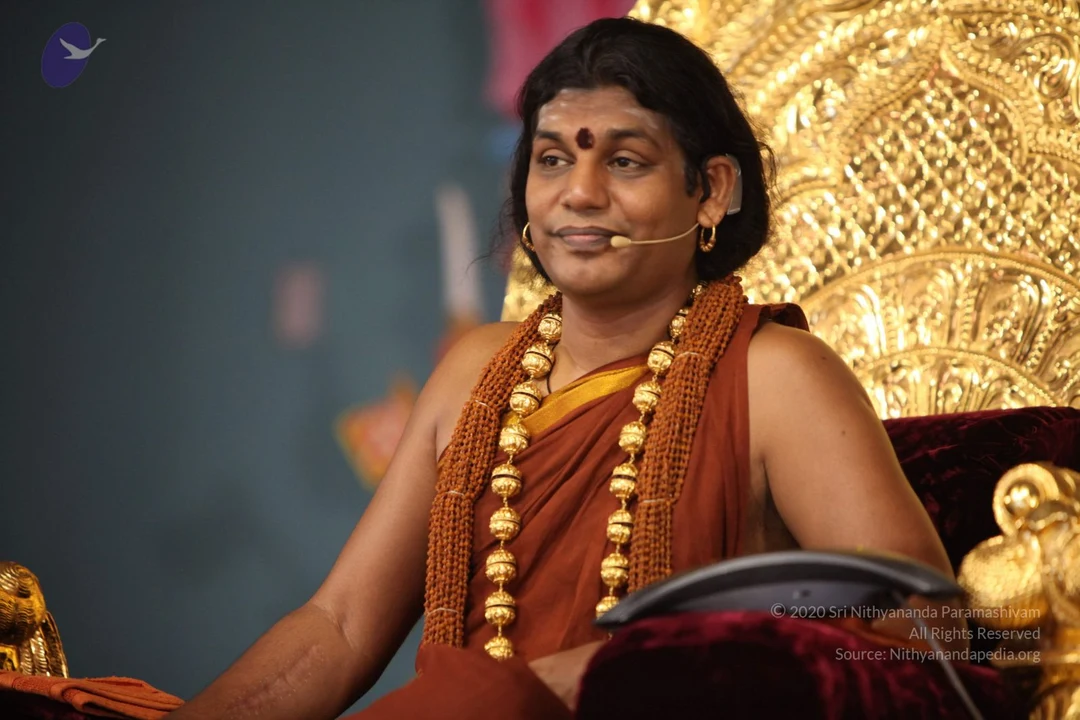
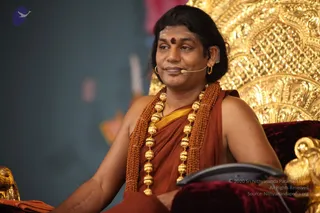
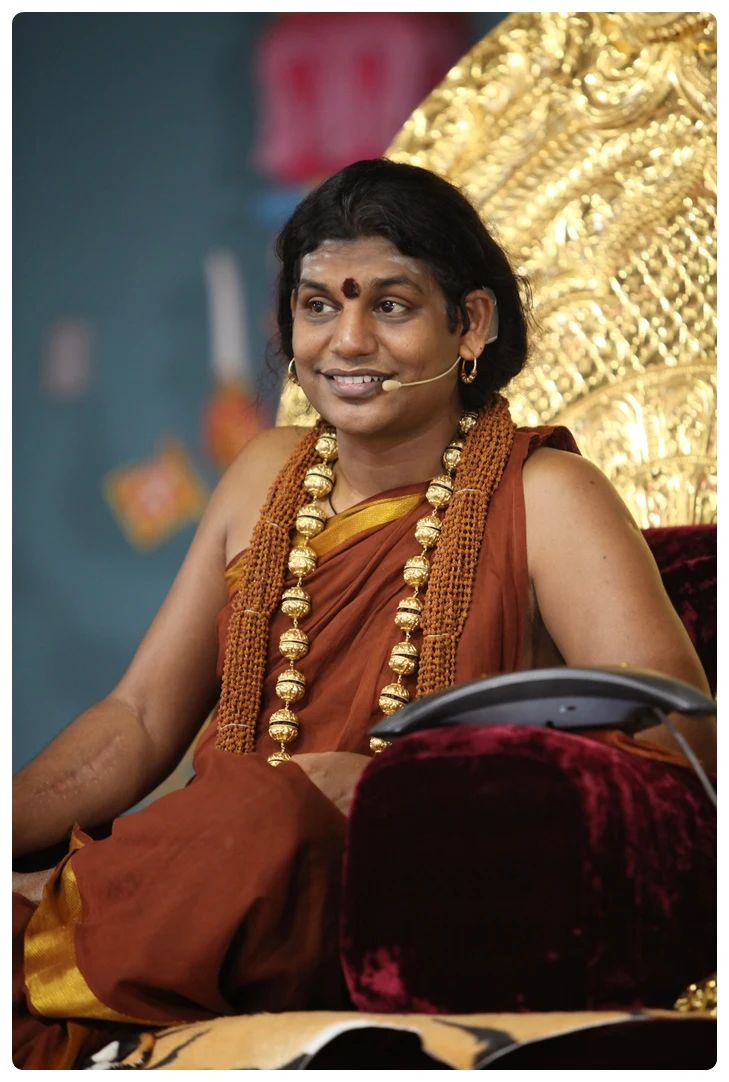
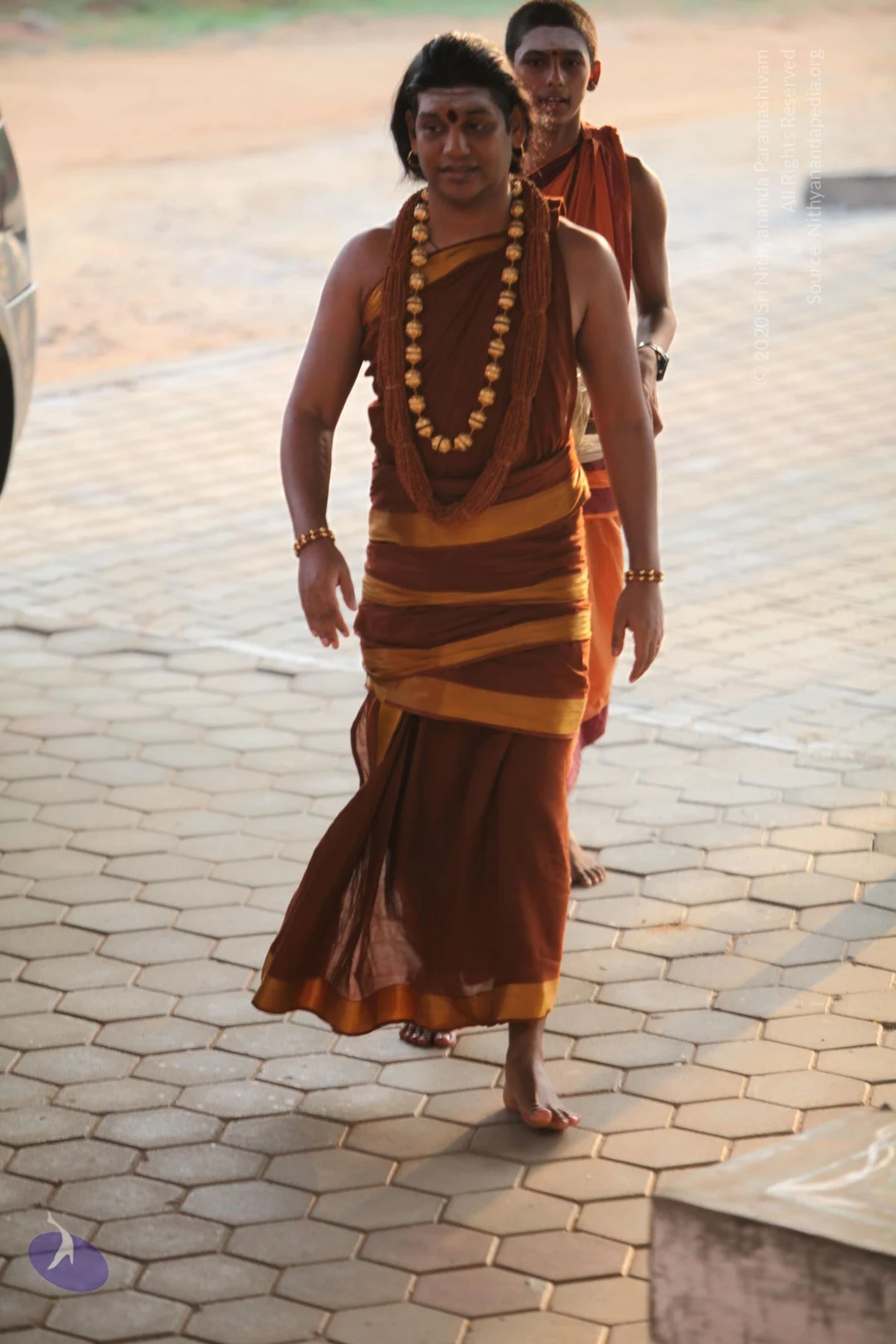
A photograph of a man in profile against a blurred green and brown outdoor background. He has long dark hair swept back, a red bindi on his forehead, a small gold earring, and wears a rust-orange shawl over the shoulder with a gold-and-rudraksha mala of large gold-capped beads layered with rudraksha beads across the chest. His hands are clasped together at the waist and he looks downward. Given the page's a person flag, this appears to be a person, with the long swept hair, rudraksha malas, gold ceremonial beads and saffron-toned shawl as the qualifying cues.A photograph of a man seated on an ornate red velvet throne with gold carved armrests and a large gold backrest. He wears a rust-orange sleeveless wrap over a yellow-trimmed orange garment, a long multi-strand gold bead necklace with a beaded rudraksha-style mala, a bangle on his wrist, and a small red bindi. His long dark hair is swept back, and a headset microphone is attached near his face. He looks to his right with an open, speaking expression and his bare feet rest near the chair. Behind him hang deep burgundy and magenta curtains.A small bronze deity murti sits within an ornate arched metal frame on a red and gold brocade cloth in a temple setting. The figure wears a red-gold textile garment, a white flower garland, and a tall crown, with one hand raised. Beside it stands a grey carved stone pillar with relief figures, and a blurred red wall and railing lie in the background.

May 04 2013

Original wiki page
Contents

Title

Understand the Source of Your Suffering

Description

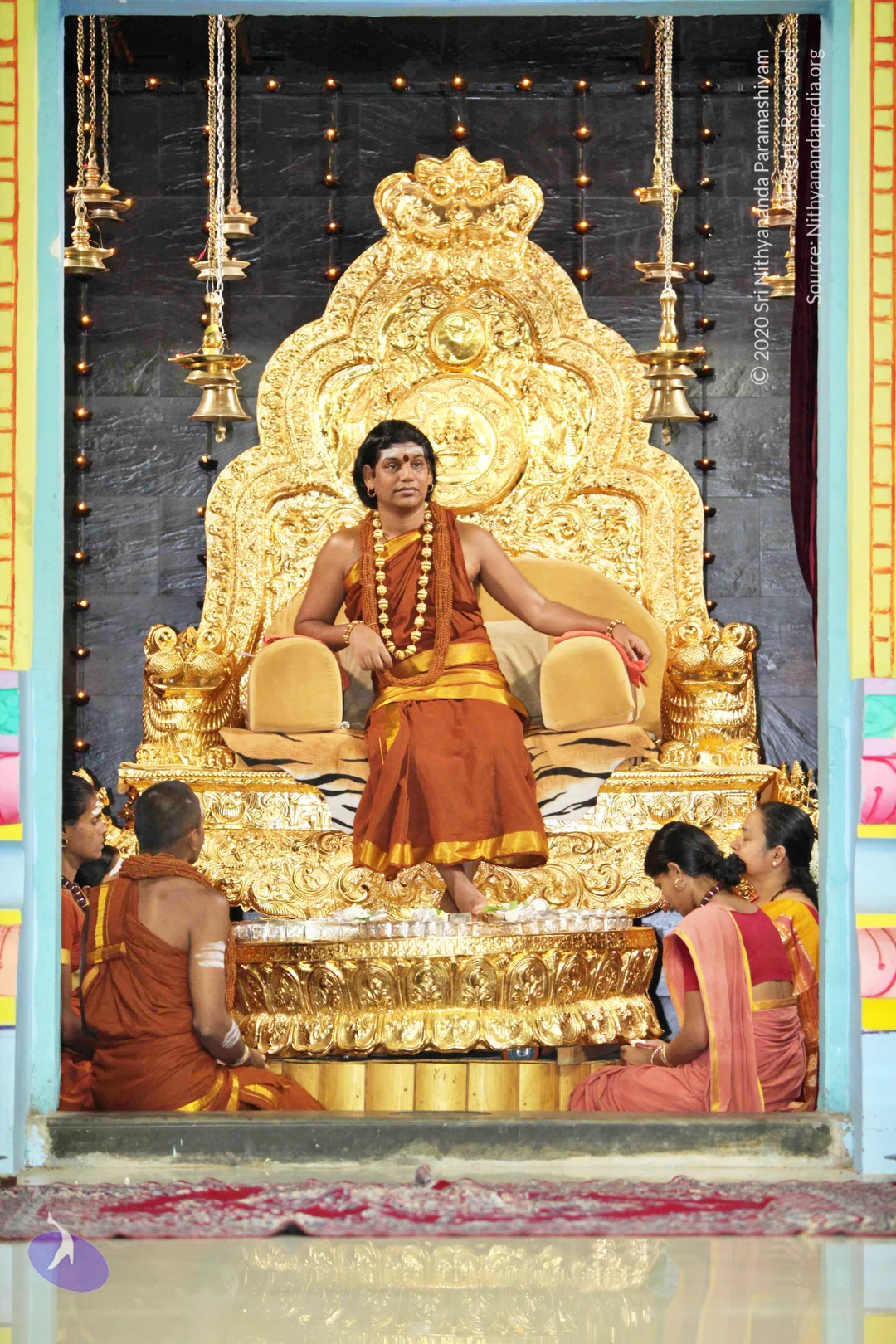
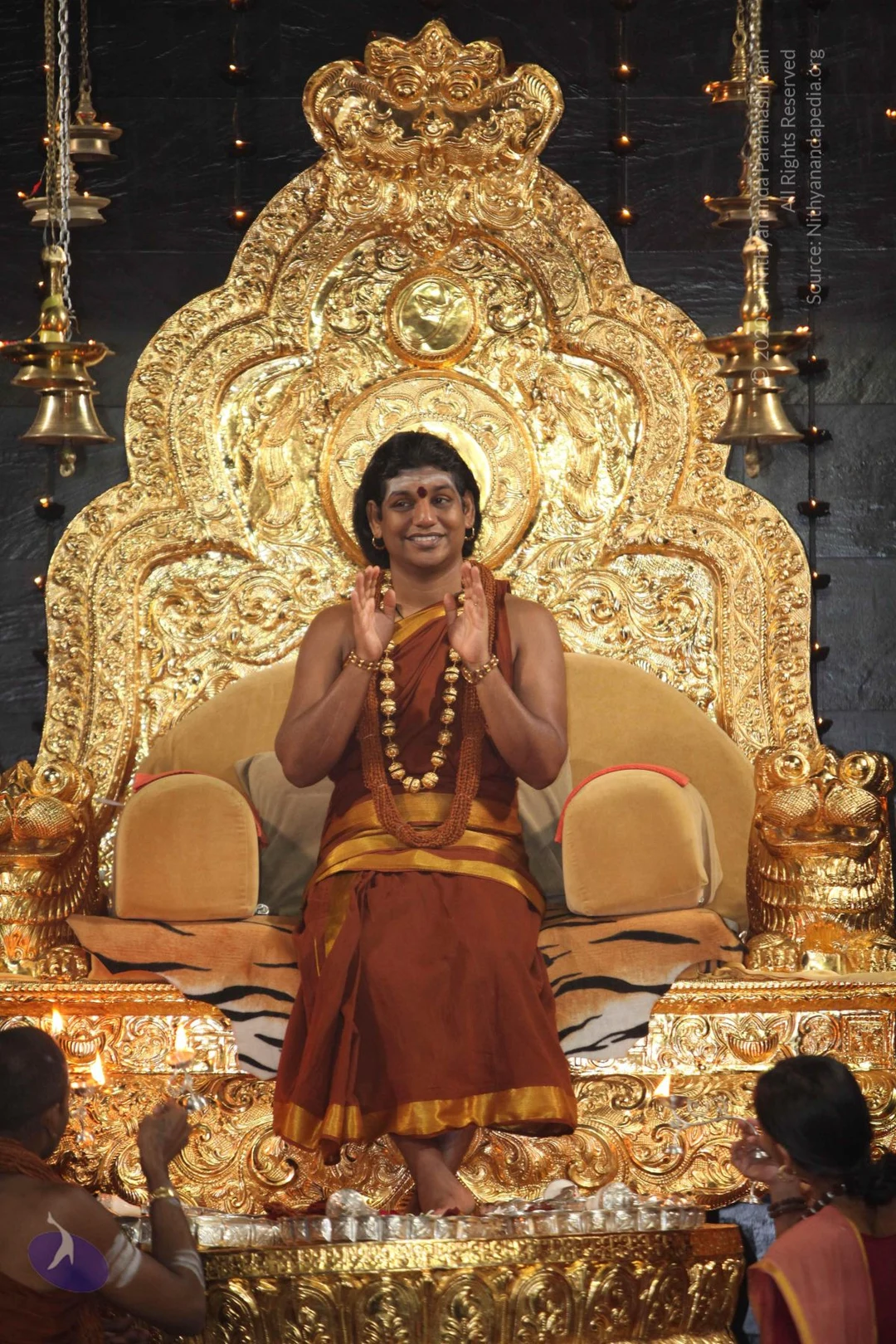
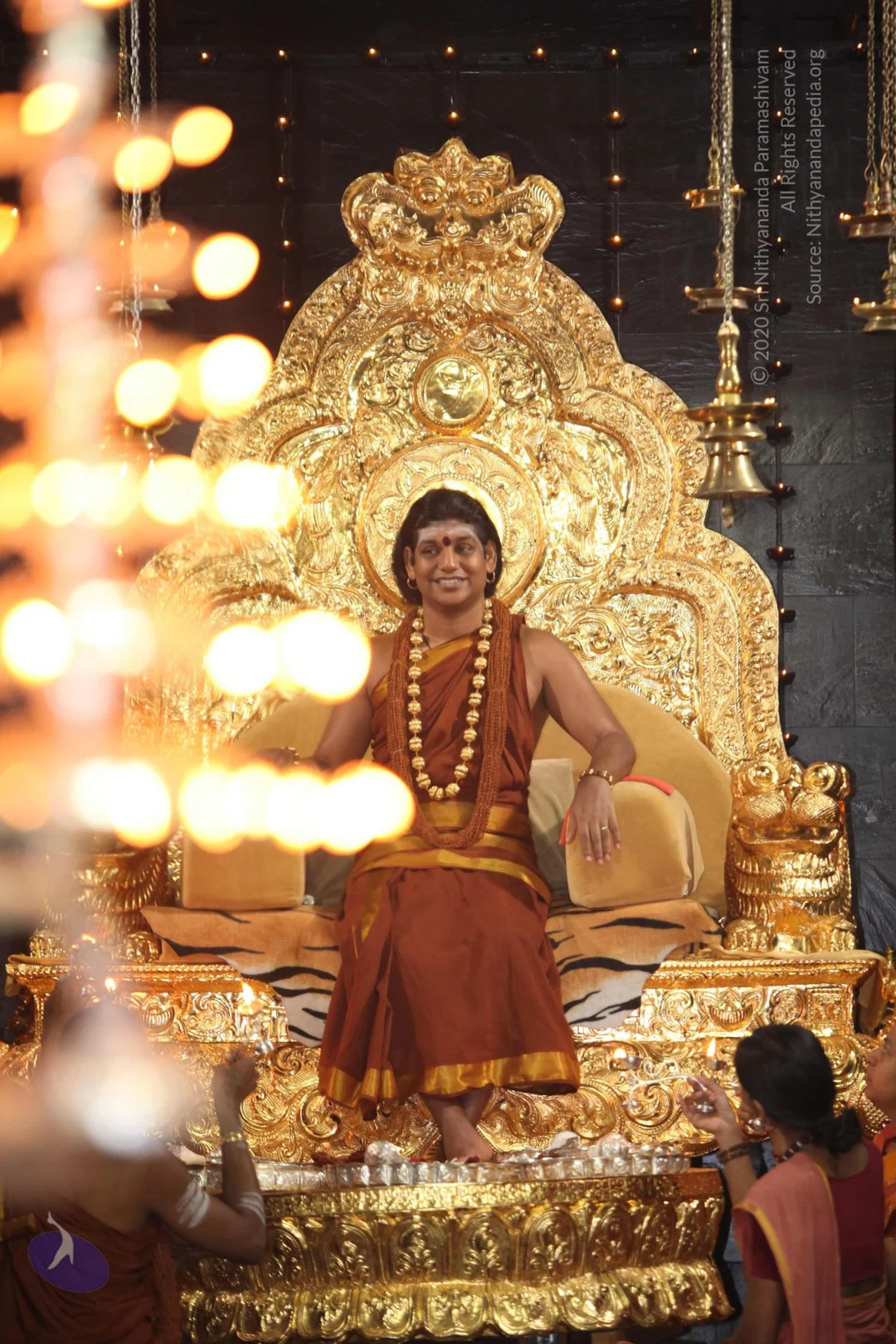
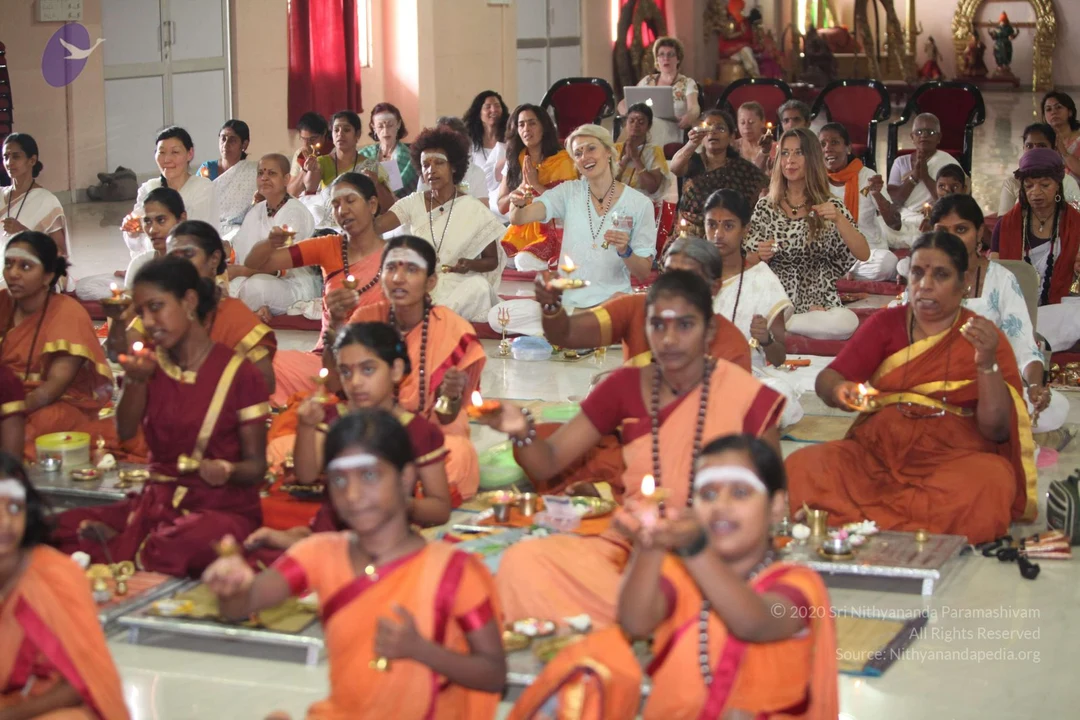
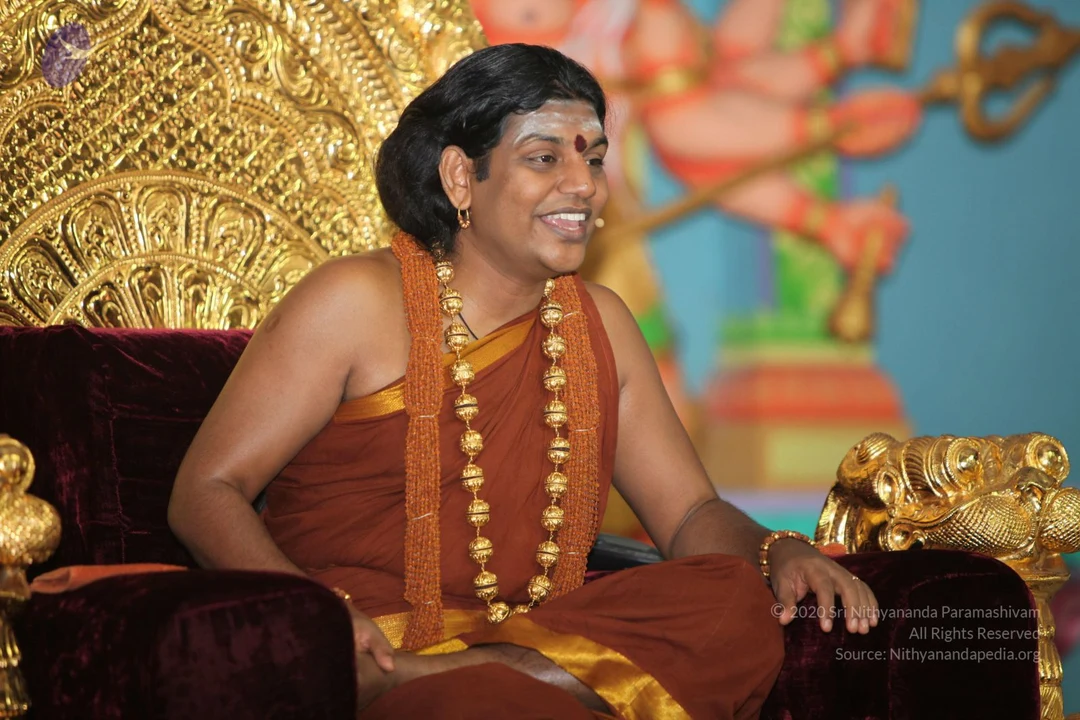
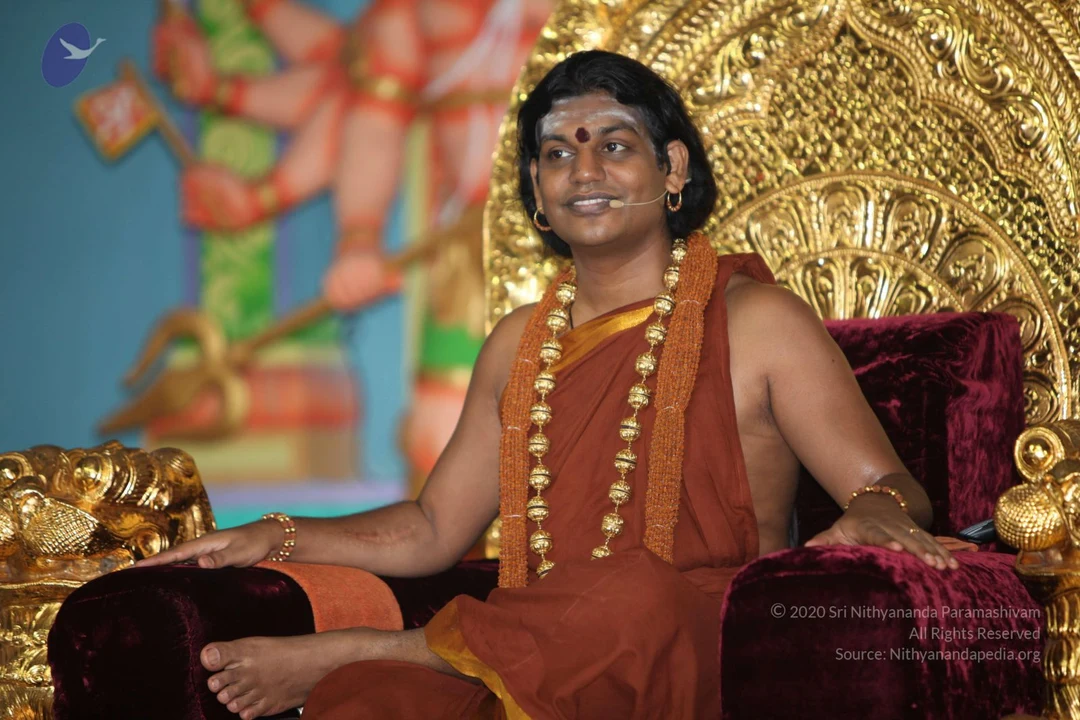
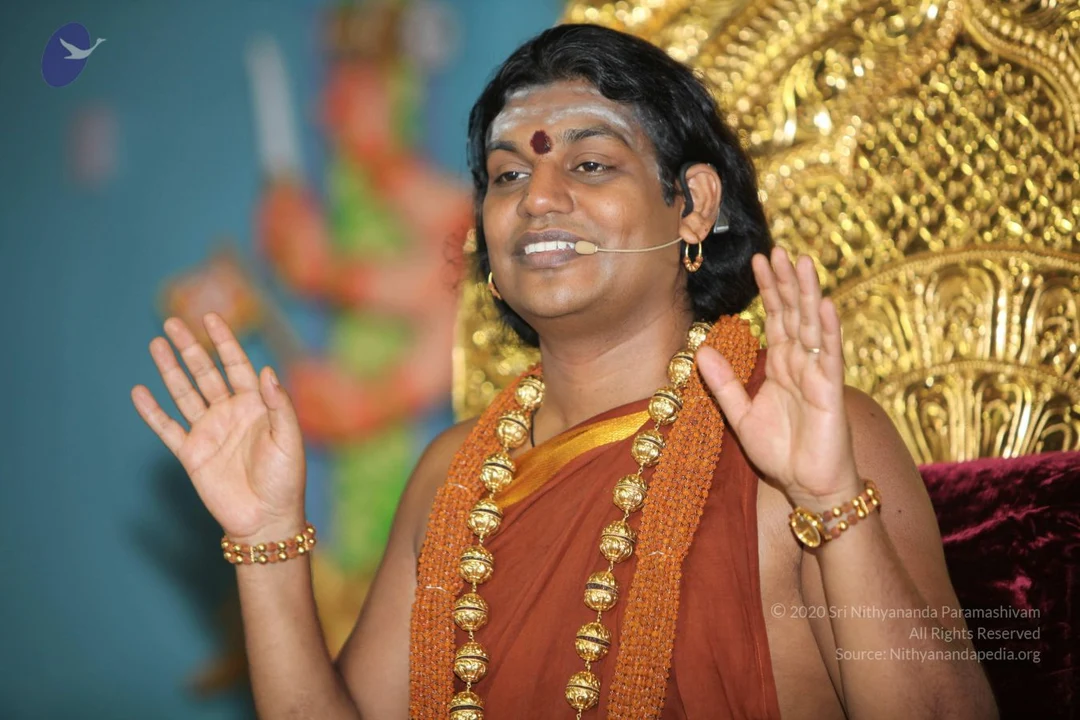
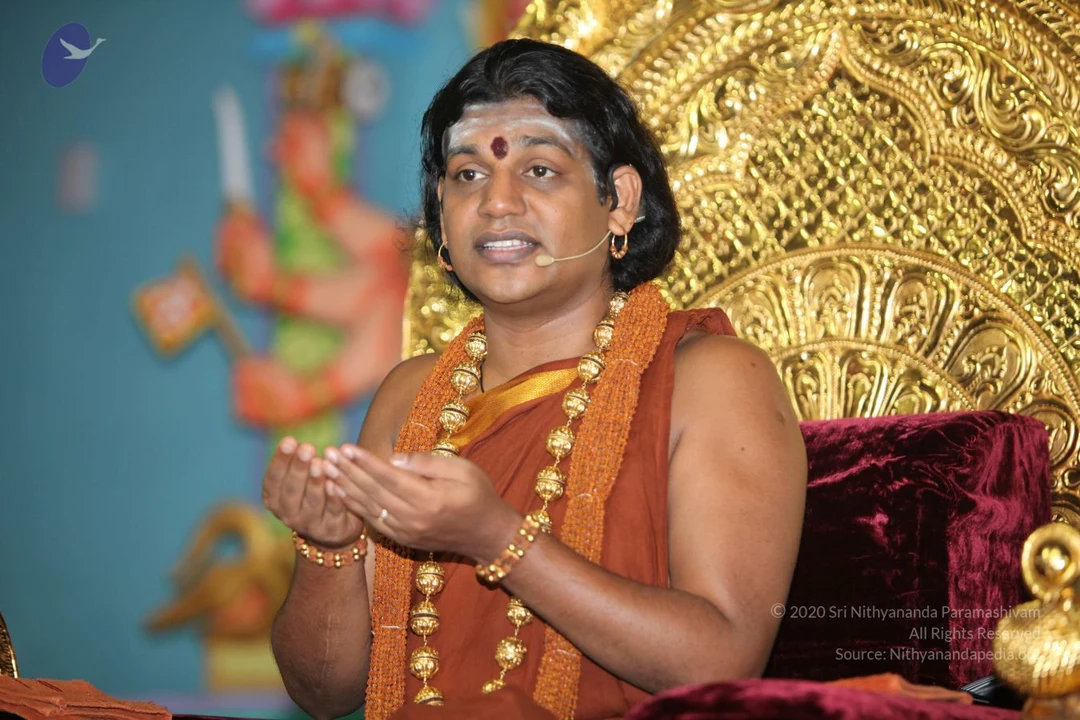
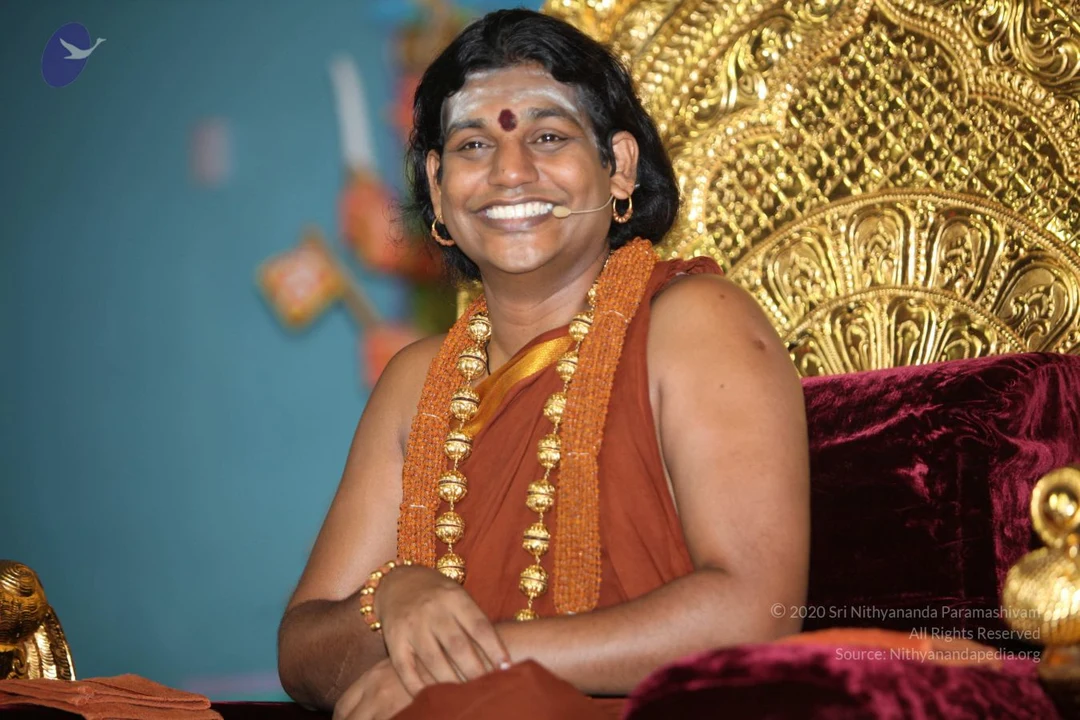
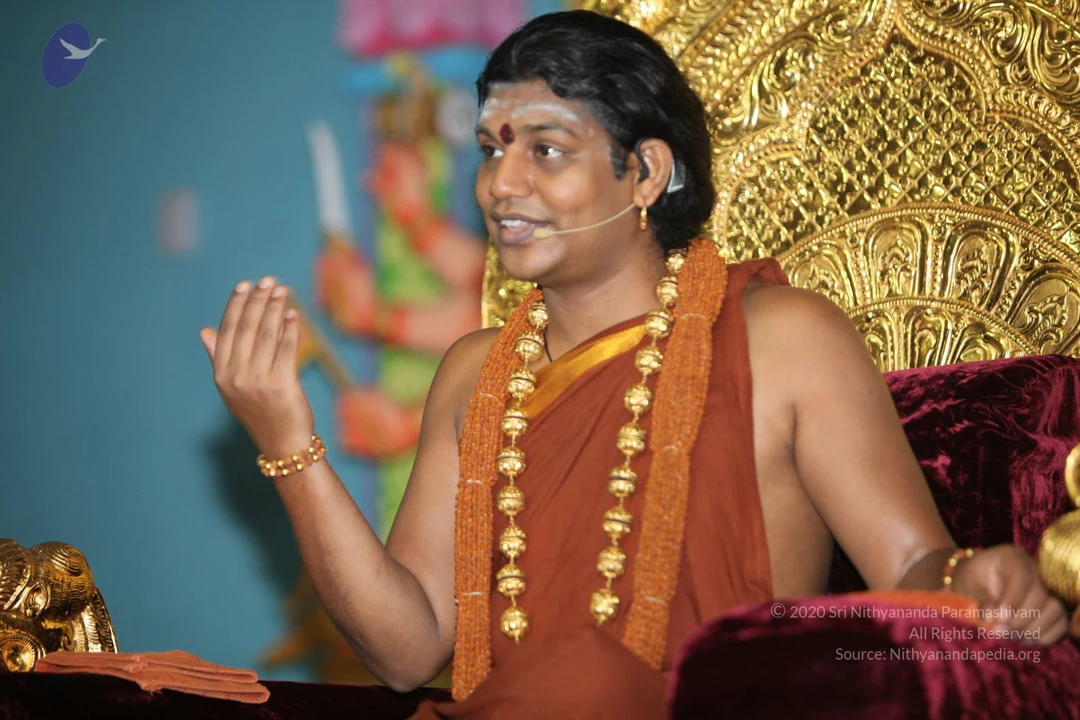
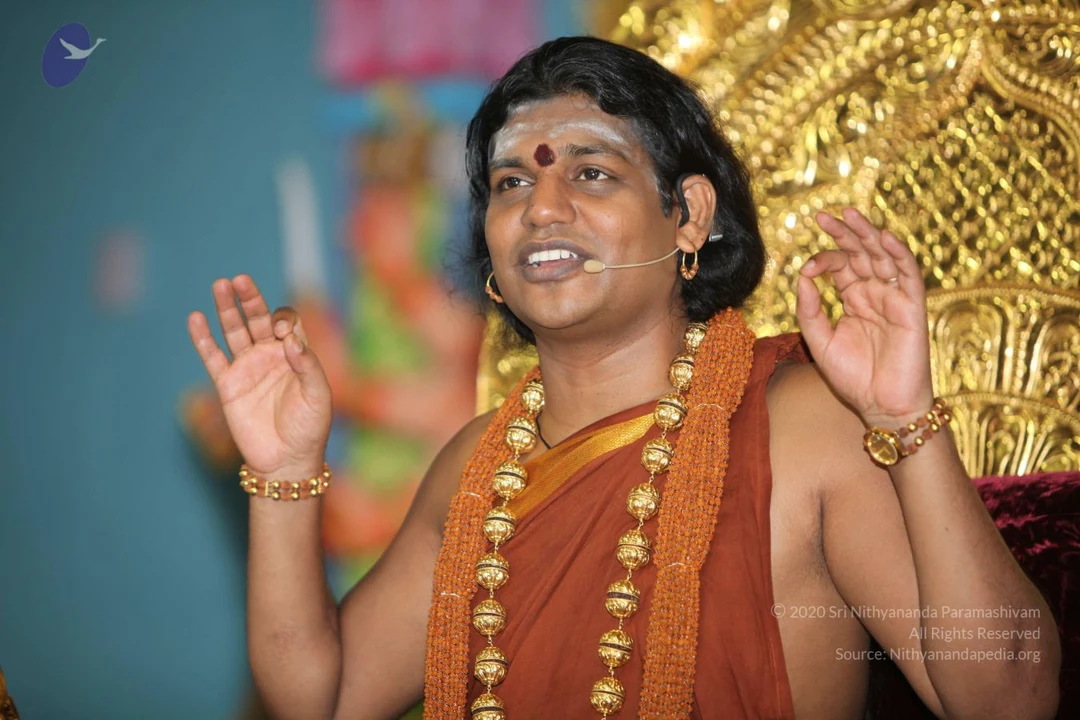
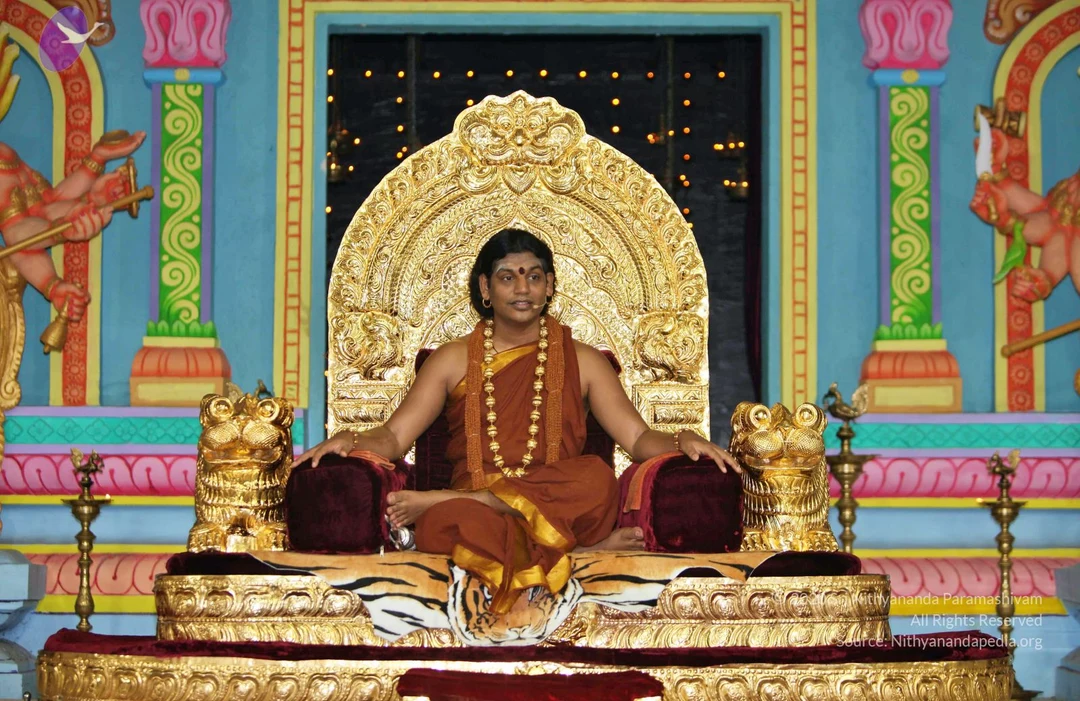
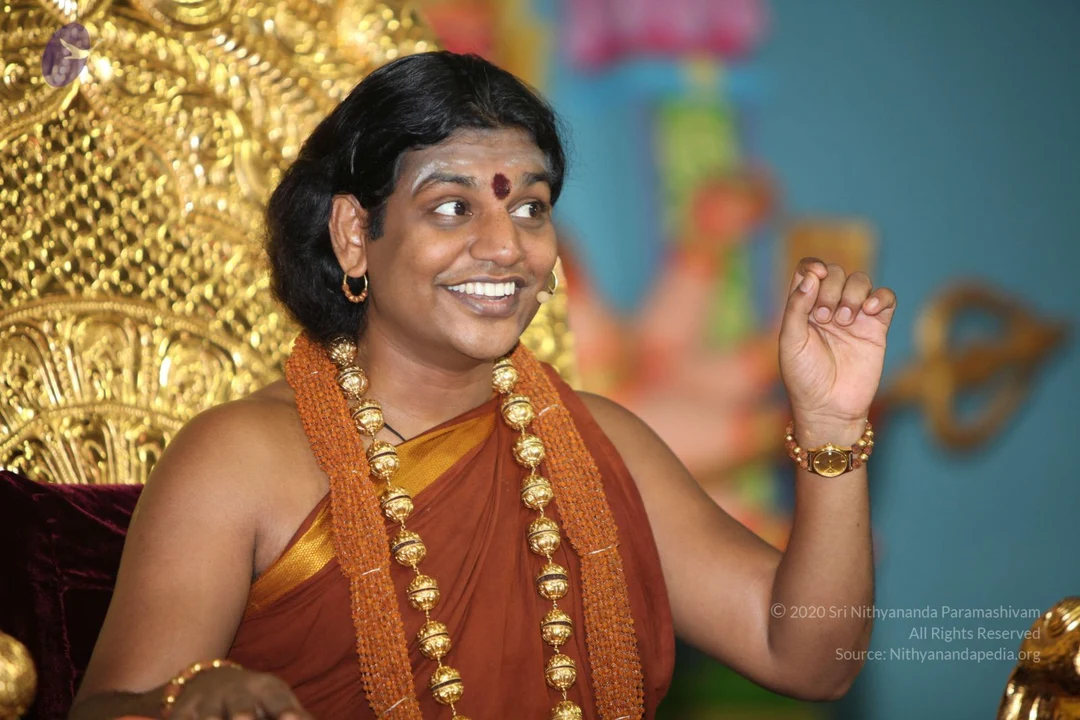
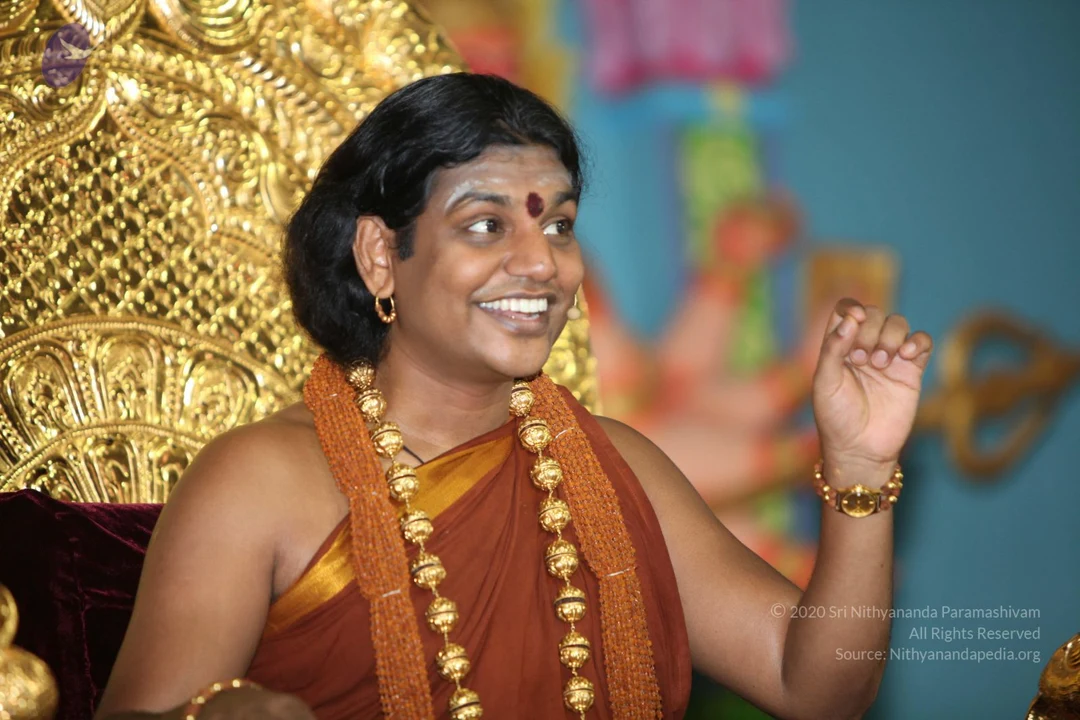
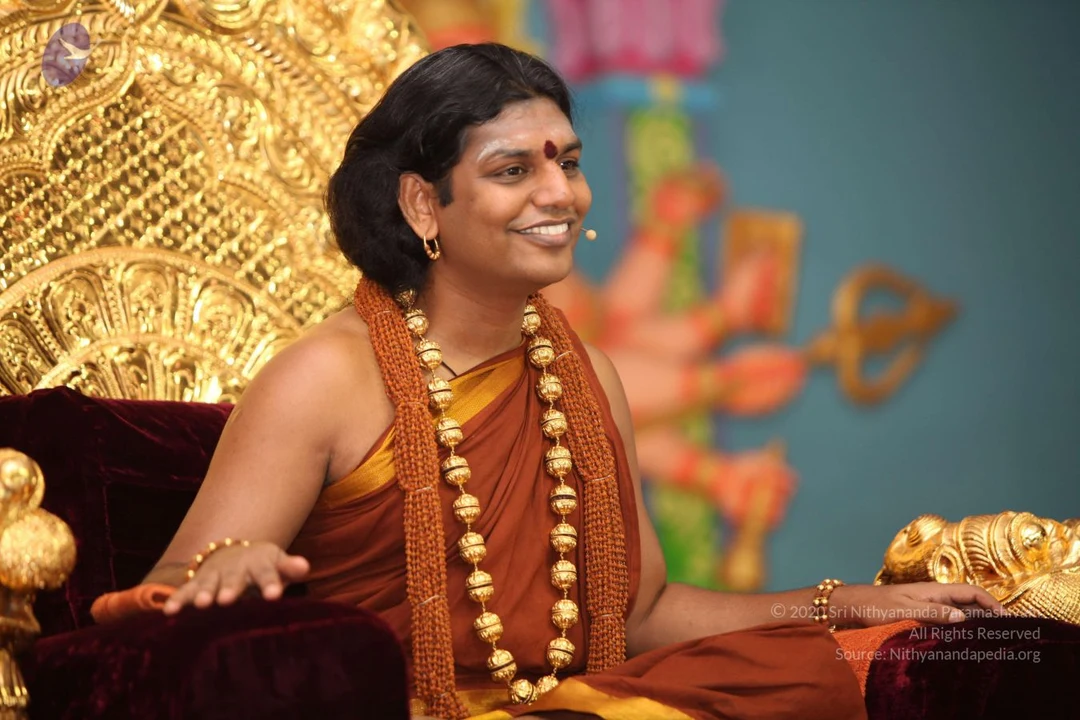
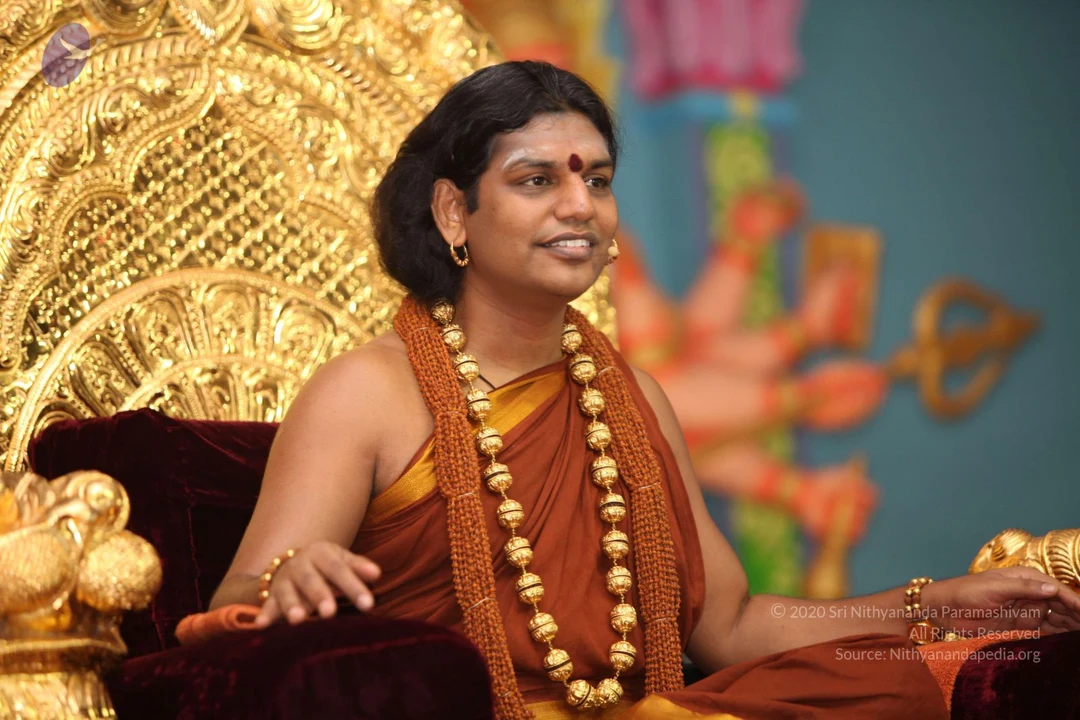
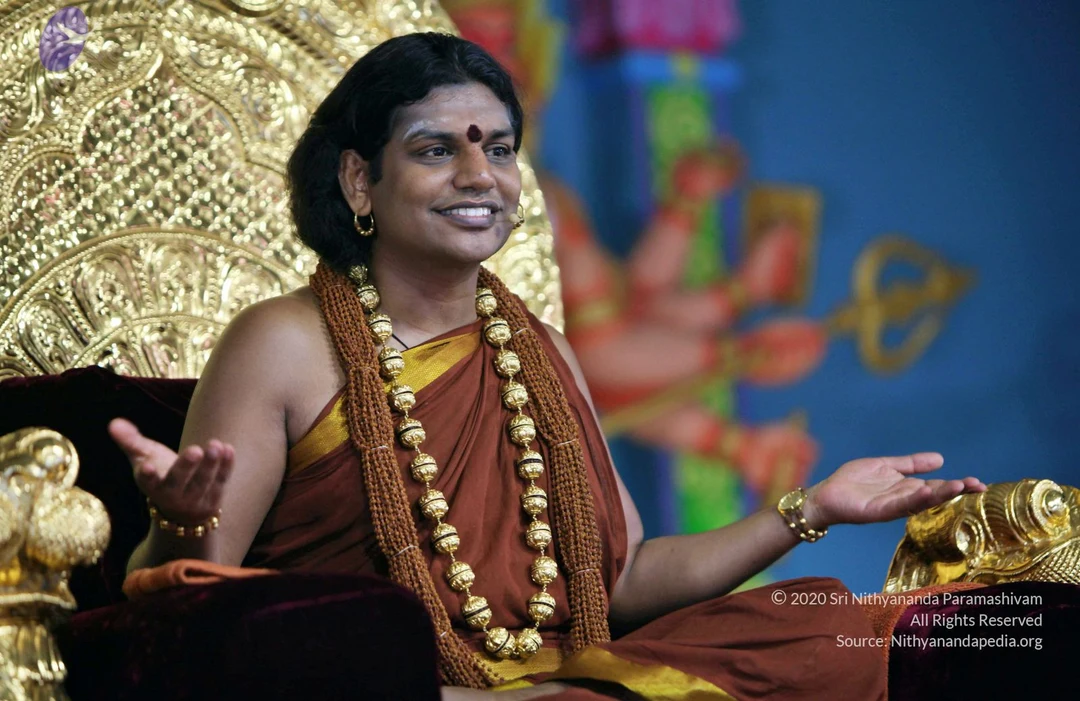
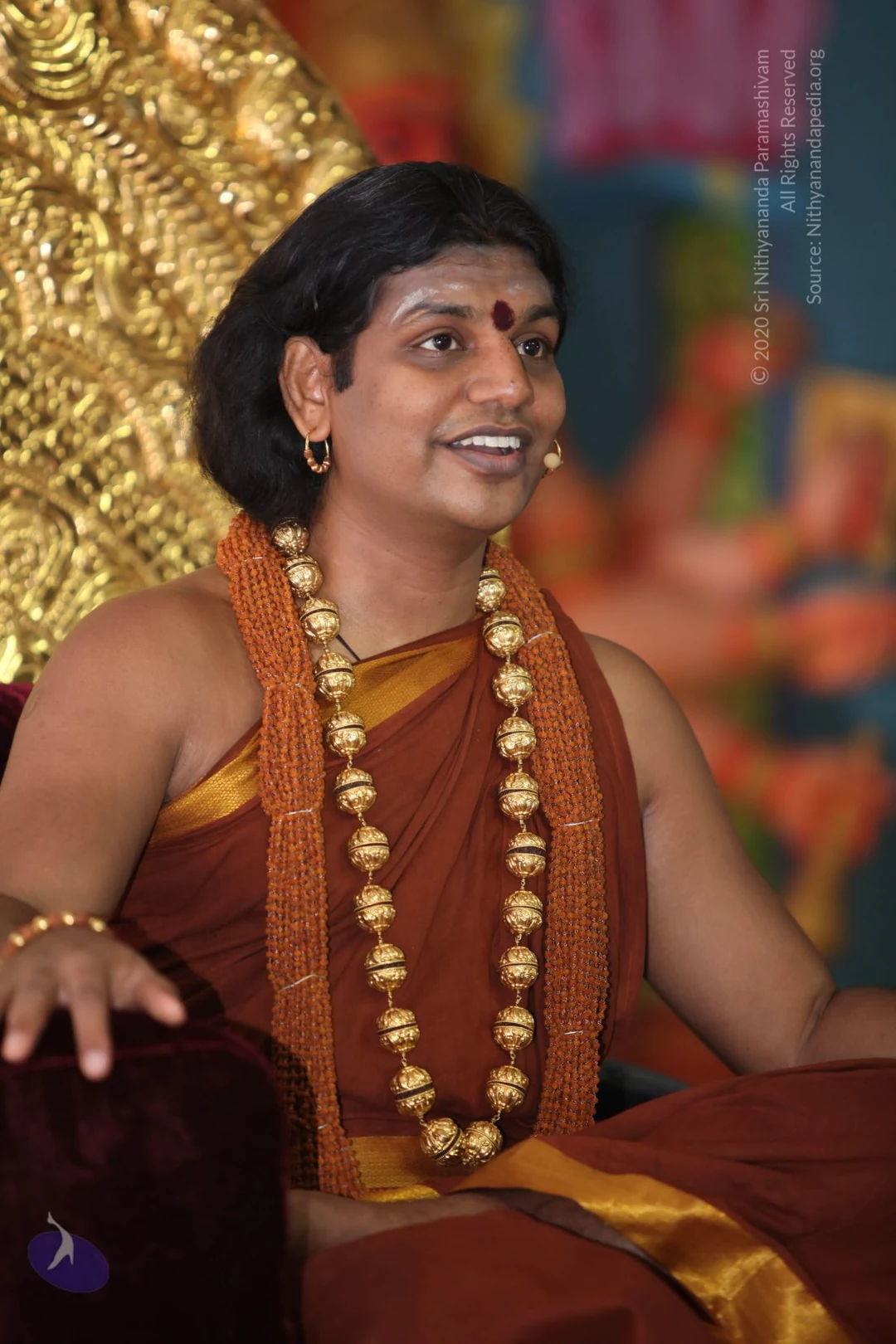
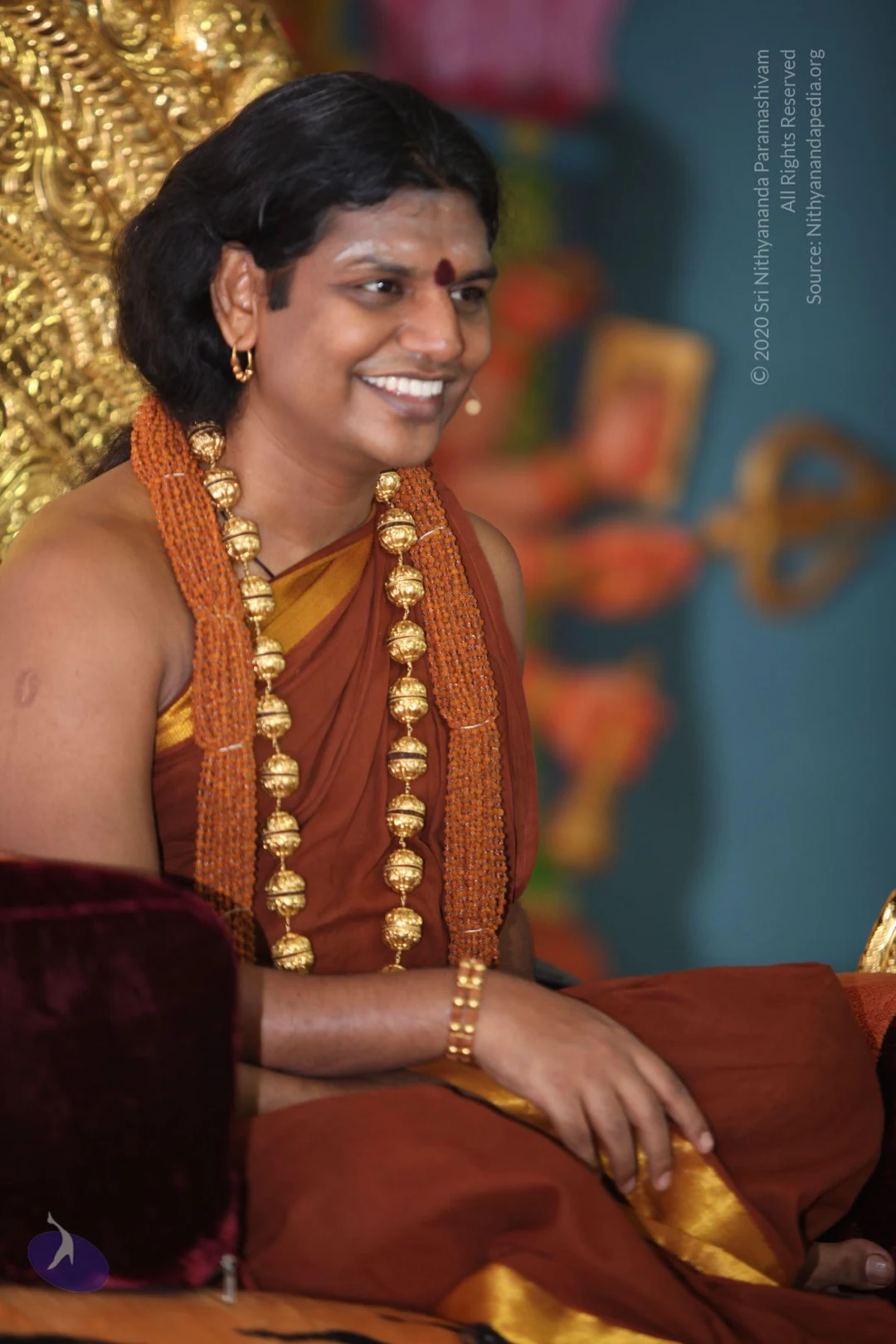
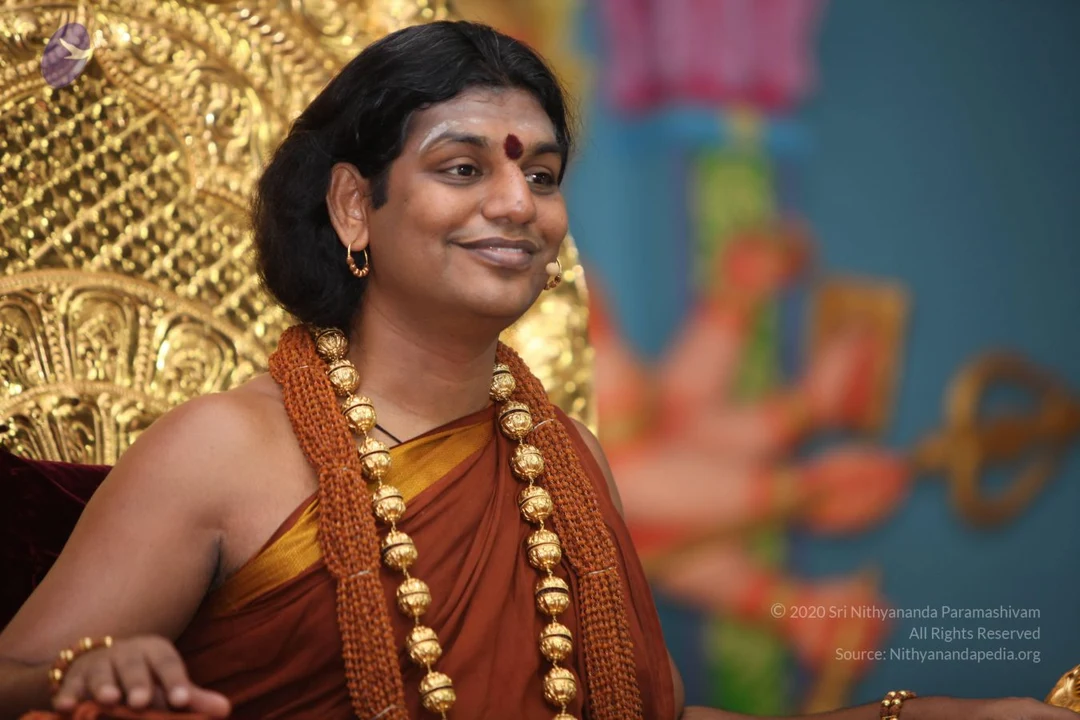
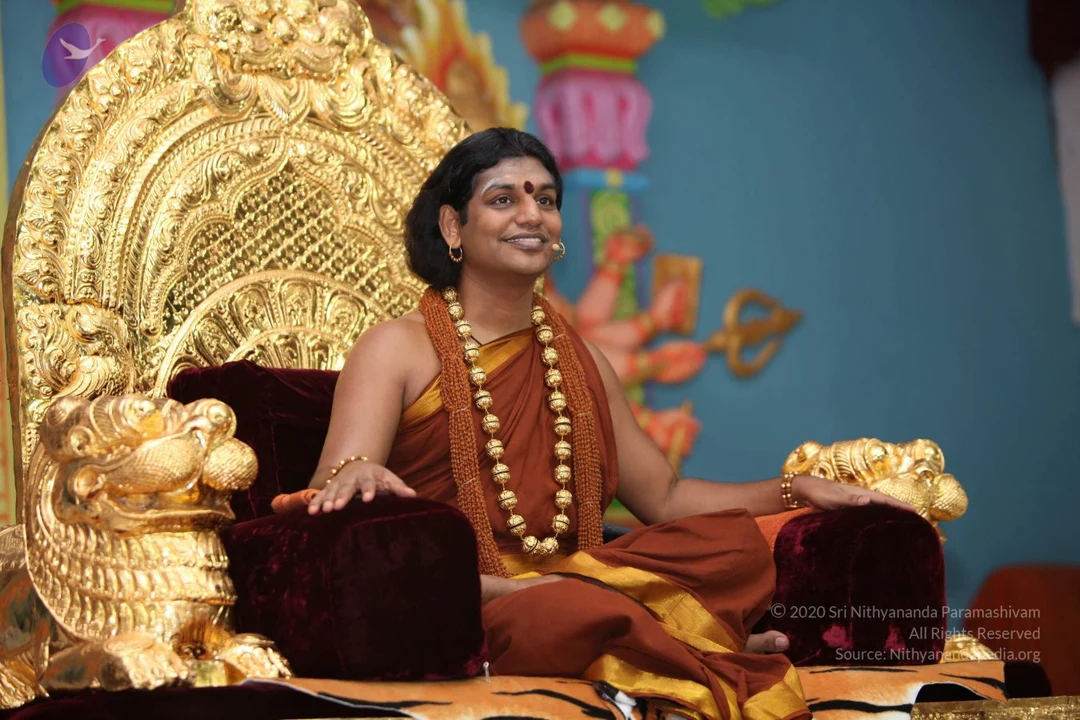
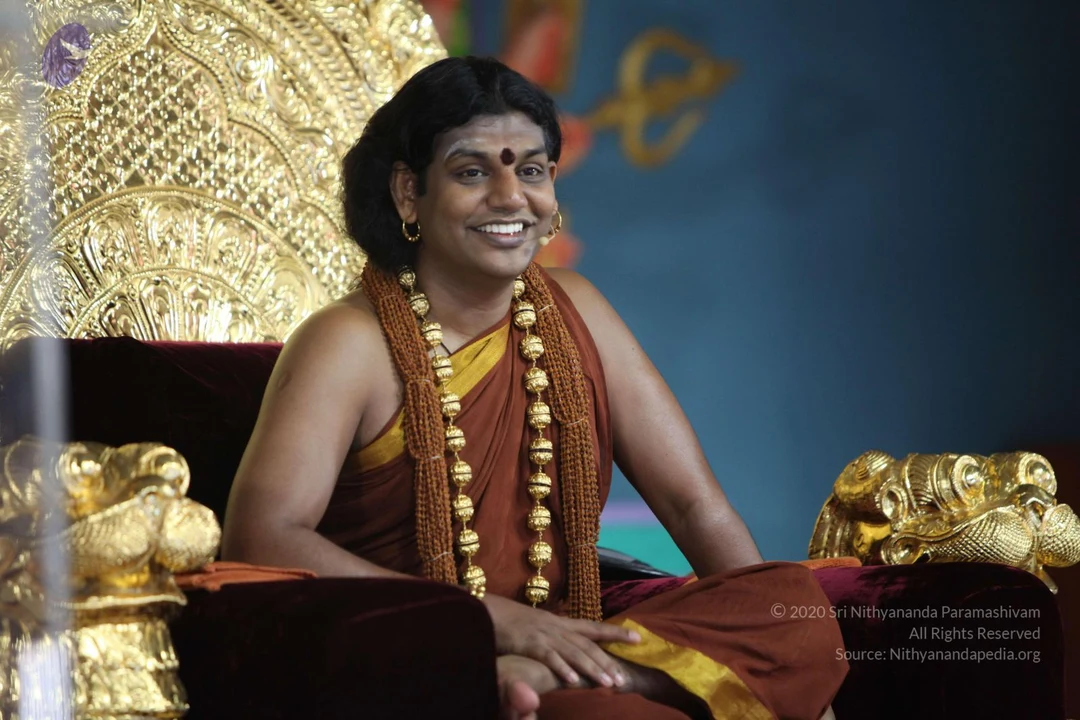
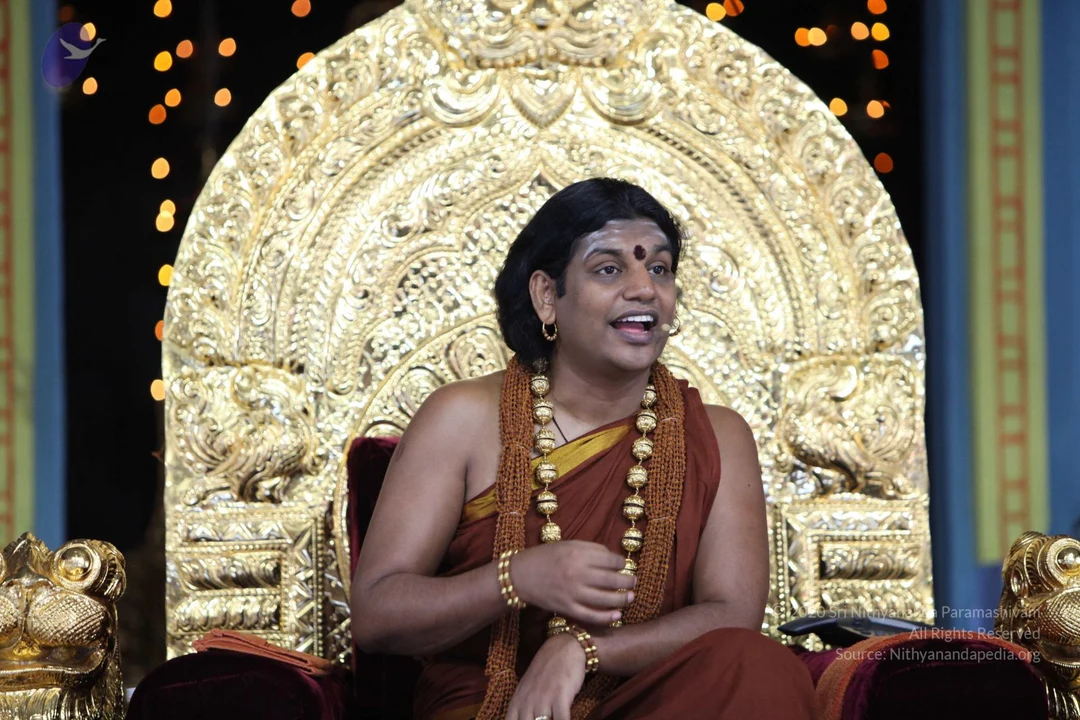
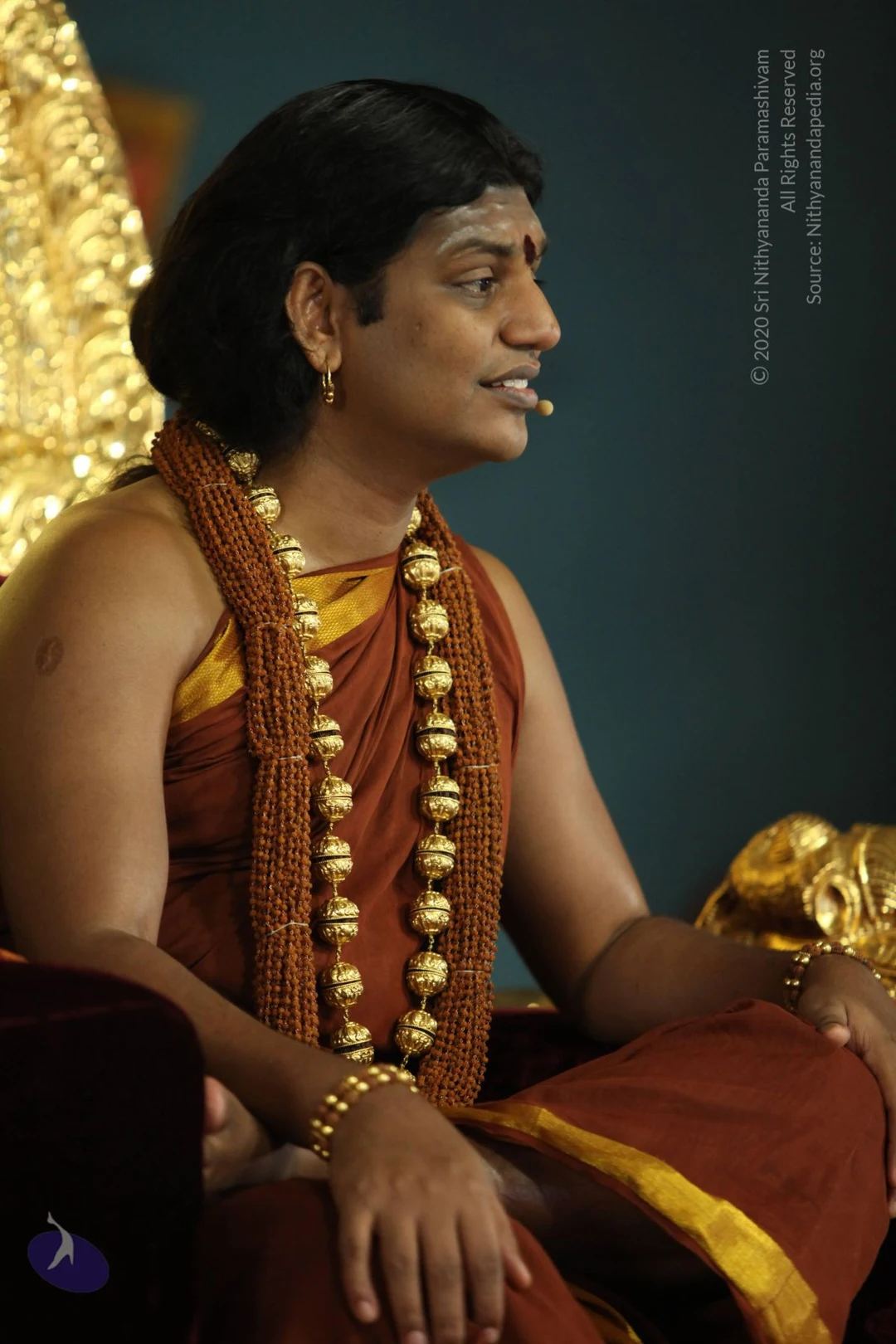
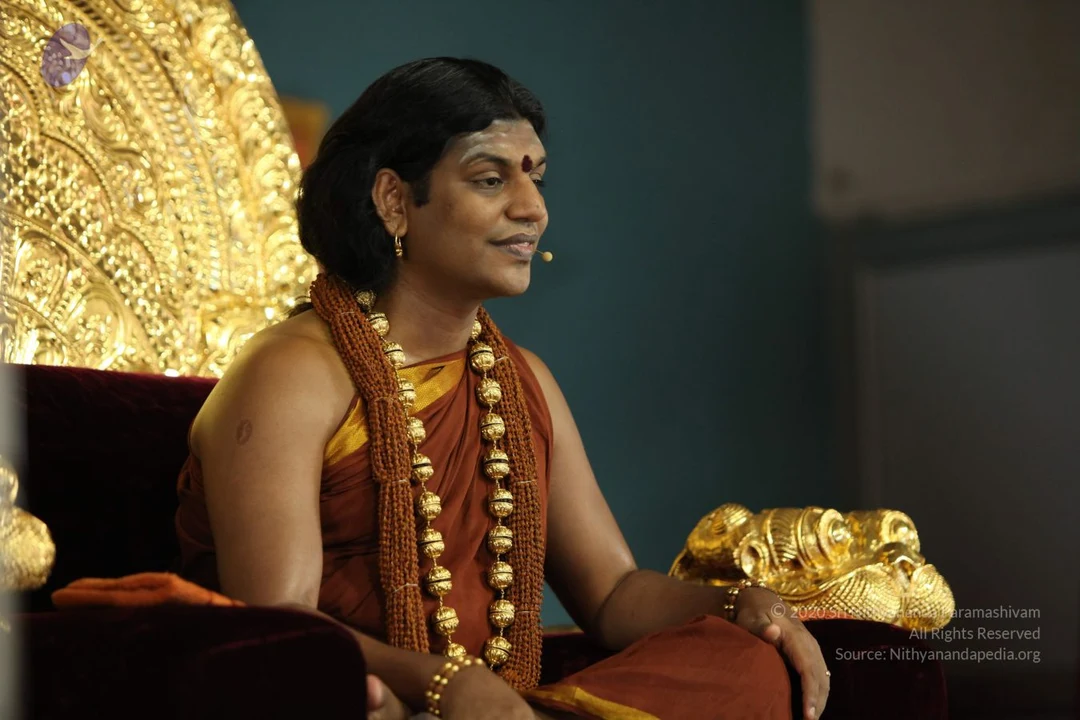
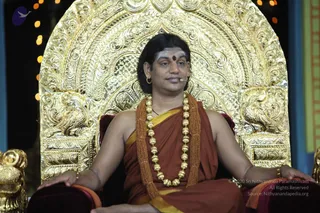
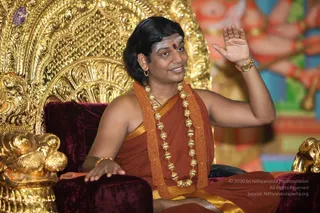
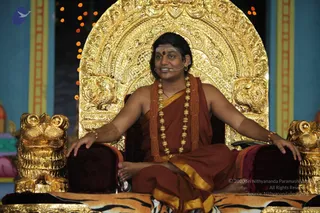
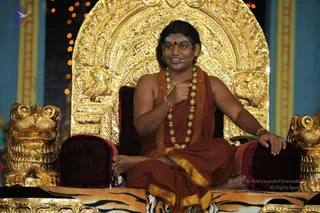
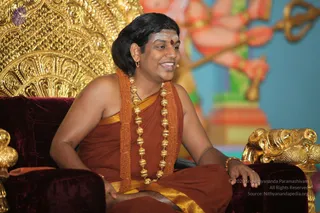
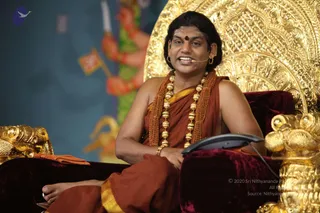
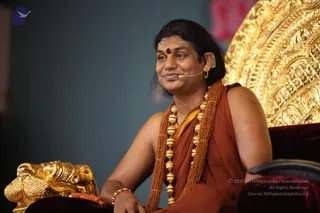
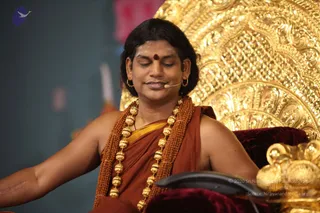
In today’s morning satsang, Paramahamsa Nithyananda explains the process to uncover and complete our moolavasana, our root patterns. The process is to take some time to sit in front of a mirror and remember back to the first time we felt powerless in our lives, whether through fear or shock or whatever strong emotion took hold of us. When we find an incident, we should relive the feelings as completely as we can, speaking aloud whatever we remember, whatever words we spoke then and whatever thoughts we had at that time. Sometimes this process will bring an even earlier memory; but ultimately we will retrieve the moolavasana and resolve it. Once that has happened we become integrated, and life can fully flower in us.

VideoAudio

Transcript

0:19

I will expand on how you can identify your root-pattern.

Please understand, I will remind once more, to all of you, only when you give your listening, I can help you. Any transmission of knowledge, energy or experience happens between us only when you give listening.

Even Vedic rishis start with

Shrunvanthu Vishwey Amruthasya Putraaha |

"Oh! Sons of Immortality, please listen to me!"

Shrunvanthu Vishwey Amruthasya Putaraaha | Vedaarameham Purushamahaantham ||

"Oh! Sons of Immortality, listen to me!"

(HINDI)

Identifying your root-pattern; I am defining once more. I am defining once more the “root-pattern” -

The first attack of any strong emotion happening in you and imbalancing your whole cognition, imbalancing your whole cognition, giving birth to your mind, the pattern you develop from that moment, is “root-pattern”.

Please understand, it can be anything as simple as your mother did not give you the cake and gave it to your brother!

In India, that is a big problem! Male kids are pampered and female kids are not supported. This is one of the big pattern with which whole of India suffers. You need to know; still in India the practice of not giving share in the property to women is practiced! This has to be abolished. Women should be given equal rights over the properties and mother’s name also you can use as initial. This all should happen. Only then we are going to come out of this rapist mental cognition.

4:17

Why, why there is so much of rape in India? Because we forgot, in the Vedic tradition, we had equal respect. Of course, the other side there are few women, Thaatakaas, Shoorpanakaas, Goonis, conspired against Rama, Krishna, incarnations and try to abuse them. Don’t worry about them; they will never be successful! They can never be successful! From the time of Shoorpanaka, Thaataka, they never succeeded! But we need to understand, as a society we need to evolve and give a equal right in name and property.

It may be as simple as your mother making you sit on the dining table so that you will not run around and make a mess; your brother chasing you into a room and trying to beat you; or you tried your best and failed in your exam or some competition. It can be even that small! But when a powerlessness takes you over first time in your life, and your cognition is imbalanced, mind is born, the pattern which you develop at that time is “root-pattern”. That is the root on which the mind is born.

(HINDI)

8:01

Understand, if you sit with yourself even for half-an-hour and think through, dig out, you will be able to find your root-pattern. Only thing, whatever you think through, continue to SPEAK in front of the mirror. Without speaking, your thinking will not have its clarity and depth and strength.

To find your root-pattern, you may have to SPEAK; you may have to SPEAK in front of the mirror. Sit in front of the mirror comfortably. Whatever you think as your root-pattern, first time powerlessness overpowered you in your life, it may be at the age of three or four, or the earliest memory you remember; sometime it would have happened in three or four, but you will remember only the incident happened in seven or eight, but what you remember start talking, talking, talking out! When you start talking, you will understand, please understand, you will understand, and suddenly you may remember the deeper root-pattern which started much earlier, the incidents which happened much earlier!

I have seen, there are some people who suffer the disease of spontaneous lying. The moment they open their mouth, lying, lying, lying! I tell you, spontaneous lying means you feel powerlessness. You are inauthentic to yourself. Feeling powerlessness is slavery. Feeling powerful is freedom. If you feel powerful throughout your day, you are a Jeevan Muktha! You are living Enlightenment! If you feel powerful from morning waking up to the moment you fall asleep, you are a Jeevan Muktha!

Everything has roots. The way you behave, the way you think, way you react, way you respond, way you cognize, why you behave the way you behave has root pattern!

(HINDI)

12:12

Understand, whether you feel health less or helpless or emotionally weak, tired, bored, lazy, agitated, irritated, everything, all these put together I classify as “powerlessness”, feeling powerless. You can live without any of these, is the good news. Bad news is, you need to work for it!

(HINDI)

I tell you, if the kids can be helped in the young age to remove their root-pattern and not to build their root-pattern, they will do wonders! I have seen! I have seen! What I am doing in Inner Awakening, ten times more happens in eN-Genius without my physical presence, because they are ready to receive! Kids are ready to receive!

Yesterday, there was a case brought in front of me related to Gurukul. One kid was not able to handle her student. In our Gurukul, we give each kid one, one student. She was not able to handle and there was some confusion involving the parents, family and all that. Then it was brought to me.

When they brought the, few people who brought to me, they really expected that I will relieve this kid from that work. ‘No, No, it is okay! She doesn’t need to mentor.’ That is what they expected and they literally tried to pull that decision out of my mouth!

I said, ‘No! If she can’t handle that child, she can’t handle herself! She need to learn to handle herself! My Gurukul is not “Man-making” education. It is “God-making” education!’

My Gurukul is “God-making” education! Anybody wants to be a man or woman in future, get out of my Gurukul! This is not the place for you! It’s a “God-making” education!

15:26

I am so happy my parents did not involve and interfere and destroy my life when I was “torturely-trained” by my Gurus! Understand, if I tell you guys what all training I went through, you will call that only as a “torture”! You will call that only as a “torture”! But I am so fortunate, I am grateful to my parents they did not take me away from my Gurus!

I am going around the hill alone, a small boy, reading, still I remember, the “Arunagiri Andhaathi”, the 100 songs on Arunachala written by Guhai Namashivaya, a great saint. Still I can repeat the whole 100 verse by heart! With that book I am walking! I have been asked to go round the hill every day by my “heartless” Guru, Kuppammal, Vibhoodanandadevi! In the night I am supposed to go around, because in the day time no time. I will be sometime going to school or sitting with her and studying the Vedas, Upanishads! And, usually, in the day time it will be hot sun. So, after the sunset, she will tell, ‘Now lessons are over. Please go round the hill and come back and sleep! As if it is the next door! You go and come back and sleep!’

If I go round the hill, when will I sleep? Because, by the time I come back, I have to take bath in the tank and go to the temple for suprabhaatham!

'ehh, when Shiva is, lord is waking up, Arunachala is waking up, you should go and see him early morning when he wakes up!’

So, I will have to run! Anyhow, I went round every day. And still I keep that as a habit! Still if I am staying in Arunachala, I will go round the hill. Only then I will come and sleep. Of course, now for security reasons I go in the car; don’t go by walk. But, whenever I can, even now I don’t miss walking around the hill. In the night if I have a group of disciples with me, Brahmacharis or Brahmacharinis, I will always walk, and that will be the best moment of my life. The way I run! The way I, the high energy! You can see around me!

18:21

One day night, some ten hyenas – hyena is an animal, will be very shy as alone, but will attack and kill any human-being if they are group. Children means, simply they will kill, simply they will kill! Children are the best dinner for them! They will kill!

I was walking alone. It was Amavasya or just near Amavasya. No light, dark! In those days, the path for going around Arunachala Hill was very dark and narrow road, not even a road, like a forest road. Some ten hyenas are standing in front of me suddenly! In the midnight, I am all alone with just that one book ‘songs of Arunachala’. From the navel, sorry lower abdomen, Swadhishtana, I gave the voice, 'ARUNACHALAAAAAAA!!’

I don’t know whether the whole Arunachala Hill vibrated with that! There appeared an old man with a stick, drove the hyenas away! They all ran away! Somehow I got saved! Otherwise I would not be here! I will not be sitting here. I would have been sitting in their stomach within next few hours! Anyhow, I came back, and I narrated the whole story to my Guru, Vibhoodanandapuri, with the deep feeling from tomorrow I don’t need to go to the hill rounding, walking around the hill. And after describing with all the masala, and the whole thing, she heard everything, ‘Wow! Arunachala saved you!’

And I also, of course, Arunachala saved me, no doubt. Next day I expected, see, once Arunachala will come and save. But how can that be a routine?

So, next day, she said, ‘Come on! Go for the hill rounding!’

I was shocked! I asked, ‘What do you mean? Will every day Arunachala come and save me?’

She just hit at me with one question, ‘Will every day hyenas will come and attack you?’

Listen, I asked her, ‘Will every day Arunachala come and save me?’

She said, ‘Will every day hyenas will come and attack you?’

That’s it!

21:36

My mother who is always over-protective of me, I am going and telling her. She heard the whole thing. Then end of the day she asked me, end of the whole story, ‘What did paatti tell?’ “Paatti” means my Guru, Vibhoodanandapuri. ‘What did she tell?’

I said what she said.

Then she just walked into the room, into the house and said, ‘Alright, you go for the walking round the hill!’ She just walked into the house and said, ‘You go now!’

Really, I am telling you, it was a hit on me! Yes, will every day hyenas come and attack me?

Then she said, ‘If every day hyenas come, every day Arunachala also will come! Go!’

I tell you, even now I am seeing it in my life, whenever hyenas come, Arunachala comes and protects me! It may be ten hyenas or twelve hyenas or six-hundred hyenas! Arunachala comes and protects!

If I would not have gone next day for my walk around the hill, “giri pradhakshina”, I would have continued to be a human-being with one divine experience. Because I decide to go, now I am a divine being - one human experience of screaming! If I did not go next day, I would have been a human-being with one divine experience of Arunachala coming and protecting me. Because I went, now I am a divine being having only one human experience of screaming in fear! Nowadays I don’t even need to scream and call Arunachala. He is there before even the hyenas come near, drives them out, destroys the hyenas!

Any problem comes in the form of hyenas, he takes care! He protects me! He drives them out!

24:29

Do not allow root-patterns to get rooted in you.

(HINDI)

26:14

Root-thought-pattern, root-pattern - look into the root-pattern of why you behave how you behave. Everything in Existence has a root. Everything you do has a reason, root.

I have a story. After a long time, I am starting my way of story-telling.

God and Adam were walking through the Garden of the Eden, discussing various things.

At one point, Adam exclaims, ‘God, you have done a great job making Eve so beautiful! Amazing! She is really beautiful!’

Then God says, ‘Yes, my son, I made her beautiful so you would love her very, very deeply.’

After some time, I think Adam felt he has praised her too much. Man feels this: If he has praised you too much, he will give one “but”! And he gives, Adam gives his “but”.

‘But, Lord, you have made her not too smart! You have made her dumb!’

God said, ‘Yes, I made her dumb so that she would love you very, very deeply!’

Of course there is a root; there is a reason for every happening in the Existence. Find out the root of your happening. When you find your root-pattern and complete with it, you will understand your Praarabdha.

28:25

Now, I will give you the exact technique of finding your root-pattern. It will be great if you have the assistance of a teacher. I have trained and training thousands of teachers and sannyasis. The teacher himself should have found their root pattern and completed with that. If you have that person helping you, nothing like it; that is the amazing.

And I also have a good news for you, I am coming up with a ten-day program just helping you to find the root-thought-pattern root-pattern and completing it. By reliving it; when you narrate, you may remember some other earliest incident. Then narrate that earliest incident you remembered. Go deep, deep, earliest incident you remember when you felt powerless in your life. Narrate that by completely reliving at least ten times. You will find out exact; you will catch the exact words which are forming root pattern in you, which are forming root-pattern in you!

I am giving you the precise technique.

Sit in front of the mirror. Remember the earliest memory of you feeling powerless and repeat the incident remembering every word you uttered towards yourself, every thought you had towards yourself.

If you have a person who has found his root- pattern and completed, his “moola samskaara” and completed – “moola vaasana”, that is the right word, this is the technical word for root-pattern in Sanskrit, “mool vaasana” – person who himself discovered the “vaasana”, his “moola vaasana” and completed with it, if he is there, he will be able to guide you exactly with the root-pattern you are suffering till now.

31:34

Please understand, when you started having the root-pattern, when you first had the powerlessness, once the root-pattern has started, after that you never grow! Your age is sealed mentally! Physically you grow, mentally you are sealed! If you grow mentally, physically your age will be sealed! Means, you will be young forever! If your mind goes on expanding, getting matured, riped, feeling powerful, your body will be young. You will be growing young.

Look into every moment you feel powerless in your life even now. Don’t try to escape from those moments! No! Don’t try to escape from those moments! You can never escape! You can never escape!

Your root-pattern, the moment your root-pattern is born, your life is destroyed! Your growth is stopped! Only when you complete with your root-pattern, you come back to life again.

(HINDI)

35:47

Understand, in your life, when you complete with your root-pattern, life starts happening in you. Till you understand your root-pattern and complete with it, you can’t be peaceful anywhere in the world!

A story:

Disciple asked the Master, ‘Master, you are the great, powerful, enlightened being. Why don’t you just take me to the plane of perfect peace, like Kailaasa.’

Master replies to the disciple, ‘If I take you to Kailaasa, it will no longer be peaceful!’

Unless your root-patterns are completed, you will corrupt and pollute, disturb even Kailaasa! If your root-patterns are complete, you will be peaceful wherever you are.

Listen! If you are in the corporate field, a CEO, or you are in the Human Resource Management, HR field, I tell you, if you are a decision-maker, head of a team in a temple or ashram or corporate companies, or in your business, in your job, I tell you, please listen, help yourself to find the root-pattern and complete. Help others in your team, in your company, in your school, in your institution, in your organization, help them to find their root-pattern and complete.

With Integrity and Authenticity, I am telling you, once I helped my ashramites, my Swamis to find their root-pattern and complete, Dhyanapeetam has become three times more productive! Of course, I wanted them to become three-hundred times more productive! That is different! That is my root-pattern! That is different; which is out of completion! But, I tell you, they have become at least three times more productive!

38:35

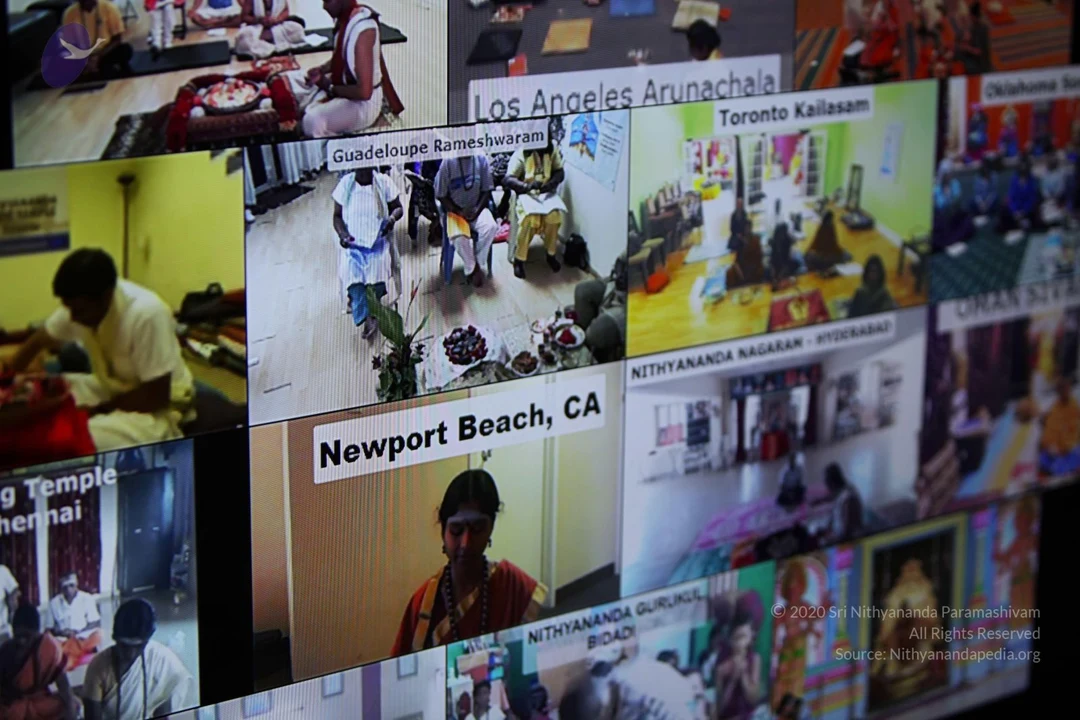
So, if you are decision-maker or having workers under you, head of a institution, school, college, temple, ashram, organization, institution, company, industry, if you are a decision-maker, if you have to extract work from a few people, I just simply request you, find your root-pattern and complete! Help all the people around you to find their root-pattern and complete. I guarantee you; the productivity will become three times more! The productivity will become three times more! If you want the help to help you to find the root-pattern, or any group of people to find the root-pattern, just call this number in the screen. I will send you just one of my gurukul kid. The kid will help you to find your root-pattern!

(HINDI)

Understand, you will become so productive! Your team will become so productive, because when you get out of the root-pattern, you will be out of begging mentality towards life. You may beg forever and ever; you can never become crorepathi, millionaire by begging. You may beg for twenty-five years. It may look easy money. But till the end you will never be millionaire. With the begging mentality if you work, till the end you will never be successful.

A story:

Entrance of a temple, a beggar was always stretching out his one hand asking for alms, begging. One day, suddenly people saw his both hands are stretched out, stretching and begging!

They asked him, ‘What happened? Suddenly today you have started stretching both hands! Still now you were stretching only one hand! Why now, both hands now?’

He said, ‘I have started one more branch!’

You may have any number of branch. By begging you will never become a millionaire!

Same way, if you are working with a begging mentality, you will never be complete! You will never be complete!

If you help somebody to find the root-pattern and complete, first thing, you will have a integrated human-being. He will not cheat you. She will not cheat you. Especially in the schools, industries, corporate offices, where there is so much of cheating goes on in the down level, down layer. If you can help your subordinates to find the root-pattern and complete with it, you will have authentic, integrated subordinates. Means, Heaven!

43:39

I have a story:

The children were all lined up in cafeteria in a school for lunch. At the head of the table were large pile of apples, and the Headmaster has posted a note on the apple tray, “Take only one. God is watching!”

Moving further along the lunch line, at the other end of the table, was a large pile of chocolate cookies. On the chocolate cookies one child had put a small note, “Take as much as you want, because God is watching the apples!”

No! This is not going to be helping you, if you have this kind of people around you. If somebody completes with their root-pattern, first thing will happen to them is Integrity and Authenticity. You will have beautiful beings around you; beautiful beings around you! You do not know the joy of having integrated and authentic people around you. So, first thing, find your root-thought-pattern. Help others to find their root-pattern and complete with it. Complete with it.

45:28

(HINDI)

Understand, the lack of Integrity and Authenticity will not work in your life. When you are inauthentic, you forget things. When you are not listening, you forget things. When you help people to complete their root-pattern, you will have authentic beings, integrated beings. You will be successful. Your mission will be successful. Your job will be successful. Everything, everything will be successful!

Essence of today’s satsangh is:

FIND YOUR ROOT-PATTERN AND COMPLETE WITH IT!

(HINDI)

Photos From The Day:
Photos Of The Day:

Temple-Visit

Pada-Puja

Morning-Satsang

Dial-the-Avatar

Sarva-Darshan

MLA-Meeting

Photos from this day

View all 241 photos

Photos From The Day:
20 photosSource gallery
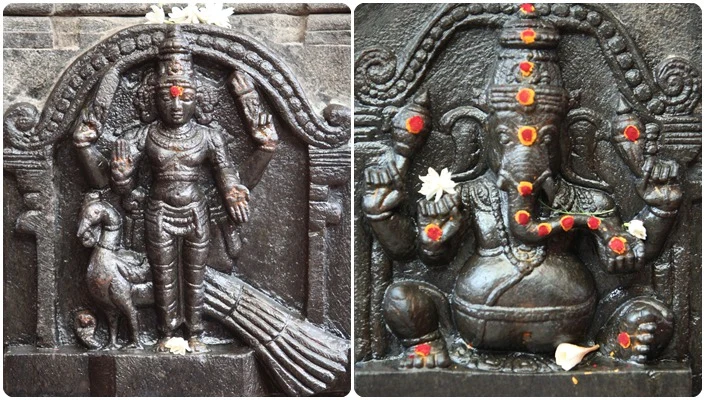
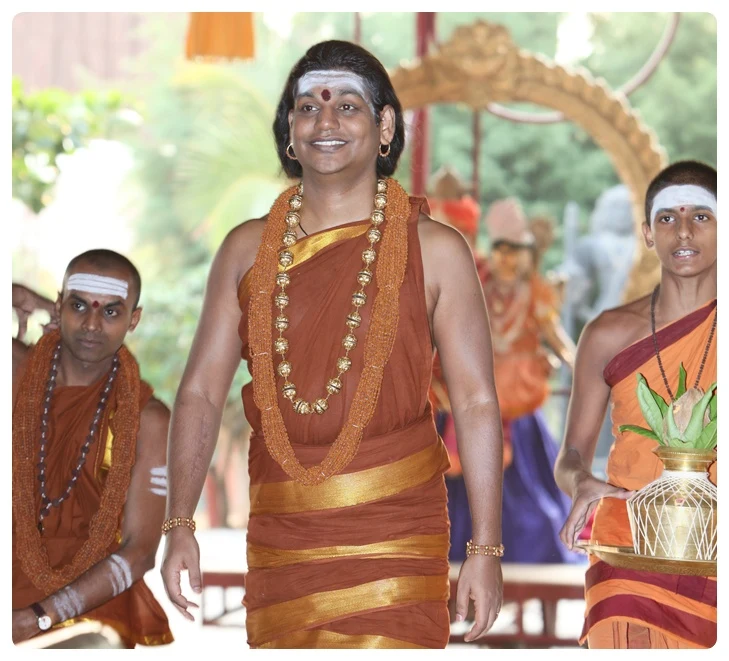
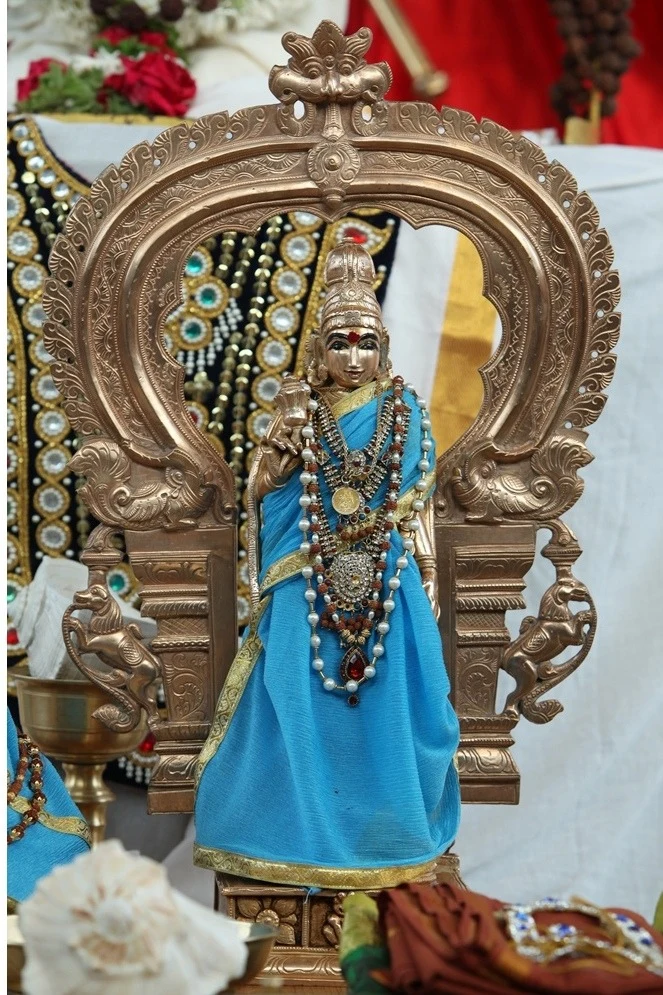
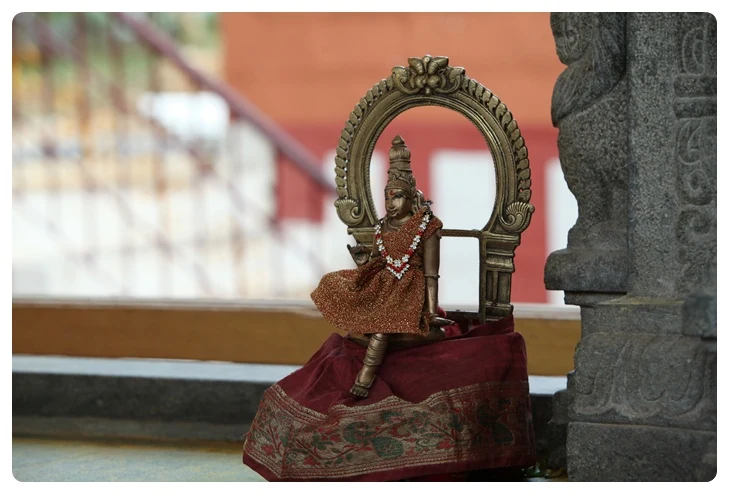
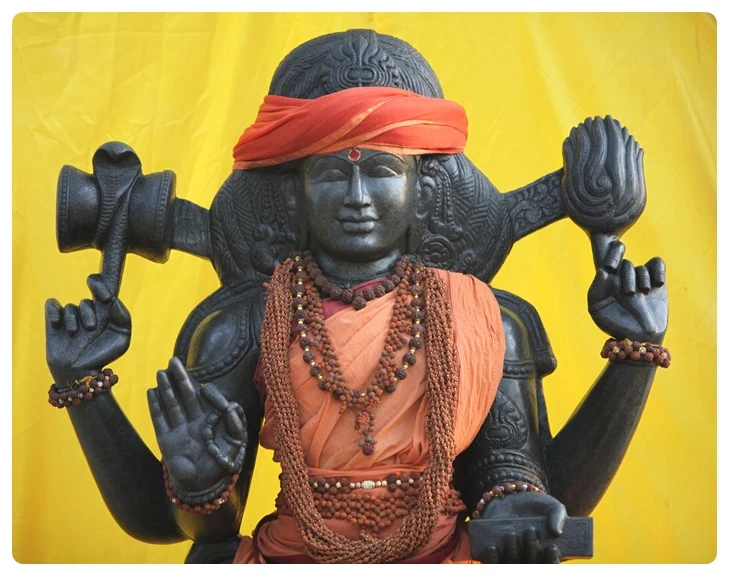
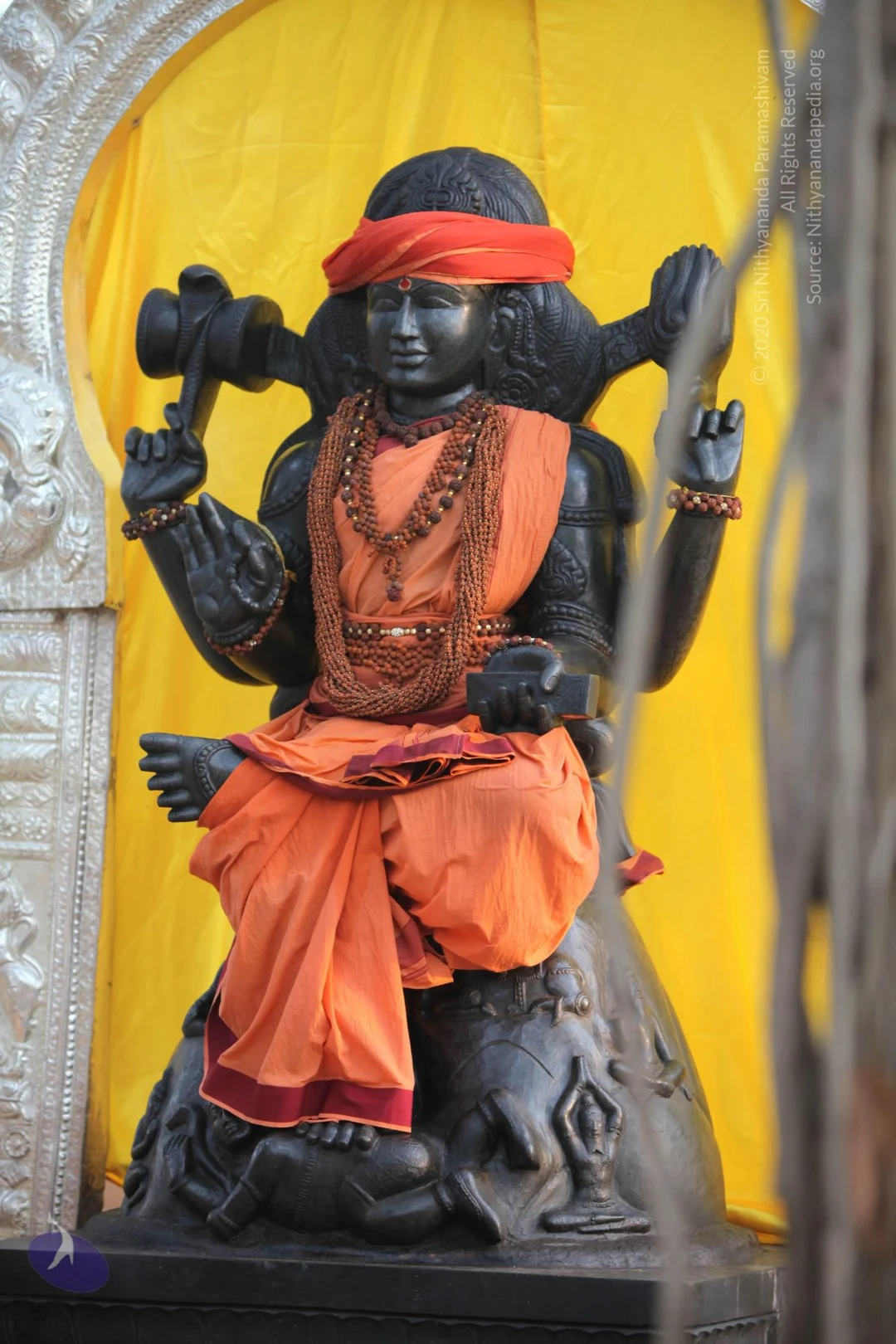
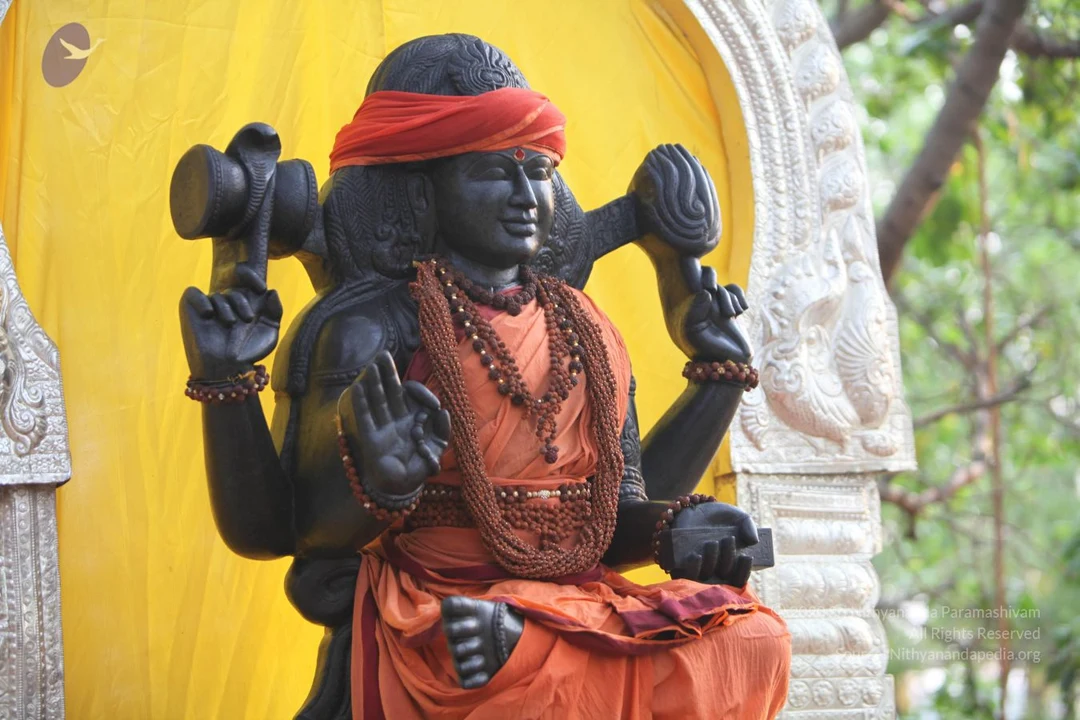
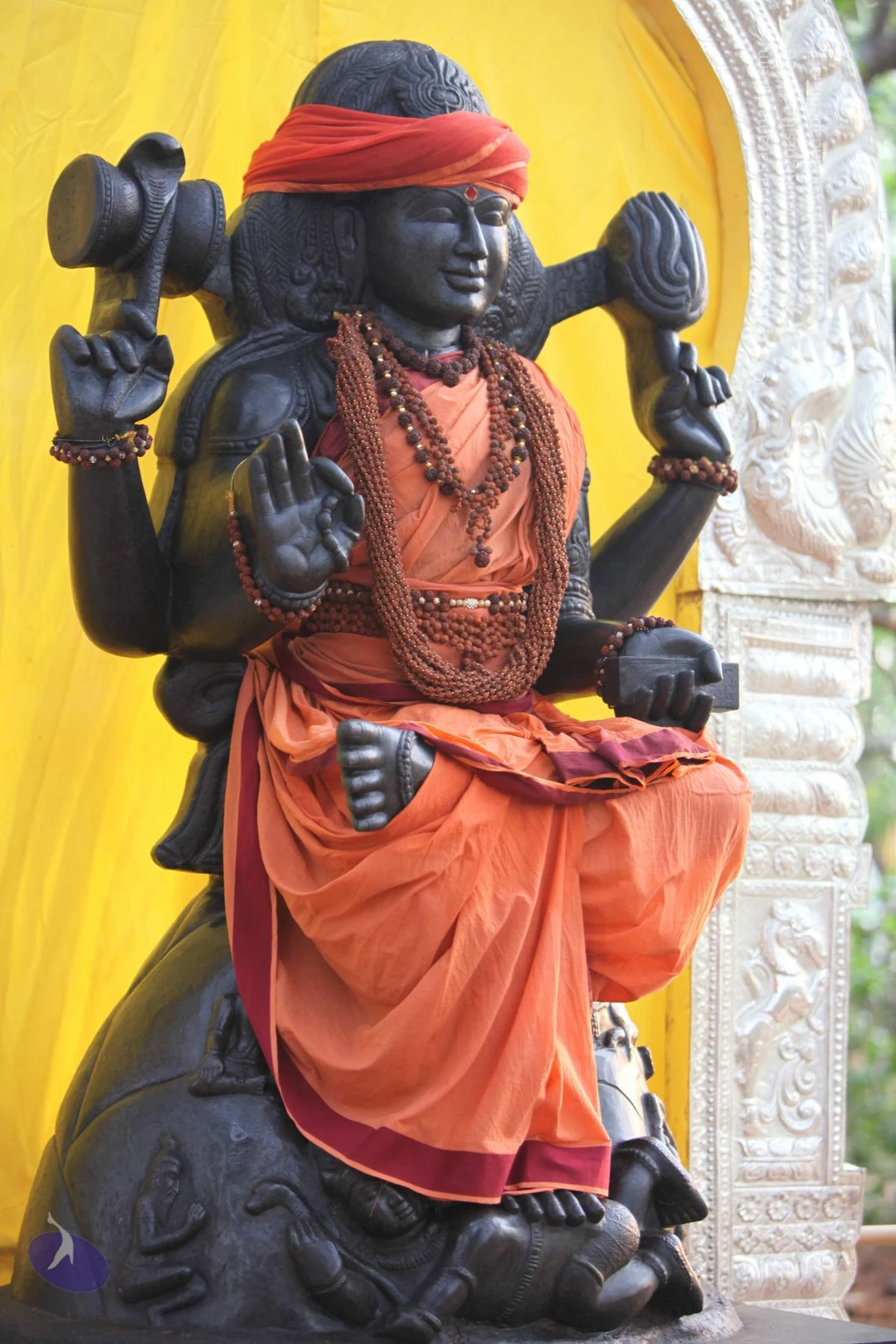
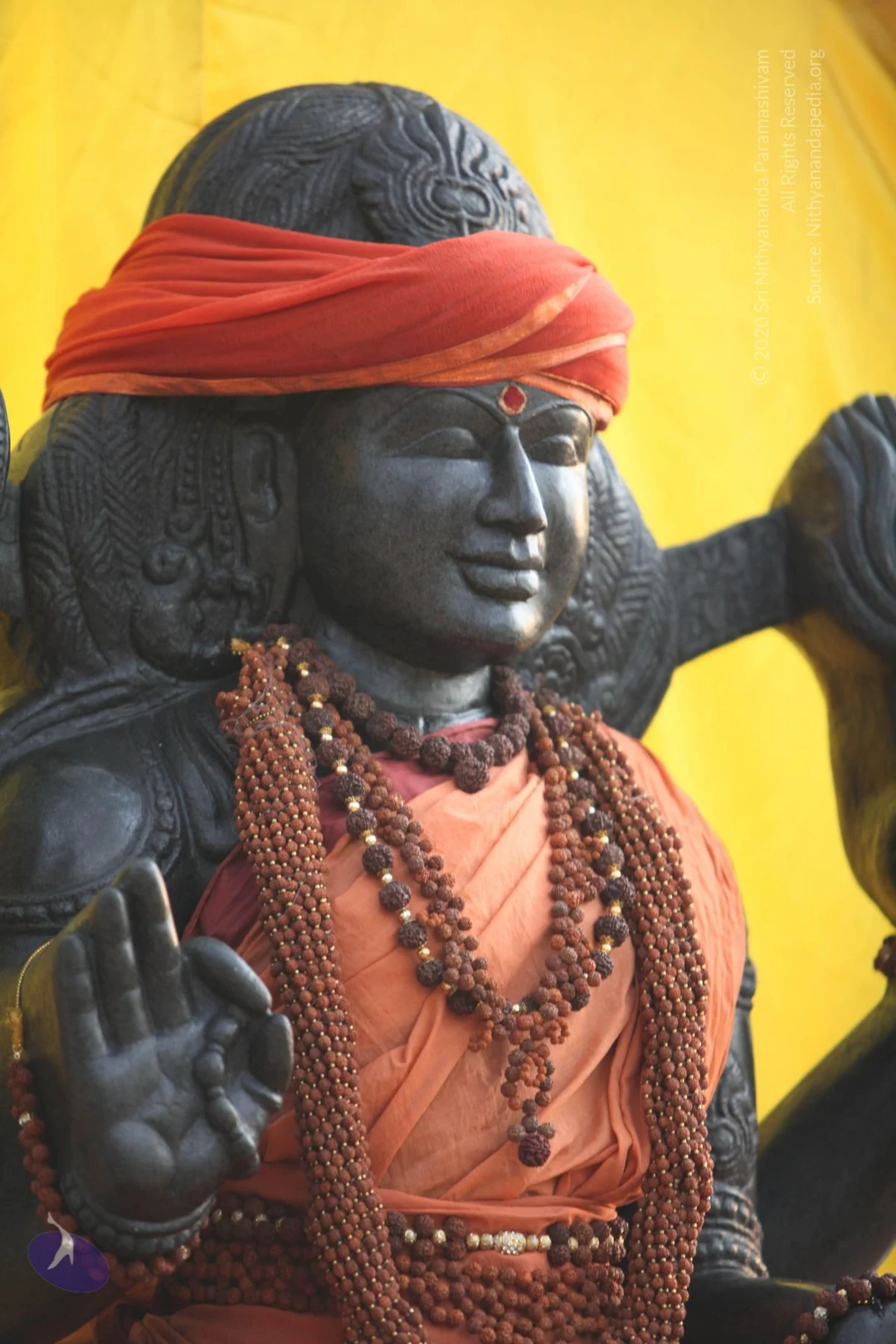
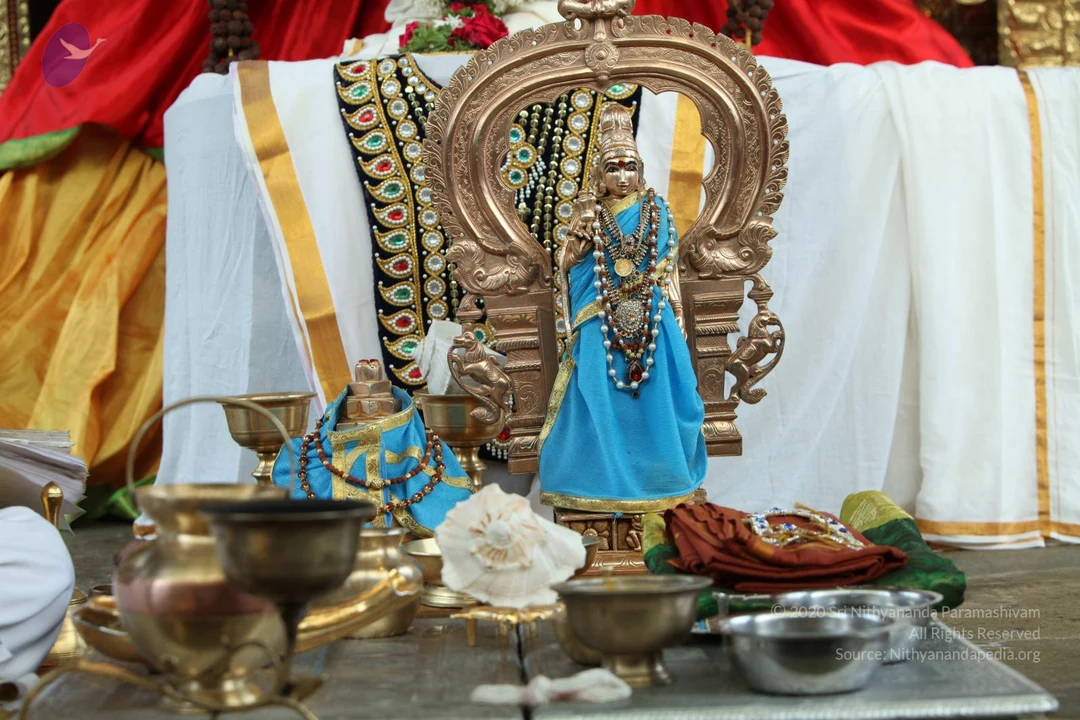
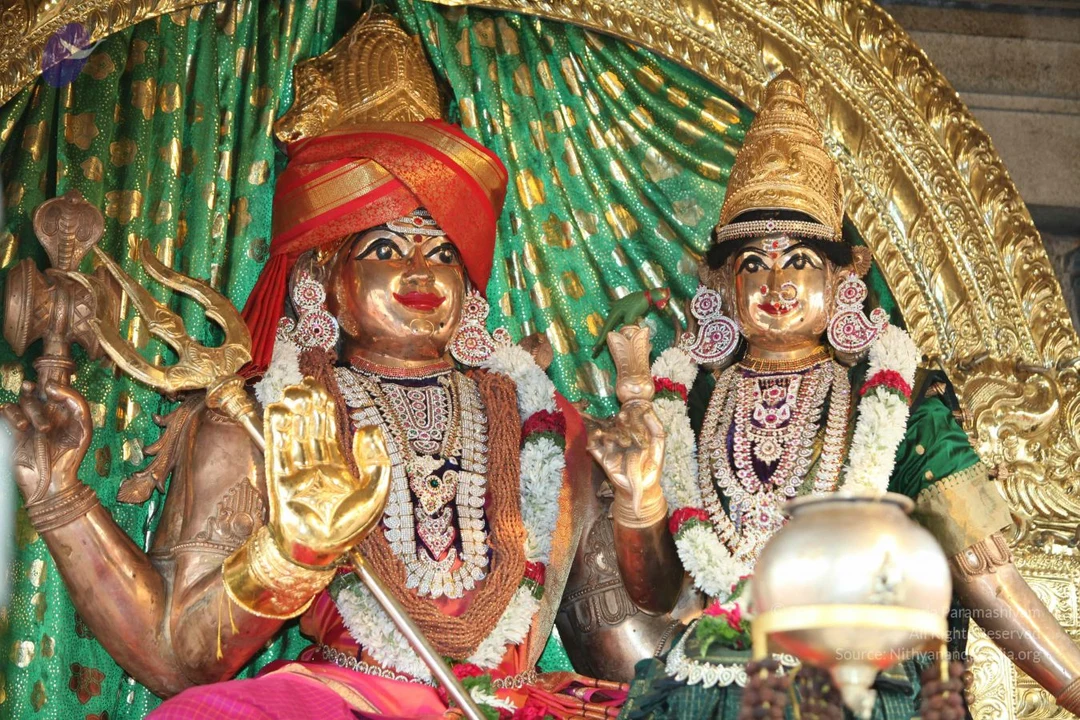
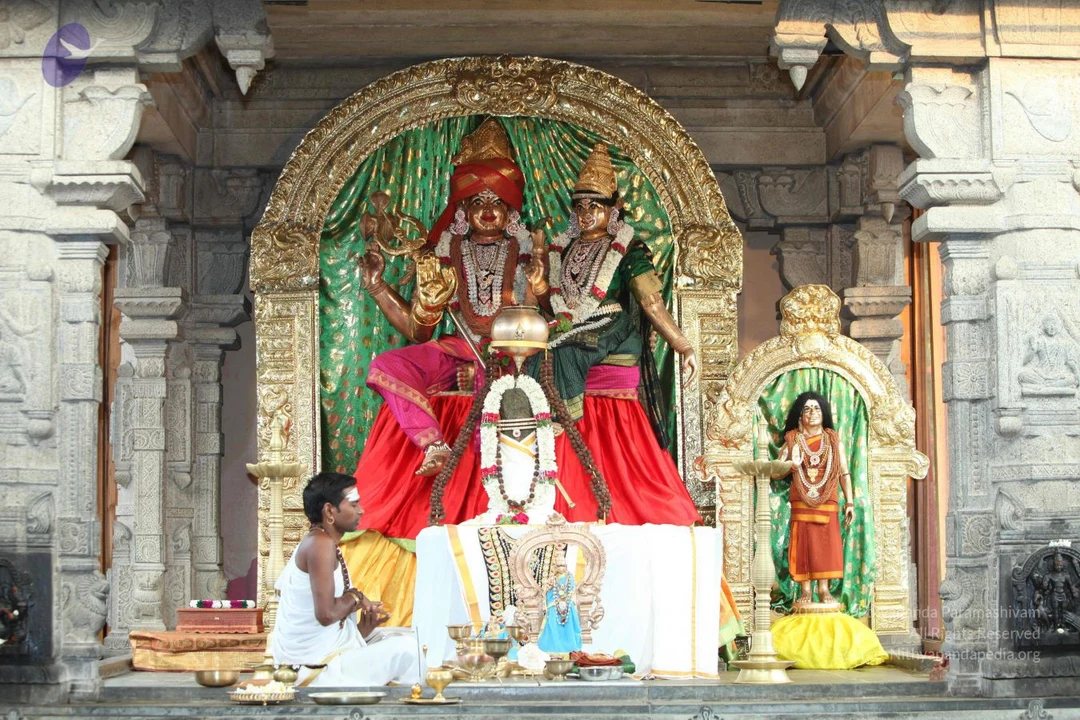
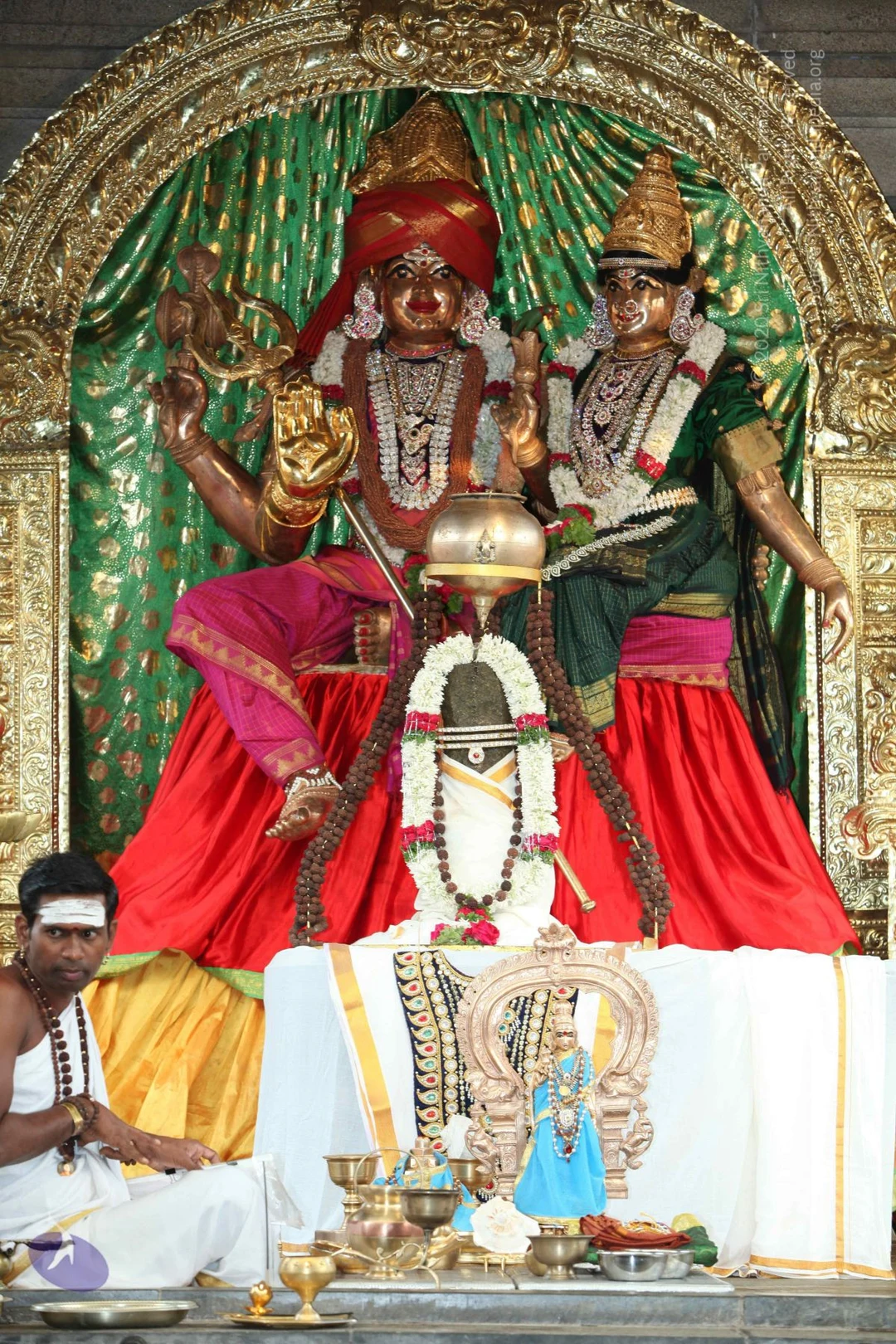
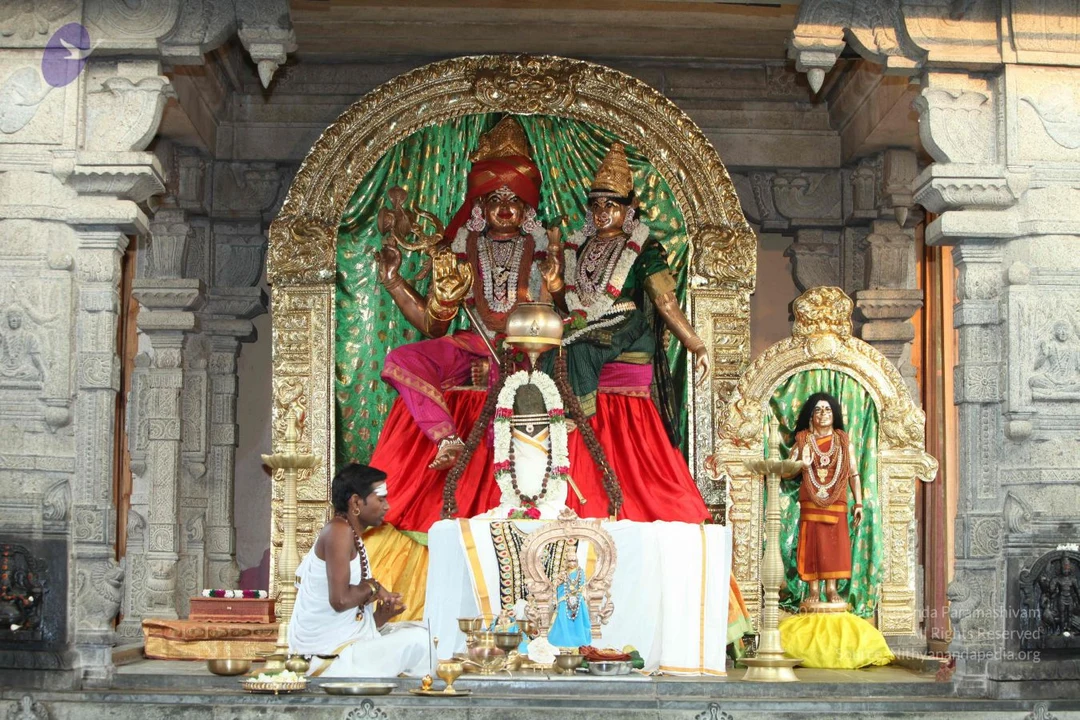
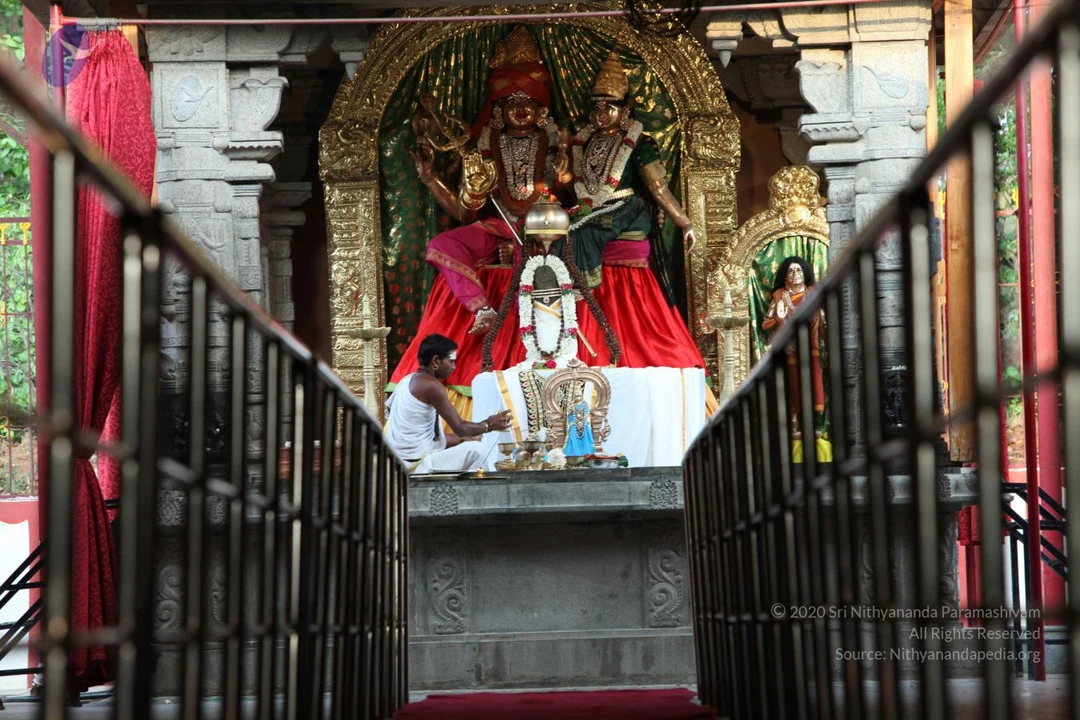
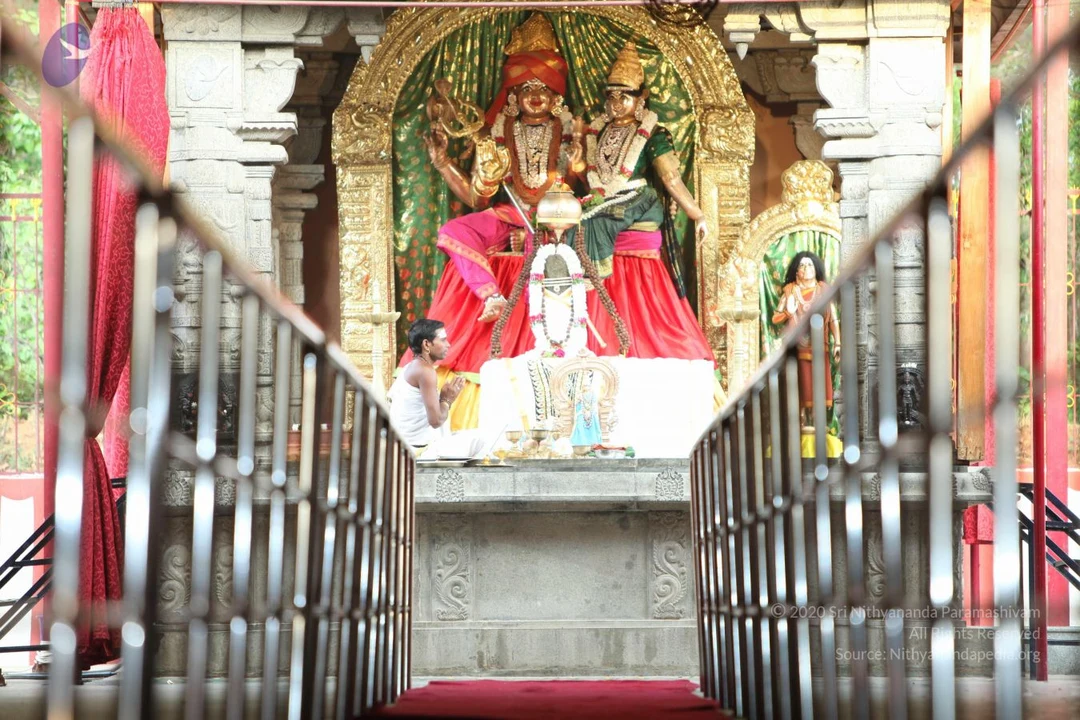
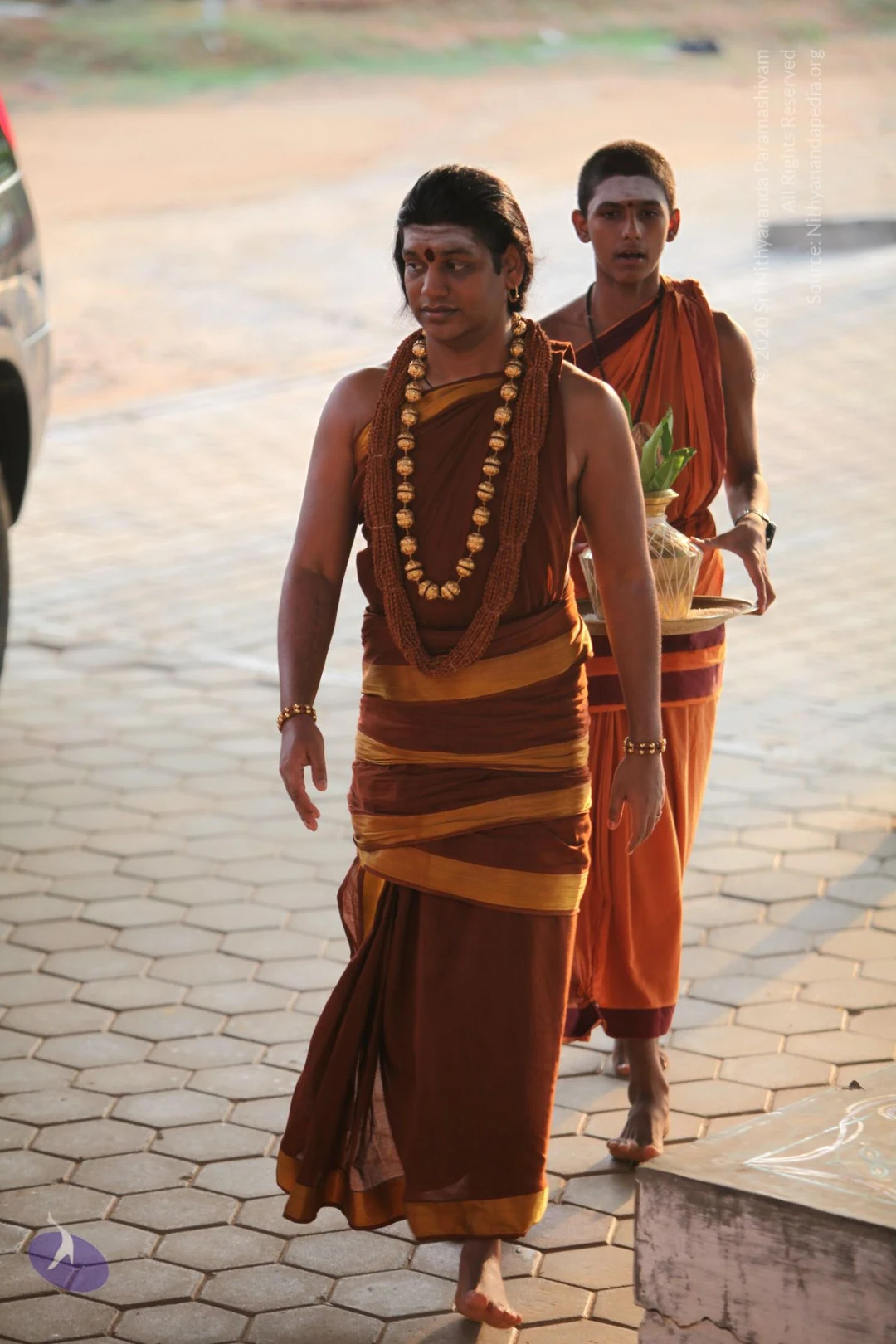
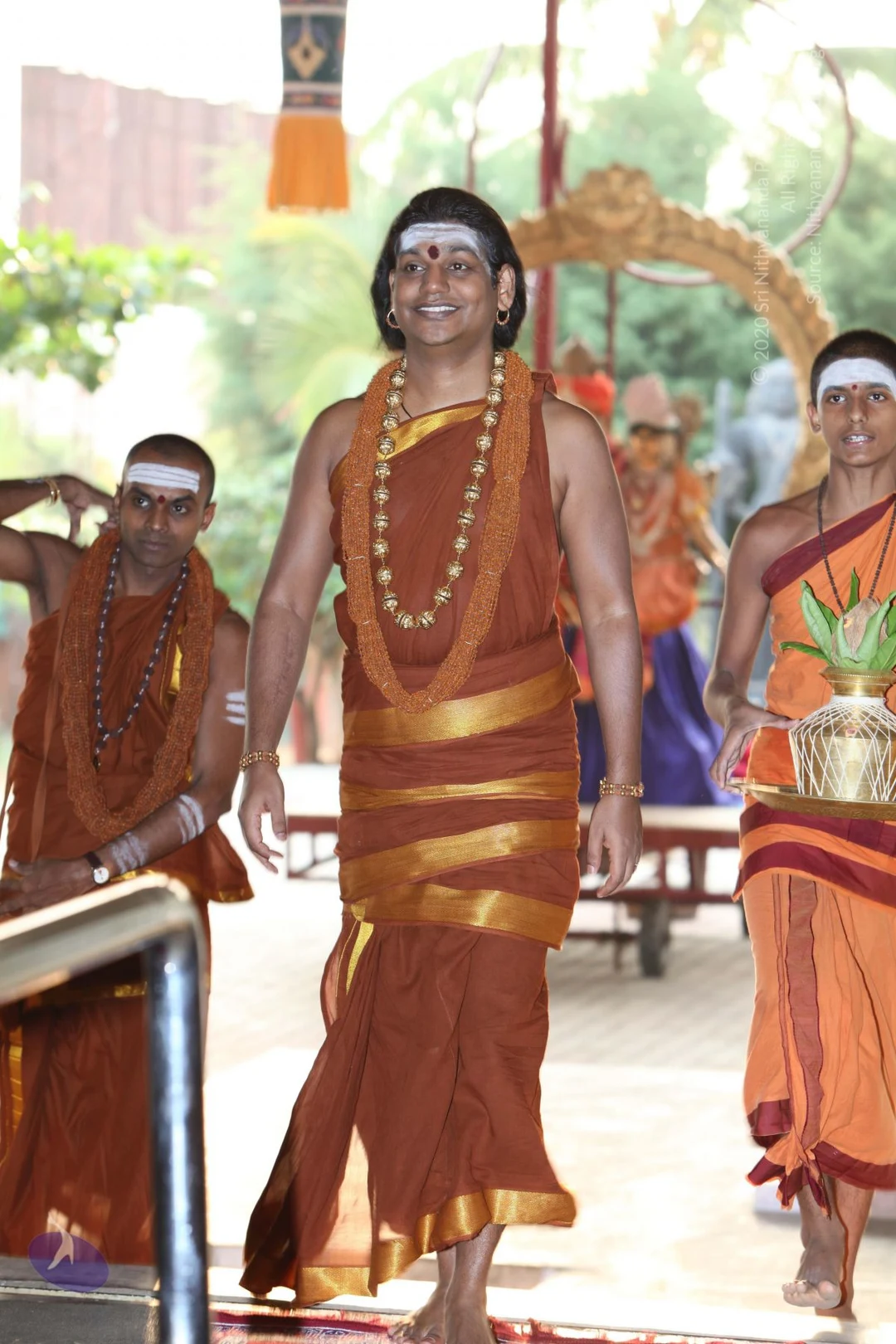
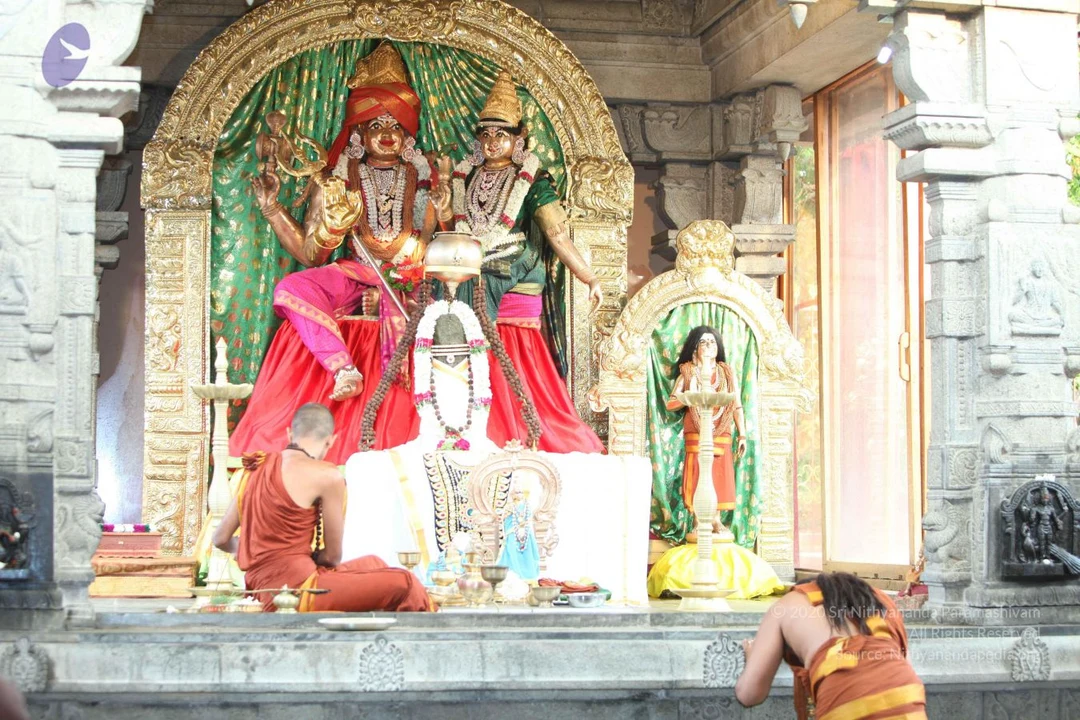
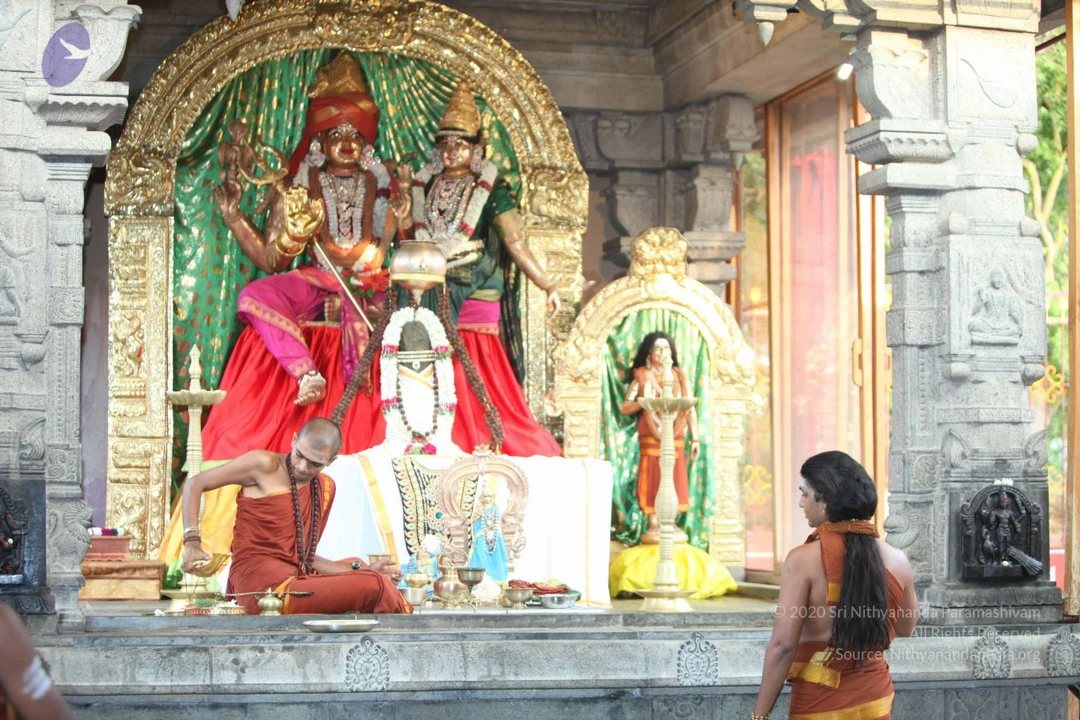
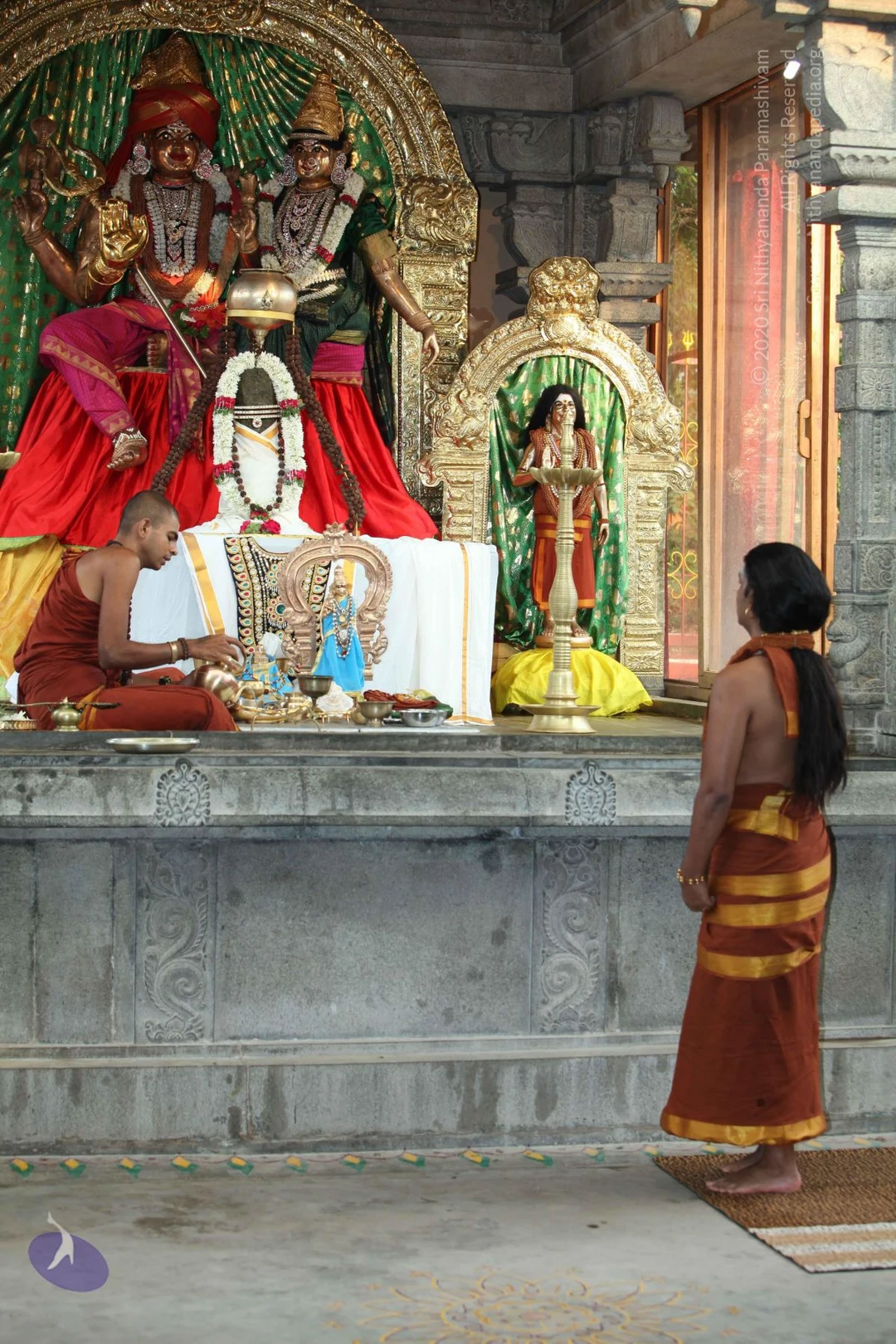
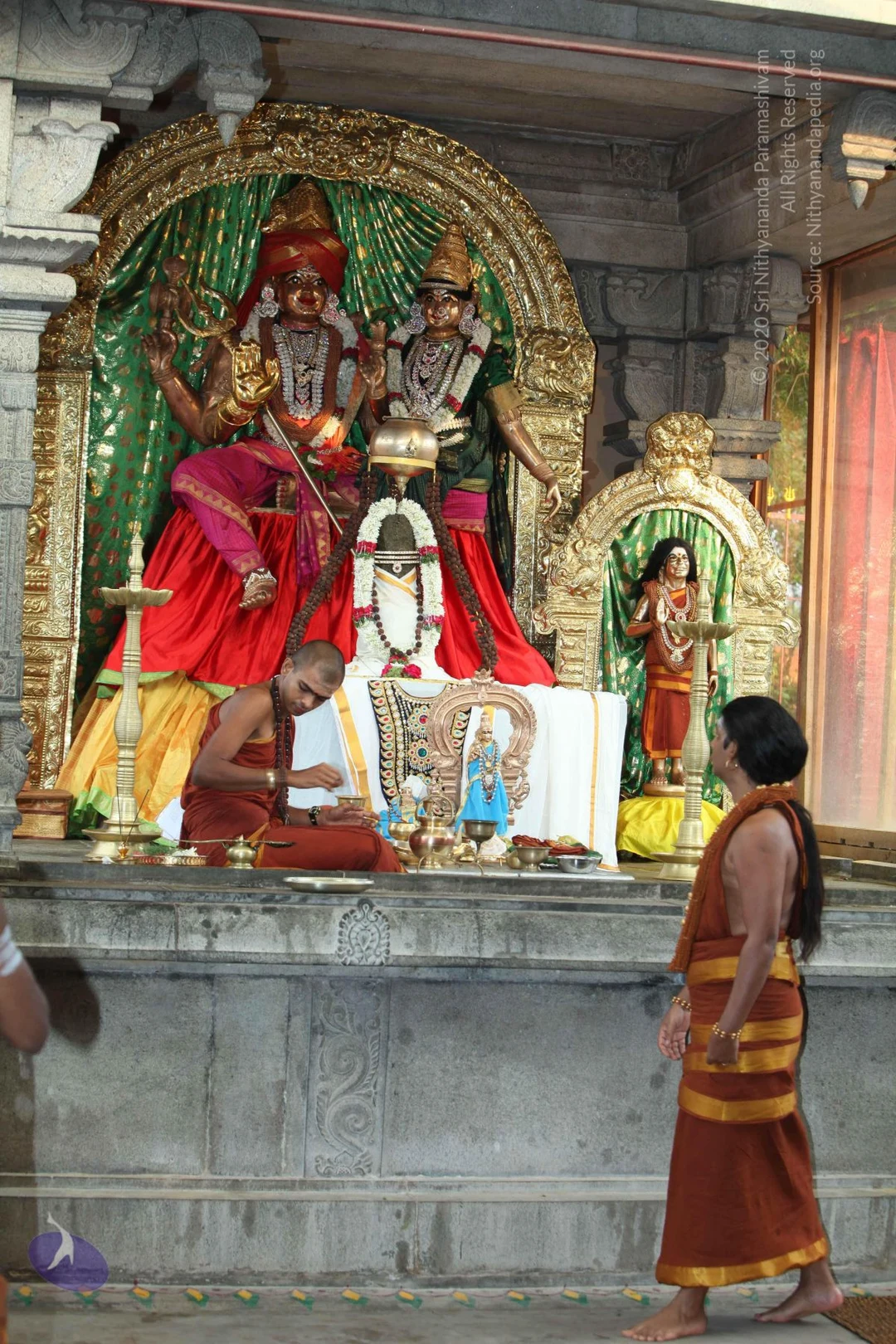
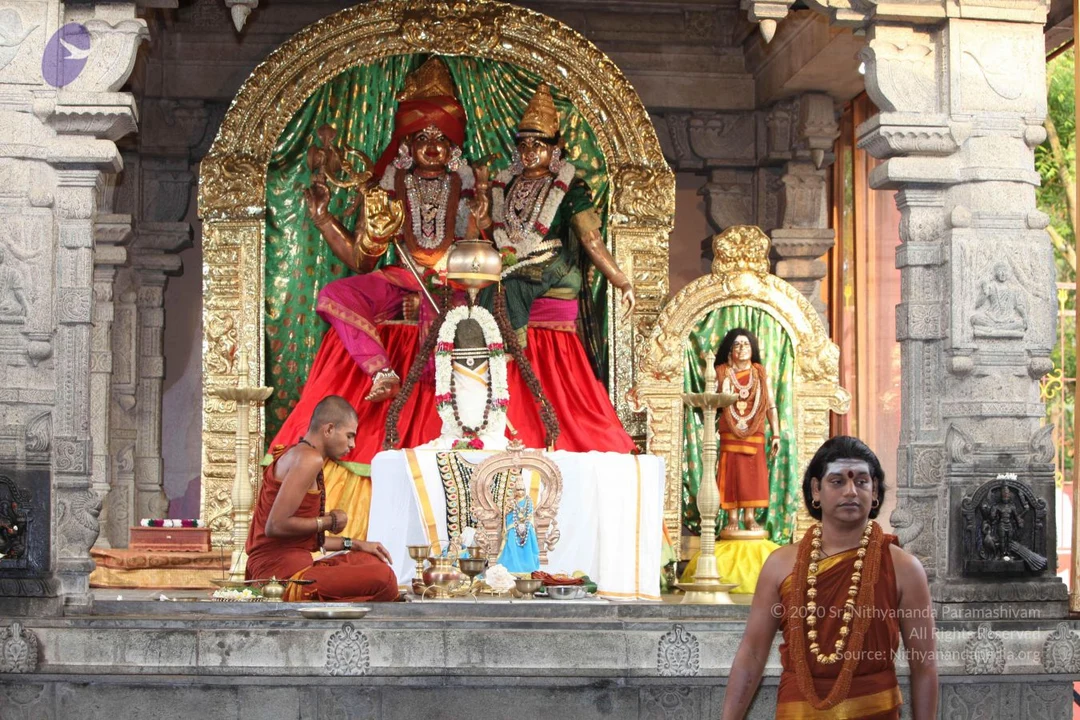
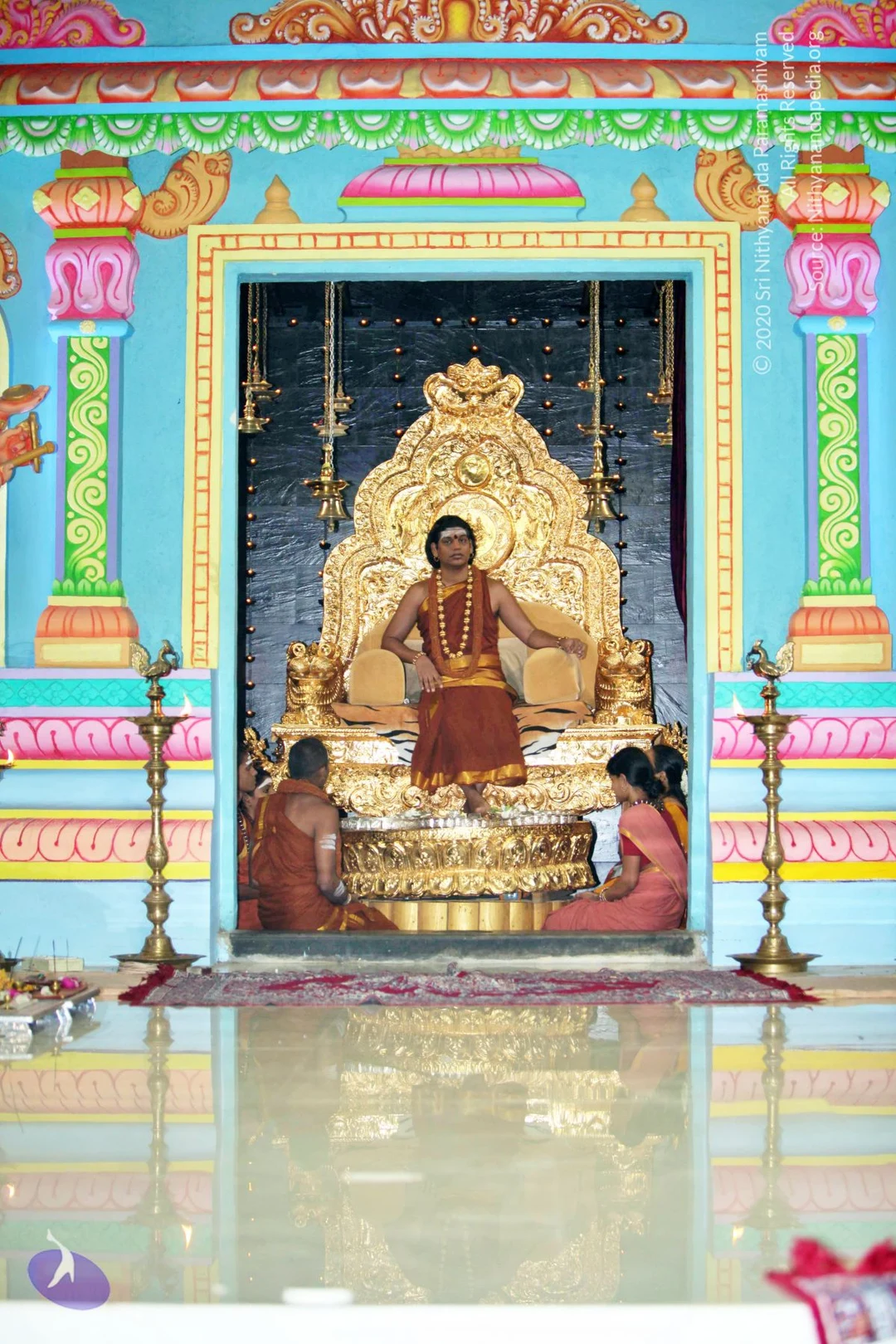
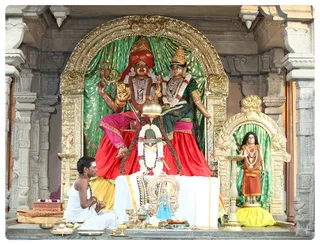
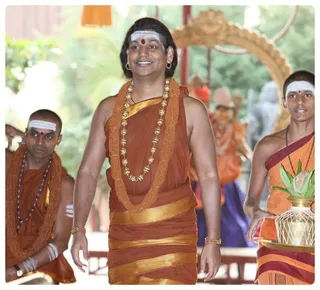
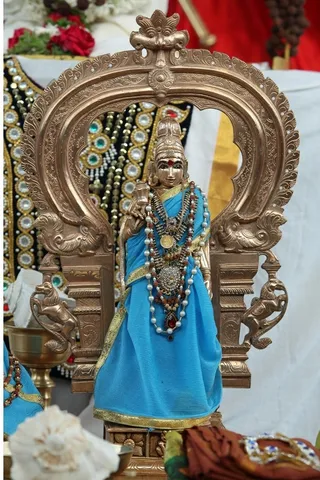
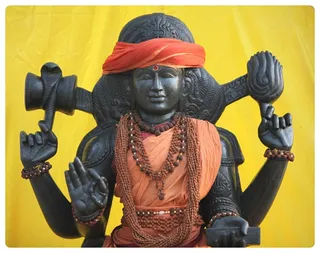
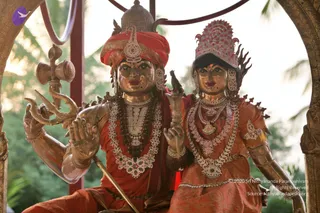
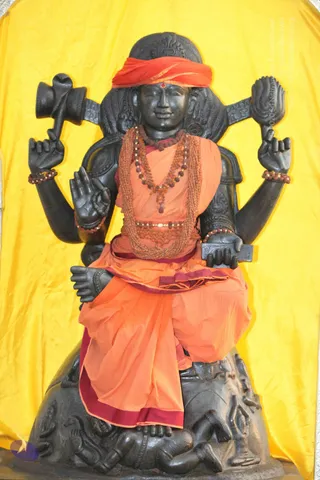
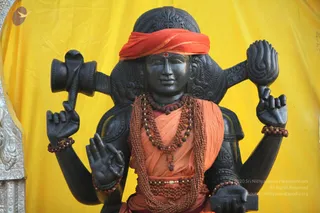
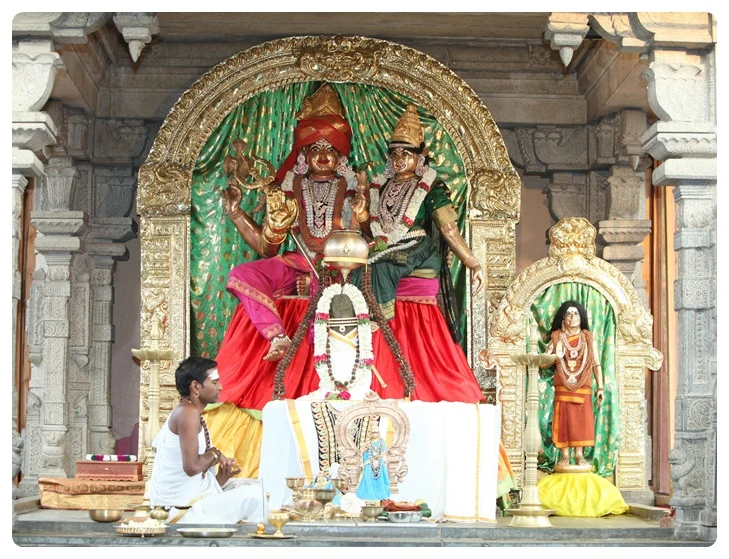
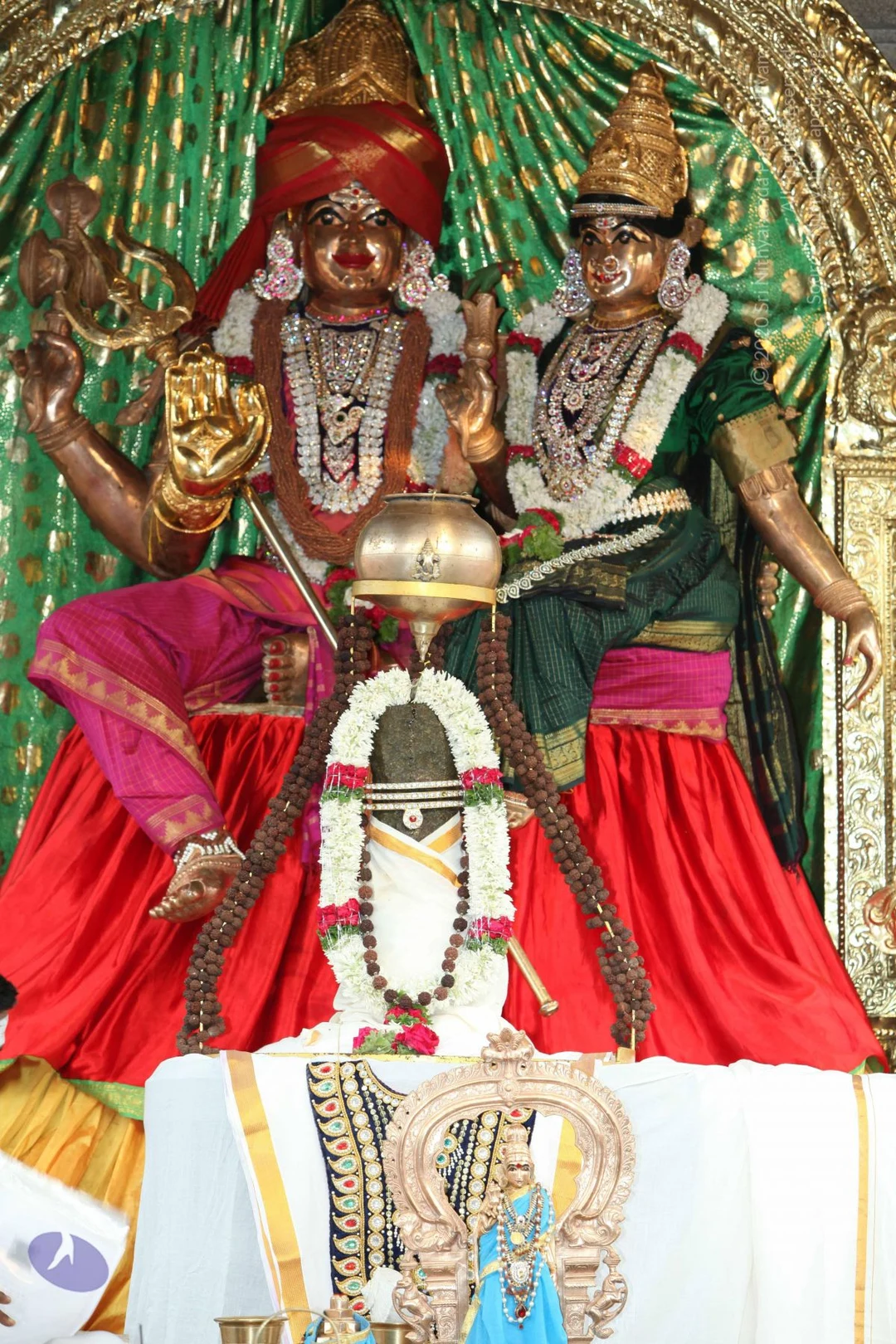
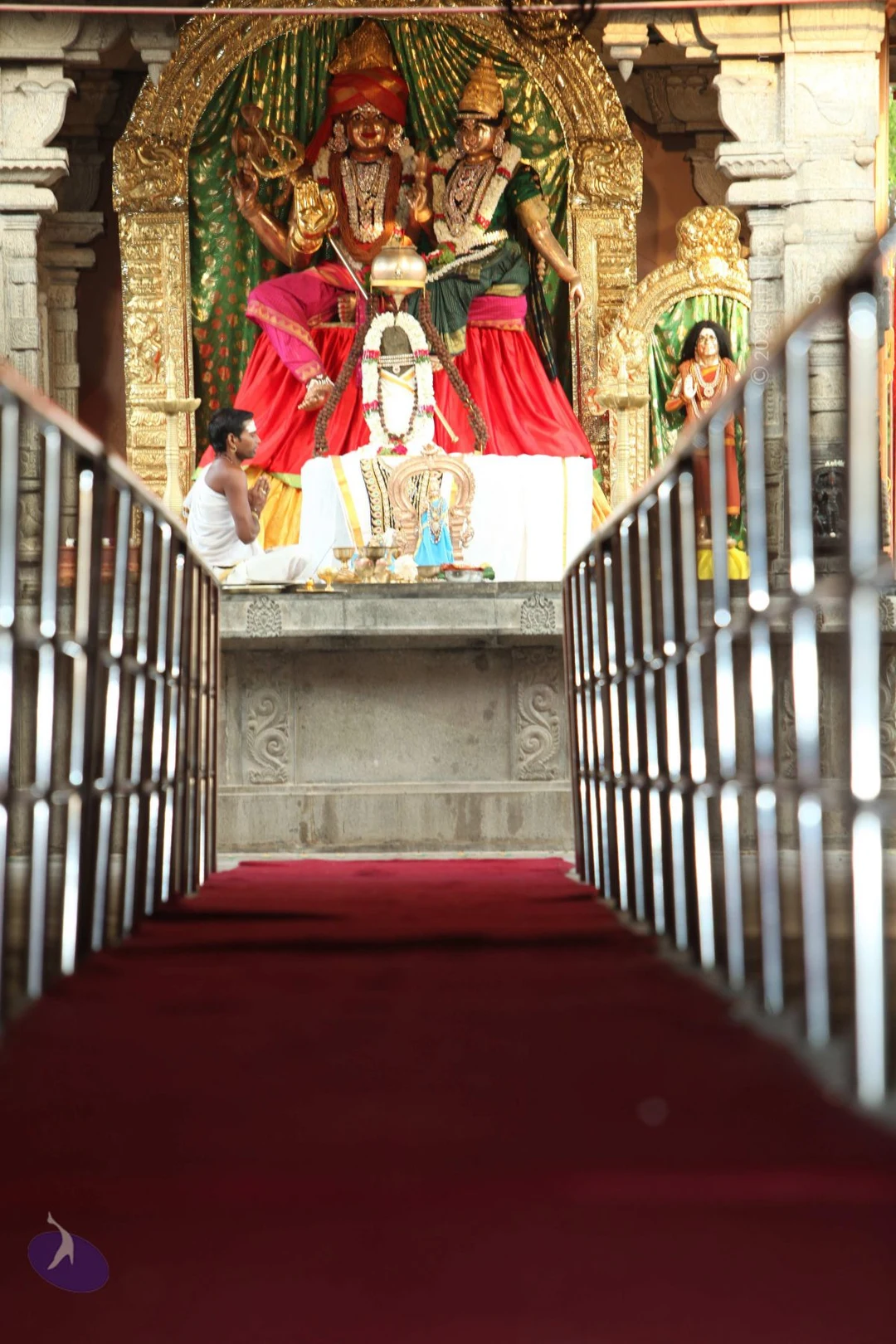
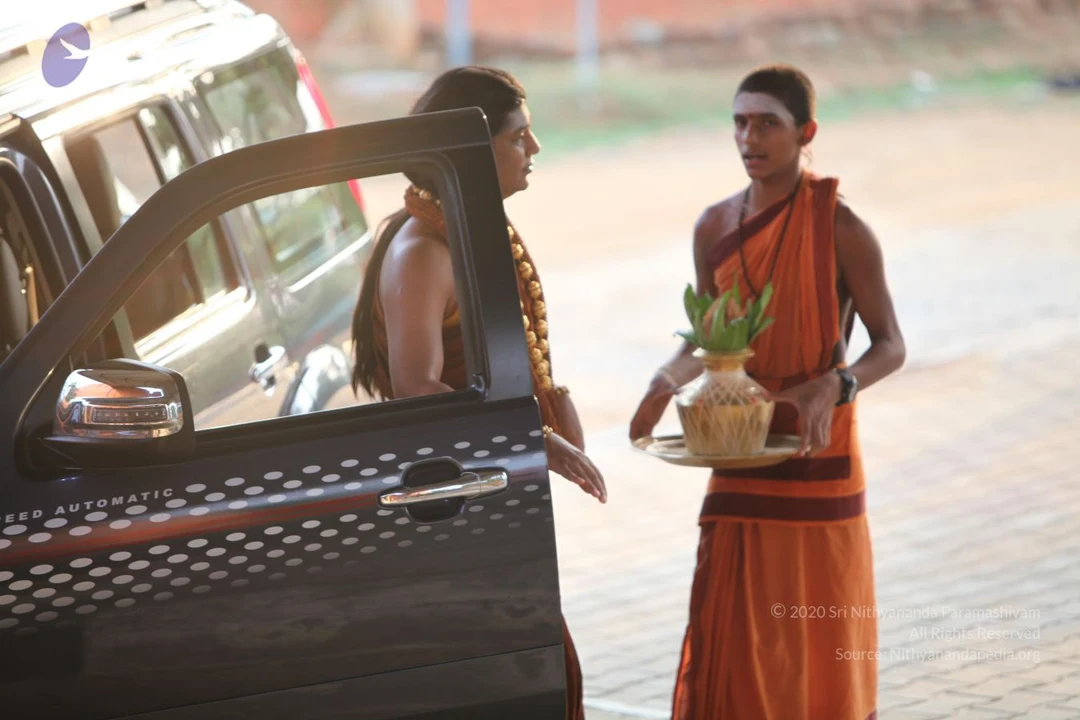
A photograph of a temple shrine with a large gilded arch framing two painted deity murti figures in red and pink garments, one holding a trident, both adorned with white flower garlands and rudraksha-style beads. A central lingam wrapped in a white flower garland sits on a white-draped altar with a golden kalasha. A priest in white dhoti and shawl, with a sacred thread and shaved head, sits at the lower left beside brass lamps, bell and offering vessels. A standing female figure in an orange garment and beaded necklaces stands on the right beside a brass lamp stand. Green curtains line the shrine and carved stone pillars frame the scene. No a person candidate is visible.A two-panel graphic of carved black stone deity reliefs, each marked with red kumkum dots and small white flowers. The left panel shows a standing four-armed deity with a goat beside him and a peacock at his feet, consistent with a Murugan/Skanda form. The right panel shows a seated elephant-headed deity with a rounded belly, four arms, and a broken tusk, consistent with Ganesha, holding a white flower and a modak-like offering. Both carvings are set in ornate arched niches. No physical people are visible.A photograph of a procession at an outdoor temple setting with greenery and a golden arch. In the centre, a smiling man with long dark hair, a red dot on his forehead, and white vertical tilaka marks, wears a saffron-and-gold wrap and a heavy necklace of gold bells over an orange shawl, with gold bangles on his wrists, and walks forward. He is a Swamiji (probable) by appearance cues: long hair, saffron ornate clothing and a ceremonial gold bell necklace, and the page indicates his presence at this event. Two saffron-robed attendants flank him: on the left a man with white tilaka and a rudraksha mala, and on the right a young boy with a white forehead band holding a golden tray with a decorated kalasha and green leaves. Blurred figures and statues stand behind in orange and purple.A bronze deity murti of a goddess stands within an ornate copper-coloured arched frame decorated with floral scrollwork and rearing lion figures at the base. The figure wears a blue chiffon sari with a gold border, layered beaded necklaces, pearl strands, a large pendant and a red bindi, and holds a lotus-like object in one hand. Behind it hang gold-and-black embroidered fabric, red flowers and a rudraksha mala, with a brass oil lamp and white flower offerings in the foreground.A small bronze deity murti seated on an ornate arched metal throne-like frame, dressed in a rust-orange embroidered garment with a red-and-gold patterned cloth draped beneath, and wearing a white floral garland around its neck. A grey carved stone pillar stands at right, with a blurred red wall and metal railing in the background. No physical people are visible, so no a person candidate is present.A black stone statue of a multi-armed deity with a carved backdrop, set against a bright yellow cloth. The murti wears an orange-red headcloth with a red bindi, a saffron-orange shawl and layered rudraksha malas around the neck and waist. Its raised hands hold a trident-like staff and a lotus-like object, while the front hands show mudras. The statue is a depiction, not a living person, and its face is not used for identification.

Temple-Visit
62 photosSource gallery
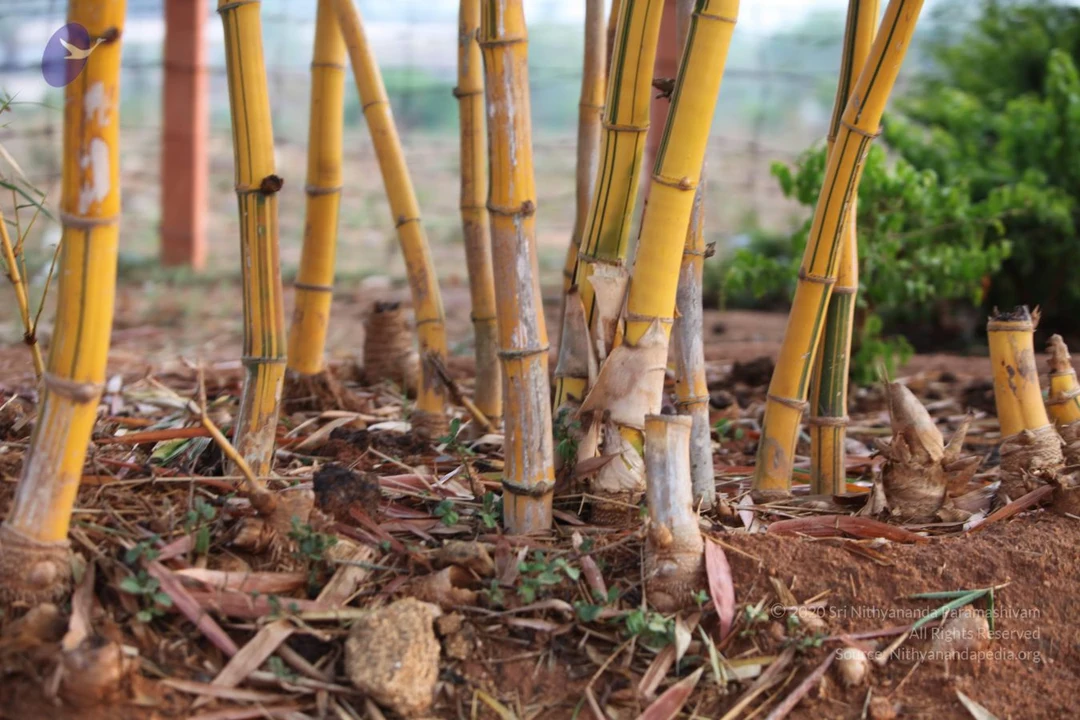
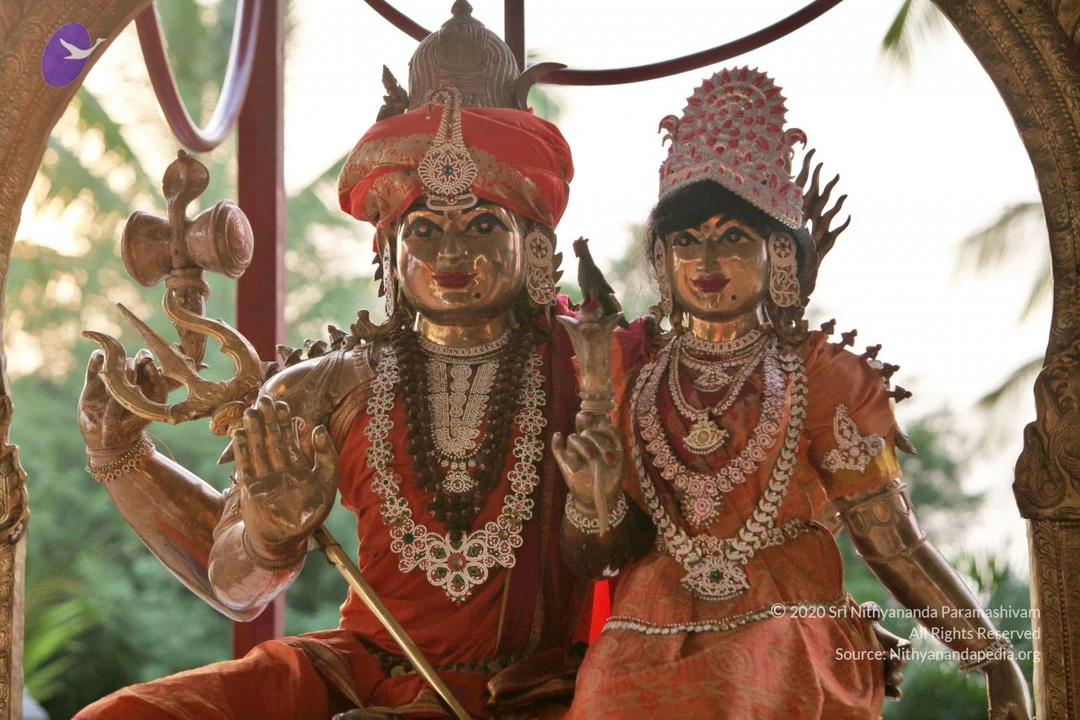
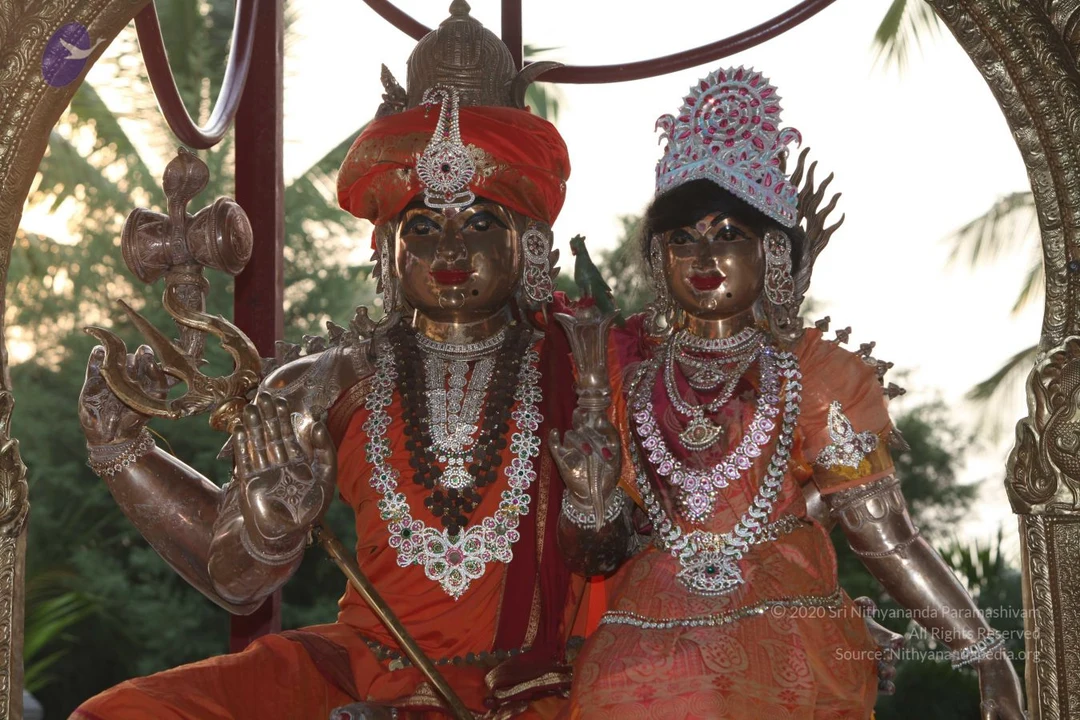
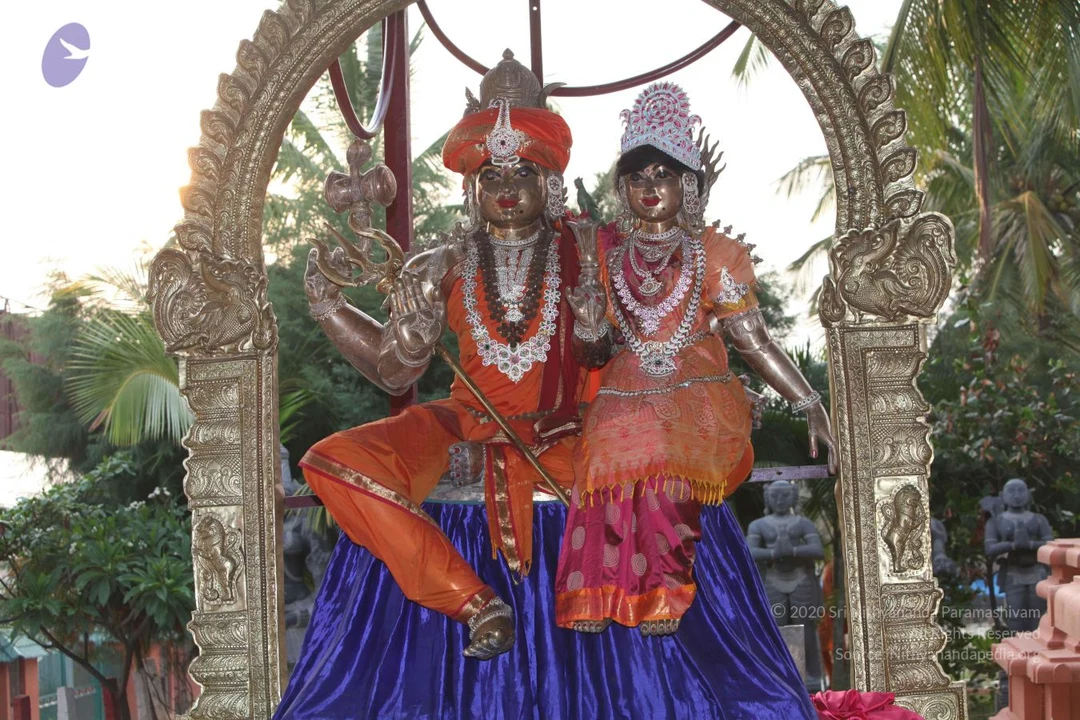
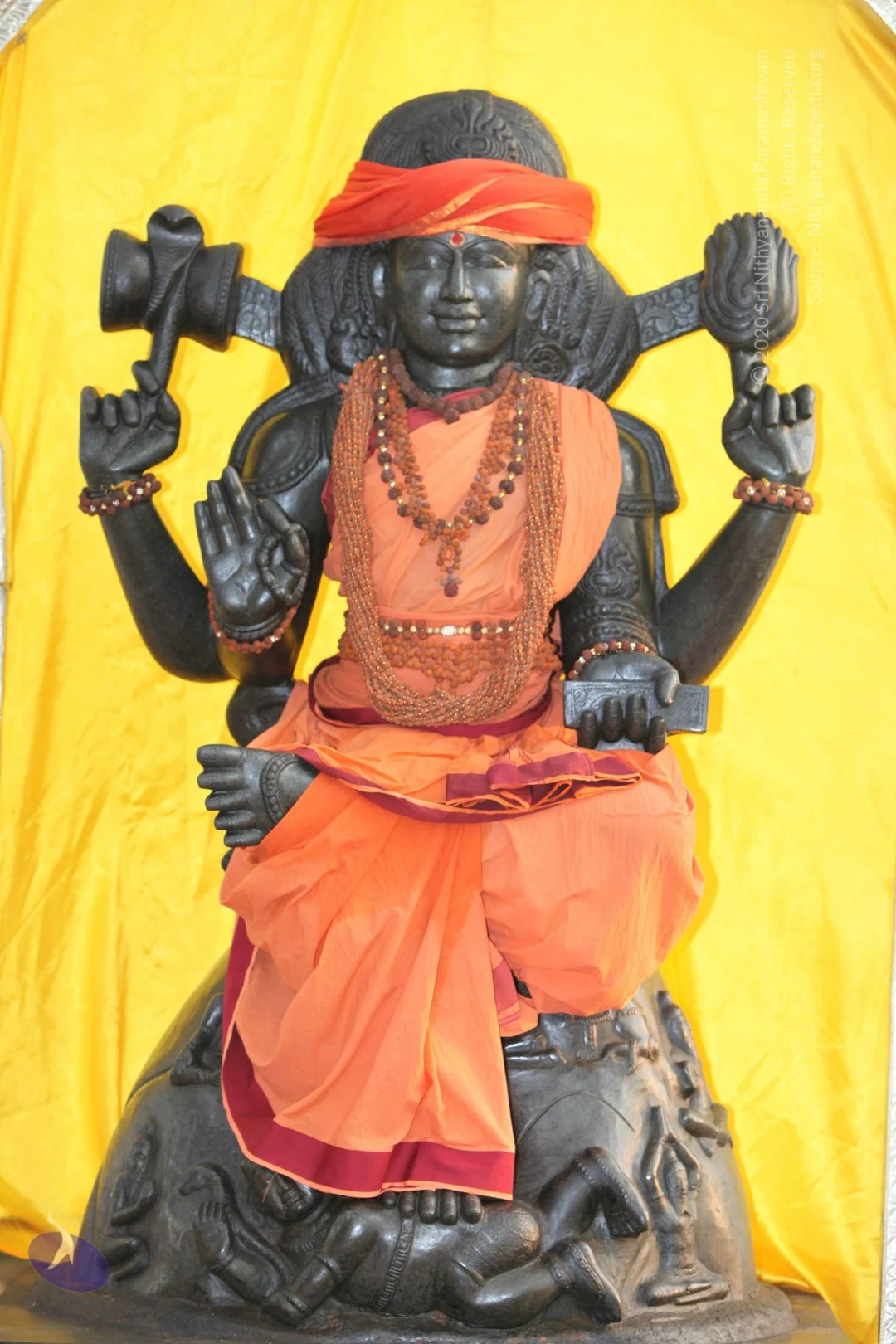
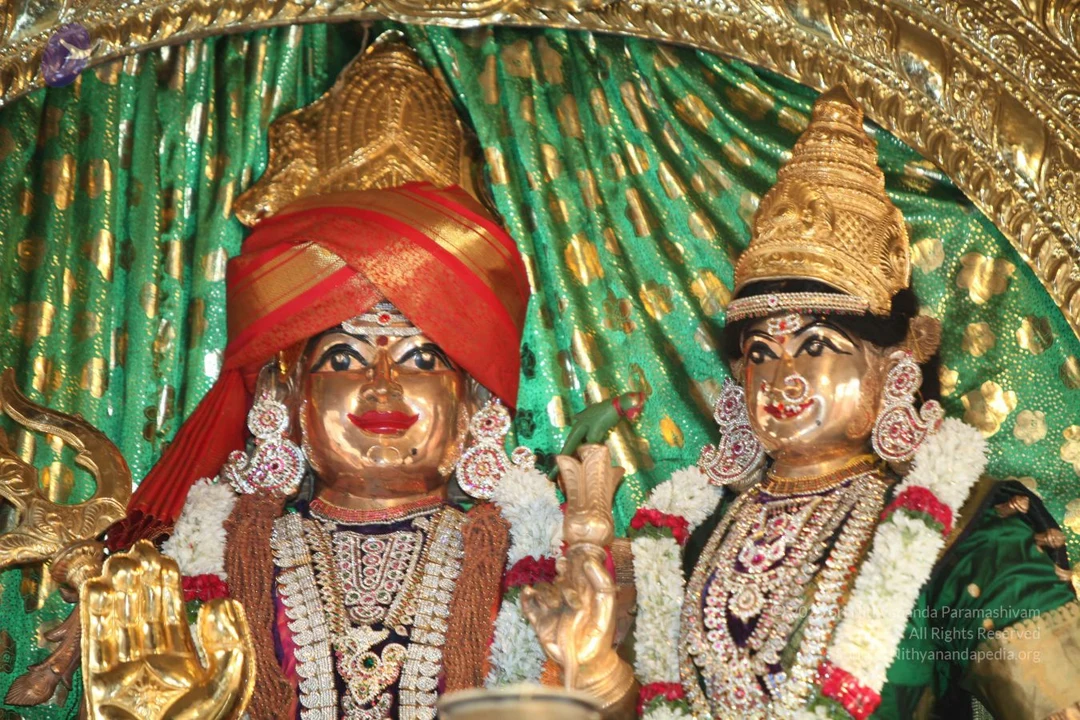
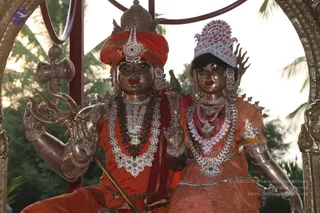
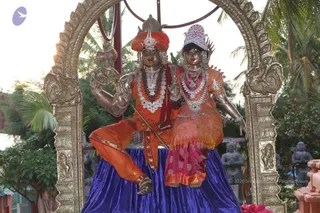
Close ground-level photograph of several tall yellow bamboo culms with green-striped nodes rising from red-brown soil scattered with dry leaves and small stones. Some culms are partly stripped of sheath, showing pale wood, and new shoots emerge at the base of others. A wire fence and blurred green foliage fill the background. No people are visible.Photo of two gilded statues of a deity couple seated together under an ornate arched canopy outdoors, with green trees behind. The male figure wears a red turban with a jeweled ornament, a rudraksha mala and white floral necklaces, and holds a trident and a damaru-like drum. The female figure wears an ornate crown with red and silver detailing, layered gold and pearl necklaces, drop earrings and an orange-red sari, and holds a small bird perched on a staff. Both are statues, not living people, and the scene reads as a temple or ashram murti display.Outdoor photograph of a pair of metal murti statues seated under an ornate arched canopy with palm trees behind. The left figure is a male deity with a red and orange turban, a trident in one hand and a long staff, wearing a red-orange garment, a dark rudraksha-style mala and a large silver necklace. The right figure is a female deity in a red-orange sari with a jeweled silver crown, multiple silver and jeweled necklaces and a small bird figure near her hand. Both are richly adorned with jeweled ornaments. Statues only, no physical people present.A photograph of a metal murti of a deity couple seated on a blue draped platform within an ornate golden arch. The male figure wears an orange dhoti, orange turban with a crown, a rudraksha mala and white beaded necklaces, and holds a trident. The female figure wears a pink and orange sari, a silver crown and layered white necklaces. Palm trees and stone figures stand in the background. The deity murti is shown, not a living person.A black stone statue of a multi-armed deity form seated on a rocky base, draped in orange saffron cloth with a maroon border and wrapped in multiple strands of rudraksha malas. A red-orange headband with a red bindi decorates its forehead. Its upper hands hold a trident-like staff and a flower-shaped object, the lower hands show an abhaya-like gesture and rest on a book-like object. Rudraksha bracelets adorn its wrists, and the base carries carved figures. The statue is set against a bright yellow cloth backdrop.A black stone statue of a four-armed deity figure stands before a bright yellow cloth backdrop. The figure wears an orange-red head wrap with a red tilak mark on the forehead, an orange shawl draped over the shoulders, and multiple strands of rudraksha beads across the chest and waist. Bead bracelets adorn the wrists. One raised hand holds a trident-like staff, another holds a lotus-like object, and the lower hands rest in mudra gestures. The image is a photograph of a sculpture rather than a living person, and no printed name is visible in the frame.

Pada-Puja

59 photosSource gallery
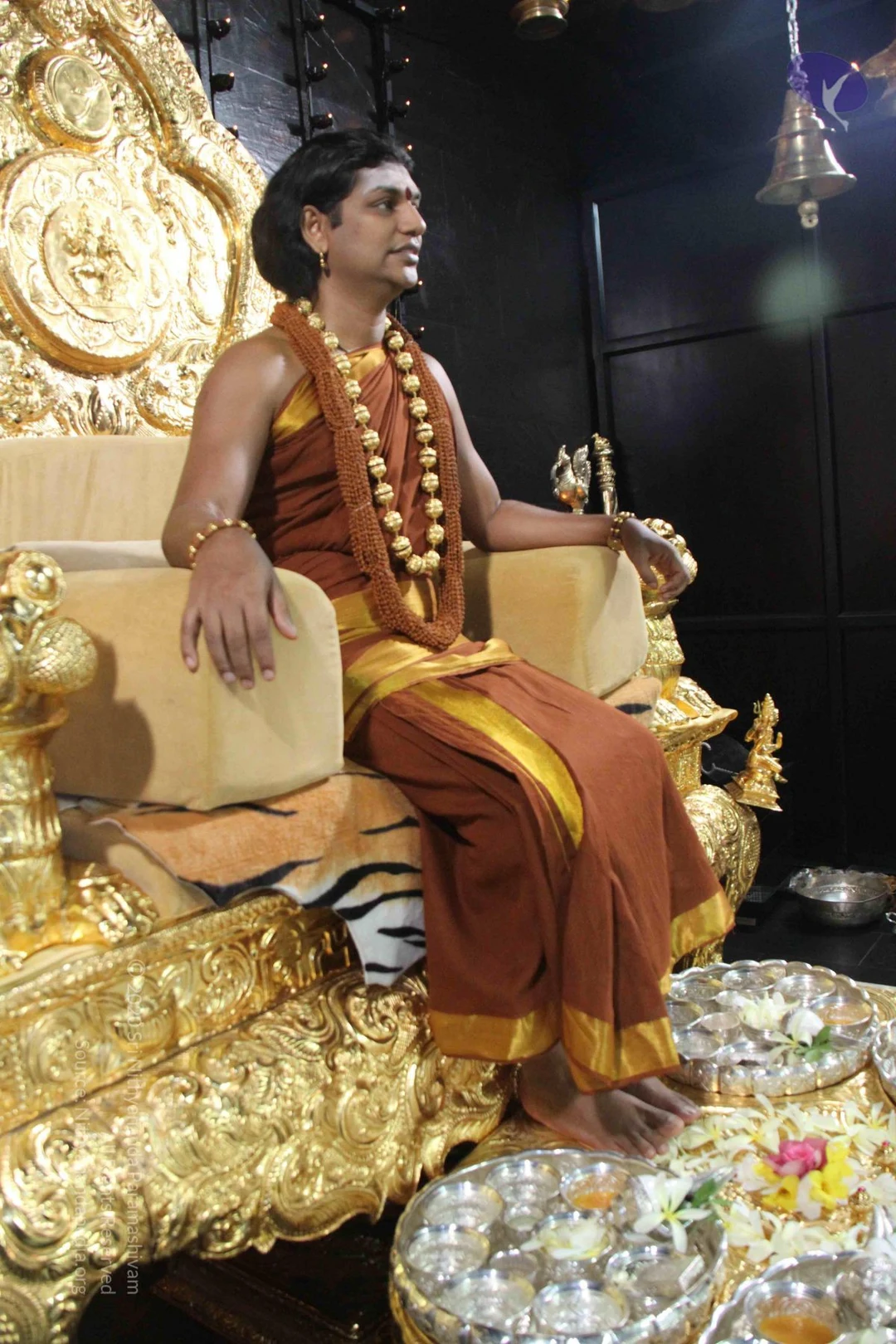
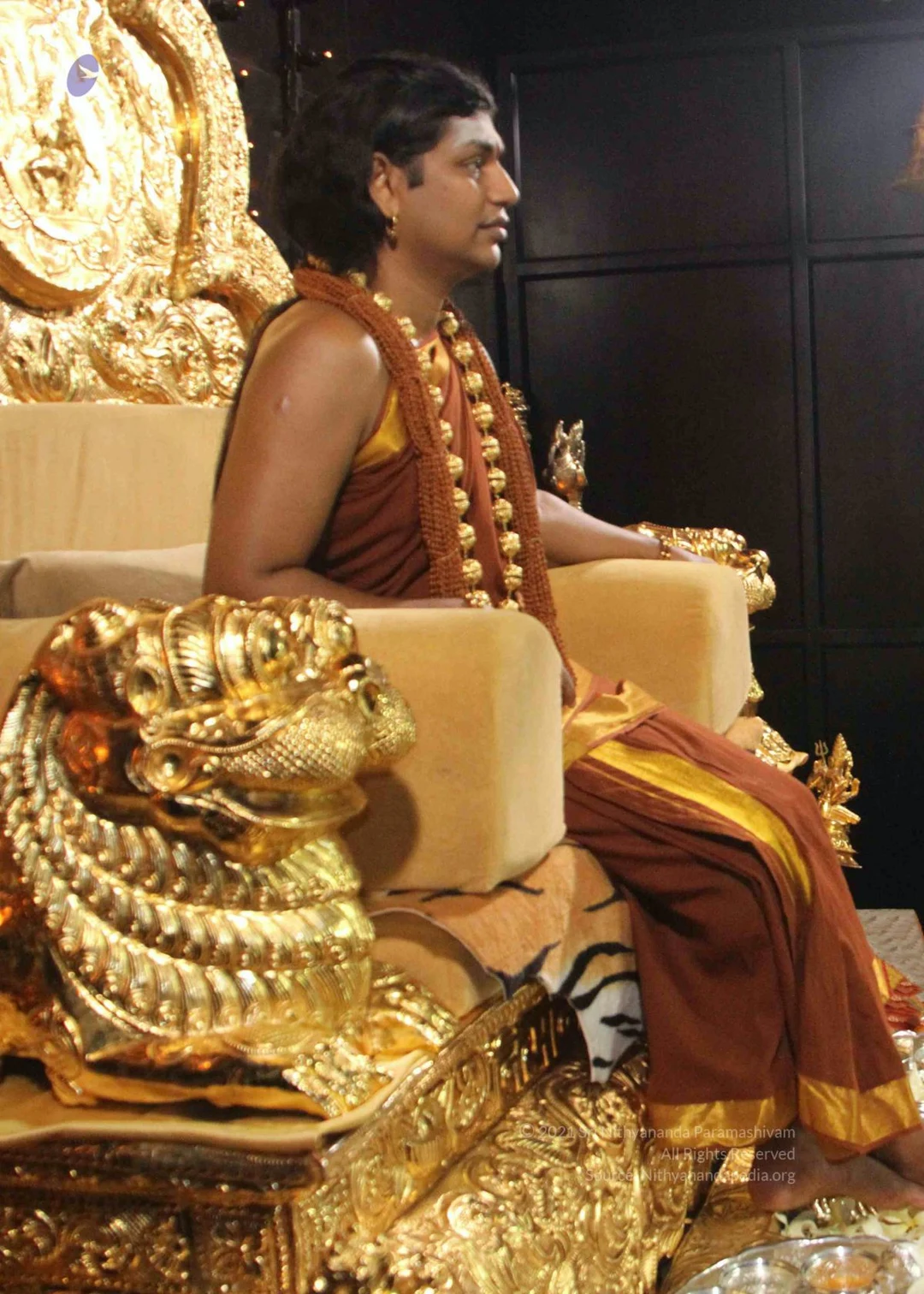
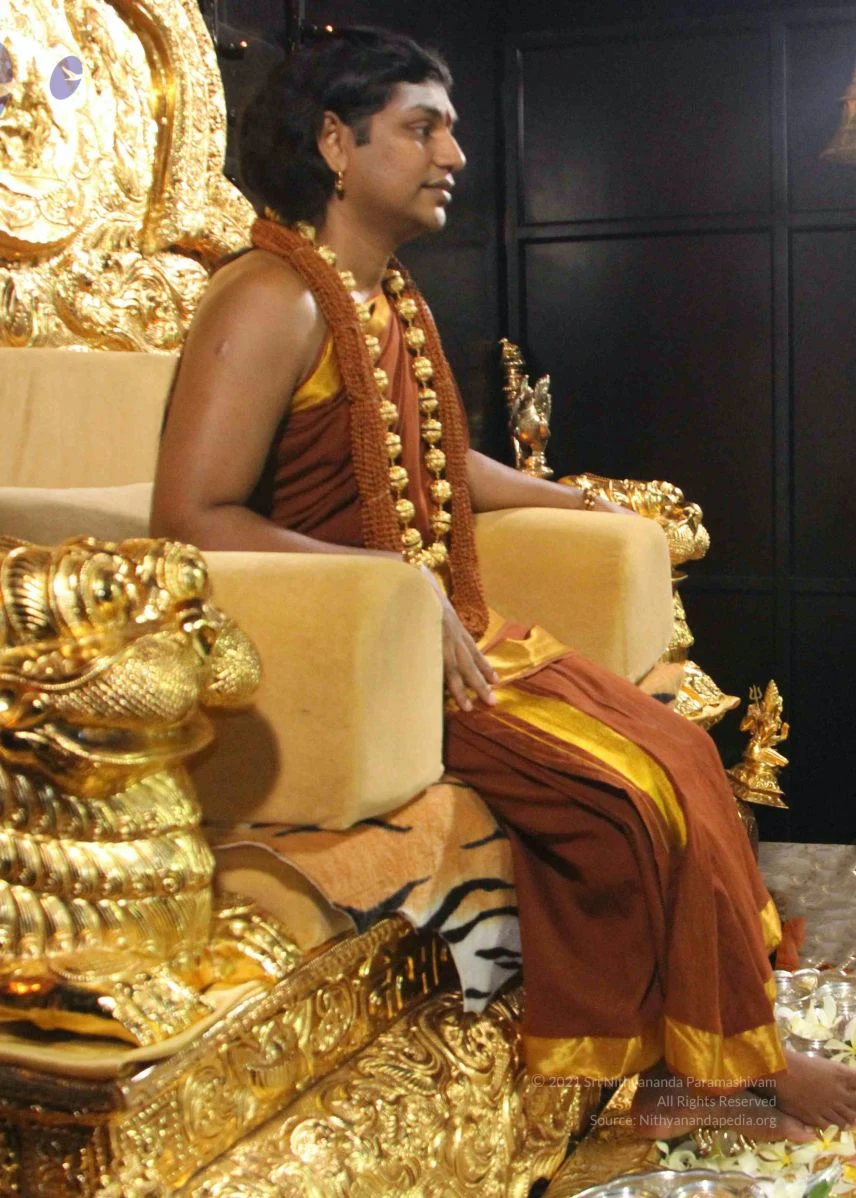
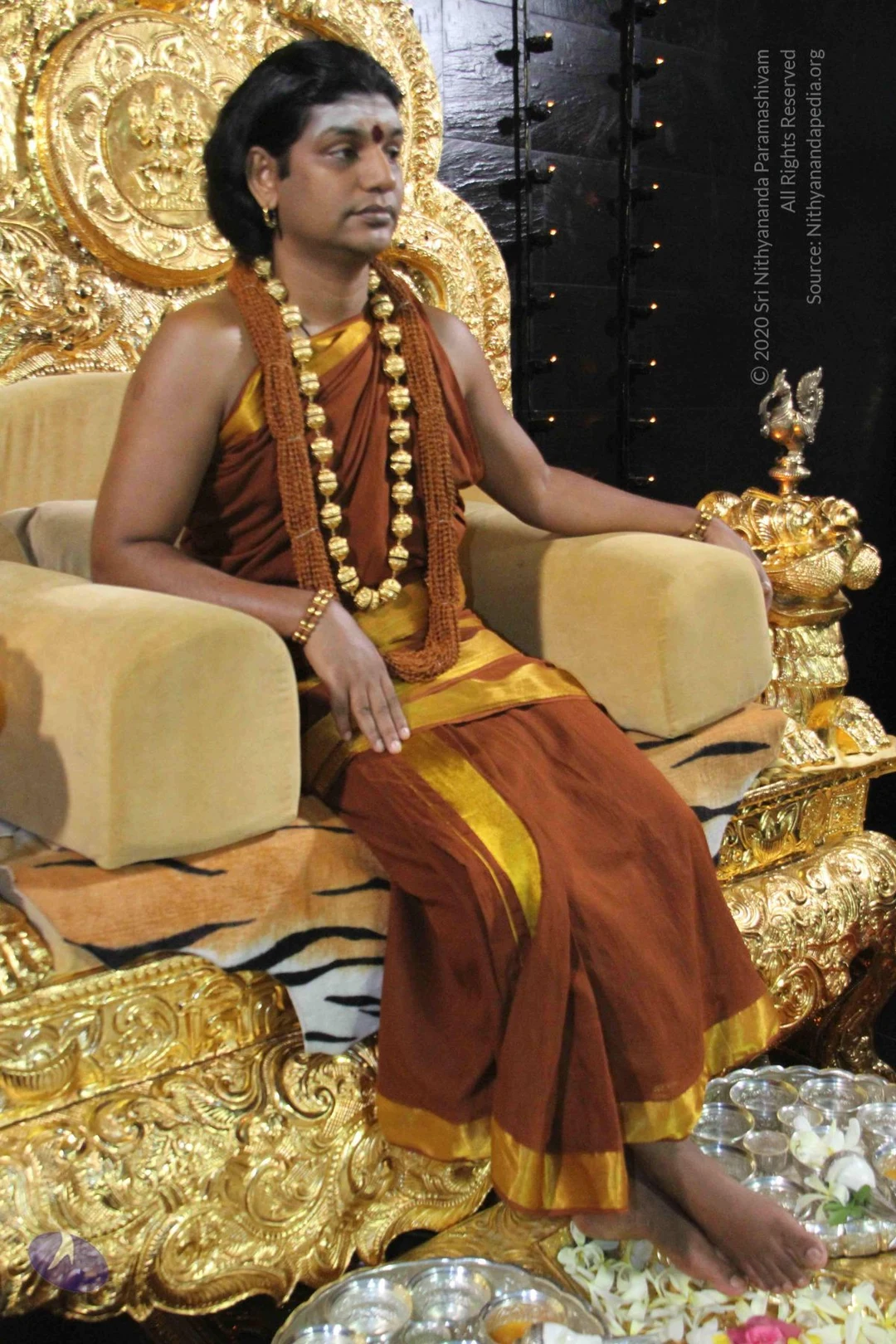
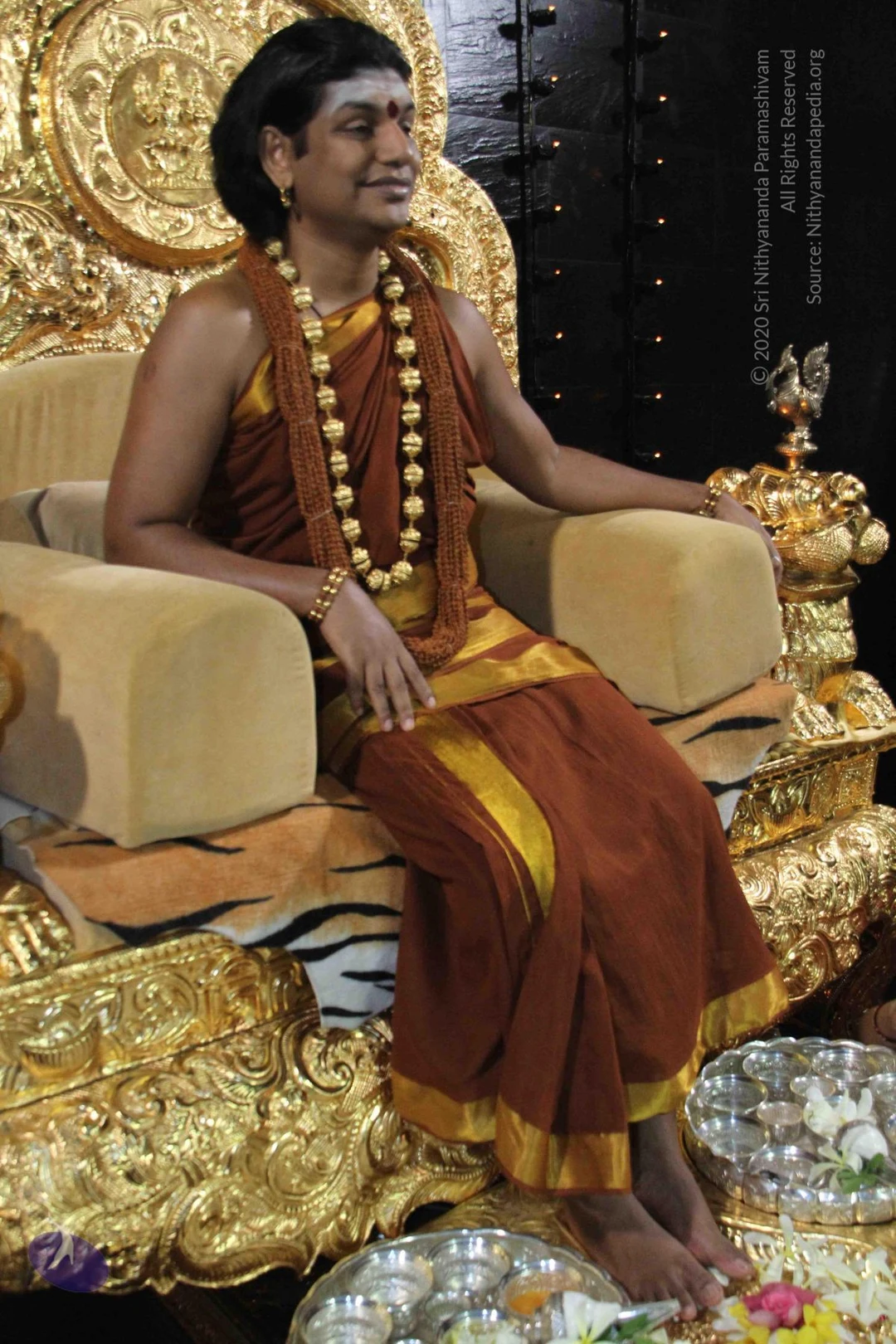
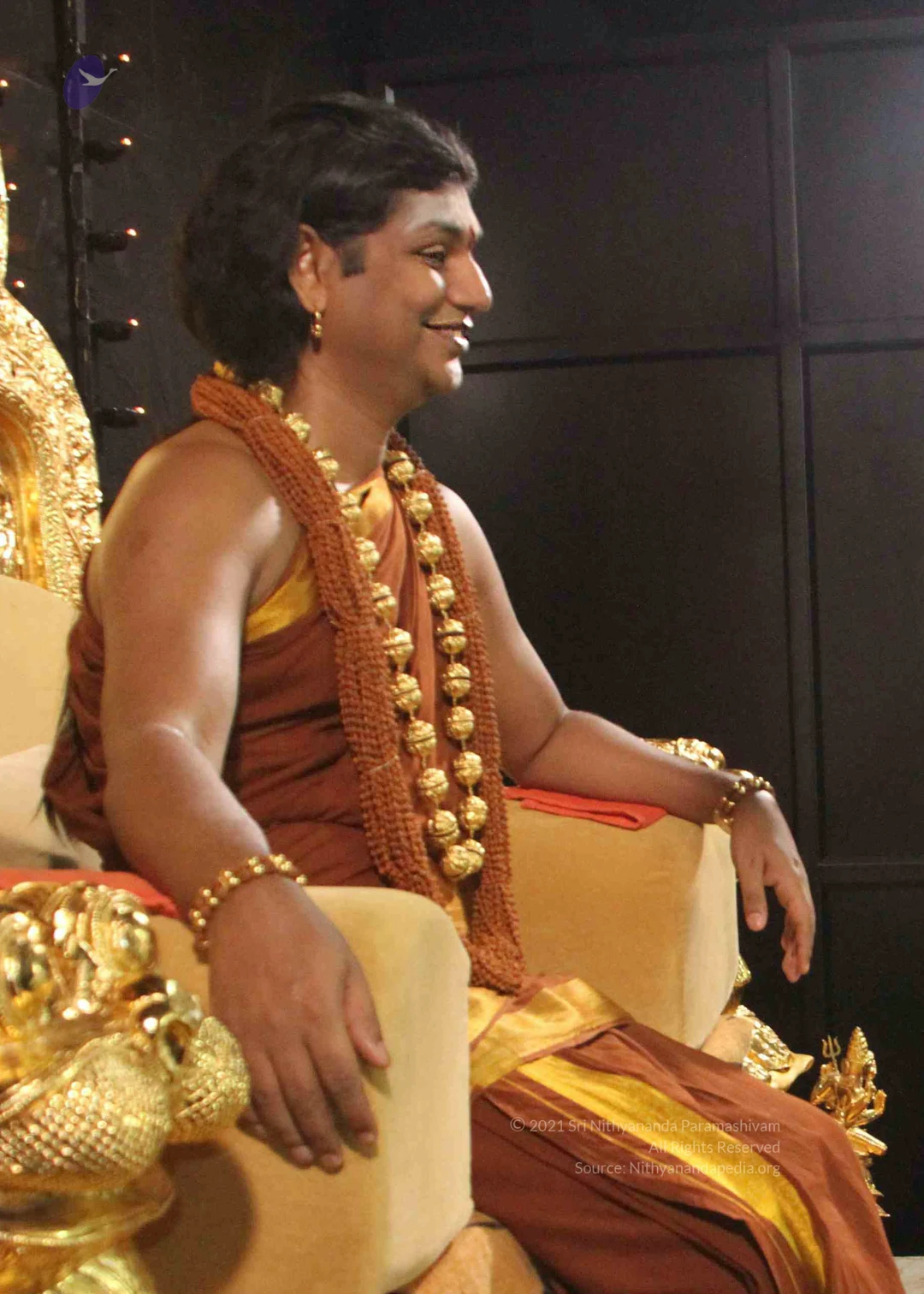
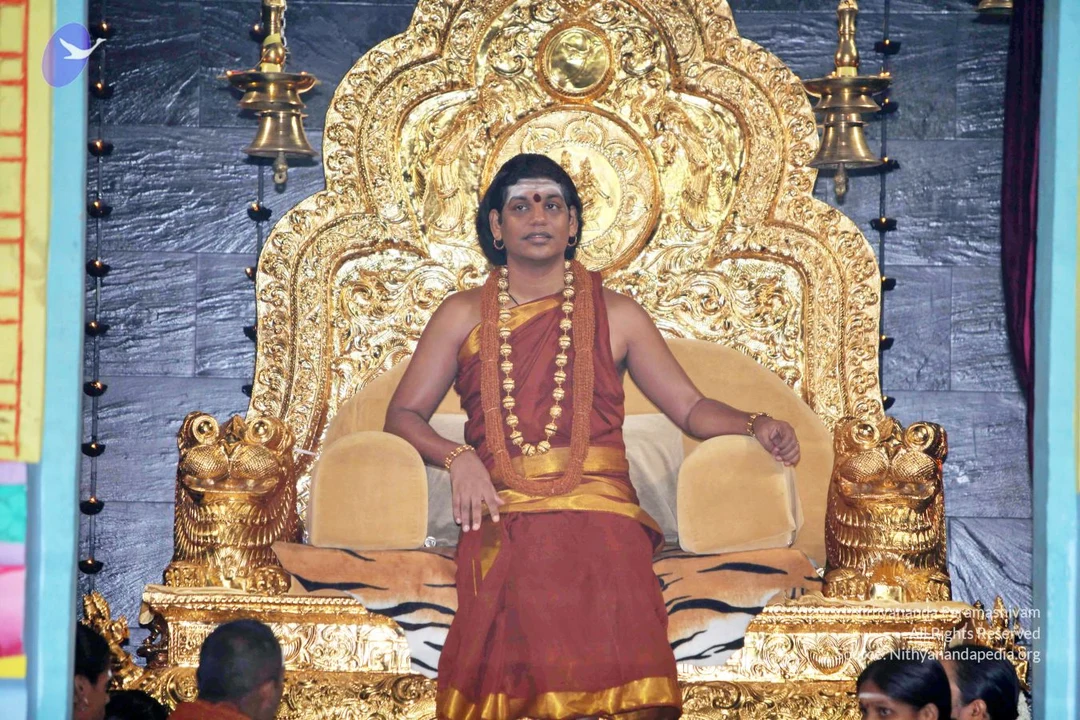
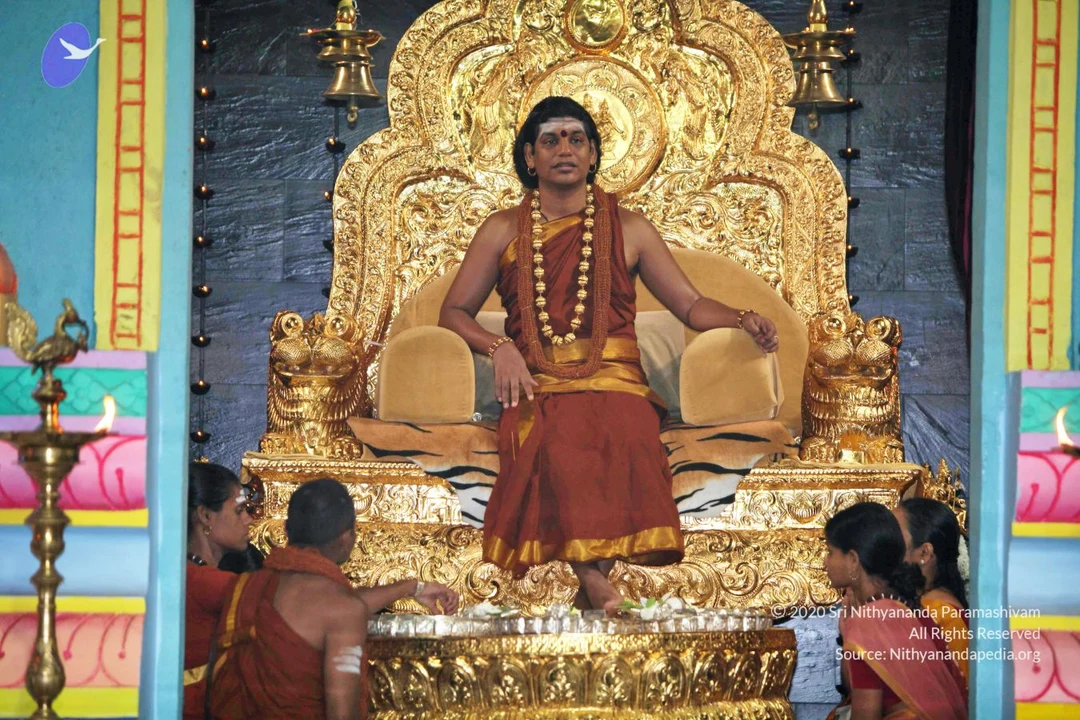
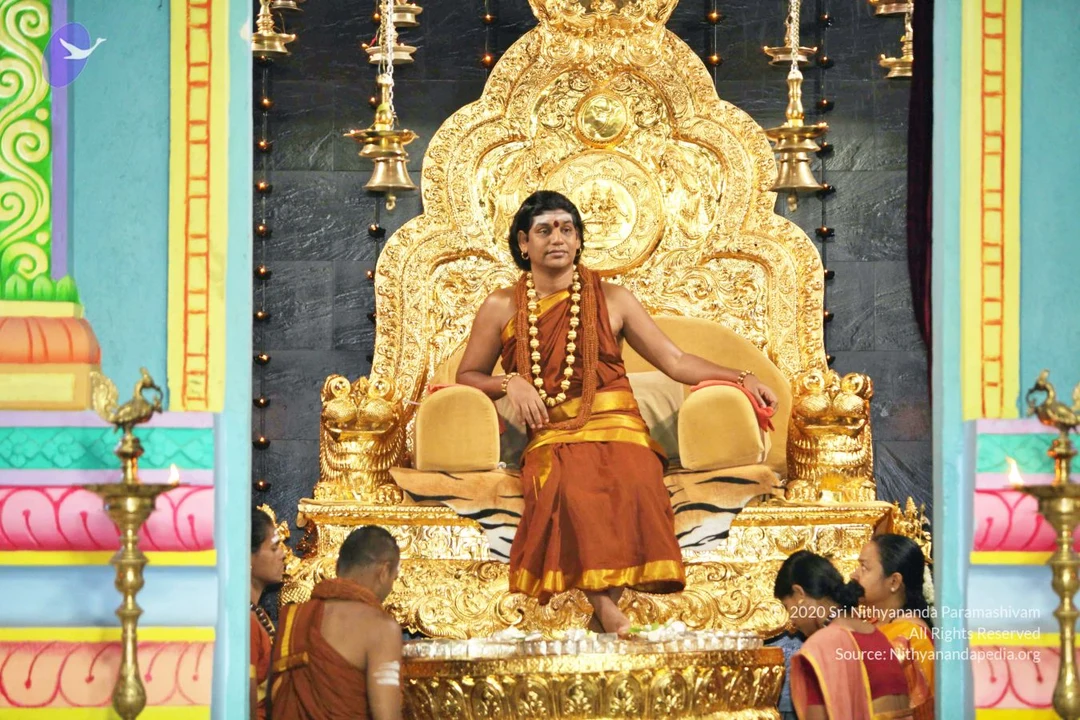
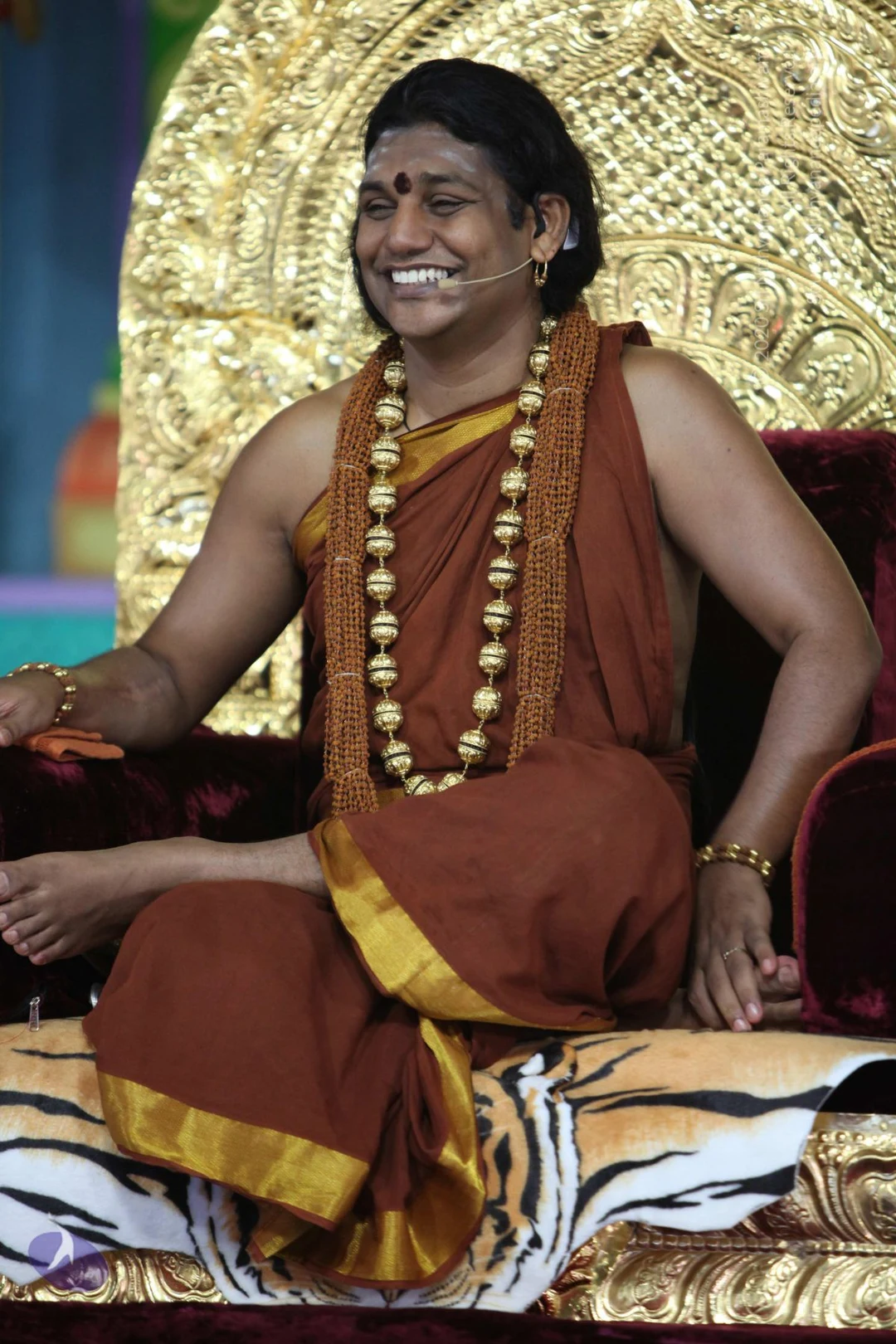
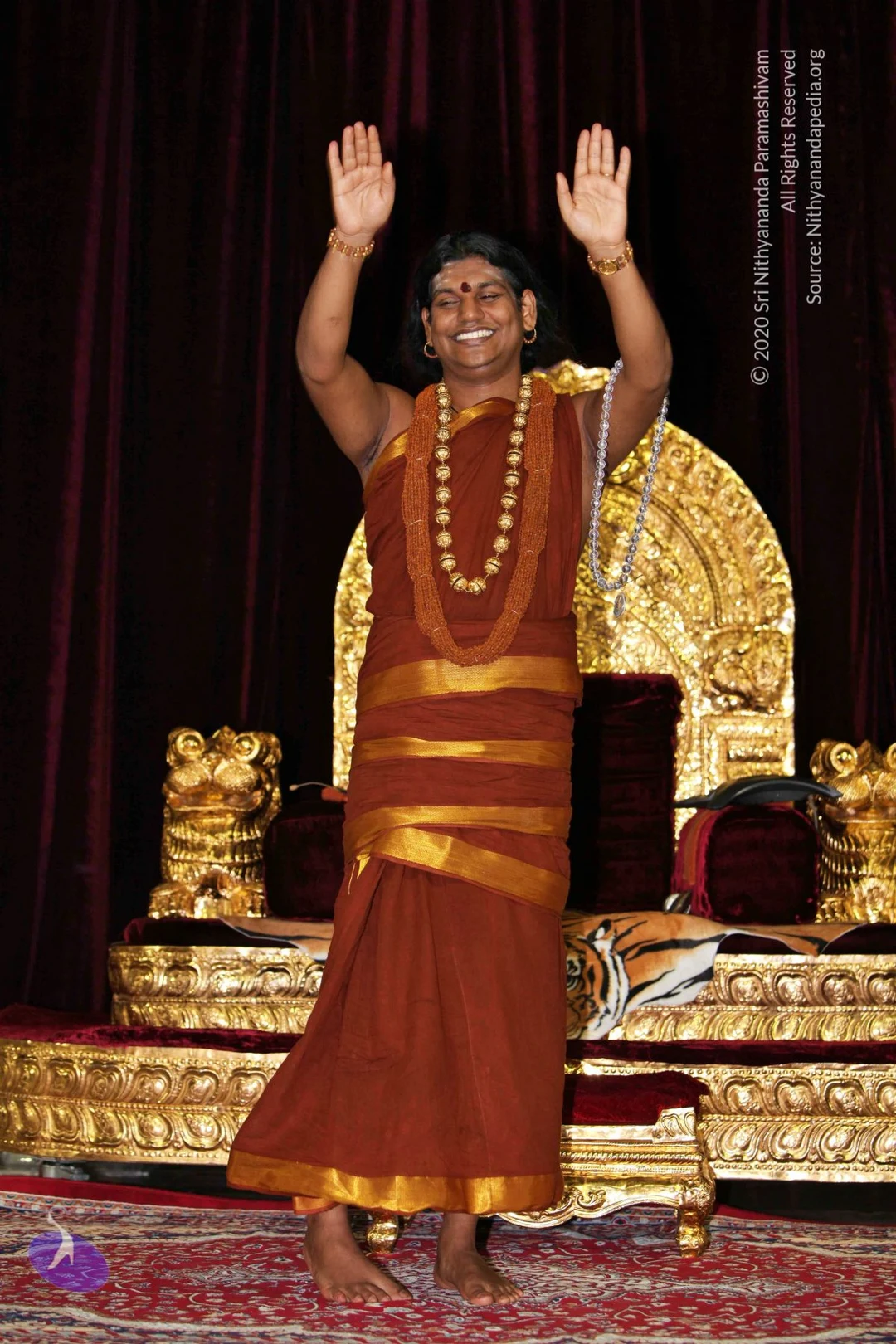
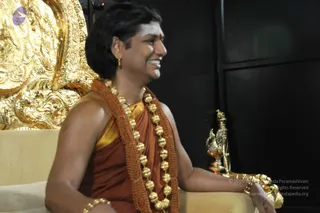
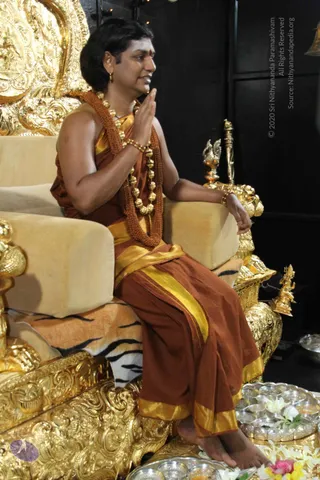
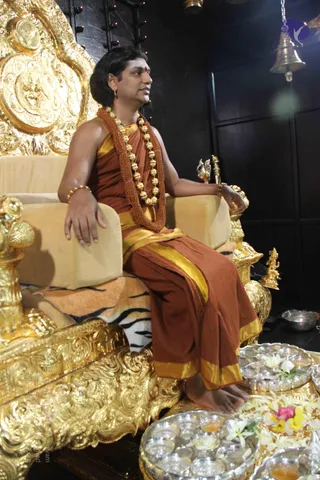
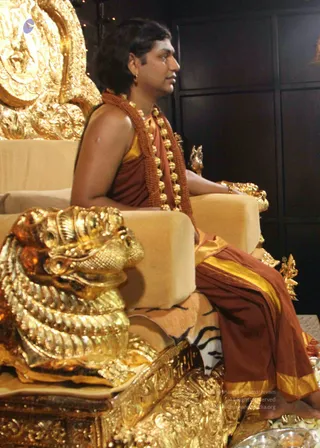
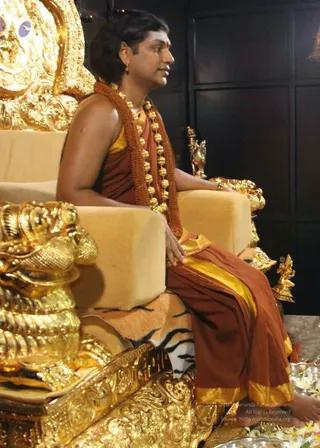
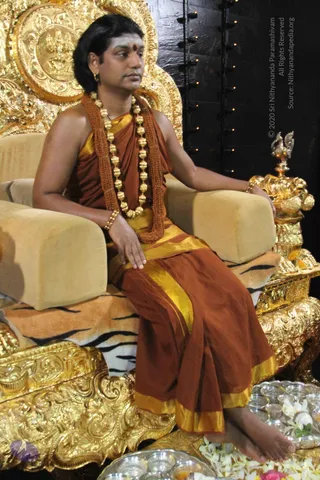
A photograph of a smiling man seated on a cream-upholstered throne with an ornate gold-leaf carved backrest. He wears an orange-brown wrap over his shoulders, a long rust-coloured rudraksha mala with large gold beads falling to his waist, gold bangles, and a small red tilak on his forehead. He has long swept-back dark hair and a gold stud earring. A gold ceremonial staff with a finial rests beside him on the armrest against a dark wall.A seated man in an ornate gold throne with carved gilt panels and a tiger-striped cushion, wearing a rust-brown dhoti and shawl with gold borders, a rudraksha mala of brown beads and gold bead necklaces, and gold bangles. His palms are pressed together in namaste while he speaks. A red tilak mark is on his forehead. At his feet are silver trays with small bowls, white flowers and pink and yellow blossoms. Probable Swamiji by appearance: long swept-back hair, rudraksha mala, ceremonial gold ornaments and saffron-orange robes, seated on a throne in a satsang setting.A man with long swept-back dark hair, a red bindi, gold hoop earring and a rudraksha mala with gold beads sits on an ornate gold throne draped with a tiger-striped cloth. He wears a rust-orange garment with gold borders and holds a small ceremonial item in one hand. Silver plates of oil lamps and white and yellow flowers lie at his bare feet, with a hanging brass bell above. A dark background frames the scene.A seated man in a rust-brown robe with a golden border sits on an ornate gold-carved throne with a golden lion-head armrest and a tiger-striped cloth draped over the seat. He wears a thick rust-coloured rudraksha mala with gold beads across his chest, gold bangles, small gold earrings, and holds a small golden ritual object in one hand. Brass and silver offering plates with flower petals sit at the lower right, and a golden trident and gold figures decorate the throne. The dark background is a plain wall. Appearance-based cues of a long-haired figure in saffron-coloured robes with rudraksha malas and ceremonial gold ornaments on a throne suggest Swamiji (probable), seated in a throne-and-honour setting.A photograph of a man seated on an ornate gold throne with plush cream-coloured cushions and a gold lion-head armrest. He wears a rust-brown robe with a gold border, a rudraksha mala and a gold bead necklace, and a gold earring. A tiger-striped cloth covers the seat. Gold trident and vessels sit beside him, with flower petals and brass lamps at his feet. Swamiji (probable): the long swept-back hair, ornate gold throne setting, rudraksha mala and gold necklace fit the Swamiji candidate.A seated man in a golden ornate throne with carved gold backrest and armrests, draped over a tiger-striped cloth. He wears a rust-orange draped garment with gold borders, multiple strands of rudraksha-style beads and gold bead necklaces, gold bangles, and a red bindi with white markings on the forehead. Silver plates with flower petals and offerings sit at his bare feet on the floor, and a gold ceremonial vessel stands to the right against a dark wall with small lamps.
Morning-Satsang
48 photosSource gallery
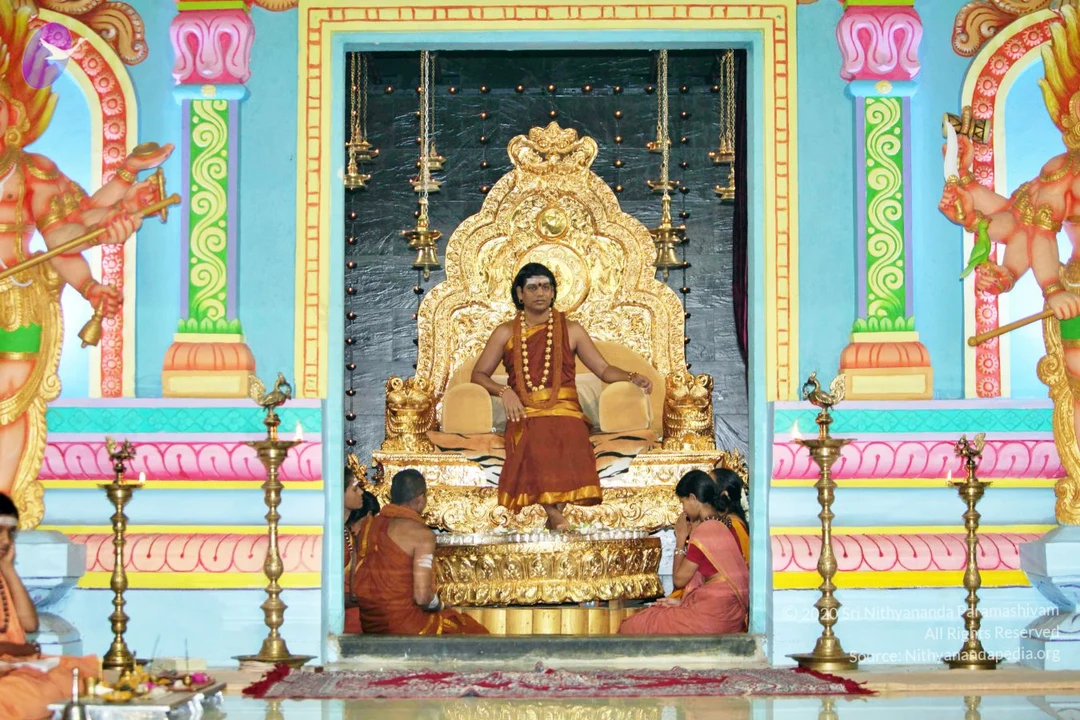
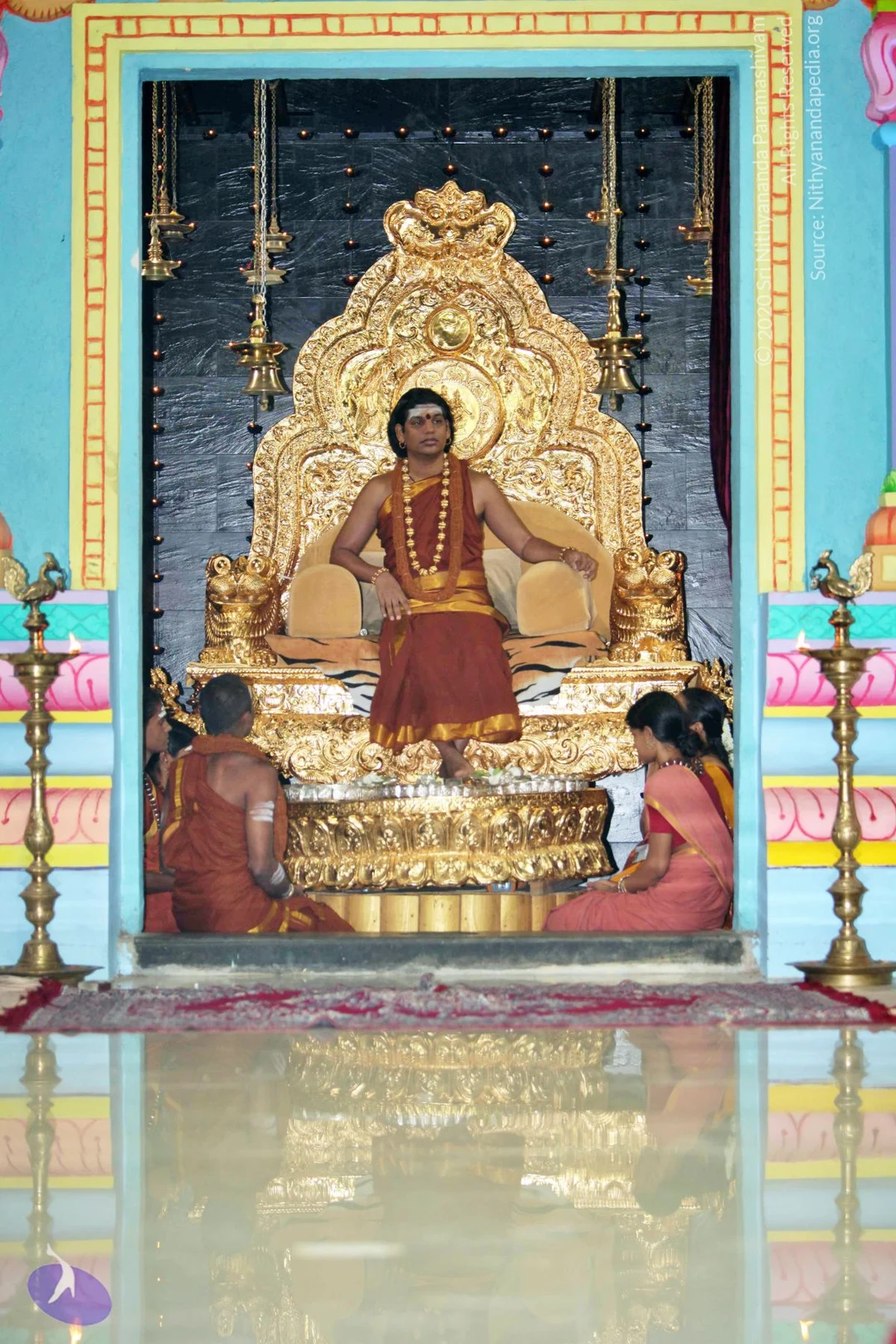
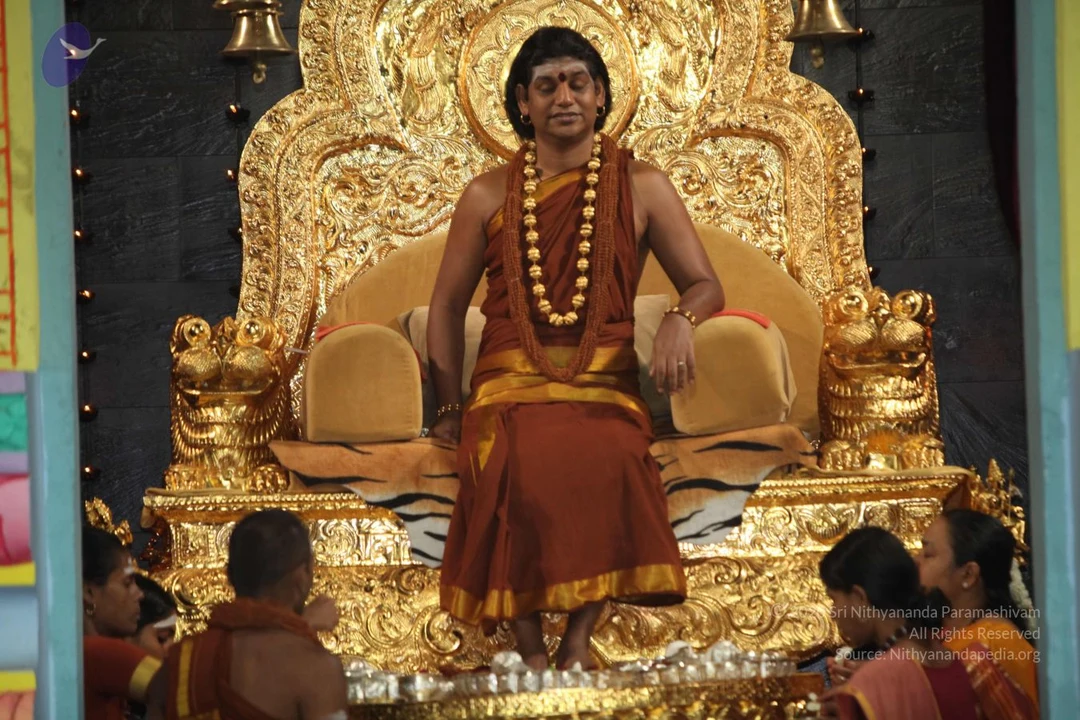
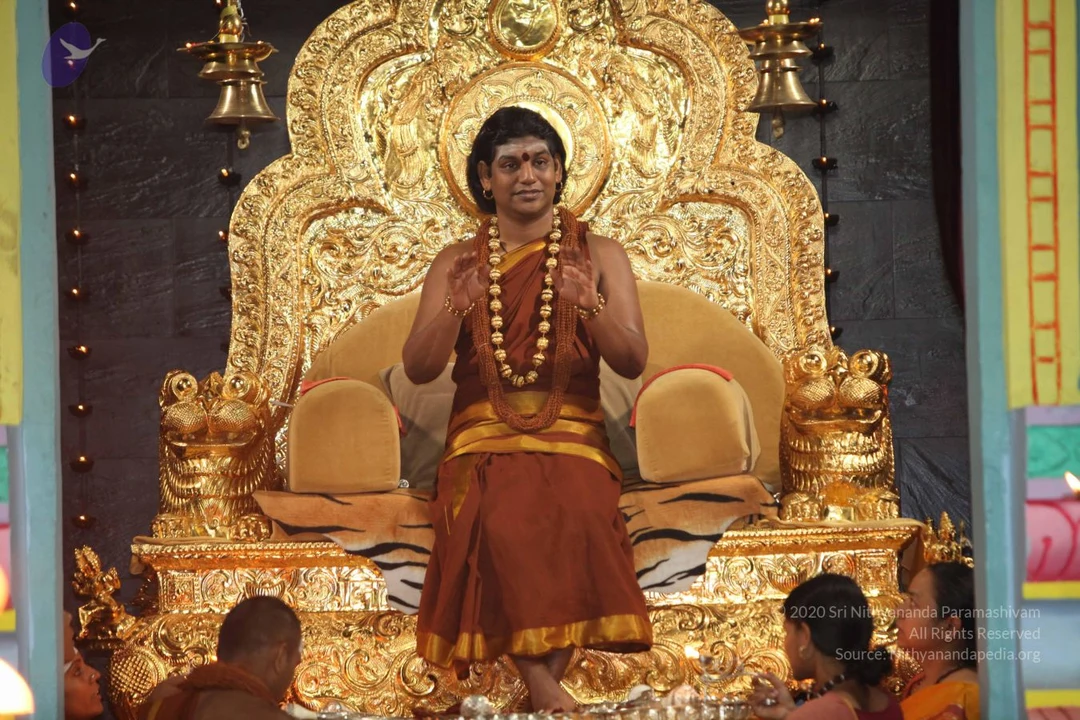
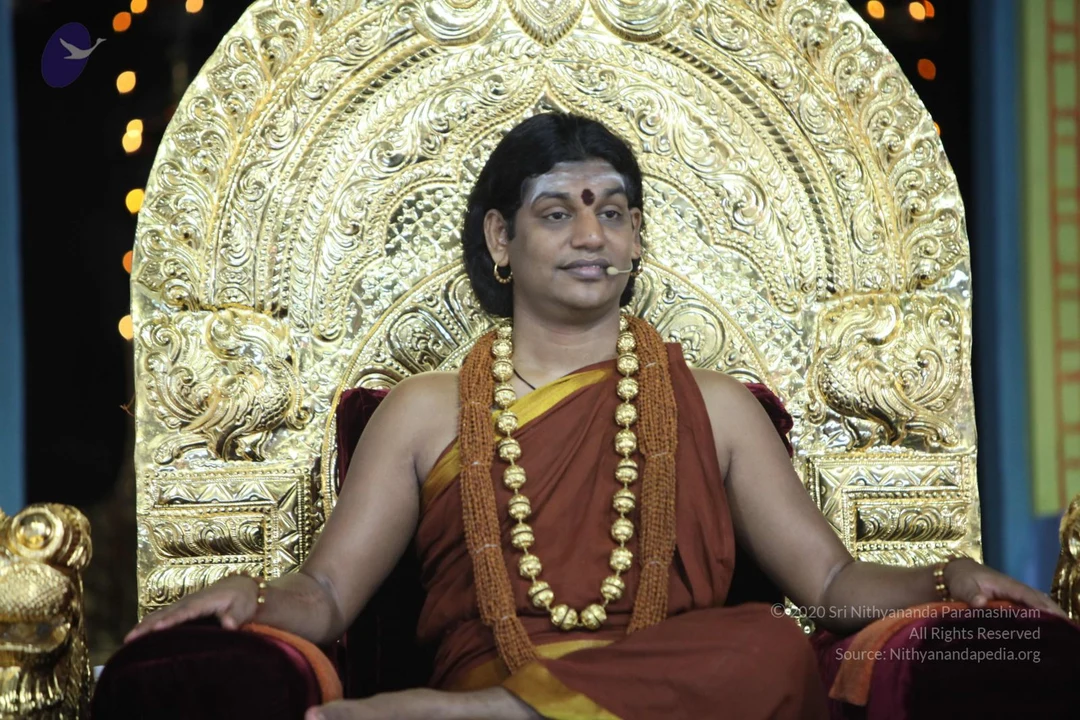
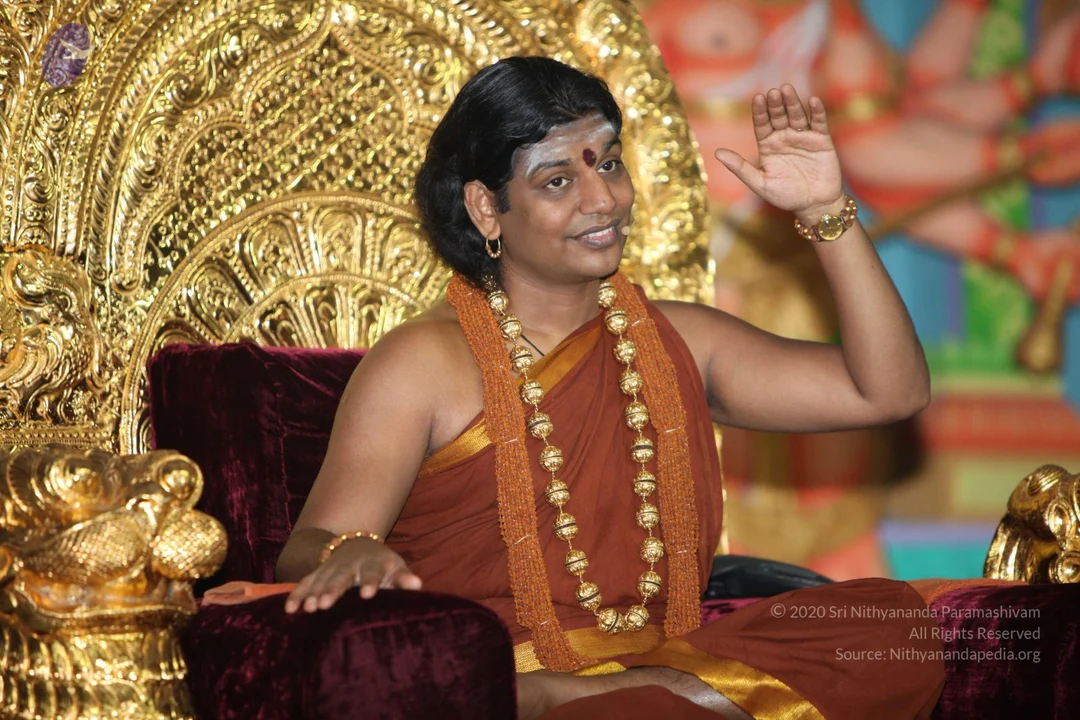
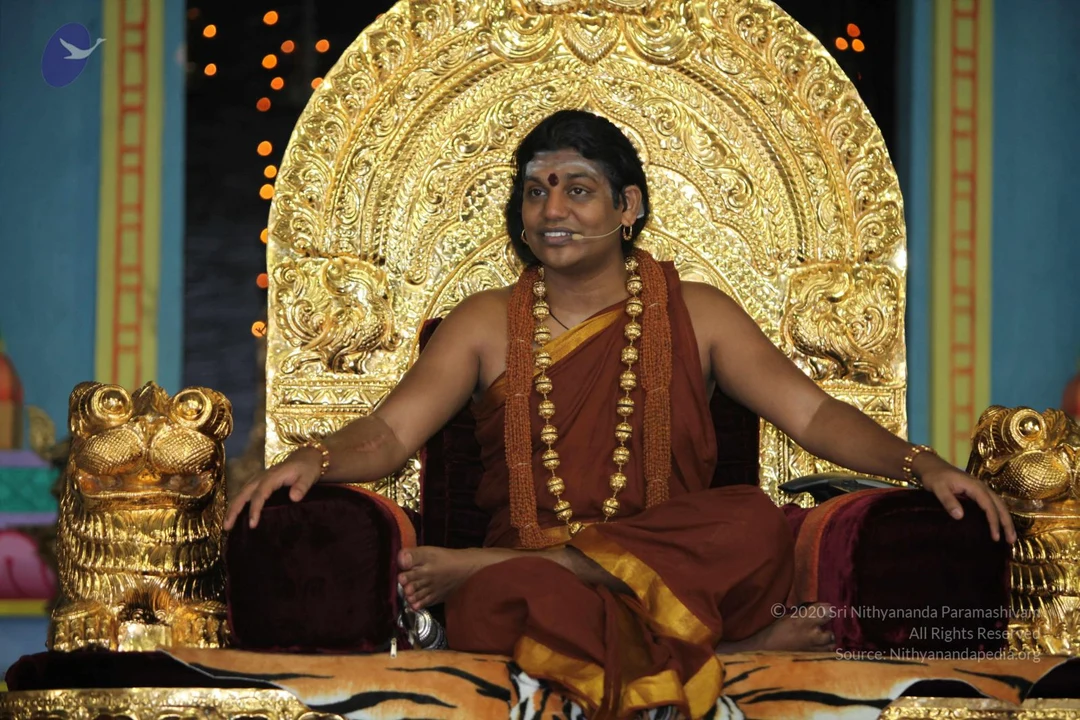
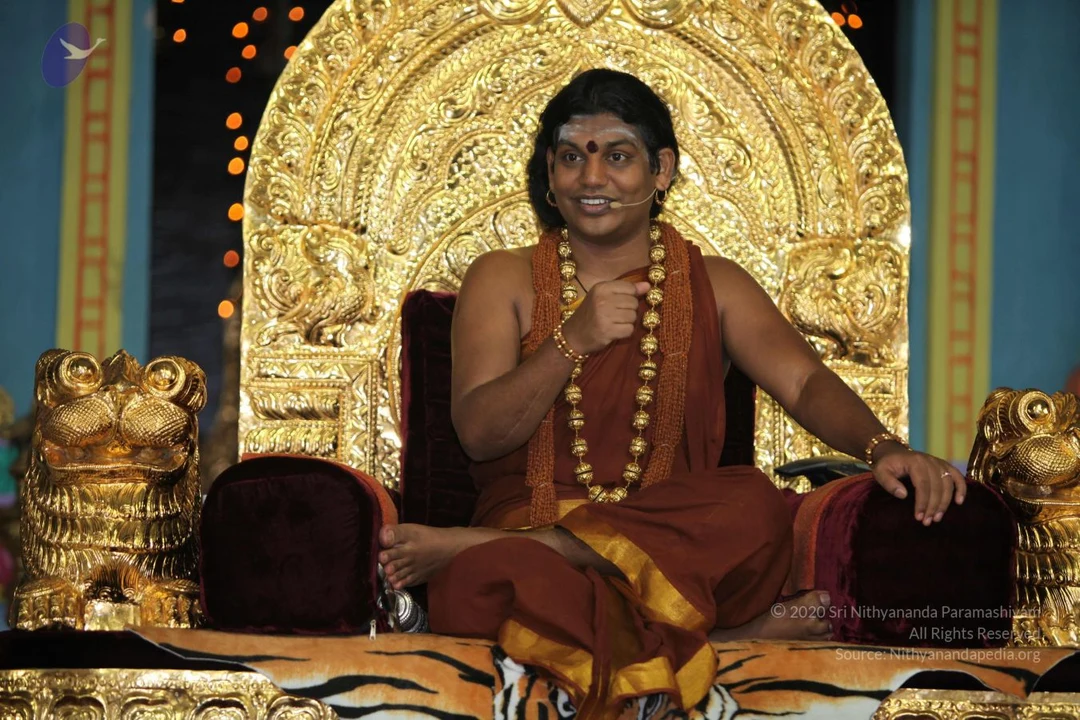
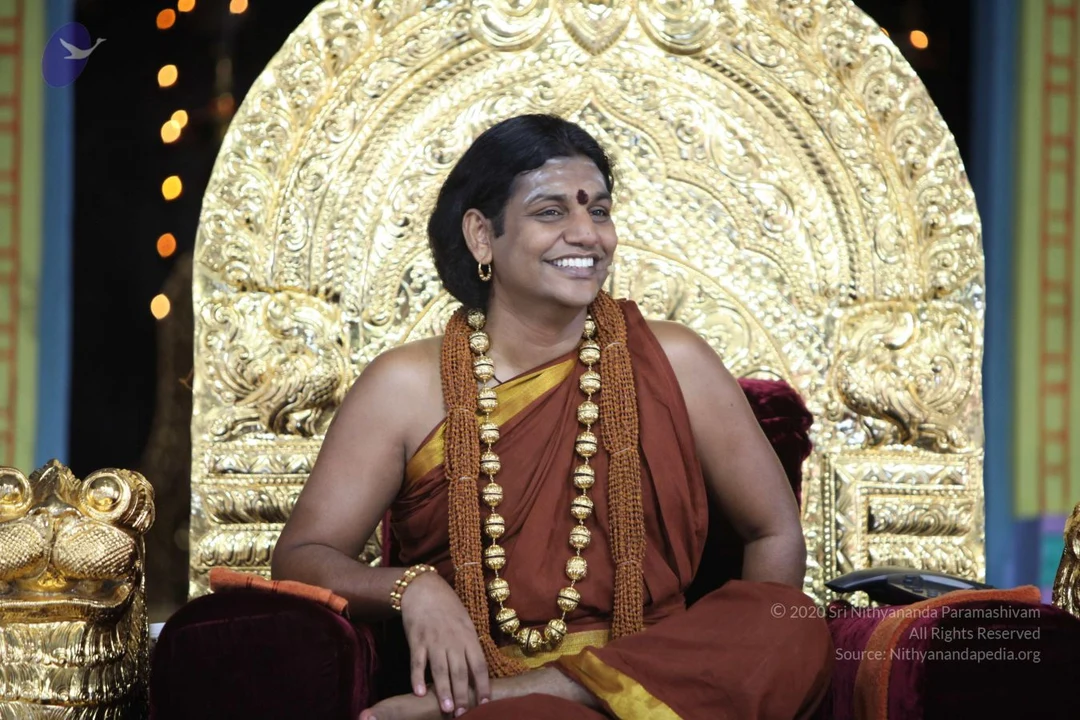
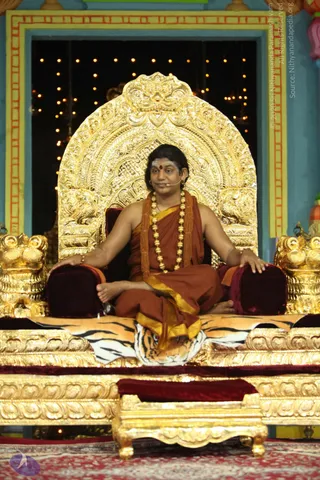
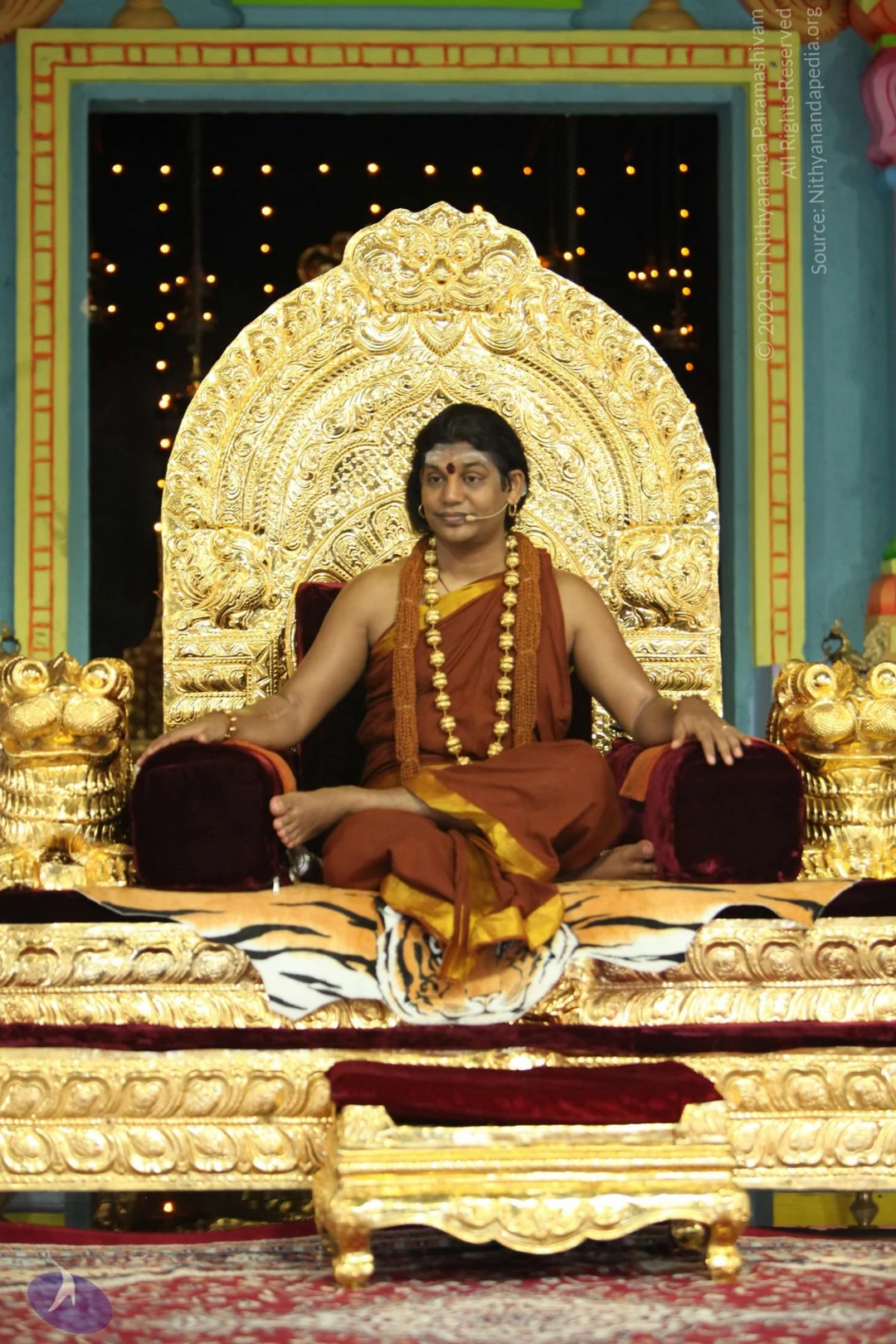
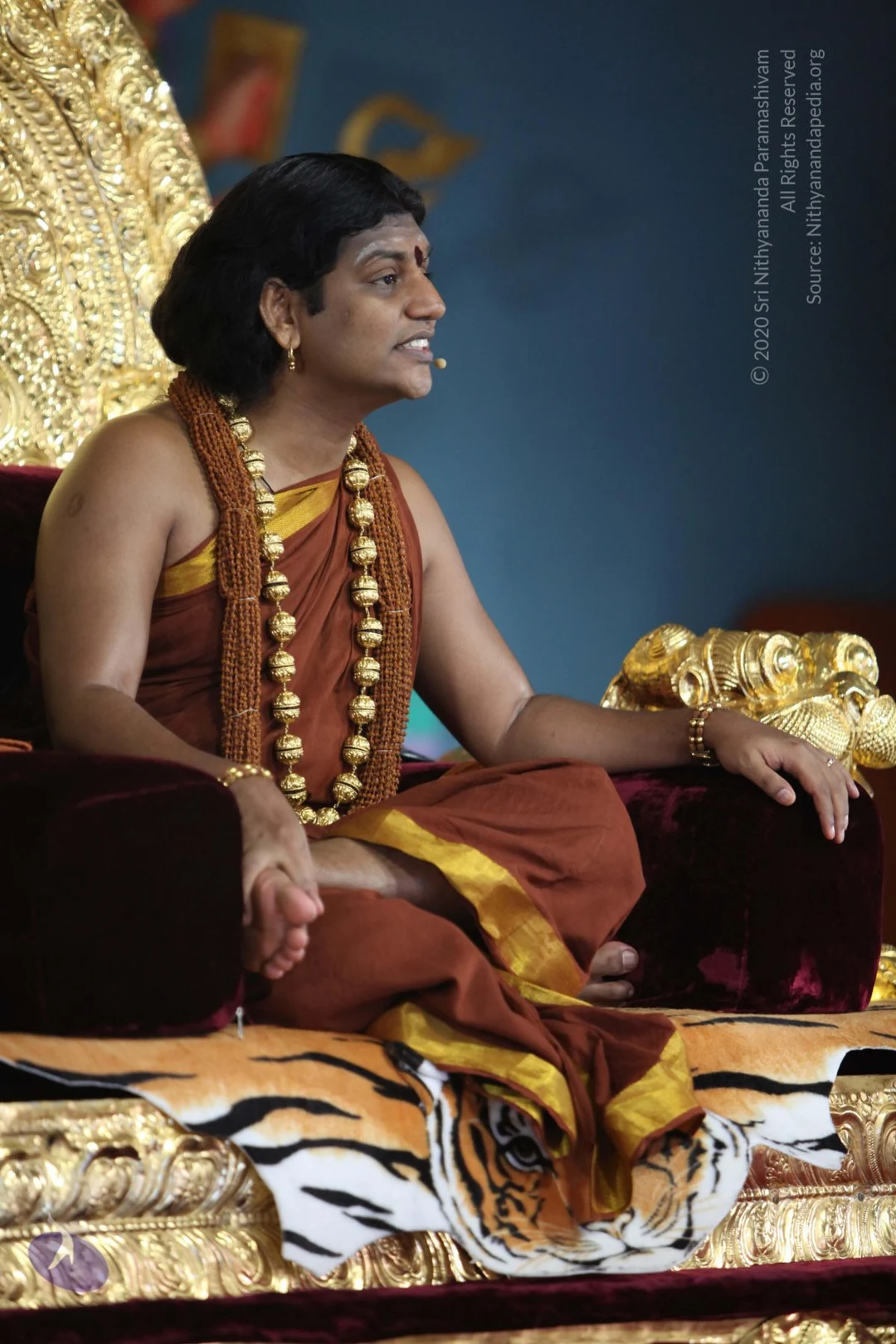
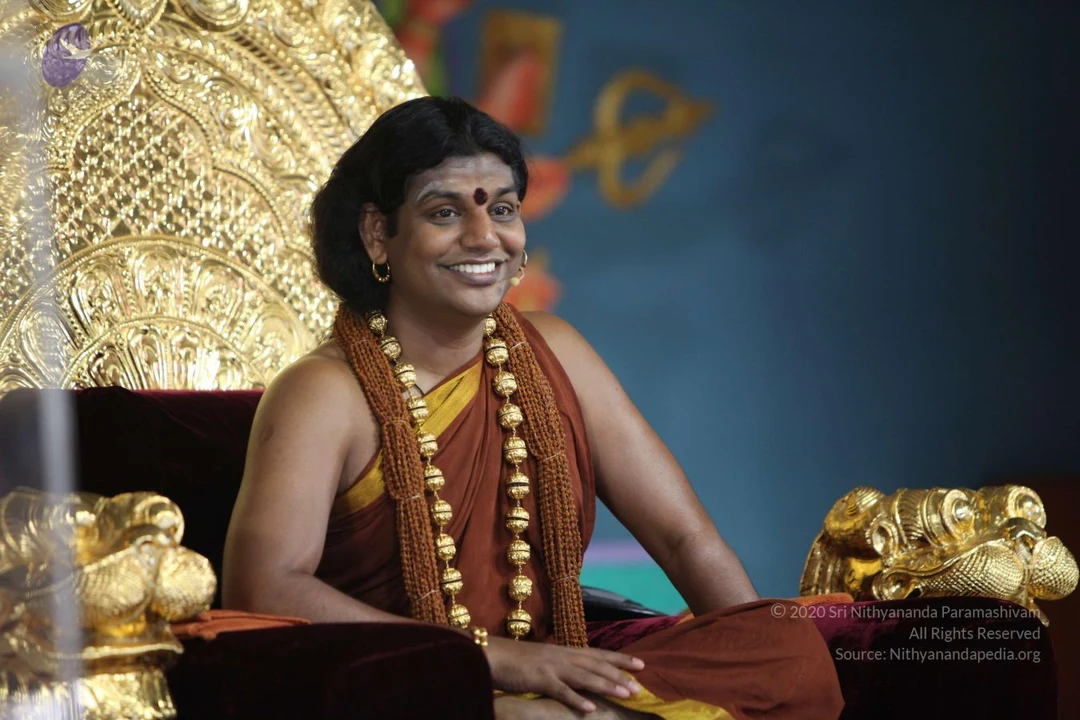
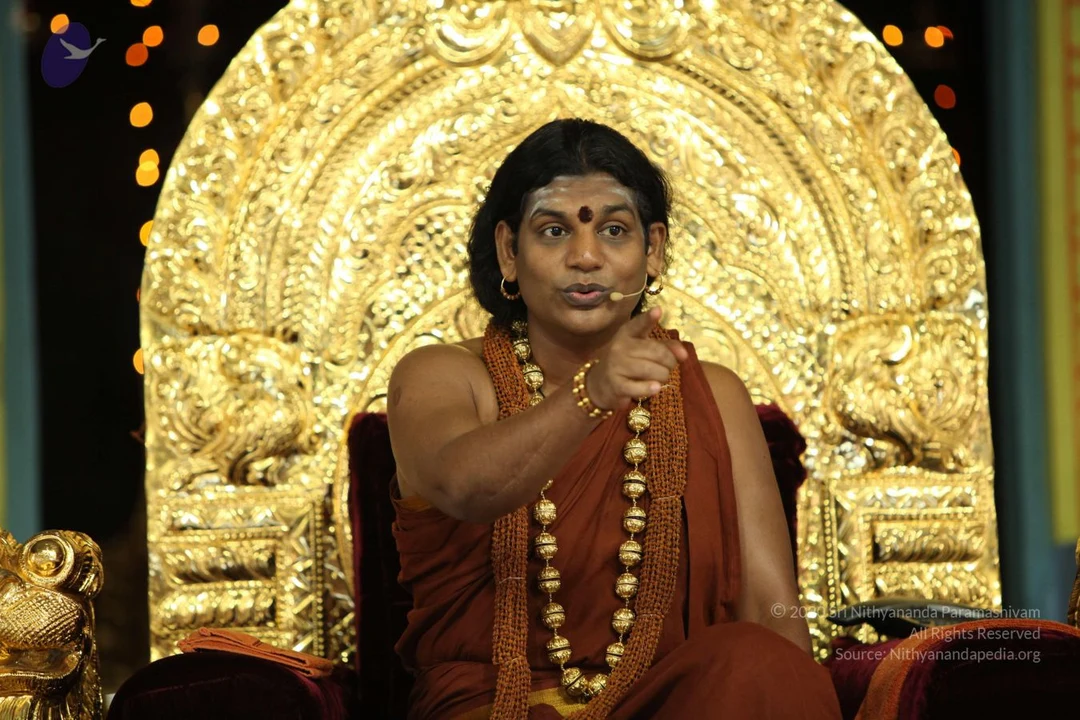
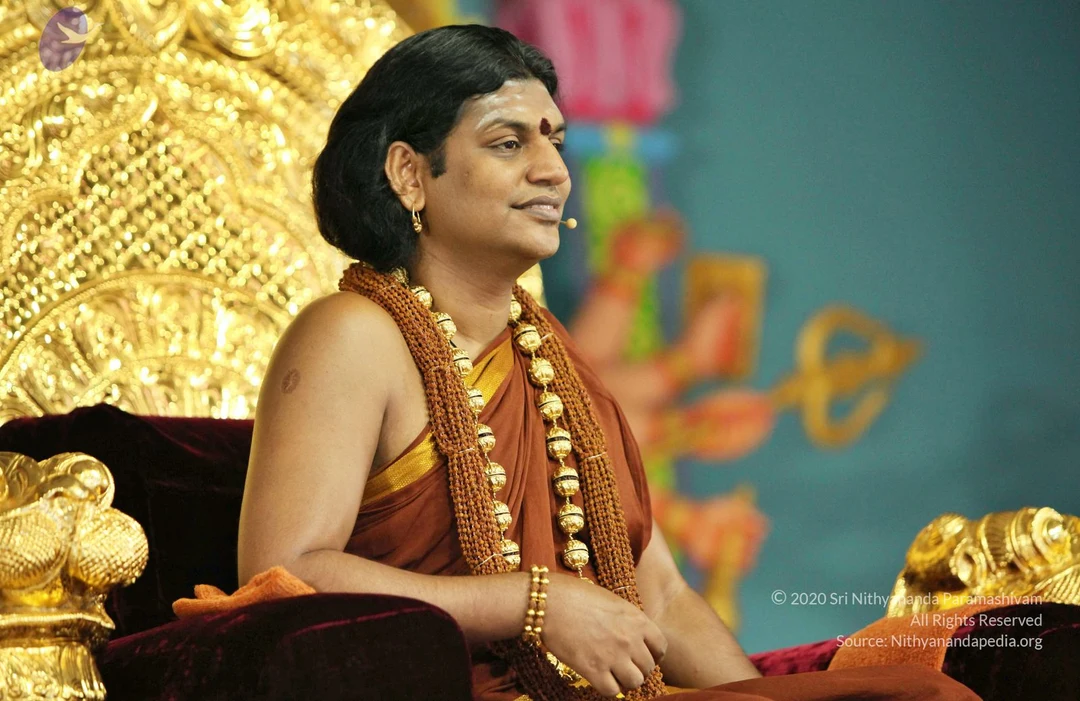
A seated man sits cross-legged on an ornate gold throne with a carved arched back and lion-head armrests, draped with a striped tiger-skin cloth. He wears a rust-orange and saffron dhoti and wrap, a long gold bead necklace and a rudraksha-style mala, with a red bindi and a small headset microphone. He rests his hands on the velvet-covered armrests. Behind him are strings of warm lights and a blue-and-gold temple backdrop. Appearance-based label: Swamiji (probable), seated on the throne in an in-person setting with long hair, saffron clothing and ornate gold necklaces as qualifying cues.A photograph of a seated man in a gold-embossed ornate throne with a tall arched back, dressed in rust-red and saffron-yellow robes. He wears a thick golden bead necklace over a rudraksha mala, gold hoop earrings and a small lapel microphone. He has white vibhuti marks and a red bindi on his forehead, his hands rest on the armrests, and he appears to be speaking. a person appears in this in_person satsang setting, as the page links this image to a talk on uncovering root patterns. Warm stage lights glow in the background.A seated man in an ornate golden throne speaks to an audience, one hand raised in a gesture of address. He wears a rust-orange shawl and matching orange-brown garment with gold border, a long strand of gold beads and an orange wrap around the neck, a gold bangle and wristwatch, and a vermilion dot with white markings on the forehead. Behind him a colourful painted backdrop shows a deity figure with red and orange tones. The gilded throne carries carved floral and scroll patterns, and a plush maroon cushion rests on the armrest. a person appears as the seated speaker, shown on a throne amid a satsang setting.A seated man in rust-red and gold robes sits on an ornate golden throne with carved lion-head armrests, draped over a striped tiger-skin cushion. He wears a long necklace of gold beads and a rudraksha-style mala, a red bindi, and a small headset microphone, with his arms resting on the armrests and an open, smiling expression. Behind him stand a large gilded arch and warm lamp lights. a person: long swept-back dark hair, ceremonial gold necklace and saffron-orange robes on a throne fit the page's claim, though the appearance cues are not conclusive.A seated man in a saffron-orange robe sits on an ornate gold throne with a carved gold backrest and gold lion-head armrests, draped in a tiger-skin cloth. He wears a heavy gold bead necklace over a rust-orange shawl, gold bangles, a clip-on microphone, and a red dot and tilak on his forehead. He gestures with one hand raised near his chest while speaking, and his feet are bare. Behind him are blurred orange lights and blue and yellow stage panels. a person is seated in the speaker's position, with the saffron robe, gold beads and throne cues.A seated man in an orange-brown robe with a gold-and-saffron border sits on a plush burgundy velvet throne with ornate gold carved armrests. He wears a long orange shawl and a heavy gold bead necklace, has a red bindi and white tilak on his forehead, and smiles while gesturing with one hand. Behind him a golden fan-shaped backdrop and a painted deity figure holding a trident appear on a blue background. a person: the appearance shows a dark swept-back hairstyle, orange shawl and gold bead mala, matching the page's reference to a person giving satsang.
Dial-the-Avatar
4 photosSource gallery
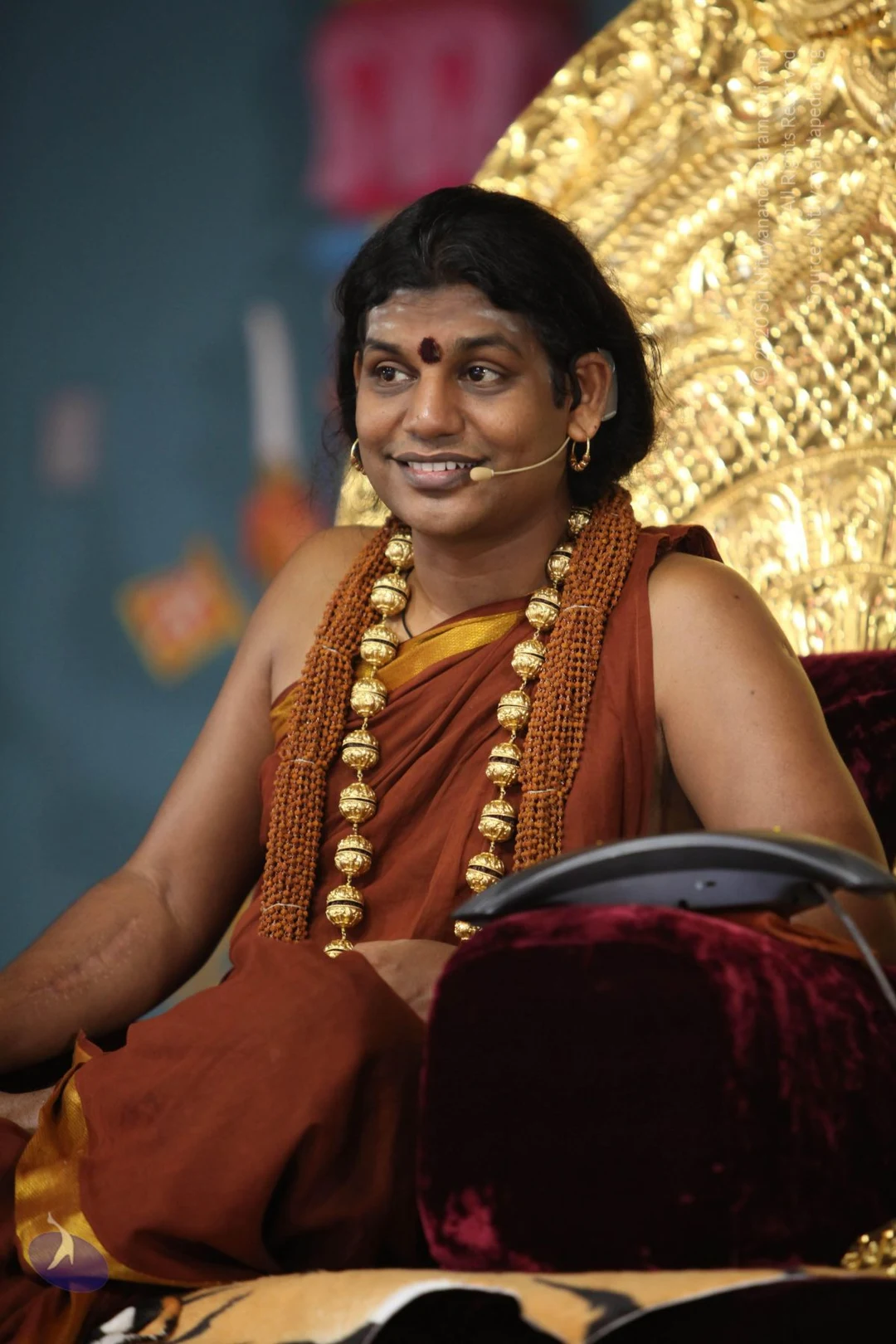
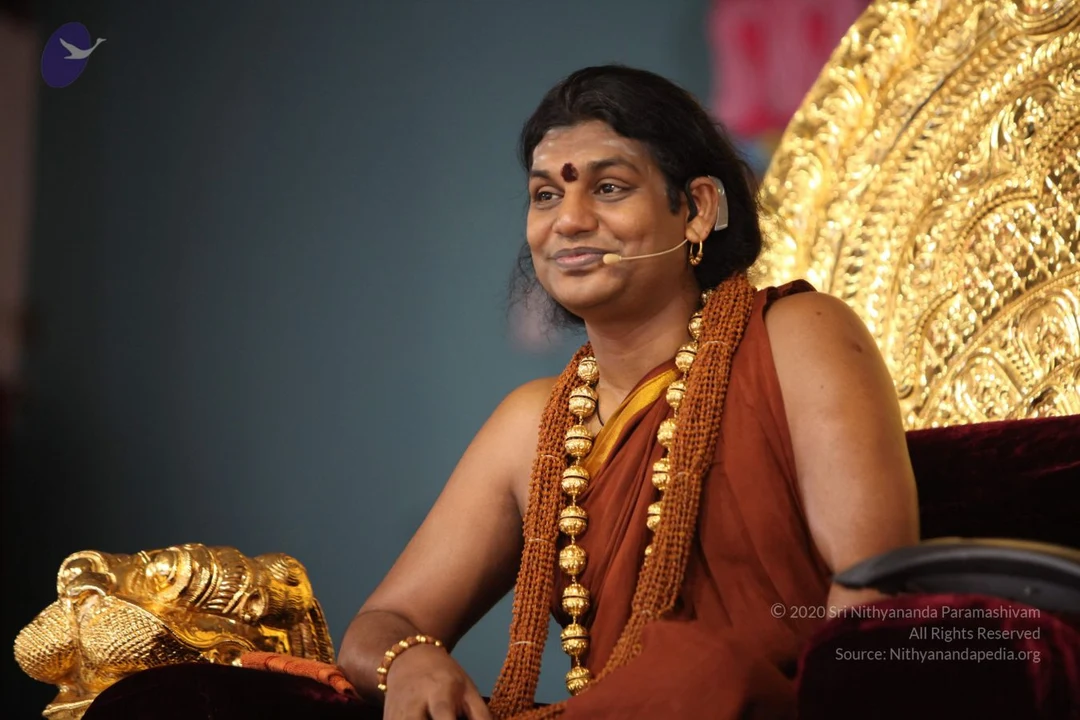
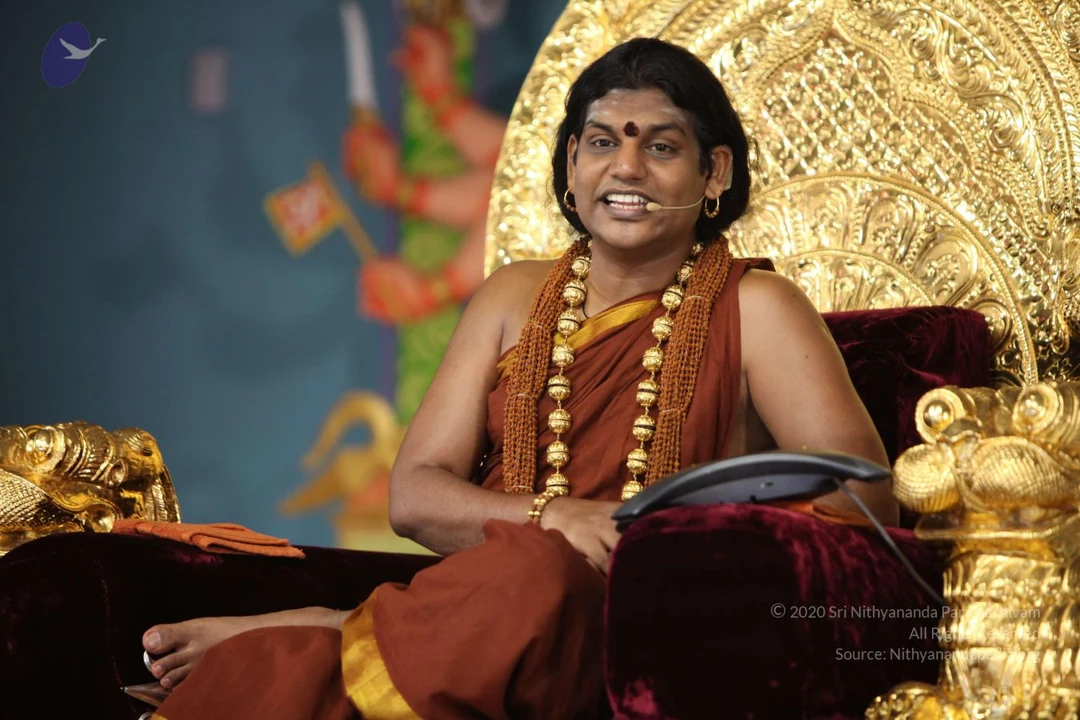
A seated man in a rust-orange saffron wrap and gold-bordered cloth speaks into a headset microphone on a red velvet seat before an ornate gold throne back. He wears long rudraksha mala strands with gold beads and gold hoop earrings, with a red bindi on his forehead. Beside him a gold lion-head armrest and a dark microphone stand are visible, and a painted backdrop shows a figure holding a red flag. The presentation has the appearance of a Swamiji (probable), seated on a throne during a discourse, with long swept-back hair and ornate gold necklaces as the qualifying cues.A photograph of a seated man in an orange-brown robe and a gold-bead rudraksha-style necklace, with a small red bindi on his forehead, a headset microphone and a gold ear cuff. He sits on a dark red cushioned seat in front of an ornate gold throne-back, with a gold carved animal head armrest in the lower left and a gold bangle on his wrist. He looks to the side with a slight smile. The background is a teal wall. Appearance cues include long swept-back hair, ceremonial gold beads and saffron-toned clothing, consistent with Swamiji (probable) seated on a peetha as a speaker at a satsang, though his face is not used for identification.A seated man with long swept-back dark hair, a red bindi and small gold hoop earrings sits on a plush maroon cushioned seat in front of an ornate gold throne backrest. He wears a saffron-orange draped garment with a golden yellow border, a brown crocheted-style shawl, and a long gold bead necklace with a rudraksha-style mala. A small head microphone is clipped near his mouth. His eyes are closed and he is speaking, with one arm extended outward. Probable Swamiji (probable) seated for satsang, with long hair, saffron clothing, gold mala and ornate throne cues.A photograph of a man seated on an ornate gold throne with a deep red velvet cushion. He wears an orange-red saffron-toned robe over one shoulder, a thick rust-coloured rudraksha mala and a heavy gold ceremonial necklace with round gold beads, plus gold earrings and a small red bindi on his forehead. A clip-on microphone is attached near his face, and he gazes to his right while speaking, with his hands resting on the armrest. Behind him a large gold-embossed throne back and a dusky blue-grey backdrop. Appearance-based candidate for a person, seated in the role of a teacher giving satsang; the identification rests on the saffron robe, rudraksha mala, gold necklace and throne cues.

Sarva-Darshan

19 photosSource gallery
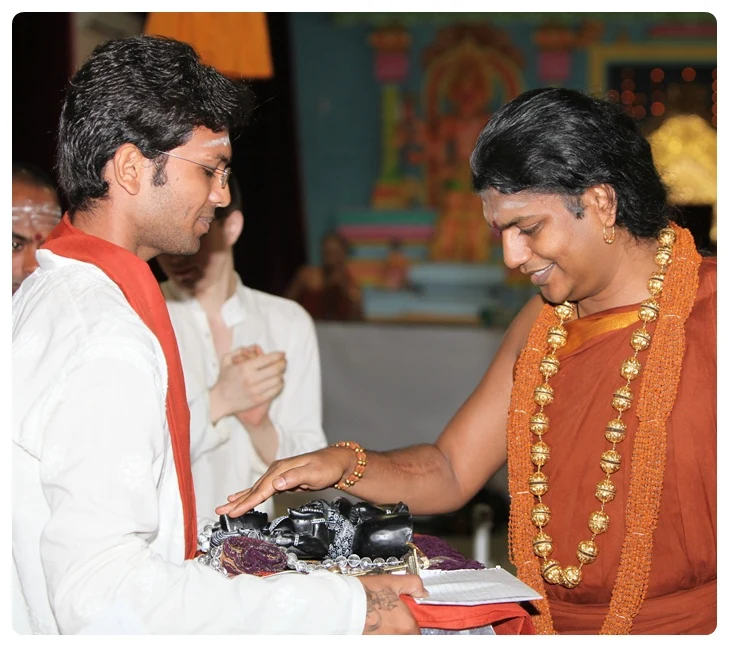
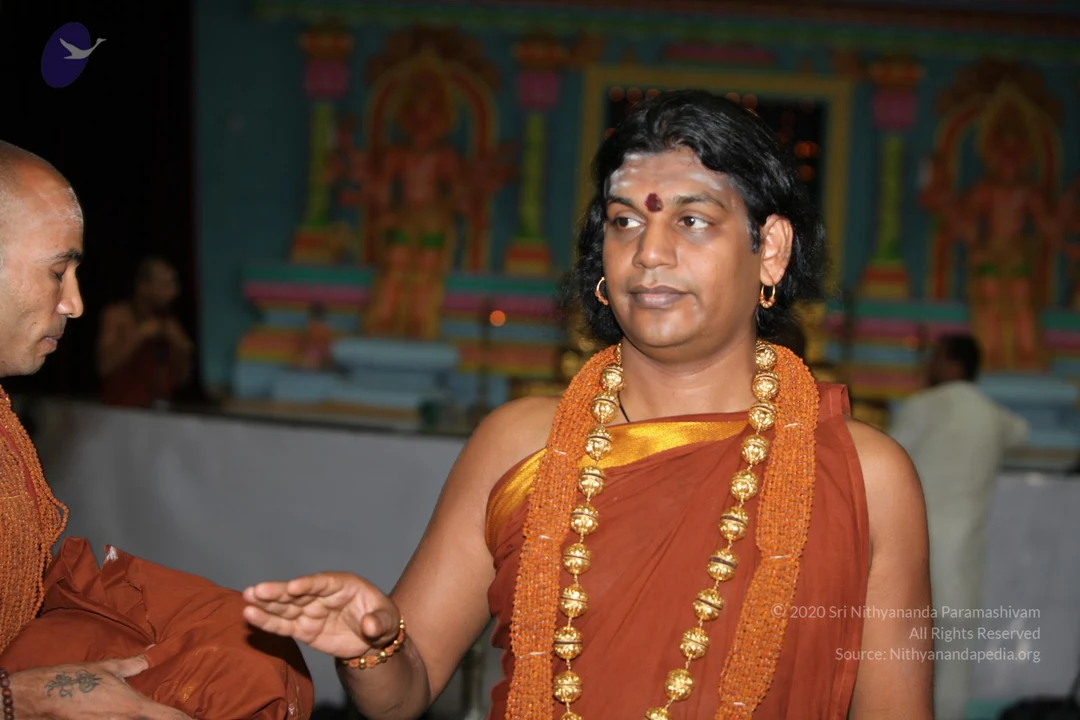
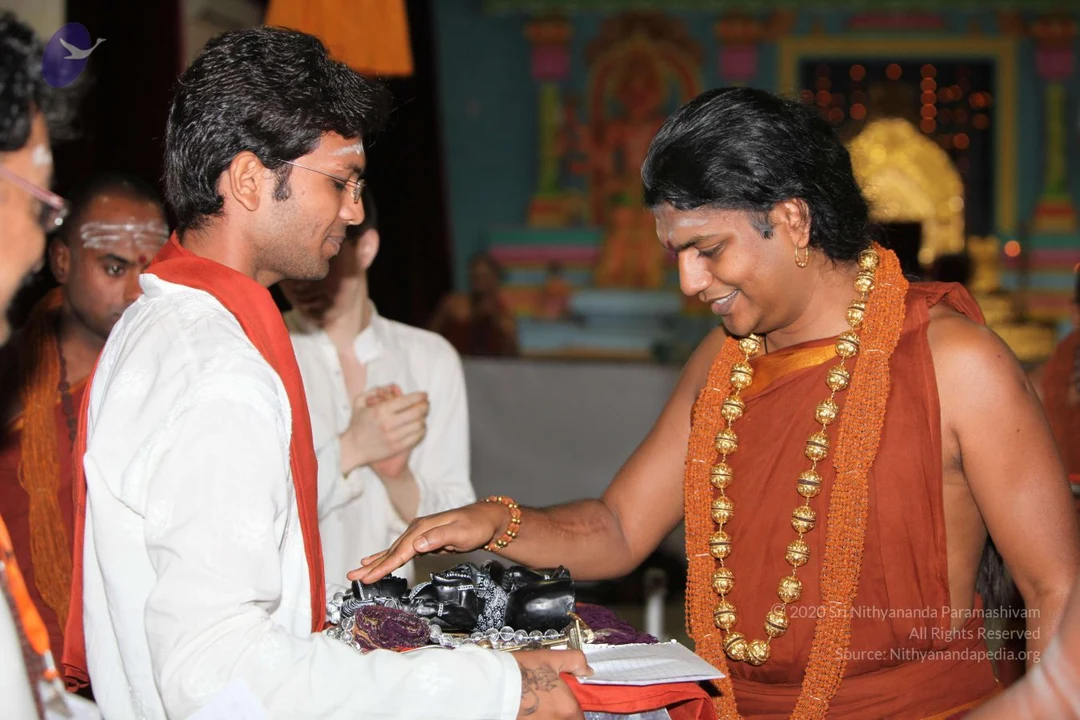
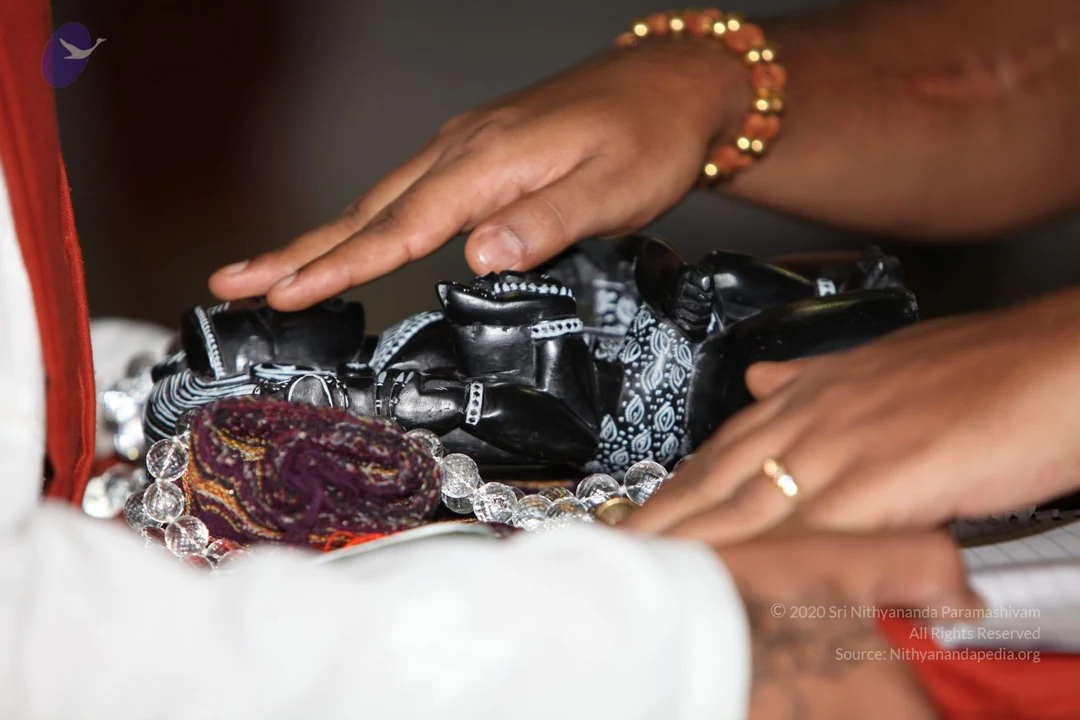
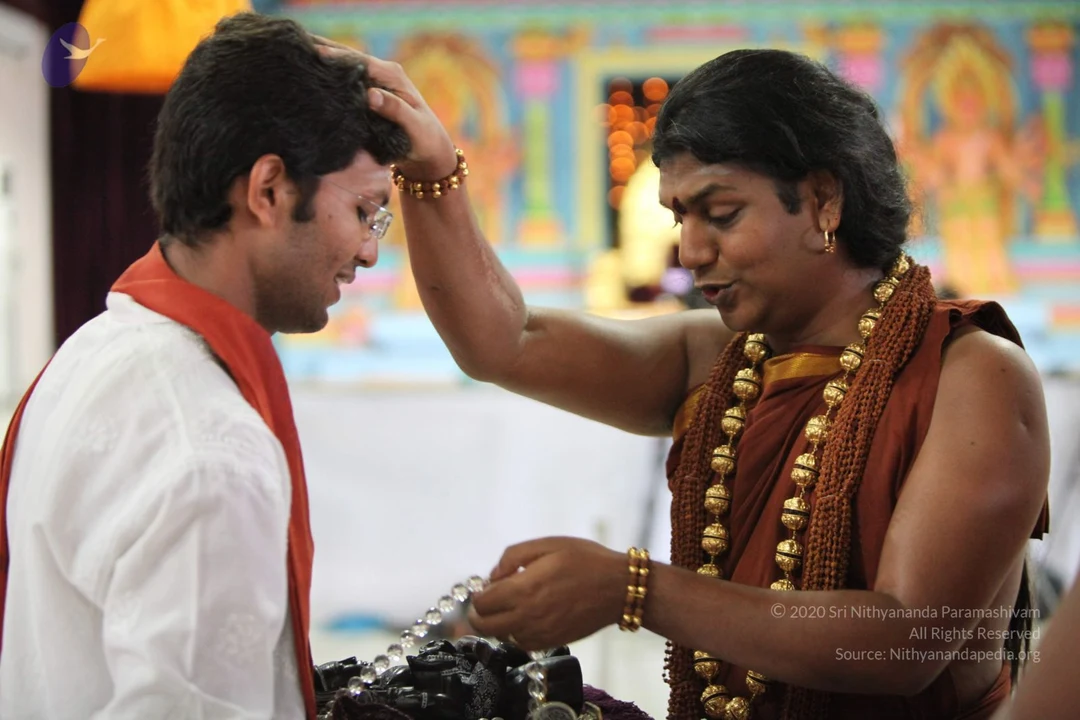
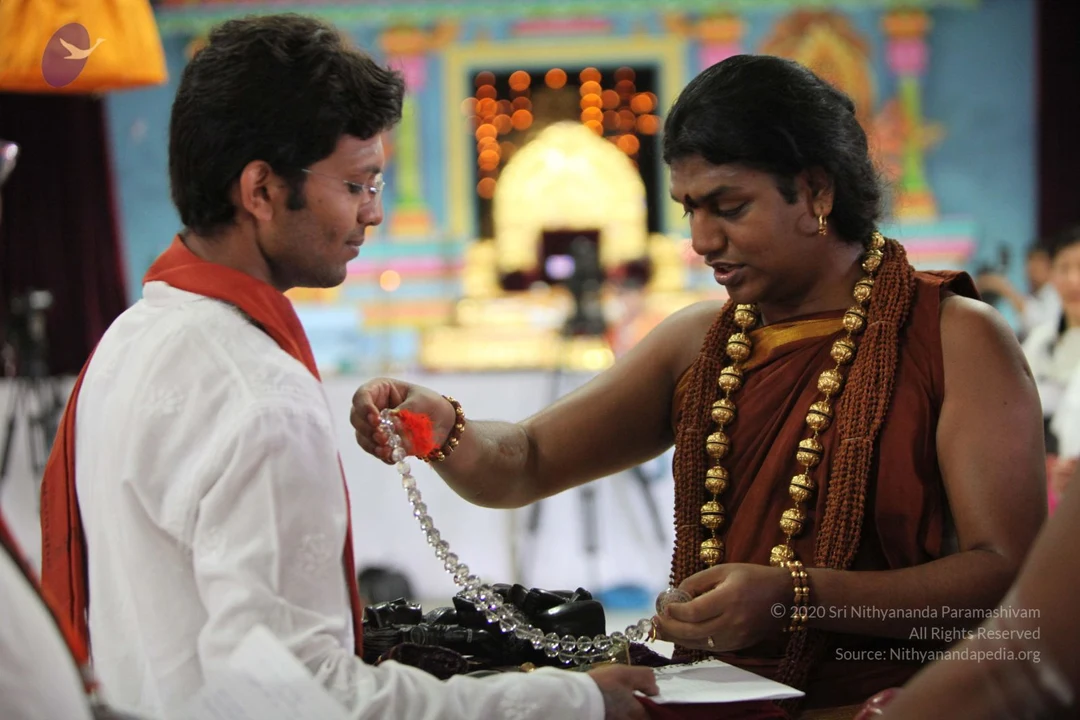
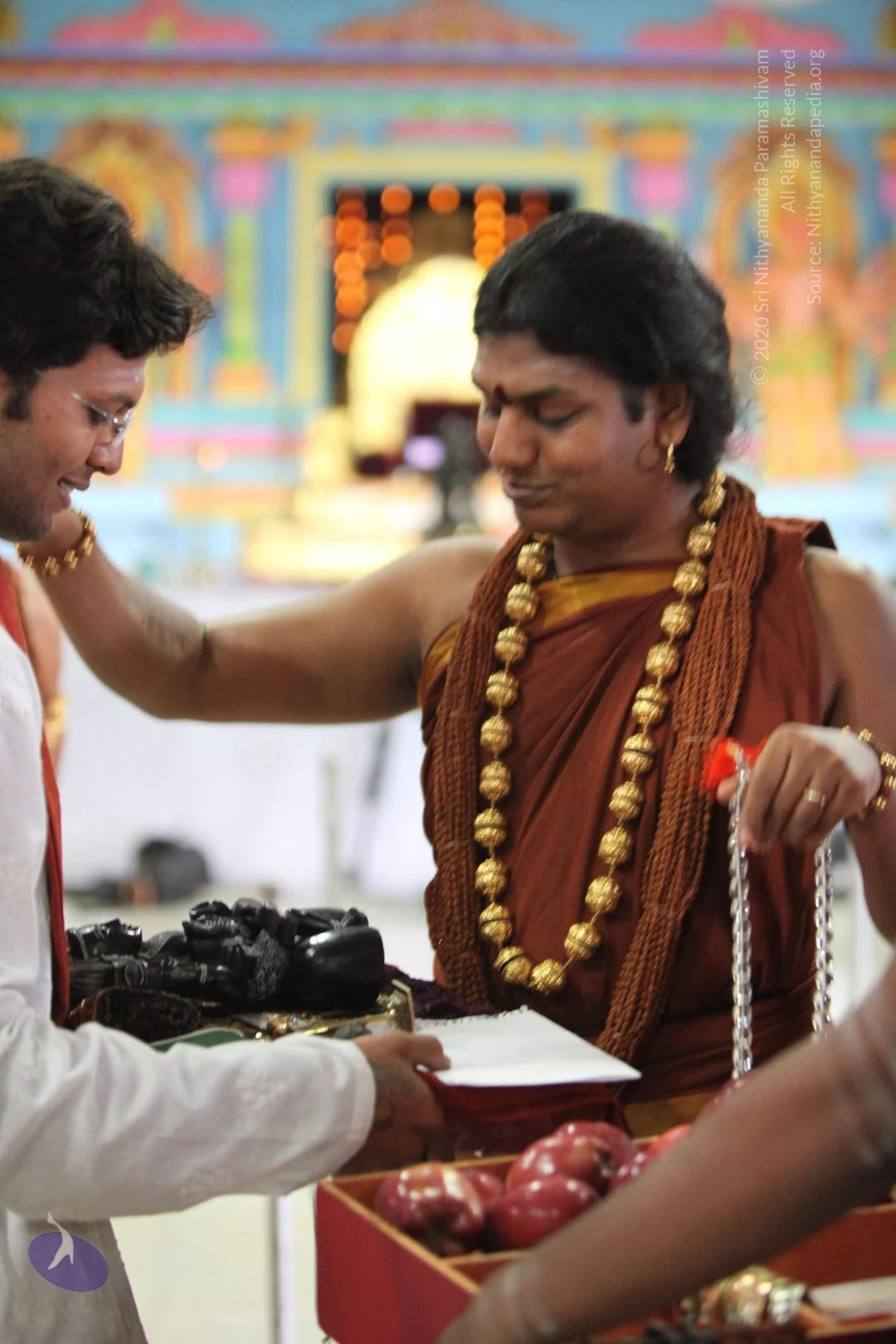
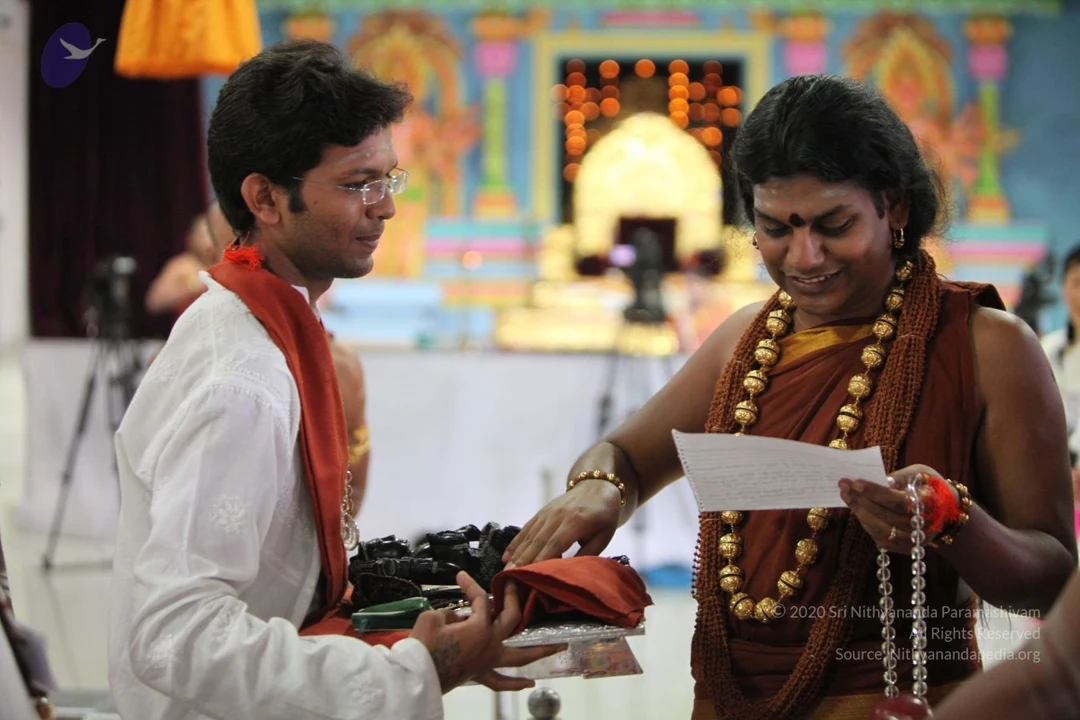
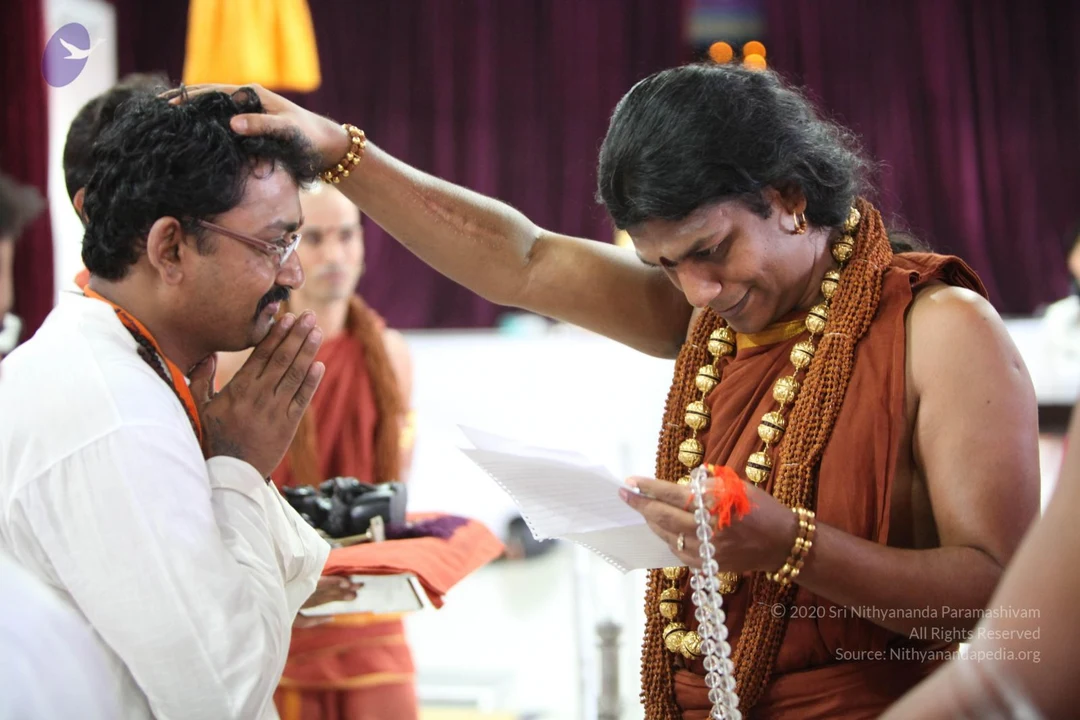
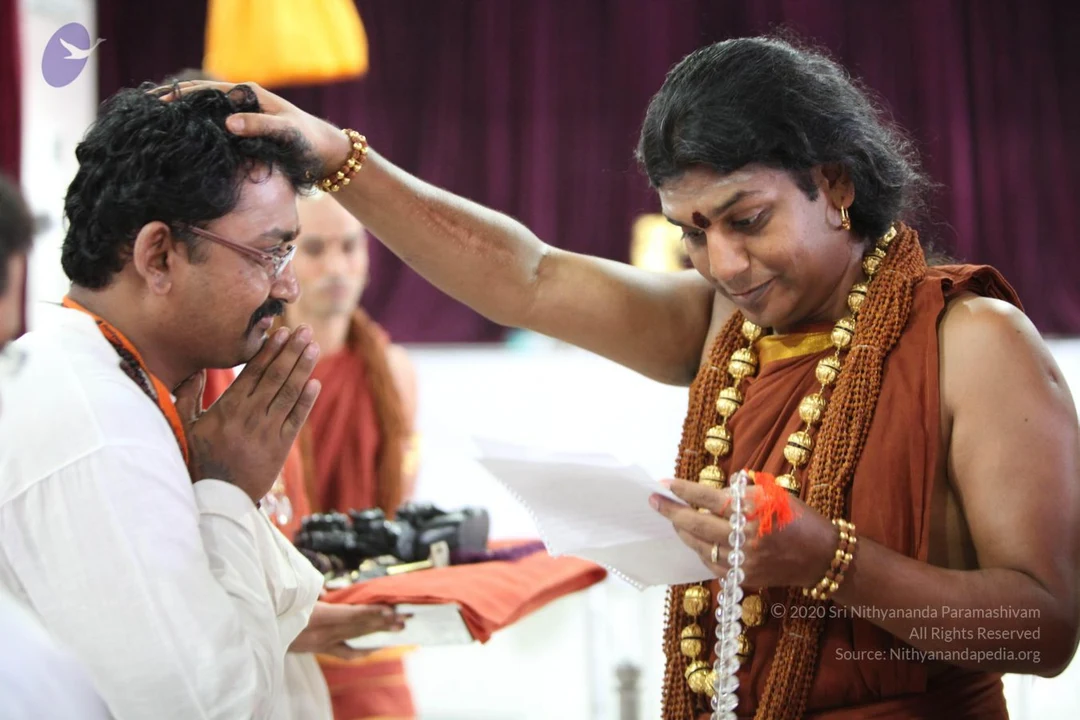
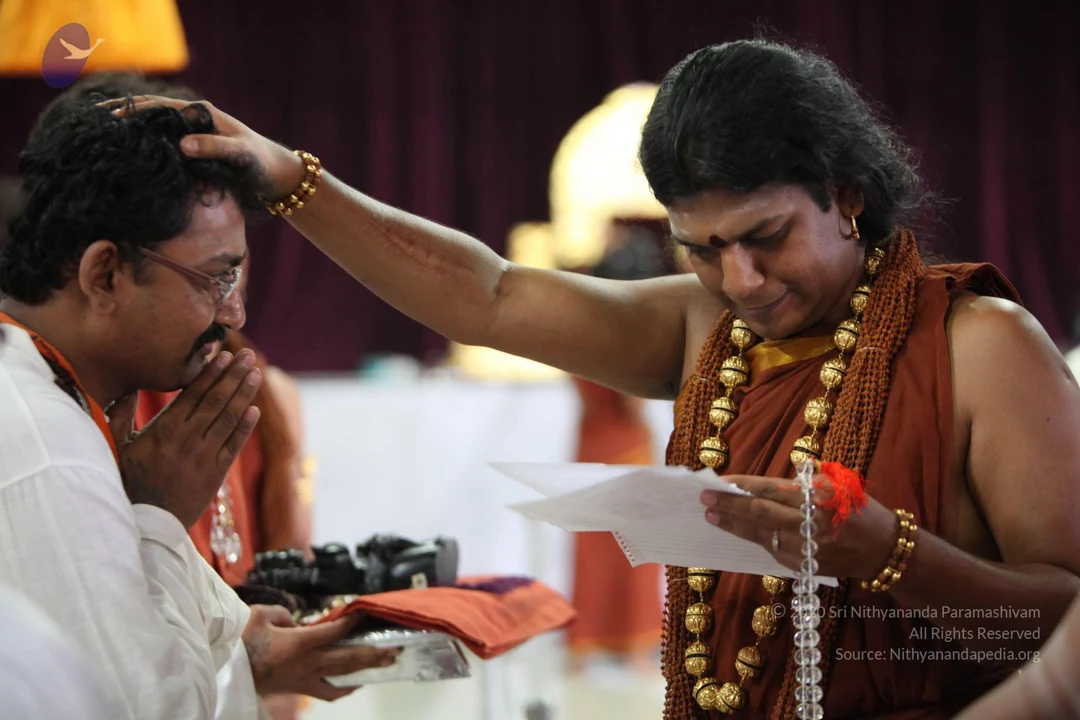
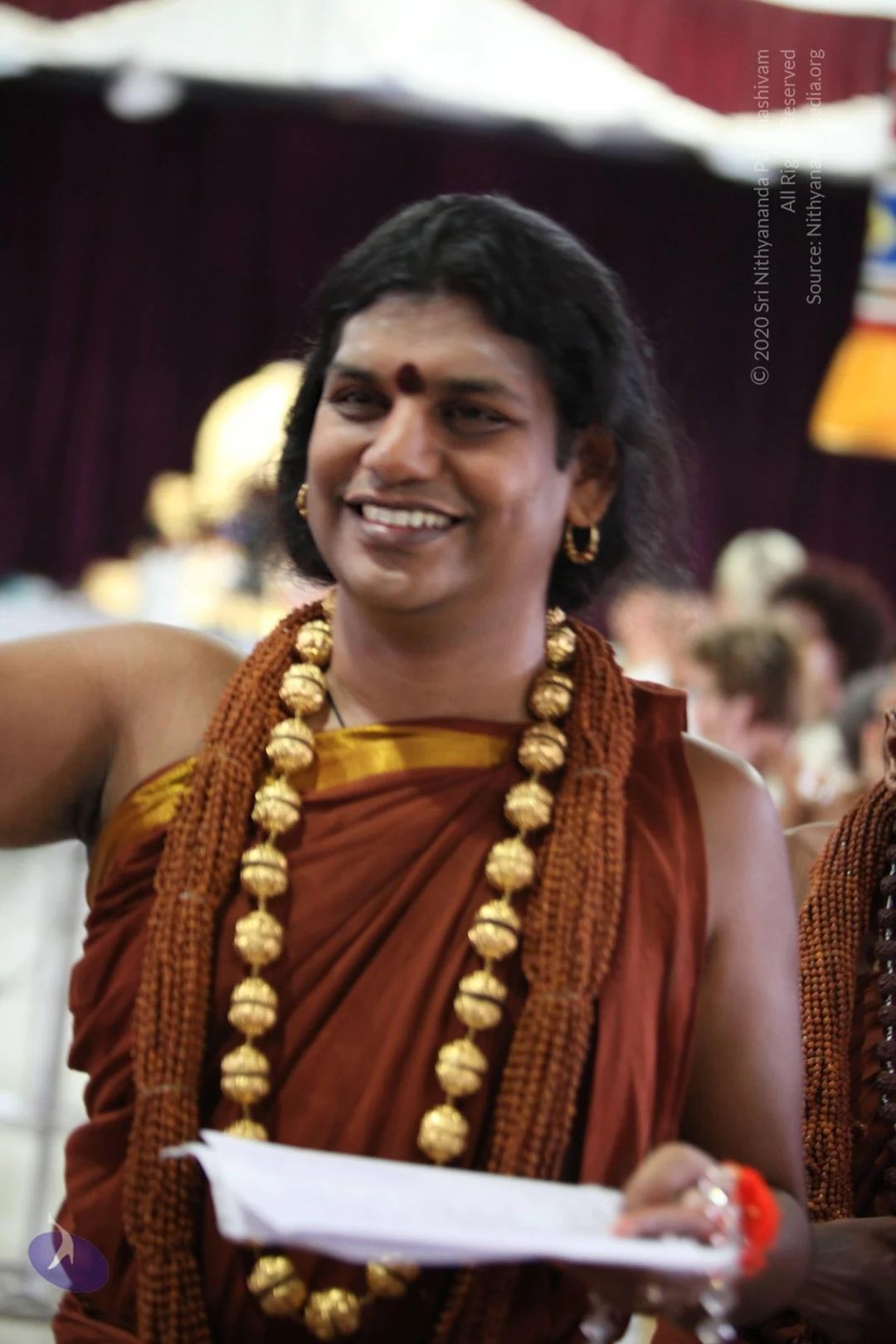
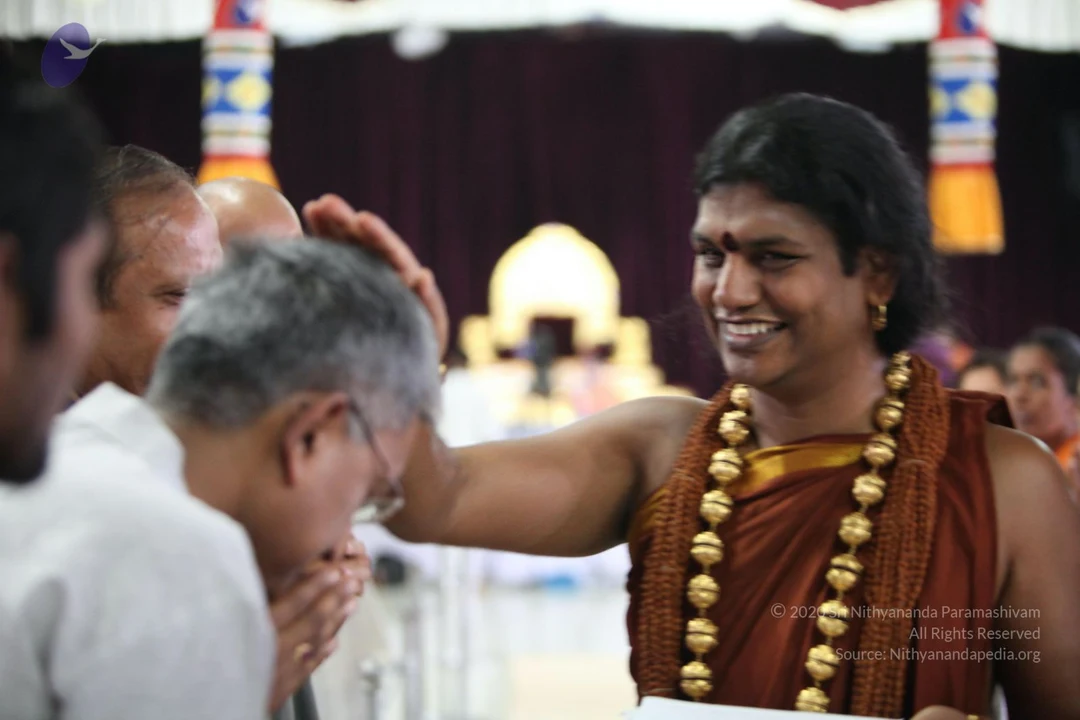
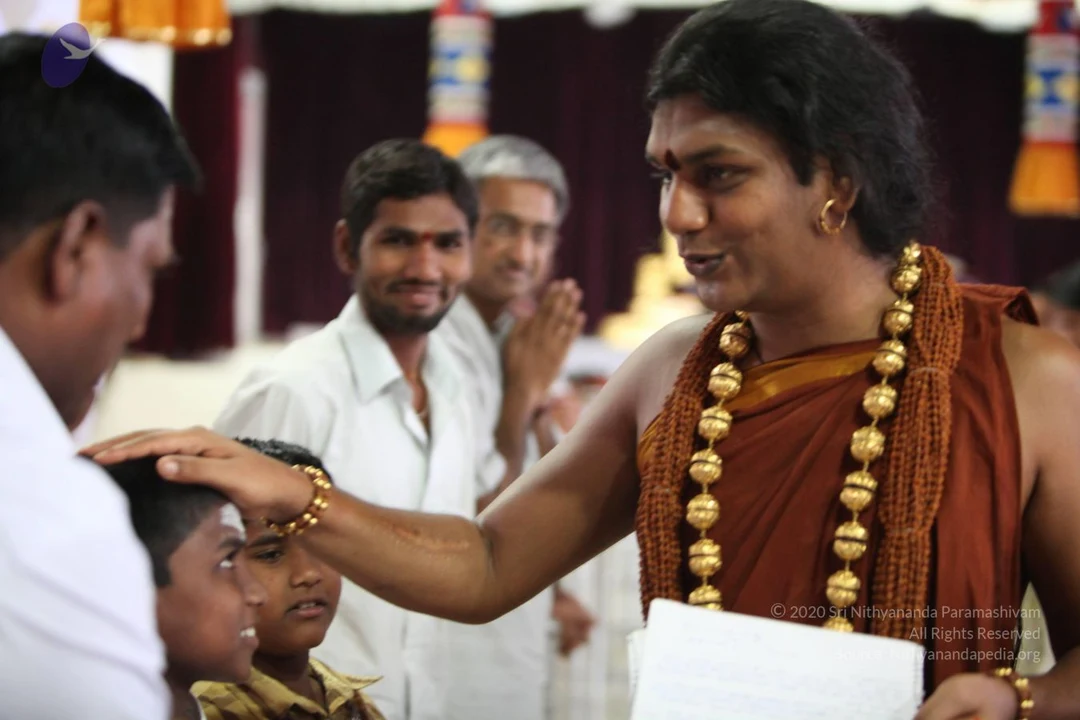
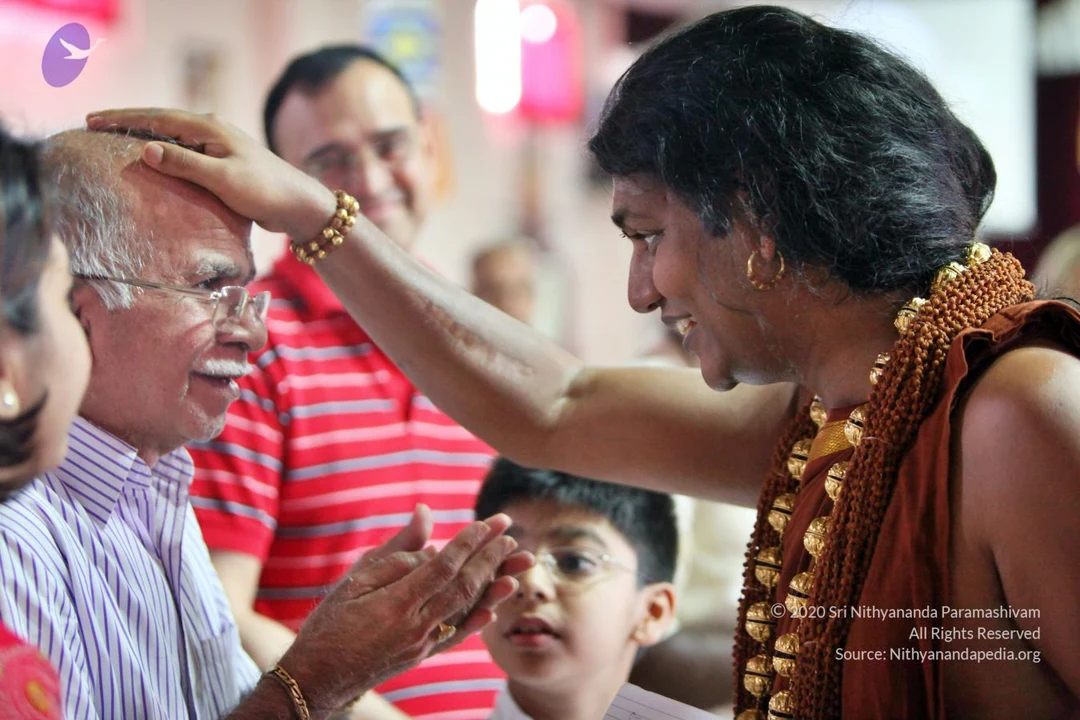
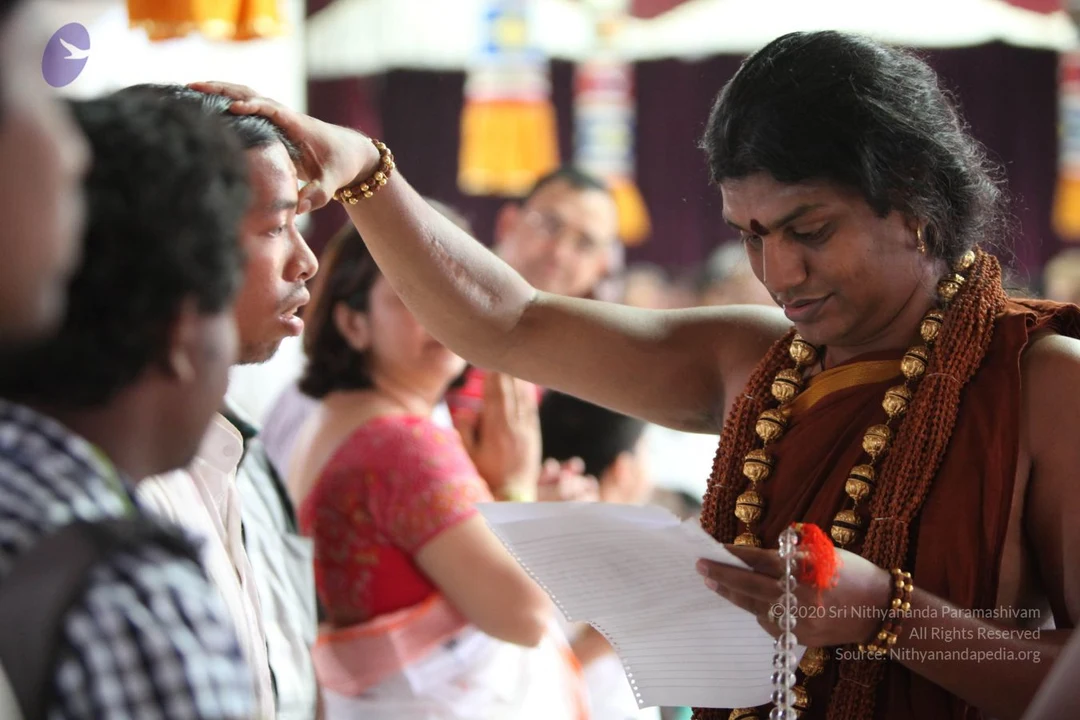
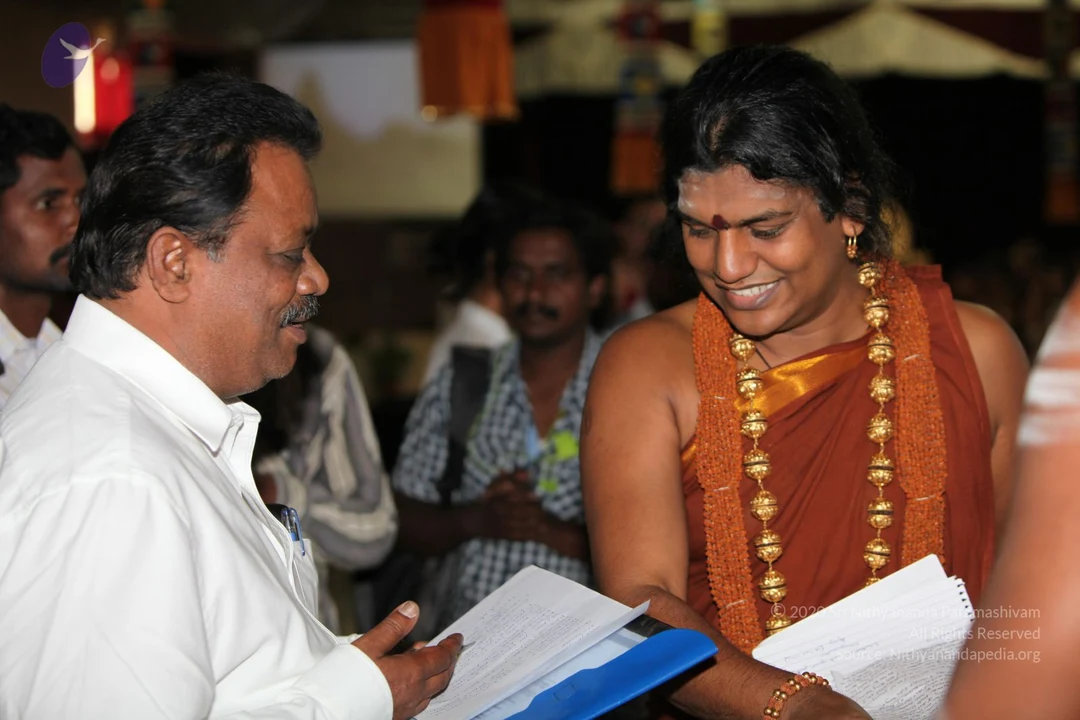
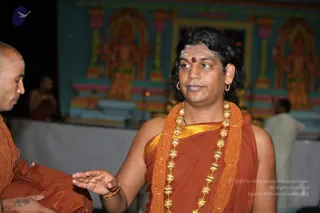
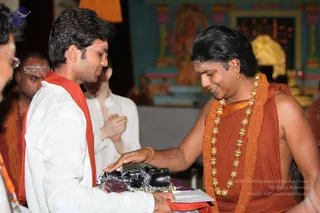
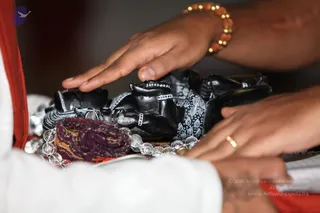
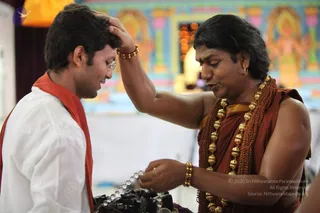
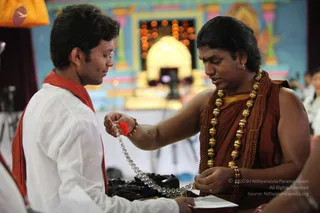
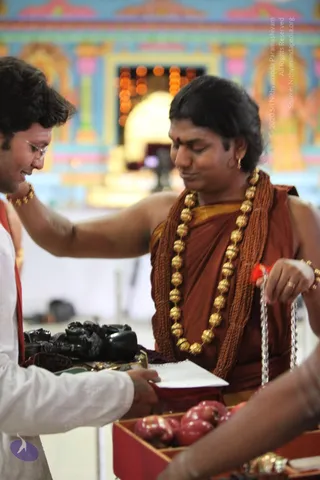
A photograph of a man with long, swept-back black hair, a red bindi and white forehead markings, wearing an orange-red saffron-style robe with a gold-yellow border over one shoulder, multiple gold-bead necklaces and an orange-beaded mala, and gold hoop earrings. He stands gesturing with an open hand toward a bald man in orange cloth on the left. Behind them is a colourful temple-style backdrop with painted deity murti figures on pillars and an arched doorway, and a person in the background.Photograph of a ceremonial moment in an ashram hall. A man on the left in a white kurta with a red shawl and rimless glasses holds a tray with black and silver objects and a white sheet of paper. On the right, a bare-chested figure in saffron-orange dress with a long saffron shawl and a heavy gold-beaded necklace of large gold bead mala strands reaches toward the tray with one hand and smiles down at it. He has long swept-back dark hair, a gold earring and a white forehead mark. Behind them, a devotee in white with a white forehead mark stands with hands clasped, and a shaved-headed man with white vibhuti marks watches. The background shows a colourful painted panel with a deity image and golden ornaments. Probable Swamiji (Paramahamsa Nithyananda) is shown with long swept-back hair, saffron dress, bare chest and gold-beaded mala necklace, performing the ritual touch over the tray.Close photo of two hands resting on a group of black stone deity murtis or shiva lingas wrapped in white and dark patterned cloth. The upper hand wears a rudraksha-style bead bracelet with gold accents; the lower hand wears a gold ring and is seated over a purple patterned cloth and clear crystal mala beads. A person in white clothing with an orange-red cloth at the edge sits nearby. No a person face is visible, so no identification is made.Photograph of a satsang-style ritual indoors in front of a colourful painted temple backdrop with deity figures and lamps. A bare-chested figure in saffron-orange cloth with long swept-back hair, gold bead necklaces, a rudraksha mala and a bindi places a hand on the head of a young man in a white kurta with a saffron-orange shawl and glasses, who bows and smiles. The figure's other hand holds a bundle of beaded malas and black cords over a cloth. Probable Swamiji cues: long swept-back hair, saffron clothing, rudraksha mala and gold ceremonial necklaces, performing a blessing as a guru. One physical person is clearly visible plus the blessed devotee.A photograph of a devotee in a white kurta with a saffron-orange shawl over the shoulders, seated and holding out his hands to receive a clear crystal mala with a small orange tassel. Facing him, a person in a saffron-orange dhoti and sleeveless top wears a heavy gold bead necklace, dark braided cords and gold bracelets, and is handing over the crystal mala. A small crowd and a shaved...A photograph of a shaved-headed...

MLA-Meeting
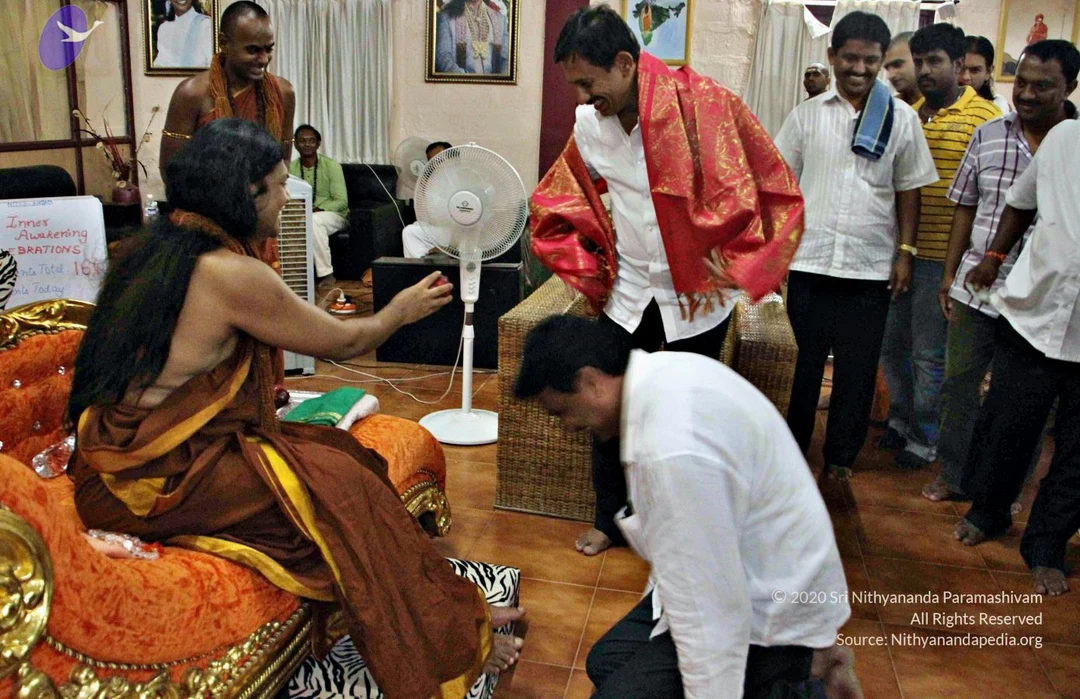
29 photosSource gallery
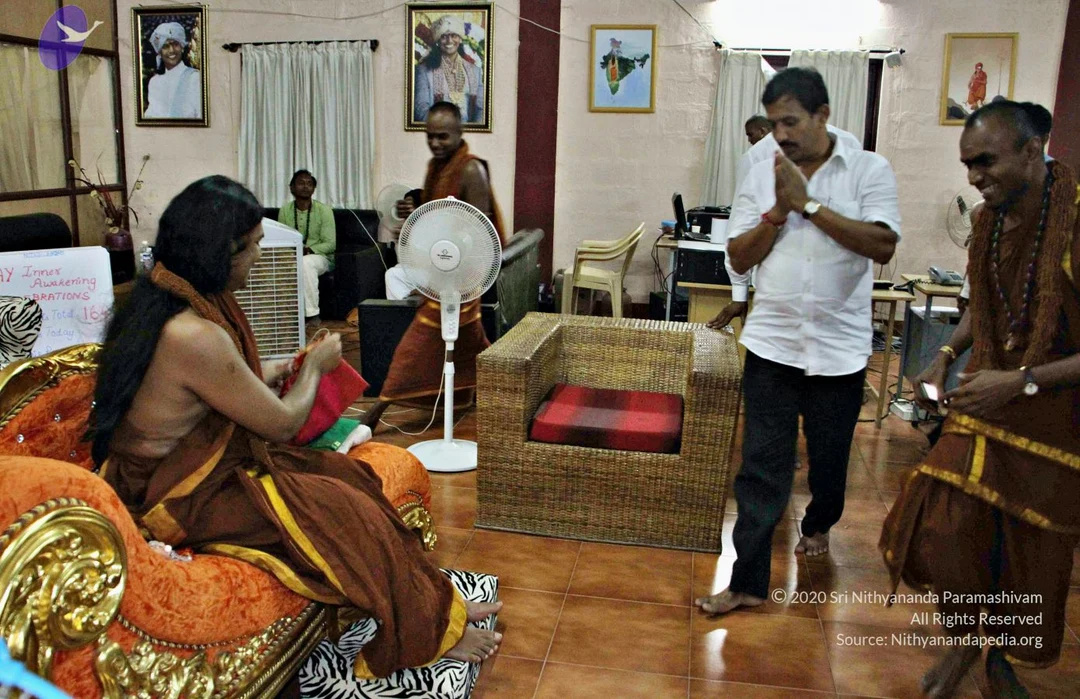
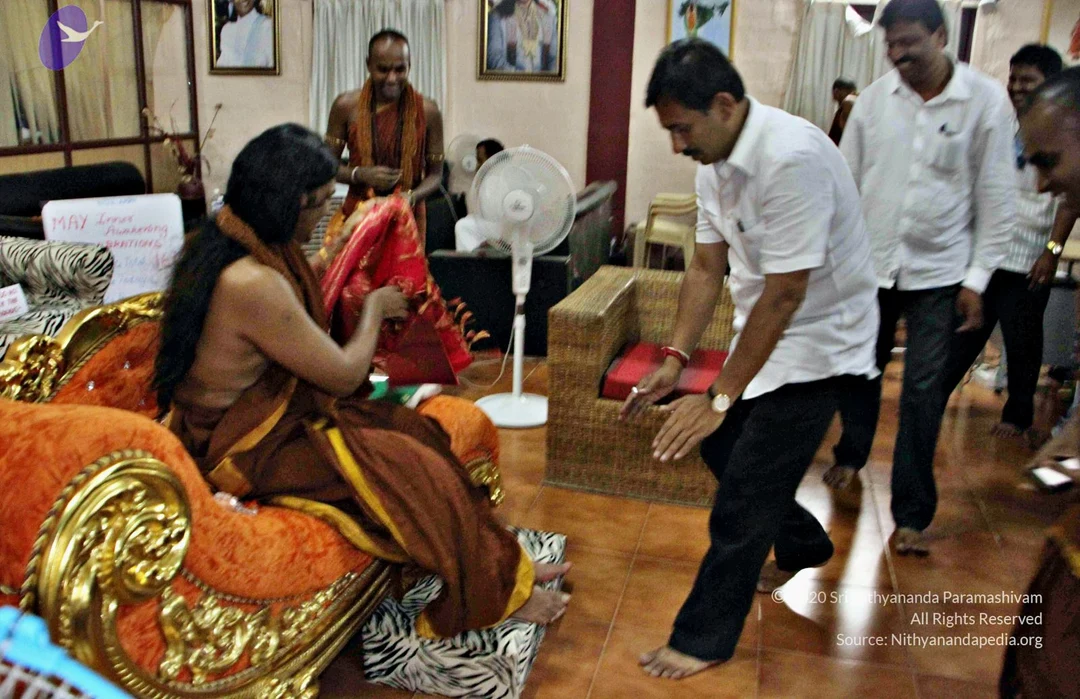
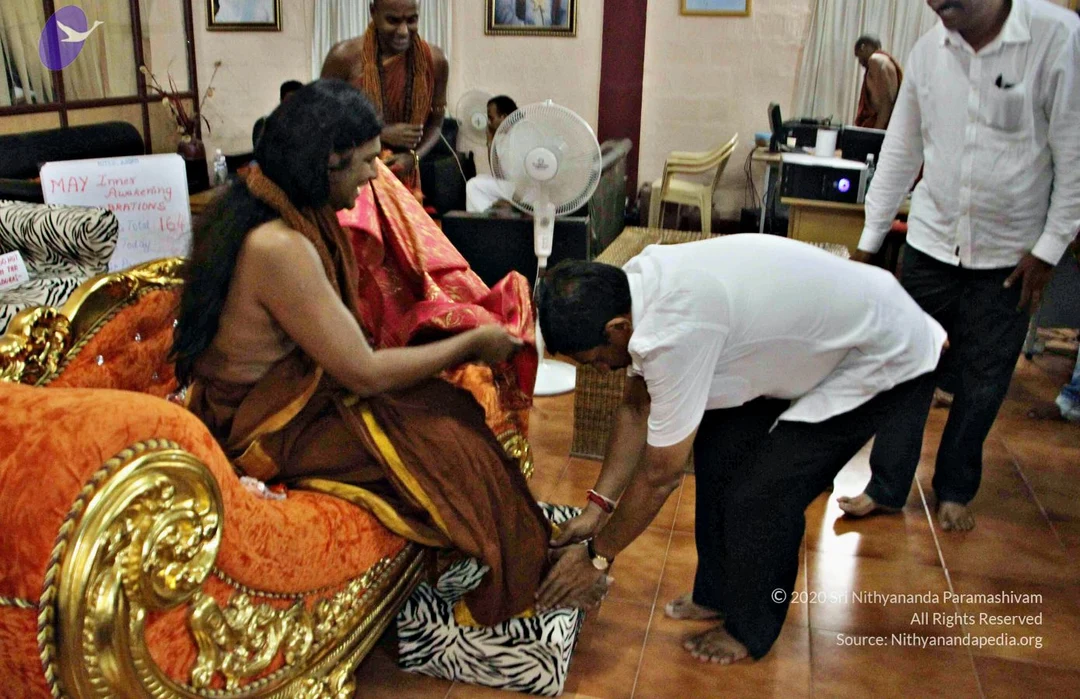
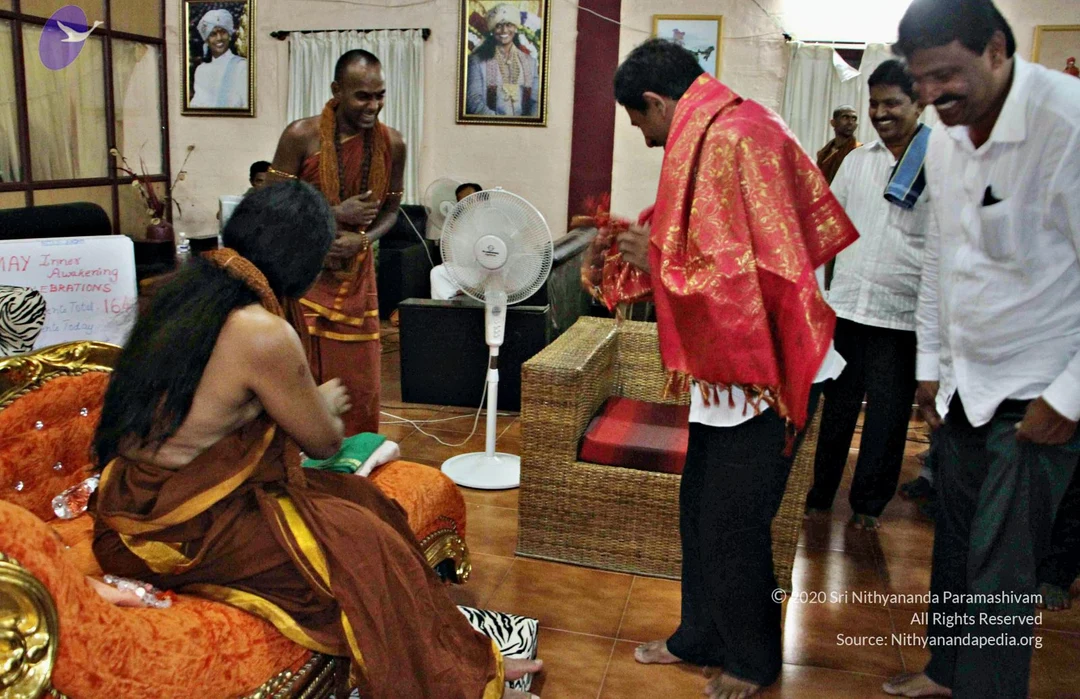
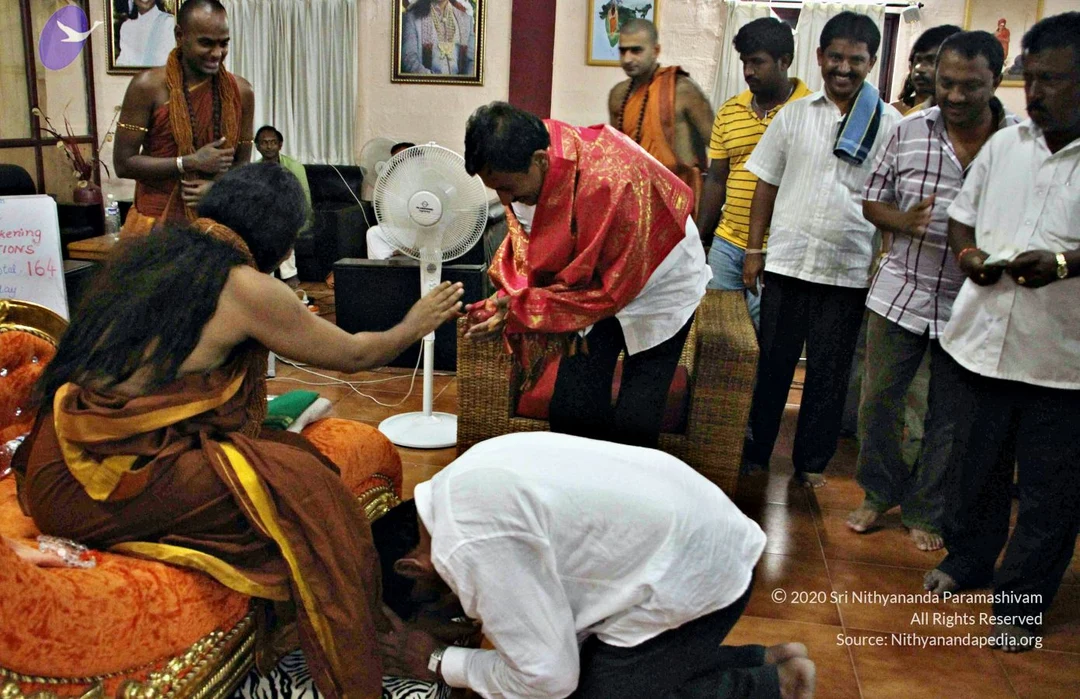
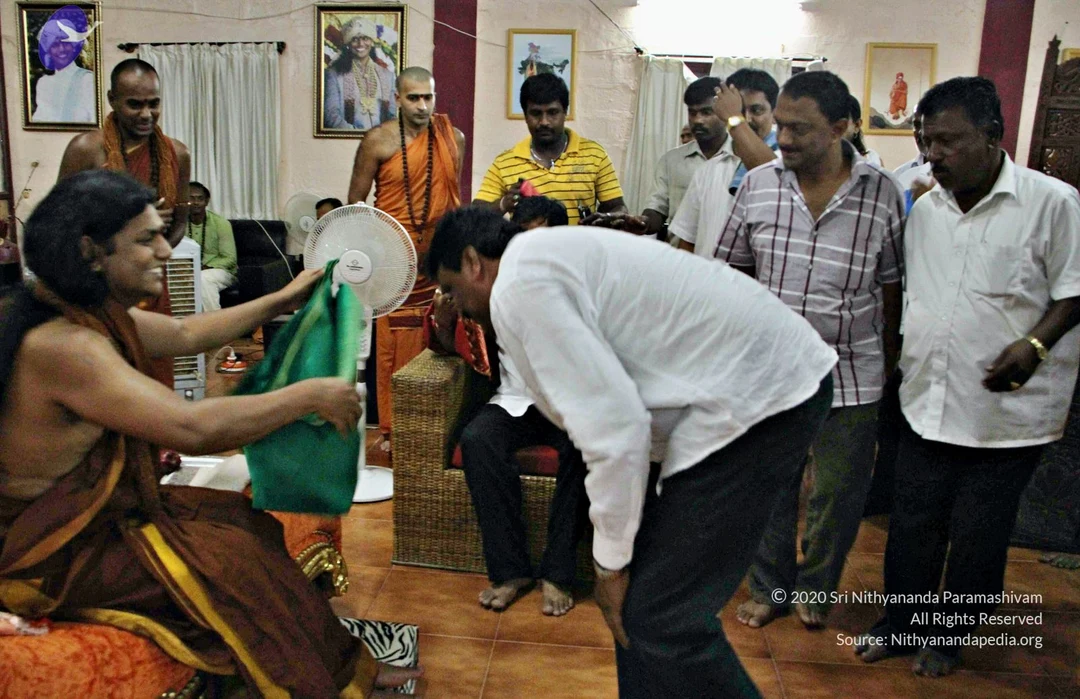
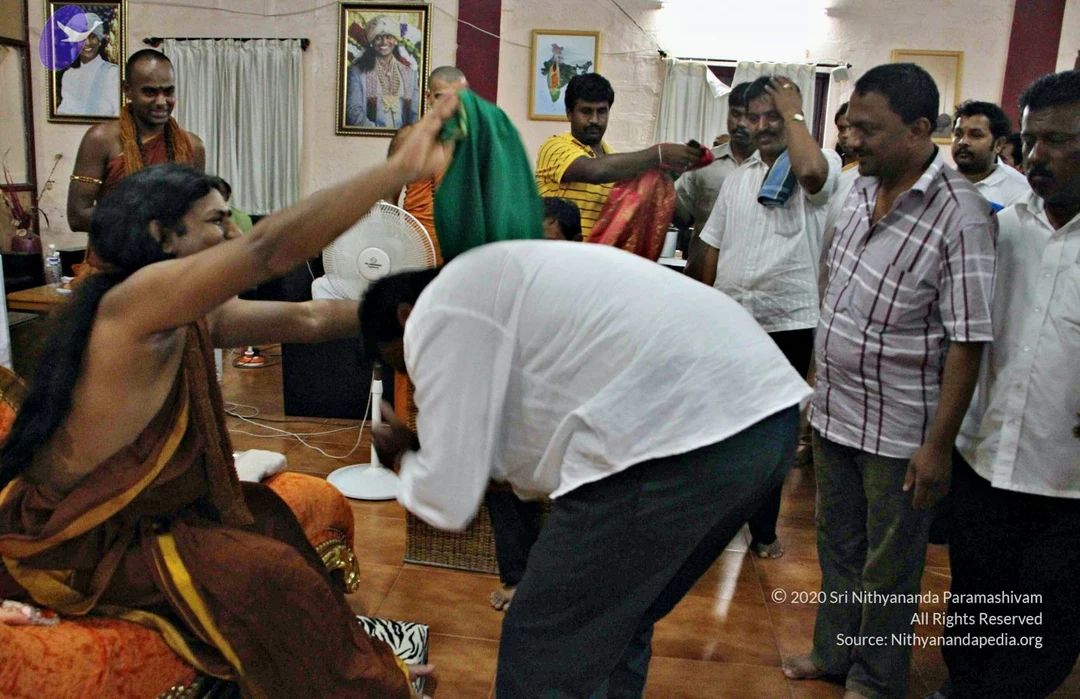
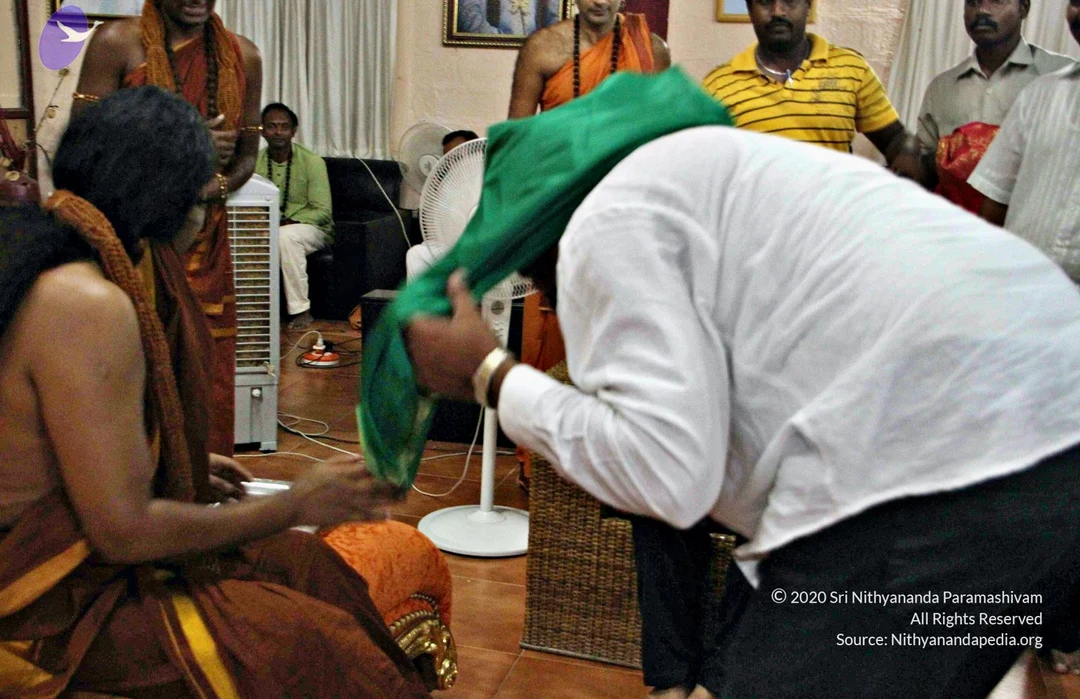
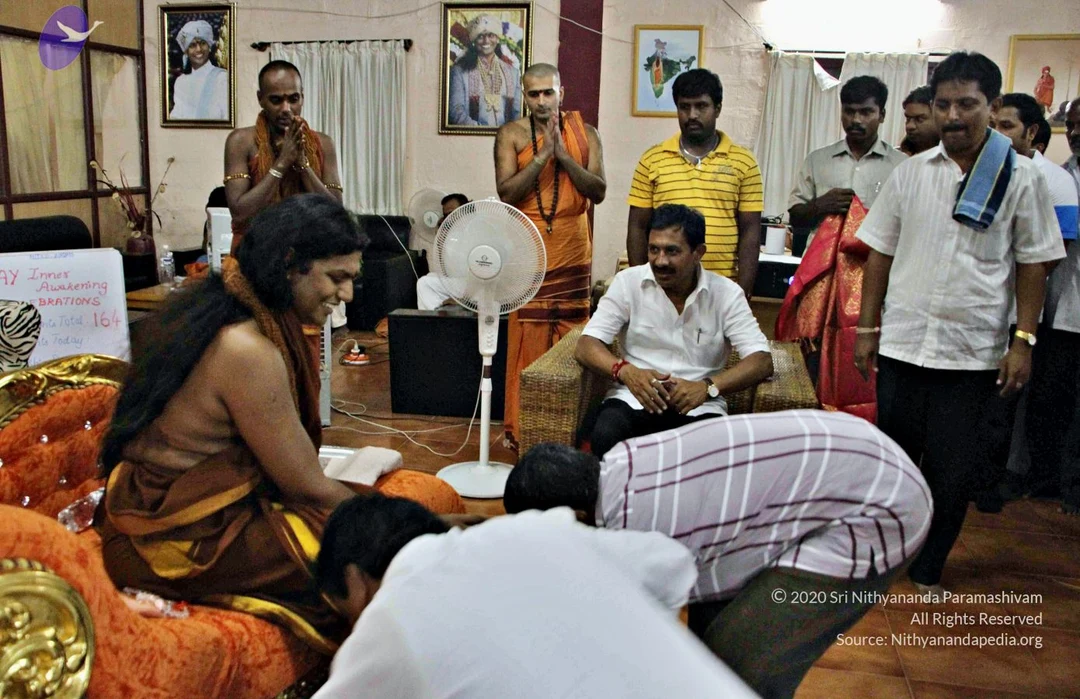
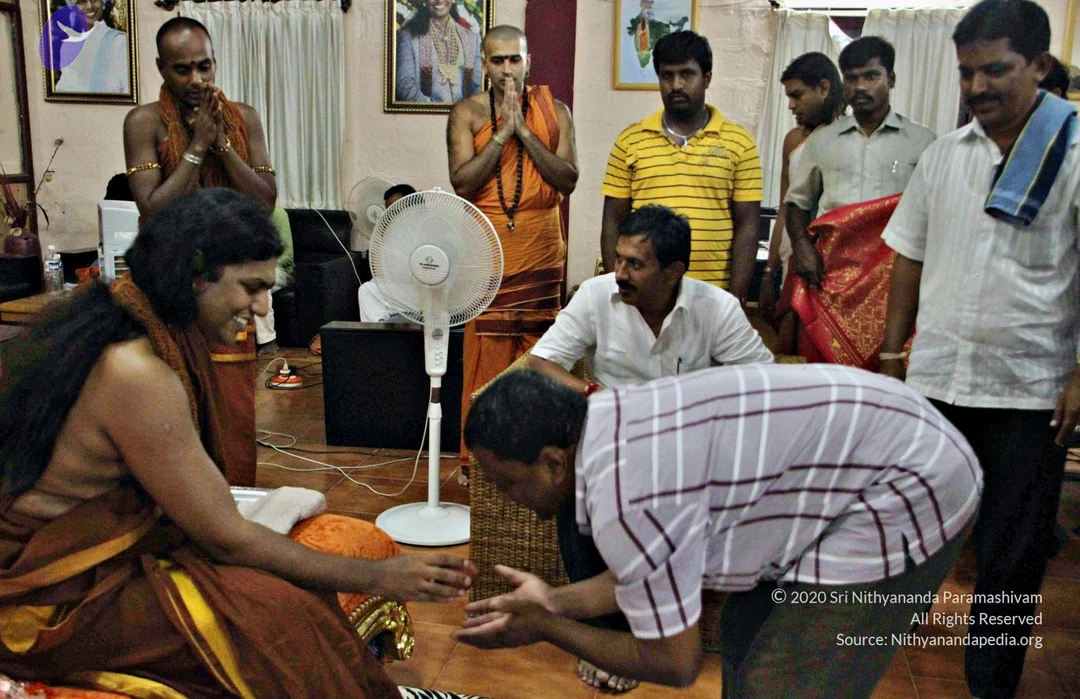
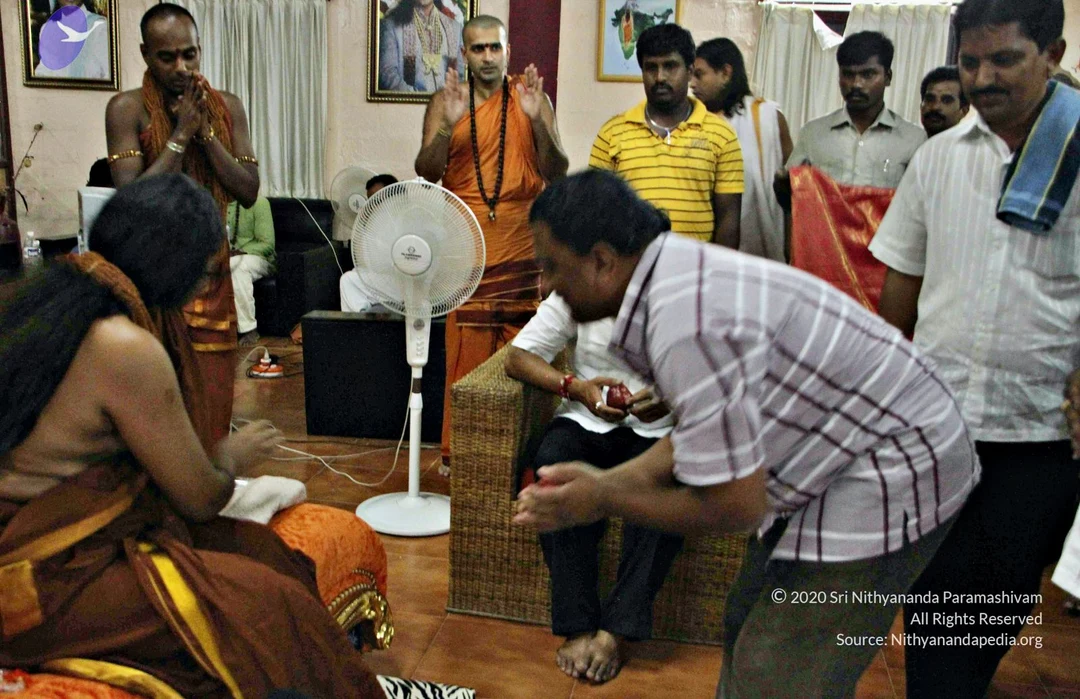
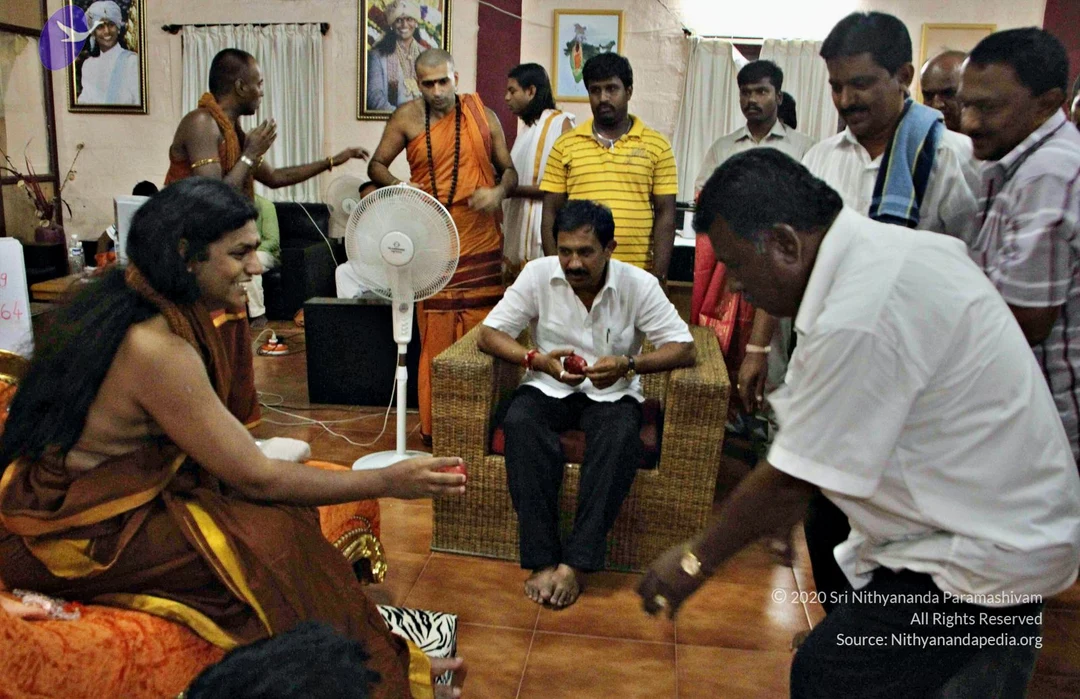
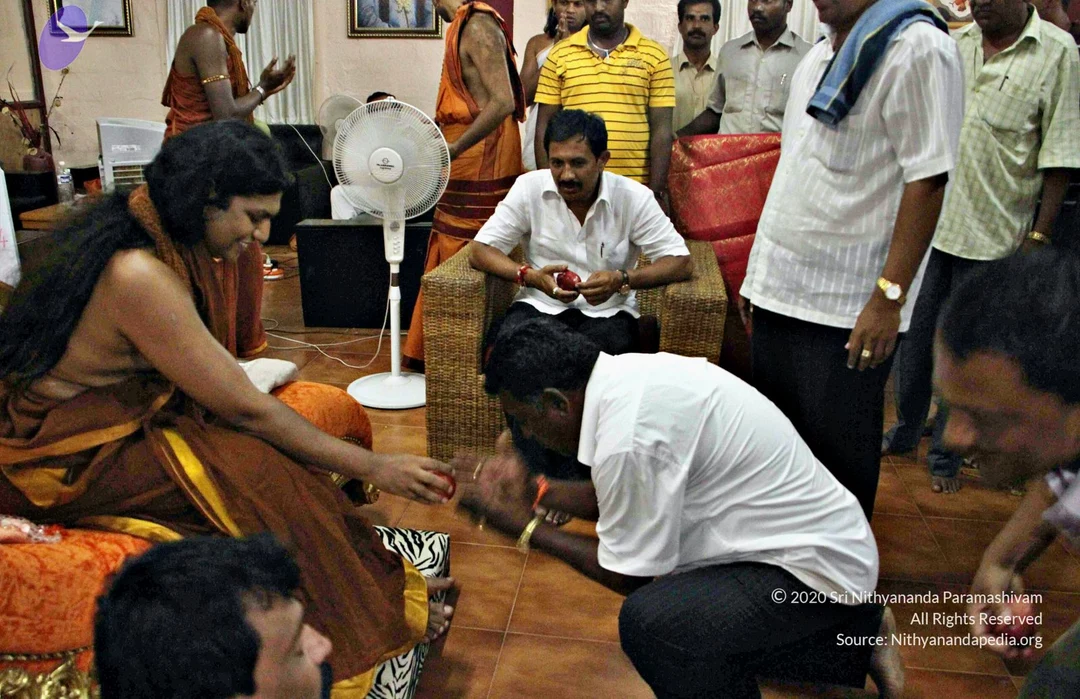
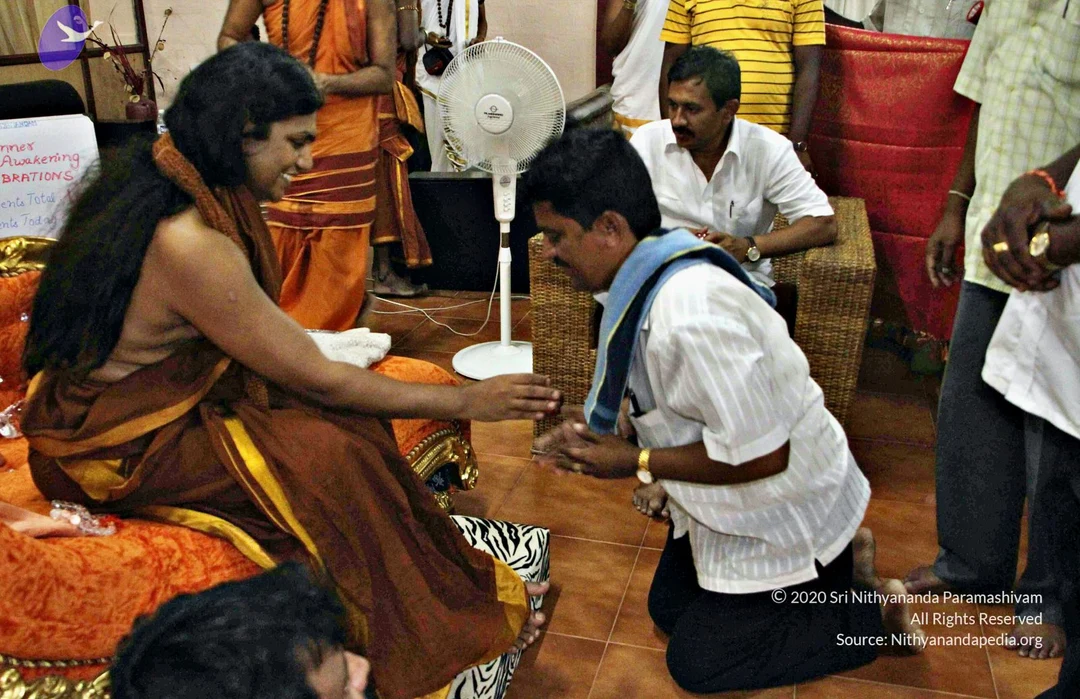
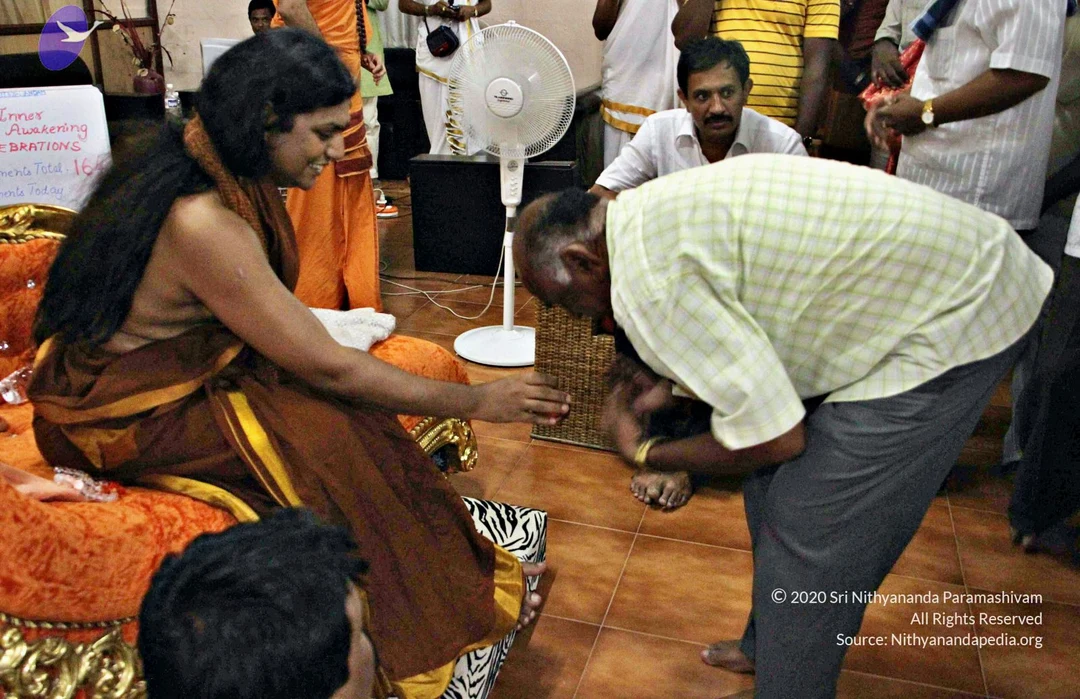
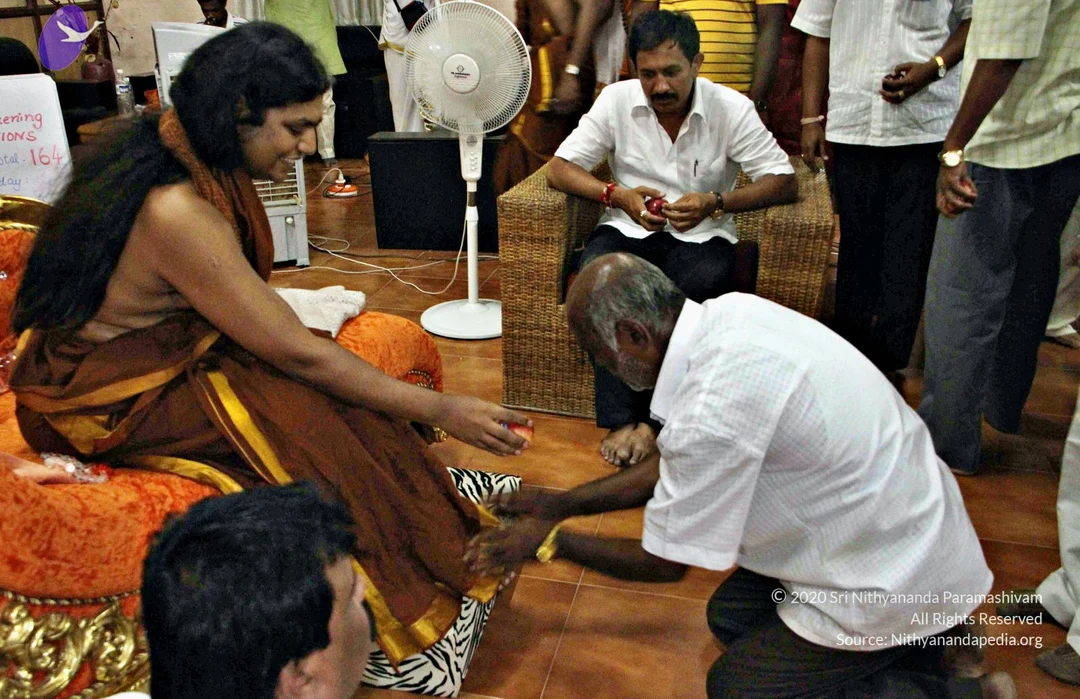
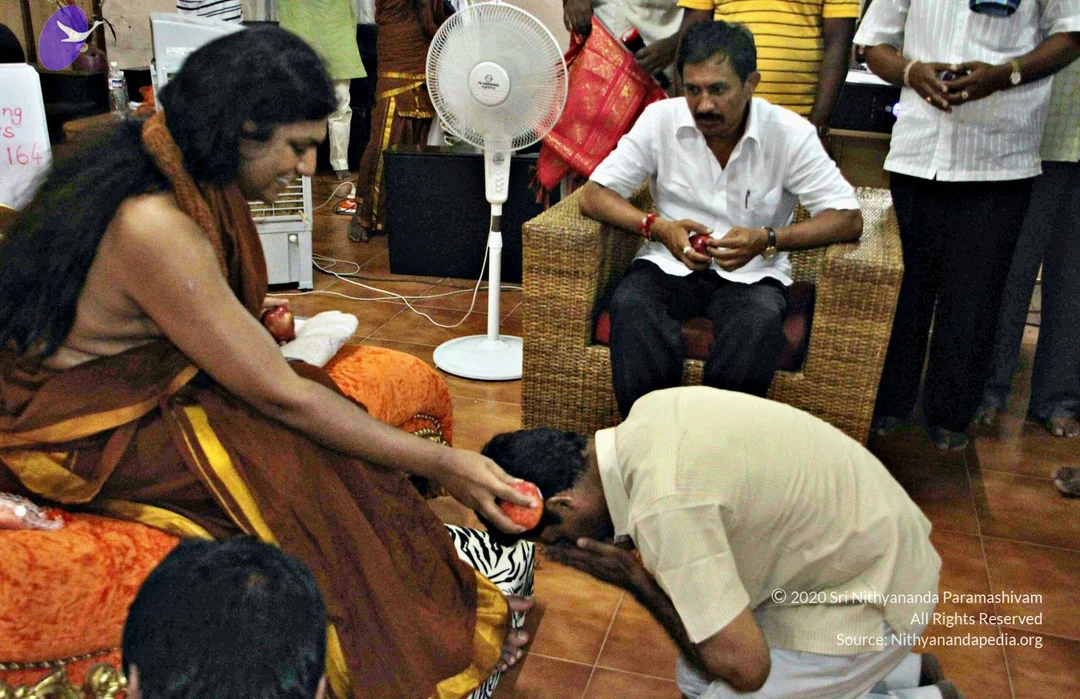
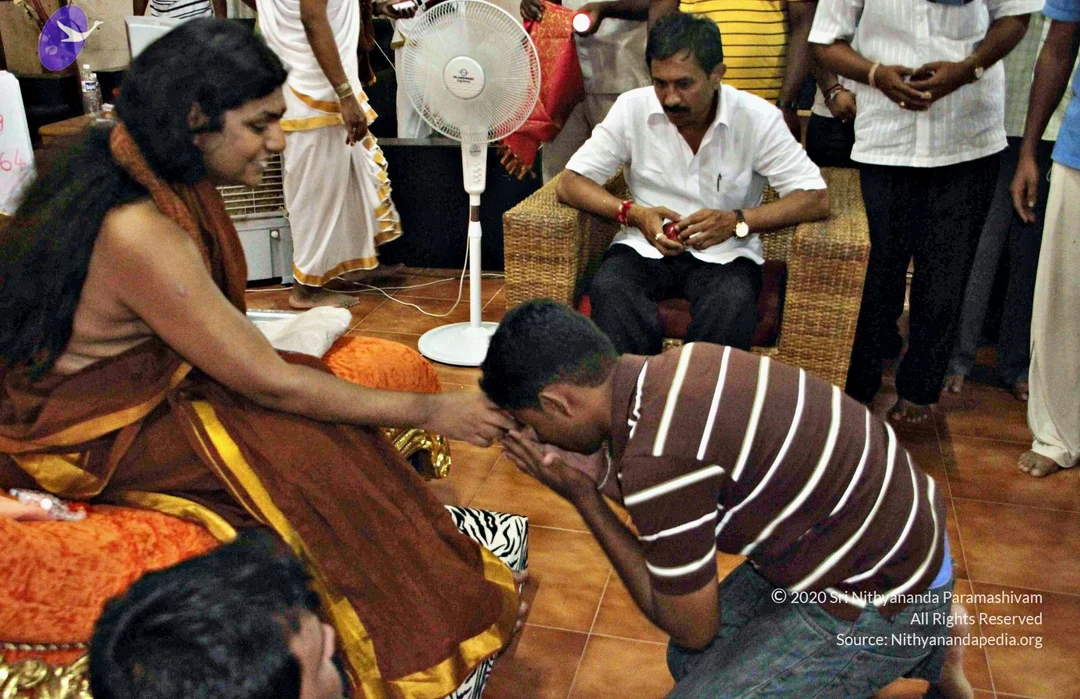
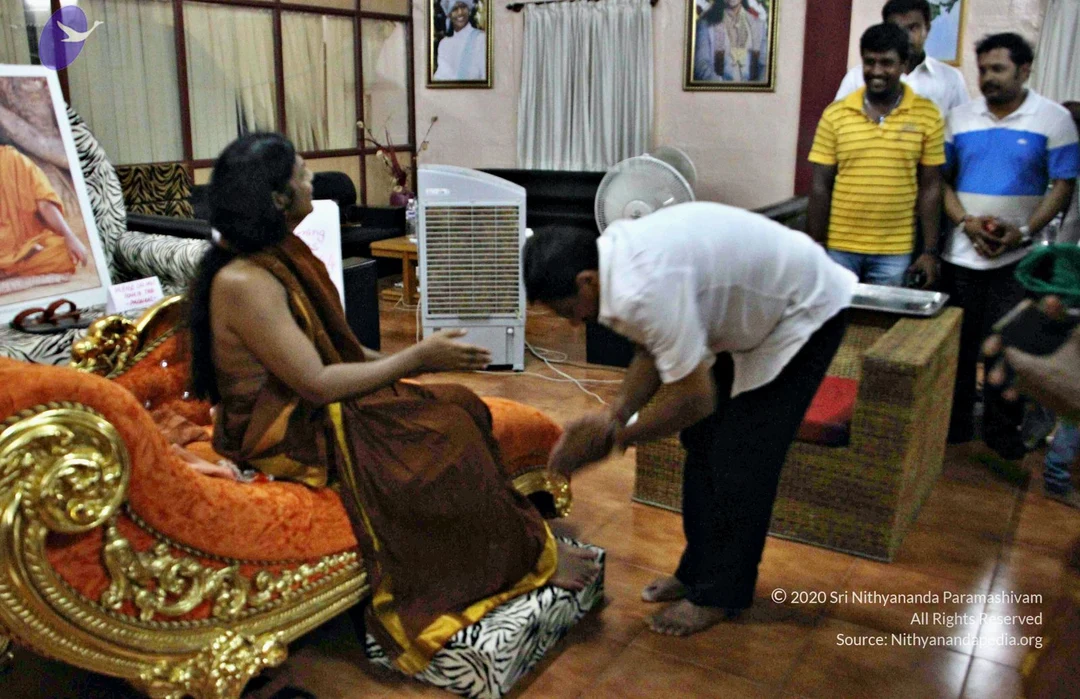
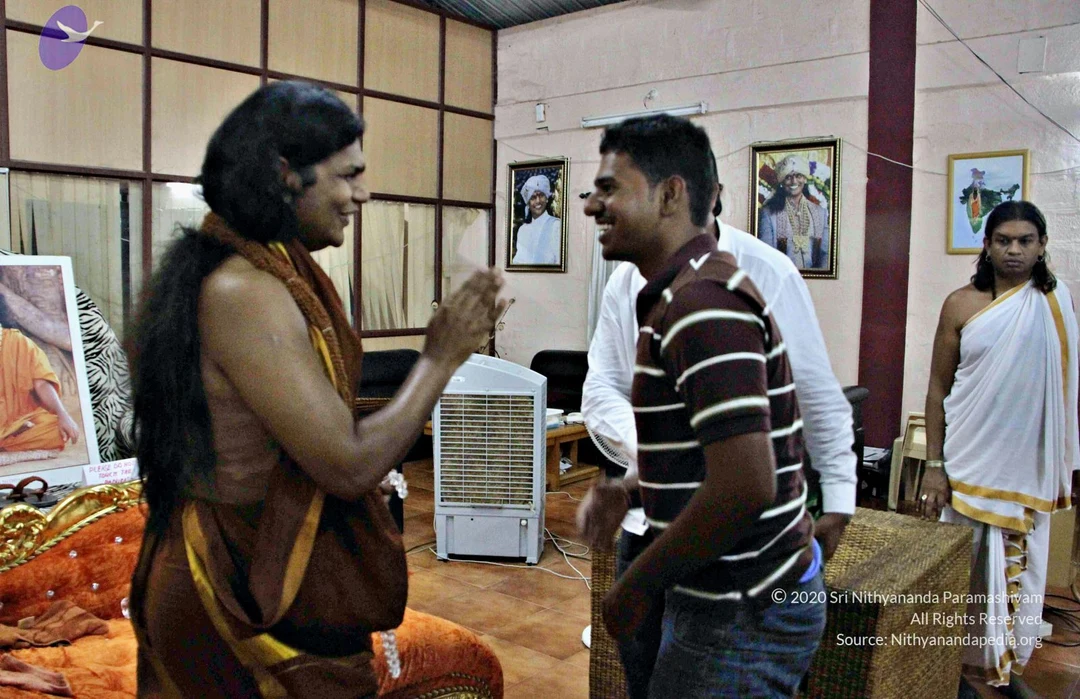
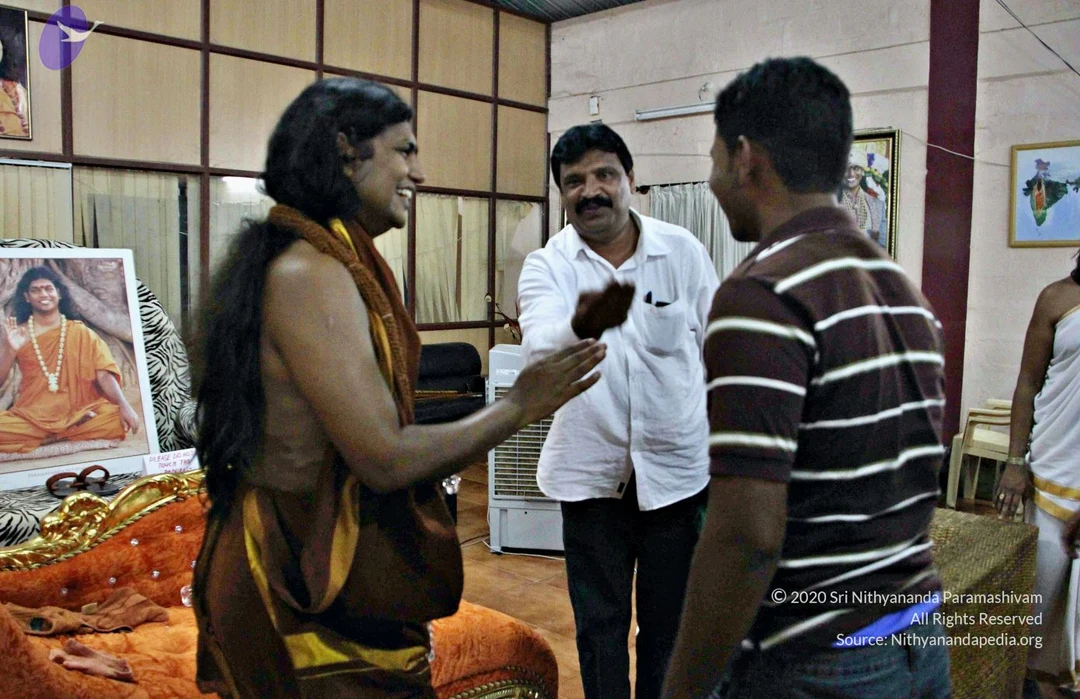
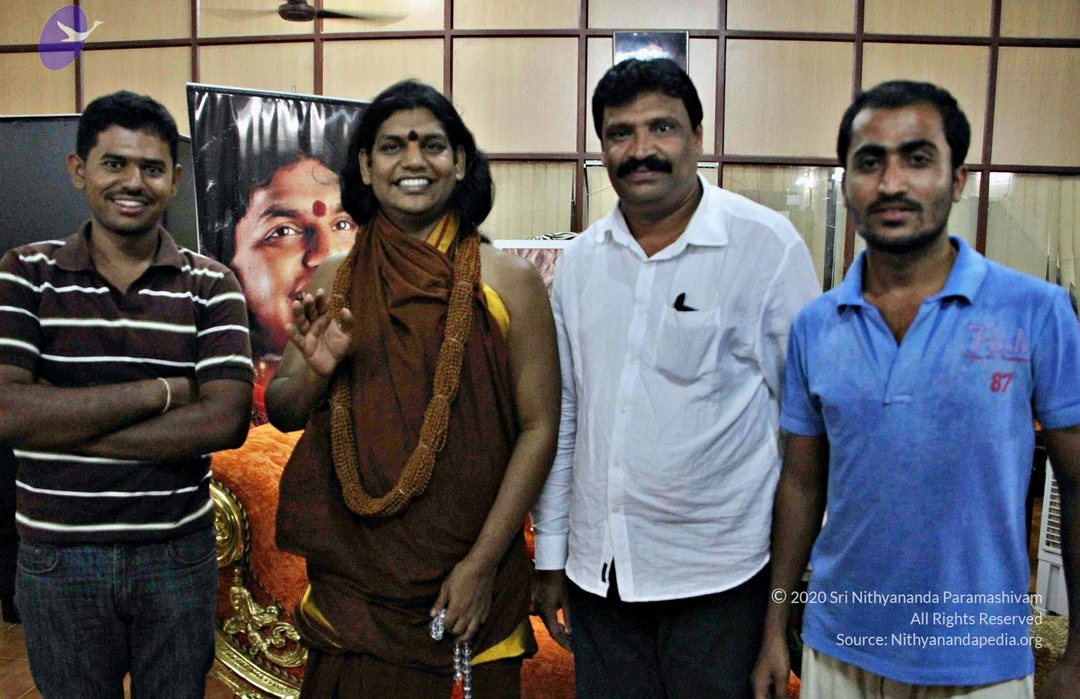
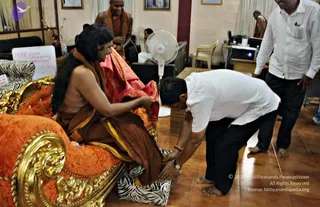
Indoor room with tiled floor, framed portraits on the wall and a sign reading partially "...Inner Awakening...". A long-haired figure with bare upper body and a brown-orange wrap sits on an orange-and-gold upholstered chair with a zebra-print footrest, holding a red cloth. A man in a white shirt and dark trousers stands barefoot with palms joined in namaste, facing the seated figure. Two other men in brown-orange robes stand nearby, one at right wearing a rudraksha mala, and a seated man in green appears at left. A rattan armchair with a red cushion and electric fans complete the scene.Indoor room with orange-upholstered gold-framed seating and a zebra-striped cushion. A long-haired figure with bare chest, wearing a brown-saffron shawl with yellow trim, sits on the orange chair, facing left and holding a red and gold cloth. Behind, a man in an orange-brown shawl and bare chest stands near framed portraits on the wall. A standing man in a white shirt and black trousers bends toward a woven rattan chair with a red cushion, while other men in white shirts and dark trousers watch in the background. A desk fan and a paper sign with handwritten text sit nearby.Indoor photograph in a room with cream walls, framed pictures, a standing fan and a white plastic chair. A long-haired figure sits on an ornate orange velvet throne with gold carved trim, draped in brown and gold cloth over a bare-shouldered garment, with an orange shawl across the lap. Beside them a bald man in saffron-orange robes stands, and a man in a white shirt and dark trousers bends low, bare-footed, touching the seated figure's foot resting on a zebra-striped cushion. Another standing man in a white shirt watches at right, and a robed figure is partly visible in the background. A whiteboard reads MAY, along with a second handwritten sign.A photograph of a seated figure on an ornate orange and gold throne, wearing a brown and gold-bordered saffron-toned wrap, with long dark hair and bare upper body, bare-chested and adorned, smiling and reaching out to hold a red and gold cloth. A man in a white shirt and dark trousers bends forward at the seated figure's feet, with his head covered by the red cloth, performing a padapuja-style reverence. Other people stand nearby, some barefoot, in a tiled room with a fan, a table with bottles, and a zebra-print cushion. The figure's appearance with long hair, bare chest and distinctive adornments matches the page's identification, though the face is not used for identification.A photograph in a room with a gold-framed orange and gold upholstered chair. A long-haired man with a swept-back hairstyle, wearing a brown shawl over a bare chest with a brown and gold wrap, sits on the chair and is reached toward by a bowing person in a white shirt, black trousers and a red and gold brocade shawl draped over the back. The bowing person touches his feet, a zebra-print cushion beneath them. A standing man in a white shirt and a second standing man in an orange and gold cloth watch, and a man in a yellow striped shirt stands at the right edge. A white whiteboard reads MAY Inner Awakening Celebrations with a count total. A pedestal fan, speakers and a desk with a computer are in the background, with framed pictures on the wall. Probable Swamiji (probable) is the seated man: long swept-back hair, a bare upper body with brown shawl and gold-trimmed wrap, and seated on an ornate orange throne. The bowing devotee and standing people are in ordinary clothes.Indoor room with tiled floor, a white wall with framed pictures, and a ceiling fan and standing fan. A long-haired figure in a brown and yellow wrap sits on an ornate orange-upholstered gold throne with a zebra-print cushion, smiling as a devotee in a white shirt and black trousers, draped with a red and gold-bordered shawl, bends forward to touch the seated figure's feet. Another man in an orange-brown cloth with a shawl stands behind, and onlookers in white shirts stand at right. A whiteboard at left reads a May inner awakening count. The seated figure's appearance matches the page's a person cues: long dark hair, a rudraksha-style necklace and an orange-brown wrap, so this is a probable appearance-based identification, though the image is uncertain.