Skip to content
Wednesday

13 March 2013

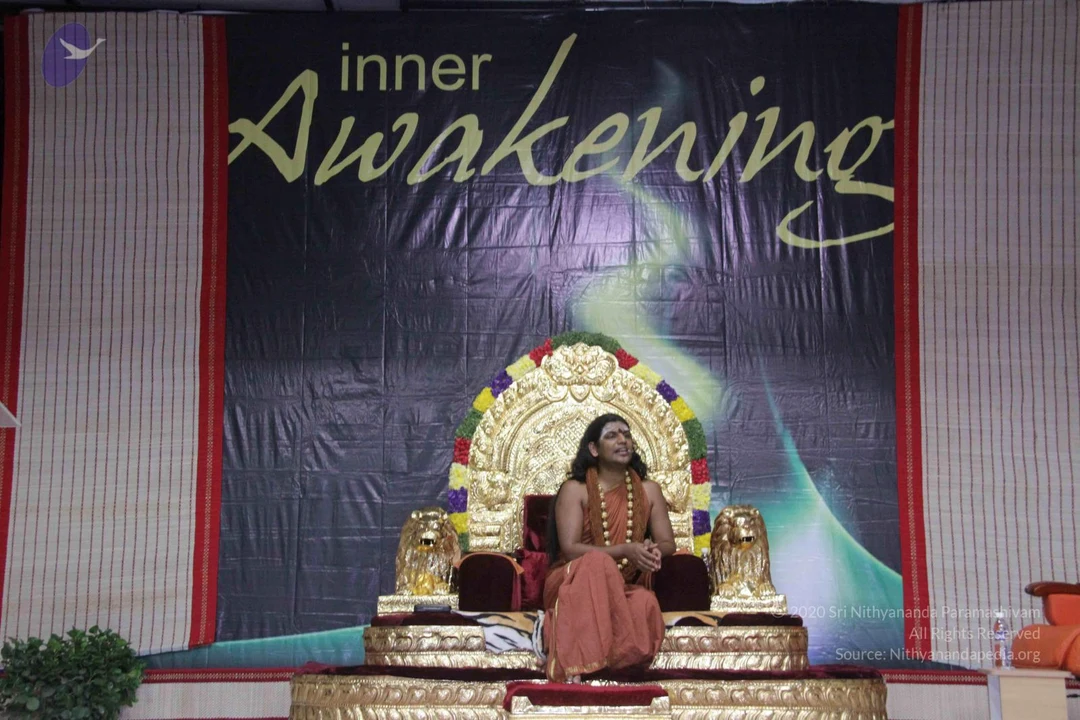
Inner Awakening intro by Paramahamsa Nithyananda

Dated photos
656
Source pages
1
Media
8
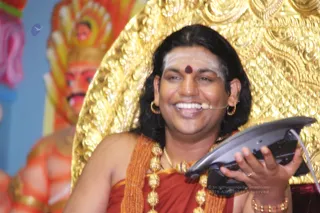
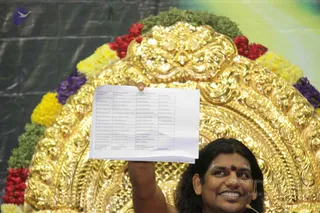
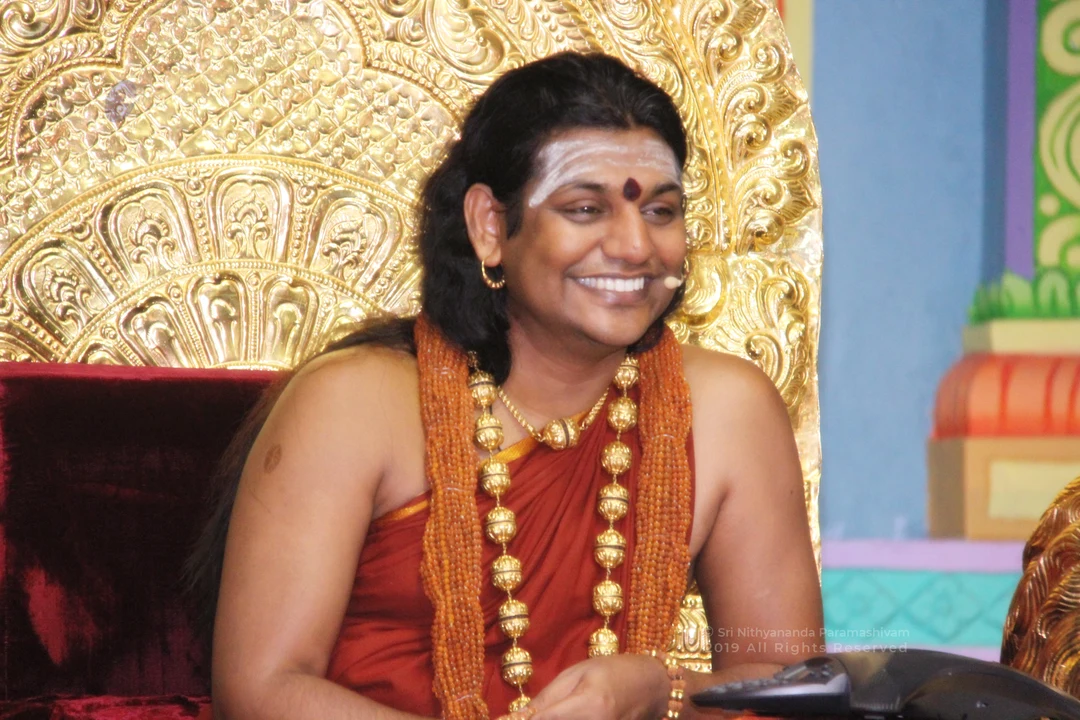
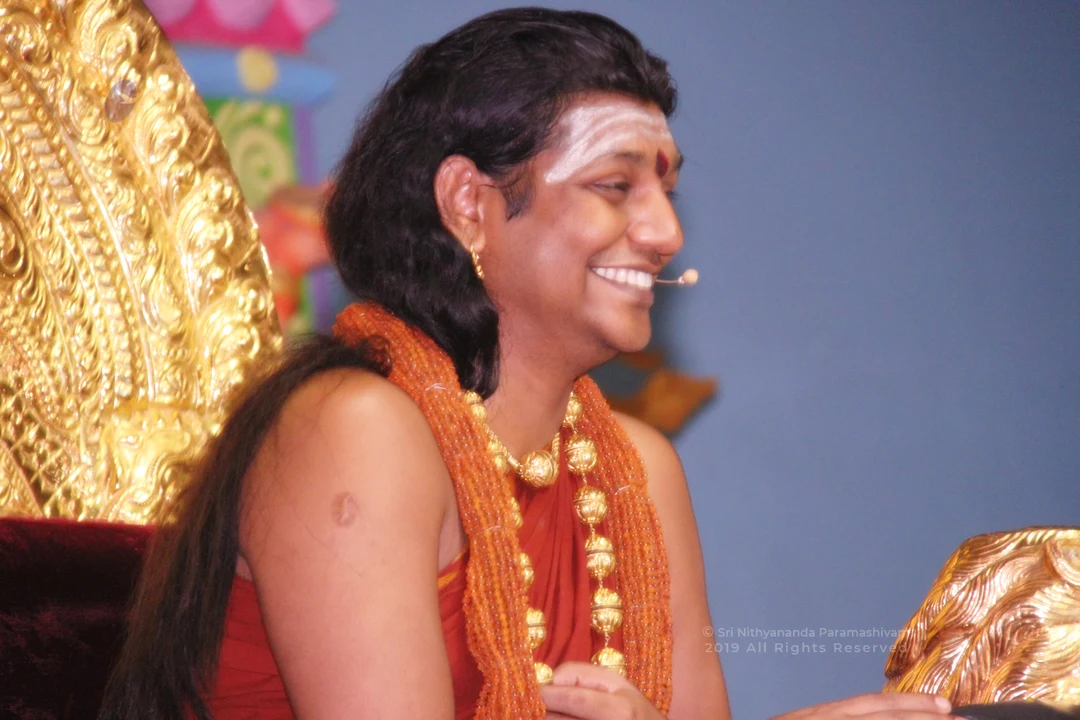
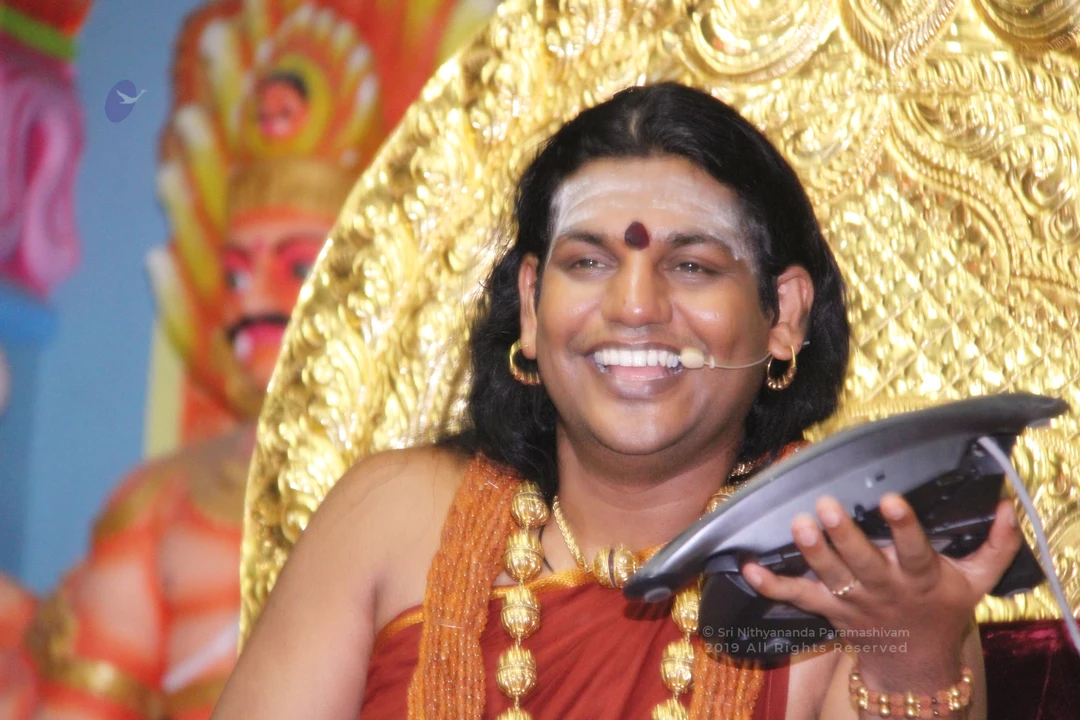
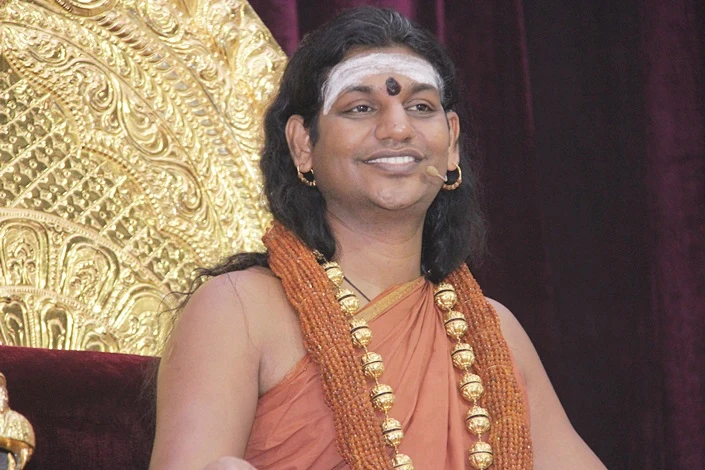
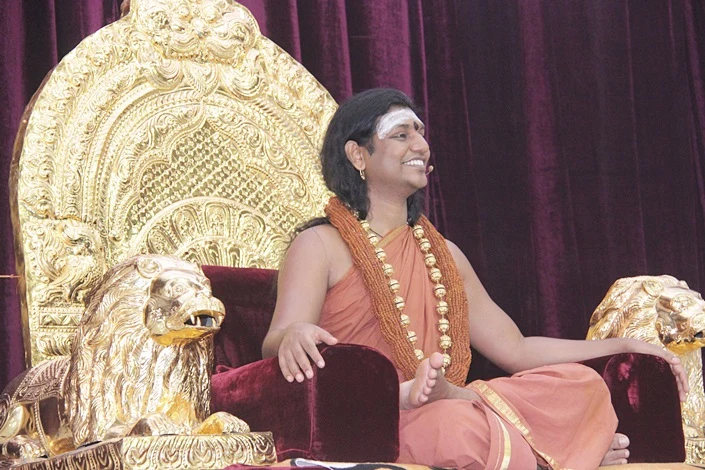
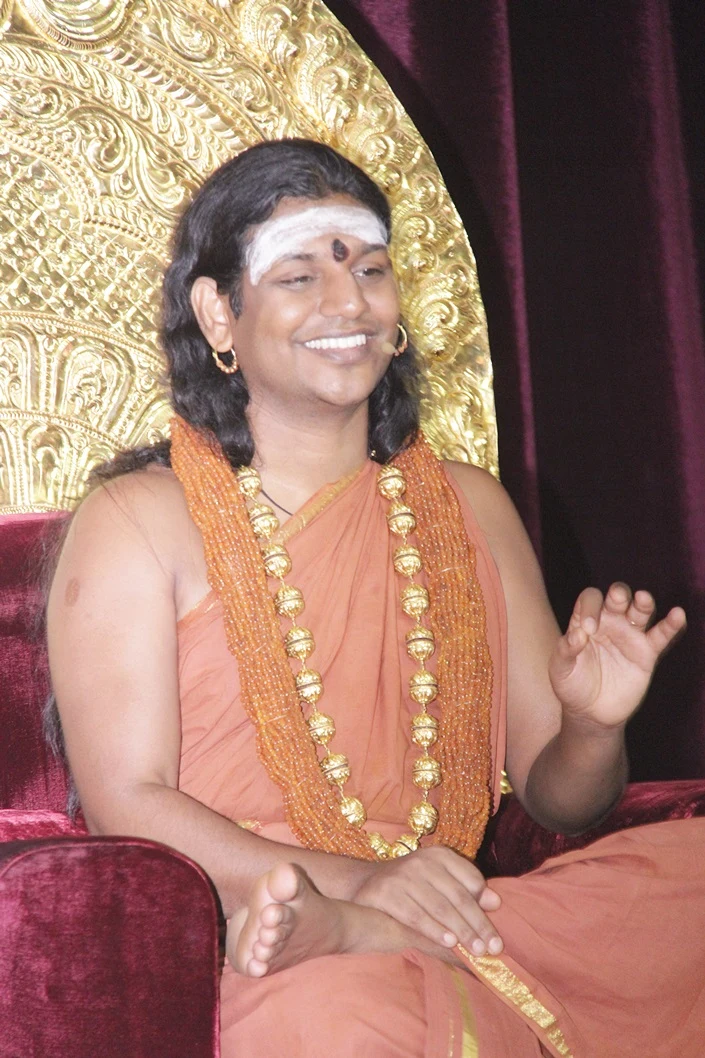
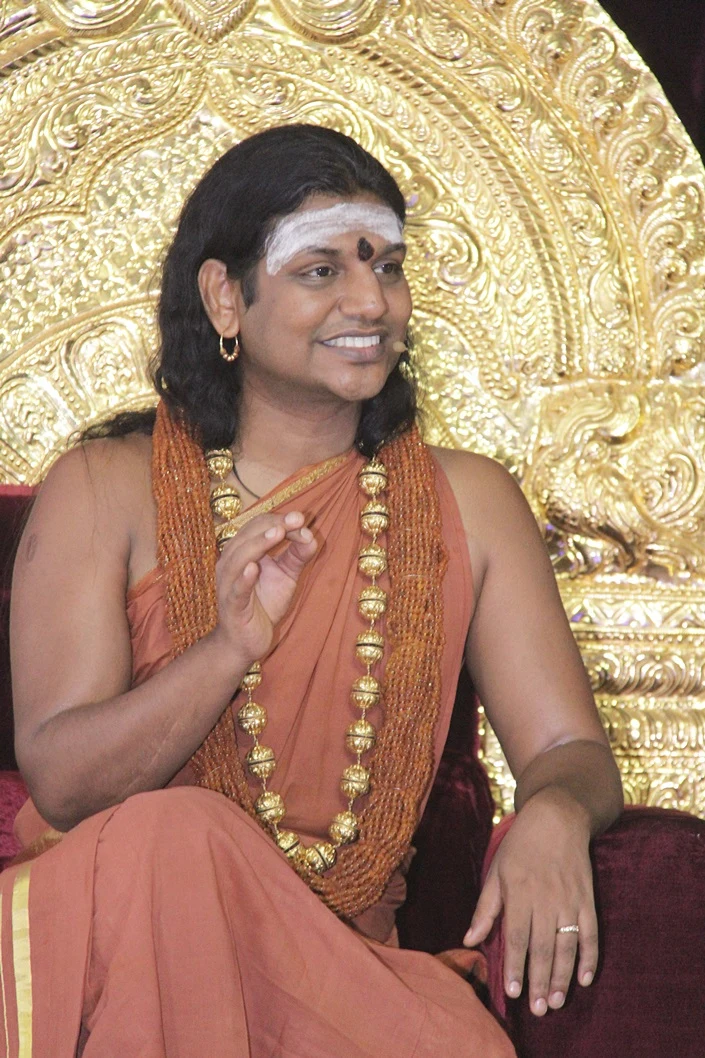
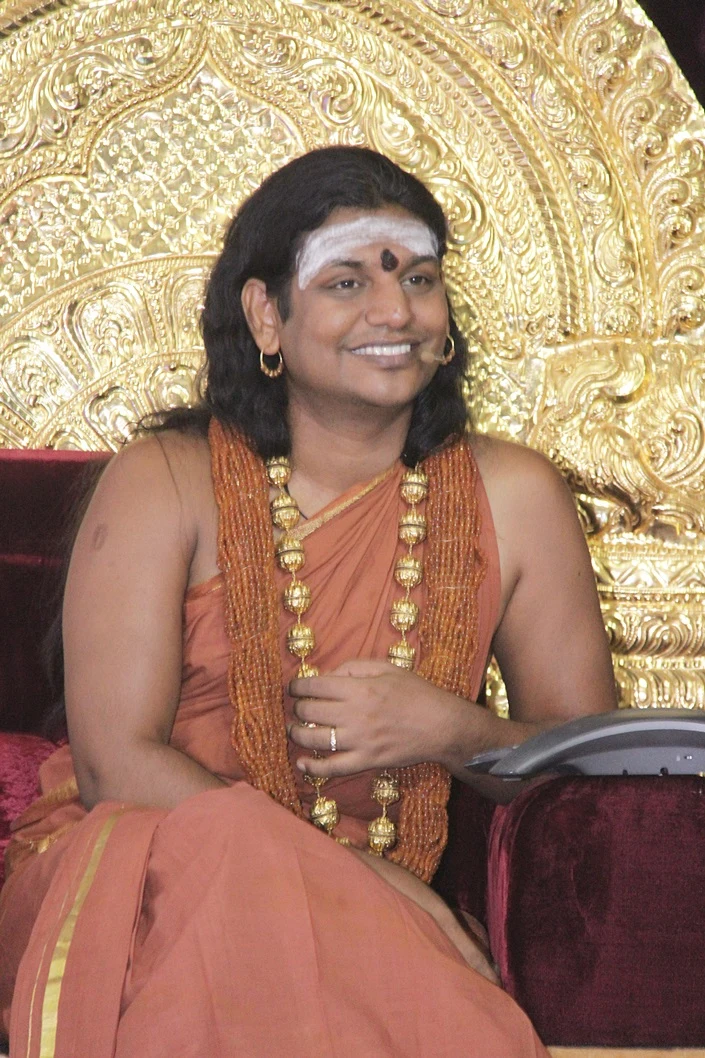
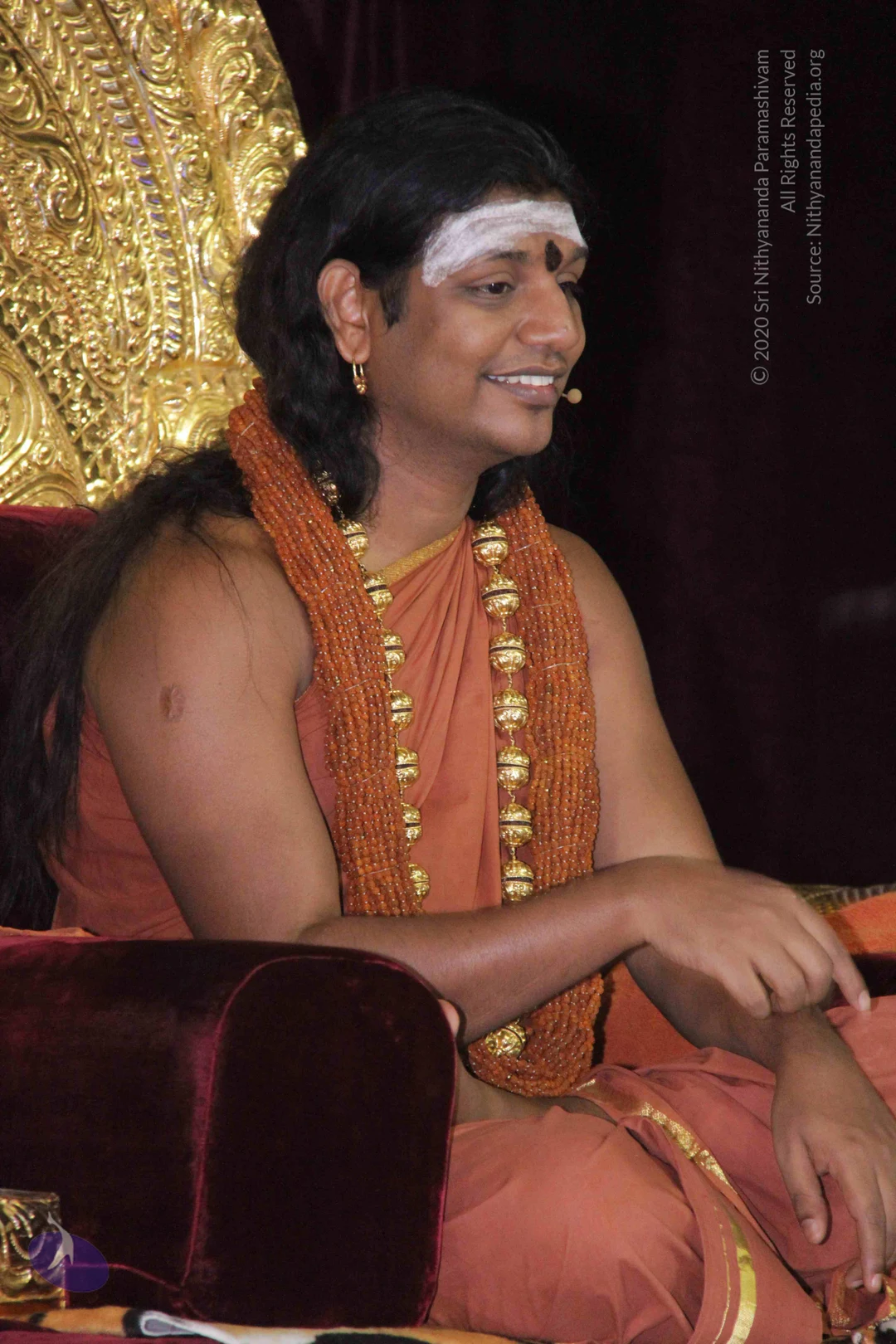
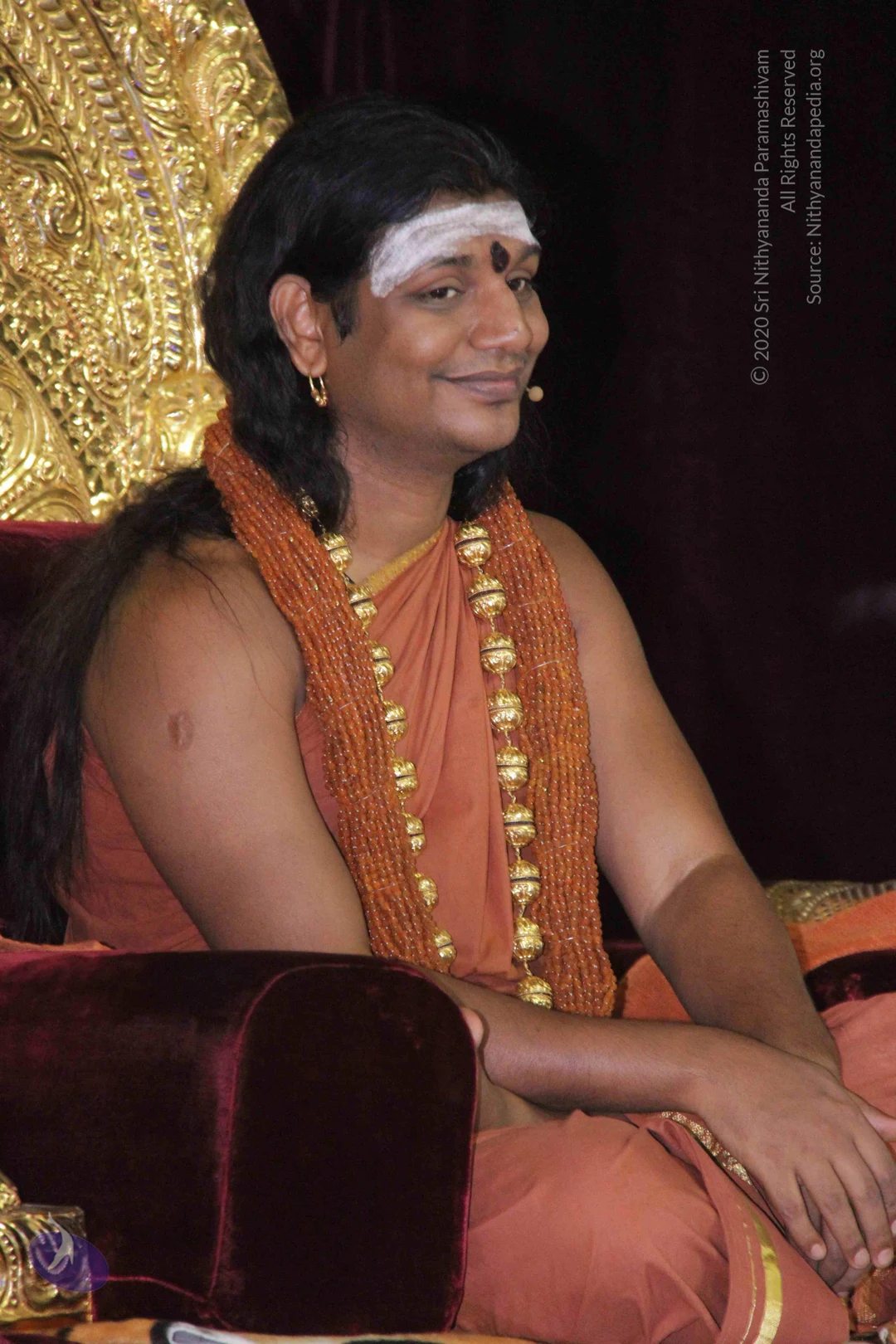
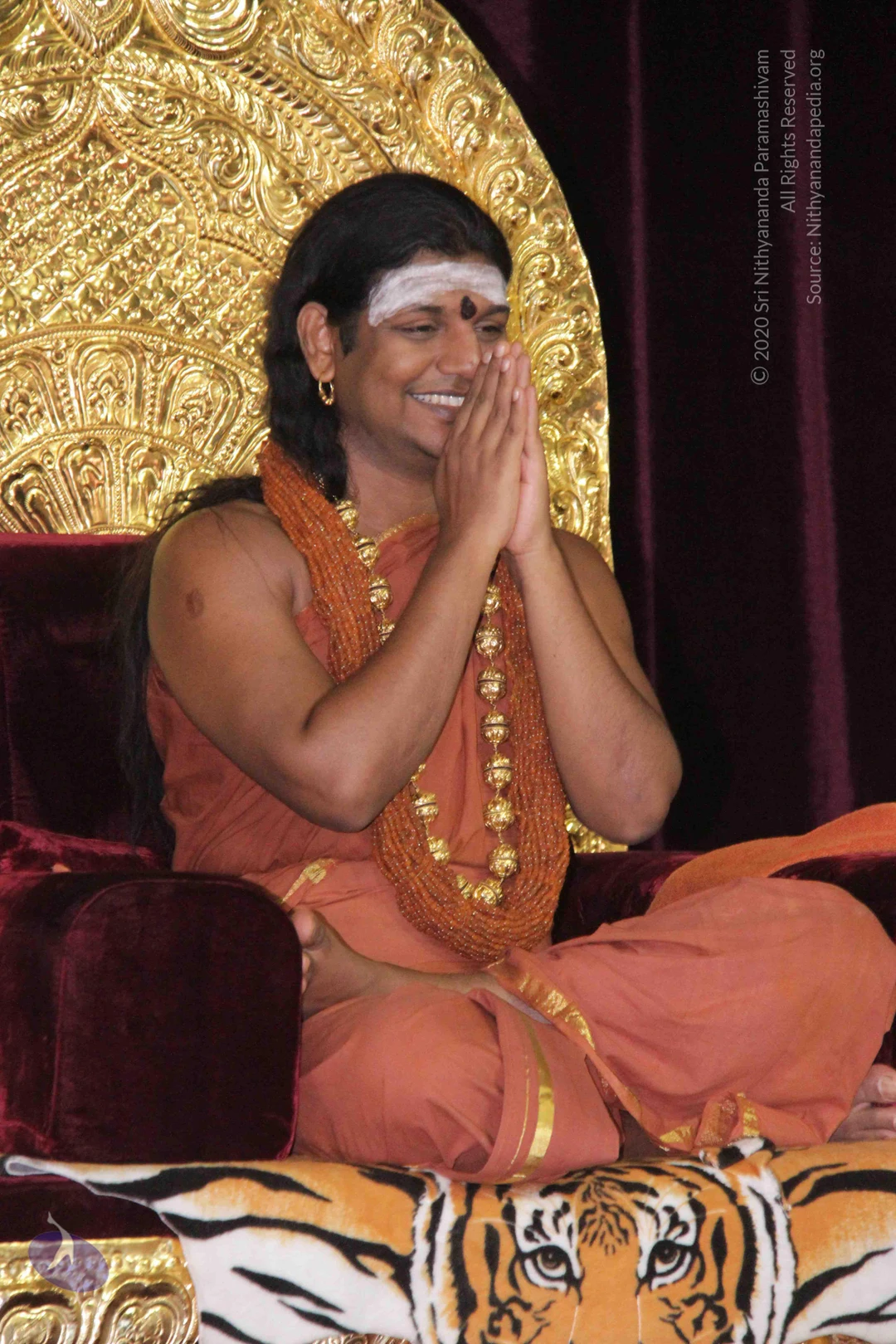
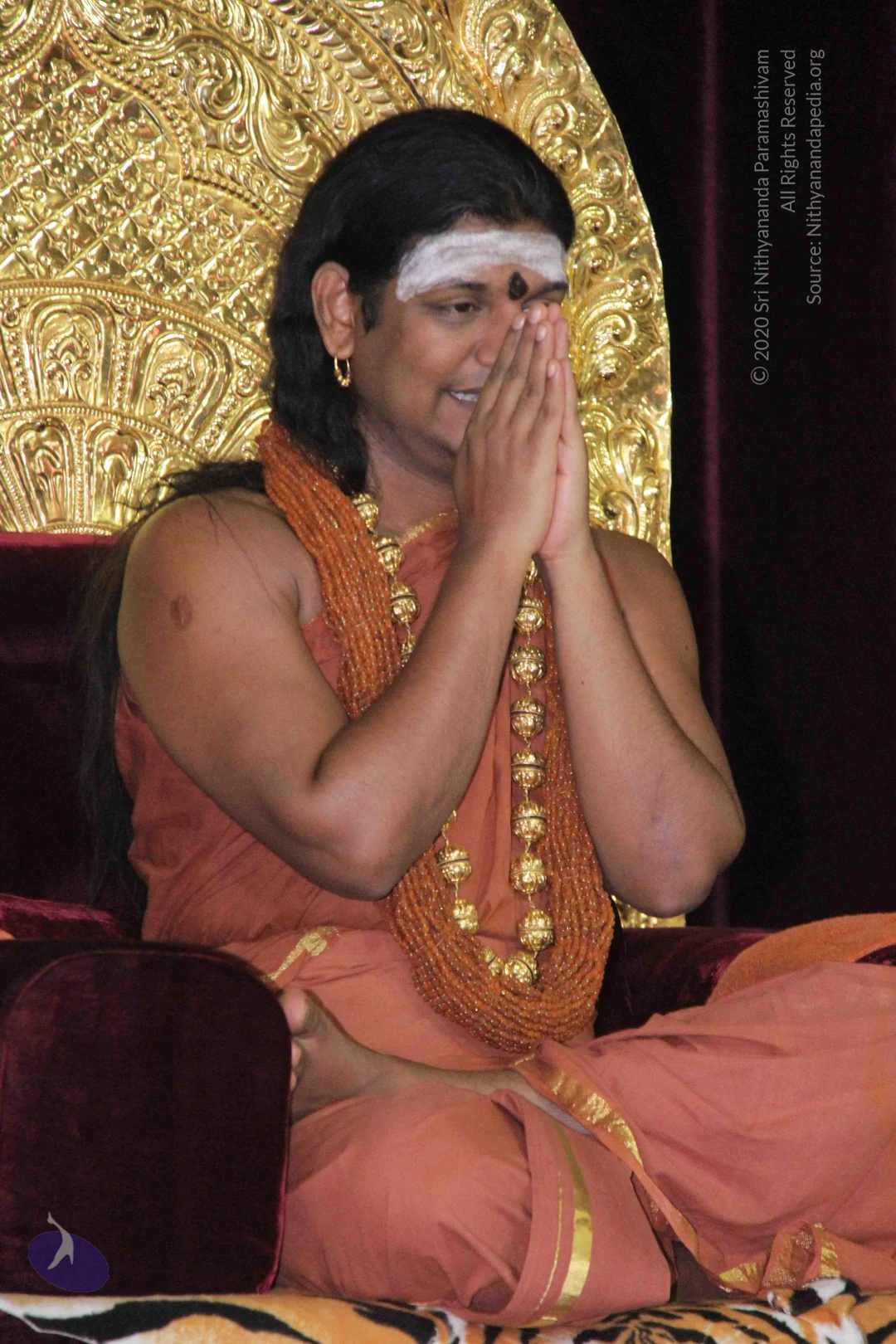
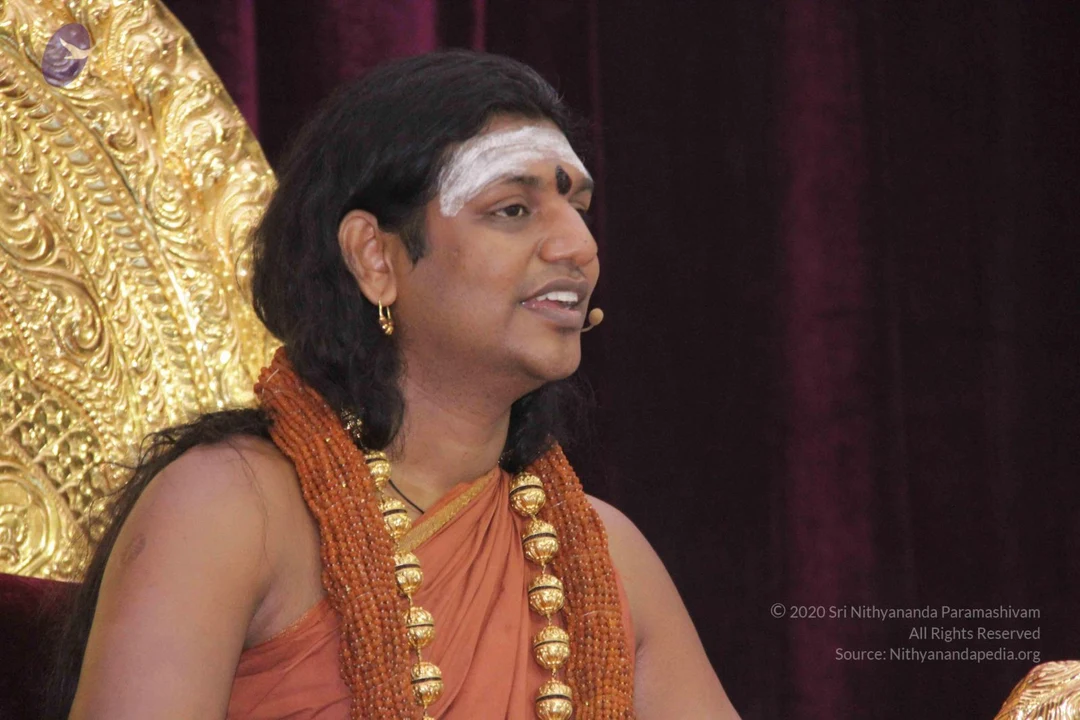
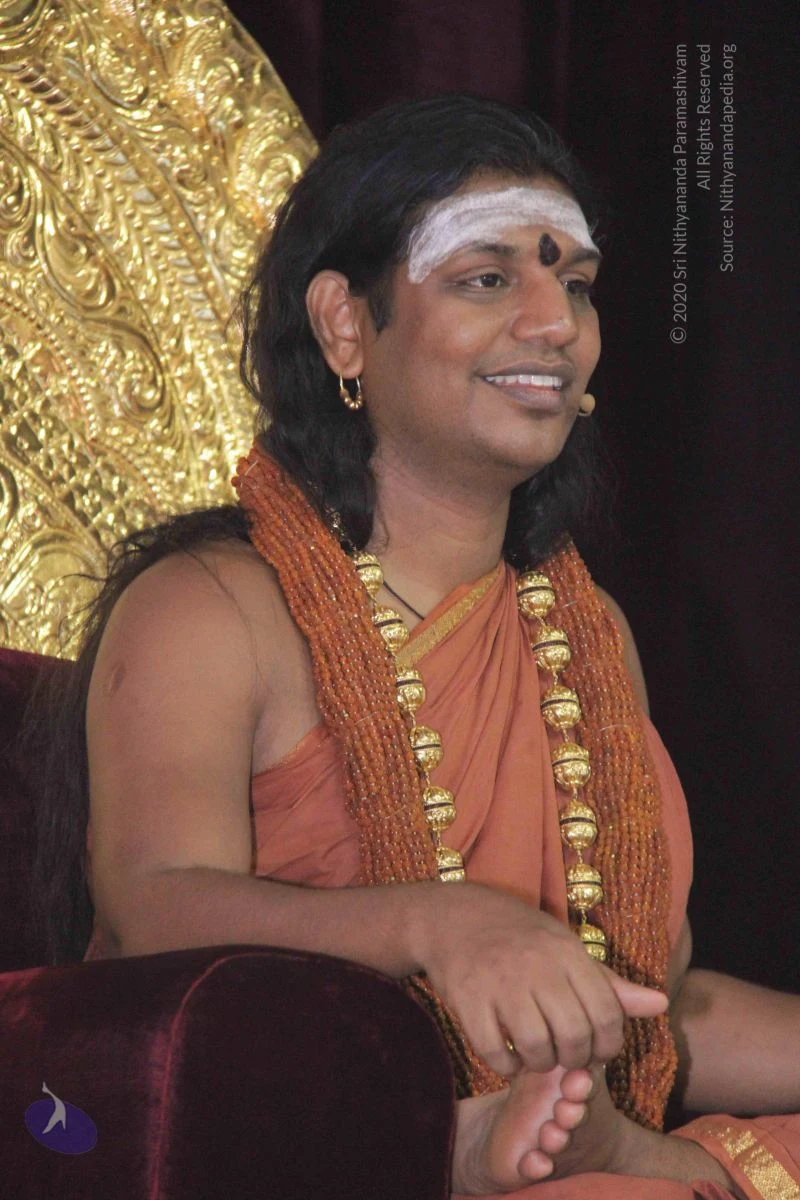
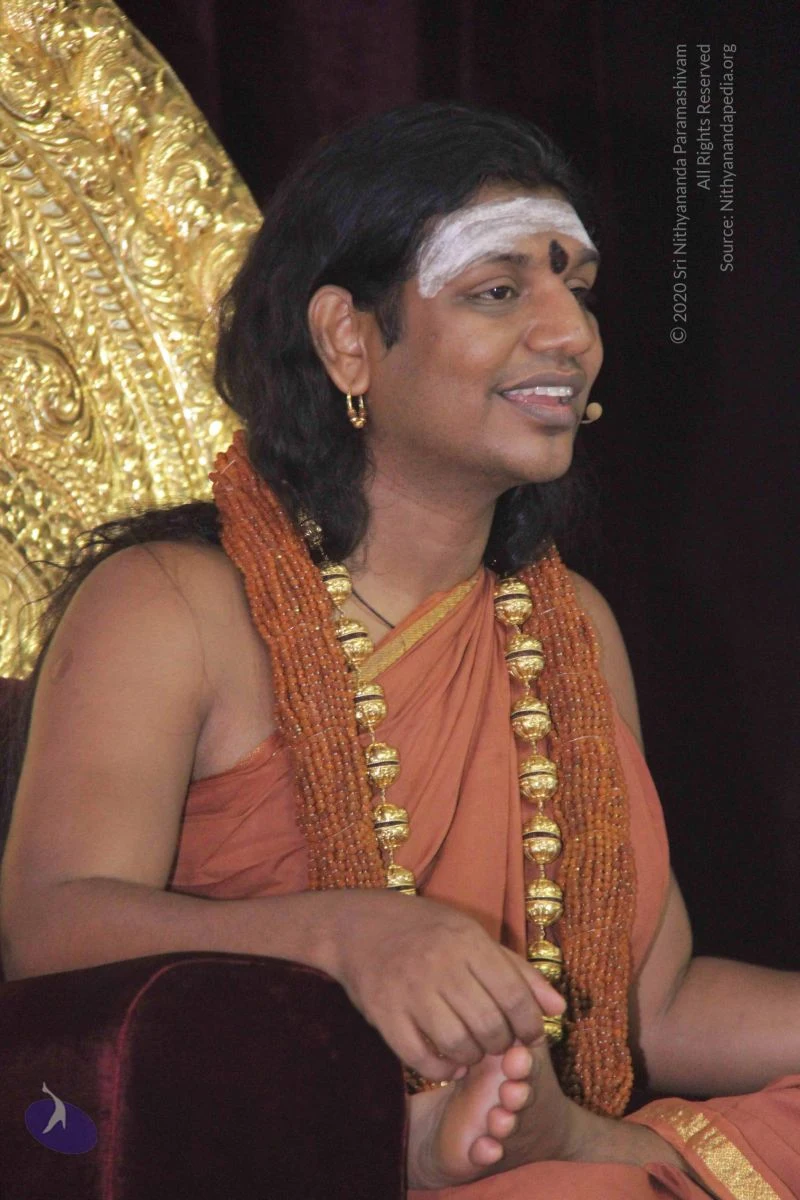
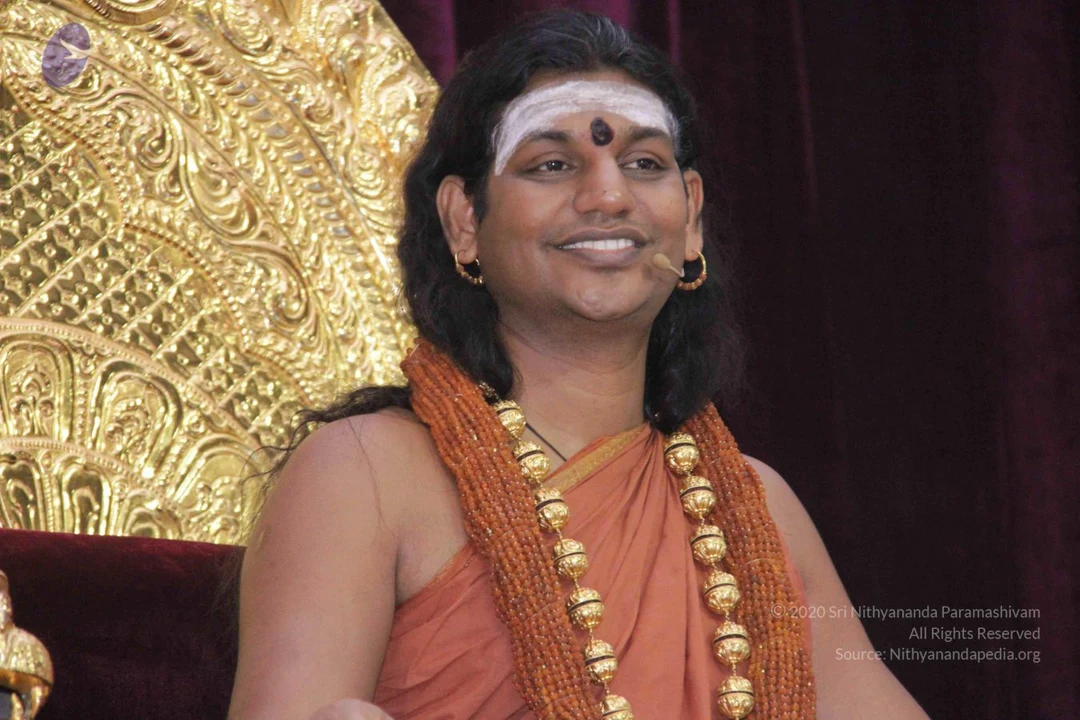
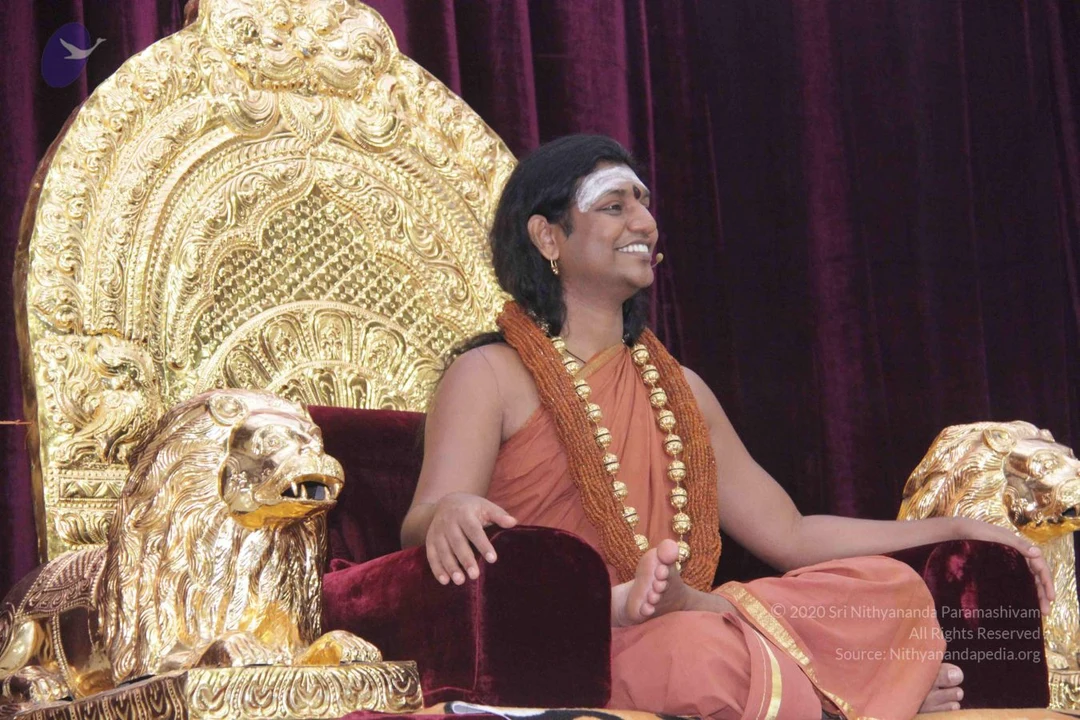
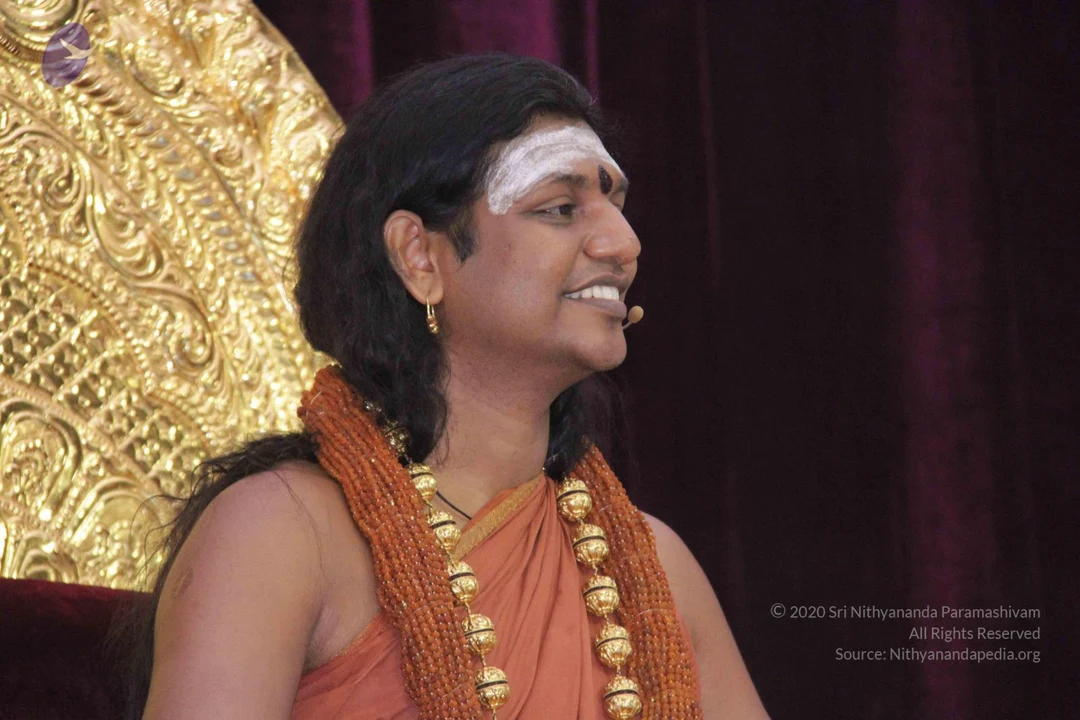
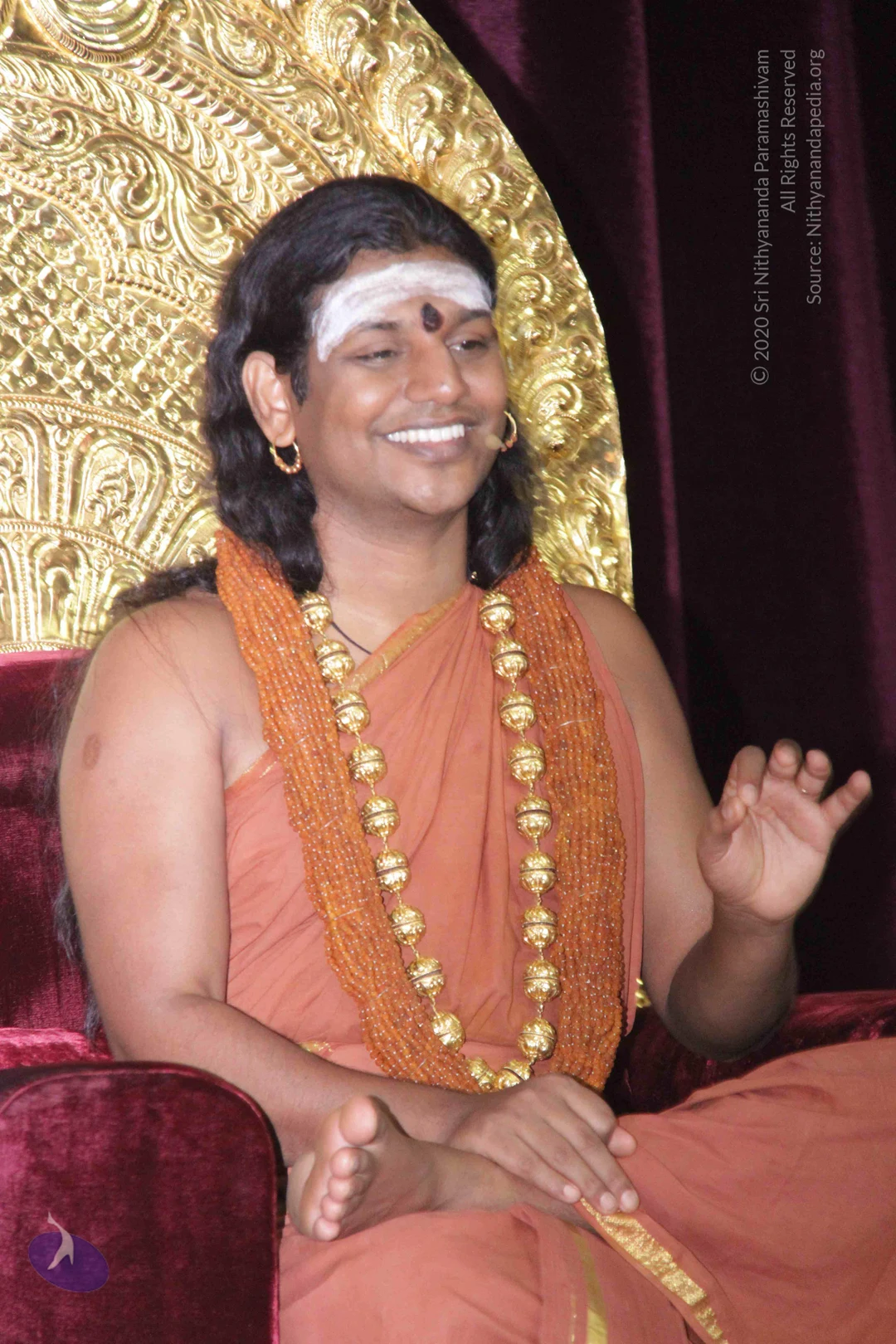
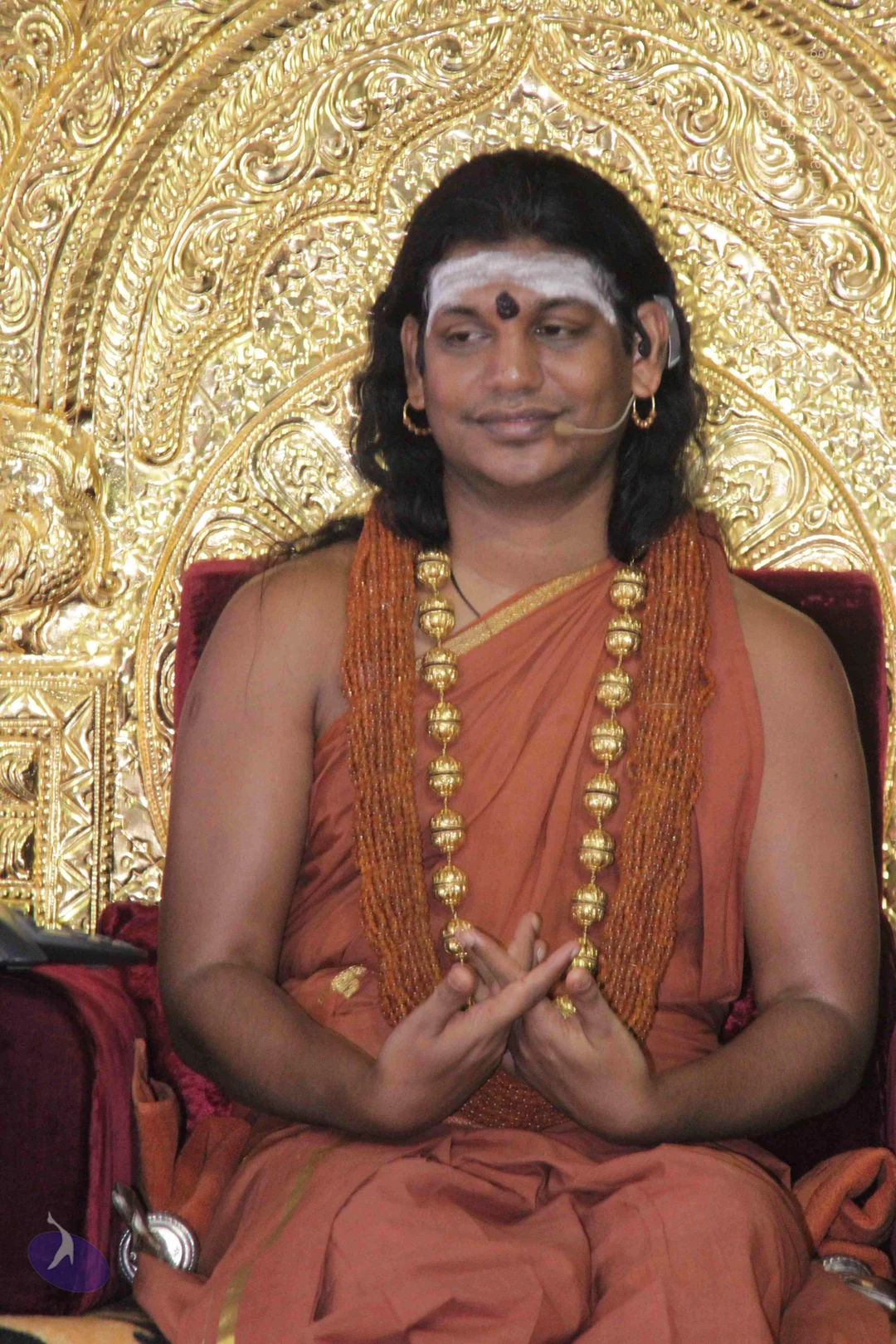
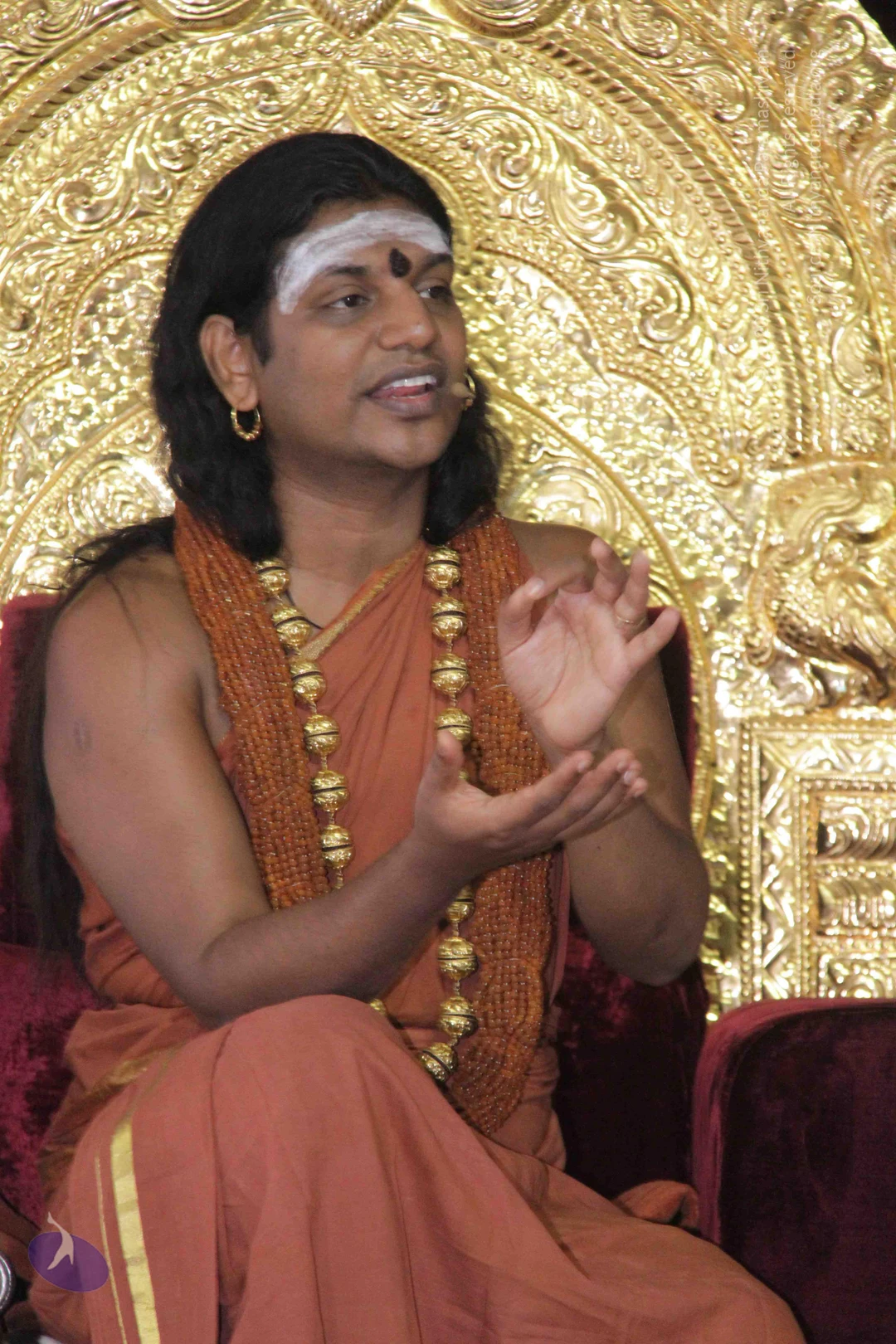
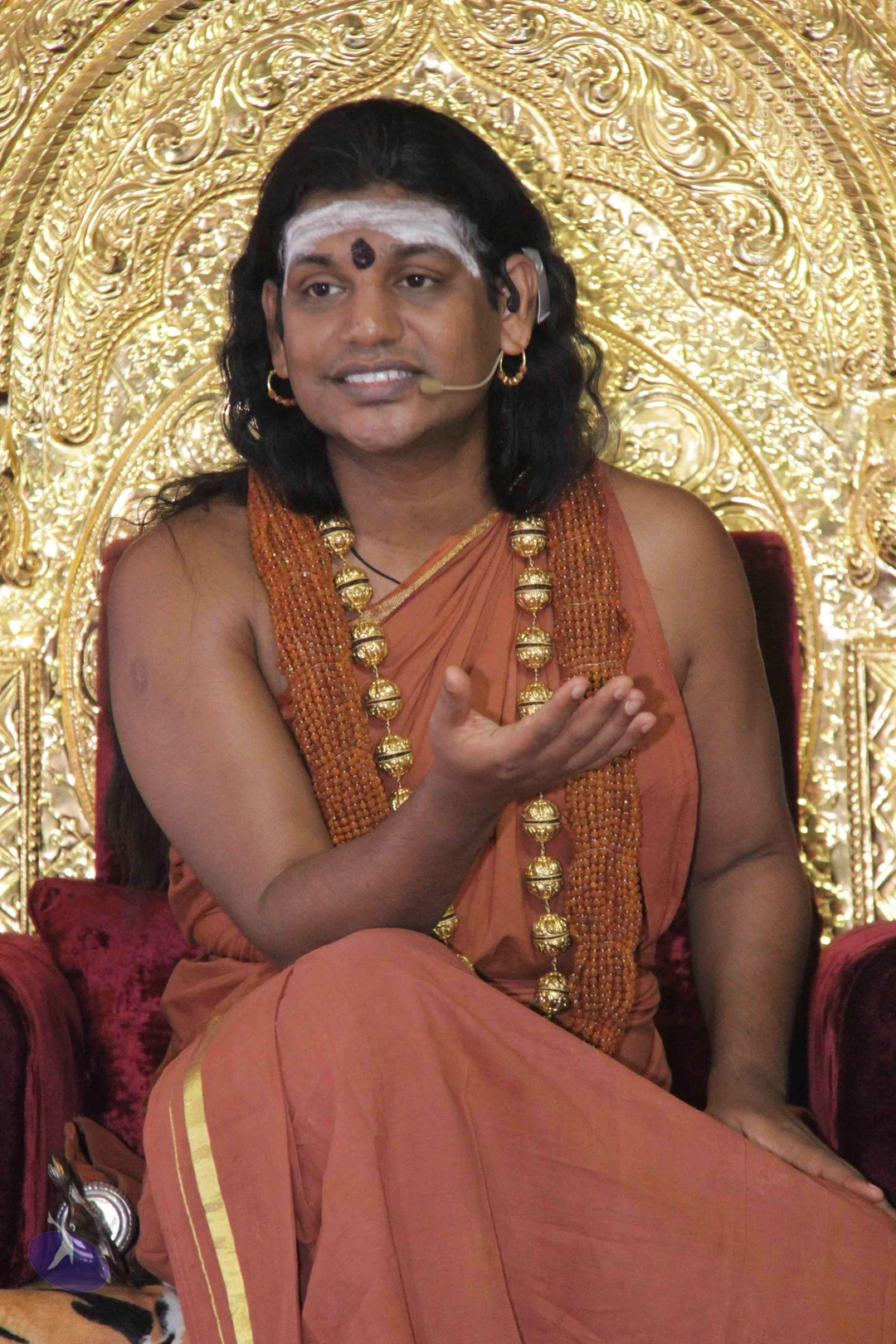
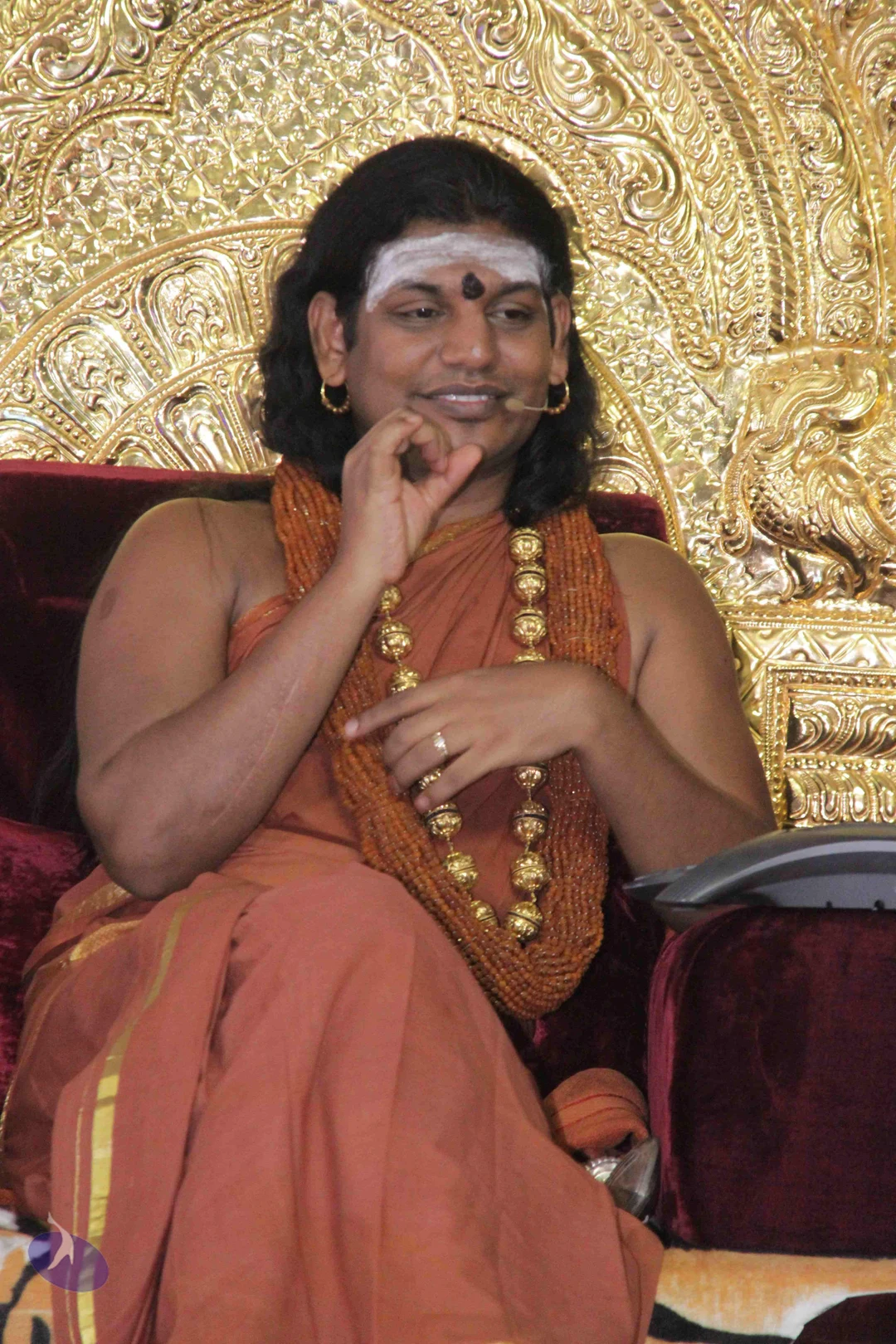
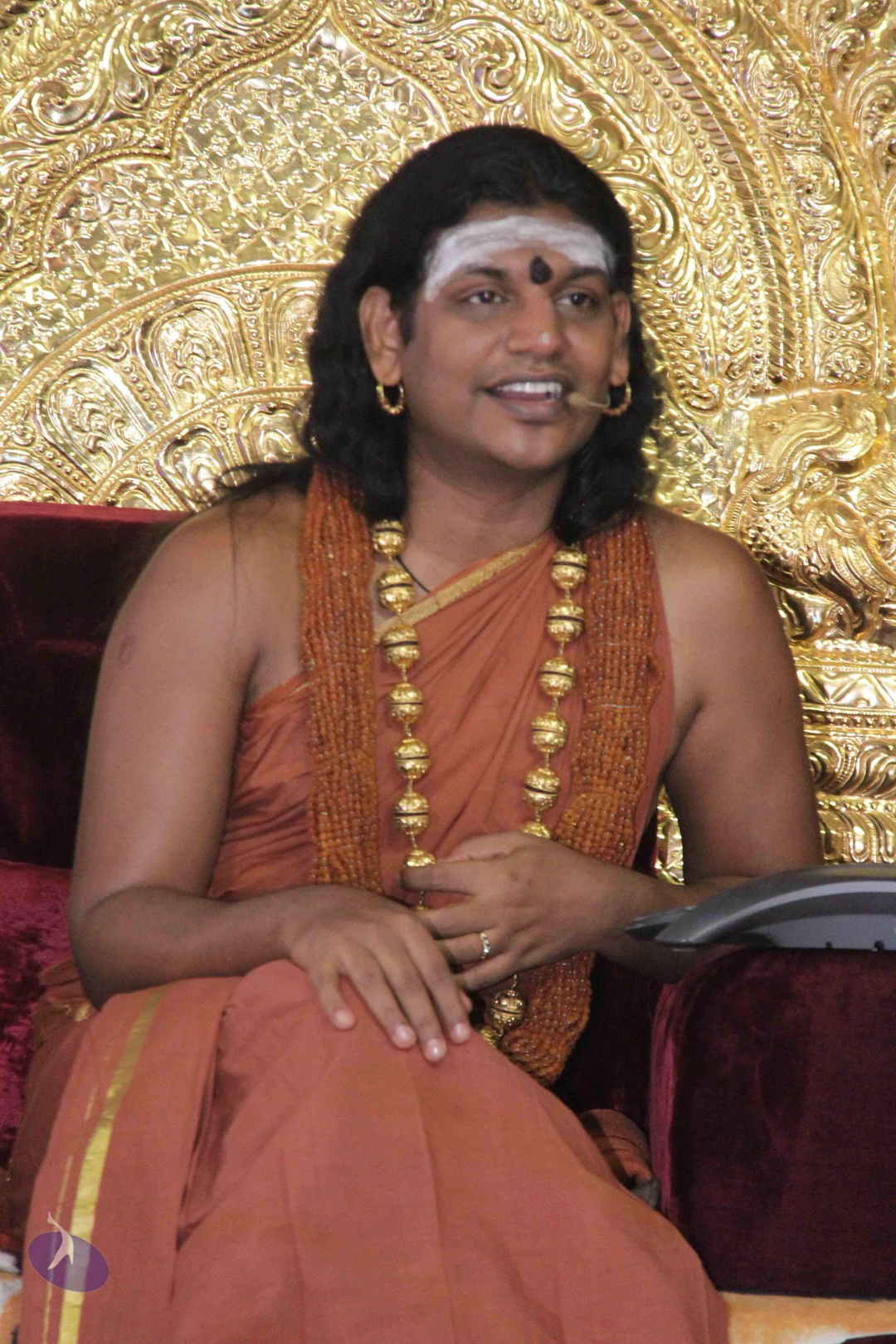
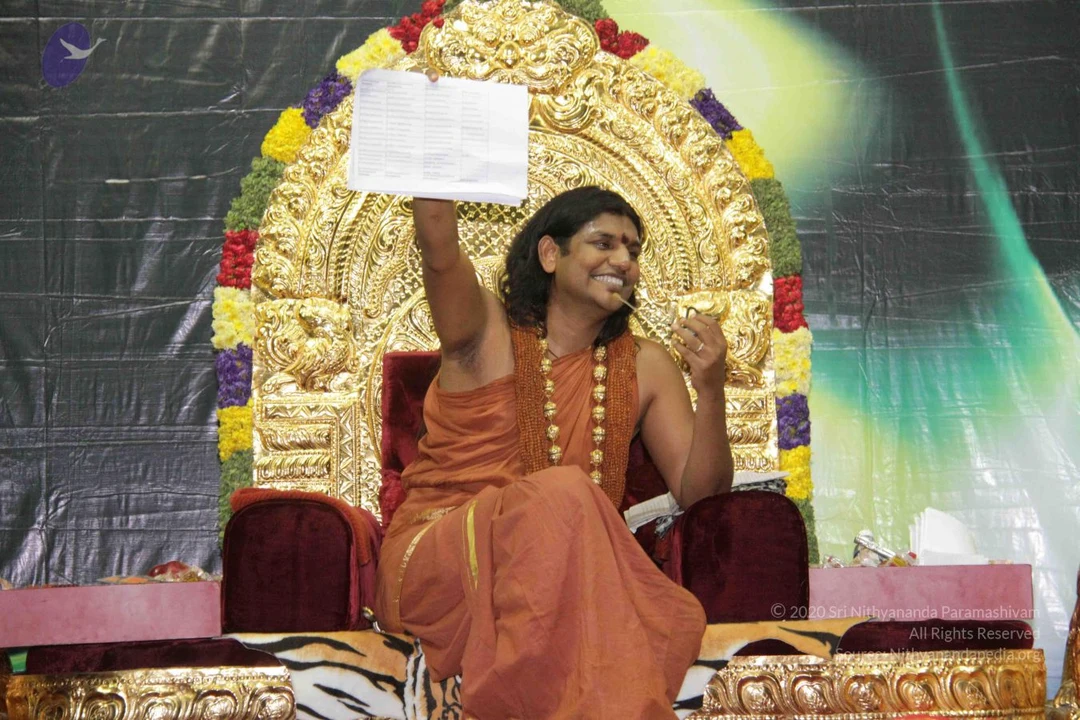
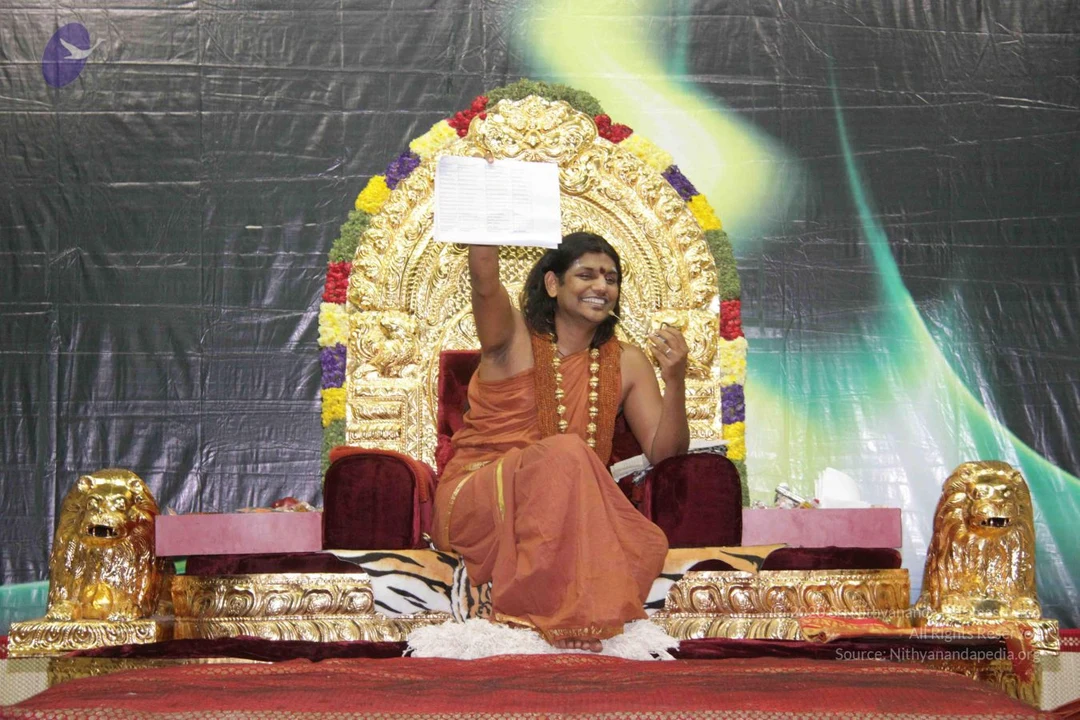
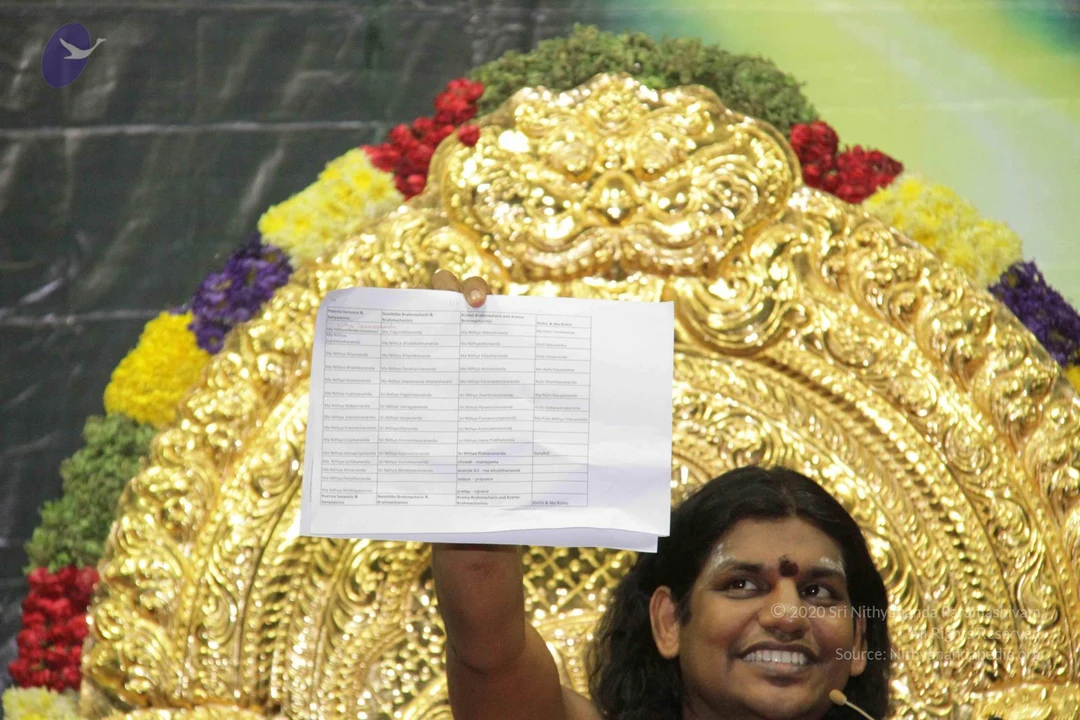
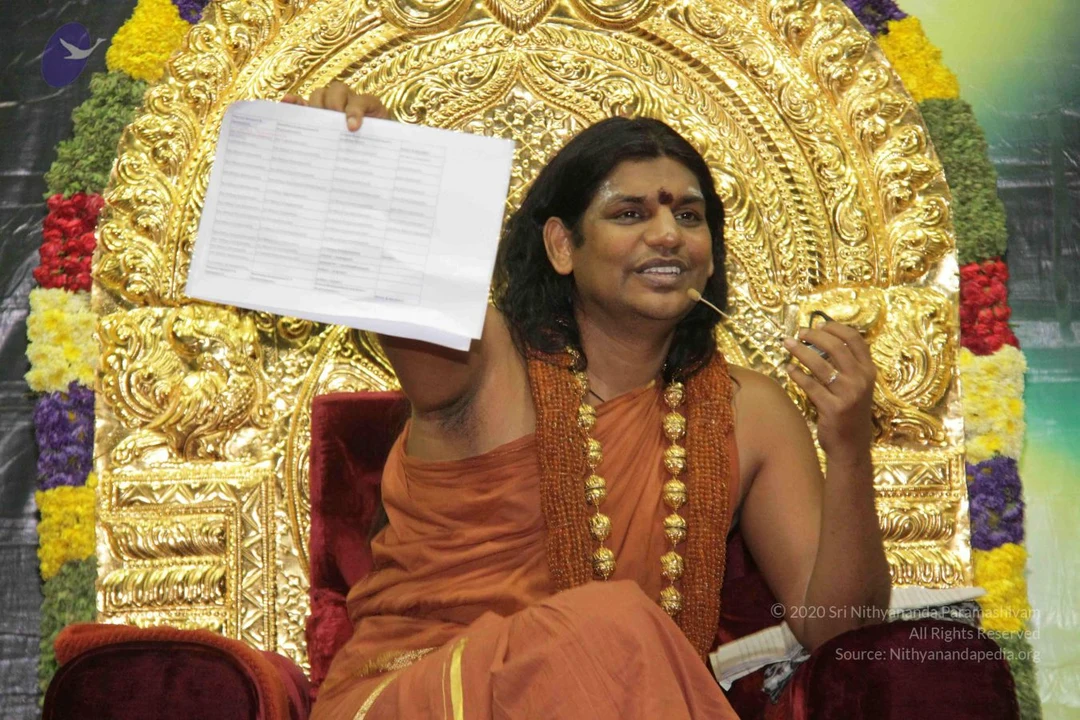
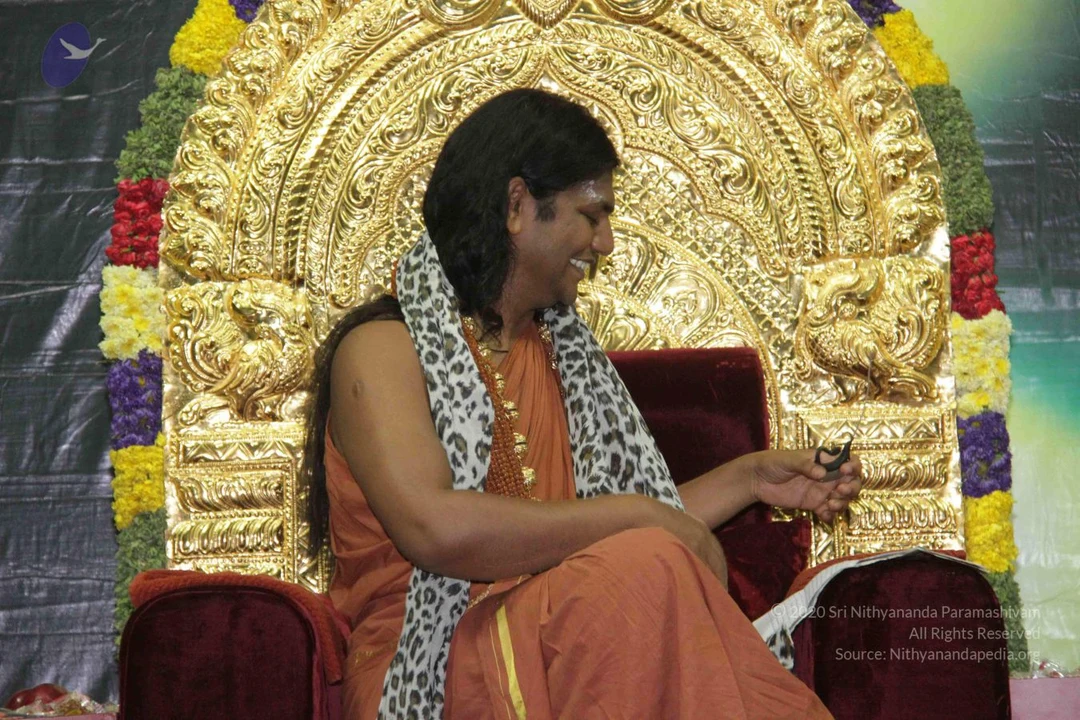
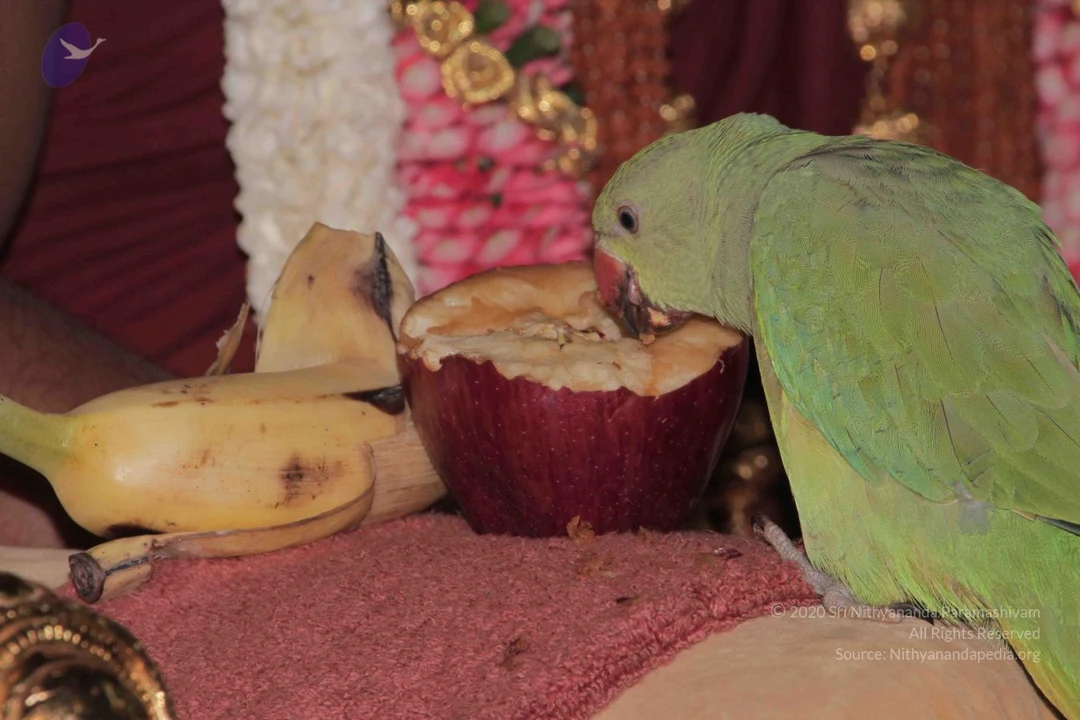
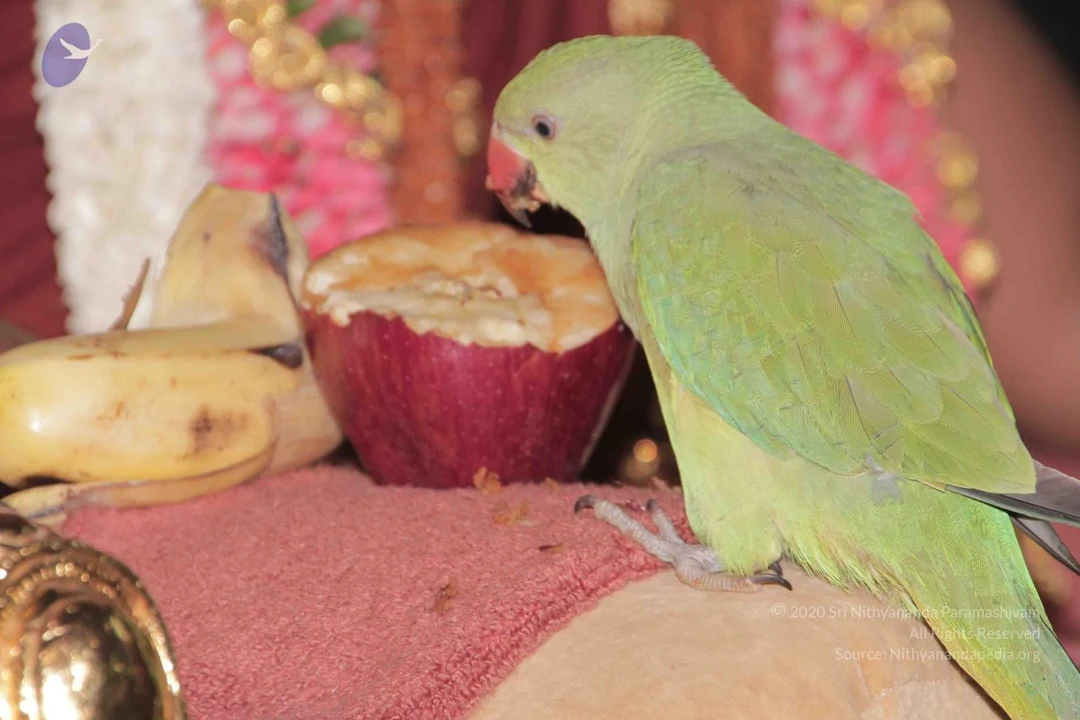
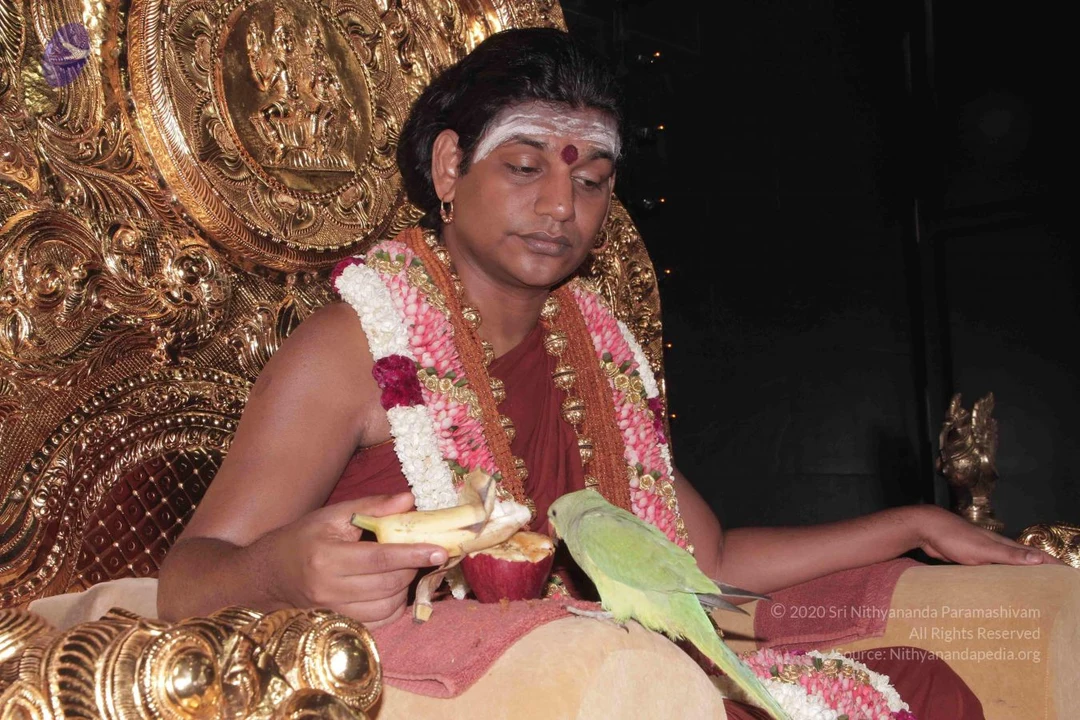
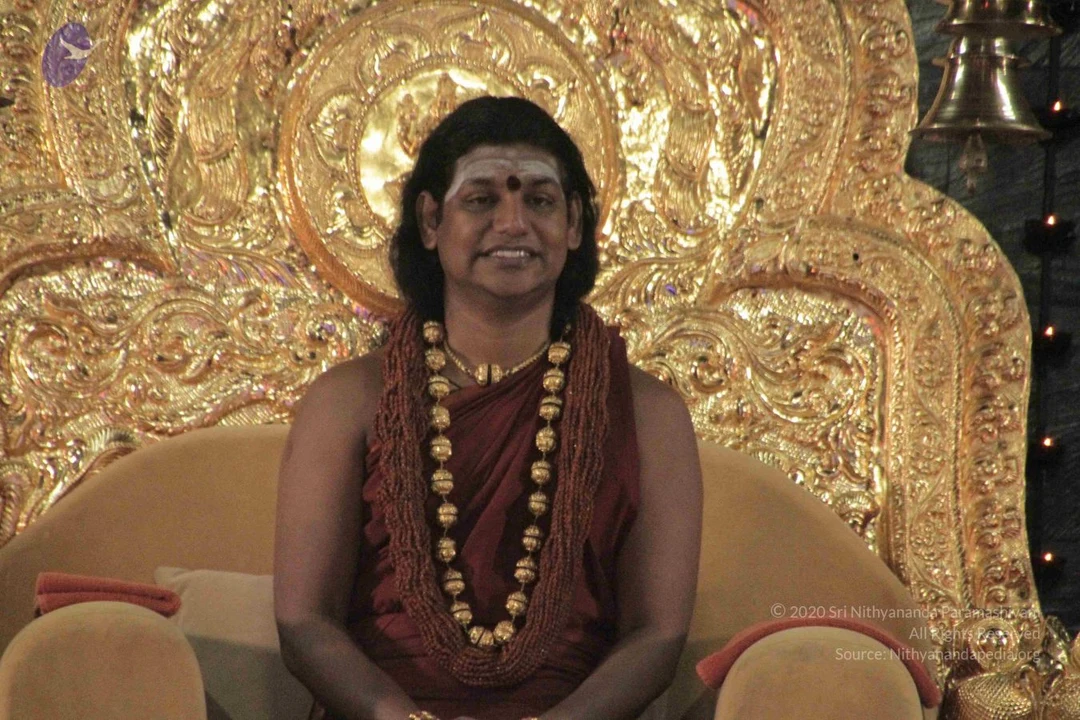
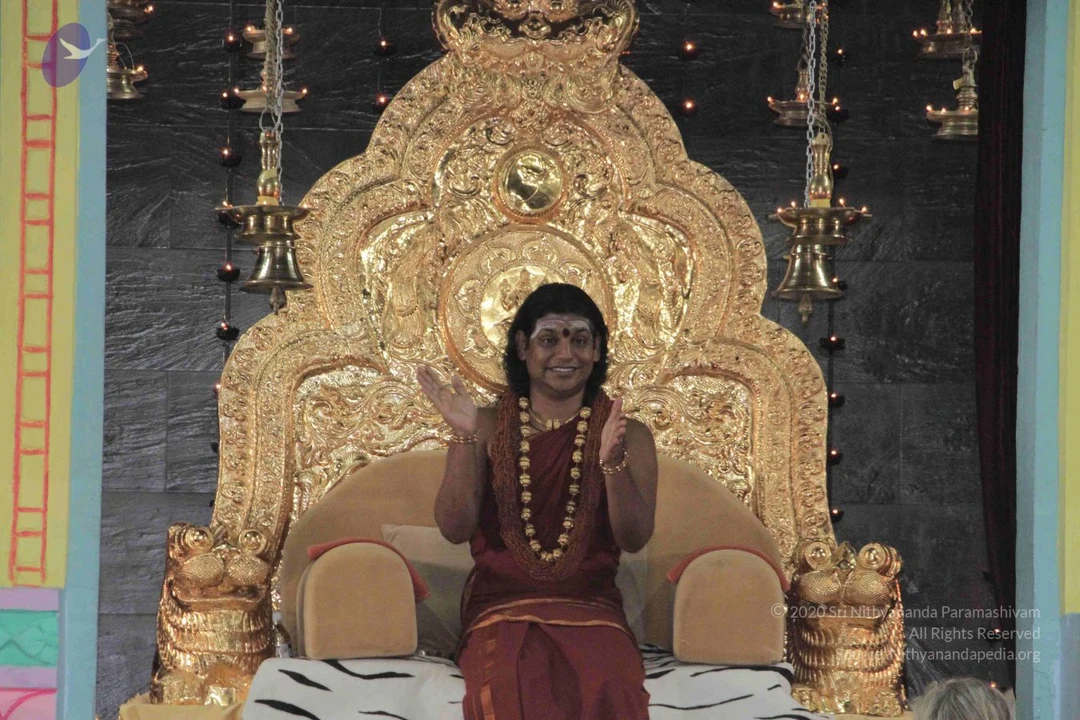
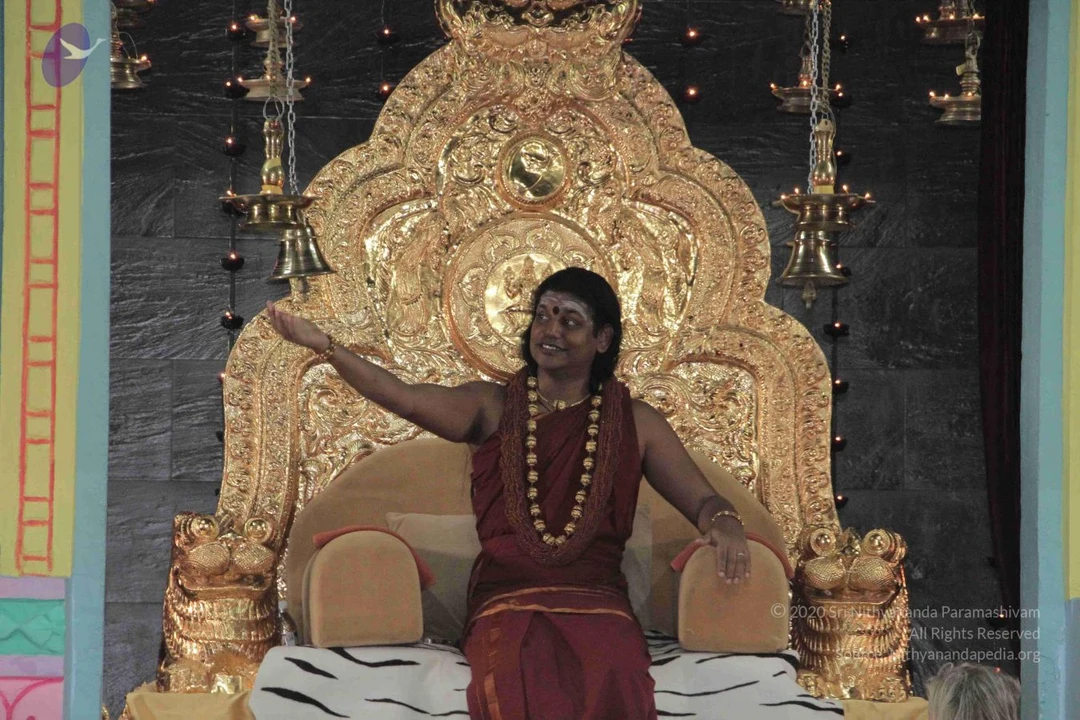
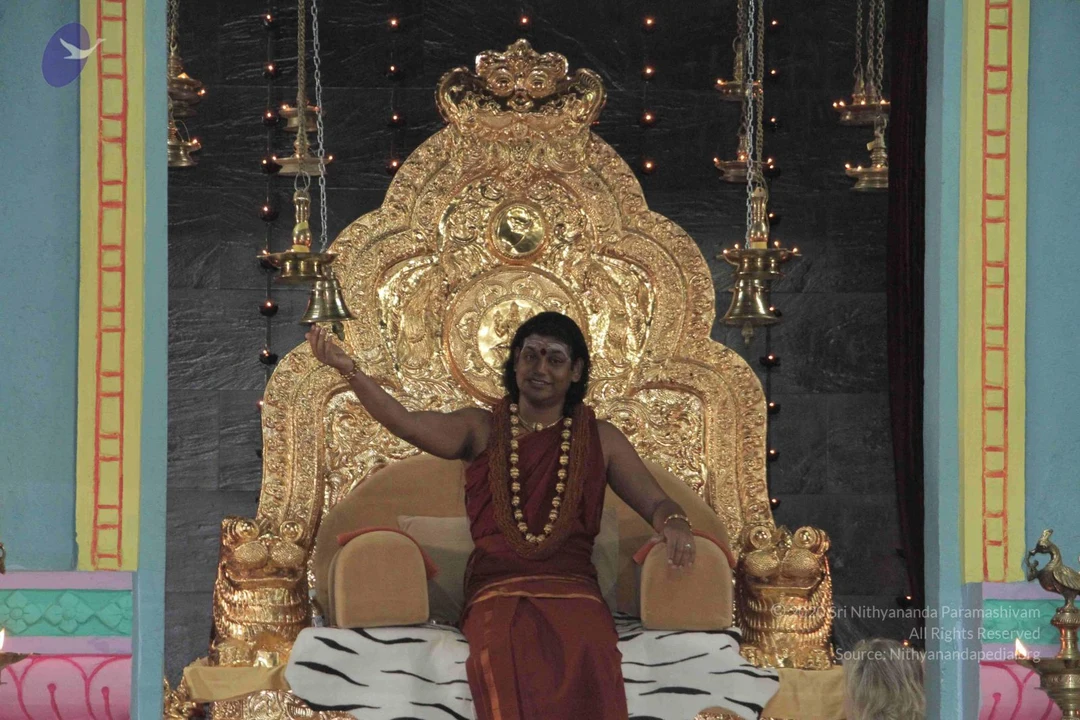
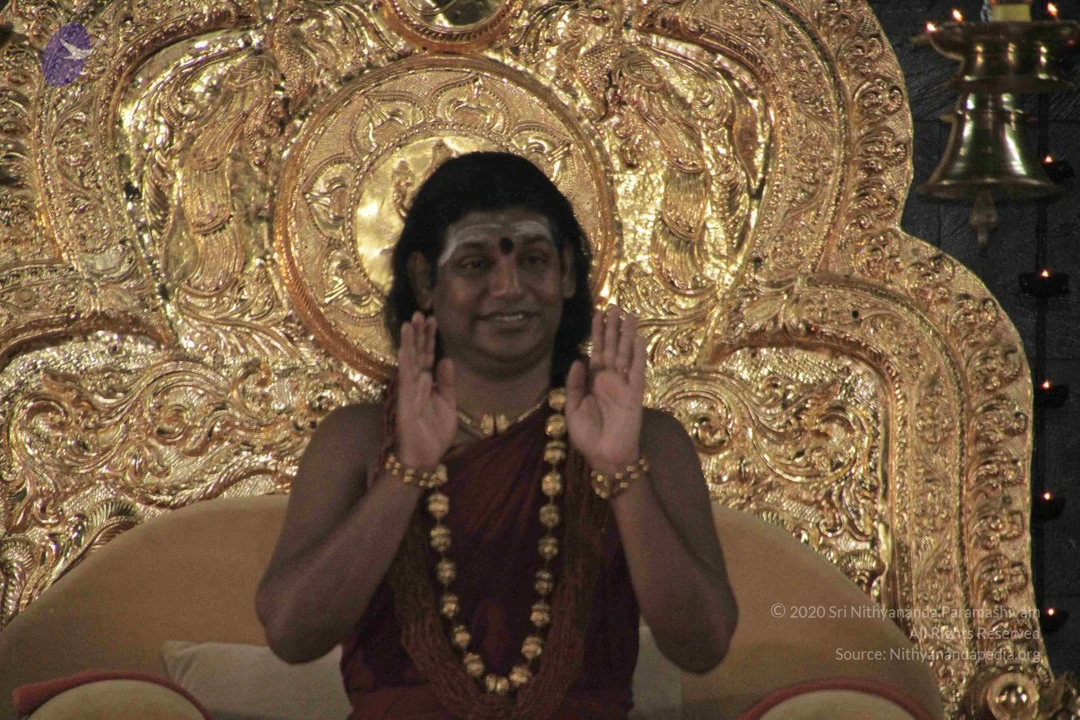
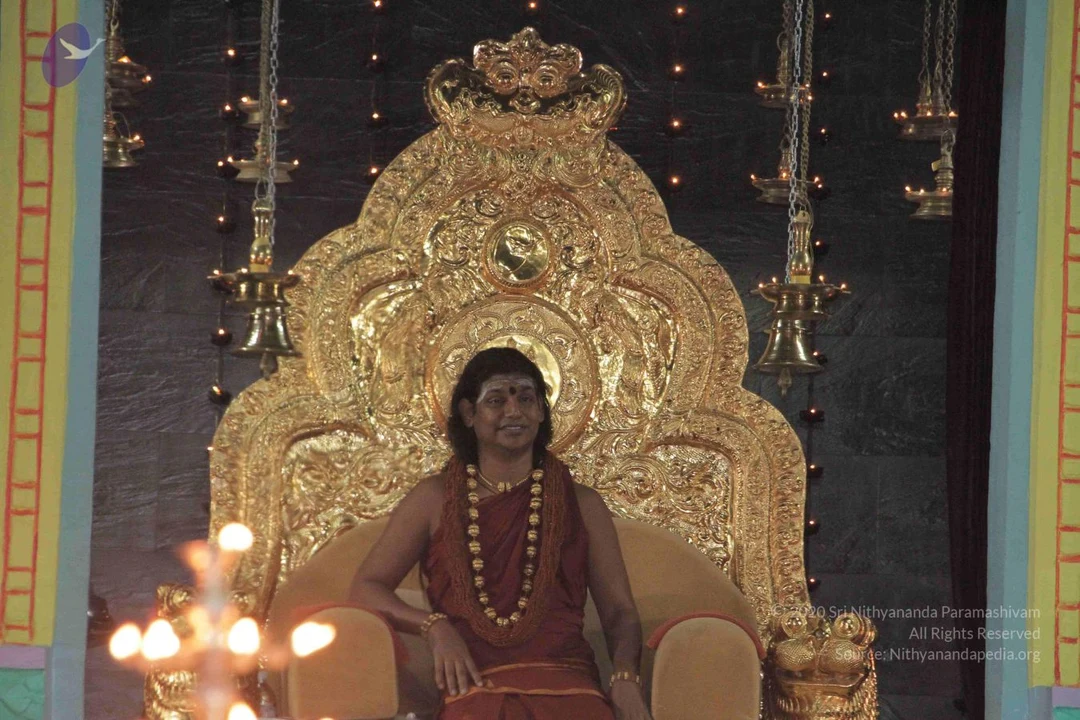
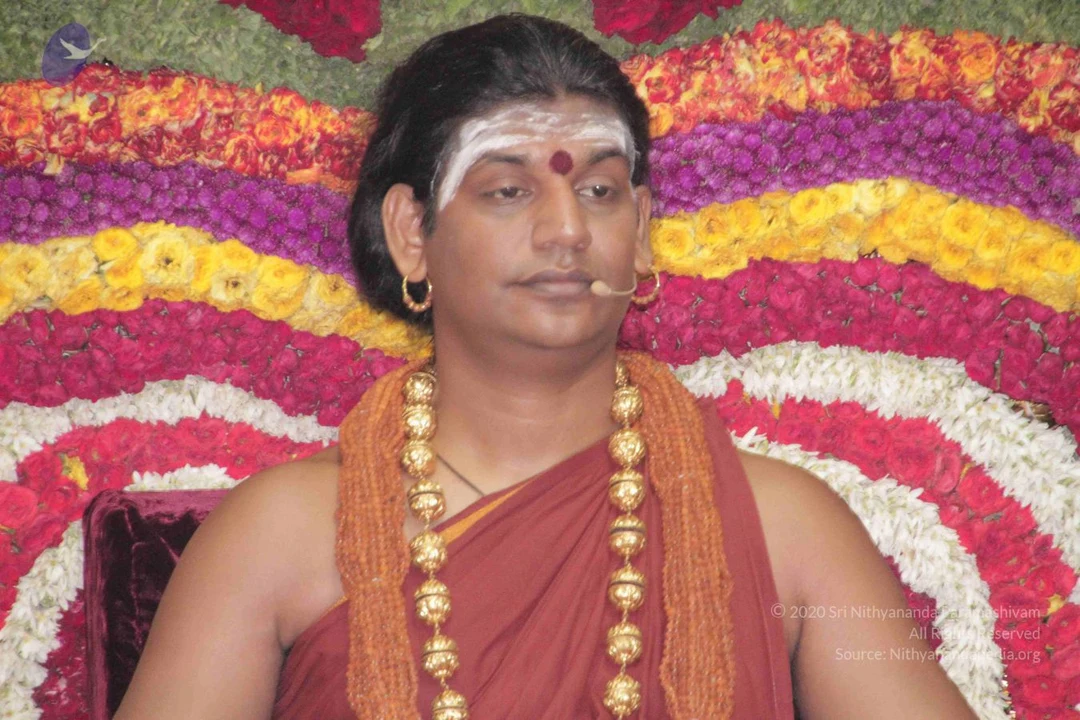
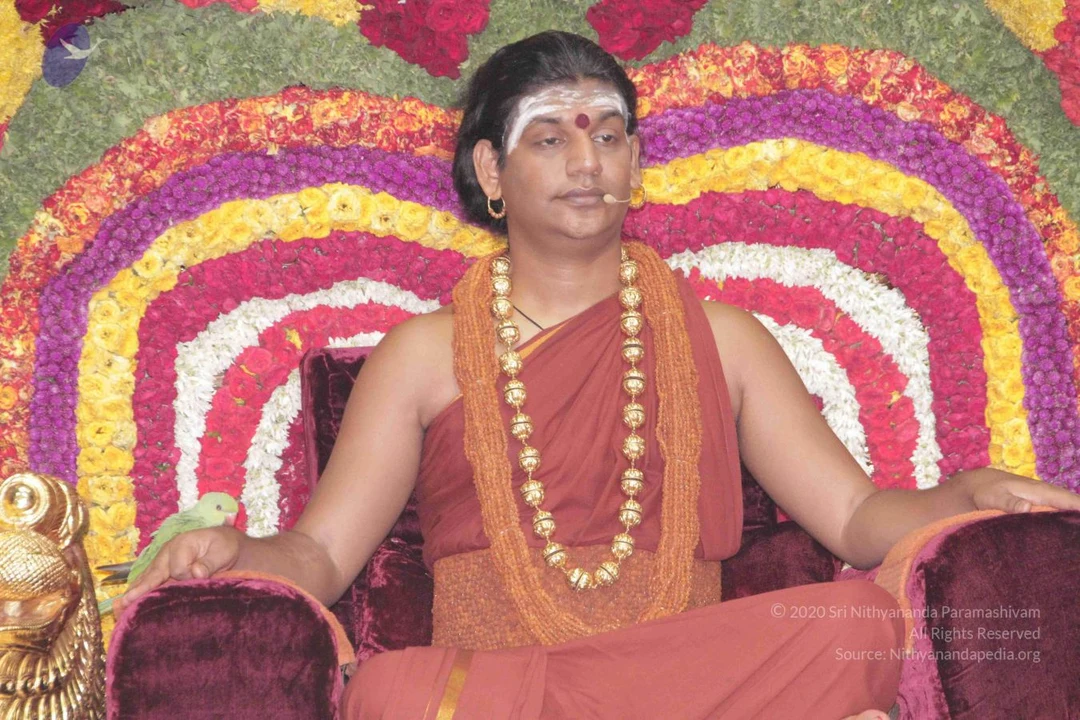
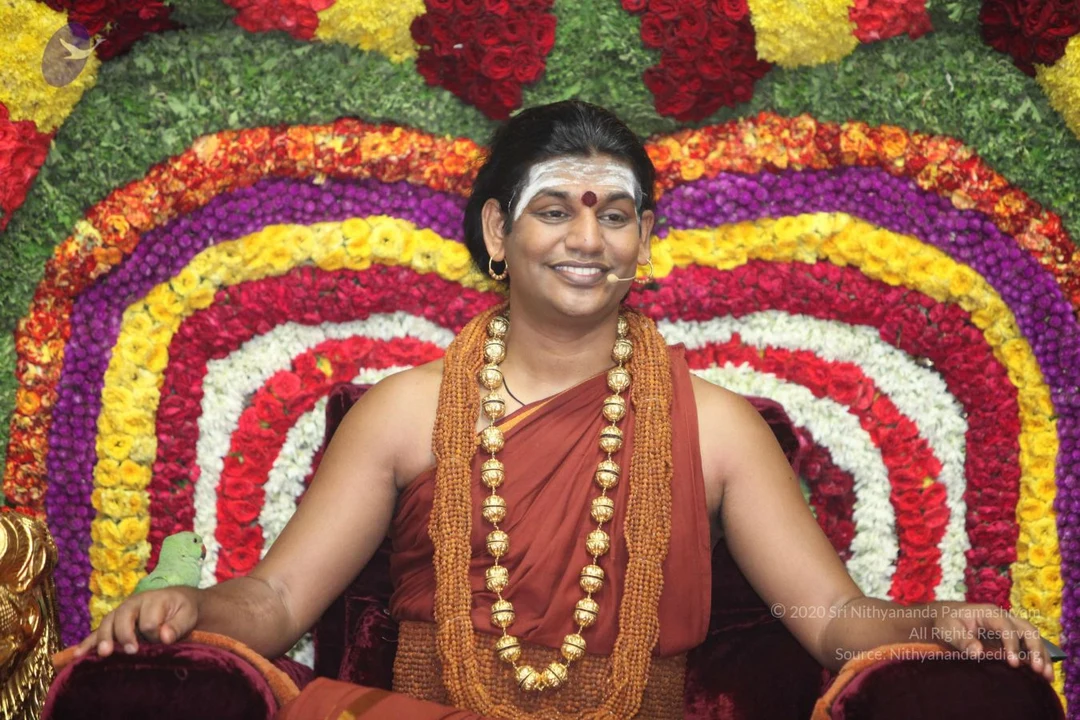
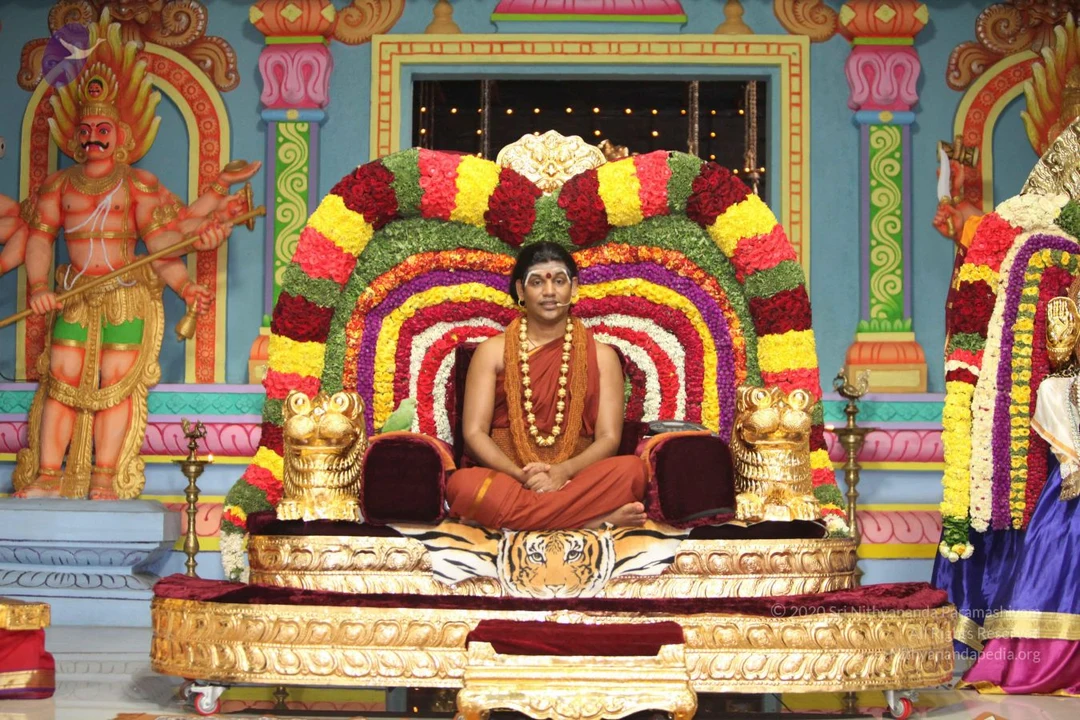
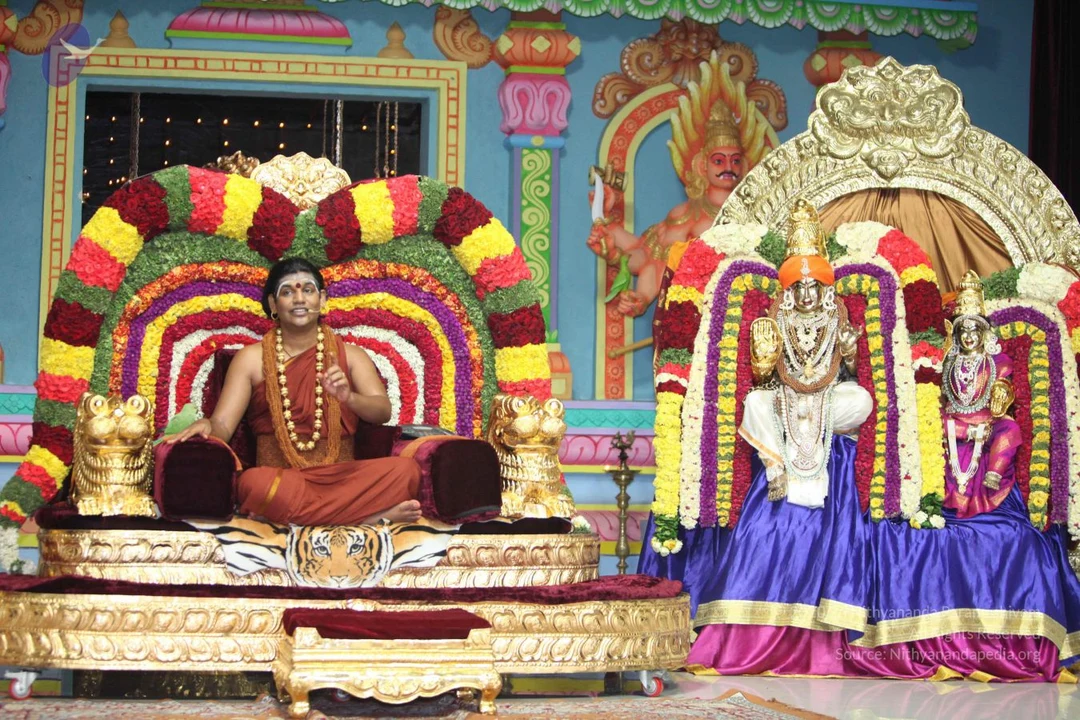
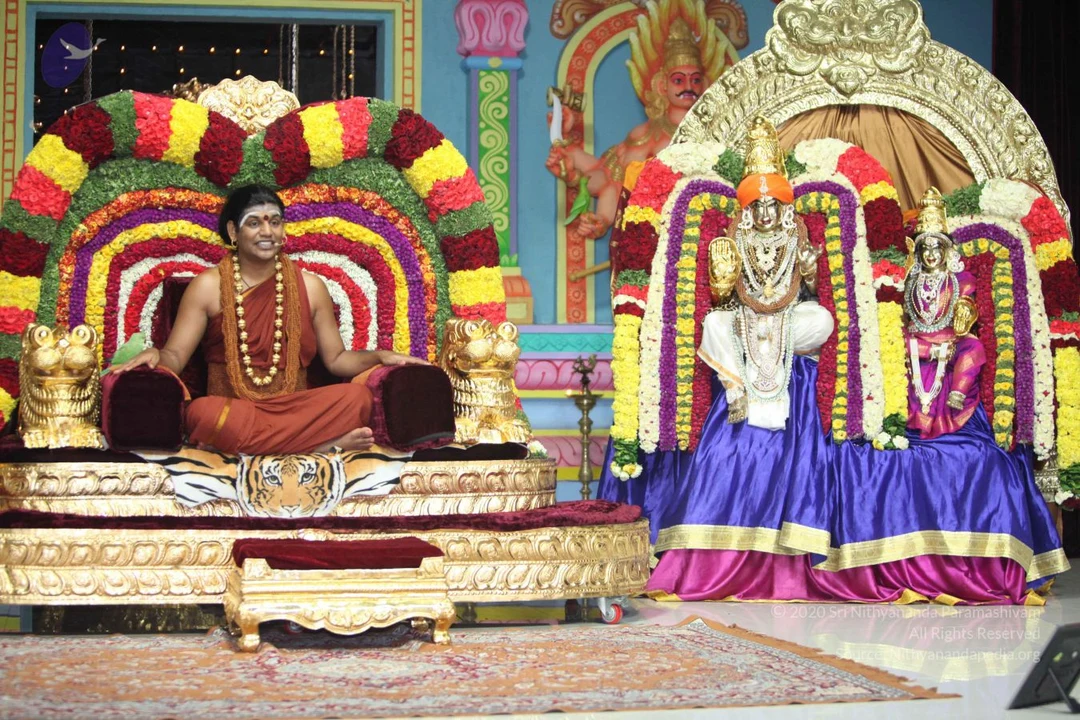
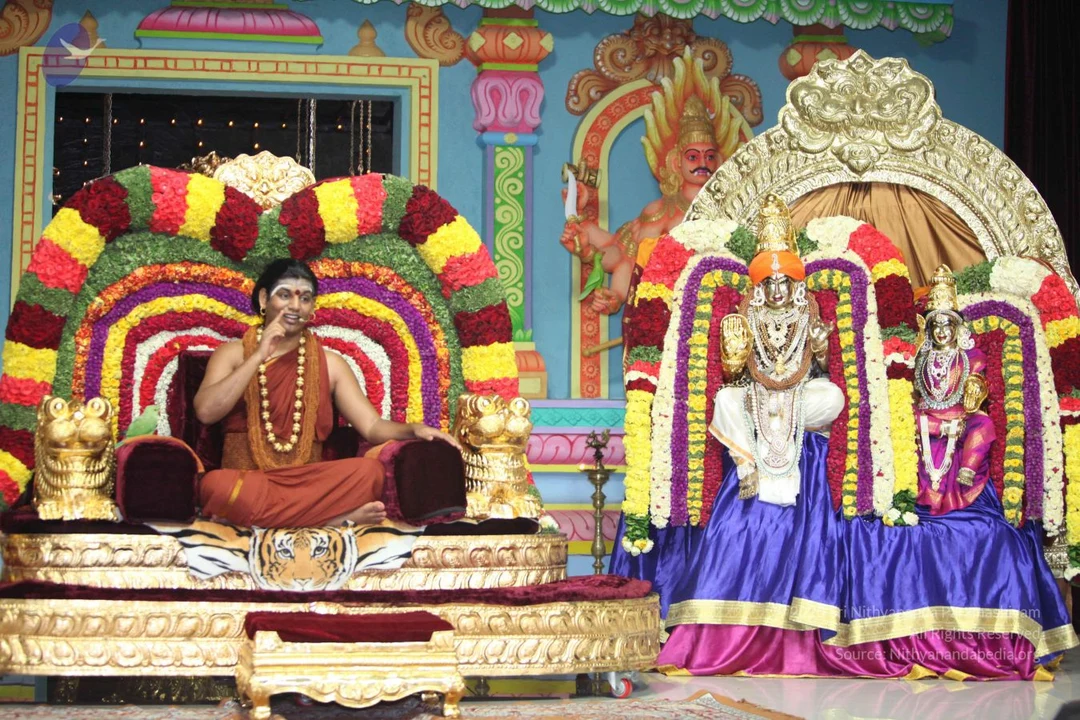
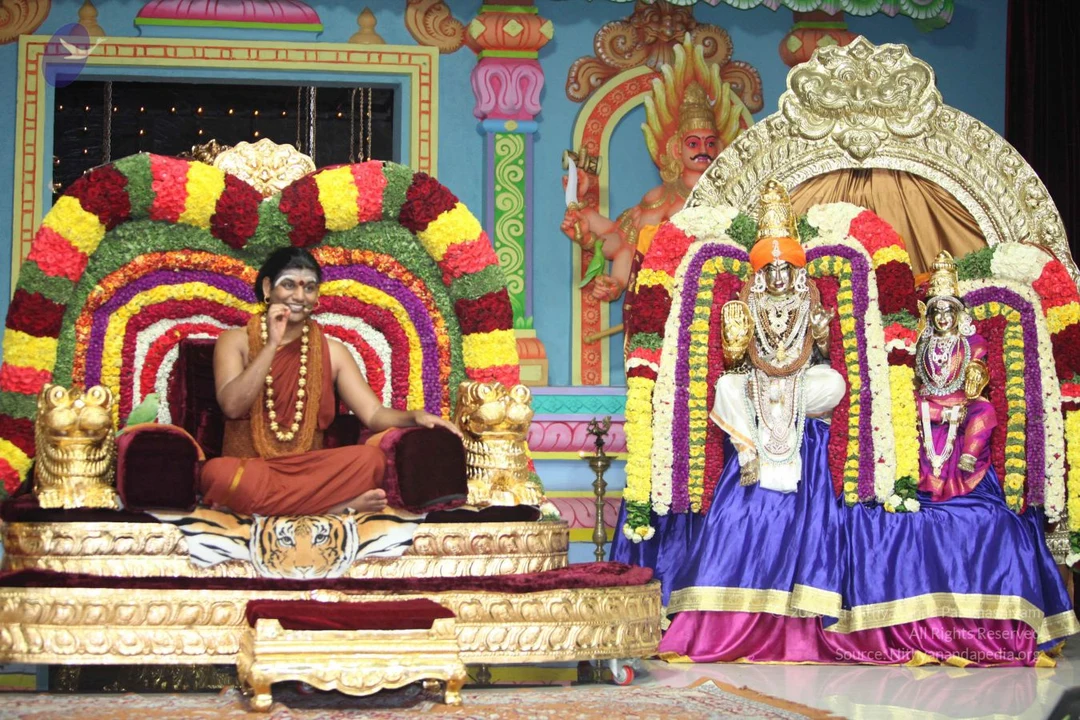
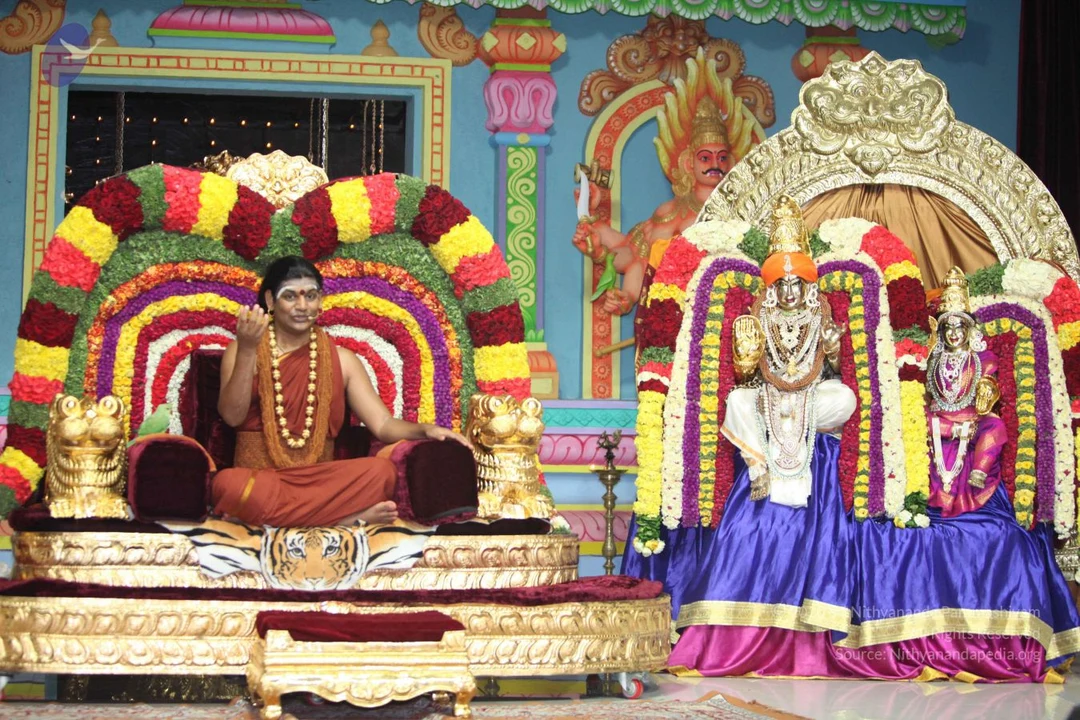
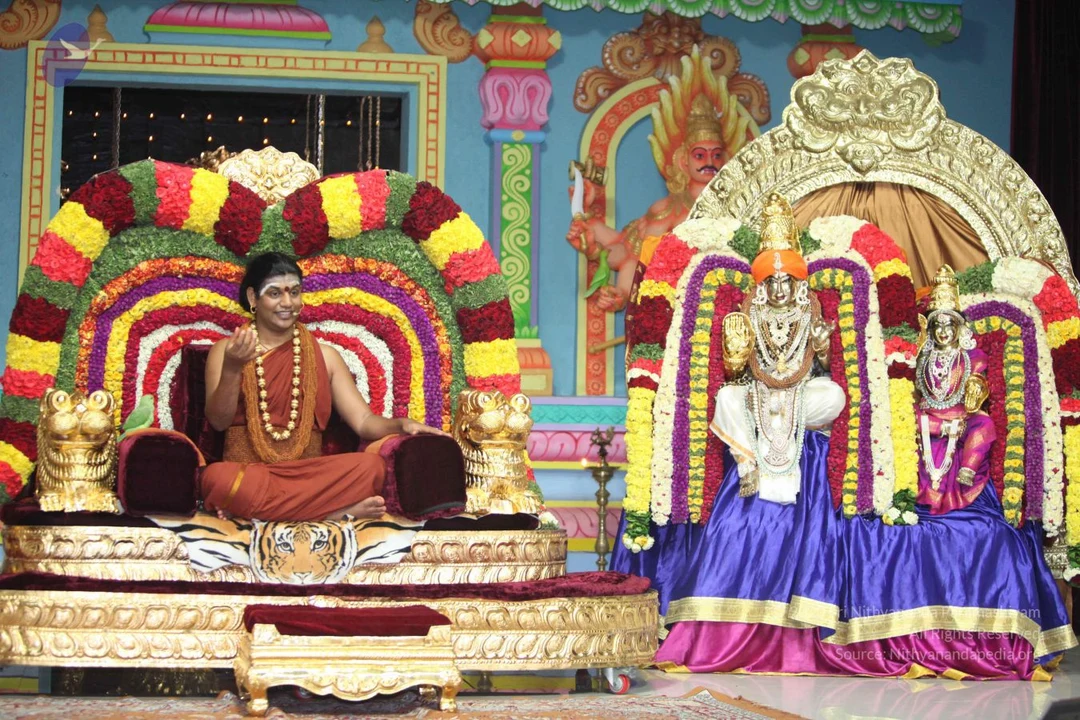
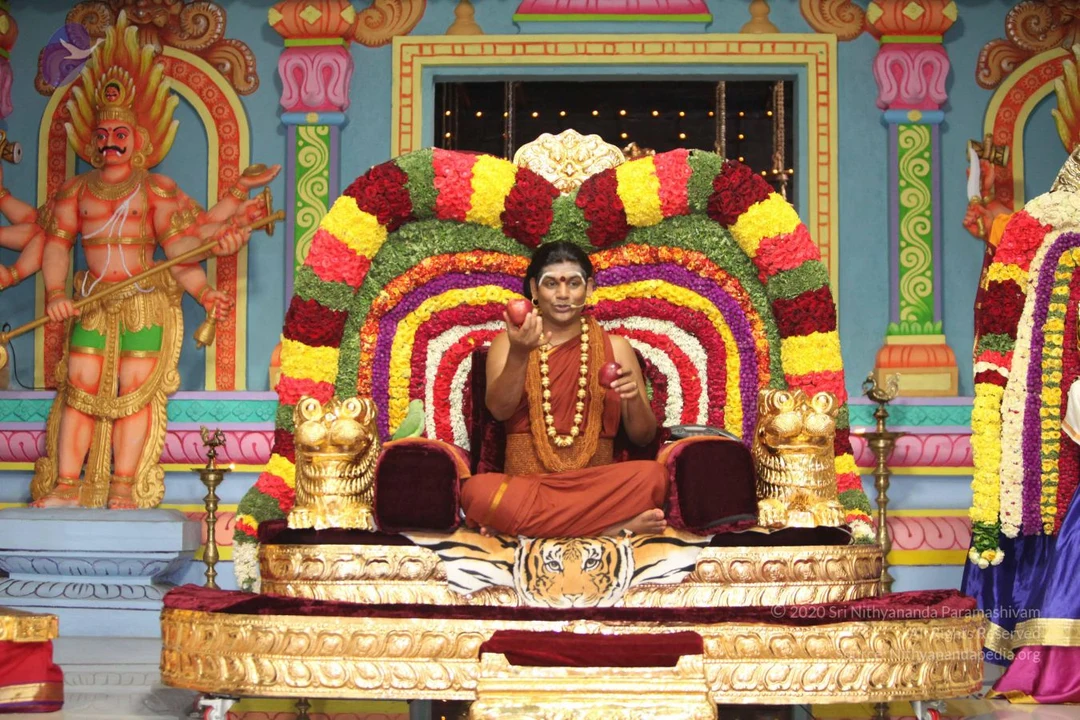
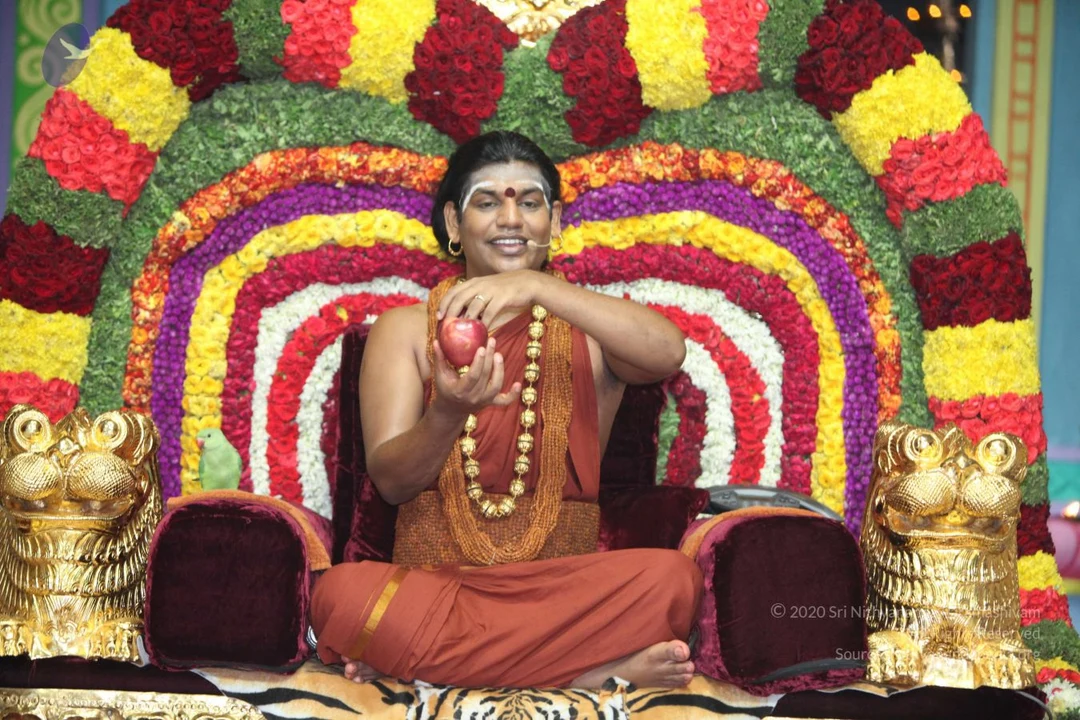
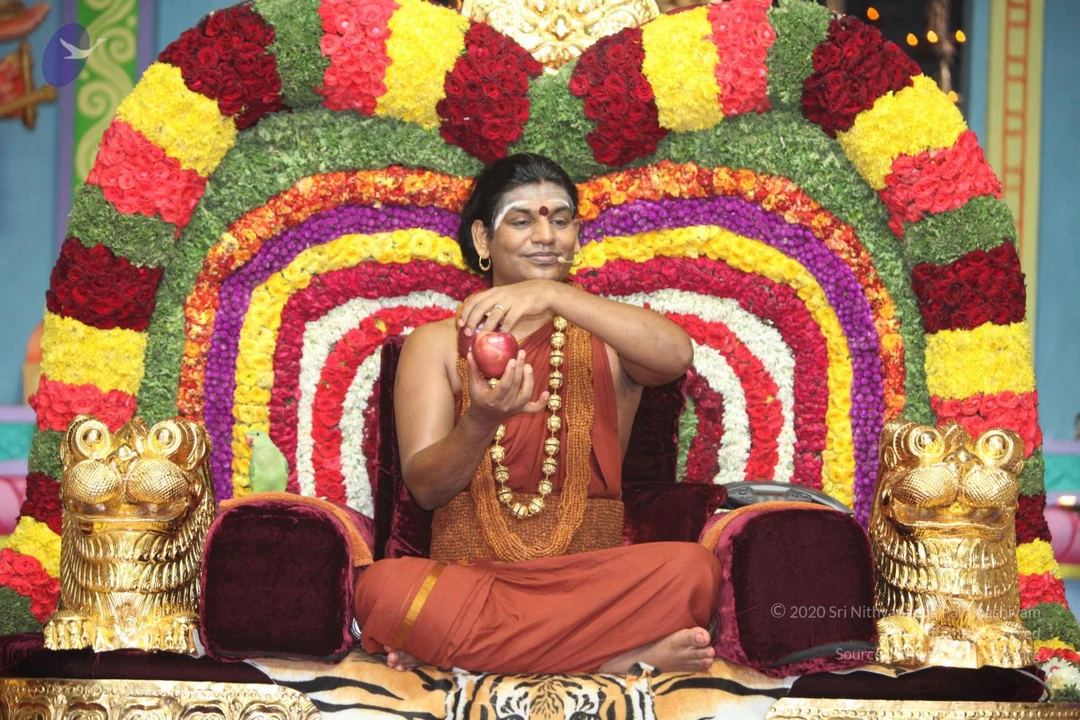
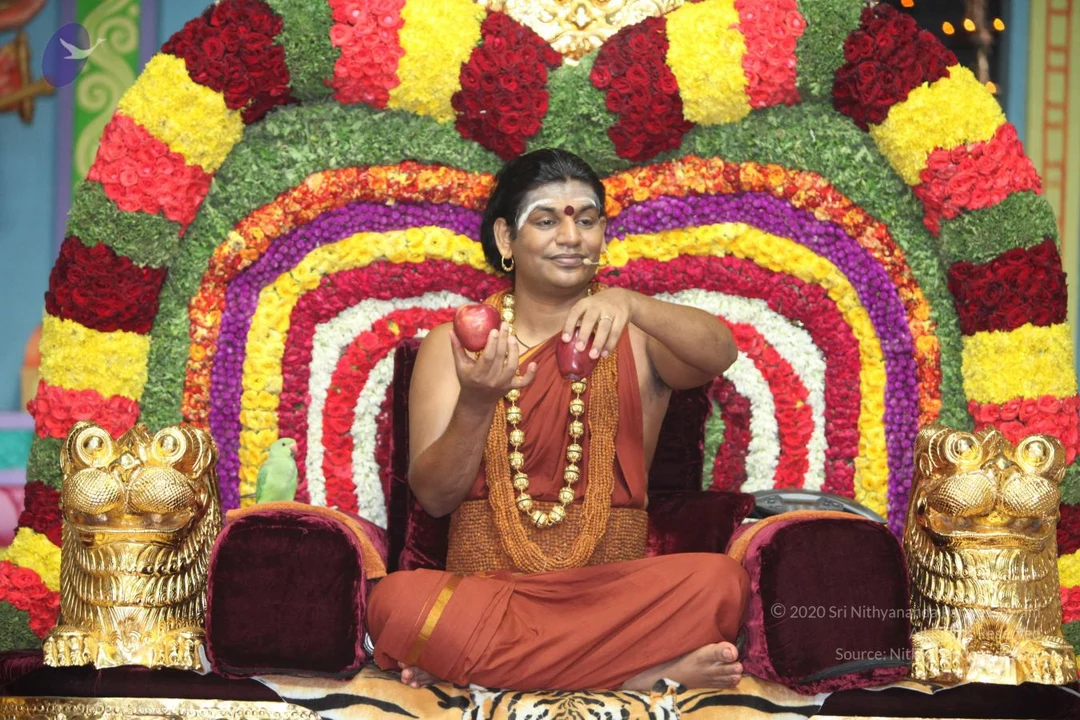
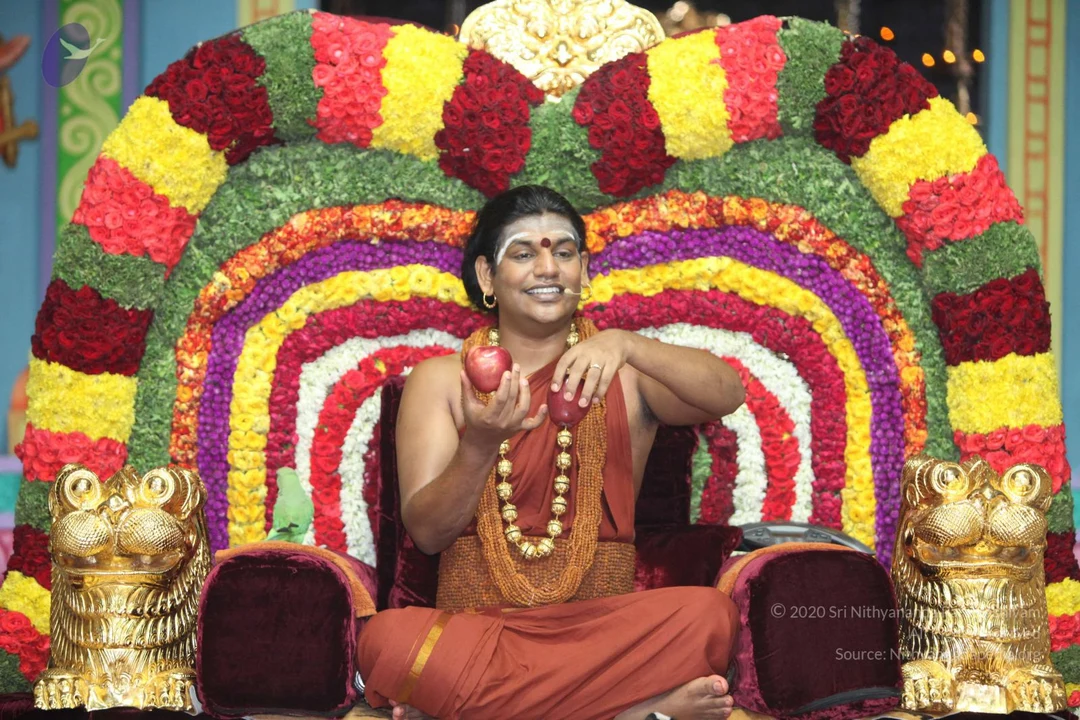
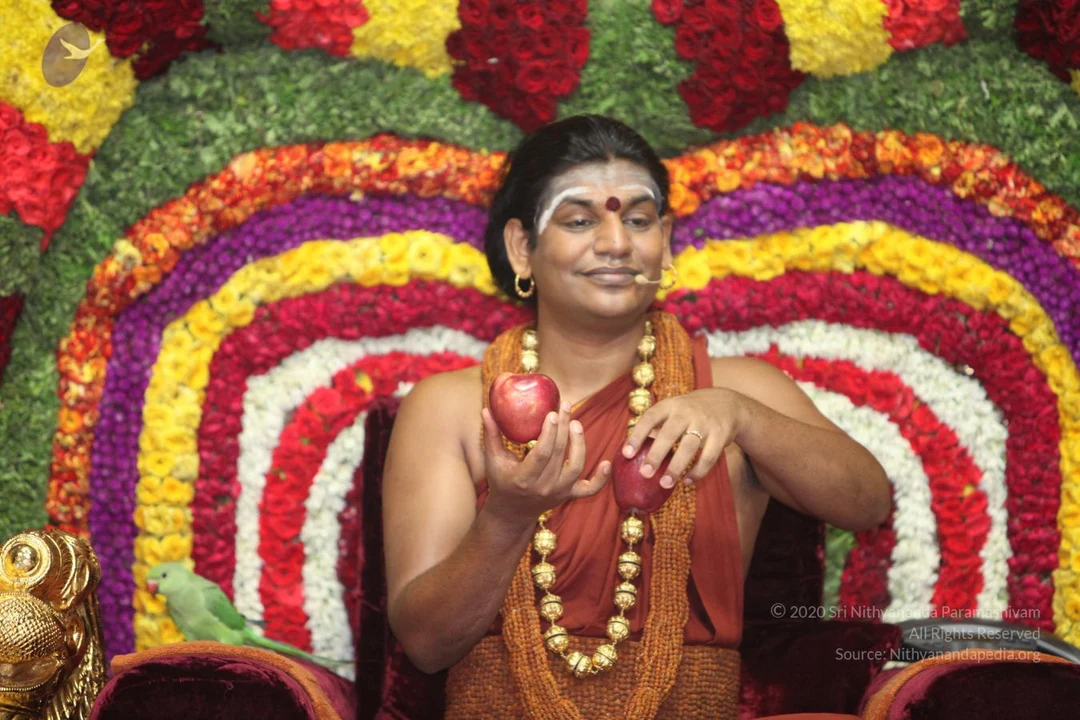
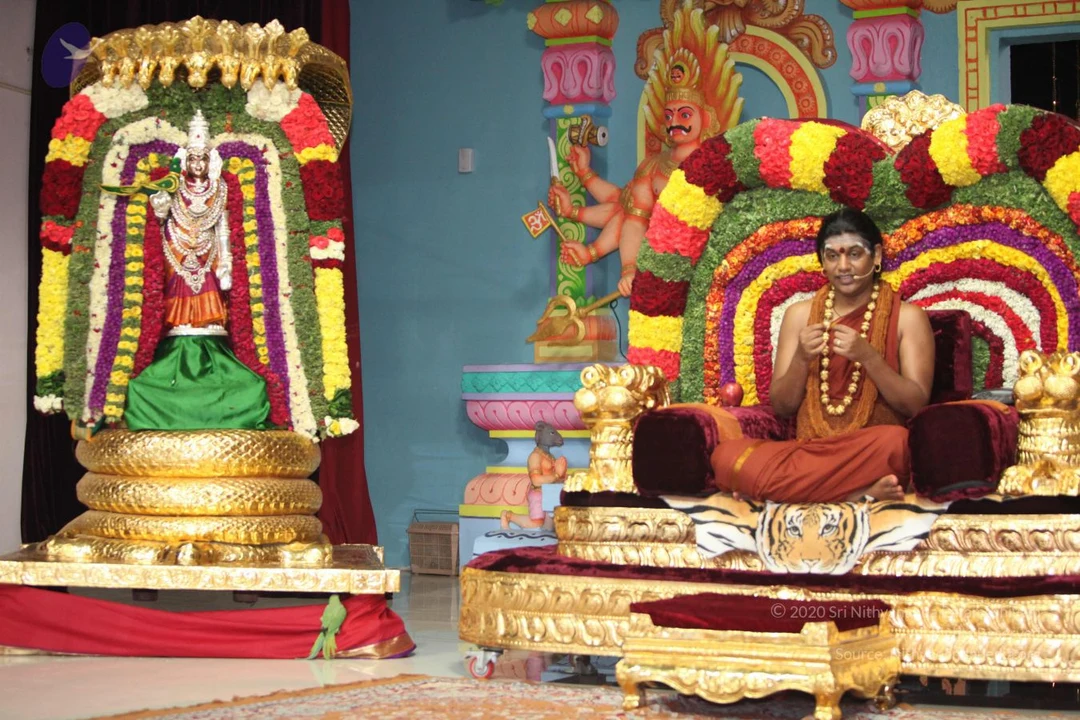
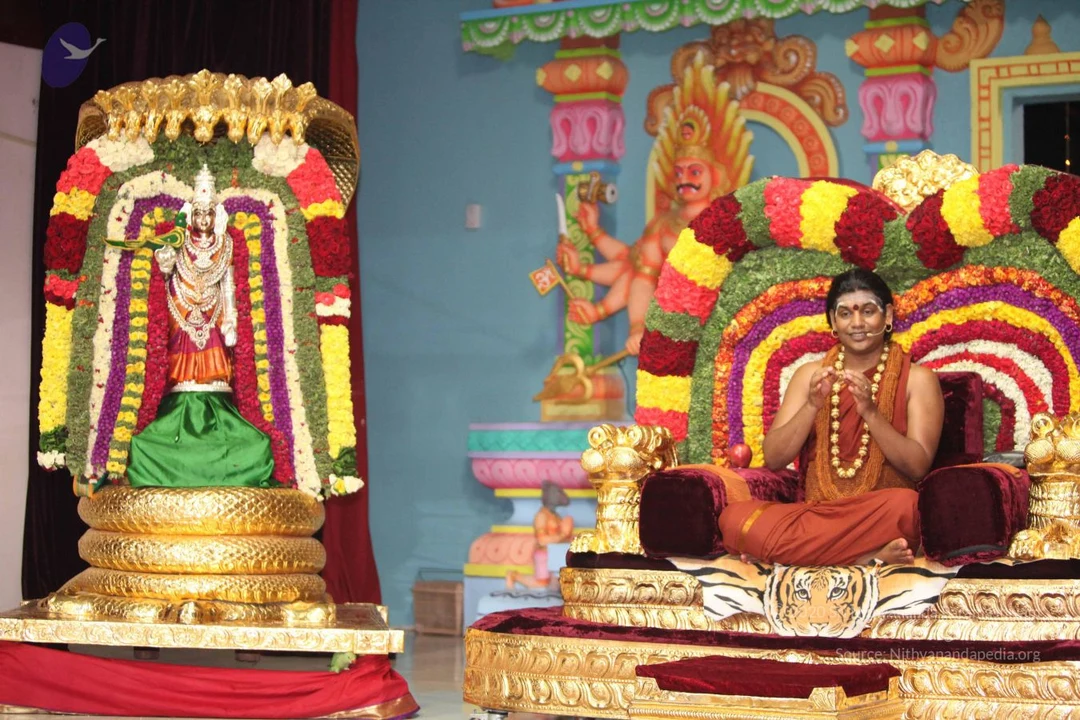
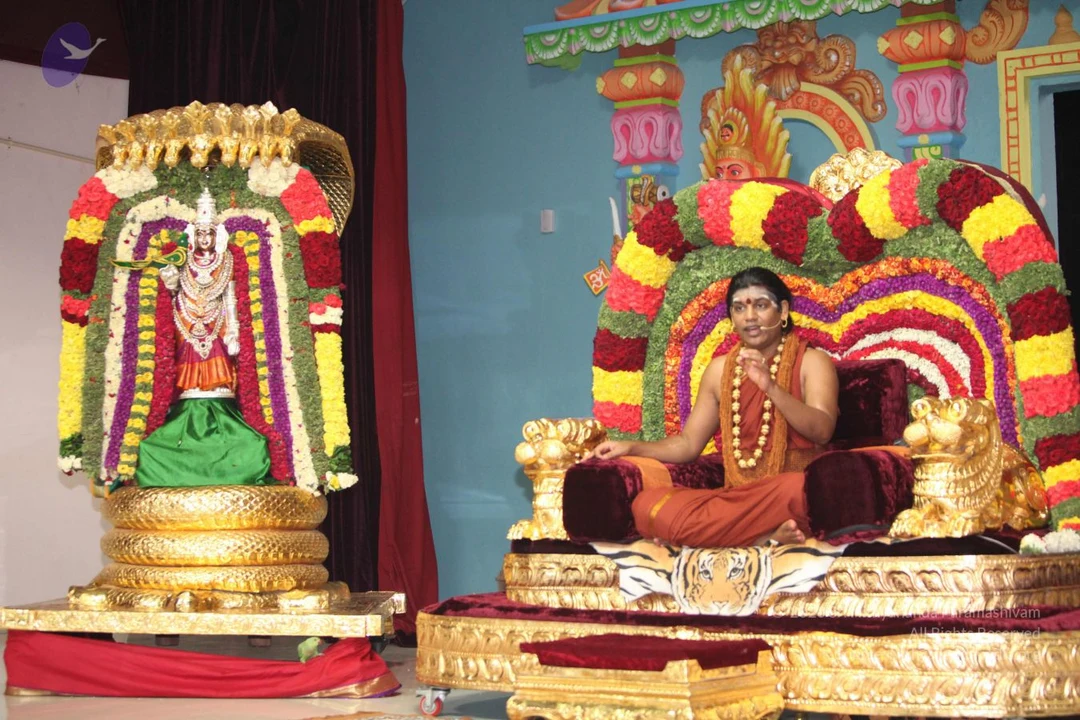
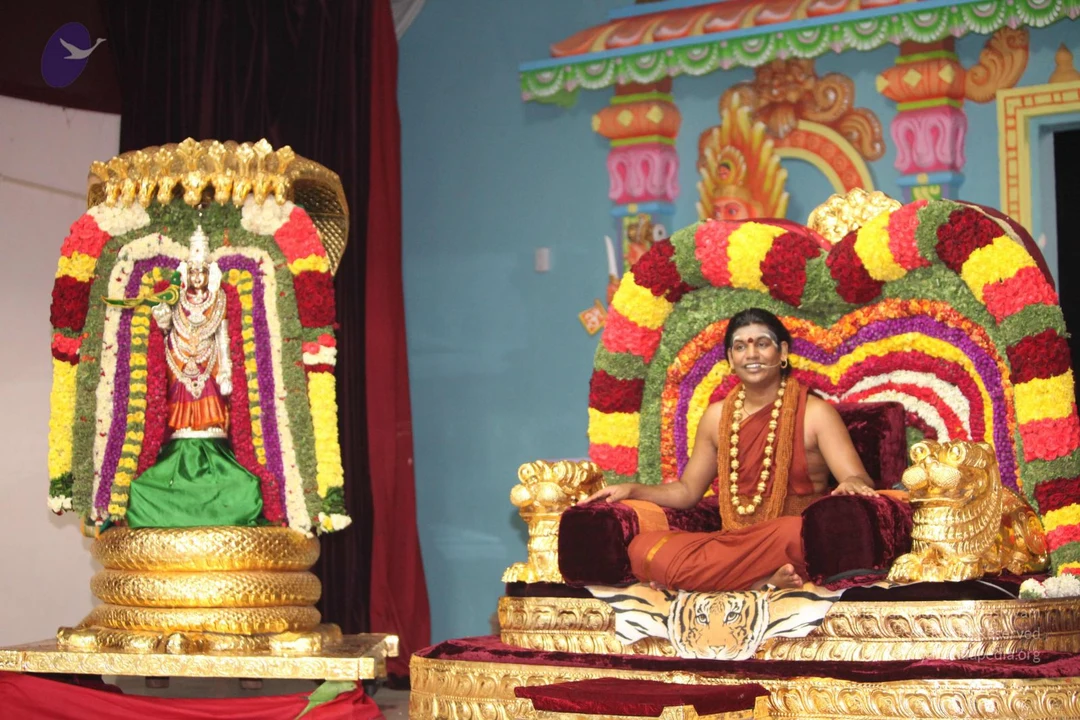
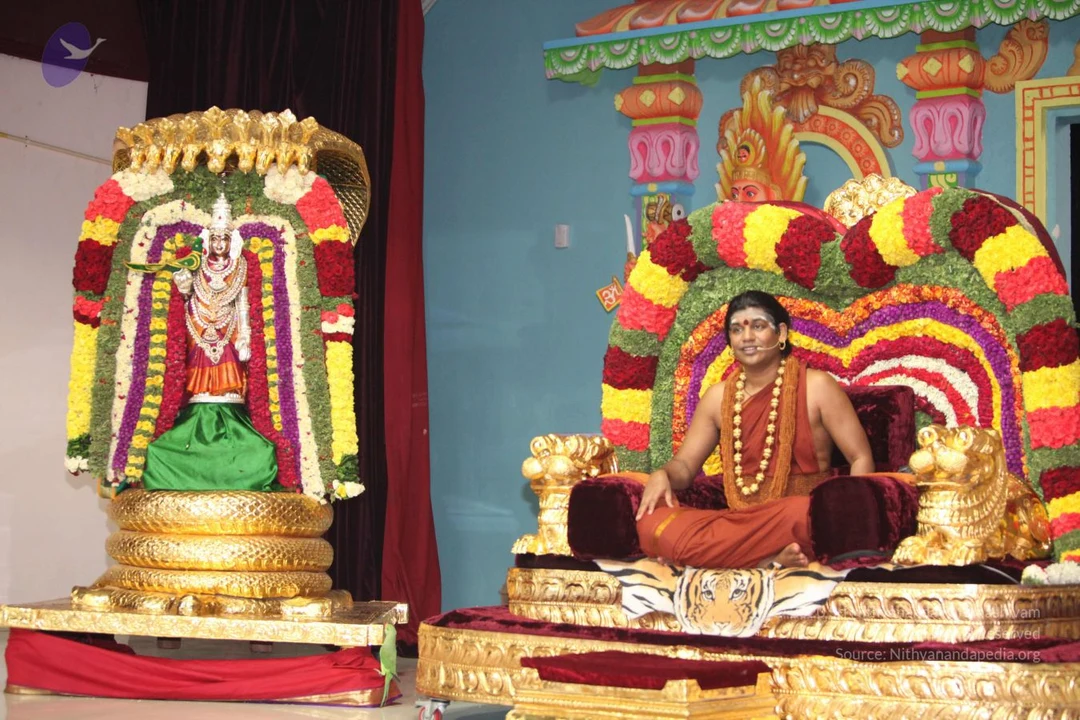
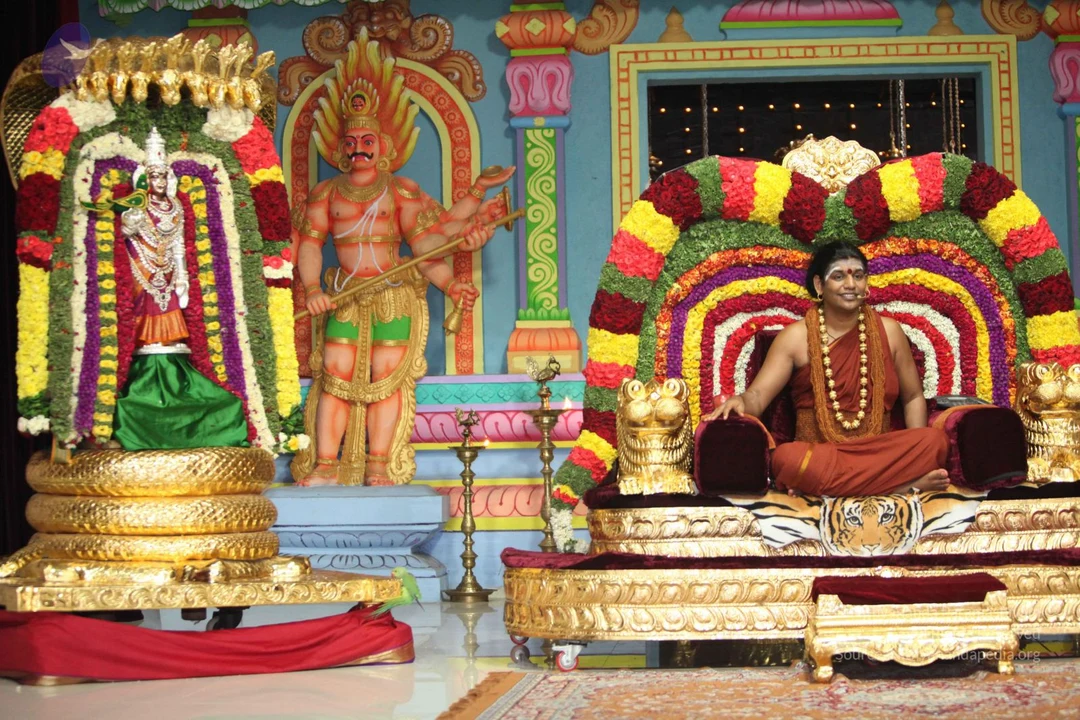
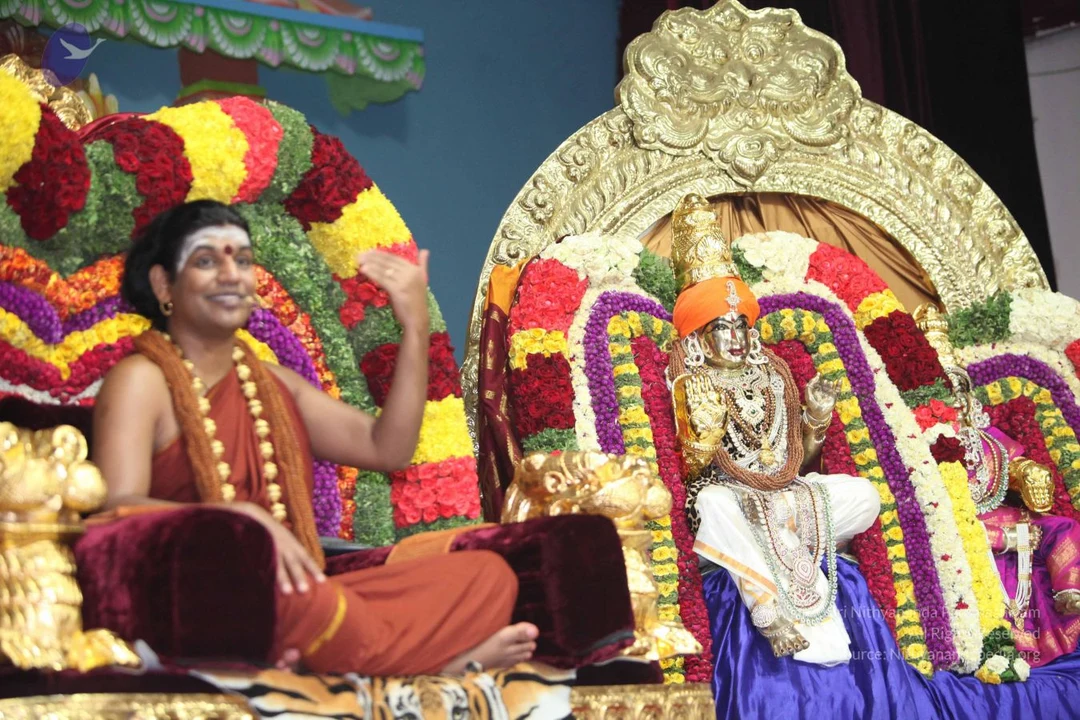
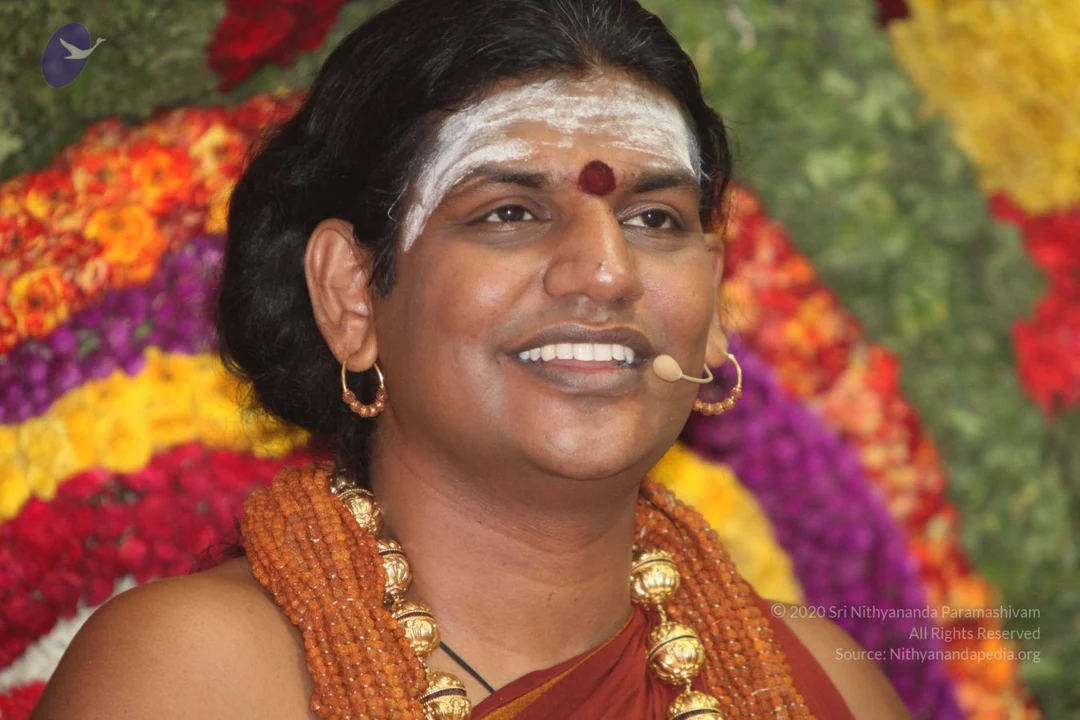
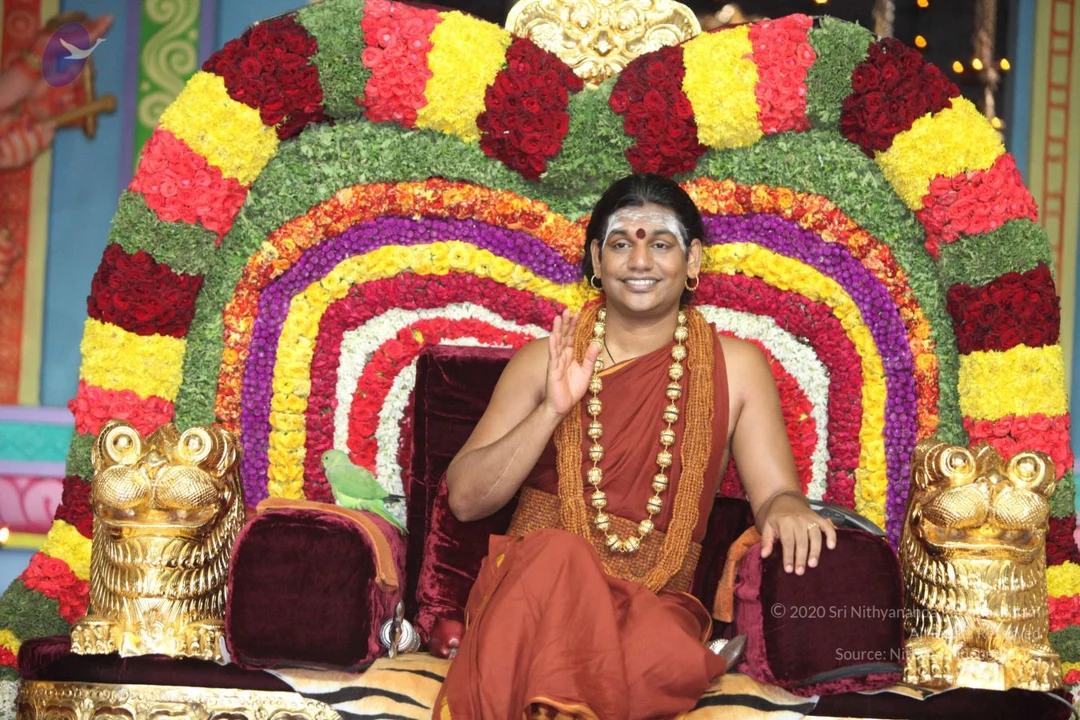
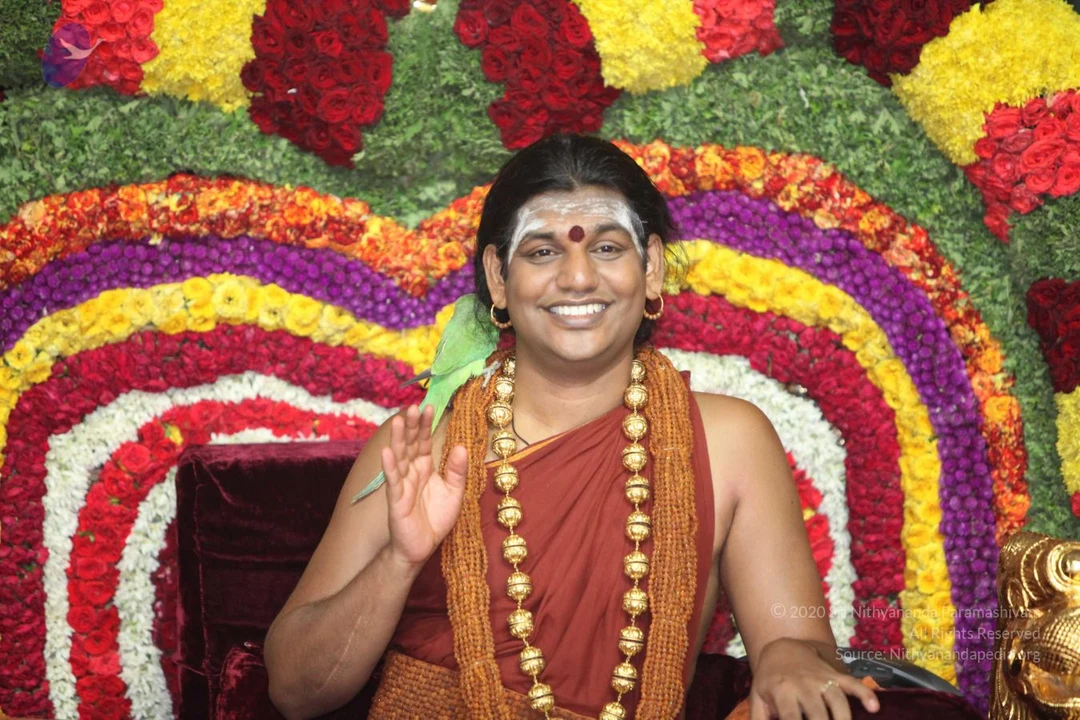
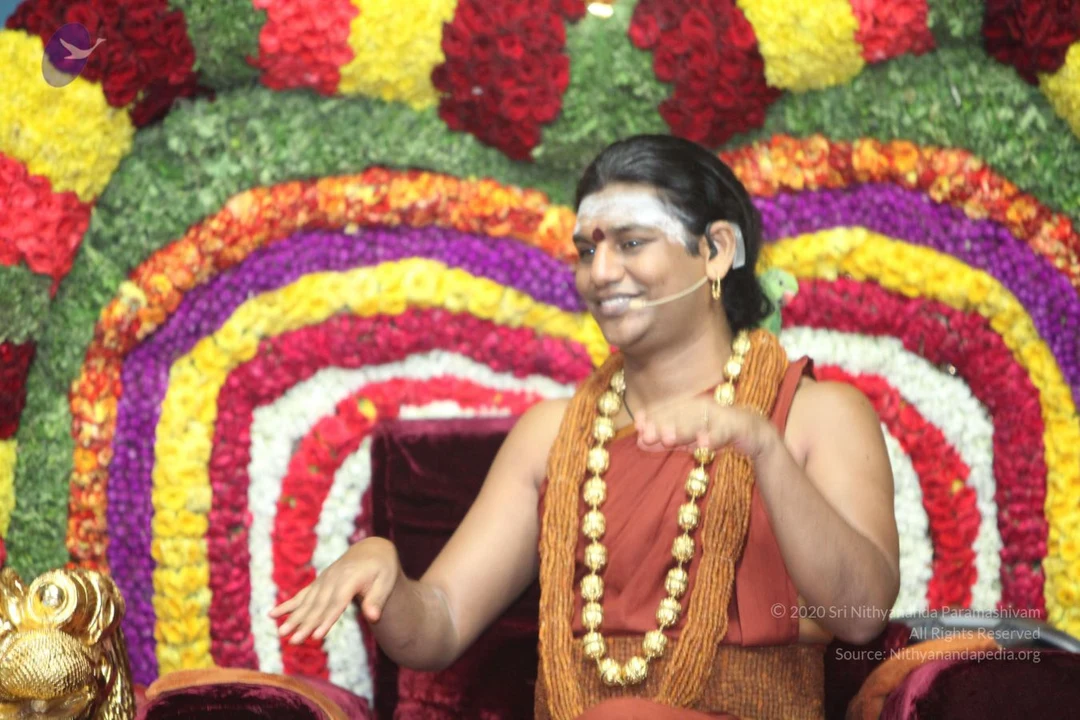
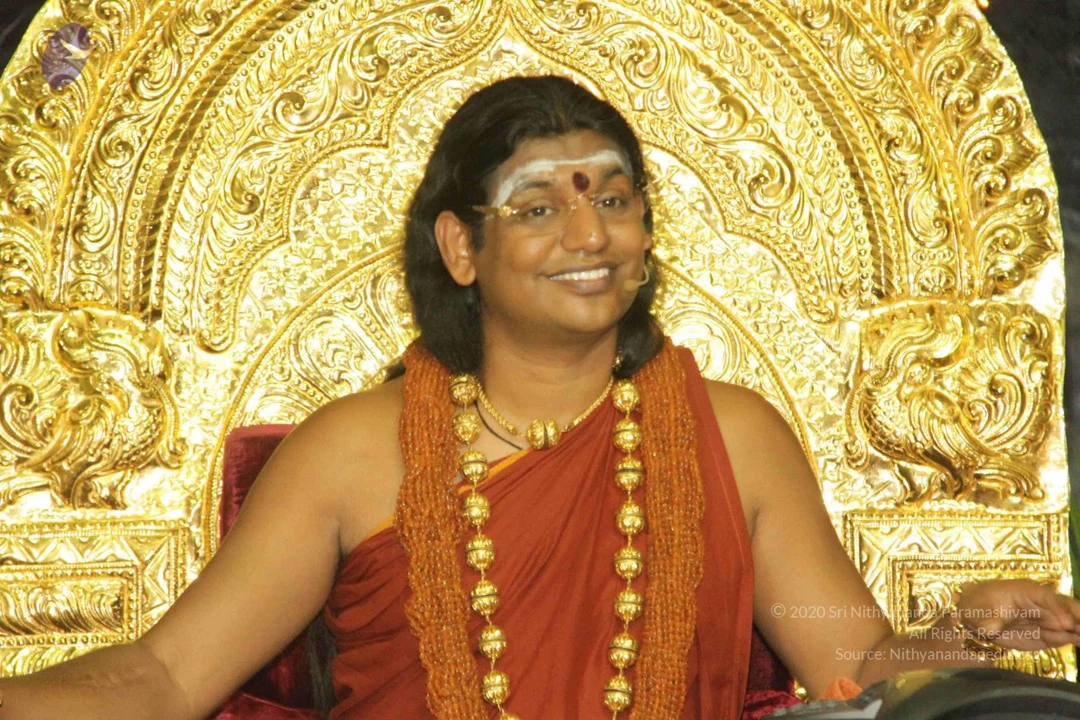
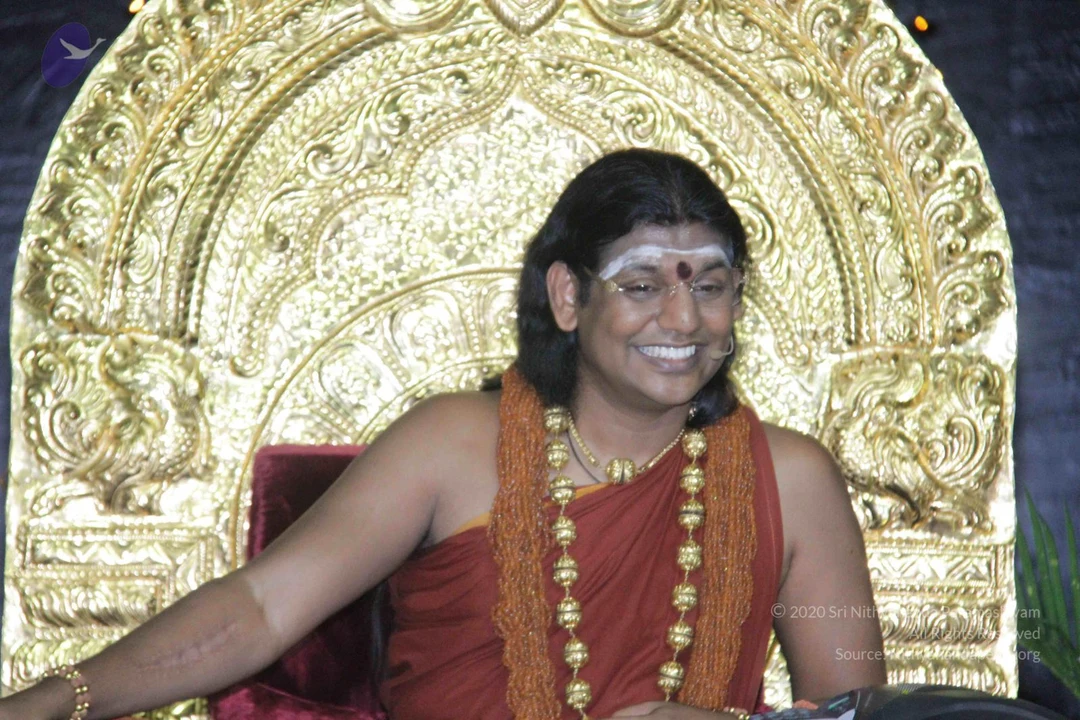
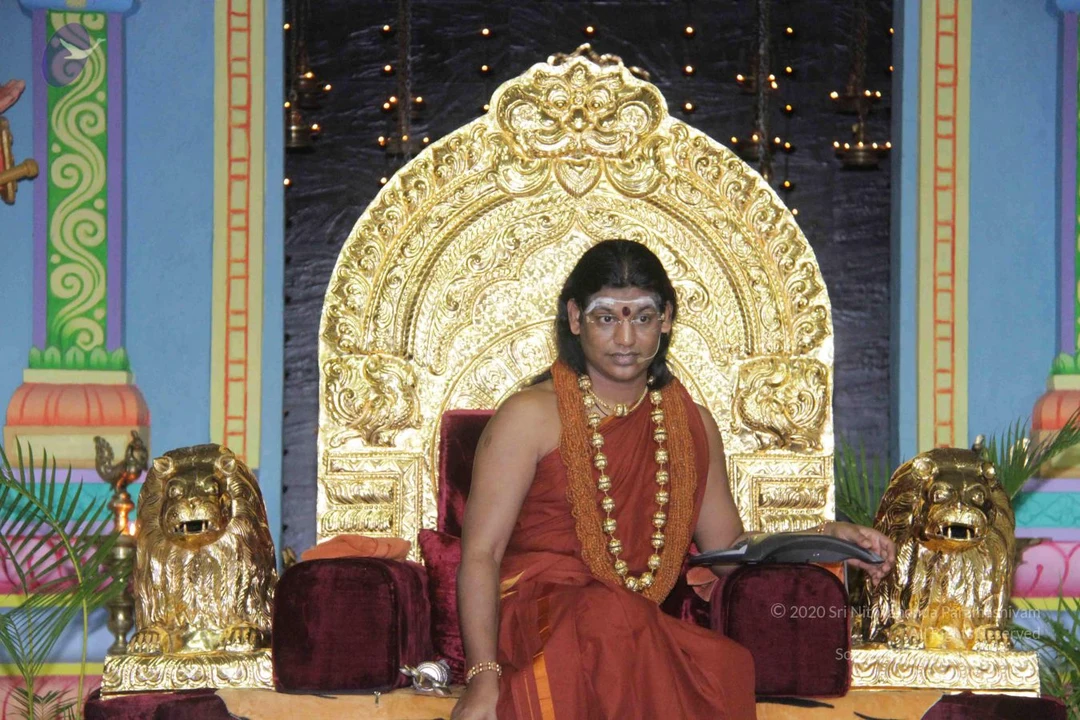
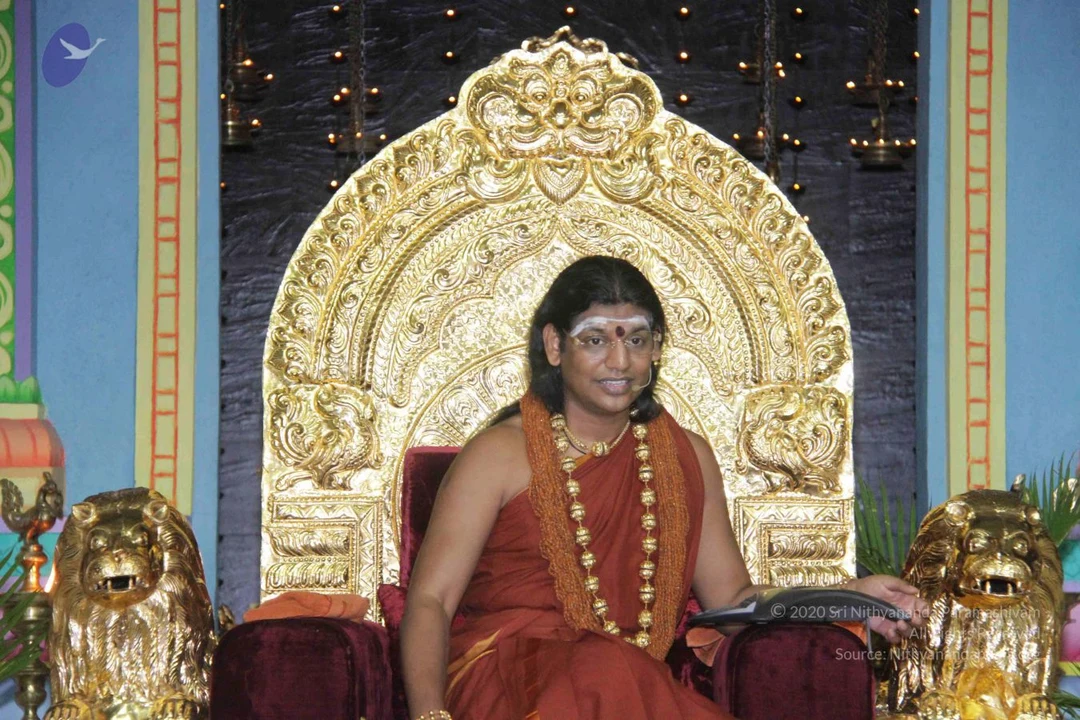
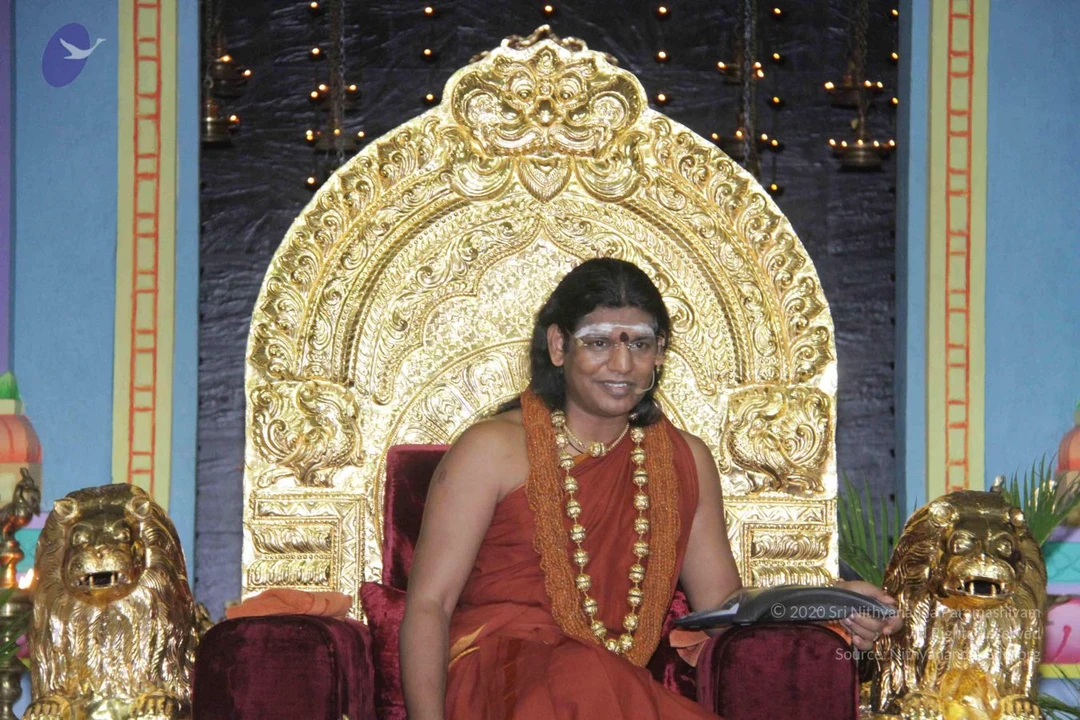
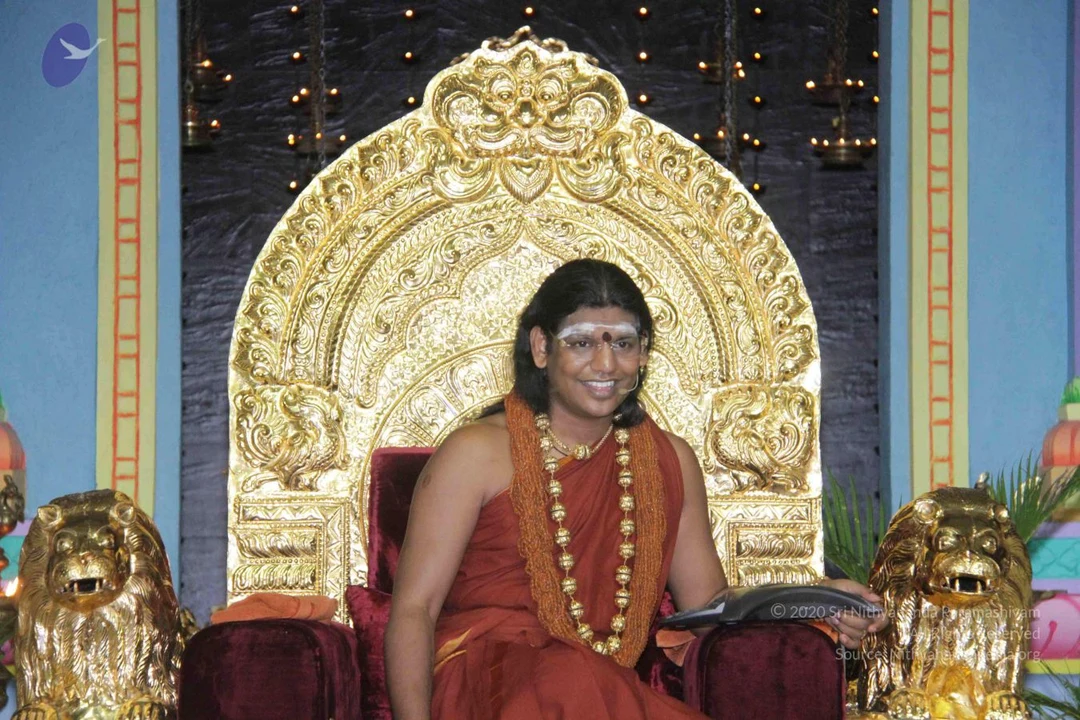
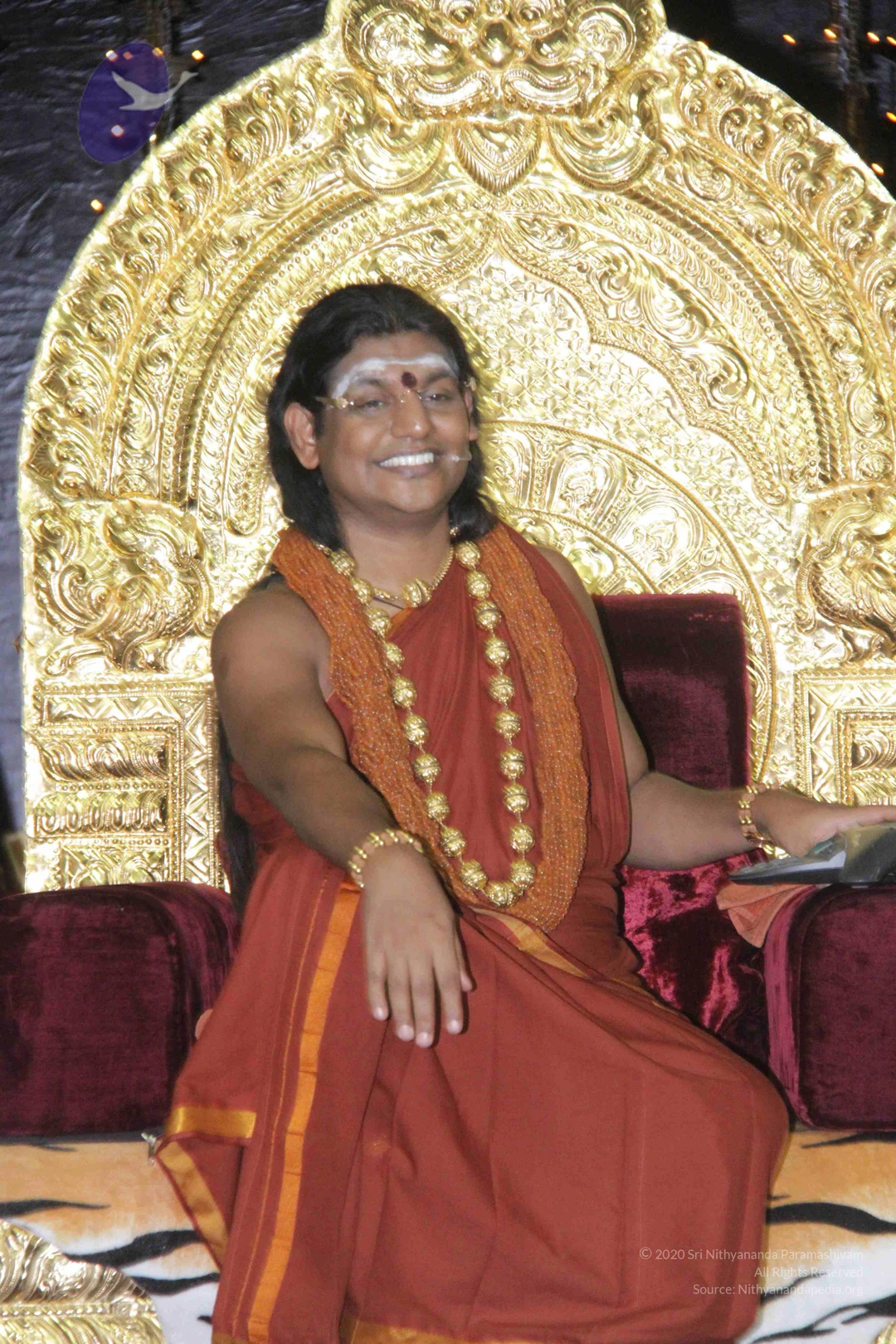
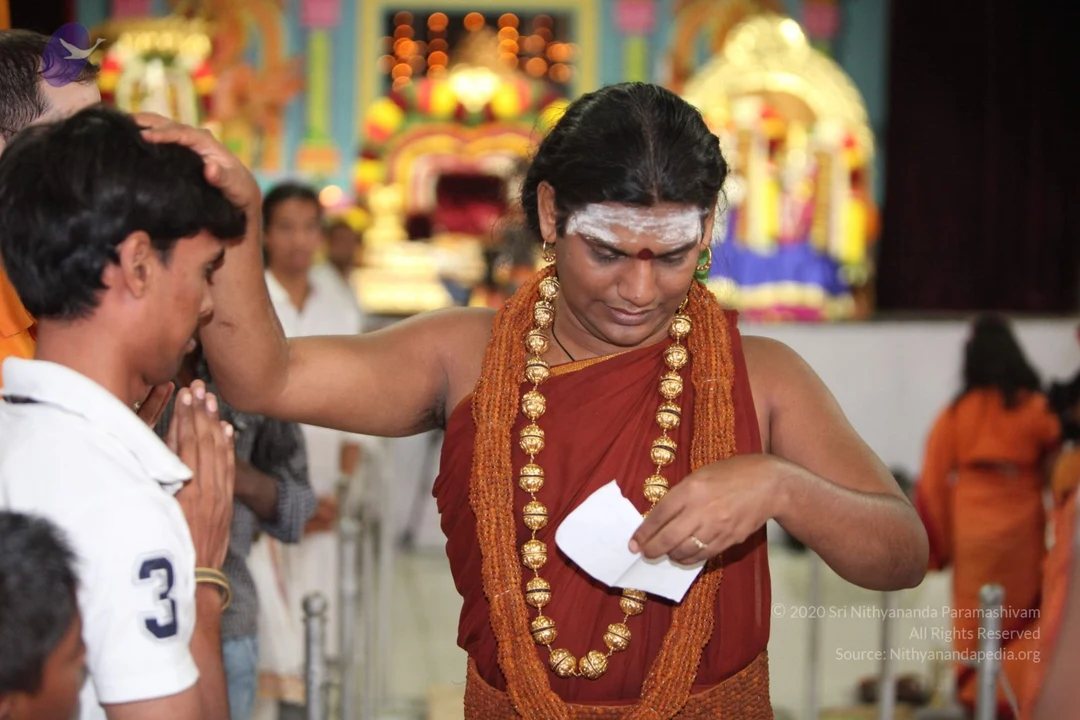
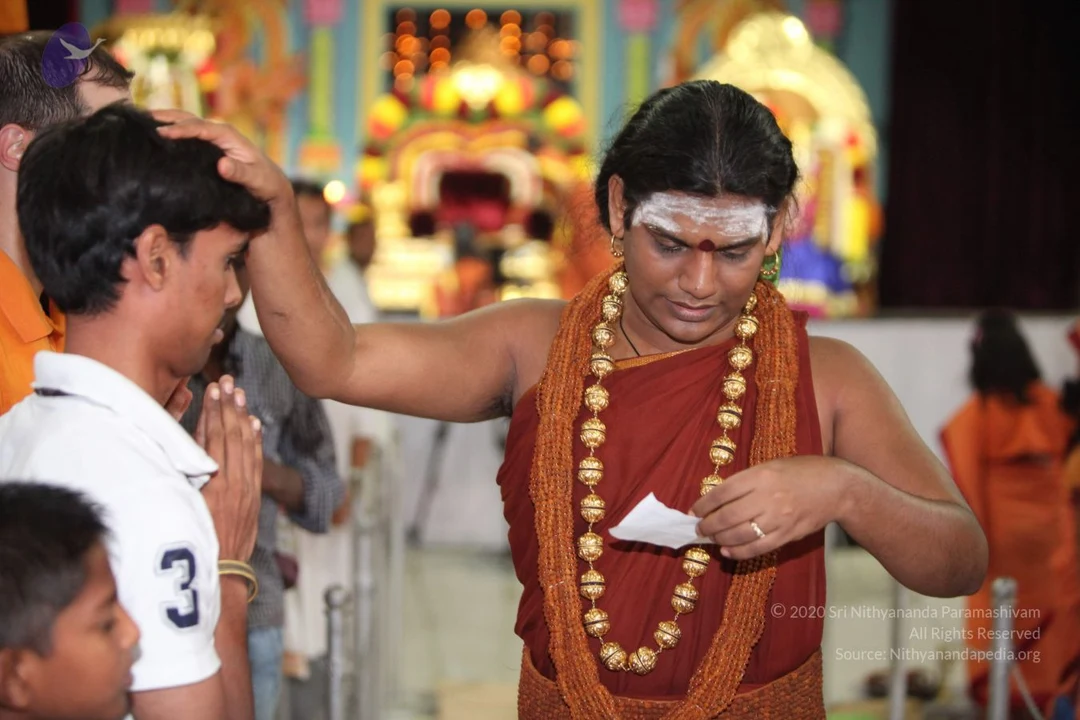
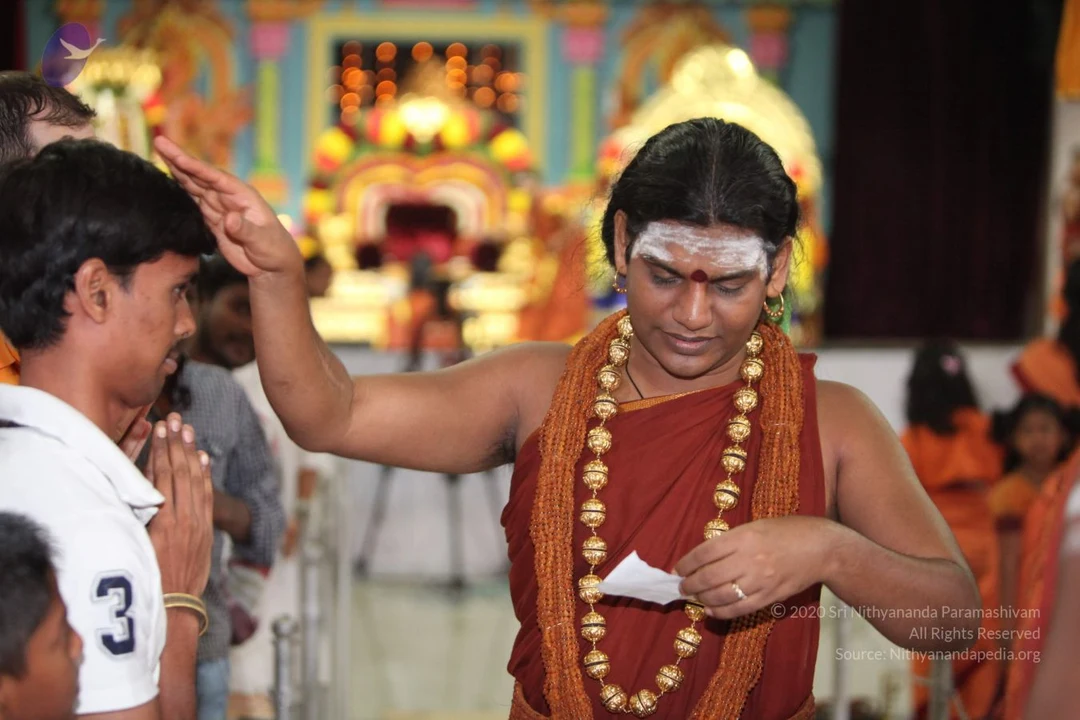
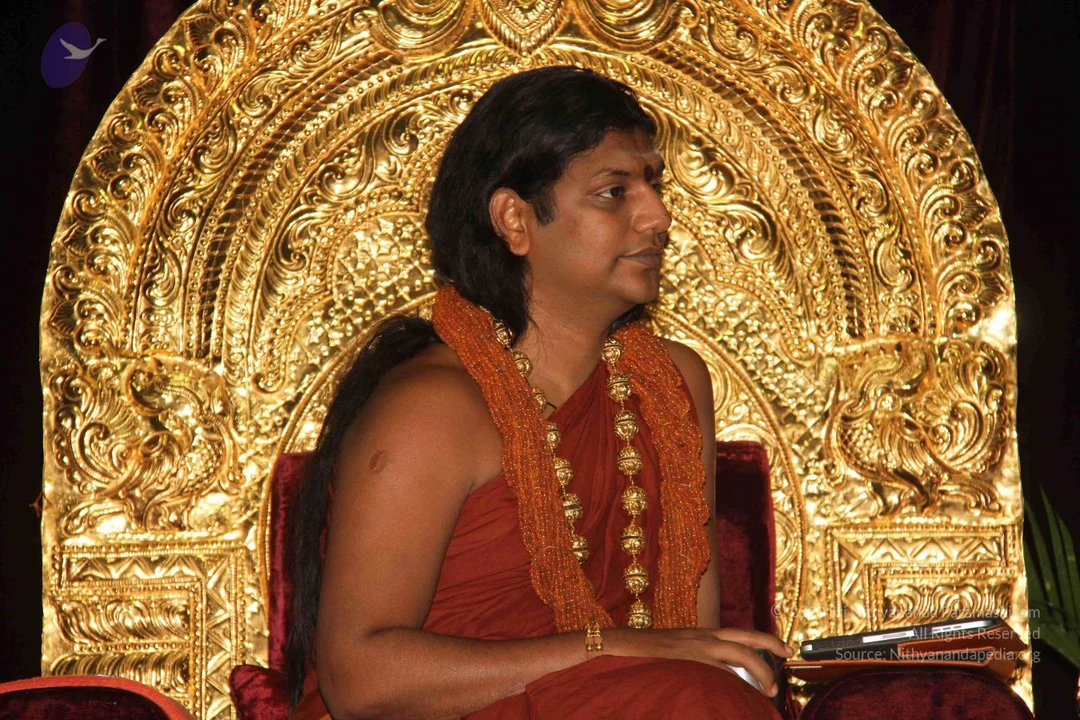
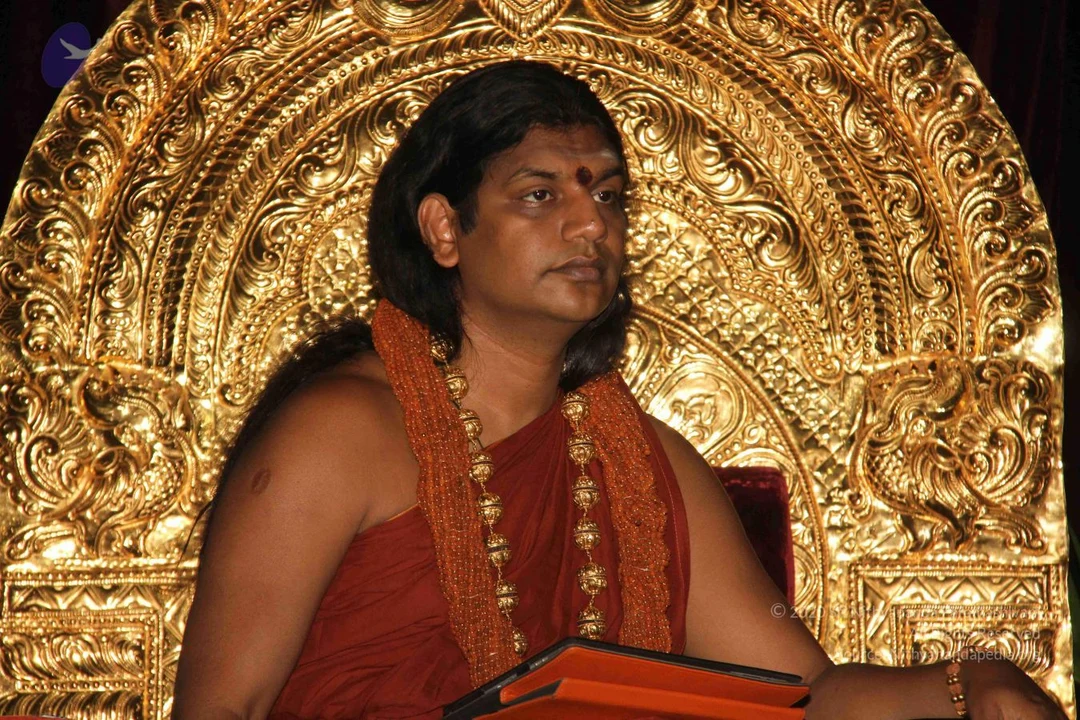
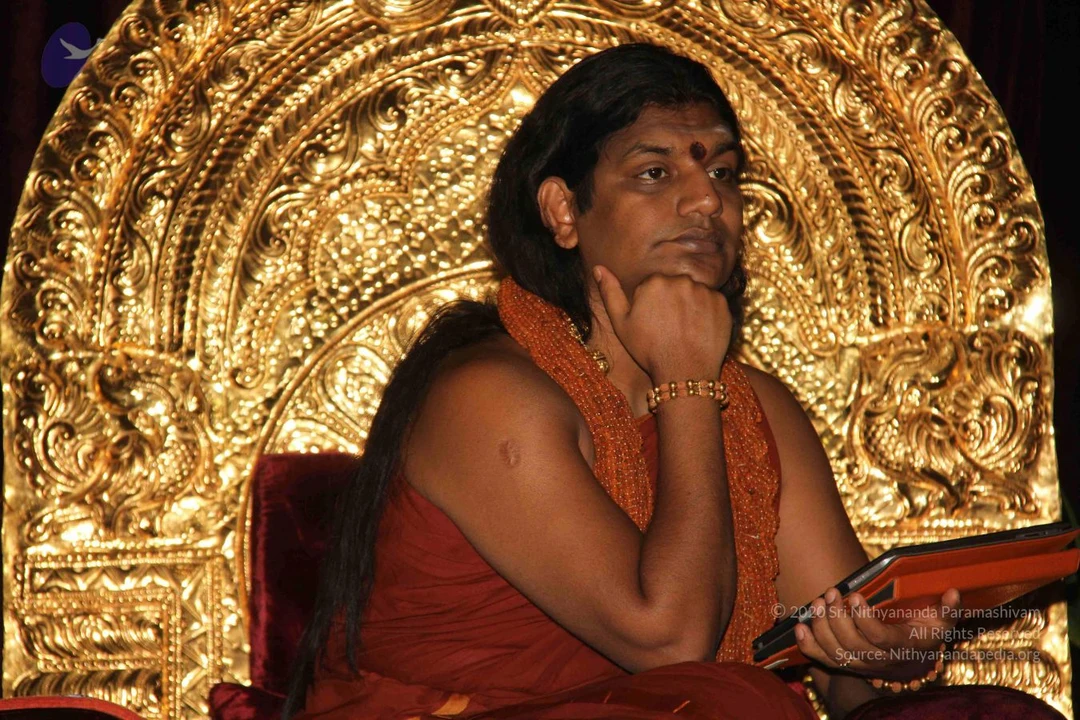
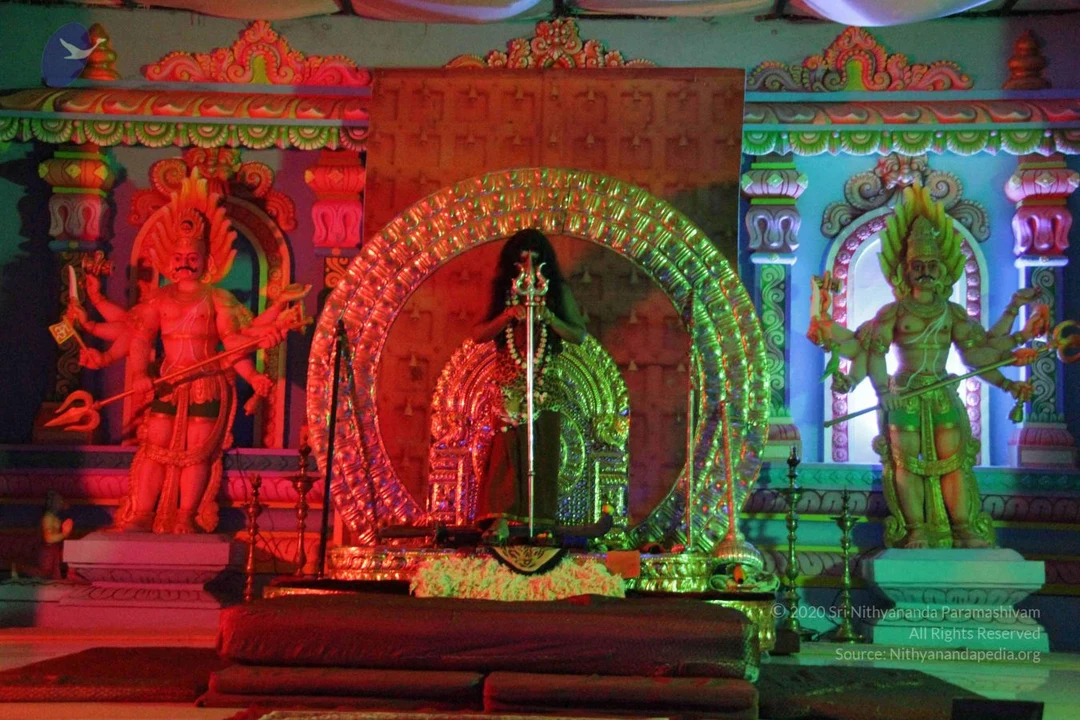
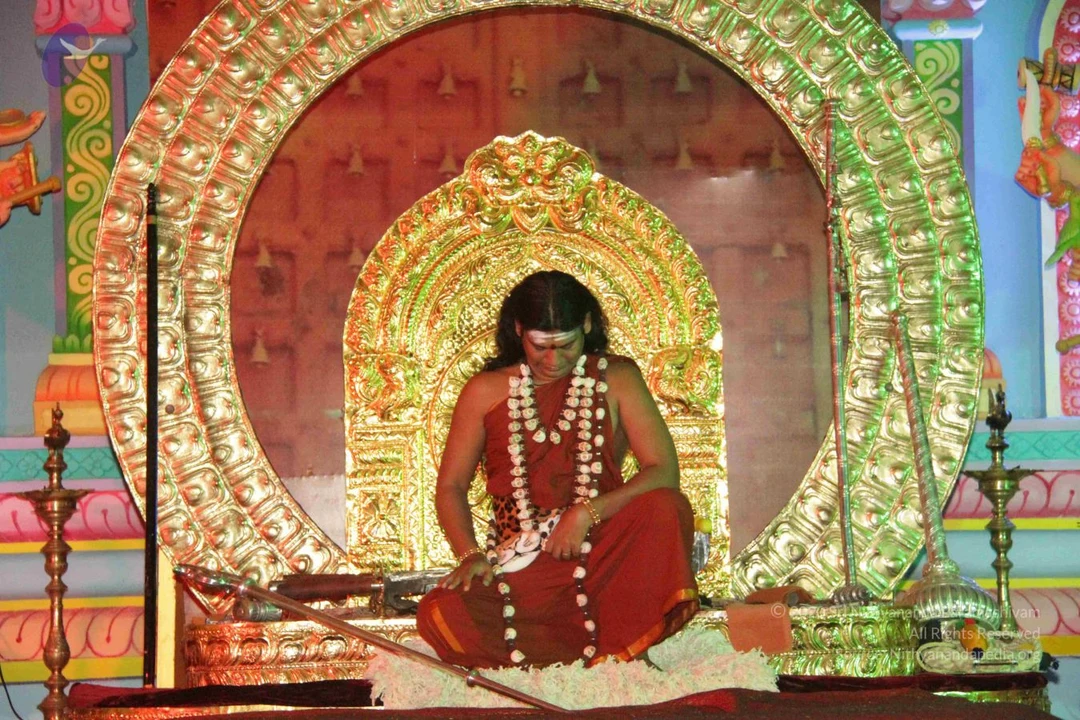
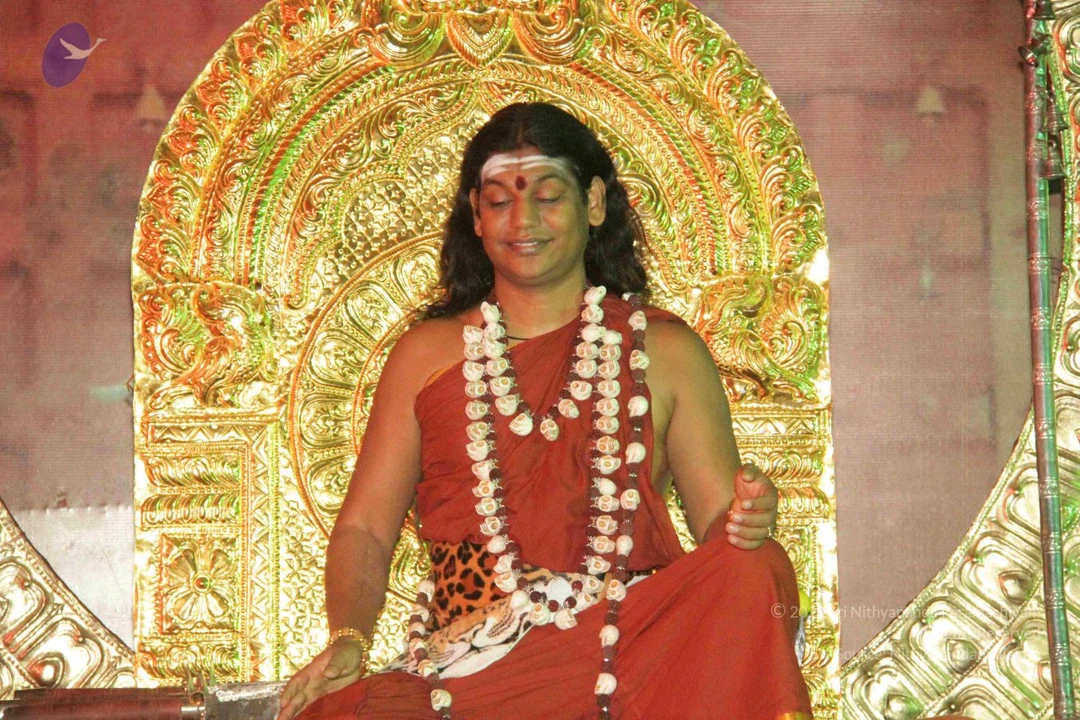
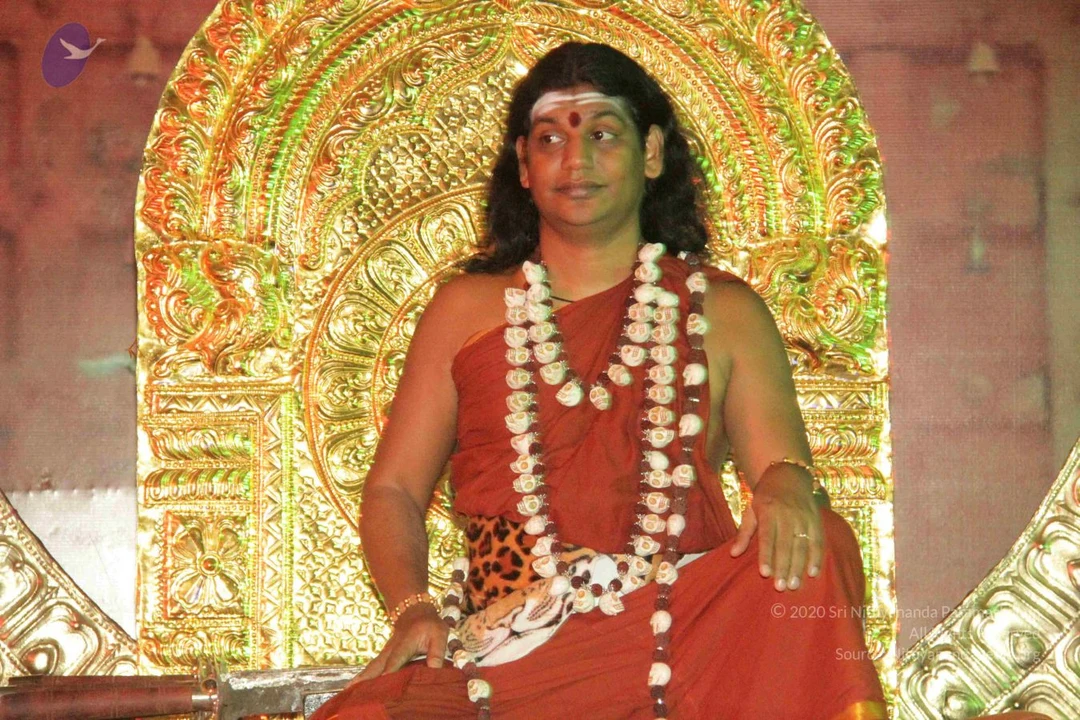
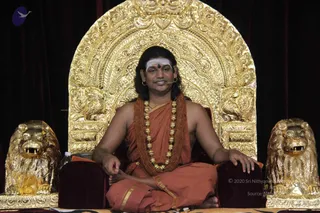
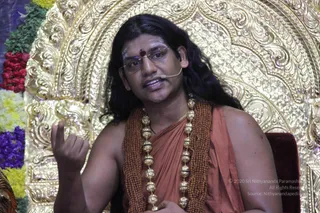
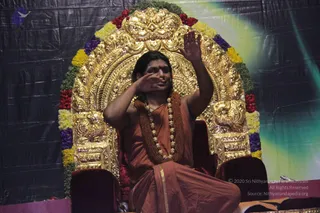
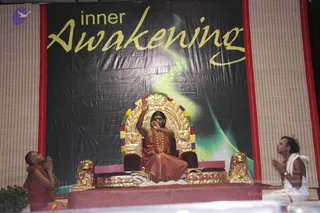
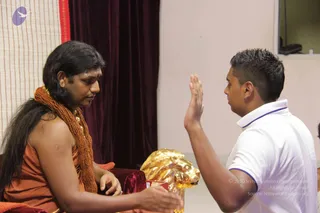
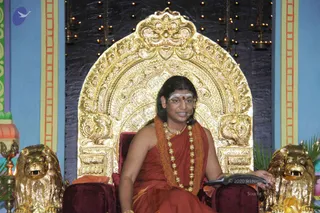
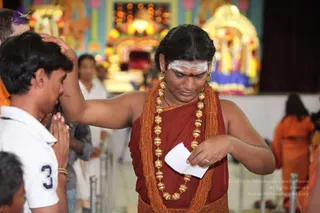
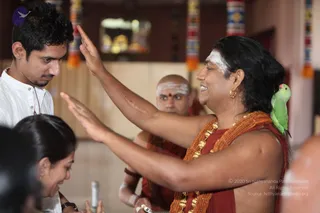
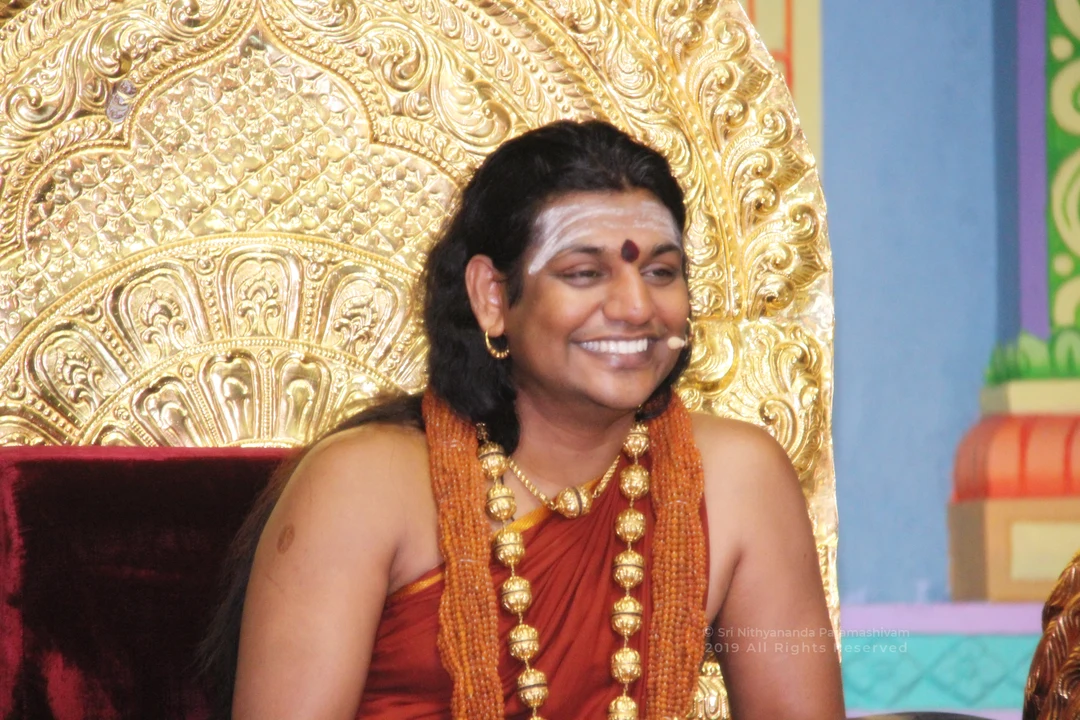
A smiling man with long dark hair, a white sandalwood-style mark on his forehead and a red dot at the centre, sits in front of a large ornate gold backdrop. He wears a red-orange shawl over his shoulders and bare-skinned chest area, multiple ceremonial gold and orange bead necklaces and rudraksha-style malas, and gold hoop earrings. A small headset microphone is attached near his mouth. He holds a black handheld tablet or device in his right hand. Behind him, painted figures in orange and red, including a fierce face with a crown-like headdress, are visible on the left. Swamiji (probable): long swept-back hair, saffron-orange shawl, ornate gold necklaces and rudraksha malas, speaking at a discourse.A smiling man with long dark hair and a red bindi on his forehead holds up a printed white sheet containing a table of names in rows and columns. He wears a cloth draped over his shoulder and has a small clip-on microphone near his face. Behind him is an ornate gold-leaf throne back decorated with repoussé floral and scrollwork, framed by garlands of red, yellow, purple and green flowers. A green and blue backdrop fills the upper background. The man is a seated speaker on stage at what appears to be a lecture or discourse, with the a person label applied from long swept-back hair, a red bindi and the decorated seat setting; he is raising the list toward the audience.A bright green parakeet with a red-tipped beak perches on a pink towel beside offerings of bananas and a hollowed red apple filled with a pale paste. Behind them are garlands of white and pink flowers and a gold-coloured ritual object. The scene appears to be a temple offering setting, with the bird feeding on the fruit.

March 13 2013

Original wiki page
Contents

Title

Inner Awakening intro by Paramahamsa Nithyananda

Narration

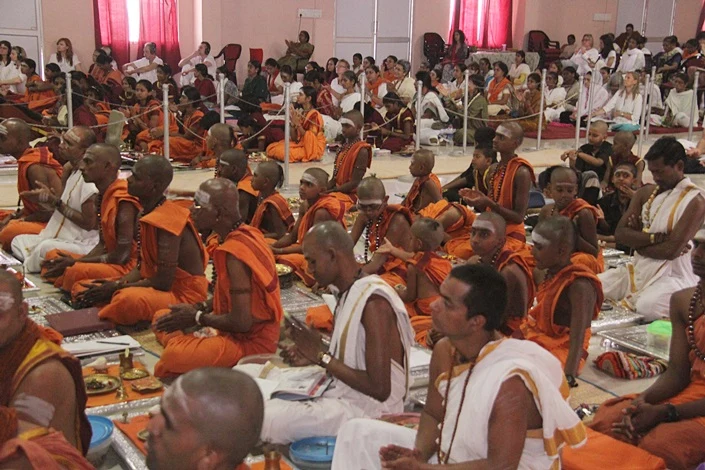
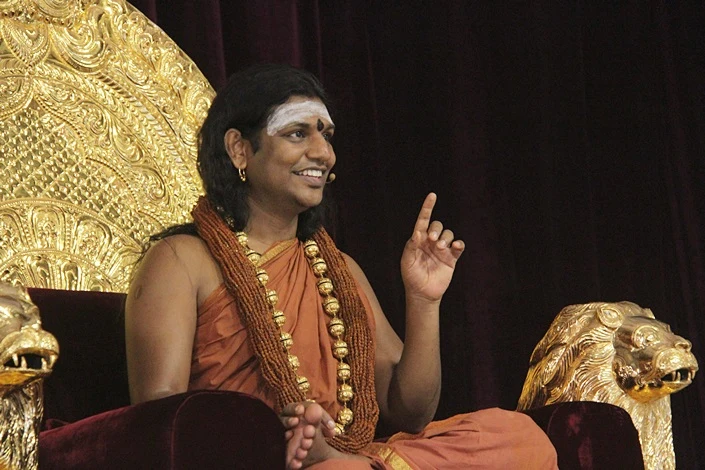
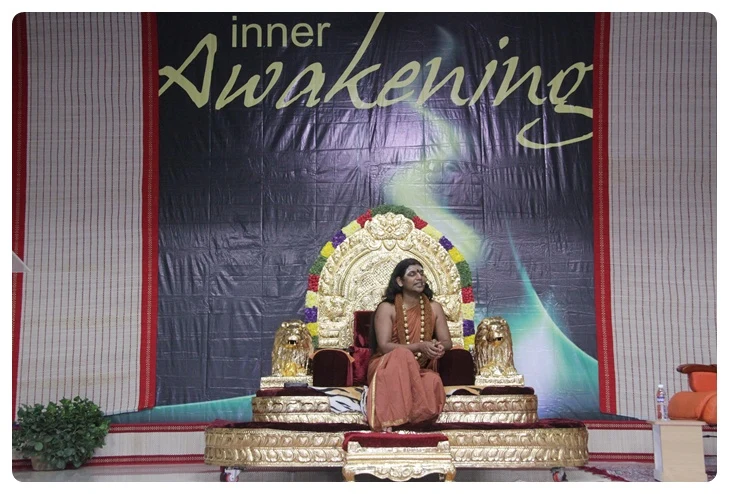
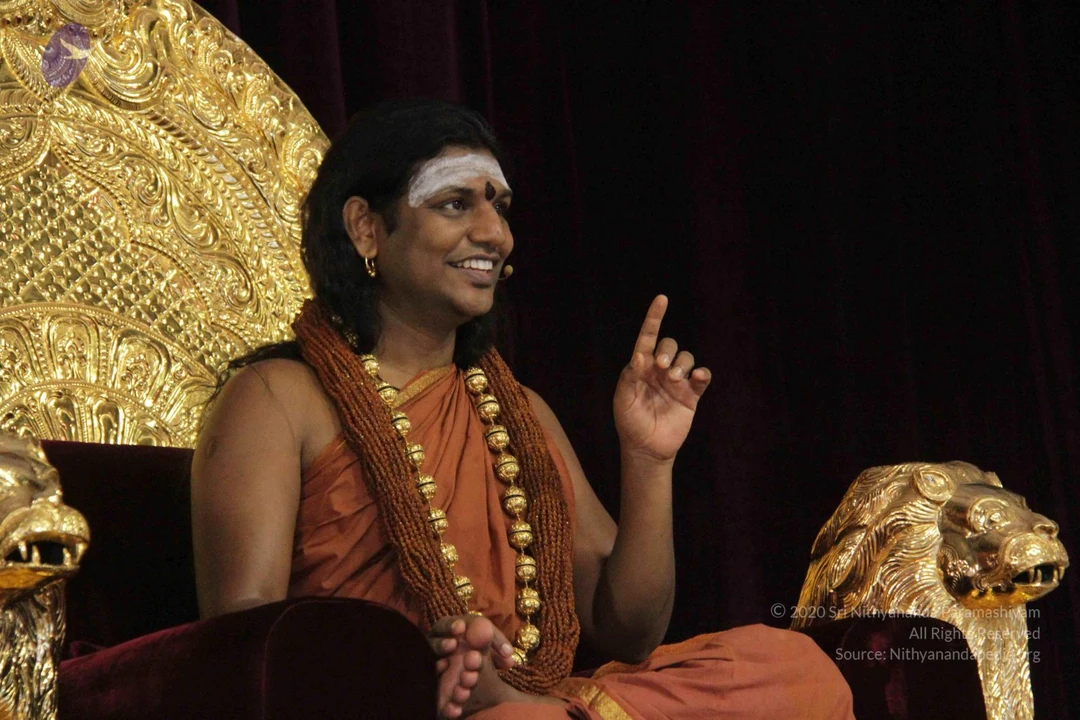
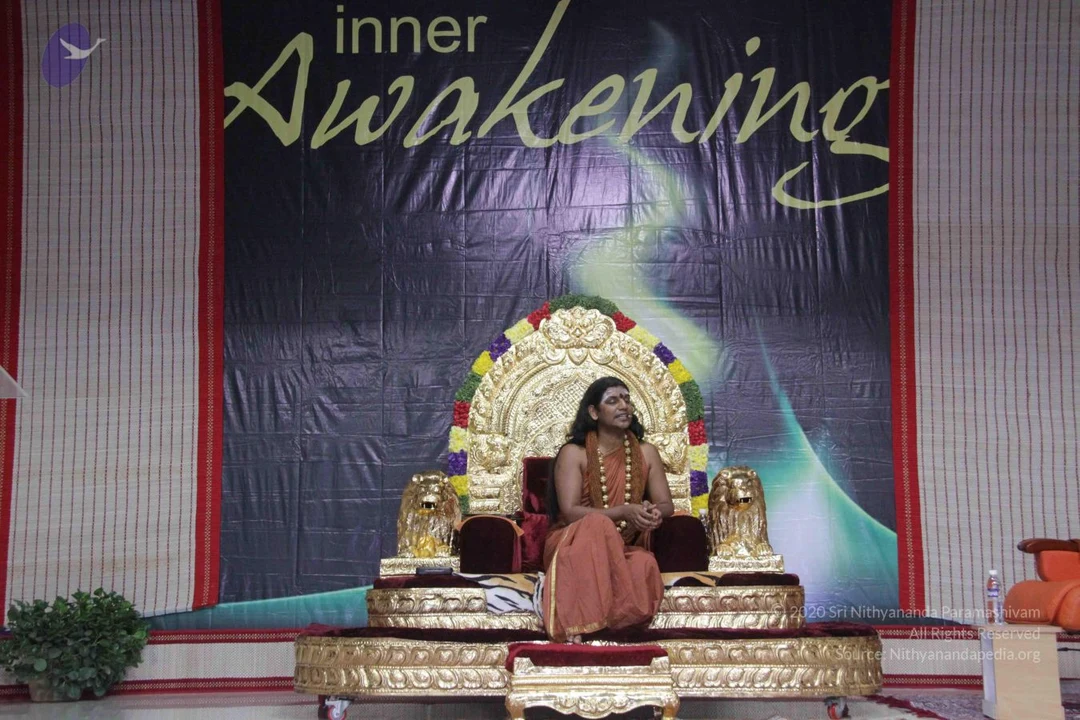
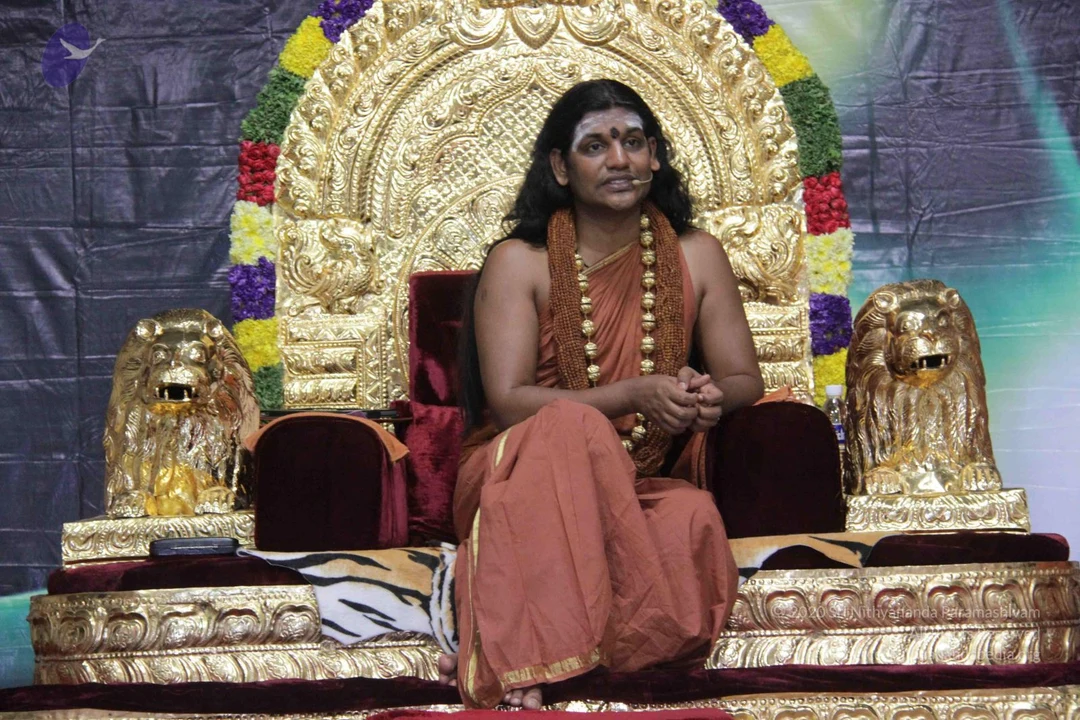
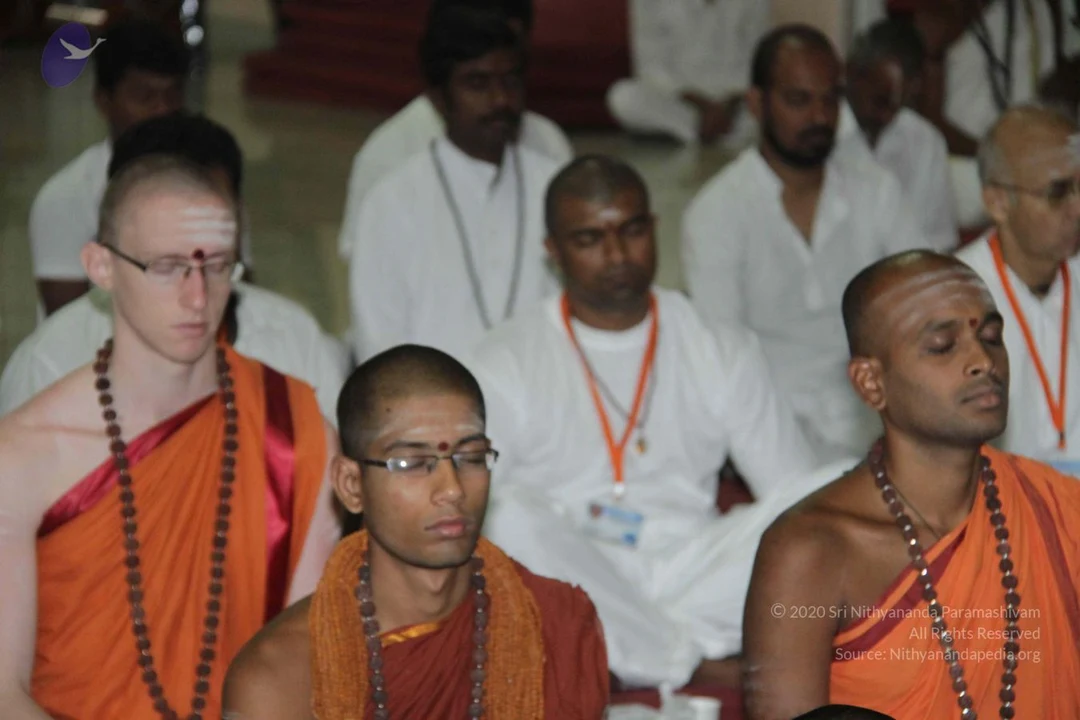
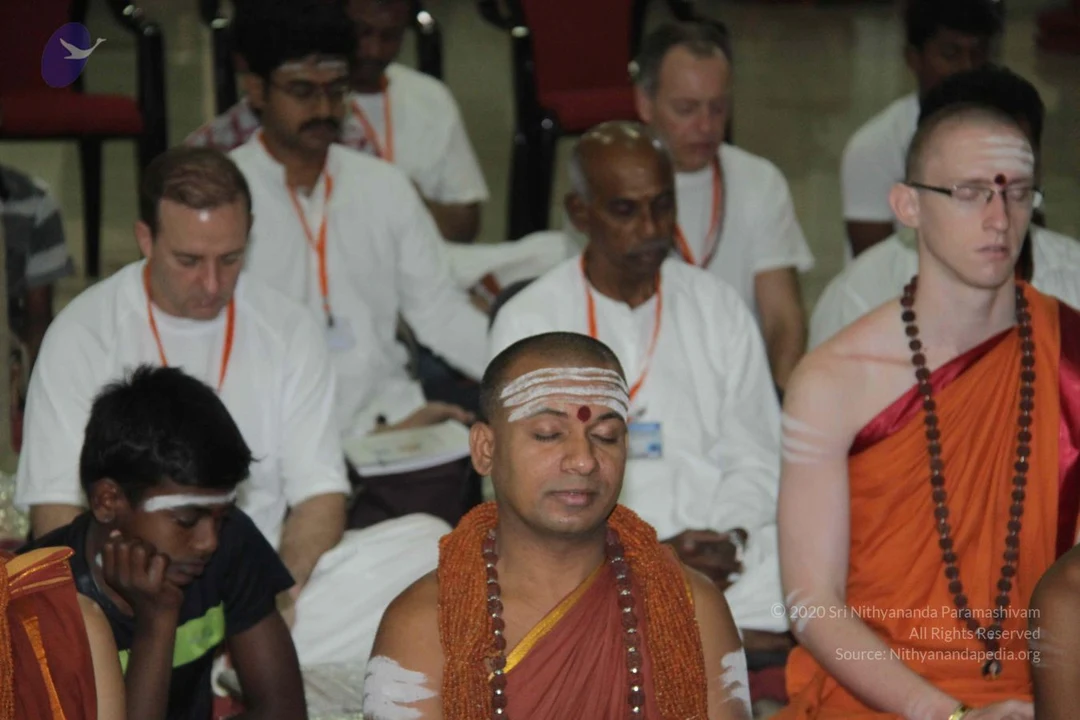
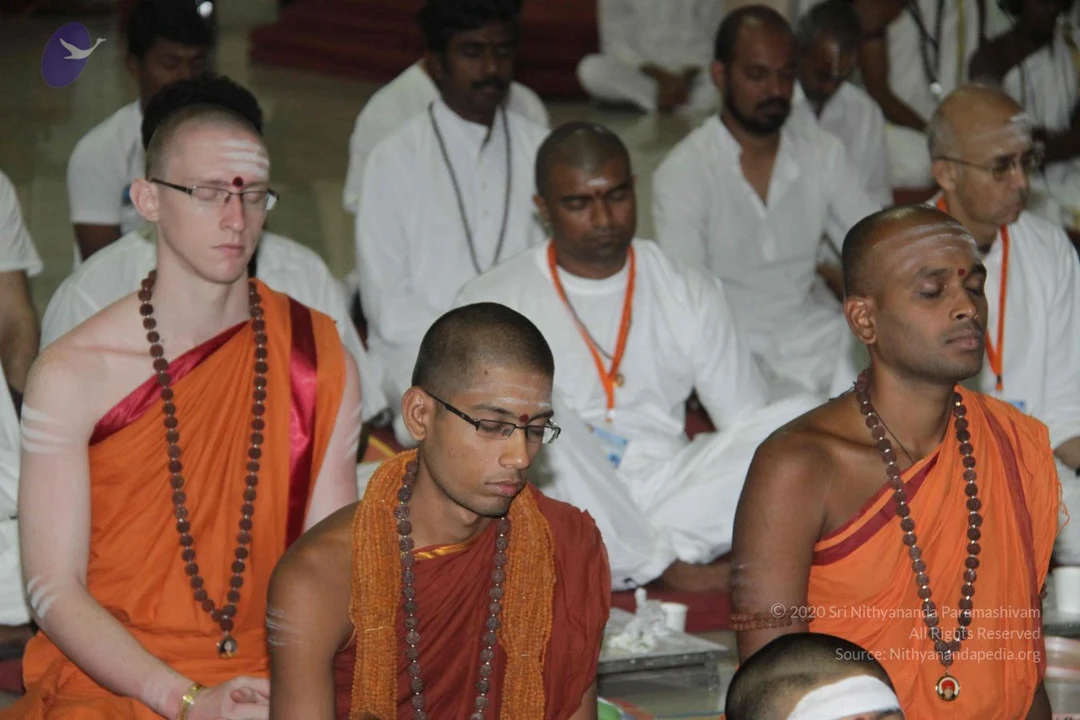
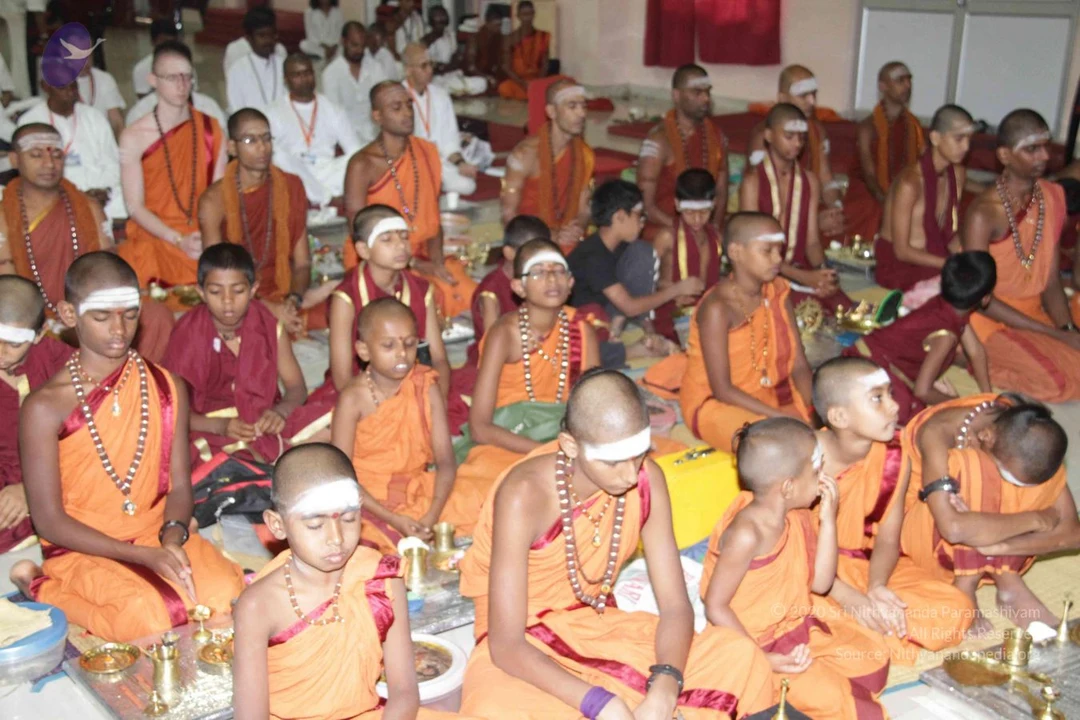
On this day the SPH conducted the Intro Class of the Inner Awakening Convention, in which revealed a new definition for the Tattva of Authenticity Authenticity is living at the peak of our capability. We determine our ultimate capacity by becoming aware of what we expect of ourselves. Part of it is from our inner self-image, called mamakara in Sanskrit. Two other portions of our self-expectations are projected out from our suppressed ideas about ourselves, and are reflected back to us in what others ask of us. These are called ahamkara – what others believe we already are – and anyakara, what others hope or wish we will become. Once we understand that others are merely showing us what we expect of ourselves, we have found the path to self-realization and achieved a state of authenticity. SPH also gave a new definition of freedom. Freedom has nothing to do with external change – new car, new home, new job every time we don’t enjoy the old ones. This is actually just restlessness. True freedom means aligning our free will with the possibilities we create for ourselves in life. We only can enact lasting change once we integrate our inner desires with our external choices.

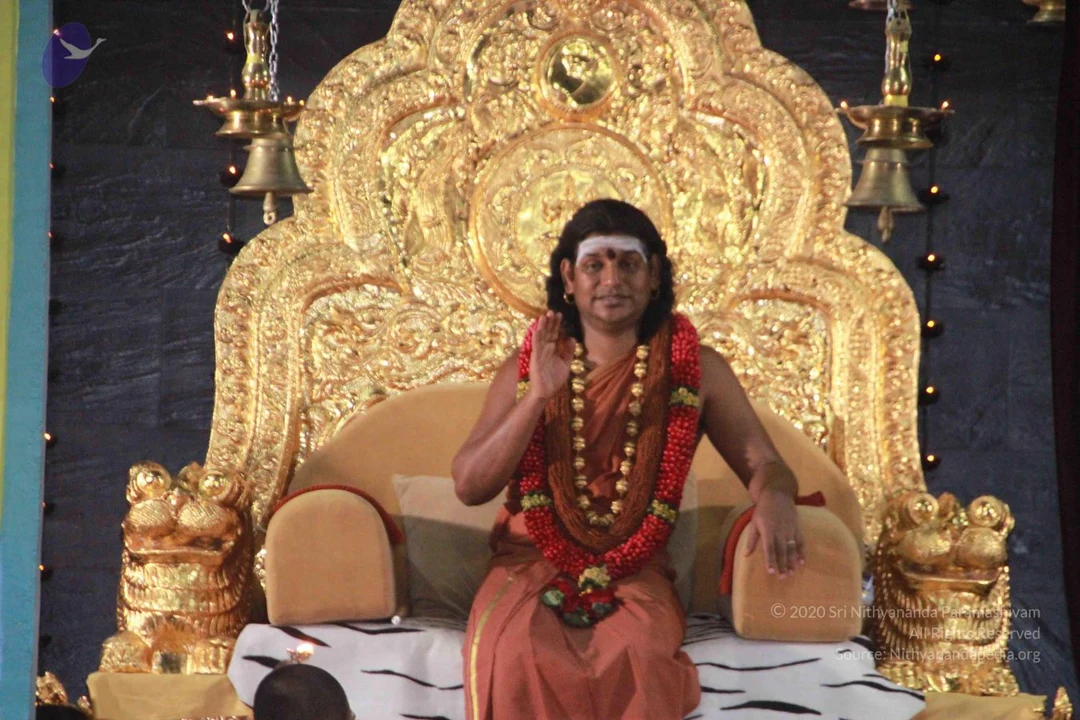
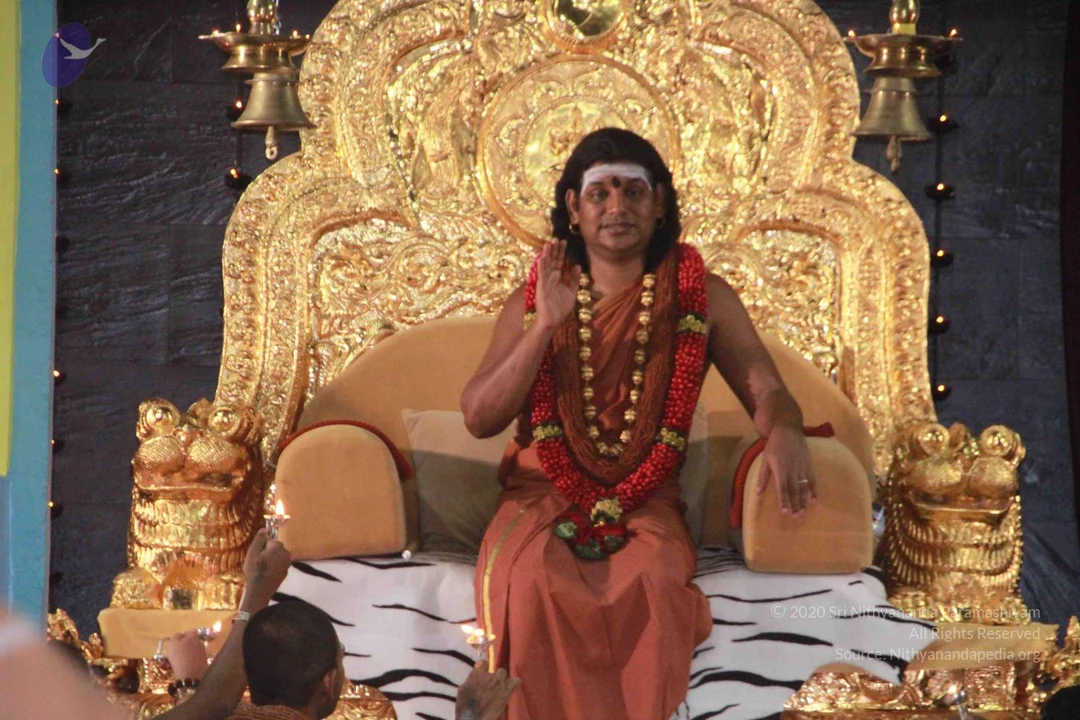
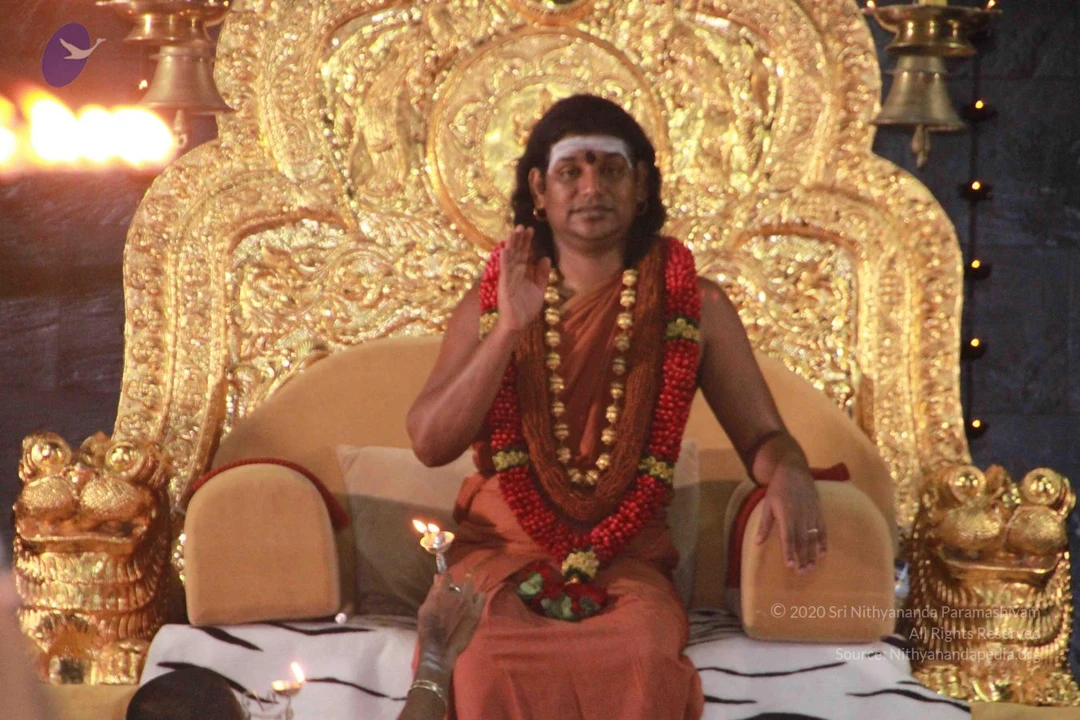
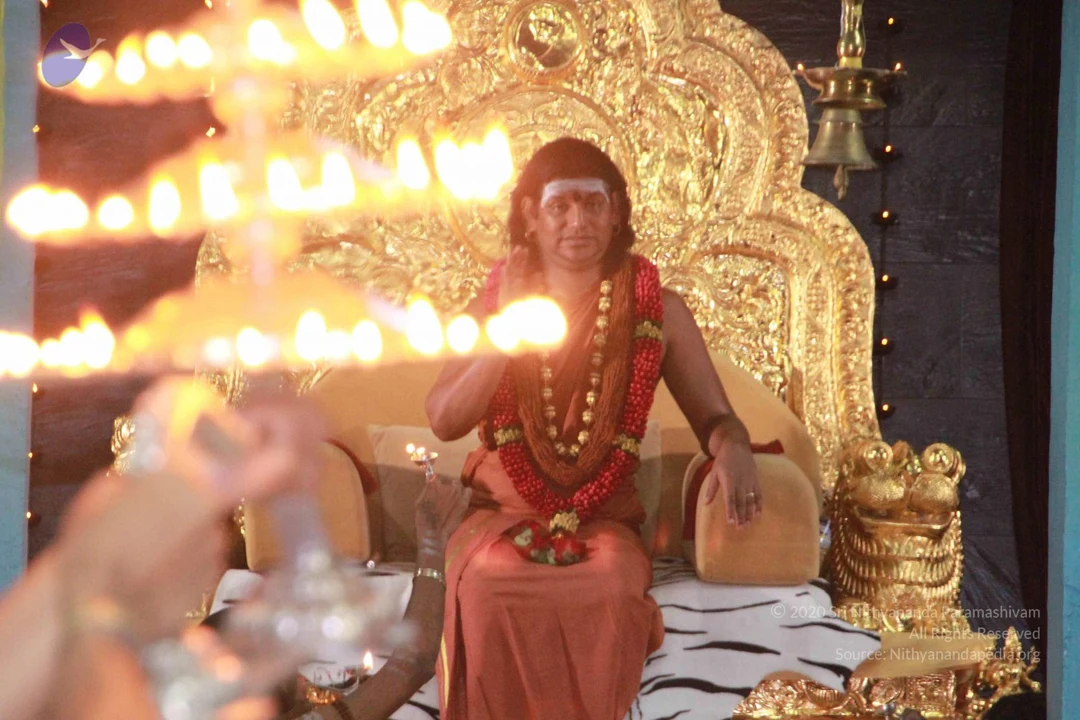
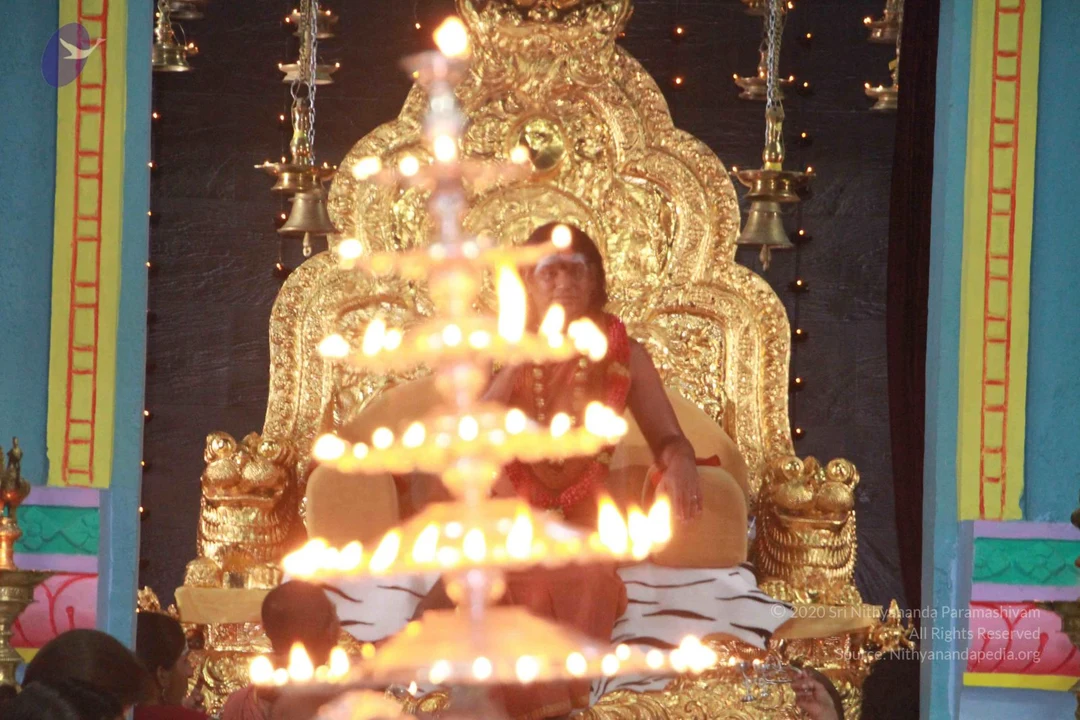
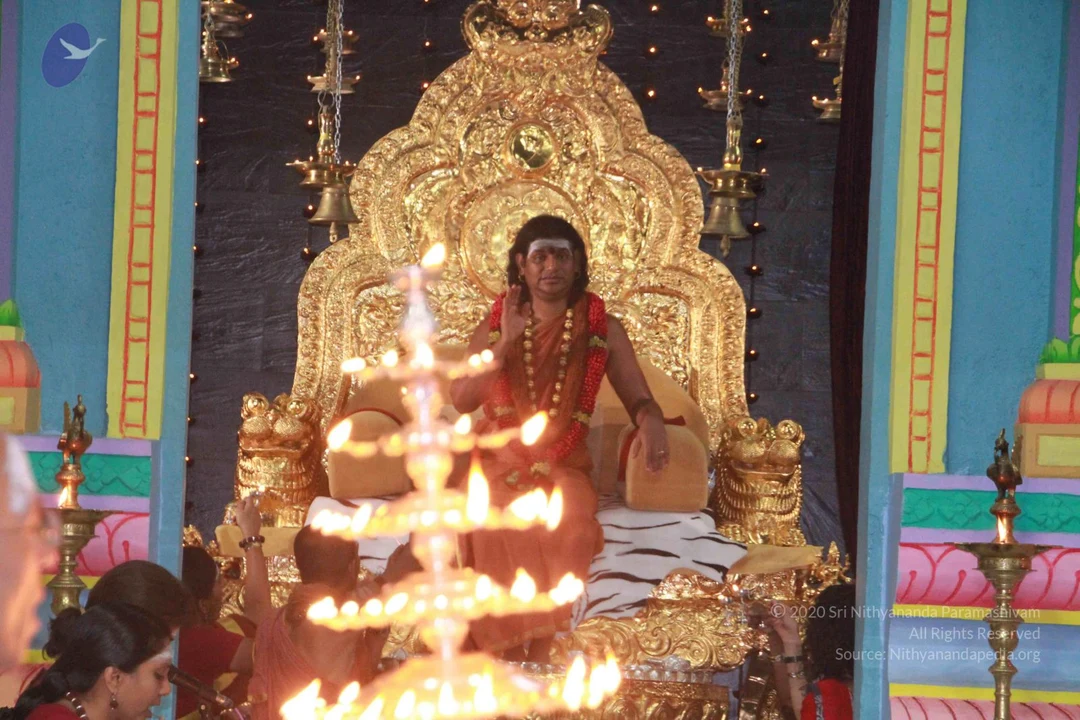
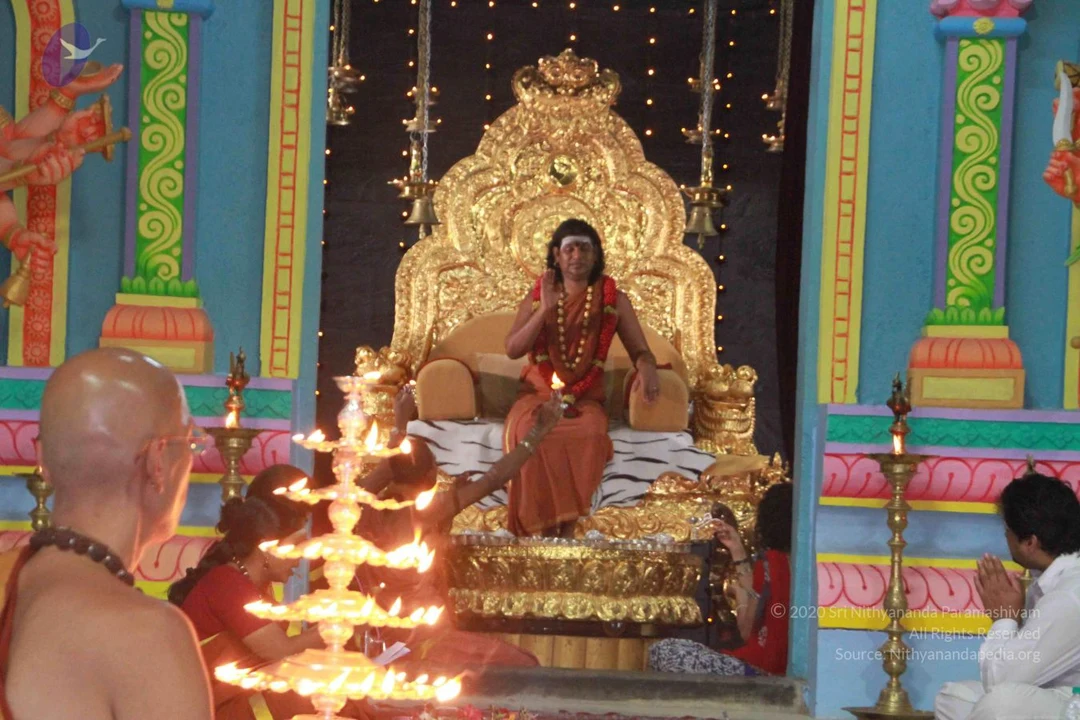
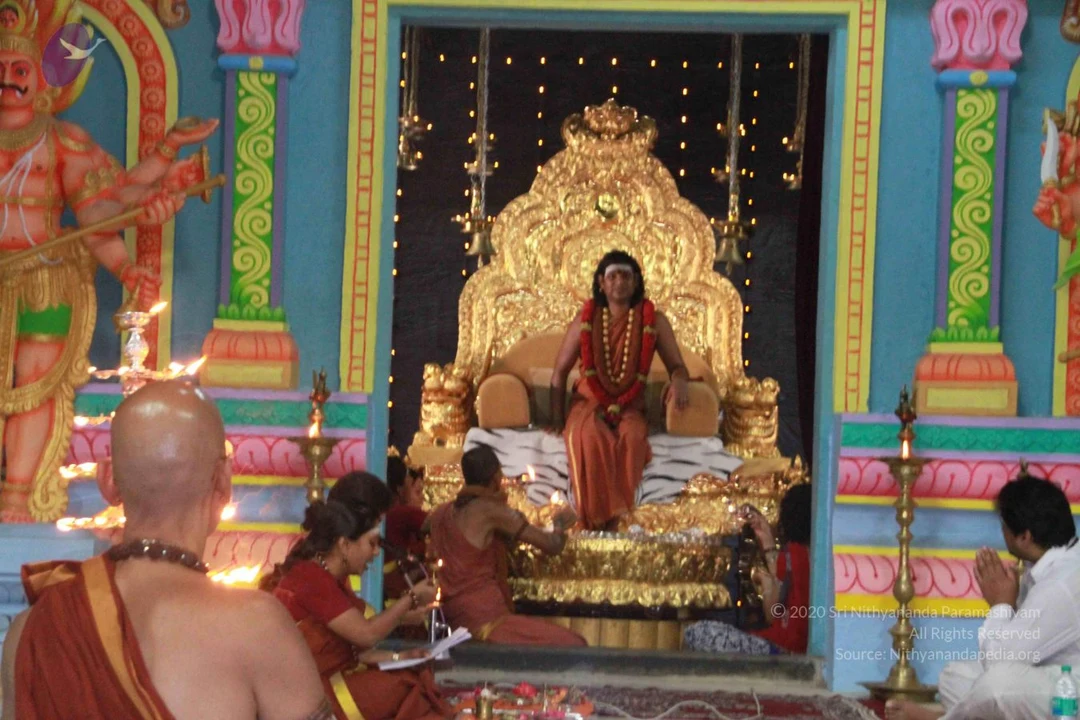
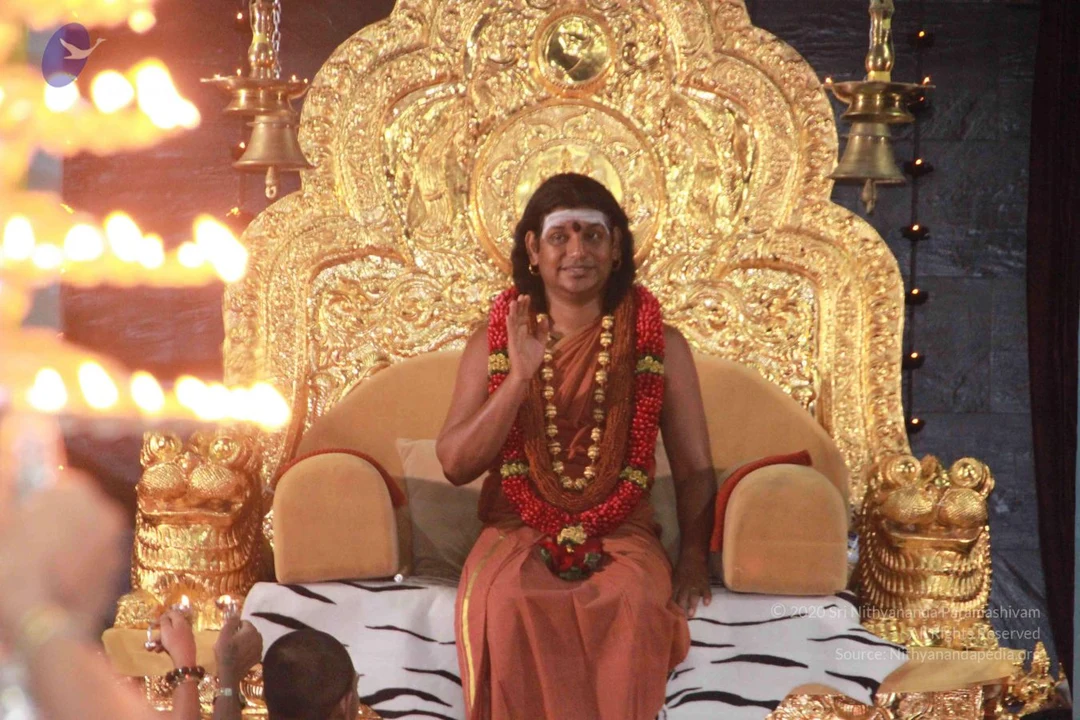
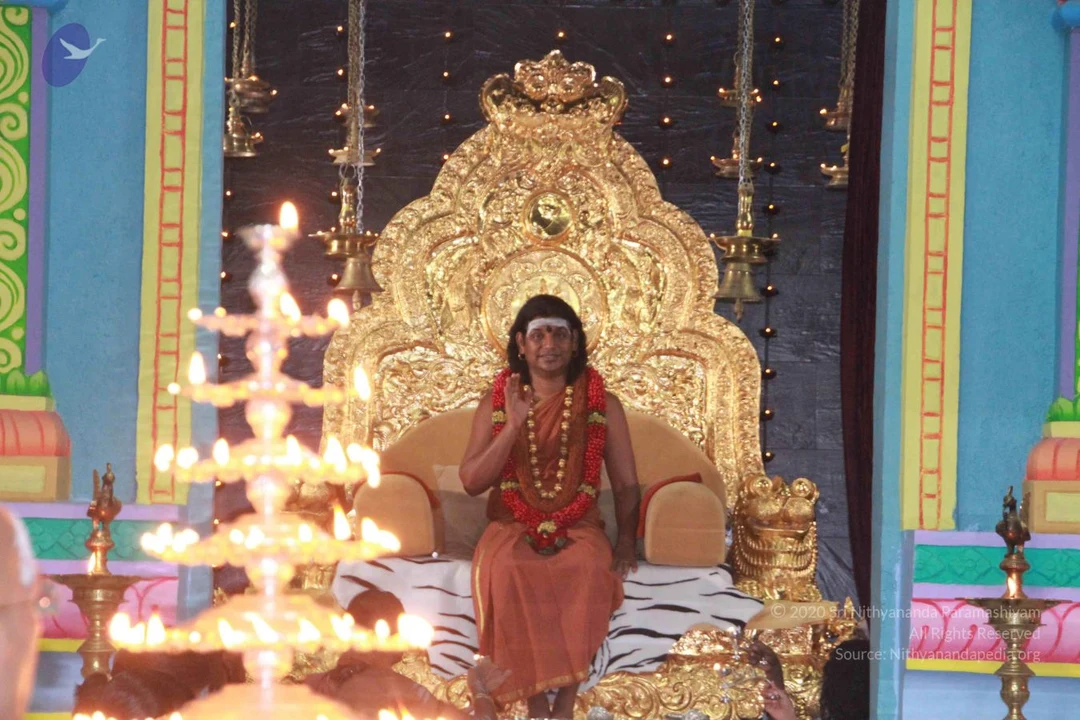
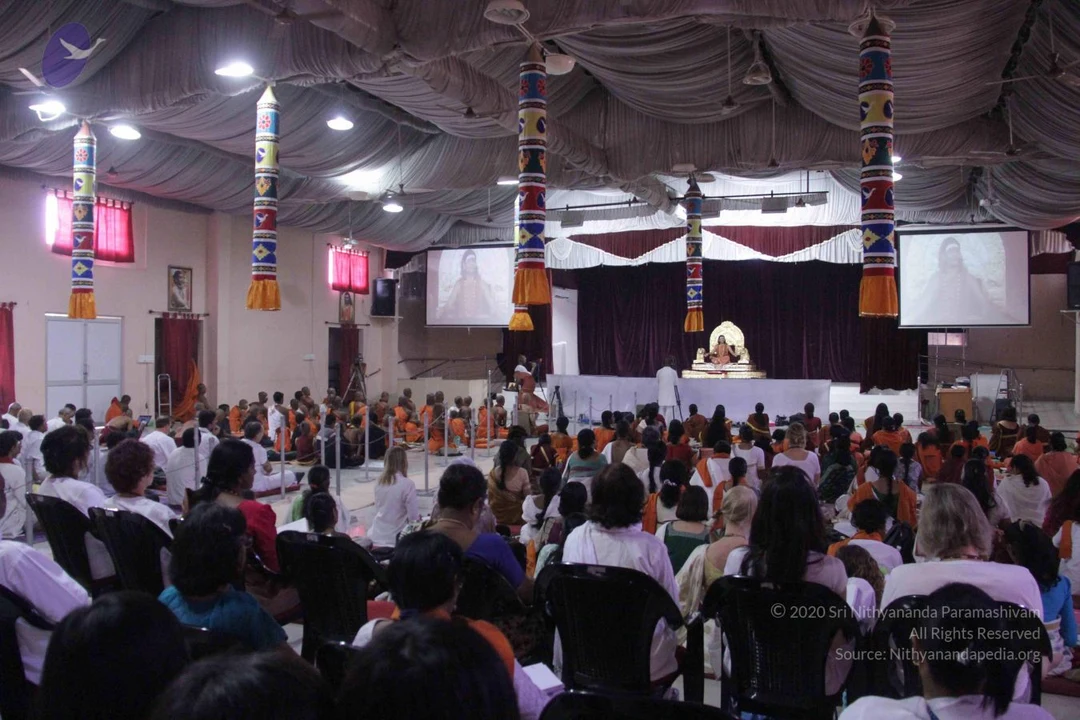
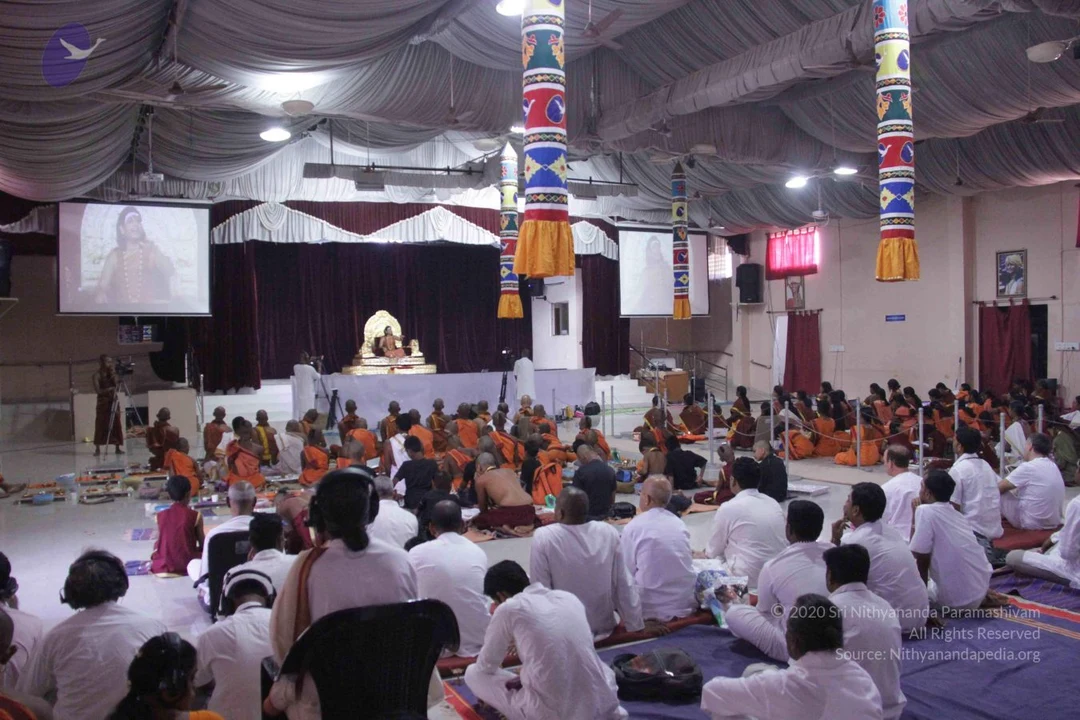
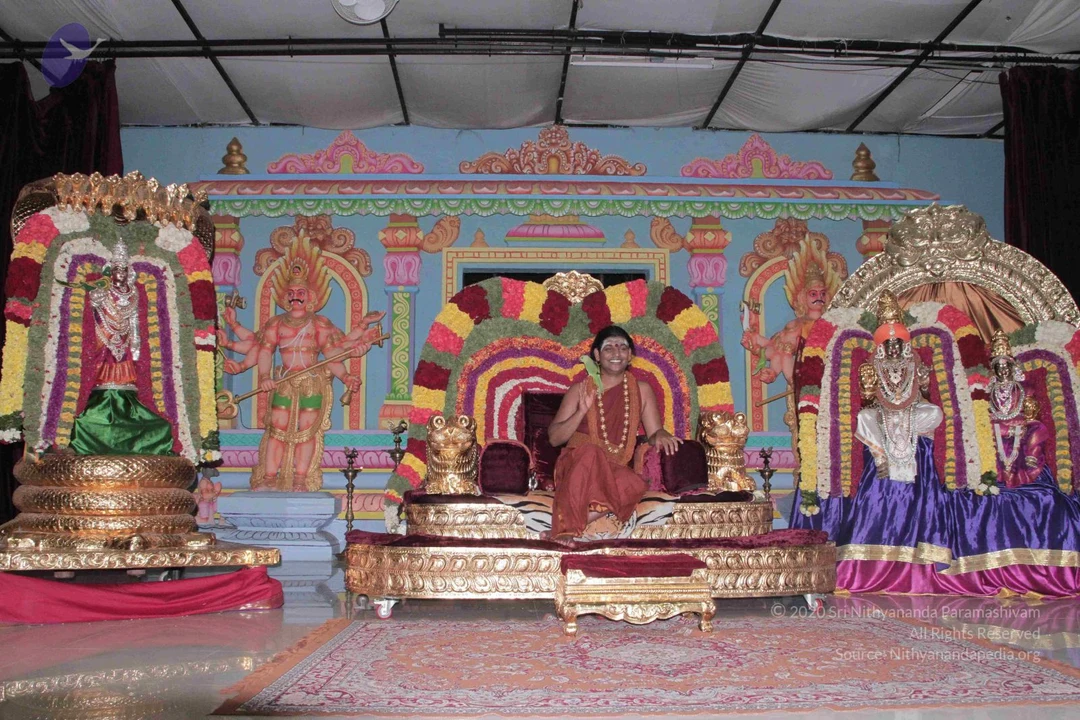
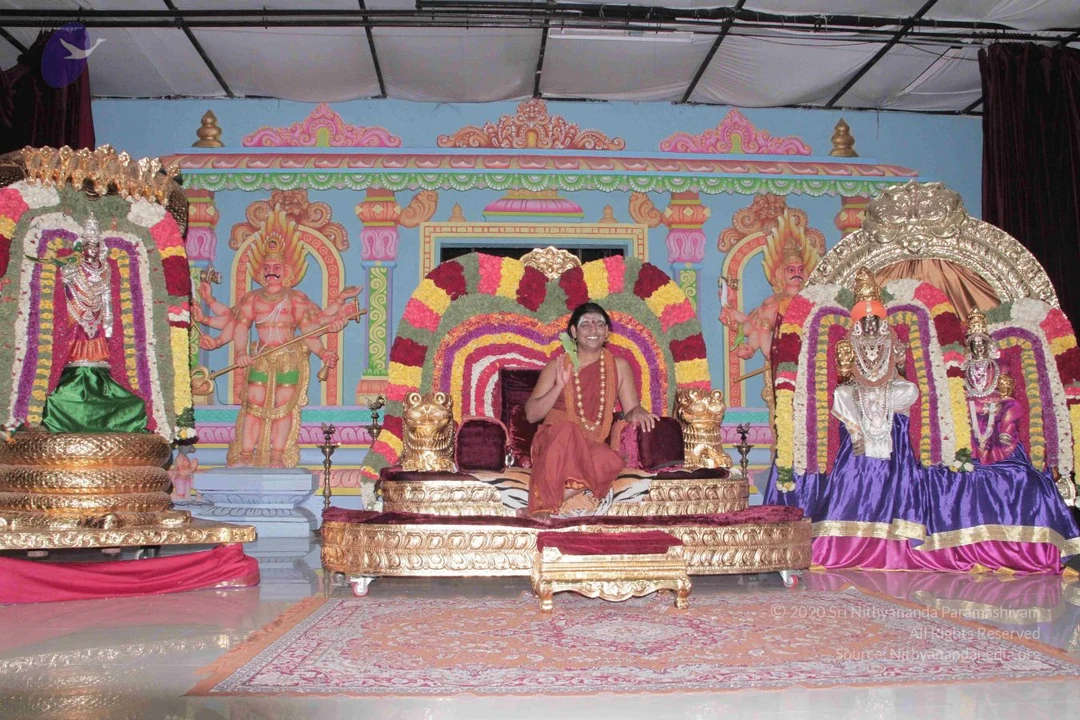
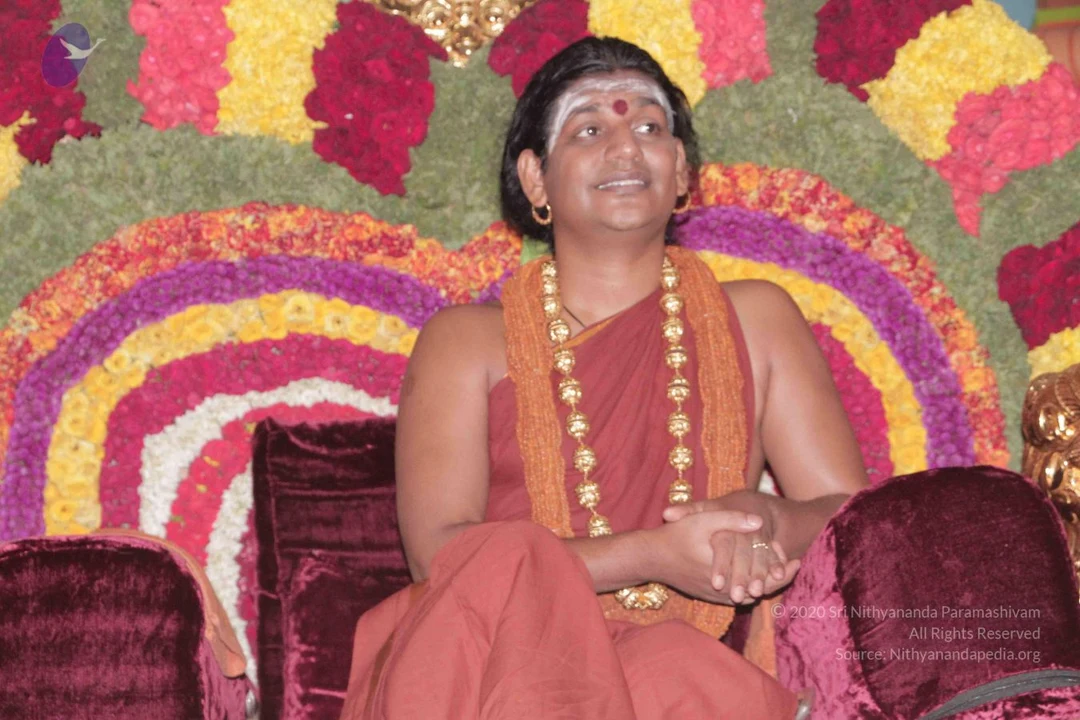
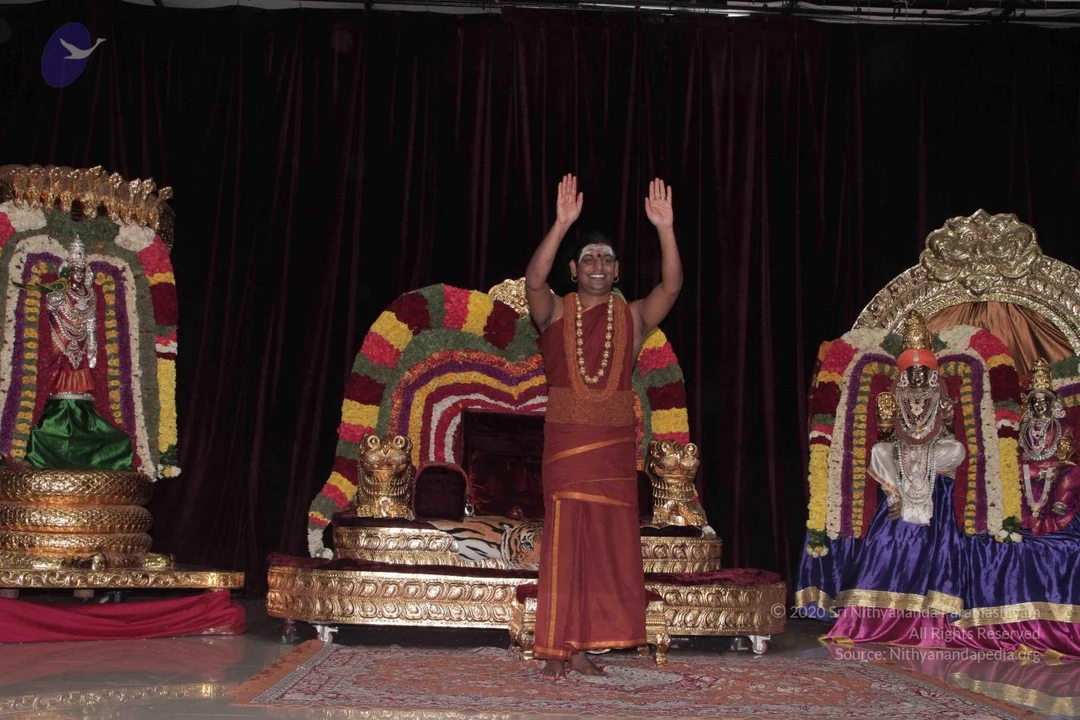
That day's Presidential Address-Nithyananda Satsang was conducted by the Supreme Pontiff of Hinduism Bhagavan Nithyananda Paramashivam on 13 March 2013 in Adi Kailasa, Bengaluru, Karnataka, India.

Description:

In today’s morning satsang, Paramahamsa Nithyananda reveals a new definition for authenticity. Authenticity is living at the peak of our capability. We determine our ultimate capacity by becoming aware of what we expect of ourselves. Part of it is from our inner self-image, called mamakara in Sanskrit. Two other portions of our self-expectations are projected out from our suppressed ideas about ourselves, and are reflected back to us in what others ask of us. These are called ahamkara – what others believe we already are – and anyakara, what others hope or wish we will become. Once we understand that others are merely showing us what we expect of ourselves, we have found the path to self-realization and achieved a state of authenticity. Swamiji also gave a new definition of freedom. Freedom has nothing to do with external change – new car, new home, new job if we don’t enjoy the old ones. This is actually just restlessness. True freedom means aligning our free will with the possibilities we create for ourselves in life. We only can enact lasting change once we integrate our inner desires with our external choices. If what we long for clashes with what we choose in the outer world, we are actually in bondage, not in freedom. Further, Swamiji unveils a new definition for aparigraha, the monastic principle of non-possessiveness. This principle has erroneously been interpreted by many translators and philosophers as “poverty” or “owning nothing”. Its underlying intention is to release attachments to materialism and to dissolve the emotion of greed. Nithyananda re-defines this principle as responsibly owning, as exercising responsible ownership. In order to reach out to the world and enrich the lives of others, some possessions may be required and useful. Ownership is permitted for necessary items, but with the responsibility of using them only to embody the Four Truths of life.

Link to Video:

VideoAudio

Transcript:

(0:46)

Sadāshiva samārambām maha shambhavi madhyamām Asmadācharya paryanthām vande guru paramparām

(1:18)

Inner Awakening. Let Me try to define this word. Awakening the ultimate possibilities in you is inner awakening. Please listen. Man is only potential. Still he has not yet become actual. So many of the dimensions in us which are possible are yet to become actual. Through this program, I awaken those possibilities in you.

(02:08)

In Sanskrit, we have a word called Kundalini means potential Bio-Energy. In every level, your potential need to be awakened- in the dimension of your health, your ability to generate and enjoy, celebrate wealth, your ability to build and celebrate relationships, your ability to feel the contentment, fulfillment, your ability to feel the joy, your ability to be enlightened, alive. In every level, awakening your possibility and helping you to realise the space of possibility means constantly feeling, experiencing, cognising, living life is possible, possible, possible. Anything you think, simply your heart should sing the song, ‘possible.’ Your life should give the background music ‘possible’ and the world should bring it to you saying, ‘possible happened.’

(04:00)

The space of possibility, space of responsibility is space of enlightenment-helping, supporting, enriching every individual. Helping, supporting, enriching every individual. Please listen, I am using the word ‘every individual’ because you are not an individual. You are a group of people living inside one body. For some people, it’s a joint family, for some people it is a nuclear family, for some people it is even a hostel! But you are not one person residing inside one body; too many people residing in one body. How many of you cognise this? True! You are too many people residing in one body. I am going to awaken every individual who is living inside your body, every individual who is reading inside your body.

(05:34)

If you are aware of the scientific researches we have conducted on this program...see, all human beings have a twelve strand of DNA layer. How many of you are aware of this information? You have twelve strands of DNA layer and all human beings, only two strand is awakened, functioning: one by birth, one by growing. Including Einstein, Edison, Newton, Steve Jobs, everyone has only two strands awakened. In Vedic tradition, we have a system, we have a very systematic processes to awaken four strands means four more. You are now coming here with two; four more can be awakened through the systematic process.

(06:51)

So first time when we did the scientific experiments, I committed to the doctors and to the participants, I will awaken four more strands. So when they go back from the 21 day class, six strands will be awakened. When they come, they come with two. I add four. They will go back with six. Two batch we did research. Once I think on forty people and once I think on sixty. All hundred participants belongs to two batch...sorry, three batch. There is one more sample batch we did. Just twelve people. All three batch, all the hundred participants, 100% participants, not 99%, 100% participants had eight strands of DNA awakened which directly converts to high emotional quotient, intellectual quotient, balance-emotional balance, increase in restful awareness. One of the major thing the doctors found out is the hereditary disease chain is broken. If you are from the family which has a history, if heart disease or a cancer or any major killer diseases are running in your family, feel relieved. You are in right place. With you, the chain is breaking. You will not be having that disease.

(08:37)

Please listen. when I utter these words, I am responsible for it. With integrity and authenticity and responsibility and enriching, I commit with you all, I will awaken your DNA layers at least six more. You are coming with already two. At least six more. Not only that, specifically the DNA patterns which need to be awakened to free you, liberate you from the hereditary diseases like cancers and heart diseases. How many of you in your family this kind of a killer diseases, even arthritis or this...what is that? Parkinsons, the hereditary diseases, how many of you in your family it runs through? So feel free. Please understand, I commit with you and promise you with integrity and authenticity, you are free from the disease. Just complete these 21 days sincerely, that’s all. When I say sincerely, you put your efforts, that’s enough. I am not asking you to do something which you can’t. Whatever is possible by you, do it. Else is My responsibility. You put with your integrity and authenticity. More than that, I am responsible even if there is some irresponsibility from your side.

(10:23)

So I commit with you all and same way, the mitochondria cell energy which is responsible for any disease or any healing. When the mitochondria cell energy goes down...usually 100 unit is the average for any healthy human being. When it goes down, naturally all the disease related to old age and disappearance of the body- the disintegration starts happening. If it goes up more than 140, anti aging starts happening. You start growing younger. All available allopathy and therapy methods can raise only 40% of your mitochondria cell energy. Inner Awakening, we have done three times, three different batches. All 100% participants had 1000% mitochondria cell energy hike! Actually the mitochondria cell energy is the equivalent, almost closest equivalent English word for Kundalini, for Kundalini.

(11:41)

The whole program is aiming at awakening the four important principles of life in you. Four important principles of life in you as realization. Not just as a theory but as a realization through which naturally your Kundalini energy will be awakened. The raise of your Kundalini happens. Get ready for this beautiful inner journey, Inner Awakening. There are some things in the world which has beginning and end like our body. It has a birth and death. There are some things in the world which has no beginning, only end: illusion, delusion, maya. It has no beginning. It will have only end. There are some things in the world which has a beginning but no end. That is Inner Awakening. Inner Awakening only has a beginning. It has no end. It is a way of life, way of living. So I request you to get ready for this Inner Awakening way of life.

(13:20)

First, I would like to introduce few basic principles of life. Please listen, program starts when you start listening. Till then program doesn’t start. Please listen, program does not start when I start speaking. It starts when you start listening because the program is for you, not for the air. I am going to give the four basic laws of life, not even spiritual life. If you are breathing, these four principles is life for you. If you want to live, these four principles are basic life for you. First principle, please listen because this whole 21 days, you are just going to listen about this principle again and again and again till you are excited to listen about them. Listen, you are going to be listening till you are excited more to listen about them. Then, you are continue to going to listen, that’s all.

(14:56)

Please listen again. First, integrity means integrity is you fulfilling the word you gave it to you and to others as if it is your very life. Please listen, honoring the word you gave it to you and to others as if it is your life and experiencing state of completion in you and with life is integrity. I will repeat once more. Listen, you honoring, fulfilling the word you give it to you and to others with your whole life, with your whole life and experiencing completion with you and life. I will give you the example. If you have committed to somebody, if you have given a word, “I will give you hundred thousand dollar by tomorrow” or I am just giving you an example. “I will give you hundred thousand dollar by end of this year.” Before the December 31st night 12 pm, am I right 12 pm or 12 am? 12 midnight. 12 midnight you should make sure that money is in the person’s hand as you committed. Not cheque, money because you committed for money. Even if it takes your life, it has to be done.

(17:08)

Suddenly you realize even if you give your life, you will not be able to give that money to that person. You will not be able to do, honor the word you gave. Then at least complete with that person saying, “I am taking that word back. I am not able to, I will not be able to fulfill, honor the word I gave.” Even that is completion. Even that is the completion. Next part of the integrity is society teaches you to honor the word you give it to others but it forgets to teach you to honor the word you give it to you. Society teaches you continuously to honor the word you give it to others but it forgets to teach you to honor the word you give it to you. The word you give it to you, you take it with...you actually don’t even remember many time the word you give it to you. Am I right? You think, ‘After all, the word I have given it to me, what is there? Leave it.’ Neither you honor nor you complete. The words you have not honored, you have not completed with you which have broken into pieces resides in your being continuously and takes away your confidence on you.

(18:47)

Many time, when you plan about your future for the life expansion, you will see one corner of you is laughing at you, ‘Eh, you will do but you will never achieve. You will never be able to achieve.’ The corner of you will be laughing at you. That corner is nothing but the rejected, unattended, broken commitments. When not honoring the words you give it to you becomes your muscle memory, becomes your pattern, thinking trend, lifestyle, thinking trend, lifestyle…(speaks in Hindi-dhyan se suniye) please listen, breaking the commitments you give it to you and not even bothered about it, when that becomes lifestyle, you lose self confidence. Truth!

(20:10)

Many time, just you don’t even remember that, for example I am giving you the example. In the young age, you decide and commit, ‘I will become a doctor’ and you become a lawyer. That is first sin. This guy has become lawyer and he even did not remember he gave a word to himself and he at least have to complete with himself saying, ‘I am not going to become doctor in this birth, in this life. I complete with you. O myself, let me not carry this incompletion-the word which is not honored in me.’ That completion, that completion brings self confidence to you.

(21:09)

Listen, when you don’t even bother about the words you give it to you and go on breaking it, you just lose respect over your thinking and planning. While you are thinking or planning itself, one corner of you will be laughing at you, ‘Aey, aey, aey.’ You will try to be like a hero. Your mind will laugh at you like a comedian. You will try you are a hero but your mind will laugh at you like stand up comedian. The first step towards life is honoring or completing every commitment you gave it to you and to others. No incompletion in your being and with the life. No incompletion in your being or with the life. How many of you cognize?

(22:24)

So we will do a small process. You will have now few minutes to look into you, appointment with yourself. All the commitments you gave it to you and did not complete it, it may be small commitment. “I will go to this such and such a restaurant and have pizza” or “I will buy a beach house in Hawaii” or “I will pamper myself with a convertible car” or “I will pamper myself with this dress.” Some so many commitments you would have given it to you, did not bother to honor them. See, if you have honored, you don’t need to write. All the commitments you gave it to you and did not honor, you gave it to others and did not honor, please list them. This is the first step we will do before entering into Inner Awakening process.

(23:35)

Commitments I gave it to me and did not fulfill, that is the list. Commitments I gave it to others and did not honor, that is the second list. Commitments you gave it to you, you have to start from the age of three-four. You might have liked some special food and wanted to eat and never fulfilled it. You might wanted to have a friendship with a boy or a girl in your class but never approached the person, never became friends. From that moment till now, all the commitments you gave it to you and did not honor, all the commitments you gave it to others and did not honor, okay? You will sit with yourself. I will give you the time. In the break, I will give you the time. During the lunch break, I will give you time.

(24:37)

You will sit with you and consciously complete with all the commitments you gave it to you and did not honor. For example, I am giving you an example. “I gave the commitment that I will become a doctor to me. Now, I am not going to become. My life has become different.” So sit with myself. The person whom you are seeing in the mirror is the incomplete half of you. Tell yourself, “Yes, I gave you the commitment I will become a doctor but now, I am not going to become a doctor.” No need to give any reason. There is no need for reason. Understand? Valid reason plus work not done is not equivalent to work done. Work not done plus valid reason is not equivalent to work done. Star on the valid reason. Below expansion on that star. Because it is not valid reason, there is no such thing as valid reason. All reasons are invalid. Getting the formula?

(25:48)

So, please listen. Tell yourself, “I have decided now not to become doctor. So consciously I withdraw from that commitment and complete it. Let me not have the hangover of that broken commitment.” How many are cognizing what I am saying? So this same way, each commitments you have not honored with you, very sincerely, with integrity, complete it. Clear? And how many you did not honor with others, you will call each one of them. Even if they have forgotten, you will remind them and you will complete with them. For example, you wanted to honor the word you gave. Then you tell them, “I need six months time or one year time. Then I will complete.” Tell exactly but now if you give a word, you are going to honor it. You are not going to complete it again.

(27:01)

From January 1st 2013, still it is almost two and half months. Two and half months? My day how it is packed all of you may be aware. My day, three and half months now. Sorry, two and half months. So two and half months, not a single day, single program, single minute late. I have decided, “It’s My life. I will honor the word.” Either you should do that or at least don’t commit.

(27:39)

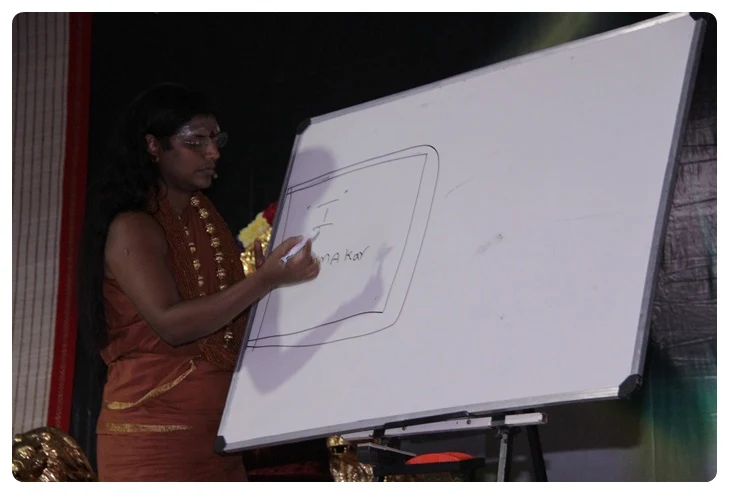
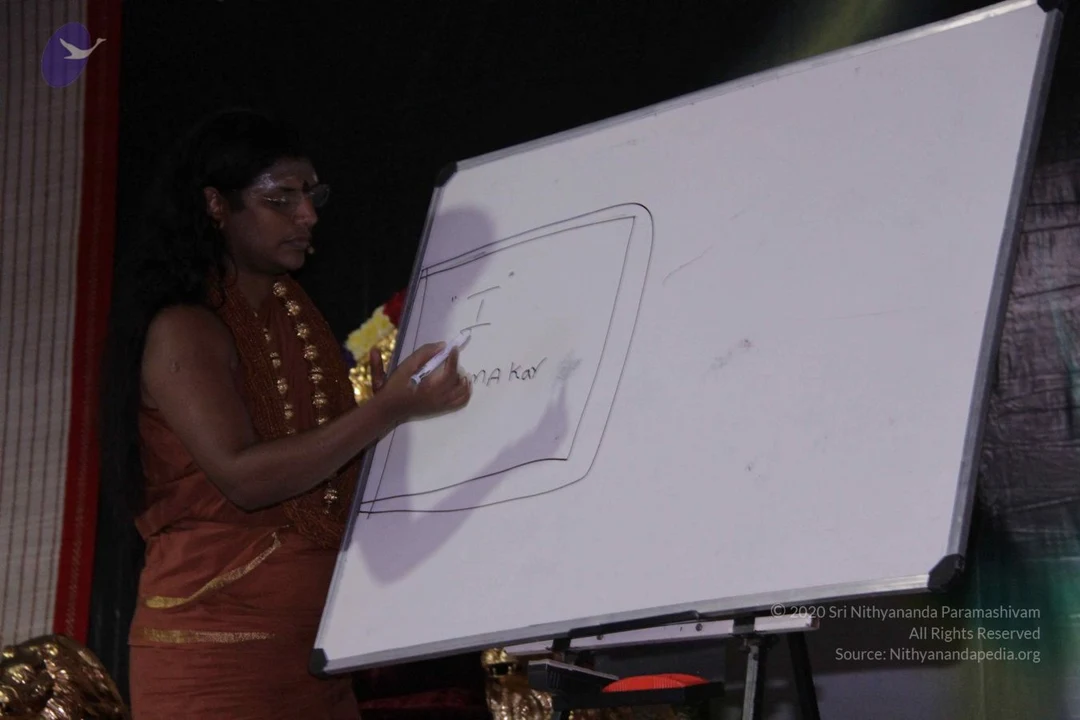
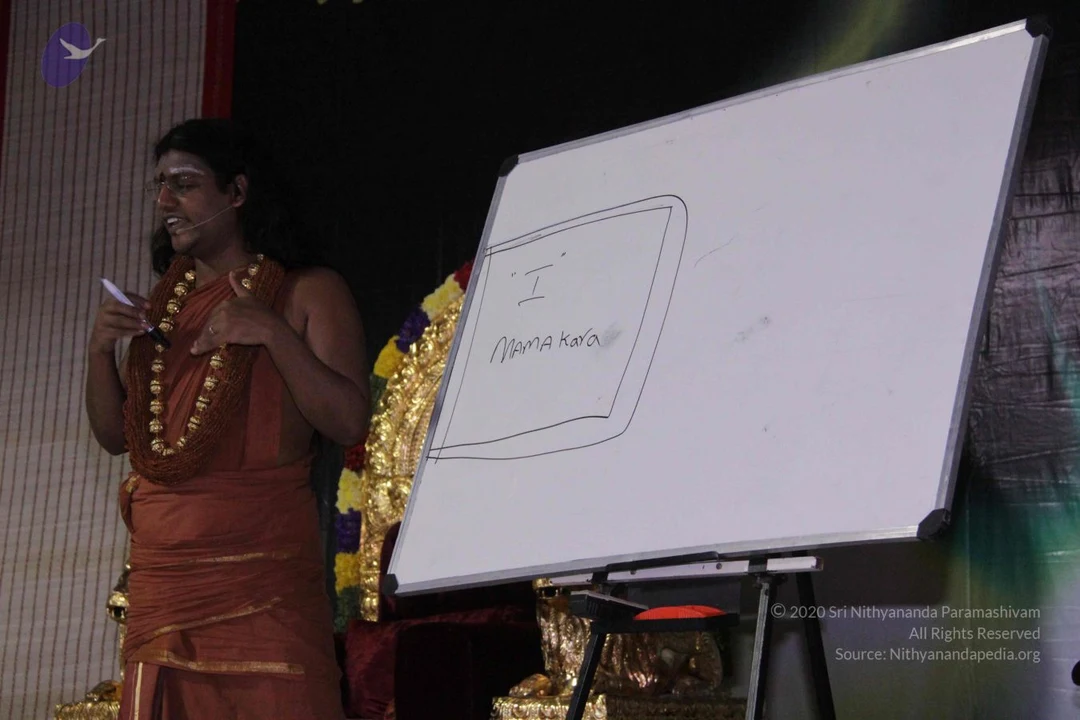
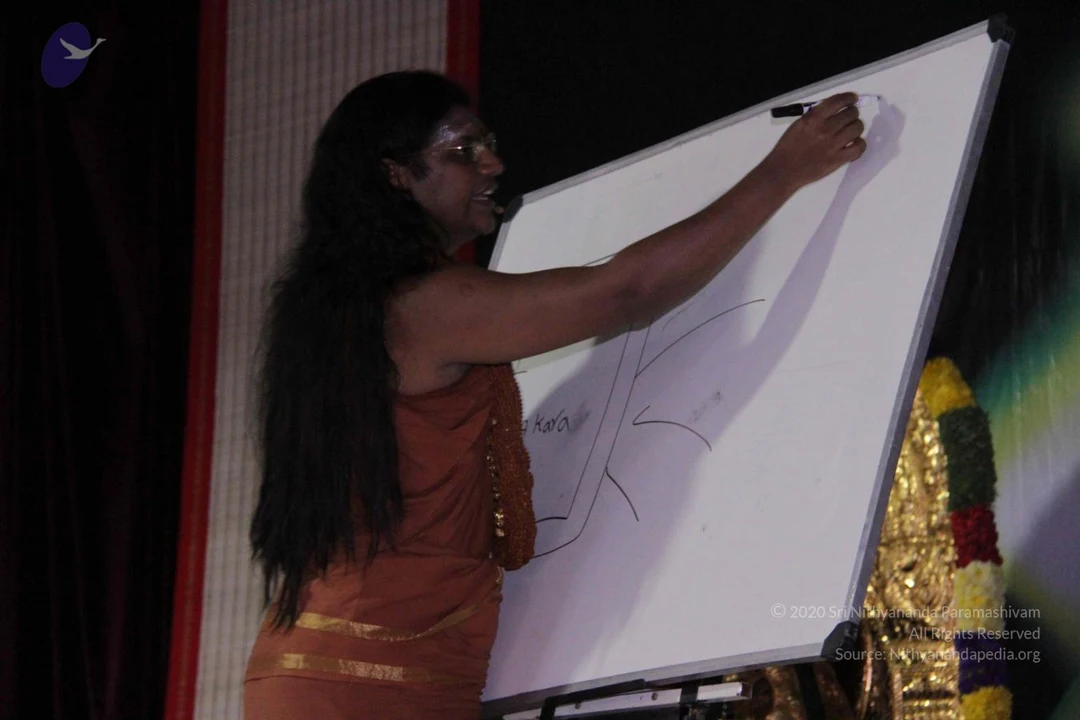
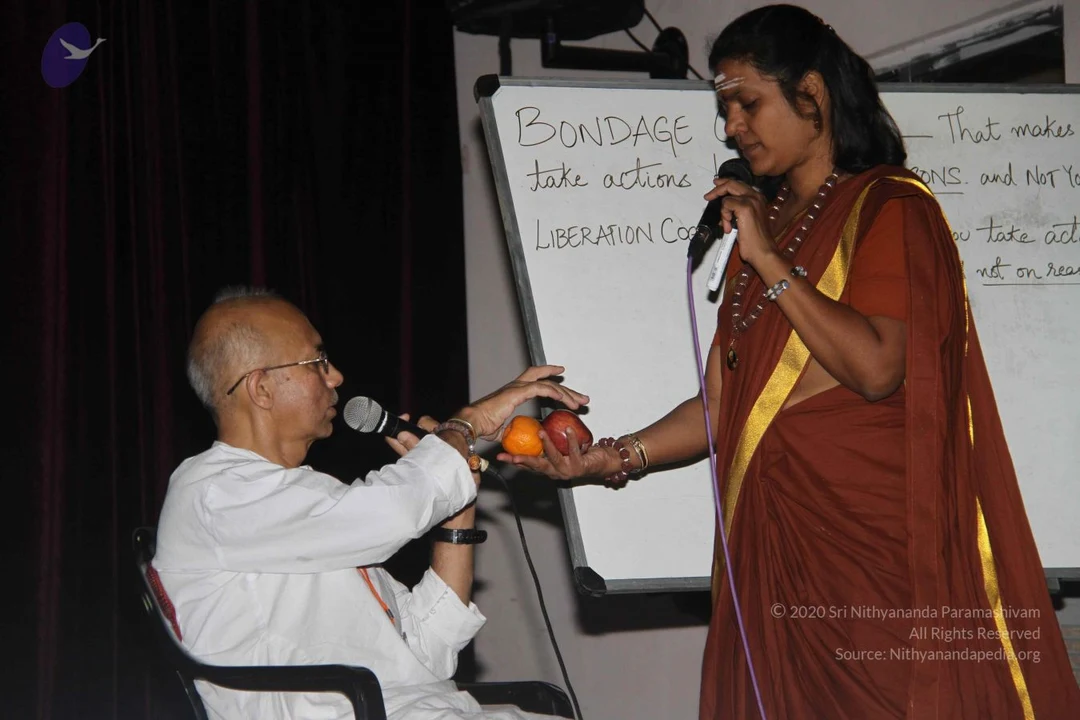
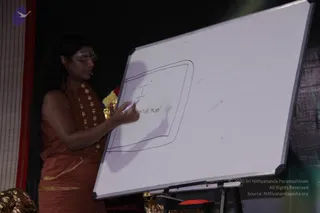
So now we will move to the second principle. About this process of completion, self completion and completion with others, we will have a ...before that, let us understand the second principle. The idea of ‘I’, it is called ahamkara sorry, mamakara in Sanskrit... Idea about you, the idea you have about you and how you show to the world as you is called ahamkara. (Swamiji is drawing figures of different sizes and shapes on the board) See here there are so many bodies are there. I am giving in a different shape, different size because it all comes in different shapes and size... These are all different persons and how you show yourself to others, this is ahamkara.

(28:59)

I will better use English words, don’t worry. What do you feel about you-self image. Okay, let us use the word. Let us use this word itself. Self image. What is word? We all decide collectively that this is the meaning of this word. That’s all na? So all of us let us collectively decide the meaning of the word self image means the idea you feel about you. Am I right? We all cognize? Please respond. Done! Self image-the idea you project to others we will call as ego. Am I right? Okay? The idea you project to the world about you as ego. You may project different-different to different-different people. That is ego. Then the idea others expect towards you...in Sanskrit, we call it Anyakara: perception. Yes, others perception. Perception. Shall we coin otherwise give a new word as a gift to English language? Otherception.

(30:47)

Self image, ego, otherception- all these three put together only is your being. In all these three, living in your peak performance is authenticity. Listen, having the best self image inside you about you, having the best ego-projecting you to others, having the ultimate internal image and external image. That is a nice word. Internal image, the best internal image means go on developing it, taking responsibility for it, extending it, expanding it, stretching it. External image, go on developing it and otherception, go on stretching yourself to fulfill it. This is sincerity, authenticity, shraddha. In english we use the word authenticity, shraddha.

(32:03)

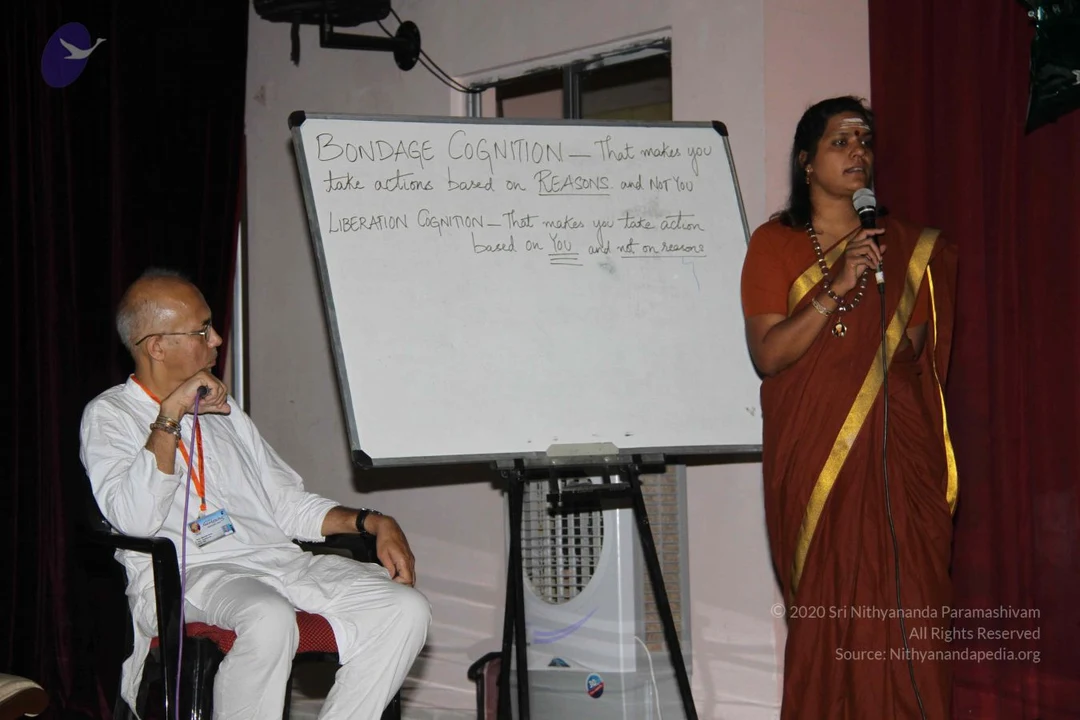
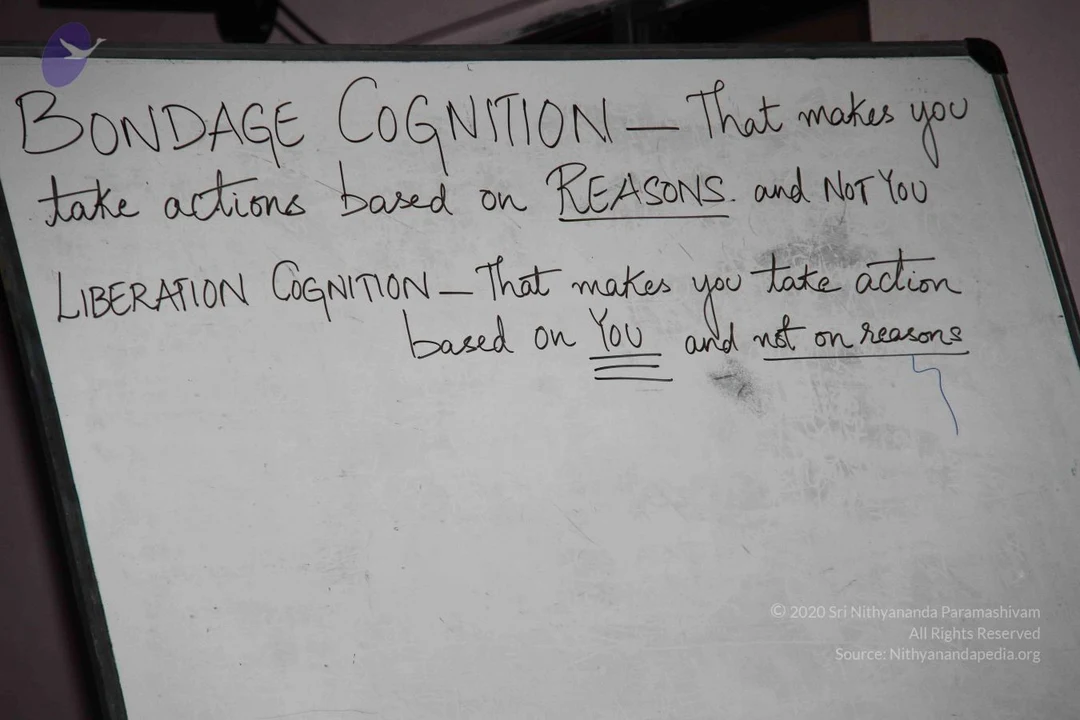
Now you will have many questions. ‘Why should I stretch myself to the otherception?’ Let’s do this one small homework. Describe all the qualities you believe in your self image. Describe all the qualities you project in your outer image. Describe all the otherceptions you received from people. Internal image. Describe how, what all the qualities you perceive in the internal image, external image and otherception. (Swamiji is writing these words on the board) Inner image, correct? Outer image, others image, okay? See, what others expect from you is others’ image, okay? Not what you think about others. No. Clear? Please now pen down all these three, separate, separate page. Few minutes time. Please sit. It’s a time for internalizing these ideas and analyzing.

(33:45)

Title:

Awaken Your DNA With Inner Awakening - 2013, March 13th by Nithyananda

Description:

The Four Great truths - Integrity, Authenticity, Responsibility and Enriching_IA Intro class

Link to Video:

VideoAudio

Transcript:

Sadāshiva samārambām mahāshāmbhavi madhyamām Asmadācharya paryanthām vande guru paramparām.

[00:39]

I welcome you all with My love and respects.

Inner Awakening – let Me try to define this word. Awakening the ultimate possibilities in you is Inner Awakening.

Please listen. Man is only potential, still he has not yet become actual. So many of the dimensions in us which are possible are yet to become actual. Through this program I awaken those possibilities in you.

In Sanskrit we have a word called Kundalini, means potential bio-energy. In every level your potential need to be awakened. In the dimension of your health, your ability to generate and enjoy celebrate wealth, your ability to build and celebrate relationships, your ability to feel the contentment fulfilment, your ability to feel the joy, your ability to be enlightened, alive - in every level awakening your possibility and helping you to realise the space of possibility, means constantly feeling, experiencing, cognising, living ‘life is possible, possible, possible’. Anything you think, simply your heart should sing the song ‘possible’. Your life should give the background music ‘possible’. And the world should bring it to you saying ‘possible happened’. The space of possibility, space of responsibility, is space of enlightenment.

[04:30]

Helping, supporting, enriching every individual. Helping, supporting, enriching every individual. Please listen! I am using the word every individual because you are not an individual. You are a group of people living inside one body. For some people it’s a joint family, for some people it’s a nuclear family, for some people it is even a hostel. But you are not one person residing inside one body. Too many people residing in one body. How many of you cognise this? True. You are too many people residing in one body. I am going to awaken every individual who is living inside your body.

If you aware of the scientific researches we have conducted on this program, all human beings have twelve strand of DNA layer. How many of you are aware of this information. You have 12 strands of DNA layer, and all human beings only 2 strands is awakened, functioning. One by birth, one by growing. Including Einstein, Edison, Newton, Steve Jobs, everyone has only 2 strands awakened.

[06:40]

In Vedic tradition we have a system, we have very systematic processes to awaken 4 strands – means 4 more. You are now coming here with 2, four more can be awakened through the systematic process.

So, first time when we did the scientific experiments I committed to the doctors and to the participants, I’ll awaken 4 more strands. So when they go back from the 21 day class, 6 strands will be awakened. When they come they come with the two, I add 4, they will go back with 6.

[07:30]

Two batch we did research, once I think on forty people, once I think on sixty. All 100 participants belongs to two batch, sorry three batch. There is one more sample batch we did, just 12 people. All three batch, all the 100 participants – hundred percent participants, not ninety-nine percent, hundred percent participants had eight strands of DNA awakened. Which directly converts to high emotional quotient, intellectual quotient, balance, emotional balance, increase in restful awareness.

One of the major thing the doctors found out is the hereditary disease chain is broken. If you are from the family which has a history, if a heart disease or a cancer, or any major killer diseases, are running in your family – feel relieved, you are in right place. With you the chain is breaking, you will not be having that disease.

[08:59]

Please listen! When I utter these words I am responsible for it, with integrity and authenticity and responsibility and enriching I commit with you all, I’ll awaken your DNA layers at least six more. You are coming with already two, at least six more. Not only that, specifically that DNA patterns which need to be awakened to free you, liberate you from the hereditary diseases like cancers and heart diseases.

[09:51]

How many of you in your family, this kind of a killer diseases? Even arthritis, or this – what is it – Parkinsons. The hereditary diseases. How many of you in your family trends through. So feel free – please understand, I commit with you, and promise you, with integrity and authenticity, you are free from the disease. Just complete this 21 days sincerely, that’s all.

When I say sincerely, you put your efforts, that’s enough. I am not asking you to do something which you can’t. Whatever is possible by you, do it. Else is My responsibility. You put with your integrity and authenticity. More than that I am responsible even if there is some irresponsibility from your side.

[10:51]

And same way, the mitochondria cell energy which is responsible for any disease or any healing, when the mitochondria cell energy goes down… usually 100 unit is the average for any healthy human being. When it goes down, naturally all the disease related to old age and disappearance of the body, the disintegration starts happening. If it goes up more than 140 anti-aging starts happening. You start growing younger.

All available allopathy and therapy methods can raise only forty percent of your mitochondria cell energy. Inner awakening, we have done three times, three different batches – all hundred percent participants had thousand percent mitochondria cell energy hike. Actually the mitochondria cell energy is the equivalent, almost closest equivalent English word for Kundalini, for Kundalini.

[12:18]

The whole program is aiming at awakening the four important principles of life in you, as realisation. Not just as a theory, but as a realisation, through which naturally your Kundalini energy will be awakened, the raise of your Kundalini happens.

Get ready for this beautiful inner journey, Inner Awakening.

There are some things in the world which has beginning and end. Like our body – it has a birth and death. There are some things in the world which has no beginning, only end: illusion, delusion, maya. It has no beginning, it will have only end. There are some things in the world which has a beginning but no end – that is Inner Awakening. Inner Awakening only has a beginning, it has no end. It is way of life, way of living.

So I request you to get ready for this Inner Awakening way of ife.

Let’s gather for next session. Thank you

[14:04]

Title:

Awaken Different Strands of Your DNA || Inner Awakening || 13 March 2013

Description

TITLE : Awaken Different Strands of Your DNA
Name of The Program : Inner Awakening Introduction
Session on: Awakening different strands of DNA
Venue : Adikailaasa, Bengaluru, India
Date : 13 March 2013

This video is an excerpt from the Inner Awakening program conducted on 13 March 2013 in Adikailaasa, Bengaluru, India. In this video Supreme Pontiff of Hinduism HDH Nithyananda Paramashivam explains how the 21 day Inner Awakening meditation workshop awakens additional strands of DNA, thereby raising human Consciousness to a higher level and giving extraordinary energy levels and curing diseases.

Link to Video:

VideoAudio

Transcript:

(0:16)

Awakening the ultimate possibilities in you is Inner Awakening. Please listen. Man is only potential. Still he has not yet become actual. So many of the dimensions in us which are possible are yet to become actual. Through this program, I awaken those possibilities in you... See, all human beings have a twelve strand of DNA layer. How many of you are aware of this information? You have twelve strands of DNA layer? And all human beings, only two strand is awakened, functioning: one by birth, one by growing. Including Einstein, Edison, Newton, everyone has only two strands awakened. In Vedic tradition, we have a system, we have a very systematic processes to awaken four strands means four more. You are now coming here with two; four more can be awakened through the systematic process.

(02:11)

So, first time when we did the scientific experiments, I committed to the doctors and to the participants I will awaken four more strands... So when they go back from the twenty one day class, six strands will be awakened. When they come, they come with two. I add four. They will go back with six. Two batch we did research. Once I think on forty people, once I think on sixty. All hundred participants belongs to two batch...sorry, three batch. There is one more sample batch we did. Just twelve people. All three batch, all the hundred participants, 100% participants-not 99%, 100% participants had eight strands of DNA awakened which directly converts to high emotional quotient, intellectual quotient, balance-emotional balance, increase in restful awareness.

(03:31)

One of the major thing the doctors found out is, the hereditary disease chain is broken. If you are from the family which has a history, if heart disease or a cancer or any major killer diseases are running in your family, feel relieved you are in right place. With you, the chain is breaking. You will not be having that disease. Please listen, when I utter these words, I am responsible for it. With integrity and authenticity and responsibility and enriching, I commit with you all, I will awaken your DNA layers at least six more. You are coming with already two, at least six more. Not only that, specifically the DNA patterns which need to be awakened to free you, liberate you from the hereditary diseases like cancers and heart diseases.

(04:57)

How many of you in your family, these kind of a killer diseases, even arthritis or this...what is it? Parkinsons, the hereditary diseases, how many of you in your family it runs through? So feel free. Please understand, I commit with you and promise you with integrity and authenticity, you are free from the disease. Just complete these twenty one days sincerely, that’s all. When I say sincerely, you put your efforts. That is enough. I am not asking you to do something which you can’t. Whatever is possible by you, do it. Else is My responsibility. You put with your integrity and authenticity. More than that, I am responsible even if there is some irresponsibility from your side.

(06:00)

So I commit with you all and same way, the mitochondria cell energy which is responsible for any disease or any healing, when the mitochondria cell energy goes down...usually hundred unit is the average for any healthy human being. When it goes down, naturally all the disease related to old age and disappearance of the body, the disintegration starts happening. If it goes up more than 140, anti aging starts happening. You start growing younger. All available allopathy and therapy methods can raise only 40% of your mitochondria cell energy. Inner Awakening, we have done three times, three different batches. All 100% participants had 1000% mitochondria cell energy hike... Actually the mitochondria cell energy is the equivalent, almost closest equivalent english word for kundalini.

(07:25)

Title:

Realize Your True Identity || Inner Awakening || 13 March 2013

Description

Title: Realize Your True Identity
Name Program: Inner Awakening
Session on: Various Identities a person holds. Completing with the incompletions and realizing your true Identity.
Date: 13 March 2013
Venue: Adikailaasa, Bengaluru, India

This video is an excerpt from the Inner Awakening program conducted on 13 March 2013 in Adikailaasa, Bengaluru, India. In this video Supreme Pontiff of Hinduism HDH Nithyananda Paramashivam explains about the various identities a person holds such as self-image, external image, image given by others. He takes the participants through a very deep Internalizing process which will help with the identification of Incompletions with Self and Life.

Link to Video:

VideoAudio

Transcript:

(0:15)

See, what others expect from you is others image, okay not what you think about others. No, clear? Please now, pen down all these three separate, separate page. Few minutes' time. Please sit. It is a time for internalizing these ideas and analyzing The idea of ‘I’, it is called ahankara...sorry, mamakara… Mamakara in Sanskrit-idea about you, the idea you have about you and how you show to the world as you is called ahamkara. (Swamiji draws figures of different shapes on a board) See, here there are so many bodies are there. I am giving in a different shape, different size because it all comes in different shapes and size. These are all different persons. And how you show yourself to others: this is ahamkara. I will better use English words, don’t worry. I will use English words. What will...what is the word for mamakara? I don’t think English has a word. What do you feel about you...what? Self identity? Self image, okay. Let’s use the word. Let us use this word itself- Self image.

(02:15)

What is word? We all decide collectively that this is the meaning of this word. That’s all, na? So all of us let us collectively decide the meaning of the word self image means the idea you feel about you. Am I right? We all cognize? Please respond. Done! Self image-the idea you project to others, we will call as ego. Am I right? Okay? The idea you project to the world about you as ego. You may project different, different to different people. That is ego. Then, the idea others expect towards you, in Sanskrit we call it anyakara but I don’t know what word to use in English. What word we will use in English? Hmm? Alright, perception let’s use. Perception. Yes, others' perceptions. Perception. Shall we coin otherwise, give a new word as a gift to English language? Othersception. Okay, all of us agree? Yes, otherception, hmm?

(04:10)

Self image, ego, otherception-all these three put together only is your being, am I right? All of you are able to cognize? In all these three, living in your peak performance is authenticity. Listen, having the best self image inside you about you, having the best ego projecting you to others, having the ultimate...yes, that’s beautiful. Yes, internal image and external image. That’s a nice word. Internal image, the best internal image means, go on developing it, taking responsibility for it, extending it, expanding it, stretching it. External image, go on developing it and otherception, go on stretching yourself to fulfill it. This is sincerity, authenticity, shraddha. In English we use the word authenticity-shraddha.

(05:42)

Now you will have many questions. ‘Why should I stretch myself to the otherception?’... I will answer all that question. Let’s do this one small homework. Describe all the qualities you believe in your self image. Describe all the qualities you project in your outer image. Describe all the otherceptions you received from people. How many of you cognise this? Can you all describe? You want Me to repeat, I will repeat. Internal image, describe how, what all the qualities you perceive in the internal image, external image and otherception. Okay? Whatever feedback reached you, write that. That’s enough. Inner image, outer image, others image, over! (Swamiji writes on board saying it aloud) Inner image, correct? Outer image, others image. Okay?

(07:39)

Sit with yourself. You will sit with yourself. I will give you the time and consciously complete with all the commitments you gave it to you and did not honor. For example, I am giving you an example. ‘I gave the commitment that I will become a doctor to Me. Now I am not going to become. My life has become different.’ So sit with Myself. The person whom you are seeing in the mirror is the incomplete half of you. Tell yourself, ‘Yes, I gave you the commitment I will become a doctor but now, I am not going to become a doctor.’ No need to give any reason. There is no need for reason. Understand, valid reason plus work not done is not equivalent to work done. Work not done plus valid reason is not equivalent to work done. Star on the valid reason. Below expansion on that star because it is not valid reason there is no such thing as valid reason. All reasons are invalid. Getting the formula?

(09:04)

So please listen. Tell yourself, ‘I have decided now not to become doctor. So consciously I withdraw from that commitment and complete it. Let me not have the hangover of that broken commitment.’ How many of you are cognizing what I am saying? So the same way each commitments you have not honored with you, very sincerely with integrity, complete it. Clear? And how many you did not honor with others, you will call each one of them even if they have forgotten, you will remind them and you will complete with them. For example, you wanted to honor the word you gave. Then you tell them, ‘I need six months' time or one year time. Then I will complete.’ Tell exactly but now if you give a word, you are going to honor it. You are not going to complete it again. Clear?

(10:22)

What is your question? (Swamiji listens to a devotee’s question) And you are not doing it? Then you have to complete it. You have to complete with that. No, you should say, ‘I will not commit to do everyday. Whenever I can, whenever I want I will do. Otherwise I will not do. I am this kind of person only.’ Let it be very clear to ourselves Or you should see to it you give the life and do it. You will see now. This 21 days, you will not see Me one minute late for any one class... From January1st 2013 still it is almost two and half months... Got it? So two and half months, not a single day, single program, single minute late. I have decided, ‘It’s My life. I will honor the word.’ Either you should do that or at least don’t commit.

(11:56)

So now, we will move to the second principle. About this process of completion, self completion, many time when you plan about your future for the life expansion, you will see one corner of you is laughing at you, ‘Eh! You will do but you will never achieve. You will never be able to achieve.’ The corner of you will be laughing at you. How many of you cognize this? That corner is nothing but the rejected, unattended, broken commitments. When not honoring the words you give it to you becomes your muscle memory, becomes your pattern, thinking trend, lifestyle... thinking trend, lifestyle…Dhyaan se suniye (Swamiji speaks in Hindi) please listen, breaking the commitments you give it to you and not even bothered about it, when that becomes lifestyle, you lose self confidence. How many of you understand, cognize what I am saying? Truth!

(13:45)

Many time just you don’t even remember that for example I am giving you the example. In the young age, you decide and commit, ‘I will become a doctor.’ And you become a lawyer. This guy has become lawyer and he even did not remember he gave a word to himself and he at least has to complete with himself saying, ‘I am not going to become doctor in this birth, in this life. I complete with you. O myself, let me not carry this incompletion, the word which is not honored in me.’ That completion, that completion brings self confidence to you. Listen, when you don’t even bother about the words you give it to you and go on breaking it, you just lose respect over your thinking and planning. How many of you cognize this? While you are thinking or planning itself, one corner of you will be laughing at you, ‘Ah! Ah! Ah!’ You will try to be like a hero. Your mind will laugh at you like a comedian. You will try you are a hero, but your mind will laugh at you like stand up comedian!

(15:51)

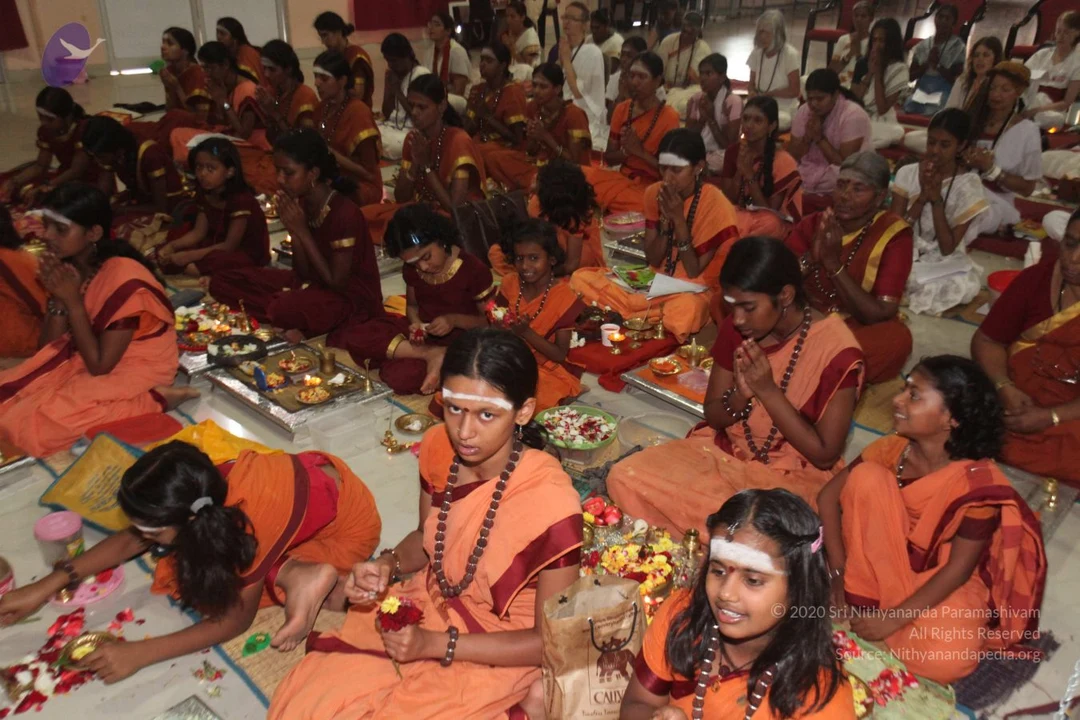
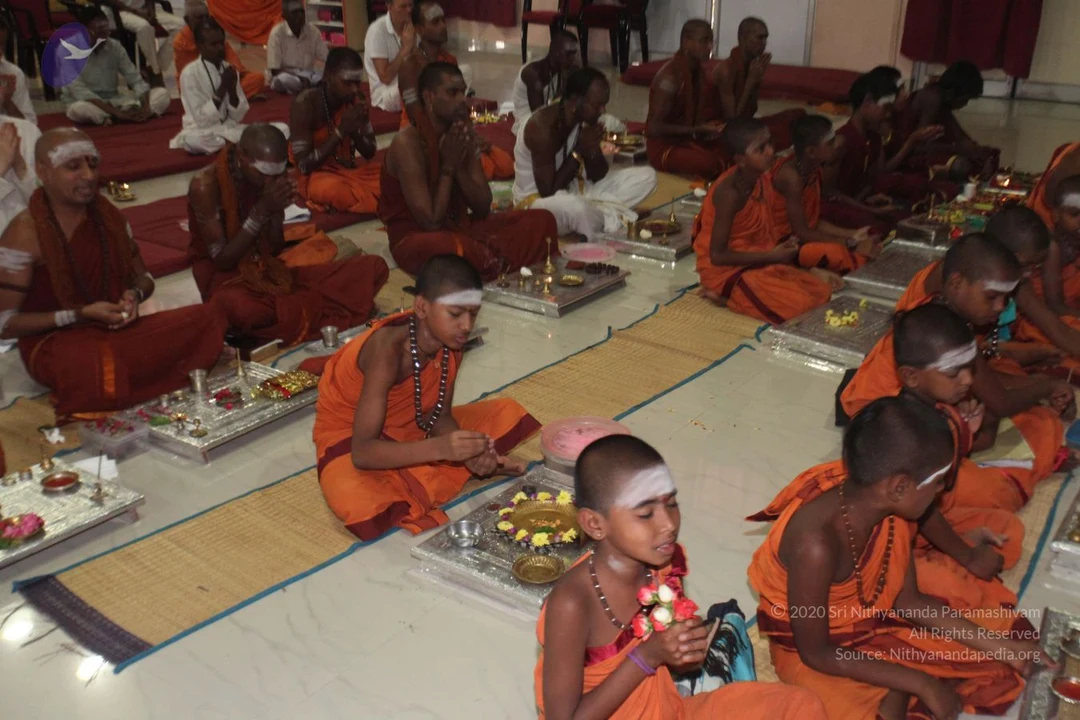
The first step towards life is honoring or completing every commitment you gave it to you and to others. No incompletion in your being and with the life... No incompletion in your being or with the life. How many of you cognize?... So we will do a small process. You will have now few minutes to look into you, appointment with yourself. All the commitments you gave it to you and did not complete it. It may be small commitment. ’I will go to this such and such a restaurant and have pizza’ or ‘I will buy a beach house in Hawaii’ or ‘I will pamper myself with a convertible car’ which is a big problem recently in My Sangha or ‘I will pamper myself with this dress.’ Some, so many commitments you would have given it to you, did not bother to honor them. See, if you have honored, you don’t need to write. All the commitments you gave it to you and did not honor, you gave it to others and did not honor-please list them. This is the first step we will do before entering into Inner Awakening process.

(18:11)

Photos

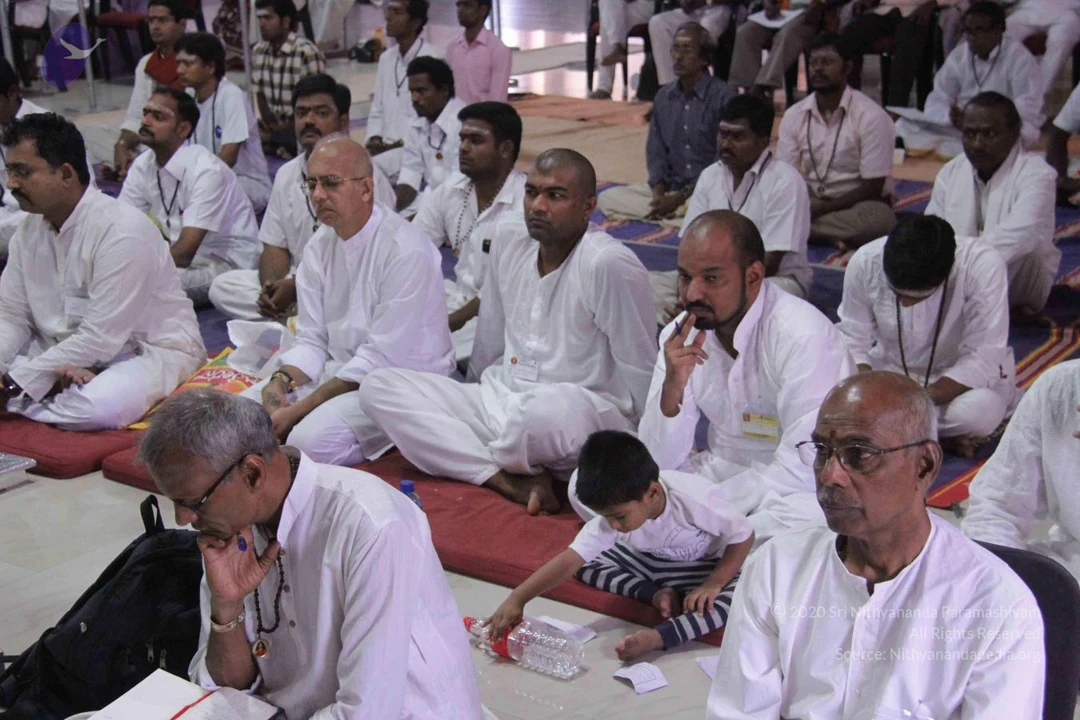
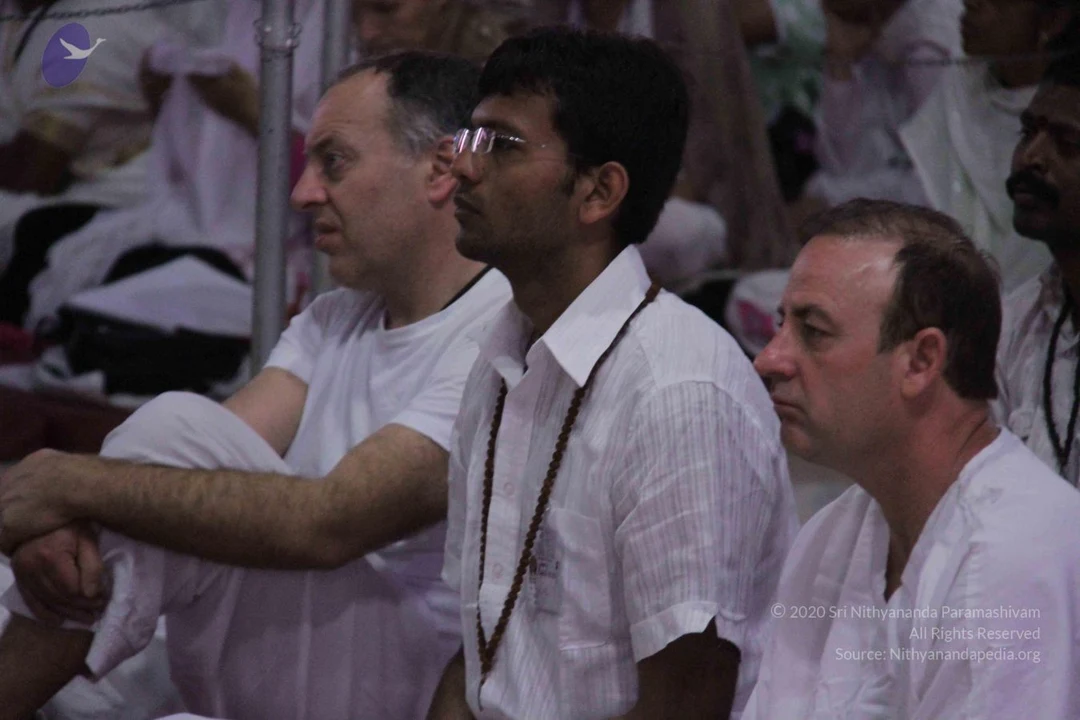
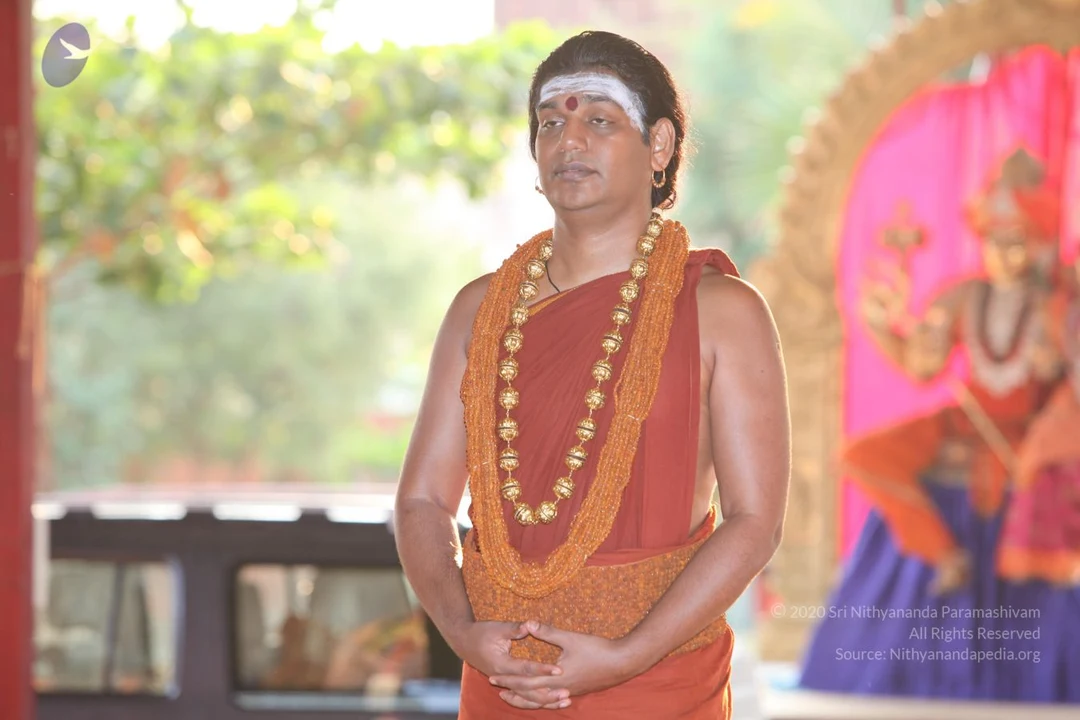
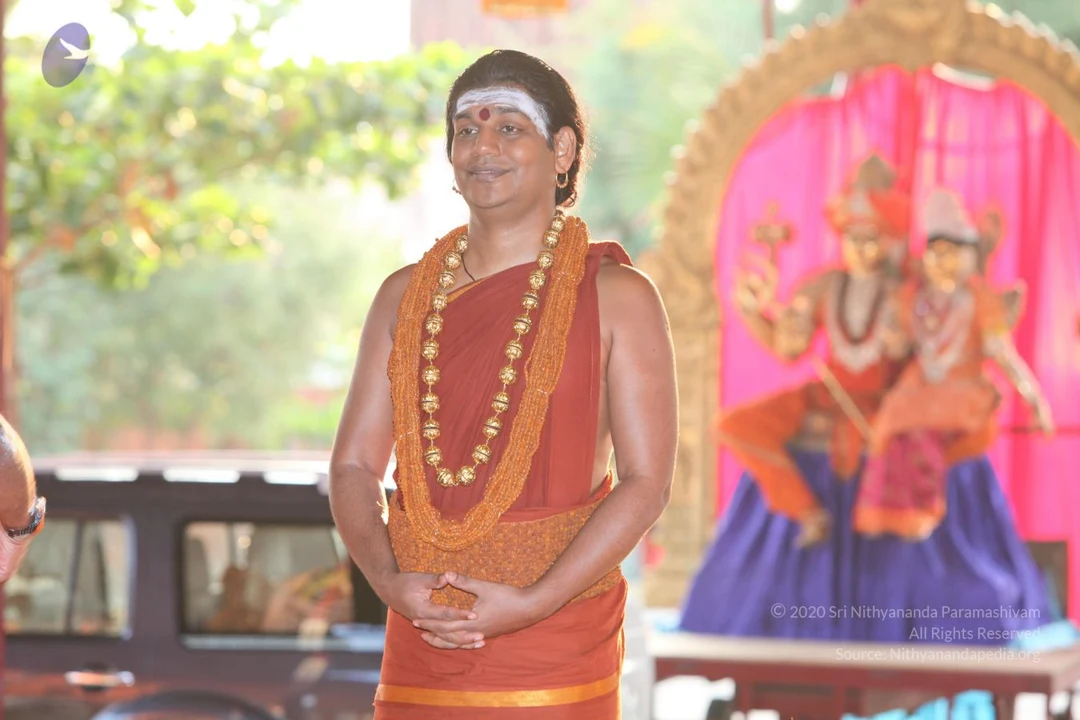
Morning Satsang
Google Logo

Calls from Sadhana TV Viewers
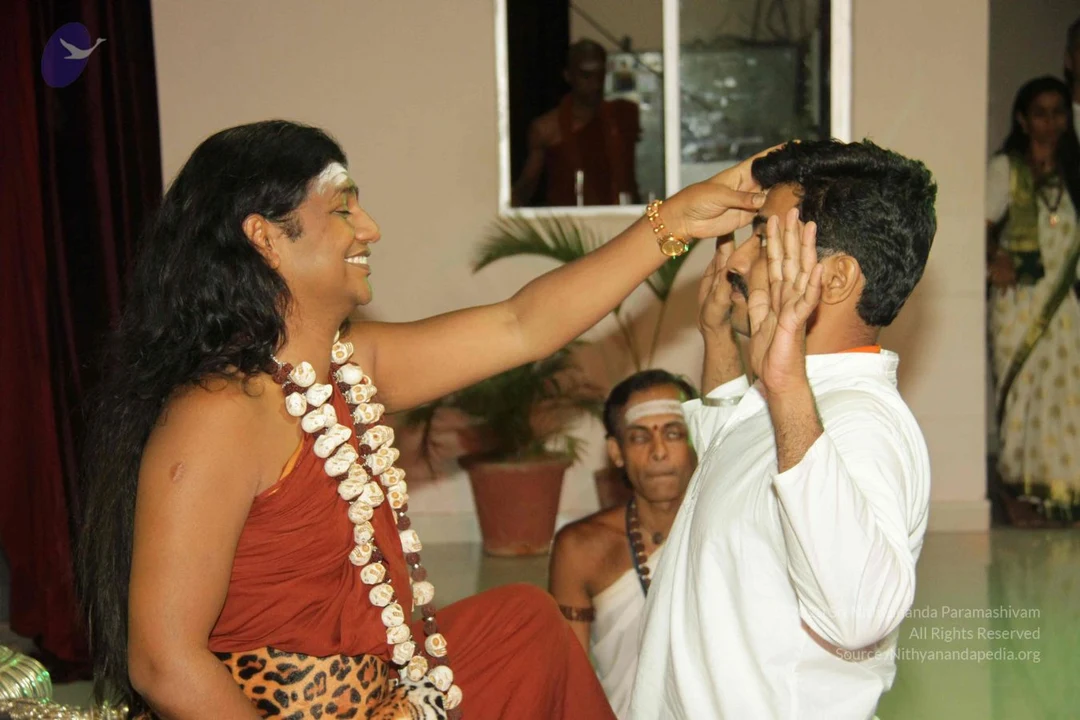
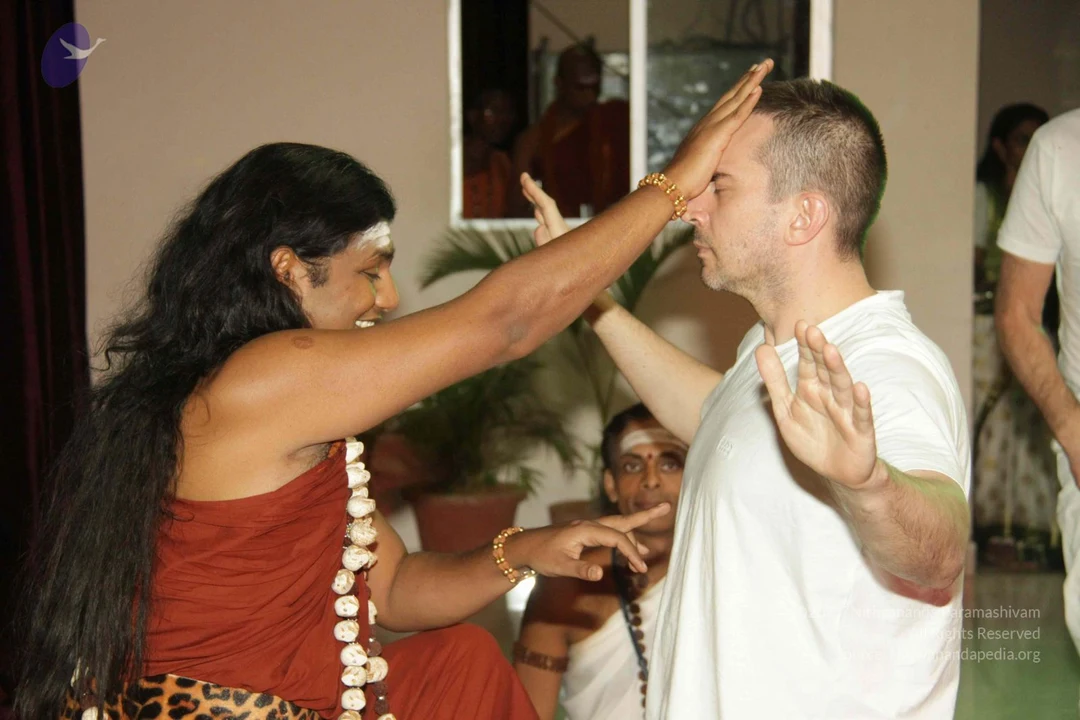
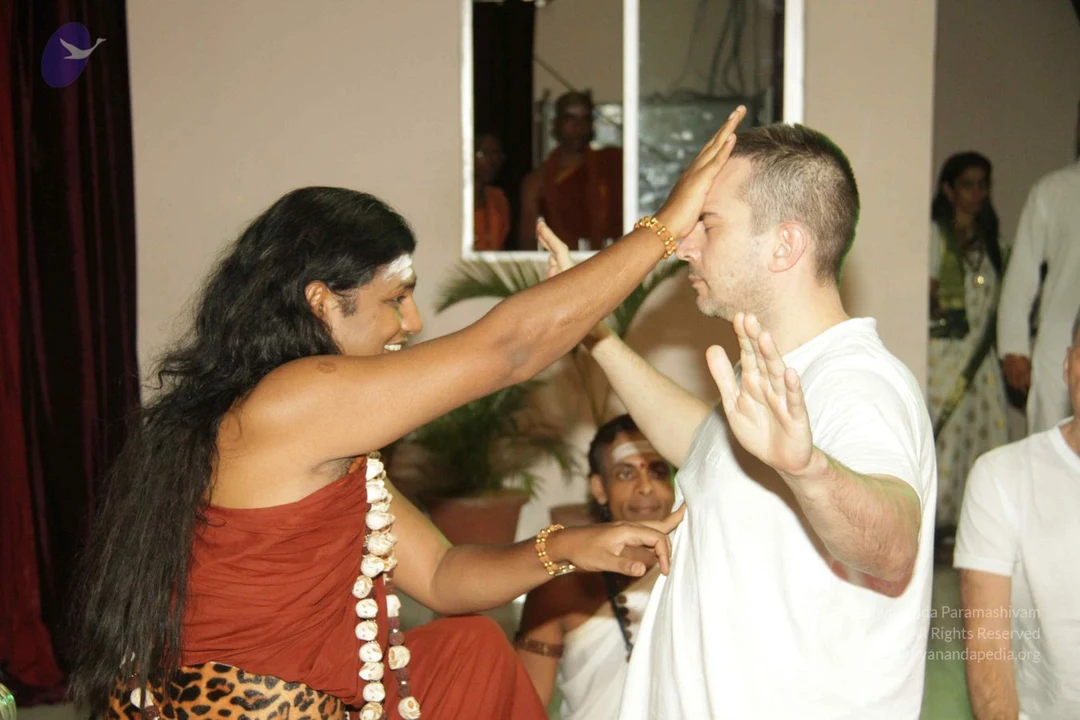
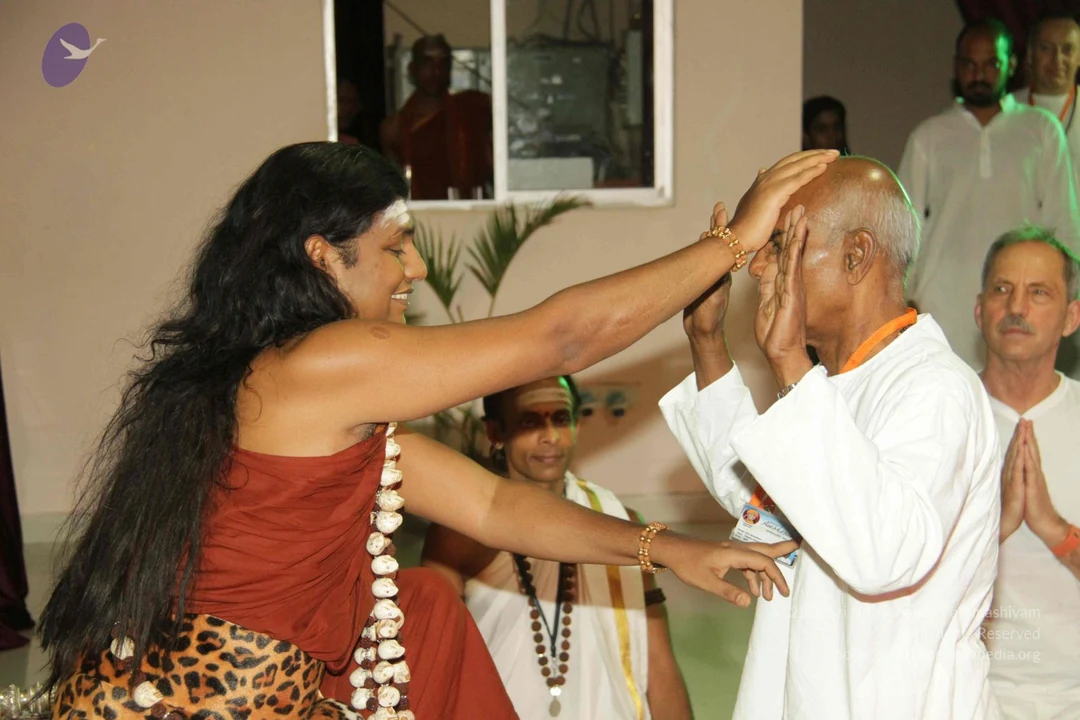
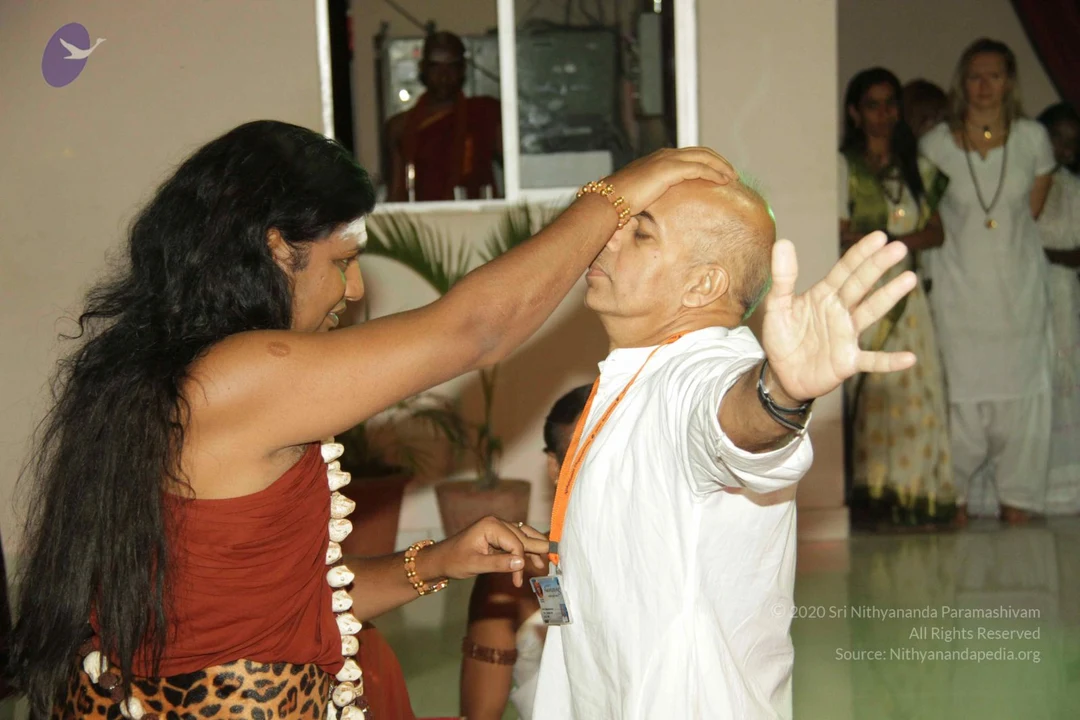
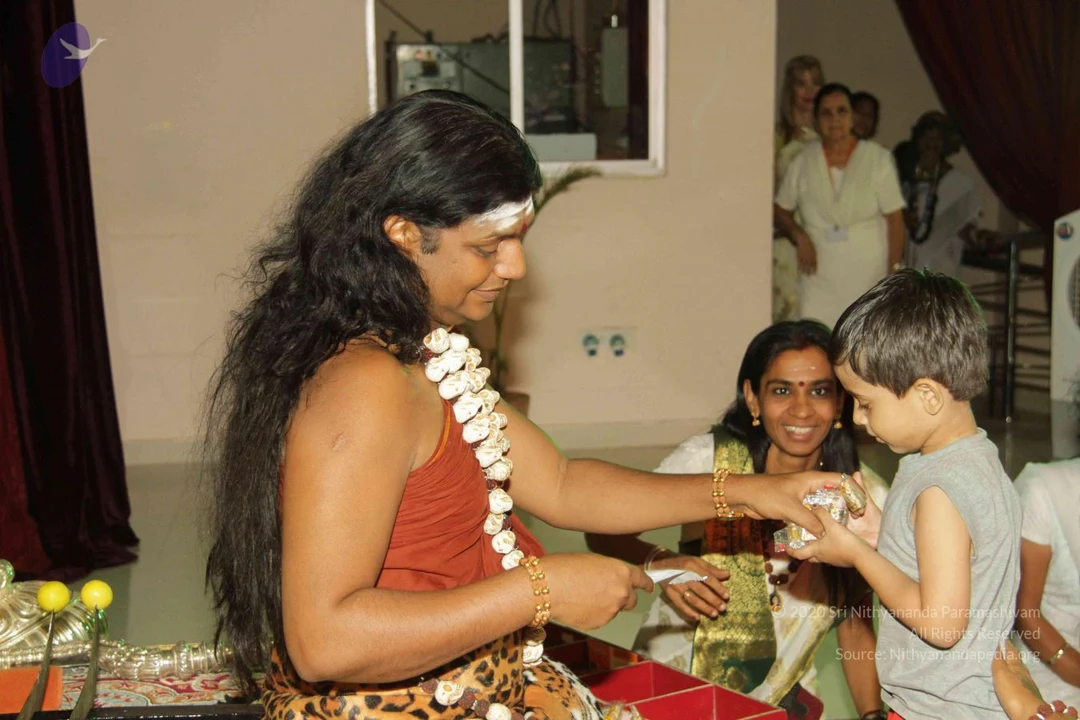
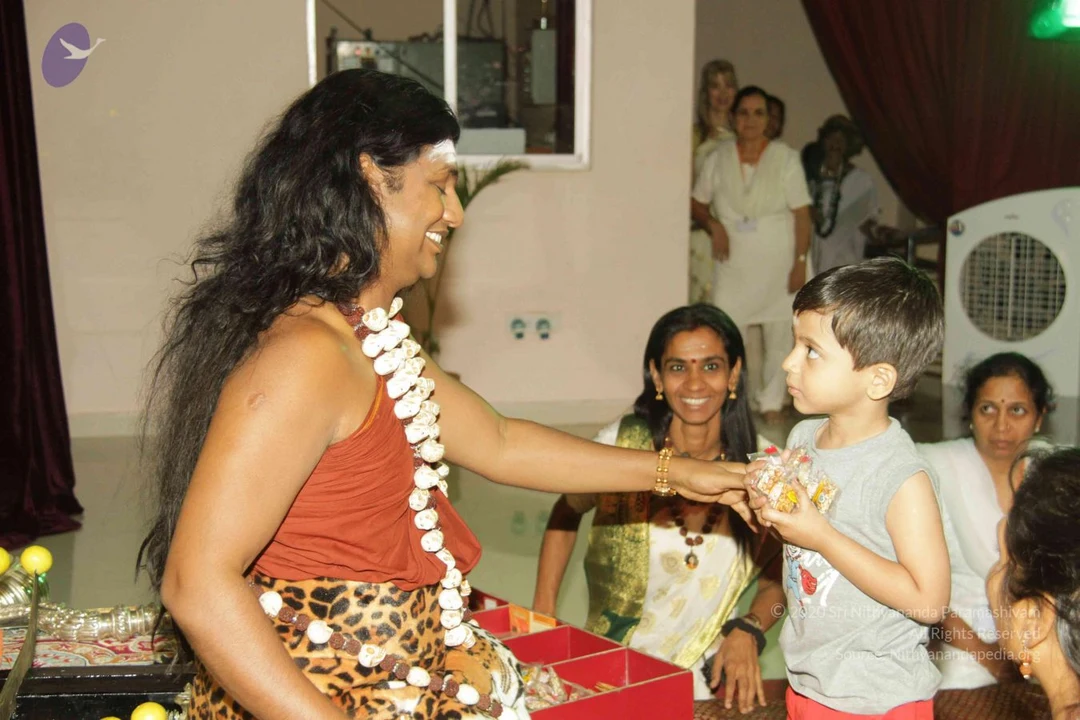
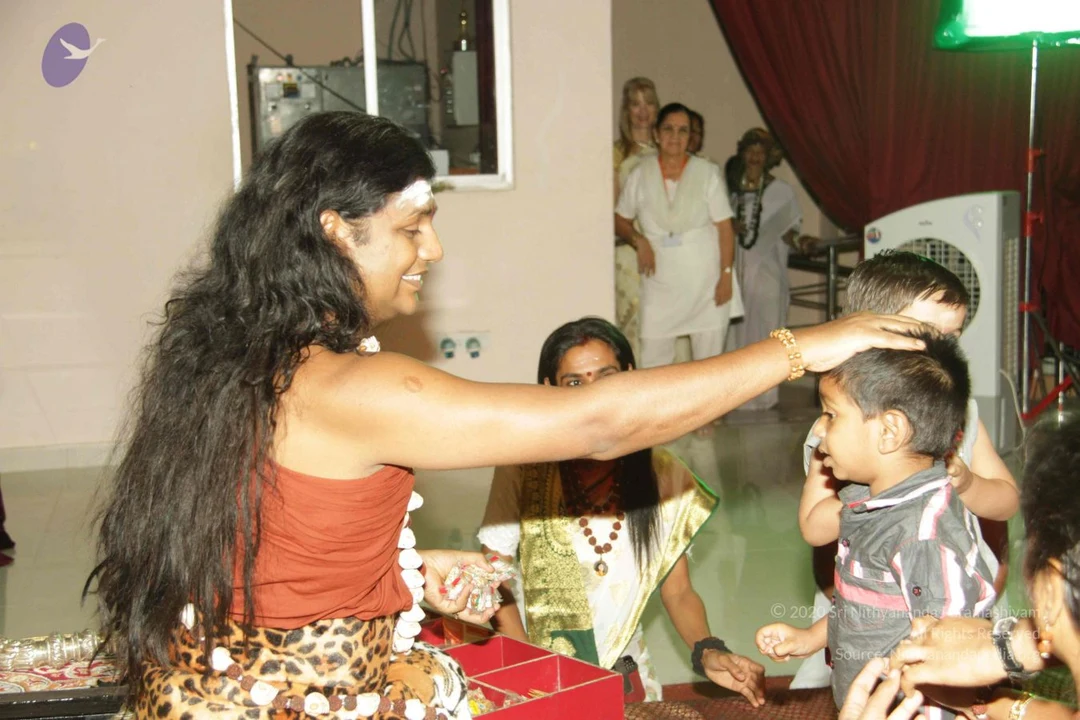
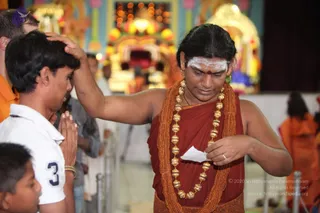
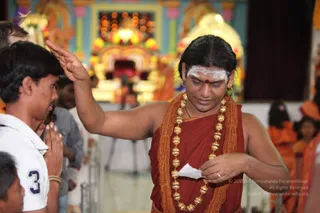
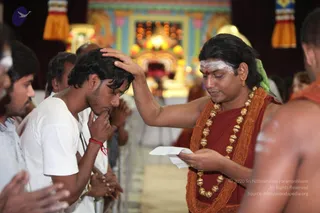
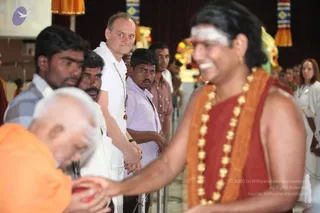
Swamiji Blesses All

Google Logo

Tags:

Paramahamsa Nithyananda, reveal, living peak, ultimate, self-image, Sanskrit, self-expectations, believe, hope, wish, understand, self-realization, achieve, authenticity, free will, create, life, freedom, , possessiveness, poverty, release, materialism, emotion, greed, ownership, enrich, Four Truths, life

Photos Of The Day:

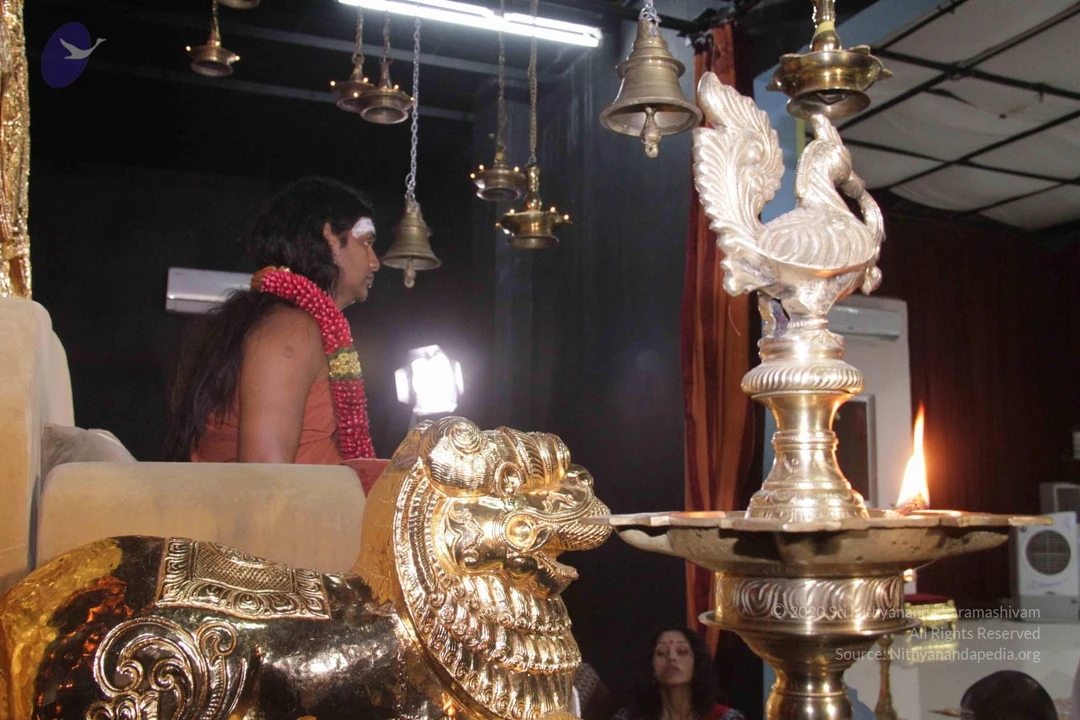
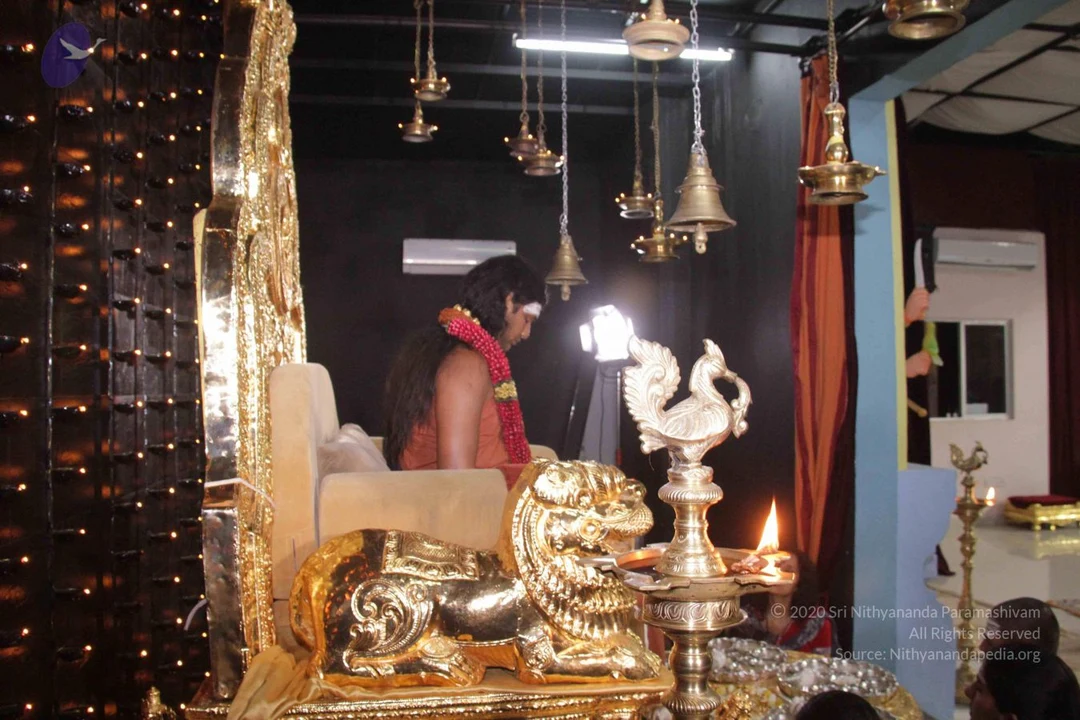
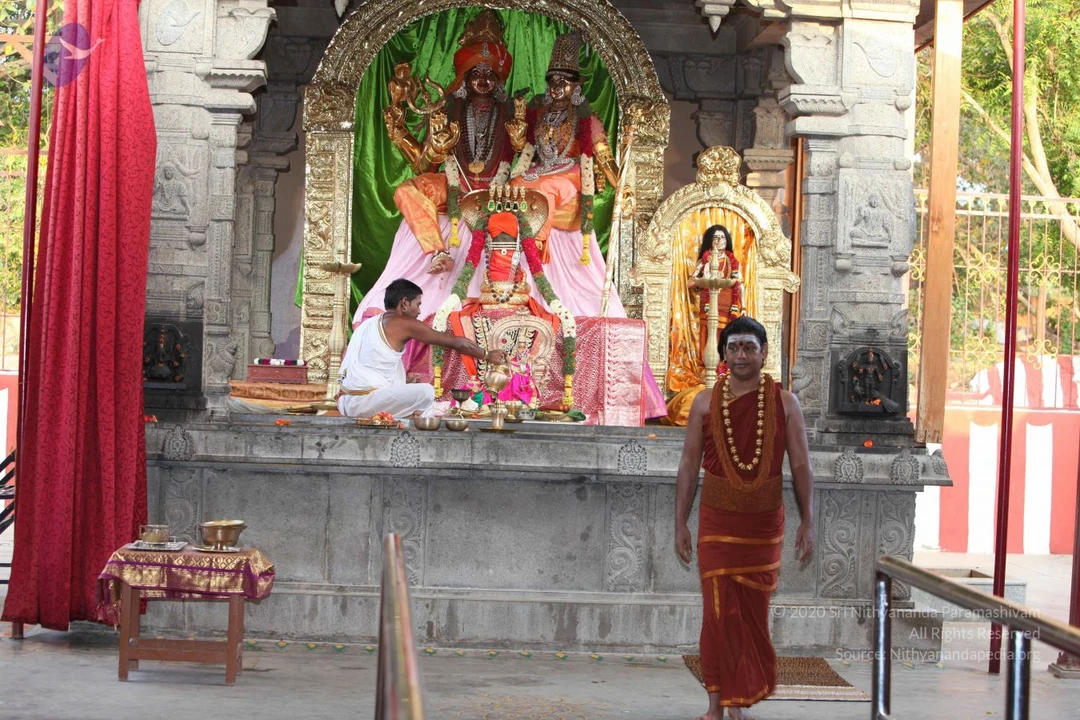
TEMPLE

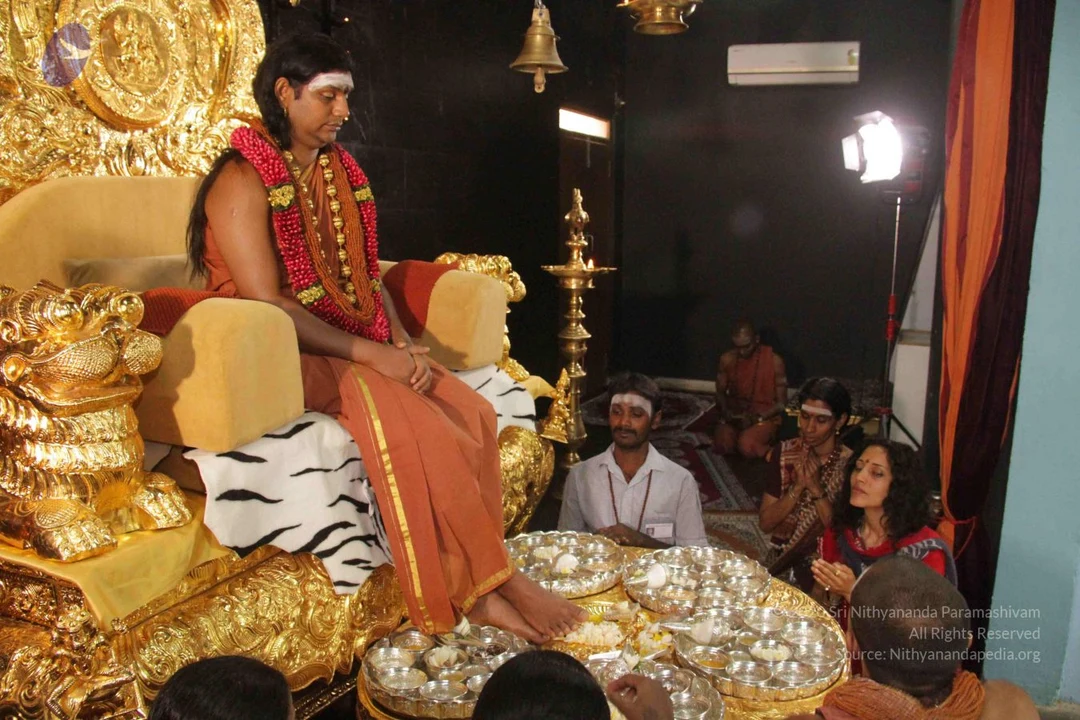
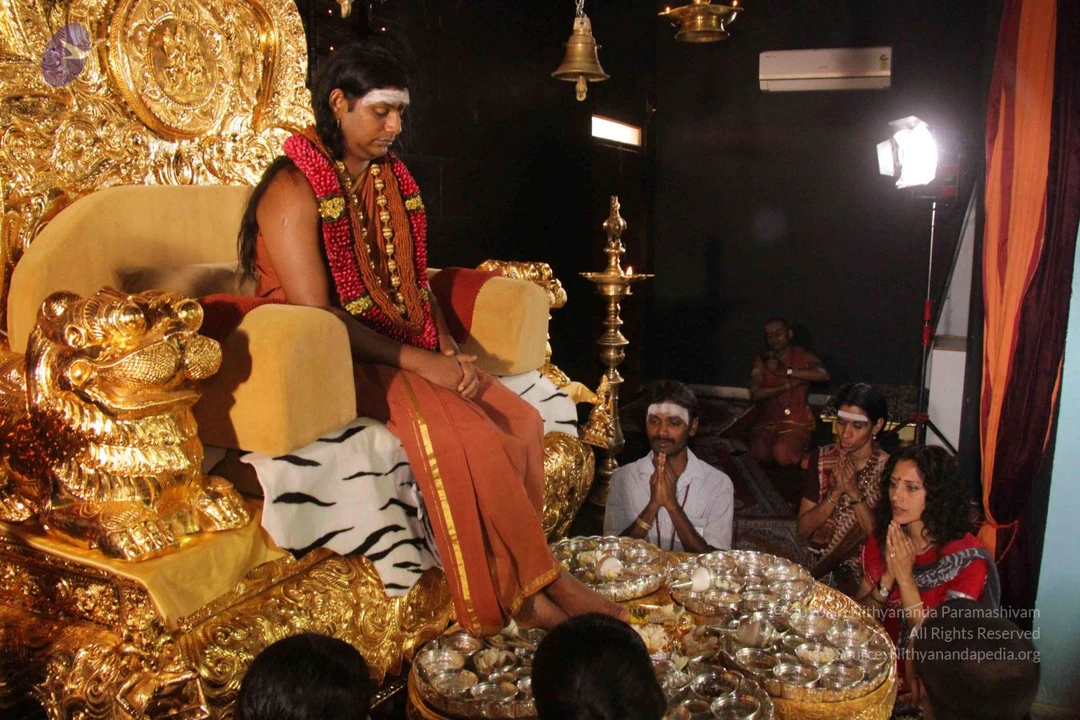
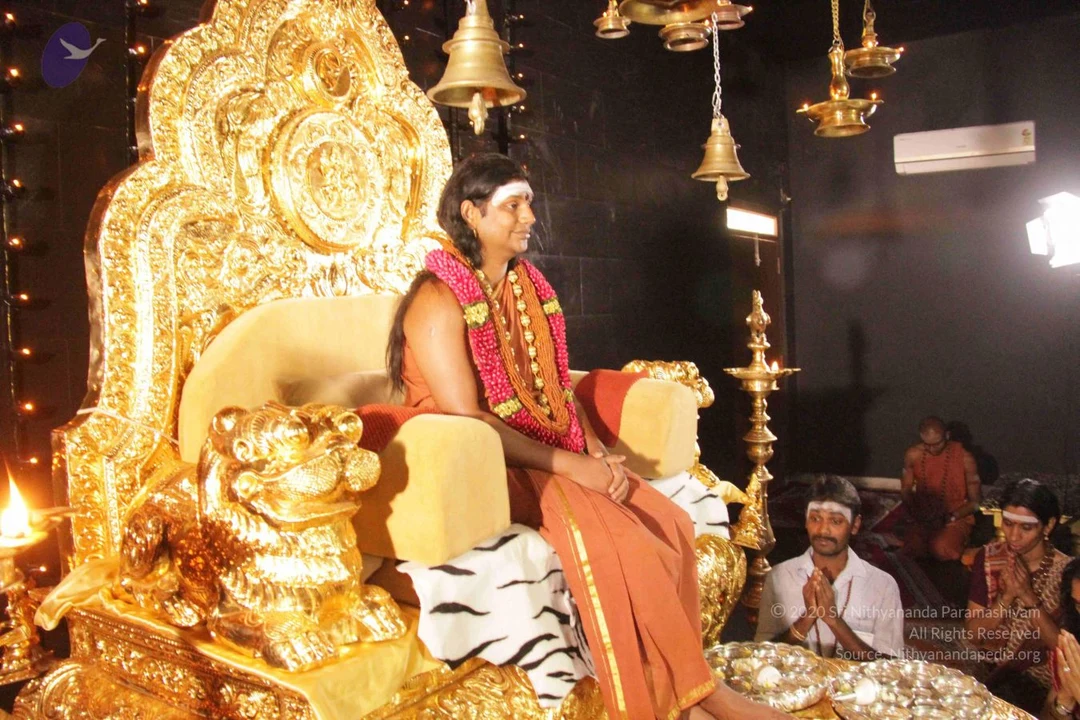
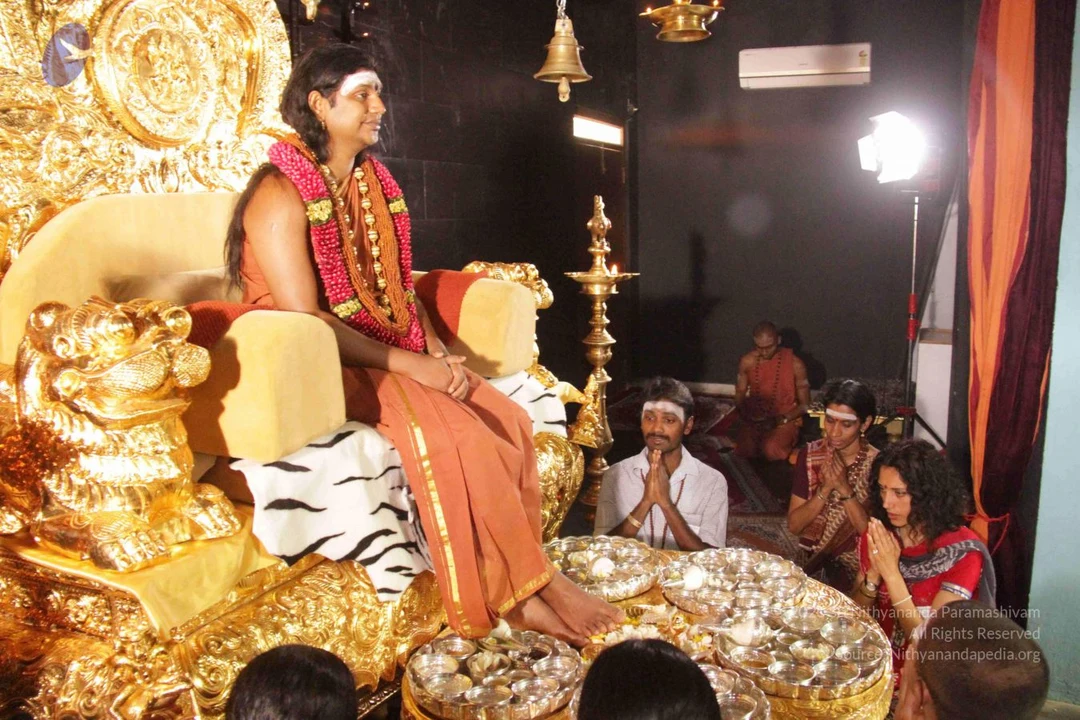
PADA-POOJA

NITHYA-SATSANG

SARVA-DARSHAN

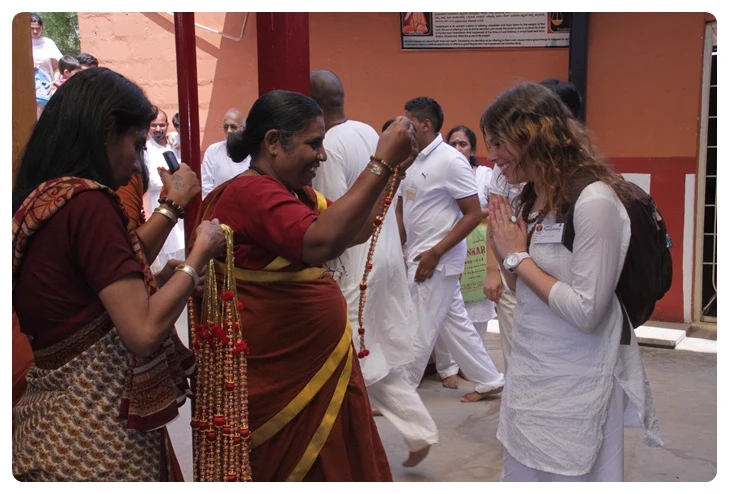
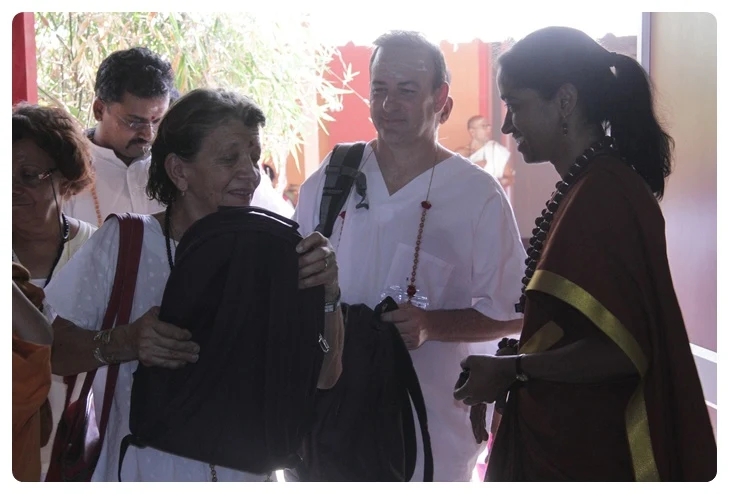
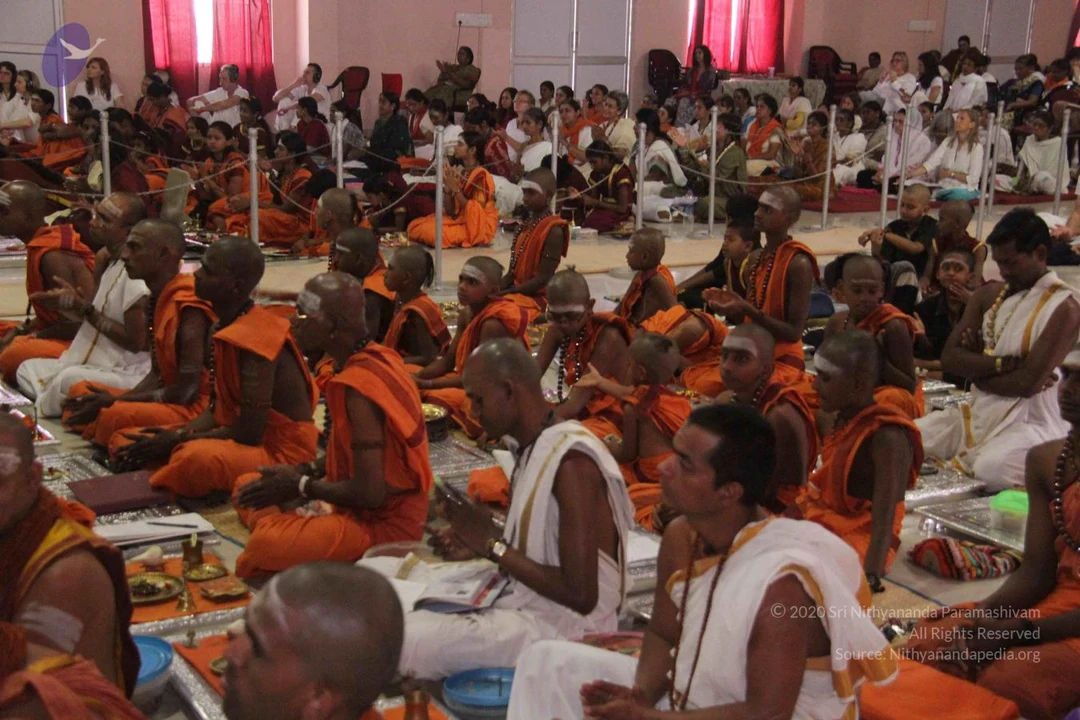
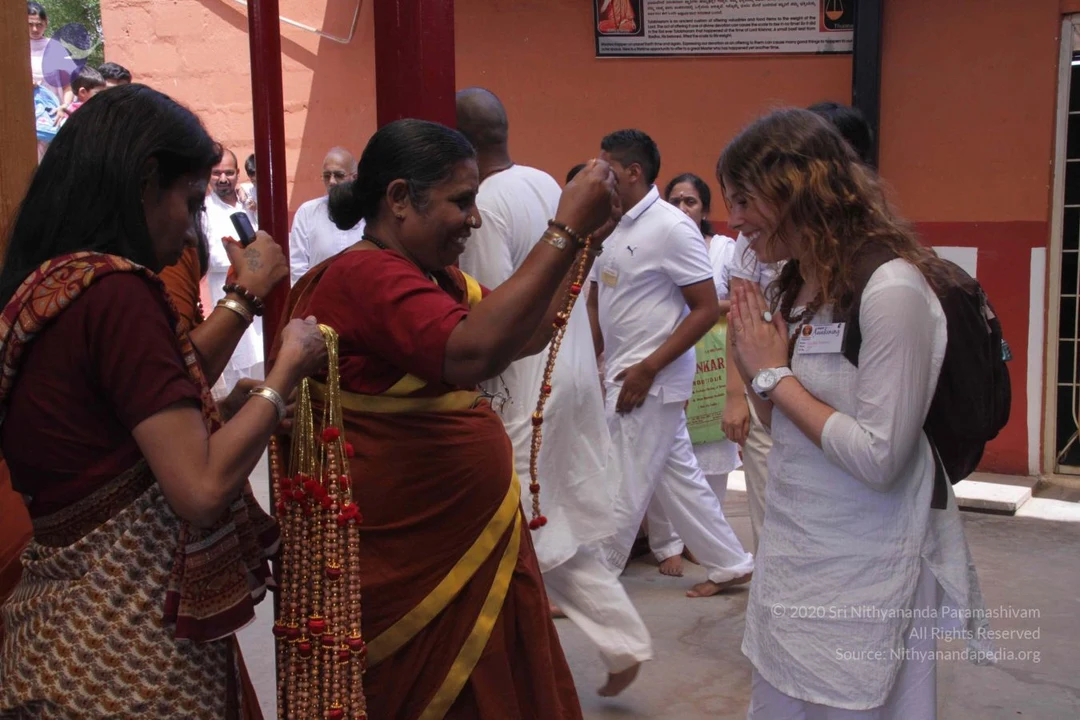
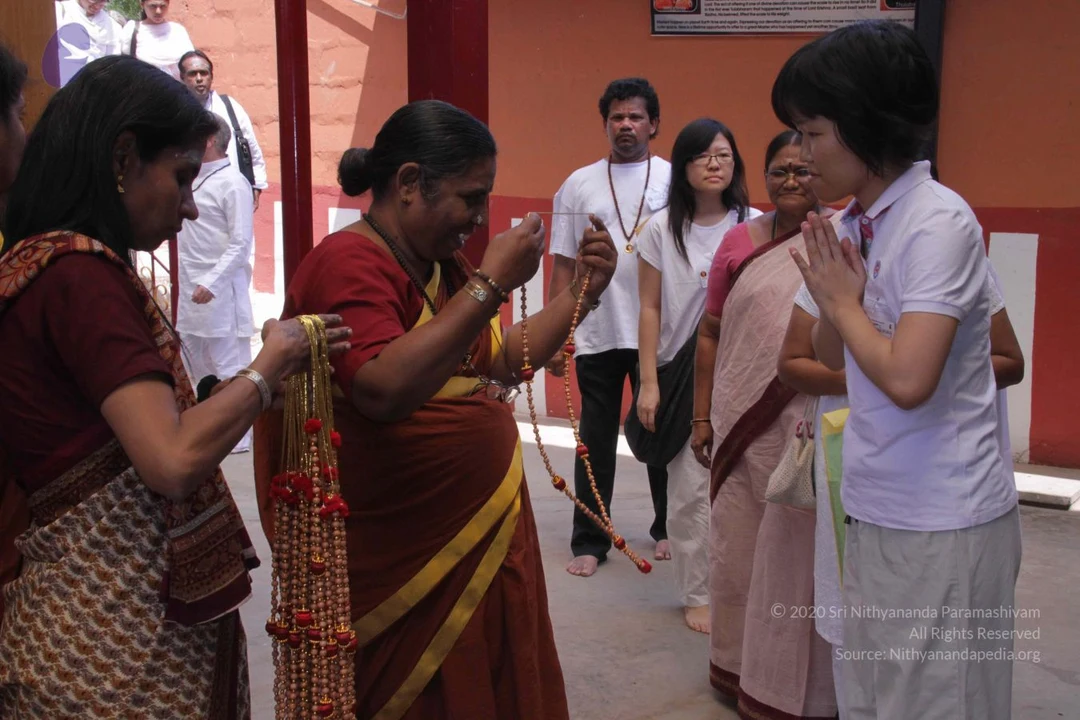
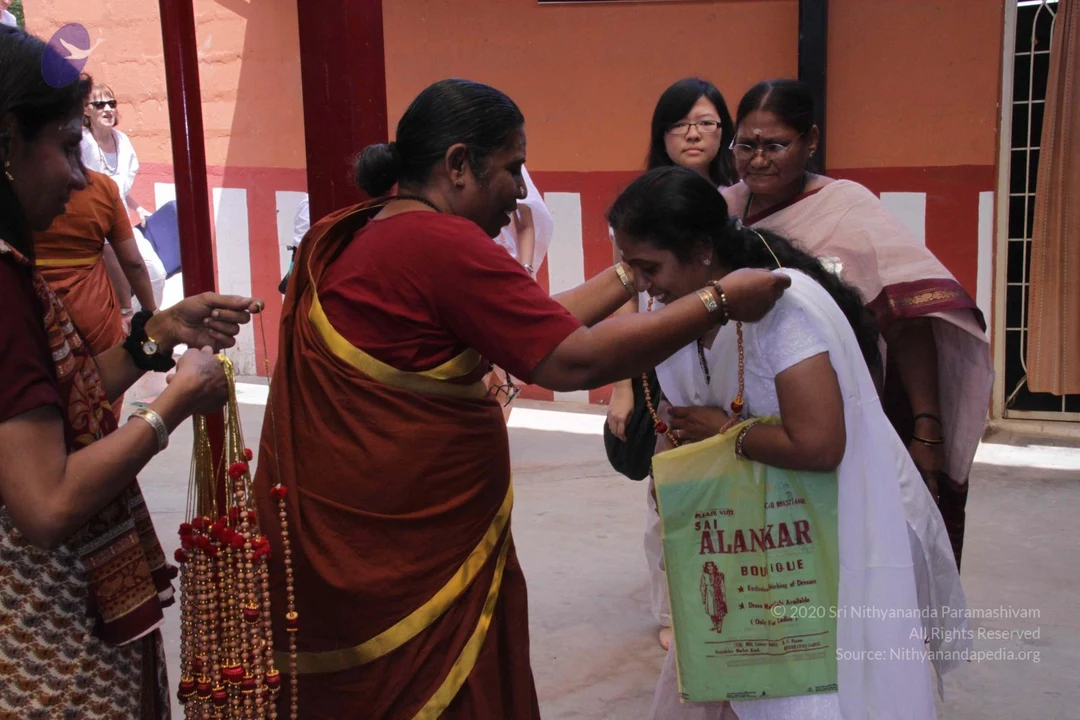
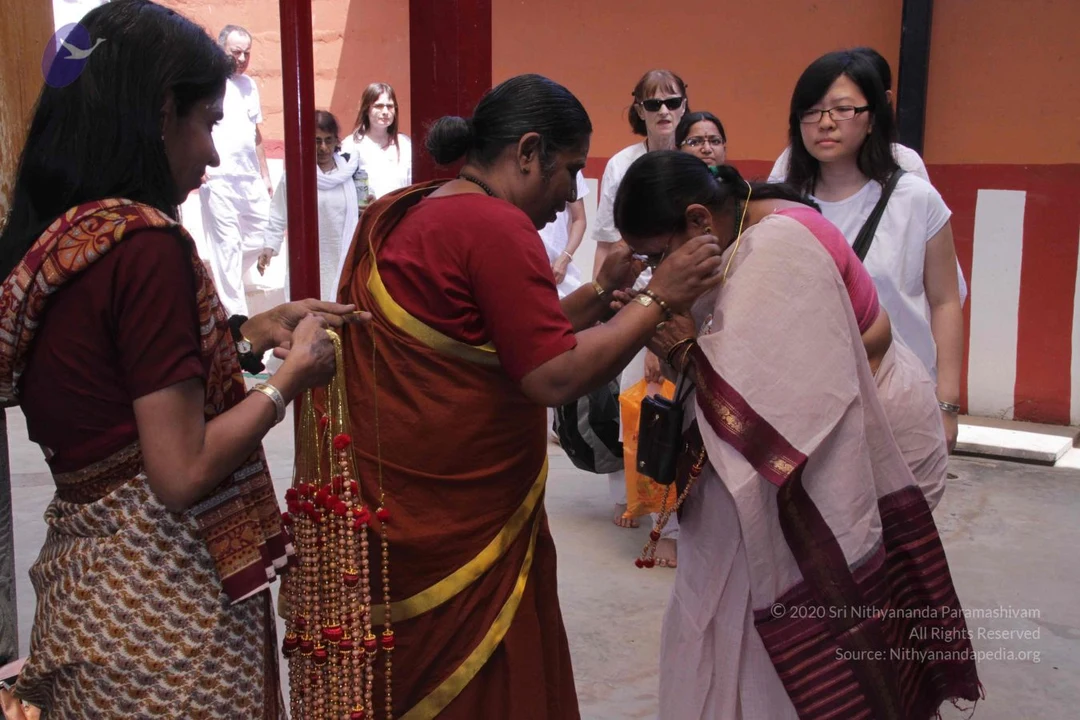
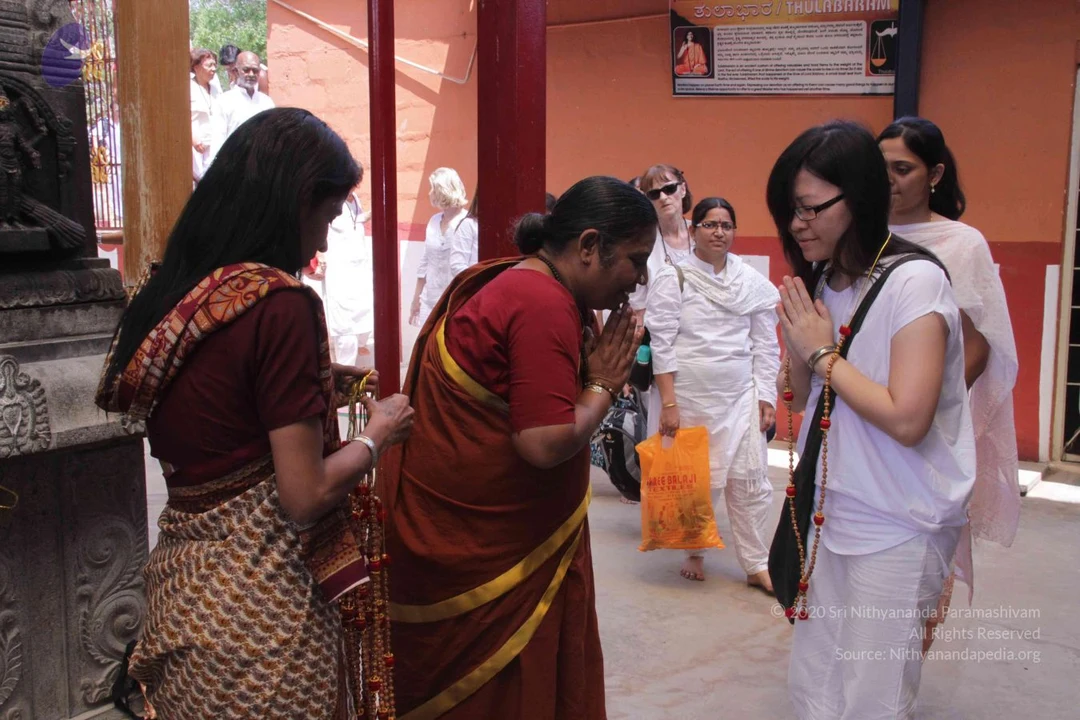
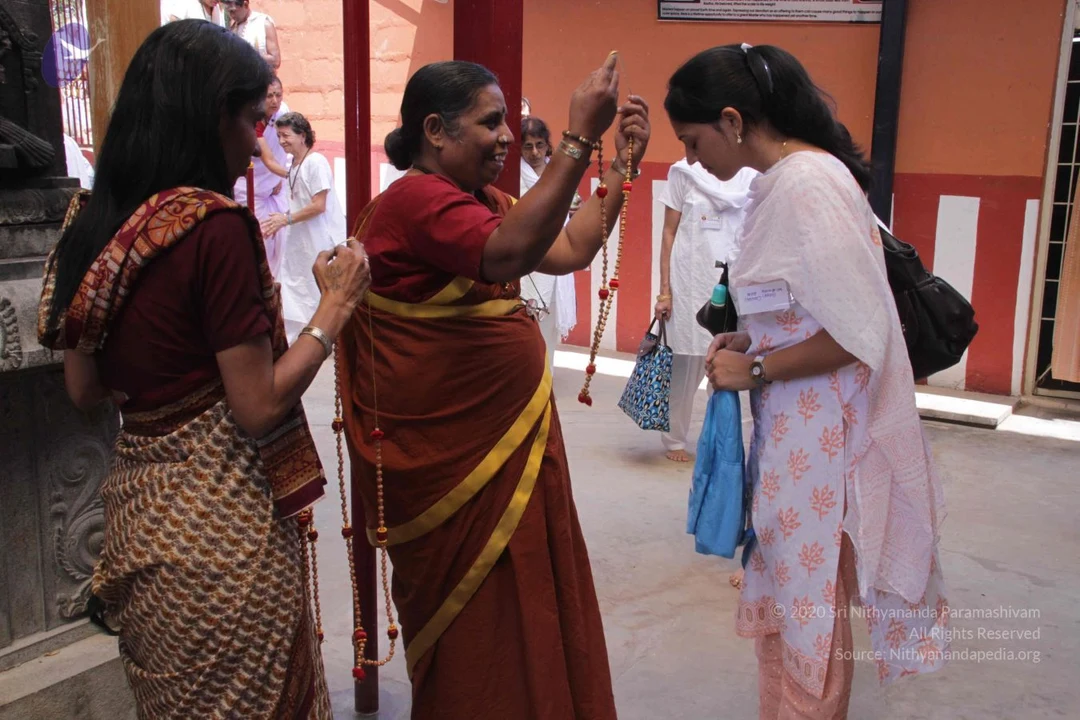
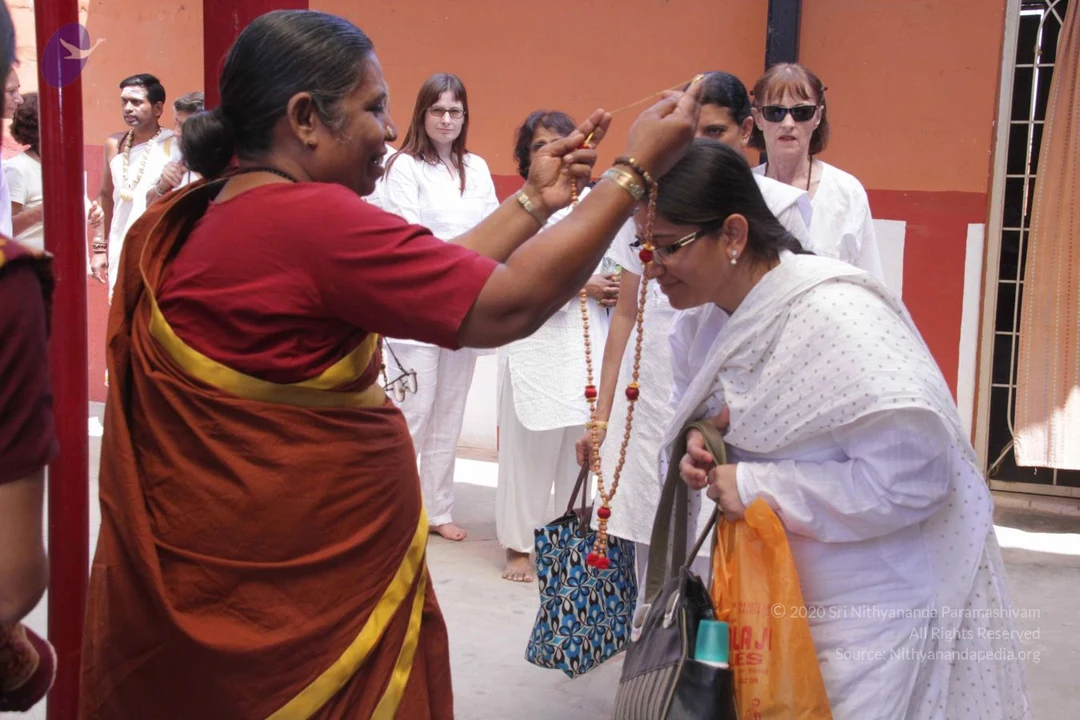
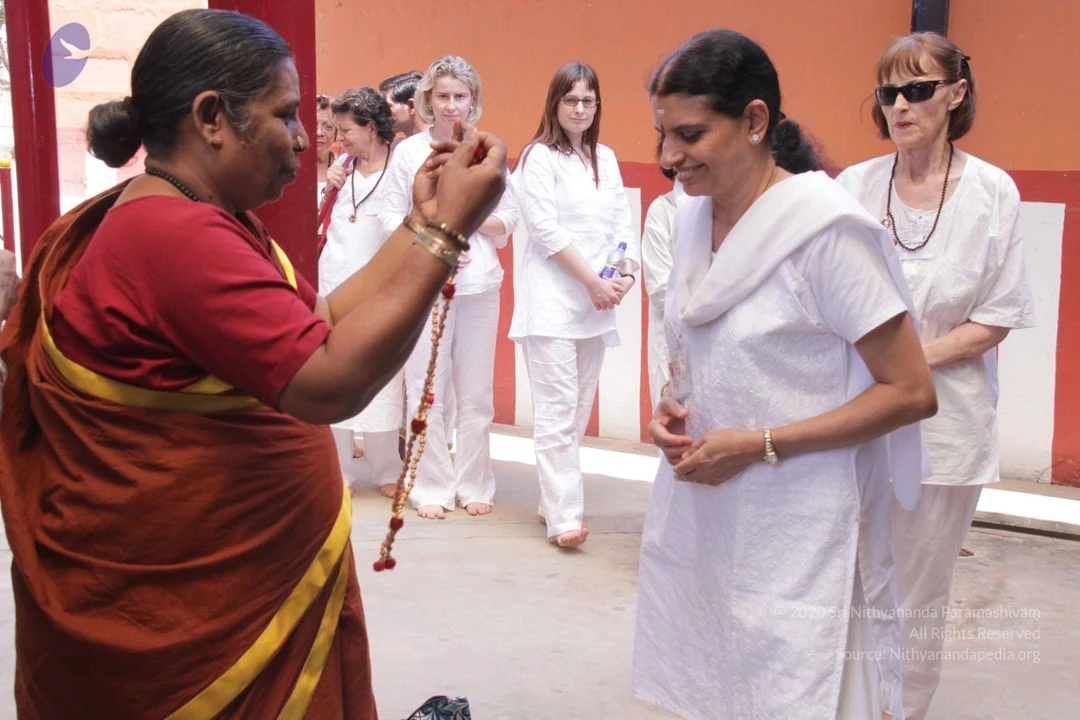
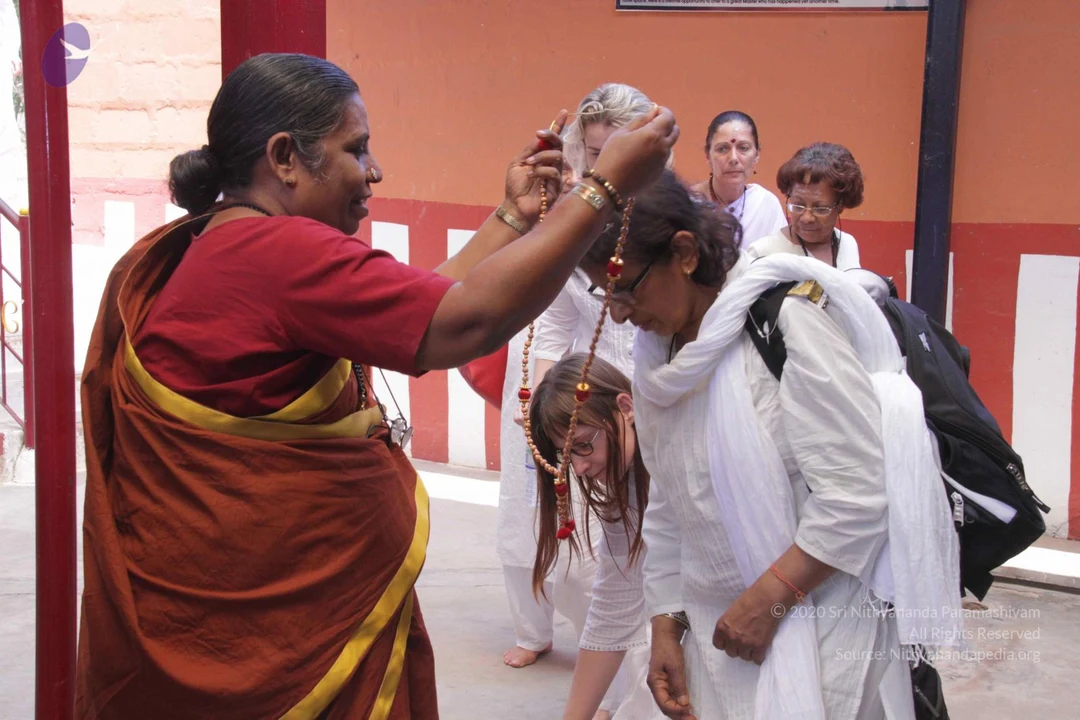
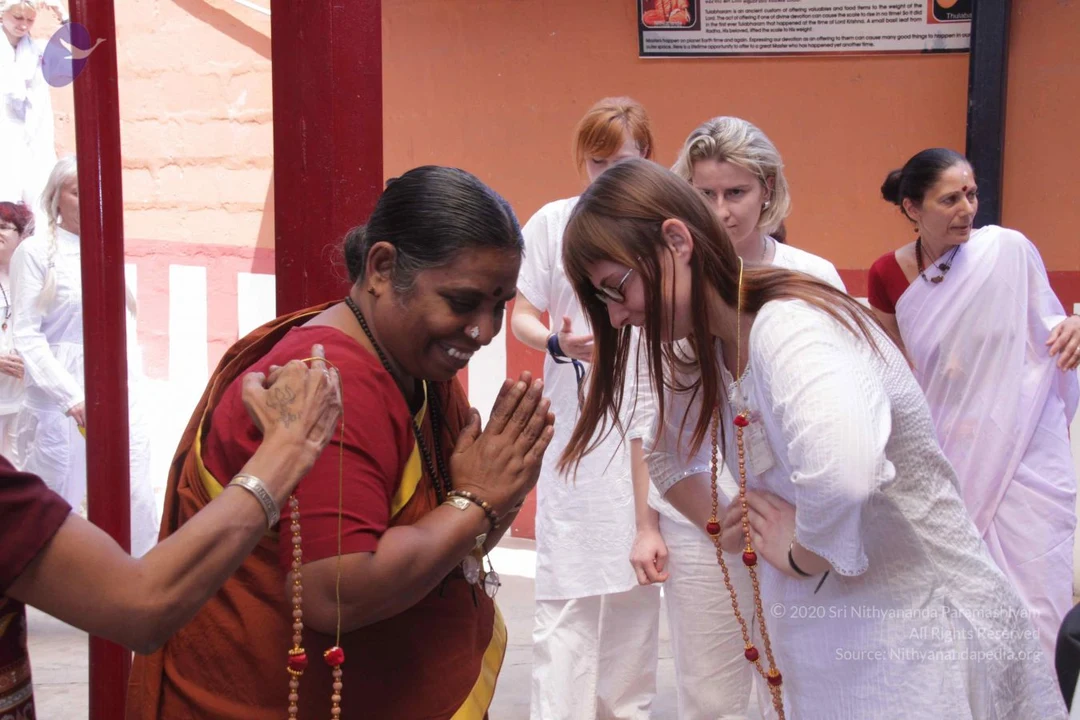
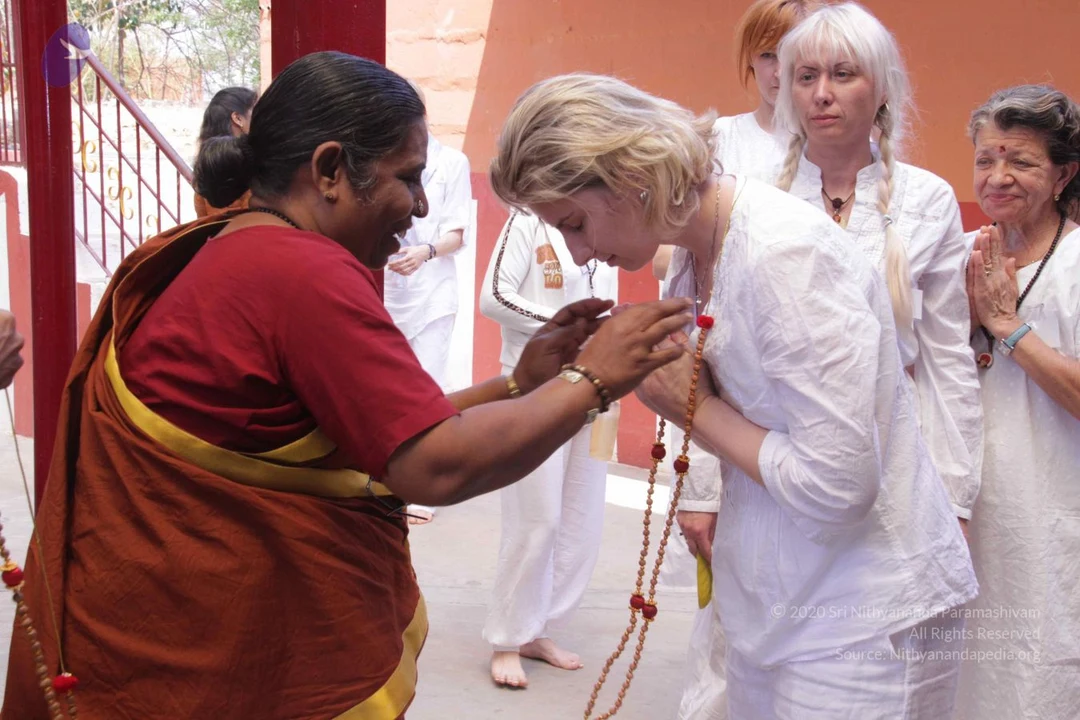
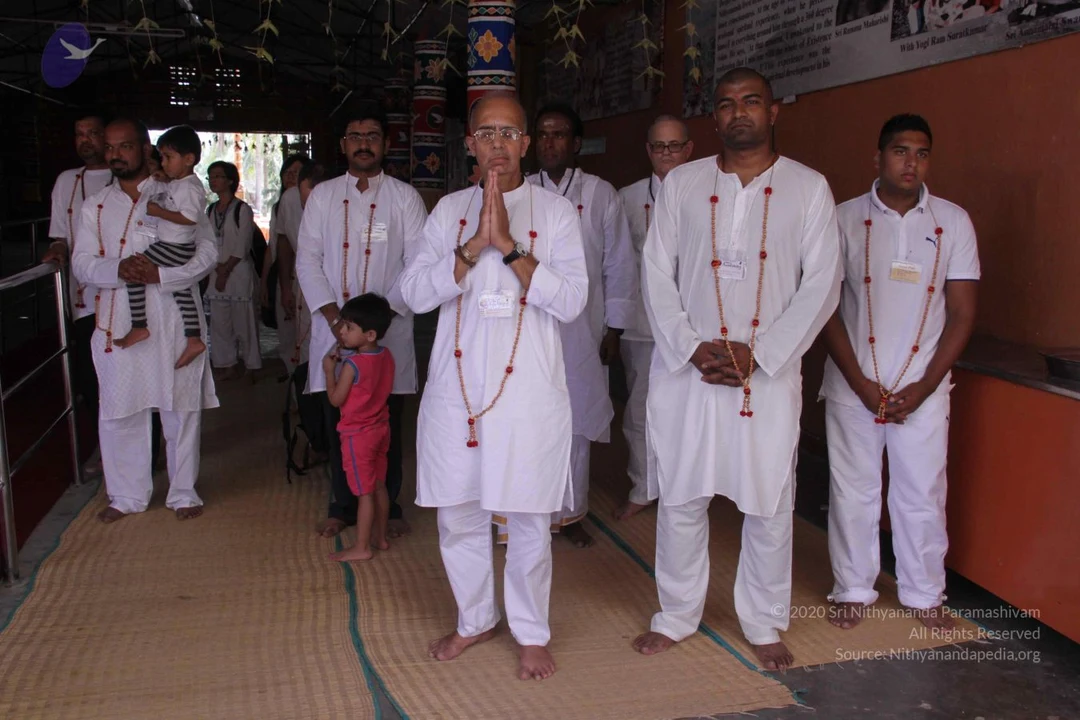
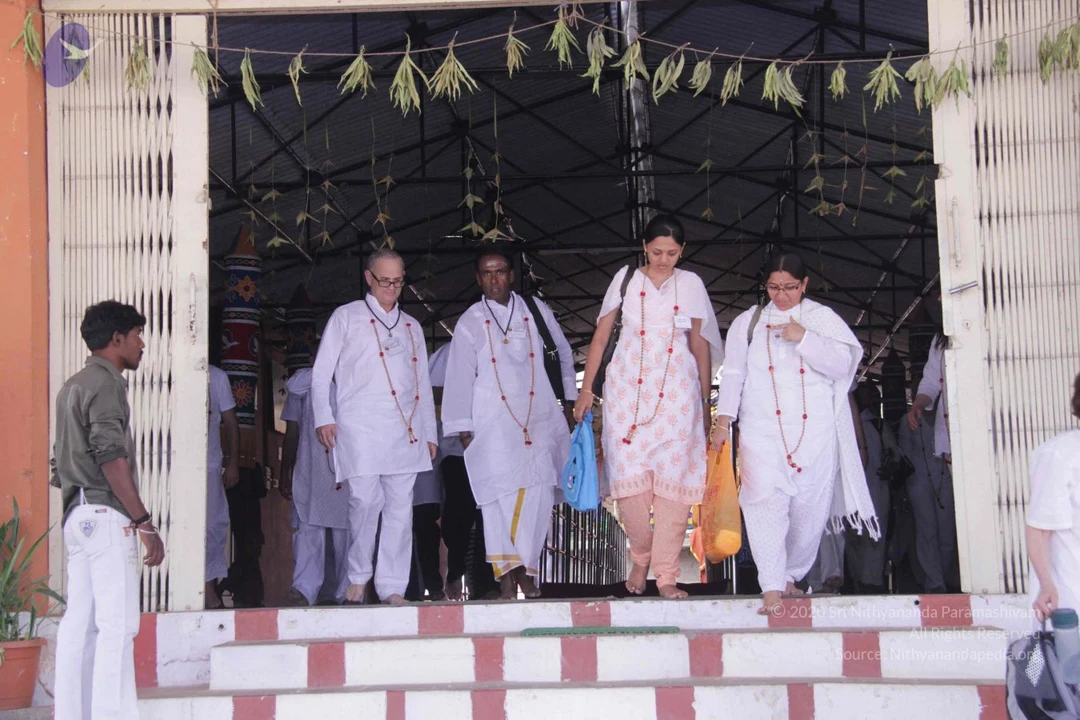
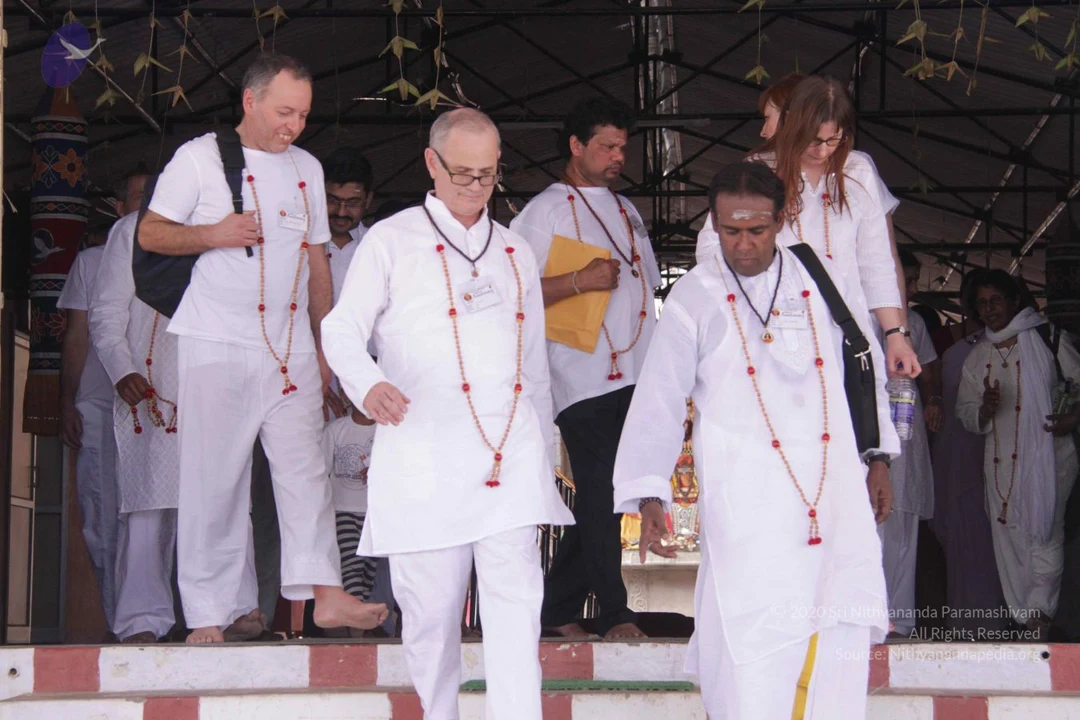
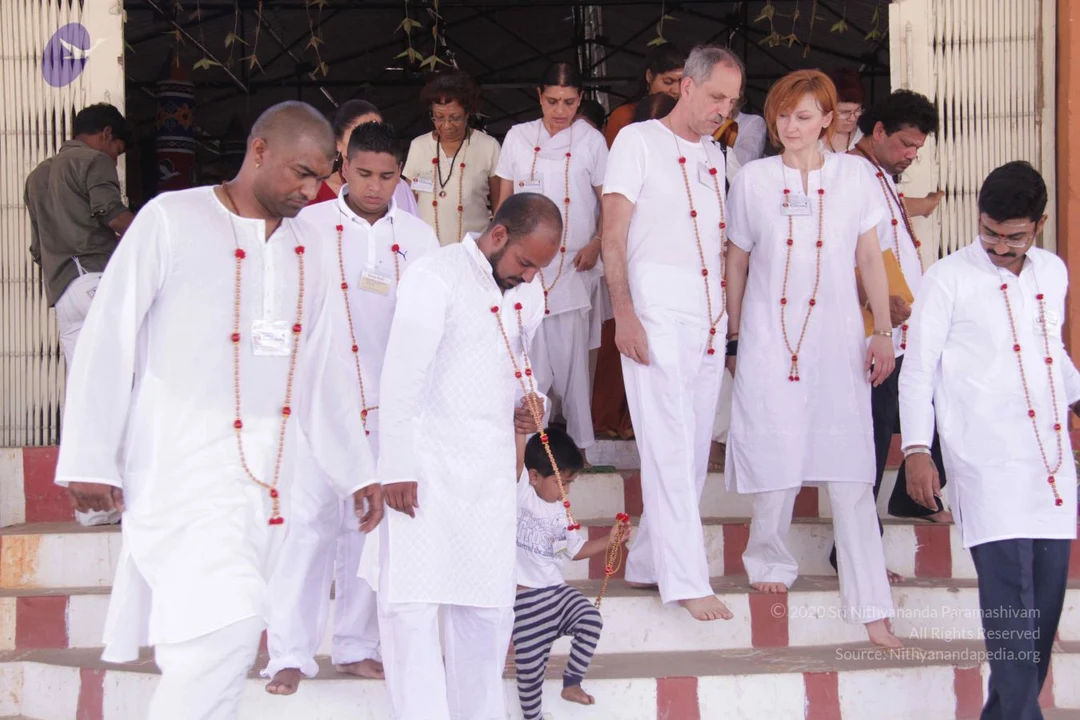
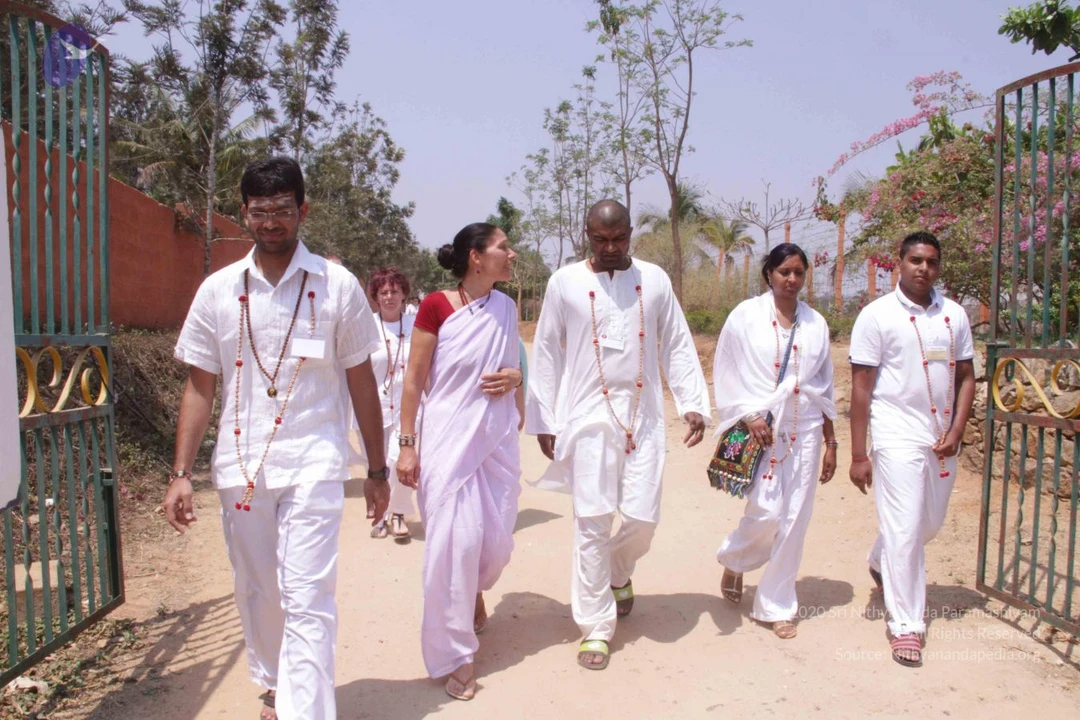
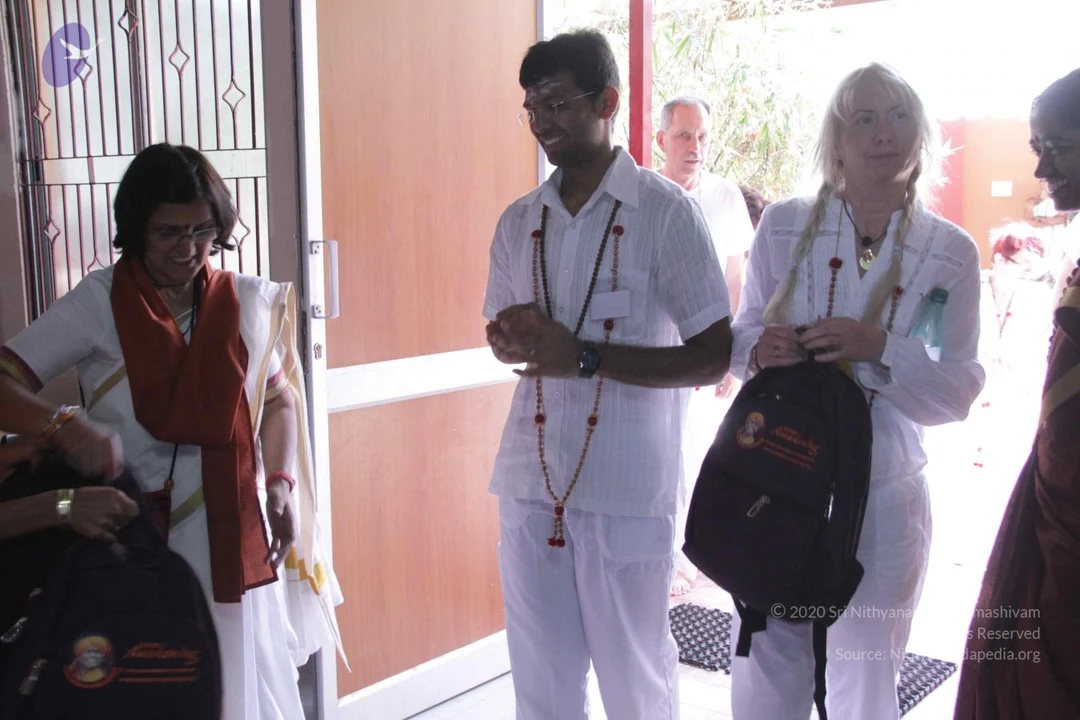
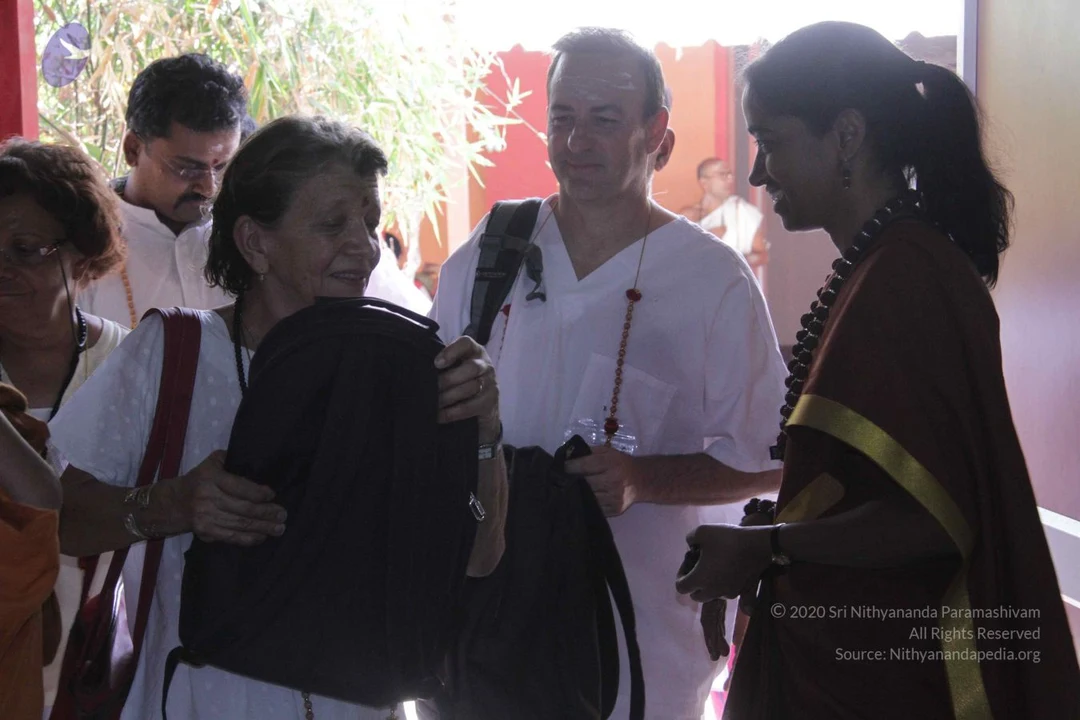
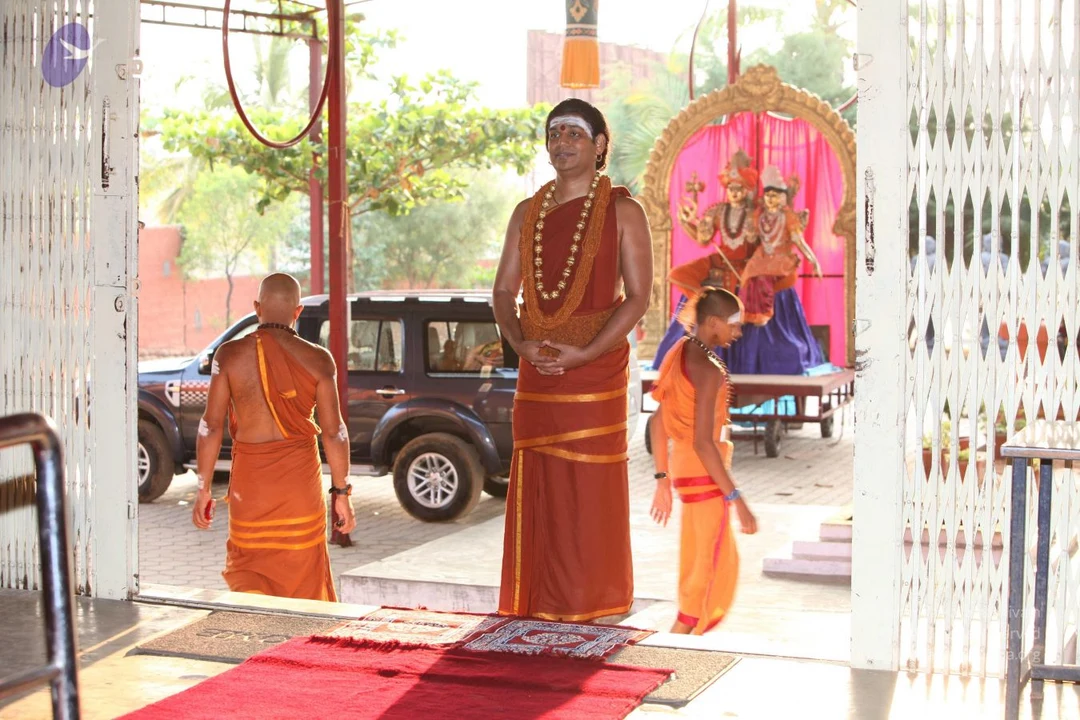
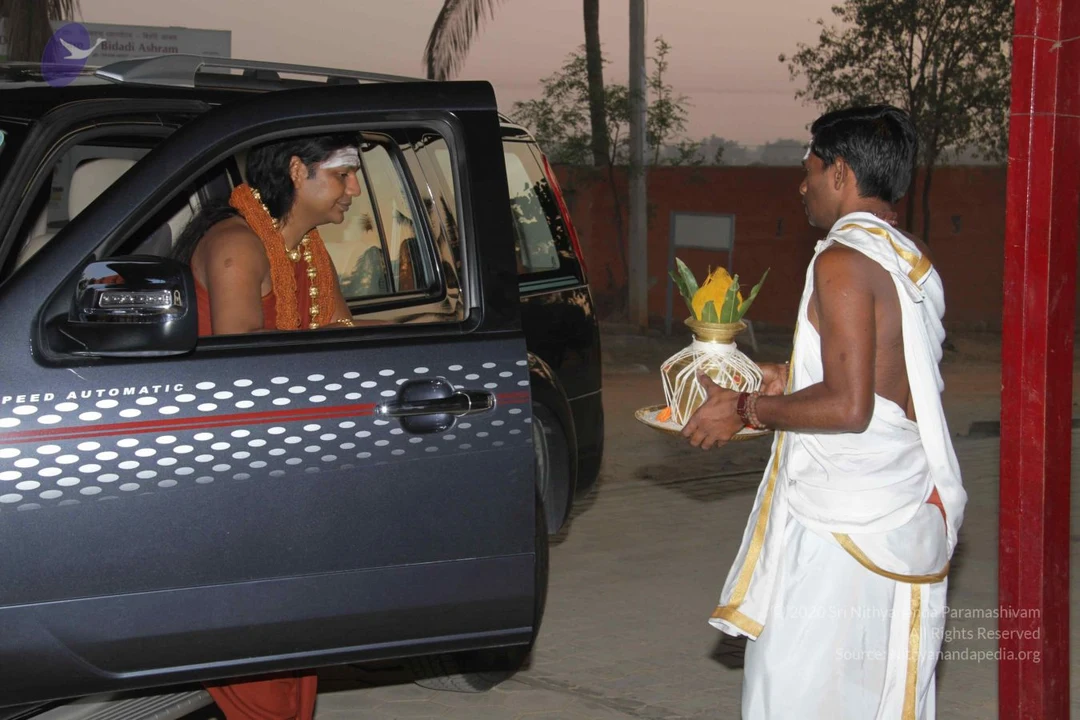
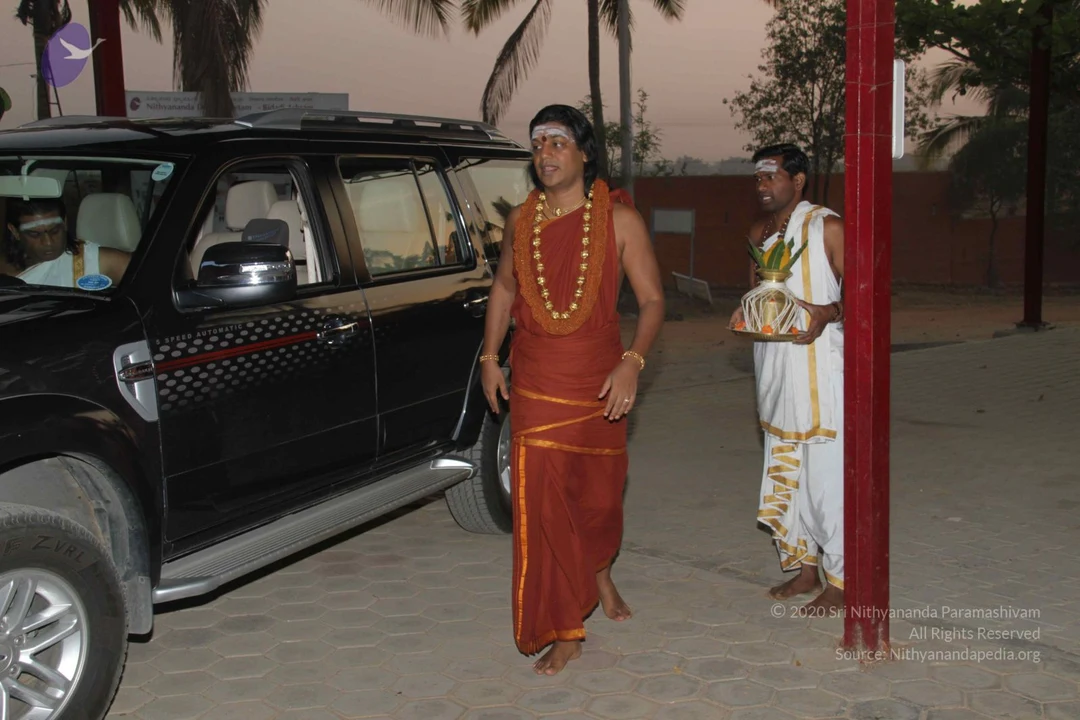
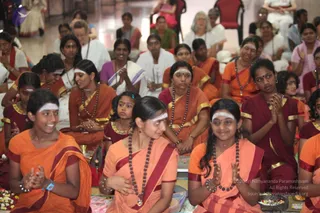
WELCOMING-IA-PARTICIPANTS-AT-TEMPLE

IA-SESSION

IA-DARSHAN

Photos Of The Day:

TEMPLE

YOGA

PADA-POOJA

NITHYA-SATSANG

DIAL-THE-AVATAR

SARVA-DARSHAN

IA-SESSION

LUNCH

AKASHIC-READINGS-BY-KALABHAIRAVA

KALABHAIRAVA-DARSHAN

DARSHAN

1-Temple

2-Pada-Puja

4-Sarva-Darshan

5-IA-Welcome-At-Temple

7-IA-Darshan

Photos from this day

View all 656 photos

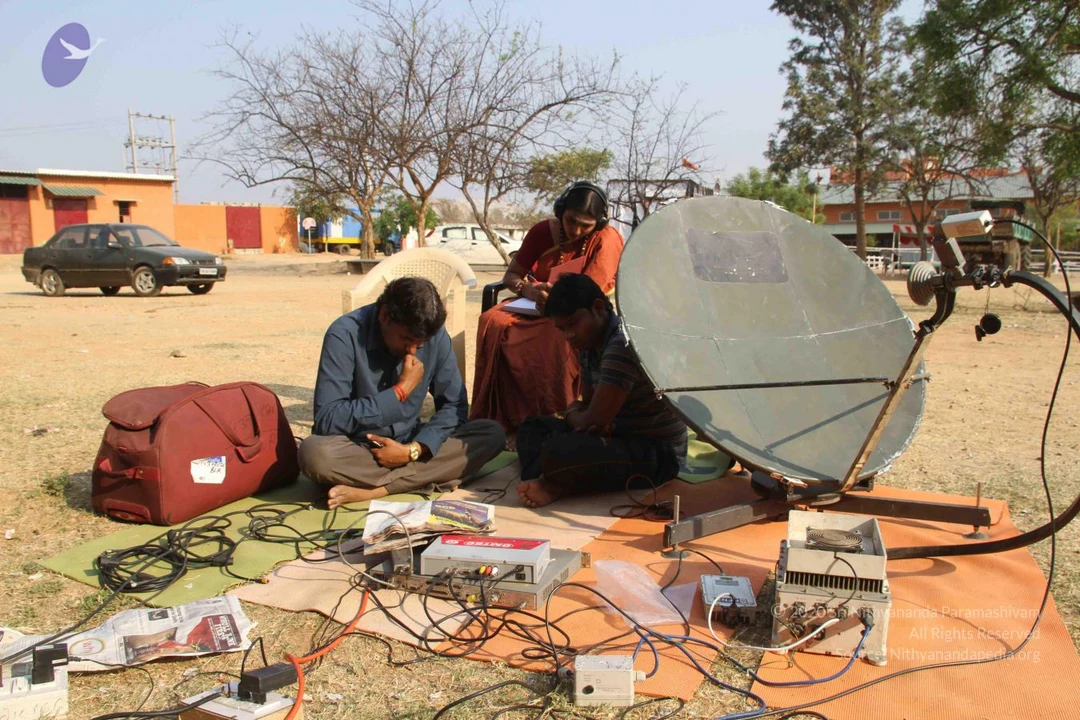
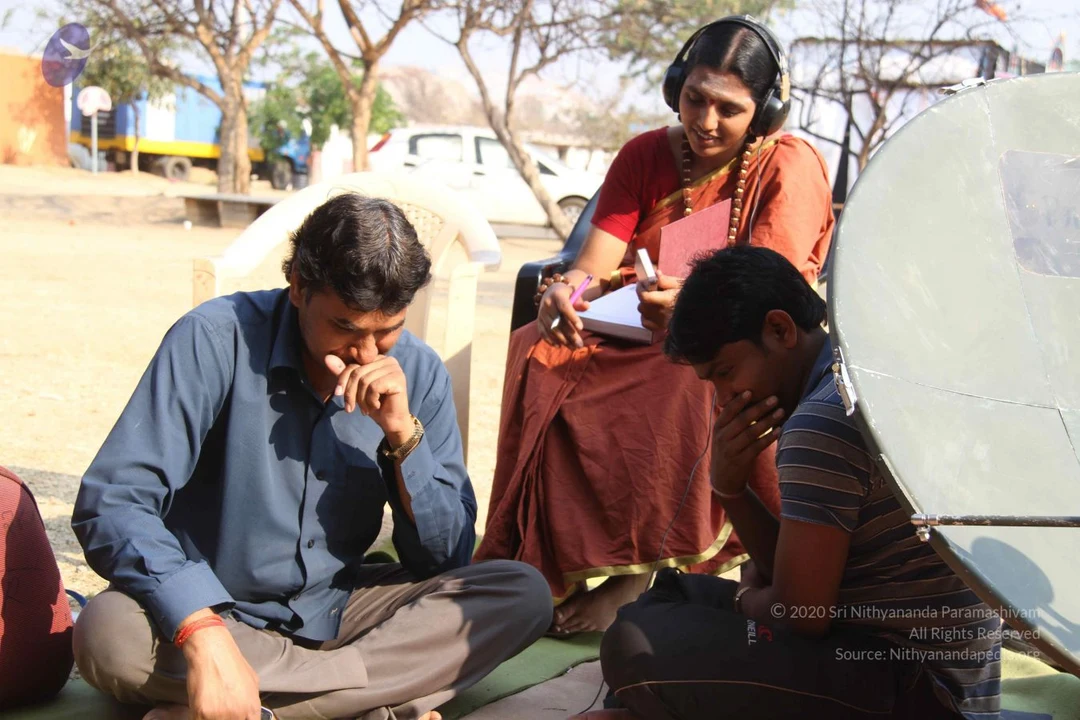
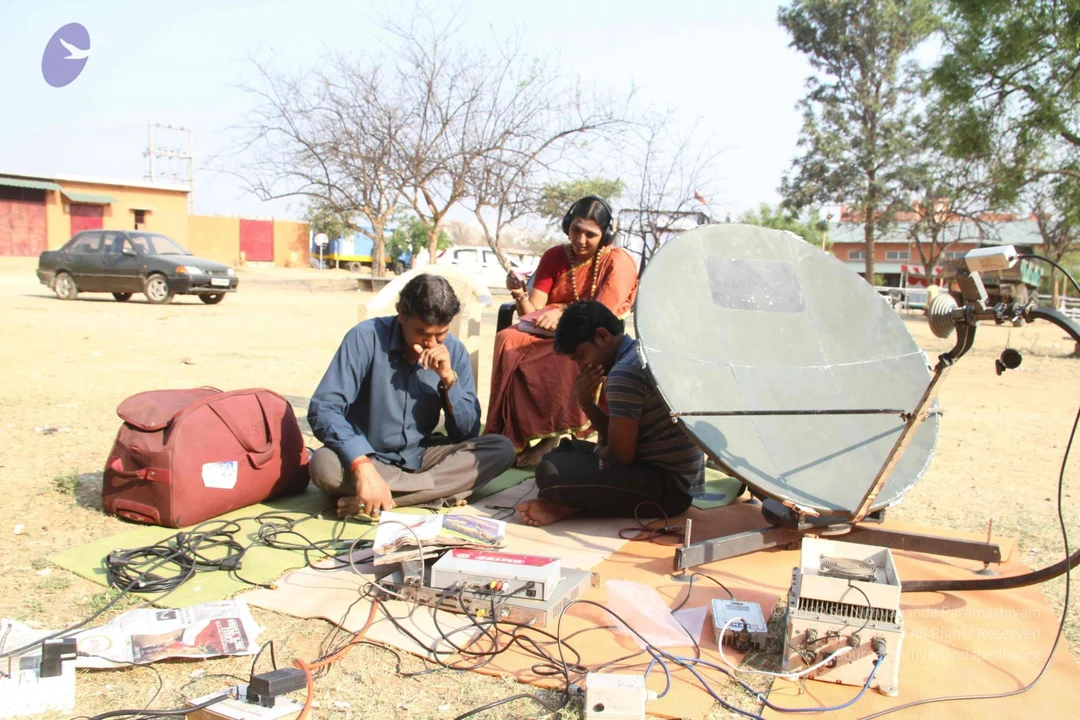
Calls from Sadhana TV Viewers
1 photoSource gallery
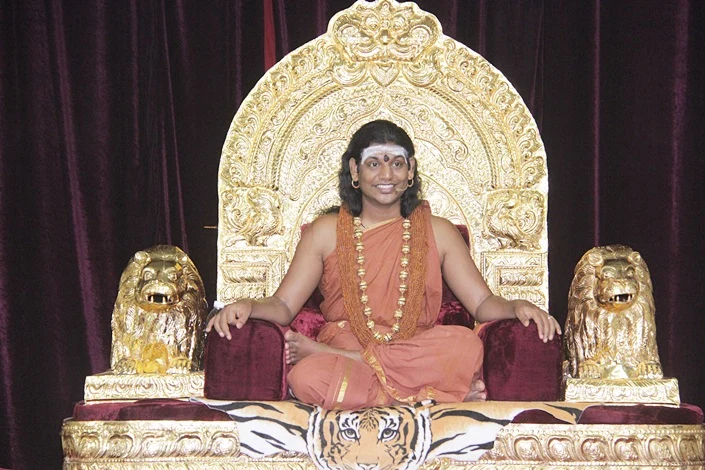
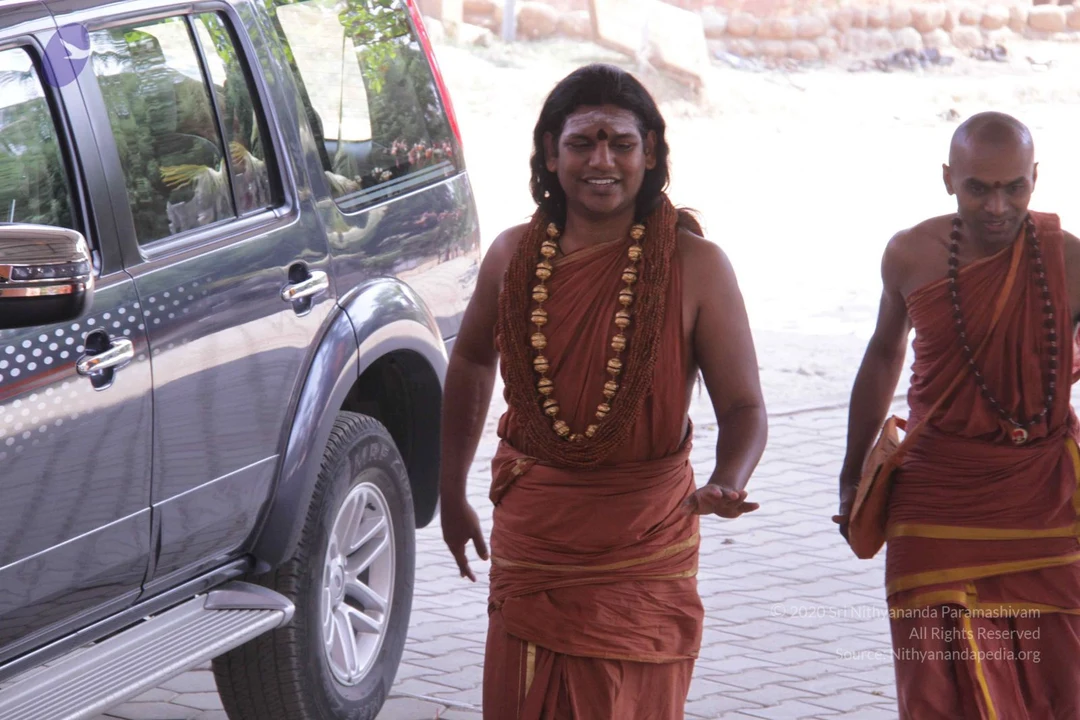
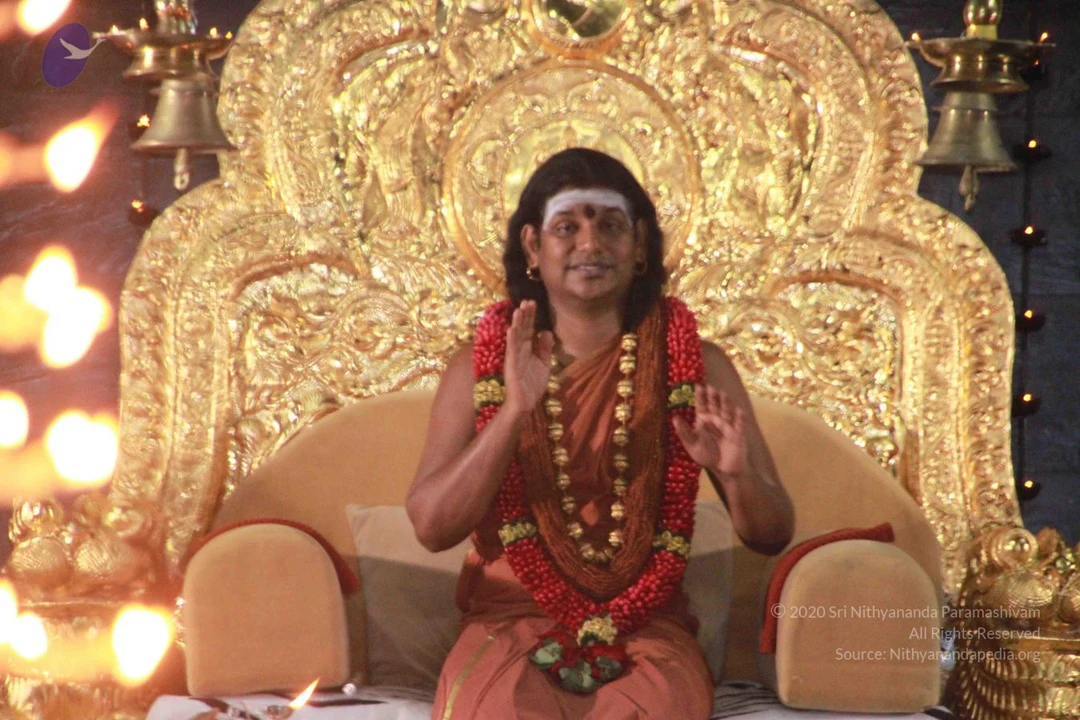
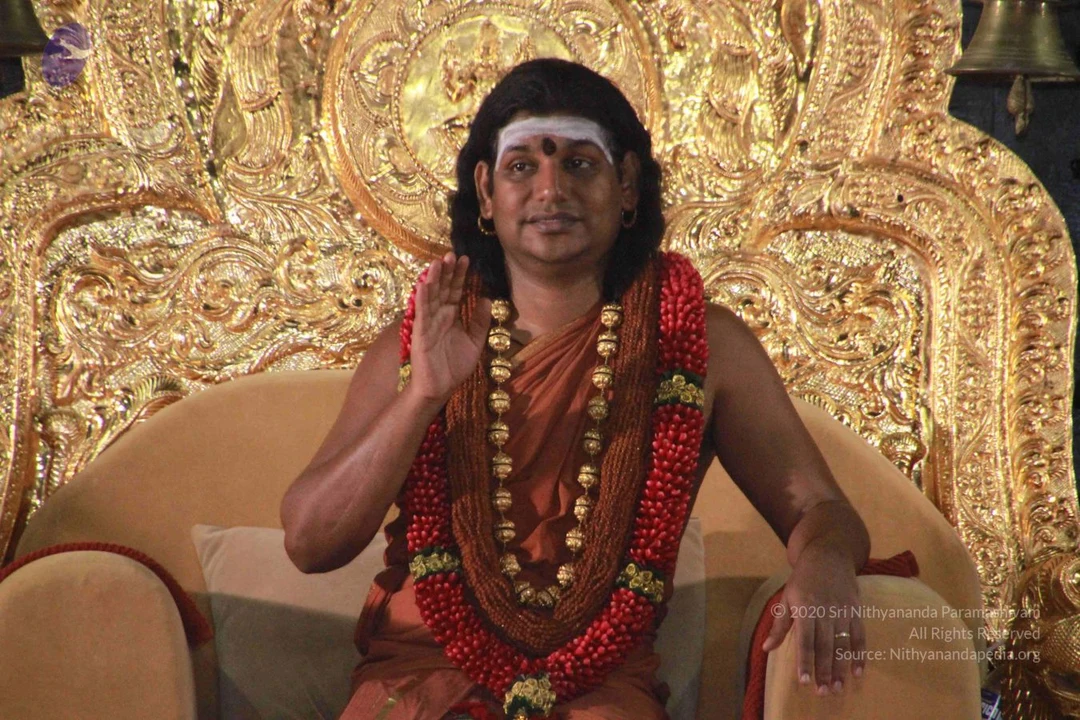
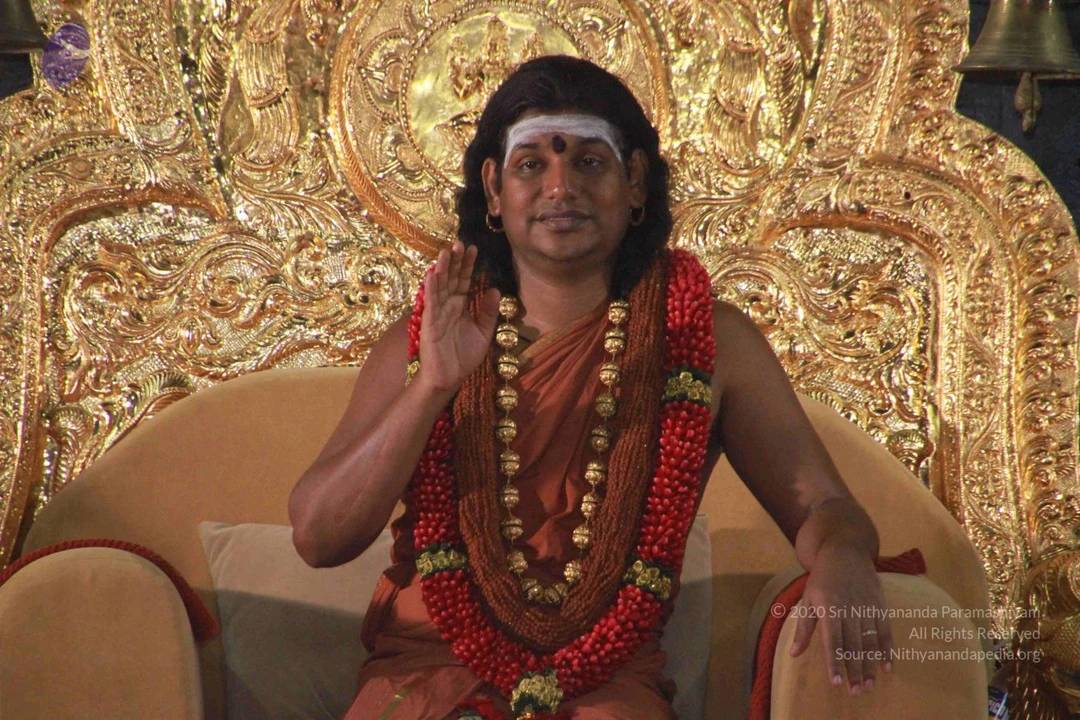
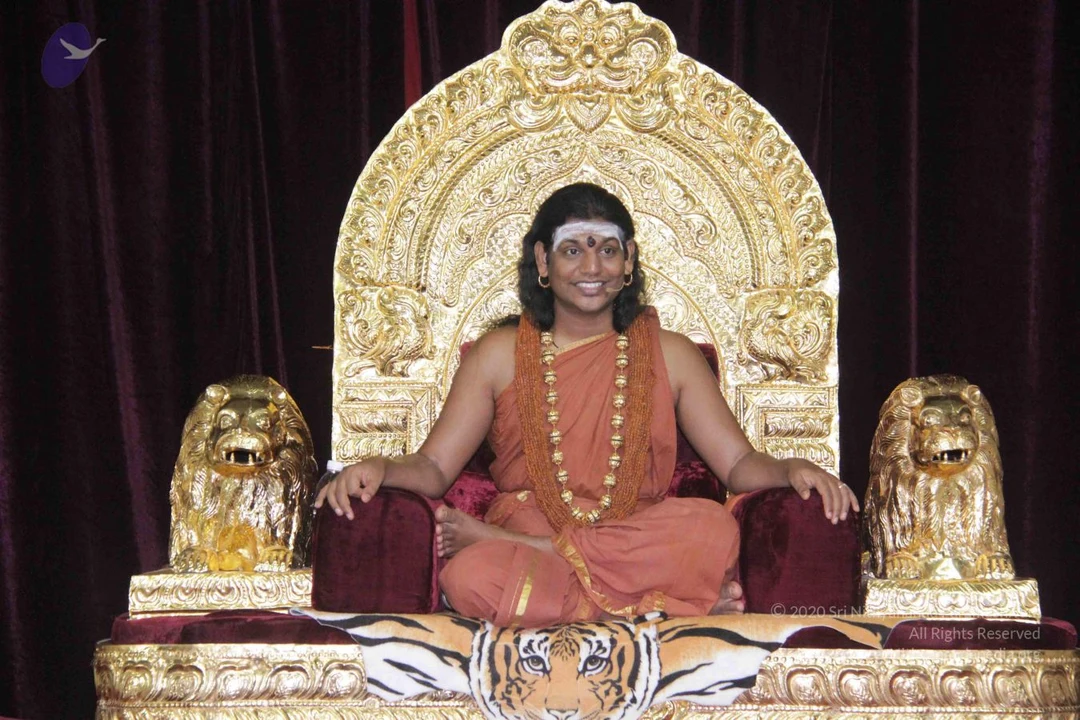
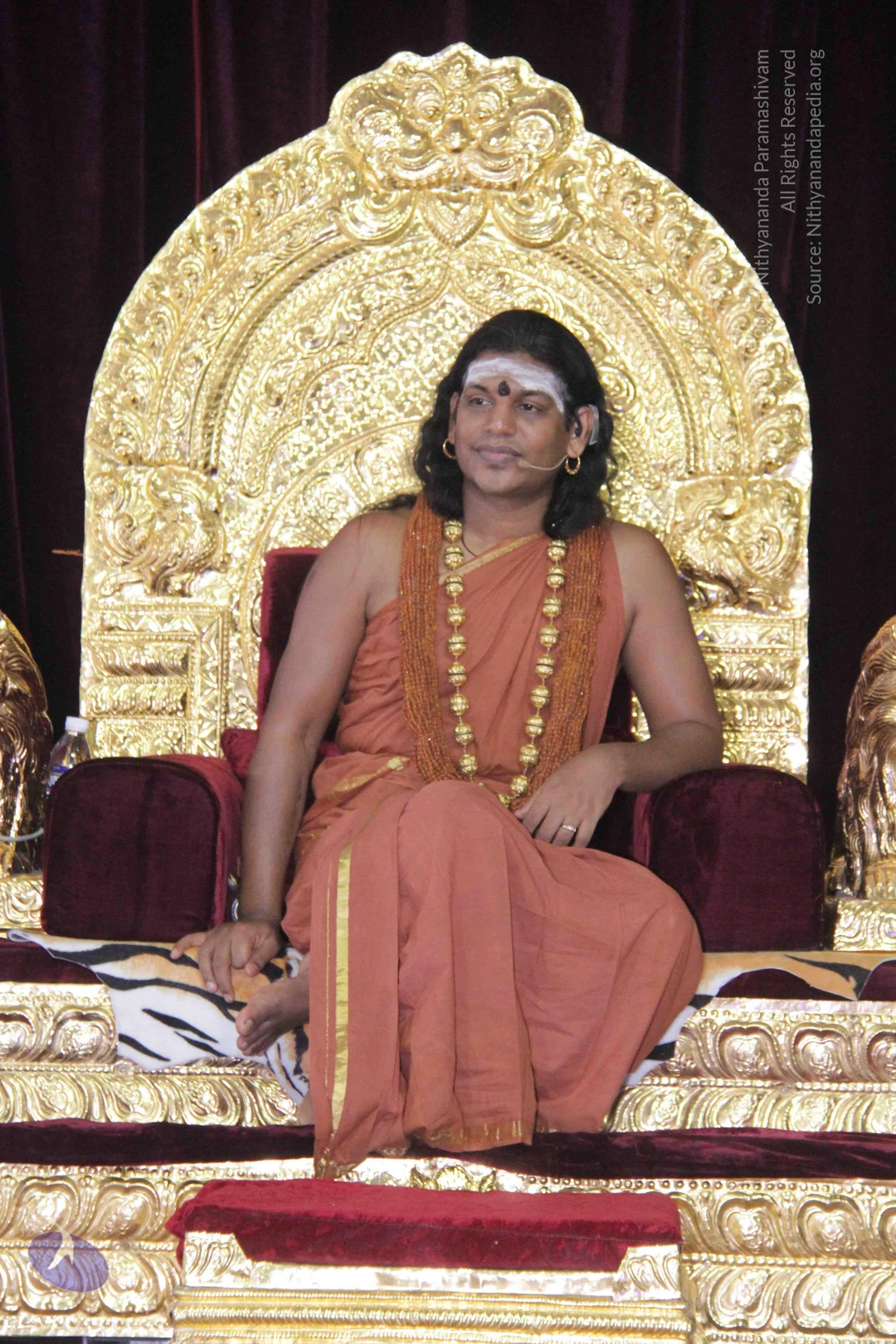
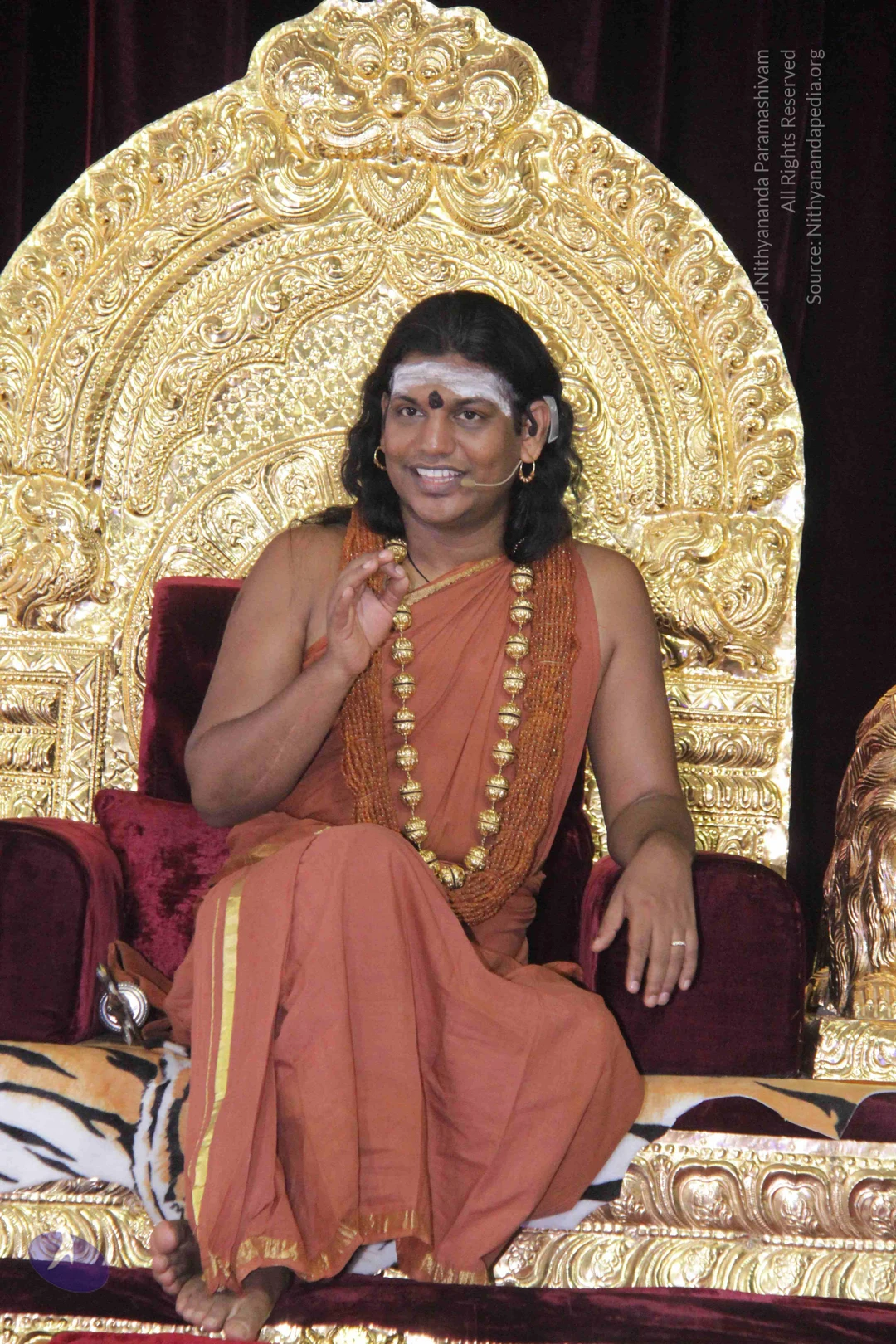
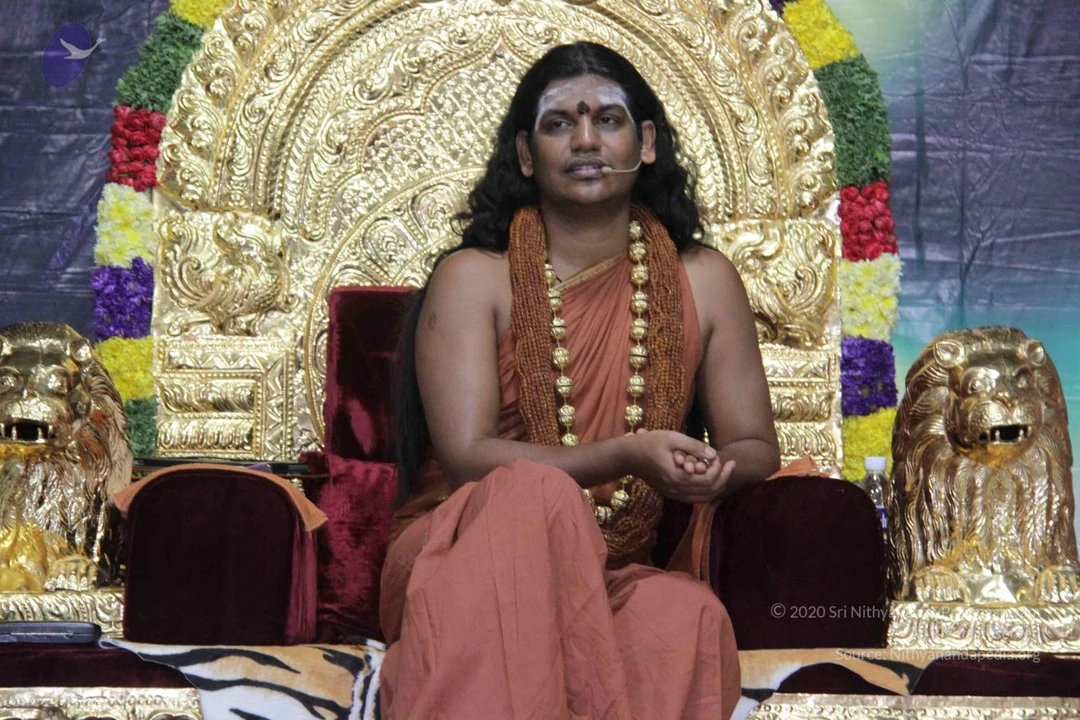
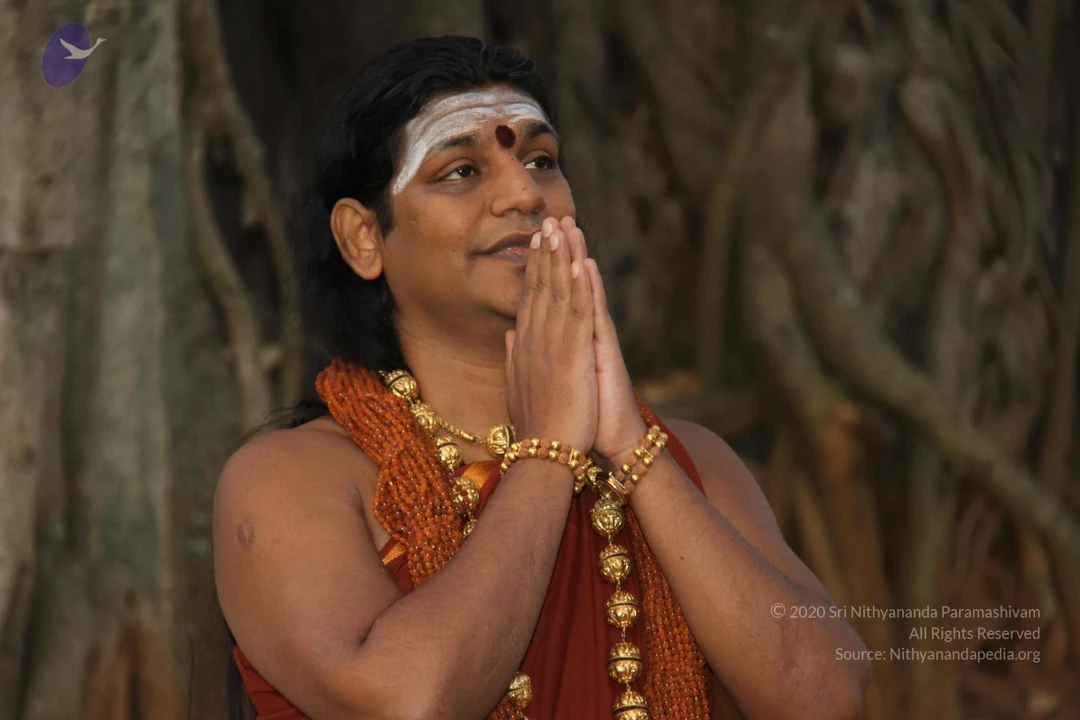
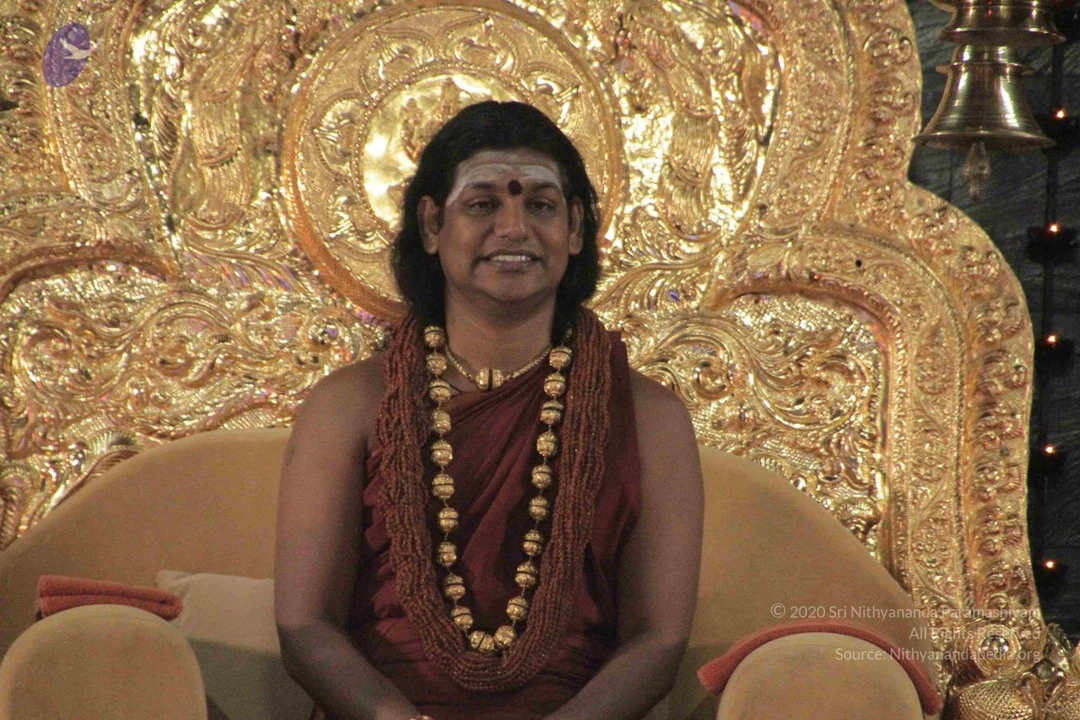
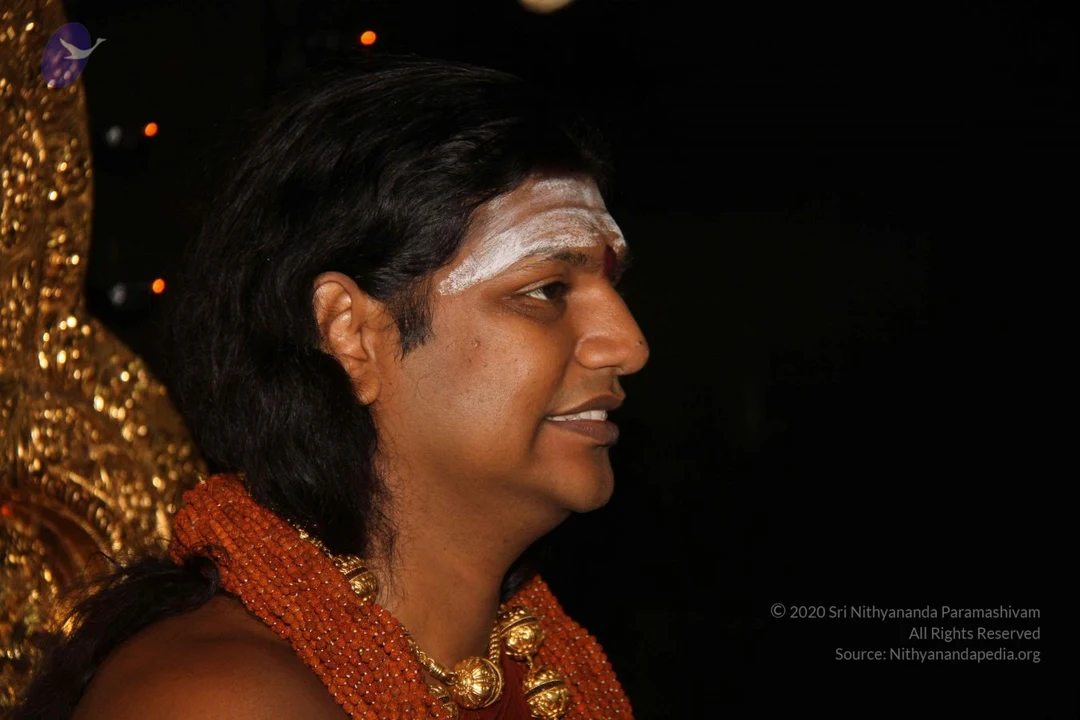
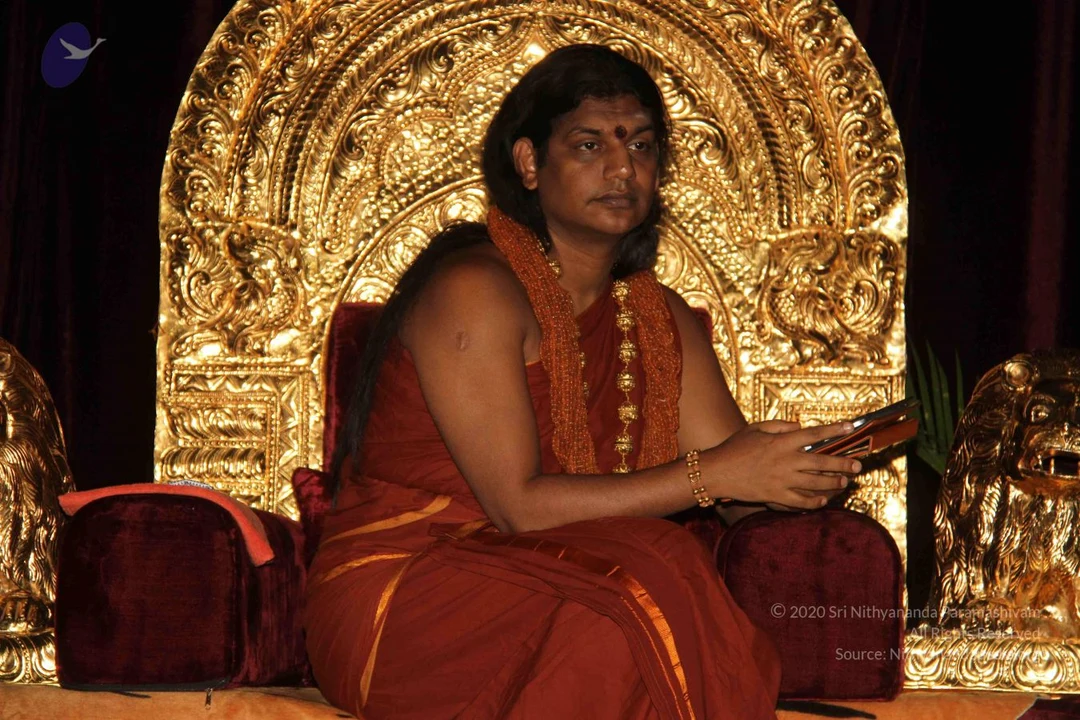
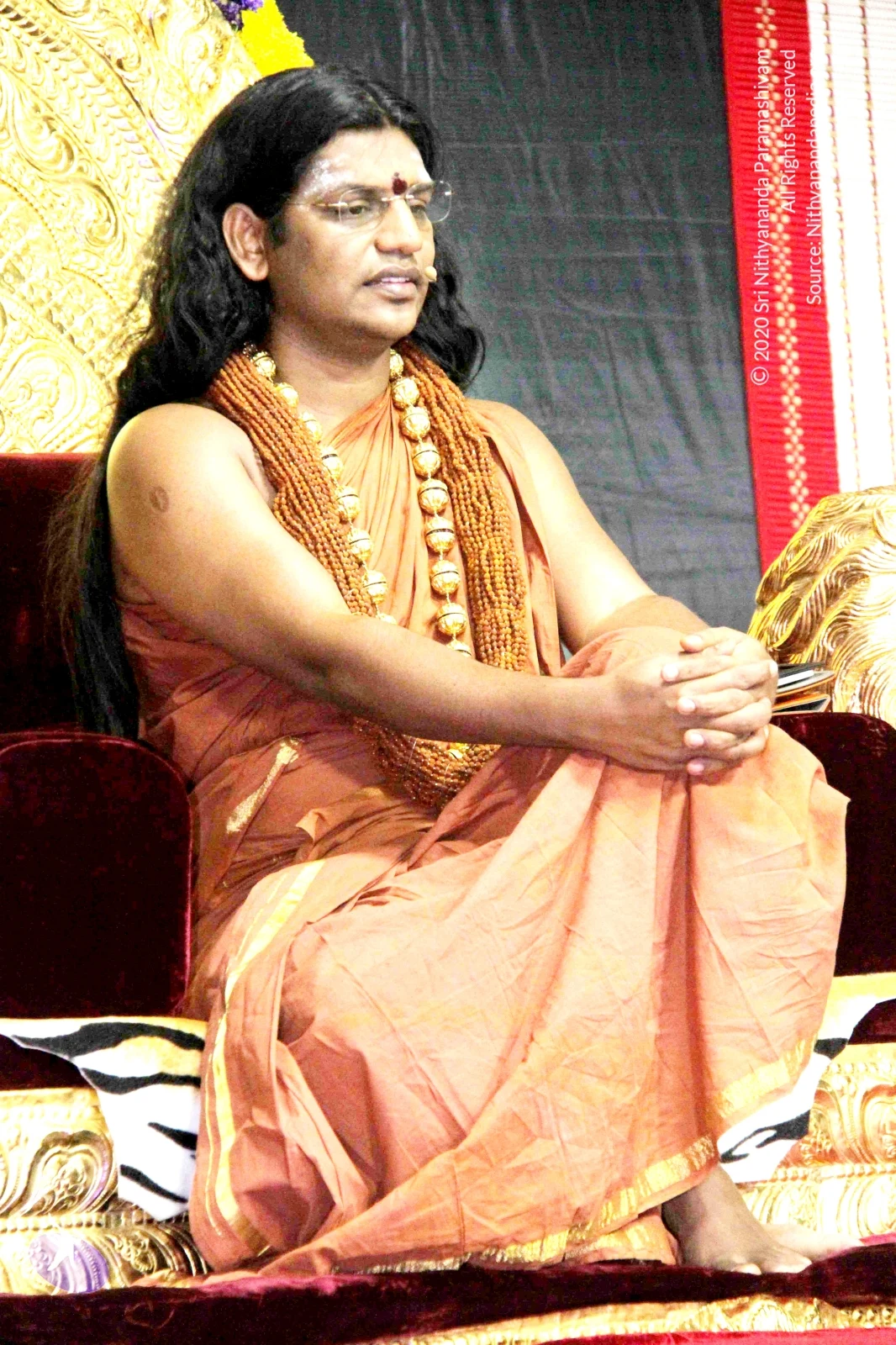
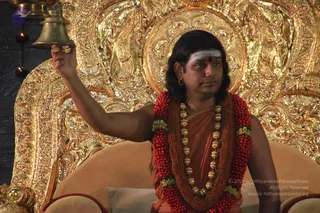
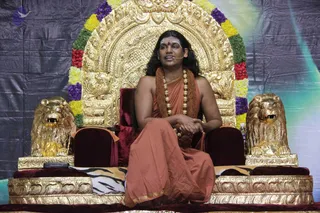
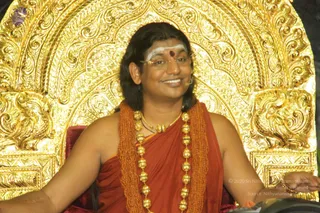
A smiling man with long dark hair, a white sandalwood-style mark on his forehead and a red dot at the centre, sits in front of a large ornate gold backdrop. He wears a red-orange shawl over his shoulders and bare-skinned chest area, multiple ceremonial gold and orange bead necklaces and rudraksha-style malas, and gold hoop earrings. A small headset microphone is attached near his mouth. He holds a black handheld tablet or device in his right hand. Behind him, painted figures in orange and red, including a fierce face with a crown-like headdress, are visible on the left. Swamiji (probable): long swept-back hair, saffron-orange shawl, ornate gold necklaces and rudraksha malas, speaking at a discourse.

TEMPLE

24 photosSource gallery
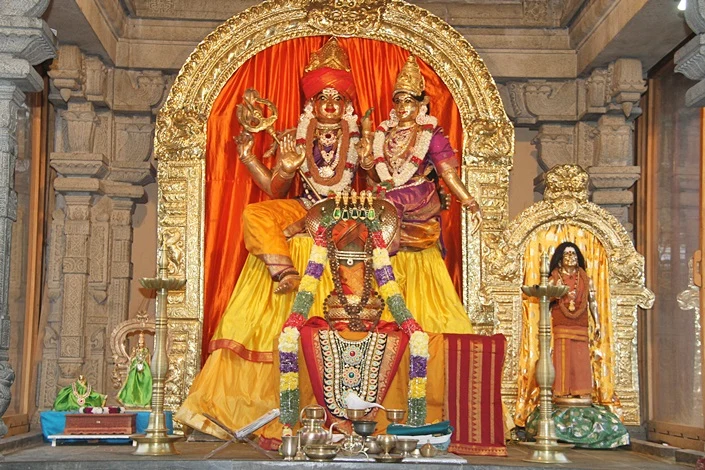
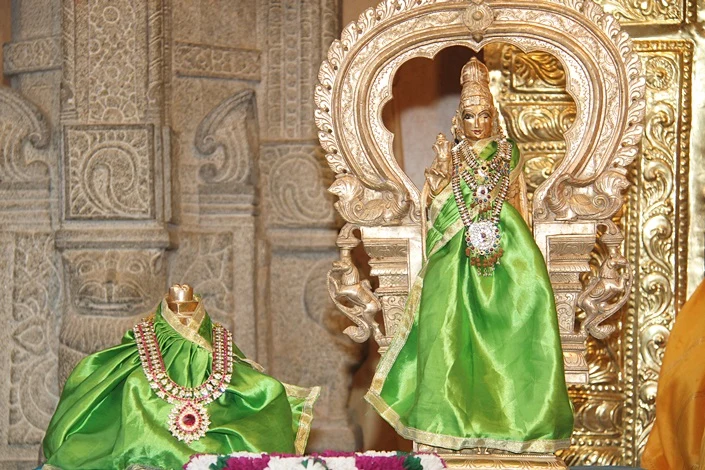
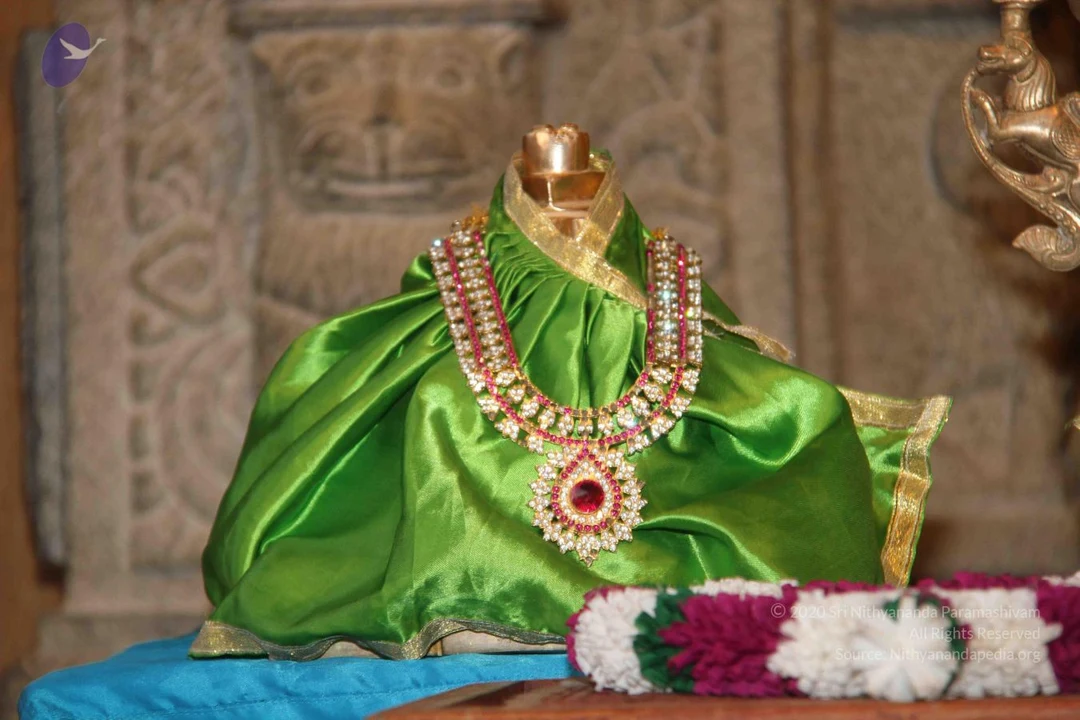
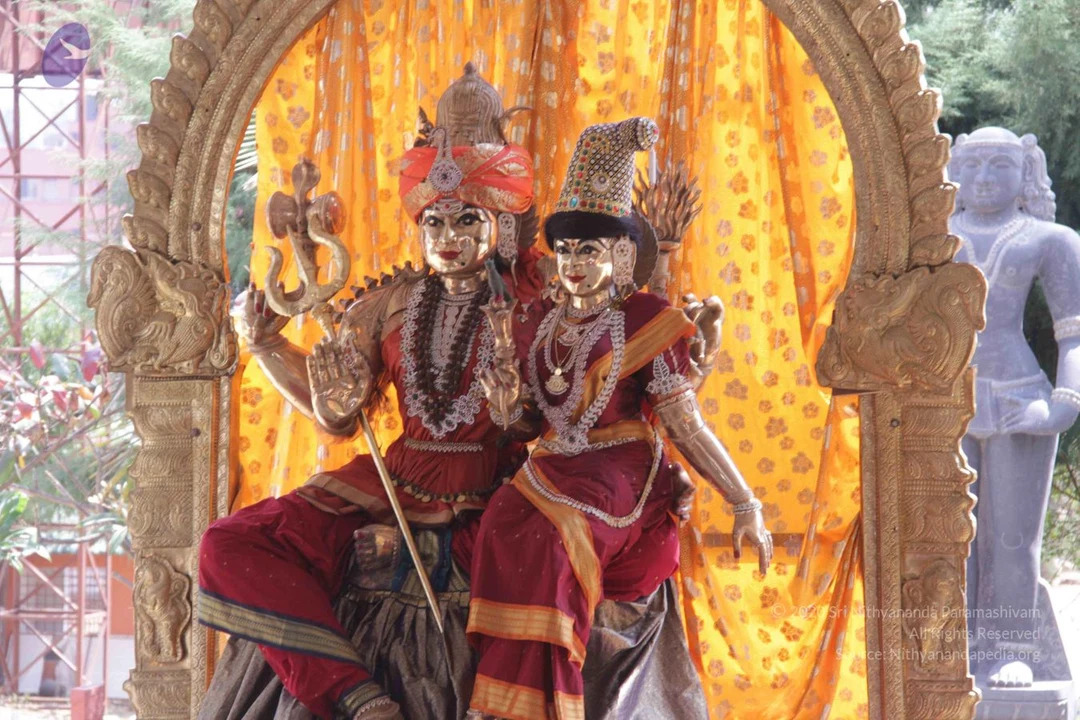
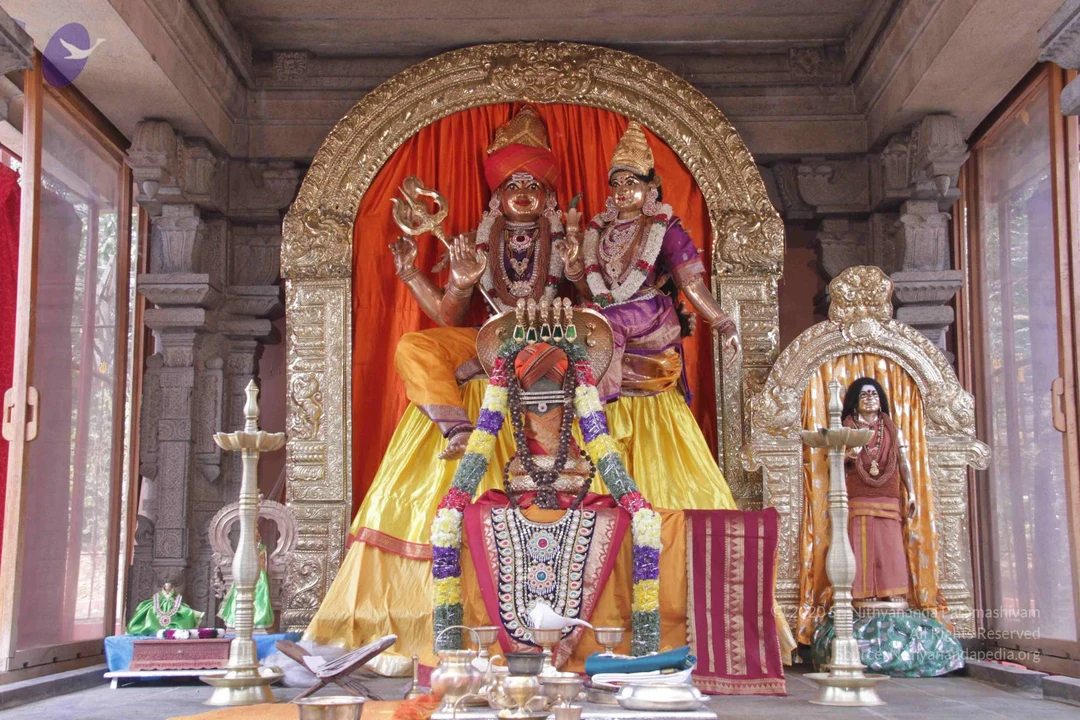
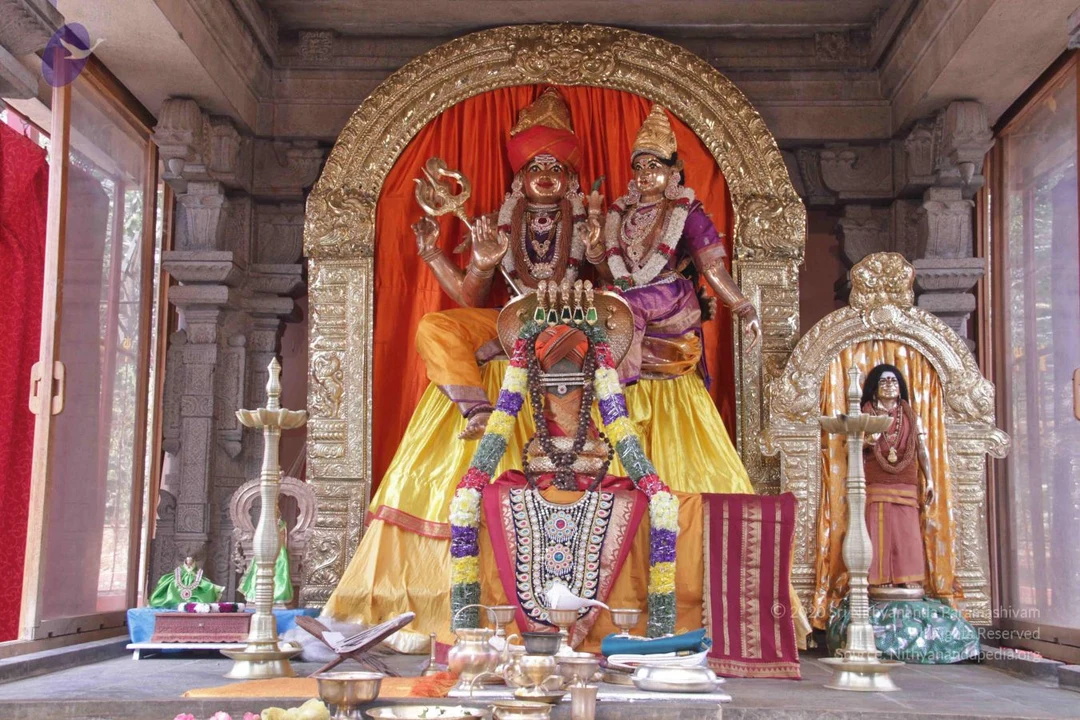
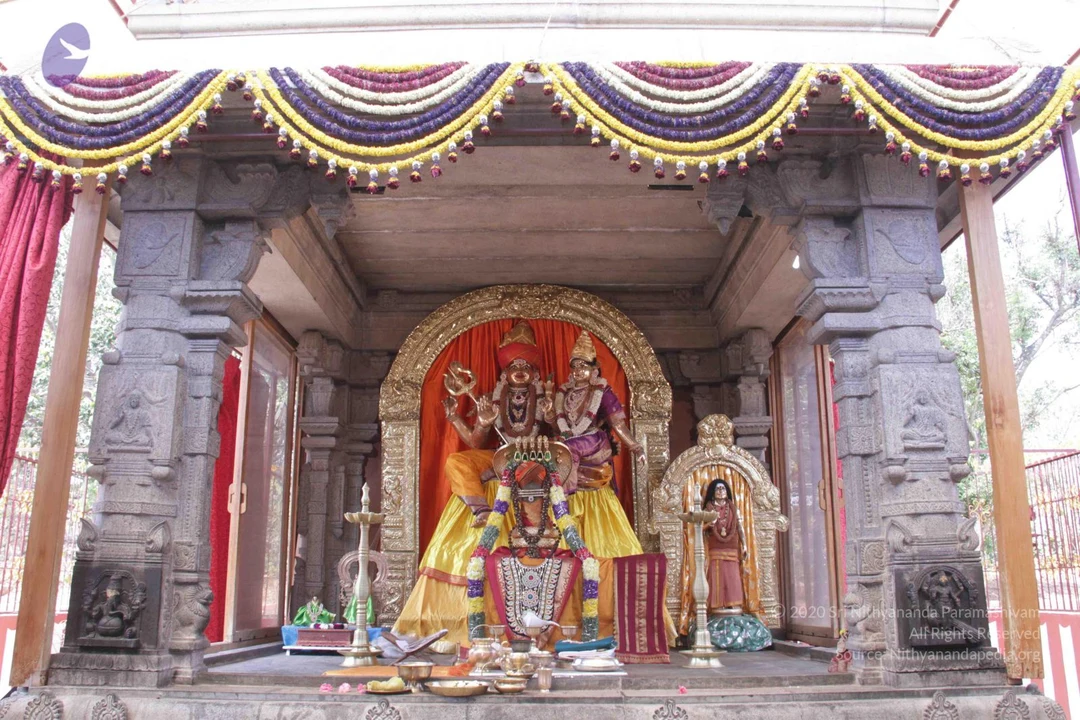
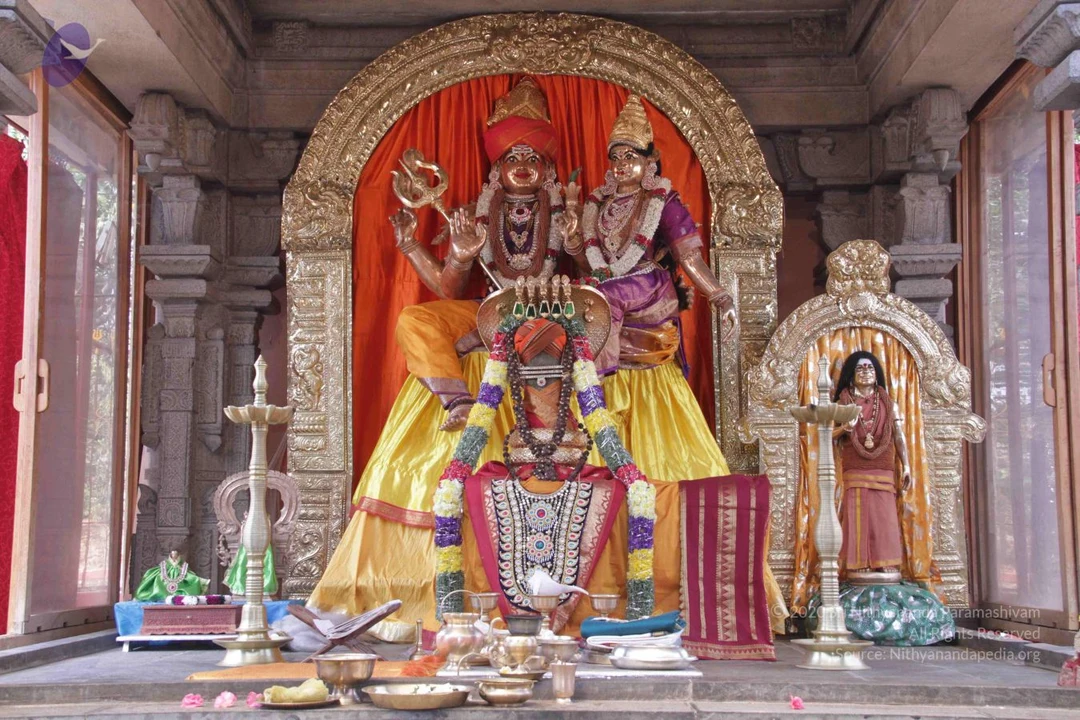
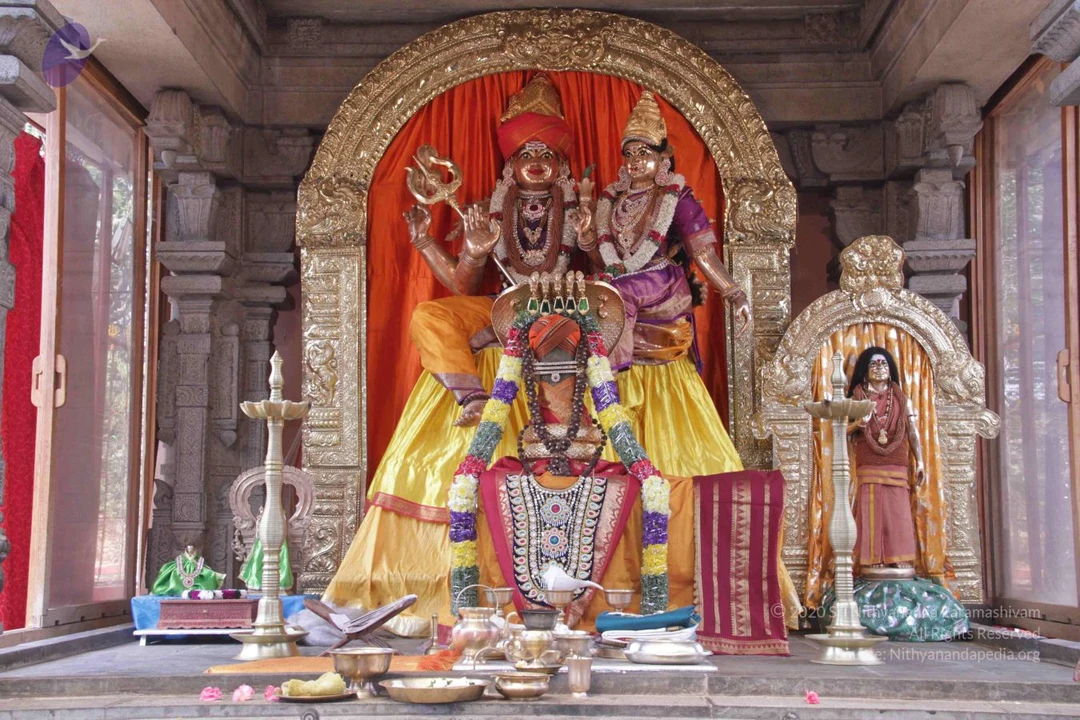
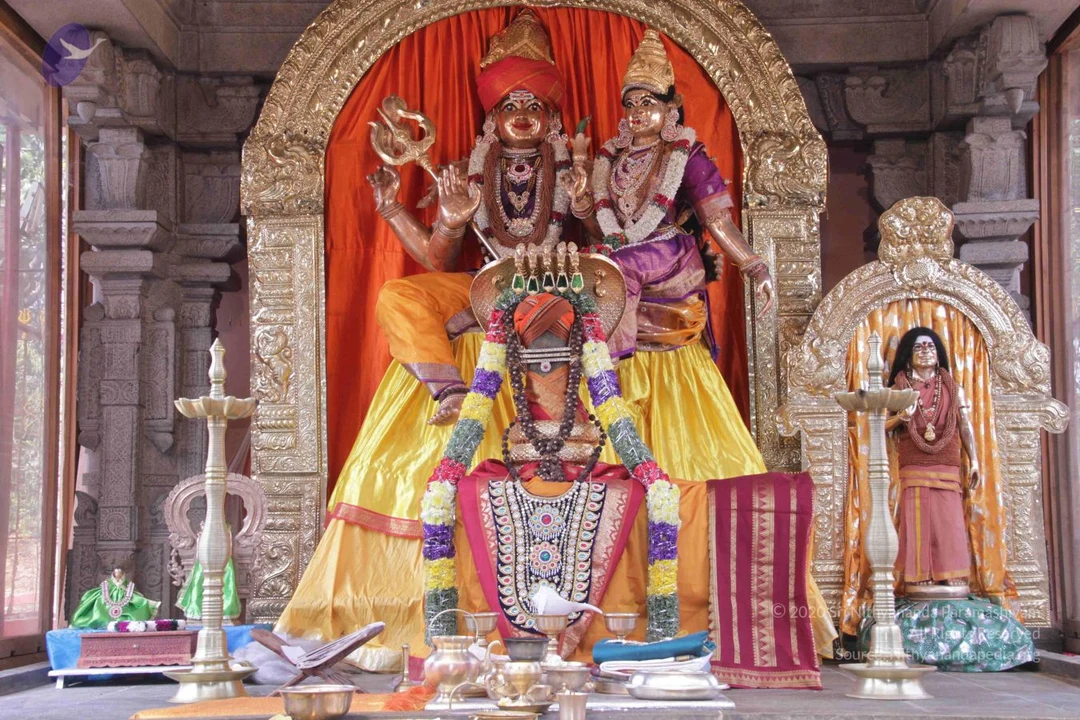
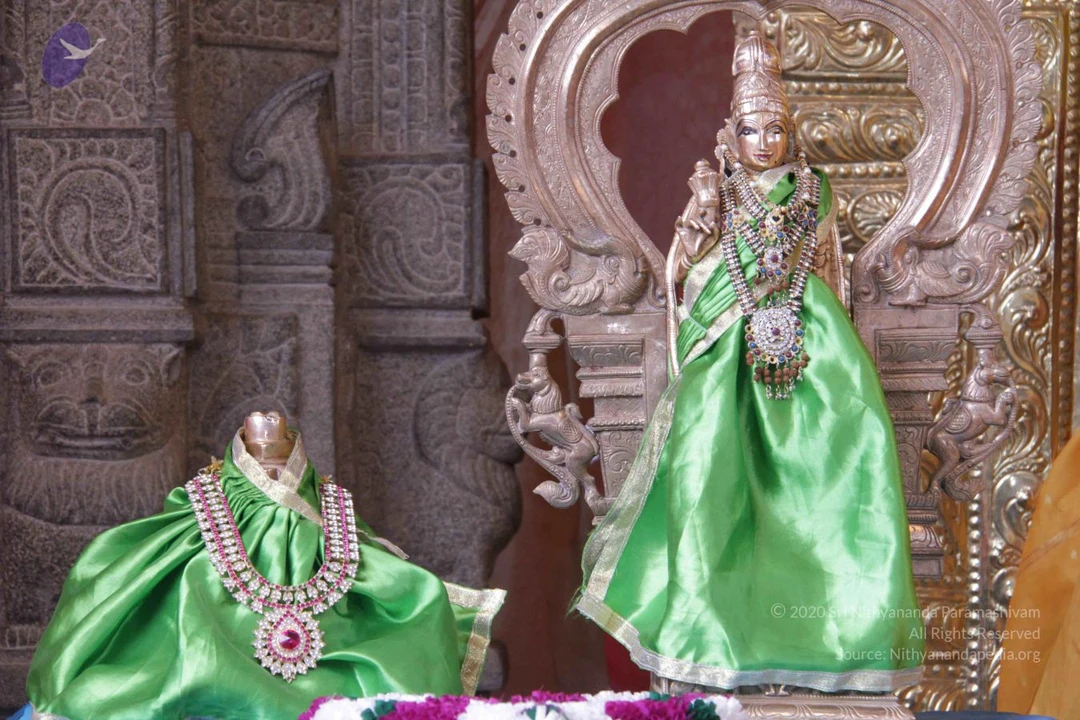
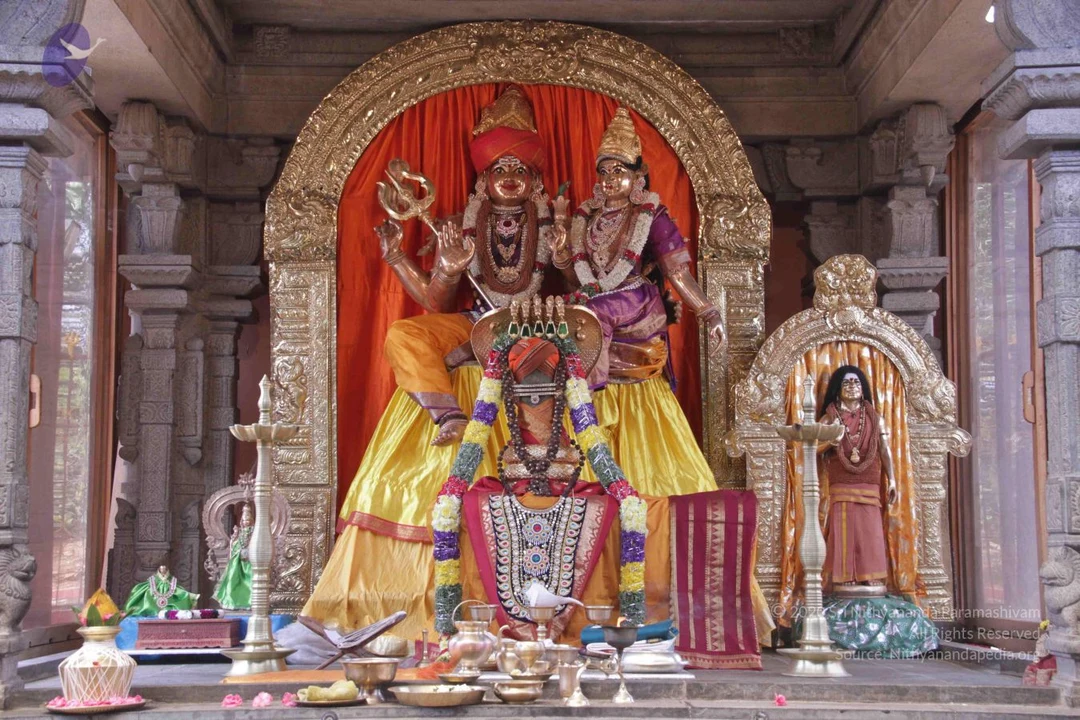
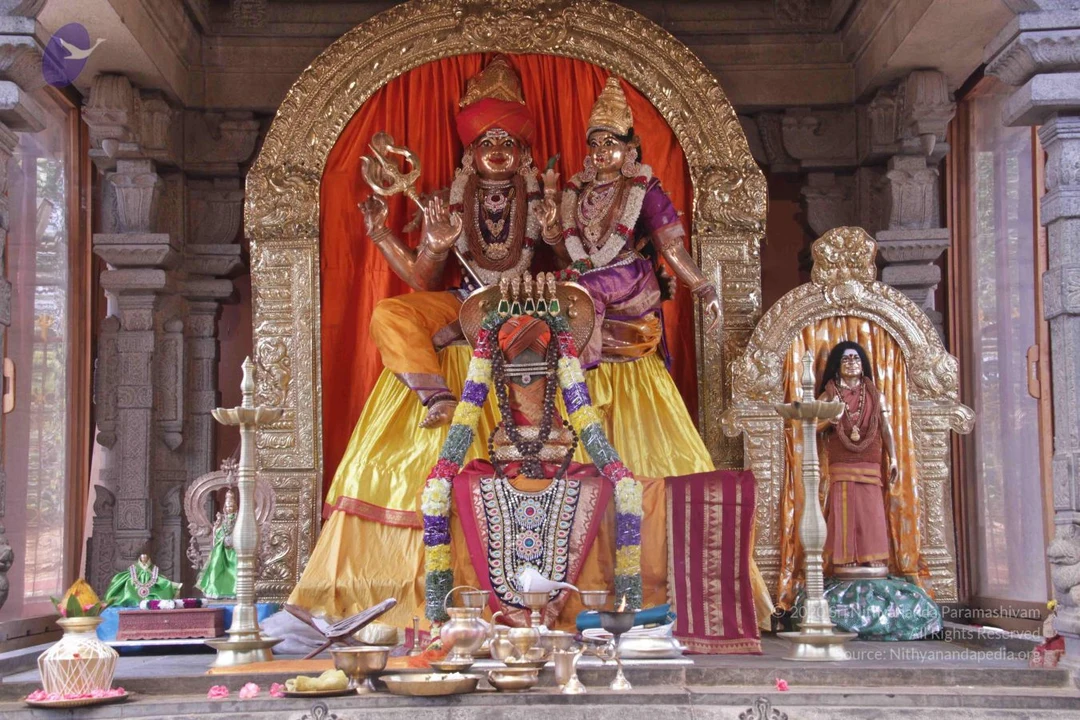
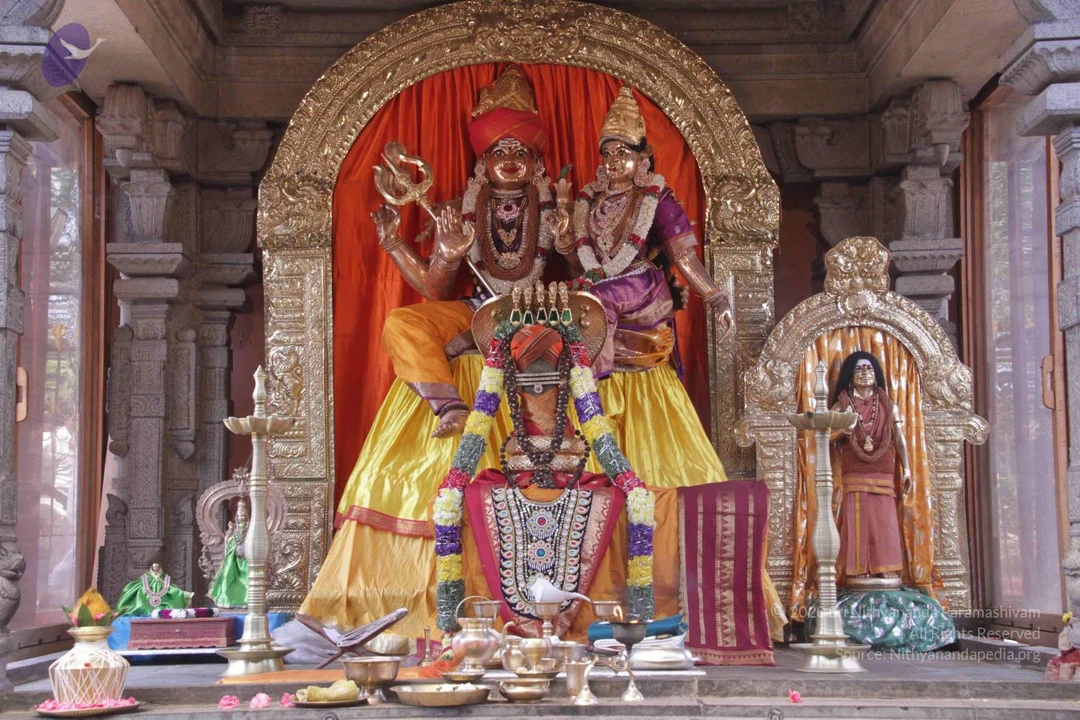
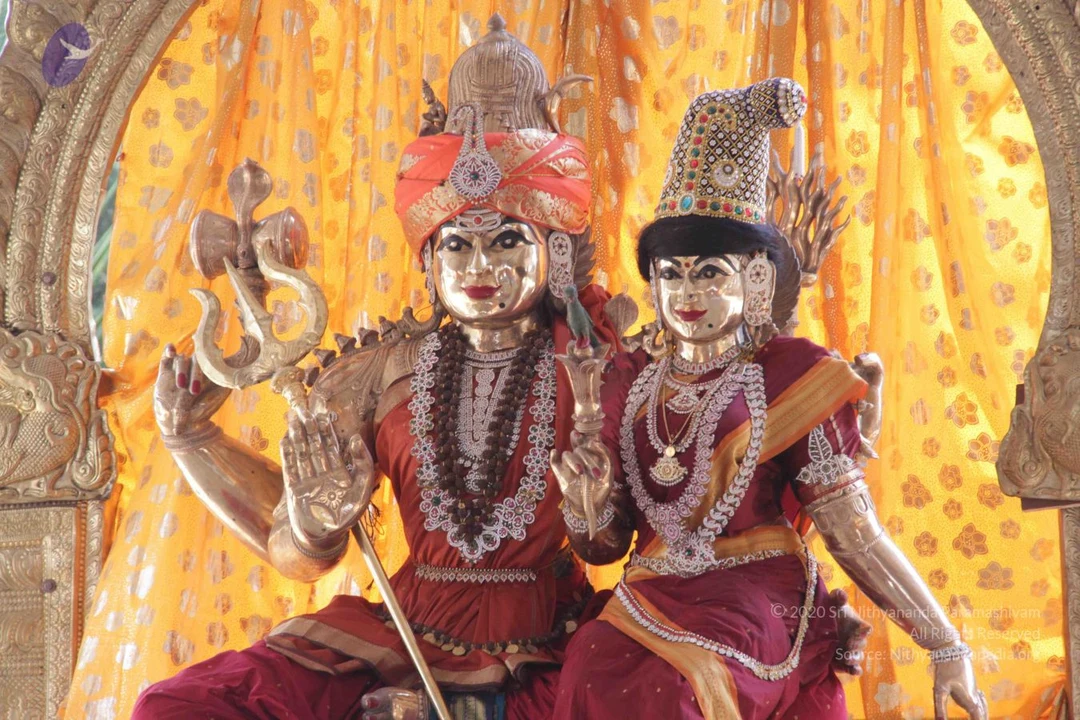
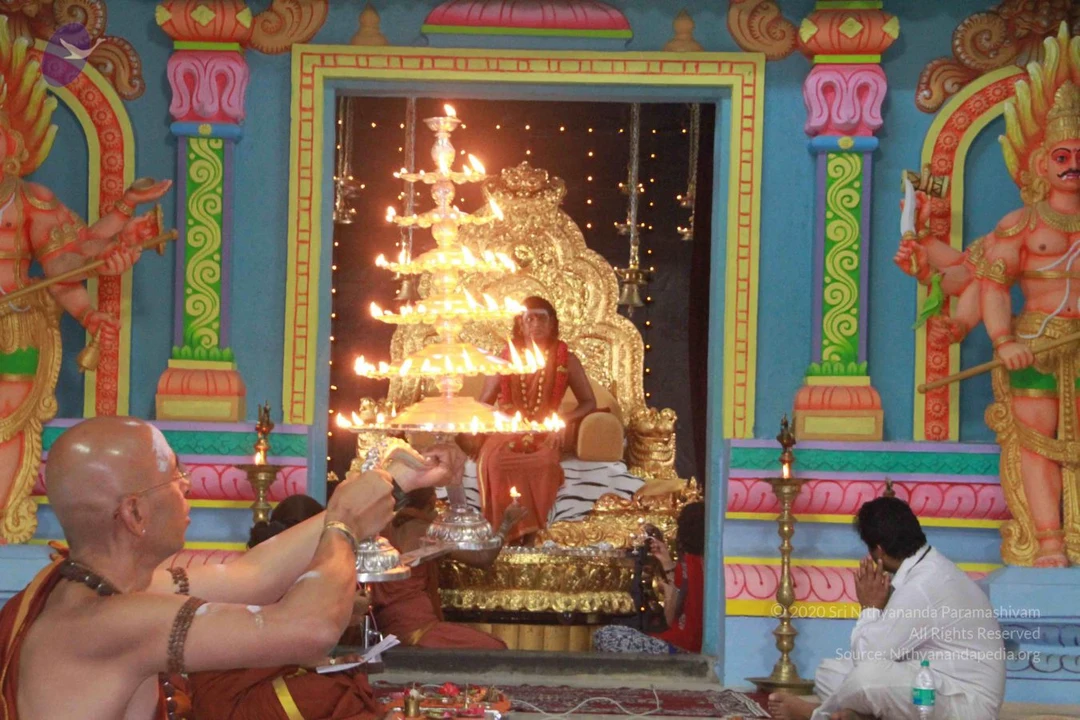
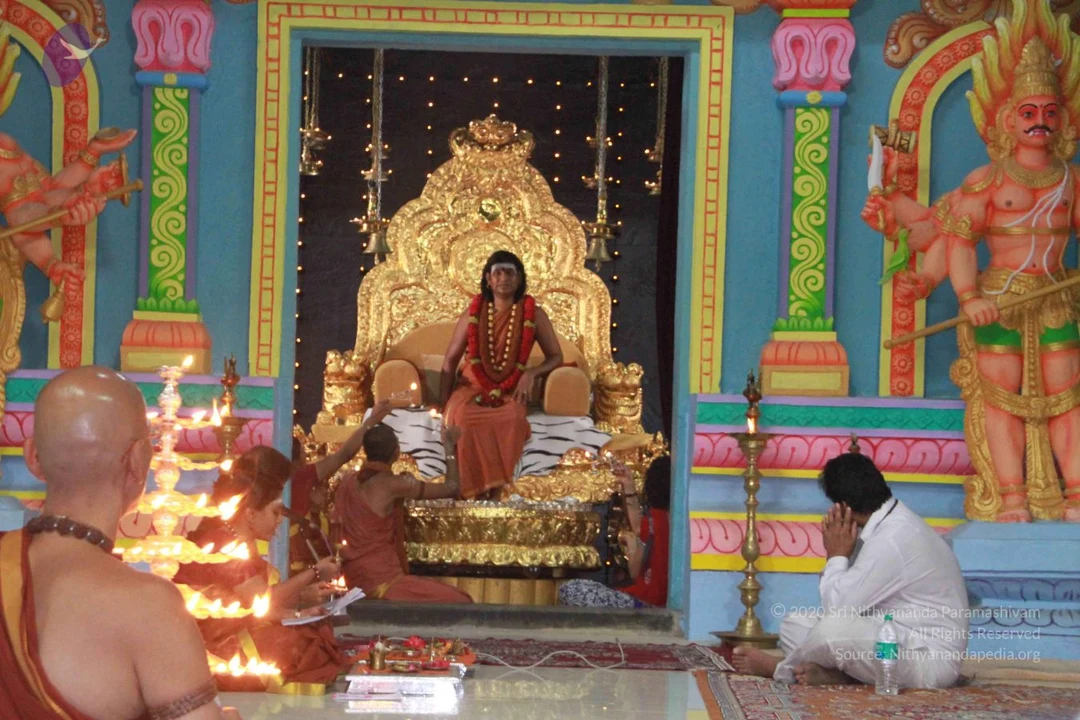
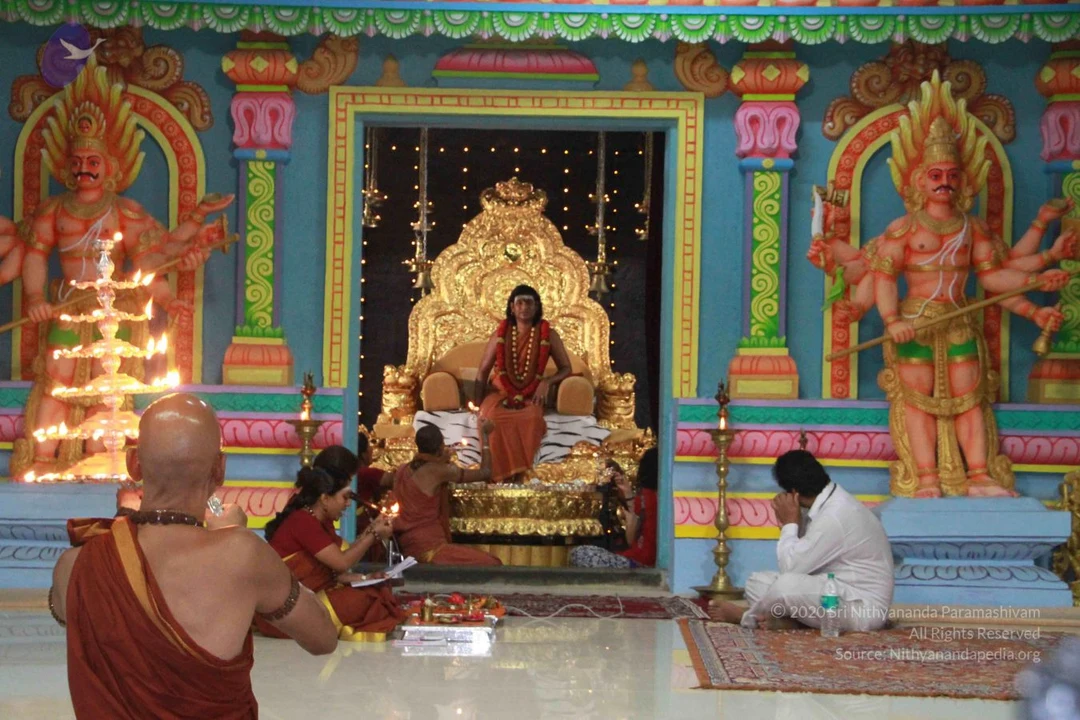
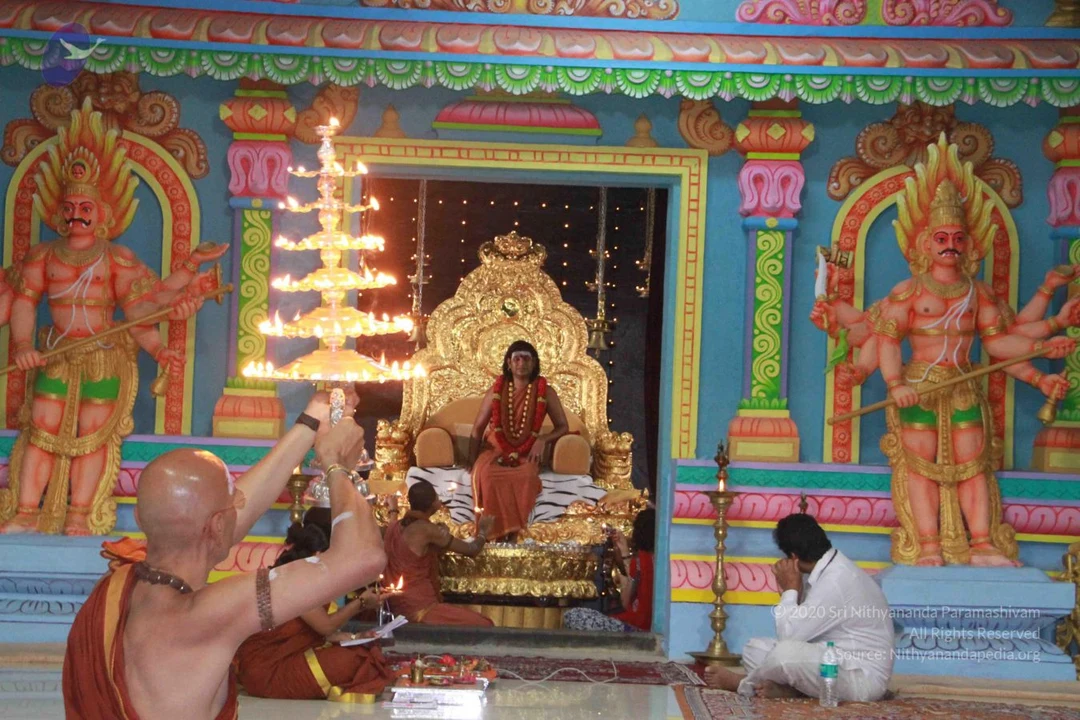
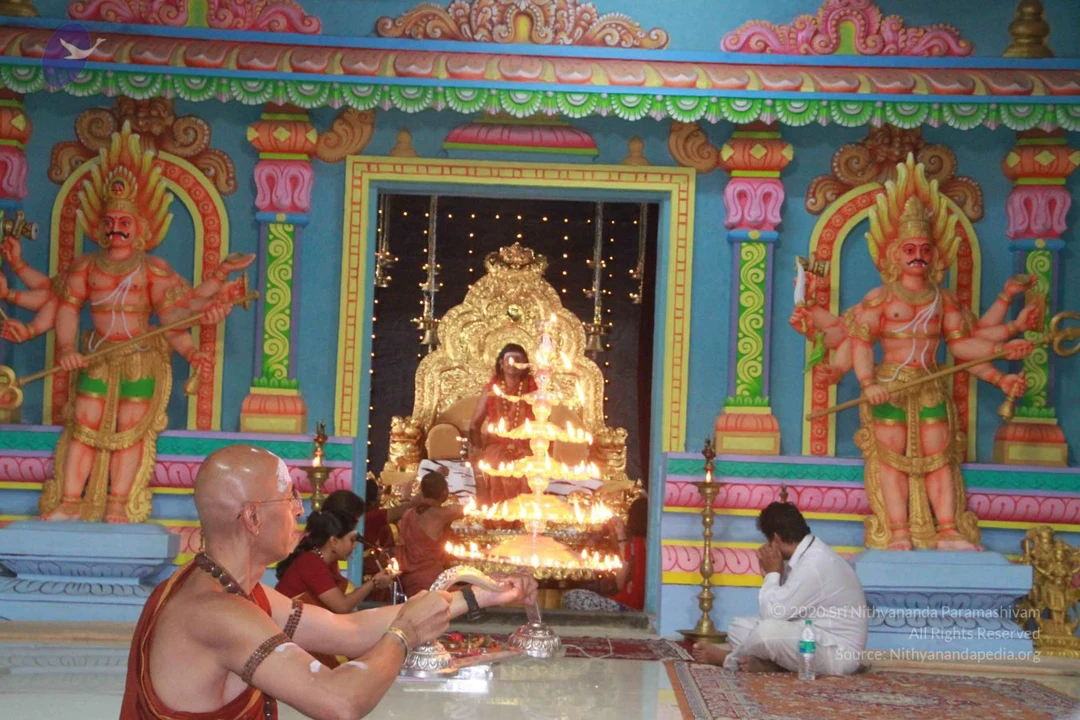
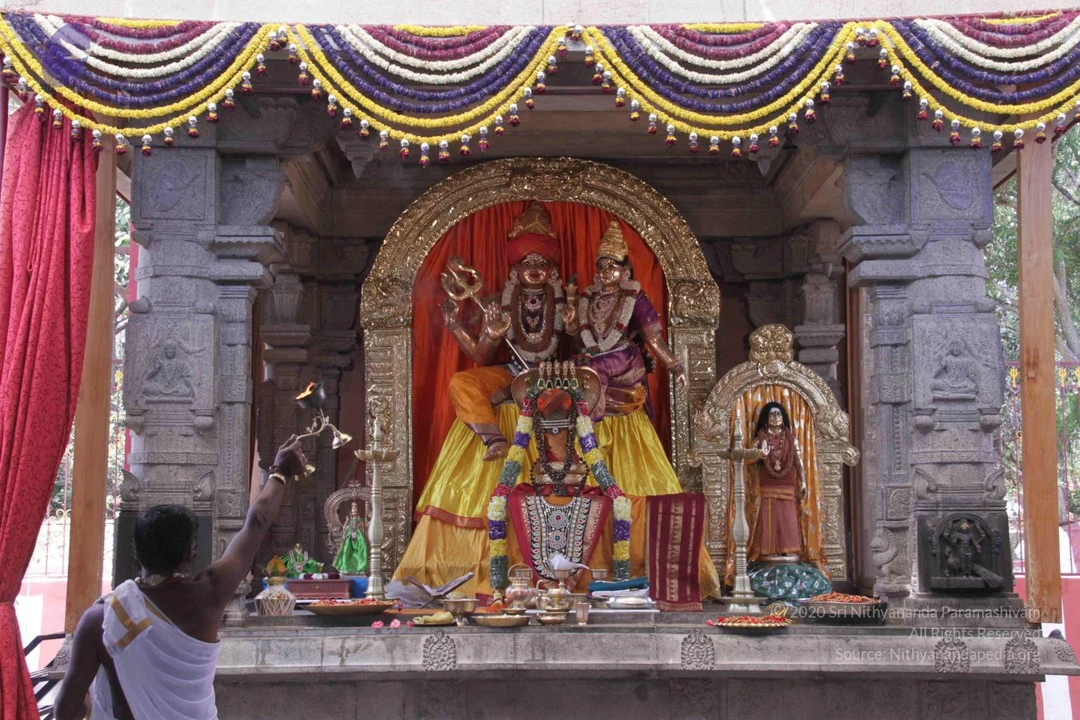
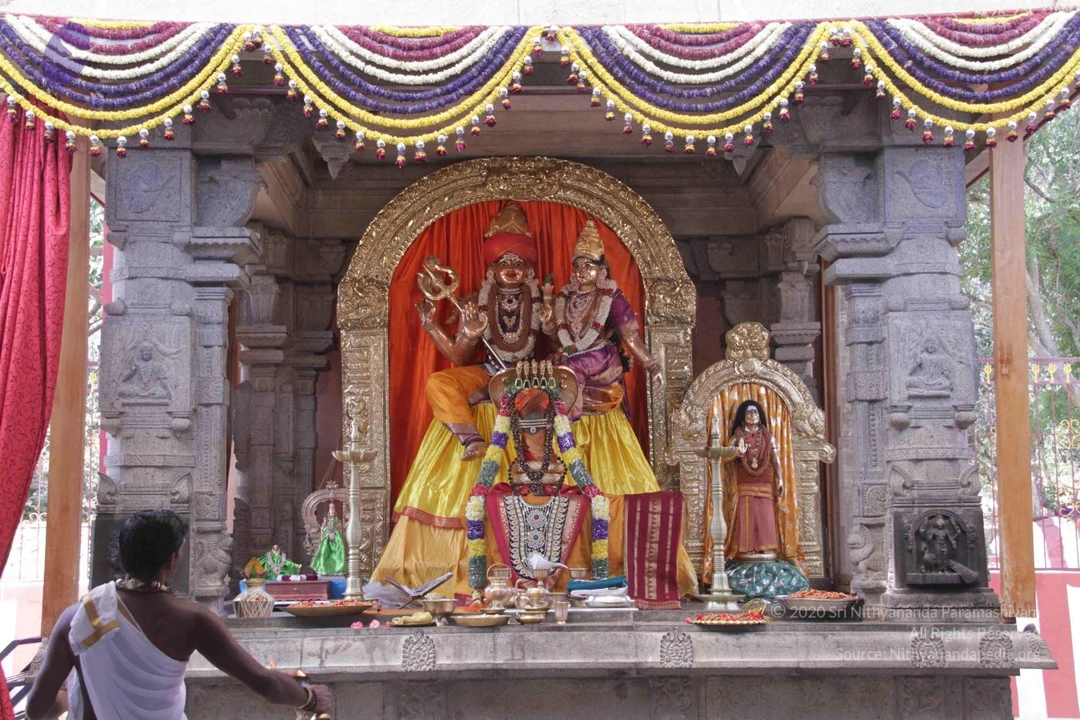
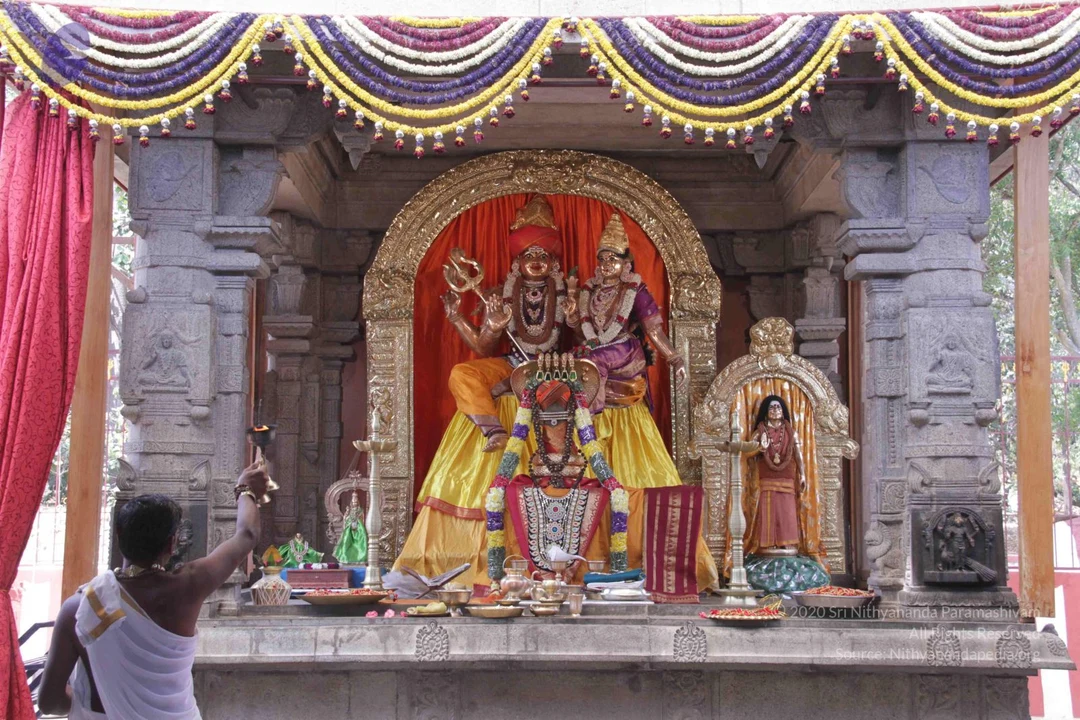
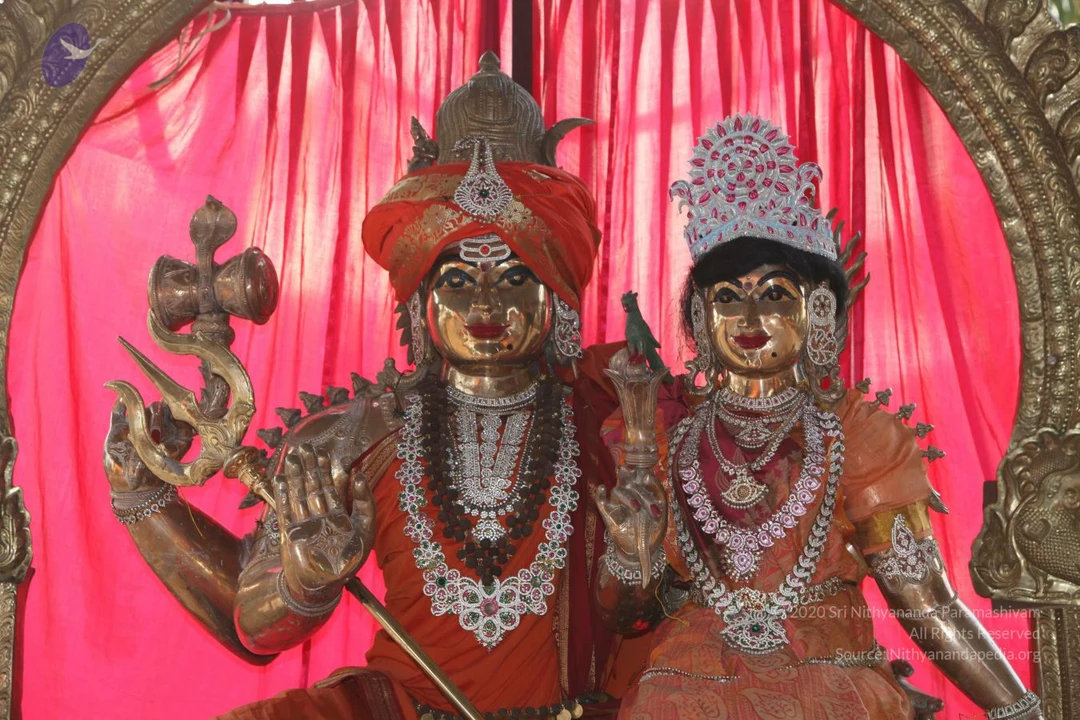
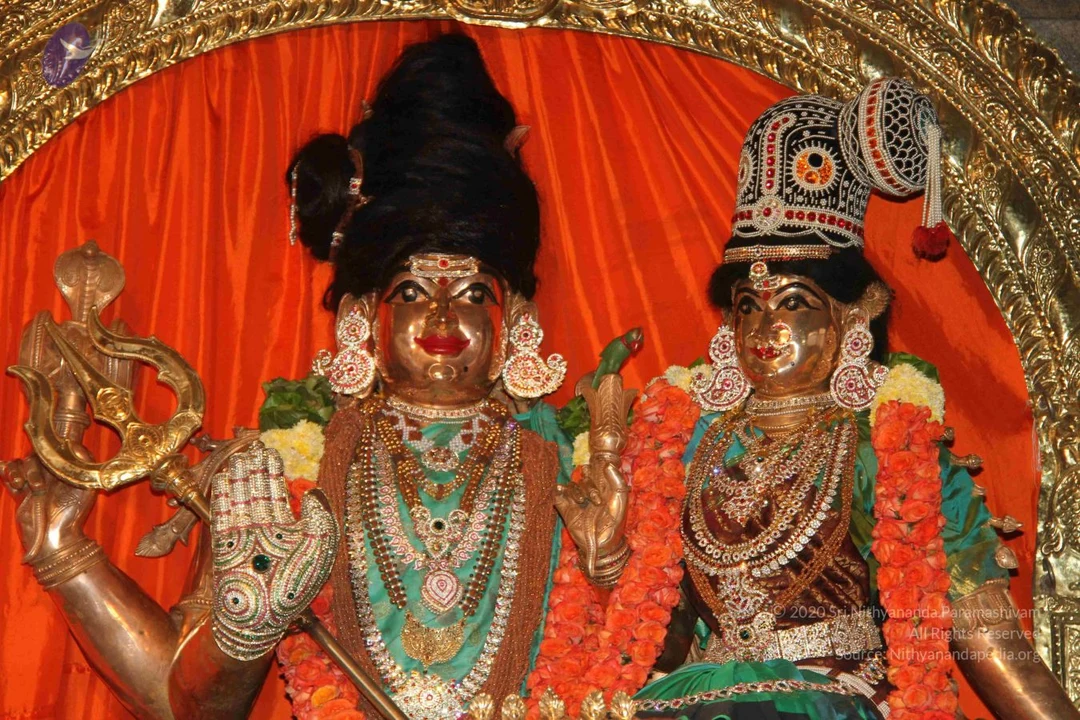
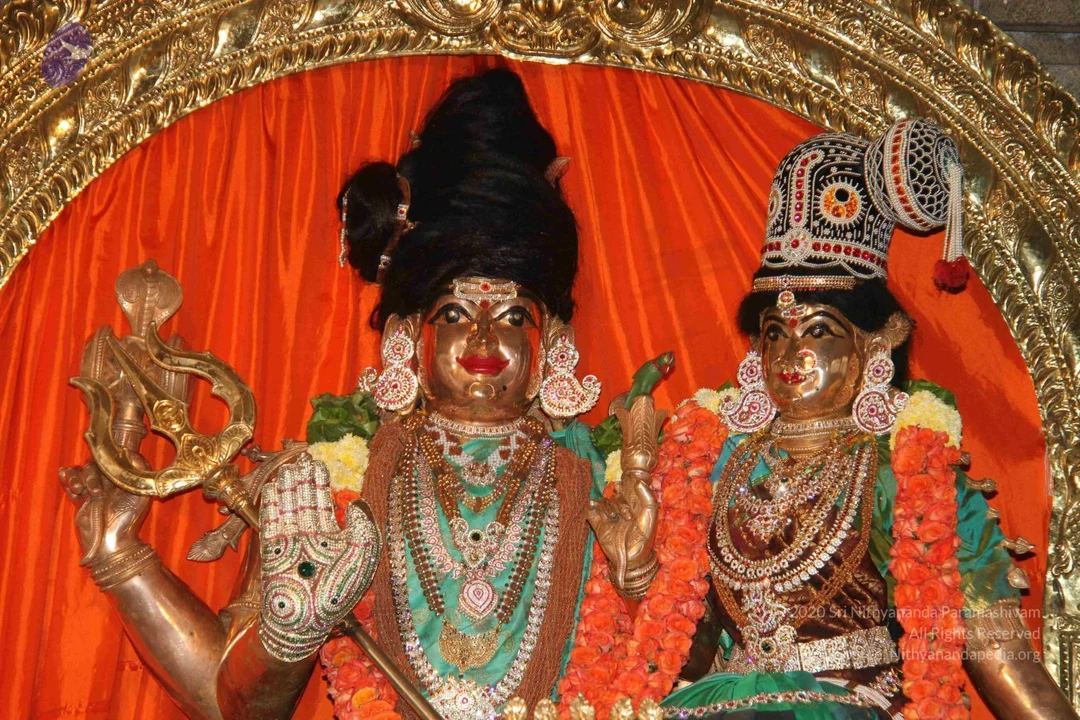
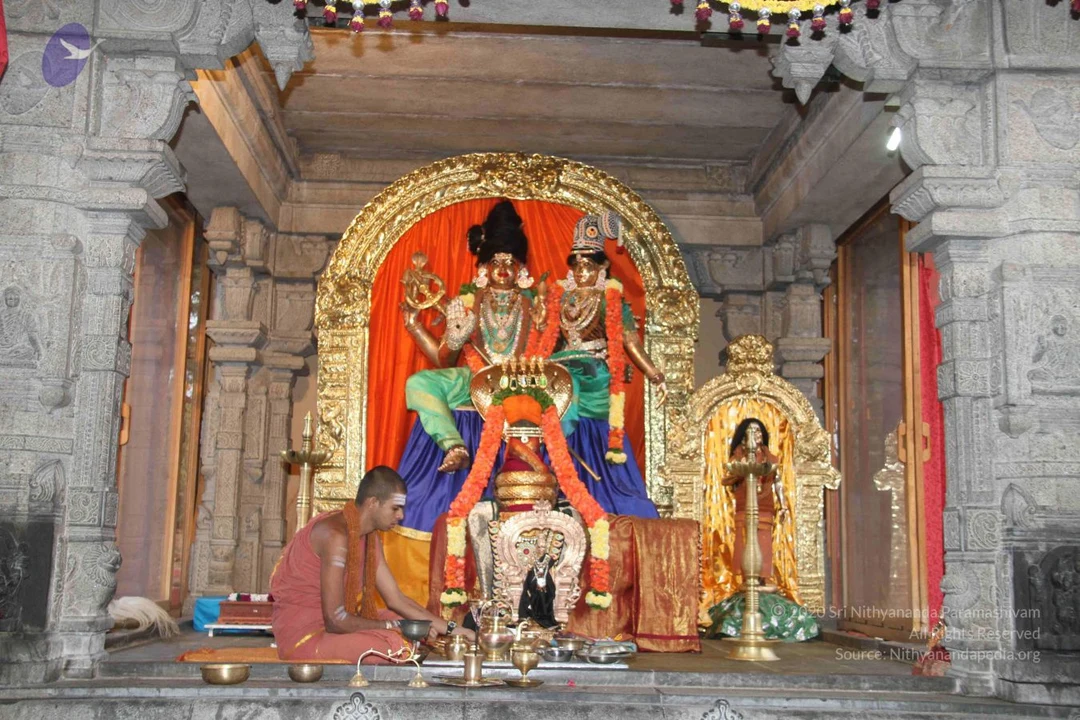
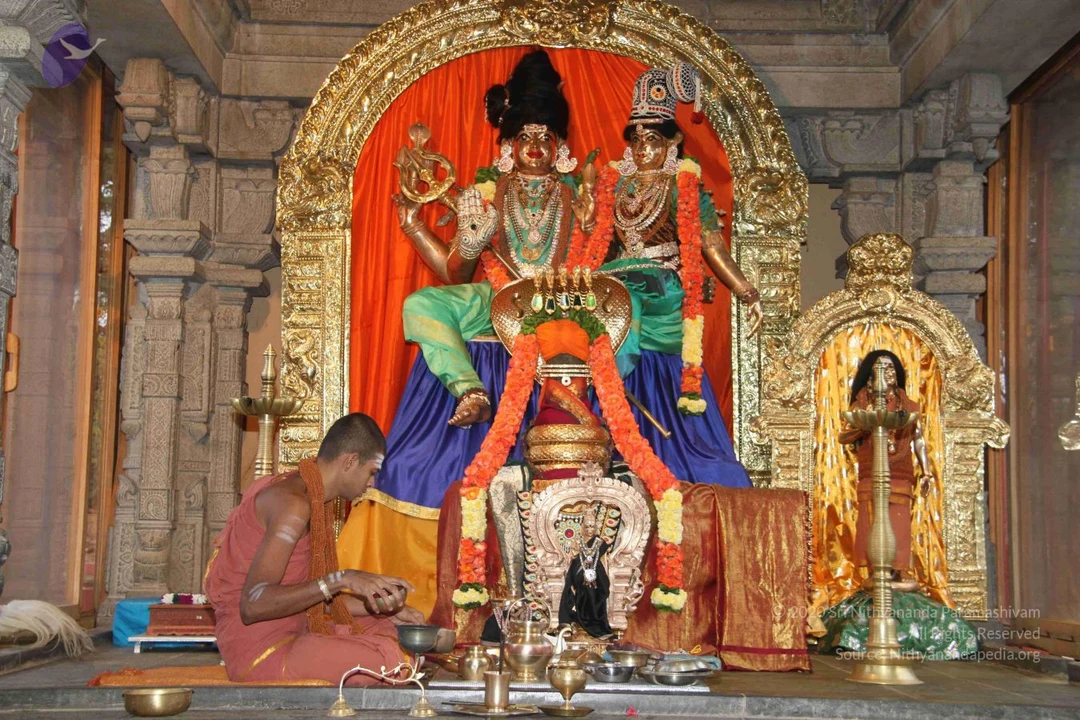
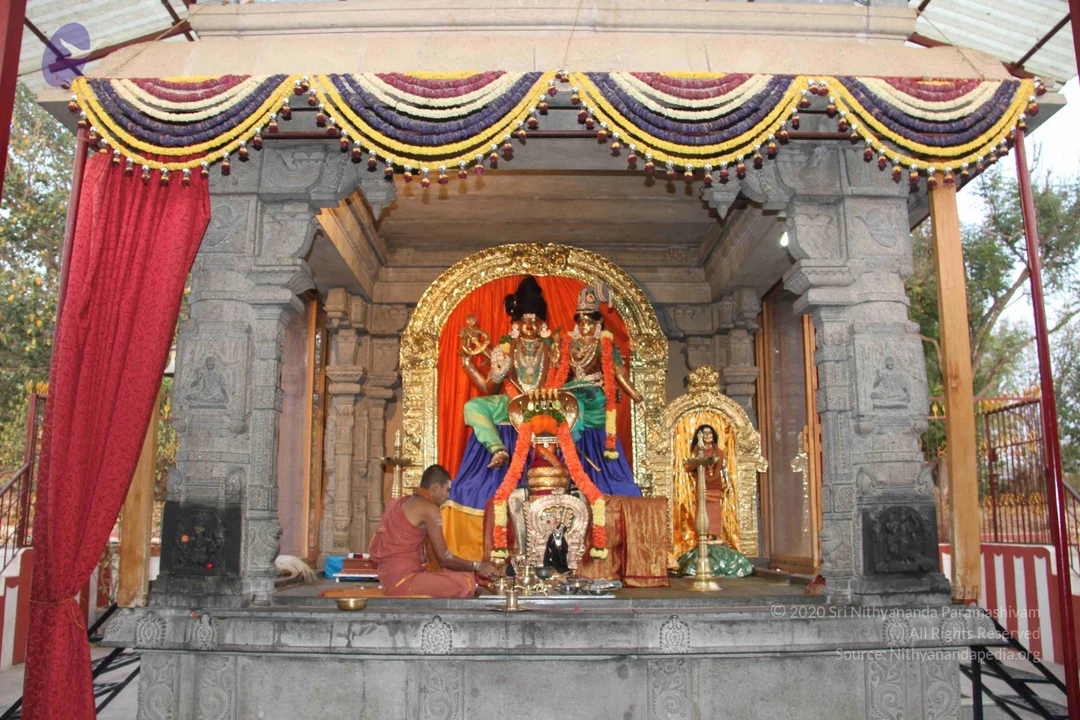
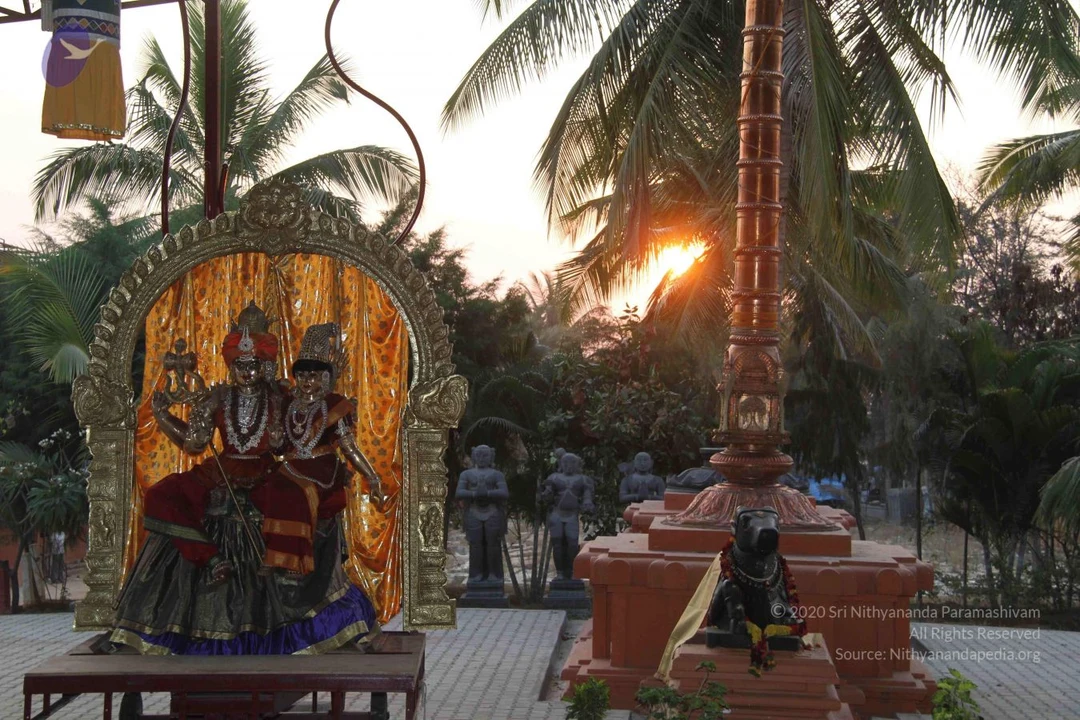
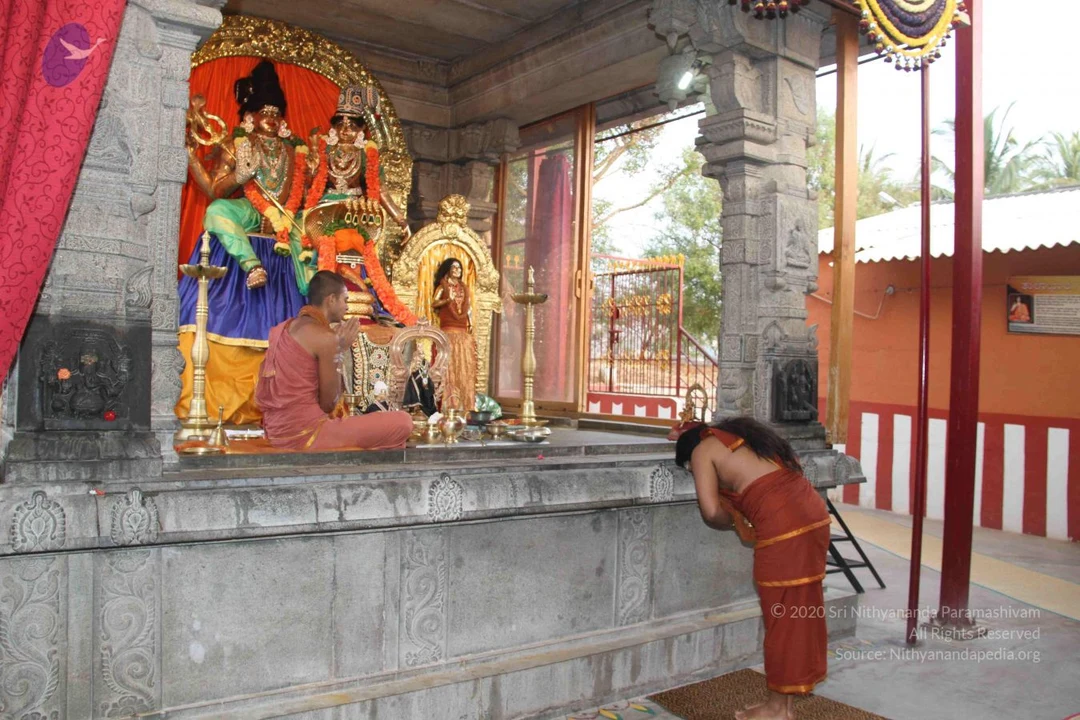
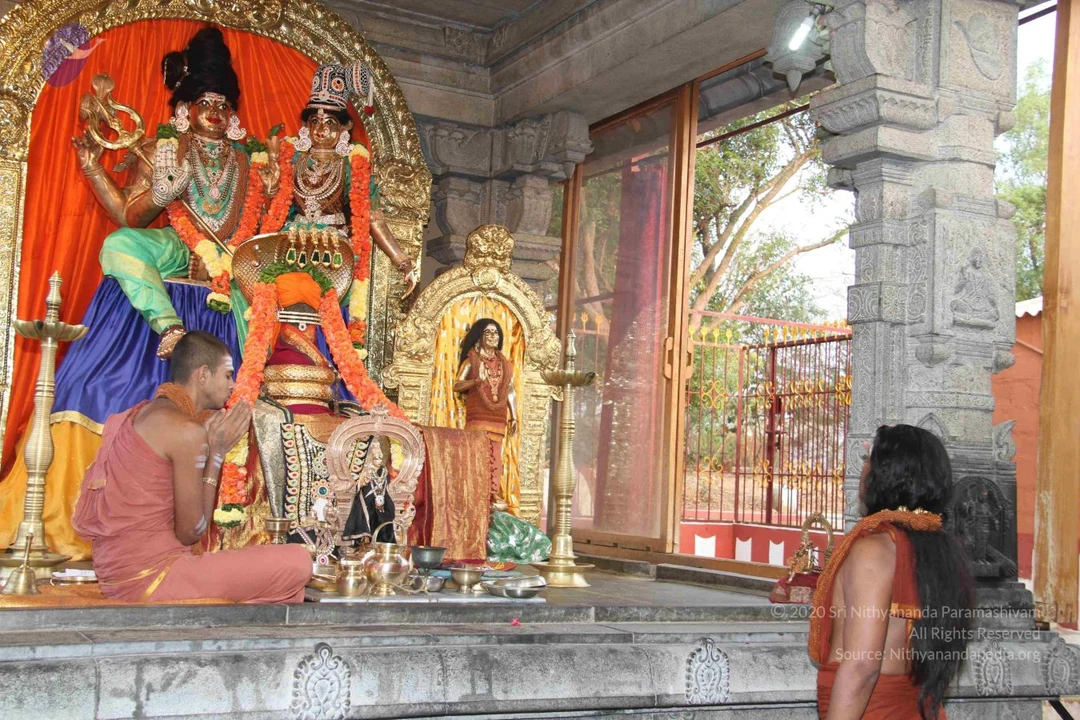
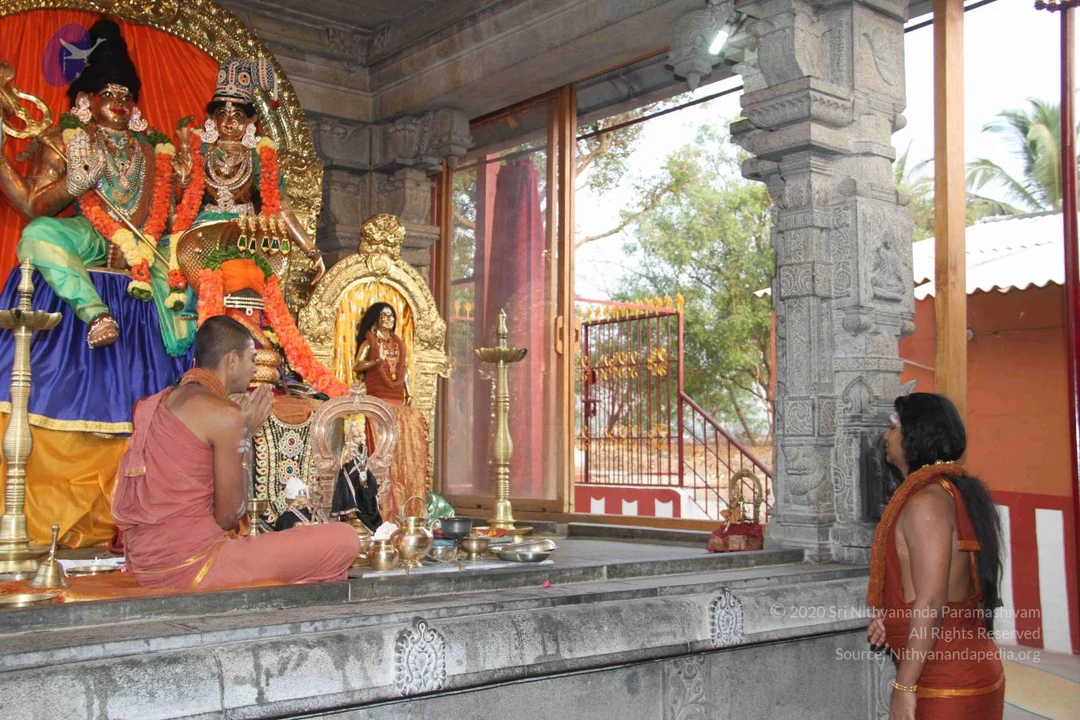
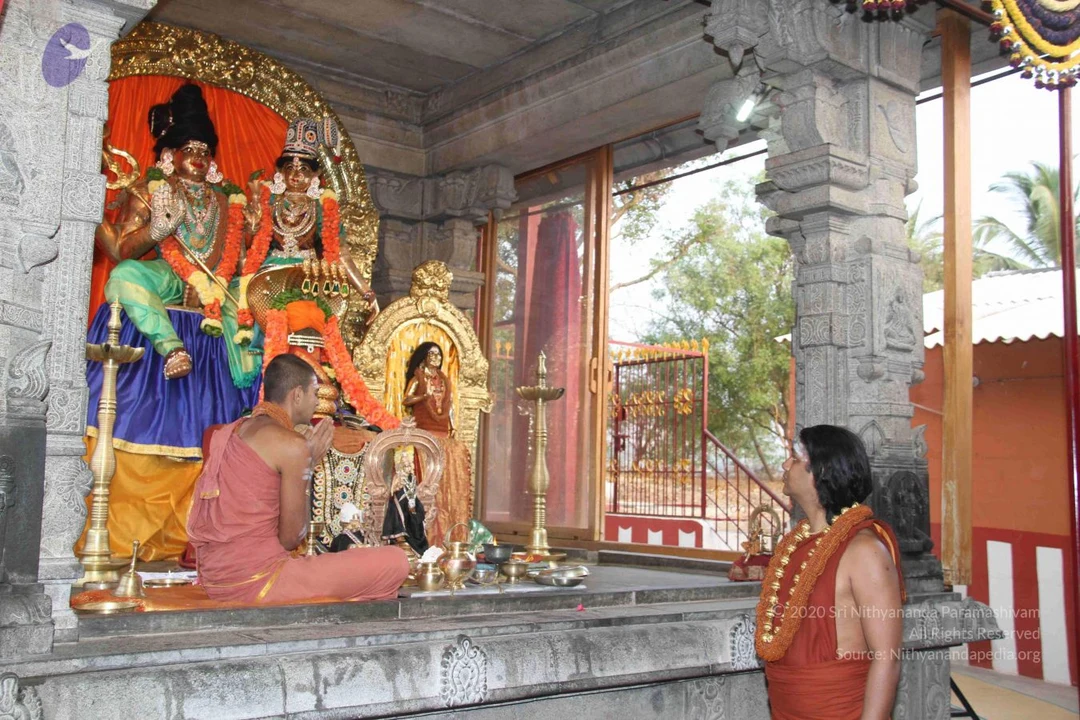
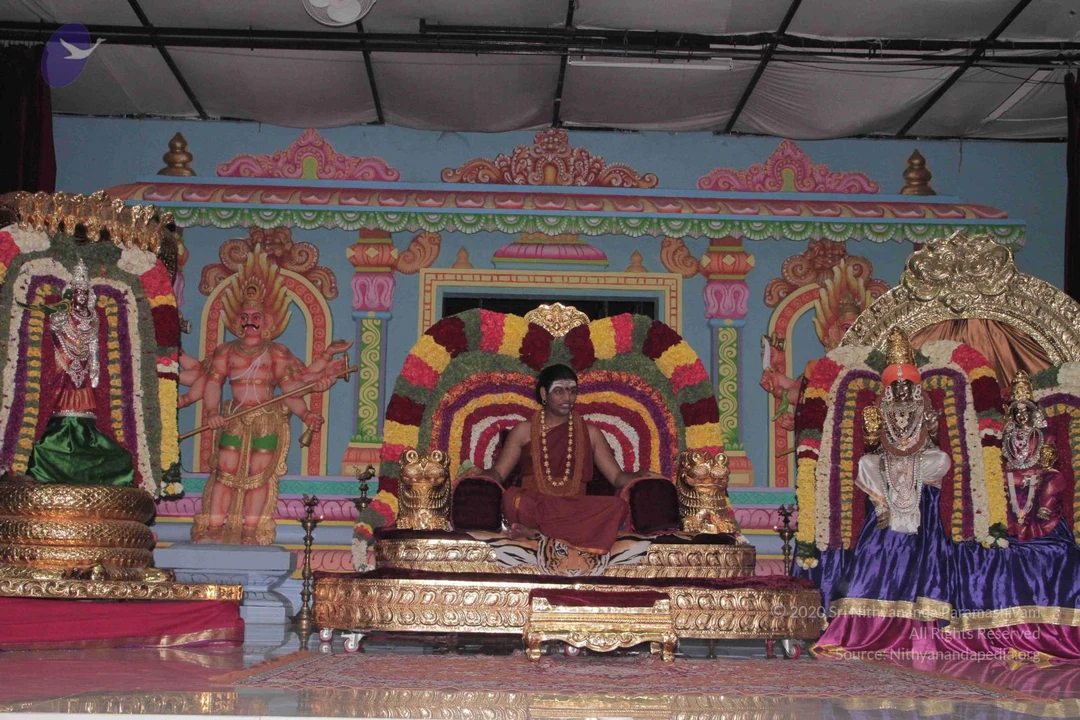
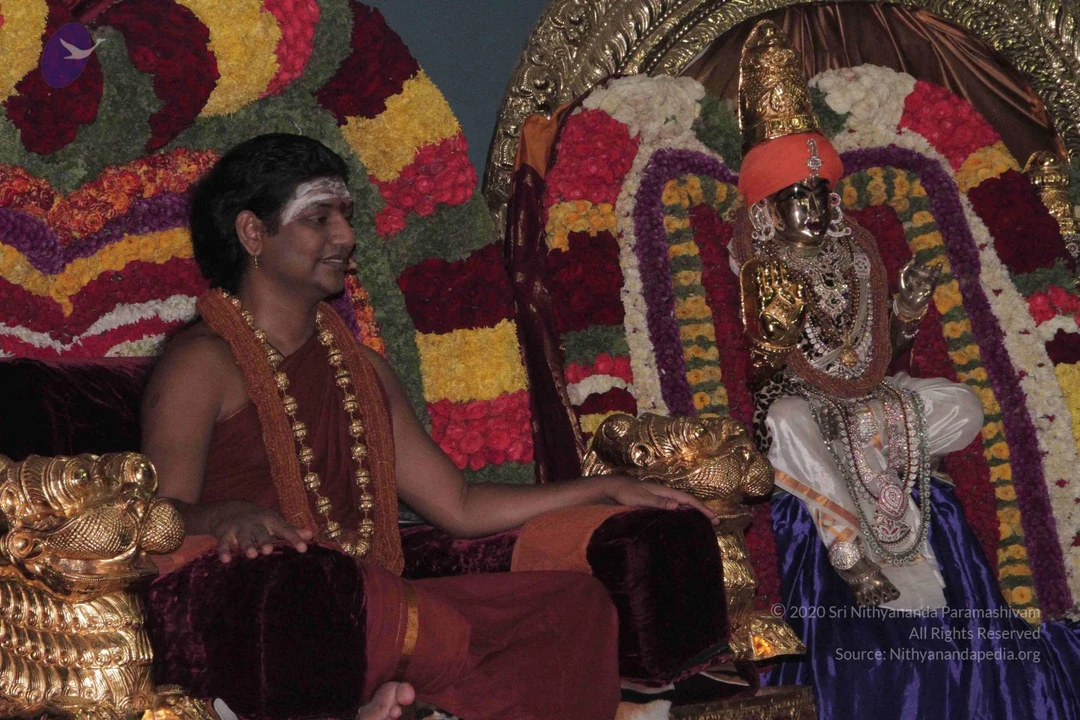
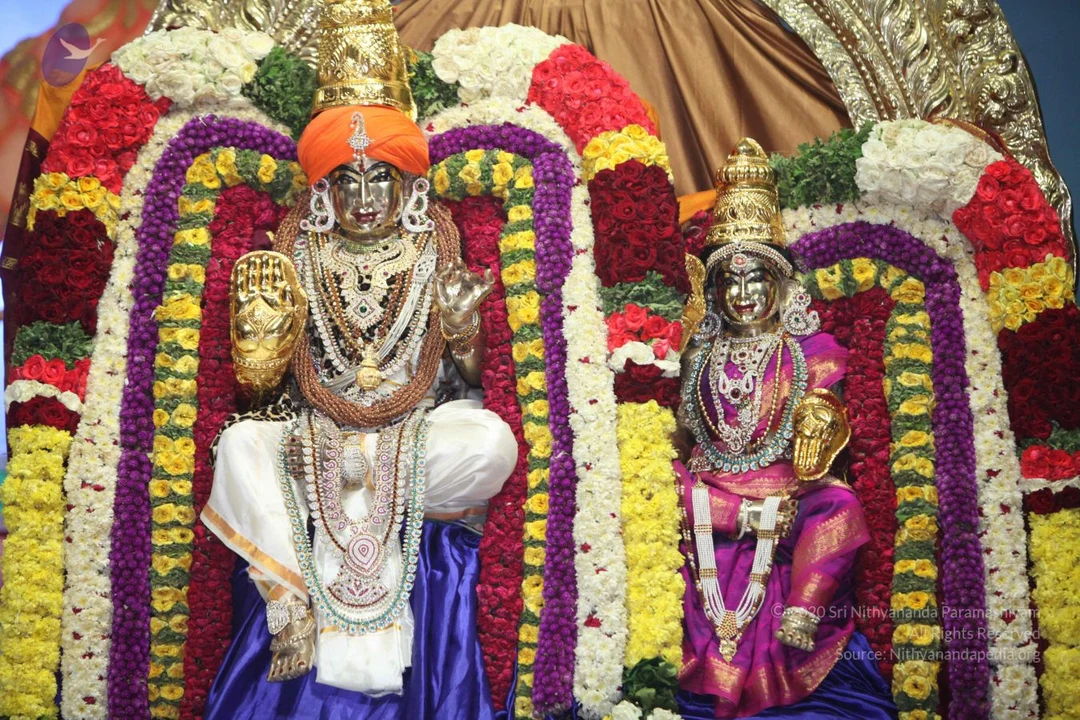
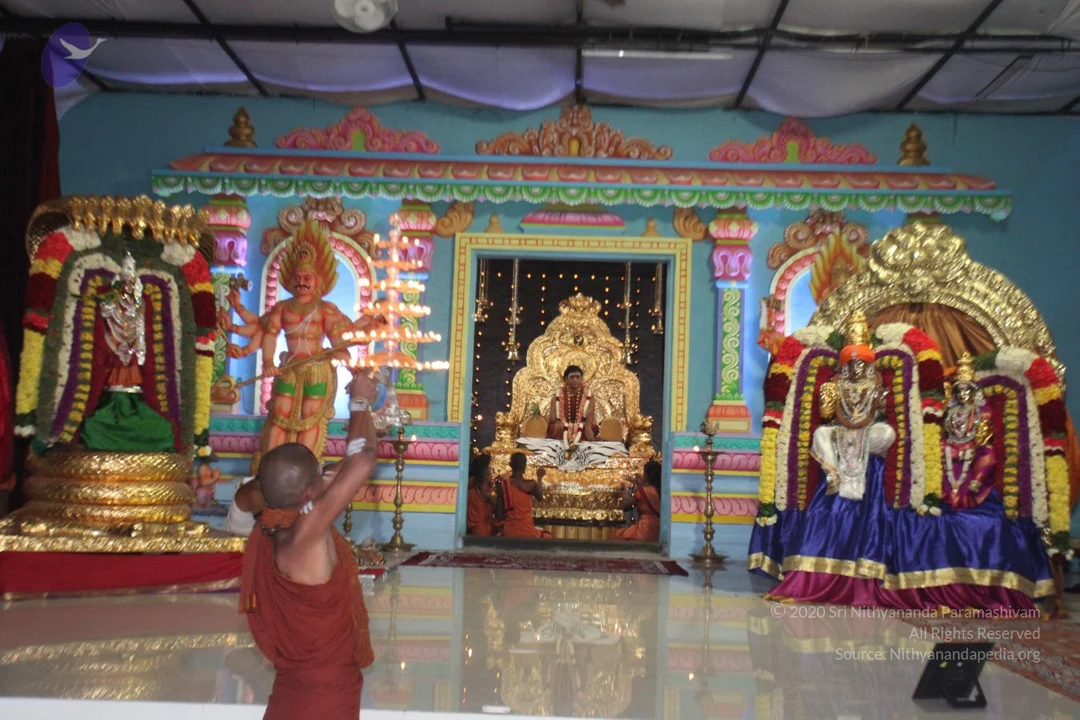
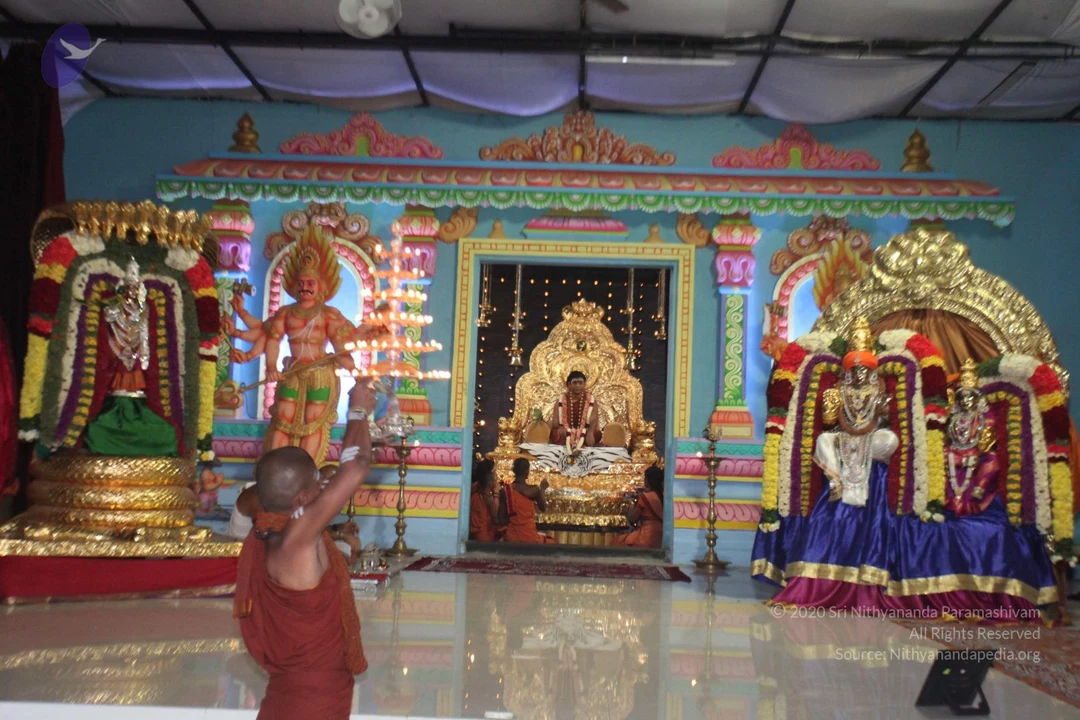
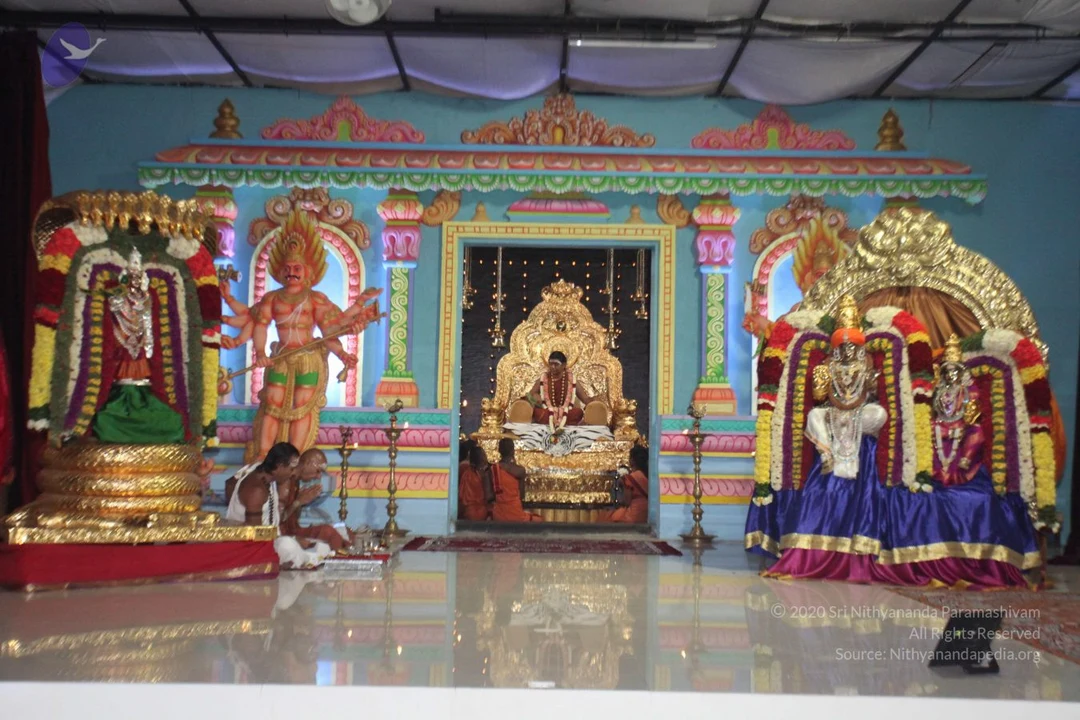
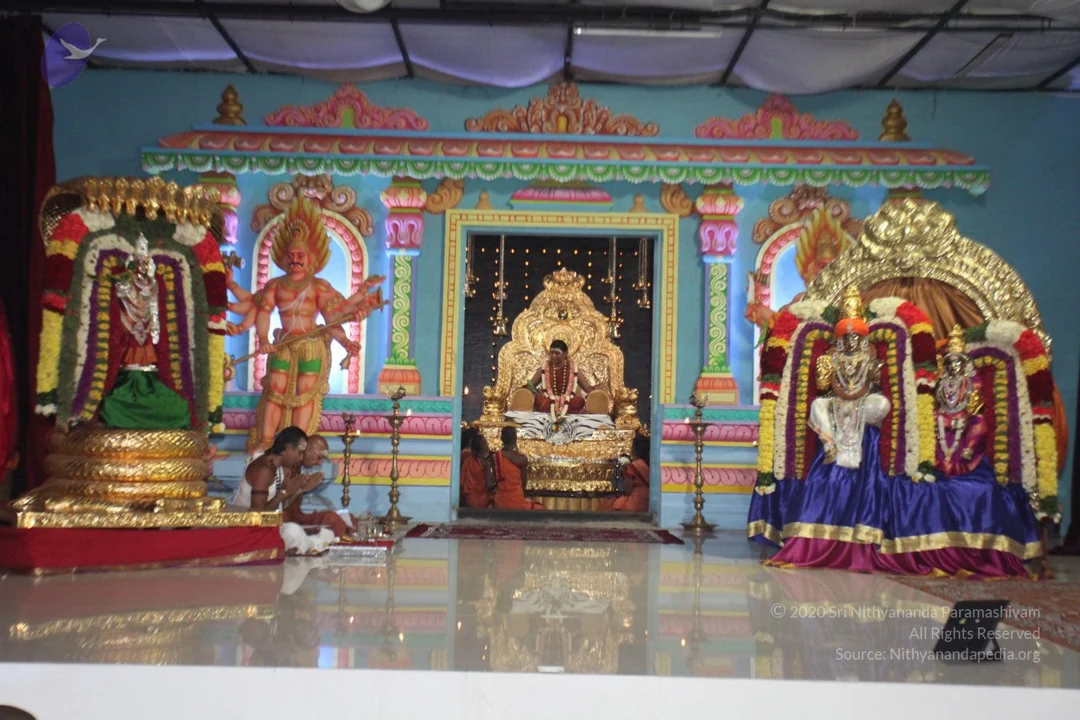
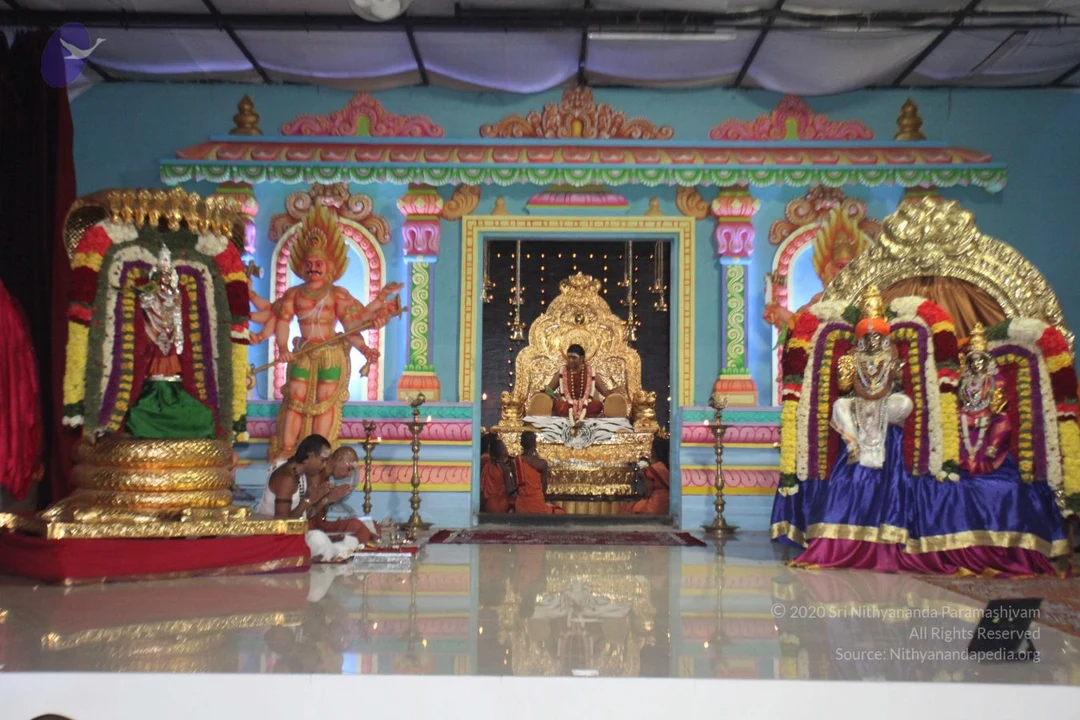
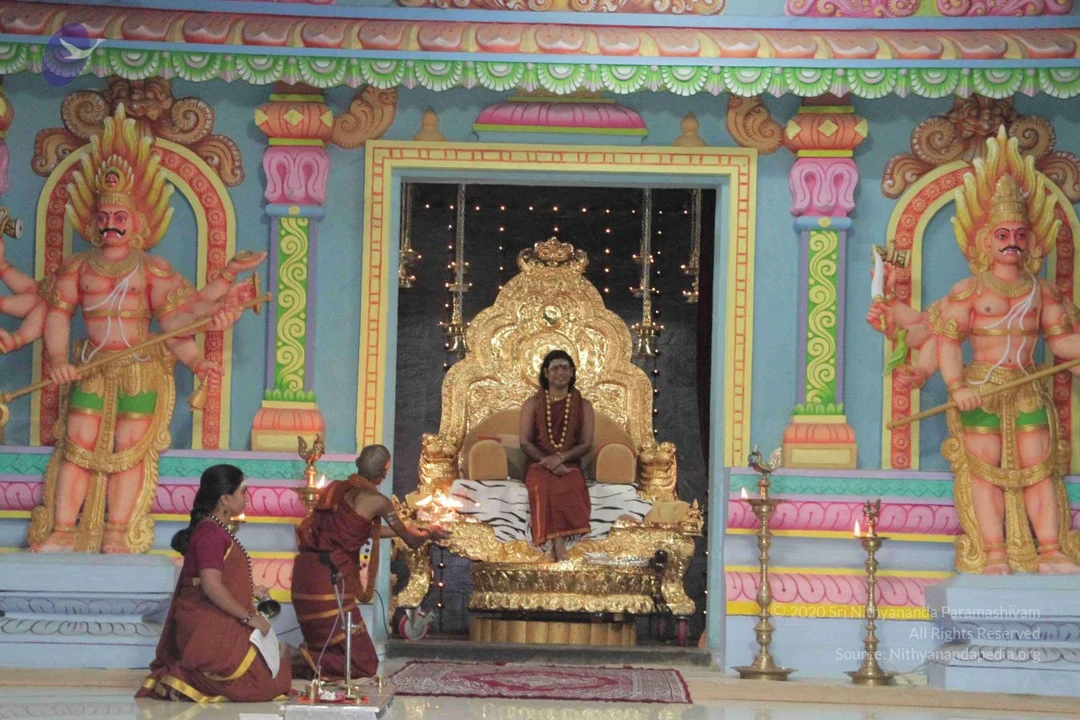
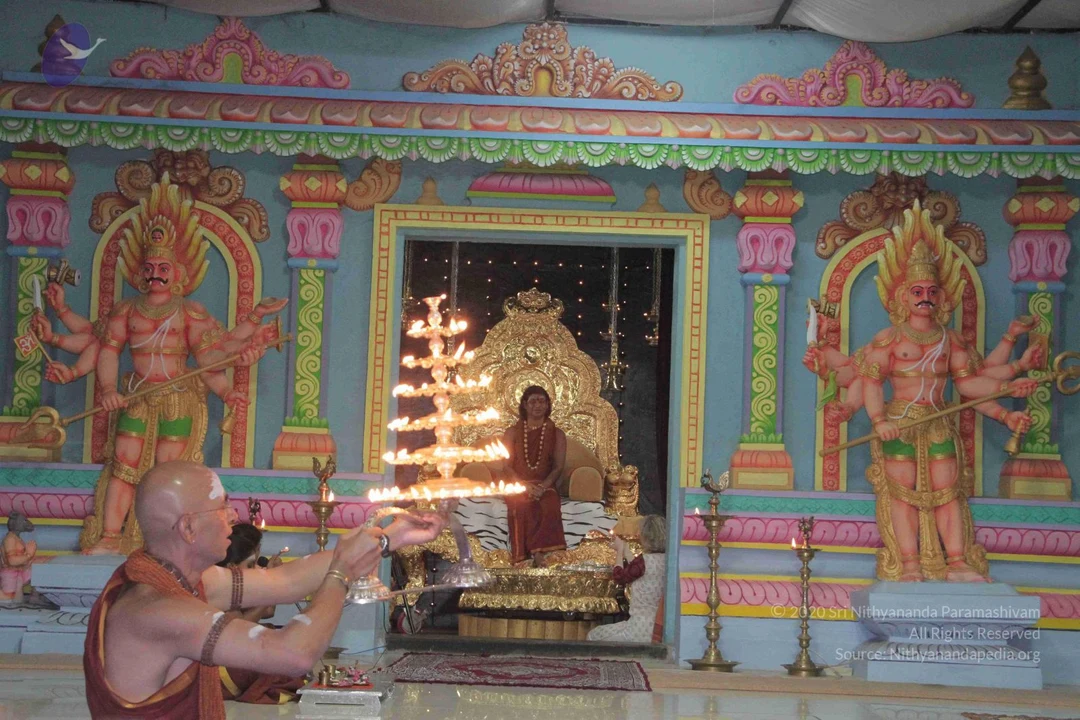
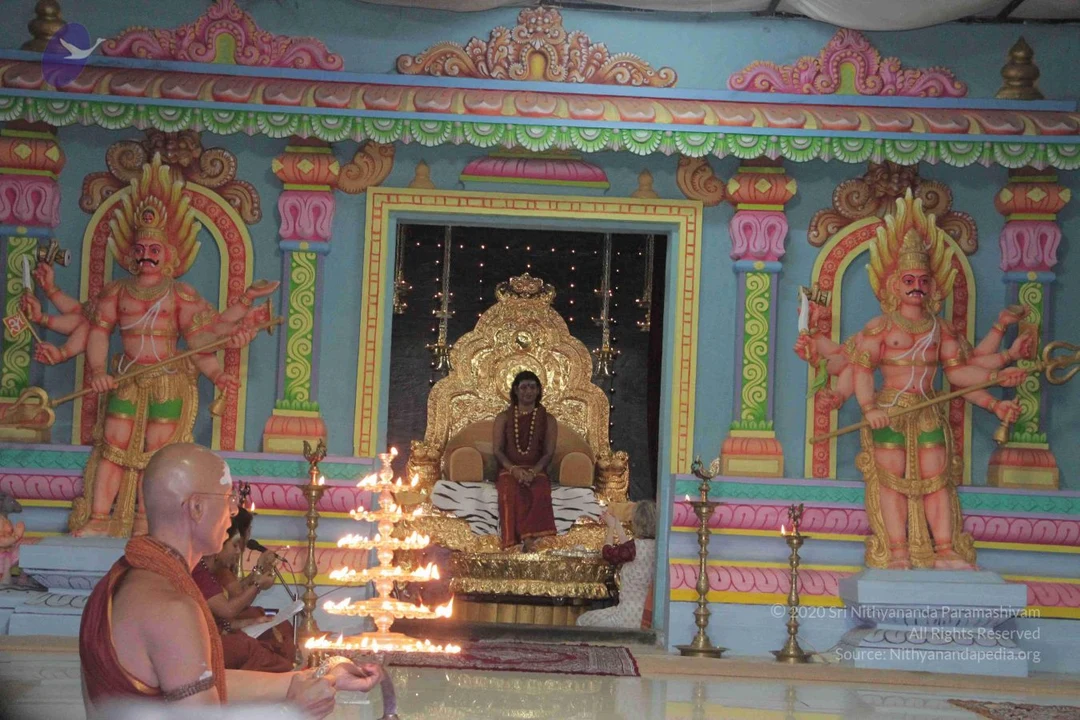
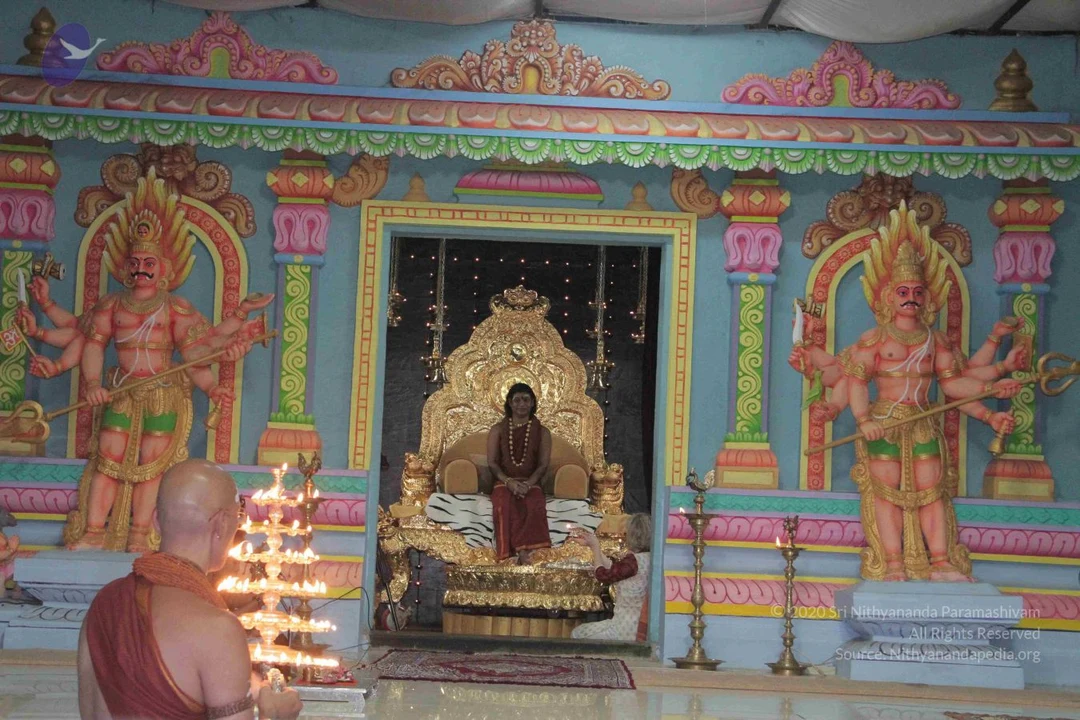
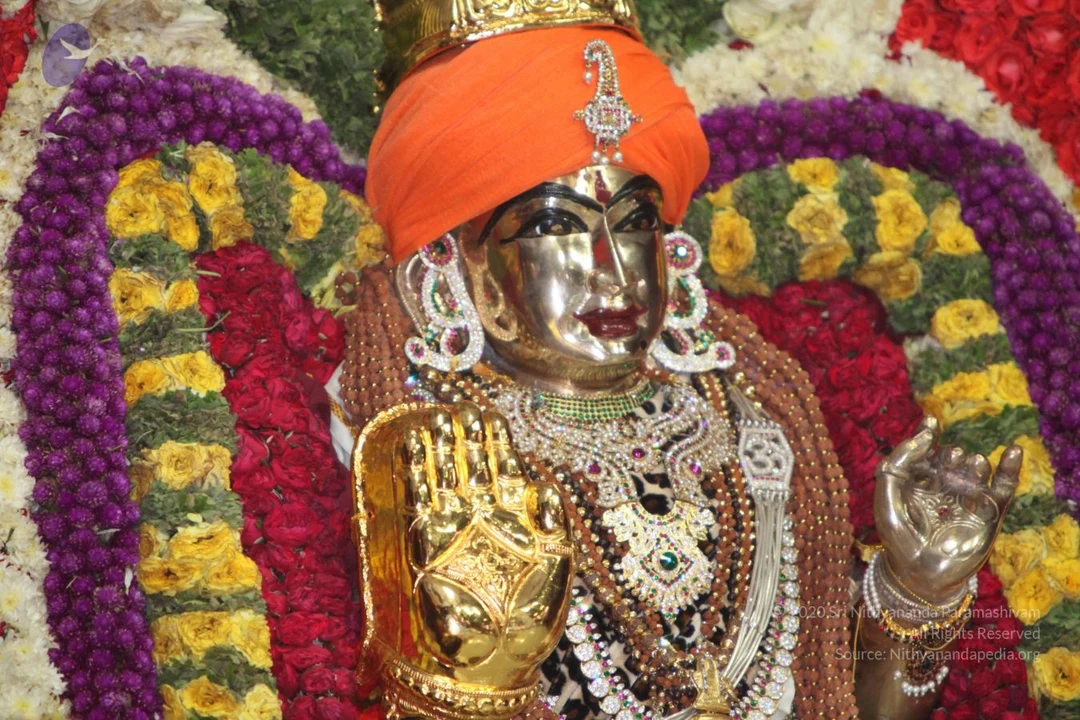
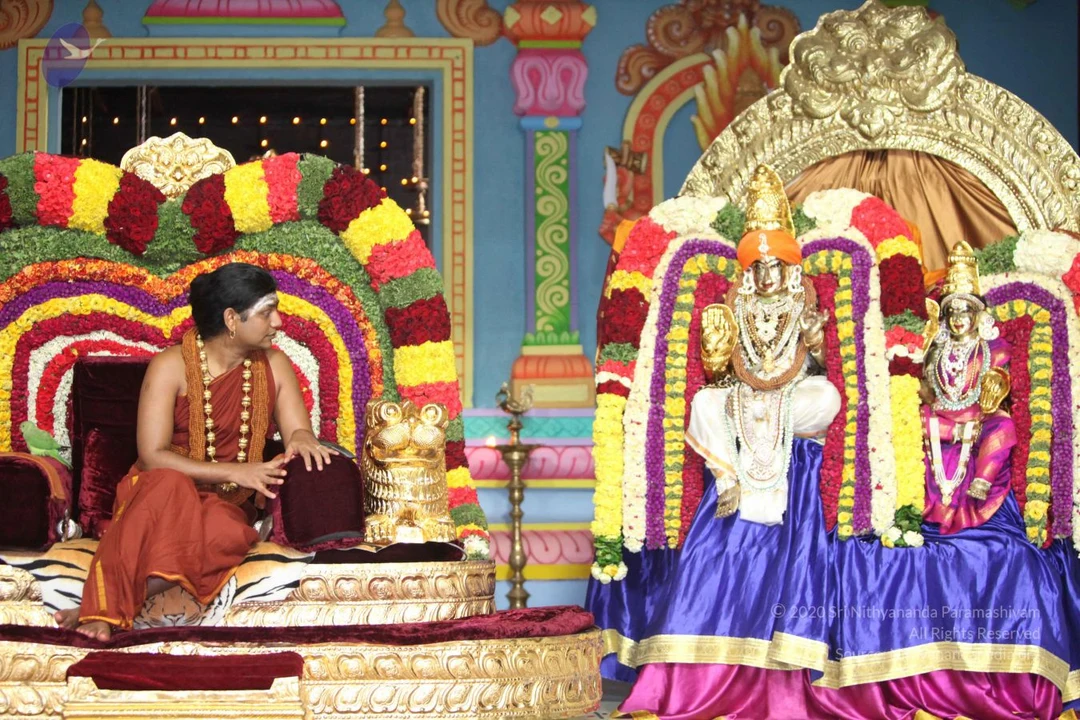
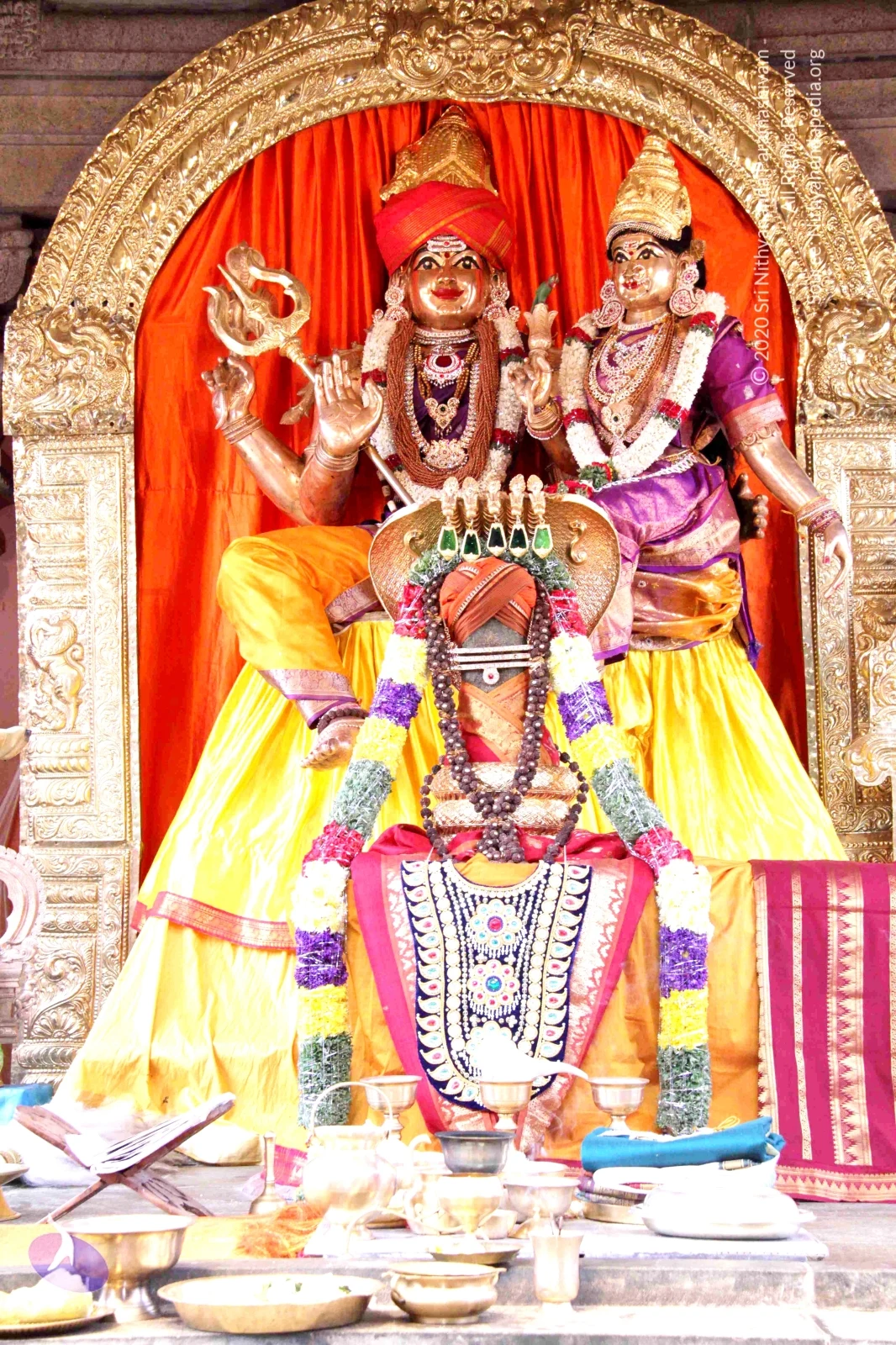
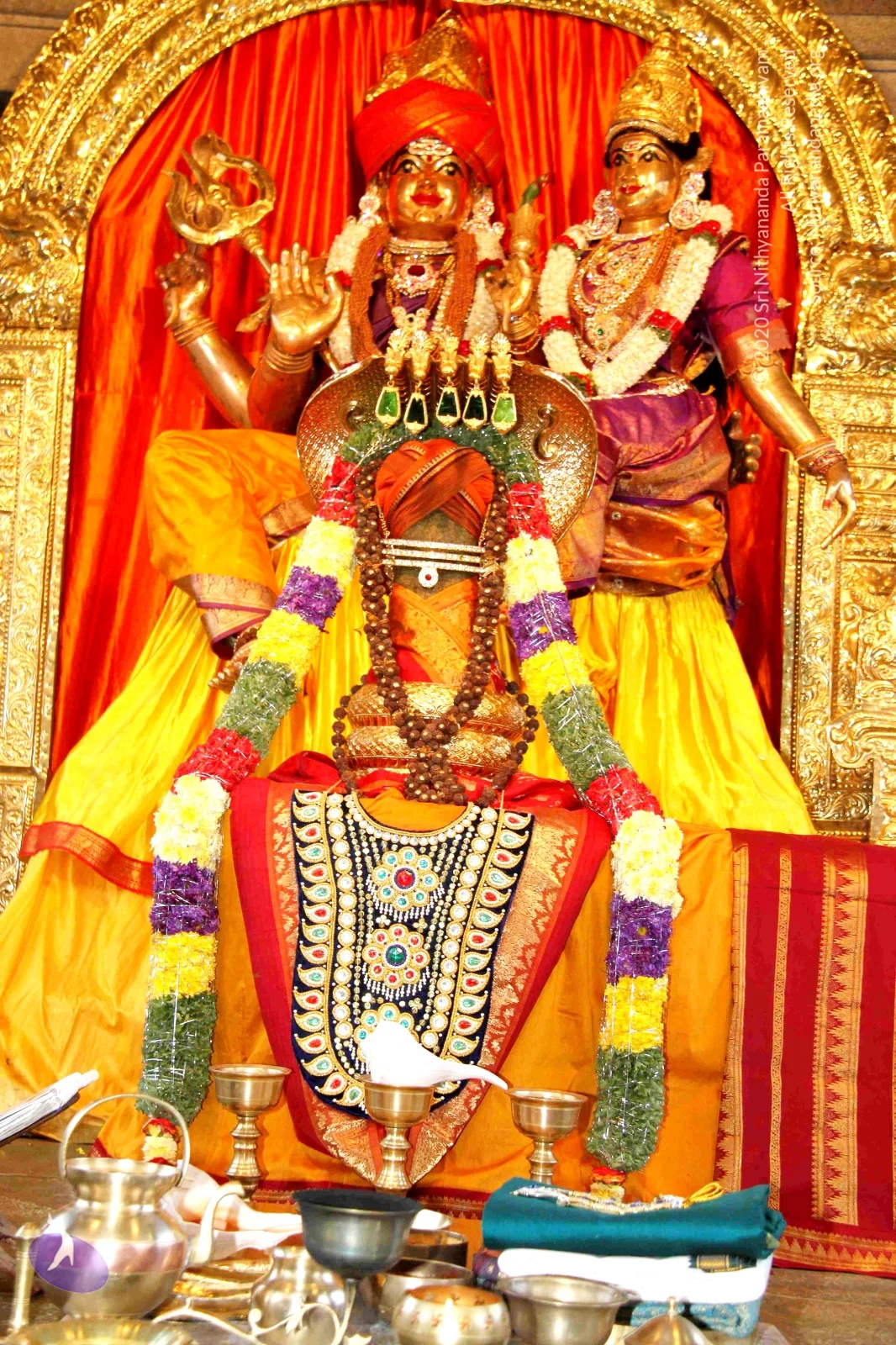
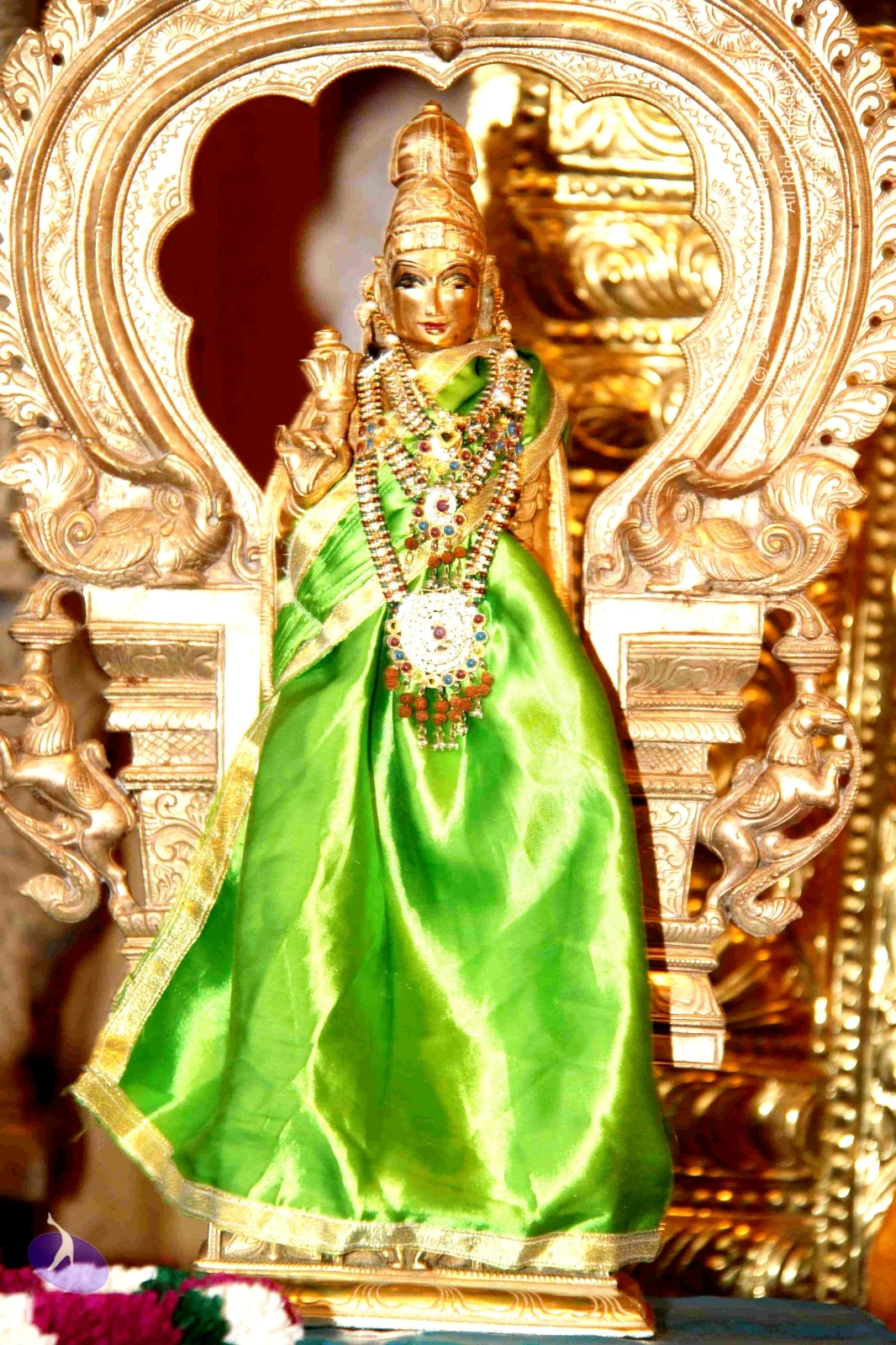
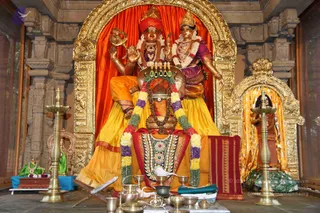
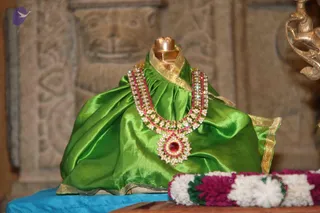
Photograph of a golden shrine with two deity murtis seated on a throne against a red draped backdrop framed by ornate gold arch. The left figure holds a trident and wears a red turban and multiple garlands; the right figure wears a crown and purple-and-gold sari with flower garlands. Both are dressed in orange-yellow cloth. A large rudraksha-and-garland-decorated stand sits in front with a kalasha-like offering, bordered by metal railings and purple, yellow and orange floral festoons overhead. The statues are not living people.A golden deity murti pair seated on a yellow throne-like platform before an orange drape, framed by a garland arch of purple and yellow cloth and bead strands. The male deity wears a red turban and crown, holds a trident-like weapon and a golden lotus-like object, and has multiple garlands and rudraksha-style beads. The female deity sits beside him in a purple sari with gold ornaments. In front, a dark stone linga-like form is adorned with flower garlands and offerings of brass lamps and bowls. Two black railings flank a central stairway leading up to the shrine.Photograph of a temple shrine dominated by gilded deity murti figures seated on a golden throne before an orange and red draped backdrop. The central pair wears red and yellow dress with a red crown and wreaths of yellow, white and purple flowers. A large central sculpted figure is adorned with a jewelled breastplate and multi-coloured garlands, with a kalasha-like pot and bronze vessels arranged in front. Brass oil lamps stand on either side, and a small green-clad figure appears at left. Clearly visible people: none.A photograph of a deity murti dressed in a green satin cloth draped over its body, wearing an ornate gold necklace set with white stones, pink-red stones and a large red central gem. Behind it is carved stone relief with a lion-like face and a golden lamp stand at the right edge. In the foreground, a blue cloth and a garland of white, green and magenta flowers rest on a wooden surface. No physical people are visible.A dusk sky fades from pale blue overhead to warm orange near the horizon. Dark silhouettes of tree branches and leaves frame the left and right edges, with a palm frond visible on the right. No people, figures or ritual activity are visible. A small purple bird logo sits in the top-left corner.A photograph of two painted statues of Shiva and Parvati seated side by side on a golden throne-like seat framed by an ornate gold arch. The figure on the left wears a red and orange turban, a rudraksha mala and white garland, and holds a trident. The figure on the right wears a red sari with gold border, layered white and gold necklaces, and a tall embellished headdress, with a hand raised. Behind them hangs a saffron curtain with floral motifs, and a grey stone deity murti stands to the right. No physical people are visible; these are depictions in statue form.

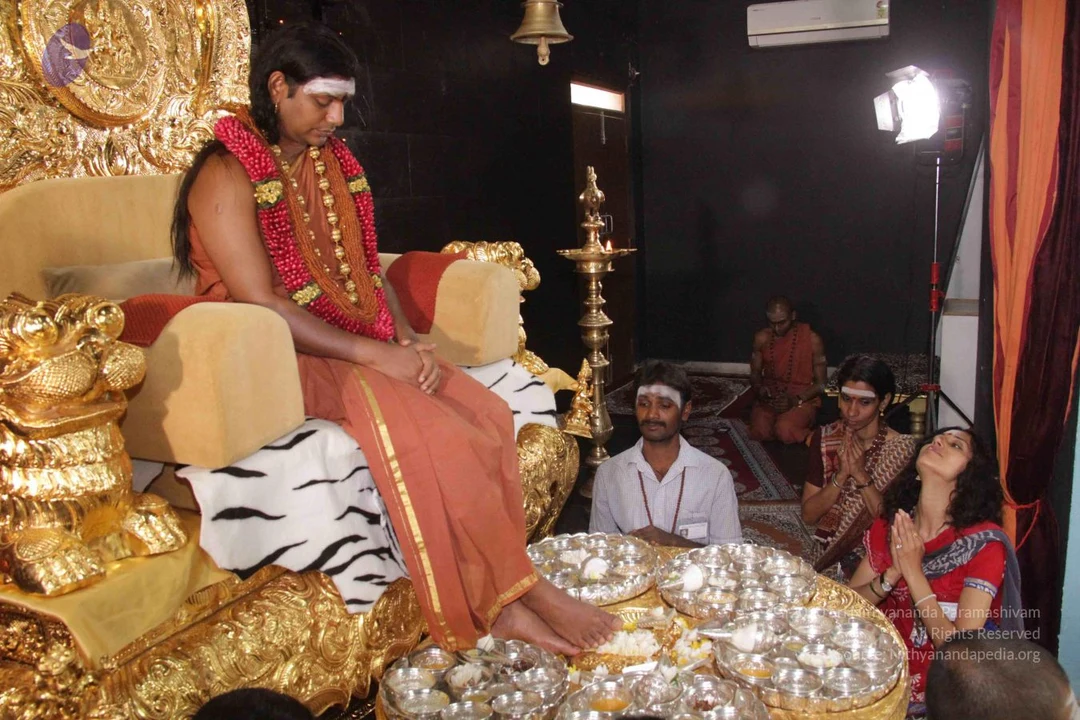
PADA-POOJA
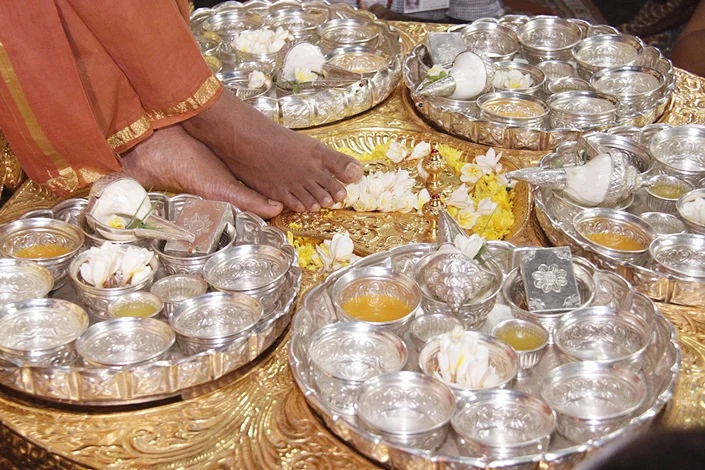
60 photosSource gallery
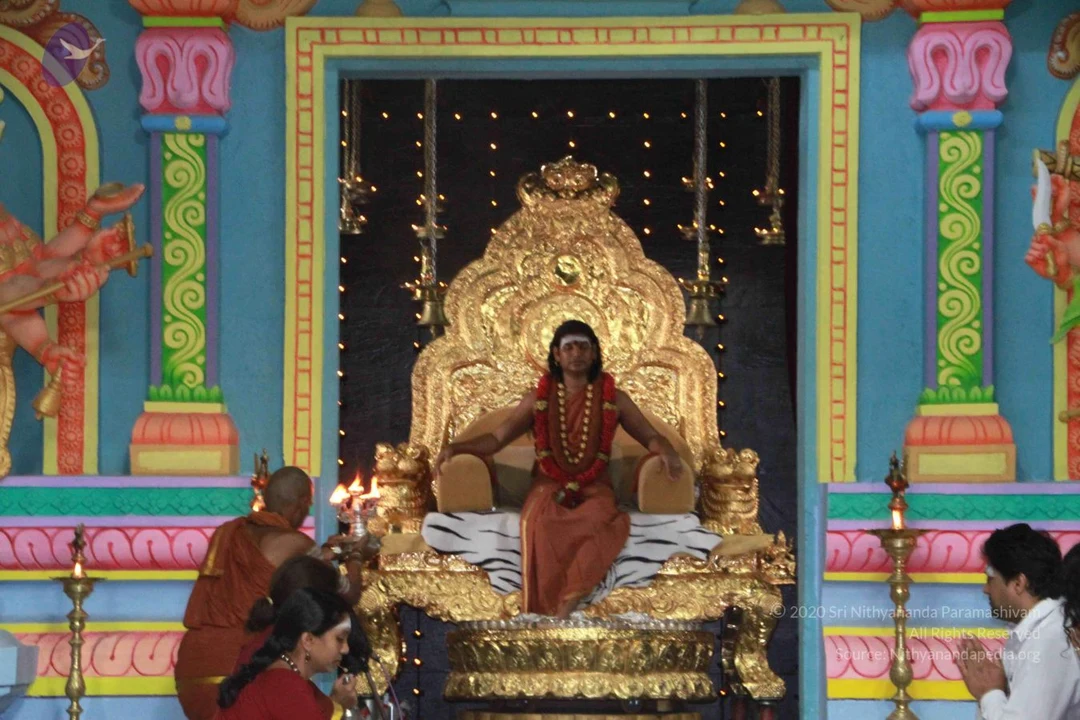
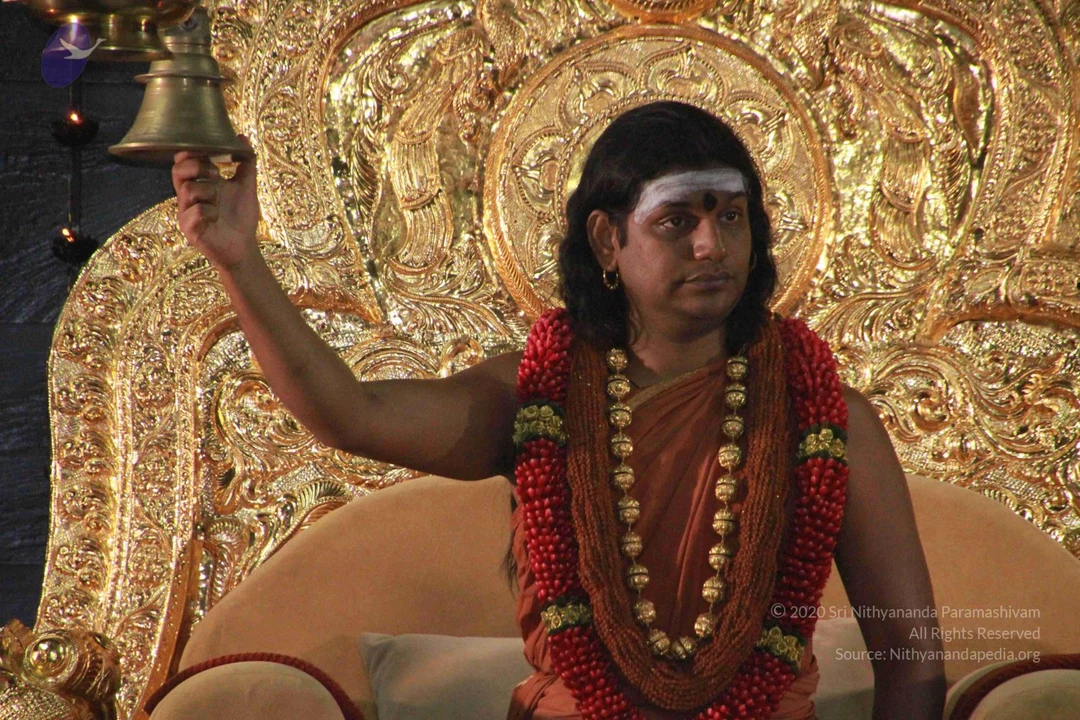
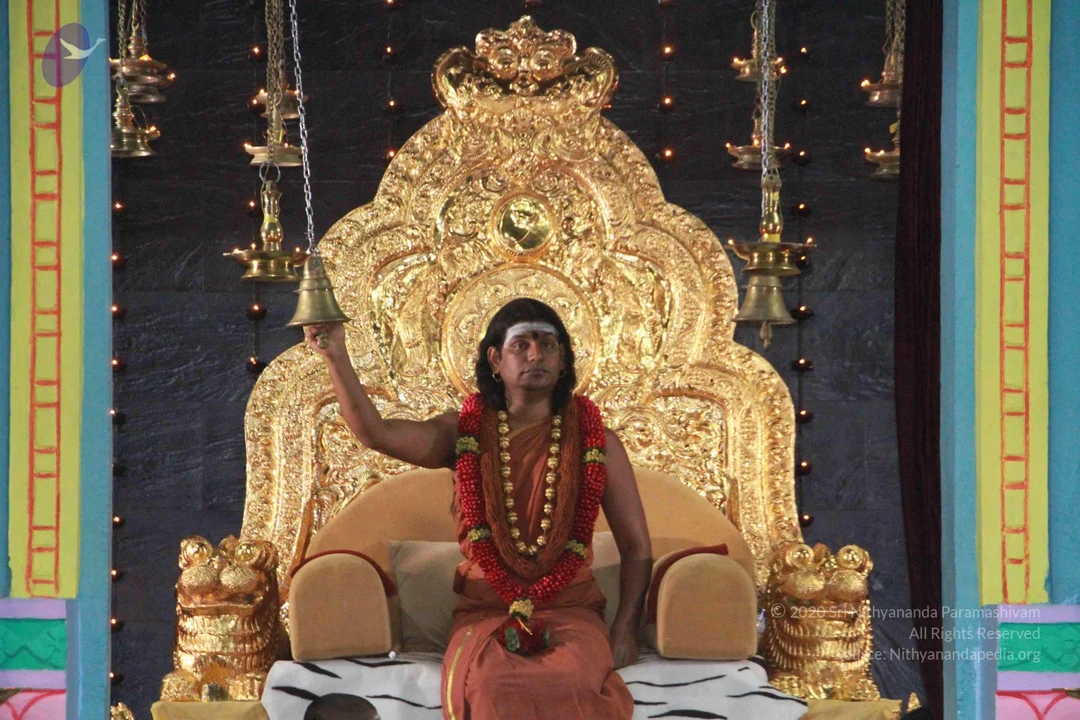
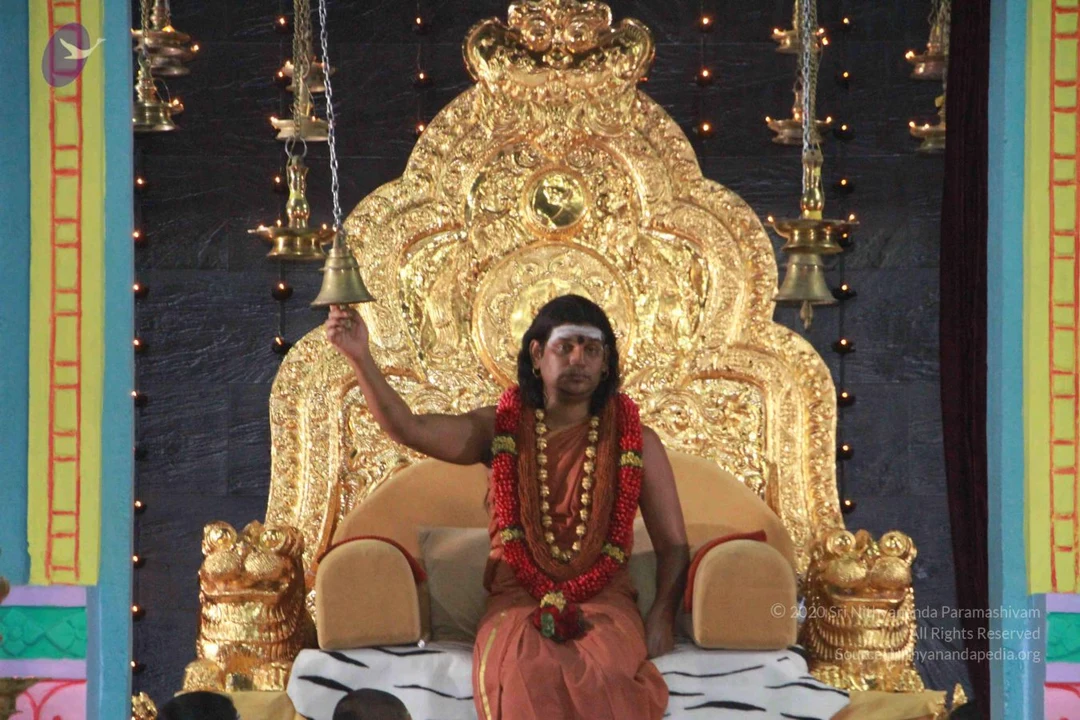
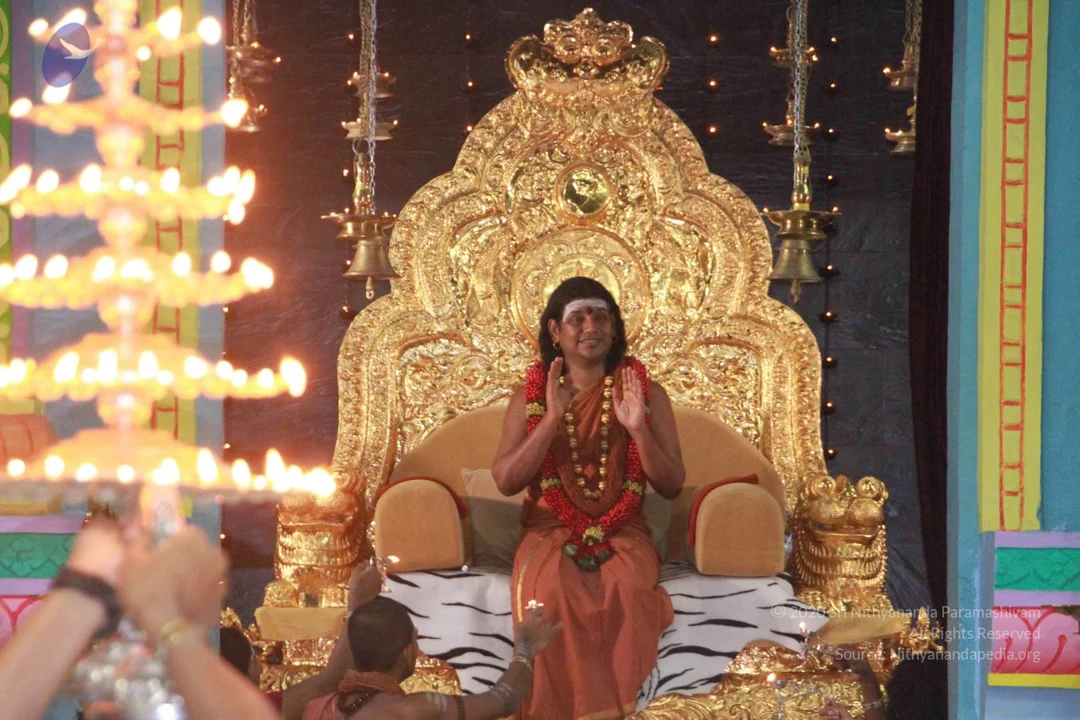
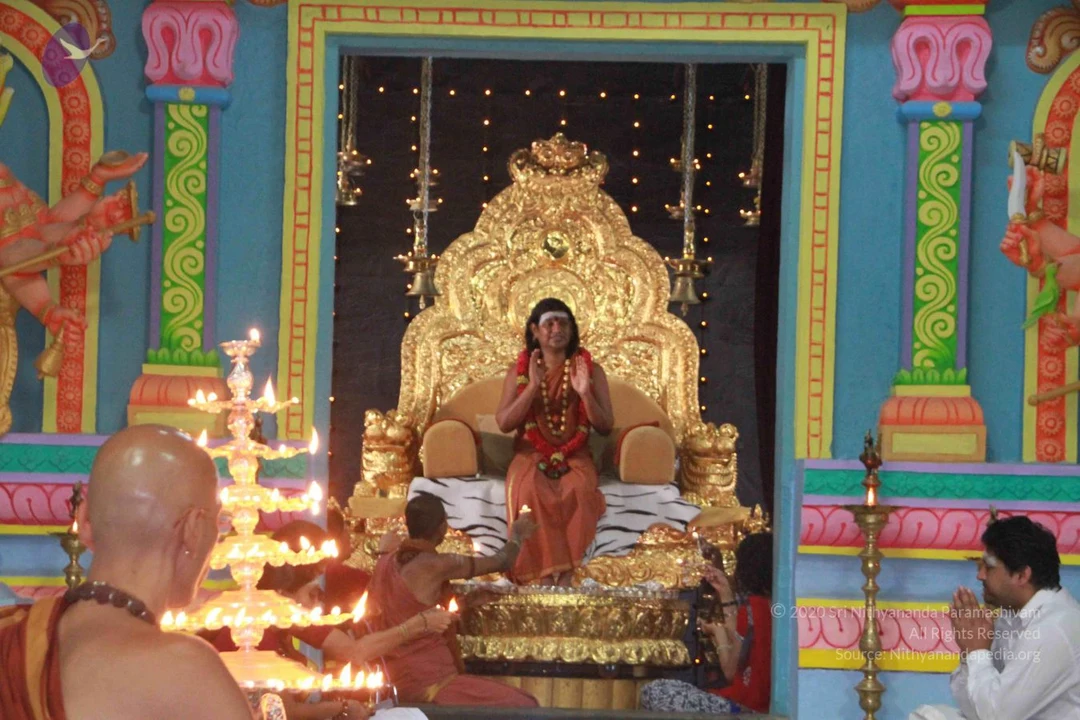
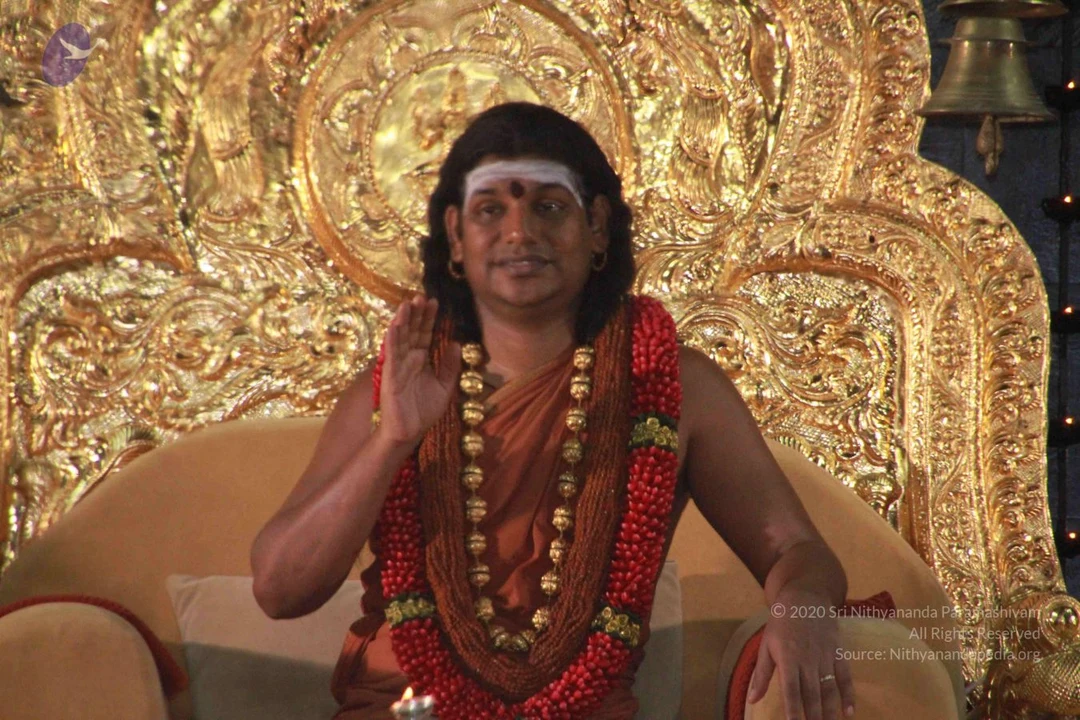
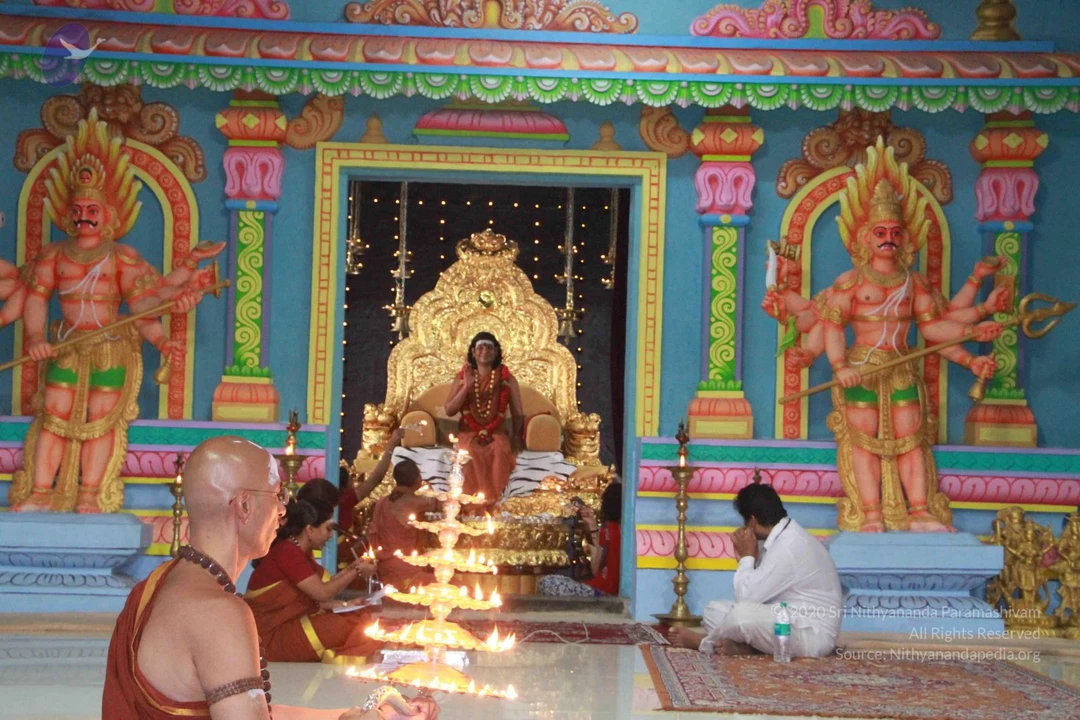
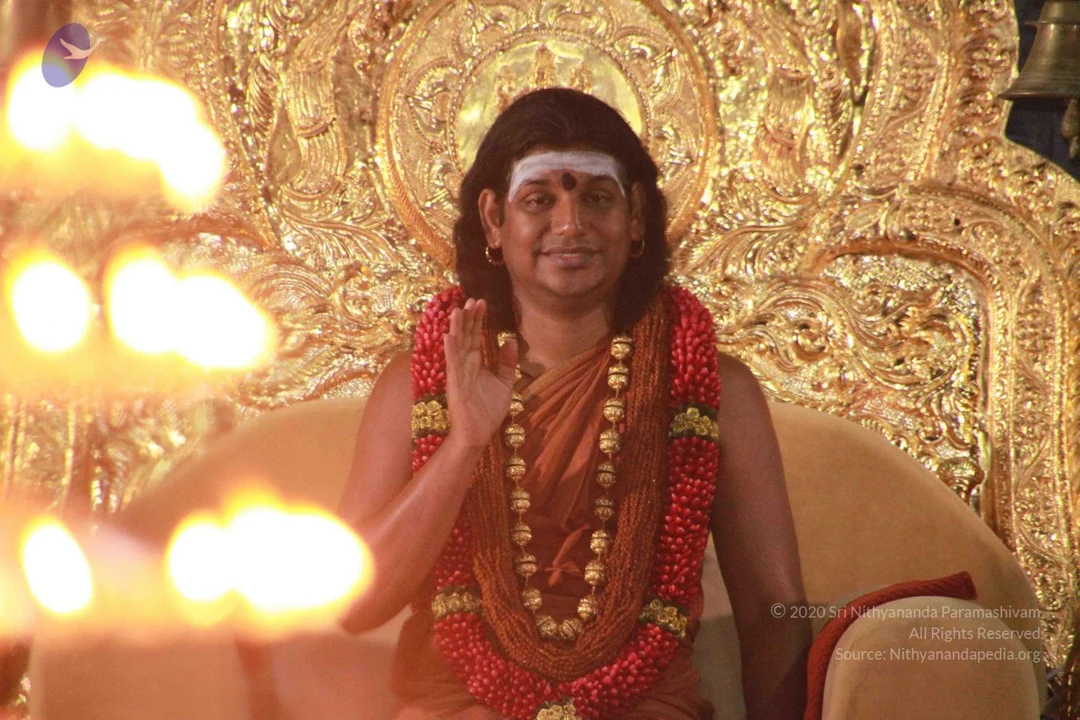
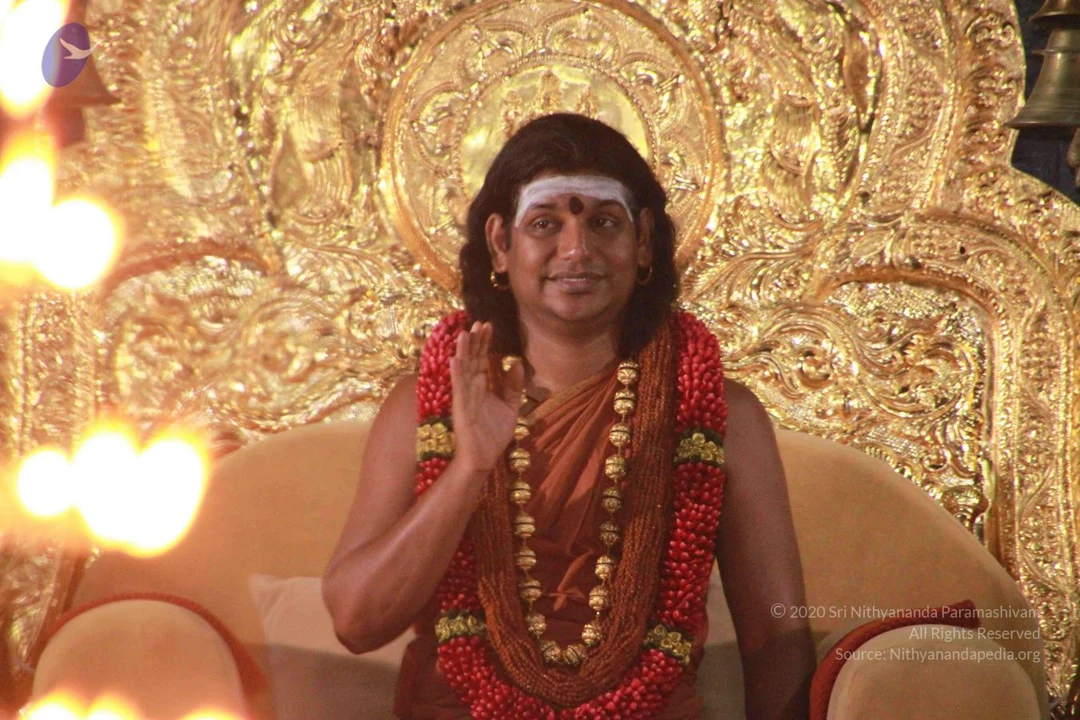
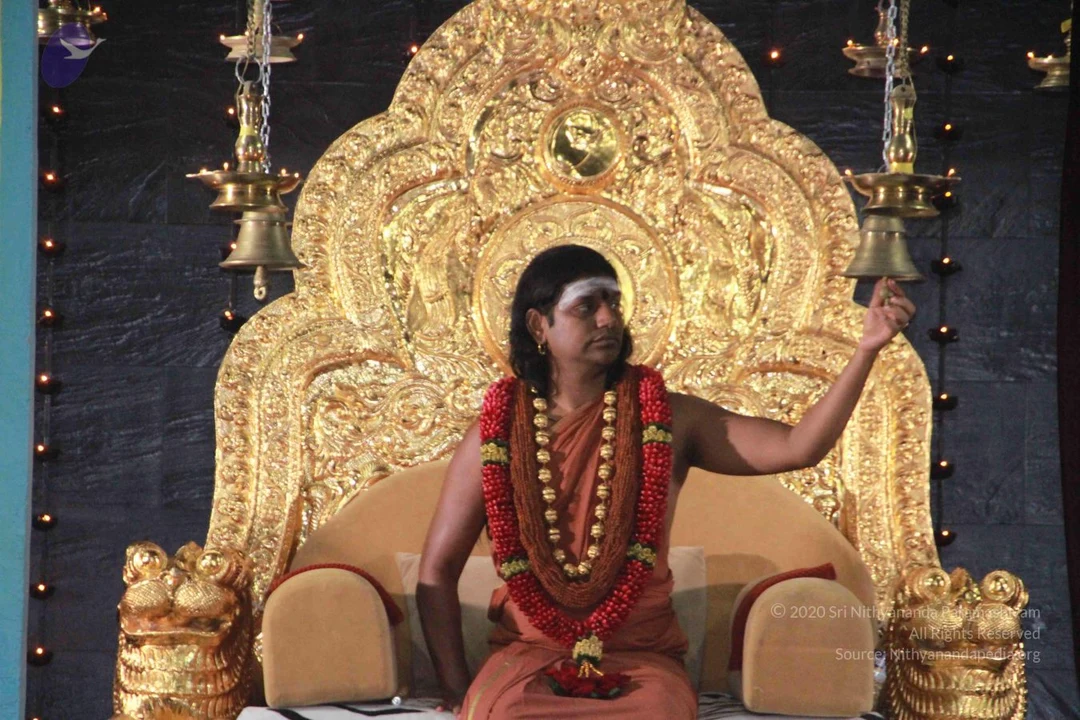
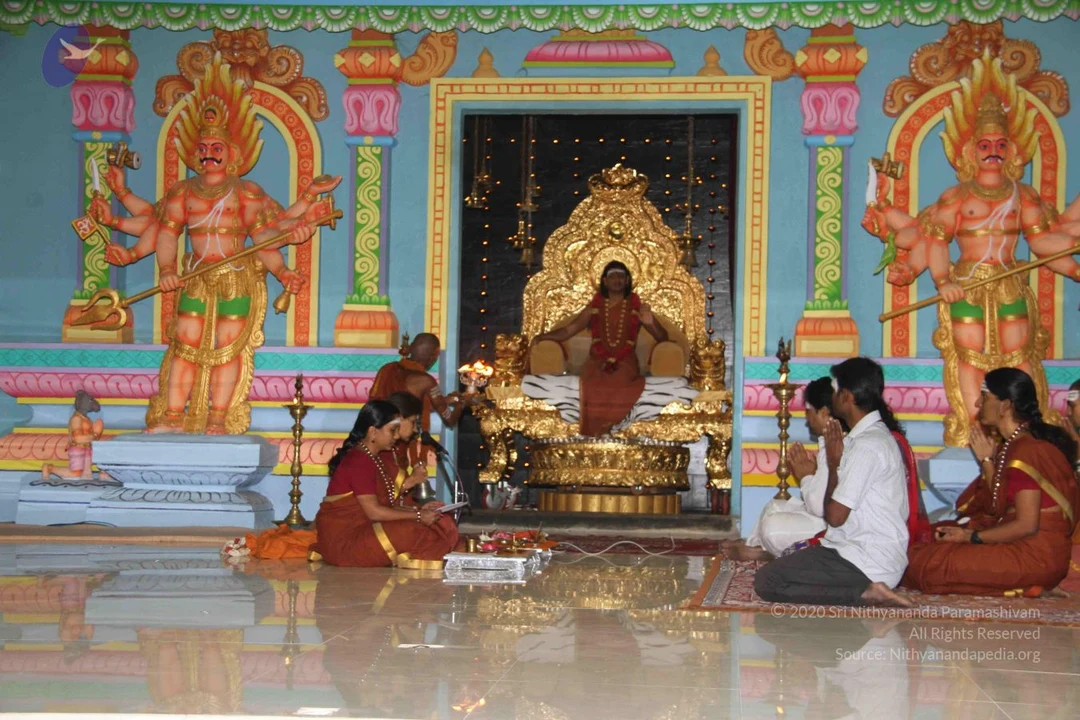
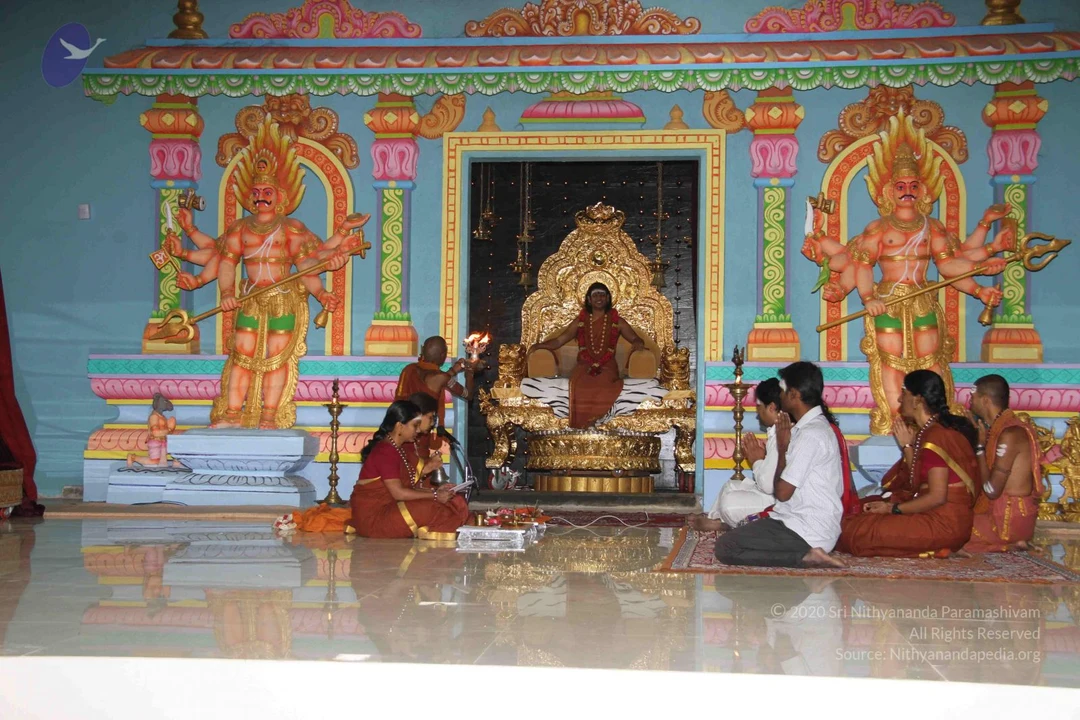
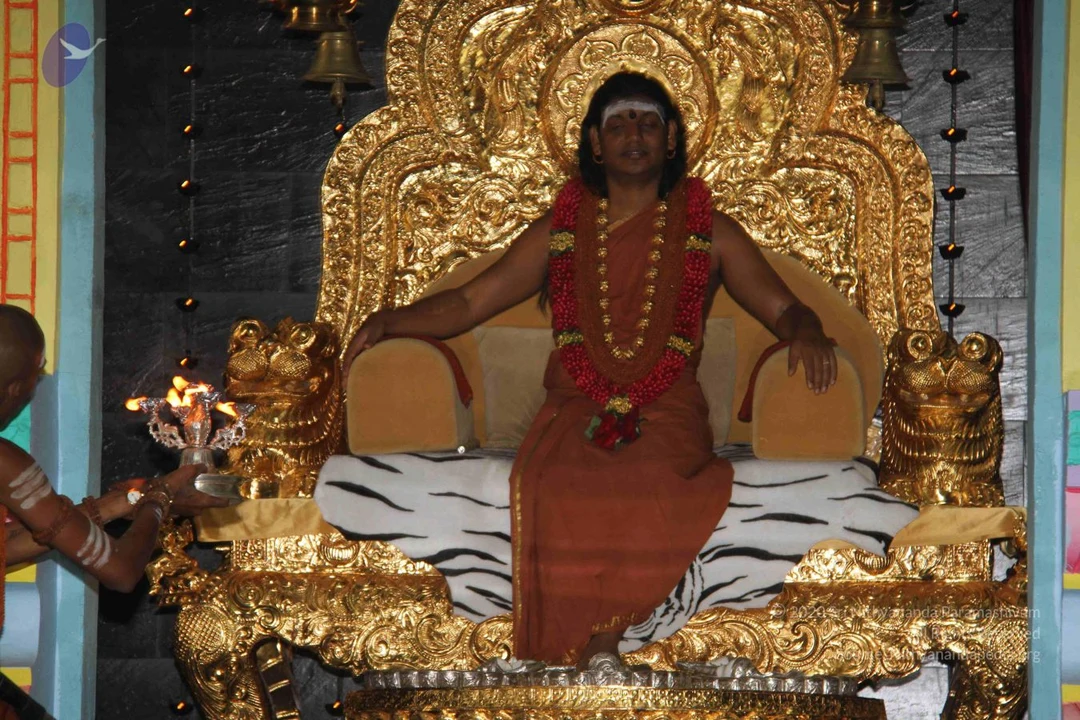
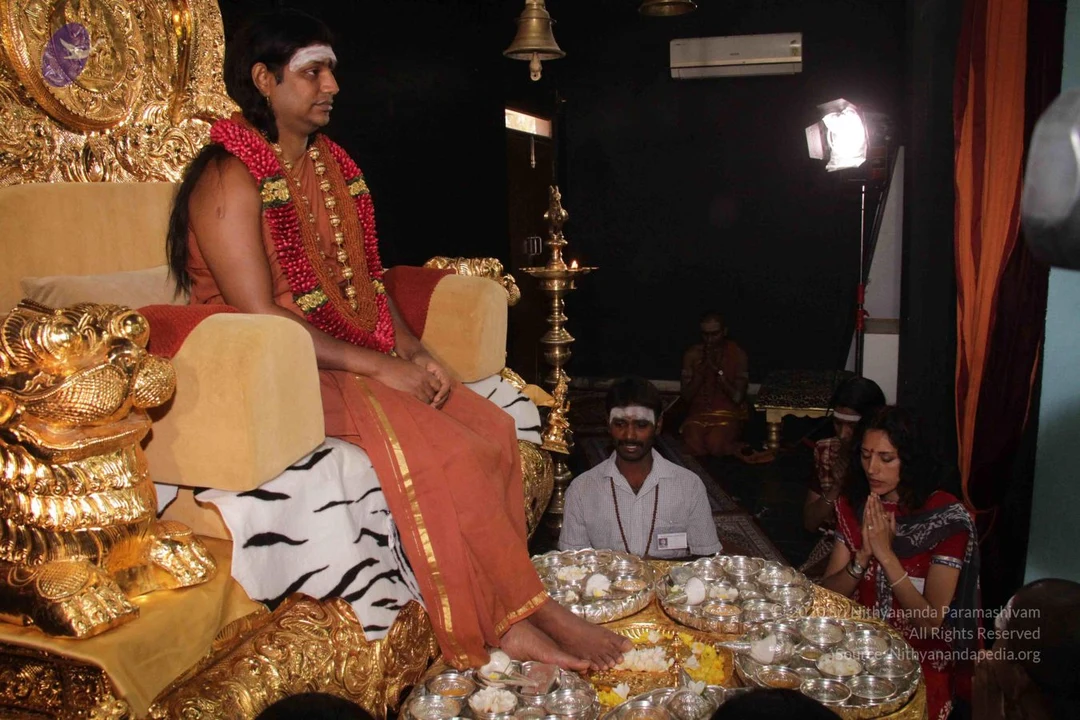
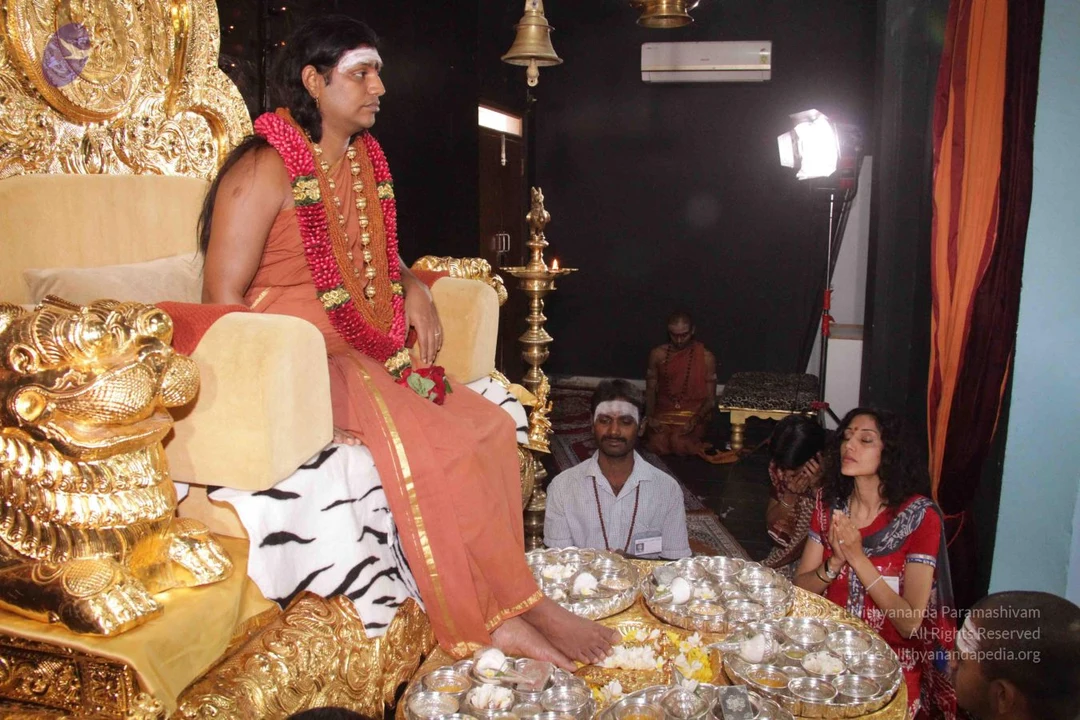
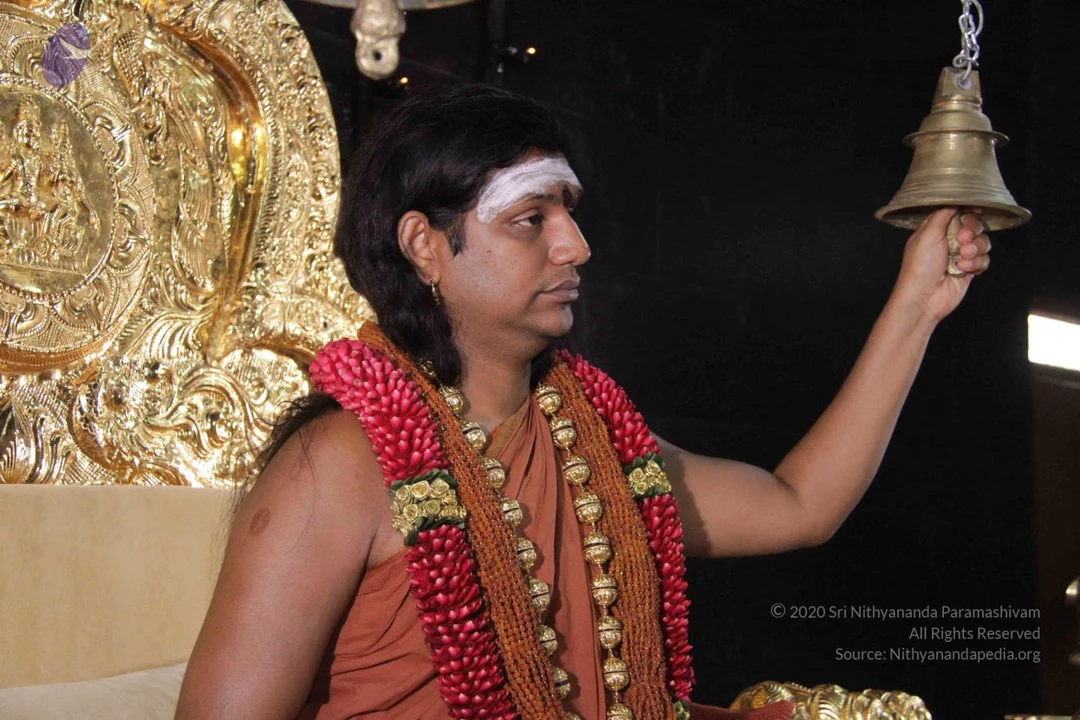
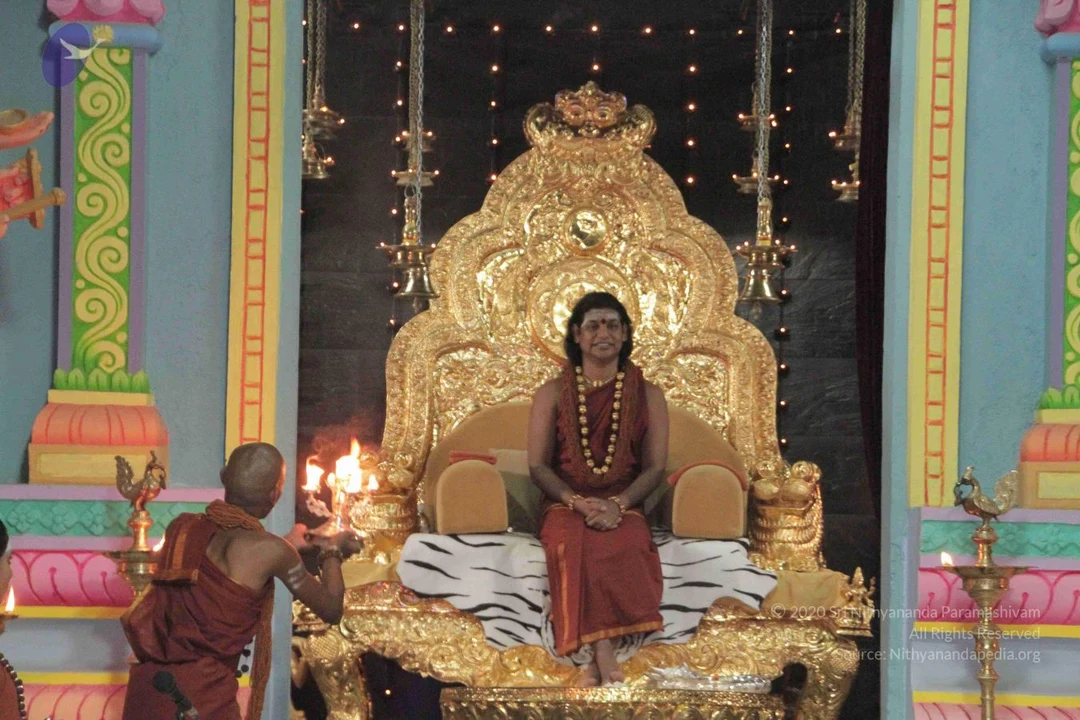
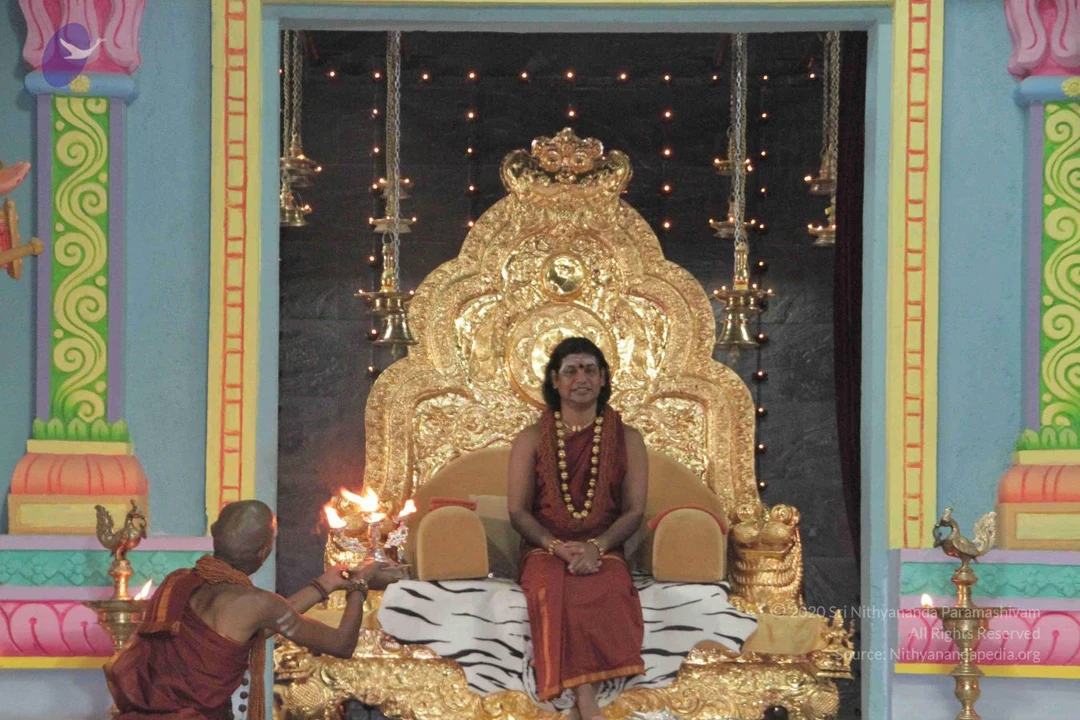
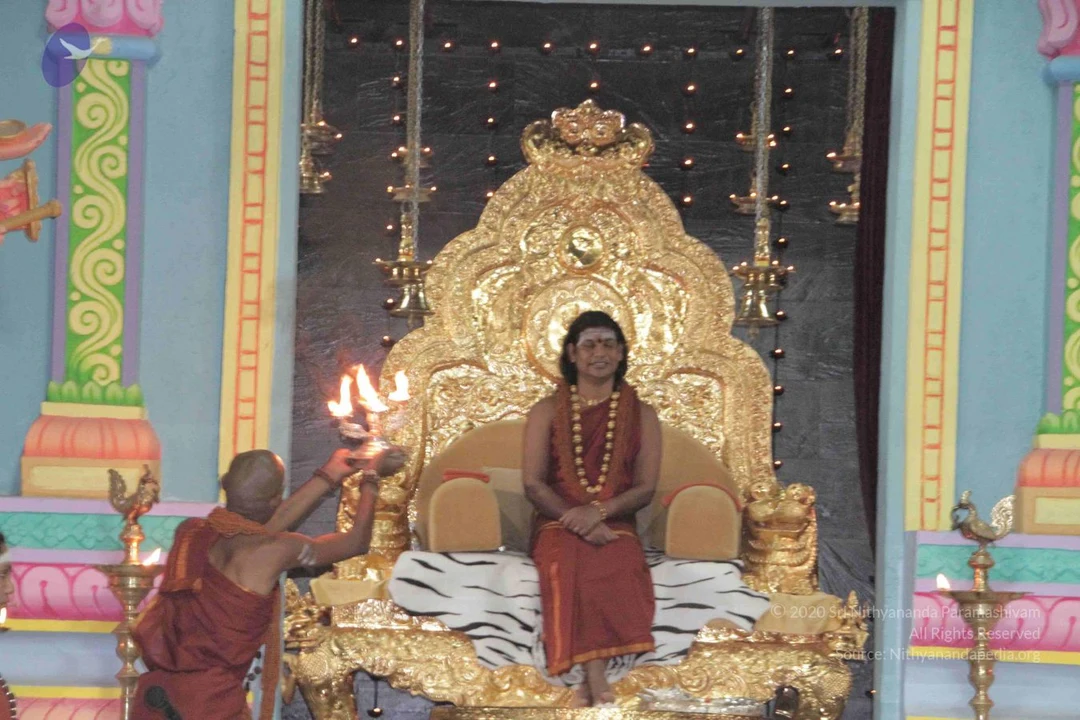
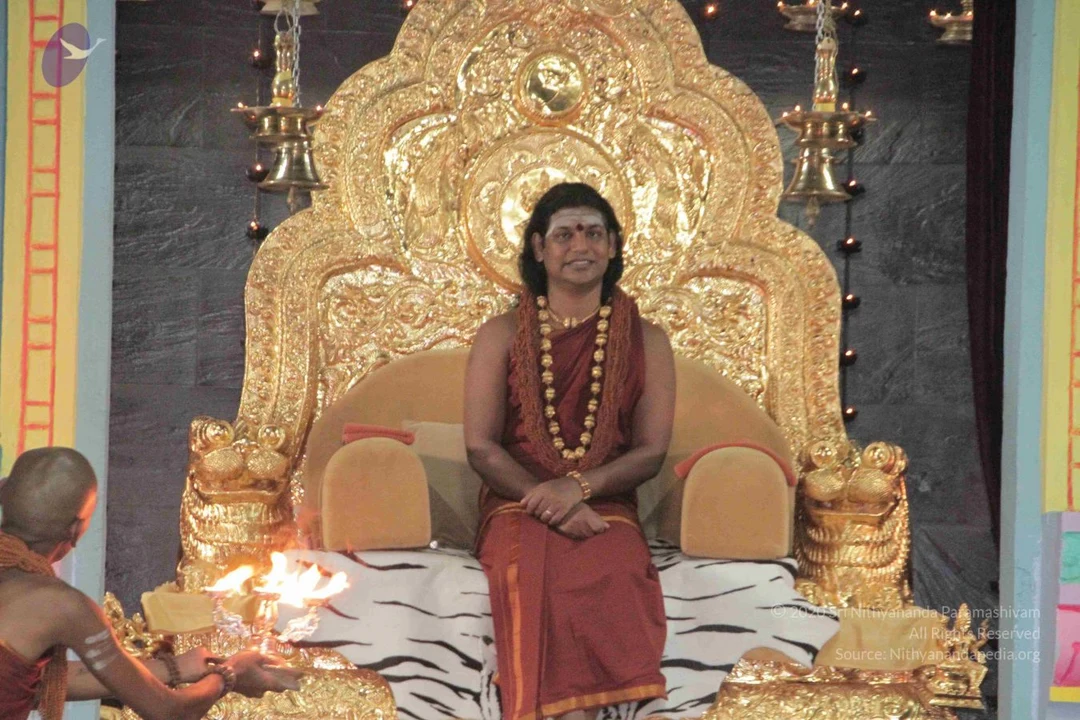
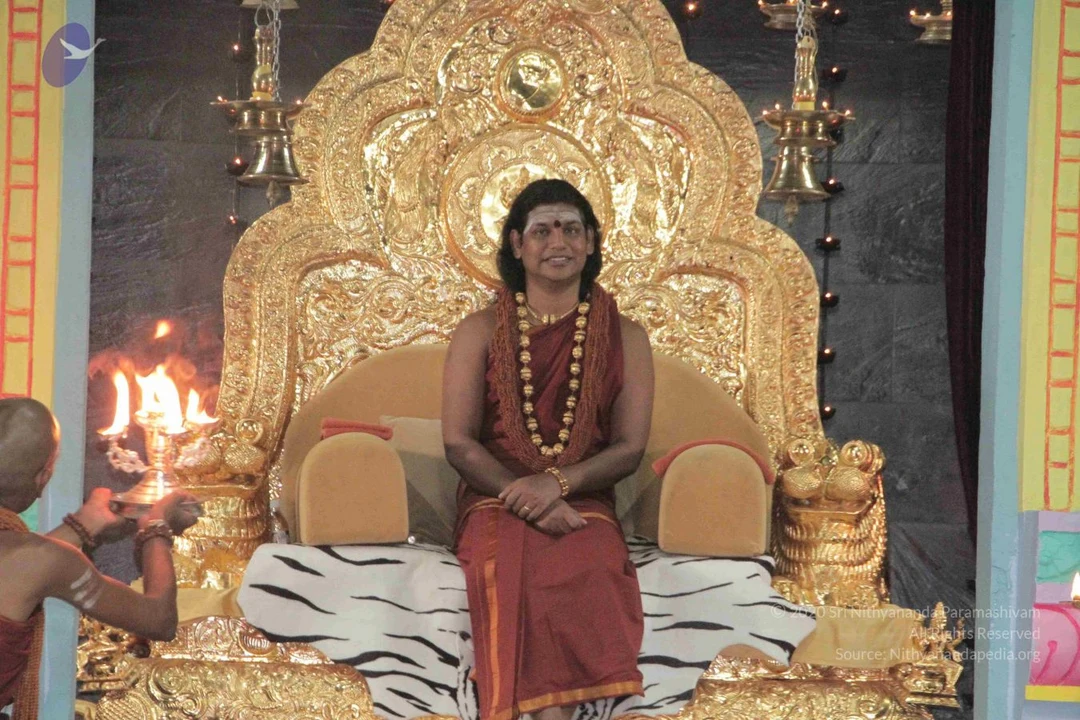
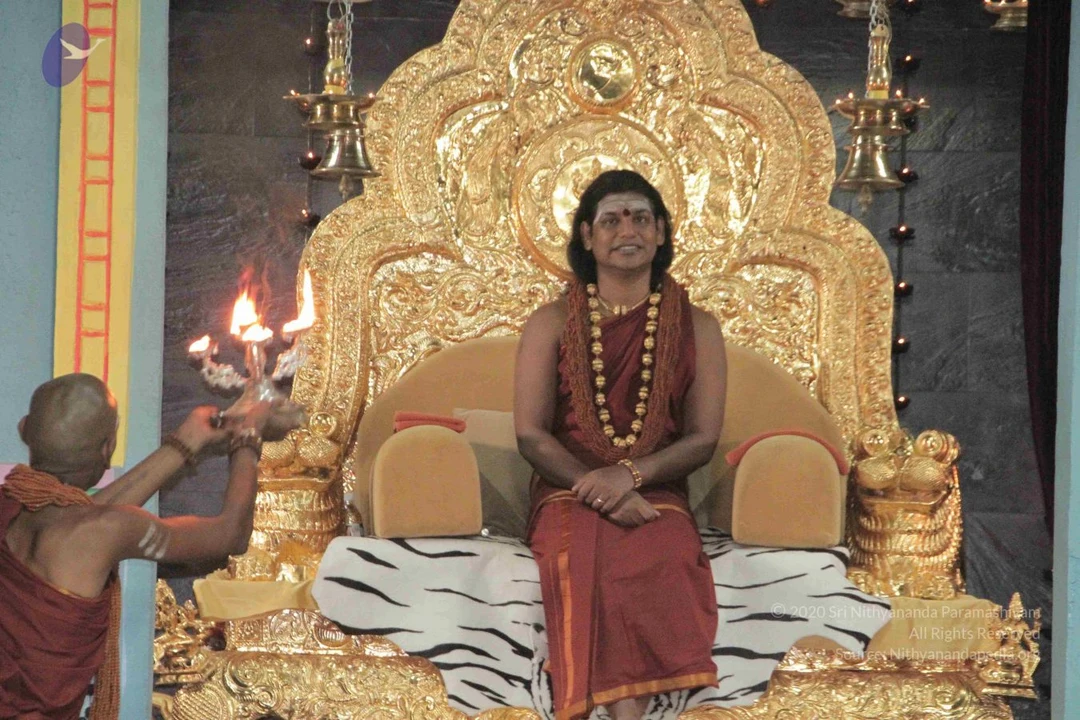
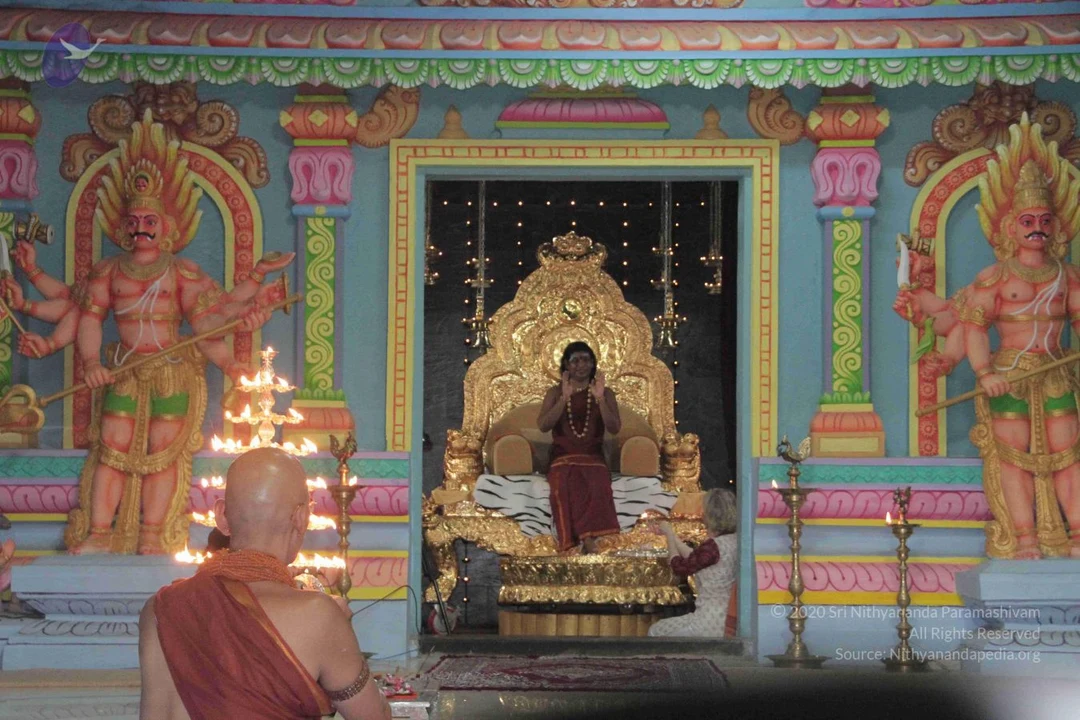
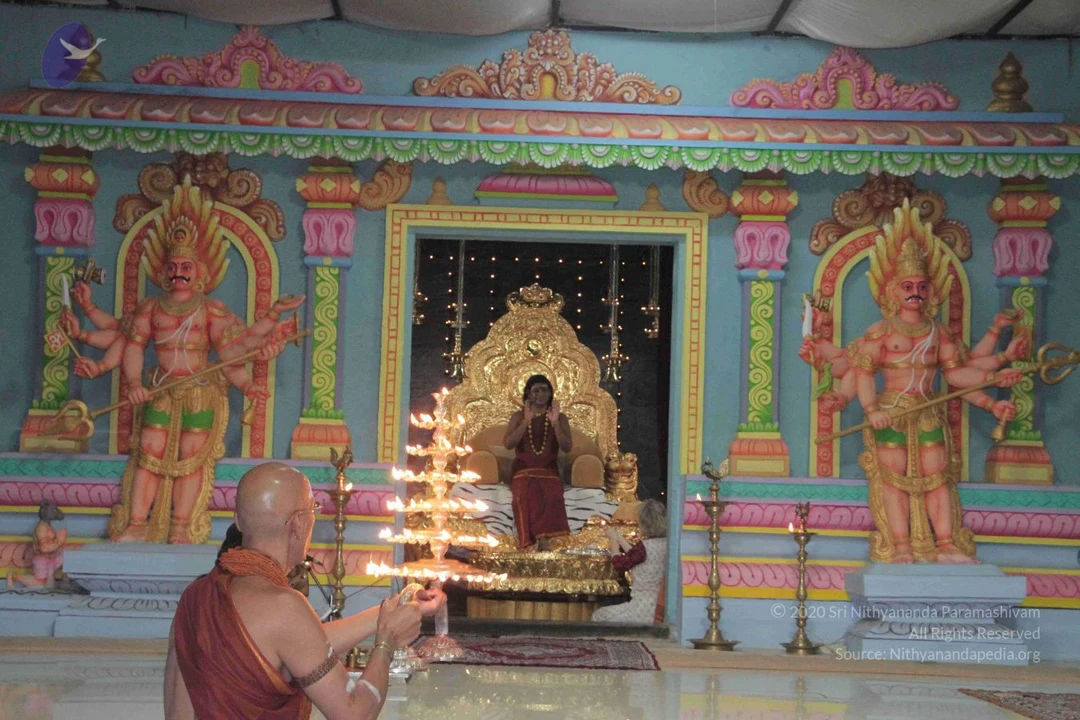
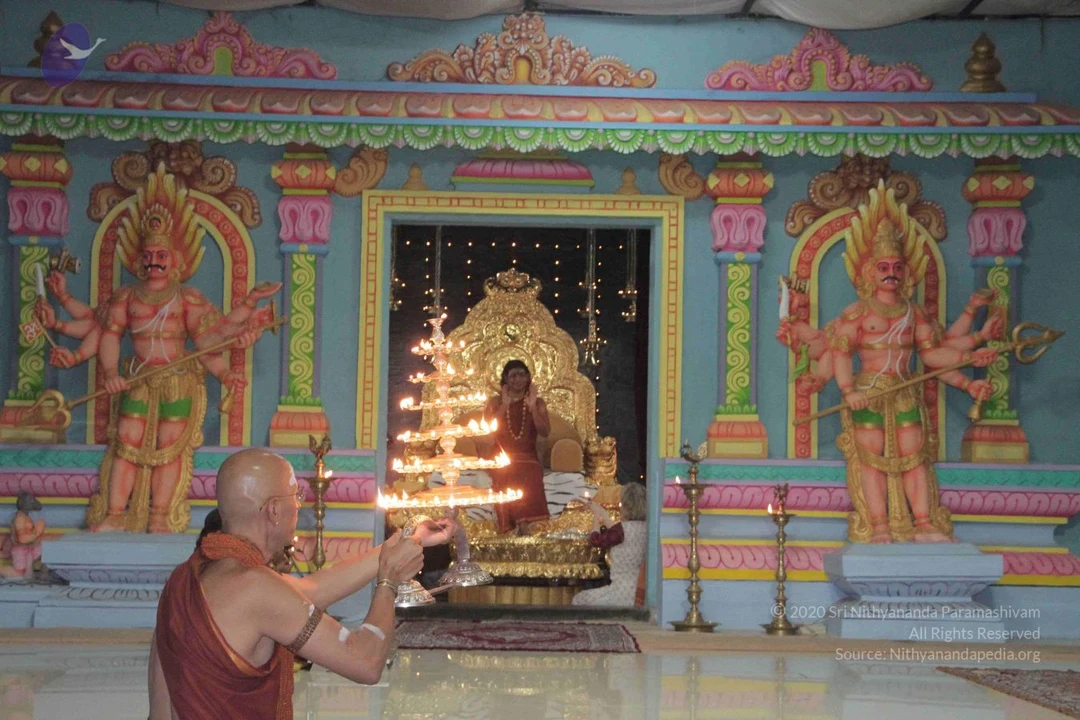
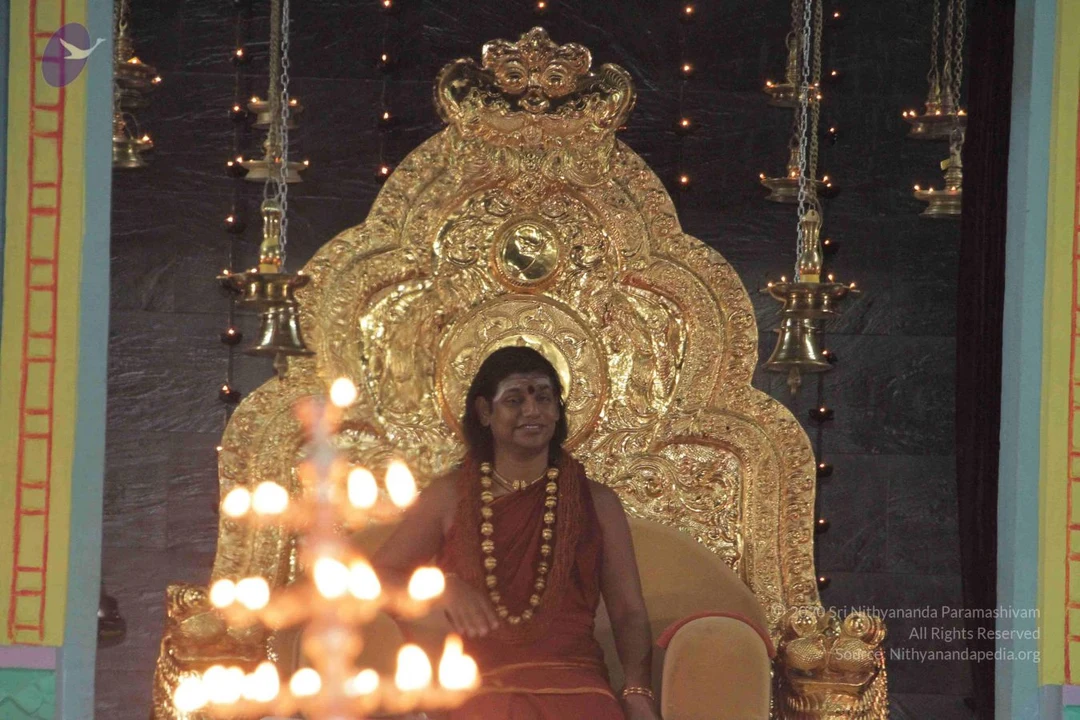
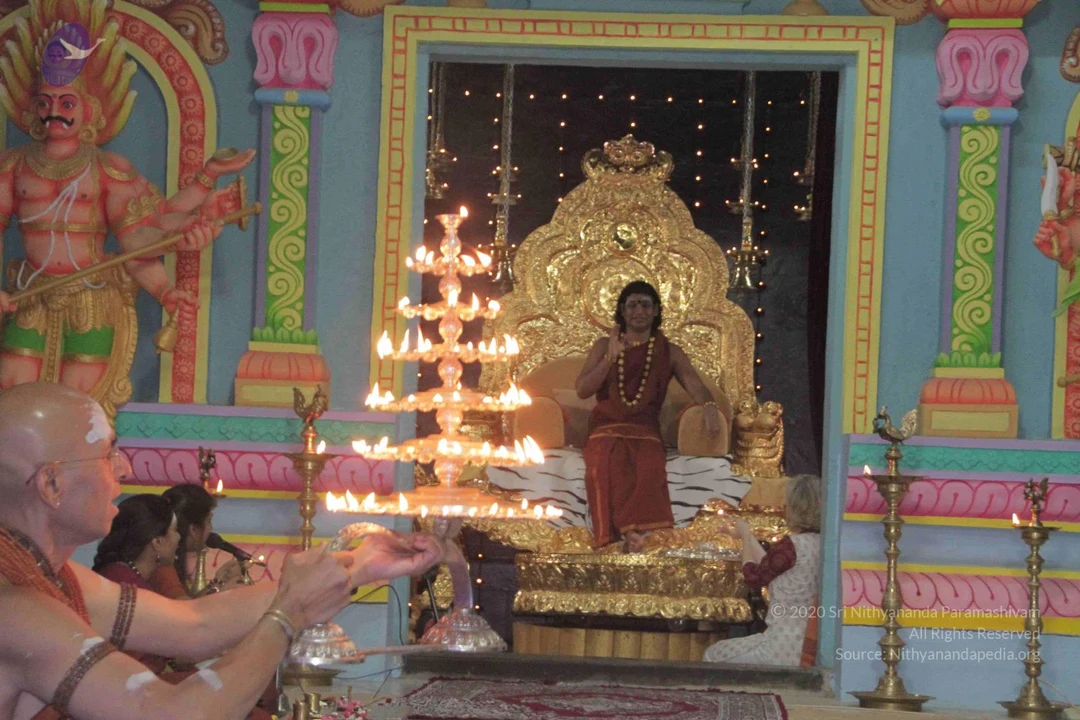
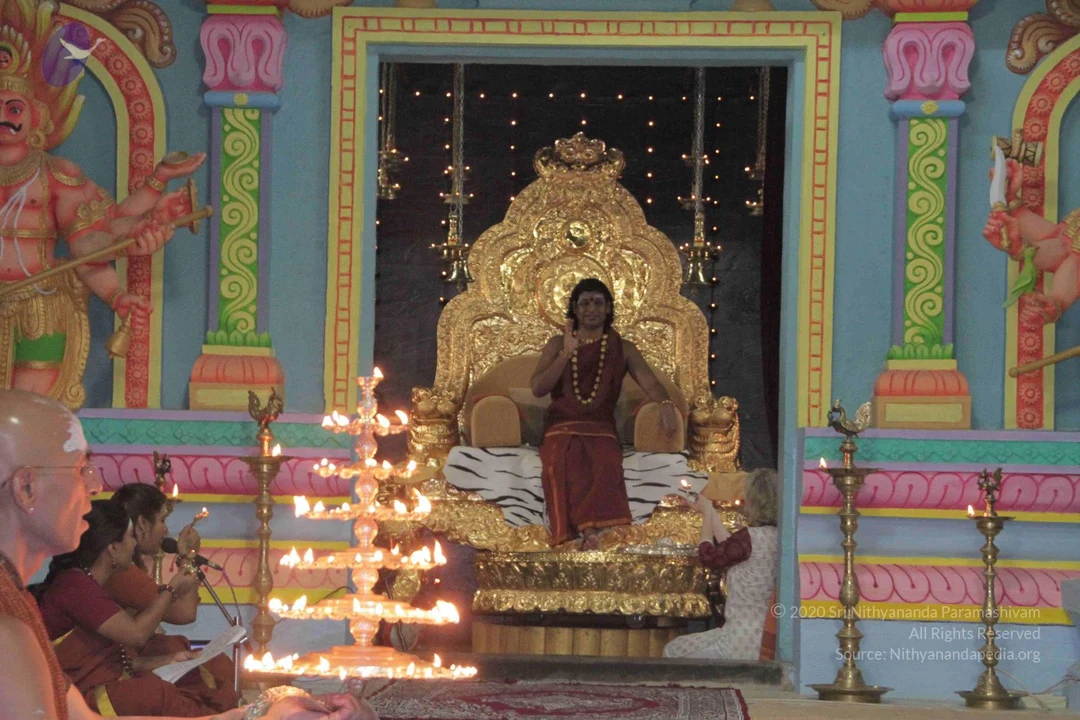
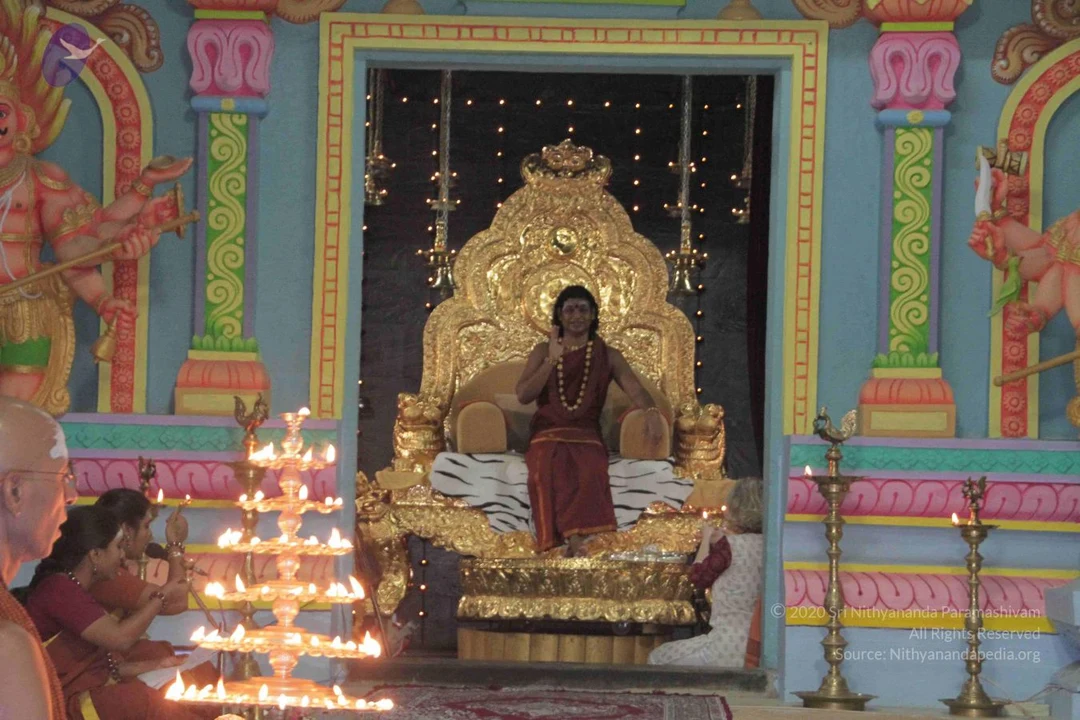
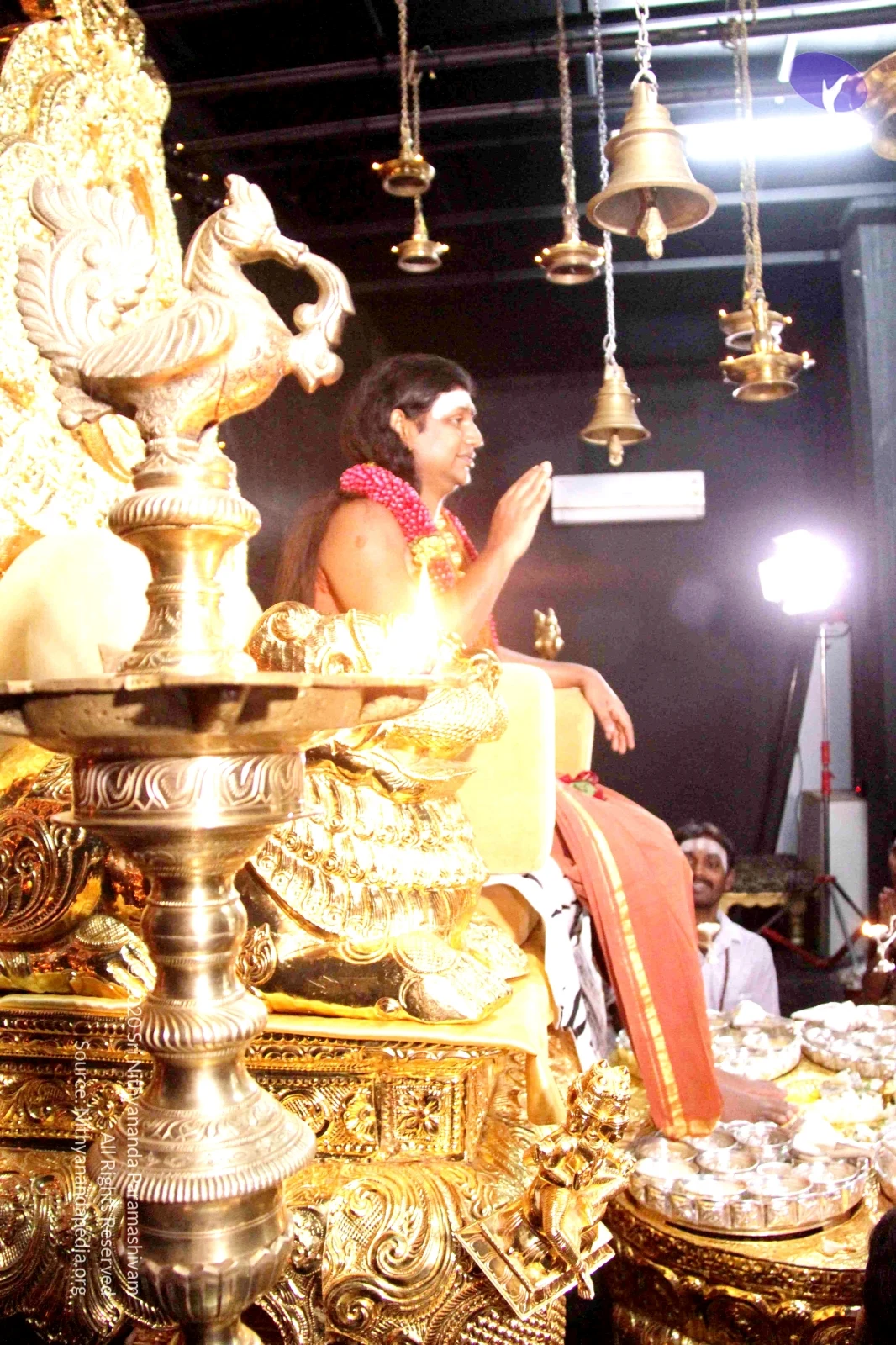
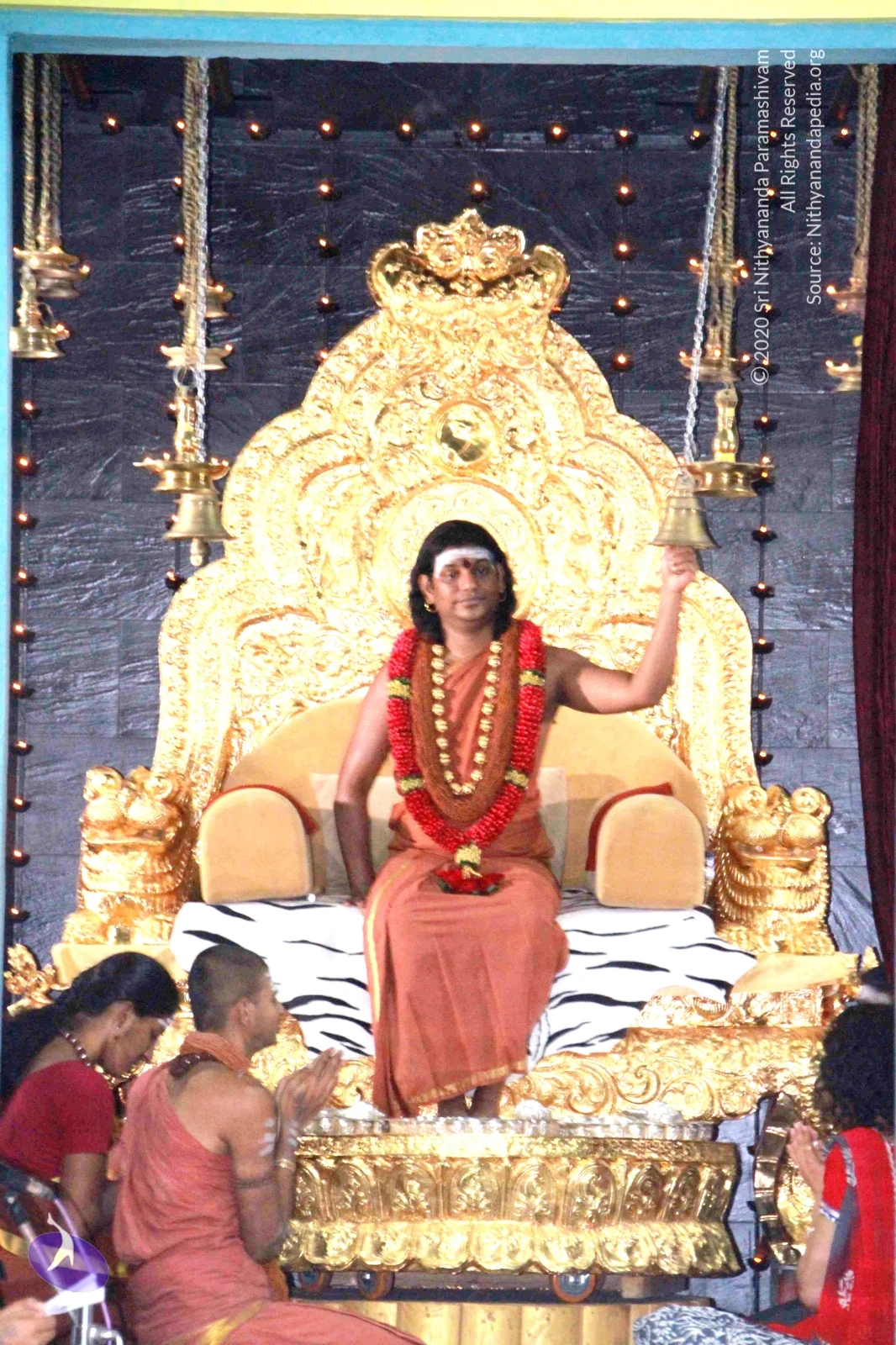
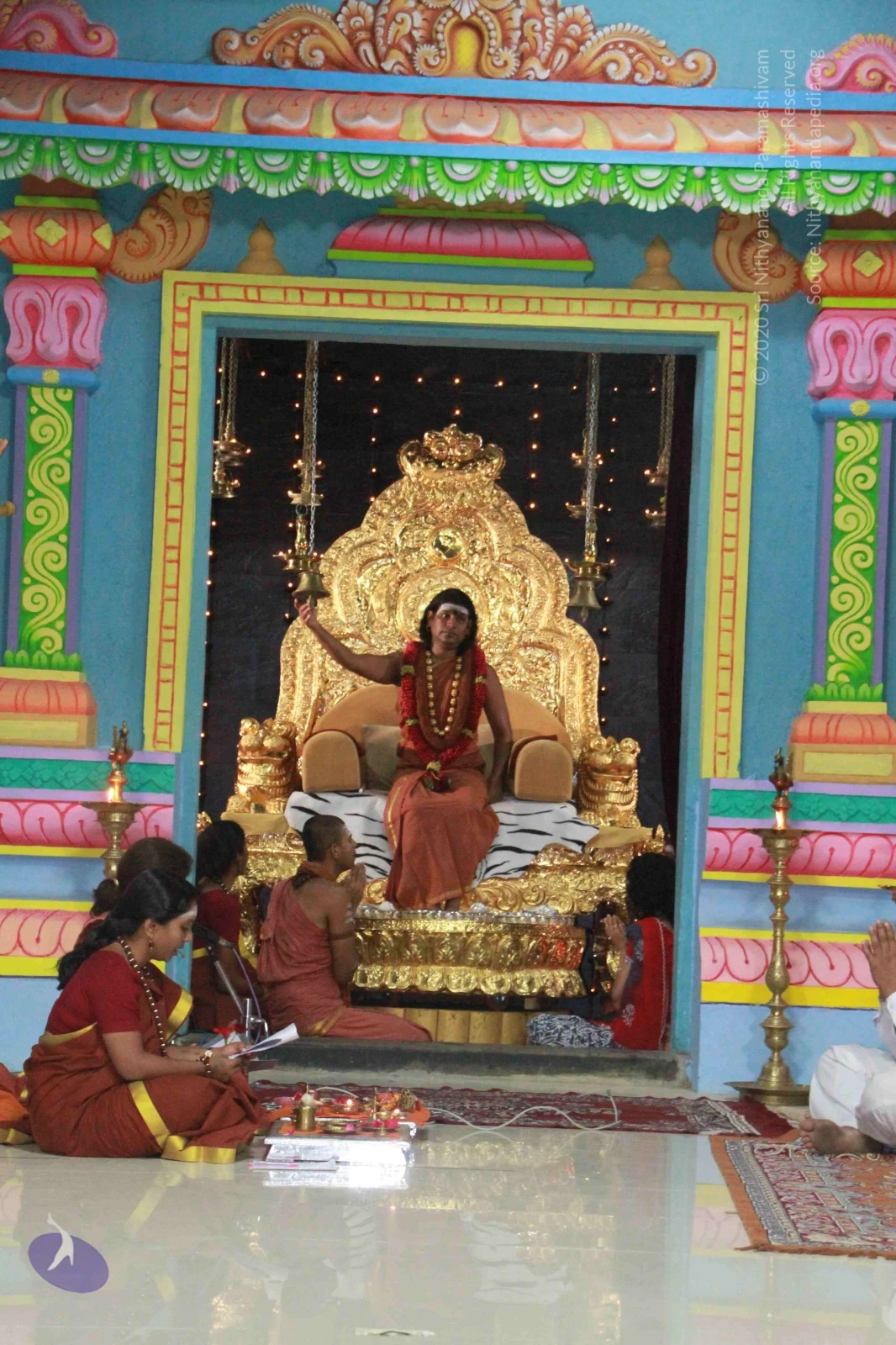
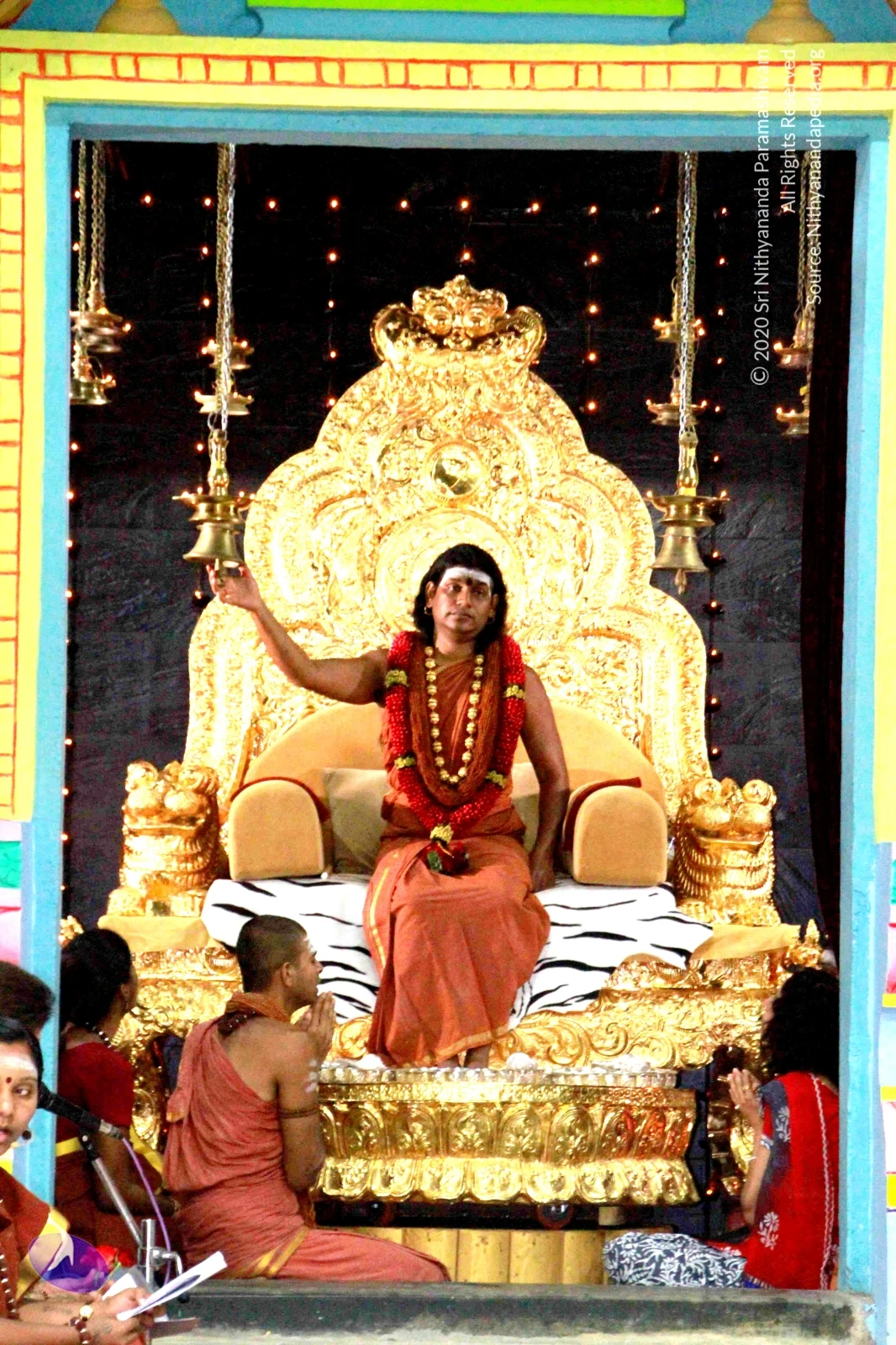
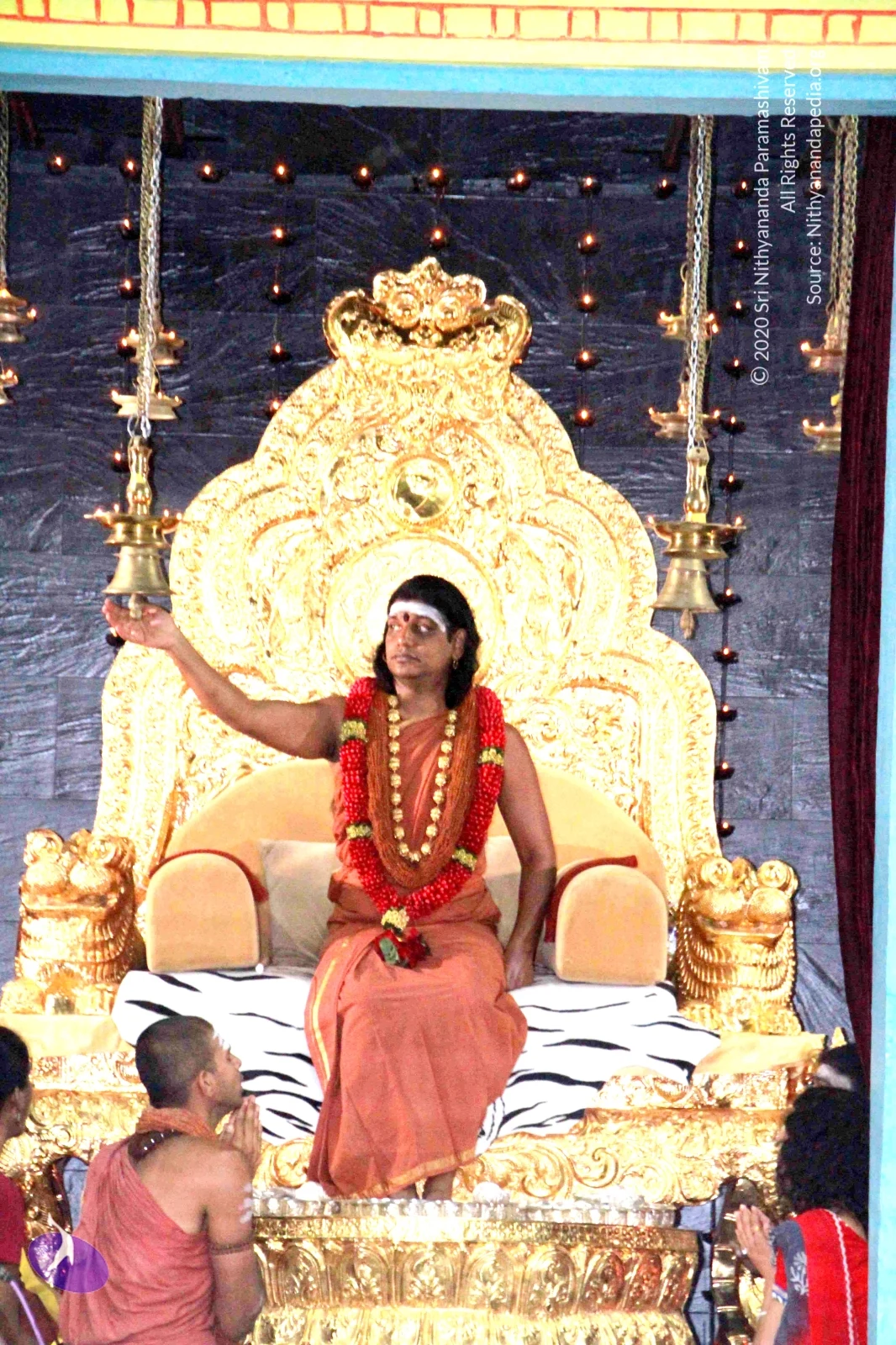
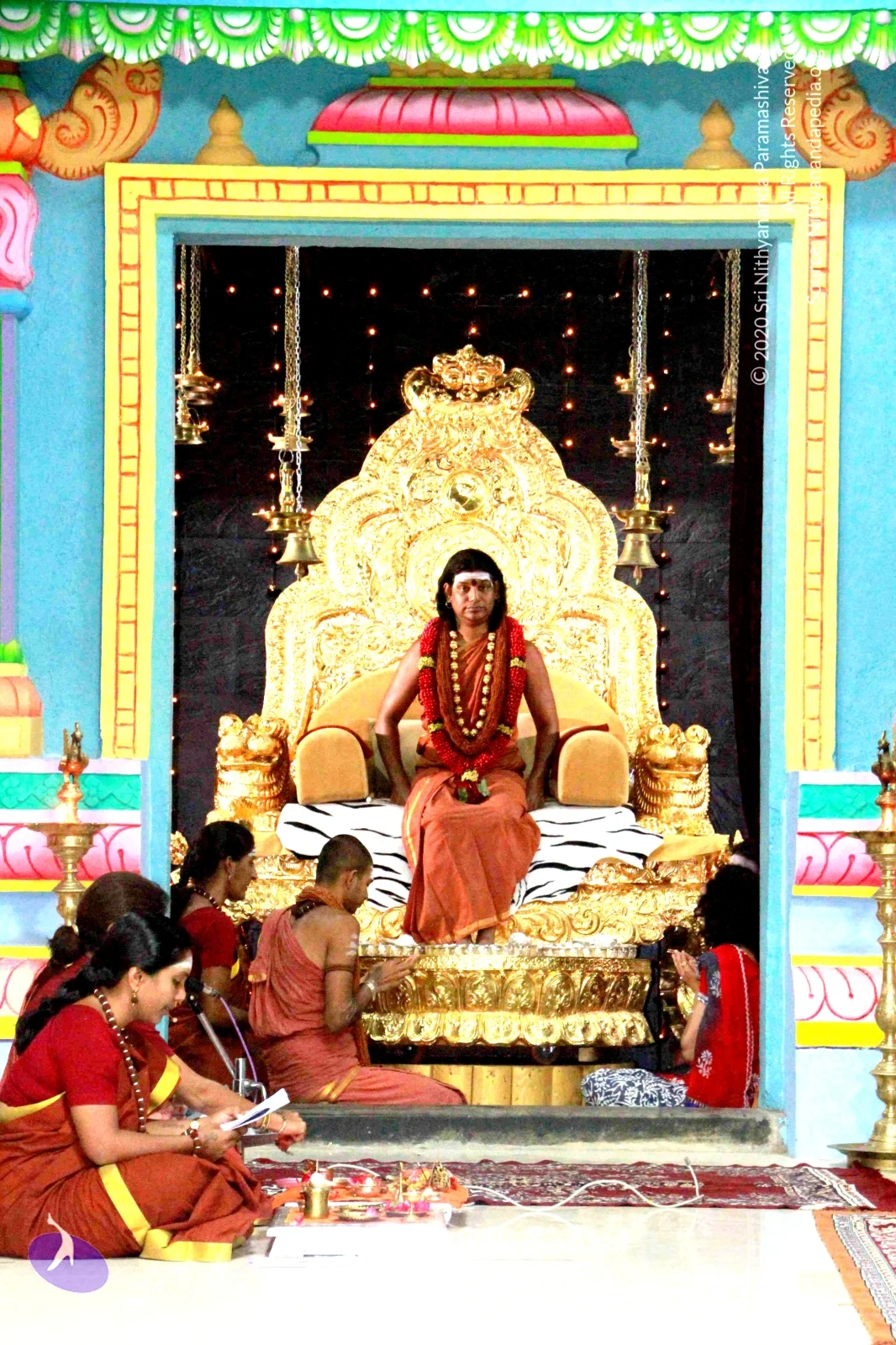
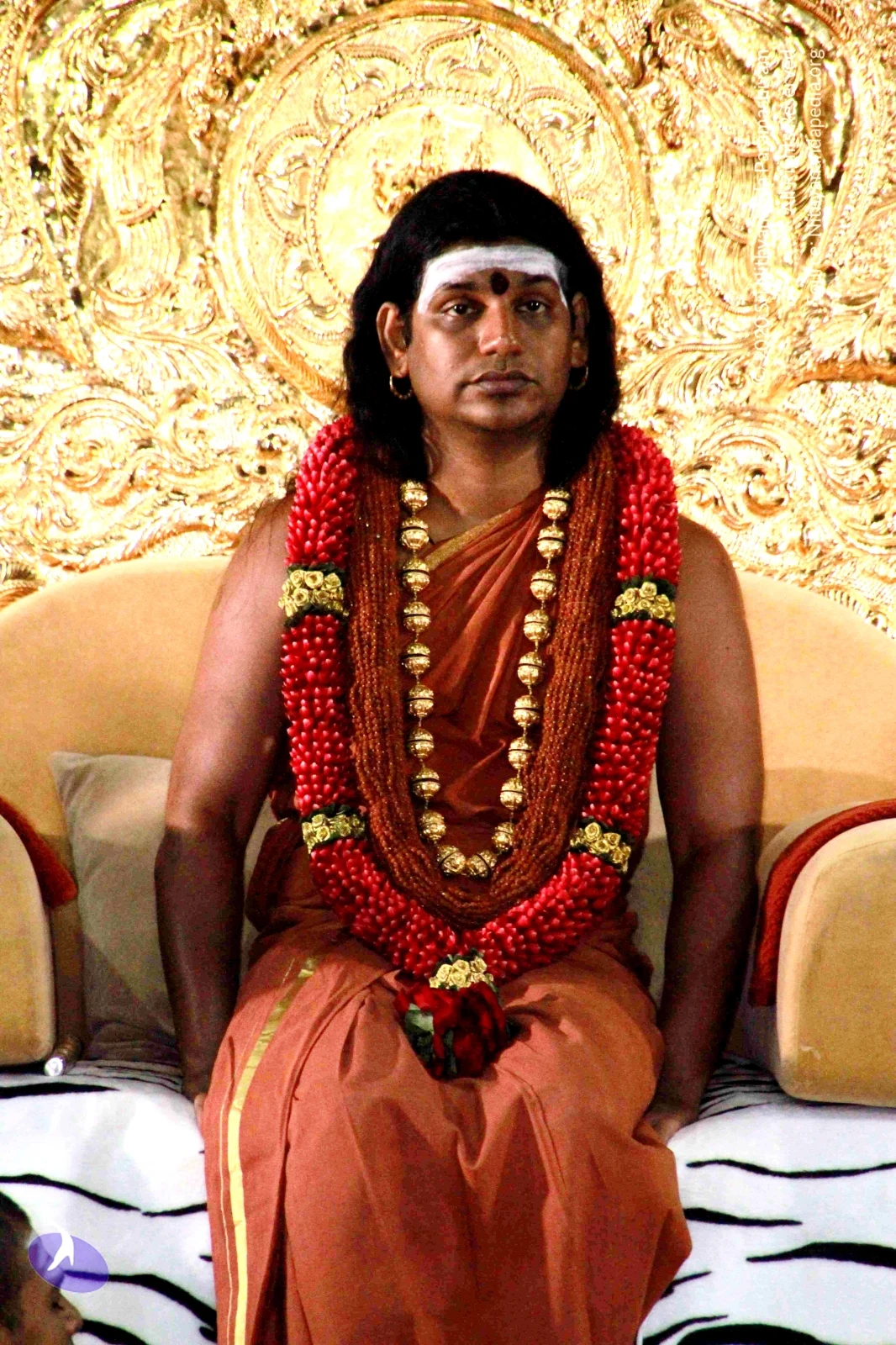
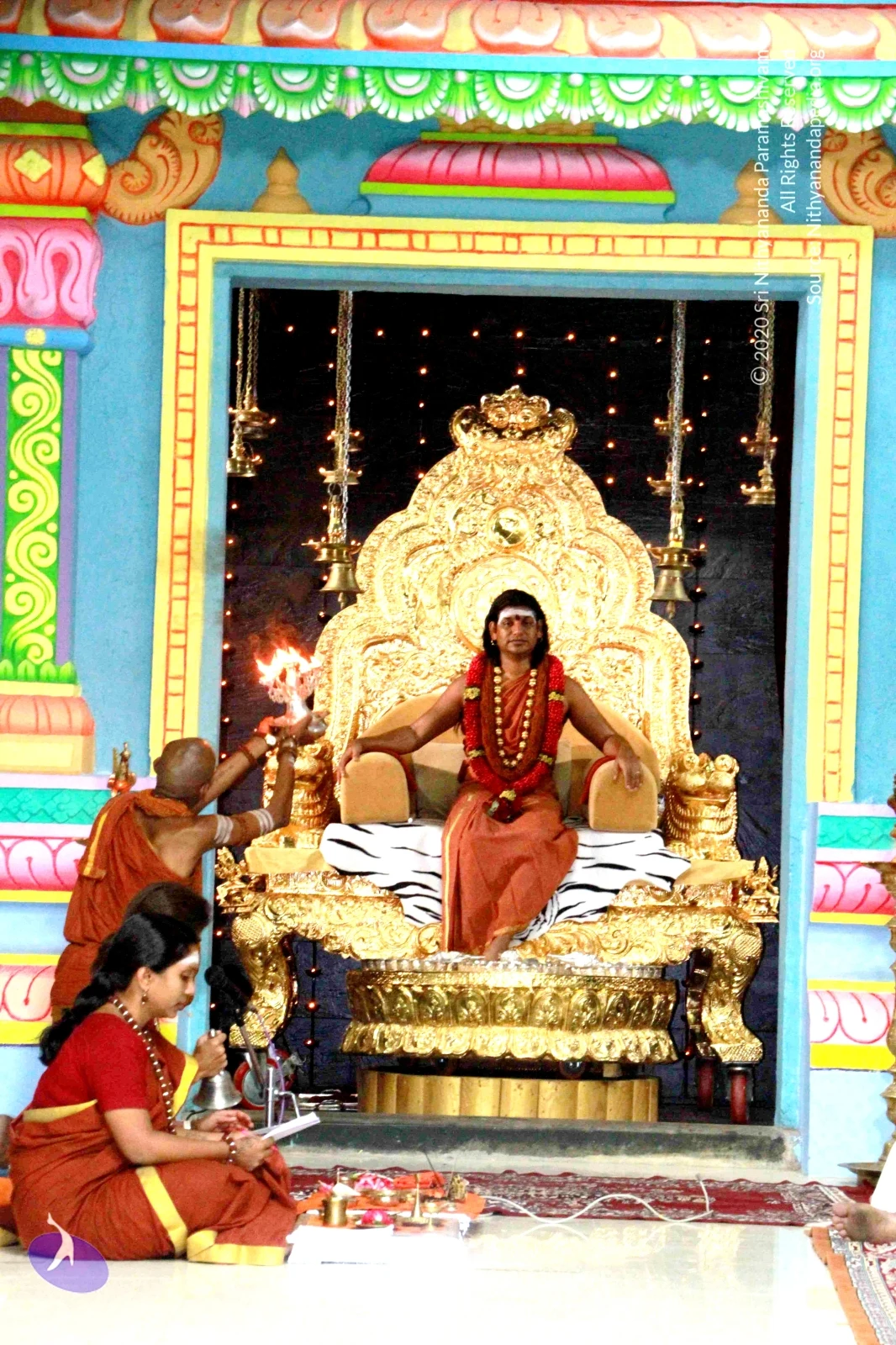
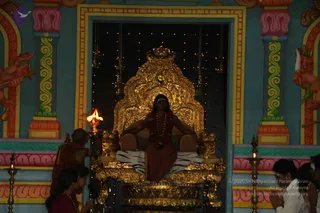
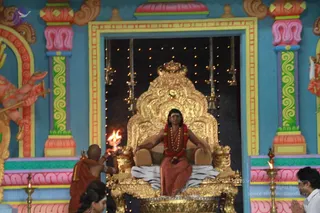
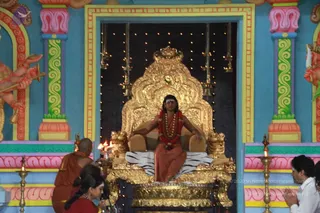
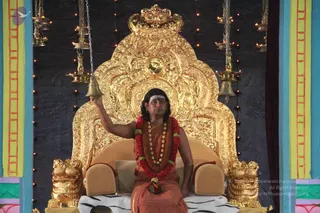
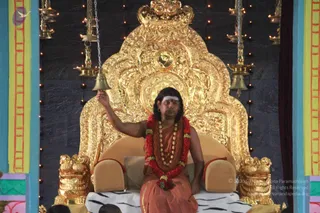
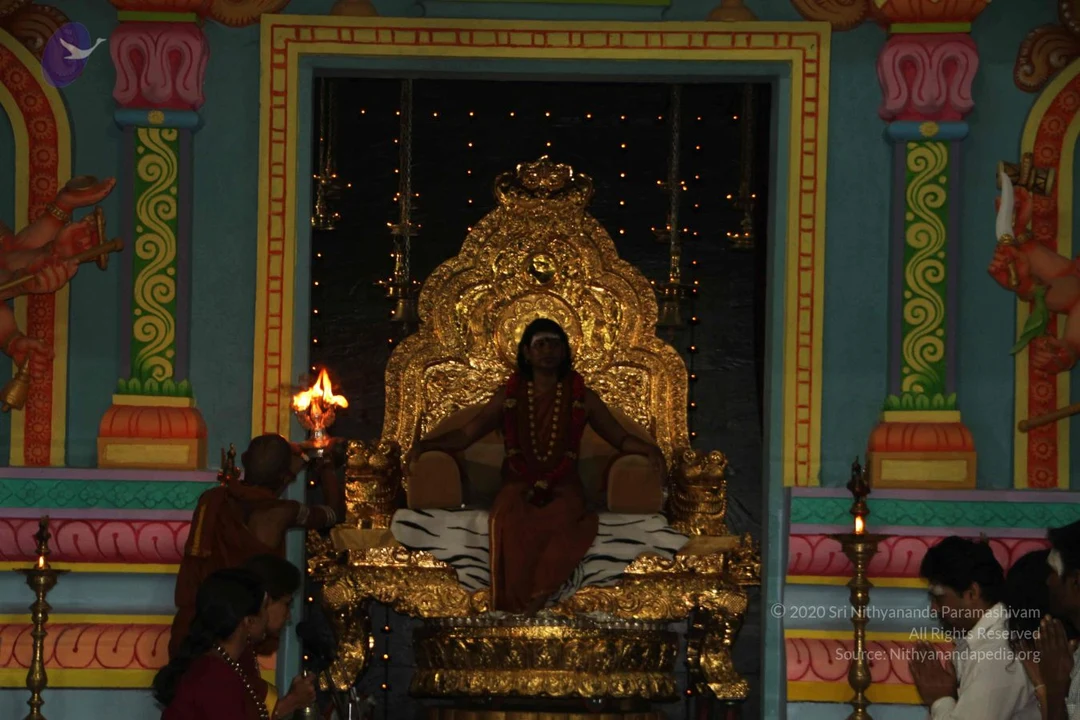
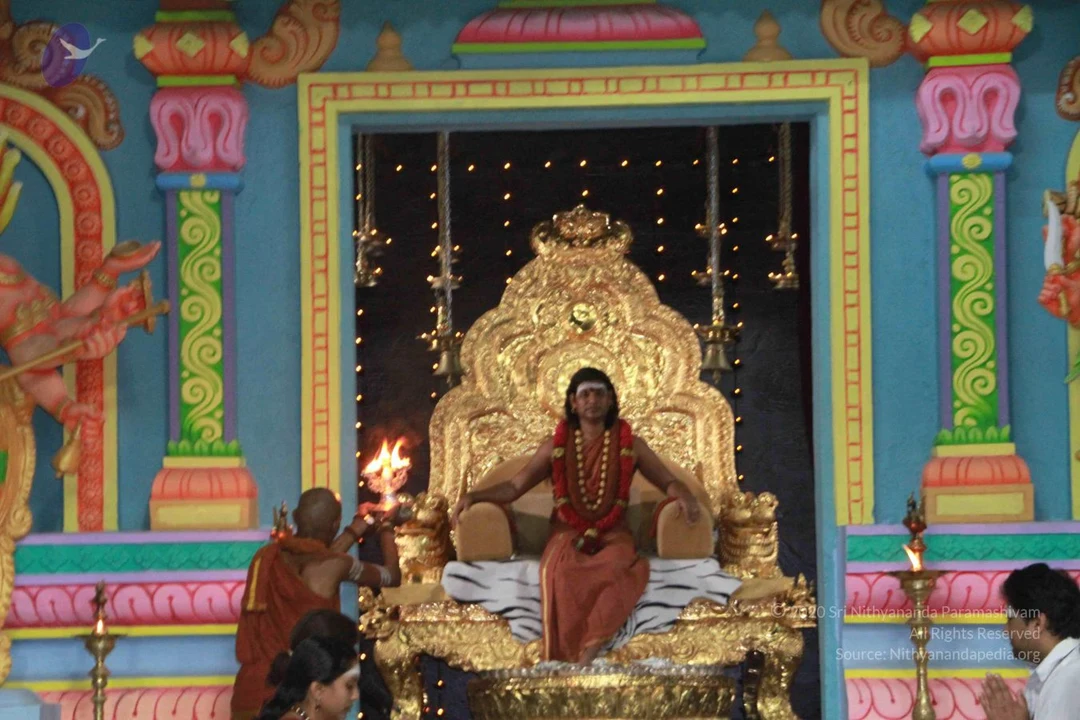
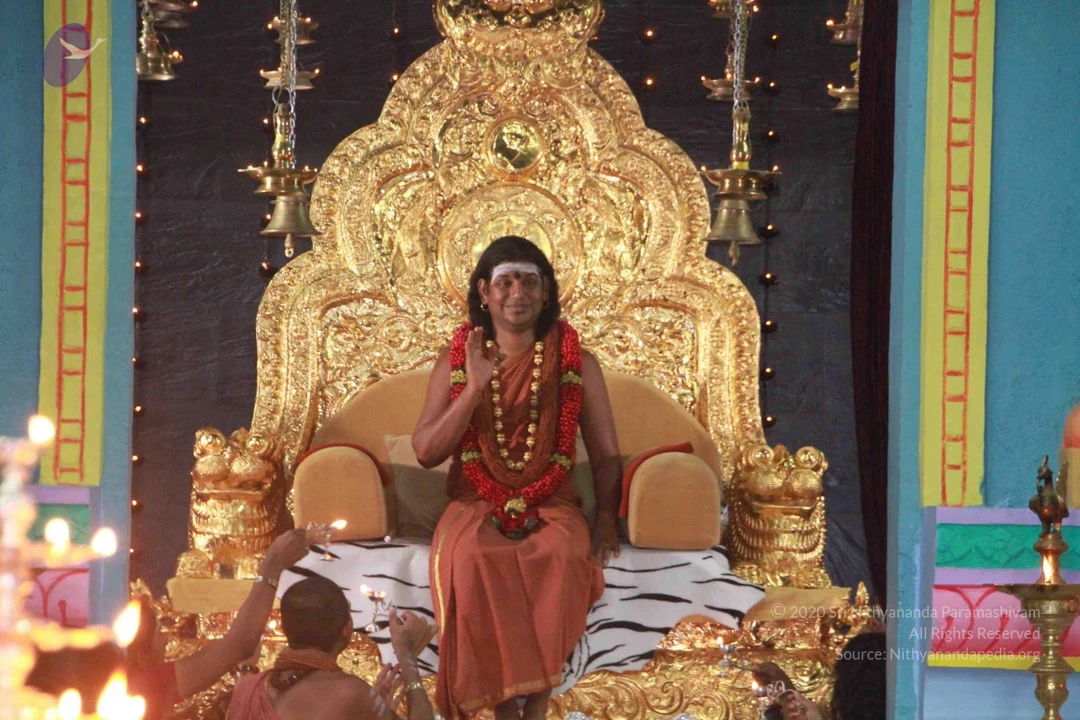
A seated figure sits on an ornate gold throne with a carved backrest and a striped tiger-skin cloth draped over the seat, set before a painted blue and pink shrine wall with red and gold columns. The figure wears saffron-red robes, a white forehead marking and a red and white garland with beads, eyes closed, hands resting open. A man in an orange-saffron cloth on the left holds a lit oil lamp aloft toward the throne, and a woman in a red sari stands at lower left. On the right, two people in white clothing sit with hands folded in namaskar. Brass lamps flank the scene and small lights glow in the dark background. Candid ritual scene at a temple-like altar.A seated man on an ornate gold throne with a carved gold backrest and lion-form armrests, draped with a white and black striped cloth, in a temple-like hall with painted pink, green and blue pillars. He wears an orange-saffron dhoti and shawl, a red and orange floral garland, a rudraksha-style mala, and a white tilak on the forehead. Behind him hang strings of small lights and brass lamps. At left, a shaved-headed priest in orange robes holds a lit flame over the throne in an aarti gesture. Lower left, two women are partly visible. At lower right, a person with folded hands stands near a brass oil lamp.A photograph of a central figure seated on an ornate gilded throne with a tiger-skin cloth draped over its seat, set in a richly coloured shrine with pink, green and blue painted pillars and deity carvings. The seated figure wears an orange-saffron robe, a red and white flower garland, rudraksha-style beads, and white tilak on the forehead. A priest in orange robes holds a lit oil lamp at left, and a woman in a red sari sits in front; a man in white kneels with folded hands at right. Oil lamps stand on brass stands and lights glow behind the throne. a person is the seated figure, identified by saffron robe, garland and throne cues.A seated man in saffron-orange robes sits on a cushioned golden throne before an ornate gold-embossed backdrop with floral and scrollwork patterns. He wears a long red and green flower garland over a gold bead necklace and rudraksha mala, a white vibhuti stripe with a red kumkum dot on his forehead, and small hoop earrings. His long dark hair falls past his shoulders. He raises a brass handbell in his right hand with a gentle, focused expression.A seated figure in an orange-saffron robe and a red and yellow flower garland sits on an ornate gold throne with a carved gold backrest and lion-shaped armrests, draped with a zebra-striped cloth. He wears a white tilak on his forehead and a rudraksha-style beaded necklace with a gold pendant, and raises a brass hand bell in his right hand. Hanging brass oil lamps and a dark backdrop surround the throne, with turquoise and yellow painted pillars at the sides. Probable Swamiji is seated in a teaching posture, with long swept-back hair and saffron clothing consistent with the page's account of an intro class.A seated man in saffron-orange robes sits on an ornate gold throne with a carved gilded backrest, raising a hanging brass bell in his right hand. He wears a long red and white flower garland, a wooden-bead and gold-bead necklace, and a white tilak on his forehead, with long dark hair swept back. Hanging brass oil lamps with chains and red bead strings frame the throne, and a tiger-striped cloth covers the platform. The scene suggests a satsang or ritual setting. Swamiji (probable) is seated centrally as the person with the crown-like throne, saffron robes and ornate garland. Two lion-shaped armrest supports flank the throne.

NITHYA-SATSANG

48 photosSource gallery
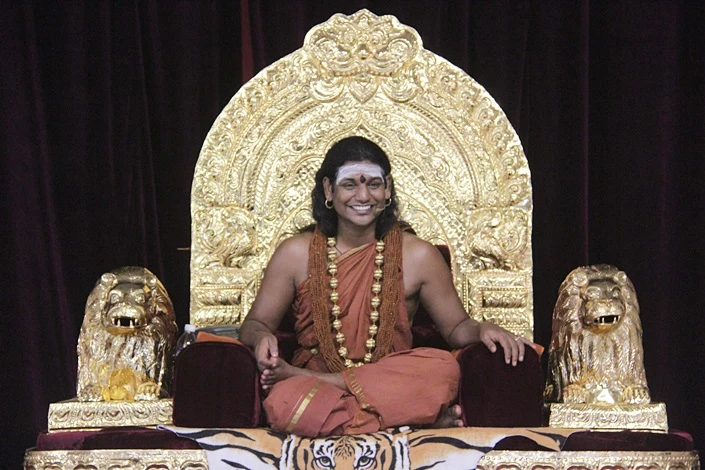
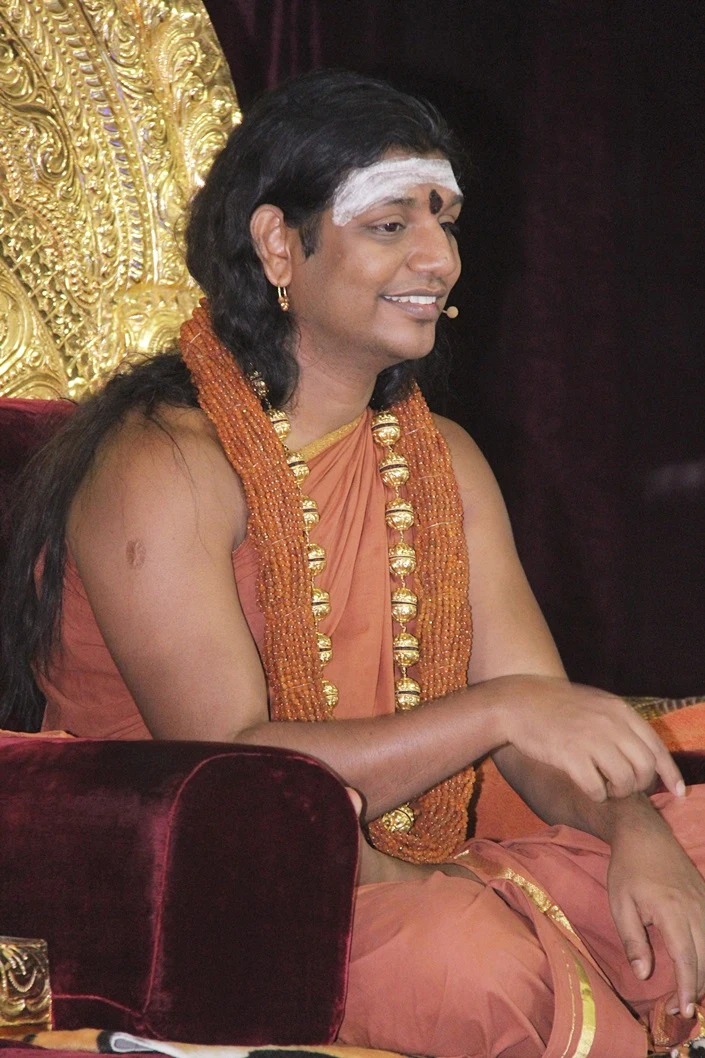
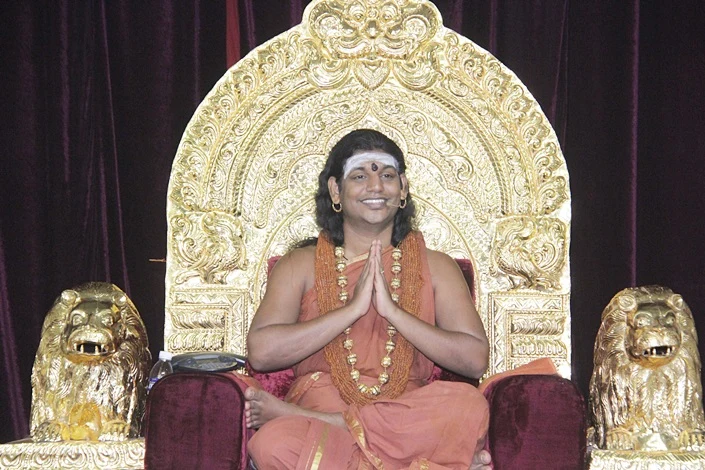
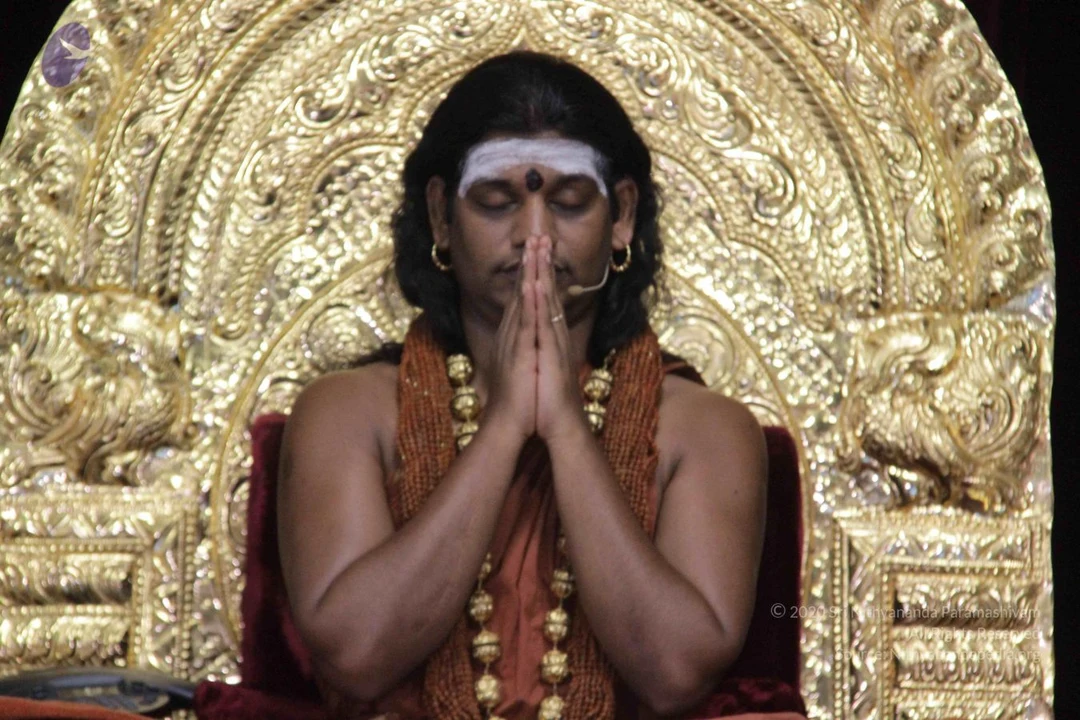
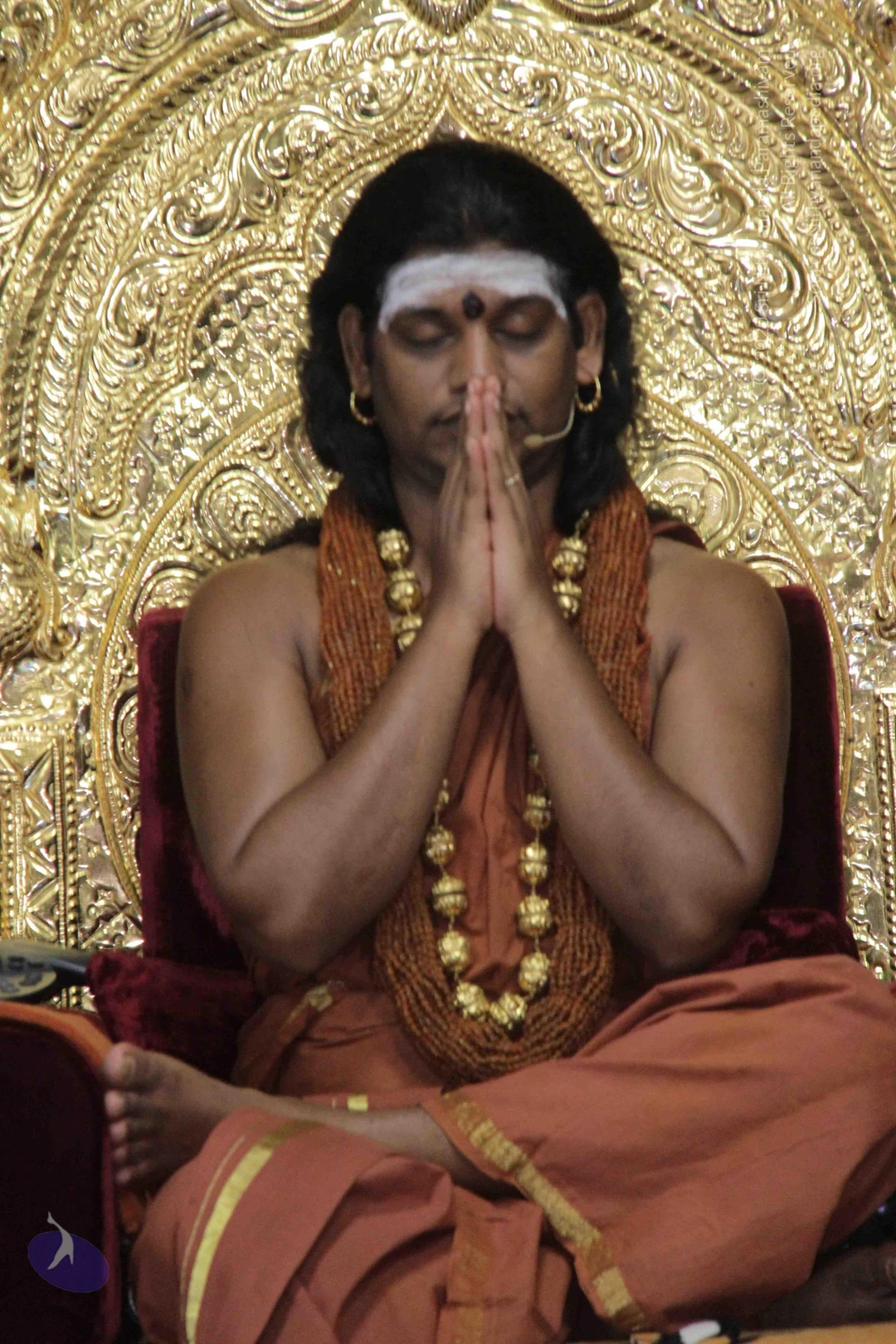
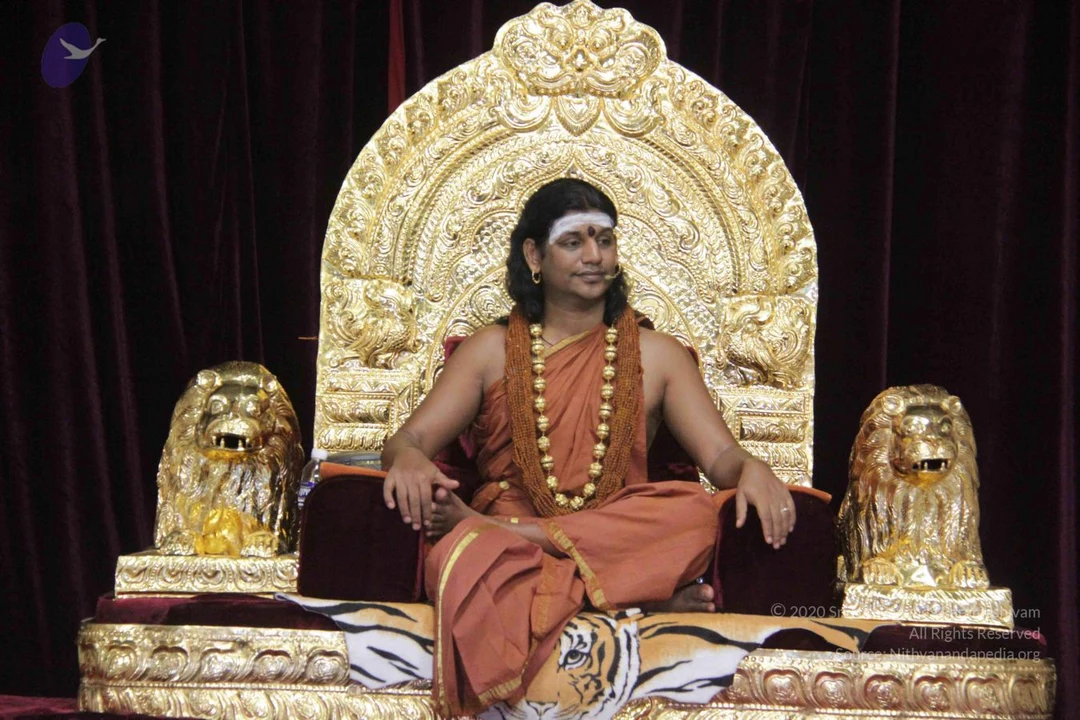
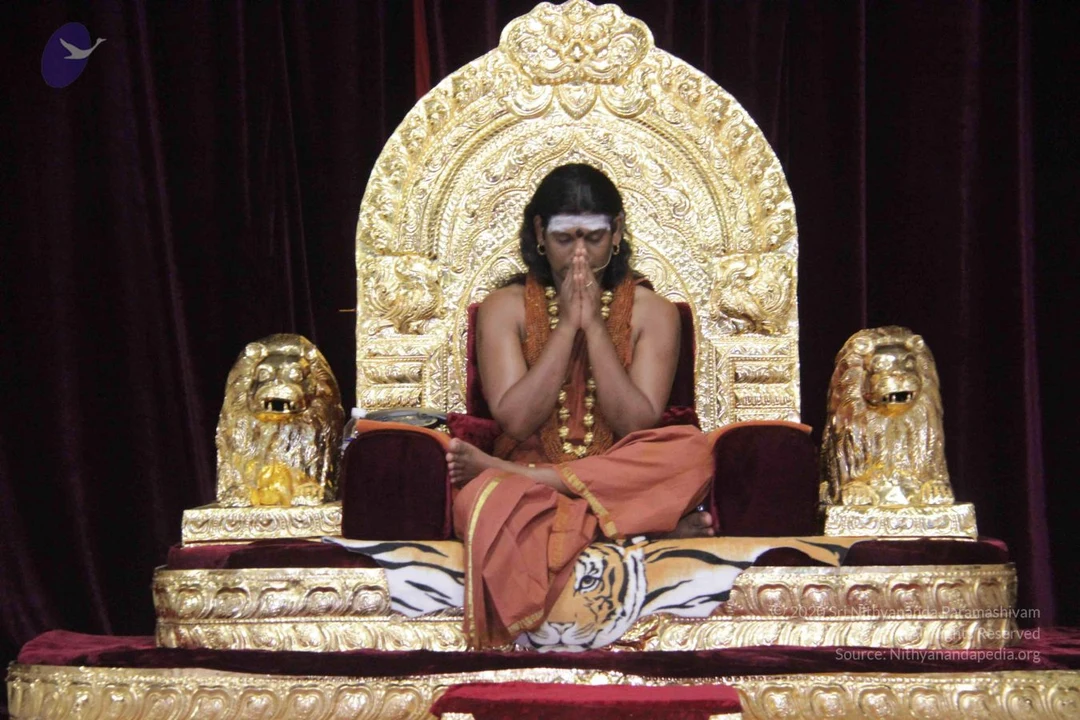
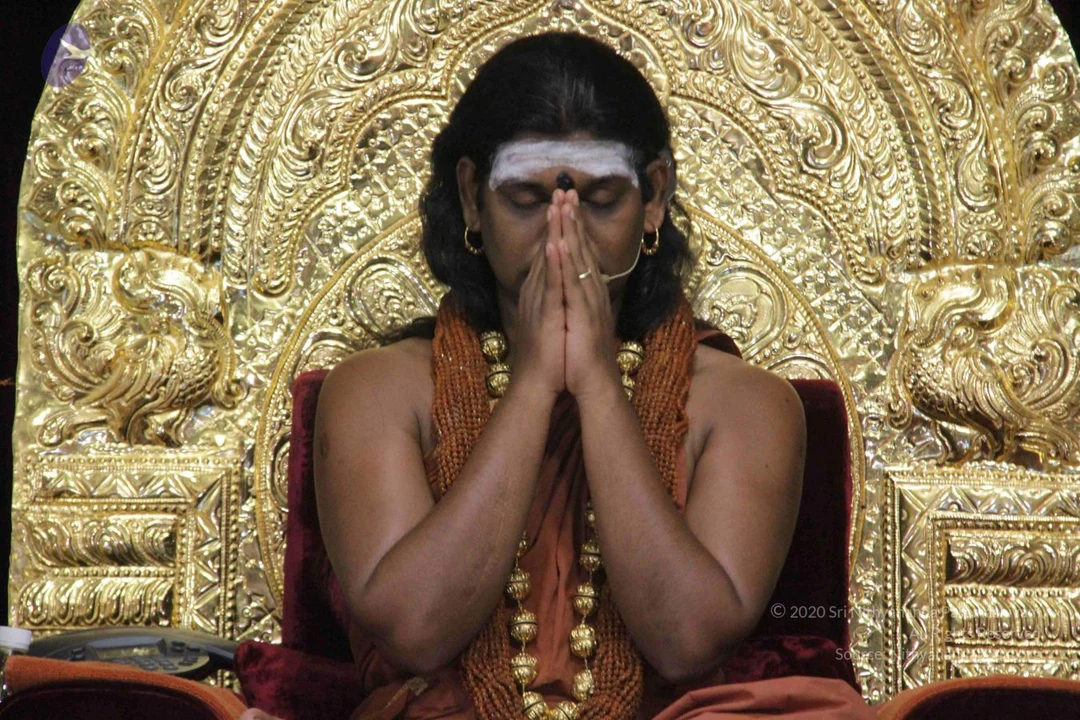
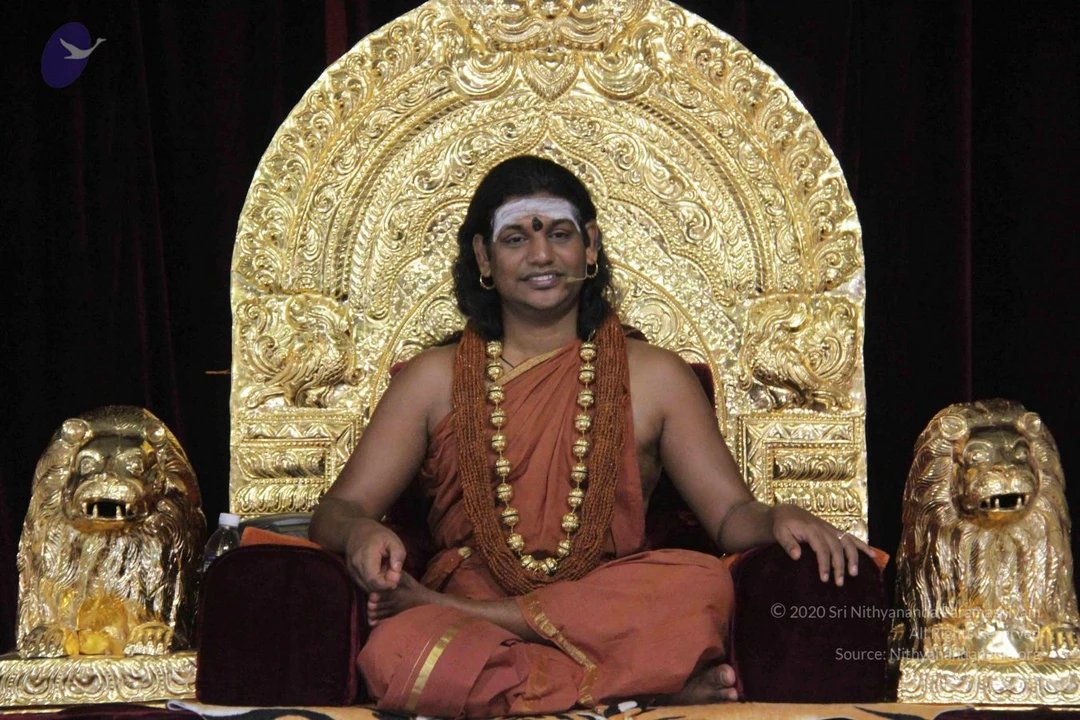
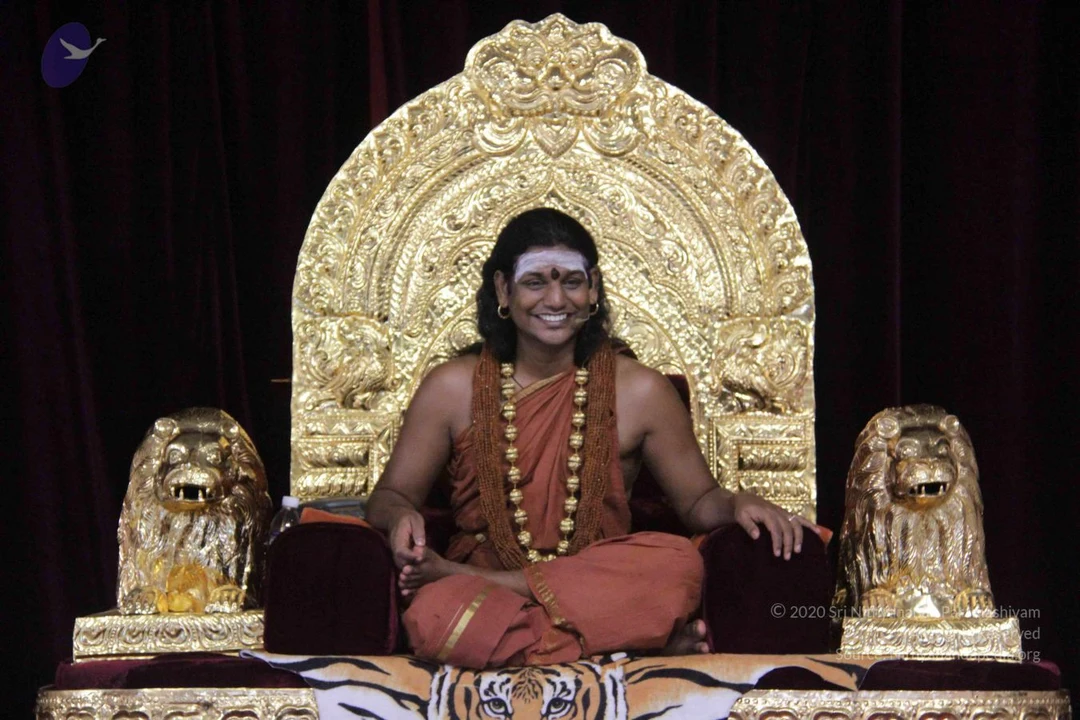
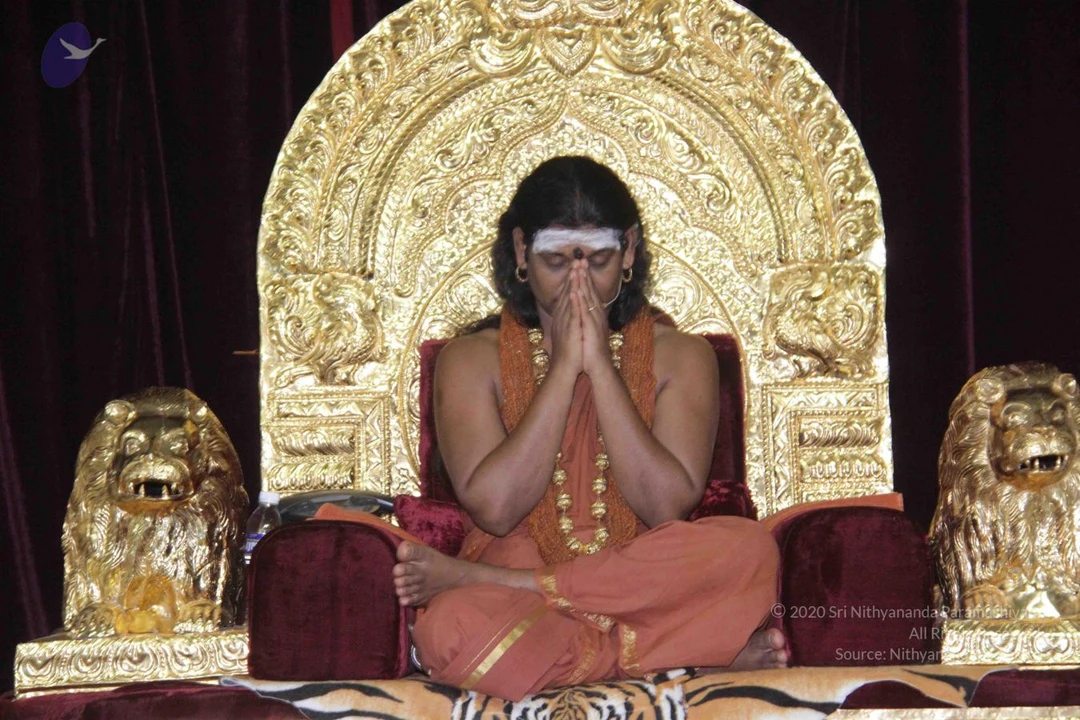
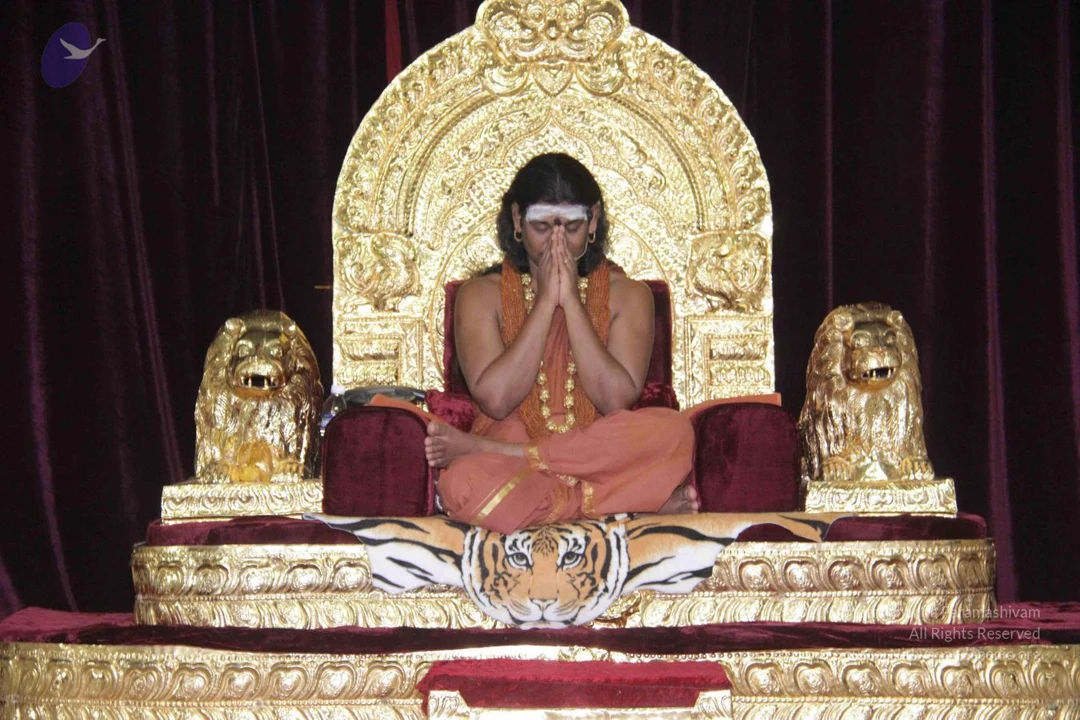
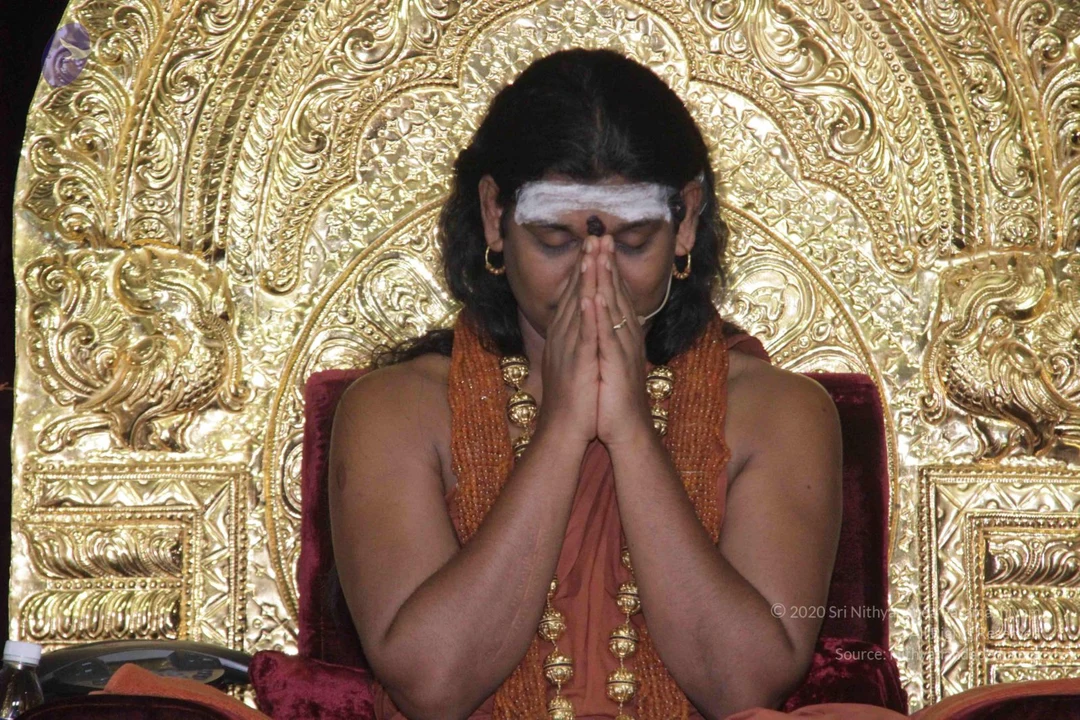
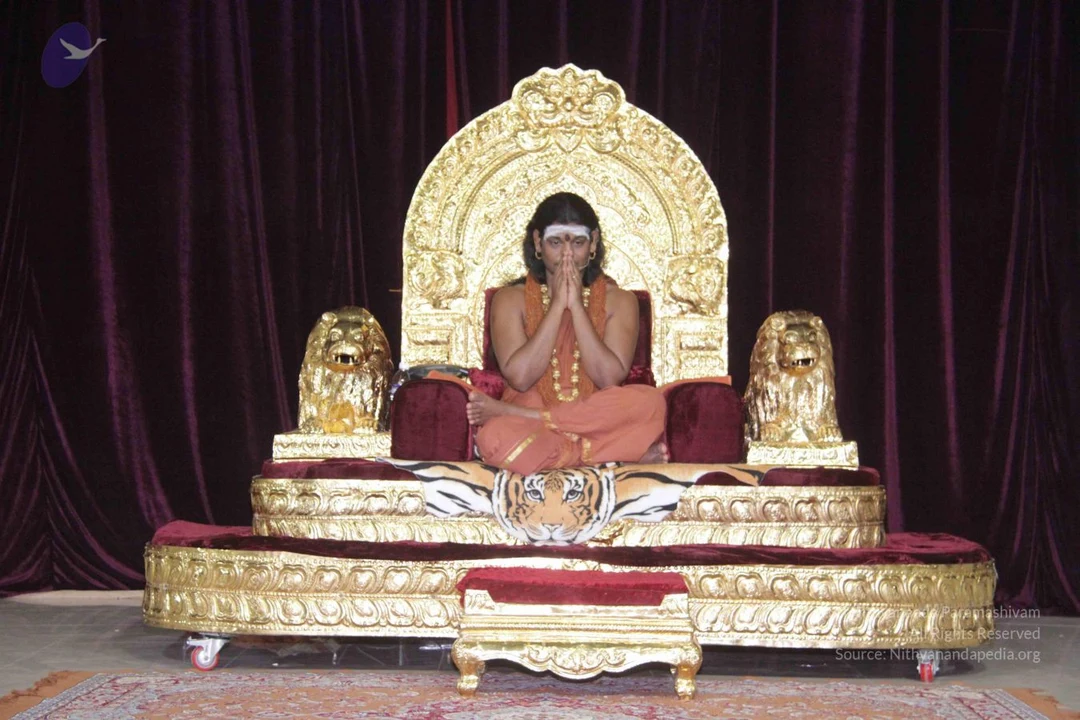
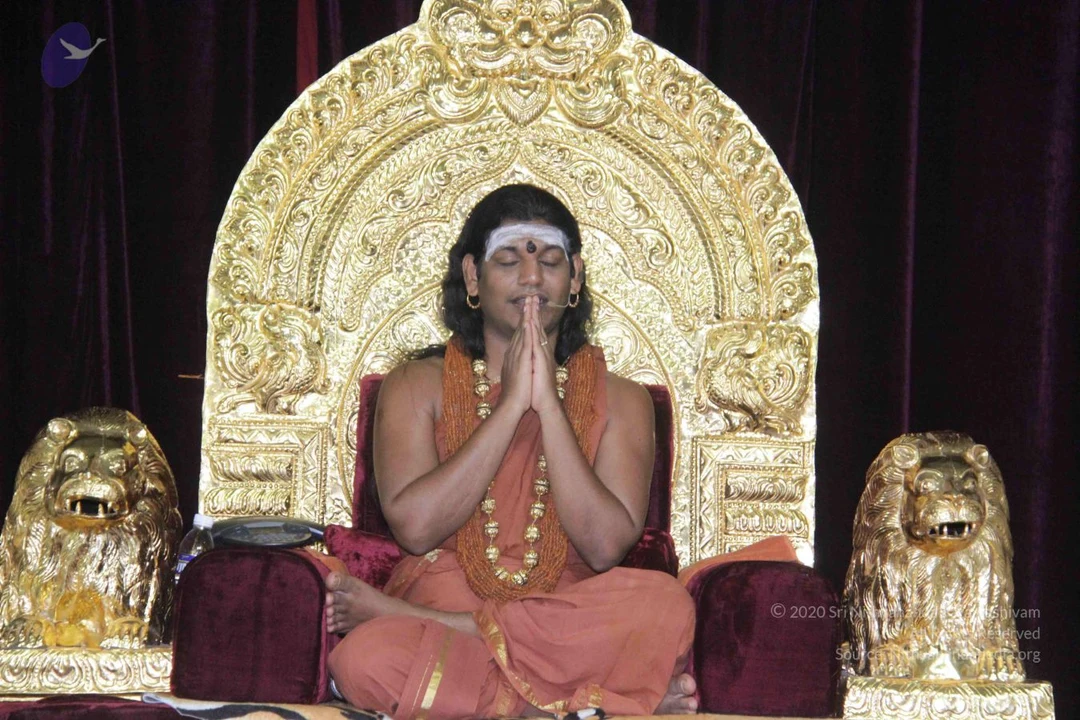
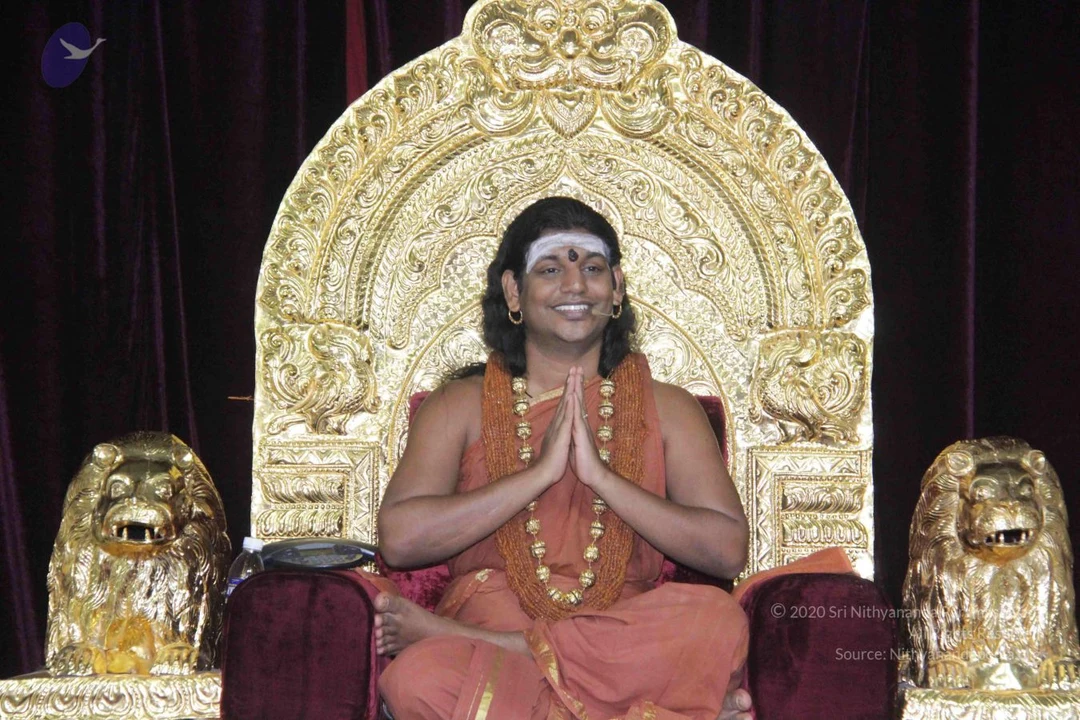
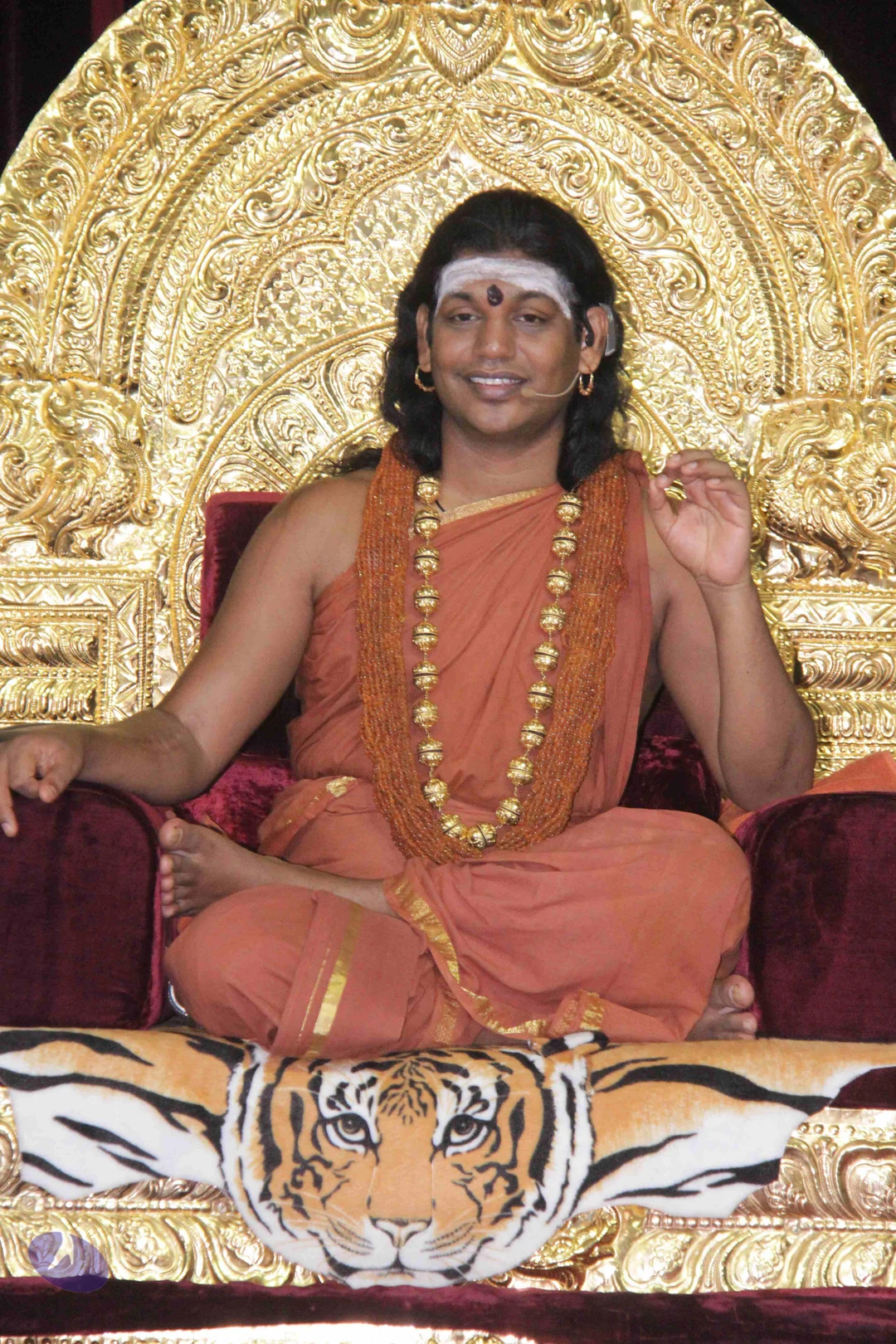
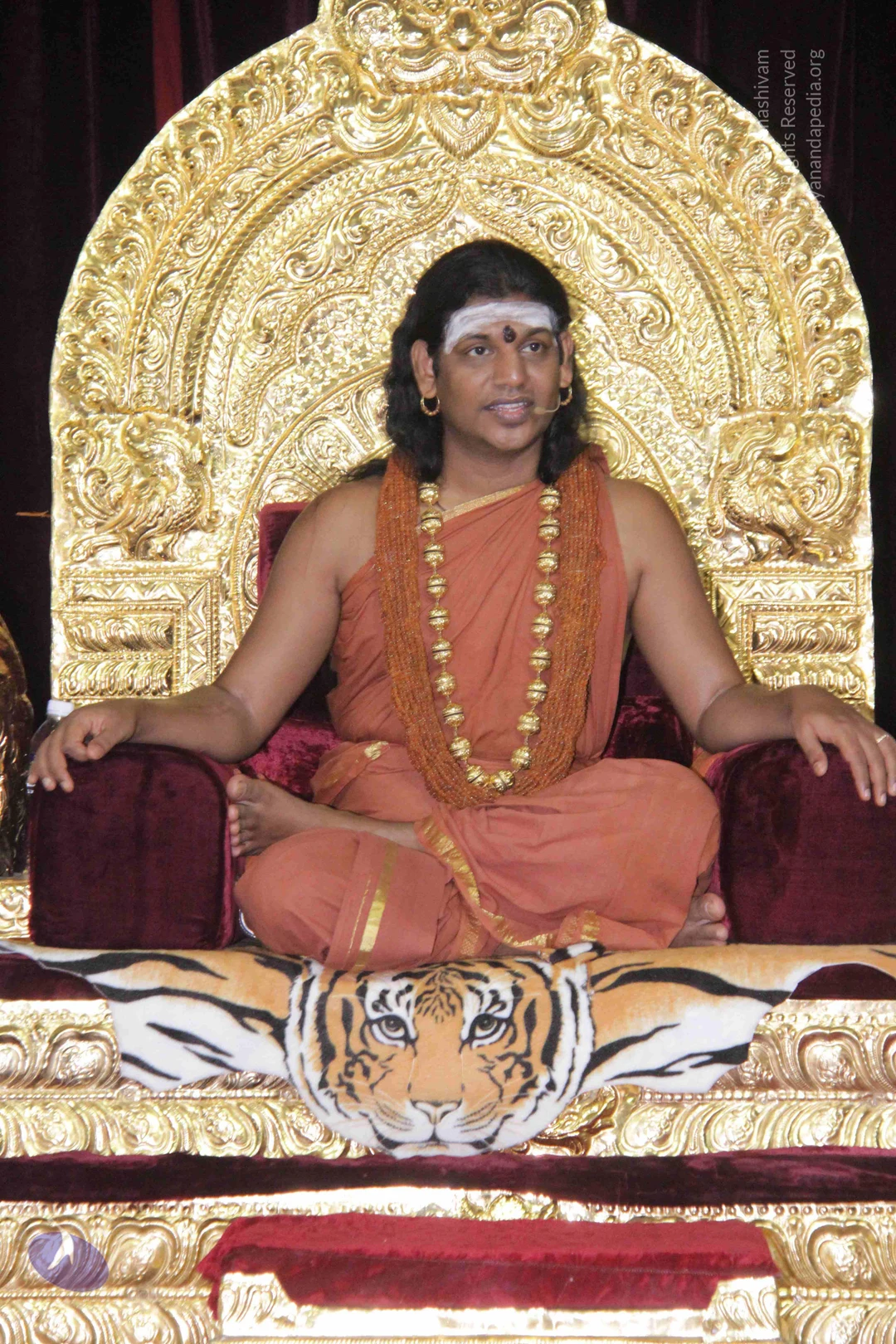
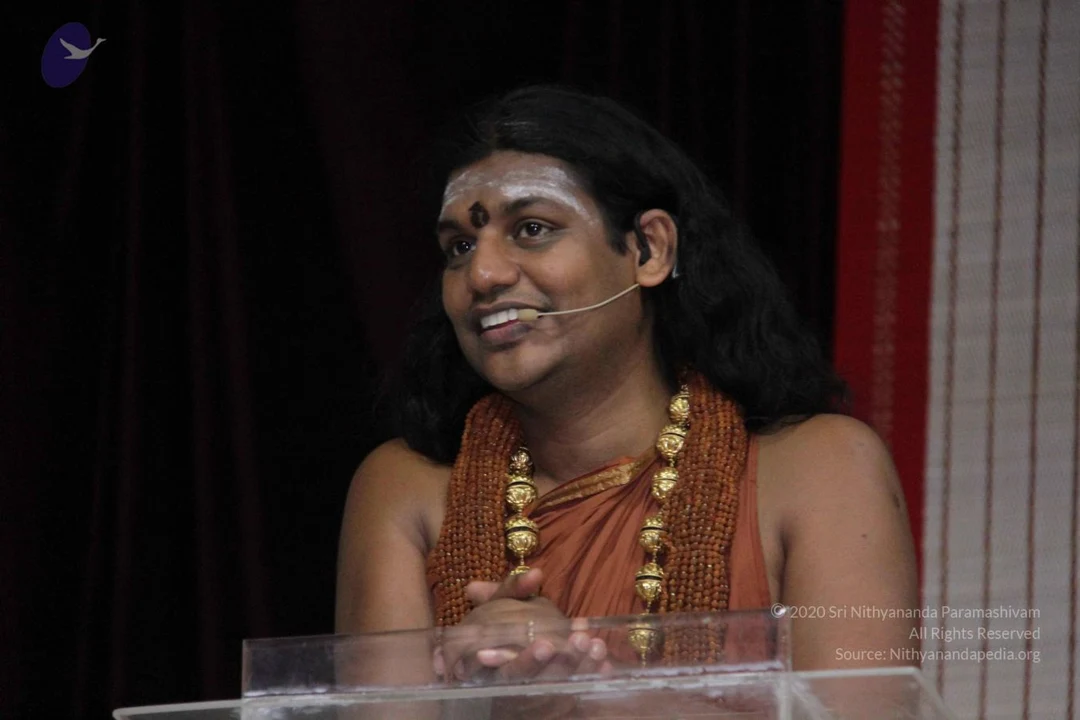
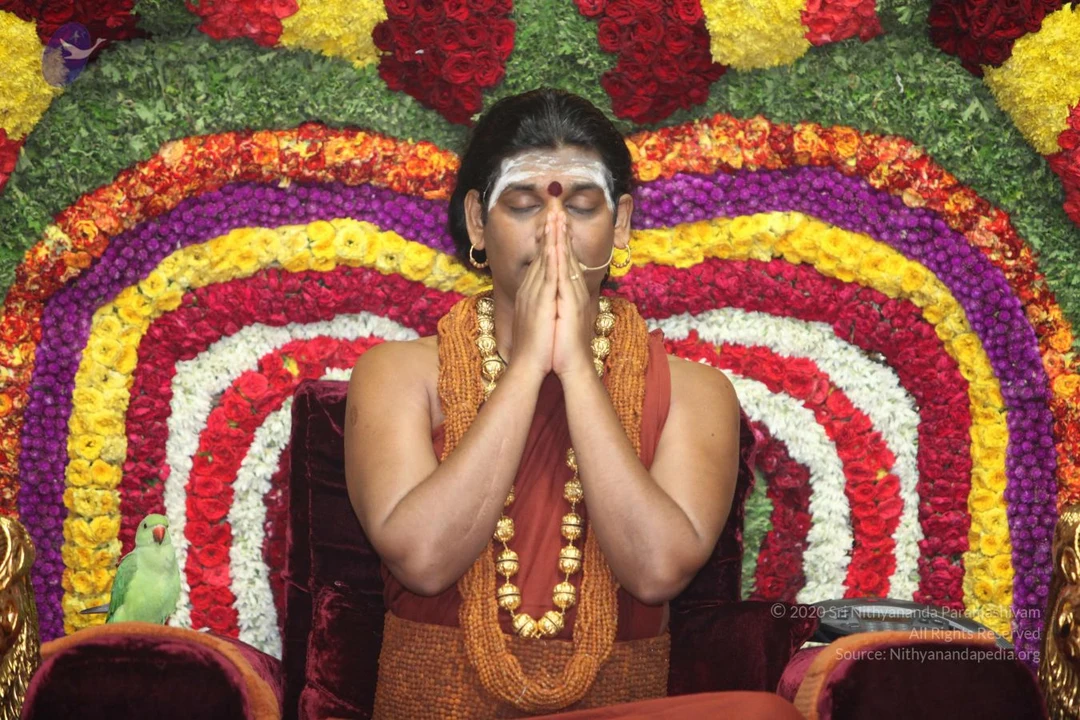
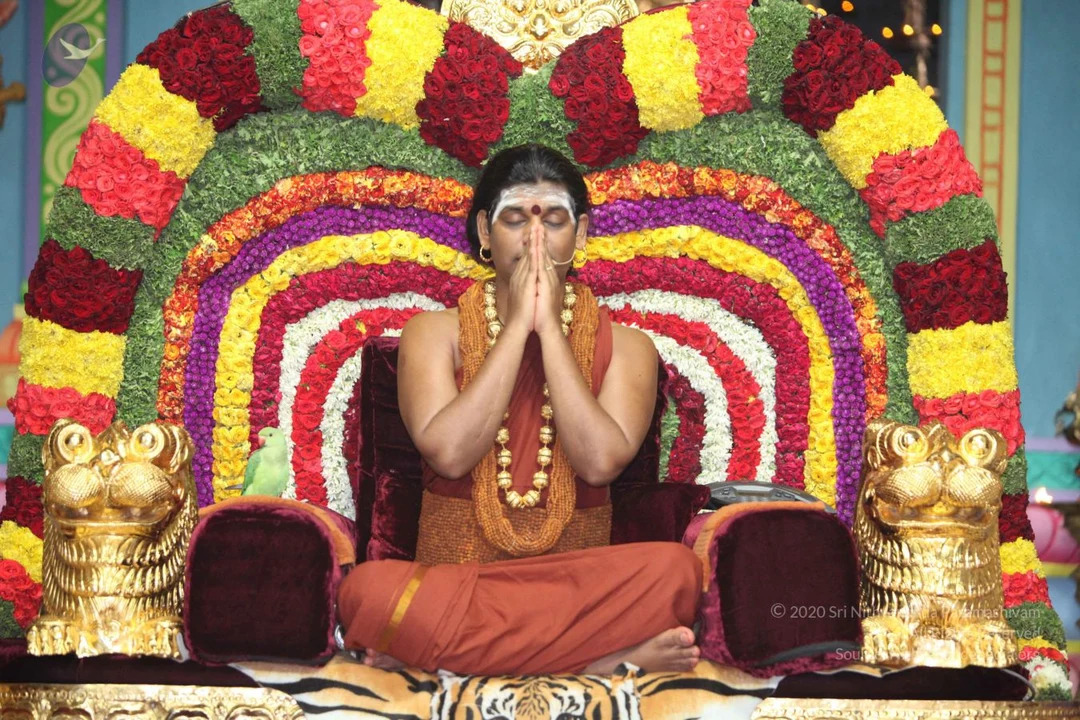
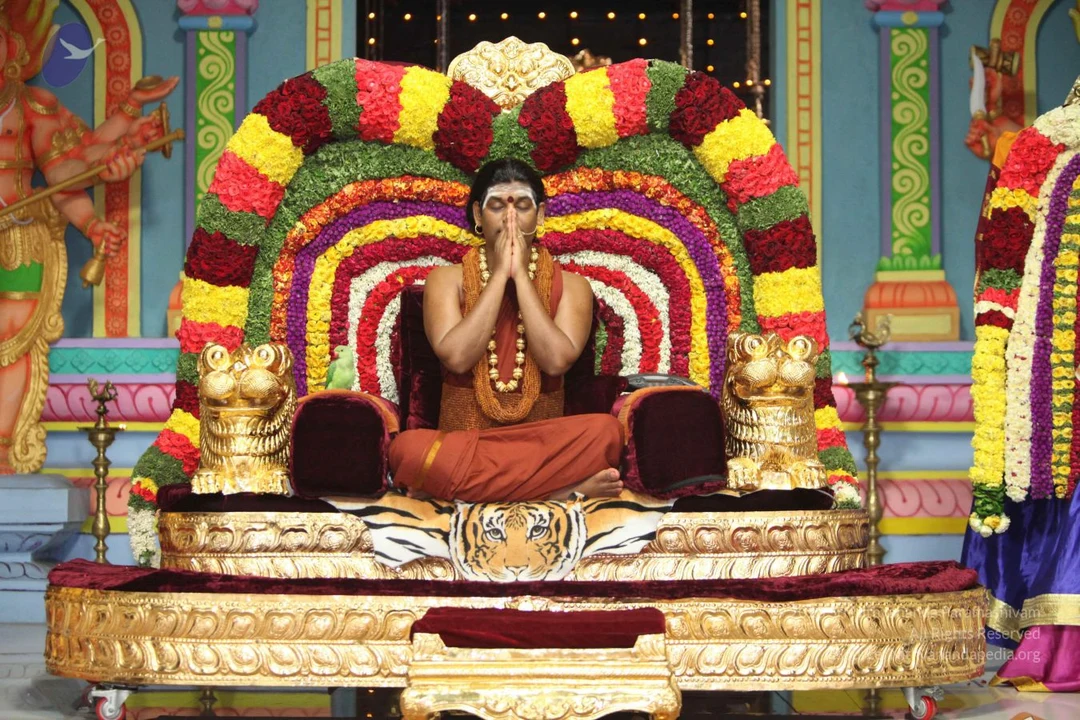
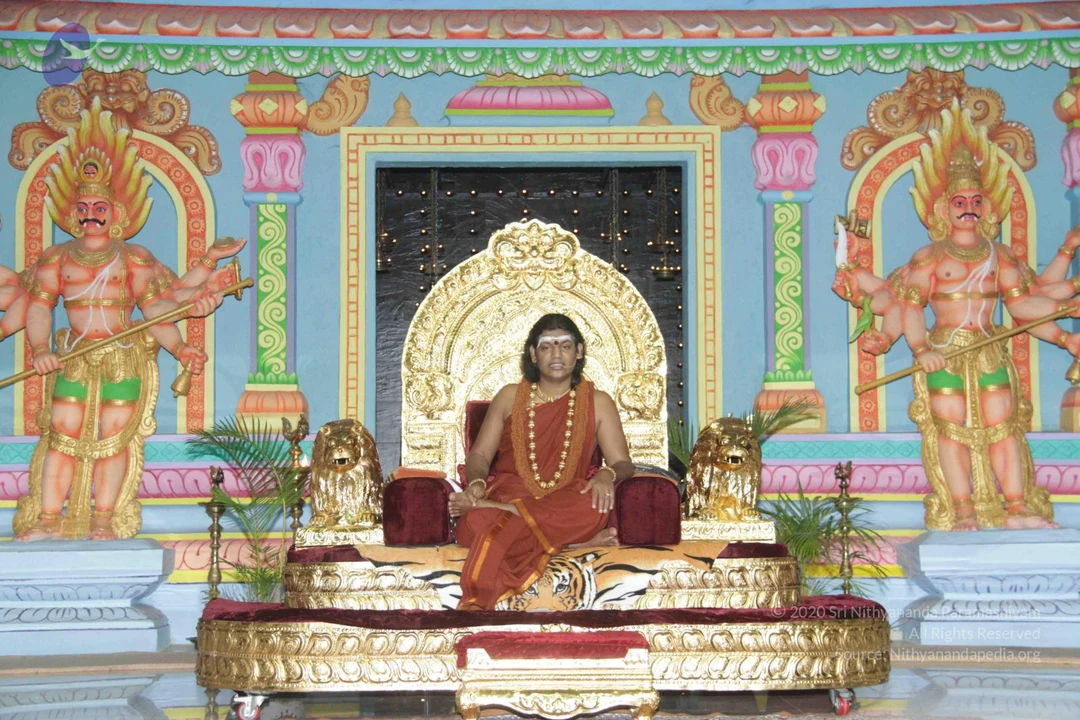
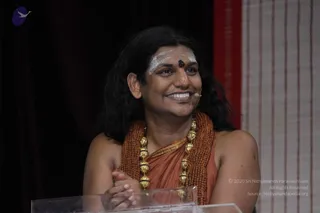
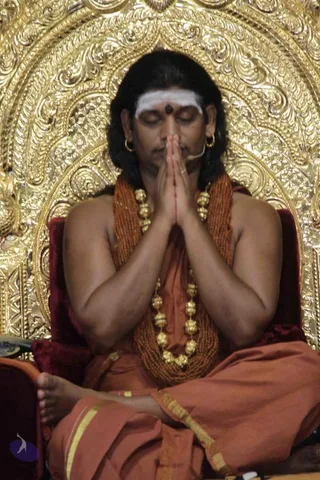
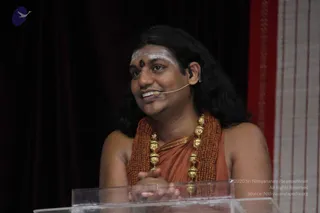
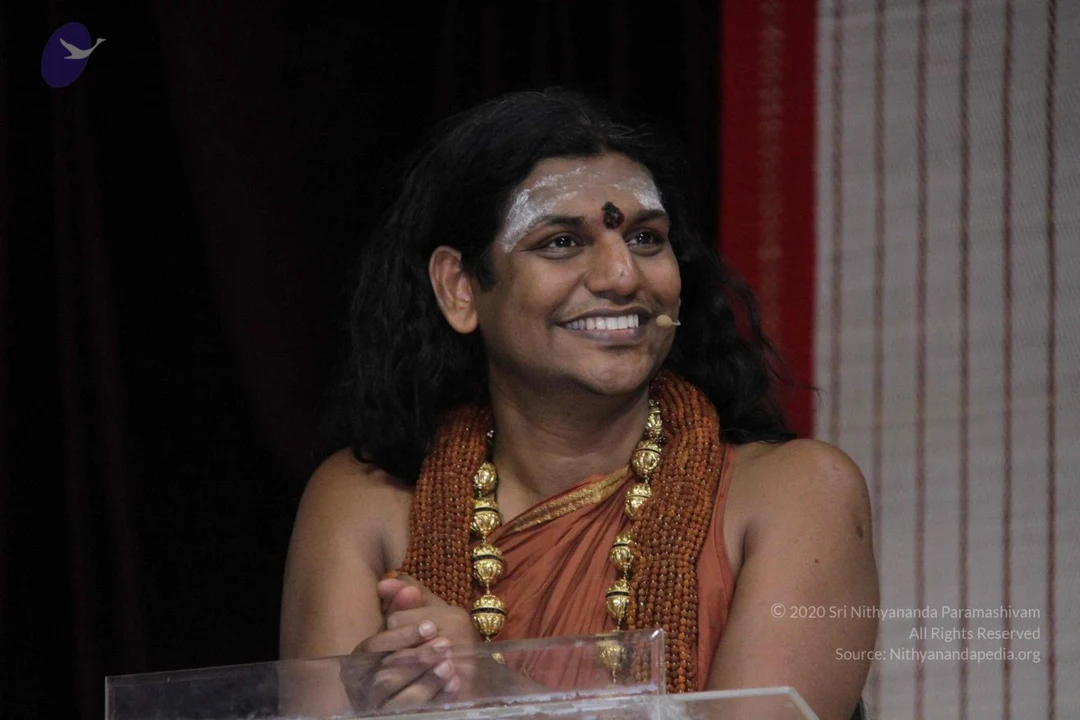
A smiling man with long, wavy dark hair stands behind a clear acrylic lectern, hands clasped on its top. He wears an orange-saffron cloth draped over his shoulders and a thick rudraksha mala with gold bead necklaces. He has white vibhuti lines across his forehead and a dark kumkum dot at the centre. A small clip-on microphone is visible near his face. Behind him are dark drapes and a red and white striped backdrop. a person is a discourse speaker at a satsang-style talk, matching the page's Inner Awakening intro event.A man seated on a red velvet chair in front of an ornate gold repoussé backdrop, eyes closed, palms pressed together in anjali mudra. He wears orange-saffron clothing, a rudraksha mala with gold bead ornaments, a white vertical forehead mark with a central dot, gold hoop earrings, and a small headset microphone. His long dark hair is swept back, and he sits cross-legged with bare feet visible.A seated man in saffron ochre robes sits cross-legged on an ornate gilded throne with a large arched backrest carved with floral motifs, flanked by two golden lion sculptures. The throne rests on a tiger-striped cloth against a deep maroon curtain. He wears a long rudraksha mala and a large gold-coloured bead necklace over his bare upper body, with white and red forehead markings, and rests his hands on the armrests while looking off to the side, apparently speaking into a headset microphone. Swamiji (probable): the saffron robes, long swept-back hair, ornate gold necklace, rudraksha mala and throne match the presentation associated with the page, though the face is not used for identification.A seated man with long dark hair and a white forehead mark sits cross-legged on an ornate golden throne with carved lion heads on the armrests and side pedestals. His palms are pressed together in front of his face in namaste, and he wears an orange-saffron dhoti and shawl, rudraksha-style beads and a gold necklace. A tiger-striped cloth covers the platform beneath him, and deep maroon velvet drapes form the backdrop. The scene reads as a formal seated greeting or devotion on the stage. Swamiji (probable) cues: long swept-back hair, saffron clothing, rudraksha mala and gold necklace while seated on a throne.A photograph of a man seated on an ornate red-cushioned throne in front of an elaborate gold-embossed backdrop with floral and scroll carvings. He has his palms pressed together in namaskar at his chest with eyes closed. He wears a white horizontal forehead mark with a dark dot, a rudraksha mala of beads with gold spacers draped over an orange-saffron shawl, bare shoulders, and small gold hoop earrings. A small microphone is clipped near his face and a telephone-like device sits at the lower left.A photograph of a seated man in saffron-orange robes on an ornate gilded throne with a large arched backrest and two gold lion sculptures flanking the seat. He wears a long multi-strand rudraksha mala with gold beads, a shawl draped over one shoulder, and a white tripundra with a red dot on his forehead. His long dark hair is swept back, and he sits cross-legged with hands resting on the armrests in front of a dark red curtain, appearing to address an audience.

SARVA-DARSHAN

4 photosSource gallery
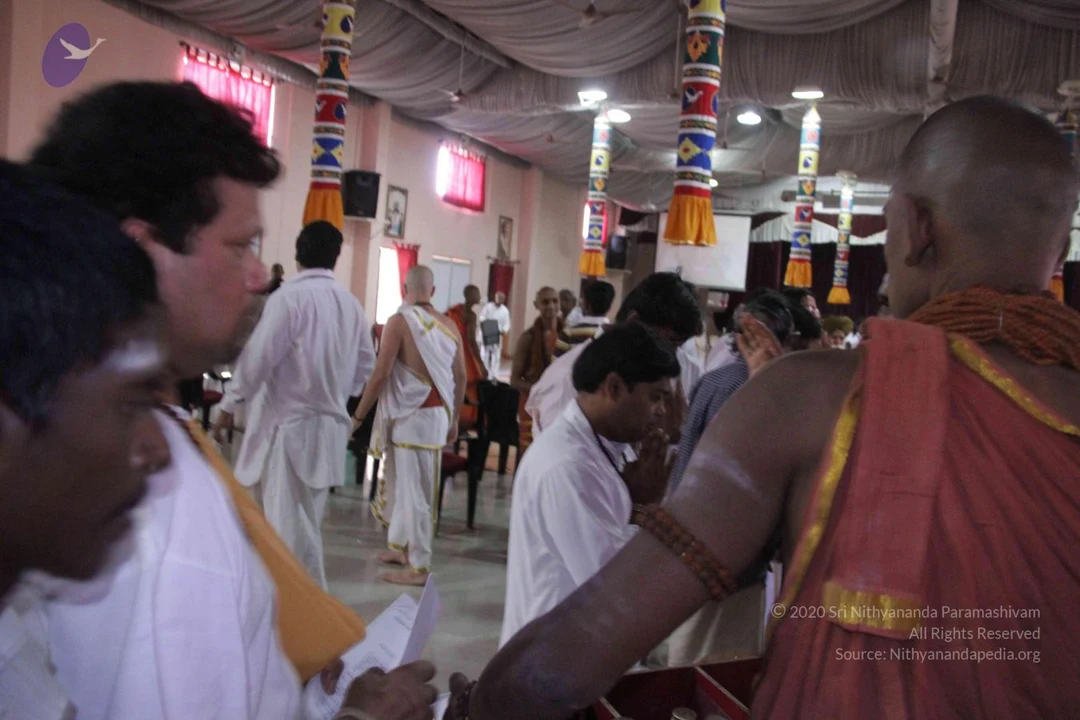
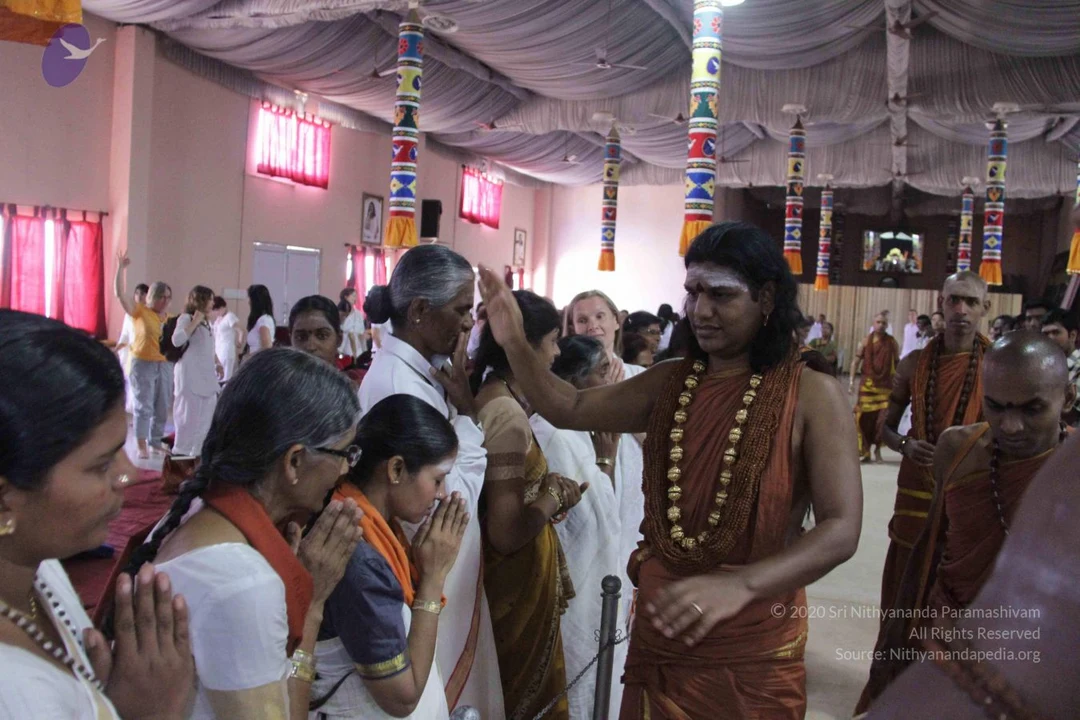
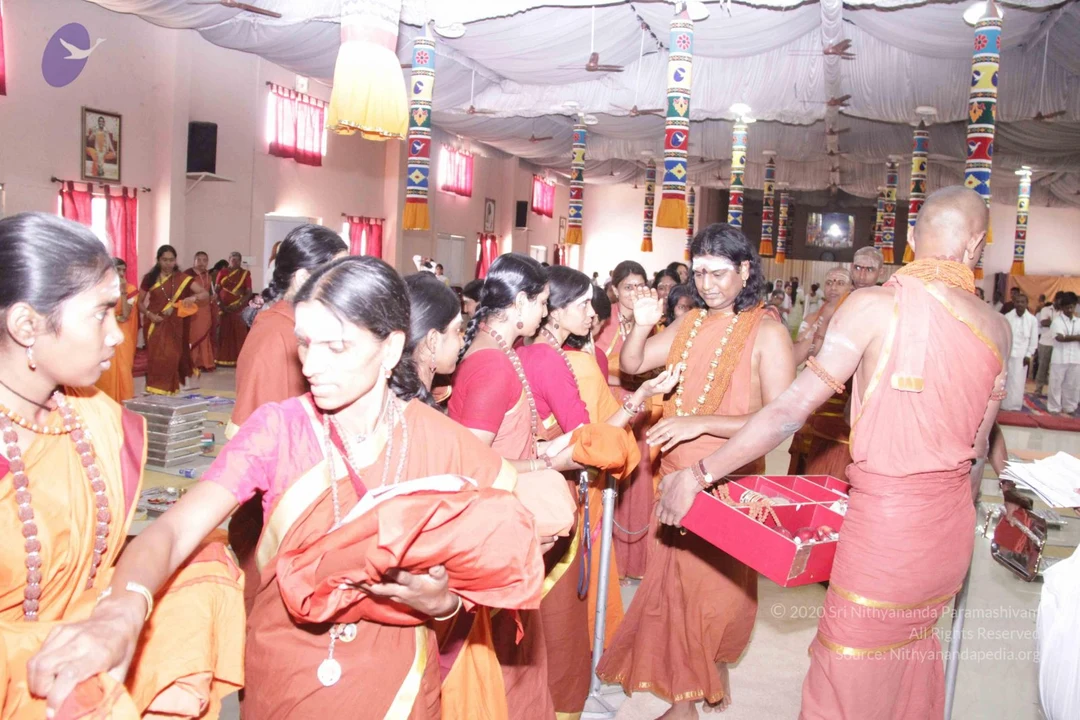
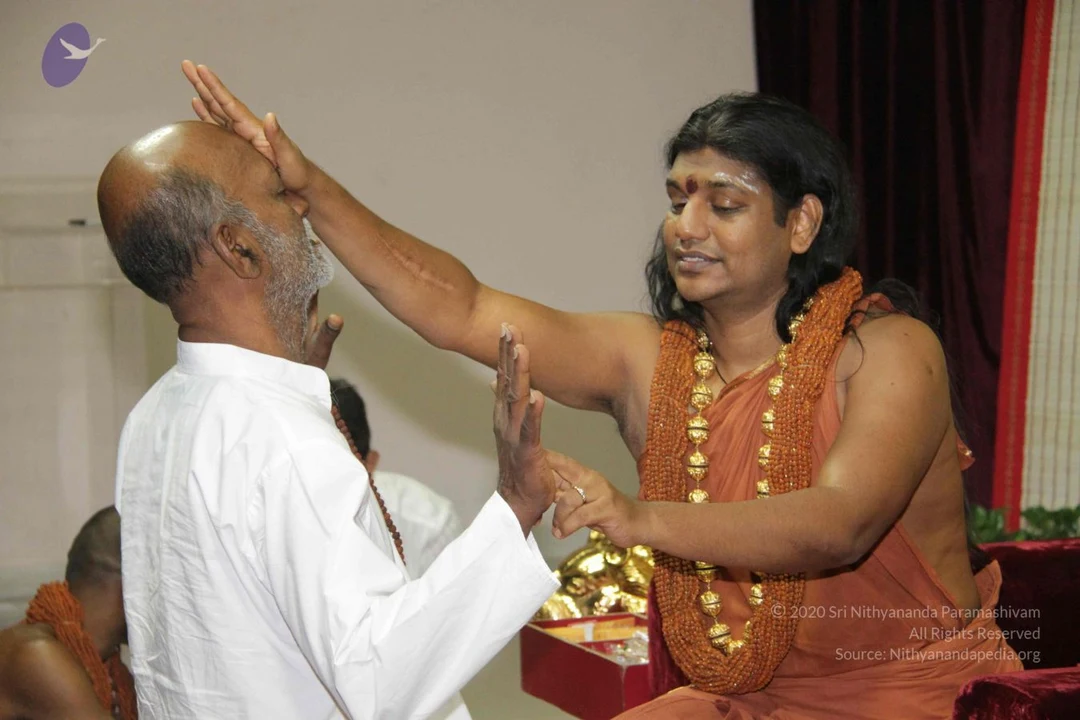
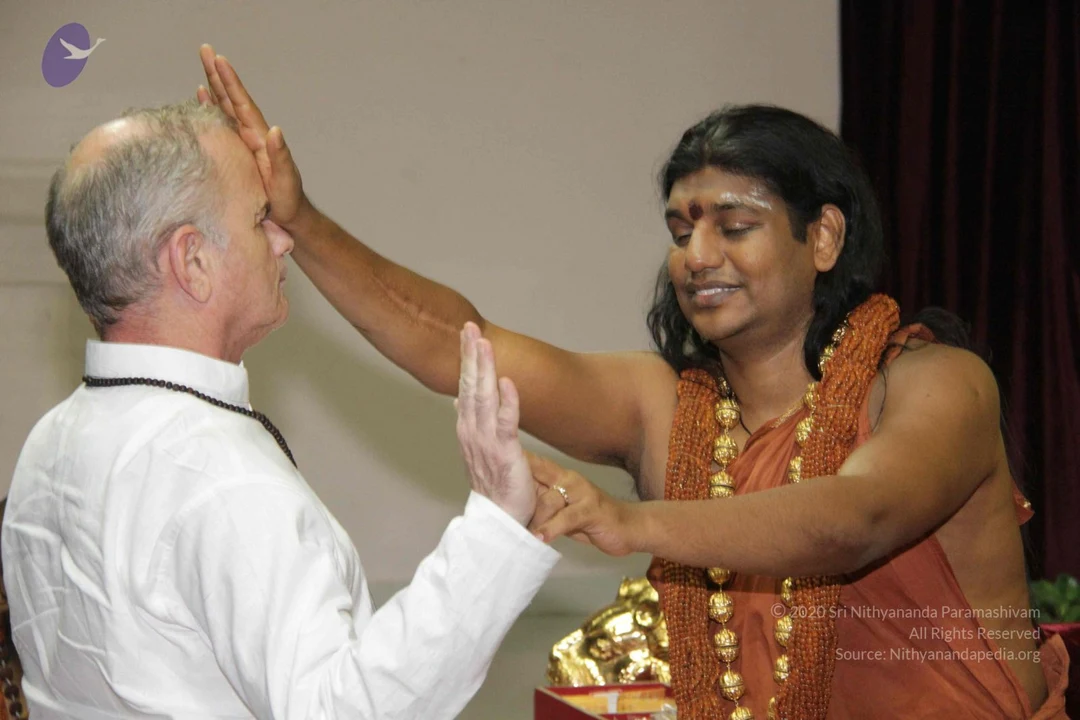
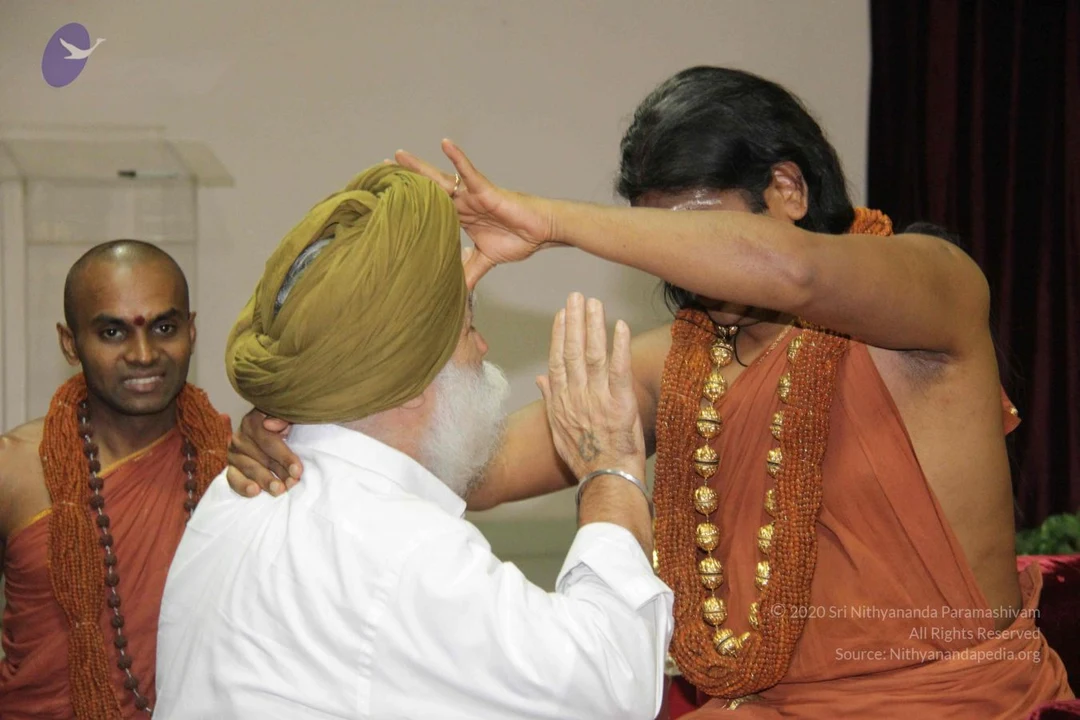
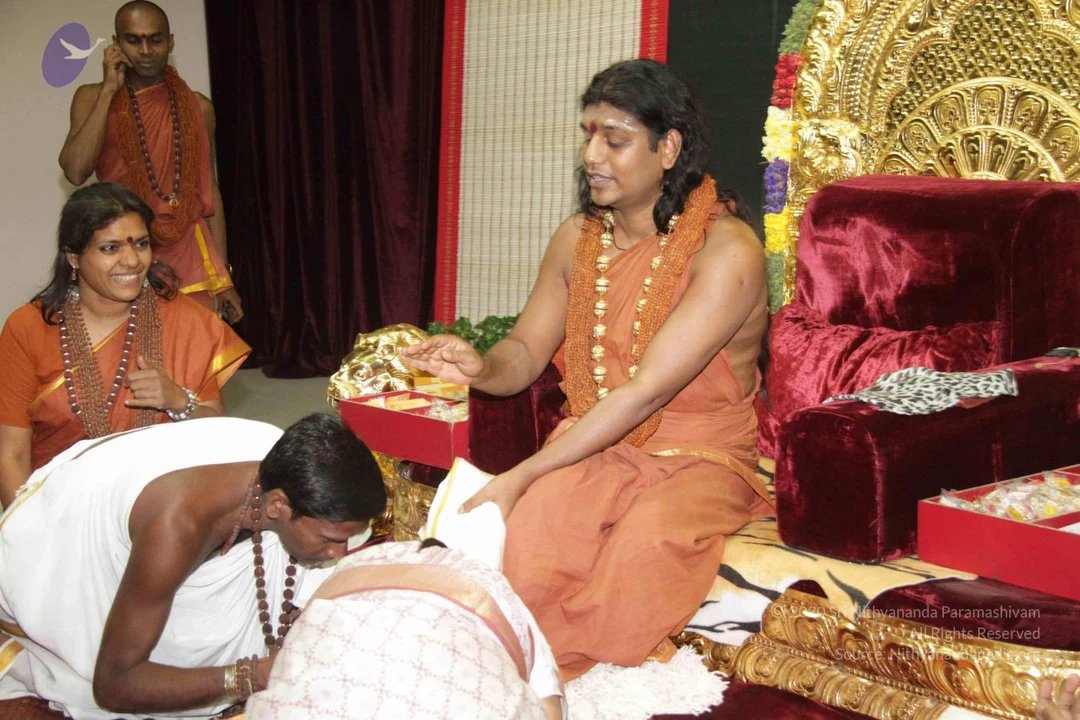
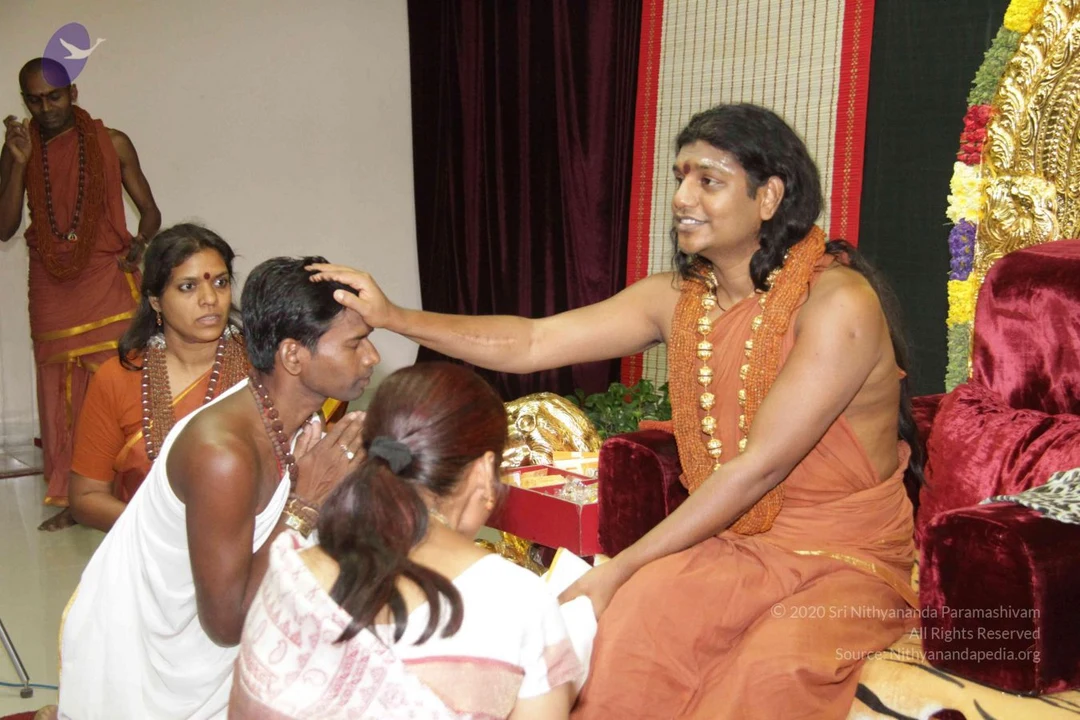
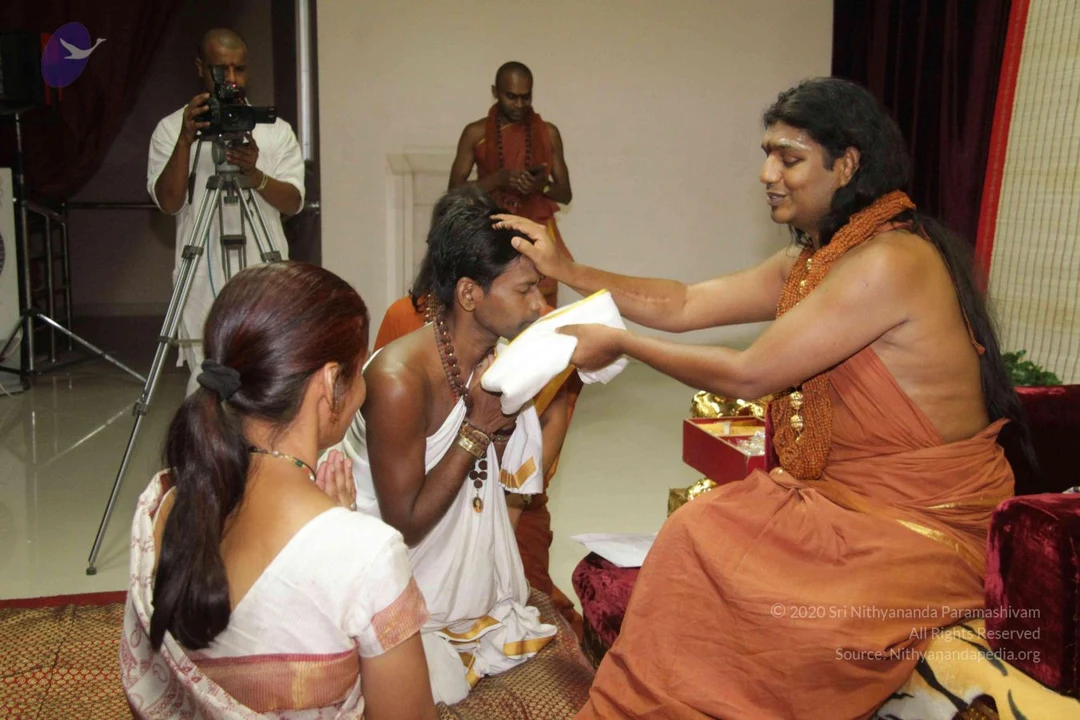
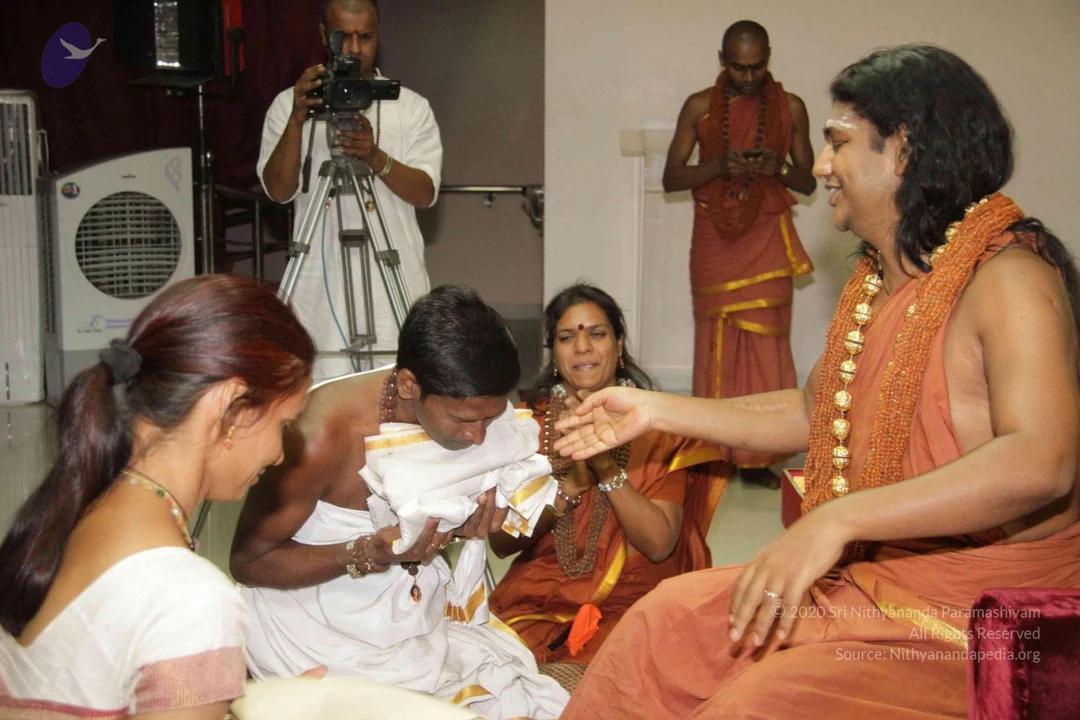
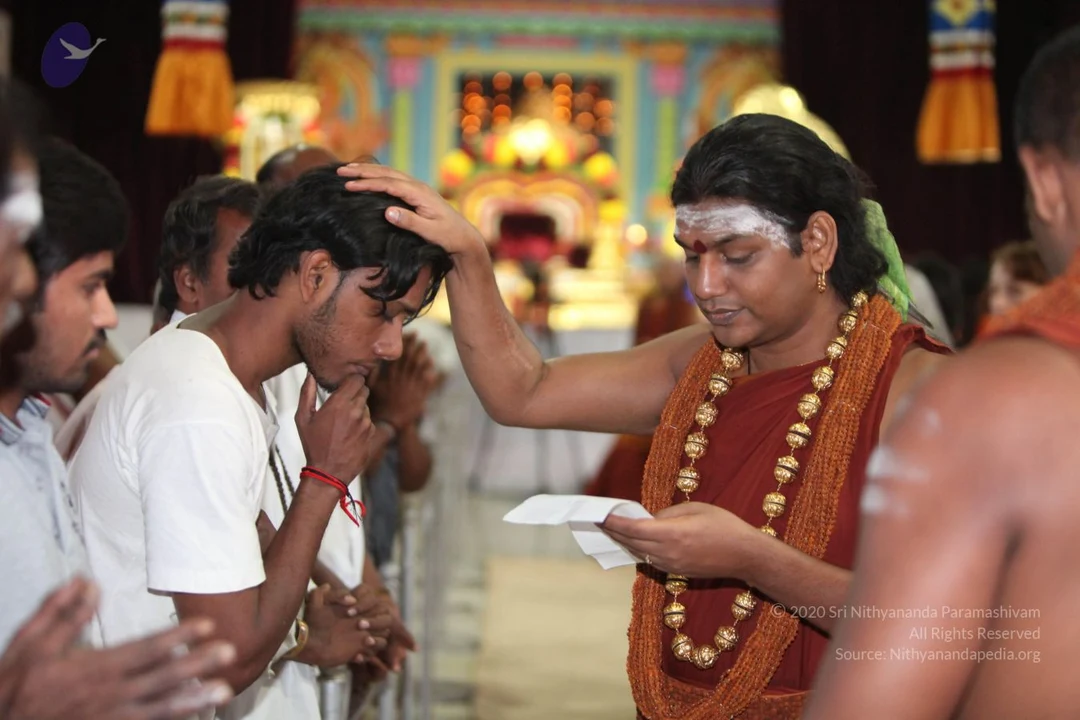
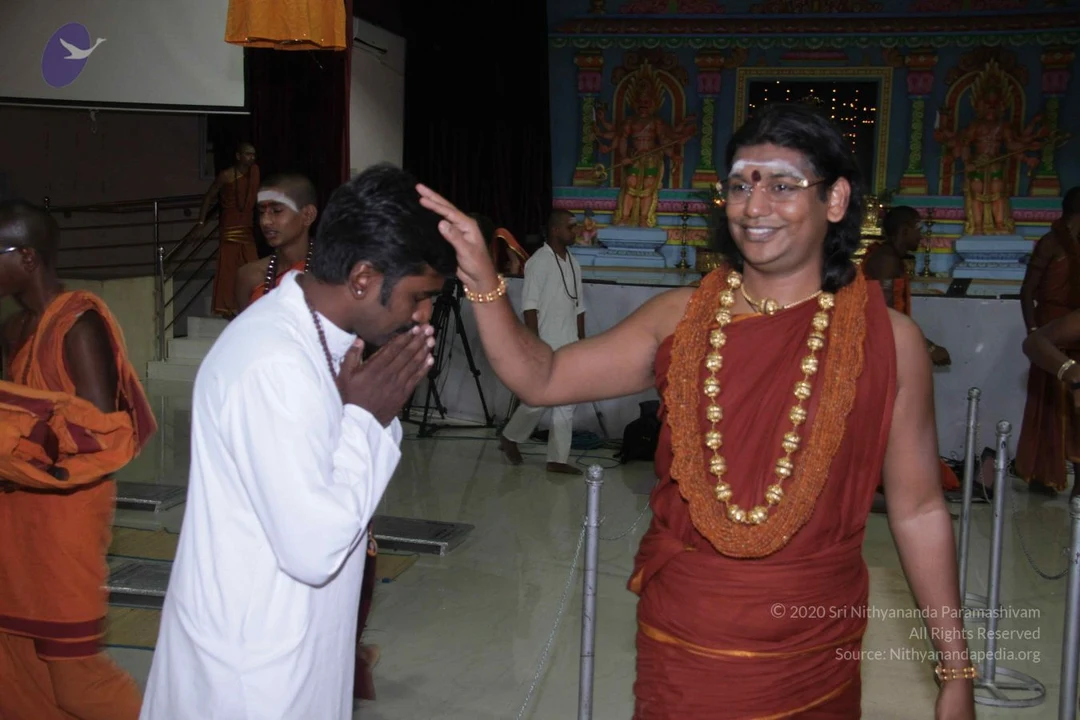
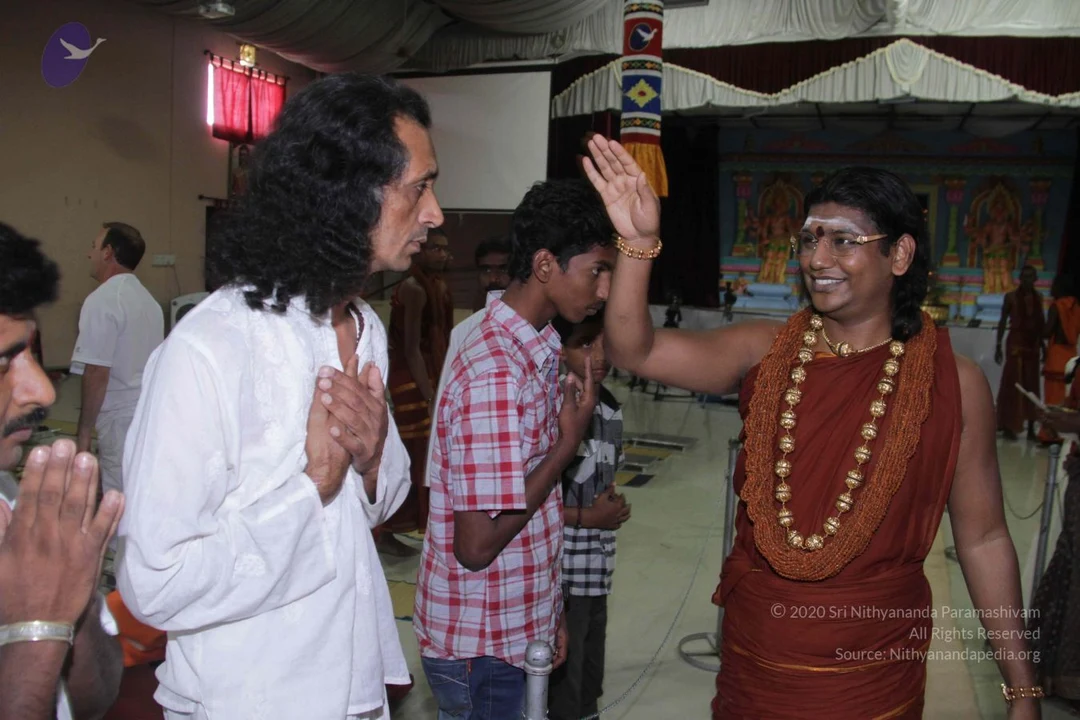
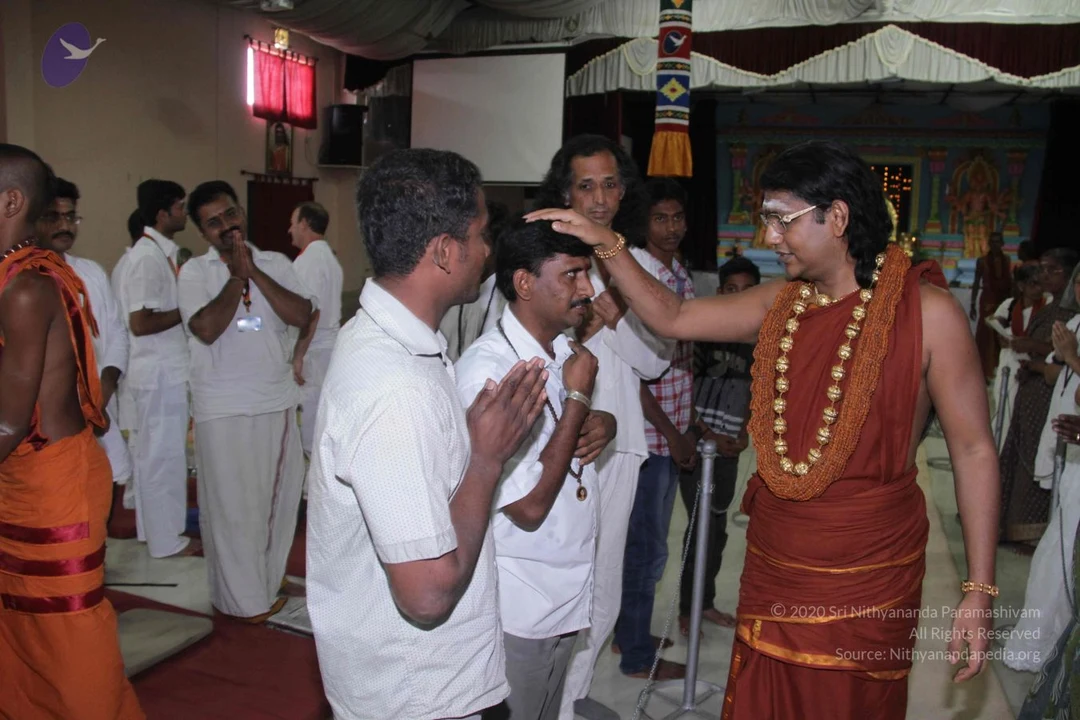
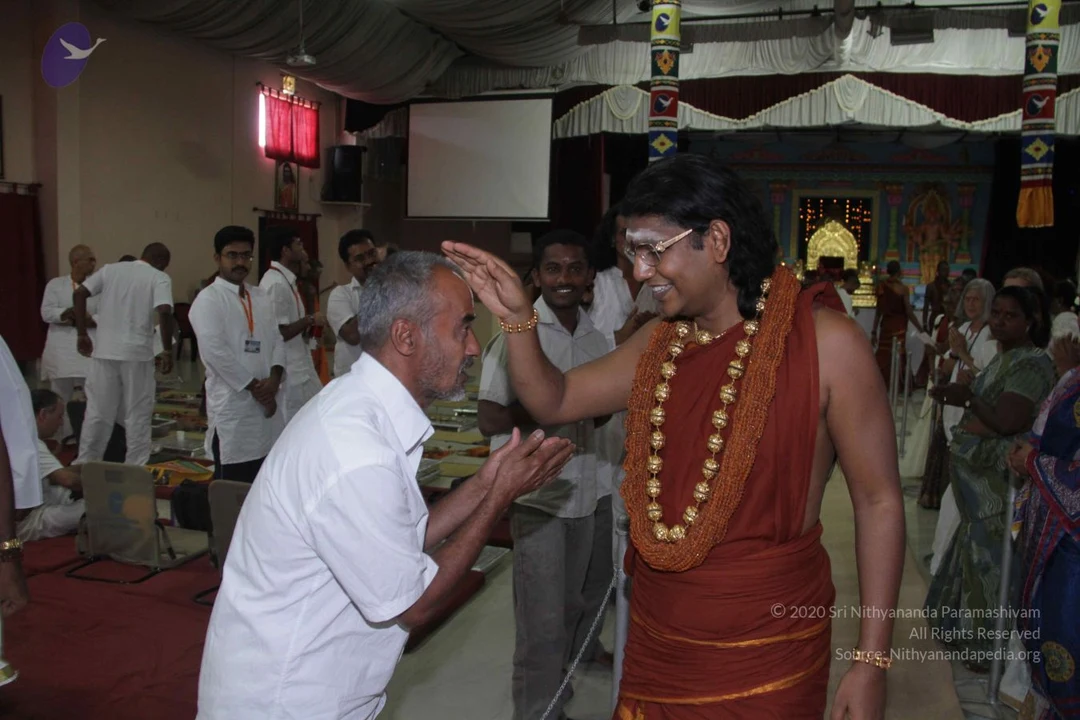
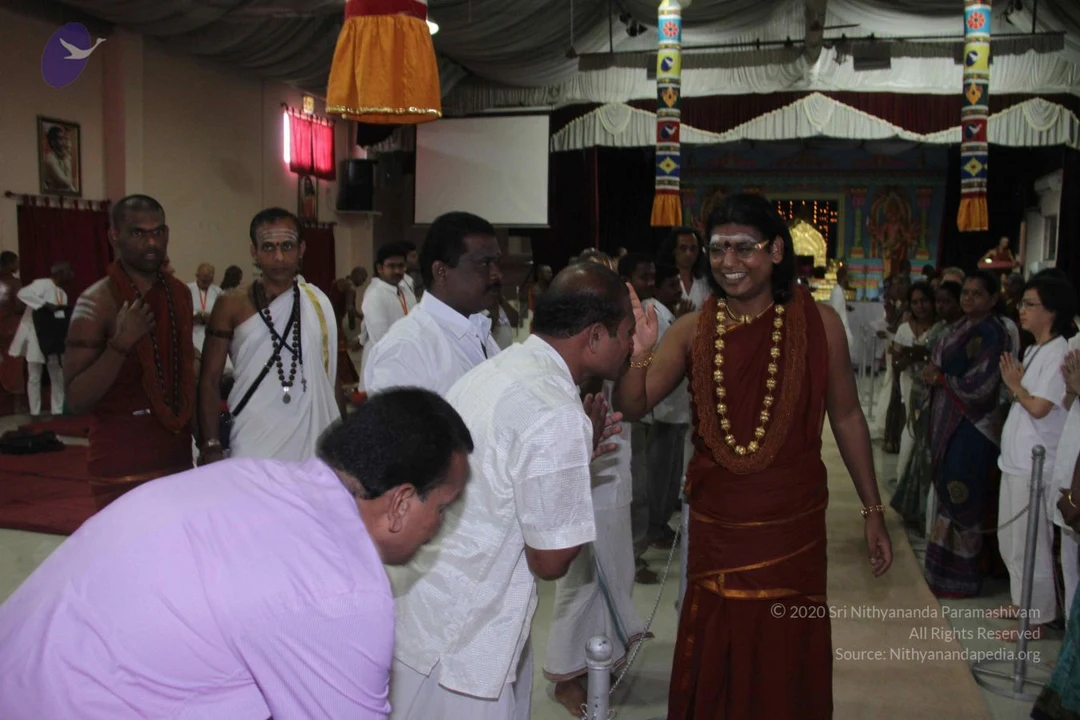
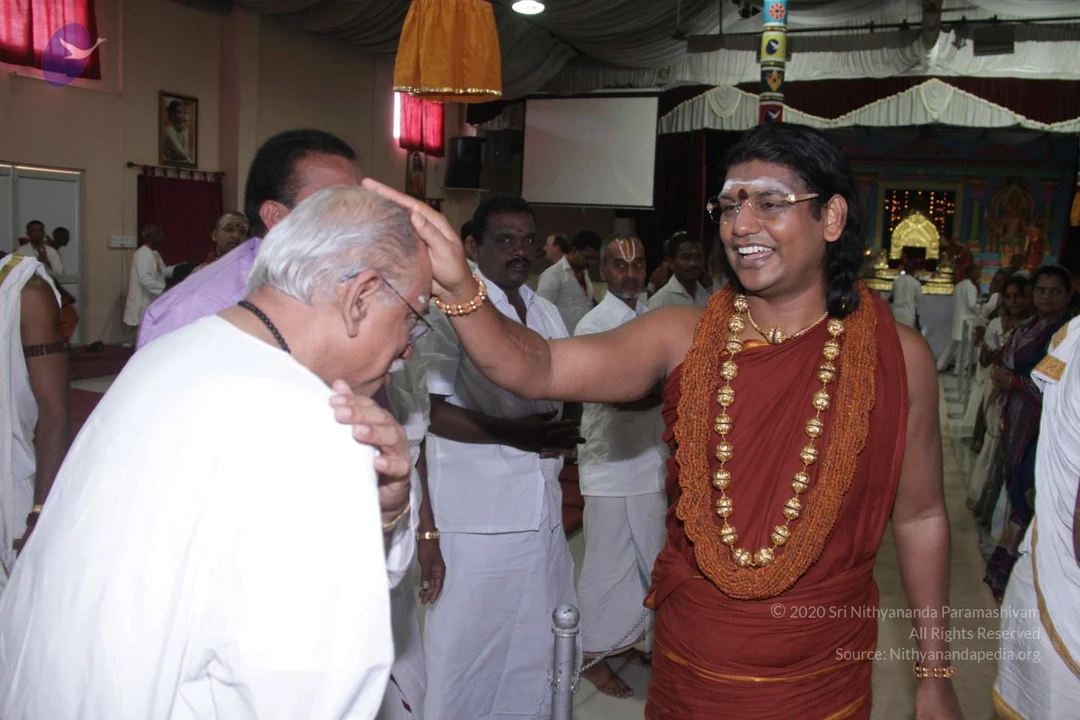
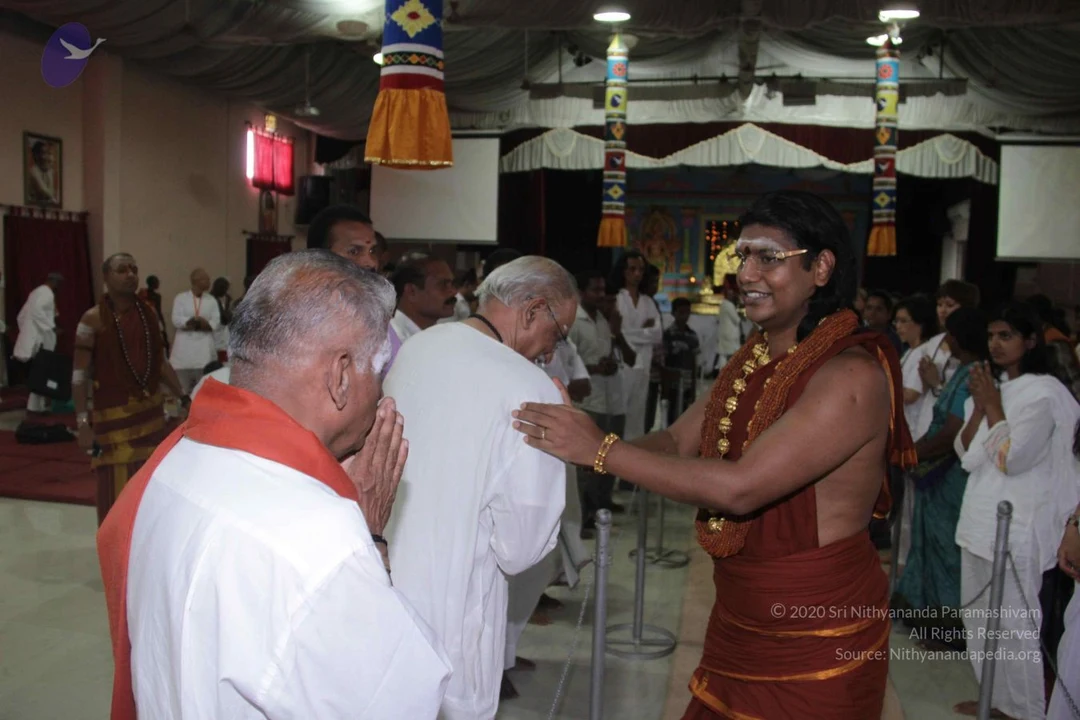
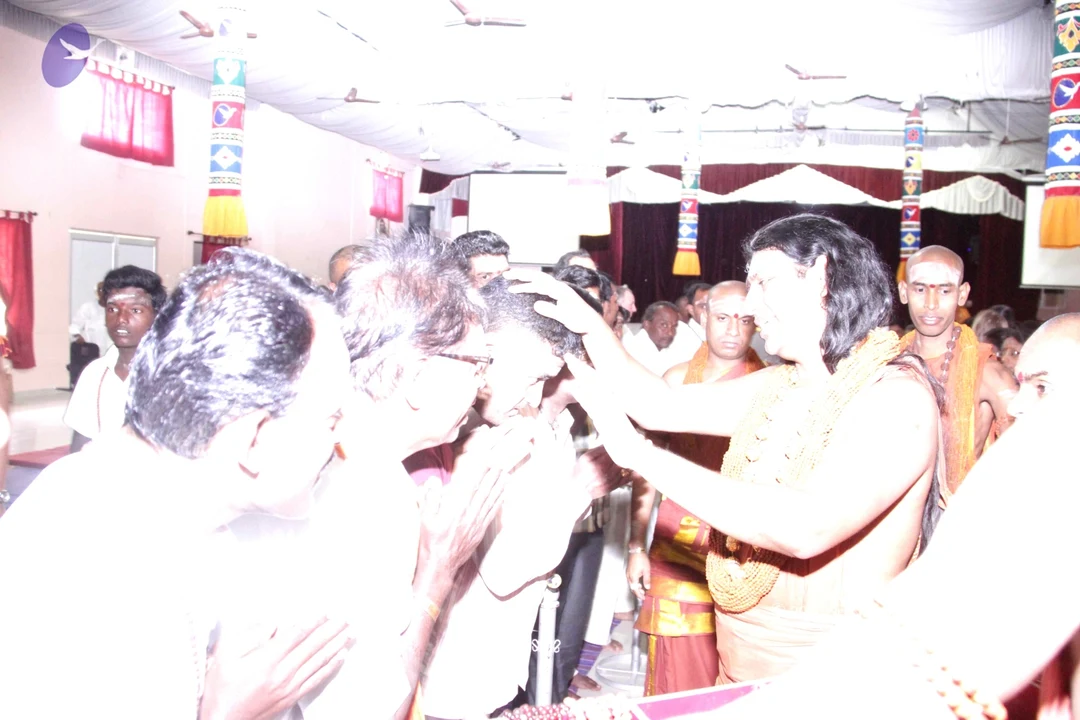
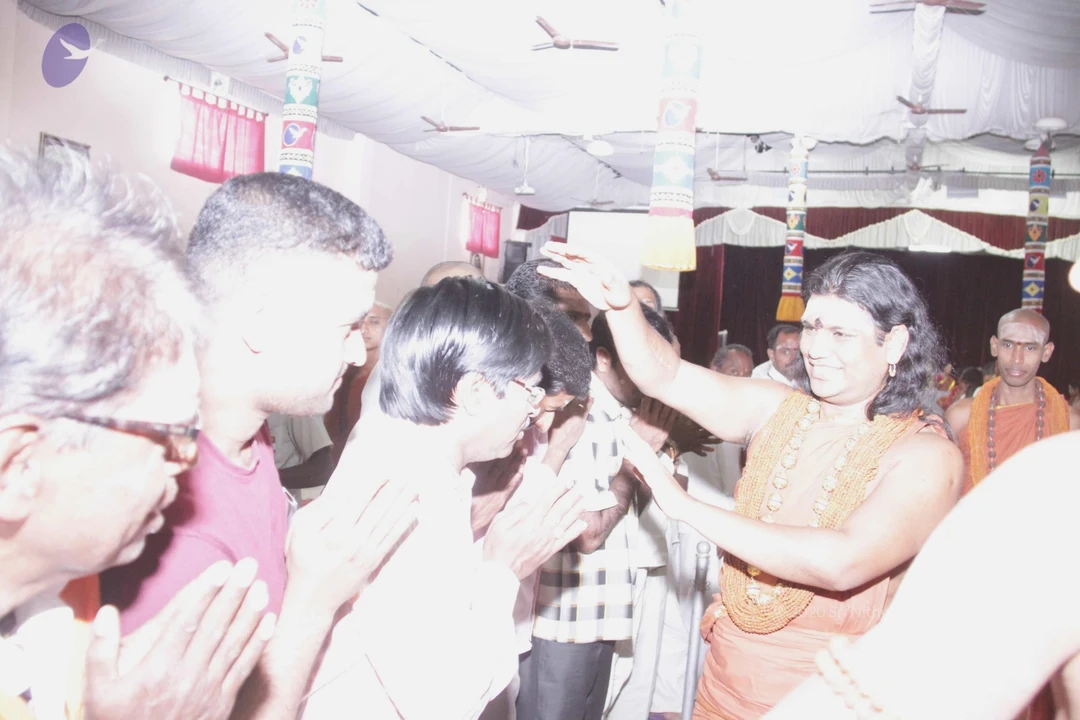
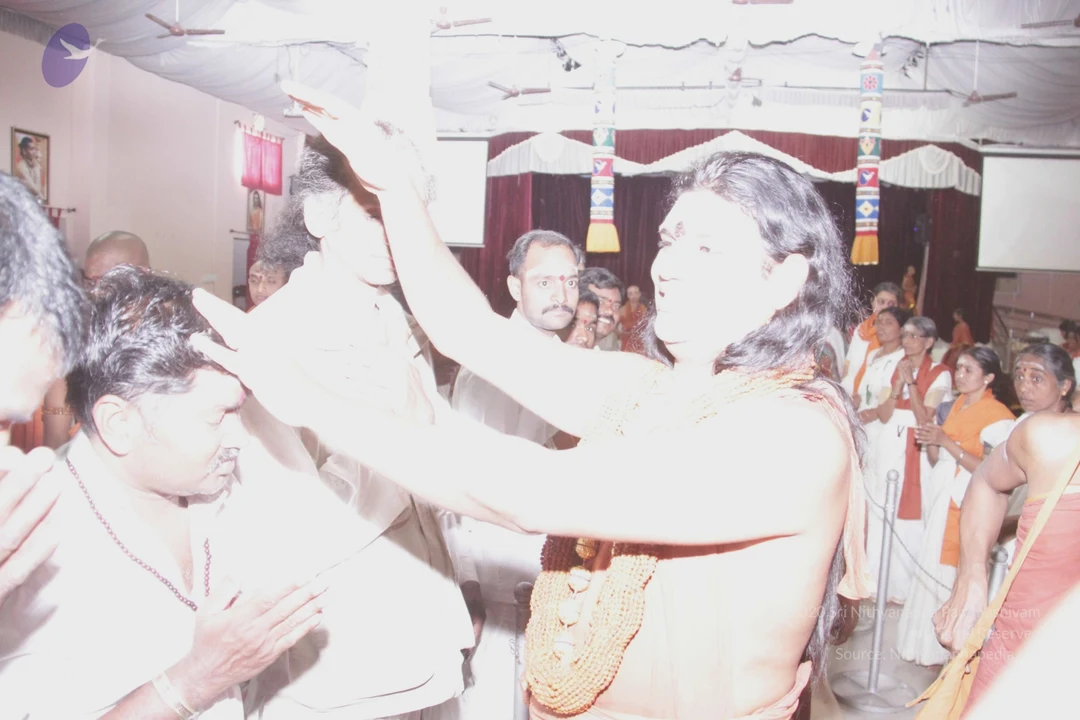
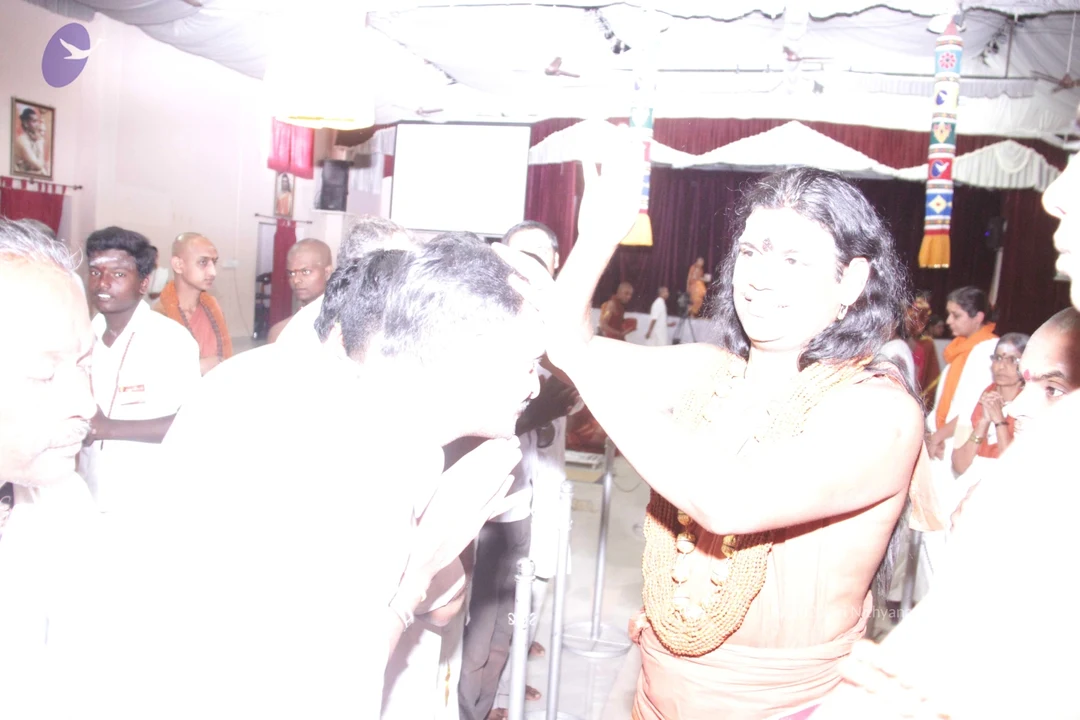
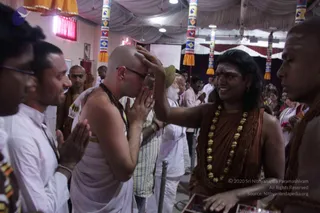
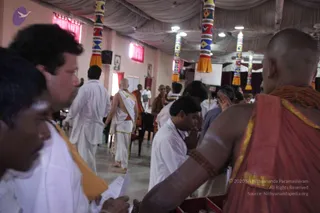
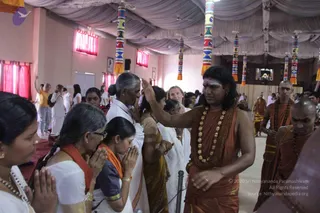
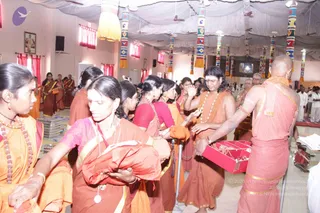
Indoor ceremony under a white draped tent ceiling with coloured tassel hangings. A shaved-headed man in white dhoti and shawl, with a rudraksha mala, bows forward with palms joined while a man in an orange-brown robe with long dark hair, gold bead necklaces and a red tilak places his hand on the bowing man's forehead. Several white-clad men stand with hands folded around them, and a man in a green turban and striped shirt watches. The orange-robed man with long hair and gold necklaces matches the appearance cues of Swamiji (probable) and is shown in a blessing role. Background shows more devotees and a white screen.Indoor hall with a draped white fabric ceiling and decorated pillars banded in red, blue, yellow and white with orange fringe. Several men in white dhotis and shirts stand and walk, some with folded hands in namaste. A shaved-headed monk in an orange-red robe with gold border and rudraksha mala is in the right foreground, hands joined, back turned to camera. Another bald figure in white dhoti with bare upper body and red-gold cloth walks mid-background. A projector screen and a framed portrait are visible at the back. A printed note on the page labels the event, but no person here shows clear a person cues, so identity is uncertain.A photograph inside a hall with pink walls, white draped ceiling and colourful decorative pillars. In the centre, a man with long swept-back dark hair, a sandalwood tilak on his forehead, a gold-bead necklace and an orange-saffron cloth draped over his body reaches out and touches the forehead of an elderly woman with grey hair in a white sari. Around them, devotees stand with hands in anjali; a younger woman in orange and a girl in an orange shawl fold their hands, and a woman in a yellow sari and gold bangles stands nearby. Two shaven-headed men in saffron robes and rudraksha malas stand at right, and a barrier rope runs along the front. a person, the central figure with distinctive long hair, saffron clothing and gold necklace, giving blessing to devotees, consistent with darshan.A crowded indoor hall decorated with a white ceiling canopy and tall pillars wrapped in coloured bands. In the foreground, several women in orange and red saris and rudraksha malas stand in a line. In the centre, a woman in an orange sari with a long garland and red bindi holds her hands together while a bald man in saffron robes, wearing a rudraksha mala, stands beside a red tray of offerings. Further back, more devotees in saffron and white move through the hall, and a framed portrait hangs on the left wall.

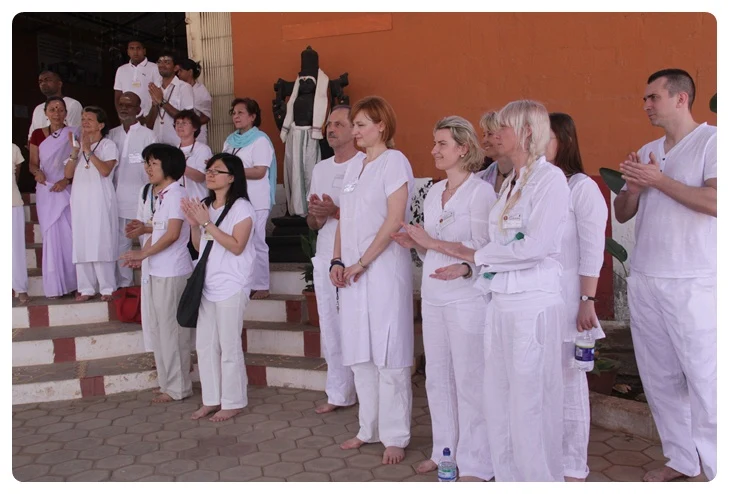
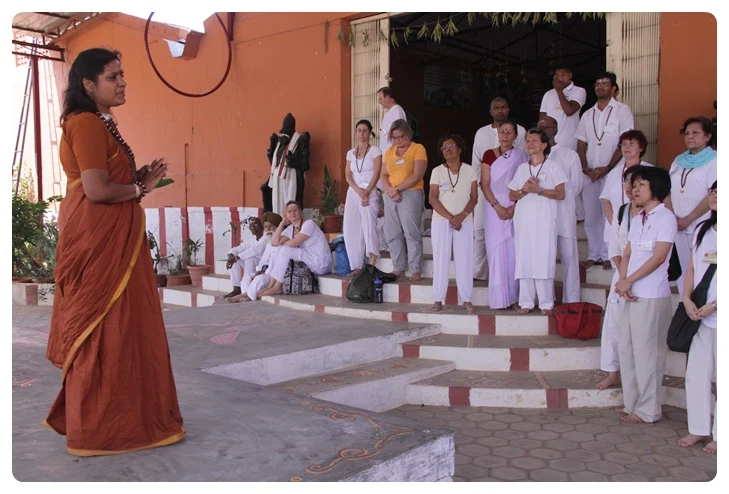
WELCOMING-IA-PARTICIPANTS-AT-TEMPLE

33 photosSource gallery
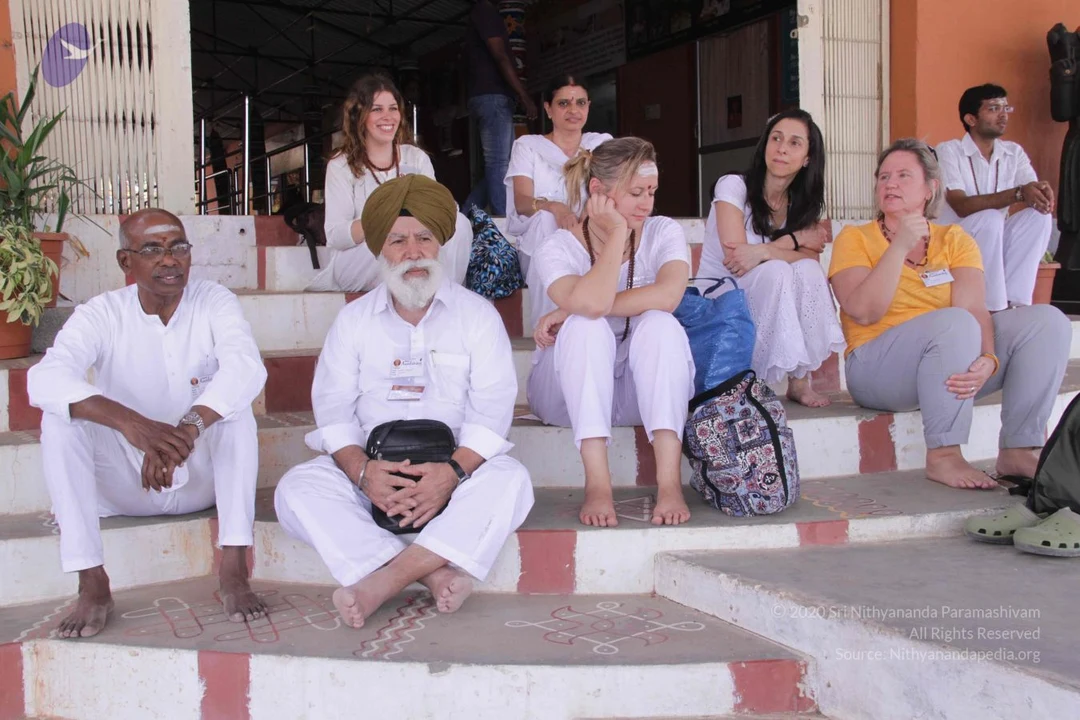
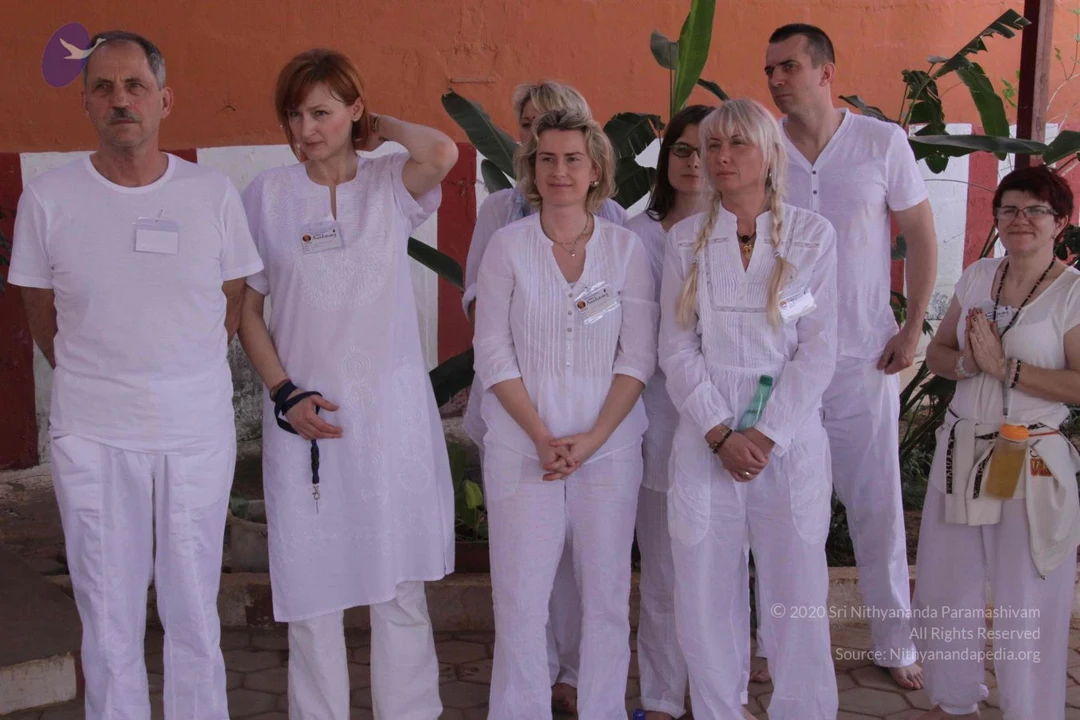
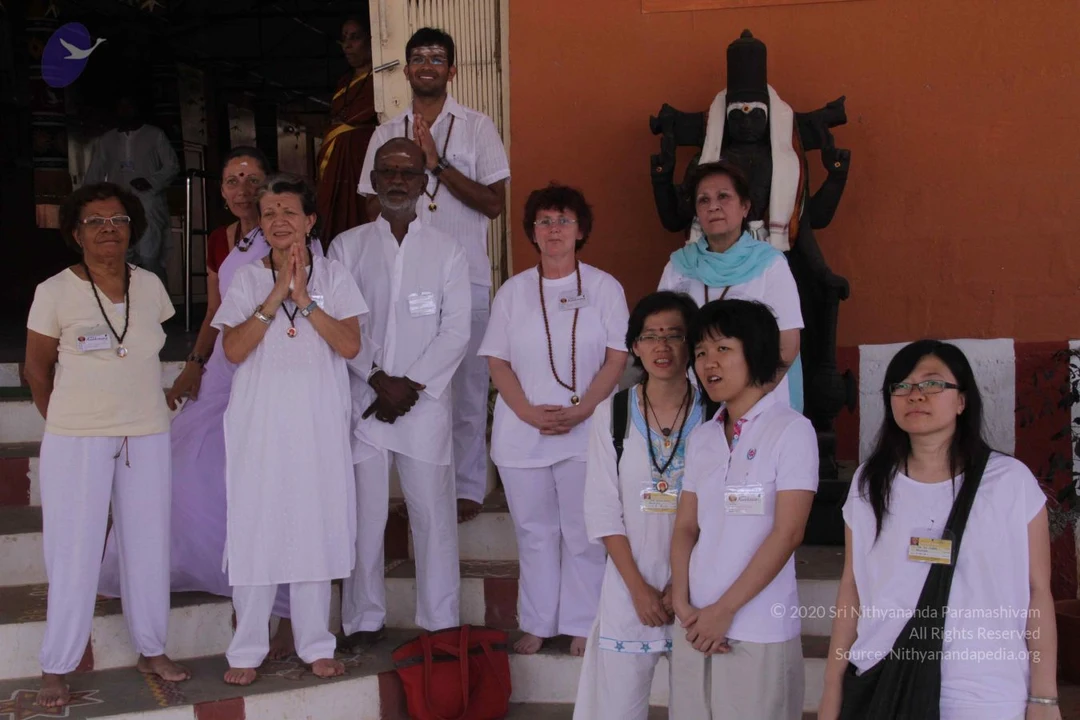
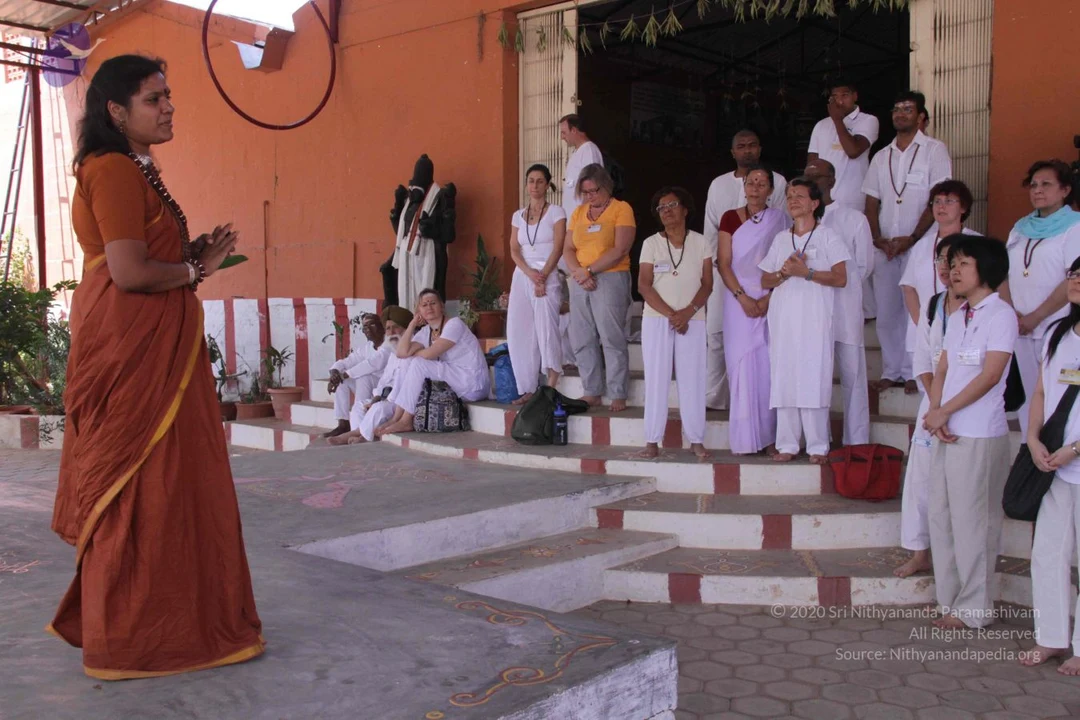
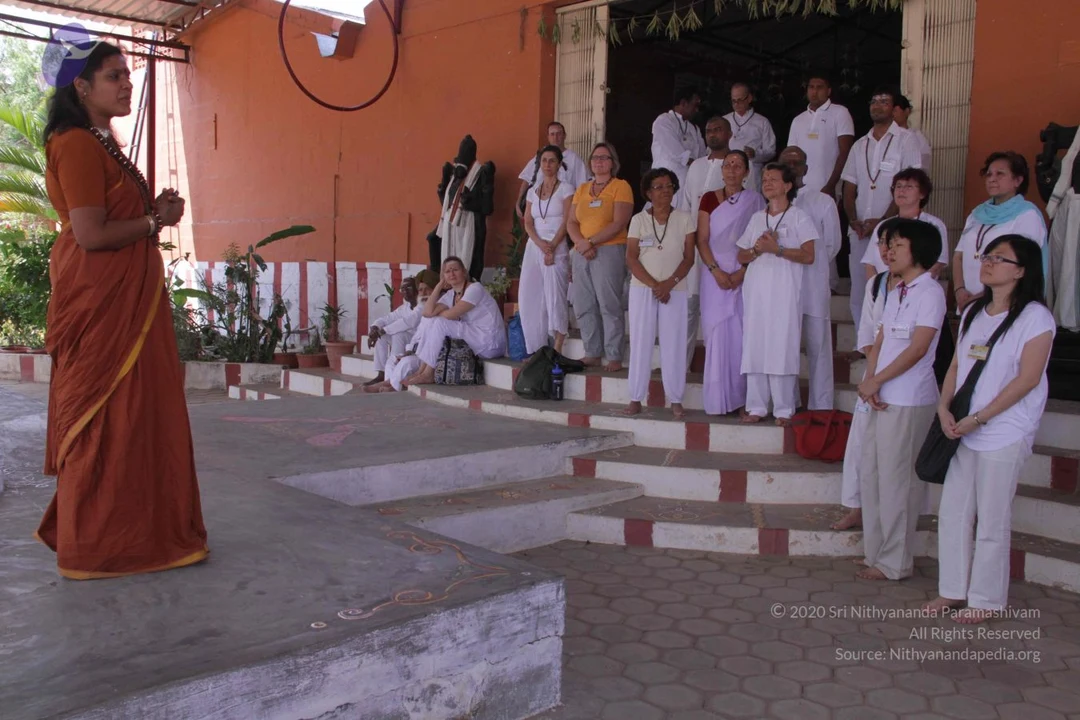
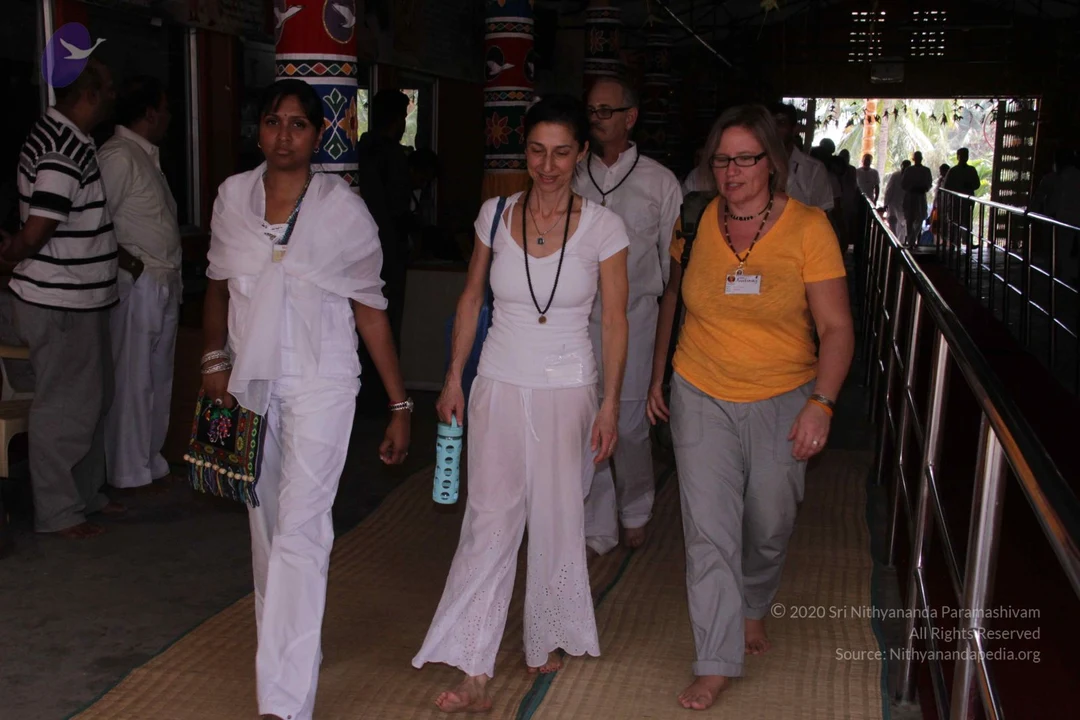
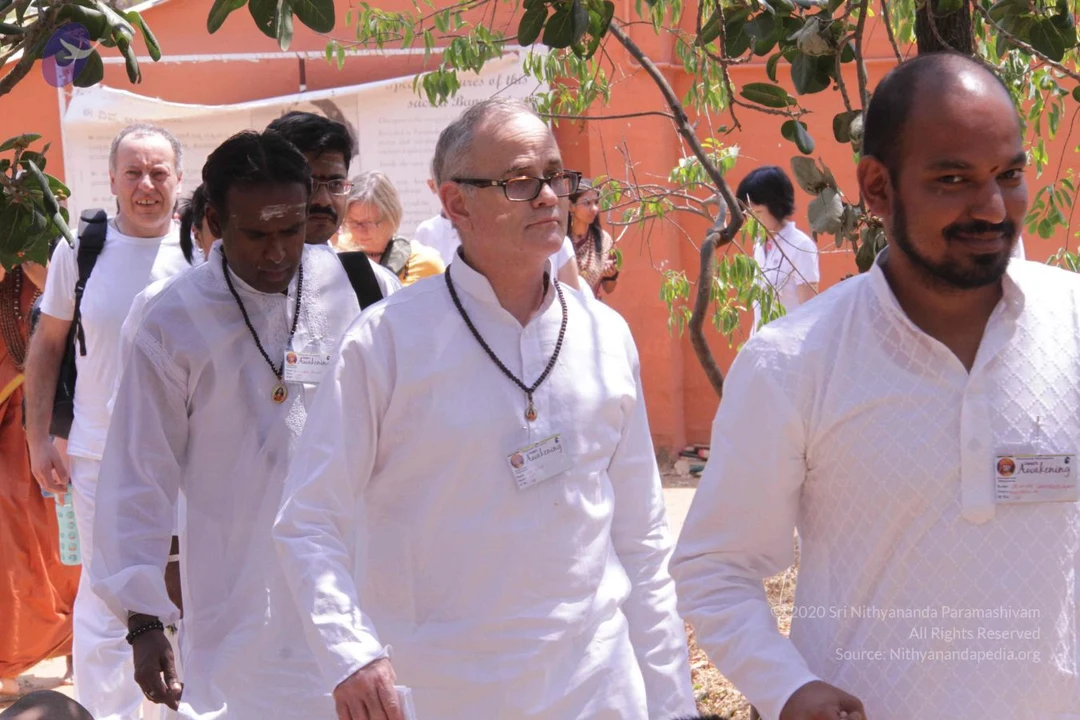
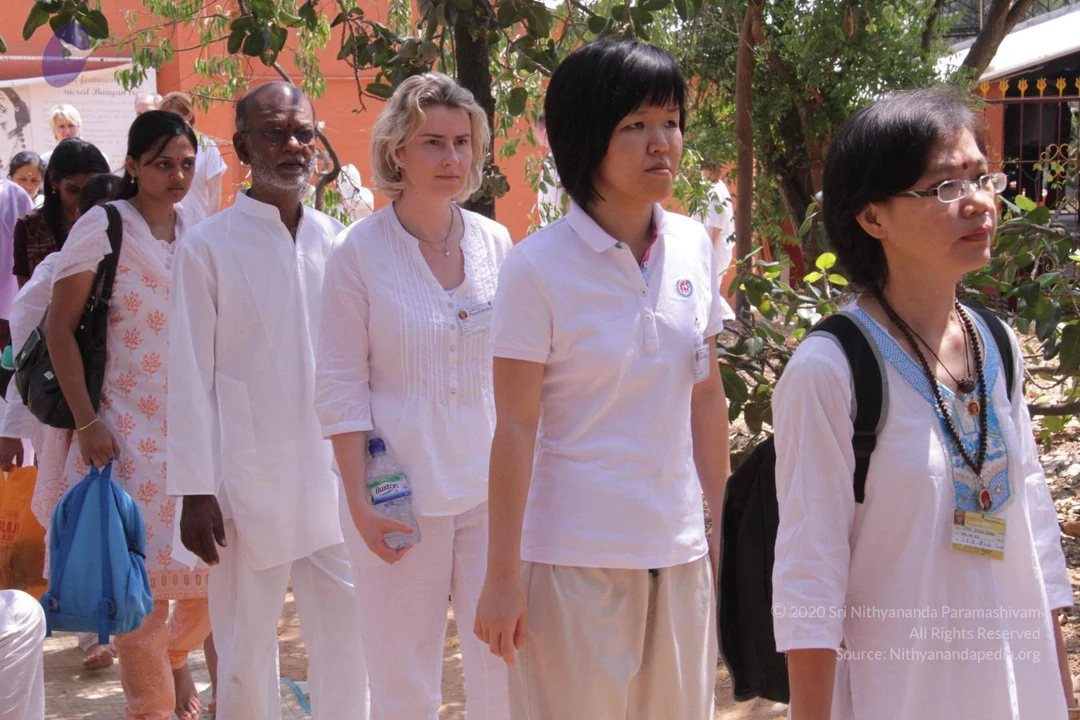
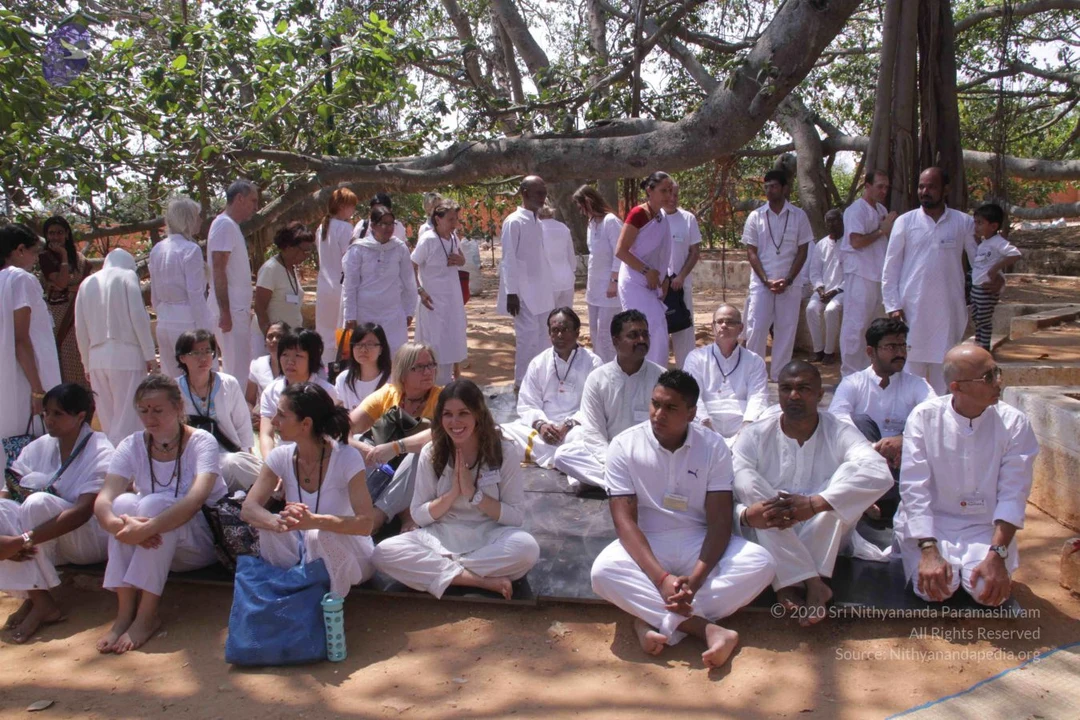
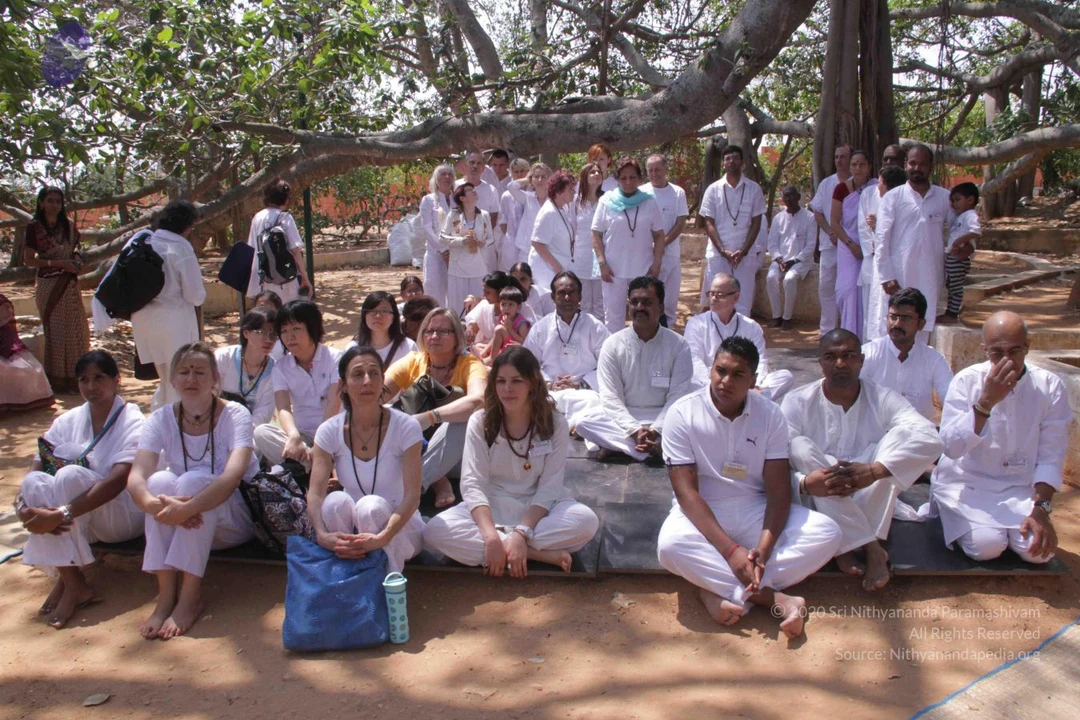
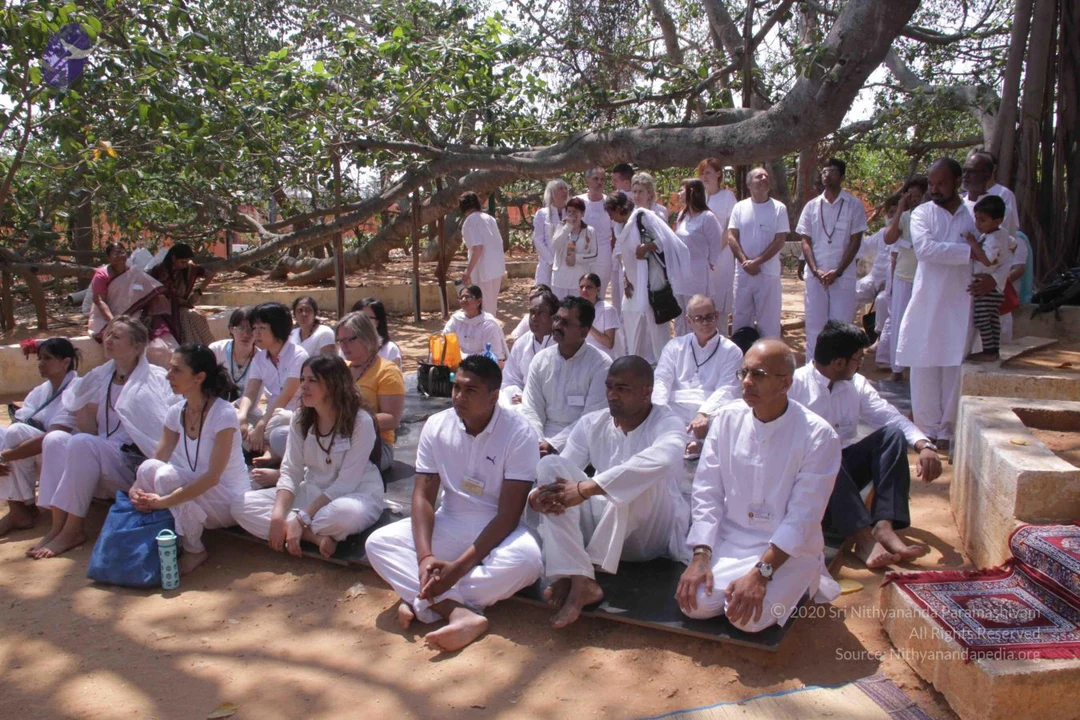
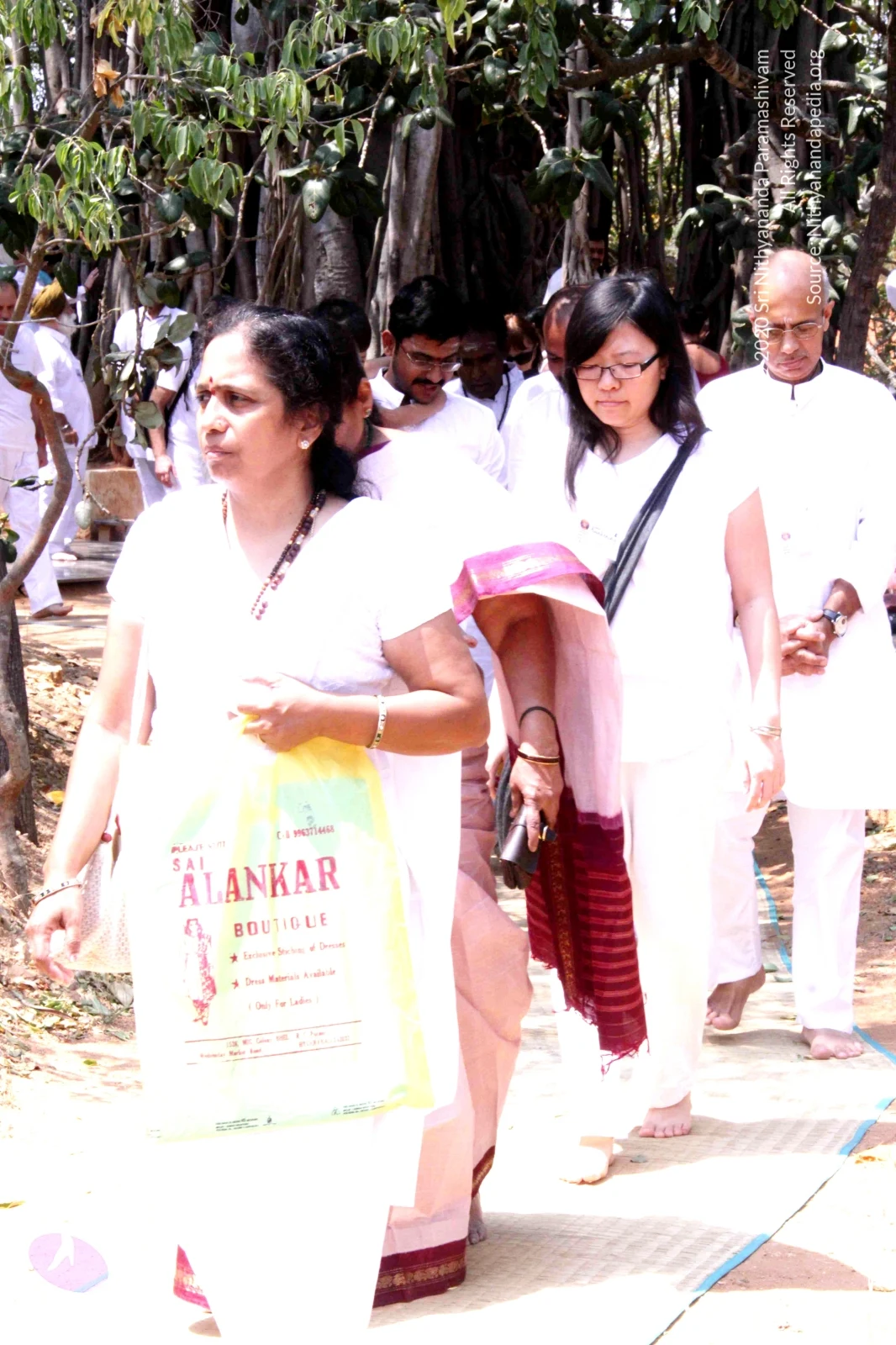
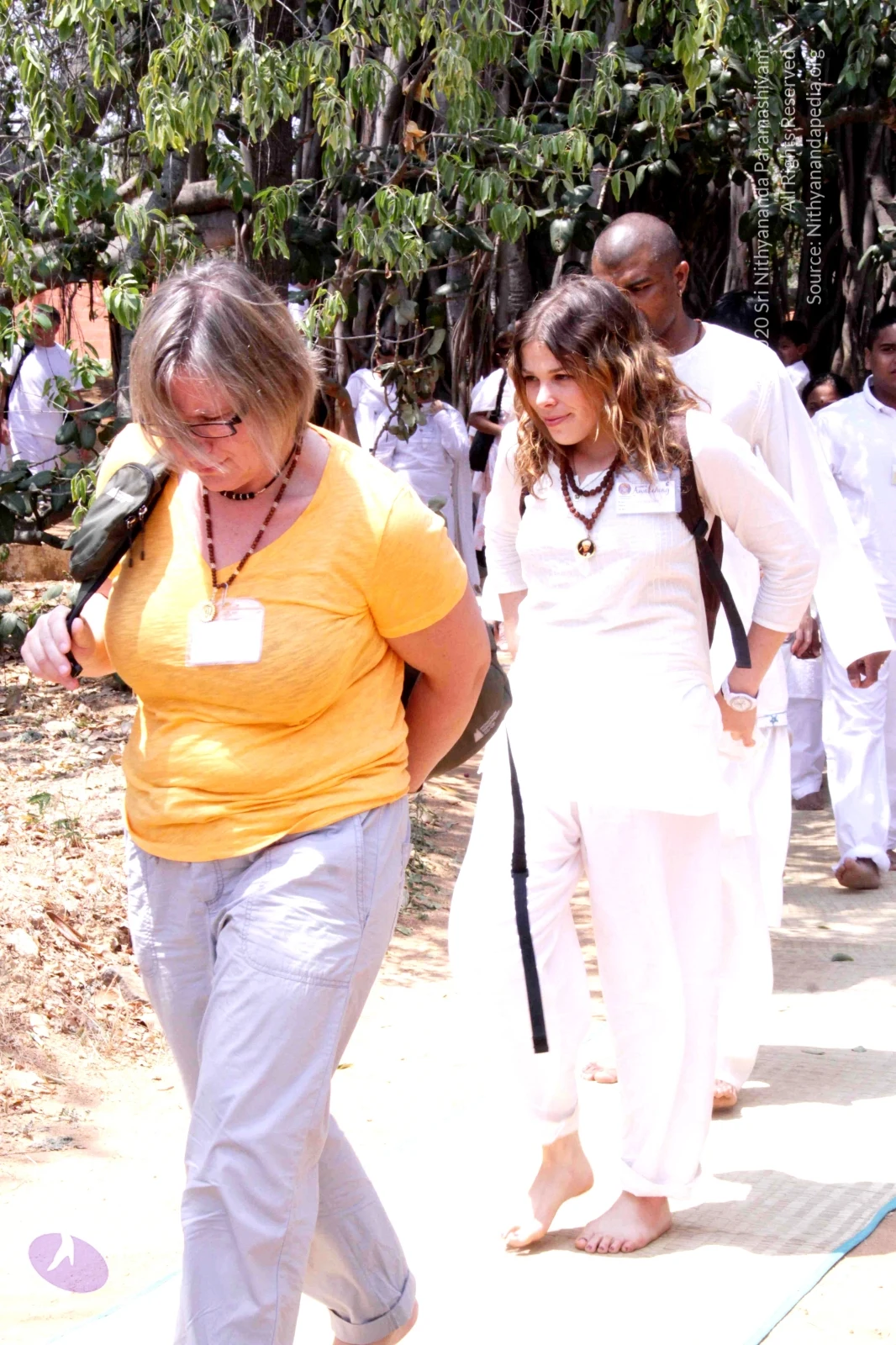
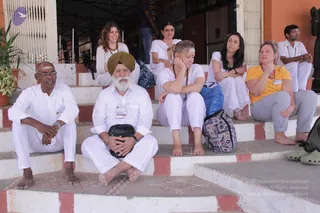
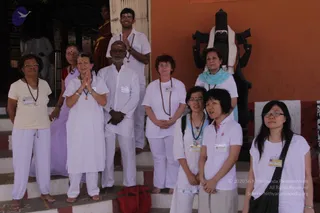
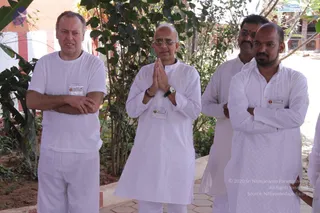
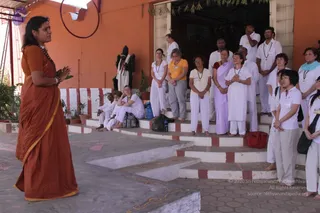
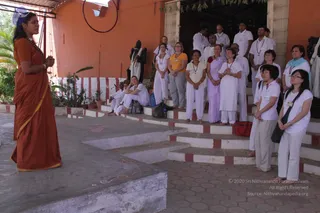
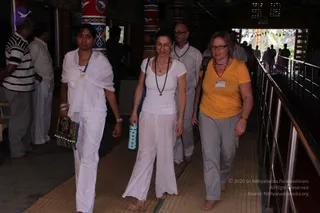
A group of devotees sits on white and red-striped steps in front of an orange-walled building with a metal grille door. The man in front center wears a green turban, a white kurta and a white lanyard badge, with hands clasped over a black bag. Beside him a man on the left wears white clothes and a white forehead mark. Behind them a woman in a pale blue-patterned bag sits in white, a blonde woman in white with a rudraksha-style necklace rests her chin on her hand, a woman in white with a long skirt sits beside a woman in a yellow top and grey trousers, and a man in white sits on the far right. Floor kolam designs are painted in red and white on the steps. No swami or a person figure is clearly identifiable among the seated people.A group of devotees stands on white and red steps in front of an orange-painted temple wall beside a dark stone deity murti draped with a white cloth. In the foreground, a woman in white with a rudraksha mala presses her palms together in anjali, and beside her a man in white kurta and white trousers stands with hands folded. Other women in white tops and rudraksha malas stand nearby, one in a teal shawl at right, and a woman in lavender sari stands at left. A young man in a white shirt behind them also holds his hands in namaskar. A visible badge-style name tag is worn on several white shirts. Bare feet and a red bag rest on the steps.Four men in plain white ashram clothing stand outdoors beside green shrubs and a red-and-white painted wall. The man in the centre, bald with glasses, a watch and a beaded bracelet, holds his hands in namaste. On the left, a man in a white T-shirt and white trousers stands with his arms crossed. Behind them, a man with a moustache and a red bindi stands in a white kurta, and on the right a bearded man in a white kurta with arms crossed wears a name badge. Conference lanyard badges are visible on their chests. A tiled path lies below.A woman in an orange-brown sari with a yellow border stands at left on a concrete courtyard, hands pressed together in namaste, speaking to a group. Behind her, a crowd of about twenty people in white clothing, some in a yellow top and a lavender sari, stands and sits on white-and-red striped steps before an orange-painted building with a doorway and a hanging red hoop. A dark figure in a black and white garment is partly visible near the wall. Some people wear rudraksha malas and lanyard name badges. a person is not identifiable in this image.A woman in an orange sari with a yellow border and a beaded necklace stands at left on a raised concrete platform, hands pressed together in front of her, addressing a group. Behind her, about two dozen people in white clothes stand and sit on red-and-white striped steps before an orange-painted building with a dark doorway; several wear white shirts and trousers, one woman wears a lavender sari, and another wears a yellow top. Potted plants, a dark statue on a pedestal, and a red circular frame on the wall are visible. Nobody wearing clear a person cues is visible, so no candidate is identified.A photo of several people walking barefoot along a woven mat runway through a covered hall with red and ornate pillars and a metal railing on the right. In front, a woman in white top and white wide-leg pants with a white shawl carries a beaded bag. Beside her, a woman in a white top and white pants with a turquoise bottle and a black beaded necklace walks. On the right, a woman in an orange top and grey trousers wears glasses and a lanyard badge. A man in a white kurta stands behind them, and more people are visible in the background.

IA-SESSION

10 photosSource gallery
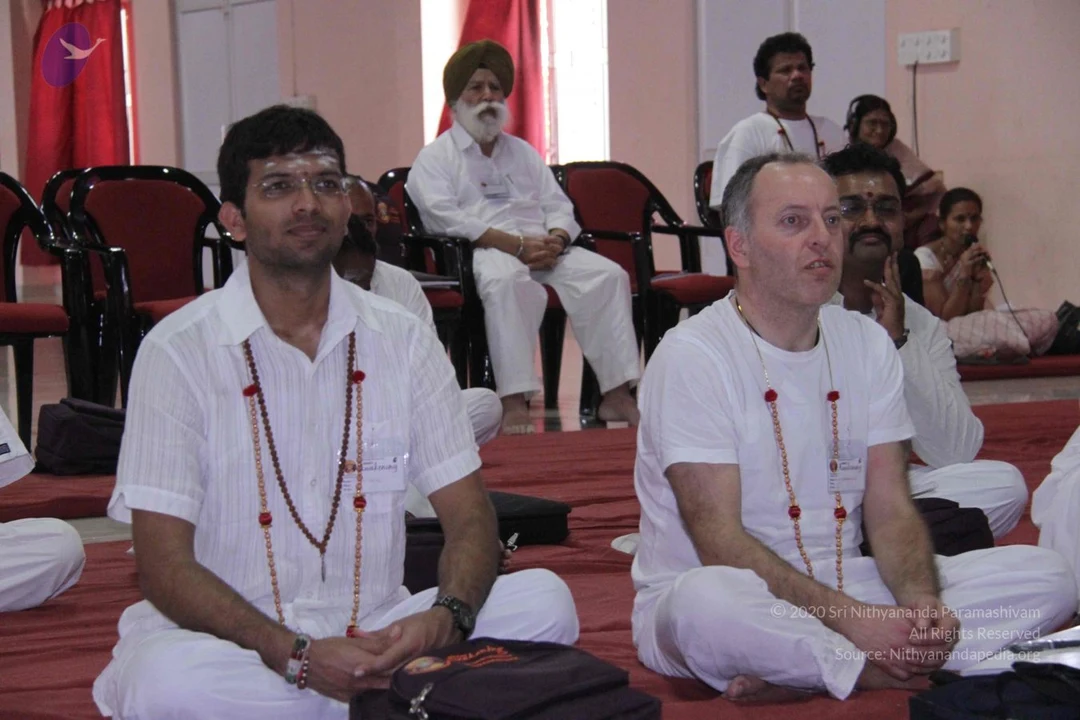
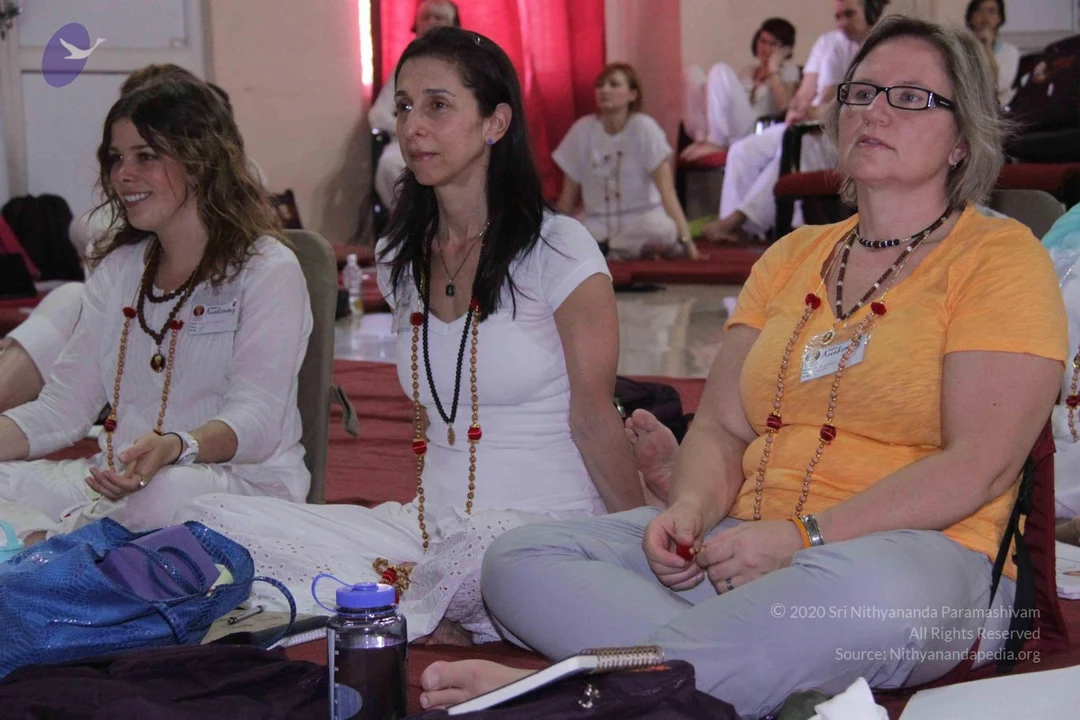
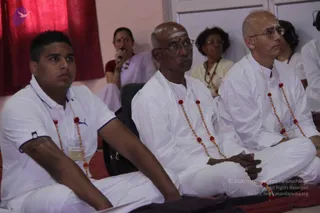
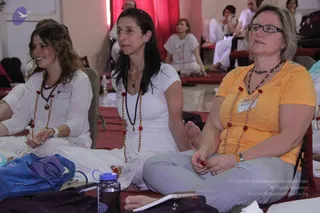
A photograph of a seated figure on an ornate golden throne with lion-shaped armrests and a golden arched backrest decorated with floral garlands in yellow, green, red, purple and white. The seated man wears a saffron-orange wrap over bare shoulders, a long rudraksha bead necklace and a red-brown forehead mark, with long swept-back dark hair, and a small headset microphone. His hands are clasped in his lap as he speaks. A tiger-striped cloth covers the throne platform and a bottle of water sits beside the lion armrest. The backdrop is a grey draped curtain with a teal edge. Swamiji (probable): the appearance cues of long swept-back hair, saffron wrap and rudraksha mala match the page's claim, with the throne and lion seat as setting.Photo of a seated audience at a Nithyananda Dhyanapeetam class with red drapes and white walls behind. In the foreground, a young man in a white polo shirt with a red-beaded mala sits cross-legged, gazing ahead. Beside him, an older man in white ritual clothes, white-painted forehead and red-beaded malas sits with hands folded in his lap. At right, a bespectacled man in white kurta with red-beaded malas sits on a red mat. Behind them, a woman in white holds a microphone, and others sit in the background. No identifiable a person candidate is clearly visible.Three women sit cross-legged on red mats at a seminar, listening attentively. The woman on the left in white clothes and rudraksha mala smiles softly with hands resting in her lap. The woman in the centre wears a white t-shirt with dark and wooden beads and a pendant, looking forward. The woman on the right wears an orange t-shirt, grey trousers, wooden beads with red accents and glasses, holding a red bead. Behind them, other participants in white sit on mats and chairs near red curtains. A water bottle, notebook and blue bag lie in the foreground.A smiling man with long, wavy dark hair stands behind a clear acrylic lectern, hands clasped on its top. He wears an orange-saffron cloth draped over his shoulders and a thick rudraksha mala with gold bead necklaces. He has white vibhuti lines across his forehead and a dark kumkum dot at the centre. A small clip-on microphone is visible near his face. Behind him are dark drapes and a red and white striped backdrop. a person is a discourse speaker at a satsang-style talk, matching the page's Inner Awakening intro event.A man with long, swept-back dark hair, white vibhuti lines and a dark kumkum bindu on his forehead speaks into a head-mounted microphone at a clear acrylic lectern. He wears an orange-saffron cloth draped over bare shoulders, with multiple strands of rudraksha beads and ornate gold-coloured bead necklaces. His hands are folded together at his chest as he smiles and looks to the side. A dark curtain and a red-and-white striped textile hang behind him.A person in saffron-orange robes and a long orange shawl stands at a whiteboard on an easel, drawing with a marker. The board shows a drawn square-within-square frame with a line and the partial word "mamakar" written inside. The person wears a beaded rudraksha-style necklace, glasses, and a dark mala-like strand, with gold accents at the waist. Gold-coloured decorations and a yellow flower arrangement appear at the edge of the dark stage backdrop. The setting is a discourse or intro class, with one physical person visible.

IA-DARSHAN

27 photosSource gallery
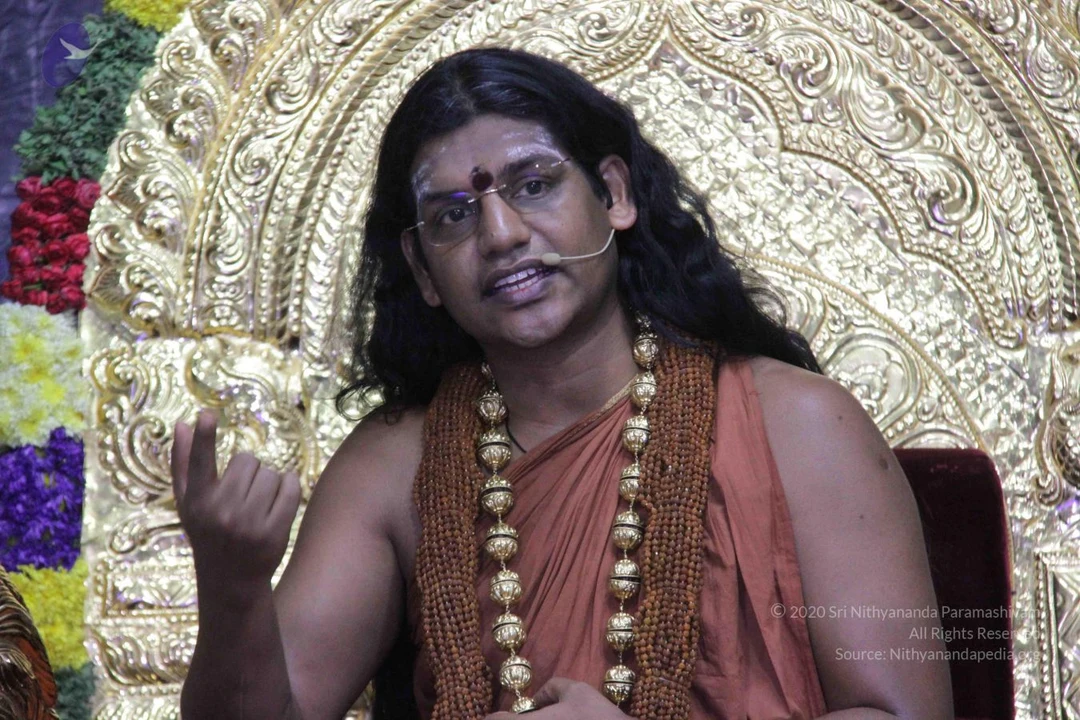
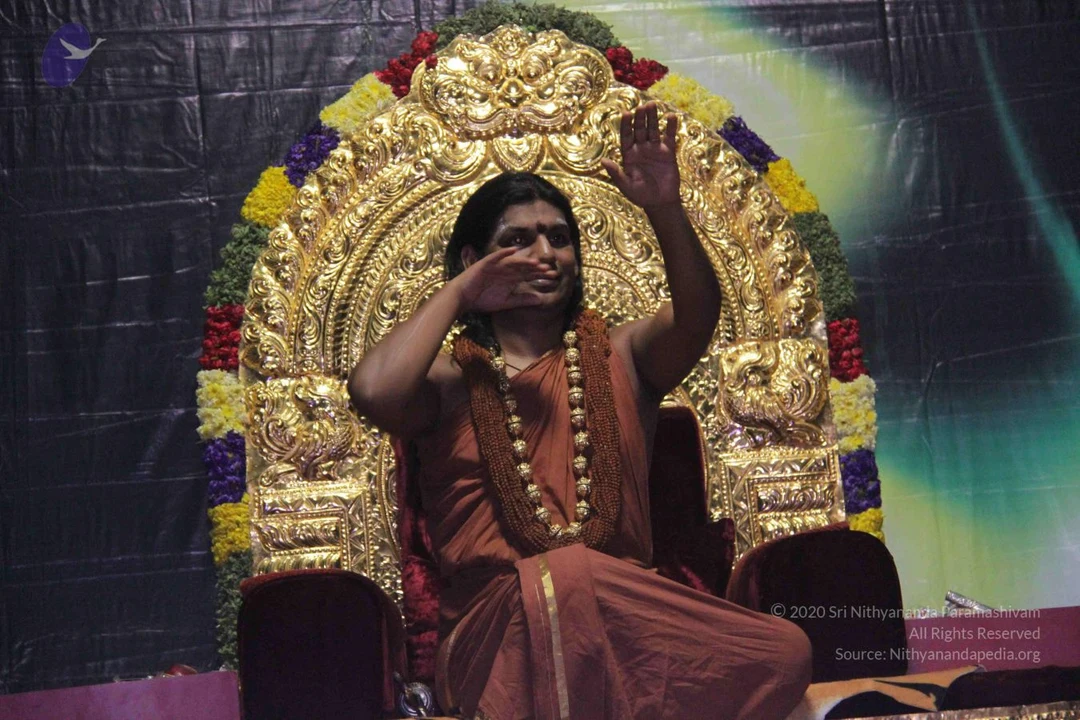
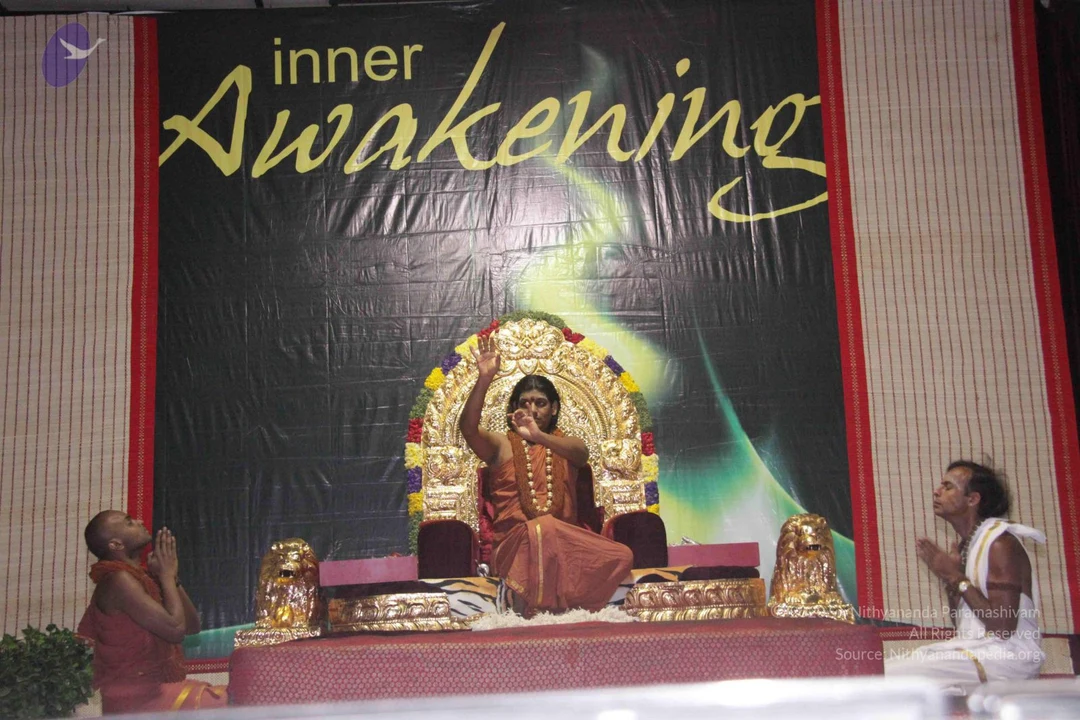
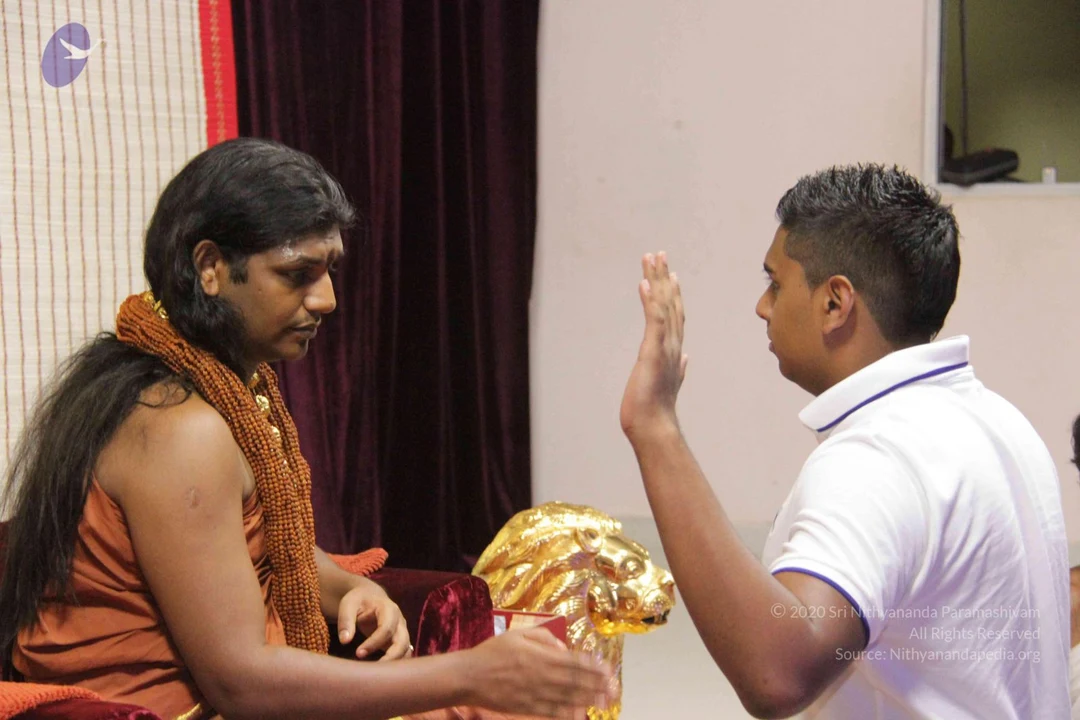
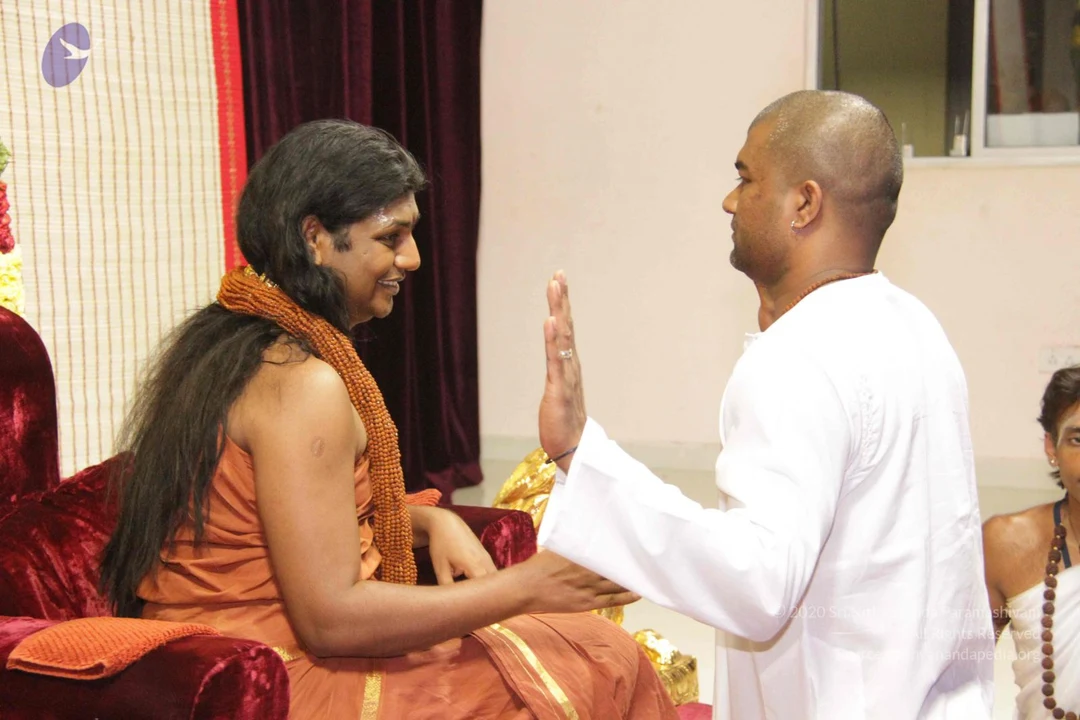
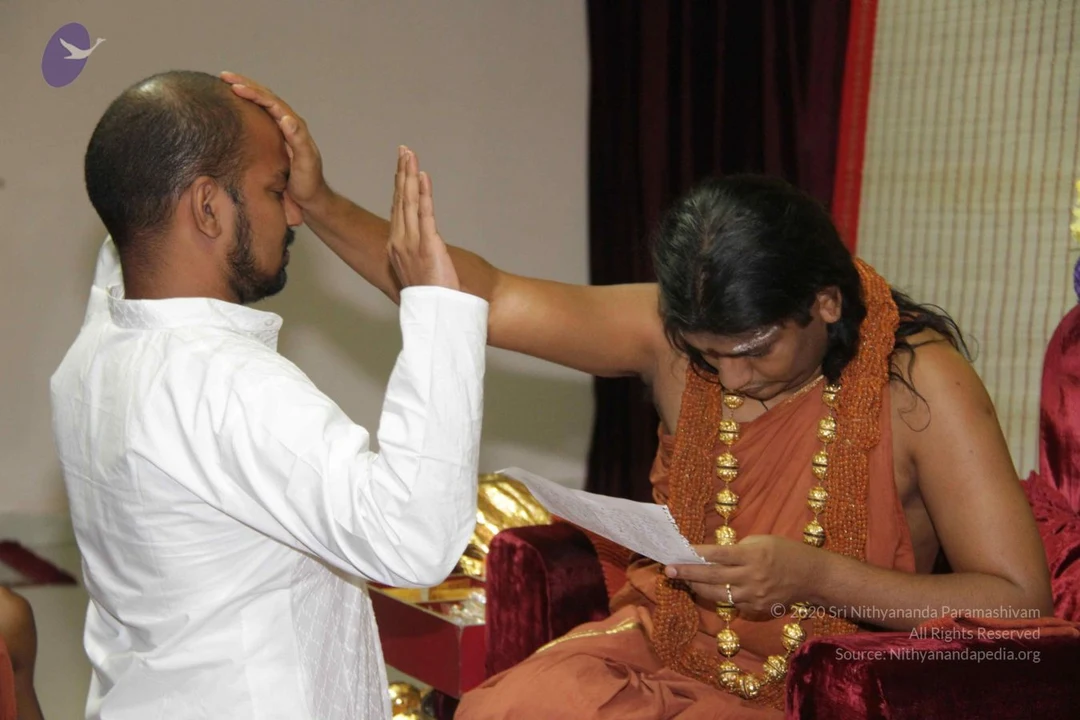
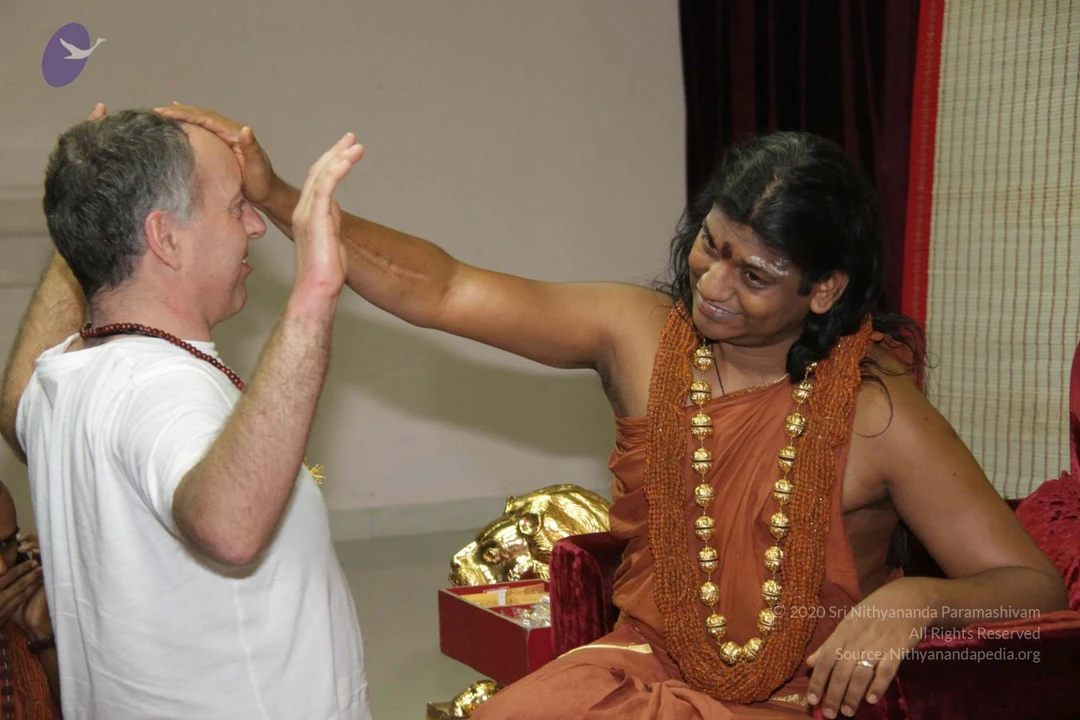
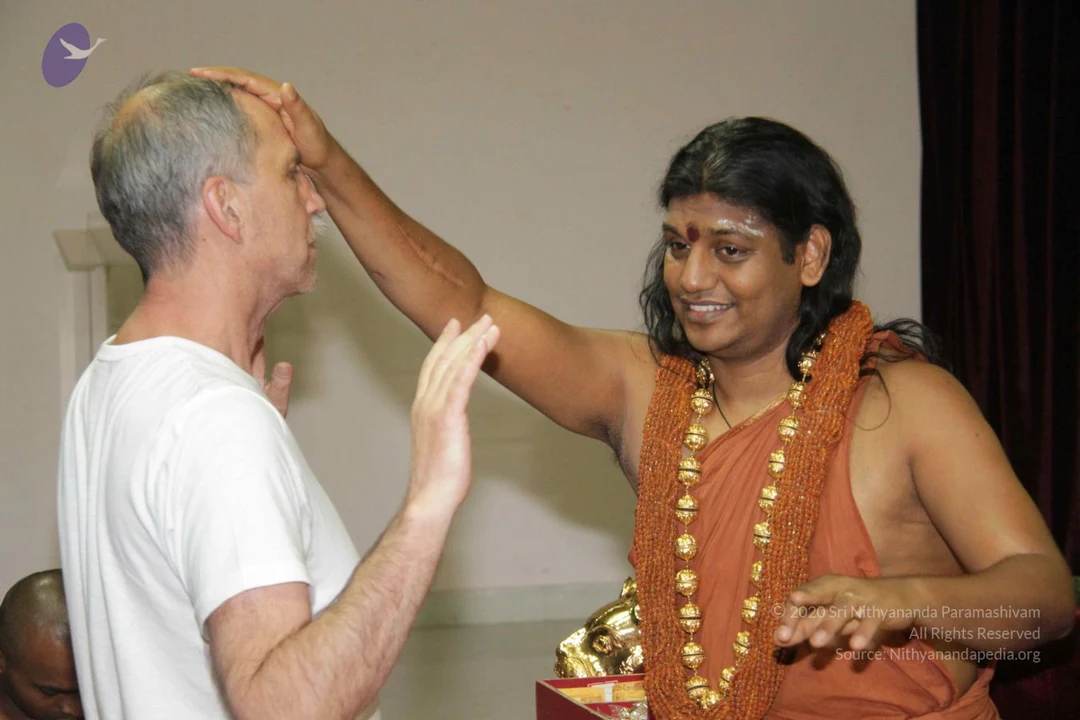
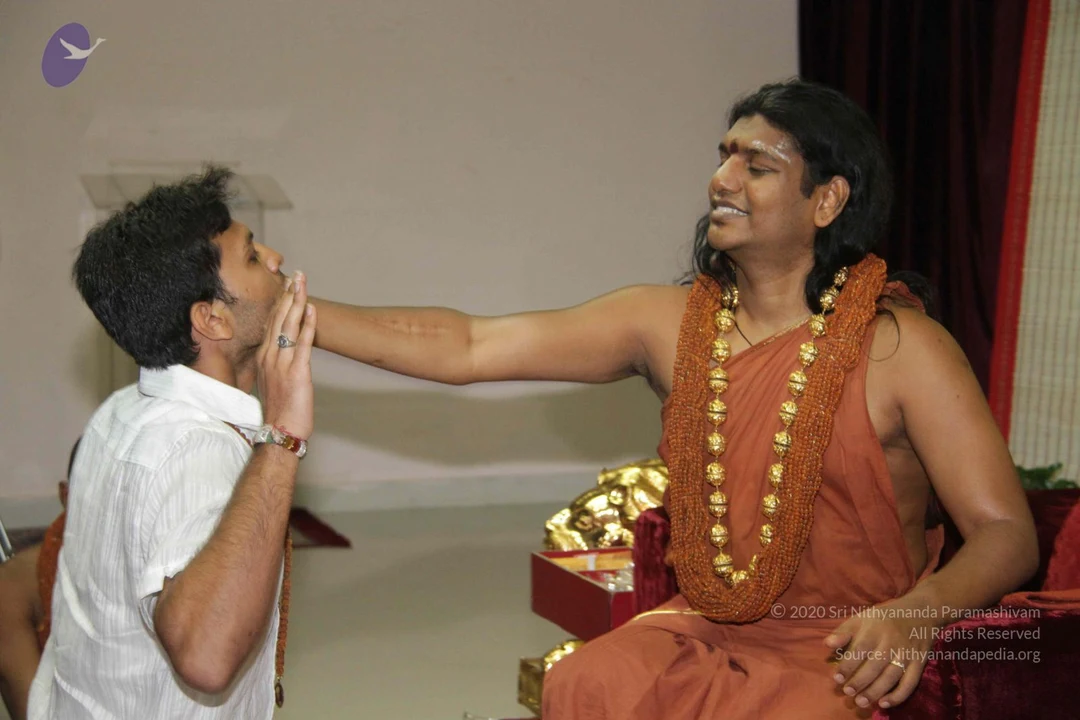
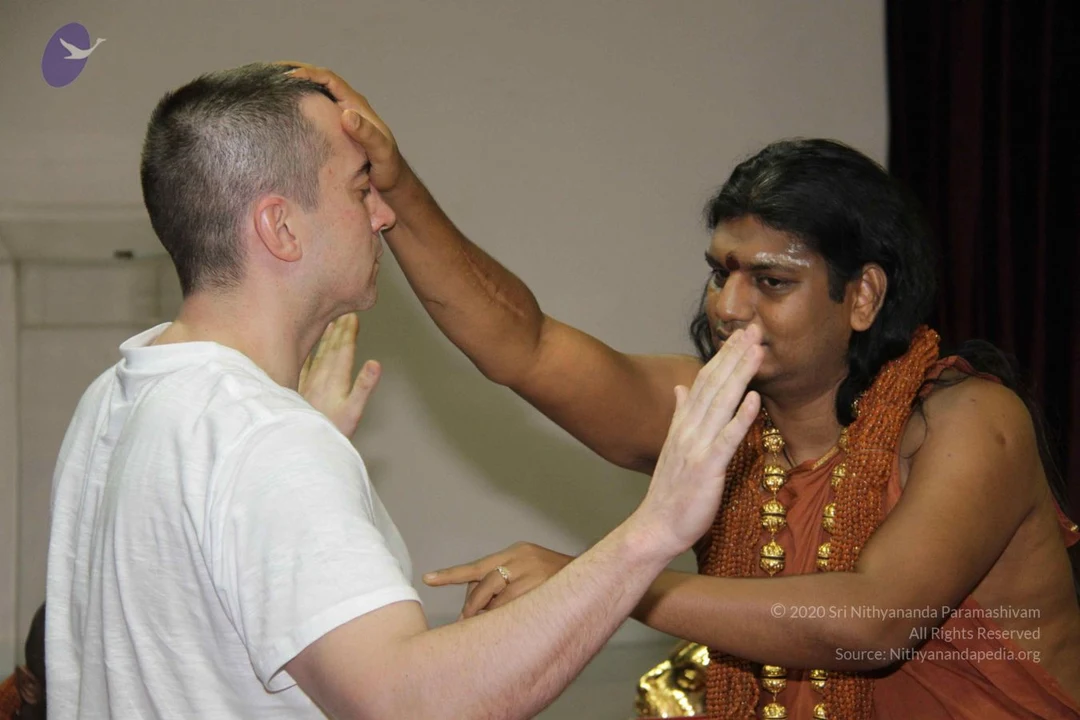
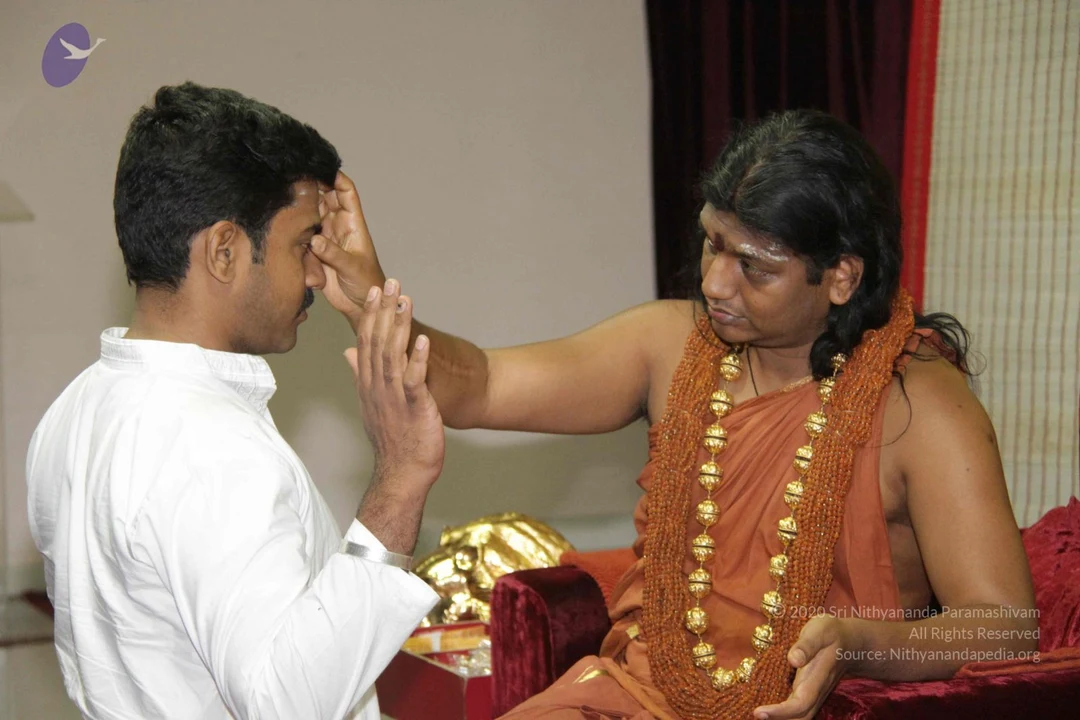
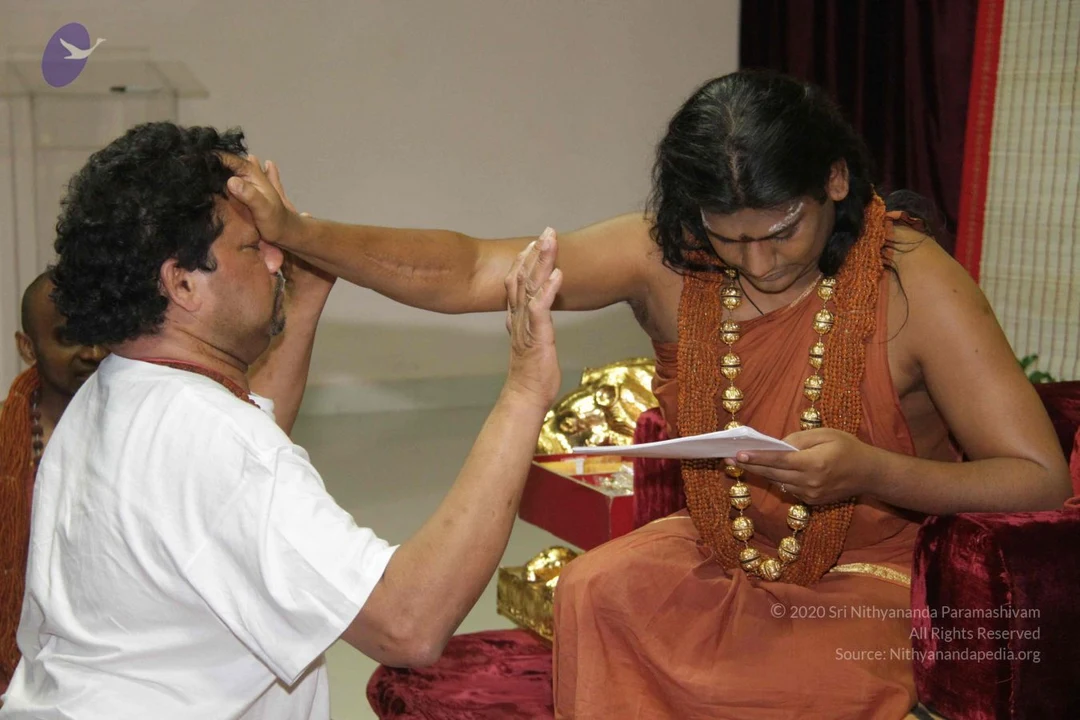
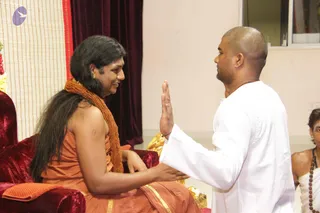
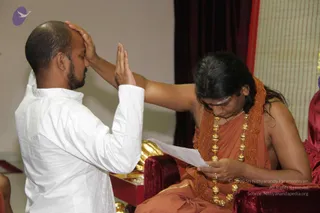
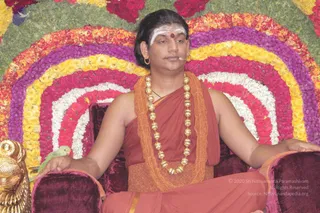
A man seated on an ornate gold throne with carved floral and scrollwork, flower garlands of red, yellow and purple at the left edge, speaks while gesturing with his raised right hand. He wears an orange-saffron cloth, a long brown rudraksha mala with gold beads, a red bindi on his forehead and glasses, and a small headset microphone. Swamiji (probable): long dark hair, saffron clothing and a rudraksha mala with ceremonial gold beads, seated in discourse. Photo of a satsang-style talk with a gold throne backdrop.A photograph of a seated figure on an ornate gold throne with a carved arched back, framed by a band of red, orange, yellow, purple and white flowers. The figure wears an orange-rust saffron wrap, a long brown rudraksha mala and a ceremonial gold necklace, with long dark hair swept back. One hand is raised with palm open and the other covers part of the face in a gesture of speech. Behind is a dark pleated backdrop with a green and yellow gradient. Appearance-based label: a person, seated on the throne in a speaking gesture during a discourse.A seated figure in an ornate gold throne with floral garlands of red, yellow and purple flowers sits on a raised red stage at the Inner Awakening event. He wears an orange-saffron robe, a rudraksha mala, and raises his hands in a blessing gesture. Golden lion sculptures flank the throne. Behind is a black banner with the words inner Awakening and a green-white glow. On the left a shaved-headed devotee in orange robes kneels with palms pressed together, and on the right a man in white dhoti and shawl with a gold necklace kneels in anjali. Visible physical people: three. a person is seated on the throne, giving discourse.A seated man with long dark hair and a rudraksha mala wears an orange garment and sits in front of a maroon draped cloth on a red-upholstered seat beside a golden lion-head figure. Facing him, a younger man in a white polo shirt with blue trim raises his right palm toward him in a greeting or blessing gesture. Pale walls and a curtain fill the background. The seated man, with his orange garment, long hair and rudraksha mala, is a probable Swamiji candidate in an in-person discourse or darshan setting.Photograph of an indoor ashram event. A long-haired figure with long dark hair and a sweeping shoulder wrap in saffron orange sits on a deep red velvet seat, wearing a dense orange-brown rudraksha mala and a small tilak on the forehead. Facing him, a shaved-headed man in white ritual clothes and a red-brown thread bracelet raises an open palm in greeting. Behind, a red curtain, bamboo blind and a gold cloth are visible, and a partially visible person in a white garment with a beaded mala sits at the right edge.A seated man in orange-saffron robes and a long rudraksha mala with ornate gold beads sits on a red velvet chair, holding a sheet of paper and reading, with a white tilak mark on his forehead and long dark hair swept back. A man in a white shirt stands before him, palm pressed to his own forehead in a blessing gesture while the seated figure's hand is raised toward him. The setting is an indoor hall with cream walls and a dark red curtain, and a gold-trimmed red velvet armrest is visible. Swamiji (probable) is seated, with long hair, saffron robes, rudraksha mala and gold necklace cues, presiding over a blessing exchange.

TEMPLE

55 photosSource gallery
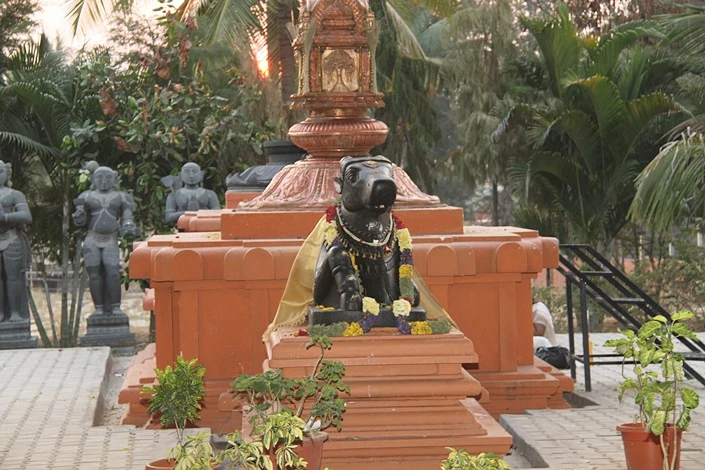
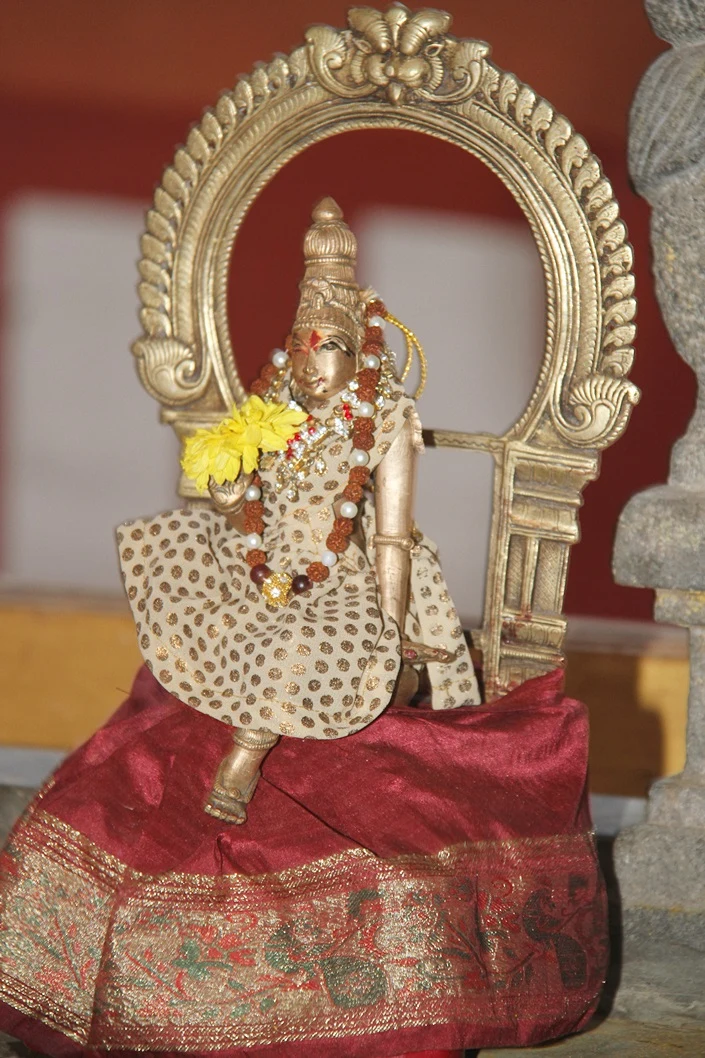
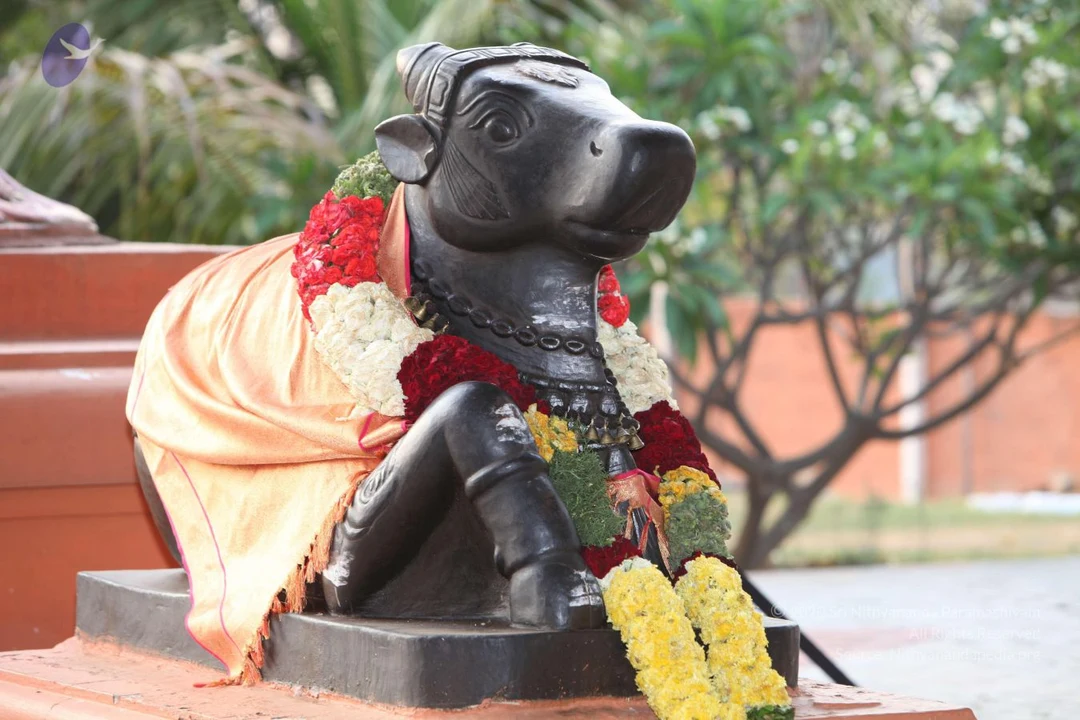
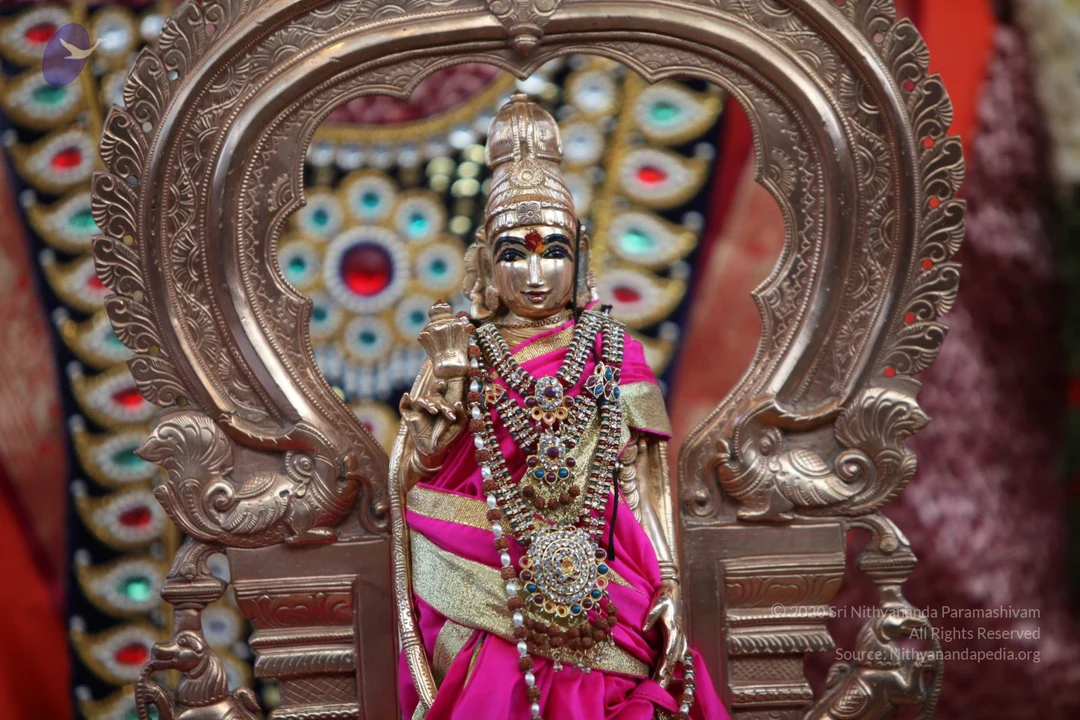
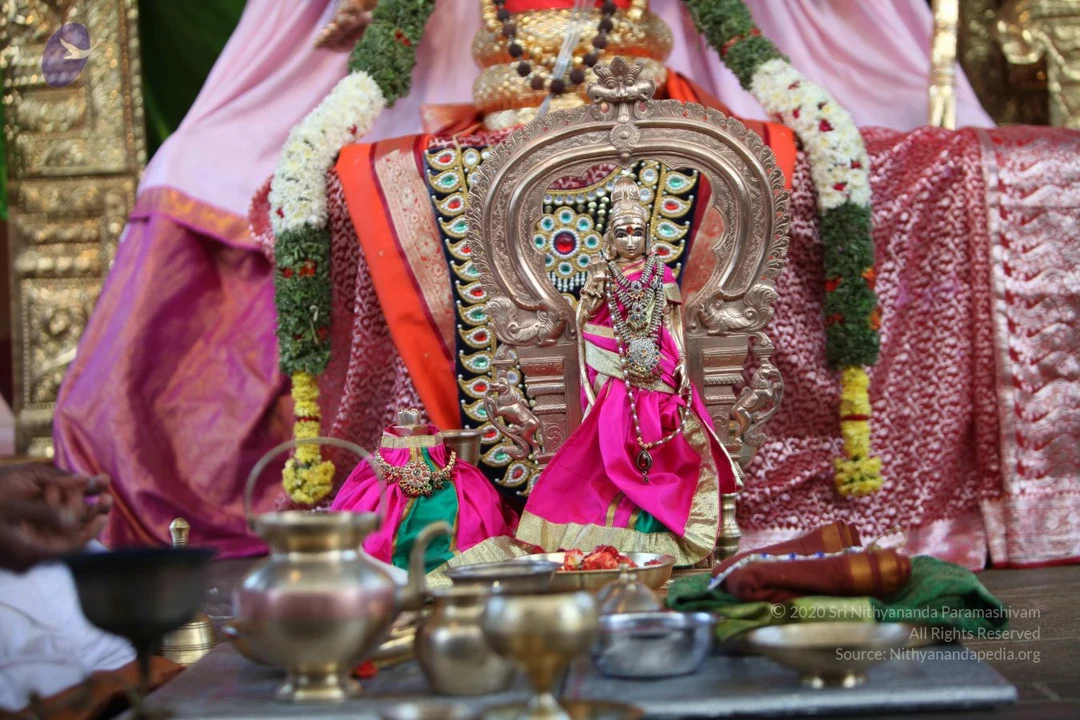
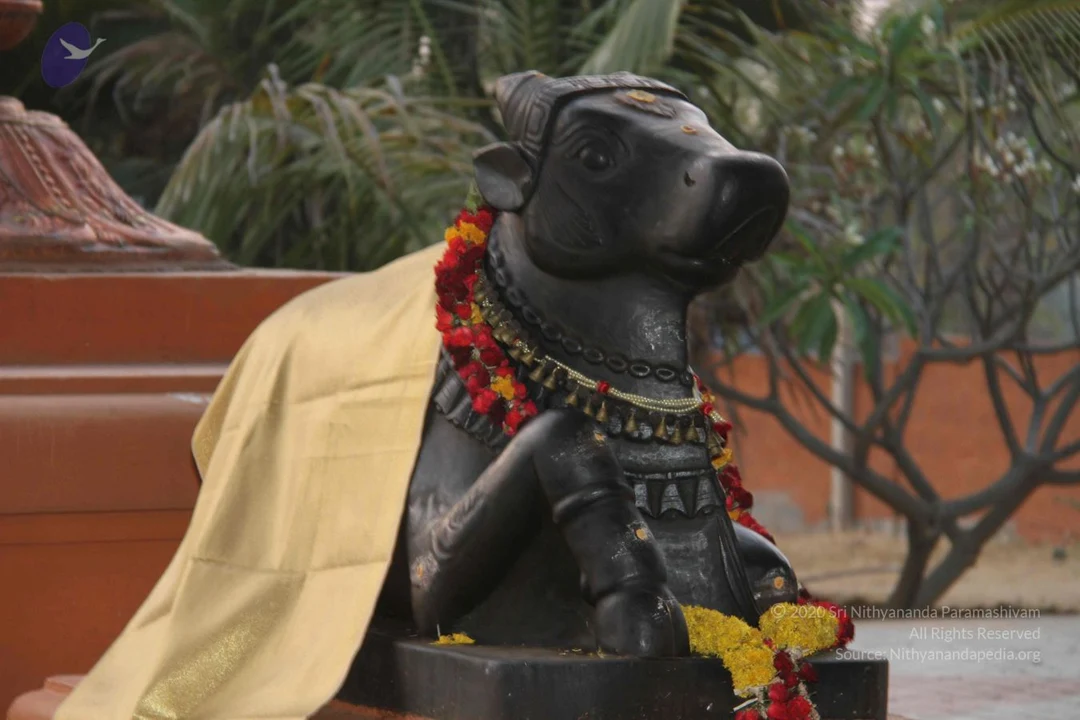
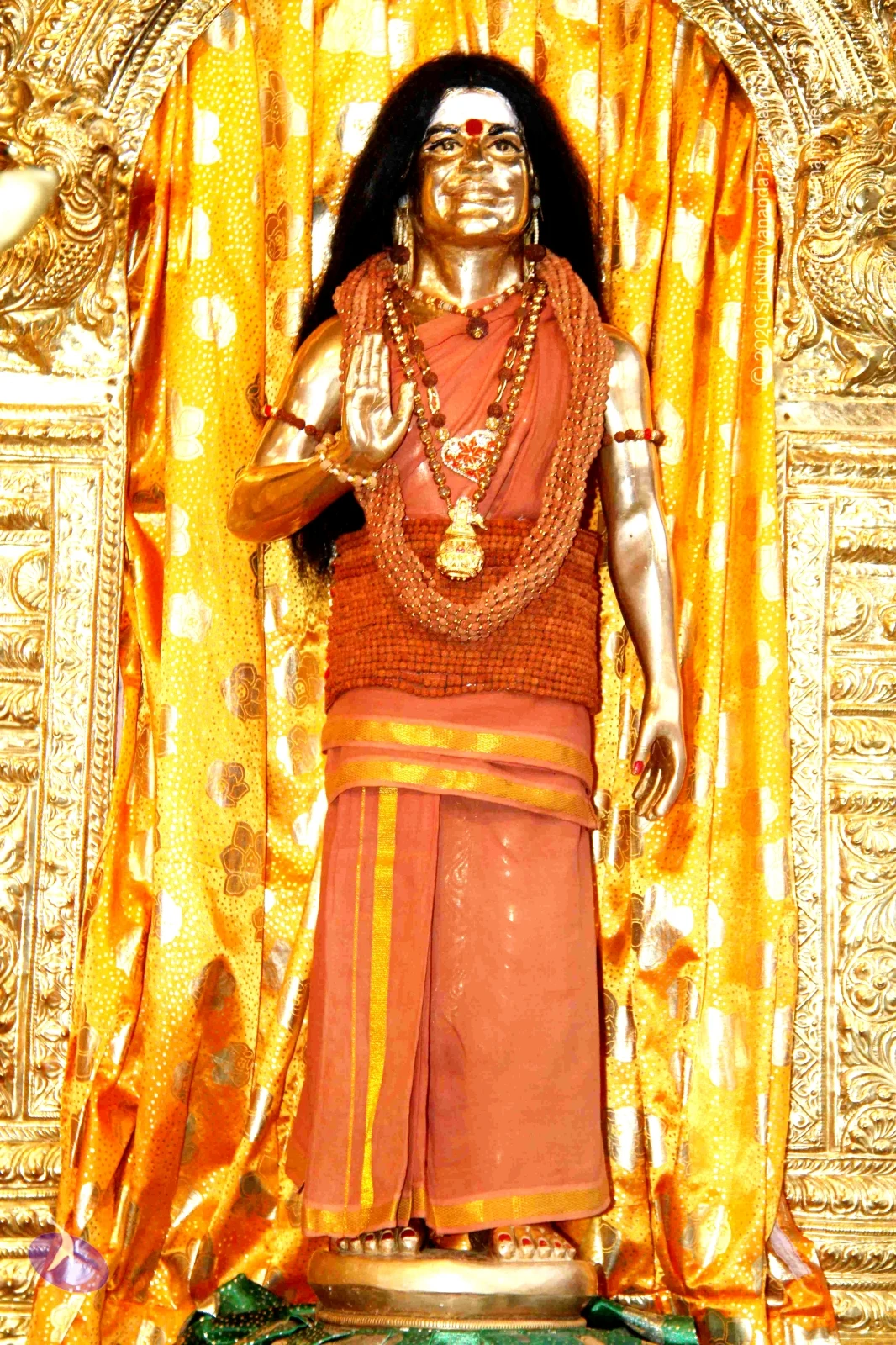
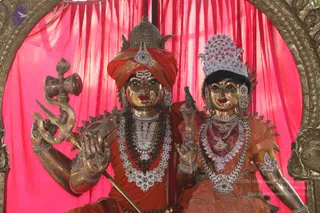
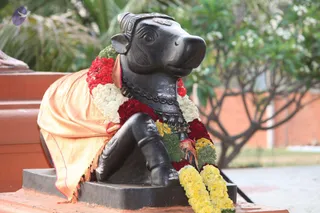
A pair of golden metal deity murti sit side by side before a bright pink draped cloth within an ornate gilded arch. The figure on the left, a male deity, wears an orange-red turban with a silver crown ornament, a tilak on the forehead, and a dense necklace of black rudraksha beads over gold and jewelled garlands. He holds a trident-like staff and raises a hand in blessing. The figure on the right, a female deity, wears a silver-and-pink jewelled crown, ornate gold earrings, layered jewelled necklaces and an orange-red sari, holding a small kalasha-like object. Both murti are adorned with bright jewelled ornaments. No physical people are visible.A black stone Nandi bull statue sits on a red-brick plinth outdoors, draped in a peach-orange cloth edged with pink and fringe. It wears garlands of red roses, white jasmine-like flowers, yellow marigolds and green leaves around its neck and body, with a metal chain and bell at the throat. A small flower garland hangs from its forehead area. Behind it are a flowering tree, palms and a red brick wall.A gilded bronze deity murti stands within an ornate arched prabhavali-style frame with floral and peacock-like carved motifs. The figure wears a tall crown, a red tilak on the forehead, and a magenta and gold silk sari with a gold border. Layered jeweled necklaces with red, green and blue stones hang on the chest, and the raised right hand holds a small object. Behind it, a dark panel is decorated with rows of red, green and gold gem-like medallions, and pink fabric and flowers appear at the right edge.Photograph of a worship altar with a small metal deity murti seated on an ornate copper throne decorated with jeweled panels, wearing a magenta sari with gold border and layered necklaces. A larger pink and gold drape with flower garlands in white and green hangs behind. In front are brass vessels including a kalasha-style pot with spout, a small bowl of red offerings, a cup and a folded green-and-red cloth. A hand is partly visible at the left edge, holding a brass item. Strings of rudraksha-like beads hang near the top. No people are fully visible.Two ornately dressed deity murti. The figure on the left has a saffron-orange turban, rudraksha malas and a golden trident in hand; the figure on the right wears a jewelled crown, layered gold necklaces, a pink sari and a red garland. Both are adorned with silver-toned ornaments and earrings. In front are five green-stone ornaments on a silver tray. No physical people are visible.A temple shrine with a large two-figure deity murti seated on a raised pink-draped platform before a green curtain, one figure holding a trident and the other a staff, both adorned with garlands of red and white flowers, rudraksha-style beads and gold ornaments. A seated priest in white dhoti and shawl, bare-chested, raises his hand in front of a brass kalasha and oil lamps placed on the floor. To the right, a smaller statue of a saint in orange robes stands in an arched golden niche beside a brass lamp stand with garlands. Brass bowls with offerings and marigold petals lie on the stone floor.

YOGA

9 photosSource gallery
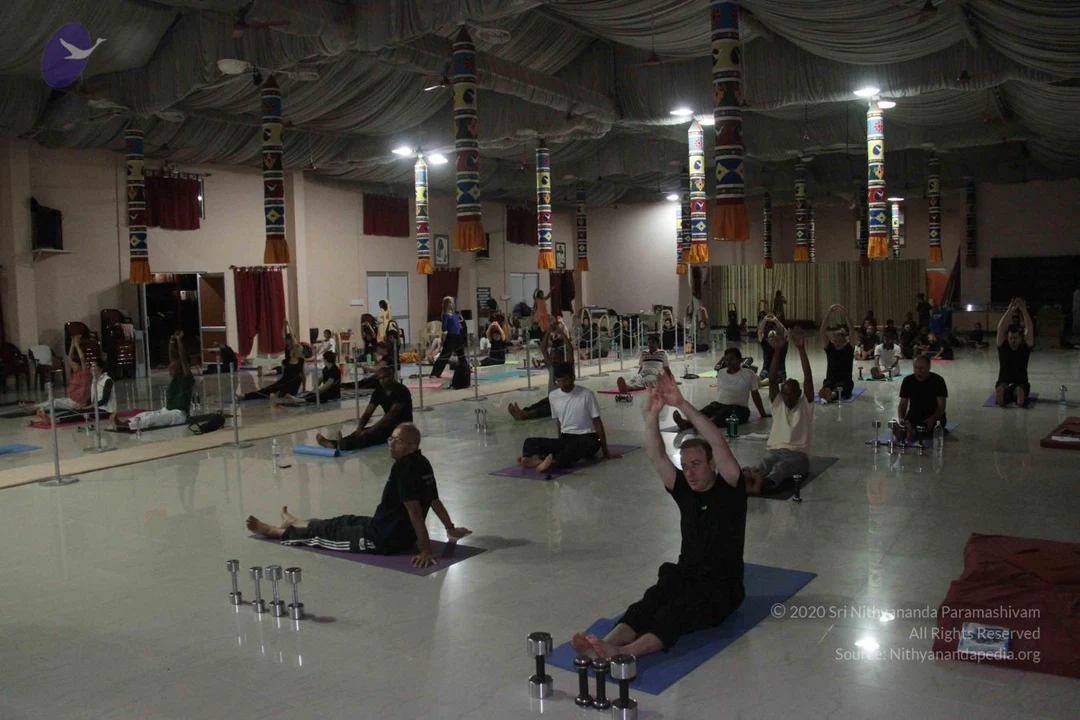
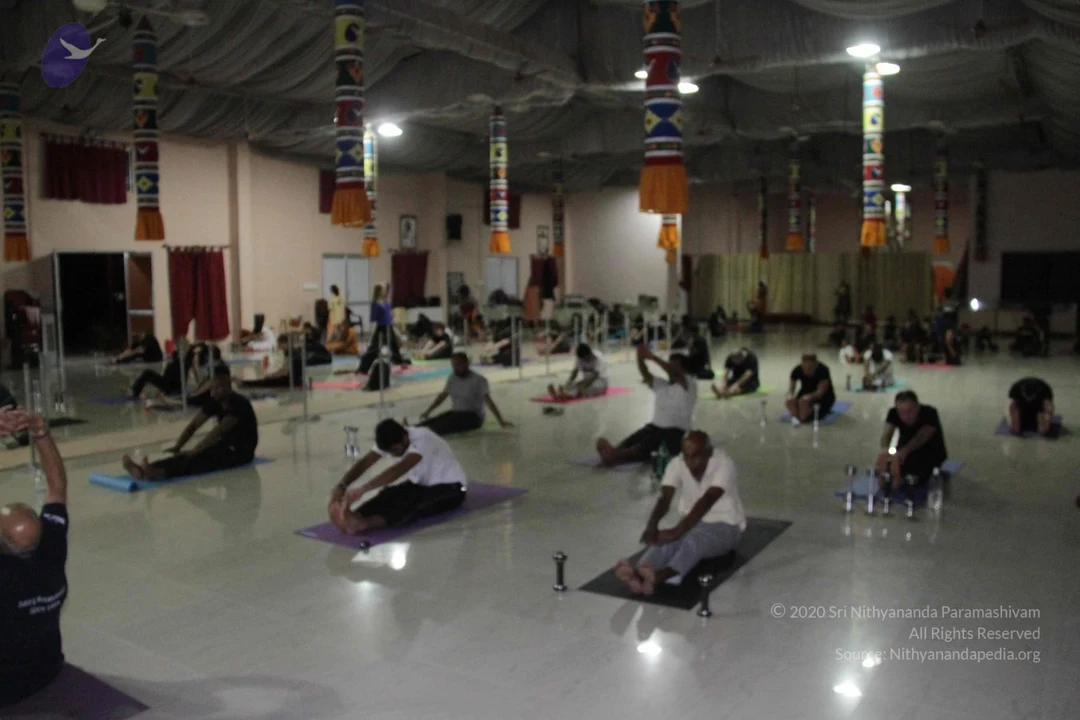
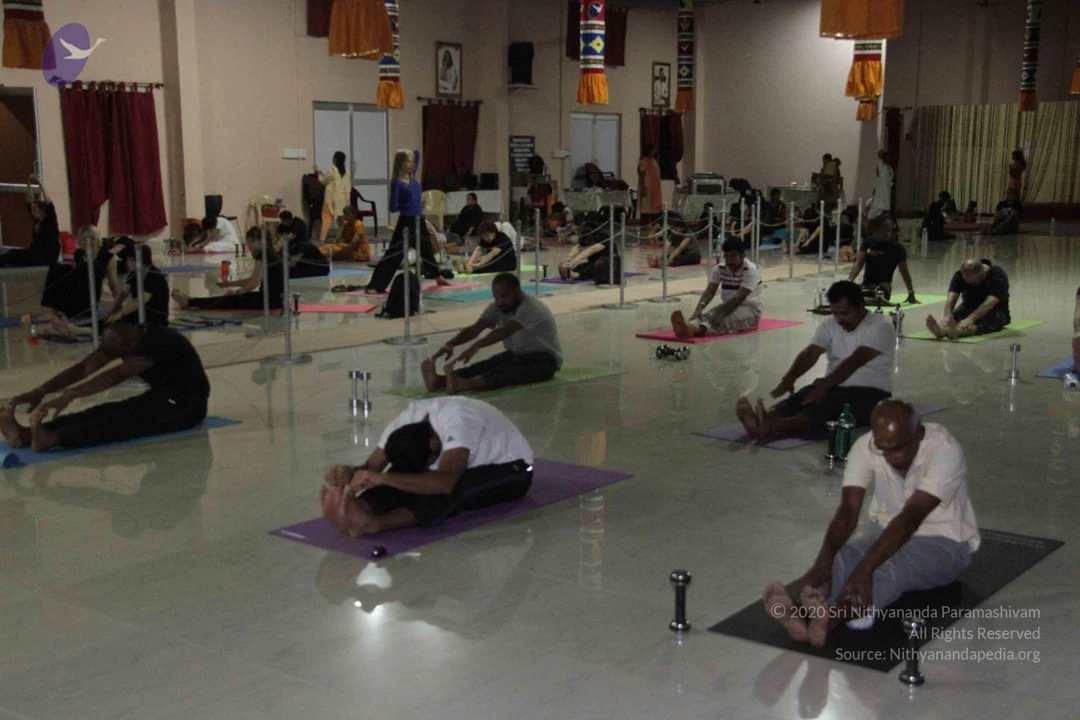
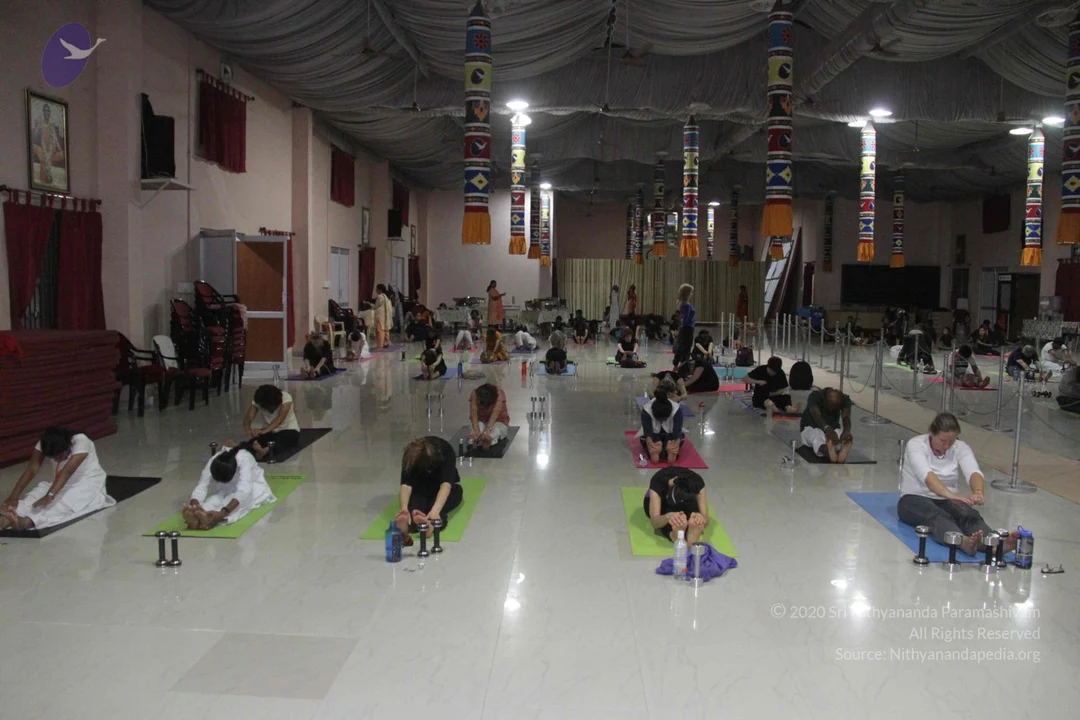
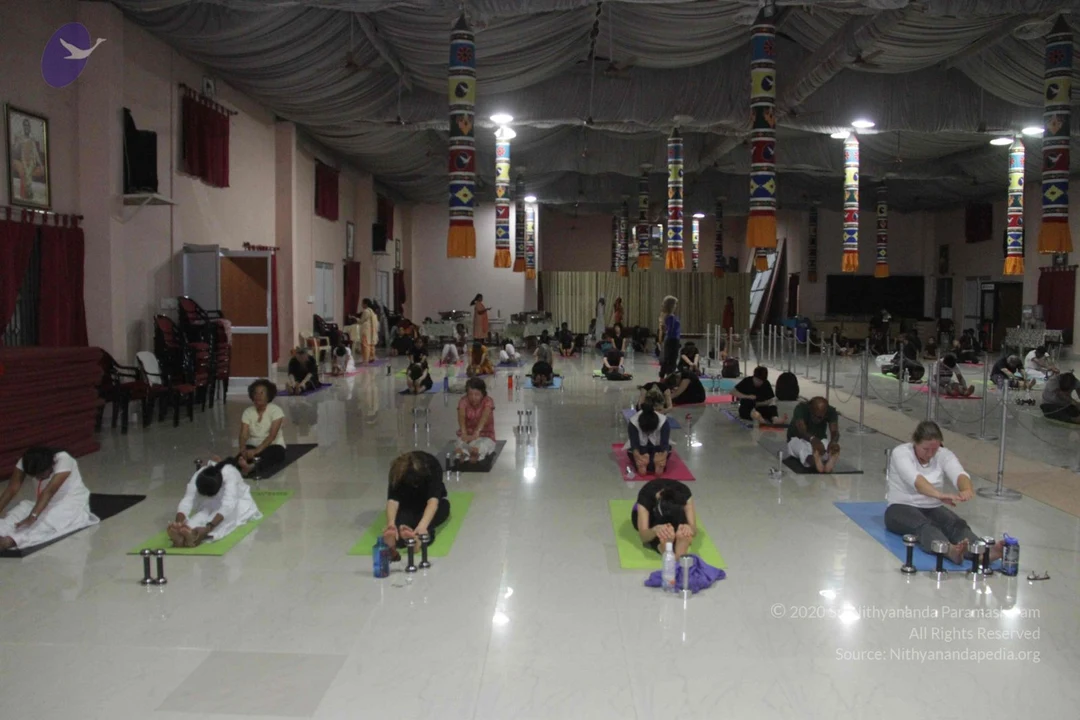
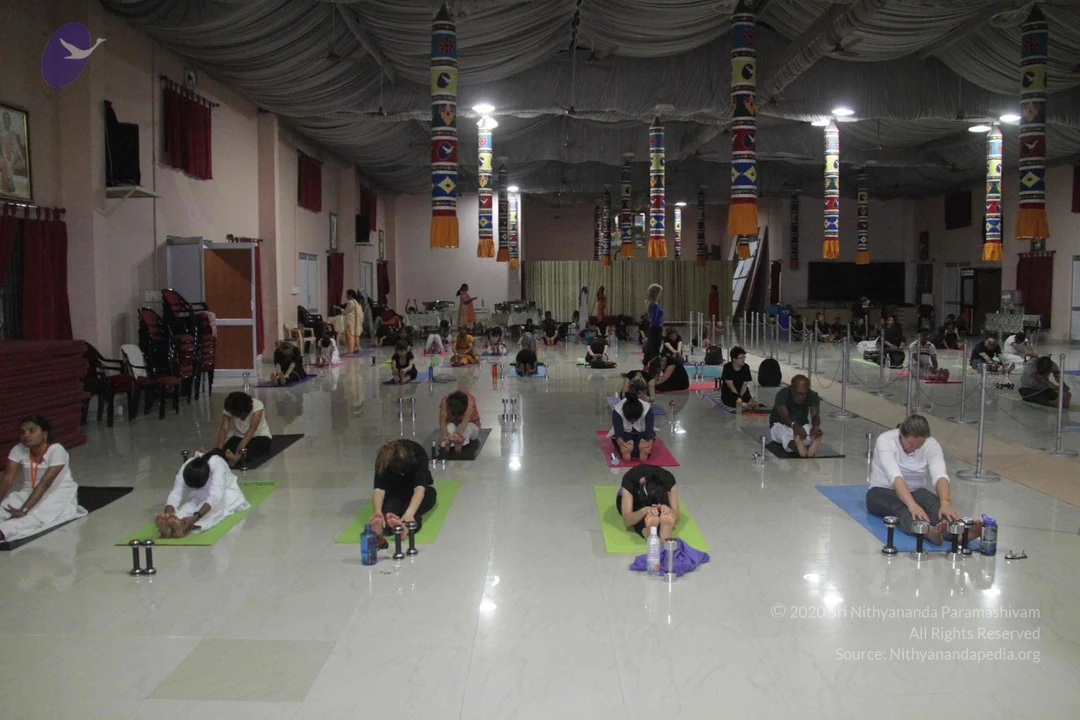
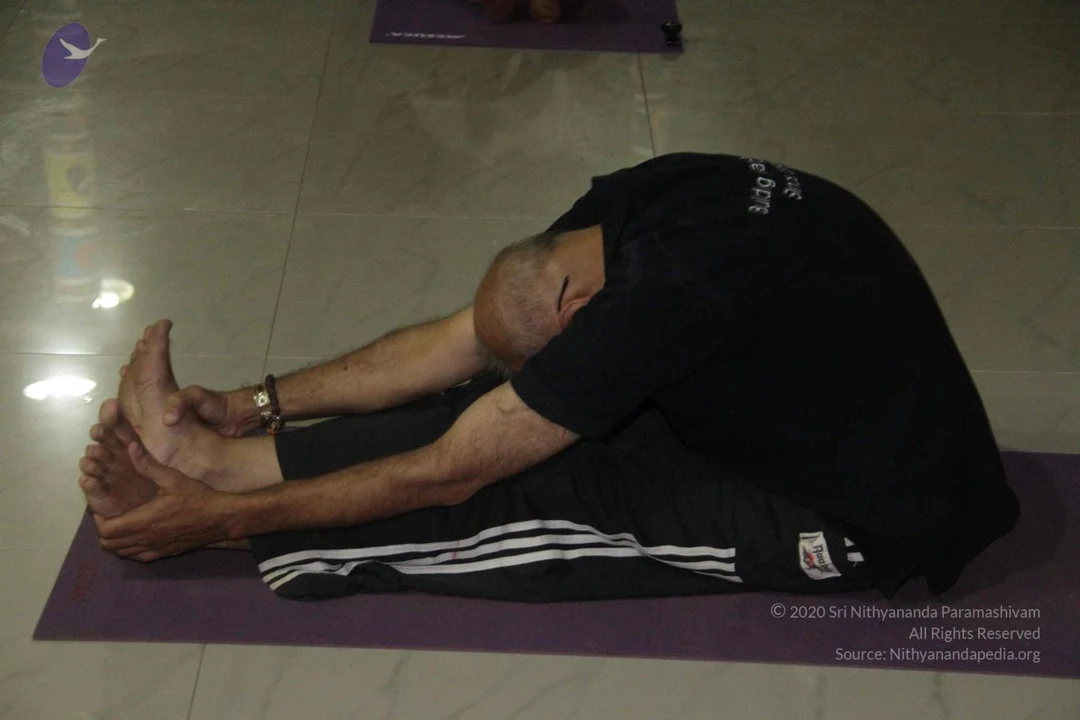
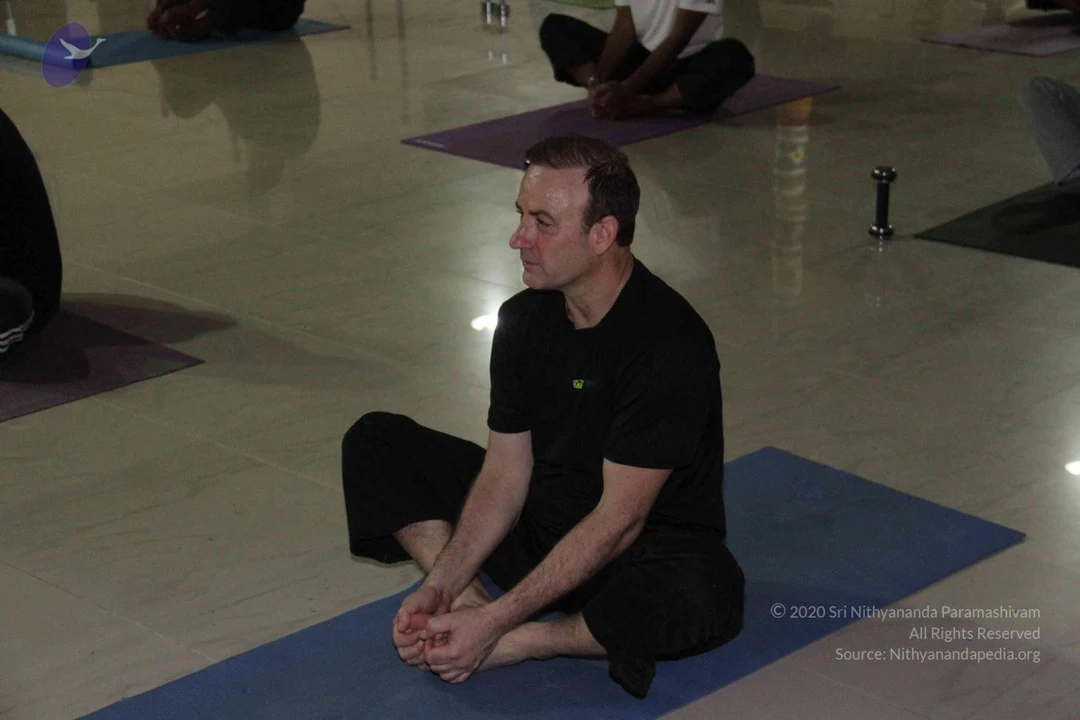
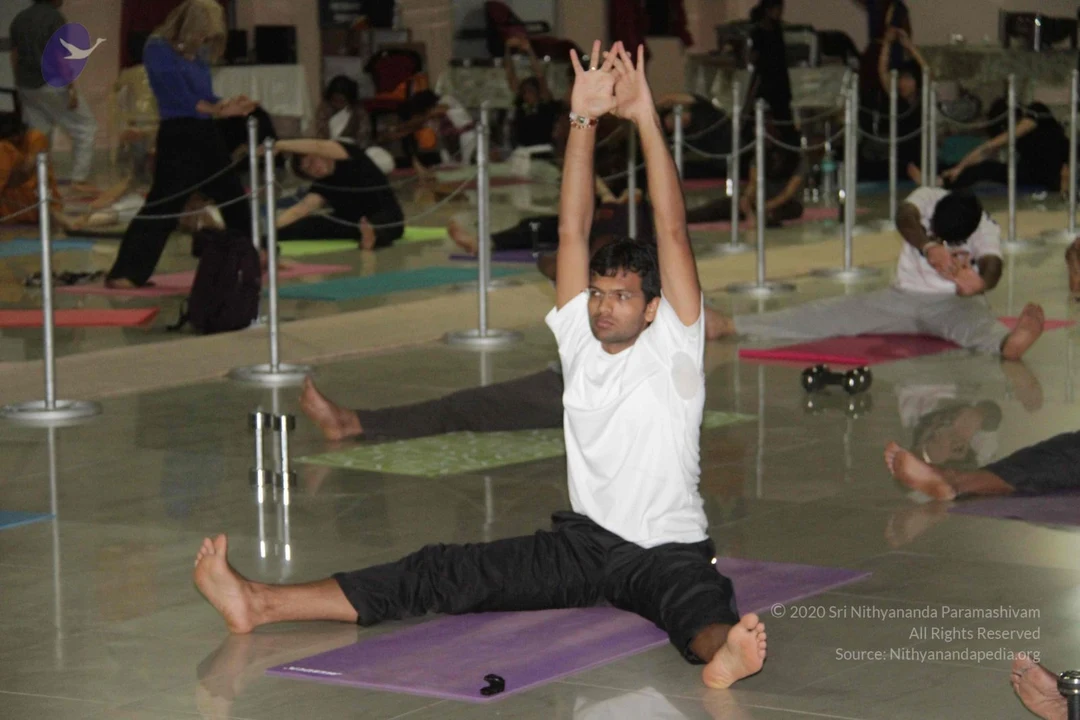
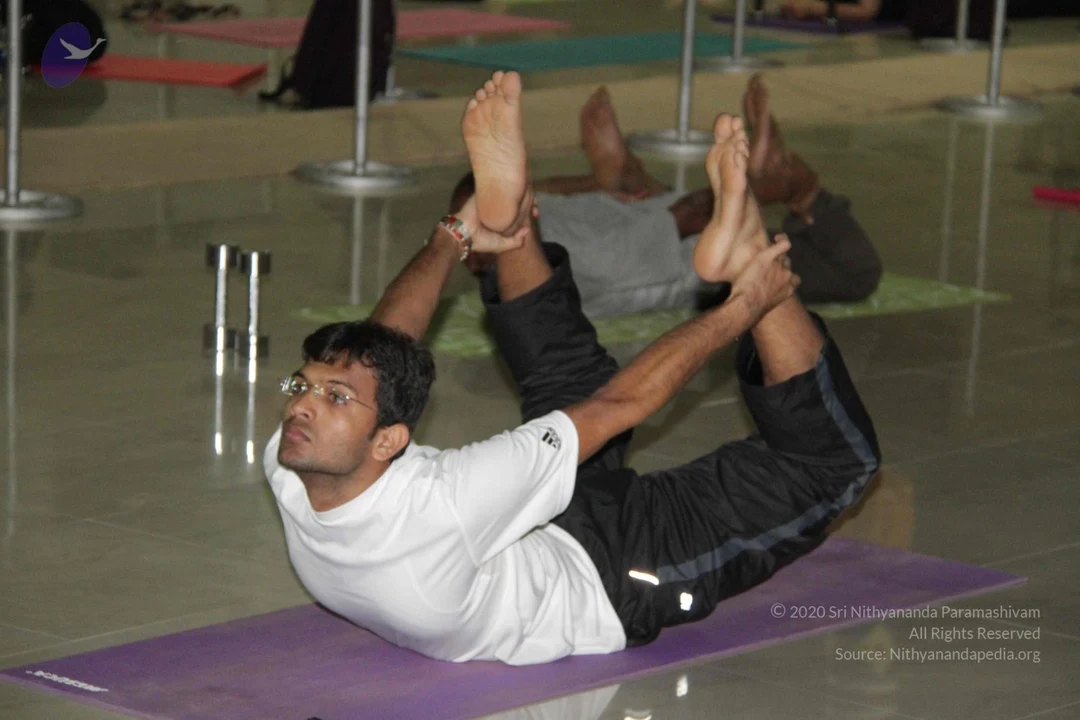
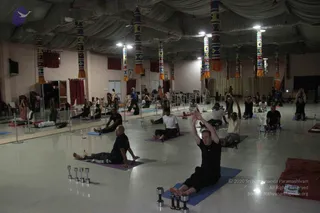
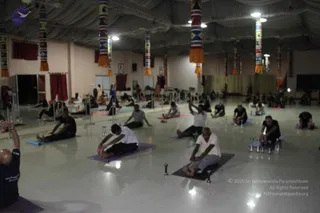
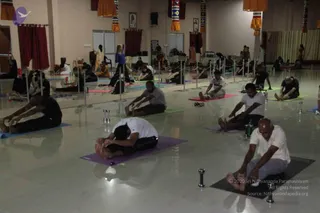
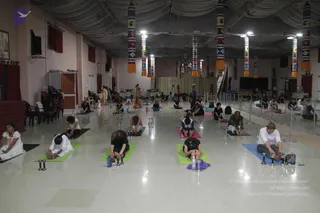
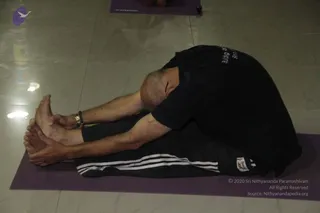
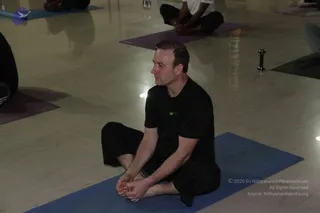
A photo of a large hall with a white floor and draped ceiling, where a yoga or exercise class is in progress. Many participants in black or dark athletic clothing sit on blue and purple mats, several with arms raised overhead in stretching poses. Small metal dumbbells sit on the floor in front. Tall decorative pillars with patterned panels and tassels line the room, and track-style lights hang from the ceiling. No one who could be a person candidate is clearly identifiable among the participants.A large hall with a polished white floor and draped grey ceiling fabric hosts a group yoga session. Many participants sit on purple, blue and red mats doing seated forward bends, while a man in the foreground stretches with his arms raised. Several men wear white or grey shirts, others wear dark t-shirts. Tall ornate striped pillars with orange tassels stand around the room, and small metal water vessels sit beside the mats. A purple logo appears in the top left corner. No one in the hall is clearly identifiable as a person from appearance cues alone.Indoor yoga session in a bright hall with polished floor, where many participants sit on colored mats doing forward bends and seated stretches. Men in white shirts and dark trousers, and some in dark tops, stretch with legs extended. Behind them a few people stand near a wall with hanging orange and multicolored tassel decorations and framed portraits. Steel dumbbells sit on the floor and metal stanchions with ropes divide the space.A photograph of a large, bright hall with a polished white floor where a group of about twenty people practise seated forward-bend yoga stretches on colourful mats in green, blue, pink and purple. Several participants wear white, black and grey clothing, and metal dumbbell-like weights sit beside some mats. Tall decorative pillars wrapped in red, yellow and blue patterns with tassels line the room under a draped grey ceiling. Chairs are stacked along the left wall, and a few people stand or move near the back. A framed picture hangs on the left wall. No identifiable a person is visible among the participants.A photograph of a man in a black short-sleeved t-shirt and black track pants with white stripes performing a seated forward bend on a purple yoga mat on a polished tiled floor. He sits with legs extended, holding his feet with both hands while his head and torso fold forward. He wears a beaded bracelet on one wrist. Another purple mat is visible at the top edge of the frame with a partially visible person's feet. The setting appears to be a yoga or meditation hall.A photograph of a yoga session in a large hall with polished marble floors. In the foreground a man with short dark hair, wearing a black short-sleeved t-shirt and black trousers, sits cross-legged on a blue yoga mat, hands resting together in his lap, gazing to the side. Behind him, other participants sit on purple and blue mats, some in black and white clothing, and a black dumbbell lies on the floor near the mats.

PADA-POOJA
77 photosSource gallery
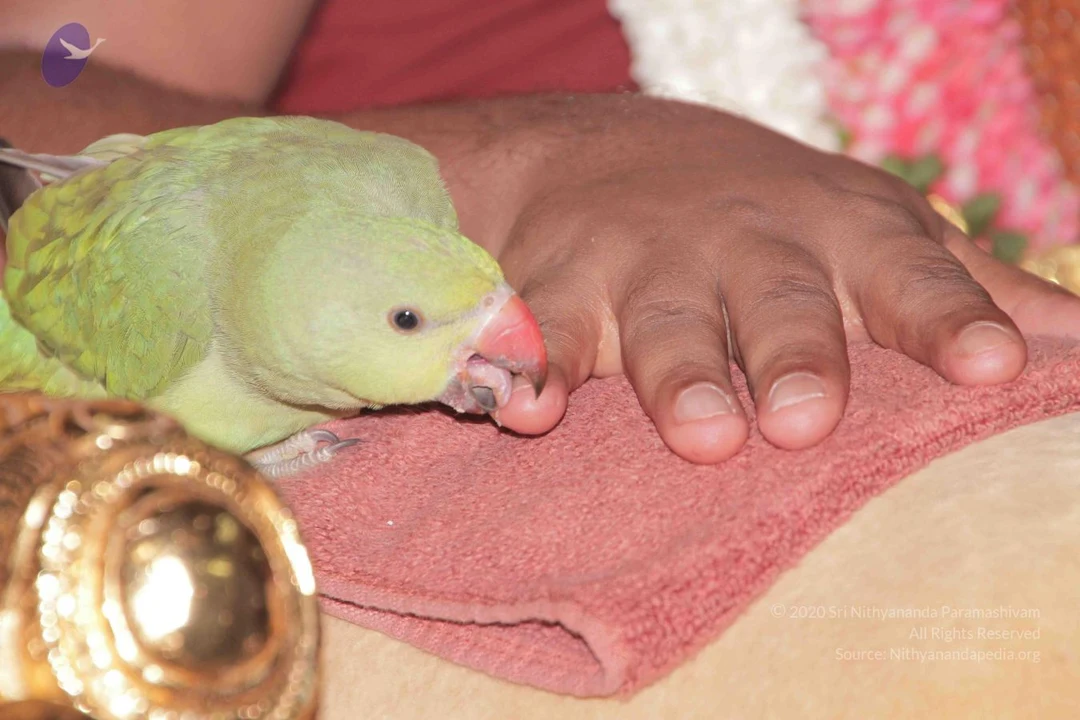
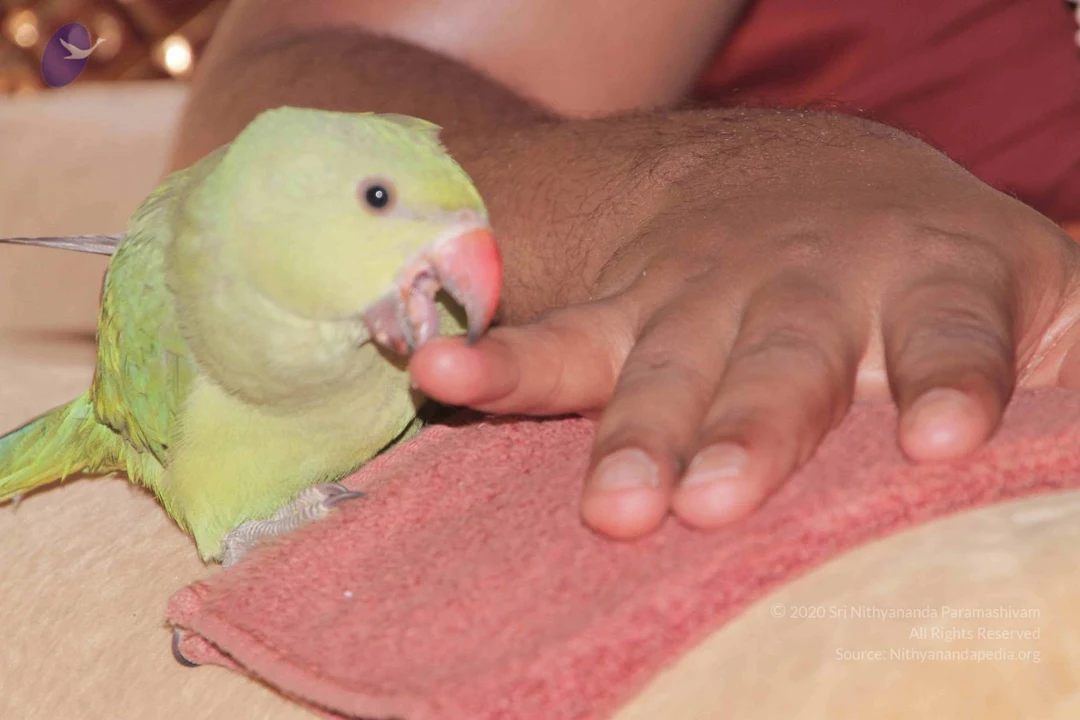
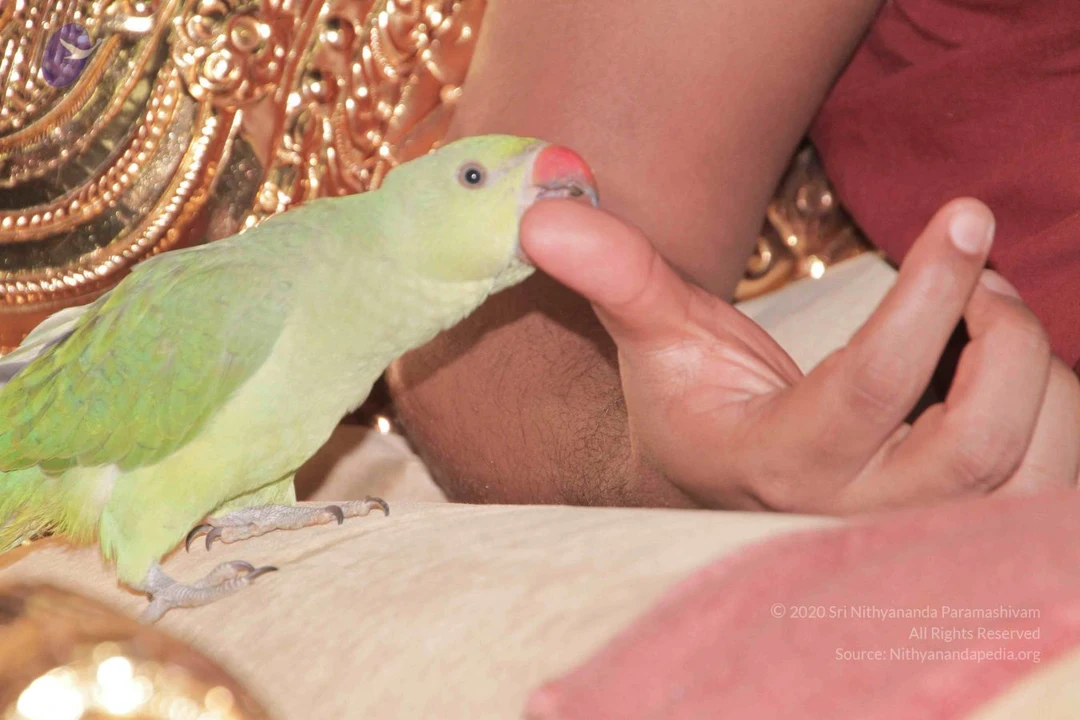
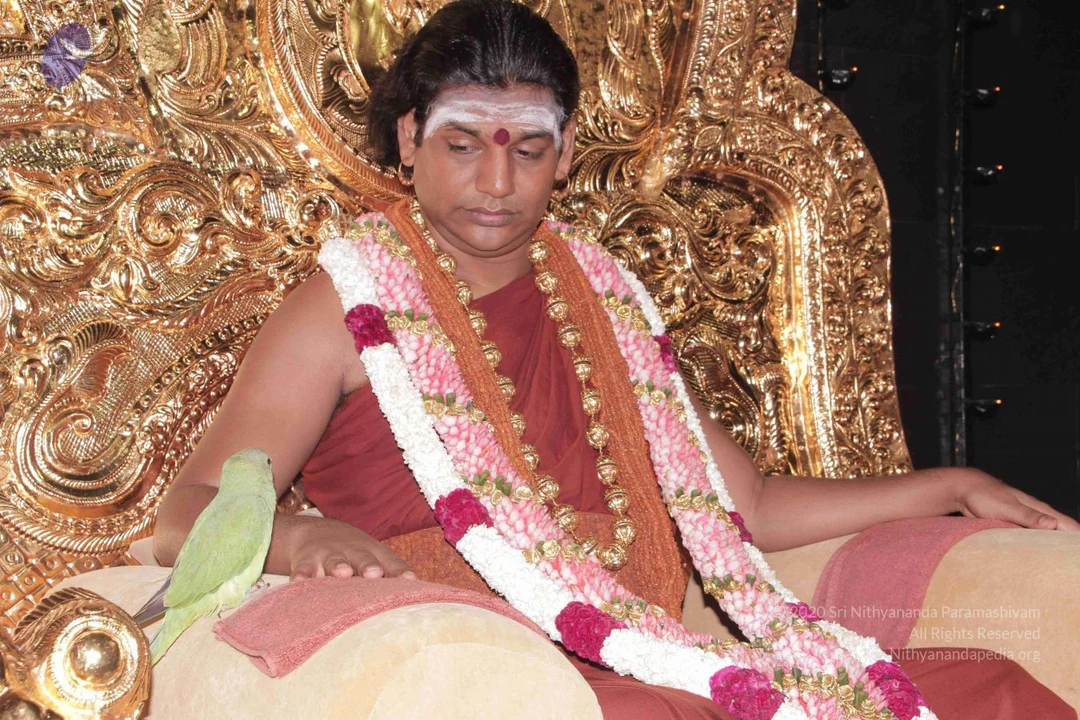
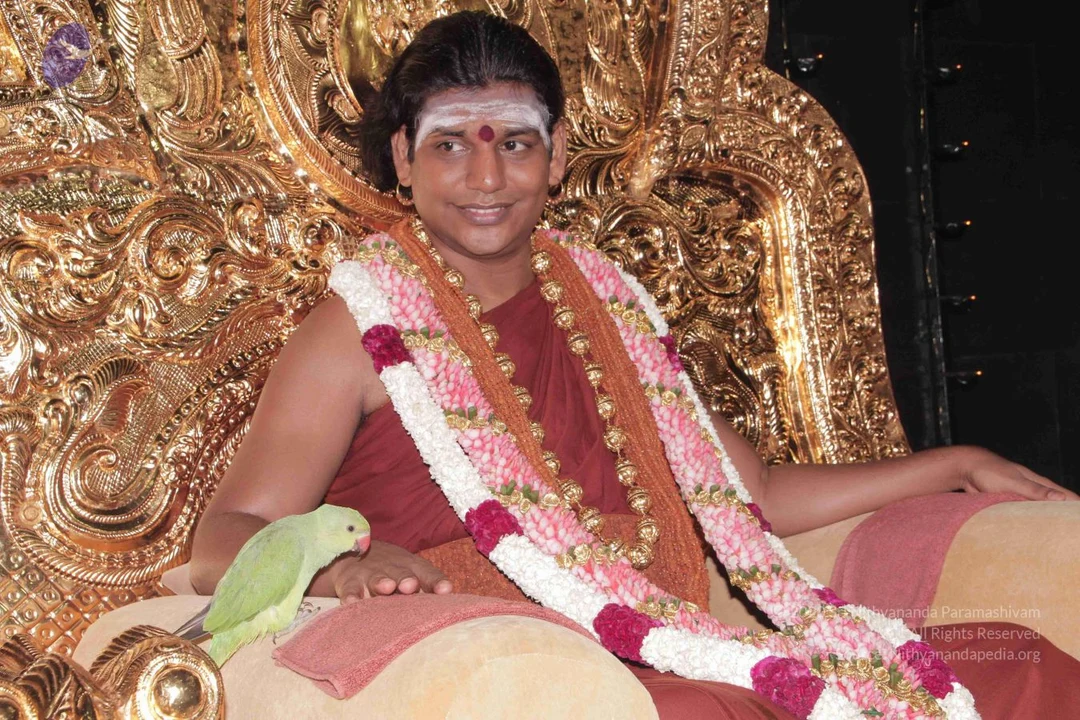
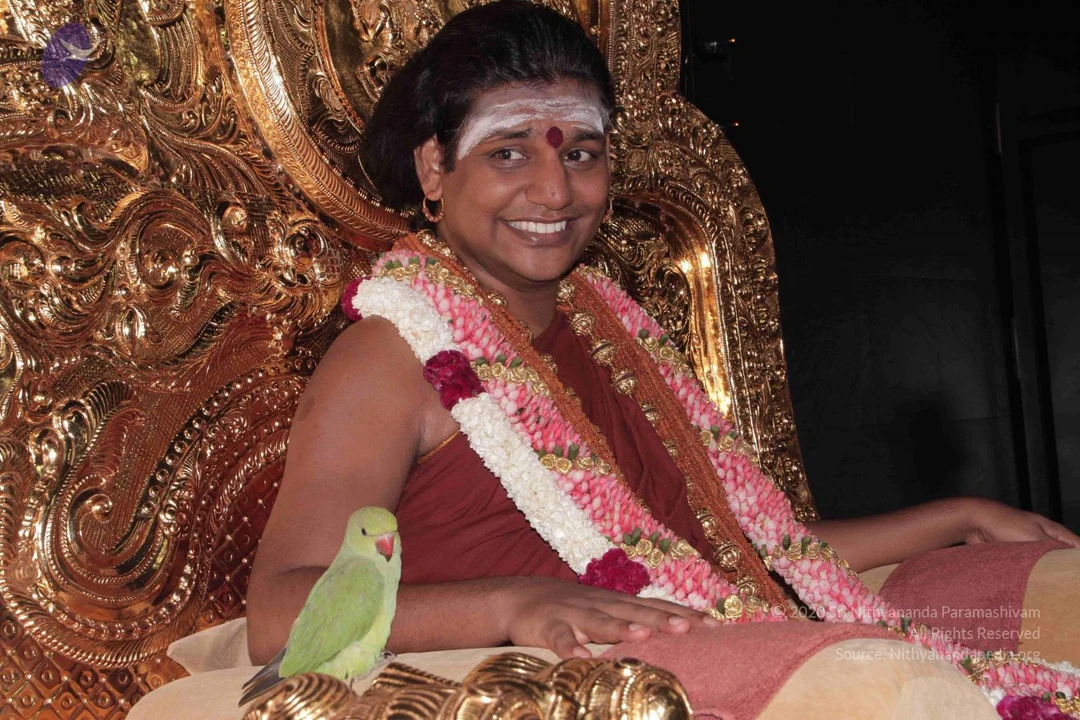
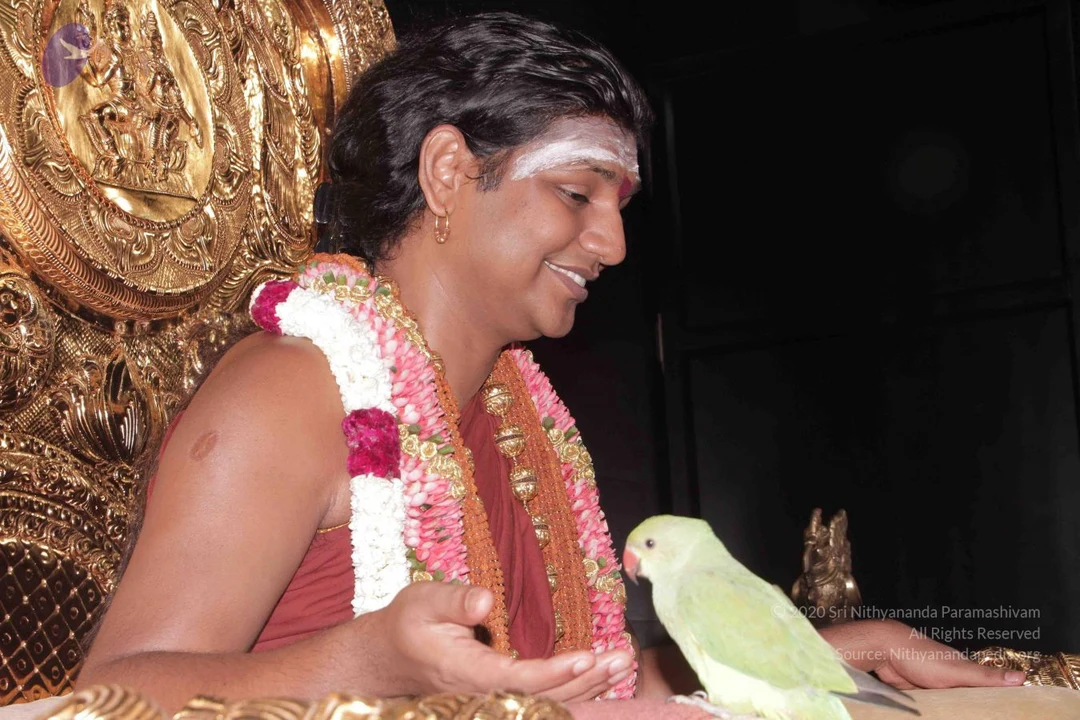
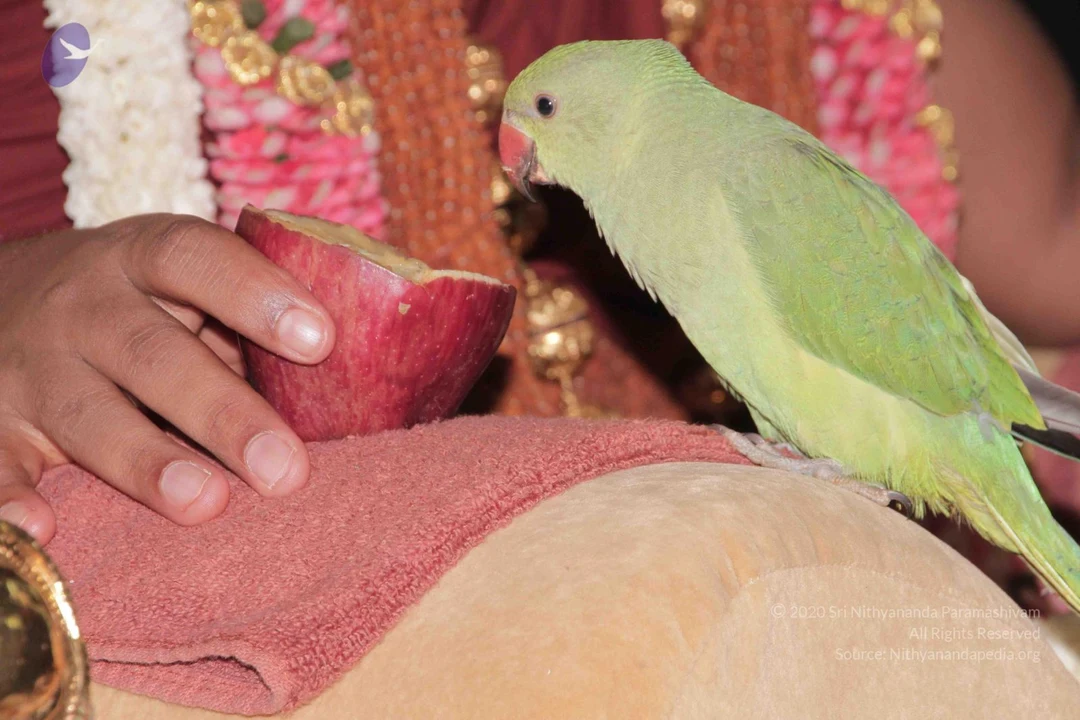
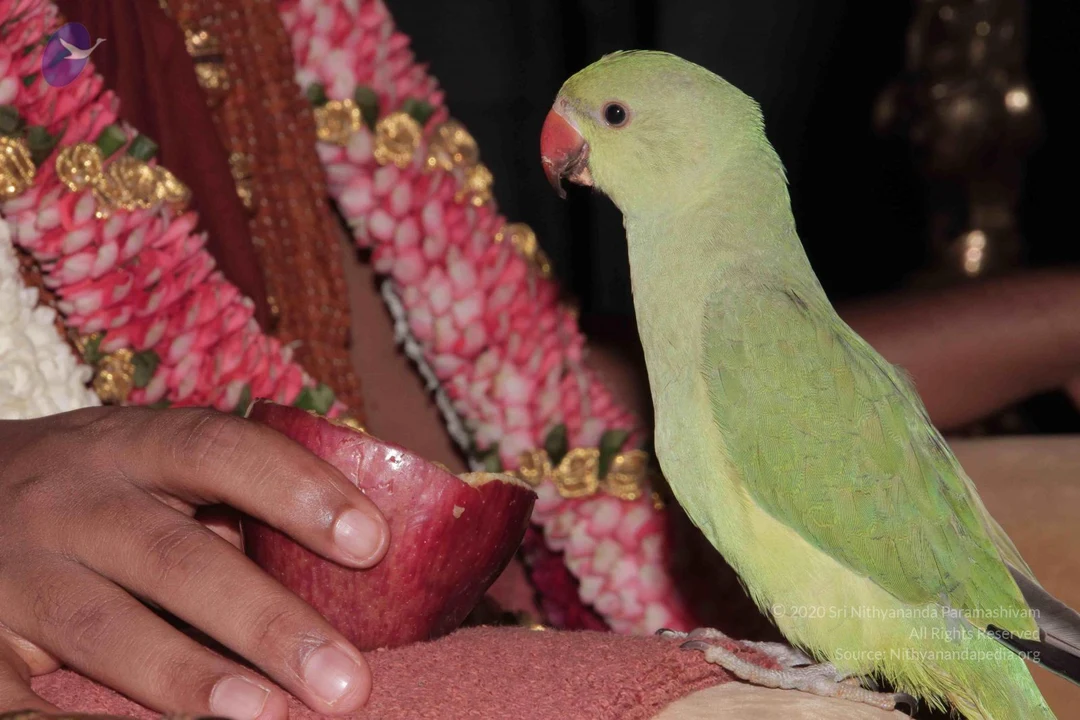
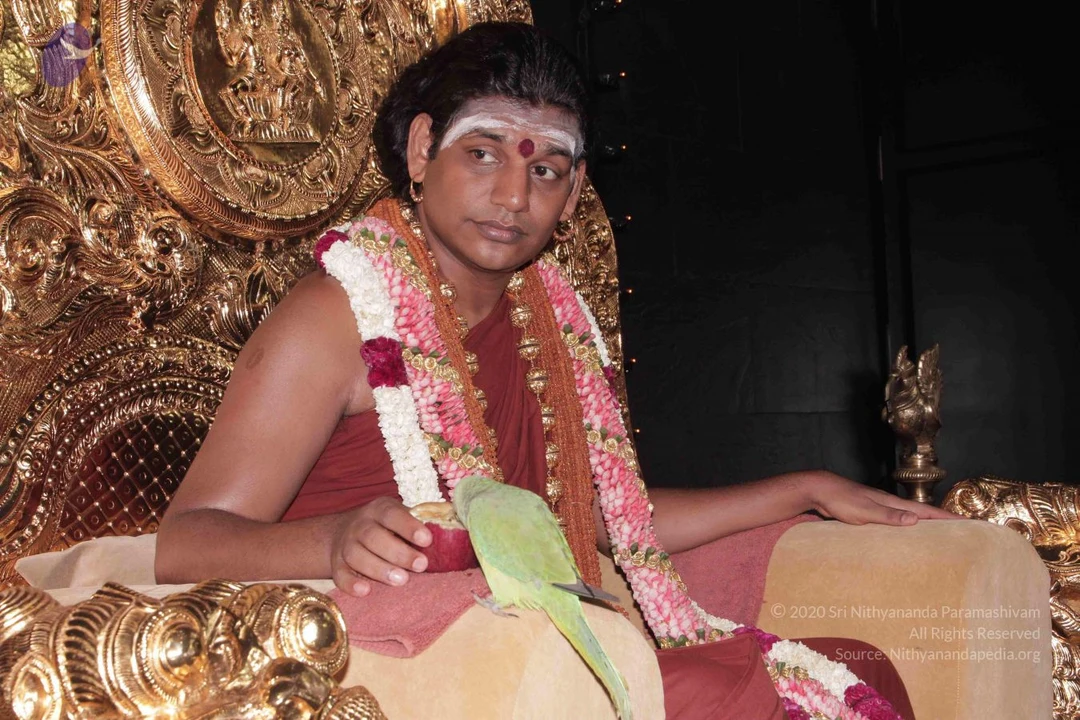
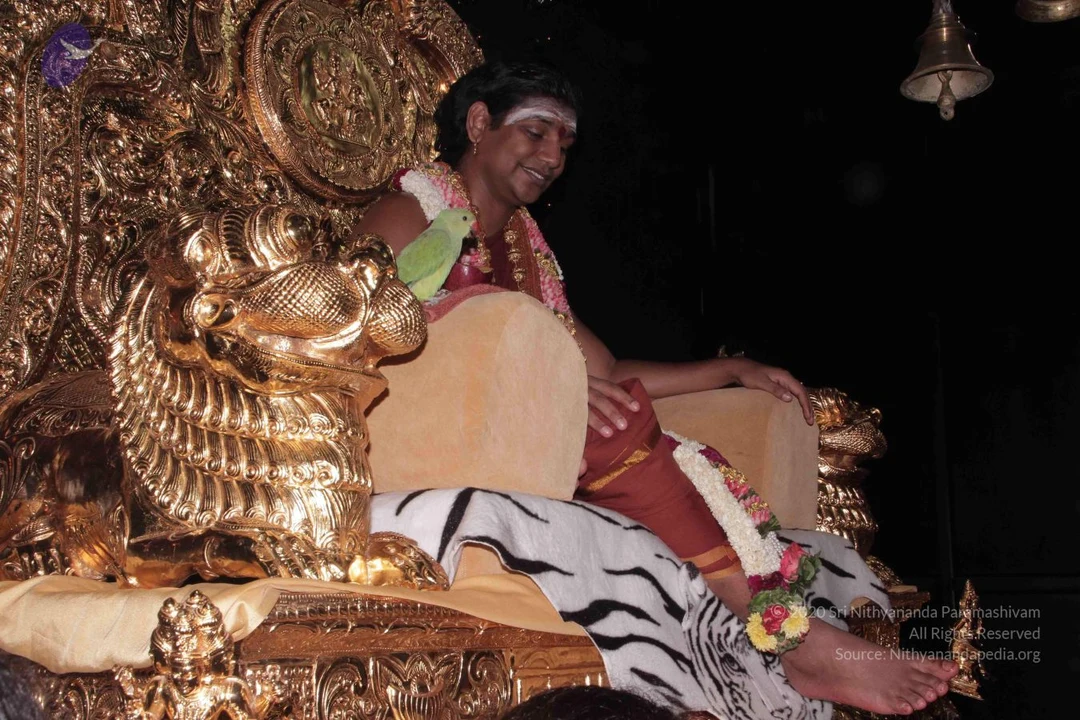
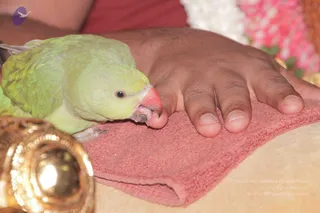
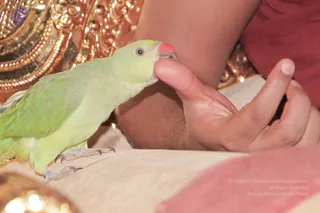
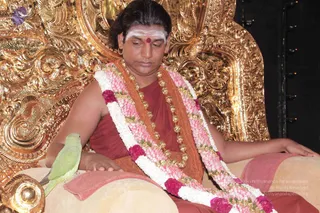
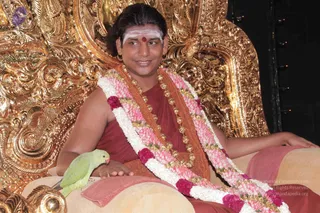
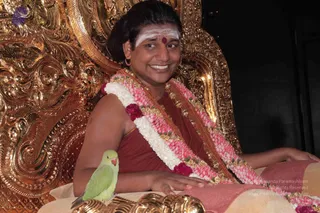
A close photograph of a bright green parakeet with a coral-red beak perched beside a bare human hand resting on a dusty-pink towel. The bird leans forward and nibbles near the fingers. A gold ornate vessel or bell is visible at the lower left, with pink and white flower garlands in the blurred background. No face is visible; only the hand and arm of one person are shown. The image is a photograph.Close-up photograph of a green parrot with a pink-red beak perched on a folded pink towel, while a human hand with a hairy forearm and red sleeve rests beside it. The bird looks toward the camera on a cream-coloured surface. No a person candidate is visible; the scene shows only a bird and a person's hand.Close photo of a bright green parakeet with a red-tipped beak perched on a cream cushion, reaching toward a seated person's open hand in a maroon garment. Behind them is an ornate gold embroidered or carved decorative backdrop. Only a hand, forearm, and knee of the person are visible, so no face is shown. The parrot is the main subject, resting its foot on the fabric and leaning in toward the fingers.A photograph of a seated man in a rust-red robe with an orange shawl, wearing a long gold chain of round beads and a garland of pink and white flowers with red roses. He has a white vertical tilak across his forehead and a red dot at the centre, and his eyes are lowered. He sits on a cream cushioned throne in front of an ornate gilded carved backrest. A small green parrot perches on the armrest beside his hand. a person: he wears a saffron-orange shawl, a gold bead necklace and a flower garland on an ornate golden throne, cues matching the page's a person reference, and is shown in person in this photograph.A man seated on an ornate gold throne with carved floral scrollwork, wearing a maroon-red robe over a saffron-orange shawl, a long multi-strand garland of pink and white flowers with gold beads, and gold bead necklaces. He has a white sacred ash band across the forehead and a red dot at the centre, and he has swept-back dark hair. A small green parrot perches on the cushioned armrest beside him, and a pink cloth lies over the armrest. a person seated in a throne setting with a parrot on the armrest.A smiling person with short dark hair, white vertical tilak and a red dot on the forehead, wearing a rust-red sleeveless robe and large gold hoop earrings, sits on an ornately carved gold throne. A thick garland of white and pink flowers with red roses drapes over the shoulders. A green parrot perches on the left arm of the throne, and a pink cloth lies across the lap.
NITHYA-SATSANG
47 photosSource gallery
A photograph of a man seated cross-legged on a plush maroon velvet throne in front of a large semicircular arch of fresh flowers in orange, yellow, red, pink, white and purple. He wears a reddish-maroon robe, a thick orange-beaded mala and a heavy gold ceremonial necklace with large gold beads, plus a small gold earring. He has white vibhuti stripes on his forehead with a red kumkum dot, and a small headset microphone is attached near his face. His arms rest open on the throne arms. A small green parrot perches on the left armrest beside a gilded lion-head armrest ornament. a person is seated as the speaker, the figure with the saffron-red sannyasi robe, long-ish hair, ornate gold necklace and orange mala.A seated man in an orange-red ochre robe with a rudraksha mala sits on a gold-and-maroon throne with lion-head armrests, in front of a flower-garlanded arch in a temple-style stage. Behind him, a colourful painted backdrop shows a multi-armed deity holding a staff, flanked by painted pillars. To the left a deity murti in green sits on a gold base, and to the right a silver-adorned deity murti in a purple cloth sits beneath a garlanded arch. Brass oil lamps stand on the stage floor.A seated man in an orange-red robe sits on an ornate golden throne with lion-head armrests and a maroon cushion, beside a tiger-skin-like cloth, before a decorated stage. Flower garlands in red, pink, yellow and green frame the throne backdrop. To the left, a small golden deity murti stands on a green cloth and a golden base. To the right, two adorned deity murti figures sit under a floral arch, one in a purple garment. Behind the stage, painted Hindu guardian figures with weapons flank a blue temple-style mural. A pink patterned rug lies on the floor. The seated man is a single physical person, appearing to be a person candidate, though the appearance is not clearly distinctive enough to confirm.A seated figure in an orange-saffron robe with a rudraksha mala and a long cloth draped over the shoulder sits on an ornate gold throne with lion-head armrests and a striped tiger-skin cushion, gesturing with one hand raised to the head. Probable Swamiji by appearance: long swept-back dark hair, saffron robe, rudraksha mala. Behind him is a painted temple-style backdrop with two painted dvarapala guardian figures holding maces. To the left, a silver-adorned deity murti stands in a flower-garlanded arch on a gold base with a green cloth skirt, and to the right a pair of deity murtis in purple and blue silk with gold crowns and jewelry sit under a garland arch. Marigold and rose garlands frame the central throne, and a patterned carpet covers the stage floor.A man in a rust-red saffron-toned dhoti and matching shawl, with a rudraksha mala around his neck and a white tilak on his forehead, stands barefoot on a patterned rug and gestures with both hands while speaking. Behind him is a gilded throne draped with a tiger-skin cover and framed by a garland arch of red, yellow and white flowers. Flanked by a deity murti in a dark-red stage setting on the left, and two decorated deity murtis dressed in purple and blue fabric with gold crowns and jewellery on the right, the scene is a stage darshan or discourse. The background is a dark maroon curtain.A seated group of young women and girls at a devotional gathering, many with white vibhuti stripes across their foreheads and rudraksha malas. Most wear orange or saffron saris with maroon borders and gold trim, while some wear maroon and gold. Several have palms pressed together in namaskar. Woven mats and a tray of flower petals and offerings sit in the foreground, with older women in white and pink saris and a few people in white behind them. Setting appears to be an indoor hall with a light tiled floor.

DIAL-THE-AVATAR

7 photosSource gallery
A smiling man with long dark hair sits on an ornate golden throne with elaborate repoussé carvings. He wears a saffron-orange shawl over the shoulder, a rudraksha mala of orange beads with gold spacer beads, and a gold ceremonial necklace. A white vertical tilak and red bindi mark his forehead, and he wears spectacles and a small headset microphone. His hands are open in a gesture of speaking to an audience. Appearance-based label: a person, seated in a discourse setting.A smiling man with shoulder-length dark hair, rimless glasses and white sacred ash with a red dot on his forehead sits before an ornate gold repoussé throne with a maroon seat cushion. He wears a rust-red shawl over his shoulders, a long orange rudraksha-style bead mala, and a gold chain with gold beads. A small microphone is visible near his face. Only one person is visible.A seated figure in saffron-orange robes sits on an ornate gold throne with a tall arched backrest carved with floral scrollwork, flanked by two golden lion statues on maroon cushioned pedestals. The person wears a long rudraksha-style mala with gold beads and a gold chain, has a white tripundra with a red bindi on the forehead, and holds an open book in one hand. Long dark hair falls to the shoulders. Behind is a dark draped backdrop with hanging brass lamps and a blue, green and red painted temple-style pillar. Palm fronds decorate the edges of the stage. The figure has distinctive long swept hair, saffron clothing and ornate gold beads, consistent with the a person candidate described on the page, though identity is uncertain from appearance alone.A photograph of a seated man giving a talk from an ornate gilded throne with a large golden arched backrest and golden lion-head armrests. He wears a saffron-orange robe over the shoulder, a long gold-bead mala, a gold necklace, and a white forehead mark with a red bindi. He holds an open book in one hand while speaking, with brass hanging lamps and green palm fronds in the background. Swamiji (probable): long swept-back hair, saffron robe, ceremonial gold necklace and rudraksha-style mala are consistent with the page's description of a discourse.A seated man in saffron-orange robes sits on a large ornate gold throne carved with floral and scroll motifs, flanked by two gold lion statues. He wears a long rudraksha-style gold bead necklace over an orange shawl, has long swept-back dark hair, and a white vibhuti mark with a red bindi on his forehead. He holds an open book and smiles. Behind him hang oil lamps on chains and a dark textured backdrop, with blue and yellow pillars at the sides and green foliage at the edges. The scene appears to be a discourse or satsang setting. The person presents a probable Swamiji appearance with long hair, saffron clothing and ceremonial gold beads.A seated person in an orange-red saffron-toned robe sits on a red velvet cushioned seat in front of an ornate gold throne with carved floral and scroll designs flanked by two gold lion sculptures. The person wears a gold ceremonial necklace, a long orange-brown rudraksha-style mala with gold beads, white sacred ash marks on the forehead with a red bindi, and holds an open black book or folder. Hanging oil lamps and a blue wall with red trim frame the scene.

SARVA-DARSHAN
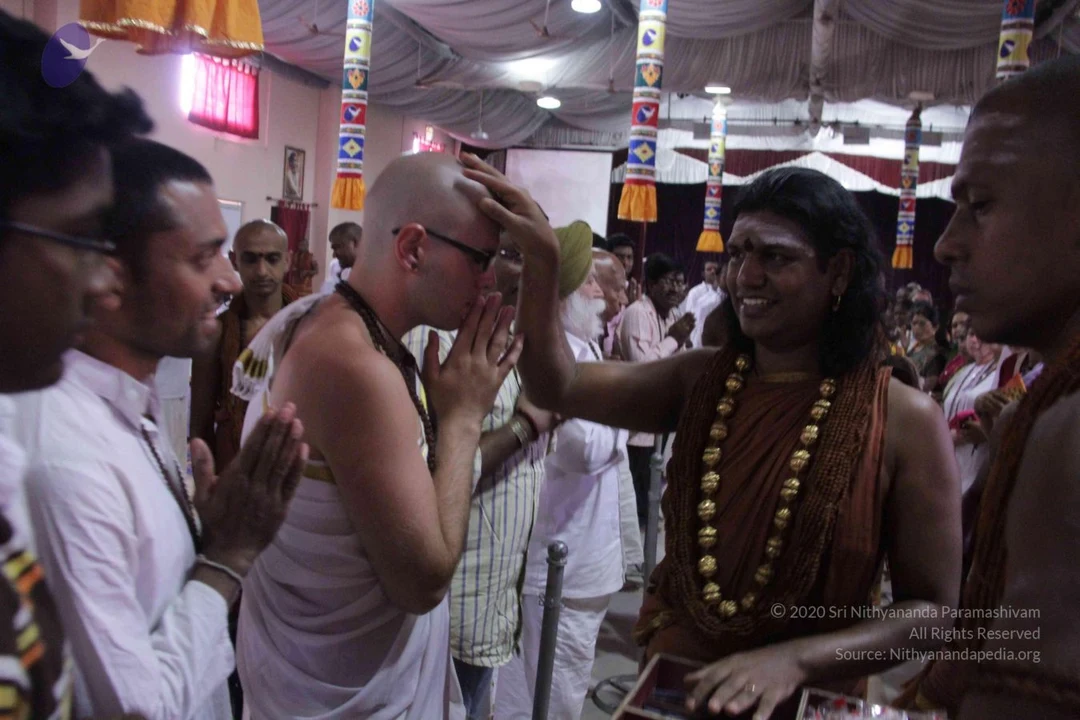
22 photosSource gallery
A photograph of a robed figure in rust-red saffron cloth with a heavy gold bead mala of large golden beads and a second orange-gold shawl across the shoulders, standing indoors before a richly decorated shrine with gold and orange flower arrangements. The figure has white and red tilak markings on the forehead and wears green earrings, and is folding a small white paper or cloth. A young man in a white polo shirt with a blue number 3 stands at left with palms pressed together and head bowed while the figure's hand rests on his head in blessing. Other devotees in white and orange robes stand in the background.A photograph of a devotional blessing in a temple hall. A figure in a red-maroon dhoti and shawl with a long gold bead necklace of gold-toned rudraksha-style beads, a white vibhuti band and red bindi, holds a folded white paper in one hand while placing the other hand on the head of a young man in a white polo shirt with his palms joined in namaskar. Behind them, an ornate golden shrine with lit lamps and colourful decorations, and figures in orange robes stand in the background. Also visible are a child at the lower left and onlookers.A photograph of a man in a maroon-red sleeveless wrap and an ornate gold bead necklace with a rust-orange shawl over the shoulders, a red bindi and white vibhuti lines across the forehead, and gold hoop earrings. He holds a folded white paper in one hand while raising the other palm toward a seated devotee in a white polo shirt with the number 3, who has hands pressed together in anjali. Behind them, orange-clad people stand in a hall decorated with colourful flower garlands and a bright shrine backdrop. Swamiji (probable): the bare-shouldered figure wears a saffron-orange shawl, a rudraksha-style gold bead mala and a swept-back long hair style, consistent with the page's reference to the event.Indoor temple scene. A man with long dark hair, wearing a deep saffron-red robe and a heavy multi-strand necklace of gold-toned beads, stands at centre with a white cloth wrap over his shoulder and white sacred ash across his forehead with a red bindi. He places his right hand on the head of a young man in a white t-shirt who bows with hands folded near his chin, and the man holds a folded white paper in his other hand. Behind them a crowd of devotees stands along a metal barrier, and a colourful decorated shrine with lit oil lamps and floral offerings glows in the background, with saffron and orange hangings at the top. A bare-shouldered man in orange cloth is partly visible at the right edge.A photograph of a devotee event with a person in a red-brown sleeveless garment and a long gold bead necklace, with a white band across the forehead, smiling and reaching forward to clasp hands with an elderly man in orange robes who bows low in the foreground. Behind them a man in a white shirt with a rudraksha-style mala stands in a line of devotees in casual shirts, and a woman in white stands at the right edge. A stage backdrop with gold decorative tassels and a kalasha-like ornament appears in the background. The central figure with the gold necklace and red-brown garment is a person candidate, based on the long swept-back hair, gold necklace and saffron-orange-toned clothing, shown here greeting a devotee in a line. Visible people are about six.A photograph of a devotional blessing at an ashram-style hall. A smiling man with long dark hair, bare-chested, wearing an orange-red wrap and layered orange-gold rudraksha malas and gold ceremonial necklaces, stretches both arms forward with palms raised toward a young man in a white kurta who stands with head bowed. A green parrot perches on the bare-chested figure's shoulder. Behind them a shaved-headed priest in a saffron-red wrap with white vibhuti on his forehead watches. A woman with dark hair lowers her head in front at left, and colourful striped pillars and a framed shrine hang in the background. Swamiji (probable): the long swept-back hair, rudraksha malas and gold necklaces are appearance cues, and the figure is physically present in the scene.

IA-SESSION
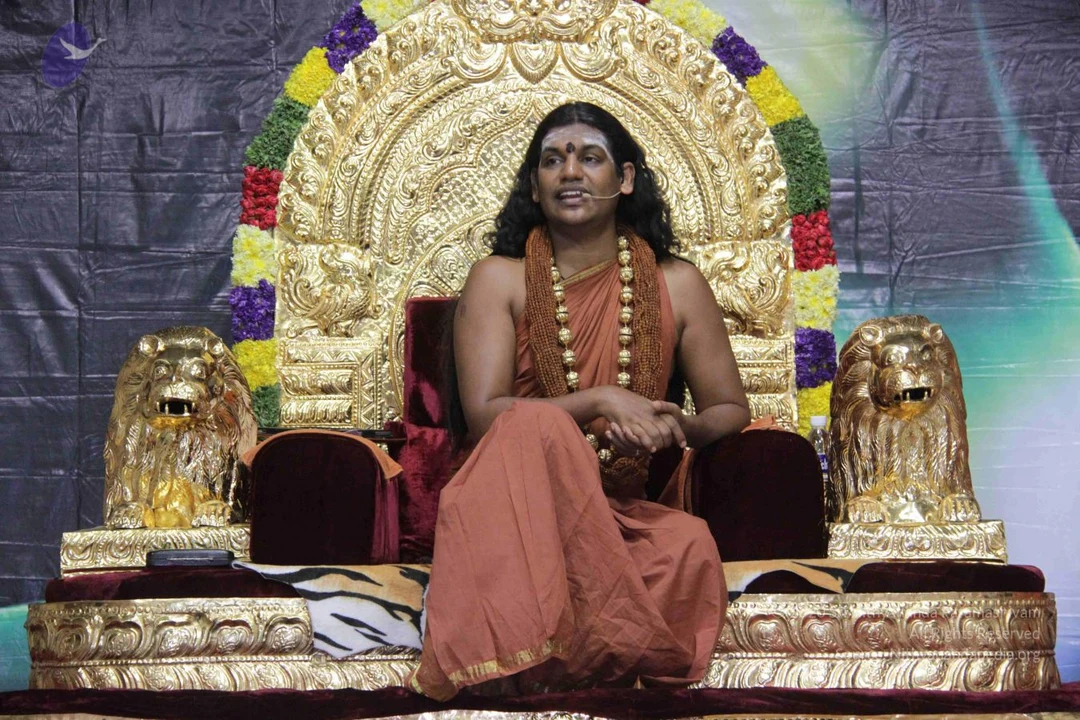
18 photosSource gallery
A bald, bespectacled man in a white shirt speaks into a silver microphone on a stand, holding a stack of printed pages in his right hand while gesturing with his left. He wears an orange lanyard with an ID badge and a dark pendant on a thin cord. Behind him hang deep red curtains against a pale pink wall. He wears a gold bracelet and has no visible saffron robes, long hair or crown, so no appearance-based a person candidate qualifies. The scene shows one speaker at a lectern.A man with short grey hair and dark-rimmed glasses stands at a silver microphone on a stand, holding a stack of white papers in his left hand. He wears a white collarless kurta-style shirt and an orange lanyard with a white ID badge. Behind him hang dark red curtains and a pale pink wall with a framed picture at the top edge; a power outlet is on the left wall.A seated man in white clothes and an orange lanyard with an ID badge smiles at the camera while holding a pen over an open spiral notebook on his lap. Behind him, other devotees in white robes and orange lanyards sit on red mats, one holding a small notebook and another with a gold bangle and rudraksha-style beaded mala. A green mat and a water bottle lie at the lower right. The setting appears to be a seated class or convention hall.A man with short dark hair, rimless glasses and a small red tilak on his forehead stands at a microphone reading from a white spiral-bound booklet titled Inner Awakening. He wears a white kurta with an orange cord or lanyard around his neck, and an event badge clipped to his chest. His right hand gestures toward the open pages while he speaks. The wall behind him is pale beige, and a lanyard badge with an orange design hangs at his waist. He appears to be a speaker or reader at the convention rather than a person identifiable as a person from appearance cues alone.A woman in a plain white kurta with a long rudraksha mala and a small pendant stands at a microphone on a stand, holding a spiral-bound notebook open in one hand and speaking. Beside her on the left, a woman in a rust-orange sari with a gold border and a long beaded mala stands with a white tilak on her forehead, looking toward the speaker. Behind them is a deep red curtain, and at the far right edge an orange-clad person is partly visible. The setting appears to be an indoor hall used for a talk or reading session.A woman in a white t-shirt, grey trousers and brown beaded necklace stands at a microphone on a stand, holding a spiral-bound notebook with handwritten pages and reading aloud. To her left, a woman in an orange-brown saree with a gold border, a brown bead mala and a pendant, with a white vertical mark and red dot on her forehead, smiles and looks toward the reader. A deep red curtain hangs behind them, and a white wall with a switch panel is visible at right. A small purple bird logo appears at upper left. Two people are visible.

LUNCH

6 photosSource gallery
A buffet serving scene in a plain hall with pale walls and red curtains. At a table draped in a white cloth with a green paisley pattern, a man in white kurta and white clothing on the left spoons food from a chafing dish, and a bespectacled man in white kurta with an orange lanyard beside him holds a steel bowl. On the right, a woman in a floral blouse with a black lanyard holds a steel plate of flatbread while a serving spoon is in her hand. Steel chafing dishes hold curry, rice and bread, and green bottles stand on the table. Behind them, people in white with orange lanyards move about and laptops sit on a table near the curtains.Two men in white kurta-style clothing serve food at a buffet inside a hall with red curtains. The man on the left, wearing a dark beaded necklace and an orange lanyard, uses tongs at a steel tray of flatbreads. The man on the right, with grey hair and glasses and an orange lanyard with a name badge, holds a round steel plate with a bowl of curry and bread while serving from a steel chafing dish of orange curry. A sign on the wall reads maintain silence, switch off cell phones, children under 12 not allowed, video-audio and photography prohibited. Two people are visible.A photograph of women in white clothing serving food at a buffet table in an indoor hall. A woman with short dark hair, glasses, a dark beaded mala and a white top ladles food from a steel tray. Beside her, two young women in white tops with orange lanyards serve from metal pans, one holding a ladle. A woman with curly reddish hair and glasses in a white top stands at the right, reaching toward the food. The table holds steel trays of sliced vegetables, cucumbers, tomatoes, carrots and salad, plus foil-covered dishes and a green water bottle. A wall sign reads maintain silence and prohibits phones and photography. Several other people in white stand at the left edge.A photo of a kitchen service table where four women in plain white clothes prepare food. A woman at left with dark short hair and a beaded mala necklace folds aluminium foil over a steel tray. A woman in the centre with long black hair and an orange lanyard serves from a steel pan with a ladle. Behind her, a woman in white with an orange lanyard works at a steel tray. At right, a woman with curly reddish hair and glasses in a white t-shirt ladles food from a tray. Steel trays hold sliced red and orange vegetables, cucumber slices, and a bowl of mixed pieces. A clear plastic water bottle stands on a red-patterned tablecloth. A black sign on the wall reads MAINTAIN SILENCE, SWITCH OFF CELL PHONES, CHILDREN UNDER 12 YEARS NOT ALLOWED, VIDEO-AUDIO & PHOTOGRAPHY PROHIBITED.A smiling woman with brown hair in a bun, wearing a white top and a long rudraksha mala with a pendant, ladles liquid from a steel pot into a red steel cup held over two terracotta pots on a glossy floor. Beside her, an older bespectacled man in white clothes and an orange lanyard with an ID badge holds a blue steel mug and wears a wristwatch and gold bangles. The hall has red curtains, framed pictures and people in the background.A buffet line of women serving themselves from steel trays of food on a maroon counter. On the left a woman in a white sari with a white top ladles from a dish of sliced carrots and vegetables. In the centre a woman with a grey-blonde bob and glasses in a white top holds a tray. Beside her a woman in a patterned grey dress and black necklace holds a plate with food. On the right a woman with long black hair, glasses and a white t-shirt holds a steel bowl of sliced tomato and onion, with a serving spoon. Aluminium foil, a green water bottle and fruit and vegetable dishes fill the counter. A man in a white shirt stands in the background.

AKASHIC-READINGS-BY-KALABHAIRAVA

33 photosSource gallery
A performer in a dramatic costume stands before a glowing gold arch lit in red and green light. He has long dark hair, a white tilak on the forehead, and wears layered strings of beads and rudraksha-style malas over a dark garment with a patterned green-and-gold lower wrap. He holds a silver trident with his left hand, and his right arm rests at his side while he smiles. The background is a warm red wall with hanging bells.A brightly lit temple shrine with a central statue of a goddess with long dark hair, wearing a green-and-white garland and holding a sword, standing before a large gold-painted arch on a red-cushioned platform strewn with flower petals. Flanking her are two large painted guardian figures with multiple arms holding trident-like weapons and flaming crowns: the one on the left is red-orange and the one on the right is green. Lamp stands and brass oil lamps sit on the floor, and the pillared backdrop glows in pink, green and red lighting. No living people are visible.A stage set up as a temple-like backdrop with two large painted statues of fierce multi-armed guardian figures flanking the center. Both statues hold weapons including tridents and maces, one in red and one in green with flame-like headdresses. At the center, a figure in dark clothing wearing a long green-beaded garland sits on an ornate throne within a large gold circular arch, with a trident placed before the seat. A red cushioned platform and floral offerings lie at the base, with brass lamps on stands. Colored stage lighting washes the scene in red, green and pink. Two painted deity statues stand on pedestals to either side.A photograph of a stage set with two large painted guardian statues flanking a central figure. The left statue is red with multiple arms, a flaming crown and a trident. The right statue is green with a flaming crown, holding a trident in one hand. In the centre, a standing figure with long dark hair wears a rudraksha-style white bead garland and a dark garment, holding a tall trident-topped staff beside a golden throne. The figure is framed by a large green-gold arch and an orange-brown backdrop. Marigold flowers lie at the base, with brass lamps on the stage. Colored stage lights tint the scene green and pink.A figure with long dark hair and a leopard-print blouse stands in front of a large ornate golden circular frame, holding a long silver rod or trident-like staff upright with both hands. Multiple beaded necklaces in red, white and green hang on the chest. Behind is a golden throne-like peetha with carved arches, and red and green stage decor surrounds the scene. Brass lamps stand at the lower right edge and a small green-and-red bird is near the base.A photograph of a standing figure in a stage tableau illuminated with red and green lights. A figure with long dark hair, a green-patterned garment, rudraksha-style white beaded necklaces, and a trident held upright stands within a large glittering green arched frame. Behind it is a carved golden niche, and on the left a red-lit painted figure holds a trident. The figure appears to be a statue or tableau figure rather than a living person, and the setting resembles a decorated temple-style display.

KALABHAIRAVA-DARSHAN
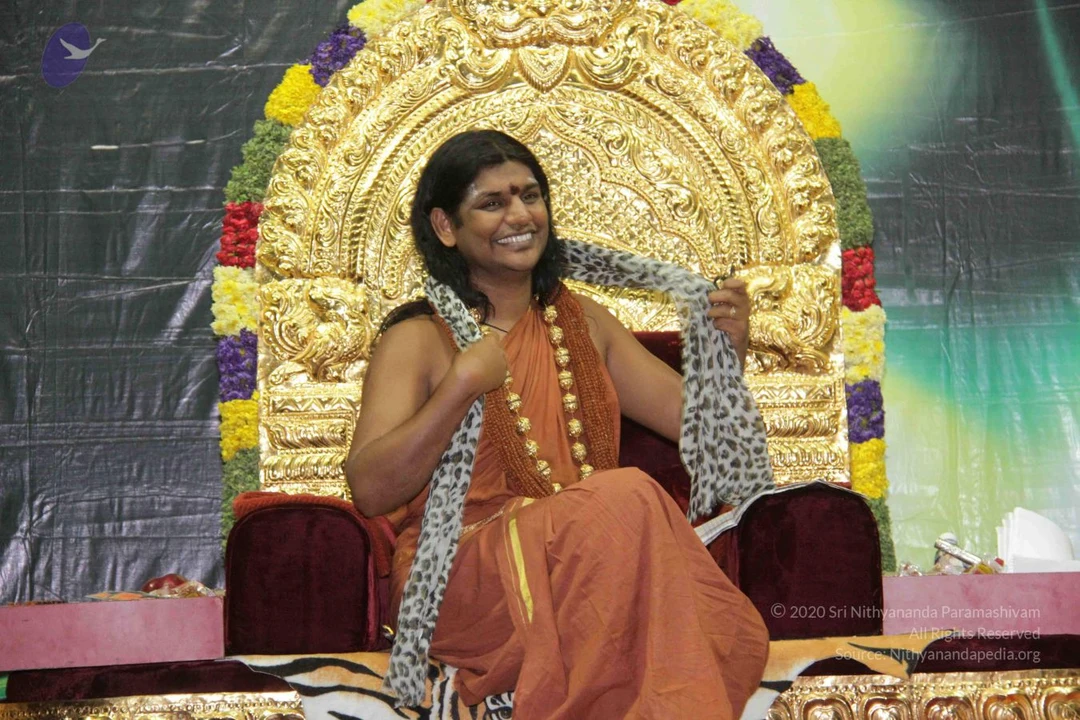
3 photosSource gallery
A brightly lit stage tableau with a central figure standing within a large gold arched frame, holding a silver trident, wearing a green beaded mala and long dark hair; a flower-strewn base sits below. The figure is a statue or tableau figure rather than a visible living person. Flanking the centre are two large multi-armed guardian figures with flame-like headdresses, mustaches and clubs, painted in red and green. Walls are decorated with ornate pink, green and gold moulding and lit with coloured lights. The scene appears to be a festival display or devotional set-up with no visible living people.A photograph of a stage tableau in a temple-style setting with vivid pink, orange and green lighting. At centre stands a life-size figure with long dark hair, a rudraksha-style bead necklace and a green-and-pink draped garment, holding a silver trident, standing before a large gold-framed arch. Two painted, fierce guardian figures with flaming crowns and moustaches flank the centre, one in red and one in green, each holding weapons. Marigold and flower offerings lie at the base, with brass lamps on the stage edges. Its figures are statues or painted depictions, not physical people, and their appearance does not establish identity.A photograph of a brightly lit temple-style stage set. Two large painted statues flank the centre, each with multiple arms and fierce expressions; the left figure, in red, holds a trident and a club, and the right figure, in green, holds weapons and a staff. The centre shows a standing statue of a long-haired figure with a trident, wearing a green-beaded garland and an ornate golden throne-like backdrop framed by a glowing gold arch. Marigold garlands and flowers lie at the base, with brass lamp stands on either side. Statues depicted here, not living people.
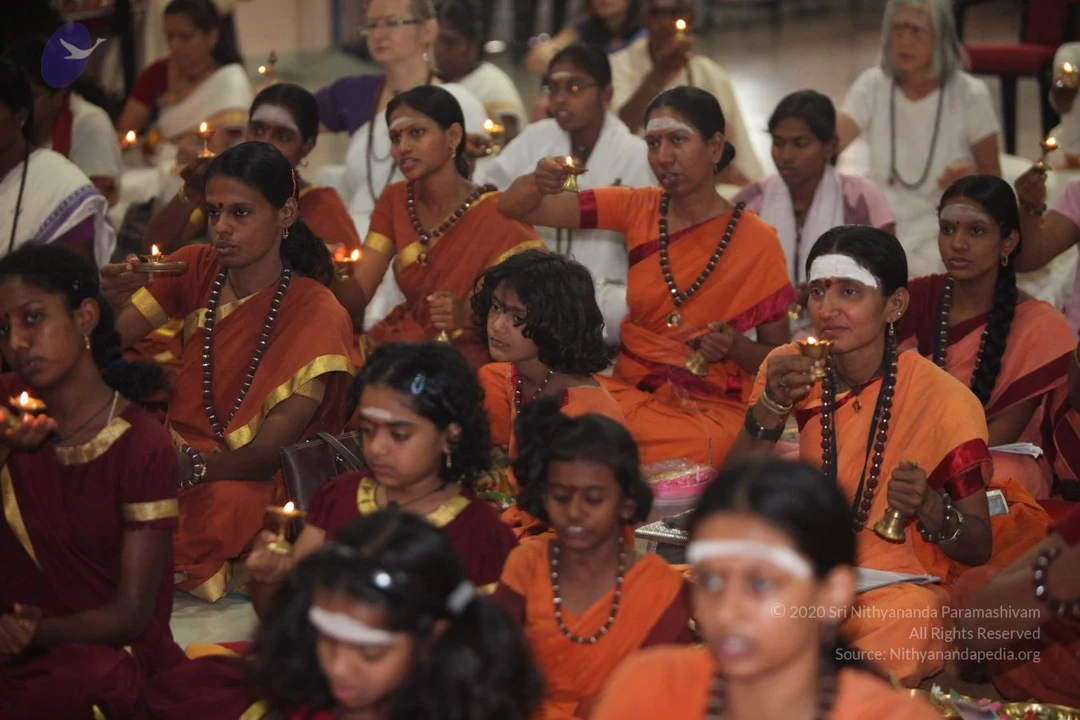
DARSHAN

17 photosSource gallery
A long-haired figure in a rust-red wrap with a white-and-red-marked forehead and a necklace of white beads and gold ornaments presses one hand on the bald head of an older man in a white shirt and white dhoti with an orange-edged stole. The man has his palms joined and eyes closed in receptive stillness. Two potted palms and a maroon curtain stand in a plain room, and a visible ID badge hangs from the man's shirt. The gesture is a blessing touch. The figure has distinctive long hair, rudraksha-style white beads, gold ornaments and saffron-red clothing, so the appearance-based candidate is Swamiji (probable) giving blessing to a devotee.A photograph of an indoor setting where a long-haired person in a rust-orange wrap, white forehead marking, layered white shell and bead necklace and a leopard-print skirt presses a palm to the forehead of a man in a white shirt with an orange-trimmed collar, who has his eyes closed and a hand raised. A potted palm stands in the background beside a red curtain, and a woman in a green and cream sari with gold-toned necklaces stands at the right near a mirror, while another orange-clad figure is visible at the top. The scene suggests a blessing or healing gesture between the two central people.A long-haired man with swept-back black hair and a white vibhuti mark on his forehead sits on a floor cushion in an orange-red draped garment and a leopard-print lower wrap, wearing a large white rudraksha-and-bead mala and gold bangles. He smiles toward a younger man in a white polo shirt who raises his palm toward him in a gesture of blessing or greeting. Behind them, a seated man in a white dhoti and shawl with a rudraksha mala and white forehead marking watches. A potted palm, pink wall, and a gold-decorated object appear at the edges. Swamiji (probable): the seated long-haired man wears distinctive long hair, saffron-orange clothing and a large ceremonial mala, the kind of cues that match the page's account of an intro class.Indoor photo of a long-haired man in a rust-red garment and white-bead rudraksha-style necklace, sitting on a leopard-print cloth, smiling as he applies a white mark on the forehead of a man in a white shirt whose hands are raised to his face. A seated man with a white forehead band and a bead necklace watches behind them, a potted plant and pale walls surround the room, and a woman in a white and green sari stands at the right edge. a person: the long-haired seated figure in rust-red cloth with a bead necklace and leopard-print seat, a cue-based label only.A long-haired man in a rust-red shawl and a leopard-print garment, wearing a rudraksha mala with a gold bracelet and white forehead markings, places his right palm on the forehead of a short-haired man in a white t-shirt who holds his own hands up in response. Behind them a bald man in orange and white ritual clothing with white forehead marks watches, and further back a woman in a white and green sari and other people in white stand in a room with cream walls, a red curtain and potted plants. The long-haired figure matches the a person appearance cues of long swept-back hair, rudraksha mala and ornate clothing, performing a blessing or touch on the devotee.A long-haired figure in a rust-red wrap and leopard-print cloth, wearing a shell-and-bead necklace and a gold bracelet, stands at left with both hands raised to rest on the bald head of an elderly man in white clothes with an orange shawl. The seated elderly man presses his palms together in reverence. Behind them a man in white robes with a brown sash and rudraksha mala sits, and at right a man in white with his palms joined looks on. Potted palms and a window with a red-robed figure stand in the background. a person: the long-haired figure in red and leopard print is an appearance-based candidate giving blessing, with long swept-back hair, shell necklace and ceremonial dress as cues.