Skip to content
Tuesday

13 March 2012

Supreme Pontiff of Hinduism HDH Bhagavan Sri Nithyananda Paramashivam.

Dated photos
17
Source pages
1
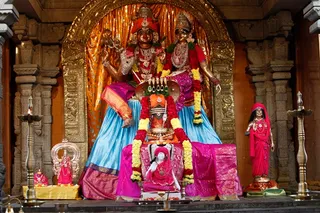
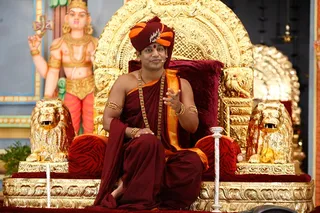
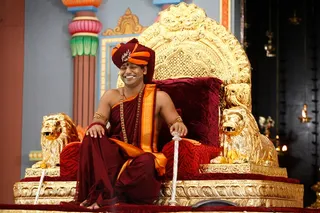
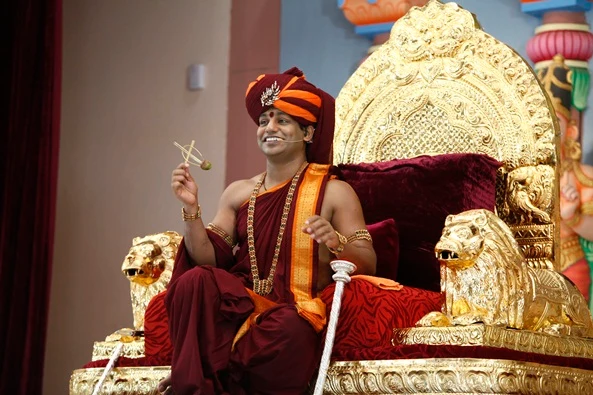
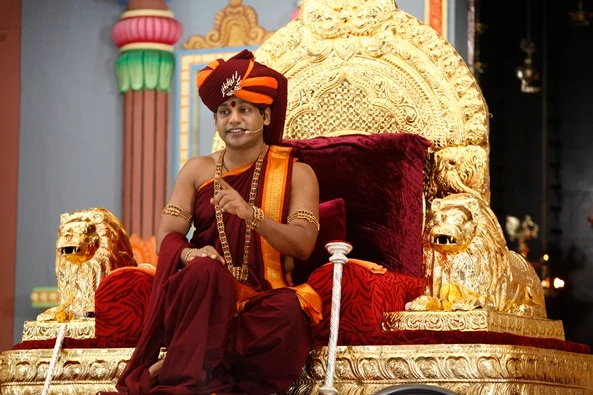
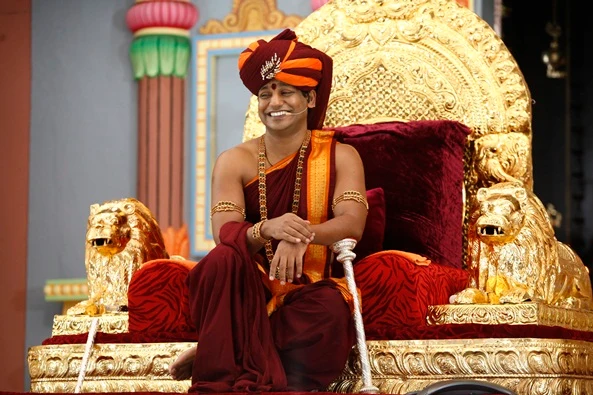
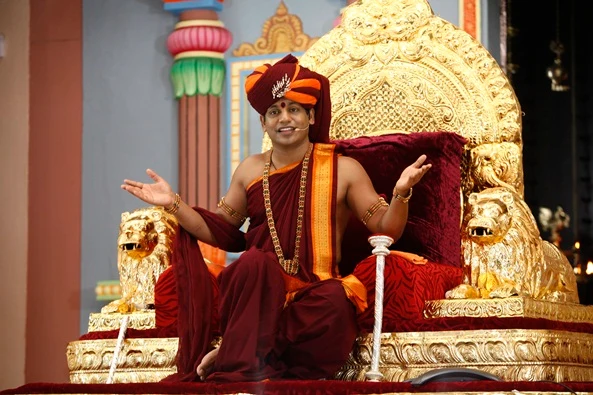
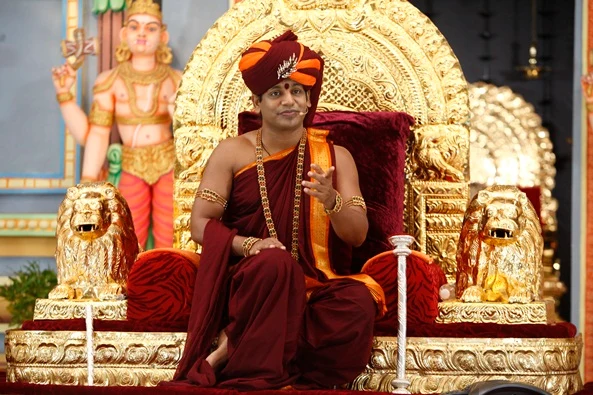
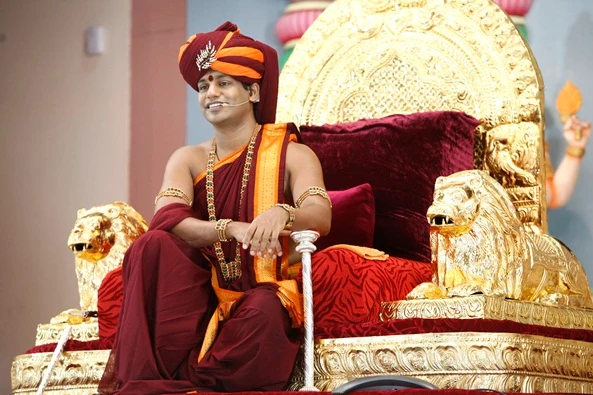
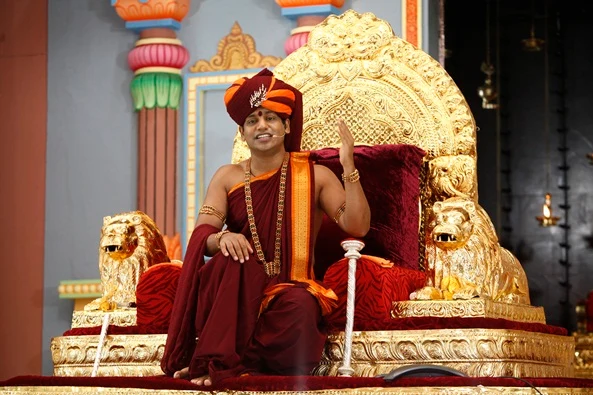
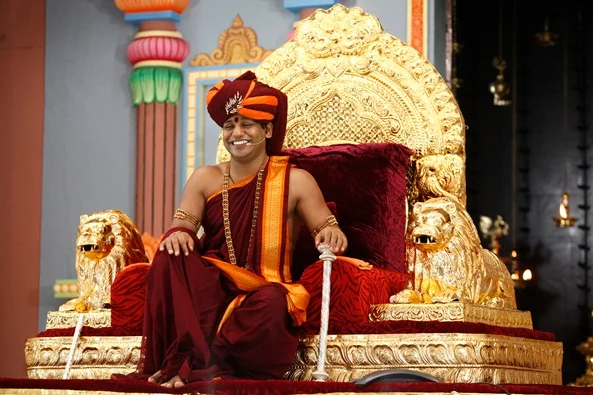
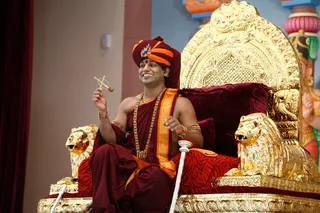
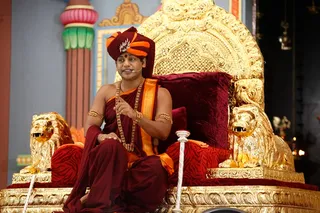
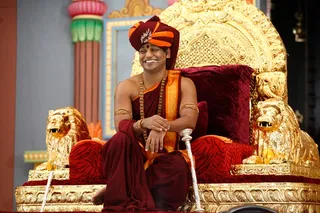
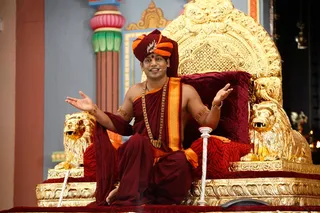
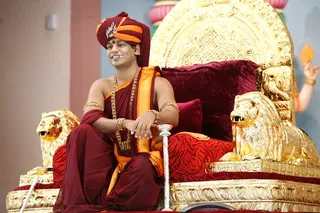
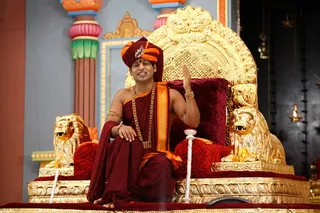
A temple shrine with a large pair of deity statues in an arched niche draped with orange and gold cloth. The two central figures wear blue and magenta skirts, red blouses and heavy gold necklaces, with garlands of yellow and red flowers. A small deity murti sits at the centre, dressed in red and pink cloth and adorned with a floral garland. Smaller statues of women in red and pink saris flank the scene, with brass oil lamps (lamps) standing on the floor and a small golden palanquin-like seat at left. The setting is a stone temple sanctum.A seated man in a maroon and saffron-orange robe with a matching orange and gold turban sits on an ornate gold throne flanked by two golden lion sculptures, a red cushioned seat and red-draped platform beneath. He wears a long gold necklace and gold bangles, gesturing with one raised hand mid-speech. Behind him stands a gold-painted deity statue holding a staff, against a golden decorated backdrop. The setting resembles a satsang discourse. Swamiji (probable): the seated man wears a saffron-orange turban, a maroon-and-orange robe and a long gold necklace, consistent with the page's Nithyananda Satsang context.A smiling man in maroon and saffron-orange robes sits on an ornate golden throne carved with lion heads, holding a silver staff across his lap. He wears a maroon and orange turban with a small crest and a long gold-beaded necklace, with gold bangles on his wrists. The gold throne has a deep red cushion, and the set behind has a red and ochre pillar with decorative hanging lamps and a gilded backdrop. The scene reads as a formal satsang setting, with the seated figure as the central focus. Appearance-based label: Swamiji (probable), seated on the throne in saffron-orange and maroon ceremonial dress with a turban and rudraksha-style mala cues.

March 13 2012

Original wiki page
Contents

Title:

Supreme Pontiff of Hinduism HDH Bhagavan Sri Nithyananda Paramashivam.

Narration

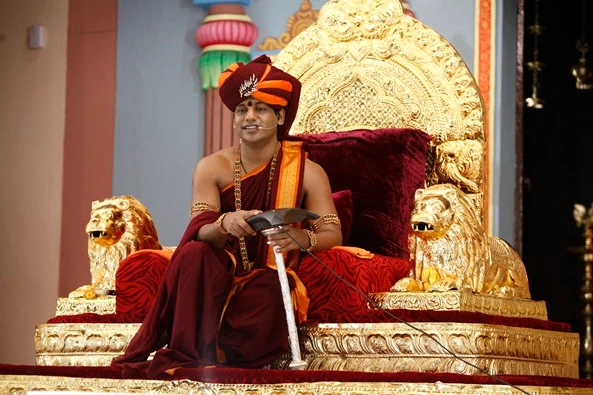
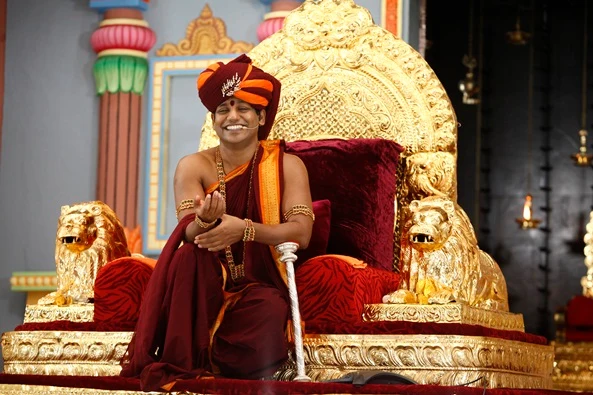
On this day , the Supreme Pontiff of Hinduism Bhagavan Sri Nithyananda Paramashivam elaborated on how the moment we perform to our maximum capacity today, our maximum capacity will automatically increase tomorrow, because if we raise our capacity to ten units, immediately God is there to supply 100 units of possibility. Expressing our maximum capacity means continuously working and constantly breaking the record we set .He further elaborated on how when we see Him, we are doing the best thing we can do to ourselves.When He see us, the cosmos is doing the best thing it can do to us. So If we want to expand your dimensions then , He explained, that we should be ready to work with the CEO - Cosmic Enlightenment Officer.

That day's Presidential Address-Nithyananda Satsang was conducted by the Supreme Pontiff of Hinduism Bhagavan Nithyananda Paramashivam on 13 March 2012 in Adi Kailasa, Bengaluru, Karnataka, India.

Photos From The Day:
Photos from this day

View all 17 photos
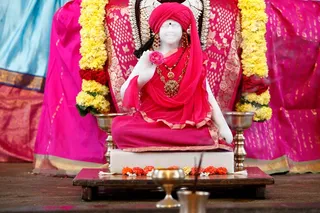
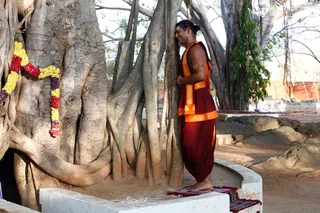
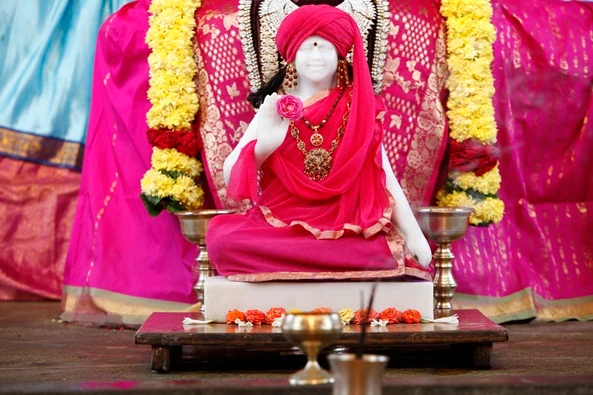
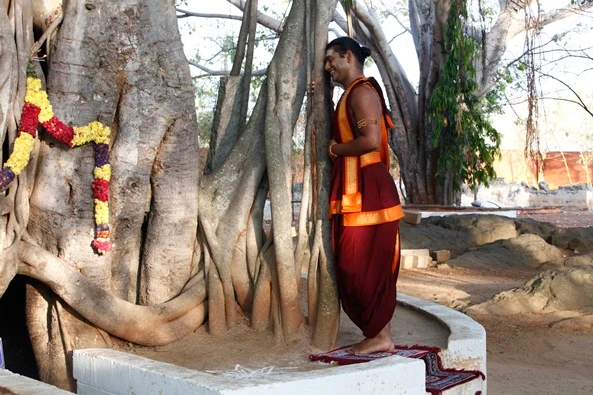
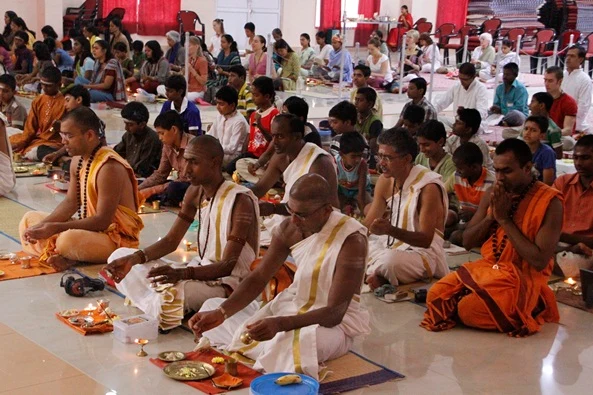
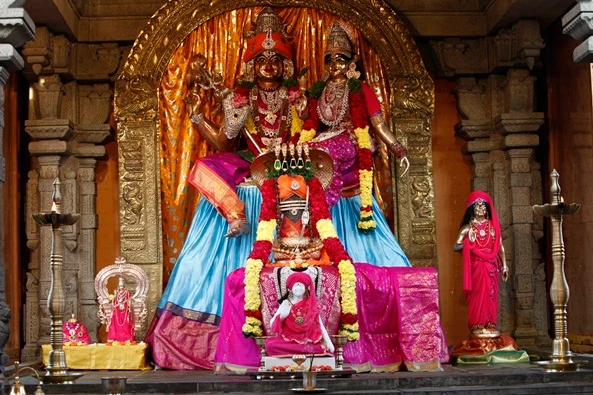
A temple shrine with a large pair of deity statues in an arched niche draped with orange and gold cloth. The two central figures wear blue and magenta skirts, red blouses and heavy gold necklaces, with garlands of yellow and red flowers. A small deity murti sits at the centre, dressed in red and pink cloth and adorned with a floral garland. Smaller statues of women in red and pink saris flank the scene, with brass oil lamps (lamps) standing on the floor and a small golden palanquin-like seat at left. The setting is a stone temple sanctum.A white statue of a seated sage dressed in a hot pink wrap and matching pink turban, adorned with a gold necklace and a rudraksha-style pendant, sits on a pink-and-white draped platform. A garland of yellow and orange marigolds hangs at the sides, with orange flowers and a pink rose placed before the figure. Brass vessels and a small brass bowl stand on a wooden table in the foreground, with pink and gold fabric draped behind. The statue is a depiction, not a person.A barefoot man in a maroon dhoti and saffron-orange shawl with orange edging stands on a white raised platform beside a large banyan tree. He leans against the tree's aerial roots and smiles, with his arm hugging the trunk. Thick trunks and roots fill the frame, and a garland of yellow, orange and red flowers hangs on the left trunk. Sand and a red-and-maroon mat lie on the ground, with a low wall behind. Visible cues include a bare-chested upper body with armlets and a shaved-looking head with hair swept back, consistent with a person in a sannyasi role, though the face and figure are not clearly distinctive enough for certainty.A photograph of a seated group in a hall during a ritual. In the foreground, several shaved-headed men in white dhotis with gold borders sit on mats before small brass plates of offerings, fruit and oil lamps, some with hands folded in prayer and one touching the plate. Behind them, rows of seated devotees, including children and men in orange and white, face the same direction. Red curtains and chairs are visible at the back of the hall. No individual in the foreground is clearly identifiable as a person from appearance, so roles are used instead.A man seated on an ornate gold throne with carved lion armrests and a deep red cushioned seat, wearing a maroon robe, an orange-and-gold sash and an orange turban with a jewelled brooch. He wears a long gold necklace and gold bracelets, holds a small pair of hand cymbals in his raised right hand and smiles. A white staff rests beside the throne. Behind him stand a painted deity figure with a red and gold background and a red pillar. The appearance matches a probable Swamiji candidate by several cues including the turban, saffron-toned sash, ceremonial gold necklace and throne seating, and the page indicates the event involved Swamiji.A man in maroon and orange ceremonial robes sits on an ornate gold throne with carved lion-shaped armrests and red velvet cushions. He wears a maroon and gold turban with a jewelled ornament at the front, a headset microphone, a rudraksha mala, a gold ceremonial necklace and gold armbands. His right hand is raised in a teaching gesture while he speaks. Behind the throne are gold-patterned panels and a blue and cream wall with a decorative column. Probable Swamiji is seated on the throne, identified by the turban, ceremonial gold necklace, rudraksha mala and maroon-orange robes, delivering a satsang discourse.A man in a maroon and orange turban and saffron-orange sash over maroon robes sits smiling on an ornate golden throne carved with lion heads, with red velvet cushions and a white staff resting beside him. Gold bangles and a beaded necklace are visible. Behind the throne are pink and blue painted temple-style columns. The man's distinctive turban, saffron sash, ceremonial gold ornaments and seated throne with lion-headed arms are appearance cues consistent with the page's a person claim, so this is a probable identification of a person seated in person on the throne as the presiding figure.A man seated on an ornate golden throne with carved lion armrests and a deep red cushion, speaking with both hands open in a gesture of explanation. He wears a maroon and deep red robe with an orange-and-gold sash, an orange and white turban with a small red bindi, a long gold necklace with beads, and gold bangles. A microphone is clipped near his face. Behind him are a golden decorated backdrop and a painted pillar with red, green and white bands. The setting is a satsang discourse hall. Swamiji (probable) is the speaker; the throne, turban, robe and ornate gold necklace are the cues, and the page names him as present.A seated man in a maroon and saffron-orange robe with a matching orange and gold turban sits on an ornate gold throne flanked by two golden lion sculptures, a red cushioned seat and red-draped platform beneath. He wears a long gold necklace and gold bangles, gesturing with one raised hand mid-speech. Behind him stands a gold-painted deity statue holding a staff, against a golden decorated backdrop. The setting resembles a satsang discourse. Swamiji (probable): the seated man wears a saffron-orange turban, a maroon-and-orange robe and a long gold necklace, consistent with the page's Nithyananda Satsang context.A man in a maroon and saffron turban and draped maroon-and-orange robes sits on an ornate golden throne flanked by two golden lion sculptures, with a red velvet cushion behind him. He wears a head-mounted microphone, layered gold necklaces, gold armbands and bangles, and a red tilak on his forehead. His hands rest on the armrest and he smiles toward the audience. Behind the throne, a blue-and-pink backdrop shows a painted deity figure with a raised hand, and a glimpse of a kalasha-like ornament appears at the top edge. The throne sits on a raised stage at a satsang-style event. Swamiji (probable): the seated man has a turban, saffron-orange drape, ornate gold necklaces and a throne presentation, consistent with the page's identification.A seated man in a maroon and orange robe with a striped orange and maroon turban raises his right hand in greeting on an ornate golden throne flanked by gilded lion heads with red cushions. He wears layered gold necklaces, bangles, and a saffron sash. Behind him are painted pink and cream columns with gold trim, and brass lamps are visible at the right.A smiling man in maroon and saffron-orange robes sits on an ornate golden throne carved with lion heads, holding a silver staff across his lap. He wears a maroon and orange turban with a small crest and a long gold-beaded necklace, with gold bangles on his wrists. The gold throne has a deep red cushion, and the set behind has a red and ochre pillar with decorative hanging lamps and a gilded backdrop. The scene reads as a formal satsang setting, with the seated figure as the central focus. Appearance-based label: Swamiji (probable), seated on the throne in saffron-orange and maroon ceremonial dress with a turban and rudraksha-style mala cues.